The Punky Rocking Christmas came over two different Xmas’s for the punk connoisseur. The first back in 1977 when the Sex Pistols took themselves up to Huddersfield to play a gig for the firemen but also as they arrived in the afternoon a gig for the local kids. After much cake throwing and high jinks and with the kids all cleared out the Pistols played the evening show for the adults. This it would turn out to be the Sex Pistols last show in England, as they went to America in January 1978 and imploded. That as they say is another story.
The second Christmas Punk bonanza took place in London’s Ladbroke Grove area when The Clash, possible inspired by the Sex Pistols previous Xmas gig, decided to play their own Xmas gig in 1979 on
Christmas Day at The Acklam Hall. The added bonus was they also played at the venue on Boxing Day. So there you have it the two biggest punk bands giving two xmas treats to their fans. To celebrate these festive treats Mal-One has written two songs to celebrate both events and dubbed up both versions for this Maxi-12” special. He has also provided two sleeves a Sex Pistols sleeve 250 copies and a Clash sleeve 250 copies plus a signed print in each. As they say what more could you want in your xmas stocking.
Ho Ho Ho and a punky rocking happy Xmas to you all.
Mal- One’s new single tells us about the punk fanzines that initially appeared in late 1976, but really exploded in 1977.They provided vital information on the scene and later became a great artefact of the time. A quick, fast, format, put together by fans of the music. It provided a great way to communicate with likeminded people. A couple of interviews with band members, that were keen to encourage the support. Culled together with some reviews of gigs attended and reviews of new releases, then quickly photocopied, stapled together and away you go. It’s amazing how many fanzines there were. Some examples are listed in the lyrics of this track. If you got your fanzine copies to Rough Trade, who seemed to take them all !!!, man you got it made. The hard copy these days seems a thing of the past and is sadly missed. Today’s messages arrive mainly in digital format. To take another example from the lyric ..Punk Rock Fanzines way to go…. and only 25p a go…
Mal-One was always fascinated by the story of the legendary Gibson Les Paul Custom guitar, that Steve Jones, the guitarist of the Sex Pistols came to use. It was like a talisman object that got handed down from Sylvain Sylvain, the guitarist of the New York Dolls to Mr Jones. The story goes that Malcolm McLaren, during his brief stint working with the New York Dolls, acquired the guitar and carried it back to England. For monies owned to him for his work and on a promise that Sylvain Sylvain, was to come over to England to work with his new prodigies, the Sex Pistols. The guitar would be waiting for him.
Well history tells us that Sylvain Sylvain, did not make that trip and Steve Jones’s temporary use, became permanent. The guitar looked great with it’s two girly stickers ( decals ) and became a signature look for Steve Jones. Adding to this the story that Steve Jones stole Mal-One’s bike when he was seven years old. That story had to be told. Punk Art Poetry, that turned into a song. Hope you enjoy the indulgence.
Great rhythms matched with magic from King Tubby’s studio at the hands of Prince Jammy.
Mal-One’s seventh single sets out to tell the listener in 3 minutes and 21 seconds, everything that it is not. But in doing so by default or design, becomes everything it says it is not!!!
So here it is for your listening pleasure. The non-Punk, Punk single. As Mal-One is asked at the end of the song what this song is all about…seems he runs out of time….
Hope you enjoy the illusion…..
Let me tell you what these songs all about…
This is not a song about Young Parisians
This is not a song about an Outside View
Ripping Her to Shreds, Hong Kong Garden
One Chord Wonders or a Freak Show
This is not a song about Complete Control
This is not a song about Less Than Zero
New Rose, Defiant Pose
Sex & Drugs & Rock & Roll
This is not a song about the Blitzkrieg Bop
This not a song about Top of the Pops
God Save the Queen, Something Better Change
I’ve Got a Right or Life’s A Gamble
This is not a song about London Girls
This not a song about Identity
An Alternative Ulster, Baby Does Good Sculptures
Or Everybody being Happy NowaDays
Hey Mal-One…..Yeah
So what’s this song about ?
Do you really want to know ?
Yeah well let me tell ya
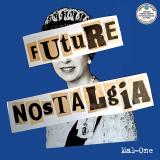
To mark ‘PUNK50’ (1976-2026) Mal-One has pulled his ‘Future Nostalgia’ track for 12” release. To remind us all that there is nothing wrong with nostalgia and looking back at events that have shaped our lives. Our collective futures are built on the actions of our pasts. As the lyric points out in the song:
‘Future Nostalgia we carry all our pasts’ Future Nostalgia
Also to enhance this release he has added an exclusive dub mix of the tune ‘Future Dub’. The flip side has taken two tracks from his forthcoming dub album ‘Punk Dub Sessions’. ‘Dub King’ is a version of his ’God Save The King’ track an update to the Sex Pistols ‘God Save The Queen’ and ‘Holiday Dub’ a version to his ‘Holiday In Someone Else’s Misery’ track. Which tells the story of the Sex Pistols ‘Holiday In The Sun’ release.
Hope you enjoy the Future Nostalgia journey and the dub excursions.
Author: Mal-One
PUNK ROCK Pictures On My Wall
Format: 8.5” Square, 100 Page Hardback Book Full Colour throughout
12 Punk ROCK BEDROOMS DISPLAYING & LISTING MEMORABILIA FROM EACH OF THE TOP PUNK BANDS
About this book
The bedroom wall and what to cover it with has always been a dilemma through the ages as we revelled in our teenage / rebellious glory. Posters, flyers, ticket stubs badges tour programmes and record sleeves. Items we gathered, begged and stole were carried home after sweaty nights in clubs and pubs. Tape and blu tack in hand we tried to find a place to add our new additions.
I always thought it would be great to show the Punk Rock items of what I call ‘the class of ‘76’ groups I had gathered over the years in a bedroom setting. Each room could have a different theme. Blondie, Buzzcocks, The Clash, The Damned, Generation X, The Jam, Ramones, Sex Pistols, Siouxsie and The Banshees, The Stranglers, and maybe a mixed Punk Room with all the above and some smaller bands to fill out the story.
Maybe I could then put all that in a book to show the beauty of it all. So I did and here it is. I hope all this madness might bring back some fond memories for you as you flick through these pages.
100 Copies Only, Orange 7” Vinyl, packaged in Numbered A4 6 Page Lyric Wallet with safety pin fastening
To celebrate Punk’s 50th year 1976-2026, Mal-One has put together an E.P. of his punk poetry. A limited edition of 100
numbered copies on orange vinyl contained in an art folder, behind a safety pin for good measure. Contained inside lie the lyrics of these poetic verses. Side one contains `The Ballad of Punk Rock’ in all its 5 minute and 57 second glory.
Mal-One telling a brief history of how we got from there to here in all its pomp and circumstance. Side two carries a
further 5 Punk Art poems telling us some more punk related stories . Hope you enjoy the listen.1. The Ballad Of Punk Rock (5.57)
Yes here we are 50 years on from year zero 1976 (where did that go!!!). To celebrate this and the fact we are all still here and talking about the importance of the Punk Rock movement i put together an album under the banner Punk Rock Daze. The title reflects it was all such a daze, as it ran by so fast and also as a reminder of an old Malcolm McLaren remark that came to mind. That when the band and management were discussing the look and name of the Sex Pistols forthcoming album ‘Never Mind The Bollocks’. Malcolm remarked, lets sell it as you would sell washing powder, bright, simple and with fluorescence colours. Great idea so here is my homage to that thought.
So I hope you enjoy the gesture and here’s to another 50 years of Alchemy, Joyousness and
instruction (Anarchy, Chaos and Destruction).
Well here we are unbelievably 50 years on from year zero 1976, when the world stood still at the birth of Punk Rock. To celebrate this monumental occasion Mal-One has worked up a new song called God Save Us All From Misery and to accompany this fine effort he has also worked up alternative versions to what could be the best first 4 singles released by any band. The first four singles released by the Sex Pistols. He has produced his own takes on these classic singles with.. Someone Dropped a Bomb In The UK (Anarchy In U.K.), God Save The King (God Save The Queen), Mal-One’s Out To Lunch (Pretty Vacant) and Holiday In Someone Else’s Misery (Holidays In The Sun). So creating this rocking 5 track 12” E.P. Hope you enjoy the results and here’s to another 50 years… God save Us All…
All football teams for some reason or other adopt a song and make it their own. In many ways to sing along to or chant over, as their team roll out onto the football pitch. Mal-one a big fan of the instrumental track, likes the way they can set and capture the mood. He has adapted one of his tunes ‘Rude Boy Shuffle’ to help push up West London’s finest team ‘Queens Park Rangers’. In true reggae style he has added the version dub excursion to its B-Side, for further
enhancement. We hope this reggae inspired ditty hits the mark and hopefully the back of the net.
Mal-One’s first release for 2026 and his first PUNK50 release to celebrate 50 Years of Punk 1976-2026 (where did that go !! ). This 6 track 12” / mini album see’s him working the concept of the Punk Rock Disco. He has dance enhanced the tracks to suit this style. The lead track is ‘Welcome To The Punk Rock Disco’ explaining the concept and to accompany this he has reworked 5 previous tracks that he thought could work within the disco format.
The collage on the cover shows John Travolta and Olivia Newton John getting down with all the punk boys and girls at the Punk Rock Disco.. where all the best Punks Go…
Hope you enjoy the Punk Party.
For Mal-One’s second dub album he pulled the dub versions of these tracks, as they seemed to work together as an album. New York City Punk (New York Dub), 45 Random Punk Memories (45 Random Dub), Machine Bubble Disco (Machine Bubble Dub), I Used To Play Bass In A Punk Rock Band (I used to play Dub), Never Seen A Bad Picture of Debbie Harry ( Never seen a Bad Dub), Punk Rock Fanzines (Punk Rock Fanzine Dub). JJ’s Alright (JJ is Dub) The Buzz-cocks Are Coming (The Buzz-cocks are Dub), Damned
Disciple (Damned Dub), The Satellite Kid (Satellite Dub), Punk Rock is Back! (Punk Rock is Dub) and The Revolution Is Coming ( Revolution Dub).
The cover of the album is a collage of various mementos culled together over a target painted canvas. The style and objects seemed to suit the cut up style of the tracks. To add another dub layer to the project he also took the lyrics to these tracks and cut and reworked them into a Punk Art Poem for the back side of the record sleeve. A dub reworking of words, music and image.
Hope you enjoy the indulgence.
out of Stock
Last delivered 12 months ago available to reorder, subject to availability
‘Well let me tell you a little something and it goes like this
Those New York Doll boys they were always looking for a kiss’
Those New York Dolls
The group that started it all back in those pre-punk days. The New York Dolls had it all, style, sass and the tunes to back it up. But as the title of their second and last studio album incurred they were simply `Too Much Too Soon’. For outside of New York and L.A. their humour and drag look was all too much for the mainstream listening public, so they imploded. But a few other bands were taking notes and by softening the edges they took over the world and as the title track of Mal-One’s latest 12” release points out;
‘But who wants a thrill without a little risk
I think we’ll just leave all that up to bands like Kiss’
Those New York Dolls
So Mal-One thought he ‘d better pay homage and let the kids know how great they were.
So we hope you enjoy this tribute to those New York Dolls that make you wanna go…
‘Yeah Yeah Yeah’.
Some time back just after then and before now, i was approached to work up a rough working script for a Punk Rock film, based on a boys entre into the whole Punk Arena and how it would affect his life. A loosely updated tale somewhere along the lines of a ‘Punk Quadrophenia’.
After many stop / starts and we are waiting for funding… etc, etc... and changing of ideas. I thought I better just get on with it. I worked up twelve tracks and put an opening script together for approval. Like some of the best made plans, as time moved on, so did the theme and the initial rush of enthusiasm rolled on to somewhere else.
A shame but lurking in the back of Punk Art studios the tapes were found and a bent up copy of the working introduction script. So here it is in all its rough and ready glory. Who knows what might have been but here is some of what could have been… hope you enjoy the idea.
Mal-One
The 2 Tone sound was a great period in the aftermath of Punk and included influences taken from Jamaican Ska.
Mal-One had already worked on some Two Tone collages and had them put aside for some future project. He thought it would be fun to record some tracks related to these images and sounds. The first track he recorded was an instrumental track in the style of Harry J All Stars ‘Liquidator’ which he called ‘Rude Boy Shuffle’. Initially to be put out as a stand alone track on some reggae label of some sort. He had a poem already which he called ‘Two Tone Story’, so put that on top of the ‘Ska Train Is Back In Town’ rhythm which he had put together for another song of that name. Finally ‘Rude Boys and Rude Girls Listen Up! ‘came together.
Adding to this a couple of dub mixes and we have a 6 track 12”. Mal-One thought the artwork worked better on a 12” format.
Hope you enjoy the outcome.
out of Stock
Last delivered 18 months ago available to reorder, subject to availability
This release will come in 10 alternative sleeves limited to 100 copies of each so the bedroom design of the front cover has been painstakingly adapted for devotee’s of; 1. Sex Pistols 2. The Clash 3. The Jam 4. Buzzcocks 5. The Damned 6. The Stranglers 7. Siouxsie & the Banshees 8. Generation X 9. Ramones and 10. Blondie… and that design comes with a signed and stamped print of that design inside…
Mal-One’s new five track 12’’ offering has broached the tender subject of the bedroom wall and what as a teenager we would cover it with, as we revelled in our teenage glory. During what we now fondly remember as the Punk Rock period, this would have been the promo posters, gig tickets, flyers, badges, t- shirts anything we could find to extend our allegiance to the Punk Rock cause. Track one of this extended play covers this dilemma in fine style:
Side One
1. Punk Rock Pictures on my Wall …from floor to ceiling and ten feet tall !!!
2. JJ’s Alright relates a true story of Mal-One’s run in with the Euroman Cometh himself and finding out first hand that
even if his band The Stranglers were to become Punk’s social outcasts that in fact JJ was Alright and so in fact was
Hugh….
Side Two
1. The Buzz-Cocks Are Coming tells the Buzzcocks connection to this movement and their entry point into the affray.
2. Damned Disciple tells what is required to become a Damned devotee. Which includes amongst other requirements
and as stated on one of their early badges ‘skipping off school to see them play’
3. The Satellite Kid tells the engaging story of Mr Paul Weller coming to London seeing the Sex Pistols for the first time
at the Lyceum Ballroom on The Strand. In doing so he found some likeminded souls and more importantly people the
same age that he could relate to and forge an identity with.
Hopefully to hang on your bedroom wall… it’s never too late Punk….
‘Well let me tell you a little story that should not be forgotten something i’ll call the ballad of Johnny Rotten’
As the opening line states in Mal-One’s latest single release, Mr Rotten lead the charge and in many respects took most of the impact. Whether that be from the media, the government, the people or in fact from his own management. His stance and attitude made it all the easier for us all to follow through the many doors he pushed open.
Although Neil Young mentioned his name in song many years ago, Mal-One felt that his deserved the full nine yards, or 3 minutes. So here is his heartfelt sonnet to the man. They took his name away and forced him out of the country. The leader of the pack and come judgement day he will be the one who cannot be forgotten..
This book is a collection of what I call Punk Art Poetry. Poetry put together like a lyric to tell a certain story or explain a thought on some punk related matter. Some of these stories did actually turn themselves into a song which I released on my Punk Art imprint.
Most of these poems were influenced or inspired a piece of art I was working on. So I have put together 30 of these ideas and put them next to the related work to give it all a bit more context.
Hope you like them or can relate to these stories.
A companion spoken word album ‘Listen Up Punk!’ is also available on the Punk Art label.
The punk movement also came fully clothed. Mal-One’s new single talks about the fashion side of Punk that ran parallel to the music. These clothes were supplied from Malcolm McLaren and Vivienne Westwoods emporium situated at 430 King’s Road, the epicentre of the Punk Movement itself. The clothes were not cheap and you needed deep pockets to buy them. But you also needed an attitude to wear them, as many factions were not so appreciative of them, especially the ‘Teddy Boys’. You had to run the gauntlet of the King’s Road on a Saturday from Sloane Square to the Worlds End. A tricky mile, in which you always had to keep your eyes open from enemy attack.
This Album is a collection of what I call Punk Art Poetry.
Poetry put together like a lyric to tell a certain story or explain a thought on some punk related matter. Some of these stories did actually turn themselves into a song which I released on my Punk Art imprint.
Most of these poems were influenced or inspired a piece of art I was working on.
Hope you like them or can relate to these stories.
Mal-One’s new single ‘When The Two 77’s Clashed’ talks about that heady time back in 1977. The year the Rastafarian faith also picked up on a biblical quote that told of an apocalyptic time coming in the year the two 77’s clash in 1977.
Well it was definitely a heady year for the punk movement that also coincided with the release of The Clash’s debut album. Mal-One describes the bands rehearsal rooms where they created the songs and whose entrance supplied the cover shot for the album cover itself. A machine gun splatter through the songs on the album and the meanings they reflected to all our lives. Hope you enjoy the ride back in time, an important time that as the lyric of the songs points out… ‘It even says it in the Bible’…..
‘Hey don’t touch that dial, good news Punk Rock Is Back!’ Mal-One
Mal-One’s new album starts with running through the radio dial, looking for some suitable music to listen to. These snippets are actually samples of songs from his previous album ‘It’s All Punk Rock’. Leading the listener nicely into a new set of songs to get their Punk Rock teeth into.
Songs that cover… the great New York punk scene of the 1970’s that grew out of a little bar in the Bowery District of New York City called CBGB’s ‘New York City Punk’. The Clash’s first album discussed in ‘When The Two 77’s Clashed’. The excitement of London’s Roxy Club revisited with its one line chant ‘Down The Roxy’. Those great ‘Punk Rock Fanzines‘, that kept us all so well informed. An early Sex Pistols gig at the Chelsea School of Art, ‘Machine Bubble Disco’. So named after what was to be the main event of that nights entertainment!!!.’45 Random Punk Memories’ sprang from Mal-One’s own reminisces. Talking of memories ‘Looking At The Decals On Steve Jones Guitar’, the recollection of Steve Jones, future guitarist of the Sex Pistols, stealing Mal-One’s bike when he was the tender age of seven years old. An incident that might have triggered this whole road of discovery in the first place.
A reflection on London’s harsh setting in those heady Punk times in ‘Corrugated London’ alongside a call and response to remember that ‘London’s Turning’ all the time for better or worse and that we can’t always pick and choose the bits we want to keep. The self-explanatory, ‘We Will All Lose Some Good Friends Along The Way’. ‘Shakespeare Meets Chuck Berry On Shepherds Bush Green’, a great story when Joe Strummer was asked by a reporter what he was up to and what he might call The Clash’s next album, which would turn out to be the timeless ‘London Calling’. Joe’s rather
tongue in cheek answer was “Shakespeare Meets Chuck Berry On Shepherds Bush Green’’.
A place close to Mal-One’s heart and a great title, that was crying out to be reused. Which Mal-One does via what he calls his Punk Art Poetry. Sometimes these lines are turned into lyrics and reworked into songs.
The album ends with such a call, ‘An Open Letter To…’ all those people who helped influence us all along the way. As the lyric states often without thought of financial gain, but done so, quiet simply because it had to be done.Maybe some young guns might in some small way, be inspired and find in Mal-One’s current efforts that ‘anything is possible’ and the true meaning of Punk was in fact, ‘Do It Yourself’.
The vinyl version of this release includes a poster that is part of Mal-Ones continuing Street Art project that involves putting up posters around London. This time declaring the news ‘Punk Rock Is Back!’. Included in the album packaging also is a signed and blind stamped limited print of one of Mal-One’s works ‘What Is It About Punk That’s So Different So Appealing’. A punk collage that just carries one word in among its multiple punk images and that word is PUNK. We hope you enjoy the indulgence.
This release will come in 10 alternative sleeves limited to 100 copies of each so the bedroom design of the front cover has been painstakingly adapted for devotee’s of; 1. Sex Pistols 2. The Clash 3. The Jam 4. Buzzcocks 5. The Damned 6. The Stranglers 7. Siouxsie & the Banshees 8. Generation X 9. Ramones and 10. Blondie… and that design comes with a signed and stamped print of that design inside…
Mal-One’s new five track 12’’ offering has broached the tender subject of the bedroom wall and what as a teenager we would cover it with, as we revelled in our teenage glory. During what we now fondly remember as the Punk Rock period, this would have been the promo posters, gig tickets, flyers, badges, t- shirts anything we could find to extend our allegiance to the Punk Rock cause. Track one of this extended play covers this dilemma in fine style:
Side One
1. Punk Rock Pictures on my Wall …from floor to ceiling and ten feet tall !!!
2. JJ’s Alright relates a true story of Mal-One’s run in with the Euroman Cometh himself and finding out first hand that
even if his band The Stranglers were to become Punk’s social outcasts that in fact JJ was Alright and so in fact was
Hugh….
Side Two
1. The Buzz-Cocks Are Coming tells the Buzzcocks connection to this movement and their entry point into the affray.
2. Damned Disciple tells what is required to become a Damned devotee. Which includes amongst other requirements
and as stated on one of their early badges ‘skipping off school to see them play’
3. The Satellite Kid tells the engaging story of Mr Paul Weller coming to London seeing the Sex Pistols for the first time
at the Lyceum Ballroom on The Strand. In doing so he found some likeminded souls and more importantly people the
same age that he could relate to and forge an identity with.
Hopefully to hang on your bedroom wall… it’s never too late Punk….
For Mal-one’s sixth single he has chosen to use what he calls his Punk Art Poetry to shine a light on one of Malcolm Mclaren and Vivienne Westwood’s most controversial / stylistic garment, the ‘Anarchy Shirt’.
Vivienne had made the prototype of the ‘Anarchy Shirt’ on some stock of ‘Wemblex’ shirts that Malcolm had acquired and had shown it to Malcolm who said it needed to say more. So, he added the text and the quotes from ‘Situationist’ related saying’s ‘Try Subversion’ to quoting revolutionist Durutti ‘We are not afraid of the ruins’. The text over the shirt front, made using their kids ‘letraset stencil’ would say ‘Dangerously Close To Love’ or ‘Only Anarchists Are Pretty’…. sounds like a good chorus for a song. Only fifty of these shirts were originally made but like all design classics have been copied many times.
‘Some say Only Anarchists are Pretty… or Dangerously Close to Love’
Hope you enjoy the story told on this 500-copy single backed with a dubbed-up version on the B-Side.
out of Stock
Last delivered 3 years ago available to reorder, subject to availability
Includes one-sided 7” ('It's All Punk (Full version)”, signed and blind stamped limited edition print, fly poster (20cm x 30cm), 20 page 12” x 12” booklet with lyrics and photos laid out in style of newspaper.
The ‘It’s All Punk Rock’ album was initially inspired by various artworks Punk Artist Mal-One had completed and titled. These titles usually turned into Punk Poetry / Lyrics and finally into songs. The idea would lead to grouping these songs together and to add the additional difficult cherry on the top. The songs would also include the word ‘Punk’ in each of their titles. Creating what we called the first Punk Art Concept Album. The title of the album as well as summing up the contents, grew from a term Mal-One had used for years when asked what had inspired a certain work or what was the meaning behind something …”It’s All Punk Rock”’ would be the quick reply.
Each song tells the story or relates the ideas behind a work, whether that be 430 King’s Road (where Punk meets Rock ’N’ Roll) the story of the various guises that Malcolm McLaren and Vivienne Westwood would conceive for their shop from LET IT ROCK, TOO FAST TO LIVE TOO YOUNG TO DIE, SEX, SEDTIONARIES. Anarchy Tour After Grundy (Punks out on Parole) the story of the `Anarchy Tour’ and what happened after the infamous appearance by the Sex Pistols on the ‘Today’ show with Bill Grundy. Punk Rock Jubilee 77, the Silver Jubilee celebrations of 1977 and its punk overtones. The Punk Rockers Gig Prayer, a Punk poem for the various venues that bands played back in those heady times. The Last Punk on Portobello Road (Ode to Joe), a lament to Mr Joe Strummer an inspiration to us all. Yes, every picture as they say tells a story, in this case never a truer word spoken.
Hope you enjoy the ride sonically and visually.
out of Stock
Last delivered 3 years ago available to reorder, subject to availability
Mal-One’s latest single is again taken from a title of one of his Artworks Kiss Me Punk (till my mouth gets Numb). The cover of the single is the artwork itself, giving the listener something to contemplate as ‘The needle hits the Plastic, hear those speakers hum’ as the lyrics point out.
This single does not carry the usual ‘Version’ side, but is what we call a ‘Double “AA” Feature’, as the flip side track is the full unedited version of the title track to Mal-One’s forthcoming debut album “It’s All Punk Rock’’ due out on 15 October 2021. Hope you enjoy this double feature…long live the 45…..
out of Stock
Last delivered 3 years ago available to reorder, subject to availability
Mal-One’s first venture into 12’’ world pays homage to the great Debbie Harry and the Blondie Boys. The group back in the day had pushed the fact that they were a group and even had a badge that stated ‘BLONDIE IS A GROUP!‘. But they seemed to succumb to the fact that Miss Harry was the focal point and most of their sleeves carried her picture. Who could blame them? as the song title says… Never Seen A Bad Picture of Debbie Harry.
The artwork is a Mal-One collage of Miss Harry, and the release carries a poster that Mal-One has again put up around London as part of his continuous street galley series. The track has a `Rapture’ inspired Rap in which Mal-One fires out as many Blondie track titles that he can piece together in the allotted time. This four-track record contains what Mal-One calls the “Punk Rock Disco Beat” continuous play of both sides may cause ‘Pogo Dancing’ and / or ‘Enjoyment’.
You have been warned….
out of Stock
Last delivered 3 years ago available to reorder, subject to availability
There were two trains leaving the musical station back in the late seventies. One was punk rock the other was reggae. I had a foot in both, which we called The Punky Reggae Party.
When I cut tracks for the `It’s All Punk Rock’ album, released in October 2021, I always cut a dub / version of the track. Some came out as the flip side of the 7’’ singles in true reggae style and some were worked on more and changed. Some I dropped different lyrics on top of the backing track simply because it seemed to work. All had the bass /drums pushed up,
lyrics dropped in /out when needed. I always saw these as a different way of listening to the tracks and these seem to work together as an album release.
Hope you enjoy the ride…
1976 the writings on the wall
Police and Thieves, Riots at the Carnival
Dreadlocks In Moonlight, Anarchy In The UK
New Rose, M.P.L.A.
1977 the Silver Jubilee
Two Sevens Clash, In The City
The red, white & blue meets the red, green & gold
It’s a punky reggae party, so I’m told
1978 Ah Strictly Roots
Gabicci tops and bondage suits
Nah pop no style in me whistle and flute
Creepers, Clarkes & DM boots
1979 this is No Fun, Rasta No Pick Pocket
Got me copy of Hong Kong Garden
looks like we a buying what we are sold
Cos the punks & teds are fighting in the King’s Road
Punk Rock meets version International herb
Pass the ready rub
You’ve had It’s All Punk Rock
Now It’s All Punk Dub …..
With or without a drink in hand, moderate temperature, no need to jump into the wet. One night AT the pool, not inside. Palm trees or succulents - not far from here, the vegetation has adapted to the situation. A soft rustling: Possibly crickets, probably also the wind. No traffic and certainly no civilization, which right now would probably only disturb with its long agenda of responsibilities. HYPNOSIS AND MUD - Healing hypnosis, healing mud. The half-frustrating, half-liberating feeling of saturated soil between the toes. A state of inner peace. Instead of a voice, you hear primitivist percussive explorations. A groping and grasping of the bare feet, with delicate toes. Abstraction is followed by the concrete: a walk through the ORCHIDEENGARTEN RUSE, an orchid garden close to the Bulgarian town and not far from the Romanian border. Digitally, but not unreal. Perhaps even better than reality - anyone can do that. The (unofficial) soundtrack to this would not only make the Canadian composer Mort Garson happy. A lady‘s shoe kindly looks at us. If you turn around, you arrive on the other side: A LINE HAS TWO SIDES. Conundrum-like images, dissolved one-dimensionality. Candid narrative ambiance. A clarinet calls to duty. Civilization and traffic after all? SUNBEAMS ON YOUR CAR. Urgency, a clamor of voices - both in their best form. Yet again – the clarinet, the blunt reality: ONE NIGHT AT THE POOL. We are still standing here, we probably never left. A three-part journey – with delicate transitions. Three destinations: Now forever united. Dissonant and yet pensive. In the far distance the advertisement for the collected works of Meredith Monk. Hair erect, the little skin nerves contract, goosebumps - at last!
out of Stock
Last delivered 4 years ago available to reorder, subject to availability
Punk Artist Mal-One’s new single Punk Badge celebrates the forgotten but much-loved culture of the button badge. Especially the Punk Badge that just in wearing the item was a statement in itself. It told you more about the person than 1000 words could ever do. Their affiliations likes, even their dislikes, for the pricey some of 25p!!!
To tell this story Mal-One has created 6 one off 18’’ inch badges and has used them to create the 7’’ sleeve artwork. There are 100 of each design. So be a good Punk and collect the set…
Ein 44 Minuten starkes Instrumental-Album inklusive eines Akere Vocal-Features.
Es ist Ansichtssache, ob ein Antlitz unfassbar schön oder besonders verstörend sein kann, sodass der bloße Anblick den Betrachter seiner Handlungsfähigkeit beraubt. Man sollte sich jedoch nie einzig von einer Erscheinung erstarren lassen.
Also heißt es:
Augen schließen und die Schönheit einer Mischung aus zeitlosen Vibes, warmen Klängen und verschobenen Rhythmen irgendwo zwischen Trip Hop, Boom Bap und G-Funk auf sich wirken zu lassen. Die Reise führt durch Höhen und Tiefen, beeinflusst von Musik aller Himmelsrichtungen und Sonderbarkeiten verschiedener Genres.
L One´s Medusa ist durchaus in der Lage den Hörer in den Bann zu ziehen. Jedoch ergibt sich dadurch keine langfristige Betäubung, sondern vielmehr ein Moment, der sämtliche Wahrnehmung der äußeren Welt an einen Ort unendlicher Möglichkeiten lenkt. Wo es hingeht und was passiert, bleibt jedem selbst überlassen. Quasi ein Mythos!
Medusa ist nach der Farska LP bereits die zweite Zusammenarbeit zwischen dem jungen Münchner HipHop Produzenten und dem jungen Münchner Label Beat Art Department und erscheint in Kooperation mit dem renommierten HipHop Label 58Beats, dem Label der Band Main Concept.
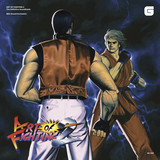
Beautiful and highly collectible item: 2xColored LP (Orange / Translucent) + Booklet + Gatefold. Both CDs and 2LP contains download code. Official licence with SNK.
The soundtrack for the sequel to SNK's classic fighting franchise, ART OF FIGHTING 2, is now available on vinyl! Featuring 34 breathtaking NEO GEO tracks across 2-LPs and CD, take the ART OF FIGHTING 2 soundtrack for a spin and relive the classic days of SNK music.
Glyn Bigga Bush has been producing electronic and sample-based music since the early 90s when he formed Rockers Hi Fi, going on to release numerous albums. Since the turn of the century he has produced and DJ'd as BiggaBush as well as various side projects such as Lightning Head (Sonar Kollektiv), the Dandelion Set (Buried Treasure) and the Magic Drum Orchestral (Tru Thoughts).
Bigga's latest project 'Sunken Foal Stories' represents a departure from much of his other work in that it is not primarily based on beats. Instead, his working method was to go with fascinating samples, accidental juxtapositions and irregular loops - inspired by pioneers of sound such as Faust and the audio experiments of Julian House as well as early stereo test records, soundtracks and library music.
The 21 concise tracks of Sunken Foal Stories link into two 15 minute segments on the LP. Bush explores the random elements created by overlaying disparate samples, where chimes of baroque psychedelia clash with ascending classical strings, or a haunting Eastern European folk song is looped into an eternal cadence of longing. Various voices float over the speakers, lost poets, disturbing therapists, dreaming vampires, chuckling cabaret singers. Sourced almost entirely from charity shops and carboot sales, the source material speaks of a forgotten yet relatively recent period, when stereo was something new and exciting, when home entertainment first came into its own and suburban homes thrilled to the exotic sounds of home organs, primitive beatboxes, LPs bought in unusual holiday destinations and 'glamorous' soundtracks.
Rough and rugged Jahtari 7-floppy disc with a rudebwoy riddim by the rub-a-dub hacker team Art & Naram, well known in the community for their Red Robin productions. Epic drunkard's tale by the fast chat originator himself on the A-side - Peter King is heading down to the pub this time, returning from Maffi's Killah Tape EP' with even more story twists, odd rhyme meters and a recipe for disaster. Jammed straight to an 8-track cassette deck in the Jahtari studio, mixed by disrupt and coming with an high density dub on the flipside. LOAD...... Limited 500 copies edition!
It’s the last W133 release for the summer of ’26 and it’s a big one. Label Papa Pino and Rotterdam’s samwho pair up for a banging, driving, proggy collaboration/split EP entitled “Baobab”. The duo behind W133 bestseller “Jacarandas” unite again for two more collaborative productions, complemented by one solo track each! Samwho starts off the EP with “D’espia”, a highly energetic progger with dreamy pads, crispy dembow percussion and sexy vocal stabs! On A2, we find the first collaboration, “Caramelo”. The two producers return to their signature percussion work, paired with a venomous rolling bassline and mysterious vocal snippets. On the flip side, the second collaborative track, “Lemon Hasj”, bangs in! A highly intense breaker with catchy vocal shots and chart-hit character. To close it off, Pino Peña delivers his solo production “Swarm Mystique”. The tune starts with a laid-back yet energising groove before swarm-like melodic pads creep in mysteriously! The cover artwork features a photograph taken by Philipp in Kyiv, Ukraine, printed on a two-sided cover sleeve. “Baobab” will be released worldwide on vinyl and digitally on 16th October.
Born in São Paulo, Caetano Malta embodies the vibrant creative energy of one of Latin America's most dynamic cities. A singer, songwriter, and multi-instrumentalist, he has spent more than twenty years crafting a distinctive musical universe shaped by Brazil's rich and diverse traditions. Tropicalia, MPB, Afro-Brazilian rhythms, psychedelic folk, and contemporary pop blend seamlessly in his work with effortless elegance.
Over the years, he has become a highly sought-after collaborator. Since 2004, he has performed with numerous leading Brazilian artists, including Lucas Santtana, Bixiga 70, Karina Buhr, and many others. After two decades of international touring, he eventually settled in Paris, where he became the guitarist for Flavia Coelho, Luiza, Guts, among others. As a songwriter, he has also co-written with artists such as Lucas Santtana, Wado, MOMO, Rubinho Jacobina, and Arto Lindsay.
With Eterna Juventude, his long-awaited debut solo album, due for release in autumn 2026, Caetano Malta reaches a new artistic milestone. The record reveals a radiant songwriting style where harmonic sophistication, organic rhythms, and instantly memorable melodies come together naturally. Filled with joyful energy and deep tenderness, Eterna Juventude celebrates imagination, movement, and childhood's unique ability to reinvent the world. It is a remarkably accomplished debut, showcasing an artist whose singular voice and musical identity are already fully formed.
++REC opens its catalogue with a four-track various artists 12", one cut per artist, two per side. Samuel Jabba sets the pace with System Thriller, a driving electro workout built on a relentless bassline. Tomie follows with Re:Frecuency, tighter and more hypnotic. On the flip, Buraye's Canopy Cells brings hardware-driven acid with a live feel, and Caruan closes with Rocco N'Roll Robot, the fastest and most playful track of the four. Mastered and cut by Marco Pellegrini at Analogcut. Distributed by Outside In Distribution.
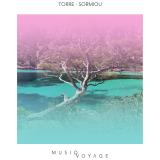
TORRE return to Musiq Voyage with Phocaea Vol. 2, a new chapter in their ongoing Mediterranean journey. The Aix-en-Provence duo, Jean-Marc and Patrick Torre, deliver two original tracks, Sormiou and Les Sirènes du Frioul, inspired by Marseille, its coastline and the deep connection between the city and the sea. Blending disco, house, boogie and Balearic influences, TORRE once again shape a warm, hypnotic and distinctly Mediterranean sound.
The EP is completed by two remixes from leading figures of the Italian underground. *Gigi Testa, one of the most respected names in Naples’ deep house scene, brings his signature soulful, deep and groove-driven approach to the TORRE sound, while **Giovanni Damico* delivers a refined rework infused with funk, cosmic textures and dancefloor energy. Together, the four tracks offer different perspectives on the same Mediterranean landscape, moving seamlessly from sunlit afternoons to late-night club atmospheres.
With more than two decades of musical exploration behind them, TORRE have built a distinctive sound between disco, house and electronic music, earning support from artists such as Carl Craig and releasing underground favourites including Corps à Corps and Baleora. With Phocaea Vol. 2, Musiq Voyage and TORRE continue to explore their own Mediterranean mythology — from the turquoise waters of Sormiou to the mysterious shores of Frioul — with a release that feels equally at home on a Balearic beach, a Marseille terrace or a late-night dancefloor.
Folksongs and Ballads by Tia Blake & Her Folk-Group, is more than just a “lost classic”. As clear and honest as can be, Folksongs and Ballads is a magnetic record, a refuge like only Nick Drake, Nico, and a few others have been able to create. A graceful, delicately minimalist approach to classic Appalachian and British folk songs.The perfect balance between melancholy and daydream. Originally released only in France in 1971, Ici Bientôt is very pleased to present the first-ever reissue on vinyl.
When she recorded her only album, Tia Blake was nineteen years old and had just arrived in Paris a year and a half beforehand. She spent most of her time at Disco’Thé, a record shop in the Latin Quarter, a free space, peaceful and inspiring, a hub for students as well as the local artistic community.
There, Tia would occasionally sing—when she managed to overcome her shyness. Two young guitarists who were passionate fans of folk music and regulars at the shop began to accompany her, forming “Her Folk Group.” One year later, they cut 11 tracks at Pierre Barouh’s Studios Saravah.
Folksongs and Ballads is composed of traditional tunes that have been covered many times, but they’re not the best-known folk standards. A collection of stories ranging from the Middle Ages to the 1960s, bringing together sublimely doleful ballads, lamentations for a lost lover, and an unexpected, brilliant version of the road anthem “Plastic Jesus.”
Tia Blake's haunting, unaffected voice captivates and comforts us, wrapping us in its cool embrace. Meanwhile, the tasteful, stripped-down, mellow acoustic arrangements provided by the guitarists, reminiscent of Bert Jansch and John Renbourn, occasionally supported by a kena flute, have created the space Tia Blake needed to reinvent these traditional songs.
Folksongs and Ballads is a timeless record, deep and unique, a longtime companion for repeated listening, in the vein of works by Sibylle Baier, Bridget St. John and Vashti Bunyan.
IRST ALBUM IN 10 YEARS.
TOURING WITH TROPICAL FUCK STORM IN NOVEMBER (DATES BELOW).
PRODUCED BY DAN LUSCOMBE (THE DRONES) WHO IS ALSO PART OF THE LIVE BAND.
PREVIOUS ALBUMS ON HARDLY ART/SUB POP AND REMOTE CONTROL.
VERY LIMITED BLACK VINYL AND INDIES ONLY PINK VINYL . NON-RETURNABLE.
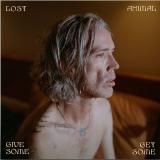
‘Jarrod Quarrell, creator of Lost Animal, is one of the most underrated songwriters in Australia and one of our all-time favourites. He creates poetic expressions. His work is very interesting in a highly original way and richly emotional. The songs reveal themselves more over many listens and always feel fresh. His powerful, beautiful, transformative, and unforgettable songs possess the vast depth of the human spirit.’ - GIMMIE GIMMIE GIMMIE ZINE
‘Quarrell has developed a collaged techne that embodies a heart-on-sleeve attitude. Lush melodic delays wash with an influx of lyrics that pierce with uncanny imagery and diction.’ - VICE
It’s not every day you hear about a new Lost Animal album. In fact, it’s been ten years between drinks. The debut Ex Tropical (Hardly Art/Sub Pop) was released in 2011, and followed by You Yang (Remote Control) in 2016. So what happened, and where’s frontman/mastermind Jarrod Quarrell been for the last ten years?
From the horse's mouth, “I don't give a fuck about productivity”. A humbling reply. It confirms Quarrell's MO: here’s an artist as a non-conformist. And when he does see fit to bless us with his unique vision of what music can sound like, it has the ability to completely charm and disarm. Amongst a sea of rock bands, LA is essentially a solo act. Simply put; LA is JQ. But on the other hand, amongst an ocean of solo acts, LA possesses the grandiosity of a full band, punk in spirit, but without being fast, or heavy.
Armed with keys and synths, timbres align more with what a toucan might listen to, as opposed to what's heard commonly throughout Melbourne's gig economy. Strings are gently plucked and horns are tenderly blown. These are the colourful brush strokes that decorate the upper frequencies. They’re the ticket to a far away land;exotic, and potentially very dangerous. If the crew from Hear My Eyes are reading this, consider Lost Animal performing Give Some Get Some as the soundtrack to the next time you screen The Hangover Part 2. Yeah, the one where shit gets super fried in Thailand.
The album examines the underbelly of what a ten year journey might rub up against. As one may expect, a lot of that action is below the belt. Tracks like Do That Thing, and In
Rewinding, a few things have happened in the past ten years that are worth illuminating. Shags is no longer commandeering the bass full time. Though he does make an appearance on a couple tracks. The main difference from present day to yesteryear LA is Dan Luscombe (The Drones). Luscombe has jumped into the role of producer (and also part of the live band). One could say he’s a producer of the Spector-ilk: playing a hands-on approach and assisting Quarrell's song crafting. He may have suggested to add a chorus or two, but the chord progressions remain distinctly Lost Animal. You'll recognise them easily by their beauty, combined with either fragility or rigidity. Luscombe is arguably the defining force that made this album happen. Perhaps he had Quarrell at gunpoint. Yet to be confirmed. Regardless, thank fuck for Luscombe because it may have been another decade.
But the album's defining feature is arguably Quarrell's lyricism. He may not cross-examine where he's been, but his voice does unmask where he is: absolved and reincarnated. The decade-long journey has resulted in him looking inwards and unlocking himself. The album's many mantras suggest that he may be a bird (I'm a Bird Now), or that he is living on another planet (Never is Forever). Whatever and wherever he may be,
Give Some Get Some invites the listener to reflect on their own journey over the past decade. Because the game's got a price. So ask yourself what have you taken, and what have you given? Life ain't a box of chocolates. It's a bowl of berries. And when fruit symbolizes temptation, get some.
“My Love” is one of its key tracks on “Summer End”, the current album by French singer & songwriter Al Sunny. Now that summer really has ended, Al Sunny asked a few producers and DJs from all over France to deliver their interpretation “My Love”. Featuring a wonderful organic take by Ludovic Llorca aka Art of Tones this EP is available digitally and as limited four track 12inch vinyl edition including the Art of Tones, Hugo LX and Jared mixes.
Art of Tones
Art of Tones is the house and disco project of acclaimed French producer Ludovic Llorca. Launched in 2006, the alias quickly earned international recognition through its distinctive combination of soulful musicianship, powerful grooves and dancefloor energy. His catalogue includes releases on respected labels such as 20/20 Vision, Local Talk, Glitterbox, GAMM and Toy Tonics, establishing him as a highly regarded producer and remixer within the global house scene.
Hugo LX
Hugo LX is a Paris-based DJ and producer whose musical universe moves effortlessly between deep and soulful house, downtempo beats, jazz, hip-hop and ambient influences. Known for his refined production style and wide-ranging musical knowledge, he has released music on respected labels including NDATL, MCDE, Balance and People of Earth, alongside projects on his own Doma Music imprint. Both behind the decks and in the studio, his work is defined by warmth, subtlety and a deeply personal approach to electronic music.
Jared
Jared is a French DJ, producer and event curator based in Bordeaux, with a strong connection to house music and club culture. Over the years, he has performed at a wide range of events and international stages, including Tomorrowland, developing a reputation for energetic and carefully constructed DJ sets. His musical approach combines a deep understanding of the dancefloor with warm grooves, contemporary production and an enduring passion for house music.
As the dust begins to settle on one of his most significant and pivotal bodies of work to date - the critically acclaimed techno-focused 'Grow' released by Craig Richards on The Nothing Special - Calibre returns to his own label Signature for another fathomless LP exploration. Laced and spaced with the precision balance of sounds, speeds and styles he's known for, and predominantly characterised by his own lyrics and vocal textures, 'Deep' once again reminds us of Calibre's singular status as an artist whose creations transcend time, tempo and territory. Ranging from one of his most in-demand dubs 'No One Gets You' to poignant yearning introspection of tracks such as 'Better Than Me' and the rolling, jazzy broken beat summer serenade 'Lit', 'Deep' is yet another accomplished, alluring and truly unique pieces of work from one of electronic music's most consistent and prolific artists.
Harvey McKay’s “Table for One” returns to Systematic Recordings for a special and deeply meaningful vinyl edition. Originally released digitally on Systematic, the EP captures the unmistakable sound of the Glasgow producer: powerful, hypnotic and uncompromising techno, driven by raw energy while always retaining the musicality and soul that defined Harvey’s work. Following Harvey’s passing in Spring 2026, this release inevitably carries a different weight. For Systematic and Marc Romboy, it is first and foremost a celebration of
his music and the lasting impression he left behind.
For the first time, “Table for One” will be available on vinyl, presented as a strictly limited 12” picture disc pressing of only 500 copies. The original version takes the A-side, while Marc Romboy’s remix opens the Bside, offering his own interpretation of Harvey’s distinctive sound. The release is completed by “Mycelium”, another powerful example of McKay’s ability to combine hypnotic repetition, precision and sheer dancefloor energy. More than a vinyl edition of an outstanding Systematic release, this record has become a tribute to an
artist whose music will continue to live on through clubs, DJs and dancefloors around the world.
Melissa Weikart and her piano have proceeded through life in step, from her early classical
training to the experimental practice that defines her work today, a blending of sounds and forms that has never been so clear—and so fully realized—as on her new album, Contact. Across twelve shifting and evocative tracks that examine the connective tissue binding us to ourselves and others, the Franco-American musician’s voice and piano navigate personal and emotional terrain with clarity and nuance, forging a rich dialogue between artist and instrument, artist and self, and artist and listener.
Winner of the 2022 Nancy Jazz Pulsations emerging artist award and the instrumentalist prize at the 2023 La Défense National Jazz Competition, Weikart has released two EPs and an album as a solo artist, and one EP and an album—Surprise and Secret—with her electronic duo Beatrice Melissa. A student of jazz and ’70s folk-pop, and a keen lover of improvisation since her time at the New England Conservatory in Boston, Weikart has always conjured the confessional candor of the singer- songwriter in her music, even as she dispenses her lyrics across rich, shifting, dreamlike tableaux.
On Contact, written and arranged entirely by Weikart (aside from “New angles”), she pushes her sound further than ever before. The album is animated by a pressing need for connection, observing what brings us together and what drives us apart, and the life-saving revelations that emerge along the way. The album’s opener, “Crash,” is a dreamy telephone-hour ode, a message in a bottle, to connections new and old. On the wistful “Mesurer le vent,” Weikart conjures Debussy or Ravel, layering contrasting sounds like an Impressionist painting. The title track begins as a showcase of Weikart’s frank lyricism, a splice-reel of missed connections and wasted time, then glides into a hazy, euphoric galaxy of pleas, circling around her thesis—“I wanted to make contact”—that ushers us into “The Intersection,” a song that recalls her the beginning of her career, when it was just Weikart and her keys. “Appétit.e” is built around a sample of her down-the-hall neighbor’s drumming—another subtle, affecting gesture toward proximity and connection—while pulsating synths reminiscent of Air lend the track an unsteady atmosphere. On the Carpenters-inspired “Expectations,” Weikart muses on the relationship patterns, universal and specific, that have always been a hallmark of her songwriting.
The psychedelic “L’amour de construit” is a slow-motion fall down the rabbit hole, as Weikart
considers the way her own emotions are captured and commodified by the confining ways we think about love. The interlude—“L’amour pt. 2”—finds her near the end of that trip, shouting into the void as a last-ditch effort to rescue herself from the fall. The drums near the end of the interlude warn us that there may be no cushion for, until she is saved, again, by the power of revelation, on the confident, resilient “Not Right”—on which a show-stopping, frenetic conversation between singer and piano is gracefully interrupted by a rush of transcendent strings, lifting her back up.
On solid ground anew, “New angles,” featuring Manu Delta, creates a percussion-less groove that relies on experimental synth sounds. The 11-o’clock stunner “Catching up”—composed in a church—meets the singer in a state of ecstatic confession, bringing her to the formative memory that propels “Bicycle,” the album’s closer. Younger, more wide-eyed, she reflects on her move from Boston to Strasbourg, those early days, when Weikart had no other companion than that loyal hunk of scrap metal that took her to the shores of her own soul. She seems to suggest, on “Bicycle,” that a backward-glance is not always troublesome, not always anxiety-producing, but can be grounding: a reminder of where we come from, so that we can keep moving forward.
Apex militant late '70s style here, if you think you are into steppers you should have this one firmly in your sights. One of Mr. Smart's hardest records, this originally appeared only as an album track, but also had some fame as a dubplate played at the time by Jah Shaka and others. We've long had that cut in our sights, and while some nice new re-mixes of this tune appeared in the last few years, here is the real thing from '79 steel. The A-side features the raw dubplate cut vocal, no horns or other adornment, HARD to the point stepping drum and bass style. The B-side features the original Gussie Clarke dub mix aptly titled "Hot Steppers", also previously released only on album. This cut as well was run on dubplate back at the time, a killer mix with full horns but no vocal. Leroy Smart is one of our all time favorite artists and we take pride in having re-released a handful of his all time best records, this one now added to that list.
Blume presents two pieces composed in 1970 by the American pianist and composer David Tudor (1926-1996), one of electronic music's most important pioneers, for the Pepsi-Cola Pavilion, a unique artist-designed and programmed space for Expo '70 in Osaka, Japan, created by Experiments in Art and Technology (E.A.T.). Pepsibird and Anima Pepsi deploy electronic technology as a means to experience sound in ways that are anything but matter of fact, rendering liberated environments within and through which one might democratically express and commune. Viewed through the lens of what was, is, and might have been, they offer the tools for time travel: an unmediated encounter with radical, optimistic ideas that gave way to the complex cultural landscape of our time.
Initially trained on organ and then piano, Tudor emerged as a leading figure within New York's musical vanguard after his groundbreaking 1950 performance of Stefan Wolpe's Battle Piece and the American premiere of Pierre Boulez's Second Sonata. Within less than a year he had joined the Merce Cunningham Dance Company as its accompanist, a role he kept until his death, and began one of his most lasting creative relationships with John Cage, who would state that his entire output between 1951 and the end of the 1960s was written with Tudor in mind. Christian Wolff, Earle Brown, Morton Feldman, Sylvano Bussotti, Mauricio Kagel, and Karlheinz Stockhausen all wrote works for him during the 1950s and '60s. Through indeterminacy and chance-based methods, Tudor was noted for radically intervening with the works he played, often making them entirely his own, and it was this same singularity of vision that led him to gradually abandon the piano in favor of electronic process, through which he began working as a composer in his own right.
His engagement with electronics dates to the early 1950s and Cage's Project for Music for Magnetic Tape. By the following decade the pair had moved to live electronics, with Tudor rendering works like Cartridge Music and Variations II through contact microphones and complex systems of feedback and amplification. Before modular synthesizers existed, he designed and built his own electronics, often with engineers from Bell Laboratories, producing dozens of unique instruments and processing tools that helped lay the groundwork for the technological needs embraced by most electronic musicians ever since. A clear marker of his emergence as a composer came in 1966 with 9 Evenings: Theatre and Engineering, where he premiered Bandoneon! (a combine), turning the cavernous performance space into a feedback instrument and a total environment. The event led directly to the founding of E.A.T. the following year by the engineers Billy Klüver and Fred Waldhauer, alongside Robert Rauschenberg and Robert Whitman.
Among the most ambitious of E.A.T.'s projects was the Pepsi-Cola Pavilion, for which Tudor composed four pieces between March and April 1970: Pepsibird, Anima Pepsi, Pepscillator, and Microphone. Together with Forrest "Frosty" Myers, Robert Whitman, the sculptor and filmmaker Robert Breer, and the architect John Pearce, he was tasked with the design and function of the building: a 120-foot diameter steel and polyvinyl dome, shrouded in mist and fog and lit in the evenings by a square of intense blue-white xenon light. Tudor worked with Gordon Mumma and Fred Waldhauer on a unique sound system capable of processing and variable distribution through 37 speakers, controlled both by automated means and by the performer, and with Lowell Cross on a sound-activated laser deflection system inside the pavilion's mirrored performance hall.
Both pieces are an advanced form of musique concrète: libraries of tape recordings, live mixed and processed through the pavilion's sound console and distributed through 8 channels of stationary and rotating patterns designated by Tudor's instructions (small circle, great circle, large rhomboid, spiral, small triangles, small ovals). Pepsibird is focused upon a physical interiority, its source tapes being recordings of the brain wave activity of humans and animals: cat's eye, nerve firing, bats, EKG, alpha waves, a modified nightjar. Recorded in situ in 1970 and mixed down to stereo, it retains a striking sense of the space and ambience that Tudor achieved in performance. For more than eighteen minutes he merges subtle textures and pulses, at times resembling birdsong, within a blanket of vast, resonant ambience of subaquatic density, foreshadowing the relationship to the natural world of later works like Rainforest IV (1973).
Anima Pepsi is centered on the exterior: field recordings that Tudor made of animal and insect sounds (mosquitoes in a jar, a fly on flypaper, a wasp chewing, a beetle walking) and a mix of human and animal sounds that he called the "funny tape". Where Pepsibird deploys interior sounds in ways that allude to the natural world, Anima Pepsi pushes the sounds of nature and humanity toward the otherworldly through the clear presence of electronic sounds and processing, moulding detailed, pointillistic patterns of abstract sonority into gauzy blankets of ambience and space.
The collaboration did not last: less than a month after the opening, Pepsi withdrew its support, fired E.A.T., and disregarded Tudor's tapes, which according to accounts had to be smuggled out by staff, playing its own soundtrack in the pavilion for the rest of the Expo. Heard today, Pepsibird and Anima Pepsi anticipate many territories of later electroacoustic practice, from field recording to live processing, while the terms on which they were made, radically unpredictable, indeterminate, and experimental to the core, reconfigure what we've come to expect from electronic process, making one wonder if the past was ahead. Issued by Blume in a highly limited vinyl edition of 300 copies on red vinyl, with a 20-page LP-size booklet containing You Nakai's essay and newly commissioned liner notes by Bradford Bailey.
After decades contributing to records where a single riff could transform a dancefloor, Charlie May turns that instinct inward on Trusted Farms.
For over thirty years, Charlie has occupied a position that seems increasingly rare in electronic music: the musician’s musician, the person behind the machines, the extra pair of hands in the studio, and quite often, the person responsible for the melody you end up carrying around in your head for weeks on end.
Alongside Duncan Forbes as Spooky, Charlie helped shape some of the most important electronic music to emerge from the UK in the early ’90s. That partnership would also sow the seeds for one of Sasha’s defining records: the central riff behind Xpander began life in Spooky’s live material, before Charlie brought the idea into the studio with Sasha and helped transform it into one of electronic music’s most enduring anthems.
Listen closely to Charlie’s work and there’s a particular instinct that keeps returning: knowing when a simple synth line is enough. Knowing which note needs to change. Knowing when repetition stops being repetition and starts becoming the entire reason a track works. More recently, as one-third of Quiet Places on ASIP, he’s taken those same instincts somewhere looser — beatless, gridless and led by improvisation.
Trusted Farms puts those instincts front and centre.
Tiny melodic phrases appear and refuse to leave. Synth lines repeat just long enough to become lodged in your head. Parts rub against each other without being tidied into submission. There’s a sharpness and directness to it all amongst the purposeful analogue warmth.
Some of these tracks feel almost ridiculously simple at first. But simplicity is difficult when you’ve spent decades learning every possible way to complicate something. Many of the parts on Trusted Farms were performed live with minimal editing. A synth line might be doubled, distorted, re-recorded and pushed back through another piece of equipment, but it remains the same idea. Instead of filling the gaps, Charlie works on the weight and character of what is already there. The melodies become physical; slightly worn around the edges.
For someone whose fingerprints can be found across some genuinely monumental moments in electronic music, Charlie has spent decades knowing what to add.
Trusted Farms is about knowing exactly what to leave alone.
Available on black 12”, mastered by Andreas Lupo LOOP-O Lubich and featuring artwork by Peter Skwiot Smith,
Blume presents The Days Pass Quickly Immersed in the Shadow of Eternity, a new work by Lea Bertucci commissioned by the ZKM Center for Art and Media Karlsruhe and premiered in Karlsruhe in November 2025. Written for, and created in collaboration with, the flutist Norbert Rodenkirchen, it draws on his collection of Renaissance, Medieval, and Neolithic instruments, harnessing sounds that have been largely absent from the modern world. What does it mean to employ one of humanity's oldest known technologies, the flute, appearing in human hands tens of thousands of years before the advent of the wheel, within an experimental, electroacoustic composition that is inherently forward-thinking?
Since her emergence within New York City's Noise scene during the early 2010s, Bertucci has balanced a fierce dedication to the DIY ethos and immediacy of the underground with a refined sense of creative rigor and ambition, moving from brittle, challenging compositions for saxophone, electronics, and tape toward investigations of acoustic phenomena, site-specific resonance, and complex harmonic interplay. Following her return to the rural environments of Upstate New York where she was born and raised, her work has entered a more introspective phase, with an expanded instrumental, technical, and vocal palette that has found her increasingly composing for others, as on 2023's Of Shadow and Substance and on Fata Morgana, a work for organ released earlier this year.
The piece grew from a meeting with Rodenkirchen after a performance by the early music ensemble Sequentia, to which he belongs. Struck by his ability to conjure "spirits from deep within human memory, as a clarion call into the present", Bertucci began a series of conversations that led the pair into the studio at ZKM in the summer of 2024. Conceived for ZKM's 42.4 speaker system, grouped into 8 discrete outputs before being mixed down to stereo, the work aligns with the collaborative process she has honed alongside her solo efforts, in duos with Ben Vida, Lawrence English, and Olivia Block: a dialog with personal and responsive agency offered to both musicians.
It carries forward her inquiry into the fundamentally human aspects of listening ("I am looking for sounds that call from somewhere deep within the listener and that tap into archetypal human knowledge and feeling") and her investigation of psychoacoustic phenomena and otoacoustic emissions through a meticulous alignment of pitches and timbres. Where many of her most celebrated efforts played, and played with, the room, this one is rooted in an implied space: the flutes recall and blur the boundaries between the eras and environments in which those instruments were originally played, from acoustically engineered Renaissance and Medieval halls to the naturally reverberant caves of the Neolithic, and those of the present.
Bertucci is not the first to bring ancient sound sources into experimental music: Harry Partch's instruments drew on Greek, Chinese, and Japanese precursors, Alvin Curran regularly plays a conch shell, and Walter Maioli has spent decades working at the borders of experimental music and archaeology. Her piece occupies a more rarefied position through its hybridity, combining advanced technology with archaic sound sources while sidestepping the exoticism and romantic primitivism that can hobble such efforts. Compared with its closest cousin, Phill Niblock's Four Full Flutes, where the instruments are manipulated beyond clear recognition, here the flutes remain recognizable and embrace the layers of history they carry. The result is an electroacoustic work that largely forgoes the auditory signifiers of the idiom: it could easily pass for a live ensemble, and only attentive listening reveals that it could only have been made through advanced technology.
As Rodenkirchen's playing interweaves with Bertucci's computer-facilitated arrangements of flute samples, ranging from pulsing clusters to dense combinations of sustained tones, timbres, and distances, the piece draws connections with folk and spiritual traditions across human history: Medieval polyphonic ecclesiastical music, Sardinian canto a tenore, Pygmy vocal music, Buddhist chant. By conjoining one of our earliest known technologies with our most advanced, Bertucci proposes that our tools are not the message, but rather the unending continuum of humanity itself. Issued by Blume in a highly limited vinyl edition of 300 copies on transparent light blue vinyl, with newly commissioned liner notes by Bradford Bailey.
Phenomena begins with two artistic voices that seem to speak different languages. Barcelona-based producer R-010 (Lucas Rojo) approaches composition through rhythm, space and electronic transformation; Madrid-born vocalist and multidisciplinary artist Venerandi through texture, breath and the expressive possibilities of the human voice. By the time the album reaches its final moments, that distinction has quietly disappeared.
Rather than functioning as a meeting point between two individual practices, Phenomena gradually
becomes a third language—one that belongs to neither artist alone. Voice no longer sits above the music
but moves inside it, dissolving into layers of synthesis, percussion and guitar until performance itself
becomes another malleable sound source. Likewise, electronic production never behaves as a fixed
environment; it constantly adapts, absorbs and responds, allowing acoustic gestures and digital
manipulation to reshape one another in real time.
This continuous transformation defines the record more than any particular genre ever could. Echoes of trip hop, bass music, psychedelia and experimental electronics drift across its surface, yet they are never
presented as stylistic markers. Instead, they appear as temporary states within an ecosystem that remains
in constant motion, where dense rhythmic passages collapse into suspended atmospheres and moments
of stillness carry as much weight as those driven by pulse.
The presence of Matteo Caro (guitar and percussion), Pablo Gorostiaga (guitar) and Alessio Rodolico
(percussion) further expands this dialogue. Their contributions are not decorative additions but structural
ones, gradually dissolving the distinction between composition, improvisation and production. Instruments
emerge, mutate and disappear inside the same sonic fabric, making it increasingly difficult to distinguish
what was performed from what was transformed.
With Phenomena, Lapsus Records presents a work that feels less interested in crossing genres than in
questioning the borders between artistic identities themselves. The album never asks the listener to decide
where the human ends and the machine begins. Instead, it quietly suggests that, after enough careful
listening, the question itself may no longer matter.
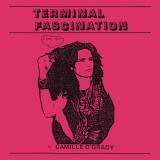
Dark Entries is ecstatic to announce Terminal Fascination, a retrospective release of the music of Camille O’Grady, subversive artist, leather witch, punk poet, and gender saboteur. O’Grady cut her teeth in New York’s burgeoning punk scene at clubs like CBGB’s, where her band Leather Secrets would share the stage with acts like Television. She became one of the few women to be welcomed into the Mineshaft, Wally Wallace’s legendary Manhattan gay BDSM club. Towards the end of the 70s, she would trek west to San Francisco to be with her partner, performance artist and gallerist Robert Opel, who was tragically killed in 1979. O’Grady would pass away from COVID in 2020, with her voluminous works across various media - text, image, and sound - having been unpublished during her lifetime.
Working with O’Grady’s estate, Dark Entries has assembled thirteen of her finest recordings, including instant classics like “James Dean to the Rescue,” “Tourniquet,” and, of course, “Toilet Kiss.” Two songs, “Angel with a Key” and “Love Comes Like a Cutthroat,” were recorded at a studio in Los Angeles for a 7” release that never materialized, while the rest of the material was recorded live in 1979 at The Ambush, a San Francisco leather club. O’Grady’s songs, often written from the perspective of a gay man, explode like a genderfuck version of Patti Smith, like Buffy St. Marie in leather, like the hedonic utopianism of the 1960s dragged (blissfully) through the broken glass of the 1970s. The release of Terminal Fascination coincides with the publication of ‘A Cross-Worlds Angel,’ a 300-page book of O’Grady’s work by Phillip Zimmerman. The record includes an insert featuring liner notes, lyrics, and photographs. Celebrate Camille O’Grady, the artist Jack Fritscher described as an “earth mother, a leather lioness of the arts.”
2026 Repress
Originally released in South Africa in 1983, In The Music......The Village Never Ends is one of those holy-grail African records that barely needs any introduction. Featuring the enormous 'Nomalizo', it's a record that aficionados around the world have been waiting many years for. Now, Be With Records proudly presents the hugely anticipated vinyl reissue of this bonafied classic.
This release is officially licensed and has been lovingly mastered for vinyl by Simon Francis (Claremont 56 mastering engineer) It has been pressed on audiophile 180gram vinyl for the first time and features the original, rarely seen artwork.
South African singer Letta Mbulu possesses one of the most beautiful voices the world has ever known. Her immaculate voice emits a sweetness that radiates from deep within, brimming with a joy of life and inspiring a spirit of hope and happiness. On this album, her voice soars over a strident musical force that veers between disco, soul and pop music of the most incredible kind. The gleaming guitars recall disco's finest hours while the thump of the beats anticipate 80s British soul.
News of this limited reissue has already been causing a significant stir amongst those in the know so do not sleep on this - you have been warned!
‘Unfindable Ring', out October 23 on Bayonet Records, is an adventurer’s epic. The arc of the journey, like any good Spirited Away or Neverending Story, lands its wide-traveled protagonist right back at home before bedtime. Grumpy, like many great hero tricksters before him, has always been a project of juxtaposition: upbeat radio-ready hits whose buoyant, goofy hooks belie the dark thoughts they describe. Much of this, Schmitt acknowledges, owes its due to the matter-of-fact morbidity of the trans experience in America. It’s from these experiences—personal, romantic, political, and existential—that the tale of ‘Unfindable Ring’ unfolds.
Ambition and play have always defined the Grumpy sound. Late last year, the Fader praised their “demented, hooky” EP, “Piebald,” whose innovative fuzz-pop confections earned them coverage in NPR and the New York Times. Stereogum heralded them as “wonderfully weird,” and Paste designated them “the best of what’s next.”” Through boisterous collaborations with the likes of Sidney Gish and Claire Rousay, they’ve effortlessly ingratiated themselves with the titans of DIY, and, more recently, Schmitt has become an unlikely favored collaborator of chart-topping country giant Zach Bryan, who named his new record––which prominently features Schmitt’s harmonies–– conspicuously, ‘With Heaven On Top.’
In Grumpy, Heaven Schmitt is joined by Anya Good, Ellie Long (Kid Lake), Austin Arnold, Diego Clare (D.A. Crimson), and Lane Rodgers, who each contribute to every step of the process—engineering and recording, mixing, drafting artwork, producing, and making music videos. A kind of interdisciplinary thieves’ guild, the project, while once Schmitt’s solo eponym, is a labor of communal love.
“We are living these happy lives, and there are people we come across who don’t know us at all who want us to die,” Schmitt, explains. Often the visibility of the joy itself is what prompts the vitriol––“I’m so happy I could die,” Schmitt belts over and over on the chorus (a familiar figure of speech, sure, but one which, upon any scrutiny, shows Schmitt’s hand in the macabre.) A middle finger to fate, Good started asking, “What are you going to do with your One Beautiful Life?” Grumpy is going to keep playing, touring, searching, finding.
WRWTFWW Records proudly announces the release of sfs/in vain (selected tracks) by UK jungle heavyweight and Future Retro London founder Tim Reaper, a limited-edition 3LP bringing together selected tracks from two previously digital-only albums, sfs and in vain.
An insane collection of slower 140 BPM wonders, sfs/in vain explores jungle, dubstep, UK garage, R'n'B, grime, liquid D&B and broken beats through Tim Reaper's fresh and informed approach. Deconstructed and reconstructed club music, rooted in tradition but looking forward, these tracks reveal another side of one of the key figures in the modern jungle revival.
The selection comes from 2 albums. sfs collects a body of slower material Tim Reaper worked on throughout 2025, stretching across various genres of UK electronic music. in vain comes from a much more personal place. Written during a period of instability, heartbreak, financial and professional uncertainty, the album became a way for Tim Reaper to process what was happening around him and find some kind of escape. The tracks were made at a point when the effort he had put into rebuilding his life felt as though it had all been "in vain" - hence the title. The result is warm, melancholic, soulful, simply very human.
Together, these selected tracks highlight the incredible range of Tim Reaper's production, proving that his understanding of jungle extends far beyond the traditional boundaries of the genre. From heavyweight bass music to delicate melodic passages, sfs/in vain (selected tracks) is a beautifully varied snapshot of an artist constantly pushing UK club music into new territories.
Tim Reaper has been leading the resurgence of jungle for years, with releases on AKO, Skeleton Recordings, 7th Storey Projects, Green Bay Wax, Dalston Chillies, Parallax, Myor Massiv, V Recordings, Deep Jungle and many more. He is also the founder of Future Retro London, one of the most respected labels and platforms in the contemporary jungle scene.
Italian percussionist Umberto Vitiello takes us on a journey into a vanished world. Mixed by Italian techno master Donato Dozzy, the album draws on memories spanning decades, including Vitiello's years living on Yarakh Beach on the outskirts of Dakar, Senegal. There, the rhythms of daily life flowed with the tides: fishermen launching their pirogues at dawn, griots and vendors gathering beneath three towering palm trees, and the Atlantic Ocean providing a serene soundtrack.
Named after the Lébou people whose fishing culture has shaped the coastline around Dakar for centuries, the record is both a tribute to a community that welcomed Vitiello as one of their own and a reflection on what has been lost.
Those years left a profound mark on both his life and his music. Yet this is not simply a work of remembrance. It is also a meditation on change.
Today, the beach that inspired these recordings has been transformed by pollution and environmental decline. Where fishing boats and palm trees once stood, a sculpture by Senegalese artist Serigne Gorgui Mbaye now depicts two giant ears facing the sea-a reminder of the need to listen: to one another, to nature, and to our own conscience.
Blending percussion, atmosphere and storytelling, the album revisits formative experiences from the 1980s through the perspective of the present day. Featuring vocal contributions from Olympia Ndiaye, Anna Caragnano and Mariangela Morais, and guided by Dozzy's spacious, immersive mix, it unfolds as a deeply personal journey through memory, place and transformation.
Dusky return to Anjunadeep with their forthcoming studio album ‘Signals’. The London duo first debuted on Anjunadeep in 2011 with their critically acclaimed album Stick By This. Expanding the boundaries of deep house and UK club music, the record marked the beginning of Dusky’s rise as one of the scene’s most respected acts. Their breakout track ‘Careless’, released via Aus Music, further cemented their reputation, amassing more than 14 million streams and becoming one of the defining UK house records of its generation. In 2014, the pair launched their own imprint, 17 Steps, which has since hosted releases and remixes from artists including Nathan Micay, LTJ Bukem, Interplanetary Criminal, Denham Audio and Shed. Since then, Dusky have released two further studio albums, Joy and Pressure, alongside a string of acclaimed singles. Their music has earned support from Pete Tong, Danny Howard and Sarah Story on BBC Radio 1, as well as widespread backing from leading DJs including Jamie Jones, Peggy Gou, Gorgon City, TEED and TSHA. While 'Signals' represents a natural continuation of the Dusky story, it also ventures into more reflective territory than previous releases. The album's wider range of influences and more contemplative mood offer a fresh perspective on the duo's sound, while also paying subtle homage to their acclaimed debut album ‘Stick By This’. Featuring multiple collaborations with vocalist Rromarin, alongside a contribution from Nadeem and Pritt, 'Signals' reflects a creative process that unfolded over many years. Some tracks grew from ideas first sketched long ago, while others emerged more recently, giving the album a sense of both history and momentum. Across its 13 tracks, 'Signals' balances Dusky's club-rooted instincts with downtempo offerings. Tracks such as 'Next Life', 'Kadhalan' and 'Lab' showcase the duo's signature combination of bold basslines, driving rhythms and emotional resonance. Elsewhere, 'Elm' and 'Bindweed' slow the tempo and draw on the warmth of soul, the deeper edges of disco and richly textured live instrumentation.
Underoath reinvents the balance between chaos and harmony with each successive release. Their compositions, conjured from creative tension, become iconoclastic anthems. Even when the band almost combusts, the crackling energy coalesces into something deeply resonant for millions.
Each time they have a chance to do something safe, Underoath challenges themselves instead, with integrity and attitude. Their pair of gold albums and three Grammy nominations stand in stark defiance of the idea of commercial compromise. The Underoath catalog weaponizes noise, aggression, and ambiance as skillfully as melody.
This year the band celebrates 20 years of their album Define The Great Line. Coming on the heels of 2004’s They’re Only Chasing Safety, Define The Great Line saw Underoath pivoting towards a more aggressive sound. The record’s unconventional – and, at times, jarring – intensity served as a stark contrast to the pop-leaning trends that were taking over heavy music at the time.
Featuring fan favorites like “Writing On The Walls”, “In Regards To Myself”, and “You’re Ever So Inviting”, Define The Great Line defied expectations when it debuted at No. 2 on the Billboard 200. It is widely regarded as one of the definitive heavy records of the early 2000s, solidifying Underoath’s legacy as one most influential bands of the genre.
The heart of their sound, which delivers naked vulnerability with thrilling force and cinematic lushness, can be heard in generations of bands who’ve pursued their trailblazing spirit. But Underoath refuses to sit still. Walking an artistic tightrope between immersive access and isolationist otherness, Underoath owns the space between huge choruses and forward-thinking heaviness, both on record and onstage.
Argentinian artist Juan Hansen presents his debut album 'Ultrasonido'; twelve tracks spanning indie dance, tech house, and soft melodic house, released on his own newly founded label Ultrasonido, with the second single 'Inside My Mind' coming out via belonging by Innellea.
After his breakthrough Boiler Room appearance in 2019, Juan has been on a relentless quest to push the boundaries, playing major stages around the globe, becoming one of the figureheads of the Argentinian electronic music world. As an exceptional live artist, multi-instrumentalist and vocalist, Juan brings a real sense of groove to the stage, merging two worlds effortlessly: deeply emotional songwriting and direct, dancefloor-focused club tracks. 'Ultrasonido' brings both sides together. The album is a clear evolution of Juan Hansen, presenting a wider range of his sound, which he also presents in his live performances. A journey through the musical world of Juan Hansen.
Across twelve tracks, with contributions from Clér Letiv, Santi Portillo, Franco BA, Rocio Giorgi, Miko Franconi, Brigado Crew and Marley Waters, Juan shifts between club-focused tracks and more intimate, song-driven moments, moving naturally between Spanish and English. It’s a debut album that captures both his roots and the direction he’s evolving toward.
Juan Hansen's story doesn't start on the dancefloor, it starts with acoustic instruments. He built his foundation in the indie and rock scenes of Argentina before crossing into electronic music, a journey that's still audible in every track he makes. After years of building his profile with live performances, mesmerizing audiences from Cosquín Rock and Ultra in Argentina to Watergate in Berlin, Burning Man in the Nevada desert, and Grand Factory in Beirut.
His search is real and visceral; a search for the different, mixing genres without prejudice, with a seriously playful attitude. Positioned within a new generation of artists dedicated to improvising on stage, Juan fuses electronic sounds with analog instruments and organic soundscapes. There's no genre cage. 'Ultrasonido' is his debut album and the launch of his own label, also named Ultrasonido. A long-form statement after years of singles, EPs, and shows around the globe.
Introversion, one of our most prominent discoveries, joins the golden side of the label with a stunning release that confirms his great skills. He vigorously continues to deliver this very unique 90's rave sound melted to some modern aspects of hip-hop and Techno with 3 Original cuts, on the flip side the debut of a duo that doesn't need much of an introduction, Obscure Shape & SHDW remixes Onryo, taking this already amazing record to a bigger and wider space.
Hackney based Hidden Sounds Records launches – with support from Emotional Recordings – it’s Dark Times label by diving in the the music of Alkahest, a short-lived project from Canadian brother-production duo Lex and Rew MacCrimmon.
For the second EP, the Twisted Up release is re-examined, with a tweaked track list to represent the times and how their sound continues in relevance today. Released in 2 years (1994-1996), Alkahest was the darker side of the MacCrimmon’s productions and allowed them to focus on twisted, psychedelic electronics, away from their main Legion Of Green Men project.
Self-described music obsessives from a young age – lying under a home-made harpsichord, with their heads in the resonator box was an early indication of a love outside the norm. Experiments with forks and pencils on strings – totally unaware of the likes John Cage – highlighted an interest in sound from unusual places.
Anything with a synth notably grabbed their attention, going to the public library to take out BBC Sound Effects and Morton Subotnick albums, sat alongside contacting European mail order catalogues, to grow their knowledge and record collections.
As early productions formed, working under the sound production name of Incarnate, their love of art was just as influential as music. The likes of M.C. Escher, Salvador Dali, Bridget Riley and the Op Art movement, was all part of brothers in their progression to form the Post Contemporary label in 1992.
Following the DIY ethos of the music they had long been buying, their “indie ethic” influences all coalesced in the label, not conforming to one sound or tempo, placed them within the electronic music coming from Canada, but also, out on their own.
Twisted Up expands the Alkahest sound, the title cut a stomping anthem, it’s unrelenting drums and lifting strings a call to arms. The compelling Shake arrives, acid techno rewiring synapsis, dub static between the beats.
On the flip, Twisted Another is just that, a reversion excursion, pushing the psychedelic synthesis to the forefront, stabs call and respond. Closing the EP with the perfectly titled, Kiss My Acid, a journey of industrial bang, reflexed, Alkahest showing their sound is pulsating, widescreen overtures.
JUDDER announces the second installment of its vinyl series, bringing together a diverse selection of artists united by their passion for experimental bass music. This time, the record is fully focused on a raw, soundsystem-driven aesthetic. On Side A, French producer Amor Satyr—known for effortlessly navigating between dembow, breakbeat, and techno—ventures into dubstep territory for the first time. On 'Over', he translates his signature style onto the genre’s foundations while retaining the distinctive energy that defines his sound. The record continues with a collaborative effort from Thematic and Nattah. ‘Aurora Pulse' is a cold, restrained piece of leftfield bass at 130 BPM, where a sharp, syncopated subline forms the backbone of the groove, pulsing like the heartbeat of a northern metropolis. Opening Side B, Dawn RAzor and Mani Festo deliver 'Awared', a track where techno and breakbeat converge through layered sound design and spring-loaded drum fills. As it unfolds, the composition gradually draws the listener into a hypnotic journey, dissolving familiar genre boundaries along the way. The release closes with ‘Lockjaw'—a true soundsystem slow-burner from Kahter and Mercy System. Broken tribal rhythms and a constantly evolving arrangement keep the listener suspended in a state of mounting tension, one that intensifies with every new detail introduced. Tracklist: A1 Amor Satyr — Over A2 Thematic & Nattah — Aurora Pulse B1 Dawn RAzor & Mani Festo — Awared B2 Kahter & Mercy System — Lockjaw
After almost twenty years of releasing music, Sven Tasnadi finds himself circling back to some of the sounds that first drew him into house music. Explorer was written at home following a longer break from producing and after moving out of his studio, a change of setting that coincided with a shift in priorities. "The tracks on this EP came together at home after a longer break from music and after I moved out of my studio," he explains. "Musically they are very deep and minimal, at times almost meditative. They were inspired by a new chapter in my life as well as my never-ending love and connection to artists like Lawrence from Smallville and Frank & Tony from Scissor and Thread."
That sense of returning to something runs through the whole record. For much of Tasnadi's career, producing and DJing were closely connected, with many releases naturally shaped by the club. Things have changed. "DJing is no longer my main focus, so I can dedicate myself to these deep and minimal sounds again, free from pressure or expectations," he says. "In a way, after almost twenty years of releasing music, things have come full circle for me."
"Atlas (Chapter 1)" and "Atlas (Chapter 2)" grew from the same initial idea but followed separate paths during production. Chapter 2 came first, while Chapter 1 emerged later from a variation Tasnadi discovered while the track was still essentially a loop. "I was still looking for the right theme for the original idea when another version suddenly opened up," he recalls. He saved that variation for later so he could stay focused on the first version. When he returned to it, the two had developed distinct enough identities to stand independently. Their shared DNA is still audible in the restrained rhythms, slowly shifting details and the way small changes carry much of the movement.
The title track moves further into dub techno, another longstanding passion for Tasnadi. "Explorer is almost a classic dub techno track," he says. "Subtle movements within a constantly repeating pattern create a particular atmosphere. It feels like the track could just keep going forever." It is a patient approach to repetition that he connects to artists such as Moritz von Oswald and his friend Daniel Stefanik.
"Megasektor", one of the first tracks Tasnadi made at home with a new equipment setup, brings the EP into deep house territory. "To me it's almost classic deep house, or at least how I define deep house for myself." Warm, compact and gently propulsive, it provides a natural closing point for a record that is ultimately less about changing direction than reconnecting with an instinct that has always been there.
Explorer captures Tasnadi at a point where making music has become more personal again. The four tracks come from following ideas for their own sake and from rediscovering the deeper, more minimal sounds that have stayed with him throughout his career.
As part of the 20 Years of BM anniversary celebrations, Bondage-Music proudly presents Bondage Games Pt. 11 — a special five-part vinyl series. Each release is named after a constellation, together forming a unique tribute to two decades of Bondage-Music.
With Bondage Games Pt. 11, the label's iconic vinyl series returns in its most ambitious edition to date. Created to celebrate 20 years of Bondage-Music, the series unfolds across five constellation-themed releases, each featuring four exclusive productions from artists closely connected to the label.
The first chapter, Ursus, brings together four exclusive tracks from Roger Gerressen, Sascha Dive, Rhadow and Lola Palmer. From Roger Gerressen's hypnotic groove-driven Patterned Shards and Sascha Dive's unmistakable deep house craftsmanship on Dub Chronicles #10 to Rhadow's atmospheric Ripples and Lola Palmer's warm and emotional Slow Down, the record perfectly reflects the timeless musical identity that has defined Bondage-Music since day one — deep, soulful, groove-focused and made for both intimate listening and late-night dancefloors.
Pressed on heavyweight 180g vinyl and housed in an individually printed sleeve, Ursus continues Bondage-Music's longstanding commitment to exceptional quality in both music and design. The artwork was created by BM's longtime Head of Artwork, Pete Bombart — a close friend and an integral part of the label since its earliest days. His unmistakable visual language has become inseparable from the Bondage-Music identity, earning a loyal following far beyond the music itself.
Whether collected as part of the complete anniversary series or enjoyed on its own, Bondage Games Pt. 11: Ursus is a celebration of the artists, the friendships and the unmistakable sound that have shaped Bondage-Music over the past twenty years.
Following the acclaimed Milano Undiscovered, Italia Undiscovered and Italia Synthetica series comes Italo International: a new collection celebrating the enduring legacy of Italo Disco. Eight exclusive tracks by established European artists reimagining one of Italy's most influential musical movements with originality, respect, and a contemporary vision.
Italo International is a journey through the many shades of elegant and visionary electronic music, moving between Italo Disco, Synth Pop and dancefloor-oriented sounds. The talented and steadily rising Polish producer Rafał Lachmirowicz, aka Also Playable Mono; Hungarian artist Gianni Durante, aka Electro Potato, who for years has been bringing back the sound of early-Eighties Italo Disco with passion and a contemporary sensibility; Norwegian Tommy Holsen, aka DJ TinTin, who together with the Eighties band Go explores the classic sounds of Nordic Synth Pop; British producer Mark Wilkinson, aka Kid Machine, who for over fifteen years has been creating productions made for the dancefloor; Tyrell Corporation, the alias of Dutch producer Alden Tyrell, who joins forces with Italian duo Italoconnection to rework a track destined to set the dancefloor on fire; Swedish multidisciplinary artist Tobias Bernstrup, who for three decades has been reinventing the more sophisticated side of Italo Disco with elegance and a distinctive vision; the Dutch project Sfera Celeste Project, which blends Moroder-inspired sounds with a hypnotic minimalism reminiscent of Jeff Mills; and, closing the journey, British artists Heartbreak, Ali Renault and Sebastian Muravchik, with a poignant and slow-burning excursion into the melancholic world of Synth Pop.
Indroducing our new vinyl collaboration, a fusion of talents by Eafhm and our Co-Founder Nils Edte. Exploring the theme of "Glossolalia" or speaking in unknown tongues, they treat music as its own language. Featuring stunning remixes by MTRL & Laima Adelaide, the vinyl is not just an auditory experience but a visual one too. The cover artwork, a joint effort by Nils Edte and painter Mariano Fernandez, adorns the limited edition of 200 records. Each cover is a unique piece of the painting, making this release a truly exclusive collector's item. Immerse yourself in this blend of art and music, where sound and visuals unite in a captivating collaboration.
For South Central’s premier singer, songwriter, and producer, success was never an overnight accident; it was a blueprint executed with meticulous precision. With his highly anticipated project, Labor of Love, Blxst delivers a masterclass in modern West Coast R&B and Hip-Hop, proving that true artistry requires both sweat and soul. The album serves as a sonic manifesto on the price of ambition, the weight of loyalty, and the delicate balance of maintaining romance while building an empire. It stands as a definitive evolution of the distinct sound Blxst pioneered, blending crisp, trunk-thumping 808s with soulful, nostalgic chords and his signature, effortlessly smooth vocal runs.
Entirely self-produced and co-written, Labor of Love bridges the gap between the sun-drenched grit of Los Angeles street culture and the vulnerability of late-night bedroom playlists. From the bounce of celebratory anthems to introspective, late-night drive confessionals, Blxst curates a tracklist that feels both deeply personal and universally resonant. It explores the sacrifices made in the pursuit of greatness, paying homage to the sonic pioneers of LA while firmly cementing his own place as the vanguard of the city's modern sound. It is a celebration of independence and the self-made mentality, reminding listeners that he remains the chief architect of his own destiny.
Ultimately, Labor of Love is a testament to the grind, capturing the sleepless nights and tested relationships that pave the road to success. Blxst puts his heart on the line to show that the work itself is where the true passion lives, creating an album for the city, for his family, and for everyone who stays dedicated to their craft. More than just a collection of radio-ready hits, this project is a cohesive, cinematic experience from one of music's most reliable hitmakers. It is a definitive reminder that Blxst isn't just riding the wave—he is directing the current.
It's 1995 and techno has hit max speed while house is going deep. UK soon-to-be-legend Baby Ford has different ideas as he kicks off his now cult Trelik label with this EP from Ian David Loveday aka Tan-Ru that strips everything back, layers in dubby low ends and masters the art of loop building. It's still driving and mind-melting but with a restrained and futuristic sound that is utterly fresh. As well as the original is a more textured dub and the flip-side classic ' Assembly'. This one is in a hurry, with claps and feathery snares riding the swinging drums. Freaky stabs bring some fun and decades on the EP, which started it all, still sounds unmatched.
Shyam Anand is a long-term friend of Smallville and an MPC wizard with a wide-open heart. We are super happy to finally present a 12“ that is fully his own.
After an amazing contribution to Smallville 49 (check out Exerpts!), Snad aka Spandrel aka Shyam Anand presents a full 3-tracker on Smallville, packed with his irrisistible grooves, the usual unexpected twists and an overall magical atmosphere. Growing up near Philadelphia, then moving to Chicago and later exploring the global underground scenes of Berlin and Mexico City, among others, Snad is a busy man. He runs his own imprint Spandrel, co-runs We R The Aliens and has an impressive back-catalogue of contributions for several favourites like Running Back, Courtesy of Balance, Kimochi, Long Vehicle, 20:20 Vision, Phonica and many more.
On this 12" the A side belongs solely to Bubblescope - 14 and a half minutes of mesmerizing Ensoniq DP/4 Vocoder driven modular spheres, an endlessly deep bubbling piece of art that builds an intense feeling that could last for hours.
The B side sees Snad staying deep – Lukewarm Lava explores the broken beat world before taking you on a ride. The beloved B2-spot goes to Tanni - an integral part of Julius' warmup-sets since forever and thus a special one to finally put on wax.
Bubblescope comes with a Full Cover Artwork by Stefan Marx.
Ediciones Espectro Oculto returns with EOD003, its third release and the opening instalment of a new Split Series — a side each for two artists who deal in the shadows: Mick Wills & Blackmoon77.
Mick Wills handles the A-side in familiar territory, mining the margins of European DIY synth culture for cuts & edits. A1, “Six Six Six Sex”, resurrects a forgotten wave track laid down in 1983 by Venlo duo Carin & Henk, Carin Kollenbrander’s conspicuous, sexed-up vocals carrying the unmistakable spirit of the early-’80s minimal synth underground. A2 cuts “New York” by MCL a new beat staple first issued on German’s Boy Records, tightened into a playful, dancefloor-ready tool. Closing the side, Mick Wills turns to Folkvett’s “Kommando Kamprad” — originally out on Pater Noster Ltd. in 2012 — an ethereal, out-of-body drift that pulls the mood inward.
On the flip, Blackmoon77 doubles down on their signature across three originals: dark, raw and hypnotic wave built for bold & audacious DJs and fierce dancers.
All tracks mastered by Alden Tyrell.
As always, this is a one-time pressing of 250 copies — no repress, and no digital until the vinyl is gone.
Nine-time GRAMMY® winner Anderson .Paak and GRAMMY®-nominated rapper Cordae have been operating on the same wavelength for years. What started as pure chemical reaction on 2019’s “RNP” slowly turned into one of hip-hop’s most natural, low-ego partnerships, fueled by back-and-forth gems like “Two Tens” and “Summer Drop” and a series of dynamic TV performances that felt more like two best friends hanging out than a polished routine. On their debut collaborative album, Heavy Is The Crown, that organic bond gets the full-length treatment it’s always deserved.
At its core, the project is a tightrope walk between serious real-life stakes and uncompromising fun. The title isn't just bravado—it speaks directly to the shared weight both artists carry as the primary providers and anchors for their families. But instead of letting that pressure crush the vibe, .Paak and Cordae lean into each other. Meeting as total equals, .Paak’s elastic, soul-drenched musicality anchors Cordae’s razor-sharp lyricism, allowing both to unpack the heavy reality of success and family responsibility without ever losing their spark.
That balance is what makes the album tick. To drive the point home, the album art pays homage to the cult comedy Step Brothers—a nod to the silly, irreverent friendship that birthed the music in the first place. Heavy Is The Crown doesn't feel like a forced corporate crossover or a calculated career move. It’s a record about brotherhood, family, and what happens when two masters of their craft step into the studio simply because nobody makes them laugh, rap, or create quite like the other.
“Negative Music / The Poorest! If they still know silence at all, then only as holes in the continuum of noise…” — Günther Anders, 1965
Editions Mego presents GETGETGET, a new release by Thomas Brinkmann which serves as an inquiry into silence, code, and the limits of perception.
The title GETGETGET references the trilogy of ‘Get’ lp’s made by Rehberg under his PITA moniker; Get Out, Get In and Get On. The music is based on material by Rehberg and Brinkmann morphing these two identities into a third colour, a disappearing color.
Emerging from a live performance at the label’s 30th anniversary in Berlin, the work unfolds as both sonic artifact and conceptual system: a study in what remains when sound is reduced, extracted, and reconstituted.
Taking inspiration from Günther Anders’ notion of “negative music”—composition through absence—Brinkmann’s approach aligns with Heinrich Böll’s idea of “collected silence”: silence not as void, but as a material framed against the constant pressure of noise. In GETGETGET, pauses are not gaps but structural elements, cut from a continuum and reinserted as signals.
The two side long tracks weave a dark abstract and ‘twisted’ presence where the ghosts of the machines and their operators fuse into a fantastical whole. One can hear traces of both Brinkmann and Rehberg logic which seems to fuse in a hallucinatory manner.
Brinkmann’s work reflects a broader condition: the translation of material processes into informational ones. As images detach from bodies and code separates from matter, sound too loses its fixed resonance. What remains is circulation—of signals, of data, of meaning—within systems that increasingly define perception itself.
GETGETGET is an album where absence is equal to presence, a metaphor with suggestive tones of the influence Rehberg had and continues to have in the world of the radical experimental electronic avant garde. The “zero” is not empty; it is what makes everything else work.
This special 3LP clear vinyl collates the “Back To Black” era in a definitive package. Featuring the original studio album, 4x unreleased demos, rare B-sides and demos, alongside the notable live performance from Paradiso, Amsterdam (February 8th 2007) from the Back To Black tour, never released in full and on vinyl.
This edition features brand new alternative cover artwork, including Amy’s handwritten lyrics, and never-before-seen photos by original album photographers Mischa Richter and Alex Lake, plus brand new, exclusive liner notes from Mark Ronson and Salaam Remi.
2026 celebrates the 20th anniversary of the 5x Grammy award winning album “Back To Black”, universally regarded as one of the greatest, most important and influential albums in pop history.
Iconic Dutch techno pioneer Stefan Robbers returns to De:tuned with Nodes, a mesmerizing new 8-track album under his legendary Terrace alias. Serving as the sixth Terrace LP and the highly anticipated follow-up to 2025's Branches, Nodes further refines Stefan's signature blend of Detroit-inspired futurism and warm, dub-infused textures. Drawing on decades of studio experience, he delivers another finely balanced collection of expertly produced techno, enriched with warmth, groove and precision. Stefan's relationship with De:tuned spans many years and reflects a shared passion for timeless electronic music. From his acclaimed Phosphenes EP (2017) and his memorable remix of LA Synthesis - Agraphobia, to standout appearances on label compilations such as 10 Years of De:tuned with Estrings, Terrace has remained an integral part of the label's catalogue. Nodes is the latest chapter in that enduring collaboration. Rich in detail, depth and emotion, Nodes once again demonstrates why Terrace remains one of the most respected and enduring names in Dutch techno. The creative heartbeat of Eindhoven is still beating stronger than ever. Artwork has once again been created by Al White and Kevin Foakes (Openmind, DJ Food, Ninja Tune), while mastering duties were handled by Matt Colton at Metropolis. A separate digital edition will also be available through all major digital platforms.
With his last three records all landing within a calendar year (2024-25), enigmatic Swedish producer Civilistjävel! (aka Tomas Bodén) is on a hot streak of releases, his singular vision increasingly ambitious and expansive. There are few artists working at this level so consistently right now, reinventing, revising and continually developing their language. Following on from 2025’s radically re-worked ‘Versions’ (of Mayssa Jallad’s ‘Marjaa…’), Bodén returns to break further fresh ground with his new album, ‘Älvgång’. Featuring contributions from Soccer Committee, Carrier and guest (aka Jabu’s Jasmine Butt), ‘Älvgång’ foregrounds a more brittle and insistent rhythm-based sound, whilst comprising his most broad-ranging collection of material to date.
‘Älvgång’ grew out of a series of sketches made from late ‘24 and throughout the whole of ‘25 at Stockholm’s renowned EMS Studios, which gave Boden free rein to its extensive collection of vintage analogue equipment and rare modular synthesizers such as the Serge and Buchla systems. As a loose framework of tracks began to take shape, so did a reflection of sorts, on family and foundations, underpinned or influenced by sounds that drifted into Tomas consciousness around this time - ancient Swedish pastoral music, Georgian lithurgical chants, gongs, chimes. An idea settled into place, a dedication to his Grandfather, as the earlier release Fyra Platser (tr. ‘Four Places’) was to his Grandmother. Älvgång is grounded with the sense of time and place of an old family photograph, with the tracks over each side bearing one of two names that are more or less the same location - Strinne was the old name for a this loose collection of villages. These days it is more commonly known as Bjärtrå. Metaphorically speaking, the river runs through both.
Civilistjävel! conjures so many adjectives and descriptors, ‘glacial’ and ‘ambient’ frequently among them - but while not altogether untrue, such terms belie the tension and drama so often present in Tomas’ music. Listening to ‘Älvgång’ is not a passive experience. The eight tracks here feel like a patchwork of memories that bathe in the same ethereal, otherworldly glow of Tarkovsky’s polaroids’.
The machine pulses that dominate this landscape are reigned in and tempered by a human hand; lithe, untethered coils, breathing in and out. ‘Strinne Ett’ sets out with purpose, sensing awe and wonder through the murk, but as the final tone unfurls like a question mark, another chapter begins, unfolding/building like a Tarjei Vesaas novel. These lyrical, abstract miniatures combine to reveal a wider context, fragile humanity standing alone against nature.
Guest appearances on Civilistjävel! records have become a regular occurrence (including recent collaborations with Mayssa Jallad, Laila Sakini, Cucina Povera, Thomas Bush, Eldon + Withdrawn), but are used sparingly and with increasing precision. On ‘Strinne Tre’ Mariska Baars’ (Soccer Committee) voice feels like a balm, a clearing. But as her simple, three-word incantation drifts further into fog, the meaning changes, and her words seem to curdle. Carrier’s beats widen the parameters on ‘Strinne Fyra’, a skittering promise that builds tension then refuses to release it; all false starts, Photek gongs, and trinkling modulars. Jabu’s Jasmine Butt pulls all the threads together for the final track, Thomas Tallis’ ghost walking over offset machine impulses, that work against their own symmetry.
Side two begins inquisitively, scanning bleached, alien surroundings, its sparse pads recalling Aphex Twin’s ‘Selected Ambient works Vol 2’. 'Bjärtrå Två’ picks up the baton from ' Strinne Fyra’ with a ruptured Simmons SDS200 analogue drum synth set free from its shackles, the rhythm eventually slotting into the spaces that were hiding in plain sight. What follows seems like an epiphany; ‘Bjärtrå Tre’ is achingly beautiful, a euphoric, winding ascent that leads to devotional plainsong. ‘Bjärtrå Fyra‘s final unheralded shift feels both tragic and haunting.
For more than two decades, Vidmantas ?epkauskas has occupied a singular position within European underground culture. As the driving force behind Opium Club and gallery 1986 in Vilnius, founder of Ant Bangos, Alfavilnius and OLE festivals, curator, label owner, promoter, DJ and artist, he has spent much of his life creating the conditions for other people's music to be heard.
It makes sense then that he has no shortage of friends and collaborators in play. Across ten tracks, V presents shades of Italo, krautrock, post-punk, minimal synth, industrial pop and neon-noir romanticism, arriving somewhere between the dancefloor and a dream-state. The cast of collaborators both contextualize and help sharpen the vision.
First and foremost, much of the album was crafted alongside Frankfurt's Philipp Lauer, whose friendship with V grew through marathon studio sessions. Curses lends his unmistakable blend of dark romance and theatrical energy to "Is This What You Want?", Australian cosmic journeyman Dreems joins for the kaleidoscopic "Blitz Disc," Domenique Dumont brings their unmistakable emotive touch to "Avventura," while Lithuanian artists Noyus and Ruta MUR, both distinctive voices from the country's queer scene, whose vocals add another dimension to the record's emotional palette. As V puts it, "These are the people I've been vibing with."
That he finally delivers a full-length LP with such elusive qualities is more than a clue to his character. The title itself, a nod to Magritte's famous paradox and his years living in Brussels, suggests that any attempt to define V through a single image is destined to fail. At once playful and philosophical, 12:55 (Ceci n'est pas une V) questions ideas of identity and artistic value while marking the closing chapter of the musical persona that followed ?epkauskas' earlier success as Vidis. Neither retrospective nor statement of intent, it feels like a connected set of reflections spanning a lifetime of influences.
"ABYSSUS stand as one of the most significant forces within the Greek Death Metal scene, having forged their path since 2011. Drawing profound inspiration from genre-defining pioneers such as DEATH, OBITUARY and BOLT THROWER, the band preserves the unadulterated spirit of old school death metal while imprinting their own distinct identity.
From the very outset, ABYSSUS placed equal emphasis on studio output and live performance. A steady stream of EPs and split releases established their presence within the international Underground metal community. Their debut full-length, „Into the Abyss“ (2015), garnered widespread acclaim and marked a pivotal moment in the band’s evolution - leading to increasingly frequent appearances both in Greece and across Europe, often sharing the stage with renowned acts, like POSSESSED, SINISTER, SUICIDAL ANGELS and ROTTING CHRIST.
With renewed creative vigour and greater maturity, ABYSSUS unveiled their sophomore album „Death Revival“ in 2022 via Transcending Obscurity Records. Adorned with an arresting cover by the legendary Andreas Marschall (KREATOR, BLIND GUARDIAN, IN FLAMES a.o.), the album was met with universal praise, further cementing the band’s reputation for delivering unrelenting, yet masterfully crafted, death metal. More shows with a.o. ASPHYX, TANKARD, GRAVE DIGGER and THE CROWN followed.
Now in 2026, ABYSSUS return with their third full-length opus, “The Reign” - a ferocious testament to their artistic evolution. The album encapsulates all the core elements that have defined death metal through the decades: raw aggression, blistering riff-work, and a suffocating, commanding atmosphere. Once again, the visual narrative is entrusted to Andreas Marschall, whose artwork enhances the band’s sonic vision with striking intensity.
Relentlessly evolving, ABYSSUS remain true to their roots while continuing to push the boundaries of the genre. With a prolific discography and an ever-growing presence on the live circuit, they have rightfully earned their place as a formidable name within the global death metal landscape."
The vibraphone may have gone quiet, but the groove hasn't. Roy Ayers passed away on March 4, 2025, in New York City, at the age of 84, but the man they called the Godfather of Neo-Soul left behind a vault deep enough to keep dancefloors moving for generations. BBE Music now hands the keys to Berlin's own Delfonic, whose second volume of reworks digs even further into that treasure chest for six fresh, floor-ready reimaginings. The series began when Delfonic shared a spontaneous edit with BBE founder Pete Adarkwah, and listener demand for a vinyl pressing turned the idea into a full official release. Volume 1 sold out fast and moved through collector circles at speed; Volume 2 arrives with even higher expectations attached, and record heads who missed out the first time won't want to sleep twice. Everything here is pulled from deep, previously-vaulted Ayers sessions. The reworks draw from BBE's celebrated Virgin Ubiquity compilations, a trove of unreleased Roy Ayers recordings cut between 1976 and 1981. These are the rarer cuts serious collectors have been chasing for years, now given a second life courtesy of BBE Music Delfonic is the alias of Markus Lindner, a Berlin lifer. He's been DJing professionally since 2004, building his name across Berlin and wider Europe with a sound rooted in hip-hop but stretched across many genres. For anyone who needs the primer: Ayers pioneered jazz-funk through his group Roy Ayers Ubiquity and was widely regarded as the godfather of neo-soul. His breakthrough came young; he got his first vibraphone mallets at age five after watching Lionel Hampton's band, and by 1963 he had his own recording contract. His records have been sampled for decades by artists including Mary J. Blige, A Tribe Called Quest, Common, and Kanye West, cementing him as one of the most sampled figures in soul-jazz history; a status that only grows with every year that passes. About BBE Music: This is a label with real archival credibility on Ayers specifically. BBE has held the license to the Virgin Ubiquity sessions since 2004, and this rework series is a natural extension of that decades-long relationship. Buyers trust the BBE stamp on soul-jazz reissues and edits precisely because of that history and the care, thought and quality that goes into every physical release, as BBE celebrates 30 years of real music for real people.
Revisiting the sound and spirit of Jazzy Sport, rooted in Japan and carried forward by a new generation. Compiled by Nina Yamada, featuring Cro-Magnon and Grooveman Spot, with remixes by DJ Mitsu the Beats and Idjut Boys.
Founded in 2002, Jazzy Sport emerged at a particularly fertile moment in Japanese music. Beginning as an independent label and record shop, with its first store in Morioka and Jazzy Sport Music Shop Tokyo opening in Shibuya the following year, it became a home for artists including GAGLE, DJ Mitsu the Beats, Cro-Magnon and Grooveman Spot. Its releases moved freely between hip-hop, house, jazz, broken beat and live musicianship, helping define a distinctly Japanese strain of open-minded club culture.
But the music was only the beginning. Jazzy Sport developed into a network of record shops across Japan, alongside its label and distribution work, apparel and design, dance studios, and a Morioka record shop joined to a bouldering gym. These were not unrelated side projects. They expressed the same founding idea: that music, sport and everyday life could come together to create community.
PAST FORWARD: SILVER marks the first release on the Jazzy Sport London label, distributed by Time Capsule. Established in 2022, the London project first took shape through parties, radio shows and community collaborations connecting Japan and the UK. This compilation carries the Jazzy Sport archive and its values forward through a new generation.
At the centre is Nina Yamada, the daughter of one of Jazzy Sport’s core members. She grew up within the community that shaped the collective, and her selection is not a conventional greatest-hits survey, but an inside view of the catalogue and an intergenerational handover made audible.
The music moves naturally between hip-hop and house, electronic production and live performance. That openness has always been central to Jazzy Sport, where club music, musicianship and community are part of the same conversation rather than separate scenes.
DJ Mitsu the Beats’ remix of Cro-Magnon’s “Eclipse” brings the refined, soulful depth that makes him such an important figure in Japanese beat music. Idjut Boys’ deep, dubwise Cro-Magnon rework reflects the long exchange between Japan and the UK, while Grooveman Spot’s “Do The Dance” finds a sweet spot between acid-tinged 808 groove and warm soulfulness.
Elsewhere, Nubian Lady’s “In☆Flu☆Enza” draws on Detroit techno and Chicago house but sharpens those influences into something lean and distinctive. Physical Sound Sport’s “Magical Kalimba” captures the communal energy and openness of a live session. Bottom Fly’s “Rhyme Or Reason,” rooted in Morioka, pairs rough-edged beats with mellow samples and a quiet sense of nostalgia.
What comes through is not only the strength of the individual tracks, but the sensibility that connects them. That keeps PAST FORWARD: SILVER from feeling like a nostalgic best-of. For longtime followers, it offers rediscovery; for new listeners, a way into the breadth of Jazzy Sport; and for DJs, a selection made for the record bag, not just the archive.
Fishtailing across a trimmed sod lawn, the parking lot of a box-store strip mall, a fast food drive-thru––it’s a hyperreal Americana fantasy that calls Caroline Rose (she/they) home on 'Gentling the Horse at the Walt Whitman Mall'. The release doubles as the debut of SUCK records, the LA based artist’s own imprint—a fitting next form for an enigmatic musician whose work resists settling into one shape.
'Gentling the Horse at the Walt Whitman Mall' stretches the ordinary into the uncanny. The record pairs sharply observed, memoiristic songwriting with expansive guitar textures that render the everyday with violent clarity and mythic scale. Beneath its melodic sweep and signature hooks runs a current of violence and American dream leakage.
It’s Ennio Morricone with an AR15: surf guitars, spaghetti westerns, and suburban dread colliding until they become their own sharp vernacular. Reality is unstable, so we’ll keep telling stories—and for Rose, the sinister slickness of the everyday grows a new head.
Working with producer John Congleton, Rose built the record through humor, layering, and instinct rather than polish. Songs like “Conversations with Shiv,” “Goddamn Train,” and “Everything in its Right Place” were recorded in studio for the first time, with sessions that prized first impulses over perfection. The result is panoramic but never precious—songs that feel meticulously constructed while always threatening to mutate.
Over the last six years, Rose’s music has evolved alongside their work organizing around stronger labor protections and collective bargaining rights for musicians and crews. Creative and political practice have increasingly become the same project as Rose’s career has taken on its hyper-independent form. Those concerns echo throughout 'Gentling the Horse'. Its landscapes are populated by inherited systems that feel absurd yet inescapable, where humor becomes a survival tactic and satire reveals the quiet violence embedded in everyday Am
Fishtailing across a trimmed sod lawn, the parking lot of a box-store strip mall, a fast food drive-thru––it’s a hyperreal Americana fantasy that calls Caroline Rose (she/they) home on 'Gentling the Horse at the Walt Whitman Mall'. The release doubles as the debut of SUCK records, the LA based artist’s own imprint—a fitting next form for an enigmatic musician whose work resists settling into one shape.
'Gentling the Horse at the Walt Whitman Mall' stretches the ordinary into the uncanny. The record pairs sharply observed, memoiristic songwriting with expansive guitar textures that render the everyday with violent clarity and mythic scale. Beneath its melodic sweep and signature hooks runs a current of violence and American dream leakage.
It’s Ennio Morricone with an AR15: surf guitars, spaghetti westerns, and suburban dread colliding until they become their own sharp vernacular. Reality is unstable, so we’ll keep telling stories—and for Rose, the sinister slickness of the everyday grows a new head.
Working with producer John Congleton, Rose built the record through humor, layering, and instinct rather than polish. Songs like “Conversations with Shiv,” “Goddamn Train,” and “Everything in its Right Place” were recorded in studio for the first time, with sessions that prized first impulses over perfection. The result is panoramic but never precious—songs that feel meticulously constructed while always threatening to mutate.
Over the last six years, Rose’s music has evolved alongside their work organizing around stronger labor protections and collective bargaining rights for musicians and crews. Creative and political practice have increasingly become the same project as Rose’s career has taken on its hyper-independent form. Those concerns echo throughout 'Gentling the Horse'. Its landscapes are populated by inherited systems that feel absurd yet inescapable, where humor becomes a survival tactic and satire reveals the quiet violence embedded in everyday
Since starting Bytes in 2019 we’ve fielded a lot of messages along the lines of, “Is this ever going to be released on vinyl?” The bulk of these requests have concerned remixes of artists on Bytes done by Andy Bell (RIDE/Oasis) under his electronic alter-ego GLOK. And on realising that he has done four for us now (Franz Kirmann, Steve Queralt & Michael Smith, Herrmann Kristoffersen and Seagoth), it seemed silly not to compile them all together on a four-track 12” EP. The super limited edition 12” is on black wax and comes in the original Bytes house bag with a vinyl sticker containing all the release info signed by Andy. Edition of 250. No repress.
A1. SOLITARY (GLOK REMIX) - FRANZ KIRMANN
The first remix Andy ever did for Bytes was a radical reworking of ‘Solitary’, the towering ambient closer to Franz Kirmann’s ‘Madrapour’ album, which was released on Bytes in 2019. Andy’s remix is a heartbreaking, melancholic 3am banger. This is one for fans of Four Tet and Jon Hopkins, a slowburner with billowing plumes of distortion that builds towards an ecstatic rush of a finale.
A2. CHALDEAN ORACLE (GLOK REMIX) - STEVE QUERALT & MICHAEL SMITH
In 2023 Andy took ‘Chaldean Oracle’, a track from the collaboration between his RIDE bandmate Steve Queralt and the writer Michael Smith, down the K-Hole, eschewing Michael’s vocal almost entirely and turning in a Detroit dub-techno monster with echoes of Bandulu and Carl Craig in its shimmering melodies, eerie distortion and pounding drums.
‘Gone Gold’ was the title track of the excellent second album by ambient-techno group Herrmann Kristoffersen (2021). Andy taps deep into the dub at the heart of the original, with echoes of John Carpenter's soundtracks and his own extended electronic excursions under the GLOK moniker.
B2. ETERNITY (GLOK REMIX) - SEAGOTH
It was Andy who brought Seagoth to the attention of Bytes when he played ‘Eternity’ on his Soho Radio show in 2020. It all came full circle when Bytes released ‘Eternity’ as a single in 2021, with a stunning remix by Andy in his GLOK guise on the flip. Andy strips the track back to showcase the resonant vocal in all its glory before the blissed-out outro that makes full use of the track’s dancefloor-friendly drum break.
Special poster on 250gram paper. Postcard with photo taken by Sandrien. Hand-numbered sticker. Shrinwrap
After more than a decade without releasing new music, Amsterdam DJ and producer Sandrien returns with her debut album Compass, released on her own new label, inspi. Created during a stay in Spain, where she finally found the space to create freely again, the album marks a new chapter: no genres, no expectations, just music made purely on feeling. Compass is an album about finding your own path, personally and musically, a cycle of searching and finding, letting go and beginning again. Lead single 'Life' laid the foundation for it all. The visual world of the album is just as personal: photographs Sandrien took around her house formed the basis for its artwork and imagery. With 27 years of experience behind her, Compass proves that mastery doesn't lead to routine, but to exploration. This double LP includes a beautiful double-sided poster featuring two original artworks of ‘Compass’ by Dutch artist Pieter Jan Boterkoek. Releases October 9, 2026 Written and produced by Sandrien Mixed by Julien Chaptal Mastered by Giuseppe Tillieci at Enisslab Artwork by Studio Pieter Jan Boterhoek This album is made with love in Spain, Volkshotel Amsterdam and Groenekan.
Iconic Dutch techno pioneer Stefan Robbers returns to De:tuned with Nodes, a mesmerizing new 8-track album under his legendary Terrace alias. Serving as the sixth Terrace LP and the highly anticipated follow-up to 2025's Branches, Nodes further refines Stefan's signature blend of Detroit-inspired futurism and warm, dub-infused textures. Drawing on decades of studio experience, he delivers another finely balanced collection of expertly produced techno, enriched with warmth, groove and precision. Stefan's relationship with De:tuned spans many years and reflects a shared passion for timeless electronic music. From his acclaimed Phosphenes EP (2017) and his memorable remix of LA Synthesis - Agraphobia, to standout appearances on label compilations such as 10 Years of De:tuned with Estrings, Terrace has remained an integral part of the label's catalogue. Nodes is the latest chapter in that enduring collaboration. Rich in detail, depth and emotion, Nodes once again demonstrates why Terrace remains one of the most respected and enduring names in Dutch techno. The creative heartbeat of Eindhoven is still beating stronger than ever. Artwork has once again been created by Al White and Kevin Foakes (Openmind, DJ Food, Ninja Tune), while mastering duties were handled by Matt Colton at Metropolis. A separate digital edition will also be available through all major digital platforms.
Originally released in 1989, “Synthesis” is the debut full-length album by Artefacto, a pioneering Mexican techno-pop band formed in Tijuana by Bola Modelevsky, Roberto Mendoza and Melo Ruiz. With its distinctive blend of electronic rhythms, synthesizers and futuristic pop sensibilities, the album became an important and highly sought-after release within the Mexican electronic music scene. Despite the album’s innovative sound and the interest surrounding it at the time, “Synthesis” was mysteriously held back from a wider release.
“Synthesis” has since become regarded by collectors as one of the essential releases of Mexican techno-pop, with tracks such as “Complejo de Amor” and “Mundo sin Viento” remaining enduring classics. “Mundo sin Viento” was later featured on “Back Up: Mexican Tecno Pop 1980-1989”, the influential compilation released by Dark Entries, helping introduce Artefacto’s music to a new international audience.
The story of Artefacto and its creators did not end with this chapter. Its members continued to explore new musical territories through projects such as Artefakto, Panoptica, Nortec Collective, and Klansoff, continuing their creative journey within Mexico’s evolving electronic music scene.
For this new edition, “Synthesis” has been newly remastered from the original master tapes and is presented on transparent red vinyl, limited to 350 copies and including a reproduction of the original lyrics insert.
What an unbelievable record. From the wild cover to the iconic breakbeats, Roots from Ian Carr’s Nucleus is one of the dopest albums we know. This is seriously thick, funky-prog jazz-rock heaven. Originally released on Vertigo in 1973, other than a couple of versions at the time for other territories, Roots was never re-pressed since so it’s gone on to become another one of those impossible to find records.
Maybe it was a little too out there for the time, but it’s aged very, very well indeed and this Be With re-issue, re-mastered from the original analogue tapes, shows off just why this deserves to be back in press.
Genius trumpeter and visionary composer Ian Carr was one of the most respected British musicians of his era. He was a true pioneer and saw the potential in fusing the worlds of jazz with rock, just as Miles Davis and The Tony Williams Lifetime did in the US. In late 1969, following the demise of the Rendell-Carr quintet, and tiring of British jazz, Carr assembled the legendary Nucleus. Regarding music as a continuous process, Nucleus refused to “recognise rigid boundaries” and worked on delivering what they saw as a “total musical experience”. We can get behind that.
Under bandleader Carr, Nucleus existed as a fluid line-up of inventive, skilled musicians. This constant evolution and revolution was all part of the continuous musical exploration and discovery that took jazz to new levels.
Working together with producer Fritz Fryer and engineer Roger Wake, the seven compositions by Carr, Brian Smith and Dave MacRae that make up Roots flirt with perfection, and Nucleus at that time made up of the cream of 1970s UK jazz with Brian Smith on tenor saxophones and flutes, Dave MacRae on piano and electric piano, Jocelyn Pitchen on guitar, Roger Sutton on bass, both Clive Thacker and Aureo De Souza on drums and percussion, Joy Yates delivering the vocals and of course Carr on trumpet.
The spellbinding title track immediately renders the album indispensable. Riding the illest of loping breakbeats, “Roots” is low-slung, doped-out heist-funk. An absolute monster. If it sounds familiar then that’s likely down to it being sampled by Madlib for Lootpack and Quasimoto’s “Loop Digga”, as well as by a whole host of beat manipulators. “Roots” conjures prime instrumental hip-hop / beat music, only 20 years ahead of its time. Truly, these are the roots. Through sinuous bass, twinkling keys and a hypnotic guitar riff, a smoky brass motif weaves its way into a gloriously deep haze around Carr’s solos. “Roots” is over 9 minutes long, but there’s not a single wasted second, not surprising given that this is a condensed version of an originally 40 minute long commissioned composition.
The soothing vocal fusion delight of “Images” follows. Meticulously constructed, with gorgeous flute work from Brian Smith, with Joy Yates’ silky vocals and Dave MacRae’s Rhodes never sounding better. The cool, driving “Caliban” closes out the first side. Originally the third movement in a four part commission to celebrate Shakespeare’s birthday it stands up on its own, all robust rhythms and blended brass. Keyboard colour and Carr’s trumpet are splashed across the funk drums and basslines (and there’s even some bamboo flute). This really is fusion: the elements of jazz and rock coming together in beautifully synthesis.
Side two opens in riotous fashion with the short, thrilling samba of “Wapatiti”. Next up, “Capricorn” forms a smoothed-out, jazzy constellation. Mellow and dreamy, its twinkling percussion and languid horns slowly build the vibe before head-nod drums and a killer bassline enter the fray. With a distinct heaviness that Black Sabbath would’ve envied, “Odokamona” is a venomous slice of riff-soaked jazz metal (yes, you read that right), elevated by Carr’s wah-wah horns.
The album closes with MacRae’s exceptionally cosmic “Southern Roots and Celebration”. Very much in conversation with Weather Report, it opens as a languorous, spiritual jazz of chiming keys and serene guitar that turns slowly, gorgeously into a mid-paced, brass-laced banger. It’s another sure-fire party starter and the sound of the band having a righteous blast, building an ecstatic chaos that ends with Yates screaming.
And of course we need to talk about Keith Davis’ cover for Roots. Perhaps the coolest record cover of all time? Certainly one of the most bonkers. Just your run-of-the-mill high-gloss, acid-tinged airbrush dystopian/utopian living-room party scene. Consider this your chemical flashback trigger warning.
Front-and-centre the hip-to-death green robot holds court with their giant ball of yellow barbwire wool, hooked up to… something(?) being teased out from under the stairs (probably best not to ask). A thoroughly zoned-out, long-legged Pop Art party-goer lounges half-plugged in to the painting behind her as a pair of legs flail into shot from the the top of the stairs opposite. We won’t even begin to guess what the chap’s up to in the middle, but the view out of the windows is rather nice, and someone’s already got the hoover out ready to tidy up. All of the Nucleus sleeves are something special, but this particular one? Crikey.
This Be With edition of Roots has been re-mastered from the original Vertigo master tapes, Simon Francis’ mastering working together with Pete Norman’s cut to weave their usual magic with these wonderful recordings. The crazy cover has been restored at Be With HQ as the finishing touch to this long overdue re-issue.
You know the pattern: someone calls their album "Balearic," and you immediately expect chill-out terraces, pan-flute samples, and the umpteenth return of the Café del Mar sunset. Devi G. refuses this reflex almost maliciously. The title is a trick—an invitation to disappointment for those hoping for postcard exoticism. What is actually being negotiated here is erosion, but that of the body itself: the abrasion one inflicts upon oneself in the excess of the night, when partying turns into wear and tear, and a rush becomes a graze that only becomes visible in the morning. No backdrop, then, but a wound one has voluntarily acquired.
Instead of the usual Ibiza xylophones, Devi G. digs into the rift between idyll and wear. The result reads like a séance—less José Padilla, more as if Kevin Martin had re-recorded a Manuel Göttsching record on a dying four-track deck. The target area lies somewhere between the waterlogged ambient sketches of Huerco S. and the faded dub-afterglow of Actress, but Devi G. remains consistently on his own, grainier frequency.
Balearic Abrasions (title track) opens without haste, demanding almost without impatience: no motif, no rhythmic handhold, just a slowly tilting balance between warm texture and rough surface. The grain never feels forced—it is not a lo-fi costume, but an integral part of the statics themselves. Where other ambient producers strive for perfection, Devi G. consciously seeks the breaking point. Rhythm remains a tool, never an ambition. Those expecting quick resolution will be disappointed; those willing to listen will receive a depth effect that is rarely this vivid.
Exit Through Thee Gift Shop tips into harder territory: dub-techno reduction meets industrial edge, carried by a stoic kick drum that knows no mercy. Metallic textures slice through the sub-bass, while repetitive chords hypnotize like a defective loop. Central to this is a rare Terence McKenna recording, which functions less as spoken-word ornamentation and more as a disruptive spirit between memory and media archaeology. The title—Banksy reference included—turns this into a biting punchline: radical electronic abstraction positioned against the hyper-commercialized art world.
Morning Depth pushes the claustrophobia further, somewhere between post-industrial and deep-sea dub. The track refuses any peak-time logic, preferring to disintegrate into itself, subcutaneously, methodically. At the end, a casual, almost banal vocal sample (“i defiantly prefer chocolate”) breaks into the cool machinery—a small, profane fissure that makes the coldness of the rest of the piece all the more apparent.
Desiré Algorithmic is the album's most calculated moment: a stoic, repetitive bassline as a foundation, topped with fragile melody fragments that flash like glitches in faulty code. The title reads like a promise from nightlife—a figure that suggests much and delivers nothing, because behind the façade there is simply nothing, only simulation. The track carries exactly this principle: promise without substance, desire without body, just rendering. Only in the final third does a melancholic saxophone break into the sterile structure—organic, imperfect, and for that very reason more credible than everything before it. It is the moment in which the real briefly flashes through the surface of the dummy before it closes again.
All-inclusive Residue concludes the album as sedimentation rather than dramaturgy: dub-techno remnants, industrial patina, salty ambient surfaces that settle rather than compose. The refusal of consumption as a sonic principle—brittle, stubborn, with a gravity that lingers long after.
Verdict: Balearic Abrasions is not easy listening with a sea view, but an exercise in patience and friction. The restraint with which Devi G. avoids climaxes will frustrate some—for everyone else, that is exactly where the record's strength lies. No sunset. Rather, what remains on the rocks afterward.
After a five-year-long hiatus, CVBox is back with six tracks between techno, acid, electro and IDM that are more suited to those super dark times we're currently living through than ever before. On "Pattern Based On", the Dresden-based artist and long-running Uncanny Valley-comrade (four EPs and one album) proves that he hasn't lost his touch when it comes to creating electronic cyberspaces that might drive you mad a bit. With majestic sounds and constantly evolving arrangements, the tracks are strangely entertaining on the dancefloor while you can't help but still feel a queasy sensation in your stomach. While some describe the tunes as milky, permeated by translucent membranes, for others they are an aural embodiment of urban landscapes in the post-apocalypse. Only two things are true: No one sounds like CVBox and all his tracks sound like CVBox. The title refers to structures derived from repetitions, sequences and, indeed, patterns. Although the sounds within these patterns usually follow clear paths, they are allowed to overlap and falter. At the same time, it is music through which CVBox comes to terms with his time as a paramedic. The artwork extends this idea with a special twist. A medical-based test pattern with its clinical functionality is set against a backdrop that is clearly placed in a natural environment. A process that creates a kind of artefact and triggers immediate reflection on what will remain of us many decades from now. What role will music play in defining this?
Three decades since Global Underground began defining what a superstar-DJ mix album could sound like, this anniversary release breaks from the format entirely. Instead of just one artist focus, the focus is on the decadal number: here there are 30 artists, 30 new exclusive tracks - and no mixing. Guy J, Rodriguez Jr., Quivver & Dave Seaman and an unexpected Nadia Ali/Frankey & Sandrino pairing headline the tracklist, compiled to represent the current state of the progressive-house lineage. Collector's edition aside, the standard triple-vinyl set on purple, orange and aqua vinyl is the one you wanna own.
Global Underground ist stolz darauf, diese wegweisende Veröffentlichung anlässlich unseres 30-jährigen Jubiläums präsentieren zu dürfen. Dreißig Künstler, dreißig brandneue, exklusive Tracks – zur Feier von dreißig Jahren, in denen wir euch die allerbeste elektronische Musik präsentieren. Auf „THIRTY“ sind einige der dynamischsten Künstler der Dance-Musik vertreten: Guy J, Rodriguez Jr., Quivver & Dave Seaman, Nicky Elisabeth, Yulia Niko, HotLap, Spencer Brown, eine ganz besondere Zusammenarbeit zwischen der legendären Nadia Ali und Frankey & Sandrino sowie viele weitere.
The fifteenth release of Barro comes with an exclusive: behind the Transylvanian mask of Orlok 101 lies Nöle himself, the boss of the label.
Remember that he used this vampiric AKA to kick off Barro—his The End Of The Beginning being the first release, published in late 2018. That same year, his techno-industrial sound—packed with references from the famous work of Bram Stoker and nightmare atmospheres—helped launch another label: Soil, the Valencia-based imprint, with a project that included a suitably fitting remix of The Horrorist. The following year, he released an EP with five original tracks, titled Runaway, while also “spreading blood” on Antikhrist Visions Vol I alongside his Industrias Mekanikas comrades.
His dark influence has been felt across Barro’s catalogue, whether through his own tracks or remixes—sinking his teeth into artists like The Hacker (under his real name, Amato) or Nebula Circuit. In 2025, Orlok made his debut on Aspecto Humano with a powerful EP, equally gritty and dark. In Barro, we’ve recently had Nöle—the most techno side of Imanol Pagola—with the EPs Electro Bloody Music and Demencial Chico Aceleradom, two great showcases of his ability to keep us dancing nonstop, following the popular Mendekua, released by Xtraperlo.
For Barro 15, the two sides of the producer and DJ come together on this EP, titled Sex With a Cop—four tracks released on vinyl and digitally, plus an alternate version of the final composition as a bonus track.
Nöle's knowledge of the dancefloor and Orlok 101's ability to create atmospheres that will give you goosebumps come together on this EP to create an explosive mix.
Sex With a Cop starts with Hilerri, a techno EBM track where Orlok provides repetitive, screeching sounds and a ghostly melody, while Nöle adds incisive synths and a catchy, addictive vocal sample that warns you of the danger of the material you’re listening to. Orlok then takes over with his industrial and metallic sonorities on the next track, Amets Fabrika, although Nöle’s influence still comes through with his powerful bass and addictive synth lines. A stifled scream and a production packed with a thousand details create an unsettling atmosphere that will surprise you on the dancefloor.
The flip side begins with No Voy A Quedar Con Nadie, a track closer to Nöle’s technooid world. Even with its unsettling opening, it doesn’t take long to turn into a danceable bomb, with that dark touch typical of the Navarro producer.
Surprisingly, he saves the best for last: Harina de Huesos Humanos is one of the most interesting tracks created by Imanol Pagoda, and we can hear it in two versions, one as a bonus track. Thanks to complex production full of details and sounds that come and go, a punchy, hard as granite kick drum, and a carefully crafted industrial atmosphere, it all ends up being the perfect union between the two sonic worlds. A spectacular finale for the label’s fifteenth release.
Delsin is pleased to announce the second volume of their extensive compilation series combing through the catalogue of landmark Dutch techno label Djax-Up-Beats. The series, curated by Rush Hour co-founder Christiaan Macdonald, continues with a look at the label's legacy in the development of Dutch techno through the early 90s. This second volume in the Djax-Up-Beats 1990-2005 series comprises 25 tracks, presented again as a main triple-vinyl album plus three additional 12" EPs. The compilation also features again all-new illustration from Alan Oldham, design by Lost Communication and liner notes from music journalist Oli Warwick. Crucially, every track featured on the series has been carefully mastered by Johanz Westerman, bringing the best out of tracks that often had very little post-production treatment before they were originally pressed to wax. Volume 2 - The NL Connection takes a deep dive in the development of Dutch techno. Saskia Slegers didn't run her label with a specific focus on any one place, but she naturally connected with artists close to home. Emergent producers from across the Netherlands found a vital outlet in Djax-Up whether they were short-lived dabblers or dance music devotees on their way to lifelong careers. Volume 2 - The NL Connection looks at the first outings in Dutch techno by originators such as Stefan Robbers as Terrace, Dylan Hermelijn as Planet Gong and Edge Of Motion (with Gert-Jan Schonewille) and Sander Friedeman as Random XS. Whether it was sensitive, melodious machine dreaming, gnarly acid tweaking, jackhammer techno or oddball outliers, you could count on Slegers' label to point you to the best underground club music coming out of the Netherlands. With four more, equally extensive, volumes to come in this series, Djax-Up-Beats 1990-2005 is a thorough exploration of a true totem of techno culture -- a renegade label that operated on its own terms and carried surprises and slammers in equal measure.
Take a trip back to the golden age of popular music with Golden Oldies, a 2LP collection bringing together 40 timeless favourites from the 1950s and early ’60s. Featuring legendary artists including Elvis Presley, Buddy Holly, Sam Cooke, The Everly Brothers, Roy Orbison, Chuck Berry, Etta James and Bobby Darin, this hit-packed set captures an unforgettable era of rock ’n’ roll, pop, soul and rhythm & blues. Highlights include Johnny B. Goode, Heartbreak Hotel, The Wanderer, Mack The Knife, Crying and Smoke Gets In Your Eyes – classic recordings that still sound as good today as they ever did.
Label co-founder CRYME releases his third solo EP on the Berlin-based imprint, paving the way for a new, more subtle direction. Across these four tracks we find the artist diving deeper into a sound he's been shaping over the last few months. More adventurous, experimental, still driving and dancefloor-focused. This one is for the early mornings at festivals - that moment when the sunlight starts to break through the fog and the night turns into day. From bubbly, techy and quirky minimal on the A-side to more dubbed and spaced-out cuts on the B-side with a more atmospheric feel. Overall complex music full of movement that's still easy to listen to but keeps the crowd moving.
Label co-founder CRYME releases his third solo EP on the Berlin-based imprint, paving the way for a new, more subtle direction. Across these four tracks we find the artist diving deeper into a sound he's been shaping over the last few months. More adventurous, experimental, still driving and dancefloor-focused. This one is for the early mornings at festivals - that moment when the sunlight starts to break through the fog and the night turns into day. From bubbly, techy and quirky minimal on the A-side to more dubbed and spaced-out cuts on the B-side with a more atmospheric feel. Overall complex music full of movement that's still easy to listen to but keeps the crowd moving.
Remastered limited edition double vinyl with double-sided screenprinted poster-cover (sleeve folds out to be one huge poster). A real collectors item!
When Off Off came out around June 1984, one couldn’t speak of an independent music scene in Portugal. Warm Records’ vague existence didn’t have any impact and Dansa do Som’s inaugural release appeared only in December. 10 years after the revolution, after two IMF interventions, a lot of political instability (not to say turmoil, in the first couple of years) and the natural excesses of a sudden burst of freedom, the Portuguese consumer had more choices but a generally poor standard of living. There was no entrepreneurial culture and serious second thoughts about investing private money in risky ventures.
After many complaints about the whole music scene (institutions, critics and record label executives, popular and classical music alike), something that would continue well beyond the end of the decade, Telectu decided to finance, record, produce, release and sell an album with complete independence from outside structures. Their karmic reward was profit. According to Vítor Rua, Off Off was the only album fully payed by the duo and the only one that really payed off. Not an easy accomplishment for a double LP housed in a large (also double-sided) screenprint with complicated cuts and folds. The artwork was conceived by António Palolo, a friend and multidisciplinary artist. It was based on a collage of heavily saturated and xeroxed polaroids framed in shocking pink and green. Palolo was considered the third member of Telectu, regularly producing slides, video and other visual support for their shows. The inspiration for the type of cover came from GRM’s Gramme series.
Off Off is divided in four distinct sides, each one corresponding to a “theme” or “function” related to Telectu’s manifold artistic interests and interactions. The titles are also gateways to influences and a small portion of Portuguese cultural life:
- Side 1 / “Diagonale” is dedicated to Egídio Álvaro, art critic and gallery director (he opened Diagonale in Paris). Performance art was arguably his main artistic concern over the years, so the music on this side is suggested for use by one or more performers in live or playback situations. The three tracks segue into each other, linked by a synth arpeggio much in the same way as Telectu’s previous “Belzebu” álbum (1983);
- Side 2 / “Anarké” is dedicated to the composer Filipe Pires, one of Jorge Lima Barreto’s recurring invocations when asked about worthwhile contemporary music in Portugal. It is subtitled “concert music”, proposing «a new form of listening». Three tracks also, and these are separated by “clap interludes”, which basically consisted in the following: JLB and VR each had a pair of headphones on, and they clapped their hands according to the rhythm of the music each one was listening. Both musicians were interacting with a different Steve Reich piece: Vítor with “Music for Mallet Instruments”, Jorge with “Six Pianos”. The result is disjointed clapping, an awkwardly deliberate celebration of their own music. Telectu applauded themselves.
- Side 3 / “Cornucópia” is subtitled “music for theatre” and dedicated to Luís Miguel Cintra and Luís Lima Barreto (JLB’s brother), both connected to the Cornucópia theatre company. The side consists of several short pieces previously used as interludes in the Cornucópia staging of “Mariana Espera Casamento” (1983). Field recordings, mood pieces, ambience and a numeric poem (“Soneto Soma 14x”, by E.M. de Melo e Castro) read by João Perry, a quite well-known stage actor. His voice is treated with a flanger effect;
- Side 4 / “Palolo” is “video music”. It’s a one-take mix recorded from cassette sources (Telectu studio experiences) and done live while watching António Palolo’s Om film (1978) projected on the living room wall. It’s a deep, immersive, quasi-mystical 20-minute piece perfectly suiting the meditative, abstract, fluid images created by Palolo by mixing paint and water inside a bathtub. One imagines the Cosmos, hardly suspecting the technique. The film is 90 minutes long, so the music on the LP is of course edited.
The six titles on sides 1 and 2 evoke demons, all of them with conflicting symbolism, since it varies from culture to culture, religion to religion. No explanation is given and Vítor Rua has no idea where this imagery comes from. During virtually the whole stretch of the 1980s, Jorge was the one in charge of titles and concepts, and Vítor didn’t bother too much even reading the liner notes :) In any case, when you synchronize the listening experience with the imagery, a powerful impression emerges, a feeling of being in the presence of these entities while placing yourself inside the sonic narrative.
Off Off is undoubtedly a seminal album in the history of electronic music, as much Heldon as Fripp & Eno, jazz and American minimalism, cosmic out-thereness, mantric miniatures. Telectu at the height of their powers, still very early on, delivering an album-manifesto advocating intermedia art and the fierce independence of Portuguese musicians «from the scum of capitalist music industry monopolies. It’s a path to follow, albeit one that requires enduring hardships and retaliation from music industry gangsters.» Despite a few journalists deemed «capable of being free», the media are «enslaved by the dominant and fascist imbecility of the speculators of light music.» Off Off is addressed to those journalists «and to an audience angry at the cultural misery imposed upon us ..., certain that this music will open new horizons of musical pleasure in the conception of Portuguese avant-garde music, and in the open consciousness of us all. OFF OFF repeats Freedom.»
Those two words are a direct lift from Alberto Arbasino’s 1968 book Off Off, the basis of which is a critical analysis of Theodor Adorno’s and Dwight MacDonald’s ideas concerning the stratification of culture in different levels (high, mid and low) and the pervasiveness of mass culture in the form of a culture industry. In very simplistic terms, and that is precisely the point that inspired Jorge, Arbasino argued that it was possible and desirable to effect a revolution from below, cultivating alternative circuits completely cut-off from what he termed the in-in reality. Telectu’s record was a deliberate demonstration that it could be done, displaying Freedom in the face of all the gatekeepers and other human obstacles.
The fifth edition of Meganesia’s annual vinyl release, this year featuring AWHM & Shugo Noss, two leading forces in the fast trance and psytek scenes.
Striving to imagine these two artists as creatures inhabiting the same environment and imbuing it with their sonic identity, we arrived at the idea of a tidal zone in which AWHM’s sound inhabits and defines the warmed, sunlit state of low tide, while Shugo Noss’ sound inhabits and defines the submerged, watery state of high tide.
The resulting release creates a trance-focussed environment inhabited by both the deep, multi-textured, audio-hallucinatory sound of Shugo Noss and the driving, energising force of AWHM.
This release comes out on vinyl and digital on October 27, 2026.
Mastering by Chris Scholz and Dave Miller at Audiosculpture NL
Artwork the THEAJM
Vinyl distribution by One Eye Witness
SHUGO BIO
Shugo Noss is a producer/DJ from Naarm who explores the intersection of sound and form through a blend of hypnotic rhythms, eclectic soundscapes and sonic experimentation. His work aims to exist outside genre binaries, weaving through a multitude of emotional experiences that both relate to, and contradict, one another in an attempt to formulate their own identity. There are no limits that restrain these journeys.
AWHM BIO
A dedicated consumer and creator of trance music, AWHM’s production style draws clear influence from old school goa, psytrance, jungle breaks, and tekno, most easily recognised by his ability to combine driving basslines, hypnotic rhythms, and scattered percussions to transport audiences through uncharted psychedelic realms of fast trance music.
Evolutionary by nature, he’s managed to leverage extensive experiences that led to a self-taught studio process which now stands out in one of the more niche corners of electronic music.
MEGANESIA BIO
Meganesia is an independent music label operating in the broad genres of trance and techno. Drawing its name from the continental plate beneath Australia’s landmass, Meganesia focuses distinctly on developing and platforming artists living and working in Australia.
Since the start of 2022 Meganesia has grown to a catalogue of 12 releases. Across these releases, the label has directly platformed over 40 individual artists on digital and vinyl gaining us recognition as one of Australia’s strongest and most dynamic electronic labels.
"Memory Remains" A Vinyl Cover Painted by 20 Children Who Believed They Could
A new album where the artwork is as personal as the music, created entirely by first-graders from Croatia.
When it came time to design the cover for Memory Remains, there was only one group of artists who felt right for the job: the first-grade class 1A of Osnovna škola Luka in Sesvete, Croatia.
Every single child in the class took part. Each student was given the chance to draw whatever came to mind: memories, dreams, imaginary worlds, the people and animals they love, and every one of those drawings made it onto the final cover. Nothing was left out, nothing was "corrected." The front and back panels of the vinyl are a patchwork of more than two dozen individual visions, side by side, unfiltered and unmistakably their own.
The idea grew directly out of the album's centrepiece track, "World Child", a song about the simple, often-overlooked truth that every child carries a talent that belongs only to them, and that no two ways of seeing the world are the same. Rather than illustrate that idea with a single artist's interpretation, it felt right to hand the canvas to an entire classroom of six- and seven-year-olds and let them prove the point themselves.
The result is a cover that doesn't try to look polished or professional, because that was never the goal. It looks like a classroom wall covered in a year's worth of drawings, each one different, each one someone's best effort, each one worth keeping. Which is exactly what "World Child" is about.
Memory Remains is out on vinyl.
Track of note: "World Child"
Artwork by: The students of 1A, Osnovna škola Luka, Sesvete, Croatia 2026
OTHELLO is the debut album by pianist and composer Orson Claeys. Bringing together influences from jazz, hip-hop, urban culture, and everyday life, the record offers the clearest portrait yet of an artist shaped as much by the worlds around him as by music itself.
The title refers to Claeys' full name, Orson Dwight Othello Claeys, and reflects the album's central concern:identity. Throughout the record, personal experiences, cultural influences, and artistic inspirations converge into a body of work that seeks to understand how an artist is formed, both within and beyond music. Musically, OTHELLO builds on jazz, strongly intertwined with hip-hop, contemporary culture, and ideas beyond traditional musical frameworks. For Claeys, music is not a fixed genre, but an open and evolving form of expression.
This broad perspective is evident in the album's carefully chosen collaborations. A track like "WHAT A NIGHT" first took shape during a studio session with indie-soul singer Sevens, whose harmonic ideas laid the foundation for the track. As the composition evolved, Claeys felt it called for a stronger hip-hop voice. Through a recommendation from Mixmonster Menno of STUFF., he was introduced to L.A. rapper IAMOMNI, whose contribution brought exactly the energy and perspective the track needed. The result unfolds like a late-night journey through Los Angeles, with IAMOMNI's contribution adding a sense of movement, character, and place.
Elsewhere on the album, "SPIRAL", featuring Belgo-Brazilian vocalist Helena Casella, grew out of a long-standing mutual admiration. Conceived as a meeting point between R&B and jazz, the composition balances the groove and emotional depth of the former with the improvisational spirit and spontaneity of the latter. The collaboration developed naturally from the outset, with Casella instinctively understanding the atmosphere Claeys envisioned while enriching the music with her own warmth and nuance.
A long-held ambition materializes on "SHADOWBOXING", where Claeys is joined by drummer, producer, and one of the key figures in contemporary Belgian jazz, Lander Gyselinck. Gyselinck's work, particularly his collaboration with Zwangere Guy on Pourriture Noble, was instrumental in showing Claeys how the language of hip-hop could coexist naturally with jazz, an idea that runs through OTHELLO. Drawing inspiration from boxing, the track is a musical equivalent of a fighter's walk towards the ring: focused, intense, and driven by the sense of anticipation that precedes stepping into the fight.
After this heightened intensity, the album gradually moves toward its closing statement. OUTRO / HANIN", featuring oud player Akram Ben Romdhane, a longtime collaborator whose playing forms a natural bridge between Claeys' previous work and the broader musical landscape explored across the album. The title references the Tunisian Arabic word hanin, meaning "nostalgia", a fitting conclusion to a work deeply concerned with memory, identity, and personal history.
Beyond music itself, OTHELLO is informed by a wider cultural landscape. Urban culture, with its visual language, creative independence, and sense of community, forms an important backdrop to the record. Sport also plays a significant role, particularly boxing and basketball, whose emphasis on discipline, focus, and resilience mirrors Claeys' own creative process. Rather than being treated as separate influences, these worlds coexist without hierarchy, reflecting an artistic vision that resists rigid boundaries and allows different disciplines, communities, and experiences to inform one another.
Following hot on the heels of the Frequency Damage EP, DJ Quest returns to Cyberfunk with Squeaks / Snake Style— a two-track release that dives deep into the unmistakable sound that made Quest’s productions stand out during the early 2000s.
Rather than simply recreating the past, both tracks tap directly into the DNA of the original Cyberfunk sound: rolling breakbeats, huge basslines, twisted analogue synths and the kind of distinctive production that became synonymous with DJ Quest at the height of the Bassline Breaks era.
Built around original analogue synth work throughout, Squeaks / Snake Style is a deliberate throwback to the raw, futuristic sound of the early 2000s, produced with the weight and clarity needed for today’s sound systems.
It’s classic Quest, strange noises, big bass, rolling drums and plenty of attitude.
A. Squeaks
Everything DJ Quest became known for rolled into one track. Squeaks is an unapologetic throwback to the classic Quest sound of the early 2000s, driven by heavyweight breaks, deep bass and original analogue synth work throughout.
Twisted electronic squeaks and evolving analogue sounds weave their way around the drums, giving the track that instantly recognisable combination of funk, darkness and futuristic weirdness that characterised so many of Quest’s early productions.
Raw, energetic and built firmly for the dancefloor, Squeaks takes the spirit of the original Bassline Breaks era and brings it straight back onto a modern sound system.
AA. Snake Style
On the flip, Snake Style takes the same analogue-driven approach but moves into deeper rolling territory.
A more hypnotic, heads-down breaks roller, the track develops around a heavyweight bass groove, rolling drums and constantly shifting analogue synth lines. There’s less emphasis on the immediate impact of the A-side and more on building a groove that locks into a DJ set and keeps moving.
Still unmistakably Quest, Snake Style combines the rawness and character of early-2000s breakbeat with modern low-end weight and production, proper rolling Cyberfunk business.
Special Vinyl Edition
Making this release particularly special for collectors, the 12” vinyl comes with an exclusive book showcasing the artwork from some of DJ Quest’s biggest and most memorable releases.
The book looks back through Quest’s extensive catalogue and the visual identity that accompanied the records, bringing together a selection of classic release artwork from across his career plus photo collages of memories made across his journey.
It turns Squeaks / Snake Style into more than just a new DJ Quest 12”, it’s also a celebration of the music, artwork and history surrounding one of the original pioneers of the Bassline Breaks sound.
For long-time followers it offers a piece of Quest history alongside two brand-new productions, while newer listeners get an introduction to the catalogue and imagery behind the sound
Sometimes things go quickly. After meeting Canadian artist Pascale Project early this year (twice in one month) on the same dancefloor of a crusty underground club in Neukolln, we sent this Berlin-based DJ and producer a short appreciation email to show curiosity and interest in her unreleased music. Our hope was to listen to it and maybe just maybe start a record-release project. Pascale sent back quickly, and she shared some fantastic club music with us. We had separate listens to the full playlist, and, funnily/coincidentally, we chose the same 4 tracks as highlights from the big playlist. One week later, Pascale emailed us back, mentioning the tracks she would feel/see/love to be released on the label, and they were the exact same ones we had naturally and unanimously chosen. Stars aligned for sure. Having long been active in the Montreal music scene, Pascale absorbed the essence of all her different experiences and years of training and creating, and then let it all start Sparkling into the 22nd Basic Moves release entitled "Watch EP". The record is based on the concept of losing and breaking things up, and eventually finding it all back. Reflecting hope in between the fog of life. It is clever modern underground club music rooted in the textures and energies of the golden days of progressive house, breakbeats and (real!) tech-house. These 4 tracks reflect an artist who expresses herself honestly, fully understands how to creatively arrange and produce club music, and never loses sight of the dancefloor, as she is often found on that dancefloor herself. Dive in and let us know what you think of it. We are stoked to play out and vibe on these tunes for real!
Dan Kye is the mysteriously evoked moniker from multi-instrumentalist, producer, and vocal sensation Jordan Rakei. The New Zealand-born artist - who now resides in London - presents his first long-player from Dan Kye, ‘Small Moments’, on Bradley Zero’s Rhythm Section INTL. An ode to the dancefloor, the musical project was born out of Jordan’s lockdown experience, created from the comfort of his own home. Recorded with just a laptop, extra live instruments and guest musicians, ‘Small Moments’ seamlessly transcends across electronica, jazz and funk, with each genre being effortlessly fused with Jordan’s melancholy vocals. Allowing himself to push the boundaries, Jordan’s Dan Kye moniker draws on the energetic and uplifting elements of house and techno and perfectly mixes it with the sultry vocals and emotion that come with the live elements we know and love from Jordan Rakei. The record offers listeners a journey through more floor-heavy tracks such as ‘Mogeri’ and ‘Raro’ to more groove infused offerings such as ‘Rainbow Road’ (which is named after one of the maps in Mario Kart and inspired by the energy of Prince’s iconic live concert at The Aladdin in Las Vegas), whilst tracks, like ‘Sober’, take on a more lyrical and anthemic feel.
Jordan Rakei: “Rhythm Section INTL was my entry point into dancefloor orientated music, and it was Bradley who asked me whether I could head in that direction so he could play my music out in the clubs. Dan Kye has still got melodies, but the main focus is to keep it high energy.”
After meeting Bradley Zero online whilst living in Australia, Jordan eventually moved to London in 2014. The same day he landed, he went straight to a Rhythm Section party to meet Bradley, and it was here that he first got a taste for house music. He enjoyed Rhythm Section INTL’s ability to draw on both live and electronic talent; and thus, after Bradley asked him for some productions for the parties, the idea for Dan Kye was born. ‘Small Moments’ is a musical masterpiece that can be enjoyed as much on the dancefloor as it can in the comfort of your own home and is a perfect step into Jordan’s landscape and idealism of dance orientated music.
Bradley Zero - “In around 2014 the proprietor of the famous Northside Records in Melbourne handed me a self released 12” from a new, unknown artist based in Brisbane. It was Jordan Rakei - Franklin’s Room. I’d been home almost a year before I actually got round to listening to it and I remember that moment like it was yesterday. I lay down on the sofa, put the record on and was transported! The Dan Kye project is a testament to the experimental and independent ethos Jordan lives by and is a product of an artist reaching full stride but not afraid to still try something new. This ‘Small Moments’ LP was conceived in a record store, born in a club on Rye Lane and is now flying the nest, throwing caution to the wind and making a bold statement.”
"Collect Records welcomes Byron the Aquarius to the family! Hailing from Alabama, Byron the Aquarius has established himself as one of the most respected names in contemporary underground house music. Classically trained as a pianist, his productions effortlessly blend deep house, jazz, soul and broken beat, earning support from artists such as Theo Parrish, Moodymann, Gilles Peterson and Floating Points, while releasing on labels including Sound Signature, Wild Oats, Shall Not Fade and Atjazz Record Company. Last Dance in Church features five original productions that perfectly capture Byron's unmistakable sound, warm, soulful and deeply musical. From stripped-back dancefloor grooves to rich harmonic compositions, the EP is a timeless journey through deep house, house and jazz-infused rhythms."
TIM HECKER’s latest work approaches a form of secular musical transcendentalism from within the battered temple of spirituality.
Recorded in a church in Reykjavik, Iceland and using a pipe organ as the primary sound source, this new piece is essentially a live recording. In reality, it exists in a nether world between captured live performance and meticulous studio work, melding the two approaches to sonic artifice as a unity. It is in parts a document of air circulating within a wooden room, and also a pagan work of physical resonance within a space once reserved for the hallowed breath of the divine.
While the title of the piece “Hatred of Music” might be a clue, the album is also partly an attempt to confront a pervasive negativity surrounding music. Historical rituals of destroying pianos, mountains of pirated CDRs pushed by bulldozers in Eastern Europe, or the melancholy of the digital music era began as sideline motifs which quickly informed the work on this record. They also really didn't at all. Despite that the context is wide open in such a form of musical abstraction, the substance of these immersive compositions showcases Heckerʼs continued mastery of organizing sound into a visceral near entity. It is an almost physical presence that the listener feels as much as hears.
This work is a significant contribution to Hecker's oeuvre, one which spans over ten years of musical production. Ravedeath is an enigmatic document of beauty and force. The album was recorded mostly over the period of one day in July of 2010. Iceland-based musician Ben Frost assisted with the engineering and performs on this recording.
RECEIVED AN 8.6 BEST NEW MUSIC RATING FROM PITCHFORK.
Following the success of Denshi Ongaku No Bigaku Vol. 1 and Vol. 2 in 2023, Cosmocities returns in 2026 with two new chapters in its acclaimed compilation series dedicated to the rich heritage and continuing evolution of Japanese electronic music.
Compiled by label owner Matt Soulie, Denshi Ongaku No Bigaku Vol. 4 further explores the depth, sophistication and diversity that have long made Japan's electronic underground one of the world's most inspiring musical landscapes.
Since its inception, the Denshi Ongaku No Bigaku project has celebrated the artists and sounds that have profoundly influenced the Cosmocities vision. Across four volumes, the series has journeyed through ambient soundscapes, deep house, boogie, jazz-infused electronics and forward-thinking club music. Volume 4 shifts the focus firmly towards the deeper end of the dancefloor, bringing together timeless classics, rare gems and sought-after reinterpretations from some of Japan's most respected producers.
Opening proceedings is Kaoru Inoue's remix of Soft's "Art Farmer", a rolling percussive Afro-house excursion rich in hypnotic groove and organic rhythm. XTAL's "Heavenly Overtone" follows with a beautifully cosmic house journey, combining shimmering keys and celestial atmospheres that perfectly capture the compilation's expansive spirit.
On the B-side, Slow Didi's "Follow Me (Hidaway Mix Instrumental)" delivers a deep and hypnotic groove before Tokyo Black Star's "Fantastique Voyage" channels the soulful, sophisticated energy of classic 1990s deep house. The journey continues with Manabu Nagayama and Soichi Terada's "Low Tension", presented here in a sublime instrumental remix by Satoshi Fumi and Yoshi Horino, where warm piano melodies and elegant synth work create a timeless late-night mood.
The final stretch moves into more driving territory. Hiroshi Watanabe's "The Orionids (2025 Revised)" subtly raises the tempo, blending deep house sensibilities with sleek tech-inflected textures. Kaoru Inoue's "Ground Rhythm", reworked by The Backwoods, plunges deeper into hypnotic territory with a heads-down groove designed for intimate basement spaces and low-lit dancefloors.
Closing the compilation is Bitowa and YAMADAtheGIANT's "Forest (Mixtacy Exclusive Version)", a trippy, immersive finale that leaves listeners suspended in a dreamlike state between nature, rhythm and imagination.
A carefully curated collection of deep, cosmic and forward-thinking sounds, Denshi Ongaku No Bigaku Vol. 4 once again showcases the enduring creativity, innovation and global influence of Japanese electronic music.
In Living Color proudly presents Wasi Wasi EP, the debut label release from
Kenyan-born, Berlin-based artist Emo Rugene.
A striking first statement from one of the most exciting emerging voices in African electronic music, Wasi Wasi introduces Rugene's distinctive sound while reflecting the bold, forward-thinking vision at the heart of Living Color. Blending deep cultural roots with contemporary electronic production, the EP marks the arrival of an artist helping shape the future of the genre.
Deeply rooted in African rhythm and musical heritage, Wasi Wasi is a body of work that embraces the past while looking confidently toward the future. Blending hypnotic grooves, organic percussion, and contemporary electronic production, the EP reflects a new generation of artists drawing inspiration from their roots while carving out their own unique artistic identity.
The release features two compelling vocal collaborations that enrich its storytelling. “Wasi Wasi (Vocal Mix)” features Alai K, whose deep ancestral vocal brings a powerful spiritual presence to the title track. “Sahara Dena” features Soukou, whose soulful vocal performance adds warmth, emotion, and depth, creating a beautiful dialogue between tradition and contemporary sound.
With Wasi Wasi EP, Emo Rugene stands among a new generation of African electronic music artists redefining the future on their own terms. His music is deeply connected to where it comes from, yet unafraid to explore new ideas, proving that heritage is not something to preserve behind glass, but something to carry forward with imagination and purpose.
More than a collection of tracks, Wasi Wasi EP is a celebration of movement, identity, and possibility, a record that honours the voices of those who came before while contributing to the sound of tomorrow.
The Soft Chaos captures the essence of music “in the moment “ - the interaction of three musicians within the improvisation. It embodies the true spirit and essence of “jazz” - music created spontaneously, yet within the boundaries of an art form that has influenced the sound of modern music and many genres for nearly a century.
A collaborative, improvisational, and free-form trio project led, produced, and mixed by Nathan Haines with Joe Kaptein (keyboards) and Elijah Whyte (drums), recorded in just one day at Auckland Lab Studios.
The Soft Chaos showcases live, in-the-moment, top-quality musicianship with a vintage vibe reminiscent of classic 1970s experimental jazz rock, but with a modern jazz-house aesthetic, featuring live human lead drums and synthesisers rather than programmed beats.
A Portal To The Unknown – 7 Rotations of Neptune Discs brings together 12 producers across a double LP. Tifra and Match Box return following their own ep’s on the label this year, joined by familiar contributors Wigs, Aiden Francis, Jeku, Cybernet and Mahkina. COZi, Dive Crew and Thurlow Joyce make their first appearances, with Milès Borghese and Biodive completing the four sides.
Run independently by Astro from Edinburgh, Neptune Discs treats the exploratory ideas of ’90s and early-’00s club music as unfinished business. Prog, trance, tech house and dub techno remain reference points rather than templates, with more than 50 releases—and the arrival of Jupiter’s Depth and Pyramid Fields—allowing that identity to keep developing.
Wigs’ “Strangers” and Aiden Francis’ “Uno” bring warped, driving prog. COZi makes his Neptune debut with “Ride The Snake”, a lean, stripped-back tech-house roller that brings early-2000s economy into the present. Jeku follows with “Droop”, a trippy, ozone-soaked slow roller, while Thurlow Joyce closes with the warm, deeply submerged dub techno of “Sundowner”.
Beyond the vinyl, three digital exclusives expand the release: Bert Vesper’s “Babbel Truc”, Azzecca’s “Home” and Foley’s “What Could’ve Been”.
Featuring artwork by theAJM, the release is pressed across two 12-inches, distributed by One Eye Witness and arrives on 23 October 2026.
Oráculo Records has always had a special interest in pushing electronic music towards unexplored territories, and it is precisely within this microcosm that IP307 emerges. Blending the most dub- infused and mechanical forms of electro with industrial, EBM and even post-punk, the project delivers a hypnotic, forceful and deeply cathartic sound.
Behind IP307 is Israel Padilla, founder of Banshees Records and one of the leading figures of the industrial scene in the Iberian Peninsula. With “IP307.1”, he presents six interconnected compositions, each with its own distinct identity while contributing to a coherent vision of seemingly opposing styles, reimagined into a singular language.
The result is neither a nostalgic exercise nor a stylistic collage. Instead, it reflects the experience, technical mastery and artistic vision of someone fully capable of expanding the path opened by pioneers such as Clock DVA in their later works, or Atom™, both through his solo output and as part of ASA alongside Esplendor Geométrico.
New sonic artillery for the most forward-thinking listeners already embracing this emerging strand of dark electro through our recent releases such as Occulimus by Mystic Letter K or the work of Maman Küsters, “IP307.1” offers another essential chapter in the evolution of this new form of sound. Welcome to the future. Welcome to IP307.
British electronic music pioneer Dave Angel returns to R&S Records with “A Time And Place”, his first full-length album release for the seminal Belgian label. Arriving thirty-five years after Dave first joined the R&S family, the album reunites one of UK techno's defining voices with the imprint that helped launch his career, renewing one of electronic music's most enduring creative partnerships.
That relationship began in 1991, when R&S founder Renaat Vandepapeliere discovered Angel's ‘Rolling Thunder’ project and invited the young London producer to Belgium. Personally welcoming him into the R&S family alongside a new generation of forward-thinking electronic artists, Vandepapeliere released the landmark “1st Voyage” EP, helping establish Dave Angel as one of British techno's most distinctive new voices. A succession of acclaimed releases followed, including “Stairway To Heaven”, “3rd Voyage”, appearances on the influential “In Order To Dance’” compilation series, and releases on sister imprint Apollo, charting an artistic partnership that helped shape both Angel's career and the wider evolution of UK techno.
Three and a half decades later, “A Time And Place” feels less like a return than the continuation of a conversation left unfinished. Rather than revisiting former achievements, the album reflects the perspective of an artist whose creative journey has continued to evolve. Reconnecting with the label that first championed his work, Angel delivers his most personal and musically expansive statement to date.
Across fifteen compositions, “A Time And Place” reaches beyond the conventions of techno to reveal the full breadth of Angel's musical identity. Drawing on jazz, soul, improvisation and richly textured electronic production, the album balances rhythmic precision with warmth, melody and emotional depth. Reflections on family, heritage, nature and the communities that have shaped his life sit alongside broader observations of the world around him, creating a body of work that feels both intimate and expansive.
That openness is reflected in a carefully chosen cast of collaborators. Celebrated trumpeter Steve Waterman features on both “Réflexion” and “The Yellow Butterfly”, bringing a lyrical, Miles Davis-inspired voice to the album after first catching Angel's attention through his work on Paul Hazel's “Out Of This World”. Elsewhere, legendary Chicago vocalist Robert Owens appears on “Harmony Serenade”, while guitarist Merv Carswell and vocalist Aurii Sky (Dave’s daughter, adding a poignant family connection) add further colour and texture to a record rooted in musicianship and shared expression.
While Dave Angel's influence on British electronic music has long been established, “A Time And Place” reveals another dimension of an artist whose foundations were laid long before techno. Raised in a household immersed in live music and jazz culture, Angel has spent a lifetime absorbing sounds beyond the club, allowing those influences to surface naturally throughout a career defined by curiosity rather than convention.
For R&S Records, the album renews a relationship that stretches back to the label's formative years. For Dave Angel, it reflects both the path travelled and the road ahead. Thirty-five years after “1st Voyage” first announced his arrival, “A Time And Place” reunites artist and label with the same forward-looking spirit that brought them together in 1991, proof that the strongest creative partnerships continue to evolve.
With great joy, we are happy to present to you our next release, celebrating the milestone of reaching 40 vinyl releases.
"From Vision To Reality" will not be a simple release, but a collection of 13 tracks produced by 13 different artists, divided across 3 discs. The selection of tracks will be a mix of up-and-coming artists, established ones, and dear friends, many of whom are making their first appearance on the label.
Opening and closing the compilation are the first two hip-hop instrumental tracks ever released on the label, by Chester Watson and Dean Denali.
In between is a selection of different styles, ranging from melodic Broken Beat and Ambient to Electro, passing through Acid Techno and Goa Trance, featuring artists such as Josh Abrahams (from FSOM), Wedding Acid Group, Sohrab, ADSR, Enrica Falqui, and Parand, to name a few.
A special triple gatefold sleeve has been carefully designed, including printed pictures on the inside that show memories from our journey. Starting from the very early days in London in 2012, they bring back special moments shared with people and friends, or simply, for those who were not there, offer a chance to learn more about our history.
A 30 × 60 cm poster will be included, printed on both sides. The full artwork of the release will appear on one side, while the other will feature pictures of the 13 artists along with their biographies.
The mission is complete.
With the landing behind him, the astronaut begins spreading the sound of Planet Tapes across the planet.
What was once a distant destination is now alive with sound, light and movement. The music starts to travel, bringing different identities, energies and visions together on the same frequency.
Signals of Unity captures this exact moment: four artists, four different messages, one shared destination.
A1 – Mirko Felicioli – Sin City
Mirko Felicioli opens the record with a strong and distinctive statement, built around tension, groove and a sharp sense of movement.
A2 – Mathi – Starship
Mathis continues the transmission with Starship, a cut suspended between movement, imagination and futuristic drive.
B1 – Two Opposites – Tormento
The label captains return with Tormento, combining energy and emotion in a track built for movement, while keeping their unmistakable approach to electronic music.
B2 – Ginno – Void
Gianko closes the record with Void, a deep and evocative final passage that lets the signal drift beyond the dancefloor.
Four artists. Four signals. One planet.
The music has spread.
The people have gathered.
The party has begun.
FIRST TIME ON VINYL! “Instalação Do Samba”, originally released in 2004, has become one of the defining albums in the history of Schema Records. With producer Stefano “S-Tone Inc.” Tirone, Toco created an album that embraced the essence of samba and bossa nova while allowing them to breathe naturally within a contemporary musical landscape, blending Jazz, soul, understated electronics and sophisticated arrangements. Released only on CD at the time, “Instalação Do Samba” is finally given the analogue home it always deserved. This first-ever vinyl edition also includes “Qui C’Est Celui-Là”, previously included in the French CD edition. Over the years, Toco has become the most streamed artist in the entire Schema catalogue, introducing his music to audiences beyond the traditional boundaries of Brazilian jazz and contemporary bossa nova. His songs continue to resonate with listeners around the world, proving that authenticity never goes out of style.
French composer, artist and co-founder of Transversales Disques, Jonathan Fitoussi has developed a distinctive body of
work over the past two decades, blending analog synthesis, minimalism and electronic music.
Inspired by the mineral landscapes and luminous atmosphere of southeastern France, DELTAS is his fifth solo studio album.
Combining hypnotic drum patterns, flowing pulses, shimmering electronic textures and contemplative movements, it unfolds as a deeply immersive journey through space, light and motion.
A rich and evocative work from one of the most singular voices in contemporary electronic music.
The seminal psych-rock classic The Evil One by Roky Erickson And The Aliens is reissued by Fire Records in a deluxe 15-track edition, restoring the original front cover from San Francisco’s 415 Records release for the first time since 1981. Presented across two LPs cut at 45 rpm for maximum sonic depth and clarity, the release brings together the complete recordings from the legendary 1978 and 1979 sessions. The package includes a collector’s booklet with liner notes by acclaimed Austin music journalist Joe Nick Patoski, who attended a recording session for The Evil One in 1979. Alongside rare photographs and archival images from the collection of Roky’s then manager, Craig Luckin.
Following his release from Rusk State Hospital in 1974, Erickson formed The Aliens and channelled his experiences and fascination with horror and science fiction into a singular new sound. Moving beyond the psychedelic garage blues of the 13th Floor Elevators, the band created harder, more ferocious rock built around jagged guitars, strange melodies and a propulsive rhythm section.
Produced by Creedence Clearwater Revival bassist Stu Cook, The Evil One includes some of Erickson’s most celebrated recordings, including ‘Two Headed Dog’, ‘I Walked With A Zombie’ and ‘It’s A Cold Night For Alligators’. Erickson’s unmistakable voice and surreal lyrics, populated by zombies, demons, vampires and atomic monsters, gave the album a character unlike anything else in rock. Both the LP and CD editions feature rare photographs and images from the archive of Erickson’s then manager and the sessions’ executive producer, Craig Luckin.
The Evil One has since become a landmark of cult rock, with its songs covered by generations of artists and its influence extending across punk, alternative and psychedelic music. As Craig Luckin recalls, “Roky considers The Evil One to be his favourite album that he ever recorded. He really loves that album.”
Austin music journalist Joe Nick Patoski, who attended one of the album’s 1979 sessions, contributes a new essay to the LP and CD packaging, exploring Erickson’s extraordinary career, enduring influence and place in Texas rock history.
More than a standalone reissue, this deluxe edition of The Evil One opens an exciting new series honouring Roky Erickson’s extraordinary body of work, with Gremlins Have Pictures and Don’t Slander Me to follow in 2027.
More than five decades into one of Brazilian music's most remarkable careers, Joyce Moreno returns with a new collection of songs that reflect the warmth, lyrical sophistication and innovation that have made her one of Brazil's most defining musical voices.
Produced by Joyce Moreno alongside her husband and longtime collaborator Tutty Moreno, the album finds the Rio-born singer, guitarist and composer at her most reflective. Across nine beautifully crafted songs, Joyce pairs intricate guitar work, lyrical intimacy and effortless swing with the musical curiosity that has defined her work for more than half a century.
Invited into the studio by Roberto Menescal at just sixteen years old, Joyce emerged during a transformative period for Brazilian music, releasing her self-titled debut in 1968. She soon established herself as one of Brazil's pioneering female songwriters, writing unapologetically from a woman's perspective at a time when few women were afforded that voice. Her song “Me Disseram” sparked national debate, while later works including “Feminina” cemented her reputation as an artist unafraid to challenge convention.
While some of her politically charged songs were censored during Brazil's military dictatorship, Joyce continued to write with honesty and independence. After studying journalism in the late 1960s, her gift for observation and storytelling became an even more defining feature of her songwriting. Over the following decades she released a succession of acclaimed albums, including the now-classic Feminina and Água e Luz, earning widespread recognition both in Brazil and internationally. Antônio Carlos Jobim would later describe her as "one of the greatest singers", while generations of musicians have drawn inspiration from her fearless artistry and enduring originality.
That same artistic fearlessness remains at the heart of her latest work. The album brings together an exceptional ensemble of Brazilian musicians. Tutty Moreno's expressive drumming underpins Joyce's vocals and guitar throughout, while Jorge Helder's bass, Lula Galvão's guitar and Marcos Nimrichter's warm Fender Rhodes create a sound that is both intimate and expansive. Contributions also come from the legendary Toninho Horta, alongside José Arimatéa, Teco Cardoso, Nailor Proveta, Josué dos Santos and Raphael Sampaio, whose additions add colour and texture without overshadowing Joyce's understated brilliance.
Throughout the album, Joyce balances quiet reflection with effortless rhythmic vitality. “Chovendo na Horta” serves as both a heartfelt dedication and a celebration of Joyce's enduring musical connections, featuring the unmistakable guitar of Toninho Horta. Elsewhere, “Aldeia de Ogum” receives a fresh new arrangement by Nailor Proveta, revisiting one of Joyce's most beloved compositions. Originally released in 1980, the track has enjoyed a remarkable resurgence in recent years, embraced by a new generation of listeners and became an underground favourite among DJs including Floating Points, Four Tet and Danilo Plessow. Now a staple of Joyce's live performances, this reimagined version brings renewed energy to a song that continues to transcend generations.
At seventy-eight, Joyce Moreno continues to write with the same curiosity, generosity and quiet innovation that have defined her career from the very beginning. "For me, it's never too soon to try something new, either in music or in life," she reflects - a philosophy that gives both the album and its title their enduring sense of optimism. This latest album is neither a retrospective nor a reinvention, but the work of an artist who continues to refine her voice with remarkable grace, proving that her most compelling music remains firmly rooted in the present.
Following the album's release, Joyce Moreno will embark on a European tour this November, bringing her celebrated live show to audiences across the UK and Europe. A rare opportunity to experience one of Brazil's most influential and enduring artists in concert, the tour showcases a songwriter whose voice, virtuosity and musical vision remain as compelling today as ever.
Ian Pooley's 'Roller Skate Disco EP' Returns with Digital Debut and Vinyl Repress
Definitive Recordings brings back one of the label's early house gems with a remastered reissue of Ian Pooley's 'Roller Skate Disco EP'. Originally released in 1994, the EP returns for the first time as a digital release while also receiving a new vinyl repress. Alongside the original material, the reissue expands the package with the previously unreleased track 'Unity' and the Bandcamp-exclusive 'Never Give Up'.
For more than three decades, Ian Pooley has been one of house music's most respected producers and DJs. Emerging from Mainz, Germany, with a deep love for the sounds of Chicago and Detroit, he has built a career defined by subtle artistry, impeccable groove, and timeless musicality. His acclaimed albums 'Meridian' and 'Since Then', remixes for artists including Daft Punk and Jovonn, and releases on labels such as Plus 8, Innervisions, Rekids, and his own Pooledmusic have established him as one of the true masters of deep and soulful house music.
The title track, 'Roller Skate Disco', immediately captures the uplifting spirit of classic 90s house. Built around an infectious disco-inspired sample, funky guitar loops, and a warm, rolling house bassline, the track is complemented by a looping female vocal that gives it an unmistakable feel-good energy. 'Sure!' follows with a groove driven by crisp TR-909 drums, deep synth chords, and a playful TB-303 sequence, while a repeated female vocal ties the arrangement together into a hypnotic club workout.
'The Brückenkopf at 7 AM', named after the legendary club in Pooley's hometown of Mainz, moves into deeper territory. Dreamlike synth textures, a memorable deep house piano motif, and another signature 303 sequence combine to create one of the EP's most atmospheric moments. The previously unreleased 'Unity' continues this journey with a hypnotic groove, deep house aesthetics, and another beautifully woven acid line, making it a natural addition to the original release. Completing the digital edition, 'Never Give Up' arrives as a Bandcamp exclusive, pairing playful M1 organ sounds with a rolling 303 sequence and an effortlessly flowing house groove.
More than thirty years after its original release, 'Roller Skate Disco EP' remains a perfect snapshot of Ian Pooley's early sound and a testament to the timeless appeal of classic house music. This expanded edition celebrates one of Definitive Recordings' defining releases while introducing it to a new generation of listeners.
Kalita presents the fourth and final instalment of their groundbreaking ‘Borga Revolution!’ series, uncovering another selection of essential recordings from the rich and far-reaching world of Ghanaian highlife. Spanning deep, hypnotic highlife through to the vibrant electronic productions of 1980s Burger Highlife, Volume 4 captures a period of extraordinary musical change, as Ghanaian artists absorbed influences from funk, disco, boogie, and new synthesizer technology. With previous volumes championed by tastemakers including Gilles Peterson, Antal, Tom Ravenscroft, and Hunee, this final chapter turns its attention once again to the music of the Ghanaian diaspora.
Volume 4 brings together rare recordings from artists such as Rex Omar, Nat Fredua, and CST Amankwah, alongside the elusive, deeply hypnotic and beautiful sounds of the Abibifo Dance Band of Ghana (led by the legendary bassist Ralph Karikari) and Baffour Kyei. Unearthing recordings that have languished in obscurity for over forty years, the compilation moves between deep highlife, rhythmic dancefloor cuts, and pioneering digital productions, revealing yet more musical ingenuity of Ghanaian artists both home and abroad. The final instalment in the ‘Borga Revolution!’ series, it offers another vital collection of forgotten favourites and hidden treasures for DJs, collectors, and anyone drawn to the endlessly inventive sounds of Ghanaian music.
The 1970s and 80s saw Ghanaian musicians begin to incorporate Western sounds like funk and disco into their music, reflecting the changing global musical landscape. However, the country's political instability and economic hardships, marked by military regimes and curfews, forced many artists to leave Ghana in search of better opportunities abroad. In Europe and the U.S., these musicians fused their traditional highlife roots with emerging digital sounds, using cutting-edge technology like the DX7 synthesizer and drum machines to create the genre now known as Burger Highlife.
With ‘Borga Revolution!’ Kalita offers a vivid exposition of this musical transformation, using rare interviews, archival photos, and detailed liner notes to bring to life the pioneering spirit of both well-known icons and unsung innovators of Ghanaian Highlife, one of West Africa’s most exciting musical movements.
· The final installment in Kalita's 'Borga Revolution!' series, examining the development of Ghanaian dance music in the 1970/80s, and focussing on the phenomenon of Burger highlife (a blend of Ghanaian highlife with disco, boogie and synths).
· 2xLP in gatefold sleeve, with printed inner sleeves examining the stories of the artists featured on the volume.
· Includes 10 highly sought-after and under-the-radar recordings, including those by the phenomenal Rex Omar, Nat Fredua, CST Amankwah, Baffour Kyei, Chief Kofi Sammy, and the Abibifo Dance Band of Ghana.
"I See Seaweed" It is one of the great works of art and one or the best album by The Drones. This record gathers all the complexity and greatness of the different sounds and faces of the band lead by Gareth Liddiard. Amazing lyrics fitting perfectly measured and networked melodies where each and every one of the five band members melt creating perfect melodies and sound. Intensity and sound explosions meet anxious quietness and tension. This is one of those records which grows with every listen and never get tired of playing. Don't miss it, this is a very good advice. Bang! is re-releasing this 2013 album by popular demand. A highly sought-after and valued album by its fans. You may know that half THE DRONES today are blowing a TROPICAL FUCK STORM!
For twenty-five years, A State Of—Trance has united trance lovers around the world, evolving from a radio show into a global movement and one of the most influential brands in electronic music.
To celebrate this remarkable milestone, Armin van Buuren presents A State Of—Trance 25 Years - Selected Highlights, a special mix featuring a personally curated selection of ASOT tracks that highlight some of the biggest moments, memories, and milestones from the past quarter century.
Bringing together timeless classics, scene-defining anthems, and exclusive new interpretations, the mix also includes brand-new remixes of beloved ASOT favorites by some of today’s most exciting trance artists, including Andrew Rayel, ReOrder, Matt Fax, and Dan Harrison.
Honoring the past while embracing the future, A State Of—Trance 25 Years - Selected Highlights is a celebration of the music, artists, and global community that have shaped the journey—twenty-five years together, all united by one sound: A State Of—Trance.
Toy Tonics Italomania Vol. 4 is a compilation dedicated to new ITALIAN DISCO. Not ITALO DISCO.
10 new tracks made by young producers from Italy, exclusively made for Toy Tonics. All songs with Italian vocals.
Made with a lot of love by
Cleeeo, Giorgio Lopez, Magnolia, Juan Soto & Sam Ruffillo, KOKO, Luca Averna, Ricardo Baez, Euro Nettuno, The Cube Guys and Paccone.
The Italomania compilation was initiated by Mathias ‚Kapote‘ Modica. Creative mind behind Toy Tonics and half italian producer himself.
The series is a manifesto to show the status of Italian disco of today.
Kapote invited the most relevant producers to show different new styles of modern Italian disco and house music.
With a wide range of influence: Live disco, indie dance, italo pop, and italo house.
Italian disco is not Italo disco. The last few years saw a big revival of the trashy pop music of the 1980s called Italo disco, mostly with English lyrics.
But this compilation is about something else. It is about this new Italian disco. Toy Tonics wants to show a new way to combine Italianity with dance culture.
The Italomania Vol. 4 Artists
Cleeeo - Come Tocchitu: A sexy and sophisticated disco house track by 22 year old newcomer DJ and producer Cleeeo. Driven by a warm, uplifting groove and strong dancefloor energy. The record is dedicated to Brazil. The vocals move between Italian and Portuguese. This creates a natural bridge between two cultures.
Giorgio Lopez - Italiani Brava Gente: Giorgio Lopez is an important player from the much talked about new music scene from Napoli.
For "Italiani Brava Gente," he teams up with Los Angeles artist Sueño. The track is a tongue-in-cheek take on the stereotypical Italian male. It pays homage to late Italodisco legend Pino D’Angiò. The story unfolds from the perspective of a foreign tourist navigating the contradictions of self-proclaimed Casanovas.
The Cube Guys - Saper Ringraziare: The legendary italo house duo shows their Italian vibes and musical taste with “Saper Ringraziare”. The track captures the warmth of summer and the infinity of urban nights. A combination of early Italo disco elements mixed with their typical groovy beats.
Magnolia - Vesuvio: Magnolia’s “Vesuvio” is a cover version of a song from the 1960s by artist E’ Zezi. While the original is more in a folk vibes, the new version is an irresistible piano house track with groovy, sun-soaked vibes. It is made for the dance floor. This track blends Mediterranean roots with the euphoric energy of modern house. Some might know the vocals already from another cover version by Nu Genea from the previous album.
Juan Soto & Sam Ruffillo - Italomexicano: What happens when a Toy Tonics artist hangs out in Mexico city and teams up with the local scene? The result is here. A blend a Toy Tonics sound and tons of vintage synthesizers and some additional production by Mexican producer talent Juan Soto.
You get "Italomexicano". A fuse of the mystique of Mexican mariachi with the magnetic pulse of Italo disco.
KOKO feat. Elena Moroder - I Can't Understand: This melancholic piano house track is a serious floorfiller! Goosebumps! Italian DJ and producer KOKO teams up with Elena Moroder on "I Can’t Understand". Elena delivers a captivating vocal performance. The track explores the misunderstandings of a relationship where emotions were never fully expressed. It blends an iconic piano melody with warm, uplifting grooves.
Luca Averna - Le Luci Della Pista: Luca Averna is a DJ, producer, and resident at the iconic Pikes Hotel in Ibiza. "Le Luci Della Pista" is an energetic track designed for peak-time Ibiza moments while keeping a strong groove and a playful spirit.
Ricardo Baez - È Venerdì: Ricardo Baez is an Italian-Venezuelan DJ and producer. He is known for his distinctive blend of house, dark electro, italo disco, and leftfield electronics. Well respected in Italy's contemporary electronic scene he has been releasing on labels such as Running Bag, Permanent Vacation, Bordello a Parigi, Correspondant, Mule music, Live at Robert Johnson.
Euro Nettuno - La Notte Chiama: These guys are hot! Part of the Polyamore Crew, one of the rising italian new disco collectives their sound mixes Italo house from the 1990ies, electro and Pop in a very cool new way.
Paccone - J'Adore Napoli: Vincenzo Paccone is a DJ, producer but also very renowned graphic designer. He is co-founder of NSS. A fashion agency that is by now one of the leading italian fashion crews. He has been also working as a designer for Circoloco Ibiza for many years and organizes some of the hottest parties in Napoli currently. He makes his official debut as a producer with “J’Adore Napoli”. It is a vibrant tribute to the house music culture born in Naples. The track draws inspiration from the late 1990s and early 2000s. And is part of a NSS campaign about the ’new coolness of the city of Napoli“.
Wildweeds Volume II is the followup to Wildweeds (2021), Loren Connors’ first art book, and continues a series of limited artist’s books from Recital devoted to his work outside of music. Following Night of Rain, the book returns to the fragile flower forms of the original Wildweeds, but in a more expansive and varied collection of paintings, drawings, and haiku. Across 108 pages of full-color, hardbound printing, thin stems wander through enormous fields of white, blooming in eruptions of radiant yellow, blue, green, red, and violet. Some pages are nearly empty. Others retain stains, folds, shadows, and the physical disturbances of the original works. The result is a rare survey of Connors’ art, gathering years of paintings and drawings that have largely existed in isolation into one continuous sequence.
The haiku appear throughout the white space as small interruptions, sometimes nearly swallowed by the page. “wandering / into the sky / April mist.” They do not caption the paintings so much as drift alongside them, creating another kind of line, pause, and disappearance. The effect is deeply consonant with Connors’ music: the brief guitar poems of Airs, the shadowed miniatures of Lullaby, and the many other recordings and editions that have established his singular language across decades. A note from Connors’ guitar can hover on the edge of audibility, its beauty emerging through restraint and duration; the paintings possess the same fragility. A line bends, a flower appears. Colors pool and then recede into the surrounding white.
For this volume, Connors mailed hundreds of paintings and drawings as they were being made, arriving in folders with little concern for preservation or presentation. New drawings arrived often, another envelope every few weeks for a year. From this accumulation, the book was photographed, edited, sequenced, and arranged into its present form. In the preface, Yuko Otomo places Connnors’ work within the tradition of Haiga, the Japanese practice of bringing haiku and visual art together. She writes of Mujo, or impermanence, and Ku, or emptiness: the open, shifting space in which things appear and disappear. A flower blooms, a leaf falls, a line fades into the page. Francis T. Patnaude, Jr. describes Connors’ artistic impulse as an attempt to “give form to the formless.” Wildweeds Volume II is an opportunity to spend time inside his quietly accumulated body of visual work: a monograph giving sustained form to years of paintings and drawings. Portrait photograph by Suzanne Langille; art photography and design by Sean McCann.
This is the sound of dream Texas, the cinematic Texas conjured in film and 20th century literary and art myth… big dark blueing horizons swallowing the infinite distance, a lonely poetry of sound, but also a stock taker of the iconoclastic, psychedelic, art rebel side of Texas… the cracked rock music side of Texas, the avant-garde in concrete cracks, the recklessly used, mind expanding drugs Texas, the dripping eastern swamps, the Houston house parties with the sounds of records blasting down the block and becoming musique concrète in the hot summer night.
Chrome Chasm’s debut album Interpreter is ambient, minimal in feel, maximal in texture, beautifully disorienting, vastly spacious— until it isn’t. It's a naturalistic shapeshifter, taking majestic form in the aforementioned elements and then dissolving back to raw genetic material to form anew. Spiritual jazz overtones, pedal steel moans and buzzing, noisy ambient visions are upended by grey-folded psychedelic unveilings. Interpreter’s three expansive tracks present a most detailed performance by its three deft musicians and the outcome often feels like a gorgeous collage in real-time.
Chrome Chasm was formed in 2024 by three of Houston’s brightest underground stars: Mlee Marie (Hearts Of Animals) on alto saxophone, flute and voice (whose long-form experimental sax performances helped inspire the formation of the band), Will Adams (Lower Dens/ Ka-Nives) on pedal steel, synth, percussion and voice, and Tom Carter on guitar. Carter has been casting a long shadow over Texas psychedelia and American underground music for over 3 decades, most notably with the Houston based Charalambides, a powerful creative force of the pre-new weird America era of experimental and avant psychedelic music, and most notably since with his solo guitar magnum opus Long Time Underground (which was deemed among the best experimental albums of 2015 by Pitchfork).
Interpreter’s opening track “The Star,” recorded almost completely live in one room and one take, is a 16-minute manifesto on ‘Dream Noir.’ An astute scholar of cross-genre connectivity and the through-lines of kosmische and spiritual-leaning sonic realms can hear echoes of Cluster, the skronk and beauty of Rahsaan Roland Kirk, and the architectural ambient flow of Harold Budd and Philip Glass in the tidal lapping of distorted guitar, mantra-like saxophone and pedal steel flow. From its deconstructed, pastoral opening moments to its proto-electronic center that crests into a bombastic polytonal climax, Chrome Chasm never neglect narrative arc for experimentation and avant technique. In fact, as a group, they effortlessly control, open, fill and contract space in abeyance to emotional vibration. “The Star,” and indeed the album as a whole, feels more like a communion or extended poem, in direct communication with the listener, than it does a ‘captured experience.’
Across the three longform tracks of Interpreter, Chrome Chasm conducts a masterclass in fusing real time performance energy with an abstract, cut-up master’s reimagining of the literal. They demand the listener meet their music with dream logic and then, like the best dream peddlers, they present a labyrinth to fall into and experience, a place where explanation and conclusion become obsolete, and engagement and immersion become sublime.
CFUNK 050 is presented as a special collector edition commemorating the 50th Cyberfunk release. The package celebrates more than two decades of the label's music, artwork and visual identity.
The accompanying booklet brings together artwork from across the Cyberfunk catalogue, including labels from some of Quest's biggest and most memorable releases, alongside a personal retrospective from DJ Quest looking back at the creation of the label, the artists who shaped it and the journey back to vinyl.
Dedicated artist pages introduce DJ Quest, Paket, Destroyers, Code BreakerZ and Groovebox, connecting the artists behind release 050 with the wider story of Cyberfunk and the international breakbeat community that continues to support it.
More than simply a four-track 12", CFUNK 050 is designed as a physical celebration of Cyberfunk: its records, its artwork, its artists and the people who have kept the sound alive.
Cyberfunk reaches release number 50. To mark the milestone, DJ Quest opens up the Cyberfunk archives for a special four-track vinyl release featuring new interpretations from Paket, Destroyers, Code BreakerZ and Groovebox.
CFUNK 050 connects the label's original UK Bassline Breaks foundations directly with a new generation of producers. Each artist has been given the freedom to reinterpret classic Quest material in their own style while retaining the character, bass pressure and dancefloor attitude that made the originals unmistakably Cyberfunk.
From Paket's reworking of Muffled Mayhem and Destroyers' take on Cybanet, through to two very different versions of Back To The Old Skool from Code Breakerz and Tech House maestro Groovebox, the release moves across modern breaks, heavyweight club production and rolling groove-led territory.
It is both a celebration of 50 Cyberfunk releases and a statement about what comes next.
A1. DJ Quest feat. Yoof - Muffled Mayhem (Paket Remix)
Spanish breaks heavyweight Paket takes on Muffled Mayhem, retaining the attitude and personality of the original while rebuilding it for contemporary dancefloors with heavyweight drums, powerful bass and the polished low-end pressure that has made him a leading figure in the new generation of Andalusian Breakbeat.
A2. DJ Quest - Cybanet (Destroyers Remix)
Destroyers turns his attention to Cybanet, pushing one of Quest's darker electronic productions firmly into modern club territory. Futuristic electronics, heavyweight rhythm programming and serious dancefloor pressure meet the machine-driven character of the original.
B1. DJ Quest - Back To The Old Skool (Code BreakerZ Remix)
Code BreakerZ completely re-engineer one of Quest's defining tracks for a new generation. Their acid-tinged, hard-hitting approach injects fresh energy into Back To The Old Skool while keeping the hooks and attitude that made the original such an important Quest record.
B2. DJ Quest - Back To The Old Skool (Groovebox Remix)
Groovebox closes the release with a deeper, tech house, groove-led interpretation. Built around movement, rhythm and rolling dancefloor momentum, his remix takes the original somewhere different while preserving the unmistakable old-skool spirit at its core.
What happens when bassweight electronic beats meet the abstract world of one of the most uncompromising MCs on this planet?
Get ready for a special listening experience as Abu Ama and Sensational take you deep into a world of heavy bass, fractured rhythms, strange frequencies and completely unpredictable flows.
Abu Ama is known for his unique production style, combining Dub, Ambient and Industrial soundscapes with Middle Eastern sound structures. His productions create vast, atmospheric spaces where bass pressure and subtle details constantly collide. Over the years, he has developed his signature sound through releases on forward-thinking labels such as Bokeh Versions and Accidental Meetings. With Ringing In Your Ear, Abu Ama presents some of his most adventurous and forward-thinking productions to date.
On the microphone, we are proud to present a true underground legend straight outta NYC: Sensational.
Born Colin Julius Bobb in Guyana and raised in Brooklyn, Sensational became one of the most distinctive and unpredictable voices to emerge from New York’s experimental hip-hop underground. Originally performing under the name Torture, he was already connected to the Jungle Brothers in the early 1990s before developing the completely unique style that would become synonymous with Sensational.
In 1997, he released his debut album Loaded With Power on the influential Word Sound label. Built from dusty beats, unusual samples and lo-fi textures, the record established Sensational as an artist who seemed to operate completely outside the established rules of Hip Hop.
Over the following decades, he continued to explore the space between underground rap, experimental electronics, noise and abstract music. His long list of collaborators included artists such as Spectre, Kouhei Matsunaga, Kid 606, Cardopusher, Handsome Boy Modeling School and many others. His work with Kouhei Matsunaga was even remixed by Autechre.
Sensational was never interested in fitting into a particular scene. His rhymes were surreal, his flows unpredictable and his approach completely his own. For more than three decades, he remained a true outsider — a cult figure whose music connected underground Hip Hop with some of the strangest and most adventurous corners of experimental music.
After Abu Ama and Sensational’s heavy 2023 single International Rokkaz left us wanting more, the two decided to take things much further. What started as a single collaboration evolved into a full length soundclash.
We were already incredibly hyped about this collaboration from the moment we heard it. But while we were preparing for the release of the single MOZZ, the terrible news reached us: Sensational had passed away.
The news hit hard. It is still difficult to believe that we will never hear a new Sensational verse again.
What makes Ringing In Your Ear even more special is that it captures Sensational doing what he did best — completely free, completely unpredictable and completely himself.
We dedicate this record to Colin Julius Bobb aka Sensational, in loving memory of an extraordinary artist, MC and true underground original.
Hanne Lippard and Renato Grieco's Today's Special is a suite of language works synthesising melody and diction that integrates the literary and the audible in a repertoire of songs that bask in the melody of voice and the punctuations of structured composition. Working with methods of reduction rather than opulence in both tonal composition and rhetoric, each piece pegs the poetic to the musical with compositional schematics and methods. It is important to state that there is little to none improvisation here, instead, the duo set up matrices, rules and structural links that facilitated meaningful locus of exchange between their two practices. Lippard's texts are a collection of new and previously completed works. In these, as is typical for her work, she enjoys the easy pleasure of wordplay, iterative language, and decontextualised anecdote, as in opener Portrait of a Betrayal, a piece about the loss of a phone and the way it haunted the owner who dropped it, based on a lived experience. Grieco's instrumentation works with Lippard's language art as a form of acoustic typography. "I studied graphic design and I think about how you can express typography through voice," she says. "Renato's use of the viola da gamba becomes like an underline, or a font's brushstrokes, in ways that feel typographical." In this, the classically-trained composer Grieco often finds and echoes the pitch movements of Lippard's voice, intonation mirrored and revealed, linguistic meaning doubled and shadowed by plucked, strummed or bowed strings. His main instrument is the viola da gamba, the instrument considered closest to the human voice for its tonal range and ability to mimic inflections and timbre, and here he brings it even closer to the voice, building systems by which it moves with and around Lippard. He also plays piano and Wurlitzer, and joins her in speaking on Receiver and in conversation for final track The Black Rose. "Hanne's voice is an artist's voice, embodied as the artwork itself," he says. "But where my approach is from the perspective of a composer, hers is around rhetoric and language. We worked towards each other in this sense, Hanne finding a space to welcome my voice, and me designing an acoustic space to enhance her vocal persona." In some tracks the structural connections are obvious - the matched tumbling delivery and stepped pitches of voice and piano in Aficionado sounding like two tipsy friends descending a staircase. In others, like the triptych of tracks Three Rungs Ladder, structured with rules derived from nursery rhymes, or cumulative song (akin to the 12 Days of Christmas). For the Colour 1 and Colour 2 pieces, the duo worked from palettes of colours connected to clusters of harmonies, which underlined the power of the word and its articulation. The absurd Labradorable personifies a people pleaser, A Story About Being Blue is an imagined playful monologue from the Deep Blue supercomputer - requesting in sing-song stop motion to be called Debbie, and Larry - as Grieco echoes in factual reportage. Hurtbeat unpacks and recomposes a tweeted non-apology by a Russian art collector about owning a piece of racist art, Grieco shadowing Lippard's generating a third `drop-shadow' performer from the resonances between the duo, typographic re-articulation of the source material. The Receiver includes lines from Robert Ashley's Improvement (Don Leaves Linda), Ashley existing as a spiritual parent of sorts to the practices contained on Today's Special, and here interpolated as if he is being quoted and written through within the audible world of the piece in a palimpsest of borrowed sentences. Closing track The Black Rose contains its own self-aware comedy, a lightly distorted conversation sourced from a Reddit thread about whether black roses exist, recorded as if it were an internet radio or a low budget podcast, the casual exchange stilted in the delivery of platitudes as scripted speech. Today's Special was developed in person over the course of a series of small residencies - at Deutsche Akademie Rom Villa Massimo, Rome; Fondazione Morra, Napoli; Callie's, Berlin. In these limited periods that rarely stretched beyond a week, Lippard and Grieco developed strategies for the works, keeping tightly locked to musical concepts. This, for Grieco, is about maintaining a solid, meaningful connection within the compositions, and committing to everything having a purpose for existing within the work. Each element pulls its weight; has something to say, literally and metaphorically speaking. In the same way that Lippard's work leaves nowhere for her to hide, he wants the music to exist with its own naked purpose: "It's is about exposing nudity via reduced materials," says Grieco. "This is a form of courage we want to embrace. Once we take off everything, it needs to be extremely precise to maintain a connection with the audience. We have a lot of tools to hide behind now, to protect ourselves and our identities as artists, performers, and in life more generally. It's something I don't want to do. I want extreme reduction: no hiding."
Belfast artist ffolliott draws on family archive and analogue sounds for debut album full of life and texture.
In a world awash with AI slop, here is the antidote. Written and recorded over five years in a Belfast home studio, ffolliott’s debut album Gree leaves the hiss, crackle and instability of life intact - pairing a deeply personal record with decades of artwork and sketches from his late father’s archive.
Released via Kitto Records, Gree is built from vinyl samples, analogue equipment, and intimate guitar with vocals laced with fragments of childhood memory. The album also features unexpected contributions from Grammy Award winning artist Kaidi Tatham. Gree is just the second release from the idiosyncratic artist ffoliott, following IDKWHY, which was released quietly as part of Rhythm Section's Shouts 2021 compilation, and went on to garner millions of streams and support from tastemakers across KCRW, NTS and BBC Radio.
“I generally found that the more I leaned into anything I didn’t like about my music, the more I would end up writing songs that meant a lot to me.” - ffolliott
A document of chill-out room dreamscapes transmitted from San Francisco circa 1993-1994.
Rooted in live improvisation and arriving at the sweet spot where nascent dance music collided with dub tradition, Selene Songs marked an early highpoint for Sunshine and Moonbeam Jones' enduring partnership as Dubtribe Sound System. This collection of dreamy, harmonious grooves and ambient excursions were recorded between November 1993 and January 1994, captured live in the chill-out room at the duo's legendary Come-Unity parties held at their home on Bryant Street in San Francisco.
Selene Songs was originally released on Chicago-based label Organico in 1995 as a CD and abridged 12" EP. Now it receives a full reissue that spreads the blissed-out majesty of the full seven-track album across a double vinyl pressing and CD digipak edition. Across all formats, Kristen Anderson's original artwork has been faithfully reproduced.
“… All the elements of classic ambient dub with the Tribe’s own sense of love wonderment. One from the heart." - Muzik Mag - 1995
“ We have faith that the universally accessible warmth oozing from these tracks will eventually entice a larger audience." - Billboard - 1995
Number 1 on the Eastern Bloc shop chart - Muzik Mag - 1995
Shape of the Unknown’ is kind of a double LP that fully embraces the idea of exploration. It is CHLOÉ’s most expansive and immersive work to date. ‘Shape of the Unknown’ is CHLOÉ’s fourth proper studio album. Its predecessor, ‘Endless Revisions’, was released in 2017. Nine years have passed. Nine years during which CHLOÉ has continued digging for music, DJing at internationally renowned clubs and festivals including Rex Club, Robert Johnson, Panorama Bar, Nuits Sonores, Glastonbury and many more, releasing EPs and remixes, while also allowing herself the time to explore entirely new creative paths.
The challenge is to capture the unknown, make it her own, endlessly reshape its textures, and ultimately preserve its mystery.
The first single ‘Drifter’, released back in June, already offered a striking glimpse of the sonic territories the album would venture into, driven by its hypnotically contoured basslines. The album's two other singles offer different windows into her world. 'Shapeshifter' captures CHLOÉ at her most hypnotic, balancing stripped-back techno and melodic house through deep rolling grooves, expansive bass chords and subtle rhythmic shifts that constantly reshape the listener's perception without ever disrupting the flow. Later, 'Repeating The Obvious' takes a more leftfield route, pairing staggered rhythms with retro-inspired harmonics and an understated indie dance pulse that feels simultaneously familiar and unpredictable.
CHLOÉ has ventured into live performance through new formats, notably alongside percussionist Vassilena Serafimova; immersed herself in film scoring with soundtracks for Paris la Blanche, Arthur Rambo, The Mountain, Blanquita, Guru and Unsubmissives; and developed compelling collaborations, from High Season, her project with Ben Shemie of Canadian band Suuns (which resulted in the album The Call), to her own organic, experimental audiovisual performances under the name Slo/Mo AV.
Throughout Shape of the Unknown, CHLOÉ blurs the boundaries between deep house, hypnotic techno, electronica and cinematic sound design with remarkable fluidity. The album unfolds as a continuous narrative rather than a sequence of tracks, moving effortlessly between beatless ambient passages, rolling analogue grooves and emotionally charged club music. Organic percussion, sweeping bass movements, melancholic harmonies and richly textured synthesisers create a body of work that constantly evolves, where no section feels static and every transition reveals another layer of depth. There is an unmistakable warmth running through the record, with grainy analogue textures and spacious production giving even its most driving moments an intimate, almost tactile quality.
The album’s title is no coincidence. It evokes a form that has yet to be named, something language itself struggles to grasp. CHLOÉ approaches it through an organic creative process. Each piece must first be performed in the studio, almost as if it were being played live. The album will be followed by a series of live performances and DJ sets, including a show at the Olympia on March 18, 2027.
She is joined by a handful of steadfast collaborators. Jazz trumpeter David Enhco appears on two tracks, ‘Undertow’ and ‘Inner Bass’. But above all, there are the voices: Ben Shemie lends his unmistakable presence to the radiant ‘More Than Just a Feeling’. Olivia Merilahti, singer, songwriter and one half of The Dø, appears on the otherworldly ‘TWYR’. Working with Olivia’s already hypnotic voice, CHLOÉ has approached it like a sculptor, enhancing its strangeness and dreamlike quality.
And finally, impossible to miss is the instantly recognizable voice of Kittin. A longtime accomplice, she lends her distinctive phrasing to CHLOÉ’s music here for the very first time. The strongest collaborations are often those that take their time, arriving only when the moment is right. Same kind, same bass, same vibe, same pride.
The result is an enigmatic, nocturnal record, drifting between introspective listening and dancefloor functionality, revealing an artist who remains far more interested in atmosphere, movement and emotional storytelling than conventional club structures. It is an album that invites us to dream more deeply and to dance again, both within ourselves and out in the open.
X Clan emerged from Brooklyn, New York as one of the most distinctive and politically charged groups of the early 1990s. The original lineup, Anthony “Sugar Shaft” Hardin, Claude “Paradise” Gray, Jason “Brother J” Hunter, and Lumumba “Professor X” Carson, became the driving force behind the Blackwatch movement, a collective that also included artists such as Lin Que aka Isis and Queen Mother Rage.
Renowned for their Afrocentric vision, militant activism, and unmistakable sonic identity, X Clan quickly rose to prominence. Their 1990 debut album To The East, Blackwards sparked both acclaim and controversy, reaching No. 11 on Billboard’s Top R&B/Hip-Hop Albums and No. 97 on the Billboard 200. The record delivered several standout singles, including “Heed The Word Of The Brother” backed with “Raise The Flag”, “Funkin’ Lesson” backed with “Shaft’s Big Score”, “Grand Verbalizer, What Time Is It?”, and the funk-driven, sample-heavy track “Verbal Milk”.
The group’s original formation dissolved in 1995, and tragically, both Sugar Shaft and Professor X passed away later that year.
To The East, Blackwards is now reissued on vinyl for the first time since 1991, honouring one of hip‑hop’s most influential and culturally resonant albums.
To kick off our 5th year party celebrations the label begins its new set of releases starting with the joined forces of Regal86 and IMOGEN. The artists contribute two tracks each to the four track vinyl alongside remixes of each other's work, meeting at sonic crossroads.
The EP journeys through rave nostalgia filled with warmth and hope for the future, recollecting some favourite memories of the dance floor.
The A side is fast, driving with a sense of longing for the Halcyon Days and the offline times of partying when things felt easier. The release opens with ‘One Night In 1992’, IMOGEN’s nostalgic ode to an earlier rave era, built around a vocal recollection of her mother’s experiences on the dancefloor in the 90’s. Raw, hazy and deeply personal, it sets the tone for a record rooted in memory while remaining firmly in the present. Regal86 follows with ‘Rush’, bringing a different energy to the record. Driven by rolling rhythms, playful movement and a strong sense of groove.
The B side takes a more optimistic turn looking into the future with dubby aquatic pads and euphoric breakdowns, carrying a feeling of forward motion. There is a lightness to the tracks, a sense of joy running beneath NC Station and keeping the momentum locked whilst turning inwards on the final track, IMOGEN’s ‘Midnight At Bret’ rounds out a release that moves naturally between nostalgia, propulsion and the shared language of the dance floor.
As the next release launches, IMOGEN takes wigs on tour for a five year special run of shows starting on release at Tresor for a two club take over following with further cities: London, Milan, Dublin and more.
New York-based Japanese jazz and electronic music polymath Takuya Nakamura presents his debut album Shape The Future - almost 35 years into his storied musical journey.
An expansive double album, the album’s first LP documents a spellbinding live performance by Nakamura recorded at fabric. A hybrid set combining DJing, live electronics, vocals, and trumpet, the set also features studio versions of special collaborations with Shigeto, Currency Audio and Tim Reaper. The second LP complements the first by assembling studio recordings of select album tracks. Altogether the two volumes make for a definitive display of Nakamura’s exceptional musicianship across jazz, DnB, jungle, broken beat, deep techno and more.
Across his career, Nakamura has played Brazilian music, merengue, salsa and straight-ahead jazz. He’s opened for Sun Ra Arkestra, performed with David Byrne, Laurie Anderson, Lee “Scratch” Perry, Wu-Tang Clan, and Arto Lindsay, appeared on sessions with Terry Riley, ASAP Rocky, Goldie, and TV On The Radio, and remixed the likes of Quincy Jones, Sun Ra, Billie Holiday, and The Streets. He’s also played under director and playwright Robert Wilson.
Although the musical past and present of the Tokyo-born, New York-based DJ and trumpet player is undoubtedly eclectic, Nakamura is abidingly steeped in the sounds of jazz and jungle. This’ll be obvious to casual observers who may have seen any viral videos of him. But there’s more to this. The depth of Nakamura’s engagement with these kinds of music, the way they’ve made him into the person he is, the decades-long path they’ve taken him on; to now arrive at the summit of a solo album is all truly remarkable. Shape The Future resonates with every chapter in this story.
In high school, Nakamura’s friends started listening to jazz and jazz fusion, which piqued his interest, especially when they started going to clubs to see it live, where they managed to see US legends like Sonny Rollins play. Eventually he began to play jazz every day and his musical skill emerged early. He soon became obsessed with getting closer to the source of this music, which led to his studies at the New England Conservatory of Music in Boston with George Russell, an influential figure who had taught Miles Davis and John Coltrane. Nakamura drank it in: not only the technical aspects but the sense of a direct connection to “a music culture where Russell and his friends changed harmony forever. I wanted to know how that was possible!”.
This was a radical experience in itself, but then another revolution happened for Nakamura. He was playing in a venue called The Western Front, near Boston and discovered that the elderly owner had his own soundsystem and was playing what was then - in 1992 - only just becoming known as jungle. This was as freeing a musical revelation as his proximity to the giants of jazz was, and in that instant the two things fused. He understood that using technology to fill a dancehall with sound and a jazz musician’s reflexes are all working to the same ends: “You’re always making decisions,” he says, “but it doesn’t have to be really difficult. It’s the truth of the frequencies, and how they’re affecting people’s minds.”
From that moment on, his life path was set. Moving to New York City, he sought out jungle and its offshoot sounds wherever he could find them, gigging and collaborating relentlessly, and gradually developing his own live and hybrid live/DJ shows. Through regular appearances at New York fixtures Zebulon and CBGBs, and continual shows elsewhere in the city, Nakamura developed his live performance and DJing and it was in these environments that he gradually weaved together his twin loves without compromising either, building an international reputation in the process.
It’s only fitting then that his first album, almost 35 years after he first found his musical direction, should be a live one: a window into this never-ending process. Even here, he had to be persuaded that he should make a record. A member of the fabric team got turned on to his music after their daughter saw him play. Of course, as a jungle lover, Nakamura knew fabric – which has a special place in the history of jungle and drum’n’bass – and “had wanted to play there since I was very young.” You can hear the club in the record: this isn’t just a live show, in keeping with his jungle roots, it’s Nakamura duetting with the soundsystem, and you can feel how the emotions in the room would have ebbed and flowed.
This dynamic translates to a transfixing record. Setting the tone with lushly textured ambient and reverberant jazz, Nakamura segues into cinematic breakbeat and stellar fusion, infusing it all with intoxicating low end and hypnotic rhythms. The LP’s midway point locks into mesmeric percussion heightened by resonant echoes of piano and trumpet. There’s an endless pull to this music. Nakamura adjusts the levels for maximum impact throughout, and the overall effect begins to evoke some harmonious hybrid between a jazz ensemble, a classic Metalheadz 12” and a Theo Parrish DJ set. His electric form continues through surreal jazz, intricate electronics and rolling sub-bass velocity, right up to the subtly devastating final cover of Peter Gabriel and Kate Bush’s ‘Don’t Give Up’, with Nakamura’s fragile vocal sitting in the heart of a huge sound.
From Tokyo jazz nights to formative studies and encounters in Boston to his artistic development in New York, Nakamura reaches another milestone with his monumental debut album. It’s a release that happened just the way a Takuya Nakamura record should. In the same way his instincts led him to musical revelations, taking his own sweet time has led him to make one of the most extraordinary debut albums imaginable, all executed in his own singular style. In Nakamura’s world, the universe finds a way.
Los Angeles-based producer, composer and multi-instrumentalist Dexter Story returns with his sixth album, T'som (pronounced sawm), a deeply personal work inspired by the spiritual practice of fasting. Meaning "fasting" in the Afro-Semitic languages Tigrinya and Amharic, as well as in Arabic, Tsom represents a time of prayer, reflection and discipline across northeast Africa. Guided by this tradition, Story draws on the musical heritage of the Horn of Africa and musical traditions of the Middle East to create a spiritual jazz album that reflects on devotion, transformation and the power of letting go. Working with frequent collaborators Carlos Nino, Sudan Archives, Kamasi Washington, Jimetta Rose and Kibrom Birhane, the album touches on themes of reflection, inner poise and a quest for deeper connections, bound by explorations of traditional rhythms from the Horn of Africa. Named after jazz saxophone legend Dexter Gordon, Los Angeles-based multi-instrumentalist, composer, arranger, music director and producer Dexter Story is one of the key figures in the city's vibrant creative music scene. Renowned for his genre-defying approach, he has collaborated with an extraordinary range of artists, including Carlos Nino, Madlib, Kamasi Washington, Build An Ark and Gaslamp Killer. His acclaimed solo albums Wondem and Bahir, released by Soundway, established him as a distinctive voice at the intersection of jazz, African music and contemporary production. Most recently, Story produced Mulatu Astatke's acclaimed studio album Mulatu Plays Mulatu, further cementing his reputation as one of today's most sought-after creative producers and musical collaborators.
Los Angeles-based producer, composer and multi-instrumentalist Dexter Story returns with his sixth album, T'som (pronounced sawm), a deeply personal work inspired by the spiritual practice of fasting. Meaning "fasting" in the Afro-Semitic languages Tigrinya and Amharic, as well as in Arabic, Tsom represents a time of prayer, reflection and discipline across northeast Africa. Guided by this tradition, Story draws on the musical heritage of the Horn of Africa and musical traditions of the Middle East to create a spiritual jazz album that reflects on devotion, transformation and the power of letting go.
Working with frequent collaborators Carlos Niño, Sudan Archives, Kamasi Washington, Jimetta Rose and Kibrom Birhane, the album touches on themes of reflection, inner poise and a quest for deeper connections, bound by explorations of traditional rhythms from the Horn of Africa.
Named after jazz saxophone legend Dexter Gordon, Los Angeles-based multi-instrumentalist, composer, arranger, music director and producer Dexter Story is one of the key figures in the city's vibrant creative music scene. Renowned for his genre-defying approach, he has collaborated with an extraordinary range of artists, including Carlos Niño, Madlib, Kamasi Washington, Build An Ark and Gaslamp Killer. His acclaimed solo albums Wondem and Bahir, released by Soundway, established him as a distinctive voice at the intersection of jazz, African music and contemporary production. Most recently, Story produced Mulatu Astatke's acclaimed studio album Mulatu Plays Mulatu, further cementing his reputation as one of today's most sought-after creative producers and musical collaborators
BLOOM, the 2026 Grammy Award-winning album from four-time Grammy-nominated singer, songwriter, and vocal powerhouse Durand Bernarr, is a landmark release from one of contemporary R&B's most celebrated voices. The album also earned Grammy nominations for Best Traditional R&B Vocal Performance ("Here We Are") and Best R&B Song ("Overqualified"), further cementing Bernarr's reputation as one of the genre's most innovative artists. BLOOM explores the concept of love beyond romantic intimacy, weaving together themes of self-love, personal growth, friendship, community, accountability, and the freedom to cultivate spaces where love can flourish. Rich in soulful songwriting and genre-blending production, the album showcases Bernarr at the height of his creative powers.
Part of the Acoustic Sounds 40 Series
Releasing 40 titles to celebrate the 40th anniversary of Acoustic Sounds!
2x Grammy-winning album mastered from the original master tape
180-gram 45 RPM double LP pressed at Quality Record Pressings
Housed in a Stoughton Printing tip-on gatefold jacket
A landmark collaboration and one of the most celebrated albums in country music history, Trio brings together three transcendent voices — Dolly Parton, Emmylou Harris, and Linda Ronstadt — in a recording that's as emotionally rich as it is impeccably produced.
Originally released in 1987, Trio was both a critical and commercial triumph, selling more than 4 million copies worldwide, topping the Billboard U.S. Country Albums chart for five consecutive weeks, and earning the Grammy Award for Best Country Performance by a Duo or Group with Vocal. It was also nominated for Album of the Year. The album yielded four major country hits, highlighted by the haunting, harmony-driven remake of Phil Spector's classic "To Know Him Is to Love Him."
Produced by legendary engineer George Massenburg, Trio is a masterclass in clarity, balance, and vocal blend. Every track showcases the trio's distinct personalities while achieving a near-perfect harmonic unity-three iconic artists elevating one another through tasteful arrangements, pristine acoustics, and song-first performances.
Now, this classic shines brighter than ever. Mastered at 45 RPM and pressed on flat, ultra-quiet vinyl by Quality Record Pressings, this edition reveals rewarding insights for audiophiles, including greater nuance, texture and emotional depth with every listen.
* long version / previously unreleased on vinyl
** exclusive / previously unreleased
Felix Laband's highly acclaimed electronica masterpiece album "Dark Days Exit" (2005) is now available as an Extended Version 2LP vinyl. Originally planned for last year's 20th anniversary, this special edition features a new design by Felix Laband and includes a double-sided DIN A2 art print. Dark Days Exit features four exclusive tracks, alongside five vinyl-only tracks available for the first time in their original long versions. Listening to the key track, Sleeping Household, on Dark Days Exit is unsettling: like being an impostor rambling around an uncanny house, a Lynchian leitmotif in the form of a young girl divulging secrets that you probably shouldn't hear. Dark Days Exit is an album that paints an interior landscape, an invitation to transgress private thresholds. Made with old-school production tools that require hands-on application, Dark Days Exit is a sound-production tour de force. The music is as wide as the savannah and microscopic at the same time, a lesson in what can be achieved when 'music' is placed on an equal footing with sound as a phenomenon, by an artist who decides to apply themselves without reserve. The masterful manipulation of reverb and delays and hyper-detail was a generation ahead of its time, and Dark Days Exit is preferred by audiophiles for testing their systems. Dark Days Exit is intimate, demanding, and a masterclass in tension, and Laband's ability to use all sound without hierarchy to paint a detailed personal vision — one that is less overtly political and streetwise than on subsequent albums — is unsurpassed. Most discerning listeners are into music because, in the hands of a master, it can manipulate our mood and transport us. Felix Laband opens with a sonic portrait of spring happiness and gradually dismantles the atmosphere in front of our ears, as epitomised by the haunting track Black Shoes. No sooner are we afraid than the artist drops us off where we started. In many ways, the intimacy derives from the tight group of friends and believers whom Laband corralled as contributors: Mark van Niekerk (xylophone, "Miss Teardrop"), Jane Rademeyer (clarinet, "Black Shoes," "Radio Right Now"), Brendon Bussy (mandolin, "Black Shoes"), and Derek Gripper (sampled violin, used throughout) and Alex van Heerden on Minka. The difficulty in categorising Dark Days Exit is probably due to Laband listening mostly to ambient and classical music at the time, and consequently registering the album at the lush, cinematic end of the electronic spectrum. There is poise and restraint in the spare use of beats, and when they do appear, they hit hard. Forged in the optimistic post-apartheid years, Dark Days Exit is music about life and death, spanning hope, despair, terror, tension, with humour and empathy. Twenty one years on, the album's gravity endures, due to its almost perverse authenticity, its timeless themes of hope and despair, and its apex level of technical mastery. The additional, immaculately produced tracks add new rooms to the uncanny house we are invited into.
It’s that time of year again! Are your copies of “Now! That’s What I Ca l Christmas” and “A Motown Christmas” finaly feeling worn out? Strut has the ideal antidote this year, as we dive into the world of festive records made by African artists spanning the late 1960s to the 1980s with our new Krismasi: Christmas Sounds From Africa compilation.
Taking in music from across the continent from Nigeria and Ghana to South Africa and Zimbabwe, Krismasi draws from a wide range of sounds from fun novelty records and spur-of-the-moment jams to spiritual and gospel favourites. Featured artists include Ghanian great Kwadwo Donkoh with a meditative highlife praise song from his much-loved Christmas Africana album. Elsewhere, pop star turned pastor, Jerry Boifraind, has some fun with a song celebrating seeing friends at Christmas and Nigerian pop favourite Martha Ulaeto features with the lilting lead track from her own Christmas Africana release. We pick out some choice Central and East African sounds with Kakai Kilonzo’s bri liant Kilimambogo Brothers Band and Congolese legend Baba Gaston’s Orchestra Baba National capturing the joy of the festive season. We stop off in Zim for a rare Dorothy Masuka acoustic piece and one of the country’s great musicians post-independence, Paul “Dr. Love” Matavire with ‘Christmas Yaswedera’ (‘Christmas Is Near’). Township jazz star Reggie Msomi appears with a joyous township instrumental and, fina ly, we couldn’t release a Christmas co lection without some carols. Here we include here a great version of ‘Mary’s Boy Child’ by UK-based Nigerian highlife musician Flash Dominci and a hi-octane funky medley of favourite festive hymns by Ghana’s Oscar Suley.
The compilation is the first in-depth co lection of rare African Christmas recordings, uncovering a rich and often overlooked chapter of the continent's musical history. Krismasi is available on Red & White Inkplosion Vinyl LP and CD. Vinyl restoration is by Colin Young at See Why Audio, mastering is by Frank Merritt at The Carvery, and the album features striking new artwork by Liam Large.
Back for his second EP on Artikal - Cadik returns with a heavyweight 4 track EP ‘Tiger Heart’
Off the back of his first EP ‘Lion Soul’ the Hungarian producer dropped a 100% production mix for us on Soundcloud which included demos of the tracks on this EP.
Nikon One returns to the label with his amazing artwork for this project.
Acid Pauli knows where the shoe pinches: We all need more soul. Soul heals! So here’s a limited edition two-tracker including his still in demand and sought after „Marvin“ on the flip while the fresh “Roger” is bringing the heat on the A-side. “Roger” is an ode to our favourite artist from Minneapolis, merged with a strong Echonomist groove. This one’s made to set your dancefloor on fire. Must Have - Limited vinyl only!
A new sub-division from Earth Dog Records, reissuing overlooked gems from the North American underground
The ‘90s to early 2000s saw US dance music experience a uniquely innovative gold rush. Records from that period narrate a burgeoning rave-obsessed sub culture, experimenting with the psychedelic sounds of tech house and progressive, with further flirtations with trance, breaks and beyond.
Many of those era’s artefacts have been increasingly difficult to find, and even rarer to hear out in the contexts they were constructed for. Relik exists as a means to preserve the legacy of this formative era, honouring the artists and labels that helped shape an ethos and sound unique to North America, and pivotal to the Earth Dog vision, while exposing this music to a new generation of listeners.
Each reissue will be released with permission and in collaboration with the original artists.
R001: The Vortex Archives
Volume one shines a light on Gainesville’s legendary Vortex Records.
Founded in 1996 by Boyd Westerman and Kyle Hogan, lifelong underground innovators (with Boyd remaining the undisputed king of the Discogs comment section). Vortex was home to a catalog of sounds that helped define a unique tech house and progressive flavoured corner of the North American underground.
Vortex Archives compiles four of our favourite cuts from the label’s discography, that for our money showcases their unmistakable sound best; a seamless fusion of progressive house, tech house, trance and breaks.
Nearly three decades on, these tracks (and the label from where they came) are as timeless and prescient than ever. We’re honored to certify their legacy by bringing them back into circulation.
A huge thank you to Boyd for trusting us with this release and helping to bring a sample of the Vortex catalog back into the world.
Endless respect to all the OGs who archived their catalogues, continued to make incredible music and subsequently paved the way for future generations. We wouldn’t be here without you.
Texan beatmaker Flobama continues his Astrophonica journey with the four-track EP ‘Soundboy’s Return’, exploring fuzzy Jungle/Hip-Hop crossovers with the help of the now-iconic Amigo software. The results so far have been full of character and depth, marking the emergence of a distinct artistic identity. Now more than ever, a unique sonic palette feels essential—and Flobama has one in bucketloads. From the first pad, chord or whiff of a breakbeat, his sound is instantly recognisable: a fresh, modern take on a classic formula.
A highly anticipated collaboration with Taiwan’s rising star Andr, released on vinyl for the first time with newly shot cover artwork! REJAY, a singer from Niseko, Hokkaido, joins forces with Andr, one of Taiwan’s most exciting emerging singer-songwriters in the alternative pop scene, for their first-ever collaboration, now available as a 7-inch vinyl release. REJAY, a 20-year-old singer whose voice captivated Nulbarich’s JQ, who also serves as his overall producer, released the A-side track “Hangover feat. Andr” in April 2026. The song is an ambitious work in which REJAY portrays a deep immersion into the emotions of a romantic relationship, while Andr offers a more detached and rational perspective. Their vocals and lyrics, spanning three languages, intertwine to create a unique musical experience. The B-side features “Meant to Be,” a fan-favorite track originally released in 2024, making this a must-have record for music lovers.
Amazing Album! Following his remix on Massiel's Echoform, Nicolas Barnes returns to Devilish Affair for his first full EP on the label, joining Genning for the label's first double LP. Each producer contributes three original tracks before remixing one another, bringing together eight tracks that showcase two different but complementary approaches to deep electronic music. While Barnes leans into darker, dubby grooves, Genning brings a brighter, more driving energy, giving the record a natural balance from beginning to end. The artwork features a photograph taken by Devilish Affair founder Eric Louis while hiking through The Narrows in Zion National Park. A winding stream cuts between shadow and sunlight beneath towering canyon walls, creating a scene that feels right at home alongside the music. Whether you're listening at home or deep into a late-night set, Through the Narrows is meant to be experienced as a complete journey across four sides of vinyl
Battle of Clontarf collects a remastered series of late-90s guitar jewels by Loren Connors, most appearing on vinyl for the first time. At its center is an unrealized double 7" from 1996, Battle of Clontarf, named after the bloody battle fought outside Dublin in 1014. Gestures of blistered guitar billow, but underneath a defiant elation prevails. Loren’s partner Suzanne Langille composed and performed the poem in Part II and the song in Part V of the Clontarf sequence. The six pieces are followed by a curated circlet of recordings from around the same period, including the complete 1994 EP The Five Points (originally issued by Table of the Elements) and several other short works from the years surrounding Connors’ notable albums Airs (1999) and Lullaby (2001). These recordings occupy only a few minutes at a time, but manage to convey such vulnerability. Each seems to find its way toward the next, like a chain of small amulets.
The collection continues with the Star of Bethlehem suite from 2000, and concludes with Connors’ arrangement of Gershwin’s “I Love You, Porgy.” The latter is a personal favorite, with a breathtaking cadence that shares the beauty of Billie Holiday’s version, but transmitted from the solitude of a dream. Battle of Clontarf gathers all these scattered parcels of Connors’ work into one fluent LP, released on Recital alongside Connors’ new art book Wildweeds Vol. II in celebration of his 77th birthday in late October.
MALEDICTUS is a Portuguese metal band formed in Lisbon. Bringing together experienced musicians with a shared vision, the band creates dark, powerful and atmospheric heavy music. With a foundation of aggressive riffs, haunting melodies and emotional vocals, the band blends modern heavy metal with darker, more melodic influences.
The group was formed by musicians seeking to explore a heavier and more expressive sound, combining technical musicianship with compelling songwriting and a cinematic atmosphere. Their music strikes a balance between intensity and melody, moving between crushing guitar passages, dynamic rhythms, and dramatic vocal performances. ""Our music reflects who we are and how we process life and our own emotions. Music is life manifested through an artist's soul. We all process life with a sense of dark melancholy”, comments guitarist Ben Stockwell. As history has taught us, Portuguese metal bands are known for their melancholic sound, which reflects their cultural identity.
Since their formation, MALEDICTUS has been focused on creating music that reflects the darker and more emotional aspects of the metal genre. Drawing inspiration from classic and contemporary metal acts, the band aims to create a sound that feels familiar yet distinct, appealing to fans of powerful, atmospheric metal.
Boasting a line-up of seasoned performers and a clear artistic vision, MALEDICTUS is developing new material and establishing its presence in the Portuguese metal scene and beyond. Their debut album, „Lazarvs“, is set to be released on Friday 13th of November. The album title draws heavily on the biblical story of Lazarus in the Gospel of John, in which Jesus performs the great miracle of raising his deceased friend Lazarus from the dead after he had been in the tomb for four days.
With Rez on vocals, the band has an exceptional singer with a distinctive, powerful voice. „He is undoubtedly one of the best out there having power, soul, range and timbre. Everything fits perfectly with our sound. We couldn't have asked for a better voice or frontman"", says the guitarist. Rez’s lyrics are another perfect addition to the band's dark, epic and partly progressive sound. The lyrical themes focus on life's darkest moments. „Death brings an opportunity for renewal, as do our most difficult struggles, which require part of us to die in order to be overcome.
Songs of Joy and Peace is a Christmas music album by cellist Yo-Yo Ma, originally released in 2008. The album features collaborations with many other artists, including vocalists Diana Krall & Alison Krauss, James Taylor, Dave Brubeck and Chris Botti.
This holiday disc doesn't exclusively stick to traditional Christmas songs, but covers a wide scope of material in a very ambitious manner. Ma opens with a lovely take of the traditional favorite “Dona Nobis Pacem (Give Us Peace)”, playing both the melody and counterpoint via overdubbing.
Jazz pianist/vocalist Diana Krall is superb in a swinging rendition of Jerome Kern's unjustly obscure "You Couldn't Be Cuter", adding bassist John Clayton. An arrangement of “Joy To The World” features pianist Dave Brubeck and cellist Matt Brubeck (his son). Chris Botti has never sounded better in the warm arrangement of “My Favorite Things”, playing both open and muted trumpet. James Taylor is featured on vocals on the Beatles cover “Here Comes The Sun”.
A collaboration few would have predicted, and one that makes perfect sense once you hear it. Munich producer Skee Mask (Bryan Müller) has spent over a decade turning hazy, atmospheric techno, breakbeat, dub and jungle into some of electronic music's most acclaimed records, from 2018's Compro to 2024's Resort. North Americans, the ambient country-folk project of guitarist Patrick McDermott, brings a completely different palette of slow-unspooling drones.
Final Circle finds these two worlds colliding, pairing rhythmic electronic detail with the wide-open, meditative textures both artists are known for.
Vokabularium returns with leksikon vol. 2, the second instalment of the label’s evolving VA series - a carefully curated body of work that reflects the deeper philosophy behind the Copenhagen-based imprint: emotionally driven electronic music built for introspection as much as the dancefloor.
Following the success of the first leksikon compilation, this new chapter expands the label’s sonic identity further, bringing together a diverse collection of artists whose productions move fluidly between melodic techno, leftfield electronica, deep house and experimental club music. Across the compilation, there’s a consistent thread of tension, atmosphere and storytelling - records designed less around fleeting trends and more around lasting emotional resonance.
Founded by Denis Horvat, Vokabularium has steadily established itself as a platform for detailed, synth-led electronic music rooted in analogue textures and cinematic depth. The label has become an extension of Horvat’s own musical language - one shaped by releases on respected imprints including Innervisions, Afterlife and Diynamic, alongside his increasingly distinctive output on Vokabularium itself.
EPILOGUE is the culmination of more than four decades of music-making by Japanese composer, producer and multi-instrumentalist Ken-ichiro Isoda, an album in which environmental sound, electronics, contemporary classical composition and memory converge into a deeply personal late-career statement. Isoda moved through video-game music, film composition, classical production, Okinawan music, television and collaborative projects, continually developing an approach in which acoustic instrumentation, field recordings and electronics could coexist naturally.
His collaborative album Interwoven with aus, released through WRWTFWW, further demonstrated the openness of a musical philosophy Isoda describes as being rooted in fluctuation, imperfection and organic movement.
EPILOGUE brings those threads together while refusing to function simply as a retrospective. The album consists largely of older compositions that Isoda has returned to, reconstructed and reinterpreted from the perspective of the present.
Opening track “TANEKOMA” refers to the Izu Robin, a rare bird native to Hachijō-jima, the volcanic island where Isoda lives. Its song, recorded by Isoda in the mountains, becomes part of the composition itself. Placed at the beginning of the album, “TANEKOMA” becomes both document and prayer.
Elsewhere, “Circulation 2” develops from a work created around the relationship between forest, sea and the movement of water. Flutist Dogen Kinowaki replaces Isoda’s original piano melody with a performance that gives the piece a distinctly Japanese sense of place. Kinowaki also appears on a newly reimagined version of “Beach of the Pliocene”, one of Isoda’s most recognised compositions.“STEPS”, first composed for film in 2008, looks back toward the electronica of that period. For this definitive version, Tsutomu Sonoda of maya ongaku provides vocals, bringing new emotional and lyrical depth to a piece Isoda had wanted to properly complete for more than a decade.
The title track from Isoda’s 1991 New Age album “Yume no Sazanami” is similarly reconsidered. Originally recorded with a small chamber orchestra, the new arrangement replaces elements of the harp and cello with layers of nylon-string guitar performed by Tatsuro Murakami. Perhaps the album’s clearest meeting point between past and present is “WATERWAYS.”The mysterious European ambient artist Aiko Takahashi, transforming an abandoned demo into what is simultaneously the oldest and newest work on the album.
“A Flowering Tree,” written for film in 2013, is reconstructed around multi-tracked flute performances by Dogen Kinowaki. Isoda carries that association into his own arrangement, allowing the piece to function as another quiet meditation on memory, loss and hope.
The album closes with “EPILOGUE” —less a grand conclusion than a moment of acceptance. Isoda chose it as the album’s title piece to hold what he describes as the complex emotions that accompany the twilight of a life spent making music. EPILOGUE is not simply a look back. It is the sound of older music continuing to move, change and breathe in the present: a lifetime of ideas distilled into Isoda’s own form of pure music, shaped by memory, collaboration, nature and the world immediately outside his home on Hachijō-jima.