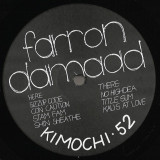
Upcoming french producer Matthieu Faubourg, who has worked extensively with guys like DJ Boring and Black Loops, is firing up
this heavy 12" on "Smile for a while." Stripped down House bangers all the way - from more laid-back, synth-oriended stuff over to some 90s-tingled House groover, ending up with a frantic 6 a.m. anthem on the B-side this EP is all you need to keep your floor dancing till the end of the year...
quête:as far as i know
When a Russian missile struck the ground not far from my studio in Kyiv, I vividly remember how my body reacted to the explosion, milliseconds before my mind did. That traumatic explosion reduced my essence to a primal state. There existed nothing but dread—the kind that, in scripture, accompanies the appearance of angels announcing, ’Be not afraid’.
The visions of Abbess, composer and mystic Hildegard von Bingen were preceded by bright, excruciating flashes of light. Modern medicine reduces them to cluster migraines, one symptom of which is the retinal aura, often accompanied by blurred vision and blind spots. Hildegard’s music can place great demands on the bodies of its performers, emphasizing uncomfortable intervals and the wide distance between the lowest and highest pitch. In comparison, Gregorian chant, the liturgical standard of the time, represents a tempered attempt to grasp God intellectually; indeed, Hildegard’s music was once described as a stick of dynamite thrown into a Gregorian chant.
This album is not a historically informed performance. Hildegard’s persona and music are a starting point—a distant mirror, akin to the shield of Perseus, used to reflect Medusa. It allows us to reflect, comprehend, externalise, and transcend traumatic wartime experience, reinstating the embodied origins of Christianity, which contained suffering but also offered the promise of transcendence. Andriana-Yaroslava Saienko emphasises this physical aspect of Hildegard’s music by drawing on authentic Ukrainian folk singing, a form that survived despite efforts by the Soviet occupation to replace it with a simulacrum that is naive, harmless, and devoid of contradictions—an attempt to ‘civilise’ the body by disembodying it.
The musical approach is also informed by my ongoing practice of reimagining early music in modular synthesis. I accompany Andriana-Yaroslava’s fiery singing with drones—extended sounds that also occurred in medieval music. The drones alternate with improvisations, one taking its starting point in medieval polyphony, the other working with the concept of the interchangeability of sound and light, referring both to Hildegard’s visions and the space in which we recorded the album: the Cistercian abbey of Sylvanès in Occitania, known for contemporary stained glass windows whose patterns reference the dispersion of acoustic waves inside the church.
The album features two compositions by Hildegard von Bingen: O Ignis Spiritus Paracliti (O Fire of the Spirit and Defender), dedicated to the Holy Spirit, and O Tu Suavissima Virga (O Sweetest Branch), in honour of the Virgin Mary. Both pieces are performed radically slower than usual, expanding in time and space. On vinyl, the compositions are designed to reflect one another and can be listened to in either order. In the digital edition, there is a bonus track titled Zelenaia Dubrovonka (The Green Oak Grove). Based on a Ukrainian folk song from the Polissia region, Andriana Yaroslava adapted the lyrics to reflect our contemporary reality. The green oak grove does not rustle with the wind; instead, it resonates with a different sound—perhaps the missile that struck near my Kyiv studio.
Following Parnell March’s Back Bar Grooves EP in February and November’s release of the Dust Tears (lead song from Sarah/Shaun’s debut) remixes, Edinburgh’s Hobbes Music label returns with a second EP of dream pop from husband-and-wife duo Sarah/Shaun (pronounced simply Sarah Shaun), alias Sarah and Shaun McLachlan (pronounced McLochlun), who wooed hearts and wowed critics with debut EP ‘It’s True What They Say?’ last year.
‘It’s True What They Say?’ attracted fans across the board: Artist Of The Week in The Scotsman, rapturous reviews from The Skinny and Tokyo's Ban Ban Ton Ton blog, BBC 6Music airplay courtesy of Nemone (Mary Anne Hobbs' Morning Show), more radio play from Radio Scotland's Roddy Hart & Vic Galloway, plus Simone Butler (Primal Scream) and Jim Sclavunos (Bad Seeds) via their respective Soho Radio shows, not forgetting ringing endorsements from the likes of David Holmes, Youth, Kevin Bales (Spiritualized), Brent Rademaker (Beachwood Sparks) and Julian Corrie (Franz Ferdinand).
They played gigs supporting Glasgow's huge Glasvegas, at festivals (Kendall Calling, Dunbar Music, Hidden Door), plus a slew of venues across the Scottish capital, ending the year with a trio of shows supporting Glaswegian 80s pop legends The Bluebells at Aberdeen’s Tunnels, Dunfermline’s PJ Molloys and Edinburgh’s Liquid Rooms, while The List magazine tipped them among their Ones To Watch For 2025, with journalist Fiona Shepherd suggesting they were “blending the starry-eyed pop of Sonny & Cher with the electronic experimentation of Chris & Cosey.”
Very much the companion piece to the debut EP but arriving a full twelve months later, Someone’s Ghost is emblematic of the duo’s desire not to rush things or release anything half-baked.
“I’ve always wanted to create the perfect pop record and I do really feel that we’ve achieved that with this one,” says Shaun. And he’s clearly not the only person who thinks so.
REVIEWS, FEEDBACK ETC:
"I LOVE that! Dreamy dreamy pop." ROY MOLLOY (Marvellous Crane/Alex Cameron) on BLAST RADIO, Sydney
“the Scottish music scene’s cream of the cool... buzzy drum beats, high, distant chimes, and heavenly electronics…. very ethereal.” THE SKINNY
"Listening to Sarah/Shaun is like eavesdropping on a noir dreampop, long-distance phone call between them both, across two separate sonic locations. On this stunning 4-song EP, Sarah’s voice, effortlessly mesmerising, draws you into these big beautiful and haunting passages of perfect dream-pop. All beautifully produced in a multi-layered-scape of low-fi analogue textures, epic cinematic crescendos, intense electro-pulse grooves and warped psycho-pop guitar riffs. Within the songs lurk a sense of unresolved emotions, longing and pathos. There are shades of classic Lee Hazelwood & Nancy Sinatra but also Post-Punk Electronica and Beach House. But what a unique sound they’ve created of their own. I love it" DAVID MCCLUSKEY (The Bluebells)
"Absolutely beautiful" SEAN JOHNSTON (A Love From Outer Space)
"Lovely stuff here! Total quality." MARTYN 'MASH' HENDERSON
"Ooooh. Everything the last record promised is here. Well done" GEORGE T aka George Demure (Accident Machine)
"Vince clark Era Depeche Mode in places" KEVIN BALES (Spiritualized)
"Sounds cool. Well done" PETE KEMBER (Sonic Boom, Spacemen 3)
"Glorious, it (Debbie Harry) grabs hold of you and doesn't let go." IAIN DAWSON aka RAVECHILD (Everyone Wants To Play The Hits Podcast)
SOMEONE’S GHOST
Born out of an incredibly anxious, stressful time, the songwriting process for these recordings has been something of a personal tonic for Shaun…
“There was a period when I was having nightmares,” he reveals. “Apparently I was saying there was someone in the room, I was talking to that person and Sarah was seeing all this while I was still asleep.
So, I was thinking that this was my ghost. I started writing songs because I was going through something and I was dealing with something and writing songs was a comfort. My ghost was a comfort, whether it was real or not. The idea of it was a comfort.”
“I firmly believe that everyone has someone who watches over them but all of the songs are essentially about being there for someone,” he says. “Everybody needs someone but also everyone needs to stay real and keep what you have, keep it close, never let it go. If you don’t have it, continue to tell people you’re there for them. It’s about loving and hoping people will be good to you in return.”
While Shaun took the songwriting lead on Filter Of Love and EP closer The Sound Which Stresses The Sound Of My Ears, Debbie Harry was originally instrumentally conceived by producer Jaguar Eyes, alias Ali Chisholm, later lyrically completed by Shaun, and the EP’s lead track, Anhedonia, and one of its stand-outs (much like Starbed on the debut) was conceived by Sarah, as a result of experiencing a bit of a spiritual epiphany of her own.
“When I first heard the word Anhedonia, I didn't know what it meant but when I found out I thought about it quite a bit. How sad it would be to have no enjoyment in anything,” she explains. “This song is really about my own personal beliefs. When I have been down, that's one of the things that helps me the most. It talks about trying to make amends but realising, for some things, you can't. But I think with any kind of faith comes hope… which is always a good thing.”
A record about hope, truth, honesty, a belief in something bigger than oneself… and all set to a soundtrack that wouldn’t feel out of place in a David Lynch or Eighties feature film. What more could anyone ask for, really?
There’s equally a desire to offer something universal and positive to anyone who tunes in. The labels for the 12” edition reveal the dual mantras “Who just wants to survive?” and “It’s about time to live a little”, with both messages also engraved in each record’s run-out grooves. T-shirts accompanying debut EP It’s True What They Say? bore the slogan “Kill Them With Kindness” - leading caps intentional. Shaun carries the acronym KTWK everywhere he plays, as a reminder: it’s stitched into his guitar strap. And this particular wee pebble has already caused a few ripples: people have been approaching him at gigs to acknowledge their appreciation and respect for it.
"We feel we have made an honest, open, colourful, body of work,” say the duo. “We hope to go out and play the songs with the guys (our band) and then potentially make more records. We are taking things as they come. Everything has been organic so far, after all. We are looking forward to whatever this brings."
- 1: Talk To The Lord
- 2: Paint The Rain
- 3: The Gallows
- 4: Shine Your Light On Me
- 5: Your Love Is My Shelter
- 6: I Will Praise You
- 7: I'm Going Home
- 8: He Will Lift You Up Higher
- 9: Sweet Mary
- 10: Home At Last
- 11: You Make My World Go Round
- 12: Last Farewell
Release week Focus Track: Paint the Rain RELEASE TIMELINE 12/10 - TMR signs Natalie Bergman Announcement with video on Youtube: I Will Praise You (Live) 01/27 - Announce w/ PreSave/PreOrder IG1: Talk to the Lord + (music video) 02/24 - IG2: Shine Your Light On Me + (music video) 03/24 - IG3: I Will Praise You (album version) 04/21 - IG4: I’m Going Home Potential Video Asset - Live set of all the IG tracks released 05/05 - IG5 and Official Music Video: Paint the Rain 05/07 - STREET DATE w/ Focus Track: Paint the Rain Mercy is Natalie Bergman's debut, a self-produced solo album recorded in the strangest of times, during a personal period of profound sadness and reinvention. It's startling, and often beautiful — a rush to the edge of the cliff, with an unflinching look below Recorded at her brother's home studio in Los Angeles, CA, Bergman has already had a lengthy, successful career as one half of the brother-sister duo Wild Belle, but this is the first time she wrote and played all the material. This record absolutely pulses with redemptive power; it is replenishing and original, and deeply cathartic. And before we go any further, you should know that this is kind of a gospel record. It should also be said -- Natalie made this record because she absolutely had to. The music of Mercy began to germinate a few months after she lost her father in a wrong-way, head-on collision. He and her step-mother were killed by a drunk driver. Shortly after, Natalie visited a monastery in the southwestern desert, and there she began to embark on this album. "The first song I wrote on Mercy was 'Home At Last,'" she says. "It is the best song I have ever written. I sing a lot about home on this record. Believing in that place has been my greatest consolation. I had an urgency and desperation to know that my father was there. His sudden death was a whirling chaos that assaulted my mind. This album provided me with my only hope for coming back to life myself. Gospel music brings hope. It is the good news; it’s exemplary. It can bring you truth. It can keep you alive. These songs have kind of written themselves, and they rely on me to sing them.” Natalie Bergman made one of the first great albums of 2021.
A few words for the album
Moment’s Aeternity:
a 12/8 composition celebrating the raw power of the “moment”, marked by whirling improvised moments between drums, bass clarinet and Harris P’s Armenian duduk.
Pajko, fire in the forest on the mountain:
in Sokratis own words: “I have a really vivid memory as a child. I was staring at the Djena mountain from my window in Archangellos which sits on the Pajko mountain. A little beam of light shone far in the horizon; it was a fire that in my little eyes looked as if the giants of Almopia were trying to communicate with each other using phryktoria (a way of contacting through fire in Ancient Greece).”
Footprints of some Giant Steps:
While the classic compositions of two true Jazz Giants- Wayne Shorter and John Coltrane- are certainly different, they do both connect in a mystical way. Rearranged in 5/8 combining half of each melody and half of each one’s chord progression, keeping the form of the piece for improvisation, still in 5.
Oson Zeis Fainou (Seikilo’s Epitaph):
found in a tomb stone in the Northeast of Greece, this is the only melody saved from the ancient times. It is accompanied by lyrics contemplating the meaning of life:
Ὅσον ζῇς φαίνου
μηδὲν ὅλως σὺ λυποῦ πρὸς ὀλίγον ἐστὶ τὸ ζῆν τὸ τέλος ὁ xρόνος ἀπαιτεῖ.
‘’While you live, shine
don’t feel blue for anything because our life is short and time demands an end.’’
Here is to Oghene K:
’’Hey man, where is the groove?’’, he would say, just to trigger another wave of inspiration for Sokratis. Oghene was a true force of nature, a well of kindness, a masterful artist that left this world too early. This one is for him.
Balkan Riff (for Milcho Leviev):
Milcho Leviev (1936-2019), was a long-time friend and collaborator and a true inspiration for expression, creativity and colorfulness. Expressing the deep sentiments evoked by the Balkan sound and history, this is a sorrowful dialogue between bass clarinet and contrabass.
Spirits of Djena:
one of the most esoteric and personal moments of the album. Composed and recorded during the challenging times of the COVID-era, you can hear the baritone and tenor saxophone firmly grounded on a crispy, hypnotizing contrabass groove.
Sokratis Votskos Quartet
Kostas Anastasiadis / Giorgos Klountzos - Chrysidis: Drums
Leandros Pasias: Piano
Vaggelis Vrachnos: Contrabass
Sokratis Votskos: Soprano Saxophone, Bass Clarinet and Compositions
Sokratis Votskos is a jazz saxophonist, clarinetist, composer, educator, and bandleader from Greece. Deeply invested in unearthing the folk sounds and heritage music of Greece and Eastern Europe, he weaves these into modern jazz compositions though the use of melodies, polyrhythms, and his reedy, timeless tone. He leads the Sokratis Votskos Quartet, he is one half of Kolida Babo and member of the Reggetiko Project. A highly regarded sideman and ensemble player, he has worked extensively with renowned jazz musicians with several highly acclaimed releases (MiC, Jazzman, Walt Disney and now Fair Weather Friends Records).
He has performed his music in numerous venues and festivals worldwide from Vinterjazz in Copenhagen, to the EFG London Jazz Festival where he performed at the legendary Ronnie Scott’s alongside Greg Foat.
He is also an archaeoacoustics researcher and enthusiast, having completed his Master studies on the field of ancient ritualistic caves of Greece research.
Leandros Pasias was born in Thessaloniki, Greece. At age 10 was introduced to piano, continuing his studies at the Modern Conservatory of Thessaloniki and later at the Conservatorium van Amsterdam in the department of jazz piano.Ηe holds a classical harmony diploma and a BA at the Department of Music Studies at the Aristotle University of Thessaloniki. In 2020 he received jazz improvisation lessons from Aaron Parks.
With a series of appearances in multiple international jazz festivals, Leandros has collaborated with a wide range of musicians from Nicolas Masson and James Wylie to Marina Osk, Ivo Papasov and Haris Lambrakis, among others.
A member of the Yako Trio, he released “OdesSea” on Fair Weather Friends Records (2021).
Vangelis Vrachnos was born in Thessaloniki, Greece, in 1989. While he started playing the bass at the age of 12, alongside his brother, his studies would commence a few years later. Introduced to double bass at the age of 23, he undertook jazz double bass studies at the Codarts Αcademy of Rotterdam. He has participated in several festivals such as the Technopolis and Odessa international jazz festivals. Since returning to his hometown, in 2015, he has been a founding member of Mordana and Yako Trio and has collaborated with a series of musicians like James Wyllie, Sokrates Votskos and Dimitis Agelakis, among others.
Kostas Anastasiadis is a tireless researcher, that has been diligently studying Tradition and its evolution, creating a fresh amalgam of sound moods. His mature improvisational virtuosity highlights a uniquely individual artistic expression and was recognized with the ̈Unique Individual Stylist" award by the PIT (Percussion Institute of Technology) in Los Angeles, California. He has been associated with various ensembles that have garnered significant interest in the global music scene. As an educator, he is the founder of "The Harmony of Rhythm" musical method, which aims to explore and establish the elements that constitute the concept of rhythm.
Giorgos Klountzos-Chrysidis was born in Thessaloniki in 1991. Following studies at the Modern Conservatory of Thessaloniki, he moved to France and the Conservatoire de Nice. With performances at well-known festivals like Nice Jazz Festival, Nuits du Sud and Jazz à Vienne, he had the opportunity to meet the American drummer Leon Parker, who encouraged him to move to Paris, where he spent the next two years under his tutoring and guidance.
In 2016, came a defining moment in his career as he traveled to New York for the first time. He participated in the quartet of saxophonist Diego Rivera for a series of performances and attended lessons by Rodney Whitaker and Randy "Uncle G" Gelispie at Michigan's State University.
Collaborations include Xavier Davis, Ricky Ford, Nicolas Masson, Diego Rivera, Craig Bailey, Baptiste Herbin, Marc Abrams, Pantelis Stoikos, Antonis Anissegos, David Lynch, Ziad Rajab and Ivo Papasov, among others.
In Sheep’s Clothing announces the long-awaited vinyl pressing of Marc Leclair’s beloved 2005 album Musique pour 3 femmes enceintes. The album will also be available on streaming for the first time via Community Music Group.
For years after Marc Leclair released Musique pour 3 femmes enceintes, he heard from listeners who had lived with the record in an unusually intimate way. Many described how the music became part of the emotional landscape of the months leading to birth. “I never expected that,” Leclair says. “Many women told me they listened to the record throughout their pregnancies. They said it made a real difference, that it helped them. It became more than just a record.”
First issued on CD in the early 2000s, Musique pour 3 femmes enceintes (Music for Three Pregnant Women) now returns in a new edition from In Sheep’s Clothing Hi-Fi, appearing on vinyl for the first time as a double LP. The record is being pressed in Detroit at Archer Record Pressing, the historic plant behind deep-groove classics by Juan Atkins, Kevin Saunderson, Underground Resistance, UR’s Jeff Mills, and J Dilla.
Listeners who know the Montreal-based Leclair through his better-known work as Akufen might be surprised by the tone here. During the same years he was shaping the intricate micro-sampling tracks that made Akufen a cult figure on labels including Perlon, Force Inc. and Trapez, Leclair was quietly developing this far more personal project. The meticulous craftsmanship remained the same, though the focus shifted from the hyper-detailed cut-up rhythms of his dance records toward something slower and more atmospheric. “I always compare my work to a jeweler,” Leclair says. “It’s really very precise. I’m a bit of a detail freak. I can spend hours or days on just one phrase in one song. Everything has to be perfectly put together.”
The project began almost accidentally. A few members of Leclair’s circle became pregnant nearly simultaneously, including one who had long believed she couldn’t conceive. The first track he recorded for the project wasn’t meant to advance a larger concept, he says. “It was meant to highlight the fact that three of my closest friends became pregnant at exactly the same time.”
Leclair was already a father with a three-year-old daughter, so the emotional terrain of early parenthood was familiar. Gradually the idea expanded. “I began thinking, why not make a whole album that celebrates this and also follows the entire pregnancy, the nine months,” he says. The music developed piece by piece, including a track originally commissioned by the Berlin experimental duo Rechenzentrum that would later become the album’s opening movement.
Nearly seven years passed between the first composition and the finished album, and the music mirrors the strange arithmetic of pregnancy itself. What begins as a single idea multiplies outward, sounds layering and branching until the album feels less like a sequence of compositions than a living process unfolding in time. “I work very slowly,” Leclair says. “Everything has to be something I’m completely behind. I never want to rush anything. I want things to come naturally.” Across its 72 minutes, the album blossoms with the patience of a long meditation on time, growth and emergence.
When Musique pour 3 femmes enceintes first appeared via Mutek, it circulated quietly but steadily. Critics who discovered it later recognized its unusual scope. In a 2006 Pitchfork review, Mark Richardson gave the record an 8.1, calling “150e Jour” “an unfailingly gorgeous and tightly sequenced quilt of guitar and piano samples reminiscent of Tangerine Dream,” and describing “85e Jour” as infused with “viscous pop ambient drift, the gauzy synth pads ebbing and flowing with rhythm.” Boomkat described the album as “a majestic opus from a producer that's always promised so much — here delving into a panoramic construction of almost visibly radiant music that works so beautifully through each and every second of its 72 minute lifespan.”
The new In Sheep’s Clothing Hi-Fi edition finally presents the record in the format Leclair long imagined. “I always thought that record deserved a vinyl edition,” he says. Spread across two LPs, the music now has room to unfold at its natural pace. More than twenty years after it first appeared, Musique pour 3 femmes enceintes remains what it was from the start: a carefully shaped meditation on transformation and the quiet miracle of life beginning.
Roberto Zanetti, better known as Savage or Robyx, is without a doubt a fully realized artist. When he stepped into the world of dance electronics in 1983, success came instantly. Not only across Italy, but far beyond its borders. Alongside his own chart-defining run as Savage, Zanetti was simultaneously shaping the scene from behind the desk, developing talent and refining a signature sound that would define an era. By the late ’80s, Robyx was already an established powerhouse producer. Around that time, he wrote three tunes for Maurizio Felici, performing under the alias Wilson Ferguson. These tracks carried all the hallmarks of Zanetti’s late-’80s aesthetic: lush melodies, smooth, flowing arrangements and high-energy grooves built for the dancefloor. In Europe, where house music was rapidly taking over, this sound faced tougher competition, but in Japan, where Eurobeat was exploding into the mainstream, these productions were untouchable. Felici’s rich, throaty vocal delivery gave the tracks an unmistakable emotional weight and identity.
Responding to long-standing requests from fans, Vintage Pleasure Boutique now revisits the most melancholic and emotionally charged of these three recordings: “I’m Singing Again”, a bittersweet tale of lost love told through the language of Italo disco. It’s a perfect fusion of Savage’s late-’80s sonic elegance and a truly distinctive vocal performance.
For this new release, the story is pushed one step further with a fresh remix, slightly faster in BPM and clearly nodding to Robyx’s classic Eurobeat instincts, a version built to move bodies while keeping the original’s emotional core intact.
- 01: Mrs. Sabra Bare Hampton Bolenkin
- 02: Mrs. Lena Bare Turbyfill Old Fool
- 03: Frank Bare Katie Morley
- 04: Marshall Ward Blue Ridge Mountain Blues
- 05: Mrs. Lena Bare Turbyfill Down In The Low Green Valley (Jealous Lover)
- 06: Mrs. Lena Bare Turbyfill & Ben Dugger Cindy
- 07: Mrs. Lloyd Bare Hagie Omie Wise
- 08: Mrs. Lena Bare Turbyfill & Mrs. Lloyd Bare Hagie Groundhog
- 09: Mrs. Sabra Bare Hampton & Oscar Hampton Partridge In A Pear Tree
- 10: Mrs. Lena Bare Turbyfill Jim Blake
- 11: Mrs. Lena Bare Turbyfill Paper Of Pins
- 12: Mrs. Lena Bare Turbyfill The House Carpenter
- 13: Mrs. Lena Bare Turbyfill George Collins
- 14: Mrs. Ethel Turbyfill Bare As I Went Out One Morning Fair
- 15: Mrs. Lena Bare Turbyfill Skip To My Lou
- 16: Mrs. Lloyd Bare Hagie & Mrs. Lena Bare Turbyfill Young Farmer
Folklorist Derek Piotr continues to excavate North Carolina mountain songs, presenting an assortment of archival recordings taking in Child Ballads, bawdy songs, play-party tunes, and old-time family singing - with a further focus on overlooked star Mrs. Lena Bare Turbyfill, of Elk Park, NC.
Tracks 1 and 9 recorded by Herbert Halpert near Morganton, North Carolina, April 19, 1939.
Tracks 2, 3, 5, 6, 7, 8, 10, 11, 12, 13, 14, 15 and 16 recorded by Herbert Halpert in Elk Park, North Carolina, April 12, 1939.
Track 4 recorded by Marshall Ward in Banner Elk, ca. 1979, transferred from analogue tape by Derek Piotr.
Curated by Derek Piotr.
Photograph of Mrs. Lena Bare Turbyfill courtesy of Elizabeth Gwyn.
"Disco Chimi" by Dominican-raised Cuban artist Charles is the second release on Coco Maria's newly found Club Coco label. Comes with 4 paged insert with liner notes and art.
Charlie Chimi — the alter ego of Charles Garmendia — is a globe-trotting, kaleidoscopic creator best known for La China de la Gasolina. A percussionist for legendary Zamrock band WITCH, L’Eclair, and other international acts, Charlie moves fluidly between roles as a live performer, studio musician, and visual artist.
Like the iconic Dominican street burger it’s named after, the Charlie Chimi project is a spicy mélange of Afro-Cuban rhythms, funk-driven basslines, and playful, inventive wordplay — touching on everyday rituals like making lunch, as well as the trickier themes of illusion, hustle, and deception in the animal (and human) world.
Charlie has assembled an international crew of “Chimis” to help him run the numbers, delivering a dizzying, theatrical live show that feels like peeking into the hazy back room of a bodega: old men slamming dominoes, bachata blasting, and a cosmic sandwich opening a wormhole to somewhere far stranger.
Repress!
Belgian techno powerhouse Charlotte de Witte has unveiled brand-new EP ‘Apollo’, out 14th October on her own KNTXT label.
An uncompromising collection of club tracks, ‘Apollo’ opens with ‘Missing Channel’, a turbo-charged acid techno cut pairing pumping kick drums with squelching 303s. Next up, the title track shifts things into warehouse techno territories, juxtaposing bludgeoning kicks with haunting, ethereal vocals, while ‘Mercury’ cultivates a striking interstellar energy. Closing things out, ‘PPC’ is by far the record’s most experimental track, a shimmering, beatless creation laced with samples of space transmissions.
"The vastness and solitude of space always interested me. A compelling contrast between monumental power and the vacuum in between.” Charlotte explains. “This diversion can also be found in techno music, a pure simplicity divergent in power."
Charlotte de Witte has become known for her dark, stripped-back brand of techno, acid and anything high energy. She’s often crossing borders but maintains a deep form of respect for the underground. Highlight performances across the continents - including being the first techno (and female) DJ to headline the mainstage at Tomorrowland - Mixmag and DJ Mag covers, high-ranking positions in the charts and lists confirm her status as nouveaux techno royalty.
Heavy, breakneck club fodder, ‘Apollo EP’ is Charlotte de Witte at her bold and brilliant best.
Rising star Storm Mollison lands her debut on Heist with an ep blending House & R 'n B and we're completely hooked.
The future is looking bright for Storm Mollison - Heist's newest. Marked as artist to look out for by Shazam on their fast forward 2026 list, Storm's got a bright and busy year ahead, after an already big 2025. Last year alone, she featured on Kiki's hit 'Getting ready for the party', featured on a Mixmag London event and a Raw Cuts X Heist ADE party, had her first cover feature on Spotify, multiple radio 1 appearances, released several singles, a full EP on Noir Fever and a Luuk van Dijk remix.
If that's not enough to get you excited, we suggest you just listen to her 'Act like that' EP on Heist. In Storm's own words: "it's the most exciting music I've made so far" and we couldn't agree more. Her EP is a perfect blend of her love for house music and soulful R 'n B with its 4 tracks smothered in deep chords, smooth vocals and crunchy textures.
EP opener 'Doing Sumthin'' has been a staple in Dam Swindle's sets ever since receiving Storm's first demo and has never failed to make the crowd bounce from left to right with its quirky and equally cool vocal courtesy of Aaron Pfeiffer. Sometimes, you just need someone to tell you which way to move and before you know it, the whole club is doing it. The beat is chunky, and the sax lick is a nice wink to the old school house that has influences Storm's sound so much.
Act Like That - the EP's title track -, is a modern R' n B song that could have easily been on Rochelle Jordan's latest album. The lyrics are perfectly delivered by Storm herself and celebrate women who stand up to unreliable men. It could well be the badass soundtrack of womanhood for 2026 delivered in a silky-smooth package that'll live rent-free in your head for the foreseeable future.
On the flipside is "Gotta Go', an undercover dancefloor burner with lush keys and a lean-back groove. The track relies on crisp textures and little frizzles all throughout the track, with a big breakdown for ultimate release.
Ep closer 'Workin' takes us back into R 'n B territory, this time in a very danceable form. Storm's soft vocals lie on top of a steady beat with deep chords and a bassline so sexy It'll make you get down no matter where you're hearing this.
It's hard to speak about a breakthrough for an artist that has already seen such a rise in the scene, but if we're talking about her music, this will be the record that people come back to after years and say, "remember when she releases ALT!?"
As always, enjoy the music and play it loud!
Yours, Maarten & Lars
A friend of mine told me he had visited the place that Cancer House live and record.He said they jammed together all afternoon. In the moment, in the zone so to speak,he became more and more convinced that what they were making together was thebest music he had ever been involved with. As the afternoon drifted by, second byrevelatory second, he began making grandiose plans to release the recording. By the timeit was dark outside the windows he imagined it as a future lost classic, a key livedocument of a scene, a moment and an aesthetic. He thought about all the recordshe loved. He thought about the great, little known, statements of lo-fi, downer indie:dark, sweet, crawling guitar music by bands like Farewood, Bedhead, UN, orThe Sonora Pine. He could even picture the sleeve down to the last detail.
The session ended and as they were all packing up he asked about the recording.And someone said ‘oh, we weren’t recording.’ ”- Jack Rollo
Justus Köhncke is a unique voice in the history of Kompakt – and far beyond. He has contributed so many unforgettable tracks to our catalogue that it was difficult for us to make a selection. His sound has often been copied, but remains incomparable. From his deep knowledge and understanding of the history of pop, schlager and disco, he distilled not only official club hits such as ‘2 After 909’ and “Timecode”, but also countless poetic gems. Both sides of Justus Köhncke’s work are united here on this record. Justus’ music knows no boundaries, only ‘weiche Zäune (soft fences)’.
Special attention should be paid to the included bonus 10‘. Here you will find two of his most enchanting, hard-to-find cover versions. His immortal version of Jürgen Paape’s evergreen ’So weit wie noch nie‘ and the monumental adaptation of Round One’s ’New Day”, originally released under the nom de guerre Kinky Justice.
Justus Köhncke ist eine einzigartige Stimme in der Geschichte von Kompakt – und weit darüber hinaus. Er hat so viele unvergessliche Tracks zu unserem Katalog beigesteuert, dass es uns schwerfiel, eine Auswahl zu treffen. Sein Sound wurde oft kopiert, ist aber nach wie vor unvergleichlich. Aus seinem tiefen Wissen über und Verständnis der Geschichte von Pop, Schlager und Disco destillierte er nicht nur amtliche Clubhits wie „2 After 909” oder „Timecode”, sondern auch unzählige poetische Kleinode . Beide Seiten von Justus Köhncke's Schaffen sind hier auf dieser Platte vereint. Justus’ Musik kennt keine Grenzen, nur „weiche Zäune”.
Ein besonderes Augenmerk sei auf die enthaltene Bonus-10” gerichtet. Hier finden sich zwei seiner bezauberndsten, schwer zu findenden Coverversionen. Seine unsterbliche Version von Jürgen Paape's Evergreen “So weit wie noch nie” und die monumentale Bearbeitung von Round One’s “New Day”, die ursprünglich unter dem nom de guerre Kinky Justice veröffentlicht wurde.
Analog Fingerprints Vol. 0 is a compilation bringing together the early 2000s works of Marco Passarani under his Analog Fingerprints alias, collecting key tracks originally released on Rome’s Plasmek and Pigna labels.
For Numbers, the story starts long before the label itself. In their formative years, digging in Glasgow’s Rubadub, Passarani’s records felt like dispatches from a future city. Releases on his own Nature Records and on labels such as Generator and Interr-Ference Communications were mind blowing: rooted in Detroit techno, Chicago house and electro, yet pushing somewhere new. Much like fellow travellers Autechre, who would remix him in 2001, Passarani’s music balanced machine funk with restless experimentation.
Information was scarce, and you would hear these records first on the dancefloor or at listening stations in shops like Rubadub. Print fanzines like Ear and early web outposts such as Forcefield offered only fragments. But there was a palpable axis forming between Detroit techno and a new European wave of record labels including Skam, Rephlex, Clone, Viewlexx and Nature itself. It was the sound that defined Saturday nights at Rubadub’s ‘69’ parties in Paisley, just outside of Glasgow.
Passarani’s records, in particular, were instrumental in bringing together the future Numbers co-founders. Richard had already booked him pre-Numbers; meanwhile Calum (Spencer) and Jack (Jackmaster), then 16/17 year olds working alternate Saturdays in Rubadub, were so enamoured with the Roman sound that they travelled to Rome for the Bitz Festival in 2003 to seek out Passarani and Lory D at their source.
The first Analog Fingerprints release landed as a 12” on Plasmek in 2001, following the fractured, IDM-leaning 6 Katun material. For Passarani, the project marked a recalibration. A DJ first and foremost, he had moved into production via early computer setups, from a Commodore Amiga through primitive PC audio, Cubase and Logic, later experimenting with Ableton. The IDM scene had offered a playground for trial and error, but there was always a tension between abstraction and the dancefloor. Analog Fingerprints became the bridge: still intelligent, but with more dance than distance. After years of broken beats and complex arrangements, he wanted directness without surrendering identity.
Working closely with Francesco de Bellis and Mario Pierro in the Pigneto district, the trio formed Pigna as a vehicle for reclaiming a more accessible dance sound, deliberately steering away from the minimal wave beginning to dominate Europe. Sessions were fast, instinctive, often stretching late into the night with friends dropping by. It was a studio as social space, production as collective energy.
“In that constant search for balance, Analog Fingerprints was my way of expressing something closer to the classic dance floor. The track 'Tribute' - a tribute to my favourite early Detroit techno track of all time, 'First Bass' by Separate Minds - came after I realised I had almost lost my connection with the dance floor. The simplest step was to take inspiration from early Chicago and Detroit and twist it in our Roman ‘Pigna’ way. My goal was to create more accessible dancefloor tracks by mixing my unconscious Italo roots with my teenage love for that early US sound, ensuring the result was as far as possible from the minimal sound that was starting to dominate everywhere.” - Marco Passarani
Technically, the Analog Fingerprints tracks span a transitional era: Roland TR-909, SH-101 and Alpha Juno hardware met early software experiments. A Novation Drumstation rack stood in for the unattainable TR-808, syncing with TB-303 and TR-606. Yet the true secret weapon was Jeskola Buzz, a tracker-style modular environment that allowed step-by-step parameter control and strange melodic constructions, later exported into the audio sequencer. Even the lead on ‘Tribute’ came from an early PPG Wave-style plugin. It was hybrid thinking at a moment when digital tools still felt unstable but full of possibility for technologists like Passarani.
Behind the music sat Finalfrontier, a loose Roman collective orbiting Nature and Plasmek. Distribution and production were intertwined; importing obscure records into Italy built connections with like-minded outsiders across Europe and the US. Expensive phone bills and fax machines forged an “electronix network” that linked Rome to Clone, Viewlexx, Skam, Rephlex, Rubadub and Detroit’s Underground Resistance. There was a shared sense of survival and resistance, of operating against commercial systems.
Passarani recalls “The first time I found a sheet of paper inside an Underground Resistance 12” with info about upcoming releases... and a huge picture of Spock on the back. Imagine that: you love the music, you love Star Trek, and there’s someone on the other side of the ocean sharing those same values and sounds. It was the perfect match. We even gave our original company the suffix ‘Finalfrontier’: that says it all.”
Feedback in that era arrived physically: distributor faxes, conversations with visiting DJs, the experience of playing abroad and meeting kids who had connected with the records. Glasgow became a key node in a scattered outlier network. Passarani personally brought the first two Nature releases to Fat Cat in London, playing them in-store. Shortly after, a fax arrived from Rubadub in Glasgow requesting copies.
“I still remember that phone buzz and the fax paper slowly sliding out, with someone I didn’t know saying they wanted 75 copies of Nature 001. Or like the time we got a fax from the Rephlex crew just saying, “Hello Nature Records, Keep up the good work.” That was how we knew the message was getting through. It was a fantastic feeling; just one piece of thermal fax paper as an analog notification - the mood for the entire week would change.” - Passarani
The connection to Glasgow has since stretched across generations. As Passarani reflects, links often fracture as scenes renew themselves, but in Glasgow something different happened. New and old mixed seamlessly. There was a visible trust in what came before, and a willingness to carry it forward rather than discard it. Observed from Rome, it was deeply encouraging.
Analog Fingerprints Vol. 0 captures that moment of exchange: Rome to Glasgow, Detroit to Europe, experiment to dancefloor. It documents an artist recalibrating his sound and a network of scenes discovering one another in real time, connected by vinyl, faxes and shared intent.
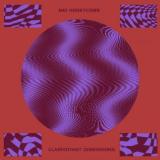
Clairvoyant Dimensions is the first album by Mei Honeycomb, a new duo of Jordan Czamanski, renowned as a member of the acclaimed Juju & Jordash and the Magic Mountain High project, with solo work released as Jordan GCZ, and legendary saxophonist Jeff Hollie, known mostly for his work with Frank Zappa and Ike Willis. An explorative ambient album, Clairvoyant Dimensions is an exercise in distance and contemplation, and the exhilarating feeling of insight, however fleeting, like staring at the midnight flicker of an old VCR. Czamanski's music has a trademark tenderness and soft-spokenness, an ability to maximize minimalist musical elements and bring them to an open-ended conclusion. Jeff Hollie provides interpretative sax lines on all tracks, slipping into the scene like a shadow, silent and unexpected, touching upon emotional registers almost explicit, yet confounding.
As musical signifiers keep turning around themselves, they set up a mood of euphoria, one that suggests understanding. Never explicitly spaced-out, there is continuous reference to cosmoses both inward and far away. Ambient music in modern form. Jordan Czamanski uses his experience in producing off-the-charts club music to come up with five tracks that at times are standstills, and at times dwell in forward momentum. Jeff Hollie provides both comprehension and beautiful confusion. As grainy images switch into focus, Clairvoyant Dimensions is a beautiful and contemplative trip that suggests its own reality in delicate ways. One of the five tracks, the gorgeous live-recorded Painted Desert Pastel, features composer, performer, and researcher Ilya Ziblat Shay on double bass and electronics.
Screen-printed cover designed by Johan Kauth.
Mastering by Rashad Becker
Visionary producer Ibrahim Alfa Jr, who's been traversing the rave's farthest fringes since the late '90s, returns with his most focused and concise set to date, an anthology of undulating, bass-heavy experiments that surveys techno and its distorted history, printing fractured pulses and cybernetic synths over vanishing snapshots of jazz, funk, trip-hop, broken beat, dub and ambient music. It's a body of work that coalesced during a difficult time for Alfa.
After returning to Brighton and sobriety in 2022, he was diagnosed with a pulmonary embolism, subsequently suffering two debilitating heart attacks. With his immune system compromised, isolation was the only option, so for months on end Alfa devoted each waking hour to his art, recording samples, building digital synths and effects and meticulously sequencing some of his waviest, most experimental material to date. Over this period he finished over 500 tracks, writing impulsively and constantly challenging himself. "There was nothing to hold me back," he explains. "I just had music, I didn't know if I would see the next day."
Now recovered from his ordeal, Alfa looks back at this prolific period with optimism and fondness. It was a chance for him to reconnect with his art holistically, writing purely for himself without any outside influence. Because, at this stage in his life, Alfa has already been through a series of artistic evolutions. When he was still just a teenager, he penned a slew of grinding, jacking techno 12"s (under a variety of mysterious monikers) in the late '90s before re-emerging a decade ago with the acclaimed 'Hidden By The Leaves', an album made up of deeply personal archival tracks that were thought to have been lost. A few years later, Alfa returned wholeheartedly with a series of records for Mille Plateaux that redrew the boundaries of his "Black political music without words." And on 'Infinite Black Inside', those different strands are muddled with Alfa's profound life experiences and he expresses himself free of any self-imposed boundaries, writing quickly on a hybrid analog-digital setup to document as many ideas as possible.
There's a palpable sense of liberation that drives the album's opening track, 'Subutrax', lubricating polyrhythms that isolate the connective tissue between footwork and Detroit techno as they slip between looped electric piano vamps and vaporous synths. On 'Naked Lunchbreak' meanwhile, the beat generation's excesses are illustrated by mesmeric fast-paced acoustic drums that Alfa balances out with brassy drones and euphoric keys. He captures rubbery hits from a Ghanaian djembe on 'Drum Slinger', re-sequencing them into seismic waves that rumble underneath live woodwind blasts. And on 'Capture', decelerated breaks and garbled voices tumble into humid pads, suspending the album somewhere between the chill-out room and the night sky. It's a record of new beginnings and fresh narratives that collapses the hardcore continuum, revealing a sonic signature that's Alfa's alone.
- 1: Till Jotunheim
- 2: Det Gamla Blodet
- 3: Thrym
- 4: Loke
- 5: Blódughadda
- 6: Jättarna
- 7: Surtr
- 8: Ur Ginnungagap
- 9: Sigurd
- 10: Nordstjärnan
- 1: To Jotunheim
- 2: The Old Blood
- 3: Thrym
- 4: Loke
- 5: Blódughadda
- 6: The Giants
- 7: Surtr
- 8: Out Of Ginnungagap
- 9: Sigurd
- 10: Northstar
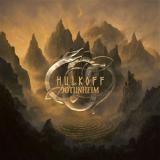
On May 15, HULKOFF returns with his fifth studio album; Jotunheim - a towering new chapter that bends space and time, and throws you back to the very darkest void where the nordic sagas began - Etunaheimar. The first spiritual landscape known in the blood-memory of Fennoscandia, today referred to as Jotunheim - the realm of Giants. Founded by the former frontman of Raubtier, HULKOFF has dominated Swedish charts with multiple #1 releases, including Pansarfolk (2020), Ragnarök (2021), and Hersir (2023). As with some of the previous releases, HULKOFF once again drops a double album. With 20 tracks split across two discs -one in Swedish, one in English- the album invites the world into the frostbitten heart of the North, expanding the saga without loosing its roots. With Jotunheim, HULKOFF delivers what has become his hallmark: iron-hard riffs over folky melodies and thunderous drums. Often described as "Music for the Viking hearted", Jotunheim once again presents the established HULKOFF sound - Metal refined and enhanced by the primal organic sound from Talharpa and violin - wood, horsehair and steel. A symbiosis that is adding an earthy, ritualistic texture to the otherwise dark and heavy sonic landscape.
- Pure Comedy
- Total Entertainment Forever
- Things It Would Have Been Helpful To Know Before The Revolution
- Ballad Of The Dying Man
- Birdie
- Leaving La
- A Bigger Paper Bag
- When The God Of Love Returns There'll Be Hell To Pay
- Smoochie
- Two Wildly Different Perspectives
- The Memo
- So I'm Growing Old On Magic Mountain
- In Twenty Years Or So
Blue & White Corona Vinyl[32,35 €]
Schwarzes Vinyl! Doppel-LP im Klappcover. Ursprünglich 2017 rausgebracht und jetzt zum ersten Mal in Europa über Sub Pop erhältlich! Pure Comedy, das dritte Album von Father John Misty, ist eine komplexe, oft sarkastische und ebenso oft berührende Reflexion über die verwirrende Torheit der modernen Menschheit. Father John Misty ist das Projekt von Singer-Songwriter Josh Tillman. Wir könnten viel über Pure Comedy sagen, zum Beispiel, dass es ein mutiges, wichtiges Album in der Tradition amerikanischer Songwriting-Größen wie Harry Nilsson, Randy Newman und Leonard Cohen ist, aber wir denken, es ist am besten, wenn sein Schöpfer es selbst beschreibt. Los geht's, Mr. Tillman: Pure Comedy ist die Geschichte einer Spezies, die mit einem unvollständig entwickelten Gehirn geboren wurde. Die einzige Überlebenschance dieser Spezies, die sich auf einem grausamen, unberechenbaren Felsen wiederfindet, umgeben von anderen Spezies, die in dieser ganzen Sache viel geschickter zu sein scheinen (und für die sie eine Delikatesse sind), besteht darin, sich auf andere, etwas ältere, halb ausgebildete Gehirne zu verlassen. Diese Abhängigkeit bekommt im Laufe der Geschichte verschiedene Namen, wie ,Liebe", ,Kultur", ,Familie" usw. Mit der Zeit und da sich ihre Gehirne als bemerkenswert gut darin erweisen, Bedeutung zu erfinden, wo keine ist, wird die Spezies zum Lieferanten immer bizarrerer und raffinierterer Ironien. Diese Ironien sollen helfen, mit der abscheulichen Verletzlichkeit der Spezies fertig zu werden und zu versuchen, ihre Fantasie mit der Monotonie ihrer Existenz in Einklang zu bringen. So in etwa. Pure Comedy wurde 2016 in den legendären United Studios (Frank Sinatra, Ray Charles, Beck) in Hollywood, Kalifornien, aufgenommen. Produziert wurde es von Father John Misty und Jonathan Wilson, die Tonarbeit übernahm Mistys langjähriger Tontechniker Trevor Spencer und die Orchesterarrangements stammen vom bekannten Komponisten und Kontrabassisten Gavin Bryars (bekannt für seine umfangreichen Soloarbeiten und seine Zusammenarbeit mit Brian Eno, Tom Waits und Derek Bailey). Black Vinyl. Originally released in 2017 & now available for the first time in Europe via Sub Pop! Pure Comedy, Father John Misty's third album, is a complex, often-sardonic, and, equally often, touching meditation on the confounding folly of modern humanity. Father John Misty is the brainchild of singer-songwriter Josh Tillman. While we could say a lot about Pure Comedy including that it is a bold, important album in the tradition of American songwriting greats like Harry Nilsson, Randy Newman, and Leonard Cohen we think it's best to let its creator describe it himself. Take it away, Mr. Tillman: Pure Comedy is the story of a species born with a half-formed brain. The species' only hope for survival, nding itself on a cruel, unpredictable rock surrounded by other species who seem far more adept at this whole thing (and to whom they are delicious), is the reliance on other, slightly older, half-formed brains. This reliance takes on a few different names as their story unfolds, like "love," "culture," "family," etc. Over time, and as their brains prove to be remarkably good at inventing meaning where there is none, the species becomes the purveyor of increasingly bizarre and sophisticated ironies. These ironies are designed to help cope with the species' loathsome vulnerability and to try and reconcile how disproportionate their imagination is to the monotony of their existence. Something like that. Pure Comedy was recorded in 2016 at the legendary United Studios (Frank Sinatra, Ray Charles, Beck) in Hollywood, CA. It was produced by Father John Misty and Jonathan Wilson, with engineering by Misty's longtime sound-person Trevor Spencer and orchestral arrangements by renowned composer/double-bassist Gavin Bryars (known for extensive solo work, and work with Brian Eno, Tom Waits, Derek Bailey).
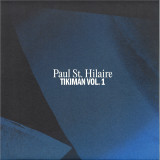
For the first time in more than a decade, Paul St. Hilaire (AKA Tikiman) presents a solo album – 100% Tiki.
Over his 30-plus year career, St. Hilaire has become one of dance music’s quietly legendary figures. Born and raised in Dominica, he moved to Berlin in 1994 and has lent both his voice and his musicianship to some of the most iconic electronic music from the German capital – and beyond. Renowned for his collaborations with Moritz von Oswald and Mark Ernestus (AKA Rhythm & Sound), he has also appeared on records with Deadbeat, Rhauder, Larry Heard aka Mr. Fingers and Stereotyp (G-Stone Recordings), amongst others.
However, few know the extent of St. Hilaire’s compositional and technical mastery. From his home studio in Kreuzberg, which includes an extensive collection of vintage hardware, self-built instruments and notebooks scribbled with endless lyrics, he has created a vast archive of material spanning ambient dub, avant-jazz, lush techno and lovers rock.
Tikiman Vol. 1 is a heady, downtempo tour de force of patois metaphors on education, displacement and personal vs. global histories, as is evident on slippy album opener “Bedroom in My Bag”: Mister, mister / Where are you going? / I’m heading for a faraway land / What are you having in the bag in your hand? / Help us to understand / He said, I’ve got my bedroom in my bag.
Overall, the album’s lyrics reflect on life between Berlin and Dominica, specifically St. Hilaire’s hometown of Grand Bay, where he has worked with various musicians famous for the island’s different genres of carnival music. St. Hilaire himself always favoured the island’s more “discrete” music, developing a sonic synergy between two different geographical strains of groove and minimalism, and combining them with foundational Caribbean mixing techniques, which provide the basis for his songwriting and distinct
baritone.
Tikiman Vol.1 offers a rare insight into St. Hilaire’s complex artistry, from the eyes-down grooves of “Little Way” and the guitar-heavy digi dancehall experiment “Keep Safe,” to the subtle hypnosis of “Ten to One” and the softly crashing synth waves of closer “Three And A Half”, evoking not only beaches but also coasts and borders. It’s a fitting expression of both the breadth of St. Hilaire’s work, as well as his history as one of the few black, Berlin-based artists who, despite remaining largely overlooked, has influenced the city’s electronic music culture since its beginnings.
Credits
Written & Produced by Paul St. Hilaire
Mastered by Stefan Betke
Artwork by Grant Gibson
Kynant Records was founded in 2015 by Richard Akingbehin, a British-Nigerian radio programmer (Refuge Worldwide), music writer and DJ. Originally specialising in deep techno and featuring artists such as Cio D’Or, Terrence Dixon and Donato Dozzy, Kynant has since launched a sub-label Kynant EX which focuses on ambient, dub and experimental electronics.
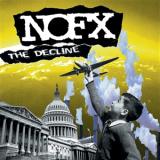
GER NOFX waren sauer (sind es möglicherweise immer noch) und wollten uns das wissen lassen! Ursprünglich 1999 veröffentlicht, war "The Decline" ein mutiges Werk und markierte einen großen Wendepunkt für NOFX. Der Song, der weithin als eines ihrer Meisterwerke gilt, ist ein 18-minütiges Punkrock-Spektakel, das die Entertainmentqualitäten, den lyrischen Witz und die Musikalität der besten Punkrockband aller Zeiten richtig zur Geltung bringt. Der Song, der den Zustand Amerikas satirisch darstellt und die gleichgültigen Massen und Politiker gleichermaßen aufs Korn nimmt, ist auch im Jahr 2026 natürlich leider noch aktuell und kritisiert somit weiterhin die Mächtigen auf eine Weise, zu der nur wenige Künstler den Mut haben. Die Vinyl-Single enthält auf der B-Seite die erste Version von "Clams Have Feelings Too" (das später auf dem Album "Pump Up The Valuum" wieder auftauchte) und ist ein Muss für jeden NOFX-Fan. Erneut auf schwarzem Vinyl wieder da und und limitiert in neuem farbigem Vinyl. Inklusive Beilage mit Texten und Bildern. NOFX were pissed off (possibly still are) and they wanted to let us know! Originally released in 1999,The Decline, was a brave release and marked a huge turning point for NOFX. Widely regarded as their magnum opus, the song is an 18-minute punk rock spectacle that showcases the showmanship, lyrical wit, and musicality of the best punk rock band of all time. Satirizing the state of America and skewering the indifferent masses & politicians alike, the song is eerily relevant in 2026 and continues to critique the powers that be in a way few artists have the courage to do. The vinyl adds first version of "Clams Have Feelings Too" (later resurfacing on the Pump Up The Valuum album) on the flip, the 12" is an essential release for any NOFX fan. Back on black and colored vinyl (ltd), includes insert with lyrics and pics.
The breakout underground star of the past year, the deservedly hyped Thought Leadership returns with another X ideas: the deck this time chooses the suit of Cups. This new collection is closer to the Post-Punk tonality of Pentacles, than the breezy Balearic Jazz of Swords. Gone are the brushed drum samples and airy synths and in their place are BIG guitars, 808 thumps and a decidedly more prominent use of bass as a melodic device.
As the suit of Cups reflects the emotional heart of the Tarot, presented within are a further X pieces, this time displaying the full range and fervour of Thought Leadership.
You know the drill by now. Originally out on cassette only, we present the first ever vinyl issue. It's a hideously limited pressing of 300 for the world, so don't sleep on this.
Side A explores the emotional levels of consciousness; angst, joy, love, sorrow, relief, regret – they are all represented across the first seven tracks, and often within the same piece. XXI kicks us off with a huge tumbling D minor passage, layers and layers of guitar front and centre, whilst the drums pound away in the distance. Release is provided with a gorgeous G Dorian section, where we hear the bass take flight with a high melodic line.
We’re still in familiar Durutti Column meets Dif Juz territory here, but things switch up with XXII. This piece showcases a darker, more angular palette of guitars; think Alan Rankine (The Associates), or Deb Demure (Drab Majesty) in the unexpected harmonic shifts, knotty arpeggiated patterns and heavy, goth-adjacent modulation. A real love letter to 45+ years of darkly inclined guitar heritage.
XXIII enters the fray with tight, thumping 808s and Marr-esque guitar figures; and again, the bass providing heavy melodic counterpoint to the guitars. Enter chiming, lyrical lead phrasing, reminiscent of the eternal opening to "Everybody Wants To Rule The World". Another accidental perfect pop moment from the Thought Leader. Whilst on the topic of Tears For Fears, XXIV comes swinging out of the gate with some serious Sophisti-chug; we’re reminded of "Shout" in the A section, before being beautifully juxtaposed in the B section with more Vini-eqsue patterns, reminiscent of his timeless classic, Another Setting.
XXV gives us welcome pause to take stock midway through the A side. No drums this time, but instead a heartbreaking conversation between two guitars; think Kevin McCormick and David Horridge’s masterful Light Patterns, or perhaps even the early solo-Bill Connors mid-70s cuts for ECM. The moment of quiet reflection passes, and is quickly shattered by the thudding march of XXVI – this piece comes across like The Associates playing "Wicked Game"; heavy, moody, and utterly compelling. XXVII ends our journey across Side A with more Marr-inspired playing; one for the heads and already featured on mixes, this one is real testament to the vision of Thought Leadership.
Side B again takes us on a trip through three long-form semi-improvised pieces. XXVIII is like those classic Jonny Nash, early Melody As Truth releases, slowly unfurling, additional details introduced deliberately piece by piece, this idea builds across 7+ minutes culminating in some utterly joyous ebow fireworks at the end – well Balearic.
XXIX again, like XXV before it, dispatches the drums with a focus purely on melody and mood. The piece feels like a lost Save Room Theme from the Resident Evil series, pure golden age Capcom Sound Team vibes. Unadulterated aural nostalgia for hours spent with a PS1 in haze of hash.
XXX completes this majestic voyage with another Modal exercise; this time the Thought Leader has opted for the Lydian Mode. Beautifully dreamy, undeniably Soundtrack-y, and arguably the most concise distillation so far of everything this project stands for; drum machines, guitars, pedals, one-take improvised solos – XXX has the lot, and is surely destined for greatness.
So, another X epic statements for guitar, homespun with the humblest of means, for all the dreamers out there. The first ever vinyl release of IV Of Cups has been carefully remastered by Be With's engineer Simon Francis to ensure it sounds better than ever after its initial tape release. Cicely Balston's expert skills have made sure nothing is lost in the cut at Abbey Road Studios whilst the records have been pressed to the highest possible standard at Record Industry, in Holland. The original tape cover artwork, so crucial to Thought Leadership's striking visual aesthetic, has been rejigged for vinyl issue here at Be With.
The last 2 LPs flew. You have been warned.
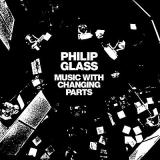
Philip Glass, the great American composer, was already in his mid-30s before his first album appeared, and then only because he produced the double LP himself. Music With Changing Parts was the inaugural release on his own Chatham Square imprint in 1971.
At this point, Einstein on the Beach, Glass' first opera, was still five years away. Yet in Changing Parts, one can already hear much of his vocabulary in full bloom: the buoyant arpeggios, the melding of electronic and acoustic instruments, the elongated drones of human voice, the primary emphasis on pulse (an interest he shared with fellow composer Steve Reich) and the ecstatic potential inherent in repetition.
The album features the original Philip Glass Ensemble – the composer himself, along with Jon Gibson, Dickie Landry, Art Murphy, Steve Chambers and Robert Prado – playing Farfisa organs and woodwinds as well as Barbara Benary on electric violin.
As Glass describes in his memoir Words Without Music, he secured a $500 interest-free loan for the recordings' initial release from the Hebrew Free Loan Society – an organization intended to help immigrants from the Old World upon arrival in the US. Though Glass was merely the grandson of immigrants, the venture wasn't far off the society's charter as Changing Parts helped usher in a new world of sound that would become known as Minimalism.
Chatham Square went on to release albums by other composers in Glass' circle, including Gibson and Landry. The label was named after the Manhattan intersection where Landry had a studio and the ensemble rehearsed.
Born in Baltimore in 1937, Glass first moved to New York to attend Juilliard at just nineteen, having already graduated from the University of Chicago. A staple of the Downtown scene, he can perhaps be appreciated as akin to the likes of sculptor Richard Serra or filmmaker Jim Jarmusch: mavericks who became major cultural figures entirely on their own terms.
This first-time vinyl reissue reproduces the original side-breaks and gatefold sleeve.
Black Vinyl[14,50 €]
repressed !
It's been a busy 3 years since Danny Berman aka Red Rack'em released on his own Bergerac imprint.
Since then he's toured relentlessly, released a whole album of live music based disco/punk funk for Sonar Kollektiv as Hot Coins, managed to completely update his biggest track 'In Love Again' to make it a hit the second time around plus released spaced out, wonky party smashers on Wolf Music, Phonica, City Fly and Telefonplan.
While all this was going on Bergerac was largely on ice but now Berman is turning his energy back to the label with a vengeance.
Wonky Bassline Disco Banger is accurately titled. An uplifting intro breaks down into a slamming disco house number and just when you think you know what's going on...
Then the trademark Red Rack'em wonky bass drops in. 150% Guaranteed party smasher... Jazzy House Extension is super vintage Red Rack'em from around 2004 - something for the jazz heads out there - cracked out piano and far too loud double bass come together to birth a euphoric yet banging snapshot of a producer learning his chops. Destined is a slightly demented leftfield house number featuring mangled, pitch shifting fretless bass and vocals samples discussing someone's destiny.
A woozy end to the EP.
Sometimes the title of an album tells you everything you need to know. Laurence Pike’s Possible Utopias for Jazz Quintet is like that: The music within represents a search for freedom, potentiality—liberatory strategies that transcend the ego and the solitary, atomized figure.
But in this case, the album title is also a red herring, because there is no jazz quintet here—just Pike, his drums, and his machines, not so much an ersatz ensemble as a purely notional one, a thought experiment equipped with drumsticks, circuitry, and the desire to go beyond hardwired limits.
And the results, strictly speaking, aren’t really jazz, though they incorporate the vocabulary of jazz, along with that of ambient, electronica, and post-rock. They are some other thing, cognizant of genre but never beholden to it. Again, we’re talking about a search for freedom here.
The Sydney-based musician has a long history of coloring outside the lines, not just in his solo recordings—including four albums for the Leaf label between 2018 and 2024—but also in the trio Pivot (later PVT); Szun Waves (alongside saxophonist Jack Wyllie and Border Community’s Luke Abbott); Triosk, which recorded an album with Jan Jelinek in 2003; and even post-punk titans Liars, whom he joined in late 2018.
Of his first album for Balmat, Pike says, “My loose concept was: What does music sound like when the expectations of late capitalism are removed from it? How might a jazz musician from an idealised culture of the future, or even another world, utilise musical language when the conventions of style and marketing are no longer a factor in music making?”
That inquiry, he says, connects to his “guiding principle: that the purpose of music is to access something bigger than the individual, and reveal a sense of possibility and freedom in the world to the listener. To create an understanding that the future can be something other than what we imagined or expect, even unconsciously.”
Heady ideas, but plug into his stream-of-metaconsciousness flow and you may start to intuit what motivates him. There is a deeply lyrical expression in these pieces—in the ruminative piano of opener “Guardians of Memory,” for example—but also a sense of exploded perspective, of ideas approached from more angles than any one mind could dream up. Of a collectivized consciousness, of mycelial networks branching across tone and rhythm and timbre, of ideas articulated in distributed fashion, nodal points dancing across drum heads.
Pike’s imaginary quintet is hardly without precedent; it’s a continuation of concepts floated across Jan Jelinek’s Loop-Finding-Jazz-Records, Burnt Friedman’s many guises, and much of the recombinant improv of the International Anthem roster, not to mention the far corners of ECM’s catalog in the late 1970s and 1980s, which Pike says have been integral to his development since he was a teenager. Possible Utopias for Jazz Quintet is a point in a continuum, a voice in a conversation, a question with no obvious answer: How can the search for otherness in music manifest something true about ourselves?
Since first forming in 2016, London's High Vis have steadily polished their palette of progressive hardcore with shades of post-punk, Brit pop, neo-psychedelia, and even Madchester groove, mapping a middle ground between hooks and fury, melodies and mosh pits. Singer Graham Sayle describes their third album 'Guided Tour' as an axis of competing forces: "It's trying to be a hopeful record, while also being incensed." Rounded out by drummer Edward 'Ski' Harper, guitarists Martin MacNamara and Rob Hammaren, and bassist Jack Muncaster, the band's deep roots in the UK and Irish DIY hardcore scenes have kept them grounded but growing, inspired equally by restlessness and righteous anger. As Sayle puts it, "Everyone's scratching, everyone's working all the time, and their idea of relaxing is just getting fucked and avoiding reality. This album is an escape from that."From its opening seconds of a cab door slamming, a car revving away, and a baggy rhythm swinging to life, 'Guided Tour' sounds like a band reaching for new heights, bristling with energy. Recorded across a few weeks at Holy Mountain Studios in London with producer Jonah Falco and engineer Stanley Gravett, the results feel dynamic and dialed-in, like anthems burned into sense memory through sweat and repetition. Harper cuts to the chase: "We had a clear idea going in, every moment got used. Maybe when we're 60 we can sit around and get a drum sound right, but for now it's about getting things done."The album's 11 songs span the spectrum of contemporary guitar music, sharpened by experience, camaraderie, and societal frustrations. From swaggering street punk ("Drop Me Out," "Mob DLA") to jangling indie sneer ("Worth The Wait," "Deserve It") to heavy alt ("Feeling Bless," "Fill The Gap") to shoegazey spoken word ("Untethered"), the group's chemistry transmutes any style to their unique intensity. Sayle champions this evolving fusion: "For years coming from hardcore, we had pretty clear boundaries - other scenes were separate worlds. Now things are getting more blended, drawing from different places."Nowhere is this sentiment flexed more boldly than on "Mind's A Lie," a dance- punk anthem inspired by Harper's love of house, garage, and pirate radio. Stabs of sampled female vocals (by celebrated South London singer and DJ Ell Murphy) build into a razor wire rhythm of low-slung bass, tense drums, and sparkling guitar before Sayle's staunch voice starts barking harsh truths ("Face to face with all I've known / I can't call these thoughts my own"). After a sudden breakdown, the track regroups and takes off, cruising into the horizon in a haze of chiming guitars and Murphy's ascendant voice, from the streets to somewhere beyond.
- A1: Rocking Chair
- A2: Le Train
- A3: Golden Sun
- A4: Miroir
- A5: Voyage Mental
- A6: Surprises
- B1: Je Comprends Pas
- B2: Respire
- B3: Sentimental Lies
- B4: Force Invisible
- B5: C’est Quoi Ces Gens
- B6: My Two Hours Of Sleep
- B7: Astrale Maison
Every so often in music, we come across voices that achieve a certain timelessness, so naturally do they encapsulate both past and present. Laure Briard is one of these voices, retro in form but contemporary at heart, spanning a career rich in aesthetic twists and turns, never without her signature magic, a special kind of eternal filter. Her first album, Révélation (2015), reveals her yé-yé influences, a testament to her love for ‘60s French pop music. Her second studio album, Sur la piste de danse (2016), follows in this vein and finds Laure accompanied as always by her long-time bandmates who share an affinity for warm, catchy arrangements that never lose their appeal. Her tour of Brazil marks a turning point in her career, introducing her to the local indie scene and thus launching her collaboration with the band Boogarins, as well as inspiring the release of multiple EPs composed and performed in Portuguese. Today, her music is embellished by touches of bossa nova and a folk sensibility, boasting increasingly intricate arrangements, as exemplified by her 2019 release, Un peu plus d'amour s'il vous plaît. Several years later, the Californian desert captures the musician’s imagination with Ne pas trop rester bleue, a poignant musical journey inspired by the rich history of Western legends and the role they play in shaping our collective consciousness.
In Voyage Mental, Laure Briard draws upon an inner energy unearthed during a new stage in her life, where the thrill of spontaneous adventure is not accessible in quite the same way. The result is a collection of sophisticated, introspective songs, narrating a young mother’s quest for balance in the face of routine. The album, nostalgic but always tethered to the present moment, is also the fruit of her collaboration with Gaëtan Nonchalant, a talented musician known for coaxing poetry out of the mundane. The two of them co-wrote and recorded five tracks at Studio Nocturne, accompanied by her long-time sidekick Pieuvre, aka Vincent Guyot, Léo Blomov, Pierre-Louis Vizioz, and Hedi Bensalem. The gentle pop opener “Rocking Chair” sways steadily to the rhythm of dynamic drums, followed by “Train,” a ballad that extends an invitation to set sail and daydream alone. The folk escapade continues with “Golden Sun,” a duet featuring the 1960s cult American musician F.J. McMahon, who Laure contacted via the internet on a whim. “Golden Sun” is an unlikely encounter between two generations and two cultures, giving new life to an old forgotten demo on the other side of the Atlantic. And while Laure sings of wide open spaces, cowboys, and sunsets sinking into the sea, we feel the city surrounding her in “Miroir,” a song composed by Hedi Bensalem that laments the suffocation of living in a crowded metropolis where the sky is a distant gray smudge. This pressing need for air, this search for rest and total disconnection, is one of the album's central themes. It may also explain the ever-present sense of nostalgia that pervades the songs, a welcome respite in our current era of doomscrolling and darkness. Along the way, Laure soothes us with melancholy guitar, delivers poetry set to scattered piano notes, and takes us by the hand during lively, uptempo passages. We climb onto her wings, never straying too far from the ground, soaring joyfully above her moods.
- A1: Drain
- A2: Murk
- A3: Doom
- A4: Bones
- A5: Sift
- B1: Tomb
- B2: Fumes
- B3: Evil
- B4: Blame
- B5: Spiraling
Best known as one half of KIASMOS alongside Ólafur Arnalds, the Faroe Islands born, Reykjavik based producer Janus Rasmussen has consistently refined an elegant sound that marries sonic precision with emotional depth. Over the past decade, he has built a wide-ranging body of work through collaborations across multiple genres as a producer, songwriter, musician, and mix engineer.
As a solo artist, Janus has crafted compositions that balance immersive sound design, subtle melodic shifts and rhythmic drive, drawing on his diverse musical appreciation and studio experimentation. These experiences have shaped a creative identity that now comes into sharp focus on his most ambitious solo project to date - Inert.
The album marks a bold step forward, thematically exploring the act of breaking free from inertia through embracing creative freedom. With his new work, Janus incorporates his own vocals more than ever, weaving them seamlessly around intricate electronics as he expands his sound into new territory, while retaining the subtle restraint that has defined his output. Drawing inspiration from the dance music spectrum, Inert reflects a renewed sense of momentum, vulnerability and adventurousness in his sound.
Isa Gordon and Tony Morris were first brought together through their individual releases on Optimo Music, which established mutual respect within the label’s community. While they had not previously performed live together, they were invited to take part in a fundraiser hosted by Queen’s Park Arena in support of Glasgow NW Foodbank and later for JD Twitch’s end-of-life care. Tony asked Isa to contribute guitar and backing vocals to his set, including a track then called Last Night I Had a Dream. That performance became the seed for their collaboration.
The first phase of fleshing it out, recalls Tony: “Somebody said Isa sang like Shania Twain. That got me thinking about country music and call and response, prompting me to come up with alternative lyrics.” Isa remembers: “I cycled over to Tony’s house with my guitar, and we spoke about what the tune meant. It was about him being wrapped up in dreamland, luxuriating in his subconscious, while my character — impatient and trapped in her own routines — barely had time to remember her own dreams.” Tony continues: “Brilliantly I realised that I could never collaborate with anyone in situ and so I sat in the garden for two hours watching my wife tend to plants. Every now and again I would creep up the stairs and put my ear to the door. I could hear Isa warbling away and so would resume my garden watch. After two hours I went back upstairs to see how she was getting on, only to find that she had written one of the greatest songs I’d ever heard. I still think that.” Tony adds: “My overwhelming sentiment about Wake Up Baby is pride. I can honestly say that I’m more proud of it than anything else I have done. It ticks a whole load of boxes. Isa’s singing in various Scottish modes is unique. The way her electric guitar adorns the dance beat makes it a rock song as well as a dance and a C&W song — truly multi-genre.”
The B-side of the 12” release, Syringe Moustache, is a surreal, darkly playful counterpart to Wake Up Baby. The track was inspired by a dream Tony had: “I was in a shopping mall, in a two-level shoe shop, and my attention was taken by a little girl with a syringe taped beneath her nose like a moustache. She went about her business trying on shoes, confident and wise beyond her years. In the dream, I imagined her as the daughter of cultured, intelligent parents determined to raise her independently. I was struck by my own feelings of inadequacy — I knew I could never have coped with such a contraption myself.” Isa’s take on the meaning of this song somewhat differs: “Tony sent me the tune over Instagram months before I met him, and I was spooked — as far as I knew, he didn’t know anything about me, but the story felt like it was written about me as a little girl, growing up around heroin addiction. The syringe beneath the girl’s nose became a symbol of the inescapable constraints of that environment, literally written on her face, yet something you just have to carry on through. On a buzz from the serendipity, I added a full instrumental backing to this most bizarre of works.”
The result is absurd, unsettling, and strangely empowering, staking out its own surreal, cinematic space. The 12” dance single is a format Tony had long wanted to explore — a tangible artefact to leave for family, a medium that celebrates the physicality of sound and the ritual of listening. It allowed the artists to maximise the format’s potential: a strong, multi-genre A-side, a surreal B-side, and remixes that expanded the record’s sonic world. Glasgow music staples Auntie Flo and 100% Positive Feedback were invited to reinterpret the tracks, bringing their distinctive touch — Auntie Flo transforming the A-side into a luscious, dancefloor-ready meditation, and 100% Positive Feedback twisting Syringe Moustache into absurd, playful shapes with false-start drops and over-the-top vocal editing.
The cover photograph, taken at the University Café by Harrison Reid, captures Isa and Tony embodying the characters they brought to life in the songs — a visual reflection of the record’s narrative and emotional stakes. The Café also holds personal significance: it’s where all of Isa’s meetings with Keith McIvor took place, where she first remembers visiting Glasgow as a child, and a place Tony fondly likes to go to drip egg yolk down his tie and watch the world go by. Together, the 12” format, the remixes, and the artwork create a cohesive, tactile experience, amplifying the duality, theatricality, and emotional breadth of the collaboration.
Following on from the November release of the Material Things / Pike album Rain & Cymbals, 12th Isle enter the new year with a limited vinyl edition of Through Global Frequency, a prescient work of ambient synth, electro-acoustic music and voice recordings by long-standing Dutch multimedia artist Michel Banabila (b. Amsterdam, 1961). Structured around a poem largely composed of titles from recordings he has made over the years, and written during a period marked by new Dutch migration policies, the genocide in Gaza, and the rise of the far right across Europe, Banabila enlists the voices of friends and family, each reciting the poem back to him in their native language. These voice recordings are set within a unique composition that works with the tonality, cadence and rhythm of the vocals, encompassing languages such as Arabic, Spanish, isiZulu, German, French, English, Japanese, Turkish, Ukrainian, and Dutch. Contributions come from Scanner (Robin Rimbaud), Ines Kooli, Sebastian Lee Philipp (Die Wilde Jagd), Yuko Kobayashi, Simone Eleveld, Cengiz Arslanpay and more.
“I felt the need to create something warm, something that embraced diversity. Every voice here is uniquely recognisable and reflects how I know them. I truly enjoyed working with these recordings, focusing on their personalities and the distinctive sound of their languages. For me, making music has always been a way to stay sane, and I have always loved working with voice recordings.”
Music, mix and poem by Michel Banabila,
track 3 featuring Robin Schaeverbeke,
track 8 featuring Cengiz Arslanpay,
track 10 featuring Machinefabriek.
Cello on track 9 by Peter Hollo.
Laseech, a Croatian producer and Cosada label owner with releases on BBE, Lumberjacks In Hell, Red Ember Records, and Forbidden Dance, is continuing a string of excellent releases with Rising Soul. Known for his dedication to house music, Laseech has built an international reputation through collaborations and remixes with some of the genre's most respected architects, including Ron Trent, Patrice Scott, Javonntte, and Dego. "Rising Soul is actually one of the first tracks I did back in 2017 while I was heavily into sampling. I was jamming with my MPC1000, and Rising Soul came up. I never thought that it would become such an effective song that works on the dancefloor every time." Laseech explains. Kez YM, a highly respected Japanese producer and DJ, has been a key figure in the global house music scene for almost two decades. Originally from Chiba and now based in Berlin, his unique approach to house music has led to releases on esteemed labels such as City Fly, Faces Records, Yore, and 4Lux. When describing his version of the track, Kez simply stated: "VIBES." Well, no one will argue with that. The last version comes from Cycle Records' founder Jan Kincl, a prominent Croatian music producer and DJ with releases on labels like BBE, Far Out, Sonar Kollektiv, and Get Physical. "I've been playing Andrej's original for years. He undoubtedly made some good stuff recently, but this one remains among my firm favourites from him. Kez delivered a beautiful version that took it further towards jazz territory, so I decided to make a version that would bridge those two." Jan explains. "I knew we could build a very good record around Rising Soul, with versions that would give DJs different options for different moments during the party. I guess we did a good job because some of the early supporters include DJs from all over the place - Laurent Garnier, Alex Barck from Jazzanova, Marcel Dettmann, Alex Nut (Eglo), Sasse, Chicago's K' Alexi Shelby, Lakuti, Ian Friday and Truncate, among others.
The Éthiopiques series returns! Essential archive recordings from an extremely fruitful period in Ethiopian music.
Before “Swinging Addis” took over the world, there was Moussié Nerses Nalbandian — the Armenian-born composer who shaped modern Ethiopian music. Mentor, arranger, and pioneer, he laid the foundations of Ethio-jazz.
This Éthiopiques volume revives his forgotten legacy, recorded live by Either/ Orchestra First issue ever with new exclusive photos and in depth liner 8-page insert.
“Ethiopian jazzmen are the best musicians that we have seen so far in Africa.
They really are promising handlers of jazz instruments.”
Wilbur De Paris
(1959, after a concert in Addis Ababa)
አዲስ፡ዘመን። *Addis zèmèn* **A new era.**
The time is the mid-1950s and early 1960s, just before "Swinging Addis" bloomed – or rather boomed – onto the scene. Brass instruments are still dominant, but the advent of the electric guitar, and the very first electronic organs, are just around the corner. Rock’n'Roll, R’n’B, Soul and the Twist have not yet barged their way in. Addis Ababa is steeped in the big band atmosphere of the post-war era, with Glenn Miller's *In the* *Mood* as its world-wide theme song, neck and neck with the Latin craze that was in vogue at the same period. Life has become enjoyable once again, with the return of peace after the terrible Italian Fascist invasion of Ethiopia (1935-1941). The redeployment of modern music is part and parcel of the postwar reconstruction. *Addis zèmèn* – a new era – is the watchword of the postwar period, just as it was all across war-torn Europe.
The generation who were the young parents of baby boomers** were the first to enjoy this musical renaissance, before the baby boomers themselves took over and forever super-charged the soundtrack of the final days of imperial reign. Music is Ethiopia's most popular art form, and very often serves as the best barometer for the upsurge of energy that is critical for reconstruction. Whether it be jazz in Saint-Germain-des-Prés or the *zazous* who revolutionised both jazz and French *chanson* after the *Libération*, be it Madrid's post-Franco Movida, or Dada, the Surrealists and *les années folles* that followed World War I, the periods just after mourning and hardship always give rise to brighter and more tuneful tomorrows. Addis Ababa, as the country's capital, and the epicentre of change, was no exception to this vital rule.
**Two generations of Nalbandian musicians**
Nersès Nalbandian belonged to a family of Armenian exiles, who had moved to Ethiopia in the mid-1920s. The uncle Kevork arrived along with the fabled "*Arba Lidjotch*", the** "*40 Kids*", young Armenian orphans and musicians that the Ras Tafari had recruited when he visited Jerusalem in 1924, intending to turn their brass band into the official imperial band. If Kevork Nalbandian was the one who first opened the way of modernism, pushing innovation so far as to invent musical theatre, it was his nephew Nersès who would go on to become, from the 1940s and until his death in 1977, a pivotal figure of modern Ethiopian music and of the heights it. Going all the way back to the 1950s. Nothing less. And it is Nersès who is largely to thank for the brassy colours that so greatly contributed to the international renown of Ethiopian groove. While the younger generations today venture timidly into the genealogy of their country's modern music, often losing their way amidst a distinctly xenophobic historiographical complacency, many survivors of the imperial period are still around to bear witness and pay tribute to the essential role that "Moussié Nersès" played in the rise of Abyssinia's musical modernity.
Given the year of his birth (15 March 1915), no one knows for sure if Nersès Nalbandian was born in Aintab, today Gaziantep (Turkiye/former Ottoman Empire) or on the other side of the border in Alep, Syria... What is certain is that his family, like the entire Armenian community, was amongst the victims of the genocide perpetrated by the Turks. Alep, the place of safety – today in ruins.
Before Nersès then, there was uncle Kevork (1887-1963). For a quarter of a century, he was a whirlwind of activity in music teaching and theatrical innovation. *Guèbrè Mariam le Gondaré* (የጎንደሬ ገብረ ማርያም አጥቶ ማግኘት, 1926 EC=1934) is his most famous creation. This play included "ten Ethiopian songs" — a totally innovative approach. According to his autobiographical notes, preserved by the Nalbandian family, Kevork indicates that he composed some 50 such pieces over the course of his career. This shows just how much he understood, very early on, the critical importance of song as Ethiopia's crowning artistic form. Indeed, for Ethiopian listeners, the most important thing is the lyrics, with all their multifarious mischief, far more than a strong melody, sophisticated arrangements or even an exceptional voice. (This is also why Ethiopians by and large, and beginning with the artists and producers themselves, believed for a long time — and wrongly — that their music could not possibly be exported, and could never win over audiences abroad, who did not speak the country's languages).
Last but not least, one of Kevork's major contributions remains composing Ethiopia's first national anthem – with lyrics by Yoftahé Negussié.
Nersès Nalbandian moved to Ethiopia at the end of the 1930s, at the behest of his ground-breaking uncle. Proficient in many instruments (pretty much everything but the drums), conductor, choir director, composer, arranger, adapter, creator, piano tuner, purveyor of rented pianos,... he was above all an energetic and influential teacher. From 1946 onwards, thanks to Kevork's connexion, Nersès was appointed musical director of the Addis Ababa Municipality Band. In just a few years, Nersès transformed it into the first truly modern ensemble, thanks to the quality of his teaching, his choice of repertoire, and the sophistication of his arrangements. It was this group that would go on to become the orchestra of the Haile Selassie Theatre shortly after its inauguration in 1955, which was a major celebration of the Emperor's jubilee, marking the 25th anniversary of his on-again-off-again reign.
At some point or other in his long career, Nersès Nalbandian had a hand in the creation of just about every institutional band (Municipality Band, Police Orchestra, Imperial Bodyguard Band, Army Band, Yared Music School…), but it was with the Haile Selassie Theatre – today the National Theatre – that his abilities were most on display, up until his death in 1977. To this must be added the development of choral singing in Ethiopia, hitherto unknown, and a sort of secret garden dedicated to the memory of Armenian sacred music, and brought together in two thick, unpublished volumes. Shortly before his death (November 13, 1977), he was appointed to lead the impressive Ethiopian delegation at Festac in Lagos, Nigeria (January-February 1977).
His status as a stateless foreigner regularly excluded him from the most senior positions, in spite of the respect he commanded (and commands to this day) from the musicians of his era. Naturally gifted and largely self-taught, Nerses was tirelessly curious about new musical developments, drawing inspiration from the very first imported records, and especially from listening intensely to the musical programmes broadcast over short-wave radio – BBC *First*. A prolific composer and arranger, he was constantly mindful of formalising and integrating Ethiopian parameters (specific “musical modes”, pentatonic scale, and the dominance of ternary rhythms) into his “modernisation” of the musical culture, rather than trying to over-westernise it. It even seems very probable that *Moussié* Nerses made a decisive contribution to the development of tighter music-teaching methods, in order to revitalise musical education during this period of prodigious cultural ferment. Flying in the face of all the historiographical and musicological evidence, it is taken as sacrosanct dogma that the four musical modes or chords officially recognised today, the *qǝñǝt* or *qiñit* (ቅኝት), are every bit as millennial as Ethiopia itself. It would appear however that some streamlining of these chords actually took place in around 1960. It was only from this time onward that music teaching was structured around these four fundamental musical modes and chords: *Ambassel*, *Bati*, *Tezeta* and *Antchi Hoyé*. A historical and musical “details” that is, apparently, difficult to swallow, especially if that should honour a *foreigner*. Modern Ethiopian music has Nersès to thank for many of its standards and, to this day, it is not unusual for the National Radio to broadcast thunderous oldies that bear unmistakable traces of his outrageously groovy touch.
- A1: I Missed The Target Again (Radio Edit) 3.40
- A2: It's Gonna Rain 4.06
- A3: Hang On In There 3.59
- A4: Shine A Light 4.26
- A5: The Lord Will Make A Way 4.56
- B1: There Will Be Peace In The Valley 3.26
- B2: 1963 5.20
- B3: Reach Down And Touch Heaven For Me 2.48
- B4: Love Breakthrough 3.46
- B5: In God's Hands We Rest Untroubled 4.58
- A1: My God Has A Telephone 3.25
- B1: God's Gonna Use Me Anyway 4.02
Soul Music legend Candi Staton returns to her down-home Alabama roots on her 32nd album, Back to My Roots. The twelve-track Americana set features an array of Staton-penned originals and some well-chosen covers.
"These songs represent my roots," Staton adds as she reflects on her many trials and triumphs. "Even the new songs on some level represent something I've experienced and that's what real soul music is about." Back to My Roots was produced by Staton with her second eldest son, Marcus Williams, a professional drummer who has toured with the likes of Peabo Bryson, Isaac Hayes, and Tyler Perry. They brought in Mark Nevers of Lambchop fame, who produced three of Staton’s prior Americana albums for Honest Jon’s and Thirty Tigers, to sweeten certain tracks. “Some of the first songs I ever heard were songs like `Peace in the Valley’ and `It’s Gonna Rain,’” says Staton. “The new songs or cover songs are tracks that remind me of that era when I was growing up as a child and evolving as a young woman. That’s why I named the album Back to My Roots because I’m going back to the roots that made me who I am.”
Staton received the Americana Music Association UK’s highest honour, the International Lifetime Achievement Award, at the UK Americana Music Awards ceremony at Hackney Church in London last year for her southern soul work that stretches from her 1969 Muscle Shoals hits to her more recent collaborations with the likes of Americana kings Jason Isbell and John Paul White.
The album opens with a mid-tempo Bonnie Raitt-styled contemporary blues “I Missed the Target Again” that finds Harry Connick Jr.’s longtime guitarist Jonathan DuBose Jr. (aka the Prophesying Guitarist) showing off his skills that set the tone for the song and the album.
Staton’s older sister, Maggie Staton Peebles (who alongside Staton was a member of the Jewel Gospel Trio in the 1950s), joins her for two duets. The first, “It’s Gonna Rain,” features just a drum, steel guitar and vocals. “My mother used to sing that song to us all the time when I was a child,” Staton recalls. “It’s a really soulful kind of song I wanted to revisit.” They then take turns leading Thomas Dorsey 1939 gem “There Will Be Peace in the Valley” that Elvis Presley popularized in the 1950s.
“Hang on in There” is a new, mid-tempo song that has an old school gospel flavour and features vocals from veteran bluesman, Larry McCray.
While in Europe in 2023 for her farewell concert tour that took her to the Glastonbury Festival and Love Supreme, Staton and her British band, PUSH, went into a London studio to record a new version of The Rolling Stones’ 1972 gem, “Shine A Light.” “I love the way that came out,” Staton says. “We put a big choir on it and put our own twist on it.”
From there, Staton revives another Thomas Dorsey classic, “The Lord Will Make a Way Somehow,” with a bluesy vibe. When Al Green started recording gospel in the early 1980s, he re-introduced this song into the culture.
“God’s Gonna Use Me Anyway” is a new mid-tempo blues with subtle Caribbean influences.
The mood takes a turn on “1963.” It’s a poignant, spoken-word reflection on September 15, 1963, when four black girls were killed in the Birmingham Church bombing. “I was in the city that day and I remember the chaos and horror after the bombing,” Staton recalls. “Just thinking of how racism and hatred caused those men to kill those girls was so emotional for me that I could only do it in one take.”
It's a perfect segue into "Reach Down and Touch Heaven," a haunting, plea for divine intervention into the affairs of mankind. "That's straight Baptist," she says. "I used to be a church pianist back in the 1960s. I've never played piano on one of my records before so that's a unique song for me because I’m finally playing on one of my records. The message of that song is about the homeless. It came to me when a homeless person on the street asked me for $5. When God touches your heart to help somebody else that’s heaven to God’s hears. So, when we reach into our purse or wallet to help someone, we’re touching heaven."
Staton offers love as an antidote to hate on the bouncy, Motown-styled, “Love Breakthrough.”
Her publicist brought Aaron Frazer & the Flying Stars of Brooklyn NY’s 2017 cut “My God Has a Telephone” to Staton’s attention. She shifts the track from a retro 1960s groove to more of a 1980s Malaco Records arrangement, a subtle but distinct variation. Staton brought in her longtime friend and STAX Records legend, William Bell (“I Forgot to Be Your Lover” and “Trying to Love Two”), to add raspy seasoning to the track.
The album closes with the wistful, “In God’s Hands We Rest Untroubled,” that was originally written and recorded by the late country star, Lari White, who died in 2017 at the age of 52. “Lari sent me that song to consider at least ten years ago and I always loved it,” Staton says. “The record label didn’t want it on the album or something, so I just held it.”
Staton says, “I grew up hearing a lot of these old songs when they were new songs. I toured with the Jewel Gospel Trio in the 1950s and we got to know people like Mahalia Jackson, Sam Cooke and others who sang these types of songs. So, I’m sort of paying tribute to them and the influence they had on me by refreshing these songs and making new songs in the old style.”’
The interstellar electronics are once more pushed to the fore on closer '80 Axes', where jaunty synth lines combine with soft bongo hits to create an instinctive rhythm, and intergalactic melodies sprint between the speakers. You can dance if you want to, but lying down is very much encouraged.
As part of the label's mission to champion Dutch talent, Voyage Direct has always promoted new, up and coming, and little-known producers. Boss Tom Trago's master plan includes building a family of artists, in part through helping unheralded local producers to fulfill their potential.
On the label's latest release, he continues that approach, serving up a debut 12' from a mysterious young producer known only as Darling. Those paying close attention to the wider Dutch house and techno scene may have spotted his recent rework of Awanto3's 'Star Butchers' on Dekmantel, in which the man or woman of mystery added some killer keys to the Amsterdam legend's woozy, deep house original.
While that rework was undoubtedly superb, Jacob's Lead offers a truer reflection of the shadowy producer's previously hidden talents. As debut EPs go, it's a bit of a cracker.
The title track, in particular, is a beauty. Its' restless, hypnotic rhythm tips a wink to classic Dutch techno of old, while the undulating, analogue electronics and swirling pads recall the far-sighted retro-futurism of vintage Motor City material. Throw in some of Darling's trademark spine-tingling keys and a deliciously loved-up breakdown, and you have a choice chunk of life-affirming techno.
On the flip, Darling heads towards deeper territory with the bubbling melodies, starburst electronics and saucer-eyed chords of 'Video'. Unashamedly positive in sound and intent, it sounds like the kind of track that will be cited as a classic in two decades time. Melodious and infectious, it casts Darling as the Netherlands' answer to Larry Heard.
Influences and inspirations come from far and wide. Sometimes they can be household names or pioneers. Other times, they can be lesser-known outfits; less known, but no less influential. Futuro belong to the latter category for Italo Moderni.
Javier and Raúl are two Spanish synthesizer sorcerers who are steeped in the traditions of italo disco and the analogue sounds of the 1980s. While Italo Moderni was still in its infancy, Futuro were a shining light with a young upstart by the name of Adrian Marth even making videos for their tracks. From these beginnings, a mutual respect and friendship developed. Now, the circle is complete with the six tracks making their way onto Accidenti; an EP that marks Futuro’s debut on Italo Moderni.
The collection showcases the breadth of Futuro’s sound. With all instrumentation played through classic analogue machines, the six works journey through neon-streaked city nights, deep uncharted jungle and sun-kissed beaches. Drawing on the music of Rimini, silver screen soundtracks and arcade innocence, this is an EP that remembers and reimagines the 1980s. Intent is immediately set, with the tense and textured “L’assalto” delivering movie score synth stabs alongside crisp percussion. “Matador” is pure elegance, panpipe playfulness countered by glacial refrains and shimmering key shifts. “Iguazu” transports the listener to the wildlife and wilderness of the Amazon; cascading chords glisten as the canopy sings. Futuro takes to the skies with the sonorous swoops of “Il sogno dell’aviatore” before the lovelorn landing of “Fantasma d’amore”, a sumptuous synthesizer serenade of unrequited romance. To close, we’re firmly on the ground for “Sotto le stelle.” Under these sparkling stars, glimmering notes glow with warmth in a finale fitting for such an EP.
And, it is fitting to finally have Futuro on Italo Moderni. A group that has inspired and will continue to do so well into the future. An accidental discovery, mutual respect and a partnership rooted in a love of synthesizers has brought Accidenti into being.
The label say "Fresh from impressing with the pulsating techno of Boris Werner and the fuzzy live house jams of San Proper, Tom Trago's Voyage Direct label turns to a man who needs little introduction: Dutch legend and man of many pseudonyms Danny Wolfers.
Best known under his Legowelt alias, Wolfers has spent the last two decades flitting between strobe light acid house, 808 electro, fluorescent techno and shimmering space disco. Throughout, he's kept his productions pleasingly analogue-heavy, making great use of classic drum machines and vintage synthesizers. While his music may be steeped in the past, Wolfers' productions always sound like the future.
For this first outing on Voyage Direct, Wolfers resurrects the House of Jezebel alias - a pseudonym previously only used for the twinkling deep house warmth of 2010's 'Love & Happiness' - and delivers two tracks of synth-laden analogue house goodness.
'Back In Dogtown USA' sets the tone, as Wolfers layers rising chords, darting electronics and wide-eyed synthesizer melodies over a clattering analogue house groove. As with much of the legendary Dutch producer's work, the track ripples with rush-inducing melodic intent. It's the soundtrack to a party on Jupiter, and we're all invited.
Wolfers' ups the tempo dramatically on 'I Took A Train In 1979', transplanting us to the far reaches of our galaxy via jackin' techno drums, picturesque organ melodies, drifting chords and intoxicating pads. There are echoes of classic Detroit techno, surging Rotterdam electro and vintage cosmic disco, yet it doesn't really sound like any of these things. Like 'Back In Dogtown USA', 'I Took A Train In 1979' sounds like the past, reconfigured and rearranged for the consumption of future generations. In other words, it's a classic Wolfers production."
- A1: The Village Circle
- A2: The Facilitator
- A3: The Offering (Feat. Sypha)
- A4: The Mountain Top
- B1: The Initiates Piece (Feat. Billy Woods)
- B2: The Cleansing
- B3: The Ama (Feat. The Stooky Bros)
- B4: The Shadow Dancer (Feat. Sypha)
- C1: The Burial (Feat. Talibah Safiya)
- C2: The Farmer
- C3: The Serpent Charmer
- D1: The Serviceman
- D2: The Poet Pours Liberations
- D3: The Shamans (Feat. Shabaka Hutchings)
- D4: The Home Celebration
Temple Needs Water. Village Needs Peace." is a philosophical exploration into the essence of community, spirituality, and transformation.
This 15-track collaboration between producer Real Bad Man and Memphis rapper LUKAH medi-tates on themes of unity, leadership, sacrifice, and renewal. With contributions from billy woods (Armand Hammer), Adrian Utley (Portishead), and Shabaka Hutchings, this album ascends through personal and spiritual achievements, delves into the duality of knowledge, the unseen forces, and the cyclical nature of life and death.
The album reflects on growth, resilience, duty, ancestral wisdom, and the healing power of words, culminating in a celebration of inner peace and communal harmony. With a backbone of musically ambitious beats and soul-baring verses, this album carves its mark as the year's most enthralling listen.
An album like a film, a childhood like a journey.
With Rêves, Senbeï unveils the most intimate and ambitious work of his career. Known for his unique blend of electronic music, hip-hop, and Asian sounds, the beatmaker reinvents himself here in an orchestral and cinematic universe, a far cry from his previous albums.
Inspired by the great soundtracks of children's adventure films—The Goonies, The Neverending Story, Charlie and the Chocolate Factory—Rêves is a sonic immersion where childhood nostalgia meets the emotional power of an orchestra.
A unique symphonic production.
For the first time, Senbeï has called upon a 15-piece orchestra, recorded in conditions close to those of film music. Strings, wind instruments, and electronic textures echo each other to create a rich, evocative universe, filled with luminous melodies and magical tension. This album is not just a collection of tracks: it is an adventure to be listened to like reading a story or watching a film.
- A1: Mountainous Regions
- A2: Catalogue Of Errors
- A3: Time Is Dissolving
- A4: Maybe I Should Try Acting Normal-Er
- A5: Nap Time (T-Mix)
- A6: Turn To
- B1: Clown College
- B2: All Will Settle
- B3: I Know Precisely What You Mean
- B4: Rain On A Humid Day
- B5: Journeys (Rest Easy)
- B6: A Story In 3 Parts
- B7: The Glow That Lights Your Face
- B8: Memory Bank
Verb T – Homer Loan 1 & 2 (Half 'N Half Splatter Vinyl Release)
UK hip-hop veteran Verb T returns with the long-awaited vinyl release of Homer Loan 1 & 2. A definitive collection capturing two distinct creative periods from one of the scene’s most respected voices.
Originally released digitally, the Homer Loan series has become a cult favourite among Verb T fans, offering an intimate glimpse into his trademark balance of sharp lyricism, dry humour, and unfiltered honesty. The vinyl release brings both volumes together for the first time, celebrating the evolution of a prolific artist still pushing his craft forward. Homer Loan 1 is entirely self-produced, showcasing Verb T’s production skills and ear for soulful textures and lo-fi warmth. Built around introspective rhymes and smooth, laid-back beats, it reflects the self-contained creative process that defined its making.
With Homer Loan 2, the palette expands — featuring production from Cuth, Farma G, and Forrest Moon, each contributing their distinctive sonic fingerprints while complementing Verb T’s unmistakable flow and storytelling. The result is a cohesive yet dynamic project that bridges the personal and the universal, the underground and the timeless. The Homer Loan 1 & 2 Yellow and Purple Half 'N Half Splatter vinyl release stands as both a collector’s piece and a testament to Verb T’s consistency and artistry within UK hip-hop’s ever-changing landscape.
- A1: No Future
- A2: Twisted
- A3: Til I Beg For Mercy
- A4: Wake Up
- A5: Scene One
- B1: From Nothing To Nothing
- B2: Some Time
- B3: Your Product
- B4: Watch You Bleed
- B5: No Answers No Solutions
- C1: Lies
- C2: I Am The Labyrinth
- C3: Force Majeure
- C4: Flesh
- C5: Denial (Excerpt)
- D1: Pretender ('94 Mix)
- D2: Life Before Death ('94 Mix)
- D3: I Am The Labyrinth (A_Maze Mix)
- D4: From Nothing To Nothing (Edit)
- D5: No Answers, No Solutions (No Time)
Advanced Art was formed in Tampere, Finland, in 1985 by Jana, Pete, and Vince. Too young to be part of the first wave of Finnish groups inspired by German synth pioneers and New Romantics, they instead forged their own path and soon became pioneers themselves. For the next ten years, Advanced Art defined and dominated Finland’s small but growing electronic underground. They inspired a new generation of Finns to experiment with synthesizers, built an international cult following, and were deeply involved in the local scene—running clubs, organizing events, and performing at some of the very first warehouse parties in the country.
Although the line-up shifted over time, the group’s creative drive consistently came from the partnership between Jana, who supplied the voice and words, and Vince, who shaped the music with his machines. Together they defined the band’s distinctive blend of sharp electronics and lyrical vision.
After several cassette demos and two 7-inch singles, Advanced Art signed to Poko Rekords in 1991. The EPs Scar and Time raised their profile both at home and abroad, especially thanks to valuable exposure on MTV Europe’s 120 Minutes. Known for their perfectionism, they finally released their debut album Product in January 1993. On Product the line-up was Jana (lyrics, vocals), Vince (music, production), and Factor (percussion, studio work). Having moved through phases of synth pop, EBM, and industrial, the album showcased Vince’s vision of a unified sound and style more clearly than ever before.
Force followed in 1994, conceived as a multi-part concept album (Update / Live / Retro). Recorded with live percussionist PW joining Jana and Vince, it expanded on the groundwork of Product with new beats, ideas, and a sharper, more defined identity.
By 1995, exactly ten years after their founding, Jana and Vince decided to bring Advanced Art to a close on the band’s birthday, 13 October. Their run had been precise: one decade of creative output, ending with a legacy that laid foundations for Finland’s electronic scene.
Now, conveniently coinciding with the band’s 40th anniversary, Advanced Art present Forced Product. This double-LP set, fully remastered, features Product in its entirety, alongside the Update and Retro sections of Force, plus additional EP tracks and remixes recorded between 1991 and 1994 at “Audible Art” – less a studio than a concept, existing wherever machines and people met.
Limited to 450 copies, Forced Product comes in a gatefold sleeve with poster and sticker, offering a definitive document of Finland’s pioneering electronic cult heroes — a band that helped invent their country’s scene and left a lasting influence far beyond it.
Cybernetic disco maestro Patrick Cowley graces Dark Entries once again with Hard Ware, an LP of far-out funk and synthpop celebrating what would have been Cowley’s 75th birthday. Best known for his chart-topping disco anthems, Cowley left us with an incredible body of work before his tragic death in 1982 due to AIDS-related illness. Since 2009, Dark Entries has been working with Cowley’s friends and family to uncover the singular artist’s lesser-known sides, including his soundtracks for gay pornographic films, which the label chronicled on compilation albums School Daze, Muscle Up, and Afternooners. Hard Ware presents the closing chapter in a trilogy of unreleased Cowley dancefloor bangers that began with 2022’s heavy-hitting Male Box and was continued with the soul and garage-inflected From Behind in 2024. The most expansive release in said trilogy, Hard Ware delivers ten tracks of pure, uncut Cowley: sultry, psychedelic, sarcastic, and just a bit sleazy. Cowley devotees will delight in “Tech-No,” a sparse instrumental demo version of his epically dystopian “Tech-No-Logical World.” You could soundtrack your next aerobics session with cheeky numbers like “Pajama Party Massacre” or “Shake It Up,” both of which feature Cowley himself on vocals. The frenetic “Big Ass in Motion” is built around samples from Rudy Ray Moore and The Madam’s infamous “Sensuous Black Woman,” an X-rated comedy record that would later feature in classic booty house records. Mid-tempo cosmic groovers are well-represented with jams like “Hellfire” and “Megablue,” which perfectly capture Cowley’s bathhouse-in-outerspace sensibilities. No collection of Cowley’s work would be complete without an interstellar floor-filler, and we’ve got quite a few here, like “Jungle Jump,” which pits whirling beats with dub-laced swirls of synth, or “Spellbinding Lover,” a Donna Summer-indebted melancholic boogie masterpiece that features Sylvester backup singer Jeanie Tracy. Hard Ware closes with the chilling synth-hymn ”Ice Age,” in which Loverde vocalist Peggy Gibbons sings of a coming frosty apocalypse. The story told in “Ice Age” mirrors the coming AIDS crisis and feels like a haunting premonition from Cowley. The record comes in a sleeve with a hand-airbrushed circuitboard-inspired design by Gwenaël Rattke, and includes lyrics as well as liner notes by Andrew Ryce and Peggy Gibbons. Hard Ware is another crucial document of a tremendous talent taken too soon.
Bringing together the elder statesman of the Zulu guitar Madala Kunene and internationally acclaimed Sibusile Xaba, kwaNTU pulls two generations of South African guitar mastery into a single point of focus. Under-represented on recordings outside of South Africa, Madala Kunene (b. 1951), the ‘King of the Zulu Guitar’, is revered as the greatest living master of the Zulu guitar tradition. Sibusile Xaba, whose collaboration with Mushroom Hour Half Hour reaches back to his first recording in 2017 (Open Letter To Adoniah/Unlearning), has garnered international acclaim for his unique voice and virtuoso guitar stylings, which bring together multiple South African guitar lineages in an original, spiritualised fusion. Collaborating with Mushroom Hour and New Soil for kwaNTU, the two players come together to weave a filigree sonic fabric which reaches down to the heartwood of Zulu guitar music but moves resolutely outward, building on the past to create a deeply rooted statement about present conditions and future travels. kwaNTU – which can be roughly translated ‘the place of the life-spirit’ – is also conclave of teacher and student, as Xaba has been taught by Kunene for the last decade. Meditative, rich and sonically sui generis, kwaNTU finds these two musicians linking up within the inimitable space of sound and spirit that they share through Kunene’s teaching.
The great masters of South African music have not all had equal exposure. For many years the generation of musicians who were exiled during apartheid took centre stage, as the regime made it very difficult for those at home to be heard. More recently, a new cohort of important voices, especially in jazz, has broken through to international consciousness. But for the generation of musicians in between – those who shone like beacons in the most difficult final years of apartheid and immediately afterward – international recognition has been slow in coming.
Madala Kunene, ‘the King of the Zulu Guitar’, is among this number. A revered figure for current generations of South African musicians, Kunene began his recording career in 1990, at the bitter end of apartheid, with a now classic self-titled LP for David Marks’ storied Third Ear imprint. Born in 1951 in Cato Manor, near Durban, he had determined to be a musician from early childhood, and by the time he first entered a recording studio he had already had a long career as a popular performer. His virtuoso absorption and transformation of the venerable Zulu maskanda guitar tradition and his richly spiritualised approach to music immediately marked him out as someone special, and in the years that followed, Kunene cemented his position as one of South Africa’s musical elders. He is without doubt the grand master of the Zulu guitar tradition, but his sound and sensibility ranges far beyond it into varied sonic terrain, and he has collaborated with a wide range of musicians both at home and abroad. Now in his mid-seventies, he remains a shining light for those that are making music in contemporary South Africa.
‘He is really an amazing person,’ says the guitarist Sibusile Xaba, who has been mentored by Kunene for over a decade, and now invites a collaboration with him on kwaNTU. ‘As a mentor, he's really powerful in showing us the way. For us to have this opportunity to make music together and have a project together is really a blessing to me.’
Xaba himself grew up in Newcastle, KwaZulu-Natal, where his mother had been in a band and his father sang in a church choir, and from early childhood Xaba played homemade tin guitars. He only later realised that music was his calling. ‘I just loved music. I was fortunate. My parents loved music. And when it was time for me to leave home and go to study outside Newcastle, I knew that music was what I wanted to do. There was no second option. It was just music.’ Moving to Pretoria to study music formally, Xaba committed himself to his craft, developing a unique style that draws on both US jazz masters such as Wes Montgomery and Jim Hall, and the rich and varied heritage of the South African guitar, from inspirational jazz players such as Allen Kwela and Enoch Mthalane, to the music of the Malombo groups and Dr. Philip Tabane (Xaba has previously collaborated with Dr. Tabane’s late son, Thabang), and the Zulu guitar tradition embodied by Kunene.
‘I was really in love with the jazz guitar, I really admired it, and I was digging a lot in that direction,’ says Xaba, recalling his first encounter with Kunene’s music, over a decade ago. ‘And then one day on my timeline, Kunene popped up, and I was like – “What's this sound?” I was so connected to it. It really touched me deep. I started checking out his records, and then I found out he's from the same region as I am, which is Zululand.’ After Kunene played a show at the Afrikan Freedom Station in Johannesburg, Xaba make contact with him, and visited him at home in Durban. They struck up a friendship, and Xaba became the elder’s student, as Kunene began to pass on his knowledge and his inimitable way of playing.
kwaNTU is a tribute to this relationship and the deep learning that has defined it. The album was recorded in Zululand in the town of Utrecht, at a cultural centre called Kwantu Village, which gives its name to the album. ‘It's such a broad word,’ Xaba says, ‘but the elders teach us that Ntu is basically an energy, almost chi, an energy, a force that all living beings have within them. It's a living energy, so kwaNTU is like, almost the place of this energy.’ The two men sequestered themselves for five days of jamming, improvising and planning, and then the session was recorded in one take over a single night, with Gontse Makhene joining on percussion and backing vocals and Fakazile on vocals. Other voices and overdubs were later added in the studio in Johannesburg.
The result is a rich and meditative recording that finds two generations in a deeply engaged dialogue. Teaching and passing on his knowledge, the elder Kunene has brought Xaba into a space of sound and knowledge that they now share; Xaba’s own practice of deep communion with nature and his dedication to his musical craft make him the perfect interlocutor for Kunene. The result is an album that foregrounds the two musicians engaged at the highest levels of responsive listening, sympathetic unity, and collaborative concentration. Bringing an elder statesman of South African music to an international listening audience for the first time in decades by pairing him with one of South Africa’s most important new voices, kwaNTU is a meeting of generations and a powerful demonstration of musical lineage and continuity.
‘Before music, there is sound,’ Xaba observes, speaking of Kunene’s unique approach to music. ‘And sound is like a common compartment…it's not restricted to particular people or particular geographic places, you know what I mean? It's sound. Everybody can hear it. So when he constructs that sound into music, I think everybody resonates with the energy behind his construction of sound into song. Here at home, we really love him for preserving our history through the guitar, through his stories as well the music, the songs that he writes. We really, really admire him.’
Utter presents Marshall Jefferson's previously unreleased meditation opus 'Yellow Meditation For The Dance Generation' alongside two remixes from French production maestro Joakim.
Marshall Jefferson: Chicago House music pioneer, creator of the anthemic ‘Move My Body’, an original collaborator of Adonis, Ce Ce Rogers and Roy Davis Jr., production mastermind of countless dancefloor classics such as Phuture’s ‘Acid Tracks’, Sterling Void’s ’It’s All Right’, Hercules’ ‘7 Ways’… and the soothing voice behind a 36 minute healing meditation guide. Yes, really.
But let’s rewind, slightly.
In 2017, Marshall was approached and encouraged by Ian ‘Snowy’ Snowball to write his autobiography and the pair set about putting Marshall’s account of the history of House music together. The book, ‘Marshall Jefferson: Diary of a DJ’ was published in 2019.
Following the book’s release, Ian and Marshall's collaboration continued and during the pandemic an outlandish idea arose to create a piece of music combining Ian's interest in meditation (he runs Club Chi specialising in Shibashi Qigong - a form of Tai Chi Qigong - which is a gentle form of movement therapy/exercise) and Marshall's willingness to experiment musically to see what might be possible.
The result is ‘Yellow Meditation For The Dance Generation’, where Marshall vocalises Ian’s lyrics in his instantly recognisable voice. The keen-eared out there may also recognise aspects of the music itself as a stripped back, lengthened and far mellower version of Marshall’s 1985 obscurity ‘Vibe’:
“I would take tapes to the Music Box and Ron Hardy would play my music. ‘Vibe’ was one of those tracks. I recorded ‘Vibe’ in 1985, but it became one of my tracks that I just forgot about until some guy on Facebook sent me a recording of it that was taken from a club. The only person who I ever gave a recording of ‘Vibe’ to was Ron Hardy. The other people I know who had copies of the track were Gene Hunt and Emanuel Pippin (DJ Spookie).
"The original version of ‘Vibe’ was made using a Roland 707, Roland JX-8P keyboard and a Roland 727 drum machine. I was still working at the Post Office at the time, and this was pre-‘Move Your Body (The House Music Anthem)’. ‘Vibe’ has the building blocks for ‘Move Your Body’ because it was using the instruments on the track that I discovered what I could do with the bass sound, to make a track like ‘Move Your Body’.”
Still, Ian’s initial intention for ‘Yellow Meditation’ was function and it was designed to be a ‘Sequential Relaxation Exercise’ focusing on the Solar Plexus. Bearing this in mind, Marshall took a bare-bones and hypnotic approach to this particular re-recording of ‘Vibe’ so that the voice takes centre stage and listeners (hopefully) find themselves on a meditative journey. In fact, this long-form track was always intended as a private tool purely for meditation at Club Chi rather than released to the public - after all, Marshall had also created and released a more drum heavy, ’traditional’ club-focused 'Vibe Three' instrumental version for that very purpose - but a chance airing of the full 36 minute version changed its path.
Much like those 1985 ‘Vibe’ cassettes, Marshall had sent the track to a few close contacts, one of whom was Kieran at Phonica Records who aired it over the shop’s basement soundsystem. Its unorthodox nature caught the ear of colleague Alex (of Utter) and the seeds of a physical release were planted.
Eventually, with the full-version carefully whittled down to a vinyl friendly length of 24 minutes, full track parts in hand and a b-side to fill, Alex sought out one of his favourite producers to take up the remix reigns: Joakim. The Tigersushi co-founder and Crowdspacer boss has a long history of boundary-pushing remixes that straddle both dancefloor functionality and experimentation. This time the original material resulted in Joakim coming up with a number of ideas and he finally delivered two versions - one club focused (‘Vertical’), the other more introspective and meditative (‘Horizontal’), both of which appear on the final 12”.
The limited edition 12” also includes a download code giving buyers access to all of the vinyl tracks plus an 18 minute extended version of Joakim’s ‘Horizontal’ remix, its instrumental counterpart (for those who can live without Marshall's voice) and full 12 minute acapella (for those who can't!)
Alex
a A1. Yellow Meditation For The Dance Generation (Edit) 24:00
b B1. Yellow Meditation For The Dance Generation (Joakim's Vertical Remix) 9:09
9:05
‘Cataclysm’ is a poignant call for revolution of both politics and consciousness, conveyed through ten distinct songs written and produced by Zanias between 2020 and 2024. Each piece of music inhabits its own aesthetic universe and rhythm, featuring elemental fusions of coldwave, italo disco, witchhouse, trance, breakbeats, hyperpop and even a touch of drum and bass. The unique amalgamation is best described as post-industrial ethereal wave, of Zanias’s very own signature. The subject matter grapples with how to move forward through times when civilisation and the entire ecosystem of the planet feel like they are on the brink of total collapse, while gazing back over hundreds of thousands of years of human survival in total awe of how far we’ve come. The lyrics aim for a balance of vulnerability and poetic strength, as the audience is beckoned to “thread the power through the pain”. While darker atmospheres are conjured through the sound design and instrumentation, the album ultimately directs itself steadfast toward the glittering sheen of hope. As the tempo ascends through the course of the album’s tracklist, so too does Zanias’s deep attachment to our sacred humanity and refusal to give in to despair.
‘Cataclysm’ represents an ambitious defiance of genre tropes in pursuit of pure artistry, with a potent political message delivered with assertive fervour and playful sincerity. Additional production was contributed by mixing engineer Trey Frye, best known for his work in the band Korine, and the album was mastered by Alain Paul.
Wally Badarou is a synth pioneer and musical polymath. But rarely does he sing over his sumptuous tracks. The 6 songs that comprise new record Simple Things finally realise Wally's vision for select backing tracks from his beloved Colors Of Silence.
The tracks were originally developed back in 2001 for the release of the original CD; here, Wally has “simply" added overdubs and vocals to their mastered mixes with some discerning edits. Simply put, Simple Things is another slice of simply stunning Wally Badarou genius.
Simple Things has been decades in the making. Indeed, Wally struggled not only with the idea of singing these wonderful songs himself but singing them in English and writing his own lyrics, while wrestling with the sensational backing tracks, which themselves seemed to have taken on a life of their own.
As Wally explained to us: "In addition to the instrumental artist I have been known as, so far, there has always been a singer who simply was not sure he was, up until now. Even though “Back To Scales Tonight”, my very first album, was, indeed, a song album."
Opener "It Couldn't Be You" embellishes the uptempo groove of soca-funk gem "The Lights Of Kinshasa". As Wally explained to us, it's about “a simple love story somewhere, one rainy night, under the lights of Kinshasa. A woman, a man, online dating, quite usual in our times. Then they meet, almost missing each other." The guide vocal Wally had laid for Colors Of Silence - with an organ sound - seemed striving for words in Linguala, a Congolese language he could not speak. Therefore the decision to do it himself was not an easy one, for it had to be in English to fit his singing. We think it turned out pretty good!
"You Can't Hide Always" vocalises Wally's deep concerns set to the propulsive "Smiles By The Millions": "Populism, ostracism, radicalism, ethics and values all turned upside down worldwide, are they all inevitably exacerbated by our social networks? It could all melt down one day, like a house of cards in the ocean of fake news and false prophecies”. Wally wanted to keep the track as bare as possible but, inevitably, the backing vocals and the synth-brass arrive ultimately to present a welcome 70s flavour, with no snare-drum added.
The bright and breezy "We'll Make It Again" adds vocals to "Where Were We", a tropical, reggae-tinged bounce through the islands. Here's Waly: "Where were we when we last said: "I love you"? Simple words to express something quite common, but never quite simple to deal with. A simple song about the resilience of the broken hearts.” The reggae came from it being conceived when Wally was scoring for “Third World Cop”, a 1999 Jamaican action movie.
"Walk Straight Ahead" provides Wally's gorgeous, contemplative and idiosyncratic vocals to the deep serenity of Colors Of Silence highlight, "Amber Whispers". It's a gliding, divine, mini melodic masterpiece. It'll make you swoon in its extreme beauty. As Wally describes, "it started as just whispers, sweet amber whispers. Then the colour turned darker, as darker skies seemed to fall upon us while the whole world keeps on walking ahead, straight ahead, regardless of the blatant warnings, feeling much too comfortable in conformity. Initially, the verses were to be spoken only. I realised they could be sung all the while, without overshadowing the ethereal atmosphere." Amen.
The serene, celestial "Painting My Life Blue" presents the vocal version of "Days To Wonder". Says Wally, "how does it feel when your second half is gone after decades of riding life together? Past the temporary loss of your bearings, you come to realise you've been blind to the essential, and suddenly you can see...For this most intimate song of mine, I had tried to come up with a melody on top of the existing backing track, long before realising the melody was in the keyboard part already. It just needed to be properly mixed with it."
The profoundly emotional "Just Two Lovers" works up the formerly-too-brief and glorious "Crystal Falls" into a much fuller masterpiece and features acoustic guitar sparkle before fully glistening with some gentle head-nod percussion. Waly explains further: "Dear little green men, please tell me, what is it about us that makes you want to come and visit us so often (contrary to Fermi's assertion)? And here is the reply I believe I heard them sing: "You've got the key you've been searching for: Love”. I reverted to the initial backing track I had made around 1985, which already bore the melody, and which I added acoustic guitars to, before singing it." An astounding closer.
A synth specialist, there can be few artists more under-appreciated given their vast influence than Wally Badarou. His solo work practically defined the sound of the Balearic DJs of the 1980s, and thus the more sophisticated sound of dance culture thereafter. He was one of the Compass Point All Stars (with Sly and Robbie, Barry Reynolds, Mikey Chung and Uziah "Sticky" Thompson), the in-house recording team of Compass Point Studios responsible for a series of albums in the 1980s recorded by Grace Jones, Tom Tom Club, Mick Jagger, Black Uhuru, Gwen Guthrie, Jimmy Cliff and Gregory Isaacs. Badarou's keyboard playing could also be heard on albums by Robert Palmer, Marianne Faithfull, Herbie Hancock, M (Pop Muzik), Talking Heads, Manu Dibango and Miriam Makeba. He also produced Fela Kuti. Phew!
When we asked Wally about the significance of this collection's title, he explained: "These are "Simple things” that everyday’s life seems to build upon. The simplest are the harder to describe, but when satisfactorily described i.e. with simple words, they are the more genuine and authentic to express and share. I’ve immersed myself in other classic song lyrics, something I hardly did before, just to appreciate the genius behind the simple words they were made of, and had a great time studying how powerful they were in expressing complex ideas such as love."
Recording was twofold: first, most of the backing tracks were recorded in 2001, in Wally's studio in Normandy, mostly using hardware synths and Yamaha digital consoles. Then, he fine-tuned the melodies and wrote the lyrics in late 2023, then added some overdubs and sang them all during summer 2024. States Wally, "Digital Performer was and remains the DAW I’ve been using throughout, ever since the 80s."
Wally's sophisticated synth textures and expressive keyboard runs are so full of character, so full of life, that this work of art transcends any easy genre categorisation. Meticulously remastered and cut by both Simon Francis and Cicely Balston respectively, it has been pressed to the highest possibly quality at Record Industry in Holland. Sometimes, the simple things are the most extraordinary.
dxrvo, hailing from Hannover, Germany, has made a name for himself in the electronic music scene by creating hypnotic, minimalist, and atmospheric techno sets. His music takes the dance floor on a captivating journey, characterized by driving beats, rhythmic basslines and repetitive sounds. With performances at renowned venues such as Tresor Berlin, PAL Hamburg, Doka Amsterdam, Watergate Berlin, and Terminal Lyon, he showcases his presence in theinternational techno landscape. As a founder of the Kollektiv Synergie, dxrvo is committed to inclusive events and the promotion of diverse artists. His production skills are evidenced by successful releases on labels like SYXT, Room Trax, Modern Minimal, and NYXII. More than just a DJ, dxrvo is an architect of sonic experiences, continuously redefining the boundaries of electronic music.
Linear Phase
With a two-decade career in music production, Carlos, better known as Linear Phase, has become an established artist in the global techno scene. His eclectic sound proposal, ranging from ambient / drone, through minimal / deep / hypnotic, to raw techno, has earned him the recognition of both critics and the public. His prolific career is reflected in the more than 50 releases under his belt in the last 5 years on several internationally renowned labels such as Molecular, Planet Rhythm, Newrhytmic, Drumcode LTD or Edit Select, to name a few, thus consolidating his presence in the global scene. His 5 years of experience in the world of modular eurorack has allowed him to develop a unique and personal sound, characterized by its depth, textures and enveloping atmospheres. In addition to his role as a producer, Linear Phase is co-creator of the Barcelona Modular Society, a space dedicated to the exploration and dissemination of experimental electronic music. Linear Phase is currently developing the creation of both its own label and its new studio, which will become a creative hub oriented to host all kinds of activities related to techno production. This space will feature the participation of renowned national and international producers, consolidating his commitment to the scene and his vision for the future.
Innmenal
Innmenal is a DJ and producer from Pinamar, Argentina. Resident from FAS Producciones he focuses into hypnotic sounds and chaotic rhythms. He has been playing across the Argentinian coastline spreading his sounds characteristics. With continous work and dedication Innmenal's tracks can be found in labels such as Concepto Hipnotico, Apical Records and Diffuse Reality. His first album called Metatron's Cube was released this year on the Diffuse Reality's Label. Another album is planned over this year along other releases on other labels. His last track Winds Of change was released on the label Modern Minimal with some support coming from Rødhad, Svreca, Developer, Richie Hawtin, Slam, Justine Perry, Arnaud Le Texier, Distant Echoes, Dax J, Hugo Rolan and more. He has shared the decks with Mariano DC doing warm up during last year. With more than 10 years behind the decks he's still digging into the deep hypnotic sounds with some agressive percussions to give the listener a journey through his cosmic sounds. So far Innmenal has been active in various labels like Diffuse Reality, Modern Minimal, KPLR, Space Travel, Rowan Underground and Habitat Musical.
Qaypz
Qaypz is a DJ and producer hailing from Arlon, Belgium. As a child of the 90s dance music era, his journey into electronic music began in 2000, ignited by his first I Love Techno Festival experience in Belgium and the underground rave scene that was thriving in his hometown Liège, where Jungle and D'n'B from UK were dominating. This era made Qaypz start mixing on turntables and embracing vinyl culture in 2003. Today, he's versatile, seamlessly transitioning between turntables, CDJs and DAW-based setups, incorporating hardware and controllers for a hybrid mix performance style. In his early years, he organized local rave parties and later moved to Eupen, the capital of East Belgium, where he founded the collective Krank'm'Haus. Qaypz's passion for underground sounds is evident in his productions. He crafts dark, industrial tracks characterized by powerful kicks, somber melodies and a driving rhythm. His performances have graced notable locations such as The Ground Club in Luxembourg, The Liquid Club in Malta and The Kulturzentrum Alterschlachthof in Eupen as well as underground events like La Nature, Eupen Musik Marathon Festivals in East Belgium and the Rummelstilzchen’s illegal rave party in Berlin-Rummelsburg just before the building demolition the day after. Qaypz is currently focusing on his label development and continue producing and mainly releasing his music on Krank'm'Haus Records.
After an initial European release in 1976 on the Isadora label Age Of Earth was re-issued on Virgin Records in Summer 1977 and fast became a beacon for electronic music and what was becoming known as ambient - Some cite its very title as helping introduce 'new age' music - This re-issue faithfully replicates the original 1977 Virgin Records release and is pressed on 180g heavyweight vinyl.
Guitarist and synthesiser player Manuel Göttsching formed Ashra after disbanding Ash Ra Tempel, the outfit he had led since 1971. Moving away from the space rock of his previous group, Ashra was a far more electronics-based project. Recorded in Berlin, between March and June 1976, the four pieces on the album represent the very best of what became known as Kosmiche: dreamily repetitive, glancing to the stars while keeping feet firmly on the ground.
New Age Of Earth is a record full of contrasts: the throbbing, techno-predicting Sunrain opens the album; with its waves and crickets sound effects, Ocean Of Tenderness pulses gently like a space-age early Fleetwood Mac; Deep Distance brings elements of surf music into glacial electronica. At 21 minutes long, Nightdust occupies all of the album's second side, a ruminative, slowly unfolding piece that, after its crescendo, gives way to Göttsching's impressively celestial electric guitar solo.
Focus, integrity and substance, all allied to a relentless work ethic and that essential (if indefinable) sprinkling of magic dust, have kept Nick Warren at the top of the electronic music tree for not far short of forty years.
In that timespan, Nick has been tour DJ for Massive Attack, held a residency at Cream, been a Glastonbury regular, and become the UK’s most successful export to Argentina (in no small part due to his touring brand The Soundgarden). As half of Way Out West, he has helped write (and re-write) the rule book for club-based electronic acts, achieving true longevity without compromise. He has curated over a dozen essential compilations – a mainstay of the Global Underground series whose heavyweight influence is still felt to this day, an in-demand decknician for pivotal brands such as Renaissance and Balance, and the very first DJ entrusted with creating a blueprint for the now iconic Back to Mine series.
It's quite the CV, a career many can only dream of. But Nick has long had one further itch in need of scratching. Inspired at a young age by his dad’s Jean-Michel Jarre and Tangerine Dream albums, coming of age with experimental labels like 4AD and Factory, roots deep in the dub-wise scene of his native Bristol, a long time collector of exotica and obscure film soundtracks…all that knowledge and passion has long been crying out to be channelled into a Warren solo album.
All of which brings us to the career-defining Turbulence. The world is certainly a turbulent place as Nick gets set to unleash his masterwork, but the musical turbulence at work here arguably takes its lead from other interpretations of the word – turbulence as a feeling of heightened intensity, turbulence marked by a sense of unpredictability.
Turbulence is a window into Nick’s musical soul, and the myriad styles and influences that reside there, drip-fed into a melodic melting pot to create a unique sonic stew. Tempos and styles switch and interlock effortlessly, the mood ebbs and flows like the best DJ sets, and the running order, from the ethereal opener Loveland all the way through to the achingly beautiful closing cut Sadly (in tandem with Tripswitch, one of several noteworthy collaborations) showcases an artist at the top of his game, and with a deep understanding of the concept of the long player.
We all need some turbulence.
Before he became better known as Porn Sword Tobacco (PST), Swedish producer Henrik Jonsson released two albums under the name of Stress Assassin. Like his later oeuvre, the tunes are spacious, cinematic and multi-layered, influenced by the likes of Harold Budd and Tangerine Dream, but for this project there is additional guidance from Lee Perry and Moritz von Oswald.
Released on vinyl for the first time, Within the Office of Eye and Ear’s smoked-out ambience and blissful beats are permeated with melodic bass and cinematic space. Found sounds, floating voices and intermittent pops ripple amongst the sweet harmonies, lush atmospheres and pulsating basslines, creating a captivating other-worldly dreamspace.
As Henrik explains: “Made often at night in an attic in Gothenburg, it’s music I did in a world far away from today: the music was, and is, about not running along with a stress-y society soaked in TV, media and materialism, out of touch with the calm beauty this world gives us”
He certainly succeeded as Within the Office of Eye and Ear offers the ultimate stress assassination.
26th May 1980. We were kids, or we were not even born yet. This day changed the thinking and the future of an entire nation. That day one man carried the weight of history and all the hope of a whole country, to infinity and back.
Bertalan Farkas was the first Hungarian to make a successful landing aboard SOYUZ-36 as part of the Interkosmos program led by the Soviet Union. Together with his partner Valery Kubasov, on 26th May 1980 he launched into outer space from the Baikonur Cosmodrome. With this space travel Hungary became the seventh nation to enter outer space.
In addition to his professional knowledge and merits, an entire country celebrated him for his humanity and loyalty to his people. The national hero of the 80's inspired generations. As children we wanted to be astronauts, and as adults we look up to the stars and the endless sky with the same childlike enthusiasm.
Gwenan Spearing, known for her perceptive, groove-oriented DJ sets, and more recently as a live performer working with hardware improvisation, launches a new imprint, Phase Space, with Degrees of Freedom, a debut album diving deep into generative electronics, modular systems, and real-time response. Composed and recorded in 2019-2020, the album treats constraint as creative fuel, floating between ambient,
sonic sculpture, and improvisation, mapping Gwenan’s path from rural Wales to Berlin’s outer zones of experimental sound.
Sync opens with a theme on a slow triangle wave, expanding the space as it evolves. Some Pluck explores generative counterpoint using LFOs and Euclidean rhythms. Generator I unfolds in an oscillating time where keyboard and bass circuits cross-modulate. Sleep Pressure is a lullaby for grown-ups, capturing that eerie threshold before sleep, followed by Loper, where time flows fluid and unstable. The closer, Generator II, holds machine heartbeats in delicate equilibrium before unraveling into graceful decay, a soft farewell. (That’s the Universe waving.) Degrees of Freedom is algorithmic music with a pulse: visceral, hand-wired, and built for deep listening.
After two albums inspired by vast northern landscapes, the forces of nature, and an ever-present sense of duality, Glass Museum shifts gears. The Brussels-based group-originally formed in 2016 by pianist Antoine Flipo and drummer Martin Grégoire-welcomes bassist Issam Labbene as an official third member, opening up a richer, more immersive sound and setting its sights on the rhythms of the modern city.
A true turning point in Glass Museum's career, the new album 4N4LOG CITY twists the codes of electronic music, explores the depths of jazz, and asserts its eclecticism through a fresh and infectious groove.
Signed to the forward-thinking Belgian label Sdban Records, the group shapes its identity within the vaulted ceilings of Volta, a creative hub in Brussels frequented by the vanguard of Belgium's "new scene." Sharing space with acts like ECHT!, Lander & Adriaan, and Tukan, the band continues to push its boundaries through collaboration and reinvention.
Recorded between the French countryside of Drôme, the industrial edges of Brussels, and Volta, 4N4LOG CITY features striking guest appearances. Swiss drummer Arthur Hnatek-known for his work with Tigran Hamasyan and Erik Truffaz, and praised by Gilles Peterson and Laurent Garnier-drives the opener "GATE 1" into hypnotic, krautrock-inspired territory. Meanwhile, rising vocalist JDS lends soulful grace to "Call Me Names", evoking the emotive textures and elegance of vintage soul-jazz reminiscent of the likes of Jordan Rakei or Tom Misch & Yussef Dayes.
Without abandoning their melodic roots and foundational approach, the trio takes daring steps into new terrain. The experimental centerpiece "III" explores the piano as a textural and rhythmic force, drifting between ambient and breakbeat. Elsewhere, the gritty "VAN GLAS"-a hip-hop-tinged track featuring rapper JAZZ BRAK of STIKSTOF-the band ventures far beyond their comfort zone, injecting streetwise lyricism in their mix of electronics and jazz.
Fueled by the heartbeat of the city, 4N4LOG CITY captures the mechanical ebb and flow beneath concrete towers-the anonymous rhythms of daily life moving over the asphalt, and the fleeting, meaningful connections made along the way. Produced by Antoine Flipo and mixed by Elsa Grelot (Avalanche Kaito), the album stands at the intersection of human emotion and urban architecture-a post-modern, deeply cinematic work that asserts Glass Museum's place at the cutting edge of European music.
Ten City is universally known as one of the foundational House Music artists who helped to preach the gospel of House from Chicago out to the world during the genre’s formative years in the late 80’s. Remarkably Ten City is still recording and performing, with the voice and face of Ten City Byron Stingily delivering classic songs like “That’s The Way Love Is,” “Devotion” and “Right Back To You” to adoring fans from multiple generations around the world.
Throughout his career, Byron has always had a keen sense of where House Music is going both on a musical and cultural level, and the role Ten City could play to stay at the forefront. He saw that now in the year 2025 the time was right to collaborate with a new generation producer who could “walk the walk” in terms of knowing how to utilize to the fullest the multiple emerging production techniques making House Music dancefloors jump. At the same time, whomever he worked with to create a new Ten City album had to be so well versed and respectful of the group’s legacy that they would not stray too far from what the original songs and albums were all about.
He found his man in another Chicago native DJ Emmaculate, who is well known among house music fans as one of the most talented writer / producer / DJs in the genre.
For the new album on Nervous Records, appropriately entitled “The Next Generation,” Byron and Emmaculate have expanded the Ten City sound both musically and in terms of vocal contributors. While “Voice Of House Music” Byron Stingily still delivers slam-dunk hits with his inimitable style, the album also includes supreme vocal contributions from Mon’Aerie, Uneq’ka, DRAMA D. Lylez, and a rap delivery from OVEOUS.
This Double Pack vinyl consisting of 8 songs with a custom jacket is a priceless and must-have addition to anyone and everyone who is a fan of the house music genre.
Ottagono Italian Dojo presents the second release on the Ottagono Retro outlet imprint label through South America. This special occasion marks the opening of a second Ottagono headquarters in Argentina, introducing an exclusive project that blends the essence of the Italian music family. If you’re familiar with Latin American music genres like Rock, Post Punk, Industrial, Minimal Synth, New Wave, Synth Pop, and the broader electronic music scene of the last 40 years, you’ve surely heard of iconic bands such as Virus, Soda Stereo, and Sumo. Among these bands, having in common their birth in Argentina, Alfredo Peria is another influential music pioneer and key figure in the entire Latin American underground movement. In the mid-80s, he founded the techno duo Mimilocos. Because of this, over the years, Alfredo has been renamed the “Juan Atkins de Latino America”. Later in the 90s, he joined major labels like Polygram and BGM, living between Spain and the United States. He founded another project called Limbo with Julio Moura, a member of Virus and brother of Federico Moura. In the late ’90s, he released his first solo album with Fonovisa. After spending years travelling the world, Alfredo returned to Argentina and, alongside Cecilia Olariaga, founded his own production company, Pulpería Discos. The music world once again showcases the strong connection between Argentina and Italy, evident in the heritage of artists and figures like Maestro Alfredo Peria and la familia Ottagono, including the new Latin America manager, Federico Luchetti.
A.1: Sentidos is a new wave Latin American classic! After over 30 years, it finally received its first vinyl release. Originally written in the early ’90s by Alfredo and Julio Moura, then members of Limbo, a band formed after Virus disbanded following the passing of Federico Moura, Julio’s brother, Virus frontman. This updated version, enhanced with synthesizers and additional production by tech wizard Franco Colombo , transforms the original lyrics into a retro-futuristic club anthem with 80s vibes, It captures the essence of early Depeche Mode, Nitzer Ebb, and the Chicago Warehouse scene, while also being a great fit for fans of Juan Atkins and Yellow Magic Orchestra as well.
A.2: Yo soy su Cuba – 3.0 Adicta mix is the latest version inspired by the original demo from the 80s. This mix showcases Electro Tech Synth Pop music created by Alfredo, Rudie Martínez, Joaquín Franco, Juan Pablo Bidegain, Germán Moreno, and Pablo Torterolo, collectively known as Adicta.
A.3: Castillitos de arena – original ’87 demo, it’s a classic in Argentina underground music movement, among fans and people lost in club culture, even though it never got an official release in any format. This was frequently performed during the early years of Mimilocos live shows, but it was never officially released. A few years later in Spain, a Latin pop tropical house version was released, presenting a fresh and entirely different take from the original’s obscure essence marked by minimal synth, EBM, and deep, atmospheric sounds, which thanks to Ottagono family will see the light.
B.1: Gesell – From Villa Gesell to Ibiza, from Alfredo with love to another renowned
“Argentino” known as DJ Alfredo. This is an Ottagono tribute to one of the Isla masters and the Balearic sound. Gesell feels like a fresh 90s UK track by Farley & Heller or DJ Harvey, immersed in the emotive Alfredo Peria landscape—something you could easily hear at Café del Mar during sunset, played by another maestro we all miss, José Padilla.
B.2: Yo soy su Cuba – Now available on vinyl for the very first time, featuring the original demo. There’s not much to add—just sit back and enjoy this pure 80s treasure in all its glory.
B.3: Over the past months, Claudio and Federico have listened to many unreleased
demos and tapes from Alfredo’s extensive musical career. Among them, “7 Days” stood out for its simple beauty and potential as a hit for underground enthusiasts. This track seamlessly combines post-punk, new wave, and tropical Balearic vibes. From ’95 to ’25, it has remained fresh and innovative, once again proving that the Ottagono crew understands the essence of timeless music.
yellow vinyl[14,71 €]
Tech-Nology was launched in 2003 specifically to make records with the artist Bjorn Svin. Bjorn was the first Danish artist who made underground crossover into commercial hit territory via "Mer Strom" - but still keeping respect in the "real" music world for his enthusiasm, non-compromising style, persona, and sweaty live performance skills - his musical understanding and need to explore new directions took the crowd on a personal musical journey from jazz and classical musicians to early electronic pioneers - but always in a tone of his own. Bjorn always felt a need to escape norms, to grow and not to repeat, but investigate and create. The first record on Tech-Nology was born under the alias - El Far: Couples of lonely dancers. "Bjorn is maybe the most talented electronic producer ever in Denmark" and he was celebrated as a wonder kid by the media back in the 90's. An insider with new knowledge of Bjorn told us: "Yeah I think its good music.. It's not for everyone I must add, but it's definitely quality music for those who dig this sound.. sometimes a bit too deep.. which kind of works against it, cause you really need to listen to it.. you cannot just skip through it, cause then you don't really grasp the soul of it.. so this is what makes it more difficult to sell - but if a guy like this was a bigger name he would sell much better.."
We love Bjorn and we agree - We have tried to sell Bjorn and his music for over 2 decades now - But you can't capture Bjorn, you can't own him - he is only making music for himself - and you can get on the ride if you want to, but don't expect all the rides to be fun - sometimes it hurts! Bjorn is difficult to sell, but we don't think Bjorn really would like to sell much better if he had the option to do a more commercial approach to his music - because Bjorn is about not selling out, he's a purist at heart, making music documents for the few. Bjorn is bigger than superficial success and streaming numbers. He made jingles for Nokia, toured and played Roskilde's main stage, the biggest Festival in Denmark, but he still doesn't care... and that is important if you want to make interesting music that last for the future. When Bjorn met Mester Jakobsen, label boss of Tech-Nology, he has been releasing on numerous underground labels, made the jump to a major label, and everything more or less turned out as a big disappointment, so Bjorn presented a completely experimental album to the Tech-Nology label under the moniker Prinz Ezo - The Body Offset. We loved it then - we still love it now - and a truly collectors item and a secret DJ tool.
Today, Bjorn is still breaking all habits and rules, still doing the same thing - just in new ways, but he has gained insight on another level, adding even more nuances and textures to his post-genre compositions.
Welcome to the second album by Prinz Ezo on Tech-Nology: KURIER Why Kurier? Because Bjorn left to explore the Berlin Underground, shortly after the first two releases on Tech-Nology - he left his roots to search for a bigger meaning, a bigger understanding, to compose real mature sounds and understanding his skills, at the point where you understand why you have to cross borders, still incognito, doing smuggler-sounds, always in transit - between cities, between cultures, between worlds, time and space. Not Restless nor rootless, just forever on the move, always discovering new landscapes! But now Bjorn is settling down - accordingly with the music - to find - not inner peace, but to be completely in balance with the music inside of him. Prinz Ezo is raw, narrative, minimalistic electronic storytelling that refuses to freeze. Tension builds and releases - feel the energy and the drama for the last 2 decades if you dare to take the journey?
Almost twenty years after the first Prinz Ezo album, it has now been possible to make the music for those who never arrived.
- A1: Cluster & Eno - Ho Renomo
- A2: Roedelius - Veilchenwurzeln
- A3: Der Plan - Die Wüste
- A4: Rolf Trostel - Hope Is The Answer
- A5: Vono - Hitze
- B1: You - E-Night (Bureau B Edit)
- B2: Serge Blenner - Phrase Iv
- B3: Moebius - Falsche Ruhe
- B4: Harald Grosskopf - Oceanheart
- B5: Lapre - Tedan (Bureau B Edit)
- C1: Riechmann - Abendlicht
- C2: Adelbert Von Deyen - Per Aspera Ad Astra - Mental Voyag
- C3: Faust - Lampe An, Tür Zu, Leute Rein! (Bureau B Edit)
- C4: Conrad Schnitzler - Electric Garden (Bureau B Edit)
- C5: Moebius & Plank - Nordöstliches Gefühl (Bureau B Edit)
- D1: Deutsche Wertarbeit - Unter Tage (Bureau B Edit)
- D2: Asmus Tietchens - Räuschlinge
- D3: Pyrolator - Minimal Tape 1/8
- D4: Rüdiger Lorenz - Southland (Bureau B Edit)
- D5: Thomas Dinger - Alleewalzer
On their last trip to Silberland, Bureau B hurtled along the chrome highways and glass skyways of the kosmische landscape, powered ever onwards in perpetual motorik motion. This time, however, the Hamburg imprint opt for an unhurried itinerary, coasting far beyond the familiar rhythmic terrain to explore crystal caverns and emerald pastures, immersing listeners in the ambient side of this alternative Allemagne. Building on the tape loops, tone poems, and minimalist compositions of the 60"s avant-garde, these musicians utilised the sweeping scope of the synthesiser to create expansive meditations on outer-planetary escapism, human connection, and the natural world. This compilation offers a survey of this singular era, blending pioneering voices with lesser-known artists for an immersive sonic experience.
The landscapes of Orlan 19 resembled the dream of a mad cartographer: cliffs were floating above the surface, horizons were bending and vanishing into infinity, and energy vortices were flaring up beneath their feet in psychedelic patterns. The familiar laws of physics didn’t apply here — gravity shifted chaotically, and time flew with unpredictable intensity. As Spacelunch, absorbed in thought, stroked the ground which distorted like a mirage under his touch, Cat’s grumbling echoed simultaneously from the past and future:
— Doc, don’t you think we’re just walking in circles?
— No wonder. That’s how inverse modelling works. Every action we take reshapes the surrounding space.
— Can you explain it in simpler terms? There’s only one genius here.
— Ever heard of the Philadelphia Experiment?
— Of course! You know how much I love sushi rolls!
— Well, I set myself up for this predicament… Back in my university days, we experimented with magnetic fields trying to program them by thought. You get where I’m going, don’t you? The planet is reacting to our intentions. So, focus on visualizing the portal.
The confusion on Cat’s face gave way to a mask of detachment. Clusters of matter began to tremble pulling the threads of reality to their breaking point before finally forming a vortex. Having devoured as much as it could, the vortex snapped shut with a loud pop and dissolved in a blinding flash.
As the scene began to take shape, silhouettes emerged under the soft glow of a desk lamp, evoking an overwhelming sense of nostalgia. A worn desk and a small bed stood by the wall adorned with faded photographs, while the floor let out a gentle creak underfoot. The clearer the interior came to be, the more paralyzing the realization, and the more elusive the explanation for what had happened became.
— Holy…! Cat, are we looking at the same thing?
— Yeah, but… This can’t be real.
Spacelunch slowly approached the window and froze still. A single thought raced through his mind: “The only force strong enough to pull me this far… was love.”
‘Absurd Matter’ is a labyrinthine sonic conundrum that spirals around the two poles of extreme noise and hiphop. It's Berlin-based Italian producer Shapednoise's first album in four years and confidently advances his narrative into the next chapter, building on the groundwork of his prior abstractions to emerge with a coherent genre-warped fusion of urgent rap, crushing bass weight and idiosyncratic sound design. After spending years scrupulously deconstructing club music, Nino Pedone has rebuilt it brick by brick in his image.
The album is the first release on Pedone's brand new imprint WEIGHT LOOMING, a multidisciplinary label platform that's set to explore the depths of bass music, textured noise and abrasive transcendence. It follows a slew of acclaimed releases for Numbers,
Opal Tapes, Type and his own Cosmo Rhythmatic label, and forward thinking collaborations with Kenyan beat alchemist Slikback and Hyperdub-signed Angolan producer Nazar. Pedone's most ambitious project to date, ‘Absurd Matter’ taps into kinetic energy from a hand-picked selection of collaborators, including New York rap duo Armand
Hammer, French DJ/producer Brodinski, Bruiser Brigade's ZelooperZ and vanguard Philly poet, musician, and activist Moor Mother.
On ‘Family’, Billy Woods and Elucid weave a dismal, apocalyptic landscape with their razor-sharp anecdotes. The duo’s macabre imagery is given artificial life by Pedone's industrial scrapes and rattles that curl around their worlds like thick smoke. It's still rap, just about, but lodges itself in the back room of a factory, machines running themselves to an early death. Pairing with techno-rap trailblazer Brodinski, Pedone edges further towards the sound system, spatializing rhythms in four dimensions around Detroit rapper
ZelooperZ's playful expressions. This is the Italian producer's sci-fi tinged liquefaction of radio echoes, a way to fire familiarity into the void and sublime the human voice into weightless mist. When Moor Mother arrives shouting "me me me" on the aptly-titled 'Poetry', it sounds as if all of Pedone's loose threads are being tightened into a knot. His misshapen neo-grime beats sound like a broken jet engine, but smartly cede power to Moor Mother's resonant rhymes. "You can't cancel me" she assures. ‘Absurd Matter’ is a defining personal development for Pedone that not only appraises his career so far, but diverts its logic into frighteningly new sonic territory. From great loss, the producer has determined his work's cardinal themes, and sounds more strident and far heavier than ever before.
While brothers Simon and Robin Lee have kept themselves busy, both with EPs as Faze Action and numerous offshoot and solo projects, it's been almost 12 years since we last heard a fresh, full-length excursion from the long-serving duo - at least under their most famous moniker. Predictably, Distant Dreams was worth the wait, with the Lee siblings continuing their richly organic approach - think live bass, guitars, strings, keys, flute and percussion alongside synth sounds and drum machine beats. Musically, it draws on their now well-known influences - warming disco, jazz-funk and Balearica with nods to other musical cultures - and delivers eight impeccable tracks that undoubtedly sit amongst their classiest work to date. It's good to have them back.
Since 2019, Amsterdam-based curator Pieter Jansen has used his yeyeh label as a vehicle for carefully considered (and sometimes unlikely) ‘first time’ collaborations between different experimental and avant-garde artists including Eversines, Carolina Eyck, Greetje Bijma and Oceanic. After pairing saxophonist/composer/producer Jerzy Maczyński with fellow Polish experimentalist Waclaw Zimpel on 2021 collaborative release Sariani (which was credited to Jerry&ThePelicanSystem in a nod to the former’s earlier album for Warner Music’s Polish Free Jazz series), yeyeh founder Pieter Jansen had an idea. That simple idea – getting Maczyński in the studio with Chicagoan DJ/producer Hieroglyphic Being – was the genesis of this record, the debut album by Universal Harmonies & Frequencies. In June 2022, Hieroglyphic Being flew to Amsterdam to spend five days improvising with Maczyński in a rented studio beneath Volkshotel, under the watchful eye of recording and mix engineer Rein De Sauvage Nolting, better known in electronic music circles for his work as RDS. During those sessions, 26 long, improvised compositions were recorded, with Maczyński contributing saxophones and electronic tools, and Hieroglyphic Being laying down synthesizer parts and vocals. These sessions were captured on film by VLF (Katarzyna Debska), who later created the artwork and visual language for this record release. Some days after the recording sessions, Sauvage Nolting – who had delivered artistic input during the improvisations – sat down with Jansen to select 13 pieces to put forward for the album and a loose conceptual framework. It was then that the hard work began. While a decision was taken to present some improvisations in full, most of what you will hear on Tune IN, as the album is titled, is based on fragments of improvisation. The resultant pieces were reconfigured, re-worked and re-produced by Maczyński and Sauvage Nolting over many months, and in discussion with Hieroglyphic Being. Maczyński added more layers of instrumentation, creating a “whole digital band of reed instruments” – a method he previously utilized on Sariani. What you hear when you play the record defies categorization. It is rooted in a specific moment in time and the spontaneity of musical improvisation – both Maczyński and Hieroglyphic Being are experienced improvisers, albeit with different musical instruments and tools – but also the product of extensive post-production and reflective re-shaping. It is not free-jazz, ambient, electronica, rhythmic cubism (as Hieroglyphic Being’s distinctive sound has previously been called), or avant-garde experimentalism, but something that combines all these musical approaches and more, with a sprinkling of far-sighted futurism mixed in. It is a magical and mystical meeting of musical minds that will pass the test of time in decades to come.
Blending British techno and hyperpop with the Baile Funk and samba of singer Paula's native Brazil, PPJ are considered by British magazine NME to be one of the most innovative bands of the moment.
The double EP "Bloco Vol.1 & Vol.2" tells the story of the band's journey to Rio de Janeiro, far from the postcards we know of Brazil.
"One of the most innovative new names around" NME
"A fascinating and exhilarating blend of neoperreo, techno and electroclash from a group to watch" RESIDENT ADVISOR
"Kaleidoscopic techno-pop" DJ MAG
"A real anti-depression remedy"LINE OF BEST FIT
"Their main goal? To make everybody dance" METAL MAGAZINE
‘It’s hard to find an act as distinctive as PPJ » MIXMAG
Journeys are never just about distance. They stretch time, reshape perception, and demand transformation. With its latest vinyl split EP, Standard Deviation presents four tracks by Nastya Vogan and Phase Fatale that serves as a vessel for tracing displacement, memory, and the liminality of return. These melancholic yet powerful techno cuts serve both the concrete dance floor and moments of intimate self-reflection. Two artists--Nastya Vogan and Phase Fatale--approach Kyiv from different trajectories, but they both keep returning to the city. Vogan, a Ukrainian musician and resident DJ of Kyiv, and Phase Fatale (Hayden Payne), Berlin-based producer, Berghain and Khidi resident and founder of BITE Records, share a longstanding musical friendship. They've played B2B sets at K41 and Vogan, appeared on BITE's ''Shedding Skin'' compilation in 2023, and they share a vision for music selection, from aesthetics to philosophy. Vogan's 'Transitioning Territory' and 'This Is Not a Love Song' unravel the psycho-geography of transition. The first track captures the 24-hour journey to Kyiv as a rite of passage where 'time seems to fold; you are profoundly present yet paradoxically far from the world you left.' In this suspended state, memories surface and ordinary life recedes as the train's rhythm becomes its own meditation. Her second track explores Lacanian limerence--consciously falling for something not fully known, filling absences with personal projections as a way to discover what lies within oneself. Phase Fatale's contributions capture movement and distance with mechanical precision. 'Kekkai,' takes its name from the Japanese word for boundary, echoing 'respect my borders' ethos while reflecting on crossing into wartime Ukraine. The term also suggests a protective force field in Buddhist thought--much like Kyiv's current aura of resistance. 'Neosyazhna Rosa' (Unreachable Rose) honors Payne's Ukrainian grandmother Rose, weaving family history into his present connection with Ukraine. Both pieces balance melancholy with light, their sound palette of lush pads and rhythmic breaks crafted with K41's dance floor in mind.
To celebrate the imprint’s 20th release, it only feels right for label head Pegasvs to be left in control, with ‘Extend and Play’ a wonderful representation of not only Pegasvs’ signature style but the start of a joyous new chapter for the label as it looks forward to another 20 releases.
Well known by now for his simmering and infectious house-laden cuts, ‘Extend and Play’ is yet another wondrous piece of house music that cuts across the genre’s horizon line with aplomb.
The title track unravels with a myriad of Jazz and funk fusion melodies nestled atop a delicate rhythmic section that never ceases to get the room shakin’.
‘Wonky Business’ is a slice of hands-in-the-air dance music that pairs infectious disco guitar riffs with infectious melodies and an irresistible bassline.
‘Hidden Sounds’ sits somewhere in the midrange between the previous two numbers, with driving chords sitting atop a rolling rhythmic bed that simply oozes energy and feet moving.
Finally, ‘Not Far Behind’ slides into view to facilitate a little trip into paradise, as euphoric pads and scintillating acid lines lift the listener to new heights of being.
Early Support from Bill Brewster, Laurent Garnier, Robert Owens, Bradley Zero, Jimpster, Crazy P, Auntie Flo…
Vinyl comes housed in a custom sleeve with artwork by Cerri Studio.
- A1: Leningrad Jazz Ensemble - Aria
- A2: Sh Jazz Quintet - Delilah
- A3: Josef Blaha Trio - Inter Mezzo Forte
- A4: Csaba Deseo Ensemble - Beyond The Csitári Mountains
- A5: Manfred Ludwig-Sextett - Skandinavia
- B1: Anatoly Vapirov - Mystery
- B2: Zbigniew Namyslowski - Piatawka
- B3: Andrzej Trzaskowski Quintet - Synopsis (Expression I)
- C1: Tomsits Quartet - Dhrupad
- C2: Nicolai Gromin Quartet - Corrida
- C3: Valery Kolesnikov, Vyacheslav Novikov, Vladimir Molotkov & Alexander Christidis - Rainbow
- D1: Tone Jansa - Goa
- D2: S+Hq - My Girl (And Other Things)
- D3: Pege Jazz Workshop - Hungarian Folk Song
One of the most politically charged terms of the 20th century, the Iron Curtain was a metaphor for political and cultural division. In a post-war telegram Winston Churchill referred to the fault line that ran through Europe between East and West as "an Iron Curtain is drawn down upon their front. We do not know what is going on behind".
In this two-part album, as far as jazz is concerned, we will showcase, describe and celebrate exactly what was 'going on behind'. We see that music is the power supreme, with the ability to transcend all barriers, be they physical, political or metaphorical.
Our liner notes illustrate the complex and contradictory history of Soviet jazz, and the tracks we've chosen cover the key period of the early 1960s to the 1980s. It was during these dark years of the Cold War that the Soviet Union and its satellite states produced a number of outstanding artists playing in a variety of styles. The impact of modernism, from hard bop and Latin to modal and cool jazz, had found its way through cracks in the curtain. The deeply-felt ancestral strains of traditional European folk music were combined with the exciting new and progressive sounds of the West, and a radical, intoxicating brew was created that no amount of guns, tanks or polonium tea could overcome.
We chronicle the triumph of jazz at a time of extreme geopolitical conflict. What went on behind the Iron Curtain in these countries was once mysterious and unknown to the West, but the perseverance of their artists provided sound and light amid the secretive, dark days of the communist-capitalist standoff. There was no end of life-affirming spiritual jazz behind the Iron Curtain.
"Whether it's by improvisation in the African-American jazz tradition, or by a village kobza player standing on top of a damn hill - he feels connected to the stars."
- A1: Korogi ‘73 - Fushigi Song
- A2: Yas-Kaz - Hei (Theme Of Shikioni)
- A3: Yoichiro Yoshikawa - Tassili N'ajjer
- A4: Norihiro Tsuru - Farsighted Person
- B1: Geinoh Yamashirogumi - Theme Of Kaneda
- B2: Yoichiro Yoshikawa - Fiesta Del Fuego
- B3: Columbia Orchestra - Heart Beats / Theme For Andrew Glesgow
- B4: Kan Ogasawara - Gishin Anki
LP vinyl only release + 4 page liner notes (comes with hype sticker)
The percussive new age soundtracks of '80s and early '90s Japanese TV, anime and manga built alternative worlds and pushed boundaries in the process.
When Japanese composer Yas-Kaz left Tokyo for Bali in the mid 1970s he had little idea of how influential his trip would become. In studying the storied art of gamelan, the jazz and avant-garde percussionist opened a door to a world of sound and rhythm left behind by the West. The music he and his contemporaries made would become known as new age. It also happened to soundtrack the golden era of anime.
Awash with money and with the prerogative to entertain the burgeoning middle classes, anime in the 1980s experienced a creative and commercial boom. Not constricted by generic expectations, production houses such as the now renowned Studio Ghibli were able to experiment liberally with both form and content. And with it came the space for composers to be similarly adventurous.
TV, Anime & Manga New Age Soundtracks 1984-1993 charts this moment across eight tracks spanning classics of the genre and previously unknown rarities. The collection brings together music that found kinship in electronic and acoustic instrumentation, often combining spiritual or environmental themes with percussive, varied and highly refined syncopations of non-Western musical traditions.
Among them is ‘Kaneda’ by Geinoh Yamashirogumi, the shape-shifting group of self-styled musicians, anthropologists and computer scientists that masterminded the soundtrack to game-changing dystopian anime Akira - and with whom the sound, tuning and breakneck speed of Balinese gamelan has become indelibly entwined.
Reflecting the desires of the era to reach beyond Japan’s borders, many of the soundtracks featured were commissioned for narratives set in distant lands or alternative worlds. There’s violinist and composer Norihiro Tsuru’s ‘Farsighted Person’, written for The Heroic Legend of Arslān, set in ancient Persia; Yas-Kaz’s own ‘Hei (Theme of Shikioni)’, for period sci-fi manga & anime series Peacock King - Spirit Warrior; and two tracks - Tassili N’Ajjer and Fiesta Del Fuego - from Yoichiro Yoshikawa’s soundtrack to NHK’s proto-Planet Earth series The Miracle Planet.
Such was the variety and quality of the music produced, if there is a guiding principle to the tracks collected here it is a sense of escapism and adventure that came with the confluence of modern electronic instruments and a fascination with percussive traditions.
Elsewhere, pioneering children’s TV composer Chumei Watanabe’s ‘Fushigi Song’ (performed by a vocal group Korogi ‘72) offers a trippy and infectious groove with sonic similarities to Don Cherry’s ‘Brown Rice’; little-known jazz-funk library group Columbia Orchestra showcase the best of Tokyo’s session musicians on ‘Hearts Beats - Theme for Andrew Glasgow’; before lawyer-turned-composer Kan Ogasawara closes out the compilation with a dramatic flourish on ‘Gishin Anki’.
Following on from Time Capsule’s acclaimed deep-dive into the world of manga & anime synth-pop in 2022, this vinyl only collection is set to broaden and diversify an understanding of how soundtracks shaped the sound of new age music in Japan for a generation.
Curators: Kay Suzuki, Rintaro Sekizuka (Vinyl Delivery Service)
Artwork: Tu-yang
When you’re running a label, a demo occasionally comes across your desk that makes you reconsider everything you thought your label was all about. For Balmat, such was the case with this stunning album from Stephen Vitiello, Brendan Canty, and Hahn Rowe. It sounds like nothing we’ve released so far—and that very otherness opened up a whole new world of possibilities for us.
Fans of ambient, experimental electronic music, and sound art will be familiar with Vitiello, a New York native, long based in Virginia, who has collaborated with a cross-generational list of greats: Taylor Deupree, Steve Roden, Lawrence English, Tetsu Inoue, Nam June Paik, Ryuichi Sakamoto, Pauline Oliveros, and many more. On labels like 12k, Room40, and Sub Rosa, he has explored a wide range of minimalism, microsound, lowercase, ambient, improv, and other styles. But this album is something different. It may begin in ambient-adjacent territory, but it quickly veers off, and it just keeps zigzagging, taking on elements of krautrock, post-punk, dub, and the groove-heavy interplay of groups like Natural Information Society and 75 Dollar Bill.
This stylistic turn is thanks in large part to Vitiello’s choice of collaborators. “We’re coming from three different schools,” Vitiello says: “sound art, art rock, and punk rock.”
Active since the early 1980s, Rowe—a violinist, guitarist, and producer/engineer—has played with, or manned the boards for, a frankly jaw-dropping list of musicians: Herbie Hancock, Gil Scott-Heron, the Last Poets, Roy Ayers, John Zorn, Glenn Branca, Swans, Live Skull, Brian Eno, David Byrne, Anohni, R.E.M., Yoko Ono, and many more. But he might be most closely associated with Hugo Largo, a one-of-a-kind New York quartet—two basses, vocals, and Rowe’s violin—that in the late 1980s helped lay the groundwork for what would eventually become known as post-rock.
Canty, of course, is the legendary drummer of Fugazi, the visionary DC post-hardcore group, as well as Rites of Spring before them, and, currently, the Messthetics, a Dischord-signed instrumental trio with guitarist Anthony Pirog and Fugazi bassist Joe Lally.
Vitiello’s trio first collaborated on First, a 17-minute piece released on the Longform Editions label in 2023. Second picks up where the freeform drift of First left off, channeling the trio’s exploratory energies into more intentionally structured tracks and—in a real first for Balmat—some almost shockingly muscular grooves. “Sometimes my projects are more conceptually driven,” Vitiello says, “but I think this was more musically geared. I just wanted to open up the references and bring in an incredible drummer, bring in some melodies, and I’m sort of the center.” But his collaborators, he stresses, are “vastly creative in making anything I might suggest better.”
Like its predecessor, Second took shape in phases, shifting between improvisation and collage. Vitiello laid down the skeleton of the music at home, sketching out initial ideas on Rhodes keyboard and acoustic and electric guitar; he then fed the parts through samplers and his modular system, recording 10- or 20-minute jams. Once he had edited them into more structured forms, he hit the studio with Canty, who added not just drums but also bass and piano; finally, Vitiello took the results of those sessions to Rowe, who played violin, viola, electric bass, and 12-string acoustic and bowed electric guitar, and assisted in some of the final structuring and mixdown.
A few more surprises along the way: Reanimator’s Don Godwin, the studio engineer where Vitiello recorded with Canty, contributed what he calls “resonant dustpan”; and none other than Animal Collective’s Geologist, who just happened to be in the studio that day, sits in on hurdy gurdy on “Mrphgtrs1,” the album’s gorgeous, stunningly atmospheric drone closer. “I love these chance encounters,” Vitiello says. “Somebody I admire, a group I admire—that was an unexpected gift.”
An unexpected gift is a great way of describing Second as a whole: three veteran musicians venturing outside their usual zones and finding a new collaborative language together. The results can’t be neatly slotted into any given genre; they belong not to any given category, but to the spirit of conversation itself.
Amsterdam natives Maarten Smeets and Lars Dales, aka Dam Swindle, unveil their third long-player with the release of a new track, the first to be shared from the upcoming album, ‘Open’ - out on 30 May 2025 via Heist Recordings.
The new album sees the acclaimed duo dive far beyond the deep sonic waters they’re most known for, exploring lower tempos, synthwave, hip-house, and ambient across fourteen tracks. With a gestation period that traces back several years, ‘Open’ is their most intimate and personal body of work thus far, birthed during a time of self-reflection away from touring and personal transformation as individuals.
“We felt the need to tell a very personal story through our music as a translation of our personal development in the past years. We also wanted to make music without a specific goal in mind; We simply wanted to create. By taking away the grid of dance music and any expectations of what a Dam Swindle song should sound like, the creativity started to flow naturally with songs in many different styles and tempos. The result is an album that feels refreshing and uplifting and still very much true to the heart and soul of our sound.” - Dam Swindle, January 2025.
While the trademark Dam Swindle four-to-the-floor beats are still ever-present on tracks like ‘The Present Is Always Perfect’, ‘I Need You’, and ‘Is This Love?’, it’s the gentle waves of synths on opener ‘Home’, the contemplative piano chords of ‘Bloom’ featuring Joep Beving, and the lo-fi ambience of ‘It’s Okay, I Can Wait’ that showcase a melancholic, ethereal sensibility previously uncharted by the duo. Collaborations with vocalists such as NYC’s Haile Supreme on ‘Not Enough’ and Neo-soul singer Faye Meana on ‘Girl’ expertly find room in between the dancefloor and home listening sessions, and a clear standout on the LP is the title cut where message-heavy rapped vocals from UK artist Samson ebb and flow amongst iridescent grooves.
Under the helm of Maarten and Lars’ adept A&R, their Heist imprint has become a beloved home for house heads of both schools old and new, platforming some of dance music’s biggest names from Cinthie to DJ Sneak as well as the musical dawnings of artists such as Kassian and Makèz. The Dam Swindle alias has achieved house music royalty-like status across a storied 15-year career that includes two critically lauded full-lengths, collaborations with the likes of Tom Misch and Kerri Chandler, and a globetrotting touring schedule. This album stands as their most profoundly personal work of art to date, and they can’t wait to share it with you.
3volution in the recent past, Divide is like a bridge between old generations and new ones. Its sounds range from Sci-Fi techno to 90's techno, characterized by minimal sequences, heavy drum patterns, and an accurate sound design.
Third and last chapter for the VA vinyl trilogy on R3volution Records called
This edition includes exclusive tracks by the following artists:
- UVALL, from Tbilisi, Georgia. Born there and at the age of 23, he is no longer at the beginning of his musical journey and the refinement of his taste and style. Always on the cutting edge, he has been impressing with productions and releases on labels such as Semantica, WSNWG with Rohad, Float Records, Hayes, MALoR, and many many more. Already well known in our roster thanks to a previous collaboration for a remix, the talented young music producer delivers deep, muscular rhythms in his portfolio and translates this energy into a raw, dancefloor oriented session.
- Operator, there is no need to spend many words to describe one of the most talented and innovative British artists on the scene for a long time, recently appearing on
- Divide co-owner of EvodMusic and South Berlin Studio, with recent appearances on all the top labels on the planet (WarmUp, Semantica, MindTrip, Tremsix, Hayes, to name a few), and several collaborations and remixes for
- PTTRNRCRRNT aka Dave Brody from Antwerpen - Belgium. Characterized by efficiently percussion tunnelling through juggled textures, PTTRNRCRRNT's technical know-how and conceptual intentions can be masked by the efficiency and singularity of his music. Taking techno's tendency to constantly reinvent itself as a priority and researches between experimentalism and futurism. He is one of the artists with the most collaborations within our roster (some of his remixes are memorable), he alternates his productions on our label with frequent appearances on highly referenced labels in the scene, such as Soma, Materia and Devotion among others.
Following the first two releases on Sea~rène, GiGi FM returns with “Virgo Space Acid”, a deeply personal and sonically assertive exploration of transformation and healing.
Rooted in the energies of 2025, the Year of the Snake, this four-track EP channels the mystery and intuition of the serpent, weaving together Virgo’s archetypal forces of the healer and the alchemist.
Across driven beats, hypnotic acid sequences, and vocal-infused textures, “Virgo Space Acid” reflects a journey of renewal, self-ownership, and inner power.
From Berghain to The Bunker New York, GiGi FM has long been known for her ability to channel movement into sound. With “Virgo Space Acid”, she refines her craft even further, working with fewer elements yet pushing them to their fullest expressive potential. She explores the full range of her voice, shaping it into textures, atmospheric layers, and even percussion, while separately reworking classic 909 drum machine sounds into something entirely her own. This EP is a statement of both discipline and liberation, where minimalism meets deep transformation.
Opener “Calibration” sets the tone with its mantra-like intention: an invitation to realign and tune into one’s own energy. Built around a driving bassline, nostalgic yet forward-moving synths, and GiGi’s own spoken word, “A breath holds time, calibrates space”, the track creates a moment of clarity before the journey begins.
“Mercury” follows, embodying the trickster, the messenger, the shapeshifter. Playful and urgent, its bouncing synth sequences move like conversations in motion, with rising tones driving the track forward, pushing toward a restless ascension that mirrors Mercury’s role as a bridge between realms, both celestial and internal.
The title track, “Virgo Space Acid”, is the wormhole: the brain battle, the transformation. With a heavyweight 303 bassline, spiraling bleeps reminiscent of birds, and powerful classic 909, it is pure tension and release, an acid-drenched trip through motion and evolution.
Closing the record, “Floresta” is a sensual and grounding moment of reflection. Named after the stage at Waking Life Festival where GiGi felt a pivotal shift in her healing journey, the track mirrors the scene with dub chord sequences, emotional rising pads, and percussive vocal elements. Like the purple and pink drapes floating above the dance floor at sunset, Floresta is both a farewell and a prelude, a misty horizon where one chapter closes and another awaits.
With “Virgo Space Acid”, GiGi FM continues to expand her sonic language, deepening her connection between body, rhythm, and transformation. More assertive, more urgent, yet deeply intuitive, this is a record of movement, clarity, and self-empowerment.
"We are Sea~rène, swimming in-between supernatural tides, forever following the emotional waves of the universe." GiGi FM
180 G. BLACK VINYL WITH LINER NOTES IN CREOLE, FRENCH, ENGLISH
Originally released in 1979, "Spiritual Sound" lives up to its name, a soaring, triumphant album, six tracks of spirit magic from Guadeloupe.
Telluric, intense, terribly alive, the gwoka drums of Guadeloupe carry the identity of a painful and fervent island. Marked forever by the crime of slavery, Guadeloupe's créolité cherishes the ka drums and their natural environment: the low-pitched boula drum with male goatskin, the high-pitched soloist makè drum with female goatskin, the chacha, ti bwa, triangle, calabash and other percussion instruments that surround them, and the voices - the fiery, proud, timbred, urgent voices of the gwoka.
This album is also a legend for its voices: in his then dazzling youth, singer Lukuber Séjor was one of the first gwoka artists to largely feminize the chorus of répondè, who converse with his text delivered in a straight and powerful voice.
And everything here sets new standards. In 1979, Mizik Filamonik - Spiritual Sound proclaimed a spiritual patriotism of ferocious intensity. The album by Lukuber Séjor - whose spelling alone is a battle - sets out to give Guadeloupe the intangible weapons of self-respect and self-knowledge, through a singular practice of traditional music.
The genesis of gwoka music is less straightforward than one might imagine... The drums performed the servile task of accompanying the work of slaves in the fields and during the “corvées” imposed by the administration, before being freely practiced by the common people after the abolition of 1848. At the heart of the conviviality of the Guadeloupeans furthest from the cities - geographically and socially - the gwoka drums come out for carnival, funeral wakes and neighborhood celebrations, but also during strikes, fits of anger and armed vigils of the riots and revolts that have punctuated the island's history. For generations, governors of the colony and then the prefects of the overseas department of Guadeloupe have been viewing the gwoka as a potential for turbulence and a threat to public order.
But as the Beatlesmania, “chanson engagée” and rock revolutions unfolded in Europe, young people turned to the drums of mizik a vié nèg (“bad negro music”, in Creole), which Guadeloupeans had learned to despise by following the “assimilation” process advocated by the school system and most of the political class. At the end of the sixties, in a Guadeloupe mourning the deadly repression of the May 1967 social movement, they played traditional music, refusing to wrap it up in tourist prettiness and madras folk costumes. Instinctively, they played a rough and contemporary gwoka, led by the incendiary Guy Konkèt. This was the era of decisive 45 rpm records such as Robert Loyson's Kann a la richès, which brought to light the fieriest words of union rallies.
At his home in Sainte-Anne, Lukuber Séjor played with flautist Olivier Vamur and his brother Claude Vamur, who cobbled together a drum kit from tin crockery and became, a few years later, the most influential drummer in Kassav'.
These were the years of the Bumidom program, when young Guadeloupeans were encouraged to emigrate to mainland France. At the age of twenty, Lukuber Séjor embarked on the liner Irpinia, disembarking at Le Havre and taking the train to the Gare Saint-Lazare - the route taken by thousands of young West Indians who went on to study or looked for work, all the while trying to maintain a link with their homeland. In this case, it's at the Antony university residence, where Lukuber played the drum and participated in a thousand gwoka updates and aggiornamentos, while exile reinforced the need for a spiritual link with the native land.
In 1978, Guy Konkèt played at the Salle Wagram, a historic event for West Indian music. After serving as répondè - i.e. backing vocalist - on one of his home-recorded albums, Lukuber joined his live band. Little by little, he became one of the key artists on a circuit parallel to French show business. At a student party in Caen, he met a young woman from Martinique who, at the time, was more motivated by her ambitions as a visual artist than by her vocation as a musician. Her name was Jocelyne Béroard and, a few years before she plunged into the Kassav' adventure and became the greatest West Indian singer of her generation, she designed the cover of Lukuber Séjor's LP.
This ambition was obvious and imposed its will. A more or less regular band was formed, with Roger Raspail, Rudy Mompière and Éric Danquin on ka drums, Claude Vamur on ti bwa, Olivier Vamur and Françoise Lancréot on flutes and Annick Noël on keyboards. Lukuber Séjor is set on wanting to extend the gwoka palette to other instruments, as the jazz-rock revolution opens a thousand new doors. Annick Noël will play a wide range of timbres and textures on electric piano and synthesizer. Another novelty: the répondè are two men and two women, Roger Raspail, Olivier Vamur, Françoise Lancréot and Maryann Mathéus ...
Mizik Filamonik - Spiritual Sound is a self-production in which the singer and leader sank all his savings, allowing him no more than a single day in the studio. The first side is more of a musical manifesto, with the first two tracks, Éritage and Penn é plézi, being instrumentals. The third, Son, forcefully celebrates the need for Guadeloupeans to connect with the gwoka. In fact, Jocelyne Béroard's cover shows a tambouyé in the shadow of a cloudy sky, against which a radiant sun is rising and whose light will soon flood the entire landscape. The silhouette and face of this man strongly evoke the immense Vélo, master of the ka, rejected at the time on the fringes of society.
The second side of the LP is surprising. Formally, three tracks are explicitly linked like the three parts of a triptych. Primyé voyaj evokes the appalling tribulation of Africans deported as slaves to Guadeloupe; dézyèm voyaj speaks of the Bumidom program and the economic, political and social forces driving young Guadeloupeans towards the mirage of prosperity in France; twazyèm voyaj closes the cycle with the emigrants' return from Europe after years away from their island...
This gwoka, obsessed with the need to save Guadeloupe spiritually, appeals far beyond the politicized audience. Mizik Filamonik - Spiritual Sound instantly became a classic, although Lukuber Séjor never really made a career for himself as a musician.
After all, the album was released in 1980, with no promotional resources in France or Guadeloupe - and therefore no concerts. The thirty-two-year-old author, composer and performer made his own third trip back to Guadeloupe. He set up a small woodworking business, which he lost in Hurricane Hugo in 1989. His other activity, teaching in a medical-educational institute, became the core of his professional life. He continued to be an active campaigner - a campaigner for the Creole language, a campaigner for the reawakening of identity, a campaigner for special education, a campaigner for a thousand causes that he ignited with his generous and perceptive enthusiasm, such as the defense of breadfruit fries...
The echoes of his 1979 album have not died down. Of course, the use of Penn é plézi as the theme tune for Radio Guadeloupe's funeral notices from 1980 to 1992 kept him in the collective memory, but he continues to sing and compose sporadically, as with his all-female
vocal group Vwapoulouéka... Still convinced that music is a means of liberating the spirit, he continues the journey of a young man eager to deploy the power of Creole music and language.
Bertrand Dicale
Anneleen Boehme is a prominent figure in the Belgian jazz scene, known for her work as a double bassist across various projects.
Her virtuosity on the double bass was already evident in LABtrio, and her skill as both a composer and bandleader was showcased in Grand Picture Palace. Now, in her solo work, we experience Anneleen's genuine vulnerability, as she explores the deep connection with her ever-present companion: the double bass. Her music is a balm for the soul, and her playing is deeply moving, leaving no listener unaffected.
In this solo project, Anneleen Boehme pushes the boundaries of the double bass, striving to transcend them in all their forms. She places particular emphasis on the instrument's acoustic sound, subtly highlighting its rich, resonant voice. The music that warms her heart is at the core of this exploration: both her original compositions written specifically for the double bass, as well as solo arrangements of existing works and improvisations. Her passion for both jazz and classical music is beautifully expressed throughout. This is an embrace of the double bass, its deep tones, and pure musicality.
Eunoia is Anneleen Boehme's debut solo album, set for release on April 18th, 2025, and it is a dedication to herself.
"I wrote a story about who I am, about the path I've walked so far. About how the mind can drive you mad and how, amidst it all, you can find peace. I hope it will offer you the same. Sadness, joy, and comfort for your soul."
The double bass has the unique ability to convey our most melancholic emotions, and this album is no exception. Yet, its warm tones also offer a sense of healing and comfort. In most tracks, the double bass stands alone in its simple elegance, but in Fuga Ante Proelium, Anneleen's voice joins her instrument, adding a new layer to the musical experience.
Red Pig Flower brings you her sensational debut album Practice Love, available on Sound Of Vast from 10th April. Her unique sound sits upon the apex of a three-sided pyramid. With Berlin, Tokyo and Seoul as the base, Red is a third culture kid, greater than the sum of her parts. The centre is filled with her incredible appreciation and knowledge of house and electronic music from every pin drop through history.
So taken with Red Pig Flower’s sound, Honey Dijon invited Red to her Southbank Centre show to play alongside her. Moxie loves her that much, that she invited Red to record a mix and to guest on her NTS show. Alan Fitzpatrick, and Just Her are amongst Red’s growing posse of followers.
Practice Love is a culmination of all of Red Pig Flower’s life experiences, brimming with her positive energy and an outlook on life of pure love. Red has collaborated with like-minded artists at every level: the music, the cover art and video all produced with talented friends, who get Red as the wonderful person she is and understand her vision. Her label partner and good friend, Knock in particular helped make Practice Love the incredible album it is. So intuitive is their musical symbiosis, they made 20 tracks and carefully curated and ordered nine of these, making an album of tracks that stand out on their own, yet flow perfectly as an album. Practice Love will make you feel joyous when you play it. By the end, you will feel like you know Red like a friend.
Practice Love kicks off with I don’t care, it makes you feel good: a dreamy, tribal mantra of a track that does exactly what it says on the tin. Next up is I Love To Dance. Red’s beautiful soft vocal is sweet yet poignant, leaving you in no doubt of her sincerity. Thirdly comes Feel Good Music. Are you getting a feel from the track names yet that this is an album of warmth and positivity? You can imagine this one at a Café Del Mar sunset, where those who get the spirituality of Ibiza come together, in the moment to appreciate the beauty of a sunset and understand that no matter how many you see, each is magical and unique.
The three tracks so far have taken you to twilight. The titular Practice Love takes you by the hand onto the dancefloor. There is a double meaning to ‘Practice Love’- The first is to make love your practice. The second is that you need to practice love to be able to become a practitioner of love. The video, shot by her friend Jelly, features Red Pig Flower in Brick Lane, London, wearing a little piggy mask and offering free hugs. The first passersby ignore her sign, but Red isn’t disheartened, spreading the right message, dancing with joy. Her optimism is rewarded, making peoples day better on a cold English afternoon.
Fifth track Sax and Drugs takes things a little sleazier, the beat is filthy and the synths are sexy. Your body starts to move to this one before your brain even realises. The incredible Declan McDermott joins on saxophone, the funkiest synths and Red’s sultry vocal washing your soul with Laurent Garnier inspired sunlight. On Thisiz House Music, again featuring Declan, Red takes you even further back. About Frankie Knuckles O’Clock, with a portal straight to 2025.
By now, you will agree with me that Practice Love flows so, so well. I Wanna Meet Somebody follows incredibly, continuing the feeling that if you close your eyes, you’re dancing with David Mancuso at the Loft. No Money completes this EP-within-an-album. Perfect vocal samples, valve synth riff and 808 drum patterns showing that producers as good as Red Pig Flower make it sound effortless. The best albums finish memorably and No Genre is one of those perfect finishers. Think Andrew Wetherall’s production on Screamadelica. The lights are up in the club, nobody wants to go home, arms in the air wanting more.
Red Pig Flower explains: Practice Love resonates deeply with me because house music has always been a sanctuary—a place for unity, joy, and self-expression. As a nomad and outsider, club culture and house music became my shelter. The cities I’ve lived in—Seoul, Tokyo, Berlin, and London and more—nurtured me and shaped who I am today. That’s why the cover, by the incredible Carlos Sulpizio features their skylines, and the album is multilingual, representing the diverse influences in my life.
Practice Love is like a meal that has been prepared lovingly. They always taste better. And there’s plenty more to come from Red Pig Flower. How was your appetizer?
Over the course of a decade, Wata Igarashi has risen as one of techno's most accomplished DJs and producers. His highly aesthetic trademark sound is as heavily psychedelic as it's driven by its stern kinetic energy. It's often overlooked that Igarashi is much more than a torch bearer of the raw hypnotic techno he became known for. He's also a very accomplished and versatile musician with a deep understanding of the cause and effect of sound design. His skills are fully on display on 2023's full length "Agartha", a film score to a fictitious movie about the mythical underworld of planet Mars. It was a rather obvious idea to cross the bridge between this epic deep listening album and Wata Igarashi's techno persona by having him remix himself. As you might expect, the "Agartha Sorcery Acid Mix" has turned out to be a masterclass in psychedelic designer techno. It's slightly slower in BPM as the usual Igarashi fare but every bit as captivating. The "Floating Against Time Shimmering Mix" shows another intriguing facet of Wata's spectrum. Let's call it: Psychedelic Deep House. KOMPAKT's very own Michael Mayer couldn't resist to turn the Godzilla soundtrack-ish "Ceremony Of The Dead" into a positively hysterical minimal disco operette. And then there's the "Fusion Mix of Abyss x Darkness" by Philipp Stoffel, a fresh Cologne DJ producer whose AKTE club nights just spawned a label by the same name. He's definitely one to keep an eye on in 2025.
Im Laufe eines Jahrzehnts hat sich Wata Igarashi zu einem der versiertesten DJs und Produzenten im Bereich Techno entwickelt. Sein hochästhetischer, unverwechselbarer Sound ist ebenso stark psychedelisch entrückt wie von einer strengen kinetischen Energie angetrieben. Oft wird übersehen, dass Igarashi viel mehr ist als nur ein Fackelträger des rohen, hypnotischen Techno, für den er bekannt wurde. Er ist auch ein sehr versierter und vielseitiger Musiker mit einem tiefen Verständnis für Ursache und Wirkung von Sounddesign. Seine Fähigkeiten kommen auf dem Longplayer „Agartha“ von 2023 voll zum Ausdruck, einer Filmmusik zu einem fiktiven Film über die mythische Unterwelt des Planeten Mars. Es lag nahe, die Brücke zwischen diesem epischen Deep-Listening-Album und Wata Igarashis Techno-Persönlichkeit zu schlagen, indem man ihn sich selbst remixen ließ. Wie zu erwarten war, ist der „Agartha Sorcery Acid Mix“ eine Masterclass des psychedelischen Designer-Techno. Mit einer etwas geringeren BPM-Zahl als bei Igarashis üblicher Musik, aber genauso fesselnd. Der „Floating Against Time Shimmering Mix“ zeigt eine weitere faszinierende Facette von Watas Spektrum. Nennen wir es: Psychedelic Deep House. KOMPAKTs Michael Mayer konnte nicht widerstehen, den Godzilla-Soundtrack-ähnlichen Song „Ceremony Of The Dead“ in eine geradezu hysterische Minimal-Disco-Operette zu verwandeln. Und dann gibt es noch den „Fusion Mix of Abyss x Darkness“ von Philipp Stoffel, einem jungen Kölner DJ-Produzenten, aus dessen AKTE-Clubnächten gerade ein Label mit dem gleichen Namen hervorgegangen ist. Er ist definitiv einer, den man 2025 im Auge behalten sollte.
Mita Gami & EREZ join forces for collaboration ‘Where’s My Voice?’ Uniting the rich sounds of Tel Aviv and NYC via Los Angeles, Mita Gami and EREZ combine again for their latest collaboration, ‘Where’s My Voice?’. Marking their first collaborative appearance on Damian Lazarus’ esteemed Crosstown Rebels, the single follows their previous work together on Borders Of Light while welcoming EREZ to the label for the first time.
A mainstay within Tel Aviv’s thriving scene, Mita Gami returns to Crosstown Rebels following his acclaimed remix of Parallelle & Nicolas Masseyeff’s ‘Renegade’ alongside Adam Ten. With prior releases on labels such as Diynamic, REALM and his own Maccabi House imprint, he continues to showcase his artistry while pushing boundaries. Meanwhile, EREZ, an artist known for seamlessly blending her mesmerising vocals and intricate production, makes her label debut after recent standout material on Get Physical Music and Discotexas.
‘Where’s My Voice?’ is a driving composition that pairs EREZ’s intoxicating vocals with hypnotic rhythms. A journey through tension and release, the track builds a captivating and trippy atmosphere that showcases the duo’s ability to craft evocative trips for the late hours. On the flip, Brussels-based DJ/producer and Sanctuary Music founder Samer Soltan adds his own take and steers the original into deeper territory, guided by commanding stabs, brooding melodies and intricate textures.
Mita Gami’s artistic vision extends far beyond the studio, curating ‘Sunrise Kingdom’ at Midburn Festival and performing on global stages such as The Brooklyn Mirage, Lightning in a Bottle Festival, and Hï Ibiza. Similarly, EREZ’s dynamic live performances—effortlessly transitioning between instruments—have earned her spots at Coachella, Outside Lands, and The Brooklyn Mirage. With ‘Where’s My Voice?’, the pair explore sound, emotion, and rhythm, adding to their places as innovating talents in the electronic music sphere.
Because of their mix of hellified gangster shit and progressive compositions, I once jokingly called Clipping "Deathrow Tull." Well, it's not a joke anymore. While Clipping's last few projects have been record-long concepts like classic prog rock, their cyberpunk-infused new album Dead Channel Sky is mixtape-like, a carefully curated collection in which every track is a love letter to a possible present. It sounds crisp and classic at the same time. When something strikes us as retrospective and futuristic at the same time, it's a reminder of how slipshod our present moment truly is. Juxtaposing high-tech, corporate command-and-control systems (the "cyber") with the lo-fi, D.I.Y. underground (the "punk"), cyberpunk proper starts in 1982 and ends in 1999, from Blade Runner to The Matrix. Concurrently, hip-hop matured, went through its Golden Era, then melted into further forms: it went from from Fab 5 Freddy to Public Enemy to Missy Elliott. While other genres flirted with it, hip-hop was fickle and fey. Rap and rock birthed mutant offspring maligned by most, and hip-hop's relations with electronica rarely fared any better. What if someone explicitly merged hip-hop and cyberpunk - those twin suns of the '80s and '90s - into one set and sound? After all, both movements are the result of hacking the haunted leftovers of a war-torn culture that's long since moved on. On Dead Channel Sky, Clipping texture-map the twin histories of hip-hop and cyberpunk onto an alternate present where Rammellzee and Bambaataa are the superheroes of old; where Cybotron and Mantronix are the reigning legends; where Egyptian Lover and Freestyle are debated endlessly, and Ultramag and Public Enemy are the undeniable forefathers; where the lost movements of 1980s and the 1990s are still happening: rave, trip-hop, hip-house, acid house, drum & bass, big beat-the detritus of a different timeline, the survivors of armed audio warfare. Clipping are no strangers to sci-fi: two of their records were nominated for Hugo Awards (one of science fiction's top literary prizes), and a novella spun-off from their music was nominated for a third. On Dead Channel Sky, Clipping's co-conspirators include everyone from the guitarist Nels Cline, to their labelmates Cartel Madras, rapper/actor Tia Nomore, and wordsmith Aesop Rock. Diggs is known for intricate lyrics and rapid-fire rapping, and the tracks that Snipes and Hutson build in the background are no less complex. All of the above serves to give us a glimpse of an adjacent possible present, where hip-hop and cyberpunk are one culture. Binary stars are often perceived as one object when viewed with the naked eye. Like those twin sun systems, it'll take some special equipment and some discerning attention to pull the stars apart on this record. As Diggs barks on the fire-starting "Change the Channel": Everything is very important!
From an artist in their seventies, you probably wouldn’t expect to hear an album like this. But Brazilian drumming legend Ivan ‘Mamão’ Conti has been experimenting and innovating for the last half a century. As one third of cult Rio jazz-funk trio Azymuth, Mamão was at the root of the group’s ‘samba doido’ (crazy samba) philosophy, which warped the traditional samba compass with jazz influences and space age electronics. Even with his lesser known jovem guardua group The Youngsters, Mamão was experimenting with tapes and delays to create unique, ahead-of-its-time sounds, way back in the sixties. More recently Mamão recorded an album with hip-hop royalty Madlib under the shared moniker ‘Jackson Conti’.
With his first album in over twenty years, and the first to be released on vinyl since his 1984 classic The Human Factor, Mamão shares his zany carioca character across eleven tracks of rootsy electronic samba and tripped out jazz, beats and dance music. Featuring Alex Malheiros and Kiko Continentino on a number of tracks, the Azymuth lifeblood runs deep, but venturing into the modern discotheque (as Mamão would call it), Poison Fruit also experiments with sounds more commonly associated with house and techno, with the help of London based producer Daniel Maunick (aka Dokta Venom).
Take a bite of Mamão’s psychoactive Papaya and join the maestro on a weird and wonderful stroll through the Brazilian jungle.
United by a love for the music of Mamão and Azymuth, the CD and digital edition also feature the previously released remixes and dubs from some of today’s most forward-thinking producers with a penchant for percussion, including IG Culture, the 22a crew, Max Graef and Glenn Astro.
2025 Repress
Running Back’s Double Copy subsidiary for house music history returns with four musical masterpieces from Chicago, London and an international cast from Italy on its first various artist sampler.
Originally released on Roy Davis Jr.’s Undaground Therapy outlet, Destination Heaven by the enigmatic Earth Boys project delivers a piece of cloud-nine-deep-house that was a staple at Frankfurt’s Wild Pitch Club and during the early days of its successor Robert Johnson. Produced by Cloudy Eyes and Cole Brooks, we unfortunately have never heard from the duo again. Luckily, Family of Few have been a little bit more productive. Also known as Mind Readers, Kevin Elliot and Billy ‚Jack“ Williams produced some of the more tender moments on Detroits 430 West label. Intervoles is amongst the most peculiar and catchy tracks that slow-burning dance floors can hope for.
The flip side turns the attention to the conclusions that Europe drew from its US-role-models. Released in 1992 on Rena Records with the involvement of New York’s JoVonn (a distinct genius of deep grooves himself), the keyboard skills of Pierre Audetat and the production work of I. Betti, M. Clemente and W. Brown, Dummy Head is one of a kind. Swirly echoes, dubby textures and a heavy bass line mate on the Edit Mix of I Have Been Wanting You to create one of the very first examples of fully formed dub-house.
Similar pioneering properties can be ascribed to the work of Rob Mello. We don’t have enough room here to list all his merits, but rest assured that the UK’s house scene wouldn’t be the same without him (Luxury Service Records, Classic et al). Under the Karim guise, Mello delivered a unique stroke of genius. Distilling the essence of deep house, while looking far into the future, In My Mind is many things at once: broken beat, electro, house with embracing chords, and – if you will – a warm-up banger. and does, what all the tracks in here do: turning heads then, turning heads now. Hardcore Deep House!
Ring the alarm - multi-instrumentalist Jimi Jules scheduled for the album „+“ in 2022, executive produced by Innervisions label boss Dixon. The album features the most sought after and requested tracks of the last month including „My City's On Fire“, revolutionary „Der Aufstand“, dancefloor romance „Burning“ and „Clinomania“ featuring Joy Tyson, and fabulous Lily Allen / Elton John drummer Nathan Curran. The artwork concept is developed and designed by iconic graphic artist Trevor Jackson, whose multi-disciplinary works formed the graphical identities of design, music, fashion, and art by the likes of Soulwax, HFD / Comme des Garcons or Apple Music. Jimi Jules’ second album signifies his return to future-focussed album concepts. A welcomed novelty and venture. Exploring themes such as free thoughts and togetherness after a period of interpersonal absence. Better Together Forever.
A unique character in the electronic music scene, Jimi Jules is a multi-instrumentalist and school-trained musician with much more to offer than the standard four-to-floor sound. Jimi plays nearly everything from drums to trumpet and sings almost all the vocals himself. The talent probably lies in his roots, as many of his family members are known for their playing in jazz bands and classical ensembles. Most recently awarded a silver disk marking 200,000 copies of the 2020 track “Pushin On” in the UK, Jimi Jules also commenced a new collaborative partnership with Berlin-based booking agency, Temporary Secretary, earlier this year.
As the new era is underway for Innervisions, Jimi Jules “+” takes center stage of the label’s fundamental core - artist first, label second. For Jimi Jules especially, this new project represents the beginning of a whole new platform and innovative space for collaborations and symbiosis of mixed media.
2025 Repress on clear orange Vinyl!
- A1: Killer Line (Opening Titles) Feat Adam Evald
- A2: Put Love Into Your Heart Feat Adam Evald & Jimi Tenor
- A3: The Sound Of Love Feat Hard Ton
- A4: Love Myself But I Can’t Make It Love
- B1: Footsteps Feat Alina Royz
- B2: In The Countryside Feat Lena Tronina
- B3: I Can Make My Happiest Life Feat Celebrine & Mutafrukt
- B4: Vacation Song
- B5: Reka Feat Moral Kiosk
- C1: Blue Plastic Bag In The Sea Of Green Feat Mutafrukt
- C2: Wasted Feat Mutafrukt
- C3: Before Music Dies Feat Hard Ton & Mutafrukt
- C4: Absent Ascent Feat Lovvlovver
- D1: Sleeping With Tv On
- D2: Over The Rainbow Feat Celebrine
- D3: Shorespotting Feat Adam Evald
- D4: Lovers (End Credits) Feat Kito Jempere Band
yellow vinyl 180g[23,95 €]
From a club-friendly chrysalid onto deploying his wings as a full fledged pop artist in recent years, Saint Petersburgs Kito Jempere has enjoyed a journey unlike any other and his newest album, Part Time Chaos Part Time Calmness live-documents the chameleonic changes / game-changing paradox experienced this year between his life both as a musician and as a family man.
Better known for his work as a house producer which has earned him accolades from prominent dance music outlets throughout well over a decade of intense work both into and outwith the limelights, Kito has for all that never been focussed on writing solely discoid material, throwing as much effort over the years into multi-faceted parallel ventures, far and apart from strictly dance floor-oriented functionality. Yet, from this partition between various projects and mindsets, this is through a radical shift towards downtempo pop and out of the 4x4 loop that Kito got to fully assert himself as a musician, embracing the rejoicing variety of tone and mood of his tender loves, secret and not. The movie Ive never made but have the soundtrack for, Part Time Chaos Part Time Calmness is the fruit of change as much as change itself. A return to the simple means of his young self, his old trusty guitar from his late teens serving as the backbone to Killer Line and Love Myself But I Cant Make It Love, and the natural development to last years Green Monster, which
initiated these deep tectonic movements in Kitos approach to his art, PTCPTC is an intimate trip down the kaleidoscope of his present life. Joined up by an impressive cast of artists, including Jimi Tenor, Adam Evald and Hard Ton, Kito didnt just bin his old persona, he took it back to where it belongs. From the low-slung emotional folk of the opener, Killer Line, to the eerie flamenco-jazz hybrid Before Music Dies. via the broken soulfulness of Put Love Into Your Heart and anthemic 80s balearic breaks meets coastal synthwave vibe of Sounds of Love, the album pulsates with a refreshingly genre-unbound vision. To the naive, laid-back sonic bokeh of Footsteps,
succeeds the left-of-centre cinematic narrative of In The Countryside, which includes some fun nods to fictional brands taken from Tarantinos imaginarium (Red Apple cigarettes) or other movies like High Fidelity, after Nick Hornbys eponymous novel.
Freed from gridlocked programming and impersonal tropes, PTCPTC showcases a wide array of songs, beats, grooves old and new, some dating back to 2018 and improvised sessions with his 9-people Kito Jempere Band, all of which were finished within the same timeframe and with this all-inclusive momentum in mind. Through the epic synths of Absent Ascent. in revamping the universal classic Over The Rainbow with Celebrine, on the appeasing ballad Shorespotting feat. Evald or in the waves-ready closing cut Lovers, Jempere tells a tale of hard-earned emancipation and life-affirming freedom.
“Raggamuffin Soldier” was recorded at Channel One Recording Studio in 1983 with Soldgie as engineer and a rhythm track played by Jolly Stewart and Daniel “Axeman” Thompson. Growing up in the Waterhouse neighborhood of Kingston, Jolly Stewart obviously developed this singing style and gave us a killer early digital dancehall missile with pure conscious lyrics “Raggamuffin soldier, big ina your area...me no deal with badness, me nah deal inna war, me is a raggamuffin soldier...mi raggamuffin ina foreign, raggamuffin sit down pon di riddim...how you know the raggamuffin? Me no wear no gold chain, me no wear no gold ring...”. “Raggamuffin Soldier” was produced by Fitzroy Peterkin who also produced the digital lover tune "Angie".
The Waterhouse style is a particular style of singing that emerged in the late seventies and early eighties within the Jamaican reggae scene. The Waterhouse style is commonly described as a plaintive, groaning and fluctuating vocal style, often nasal and strident, characteristics that will give it a sound that is distinct from the rest of the reggae singers. The commonly recognized founders of the Waterhouse style are the singers Michael "Mykal" Rose, Junior Reid and Don Carlos. The name derives from the famous neighborhood of the same name in Kingston, the capital of Jamaica, the place where the three pioneers were born and emerged. The Waterhouse style influenced many dancehall reggae artists of the eightiesvsuch as Tenor Saw, Half Pint, Nitty Gritty, Anthony Red Rose, King Kong, Yami Bolo, Andrew Bees...
Vincent Stewart aka “Jolly Man” is a reggae singer from Kingston 11, born december 16 1960 at Hunts Bay Lane, 4 Miles, Jamaica. Jolly started singing at age 13, he was placed in an approve School for 3 years and at the age of 16 he was released.
He started his musical career in the late 70's with Ossie Thomas, Phllip Morgan and Tristan Palmer from Black Solidarity label. Jolly Stewart recorded his first song entitled "Money Pyaka" on the classic "Pretty Looks" riddim which was recorded for Oswald Thomas on Ganja Farm label and released in 1979. Tristan Palmer who has another tune "Disappointed Lover" on the same riddim backed by The Soul Syndicate made the link with Jolly Stewart because he liked his style of song writting.
Jolly Stewart wrote three songs for Black Solidarity label: "Collie Man", "Bad Minded" and "Symbol Of Justice". All three tracks were covered by Triston Palmer. As a song writter, Jolly Stewart is behind Yami Bolo's hit on Stalag riddim “When A Man Is In Love” released on Winston Riley's label Techniques.
Jolly Stewart then decided to move on with his singjay career. He ventured to Tuff Gong studio where he met two producers. One was Prince Jazzbo from Ujama label, and the other was John John who owned the Bun Fi Bun label. He recorded "Praise jah" for Ujama and "Poverty Rush" for Bun Fi Bun. Still not satisfied with how his career was heading, he moved on to Lannaman's Preparatory School. There he learned to play guitar from a man named Fred McMurray aka Faf and Donald Jackson. Later he learned to play the keyboards by watching other musicians.
In the late 80's and early 90's, Jolly Stewart recorded many songs for various labels such as “Do Me Like So” for Bunny Gemini's label “Bun Gem Records” in 1987, “Late Last Night” and “War” for producer Zelma Rust and his label Myotta Ruff.
He also recorded for Augustus Pablo on his label Rockers International just before he died in the late 90's but we never heard about this release so probably Addis Pablo have it on old master tapes in the Rockers International archives....only Jah knows!
Red Vinyl[15,55 €]
repressed !
It's been a busy 3 years since Danny Berman aka Red Rack'em released on his own Bergerac imprint.
Since then he's toured relentlessly, released a whole album of live music based disco/punk funk for Sonar Kollektiv as Hot Coins, managed to completely update his biggest track 'In Love Again' to make it a hit the second time around plus released spaced out, wonky party smashers on Wolf Music, Phonica, City Fly and Telefonplan.
While all this was going on Bergerac was largely on ice but now Berman is turning his energy back to the label with a vengeance.
Wonky Bassline Disco Banger is accurately titled. An uplifting intro breaks down into a slamming disco house number and just when you think you know what's going on...
Then the trademark Red Rack'em wonky bass drops in. 150% Guaranteed party smasher... Jazzy House Extension is super vintage Red Rack'em from around 2004 - something for the jazz heads out there - cracked out piano and far too loud double bass come together to birth a euphoric yet banging snapshot of a producer learning his chops. Destined is a slightly demented leftfield house number featuring mangled, pitch shifting fretless bass and vocals samples discussing someone's destiny.
A woozy end to the EP.
Schlammpeiziger, who had previously only been known to us for his top hits and T-shirts, burst upon us like a wild boar in search of affection in the middle of the coronavirus lockdown. He nested in our fully vaccinated home, drank our Eversbusch, ate from our plates, slept in our bed (wait - wrong fairy tale) and repeatedly urged us to organise egg runs with his testicles (after some contortions, we gave up trying). Childish faecal humour, far-fetched obs(t)enities, juicing, a desire to dissolve, composting of thoughts. In excesses of lack of concentration, the chains of associations curled and meandered like Jo's famous curlicue drawings. Every evening, after we had forcibly levered him out of our flat, he would ‘walk’ home to put together very unique , dreamy pieces. In the blissful brainfog of those days, for example, ‘Handicapfalter’ was created, for which the congenial °Bär° made our flat into the corresponding video. Among other quirks of the little gut-breather, we were fascinated to observe his phobia of literature and books. Just hold a printed page in front of his face for a few seconds and he writhes on the floor crying. A level of phobia that only my own laughable disgust and fear of writing myself can compete with. Jo shudders at the thought of reading sentences that build on each other in a meaningful way, and I shudder at the thought of having to write them down because I have something ‘to say’. A certain affinity cannot be denied. We are much, much more pleased by snatched-up, misunderstood or misheard snippets, hollow but unforgettable phrases, the diamond stoner humour of our ancestors. ‘From one turn/ I stop/ to walk on/ in all directions’ (as it murmurs in “Selten Gesehenes”), describes the process quite nicely. After all, Jo is ahead of me in that he can simply break off every tedious sentence and let it fade into music. Back to the essentials. It's five to 12 for the Schlammpeitzger (scientifically Misgurnus). The shy goby is under threat from climate change, so perhaps this vinyl is the last expression of life of the specimen that we have been allowed to look after sporadically since the lockdown phase of the corona epidemic. And it's turned out pretty. Even the aesthetically gutted like me and my beloved husband can THINK about sex when they see these sublime, silvery fart bubbles! It's tender as a fart. Make love!!!!!
Schamlose Dubtöse: Do you have words. Do you have sounds. Impertinently harmless piano tinkling turns into tugging zounds of increasing severity. It is not dubbed (would be unethical) but dubbed. Sounds dubby, as you can imagine. (Instrumental)
Loch ohne Licht: Possibly vaguely misogynistic. Could also be that there was simply no light in the hole. The sparse snippet of lyrics (‘du biss mir och esu e Loch ohne Licht’) sounds like one of those stroppy Cologne replicas whose anti-charm is hard to resist. Buzzing and grooving.
Selten Gesehenes: Casual. Confident. Soft. Fragrant. Thoughtful but lively.
The Arabian Vietmanese (instrumental) is probably the food we trust in the case of the munchies we get when we watch other people smoking weed. Transcendental and psychedelic states casually permeate the humdrum of everyday life. Klar Knuspermarsch: Marches and floats at the same time. Klebt Runner: Soundtrack to the cult film of the same name. Tyrrell Corporation loosens up. Ungenutzte Sätze: Stinks somehow, because there is dangerous proximity to comprehensible and then also critical statements here. Instead, the sinister electronic cheapness of Carpenter soundtracks can be heard. Parzipan: Actually, the time of origin was not so roaringly funny and simple, but for Jo it was also a gruelling, slow letting go of his brother. Here he sends him off with a gentle nudge into the vastness of a hopefully happy beyond.
Clara Drechsler
Schlammpeiziger, der uns bislang nur durch seine Top-Hits und seine T-Shirts bekannt gewesen war, brach mitten im Corona-Lockdown über uns herein wie ein wilder Eber auf der Suche nach Zuwendung. Er nistete sich in unserem durchgeimpften Zuhause ein, trank unseren Eversbusch, aß von unseren Tellerchen, schlief in unserem Bettchen (Moment - falsches Märchen) drängte uns wiederholt dazu, mit seinen Hoden Eierlauf zu veranstalten (nach Verrenkungen gaben wir den Versuch auf). Kindischer Fäkalhumor, weit hergeholte Obs(t)zönitäten, Entsaftung, Auflösungswunsch, Gedankenkompostierung. In Exzessen der Konzentrationsschwäche ringelten, kringelten und schlängelten sich die Assoziationsketten wie bei Jos berühmten Kringel-Schlängel-Zeichnungen. Jeden Abend, nachdem wir ihn gewaltsam aus unserer Wohnung gehebelt hatten, „ging“ er dann heim, um dort sehr eigene, verträumte Stücke zusammenzubasteln. Im seligen Brainfog dieser Tage entstand z.B. „Handicapfalter“, für das der kongeniale °Bär° aus unserer Wohnung das entsprechende Video machte. Neben anderen Marotten des kleinen Darmatmers beobachteten wir fasziniert seine Literatur- bzw. Bücherphobie. Halt ihm nur sekundenlang eine bedruckte Seite vors Gesicht, und er windet sich weinend am Boden. Ein Grad an Phobizität, mit dem sich nur meine eigene lachhafte Abscheu und Angst vor dem Selberschreiben messen kann. Jo schaudert beim Gedanken, sinnvoll aufeinander aufbauende Sätze lesen, mir wiederum beim Gedanken, sie hinschreiben zu müssen, weil ich irgendetwas „zu sagen“ habe. Eine gewisse Verwandtschaft ist nicht zu leugnen. Viel, viel mehr freuen uns aufgeschnappte, falsch verstandene oder misshörte Fetzen, hohle, aber unvergessliche Phrasen, der diamantene Kifferhumor unserer Vorfahren. „Aus einer Drehung/bleibe ich stehen/ um in alle Richtungen/weiter zu gehen“ (wie es in „Selten Gesehenes“ raunt), beschreibt den Prozess schon ganz schön. Immerhin hat Jo mir voraus, dass er jeden leidigen Satz einfach abbrechen und in Musik ausplempern lassen darf. Zurück zum Wesentlichen. Es ist fünf vor 12 für den Schlammpeitziger (wissenschaftlich Misgurnus). Die scheue Grundel ist von Klimawandel bedroht, vielleicht haltet ihr mit diesem Vinyl also die letzte Lebensäußerung des Exemplars in Händen, das wir seit der Lockdownphase der Corona-Epidemie sporadisch betreuen durften. Und die ist hübsch geworden. Selbst aus ästhetischer Erwägungen Entdarmte wie ich und mein geliebter Mann, können bei diesen sublimen, silberhellen Pupsbläschen DENNOCH an Sex denken! It´s zart as a fart. Make love!!!!!
Schamlose Dubtöse: Hast du Worte. Hast du Töne. Impertinent harmloses Klavierplätschern geht über in ziepende Zounds von zunehmender Strenge. Es wird nicht domptiert (wäre unethisch) sondern dubtiert. Klingt dubtig, wie ihr euch vorstellen könnt. (Instrumental)
Loch ohne Licht. Möglicherweise vage misogyn. Könnte auch sein, dass im Loch einfach kein Licht war. Das sparsame Textfetzchen („du biss mir och esu e Loch ohne Licht“) klingt nach einer jener pampigen kölschen Repliken, deren Anticharme man sich schwer entziehen kann. Schwirrt und groovt.
Selten Gesehenes: Lässig. Souverän. Softig. Duftig. Nachdenklich aber beschwingt.
Beim Arabischen Vietmanesen (Instrumental) gibt es wahrscheinlich die Speise unseres Vertrauens im Falle der Munchies, die wir kriegen, wenn wir anderen Leuten beim Kiffen zusehen. Transzendentale und psychedelische Zustände durchziehen beiläufig den schnöden Alltag. Klar Knuspermarsch: Marschiert und schwebt zugleich.
Klebt Runner: Soundtrack zum gleichnamigen Kultfilm. Tyrrell Corporation macht sich locker. Ungenutzte Sätze: Stinks irgendwie, weil hier gefährliche Nähe zu nachvollziehbarer und dann auch noch kritischer Aussage gegeben ist. Dafür klingt die sinistre elektronische Billigkeit von Carpenter-Soundtracks an.
Parzipan: Eigentlich war die Entstehungszeit gar nicht so brüllend lustig und einfach, sondern für Jo auch ein zermürbendes, langsames Loslassen des Bruders. Hier schickt er ihn mit sanftem Schubs hinaus in die Weiten eines hoffentlich schönen Jenseits.
Clara Drechsler
Downloads
From London to Ibiza via Berlin, inspired by Chigago and Detroit, Ceri finds her truth in proper house music. ‘Can’t Pay My Bills’ EP provides a message of hope during uncertain times. Acknowledged as a “rising selector” by Crack Magazine, producer, label boss and record digger Ceri steps into 2024 with a brand-new EP ‘Can’t Pay My Bills” via her imprint “Find Your Own Records”.
“The title track is inspired by the current economic situation in the world, and also features a positive message that reflects the values and true origins of house music, reinforcing the belief that we can overcome our circumstances and improve our situation” - Ceri
The new four track EP drips with Chicago, New York and Detroit jackin’ house with garage influence, and a sprinkle of ripping UK breakbeat for good measure. The people’s producer D'Julz steps up, on remix duties, contributing not one but two remixes to the label’s ongoing message of artist authenticity and collaboration. The remixes will be vinyl only, and the originals will see a digital release later in the year.
“I have collected D'Julz music for many years, his label started around the same time I started DJing, and it was and still is, one of the few labels that I buy on sight. I know it will always be quality. Something I aspire to do with my label too.”– Ceri
As an artist led label 'Find Your Own Records’ has become a home for genuine house legends Mr G, Fred P, Alex Arnout, and has rightly gained support from Mixmag, Resident Advisor, BBC Radio 1, BB6Music and BBC1Xtra.
Support for the label so far comes from the likes of:
Midland, Ben UFO, Move D, K-HAND, Fumiya Tanaka, Fred P, Paranoid London, Steve O'Sullivan, Tristan Da Cunha, Ryan Elliot, Lakuti, DJ Deep, Kerri Chandler, Chloe Caillet, Fred P, Jeremy Underground, Cici, D’Julz, Chez Damier and more…
As a DJ Ceri has performed marathon sets at Fabric, Corsica Studios, Pikes Ibiza, Thisishaven, and recently made her debut at the legendary Panorama Bar/Berghain. Confidently sharing the booth with club favourites Ryan Elliot, Jeremy Underground, Paranoid London and Objekt it’s certain the next year of live shows will be ones to remember for the UK artist. Inspiring far beyond the dancefloor, Ceri also regularly steps up as a masterclass host / panelist on creativity, mental health, meditation and wellness with renowned platforms Beatport, ADE, RedBull, Point Blank and Native Instruments, earning her a distinctive reputation as a multifaceted artist and
thought leader.
Ceri – ‘Can’t Pay My Bils’ EP is out on Find Your Own Records. Vinyl end of Feb tbc. The remixes re vinyl only. And the originals will be released digitally in the summer.
- A1: Basement 5 - Silicon Chip
- A2: Disconnection - Bali Ha'i (Us Discomix)
- A3: A Certain Ratio - Shake Up
- A4: 23 Skidoo - Language
- B1: Pil - Home Is Where The Heart Is
- B2: Mark Stewart And The Maffia - Jerusalem
- B3: The Unknown Cases - Masimbabele (The Original Version)
- B4: Allez Allez - She's Stirring Up (Dub)
- C1: Animal Magic - Standard Man
- C2: Lifetones - Distance No Object
- C3: Snakefinger - I Gave Myself To You
- C4: Startled Insects - Overrzoom
- D1: Maximum Joy - Silent Street / Silent Dub
- D2: African Headcharge - Throw It Away
- D3: Ep-4 - Tide Gauge
- D4: 400 Blows - Declaration Of Intent
(incl 40p fanzine written by Matt Annis with photographs by Simon Pyke and Ian Brodie) Postpunk Theory is a meticulously curated compilation by the legendary Tony Thorpe, known for his work with The Moody Boys, 400 Blows, and The KLF. These classic tracks were played at parties by Thorpe at the time, making them his personal classics. The compilation features 16 rare and sought-after tracks from the post-punk era, including works by Mark Stewart and The Maffia, Basement 5, 23 Skidoo and more.
Defining post-punk is no easy task. While punk was defined by a raw, rebellious simplicity, post-punk (1978-1986) expanded into a diverse array of sounds and ideas. It maintained punk's independent spirit but embraced experimentation, incorporating influences from various musical and cultural traditions, resulting in a movement far more eclectic and fragmented than its predecessor.
At its core, post-punk broke away from traditional rock structures, blending genres like industrial, goth, and punk-funk with emerging dance music cultures. This era's spirit of innovation and defiance against musical norms continues to inspire, making post-punk a pivotal moment in music history that defies easy categorization.
Tony Thorpe presents Postpunk Theory - Alpha ? is a meticulously curated compilation by the legendary Tony Thorpe, known for his work with The Moody Boys, 400 Blows, and The KLF. These classic tracks were played at parties by Thorpe at the time, making them his personal classics. The compilation features 16 rare and sought-after tracks from the post-punk era, including works by Mark Stewart and The Maffia, Basement 5, 23 Skidoo, African Headcharge, and more.
Growing up in a vibrant musical environment in South London, Thorpe was deeply influenced by the eclectic sounds around him, from jazz-funk to Brit-Funk, and later, the post-punk records he discovered. As Thorpe recalls, "Post-punk was a mishmash of different cultures and ideas. Out of post-punk came dance music culture. That period was the most creative time because the culture was in its experimental phase." This compilation captures that innovative spirit, offering a glimpse into the era that shaped Thorpe's musical journey.
The album comes as a limited 2xLP set, accompanied by an extensive 40-page fanzine. The fanzine, written by Matt Annis (Join The Future), dives deep into the post-punk movement, offering insight and context enriched with striking photographs by Simon Pyke and Ian Brodie.
Open Space is proud to present our first ever full-length LP by LA’s newest 3-man band, Puli. Some words from our dear friend Matt McDermott below:
In recent years, a cadre of musicians from the east side of Los Angeles have reestablished the city of angels as the first city of Balearica. Alex Ho’s “Move Through It” followed in the lumbering footsteps of Project Sandro’s “Blazer.” Now, there’s a new landmark for the floating west coast sound. Swirling, the first album from LA supergroup Puli.
If you’ve got your ear to the ground you know the names involved here. Drummer and producer Damon Palermo’s pedigree stretches back a good 15 years or so, starting off with dub punks Mi Ami. Phil Cho is one of the busiest DJs, musicians and advocates for the deep stuff in LA, throwing legendary hillside parties under the Third Place banner. John Jones, the preternaturally talented guitarist and electronic tinkerer, records as AV Moves, is a key member of the Suzanne Kraft and Baba Stiltz live configurations and plays in The Trilogy Tapes-affiliated act Geo Rip.
But this listing of personnel and credentials puts too fine a point on it. Puli are three close friends who go to parties, DJ and get tacos together, repairing to their Chinatown studio a few times a week and coming out with remarkably textured, idiosyncratic downtempo jams. Building off the solid foundation of their 7-inch of heavyweight dubs for Melbourne’s Constant Delay, Swirling is an exploration of new horizons in chill out.
“Ramona” acts a statement of purpose—with halftime/double-time dub-tinged rhythms, hazy yet bright synth motifs and atmospheric guitar from Jones, not terribly far from the expansive approach of Japanese dub aesthetes Pecker. “Cloudy,” meanwhile, is a sort of deconstructed and bittersweet Balearic pop featuring Cho’s ethereal vocals. “Bongo Springs” is steppers’ house not far from close LA peer Benedek or the Mood Hut crew up north.
But what truly sets this record apart is the space and layers in the production—while it’s nominally an electronic record, Puli is a band that has slowly crafted these songs in the rehearsal space. “Havana Jam” cruises along a sliding roundwound bass guitar take with dubby chords and textural guitars. Palermo’s hand drums and live percussion enmesh perfectly with icy pads on “Leech Seed Dub.” Cho is back on the mic for the gorgeous closer, “C.S.B.”, underpinned by breakbeat and trunk-rattling sub bass. Puli doesn’t sound like anyone else, and is ultimately reflective of the city itself. Listening to Swirling feels like navigating a warren of side streets in the eternal sunshine. Take the drive and dive.
ARR049 Brizman - Tomorrow Is A New Day Craving for that perfect serving of benchmark minimal house with a flavor of psy-chill and euromantic? The Kyiv based vinyl label Artreform Records is ready to treat you to a tasty new EP by the long-established chef Roy Brizman. His new release, Tomorrow Is A New Day, looks well-prepped for repeating the success of Midnight Tales, the previous Artreform offering by Brizman from 2021. Brizman is a star of the Israeli electronic scene. Roy is also known as Gel Abril in Tel Aviv and far beyond. He has been in great creative form lately, releasing many new tracks and remixes his latest twist on Depeche Modes Policy of Truth" is just one example. Roy offers three new tracks in one sitting this time-a triad united by an overarching mood and atmosphere. It's the perfect soundtrack for diving deep into your feelings and thoughts right on the dance floor. The producers signature micro-house groove is so clear and transparent that you can hear the distant echoes of past electronic music-from New Age to Balearic. The release concludes with the lead track remixed by the ro-minimal star Floog. This gifted producer is alternatively known as George G-a member of the Premiesku project, which also includes Livio and Roby.
- A1: Cabo Verde Band - Bo Terra Cabo Verde
- A2: Americo Brito & Djarama - Rapaz Novo E Malandro
- A3: Cabo Verde Show - Terra Longe
- B1: Elisio Vieira - Tchon Di Somada
- B2: Vlu - Rua D'lisboa
- B3: Galaxia 2000 - Coracao Dum Criola
- C1: Mendes & Mendes - Mitamiyo
- C2: Danny Carvalho - Roncanbai
- C3: Mendes & Mendes - Walkman
- D1: Jose Casimiro - La Mamai Ta Bem
- D2: Elisio Vieira - Bem Di Fora
- D3: Zeca & Zeze Di Nha Reinalda - Mocinhos
Arp Frique returns with a brand new release on his imprint Colorful World Records in collaboration with Rush Hour. A compilation of 12 Cape Verdean gems assembled with the help and knowledge of Americo Brito, there is a very special story behind it. Americo Brito, who features on Arp Frique’s original Nos Magia, is a proud and important member of the Cape Verdean community in Rotterdam. His story reveals the historical connections between radio, vinyl, Cabo Verde and Rotterdam’s international music scene in the 70s and 80s. Cape Verdean insiders say “we export all they have to other countries, only to import it back again”. Cape Verdeans have migrated all over the world, mainly to cities with big harbours, like New York, Boston and Rotterdam (Holland). Rotterdam became one of the main destinations (next to Portugal) on the European mainland. When Americo, like many of his friends and relatives moved to Rotterdam, he quickly became infected with the music virus. Surrounded on a daily basis by Cape Verdean music in Portuguese pensions and small hotels, this was where sailors ingested a dose of “sodade” through the interpretations of their beloved music by the local Cape Verdean artists. Americo took to the stage with his band Djarama in the 70s and 80s. The live music scene was buzzing and the Cape Verdean community had their own infrastructure for arranging shows, often in nightclubs where the band had to bring their own soundsystem. Interestingly, Americo didn’t stick to performing and recording music. He found another way to help spread the Cape Verdean magical secret of music across Rotterdam, Holland and beyond: “There was this spot in Rotterdam where all foreign radio stations were housed, all these different nationalities together, Surinam, Cape Verdean, Hindustani…Guy Ramos and some of my other friends made radio in the 80s there. I got involved in their radio activities. Later on I started to work as a technician and eventually as producer and radio DJ for “Radio Voz De Cabo Verde”. Radio became bigger and there were around 4 different Cape Verdean stations active at one point in Rotterdam. instrumental in the development of this was the attic of a Dutch friend, where “Radio Babalu” came to life. Radio has always held a special place in my heart.” Americo’s music collection stems from this era, also aided by his many travels across Europe to cities with Cape Verdean communities. Alongside Rotterdam local, Arp Frique, Americo unveils some of these songs: dancefloor hits and beloved radio gems known in the Cape Verdean scene by younger and older generations alike, and so far undiscovered by a “bigger” audience. The compilation showcases the worldly view of Cape Verdean music, incorporating knowledge from their travels in their compositions. It ranges from the obvious funana and coladeira, to the more unexpected influences of deep disco, new wave, uptempo reggae, jazz-funk and Brazilian pop music; demonstrating just the tip of the iceberg, but what an amazing t(r)ip it is!
"This is a live album that was taken from the tour for YTILAER. Songs tend to mutate after they"ve been recorded. These songs were mutating faster than usual. Like whatever happened to Bruce Banner in the lab - I knew these songs were about to get superpowers. As far as I was concerned, this change needed to be documented. The best thing about documenting something is that it gives the creator permission to move on should they wish to move on. I usually prefer to move on. These songs were recorded in Chicago, America"s heart. And at one of the best clubs in the country - I try to only work with venues that are not entangled with LiveNation/Ticketmaster. Thalia Hall, baby. Stay free. The date was mid-point in the tour, so I knew we"d be as hot as we were going to get. Not too green, not too brown. There was the thought, "let"s take this op to make it something special." So we took advantage of Chicago"s easily accessible players - we got Nick Mazzarella to add alto sax to one song, and from the opening band, Pascal Kerong"A to sing on a song, and Nathaniel Ballinger on piano on one song - and I couldn"t pass up the opportunity to invite Joshua Abrams and Lisa Alvarado to play on "Natural Information." The hardest part of making the record was cutting songs out - it could have been a triple album. But I don"t know, maybe the show should have been this short?" - Bill Callahan
- A1: Everything Forgotten Flows
- A2: Silicate Tusks
- A3: Learn To Fly (Feat Sabola)
- A4: Segue
- B1: Ruins
- B2: Like It Shouldn’t
- B3: Thick Air
- B4: Eternal (Feat Ex-Terrestrial)
- C1: Wake (Feat James K)
- C2: Grimoire
- C3: Basalt Tones (Feat Jesse Osborne-Lanthier)
- C4: Moonstone (Feat Ben Bondy)
- D1: Frayed
- D2: To See Our Secret Die (Feat Sabola)
Acclaimed Canadian electronic producer Francis Latreille, known as Priori, unveils his new singles "Learn To Fly" and “Segue” today, marking the first releases from his upcoming third album, This But More. "Learn To Fly" offers a taste of the album's lush, dubby techno soundscapes, while "Segue" showcases the album's ambient side. Arriving May 24th via NAFF, This But More marks a sonic departure for the artist, exploring a richly textured landscape of electroacoustic compositions inspired by literature, cinema, and the transformative power of nature.
Priori delved into This But More from September 2023 to March 2024, drawing upon archival recordings and fresh ideas. "This album is about healing," Priori explains. "Not necessarily 'music that heals', but about the process in its ups and downs, its beauty and uncertainty." Themes of protection, healing, sleep, and decay naturally emerged during the creative journey.
To craft this immersive world, Priori collaborated extensively. Writer and musician Devon Hansen penned a series of "Suggested Stories" to accompany the album, adding depth to its lore. Musically, Priori teamed up with James K, Ben Bondy, Sabola, Adam Feingold, and Jesse Osborne-Lanthier, infusing the album with diverse instrumentation, including violin, guitar, software instruments, and field recordings.
This collaborative spirit extends to the album's striking visuals. Jesse Orsborne Lanthier designed the main and single artworks, while Ulysse De Lezenne crafted a unique jewel, both pieces seamlessly connected to the album's narrative.
The intricate world-building sets This But More apart. "It's the biggest collaborative project I have tackled so far," Priori notes. This spirit of exploration extends to the second single, “Wake”, featuring Priori's first vocal collaboration with close friend Jamie Krasner (James K).
Priori's artistic process is grounded in self-awareness and intuition, asking vital questions about how each element serves the greater purpose of the music. Swimming sessions between studio work provided clarity and focus throughout the album's creation. These meditative moments reflect in the music, inviting listeners into a contemplative, dreamlike state.
Beyond music, Priori draws inspiration from the literary worlds of Gene Wolfe, Ursula K LeGuin, China Mieville, Brian Caitlin, the evocative games of Hidetaka Miyazaki and Yoko Taro, as well as the ever-evolving beauty of myths and nature.
New Jersey producer, DJ and Inimeg Records head honcho Joey Anderson takes on the role of Obiaman for Obia Records 005. Well known for his deep and intriguing records Joey Anderson takes the label far into the night sky with Vanish EP. Accompanied by label owner Wendel Sield the EP sets to serve a variety for all tastes.
Anderson’s style of hypnotic rhythm and cosmic synth work finds common ground with the labels African background in “Masked Ones”. With haunted vocal shots and elegant drum work. Minimalistic use of elements fill the track exceptionally well.
“Vanish”, the records main cut fills any ear with an astonishing panned bassline accompanied by loosely layered hihats. Strange and eerie pads float around the bassline, while piano chords give structure to the music. Followed by “Escape” this well-crafted jam explores the deep even further. Jumping synth lines that sound from another planet edge the depth of Anderson’s amazing musical ear. The track is layered by dirty low frequencies that suck you in with weird noises and atmospheric melodies.
Orbiting an icy moon Wendel Sield's “Cultivate” shows itself at the end of the EP. A pulsating synth line dominates the track main character. Intricate percussion patterns drag the track along to a dirty mono sequence. Big open snares makes this a track a slap in the face to its listener.
Make The Ting is a project born out of my writing on creativity that lives online as post it style notes known as the ‘Yellow Squares’ found across Instagram and Twitter. The first square was posted on July 31st 2021, as covid-19 restrictions were lifting in the UK and I was thinking about what the music scenes and wider creative communities are after 18 months of lockdown. The idea’s developed into lectures presenting them in real life, but the platform felt right to explore my own creativity more broadly to challenge my own ideas in real time. My history as a DJ, Label Owner and Promoter in the Grime scene wasn’t at the forefront of these ideas, but I wanted to reconnect back to the ecosystem that inspired and gave me a creative career in the first place. Blay Vision’s ‘Cammy Riddim’ in the summer of 2022 inspired an idea to translate the ideas in the squares into song form. I approached Grime MC Jammz about the idea, and the first song ‘Yellow Square’ was done with the core principles that I had written about so far. 6 months passed, and while on a Muay Thai retreat in Thailand in February 2023 I thought about expanding the musical side of the Yellow Squares further. I text Jammz about turning this idea into an album, that we make as quickly as possible using my writing as a guide, and his voice and creativity to turn them into songs. We gave ourselves two weeks, set up a shared notes in iPhone did two zoom meetings, one phone call, exchanged messages on iMessage and he wrote 7 songs in a week, then recorded them all in one day at Ten 87 Studios in Tottenham, London. Jammz wrote all of the songs to one of his own beats, then we selected the final instrumentals we liked that we thought fit the ideas from both our camps the day before recording. The speed forced our hands creatively and it would have been a completely different project if we worked on it for months. Time is the creative director. Albums don’t have to be blockbuster projects with big budgets and huge campaigns behind them. Albums are just collections of ideas. Removing the pressure of trying to make a perfect one meant it got done and released with the least stress possible. Even the business of the album took 5 mins to handle. An equal revenue split on each song between me, Jammz, and the producer. Everyone gets paid quarterly into their own account automatically by our distributor. On announcement of the album in March 2023, we released the acapellas, for people to do their own versions, before most of the original songs had been heard by anyone. We encouraged people to Remix The Ting, and I did custom artwork for everyone that sent me a complete remix before the album came out on the 30th June 2023. The front covers are drawn individually by me. I wanted to make the record an extension of what I do with the yellow squares themselves and capture the energy of where my head is at in 2023. If it’s blank, it’s space for you to draw your own yellow square. Maybe what you think about the album, what it’s inspired for you, or just a snapshot of where your creative brain is at on the day you are picking up this record. This could be the first of many albums, this could be a one off. Nobody knows what is going to happen next. It all may make sense in the end – Elijah
/Black Vinyl[18,91 €]
140g transparent blue and green galaxy marble vinyl housed in a matte 3mm cardboard sleeve with lyrics insert featuring photography and artwork by Hidrico Rubens. Limited to 300 copies. The creation of ‘Chrysalis’ was a retreat from a seemingly endless string of unfortunate events, a cocoon from which Zanias could weave hope from hopelessness. In each of its eight songs she has engineered unique worlds to express alternate facets of the modern human experience, from burnout and the toxicity of capitalism to processing death and the inherent isolation of personal trauma. Written and recorded between Berlin and the rainforest of Queensland, Australia, the sound design of ‘Chrysalis’ reflects the rich biodiversity of the latter environment, where she drew much of her inspiration. Her voice shifts and morphs into ghostly, alien forms between catchy hooks that plant this album firmly in the ‘pop’ genre, without losing the underground rawness and lyrical depth for which she is known. With her third full-length album, Zanias is expressing her truest form thus far, fusing her seemingly discordant influences into a genre-defying electronic artpop, as dark and evocative as it is ethereal and uplifting. Written and produced by Alison Lewis Bass guitar on ‘Lovelife’ by Laura Bailey Mixed by Ewan Kay Mastered by Alain Paul Photography and artwork by Hidrico Rubens Sigil by Nat Soba Design and layout by Alison Lewis Makeup by Eavan Derbyshire
2024 Repress
Mariah was a Japanese outfit in the field of art pop, way back in the very late 70s and early 80s with 5 albums up their score from 1980 to 1983. The album from 1979 entitled as “Mariah” was actually made before the band Mariah was formed, and was released as a solo album by Yasuaki Shimizu. The album at hand is the fifth and for the time being last album in this row, released as a double vinyl back in 1983. Original copies, that are at least in very good condition, are hard to find. The brand new reissue on Everland, unlike the original and the first vinyl reissue from 2015, comes housed in a thick and artfully designed gatefold sleeve with OBI, which finally does justice to the progressive spirit of the music you will find here.
The musical basement of Utakata No Hibi is a fusion of dreamy synthesizer pop and haunting new wave music, that could be found all around the globe back in 1983. In the vein of TEARS FOR FEARS or more adventurous DAVID BOWIE stuff, with a touch of KRAFTWERK or even BRIAN ENO here and there, but all this gets spiced up with an atmosphere of Japanese traditionalism, with a few bits and pieces from the old music from this Far East island, which sounds so magic to us Westeners. The progressive, wacky art pop of this project was led by the popular Japanese composer and musician Yasuaki Shimizu, a relentlessly exploratory saxophonist who even dared to rework Johann Sebastian Bach’s cello suites for saxophone.
As brilliant as this man is, the music on „Utakata No Hibi“ turns out to be. And the master himself approved and much appreciated the brandnew remastering of this album by assisting a highly professional team of sound engineers who dusted off the ancient tape reels. For certain the record sounds and feels 80s through and through, electronic to the very rhythmical bone of each song sugar coated with catchy melodies that resemble Japanese classic and Enka music, which is a kind of folksy pop music. The listener gets directly drawn into a feverish dream of steaming Far Eastern cities and their darkest and most depraved corners where you find everything cheap in sleazy bars and unlighted backyards and alleys. The next moment he strolls through a beautiful Japanese park surrounded by a sea of blossoms. This change in mood and style you will experience in the sparsely instrumented tune „Shisen“, which indeed comes closest to classic Japanese folk tunes without any too catchy and pop oriented melodies. But we certainly find these harmonies allover the album. Some tunes even feel like ancient BEACH BOYS compositions and Brian Wilson creations played by a then contemporary electronic pop act and sung in Japanese.
An amazingly colorful album with songs that are based on solid substance rather than cheap pop structures. This is music for the bold listeners and music lovers and this awesome reissue should quickly find it’s way into the record collections of 80s synth and art pop aficionadoes.
Yasuaki Shimizu did what he wanted with MARIAH, pushed the borders of popular music further than anybody would have thought. Listen to a track like „Shonen“ with a repetitive rhythm pattern that hypnotizes you and somehow silky melodylines by saxophone and synth piano upon which a female voice sings in a very spiritual way. Praising pop or whatever this can be called, it is sheer magic put in music. I wonder if this would have made it into the charts back then, but you never know. It is a piece of musical art that shall be listened to.
- A1: World Standard - Fellini & Rota
- A2: Masumi Hara - Your Dream
- A3: Normal Brain - M.u.s.i.c
- A4: Hiroyuki Namba - Who Done It? (Part 2)
- B1: Yasuaki Shimizu - Crow
- B2: Hiroyuki Namba - Tropical Exposition
- B3: Imitation - Exotic Dance
- B4: Pecker - Sha La La
- C1: Ep-4 - Db
- C2: Earthling - You Go On Natural
- C3: Masumi Hara - Camera
- D1: Geinoh Yamashirogumi - Rinne Kohkyogaku Meikei
- D2: D-Day - Ki·ra·i
- D3: Ryuichi Sakamoto - A Wongga Dance Song
Ever since he made his first trip to Japan to DJ, Optimo Music founder JD Twitch has been bewitched by Japanese music, and particularly the vibrant, imaginative, and often far-sighted sounds which emerged from the island nation during the 1980s. Now he’s put years of digging in Japanese record shops to good use on Polyphonic Cosmos, the latest release on his compilation-focused Cease & Desist imprint.
Subtitled ‘A Beginners Guide to Japan In The ‘80s’, the collection offers a personal selection of Japanese gems recorded and released between 1981 and ’86 – a period when advances in recording and musical technology offered the nation’s artists and producers a whole new tool kit to employ. When combined with the unique musical culture of Japan, where local traditions are frequently fused with Western styles to create timeless, off-kilter aural fusions, this embrace of locally pioneered music technology had spectacular, often unusual results.
Eight years in the making, Polyphonic Cosmos provides an endlessly entertaining musical snapshot of Japanese music of the early-to-mid ‘80s with all of the open-minded eclecticism and sonic twists that you would expect from the Glasgow-based DJ.
Compare and contrast, for example, the gently breezy, morning-fresh folk-plus-electronics bliss of ‘ばら二曲 Baranikyoku (Fellini&Rota)’ by World Standard – the most familiar alias of long-serving musician/producer Sohichiro Suzuki – and the hallucinatory, slow-motion tribal rhythms, post-punk rhythms and tape delay-laden electronics of Imitation’s ‘Exotic Dance’. Or, for that matter, the tipsy mid-‘80s electronic reggae of Pecker’s ‘Sha La La’, the grungy but melodic post-punk strut of ‘You Go On Natural’ by Earthling (a track Twitch accurately describes as “sheer unrelenting groove”), and the unearthly, swirling sonics, new age instrumentation and flotation tank vocals of prolific (and seemingly mysterious) act Geinoh Yamashirogumi’s ‘Rimme Kohkyogaku Meiki’.
It’s a credit to JD Twitch’s curatorial skills that the quality never dips, and sonic surprises lurk around every corner. Consider for a moment the hard to describe, far-sighted audio immersion of D-Day’s ‘Ki-Ra’ – all languid post-pop guitar, enveloping chords, spoken word vocals, shuffling 808 beats and marimba melodies – and the two contributions from video games soundtrack specialist (and driving instrumental synth-pop specialist) Hiroyuki Namba.
The collection naturally includes some selections that have long been favourites in Twitch’s DJ sets – see Masumi Hara’s ‘Your Dream’ – as well as a handful of tracks from artists who may be more recognisable to those with only rudimentary knowledge of Japanese musical culture. The great Yasuaki Shimizu, whose work as Mariah has become far better known in recent years thanks to reissues of some of his most magical albums, is represented via ‘The Crow’, a picturesque chunk of horizontal, hard-to-define jazz-not-jazz smokiness, while the collection fittingly concludes with a sublimely funky, oddball electronic workout from Yellow Magic Orchestra legend Ryuichi Sakamoto (the frankly incredible ‘Wongga Dance Song’).
Matt Anniss
After touring the globe showcasing their A/V moshpit-inducing live show, they are revealing their new musical creations to an unsuspecting public. Never Sleep are proud to present a landmark moment in the Japanese hardcore new rave scene. The blinding lights of DEATH RAVE point to an untraveled journey, a sci-fi fusion of black metal, gabber, cyberpunk, performance art and techno. It’s their first for the Berlin label (founded by Gabber Eleganza) following 2021’s EP Principle of Light Speed Variance. Full description VMO aka Violent Magic Orchestra break through the darkness and herald a spectacular mould-melting sound on their forthcoming album DEATH RAVE. After touring the globe showcasing their A/V moshpit-inducing live show, they are revealing their new musical creations to an unsuspecting public. Never Sleep are proud to present a landmark moment in the Japanese hardcore new rave scene. The blinding lights of DEATH RAVE point to an untraveled journey, a sci-fi fusion of black metal, gabber, cyberpunk, performance art and techno. It’s their first for the Berlin label (founded by Gabber Eleganza) following 2021’s EP Principle of Light Speed Variance. Ahead of the release VMO have brought their digital harcore to festivals around the globe, including Roadburn Festival, BANG FACE Weekender, Brutal Assault extreme music festival, Le Guess Who?, CTM Berlin and Dark Mofo. Their performance is the ultimate extreme visual music project in which techno, black metal, and industrial unite to create a ritual from the near future, 2099. All visual art and stage setting is provided by non-touring member, artist and programmer Kezzardrix (who has been visual director for millennium parade and BABYMETAL previously).The power consumption of a VMO show is equivalent to 56 guitar amplifiers, 5000W, a mind-expanding supreme noise and light experience. The band members all go by the names of classic black metal bands rendered in the Japanese katakana script; “ダークスローン”; “メイヘム”, and “エンペラー”. Their new LP is the first to feature lead vocalist ザスター. The record features guest vocals from extreme metal icon Attila Csihar, known for singing with Mayhem and Sunn O))). Other featured artists include Dylan Walker, singer of Full of Hell, punk-techno artist Infinity Division (aka Ash Luk), Icelandic darkwavers Kælan Mikla and Ican Harem of Gabber Modus Operandi. The result is a leap forward from their 2016 debut, where they have found a singularity where death metal meets Kraftwerk, or Rephlex goes black. Dressed in corpse paint and other hell-raising looks, onstage they are like “Shinigami (death gods) from the Death Note manga”. Singles Venom, Supergaze and Martello Mosh Pit featuring Gabber Eleganza have been released in the lead up to the record and have been shocking techno dance floors too with their hi-NRG-symphonic doom-gaze. They have shared their video for Planet Helvetech (here), created by Berlin-based Patrick Defasten. Helvetech combines the Norwegian word for hell (hevlete) with techno and is a reference to the infamous black metal shop founded by Mayhem’s Euronymous. It’s a song that imagines time travel from 2099 on the planet Helvetech (where VMO comes from) to 1990s Oslo. In 2023, they performed at the CTM festival in Berlin, as well as at Berghain, receiving rave reviews. At Sydney’s leading multi-sensory SOFT CENTER festival they drove the crowd into a frenzy on the 17 metre X 30 metre jumbo screen. They have also collaborated with artists, performing at the two day installation by the trailblazing Tianzhuo Chen - The Shepherd - at the Kyoto International Performing Arts Festival in 2021 here. At Sónar 2023, VMO provided the music for Taiwanese visual artist Yuen Hsieh’s work about virtual life after death DIGITAL AFTERLIFE AGENCY here. VMO will tour the world again for the new record, with appearances at ROSKILDE and media art and music fest Sónar 2024 announced so far and the DEATH RAVE experience getting bigger and bigger.
Normal[24,33 €]
Phét is a Tibetan syllable that means to cut through. Through concepts & obscurations. Through anything in the mind that stands as an obstacle to our direct engagement of the present. Such tempting distractions! Phét says: RIGHT NOW. As Phét does: RIGHT NOW.
That Jarrett Gilgore named his project after this mantra—Phét Phét Phét—underscores his interest in music as a form of awakening. Music as presence, manifestation, & channeling, more than as ornamentation or description of experience. This is no vessel for preconceived notions, but a record of musicians opening themselves to discovery & encounter through play. Through each other’s company. Phét Phét Phét says: Say farewell to what you’ve known. Say hello to everything you feel now, & to all the things that feel through you.
Ukrainian vinyl label ARTREFORM significantly raises the stakes as its important anniversary (a soon-to-be-released 50th record) is gradually approaching. ARR048 is a double record, including three original tracks by Romanian producer Funky Trip and four Barac, Petit Batou, Lorgu, and Lukea remixes. ARTREFORM's founder, Kyiv DJ and sound producer JOSS, obviously trusts and bets on Funky Trip's talents, and this bet looks set to play out big time. Nicolae Catalin Cimpoier (Funky Trip's actual name) is a notable representative of the new
wave of the Romanian electronic scene that catapulted many stars to global fame. Thanks to a series of successful releases on Rawax Music and Stamp Records Paris, this Bucharest musician perfected his recognizable sound of crystal-clear minimal house, embellished with warm emotions and exquisite, shimmering melodies. Now it's high time Funky Trip transitioned to vinyl!
The second part of ARTREFORM's latest double vinyl release captures a new Romanian electronic scene star, Funky Trip, presenting a track called "Magic Woman." Just like femme fatale encounters often tend to, this occasion leaves one too many questions unanswered. Funky Trip's signature minimal house maintains tension through a looped leitmotif while the rhythm section and spacious ambient pads gradually trick the listener in. "Magic Woman" has the appeal of an ideal "second track" in the mix, the one intriguing enough yet leaving space for further narrative development. Funky Trip's delivery is delightfully contrasted by a beautiful remix by Lorgu that brings to the table an atmospheric, groovy house with many small nuances. The next track, "Les Voix," is another collaboration with Mia Zedan and a perfect specimen of ARTREFORM's sound pedigree: a powerful bass line coupled with an energetic and inventive tech house beat. However, its full depth of immersion takes effect via a remix by Lucas Morello, known as Lukea. His sci-fi-infused vibes of cosmic alienation and observation elevate this remix to the adornment of this Romanian-French-Ukrainian fruitful
creative collaboration.
Early support: Barac, NTFO, Lukea, Sam Farsio.
- A1: Sungu Lubuka - Petelo Vicka Et Son Nzazi
- A2: Mfuur Ma - Groupe Minzoto Ya Zaïre
- A3: M.b.t's Sound - M.b.t's
- A4: Musique Tshiluba - Abeti Et Les Redoutables
- B1: Lalia - Trio Bydoli
- B2: Adeito - Tabu Ley Et L'orchestre Afrisa
- B3: Ngantsie Soul - Les Bantous De La Capitale
- C1: Nganga - Les Frères Soki Et L'orchestre Bella-Bella
- C2: Tembe Na Tembe Ya Nini - Orchestre Celi Bitshou
- C3: Lolo Soulfire - Lolo Et L'orchestre O.k. Jazz
- D1: Femme Ne Pleure Pas - Zaiko Langa Langa
- D2: Kiwita Kumunani - Orchestre O.k. Jazz
- D3: Fiancée Laya - G.o. Malebo
- D4: Ah! Congo - Orchestre National Du Congo
The making of Congo Funk!, our long-awaited journey to the musical heart of the African continent, took the Analog Africa Team on two journeys to Kinshasa and one to Brazzaville. Selected meticulously from around 2000 songs and boiled down to 14, this compilation aims to showcase the many facets of the funky, hypnotic and schizophrenic tunes emanating from the two Congolese capitals nestled on the banks of the Congo River.
On its south shore, the city of Kinshasa – capital of Democratic Republic of the Congo, the country formerly known as Zaïre – is often seen as Africa’s musical Mecca, the city that spawned such immortal bands as African Jazz, O.K. Jazz and African Fiesta, and the place to which aspiring musicians from throughout the continent would go to make a name for themselves.
But the city of Brazzaville on the north shore of the river – capital of the Congo Republic – played an equally important role in spreading Congolese sounds continentally. In addition to producing legendary bands such as Les Bantous de la Capital, it was the powerful transmitters of Radio Brazzaville that allowed the unmistakable groove of Congolese Rumba to be heard as far away as Nairobi, Yaoundé, Luanda and Lusaka thus turning the electric guitar into the continent’s most important instrument!
Although the musical landscape of these cities had been defined by a core group of bands in the late 1950s, the modernisation of Congolese music has been steadily evolving until the events surrounding the Muhammad Ali vs George Foreman boxing match marked a turning point. The promoter of that event known as “Rumble In The Jungle” was none other than the notorious Don King who needed 10 millions dollars to get Ali and Foreman into a boxing ring. The only candidate willing to put this kind of cash on the table was Mobutu Sese Seko, President of the Democratic Republic of the Congo.
Mobutu - the megalomaniac dictator who got to power with the support of the United States and Belgium in exchange for unlimited and affordable access to the riches of the country - had a soft spot for music and it doesn’t come as a surprise that he agreed to a three-day live music festival being organised prior to the “Rumble”. Zaïre 74 - as the festival was dubbed - was meant to hype the boxing match and many stars were invited.
Although a myriads of artists flocked in for the occasion, it was the performance of James Brown on Zairian soil that caused havoc among the younger generation, inspiring hundreds of would-be musicians to take up their electric guitars and reverbs cranked to the max in search of a new sound in which hyperactive Rumba was blended with elements of psych and funk. While the results were very different from the popular music of the three Musketeers - as Tabu Ley, Franco and Verckys were known - they weren’t a complete break with tradition.
These new sounds emerged at a time when the Congolese record industry – previously dominated by European major labels – was experiencing a period of decline due to rising production costs and needed a radical change. The void was filled by dozens of entrepreneurs willing to take chances on smaller scale releases. It was the beginning of a golden age for Congolese independent record labels, and the best of them – Cover N°1, Mondenge, Editions Moninga, Super Contact – preserved the work of some of the region’s finest artists, while launching a generation of younger musicians into the spotlight.
The movement was greatly helped by legendary radio shows but it was the dynamic productions of Télé-Zaïre that set the dynamite on fire. Legend has it that TV shows were so huge that president Mobutu himself ordered RTV du Zaïre to put on daily concerts since it halted criminal activities for the duration of the evening.
Congo Funk! is the story of these sounds and labels, but most of all it is the story of two cities, separated by water but united by an indestructible groove. The fourteen songs on this double LP showcase the many facets of the Congolese capitals, and highlight the bands and artists, famous and obscure, who pushed Rumba to new heights and ultimately influenced the musical landscape of the entire continent and beyond.
Damian Lazarus’ Crosstown Rebels imprint announces, ‘Portrait of the Obscure’, the stunning new album from Oceanvs Orientalis.
Following three superb singles on the label across the past four months, the nine-track LP offers a comprehensive exploration of the Instanbul-based talent’s rich, globally-infused and captivating sound, with the project set for release on 26th April 2024.
Safak Oz Kutle, known as Oceanvs Orientalis, is a producer and live performer based in Istanbul. His musical style intricately weaves together diverse sonic tapestries of wide-spanning genres and cultures, and through his creative fusion of these influences, he crafts an immersive world that takes you far away from the usual club music references. His music serves as a celebration of his musical heritage, and this has never been truer than on his superb new album ‘Portrait of the Obscure’, which again pushes traditional boundaries within the electronic sphere. Set for release on 26th April via Damian Lazarus’ renowned and celebrated Crosstown Rebels imprint, the nine-track LP project features a showcase of solo and collaborative material alongside close friends such as Tooker, Idil Mese and Tilahun Gessesse, delivering a journey into the creative mind of one of
the scene’s most intriguing talents.
The bold and riveting project kicks off with the captivating synthscapes, fluttering strings and plucked bass of the gorgeous ‘Pulse Antique’, before ‘Ministry Of Midnight’ cuts loose on more jumbled rhythms and intricate organic lines warmed with wordless vocals. Next up are two of the lead
singles - the tense and intricate house sonics of ‘Neutrality’ and the haunting atmospheres and ethereal synth lines of ‘IL Lupo’ featuring Tooker, while ‘Conritmo’ continues to bring exotic new string sounds, leftfield melodies and warped bass to this most vibrant exploration of candle-lit house sounds. ‘Soul of Calypso’ blisses out on far-sighted cosmic chords with sonorous bells and late-night spoken word musings that add all-new character to the innovative grooves. Then comes the laid-back, jazz-infused house of ‘Heart Pieces’ feat. Idil Mese, a deep and jazzy jungle shuffler
in ‘Mercury’ and the playful horns and lumpy, dub-wise swagger of ‘Lanchi Biye’.
An album project encompassing its title perfectly, ‘Portrait of the Obscure’ is just that - a magnificent snapshot of the unique musical mind of Oceanvs Orientalis.
On March 26, 2015, a surprising announcement sent shockwaves through the Belgian music scene. Noe?mie Wolfs declared her departure from Hooverphonic, the band she had fronted as the lead singer for over five years. She described it as the end of an incredible chapter in her life and expressed her desire to forge her own musical path, which she did by releasing her critically acclaimed debut album "Hunt You" a year later.
In February 2020, the long-anticipated second solo album by Noe?mie arrived, titled "Lonely Boy's Paradise," brimming with melancholic hues. Taking her time to craft and record this album, Noe?mie delivered a collection of songs that resonated even more deeply with her. At the production helm was Yello Staelens (also known as Yong Yello). With "Lonely Boy's Paradise," her confidence grew, allowing her to embrace risk and unconventional ideas. However, the international lockdown soon threw a spanner in the works, as the society shut down a day after her celebrated sold-out release show at the Ancienne Belgique. Rather than sit by, she therefore retreated to her home studio to work on new music.
Making music from the heart has always been in the DNA of Belgian singer Noémie Wolfs and yet this time it is a tad different as she's gearing up to release her third album, "Wild At Heart," in November. This time around, she joined forces again with her partner in crime, Simon Casier (of Balthazar and Zimmerman), to write and produce the album in their home studio. Despite being in the business for years, the upcoming project also immediately presented a challenge for her because this time she was involved both as a writer, but more importantly as a producer, giving the album an even more personal touch. Everything was done from an emotion or a vision, you notice and hear the love for enchanting arrangements immediately.
The ten tracks on "Wild At Heart" promise a distinct sound, enriched with meticulous attention to detail. The melodies are interwoven with dreamy, melancholic strings and an array of synths, revealing a new facet of Noémie's musical evolution. The new sound of Noémie evolved from a hip-hop-oriented use of samples on her second album "Lonely Boys Paradise" to a more electronic approach, where danceable beats with analog synths join forces with big orchestrated strings to capture the different facets of a love story.
"Strings are actually very hopeful or often form a warm blanket for many people, but can also be very frightening, oppressive, dark, and sad. It might even be my favourite instrument, which is why I definitely wanted to use them on this album. Sometimes you can even hear 42 violins at the same time, with which we wanted to capture the grandeur of Hollywood," she says about including strings.
The upcoming album is not a sonic continuation of her previous albums, but a deliberate exploration of what has always inspired her. "Wild At Heart" tells the story of two lovers who cannot live with each other, but also cannot live without each other. The dramaturgy of the album also reflects itself musically, which is immediately evident with the first single "Lonely Heart". In almost eight minutes, you feel the matchless passion in her music and her voice remains the narrative thread that makes you forget time and space around you for a moment. Noémie Wolfs' new music is therefore the perfect way to take a break from the daily grind and digs deep into all forms of romance.
"Wild At Heart" is Noémie Wolfs' reintroduction and her most personal project so far. For dreamers, lovers, and travelers.
2lanes is proud to announce the next single, TINCTURE/ MY SIMULACRA, from his recently minted label AUTO SHOP. The two-tracker finds the artist both deepening his expansive sound and honing it to weave seamlessly into any DJ set. “TINCTURE / MY SIMULACRA” solidifies the cinematic textures and rusty low-end percussive drive of 2lanes’ earlier releases this year, “Diamond Rain EP'' & “Sid Ranger Redux EP.” Spending much of this past year on the road, 2lanes dove headfirst into the contemporary electronic music world, meeting an array of new and exciting producers, some of which are featured remixers on this release.
On the A side, take a dose of TINCTURE and see just how far the rabbit hole goes. Inspired by raving all night with friends, 2lanes linked with Detroit-based singer AKILLACO for a wild talking track like none other. We all know those moments at the party when both nothing and everything makes sense. You want to be prophetic but you just make everyone laugh. You think about the past, future, & present all at once. This is the ultimate message of TINCTURE, which AKILLACO emphatically points out. The long-winded musing is underlined by a heavy swung style beat that 2lanes fans have come to know well. Frequent 2lanes collaborator Salar Ansari joins the fun for the steamy, guitar-laden Howling Diablo remix that could as easily be played at a forest rave as a sleazy dive bar a la Coyote Ugly. Purelink’s MILLIA reduces the solution to an even dubbier chill out mix that begs to be played in the early mornings.
On the B side, we have the bass-heavy vision quest MY SIMULACRA. Ancient percussion meets modern sub bass–and together, they transport you to a new plane of being. This track also features performances from a few regular 2lanes sonic cohorts. Detroit keyboard prodigy Ian Fink (Scott Grooves Ensemble, Omar S) evokes celestial moments with a memotron solo, and Jonah Baseball (Overtone Series) provides a stargate-sounding break beat. MY SIMULACRA features two amazing remixes. The First is from Baltimore-based club aficionado JIALING and the second is a prime cut of rough and ready machine phunk from Los Angele’s 1morning.
Initially recorded at 2lanes’ home studio over Halloween in 2021, TINCTURE has since evolved to its final form that we see now. The tune has even shown up in sets from electric selectors like Scott Zacharias and Livwutang. The record label features beautiful artistic renditions by Norway-based Sverre Brand, whose work can be found on releases by Priori and Dust E-1.
- A1: The M.v.p.'s - Turnin' My Heartbeat Up
- A2: Major Lance - You Don't Want Me No More
- A3: Paul Anka - I Can't Help Lovin' You
- A4: The Vibrations - 'Cause You're Mine
- A5: Laura Greene - Moonlight Music In You
- A6: Lou Edwards & Today's People - Talkin' 'Bout Poor Folks Thinkin' 'Bout My Folks
- A7: The Seven Souls - I Still Love You
- B1: Dana Valery - You Don't Know Where Your Interest Lies
- B2: Shane Martin - I Need You
- B3: The Metros - Since I Found My Baby
- B4: Sandi Sheldon - You're Gonna Make Me Love You
- B5: Lorraine Chandler - I Can't Change
- B6: Lou Courtney - Trying To Find My Woman
- B7: Johnny Robinson - Gone But Not Forgotten
Wigan Casino - the original UK dance culture super club - ran its’ first Nothern Soul All-Nighter in September 1973. It’s last session was in December 1981, and by then its 500 plus frantic All-Nighter had firmly stamped Northern Soul as an integral part of the British music landscape,
Wigan Casino Classics 1973 - 2023 proudly celebrates 50 years since the birth of the most important ever Northern Soul venue with 14 all time classic floor fillers. The Sandi Sheldon, Major Lance, The Seven Souls and Johnny Robinson gems were originally released on the Uber cool Okeh label but despite being part of the mighty Columbia Records empire sank without trace on release in the USA only to be discovered (and revered) by UK Soul devotees.
The Metros and Lorraine Chandler tracks were produced by Detroit’s mighty Pied Piper Productions crew and demonstrate that Motown were far from the only Motor City set up that knew how to conjure up truly breathtaking music.
In Northern Soul lore there is an intriguing story behind all 14 tracks - who produced and wrote them, which Rare Soul detectives - the original crate diggers - discovered them, what DJs played them..
But at the centre of it all is Wigan Casino, the seen better days Lancashire dance hall where 2,500 plus Soul fanatics flocked to every weekend to dance dance dance at the pre Rave era ultimate Rave. The recent 50th Anniversary celebration in Blackpool attracted a 5,000 turn out. The legend lives on.
This release marks the return of the always style wise Joe Boy label. Their trademark on point graphics are reinforced with the LP front sleeve being devoted to an iconic photograph by Francesco Mellini taken at the last ever Casino All-Nighter.
Soul plus Art from The Heart of Soul.
Nuclear decay occurs when the nucleus of an atom is unstable and spontaneously emits energy in the form of radiation. The result is that the nucleus changes into the nucleus of one or more other elements. These daughter nuclei have a lower mass and are more stable (lower in energy) than the parent nucleus.
“Ábris Gryllus is a cross-disciplinary media artist and musician based in Budapest. He is well-known for several projects, collaborations and performative works with choreographers, sculptors, dancers and other musicians. As a tireless artist always open to new possibilities, Gryllus has worked on dance pieces, educational workshops and installations; he is one-half of the beat-oriented group FOR., and not least of all, he produces immersive electronic music under his own name. His solo materials include the frantic vocal-based ‘Canon’ (The Death of Rave) and two releases on Farbwechsel (‘Post_’, ‘A.D.’) that feature a rather focused, slowly forming approach to composition.
Cocoon Recordings' next 12” vinyl comes from a well-known face. No introduction needed as nobody less than Gregor Tresher once again delivers a superb and surprising pair of tracks.
“Black Halo” is down-the-line and perhaps one of the catchiest tracks by Gregor Tresher.
The wobbling driving bassline builds up a rising tension that increases through the vast, detuned, and powerful string parts appearing to extend out to light years, reaching far beyond. Zaps drive the rhythm forward while rushing cymbals push the groove and weld everything together to absolute unity. For Gregor, techno and club culture have certain transcendental qualities, “Black Halo” is concerned with these sentiments and tells an ambivalent story. The onset of bliss oscillates between melancholy and hope, making it an exuberant roller coaster of emotions. A classic Gregor Tresher track, which perfectly represents Gregor’s signature sound!
“Phantom Dancer” literally pulls you onto the dance floor. Discharging beats, which hit you heavily but pleasant. The atmosphere violently evolves with a twisted noise-like signal sound and gets even more brute through the low-pitched filter vocals. An exceptionally deep techno production by Gregor Tresher, which will definitely come to full fruition in the clubs at peak time.
Known principally as a smooth titan of blue-eyed soul, Bobby Caldwell transcended genre tags with consummate ease; he was a musical icon of real class and versatility, cherished the world over. Tragically passing away in March 2023 at the too young age of 71, it still feels as if Bobby's true artistry is profoundly under-appreciated. His double platinum self-titled album from 1978 is a timeless masterpiece of sophisticated jazzy soul brilliance and is strictly canonical. Yes, it's perfect, yet it's been out of press on vinyl for years. We're deeply honoured to present the long-awaited reissue this summer.
Whilst Ned Doheny is known in Japan as "Mr California", native New Yorker Bobby Caldwell has always been "Mr AOR" to his Far-Eastern friends. His distinct charm is an irresistible blend of soul, jazz, and pop influences. He possessed phenomenal songwriting prowess, smooth vocal performances, was both a great soul guitarist and dextrous keyboard player and known for genius chord progressions. It all added up to a multi-layered brilliance entering the studio, and the singular sound he landed on was laced with soulful, sweeping strings and funky horns, touching lightly on disco, while allowing his supple voice to carry the stunning tracks he'd crafted.
String-swept opener "Special To Me" immediately sets the tone with its lush instrumentation, rich harmonies, and Caldwell's velvety-smooth vocals. Next up, a huge one. The infectious, mid-tempo bounce of "My Flame" showcases Caldwell's ability to effortlessly blend catchy pop hooks with soulful arrangements. It's an exquisite, emotive ballad that, at the same time, absolutely SLAPS. Game recognise game, and all that, so, accordingly, Notorious B.I.G. memorably ran with “My Flame” for his 1997 single “Sky’s The Limit”. The rolling, disco-very "Love Won't Wait" is a slick, uptempo track containing heartfelt lyrics intertwined with elegant strings and a horn section to die for. Aching - and achingly cool - single "Can't Say Goodbye" is a real fan favourite, and it's no surprise. It's a laconic, slow-mo jazz-funk stepper, with fantastic, very deliberate playing that closes out the A Side quite exceptionally. "Come To Me" slows proceedings down elegantly to open Side B before the universally agreed-upon masterpiece enters proceedings.
"What You Won't Do for Love," the standout hit that became a classic in its own right, perfectly captured Bobby's ability to infuse a contagious groove with introspective and relatable lyrics. With its instantly recognisable horn riff and Caldwell's soulful delivery, this timeless, chiller anthem continues to captivate audiences and define his musical legacy. He scored huge with the track, taking over the pop and R&B airways with this mellow soul stepper. It has remained a perennial favourite and has been heavily sampled, such is its unique allure; Aaliyah sang over snatches of it on "Age Ain’t Nothing But A Number" and you can hear Caldwell’s vocal sample used for the hook on Tupac’s posthumously released “Do For Love”.
Upon submitting the finished album to his label, they requested more material in hope of a big single. As Bobby remembered to Wax Poetics a few years ago: “Now at this point, I’m mentally exhausted...and bear in mind that I got so close to all the songs I’d written. I gave each song a profound amount of thought, and maybe too much. So, in haste, I went in and cut this song, "What You Won’t Do For Love". Wrote it in a day, cut the rhythm track, overdubbed the horns, I sang the song, and literally turned it in three days after. And lo and behold, the one song I gave the least thought to,” Bobby laughed, “ended up being a national anthem.”
The mysterious, magical "Kalimba Song" is a cosmic, kalimba-driven melodic-funk instrumental - short but oh, so sweet. It's followed by the supreme tear-jerker "Take Me Back To Then", Bobby's otherworldly voice deeply longing for a simpler time, "when life was mellow". I think we can all get behind this sentiment. The final cut is arguably its deepest, its low-key finest moment. For us, it is, anyway. The glorious, driving, effortlessly funky guitar-soul jam "Down For The Third Time" is a huge melancholic Be With favourite and has been played by discerning genre-hopping DJs with significant glee for years. Hypnotic, melodic, beautiful. Like the album it elegantly rounds out.
Bobby sadly passed away on 23rd March 2023, after a long struggle with mitochondrial damage and oxidative stress, due to an adverse effect from a fluoroquinolone antibiotic. The reissue of his wonderful eponymous album will be available on vinyl across the globe, ensuring that fans of his incomparable talent - and soul music enthusiasts worldwide - can radiate in the deep beauty of this seminal album. Meticulously remastered and cut by both Simon Francis and Cicely Balston respectively, it has been pressed to the highest possibly quality at Record Industry in Holland.
Repress.
Back in 2015, Japanese DIY house pioneer Soichi Terada stepped back into the limelight courtesy of Rush Hour's 'Sounds From The Far East', a Hunee curated retrospective of material first released on his own Far East Recording label in the 1990s and early 2000s. Buoyed by the positive response and renewed interest in his work, Terada went back into studio to record his first new album of house music for over 25 years, Asakusa Light.
Developed over 18 months, Terada tried to recreate the mental and physical processes that led to the creation of his acclaimed earlier work. Those familiar with Terada’s celebrated, dancefloor-focused sound of the 1990s – a vibrant, atmospheric, and emotive take on deep house powered by the twin attractions of groove and melody – will find much to enjoy on Asakusa Light.
“I tried to recall my feelings 30 years ago, but when I tried it, I found it super difficult,” he explains. “I didn’t even know what I thought about myself five years ago, and the mental metabolic cycle seems to be faster than I thought. I tried different methods, including digging up my old MIDI data and composing by remembering old experiences. With the help of Rush Hour, I found some of the light from my heart that I had 30 years ago. I nicknamed the light I found in my heart, ‘Asakusa Light’.”
Produced using the very same synthesizers and drum machines that powered his 1990s work, the album is a joyous, colourful and life-affirming collection of timeless house music that not only recalls Terada’s own impeccable back catalogue, but also that of similarly celebrated contemporaries such as the Burrell Brothers or Ben Cenac (Dream 2 Science, Sha-Lor).
Terada, who has spent much of the last two decades writing video game music, has always had a gift for combining warm, undulating synthesizer basslines and perfectly programmed machine drums with stirring chords, smile-inducing melodies and mellow musical flourishes. It’s this immersive, sun-kissed and tuneful trademark style that takes centre stage on Asakusa Light, an album for the ages.
The set begins with the alien-sounding chords, soft-touch percussion and dawn-friendly warmth of ‘Silent Chord’ and ends on a high via the bouncing string stabs, starlight chords and thickset grooves of ‘Blinker’; in between, you’ll find a deluge of effortlessly feelgood music that’s the aural equivalent of a dopamine rush at sunrise.
There are subtle variations aplenty throughout the album – see the 8-bit lead lines and pulsing electronic textures of ‘Takusambient’, the vintage Tony Humphries flex of ‘Diving Into Minds’ and the effortlessly funky ‘Marimbau’ – but it’s the uniquely atmospheric, vivid and tactile nature of Terada’s loved-up sound that resonates. After well over 30 years in house music, the light in his heart is shining brighter than ever.
As it celebrates its 50th anniversary, Bill Withers' Still Bill remains true to its title – and stands as the greatest male-fronted soul album not made by a singer named Marvin, Al, Sam, James, or Ray. Though the saying "keeping it real" did not exist in popular parlance when Withers released his sophomore effort on Sussex Records, no words better capture the music's approach, mindset, and value. Every facet of Still Bill radiates honesty, truth, and emotion.
These characteristics – along with Withers' strong singing, hybrid arrangements, and deceptively simple songwriting – have allowed the album to endure to the point where it sounds as fresh today as in 1972.
After rising into the Top 5 of the Billboard Album charts and attaining gold status within a year of release, Still Bill has long been evaluated not by sales – but according to its merit, spirit, and agelessness. Included by The Guardian on its "1,000 Albums to Hear Before You Die" list (2007) as well as in Tom Moon's 1,000 Recordings to Hear Before You Die book (2008), its contemporary standing as one of history's most venerated soul efforts eclipses the positive reception it enjoyed in the early ‘70s.
Still Bill walks the same hallowed ground as What's Going On, Call Me, Night Beat, and Genius + Soul = Jazz. Like those landmarks, Still Bill plays with a mix of consistency, effortlessness, and complexity that rewards repeat listening and transcends categorization.
In combining four of the era's predominant styles – Philly soul, sweaty funk, Southern-reared blues, acoustic-based folk – and melding them with standout production borrowed from both minimalist affairs and sophisticated singer-songwriter albums, Still Bill occupies a distinct universe.
Its rhythmic fare is equally laidback and invigorating; relaxing and rollicking; eloquent and muscular; soft and tough. Withers' calm, self-assured voice hovers above it all, doubling as a warm blanket that adds comfort and grace to lyrics steeped in maturity, perspective, and compassion.
Withers' balanced outlook on human desires, needs, and situations stem from his own existence as a former blue-collar employee who believed his time as a musician would soon end. That grounding forever separates Withers from other contemporary soul greats – and stamps Still Bill with a conversational nature and egoless approachability.
"I mean look, I'm really a factory worker," said Withers in 1972. "That's a real job." There's that word again: real. The songs on Still Bill are tethered to modesty and actuality, wedded to a belief in simplicity, and connected to universal truths that link us all – independent of our economic or social standing. No track better exemplifies those principles than "Lean on Me," a feel-good paean to brotherhood and community that hit No. 1 on the pop and R&B charts en route to becoming a mainstream staple.
Withers approaches the plainspoken insight on "Lonely Town, Lonely Street" and heartbreaking vulnerability of "I Don't Want You on My Mind" with similar sincerity and straightforwardness. His proclivity for authenticity extends to the record's other big hit: the sexual, funk-laden "Use Me," which reached No. 2 and reflects the singer's everyman persona. It's an identity couched in keeping it real, the very inclination that ultimately led Withers to retire in the mid-'80s rather than bend to industry pressures or risk credibility.
That commitment to truthfulness and realism helps make Still Bill feel as unaffected as the air we breathe. Looking back on "Lean on Me" years later, Withers said it seemed like "something that was there before I got here" – the kind of song that could be 100 or 10 years old, or one we encounter anew 10 years into the future. The same can be said for every note on Still Bill.
For fans of psych rock, space rock, psych-prog, noise rock etc
Their journey started a long time ago, some say on Saturn, some say in the subconscious of the human psyche, coming out in different manners through the ages, channelled by mystics, witch doctors, shamans, free thinkers, free spirits. But we do know that what has become Codex Serafini travelled here from their home world on Enceladus in 2019 and crash landed into the music scene of Sussex.
Invoking many styles of psychedelic rock from the recent human musical history to open the minds of their human audience to the other world, and higher plane.
After releasing two EP’s, ‘Serpents of Enceladus’ in 2020 and ‘Invisible Landscape’ in 2021 Codex Serafini embarked on their most immersive journey so far creating what would become ‘The Imprecation Of Anima’ an exploration of the self, the duality of the human existence. The album is heavy, much heavier than their previous output and the albums longest song, ‘Animus in Decay’ is longer than either of the bands previous EP’s.
It snakes and weaves an epic motif through the wilderness of the sometimes barren lands of the unconsciousness, focusing the mind with it’s almost heavy metal mantra and using this to open up the third eye to the realisation of our mortal existence. The whole album is a pilgrimage into one's inner self and its relationship with its own shadow in its truest form, two parts coming together as a whole.
Back in 2011 when I was tentatively looking for a second release for my fledging record label Clay Pipe Music, I stumbled upon a mysterious MySpace page by a group called ‘Tyneham House’, the page was decorated with artwork by Rena Gardiner (who was unknown to me at that time) and the music was an otherworldly mix of field recordings, Mellotron and acoustic guitar. It turned out that Tyneham was promised to Glen Johnson’s Second Language label, so I offered to do the artwork, and in January 2012 the two labels co-released it on tape and CD in a cardboard box with a handmade booklet of my illustrations.
In 2016 Clay Pipe reissued it on 10” vinyl, in an edition of just 300, which has since become sort after. The new 2023 pressing is on blue and transparent marbled vinyl, with a reverse board cover and inner sleeve, and the booklet of illustrations has been given a complete redesign. Frances Castle 2023
The pastoral, wistful yet ineffably disquieting music of Tyneham House is made by artists who wish to remain anonymous here, save for their eponymous title. The musicians are happy, however, to let it be known that these recordings have been around for some years (many of them complied from old cassettes) and that they take inspiration from the 1960s/’70s/’80s work of the Children’s Film Foundation – a body who really ought to have made a film about this mysterious West Country curio. At least now we have its endlessly poignant soundtrack.
The small village of Tyneham, on the beautiful Isle of Purbeck, in Dorset, was once a thriving little community – that is until the British Government requisitioned it for training manoeuvres and other ‘strategic purposes’ in the run up to WWII. This was supposed to be a temporary measure, but the area remained in military possession long after hostilities had ceased, causing distress among former inhabitants, many of whom were farmed out to prefabs in nearby Wareham and Swanage.
Tyneham was characterised by its red telephone box, a tiny parade of shops – Post Office Row – and a grand country pile which stood about half a mile away from the village: Tyneham House. The army removed the building’s oak panelling and ornate decorative details and promptly set about using it for target practice. So great was the shame expressed locally about the damage inflicted upon one of Dorset’s grandest houses that the powers that be decided to grow a copse around the remains of the structure to give the impression that it was no longer there. Despite this, a substantial part of the structure remains intact, including its Saxon hall.
Land access around Tyneham was opened up in the 1970s, but admission to the house remains strictly verboten. Those who’ve been found around the premises, especially anyone wielding a camera, have felt the full weight of military trespass law. Tyneham today is regarded as a nature reserve by some – as a national embarrassment by others. It’s still a political hot potato, in Dorset at least.
The Belgian vibraphonist Guy Cabay has played with Toots Thielemans, Philip Caherine or Raoul Faisant. Composer, arranger, musicologist and singer, he also wrote and recorded two extraordinary albums in Liege Walloon. Tricatel is happy to make them available at last, 46 years after their publication.
"Gravity kills us. Perhaps that is the meaning of Adam's Fall. We are condemned to be Newton's apple, not the balloon carried away by the wind. But it happens nevertheless that, by the grace of music in particular, we escape gravity, that time escapes time, that another breath inflates our lungs, so much lighter than the one that usually suffocates us.
We don't take light music seriously, and that's good. Only serious music deserves to be treated so badly. Guy Cabay's music flows from a purer source and speaks to us in a more tender voice. One can obviously describe it as one labels export product. Origin: Belgium. Ingredients: jazz, bossa nova, tropicalism, song - proportions may vary. Calorific value: none.
Non-perishable product. But this would say as much about what this music really is as if, in. order to evoke what the foggy blue of a Norman sky inspires, one were to take note of the variations in the percentage of humidity in the atmosphere at Etretat and make a learned presentation on the laws of refraction.
Guy Cabay did pass through Brazil and still lives there a little, a Brazil that is not the one ofcartographers or travel agencies, a Brazil that is as real as the Far West in which Fenimore Cooper's child readers lived, as blurred and limpid as a dream. It is not the Amazon thatflows through this Brazil, but the Ourthe, a tributary of the Meuse, which makes it morefamiliar, stranger and even more poetic.
To let oneself be bathed in this melancholichappiness, to let oneself be carried by this river is sweet, as sweet as the fluid consonants of the Walloon language, this 'd' which becomes 'dj' in his mouth, as in Portuguese, by the way. To know how to create melodies that hold on a note like Jobim's samba, like a fildeferist above a waterfall of chords, is not given to everyone. It is a gift. Knowing how to lace others on dozens of points, as on Tot a-fet rote cou d'zeur cou d'zos, a poignant encounter between Randy Newman and Robert Wyatt, is another. These are not the only ones that the fairies offered to Guy Cabay and that, by an almost miracle, he offers us again today. Hearts up."
Bertrand Burgalat
Recently created Guatemalan label Identidata is extremely proud to present Sacratávica, the very first collected survey of Joaquín Orellana’s compositions. With a career spanning over 50 years of activity across contemporary art, performance, theater and sound art, Orellana is a highly singular figure in Guatamalan culture. Often considered to be the sole avant-garde composer in the country, his work has a deeply interdisciplinary quality. Most of his music was created using an orchestra of his self-built instruments, also known as Útiles Sonoros. Sitting at the border of sculpture, sound installation and musical instrument, these Útiles Sonoros, which he’s been building and developing since the late ‘60s, are at the center of his artistic activity.
Aside the obvious formal aspect, his compositions also have a strong political message, while being deeply rooted in Guatemalan history, folklore and various identities, both indigenous and modern. Playful opener “Híbrido a presión” was one of the first of his compositions to be performed entirely using the Útiles Sonoros. However, due to its technical complexity the piece was seldom reproduced, except for a later staging that Orellana directed in Louisville, Kentucky. “Ramajes”(1984), initially titled “Evocación profunda y ramajes de una marimba” , tracks the many incarnations of the marimba across history, before reaching its final form as one of Orellana’s instruments by combining vibrational percussion with melody and poetry fragments.
The title track, ‘’Sacratávica’’, represents one of the most ambitious and emotionally charged pieces from the album. An expansive 22 minute composition mixing textures that mimick field recordings and multi-layered vocal melodies culminating in choral catharsis, ‘’Sacratávica’’ deals in baroque maximalism without ever feeling cluttered. For the casual listener, the track immediately stands out, not only because of the moving vocal layered harmonies, but also through its epic scale and strong sonic narrative. Dubbed “Las voces del Rio Negro”, the piece references the massacres that took place in Coban during a period where the army massacred numerous towns, throwing the bodies in the nearby Rio Negro (the Black River).
Final track, “Fantoidea”, a glistening, metallic ambient improvisation, was a reimagining of Disney’s Fantasia using Paul Dukas’s “The Sorcerer's Apprentice” as inspiration.
Despite his work being presented in numerous exhibitions and concerts in various prestigious museums and theaters across the world, very few quality recordings exist to date. The only previously available recordings so far or either of very poor quality or did not receive enough attention. This is why, although The compositions presented not being previously unheard, having them all together in a high quality audio object represents a key moment In Guatemalan and Latin American culture.
Recorded on August 31st 2016 during a historical concert attended by over 1000 people at the Centro Cultural Miguel Angel Asturias, designed by Efrain Recinos, one of Guatemala’s leading contemporary artist from the last century, the four pieces were performed by a selection of over 90 musicians (including 60 vocalists) who were already familiar with Orellana’s instruments, cherry-picked from the Guatemalan Conservatory.
For the people behind Identidata, it has been a long and arduous process to put together these pieces. Trying to offer a panoramic view of Orellana’s work, the curators have selected pieces ranging from different decades and artistic periods. Sacratávica is a portrait of a singular artist whose work speaks not only to his culture, but carries strong aesthetic sensibilities that resonate universally.
*MILKY CLEAR VINYL - 300 COPIES ONLY FOR WORLD!!* Technology + Teamwork’s fizzling synths, interweaving textures and punchy rhythms are beguiling on their long-awaited debut album We Used To Be Friends. However, at the heart of it all it’s the connection between the group’s two members, Anthony Silvester and Sarah Jones, the friendship the much-travelled duo have managed to maintain for nearly 15 years and a showcase of the slow-burning construction of the electronic world that they’ve surrounded themselves with. We Used To Be Friends is ultimately the tale of two storied artists in their own right, holding onto each other through personal and career twists and turns, relocations and broader movements through respective phases of their lives. Silvester and Jones first met and then collaborated as part of biting post-punk five-piece XX Teens in 2008, eventually breaking off to forge their own path together even as the latter’s demand as a drummer grew. Performing with everyone from Hot Chip, Harry Styles and Bloc Party among many others, Jones has been a constant percussive presence across the sphere of alternative UK pop music – she’s also found time for her own solo project Pillow Person and played on records by the likes of Puscifer and Kurt Vile. Silvester meanwhile has performed in art galleries across Europe including: Fridericianum in Kassel, Kölnischer Kunstverein in Cologne, and Vleeshal in Middelburg, as well as providing sound design and composing work for several art films. Technology + Teamwork is the constant throughout all of that though. “Technology + Teamwork's name perfectly describes how we work” Silvester explains. “Sometimes the teamwork is between each other and sometimes it’s between us and the technology.” Although going by the name Technology + Teamwork as far back as 2014, two events conspired that pulled the project into focus for the pair of them: firstly, Silvester spent a year constructing a soundproof studio shed on the border of London and Essex where he lives. Secondly, inevitably, the pandemic brought the globe-trotting Jones back home to just seven miles away from her long-time collaborator and friend. “We probably hung out more than we had for a few years” says Silvester. “Also, after all her Pillow Person releases Sarah had gotten really good with recording vocals and knowing what did and didn’t work and had a really good home studio set up. We still worked separately though, exchanging ideas via email and WhatsApp.” As with many artists through 2020 and early 2021, working separately was a new necessity that they were forced to adapt to. However, it became clear that there were creative benefits to it. “It really changed our sound and our sounds became a lot more focused as a result” Jones says. “I wanted to use the same ideas of improvisation that I might use while playing the drums for myself and apply that to melodies and lyrics.” The album bristles with hyperpop modernity. You can hear it in the manipulated vocals most prominently on Big Blue’s disco strut and on Moving Too’s heady mix of pitched up voice and burrowing sub bass. However, the pair also looked to San Francisco and the West Coast synthesis movement of the 60s, Silvester inspired by the likes of Suzanne Ciani and Don Buchla. The plaintive lo-fi and melancholy of Amsterdam incorporates Mutable Instrument’s Marbles by Émilie Gillet which – inspired by Buchla’s own synthesis work – outputs random voltages to give the track an air of unpredictability. It’s something that occurs throughout the album, the duo revelling in the happy accidents that disrupt the flow of their hook-laden pop. “The ‘Buchlian’ ideas of music having randomness and uncertainty, completely freed us up” Silvester explains. “It felt a bit like having more members in the band, machines that didn't do what you expected or intended.” Perhaps more subtly, is the influence of 17th and 18th century Baroque music, with Silvester drawing a line between it and the 90’s R’n’B he and Jones both love – exemplified perhaps best on K+B’s percussive claps and sultry grooves. The portentous juddering synthpop of the title track, meanwhile, alludes specifically to Handel’s Sarabande. It’s typical of an album that only needs a scratch of its seemingly glossy surface to unearth a myriad of contorted touchstones and reference points that’ve fermented beneath it. Thematically there’s an anxious sense to the record, with tracks often balancing above a quiet sense of unerring tension even at their most bombastic. Moving Too is the result of an existential doubt that hit Silvester while out cycling, with the outro refrain "it's not enough to die you also have to be forgotten" a take on something Samuel Beckett once said. These worries are echoed on the album’s closing track What A Year, which borrows a lot of lines from the late drag performer and fashion designer Dorian Corey including the grimly defiant "you're gonna leave your mark somewhere in this world just by getting through it”. Those clouds offer a counter point to We Used To Be Friends, but then isn’t that what great pop albums do? Technology + Teamwork undoubtedly love the craft of the hook and the song, but they always position themselves left of centre, prepared to scuff things up, pull something out of shape or manipulate something to leave it sounding warped. Much like their friendship, nothing here is particularly linear – and it’s all the better for it. Bio: Anthony Silvester & Sarah Jones first collaborated as part of biting post-punk five piece XX Teens in 2008, eventually breaking off to forge their own path together even as the latter's demand as a drummer grew. Performing with everyone from Hot Chip, Bat for Lashes, Harry Styles and Bloc Party (among many others), Jones has been a constant percussive presence across the sphere of alternative UK pop music - she's also found time for her own solo project Pillow Person and played on records by the likes of Puscifer and Kurt Vile. Silvester meanwhile has performed in art galleries across Europe including Fridericianum in Kassel, Kölnischer Kunstverein in Cologne, and Wleeshal in Middelburg, as well as providing sound design and composing work for several art films. Technology & Teamwork is the constant throughout all of that though. "We Used To Be Friends" proves that Technology & Teamwork undoubtedly love the craft of the hook and the song, but they always position themselves left of centre, prepared to scuff things up, pull something out of shape or manipulate something to leave it sounding warped. Much like their friendship, nothing hear is particularly linear - and it's all the better for it.
Limited Edition COLOR Green Dark mixed Vinyl – 75 units Hand numbered
Mourad started djing in the mid-eighties. His mixing style and musical knowledge have taken him all over Europe and all the way to Asia. Born and raised in Tunis, Tunisia where he sharpened his skills by playing hip hop and electro but also soul, reggae and rare groove. His love for soul and jazz came from an eclectic father who was and still is very serious about his music. As a DJ Mourad plays a blend of Detroit techno and deep house. His sets are known for being diverse and highly loaded with soul and funk. He has played alongside people like Larry Heard, Farley jack master funk, Derrick May, Juan Atkins, Alexi Delano, Dimitri from Amsterdam, Olivier le Castor, BRS, Club Session,Darren Price, Joel Mull , Cari Lekebusch , Subject 13, Alex Reece, Ivan Smaghe , Alton Miller, Jeff Mills , Damon Wilde, 4 Hero , etc. (too many to mention all of them here). Production wise Mourad started producing music during the early 90s and Put out his first release in 1995 as CHRISMOUR Production, in collaboration with his soul brother Calico (svek, deep touch, lace, etc ) The journey continues…
Angelo is an LP, named after a car, featuring nine songs Brijean have crafted and carried with them through a period of profound change, loss, and relocation. It finds percussionist/singer Brijean Murphy and multi-instrumentalist/producer Doug Stuart processing the impossible the only way they know how: through rhythm and movement. The months surrounding the acclaimed release of Feelings, their full-length Ghostly International debut in 2021 which celebrated tender self-reflection and new possibilities, rang bittersweet with the absence of touring and the sudden passing of Murphy’s father and both of Stuart’s parents. In a haze of heartache, the duo left the
Bay Area to be near family, resetting in four cities in under two years. Their to-go rig became their traveling studio and these tracks, along with Angelo, became their few constants. Whereas Feelings formed over collaborative jams with friends, Angelo’s sessions presented Murphy and Stuart a chance to record at their most intimate, “to get us out of our grief and into our bodies,” says Murphy. They explored new moods and styles, reaching for effervescent dance tempos and technicolor backdrops, vibrant hues in contrast to their more somber human experiences. Angelo beams with positivity and creative renewal — a resourceful, collective answer to “what happens now?”
Angelo the car is a 1981 Toyota Celica they got off Craigslist during their first stint in Los Angeles, where Murphy and Stuart have since settled. “Such a bro-y, ‘80s dude car, it’s been super fun to drive around in a new town,” Murphy says. “He’s older than us, he’s a classic, he’s got a story.” It is a spiritual vehicle with a cinematic appeal, first dropping them off in an alleyway for the scene-setting intro, “Which Way To The Club.” The question is quickly resolved by “Take A Trip” as a cruising bassline mingles with crowd sounds, hand-claps, cuíca hiccups, whip-cracks, even a horse neigh. Brijean have found some club on this cross-dimensional trip — the kind of
imagined space or chamber within one’s self capable of “shifting a fraction of who you are,” says Murphy. They wrote the track with the simple intention to be “as free as we could be,” adds Stuart, likening the flip on the B section to a realm unlocked: ”What if the world changed completely? You open the door to a new room.”
Next is “Shy Guy,” a motivational anthem for the wallflowers among us. Murphy sets up the daydream: “We are in junior high, we’re on the dance floor, what’s going down, who is dancing, who is not, how are we gonna make them dance?” The narrator, the MC, hypes up the room as conga-driven rhythms bounce between languid synth and guitar lines. “Show me how to move...I feel something...I know you feel it too,” Murphy sings sweetly, calling back to the opening lines of Feelings, and this time the audience chants it back. It is easy to picture Brijean performing this one — something they only got to do a handful of times until more recently, opening shows for Khruangbin and Washed Out, an experience they found informative. Murphy explains, “It was inspiring to be out there and let loose more. To see how people can expand their expression on stage gave me more liberty with how I viewed my musicianship. My role for so long was to be a backup percussionist, so why would I ever leave the drums, you know? But then after playing all these runs, you see these artists and realize you can, you have permission.”
“Angelo” and “Ooo La La” deliver the danciest stretch in Brijean’s catalog to date. The title track adopts a deep house pulse replete with strings, hi-hats, and kicks. The latter opts for a funkier groove that foregoes verses in favor of warbled hums and extended breakdowns. What follows is perhaps the duo’s dreamiest run, a comedown initiated with the honey-hued interlude “Colors” drifting into “Where Do We Go?”, a tropicália reverie where Murphy contemplates the passage of time and space.
It all culminates in “Caldwell’s Way,” a fond farewell to their Bay Area community — “a part of my life that I knew couldn’t come back,” says Murphy. Above shimmering organ sounds, lush strings, and the birdcall of their former neighborhood, she wistfully articulates the uncertainty of moving on by remembering the characters dear to them. There’s the wisdom of their neighbor, Santos, who refused payment when helping them move out: “I’d rather have 100 friends than 100 dollars.” And the song’s namesake, Benjamin Caldwell Brown, a friend and club night cohort for many years. “I’m only miles away, maybe I’m just feeling lonely,” the line resigns to warm nostalgia, and “Nostalgia” runs the closing credits to this healing and transportive collection.
A lost MPB gem from rural Finland! We Jazz presents the first ever reissue of this rare 1990 local release by Brazilian duo Rosanna & Zelia. 7" EP with inside out 3mm spine sleeve. RIYL: Gilberto Gil, Joyce, Musica Popular Brasileira, bossa nova, bossa jazz
Liner notes by Mikko Mattlar:
"Rosanna & Zélia were a Brazilian duo of singers and musicians Rosanna Guimarães Tavares and Zélia Nogueira da Fonseca. They moved from Minas Gerais, Brazil to Europe in 1988, released five albums in Germany between 1993–2004 and featured vocals on an Ian Pooley house track Coração Tambor before Rosanna died of cancer in 2006. Zélia still continues her career in Germany, touring actively and releasing new music.
The duo's journey from Brazil to Germany also included two brief visits to Finland. In the years 1989–1990, they spent time in the small town of Seinäjoki in Ostrobothnia. Rosanna & Zélia performed Brazilian music in Finnish clubs and festivals and recorded a 7" EP for local label Maumau Music. The record was distributed mostly in the Seinäjoki area, but the three songs are well-performed and authentic Brazilian MPB, so the largely unknown record now gets its first reissue for a wider audience on We Jazz Records.
But how did two Brazilian women find their way to a small Finnish town to record an EP? The main reason for this was music journalist and promoter Risto Vuorinen, who was on a holiday in Albufeira, Portugal, where a friend of his lived. The streets were almost empty that evening, but Vuorinen and his friend heard fine guitar playing and singing from a bar. There were Rosanna and Zélia performing on a small stage, and the two Finnish men happened to be the only customers. When the artists ended their performance, Vuorinen's friend, who spoke Portuguese, went to talk to them. Rosanna and Zélia told him they had recently come from Brazil and are trying to gain ground in Europe with their music.
Because Rosanna and Zélia didn't know where they would head next, and because Vuorinen liked their music, he thought of bringing the duo to his hometown, Seinäjoki. They immediately liked the idea, and in the autumn of 1989 they arrived in Finland. The national Finnish jazz festival was held in Seinäjoki, and Vuorinen thought Rosanna & Zélia's Brazilian music would fit right in. They performed at the festival and in November 1989, also made recordings in a local studio with backing musicians from Seinäjoki.
Music enthusiast Pertti Hakala had a record shop and label Maumau Music in Seinäjoki releasing music from local artists. He released a three-track EP from the sessions. with two tracks written by Rosanna & Zelia themselves and their cover version of Extra (Brazilian Reggae), written and originally performed by Gilberto Gil in 1983. A small pressing was made for the Finnish market, and Hakala also sent a box of records to Brazil, but for some reason it was sent back.
After their first visit to Finland, Rosanna & Zélia headed back to central Europe, but Vuorinen decided to organize more performances for them for the next summer. Maybe he also wanted to show them the beautiful Finnish summer, as Rosanna and Zélia had so far seen the country only during the darkest autumn. The duo came back to Finland for the summer of 1990 and performed at the Womad world music festival organized as a part of local Provinssirock. They also played in Nummirock and Puistoblues, both respected music festivals, and performed on TV in Helsinki.
Rosanna and Zélia lived in a small apartment in Seinäjoki and played two to three gigs per week all summer. Because there were only two of them, even small pubs could afford to book them, and in 1990 the economic situation in Finland was good. It was before a major economic depression hit the country. The duo travelled by bus or train, and because they were an acoustic duo, they could easily carry their instruments in public transport. Vuorinen got excellent feedback from organizers. Rosanna and Zélia were good performers, but also really nice people.
With the income from their summer gigs, Rosanna and Zélia could buy a PA mixer and other musical equipment. When the summer 1990 turned to autumn, they continued their journey from Seinäjoki to Germany where they settled down."
The talented producer and sound designer that is Farron is an artist also known as Lachriz, Quiem and Twuan and has made notable moves on Forbidden Planet, Renascence, and his own Shaw Cuts label. The good folk at Kimochi sign up his widescreen sounds here on a gorgeous 7 track 12" that mixes up plenty of slick techno & ambient styles. There are spacious and jittery rhythms with moody ambient pads, immersive and beatless dreamscapes, dubbed out rhythms and body-popping broken beat workouts with war undercurrents of sub-bass. It's a stylish record that is captivating throughout and looks as good as it sounds with its hand-sprayed sleeve.
repressed !
From samba and bossa nova through to baile funk, with carioca expressions of jazz, rock and hip hop in between, the sound of Rio de Janeiro, while continually evolving, has always held an unnameable quality which reflects the magic and mystique of the city itself. Multi-instrumentalist and arranger Antonio Neves is the city’s newest trailblazer: the enfant-terrible of Rio’s music scene, leading a vital and diverse constellation of both emerging and well-known artists advancing the city’s musical legacy.
“It all started one sleepless night, after watching a Quincy Jones documentary”. Inspired by the legendary music magnate, Neves began writing a list of artists residing in Rio de Janeiro “people that I admire, that I consider geniuses of their instruments, who share with me affinities, anxieties and projects.” The list included some of Brazil’s most revered living musicians who Neves has worked with in recent years: Hamilton de Holanda, Leo Gandelman and Dorival Caymmi. Neves also called on some of Brazil's most exciting emerging talents including Alice Cayymii and Ana Frango Eletrico.
A Pegada Agora É Essa (The Sway Now) is Neves’ second album: a vibrant portrait of the current Brazilian music scene. From the regional to universal, popular to erudite, samba to rap, Latin rhythms to jazz, MPB and pop to good old rock'n'roll, Neves walks with fluency and mastery amongst all the musical genres that Brazil has to offer.
“My offer to the musicians was complete freedom to express themselves through the songs I proposed – classics like “Summertime”, “Luz Negra” and “Noite de Temporal”, and compositions of my own – creating a space of authorship for the band and the guests. A space for inventions, purges, delusions, laughter. The idea was to bring the freedom of jazz crossed by Brazilian rhythms, such as the traditionals Partido Alto (A Pegada Agora É Essa) and Jongo (Jongo no Feudo and Luz Negra); rhythms of African-Brazilian religions like Candomblé (Noite de Temporal) and Umbanda (Forte Apache); and a tribute to newest Rio de Janeiro’s contribution to Brazilian music, the Funk Carioca (Simba)”.
Coming from a musical family, Antonio’s father, Eduardo Neves, was a renowned conductor and a professor at Juilliard School of Music and the California Jazz Conservatory. In the bohemian neighbourhood of Lapa, aged 14, Antonio began his career as a drummer, before experimenting with brass. He would soon become a skilled trombonist and arranger achieving the recognition of his teachers and peers. It wasn’t long before he would be playing with some of the biggest names in Brazilian music, such as Hamilton de Holanda, Leo Gandelman, Moreno Veloso, Kassin and Elza Soares.
His debut album as a trombonist was PA7 (2017, Rock It), released at the same time he was travelling the world playing with artists like Moreno Veloso, Kassin and Leo Gandelman, and recording the albums Jobim, Orquestra e Convidados (2017, Biscoito Fino), with Mário Adnet and Paulo Jobim; and Elza Soares Canta e Chora Lupi (2017, Coqueiro Verde Records). More recently, Neves was the arranger for the acclaimed Little Electric Chicken Heart album, by Ana Frango Elétrico, which has been nominated for a Latin Grammy and voted 2019’s ‘Brazilian Music Revelation’ by The Art Critics Association of São Paulo.
In 1975, under the oppressive air of military dictatorship in Brazil, brothers Lelo and Zé Eduardo Nazario invited bassist Zeca Assumpção to join their musical experiments in a basement under Sao Paulo’s Teodoro Sampaio Street. As teenagers, the trio had already been playing together in Hermeto Pascoal’s Grupo, alongside guitarist Toninho Horta and saxophonist Nivaldo Ornelas, and it was while working together under Hermeto’s direction that the Paulista rhythm section (as they were then known) began to realise their own potential.
With many nightclubs and venues closed in the mid-70s and government censors dictating the output of radio, TV and art galleries, many Brazilian artists fled during the years of dictatorship. But underground, Grupo Um were fusing avant garde ideals with contemporary jazz and Afro Brazilian rhythm; making phenomenally free and expressive music - in stark contrast to the sterile, conservative conditions being imposed above ground.
Just like Hermeto Pascoal’s Viajando Com O Som from the following year, Starting Point was recorded over two days at Vice-Versa Studios, by revered engineer Renato Viola. The studio was one of the best in Sao Paulo and musicians communicated with engineers through cameras and a monitor, allowing the group complete immersion in the process. They also made use of the studio’s hemispherical tiled room, which served as an acoustic reverberation chamber.
The album begins with Zé Eduardo Nazario’s thunderous drum solo on “Porão da Teodoro”, before clearing the clouds with the lone Berimbau which opens “Onze Por Oito”. Built around a hypnotic electric bass line, heady Fender Rhodes improvisations, and more rip-roaring drums, it’s a rapturous, electrifying freak-jam in 11/8.
Like some invertebrate deep-sea curiosity, the free-form “Organica” is made up of Lelo Nazario’s playfully eerie prepared piano, with Zé Eduardo’s percussion flurries darting around Assumpçao’s double bass. The equally non-conformist, percussion-only piece “Jardim Candida” features many of Zé Eduardo’s home-made instruments, including a long saw blade played with vibraphone sticks and violin bow. While working with Hermeto, Zé Eduardo famously built his own all-in-one percussion set-up known as the “Barraca de Percussão” (Percussion Tent) - the first of its kind in Brazil, which he would also use on Hermeto Pascoal’s Viajando Com O Som and throughout his career.
“Suite Orquidea Negra'' (Black Orchid Suite) was written by Lelo Nazario as the score for an imaginary movie - the story of a rare, black orchid which produced a substance meant to cure all diseases, but which had mysteriously disappeared from the laboratory… “As a screenplay it’s not very good” reflects Lelo in jest, “but the music ended up being very interesting, the way its parts are chained to one another carries a little of the mystery I imagined for the movie.”
The album closes with the triumphant “Cortejo dos Reis Negros” (Procession of Black Kings) - a groovy variation on the Maracatu rhythm, with a two-note bassline underpinning piano improvisations, exultant wordless vocals, cuicas, slide-whistles and a very special guest appearance from Zé’s dog Bolinha.
Starting Point was to mark the inception of one of Brazil’s most daring instrumental groups. Their debut now sits in the lofty echelon of otherworldly 70s Brazilian music, alongside the likes of Marcos Resende & Index’s self-titled debut, Cesar Mariano & Cia’s Sao Paulo Brasil, Azymuth’s debut and indeed Hermeto Pascoal’s Viajando Com O Som. But just like all of those titles, which were either shelved or largely ignored at the time, Grupo Um - so radically ahead of their time - struggled to find a label to release their debut album. So Lelo kept the tapes safe in his archives, which is where they sat for almost half a century. Finally, almost fifty years later, this mesmerising piece of history is here, and it was only the beginning...
Grupo Um’s Starting Point will be released by Far Out Recordings, on vinyl LP, with an insert featuring unseen photos and liner notes by the Nazario brothers, as well as a CD on 17th February 2023.
"‘Soil’ by Amsterdam-based producer and musician Jelee is heavily influenced by video game world-building. Like a beat alchemist, he carefully pours his love for beats into his lifelong passion for video game soundtracks. That far exceeds your typical 8-bits and bobs: Soil unfolds like a challenging adventure game, held together by a sonic palette of hip-hop-minded drum programming, jazz-inspired chords, and synthesized sounds.
The album features tight-knit homegrown collaborations with jazz multi-instrumentalist Guido Hoek, rising deejay Jerrau, producer lofi prototype (“one of Amsterdam’s best-kept secrets when it comes to beatmaking,” says Jelee), deejay, producer, and keyboardist Mo Wrights, and singer Erosi. With influences ranging from Brainfeeder’s roster to Zelda games, Jelee presents a multifaceted take on music.
Jelee’s music has been featured on compilations by Resilienza Records, Stamp The Wax, and Carista’s ‘Modern Intimacy Volume 1.’ Jelee is also known for his expressive live sets, such as the support act for Onra, Samiyam, and Salami Rose Joe Louis."
KingUnderground presents a stunning collection of 8 releases pressed onto 7” vinyl from the Cavendish Music catalogue. Paying homage to the genre of Library Music, furthering its exposure to a new generation of listeners.
Library Music experienced its heyday in the 60s and 70s, as thousands of instrumental tracks were produced by musicians and composers for the purpose of placements in Radio, Television, and Film. This rich piece of European music history would go on to inform genres to come and speak heavily to the Jazz, Funk, and Hip Hop communities of the future.
This was often a musician's first opportunity to become a composer, or what most would commonly know now as producer of music. These composers would work with a stable of musicians to record 100’s of tracks that would go into a publishing Library. The pieces of music were recorded quickly and deliberately. The composers, musicians, and engineers understood their role in the process, it was an act of discipline amongst all involved. Often the composer was given a brief on what the end goal was for the client. The specifics would include tempo to lock into, song ending time, ect.
Never before have these tracks from the Cavendish Music Library been pressed on 7” vinyl at 45RPM. In all there will be 8 individual 45s, licensed from Boosey & Hawkes & Cavendish Music Library. The collection includes compositions by Tony Kinsey, John Scott, Sam Fonteyn, Ray Davies, and more.
There’s a boldness to Library music. It's in the forward nature of where the drums sit in the mix and the percussive playing of the keys that gives you something to grab hold of, it feels grounded yet exciting. It’s music beamed in from a different galaxy!
(Produced, Arranged and Conducted by Claus Ogerman)
Not long after the dawn of her career, as a teenager in Rio de Janeiro, Joyce was declared “one of the greatest singers” by Antonio Carlos Jobim. Yet despite reputable accolades and the fact that she has since recorded over thirty acclaimed albums, Joyce never quite achieved the international recognition of the likes of Jobim, João Gilberto and Sergio Mendes, all of whom became global stars after releasing with major labels in the US.
There was a moment when it seemed she might be on the cusp of an international breakthrough. While living in New York, Joyce was approached by the great German producer Claus Ogerman. Ogerman had already played a pivotal role in the development and popularisation of Brazilian music in the 1960s, recording with some of the all-time greats like Jobim and João Gilberto, as well as North American idols like Frank Sinatra, Billie Holiday and Bill Evans.
"I met him in New York City, in 1977”, recalls Joyce. “I was living and playing there, and João Palma, Brazilian drummer who used to play with Jobim, introduced me to Claus. We had an audition, he liked what we were doing and decided to produce an album with us.”
Featuring fellow Brazilian musicians Mauricio Maestro (who wrote/co-wrote four of the songs), Nana Vasconcelos and Tutty Moreno, and some of the most in-demand stateside players including Michael Brecker, Joe Farrell and Buster Williams, the recordings for Natureza took place at Columbia Studios and Ogerman produced the album, provided the arrangements and conducted the orchestra.
But mysteriously, Natureza was never released, and what should have been Joyce’s big moment never happened. As Joyce remembers, “I returned home, but Claus and I remained in contact, by letters and phone calls. He was very enthusiastic about the album and tried to hook me up with Michael Franks. He wanted me to go back to NYC in order to re-record the vocals in English with new lyrics, which I actually wasn’t too happy about. But then I got pregnant with my third child and could not leave Brazil. And little by little our contact became rare, until I lost track of him completely. And that was it. I never heard from him again."
While Claus was known to be something of an elusive character, the album’s disappearance might also have been a result of timing. The Brazilian craze was coming to an end, making way for disco and new wave at the end of the seventies, and Ogerman struggled to find a major label interested in a new Brazilian sensation. Additionally, as Joyce mentions, it wasn’t quite finished. Ogerman wanted to add finishing touches to the mix and to record alternative English lyrics for the US and international markets - a critical artistic difference between Joyce and Ogerman.
As the military dictatorship’s grip on Brazil began to subside in the 1980s, Joyce had a handful of hits in her home county, including a tribute to her daughters ‘Clareana’, and the iconic ‘Feminina’ - an intergenerational conversation between mother and daughter about what it means to be a woman. But already a feminist pioneer, these successes were hard fought. Joyce had caused controversy as a nineteen-year-old when she became the first in Brazil to sing from the first-person feminine perspective, and the institutional sexism she faced was worsened by the dictatorship who would often censor her music. Even once the Junta was out of the way, Joyce found herself up against the male-dominated major record companies in Brazil, who sought to dictate her career and sexualise her image, before dropping her for refusing to play along.
A few years after the success of her albums Feminina and Agua E Luz in Brazil, Joyce’s music began to find its way to the UK, Europe and Japan, and “Feminina” and “Aldeia de Ogum” became classics on the underground jazz-dance scenes of the mid to late-eighties and early-nineties.
The full-length version of “Feminina” from the Natureza sessions was first heard on a Brazilian Jazz compilation in 1999 and “Descompassadamente” was licensed for a CD compiling the work of Claus Ogerman in 2002. Following these, word began to get out about an unreleased Joyce album with Claus Ogerman and the legend of Natureza grew.
Forty-five years since it was recorded, Natureza finally sees the light of day, as Joyce intended: with her own Portuguese lyrics and vocals. Featuring the fabled 11-minute version of ‘Feminina’, as well as the never before heard ‘Coração Sonhador’ composed and performed by Mauricio Maestro, Natureza’s release is a landmark in Brazilian music history and represents a triumphant, if overdue victory for Joyce as an outspoken female artist who has consistently refused to bow to patriarchal pressure.
***Disclaimer! While “Feminina” and “Descompassadamente'' were mixed by legendary engineer Al Schmitt and mastered from the original master tapes, the remaining five tracks are unmixed. Due to significant deterioration of the master-tapes, the best audio source for these tracks was an unmixed tape copy Joyce had kept of the recordings. The best care has been taken in the restoration and mastering of this release, but the sound quality may differ from other releases on Far Out Recordings. We advise listening to sound clips before buying where possible.
- A1: Main Titles
- A2: Dragonstone
- A3: Shall We Begin?
- A4: The Queen's Justice
- A5: A Game I Like To Play
- A6: I Am The Storm
- B1: The Gift
- B2: Dragonglass
- B3: Spoils Of War (Part 1)
- B4: Spoils Of War (Part 2)
- B5: The Dagger
- B6: Home
- C1: Gorgeous Beasts
- C2: The Long Farewell
- C3: Against All Odds
- C4: See You For What You Are
- C5: Casterly Rock
- C6: A Lion's Legacy
- D1: Message For Cersei
- D2: Ironborn
- D3: No One Walks Away From Me
- D4: Truth
- D5: The Army Of The Dead
- D6: Winter Is Here
The seventh and penultimate season of the HBO fantasy drama series Game Of Thrones premiered in 2017. The series received 22 nominations for the 70th Primetime Emmy Awards and won Outstanding Drama Series and Outstanding Supporting Actor in a Drama Series for Peter Dinklage (who plays the role of Tyrion Lannister).
The music for this seventh season was composed by Ramin Djawadi, just like the previous six seasons. The albums opens with a new version of the well-known main title. Djawadi is best known for his scores for Iron Man, Pacific Rim, Prison Break and Westworld amongst many others. For his work for Game Of Thrones, he has won two consecutive Emmy Awards and a nomination for a Grammy Award.
Game Of Thrones Season 7 is available as a limited edition of 1000 individually numbered copies on smoke coloured vinyl, is housed in a gatefold sleeve and includes an insert.
• 180 GRAM AUDIOPHILE VINYL
• GATEFOLD SLEEVE
• INCLUDES INSERT
• PVC PROTECTIVE SLEEVE
• MUSIC BY RAMIN DJAWADI (WESTWORLD, PACIFIC RIM, IRONMAN)
• GOT SEASON 7 RECEIVED 22 NOMINATIONS FOR THE PRIMETIME EMMY AWARDS AND WON 2 (OUTSTANDING DRAMA SERIES AND OUTSTANDING SUPPORTING ACTOR IN A DRAMA SERIES FOR PETER DINKLAGE)
• GOT SEASON 7 RECEIVED A GRAMMY AWARD NOMINATION FOR BEST SCORE SOUNDTRACK FOR VISUAL MEDIA
• LIMITED EDITION OF 1000 INDIVIDUALLY NUMBERED COPIES ON SMOKE COLOURED VINYL
2022 Repress
Dear Friends,
25 years of KOMPAKT is no reason to get hysterical. Then again, it's a nice occasion to have a laid back look at the situation in electronic music today. Minimal techno in all it's varieties is now established as the worlds best dance music, as you may know. So far, so good. What's next Nothing. Dance on!
I've gain two essential insights with the passage of time. First off, that music which over the years only knew 'faster, better, stronger' and 'forwards ever - backwards never' can constantly repeat, quote and loop itself without killing itself. A music that suspends the meaning of time and eventually can set a parallel, better universe of fantasy against the twisted grimaces of reality. Again and again.
And secondly, that getting older living in/with this music is a quite relative term to which ideally a serenity of age can ring a bell. This shows that 25 years after 1993 so many protagonists, enthusiasts, DJs, musicians, relentlessly rave fighters - with all personal advancement - are still there and still celebrate, play or produce this/theirs music; and compete themselves and their music just with that.
Two such heroes of the neat and tidy bass drum culture are with no doubt T.RAUMSCHMIERE aka MARCO HAAS and REINHARD VOIGT. From day one, those two figureheads have given live-techno the glam of stage-diving rock 'n' roll, long before vodka and beer prevailed as alternative lube for ecstatic dancefloors.
Even better they both now raise the glass at the longest techno-bar in the world named KOMPAKT EXTRA/SPEICHER. With DREI MILLIONEN KO¨LSCH, Reinhard Voigt continues to establish his savvy 'way into sound', which he's pursued for a few years now on his many releases. He's turning genre cliche´s into a very personal take with his defiant mix of the deepness of a lonesome cowboy and his implicit faith in the dancefloor and gives the music a very personal touch of ennnoblement of the faith in itself. Technos dignity shall be inviolable.
For me, AUGEN ZU by T.RAUMSCHMIERE is one of the most beautiful masterpieces of bass-heavy 'Umta Umta' techno. A few strikingly brilliant vocal lines from the master himself, put through the machines and combined with a relentlessly sequencer that says it all. This cheers my heart and we will always need such tracks to remind us of ourselves. And to forget about ourselves. Smash hits of unreason! Or the prettiest declaration of love to a music which gets its magical moments from what's happening between the bass drum-beats. But only by this when the bassdrum remains linear and will do so forever. Both Marco Haas and Reinhard Voigt know that. Because after techno comes always techno.
Wolfgang Voigt - May, 2018 Wolfgang Voigt - May, 2018
25 Jahre KOMPAKT sind kein Grund sich aufzuregen. Aber dennoch ein schöner Anlass, einen gelassenen Blick auf die Lage der elektronischen Musik zu werfen. Denn der globale Minimal-Techno, in seinen unterschiedlichen Spielarten, hat sich bekanntlich längst als beste Tanzmusik der Welt etabliert. Recht so. Was nun Gar nichts. Weitertanzen.
Zwei essentielle Erkenntnisse haben sich bei mir im Laufe der Zeit durchgesetzt: Erstens - dass eine Musik, die über Jahre nur ein »Höher, Schneller, Weiter« oder ein »Forwards Ever - Backwards Never« kannte, sich ständig wiederholen, selbst zitieren und loopen kann, ohne daran zu ersticken. Die Bedeutung von Zeit und Vergänglichkeit im besten Sinne außer Kraft setzen und der hässlichen Fratze der Realität eine parallele, bessere Welt der Fantasie entgegensetzen kann. Immer wieder.
Und zweitens: dass »Altern in/mit dieser Musik« ein sehr relativer Begriff ist, dem bestenfalls Altersgelassenheit etwas sagt, Alter. Das zeigt sich immer wieder im schönsten Sinne, wenn 25 Jahre nach 1993 so viele Akteure, Enthusiasten, DJs, Musikanten, unkaputtbare Kampfraver, bei aller persönlichen Weiterentwicklung, immer noch da sind und immer noch diese/ihre Musik abfeiern, auflegen oder eben produzieren und sich und ihr Tun auch nur daran messen lassen müssen.
Zwei solche Recken der gepflegten Bassdrumkultur sind zweifelsohne T.RAUMSCHMIERE aka MARCO HAAS und REINHARD VOIGT. Zwei Rampensäue der ersten Stunde, die Live-Techno den Glam des Rock'n'Roll Stagedivings gegeben haben, lange bevor Vodka und Bier sich als alternative Gleitmittel eines ektatischen Dancefloors in der Breite durchgesetzt hatten.
Umso schöner, dass sich eben diese Beiden mal wieder an der längsten Techno-Theke der Welt, genannt KOMPAKT EXTRA/SPEICHER über die beiden Seiten einer Schallplatte hinweg musikalisch zuprosten. Mit dem Track DREI MILLIONEN KÖLSCH setzt REINHARD VOIGT seinen smarten »way into sound« fort, den er schon seit ein paar Jahren auf diversen Veröffentlichungen konsequent verfolgt. Mit einer trotzigen Mischung aus lonesome cowboyhafter Deepness und dem unbedingten Bekenntnis zum Dancefloor schafft er es, den Klischees des Techno eine sehr persönliche Note der Veredelung des Glaubens an sich selbst zu geben. Die Würde des Techno ist unantastbar.
Der Track AUGEN ZU von T.RAUMSCHMIERE ist für mich eines der schönsten Meisterstücke in der Tradition des oktavbassgeschwängerten Umta-Umta Techno. Einige wenige markant brilliante Textzeilen, vom Meister selbst in deutscher Sprache durch die Maschinen geschickt, gepaart mit einem Sequenzer der keine Gefangenen macht, lassen keine Fragen offen. Da geht mir Herz und Rucksack auf. Solche Tracks werden wir immer brauchen, um uns an uns selbst zu erinnern. Um uns immer wieder selbst zu vergessen. Smash-Hits der Unvernunft! Oder die schönste Liebeserklärung an eine Musik, die ihre magischsten Momente immer aus dem gezogen hat, was zwischen den Bassdrumschlägen passiert. Das funktioniert aber nur, wenn die Bassdrum gerade ist und es für immer bleibt. Und Marco Haas und Reinhard Voigt wissen das. Denn nach Techno kommt immer noch Techno.
Wolfgang Voigt, Mai 2018
Luca LTJ Trevisi (LTJ Xperience) began his dj/producer career in the 80s. As resident dj in two of the most famous Italian clubs of the
time, Kinky in Bologna and Cap Creus in Imola, he was one of the first Italian jocks to spin House and to re-propose those black music,
jazz and latin-bossa classics from the 70s that at the end of the same decade would have given birth to the Acid Jazz and Rare Groove
movements. His first single release in 1988, titled First Job, together with Kekkotronics, was also the first release ever on Bologna
based Irma Records. It was featured in a lot of compilations of the time and entered several playlists, rapidly reaching cult status for
many UK and US djs. During the early 90s LTJ delivered a couple of singles in a kind of pre-breakbeat style: Dont Stop The Sax, released all over Europe, and Funky Superfly. He also produced US singer Tameka Starrs single Going In Circles, always for Irma Records, still a classic in the downtempo/r&b field. In the second half of the nineties Luca began to produce acid jazz bands like Bossa
Nostra, still today one of Irma Records main acts. Their first album had Vicky Anderson as special guest and today is still considered
one of the most important European acid jazz albums. In the following years he concentrated on developing his activity as collector
and rare vinyl merchant, which gave him the chance to get in touch with djs from all over the World and to discover many forgotten
gems from the past years. Thanks to this experience he was able to create two extremely successful rarities series on Irma Records:
Groovy and Suono Libero. In the meanwhile LTJ started to dj outside Italy too, performing in important venues like the Blue Note and
Jazz Café in London, Giant Step in New York and Montreux Jazz Festival in Switzerland. In 1999 saw the release of his first solo
album under the LTJ Xperience moniker. The album was produced with the collaboration of fellow Irma artist and producer Ohm Guru
and had Taka Boom and Jackson Sloan among the guests. Two of the main tracks on the album are brazil house classic Sombre
Guitar and title track Moon Beat, which became a true hit of the Chill Out genre, featured in dozens of important compilations.
After making countless productions for Irma Records, including their second album When The Rain Begins To Fall (with the participation
of the historic Spanish-American singer Joe Bataan), and the recents singles as ORGAN MIND / I LOVE YOU (favorite track by Larry
Heard ) & ON THE FLOOR / SOUND MACHINE, LTJ is devoted almost exclusively to re-edit and reconstruct tracks from the past with
the addition of sounds and rhythms in post production for labels like SUPER VALUE, SMALL WORLD DISCO, HOT GROOVY RECORDS, OH CRISTO! increasing the production of this new musical genre that is currently defined as beatdown/slo-mo, working with
international labels such as Far Out Recordings, Sleazy Beats, Future Classics, E.A.R. Music For Dreams, Apersonal Music, Roam
Recordings, !K7.
The latest three CDs on the Irma label “I Don’t Want This Groove To Ever End” (2012), “Ain’t Nothing But A Groove” (2013), “Don’t Let
The System Get You Down” (2015) and “Beggar Groove” (2017) show the funkiest and grooviest side of LTJ !
In the last years LTJ has literally toured the world, some really important and popular Festivals have booked him for his reknown DJ
Set performances, Scottish Soul Weekender (Dumfries, Scotland), Mareh Festival (Boipeba Island, Brazil), Garden Festival (Tisno,
Croatia), Jazz Refound Festival (Vercelli, Italy)
And visiting Cities like: Tel Aviv, Skopje(Macedonia), Belfast e Derry (Ireland), London, New York, Berlin, Bucarest, Amsterdam, Paris,
Marsille, Barcelona, and Vilnius (Lithuania). just to name a few.
Deepening of a Groove is the new album, the fifth dedicated to the research of sounds Disco Funk from its origins revisited by today's
rhythms and the dancefloor feeling of 2000. For the first time on this album 4 sung songs appear. Bad Side (already released in single
version) and Infiltrator are sung by Anduze, soul singer from Los Angeles also known for his collaboration with Parov Stelar. I'm Gonna
Funk U and Stranger are sung by the Marche singer AdniL for the first time in collaboration with LTJ.
Hospital Records proudly present the debut solo album from drum & bass icon Grafix. ‘Half Life’ is an introspective glimpse into the influences and sonic development of the Bristol-based producer, who over the years has established himself as a pinnacle of the dance music world. Grafix’s first ever studio longplayer as a solo artist consists of 14 hotly-anticipated pulse pounding anthems, featuring killer collaborations from the likes of Metrik, Lauren L’aimant, Reiki Ruawai and Chrissie Huntley in his hit singles ‘Somewhere’, ‘Feel Alive’ and ‘Skyline’.
High-octane dancefloor energiser ‘Skyline’ sees drum & bass titans Grafix and Metrik collide for a third time on this futuristic drum & bass cut infused with pure uplifting soundscapes. Enter a world of powerhouse synthesis, relentless basslines and Metrik’s very own vocal performance. This is just the follow up you needed from the mammoth success with the duo’s previous collaborations ‘Overdrive’ and ‘Parallel’.
Grafix draws upon his love for rave culture on the acid heavy ‘Blast Out’ - a no-holds-barred drum & bass system shocker. Skittery vocal chops, shredding bass hits and minimal-funk drums show the side of Grafix well known for tearing up the dance - never afraid to drop a wild card.
From the hypnotic and distorted energies on the likes of ‘CTRL’ and album title track ‘Half Life’, to the forward-facing vibes on LP numbers such as ‘Accelerate’ and ‘The Chance’, the versatile flavours supplied by Grafix throughout are a testament to his years of experience in the studio.
Other album highlights include two tracks with the immensely talented Lauren L’aimant who boasts previous releases on staple dance imprints including Anjunadeep, Colorize and Protocol Recordings. ‘Watch The Sky’ is an anthemic stepper home to Lauren’s spine-tingling vocals and Grafix’s catchy synth hooks. ‘Feel Alive’ captures the pair’s undeniable ability to strike up a euphorically cutting-edge dance music banger.
The ‘Half Life’ LP also features the previously released tracks ‘Radiance’ as well as radio hit ‘Somewhere’ featuring New Zealand’s very own Reiki Ruawai. Both tracks of which are no stranger to worldwide drum & bass listeners.
Grafix’s debut album marks a signature milestone within his musical journey as a solo artist and his achievements so far only scratch the surface. The first single ‘Somewhere (feat. Reiki Ruawai)’ to drop from his album racked up global airwave support with an impressive number of plays from radio tastemakers including Danny Howard, René LaVice, Mollie Collins, the George FM crew in New Zealand and of course, Fred V. With regular support from big hitters including Sub Focus, Wilkinson, Friction, Camo & Krooked and more, Grafix’s music continues to talk for itself when racking up countless DJ spins as well as consistent landings across pinnacle industry platforms such as UKF. Keep an eye out for Grafix at Snowbombing, Hospitality On The Beach Albania and more throughout 2022!
Reissue of Elizio De Buzios's "Tamanquiro". Remastered and pressed on 45 RPM!
Sitting a good 90-minute drive away from Rio de Janeiro’s crowded beaches and packed tourist hot-spots, Campo Grande is not a neighbourhood that attracts travellers from around the World. Traditionally it is home to the city’s lower middle-class, whose aspirations of moving up the social ladder were played out in a suburb that has always been solidly working-class.
Campo Grande is home to Elizio De Buzios, a Brazilian musician who started playing music in the late 1970s and early 1980s. De Buzios began as a drummer, before learning to play guitar and starting to compose and sing his own music. When he turned 18, De Buzios joined a local band formed by some of his friends and other like-minded local musicians: Sol da Terra. The band mostly played samba in neighbourhood bars and small venues around Camp Grande, but De Buzios was interested in more than just samba. While he naturally admired great samba composers such as Cartola and Beth Carvalho, his musical pass went far beyond Brazil’s national music. He also loved MPB and bossa-nova and at home he listed to Joäo Bosco, Milton Nascimento, Luis Melodia, Tom Jobim, and many bossa-nova singers.
In 1980 De Buzios was noticed by a local representative of international major label Polygram, who gave him the opportunity to record two songs. He was excited, so started searching for inspiration for the songs he would eventually lay down. He found that inspiration close to home while passing a neighbourhood shop which made and sold clogs. After noticing a display of then fashionable Portuguese clogs outside the store, De Buzios popped inside to talk to the owner. It turned out that he was a tamanqueiro – as clog-makers are traditionally called in his native Portugal – and was as passionate about music as he was about the footwear he made. Thus inspired, De Buzios returned home to work more on the lyrics and music.
The next day, he headed into the studio to record the song, with Vale Ribeiro, who later went on to produce tracks for Marcos Valle, behind the desk. With Ribeiro’s assistance, De Buzios managed to record two songs in one day: ‘Tamanqueiro’ and ‘Sou Um Louco’, a ballad with English lyrics blended into the mostly Portuguese text. From the start, it was clear that ‘Tamanqueiro’ would be the single’s A-side. Incredibly catchy and funky, with some subtle disco elements, the song remained distinctively Brazilian thanks to the use of the cuíca. Listening back all these years on, De Buzios’ lyrics seem almost spontaneous, carry the track forward, and make it almost impossible not to sing along. Its infectiousness and funkiness made it an instant hit with the first few people to hear it.
When it was released, responses to the song were enthusiastic, even if it never became the Brazil-wide smash it should have been. It resonated well in the local clubs and on the radio, but unfortunately the marketing was handled by an inexperienced Polygram employee who failed to adequately promote the track. As a result, the record sank without trace and De Buzios’ dreams of stardom evaporated. Having just started a family, he realized he could not live off the uncertainty of being a musician. Instead, he got a job at city hall as a civil servant, a role he continued until his retirement a few years ago. ‘Tamanqueiro’ and ‘Sou Um Louco’ remain the only two songs he ever recorded.
In the early 2000s, with the rise of diggers’ culture, ‘Tamanqueiro’ slowly surfaced again. It became a sought after, hard to find seven-inch single, finding its way onto the airwaves once more and into the ears of a new generation of listeners. Some started appreciating the song so much that it was referred to as the “best-Jorge-Ben-song-Jorge-Ben-never-recorded”. And they are right: ‘Tamanqueiro’ does have that Jorge Ben-straight-forwardness. It’s a completely honest song that’s almost impossible not to fall in love with. Thanks to this remastered reissue on Rush Hour, De Buzios may now get the props his sole record so richly deserves.
Now for the good news: De Buzios is still singing in local bars and clubs in and around Campo Grande. He is surprised, but also incredibly proud, that the record he had almost forgotten about is appreciated so much by a group of music lovers he didn’t even know existed. But above all, he is happy that more than 40 years after the recording session, the record lives on – not only on this re-release, but also in his weekend sets in the bars of Campo Grande.
German-Syrian band Shkoon will release their long-awaited debut album “Rima”, sending out a message of cultural diversity to the world. Shkoon’s concerts have attracted a diverse audience for many years, bringing together people of all religions, colors and backgrounds. For their album-tour through Germany and Switzerland, stops in Berlin, Hamburg, Cologne, Munich and Zurich are planned.
Musically, the album is situated between influences of electronic downbeat, deep house, dub and hip-hop. The band members come from a variety of different musical backgrounds and have created their very own sound with a mix of influences between the Arabic and Western world. Piano, violin, synthesizers, percussion and vocals merge oriental melodies with western electronic beats, taking the listener on a journey that blurs the boundaries of cultures.
Shkoon is more than a German-Syrian live act with Arabic lyrics. In addition to their own lyrics, the band uses traditional musical folklore elements of the Arab community, which today appear more relevant than ever. The title song of the debut album is inspired by a story from Arabic folklore, in which a mother tells peaceful tales to her child as the world sinks into chaos. This song is accompanied by the singer and rapper Tareq Abu Kwaik, also known as "El Far3i", by the band
47Soul.
After the war in their home country drove the two Syrians to relocate to Germany, Ameen, Thorben and Maher met in the hanseatic city of Hamburg in 2015. During a spontaneous jam session, an unexpected energy and thus the project Shkoon emerged, which was soon followed by the release of the band’s very first EP a few months later.
During the first performances of Shkoon, a spark quickly jumped over to the audience, which soon allowed the group to play major festival stages all over Europe. Even as Shkoon’s musical expression knows no boundaries, it is not easy for the band to travel other countries, as Ameen (the vocalist) and Maher (the violinist) consistently face difficulties of getting visa documents due to their refugee status.
This is particularly lamented in Arab countries, where the band has long been celebrated as stars, for example when they played a sold-out show in Beirut for an audience of more than 3,000 people. But also in Europe, especially in Germany, there is immense enthusiasm in their fans-base is huge.
The next Planet X invasion is underway! Four mutated and banging hybrids have joined forces for the ultimate techno takeover.
First up is Q-Cumb, a former vegetable farmer from the southern parts of Iceland known for excellent cucumbers. Since he fled his homeland he has gained a notorious reputation in the world of electronic music all over the world. He is known as Odinn, cucumb45, Bbbbbb, kid mistik, slurp gurken, icelandic lamb, orange juice man, gurk, q-cumb, holidayboy slurp and last but not least, Bjarki. His track, Dreamers, is considered the track of the year by those who have experienced it on the dancefloors of the united consciousness. Lafontaine was spawned on the Icelandic highlands and channels Icelands musical energy through his earthy connections. His tune, Ailenated, describes his existence where he fights on a daily basis to combine his music with his daily life. The result is a musical outbreak consisting of terrestrial techno with an experimental feel. ThizOne cooks up the electro-mixture Bolt which is a political anthem that describes his anger towards Icelandic politics. Recently the Icelandic government has been brainwashing the population using corrupted electronic waves. ThizOne's track is an attempt to counteract these terrible acts of treason to our people. Matrixxman, one of the team members of Planet X, throws forward an Acid banger called 'Flexxin On Hoes' that will most definitely tear up the dancefloors of the galaxy.
On the next Planet X release Matrixxman will twist and turn a remix from Lafontaine and mutate that bitch into a nuclear nugget for the future. In other news the Planet X master himself is conjouring his own ep, his first in a while that will see the light of dawn later this year. Don't miss out on this release Space Cowboys!
2022 Repress
In future times, culture historians will refer to Gabor Schablitzki aka Robag Wruhme as a creator of a singular techno sound, a rock in the murky sea of arbitrary musical dullness that befell mankind in the early 21st century.
Furthermore, a lesser known quality of Schablitzki will be praised and explored: He was a relentless wordsmith, a deeply passionate inventor of elegant idioms that enriched German language. Take ‘Freggelswuff’ or ‘Wemmel’ as shining examples.
It’s within this context that a certain cultural artefact released on a Cologne based record label called KOMPAKT (which towards the end of the 21st century made a hardly publicised turn to manufacturing CO2-neutral wall plug systems) that went by the sonorous title ‘Topinambur’ has to be mentioned. Legend has it that Schablitzki claimed to have created the word ‘Topinambur’, unknowingly that local farmers have been marketing a root tuber under the same name since it got imported from America in 1610 AD. The following tenacious copyright lawsuit between Schablitzki and a large agricultural consortium lasted for many years. It isn’t considered as a highpoint in Schablitzki’s turbulent life but it still serves a staircase wit that is passed on from generation to generation amongst Black Forest moonshiners.
Kulturhistoriker künftiger Generationen werden Gabor Schablitzki alias Robag Wruhme als Schöpfer eines singulären Techno-Sounds preisen, als einen Fels in der Brandung der im frühen 21. Jahrhundert vorherrschenden Beliebigkeit. Als DJ und Produzent war ein Meister des deepen Abrisses, werden sie weiterhin formulieren, obschon es weitere 136 Jahre dauern wird, bis die subkulturelle Bedeutung des Wortes 'Abriss' zweifelsfrei geklärt werden konnte.
Es wird aber auch eine weitere einzigartige Qualität Gabor Schablitzkis hervorgehoben werden: Er war ein unermüdlicher Wortschöpfer, der die deutsche Sprache um elegante Idiome wie Freggelswuff oder Wemmel bereicherte. In diesem Zusammenhang findet meist eine Veröffentlichung des Kölner Labels KOMPAKT (welches im ausklingenden 21. Jahrhundert einen wenig bemerkenswerten Wandel zum Hersteller von CO2-neutralen Dämmstoffdübeln vollzog) Erwähnung. Diese Veröffentlichung erschien unter dem klangvollen Namen "Topinambur" und die Legende besagt, dass Schablitzki behauptete auch hier der Nachwelt eine neue Wortschöpfung hinterlassen zu haben, nicht wissend, dass europäische Landwirte bereits seit 1610 A.D. unter diesem Namen ein aus Amerika importiertes Knollengewächs vermarkteten. Der sich daran anschliessende Copyright-Streit zwischen Schablitzki und einem mächtigen Agrarkonzern, zählte nicht zu den rühmlichen Episoden seines bewegten Lebens, sorgt aber seit Generationen als Treppenwitz unter Schwarzwälder Schnapsbrennern für viel Geschmunzel.
After dropping several tracks and performing at select festivals throughout the years, Ólafur Arnalds and Janus Rasmussen dedicated the year 2014 to explore the area in-between Ólafur's more acoustic, piano-based solo work and Janus's synth-heavy electro pop, with their collaborative electronic project Kiasmos.
By focusing solely on their self-titled debut album, Ólafur and Janus have been able to combine and further develop their unique sound aesthetics to complete an album driven by their mutual love for electronic music. Made in Ólafur's newly build studio in Reykjavík, Iceland, a majority of the album was recorded using acoustic instruments next to a variety of synthesisers, drum machines and tape delays. It features a live drummer, string quartet and Ólafur performing on the grand piano, producing an ambient, textured sound, which makes it a perfect home listen and equally danceable record. If you listen closely, you can spot them record the thumb piano, finger snapping and even the sound of the metal grinder of a lighter slowly to replace the usual electronic hi-hat sounds, giving the album a far more intimate and unique atmosphere.
We decided to start almost completely over with this record, so most of the material is written this year with the idea of making a record that can stand as one piece rather than a collection of songs. I am very excited to get a proper record out exploring a different territory than I am used to. I touch a lot on electronic genres in my own music but never have the opportunity to go full out electronic like we do here.' - Ólafur Arnalds
The Kiasmos project has been around since 2007, but because of all our other projects we never really got the time to sit down and write all the tracks we always wanted to. So when we early this year finally found the time to sit down and make a full length album there was so much we wanted to try out. The result surprised us a bit, it's deeper and more emotional than we imagined it to be, but that's the beauty of being able to make an album.' - Janus Rasmussen
Long-term Erased Tapes graphics collaborator Torsten Posselt at Feld Studios in Berlin created the cover artwork. Feld Studios was a natural choice for Kiasmos, seeing he also designed the cover for their Thrown EP, released previously.
Kiasmos is made up of Icelandic BAFTA-winning composer Ólafur Arnalds, known for his unique blend of minimal piano and string compositions with electronic sounds, and Janus Rasmussen from the Faroe Islands, known as the mastermind of the electro-pop outfit Bloodgroup. Based in Reykjavík, Arnalds used to work as a sound engineer, often for Rasmussen's other projects, where the two musicians discovered their common love for minimal, experimental music. They eventually became best friends, often hanging out in their studio, exploring electronic sounds.
- A1: Black Feat Caitlin
- A2: Around Feat Hayze
- A3: Let It Go Feat Caitlin
- B1: Real Feat Symbol
- B2: Found Out Feat Richard Davis
- B3: Time Feat Hrrsn
- C1: Explode Feat Chris James
- C2: In A Vacuum Feat Richard Davis
- C3: My Fault Feat Hrrsn
- D1: Angel Feat Hayze
- D2: Glass Feat Symbol
- D3: Out Of Control Feat Cari Golden
2x12" Vinyl + full cover artwork
One of the world's most in demand DJs and producers, Noir has been responsible for some of the most poignant - as well as explosive moments in clubland's recent history. Arguably best known for his huge dancefloor bomb 'Around', Noir now drops his debut studio album, a project that has been nearly half a decade in the making.'Around', a sexy, synthesizer-tinted groove featuring vocalist Hayze dominated dancefloors across the world for close to two years, making Noir a household name across clubland. And it's still as popular as ever - the Solomon Vox remix of 'Around' has amassed more than 12 million views on YouTube.
As well as 'Around', Noir includes further club hits 'Around feat. Hayze', 'My Fault feat. HRRSN' and current single 'Black feat. Caitlin', evidencing Noir's desire to work with a variety of vocalists to create something far 7 weightier than simply a collection of club tracks. Noir is about telling stories, boating 12 completely unique productions that chart the artist's evolution over the course of his expansive career. With many of its cuts moving away from the strict four-to-the-floor parameters of house music production, the horizons of Noir stretch way beyond the dancefloor. Taking cues from a range of artists from Depeche Mode to Kraftwerk, and Massive Attack to Timbaland - all of whom have heavily influenced Noir's aesthetic - Noir is an emotionally charged and
utterly engrossing body of work. Says Noir of working on the album: 'The album has been in the making since I started working on 'Around' back in 2010, so for me it's a body of work that spans nearly 5 years, with changes to productions, melodies and moods before I was happy with the final tracks. 'What you hear on the album is the culmination of all the music and influences I grew up and have lived with over the years: it is absolutely my identity and honestly represents my musical passions. Unlike many 'dance' albums that are little more than a collection of thrown-together club tracks, Noir combines tirelessly creative songwriting with multi-faceted production that reveals fresh delights with every listen: a timeless release from a truly singular artist.
Musik Krause, the label with that special funk and the wide view releases the fourth album in their 10-year history. The circle is complete. In 2002 they started with Metaboman. Now there is the album. As a part of the record-spinning Krause Duo he's known a number of escapades having to do with the 'bash' or rather party culture. Inventively they go about things on a winding path. The have a developed a completely singular metaphoric like a Krauzy schroud and trashno effect. Even if on this long player there is a good deal of gravitation and disengaged handbrake, the beloved notorious krause-vibe swings in every beat, as Metaboman forges the iron. He wants to go further and let himself be taken away, and above all with the musicians he has won over with his live-project to massage the masses from the stage. Krause Duo remains. The album comes in this regard as a gesture providing the direction. Solo here is the conductor, the arranger and the composer in one. Various artists is the keyword, good ol' Metaboman. On all ten songs our friendly neighborhood sonic meister sets the notes and vibes between the skillful, grooving rhythms. In this way there is a bonafied club album in the room that understands rhythm-feeling. Music that in the club context brings an attribute that stands far above the plain acoustic shock and scream. Party But of course, yet still both feet in the game with not a little insubordination, depth, plumes of smoke and indulgence. Metaboman has always had his own vision, which plays out and mirrors his own authentic uniqueness. He doesn't find sounds. He finds shapes and forms and that is the progressive aspect, not the new sounds but rather the new forms. He 's not merely about the subteranean bassdrum, but rather telling his own story. He gives his pieces space and depth. The music itself is positioned somewhere within a sonic cosmos. The listener can functionally hear the record in a club. A freak and his freaks invite you and in your heart you know long before it is apparent that you belong. You can clearly hear that this dude and his folks want me to be there! This album encompasses the moment and keeps it safe for posterity. This music is the language of Metaboman and it is the understood. inkl. digital download code
"I think I have never met anybody, with the exception of Brazilian guitarists Baden Powell and Toquinho, as connected to his instrument as Agustín Pereyra Lucena" – Vinicius de Moraes
Far Out continues its exploration into the singular catalogue of Argentine guitarist and songwriter Agustin Pereyra Lucena with a special Record Store Day edition of his most celebrated album Ese Dia Va A Llegar.
Agustín Pereyra Lucena was one of South America’s outstanding guitarists. Hailing from Buenos Aires but obsessed with the music of neighbouring Brazil, Agustin abandoned his architecture studies to pursue music full-time, earning friendship and collaborations with Brazilian music's greatest figures including Vinicius de Moraes, Baden Powell, Toquinho, Dorival Caymmi, Maria Bethania and Chico Buarque.
Originally released in 1975, the album has been better known in some parts of the world as Brasiliana – a title repurposed by Agustín's European record label in the 70s to exoticize the sounds of South America for the continental market. It finds Agustin and band—which includes key collaborators Guillermo Reuter on contrabass, and Carlos Carli on drums and percussion— at their most blissfully laid back. The album features idiosyncratic renditions of classics by Antonio Carlos Jobim, Vinicius de Moraes, João Donato and Agustin’s personal hero and friend Baden Powell, alongside Agustín's own works which ooze with captivating mystical wonder.
The analog warmth of the recording is such that it feels like you’re there in mid-seventies Buenos Aires, on a balmy late night session at Estudios Audión, with a group of phenomenally impressive musicians. The heat generated is offset only by the cool temperament of everyone involved. On the handful of vocal tracks on the album, Agustin’s gentle voice is responded to by the liquid smooth vocals of Laura Hatton, Luis Maria Cosenza and Patricia Scheuer.
Agustin’s unique position in the annals of his continent’s musical history has been lovingly maintained by Agustin’s nephew Jose Luis Pereyra Lucena, who has entrusted Far Out Recordings to preserve and re-release Agustin’s works. The music has been professionally remastered at London’s Metropolis Studios, using multiple copies of well kept original vinyl.
Reissued worldwide for the first time under its original title and cover as Agustin originally intended, Ese Dia Va A Llegar will be presented in a limited edition obi-stripped gatefold replica sleeve.
- Profondo Rosso
- Death Dies
- Roller
- Chi? - Parte Uno
- Chi? - Parte Due
- Suspiria
- Blind Concert
- Un Ragazzo D’argento
- Opera Magnifica
- Yell
- Amo Non Amo
- Funky Top
FOLLOWING THE SUCCESS OF “THE OTHER HELL”, GOBLIN ARE BACK FOR RECORD STORE DAY 2026 WITH AN EXCLUSIVE COMPILATION OF SINGLES RELEASED BETWEEN 1975 AND 1979!
For the very first time on vinyl, this compilation gathers together all the singles released by Goblin during their golden era between 1975 and 1979, a journey that begins with the explosive, legendary debut Profondo Rosso, a true chart phenomenon of its time, and reaches the rare Amo Non Amo, passing through unforgettable milestones of Italian film music and progressive rock.
The collection opens with Profondo Rosso and Death Dies, taken from the soundtrack of Dario Argento’s masterpiece that catapulted Goblin to fame, blending dark atmospheres, virtuosity, and a unique sense of cinematic tension. It continues with Roller and Snip Snap, drawn from the instrumental album Roller (1976), a record not tied to any film, yet considered a cult cornerstone of Italian progressive music for its intricate structures and expressive power.
Chi? and Chi? - Parte Seconda follow; two tracks originally composed as the theme for a 1976 RAI television show, which saw Goblin bring their unmistakable sound to a different medium, experimenting within a shorter, punchier format.
Next comes Suspiria with its haunting counterpart Blind Concert, from the soundtrack of Argento’s 1977 horror classic. This remains one of Goblin’s most iconic and unsettling works, where music becomes an active narrative force: hypnotic, percussive, and filled with eerie vocal layers that made it a cornerstone of horror soundtracks worldwide.
From Il Fantastico Viaggio del Bagarozzo Mark (1978) come Un Ragazzo d’Argento and Opera Magnifica, two tracks that highlight the band’s more conceptual and visionary side, a move away from cinema toward a self-contained narrative and progressive experimentation.
The single Yell stands as another late-decade gem. Originally composed as the opening theme for the RAI television series “Sette storie per non dormire” (1978), it captures Goblin’s ability to merge rock energy with electronic pulse, proving their versatility far beyond the horror realm.
The compilation closes with Amo Non Amo and Funky Top, taken from the soundtrack of the 1979 film Amo Non Amo, one of the group’s lesser-known but fascinating cinematic works.
Far more than a simple anthology, The Singles Collection 1975–1979 maps the evolution of Goblin’s sound, from the worldwide success of Profondo Rosso to their most mature and experimental phase. It finally restores to vinyl a body of work that had long been scattered across rare 45 rpm releases, offering fans and collectors a complete, vivid portrait of one of Italy’s most inventive and influential musical ensembles.
- A1: Les Masques - Il Faut Tenir (1969)
- A2: Isabelle Aubret - Casa Forte (1971)
- A3: Christianne Legrand - Hlm Et Ciné Roman (1972)
- A4: Jean Constantin - Pas Tant D'chichi Ponpon (1972)
- A5: Billy Nencioli & Baden Powell - Si Rien Ne Va (1969)
- B1-: Marpessa Dawn - Le Petit Cuica (1963)
- B2: Jean-Pierre Sabar - Vai Vai (1974)
- B3: Sophia Loren - De Jour En Jour (1963)
- B4: Isabelle - Jusqu’à La Tombée Du Jour (1969)
- B5: Sylvia Fels - Corto Maltesse (1974)
- C1: Frank Gérard - Comme Une Samba (1972)
- C2: Ann Sorel - La Poupée Des Favellas (1971)
- C3: Charles Level - Un Enfant Café Au Lait (1971)
- C4: Andrea Parisy - Les Mains Qui Font Du Bien (1970)
- C5: Audrey Arno - Quand Jean-Paul Rentrera (1969)
- C6: Aldo Frank - T’as Vu Ce Printemps (1970)
- D1: Christianne Legrand - Cent Mille Poissons Dans Ton Filet (1972)
- D2: Clarinha - Lemenja (1970)
- D3: Hit Parade Des Enfants - Aquarela (1976)
- D4: Jean-Pierre Lang - Tendresse (1965)
- D5: Magalie Noël - Une Énorme Samba (1970)
- D6: Françoise Legrand - La Lune
Ever since the late 1950s bossa-nova revolution, Brazil’s influence on French music has been undeniable. Pierre Barouh, Georges Moustaki and a vast array of lesser known artists, all made the Musica Popular Brasileira (MPB) an axis of promotion at the service of a cool and metaphysical, modern and mixed Brazilian lifestyle. Some were seduced by the poetic languors of the bossa, some were looking for fun, and others just loved the American hybridization of jazz-bossa, jazz-samba.
What is bossa nova? One of its creators, Joao Gilberto said: "Its style, cadence, everything is samba. At the very start, we didn't call it bossa nova, we sang a little samba made up of a single note - Samba de uma nota so .... The discussion around the origins of bossa nova is therefore useless”. It is nevertheless useful to remember that these magnificent Brazilian songs, which the guitarist describes as samba, were shifted and balanced around improbable chords. "I like things that lean, the in-betweens that limp with grace," said Pierre Barrouh, quoting Jean Cocteau.
With emotion, arrangements for violin and supple guitar licks, bossa nova rapidly changed. A transformation that can be heard in the Tchic, tchic, French Bossa Nova 1963-1974 compilation, the result of a cultural reappropriation, which traveled through the United States and supplemented itself in France.
A musical revolution that has remained significant, bossa nova was born in Rio. From 1956 to 1961, Brazil lived through its golden years. In five years, the country had invented its modernist style. Elected president in 1956, Juscelino Kubitschek de Oliveira, an elegant man with a broad forehead, brandished a promising slogan: "Fifty years of progress in five years". He quickly got to work. Not worried about increasing debt, he launched the project for a new federal capital, Brasilia, designed by the communist architect Oscar Niemeyer. Volkswagen opened state-of-the-art factories and created the “fusquinha”, the Beetle. In Rio, the Vespa made its first appearance. The Arpoador Surf Club crew run into the “girl” from Ipanema, Helô Pinheiro - the tanned garota ("chick"), between a flower and mermaid, who at 17 walked by the Veloso bar, where the fiery author and composer, Tom Jobim and Vinicius de Moraes, were getting drunk on whiskey. From then on, bossa symbolized cool.
In 1958, Joao Gilberto recorded Chega de Saudade, which the directors of Philips denied, calling it "music for fagots". The marketing director, who believed in it, secretly pressed 3000 78-inch vinyls and distributed them at schools around Rio, creating a tidal wave.
American jazzmen then took over. In particular, trumpeter Dizzy Gillespie and guitarist Charlie Byrd. In November 1962, the Brazilian Ministry of Foreign Affairs funded a "Bossa-Nova" concert at Carnegie Hall in New York, inviting the genre’s pioneers. Unprepared, the show soon turned to disaster. But the troupe was invited to the White House by Jackie Kennedy. The first lady loved "the new beat" and in particular Maria Ninguem, a song by Carlos Lyra, later covered by Brigitte Bardot.
In Brazil, the 1964 military coup quickly ended this euphoria. The destructive atmosphere that ensued pushed many Brazilian musicians to leave, if not to exile. Thus, Tom Jobim, Sergio Mendes and Joao Gilberto arrived to the United States. In New York, Joao Gilberto met saxophonist Stan Getz. At the time, he was married to the Bahianese Astrud Weinert Gilberto, who had a German father. She had never sung before, but she knew how to speak English. Getz therefore asked her to replace her husband on The Girl From Ipanema. The Getz/Gilberto record with Tom Jobim on piano, was released in March 1964. Phil Ramone, the "pope of pop" was in charge of sound.
Bossa nova arrived in Paris through the classic “guitar-voice” channel (Pierre Barouh, Baden Powell, Moustaki…) But France loved jazz and Paris had already welcomed its American contributors. All these good people were to pass through Saint-Germain-des-Prés. The cabaret l'Escale became the Mecca of Latin American sound where one could find Pierre Barrouh and his friends, such as the Camara Trio, samba-jazz aces, whose only record was published by the Saravah label. With a band strangely called Les Masques (a band that included Nicole Croisille and Pierre Vassiliu, among others), the Camara Trio recorded an interesting Brazilian Sound, including the track Il faut tenir which is present on this tasty compilation of rarities.
Other enlightened musicians can also be found on the compilation, such as Jean-Pierre Sabar (songwriter for Hardy, Auffray, Leforestier ...) and the French pop rock organist Balthazar. In 1975, Sabar recorded Aurinkoinen Musiikkimatka on a Finnish label, which featured the crazy Vai, Vai, included on this record. We are now following the footsteps of Brazilian electronic musicians such as Sergio Mendes, Eumir Deodato or Marcos Valle who created funk and disco sounds on their keyboards and synthesizers. A style that influenced Véronique Sanson when she wrote Jusqu’à la Tombée de la nuit in 1969 for Isabelle de Funès, the niece of Louis and a great friend of Michel Berger - Sanson did end up singing this track on her 1992 Sans Regret record.
The pinnacle of exoticism and travel, Sylvia Fels’ Corto Maltese includes bongos, sea mist and ocean sounds. The title was taken from Jacky Chalard’s concept album written in 1974, Je suis vivant, mais j’ai peur (I am alive, but I am scared), based on Gilbert Deflez’s science fiction novel.
However, bossa nova extended the scope of popularity. "In the 1970s, I was a fan of Sergio Mendes, Getz / Gilberto. I fell in love with this music that I knew because I had been an orchestral singer, " explained Isabelle Aubret, who in 1971 delivered a composite record of covers by the very funky Jorge Ben, Orfeu Negro, Tom Jobim, Vinicius de Morais and Jean Ferrat. "I recorded this album for Meys Records in Paris, far from Brazil, with wonderful musicians, François Raubert, Roland Vincent, Alain Goraguer...". The latter wrote the arrangements for Casa Forte, a very percussive title borrowed from Edu Lobo, one of the initiators of the bossa who spent time in California. "Jazz and bossa came together and produced very rhythmic music. I love singing, it allows me to dream, to have fun, to feel a high on stage, and these songs brought me joy, made me swing, my singing felt like a dance.”
The world tours of French singers and their desire for the tropics, often brought them to Rio with its hills, forests, caipirinhas and tanned bodies. There are surprises though, like this Iemenja (Iemenja is the goddess of the sea in the Afro-Brazilian candomblé religion). Not unlike the composer and musician Jean-Pierre Lang, based in Sao Paulo, Claire Chevalier taught Brazil to Brazil. In 1970, the singer and painter published a 45-inch vinyl, Mon mari et mes amants (My husband and my lovers), under the improbable pseudonym of Clarinha (little Claire). She was then living in Rio, with her husband, Joël Leibovitz, who founded a band called Azimuth, and who owned a record label specialized in "sambas enredos" songs for samba school parades.
For its B side, she asked Pierre Perret to come up with lyrics for a song composed by Carlos Imperial: "Oh goddess of the sea, o goddess Iemenja, I bring a white rose to adorn your long hair ..." . "Perret came to see us, and we had fun, remembers Joël Leibovitz. We wrote Lemenja for fun, we recorded it at the Havaí studio, behind the Central do Brasil the central station. Erlon Chaves, the arranger who worked with Elis Regina, joined us" adding his share of Afro-Brazilian percussions and funky brass to the mix.
There is a common misunderstanding in Franco-Brazilian history: that bossa, admittedly hedonistic, is perceived as funny, even though the poets who wrote the texts are often philosophizing on the human condition. Its French interpreters pull it towards a carnival inspired universe, far removed from its fundamental essence. Thus, Jean Constantin covered the famous Samba da minha terra, an ode to the art of samba written by the classic Bahian composer Dorival Caymmi, renaming it with the enticing title of Pas tant de tchi tchi pompon: "On your pier there is no tchi tchi / when you arch your back, you know everything is alright ”(lyrics by Gérard Calvi). This expedited bossa aims for the absurd, but retains a certain elegance.
Indeed, Jean Constantin was not an idiot, the rather large man had a huge mustache and liked fantasy, (Les pantoufles à papa, Le pacha, inspired by cha-cha-cha-cha, salsa and jazz) but he was also the lyricist of Mon manège à moi interpreted by Edith Piaf, the composer of Mon Truc en plume by Zizi Jeanmaire and the soundtrack of François Truffaut’s 400 Blows. Le Poulpe, published in 1970, from which this bossa is extract, was arranged by Jean-Claude Vannier, an accomplice of Serge Gainsbourg’s Melody Nelson. In short: "There is enough of samba / By looking at the parasol / Because my poor cabeza / Is going to die in the sun".
Even the American actress Marpessa Down, who was at the heart of the bossa nova revolution with her role as Euridyce in Marcel Camus’ film Orfeu Negro, winner of the 1959 Cannes Palme d'or, fed the clichée with Je voudrais parler au petit cuica - "Tell me how you manage to always make people want to dance / It's true, I must admit that I cannot resist your magic" - in consequence, once can hear the cuica, a little drum inherited from the Bantu.
But bossa nova had many angles. Societal, of course, pushing actresses who were symbols of women's liberation like Brigitte Bardot, Jeanne Moreau, or Sophia Loren to engage in the exercise of accelerated bossa. In February of 1963, Sophia Loren made a record in French in Rome, Je ne t'aime plus, featuring the song De jour en jour, a bossa written by two Italians, Armando Trovajoli and Tino Fornai, which was released a little later by Barclay. Bossa accompanied the 1960s, a decade of moral liberation. Ann Sorel, who interpreted La Poupée des favellas, caused a sensation with L’amour à plusieurs, a provocative song written by Frédéric Bottom and Jean-Claude Vannier. As for the actress Andrea Parisy, she displayed her bourgeois cheekiness in Marcel Carné's Les Tricheurs before interpreting Les mains qui font du bien. And Magalie Noël, the friend of Boris Vian, who sung Johnny fais-moi mal, was hired to sing Une énorme Samba, composed by Alain Goraguer (arranger to Gainsbourg, Bobby Lapointe and Jean Ferrat) with lyrics by Frédéric Botton.
But in the end, of what wood is bossa nova made of? The answer is given by Christianne Legrand, daughter of Raymond the conductor, and sister to Michel the composer: "With me, with jà" - jà means "immediately" in Portuguese. In 1972, the singer, an expert in vocal jazz and a member of the Double Six, published Le Brésil de Christianne Legrand. Two songs included on the Tchic Tchic compilation that demonstrate how bossa, jazz, funk, rock, etc. work like a swiss army knife: the music is used to denounce broken systems, or miracles, HLM et ciné roman, Cent mille poissons dans ton filet, two songs from the O Cafona soundtrack, a successful telenovela broadcast, at the time in black and white, on TV Globo. The first was adapted in French by the fighter and friend of the Legrand tribe, Agnès Varda. The second is content with a play on words, jostling them into a summer fun.
Véronique Mortaigne
BLUE & WHITE COLOUR IN COLOUR VINYL
In the culinary arts, it’s easy to overcomplicate the final product. Theme, presentation, texture…they’re important but should work to complement the raison d'etre of any food. At the end of cooking a dish, it should taste good and feed people. Some dishes, like barbeque or provoleta, resist the tendency towards hollow showmanship. One of their expressions can be more or less aesthetic, but the first purpose is to be simple and tasteful. Argentinian provoleta goes so far as to blur the line between ingredient and dish. It relies on the inherent flavor of provolone being heated at the right speed for the perfect amount of time. You can add garlic or chives or red pepper to the slice, but ultimately they serve to bring out an essence that’s already there.
Los Angeles’ Cousin Feo has developed his rapping acumen in the five years since releasing Provoleta, but returning to the project today shows that he always had the penmanship, grit and delivery that christens an emcee worthy of remembrance. Like the bubbles rising up in the appetizer that is the album’s namesake, Feo showed that true profundity is found in the simple gestures.
Since dropping the project in 2019, Cousin Feo has expanded his vision of a world where hip-hop and football, two proletarian art forms, mingle in creative and compelling ways. He has collaborated across multiple continents, chronicled football histories, aided in canonizing legends, kept the flames high in age-old rivalries and constantly forced his audience to search for the last time they heard bars this hard. In anyone else’s hands it would be too great a task.
The maturity he showed on Provoleta wasn’t nascent, it was an inherent quality forcing itself to the surface. The songs refract his experience as a working class Angeleno through the archetypes of Argentinian football legends. The kernel that unites the two worlds is hustle. When Feo was coming up, missteps had greater consequences than crashing out in the group stage and street deals had the weight of a Boca-River Plate match.
Each track uses slightly different ingredients to let Feo’s underlying talent shine. “Maradona” feels salvific, fitting for a football legend canonized from the Andes to the Alps and a Los Angeles rapper looking to inspire similar hope in the neighborhoods that raised him. On “Di Stefano” Feo massages the instrumental with the same composure of the late forward, until he pierces through the headphones like one of Di Stefano’s arrows. It’s also refreshing to hear a song celebrating Messi before his meme-ification, focusing on the universal truths contained in his footballing talent instead of using number 10 as a stand-in to make a point in a fruitless argument. And he still finds space to show deference to Batistuta, Kempes and other members of the Argentinian pantheon who’ve been erased from the popular imagination by the national team's contemporary success.
Real ones know that true players, true rappers, and true artists will always stand the attacks of time and consensus. In Provoleta’s first verse, Cousin Feo says he moves with the hand of God. Maybe one day he’ll tell the whole truth and let us know how he was able to wrestle the pen away too. Limited edition of 300 hand-numbered copies.
- 1: Horizon: Ii. True Horizon
- 2: Horizon: I. Visible Horizon
Pulitzer Prize-winning American composer John Luther Adams wrote this piece for the Australian Chamber Orchestra. Inspired by his recent relocation to Australia and his travels across the continent - from the Northern Territory and the Red Centre all the way to Tasmania - 'Horizon' is an immersive audio experience exploring the relationship between the visible horizon, with its trees, its mountains and its human structures, and the true horizon: the enveloping circle where the sky meets the earth. How long might it take us to traverse that distance, from where we are to as far as we can see? And what lies beyond that edge of the known? The Australian Chamber Orchestra brings its passion, its virtuosity and its vibrant energy to this exquisitely unique musical experience.
A guitar stands alone in Wedding, that metropolitan biotope in the western center of Berlin, caught in constant transformation between idyll and abyss. It lets its gaze wander, unsettled, almost shy, until it encounters a trumpet, with which it begins a cautious, then ever more intimate pas de deux.
Welcome to the second studio album by the Berlin-based band Conic Rose.
The album title Wedding is no coincidence. The story of Conic Rose is closely intertwined with the Berlin neighborhood that gives the record its name. The band's studio is located here, and both studio albums were created in the immediate vicinity of the small river Panke. This place settles over the music like a warming patina. The album feels as though the musicians and the neighborhood have invited one another to get to know each other. Not least because Wedding also means marriage. These marriages between a band and an urban landscape, a fading past and an emerging future, fear and hope - unfold in every single song on Wedding.
For their second album, Conic Rose repositioned themselves completely. Not in terms of personnel, but in the question of how to move forward. Conic Rose still sound like Conic Rose; their distinctive blend of cinematic jazz, ambient textures and guitar-led contemporary music remains untouched. And yet Wedding is, in many ways, the conceptual counterpart to their debut album Heller Tag. Where the debut documented movement within an urban setting, Wedding describes a state of being. Behind every piece seems to hover a large question mark.The group opens up its palette, allowing more influences, becoming at once more subtle, more profound, more filigree. It is less about definition than about the spaces in between. The most immediately striking difference from the previous album is the strong presence of the guitar. In Bertram Burkert's playing, many voices seem to converge. His yearning openness forms an equal counterpoint to Döben's trumpet and flugelhorn. Blurred and layered sounds occasionally make the ground seem to slip away beneath one's feet, while Döben's gliding lines create both closeness and distance. Together, the band express in a deeply subtle way a sense of life that corresponds precisely to our time. Something lurks in the background, omnipresent yet still unnameable. Conic Rose need no words to convey this feeling of uncertainty with remarkable eloquence. Perhaps this has something to do with Wedding being a place of confrontational introspection, but Conic Rose confront the escape from escape itself. With the recording and release of Wedding, this process is far from complete. The seed only begins to grow in the listener's ear. With every listen and the echo it leaves behind in memory, the studio bud continues to bloom. The album is merely the point of departure. What ultimately matters is what it sets in motion within those who encounter it.
Artist and multi-instrumentalist Flaer embraces the search for quiet miracles on first full-length LP Translations.
In 2023, Realf Heygate - who makes music as Flaer - released his debut mini-album Preludes, composed on his mother’s piano and his childhood cello.Returning to ODDA for his debut full-length album, Heygate is now looking in another direction. A record that embraces transition and movement, Translations is in many ways more internal, less rooted to a single place and reflective of the process of laying new foundations in Cornwall.
Like Preludes, Translations is coloured with found sounds and field recordings, from the starlings which can be heard singing through the open window of his studio, to the brittle recordings of his mother, who was a linguist, learning Spanish on a set of language tapes. In both cases, Heygate embraced the translations and memories inherent to the sounds.
“When I digitised my mother’s tapes, they warped and stuttered in a very similar way to the starling’s song,” he explains. “They had this uncanny rhythm and pulse that I couldn’t quite decode, but was saying something." These decayed transmissions hint at loss, resisting clarity in favour of the ineffable.
Translations is also a record of ambiguities and in-betweens, suggested by the double meaning of the album’s opening track ‘Entre’. At once intricate and expansive, threaded with birdsong and acoustic guitar motifs, this and ‘Starling Descends’ (a reference to Vaughan Williams’ ‘The Lark Ascending’) act as a bridge away from the pastoral themes of Preludes towards a more assertive sound. At times intimate in its textured instrumentation and at others more overtly grand in orchestration, reflecting awider palette of influences.
“Flaer began in many ways when I picked up my mother’s instruments, seeking a form of reconnection. Where words evaded me, they became the tools through which I found a language for grief – and above all, for love.”
Recorded between 2023 and 2025 – what Heygate calls “A gradual process of sowing and harvesting ideas rather than a single intense creative period” - each track follows a rhythm similar to the small maquettes and sculptures he has been working on in his visual practice, whereby structures and melodies form intuitively in moments that are as rare as they are fleeting.
“It's that feeling of searching that I really enjoy,” Heygate continues. “I never know what the destination of the composition is going to be, and I never really find what it is."
Translations is released on limited edition off-white vinyl LP (500 copies worldwide) with one of five signed and numbered handmade risograph prints. It's also available as standard black vinyl LP and digitally.
4/5 Mojo review: ‘Sparse, hypnotic big-room techno that builds from the bass drum up
Double LP is released on 140gm black vinyl in a transparent gloss foil sleeve, artwork and design by Ian Anderson for Designers Republic. Circuitry Electronic launches with a release that stands as a statement of intent - an artist with few true peers within English electronic music, with an album that jumps out of the speakers and slaps you around the chops. G-Man is Gez Varley - one half of Sheffield pioneers LFO, and thirty years into his solo career, with his first vinyl album release since Avanti on Force Inc way back in 2002. Speaking to DJ magazine in 2014 Gez recalled his early days working with Mark Bell as LFO: “We were influenced by groups like 808 State. Unique 3, Nightmares On Wax and also stuff like Kraftwerk, Detroit techno and early electro. So when we first hooked up and made tunes together we just wanted to rock the dancefloor at our local club The Warehouse”.
Their eponymous track ‘LFO’ – a classic of the bleep and bass techno movement – was one of the first releases on the Warp label, gate- crashing the UK’s Top 20 whilst annoying Simon Mayo along the way. Having worked with the likes of Richie Hawtin, Karl Bartos, Laurent Garnier, Art of Noise, Radiohead, YMO and Alan Wilder, in addition to the LFO output, you'd expect Gez to know his way around a techno dancefloor rhythm and drum pattern, and this is an inventive funk-filled journey that never veers too far into experimental territory yet avoids the cliches and generic tropes that too often lose the listener when techno manifests in album form.
In the spring of 1971, somewhere between Brussels, Paris and a collective pop fever dream, Le Monde Fabuleux Des Yamasuki landed on vinyl. It sounded like nothing else then and it still does not today. More than half a century later, Sdban Records proudly presents a reissue of this singular cult album, available from April 3, 2026 on vinyl.
The album was produced by Jean Kluger and written both by Jean and Daniel Vangarde (aka Bangalter, later the father of Thomas Bangalter of Daft Punk), who were alreadywell ahead of their time, long before electronic music rewrote the rules of pop culture.
Released under the name Yamasuki, also referred to as The Yamasuki Singers, or The Yamasuki's, the project was never intended as a conventional band. It was a studio-born fantasy, a concept album disguised as a pop record. What began as a standalone single quickly expanded into a full-blown pan-cultural pop opera that ignored genres and common sense with joyful abandon.
Musically, the album sits at a delirious crossroads. Psychedelic pop collides with funk rhythms, samba and bubblegum melodies, full of chants and choruses in a phonetic pseudo-Japanese, written with the help of a dictionary. Kluger and Vangarde famously recruited a children's choir to perform the vocals, and for added spectacle, they brought in a Japanese judo grandmaster, whose ritualistic shouts and battle cries erupt throughout the record.
Several singles were released. One of them, Yamasuki, with accompanying dance move, appeared in the United Kingdom and France on John Peel's Dandelion label, a fitting home for a record that thrived on the margins of pop culture. Its B-side, Aieaoa, proved even more potent. In 1975, the song was reborn as A.I.E. (A Mwana) by Black Blood, an African group recording in Belgium, this time sung in Swahili. That melody would travel even further. Aie a Mwana became the debut single of English pop group Bananarama, and in 2010 it resurfaced once more as Helele, an official song of the FIFA World Cup, recorded by South African singer Velile Mchunu with Danish percussion duo Safri Duo. That version became the most widely known incarnation of the song. With Jean Kluger directly involved, it was less a cover than a continuation of the original idea.
The album's afterlife did not stop there. Over the years, Yamasuki has been quietly sampled, covered, and featured across media far beyond the realm of novelty pop. Kono Samourai was sampled in The Healer by Erykah Badu (2007), produced by Madlib, while Yama Yama has found its way into recent pop culture as well: appearing in the television series Fargo, on Angus Stone's project Dope Lemon, and on the 2008 Late Night Tales compilation curated by Arctic Monkeys drummer Matt Helders. Proof, if any were needed, that this strange little record carries a deeper musical DNA than its playful exterior might suggest.
This new reissue of Le Monde Fabuleux Des Yamasuki proves the renewed interest and respect for this cult album, faithful to the original spirit while finally giving it back the physical presence it deserves. In an era obsessed with genres and algorithmic neatness, Yamasuki still laughs, dances and karate-kicks its way past definitions. It reminds us that pop music can be playful without being disposable, strange without being cynical and joyfulwithout explanation. The world of Yamasuki was always fabulous, we are just lucky it found its way back to us!
- 01: Glass Mask On
- 02: Celebrity Culture Simp Farm
- 03: Please Just Make It Stop
- 04: No Laughter Left In Me
- 05: Weaponizing My Failures
- 06: Unthinking My Every Thought
- 07: Insignificant Other
- 08: It Keeps On Stinging
- 09: I Took A Pill In Vilvoorde
- 10: Suffering In Technicolor
DOODSESKADER clearly haven’t had enough of redefining boundaries – they’ve only just gotten started. Tim De Gieter and Sigfried Burroughs return on April 3rd, 2026 with their third full-length album, The Change Is Me, a rollercoaster that can only be described as the unstable lovechild between witch house, hip-hop, industrial dream pop, and stadium rock that can’t decide if it wants to watch the world burn or shout from the rooftops that we need to save it. Their combination of grungy 90s melodies with distorted synths, sludgy bass, hard tuned vocals, rapping, singing, and explosions of undiluted rage at the current state of the world leave you wondering just exactly what it was you smoked last night, and if it was too much or not enough. The Change Is Me is an album that grabs you by the arm and asks if you’re ready to go on a grand adventure, then pulls you into its chaos before you can say “yes” or “no.”
Tim and Sigfried aren’t just breaking the boundaries between genres; they’re breaking out of their own Year cycle, a path they had laid out for themselves at the band’s inception in 2020. Up until now, the duo had set out to document their “journey to getting better” through writing one album each year: Year Zero (2020), Year One (2022), and most recently Year Two (2024). After spending eight months throughout 2024 and 2025 writing, recording, producing and mixing Year Three, the band scrapped the finished record entirely. Playing shows while simultaneously navigating the process of mixing Year Three created a sort of disconnect – the people that they were when they wrote that record and the people that playing shows made them become were no longer one and the same. “We’re people with faults and strengths, and we realized we needed to accept it. That’s equal parts bleak and liberating. If you’re so focused on self-improvement, you can’t even applaud yourself for how far you’ve come,” the band explains. “This project is meant to be a document of us and of the human condition, not a self-improvement handbook designed to keep us all stuck on what may or may not have happened to us or because of us in the past.”
DOODSESKADER chose instead to embark anew on a week-long creative journey in Tim’s own Much Luv Studio with one goal in mind: to make an album that captures who they are right now. Finally writing everything together in the same room for the first time in years, the process of bringing "The Change Is Me" to life was captured by Diana Lungu in their latest documentary, "Now I Know You See Me", out December 2nd, 2025.
"The Change Is Me" marks the beginning of DOODSESKADER’s shift into a more positive era, both musically and conceptually. Over the course of the 40-minute record we hear the two friends unite in a fight against a world that grows more and more disappointing, a concept made crystal clear in tracks like “Celebrity Culture Simp Farm,” “It Keeps On Stinging,” and of course the album’s epic closer “Suffering In Technicolor.” While their previous albums saw them trying to outrun their pasts and arrive at a better version of themselves, here the search for some external or internal revelation that will “make them better” is no more. It’s been replaced by the realization that change isn’t something we force: it’s gradual, and more importantly, it’s something that’s already there – we just need to reach out and accept it.
The band’s live appearances over the last several years have been instrumental in shaping their ideology. On stage is where the duo find connection; not only with the audience, but also with each other. Their sold-out release shows at Ancienne Belgique (2022) and VierNulVier (2024) have proven that they are one of Belgium’s must-see acts. Abroad, their energy has translated into a month-long EU/UK tour with French band Alcest in 2024, as well as appearances at festivals such as Roadburn Festival (NL), Eurosonic (NL), Hellfest (FR), Mystic Fest (PL), Jera On Air (NL), ArcTanGent (UK), Fluff Fest (CZ) and more.
"The Change Is Me" is out April 3rd, 2026 on DOODSESKADER’s own label, 45 Records.
“I wanted to explore how a big band can cry — not only through sorrow, but through joy, tenderness, and release. Music can hold grief and celebration at the same time, and Paid To Cry lives in that space.”
Nils Berg has been a cornerstone of the Swedish jazz scene since the turn of the millennium. Known internationally as an innovative bandleader and collaborator, this release places the spotlight — for the first time — on Berg’s work as a composer for large ensemble.
Paid To Cry is the result of an intensive collaboration with the Norrbotten Big Band, one of Scandinavia’s most acclaimed jazz orchestras. Drawing melodic clarity and emotional directness from composers such as Burt Bacharach and Kurt Weill, while embracing the raw courage of Björk and Sun Ra, and the pulsating minimalism of Steve Reich, the music forms a sound world that feels both familiar and entirely its own.
This is contemporary big band music without nostalgia: physical, vulnerable, and expansive. Written with deep trust in the individual voices of the ensemble, the compositions allow space for both collective force and intimate expression. And what an ensemble to breathe life — and tears — into this music.
With fifteen musicians moving as one organism, Paid To Cry carries enough air, rhythm, and resonance to lift the listener far beyond genre boundaries. It is music that dares to be emotional without explanation, and powerful without grandstanding — inviting the listener to feel first, and understand later.
- God Of War
- Memories Of Mother
- Witch Of The Woods
- Lullaby Of The Giants
- Ashes
- Peaks Pass
- A Giant's Prayer
- The Dragon
- Mimir
- Magni And Modi
- Echoes Of An Old Life
- Helheim
- The Healing
- The Reach Of Your Godhood
- Stone Mason
- Valkyries
- Deliverance
- Salvation
- The Ninth Realm
- The Summit
- Epilogue
"The multiple award-winning action-adventure game God of War was first released in 2005, but became such an instant hit, that Santa Monica Studio created seven more versions of the game. The most recent one, released in 2018 for the PlayStation 4, focusses on main character Kratos' journey in the Greek world together with his son Atreus, following a path of vengeance as a result of being tricked into killing his family by Olympian gods. God of War received universal acclaim for its story, design, graphics, combat system, characters, and music. It was awarded 'Game of the Year' by numerous media outlets and award shows. God of War (2018) performed well commercially, selling over five million copies within a month of its release. It became one of the best-selling PlayStation 4 games. The official soundtrack won a BAFTA Award and is composed by Bear McCreary. It is set up around themes he created around primary characters in the game. Inspired by Viking folk music, McCreary used exotic instrumentation and languages from various Northern European folk traditions. It resulted in a score featuring deep choirs, pounding drums, shrieking brass and features Faroese singer-songwriter Eivør (Pálsdóttir). The American composer Bear McCreary is best known for his work on TV shows like Battlestar Galactica, Outlander, The Walking Dead and won an Emmy Award for the main title of Da Vinci's Demons. God of War is available on black vinyl. This package contains a 4-page booklet with liner notes by Bear McCreary."
God Of War by Bear Mccreary, released 15 March 2024, includes the following tracks: "Witch of The Woods", "Ashes", "A Giant's Prayer", "Mimir" and more.
This version of God Of War comes as a 2xLP in a(n) Gatefold Sleeve packaging. This release comes with (a) Booklet.
- 01: Maanitus &Amp; Tšiižik
- 02: Markka
- 03: Melkutus
- 04: Letška
- 05: Kuuen Parin Hoirola
- 06: Brišatka
- 07: Tšiižik
- 08: Kirkonkellot
- 09: Kirkonkellot Korkea
- 10: Hoirola, 3 Parin
- 11: Lippa
- 12: Kyngäkiža
- 13: Ristakondra
- 14: Vanha Polkka
- 15: Viistoista
- 16: Vanha Valssi
- 17: Kiberä
- 18: Maanitus Kuokan Kanteleella
- 19: Tuuti Lasta Nukkumahe
Vinyl[22,65 €]
Death Is Not The End present a further volume of Arja Kastinen's eerie amalgamations of 110 year old wax cylinders with her own meticulously transcribed takes, this time focussing in on Armas Otto Väisänen's field recordings of kantele player Iivana Mišukka (b. 1861 d.1919).
"Ivana Mišukka (1861–1919) was one of the Karelian kantele players recorded by the folk music researcher Armas Otto Väisänen on wax cylinders in 1916 and 1917. In the early 20th century, the remote areas of Border Karelia were undergoing the final phase of a transformation in musical culture, with the ancient runo song tradition giving way to newer forms of music. This transition is reflected in Mišukka's repertoire and choice of instrument. The ancient small kantele, hollowed out of a single piece of wood, was already rare at the turn of the century. Mišukka's kantele was a new type of instrument with 26 strings, constructed of several parts, but he played it using the traditional plucking technique. Like other Border Karelian kantele players, his repertoire consisted of music rooted in runosong culture, as well as newer dances and songs from the east and west. Most of the recorded material falls into the latter category.
Ivan Bogdanov Mišukka was born out of wedlock in Suursara village, Suistamo, on 1 May 1861. He began playing the kantele at the age of five or six, quickly mastering the instrument. In adulthood, he was considered one of the area's best master players. Mišukka was landless for most of his life and lived in different parts of the Suistamo parish. His first wife, Tekla Markintytär, died in 1897 at the age of 40, and his second wife, Jevdokia Filipintytär Jeminen, died in 1907 at the age of 50. Seven children were born from the first marriage, two of whom died young. The third wife, Maria Ignatintytär Gurnan (Kuurnanen), was a well-known master of lamentations. Together with Maria, Iivana Mišukka worked as a tenant farmer in the village of Suursara. Mišukka suffered from rheumatism, which prevented him from participating in physical work like Maria. This was apparently partly the reason why Iivana Mišukka went to earn extra money by playing the kantele on gig trips. He often had other traditional artists from Suistamo as his travelling companions, such as the runosingers Konstantin Kuokka and Iivana Onoila. Iivana Mišukka died in Leppäsyrjä village, Suistamo, on 18 May 1919 at the age of 58, and his kantele was donated to Teppana Jänis.
Mišukka only used 14 of the 26 strings on his kantele, playing the same tunes either a fourth higher or lower. He tuned his kantele to the major scale using fifths, except for a low seventh scale degree on the upper strings, but not below the fundamental. Since he did not use the seventh note of the scale on the upper strings at all, he could use the major scale both lower and a fourth higher with this tuning. According to Mišukka, the sound of higher, or 'finer', strings is 'more beautiful', while that of lower ones is 'greater'. Among runosingers, the size of the thirds varied, ranging from major to minor to neutral. A similar phenomenon can be observed in kantele tunings, where the third, sixth and seventh scale degrees vary in a comparable way.
During a meeting, Väisänen suggested that Mišukka play the smaller kantele belonging to Konstantin Kuokka. The idea was to bring it closer to the horn to improve the recording quality. However, the kantele was completely out of tune, and now Mišukka tuned it to the Lydian scale (track 18).
Using the old plucking technique, Mišukka placed his right middle finger on the fundamental tone, his right index finger on the second scale degree, his left middle finger on the third scale degree and his left index finger on the fourth scale degree, and his right thumb on the fifth. The thumb also played the notes above the fifth note of the scale. As Mišukka remarked to Väisänen: 'Peigaloll' tuloo enemb ruadoa' (the thumb has to do more work). However, he did not use the seventh note of the scale on the upper strings at all. Below the fundamental note, he played the seventh and sixth notes of the scale with his right middle finger of and the fifth note of the scale with his right ring finger. This fifth scale degree below the fundamental is almost always used as a drone. Sometimes, when the melody required it, Mišukka, like other players, also varied the fingering. He would also occasionally strike the same string with the side of his fingernail after plucking it.
The wax cylinder recordings of Karelian kantele players are kept in the archives of the Finnish Literature Society in Helsinki, Finland. Copies were made of them onto reel-to-reel tapes in both the 1960s and 1980s. The 1960s copies are mono and the 1980s copies are stereo. However, not all kantele recordings from these decades have survived.
The sound of the kantele is difficult to hear in wax cylinder recordings due to its low volume, and it occasionally becomes completely obscured by noise. During the copying process, the cylinder sometimes rotates unevenly, resulting in breaks or jumps in the music. Additionally, the rotation speed of the cylinder in the copies does not correspond to the performance speed of the original music, which alters the pitch. However, since Väisänen's precise notes are available in the archive, it is possible to deduce the melodies, their speed, and the tuning level of the kantele in the recordings. Of the copies of the original recordings from the 1960s and 1980s, I have selected the one that best met the requirements of this publication and adjusted the speed of the recording to align with Väisänen's notes. To enhance the listening experience, I have replayed the songs, which now partly overlap the old recordings on this release."
— Arja Kastinen
- 01: Maanitus &Amp; Tšiižik
- 02: Markka
- 03: Melkutus
- 04: Letška
- 05: Kuuen Parin Hoirola
- 06: Brišatka
- 07: Tšiižik
- 08: Kirkonkellot
- 09: Kirkonkellot Korkea
- 10: Hoirola, 3 Parin
- 11: Lippa
- 12: Kyngäkiža
- 13: Ristakondra
- 14: Vanha Polkka
- 15: Viistoista
- 16: Vanha Valssi
- 17: Kiberä
- 18: Maanitus Kuokan Kanteleella
- 19: Tuuti Lasta Nukkumahe
Tape[16,39 €]
Death Is Not The End present a further volume of Arja Kastinen's eerie amalgamations of 110 year old wax cylinders with her own meticulously transcribed takes, this time focussing in on Armas Otto Väisänen's field recordings of kantele player Iivana Mišukka (b. 1861 d.1919).
"Ivana Mišukka (1861–1919) was one of the Karelian kantele players recorded by the folk music researcher Armas Otto Väisänen on wax cylinders in 1916 and 1917. In the early 20th century, the remote areas of Border Karelia were undergoing the final phase of a transformation in musical culture, with the ancient runo song tradition giving way to newer forms of music. This transition is reflected in Mišukka's repertoire and choice of instrument. The ancient small kantele, hollowed out of a single piece of wood, was already rare at the turn of the century. Mišukka's kantele was a new type of instrument with 26 strings, constructed of several parts, but he played it using the traditional plucking technique. Like other Border Karelian kantele players, his repertoire consisted of music rooted in runosong culture, as well as newer dances and songs from the east and west. Most of the recorded material falls into the latter category.
Ivan Bogdanov Mišukka was born out of wedlock in Suursara village, Suistamo, on 1 May 1861. He began playing the kantele at the age of five or six, quickly mastering the instrument. In adulthood, he was considered one of the area's best master players. Mišukka was landless for most of his life and lived in different parts of the Suistamo parish. His first wife, Tekla Markintytär, died in 1897 at the age of 40, and his second wife, Jevdokia Filipintytär Jeminen, died in 1907 at the age of 50. Seven children were born from the first marriage, two of whom died young. The third wife, Maria Ignatintytär Gurnan (Kuurnanen), was a well-known master of lamentations. Together with Maria, Iivana Mišukka worked as a tenant farmer in the village of Suursara. Mišukka suffered from rheumatism, which prevented him from participating in physical work like Maria. This was apparently partly the reason why Iivana Mišukka went to earn extra money by playing the kantele on gig trips. He often had other traditional artists from Suistamo as his travelling companions, such as the runosingers Konstantin Kuokka and Iivana Onoila. Iivana Mišukka died in Leppäsyrjä village, Suistamo, on 18 May 1919 at the age of 58, and his kantele was donated to Teppana Jänis.
Mišukka only used 14 of the 26 strings on his kantele, playing the same tunes either a fourth higher or lower. He tuned his kantele to the major scale using fifths, except for a low seventh scale degree on the upper strings, but not below the fundamental. Since he did not use the seventh note of the scale on the upper strings at all, he could use the major scale both lower and a fourth higher with this tuning. According to Mišukka, the sound of higher, or 'finer', strings is 'more beautiful', while that of lower ones is 'greater'. Among runosingers, the size of the thirds varied, ranging from major to minor to neutral. A similar phenomenon can be observed in kantele tunings, where the third, sixth and seventh scale degrees vary in a comparable way.
During a meeting, Väisänen suggested that Mišukka play the smaller kantele belonging to Konstantin Kuokka. The idea was to bring it closer to the horn to improve the recording quality. However, the kantele was completely out of tune, and now Mišukka tuned it to the Lydian scale (track 18).
Using the old plucking technique, Mišukka placed his right middle finger on the fundamental tone, his right index finger on the second scale degree, his left middle finger on the third scale degree and his left index finger on the fourth scale degree, and his right thumb on the fifth. The thumb also played the notes above the fifth note of the scale. As Mišukka remarked to Väisänen: 'Peigaloll' tuloo enemb ruadoa' (the thumb has to do more work). However, he did not use the seventh note of the scale on the upper strings at all. Below the fundamental note, he played the seventh and sixth notes of the scale with his right middle finger of and the fifth note of the scale with his right ring finger. This fifth scale degree below the fundamental is almost always used as a drone. Sometimes, when the melody required it, Mišukka, like other players, also varied the fingering. He would also occasionally strike the same string with the side of his fingernail after plucking it.
The wax cylinder recordings of Karelian kantele players are kept in the archives of the Finnish Literature Society in Helsinki, Finland. Copies were made of them onto reel-to-reel tapes in both the 1960s and 1980s. The 1960s copies are mono and the 1980s copies are stereo. However, not all kantele recordings from these decades have survived.
The sound of the kantele is difficult to hear in wax cylinder recordings due to its low volume, and it occasionally becomes completely obscured by noise. During the copying process, the cylinder sometimes rotates unevenly, resulting in breaks or jumps in the music. Additionally, the rotation speed of the cylinder in the copies does not correspond to the performance speed of the original music, which alters the pitch. However, since Väisänen's precise notes are available in the archive, it is possible to deduce the melodies, their speed, and the tuning level of the kantele in the recordings. Of the copies of the original recordings from the 1960s and 1980s, I have selected the one that best met the requirements of this publication and adjusted the speed of the recording to align with Väisänen's notes. To enhance the listening experience, I have replayed the songs, which now partly overlap the old recordings on this release."
— Arja Kastinen
F
ourth record already here, new Triptych being scooped out of the drawers. This one is heavily video game inspired and marks a turning point for me. I’ve somehow been very much drawn to what I call “boss fight techno”, this is the result of this cogitation.
Total Debauchery kicks off the record with truculence. The title says it all, we’re very far away from warm up time, all hell let loose, big energy discharge, weird stereo bassline, pure madness. Gate Middletone certainly is wonky. It sounds like an anesthetized telephone call. I don’t know if we can refer to this as techno, but who cares, groove is spotless. Absolute Buffoonery started off as a joke with hoover sounds in mind. Turns out it is very danceable and weird enough to be on the record. It still is a foolery.
The B side starts with Demonic Shine. This one is purely dedicated to zombie games. I’ve been thinking about how techno could be interpreted for this kind of stuff. Turns out you can shoot dead people and dance at the same time. Good time. Zany Ditherings is a hard drive that keeps crashing. It disrupts the track, making it spasmodic. You are in a convulsive loop of data being thrown out the window. dc11 accepted this remix operation. His work acts as counterpoint to the record, bringing flawless techno tunneling. Buckle up mate.
- A1: Ali Ou Hayani
- A2: Ana Sahraoui
- A3: Nihayat Hob
- A4: Angham Chaabia
- A5: Dikrayat
- A6: Alach Yayouni
- B1: Layali Fass
- B2: Lobna
- B3: Tanger L'été
- B4: Taksim Abdou
- B5: Hanan
- B6: Interlude
Abdou El Omari was born in 1945 in Tafraout, south of Agadir -- a village suspended between the pink granite peaks of the Anti-Atlas and the waves of the Atlantic. A landscape already musical in itself. He grew up in the dry mountain light, surrounded by the rhythms of nature and Berber's culture. Very little is known about the man -- a veil of mystery still surrounds his life, only deepening the fascination. In the 1970s, as Morocco was transforming, Abdou El Omari shaped a sound of his own -- a visionary blend of spiritual jazz, psychedelic funk, Moroccan traditions, and early electronic experimentation. Today, his work is resurfacing, rediscovered by a new generation of listeners in search of lost horizons. This record stands among its rarest and most precious fragments. At twenty-two, he founded his first group, Les Fugitifs, which gained him local fame. Soon after, he released records and cassettes on labels such as Cléopâtre, Hassania, Boussiphone, Hilali, and his own, Al Awtar, while performing on RTM (national radio and television). He also composed for artists like Naima Samih, Laila Ghofran, and Aicha El Waad. In 1976, through the label Gam, he released his only vinyl album, Nuits d'été -- a record that would become cult decades later, reissued in 2017 by Radio Martiko. In the 1980s, his music grew quieter, more secret. He tried to recover his old tapes from the studios he had recorded in, but gradually withdrew from the scene and returned to hairdressing. A pioneer of musical fusion, he opened paths that would remain unexplored for years. He passed away in 2010, never witnessing the rediscovery of his music by diggers, bloggers, and collectors online. One day, his close friend and poet Aziz Essamadi, rescued a cardboard box from the trash -- a box containing Abdou El Omari's personal archives. It was later entrusted to Casablanca based collector Ahmed Khalil, founder of the label Dikraphone. Inside were treasures preserved by chance: demos, rehearsals, private recordings, unseen photographs -- and a stunning, almost forgotten cassette. Here, El Omari sounds bolder than ever, exploring territories where pop, cosmic disco, electric blues, and Moroccan tradition merge without boundaries. Armed with his ARP Odyssey synthesizer, hypnotic grooves, and the celestial layers of his Farfisa, he expanded the dialogue between deep roots and electronic exploration. This album is the continuation of a vision -- a music of the Moroccan future: rooted, but reaching for the unknown. Colorful, magnetic and timeless, here is music for dancing as much as for dreaming.
- You Smile When It Hurts
- Dreamin
- Time
- Blue Draginfly
- Arabian Night
- Reality
- Walking Alone
- Dar Tunnel
- I Try Alone
- Open My Head
- Tired To Follow
- Happy Birthday
Far from being a nostalgic exercise, the record reasserts their daring artistry, merging legacy and rebirth. Known for melodic minimalism, elegant melancholy, and pulsing electronics, the band has often been compared to Depeche Mode, New Order, or Joy Division, yet their singular identity has always set them apart. On this new album, they reinvent their sonic language, blending vintage synths with classical textures and luminous modern production. The result is a sensory journey where light and shadow converse, where poetry meets pulse, reaffirming their timeless relevance. Their influence extends across genres: sampled by Madlib, reinterpreted by Tricky, reimagined by Theophilus London, and remixed by DJs such as Marcel Dettmann. Tributes, reissues, and appearances in cinema and fashion underscore their resonance, from Lucie Borleteau's Chanson Douce movie to catwalks by Chloe.
Born in Marseille in the early 1980s and led by Alain Seghir alongside Catherine Loy , Brigitte Balian , and Beverley Jane Crew , Martin Dupont left a mythic legacy with tracks like ' Inside Ou't and 'Just Because...' before dissolving in 1987. Rediscovered through Minimal Wave reissues, their music captivated a new generation of underground and electronic enthusiasts. Today, Martin Dupont are reborn. Seghir and Crew, joined by Sandy Casado, Thierry Sintoni, and Olivier Leroy, embark on a world tour that affirms their unique ability to move and inspire. You Smile When It Hurts proves that their visionary sound has never been more alive
Joyce Manor are California pop-punk legends and I Used To Go To This Bar is this epochal band operating at the top of their game. They continue to deliver relentlessly satisfying rock music in a manner that makes it look simply effortless. The Torrance, California-hailing trio of Barry Johnson, Chase Knobbe, and Matt Ebert are at a point in their career where their position as one of the most beloved rock bands is a foregone conclusion. Their seventh album finds the group continuing to find rich new veins to tap in their short-and sweet songcraft without losing an ounce of bite that gained them such repute in the first place. I Used To Go To This Bar further situates Joyce Manor in the rich lineage of their influences and inspirations. Think AFI"s rapid-fire burn, Weezer"s indelible power-pop acumen, and the dusky emotionalism of The Smiths while further establishing them as leading lights in the current rock landscape. The fresh burst of inspiration that fuels I Used To Go To This Bar proves that Joyce Manor are far from content to rest on such laurels, moving forward with their sound and style in a way that reminds you of how they got to this point in the first place. Catch them live at Coachella 2026.
- Side A. Gypsy Song
- Side B. Never Land
After traveling through Mexico, Miami, the Bahamas, and New Orleans, Nishioka recorded his fourth album South American Journey in Los Angeles,
released in 1979. From this album, two of his most celebrated tracks—“GYPSY SONG”, a fan favorite with numerous cover versions, and “NEVER LAND”,
featuring the distinctive sound of steel pans and a Japanese reggae vibe are now being pressed on 7-inch vinyl for the first time in a limited edition!
The recording features members of the So What Review band, including Junshi Yamagishi (guitar) and Osamu Ishida (guitar), along with renowned steel pan
player Robert Greenidge, known for collaborations with Van Dyke Parks and Taj Mahal.
(FLATT THE LAIDBACK)
Kyozo Nishioka Profile
(Born May 7, 1948 – Died April 3, 1999)
Singer songwriter from the Shima Peninsula in Mie Prefecture, affectionately nicknamed “Zo-san”.
After enrolling at Kinki University and moving to Osaka, Nishioka became a regular at the folk cafe Dylan in Namba, opened in August 1969 by Masaji Otsuka
and Yoko Ishimura. Dylan was a gathering spot for folk music enthusiasts from all over Japan.
Nishioka formed the folk group The Dylan with Masaji Otsuka and You Nagai, performing at folk camps and the Nakatsugawa Folk Jamboree. In 1971, Nishioka
left the group, and Otsuka and Nagai continued as The Dylan II. Nishioka wrote and composed the song “Puka Puka” under the pen name Zokyozo, which became
one of his signature works. The song was first released in July 1971 as the B-side of The Dylan II’s single “Otoko rashii tte Wakarukai” on URC Records.
Nishioka began his solo career, releasing his debut album “Dylan nite” in July 1972, produced by Kinji Yoshino on Bellwood Records, which included his own
version of “Puka Puka”. In September 1973, he appeared at the farewell concert of Happy End titled CITY – LAST TIME AROUND at Bunkyo Public Hall in Tokyo.
His 1974 album “Machiyuki Murayuki” was produced by Haruomi Hosono, and his 1975 album “Rokka My Baby” featured support from Shigeru Suzuki’s band
HUCKLE BACK. Nishioka recorded three albums under Hosono’s production, deepening their friendship.
Together with his wife and lyricist KURO, Nishioka wrote songs for artists such as Eikichi Yazawa. The couple traveled the world, recording overseas albums such
as “Nanbei Ryoko” (1977), “Yoh-Sollo” (1979), and “New York to Jamaica” (1981), incorporating reggae, calypso, and other global sounds. In the 1980s, he released
works under the duo name KYOZO & BUN with Yoshifumi Okajima, and in the 1990s returned to solo projects with albums like “START” (1993) and “Farewell
Song” (1997).
After KURO’s passing in 1997, Nishioka continued his musical activities until his own death in 1999 at the age of 50. His music transcended the boundaries of folk,
blending jazz and tropical elements to create a unique world view, leaving an indelible mark on Japanese music history.
- 01: Le Bleu Du Ciel Central
- 02: Ils Chevauchaient Le Vent
- 03: La Mémoire De La Mer
- 04: Fin De Partie
- 05: Le Dialogue Des Machines
- 06: Autoroute B
- 07: Le Lendemain De L&Apos;Explosion
- 08: Perdus Dans Des Rêves Inutiles
- 09: En Attendant L&Apos;Envahisseur
- 10: Les Contrées Solitaires
- 11: L&Apos;Ancienne Voie Romaine
- 12: L&Apos;Ultime Archipel
Michel Houellebecq is, of course, well-known for his novels, translated into more than 40 languages, and his Goncourt Prize (The Map and the Territory, 2010), but perhaps less so for his debut album, released exactly a quarter of a century ago on Tricatel label. One can sense the influence of Serge Gainsbourg's L'Homme à la Tête de Chou, a disillusioned Procol Harum and a world-weary Burt Bacharach hovering over Houellebecq's poems in Présence Humaine, a now cult classic album orchestrated by Bertrand Burgalat and the musicians of Eiffel. Twelve thousand copies sold and a few concerts later, the writer decided (or so we thought) to bid farewell to the stage, only to generate more media attention though his literary success. Frédéric Lo is, of course, known as an exceptional lyricist, composer, arranger, and producer, author of a sublime fourth solo album (L'Outrebleu, released last March) and a master of collaborative work, notably with Bill Pritchard, Peter Doherty and Daniel Darc. Initially, Michel Houellebecq and Frédéric Lo met for the tribute album that the latter was planning for the tenth anniversary of Daniel Darc's death, but their recording of "Psalm XXIII" was, to their great disappointment, rejected by the label and therefore did not appear on the final version of Cœur Sacré (2023). Fortunately, every cloud has a silver lining, and the two men decided to take their collaboration a step further. Lo decided to set the writer's words to music, in his studio in Pantin. Raw, stripped-down music draped in electronica, adorned with piano and antediluvian drum machines, often minimalist, sometimes repetitive, provides the perfect backdrop for twelve tracks that question and reflect on humanity's past and future (if indeed there is one). Reflections on the human condition, 21st-century style, a work of speculative fiction conceived by two eternally modern "young lads," Souvenez-Vous de l'Homme (Remember Man) is an album that might occasionally evoke The Stranglers' La Folie, and, given the title, that's probably no coincidence. But above all, it's a hypnotic and melancholic album, uncompromising and captivating. Most importantly, it's an album like no other.
Farbige Neuauflage des zweiten Albums 'You'll Be Fine' (2020) von Hot Mulligan, eine der vielseitigsten und zutiefst bewegenden Bands des US-Emo-Undergrounds, deren Musik ein kathartischer Aufschrei nach Wachstum einer Generation zukunftsorientierter Mittelwestler ist, die - in den Getrieben eines verrosteten Systems gefangen - verzweifelt nach Hoffnung suchen.
- A1: Another Thought (02:16)
- A2: A Little Lost (03:18)
- A3: Home Away From Home (05:12)
- A4: Lucky Cloud (02:16)
- B1: This Is How We Walk On The Moon (04:42)
- B2: Hollow Tree (02:30)
- B3: See Through Love (04:46)
- C1: Keeping Up (06:20)
- C2: In The Light Of The Miracle (06:05)
- C3: Lucky Cloud (Return) (03:00)
- C4: Just A Blip (03:42)
- D1: Me For Real (04:55)
- D2: Losing My Taste For The Night Life (04:34)
- D3: My Tiger, My Timing (05:41)
- D4: A Sudden Chill (02:45)
2026 Repress
Another Thought was the first collection of Arthur Russell’s music to be released after his death in 1992. Released in 1993 on Point Music it marked the beginning of nearly 30 years of work to let the world hear the enormous archive of unreleased recordings Arthur left behind. Be With revisits this first compilation for a new gatefold double vinyl version and a triple-fold digipak CD reissue.
Both versions of Be With’s 2021 reissue of Another Thought have been mastered by Simon Francis and the vinyl cut by Pete Norman. The original artwork has been restored and tweaked at Be With HQ for the gatefold sleeve and the triple-fold digipak, with the essential help of Janette Beckman. Each version comes with an insert reproducing the liner notes and lyrics from the original CD release.
Together with Calling Out Of Context, Soul Jazz’s World of Arthur Russell, and much of the ongoing work of Audika, Another Thought is absolutely essential for even the most casual Arthur Russell collection. In fact we’d argue it’s essential for any fan of non-obvious pop music. This is the only place where you can hear some of Arthur’s most recognisable tunes and it’s an album that absolutely deserves to be kept in press.
We’ll assume that by now you’re all at least a little familiar with the story of Arthur Russell, the farm boy from Iowa who moved to 1970s New York. Arthur Russell the genuine musical genius who died just 40 years old, leaving behind a wealth of music that dwarfed the few 12"s and LPs that were released during his short life.
Although Arthur had been working on an album for Rough Trade during his last years, with the label no-longer operating it was Point Music (Philip Glass and Michael Riesman’s label set up together with Philips) who stepped in to help Arthur’s partner Tom Lee start working out exactly what Arthur had left behind.
Tom suggested that Arthur’s friend Mikel Rouse was the right person to make the first catalogue. Working in Tom and Arthur’s apartment he had only two weeks to go through what turned out to be around 800 tapes.
As Tom explained “at the end of each day he would generally wait for me to come home and I would, to the best of my knowledge, name and identify pieces in question from that day’s work. As he worked Mikel compiled about a dozen cassettes that he thought would present the most finished sounding songs for Don/Point to use. As Don listened he would then suggest and ask me and thus we collaborated on the choices.”
Don is Don Christensen, Another Thought’s producer. With a final selection of songs from recordings made between 1982 and 1990, including sessions with some of Arthur’s regular collaborators Peter Zummo, Steven Hall, Mustafa Ahmed, Elodie Lauten, Julius Eastman, Jennifer Warnes and Joyce Bowden, it was then Don’s job to turn these into a finished album.
Another Thought is a little different from the compilations of Arthur’s music that came out since. In our conversations with Steve Knutson (who founded Audika Records and who manages Arthur’s estate together with Tom), he explained that “more than any project released by Arthur during his lifetime or posthumously by Audika, ‘Another Thought’ is the most worked over. The material was significantly edited and rearranged from the original source tapes”.
If the aim was to release a comprehensive exploration of every facet of Arthur’s music, from the most avant-garde of his avant-garde compositions through to the most disco-not-disco of his disco-not-disco tunes then the project was a spectacular failure. But as a coherent album of non-obvious pop music Another Thought is wonderful.
Starting with the sparse voice-and-cello of the title track, A Little Lost adds some guitar along with the sneaking suspicion that we’re listening to something nowhere near as simple as it first sounds. By the time we get to This Is How We Walk On The Moon - it could be the moment you notice the congas, or the percussion that’s been building behind them, or maybe it’s that blast of trumpet and trombone - we realise we’ve gone from splashing around to being completely submerged in the musical world of Arthur Russell.
From here the album heads off on its journey around the sounds of the left-field contemporary classical music of the time, re-directed towards pop ears, with minor detours through the swirling woozy disco of the half-remembered night before on In The Light Of The Miracle and My Tiger, My Timing. Whether it’s just Arthur, his cello and some bleeps on Just A Blip, or whether he has some vocal help as he does on the bounding Keeping Up, this is difficult music made so, so easy. And through it all is Arthur’s voice and cello. Sometimes drowned in distortion and sometimes clear as a bell, but always there somewhere.
A Sudden Chill finally returns us to the calmer waters we started in and this last track closes the album with a melancholy that’s not surprising given how soon after Arthur’s death the album was put together.
Whilst Another Thought holds together with the consistency of a proper album, there’s still no getting away from the fact that this was put together from audio recorded in different ways, in different places, with different people at different times. Those with keen ears will hear traces of tape hiss, the occasional blown-out note and some digital fuzz, all fingerprints of those original recordings as well as of the 1990s digital equipment that was used to piece Another Thought together.
Add to this Arthur’s obvious pleasure in making music from the sort of sounds that can make microphones, speakers and ears uncomfortable, it’s no surprise that Another Thought isn’t glossy and pristine. Don Christensen’s productions have been careful to not scrub up those original recordings so much that they lose their original vibe, understandable given that Arthur wasn’t around as a guide. We’ve applied a similarly light touch with the mastering for these Be With versions, just working to make sure they sound like they should on both the vinyl and the CD.
Despite the Discogs rumours, Another Thought was never originally released as an LP. So when it came to the sleeve for this Be With vinyl version we took the original CD artwork as a starting point to come up with something that looks like it could have been in the record racks back in 1993.
We have to thank Janette Beckman for helping us reproduce her iconic photograph of Arthur in his newspaper boat hat. One of many photographs she took of Arthur, Janette shot this in her New York studio back in 1986 for a short article in the January ’87 issue of The Face Magazine. Those with eagle-eyes will notice we’ve used an ever-so-slightly different shot from the one that appeared in The Face and then again on the original cover of Another Thought. The original has long since been lost so we’ve worked with what is left in Janette’s archives. And we also have to thank Tom Lee for giving us permission to reproduce his liner notes from the original CD booklet, together with Arthur’s lyrics.
Hidden away amidst the bustle of Rio de Janeiro’s Catete neighbourhood is a small alleyway behind a cast iron gate. At its end is Bairro Saavedra, the courtyard surrounded by Neo-colonial houses where Brazilian guitar virtuoso Fabiano do Nascimento spent much of his childhood. Built in 1928, this secluded neighbourhood with its wooden shutters, tiled floors and tranquil benches, provides the inspiration for the title of Do Nascimento’s new album VILA, a collaborative project with a sixteen piece orchestra led by trombonist and arranger Vittor Santos.
Recorded between Rio de Janeiro and Los Angeles, VILA is grand, tender, warm, playful and nostalgic. On this stunningly ambitious work, the delicate compositions led by Nascimento's guitar, which sits central in the mix, are surrounded by Santos’ breathtaking orchestral arrangements which swirl in all directions: complimenting, questioning, responding; in constant conversation.
Like the eclecticism of the architecture Do Nascimento grew up surrounded by, his music straddles many worlds at once. He is known as a Brazilian acoustic guitar master and as such has collaborated with Arthur Verocai, Airto Moreira and Itibere Zwarg. But equally at home in Los Angeles's jazz and experimental music scenes, Do Nascimento is also known for his work with artists like Sam Gendel and Carlos Nino.
Vittor Santos is an arranger and Trombonist who has worked extensively with many of the greats of Brazilian music, including João Donato, Marcos Valle, Toninho Horta, and Elza Soares.
=====================================
Credits:
Fabiano do Nascimento – 6, 7 and soprano guitars.
All orchestral arrangements and production by Vitor Santos.
Recorded at Electro-Sound studio, Los Angeles and Estúdio Fibra, Rio de Janeiro
Engineered by Jason Hiller and Garbiel Lucchini
Mastered by Mike Bozzi
Oboe – Francisco Gonçalves
Contrabaixo – Rodrigo Villa
Drums – Márcio Bahia
Violino - Ricardo Amado
Violino – Thiago Teixeira
Violin – Daniel Albuquerque
Violin – Márcio Sanches
Viola – Ivan Zandonade
Viola – Dhyan Toffolo
Cello - Hugo Pilger
Cello – Janaína Salles
Double Bass – Rômulo Gomes
Clarinet – José Batista
French Horn – Philip Doyle
Trombones - Vittor Santos
Violin – Daniel Guedes
- A1: Going Insane
- A2: Dollar Store (Feat. Waxahatchee)
- A3: Trapped
- A4: Park Harvey Fire Drill
- A5: Depression (Feat. Coconut Records)
- A6: Don't Cave
- B1: Optimystic
- B2: Brakes
- B3: Killer Bee (Feat. The Flaming Lips)
- B4: Letter To Agony
- B5: Save Yourself
- B6: Oh Dorian (Feat. Mj Lenderman)
San Francisco–born singer-songwriter Ben Kweller returns with Cover The Mirrors, his seventh studio album — and perhaps his most personal work to date. Known in the late ’90s as a member of post-grunge outfit Radish, who were signed to Mercury Records and even counted Nils Lofgren among their fans, Kweller has since carved out a long and prolific solo career rooted in melodic indie rock and unfiltered emotion. Cover The Mirrors is a deeply poignant record, written in honour of what would have been Kweller’s late son Dorian Zev’s 19th birthday. It also marks Kweller’s first release since Dorian’s tragic passing in 2023 — an event that reshaped both his life and his music. Far from retreating into silence, Kweller channels his grief into a collection of songs that explore loss, love, and renewal with raw honesty. “This is the most personal, emotionally raw project I've ever worked on,” he reflects, and every track bears that truth. The album features an impressive roster of collaborators from across the indie landscape: Waxahatchee joins on “Dollar Store,” a sparse and arresting song built on two vocals and a guitar that eventually erupts into a distorted, soaring finale; MJ Lenderman lends his touch to “Oh Dorian,” a tender tribute steeped in warmth and melancholy; Jason Schwartzman resurrects his mid-aughts project Coconut Records for the haunting “Depression”; and psych-rock icons The Flaming Lips appear on the shimmering, otherworldly “Killer Bee.” Musically, Kweller’s craft is as sharp and sincere as ever — intimate yet expansive, stripped-down yet powerful. Cover The Mirrors captures an artist walking through grief with purpose, turning heartbreak into something both fragile and transcendent. It’s the sound of Ben Kweller looking loss directly in the eye — and finding beauty, courage, and connection reflected back. - “One of the great American songwriters” – Jack Antonoff TRACKLIST: A1. Going Insane A2. Dollar Store (feat. Waxahatchee) A3. Trapped A4. Park Harvey Fire Drill A5. Depression (feat. Coconut Records) A6. Don't Cave B1. Optimystic B2. Brakes B3. Killer Bee (feat. The Flaming Lips) B4. Letter To Agony B5. Save Yourself B6. Oh Dorian (feat. MJ Lenderman) Clear Vinyl LP
- Only Love
- Big Red Sun
- Stormy Sunday
- Where The Water Meets The Land
- Not On The Radar
- Daybreak
- Where Would I Be
- Jamais A L'heure
- Rainbow Days
- If I Could
Includes demos of every track from the original album, stripped back to (mainly) guitar and voice. Originally a Norman Records exclusive, these are the last few copies available from a limited pressing of just 300. Mark Fry is a France- based, English singer- songwriter/ artist whose debut album, 'Dreaming With Alice,' released in Italy in 1971, became a much-bootlegged "acid-folk" classic three decades later. Fry returned to recording in 2008 and has since released 4 more acclaimed studio albums. These days, far less "acid" than in his youth, Fry still knows his way around a beautiful melody. This album of sketches is resplendent with love songs, the beauty of nature and the passing of time Fry is certainly no stranger to the preparatory sketch. An artist in the truest sense of the word, renowned equally for his decades- long career as a painter of vibrant abstracts and as a cult psychedelic minstrel turned intimate, evocative singersongwriter, his atelier, housed in a converted stable building at his Normandy home, literally doubles as his music studio. It was in this space that Mark's fifth solo album, 'Not On The Radar,' released back in May, was recorded in the summer of 2024, with the singer pushing back his easels to accommodate a four-piece live band and vanloads of miscellaneous accompanying paraphernalia.
Before that, the studio had been a considerably emptier space in which working versions of the album's ten languidly bucolic compositions were first demoed by the solitary songwriter (although some emergent tracks were also captured at Balintore - the home studio of Mark's regular guitarist, Iain Ross, housed on the latter's London-moored canal barge). With those sketches presented here in the same running order as on the mothership longplayer, this new album stands as a document of process - offering the opportunity for track- by- track comparison for those already familiar with Not On The Radar. Crucially, it also makes for a very fine standalone album in its own right, which, if nothing else, bears testament to the inherent robustness of Mark Fry's songwriting.
“Tubby did three original dub albums, ‘Dub From The Roots’. ‘The Roots of Dub’ and the third is ‘Brass Rockers’ with Tommy McCook ‘pon the flying cymbals. Where he mixed it with the horn going in and out in a dub way and one named ‘Shalom Dub’ you can call Tubby’s too because he mixed the versions as they were off forty fives’’
Bunny ‘Striker’ Lee
King Tubby and Producer Bunny ‘Striker’ Lee are intertwined in the birth of Dub Music. After discovering a mistake that made a ‘serious joke’ (more of which later...) they went on to release the first pressings of this new musical genre namely ‘Dub Music’. Tubby’s vast knowledge of electronics and Bunny’s vast catalogue of rhythms would lay the foundations of what today is taken as a standard... the Remix / Version cuts to an existing vocal tune.
Osbourne ‘King Tubby’ Ruddock was born in Kingston, Jamaica on 28th January 1941 and grew up in the High Holborn Street area of downtown Kingston. He studied electronics at Kingston’s National Technical College and also on two correspondence courses from the U.S.A... When he had qualified Tubby began repairing radios and other electrical appliances in a shack in the back yard of his mother’s home. His work in the early days included winding transformers and building amplifiers for Kingston’s Sound Systems. Tubby built his first Sound System in 1957 playing jazz and Rhythm & Blues at local weddings and birthday parties. His reputation as a man who knew and understood both electronics and music grew steadily and as the sixties drew to a close. Tubby
purchased his own basic two track equipment. He installed this alongside his dub cutting machine, a home-made mixing console, and his impressive collection of jazz albums in the back bedroom of his home at 18 Dromilly Avenue which he christened his music room.
Tubby and Striker were at Treasure Isle Studio’s one day while Ruddy from Spanish Town was working with the engineer Byron Smith....
“Tubby and myself was talking when Ruddy was cutting some dub but Smithy (engineer) made a mistake through we were talking and forgot to put in the voice. It was two track recording in those days. Ruddy said ‘No Man! Make it stay! and so they cut the rhythm. When I went over to Ruddy’s that Saturday night a dance was in progress and when they played the vocal to the tune... then he said we’re going to play ‘Part Two’. They never called it ‘Version’..and then he played the rhythm track. The song was a catchy song and everybody started to sing along and the deejay started to toast so everything went down well. On Monday morning I went up and I said ‘Tubbs the mistake we made was a serious joke.It mash up Spanish Town! The people went wild. So you have to start to do that now ‘cause when the man put on the ‘Part Two’ everyone start singing this song. It played about twenty times. I said you try Tubbs!’...Well the next Saturday night now when Tubby strung up down the farm U Roy said he’s going to play ‘Part Two’ but Tubby did it different now. He started with the voice then dropped it out and let the rhythm run and then he brought in the voice in the middle and from there Tubby started to get really popular.’’
Bunny ‘Striker’ Lee
Dynamic Sounds upgraded to sixteen track recording in 1972 and Tubby purchased, again with the help of a deal brokered by Bunny Lee. The old four track equipment and the MCI console from their Studio B. The four tracks now gave him far wider scope to work with and he began to create a new musical form where the bass and drum parts were brought up while the faders allowed Tubby to ease the vocal and rhythm in and out of the mix. It was only a matter of time before Tubby’s dub plate experiments began to make it on to vinyl and the first ever long-playing King Tubby releases would feature a collection of his mixes to a selection of Strikers rhythms. So please sit back and enjoy this historic set of sounds. Lovingly restored and with a few extra gems added to the CD Editions. These releases were the first to carry the name of King Tubby and the first to credit the great musicians that contributed so much to the rhythms that made these albums possible.
You don’t need to be Freud to regard teeth as a delicate issue. They can make joy look joyous and pain look painful, and on the cover of the new múm album they do both at the same time. As »Yesterday Was Dramatic – Today Is Okay« (2001), »Finally We Are No One« (2002) and »Sing Along To Songs You Don’t Know« (2009) »Smilewound« is another example of the band’s art of juxtaposing two conflicting meanings and taking advantage of the energy created through the tension between both.
Sparser in sound than many of its predecessors, »Smilewound« is an airy, relaxed record. The múm-core-duo of Örvar and Gunni doesn’t make you laugh out loud (except maybe for the quirky vintage Arcade-sound-start of »When Girls Collide«), but it will make you smile often - despite the heavenly voices singing about violence in one form or another in most songs. Musically, múm’s capability to build playful electronic sound-ornaments around simple melodies is in full bloom. And these days they know that trimming the ornamentation can strengthen the melody. Take »The Colorful Stabwound«: an aguish drum’n’bass piece and »Smilewound« gets close to a straight pop-song. Even that isn’t very close, but it combines its rhythmic strength with a simple yet effective piano-line and the soothing lushness of a female voice to something compelling that follows you like the smell of a delicate eau de toilette. Or »Candlestick« which started out as a little ditty strummed on an acoustic guitar many years ago and has grown into this bouncy piece of synth-pop that changes its musical colours every couple of beats until you feel comfortably dizzy. Perfect pop in very fancy clothes. No wonder that antipodean pop-princess Kylie Minogue wanted to collaborate with múm on the »Whistle«, the main song in 2012-movie »Jack & Diane«.
Recorded in, among other places, the band’s practice-space, an old baltic farmhouse and on the kitchen-table after dinner, the album was produced by múm themselves. And being the revolving collective they are, it comes as no surprise that we see the return of former member Gyda. Defining satellites as part of the core fits nicely with the band’s penchant for ambivalence - in fact that's part of the album's charm.
A rising and genre-defying figure in the French electronic scene, Goldie B continues her ascent with Who Says Night’s For Sleeping?, a five-track EP that asserts her distinctive signature: an instinctive blend of club energy, cinematic storytelling and UK rave influences. Conceived as the soundtrack to a night lived in full intensity, the record moves through the fire of the dancefloor, the collective trance, and those suspended moments where one floats between dream and wakefulness.
“I imagined this EP as the soundtrack to a night experienced in its entirety. From the first rush of adrenaline on the dancefloor to that floating walk home, still carried by the music. My influences range from Moby and Air to Floating Points and Joy Orbison, artists who know how to combine power and emotion. I love connecting the raw energy of the club with more dreamlike textures, because you can absolutely dream while dancing. Each track is an instinctive snapshot of my inner world.” Goldie B The EP’s opening act, “The Space Between” blends ethereal pads, organic strings and a steady crescendo, recalling the elegance of Air or Moby. It opens a suspended space, equally suited to inner drift or physical release. “I wanted it to feel like a threshold, a gentle hand pulling you into a trance state.”
On “U Make Me Feel So Good”, a sensual and narrative breakbeat track, a flowing bassline gradually tightens into trancier energy. Seductive female vocals weave through broken rhythms, creating a piece that is as tactile as it is hypnotic. “It’s about contrast, the softness and caress at the start, then a tension that rises and electrifies.”
Instagram | Youtube | TikTok | SoundCloudAt the heart of the project, “Rêve de Rave” channels 90’s breakbeat spirit with old-school samples, an euphoric central break and voices urging to move your feet. Urgent and liberating, it embodies the dreamlike essence of the rave. “It’s how I imagine the rave: a lucid dream where joy and collective energy feel almost unreal.”
Next comes the most incisive cut of the EP, “Purple FX”, driven by a grating central bassline that evolves relentlessly until its explosive drop. Minimalist yet implacable, it captures the sheer force of a peak-time track. “I wanted a track purely designed for the club, where the tension just keeps rising until it explodes.”
Closing in chiaroscuro, “Snake Waves” shifts from breakbeat into a half-house, half-techno 4/4 groove, carried by a sinuous, hypnotic bassline. The track plays on tension and release, with a rich harmonic break before fading like a suspended farewell, where the party recedes but the energy lingers. “It’s a farewell piece that keeps the intoxication alive, like a final vertigo before slipping back into the night.”
Goldie B is a multifaceted force on the French electronic scene. A producer, multi-instrumentalist, singer, MC, DJ, and co-founder of the label Omakase Recordings, her sets blend bass, jungle, UKG, and breakbeat, captivating audiences with their contagious energy. Based in Marseille, she has released music on renowned labels such as D.KO, Banoffee Pies, and YUKU, and has performed on some of the biggest French stages and festivals: Peacock Society, Astropolis, NDK, Marsatac, Delta, Le Bon Air, and even the Festival d’Avignon. In 2024, she was selected by Apple Music for its Women In Electronic series. Her new Who Says Night’s For Sleeping? EP confirms her status as an instinctive and distinctive artist to watch on the French electronic scene.


![Various - [R]3VOLUTION V|KT|MS VOL.3](https://www.deejay.de/images/l/6/2/1146162.jpg)