CNTRL presents his latest EP, "NRG BRKZ," a captivating exploration of the UK garage sound fused with minimalistic broken beats.
Opening the EP is "GT DWN," an track that features a athmospheric choir. It sets a grandiose tone, instantly captivating listeners with its powerful energy and rhythmic drive.
Moving to "8cl NRG," CNTRL infuses the track with breaky energy, masterfully blending broken beats and mesmerizing synth stabs. The result is an infectious and irresistible groove that will have listeners moving to its compelling rhythm.
"NDRSTND" takes a more stripped-back and deep approach, showcasing CNTRL's versatility. It features a solid foundation of minimalistic beats, allowing haunting melodies and subtle harmonies to create an introspective and ethereal atmosphere.
Closing out the EP is "BRKZ," a homage to UK garage. CNTRL expertly layers broken beats, driving sub basslines, and spooky atmospheric synth work, paying tribute to the genre while infusing it with his unique touch.
out of Stock
Last delivered 2 years ago available to reorder, subject to availability
Garçon Voyage is the first single in French from Courrier Sud's upcoming EP on Délicieuse Records. The song paints a fresco of that special and unsettling moment at the beginning of a relationship when one of the two falls in love, but isn't sure if they'll be loved in return. Its rhythm is heady like a beating heart, set to a mix of minimalist synths, somewhere between Metronomy and Flavien Berger.
out of Stock
Last delivered 2 years ago available to reorder, subject to availability
Das vierte Studioalbum 'Day And Age' von Frost* ist zurück auf Standard CD Jewelcase. Für dieses Album arbeitete die Band als 3-Mann-Besetzung, bestehend aus Godfrey und seinen langjährigen Mitstreitern John Mitchell und Nathan King. 'Um ehrlich zu sein, hat uns der Wechsel ziemlich beflügelt', sagt Godfrey, 'er gab uns eine viel breitere Palette an kompositorischen Möglichkeiten', wir schrieben einen Song und sagten: 'Stellen wir uns vor, Schlagzeuger x ist zur Band gestoßen, was würde er hier tun? Das hat uns in einige interessante neue Richtungen geführt'. Am Ende wurden drei Schlagzeuger Teil des Aufnahmeprojekts: Kaz Rodriguez (Chaka Khan, Josh Groban), Darby Todd (The Darkness, Martin Barre) und Pat Mastelotto (Mister Mister, King Crimson). 'Jeder Musiker brachte einen ganz anderen Spielstil mit', sagt John Mitchell, 'und wir haben die Songs auf sie zugeschnitten.' Im Januar 2020 richtete die Band für eine Woche ein neues, temporäres Studio in einem umgebauten Turm der Küstenwache in Dungeness in East Sussex (Großbritannien) ein. 'Wir waren 30 Fuß vom Meer entfernt, neben einem Atomkraftwerk und einem Leuchtturm, mitten im Winter! Es gab also kaum Tageslicht und das Wetter war furchtbar', lacht Bassist Nathan King, 'Wir haben dort 'Terrestrial' und 'Repeat To Fade' geschrieben, und in meinem Kopf kann man förmlich hören, wie sich die düstere, isolierte Bedrückung auf uns auswirkte. Die Songs, die wir schrieben, waren viel düsterer - der Wind heulte nachts um das Gebäude, das Kraftwerk erzeugte Knistern auf dem Ton, ein riesiger Leuchtturm nebenan fegte alle 30 Sekunden ein riesiges Licht in den Nebel und John schrie 'ENJOY YOURSELVES YOU SCUM' in ein Mikrofon. Es war absolut genial!'.Jetzt erhältlich als Standard CD Jewelcase, als Ersatz für die ausverkaufte Ltd. 2CD Edition.
out of Stock
Last delivered 2 years ago available to reorder, subject to availability
Problème Technique is the debut album of Swiss band Hirsute. Hop in the van parked in front of the house and follow Elliot, Nina & Atakan in their journey from the countryside to the sea, from the fridge to the afterparty, from punk to psych-rock, from synth-pop to no-wave. Funnily serious or seriously funny, we still don’t really know, and they probably don’t either. The only certainty is that amateurism will prevail.
Prisoners Of Love And Hate' is an offering to community, to desires that imprison and liberate, to people in all their divinity and ugliness. Apostille - aka Night School Records’ captain Michael Kasparis - presents is third album with a bang, a bursting ball of NRG, empathy and bristling living.
Like its predecessor 'Choose Life', 'Prisoners…' was recorded at Full Ashram Celestial Garden in Glasgow with Lewis Cook (Free Love) through 2022. A nine song treatise on pop music, trauma, ecstasy and the mundanities between the extremes, Kasparis takes on classic 80s synth pop, 90s house music, 00s trance, wistful balladry, 70s power pop. The thread that runs through the album is a boundless energy, an openness to the moment, to living
the pains and joys equally, open armed.
This is a place of no judgement, of possibility, challenge and comfort. The nine songs on 'Prisoners…' can be read as separate ruminations on the feelings and desires that imprison our experience. Through it all the narrator struggles against them, transported and fooled by love and longing, peering through the bars of anguish, flailing in a cell of emotions. 'Saturday Night, Still Breathing' breaks the album open with an invigorating scream and pounds into the night with a nod to Whigfield, Kasparis’ punk roots and house music. Over a thumping 909 kick and bassline, Kasparis pens a love letter to being with people, the collective energy of hearts in a room, thrumming together, making it through together. Written as private ritual magic, manifesting community during a time of isolation, it’s as if the party is the most important thing in the world. 'Rely On Me' imagines 80s Mute synth pop, Erasure fronted by Bruce Springsteen, romance doomed and forever perfect in the mind. 'Spit Pit' completes the opening triptych of fast paced rollercoasters, an ode to childhood forged out of change and discomfort told with a bold, epic production by Lewis Cook, AFX breakbeats, 160BPM kicks and a commanding vocal performance.
On 'People Make This City', Kasparis eases off the gas, lets the mist blowing in from the Clyde River blow over his version of Glasgow. A wistful ballad about small town gossip and coming through anger to leaving it all behind, it provides some shadow to the bright light of the vibrancy of the album. 'Natural Angel' owes much to 70s and 80s power pop, guitar melodrama, Thin Lizzy and Rick Springfield through the prism of co-dependence in relationships. It’s a theme that’s picked up in slow burner 'Nothing But Perfect', a hazy synth soul-inflected song about building your own mythology, constructing a dream to hide in, to hold on to. The most surprising track of the album, 'Summer of ’03' re-imagines the trance music of early noughties Europe into a lament for an eternal summer or as a fan once put it, “Meat Loaf with a donk on it.” A recognition that all ecstasy has tragedy laced within it, it’s a theme that is sewn throughout the LP and continued on the final song 'Feel Good (You Can Make Me)'. Referencing Shalamar’s 1982 mega hit by way of N-Trance’s piano riffs, the epic closer is riddled with heartbreak, vulnerability and power. It’s a testament to the new confidence in Kasparis’s songwriting, sure, but also to the enduring power of people to come together in mutual dependence and love. If ecstasy is always laced with tragedy, then 'Prisoners of Love and Hate' can always reach out between the bars to meet in the middle, the eternal now.
out of Stock
Last delivered 2 years ago available to reorder, subject to availability
'Tema di Susie' is one of the main themes from the soundtrack composed by Alessandro Alessandroni for the 1976 Italian noir Sangue di sbirro, known in English as Blood and Bullets, as well as Knell, Bloody Avenger (the Susie in the original title refers to the female love interest of the film's hero, who is on a mission to seek revenge for the gangland murder of his policeman father).
At once sweet and sentimental, haunting and melancholic, 'Tema di Susie' stands out from the other tracks in the film, which are more action oriented. Like the rest of the score, however, it exemplifies the way in which, during the '70s, Italian film composers created their own version of the sound of American blaxploitation cinema, with its groovy blend of funk, jazz, and soul. It is no coincidence that the film's director, B-movie specialist Alfonso Brescia, specifically requested music in the style of Shaft, the iconic film that defined that sound in 1971.
Though seemingly simple, 'Tema di Susie' is a perfect example of Alessandroni's style – in particular his unique ability to effortlessly blend groove and melody, funk and feeling, into one musical piece. So, we invited different artists with different backgrounds, influences and approaches to bring their individual take on this elegant and now timeless tune.
Neapolitan duo Fratelli Malibu have taken Alessandroni's melodic theme and woven it into a mesmerizing tapestry of rhythmic beats, world percussion and ethereal atmospheres. Drawing inspiration from funk/Afrobeat, synth-pop and Italo-disco, they've conjured a psychedelic-tinged, afro-cosmic groove that's bound to transport you to another dimension.
As the music unfolds, you'll feel like you've stepped into a vibrant, fantasy world. The breaks, outro, and intro are woven with a psychedelic thread that leaves you yearning to return once the final note fades away. And that's not all – they've injected an irresistible pop sensibility into the track with the use of drum machines and synths. The result? A rework that not only amplifies the dreaminess of the original but also seamlessly marries the past with the future.
We love the track so much that we decided to double the fun with a vocal retouch version, courtesy of the Italian funk/soul collective Banda Maje. Their vocalists, Chiara Della Monica and Cristina Cafiero, elegantly infuse cinematic and Balearic vibes into the mix, paying a wonderful homage to Fratelli Malibu's exquisite arrangement.
out of Stock
Last delivered 23 months ago available to reorder, subject to availability
'Tema di Susie' is one of the main themes from the soundtrack composed by Alessandro Alessandroni for the 1976 Italian noir Sangue di sbirro, known in English as Blood and Bullets, as well as Knell, Bloody Avenger (the Susie in the original title refers to the female love interest of the film's hero, who is on a mission to seek revenge for the gangland murder of his policeman father).
At once sweet and sentimental, haunting and melancholic, 'Tema di Susie' stands out from the other tracks in the film, which are more action oriented. Like the rest of the score, however, it exemplifies the way in which, during the '70s, Italian film composers created their own version of the sound of American blaxploitation cinema, with its groovy blend of funk, jazz, and soul. It is no coincidence that the film's director, B-movie specialist Alfonso Brescia, specifically requested music in the style of Shaft, the iconic film that defined that sound in 1971.
Though seemingly simple, 'Tema di Susie' is a perfect example of Alessandroni's style – in particular his unique ability to effortlessly blend groove and melody, funk and feeling, into one musical piece. So, we invited different artists with different backgrounds, influences and approaches to bring their individual take on this elegant and now timeless tune.
Neapolitan duo Fratelli Malibu have taken Alessandroni's melodic theme and woven it into a mesmerizing tapestry of rhythmic beats, world percussion and ethereal atmospheres. Drawing inspiration from funk/Afrobeat, synth-pop and Italo-disco, they've conjured a psychedelic-tinged, afro-cosmic groove that's bound to transport you to another dimension.
As the music unfolds, you'll feel like you've stepped into a vibrant, fantasy world. The breaks, outro, and intro are woven with a psychedelic thread that leaves you yearning to return once the final note fades away. And that's not all – they've injected an irresistible pop sensibility into the track with the use of drum machines and synths. The result? A rework that not only amplifies the dreaminess of the original but also seamlessly marries the past with the future.
We love the track so much that we decided to double the fun with a vocal retouch version, courtesy of the Italian funk/soul collective Banda Maje. Their vocalists, Chiara Della Monica and Cristina Cafiero, elegantly infuse cinematic and Balearic vibes into the mix, paying a wonderful homage to Fratelli Malibu's exquisite arrangement.
out of Stock
Last delivered 2 years ago available to reorder, subject to availability
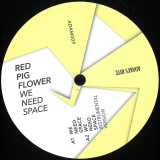
Up first is the original version of title-track ‘We Need Space’, a merging of winding bass grooves, skippy percussion, modulating, bubbling synths ebbing and flowing amongst one another while a hypnotic, spoken word vocal winds within the groove throughout.
An instrumental version follows next, as the name would
suggest, pulling back the vocal elements for a more robust, drum driven feel.
‘Separation’ then opens the flip-side with a more frenzied feel via and amalgamation of vacillating synth flutters, dubbed out percussion and bumpy low-slung drums which all dynamically evolve and retract throughout. ‘The Feeling’ then completes the EP, diving back into deeper realms with murky atmospherics, vocal chants and
gritty stabs at its core, underpinned by a bouncy stab led bass groove and crisp, crunchy drums.
out of Stock
Last delivered 2 years ago available to reorder, subject to availability
The last twelve months have been a whirlwind for Henry Counsell and Louis Curran, the men who make up Joy (Anonymous). Having established themselves during the Covid-19 era by playing impromptu meet-ups on London’s South Bank, they have graduated to bigger venues, travelled to far-flung locales and recorded their second album, Cult Classics, while maintaining the spontaneous energy and irrepressible joy that made their name. Their music revels in the euphoria of being alive and all the feelings, good or bad, that come with it. It invites us into a community, draws us close and promises the night of our lives.
Recorded over the course of a year, the blueprint for Cult Classics was laid down over a two-week span at Imogen Heap’s Round House in east London. Joy (Anonymous) invited friends old and new to visit - they’d record live instruments in jam sessions upstairs and then retreat to a second room to flip and loop and generally mess with the sounds, moulding them into sizzling dance tracks. “Loads of people were coming up to me like ‘I thought this was going to be a dance record?’” Louis says, remembering the quietly beautiful music they’d be recording. “I’d be like, don’t worry about that, just keep playing.” He’d send it back to people later and they’d be floored - “That was my bit and you’ve made it... jungle!”
It was an organic and creatively fulfilling approach, one that didn’t allow any of the music to get stale or stagnate. As they built the tracks from the sounds they’d collected, Joy (Anonymous) would weave the new songs into their famously improvised live sets, testing them, refining them, taking note of the audiences’ reactions. In a year punctuated by a lot of travel, they’d also incorporate the voices of people they met along the way - “Beazley’s Poem”, which opens the record, features the words of a man who was working security at a Fred Again show at New York’s Terminal Five. “He was basically doing the opposite of his job and being a hype man, climbing on the fence and ramping up the crowd - we ended up hanging out with him - like, who’s this legend?” Louis explains. “He just speaks really amazingly about his life, all these amazing thoughts and opinions - he started jumping on the mic when we were playing, preaching these amazing messages to the crowd, like that we all need to be nicer to each other. The first time we played the record in its entirety, he introduced us and that’s the recording we’ve used.”
Joy (Anonymous) remain dedicated to the spirit of spontaneity. They shut a street down with a surprise waterside party in New York. On a trip to Copenhagen they played an impromptu set in a cafe, which turned into a house party and a night-long good time. In Lithuania, they ended up playing in a decommissioned prison. It’s harder, perhaps, to keep that spirit alive now that they are operating more within the confines of the music industry but they will keep lugging their kit to wherever the party calls for as long as they can. “I think if we lose that, we’ve kind of lost what makes us us,” Henry says.
Bursting with multi-genre reference points and disparate influences, Cult Classics is very much a dance album. The samples we made ourselves or we took from music that is quite different to dance music, but we definitely wanted to shout out a lot of the dance influences that we love,” Henry says. They listened to a lot of Daft Punk and Basement Jaxx as well as The Prodigy (“more rage stuff”), taking songwriting tips from their dance forebears, but also recording bits that felt more like jazz and motown (see: A Place I Belong and the lovely album closer, You’re In Or You’re Out). Emir Taha’s gentle classical guitar runs like a thread throughout Cult Classics, washing into the undertones of the record, tying it all together.
The album follows the beat of a night out, from frenetic, sweaty movement to the gentler winding down as the dawn breaks. At times it is euphoric, celebratory and pure, whirling fun, at others it seeks the joy in the darker emotions that life throws our way. 404 is designed to encapsulate everything about the Joy (Anonymous) journey so far. Skittering beats and ghostly vocals give way to vibrating house chords: sirens blare as we approach a dubstep drop. It’s dramatic and wild, ratcheting up, seeming to settle then hitting you with an intense and frantic breakdown before the ghostly vocal returns to lull us back into the world. It has the feel of a hungry cat playing with a mouse, toying with it before letting it get away.
What sounds like someone playing the spoons on playful, housey How We End Up Here is actually Louis’ restless habit of clicking his rings on everything, one of a myriad of calling cards and easter eggs that day one fans will recognise. They rework Miley Cyrus and Swae Lee’s Party Up The Street into a French-electro-inspired future classic, adding a note of melancholy to a tune that you can imagine hearing blaring from every car on a summer drive. The lyrics on Cult Classic are generally reassuring, inspirational, originally drawn from Henry in stream-of-consciousness freestyles. You’re fine the way you are, they seem to say - the repeated “No need to try” of A Place I Belong, the assurance that “It’s in me all the time” on In Me All The Time. Even the summery but regretful Did You Wrong hints at the growth that is possible from less than ideal behaviour. For Joy (Anonymous), joy isn’t about just being “happy” all the time - it’s about relishing every element of your being.
The name ‘Joy (Anonymous)’ is taken from the work Henry did with Alcoholics Anonymous groups: it is a way to build a community around sharing joy. Their impromptu live sets are known as ‘meetings’; they encourage fans to share moments of joy to their website. They care deeply about the scene they’ve come up in and are determined not to leave it behind. Every show is another chance to reach out and connect with people who love to come together and revel in music as loud as it can go.
Support slots for Fred Again and The Streets, wild B2Bs with Fred and Skrillex, and a set at Four Tet’s Finsbury Park all-dayer this summer have given the duo the opportunity to live out childhood dreams and introduced their infectious live shows to new audiences at huge venues.
With an album as assured and joyful as Cult Classics on the horizon (and a killer collab with The Blessed Madonna coming up), they’re only going to reach higher heights. But the essence of Joy (Anonymous) remains on the South Bank. Between shows at Ally Pally in September, they dragged their camping chairs and gear back down to the banks of the Thames: and it just felt right.
Reiko Kudo first debuted on the Tokyo underground music scene in 1980 with NOISE, a duo which apart from herself under her then maiden name Reiko Omura on voice, guitar and trumpet featured Tori Kudo on organ. Their only album TENNO (1980 on Engel) is probably one of the most outstanding and uncompromising records of all time.
Like other pioneering female producers from Japan such as NON (of NON BAND), PHEW and HACO, who had all begun their startling careers in the early days of the japanese Punk era, Reiko Kudo can surely be regarded as one of the most unique, uncategorisable and daring voices in the entire field of electronic and experimental music ever.
RICE FIELD SLOWLY RIPING IN THE NIGHT was REIKO KUDO's second album under her own name. It features TORI KUDO (MAHER SHALAL HASH BAZ) and SAYA and TAKASHI UENO (TENNISCOATS) on various instruments. The recordings took place in 2000 at Reiko' s and Tori's house in the rural surroundings of Shikoku island.
All recorded music on this album sounds like it originates in a parallel dimension where time and key signatures simply don't exist, Some might describe this as outsider music, but this doesn't really begin to do justice to the quality of the tracks, there is nothing accidental or forced here, this is simply music created in a very different way. Yet again REIKO KUDO had conceived of something utterly beautiful.
"After producing the album "Souvenir de mauve" with Maher Shalal Hash Baz which we released on our label Majikick, the idea came to us, to release Reiko Kudo's work. For Reiko's work, we brought our recording equipment from Tokyo to Shikoku and recorded the entire album at her house.
The piano was positioned in a room with a high ceiling. We would set up our small recording equipment in the room and started to record. The basic tracks were recorded without any rehearsal and just a few overdubs were added on top of it. To have a distant sound on the recording, Tori played trumpet in the next room. The choir was standing outside the house, singing "Enya-totto, enya-totto" through the open window. It was early spring, I remember that it was still a bit cold and the members of the choir were freezing outside.
Reiko plays only at certain times of the day, so that we were able to complete only two or three recordings a day. Therefore we had plenty of free time. We went to a hot spring, to a cafe, or we tried pottery on a spinning wheel at Tori's workshop. It was a very rewarding time.
When this album was finished, we brought it to her to listen to. She said happily "I think this is the best work I have ever done." We felt that all our efforts were richly rewarded. Secretly, we thought the same, so we are delighted that this album will be re-issued." - Saya and Ueno (Tenniscoats), Tokyo 2018
Originally released on Majikick Records, Japan, 2000 Restauration and mastering by Detlef Funder at Paraschall Mastering, Düsseldorf. Vinylcut at Calyx, Berlin Translation by Miki Yui and Claus Laufenburg. Many thanks to Reiko Kudo, Tori Kudo, Saya and Takashi Ueno, Satoru Higashiseto.
It's been a little over ten years since Hailu Mergia reemerged on the international music scene. Following the first in a series of his classic recordings reissued in collaboration with Awesome Tapes From Africa, Mergia assembled a band and began performing live again after many years driving a cab in Washington, DC. His first show back appeared on the front page of the New York Times along with a stellar review and he took off from there performing his flavor of Ethiopian jazz all over the world in the years since, including Radio City Music Hall and Montreal Jazz Festival. Finally, we have a recorded document of the keyboard player's powerful DC-based trio _ which practices each weekend in his basement _ featuring Kenneth Joseph on drums and Alemseged Kebede on bass. Beautifully captured at one of their fiery live shows at the venerable Brooklyn non-profit cultural center Pioneer Works on July 1, 2016, the concert was recorded by PW staff and mixed by Ted Young with mastering by ATFA's expert audio extraction collaborator Jessica Thompson. The performance clarifies what many people across the globe already know: in his fifth decade of music-making Hailu Mergia continues to push the boundaries of his remarkable abilities. Mergia and his veteran band energetically and playfully unpeel layer after layer of harmonic and rhythmic interest out of a spectrum of Ethiopian repertoire. Modern jazz demands constant reinvention and improvisation, night after night creating new works out of known modes and classic standards. This band is unstoppable when it comes to turning age-old melodies (like "Tizita" or "Anchihoye Lene") upside down and inside out until they emerge as molten new works, often spontaneously. Mergia's original compositions (like "Yegle Nesh") shine brighter than ever here as well. Moving from keyboard to organ to accordion to melodica, he deftly switches instruments _ often during the same song. Mergia at 77 years old seems to be working harder than musicians half his age. "Pioneer Works Swing (Live)" brings into focus the kind of onstage group improvisation and deadly solo passages that reach for places Mergia and the band have never gone, on festival and club stages across four continents. Now that Mergia has released two new recordings along with four classic reissues, he is eager to let everyone hear what he's been doing on the road since he re-took the global stage for his victory laps. So much more than an old act from yesteryear, Mergia balances his legendary Ethiopian recordings with good old fashioned sweat-soaked live concert triumphs such as the one we have here.
It's been a little over ten years since Hailu Mergia reemerged on the international music scene. Following the first in a series of his classic recordings reissued in collaboration with Awesome Tapes From Africa, Mergia assembled a band and began performing live again after many years driving a cab in Washington, DC. His first show back appeared on the front page of the New York Times along with a stellar review and he took off from there performing his flavor of Ethiopian jazz all over the world in the years since, including Radio City Music Hall and Montreal Jazz Festival. Finally, we have a recorded document of the keyboard player's powerful DC-based trio _ which practices each weekend in his basement _ featuring Kenneth Joseph on drums and Alemseged Kebede on bass. Beautifully captured at one of their fiery live shows at the venerable Brooklyn non-profit cultural center Pioneer Works on July 1, 2016, the concert was recorded by PW staff and mixed by Ted Young with mastering by ATFA's expert audio extraction collaborator Jessica Thompson. The performance clarifies what many people across the globe already know: in his fifth decade of music-making Hailu Mergia continues to push the boundaries of his remarkable abilities. Mergia and his veteran band energetically and playfully unpeel layer after layer of harmonic and rhythmic interest out of a spectrum of Ethiopian repertoire. Modern jazz demands constant reinvention and improvisation, night after night creating new works out of known modes and classic standards. This band is unstoppable when it comes to turning age-old melodies (like "Tizita" or "Anchihoye Lene") upside down and inside out until they emerge as molten new works, often spontaneously. Mergia's original compositions (like "Yegle Nesh") shine brighter than ever here as well. Moving from keyboard to organ to accordion to melodica, he deftly switches instruments _ often during the same song. Mergia at 77 years old seems to be working harder than musicians half his age. "Pioneer Works Swing (Live)" brings into focus the kind of onstage group improvisation and deadly solo passages that reach for places Mergia and the band have never gone, on festival and club stages across four continents. Now that Mergia has released two new recordings along with four classic reissues, he is eager to let everyone hear what he's been doing on the road since he re-took the global stage for his victory laps. So much more than an old act from yesteryear, Mergia balances his legendary Ethiopian recordings with good old fashioned sweat-soaked live concert triumphs such as the one we have here.
Death Walks Behind You ist das zweite Studioalbum der britischen Rockband Atomic Rooster. Es wird allgemein als das archetypische Album von Atomic Rooster angesehen, aufgenommen von der 'klassischen' Besetzung mit Vincent Crane, John Du Cann und
Paul Hammond.
Es ist sowohl kritisch als auch kommerziell ihr erfolgreichstes Album und wird oft als ein Klassiker des Progressive Rock-Genres gefeiert. Es brachte auch die Hit-Single "Tomorrow Night" (UK #11) hervor, die zu einem der bekanntesten Songs der Band wurde. Das Cover des Albums zeigt den Monotypen "Nebuchadnezzar" von William Blake.
Der Titeltrack wurde 1992 von Paradise Lost, 2000 von Bigelf (auf ihrem Album "Money Machine") und 2012 von der schwedischen Death-Metal-Band NonExist gecovert.
Death Walks Behind You ist als Limited Edition von 1000 einzeln nummerierten Copies auf Clear & Black Marbled Vinyl erhältlich und wird in einem Gatefold-Cover präsentiert.
Repress of the sold out Record Store Day release, this time on a different colour. Black Spiders – Those trusted and true sons of the north are back. “We knew the new album had to be special. We’ve been away for a while. The first album was a straight shot, the second on the rocks, with this new one we had to kick down the brewery doors!” Pete Spiby. Back in June of 2017, Sheffield rock beasts Black Spiders waved goodbye to an army of loyal fans with some sonically charged shows before retreating into the shadows. And then, in November of last year, with the world in the grips of the Coronavirus pandemic and after a long year of very little fun from out of the silhouettes they returned with ‘Fly In The Soup’, the first new Black Spiders music in 6 years. Exactly the feel-good shot in the arm the world needed, while we await that other vaccine. The seeds of the Black Spider return were actually planted last summer, when singer and guitarist Pete Spiby began taking to guitarist Ozzy Lister to start writing new material and before they knew it, they had amassed the best part of 40 songs in a very short period of time which they whittled down. And then the pandemic hit. “It’s certainly been a strange process, in unfamiliar territory,” explains Pete. “We started to look at how we could do it given the restrictions and not only that, but we had to replace our original drummer too. For us and probably most other bands, we would usually take a riff or song idea to a rehearsal and thrash it out ‘till we either had something or it ended up in the song graveyard! This time around we couldn’t do that, so myself, Ozzy and on occasion Adam Irwin (bass player) started to send ideas back and forth until we had something to work with in GarageBand. We got to a point where we had enough song ideas with basic structure to go into a studio. It was at this point when we had to look for a new drummer.” With former drummer ‘Tiger’ Si Atkinson unavailable to play, with a week or two of grooming, the band took a chance on Planet Rock DJ Wyatt Wendel to occupy the drum stool. “I've never joined or worked with a band in this way EVER,” laughs Wyatt. “2020 certainly made it surreal. “A Pete/Ozzy writing session at the beginning of the year had produced some promising results, but it felt like barriers were popping up everywhere,” explains bassist Adam Irwin. “We started talking about how we could use technology such as GarageBand to help, and slowly but surely the song writing gathered pace. It was time to hook up with our old producer Matt Elliss and try these new songs out in the studio. “Heading into the studio to record songs we’d written but never played together, with a drummer that we’d never met, is one of the stranger experiences I’ve had while being in a band. Thankfully, Wyatt has turned out to be an excellent addition, who despite his faults (loud, southern) has fit right into the band dynamic. Covid has made life really tough for so many of us in our industry. And yet, this new way of song writing has been liberating, this is the most consistent and prolific we’ve ever been, and I am immensely proud of this album.” Against all of the odds, Black Spiders have crafted an album that features 13 tracks of high-energy, feel-good rock n’roll contrasted by demonic doom that despite the disjointed, isolated way it was recorded. It sounds like a band, firing on all cylinders. “We had to dig down deep to pull out some gems and what would we want from Black Spiders,” questions Pete. War, vengeance, mental health, death, conservation & climate change, where are we from? Relationships, friendships, our flaws. Where are we going? Alien life and Mother Earth - some of which made the record.” Kicking off with the aforementioned ‘Fly In The Soup’ single, this 3rd ST long-player wastes no time in grabbing you by the scruff of the neck and dragging you through an album where good times, hooks and riffs are not in short supply, but the doom-drenched likes of ‘Wizard Shall Not Kill Wizard’ and the psychedelic groove of album closer ‘Crooked Black Wings’ give us an album of many moods and dynamics and a reason to be cheerful in 2021. And why does the album have no title? “It wasn’t hard picking a title for the album, as we decided that the focus should be on the band, not the album title, so we decided not to have one. Let the music do the talking....
Australian rock band Tonight Alive burst onto the scene in 2008 as teenagers, blending power pop and rock, quickly finding success with their debut album, ‘What Are You Scared Of?’, and becoming a crowd favourite at festivals like the Vans Warped Tour and Bamboozle. ‘Underworld’ is the band’s final and most organic album yet, a raw and real insight to a band reconnecting with their authentic selves. One of the songs that emerged from the sessions is ‘Temple’, the song that launched the new era of the band and one written when lead vocalist Jenna McDougall was experiencing severe depression and fatigue - the lyrics penned when she was totally entrapped in being sick in her mind, body and soul. The rawness of the song became an anthem at BBC Radio 1 (debuting as the Rockest Record Of The Week). The album takes the listener on an emotional journey of the underworld we all have within us, dissecting our internal darkness and discovering peace. Songs like ‘Disappear’ featuring guest vocals from Lynn Gunn (PVRIS) and ‘My Underworld’, a stirring duet with Corey Taylor (Slipknot / Stone Sour) showcase the diversity of the band’s sound and triumphantly scream to the world that Tonight Alive will always live on. For fans of PVRIS, All Time Low, You Me At Six, Pierce The Veil, Paramore.
‘Restless Thoughts’, the full-length debut from Zooey Celeste, was produced in Brooklyn by Nick Hakim. Centred on Zooey’s hypnotic baritone vocals, set against a backdrop of sparse drum machine beats and droney guitar tones, the album drifts between avant-punk, chamber-pop and lo-fi psychedelia, drawing the listener into a sustained dream state. Colombian-Canadian singer songwriter Tei Shi (aka Valerie Teicher Barbosa) joins Zooey on ‘Big Trouble’ for a sublime piece of surrealist dancepop. LP pressed on turquoise vinyl.
It’s been a little over ten years since Hailu Mergia re- emerged on the international music scene. Following the first in a series of his classic recordings reissued in collaboration with Awesome Tapes From Africa, Mergia assembled a band and began performing live again after many years driving a cab in Washington, DC. His first show back appeared on the front page of the
New York Times along with a stellar review and he took off from there performing his flavor of Ethiopian jazz all over the world in the years since, including Radio City Music Hall and Montreal Jazz Festival.
Finally, we have a recorded document of the keyboard player’s powerful DC-based trio—which practices each weekend in his basement—featuring Kenneth Joseph on drums and Alemseged Kebede on bass. Beautifully captured at one of their fiery live shows at the venerable Brooklyn non-profit cultural center Pioneer Works on July 1, 2016, the concert was recorded by PW staff and mixed by Ted Young with mastering by ATFA’s expert audio extraction collaborator Jessica Thompson. The performance clarifies what many people across the globe already know: in his fifth decade of music-making Hailu Mergia continues to push the boundaries of his remarkable abilities.
Mergia and his veteran band energetically and playfully unpeel layer after layer of harmonic and rhythmic interest out of a spectrum of Ethiopian repertoire. Modern jazz demands constant reinvention and improvisation, night after night creating new works out of known modes and classic standards. This band is unstoppable when it comes to turning age-old melodies (like “Tizita” or “Anchihoye Lene”) upside down and inside out until they emerge as molten new works, often spontaneously. Mergia’s original compositions (like “Yegle Nesh”) shine brighter than ever here as well. Moving from keyboard to organ to accordion to melodica, he deftly switches instruments—often during the same song. Mergia at 77 years old seems to be working harder than musicians half his age.
Pioneer Works Swing (Live) brings into focus the kind of onstage group improvisation and deadly solo passages that reach for places Mergia and the band have never gone, on festival and club stages across four continents.
Now that Mergia has released two new recordings along with four classic reissues, he is eager to let everyone hear what he’s been doing on the road since he re-took the global stage for his victory laps. So much more than an old act from yesteryear, Mergia balances his legendary Ethiopian recordings with good old fashioned sweat-soaked live concert triumphs such as the one we have here.
Sven Torstenson's notorious Drugs is a loopdigga's fever dream, bursting with breaks for days and featuring possibly the most iconic cover of all library music's cult classics. First released in 1980, it's now a hyper-rare and seriously sought-after electronic album full of experimental soundscapes and samples just waiting to be flipped. It's both terrifying and terrifyingly good. So much so, it's been brilliantly sampled by Kendrick Lamar and Chance The Rapper.
The sleeve describes Drugs as containing "the newest dimensions of electronic sounds. Dramatic underscores for all problems of today's life and society, at the border between reality and delusion." That's pretty spot-on. The fast moving "Euphoria" is an incredible, unignorable opener. It's loaded with disorientating effects and really needs to be heard to be believed. It's followed by the gorgeous "Soft Hallucinations", containing quiet, meditative and beautiful sounds - as the title suggests. One listen and you'll want to live in the warm embrace of this beatless, harmonic gem. Sinister squelchy synth stabs don't distract from the sheer beauty of the track's main (gentle) thrust. They only serve to elevate its trippy magic.
Next up, "Sky Move"'s agitated and repetitive rhythm makes it an intense listen but with a broad melody that will appeal to many. "Destroyed Dreams" utilises a muffled church organ and it sounds heavenly to begin with but it gradually invites increasingly distorted elements. Yes, you've had trips like this, we're pretty certain. Mental! Talking of bad trips, never have they sounded so good as "Horror Trip"; this fractured drama-synth just needs some some dusty beats to hold it up - get involved.
"Floating Illusions" almost sounds like a beatless Spiritualized bomb from the early-mid 90s; melodic, synthy, church organ-drenched. The mournful, dramatic "Lost Chance" pulses along on a bed of acidy synths whilst "The Morning After" is the sonic equivalent of the extreme fear and doom experienced in the aftermath of the previous night's carnage. Whilst somewhat uncomfortable listening, again, it's pretty compelling thanks to the myriad effects being expertly utilised. Fascinating. The sprawling, fragmented "Random Thoughts" is described as containing "confused melody phrases" - yeah, pretty much sums this one up.
The B-Side is ushered in by "Heroin" and it's as sketchy as you might think, all mysterious minor chords with a dominating - but not overbearing - bass refrain. Next up, the dream-like synthy fanfare of "Night Trip" climaxes after a few minutes of dramatic, ecclesiastical sounds whilst "Day Trip" layers its melody over a repetitive rhythmic base.
Next up, one of the *REAL* highlights makes itself known. Absolutely not to be missed, "Dealer's Corner" is all shifting tenors from quiet to hectic and back around again. The hectic parts are like a totally synthed-out-the-eyeballs jazz-funk collective wigging out with the latest electronic toys from 1980. This one totally SMOKES.
The dramatic "Sad And Hopeless" is appositely replete with dissonant, minor church-organ chords whilst "Riding Pegasus" uses a creepy ostinato bass melody to create irrational bleepy menace that's ripe for sampling. The penultimate track, "Hopeless Chaos" is another disorientating trip, a bleepy confection of sounds and phrases whilst closer "Goin' Mad" is all electronic percussion with an unpleasant rhthymic feel and irritating melody. Music to annoy your partner with!
Established in Munich in 1965 by Gerard and Rotheide Narholz, Sonoton introduced library music to Germany. Initially intended to cater to the country's new TV market, the library also provided an avenue for Gerhard Narholz's astonishing musical prolificacy, and soon became a haven for a wide range of European composers and musicians. In 1969, Sonoton struck a deal with the British label Berry Music for international publishing rights, exposing its catalog to a worldwide audience; when Berry was bought out by EMI in 1973, Sonoton transitioned into a full-fledged international label, with successes in the library and commercial fields and many innovations to its credit. Now a worldwide operation with hundreds of producers and composers under its employ, Sonoton nonetheless remains an independently run business still helmed by its founders - a remarkable achievement in an era when nearly every other major library has been absorbed by a multinational conglomerate.
The audio for Drugs has been remastered by Be With regular Simon Francis, ensuring this release sounds better than ever. Cicely Balston's expert skills have made sure nothing is lost in the cut whilst the original, iconic sleeve has been restored here at Be With HQ as the finishing touch to this long overdue re-issue.
out of Stock
Last delivered 2 years ago available to reorder, subject to availability
‘Life And Death - The Five Chandeliers Of The Funereal Exorcisms’ pulls back the veil unto a nocturnal scene populated by shadows, embers burning coldly in the underworld. Marina Zispin is your guide, siren and protector both. Marina Zispin is the negative space between musicians Bianca Scout and Martyn Reid. Love And Death is the duo’s debut release, five chandeliers of melancholic, vibrant synth pop twinkling in the inky blackness. Both originally hailing from the North East of England and forming a musical partnership before lockdown, Bianca Scout and Martyn Reid initially worked remotely. Having relocated to South London and Newcastle respectively, Marina Zispin was born in earnest after the duo could begin writing and practising in the same space. Bianca Scout is a celebrated musician and dancer with a number of solo and collaborative works in her discographywhile Martyn Reid is a mainstay of the UK noise and power electronics scene, most recently with solo project Depletion. Marina Zispin largely eschews both Scout’s deconstructed approach to song and Reid’s focus on visceral, noise- based productions; the result is a new entity, the underground pop star that exists only in darkened dreams. Marina Zispin, then, is an avatar cajoled, nurtured and directed by Scout and Reid. Analogue electronics redolent of the early 80s Cold Wave and Synth Pop era form the base of the Zispin worldview, with Bianca Scout donning the Marina disguise, embodying the character over five songs of swooning drama, playful melodic interplays and tear-stained, doe-eyed sentiment. Flowers In The Sea opens with an austere 4/4 beat and hypnotic synth parts before Scout/Zispin floats in across the lagoon. Scout’s vocal tone is an instant winner, sweet like honey pouring down over the cold, robotic productions and stereo-panned synth work. We can almost see the petals drift into the horizon before being pulled under by the artist’s sadness. Ski Resort bursts out with a Jacno-inspired bassline and backing that could have been buried in a French disco in 1982 (think Stereo or Linear Movement) before Scout’s narrative details frivolousness and regret before a magical shift for the final coda into major key. Backworth Gold Club closes Side A, a mysterious rigid beat and minor chord synth arpeggios swimming in space, floating and obscure. On Side B, Hymn carries the tone on, church-like synths holding down the pattern for Zispin/Scout to float above in a flowing gown of reverb. The marriage of Reid’s cold musical backbone and Scout’s effortless vocal and co- production is in full flow here, the vocals at times rising to the rafters of this nocturnal place of worship, at other points they’re fuzzy samples cutting in and drifting out or sung with an extreme autotune, abstract and perfect in the moment. Surprise Party is the most straightforward pop bullet, Scout/Zispin’s vocal peering out more from the fog, perhaps revealing more than usual: vulnerability, maybe, the wandering muse of the artists behind the veil or just another layer of mystery behind the enigma? Marina Zispin’s Life & Death - The Five Chandeliers Of The Funereal Exorcisms ends as it began, scintillating in obscurity, leaving everything unanswered but open.
out of Stock
Last delivered 2 years ago available to reorder, subject to availability
New York-based label Kindergarten Records is thrilled to unveil Ayesha’s debut album, ‘Rhythm is Memory’ – 10 boundary-pushing tracks, a shape-shifting percussive journey with electric moments.
While intended for maximum dancefloor impact, Ayesha’s first LP is also conceptually thought-provoking and playful, exploring how bodies store and channel creative knowledge.
A self-taught producer, Ayesha relies on her instincts to make music: sensing what her body wants to feel and hear. To her, essential to building a groove is channeling what is already inside us –
memories – whether they are based on lived experience or coded in the body: culturally, ancestrally, or intergenerationally. The result is this Indian-American producer’s distinct rhythmic voice, with its
many configurations boldly expressed across her debut album.
Kindergarten first released Ayesha’s material in 2020 with her ‘Natural Phenomena’ EP, a four-track journey which she described as “an undulating love letter to nature and the dancefloor, a space
where her biophilia collides with her yearning for the dancefloor.” Subsequently, she continued to build upon her luminous, scintillating sound with a contribution to ‘Fluo II’ titled “Aspara Dub”, followed
by “Varanasi” and “Downpour” on ‘Ether’, a split release with Sha Ru in 2021. With each release, Ayesha's sound evolved, adding shades, layers, and perpetual rhythmic nuance to a mind palace of
dancefloor possibilities.
That is why her and Kindergarten are a perfect match -- driven by their mutual fascination with exploratory sonics and a shared commitment to the community that inspires them. Kindergarten
Records has shaped itself into a trailblazing label, uniting a diverse and innovative collective of local and international producers, while embodying a strong familial atmosphere.This debut LP represents
a significant step-up for both the artist and the imprint, as they strive harmoniously towards a shared goal: delivering a sonic experience full of colorful, otherworldly bass-fueled expansion.
‘Rhythm is Memory’ captures Ayesha’s signature love for driving techno and organic percussion, while at moments veering into newer electro territory while keeping it psychedelic, spacious, dubby, and
always playful. This feels intuitively right for a producer at a crossroads in her career. All tracks intricately weave together pulsing drum grooves, slinky synths, nuanced melodies, and delightfully
unexpected twists. No single genre can do justice to describing this project as Ayesha delicately nods to many, reveling in the spaces between.
Undoubtedly, across A and B sides, 'Rhythm is Memory' imparts the joy of sonic experimentation to listeners and dancers. Ayesha invites us into her creative process and its steady evolution – rooted in
many days and nights of exploration, reflection, and repetition. "The ritual practice of cultivating and tending a garden is what comes to mind if I were to visualize this record. Beautiful things can emerge
from care and consistent attention," says Ayesha. While she refers to her specific experience making 'Rhythm is Memory,' this powerful album culminates a decade of working in nightlife for Ayesha – a
project slated to leave an indelible mark on the underground. To mark this impressive milestone in their catalog, Kindergarten Records is proud to return to pressing vinyl after a hiatus since 2020,
recognizing the significance of putting out a physical release to behold such a moment in both the label's and the artist's trajectory.
out of Stock
Last delivered 2 years ago available to reorder, subject to availability
William Eggleston is a famed photographer and musician credited for iconic album covers such as Spoon's Transference and Jimmy Eat World's Bleed American. 512 was inspired and recorded at the Parkview Apartments in Memphis, Tennessee where Eggleston lived for almost ten years. The apartment was full of art and inspiration: cameras, naturally, but also high-end stereo tube amplifiers and objects that you'd rush towards money in hand at your local flea market. But also a gigantic nine foot Bosendorfer grand piano and a massive grand vintage JBL theater speaker console. His home was overwhelmed by music. By recording there the album captures not just his performances, but also the vibe of the place; it often felt as though there were artists lurking in the aether listening along. His visitors over the years were no small change: Lee Friedlander, Carl Sagan, Dennis Hopper , Paul McCartney and many others came to see him and listen to his hypnotic "Musik". You can hear local traffic, a dog barking, weather; reality, in other words. But there was another space layered on top, a kind of surreality echoing his music, as you can imagine a gathering of musicians listening in, eager to join him. Thus came along 512 which features the legendary Brian Eno on bells and production from Leo Abrahams (Regina Spektor, Paul Simon, Jon Hopkins)."
William Eggleston is a famed photographer and musician credited for iconic album covers such as Spoon's Transference and Jimmy Eat World's Bleed American. 512 was inspired and recorded at the Parkview Apartments in Memphis, Tennessee where Eggleston lived for almost ten years. The apartment was full of art and inspiration: cameras, naturally, but also high-end stereo tube amplifiers and objects that you'd rush towards money in hand at your local flea market. But also a gigantic nine foot Bosendorfer grand piano and a massive grand vintage JBL theater speaker console. His home was overwhelmed by music. By recording there the album captures not just his performances, but also the vibe of the place; it often felt as though there were artists lurking in the aether listening along. His visitors over the years were no small change: Lee Friedlander, Carl Sagan, Dennis Hopper , Paul McCartney and many others came to see him and listen to his hypnotic "Musik". You can hear local traffic, a dog barking, weather; reality, in other words. But there was another space layered on top, a kind of surreality echoing his music, as you can imagine a gathering of musicians listening in, eager to join him. Thus came along 512 which features the legendary Brian Eno on bells and production from Leo Abrahams (Regina Spektor, Paul Simon, Jon Hopkins)."
Viva Bertaga is the ultimate live testimony of the Bérurier's.
On 9, 10 and 11 November 1989, the Olympia shuddered to life under the rebellious anthems of the youth movement, before the Bérus signed the final armistice of alternative rock.
At the opposite end of the spectrum, Les Bérus were at the height of their powers, and you could hear it. A two-hour concert in front of a packed house, where each song is the subject of a stage production and where metropolitan Indians, rebellious Chinese, internationalist deserters... follow one another.
Viva Bertaga is widely regarded as one of Bérurier Noir's major albums, thanks to the vast panorama it offers of the band's repertoire and the energy that emanates from its live versions.
Did you know there are horses on the cover of Earth 2: Special Low Frequency Version? There are at least three in the right hand corner, gathered inexplicably near a white canvas tent, a human possibly perched among its folds. As widescreen and vast as the cover may seem, those little details-the horses, the possible human, the faint wisp of white clouds-give it depth and wonder, something to which the imagination can return. Did you know that the music on Earth 2-repressed now for its 30th anniversary, back in its original artwork, and accompanied by a riveting set of remixes that demonstrate the reach of what Dylan Carlson long ago called "ambient metal"-works much the same way? The surface is massive and obvious, the meatpaw riffs of Carlson and bassist Dave Harwell pounding and swiping and pawing at the speakers, a true bludgeon in three-dimensional sound. Listen, though, for the details in the corners, for the finesse beneath the force, and Earth 2 reveals new levels of depth and wonder. The widespread impact of Earth 2 suggests that others have indeed been leaning in, listening to these minutiae and making something new of them. A masterpiece without many genre precedents, Earth 2 surely helped send doom metal down its more modern drone, ambient, and avant-garde avenues. Those descendants are obvious. Perhaps more surprising and gratifying are the ways it has influenced electronic music, modern composition, and even hip-hop by realigning our senses of tempo, time, and texture. Earth 2 engendered a rearrangement of expectations, regardless of preferred form.
Bringing together Johannesburg’s two saxophone titans for a supergroup recording project was a
visionary move by Jo’Burg Records in 1976. Following the success of Makhalemele’s debut The
Peacemaker and Mankunku’s long-awaited sophomore release Alex Express, which both appeared in
1975, the bar had been set very high. Enamoured by their jazz contemporaries, the session was
concocted by members of an exciting new South African rock group called Rabbit, who formed a
backing group consisting of guitarist Trevor Rabin, bassist Ronnie Robot and drummer Neil Cloud
alongside jazz pianist Tete Mbambisa. Recorded at the state-of-the-art Satbel Music Recording
Studios, the inspired performances of this diverse cast of young South African artists at the height of
their powers was captured with exquisite fidelity. Packaged as The Bull and the Lion, the album title
references Mankunku’s signature composition “Yakhal’ Inkomo” (which means “the bellow of the
bull”) and Makhalemele’s stage name “Ratau” (meaning "lion"). The pairing of Mankunku and
Makhalemele stands with Moeketsi/Matshikisa and Pillay/Coetzee as one of the epic collaborations of
South African jazz in the 1970s.
Lupe Fiasco's The Cool (commonly referred to as The Cool) is the second studio album by American rapper Lupe Fiasco. It was released on December 18, 2007 by 1st & 15th Entertainment and Atlantic Records. It was recorded between 2006 and 2007, with Lupe Fiasco himself and Charles Patton (Chilly) serving as executive producers. The concept album The Cool is based on the song and a title character from his debut album Food & Liquor (2006).
The album features guest appearances by Gemini, Snoop Dogg and Matthew Santos, while production was handled by Patrick Stump, Soundtrakk and Unkle, among others. The album debuted at #15 on the U.S. Billboard 200, selling 143,407 copies in its first week.
The album debuted as the number one rap record and lasted for 9 weeks. As of 2022, the album was certified platinum by the Recording Industry Association of America (RIAA). At the 2009 Grammy Awards, the album was nominated for Best Rap Album.
"Another Perfect Day" celebrates its 40th anniversary in 2023 and is the sixth studio album by British rock band Motörhead. It was originally released on June 4, 1983 via Bronze Records and was the band's last full-length album on the label. It is the band's only studio album featuring lead guitarist Brian "Robbo" Robertson, who is best known for his work with Thin Lizzy. The album is now reissued as a luxurious deluxe edition on 2CD, 1LP (colored) as well as 3LP bookpack.
Kamikaze is the fourth studio album by American rapper Twista. It was released on January 27, 2004 by Atlantic Records. Following the success of the lead single "Slow Jamz", the album reached the top of the US Billboard 200 chart in early 2004.
It sold 312,000 copies in its first week of sales and received generally positive reviews. It is Twista's most successful album and was certified platinum by the RIAA.
The initial cassette-only releases of Tashi Dorji turned lots of heads, including Six Organs of Admittance and Hermit Hut - now over a decade later, this release makes its full-album debut on vinyl. "It really was a formative time for me because it felt like everything opened, as far as the possibilities of what music-making meant. Like improvisation walked in and then there was a volcanic eruption" - Tashi Dorji "The self-titled session was recorded at a nice studio at the local university here in Asheville. I had some friends that were studying music there and had access to studio time. This session focused more on extended/prepared guitar ideas. My interest in percussive elements of sounds, timbre, harmonics, and dynamics plays a lot in this recording." - Tashi Dorji
»What is Dance?« contains two pieces originally conceived in 2017 for a performance/sound installation of the same name at Meinblau Projektraum (Berlin), as part of the series singuhr_projekte. Drawing inspiration from the works of American sound artist Joe Jones and his »Music Machines«, Robert Lippok (Ornament und Verbrechen, To Rococo Rot) arranged various sound objects (pieces of wood, cymbals, rotating plastic film), that were played mechanically. The sound piece—designed for a 4-channel system and condensed into a loop, that clocked in at around 20 minute—is his interpretation of three dances from the opera »The Fairy Queen« by Baroque composer Henry Purcell.
From this source material, Robert Lippok has now extracted and rearranged two pieces for »What is Dance?.« The result is music of its own right: Dense, but permeable drones are central, but complemented by harmoniously matching and gently pulsating sounds.
The Debut album from Finnish band Graven Sin is a modern classic of godly, Doom-laden Heavy Metal. Veil of The Gods is etched in granite via Svart Records on November 2023 Pristine new Finnish band Graven Sin stomp proudly on the shoulders of giants with their ravishing debut album, Veil of The Gods. Immaculate Heavy Metal, expertly delivered with stunning finesse and elegant Doom perfection, Veil of The Gods is a classic in the making. Rarely has a new band sounded so timeless, serving up a godly platter of first-class Heavy Metal, that Graven Sin seem chiselled in granite to sit side by side at a table with the greats from the very get go. From the galloping charge of opening barn-stormer Morrigan, with jaw dropping solo guitars courtesy of riff master Ville Pystynen, the epic and anthemic She Who Rules Niflheim with soaring vocals from Greek vocalist Nicholas Leptos to the formidable double bass canter of Ville Markkanen’s drums on songs like Beyond Mesopotamia, Graven Sin knows the true riddle of steel. Throughout Veil of The Gods’ eleven cast-iron tracks, we can trace veins of recent Finnish greats such as Sentenced, Amorphis, Reverend Bizarre or their nordic counterparts Grand Magus from Sweden, but there is much more at play here. Graven Sin offers up heavy, doom laden orthodox Heavy Metal in the true, chugging, monumental sense of the term. The knowledge and prowess of Heavy Metal craft on display in Veil of The Gods is second to none, from the Maidenesque command of melody to the swarthy Manowar rhythms, herculean Deep Purple keys and Messiah like Candlemass-rich voice of astonishing vocalist Leptos, these are songs to be inscribed into stone tablets. Where pitch dark mythical themes and occult leanings of the lyrics bring to mind the Heavy Metal running through Black Metal bands like Dissection, the song arrangements swing from gallop to thundering, head-banging mid-sections with such magnificence, you would think you were in the hands of a band with decades of heritage behind their backs. A “where have you been all my life moment” awaits Heavy Metal fans of all shades when Graven Sin hits the speakers, delivering a sound that cuts glass and steel. A refreshing tour–de-force through everything Heavy Metal is loved for, not shrinking from the dark but embracing it with gusto and fierce bravado. Veil of The Gods shows us that real metal lives forever, if crafted with true spirit and belief. Hear the cry of the seer of doom, by heeding Morrigan’s call now: Ville Pystynen - guitar, bass Nicholas Leptos - vocals Ville Markkanen - drums
The Debut album from Finnish band Graven Sin is a modern classic of godly, Doom-laden Heavy Metal. Veil of The Gods is etched in granite via Svart Records on November 2023 Pristine new Finnish band Graven Sin stomp proudly on the shoulders of giants with their ravishing debut album, Veil of The Gods. Immaculate Heavy Metal, expertly delivered with stunning finesse and elegant Doom perfection, Veil of The Gods is a classic in the making. Rarely has a new band sounded so timeless, serving up a godly platter of first-class Heavy Metal, that Graven Sin seem chiselled in granite to sit side by side at a table with the greats from the very get go. From the galloping charge of opening barn-stormer Morrigan, with jaw dropping solo guitars courtesy of riff master Ville Pystynen, the epic and anthemic She Who Rules Niflheim with soaring vocals from Greek vocalist Nicholas Leptos to the formidable double bass canter of Ville Markkanen’s drums on songs like Beyond Mesopotamia, Graven Sin knows the true riddle of steel. Throughout Veil of The Gods’ eleven cast-iron tracks, we can trace veins of recent Finnish greats such as Sentenced, Amorphis, Reverend Bizarre or their nordic counterparts Grand Magus from Sweden, but there is much more at play here. Graven Sin offers up heavy, doom laden orthodox Heavy Metal in the true, chugging, monumental sense of the term. The knowledge and prowess of Heavy Metal craft on display in Veil of The Gods is second to none, from the Maidenesque command of melody to the swarthy Manowar rhythms, herculean Deep Purple keys and Messiah like Candlemass-rich voice of astonishing vocalist Leptos, these are songs to be inscribed into stone tablets. Where pitch dark mythical themes and occult leanings of the lyrics bring to mind the Heavy Metal running through Black Metal bands like Dissection, the song arrangements swing from gallop to thundering, head-banging mid-sections with such magnificence, you would think you were in the hands of a band with decades of heritage behind their backs. A “where have you been all my life moment” awaits Heavy Metal fans of all shades when Graven Sin hits the speakers, delivering a sound that cuts glass and steel. A refreshing tour–de-force through everything Heavy Metal is loved for, not shrinking from the dark but embracing it with gusto and fierce bravado. Veil of The Gods shows us that real metal lives forever, if crafted with true spirit and belief. Hear the cry of the seer of doom, by heeding Morrigan’s call now: Ville Pystynen - guitar, bass Nicholas Leptos - vocals Ville Markkanen - drums
On new EP twotwentytwo, indie riser THALA continues to embrace vulnerability, summoning long-buried emotions to colour her ardent love for lyricism amid psych-tinged `90s indie soundscapes. Filled with potent songwriting and coming-of-age anthems straight from the heart, these everyday love stories surrender to life's insecurities. Evoking the soundscapes of Slowdive and Deerhunter, whilst recalling the widescreen pop of boygenius and Snail Mail. Recorded in London and Berlin earlier this year, twotwentytwo follows the release of `In Theory Depression', THALA's first EP on Fire Records. Spanning six tracks, it builds on its predecessor's fearless lyricism, excavating deep-set feelings of loss, pain, desire and conflict against luminous production and addictive melodies. Following rammed appearances at SXSW and The Great Escape, and having picked up the attention BBC Radio 1's Jack Saunders, THALA shows no signs of slowing down_ Blissful guitars and evocative crescendos permeate THALA's unique vision of dreampop, reveling in soaring choruses and intimate storylines. On its surface, twotwentytwo boasts a kind of glorious emotive draw - you'd be forgiven for mistaking any one of these tracks as a backdrop to any teen-angst drama. However, while THALA wants her songs to feel nostalgic, it's the complexity of her songwriting that sees her modern compositions really resonate and she is keen to stress her lyrics can be interpreted in numerous ways. And therein lies the heart of this release - a cathartic, wildly empowering, self-explorative from a future indie heartbreaker at her gutsy best. Ltd Clear Vinyl, A5 insert, dlc
The five members of Sun June spent their early years spread out across the United States, from the boonies of the Hudson Valley to the sprawling outskirts of LA. Having spent their college years within the gloomy, cold winters of the North East, Laura Colwell and Stephen Salisbury found themselves in the vibrant melting-pot of inspiration that is Austin, Texas. Meeting each other while working on Terrence Malick's 'Song to Song', the pair were immediately taken by the city's bustling small clubs and honky-tonk scene, and the fact that there was always an instrument within reach, always someone to play alongside. Coming alive in this newly discovered landscape, Colwell and Salisbury formed Sun June alongside Michael Bain on lead guitar, Sarah Schultz on drums, and Justin Harris on bass and recorded their debut album live to tape, releasing it via the city's esteemed Keeled Scales label in 2018. The band coined the term 'regret pop' to describe the music they made on the 'Years' LP. Though somewhat tongue in cheek, it made perfect sense ~ the gentle sway of their country leaning pop songs seeped in melancholy, as if each subtle turn of phrase was always grasping for something just out of reach. Sun June returns with Somewhere, a brand new album, out February 2021. It's a record that feels distinctly more present than its predecessor. In the time since, Colwell and Salisbury have become a couple, and it's had a profound effect on their work; if Years was about how loss evolves, Somewhere is about how love evolves. "We explore a lot of the same themes across it," Colwell says, "but I think there's a lot more love here." Somewhere is Sun June at their most decadent, a richly diverse album which sees them exploring bright new corners with full hearts and wide eyes. Embracing a more pop-oriented sound the album consists of eleven beautiful new songs and is deliberately more collaborative and fully arranged: Laura played guitar for the first time; band members swapped instruments, and producer Danny Reisch helped flesh out layers of synth and percussion that provides a sweeping undercurrent to the whole thing. Throughout Somewhere you can hear Sun June blossom into a living-and-breathing five-piece, the album formed from an exploratory track building process which results in a more formidable version of the band we once knew. 'Real Thing' is most indicative of this, a fully collaborative effort which encompasses all of the nuances that come to define the album. "Are you the real thing?" Laura Colwell questions in the song's repeated refrain. "Honey I'm the real thing," she answers back. They've called this one their 'prom' record; a sincere, alive-in-the-moment snapshot of the heady rush of love. "The prom idea started as a mood for us to arrange and shape the music to, which we hadn't done before," the band explains. " Prom isn't all rosy and perfect. The songs show you the crying in the bathroom,, the fear of dancing, the joy of a kiss - all the highs and all the lows." It's in both those highs and lows where Somewhere comes alive. Laura Colwell's voice is mesmerising throughout, and while the record is a document of falling in love, there's still room for her to wilt and linger, the vibrancy of the production creating beautiful contrasts for her voice to pull us through. Opening track 'Bad With Time' sets this tone from the outset, both dark and mysterious, sad and sultry as it fascinatingly unrolls. "I didn't mean what I said," Colwell sings. "But I wanted you to think I did." Somewhere showcases a gentle but eminently pronounced maturation of Sun June's sound, a second record full of quiet revelation, eleven songs that bristle with love and longing. It finds a band at the height of their collective potency, a marked stride forward from the band that created that debut record, but also one that once again is able to transport the listener into a fascinating new landscape, one that lies somewhere between the town and the city, between the head and the heart; neither here nor there, but certainly somewhere.
Released in 1976, Eternity was Alice Coltrane's first album for Warner Bros. after eight wondrous records on Impulse! Combining the drones and textures of India, the gospel and R&B of her Detroit youth and the dissonance of modern classical composition, Coltrane's music in the '70s would become increasingly difficult to categorize.
Having moved a few years earlier to California (where she founded the Vedantic Center, an Ashram for spiritual studies), Coltrane stretches out on Eternity – incorporating various musical styles, including a stirring adaptation of Igor Stravinsky's The Rite of Spring – and the results are dazzling, both in sonic scope and emotional range
Opener "Spiritual Eternal" sways between Alice's exploratory organ and the dramatic swell of lush strings. A meditative solo piece for harp, "Wisdom Eye," precedes the rollicking rhythms of "Los Caballos," which showcases some of her finest soloing.
"Om Supreme" is the album's first track to be built around bhajans (Hindu devotional songs). Featuring graceful keyboards backed by an angelic choir, this piece hints at the ecstatic devotional music that she would later make with members of her Ashram.
While Coltrane would delve deeper into her spiritual journeys and continue to expand her musical interests on subsequent LPs, Eternity remains a vivid and compelling display of her unique vision, myriad talents and passions.
The Beths occupy a warm, energetic sonic space between joyful hooks, sun-soaked harmonies, and acerbic lyrics. Their debut album Future Me Hates Me, forthcoming on Carpark Records, delivers an astonishment of roadtrip-ready pleasures, each song hitting your ears with an exhilarating endorphin rush like the first time you heard Slanted and Enchanted or 'Cannonball.'
Front and center on these ten infectious tracks is lead singer and primary songwriter Elizabeth Stokes. Stokes has previously worked in other genres within Auckland's rich and varied music scene, recently playing in a folk outfit, but it was in exploring the angst-ridden sounds of her youth that she found her place. 'Fronting this kind of band was a new experience for me,' says Stokes. 'I never thought I had the right voice for it.'
From the irresistible title track to future singles 'Happy Unhappy' and 'You Wouldn't Like Me,' Stokes commands a vocal range that spans from the brash confidence of Joan Jett to the disarming vulnerability of Jenny Lewis. Further honeying Future Me Hates Me's dark lyrics that explore complex topics like being newly alone and the self-defeating anticipation of impending regret, ecstatic vocal harmonies bubble up like in the greatest pop and R+B of the '60s, while inverting the trope of the 'sad dude singer accompanied by a homogenous girl-sound.'
All four members of The Beths studied jazz at university, resulting in a toolkit of deft instrumental chops and tricked-out arrangements that operate on a level rarely found in guitar-pop. Beths guitarist and studio guru Jonathan Pearce (whose other acts as producer include recent Captured Tracks signing Wax Chattels) brings it all home with an approach that's equal parts seasoned perfectionist and D.I.Y.
'There's a lot of sad sincerity in the lyrics,' she continues, 'that relies on the music having a light heart and sense of humor to keep it from being too earnest.' Channeling their stew of personal-canon heroes while drawing inspiration from contemporaries like Alvvays and Courtney Barnett, The Beths serve up deeply emotional lyrics packaged within heavenly sounds that delight in probing the limits of the pop form. 'That's another New Zealand thing,' Stokes concludes with a laugh. 'We're putting our hearts on our sleeves—and then apologizing for it.'
Dreyblatt"s minimalist conception - a rhythmic drone played on a double-bass strung with piano wire, playing in concert with other stringed instruments performing in 20 unequal microtones per octave and changing key but keeping the same fundamental pitch - dates back to the 1970s, while he studied under La Monte Young and Pauline Oliveros. Resolve acts in intermittent dialogue with the first Orchestra of Excited Strings release, 1982"s Nodal Excitation.
Since then, Dreyblatt has formed new orchestras across various countries and decades, with each phase of his music requiring several overlapping periods of gestation and arrangement.
The current Orchestra is formed by Konrad Sprenger, Joachim Schütz and Oren Ambarchi. On Resolve, each of the members" playing brings new angles to the compositions. Konrad Sprenger"s involves solenoids, sine waves and a computer-controlled multi-channel electric guitar (as well as a relentless style behind the drum kit and oversight of the album production), while Joachim Schütz"s individual conception of electronics and electric guitar and Oren Ambarchi"s undeniable innovations with signal path work together with Dreyblatt"s bass (still strung with piano wire) as magnetic component parts of Resolve.
These contributions lead to Resolve"s dialogue with the early Orchestra of Excited Strings canon - for instance, the track previewed here, "Flight Path" takes off at a pace not often found in the minimalist genre - a rolling lope! Yet the sense of play is palpable: the ensemble scale their microtonal keys with punkish brio, a stance sharing much with the original Orchestra"s downtown pulse, even as as the new Orchestra burn their own path through Dreyblatt"s music.
Approaching his 70th birthday, with over 40 years of work as a solo artist, collaborator, composer, educator and bandleader, Arnold Dreyblatt views Resolve as an important expression within the long story of The Orchestra of Excited Strings. The album title"s tendency to mean different things is an indicator of the dynamic qualities of his music in all its different phases - an evolution that continues to produce new dimensions in acoustic sound with every new release.
out of Stock
Last delivered 2 years ago available to reorder, subject to availability
LOVE + POP is a snapshot of a moment in not-so-far-away time; something fast, loud, moody and a little dangerous. It is, in some ways, classic Current Joys: full of wild ambition, sneaky hooks, and songs that move from concept to completion with prolific speed. But LOVE + POP also explodes myriad expectations with aggressive, deconstructed production, house music influence, and a guest appearance from Lil Yachty. It is not so much a twist as it is a unique multiverse identity for Current Joys, as Nick Rattigan's set out to "capture this sonic moment and harken back to the way I first released music." The story of LOVE + POP begins with one of those house parties: the kind that bulldozes your home and, in its aftermath, leaves a wreckage that finds you flattened but also ready to be new. In that mess and mayhem, Rattigan watched Everybody's Everything, the documentary of Lil Peep, and recorded a cover of "walk away as the door slams". But the itch wasn't scratched, and what began as a moment of homage morphed into something bigger, deeper and more fundamental, a point where the seemingly haphazard - in his home, in Peep's process - opened Rattigan up to an entire creative space and a new approach to bending or even detonating genre. Crucially, all of this was recorded at home, in what Rattigan calls a "tribute to the process of creating" in a DIY space. And what began as a singular passion project unexpectedly grew into a uniquely collaborative record for Current Joys. "I've set out to make collaborative records before," Rattigan explains, "but they often end up totally me, with just a couple exceptions. But then this record gave me the opportunity to be extremely collaborative, to let other people write instrumental tracks, sending links around for people to mess with and weigh in on. I sat down to do credits and realized here were all these people and styles and they all came together and worked." LOVE + POP's cover art is an airbrush/spraypaint rendition of the Wild Heart album cover, which is itself a photo of Rattigan's grandparents kissing. It is sacred in some ways and shredded in others. This idea - the aggressive reimagining of something timeless into a present, finite style - is LOVE + POP.
LOVE + POP is a snapshot of a moment in not-so-far-away time; something fast, loud, moody and a little dangerous. It is, in some ways, classic Current Joys: full of wild ambition, sneaky hooks, and songs that move from concept to completion with prolific speed. But LOVE + POP also explodes myriad expectations with aggressive, deconstructed production, house music influence, and a guest appearance from Lil Yachty. It is not so much a twist as it is a unique multiverse identity for Current Joys, as Nick Rattigan's set out to "capture this sonic moment and harken back to the way I first released music." The story of LOVE + POP begins with one of those house parties: the kind that bulldozes your home and, in its aftermath, leaves a wreckage that finds you flattened but also ready to be new. In that mess and mayhem, Rattigan watched Everybody's Everything, the documentary of Lil Peep, and recorded a cover of "walk away as the door slams". But the itch wasn't scratched, and what began as a moment of homage morphed into something bigger, deeper and more fundamental, a point where the seemingly haphazard - in his home, in Peep's process - opened Rattigan up to an entire creative space and a new approach to bending or even detonating genre. Crucially, all of this was recorded at home, in what Rattigan calls a "tribute to the process of creating" in a DIY space. And what began as a singular passion project unexpectedly grew into a uniquely collaborative record for Current Joys. "I've set out to make collaborative records before," Rattigan explains, "but they often end up totally me, with just a couple exceptions. But then this record gave me the opportunity to be extremely collaborative, to let other people write instrumental tracks, sending links around for people to mess with and weigh in on. I sat down to do credits and realized here were all these people and styles and they all came together and worked." LOVE + POP's cover art is an airbrush/spraypaint rendition of the Wild Heart album cover, which is itself a photo of Rattigan's grandparents kissing. It is sacred in some ways and shredded in others. This idea - the aggressive reimagining of something timeless into a present, finite style - is LOVE + POP.