Lous and the Yakuza commence à peine à changer la face de la musique francophone. Elle a débarqué en 2020 avec son premier album Gore, et sa flopée de titres personnels, Dilemme (70 millions de streams), Tout est gore ou encore Solo (6 millions de streams), se voyant nommée dans la catégorie Révélation aux Victoires de la musique l'année suivante. Son deuxième opus, que Lous appelle Iota, va plus loin dans sa volonté de proposer un son singulier. Elle y déploie une musique éclectique sans coquetterie, ni calcul. L'album est un statement sur l'amour dans une forme rare : ce qui reste, une fois que la passion a déserté. Les titres égrènent les effusions, les déceptions comme dans ce jeu enfantin où on arrache les pétales de fleurs pour décrire son état amoureux. (Je t'aime) Un peu, beaucoup, passionnément, à la folie, plus du tout... un Iota. Lous nous refait le film de ses relations dans un projet produit en partie par le fidèle El Guincho (Rosalía) dans toute l'incandescence où la mène les errements de son coeur. D'ores et déjà adoubée par la critique, on a récemment pu la retrouver en Une de Vogue France ou encore en interview dans les Inrocks.
out of Stock
Last delivered 2 years ago available to reorder, subject to availability
The debut from new splinter alias of Manchester producer, sequencer designer, and Cong Burn label boss John Howes was made entirely on a Nord Modular G2, Elektron Machinedrum, and Monomachine – a rig he characterizes as “an authentic 2006 studio, best listened to on Windows XP Media Player or Winamp.” Paperclip Minimiser’s self-titled full-length collects eight elusively multi-dimensional constructs of stereo panned synthetics and slithering ambient techno, born of a web of generative patches subjected to improvisational alterations. Taking things further, Howes’ process involves “planting ghosts in the machines,” instilling each element with “some self-correcting behavior in a cybernetic / lo-fi AI / semi-autonomous agent kinda way.” The result is an ambiguous and dynamic hybrid of accident and intention, chaos and control, shuffling through an innerspace wilderness of psychic circuitry.
The title alludes to a 2003 thought experiment about the existential risk of artificial intelligence; how even a mundane objective, algorithmically extrapolated, could culminate in catastrophe. Here the notion is inverted, demonstrating the sonic infinities to be mined by “pushing and pulling at the strings” of musical systems. Howes aptly samples a vintage interview with electronic music pioneer Bebe Barron – co-composer of the Forbidden Planet soundtrack – discussing the anthropomorphic potential of randomized audio generation: “We thought of our circuits as actors in a script.” Paperclip Minimiser descends from a similar family tree, coaxed as much as crafted, flickering rhythmic synchronicities glimpsed in a mirage of wires and glass.
out of Stock
Last delivered 3 years ago available to reorder, subject to availability
Most audiophiles know Alan Parsons Project's I Robot by heart. Engineered by Parsons after he performed the same duties on Pink Floyd's Dark Side of the Moon, the 1977 record reigns as a disc whose taut bass, crisp highs, clean production, and seemingly limitless dynamic range are matched only by the sensational prog-rock fare helmed by the keyboardist and his creative partner, Eric Woolfson. Not surprisingly, it's been issued myriad times. Can it be improved? Relish Mobile Fidelity's stupendous UltraDisc One-Step 180g 33RPM box set and the question becomes moot.
Mastered from the original master tapes and pressed at RTI on MoFi SuperVinyl, I Robot comes to life with reference-setting realism on this numbered, limited-edition reissue. Boasting immaculate highs and lows, generous spaciousness, and see-through transparency that takes you into the studio with Parsons and Woolfson at Abbey Road, this definitive edition is designed to demonstrate the full-range capabilities of the world's best stereo systems while offering listeners the convenience of having all the music on one LP.
Featuring a nearly inaudible noise floor, this transcendent UD1S edition functions as a repeat invitation to savor reference-grade soundstages, immersive smoothness, sought-after instrumental separation, three-dimensional imaging, and consummate tonal balances. Able to be played back at high volumes without compromise or fatigue, it is a demonstration record for the ages – the likes of which are no longer being made. This is the very reason you own and invest in high-end audio gear.
The special characteristics of this UD1S version extend to the premium packaging. Housed in an elegant slipcase, the reissue features special foil-stamped jackets and faithful-to-the-original graphics. Aurally and visually, it is made for discerning listeners who prize sound quality and production, and who desire to fully immerse themselves in everything about this conceptual landmark. The Alan Parsons Project's most famous record deserves nothing less.
Inspired by and loosely based around the Isaac Asimov stories of the same name, I Robot delves into themes of artificial intelligence and technological dominance that make the record extremely relevant in the 21st century. Indeed, Parsons and Woolfson's pinnacle creation dovetailed with the ascendency of Star Wars, which itself is experiencing a rebirth in an age of self-driving cars, smart devices, and mindless automation. Lyrically, songs such as "The Voice" call into question human behavior – and their relationship to increasing robotic supremacy – in everyday life. Parsons and Woolfson reflect the associated paranoia, dichotomy, and transformation via shifting sci-fi arrangements steeped in drama and moodiness.
The absorbing tunes on I Robot also continue to fascinate due to their perfectionism and innovation. Borrowing from Pink Floyd's strategies, Parsons and Woolfson utilize a looped sequence on the title track to create new downbeats. "Some Other Time" employs two different lead vocalists and yet gives the illusion that only one is involved. Captivating strings, a piccolo trumpet, and bona fide pipe organ grace "Don't Let It Show." The origins of "Nucleus" stem from a unique analog keyboard concoction dubbed "the Projectron," devised by Parsons and electronic engineer Keith Johnson. Andrew Powell's orchestral and choral arrangements top it all off, with "Total Eclipse" arriving as a frightening track that presages the climactic "Genesis Ch. 1 V. 32."
Does man or machine win in the end? Decide as you get lost in Mobile Fidelity's UltraDisc 180g 33RPM LP pressing. Secure your numbered copy today!
More About Mobile Fidelity UltraDisc One-Step and Why It Is Superior
Mobile Fidelity Sound Lab's UltraDisc One-Step (UD1S) technique bypasses generational losses inherent to the traditional three-step plating process by removing two steps: the production of father and mother plates, which are created to yield numerous stampers from each lacquer that is cut. For UD1S plating, stampers (also called "converts") are made directly from the lacquers. Since each lacquer yields only one stamper, multiple lacquers need to be cut. Mobile Fidelity's UD1S process produces a final LP with the lowest-possible noise floor. The removal of two steps of the plating process also reveals musical details and dynamics that would otherwise be lost due to the standard multi-step process. With UD1S, every aspect of vinyl production is optimized to produce the best-sounding vinyl album available today.
MoFi SuperVinyl
Developed by NEOTECH and RTI, MoFi SuperVinyl is the most exacting-to-specification vinyl compound ever devised. Analogue lovers have never seen (or heard) anything like it. Extraordinarily expensive and extremely painstaking to produce, the special proprietary compound addresses two specific areas of improvement: noise floor reduction and enhanced groove definition. The vinyl composition features a new carbonless dye (hold the disc up to the light and see) and produces the world's quietest surfaces. This high-definition formula also allows for the creation of cleaner grooves that are indistinguishable from the original lacquer. MoFi SuperVinyl provides the closest approximation of what the label's engineers hear in the mastering lab.
For Fans of Khruangbin, El Michels Affair, William Onyeabor. Fantasy 15 is a band of mortal fighters striving to prevent an evil & merciless digital government from destroying the entire galaxy...Armed with analog synthesizers and a never ending supply of primordial rhythms reminiscent of Nigerian funk, Brazilian tropicalia and New York City new wave, the rebel group works diligently day and night to save all of humanity from the horrors of robotic automation. When they are not busy saving the world, Fantasy 15 serve as the house band for Philadelphia-based "Synth & Soul" record label Eraserhood Sound. The group are proud to beam their latest 45 "Burgundy Mist b/w Percy St." into Earth's atmosphere in early 2021. Lead single "Burgundy Mist" is a lush, tropical slow jam featuring a sophisticated rhythm section, electrifying guitars, and euphoric flutes. Flip side "Percy St." features a hypnotic groove, bolts of analog synthesizer, and angelic vocal harmonies. This 45 proves to be another masterful slice of intergalactic synth funk from Fantasy 15.
out of Stock
Last delivered 3 years ago available to reorder, subject to availability
This compilation brings together 22 sound poems, including both pioneering and current pieces, and constitutes itself as the first great overview of sound poetry from Peru. It continues a cycle that began in 2009 with the appearance of a CD called Inventar la voz: Nuevas tradiciones orales To Invent the Voice: New Oral Traditions and was followed up in 2011 with another one called Irse de lengua [To Let It Slip], both of which contributed to articulate diverse manifestations of poetry that used technological means, also in the context of intense activity in the local scenes of experimental music and sound art that opened spaces for interdisciplinary dialogues. What we know as sound poetry is the product of a technological revolution associated with the appearance of various means of recording, transmission and amplification of the voice. A long process that took shape in the 20th century, until it became a discipline, articulated as an international movement which, based on phonetic research, expanded into a universe of oral/vocal artistic practices as part of a new technological context. The recordings gathered here comprise a time frame that goes from 1972 to 2021. We find poems that work with montage techniques, either because they explore simultaneity or juxtaposition, such as those by Mario Montalbetti, Frido Martín, Florentino Díaz, Carlos Estela, Luisa Fernanda Lindo, Macri Cáceres, Rodrigo Vera Cubas, Tilsa Otta, Giancarlo Huapaya/Omar Córdova, Virginia Benavides, Lisa Carrasco and Luis Alvarado. Others emphasize vocal/oral performance: we find the phonetic poems of Carlos Germán Belli and Eduardo Chirinos, as well as the concrete conceptual poems of Michael Prado, Sandra Suazo, Peru Saizprez, and the oral/guttural poem of Omar Aramayo. Finally, we find another group of pieces where the poem starts with the creation of a computational parameter or algorithm, as is the case with the pieces by Jorge Eduardo Eielson and Enrique Verástegui, eventually reaching the use of Artificial Intelligence as in the poems by Francisco Mariotti and Paola Torres Núñez del Prado. The Verbal Matter: An Anthology of Peruvian Sound Poetry is part of a series produced by Buh Records for Centro del Sonido, a website set up as a digital archive of Peruvian experimental music and sound art. The compilation has been made by Luis Alvarado and is published in a limited edition of 300 copies in vinyl format. It includes extensive notes and visual documentation. Mastered by Alberto Cendra. Art by René Sánchez.
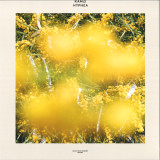
RAMZi's 'hyphea', the new album by Montreal based artist Phoebé Guillemot. It is her latest sonic quest containing 10 new tracks, of which some are versions of the score she made for a documentary about mushrooms called 'Fun Fungi' (directed by Frederic Lavoie).
Recorded between November 2021 and May 2022, writing 'hyphea' started off somewhat as an attempt to escape boredom and frustrations imposed by the severe restrictions during the pandemic. For Phoebé it was a way to reconnect with RAMZi who's spirit brought her back to mystical feelings and gave hope for future magical adventures after having felt disconnected for a while.
RAMZi is a wild spirit from the forest and refers to a parallel autonomous world that keeps evolving. In her own words: “The music remains as a doorway to that world. It has never been about me, I always see that entity bigger than myself. The process of writing 'hyphea' was rather intuitive. I don’t think about styles of music before producing tracks. Those are more like an adventure in itself, each one set in a different ecosystem.”
Artwork by Marinka Grondel.
out of Stock
Last delivered 11 months ago available to reorder, subject to availability
Basierend auf dem Roman von Michael Faber folgt der Film von Jonathan Glazer der Reise einer sinnlichen Frau (Scarlett Johansson) unbekannter Herkunft, die auf den Autobahnen nach einsamen oder verlassenen Männern sucht. Sie werden verführt, ihrer Menschlichkeit beraubt und man hört nie wieder etwas von ihnen. Die Musik, die eine wesentliche Rolle im Film spielt und in den Kritiken mehrfach positiv erwähnt wurde, stammt von der in Großbritannien geborenen Mica Levi, die unter ihrem Künstlernamen Micachu bekannt ist. Sie hat eine klassische Ausbildung absolviert und ist vor allem für ihre Band Micachu & The Shapes und ihre experimentelle Musik in einer Vielzahl von Genres bekannt
Baiser Mortel is the soundtrack of a performance commissioned by the Bourse de Commerce - Pinault Collection, performed in Paris in October 2021. PAN presents Baiser Mortel, the original soundtrack to the acclaimed theatrical performance of the same name. Staged at the Bourse de Commerce - Pinault Collection over four days last October, the original production - collaboratively realized by composer and director Low Jack, composer and rapper Lala &ce, choreographer Cecilia Bengolea with costumes designed by Marine Serre and Oriana Bekka as creative director and co- director of the performance - merged ballet and urban folklore; sound art and soap opera. A modern-day danse macabre, Baiser Mortel (trans. "The Kiss of Death") cast Lala &ce in the title role. Unfolding over thirteen songs, the musical narrative follows Death as she navigates the realm of the living, and the encounters - desire, romance, spiritual awakening, and adventure - which validate the human experience. "I brought in people who are close to me personally and musically in order to tell a story that speaks to humanity," Lala &ce says in a video uploaded to Bourse de Commerce - Pinault Collection's YouTube channel. Performers Jäde, Rad Cartier, BabySolo33, and Le Diouck joined Lala &ce on stage and in the booth at La Place - Centre Culturel Hip Hop in Paris, where the official soundtrack was recorded. A sonic representation of the musical's themes, Baiser Mortel the album - produced by Low Jack and written by Lala &ce with artwork by Pierre Debusschere - moves through the distorted strings of its opening track, "Goûter" and gathers sonic and lyrical intensity on each successive song. "Lune," the melancholically autotuned midpoint of the album, marks the beginning of the musical's second act and sets the tone for its tragic resolution. Mechanical sounds mix with sonic influences spanning the Global South throughout the album, honoring both Low Jack and Lala &ce's musical heritage and influences, while developing a new musical lexicon that defies comparison. As a theatrical production, Baiser Mortel represents a departure for both artists. A veteran of Parisian subculture, Low Jack's collaboration with Lala &ce represents a new model of artistic mentorship based not on age but on experience, with each artist leaving a distinct signature on the work.
out of Stock
Last delivered 3 years ago available to reorder, subject to availability
Well we are going back to Dayton yet again for some more of that 1980's Boogie Funk!!!
PLATYPUS IS: Jerry Johnstone (Lead and Rhythm Guitar), Lloyd “Rok” Jones (Bass Guitar and all Bass), Kerry “Bogart” Rutledge (Vocals/Guitar), Arthur “Hakim” Stokes(Vocals/Percussion), and Curtis Sanford (Drums & Percussion) all from Dayton, Ohio!
Special shout out to former PLATYPUS members Dana Meyers Vocals/Autoharp), since those days, Solar Records, Songwriter, Producer for The Whispers, Shalamar and The Spinners, Floyd “Spoon” Weatherspoon (Vocals), since those days performing with “The Motown Sounds Of TOUCH” and Larry Hines (Lead and Rhythm Guitar extraordinaire) Deceased.
PLATYPUS RELEASED 2 albums for Casablanca Records – “Platypus” (1979) and “Cherry” (1980) and recorded more wonderful unreleased music. Super Disco Edits is proud to be releasing previously Unreleased song Side A “I LIKE YOUR LOVIN” Lead vocals Kerry “Bogart” Rutledge, with Guest Vocals Keith Harrison (Of Faze O and Dazz BandFame), Side B “I NEVER KNEW LOVE (Could Feel This Way)” Lead Vocal Arthur“Hakim” Stokes, written By Dana Meyers, along with Belinda Lipscomb and Jeffrey Cooper (Of Midnight Star Fame)
out of Stock
Last delivered 3 years ago available to reorder, subject to availability
The elusive SW. returns to Avenue 66 with okALGORYTHM. His third LP for the label is a semi-opaque wandering through the shadowy byways of memory, driven by tough-yet-supple production and his unmistakable, unerringly original voice. Inspired by all night electronic radio shows of the '90s, okALGORYTHM pulses with rich imagination and a sense of purposeful meandering. Speaking in cryptic fragments, the artist hints at elusive reminiscences "back then on the autobahn, to Berlin, with friends" while also noting that some recollections are "of things that didn't happen that way."
To this end, the album drifts from the knotty synth spirals of opener "WHAtADAY" through the tense, technoid tropics of "stepCLASSixMOtor," the brightly melancholic Larry Heard-isms of "TROPyCALLhytsrIA" to the stately skronk of closer "What endingENDs." The rhythmic undergirding never lets up, suggesting a limitless night drive tinted in deep greens and refracted reds. Each of the album's ten tracks comes alive with warm, analog finesse and a palpable atmosphere, though they play out by turns urgent or unhurried, coaxing or inscrutable. Yet throughout, there's a consistently hypnotic quality which draws the listener deeper into the album's unique balancing act.
If listeners are trained to expect throwback anthems every time the '90s are referenced, here they might find a more apt touchstone in the wilder, left-of-center corners of Chicago's foundational epoch. Throughout the album, the spirit of jacking house is absorbed, metabolized and transmuted. Drawing on lineages of taut, nervy synth-and-drum machine workouts, SW. manipulates his hardware with the delicate, considered touch of a painter. Perhaps the memory that lingers longest from that bygone era is the sense of profound possibility that dawns before forms become rigidly calificed and commodified. Either way, adventurous listeners will find that okALGORYTHM blooms with a uniquely affecting grace and SW.'s inimitably obscure loveliness, infused with a somber glow and marked by shimmering, untraceable contours.
out of Stock
Last delivered 5 months ago available to reorder, subject to availability
By its very nature, intuition is something of which we easily lose sight. Music however, as both bridge and secret technology, connects the natural, artificial, and the earned. It can act as both a reminder of cultures and people gone, while materialising and alchemising from thin air elements not to be found on any periodic tables, and visions no human can see.
»Pin down the dust« is the first meeting of Nighte - Christina Carter (Charalambides) and Mari Maurice (more eaze) - and it feels both automatic and natural. The collaboration stems from a spontaneous decision by the duo to start playing together weekly. “That's how this music was made,” explains Carter, “with gut feeling as the guiding principle. Mari understands the music I've made on such a deep level that playing with her feels so natural.”
The result of this meeting is inarguably some of the most beautiful music to ever emerge from either Carter or Maurice. The structures are spacious, generous, and gentle, with scraped violin strings and seemingly ancient moans strewn sparingly like falling leaves on a picnic blanket. Having begun life as freeform interplays between the duo recorded live at Maurice’s house, overdubs were later added and the material mixed by Maurice alone into finalised pieces.
Maurice’s varied instrumentation litters the background with distant and oneiric miscellanies, from groaned saxophone phrases and heavenly organ drones to glissandi guitars. Carter’s voice sits in the centre, embodying and channelling (mostly) wordless human ecstasy - and at times unease - amidst the allotment of blossoming sounds. Maurice & Carter’s clairvoyant connection notwithstanding, music always offers a portal back to our buried intuitions. “Pin Down The Dust” is both a tribute and a guide to this spontaneity and instinct, putting aside thought in favour of feeling.
First trained in his church choir, Print played in R&B bands in high school and later developed a reputation as a standout rapper. On Adventures in Counter-Culture, he experiments with the synths, keyboards, and drum machines that connected the musical dots of those early days.
Print began pursuing his career as a musician in 2001, working on several hip hop projects including his collaborative project Soul Position with DJ/Producer RJD2. Releasing The Unlimited EP & 8,000,000 Stories on Rhymesayers Entertainment with RJ, Blueprint began work in 2004 on what would become his first solo album, 1988. The success of that album allowed him to tour extensively
throughout North America and Europe, before returning home to focus on writing and recording his next album. When he sat down to work on this sophomore effort, Print began with the dark, soulful and sample heavy hip hop of the early 90's, but soon found himself
hitting a creative wall. What shook him loose was a new mission: to create an album that encompassed every facet of music he knew, blurring genre lines and bringing it back home as one cohesive listening experience. The more he worked to pair new found interest in rock & electronic music with his love of hip hop, the more he was able to break down that creative barrier.
Thus began his Adventures in Counter-Culture, a monumental undertaking that would involve reinventing himself as a musician and person. His growing cynicism with the world, his disdain for pop culture, the state of politics, and an apathetic, uninspired society, all worked as fuel to inspire this sophomore album. Moved by the impact that sampling lawsuits were having on the music community, Blueprint also decided to return to his roots and began writing and producing his own original content.
Federico Madeddu Giuntoli is an italian multidisciplinary artist. Mostly autodidact, his art is based on groundedness and simplicity, and focused on the complexity of human journey in a non aggressive, warm and unfiltered way.
His works, ranging from contemporary art, music, writing and photography, are usually delicate and subtle, yet unequivocally tuned into a certain kind of pop communication, however essential and experimental it may be.
"The text and the form" is his first solo album, featuring german e-poetess AGF and japanese artist Moskitoo (12K).
The album is a collection of 11 minimal and intimate short songs, in which piano fragments, lonely guitar solos, spoken words and evocative vocals resonate with processed microsounds and lo-fi field recordings, creating a concise and very deep journey into romance and sense of mystery.
In the artist's words, "the album shaped itself according to a loose process of refinement and layering. A long, undisturbed assembling across more then a decade, often against my own will to reach a definitive form. If any relevance in this work can be found, I would say it resides in its capability to deliver a rare sense of vulnerability, longing and aliveness together, an aroma of improvisation and instability mixed with a unexplicable impression of perfection".
For the third release on his own imprint, DTR, VII Circle launches the new split series by teaming up with THAM, on a full split EP.
Following the latest EPs 2020's 'Fearless EP', 2021's Warriors which saw the support from artists like Perc, Paula Temple, Headless Horsemann and Regal just to name a few, VII Circle is with two impactful tracks which are establishing once again his uncompromising sound and exposure to the dark post-punk and heavy music influences he got.
On the other side of the vinyl, THAM shows his genuine and real interpretations of how complex grooves, pounding bass drums and aggressive synths are driving his sound.
With this release, the duo wants to rise a new musical vision and musical compactness that has distinguished them in recent years, making them find their true personal sound.
out of Stock
Last delivered 23 months ago available to reorder, subject to availability
Tom Jenkins hails from the high country of the South Wales Valleys, surrounded by the ex-coal mining communities and rugged landscape where he works on a sheep farm. Having previously been signed to Xtra Mile with his rock band Straight Lines (released two albums and toured with Motörhead, The Presidents of the USA and many more) he’s back with his second solo album. Written and recorded during lock down Jenkins worked alongside life-long friend and producer Todd Campbell between an old barn on the farm and Todd’s studio in the local area. The album features guest appearances from Phil Campbell (Motorhead), Marc Ford (The Black Crowes) and Paul Mullen (YOURCODENAMEIS:MILO, The Automatic) , Elijah Ford ( Gary Clark Jnr) and a few others that he has shared the road with over the years. Various singles from the album to be released throughout the year.
Medium Rarities is a full-length album of unreleased material spanning
The Wild Feathers decade-long career
The album is composed of B-sides, covers, demos, and other gems that the band
culled from The Wild Feathers' vault. This limited deluxe edition pressing features
a foil- stamped and numbered jacket that is also autographed by the band. The
vinyl is pressed onto a medium rare meat color LP.
For Fans Of: Bacao Rhythm & Steel Band, Menahan Street Band, El Michels Affair, The Poets Of Rhythm. Debut LP from The Winston Brothers! Featuring members of Bacao Rhythm & Steel Band. Hot on the heels of their debut 45 released on Colemine Records, German funk powerhouse The Winston Brothers re-up with their first-ever full length LP. “DRIFT” is the name of the game, presenting eleven versatile cuts to invite listeners on an all-instrumental trip back to the future of funk. But make no mistake: Though audibly steeped in the deep funk tradition, this retrophile outfit is anything but dusty. The Winston Brothers are a modular studio project by Hamburg-based multi-instrumentalist and producer Sebastian Nagel (The Mighty Mocambos, Bacao Rhythm & Steel Band) and drummer / percussionist extraordinaire Lucas Kochbeck (The KBCS, Bacao Rhythm & Steel Band, Hamburg Spinners). Industry veterans with a penchant for analog music production, the two combine a boom bap state of mind with well-rounded funk acumen and able frequent collaborators to create dynamic arrangements that are both an audible nod to the genre’s past as well as a contemporary blend of like-minded organic styles. Lacing heavy drums with juicy breaks, headnodic grooves, scorching riffs and melodic instrumentation, “DRIFT” draws on the raw energy inherent to ‘60s / ‘70s funk and takes it from there. Catchy, repetitive motifs gain musical momentum as they evolve into vibrant and autonomous soundscapes with a distinct drive of their own, ranging from incendiary to more laid-back and almost dreamlike. Strutting an irresistible bounce to their step, The Winston Brothers are poised to light up dance floors, river cruises and backyard BBQs alike. Catch our drift? Tracks: 1. Winston Theme 2. Boiling Pot 3. Hang On 4. Drift 5. Northern Light 6. Metering 7. One Thing 8. Free Ride 9. High Life 10. Think 11. Brother's Strut
"Dieses Album habe ich Bliss (Seligkeit) genannt, denn
es verkörpert eine Periode des Glücks und das Ende
einer schmerzvollen Vergangenheit", verrät RIOPY die
Hintergründe zu seinem dritten Album extended Bliss .
In seiner Musik verarbeitet der französisch-britische
Pianist und Komponist , was das Leben für ihn
bereithält. Seine beiden ersten Alben RIOPY (2018) und
Tree of light (2019) begleiteten ihn auf dem Weg durch
die Depression - und katapultierten den musikalischen
Autodidakten ganz nebenbei an die Spitze der
amerikanischen Billboard-Classical-Charts , wo sich sein
zweites Album über 100 Wochen hielt. Die Einspielung
erschien bereits im Sommer 2021. Aber weil Werk und
Leben sich bedingen, bleibt es "work in progress". Unter
dem Titel [extended] Bliss erweiterte der Künstler das
Album nun um einige Tracks.
Die Ergänzungen erklärt RIOPY so: " Fantasy , The First
Waltz und Human Compassion - diese drei Stücke
beenden eine Trilogie, sie markieren das Ende der Angst
und eröffnen einen Weg zu neuen Erfahrungen". Diese
Reise in ein sehr ruhiges und heiteres Universum und
der Kontakt mit der Natur beeinflussten den Klang
des Albums.
Felix Laband’s The Soft White Hand is the masterwork of an artist who expresses himself through musical and artistic collage acting together to reinterpret his sources and to express significant elements of his own personal story.
Released by Munich-based Compost Records, the 14-track album is Laband’s first full-length offering since the critically acclaimed Deaf Safari in 2015. It is heralded by the single “Derek and Me”, and is being pressed on vinyl for distribution globally.
In The Soft White Hand Laband works with source materials that will be familiar to those who know his previous four records – Thin Shoes in June (2001), 4/4 Down the Stairs (2002), Dark Days Exit (2005) and especially Deaf Safari which reached deep into the South Africa scene and its political culture to inspire its vocal and music sampling. However, the disengagement he felt from his homeland during his latest album’s creation – an abiding sense of untethered-ness to place and space, exquisitely rendered in tracks like “Death of a Migrant” – is perceptible in Laband’s desire to illuminate instead aspects of his own life.
“For this album, my source material became almost autobiographical as opposed to African statements I’ve worked with previously,” says the artist. “I have sampled a lot from documentaries from the 80s crack epidemic in impoverished African American communities and believe my work speaks unapologetically for the lost and marginalised, for those who are the forgotten casualties of the war on drugs. In the past, I have had my issues with substance abuse, and I know first-hand about the nightmares and fears, what it feels like to be isolated and abandoned.”
Few artists have managed to air these intimate aspects of their life so luminously as Laband does in tracks like “5 Seconds Ago”, “They Call Me Shorty” and in the strange and meditative “Dreams of Loneliness”. “I’ve been building this weird, autobiographical story using other people talking. It’s kind of humorous but it is also sad and beautiful,” says Laband.
Yet, as in all of Laband’s recorded output, the delineations between emotions are never starkly drawn and The Soft White Hand is also shot through with beauty. Nature appears in recordings made in his garden in the intimate early morning hours, whether as in the calls of the Hadada Ibis and other birdsong in “Prelude” or of the vertical-tail-cocking bird in “Derek and Me”. The last is a wonderful track with Derek Gripper, the South African experimental classical guitarist of international renown, whose 2020 song “Fanta and Felix” imagines a meeting between Fanta Sacko and Laband.
Laband’s eloquence in reinterpreting classical composers such as Beethoven in “We Know Major Tom’s a Junkie” is another thrilling aspect of the new record. “I’ve been properly exploring classical music on this album,” explains Laband, “taking melodies from classical compositions and reinterpreting them”. A fresh quality comes to his work through this sonic adventuring: the tender manipulation of the mundaneness of the computer’s AI voice to reimagine and reinvent iconic lyrics and melodies in strange and unexpected configurations.
The Soft White Hand is Laband’s most cohesive body of work to date. Yet it remains, in its sheer artistic scope, impossible to describe fully. Darkness abuts the gossamer light. A song that summons the sunrise and all the hope of a new day could also be about the final dipping down of the sun that portends a troubled night ahead. Interludes are invitations to expand outwards or shift inwards. Mistakes and “weird fuckups” in the sound are cherished as convincing statements against what Laband calls the “grossness” of perfect sound in modern music.
For this world-leading electronic artist, the boundaries are unfixed. He is inspired by the German Dada artist, Hannah Höch, who memorably declared: “I wish to blur the firm boundaries which we self-certain people tend to delineate around all we can achieve.” His music consequently reflects a primal artistic impulse that is also visible in Laband’s considerable visual art output as seen recently in several solo exhibitions such as that held in the No End Gallery in Johannesburg in 2019 and in the works he produced during his 2018 Nirox Foundation Artists Residency. “My music is always about collage, as is my art,’’ he affirms. “Everything I do is collage. It is a medium I find very interesting because you are taking history and distorting it and changing its meaning and turning it upside down and back to front.” In her book Recollections of My Non-Existence, Rebecca Solnit calls collage “literally a border art”; it is “an art of what happens when two things confront each other or spill onto each other”.
With The Soft White Hand, Laband is confirming his singular ability to achieve this in both art and music, melting the divisions between the two creative disciplines until they become one. He is also affirming his belief that an album of music should be more than a collection of unrelated tracks, but should unfold a fully integrated, cohesive story as in the song cycles of the great classical composers. In doing so, he claims his position as one of the most significant artists working today.
Artist Statement – Felix Laband – August 2022
When the Khmer Rouge took their captives for processing, they identified their class enemies by looking at their hands. If they were sunburned, rough and calloused, they were those of a peasant, a proletarian to be spared. But if they were soft and white, then they were those of a city-dweller, an intellectual or bourgeois, an adversary to be liquidated.
In calling this album The Soft White Hand, I was reflecting on the Cambodian genocide and how it resonates in contemporary South Africa. The apartheid era is over, and gone with it is white political domination. Yet economic and social privilege is still held in soft white hands. But those who grasp it know just how tenuous is their hold, how it singles them out, and my music reflects their subconscious fears, the stress and guilt of clinging on to what others envy and desire.
The soft white hand of the title suggests to me a further image, one that relates to all of postcolonial Africa. In my mind’s eye, I see the soft, duplicitous handshake of the smooth representatives of the superpowers making deals and promising gifts that benefit only them, and not their African dupes.
Yet, soaring above the wailing of sirens sampled from the first day of the invasion of Ukraine, my music is also about love gained and passion lost. It is about the tender caress of a soft white hand that conducts you into a place of dreams to be enfolded by nocturnal melodies.
out of Stock
Last delivered 3 years ago available to reorder, subject to availability
Having first met in 1991, music photographer STEVE GULLICK and JAMES JOHNSTON, founder of Gallon Drunk, began blurring the boundaries between audio and visual in 2004 when they formed their own band, '...bender'. They’ve maintained the habit ever since, with Gullick subsequently founding Tenebrous Liar and Johnston pursuing a career, alongside his work with PJ Harvey and a tenure in Nick Cave & The Bad Seeds, as an acclaimed visual artist and painter.After working together on an art show in late 2019, the idea of making music again immediately resurfaced. Without any firm strategy, Johnston and Gullick began recording, unprompted, drawing upon a shared love of noise, folk, and classical. This became the album ‘We Travel Time’, a compelling and mysterious record that bravely embraced beautiful piano, voice, violin, and guitar to create a drifting haze, forging an imagined soundtrack which offers echoes of Big Star, Nico, Lee Hazlewood and Palace Brothers alongside the haunting influence of contemporary minimal classical. Due for release this coming November 18th via God Unknown Records, Johnston and Gullick have returned to their craft to create a stunning new selection of songs and moods, brought together for the album ‘Everybody’s Sunset’. Recorded at their homes throughout 2021 and 2022, the ten songs on this new album take the fragile intimacy and agenda-free approach of its predecessor and go out even further into the fringes of tone and feeling. Utilising a vast selection of instruments between them (violin, organ, guitar, banjo, autoharp, harmonica, piano, synthesisers….), ‘Everybody’s Sunset’ ebbs and flows, bringing different instruments and signals to the fore as the album progresses. a bold, adventurous musical trip that finds Johnston and Gullick’s musical bond grow ever deeper and closer. Tune in and watch the Sunset glow. All songs written, arranged and recorded by James Johnston and Steve Gullick James Johnston: Violin, voice, organ, piano, guitar, banjo, autoharp. Steve Gullick: Voice, guitar, piano, organ, harmonica, harmonium. 1. The Moon & The Stars 2. Shimmer 3. Fear of Everything 4. Save Our Souls 5. Ice Moon 6. The Town That Couldn't Sleep 7. Medieval Death Song 8. Greater Silence 9. Who I Who 10. Everybody's Sunset
Hot on the heels of their debut 45 released on Colemine Records, German funk powerhouse The Winston Brothers re-up with their first-ever full length LP. "DRIFT" is the name of the game, presenting eleven versatile cuts to invite listeners on an all-instrumental trip back to the future of funk. But make no mistake: Though audibly steeped in the deep funk tradition, this retrophile outfit is anything but dusty. The Winston Brothers are a modular studio project by Hamburg-based multi-instrumentalist and producer Sebastian Nagel (The Mighty Mocambos, Bacao Rhythm & Steel Band) and drummer / percussionist extraordinaire Lucas Kochbeck (The KBCS, Bacao Rhythm & Steel Band, Hamburg Spinners). Industry veterans with a penchant for analog music production, the two combine a boom bap state of mind with well-rounded funk acumen and able frequent collaborators to create dynamic arrangements that are both an audible nod to the genre's past as well as a contemporary blend of like-minded organic styles. Lacing heavy drums with juicy breaks, headnodic grooves, scorching riffs and melodic instrumentation, "DRIFT" draws on the raw energy inherent to `60s / `70s funk and takes it from there. Catchy, repetitive motifs gain musical momentum as they evolve into vibrant and autonomous soundscapes with a distinct drive of their own, ranging from incendiary to more laid-back and almost dreamlike. Strutting an irresistible bounce to their step, The Winston Brothers are poised to light up dance floors, river cruises and backyard BBQs alike. Catch our drift?
Seit über einem Jahrzehnt verzaubert Lindsey Stirling das Publikum auf der ganzen Welt mit der fesselnden Magie ihrer elektronischen Violine und ihren exquisit komponierten, aber mutig erfinderischen Sound. Auf ihrem neuen Album „Snow Waltz“ findet sich die klassisch ausgebildete Musikerin/Songwriterin/Tänzerin/Autorin voll und ganz in ihrem Element und teilt eine Auswahl an Weihnachtsklassikern und Eigenkompositionen, die die Zuhörer durch ihre immersiven Arrangements und faszinierenden Melodien in den Bann ziehen. Der
Nachfolger ihres Debüt-Weihnachtsalbums „Warmer in the Winter“ aus dem Jahr 2017, dessen Hitsingle „Carol of the Bells“ als erster und einziger Instrumental-Song in den Top 10 bei AC Radio Geschichte schrieb, heißt „Snow Waltz“ und ist ein einzigartiges neues Album in der Welt der Weihnachtsmusik, was einmal mehr Stirlings außergewöhnliche Begabung als instrumentale Geschichtenerzählerin beweist. „Snow Waltz“, Stirlings sechstes Album in voller Länge und erstes Album seit „Artemis“ aus dem Jahr
2019 (Nr. 1 in Billboards US Top Classical Albums und US Top Dance/Electronic Albums Charts), nahm in ihrem Heimstudio in Los Angeles Gestalt an, wo sie bisher hauptsächlich mit langjährigen Kollegen wie Produzent Mark Maxwell und Orchestrator Stephen Anderson gearbeitet hat.
Das Album ist als Jewel Case CD und auf Vinyl erhältlich.
BLUTHARDINO, Komponist, Arrangeur und Multiinstrumentalist von MONDO SANGUE, erhebt mit DISCO VOLANTE 80 seinen Retro-Sound in völlig neue Sphären und erweitert die filmische Epik seiner Band mit Einflüssen von Soul, Funk und spacigem 80er-Jahre House. Herausgekommen ist ein vorwiegend instrumentales Producer-Debutalbum. Der groovende Retro-Cocktail eines Sound-Wizards, der hier einmal mehr ein enormes Gespür für den Sound der 70er und 80er Jahre beweist. Gesangliche Unterstützung gibt"s von Indie-Ikone FUTURE FRANZ und - erstmals auf französisch - von Bandkollegin YVY POP.
Fleeting configurations of piano, wind, strings, synthetics, and field recordings, inspired by the Greek isles.
Previous albums adored by the likes of The Quietus, Exclaim, Drowned In Sound, etc.
For fans of Angelo Badalamenti & David Lynch soundtracks, Bohren & Der Club Of Gore, and Global Communication.
While on the island of Syros in the Aegean Sea for a film festival performance, Christina Vantzou experienced what she characterized as “a moment of focus”—a specific vision for the sprawl of raw recordings she’d been amassing for her fifth album. Upon relocating to the Cycladic island of Ano Koufonisi, she situated herself outside at a patio table with a laptop and headphones, taking brief breaks to swim, and began the “reductive process” of shaving and shaping the source material into uneasy but lyrical movements, alternately austere and adorned with strange inflections: glottal groaning, cavernous water, glittering eddies of modular synth, languorous silences. Mixing the pieces herself without outsourcing to an engineer compounded the intimacy and autobiographical dimension of the music; she refers to No5 as “almost like a first album.”
Drawing on sessions staged in February 2020, Vantzou’s editing instincts emphasize process and isolation, spotlighting resonance and restraint, liquidity and long tails. Fleeting configurations of piano, wind, strings, synthetics, and field recordings, these are spaces as much as compositions, surreal grottos of shifting light, suffused with a sense of invisible divinity. Although seventeen musicians appear on the record, the proceedings feel minimalist and malleable, sculpted from interstitial moments and oblique synchronicities. The definition of a composer as “one who joins things” is here both plumbed and proven; Vantzou describes No5 as “a letting go,” a place of “soft borders,” unfixed and undefinable.
out of Stock
Last delivered 8 months ago available to reorder, subject to availability
Neil Young und Crazy Horse haben ein Album für und über die Welt gemacht: World Record lautet der Titel des neuen Werkes, das in Zusammenarbeit mit einer weiteren Ikone entstand, Rick Rubin, der zusammen mit Young produzierte. Die Aufnahmen fanden in Rubins Shangri-La-Studio in Malibu statt. Das Album erscheint am 18.11.2022 und kann bereits jetzt vorbestellt werden.
Die 10 lebhaften Songs des Albums befassen sich mit der Vergangenheit, Gegenwart und Zukunft unseres Planeten und was es heißt, darauf zu leben. Der Ton ist dabei vorsichtig optimistisch. Es besteht noch Hoffnung, vermittelt uns Neil Young - und wenn er es sagt, muss es stimmen! World Record ist ein Quell der Weisheit und beruht auf Beobachtungen, wie sie nur in einem langen und ereignisreichen Leben gesammelt werden können. Young, einer der kritischsten Geister unserer Zeit, erinnert sich hier voller Dankbarkeit an die reichhaltigen Erfahrungen, die er im Laufe seines Lebens an so zahlreichen Orten dieser Welt machen durfte. Er richtet seinen Blick hoffnungsvoll auf eine ungewisse Zukunft, ob wir diesen wunderbaren Planeten, als Grundlage allen Lebens, doch noch erhalten können - herausgekommen dabei ist ein Album voller unbeugsamer Kraft. Musikalisch bewegen sich die Songs zwischen ergreifendem Folk - „This Old Planet (Changing Days)“ und „Love Earth“- sowie kernigem Rock - „Break The Chain“ und „The World (Is In Trouble Now)“. Mit „Chevrolet“ liefern Crazy Horse einen für sie typischen, monumentalen Roadtrip durch die Gitarren-Universen und gleichzeitig reflektiert Neil Young in dem Track seine Liebe zu Autos angesichts der Notwendigkeit einer Zukunft ohne fossile Brennstoffe. World Record steht für eine konsequent zukunftsweisende Vision voller positiver Energie, ohne dabei die aktuelle Umweltsituation schönfärben zu wollen. Neil Young sagt in seinen eigenen Worten in einer Nachricht im Times-Contrarian über die Arbeit an World Record: „Wahre Wunder sind für die Ewigkeit geschaffen und ich glaube, wir kommen dem Ziel der Nachhaltigkeit näher“.
Neil Young und Crazy Horse haben ein Album für und über die Welt gemacht: World Record lautet der Titel des neuen Werkes, das in Zusammenarbeit mit einer weiteren Ikone entstand, Rick Rubin, der zusammen mit Young produzierte. Die Aufnahmen fanden in Rubins Shangri-La-Studio in Malibu statt. Das Album erscheint am 18.11.2022 und kann bereits jetzt vorbestellt werden.
Die 10 lebhaften Songs des Albums befassen sich mit der Vergangenheit, Gegenwart und Zukunft unseres Planeten und was es heißt, darauf zu leben. Der Ton ist dabei vorsichtig optimistisch. Es besteht noch Hoffnung, vermittelt uns Neil Young - und wenn er es sagt, muss es stimmen! World Record ist ein Quell der Weisheit und beruht auf Beobachtungen, wie sie nur in einem langen und ereignisreichen Leben gesammelt werden können. Young, einer der kritischsten Geister unserer Zeit, erinnert sich hier voller Dankbarkeit an die reichhaltigen Erfahrungen, die er im Laufe seines Lebens an so zahlreichen Orten dieser Welt machen durfte. Er richtet seinen Blick hoffnungsvoll auf eine ungewisse Zukunft, ob wir diesen wunderbaren Planeten, als Grundlage allen Lebens, doch noch erhalten können - herausgekommen dabei ist ein Album voller unbeugsamer Kraft. Musikalisch bewegen sich die Songs zwischen ergreifendem Folk - „This Old Planet (Changing Days)“ und „Love Earth“- sowie kernigem Rock - „Break The Chain“ und „The World (Is In Trouble Now)“. Mit „Chevrolet“ liefern Crazy Horse einen für sie typischen, monumentalen Roadtrip durch die Gitarren-Universen und gleichzeitig reflektiert Neil Young in dem Track seine Liebe zu Autos angesichts der Notwendigkeit einer Zukunft ohne fossile Brennstoffe. World Record steht für eine konsequent zukunftsweisende Vision voller positiver Energie, ohne dabei die aktuelle Umweltsituation schönfärben zu wollen. Neil Young sagt in seinen eigenen Worten in einer Nachricht im Times-Contrarian über die Arbeit an World Record: „Wahre Wunder sind für die Ewigkeit geschaffen und ich glaube, wir kommen dem Ziel der Nachhaltigkeit näher“.
"Abhorrent Abomination', der Name des Debüt-Openers der Deather Autophagy, bedeutet frei übersetzt "abscheuliche Abscheulichkeit". Ein ziemlich zutreffender Begriff für ihre Musik, doch rein im positiven Sinne. Die Growls von Andy Swarthout sind stets etwas im Hintergrund verankert und sorgen somit für eine etwas surreale Atmosphäre. Die Gitarristen Justin Yaquinto und Kevin Miller hauen neben Doom-angehauchten Düster-Riffs auch ziemlich groovige, fast schon an Pantera erinnerte Rhythmen raus ('Beneath The Moss, Between The Roots'). Auf einer Spielzeit von rund 33 Minuten kommt daher wenig Langeweile auf. Im Titel-Track entscheiden sich die Herren aus dem amerikanischen Oregon für ein langsam schlürfendes Outro, welches durch seine Behäbigkeit an Brutalität gewinnt - die Kirsche auf der Torte sind die Slayer-Soli gen Ende des Songs. Die runde und kraftvolle Produktion von Billy Anderson (unter anderem Sleep, Neurosis, Eyehategod) sorgt für ein angenehm deftiges Sound-Erlebnis..." (Metal Hammer)
"Nach nur einem Demo heizen die Portland-Deather AUTOPHAGY mit ihrem Debüt "Bacteriophage" mächtig ein. Das Quartett spielt düsteren Death Metal, der extrem basslastig aus den Boxen dröhnt und tempomäßig zwischen Geholze, Uffta-Rhythmen und doomigem Geschrote hin und her pendelt. Die pechschwarzen, Lava-artigen Arrangements erinnern an Bands wie Incantation, Portal oder Immolation. Wenn´s abgeht und das Tempo etwas flotter wird, scheppert es in alter Carcass-Manier. AUTOPHAGY liefern mit "Bacteriophage" ein solides Debütalbum ab, das man als Fan genannter Bands durchaus mal anchecken sollte." (Rock Hard)
Weitere Formate
Das neue, zweite Album des Trios Izzy Glaudini, Lola Dompé und Halle Saxon aus L.A. Produziert von Joo Joo Ashworth (Sasami, FROTH).
Auf 'Excess' entwickeln Automatic einen ganz eigenen, retrofuturistischen Motorik-Pop. Das Album bewegt sich an der imaginären Grenze, an der der Underground der 70er Jahre auf die Corporate-Kultur der 80er Jahre traf.
Es ist jener flüchtige Moment in der Geschichte, den sie als Ausgangspunkt für ihre Musik nehmen; ein Brennglas, um die Gegenwart zu betrachten und die zeitgenössische Unternehmenskultur und die ihr innewohnende Maßlosigkeit aufs Korn zu nehmen.
out of Stock
Last delivered 3 years ago available to reorder, subject to availability
Black Truffle is pleased to announce Uri Katzenstein’s Audio Works, produced in collaboration with Holon’s Centre for Digital Art. Spanning sculptural installation, performance, video art, and many other media, Katzenstein’s absurdist, poetic, and often hilarious work made extensive use of sound and music. This, however, is the first release dedicated to the artist’s audio work, collecting 28 tracks produced between the early 1980s and 2017. Compiled from dozens of hours of recordings left uncatalogued (and in some instances unheard) at the artist’s death in 2018, these four sides are a treasure trove, offering a captivating glimpse into a uniquely uninhibited creative practice. Predominantly recorded alone, with some contributions from regular collaborators such as Ohad Fishof on the later pieces, many of these tracks stem from Katzenstein’s time living in New York in the 1980s. Feeding on the cross-pollination of post-punk energy, radical art practice, and new media possibilities that characterised the New York scene at this time, many of Katzenstein’s recordings squeeze multilayered vocal experimentation into synth-based miniatures with a distinctively pop twist, their forms ruptured with anarchic bursts of free-form electronics, sounds from self-built instruments, and field-recorded snatches of the outside world. Katzenstein’s electronic production calls up touchstones of skewed 80s art pop like Laurie Anderson, Ambitious Lovers, and Scritti Politti, but imbued with DIY directness and economy of means. The arrangements of synths, percussion, and noise elements are invigoratingly raw and, at times, almost austerely minimal. On ‘Intermission’, thick distorted chords accompany a wandering portamento melody, inhabiting the wayward carnival space of Roedelius’ most unhinged efforts. Many of the tracks centre on Katzenstein’s multi-tracked vocal performances, often moving between multiple languages, (most commonly English, German, French, and Hebrew). A bewildering range of vocal approaches are present on these pieces, from sweet wordless harmonies to hammed-up growls and monastic recitations. On ‘Skin O. Daayba – Complex Habits no. 3’, improvised resonance singing against a backdrop of echoing electronics and radio snatches. ‘Half Monk Half Herring’ layers multi-lingual syllabic fragments, crossing sound poetry techniques with melodic invention in a way rarely heard outside of Caetano Veloso’s Araçá Azul. On ‘Attempt to Raise Hell’, Katzenstein’s distorted voice spits out streams of alliterative nonsense (‘the hemlock of Henry, he was a hermit…purple pumpkin pulsates to pops’), while on the hilarious ‘Eric’, Katzenstein appears to instruct a small boy simultaneously in basic French and German conversation. On ‘Chicken’, vocal harmonies accompany the pecking and clucking of the titular fowl. Moving from bent, outsider synth pop to snatches of Jo Jones-esque automated instrumental clang and absurdist linguistic experiments, these are far more than footnotes to an artist’s gallery works. Accompanied by extensive, beautifully written liner notes by Roee Rosen and the little information that exists on the individual tracks, Katzenstein’s Audio Works inhabits an outer fringe of DIY pop and sonic experiment reminiscent of Pascal Comelade or Die Welttraumforscher, where accessible forms convey radical interrogations of song, word, and sound.
out of Stock
Last delivered 3 years ago available to reorder, subject to availability
Available from Blank Forms for the first time since its original 1980 release on ALM-Uranoia, New Sense of Hearing documents a collaboration between Takehisa Kosugi and Akio Suzuki, two luminaries of Japanese experimental music in the lineage of Fluxus. Blank Forms's high-quality reissue of the sought-after, long out of print LP, is produced by musician-artist Aki Onda and mastered from the original tapes recorded on April 2, 1979, at Tokyo's Aeolian Hall. Described by Suzuki as the "culmination" of their sound,New Sense of Hearing features the two musicians improvising together in that empty Tokyo theater, Kosugi on vocals, violin, and radio transmitter and Suzuki on the Analapos, his namesake glass harmonica, spring cong, and kikkokikiriki, all apparatuses of his own invention. Suzuki and Kosugi first met at the city's Minami Gallery in 1976 on the occasion of "Sound Objects and Sound Tools," an exhibition of Suzuki's homemade instruments. Two years later, at the Festival d'Automne in Paris, Suzuki invited Kosugi to join him for a suite of performances as part of the exhibition "MA: Espace - Temps au Japon," organized by architect Arata Isozaki and composer-writer Toru Takemitsu. Suzuki and Kosugi performed together at the Musée des Arts Décoratifs, Paris, nearly fifty times, honing their approach to mutual improvisation, before traveling with the exhibition to Stockholm and New York_critic Tom Johnson wrote in the Village Voice that he had "seldom seen two performers so completely tuned in on the same types of sounds, the same performance attitude, the same philosophy, the same sense of what music ought to be."For New Sense of Hearing, the duo reunited in Japan and produced an extraordinary dispatch from their collaboration of arioso violin, echoing vocals and bangs, and metallic twangs. As Johnson observed in 1979, Kosugi and Suzuki are "in a very subtle artistic world where there can be no direct relationships. . . . Only coincidence." Takehisa Kosugi (1938-2018) was a composer, artist, and violinist from Tokyo. In 1960, Kosugi founded Group Ongaku, the country's first improvisational performance collective dedicated to Happenings, with Mieko Shiomi and Yasunao Tone. Four years later, Fluxus leader George Maciunas published Events, an eighteen-piece set of his text compositions. Between 1971 and '74, his band the Taj Mahal Travelers produced four live albums. In 1977, the Merce Cunningham Dance Company invited Kosugi to be their resident musician; from 1995 to 2011 he served as the company's musical director. The Whitney Museum of American Art presented "Takehisa Kosugi: Music Expanded," a two-day retrospective of Kosugi's work, in 2015. Akio Suzuki (b. 1941) was born in Pyongyang, North Korea, to Japanese parents. For the artist-musician's first Fluxus-style work Kaidan ni Mono wo Nageru (Throwing Things at the Stairs), 1963, Suzuki tossed a bucket of miscellaneous objects down a flight of stairs in Nagoya Station and listened to the sounds it produced. During the next decade, he would create original instruments including the Suzuki-type glass harmonica and the echo instrument Analapos. In 1976, Tokyo's Minami gallery hosted his first exhibition, "Akio Suzuki's World: Sound Objects and Sound Tools." For his 1988 performance piece Space in the Sun, Suzuki spent twenty-four hours listening to his surroundings on the meridian line which runs through Amino, Kyoto. Suzuki has performed and exhibited at many venues and music festivals, including Documenta 8 (Germany, 1987), the British Museum (2003), Musée Zadkine (France, 2004), Kunstmuseum Bonn (Germany, 2018), and the Museum of Contemporary Art Tokyo (2019).
Throughout his productive career, Carl Oesterhelt has proven to be an artist who finds it easy to move between musical genres and concepts. Much of his work has been within classical and chamber music, but he has also scored museum exhibitions and he is sometimes part of The Notwist crew as an angular figure on the Munich scene.
In Umor Rex we have been lucky enough to publish an array of Oesterhelt's universes. In Eleven Pieces for Synthesizer (Umor Rex 2019) we heard his kosmische side, where the connections with Harmonia or Klaus Schulze were amalgamated with ecclesiastical organ pieces and intense semi-automatic rhythms. A deeply melodic, fresh album. Pure syntax of the modern synthesizer. Further, in The Aporias of Futurism (Umor Rex 2021), in collaboration with Andreas Gerth (Driftmachine, Tied & Tickled Trio), Oesterhelt showed what is perhaps his darkest side —a work full of nuances within concrete music and midnight atmospheres. As deep and cerebral an album as it is surprising and catatonic.
Yet it seems that Carl Oesterhelt has another ace up his sleeve. Now he surprises us with The Dualistic Principle, a fantastic album full of weird but charming electronic melodies, rhythms that push the body to movement, sometimes syncopated and abstract, others permanent and fluid. In this work, Oesterhelt invited Johan Simons to give voice to the lyrics. The Dualistic Principle is a sort of rendition of a philosophical review or a nostalgic memory of the glamorous years. There is also underlying humor in the Post / Space-pop / Munich-disc assortment. The Dualistic Principle is the score to an imaginary film of contemporary hedonism.
All music & lyrics by Carl Oesterhelt. Voice by Johan Simons. Additional strings played by the Ensemble für synkretische Musik. Recorded in Munich & Bochum, Germany. Mastered by John Tejada in Sherman Oaks, USA. Artwork by Daniel Castrejón in Mexico City.
A muffled cry into the technological darkness, Contemporary Movement slid into the world right as the MP3 was seeping out of college dorms. A 39-minute drift into the void, drenched in Cold War-era reverb and then submerged in four track hiss for good measure. Duster constructed a Brutalist masterpiece on the outskirts of a suburban mall, as if to say, “We were here.”
“Music for dark spaces and closed eyelids, deeply psychedelic but without sprawl, ambient music with a serrated edge of punk.”—The Ringer
“Warm, fuzzed-out sounds that hit home like a tight, melancholic embrace from your favorite person.”—Vice
A muffled cry into the technological darkness, Contemporary Movement slid into the world right as the MP3 was seeping out of college dorms. A 39-minute drift into the void, drenched in Cold War-era reverb and then submerged in four track hiss for good measure. Duster constructed a Brutalist masterpiece on the outskirts of a suburban mall, as if to say, “We were here.”
“Music for dark spaces and closed eyelids, deeply psychedelic but without sprawl, ambient music with a serrated edge of punk.”—The Ringer
“Warm, fuzzed-out sounds that hit home like a tight, melancholic embrace from your favorite person.”—Vice
Sometimes progress can feel like you’re falling upwards. But one thing to remember is not everyone’s story plays out the same. We’ve been through a lot during our time as a band. With a rich history of ups and down it’s safe to say that we’ve take our fair share of L’s. Imposter Syndrome is a record about us overcoming those L’s all the while battling our inner monologue. We keep telling ourselves things like “this has got to be a fluke,” or “how did we even get on this show, we don’t belong here.” This record is about us leaving self deprecation behind and starting the next chapter of Action/Adventure.
"Most of this record was created in the shadow of COVID and deep in the maw of Melbourne’s 2020 long winter lockdown. It is a meditation on the nature of connection.
Restricted to a 5km zone, one of the only people I saw outside my family during this time was my old friend and teacher, Ania Walwicz. We met in the overlap between our zones on the waterfront near Docklands to walk and talk on bright, cool winter afternoons. Those conversations became large in my thoughts when Ania suddenly passed away in September. Her voice was in my head as I worked on this music, trawling through threads of ideas, recordings made on my phone, and thoughts jotted down in notebooks.
Ania’s practice as a writer relied on ‘automatic’ processes. Her work was informed by everything she had read (a lot) but it was created in the manner of dreams. In a state where the subconscious might bubble up and the words arrange themselves into meaning bearing forms that resonate more than represent. I thought a lot about that as I made this music. I recorded everyday using the trumpet, my old Revox reel-to-reel, a couple of synths, a harmonium I lent from a friend, and whatever else was around. I worked mostly on just diving a little deeper each time I sat down to it.
Through the simple process of exhalation, I explored my relationship with the trumpet, which has been through so many twists and turns. I let the tones produced by my breath unfurl on long tape loops and degrade beyond recognition through pedal and plugin chains, until the only imprint of the initial gesture remained.
My process also involved long bike rides during which I’d listen to the work of previous days on ear buds, gliding through familiar streets made slightly strange by the absence of people and movement. Often my rides took me along Footscray Rd next to the port, and as I washed down towards Docklands past the old boat moorings I stopped pedalling to coast. The sounds from my darkened studio mingled with the low rush of air past my helmet, the click and whirr of my bike gears, a squalling bird, a whooshing car. And I remembered my last conversation with Ania. Sitting in the late afternoon sun, squinting against the light that raked across the water, she was telling me about all the different words for they have for blue in Polish and Russian, and how words don’t just change our perception of things, but also actually change the thing being perceived.
As I rode home that afternoon, I felt like anything was possible. "
In 2016 lutenist Sofie Vanden Eynde put her instrument aside for nine
months in order to recover from a severe burnout
Five years later, she felt the need to look back. Would it be possible, she
wondered, to use the intense, shared concentration between musician and
listener to convey sensations of over- stimulation, contrast, excess, stagnation,
emptiness, beauty and movement? Would it be possible to articulate the inner
reality of a burnout musically: to make a burnout audible, tangible,
understandable and, who knows, avoidable? The result is Vanishing Point /
Verdwijntijd, an autobiographical recital, a musical narrative, a journey:
somewhere between fragile comfort and cautious happiness. Writer Annemarie
Peeters drew on her interviews with Sofie to write a text that reflects the three
phases of a burnout. The run- up, the phase of total stagnation during, and the
cautious way out. Three colours, three seasons, three ways of being. Lurking
beneath Sofie's personal story are experiences that many will recognize: the
craving for efficiency, the sudden faltering, the unfamiliar and at the same time
disconcerting sense of emptiness, and the tentative search for a new balance.
But also the questions Sofie asked herself – about the connection between her
own little story and the big world that surrounds her – evoke wide recognition. Is
burnout a personal failure or a social symptom?
Sofie went in search of pieces from the solo lute repertoire that she intuitively
associated with the various phases of the text. This resulted in a recital with a
surprising palette of colours, styles and atmospheres. At times she chose the
rich, powerful sound of the theorbo. At others she chose the fragile, hushed
sound of the Renaissance lute. The Prelude by the French baroque composer
Robert de Visee combines phrases full of grandeur with breathing pauses filled
with intimate doubt. The music of John Dowland draws on the typically English
penchant for melancholy. In the fantasias and ricercars of Francesco da Milano, it
is not only the bright colours of the Italian Renaissance that resound, but also the
constant search for a new beginning. Luis de Narvaez's Cancion del emperador is
an arrangement for lute of the famous chanson Mille Regretz by Josquin Desprez,
a song that emanates serene regret for everything that is not. And in Robert de
Visee's Chaconne the same chord sequence revolves around its own axis. Hope,
tenderness, revolt and acceptance each step to the fore in turn.
At Sofie's request, Vladimir Gorlinsky created a new composition, one which
reflects the state of mind in the middle of a burnout. Vanishing Point balances on
the edge of total emptiness, a stagnation that at times is hard to bear. Vanishing
Point starts out from this stagnation to explore the different facets of burnout:
resistance and acceptance, fear and hope, stagnation and movement, absolute
solitude and the desire to interact again with the surrounding world. Vanishing
Point / Verdwijntijd can be listened to in different ways: not only as a lute recital,
but also as a radio play with voice, lute and soundscapes. Annemarie Peeters'
text was recorded by actress Katelijne Damen (NL) and voice artist Caroline
Daish (EN). Vladimir Gorlinsky created soundscapes based on the sounds of the
lute, which were magnified as if under a microscope. The soundscapes weave
themselves between the text and the lute music. Jo Thielemans created the
sound design and provided the live electronics.
Mondays at The Enfield Tennis Academy, x2 LPs of long-form, lyrical, groove-based free improv by acclaimed guitarist & composer Jeff Parker's ETA IVtet. Recorded live at ETA (referencing David Foster Wallace), a bar in LA’s Highland Park neighborhood with just enough space in the back for Parker, drummer Jay Bellerose, bassist Anna Butterss, & alto saxophonist Josh Johnson to convene in extraordinarily depth-full & exploratory music making. Gleaned for the stoniest side-length cuts from 10+ hours of vivid two-track recordings made between 2019 & 2021 by Bryce Gonzales, Mondays at The Enfield Tennis Academy is a darkly glowing séance of an album, brimming over with the hypnotic, the melodic, & patience & grace in its own beautiful strangeness. Room-tone, electric fields, environment, ceiling echo, live recording, Mondays, Los Angeles. Jeff Parker's first double album & first live album, Mondays at The Enfield Tennis Academy belongs in the lineage of such canonical live double albums recorded on the West Coast as Lee Morgan’s Live at the Lighthouse, Miles Davis' In Person Friday & Saturday Night at the Blackhawk, San Francisco & Black Beauty, & John Coltrane's Live in Seattle.
While the IVtet sometimes plays standards &, including on this recording, original compositions, it is as previously stated largely a free improv group —just not in the genre meaning of the term. The music is more free composition than free improvisation, more blending than discordant. It’s tensile, yet spacious & relaxed. Clearly all four musicians have spent significant time in the planetary system known as jazz, but relationships to other musics, across many scenes & eras —dub & Dilla, primary source psychedelia, ambient & drone— suffuse the proceedings. Listening to playbacks Parker remarked, humorously & not, “we sound like the Byrds” (to certain ears, the Clarence White-era Byrds, who really stretched it).
A fundamental of all great ensembles, whether basketball teams or bands, is the ability of each member to move fluidly & fluently in & out of lead & supportive roles. Building on the communicative pathways they’ve established in Parker’s -The New Breed- project, Parker & Johnson maintain a constant dialogue of lead & support. Their sampled & looped phrases move continuously thru the music, layered & alive, adding depth & texture & pattern, evoking birds in formation, sea creatures drifting below the photic zone. Or, the two musicians simulate those processes by entwining their terse, clear-lined playing in real-time. The stop/start flow of Bellerose, too, simulates the sampler, recalling drum parts in Parker’s beat-driven projects. Mostly Bellerose's animated phraseologies deliver the inimitable instantaneous feel of live creative drumming. The range of tonal colors he conjures from his extremely vintage battery of drums & shakers —as distinctive a sonic signature as we have in contemporary acoustic drumming— bring almost folkloric qualities to the aesthetic currency of the IVtet's language. A wonderful revelation in this band is the playing of Anna Butterss. The strength, judiciousness & humility with which she navigates the bass position both ground & lift upward the egalitarian group sound. As the IVtet's grooves flow & clip, loop & repeat, the ensemble elements reconfigure, a terrarium of musical cultivation growing under controlled variables, a tight experiment of harmony & intuition, deep focus & freedom.
For all its varied sonic personality, Mondays at The Enfield Tennis Academy scans immediately & unmistakably as music coming from Jeff Parker‘s unique sound world. Generous in spirit, trenchant & disciplined in execution, Parker’s music has an earned respect for itself & for its place in history that transmutes through the musical event into the listener. Many moods & shapes of heart & mind will find utility & hope in a music that combines the autonomy & the community we collectively long to see take hold in our world, in substance & in staying power.
On the personal tip, this was always my favorite gig to hit, a lifeline of the eremite records Santa Barbara years. Mondays southbound on the 101, driving away from tasks & screens & illness, an hour later ordering a double tequila neat at the bar with the band three feet away, knowing i was in good hands, knowing it would be back around on another Monday. To encounter life at scales beyond the human body is the collective dance of music & the beholding of its beauty, together. – Michael Ehlers & Zac Brenner
out of Stock
Last delivered 6 months ago available to reorder, subject to availability
This extraordinary NYC trio combines free jazz and post-punk with pointed commentary about issues of race, gender, the pandemic, and political autonomy. Rose Tang, a Mongol from Sichuan, sings/recites and plays guitar, piano, and percussion. Tenor saxophonist Ayumi Ishito, from Japan, plays in a plethora of bands along the jazz/rock spectrum. Drummer, composer, and educator Wen-Ting Wu, from Taiwan, combines jazz drive and classical rigor.