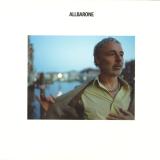
Balvanera is the project of Agustina Vizcarra and Lucas Palavecino from Buenos Aires, Argentina.
Since 2016, the duo has been building a sonic narrative that moves between the corporeal and the spectral, exploring waves and minimal synth as well as more intense and rhythmic directions closer to Body music, all while sharing the stage with artists such as Clan of Xymox, Boy Harsher, Die Selektion, Kontravoid, NNHMN and Ashcode.
New album Hasta tocar el fondo vacío del lenguaje arrives as an attempt to push expression to the limit, focused on language and sound as expressive forms.
With all tracks sung in Spanish, the album is a declaration of identity and at the same time an exercise with Spanish itself: how to play with a language that sometimes feels baroque and turn it into something stark while retaining its richness. Musically direct, the album occasionally returns to some minimalism reminiscent of the band’s early releases while preserving the intensity and club-oriented feel of their later work. At times intensifying in speed, the record brings the energy of their live performances to visibility, while other tracks feel like an unsettlingly dreamlike atmosphere. The title – meaning Until Touching the Empty Bottom of Language – borrowed from a fragment of Arturo Carrera’s poem Escrito con un nictógrafo, offers a clue to Balvanera’s nocturnal sensibility: those thoughts and images that can only emerge in the sleepless hours of the night, when they reach their most revealing edge.
Hasta tocar el fondo vacío del lenguajen explores death as something hidden within language while allowing each track to find its own form rather than adhering to genre conventions.
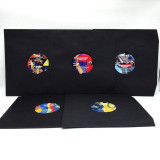
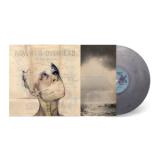
Split released with DKA. Out October 1st, 2026 on aquamarine vinyl LP limited to 500 with lyrics insert.
Trumpeter, rapper and sonic wanderer Pan Amsterdam has carved out one of the most distinctive voices operating at the intersection of jazz and hip-hop today.
Pan Amsterdam is a musical enigma wrapped in an enduring riddle. His creator is a jazz musician from Houston who’s found fame working with Detroit punk rock God, Iggy Pop, and British indie royalty, Metronomy, and now makes shapeshifting, adventurous hip hop out of the music’s spiritual home, New York.
He’s an irreverent character born out of frustration and named after a misunderstanding, yet one who’s on the verge of releasing his fifth album of truth-slaying, genre-crossing rhymes and beats. The result is a catalogue that feels both deeply rooted in Black American musical tradition and completely untethered by convention.
Pan Amsterdam returns with ‘Panarama’, his fourth full length album and a bold reassertion of his hip hop identity, released via Def Pressé. Created by Houston-born, New York-based musician and composer Leron Thomas, the record finds Pan Amsterdam embracing the harder edges of his sound while continuing to blur the lines between jazz improvisation, abstract rap, punk attitude, and experimental production
Written as a response to contemporary life and the endless cycle of information, conflict and distraction that defines modern culture, ‘Panarama’ unfolds as a stream of consciousness journey through hyper-normalised realities. Across sixteen tracks, Thomas navigates social commentary, personal reflection, absurdist humour, and cultural critique, delivering his observations with the same spontaneity and freedom that have become central to the Pan Amsterdam project
Lead single ‘Szechuan Beef’, produced by acclaimed collaborator 1FS, serves as one of the album’s defining statements. Built around Thomas’ signature free-flowing delivery, the track explores the overwhelming nature of contemporary life, where domestic conflict, social division, entertainment scandals and political discourse become flattened into a constant stream of content.
In Thomas’ own words: “My stream of consciousness style comes quite naturally to me due to the conditioning of scroll down culture where everything, no matter how minor or extreme, is hyper normalised.”
Elsewhere, the track ‘Vanilla Ice’ was written in response to widely publicised ICE killings and the speed at which tragedy is absorbed and forgotten within online culture. Thomas channels the anxiety and emotional disorientation of endlessly consuming information, allowing his thoughts to unfold in real time as social commentary collides with everyday digital noise. The result is both deeply personal and sharply observational, reflecting the fragmented reality of modern life. Other album highlights include the cinematic, Interpol-esque opener - ‘Old Friend’ complete with shimmering guitar lines and an far-reaching introspective, no-filter vocal as Thomas teams up with Nick Zinner (Yeah Yeah Yeahs) and Brad Truax (Interpol) across multiple tracks, often the production traverses left-field indie territory, but always maintaining Pan Amsterdam’s unique musical identity throughout. For the hip hop purists and beats lovers there are plenty of riches to discover from the clever nostalgic sample flips of ‘Cutlery’, the sleepy lofi of ‘Shuriken’ and the wonky LA beat scene / early Flying Lotus era beats of ‘Drunken Noodles’ - all boasting quick witted lyricism. ‘Deep Fried Shiney Things’ explores early electro and industrial sonics while album finisher is an upbeat new wave / indie band cut which sees Thomas take a break from rapping, but of course never letting up on the sharp observations nonetheless
While his previous record explored more alternative territory, ‘Panarama’ marks a deliberate return to rap, as Pan Amsterdam explains:
“I just wanted to do a rap album again.I enjoyed making my last album, but I felt like rapping again. I like to have the freedom to move in between musical worlds that suit the current state I’m in. Frequency accommodating frequency.”
This philosophy runs throughout the album. Tracks move effortlessly between jazz-inflected arrangements, experimental beats, punk energy and underground hip hop aesthetics, allowing ideas to evolve organically rather than conforming to traditional structures. Thomas describes himself as an improviser first and foremost: “I think like an improvisor. That’s how my albums pretty much move. It’s improvisation.”
Featuring additional contributions from Spice Programmers, AnOtter and Mr. Shn, ‘Panarama’ presents a wide-ranging cast of collaborators while remaining firmly rooted in Thomas’ singular creative vision. The record embraces contradiction, humour and unpredictability, capturing fleeting thoughts and observations with the same freedom and spontaneity that define jazz improvisation itself.
A musical enigma wrapped in an enduring riddle, Pan Amsterdam has built a reputation as one of contemporary music’s true outsiders. The project emerged from frustration, experimentation and artistic freedom, with Thomas drawing equally from his background as a jazz musician and his collaborations with artists including Iggy Pop and Metronomy. Operating from New York while carrying the spirit of Houston’s musical heritage, Pan Amsterdam has developed a distinctive voice that sits comfortably between avant-garde jazz, underground hip hop and experimental music.
Reuniting with Def Pressé for ‘Panarama’, Thomas explores what he describes as the more hardcore side of his artistic identity:
“They let me do anything and everything I wanna do so long as it’s on audio, and I need that freedom. What may verbally be perceived as vulgar to one group of people may be very thoughtful and a poignant description of the times that we’re presently in, so I’m glad that I’m part of a label home that understands that.”
The threeway combo you never knew you needed. Sam Binga, Machinedrum and Cesco built the raw bones of these tunes across a single morning in LA, overlooking MacArthur Park, in an intense session that saw them throwing live Bingerian vocals, raw Brazilian shrimp-sellers and tweaked-out Acid lines into the melting pot.
Further sessions between Highland Park and Stokes Croft saw these bare bones jams get fleshed out into the four genre-bending tracks that make up the Niche Flex EP, all of which have been tested out in clubs and festivals across the world, and which land this September via Binga's Pineapple Records imprint, on both vinyl and digital formats.
While obviously handy in the studio, Team MACESGA (as nobody calls them) also can operate a DJ booth to a reasonably high standard, as witnessed at the raucous Pineapple Takeover at the Beatport HQ in LA, and are available to showcase their Transatlantic Threesome at a Quality Music Venue or Devious Fetish Spot near you.
The new album is inspired by the simultaneously magical and insidious ways that advertising and name-brand technology wraps itself around our memories. It’s an ambivalent ode to the nostalgic pull of commercial jingles and proprietary start-up sounds. The best things in life may be free, but childhood and corporate entertainment products are completely intertwined. The obsession with advertising and consumer technology informs the sonic make-up of the music as a source of raw material out of which the foundations of the tracks were built. Speaking on this impetus for the album Robbie Chater says ““It seems to be bound up with the nature of sampling itself. Once we start digging through forgotten sounds and uncovering their meaning, almost inevitably you get sent down a path of discovery. Every forgotten sound opens another door. And that’s what I love - feeling like a kid again. Diving into this whole world of advertising, looking at how jingles get made, it’s the kind of thing that keeps me interested in sampling as a process, an art form.”
The track titles on Post Dub Cities – the new album by Adriano Zanni, photographer, sound artist, and field recordist – evoke the aftermath, that moment when a place continues to exist and live on, but no longer serves anyone. The human element has vanished, whether it happened overnight or through a slow abandonment that lasted for years. The perspective shifts: buildings, homes and palaces reveal a dimension of reality all their own, in which even the ruins give shape to this landscape that endures, transforming into pure presence.
This, after all, is our fate. The fate of us human beings, of our civilisation, of every civilisation: to pass away, to be forgotten, to erect monuments whose significance no one will remember once we are gone.
The opening track Crisopoli transforms the sonic dimension of a city into an echo chamber: a dark, urban dub built from delays and resonances, holding the imprint of what is no longer there — like a bassline that keeps vibrating even after its source has gone silent. What we see is not the presence, but its reverb.
Available from September 11, second excerpt Warosha gives us a minimalist, enveloping, solemn beat, like the symbols on a map that no one can read anymore. Warosha was the district of luxury hotels overlooking the sea in the city of Famagusta. After the island of Cyprus was invaded by the Turkish army, the entire area, emptied of its inhabitants, who had fled south, was fenced off and surrounded by barbed wire. No one has been allowed to enter it since 1974. Now, on these unspoilt beaches, sea turtles have found the perfect place to breed.
Fordlândia, on the other hand, is the symbol of Henry Ford’s failed dream of conquest. An industrial settlement built deep within the Amazon rainforest, several hours’ boat journey from the nearest towns, to gain access to natural rubber for the tyres of his mass-produced cars in Michigan. An extremely costly project, it quickly became a ruinous pipe dream: a town that has been uninhabited for almost a century and has since been reclaimed by nature.
For a long time now, Adriano Zanni has been exploring, through music and photography, the landscape that unfolds before our eyes, as attentive yet silent observers. As if we were absent, a civilisation that has long since vanished: human presence has dissolved, preparing to fade into oblivion. The precise depiction of places through field recordings, and the black-and-white imagery, give rise to apparitions, hallucinations, and memories. The less present we are, the more we seek meaning. We resist abandonment and the indifference of time.
In the ten tracks (plus three bonus tracks) of Post Dub Cities the echoes and reverberations of dub grant us access to an unknown future, as yet untold – in which we are nothing more than a vague memory. The deep sound guides us through a landscape that is familiar yet unknown, unrecognisable. The cold, distant, industrial rhythm resonates within us as if we were the last, all too aware, inhabitant of a now-deserted village.
Every place – be it an abandoned mining settlement on an island in Svalbard, or a ghost town in Pennsylvania evacuated following an underground fire that has been burning for sixty years at a depth of one hundred metres – leaves questions unanswered, shrouds itself in mystery, and makes us wonder, ceaselessly: what happened here?
In the end, we realise that we don’t really care that much about knowing the details of the disappearance. We can guess them, we’ve seen it happen a thousand times before. Just like in the photos accompanying the album, portraits of ghostly, deserted cities: Belgrade, like Venice, Dublin, Sarajevo, Lisbon, Kraków, Sofia, Naples, Hanoi, Lampedusa, Tehran. Unexpectedly, pleasantly emptied of people, and of their obsessions, struggles, illusions.
Then, suddenly, the crowd returns. Busy, feverish, hardworking. The record ends, the spell is broken. We feel a sense of longing for a future that has not yet come to pass, for a place we were only able to observe because we were not there.
We release our second record, COPPIES002. Another hand stamped white label EP, collecting tunes from thecommunity, for the community. This time with tracks by Kerr Wilson, Salomo, illousion and APRS. Kerr starts on A1 with his "The Key To My Heart". He showed the first version of the track to Robert around 4 years ago in a memorable summer spent together. We made the promise that this will be pressed on record one day and, here it is! Thanks Kerr! It's a melancholic late-summer tune that makes you tear up and feel like the warm euphoria won't last forever, but it will surely return if you're patient. Salomo follows with a similar moody approach on "Say less (on the DF)", even though we can argue about the meaning of the title ;). illousion builds more tension on the flipside with "Masc or Mask". Entering dubby, rolling terrains with more high intensity drum patterns for later moments of the night. APRS is closing the EP with "I Want to Speak" on B2, maybe the counter argument to Salomos desire of a less noisy dancefloor. He crafted a minimal, loopy trip that drags you down the rabbit hole and won't iet you go til the party is over. COPPIES002 is available on vinyl only with digi download option
“Negative Music / The Poorest! If they still know silence at all, then only as holes in the continuum of noise…” — Günther Anders, 1965
Editions Mego presents GETGETGET, a new release by Thomas Brinkmann which serves as an inquiry into silence, code, and the limits of perception.
The title GETGETGET references the trilogy of ‘Get’ lp’s made by Rehberg under his PITA moniker; Get Out, Get In and Get On. The music is based on material by Rehberg and Brinkmann morphing these two identities into a third colour, a disappearing color.
Emerging from a live performance at the label’s 30th anniversary in Berlin, the work unfolds as both sonic artifact and conceptual system: a study in what remains when sound is reduced, extracted, and reconstituted.
Taking inspiration from Günther Anders’ notion of “negative music”—composition through absence—Brinkmann’s approach aligns with Heinrich Böll’s idea of “collected silence”: silence not as void, but as a material framed against the constant pressure of noise. In GETGETGET, pauses are not gaps but structural elements, cut from a continuum and reinserted as signals.
The two side long tracks weave a dark abstract and ‘twisted’ presence where the ghosts of the machines and their operators fuse into a fantastical whole. One can hear traces of both Brinkmann and Rehberg logic which seems to fuse in a hallucinatory manner.
Brinkmann’s work reflects a broader condition: the translation of material processes into informational ones. As images detach from bodies and code separates from matter, sound too loses its fixed resonance. What remains is circulation—of signals, of data, of meaning—within systems that increasingly define perception itself.
GETGETGET is an album where absence is equal to presence, a metaphor with suggestive tones of the influence Rehberg had and continues to have in the world of the radical experimental electronic avant garde. The “zero” is not empty; it is what makes everything else work.
If you dig deep enough into the internet's lower depths, you'll find a shaky video shot on a camcorder. In 43 seconds, we see a makeshift drum kit built out of backyard Ostbahnhof trash, hear distorted vocals, and feel the anarchic energy of band and ravers dissolving into each other. It's now been twenty years since Bonaparte played their very first show at the legendary Bar25 on Berlin's Spree river. The ringmaster of this unhinged musical theater was Tobias Jundt then, and it's Jundt again now bringing the Bonaparte extravaganza back to the stage. New and nostalgic sit close together when the party's been going this long. Or, as they put it: "PARADISE IF YOU CAN STAND IT."
From late October through mid-November, Bonaparte will tour Germany, Austria, and Jundt's native Switzerland at full intensity, the full lineup - band to burlesque. Since their 2006 debut through their supposed farewell in 2019, Bonaparte played over 800 shows in 28 countries. Bottom line: "Too Much" isn't enough to properly celebrate a body of work like this. And the new songs from "PARADISE IF YOU CAN STAND IT" are far too significant not to bring to the stage. The lo-fi trash-punk of Bonaparte's earliest records has been built out with added layers, in production (largely alongside British avant-garde electronic artist HELiX) and in the songwriting itself.
The world certainly hasn't gotten any simpler since 2006. Tracks like "EVERYBODY PRESiDENT," loosely riffing on Zoe Leonard's poem "I Want A Dyke For President," and the corrosive "BRAiN ROT" mirror the social chaos we find ourselves in 2026. "OBEY (THERE iS STiLL A RiOT GOiNG ON)" is just as furious, though here the principle of hope still holds, as a multigenerational choir concludes "everything will be okay." Jundt speaks across generations again on "i LOVE YOU (MORE LATER)," dedicated in equal measure to his parents and his daughters: "Let the echo chamber bleed - from here into eternity."
The reconciliation and hope Bonaparte allows for and tends to, amid violence and all that noise, make "PARADISE IF YOU CAN STAND IT" a singular document of an artist grown wiser. Separation and grief don't cancel out love and vitality - they depend on each other. Ultimately, the album is a record of searching for and finding a home. To arrive, you have to let go.
And what better place to let go than in step with Bonaparte's wild, hedonistic party circus, finally back to gently terrorize our cities?
Harvey McKay’s “Table for One” returns to Systematic Recordings for a special and deeply meaningful vinyl edition. Originally released digitally on Systematic, the EP captures the unmistakable sound of the Glasgow producer: powerful, hypnotic and uncompromising techno, driven by raw energy while always retaining the musicality and soul that defined Harvey’s work. Following Harvey’s passing in Spring 2026, this release inevitably carries a different weight. For Systematic and Marc Romboy, it is first and foremost a celebration of
his music and the lasting impression he left behind.
For the first time, “Table for One” will be available on vinyl, presented as a strictly limited 12” picture disc pressing of only 500 copies. The original version takes the A-side, while Marc Romboy’s remix opens the Bside, offering his own interpretation of Harvey’s distinctive sound. The release is completed by “Mycelium”, another powerful example of McKay’s ability to combine hypnotic repetition, precision and sheer dancefloor energy. More than a vinyl edition of an outstanding Systematic release, this record has become a tribute to an
artist whose music will continue to live on through clubs, DJs and dancefloors around the world.
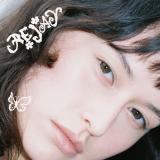
A highly anticipated collaboration with Taiwan’s rising star Andr, released on vinyl for the first time with newly shot cover artwork! REJAY, a singer from Niseko, Hokkaido, joins forces with Andr, one of Taiwan’s most exciting emerging singer-songwriters in the alternative pop scene, for their first-ever collaboration, now available as a 7-inch vinyl release. REJAY, a 20-year-old singer whose voice captivated Nulbarich’s JQ, who also serves as his overall producer, released the A-side track “Hangover feat. Andr” in April 2026. The song is an ambitious work in which REJAY portrays a deep immersion into the emotions of a romantic relationship, while Andr offers a more detached and rational perspective. Their vocals and lyrics, spanning three languages, intertwine to create a unique musical experience. The B-side features “Meant to Be,” a fan-favorite track originally released in 2024, making this a must-have record for music lovers.
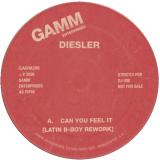
That infamous bassline from Mr Fingers timeless 'Can You Feel It' has been featured in various shapes and forms, over the years, but definitely never like this !
This rework by UK producer Diesler has been circulating as a secret weapon among a small circle of DJs for years, but it's never been available to the public until now.
Blending together percussive latin rhythms, B-Boy breaks and Chicago 4/4s...all put together, it becomes a serious DJ weapon.
For good measures there's also a highly percussive dub version on the flipside...if you wanna work the floor a bit deeper.
We are finally ready to unveil one of the most exciting projects we have worked on in our label's history: a new release by legendary disco project Hudson People, best remembered for their essential classic "Trip to Your Mind" - which just received its anniversary issue on our label!
Now it's time for "Hold On" - a brand-new single featuring several mixes based on an original recording from the late 1980s, with the completely unheard yet incredibly soulful voice of singer Rickey Owens, whom composer and producer Reginald Hudson worked with at the time.
When we first got in touch with Reg Hudson several years ago, we were originally interested in releasing his "Shake It - Make It Loose" album, which he recorded with John Davis (later known as one of the real voices behind Milli Vanilli). While talking about John Davis (RIP) and other great GI singers such as Karl Keaton, Reginald Hudson immediately mentioned Rickey Owens as one of the best singers he had ever worked with.
Of course, we had never heard of him, as none of his music had ever been released. But when Hudson showed us some old demos and sent us the original DAT recordings, we were immediately hooked.
"Hold On" was recorded in or around 1988 with a simple drum machine and keyboard accompaniment - essentially a demo intended to be recorded properly in a better studio. But the vocal performance was simply stunning, complete with beautifully recorded ad-libs. Owens had a truly remarkable, clear voice with an incredible amount of soul. Luckily, Hudson had his old DAT tapes digitized several years ago, so the acapella recordings survived in excellent shape.
We immediately reached out to several producers to create reworks of the track. The 12" EP compiles some of the most club-friendly of these new mixes - but there is more to come…
First up is Thomas Redfern, a senior producer, professional studio musician and keyboardist from London, UK. His version is a catchy, funky yet deep House track that could easily become a favourite on dancefloors around the globe. Redfern also blessed us with a dub mix that takes things even deeper.
But it gets even catchier on side B of the vinyl. Tom Quick sped up the tempo, added filters and delivered a rework that could make fans of Chromeo, Daft Punk, Stardust and any late-'90s French House afficionado go completely nuts. Yes, we mean it! With a fresh twist on the original, the track has a massive club appeal that we hope both DJs and dancers will dig.
The vinyl single is completed by a mix from German legend DJ Friction, whose version is based on synth layers from the Tom Quick mix. Friction added new drums and bass, giving the track the distinctive modern electro boogie funk vibe he is known for. His mix brings to mind classics such as Shannon's "Let the Music Play" and works of Freestyle's Tony Butler.
The vinyl 12" with 4 mixes is released on The Outer Edge's brand-new sublabel, 1st Floor Records, which focuses on more dancefloor-oriented material. More mixes are available digitally and should not be missed.
PR Feedback:
„Killer“ – Gilles Peterson
„Disco, deep house and boogie all in there! Superb!“ – Groove City Radio
„Dope!!“ – DJ Craze
„The boogie mixes are so good!“ – Selvagem
„Awesome and Huge Package“ - Leon El Ray
„Wow, Trip to Your Mind is so good and this is a real grower“ - Ibiza Sonica
„Really liking the Balearic & Redfern Mix, thanks!“ – Mystic Bill
„Both Thomas Redfern mixes are ace!“ – Deeper Shades of House
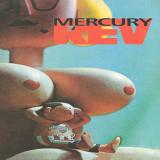
Today we are happy to announce that we are reissuing Merucry Rev’s 1993 album Boces in the UK & EU! Available from the 13th of November, Boces has been newly remastered by Henry Rudkins at Air Studios and is available on black vinyl and CD.
Hailing from Buffalo New York, Mercury Rev are one of the US’s most well-respected bands, always experimenting and continually reinventing. The Guardian called them “a rarity in indie rock: a band who have continually evolved their sound, pushing at the boundaries of what rock music actually means…borrowing from jazz, funk, doo-wop, techno, folk and more along the way.”
Boces is such an important record in their discography, a grand and epic part of their story. The songs on the album came from the whole band. Everyone contributed and the recording process really allowed everyone’s freak flags to fly – partly thanks to their first ever major label recording budget. The opening 10-minute epic track “Meth of a Rockette’s Kick” really let’s you know that this album will be like nothing you have ever heard before.
This November, Brownswood Recordings will release Mek Do & Mend, the debut album from self-taught producer, multi-instrumentalist, composer and artist Wonky Logic. Although his name may not yet be familiar to everyone, Wonky Logic (AKA Dwayne Kilvington) has spent the past two decades quietly becoming one of the UK's most respected musical collaborators. His career has moved comfortably between London's jazz, electronic and contemporary music scenes, performing and recording with artists including Nala Sinephro, Yussef Dayes, Nightmares On Wax, Shabaka Hutchings and Emma-Jean Thackray. Alongside his work as a producer and composer, he's been musical director for projects with Eddie Chacon, John Carroll Kirby and I.G Culture's LCSM, scored the feature documentary Zandra With A Zed, contributed music to A24's The Smashing Machine, and continues to lead music workshops with young people, refugees and people experiencing incarceration.
Far more than a collection of compositions, Mek Do & Mend is a deeply personal reflection on the people, places and experiences that have shaped Kilvington throughout his life. It's the story of growing up on a Leeds council estate, where music became both a creative outlet and a way of understanding the world. Making music often meant working with whatever was available: a second-hand keyboard, a makeshift studio desk or ageing equipment that simply had to last a little longer. The title itself came from a conversation with his mother, capturing the resourcefulness that defined his upbringing and continued into the making of the album itself, which was written and produced to a tight deadline around touring, family life and Kilvington's work as a musician and educator.
Built from material spanning more than fifteen years, Mek Do & Mend brings together some of Wonky Logic's earliest compositions alongside brand new pieces written during the making of the record itself. Childhood ideas sit alongside music conceived only months before recording, creating an album that draws together a lifetime of writing rather than documenting a single moment. Running throughout are voice notes from family members, teachers, friends, mentors and collaborators—not simply as interludes, but as a reminder that no creative life is ever self-made. Rather than telling his own story outright, Kilvington invites listeners to discover him through the people who've shaped him: an aunt remembering him playing in church as a child, lifelong friends recalling early experiments making beats together, fellow musicians from different stages of his career and his mother describing him in her own words. Together they reveal the invisible network of relationships, philosophies, communities and experiences behind the music. "The album exists somewhere between being a biography and an autobiography," says Dwayne. "The biography is in the voice notes and how other people see me. The autobiography is in the music."
That same philosophy extends to the musicians who appear on the record. Every contributor has played a meaningful role in Wonky Logic's life beyond the studio. Long-time collaborator Luke Wynter, Steam Down drummer Benji Appiah, partner Vanessa Rani, Jonathan Enser, Joe Bristow, Brother Portrait and Nubiya Imani all feature not simply because of their musicianship, but because they form part of the album's story.
Across its fourteen tracks, Mek Do & Mend moves effortlessly between dynamic jazz arrangements, pulsating broken rhythms, delicate, twinkling piano passages, interstellar synth textures and elegant brass lines. Album opener and first single 'Strange Attractor' begins with a shimmering introduction before unfolding into an exhilarating surge of rhythm and momentum. Named after the mathematical concept of the same name, it serves as the conceptual point of origin for the album. Written when Kilvington was just seventeen, the composition reflects the idea that even the most unpredictable lives are guided by hidden patterns that often only become visible with time. Second single 'A Thousand Hands' features the unmistakable vocal tones of Brother Portrait, whose cerebral lyricism drifts over a low-slung, constantly shifting groove as woozy synth lines ebb and flow overhead. At its heart, the track celebrates the family, friends, mentors and collaborators whose often unseen influence shapes who we become, echoing the album's belief that every achievement is, in some way, a collective one. LP focus track 'BAME (Beyond All Marginalised Expectations)' is a lush, spiralling composition, brimming with both emotion and resolve. Reclaiming an acronym long imposed on racialised communities in the UK, the piece transforms it into a statement of possibility rather than limitation: a defiant rejection of stereotypes and a refusal to let identity be defined by other people's expectations.
The album itself only exists because other people believed in it. Isabel Gracefield made the RAK sessions possible, Rick David brought the record together with his characteristically thoughtful mix, and Gilles Peterson committed to releasing it on Brownswood before hearing any of the music. Away from the stage, Kilvington works with the charity Finding Rhythms, writing and producing original records with people experiencing incarceration, while also leading workshops with Arts Train and Dovetail Orchestra.
Recorded live in a single day in Studio One at RAK, Mek Do & Mend was mixed by Rick David through an analogue Cadac console before being mastered by Stuart Hawkes at Metropolis. The aim wasn't nostalgia or audiophile perfection, but to create a record people could return to throughout their lives, discovering something new with each listen.
As Dwayne puts it: "I don't want this body of work to be reduced to a jazz record. It's more like a novel about life told through music."
The 2013 action-adventure game The Last Of Us was originally published in 2013 by Sony Computer Entertainment and was developed by Naughty Dog. The game is played in a third-person perspective and the player controls Joel, a smuggler who is escorting the teenager Ellie across a post-apocalyptic America. The game received critical acclaim, with praise for its narrative, gameplay, visuals, sound design, characterization, depiction of female characters. The Last Of Us became one of the best-selling video games, selling over 1.3 million units in its first week. The game won multiple Game of the Year awards and has been cited as one of the greatest video games ever made.
The Last Of Us also received acclaim for its score, which was made by composer Gustavo Santaolalla. Santaolalla is also known for his work on Brokeback Mountain and Babel, for which he both won the Academy Award for Best Original Score. The Argentinian composer also created the music for the series Jane The Virgin and Netflix’ Making A Murderer. His soundtrack to The Last Of Us was his first in the video game industry. In 2020, he also returned to compose the music to the sequel, The Last Of Us Part II.
The soundtrack of The Last Of Us: Season 1 is available as a limited edition of 4000 individually numbered copies on yellow marble vinyl. This 2LP is packaged in a deluxe gatefold sleeve with linen laminate finish. It includes printed innersleeves and an 8-page booklet with liner notes by writer and creative director Neil Druckmann.
Available again for the first time since 1970, Lobo’s melancholy masterpiece epitomizes the experimental evolution of MPB. With new liner notes by Edu Lobo.
Released in 1970, Cantiga de Longe is a defining record in the career of Brazilian singer, composer, and guitarist Edu Lobo and a significant contribution to Música Popular Brasileira (MPB). Created during Brazil’s military dictatorship, the album reflects the subtle, poetic strategies that artists use to convey meaning while subject to censorship. Rather than overt protest, Lobo expresses longing and introspection through refined musical language and evocative lyrics.
Musically, the album captures the sophistication of MPB at the turn of the decade. A foundation of acoustic guitar blends with jazz-influenced harmonies and elegant arrangements. The sound is both intimate and expansive: delicate vocal lines unfold over complex progressions, supported by understated rhythms, rooted in Brazilian traditions. Lobo’s controlled yet expressive vocal delivery keeps the lyrical nuance at the forefront.
A key element of the album’s texture is the involvement of Hermeto Pascoal. His imaginative instrumental contributions add subtle harmonic color and atmospheric depth, enriching the refined arrangements and enhancing the sense of openness.
Thematically, the album explores memory, distance, solitude, and time—personal reflections that resonate with the broader climate of uncertainty that dominated Brazil in 1970. This remains one of Lobo’s most mature recordings, exemplifying the emotional depth and artistic subtlety of Brazilian popular music in a creatively fertile era.
What is an edit? A correction, a confession, a DJ tool, a mild act of vandalism—or simply the result of listening to somebody else’s record and thinking: very good, but what if this bit went on a little longer?
For his contribution to the Running Back Mastermix series, Gilles Aiken aka Edward opens a folder that has apparently been filling up for quite some time.
The Giegling resident’s thirteen edits reach back through years of DJing, collecting and producing. Made for sets rather than release schedules, they form something like a musical autobiography told through other people’s records: Carl Craig, Roman Flügel, Motohiko Hamase, Kirk Degiorgio, Aubrey, Sven Väth, Michael Rother and more.
From Japanese ambient jazz and Detroit techno to dub techno, house, trance and kosmische music, these are not attempts to improve records that didn’t need improving. They are the small interventions that happen after living with music for a long time: a rhythm exposed, an entrance moved, a passage extended, the unnecessary made necessary.
“These records mean a lot to me,” says Edward. “They consist of edits I’ve gathered over the years, some of them going way back. In a way, they reflect my musical journey. All of these artists have been a huge influence on me as a producer and DJ.”
Usually, such edits remain on hard drives, USB sticks and in vaguely labelled folders. This time permissions were requested, publishers located and, somewhere, presumably, a spreadsheet became very important.
Miraculously, everybody said yes.
Thirteen thank-you notes to the music that helped make Edward Edward. Naturally, they require three records.
Mastermixed accordingly.
Also available on cassette,
What is an edit? A correction, a confession, a DJ tool, a mild act of vandalism—or simply the result of listening to somebody else’s record and thinking: very good, but what if this bit went on a little longer?
For his contribution to the Running Back Mastermix series, Gilles Aiken aka Edward opens a folder that has apparently been filling up for quite some time.
The Giegling resident’s thirteen edits reach back through years of DJing, collecting and producing. Made for sets rather than release schedules, they form something like a musical autobiography told through other people’s records: Carl Craig, Roman Flügel, Motohiko Hamase, Kirk Degiorgio, Aubrey, Sven Väth, Michael Rother and more.
From Japanese ambient jazz and Detroit techno to dub techno, house, trance and kosmische music, these are not attempts to improve records that didn’t need improving. They are the small interventions that happen after living with music for a long time: a rhythm exposed, an entrance moved, a passage extended, the unnecessary made necessary.
“These records mean a lot to me,” says Edward. “They consist of edits I’ve gathered over the years, some of them going way back. In a way, they reflect my musical journey. All of these artists have been a huge influence on me as a producer and DJ.”
Usually, such edits remain on hard drives, USB sticks and in vaguely labelled folders. This time permissions were requested, publishers located and, somewhere, presumably, a spreadsheet became very important.
Miraculously, everybody said yes.
Thirteen thank-you notes to the music that helped make Edward Edward. Naturally, they require three records.
Mastermixed accordingly.
Also available on cassette,
Multi-faceted artist Calibre today shares his sixteenth studio album "Feeling Normal". The album is out now to pre-order on Vinyl, CD and on digital platforms via his own independent imprint Signature Recordings.
The record is his first bonafide 140bpm record and a staggering body of work that shows the genius levels of one of electronic music's most respected auteurs. Across the 13 tracks, he transcends through space and time, creating music that will take the listener on a weighty sonic journey. The album announcement is accompanied by two dub versions "Bad" and "Badder" deconstructed from the track "Badman" with DRS from Mark Ernestus available via his Hardwax store January 29th and Bandcamp February 12th. "Getting to work with Mark Ernestus is a real honour, I collected Basic Channel, Rhythm & Sound and his other work for many years and still do. It's hard to avoid the influence of this guy in electronic music across genres and so it is a real pleasure to have him do his thing with the Badman tune which I think sounds closely related."
All of the tracks on the record have been road-tested in Calibre's DJ sets over the last 2/3 years with many of them being sought-out by his hardcore fans. It was only a matter of time then that he put them out for all to consume. With a nod to the dancefloor, the clear idea for the album came about following the release of his most personal album to date "Planet Hearth". "It still works in the headspace but ultimately it's been written for the sweaty club experience we miss now, also after an album like Planet Hearth it felt very liberating to do," he remarks. When writing albums, he often just puts it down to the general chaos of life, not citing any one influence but generally just waits to see what comes. With one of the tracks on the album written 7 years ago on the island of Valentia, It became a project that he spent the intervening years collecting tracks for, not really knowing when he was going to put it together as an album. "The whole album is special to me, everything on there has import and meaning beyond for me, I have spent much time on all these and hope they are special for other people too."
Belfast-born, Berlin-based Calibre - AKA Dominick Martin - shows no sign of slowing down. As a producer, DJ, songwriter, multi-instrumentalist and painter, he is one of the most unique and inspiring living artists. With a career spanning two decades, his ability to remain underground whilst being one of the most-respected is testament to who this enigmatic artist is. To this day, he has never been remixed and has a seriously impressive amount of unreleased music under wraps. With everything on hold and gigs on the backburner, this record is exactly what the world needs right now.
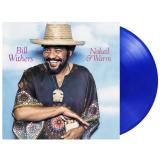
Bill Withers was a modest, gentle, and yet towering musical figure responsible for some of the most important, universally known soul hits ever written. It’s no wonder that “Just the Two of Us” and “Ain’t No Sunshine” won him two Grammy awards and undoubtedly played a huge role in getting him inducted into both the Songwriters and Rock and Roll Hall of Fame.
Naked & Warm is Withers' fifth studio album, released in 1976. A year earlier, the Sussex label—home to Bill's first four landmark albums—ceased operations. Withers then signed with the mighty Columbia Records, which would remain his home until the end of his recording career. While Naked & Warm retains Bill's unique, earthy approach to soul that made him Sussex's biggest star, it's clear that musically too, he was in transition; the first half of the album is full of synthesized jazz-funk vamps, while "City Of The Angels" is an almost 11 minutes long cosmic funk excursion combining biting Rhodes chords with swirling synth pads and Dorothy Ashby's spiritual harp work. All in all, Naked & Warm might be one of Bill's most underrated records, simply because his previous work for Sussex was just that impactful.
Naked & Warm is available as a 50th anniversary edition of 1500 individually numbered copies on blue vinyl and includes a 4-page booklet featuring lyrics and new liner notes written by Marcia Withers.
Since the early 2010s, photographer and producer Izaak Schlossman has been surreptitiously using the Topdown Dialectic moniker to frame his most enigmatic and most psychedelic productions: faceless pure sound experiments that ogled dub and techno archetypes from somewhere far beyond the veil. This generous 2LP collection surveys over a decade of persistent activity, pulling together recently unearthed gear written between 2013 and 2016 (the same time period as the iconic Peak Oil trilogy) and muddling it with more contemporary material. It's a rare chance to fully comprehend the slow, measured evolution of the project: its genesis as a method to fractalize various bass music frequencies with suggestion rather than over-compression, and its ongoing advancement through sensitively finessed ASMR ambiance towards spangled neo-psychedelia.
So it's no surprise that the lengthy suite of five-minute snapshots was initially devised while Schlossman was preparing for his first ever Topdown Dialectic live appearance in 2025. A hazed early morning, open air performance that's still lodged in the memory banks of anyone who witnessed it, the set provided the narrative anchor for the album, blurring the past and present and reaching tentatively into the future - ideal material for audiences whose brains are fully plasticized. The tracks, while divided, sound as if they're breathing over and into one another; beats and phrases materialize and dissolve just for moments, leaving the mind to fill in the gaps with any available sonic material. What might reflect the bright neon light of acid house at first soon embodies the flicker of a candle over a desk of drum machines in a Midwestern basement, or the first blush of sunlight over a tiny campground as subwoofers creak in the distance.
It's music that asks the listener to be involved in the creation itself, projecting their own shapes on the negative space, their discreet fantasies on haunted stretches of near silence. Schlossman's identity was never the point, Topdown Dialectic was always a scrying stone intended to divine far more personal revelations.
The latest edition of 'Downtownsounds Classics' arrives from Dublin disco messers Fatty Fatty, just in time for the summer sunshine !
Fully licensed and cut loud on 12 inch vinyl the way God (aka Walter Gibbons) intended, it sees in-house producers Pablo and Shoey take on two choice cuts from the legendary Salsoul label.
Salsoul was the very first label to release a commercially available 12 inch remix - the aforementioned Gibbons and his 9 minute extension of Double Exposure's '10 Per Cent'. They would go on to issue a raft of underground disco classics with mixes by the legendary likes of Larry Levan, Tom Moulton and Shep Pettibone. Having robbed the famous 'Baker-Harris-Young' rhythm section from Philadelphia Records, they defined the disco sound in the second half of the 1970's and kept roaring well into the next decade.
The new mixes pay explicit tribute to two hugely formative influences on the Fatty fellas - The A extends the mysterious and wondrously wonky Big Bear edit of Bunny Sigler's 'By The Way You Dance'. Back in the day, these cosmic under-the-counter 12s helped show the Fatties how to disco real right, and they've stood the test of time wonderfully. This one has been at the front of Pablo's bag for longer than he cares to remember, and now the rest of the world can enjoy it, with some extra Pablo and Shoey disco magic thrown in for good measure...
Speaking of cosmic, the flip sees the lads turn in a stripped-back, ever-building mix of First Choice 'Hold Your Horses'. Having first heard this played by the Cosmic King himself, Danielle Baldelli, they found themselves let down by the commercially available mix. Through the disco haze, and with some subtle stemming, several outer-space whooshes and a string/vocal climax to die for, they've tried to recreate the way they heard Baldelli play it...
With the classic Salsoul artwork also present and correct, this is a love letter to perhaps the most important label in dance music history, with music that still sounds amazing five decades on... Don't sleep!
Can’t go over it. Can’t go under it. Gotta go through it. And somewhere out there in the Pitch black beyond all darkness lies Peace & Purpose. The horizon you never quite crest until the inevitable end. Breathe deep — this fearful moment is the most alive you’re ever gonna feel. For the last decade, Crack Cloud’s vision has grown ever more expansive, more cinematic. Last go around, they dropped from The Heavens and then performed with their bare backs to an endless darkening desert. Now they’ve crammed all that life into some metallic and strange object called Peace & Purpose. All the terror of living. All the helplessness. All the raw human will. All glued and screwed and locked into this impossible tactile shape of dungeon dub; sour milk vox; Avant-protest music. Music arm wrestling itself to the ground. Far afield of beauty. The discordant symphony of factory farming and grim timber of the meat processing plant. The grinding din of the cogs. And yet, never giving up in spite of all good sense. Even in death, we are a coterie of survivors. Look now: There’s Terry Fox on his one-legged Marathon of Hope across The Great White North while cancer spreads through his lungs. A self-annihilating drive to feel alive. Rage against the dying of the light, they say. Well, how ‘bout it then!??! Peace & Purpose is not in any way some art project meditation on Punk Rock. It is Punk Rock. Terrifying, inspiring, vital, invigorating and most importantly, utterly unexpected. Every goddamn stupid day is a sublime slice of fresh hell. That’s the point. Gotta go through it. Wishing you Peace & Purpose — if only in that last big breath.
The moment the instantly recognizable intertwined guitar passage on the title track to the Eagles' Hotel California begins, the record's genius becomes obvious all over again. Ranked the 118th Greatest Album of All Time by Rolling Stone, certified by RIAA as the third best-selling LP in history, and considered the foundation on which the Golden State's mid-‘70s music scene was built, the 1976 landmark is a music staple immune to shifts in trends, eras, and styles. Fearlessly addressing the chaos and consequences of American life, its songs remain strikingly prescient and gain creedence with each passing day.
Mastered from the original analogue master tapes, pressed on MoFi SuperVinyl, and limited to 17,500 numbered copies, Mobile Fidelity's UltraDisc One-Step 180g 45RPM 2LP vinyl box set ensures you will want to permanently check into and never leave this particular Hotel California. Up to the herculean task of standing head and shoulders above all prior reissues, this collectible edition plays with extreme clarity, organic richness, tube-like warmth, massive dynamics, and microscopic levels of detail. You'll be able to practically smell the colitas and feel the breeze in your hair. Songs come across with an epic sweep and feature immersive, front-to-back soundstages that allow the music unprecedented air, roominess, and separation. As for the noise floor? It's basically as invisible as the spirits that waft in the corridors of the unforgettable title song.
Aesthetically, the premium packaging and presentation of the UD1S Hotel California pressing befit its esteemed status. Housed in a deluxe box, it features gorgeous foil-stamped jackets and faithful-to-the-original graphics that illuminate the splendour of the recording. From every angle, this UD1S reissue exists as a curatorial artefact meant to be preserved, touched, and examined. It is made for discerning listeners that prize sound quality and production, and who desire to fully immerse themselves in the art – and everything involved with the album, from the renowned cover art to the meticulous finishes.
Indeed, the opportunity to zero in on all the particulars of the 26-million-selling Eagles record dubbed "a legitimate rock masterpiece" by vaunted Los Angeles Times scribe Robert Hilburn has never been better. A global phenomenon that marked the band debut of guitarist-singer Joe Walsh, Hotel California continues to resonate and connect with listeners of all generations taken by its narrative depth, stark directness, picturesque melodies, daring majesty, and ardent emotionalism. Adorned with a breathtaking exterior photograph of the Beverly Hills Hotel that serves as the simultaneously haunting and alluring cover art, and rounded out by a rear-cover shot of the Lido Hotel lobby that reinforces a notion that teeters between permanence and transience, Hotel California is brilliantly tied to a specific place that functions as a universally understood metaphor for the American Dream.
Confronting the darker undercurrents and oft-ignored constructs attached to that romantic notion, the record's songs revolve around a host of shared themes: excess, mobility, stability, illusion, fame, destruction, and idealism included. Notably, Hotel California appeared at a crucial junction in American history: During the country's bicentennial and amid escalating controversies related to the Vietnam War, energy crisis, and governmental corruption. That the Eagles manage to channel such cultural, social, and economical matters into a cohesive, stately, big-picture statement is alone a stupendous feat. That the album's reach, boldness, vitality, accessibility, and understated intensity have never waned make it a marvel.
Reflecting on Hotel California 40 years after its original release, and indirectly explaining its enduring appeal and increasing relevance, singer-songwriter Don Henley confirmed the record pertains to the "loss of innocence, the cost of naiveté...the difficulties of balancing loving relationships and work, trying to square the conflicting relationship between business and art; the corruption in politics, the fading away of the Sixties dream of ‘peace, love and understanding.'"
It can be argued that Henley and company squarely hit on and drove home those ideas in the surreal title track, chart-topping "Life in the Fast Lane," and grand "The Last Resort" alone. But that would miss the forest for the trees. Experienced as an unbroken whole, complete with the pristinely shot imagery and physical grooves, Hotel California unfolds like a geography-conscious saga by James Michener and plays like colour-saturated movie shot on 70mm film by Martin Scorsese. It's about our collective and individual decisions – and the shape of our past, present, and future. And, just like that conjured by our imaginations, Hotel California continues to take on a life of its own.
More About Mobile Fidelity UltraDisc One-Step and Why It Is Superior
Mobile Fidelity Sound Lab's UltraDisc One-Step (UD1S) technique bypasses generational losses inherent to the traditional three-step plating process by removing two steps: the production of father and mother plates, which are created to yield numerous stampers from each lacquer that is cut. For UD1S plating, stampers (also called "converts") are made directly from the lacquers. Since each lacquer yields only one stamper, multiple lacquers need to be cut. Mobile Fidelity's UD1S process produces a final LP with the lowest-possible noise floor. The removal of two steps of the plating process also reveals musical details and dynamics that would otherwise be lost due to the standard multi-step process. With UD1S, every aspect of vinyl production is optimized to produce the best-sounding vinyl album available today.
MoFi SuperVinyl
Developed by NEOTECH and RTI, MoFi SuperVinyl is the most exacting-to-specification vinyl compound ever devised. Analogue lovers have never seen (or heard) anything like it. Extraordinarily expensive and extremely painstaking to produce, the special proprietary compound addresses two specific areas of improvement: noise floor reduction and enhanced groove definition. The vinyl composition features a new carbonless dye (hold the disc up to the light and see) and produces the world's quietest surfaces. This high-definition formula also allows for the creation of cleaner grooves that are indistinguishable from the original lacquer. MoFi SuperVinyl provides the closest approximation of what the label's engineers hear in the mastering lab.
BAILE & Nuage land on Shall Not Fade with their ‘Back 2 Earth’ EP
Four deeeep timeless tracks on this 12 inch. Sleek, progressive, acidy house & trancey ethereal breaks ‘Back 2 Earth’ is full of that headsy 90’s energy à la Underworld and Orbital…..we’ve been getting very lost in these ones!
Written remotely between Brooklyn, New York (BAILE) and Yerevan, Armenia (Nuage) both producers are more than a decade deep in their craft and it shows. They say “this all began with Nuage sending over a few short demos. BAILE took those pieces and constructed them into more fleshed out tracks, after which the two passed the songs back and forth slowly filling in the blanks.” …and that's the key here - no rush, no agenda just the realest takes expertly hewn.
Same Beat on the A1 is just that.. breakbeats, spoken word vocal chops and repetitive synth lines, but less is more. The percussion, bassline and programming do the work. Sometimes it's more about what you leave out than what you put in.
On ‘TSP’ you Nuage’s signature metallic synths. It’s a definite eyes closed/hands in the air weapon. Hypnotic flow building and ratcheting up the energy.
Flip over to title track’ Back 2 Earth’ and we get a trancey, garage and house blend. Sleek synths & arpeggios and minimal chops that seem to whisper ‘heaven…earth’.. BAILE utilized the Prophet Rev2 for pads and synths and a Moog Little Phatty and Minitaur for the bass but we want to know can a breakbeat soothe?
'Catch Yourself' closes out the EP.. More breaks and arpeggios but this time with an acid lead from the TB-03, grungy bass and warm gated synths underneath. Sample spotters you aren’t scoring any points here, the “I know that sample” vocal here come from Felicia Douglass (a frequent collaborator of BAILE’s who is in The Dirty Projectors and Ava Luna) and makes double the point that this EP is one of those ones that even on first listen you already know it. ‘Back 2 Earth’ has been on the SNF schedule for a minute so big up BAILE & Nuage for the patience but what that extra private time has meant, is that we can say with certainty that this EP keeps sounding better & better & better..
LOS ANGELES—To celebrate the 40th anniversary of the celebrated Talking Heads and Jonathan Demme’s concert film Stop Making Sense, the set will be re-released as a 2LP and 2CD/Blu-ray set this summer.
Released last year, the sold-out Deluxe Edition of the soundtrack will return as a 2-LP black vinyl on Rhino and 2-LP crystal clear vinyl at retail. Both variants feature a 12-page booklet with liner notes from all four band members –Tina Weymouth, David Byrne, Chris Frantz, and Jerry Harrison—and band photos. The 2CD/Blu-ray version includes the entire 28-page booklet from last year’s Deluxe Edition and a Dolby Atmos mix of the complete concert, mixed by Jerry Harrison and E.T. Thorngren, who also mixed the original release. Both will be available on July 26. Pre-order now.
The band appeared together for a sold-out screening and Q&A last night at the Pantages Theater, the same theater at which Stop Making Sense was recorded. They were joined by Blondshell, who performed “Thank You For Sending Me an Angel.” Another special screening with the band will occur in Brooklyn at the King’s Theater on June 13, with the Q&A hosted by Questlove and The Linda Linda’s performing “Found a Job.” The two events cap off a banner year of celebrations for what many consider to be the best concert film of all time.
The inspiration for Stop Making Sense came when director Jonathan Demme saw Talking Heads perform during the band’s 1983 tour for Speaking in Tongues. Afterward, he approached them with the idea of making the show into a concert film. They agreed and worked together over the next few months to finalize the details. Ultimately, Demme filmed three shows at Hollywood’s Pantages Theater in December 1983 to create Stop Making Sense.
The concert film presents a retrospective of the band up to that point, with a performance that weaves together songs from all six of its studio albums. The show progresses methodically, opening with Byrne onstage performing “Psycho Killer” alone with a drum machine. After each song, he’s joined by a new band member until Weymouth, Frantz, and Harrison are all on stage with him. The group continues to grow throughout the concert as members of the stellar touring band are added: keyboardist Bernie Worrell, percussionist Steve Scales, guitarist Alex Weir, and backup singers Lynn Mabry and Ednah Holt.
The band performs 18 songs in Stop Making Sense, including its recent single at the time, “Burning Down The House.” That summer, the song was in heavy rotation on radio and MTV, helping the song become the band’s first top 10 hit in America. It was, however, a different song from Speaking in Tongues that was destined to deliver one of the film’s signature moments. Talking Heads would perform “Girlfriend Is Better” wearing the now iconic, oversized suit inspired by costumes worn in traditional Japanese theater. For good measure, a picture of David Byrne in the suit also graces the album cover.
Stop Making Sense focuses mainly on music by Talking Heads but does include a few songs recorded outside the band: “Genius Of Love” by Tom Tom Club, “What A Day That Was” and “Big Business” from Byrne’s 1981 album, The Catherine Wheel. Limited edition vinyl versions of both of these albums, along with Harrison’s The Red And The Black, were released for this year’s Record Store Day.
When it arrived in September 1984, Stop Making Sense was an artistic and commercial triumph. The film had people dancing in theatre aisles, and the soundtrack sold over two million copies. Just last year, the Library of Congress added Stop Making Sense to the National Film Registry in recognition of its cultural, historical, and aesthetic significance.
Weymouth praises Demme as a collaborator: “…Jonathan was a very enthusiastic, highly adaptive, and imaginative guy who was just as good a listener as he was a talker and collaborator. From the get-go you just got the impression he was as flexible as he was disciplined. Being team players, that boded well for a great relationship and a great film!”
Harrison says the film still holds up today: “To me, Stop Making Sense has remained relevant because the staging and lighting techniques could have been created in a much earlier time period. For example, Vari-Lights, lights with motors to re-aim them, had just come into vogue. Had we used them, there would have been a timestamp on the film, and it eventually would have felt dated...The absence of interviews, combined with the elegant and timeless lighting, created a film that can be watched over and over.”
Byrne says it’s interesting that this album was – for many people – an introduction to Talking Heads. “We had done a live album before this, but coupled with the film, and with the improved mixes and sound quality, this record reached a whole new audience. As often happens, the songs got an added energy when we performed them live and were inspired by having an audience. In many ways, these versions are more exciting than the studio recordings, so maybe that’s why a lot of folks discovered us via this record.”
Frantz recalls the sheer joy surrounding the entire Stop Making Sense experience. “I’m talking about real, conscious, transcendent joy… I’m talking about what the Southern gospel people call ‘getting happy,’ which means ‘to be filled with the Spirit.’ That is what happened to us onstage every night, and from my seat behind the drums, I recognized that this was happening to the audience too. Joy was visible in front of me and all around me every night.”
If – in some parallel universe (or perhaps a not-so-distant-future version of the one we’re already sentenced to living in) – the evil overloads of artificial intelligence were actually successful in their attempts to create convincingly enjoyable “original music,” more specifically tasked with wholly encapsulating my own personal tastes by data-chugging some cocktail of – oh, I don’t know – the posters on my wall, the records in my “most listened to” pile, the mixtapes I made for others, intensive physical scans of my auditory cortex, amygdala, hippocampus, heart strings, whatever else they have splayed out on their autopsy table with the intention of generating one all-encompassing “perfect band” based on the fruitful sum of their findings – that band, for me, would be (or would at least sound exactly like) the Tara Clerkin Trio. It is, quite simply, without exception, the music I wish to hear.
Formed in Bristol UK (where none of them are from yet all of whom are deeply engrained) in 2020, the Tara Clerkin Trio – as it somewhat democratically exists today, despite the singular authority implied by its name – consists of the titular Tara Clerkin, her partner Sunny Joe Paradisos, and Sunny’s brother, Patrick Benjamin. I’ll confess, I don’t know what their respective roles are within the operation and there’s only a very small part of me that cares to learn, as one of my favorite qualities in an objective listening experience is the mystery of who is playing what, which sounds are “authentic” versus synthesized, which chunks are performed “live” in a room together versus meticulously Frankenstein’ed from measure to measure, or how exactly the overall sound is so (seemingly) effortlessly achieved. Though, I suspect, if and when I do witness a live performance by this band at any point, my enjoyment of the music will not be lost in my better understanding of it.
With two extraordinary mini-albums – In Spring (2021) and On The Turning Ground (2023) – making a splash on London’s formidable World of Echo label in wake of their self-titled 2020 debut, this upcoming Somewhere Good LP is, in many ways, the band’s most realised work. In running their usual gauntlet of idiosyncratic (*an overused adjective for which here there is regrettably no sufficient alternative) approaches, Clerkin & co. colour in and outside of compositional lines over the course of 40+ celebratory minutes - never wallowing, despite inherently somber subject matters of self-defeat, disease, displacement, restlessness, gentrification - allowing their arrangements and improvisations ample space and time to situate, stretch out, breathe, cross-pollinate, and ultimately take deeper hold on the listener’s imagination – all while somehow sounding more like themselves than ever before.
Of course, there are traceable influences herein, if one felt that such comparisons were necessary to properly examine and enjoy this music (they aren’t)… Being the big dumb American from the small boring town that I am, cornfed on ‘90s alternative radio with the enchantingly exotic sounds of Maxinquaye and Mezzanine emanating from my chunky tube television, I can’t help but to make a blatantly obvious reference to a “Bristol sound”, ie the whole trip-hop trip, the pastoral crooning over the suggestive urban grime of cracked electro/piano treatments, the digitally-yet-primitively reconstructed James Bond soundtrack string-beats, etc.. But the Tara Clerkin Trio is so infinitely much more than that. There are elements of avant-pop, modern classical, kraut-folk, audio verité, dare I say indie rock (and not of the beer guzzling, masturbatory fuzz-flex variety but perhaps more like a Trish Keenan-fronted Faust, Adrian Sherwood at the mixing desk of If You’re Feeling Sinister, or – in expanding on our alternate reality – a world in which High Llamas cut a full-length for Warp Records with Andrew Weatherall on coffee duty).
The hazy, unmappable skyline-mirage of droning harmonium, upright bass, peculiarly accentuated wind instruments, acoustic guitar, hushed yet literally mighty keys combine to hypnotizing effect. The band may make underlying nods to jazz, sure, but it’s not appropriation, it’s that they have the actual chops to build it out. Beneath the janky samples and oddball percussive embellishment lies actually great drumming. Beyond the manipulated vocal witchery and woefully reflective plain-spoke moments are Tara’s subtly inspired melodies, sung with what might honestly be the glue to the whole crazy equation. A calming consistency throughout the otherwise unpredictably dynamic, boldly intuitive, uniquely British exploration of this (their own) universe in song. – Ryan Davis (Chicago, February 2026)
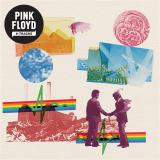
8-Tracks features eight essential classics selected from the Pink Floyd’s 1971 – 1979 era. The track list includes the instantly recognisable hits ‘Money’, ‘Wish You Were Here’, ‘Another Brick in the Wall, Part 2’, ‘Time’ and ‘Comfortably Numb’, alongside earlier cuts in ‘One Of These Days’ and ‘Wot’s… Uh The Deal’, as well as an exclusive full version of ‘Pigs On The Wing’, previously available only on the 1977 Animals 8-Track cartridge release. The track sequence has been edited by Steven Wilson for a continuous listening experience. 8-Tracks documents the full measure of Pink Floyd’s transition into their breakthrough era, propelled into superstardom throughout the 1970s. The eight-year period this special release celebrates encompasses music from some of the band’s most successful and celebrated records ever. 1971’s Meddle, 1972’s Obscured by Clouds, 1973’s The Dark Side of the Moon, 1975’s Wish You Were Here, 1977’s Animals and 1979’s The Wall. 8-Tracks offers a brilliant insight into this incredible period of creativity. A starting point for new listeners to discover the depth and breadth of Pink Floyd’s peerless album catalogue, as well as a carefully curated collection for longtime fans to appreciate.
Music springs eternal. Recognising the enduring power of timeless albums to guide us through life, Forever Records is a reissue series dedicated to rediscovering lost musical treasures from across the spectrum of head-feeding, heart-rending electronic music.
Established by Rush Hour co-founder Christiaan Macdonald and Delsin founder Marsel van der Wielen, Forever Records places heartfelt faith in a carefully curated sequence of seminal, largely forgotten records from disparate eras, scenes and spaces within electronic music history. Tipped towards the mellow and introspective, these are albums that stop time when the needle hits the groove, stirring only when it's time to flip over before you sink back into the experience. That's what albums were always meant to be about, back then, right now, always and forever.
The Release:
Dancing on the wildest edge of the 90s outsider techno zeitgeist while proudly independent of any so-called scene, Ov Biospheres And Sacred Grooves: A Document Ov New Edge Folk Classics is both of its time and out of time. Rooted in the experiments of electronic music pioneers, industrial culture and ethnic music from around the globe while responding to the house and techno explosion, Robbert Heynen, Reinier Brekelmans, Reinoud van den Broek and Tim Freeman's freewheeling masterpiece takes in lush electronica and murky abstraction on its singular voyage through parts unknown.
Forever Records presents an extensive reissue edition of the first 'fully released' Psychick Warriors Ov Gaia album. Originally released in 1992, this is the first time the full, previously CD-only, version of Ov Biospheres and Sacred Grooves will be pressed on vinyl. The original LP and CD artwork from the various editions released in the early 90s has been combined and designed by the band, and the audio has been remastered with their full approval. As well as a new LP edition of the album, there will also be a uniquely numbered, limited edition available housed in a gatefold sleeve that comes with a bonus 10" featuring two previously unreleased tracks.
Press response to Ov Biospheres and Sacred Grooves - A Document Ov New Edge Folk Classics:
“That’s Magick! The Psychick Warriors Ov Gaia are Holland’s best kept secret.”
Sherman, NME, UK 1992
“PWOG’s debut LP is an organic invocation rite — the soundtrack to a new world coming to life, an odyssey. Cross-cultural rhythms, ambiences and environmental samples segue into one another like a fluid relay, and unlike the majority of dance records, it never settles into a routine. It’s always evolving, always unpredictable, an indefinitely religious experience.”
John Selzer, Melody Maker, UK 1992.
"Grown men, who snorted their first ecstasy to this record, stammered with tears in their eyes about divine experiences and the cosmos, man."
Peter Erik Hillenbach, Marabo Magazine, Germany 1992.
Sacred Grooves’ introduces tribal dance music for the mind, body music leaning on the avant garde. Its ripples of sound drift through tranced out ritualistic beats into ambience and serenity resembling something akin to The Orb meeting Klaus Schulze at a brain tuning session.
Sherman, NME, UK 1992
"There's still dance for a moment, in the opening track "The Challenge," then Psychick Warriors roam the earth, where African drummers, tropical sounds, and science-fiction chords have found their place in a spiralling interplay of rhythms and sounds. A captivating, almost magical ritual." Corné Evers, Oor Magazine, Netherlands 1992.
"It's truly astonishing what these Dutchmen have come up with for their first LP. Their roots might explain the enigma, for Psychick Warriors are more in the tradition of Psychic TV than in the desolate temples of techno-house fetishists, to which they are wrongly relegated. Here, chromosomes dance, not instincts." CMK, Tip, Germany 1992.
"The transcendental essence of this album is spread throughout, with musical gravitations emerging unexpectedly from sonic experiments that are sometimes primitive, sometimes
futuristic in intention… But there is always an aura of cosmic magic that constantly puts all the parts involved in conflict and which, upon closer analysis, ends up being the main reason for the final result." Blitz Magazine, Portugal 1992.
Music springs eternal. Recognising the enduring power of timeless albums to guide us through life, Forever Records is a reissue series dedicated to rediscovering lost musical treasures from across the spectrum of head-feeding, heart-rending electronic music.
Established by Rush Hour co-founder Christiaan Macdonald and Delsin founder Marsel van der Wielen, Forever Records places heartfelt faith in a carefully curated sequence of seminal, largely forgotten records from disparate eras, scenes and spaces within electronic music history. Tipped towards the mellow and introspective, these are albums that stop time when the needle hits the groove, stirring only when it's time to flip over before you sink back into the experience. That's what albums were always meant to be about, back then, right now, always and forever.
The Release:
Dancing on the wildest edge of the 90s outsider techno zeitgeist while proudly independent of any so-called scene, Ov Biospheres And Sacred Grooves: A Document Ov New Edge Folk Classics is both of its time and out of time. Rooted in the experiments of electronic music pioneers, industrial culture and ethnic music from around the globe while responding to the house and techno explosion, Robbert Heynen, Reinier Brekelmans, Reinoud van den Broek and Tim Freeman's freewheeling masterpiece takes in lush electronica and murky abstraction on its singular voyage through parts unknown.
Forever Records presents an extensive reissue edition of the first 'fully released' Psychick Warriors Ov Gaia album. Originally released in 1992, this is the first time the full, previously CD-only, version of Ov Biospheres and Sacred Grooves will be pressed on vinyl. The original LP and CD artwork from the various editions released in the early 90s has been combined and designed by the band, and the audio has been remastered with their full approval. As well as a new LP edition of the album, there will also be a uniquely numbered, limited edition available housed in a gatefold sleeve that comes with a bonus 10" featuring two previously unreleased tracks.
Press response to Ov Biospheres and Sacred Grooves - A Document Ov New Edge Folk Classics:
“That’s Magick! The Psychick Warriors Ov Gaia are Holland’s best kept secret.”
Sherman, NME, UK 1992
“PWOG’s debut LP is an organic invocation rite — the soundtrack to a new world coming to life, an odyssey. Cross-cultural rhythms, ambiences and environmental samples segue into one another like a fluid relay, and unlike the majority of dance records, it never settles into a routine. It’s always evolving, always unpredictable, an indefinitely religious experience.”
John Selzer, Melody Maker, UK 1992.
"Grown men, who snorted their first ecstasy to this record, stammered with tears in their eyes about divine experiences and the cosmos, man."
Peter Erik Hillenbach, Marabo Magazine, Germany 1992.
Sacred Grooves’ introduces tribal dance music for the mind, body music leaning on the avant garde. Its ripples of sound drift through tranced out ritualistic beats into ambience and serenity resembling something akin to The Orb meeting Klaus Schulze at a brain tuning session.
Sherman, NME, UK 1992
"There's still dance for a moment, in the opening track "The Challenge," then Psychick Warriors roam the earth, where African drummers, tropical sounds, and science-fiction chords have found their place in a spiralling interplay of rhythms and sounds. A captivating, almost magical ritual." Corné Evers, Oor Magazine, Netherlands 1992.
"It's truly astonishing what these Dutchmen have come up with for their first LP. Their roots might explain the enigma, for Psychick Warriors are more in the tradition of Psychic TV than in the desolate temples of techno-house fetishists, to which they are wrongly relegated. Here, chromosomes dance, not instincts." CMK, Tip, Germany 1992.
"The transcendental essence of this album is spread throughout, with musical gravitations emerging unexpectedly from sonic experiments that are sometimes primitive, sometimes
futuristic in intention… But there is always an aura of cosmic magic that constantly puts all the parts involved in conflict and which, upon closer analysis, ends up being the main reason for the final result." Blitz Magazine, Portugal 1992.
Two Piers proudly announces the upcoming release of Bridges Towards Open Spaces: Circadian Rhythms 1967–2025.
This new collection brings together a wide range of artists and styles, weaving immersive sonic landscapes that explore a connection between natural cycles and the rhythms within.
Featuring artists such as Brian Eno, Moebius, Roedelius, Meat Beat Manifesto, Fun Boy Three, Daniel Avery, and Spectrum, the compilation moves fluidly between shimmering ambient textures and raw, straight-ahead garage rock.
Bridges Towards Open Spaces: Circadian Rhythms 1967–2025 follows in the footsteps of Two Piers acclaimed previous releases, Night Train: Transcontinental Landscapes 1968–2019 and Music for the Stars: Celestial Music 1960–1979, continuing the label’s exploration of expansive, time-spanning musical journeys.
“I wanted once again to shape a compilation around a time period, this collection is a nod to my days behind the counter of a record shop, the people I met and the styles of music that was played and I was introduced to. Some are from that time, some are of the style/feeling, that I can associate & with the friends I met there; from the early shift to the late shifts as the tempo rose throughout the day and the neons of London started to buzz”
The album will be available on Limited Vinyl and CD in May, arriving just in time for the longer, warmer days and the shifting light of the Seasons Sun.
The Belgian dark wave cult heroes The Arch celebrate their 40th anniversary with this self compiled limited double vinyl album, Noisetalgia 1986–2026.
This special release features a curated selection of tracks from the early albums—many of which have never been available on vinyl and have been requested by fans for years. The band is still very active, touring Europe and releasing new music.
Kashpitzky returns with an era marking new EP on Be As One Imprint, channeling the classic Detroit techno into a modern sonic journey.
Blending driving rhythms with lush orchestration, the release is rich in sweeping strings and cinematic textures, Each track unfolds with emotional depth, balancing raw machine energy and elegant musicality.
The EP pays homage to the golden era of Detroit while pushing its sound into new territory, A timeless yet forward-thinking release, it captures both nostalgia and innovation in equal measure.
AE Productions in association with Sure Shot Recordings and In Effect Recordings are pleased to announce a 10 Year Anniversary Edition of the critically acclaimed Phill Most Chill and Paul Nice album as the Fabreeze Brothers.
The hugely successful first edition which was pressed on colour vinyl and supplied in double fold out sleeve sold out in only 2 weeks from release date and then the 2nd pressing black vinyl edition sold out a little while later but has for years been out of print but is increasingly requested by shops, via email, social media, AE Productions website back in stock requests, etc…
As it has been 10 years since original release back in 2015 at the time of proceeding with manufacturing, it was the perfect opportunity to do a 3rd pressing to mark the anniversary but we had to pull out all the stops for a 3rd run of this incredible album and also make it subtly different again in packaging design from the 1st and 2nd pressings so that each has it’s own particular feel and quality.
With help from the original designer and all-round vinyl artwork supremo Mr Krum we have found some nice adjustments for the gatefold sleeve where the detail from the insert sheet found in the original issues is incorporated into the inside panels of the sleeve. We have also tweaked the hype sticker to mark the 10th Anniversary Edition and updated the vinyl labels so as to work better with the new Splatter vinyl which follows the original red and yellow vinyl but each splattered with the opposite colour.
For something a little extra we have compiled a Limited Expanded Edition Double Cassette Box Set that includes the original album and also a ‘Bonus Tape’ which features all of the remixes, alternate versions, Original Versions of album cuts and bonus tracks found on B-sides of the array of singles and we included for good measure 2 tracks that only appeared on the promotional only LP sampler that ended up being different on the final release. This is limited to cassette just for the non-vinyl heads as all of these tracks already appear on vinyl. The outer box is A5 card in black with gold foil Fabreeze Brothers logo and comes with discography booklet.
‘The Bonus Tape’ from the box set is also available as a standalone cassette release with alternate j-card art work so that it has it’s own flavour and so that anyone that purchased one of the original run of cassettes that sold out before we could even ship any copies, did not need to purchase the main album again unnecessarily and to make it noticeable from the Expanded Edition Box Set version.
This version also has an alternate shell design in keeping with the clear shell with dark liner that was commonplace back in the 90’s and the cassette geeks may note the red text on the spine as was also a common design back then – giving this a pseudonym of ‘the 90’s tape’ during the design process.
We couldn’t stop there so we also have an extremely low quantity Limited Edition Mini Disc version which is the main album plus 8 of the bonus tracks from The Bonus Tape – only missing the 2 least significant alternate versions but clocking in at just a few seconds under 80 minutes – the absolute maximum for the format! Mini Disc???!!! You’re probably asking – yes!
While looking into the cassette duplication options we realised that the duplicator also offers Mini Disc production so we thought that it may be worth doing a very small run just because not only are professionally manufactured Mini Disc’s rare in Hip Hop, they are rare within the entire music industry as they never really took off as a medium to purchase music but ended up as the choice for home recorded Walkman and car use. Indeed, AE boss Mr Fantastic still has his main machine, portable and old discs. Amazingly also, the sleeve artwork transferred brilliantly to the Mini Disc template. They are manufactured using high quality Sony discs using ATRAC 4.5 codec.
All releases are supplied with unique free download codes on cards that are included inside the packaging but also with the Expanded Edition cassette and Mini Disc having 2 cards – 1 for the main album and a 2nd card for ‘The Bonus Tape’. The free downloads are supplied direct from Phill Most Chill’s Bandcamp page keeping it independent.
Mean Field Mutation is a thermodynamic phenomenon occurring just below the vaporization point of voracious growth. It relies on the debris of false and almost forgotten narratives. Astral residue of consumer angst, echoes of obsolete newspeak and oscillations of promotional imbecilities collide with free floating particles hovering under the radar of the megamachine. In steady intervals, this results in a meltdown producing random waves of reconfigurations driven by cryptic but sanguine naivety.
Released on Lustpoderosa, Mean Field Mutation is the first musical output by Des Coda. Written and produced by Piero Scherer during the pandemic winter of 2021 in his bedroom studio in Zurich. Moving between playful
serenity and feral distortion, it was produced by layering sounds from field recordings, radio and TV clips, as wellas sequences from drum machines and analogue synthesizers. Taking a stance against commercial copyright, all stems of this production are available for download free of charge and ready to be reappropriated.
Des Coda is an open field for collaborative, cultural experiments beyond the conventional understanding of authorship and representation. It engages with an artistic position that defines the creative process as an interplay between context and concept. The resulting work is not a rigid product of authoritarian ingenuity, but a sensitive, living organism guided by the tensions between society and individual. Des Coda is the zestful curiosity rummaging through the rubble of the present in search of future aesthetics.
DJ Support: Laurent Garnier, Dennis Cruz, Girls Of The Internet, Horse Meat Disco, Stacey Pullen, Elliot Schooling, Solomun,Marco Carola, Joseph Capriati, The Martinez Brothers, Dam Swindle, Soul Clap, Luke Solomon, Riva Starr, Franky Rizardo, Archie Hamilton, Silvie Loto, Fouk, Austin Ato, Salomé Le Chat, Blackchild, Jean Pierre, Black Loops, Kassian, Seamus Haji, Melvo Baptiste, Rimarkable, Sophie Lloyd
In-demand Amsterdam-based duo Makèz step into new ground with the release of their album ‘Arriving Home Elsewhere’, via ANOTR’s No Art label. A kaleidoscopic project that moves between deep house, cosmic jazz, R&B, broken beat, and club-ready energy, the record is both a declaration of identity and a dissolution of boundaries - proof of the duo’s rare ability to merge worlds without diluting or compromising their true essence.
Where most albums that span electronic realms lean on functionality, ‘Arriving Home Elsewhere’ reaches for something much more expansive. The project is a true hybrid: half shaped for the intimacy of a headphone listen, half designed for the electricity of the dancefloor. together forming a seamless continuum between reflection and release. Tracks like ‘REARRANGE YOURSELF’, ‘BE REAL’, and ‘LOOKS LIKE IT (SPACE TALK)’ are stripped to the core of house music’s driving pulse, made for bigger systems and peak-time release. In contrast, ‘Dreams’, ‘Fruits of the Universe’ (with douniah), and ‘Without The Sun’ (with Oliver Night) explore lush, textured arrangements where live instrumentation and improvisation carry equal weight to rhythm and groove.
Collaboration is at the heart of the LP, with Makèz inviting a constellation of voices who each expand the project’s palette. Ben Westbeech, Liv East, and SANITY bring soulful intensity; 30/70 and dreamcastmoe connect Amsterdam to Melbourne and DC; Cor.Ece and Oliver Night weave delicate threads of emotion; Goya Gumbani and Javonntte guide the production with their vibey, groove-led performances; while Life on Planets reprises his role as a core creative partner, appearing across the album on tracks including the standout ‘BE REAL’ and the previously released ‘ILLUSIONS’ alongside rising Amsterdam talent AVA LAVÁ. Together, these contributions shape an album that feels less like a singular statement and more like a living, breathing ecosystem.
For Makèz, ‘Arriving Home Elsewhere’ is as much about philosophy as it is about music. The title encapsulates a tension central to their art: the feeling of belonging to multiple worlds without ever being confined to one. Jazz, house, soul, and experimental club sounds are not separate influences but parallel languages, and in merging them, the duo has created a record that mirrors the fluidity of contemporary identity and expression. And while it may speak in many voices, the LP tells one clear story - that of Makèz, arriving, again and again, home elsewhere.
For the 23rd entry in our ICONYC catalogue, we welcome rising Swedish star Fahlberg and his collaborative single with German maestro Paul Brenning, ‘Show Me’. Amped by reworks and edits by Hunter/Game, BAILE, and KEVSKI, our latest delivery is a monumental EP that is bound to awe and inspire in equal measure.
Hinting at something emotionally gripping from the onset, the original version of ‘Show Me’ unfurls over a tight frame as a synthetic bed surges to the front before Fahlberg deploys a thundering bassline. Slowly, we start to sway, making our way to a break in the cloud while Brenning’s ever-alluring vocals glide over the piece in a spectral presence, immersing us deeper into the narrative, as crisp arpeggios make their way through brass swells and backing chords. Blissful, yet exciting at every turn, ‘Show Me’ is a dazzling collaboration that invites us to revel in the possibility of a new, warmer dawn.
Taking ‘Show Me’ in a slightly darker direction, Hunter/Game presents us with their own interpretation, an introspective juggernaut that is constantly evolving as it walks the tightrope between light and shadows like only this acclaimed duo can.
Adding a new layer of depth to this package, BAILE gifts us a wondrous remix that fragments ‘Show Me’ in a different light. Employing broken beats and lush, evocative moments, this softer twist is a mesmerizing creation bound to wash the pain away.
Completing this aural gem that is ‘Show Me’, avant-garde electronic-classical duo KEVSKI unveils an exquisite masterpiece, deconstructing the original skyscraper into a sublime menagerie of textures and melodic flourishes that blossom somewhere between melancholy and hope.
As Poorly Knit completes it's first arc of the Sun, it's children become four, as a new mini LP is born.
Tending to his crop with dreams of rotation, Bruce sows and scythes four new grains in the porky mill. Of this strange fruit, that further explores his increasingly familiar, hyper-real and sonically surreal work within this current “movement,” he finds his foothold once more in a wild world intensity: fear and fury grappled in equal measure.
What's more, in celebration of the plentiful harvest thus far, (let alone in the interest of seed diversity), Bruce invites four fellow reapers to the farm, offering their recipe from the spoils of the label's yield:
Vancouver based Brit-abroad, dj_2button pulls apart 'The Hand,' with his 'Accidental Mood Mix,' to be reborn as an Odyssian 13 minute stomper: "a fight of emotions, of light and dark; in quiet protest to the incessant fear mongering that slowly numbs us on a global scale." Balearic shores can be seen glimmering in the distance, whilst you are dragged by part man part (very horny) bull into the depths of dancefloor madness.
re:ni proves she is the captain of her own ship as sweet SSRI numbness billows in the sheets and fraying, dubwise halyards tether and tear through her devilishly elegant 'sertraline queen mix'. polyrhythms plotted and percussion plundered; the vocal from 'Golden Water Queen' sounds oh so sweet in the claws of its new Regina.
Hotly titted deep house reviver, fka boursin empties clips with their bubblegum 'boomkat mix,' of 'The Price,' swivelling the original's brash and bawdy bonce, to face a 120 reality we all need to wake up and start sniffing. Sprinkled with trauma on an icing of a bassline more than a little rood, boursin is packing enough cake for the whole function to take home in (dreadful) goody bags (and even allowed compression in the mastering - mental).
Last and indubitably not least, from lying somewhat dormant in the depths of UK dance music legend, none other than flippin' Untold (!?) rises to seal the release with typically megalithic prowess. Proving he was just resting his eyes for a bit, his 'A1 Mirabelle Mix,' weaves and whips an otherworldly beauty, technically tantalising 'Dham's Jam' in adornments both sour and sweet. It's nothing short of a cloaks and daggers banger, primed for the darkest of dancefloor cosmic moments, and serving as a little less-than-warm-reminder that Untold’s presence in the world of dance music is crucial as ever.
Frankly, if you couldn't tell from all the verbose waffle, they have all absolutely smashed and finessed it: they were all approached after expressing a real resonance from the previous releases and it's such an honour to have them and their fantastic visions on the label.
Available digitally or on high quality cassette, the final chapter of the Poorly Knit's first act has been woven whimsically into the fraying folds.
a A1. It Ain’t Over Till… 04:37
b A2. Wesley’s Sniped All Our Bleeding’ K (Re-Vamped) 05:40
c A3. Rockfall 05:06
[d] A4. You Were Right [10:00
[e] B1. The Hand (dj_2button's accidental mood mix) [13:07]
[f] B2. Golden Water Queen (re:ni's sertraline queen mix) [05:36]
[g] B3. The Price (fka boursin's boomkat mix) [08:30]
[h] B4. Dham's Jam (Untold's A1 Mirabelle Mix) [09:42]
[a] A1. It Ain’t Over Till… [04:37]
[b] A2. Wesley’s Sniped All Our Bleeding’ K (Re-Vamped) [05:40]
[c] A3. Rockfall [05:06]
[d] A4. You Were Right [10:00
[e] B1. The Hand (dj_2button's accidental mood mix) [13:07]
[f] B2. Golden Water Queen (re:ni's sertraline queen mix) [05:36]
[g] B3. The Price (fka boursin's boomkat mix) [08:30]
[h] B4. Dham's Jam (Untold's A1 Mirabelle Mix) [09:42]
Long requested reissue of this 1981 Barrington album, featuring some tracks not available elsewhere, like "Full Understanding" as played by the great Jah Shaka. The whole LP is heavy stuff from the Radics + Scientist combination of the day, like all Barrington's classic early albums. This album has only been available very briefly a couple of times since its original release, and it's back here pressed from new stampers from the original mothers, which means you're getting a record identical to the original press. An essential album if you love the heavy sound of the early 80s.
Manizeh Rimer, founder of London’s Love Supreme Projects, announces her debut album Mahku, releasing on vinyl and all digital platforms on December 5, 2025 via LEITER.
A bold contribution to contemporary spiritual jazz, the album was co-produced by LEITER labelmate ganavya – who recently released the celebrated Daughter of a Temple and Nilam. Recorded in early 2025 at LEITER’s Funkhaus Studio in Berlin, Mahku features eight chants, including a reimagined version of Fleetwood Mac’s Landslide, with ganavya appearing on three tracks.
The album brings together a stellar cast: Grammy-nominated Jai Uttal; bassists Ben Hazleton and Doug Weiss; harpist Miriam Adefris; pianist Jay Verma; and Manizeh‘s teenage daughter, Mahku Rimer, on vocals and guitar. Tracks range from a 3,000-year-old Zoroastrian prayer (‘Ashem Vohu’) to Sanskrit and Buddhist mantras (‘Asato Ma’, ‘Gate Gate Paragate’) to the devotional ‘Avan’s Sita Ram’, dedicated to Manizeh‘s late mother.
Mahku means “eclipse” and is also the name of Manizeh’s grandmother. Developed from her long-standing chanting practice and deep creative partnership with ganavya, the album opens and closes with three generations of women’s voices, exploring music as a timeless, intergenerational loop. Recorded in a space Manizeh describes as “suspending you in an infinite river of time,” Mahku is both personal ritual and universal offering, flowing through lineage, loss, and love.
"I have two new records, just full of smells. "
from Scanners Live in Vain by Cordwainer Smith
Lutto Lento's new 2568 E.P. is an album in 7-inch single form. Lutto, real name Lubomir Grzelak, has for years been one of the most acclaimed sonic storytellers around. His first outing on Meakusma is another trip beyond the constraints of musical logic, interweaving elements from industrial music, early avant-garde influences, post-club tendencies, and more, conjuring up a mini-album of huge scope.
Not unlike The Residents, 2568 E.P. touches upon stories from the deep, with an absurdist touch that is at the same time forgiving and inviting. It has a hauntological feel to it, but contradicts it at the same time. It is purring and cold, whispering and layered. Beatific and up close. There is a space ship in the swimming pool, but the cocktail party goes on, kind of. On the edge of industrial music, with a choir thrown in for good measure. On the fringes of club music. Toss the wire-sphere into the air and pay the price for space. Fake composure and dive in.
Lutto Lento is Lubomir Grzelak, a sound artist, composer, music producer, and DJ. Known for his idiosyncratic productions and eclectic sets that break barriers between genres, he has steadily built a reputation for adventurous electronic music that resists easy categorization. Beyond records, he composes for theatre, film, and contemporary dance, weaving diverse influences into a distinctive sonic language.
The Wire: his most satisfying collection to date Resident Advisor: return to minimalist roots on a noise rock-influenced new live record Support from: Barnt, Ben UFO, Vladimir Ivkovic, Boris, OPTIMO 180 gr. colored vinyl pressing incl. art poster and sleeve - limited edition of 50 copies available via distribution Philipp Gorbachev is back at it with a new conceptual album. KGC Radio is all about returning to music-making roots - choices are raw, minimalist and different from the sonic industry environment. The flow is kept simple but deadly, using only the bare essentials to blow up the rave and festival scenes: analog synths, drum machines, a mic, and some sick percussion. The whole album was recorded in one take, like some kinda secret radio wave you stumble on in the middle of the night. Catch it, and you're diving headfirst into a maze of vibes and meanings you ain't seen coming. On the visual side, KGC Radio is a collab with Zhanna Maliti, this dope Moscow-based artist and photographer. Her one-of-a-kind style and imagery are a perfect match for the music, bringing the whole vibe to life. Sounds Like: Underground Resistance, Daniel Maloso, NIN, Broken English Club Mastering by: Beau Thomas
Soulwax 's first new album in 8 years, entitled "All Systems Are Lying" and set for October 17th release. Available on CD & various 2LP fromats . The campaign will kick off July 9th with a double single “All Systems Are Lying / Run Free”, album announcement + pre-order launch. Since 1995, David and Stephen Dewaele have consistently pushed the boundaries of music into new and innovative territory by diversifying into many different guises. They are a band (Soulwax), djs (2manydjs), a record label (DEEWEE) and a sound system (Despacio, created along with James Murphy from LCD Soundsystem).
They are also widely renowned as one of the most innovative remix and producer teams around. They have released 7 studio albums to date, including the critically acclaimed ‘Any Minute Now’ and ‘Nite Versions’. Some of their already cult remix credits include the Grammy nominated “Work It” by Marie Davidson, as well as Peggy Gou, Fontaines DC, Roisin Murphy, Robyn, Arcade Fire, The Rolling Stones, Tame Impala, Metronomy, Daft Punk, The Gossip, Hot Chip, MGMT and Warpaint, among many others.
Stephen and David Dewaele are familiar to millions as 2manydjs, a project which undoubtedly moved the needle for modern DJing. Alongside like-minded allies such as Erol Alkan, Tiga and Jacques lu Cont, 2manydjs swept international dancefloors into delirium, gifting a rock ‘n roll attitude to club culture.
Originally released only on CD in 1995 and long out of print, Scraping Tokyo ’95 captures the raw, visceral energy of Belgian industrial legend Dive during a powerful live performance in Tokyo. This intense set features a selection of classic Dive tracks alongside three cover versions by Joy Division, Suicide and The Klinik—all reimagined in Dive’s signature minimalist and abrasive style.
Available for the first time on vinyl, this limited edition of 350 copies is pressed on white vinyl and comes packaged with an insert featuring archival photos and Japanese-style OBI strip.
Not to sound like a broken record, but it truly has been quite the year for Keinemusik, hasn’t it? After playing their biggest New York headline show to date in a densely packed Flushing Meadows Corona Park, the next single from the crew drops just in time to keep that unforgettable magic around for a little longer. „See You Again“ features Dutch-Iranian songstress and avantgarde icon, Sevdaliza, who imbues the track with its unmistakably emotive depth. Lyrics anchored on yearning and hope lend themselves to a likeminded production that merges warmth and introspection, making for elegant peaktime energy. For Sevdaliza, this comes on the heels of the announcement of her highly anticipated forthcoming album Heroina, due later this year, which is a sonic exploration of feminine power, cultural identity, and spiritual survival. „See You Again“ has been a staple ID at Keinemusik shows since its debut play at Coachella, and is out to see you again and again and again on your nearest dancefloor.
After two albums inspired by vast northern landscapes, the forces of nature, and an ever-present sense of duality, Glass Museum shifts gears. The Brussels-based group-originally formed in 2016 by pianist Antoine Flipo and drummer Martin Grégoire-welcomes bassist Issam Labbene as an official third member, opening up a richer, more immersive sound and setting its sights on the rhythms of the modern city.
A true turning point in Glass Museum's career, the new album 4N4LOG CITY twists the codes of electronic music, explores the depths of jazz, and asserts its eclecticism through a fresh and infectious groove.
Signed to the forward-thinking Belgian label Sdban Records, the group shapes its identity within the vaulted ceilings of Volta, a creative hub in Brussels frequented by the vanguard of Belgium's "new scene." Sharing space with acts like ECHT!, Lander & Adriaan, and Tukan, the band continues to push its boundaries through collaboration and reinvention.
Recorded between the French countryside of Drôme, the industrial edges of Brussels, and Volta, 4N4LOG CITY features striking guest appearances. Swiss drummer Arthur Hnatek-known for his work with Tigran Hamasyan and Erik Truffaz, and praised by Gilles Peterson and Laurent Garnier-drives the opener "GATE 1" into hypnotic, krautrock-inspired territory. Meanwhile, rising vocalist JDS lends soulful grace to "Call Me Names", evoking the emotive textures and elegance of vintage soul-jazz reminiscent of the likes of Jordan Rakei or Tom Misch & Yussef Dayes.
Without abandoning their melodic roots and foundational approach, the trio takes daring steps into new terrain. The experimental centerpiece "III" explores the piano as a textural and rhythmic force, drifting between ambient and breakbeat. Elsewhere, the gritty "VAN GLAS"-a hip-hop-tinged track featuring rapper JAZZ BRAK of STIKSTOF-the band ventures far beyond their comfort zone, injecting streetwise lyricism in their mix of electronics and jazz.
Fueled by the heartbeat of the city, 4N4LOG CITY captures the mechanical ebb and flow beneath concrete towers-the anonymous rhythms of daily life moving over the asphalt, and the fleeting, meaningful connections made along the way. Produced by Antoine Flipo and mixed by Elsa Grelot (Avalanche Kaito), the album stands at the intersection of human emotion and urban architecture-a post-modern, deeply cinematic work that asserts Glass Museum's place at the cutting edge of European music.
With his new album 'Cruise Control', Satin Jackets presents a perfect musical soundtrack for relaxed moments that take us away from the stresses of everyday life. The title of the album is meaningful: 'Cruise Control' stands for the feeling of switching on the autopilot, leaning back and enjoying the journey to the fullest - an atmosphere that the album unfolds.
The album is a collection of singles that have been released over the last few years and are all interwoven at their core. Because no matter where you listen to the songs, they work, images arise in your head and your feet rarely stay still. Satin Jackets remains true to himself with his album sound, as he repeatedly receives feedback from listeners who appreciate the positive mood in his songs and which always puts them in a good mood.
The songs are first created in the producer's head and then develop together with the features, who add their own touch. For Satin Jackets, 'the most important thing is this immediate feeling that it fits musically and atmospherically'. This can also come out of nowhere, as was the case with David Bay and Small Black, who got in touch with the producer and it was an instant fit.
'There are always those magical moments when a song comes out of nowhere. Once I had an idea for a chord sequence that I couldn't get out of my head, but somehow that certain something was still missing. I then spontaneously asked a bassist friend of mine if he would like to play something to it - ten minutes later we had a hook that carried the whole piece. It's these unexpected, spontaneous inspirations that make the process so exciting.'
'Cruise Control' is more than just another album from Satin Jackets. It is an invitation to enjoy the moment and surrender to the music - a soundtrack that creates a good mood and takes us on a relaxing journey. So just switch on the autopilot again, put on your headphones and let yourself go.
Ready for take off?
Satin Jackets präsentiert mit seinem neuen Album "Cruise Control" einen perfekten musikalischen Begleiter für entspannte Momente, die uns vom Alltagsstress befreien. Der Titel des Albums ist vielsagend: "Cruise Control" steht für das Gefühl, den Autopiloten einzuschalten, sich zurückzulehnen und die Reise in vollen Zügen zu genießen - eine Atmosphäre, die das Album entfaltet.
Das Album ist eine Sammlung der Singles, die über die letzten Jahre erschienen und im Kern alle miteinander verwoben sind. Denn egal, wo man die Songs hört, sie funktionieren, es entstehen Bilder im Kopf und die Füße bleiben selten still. Mit dem Albumsound bleibt Satin Jackets sich treu, denn immer wieder bekommt er die Rückmeldung von Hörer:innen, die die positive Stimmung in seinen Songs schätzen und die immer wieder für gute Laune sorgt.
So entstehen die Songs zuerst im Kopf des Produzenten und entwickeln sich im Anschluss gemeinsam mit den Features, die ihre eigene Note mit einbringen. Für Satin Jackets ist es "das Wichtigste dieses unmittelbare Gefühl, dass es musikalisch und atmosphärisch passt". Das kann auch aus dem Nichts kommen, so wie bei David Bay und Small Black, die sich bei dem Produzenten meldeten und es sofort passte.
"Es gibt immer wieder diese magischen Momente, in denen ein Song quasi aus dem Nichts entsteht. Einmal hatte ich eine Idee für eine Akkordfolge, die mir nicht aus dem Kopf ging, aber irgendwie fehlte noch das gewisse Etwas. Ich habe dann spontan einen befreundeten Bassisten gefragt, ob er etwas dazu spielen möchte - zehn Minuten später hatten wir einen Hook, der das ganze Stück getragen hat. Es sind diese unerwarteten, spontanen Eingebungen, die den Prozess so spannend machen."
"Cruise Control" ist mehr als nur ein weiteres Album von Satin Jackets. Es ist eine Einladung, den Moment zu genießen und sich der Musik hinzugeben - ein Soundtrack, der für gute Stimmung sorgt und uns auf eine entspannte Reise mitnimmt. Von daher einfach mal wieder den Autopiloten einschalten, , Kopfhörer aufsetzen und fallen lassen.
The writer Max Sebald often pondered over the nature of human memory, specifically, how our thoughts and desires - and their results - overlap and mutate over time. In A Place in the Country, he writes of the significance of what see as “similarities, overlaps and coincidences”. Are they the “delusions” of the self and senses, or manifestations of “an order underlying the chaos of human relationships, ... which lies beyond our comprehension”?
Song of the Night Mists, the new album by post-classical composer Stefan Wesołowski, often feels it draws on Sebald’s premise.
On a simpler plane, the one where the market dictates the neatly ordered information we consume, Song of the Night Mists can be described thus: recorded in the main by Stefan Wesołowski in Gdańsk, both in his studio and in Saint Nicholas' Basilica, the album incorporates acoustic instruments - piano, violin, double bass - and classic synthesizers such as the Roland Jupiter-8, the Soviet Polivoks. A Roland Space Echo RE-150 tape delay was also pressed into service as an instrument. We also hear the basillica’s organ and field recordings from the Tatra Mountains. Other musicians were Maja Miro, who played the flute parts on ‘Glacial Troughs’ and brother Piotr Wesołowski, who played the organ on ‘Wilhelm Tombeau’. Sound engineer was Marcin Nenko, who was also on hand to record the basilica organ parts. The album was mixed in New York by Al Carlson (Oneohtrix Point Never, Jessica Pratt, Zola Jesus, Lady Gaga, and Liturgy) and Rafael Anton Irisarri handled the mastering.
Ostensibly, Song of the Night Mists is the last in a trilogy, following on from albums Liebestod (2013) and Rite of the End (2017). All three deal with existential matters such as love, death, decay and “an ultimate end”; apocalyptic and Promethean in spirit, and betraying very human conceits. The Sebaldian nature of the new record starts to make itself felt when Wesołowski talks of how he used sampling. One element is unexpected, that of sampling himself: “I go back to dozens of my own unused sketches and recordings, treating them as raw material to cut, slow down, reverse, and transform in every possible way.” Memory as sound, to be reemployed by the listener through their own imaginings.
Another set of samples made by Wesołowski plays another role. These are field recordings, originally created for an audio illustration of the formation of the Tatra Mountains, and used in a film by sound designer Michał Fojcik. Wesołowski: “You can hear cracking ice, streams, footsteps in the snow and the wind, and a real avalanche, recorded from the inside.” The “Tatra connection” on the album is also found in samples referencing composer Karol Szymanowski. The album’s title alludes to a poem about the mountains by Polish poet, Kazimierz Przerwa-Tetmajer.
Wesołowski’s Tatra recordings are “about a world without humans - about the fact that the world existed, was beautiful, and had meaning long before people arrived, and for the vast majority of its history, it was a place without us.” Wesołowski, using one iteration of the natural world, plays out in sound Sebald’s idea of another order, underlying the chaos of human relationships lying beyond human comprehension.
These feelings play themselves out on the five album tracks. Sonorous and rich, they illustrate tectonic shifts we have no control over. Wesołowski hints that the overall sound is a “meditation on the metaphysics of the non-human set against the spirituality that human presence has brought into it.” In that light, the opening number, ‘Core’, with its slow build, and crackling and straining sound effects, create an effect of the earth groaning into life in a creation myth. Once the piano part raps out a simple melody and modulated tonguing trumpet samples add to the overall atmosphere, the listener can certainly find a cue in the “spiritual”, or “human” side of the story. Human versus nature: from the strains and harmonic muscle stretches of the second number, ‘Glacial Troughs’, through to the powerful and filmic ‘Stalagmite’ and heart-on-sleeve romance expressed in closer, ‘Wilhelm Tombeau’, we listeners are cast as Friedrich’s wanderer, looking out over a landscape that will appear only if we engage with it.
Formations of melody appear incrementally, almost appearing by chance - like hidden footings in the rock shelves to give us something to grasp onto. Rhythms are used sparsely: the prolonged percussive taps on ‘Glacial Troughs’ are an anomaly and maybe there to give pace to the album to come; essentially to keep the listener strapped in. Elsewhere, percussion is used as an aid to mood, the two thudding, timpani-style passages on ‘Peak’ there to offset the short, beautiful, kosmische passage that splits them.
Elements of the borderline religious spirit that drove German electronic music in the late 1960s and 1970s also find a place on Song of the Night Mists. The swells and recessions of the organ find their emotional climax on ‘Wilhelm Tombeau’, a track which summons up echoes of the “mountain magic” vistas created by Popol Vuh or Tangerine Dream, especially with the slightly atonal wobble of the Mellotron that counters it.
This is a dramatic album, but it does feel a strangely short, or curtailed listen on ending, evoking the feeling one gets when waking from a dream, and, for all its incipient grandeur, a track like ‘Stalagmite’, for instance, ends on a minor note. Wesołowski admits that Song of the Night Mists is born of the all too human process of temptation, doubt and recalibration - Sebaldian overlaps and coincidences forming something that must live another life, away from its creator. In Wesołowski’s words, the album is “a newborn foal must stand up and walk right after birth.” Now it is yours to ponder.
A collection of obscure and unheard metaphysical sounds, 1980-1992
Lost Coast: Some Visionary Music from California assembles little unknown sounds from California’s metaphysical underground. Each recording is stylistically different—dream pop, guitar soli, fourth world, avant-electronic—but they are held together by a regional ethos of the “visionary.” This is music that envisions, seeing through the mind’s eye and conjuring new worlds.
Some people say that California is where “the nuts stop rolling”—where those too eccentric to fit in elsewhere ended up. What was meant pejoratively is easily reclaimed as a celebration of the free-thinking and the freely-freaking. Until the turn of the millennium, all manner of seekers rolled westward until they hit the pacific. Stationed along this edge, music was a way to roll still further: to imagine territories unencountered and wavelengths as yet unheard.
Lost Coast is a commemoration of the people who made these journeys and a resurrection of recordings they made little effort to broadcast. While some of the tracks were originally released on cassettes with modest distribution, others were only shared among friends or never shared at all. Assembled from the personal collection of House Rules operator Zully Adler, these recordings were all found on cassettes in flea markets, barn sales, rural thrift stores, and even stranger places—outside a gem and mineral shop, for example, and on the ranch of a retired mescalin dealer.
Nonetheless, these recordings are eminently listenable. California is a place where the strange and the pleasurable are frequent bedfellows.
For his second output on his own label, the Swiss electronic composer Robin Félix, takes this time the listener to West-Africa ; that said, Incantation is lightyears away from “world music”, but closer to the first “Fourth World” LP Jon Hassell recorded with Brian Eno. Moreover, Robin has teamed up with fellow Swiss sculptor, Christian Pauchon, who makes “woodoorina”, inspired by “bolis”, some rather objects used by the Bamanas in Mali and neighbouring countries, that ethnologists view as “fascinating mediators between man and his environment” ; a topic that led the Mauritanian Abderrahmane Sissako and Damon Albarn to compose the opera, The Theft of the Boli. Right from the outset of Goat Skin, one realises that Robin has applied his idiosyncratic way of (mis)treating field-recordings, to dissect and re-model an array of woodoorina calls (sometimes close to drones) entwined to a rhythmic pulse, conjuring up a starry night under which a shaman, adresses his incantations to the spirits of Nature. Robin Félix being who he is, as soon as Corten, his form of quiet electronics show that he is no stranger to Throbbing Gristle or Cosey Fanni Tutti, the self-explanatory Ritual Smoke taking it a little further. The spellbinding organic basses of Rains and Cauris, fused to textures that remind the experiments of David Toop and the electroacoustics of Pierre Henry, lead the listener even deeper into a contemporary avatar of a spiritual journey. In tune with the “call and response” mode, ubiquitous in African music, Pangi brings the EP even closer to the beating heart of the continent, the interactions of the sculptor and the composer blending to such a point that one may wonder if they have exchanged roles. As a meeting point of disciplines and art forms which are not supposed to meet, Incantation is also a convincing demonstration of what the word “inspiration” means, the superb visuals included ; of course, it requires a lot of finesse and respect on all sides
Azzurro 80's new album—his first ever on LP—is a beautifully faded Polaroid that, like a true flashback, plunges listeners into the heart of the 1980s. It's a sonic journey that captures the essence of a decade, distant yet vividly etched in our collective memory.
The Roman producer unleashes his sonic vision with even greater intensity than before, weaving through dreamy italo-disco, electric atmospheres, soundtrack-worthy synth-pop, and boogie-funk grooves.
Each track opens a window onto an era the artist experienced only fleetingly as a child, yet he evokes it with a powerful and refreshingly original touch. Much like a classic library music record, these tracks conjure a wealth of images, scenes, and visual sequences—perfect soundtracks for imagined films or evocative advertising campaigns: as seductive as a perfume ad, as desirable as a car commercial, and brimming with the bright future the 80s promised.
It's no surprise that cinematic references spring to mind even before musical ones. The album echoes the dreamy atmospheres of early 80s Italian cinema, particularly films like Carlo Verdone's "Acqua e Sapone" (1983) and Carlo Vanzina's "Amarsi Un Po'" (1984). Meanwhile, flashes of New Romantic aesthetics and hints of electro-funk transport you to a neon-lit dance floor where a DJ is spinning the vinyl copy of Flashback.
Azzurro 80's new album is a vibrant, energetic work, balancing groove and emotion in equal measure and infused with a sense of nostalgia that feels remarkably contemporary.
Available May 9th on LP and Digital from Four Flies Records!
*all original recordings from mid 90s Estonian released cassettes. Fascinating interpretations of the UK breakbeat and Jungle sounds recorded when the world felt like a much bigger place.
Since hearing the first breakbeats via the Finnish radio nightly shows introducing the burgeoning UK scene, Virko Veskoja, later head figure of Lu:k, was completely swept away by this new technological language that sounded like machines trying to initiate contact with people. The fluttering rhythm patterns, strings and vocal lines haunting the pathways of the infinite network. Like hip hop taken over by Skynet.
Reimagining it all in mid-90’s Estonia, a fresh and dirt-poor republic newly welcomed to the family of sovereign states on the outskirts of Eastern Europe, was challenging, to say the least. Finally, with the help of entry level music programs, custom-made soundcards and self-built computers by the other Lu:k-head Tõnis Valk, Lu:k took the first tentative steps in the history of Estonian jungle.
Eight Lu:k cuts have been compiled into a handy selection, a true sign of the times when uncertainty came with certain hope and optimism – new territories to chart, new frontiers to conquer. A time of innocence captured so sublimely in Lu:k’s music.
The compilation starts with menacing orchestration that sounds like the birth of a civilization, like in „2001: A Space Odyssey“, or the arrival of Godzilla, only to give way to sweeeet strings and the inimitable Minnie Riperton in “Lovin U”, combining all the essential elements of Lu:k in a track that has remained uncorroded by time since its inception in 1994.
The following “Demo 3” is its antithesis – fast and nervous, a harbinger of the darker days of neurofunk and techstep ahead. More in line with the social realities of the time, when something (or someone) could materialise out of thin air and attack you just as violently as those beats here.
“La:v” was Lu:k’s signature track throughout their brief career that went on only for a few years, 1994-1997. Lifted to heaven’s by Petula Clarks’s wonderful vocals, it perfectly captures the pure essence of creation. “I made it in my bedroom. Something like that just came out. Sorry”, says Virko apologetically.
From the themes of love we are led towards darker scenarios again with “Drunk-Drive”, a more vengeful cut reminiscent of early Ram Records’ nocturnal dangers, skylines shaped by basslines. Previously only available on the uber-rare “Raadiomaja valvelauas” CD compilation from 2005.
“In the Limelight” is lifted from their second album “Dreams in Drums” from 1996 (only released on cassette), and if it’s meant to address their new-found underground celebrity status in Estonia, there is surprisingly little elation here – the track rather consists of introspective strings and beats that sound almost melancholic.
Out of the remaining three tracks, “Proov2mix” and “Kadunud leitud” are the result of a treasure hunt amongst the old, obsolete harddrives – little nuggets that were condemned to obscurity until now. Between them, another vocal-led cut “010”, a non-album track only featured on two comps until now, is a strong reminder of Lu:k’s prodigious ability to handle vocal lines and morph them together with their own weaving synthetic melodies, strong pads and commanding beats.
Lu:k’s music has been largely unavailable for the better part of this century, with original tapes and CD’s changing hands for a small fortune. This vinyl release couldn’t come at a better time, bringing a seminal chapter of Estonian dance music’s mythical history to light again, both for the old-school acolytes and new converts.
Greetings, the producer known for blending captivating electronic sounds with heartfelt storytelling, steps into the spotlight with his debut album, Dance Music For Elsewhere. Featuring original vocals and analog textures, the album is an electrifying journey through love, life, and beyond.
Donald’s House transforms Greetings’ track My Paradise into a dreamy Australiana dub mix, with rolling basslines and echoing M1 keys that transport you straight to the bush. Meanwhile, Romain FX delivers a monumental seven-minute reimagining of the album’s lead single, End of the Night, featuring Naarm-based vocalist Indigo King. This remix captures the essence of dancefloor romance, taking listeners on a journey through the night. This vinyl-only release marks Volume 1 of the Dance Music For Elsewhere remixer series. With limited pressings available, don’t miss your chance to escape into your own paradise.
DJ Support: Hutch, Mark Archer, The Dead Rose Music Company, OOFT, Scuba, DJ Die, Horse Meat Disco, Crazy P, Bonar Bradberry, Jordan Peak, Roman Fluege, Rampa and Gerd Janson.
Ahead of his forthcoming album and singles, Shadow Child presents a series of playful tools for DJs, with early support from TC to Gerd Jansen, FFF to Coyu plus radio spins from the likes of Danny Howard and Don Letts, these tracks are sure to please all summer. This one also contains a hidden track only available to the vinyl lovers.
Red Pig Flower brings you her sensational debut album Practice Love, available on Sound Of Vast from 10th April. Her unique sound sits upon the apex of a three-sided pyramid. With Berlin, Tokyo and Seoul as the base, Red is a third culture kid, greater than the sum of her parts. The centre is filled with her incredible appreciation and knowledge of house and electronic music from every pin drop through history.
So taken with Red Pig Flower’s sound, Honey Dijon invited Red to her Southbank Centre show to play alongside her. Moxie loves her that much, that she invited Red to record a mix and to guest on her NTS show. Alan Fitzpatrick, and Just Her are amongst Red’s growing posse of followers.
Practice Love is a culmination of all of Red Pig Flower’s life experiences, brimming with her positive energy and an outlook on life of pure love. Red has collaborated with like-minded artists at every level: the music, the cover art and video all produced with talented friends, who get Red as the wonderful person she is and understand her vision. Her label partner and good friend, Knock in particular helped make Practice Love the incredible album it is. So intuitive is their musical symbiosis, they made 20 tracks and carefully curated and ordered nine of these, making an album of tracks that stand out on their own, yet flow perfectly as an album. Practice Love will make you feel joyous when you play it. By the end, you will feel like you know Red like a friend.
Practice Love kicks off with I don’t care, it makes you feel good: a dreamy, tribal mantra of a track that does exactly what it says on the tin. Next up is I Love To Dance. Red’s beautiful soft vocal is sweet yet poignant, leaving you in no doubt of her sincerity. Thirdly comes Feel Good Music. Are you getting a feel from the track names yet that this is an album of warmth and positivity? You can imagine this one at a Café Del Mar sunset, where those who get the spirituality of Ibiza come together, in the moment to appreciate the beauty of a sunset and understand that no matter how many you see, each is magical and unique.
The three tracks so far have taken you to twilight. The titular Practice Love takes you by the hand onto the dancefloor. There is a double meaning to ‘Practice Love’- The first is to make love your practice. The second is that you need to practice love to be able to become a practitioner of love. The video, shot by her friend Jelly, features Red Pig Flower in Brick Lane, London, wearing a little piggy mask and offering free hugs. The first passersby ignore her sign, but Red isn’t disheartened, spreading the right message, dancing with joy. Her optimism is rewarded, making peoples day better on a cold English afternoon.
Fifth track Sax and Drugs takes things a little sleazier, the beat is filthy and the synths are sexy. Your body starts to move to this one before your brain even realises. The incredible Declan McDermott joins on saxophone, the funkiest synths and Red’s sultry vocal washing your soul with Laurent Garnier inspired sunlight. On Thisiz House Music, again featuring Declan, Red takes you even further back. About Frankie Knuckles O’Clock, with a portal straight to 2025.
By now, you will agree with me that Practice Love flows so, so well. I Wanna Meet Somebody follows incredibly, continuing the feeling that if you close your eyes, you’re dancing with David Mancuso at the Loft. No Money completes this EP-within-an-album. Perfect vocal samples, valve synth riff and 808 drum patterns showing that producers as good as Red Pig Flower make it sound effortless. The best albums finish memorably and No Genre is one of those perfect finishers. Think Andrew Wetherall’s production on Screamadelica. The lights are up in the club, nobody wants to go home, arms in the air wanting more.
Red Pig Flower explains: Practice Love resonates deeply with me because house music has always been a sanctuary—a place for unity, joy, and self-expression. As a nomad and outsider, club culture and house music became my shelter. The cities I’ve lived in—Seoul, Tokyo, Berlin, and London and more—nurtured me and shaped who I am today. That’s why the cover, by the incredible Carlos Sulpizio features their skylines, and the album is multilingual, representing the diverse influences in my life.
Practice Love is like a meal that has been prepared lovingly. They always taste better. And there’s plenty more to come from Red Pig Flower. How was your appetizer?
Vibes Addikt is proud to unveil its latest EP, brought to you by N.O.B.A, an artist whose tracks have consistently made their way into Beatport's Top 100, with support from major figures like Amelie Lens, Mark Sherry, Nusha, Klaudia Gawlas, Charlotte De Witte, Mha Iri, and many more. N.O.B.A continues to captivate the scene with powerful, emotional productions, and this new release on his label is no exception.
This EP, with its powerhouse tracks, is a true collection of sonic bombs. "Shadows From The Darkness" is a masterpiece of intensity and emotion, featuring a remix by INIGMA, the Orlando-based artist now residing in Spain, who brings a hypnotic tech-trance touch to the track.
The track "The Unit" is a techno-trance gem, built on a bed of acid basslines, with an irresistible groove and punchy sounds that sweep the listener into a whirlwind of energy. Meanwhile, "Sunset" takes us back to the golden days of the 90s, with a pure trance vibe and uplifting melodies that evoke the nostalgia of the scene’s finest moments.
An unmissable EP, available in an exclusive purple vinyl edition, reflecting N.O.B.A's artistic vision. A release that will delight fans of techno, trance, and everything in between.
Early support from Mha Iri (Drumcode, Filth On Acid), Charlotte De Witte (KNTXT), M.I.K.E. Push (Bonzai), DJ Fire (Bonzai), Dave Davis (Laark, Cherry Moon), CP Cedric Piret (Bedrock), Tom Leclercq (Versuz)…
Français
Vibes Addikt est fier de dévoiler son dernier EP, porté par N.O.B.A, un artiste dont les tracks ont régulièrement figuré dans le Top 100 de Beatport, avec le soutien de figures majeures comme Amelie Lens, Mark Sherry, Nusha, Klaudia Gawlas, Charlotte De Witte, Mha Iri, et bien d’autres. N.O.B.A continue de captiver la scène avec des productions puissantes et émotionnelles, et cette nouvelle sortie sur son label ne fait pas exception.
Cet EP, avec ses morceaux explosifs, est une véritable collection de bombes sonores. "Shadows From The Darkness" est un chef-d'œuvre d’intensité et d’émotion, sublimé par un remix de INIGMA, l'artiste originaire d'Orlando, maintenant basé en Espagne, qui apporte une touche hypnotique et tech-trance à la composition.
Le titre "The Unit" est une perle techno-trance, construite sur un lit de basses acides, avec un groove irrésistible et des sonorités percutantes qui emportent l’auditeur dans un tourbillon d’énergie. Quant à "Sunset", il nous plonge dans les années dorées des 90s, avec une vibe trance pure et des mélodies exaltantes qui ravivent la nostalgie des plus belles heures de la scène.
Un EP incontournable, disponible en édition exclusive sur vinyle pourpre, à l’image de la vision artistique de N.O.B.A. Une sortie qui ravira les fans de techno, trance et tout ce qui se trouve entre les deux.
Support de Mha Iri (Drumcode, Filth On Acid), Charlotte De Witte (KNTXT), M.I.K.E. Push (Bonzai), DJ Fire (Bonzai), Dave Davis (Laark, Cherry Moon), CP Cedric Piret (Bedrock), Tom Leclercq (Versuz)…
Over three years in the making, Needle Mythology Records is delighted to announce a super deluxe, expanded remastered reissue of The Lilac Time’s 1991 masterpiece, Astronauts. Released as a triple vinyl, triple CD or single vinyl, only 1000 copies of each format will be produced, there will be no further pressings. Both the 3LP and 3CD editions will come with an extensive 11,000 word oral history of Astronauts and liner notes by Needle Mythology co-founder and longtime Stephen Duffy fan, Pete Paphides.
All three albums including a 2024 remaster, a collection of works in progress entitled‘Softened By Rain The Making Of Astronauts’ and a live compilation ‘Any Road Up The Lilac Time Live 1990/91’ have been mastered for vinyl by Miles Showell at Abbey Roadand will be housed in a triple gatefold sleeve with a colour inner sleeve and new artwork for each disc, which has been especially created by designer Mike Storey. The main sleeve for Astronauts itself will replicate the original artwork but with the four distinctive “blobs” rendered in a red “foil” texture. In addition to these three disc sets, 1000 single vinyl remastered copies of Astronauts will also be made available, in a cherry red vinyl edition to match the outer sleeve.
With the shoegaze and baggy movements at their zenith, The Lilac Time’s fourth album was released at a moment when the left-field music zeitgeist was shaped by the nascent shoegaze, baggy and grunge movements. Whilst Astronauts conformed to none of those trends, neither was it the record Stephen had in his head when he finally finished working on it. We’ll never know how that record would have sounded, but it’s hard to imagine a better version of the album he did end up making. The songwriter who brought ‘A Taste of Honey’ and ‘Hats Off, Here Comes The Girl’ into the world envisaged the sort of choruses that would jump from the single speaker of your favourite transistor and lodge themselves into the collective memory bank.
But while he really was writing some of his most beautiful melodies, Astronauts is a family of songs that demands to be kept together in the sundazed cloud of inspiration that created it. It constitutes a partial retreat from the outwardfacing utopianism of its predecessors, choosing instead to dwell on the journey taken to get to this point. That this is an audibly different band to the pastoral expeditionaries of the group’s previous releases is almost entirely down to the departure of Nick Duffy and the arrival of Sagat Guirey. Suddenly, accordions, banjos and mandolins are out; jazz guitar is in. Sagat’s filigree work on the outro of ‘A Taste for Honey’ acts as a sublime parting shot to a lyric which acts as a wiser, wistful companion piece to Stephen’s 1985 solo hit ‘Kiss Me’, something tantamount to the camera retreating to reveal the years elapsed between the time depicted and the present day. The distance between the carefree youth of pop stardom and the first intimations of mortality can be measured between the first and second verses of the quietly devastating ‘Madresfield’; from the depiction of the deserted cricket pavilion obscured by fresh snowfall to the sudden shift in perspective from subject to protagonist: ‘No one ever told me/That killing time is harmful/For time cannot recover/What soon the ground will offer.’ For all of that, however, the resulting album didn’t correspond to the vision its creator had for it. At a loss as to what to do with it, Stephen surrendered Astronauts to Creation with no plans to promote or draw attention to it. The consciousness shift of which Stephen had hoped The Lilac Time might be a precursor hadn’t happened. Or, rather, it had – but it had happened elsewhere, in the Haçienda and Shoom and in Ibiza. Not on the hills of Herefordshire. In a nod to that sea change, Stephen handed over one song, ‘Dreaming’ to Hypnotone, who
Berlin’s Moses Yoofee Trio have confirmed details of their first new material since their 2023 mini-album, Ocean. ‘WHIP.wav’ will be released digitally on October 18, 2024, and represents the first taster for their debut full-length, MYT, set to be released by Nils Frahm’s LEITER on February 7, 2025. The German group recorded much of the album over ten days in April 2024 at Glaswald Studios, in the countryside outside Stuttgart, before returning to Berlin to polish the results and record two further tracks at LEITER’s Funkhaus studio. Available on vinyl and via all digital platforms, the album was produced by the trio with long-time collaborator and mixing engineer oh.no.ty. ‘WHIP.wav’, the original version of which was previously shared to social media to great response, is a perfect showcase for the band’s unique brand of sophisticated jazz, its laidback summer grooves lit up by Moses’ fluid piano lines, while drummer Noah Fürbringer’s deft rhythms lock in with Roman Klobe-Barangă‘s understated bassline. At just 100 seconds long, it’s also as succinct and straightforward as MYT’s title – and indeed many of its tracks – which reveals a lot about the Moses Yoofee Trio. The new album’s tracks display a remarkable determination to distil their work to its essence, allowing their prodigious talents and graceful versatility to flourish in uncluttered surroundings. Their goals, they state concisely, are “emotions, moments and bangers”, and careful attention was paid to arrangements to ensure nothing superfluous made the cut. Before coming together as a band, all three members were already deeply involved in the music scene, touring, recording, and producing for a wide range of artists and bands. They connected in 2020 when Moses met Roman at Berlin’s Jazz Institute, and it was the latter who suggested they jam with his friend Noah, who was living in southern Germany at the time but frequently visited Berlin. Amid the extended lockdowns of the Covid-19 pandemic, the trio embraced the chance to fully immerse themselves in the creative process. Since then, Moses Yoofee Trio have cultivated an extraordinary reputation for their shows, and this year they won the German Jazz Prize’s prestigious Live Act of The Year award. Recent highlights include a 2,500-capacity Elbjazz Festival booking beside Hamburg’s harbour, a riotous appearance at London’s Jazz Festival, and an intimate gig before 200 people at the German capital’s now redundant Tempelhof Airport on the rooftop of an air traffic control tower. Despite their own work as a trio, all three musicians remain busy elsewhere, with Moses, like Roman, often working with chart-topping Berlin-based Peter Fox, a frontman for reggae/dancehall/hip hop crossover act SEEED, and accompanying him on his extensive solo tours. Noah, meanwhile, plays with another renowned artist, German-American rapper Casper, as well as Sweden’s acclaimed Petter Eldh and German comedian / actor / musician Teddy Teclebrhan.
ADE is just around the corner which means it’s time for the annual Vega Records 5 Pack Unreleased limited vinyl release.
Unreleased V is ready for you to play at your vinyl parties with a lineup of super talented individuals including Bebe Winans, Msaki, NV, Funki Cadets, Axel Tosca, Boddhi Satva, Tommy Bones, Johnny Dangerous, Dj Erv, Natasha Watts, Mobi Dixon, and Josh Milan. This year we hit you with 18 Unreleased tracks, special versions, dubs, and more for your dance floors and house parties. With 5 new reworks by Dj Erv to new young talent NV, to seasoned songwriter and genius talented artist Msaki, to the incomparable Bebe Winans, to Brooklyn producer Tommy Bones, to the maestro on keyboards Axel Tosca and more, this 5 pack brings you around the world within 18 tracks from Brazil to Africa to Cuba and back to New York City ! The pressing is pristine mastered by Herb “Pump” Powers and vinyl manufactured at Optimal Germany assuring you top quality excellence! This is a limited edition so get yours asap before they sell out! Available soon at a record store near you!
Colombian-born artist Juan Carlos Torres Alonso, aka OKRAA, presents his third sonic exploration on A Strangely Isolated Place titled, La Gran Corriente. This album marks a profound shift in Juan's creative journey, where themes of portals, the illusion of time, and the paradoxes of self-discovery converge into a powerful auditory experience.
Following a transformative visit to Bogotá in May 2023, Juan underwent an introspective journey that inspired a new direction in his music. This experience, which he describes as an encounter with "an infinite current behind or inside of everything," led to a complete reimagining of his work. Abandoning previous demos, Juan embraced a liberated creative process that was both challenging and exhilarating.
La Gran Corriente is characterized by its innovative production techniques, eschewing fixed grids and BPMs in favor of fluid, organic structures and combining influences from Juan’s other production alias, ‘Laudrup’. This approach not only opened up new creative possibilities but also led to numerous "happy accidents," resulting in a body of work that is as unpredictable as it is cohesive.
At the heart of the album lies a poem written by Juan during production, a text that echoes the themes woven throughout the music. Translated loosely to English, the poem reflects on the nature of reality and time, with lines like "the land of oblivion is not real" and "the great current reminisces; time is an illusion." These words serve as both a guide and a reflection of the album’s deeper meaning.
La Gran Corriente is a record that invites the listener to unlearn and to immerse themselves in a sonic current that is both infinite and transformative. It’s a testament to the power of creative reinvention and the relentless pursuit of deeper truths through music.
Featuring artwork by Peter Skwiot Smith, La Gran Corriente is available on gatefold colored vinyl 2LP, mastered by Taylor Deupree / 12k Mastering.
We’re teaming up with ELUCID and Fat Possum for a limited edition of 300 copies of a Rush Hour black ice coloured edition.
E L U C I D, one half of the illustrious duo Armand Hammer, is here with the full-length follow-up to 'I Told Bessie'. Further experiments in the sonic, expanding on the 'live' side of music paired with the embracing of chaos. Something you haven't heard, or not so for a very long time. E L U C I D is here to reveal the bleakness of reality.
''There is never time in the future in which we will work out our salvation. The challenge is in the moment; the time is always now.''
James Baldwin
A raw, crackling urgency runs through rapper-producer ELUCID’s new album REVELATOR like an underground power line. There is no space here for sepia-toned reminiscences or indulgent self-mythologizing. Intellectual rabbit holes have been filled in with concrete and rebar ; there is nowhere to hide and no off ramp from the audio Autobahn that ELUCID has fashioned—a renegade Robert Moses with gold fronts, bulldozing the homes of the powerful and the complicit. REVELATOR brims with the energy of now, with a refusal to look away. Carpe diem in a murder one mask.
Born in Jamaica, Queens, ELUCID has been on the cutting edge of New York’s underground scene since the mid-2000s. From the beginning, he has defied both convention and expectation. He ran with Okayplayer darlings Tanya Morgan, but his own music eschewed their throwback charm for glitchy noise experiments and bass-swamped culture jamming. His 2016 debut studio project Save Yourself (re-released in a deluxe edition last year) announced him in earnest. But in recent years, his Armand Hammer releases with partner-in-crime billy woods have received significant attention and acclaim. Serving as a followup to his last solo album—2022’s comparatively balmy I Told Bessie—ELUCID hoped to “re-distinguish” himself with REVELATOR, setting himself apart amidst the increasing attention around the music he and his friends are making together.
For ELUCID, this meant setting bold new challenges for himself. One of these was diving further into live instrumentation than ever before—”getting my Quincy Jones on,” as he puts it. The testing ground for this approach was Armand Hammer’s most recent project, 2023’s We Buy Diabetic Test Strips’ Möbius strip soundscapes, warmed with instrumental flourishes and skin-shedding beat progressions. With REVELATOR, though, ELUCID strove to create an atmosphere of chaos, embracing experimental electronics and atonal sample bursts. He worked on much of the album with co-producer Jon Nellen, who comes from a background in avant-garde and Indian classical music. “I wanted to get as freaky as I could at this moment. I wanted people to hear things, maybe for the first time, or in a way they haven’t for a long while,” the rapper explains.
ELUCID arrived at the studio with a collection of noise sources: non-referential samples, glitches and noises. Together he, Nellen, and others created forms out of them and, as ELUCID recalls, “just started playing drums with it.” Their fried, distorted sound was directly inspired by Miles Davis at his most uncompromising—specifically, the tone-clustering funk track “Rated X” from his 1974 double LP Get Up With It. At times, the pairing of rap with avant-fusion sounds also brings Emergency! from The Tony Williams Lifetime to mind, perhaps in an alternate timeline where the late drummer was listening to Ice Cube’s AmeriKKKa’s Most Wanted.
“The World is Dog,” REVELATOR’s lead single, functions as the album’s aesthetic thesis statement. Like the Davis track, the textures are punishing, the tonality is in free-fall, and the driving breakbeat of a groove cuts in and out unceremoniously. Avant-jazz bassist Luke Stewart, who appears throughout the record, holds the whole thing together just long enough for ELUCID to tightwalk over the beat. This tension is exactly where REVELATOR sets itself apart; in a time of drumless loops, and safe soul samples, this is a high-wire act with no safety net. Similarly, the song announces the themes of the album within just a few phrases, evoking the way societies accept and adjust to new levels of debasement and brutality while suffocating under the weight of history: “Can’t clock the kill, all a mystery/Forced past will eating everyone eventually/The world is dog.”
Many of the songs on REVELATOR grapple obliquely with dissolution and disenfranchisement in America and across the world—the grim realities of our domestic sociopolitical climate and our involvement in foreign conflicts. “Much of my artistic and political sensibility comes from the Black arts movement here in New York,” ELUCID explains. “Recognizing the interconnected global struggles against oppression, artists and thinkers created works and actions in solidarity with freedom movements in South Africa and Palestine.” ELUCID cites intellectuals like Amiri Baraka, Kwame Nkrumah, Audre Lorde, Sonia Sanchez, and Nikki Giovanni among his heroes. (One track on the album is specifically inspired by Lorde’s work, “SKP,” citing the scholar’s paper “Uses of the Erotic: The Erotic As Power.”) Songs like REVELATOR’s insistent closer “ZIGZAGZIG,” find ELUCID applying up-to-the-minute messaging, making explicit reference to the conflict in Gaza: “Feed a war machine…from river to sea, in lieu of peace.”
Despite ELUCID’s preference for cacophonous system overload here, the rapper also provides moments of respite. Recorded at The Alchemist’s Los Angeles studio, the laid-back, wheezing “INSTANT TRANSFER” is a collaboration with billy woods, which crystallizes their shared sense of creative determination. “With much momentum behind us and even more on the horizon, I knew a purpose, and that every step was ordered to that purpose,” ELUCID said of the experience. Meanwhile, the jittery “HUSHPUPPIES” is a playful anomaly on the track list, providing a snapshot of ELUCID watching his grandparents in the kitchen while preparing for Friday night fish fry dinners.
“Love still rules over on this side,” ELUCID says. ”I’m raising a family. We are making meaning and finding joy in the midst of all the fucked up-ness of everything around us because the alternative is cowardice and slow death. We remain rooted. We celebrate our people and our wins. Struggle is necessary.”
“IKEBANA” is one of ELUCID’s strongest statements of purpose on the record, blending the record’s heaviest themes with its most hopeful sentiments. supported by a shoutalong refrain and an urgent prog-funk groove. Breaking away from images of dissolution and crumbling societal systems that populate REVELATOR, ELUCID notes that the only way to navigate life’s bleakest landscapes is to cling to love and believe in those around you—to look forward toward something better that may or may not be possible. For the rapper, one of the album’s most trenchant lines comes during a centerpiece of a beat drop: “Being alive/I must look up.”
“The lyric ‘being alive I must look up’ is important especially in the context of this album. Much of the album imagery is harsh and reflects the actual doom some of us experience. But still I/we exist,” ELUCID explains.
Every artist is, in one way or another, the product of their time, bound by life’s leaden gravity to operate within the space of that which is already known. But there are some who are able to shake free of these ties, to shape the culture as it unfolds, to make the present their own.
Revelation, as a concept, points to the scales falling from people’s eyes—something that has been hiding in plain sight becoming clear. “The revelator relates to things that have been talked about, things that have been forecasted,” ELUCID adds. “And now they’re really here, and everyone sees it. And there’s no escaping.” REVELATOR plays out with the unmitigated power of those storms, laying waste to any genre conventions in pursuit of a certain physicality. Here, ELUCID develops a wholly distinctive musical language to explore our fractured modernity.
REVELATOR's packaging was designed by longtime Armand Hammer / Backwoodz art director, Alexander Richter.
'Brat and it’s the same but there’s three more songs so it’s not' is the deluxe album of Charli xcx groundbreaking album 'BRAT' The CD & Vinyl will be out 11th October and available for pre-order from 9th August with the full tracklist available.
‘BRAT’ is shortlisted for the Mercury Prize 2024 and has already reached Gold certified status in the UK with over 100k sales since June 7th. Charli has just landed her first lead #1 single in the UK with ‘Guess’, which features on the deluxe album.
Avant-pop and electronic superstar Charli xcx has become an iconic figure in the arts, having
helped expand the landscape of popular music over the last decade by seamlessly traversing the underground and mainstream with her artistic output. Over the course of a trailblazing career, the multi-hyphenate creative has earned critical acclaim for her innovative style and
entrepreneurial spirit and seen her forward-thinking approach reshape pop culture in the process.
Her lasting impact was cemented last year when Charli was honoured with the Visionary Award at the annual Ivor Novellos in London, while she also received the Powerhouse Award at Billboard’s Women In Music ceremony in Los Angeles in March.
'Sounds From The Northern Hemisphere' is a collection of live-recorded takes, registered between 2021 and 2023. The Icelandic extraterrestrial scenery was the main inspiration for this work. Similarly to the nature of each landscape, every composition was crafted with a genuine and spontaneous approach, entirely avoiding digital instruments.
A methodical sound research was enacted, exploring the analog behaviours of classic and modern machines. The result is a minimalistic and intense merge of sounds: simple, but meaningful.
Feedback Waves - the new imprint from independent label Rings of Neptune - is proud to present Trill, the first and only album by Palomatic. Almost thirty years after its original release on CD in 1995, this beautiful nine-track work is now available on vinyl for the first time.
Palomatic is an alias of Koji Takahashi, an active member of the bubbling Japanese electronic music scene of the early-to-mid 90s. Besides his solo work, he was a core member of Takahashi Tektronix (with Nic Yoshizawa) and Mutron (with Kiyoshi Hazemoto, aka Interferon), as well as working as a synth programmer for supergroup Denki Groove.
Following the release of his debut track 'Halo' on Syzygy Records in 1993, Takahashi made a series of contributions to compilations on the scene-defining Transonic label. His first and only full-length album, Trill, combined these tracks with original material to form an absorbing and versatile standalone statement of the Palomatic sound.
From the oscillating lilt of 'Flutter', which opens proceedings at a measured 104bpm, through to the symphonic epilogue of 'Soar', Trill is rooted in the fertile territory between organic and synthetic sounds - ground that was nourishing the work of many likeminded producers worldwide at the time. West Coast psychedelia and East Coast funk, the moody bass weight of Bristol trip-hop and Sheffield bleep, and the chemical rush of German techno and Belgian trance: with a distinctly Japanese sensibility, Trill drew these strands together into an elegant musical tapestry. The result is timeless - indeed, album centrepiece 'Foaming Waves' would sound right at home on the faster-paced dancefloors of today.
This double LP features an alternative artwork by Feedback Waves co-founder Max Binski.
To be released on Ransom Note Records and marking the debut album of Wave Arising project , "(The) Rooted Sky" is an invitation to an initiatory journey where intuitions are channeled into grooves and otherworldly sonic landscapes . A sound where intense rhythms meet circular expansions .
From various improvisations, the experienced & avant-garde musician Sebastian Vaughan decided to take a fresh look and avoid the use of sampling third parties by crafting compositions. An approach to music as a spiritual path driven all the way long by psychedelic dubby vibes , acidic frequencies & hypnotic repetitions coming from his sound-system culture heritage .
While the tracks "It Comes and Goes" , "Ronde Cinétique" , "Electric Shrine" and "Golden Black" draw contemporary almost cinematic ambiences with vibrant and spacious feelings , "Monin Yiri" , "Sound Loves Dance" & "Grow with the Flow" represent a series of energetic deconstructed leftfields , with the omnipresence of a singular tribalism that emphases the african side of Wave Arising .
On its own "Music without chains" is , as the title underlines , a joyful jam free from any boxes or attempts at confinement .
Finally "Subconscience" arrives like a probe , a dreamlike piece full of endless reverbs from Kynsie's voice ; generating mysterious environments and resonating directly with "Soul Whispers" .
Taking on the challenge of fusion , "(The) Rooted Sky" asks the listener to open up through a collection of progressive tracks reflecting the core of Wave Arising’s spirit : Music & Body as a portal . Through this consciously chosen wide range of dynamics , the producer shows his musical ability to create an unique sonic palette yet staying true to his own personality .
Regarding the cover, the outside is a minimalist yet symbolic photograph of the duo’s hands. As for the interior, Wave Arising is very grateful to welcome primitive artworks by the talented artist Rapoon , one of the founder members of the legendary group Zoviet*France . Continuing with this global vision of intertwined arts, the videos accompanying this record are created by Wave Arising .
Ultimately , the recurrent animistic vibes of "(The) Rooted Sky" give to the album a spiritual ethos directly driven by the book of Nature reminding us that, we are all connected to the Source .
Pauline Hogstrand's music – and Áhkká, in particular – is deeply inspired by both inner and outer influences, by the mystical as well as the rock-solid, by fictitious conversations and the queen mountain of Lappland (Áhkká).
Meaning "the old lady" in Lule Sámi, Áhkká is a barren, wild, exciting, beautiful, and sometimes grumpy mountain regardless of the season. Over the years, the mountain peaks, moss, birch forests, paths, streams, birds and people have shaped the surroundings, and the massif changed them in return - a reflection of a constantly ongoing development and emerging into greatness, surrounding and within. Speaking about why this mountain is so dear to her, the Denmark-based musician shares: "The nature there is harsh and raw and you can easily feel how it's so much bigger than you. Some people might feel overwhelmed or intimidated, but I feel that when acknowledging the greatness and the power nature consists, I can feel one with it. We come from the same source: I am a part of universe, and universe a part of me."
The music appearing on Áhkká (the album) simulates the dualities of ascent and descent, tension and release, inhale and exhale. Through implementing extended structures for analog and digital synthesis and processed acoustic instrumentations – strings, recorder, pipes and field recordings – Hogstrand expertly navigates these dual motions across two side-long pieces.
The opening "Herein" is slow, difficult, at times jagged and unwelcoming; just like climbing up a mountain early in the morning. Hogstrand shares that this piece is "about surrendering and letting go of control", especially during the last 10 minutes of the track which consist almost solely of an insistent and pulsating drone leading you to no man's land. "Magnitude" offers a release, glimpses of beauty, a softer, easier presence; descending, you're able to see beauty where previously you saw obstacles, perhaps the sun is up, breathtaking views in every direction... This piece is "about all that becomes available after letting go. Suddenly sight clears up in front of your eyes," shares the Swedish composer.
The magic ultimately lies in Hogstrand's perception and portrayal of contrasts – she does not view the two as opposites, but as one reality. "One greatness is not compromised by another greatness." In fact, the opposite is true – one without the other loses meaning, depth and context.
4th Wave appeared on the Techno scene in the mid-90’s and like a comet shone blindingly before quickly passing rarely to be seen again.
Fortunately 2 glorious EP’s were left in its trailblazing wake; the Touched EP for Carl Craig’s Planet E label in 1995 and Attention Please for Kirk Degiorgio’s Op-Art offshoot label in 1996.
This release has been approved by Steve Paton - the producer behind 4th Wave - who wasn’t easy to track down. Lovingly remastered from the original first generation DAT masters, this EP adds a bonus track “Lounge Music” previously released on the Objet’s D’Art III Compilation and never before available on vinyl.
The music is classic golden-age UK Techno. Detroit influenced with a European twist - the original copies are scarce and only available for collectors prices on the used market. This re-issue makes all four 4th Wave Op-Art tracks available to a new generation and collectors alike.
The Belgian vibraphonist Guy Cabay has played with Toots Thielemans, Philip Caherine or Raoul Faisant. Composer, arranger, musicologist and singer, he also wrote and recorded two extraordinary albums in Liege Walloon. Tricatel is happy to make them available at last, 46 years after their publication.
"Gravity kills us. Perhaps that is the meaning of Adam's Fall. We are condemned to be Newton's apple, not the balloon carried away by the wind. But it happens nevertheless that, by the grace of music in particular, we escape gravity, that time escapes time, that another breath inflates our lungs, so much lighter than the one that usually suffocates us.
We don't take light music seriously, and that's good. Only serious music deserves to be treated so badly. Guy Cabay's music flows from a purer source and speaks to us in a more tender voice. One can obviously describe it as one labels export product. Origin: Belgium. Ingredients: jazz, bossa nova, tropicalism, song - proportions may vary. Calorific value: none.
Non-perishable product. But this would say as much about what this music really is as if, in. order to evoke what the foggy blue of a Norman sky inspires, one were to take note of the variations in the percentage of humidity in the atmosphere at Etretat and make a learned presentation on the laws of refraction.
Guy Cabay did pass through Brazil and still lives there a little, a Brazil that is not the one ofcartographers or travel agencies, a Brazil that is as real as the Far West in which Fenimore Cooper's child readers lived, as blurred and limpid as a dream. It is not the Amazon thatflows through this Brazil, but the Ourthe, a tributary of the Meuse, which makes it morefamiliar, stranger and even more poetic.
To let oneself be bathed in this melancholichappiness, to let oneself be carried by this river is sweet, as sweet as the fluid consonants of the Walloon language, this 'd' which becomes 'dj' in his mouth, as in Portuguese, by the way. To know how to create melodies that hold on a note like Jobim's samba, like a fildeferist above a waterfall of chords, is not given to everyone. It is a gift. Knowing how to lace others on dozens of points, as on Tot a-fet rote cou d'zeur cou d'zos, a poignant encounter between Randy Newman and Robert Wyatt, is another. These are not the only ones that the fairies offered to Guy Cabay and that, by an almost miracle, he offers us again today. Hearts up."
Let the celebrations begin, 10 Years of a vision Anané created and called Nulu, her independent label letting the world know about a genre we now know as Afro House, today after many years of dedicated work you'll find it as main stream.
Nulu means 'Nothing Ultimately Leaves Us' and just in time for Winter Music Conference in Miami Nulu presents a special vinyl sampler including 4 tracks representing 'Past, Present & Future' of the labels sound.
Side A includes an elegant and melodic remix of 'Ubatuba (Roots Mix)' by Grammy Award winner Louie Vega & Agev Mungsen feat. Anane, originally produced by Brazilian Soul Crew, where the fusion of Afro House and Soul help to soothe the spirit, followed by the African duo AMRoots aka Filipe Narciso and Fresh Nunas who deliver a fantastic combination of melodies and sounds ready to make dreamers dream with a fresh remix of their original release back in 2009 'Old Times At Barracuda (Cielo Roots 09 Remix)' and was also the first release for Nulu.
Side B includes a superb beat and unmistakable touch of Dj Angelo, bringing you straight to dance floor on a journey you'll wish to never leave and finish this 4 track sampler is the incredible talent of Manoo always setting the contemporary route of Afro House music with his modern style, creativity and authentic sound. The special vinyl sampler will be available exclusively at Winter Music Conference 2019 in Miami, and later for all Nulu followers. Take your time to know the Past, experience the Present and understand the Future of Nulu, a pioneering label of Afro House Music.tti
To need, to be needed, in four corners. Sleep and privacy, gases come and gases go, and now you are the only one in the room you sit in, you are one with the room you sit in, as if there are no negatives and no positives--did you know that you are an extension of your apartment? Did you know that you are in a codependent relationship with your apartment? Did you know that your apartment knows and appreciates all of your secrets?--I feel safe, which is not a new need for human beings, but a very ancient one, almost the first one. It is enacted by the possibility of sound, humming or strumming something mostly. But the quiet apartment makes its own sounds: a single longing note of birdsong told to the beat of restful breathing, the angelic insistence of tinnitus, the neighbours. Sometimes I wonder if silence means nobody's home. How still I sit. Sometimes I return to silence and feel hugged by the cool lightness of its touch, like sleeping with just a sheet in summertime. Like turning the key. Like a visit from the cat next door. Like a somnambulant ray reaching across the room, asking if you'd like to step outside. Reste Envie is a desirous message to oneself, made from a place of lived solitude: the parameters of home. Roger 3000 is a painter and a musician from Brussels, Belgium. Rest En Vie follows his 2020 release on his own imprint Tundra Records, Fiftine. His first solo EP, UFO Love Letters, was released by JJ Funhouse in 2014, followed by a contribution to Ekster's 2017 compilation album EXO3. Roger 3000 frequently collaborates with other musicians and artists, most recently with Lawrence le Doux (with whom he released the EP Chou Chou on Lexi Disques in 2021); with Carole Louis as Ondine & Turbotin for the EP Club Solitude, as well as with Bitsy Knox, with whom he released the LP OM COLD BLOOD in 2018 on Tanuki Records. Text by Bitsy Knox
Since Interstellar Space, John Coltrane's posthumously released duo album with Rashied Ali, the combination of sax and drums has received an aura of sublime spiritual ambition. It is where tireless truth seekers come together to aim for something transcendental. Something too big for words. Of course, a lot has happened in the meantime.
The available options - philosophically, stylistically, temperamentally - are endless. Musicians are aware of those historical turning points, yet they also try to add their own twists and interpretations. Some of them succeed. One of reed player Mattias De Craene's many projects - MDC III - is a project involving drums and saxophone. A striking difference: De Craene invited two drummers (Simon Segers, Lennert Jacobs), that have been active in the worlds of jazz, pop, free improvisation and experimental music. They are the ideal foil for De Craene's vision, which seems to exclude no opposites. While the use of a recorder, electronics and percussion steers the music beyond the classic acoustic limitations, the result becomes strikingly rich with contrasts. What is abstract and introspective the first moment can switch - gradually or abruptly - to moments of fierce ecstasy the next.
The music feels free (free from limitations, free to choose its own logic), but also invites. Shifting moods and textures are combined with intricate rhythmical patterns, as the drummers lock together in dense, complex and/or ritualistic grooves. A minimal pulse, accompanied by murmuring hisses of brushes and a serenading sax is contrasted with moments of exuberance. The result is many things at once, but despite these wildly varying colors, sounds, textures, rhythms and moods, they are all linked, part of a generous, iridescent whole.
The trance-inducing trio MDCIII is back. And that equals yet another delicious load of modular drums, wildly processed saxophone sounds, improvisation & pulsating grooves.
After their first EP, MDCIII ft. Sylvie Kreusch, and their subsequent first (internationally) acclaimed album 'Dreamhatcher', the 'double drums' saxophone trio with Mattias De Craene, Simon Segers & Lennert Jacobs is all set to show what angle rock 'n roll can really come from. On their new album 'Drawn In Dusk' (release: end of September via W.E.R.F records) the trio delivers a whole new palette of sounds that are just as mystical, energetic and wild as 'Dreamhatcher'.
In 1975, under the oppressive air of military dictatorship in Brazil, brothers Lelo and Zé Eduardo Nazario invited bassist Zeca Assumpção to join their musical experiments in a basement under Sao Paulo’s Teodoro Sampaio Street. As teenagers, the trio had already been playing together in Hermeto Pascoal’s Grupo, alongside guitarist Toninho Horta and saxophonist Nivaldo Ornelas, and it was while working together under Hermeto’s direction that the Paulista rhythm section (as they were then known) began to realise their own potential.
With many nightclubs and venues closed in the mid-70s and government censors dictating the output of radio, TV and art galleries, many Brazilian artists fled during the years of dictatorship. But underground, Grupo Um were fusing avant garde ideals with contemporary jazz and Afro Brazilian rhythm; making phenomenally free and expressive music - in stark contrast to the sterile, conservative conditions being imposed above ground.
Just like Hermeto Pascoal’s Viajando Com O Som from the following year, Starting Point was recorded over two days at Vice-Versa Studios, by revered engineer Renato Viola. The studio was one of the best in Sao Paulo and musicians communicated with engineers through cameras and a monitor, allowing the group complete immersion in the process. They also made use of the studio’s hemispherical tiled room, which served as an acoustic reverberation chamber.
The album begins with Zé Eduardo Nazario’s thunderous drum solo on “Porão da Teodoro”, before clearing the clouds with the lone Berimbau which opens “Onze Por Oito”. Built around a hypnotic electric bass line, heady Fender Rhodes improvisations, and more rip-roaring drums, it’s a rapturous, electrifying freak-jam in 11/8.
Like some invertebrate deep-sea curiosity, the free-form “Organica” is made up of Lelo Nazario’s playfully eerie prepared piano, with Zé Eduardo’s percussion flurries darting around Assumpçao’s double bass. The equally non-conformist, percussion-only piece “Jardim Candida” features many of Zé Eduardo’s home-made instruments, including a long saw blade played with vibraphone sticks and violin bow. While working with Hermeto, Zé Eduardo famously built his own all-in-one percussion set-up known as the “Barraca de Percussão” (Percussion Tent) - the first of its kind in Brazil, which he would also use on Hermeto Pascoal’s Viajando Com O Som and throughout his career.
“Suite Orquidea Negra'' (Black Orchid Suite) was written by Lelo Nazario as the score for an imaginary movie - the story of a rare, black orchid which produced a substance meant to cure all diseases, but which had mysteriously disappeared from the laboratory… “As a screenplay it’s not very good” reflects Lelo in jest, “but the music ended up being very interesting, the way its parts are chained to one another carries a little of the mystery I imagined for the movie.”
The album closes with the triumphant “Cortejo dos Reis Negros” (Procession of Black Kings) - a groovy variation on the Maracatu rhythm, with a two-note bassline underpinning piano improvisations, exultant wordless vocals, cuicas, slide-whistles and a very special guest appearance from Zé’s dog Bolinha.
Starting Point was to mark the inception of one of Brazil’s most daring instrumental groups. Their debut now sits in the lofty echelon of otherworldly 70s Brazilian music, alongside the likes of Marcos Resende & Index’s self-titled debut, Cesar Mariano & Cia’s Sao Paulo Brasil, Azymuth’s debut and indeed Hermeto Pascoal’s Viajando Com O Som. But just like all of those titles, which were either shelved or largely ignored at the time, Grupo Um - so radically ahead of their time - struggled to find a label to release their debut album. So Lelo kept the tapes safe in his archives, which is where they sat for almost half a century. Finally, almost fifty years later, this mesmerising piece of history is here, and it was only the beginning...
Grupo Um’s Starting Point will be released by Far Out Recordings, on vinyl LP, with an insert featuring unseen photos and liner notes by the Nazario brothers, as well as a CD on 17th February 2023.
You Can Can is an echoed affirmation, an album which traces song forms around silence, field recordings, and degraded analog memories. This is folk music transmogrified and mutated, as if recorded and reconstructed in Pierre Schaffer’s GRM studio.
Not your typical Mariposa folk duo, the group is comprised of Toronto avant-music scene stalwarts, vocalist Felicity Williams (Bernice, Bahamas) and bricolage artist and synthesist Andrew Zukerman (Fleshtone Aura, Badge Epoch). The album feels like a somnambulant conversation, fragmented and half-remembered with Williams’ vocals traveling through a landscape of field recordings and Zukerman’s saturated concrète topographies. It is an electro-acoustic assemblage, both analog and digital, comprised of air, electricity, minerals, wood, and water. Although the album nods towards traditional forms of folk and musique concrète (if at this point it can be called a traditional form), it is outwardly and inwardly contemporary; non-linear, citational, opaque, and sui generis. In a way it feels like a sonic index of the narrative experiments found on the infamous Language school-related publisher The Figures, in the work of Lyn Hejinian, Clark Coolidge, and Lydia Davis. In the musical continuum, the album picks up where Linda Perhacs left off in the early 70’s—explored by Gastr Del Sol in the ‘90s—a convergence of rural acoustic idioms and urban avant-electronics. This is country music for the discerning cosmopolitan citizen of the 21st Century.
RIYL: Luc Ferrari, Brannten Schnüre, William Basinski, Oval, Eric Chenaux, Emmanuelle Parrenin About Everything In Time and Failure Figures, Felicity Williams says:
Everything In Time is indebted to the language of Brazilian author Clarice Lispector (as translated by Alison Entrekin). Drawing on insights from psychoanalysis, we trace the roots of melancholy to render them available to consciousness; words from the ghostly realm of the transpersonal filter through dreams and shine a beam of light onto a lone trillium in a forest at night. Other influences include the experience of not knowing, of being subject to a gestation outside of one’s control. This is an ode to the power of naming to obliterate, to set free.
Failure Figures is a meditation on the radical contingency of reality and the vicissitudes of the will. With Slavoj Zizek as my guide (think: “Hegel for dummies” - I’m the dummy in this scenario), I wander through the valley of the shadow of death, and take heart. The last verse refers to an experience I had recording at a studio in Brussels. I was singing in French, with which I have some fluency, and the producer was complaining to the artist whose song it was that my delivery was not convincing. Thinking I was out of ear shot, he said in French, “c’est comme elle n'est pas là”; I was pronouncing the words correctly, but I failed to express anything. So what or whom is responsible for conveying meaning, if not the form of the word itself? And if the connection between meaning and form is broken, how do we fix it?
Gratitude to Thom Gill (guitar) and Daniel Fortin (bass) who joined us on the recording of Failure Figures. Thanks as well to my old roommate Christopher Willes, who unwittingly left behind his hand bells deep in the hall closet. We unearthed them by accident, and the bells became an important sound element. Thanks to other past roomies Robin Dann and Claire Harvie, whose childhood piano and guitar respectively still reside with us, and were used in the recording. Field recordings were made in Toronto, Canada and Celestún, Mexico in 2020.
British musician, multi-instrumentalist, producer and DJ cktrl returns with the release of his new EP ‘Yield’. Born from a desire to change the narrative around contemporary Black British music, the boundary-pushing musician aims with this project to prioritise the art of bonafide musicianship. A stark departure from cktrl’s previous work, ‘Yield’ is a celestial and palpably more inward body of work that harkens back to the pre-electric age of modal jazz while simultaneously pulling in elements from the disciplines of classical and baroque music. Speaking on the project’s sonic identity, cktrl says: “I want to be able to show that you can make things from scratch again that have that feeling and beauty without having to sample an old record. Even though that’s an art-form within itself, I want to show raw orchestration and instrumentation can be the sole source” The origins of the title came from a period where cktrl was looking to find solace in himself after an introspective period of grief and heartbreak. As an intentionally instrumental project with minimal vocals, cktrl wants prospective listeners to see these new songs as guided meditations where they can wholly insert themselves in it. Eliciting and reaping whatever feelings come to the fore. Speaking on what ‘Yield’ means to him as a concept, cktrl explains: “Some people who I've asked to define the word ‘yield’ have looked at it from a harvest point of view, whereas others have seen it as something to submit to, to render, like you're giving up yourself. I see it as a barometer for how you feel - no matter if you're at your lowest or your highest vibration, you still need to show up for yourself. You still have to be present. It’s about getting the best from yourself no matter where you are in life” The new project is the follow up to last year’s ‘Zero’ which featured collaborations with esteemed contemporaries like the GRAMMY-nominated Mereba and anaiis. Upon the project’s release, it was met with a plethora of critical acclaim from highly regarded publications and platform such as British Vogue, Dazed, CRACK Magazine, Resident Advisor, NOTION, Harper's Bazaar and ES Magazine for its sprawling and experimental scope, spanning avant-garde jazz, classical music, alternative R&B and electronica. cktrl has a tune for every occasion: as content making beats by himself at home in Lewisham as he is amongst this generation’s fashion and cultural vanguards. Music has been a part of his life for as long as he can remember: from clarinet lessons throughout his school life to fond memories from his NTS days. Moulded by a unique blend of his West Indian heritage, years of classical training in both the clarinet and saxophone, cktrl strives to do what hasn’t been done before. His approach to creation is decidedly wide-ranging and broad. In fact, where sonic descriptions might fail to encompass the breadth of cktrl’s scope, three words surface when he unpacks his musical aims: freedom, range and feeling. Elsewhere, throughout his career, cktrl has been recognised and heralded by fashion and film VIPs as he firmly embeds himself within the black cultural renaissance emerging here in Britain. Acquiring a global network of creatives that include the late Virgil Abloh, Bianca Saunders, Tremaine Emory, Saul Nash, Maximilian Davis, Ahluwalia, Stephen Isaac Wilson, Sean Frank, Campbell Addy, Ib Kamara and Jenn Nkiru who secured him a cameo in Beyoncé’s ground-breaking film ‘Black Is King’.
Meiosistosis is a unique and creative descriptive innerstanding created by DemoDc taken from the scientific terminology of Mitosis - a splitting of one cell to create 2 identical cells and Meiosis - a splitting of 1 cell to create 4 very unique cells. Combining these 2 findings to create its own unique expression of what Demo feels earth herself is potentially going through in what most humans refer to as 'crazy mad' times.
‘Call me mad or crazy yet my artistic take on all this madness of change, coming from a more spiritual aware perspective, I feel its very possible and plausible that earth herself is shifting from an energetical vibrational frequency resonance, shifting from a lower to a higher frequency that has souls who inhabit at this present time on Earth, have choices made available to either shift to these higher frequencies of perception or to chose to remain in the lower frequencies of perception’
….says Demo when explaining the meaning of the titles chosen for his brand new releases. Hence, from this perspective it would give more purpose and meaning with the Earth splitting itself from 1 earth into 2 with the merging of it being identical and unique all at once.
True or not, through creative expression can we all individually make sense in our own rights, which then gives more power to the inner-standing of what co-creating with any greater power outside of ourselves, is. Each track holds its own unique expression to what has been described here and of course gives each listener a chance to give meaning to what is embraced in their own connection made when absorbed in the creations these ep's offer.
For this uniquely personal retrospective spread over twelve vinyl discs, Sven Väth takes us back to the early days of his DJ career. On What I Used To Play we meet great pioneers of electronic music, gifted percussionists, obscure wave bands, and innovative producers of a bygone 'new electronic' era. Rough beats and irresistible grooves from the identification stage of house, techno, and acid remind us not just how far electronic music has evolved over the past four decades, but how great it was to dance to EBM, techno, and house for the very first time.
If there is one protagonist of the electronic music scene who has remained curious, innovative and at the very cutting edge of music for over four decades, it's Sven Väth. His multi-layered artist albums and Sound of the Season mix compilations have been defining the genre for over two decades, and even today, he is constantly on the lookout for the next top tune to add to the highlights of his next set. At least, that's the case when he's not producing them himself as an artist or remixer. "Actually, it's always been part of my DNA to think ahead," and nothing had been further from his mind than looking back at his past, but when in spring of 2020 the international DJ circuit had to be scaled down to virtually zero, the 'restless traveler' suddenly had time. Time to stop and reflect on "how it actually was back then, at the very beginning of my career..."
"It was a great trip and with every track, beautiful memories came flooding back".
In the London apartment, he had just moved into, Sven has set up a "little music room", where he cocooned himself for several days, "to look way back for the first time and review my musical journey through the eighties, so to speak."
The interim result was six thematically oriented playlists with a grand total of 120 tracks from 'early 80s' to 'Balearic late 80s', together with excursions into afrobeat, European new wave, and EBM sounds and a few epochal techno/house tracks from the USA in between. From these 'Best of Sven Väth's favorites', the project What I Used To Play crystallized. Sven remembers how the Cocoon team reacted to his proposal: "They found the idea of making a compilation out of it MEGA from the beginning and everyone said 'Sven, go for it', but then, of course, the work really started, namely, to clear the rights and to get clean sounding masters of the up to 40-year-old tracks. There was also disappointment, of course. We couldn't clear certain titles because the rights holders in the USA had fallen out with each other or simply disappeared from the scene. In short, it wasn't easy, but now I can safely say we got the most important tracks."
Finally, after two years of research, curation, design, and administrative fine-tuning, the "little retrospective" from 1981 to 1990 is available. The exquisitely packaged, and three-kilo heavy box set is not only physically impressive, WIUTP is also the definitive record of Sven Väth's musical development. On each of the twenty-four sides of vinyl, you can trace track by track, what influenced him during which phase, and how he took off as a DJ from his parents' Queen's Pub straight into the spotlight at Dorian Gray. There and at Vogue (later OMEN), Sven became the style-defining player in the DJ booth that he still is today.
1981 - 1990: Future Sounds of Now
In the early eighties, the crowd in clubs like Vogue and Dorian Gray danced to what nowadays we call 'dance classics' - mainly disco, funk, soul, and chart pop. It was up to a new generation of DJs, including Sven Väth, the youngest protagonist in the Rhine-Main area at the time, to create their own club-ready music mix. Good new tracks and potential floor-fillers were rarities that had to be sought out and found, in order to prove oneself worthy.
Without MP3s, internet streaming, or other digital download possibilities, music didn't just gravitate to the DJ, instead, it had to be tracked down. In well-stocked record stores in Frankfurt and Wiesbaden or even in Amsterdam, London, or New York, Sven and friends sourced the material for countless magical nights. On WIUTP we can follow Sven's very personal journey through this wild, innovative era in which synth-pop, funk, hip-hop, and disco were successively replaced as 'club music' by house, techno, acid, and breakbeat. By the end of the decade, it was clear to see that these once exotic 'fringe' phenomena would soon become 'mass' phenomena.
Early 80s
Dirty Talk by the Italian-American duo Klein & M.B.O. represents the most innovative phase of the Italo-disco genre in the early eighties like no other track. Mario Boncaldo (I) and Tony Carrasco relied entirely on the original synthetic drum and percussion sounds of the Roland TR-808, coupled with the raunchy vocals of Rossana Casale and guitar accents of Davide Piatto. Of course, other tracks from this period were also influential in style, most notably Unit by Logic System, which worked as the perfect soundtrack to the laser lighting system at the legendary Dorian Gray club. With stomping beats and robotic rap interludes, Bostich by Yello also belongs on Sven's eternal playlist - after all, it caught the attention of Afrikaa Bambaataa, who invited the Swiss duo to perform at the Roxy in New York in 1983.
EBM Wave - Mid 80s
From today's point of view, the almost ten-minute-long, downtempo track Giant by Matt Johnson's band project The The, would probably not be considered an obvious club classic. However, a closer (re)listen reveals the rhythmic intricacies of the percussion overdubs by JG Thirlwell (aka Foetus) on Johnson's composition, and it becomes clear why this exceptional piece of music is one of Sven's absolute favorites. Other classics from this phase include Kaw-Liga by the mysterious The Residents, the hypnotic-synthetic Our Darkness by Anne Clark (and David Harrow), and last but not least, the somber, monotonous anthem Where Are You? by 16Bit, one of Sven Väth's projects together with Michael Münzing, Luca Anzilotti from 1986.
US House - Late 80s
You certainly can't talk about Chicago house without mentioning Frankie Knuckles. The resident DJ at the Warehouse not only gave the name to an entire genre, but also produced epochal floor fillers on the Trax label like the timeless Your Love, sung (and moaned) by Jamie Principle. Acid house protagonists Phuture also hail from Chicago, and on We Are Phuture (also released on Trax) we hear the chirping acid sounds of the legendary Roland TB-303 in full effect. Another featured classic is No UFO's by Detroit's Model 500 aka Juan Atkins, who is rightly considered the 'Godfather of Techno' even if the genre-defining track from 1985 still breathes with the spirit of hip-hop and electro from the first breakdance era.
Afrobeat
Le Serpent, by Algerian-born Abdelmadjid Guemguem, is a track that sounds completely different from everything else on WIUTP. Made in 1978, it's a monumental, rousing groove created without bass or synths, just with five congas! Even though Guem sadly passed away in 2021, his immortal, acoustic beats are understood all over the world and will continue to enrich many thousands of DJ sets for years to come. Another classic that not only Sven appreciates beyond measure is Hugh Masekela's Don't Go Lose it, Baby. In addition to being one of the most important jazz pioneers, the trumpeter and freedom fighter from Johannesburg was very experimental, integrating electronic sounds into his music in later years, in a similar vein to Miles Davis and Herbie Hancock. Dutch jazz pianist Jasper van't Hof's afrobeat project Pili Pili has also aged well. The trance-like, almost sixteen-minute-long track of the same name, manages to fill a whole side on the seventh of twelve vinyl discs in the WIUTP box.
UK-US-Euro - Late 80s
Time for a change of scene, in the truest sense of the word, and from a musical perspective, this section is like landing on another planet. First up is Andrew Weatherall's classic remix of Primal Scream's Loaded, featuring the iconic Peter Fonda sample (lifted from the 1966 biker film Wild Angels) that came to personify the mood triggered by the British Second Summer of Love in the late eighties: "We wanna be free to do what we wanna do, and we wanna get loaded...". This period also saw the emergence of M/A/R/R/S whose only single, 1987's Pump Up The Volume, became a club classic with support from DJ legend CJ Mackintosh. In this most eclectic of sections, we also encounter New York house and reggae producer Bobby Konders and his seminal Nervous Acid.
Balearic - Late 80s
Those who know him, know that Sven had already lost his heart to the 'magic island' of Ibiza as a teenager, so with that in mind, the WIUTP project couldn't end without a Balearic chapter. Inspired by Manuel Göttsching's E2-E4, the immortal, eponymously titled Sueño Latino belongs in there without question. Equally popular on the island was, and still is Break 4 Love by Raze, which thinking about it, would also fit perfectly into the house chapter. Last, but not least, there's an overdue reunion with Sven Väth himself, in his role as frontman of the successful Frankfurt trio OFF. Together with Michael Münzing and Luca Anzilotti (later of Snap!) this 'Organization For Fun' created the off-the-wall club hit Electric Salsa in 1986 which incidentally turned into an international chart smash, putting Sven in the enviable position of having to decide between pop stardom and a DJ career. Well, we all know how that decision turned out and the rest, as they say, is history. A not insignificant part of his story is What I Used To Play. Enjoy!
Bernard Szajner is a French composer, musical theorist, visual artist. He is credited with the invention of the laser harp, which he patented.
Between 1979 and 1983, Szajner released five albums of innovative and Avant-garde electronic music. He became renowned as a light and visual effects technician with artists such as Magma, Gong, Stomu Yamashta and The Who.
During the 1970s, he became a pioneer in the field of using laser technology as an artistic tool. As a measure of his success, he became renowned by his work with companies such as Cartier and Renault. In 1980, inspired by the novel, Nova, by Samuel R. Delany, he first created the laser harp. The laser harp became so successful that Jean-Michel Jarre ordered a version from Bernard Szajner for his tour of China. Despite all this, Szajner would only occasionally use this instrument in his own performances. He has stated that he would rather the public not know him solely for his work on the laser harp, and that it not be allowed to take precedence over his work in musical composition that it enables. This is also why he continues to develop other instruments which use other innovative methods of interaction, such as tactile or holographic.
Towards the end of the 1980s and disgusted with the music industry, he chose to abandon music entirely, and shifted his focus towards digital and visual arts, and theatre.
From Bernard Szajner : “These tracks are my preferred ones .... Ever ! ... For a long time I've been waiting for a record label to release what corresponds to what I like playing these days... Until Sleepers records decided to release this compilation which contains most of the tracks I enjoy playing live on stage ! At last my wish is fulfilled !”
Quoth is the brainchild of Alex Egan (Utter) and Mike Smaczylo (Half Edge). Singular in focus, this newly minted (sub)label harnesses the pair’s diverse and expansive tastes in weird and hallucinatory sonics, aimed squarely at the dancefloor. We're very proud to present ‘Barney’s Maze’, a four-track EP of twisted techno, drawing influence from IDM, bass, and older strains of textural music.
‘Barney’s Maze’ is the work of Nottingham producer Coralie (aka Steven Randall). It fell on our ears strangely dislocated from time and place. Its sound world is utterly modern, technical and weird; mangled sonics slip deftly out of reach of easy categorisation. But the spirits evoked feel ancient, spectral resonances of a psychedelic continuum older than memory.
Haunting voices predominate: human, not too human, but captured and distorted by technology, cut from any source of context and voided of meaning. The sonic spaces conjured here are cavernous; great cathedral-like structures resonating with the collapsed centuries of digital time. Broken techno rhythms roll echoing in an artificial void with synthetic voices, raised to synthetic heavens. Strains of the sacred glimmer within a form that’s entirely profane, the most human of constructs.
It’s a stunning EP - moody, atmospheric and gorgeous, each track a world unto itself, but fully primed for the dance. We recommend it wholeheartedly.
Coralie tells us it’s dedicated to his dog.
Available on hand stamped vinyl, limited to 200 copies (including insert), and digital formats. Mastered by Beau Thomas at Ten Eight Seven.
Helsinki quartet OK:KO releases their third album "Liesu" with We Jazz Records on 15 April. The band, led by drummer/composer Okko Saastamoinen and including saxophonist Jarno Tikka, pianist Toomas Keski-Säntti and bassist Mikael Saastamoinen (of Superpostion & Linda Fredriksson "Juniper") is a scene favourite in Finland and has recently garnered some international attention with their melodic, dynamic and original approach. The OK:KO sound is adventurous yet accessible, and contemporary yet rooted in the lineage of acoustic small group jazz.
When listening to OK:KO, you can feel that their influences also come from out of the musical realm. After all, isn't this just how it should be? Making music from your own life. Here, you can tell that the landscape of rural Finland, its poetic, at times even melancholy beauty, is ever present. It's folk song country. But don't be fooled, these guys form a real flesh and blood jazz band. That means that the music just starts when the first note hits, and onwards from there, we're in for a wild ride.
Whether punchy like on "Anima", solemn like on "Arvo", or just trekking out there a skiing lane of their own like on "Vanhatie", what you'll get is pure OK:KO. Melodic, interactive, honest and forward-reaching contemporary jazz music. That is something we appreciate – a lot!
Vinyl editions available on opaque white / black vinyl, with inside-out 3mm spine sleeve and a polylined black inner sleeve.
Mind Eclipse completes Deetron’s triptych for Running Back. After Body Electric and Ego Rave, it’s the missing part in a tale of youthful exuberance told by a seasoned raver and transported into the here and now. Taking the essence of the carefree energy of those days, its warehouses and fields minus the (sometimes!) aural clumsiness, Deetron delivers four studies in the transformation of said emotional states.
Mind Eclipse aka Trancehouzztool does exactly what it says on the tin: big synths, swirl and twirl during an extra long break down for an uproar – serotonin shower included. HG acts like an umbrella to that. Almost melancholic in its presence and meandering between highs and lows, it’s the perfect counterpoint and offset.
On the other side, Phoenix sounds like a lost Border Community hymn that found its way near a Roland 909 for peak time purposes, before The Shore closes the book in a hybrid state between electro and disco or the soundtrack to IDM supporters in a gym workout (also available in an alternative version digitally for those who like their beats straight).
It won’t eclipse your mind though that Deetron knows what he does in the studio, so expect finest artistry, crafty tricks and technical expertise. „’Til the sweatshirts are falling down of us…“
One of the rare outing's of Dopplereffekt , the beautiful abstract and hypnotizing "Linear Accelerator" album is getting a proper double vinyl treatment on WeMe records after the initial cd only release on Gigolo in 2003. Linear Accelerator is a continuation of Der Zyklus's Biometry album with its abstract hypnotizing soundscapes and its controled sterile atmopshere. Tracks like the slowly unfolding 21 minute long 'Photo Injector' are unique and all the 6 tracks all are stunning beauties with Myon-Neutrino bridging the gap between the old Dopplereffekt works and the further evolved outings on this album that garantuee a long and tranquilizing trip. Inspired by the high energy particle psychics being explored at DESY, Dopplereffekt appear to be similarly pulling the very fabric of their sounds apart and thinking on a subatomic level. 17 years after its initial release this is still avant garde and one of those few releases that captured the true meaning of techno! Groundbreaking, Astounding, Alienating, but always with a soul!
Meander turns 10! Beautiful representation of the past 10 years with previously unreleased music. The label celebrates their first decade with their second compilation, 5 years after the initial Family Jubilee. The result is a collection of 3 x 180g vinyl records. All discs are available individually, with limited special artwork. As a package it forms a distinctive reflection of Meanders momentum.
Creole Culture is the triumphant return of Dawn Richard’s King Creole era. Steeped in history but with its flag planted firmly in the future, Creole Culture pulls elements from Richard’s heritage as a Black and Native American woman who has spent a lifetime making and engaging with music. Following New Breed (2019) and Second Line (2021), Creole Culture is akin to a panel of a triptych: a fully-realized sonic and narrative universe in which Richard, as King Creole, rebuilds her hometown of New Orleans in her image. She not only honors her city for what it was or what it gave her, but stakes a claim for it as a cradle of global culture now and for all time.
Creole Culture follows two acclaimed avant-garde R&B albums with composer Spencer Zahn — the later of which, 2024’s Quiet in a World Full of Noise, found Richard exorcising the specters of grief and trauma in the wake of her father Frank Richard’s health struggles and the killing of her cousin Cisco. It is a softer take on the brass-soaked swagger of Richard’s previous King Creole efforts, an evolution brought about when she realized she had left a crucial viewpoint out of her exploration of New Orleans: her own. “New Breed was the story of New Orleans through my father’s eyes,” Richard explains. “I used his samples, his music, his cultures, his work with Chocolate Milk, his side of the family. Second Line was my mom — her interludes riddled the album with her depiction of what is meant to be a Creole woman in New Orleans. The masculine and feminine sides of King Creole had expressed themselves through them, but the story felt unfinished, like my version of the story was untold.”
That story is, for lack of a better word, complex: at turns triumphant and tragic, sexy and mournful, braggadocious and contemplative. Creole Culture presents Richard’s New Orleans as a utopian soundscape — an intoxicating blend of R&B, soul, hip-hop, pop, and jazz — that’s survived and thrived despite the dystopian circumstances visited upon it. Richard presents the melange of influence and artifact on Creole Culture with the care of a botanist nurturing new hybrids in a rose garden.
What emerges from that care is at once delightful and unexpected, enlisting a crew of guest stars including Big Freedia, Anjelika “Jelly” Joseph, Tarriona “Tank” Ball, and Durand Bernarr for features that play against type. Tank’s turn at spoken word verse on “l v r” serves to add dimension to King Creole’s New Orleans, as does Joseph’s undeniable voice on “chuuuurch.” “I’m not normally a features girl,” says Richard, ”but King Creole can’t build a world from scratch without help. What’s beautiful about the features here — which is also true of my band and producers — is they come from people who understand the materials of the world they’re from, they’re people I love, and they’re people who are just extraordinary at what they do. They’re part of the atmosphere of this place. You need them for the record to breathe.”
In the end, that’s what King Creole creates: a space where Dawn Richard can breathe, can be at peace with herself, and let loose with others. From finding love in opening single “enough” to relishing in the Afrocaribbean futurism of “fiesta,” Creole Culture is a tremendous, freeing breath of fresh air. It captures the resolve of a woman and a place who’ve survived the unimaginable and sees the future not as something to be endured, but as something to be created. Dawn Richard has been making that future one album at a time over the course of her career. Creole Culture is her most stunning one yet.
Creole Culture is the triumphant return of Dawn Richard’s King Creole era. Steeped in history but with its flag planted firmly in the future, Creole Culture pulls elements from Richard’s heritage as a Black and Native American woman who has spent a lifetime making and engaging with music. Following New Breed (2019) and Second Line (2021), Creole Culture is akin to a panel of a triptych: a fully-realized sonic and narrative universe in which Richard, as King Creole, rebuilds her hometown of New Orleans in her image. She not only honors her city for what it was or what it gave her, but stakes a claim for it as a cradle of global culture now and for all time.
Creole Culture follows two acclaimed avant-garde R&B albums with composer Spencer Zahn — the later of which, 2024’s Quiet in a World Full of Noise, found Richard exorcising the specters of grief and trauma in the wake of her father Frank Richard’s health struggles and the killing of her cousin Cisco. It is a softer take on the brass-soaked swagger of Richard’s previous King Creole efforts, an evolution brought about when she realized she had left a crucial viewpoint out of her exploration of New Orleans: her own. “New Breed was the story of New Orleans through my father’s eyes,” Richard explains. “I used his samples, his music, his cultures, his work with Chocolate Milk, his side of the family. Second Line was my mom — her interludes riddled the album with her depiction of what is meant to be a Creole woman in New Orleans. The masculine and feminine sides of King Creole had expressed themselves through them, but the story felt unfinished, like my version of the story was untold.”
That story is, for lack of a better word, complex: at turns triumphant and tragic, sexy and mournful, braggadocious and contemplative. Creole Culture presents Richard’s New Orleans as a utopian soundscape — an intoxicating blend of R&B, soul, hip-hop, pop, and jazz — that’s survived and thrived despite the dystopian circumstances visited upon it. Richard presents the melange of influence and artifact on Creole Culture with the care of a botanist nurturing new hybrids in a rose garden.
What emerges from that care is at once delightful and unexpected, enlisting a crew of guest stars including Big Freedia, Anjelika “Jelly” Joseph, Tarriona “Tank” Ball, and Durand Bernarr for features that play against type. Tank’s turn at spoken word verse on “l v r” serves to add dimension to King Creole’s New Orleans, as does Joseph’s undeniable voice on “chuuuurch.” “I’m not normally a features girl,” says Richard, ”but King Creole can’t build a world from scratch without help. What’s beautiful about the features here — which is also true of my band and producers — is they come from people who understand the materials of the world they’re from, they’re people I love, and they’re people who are just extraordinary at what they do. They’re part of the atmosphere of this place. You need them for the record to breathe.”
In the end, that’s what King Creole creates: a space where Dawn Richard can breathe, can be at peace with herself, and let loose with others. From finding love in opening single “enough” to relishing in the Afrocaribbean futurism of “fiesta,” Creole Culture is a tremendous, freeing breath of fresh air. It captures the resolve of a woman and a place who’ve survived the unimaginable and sees the future not as something to be endured, but as something to be created. Dawn Richard has been making that future one album at a time over the course of her career. Creole Culture is her most stunning one yet.
EM Records is proud to present the first new album release in 25 years from Australia's Sheriff Lindo, dubmaster of the Southern Hemisphere.
His "Ten Dubs That Shook The World" EM1119CD/LP, released in 1988, has been growing in stature since its release, supported by its re-issue on EM Records, and in the meantime the Sheriff has been working steadily, deep-local style, honing his skills with the Australian sound systems Firehouse Sound and Earthlink Sound. The tracks on "Aftershock Dubs", recorded between 1990 and 2005, while never officially released, have been played as dub plates at sound system parties, proved movers, tested in the heat of action. Recorded at Lindo's 4/5 Studios, these specials were chosen by Japanese sound system savants Takuto Kuratani (Ruv Bytes) and Atsushi Muneshige (Touch the Sky/Corner Stone Music) from a cornucopia of goodness supplied by Sheriff Lindo, mastered by Kuratani for maximum impact. EM Records' first-ever Dancehall release is available on vinyl and CD, with two bonus tracks on the CD. One track features the vocals of Ras Roni; all tracks feature the experience-forged Dub sense of the Sheriff. More than a quarter-century of love, knowledge and soul-science has been distilled here. Don't miss it.
Phill Niblock completed BLK+LND in late November 2023. It is one of Phill Niblock's final compositions and was commissioned by bassist Robert Black (who passed away in the summer of 2023). The piece is based on recordings of acoustic bass and bass clarinet performed by Neil Leonard and Robert Black under Niblock's direction in 2021.
Phill Niblock (1933-2024) as an artist whose fifty-year career spanned minimalist and experimental music, film and photography. He has been a maverick presence on the fringes of the avant-garde. In the history books he is the forgotten Minimalist. Since 1985, he served as director of Experimental Intermedia, a foundation for avant-garde music based in New York with a branch in Ghent, and curator of the foundation's record label XI. Known for his thick, loud drones of music, his signature sound is filled with microtones of instrumental timbres that generate many other tones in the performance space. He said: 'What I am doing with my music is to produce something without rhythm or melody, by using many microtones that cause movements very, very slowly.' In 2013, his diverse artistic career was the subject of a retrospective realized in partnership between Circuit (Centre d'art contemporain Lausanne) and Musée de l'Elysée (Paris). The following year he was honored with the prestigious Foundation for Contemporary Arts John Cage Award. Since 1968 he also put on over 1000 concerts in his loft space in New York.
"On January 6, 2024, two days before his passing, Phill called me to discuss the premiere and tour of BLK+LND. To distract him from his rapid decline, I engaged in his touring plan, only for him to reveal that all the details were still in his head and none of the events had been confirmed. He was entrusting the project to me. Phill would have been thrilled and honored by this concert at the Donaueschinger Musiktage. The thought of one more performance with Robert Black, whom he greatly admired, presenting his new work for low-pitched instruments that he was particularly fond of, andreconnecting with old and new friends in Donaueschingen would have meant the world to him." - Neil Leonard, Berklee College of Music, Boston
LA native The Koreatown Oddity returns for his fourth album on Stones Throw. Purdy is the proving ground for an avant-garde rapper tackling being a father and partner with the boundless confidence of a child’s imagination.
Purdy sees Koreatown soundtrack a knight’s first battle, document the cultivation of a beautiful lawn and contemplate if anyone really means it when they say "have a great weekend" – all while realising that he's now part of something bigger.
Purdy paints the complete portrait of the man Dominique Purdy and artist The Koreatown Oddity together: musician, father, and peddler of the absurd.
Hailing from Athens, Georgia, Now It’s Overhead is the acclaimed indie rock band fronted by Andy LeMaster. Emerging in the early 2000s alongside the era-defining Saddle Creek scene, LeMaster collaborated with artists including Conor Oberst (Bright Eyes), Michael Stipe (R.E.M.), Orenda Fink (Azure Ray), and Maria Taylor (Azure Ray).
During this period, Now It’s Overhead released three acclaimed full-length albums: Now It’s Overhead (2001), Fall Back Open (2004), and Dark Light Daybreak (2006). Available on vinyl for the first time, these long-awaited editions are essential for listeners and collectors exploring the indie rock landscape of the early 2000s. All three albums have been newly remastered by Andy LeMaster—musician, songwriter, engineer, producer, and visual artist.
The Associated Press described Now It’s Overhead as “a unique brand of organic and synthetic dark pop—made possible by LeMaster’s studio prowess—that remains distinctive even when Conor Oberst and Michael Stipe briefly stop by.”
Accompanying these reissues, Now It’s Overhead is also releasing new music for the first time in nearly twenty years. The five-song EP, in the beginning, arrives digitally on September 18, 2026.
1982 4-Piece Demo' is the first official, fully-licensed and unreleased material to be released under the name Strawberry Switchblade in 30 years. Since disbanding amid major record label acrimony and personal differences in 1986, the already-cult band have since grown in stature and legend. Trailblazers in many ways, the band's mythology justifiably centers around the charismatic duo of Jill Bryson and Rose McDowall, but that isn't a complete picture. Bryson and McDowall's growing friendship, having met some years earlier on the punk scene, became a creative partnership: Bryson's art school background and McDowall's history in avant-punk group The Poets meant Strawberry Switchblade was a band pitted against many established norms. The band's very first incarnation, an all-female 4 piece, recorded one demo at Glasgow's Hellfire Club and played a handful of gigs. Friends Janice Goodlett and Carole McGowan completed the line up on bass and drums respectively. Strawberry Switchblade would eventually pair down to a duo and go on to chart success but it's in these raw, passionate recordings that the songwriting and vocal elements were being hammered out and explored in real time.
Spanish Song' is a previously unreleased song. With Rose McDowall's instantly recognizable lead vocal dovetailing with Bryson's harmonies and lead guitar, it's the first glimpse at an alternative history of Strawberry Switchblade. This incarnation could easily have been featured on a Nuggets compilation or a precursor to the indie-pop revolution that would take over British bedrooms a couple of years later. "Trees & Flowers" is instantly recognizable, a bona fide classic that would earn the band its first record deal. Here it's given a more forceful rhythm section: Goodlett and McGowan's playing is in fact accomplished and doesn't hint at the bands' youth. "Go Away" would also surface later on the band's debut LP but here it is a moody-garage stomper with a psychedelic, haunting refrain. These 3 songs point to a tantalizing future of the band that was never realized.
Remastered and restored by Sean Pennycook from the original cassette, with artwork based on a single photographic contact sheet (the only visual evidence of the band in this form) and with a booklet of photographs and new text. Pa
out of Stock
Last delivered 14 days ago available to reorder, subject to availability
Jason Dungan (aka Blue Lake) and Johan Carøe find beauty in the rhythms
and repetitions of domestic life for collaborative album, 'Routine' - out September 25
Copenhagen-based multi-instrumentalists Jason Dungan and Johan Carøe didn't set out to make an album. Instead, as the title 'Routine' suggests, they found their way there through a process of habitual making and listening, developing an intuitive musical language to reflect the dreamlike meanderings and creative play of life's quiet moments. 'Routine' blends pop orientated sounds, Avant-garde minimalism, folk and new age with the emotive depth of film-score.
Their meeting was not entirely coincidental. Previously in bands such as Squares and Triangles, Jason Dungan has since recorded multiple albums under the moniker Blue Lake, including the lauded 'Sun Arcs', pursuing his passion for self-built percussion and multi-string instruments. Johan Carøe meanwhile is a composer whose film soundtrack work has seen him collaborate with Angelo Badalamenti, Arp, and Sofie Birch, at whose Andersabo residency (curated by Dungan) the pair first met, resulting in the highly praised album 'Repair Techniques' written by Birch and Carøe.
'Routine' emerged organically over many years against the backdrop of great personal change. As Carøe said goodbye to his father and welcomed his first child, the pair sent each other fragments of melodies and patterns, working up responses when time allowed to assemble a sonic palette that combined acoustic instrumentation of zither, clarinet, cello, saxophone (among others) with the textures of tape, drum machine and Yamaha DX7 synth. Inspired by the vulnerability and DIY ethos of Arthur Russell's home recordings, the vision of labels like Disques de Crepescule, and the art pop, experimentation inherent to late '70s and early '80s recordings from NYC and Japan alike, Dungan and Carøe conjured new forms for their folk, leftfield pop and avant garde influences from the low-lit living rooms of Copenhagen and rural Sweden. "I'm very interested in the ways in which music and art emerge from our wider experiences as people, workers, parents and in the daydreaming activity of making music," Dungan explains of a process which allowed the duo's individual styles to drift apart and merge together seamlessly. "I think the process was definitely capturing moments in time, but over a long time," Carøe adds. "It was a bit like improvisation, but with time stretched."
The music floats with grace and humility, remaining sophisticated yet acutely introverted.
Whether on 'Clouds', where soft layers of zither and clarinet are moved along by a featherlight bass riff and the hypnotic clip-clop of the primitive groovebox, or the gentle grandeur of cello rising and falling through 'Routine 1', the album reveals itself over 10 instrumental tracks, evoking the ineffable calm that descends when the light changes and the world turns inwards. The act of time passing became a key creative ingredient to the evolution of the album, enriched with the exciting challenge to transform their passing rounds of home recordings via a slow release musical dialogue. Jason found creative moments in the twilight hours to lay down zither, melodica, acoustic guitar to name but few, while Johan utilising "line-in and headphones" would manipulate, stretch and pitch Jason's melodic pathways during newly born naptimes.
Carøe rhythmically plucks and slides the stringed cello instrument, leaving palpable foundations on 'Hymn' and 'Chords', in a treated, stylistic approach akin to Mabe Fratti, while 'Silence' draws to a close with a gospel touch. Dungan's harp-motion zither flourishes reveal more classical connotations on 'Reunion' with inspiration of Bedroom Community's Nico Muhly as organs rise with Moogs, culminating with a climatic choral outro from friend, mezzo-soprano Anna Caroline Olesen.
'Routine' then is their first collaboration, an album of deep and sincere reflection with inviting overtones that gesture with unrushed authenticity. A document of a new-found friendship that opens a window into the most personal of spaces, where the daily practices of music and life exist side-by-side to wondrous effect.
The Yummy Fur’s first album of new material in over 25 years is seductive and ambiguous; a fast-paced flip through scenes from art, myth, life and fantasy; a witty whole made from glittering scraps. The band’s original incarnation – fronted by singer, songwriter and guitarist John McKeown from 1992 to 1999 – morphed from making quick-hit cartoon-art songs to Eno and Cale-influenced creepers, populated by characters from McKeown’s life in Glasgow and the films, books and poetry that he lived a parallel life through. Everybody Talks About The Weather delights in using every past iteration of the band as potent collage material: a melee of sounds and ideas existing at once, revealing themselves then dipping back into hiding.
Recorded by the original core trio of McKeown, Brian MacDougall (guitar) and Paul Thomson (drums), Everybody Talks About The Weather comes 17 years after the band reformed for sporadic live shows, and seven years after the release of their sorta-greatest hits compilation Piggy Wings (Rock Action). Ten tracks long with nothing to spare, it is as condensed and vital as their best songs, with a new clarity of sound that allows their ambiguities to come into the light.
The album begins with “Cogs”, a taunting inquisition from within. As McKeown stages a fight between his id and ego, the tension heats up between conversational guitar lines and minimalist repetition; threatening sing-song melody and real, palpable menace. The band members are forced in tandem only to break apart, sustaining a genuine sense of just-hidden danger throughout the whole record – except, arguably, “Headphones”, a looser moment which sees McKeown make an existential something out of nothing while waiting for someone in the car (“I should have brought a book.../My ears are bleeding from the compression on your album”)
The songs are riots of reference: “Unity Over Europe” is a slyly complex two act play about the Mitford sisters – Diana, Unity, and Nancy, in a wink to the YF canon – smashing tragic biographical detail together with allusions to Thomas Pynchon and Francis Bacon. Pynchon is also lifted to serve “Blue Sunshine”, a collision of school shooters, serial killers and fictional fuck-ups (“Fast forward to Compton/Fast forward to Pynchon/Fast forward to Columbine'”) whose buzzy guitar lines are taunting and confrontational like a smarmy teenager. The innocuous title of “My Lasagne” belies a song that exists in several time periods at once: a visit to see Guernica, 50 people with their backs to the portrait of Dora Maar; the time that Picasso painted from; the Reina Sofia and the dirty streets of the Malasaña; myth-making musicians and the myths they’re riffing off overlapping and leering at each other.
All this could be laboured in lesser hands, but cultural verbosity is second nature to The Yummy Fur, who transform all this source material into songs that are weird, sexy, funny and absurd. Meaning is not happily understood or flattened. Susan Sontag's essay Against Interpretation accompanied McKeown as he wrote this album, and she’s paraphrased in “Semolina Ballerina”, the album’s justification of artistic ambiguity. Thomson’s motorik beat leads a gathering of back-and-forth instrumental phrases – including a wiry contribution on saxophone – embodying the futility of trying to parse something definitive from repeated action. “Listen to the very first thing that’s in your head,” Sontag-via-McKeown commands directly, then slinks sideways: “Interpretation is a conversation in an unmade bed”
The album features two more focused portraits, or at least The Yummy Fur’s version of such a thing. “Wanda” merges the life of filmmaker Barbara Loden and the title character of her semi-autobiographical 1970 feature film, with Loden’s then-husband Elia Kazan joining the fray of no-good men in her film. It’s a mix of adaptation and avant-criticism, with McKeown’s wordplay and mannered pronunciation mirroring the way that non-fiction and fiction twist around each other in the song. The title track is a series of vignettes and impressions from the lives of the band’s ‘90s inner circle, positing painter Mac McNaughton as a kind of Falstaffian ringleader. As with Piggy Wings and the recent single “New T-Shirt”, McNaughton painted the cover of Everybody Talks About The Weather – like the album’s music, the image of a coy girl in a white dress is an uncanny amalgamation of styles, suggestions and references just out of reach, as though seen in an art museum in a dream.
The album ends with two reads of the same frustration. “King of Nothing” is the closest The Yummy Fur will ever get to sludge-rock: the band melts together into a dusty, dreary haze as McKeown drowns in a drudgery of personal struggle (“Two jumpers on in Babylon/And only cats to talk to”) and the rhythmic toppling of heroes (Rowlands, Duvall, Munro). The majority of visible dirt is cleaned off for “Say Hello”, an uncharacteristic depiction of throwing the windows open after a dark night of the soul. Here, the situation is still cold and hard (“When the sun burns gold, but the heat never reaches your fingertips”) but it feels surmountable. Everybody Talks About The Weather is an unpredictable album from an unpredictable group, but ending on a moment of almost uncomplicated light is maybe its biggest surprise. - Claire Biddles (2026)
The Yummy Fur’s first album of new material in over 25 years is seductive and ambiguous; a fast-paced flip through scenes from art, myth, life and fantasy; a witty whole made from glittering scraps. The band’s original incarnation – fronted by singer, songwriter and guitarist John McKeown from 1992 to 1999 – morphed from making quick-hit cartoon-art songs to Eno and Cale-influenced creepers, populated by characters from McKeown’s life in Glasgow and the films, books and poetry that he lived a parallel life through. Everybody Talks About The Weather delights in using every past iteration of the band as potent collage material: a melee of sounds and ideas existing at once, revealing themselves then dipping back into hiding.
Recorded by the original core trio of McKeown, Brian MacDougall (guitar) and Paul Thomson (drums), Everybody Talks About The Weather comes 17 years after the band reformed for sporadic live shows, and seven years after the release of their sorta-greatest hits compilation Piggy Wings (Rock Action). Ten tracks long with nothing to spare, it is as condensed and vital as their best songs, with a new clarity of sound that allows their ambiguities to come into the light.
The album begins with “Cogs”, a taunting inquisition from within. As McKeown stages a fight between his id and ego, the tension heats up between conversational guitar lines and minimalist repetition; threatening sing-song melody and real, palpable menace. The band members are forced in tandem only to break apart, sustaining a genuine sense of just-hidden danger throughout the whole record – except, arguably, “Headphones”, a looser moment which sees McKeown make an existential something out of nothing while waiting for someone in the car (“I should have brought a book.../My ears are bleeding from the compression on your album”)
The songs are riots of reference: “Unity Over Europe” is a slyly complex two act play about the Mitford sisters – Diana, Unity, and Nancy, in a wink to the YF canon – smashing tragic biographical detail together with allusions to Thomas Pynchon and Francis Bacon. Pynchon is also lifted to serve “Blue Sunshine”, a collision of school shooters, serial killers and fictional fuck-ups (“Fast forward to Compton/Fast forward to Pynchon/Fast forward to Columbine'”) whose buzzy guitar lines are taunting and confrontational like a smarmy teenager. The innocuous title of “My Lasagne” belies a song that exists in several time periods at once: a visit to see Guernica, 50 people with their backs to the portrait of Dora Maar; the time that Picasso painted from; the Reina Sofia and the dirty streets of the Malasaña; myth-making musicians and the myths they’re riffing off overlapping and leering at each other.
All this could be laboured in lesser hands, but cultural verbosity is second nature to The Yummy Fur, who transform all this source material into songs that are weird, sexy, funny and absurd. Meaning is not happily understood or flattened. Susan Sontag's essay Against Interpretation accompanied McKeown as he wrote this album, and she’s paraphrased in “Semolina Ballerina”, the album’s justification of artistic ambiguity. Thomson’s motorik beat leads a gathering of back-and-forth instrumental phrases – including a wiry contribution on saxophone – embodying the futility of trying to parse something definitive from repeated action. “Listen to the very first thing that’s in your head,” Sontag-via-McKeown commands directly, then slinks sideways: “Interpretation is a conversation in an unmade bed”
The album features two more focused portraits, or at least The Yummy Fur’s version of such a thing. “Wanda” merges the life of filmmaker Barbara Loden and the title character of her semi-autobiographical 1970 feature film, with Loden’s then-husband Elia Kazan joining the fray of no-good men in her film. It’s a mix of adaptation and avant-criticism, with McKeown’s wordplay and mannered pronunciation mirroring the way that non-fiction and fiction twist around each other in the song. The title track is a series of vignettes and impressions from the lives of the band’s ‘90s inner circle, positing painter Mac McNaughton as a kind of Falstaffian ringleader. As with Piggy Wings and the recent single “New T-Shirt”, McNaughton painted the cover of Everybody Talks About The Weather – like the album’s music, the image of a coy girl in a white dress is an uncanny amalgamation of styles, suggestions and references just out of reach, as though seen in an art museum in a dream.
The album ends with two reads of the same frustration. “King of Nothing” is the closest The Yummy Fur will ever get to sludge-rock: the band melts together into a dusty, dreary haze as McKeown drowns in a drudgery of personal struggle (“Two jumpers on in Babylon/And only cats to talk to”) and the rhythmic toppling of heroes (Rowlands, Duvall, Munro). The majority of visible dirt is cleaned off for “Say Hello”, an uncharacteristic depiction of throwing the windows open after a dark night of the soul. Here, the situation is still cold and hard (“When the sun burns gold, but the heat never reaches your fingertips”) but it feels surmountable. Everybody Talks About The Weather is an unpredictable album from an unpredictable group, but ending on a moment of almost uncomplicated light is maybe its biggest surprise. - Claire Biddles (2026)
Life Creates Itself is the new album by Bill Baird, releasing September 25th, 2026 on Royal Oakie Records. After years of restless wandering that took him from the Bay Area to India to Abbey Road and back again, Baird has returned home to San Antonio, Texas. Inspired by Lone Star legends Doug Sahm and Roky Erickson, the album inhabits a world where outsider country, avant-garde pop, and psychedelic folk dissolve into one.
Produced by longtime collaborator Jasper Leach (Tony Molina, Color Green) and mastered by indie-rock legend KRAMER (Galaxie 500, Daniel Johnston, Will Oldham), Life Creates Itself was recorded at Sear Sound in New York City in a single remarkable day — fitting for an album as indebted to Arthur Russell and Captain Beefheart as it is to Sir Douglas Quintet and Townes Van Zandt. The sessions brought together a constellation of collaborators around Baird and Leach, including Pedrum Siadatian (Allah-Las, PAINT), Phil Carluzzo, Austin Day, Oliver O'Haver, Jordan Johns, Michael Vattuone, Clara Kennedy, and Carluzzo’s dog Ernie.
Lead single "Yanaguana" — the original Payaya name for San Antonio, meaning either "land of many waters" or simply "where I am right now" — serves as a thesis statement for the album, a restless soul reckoning with what it means to finally come home. Meanwhile, "Karma Loan" is a fuzzy, sprawling psych track that spilled out of Baird during a deep immersion in Bach that features cello by Clara Kennedy and closes with a sound collage of spiritual gurus hawking easy paths to enlightenment. Then there's "Horse Moon" — built around pedal steel that shimmers like rays of moonlight, drifting through vignettes from a late night walk across New York City, with Pedrum Siadatian's lead guitar lending the whole thing an unhurried, dreaming quality. The night they tracked it, Baird climbed to the roof of Sear Sound and watched a full moon wash the city in a warm glow.
Baird has never sounded more at home, and Life Creates Itself may be his most cohesive record yet – a songwriter record through and through that stands apart from the rest of his discography. Royal Oakie Records is proud to release Life Creates Itself on September 25th, 2026, available on vinyl LP, CD, and digital download/streaming worldwide.
Inspired by a now-demolished artists' collective on the outskirts of Copenhagen, 'The House' is the debut album of Belgian-Dutch singer-songwriter Elis Floreen. Written during her years in the Danish capital, the album grew out of a place filled with decades of forgotten objects, artworks and stories. A temporary refuge for artists, dreamers and people caught between chapters of their lives.
As residents came and went, the house became a world of its own, shaped by shared meals, late-night conversations, evolving traditions and the countless stories left behind by those who passed through. When the building was eventually demolished, Floreen found herself holding on to its spirit through song. The result is an album that explores belonging, memory and the strange ways people become part of one another's lives.
Produced by Jo Francken and Pieterjan Maertens, known from their work with Tamino, 'The House' blends intimate folk, adventurous pop and richly layered arrangements into a musical world that feels both playful and deeply moving. Drawing on the storytelling spirit of Paul Simon, Kate Bush and Aldous Harding, Elis Floreen transforms everyday moments into something timeless, introducing a distinctive new voice with a debut album full of warmth, imagination and heart.
To be far ahead of your time sometimes means that you have to wait a while for the right moment to be understood. The visionary approach of multi-instrumentalist Johnny Lamas led him to experiment with a world of hybrid jazz-funk, ambient and electronic sounds while keeping the rhythms of Venezuelan traditional music alive. From 1993 to today, small recognition has grown into true admiration for this so specific sound and his "Danza Cósmica" masterpiece.
TrueClass Records are pleased to present as their second release a complete restoration of this gem, beautifully remastered and redesigned, making it available now for the first time in fine audio quality on vinyl and digital formats.
out of Stock
Last delivered 30 days ago available to reorder, subject to availability
When Pouya dropped The South Got Something To Say in the summer of 2019, it wasn’t just a title—it was a definitive statement of growth. Nodding to André 3000’s iconic 1995 Source Awards declaration, the Miami pioneer used his third studio album to prove that his raw, independent formula had mutated into something deeper, more mature, and entirely unmatched in the underground rap landscape. Now, for the first time since its digital release, this pivotal moment in Florida hip-hop history is finally available on wax, offering listeners something tangible they have been anticipating for years.
The South Got Something To Say captures Pouya at a lyrical and sonic turning point. While maintaining the blistering flows, heavy bass, and visceral Florida energy that initially put him on the map, the album opens the door to intense themes of mortality, legacy, and the heavy toll of independent success. It bridges the gap between the frantic energy of the SoundCloud era and a mastery of songwriting, offering fans a remarkably transparent look into the mind of an artist surviving the very chaos that birthed him. Standouts like "Cruisin' in the MIA" and "Florida Thang" showcase his signature rapid-fire delivery, perfectly balancing the record's darker, more introspective moments.
The sonic diversity of the project is anchored by a stellar lineup of collaborators who push Pouya into new creative territory. He enlists Three 6 Mafia royalty Juicy J alongside heavy-hitting underground peers like Ghostemane and City Morgue, while seamlessly pivoting into the melodic, hazy soundscapes of indie-pop artist Cuco and longtime producer Rocci on tracks like "Talk to Me Before I Die" and "Mood Swing Misery." This striking balance of aggressive phonk and melodic vulnerability solidifies the album as a cohesive, genre-bending journey rather than a mere collection of singles.
For years, vinyl collectors and die-hard fans have begged for this underground masterpiece to be immortalized on wax. This first-ever vinyl pressing delivers the booming low-ends and intricate, therapeutic bars exactly how they were meant to be experienced. From the opening nostalgic chords to the final fading beats, this release stands as an essential artifact of the modern underground rap movement, finally giving a landmark Southern album the premium physical presentation it deserves.
With Random Constraint Satisfaction Problems, the ever elusive and shape-shifting Thomas Bush offers up a new album of category scrambling song craft. Since earlier solo efforts like Old And Red (2018), Preludes (2022) and The Next 60 Years (2024), Bush—currently based in Malmö—has traced a digressive path that has proven him capable of everything from murky wobbling dirges to uptight head-bopping laments to crystalline synth chords that hang precariously in the air over your new favourite bass line. Like its title, the album's songs/tunes/opportunities for pleasure offer the listener further evidence of a sensibility that is equal parts ambiguity and clarity.
In addition to his solo work, Bush has worked with a range of collaborators in one-off configurations and longer term projects like RAP (with Guy Gormley) and cATHOLIC CHURGH (with Jon Auman). Critical responses to Bush's output have often focused on his predilection for certain folk-ish impulses and instrumentation, but, judging from releases like 2026's guld, his definition of "folk music" seems to have as much to do with A Guy Called Gerald as it does with Shirley Collins or John Martyn.
For all of its diversity, what unites Bush's ever-expanding body of work is its dual commitment to experimentation and a job well done.
“Random Constraint Satisfaction Problems was recorded at Vista Studio 1, Malmö between 2022 and 2025. After creating an account at academia.edu for the purpose of reading a text now forgotten, I began to get emails asking me questions such as ‘Thomas Bush, did you write “Brucellosis and Sacroiliitis: A Common Presentation of an Uncommon Pathogen”?’ or ‘Are you the Thomas Bush who wrote “ATR-dependent phosphorylation of FANCA on serine 1449 after DNA damage is important for FA pathway function”?’, which began to make me wonder if I was, or if not, perhaps I should.
The resulting work is an attempt to find meaning in this, and other chaotic and ambiguous situations through analysis using materials and equipment available to hand. Being sensitive to signs and following them with enthusiasm. Both the source material and evaluation is presented.”
“I like to work with a variety of instruments and set ups,” says Mark Van Hoen, sometimes known as Locust or Autocreation but here working under his own name on the excellent Plan For A Miracle, his first physical release of solo music since 2018’s Invisible Threads. ”Sometimes it’s literally in my studio, with all the hardware electronics available. Sometimes the laptop, using software instruments. Some of the tracks on this record were recorded in the desert (Joshua Tree) using a 4-track tape machine and small modular synthesiser set up. Each track was recorded in different location using different instruments, which accounts for the distinction between each piece. It’s also about my own reaction to my environment, and what’s going on in my life at the time.”
The Croydon-born Van Hoen started musical life in the early 1990s, signing for R&S records in 1993 but developing his own, myriad and distinctive style across a range of releases on Touch, Editions Mego and other labels, using a battery of instruments, including analogue synthesizers and taking a number of different approaches to recording, rather than ploughing a single sonic furrow. He has worked on a number of collaborations, including with Nick Holton and Neil Halstead of Slowdive, under the moniker of Black Hearted Brother - their Stars Are Our Home was released in 2013. “I have known Neil Halstead since 1992,” says Van Hoen. “He shared a house with me for a couple of years, and the music I was making and listening to along with clubs I was attending had an influence particularly on Pygmalion, the final Slowdive album on Creation.”
Each track on Plan For A Miracle does indeed sound like a world unto itself, a mini-environment, a weather condition, an ecosystem created for the moment. It’s a collection of tracks recorded over the past few years, released on Bandcamp - despite his apparent absence, Van Hoen works constantly. Opener “Climates”, in its exquisite limpidity, feels like a homage to Brian Eno, one of his most formative influences in his teen years, commencing with Music For Films, which he bought in 1979. “This Is For Them”, feels like a ghostlike throwback to early drum & bass or electronica, reminiscent of his own, earliest outings. “There have been a number of requests from labels to make some more music like my very early releases on R&S,” says Van Hoen. “This is part of ‘letting go’ and realising that there’s nothing less creative about going back to those styles again.”
“Pencil Of Spheres” is something else again, a magnificent, imaginary glass structure, shimmering, refracting, without visible means of suspension, a thing of impossible beauty. “Electric Lights” evokes an abandoned fairground, its lights still pulsating, its music lingering. “The Underpass”, meanwhile, insofar as it reminds of anything at all, is faintly reminiscent of Cluster or Neu’s! West German ambience, the urban mundane rendered magical, the sodium lights, the whitewashed walls. The reverberant, faintly oriental chimes of “Insight” transport us yet again, burgeoning and intensifying.
The landscapes, the skyscapes rendered on Plan For A Miracle feel unpopulated as a rule - but when he does introduce vocal elements, Van Hoen has a history of doing so to spectacular effect - think of “Real Love” from 1998’s Playing With Time, the seductive intonation of its title recurring throughout like a series of massive holograms, echoing, stuttering, breaking up, surging. Here, there are just the faintest of vocals, barely distinct, disquieting. “There’s been a bit of a game changer in recent times,” explains Van Hoen. “AI software that enables you to extract vocals and instrument parts from virtually any recording. That means sampling individual parts from existing sources is no longer limited to the original mix exposing certain parts soloed. The vocal parts I use are from multiple sources and often pitch shifted altered rhythmically and melodically.“ There’s further vocal chatter on “I Really Do”, proceeding at a faster pace as if giving chase, or being pursued - distant, enigmatic. “The Music”, meanwhile, its beat tolling, lost in its own fog of static, features a curious intonation, like the ghost of a lost Walker Brother.
Sadly, the album’s title is in reference to a personal tragedy on Van Hoen’s part - the loss of his wife. Titles such as “I Won’t Give Up”, which faintly reminds of another Eno masterpiece, Another Green World, in its nautical hurly-bury, or the pastoral strains of “Mrs Who”, heavily clouded with sadness, seem to allude to this. “In fact the record was recorded entirely before she passed away,” says Van Hoen, “most of it before she even became very ill. The title was given to the album when it started to look like she wasn’t going to make it beyond a few months. It was something Osho said - “plan for a miracle” - so it was a statement of hope. Unfortunately it was not to be.” Although the album is non-thematic, non-specific in its atmospheres, sound paintings, elegant structures it most certainly stands as a magnificent monument to Osho’s memory.
-David Stubbs.
out of Stock
Last delivered 30 days ago available to reorder, subject to availability
Erin LeCount returns with the release of EP PAREIDOLIA, now on limited edition transparent glitter vinyl and with the addition of hotly-anticipated track THE CINEMA.
Available for pre-order on the 1st July at 5PM BST and set for release on 11th September 2026.
Erin LeCount is a 23-year-old self-taught artist and producer. A visionary sonic architect and the sole writer and producer of her music, her sound ranges from luscious baroque-pop arrangements to alluring gothic-pop. At the foreground of her music are diaristic lyrics and captivating synths which offer an enchanting interplay of vulnerability and power. The themes within her music explore everything from identity to relationships and the meaning of life. Erin’s influences include Fiona Apple, Kate Bush, Lorde, Imogen Heap, Charli xcx, and Sampha.
STANDING ON THE CORNER wurde 2015 in Brooklyn, New York, gegründet und zählt zu den spannendsten Kollektiven der zeitgenössischen Musik. Die Gruppe verbindet Einflüsse aus Soul, Punk, Salsa, Doo-Wop, Jazz, Funk, Avantgarde und Rap zu einem unverwechselbaren Sound, der die kulturellen Verbindungen zwischen den USA, Puerto Rico und Afrika widerspiegelt. Mit ihrem genreübergreifenden Ansatz und ihrer konsequent unabhängigen Arbeitsweise hat sich die Band als wichtige Stimme der New Yorker Kreativszene etabliert. Mit dem Album "STANDING ON THE CORNER" führt das Kollektiv seine künstlerische Vision auf einen neuen Höhepunkt. Die 15 Songs wurden von Bandleader Gio Escobar gemeinsam mit den Kernmitgliedern Jack "Wacko" Nolan, Buz "Manman" Donald und Clérida "Ca$h Clay" Eltime aufgenommen. Entstanden ist ein intensives, stilistisch grenzenloses Werk zwischen psychedelischem Rock, No-Wave-Rap, R&B und Post- Hardcore-Energie. Das Album spiegelt die Unsicherheit, Entfremdung und Sinnsuche einer ganzen Generation wider. Gleichzeitig unterstreicht es die besondere Bedeutung von STANDING ON THE CORNER als Band, die musikalische Konventionen aufbricht und neue Ausdrucksformen schafft - kompromisslos, herausfordernd und gleichermaßen zeitgeistig wie visionär.
The second volume of this (already) cult series of British proto-metal compilation albums. Every artist on here was a regional band in their local underground scene of the late 1960s/early 1970s. The main thing that differentiates this series to any other, is the fact that none of the artists included had any kind of commercial release during their existence (apart from Fusion Farm, who self-released an extremely rare private press LP titled 'Rush Job' in 1971). All the artists were discovered after extremely lengthy searches of old music magazines, local newspapers, concert posters, government agencies.... By any means possible! It was a lot of work, but the results speak for themselves. The one thing that joins all these bands together (apart from being exclusively British), was their desire to play as loud and heavy as possible. This was a magical era in rock music, where Black Sabbath were the undisputed kings, but the industry simply didn't want to recognise the countless other band that existed in their gloomy wake. All of the recordings on Yeah Man, It's Bloody Heavy! are taken from demos, whether originating from crusty old 1/4 inch tapes, dusty acetate discs or third generation cassette tapes. Basically, whatever format was available. As a result, sound quality varies, though we did our utmost to get these precious artefacts sounding as killer as possible. For instance, Bonehead were close friends of Led Zeppelin. Their guitarist/vocalist Paul Lockey had previously played with Robert Plant and John Bonham in the Band Of Joy. Their track, 'Free To Escape', was actually an audition tape for Atlantic Records, which had been instigated by Robert himself. Unfortunately, the band broke up not long after the recording. So, their recording is top notch, whereas others were taken from rehearsal tapes (such as Fusion Farms' - Keys To Hell). But the main thing is, there's a spirit that unites them all. Sit back, roll up a fat one and let your mind be blown by the obnoxious sounds and sheer weight of vintage gravity that is: 'Yeah Man, It's Bloody Heavy! Vol 2'.
When one thinks of the terms “mass” and “massive” in music, especially contemporary music, perhaps certain aural images come to mind: generic metal heaviness; dynamics-bereft noise; ear-battering dance floor madness; the multitudinous forms of drone darkness. All of these are massive in their own fashion. However, this newstudio album from 7FO (pronounced “nana f o”), a composer-performer based in northern Osaka, investigates and inhabits a different aspect of the massive. A glorious combination: dense low frequencies; sculpturally condensed blocks of sound, subtly swinging gravitational fields ― and a surprising sense of rolling and rollicking joyfulness and play. “Massive” doesn’t have to mean “dark” ― consider the sun. This is the third 7FO release on EM Records, following the well-received Ryu no Nukegara (Dragon's Husk) (2018). On these 2024-25 recordings, 7FO focuses his drum machines, synths and musical vision into eight compact structures which were partially inspired by the intense essence of American pre-war blues and the shining soul of traditional Ethiopian music, especially the works related to King Solomon and the Queen of Sheba. While not obviously evident, the glowing core of these musics has been captured and condensed here; another inspiration is the massive sculptural 1980s works of Yoshi Wada ― although there are obvious differences, there is a similar material tangibility to the vibration of the air. The final piece, “Shirohebi”, is an update of the b-side of 7FO's 7-inch single "Healing Sword" (2023), featured on Henry Rollins’ radio program. We invite you to experience and enjoy these eight massive blocks of sound, imbued with 7FO’s heartfelt warmth and humour, dense but not dark; shifting, rolling, appearing and disappearing: 7FO once picked up a roadside stone, which split as it sat in his palm. This experience, referenced in the release’s title, hints at the metaphysical magic of music, a realm beyond mere coincidence: even the massive density of stone can split, and reveal the magic within. Available on CD, LP and digital download.
In 2021, Golden Earring announced their parting after more than 60-years as a group. This meant that their last live show, held at the Rotterdam Ahoy on 16th November 2019, was also their final performance as a band. With this knowledge, the excellent audio recordings of this tremendous concert were unshelved in close cooperation with the band and John Sonneveld – the band’s long-time technical assistant and producer. The result: You Know We Love You!
It's the ultimate goodbye of this legendary Dutch rock band and available as a limited edition of 500 individually numbered copies on transparent vinyl. This 3LP is packlaged in a deluxe trifold sleeve featuring a collage of photos that fans of Golden Earring submitted, plus a 4-page booklet including a replica of the original concert poster.
Mariá Portugal has been active in the music scenes of Brazil and Europe as a drummer, composer, singer, and music producer. After graduating in composition, she has focused her research on free improvisation and its possible intersections with popular song. This exploration resulted in her acclaimed album EROSÃO (2021) and in the formation of two groups: the EROSÃO Septet and the EROSÃO Percussion Trio, both based in Germany.
She is also a member of the group Quartabê and has toured and recorded around the world with various artists, moving between pop, free jazz, free improvisation, and Brazilian popular music. She has performed and recorded with artists such as Elza Soares, Anthony Braxton, Joe McPhee, Fred Frith, and Tomeka Reid. She is a member of Fire! Orchestra, Fire! Trio, Endless Breakfast and MONSTER.
In 2020, Portugal was the 13th Improviser in Residence at the Moers Festival. As a curator, she has participated in the Soundtrips-NRW in Duisburg and currently coordinates the concert series “TOMA CHOCOLATE!” in Berlin, besides being the guest curator for this year's unlimited Wels festival. She also composes music for dance, theater, and film, including the award-winning soundtrack for the film “1976”, which earned her the Chilean Film Academy Award in 2025. She was nominated for the 2025 and 2026 German Jazz Prize in the drums and percussion category.
Emilio Gordoa is a Mexican sound artist, percussionist, and composer whose work focuses on sound and performance as primary means of expresion. Based in Berlin since 2012, he has been an active contributor to the city’s Echtzeitmusik scene and is involved in the international avant-garde music community.
His projects include solo and ensemble performances, sound installations, and compositions for film, theater and dance. He has collaborated with a wide range of artists, including Jérôme Noetinger, Ingrid Schomliner, Yuko Kaseki, Burkhard Beins, Don Malfon, John Butcher and Sabiene Vogel. Gordoa’s approach combines experimental percussive techniques with electronic elements, leading to invitations to perform at events such as the Moers Festival, Meakusma Festival in Belgium, A’larme!, and Maerzmusik in Berlin.
He founded WildSonico, a platform for experimental music, and has been part of artist residencies at institutions like the Akademie der Künste and Kunststiftung NRW. He also worked as the Improviser in Residence for the Moers Festival. His discography includes albums such as Substantial Myths (2022), Balderi Variations (2019), and GRIFF (2021), which reflect his ongoing engagement with music. His work has been supported by organizations such as the Goethe-Institut, Musikfonds e.V., and INM - initiative neue musik berlin, and he has received recognition, including an Honorary Mention at the Prix Ars Electronica.
Burkhard Beins was born in 1964 in Lower Saxony and has been living in Berlin since 1995. He is considered a stylistically influential percussionist as a composer/performer, due to his individually developed playing techniques. Additionally, he works with analog synthesizers and live electronics, plays electric bass, and has created various sound installations.
He collaborates as a soloist, as well as with artists such as Chris Abrahams, Keith Rowe, Sven-Åke Johansson, Axel Dörner, Andrea Neumann, and many others. He is also a member of several ensembles including Sawt Out, Activity Center, Polwechsel, The Sealed Knot, Zone Null, Perlonex, Trio Sowari, Vertigo Transport, the NoWave/Krautrock band Slurge, and the Berlin Splitter Orchestra.
Since the late 1980s, he has performed concerts and participated in international festivals for experimental and contemporary music across Europe, America, Asia, and Australia. He has released more than 70 CDs and LPs in collaboration with various artists.
Burkhard Beins has been an Artist-In-Residence at the Künstlerhäuser Worpswede (2009), EMS Stockholm (2014), Muong Studios, Hoa Binh/Vietnam (2015), the Robert Rauschenberg Foundation, Captiva/Florida (2017), as well as at DAR, Drsukininkai/Lithuania (2018), and the Agosto Foundation, Prague (2019).
Archaic Vaults is proud to present »Ley Lines«, the debut album by St Circul.
Concise collection of folkloric grime instrumentals to rise from a new moniker taken on by the elusive First Circle. A breadcrumb trail of effortlessly crafted early 2000s-era grime, trap and drill instrumentals can be found on a fairly sparse Soundcloud account and numerous NTS shows spanning the last ten years, on which he is known to play almost entirely his own material. Now a different energy takes hold on »Ley Lines«: ten tracks by the enigmatic producer to be released both on a label and in physical format for the first time.
»Ley Lines« was born from a meandering quest through South London’s more leafy dwellings. These cherished regions became a place of refuge in which to ruminate on the hopes that love and community can outlast the dwindling state of Britain’s social and political climate. Photo documentation was made which would later form the genesis for each track, and a return to the studio resulted in something which could not be fitted into the existing First Circle discography.
Harpsichord and brass samples (»A Plan Is Formed«, »Hilly Fields«) are underpinned by murky bass loops and tight militaristic percussion – motifs recognisable amongst white label grime’s most influential producers (Wiley, Skepta, Lewi White etc.) that push the formula into far more rapturous territories than any of FC’s previous productions. The more introspective moments of the album (»Wares at the Ivy House«, »Blythe Vision«) put local field recordings and devotional reverberant ambience to the forefront, alluding to St Circul’s proto-dungeon synth influences and giving the whole album a unique world all its own.
Archaic Vaults is proud to host an album which shares intrinsic roots with the label’s own South London birthplace. »Ley Lines«’ ten tracks of psychogeographic drifting are available in digital and limited cassette format via Archaic Vaults.
Mastered by Owen Pratt Design by Severin Black Artwork image by St Circul
Sheffield uber-legends Parrot and Jarvis Cocker take the title track off Baxter Dury's hugely acclaimed album Allbarone and take it on a nighttime walk through the industrial heartlands of the city, adding a mercury heavy bassline and a pair of sliced up vocals that bubble up together into something resembling liquid acid. This remix is now available on a highly limited edition 7 (the original version sits on the other side).
out of Stock
Last delivered 6 days ago available to reorder, subject to availability
Roy Montgomery, a key figure in the experimental underground rock scene, lives in Christchurch, New Zealand, just a short drive from the sea. Avant-garde vocalist and songwriter Martha Skye Murphy is based in London. Though geographically worlds apart, the pair inhabit an intimate and almost tactile shared sonic world. Their collaboration feels transformative, like the gradual shifting spell from night to day.
What draws them together is the emotional force of each other’s music. Montgomery’s cyclical, decaying compositions are shaped through intricate guitar and piano work, blending post-rock, folk, and drone. Murphy, meanwhile, possesses a rare gift for transformation, from the intimate cracked whispers of 'At Dawn' to the hypnotic drift of 'The Play of Dark and Light'. On the latter, she evokes old maritime folk tales of fishermen lured into the darkness by the sea’s siren call. The song both seduces and warns, finding something magical and frightening in the temptation of drowning. Though her vocals often resemble fragments of words, consonants, or vowels, they frequently function as pure sound, drawing on glossolalia and prioritising feeling over any ‘learnt’ language.
Emotion and intuition are the driving forces behind Nebular, an album that oscillates between the intimate with the unknown. This spirit is reflected in its artwork. Murphy shared a painting by Irish artist Simon English depicting a solitary house bathed in dusky blue light, and the pair quickly settled on it as the cover image. Both were captivated by its atmosphere. Montgomery related it to the isolated, seemingly uninhabited houses he encounters while travelling through rural New Zealand—places that inspire a desire to knock on the door and discover what lies beyond. “Terra incognita springs to mind. A search into the unknown,” Murphy agrees.
The nocturnal and remote nature of the artwork mirrors the process of making Nebular. With Montgomery in New Zealand and Murphy in London, the album was created entirely through remote correspondence, with stems exchanged via email. Their messages were often written and read at different times of day, and, because of the time difference and the demands of daily life, replies usually were sent late at night and the music too often composed at nocturnal hours. Their exchanges took on the quality of pen pals sending letters across great distances. This suspended sense of time is echoed in Nebular’s sound, with its feeling of temporal drift and timelessness.
On Nebular, Montgomery and Murphy have harnessed raw emotion and launched it into a time capsule bound for the stars. It allows you to drift, to be present, and to feel; creating something timeless.
This special collector's edition is available in a strictly limited run of only 250 copies. The vinyl version is pressed on transparent vinyl and features metallic paper packaging along with a printed inner sleeve made from dyed paper stock. The entire release was designed by the exceptionally creative graphic designer Weronika Lipniewska, resulting in an edition that is as captivating visually as it is musically.
EY AY (Deluxe Slay Jazz) is the second album by Piotr Checki - an artist who, following the intimate, home-recorded debut PE, returns with something radically different: a living, spontaneous work captured in real time. If PE was a personal document of moments enclosed within a controlled studio environment, EY AY is its opposite - a sonic organism that breathes, pulses, and unfolds in the here and now.
The album was created in just two weeks during a period of intense inspiration. Ch?cki developed a series of compositional sketches which were then expanded together with drummer Tymek Papior and pianist Marcel Balinski during a single six-hour recording session. Crucially, the entire album was recorded as one-take performances. No overdubs, no edits, no second attempts. It is a document of pure presence - a moment that can never be repeated.
The subtitle Deluxe Slay Jazz carries an additional personal layer of meaning. It serves as a subtle yet significant nod to one of Checki's greatest passions: ski jumping. The initials "DSJ" may also evoke the cult classic ski-jumping computer game released in 1999, beloved by an entire generation of players.
With EY AY, Checki redefines his approach to music-making. Instead of constructing rigid structures, he places trust in the process. Instead of production, interaction. Instead of perfection, authenticity. This is music that does not strive to be finished - it simply exists.
out of Stock
Last delivered 75 days ago available to reorder, subject to availability
Performing on the Baroque cello (outfitted with gut strings and without an endpin, making it so that the performer has to clutch the instrument between the legs), Yo-Yo Ma delivers the warm, listener-friendly classical music that he has become known for. Supported by conductor Ton Koopman's period Amsterdam Baroque Orchestra, Ma presents a wholly unusual interpretation of some of Bach's better known Baroque works, as well as some lesser known pieces by Italian composer Luigi Boccherini.
The sound of the Baroque cello changes the mood of each familiar piece to something warmer and more intimate. The string composition has a less dry tone than the usual wound string, and the absence of the endpin means that there is no sound traveling through the floor, therefore all of the sound comes directly from the body of the instrument. Ma's skilled handling of the pieces evolve Simply Baroque beyond an interesting experiment and into a beautiful listening experience.
Simply Baroque is available as a limited edition of 500 copies on aquamarine vinyl and includes a 4-page booklet with liner notes.
LP1 New album
LP2 Available on vinyl for the first time
LP3/4 Debut album on green vinyl
LP5 Second album on red vinyl
When I recorded the first 2 Trickfinger records, I had recently discovered that you could make electronic music in a room with a bunch of synced machines going at the same time, record it on a
CD burner and have a finished track. I've heard this process described as “overdubbing into the air”. It was as exciting to me as my first 4 track was when I was 14. I wasn't trying to be good, or
original. I was just excited that music could be made that way; it felt like I was a whole group of musicians playing together… or like I was jamming with ghosts of myself. This has actually been a
very common way of making electronic music since the 80s, particularly in the main pioneering genres like Chicago Acid and Detroit Techno, but anyways I didn't figure it out until 2006. In 2007,
I started doing it myself, which resulted in what was eventually released as Trickfinger, and Trickfinger II. I was just home from tour and was still in the middle of recording The Empyrean.
A couple of years later I started making music by overdubbing onto a computer, but using the same machines. I tried to make music that didn't sound like anything else. I saw a way of combining
Progressive Rock and Synth Pop which nobody had done. And I was combining my songwriting and guitar playing with these old machines in a way which I was sure was unique. I had reached a point
where it was more important to do something original than to do something good, whatever “good” means.
Some of this music did not get a proper release, and is compiled here as the vinyl record High Low. I don't think I have ever tried so hard at making music as I did during that period. This in contrast to
those two Trickfinger records, where I wasn't trying at all. There’s something to be said for both mental states. When you're in one, the other seems impossible. I was really pushing myself on High
Low. Looking back, it was as if I had an audience inside myself, driving me to go beyond my abilities, while at the same time I had a total disregard for any concept of an actual audience. It
was one of those periods in life where things come together in a certain way that feels natural at the time, but seems foreign in retrospect. It felt like I was going to die if I didn't do something musically
different.
The fourth record in this box is me breaking in a new mixing console, making live-to-stereo music. The record is called Rotation, and it is all new music. These tracks are more in the “not trying”
category, since we're on that subject. I had just come home from tour, and was just really glad to be in the studio with my machines. Acid Test thought it would be nice to do a box set commemorating the 10th anniversary of the release of Trickfinger, and so we put together this box set, with homemade cover art.
John Frusciante 2026
out of Stock
Last delivered 82 days ago available to reorder, subject to availability
Music springs eternal. Recognising the enduring power of timeless albums to guide us through life, Forever Records is a reissue series dedicated to rediscovering lost musical treasures from across the spectrum of head-feeding, heart-rending electronic music.
Established by Rush Hour co-founder Christiaan Macdonald and Delsin founder Marsel van der Wielen, Forever Records places heartfelt faith in a carefully curated sequence of seminal, largely forgotten records from disparate eras, scenes and spaces within electronic music history. Tipped towards the mellow and introspective, these are albums that stop time when the needle hits the groove, stirring only when it's time to flip over before you sink back into the experience. That's what albums were always meant to be about, back then, right now, always and forever.
The Release:
Striking the sweet spot between sampledelic downtempo and earth-rooted deep house, Fila Brazillia's Old Codes New Chaos is a maverick patchwork of grooves and soundscapes. Crafted in North East England in the vibrant period before chill-out was co-opted by advertising, Steve Cobby and Dave McSherry's sharp-eared funk formula remains a cult classic suite of exquisite productions spanning deep house, broken beat and ambient shot through with wry humour.
Last physically released in limited quantities in 2002, Forever Records are revisiting this 1994 gem with an extensive reissue led by a triple vinyl pressing. As well as a new LP edition of the album, there will also be a uniquely numbered, limited edition housed in a gatefold sleeve that comes with a bonus 10" featuring two previously unreleased tracks.
'Chemistry' and 'Rankine', plus an exclusive print of Catherine Brennand's watercolour painting that graces the front of the album. All editions also features liner notes by veteran music journalist John McCready.
Press response to Old Codes New Chaos:
"The album that made the world finally sit up and take notice of the avant funk grooves coming from Hull's immaculately stoned tech funk magicians." Frank Tope, Mixmag, UK 1994.
"This album… stands out a mile from most of its peers as a work of untouchable genius." Bill Brewster, DJ Mag UK 1994.
"Fila works because they fit into that no man’s land, the space in your record collection where ambient seems too much like wallpaper and house seems just too braindead for your bedroom " Frank Tope, Mixmag, UK 1994.
"Having already created the perfect desert island disc, "Mermaids" and explored the darker side of sub bass on the 17-minute extravaganza "Fila Funk", Fila Brazillia have just unleashed their moving debut LP, "Old Codes New Chaos", and to be quite honest, you'd be fool to miss out this time around." Mandi James, Melody Maker, UK 1994.
“Where Cobby and Man rip up the rulebook on the four to the floor and probably make the greatest afterhours house album in the word”. Tony Marcus, Mixmag, 1996.
out of Stock
Last delivered 12 days ago available to reorder, subject to availability
HARTHBALL are an avant/noise/rock wrecking ball of a band from Nanaimo, Canada. Rooted in total improvisation, free expression, and a deeply psychedelic sensibility, EarthBall operate on pure instinct.
They hurtle onwards in a combustion of spontaneous composition, shooting from the hip, as they fall out of the sky ablaze. The group encompasses Isabel Ford (vocals, bass), John Brennan (drums, percussion), Jeremy Van Wyke (vocals, guitar, trumpet), Kellan Maclaughlin (guitar, talkbox), and Liam Murphy (saxophone). Each member brings a rich and varied musical history, with past and present projects including Shearing Pinx, Plan Your Future, Kamikaze Nurse, Eschatons, and Psychedelic Dirt. Collectively and individually, they have collaborated with artists such as Deerhoof, Raven Chacon, Chris Corsano, and William Hooker, deepening the band’s exploratory reach and collective language.
Since forming in 2021, EarthBall have released six cassettes and three fervently received LPs on Upset The Rhythm, including November’s widely acclaimed Outside Over There. Their latest release, Actual Earth Music - Volume 3 & 4, follows the first instalment in the series and captures two mind-quaking highlights from last winter’s European tour. This is EarthBall plunging to full fathom five, transforming into something rich and strange - channeling the fleeting moment as it fractures, erupts, and dissolves into the unknown.
Side A captures a thumping performance at Cave12 in Geneva. Frazzled from a white-knuckle alpine descent, the group settles into a hypnotic sprawl, stretching time and form across a colossal 53-minute set (with the first 22 minutes presented on the LP; the full performance appears on the CD edition). The Cave12 recording is a study in tension and release; ruminative, volatile, and barely contained. Drums stumble and surge, saxophone howls cut through the air, and Ford and Van Wyke’s voices briefly pull together the circle twice, before the tumult lapses into a spinning maelstrom.
Side B meanwhile presents a scorched excerpt from EarthBall’s crushing performance at Le Guess Who? Festival. As Van Wyke reflects: “Having the most excellent Dwarfs of East Agouza play before us only heightened our intention to bring the noise. Listening back, the thing that strikes me most is how we truly were operating in the ever-elusive but always sought-after ‘group mind’. Ninety-degree changes are super tight. Izzy and I are finishing each other’s sentences. Liam’s horn is cradling our outer and inner space. Kellan’s talk box rains down like the voice of a reawakened spirit, and all this havoc is safely stowed in the rumbling ox-cart of John’s solid drumming”.
Actual Earth Music - Volume 3 & 4 marks another ascent in EarthBall’s ever-expanding, totemic discography, an ecstatic storm of raw immediacy and unfiltered expression.
Sixty-four years after John Coltrane recorded the groundbreaking Africa/ Brass for Impulse!, Tenderlonious honours the original recording while pushing it forward with a Coltrane-like fervour of his own
Africa/Brass Live was recorded at the Melbourne International Jazz Festival in October 2025, as part of Pique- nique's Take Two series. Each Take Two event begins with an uninterrupted, high-fidelity playback of a seminal album, heard as it was originally intended, followed by a live reinterpretation with full artistic freedom. It's an experiment into what happens when serious musicians immerse themselves in a work long enough to discover their own path through it.
For this performance, Tenderlonious assembled a quartet of trusted collaborators. Tim Carnegie , his longtime Ruby Rushton drummer, flew in from London. Horatio Luna on bass and On- Ly on piano completed the group, two Melbourne musicians Tenderlonious describes as "seriously underrated." The melodies, he said, would be the foundation. After that, the search would begin. And the search was fierce!
That's what you're hearing on this record. One beautiful note, Tenderlonious will tell you, means more than a thousand. Coltrane knew it. And on a Monday night in Melbourne, they proved it.
Limited edition available on classic black vinyl and digisleeve CD.
Erased Tapes are proud to re-issue The Red Book by Penguin Cafe, with an expanded vinyl track list which now includes the CD and digital-only “And Yet…” plus two tracks from the limited-edition Umbrella EP. This new edition will be available on limited translucent vinyl and CD, both with updated art from Studio Torsten Posselt utilising the original drawing from renowned British sculptor and Simon Jeffes’ partner Emily Young.
Penguin Cafe was founded by Arthur Jeffes in 2009, bringing together a talented and disparate group of musicians initially to perform his father Simon Jeffes’ legacy of world-renowned Penguin Cafe Orchestra music, ten years after his untimely death in 1997. Following the release of A Matter of Life shortly after founding, The Red Book was released in 2014 to critical and fan acclaim.
“The name The Red Book comes from the book by Karl Jung of the same name. The book is about, among other things, the way our subconscious interacts with and intrudes into our daily lives. I thought this fitted what we were trying to achieve with the second album quite neatly — namely, exploring musical worlds that are at once both familiar and strange. There is another meaning which is that the main mastered disc you end up with, the one from which all other copies will be made, is called the Red Book Master — so somewhere at some point there will be a disc on which will be written “The Red Book — Red Book Master.”
The tracks on the album all fall on some point along a scale going from gently Apollonian at the one end to perhaps a bit more Dionysian at the other. For our purposes this would be the ‘spacey’ end — with tunes like 1420 and Aurora, and the ‘imaginary folk’ end — with tracks like Odeon, Radio Bemba and Black Hibiscus. The tracks between these extremes are, perhaps with Silent Sun in particular, an attempt to blend these two parts.”
Jeffrey Alexander and the Heavy Lidders return with their best album yet, and a UK tour this August. Press by Silver PR
‘’On the alternate timeline where the Meat Puppets inherited the bulk of the Grateful Dead’s tourheads when Jerry Garcia died in 1995, none of this would be necessary, because Jeffrey Alexander and the Heavy Lidders are a household name for evolving their own musical space that overlays dusty folk, cosmic jazz, deep psych, free improv, and even (gasp!) indie rock, building an audience that ranges from open-eared curiosity seekers to deep committed music weirdos that’s also yielded the Heavy Lidders, an infamous sub-cult of concert tapers that you’re already sick of hearing about. A lot of other things are better over on that timeline, too.
But in this consensus reality (and probably the other one, too), Liquid Donnon catches the Lidders at their heaviest, “heavy” in the Lidderverse being far from a monolithic musical idea. There’s heavy like the album-opening “From Loch Raven to Fells Point,” one of several tracks with elegant and gnarled conversational jams featuring the core Lidders lineup of Alexander alongside guitarist Drew Gardner and bassist Jesse Sheppard (both of Elkhorn) and drummer Scott Verrastro. But there’s heavy, too, like “Calliope Walker” and “Tightroping,” featuring Gardner shifted to dream-space vibraphone, the former with saxophonist Tacuma Bradley, the latter with Christina Carter of Texas noise-psych legends Charalambides on veil-crossing wordless vocals, her first collaboration with Alexander in some 20 years.
But then there’s also heavy like the cover photo of Alexander’s late friend and album namesake Donnon, taken at a Dead show at Rich Stadium in Buffalo in 1989, a spirit threading through the songs and weaving unexpectedly into Alexander’s life decades later, emerging especially when Alexander passed through a near-death experience of his own. But, taken together, the different heavies of Liquid Donnon add up into a state of musical grace, where all the Heavy Lidders from all the universes come together as one. Just, like, imagine.
Convened in 2019 on Alexander’s relocation back to his native east coast, the Heavy Lidders are the latest hard-touring expression for the guitarist’s music, joining a vast and tangled discography (and tape list) that includes the beloved long-running west coast Dire Wolves Just Exactly Perfect Sisters Band and, before them, the Iditarod and Black Forest/Black Sea, as well as a bushel of solo play-all-the-instruments projects, a stint with Jackie-O Motherfucker, sessions with Kemialliset Ystävät and Avarus and others, and you’ll have to keep digging for the rest.
And while it’s not hard to find tapers at Lidders gigs (and they encourage you to be one), or to track themes and songs over Alexander’s many live releases, Liquid Donnon makes a new primary text, the original versions of six new pieces for the repertoire. The album closes with a devastating pairing of “Reservoir Drop” into “The Summer Song,” floating into a duo between Alexander’s guitar and Carter’s voice. Catch a half-dozen Lidders shows this summer, and you might not ever catch them playing it like that again, but you just might open the doorway back to that better place." - Jesse Jarnow (writer, WFMU DJ, producer and host of The Good Ol’ Grateful Deadcast)
Furniture is British new wave band active between 1979 and 1991, but were far more eclectic than you'd think, incorporating jazz, blues and post-punk sounds as well. They are noted both for their poetic storytelling and high-quality productions as for the numerous setbacks they experienced. These setbacks ultimately prevented them from making their big break, making them a big what-if of the burgeoning English new wave scene.
Although active since the late 70s, their 1986 debut album The Wrong People gave them their commercial breakthrough. It was supported by the single Brilliant Mind which eventually reached #21 on the UK Singles Chart and remains their only entry on it. They followed it up with a re-recording of their 1984 single Love Your Shoes. Although a radio hit, it ultimately failed to chart as not enough copies were pressed to match demand.
The album ultimately suffered from the same fate which means there are not a lot of copies floating around. In recent years it became a cult classic so we thought it would be fitting to reissue it on vinyl for the first time since its initial release in 1986.
The Wrong People is available as a 40th anniversary edition on orange vinyl, and includes an insert with lyrics.
Cloud Machines is the extraordinary debut collaboration between M.C. Schmidt of legendary electronic duo Matmos and John Berndt, the Baltimore avant-garde institution and band leader behind High Zero Festival, the Red Room collective, Geodesic Gnome, and radical sonic concepts like Spectral Relay (a bespoke signal processing architecture) and Relabi (a conceptual genre defined by a Rorschach-blot pulse. These two iconoclasts have delivered something genuinely unexpected: an oddly sweet electronic opus that"s as immediately engaging as it is a series of delicious puzzles. When two of experimental music"s most irascible characters spend twelve years crafting an album, you don"t just get another release - it is an anthology of pocket universes. The record is a love letter to two of their strongest mutual influences of the 1980s - the delirious comic books of French auteur Jean Giraud (AKA Moebius) and the beautiful miniatures of the SKY Records Cluster/Eno/Conny Plank collaborations. Cloud Machines honors the spirit of those ineffably "hermetic" creations by reinventing their legacy through the lens of decades of accumulated experimental practice and the duo"s singular creative personalities. The result feels simultaneously like rediscovering a lost classic from 1978 and receiving a transmission from an alternate, somehow better timeline in 2026. Yet unlike so much "difficult" experimental music, Cloud Machines maintains an uncanny and sneaky accessibility - each track a self-contained world, inviting and alien in equal measure.
Cloud Machines is the extraordinary debut collaboration between M.C. Schmidt of legendary electronic duo Matmos and John Berndt, the Baltimore avant-garde institution and band leader behind High Zero Festival, the Red Room collective, Geodesic Gnome, and radical sonic concepts like Spectral Relay (a bespoke signal processing architecture) and Relabi (a conceptual genre defined by a Rorschach-blot pulse. These two iconoclasts have delivered something genuinely unexpected: an oddly sweet electronic opus that"s as immediately engaging as it is a series of delicious puzzles. When two of experimental music"s most irascible characters spend twelve years crafting an album, you don"t just get another release - it is an anthology of pocket universes. The record is a love letter to two of their strongest mutual influences of the 1980s - the delirious comic books of French auteur Jean Giraud (AKA Moebius) and the beautiful miniatures of the SKY Records Cluster/Eno/Conny Plank collaborations. Cloud Machines honors the spirit of those ineffably "hermetic" creations by reinventing their legacy through the lens of decades of accumulated experimental practice and the duo"s singular creative personalities. The result feels simultaneously like rediscovering a lost classic from 1978 and receiving a transmission from an alternate, somehow better timeline in 2026. Yet unlike so much "difficult" experimental music, Cloud Machines maintains an uncanny and sneaky accessibility - each track a self-contained world, inviting and alien in equal measure.
In the world of Smote, going further out means going inward. Less a metaphysical journey into inner space, more a physical journey into the ground itself, converging with its roots and vibrations. What's more, a journey right to the heart of its principal architect's daily experience. Smote's fifth release for Rocket Recordings, and their deepest, most fully realised to date. Forged from repetition and mantric intensity and possessed of formidable psychic fortitude, this album prove that the only retro-chic Smote indulge in is liable to go back several centuries. The megalithic monomania of last year's A Grand Stream set a formidable precedent, and Smote's live shows in its wake have gradually built a reputation as visionary seers building audial monuments by cranked amplification and atmospheric intensity alike. Yet these five gnostic serenades offer portals and paradigms anew. Continuing Smote's exploratory mission into heaviness in all its forms. Songs From The Free House sees Foggin exploring a variety of new avenues. Therefore, whilst listeners might align the pantheistic forays into drone-based abandon with previous travellers like Earth and Om, the influence of folk songs and legends, as well as electronic music make their presence felt. "I've been listening to heavy electronic stuff like Puce Mary and The Body" adds Daniel, "Stereotypically guitars are often seen as the instrument for "heavy" music, but the sheer force that's available from electronics is something that will crumble most guitar centred music." Elsewhere a more melodic vocal based structure is writ large amidst these rites and revelations, particularly on The Linton Wyrm, which proceeds from devotional chant to a potent conclusion, also inspired by Foggin's everyday surroundings. Wrought from the earth, transposed to the ether, and now shared with the world at large, this album marks a transcendental journey where Smote render ancient and modern indivisible. Just as traditional music is passed down through generations, Songs from the Free House is where the primal collides with the eternal.
Two Piers proudly announces the upcoming release of Bridges Towards Open Spaces: Circadian Rhythms 1967–2025.
This new collection brings together a wide range of artists and styles, weaving immersive sonic landscapes that explore a connection between natural cycles and the rhythms within.
Featuring artists such as Brian Eno, Moebius, Roedelius, Meat Beat Manifesto, Fun Boy Three, Daniel Avery, and Spectrum, the compilation moves fluidly between shimmering ambient textures and raw, straight-ahead garage rock.
Bridges Towards Open Spaces: Circadian Rhythms 1967–2025 follows in the footsteps of Two Piers acclaimed previous releases, Night Train: Transcontinental Landscapes 1968–2019 and Music for the Stars: Celestial Music 1960–1979, continuing the label’s exploration of expansive, time-spanning musical journeys.
“I wanted once again to shape a compilation around a time period, this collection is a nod to my days behind the counter of a record shop, the people I met and the styles of music that was played and I was introduced to. Some are from that time, some are of the style/feeling, that I can associate & with the friends I met there; from the early shift to the late shifts as the tempo rose throughout the day and the neons of London started to buzz”
The album will be available on Limited Vinyl and CD in May, arriving just in time for the longer, warmer days and the shifting light of the Seasons Sun.