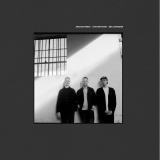
From deep in the hard funk pocket, the Winston Brothers return to Colemine after four years with a second helping of sounds rooted in horn-heavy, 70s-style soul cinema, taking cues from the soundtrack work of Issac Hayes, Willie Hutch, Roy Ayers, and JJ Johnson. Helmed by multi-instrumentalist/producer Sebastian Nagel and longtime collaborator Lucas Kochbeck on drums, Sweets serves as a timely reminder of how Hamburg, Germany’s music scene helps shape and influence today’s soul sound.
Ultimately, bringing musicians like Kimo Eiserbeck (sax and flute) and Hans Stephan (trumpet), alongside some additional drum contributions by Max Whitefield (née Weissenfeldt), demonstrates the close-knit nature of these musicians. From influential bands like Bacao Rhythm & Steel Band to Angels of Libra and the Mighty Mocambos, Hamburg’s deep groove scene has sired its share of worthy soul and funk acolytes.
These musicians have shared stages and studios over the years, with various
configurations finding their way in the aforementioned bands. “We started as a school project… we were just kids,” Sebastian recalls. “It’s a family thing, and we really know each other well.” Sweets is more than just another addition to this scene’s collective musical canon; it is a vibrant dispatch from funk’s leading edge.
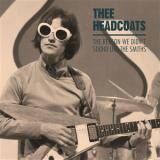
Zwei neue Songs von Thee Headcoats in einem passend an die Smiths angelehnten Cover! Die A-Seite ist aus ihrer kommenden LP "Children Of The Sect" und die B-Seite exklusiv auf dieser Veröffentlichung. Wir haben mit Billy Childish über die Single gesprochen_ Frage: "Hat dir irgendetwas an den Smiths gefallen?" Antwort: "Ja. Les Dawsons Version von ,Girlfriend in a Coma" (ich glaube, das ist der richtige Titel). Eigentlich habe ich sie gehasst, aber sie hatten ein paar ganz ordentliche Songtitel. Ihr Gitarrist kam mal auf mich zu und sprach mich an, als wir mit Modest Mouse in der Albert Hall mit unserer 100-Watt-PA spielten - er war sehr nett." Frage: "Auf dem Cover ist ein Bild von Dave Davies zu sehen. Was gefällt dir an den Kinks am besten? Hast du Ray oder Dave jemals getroffen?" Antwort: "Ich bin in den 1960er Jahren mit den Kinks aufgewachsen, zusammen mit den Stones, den Beatles, Bob Dylan und Jimi Hendrix. Als ich 1977 gefragt wurde, ob ich bei den Pop Rivets singen wolle, schlug ich vor, dass wir ,Hippy Hippy Shake", ,Wild Thing" und ,You Really Got Me" spielen sollten - Was mir an den Kinks am besten gefällt? Ich mag die R&B-Kinks? Daves Gitarrenspiel, und wir alle stehen total auf den tollen Schlagzeuger und Bassisten, und natürlich schreibt Ray gute Songs - also: Was gibt's da nicht zu lieben? Abgesehen von einer ganzen Menge. Ich habe noch nie einen echten Kink persönlich getroffen, aber wir kannten ein Mädchen, das sie im Rochester Odeon spielen sah. Sie und ihre Freunde baten Dave um ein Autogramm, und er jagte sie schreiend den Star Hill hinauf, wobei sein kleiner Stolz und seine Freude heraushingen."
Forty years of cassette releases, pressed for the first time on vinyl
First of two instalments exploring the previously unreleased sonic archives of one of Poland’s most enigmatic
living artists - with its first volume focused on his deep listening practice and spiritual reverie (recorded 1990–2013)
The last time Andrzej Dudek-Dürer took a banknote bearing the face of the Polish anarchist Jarosław Dąbrowski from his pocket to trade it for a pair of shoes was in 1969. He bought them for 120zł - the equivalent of 100€ today - and never replaced them since then. Only rebuilt them, year after year, drawing a needle and thread through the leather each time it split, closing one wound before the next one opened. It became a ritual of precision, stitching a record of another year into their soles.
That same year, in Wrocław, he arrived at a conclusion that would recalibrate everything that followed. Convinced he was the reincarnation of Albrecht Dürer, he adopted the surname Dudek-Dürer, stopped cutting his hair and began wearing the same garments every day. It was the first ritual of many, though he wouldn't have called it that yet. Look closely enough, over the decades, and it is always the same gesture, returning in different material: hair growing in a single unbroken strand, a needle drawing thread through leather, sitar strings pulled taut across a neck he built with his own hands and magnetic tape spooling forward inside the cassette boxes stacked against his walls.
None of this began in a vacuum. Dudek-Dürer emerged from the Wrocław neo-avant-garde, in a Polish art world where an exhibition could be cancelled overnight by the stroke of a censor's pen. In 1973, his exhibition Auto-crucifixion was shut down by the state, and for a time he found himself blocked from exhibiting his own art at all - the one force in his life that ever came close to cutting the thread.
He seemed to experience it differently. In 1974, after long, patient research into sitar craftsmanship, he built his first prototype with his brother, a knowledgeable luthier. In 1978, in a smoked-out jazz club, he took his first steps into sound recording with the unreleased album Jazz From Underground with his first band. By 1979, recognition started to travel further than he could.
Turning toward Far-Eastern philosophy, meditation and the idea of reincarnation was another language of freedom for him. It was a way of claiming an inner territory the state could not reach, a border it could not close. Mail Art served a parallel function, reaching further out: in a country that restricted travel and expression, sending and receiving art through the postal system became an act of quiet rebellion.
The body, in his understanding, is only an envelope readied for constant transformation. From this came Metaphysical Telepathy: during the years he could not leave Poland, he treated that confinement as a rehearsal room, sending his mind out ahead on the same thread his body would later follow. Living Sculpture grew from the same root with performances of stillness beside static art objects, until the boundary between the object and the man beside it simply dissolved. Camera Meditation extended the same instinct into photography: a shutter click flattening three dimensions into two so that a single instant could be held forever. Inspired by the pioneers of self-portrait photography like Robert Cornelius, he used it to document time itself, and kept explaining to me: "You know. This is not about vanity. This is about observing time passing.”
The isolation did not end suddenly. It ended the way his own philosophy had already predicted it would, from the inside first. Mail Art quietly solved the problem politics couldn't. Correspondence built during years of confinement slowly worked its way through doors the state itself had kept locked. Contacts made through folded paper and stamps became invitations. Ultimately, invitations became passports.
In 1983 he made his first trip outside Poland, to Germany, in search of the audio technology he couldn’t get his hands on before. In 1985, he was invited by the Indian embassy in Poland to give a sitar concert on an instrument he had spent a decade patiently stringing together - half sitar, half tanpura, built from patience and determination. After the collapse of the People's Republic of Poland, the travels kept unspooling: South Korea, then Mexico, then Australia, Canada, New Zealand, Singapore, Japan and the United States - each stop leaving behind its own small knot of tape, tied off and carried home.
In the decades since, recognition arrived at the same unhurried pace: he conducted workshops at UC Berkeley, served as vice-president for artistic affairs of the Union of Polish Art Photographers and the Union of Polish Visual Artists between 2010 and 2014 and received the Bronze Medal for Merit to Culture - Gloria Artis. His visual work gradually entered collections including the National Museums of Warsaw, the Stedelijk Museum, Tate Modern, MoMA and the Venice Biennale. His musical practice, by contrast, never found that kind of room - left to circulate quietly, sharing his cassette tapes directly, waiting for someone willing to follow it further.
It took months before I could find a way to reach Andrzej Dudek-Dürer - his presence online is very close to nonexistent. Surprisingly, LinkedIn turned out to be the only door still open, a faintly absurd irony given everything else about him. I packed the strict minimum for a three-day trip and an empty notebook and made my way to Wrocław. His headquarters sits in the neighbourhood of Grabyszyn: a two-storey pre-war house that has belonged to his family for generations. The man who opened the door was long-haired, long-bearded, in his trademark leather shoes and patched jeans. We sat in his living room, in front of a computer where decades of recordings sat organised in cryptically named files, surrounded by books and objects that had arrived one layer at a time, leaving room for only two chairs in the middle. His shoes sat by the door, rebuilt so many times they had become their own quiet sculpture. Cassette tapes filled boxes against the walls, almost unlabelled, each one a spool of thread holding decades of sound that had never once been asked for, until now.
I listened for hours: meditating in front of strangers on the porch of a Seoul temple until the tourists stopped taking photos and simply waited with him; a stand-off with border guards at the US–Mexico crossing over an instrument they couldn't identify and didn't trust; a session with the Stockhausen family that he still, decades later, describes like it happened last week. All of it interrupted, occasionally, by the smell of soup boiling and fresh bread warming on the ceramic stove. After two days, it felt like being handed the end of a very long thread and asked, gently, to keep following it. I left with a USB drive holding his full discography, signed with his unmistakable signature.
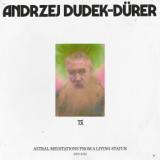
Astral Meditations From A Living Statue is a length of that thread, drawn out from the boxes stacked against his walls - recordings gathered from different rooms, different countries, different decades. This first record breathes slowly: incense-thick, meditative, built for stillness. A cutting-edge séance in outer space where machines learn how to dream.
It begins with the neo-classical improvisations of Andrzej, space-delayed, recorded at Klub Muzyki i Literatury in Wrocław in 2002. 'When..So' opens the curtains with a deep-rooted meditation accompanied by slow-decaying piano figures illuminated by a candle-lit spirit gathering.
Los Angeles, 1990: a dormant villa, a grand piano, the voice of Bonnie Barnett. 'Exception' is captured in a single room, in a single afternoon - voice and keys circling each other, neither one leading, until the silence between the notes starts to feel like the instrument.
'The Meta...' and 'Tired Of...', recorded at Studio Morandi in Ponte Nossa, Italy, in 1992, settle into a sitar drone built entirely from patience - overtones stacking and beating against each other, strung by a man who never once set foot in India. 'Mastery Of...' follows, recorded the same year at Studio Suski in Łomianki, pushing that same hum further still, until pitch dissolves into a spectral reverie. 'Transcendental Sound', from 2000, closes the first record in a slow bath of celestial frequency - better heard beside the shores of the Odra river.
More than fifty years after deciding that a life could become an artwork, Andrzej Dudek-Dürer continues to inhabit that decision. His shoes keep wearing thin against the earth's crust. His hair keeps growing, one strand at a time. His cassette tapes keep spooling in the dark of their boxes.
Now the thread finds its last shape: a single unbroken groove, spiralling inward from the outer edge to the label at the centre. Never cut - the way nothing else in his life ever was. Drop the needle and it will find that groove and follow it, the same way a needle once followed leather, once followed a border it couldn't cross, once followed string into an instrument that didn't exist until he built it. This record is the other end of a thread that has been travelling for fifty years. For the length of both sides, it rests here, in your hands. This is a timeless proof that the Lord of the New Age was never lost."
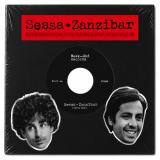
In 1970, at the invitation of Sérgio Mendes, Brazilian songwriter Edu Lobo travelled to Los Angeles to record for A&M Records. During this period, he also recorded his masterpiece, Cantiga de Longe, reissued by Week-End Records in September 2026. More than half a century later, Lobo’s music continues to inspire new generations of artists—including Sergio Sayeg, better known as Sessa.
With his intimate, quietly captivating songwriting, Sessa brings the spirit of Brazil’s golden era of MPB into the present. His deep affection for Lobo’s music made him a natural choice for this collaboration: we invited him to reinterpret “Zanzibar,” one of the album’s standout tracks, in his own unmistakable style.
A meeting of two generations, connected by a shared musical sensibility—available in a strictly limited physical edition of just 500 copies.
“Let It Be Known” sits at a pivotal moment in Spice 1’s catalog — bridging the raw street energy of his independent Bay Area beginnings with the darker, more polished sound that would define West Coast gangsta rap in the early ’90s. This release captures the foundation of what made him one of the most respected voices to come out of the Bay Area scene.
Raised between Hayward and Oakland, Spice 1 helped shape the sound and attitude of West Coast rap during a period when the Bay was developing its own identity alongside Los Angeles. His delivery combined cold realism, street storytelling, and paranoia-laced lyricism in a way that influenced an entire generation of rappers across Northern California and beyond. At a time when gangsta rap was becoming national, Spice brought a distinctly Bay Area perspective — darker, more introspective, and rooted in the realities of East Bay street life.
This reissue highlights an important chapter in that evolution, featuring early versions of songs that would later become staples of his catalog. Tracks like “Ghetto Thang,” “187 Proof,” and “In My Neighborhood” reveal how Spice’s sound was already fully formed from the beginning. For collectors and longtime fans, Let It Be Known offers a rare look at the raw blueprint behind one of the defining voices of ’90s West Coast hip-hop.
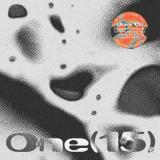
We love a concept. So for our 15 year anniversary, we added another layer.
one(15) celebrates 15 years of the label with one simple rule: every track had to clock in at one(15)BPM and under.
The result is 13 tracks ranging from 71 to 115BPM, a collection of slo-mo 303, horizontal acid and assorted low-tempo excursions.
15 Years | 3 LPs | 13 tracks | 71 to one(15)BPM | Still 303
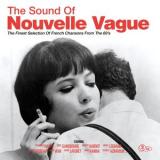
Mit dieser sorgfältig kuratierten Doppel-LP taucht der Hörer in die musikalische Welt des Frankreichs der frühen 1960er-Jahre ein. "The Sound Of Nouvelle Vague" versammelt die Klänge einer Epoche, in der Kino, Popkultur, Mode und Gesellschaft im Aufbruch waren. Zwischen Jazz, Ye-Ye, Chanson, Filmmusik und Bossa Nova entstand ein neues Lebensgefühl, das bis heute mit der Nouvelle-Vague-Ära verbunden wird. Künstlerinnen und Künstler wie Francoise Hardy, Serge Gainsbourg, Jeanne Moreau, Anna Karina, Brigitte Bardot und Jacques Dutronc stehen für eine Generation, die mit Konventionen brach und Frankreich kulturell neu definierte. Die ausgewählten Aufnahmen zeichnen das Klangbild einer Zeit nach, in der Jugendkultur, künstlerische Freiheit und ein modernes Frauenbild die Gesellschaft prägten. Das Ergebnis ist weit mehr als eine klassische Chanson-Compilation: eine musikalische Reise durch das Frankreich des Aufbruchs und den Soundtrack einer außergewöhnlichen kulturellen Bewegung.
Every coastline develops its own rhythm. The Adriatic is no exception.
For decades, Italy’s eastern coast has been shaped by funk, Cosmic Disco, Balearic sounds, Italo Disco, House, Latin rhythms, Brazilian music and countless other influences. Rather than blending into a single style, these musical worlds have lived side by side, constantly inspiring new generations of DJs, musicians and dancers. For more than fifteen years, Soul Fingers and Funk Rimini have explored that landscape from different perspectives. Founded by Claudio Cavallaro in 2013, Soul Fingers grew into a vinyl-driven community where groove matters more than genre. Its philosophy has always been simple: if the groove is right, genres stop mattering. Brothers Ricky and Francesco Cardelli developed Funk Rimini into a project rooted in funk, disco, live performance and electronic production. Anima Adriatica is where these two journeys meet.
The project didn’t begin with the ambition of making an album. It began behind the turntables. As DJs, Claudio Cavallaro and Ricky Cardelli found themselves constantly searching for records capable of connecting distant musical worlds inside their sets; from Afrobeat into disco, from hip hop into Latin, from Brazilian grooves into boogie, from cosmic electronics into deep funk. Sometimes those records existed. More often, they didn’t. So they stopped searching and started writing them. Not records designed to belong to one genre, but records designed to travel between genres. That space between musical worlds became Anima Adriatica.
The music grew through spontaneous jam sessions with Ricky and Francesco Cardelli, drummer Enrico Mao Bocchini and, gradually, a wider circle of musicians, singers and longtime friends, making Anima Adriatica less a traditional band than the beginning of an open collective. Recorded at SynthPosio Studio, founded by Ricky and Francesco Cardelli inside Rimini’s iconic skyscraper, the project also carries a symbolic connection to the building itself, where many Italo Disco classics (including records by Betty Miranda, The Creatures and many others) were recorded decades earlier.
Betty Miranda returns not as a nostalgic guest, but as a bridge between generations. On the title track she performs a spoken-word text written by Claudio Cavallaro, reflecting on the invisible thread connecting the Adriatic dancefloor across time. From Baia degli Angeli to Cocoricò, from the legendary clubs of Riccione to today’s independent communities gathered around projects such as Soul Fingers and Funk Rimini, the places have changed, but the dancefloor continues to tell the same story. Much like Pier Vittorio Tondelli’s Rimini captured the Adriatic through literature, Anima Adriatica imagines its soundtrack.
Brazilian musician Daniel Plentz (Selton) expands that vision on Açúcar and Alegria, bringing another coastline into the story. Across its four tracks, the EP moves naturally between analogue funk, boogie, Brazilian music, underground disco, cosmic textures and the wider Black musical tradition, with All Down The Line paying tribute to the Paradise Garage era.
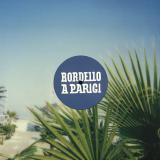
Released by Bordello A Parigi, the project found its natural home through a shared love of adventurous dance music, records and club culture. More than the title of an EP, Anima Adriatica marks the beginning of an open collective; a meeting point where musicians, DJs, producers and friends continue building bridges between genres, generations and communities.
Because Anima Adriatica doesn’t live inside a genre. It lives between genres. If soul music has always reflected the places where it was born, Anima Adriatica is simply our own Adriatic Soul.
A timeless classic - coming up on nearly 20 years since the original 12's were released and the very first time this LP has collectively been available on wax. (over 15 years since last in circulation)
This edition was remastered to analog perfection from the Grammy award winning ears @Stardelta Mastering. paying close attention to every finite detail - this album has never sounded so alive!
A multidimensional sound experience; it's like taking a swim in an analogue ocean and being immersed into the deepest end of the Mariana's Trench. Sonic Submersion of the Highest Order!
Credits:
Written & Produced by Steven Hitchell.
Vocal & Rhodes Performance by Paul St. Hilaire (Tikiman), courtesy of false tuned. Published by Basic Channel Publishing. (BCP)
Additional Mastering, Mixing and Engineering by Mark Richardson @ PrairieCat/Metropolis Mastering, Chicago, USA. (2007-2009)
Remastering and Lacquer cutting by Stardelta, UK. (2024)
Portugal-based percussionist Gabriel Ferrandini spent years honing his skills in various free jazz ensembles, where he demonstrated his absorption of the styles of pioneering rhythm liberators like Sunny Murray and Milford Graves while forging his own energetic and agile sound. During this time, Ferrandini performed with everyone from Evan Parker and Alexander von Schlippenbach to Thurston Moore and Dirty Beaches' Alex Zhang Hungtai. At some point, the percussionist grew restless and began taking a more compositional approach, using his drums as primary sources from which to produce spectral tones and timbres via electronic manipulation.
In Ferrandini's hands, cymbals become generative instruments with endless reverb tails and choir samples are distilled into vapor. With its subtle evocations of light and color and meticulous editing, Romance suggests an almost cinematic scale. The strings and grainy synthesizer of "Crying Game" lend an air of giallo dread to the deep sub-bass rumbles; "Afters Lisboa" processes cymbal crashes through a Leslie speaker to create a siren-like Doppler effect; "Fallen Angels," one of the few tracks to feature Ferrandini's mostly untreated percussion work, stacks layers of reverb effects of varying lengths (an old Autechre trick) to add friction and give the spatialized sounds a dissociative quality. Album highlight "Cova da Vaporwave" utilizes creative sidechaining, warbly VHS-like tones and drums amplified through a Fender Twin to gather apocalyptic momentum.
Romance is a formidable artistic statement, establishing Ferrandini as one of the most vital composers on the contemporary avant-garde music scene. He is influenced by Renaissance composer Carlo Gesualdo, whose passionate yet dissonant chromatic approach can be detected throughout the album's seven uncanny tracks.
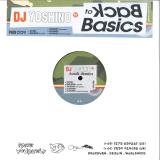
Impossibly rare slab: a capital-C-cult bit of millennial business from perhaps the most enigmatic member of the Gush Collective crew, who in the early 00s not so much redefined, but refined UKG… and then some. Alongside folks like Herb-LF and Lorenzo, Yoshino was a stalwart: releasing and remixing on the legendary but somewhat overlooked German labels Draft Recordings and Gush. It was here these cats smoothed out the UKG sound with a spliffed out vibe that fucked with the raw warm herby sounds of Tyree Cooper and QX-1; Yoshino, more than most though, flirted with sounds you wouldn’t expect to find in the UKG realm: think ethereally stuff man, I’m talking Placid Angels with the pseudo Japanese pop sensibilities of Faye Wong - but when when the cards fall down, his productions equally bang. So: splice in a bit of Serious Danger and Makesome Breaksome, light a phat one or zwei… & welcome to the wheelhouse.
‘Back to Basics' is a celebration of Yoshino as an artist: featuring a repress from our favourite Gush Collective stash (which is now so dear it makes me wish I’d better taken care of my records at after parties); three first time cuts of his on wax that we’ve curated from over the years that feature appearances from Peaky Beats and Miss Angel - and of course, there’s a killer remix from deep digging DJ and producer, Enchanted Rhythms (whose Youtube archive is packed to the veritable rafters with the most overlooked gems and updated with such frequency that it is hard to keep up). Apart from being a head’s head, Rich is also part of the Pace familia, so we're happy to welcome him to the catalogon a terrain he has endlessly kept fresh since day dot - he knows his shit here, and of course, he taps into that Yoshino flava big time.
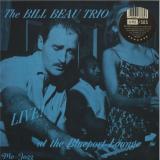
Bill Beau was born in Toronto, Ontario, Canada, but was raised in the western provinces, finishing high school in Edmonton, Alberta. It was while in high school that the "righteous rays" via radio struck Beau in the form of Meade Lux Lewis, Pete Johnson and Albert Ammons at the height of the Boogie Woogie rage. It was while in high school that Bill got his first gig. He played piano and worked with Wilf Harper, a guitarist of local renown. Beau played on weekends and during the week worked as a clothing salesman, stock clerk, refinery worker, service station attendant and freight checker. He travelled all across Canada, and finally landed in Los Angeles, California.
In 1958 his love of music compelled him to direct all of his energy toward the perfection of his musical talent, so he decided to settle permanently in Los Angeles. Beau first worked there as a vibraphonist, gigging with such stars as Ben Webster, Rex Stewart, Pete Fountain, and Stuff Smith. Once, when his regular organist failed to show up for a date, Beau ended up on the Hammond. Beau then formed his own group, and the trio got a standing date at the Blue Port Lounge. The other two members of the trio are Jo Stafford on guitar, Lorenzo Green on drums, plus the pretty and petite vocalist with the group, Chi Chi.
"Live at the Blueport Lounge" by the Bill Beau Trio is mod-soul-jazz at its very best! A stunning treasure rarely to be found - unless it's on Mo-Jazz!
'20 Años. Layered from the individual' is the first Compilation into the SEMANTICA 20 Years celebration.
This various is about to focus on raw and minimal techno, with no fear to showcase brightest to dark material, or exchange classic approach to non-standard visions in the same package.
An ambitious proposal featuring key artists such Oscar Mulero, Kaiser, Dimi Angelis or Adriana Lopez to name a few, but also solid names and fresh blood to put to test.
,PROUD OF ME" ist ein sehr persönliches neues Album, an dem ALA.NI - die geheimnisvolle britische Sängerin, Songwriterin und Musikerin, deren Stimme jenseits der Zeit zu schweben scheint - und der Komponist Adrian Younge fast ein Jahrzehnt lang gearbeitet haben. Das Album fängt einen tagebuchartigen Schnappschuss aus ALA.NIs Leben über mehrere Jahre hinweg ein und zeichnet Liebe, Sehnsucht, Trauer und Selbstfindung vor dem Hintergrund von Los Angeles nach. Auf ,Proud of Me" schreibt ALA.NI offen über Sehnsucht, Trauer, Intimität und Selbstbeherrschung und lässt dabei oft die emotionalen Ecken und Kanten offen liegen. Von der gedämpften Intimität von ,Face in the Evening" bis zur verträumten Romantik von ,Middle of Nowhere" zeichnet das Album die Geschichte einer Frau nach, die lernt, ihrer eigenen Stimme und ihren Erfahrungen zu vertrauen.
Spring Back, Ball Forward is the Soda Gong debut from Jung dj, nom de plume of shapeshifting multi-instrumentalist Randy Riback. Following a series of uniformly great self-releases and cassettes on the dearly missed Lillerne Tapes, this collection observes the spacious and angular dynamics of 1990s Midwestern post-rock through the lens of the bedroom electronic music producer.
Perhaps surprisingly, amp worship lies at the center of the album: a fascination with the grain, pressure, and emotional charge of amplification and gain, refracted through the strange remove of digital amp modeling. Tubes, speakers, sag, and in-the-red textures are a critical part of the album’s expressive vocabulary, imparting density and colorful saturation while lending even its most weightless passages a vital sense of physical presence. Over the course of twelve tracks, wistful ambience gives way to blunt heaviness and roiling catharsis, underpinned by a palpable sense of loss and grief.
The album’s auspicious cast of collaborators further complicates its emotional terrain. Spoken contributions from Natalia Panzer and Angelina Nonaj occupy strikingly different registers: Panzer’s diffuse and oblique, drifting in and out of the music’s contours; Nonaj’s a vivid travelogue, grounding the record in place and lived experience. Elsewhere, Soda Gong veteran Mister Water Wet joins a small constellation of guests whose playing folds naturally into Riback’s arrangements, blurring the boundaries between computer and ensemble music.
For all of its attention to texture, process, and the material qualities of sound, Spring Back, Ball Forward is first and foremost an emotionally potent work, possessed of a directness that can feel rare within experimental electronic music. Riback draws from a rich and idiosyncratic musical vernacular, arriving at something deeply felt and difficult to place: a singular statement whose pathos exceeds the sum of its references.
What makes a life well lived? Career, home, savings, family: these are the milestones that make adulthood legible as success. Friendship, meanwhile, is often treated as something that either endures or doesn’t, more a matter of luck than a relationship requiring its own devotion, maintenance, and care. When really, as the world becomes more isolated and artificial by the day, friendships may be the most important thing a person ever builds.
“A lot of times in life I feel like a late bloomer, like I'm still trying to get my shit together in a way that other people have already figured out,” says Chastity Belt drummer/vocalist Gretchen Grimm. “But then I reflect on my adulthood, and my top priority has largely been my friends, which I do not regret at all.” That priority feels like the guiding principle on the band’s sixth album, All My Friends. Not that they set out to make an album about friendship—during mixing the band's longtime collaborator and engineer, Samur Khouja, pointed out that a lot of the songs referenced the subject. Which makes a lot of sense.
Julia Shapiro (guitar/vocals), Lydia Lund (guitar/vocals), Hunter Truscott (bass/vocals), and Grimm have been making music together for 15 years. Friendship has sustained the Chastity Belt project as its members have grown alongside one another, both as people and as musicians. Across a resonant catalog, they’ve moved from the raucous wit of their early records toward the lush, introspective moods they’ve refined on each album since via trademark intertwining guitars, meticulous rhythms, and double exposure of melancholy and optimism.
All My Friends comprises songs recorded across multiple years, time zones, and studios, including Seahorse Sound in LA, Way Out in Woodinville, and a centuries-old house on the Greek island of Hydra. The oldest track dates back to around 2018; the newest were finished within the past year. These days, the band spans three cities (Los Angeles, Seattle, and Chicago); less writing/rehearsal time means songs are often worked out in the studio, relying on the spontaneity and instinct that comes from knowing one another so well. The result is rawer and less polished than their last couple of records, closer in spirit to the band’s roots.
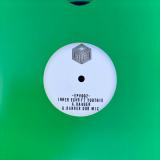
EchoPlex Records returns with its second full vinyl release, bringing together label owners Inner Echo, French multi-instrumentalist Youthie and Los Angeles-based bass player Dubsworth.
“Ranger” is a steppers cut built around live bass from Dubsworth, rolling 4x4 drums and Youthie’s signature trumpet playing. Dubsworth is a seasoned bass player and a familiar name within the Bay Area dubstep scene, while Youthie brings her trumpet into the mix, adding live melodies to the production and giving the track another layer of instrumentation.
On the B side, “Ranger” gets the full live dub treatment, mixed straight from the analogue desk with delays, reverbs, filters and live effects. A raw dub cut in keeping with soundsystem culture, with the mix shaped in real time.
Pressed as a limited 7” run. The digital release is available exclusively through the EchoPlex Records Bandcamp, with additional dub mixes that aren't included on the vinyl. There will be no release on streaming services or other digital stores.
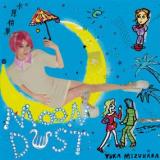
DJ, model, artist and selector Yuka Mizuhara steps forward with her standout 12-inch release 'Moon Dust' on Rush Hour. For her debut release, she joins forces with producers Benedek and Mickey de Grand IV (Psychic Mirrors), delivering a vibrant boogie and city pop-influenced transmission that bridges contemporary rhythm with classic, sun-drenched grooves.
Having spent formative years immersed in the underground music scene in Tokyo, with extended stays in Los Angeles and London, Mizuhara channels a rich blend of influences into her work. Known widely for her encyclopedic all-vinyl DJ sets, her residency on NTS Radio (Wave Flower), and high-profile collaborations with legends like Haruomi Hosono, Yukihiro Takahashi and Towa Tei, her musical output reflects a deep appreciation for groove, melody, and rhythm, carrying the torch of foundational Japanese techno-pop, experimental, and dance music forward.
On Moon Dust, Benedek returns fully to his signature West Coast boogie roots, laying down rolling, intricate synth basslines and melty chord progressions that form the heavy-grooving backbone of the record. Around this foundation, Mickey de Grand IV and Yuka Mizuhara write and weave extraordinarily catchy, endearing vocal melodies and hook-laden arrangements. Across its three distinct mixes, the track radiates Yuka's cute spirit—evoking a bubbly, high-spirited aesthetic reminiscent of classic 80’s RAH Band productions while blending sophisticated electronic arrangement with warm, organic dance floor vitality.
Fully stepping into her own as a recording artist following recent debut performances at major festivals like RDC and Rally, Yuka Mizuhara invites listeners into a romantic, synth-laden world built on pure groove and creative freedom.
On Beginningless, Anna Butterss, John Raymond, and Ben Lumsdaine combine acoustic instruments and effects to create a nocturnal, neon landscape both grounded and otherworldly. Recorded live over two days in a Los Angeles studio, the album expands the trumpet-bass-drums format through shared intuition, fluid textures, and patient, elastic interplay. The music is entirely improvised, with little overdubbing or post-production: what you hear is essentially the sound of three musicians discovering the music together in the room, using pedals and processing as extensions of their instruments.
Der ultimative Weihnachtsklang: Legendärer Chorgesang aus dem King’s College auf Vinyl Erleben Sie mit dieser Vinyl den Inbegriff weihnachtlicher Musik. Sie wurde in der atemberaubenden Akustik der Kapelle des King’s College in Cambridge aufgenommen. Diese LP vereint den legendären Choir of King’s College, Cambridge – den wohl weltweit berühmtesten Weihnachtschor – unter der Leitung von drei seiner bekanntesten Dirigenten: Sir David Willcocks, Philip Ledger und Stephen Cleobury. Von der festlichen Erhabenheit von „Hark! The Herald Angels Sing” und „O Come, All Ye Faithful” bis zur intimen, ergreifenden Schönheit von John Taveners „The Lamb” und Harold Darkes „In the Bleak Midwinter” fängt diese Sammlung den reinen Zauber der Weihnachtszeit im warmen Klang des Vinyl-Formats ein.
Finally a repress of one of the most selling club records of the late 90s and early 00s! Timeless 12 minute long Nalin & Kane remix. Number one of the German Dance Charts. Supported by Joris Voorn, M.I.K.E. Push, Paul Oakenfold, John Digweed, Dave Angel, Umek, Mark Knight, Paul Thomas and many more.
Roundhouse makes its first statement on wax. Way of the Warrior finds Lukey exploring the space between Japanese fighting culture and the raw energy of South Central Los Angeles, translating those influences into five club-focused cuts. Rolling tech house grooves, acid pressure, analogue textures and West Coast vocal references shape the EP, while a lone breakbeat electro excursion briefly shifts the pace before returning to the record's driving core. A confident introduction to the sound and direction of Roundhouse.
Originally released on cd in 2017 on Rope a dope and Sounds of Crenshaw, this landmark project now receives a strictly limited audiophile vinyl edition. This release marks the debut of Terrace Martin’s all-star collective, featuring Robert Glasper, Kamasi Washington, Chachi a.k.a. Problem and more, a defining statement of modern Los Angeles jazz, hip-hop and soul.
After several years, revered dub techno craftsman Andrey Pushkarev finally return with a solo release - Simbioza. Taking its name from the Romanian word for symbiosis, this release is a testament to creative exchange, built entirely from collaborations with dear friends & artists that have crossed Pushkarev’s path numerous times during his 20 years long musical journey. While staying true to Andrey’s signature deep & dubby aesthetic, the release also includes the artist’s first drum and bass output, featuring Los Angeles based Svetti’s haunting & mesmerizing vocals. The EP will be released on the well regarded BERG AUDIO during the month of September 2025 - limited vinyl copies.
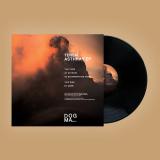
FKJ returns with Tyber— a project that captures a period of personal and creative transformation following the release of his acclaimed album ‘V I N C E N T’. Written and recorded across multiple continents, the album reflects years spent navigating movement, solitude, collaboration and renewal.
The result is FKJ at his most expansive and uninhibited. Across ‘Tyber’, groove-driven compositions sit alongside jazz-led instrumentals, sample-heavy explorations and more direct songwriting moments, moving seamlessly through genres without ever losing cohesion. The album feels both deeply personal and globally informed, spotlighting an artist documenting his evolution in real time. It captures musical snapshots across London, Los Angeles, Paris, Brazil, and beyond to create music that combines intricacy and intimacy seamlessly.
Anchored by themes of emotional equilibrium and self-care, Tyber balances vulnerable storytelling with an unmistakable, groove-laden optimism. The album seamlessly weaves together spontaneous, late-night collaborations with artists like Labrinth, Bas, and Baby Rose, alongside deeply personal solo compositions. Ultimately, Tyber is a vibrant celebration of human connection and resilience, offering listeners an immersive, cinematic invitation into FKJ’s newly restored world.
MCRV019 – VA – Phase Drift. Passage is a graceful and emotionally nuanced four-track journey through modern deep tech house. Blending reimagined echoes of early 2000s deep sounds with forward-thinking production, the release moves between moods and textures with surgical control and quiet sophistication. It’s an EP that balances warmth and restraint, melancholy and motion — built for selectors who appreciate finely tuned emotional arcs.
A1. Stephano Franca – Arriving opens with a fluid, introspective piece. Gentle and melancholic, it glides with cinematic poise, drawing listeners into a state of suspended reflection.
A2. Dot – Distance Call introduces a percussive, tribal undercurrent — earthy and grounded, yet full of bounce. It energizes the space while maintaining depth and groove.
Flipping over, B1. Reenday – Last Call (Nicolas Barnes Remix) brings a refined sense of cold elegance. Dubby and atmospheric, it’s a minimalist piece that evokes distance and stillness — a cool breath in the night.
Closing the release, B2. Jeronimo Watson – On The Prowl is a deep tech gem — emotive, seductive, and sharply detailed. With a slow-burning energy, it brings the record to a confident and composed close.
From Brazilian talent Stephano Franca to Dot and Nicolas Barnes, two of the label’s most precise and consistent producers, and rising standout Reenday, a finalist of the ANTS: NEXT GEN Artist Program 2025, this release represents the current essence of MixCult. It is sealed by the distinct touch of Jeronimo Watson, whose Los Angeles–rooted sound closes the circle with style.
Phase Drift. Passage is not just a collection of tracks — it’s a refined toolkit for navigating emotional shifts and dancefloor narratives, framed by elegance and intention.
Follow-up to 2025's “i was put on this earth” (“a triumph of gentle reverie and quiet upheaval” - Pitchfork). DJ Python’s music has always occupied the interesting space in between - reggaeton's low pulse, ambient's patience, deep house's forward motion, the abstracted sounds of trip-hop, shoegaze, and pop - and this new EP finds him stretching that even further. A companion to “i was put on this earth”, the new EP shares that project's creative DNA while pulling in its own direction.
DJ Python (aka Brian Piñeyro) steps more fully into the role of singer and songwriter, sharing the mic across a set of collaborators including Ari, Tony Bontana, and Eden, while still carving out room for hypnotic solo songs.
Across five tracks, the project moves fluidly while retaining the captivating melodies, atmospheric textures, and rhythmic innovation that defined Python's earlier recordings - Mas Amable, Angel, and Club Sentimientos Vol 2 - expanding those sounds into something looser, warmer, and harder to categorise.
St. Panther is the recording project of Dani Bojorges-Giraldo (they/them), a Mexican/Colombian artist, producer, singer, rapper, and multi-instrumentalist living in East Los Angeles. On their full-length debut, East Side Love Story, they dedicate an effervescent, soulful set of love songs to the place they call home.
The project has developed over the past six years within the walls of their East Los Angeles apartment. Friends, lovers, sounds, and songs, the essence of the East Side pours through the windows as an endless stream of distinctly Latino taste. Chicano soul, Motown classics, G-funk anthems, and other feel-good oldies fill the air with warmth and romance. Everything imbues the timeless East Side Love Story, arriving in 2026 on the art-forward label drink sum wtr.
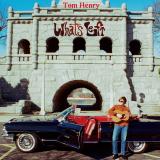
What's Left is the new album by Tom Henry, releasing November 20th, 2026 on Royal Oakie Records. Where his debut album Songs to Sing and Dance To leaned into big dreams, What's Left is a record about what remains once the dust settles, delivered with the wit and charm of a young rocker in his prime. The familiar influences are still there — Paul McCartney and Big Star loom large (though there's a little more Third/Sister Lovers this time around), but now the songs are lush and polished, with new sounds creeping in around Henry’s trademark power pop hooks. On a handful of tracks you can even hear strains of Syd Barrett influenced acid-folk alongside psychedelic rock that recalls The Brian Jonestown Massacre or The Beatles at their most lysergic.
Produced in collaboration with David Glasebrook (Patti Smith, Peter Case, Sugar Candy Mountain), and engineered by Glasebrook and Stephen Shirk, the album was tracked across two cities at Shirk Studios in Chicago, IL and The Garden Shed in Oakland, CA, where Glasebrook also handled mixing and mastering. The record's cross-continental origins reflect the movements of Tom’s own life over the past half decade, which found him departing his native Chicago for Los Angeles before returning home four years later, and lend the album its distinctive sound of Midwestern grit mixed with California sunshine across all twelve tracks.
Opener "Someone I Need" sets the tone: an old-fashioned, up-beat rocker built for a roadside diner jukebox somewhere out along the backroads of your mind — it's crunchy tape tones and horn arrangement lending warmth to the song as the narrator asks for a dance and beckons the listener along for the ride. By "It's Not Meant to Be," the record turns inward, wrestling with the exhaustion of trying to find love in the modern age — especially for someone who wears their heart on their sleeve and often comes to find their suitor's wardrobe doesn't have room. "Silverlake Song," reminiscent of early Donovan, kicks off with otherworldly sitar — a wry postcard from the west, tracing how the shimmering promise of L.A.'s Silver Lake enchants, bargains with, and ultimately tries to ruin the starry-eyed dreamer — and very nearly succeeds.
In addition to Tom–who sang and played guitar, bass, and keys–the album features musical contributions from co-producer David Glasebrook, Brian Daley, Joe Daley, Finn Swingley, Lewis Patzner, and labelmates Graham Patzner, Charles Lloyd, and Simon Beins. Liner notes come courtesy of Ian F. Svenonius, who — in the guise of one Johnny Sincere of Integrated Star Management Ltd. — recounts his company's failed attempt to sell Tom Henry a gimmick: a space suit, a coal miner's neckerchief, a lounge pianist's dead-eyed shades. Tom turned them all down. As Svenonius tells it, when reminded that every story's been told and every gimmick's been used, that all that's left is to admire the photographs of what's gone before, Tom simply shrugged: rock 'n' roll is an eternal spring, and if this is what's left, that's just fine with him — it's what he likes to do.
Delinquent Habits is the self-titled debut album of the Chicano hip-hop group that was formed in Los Angeles in 1991. As a group they got widespread attention with their, both melodic and hardcore, Latin-tinged rap. For the album they got help from Sen Dog, known from the very popular hip hop group Cypress Hill. He was the executive producer and also made a guest appearance on "Underground Connection".
The group was one of the biggest breakthrough acts of 1996. It started with the single "Tres Delinquentes" that attracted much attention and sold over one million copies. The album followed quickly and was equally successful by reaching the Billboard Top 200. The genre gained a new classic!
Delinquent Habits is available as a 30th anniversary edition of 2000 individually numbered copies on blue and white vinyl.
Legendary London drummer Crispin “The Pump” Taylor releases his long-awaited debut album Licence to Fill on Monks Road Records, celebrating 35 years at the heart of the Soul, Funk, Rare Groove and Acid Jazz scenes.
A founder member of Push and former member of pioneering Acid Jazz outfit Galliano, Taylor has also toured and recorded with Zero 7, The Blow Monkeys, Dexys Midnight Runners, Seal, Paul Weller, The Funk Brothers, Marlena Shaw, Candi Staton, Carleen Anderson, Urban Species and many more.
Licence to Fill brings together original Funk, Soul and Jazz material, featuring acclaimed musicians including Mick Talbot, Angelo Starr, Joe Cang and Matt Deighton.
A heavyweight debut from one of the UK's most respected groove-driven drummers.
Kates Musik lässt sich mit den besten und tiefsten Süßwasserseen vergleichen: In der Tiefe kühl und sich selbst erneuernd, an der Oberfläche jedoch warm und funkelnd. Mit ihrer neuesten EP ,Shop Girl" hat sie etwas Vielversprechendes und Einzigartiges geschaffen. Produziert und begleitet von Jonathan Rado sowie den Musikern Sam France, Tim Bernardes und Alex Heaney lässt sich Kate von Lynsey De Paul und Kate Bush inspirieren, ebenso wie von ,Ribbons of War", einer Rockoper von The Extraordinaires, die sie schon seit ihrer Kindheit liebt. Die EP enthält fünf Songs, die Kate als ,Songs aus einem imaginären Musical" bezeichnet. Es ist die Geschichte einer kleinen Boutique, ihrer Besitzerin und der drei jungen Frauen, die den Laden führen. Vor allem eine von ihnen, namens ,Bobby", singt den Song ,Dear Bobby" als verzweifelte Bitte an den Jungen, den sie liebt - der ebenfalls Bobby heißt. Unterdessen sind die Verkäuferinnen besessen von der Band Texaco und der sehr öffentlichen Trennung zwischen den romantisch verstrickten Bandmitgliedern Ian Machine und Sandra Beach. Im Titelsong ,Shop Girl" beschreibt eines der Mädchen die alltäglichen Aufgaben der Arbeit in einem Laden mit solcher Begeisterung, dass das Gewöhnliche auf surreale Weise verwandelt wird. ,Dreams Don't Come True" ist die ausgelassene Eröffnungsnummer, die den Ton für das Folgende angibt - mit einem Sound, der Fans von George Martin sowie Lennon und McCartney aufhorchen lässt und zum Lächeln bringt. Die Akkordarrangements haben etwas Authentisches an sich und erinnern an Songs aus den späten 60ern. Es ist kein bloßer Abklatsch davon, sondern vielmehr eine schöne Neuinterpretation von Liverpool und London über Charlottesville, Virginia, und Los Angeles, Kalifornien.
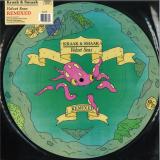
Kraak & Smaak formed in Leiden in pursuit of a particular blend of funk, disco and electronic soul, and over two decades and seven albums, Oscar de Jong, Wim Plug and Mark Kneppers have sharpened a sound that's unmistakably their own: warm, analogue, and always twisting old soul into something new. That sound has carried them from small European clubs to Coachella and American late night TV.
Their 2025 album Velvet Seas was written between Leiden and Los Angeles, and it shows: Californian light and a touch of psychedelia sit easily alongside deep funk and a cinematic reach. The record leaned on a wide circle of guests, among them IVAR, Berenice van Leer, Izo FitzRoy, Butter Bath, The Undercover Dream Lovers, iogi, Kosta G and Kainalu.
Velvet Seas Remixed hands the album's best moments to a curated set of international producers. British disco heritage, classic French touch, Brazilian disco funk, Melbourne club music and homegrown Dutch groove all take a turn, with each producer bending a familiar song toward their own instincts while keeping the album's character intact. Longer, extended versions and alternate mixes round out the full release, letting several of these tracks land in more than one form.
NEXT WORLD SOUND SERIES vol. 5 continues the line of experimental compilations featuring one side of an artist exploring their individual take on the ambient genre. Pressed in clear green vinyl.
Knox Chandler is an American musician, producer, arranger, and visual artist whose career spans over four decades. He has worked with The Psychedelic Furs, Siouxsie and the Banshees, Cyndi Lauper, R.E.M., Depeche Mode, Grace Jones, and Dave Gahan, among others. After a decade in Berlin, where he developed his layered guitar technique called Soundribbons, he returned to the U.S. and settled on the Connecticut shoreline.
ANNA HOMLER, is a vocal, visual and performance artist based in Los Angeles. She has performed and exhibited her work in venues around the world. With a sensibility that is both ancient and postmodern, Homler sings in an improvised melodic language. Her work explores alternative means of communication and the poetics of ordinary things.
Anna is accompanied by: Jeff Schwartz, a very active Los Angeles-based improvised and experimental double bassist. He leads the Present Quartet, Intangible, and the Soapbox; performs with a variety of ensembles and orchestras; and has written books on music for SUNY Press and Routledge.
David Javelosa a composer, producer, recording artist and technologist based in Mar Vista California. Performing on modular, electronic instruments, he has created soundtracks for many of the major game platforms, and most recently has been performing with Microwave Buddha, a retrospective of his synth pop work in the 1980's.
Continuing the Hyperspace instrumental ambient series tradition are two ensembles: Mindstreams, and the duet Squash and Biscuit. This LP features a full side for each artist and is pressed in lavender vinyl. Mindstreams is a vocalized ambient bed of sound by JP Berreondo and Stefanie Naifeh. From opera to avant-garde, neo-cabaret to singing world music in 15 languages, Naifeh journeys through a colorful mosaic of music. She began her classical training at the age of 8, performed with the San Francisco Opera in the children's choir in Carmen, and majored in opera at UCLA. She later formed the avant-garde, neo-cabaret band, The Underthings in 1987. Squash and Biscuit is a Los Angeles based husband/wife team featuring composers Shuwen Zhao and Brian Griffith. Recorded live from 2020-2021, each piece serves as a short investigation into the world between sound and music using found sounds, musical samples, instrument recordings, and voice manipulation. Limited to 300 copies
The robots on late-night television kept saying the future was already here. We believed it. We promised the stars that we will visit. It felt impossible. But Dimi parked a rocket in front of our house, we got in. The stars were twice as bright as we launched the opposite way, towards the underground. A1 - Dimi Angelis - Mastodon A2 - Dimi Angelis - Hollow Earth B1 - Dimi Angelis - Tertiary B2 - Dimi Angelis - Habitable Zone C1 - Dimi Angelis - Subterranean River C2 - Dimi Angelis - Megatherium D1 - Dimi Angelis - Cataclysm D2 - Dimi Angelis - Cenozoic E1 - Dimi Angelis - The Icy Web E2 - Dimi Angelis - Volcanic Tubes F1 - Dimi Angelis - Quaternary Limited numbered version of TAR-LP5 with an extra vinyl lathe disc, an extra of 3 tracks. 2x12inch + 1 lathe cut vinyl. All tracks will be available digitally. including: free digital download code with 3 extra tunes, stickered outersleeve, printed innersleeves, printed labels.