2019 has sparked a new evolution for the transient broken beats of London’s Itinerant Dubs.
The enigmatic imprint has been running in silo since 2013, providing the final strongholds of the underground with innovative bass aesthetics and an intoxicating electro swarm. In fact, “It’s Magic” opens the A-side with a cold, bruising cut of metallic percussion wrapped around lonesome, dystopian bleeps and form-shifting synths. Minimised and stripped-back to its core functions, guided by bold infusions of breaks. “Oh She Dance” is the duo’s most playful construction yet, mashing up a loose jungle flow with more rigid breakbeat science to form a deathly machine-gun of sonics. Bullets keep spraying across “Salsa On Mars” - a raucous, percussion-heavy slice of dubbed-out house - albeit with a moodier, more introspective groove that takes its ammunition from London’s inimitable jazz arsenal.
Cerca:beat machine
"NOON" One of the most prominent and widely acclaimed polish producers, returns after a two-year break with the new album called "Nobody Nothing Nowhere".
The fifth solo work of NOON was released by his own label called "Nowe Nagrania". The idea of "Nobody Nothing Nowhere" is connected to the various places in Poland and Europe: from the first sketches recorded in Gdynia, through Warsaw and London, to the final recordings in Łódź. Alan Kamiński is responsible for the graphic design of the album, based on NOON's own photos.
The atmosphere of working on "Nobody Nothing Nowhere" is similar to the aura of "Gry Studyjne" LP - NOON's sophomore album. However, this time NOON puts emphasis on much greater advancement, devoting himself to work alone with one analog beat making machine called Elektron Rytm Mk2.
Mikołaj Bugajak on "Nobody Nothing Nowhere" is accompanied by excellent musicians and also his regular concert partners - drummer Marcin Awierianow, bassist Piotr Połoz (both from polish post-punk band Psychocukier) and violinist Tomasz Mreńca. It is worth mentioning that NOON's part's contained on "Nobody Nothing Nowhere" were programmed on the machine in the shape of live performances, which gave the LP additional element of dynamism and life.
"Album called "Nobody Nothing Nowhere" is an album about escape, which turns out to be impossible. All these struggles and attempts to change destiny resemble a spiral journey. The albums consists of three parts, and is summarized by the song called "Spektrum".
My fifth album is released less than two years after "Algorytm" premiere in terms of experiences that I wanted to share with the audience." (NOON)
22a main man Tenderlonious returns with a brand new 4 track EP, seamlessly cooking up a blend of hybrid house and broken beat with his unique analogue productions and signature flute instrumentation. The title track 'After The Storm' picks up where 2019 album 'Hard Rain' left off (Bandcamp's electronic albums of 2019) - a stormy, atmospheric 4/4 groove, with flute flurries, build the track to a state of euphoria. The EP continues with 'G Flex', a tune dedicated to Tender's mentor Sterling Styles, aka Equinox (Scientific Wax). Broken drum machine loops are brought to life by classic Tender flute and synth solos. Fans of his 2016 'On Flute' EP will be feeling this one!
Distorted Sensory Perception is back with a journey of deep space exploration in the form of their 2nd Various Artists release ‘Outer Solar System’. Featuring a diverse selection of deeper Electro and Techno of the broken beat variety.
The A-side boasts a nostalgic stripped back yet progressive cut ‘Persistence’ from Maltese duo Moodex. Next up, a deep ethereal musical statement ‘Early Morning Hours’ from fellow Maltese producer Sound Synthesis in his unique style.
The B-side opens with the moody, new school heavy hitter ‘Impulse Control’ from French producer and label co-founder Oshkossh. The penultimate track ‘Brainacid v2’ comes in the form of dusty machine music from Italian newcomer Caramel Chameleon that is reminiscent of AFX ambient works. Last but by no means least the record is brought to an epic conclusion with the frantically emotive and intricate ‘Grny89’ from France's Foreign Sequence.
Lisbon pals Photonz and Shcuro are two of the city’s most active DJs and music makers, sharing a penchant for a moody yet electrifying brand of dance sonics. They’ve created Shermanworx together in the studio, recording machines live using an ethos of improvisation while relying on their fine-tuned dancefloor intuition. The Sherman Filterbank was the go-to piece of equipment, appearing in every track and eventually naming the EP. Tribal techno swirls menacingly backed by dark melodies in the opening track, a hypnotic yet vivid peak-time belter that could go on and on. A synth so textured you can almost touch it is the centrepiece of Sherman2, another driving club beast complete with modulated arpeggios and industrial-tinged percussions. The record comes to close with a dreamier exercise in Sherman3: a dubby electro beat conducts melodic mutant synth lines and pads to achieve a slow-burning, expansive euphoria.
Dadub is a project synonymous with the deepest rhythms from the interior of the human psyche. Low-end mysticism. Tribalist periodic audio patterns. The Berlin-based Italian producers behind the project, now constructed of sonic warlock Daniele Antezza and performance artist Marco Donnarumma, supply an unmistakably unique vision of post-apocalyptic dub landscapes. Past, present, and future blend into one, backed by the supremely sublime BASS of creators who are light years ahead in their field. A Sun Called Moon is a superior first representation on Ohm Resistance, detailing their ongoing mission of creating bass-present music, regardless of dancefloor conformity. The Time You Killed opens as a psycho-acoustic audio film, depicting the unknown world from which the EP emanates. I Would Gladly Die… introduces the first heavy rhythmic patterns, completely alien to identified structures, while unmistakably pushing a groove that entrances hypnotically. Past Times Present Ruins lowers the tempo and continues extrapolating into new rhythmic territory – or is it ancient? It Was Too Soon follows with beat driven hednod, as influences from Scorn to Autechre are subsumed into the universal language that comprises Dadub. Feeling both familiar and foreign, both modern and eternal, Dadub’s first appearance on Ohm Resistance is a fascinating drama played out in 4 acts. Spliff recommended – subwoofer required. All tracks Written and Produced by Daniele Antezza and Marco Donnarumma Mixed by Daniele Antezza and Marco Donnarumma at Dadub Studio, Berlin Mastered by Xergio Cordoba @ Eternal Midnight Studio, Madrid Photography by Flora Schwartz Layout by MachineTM
Beyond the Mikrosector, passed the Love Quadrant and over the Intersect lies another reality that exists in contrary to our own. This is where we now find Mr. 8040, the Space Dimension Controller, on a planète contraire, a world very much like our own, but one that runs in opposite to the norm. Here he toys with intergalactic Detroit funk and sequenced machines, creating celestial signals of minimalistic, atmospheric boogie. It’s a new course of interconnected, cinematic electro that exists outside of time and yet is apt for moments of timelessness.
Within the world of astrophysics there are select scientists out there that believe space-time gradually loops in on itself. Within this infinite realm of time and space, we can find ourselves once again living our past lives. It’s in this eternal domain that the Space Dimension Controller returns once more, applying his knowledge from the planète contraire to his absorbing palette of C-beams, moon-lit orchestrations, and graviton beats. Matured from his time cavorting through the core of the unknown, the Space Dimension Controller’s sound becomes more focussed, filled with the knowledge of the worlds his visited.
On the A side, Mr. 8040’s strain of progressive and unequivocal deep-space disco lends towards his studio competence, creating lush melodies that will have even the geysers of Enceladus erupting in time along with the symphony of syncopated drum machines. On the flipside, the prodigious Jack Hamill, aka. the Space Dimension Controller, flexes his machine savviness once more creating a timeless electro-funk rhythm for a timeless, time-travelling pioneer.
LostSoundBytes throws us by force into the deep end of a poorly lubricated engine with this 5 tracks mini album. Hear the dirty mechanical rumble of an old abandoned tractor that LostSoundBytes has just hot wired and driven off with, leaving road kill on his way. Driving fast or slow, you may ask. Who cares ! For our beneluxian shaman puts the pedal to the metal destroying the speakers on the way with Rusty Tractor. A certain vision of combustion by our mechanic LostSoundBytes : saturated rhythms on beaten up drum machines dragging us between Brussels and Paris.
- A1: Get Funky 1933 (Feat The Color Grey, Pomrad)
- A2: Oh Baby 1939
- A3: Royale With G's 2013 With Gramatik
- A4: Roller Disco 1980 (Feat Hi Levelz)
- A5: Overview Effect 1972 With Møme (Feat M I.l.k.)
- A6: Kanagawa Waves 1831 With Fakear, Balkan Bump
- B1: Payeng's Ark 1979
- B2: Cloud Nine 2000 (Feat The Color Grey)
- B3: Time Machine 1985
- B4: Electric City 2015
- B5: Keep Moving Up 1978
- B6: Paris Jazz Club 1920 (Feat Anomalie)
For The Geek and VRV, everything is a matter of time. Since they first met six years ago, the two beatmakers have been broadcasting their music to the four corners of the world, and their collaboration is as strong as ever after the years. Vanguards of the French instrumental hip-hop scene, they’re coming out today with their first album, Time Machine, a synthesis of the sounds and the ideas they’ve been working on from the very beginning of their careers. A trip back through time, as its name suggests, demonstrating the range of sound possibilities that they created in previous projects and on their international tours.
The release of their hit “It’s Because” in 2013 launched them on the scene as French producers who managed to break into the United States, with sampling as their musical base. Closer to home, the Coachella, Osheaga, and Solidays music festivals were won over by the pair’s complementarity, which made the success of their BTOS beat tapes and their EPs, Electric City and Origami.
But since everything is a matter of time, it was sometimes necessary to just let things go, take a break and think things over before coming back even stronger. A year and a half ago, The Geek and VRV started to slow things down, in order to take a step back and concentrate on this new album. With one overriding idea: to explore different eras and time periods, and transpose them into our modernity. Each track is associated with a pivotal year in music. With “Paris Jazz Club 1920”, the first single on the album, we're plunged into the cozy atmosphere of the cabarets, featuring the virtuoso Montreal pianist Anomalie. A meeting made possible thanks to the famous beatmaker Gramatik, who was a fundamental inspiration for their music, and who is also present on the album, as well as the flagship producers Fakear and Møme.
On Time Machine, The Geek and VRV have turned on their time machine to bring us to the year of James Brown’s birth, and find the unstoppable groove of “Get Funky 1933”. Always with hip hop in sight. The explosion of disco inspired them to record “Roller Disco Party 1980”, and the film Back to the Future was behind “Time Machine 1985”. The mixing of different time periods means that the styles, genres and atmospheres are channeled to perfection. The Geek and VRV have been preparing for this trip for five years now. With Time Machine, the time has come for them to begin their exploration, and to take us along for the ride.
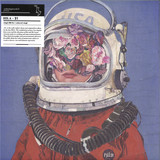
"21" is the well-crafted, sharp and original first album by the duo HILA, composed by American cellist Artyom Manukyan (who already worked with Kamasi Washington, Daedalus, Flying Lotus, Run DMC, Gretchen Parlato, Raphael Saadiq, Clive Lowe Mark...) and french producer Dawatile.
The combination of jazz, Los Angeles beat-scene and the vibrations of 80s and 90s Soviet Armenia make it a striking and unprecedented fusion. These kind of nostalgic and unconventional references forcefully shake the codes of mainstream culture to create a sincere, raw and intimate expression.
"HILA" was born from a spontaneous and intense creative impulse between Artyom Manukyan, a Los Angeles-based Armenian celloist and his partner in crime, David Kiledjian aka Dawatile, a French multi-instrumentist of Armenian descent. This project is proving to be a true master stroke given that it only took 21 days for the duo to make it a reality.
"HILA" was made in less a moon cycle but captivates and electrifies audiences upon its first outings. "H.I.L.A" colors the warmth of the Californian "High" with Armenian vibes. The artists chose this name for their creation since both have a close and valuable connection to these locales. This journey began in 2007, on the day Dawatile went to Yerevan, the capital of this small country in the Caucasus mountain to realize a first fusion project centered around local folkloric music genres.
There he was introduced to local musicians including the Armenian Navy Band, one of the country's foremost groups in which Artyom played the bass and cello. In this context, he also met many musicians such as Tigran Hamasyan and Norayr Kartashyan. This will be the beginning of connections between Lyon, Yerevan and Los Angeles. The following year, the two artists will be be seen performing next to Taylor Mc Ferrin at the Jazz à Vienne festival. More recently, they partnered up again when the cellist, who had freshly relocated in California, invited Dawatile to produce his album. As soon as the studio’s threshold was crossed, they decided to postpone this record and create a joint project: Hay (as the Armenians call themselves) / High In Los Angeles. HILA was born at the end of these 21 days of intense creation. The association of Artyom Manukyan and Dawatile is the combination of two visions, two versions of Armenia, two personalities, the reunion of the Eastern and Western blocs.
One grew up nurtured by the sounds of hip-hop and jazz in Europe and the other by art music and Russian-influenced 1980s Armenian folkloric music before moving to L. A., Ca. The cornerstone of it all, the glue that unites everything : Armenia and music. They generate a new identity synthesizing two perceptions, their complicity transcending these cultural discrepencies. To achieve this, they will scour through images of Artyom’s childhood, within the popular culture of Soviet Armenia. Together, they revisit this decidedly retro vibe, based on the work of Caucasian groups inspired by African American music. This background is rehashed and fused with ancestral Armenian sounds. The DNA of the album "21" is molded by these dear influences.
We can also hear the ancestral sounds of Armenia, a country at the edges of both Europe and Asia. The presence on two tracks of Armenian music Master Norayr Kartashyan, infuses the languor of past melodies and traditions. These purposeful anachronistic sounds offer a fantastic depth to this powerful opus. Listening to the album, one can appreciate the successful fusion of styles and influences. Those combinations, however, manage to preserve individual identities only to enhance the art through an adamant musical dialogue.
Being driven by the urge to transpose Armenian musical traditions into a unique universe, the daring artists, offer an innovative combination by blending, for the first time, these ancestral sounds with the world of Los Angeles beat-scene and jazz. An invention largely fueled by the magic strings of Artyom and maestro Miguel Atwood-Ferguson, a pillar of the genre in Los Angeles combined. These associations resonate with a triumphant equilibrium. HILA is musical uncharted territory in which Artyom's cello strings intertwine to ignite the harmonies of keyboards, the machines, the vocals and electronic layers Dawatile pieced together. HILA plays the soundtrack of an adventure set between Armenia around the end of the Soviet era and a mysterious near future.
Artyom Manukyan grew up in Armenia in the 90s. At the time, he studied Russian classical music while learning jazz with assistance by his father, a music journalist. Being an unconditional music lover, he went on to sharpen his skills at the prestigious Berkelee College of Music. Subsequently, he’s been lucky enough to travel the world touring with numerous acts and mainly with the Armenian Navy Band. The group has fostered alacritous success honored by a BBC Award as a crowning achievement. He moved on 10 years ago and made his way to L.A. with his cello on his back. In the City of Angels, he quickly became a popular figure of the jazz and hip-hop scenes thanks to his first album "Citizen". He’s accompanied prestigious musicians such as Kamasi Washington, Melody Gardot, Daedalus, Flying Lotus, Run DMC, Gretchen Parlato, Raphael Saadiq, Clive Lowe Mark, or Vulfpeck. He released his solo album on the cello, "Alone" in October 2019.
Dawatile is a bold producer and multi-instrumentist as well as a passionate and resolute musician molded by jazz. As a versatile artist, he handles and juggles the saxophone, the keys, the bass and composition. Simultaneously, Dawatile produces cross-over projects and soundtracks for the movie industry. He, as well, has had the opportunity to be a part of many tours, including with his electro hip-hop band, Fowatile and more recently with the "Future Kreyol" trio, Dowdelin. Being the ever workaholic, he has under his belt a string of prestigious collaborations with the likes of Talib Kweli, Foreign Beggars, Roy Ayers, Tigran Hamasyan, Mathieu Boogaerts, Voodoo Game and Piers Faccini. His taste for developing new musical recipes and his know-how in production make him a much sought-after album producer. In concert, the HILA duo offers a sober, precise and rhythmic performance. "21" is an aerial and lively album taking the audience on an at times joyous and sometimes melancholic dreamlike journey. The magic of "HILA" operates at the speed of light and positions it already as an avoidable group.
Andy Ash has been quietly sneaking out seriously good analogue-driven electronic music on some of the best underground labels for over a decade.
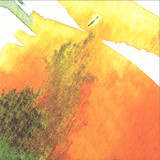
The Liverpool-based producer, DJ and visual artist (the artwork for this re- lease is Andy’s own oil on canvas) has graced the likes of Chicago’s Stilove4music, NYC’s On The Prowl, Sydney’s People Must Jam and has remixed Fantastic Man for Detroit label Kolour LTD amongst many others.
The bottom line is that he’s definitely one of the UK’s unsung heroes when it comes to deep, raw, Chicago and Detroit-influenced house music and we’re proud to welcome him to Delusions Of Grandeur with an amazing three tracker entitled the Bottleneck EP.
The title track opens with snappy hats, flappy congas and sloppy baseline all sitting perfectly in the mix and with a looseness that is much harder to achieve that it may seem. A simple synth melody doubles up the bassline while an extra square wave lead adds that little extra hook without distracting us from the bouncing groove. With Bottleneck, less is definitely more.
Flipping over we have Hump, an altogether darker affair with a twisting acid line joining distorted 808 drums and tripped-out snippets of spoken word coming in and out of focus. The low-slung bumpy groove and spacey synth parts make this a compelling warehouse track which will draw everyone into it’s seductive confines.
Closing the release we have Actual Price, a shuffling, deep groover with rumbling low end and machine-like analogue synth part skipping around the crunchy beats. A cerebral yet punchy and dynamic closer to an excellent release!
After taking time out to search for the right blend of carefully curated tracks, Bristol-based dancefloor futurists Innate return with a third multi-artist EP - shot through with melody, warmth and soul.
A quartet of timeless-sounding tracks full of stargazing sounds, undulating acid lines, far-sighted electronics and crackling beats, the A side kicks off with Perseus Traxx's "Drifting In Space": a loose-limbed exercise in analogue house deepness that wraps slowly shifting pads, meandering melodies and pulsating TB-303 motifs around broken house drums.
Welcoming Australian scene stalwart Ewan Jansen to the fray with "Sinders", he effortlessly blurs the boundaries between far-sighted, Motor City style techno and the kind of head-in-the-clouds analogue sounds that have always been his forte.
On the flip, Reedale Rise adds his touch with "Coral". In keeping with the brilliance of his 2018 debut album "Luminous Air", he drops a colourful, picturesque voyage into deep electro territory rich in ear-catching melodies, engaging chord sequences and crunchy machine percussion. To round, label co-founder Owain K returns with "Teifi", another ultra-deep treat: an enveloping, dancefloor excursion rich in fluttering lead lines, slowly expanding chords, vintage bass and punchy drums. A fitting conclusion to Innate's latest immaculate, eyes-closed voyage."
This time last year, The Forgotten Man launched the Noctu Recordings imprint via a superb single-sided salvo. It portrayed a producer in tune not only with dancefloors, but also the fundamentally far-sighted, intergalactic vision of Motor City techno. The good news is that this belated follow-up is arguably even better. Epic A-side "Pulsar" is a superb example of his craft; a deep and melodious voyage through shimmering pads, B12 style sci-fi melodies and crunchy machine beats. His ability to wrest every last ounce of soul from his machines is confirmed by delicious B-sides "Sky Birds of Ki" and "Beyond Sector 9", both of which fix dreamy chords and melodies to punchy electro grooves.
Direct from the Midwest CLEAR is proud to present four tenacious hardware workouts from Juzer.
In theory the 12” starts slowly, with the 100 bpm rattle of Old Reliable, although it’s fitful energy is anything but, while the following track September coils itself into a tightly wound circuit freak-out. Busy Bees and We Work Hard We Play Hard are the buildup and climax of the record’s machinedriven anxiety, fit for a chase scene in a post apocalyptic megacity thriller.
Juzer is the joint project of two artists central to the underground musicscene in Chicago, Beau Wanzer and Dan Jugle. The work of both straddles the fault-lines between, noise, techno, industrial, EBM, and the more frenzied shades of house. In addition to a prolific number of solo releases, Wanzer is a member of Mutant Beat Dance with Traxx and Steve Summers, Civil Duty with Shawn O’Sullivan, and many more. Like Wanzer, Jugle was a habitual collaborator and his untimely passing last year shocked Chicago’s electronic music community. Jugle was a natural collaborator, the sort of person for whom creating music was a daily act, and even better with friends. In addition to Juzer he was also a member of Dar Embarks, Chandeliers, and Ghost Arcade. Previous Juzer material was issued on The Corner and Dog In The Night.
These two new tracks continue to push the band’s sound into new territory; ‘Overture 1’ is a brand-new composition from Ruby Rushton keyboard player Aidan Shepherd. Taking inspiration from bands like Weather Report and Soft Machine, it's explosive introduction leads you to a dub-like breakdown, creating an open space for Shepherd to let loose his synthesizer for some deep space, Headhunters’esque exploration.
Yardley Suite - is a song first conceived by band leader Ed ‘Tenderlonious’ Cawthorne back in 2012. Having lied dormant for several years it felt like an appropriate time to pull it back out the bag. It’s a composition inspired by Cawthorne’s solo work as an electronic producer, under his alias Tenderlonious. Always wanting to merge his various approaches, ‘Yardley Suite’ is the perfect mix of Jazz and House. With a steady four to the floor beat and snappy horn lines it's sure to work its magic on dancefloors around the globe.
Having focused on improvisation and more “open” compositions in the past, the bands new direction is geared towards tighter, more groove-orientated arrangements. This exciting new material is yet further evidence that this is a highly prolific band at the top of their game, continually evolving, stretching out their own unique sound across the full jazz spectrum.
DJ Support: Tom Ravenscroft, Bradley Zero, Huey Morgan, James Endacott, Kev Beadle, Chris Phillips, Tony Minvielle, Tim Garcia, Delia Tesileanu, Kamaal Williams, Al Dobson Jr, Contours, Poly-Ritmo.
Originally slated for release in 1993 by Super Doppler Communications. It was primitively programed on 8-track sequencer then recorded on a 4-track tape machine in Hani's spare bedroom studio in Denver, Colorado. 26 years later, now Hani's name became internationally known & till this day he continues to produce & remix under many aliases while running his own label Soterios Records. In 2017 Hani started receiving several purchase requests from seekers of this nameless track from Jeep Warehouse Beats Vol:1 on B-side called 'Vector Selector'. During the search for the master DAT, Hani found this extended version now available for the first time on Jeep Warehouse Beats Vol:1.5. Included on the B-side is a track never before released from the same year 1993 that was slated for a single release. We are happy to make both tracks available with some help from Synchrophon in France.
Limited Edition 200 units with Unreleased Veggi Grooves from 90's & Extended Version of Vector Selector. Be quick !
o
- A1: Miss Love (First Version)
- A2: Here Come I, Here Is Me (First Version)
- A3: Hospitals
- A4: One Moment It Will Last
- A5: North South East The West
- B1: The Rose (First Version)
- B2: Mister Nothing
- B3: Looking For
- B4: Roots Of Life
- B5: What's There Left
- C1: Twinkling Stars
- C2: Blinded By The Lies
- C3: Bullshit
- C4: Foolin
- C5: How's About The Aims In Life
- D1: Intro (Live In Queekhoven 1982)
- D2: Miss Love (Live In Queekhoven 1982)
- D3: Here Come I, Here Is Me (Live In Queekhoven 1982)
- D4: The Rose (Live In Queekhoven 1982)
- D5: Something Between You & Me (Live In Queekhoven 1982)
Early Days maps out Nine Circles interpretation of Cold Wave and Minimal Synth. Unbelievably the tracks are mostly from a brief time period, ’80—’82. Alienation and uncertainty course through the 2LP with heavy Yamaha chords, metallic machine beats and brittle vocals.
Nine circles was formed in the early 80s by Peter Van Garderen and Lidia Fiala. In 1980 there was a band called Genetic Factor. This band split up when their three members got girlfriends and they started to make music together with their girls. So at that time there were 3 bands living together in one house.
One of the couples were Peter van Garderen and Lidia Fiala. Lidia had been writing lyrics since she was 15 years old. Nine Circles was born. Within 2 years they wrote about 60 songs.
Also living in the house was Richard Zeilstra, who had a job at the VPRO radio, hosting a show called „Spleen“ where he gave New Wave bands a chance to play. He asked bands to send tapes to him and the best bands had the opportunity to play live at the radio and also got the chance to be on the „Radio Nome“ compilation. Peter and Lidia sent their tape to him and were the only ones from this house to be on the show. Richard knew their music was special. Nine Circles never played a live show on stage, only one concert live at the radio which is also featured on this LP.
Two years later Peter and Lidia split up and Nine Circles disappeared. In 2009 Lidia’s son googled her name just for fun and found a lot about the band Nine Circles. Lidia was surprised, she never knew how popular Nine Circles have been over the years. She got herself on Facebook and since then she got in touch with many people and decided Nine Circles should come back! Peter was not able to join the band these days, he had a different life but he was supporting Lidia and liked that she enjoyed doing music again. Peter still had all the old recordings and sent Lidia a lot of the music they made together back in the days. The best tracks are collected on this 2LP.
Together with Per-Anders Kurenbach Lidia revived Nine Circles. They recorded new material (released on the album „Alice“) and played live until Lidia had to stop playing live for health reasons in 2016. Nevertheless they‘re working on a follow-up album called „Emerge“ which is planned to be released in 2020 and hopefully Lidia will be able to go on stage again soon.
Through the combined brilliant minds of Fabrice Lig, Kiko Navarro, Karim Sahraoui and Jean Vanesse, the new musical force known as Quadra 163 has arrived. Working together in Jean Vanesse's Belgium studio, their debut EP, "Spin Coaster EP" was born.
Through intense live collaboration over 3 full days, the results are these incredible original tracks and a remix from the American house legend, Osunlade (Yoruba Records). Belgium's Elypsia Records have an absolutely essential release here for those looking for proper club weapons - each track dreamt up by a crew of producers with decades of critical acclaim and club credibility.
Osunlade kicks off the release on A1 with his rework of 'Spin Coaster.' The remix is a late night machine jam saturated with sharp synth textures and a shuffling rhythm which will lock the dancefloor tightly in place. A perfect blend between House and Techno, it's a shining example of Osunlade's keen ability to capture imagination with function, tension with release.
'Ghetto Beat' steps up as the A2, with a drum heavy cut full of off-kilter hits and tones which twist and turn in frequency and timbre. It's the type of track that will get the crowds cheering and jackin' and dancing without a break. A proper tool to slam into the set whenever energy levels need to lift higher and things need to get slightly twisted.
Title track 'Spin Coaster' sets up the B-side with a master session of prime time techno making magic. A playfully thick bassline resonates in and out of the analog rhythms while a synth tone builds tension over the track's entire duration. A few breaks for the clubbers to catch their breath are placed in the perfect spots - but only for a brief moment before things kick back in.
Rounding out the release is 'Ghetto Train,' an absolutely mental banger designed to melt the minds of those fortunate enough to be on the dancefloor when it's dropped. Relentless rhythms, huge hand claps and a sharp staccato shuffle drive the tune whilst synth stabs grow filthier with each passing phrase. Clearly the results of an insane studio session from the crew.
Derek Neal is a Turin based producer born in Vermont (USA). He started his DJ'in career as an undergraduate student at his college radio station and since then he's been cultivating his interest in house and techno music. Fostered by his brother's own producer career, who goes by the name of Motions and is 1/3 of the Montreal collective 00:AM, Derek pushed further his own interest in production to the point of proposing a set of tracks to Funnuvojere Records. Probably struck by the simplicity and effectiveness of Derek's sound, the Berlin label agreed on releasing Reason Machine, Derek's debut EP.? A comforting sound distinguishes this record, it is gentle and deep at the same time. If A1 - Sky City feels like diving in calm water, A2 - Jet Fuel could soundtrack a romantic date. On the flip B1 - October has a cinematic personality, envisioning a urban landscape, while B2 - Stereosense expresses a special dynamicity of sound.? Don't get tricked by my rather emotional introduction though, Neal knows about beats and you'll hear. From breakbeat to funk, Chicago house to dub this EP is all-round a delightful expression of contemporary club music.
Beastly sounds for a zombie nation as classic 80s gaming soundtrack Shadow of the Beast gets debut vinyl edition with a recording taken from the original platform game, and new artwork from acclaimed illustrator Keith Rankin.
Composed by David Whittaker for the 1989 Amiga platformer of the same name, Shadow of the Beast sees its first ever vinyl release courtesy of the UK's Lag Records, presented in also its first mastered edition as directly taken from the original game system.
A prolific VGM composer, Whittaker holds more gaming soundtracks to his name than any other, with titles such as Lazy Jones to his name, as (in)famously sampled for the 1999 club hit Zombie Nation.
Shadow of the Beast remains a prime example of his pioneering hands-on approach, programming music directly with instrumental samples of his own on a Korg M1 synthesizer. The tunes make for a singular combination of Spaghetti Western-style tension mixed with world beats. Tracks like The Plains play with harder rhythms like warped speed techno, while a hard-to-miss melancholy pervades the Underground suite.
The fiendishly difficult Shadow of the Beast itself was an interesting example of game design for its time, recorded at a frame rate to match arcade machines as opposed to monitors, and loaded with a 128 colour palette. Two sequels later followed in the 1990s, along with a 2016 remake for the Playstation console.
The soundtrack comes ready for a 2019 audience with mastering courtesy of Jerome Schmitt at the AirLab, and brand new artwork from acclaimed illustrator and musician Keith Rankin in collaboration with artist Ellen Thomas. Shadow of the Beast will also come on transparent purple vinyl, in standard LP format.
- A1: Ghosts
- A2: Late Night City
- A3: One By One
- A4: Tvc 15
- A5: All Ways
- A6: Summer In The City
- B1: Nightmare
- B2: Strangler
- B3: Overseas
- B4: The Munsters Theme
- B5: Raceway
- B6: Keep The Pace
- C1: Get Off My Case
- C2: The Late Mistake
- C3: Ice Machine
- C4: Comateens
- C5: Pictures On A String
- C6: Garbanzo
- D1: Uptown
- D2: Cinnamon
- D3: Cold Eyes
- D4: Desert Song
- D5: Donna
- D6: Crime Time
- E1: Resist Her
- E2: Confessions
- E3: Love Will Follow You
- E4: Satin Hop
- E5: Deal With It
- F1: Nightmare
- F2: Walking Watching
- F3: Don't Come Back
- F4: Jo-Ni
- F5: Ask Yourself
In the fall of 1978, after working with a series of bands, New York-based musician and composer NickWest became interested in experimenting with minimalism, collaborating with guitarist and songwriter Ramona Jan and Lyn Byrd. They decided to play pure pop but to substitute a primitive electronic beatbox for a human drummer. The result was Comateens, becoming one of the first groups to discard the traditional sounds and line-ups used by everyone else in New York City’s downtown music scene of
the late 1970s. In 1980 Nick’s brother Oliver joined them as guitarist, and after going on to release three major label albums (Comateens, Pictures On A String, and Deal With It), and with some
successful tours and dance-club hits behind them, the band split up following the terribly untimely death of Oliver in June 1987.
However in 1988 Virgin Records issued another LP entitled West & Byrd, recorded by Nick and Lyn as a duo, and in 1991 released a retrospective compilation called ‘One By One: Best Of Comateens’, now a rare and much sought-after record among collectors of new wave music. Acclaimed by Etienne Daho, the band has made a name for itself with the singles “Late Night City“, “Get Off My Case“ and “Don't Come Back“.
Hot off the heels of Aluxes, his 2018 Lumière Noire debut EP, young Mexican DJ/producer Iñigo
Vontier is inviting Chloé's label on a trip to the far corners of the body & mind with an album of
demented grooves, psychedelic take-offs and imaginary comic strips of mystical rituals. A
bewitching debut full-length. Mexicans may never possess the sonic science of the Germans,
the hedonistic madness of the English or the gift for synthesis of the French, but, as proven by
Iñigo Vontier's first full-length for Lumière Noire, their universe is much more exciting than
anyone would have ever thought.
The DJ/producer fully asserts his origins by brandishing the album’s title "El Hijo del Maiz" ("the
son of the corn") almost as an emblem: "in Mexico, corn is eaten daily. It has long been defined
as 'the gold of America', and I consider all Mexicans as children of corn". A spiritual and
embodied vision Iñigo's first Lumière Noire release, the four-track Aluxes, set the tone of the
young talent's distinctive interpretation of dark disco, which creeps up on the dancefloor from its
iconoclastic side. The two tracks and two remixes (one by Flügel, the other by Inigo himself)
featured on the 12" for lead single "Xu Xu" (featuring Red Axes-affiliate Xen's irrelevant vocals)
was a full-bodied confirmation that Vontier sees the dancefloor as an arena for the occult –
whether from the peoples of the equatorial jungle, the Middle East or, even from indocile
machines. But, while the spiritual element seems part and parcel of the Jalisco native’s output, it
is in no way the only ingredient of this first long-player: "this album best reflects my own vision
and spirituality, and the way I feel it" he says.
Whether contemplative or frenetic, the collection of tracks that make up “El Hijo Del Maiz” takes
the kitchen sink and throws it out the window: languid rhythms, haunted vocals, and mysterious
percussion fuel a discombobulated house set that scrambles the listener's five senses, leaving
one disoriented and exposed to the vagaries of vertigo. Following the demented, dystopian “Xu
Xu” EP, which explored an imaginary jungle that harbored Mayan and Egyptian pyramids,
Middle Eastern accents are once more present in the off-kilter “Bo Ni Ke” and its Japaneseinfluenced vocal trickery, which Moroccan flutes à la Jajouka transform into a feverish trance.
With the following three tracks, Iñigo Vontier raises himself to the same level of excellence as
the Pachanga duo (of which pride of the Mexican scene Rebolledo, is also known as a prolific
artisan of deconstruction): “Awaken”'s slumbering voice, heard as through the veil of hypnosis,
slowly introduces a techno beat which, as in follow-up “Time”, literally brings the listener to a
levitative state. In a housier vein, yet continuing in the same psychedelic, 90s-infused spirit,
“Don’t Go Back” disrupts the genre’s usual signatures with an out-of-tune keyboard that is
becoming the artist's trademark, destabilizing the listener into a drunken vertigo, with a good
helping of sexiness: "I think the sexy dimension definitely brings a kind of magic to music," says
Vontier. “I'm sure I felt this magic during my DJ sets, and I like to think that sorcerers use this
element in their practices. I might consider myself a bit of a sorcerer when I take over the DJ
booth, by the way." A mood and sound that can once again be found – in a quieter, more
bucolic version – on “Chiquitita” (feat. the flute stylings of pioneer DJ Rocca, now a partner of
cosmic disco legend Daniele Baldelli). The more cinematic, fast-paced and dreamy beat of the
no less captivating “Little Monster” might evoke the mischievous spirit of the Mayas' minor
mythological creatures, while ode to the magical herb Marijuana (feat Thomass Jackson)
proudly tramples into the debate that such a provocative title inevitably provokes: "psychedelic
drugs are powerful tools to reach a higher level of consciousness about what surrounds us, but
we must learn how to complete this psychic journey by ourselves, notably through meditation
and love.
In the end, El Hijo del Maiz is an album-length confirmation of Iñigo Vontier's uniqueness, and
his adherence to Lumière Noire's policy of letting artists fully express their vision – while letting
their passions guide their idiosyncrasies and explorations of innovative electronic signatures
Rebekah’s Elements label welcomes Storb who delivers two vigorous cuts, while the label boss herself and Scalameriya provide remixes.
Something of a mystery, Storb may be elusive but his driving music speaks volumes. The industrial techno producer has released on labels like Diffuse Reality and Emetic, but now he is invited to join Birmingham’s pivotal techno tastemaker Rebekah’s imprint accompanied by a remix from the esteemed artist herself, not to mention Serbian techno purveyor and live performer Scalameriya who’s recently released on THEM and Genesa Records.
Taking a haunted and brutal route from the off, ‘The Donut Theory’ is built on contorted synths and sewed pads that together generate a twisting and turning aural experience, followed by ‘Gasp’ which thunders forward using hyperdrive drums, frazzled effects, overdriven machine sounds and caustic textures.
On the flip, Scalameriya remixes ‘The Donut Theory’ incorporating hammering broken beats, urgent alarm samples, industrial components and fizzing stabs. Tying it all together, Elements boss Rebekah reinterprets ‘Gasp’ by stripping things back to focus on colossal kicks and firing sirens that permeate a relentless groove to generate a pure warehouse inclined energy.
Yuzo Iwata has made one prior appearance to date on Pluie/Noire in 2018. This EP for Malin Genie's label finds him exploring further deep cover plains of expression through the medium of experimental house and techno, leading in with the rippling textures and haunting piano refrain of "Spoit."
The delicate gamelan chimes of "Mount Castle" that follow collide with rugged drum machine beats and artful sonic interference, while "Tiger" fuses jagged off-centre beats with gnarled acid lines and fluttering melodies lingering in the middle distance.
- Touch - seals the deal on this highly distinctive EP with a writing, organic mass of sound design strapped to a forthright four to the floor stomp.
Back with a vengeance, Cimm returns to the imprint with a highly anticipated succession to his Sentry debut from last year, stamped on a irresistible 2 x 12" vinyl release. Infernal halftime beats and top-notch Dubstep shells, firmly entrenched at the frontier of sound system music and its invaluable heritage. The London-based producer and DJ rose to swift and significant acclaim in the last few years with releases on institutions like Tempa, J:Kenzo's Artikal and Wheel & Deal as well as notable residencies at Rinse FM and the renowned Fabric night club, among other recent achievements. Now coming to a turntable near you, Cimm delivers four bespoke cuts, primed for the dance and your enjoyment, battle-tested by the scene's foremost tastemakers.
Diving into unidentified transmissions, 'Unknown Caller!!' sets the pace with eerie reverberations and filtered resonance. Amid the faint hiss of machinery, larger-than-life drums set up shop alongside subterranean pressure emissions. Hefty breaks, hold tight! Retro synth melodies keep us on track within the monstrous switch-ups and unquestionably meticulous arrangement, sure to shut down any dance in style. Cutting no corners with the B-Side, Cimm teams up with veteran vocalist Rider Shafique for a dystopian sub-bass onslaught, swaggering militant chants and the apocalyptic ambience to go with it. Steaming low-frequency oscillations bubble and hurl their weight, stripped of all restraints, coveted in freezing harmonies and ethereal atmosphere. Vibrating in a more uplifting spirit, the dedication to the Jamaican roots of sound system culture unfolds in the Londoner's signature style - dubbed out soundscapes ahead. 'Tosh Dub' keeps it a laid back, with vintage instrumentation, scattered skanks and swirling organ chimes. Taking an ultimate trip through unremitted grit and off-kilter grooves, 'I Am Jack Travis' lures us in with rainy undertones and hypnotic foley sampling. Promptly revealing its true nature with plenty of pressure and scrupulous syncopation, a ghostly heavyweight ensues and closes the deal.
Reissue of this 1976 LP from Zambia. Deep minimal African music, lovely compositions over scarce drum machines and (fuzzy) guitars.. Beautiful music with a deeper message in the lyrics which is explained better in the long review below. Some words from the label. There is music that falls right into place, a perfectly articulated expression of a few distinct influences. Then, there is another kind of median music, something more mysterious, the result of time, place, technology, and alchemy. Zambian writer and musician Smokey Haangala’s Aunka Ma Kwacha (The Money is Gone) released in 1976 is an example of this more mystical metallurgy, falling somewhere between psychedelic Zamrock, US folk, Kalindula, and Sundown Beat (music played after dark) from Tongaland. The unique mix of languages on the album (Bemba, Tonga, Lozi, and English) also suggest this complex cultural crossroads. Underlying the whole album is the insistent beat of a simple drum machine, which was totally unheard of in Zambia at the time, and parallels pioneering experiments by Francis Bebey, Sly Stone, and Shuggie Otis, utilizing a technology which would later come to define dance music. Then there’s the album’s original artwork by Peter Kependa, done in style similar to the infamous Jamaican dancehall illustrator Wilfred Limonious, interpreting the album’s title and primary theme; the burden of financial inequality.
In this sense the album is political, but the theme is extrapolated and explored through its impact on personal life; love, marriage, social status, and diet. The album is full of cautionary tales, folklore and references to magic, aspects of Zambian culture simultaneously mystifying and alluring to outsiders, part of what attracted Western readers to Nigerian writer Amos Tutuola’s hallucinatory Yoruba folktales. After becoming a household name in Zambia for his music, writing, and television appearances, Smokey Haangala died at the age of 38, the very week his book The Black Eye was published, abruptly ending his brilliant and ascending career. We are lucky to have his inimitable work to remember him by, Aunka Ma Kwacha resting comfortably in the pantheon of re-visionary works by Rodriguez, Kissoon Ramasar, TJ Hustler, and William Onyeabor.
Based in Munich, Germany, the producer, part-time DJ and Permanent Vacation label co-head Tom Bioly aka TB delivers new romantics, inspired by influences like The Cure’s „The Holy Hour“, Boards of Canada’s late 90s electronica, Miami Vice tropic percussion and Angelo Badalamenti’s Twin Peaks. Acid drops, string distortions, lushed melody bits, hushed robo vox and washed space guitars are being layered and sprinkled over machine beats and disco drums.
TB’s first release "Invitation To Love" made it on John Talabot's vinyl-only Hiverned 10" imprint and was voted amongst the best 10" releases by UK Fact magazine. GROOVE magazine wrote "..entirely superb..“, about the follow-up EP "City Girl" on Permanent Vacation, of which the title track has been licensed to the independent film „All These Sleepless Nights“ by director Michal Marczak.
In 2017 TB followed with “Heartbreak Hotel“, a double twelve-inch release with eight tracks of melancholic dance noir set in smoke-filled darkness. In 2018 he followed with the „Night Heat“ single, of which a RMXD EP with contributions by Gerd Janson, Sascha Funke, DJ Hotel and Bostro Pesopeo came out earlier this year.
Planning the imminent arrival of the 50th release on Touchin’ Bass, label boss Andrea Parker was digging through the warehouse during a stock take and it became apparent that there was something missing. There was a gap in the catalogue numbers. Where was TB036? Searching the archives it transpired that, for one reason or another (not least Parker’s inability to count), there actually wasn’t one.
So what better way to backfill this now documented gap than to welcome the multitalented guitarist and drummer, mathematician and multidisciplinary improviser Maria Gamboa Perez into the Touchin’ Bass fold with an updated focus for 2019.
Perez combines elements of rage, chaos, tension and anguish to form a visceral style. Her musical terrain and talent is shaped by dissonance and NO art. Under the moniker NonZero!, Perez brings Matrix Equation to the fore; a heavy 8 track EP with electro aesthetics from none other than Carl Finlow Scarletron/Silicon Scally/Voice Stealer.
Beginning her artistic career as a teenager playing as a bassist and guitarist in groups with influences from Noise, Avant Garde and the No-Wave, Perez was introduced into several areas of electronic music during the club culture years in Madrid and opted for styles such as Electro or Industrial, at which point she began to be interested in the introduction of rhythm boxes together with traditional drums.
Her passion for sound synthesis and musical exploration led Perez to introduce electronics into a solo project under the pseudonym NonZero!. Under this name she aims to make electronic music her field of sound research and for years has been continuously searching for existing relationships between sound and mathematics, focusing on the perceptual limit between music and noise.
Matrix Equation indulges in an evidential brooding angst, shifting between abstraction and the kind of elevated introspection carefully harvested over the years. With dramatic frontage in parts, blasts of boisterous energy and machine mayhem, its deployment of surprise, shifting focus and spontaneity operate in an assured statement.
Splintered beats and a foreboding sense of tension give way to a more DJ friendly logic of instinctive introductions and codas of gradual builds and breakdowns as Finlow further reworks the results to great effect.
It’s been a busy eight months since Dampé’s debut on Dirt Crew Recordings. That time has seen the producer hold down monthly slots on Rinse FM, contribute a downtempo electronica/jazz edit to the S3A ‘Pages Remixes” EP as well as open big rooms for the likes of Surgeon and Blawan.
The intervening months have also seen the producer set up camp in the Rhythm Section studio in South East London, and the result of new access to studio gear can be heard all across ‘Garden’. Compared to the debut ‘Peach Shuffle’ this is a far more machine-led and darker listening experience. Snatches of acoustic instruments and space remain, but it’s never long before the disembodied vocals and oversaturated classic drum kits return reminding you this is music best enjoyed in the club.
‘A Basement, 10 Years Ago’ started just there. A bass line dimly recalled from a long-lost 6am jam is sequenced on a weighty analogue keyboard, while syrupy R&B vocals dance around mbira and gangsa, all slowly building and building together. ‘727 and Arp Breaks’ is a love letter to two of the producer’s favourite instruments from the studio. A TR-727 and an Arp Odyssey collide across dubbed out stabs to form some very rolling breaks.
Sunday Night Machines’ sees Dampé tame the box-of-physics that is the Arp Odyssey again with a sprawling meditation on two repeating arpeggios.
‘Garden’ is the one for the dancers. Four variations play with the same melodic theme in distinct sections, with the second variation being the deepest and most floor-ready the whole record gets. ‘France’ is a warped dub-come-hip hop beat that manages to conjure both Lil Jon and Yusef Lateef. We approached Liverpool’s finest ASOK (Lobster Theremin, M>O>S Delsin) for remix duties and to close out the record with a twisted bang. He turned in a propelling weapon that brings a whole new texture to the track listing. It’s very 90’s, very ravey and very raw, in a true IDM style.
With this eclectic mix of sounds we are entering another chapter of the Dirt Crew story and we hope you dig it as much as we do!
15 years ago in a basement in the Bronx, I attended a bunch of sessions with my long time collaborator and friend, Ray West. Ray is a lifelong DJ and home producer, and only in 2012 did he begin to release music via his well-respected underground label, Red Apples 45. He had a main studio but also this much smaller room in the back which I dubbed “Studio B” in the tradition of any multi-room recording facility who would have a second “B” or third “C” room, and the name stuck. Despite the much lower-level quality equipment in that room, like a Yamaha MiniDisc board burning mixes realtime to CD-R, there was a certain vibe to it that inspired creativity, and a simplicity that encouraged faster working methods. One of the groups that worked there was called Results. Their philosophy was whatever happened in the moment was meant to be on tape and they didn’t spend hours perfecting it. This is rather opposite to how I work in the studio and especially on my own material, of which I can be thorough to the point of finishing less than I’d like. Through working there I realized the potential of having a smaller, simpler second setup, one that was not related to my work as an engineer, or my artist career as a performing electronic musician and techno producer.
Fast forward to 2016 and I would have both a professional studio outside of the home and enough spare gear to make a smaller studio based around a 4-track cassette recorder in my living room. This was a place where I could make whatever I wanted, whenever I wanted, without the disturbances of clients, the chaos of 30th St., or any genre restrictions that I might place on myself in the big studio. I spent some time tracking down a functioning Akai MG614, the holy grail of 4-track recorders. It’s a large machine, making even the MPC3000 look small on the table next to it. With no computer, things were focused. I went through a couple of variations of the setup in my living room beginning with an MPC1000, DSI Evolver, Sonic Potions LXR, Bastl Microgranny, and a variety of classic effects that I didn’t keep in the rack at Butcha Sound like the Yamaha SPX90 and Ensoniq DP-4, plus a bunch of pedals and eventually a Korg Karma keyboard. Then I had the good sense to bring home the Emu SP1200 I was borrowing from The Martinez Brothers. Eventually I brought home the MPC3000 as well. Another thing I kept connected was a Zoom field recorder that captured sirens, street noises, and me playing the upright piano in my apartment live to tape. Results. These recordings were made in Hell’s Kitchen from July 2016 - May 2017 with the window open and the sounds of my Manhattan block inspiring the takes. — Phil Moffa 2019
- A1: Kool & The Gang - Get Down On It
- A2: Shalamar - A Night To Remember
- A3: Gwen Mccrae - All This Love That I'm Giving
- A4: Oliver Cheatham - Get Down Saturday Night
- A5: The B.b. & Q. Band - On The Beat
- A6: Fat Larry’s Band - Act Like You Know
- B1: Imagination - Music & Lights
- B2: Grandmaster Flash & The Furious Five - The Message
- B3: The Fatback Band - (Are You Ready) Do The Bus Stop
- B4: Positive Foce - We Got The Funk
- B5: Midnight Star - Midas Touch
- B6: Change - You´re My Number 1
- C1: Stretch - Why Did You Do It
- C2: Greyboy Feat. Sharon Jones - Got To Be A Love (Paul Nice Remix)
- C3: Gill Scott-Heron - Home Is Where The Hatred Is
- C4: The Temptations - Papa Was A Rolling Stone
- C5: James Brown - (Get Up I Feel Like Being A) Sex Machine, Pt.1
- C6: Jackson 5 - I Want You Back
- D1: Instant Funk - I Got My Mind Made Up (You Can Get It Girl)
- D2: Roy Ayers - Running Away
- D3: Commodores - Brick House
- D4: Cymande - Brothers On The Slide
- D5: Lyn Collins - Think (About It)
- D6: Bob James - Nautilus
A mind-bending blend of modular synth performance, Anthony Baldino’s dynamic Twelve Twenty Two LP is a treat for all ears. Baldino’s transcendent album is available both digitally and on vinyl on Thursday, October 24 via MethLab Recordings.
“The record focuses heavily on the modular synth as a composition tool and instrument. I originally approached this as a collection of tracks that were recorded straight out of the machine with little to no editing. The work flow of generating a complex patch and then figuring out the overall arch and performance of the piece was really exciting. The Tip Top Audio Circadian Rhythms was a key compositional tool in this process and was used to organize the overall structure of these pieces. It wasn’t until I stumbled upon a patch, the opening synths in ‘Fading Quickly Now,’ that I went back to how I used to write and shifted to harvesting sounds and rhythms from the modular and arranging and editing them in the box. That patch was originally created for a different track on the album, which I’ll let you find, but IH ad accidentally changed the clock rate before tearing the patch down. Hearing it in that new way triggered a whole new thought process and emotional reaction for me.” - Anthony Baldino
Originally approached as a collection of tracks recorded straight out of Baldino’s machine with little editing, Twelve Twenty Two is a complex piece of thoughtful modular work. A truly stunning display of masterful sound design, Baldino’s sound resonates with listeners from first note to last. Existing in a unique space where ambient sounds meet vivacious bass, Baldino seemingly exists in an impressive league of his own, with Twelve Twenty Two standing apart powerfully from the masses. With an already powerful arsenal of artists and releases, MethLab Recordings adds a brilliant 10-track addition to their already wild playbook.
“From the beginning, it was important for me to keep this record musical and emotional and not just an exercise in technicality, so using both the modular and the computer to arrange felt really good both emotionally and sonically and created a different balance to the record that I really liked. Switching the process up a bit halfway through kept things interesting and I think the body of work really benefits from it. This record is split in half with performance based/straight out of the machine tracks and the other half organized in the box. But when listening back, the two approaches overlap so much that it’s hard to tell where one approach ends and the other begins.” - Anthony Baldino
About Anthony Baldino:
Born and raised in New York, Anthony Baldino is an LA-based composer and sound designer whose work spans an enormous range of production avenues. The likelihood that you haven’t heard his world is nearly impossible, with music and sound design in too many trailer campaigns to list, including Prometheus, Interstellar, Ex-Machina, Star Wars: Rogue One, and Avengers: Infinity War and End Game just to name a few. From there, his work ventures to the opposite pole of production with custom sound design based compositions for Dolby Labs mixed in Atmos, beautifully glitched out remixes, and continues on to mind-bending modular synthesizer performances.
With his debut artist release, he delivers a devastatingly beautiful album grounded in IDM that focuses on modular synthesizers/ While a vast amount of modular synth music is currently being released, this album goes far beyond the typical beeps and boops that one may expect when they hear “modular IDM record.” This record is as technical as it is emotive. Tasteful and incredibly detailed, Twelve Twenty Two bridges the gap between sound-design laden beats and cinematic motifs and ambiences. This record does not disappoint and is sure to become a favorite of electronic music fans.
The album opens up with a slowly unfolding melody that seems to be within grasp, but never actually repeats itself. Incredibly tasteful glitchy sound design leads us into a build that one would only expect to be in a movie, and then drops into a full-on sonic assault of impeccable drums and rich synths. From there, the record traverses a wide array of texture, time and technique. Closing with a track that makes you feel like you could actually reach out and touch the sound and float in its space, the sonic landscape created in Twelve Twenty Two is a true treat for ears.
Robotron successfully autonomized and has now breached the mainframe. This is its second offering for the ESP Institute. Side A’s Exodus picks up where the last 12” left off, the spoils of cybernetic war as scavenged by the now-defunct Xinner and translated by Robotron into machine dance music for a post-apocalyptic future. With only a select few analog machines with which to communicate, it manages to produce the most bombastic beat we’ve heard this side of the acid winter—a mighty compressor permeates all spare gaps in the waveform, as communicative bleeps and note-bending mechanics work in concert to assemble a highly dynamic composition— emboldening us with courage for a new age. On the flip side, Kamchatkan renders a sparse image of a only remaining organic life, found in the furthest Eastern reaches of the Asian continent, the Kamchatka peninsula. Here, Robotron experienced a metamorphosis, a collapse of its structured programming in which it became self-aware and transitioned from its quantitative agenda to a qualitative enlightenment. This breath of new life invigorated Robotron’s musical approach as heard in the aforementioned title, revealing an uncanny ability for humanistic percussion and lyrical Acid melodies. These two programs will conduct synchronized dances for the masses.
Casino Times? aka Nicholas Church and Joseph Spencer
from London have been betting against the house for
close to 10 years already, winning big with releases on
Wolf Music, Needwant, Omena and their own Casino
Edits label. The pair also hosts the radio Show “What’s
My Derivative?” on Bloop Radio.
Since Mireia Record’s big cheeses RSS Disco have been keen to gamble with the Time’s
music, routinely lighting up dancefloors with it, a loose connection and mutual admiration
formed over the years and eventually lead to this fine record here.
RUSH & KAWAI
Casino Times demonstrate their cunning yet natural and flowing sound with two originals:
“Rush” and “Kawai”. Both tracks are a proper trip of its own, psychedelic pinball machines
that’ll catapult you to the further edges of the known sphere.
An arpeggiated melody line leads the “Rush”, while a rock solid foundation of hard hitting
drums keep you steady. The melody filters into acidic fringes and a strange voice guides the
traveler to the core of this outer-body experience.
By intertwining a pulsating E-Bass with sharp percussions and a brazen guitar chords,
“Kawai” steers the travels even further out of world’s reach. A whole ensemble of sirens and
vocal fragments warn of imminent rapture. After this, it’ll be hard to return to the mundane.New Release Information
KAWAI (Conga Fever’s Belgian Fries Remix)
Leading the string of three remixes is Mireia’s Conga Fever. Known by now for impeccable
and inspired productions he might just have outdone himself again with this interpretation
of “Kawai”.
Taking cues from Belgian New Beat while sounding unconditionally modern at the same
time, Conga Fever has crafted a bona fide festival anthem. After confidently building up
tension and taking his time in the breakdown, the remix manages to release an incredible
amount of energy. We’ve seen people out of their minds and literally stage dive to this one.
KAWAI (Rigopolar Remix)
A new face and dream cast to the label: Rigopolar aka Menio Brown. The Brooklyn-based
producer and DJ has been on our radar for some years with a string of captivating releases
for Tom Tom Disco, Nazca Records and an upcoming EP on Duro. Especially “Sun Of
Lemuria’s” hypnotic brittleness turned our heads.
Adding a new high point to his repertoire, Rigopolar’s take on “Kawai” is an expansive, dark
journey into the void. Powerful lasers and strobe lights appear to lead the way, emergency
broadcast voices beckon the dancers to the floor. The clobbering bassline and twitching
melody help to reach previously unseen heights.
RUSH (Filburt Remix)
Working his signature slow-burn magic on his remix of “Rush” is Filburt. More than happy to
welcome him back to the label. The O*RS label head, DJ and producer is responsible for
some of our favorite material in the past and does not disappoint with this remix either.
Lush pad sounds oppose salient drumming, slowly tightening the atmosphere while a robotic
voice evokes a melancholic mood. The whole night’s rooted on this fervid bassline and it’ll
carry you into next Monday
Dutch techno duo D&S - or Dennis & Stephan to their parents - hail from Rotterdam and have a penchant for the classic sounds of Detroit. Their previous releases on SK Black, Orbis Records, Indigo Aera's AEX compilations, ARTS and Girada Unlimited have earned them support from the likes of Adam Beyer, Marco Bailey and Ilario Alicante, and this tasty new EP for Abstract Reasoning looks set to find similar favour.
The pitter-patter of classic drum machine hi-hats drive the title track along with swooping, filtered pads and gentle licks of acid, the track gradually evolving into a veritable bubble bath of 303 goodness and gated synth swells. Incidence continues the theme, with gentle cymbal rides splashing over continually evolving acid blips and bleeps while mystical waves of chord melody envelope your senses in a foggy haze.
The second half of the EP flips the script beautiful with two broken beat tracks that show they have a real prowess for melody as well as rhythm. Lost In Sequence's thumping kicks are punctuated by the rolling tribal percussive elements and looming, sorrowful pads. Intricate rhythms and beautiful use of reverb and other FX create a dreamy atmosphere throughout. Partisan sees a morphing, resonant synth motif pulse over another pleasingly thick kick rhythm, and swirling, ethereal layers of atmosphere. All in all it's a superb release that has something for the dancefloor as well as the home stereo.
DJ Richard's first release of 2019 sees him drop four invigorating electro tracks on Flexxseal titled "Eraser".
Emerging from the Providence noise scene, DJ Richard forges a path of disciplined selectiveness as a producer and DJ with his idiosyncratic style allowing him to make impressive, self-assured connections between 80s EBM, new beat and Italo disco, electro, techno and "post-minimalist" house. DJ Richard's feral approach evolved from the roots of his White Material imprint which quickly achieved cult status after early releases from himself and co-founders Galcher Lustwerk and Young Male.
As a solo artist, DJ Richard continues to push the boundaries of his talent and influences reflected in his two utterly distinctive and bewitching albums released in alliance with influential German electronic label, Dial. "Eraser" sees him join up with fellow American Christopher Joseph and his Flexxseal imprint as DJ Richard masterfully maintains his skill in propagating ephemeral and raw sounds with his aptitude for electronic body control.
"Critical Damage" kicks things off with resilient oscillations fused beautifully with angelic leads and thudding percussion reflecting a post-punk aesthetic while "Eraser" delivers tough, acidic swirls undulating beneath sharp, broken grooves and growling undertones.
On the flip, a slow, chugging drum sequence balanced with haunting modulations and machine-like vibrations that echo throughout take the focus in "His Threshing Floor" before "Casca's Theme" concludes the EP with meandering, robotic synth flutters and distorted bass resonations driven by hypnotic rhythms and world-ending atmospheres in this powerful electro cut.
Beijing-based techno producer HWA (aka ELVIS.T) is releasing his first 12" EP "Granular Line" on Ran Groove, the sub-label of Bejing's Ran Music. This EP has 2 Deep Pulsating Techno tracks included as well as one Droning Ambient track produced using his customized modular synth system. As one of the leading figures in China's techno music scene, HWA's left-field experimental sound design, delicate poly rhythmic beat groove, dark and twisted massive soundscapes and the full hardware workflow, have earned him a reputation across China's dance music scene. Granular Line is the crystallization of HWA's persistent efforts on using the modular synth to produce techno music, it is the new envelope of his techno sound aesthetic.
HWA was born and grew up in Taipei and kicked off his DJ career in 1998 and soon started to produce his own music. He relocated to Beijing in 2006 and immediately became a part of China's electronic music scene, which had just emerged a few years before and was on its fast-rising phase. HWA is considered a brute force in the promotion of techno music and culture in the country, he was the early co-founder of Beijing's Lantern club, the most influential techno club in China's capital, he was also the co-owner of Acupuncture Records, which is the only techno label in China back in the 00's. In the past decade, he has played in the finest clubs and festivals in Europe, such as Tresor in Berlin and ADE festival in Amsterdam, as well as the top clubs in Toyko, Seoul, and Taipei, where Asian's best dance music scene exists. In 2016, he appeared in China's first ever Boiler Room event with his modular synth system, created the climax of that night and his live set was considered one of the best moments of Boiler Room China.
HWA has deeply embraced modular synthesis in recent years and it has become the centerpiece of his music production workflow and live performances. He attempts to explore randomized beat sequences and experimental sound design furthermore. He's one of the initial members of The Modular Commune, a Beijing artist community focused on the use of modular synths, which has gained a lot of attention across the globe. Through his music work and live sets, HWA's unique athletics and understanding of techno music made by machines, has become a unique label of his.
Pregnant Void returns with another of their deeply involving and thought-provoking albums, this time from Berlin based sound designer and live-performer Francesco Devincenti.
Devincenti has been making music all of his life and quickly established himself back home in Northern Italy. To further his talents he headed to Berlin to study at the S.A.E. Institute and soon went on to a job at Analogcut mastering studio. As such he is a sound design wizard with an exceptional ear for detail and someone who can get real meaning and soul of out the machines he often solders together himself. He is part of a couple of live hardware duos - MORK and TDV - and always fuses ambient, techno, distorted grooves, jungle beats and dub moods into his immersive recordings.
This new album draws on ten years of life experiences and uses music as a way of telling his own autobiographical story. "With the album I try to explain what I have inside in a way I cannot using only simple verbal communication: those moments of Brutal Reality where you lose something very important and cannot fully express yourself." Though always obsessed with finding his own musical voice, Devincenti is also inspired by studio masters like King Tubby, Adrian Sherwood and Mark Ernestus. His experimental music follows no existing path and is made on modular systems that result in unpredictable and unconventional ambience and rhythms. A number of collaborations add more flavours to this most rich and rewarding album, including friend Hi.Mo, label boss Simone Gatto and vocalist Alice Lobo.
Brutal Reality is filled with truly freeform electronic music - sounds without borders, but with very real narrative and an absorbing sense of emotion that makes it a moving listen in more ways than one.
Finally, the long awaited follow up to DJ Duke's house classic "Old Skool Deep Sampler Vol 1, which featured homages to Marshall Jefferson (Jefferson), Fingers Inc (Fingers), Larry Heard (Heard) and Ron Trent (Trent). This follow up E.P. (Vol. 2) features another string of worthwhile homages to the late Frankie Knuckles (Knuckles), Farley Jackmaster Funk (Farley), Chip E (Chip E.xtacy) and Boyd Jarvis (Jarvis).
Duke has always respected the pioneers that created the house/club scene and set the grounds for what's become of the biggest music crazes in the world. For example, Boyd Jarvis used to play live on air with Timmy Regisford on NYC radio station 107.5 WBLS using drum machines for the beats and then play keys on top of it. Duke tried to keep the tracks as close to the feeling of these pioneers, selecting the right drum machines, sounds, and overall vibe, but still keep the tracks fresh and not derivative.
Official remastered limited edition of Cellophane project from 1984 produced by Alessandro Novaga, one of THE major influences on Chicago House Music with his trio of releases -Drums-, -Electronic Drums- and -Faces Drums-, all essentially EPs of tough electronic bonus beats, creating the blueprint for many early Windy City productions. He was also behind other such hugely influential cuts as Stopps -Im Hungry- and -Ali Shuffle- by Camaros Gang. Here on his Cellophane album, which came after the huge -Gimme Love- single, we get what I guess you could describe as his magnum opus. The album consists of just two long tracks (or suites perhaps?) that take the listener of on an epic psychedelic italo /space disco trip like no other. Heavy use of synths and drum machines expecially on the part 3 !
Originally released in 1978 on the obscure label out of Mississippi, Commercial, Let Me Be Your Lover is now reissued and available again for this first time. This is a timely reissue of this ultra-rare LP that is fetching prices upwards of £600 online.
The album includes the absolute monster album version of the modern soul/crossover classic Gonna Find A True Love, which was reissued on Miles Away earlier this year. The album version of this track gives the 7” a run for its money.
“This album features the hit track ‘Gonna Find a True Love’. When we first heard this song, it really hit home and inspired us. The beat is uplifting and irresistible. This song is so very relatable not only to us but to others throughout the world and it’s still relevant today!! It’s hard to resist the song’s tempo! Go ahead - grove to the beat and find yourself a true love!” Estus Patterson, 2019
Let Me Be Your Lover is an album is undeniably deep, soulful and passionate and now fully licensed from Estus and Lester Patterson.
After last year’s excellent ‘Insula’ album, Proc Fiskal returns to Hyperdub with the six track EP ‘Shleekit Doss’; in his own words, “a kind of representation of the time I was running the club night of the same name in Edinburgh. These tunes represent the night’s ethos of genre-defiance and high-energy futuristic sets, ecstatic and transcendent while still being fun and stupid. I was getting my friends to play and I made all the posters on my phone - like this EP’s artwork. I also started hoarding old FM synths which crop up a lot on the EP, and was reading a lot of sci-fi like Isaac Asimov’s ‘Foundation’, and ‘2001’. The night ran until last November when the bouncers and some punters got in a fight, the club got damaged, and unfortunately I got banned too.”
Through this mayhem and misdemeanour, ‘Shleekit Doss’ feels like an oasis of calm; light, bouncy and melodic, the EP sees Proc developing the depth and range of his music in satisfying ways. The beatless, processed male voice choirs of ‘Satan’ open the set, breaking into glitchy drums before the melodies are time-stretched into a pretty drone and gentle rolling piano. Clouds of bittersweet synths waft across cut-up voices and clattering drums on ‘Smith’s Deli’, while ‘Pico’ is a driving mix of tight, tiny micro-edits that feel like micro-house crossbred with jungle breaks. ‘2 Moros’ takes the Sinogrime developed on ‘Insula’ deeper into dense rhythmic abstraction, and on ‘4 minutes’, charming synth melodies and 8-bit bass lines are threaded through skeletal drum machine kicks and snares. ‘Prop-O-Deed’ finishes the EP, Proc Fiskal displaying his inimitable gift for heart-wrenching anthemic melody, built around tuned Asian percussion and scratchy synth violin.
Nice 1 Records launches with a sublime slice of deep house geared towards tender moments in the dance. We Are Syd's "Gently" in its original form is a smoky downtempo cut riding on a laid back broken beat, honey-coated keys and a powerful vocal turn from accomplished singer Shea Seger. The emphasis on this record is on the two stellar mixes from Baby Ford & Dazmos, leading on the A side with the hazy, old-school groove of the "Backroom Mix". Seger's husky delivery lingers in a mellifluous bed of pads and a classic, understated drum machine funk. On the flip, the "Frontroom Mix" bring the rhythm section to the forefront, letting the undulating bassline carry the track and splashing dubbed out flourishes in the mix for a spellbinding, club-ready end result.
Global tracks is a mystery; browsing the name online gives nothing associated with the artist. All we really know is that Gothenburg is home base. Most points toward that this is Global Tracks first release and Hoga Nord Rekords are more than proud to be first out giving his/her music out.
With albums like 'Selected Ambient Works' by the Aphex Twin and cities like London and Sheffield as a ground for the sound, Global Tracks displays how breakbeats should sound in 2019. The music is mostly influenced by Jungle, but also by Footwork and Dancehall. The roots lie shallow but the phantom behind this music don't give up with trying to recreate the nineties straight up, instead he/she develops the legacy from all the best and most drug marinated DJ:s from England circa 1995.
Breakbeat has a new vanguard in this mysterious shadow crawler that we know almost nothing about, but rumor has it Global Tracks is locked up with the machines under ground somewhere in Vastra Gotaland in Sweden working on new broke up beats, ready to surface when the time is right for more, deep and ganja oozing dance music!
In 1985, I started working as a sound engineer in the famed Far Studios of German hit producer legend Frank Farian in Rosbach near Frankfurt, and there had an array of gear at my disposal that not many producers could afford, and know how to use in consequence. In the center a high-end Neve studio desk, but also the finest machines created by mythic brands like Linn, Kurzweil, Publison, or Quantec. Confronted with this considerable amount of opportunities on a daily basis, I soon decided to use what I was surrounded with for my own musical ideas, and started experimenting with it in my spare time. My perception of sounds quickly surpassed what I had known before. The equipment offered me many possibilities to position sounds within a song and I learnt how to compose by filling up all the places in between the speakers. There was not only left and right but near and far as well, and even up and down. My preferred perspective grew to be that of standing in front of the speakers, "looking down" on a song from a slightly higher position. The material was recorded on analogue reel-to-reel audiotape, which I subsequently edited and deconstructed manually with a razor blade, an edit block and a roll of audio splicing tape.
'There's a lot of serendipity involved in wrestling grooves out of these awkward machines', says Richards about the process behind the record. 'A large part of the composition is making the machines and the patches. They define the limitations of the pieces coming together. Then the performances are happy accidents - found using intuition and practice.'
Made up of two studio sessions and one live recording, PINK NOTHING reflects the unusual space Richards inhabits musically. It's partly informed by his background as a PhD student at Goldsmiths, where he re-imagined and built the Mini Oramics machine – a 'drawn sound' instrument first conceived by electronic music pioneer Daphne Oram, and finally realised by Richards in 2016.
But Richards is also an autodidact beat-maker, and much of the structures and sounds on PINK NOTHING derive from dance music, while his influences also include ritual trance, Ghanaian drum choir music, and the cellular rhythms of Steve Reich. 'It's polyrhythmic abstract electronica' – and he emphasises – 'listening music'.credits
Mario Pierro aka Raiders of the Lost ARP (ROTLA) returns to Edizioni Mondo. “Trasmissioni” is his debut LP under this moniker, using fictitious TV show themes as an excuse to create his musically most eclectic record so far. Departing slightly from the Balearic and prog rock influences of the previous “Laguna” EP, in “Trasmissioni” ROTLA covers many territories: opening with the science-celebrating arpeggios of “Progressi della Scienza” (Italian for “advances in science”), to the funky, off-beat grooves of “Telemusic”, then taking a step into a disco during “Nightlife”, before programming his rocket towards eerie nordic drum machines and Hammond organs in “Esterno Neve” and “Effetto Notte”, and many planets more. A welcome edition to the ever expanding Edition Mondo universe and a record you can’t grow tired of. Eco-Friendly green artwork that shows how tiny we all are. Good listening!
The name MONDO has its roots in “MONDO MOVIES", an italian movie genre born in the 60’s. Mondo movies are characterized by documentary-like content that addresses several topics from around the world ("mondo"). The Mondo label has the goal to produce music that is descriptive of concepts, images and environments. Mondo is inspired by library music, a genre frequently used as theme or background music in radio, film and television in that very same period. Production music libraries typically offer a broad range of musical styles and genres describing everything ranging from deserts to war and sports. Library music composers and session performers had no constraint at all. They typically work anonymously, have rarely become known outside their professional circle and they have produced what probably is the most creative music catalogue ever. The Mondo productions start with four releases dedicated to seascapes; scenarios range from sea fauna to poaching, from natural parks to sea dunes.
After presenting Detroit Swindle’s sophomore album High Life in 2018, we felt it was the right time to serve you up a tasty selection of remixes from all over the world and all over the sound palette. We’ve got some dub and boogie from Australia and the Netherlands, classic deephouse from Detroit, dark and dreamy deephouse from the UK and some high energy house from Germany. This set of remixes comes from 5 artists we hold in high regard and have made a serious impact on their part of the scene; some recently and some already a long time ago.
We invited Dutch techno -plot twist alert!- legend Steve Rachmad to come up with a re-interpretation of ‘Yes, no, maybe (feat. Tom Misch)’. His Sterac Electronics remix actually has nothing to do with techno but is an uplifting modern boogie version of the already funky original. Glimmering electronics, some added harmonics and a tight 80’s groove is what this version is all about.
The A2 is reserved for Cinthie, who took the high energy afro funk track ‘Call of the wild (feat. Jungle by Night)’ and turned it into a full on house frenzy with solo’s all around and a groove that just keeps on going and going.
The A side is completed with a remix by Jura Soundsystem, who has impressed many of us with his balaeric influenced synth-boogie, and dub on his own label ‘Isle of Jura’. Here, he chose to remix ‘High life (feat. Lorenz Rhode)’ and has done an excellent job in re-imagining the track into a tamed down, dreamy dub.
On the flip, there’s Matt Karmil’s take on one of the album’s beatless tracks ‘Ketama gold’. He goes in deep with some dusty drums and an arrangement that keeps on building and building, keeping the chord sequence from the track’s outro as a main loop and adding subtle FX, toms and acid hits and a final delivery where electronic cowbells up the energy level by a notch or two.
We finish off the compilation with a moody deephouse re-interpretation of ‘Ex machina’ by Detroit legend Gari Romalis. The twisted machine funk of the original is craftfully replaced by a dusty house loop, dreamy pads and smart usage of the original’s drum effects to build momentum.
This remix package brings a lovely new chapter into the story of ‘High Life’ and we hope you’ll enjoy these reworks as much as we do.
Yours Sincerely,
Maarten & Lars.
Returning for his third appearance on Frigio, Maurizio Martinucci (aka TeZ, Most Significant Beat and permanent member of Clock DVA since 2010) introduces one of his darkest works to date. Forged in his studio/lab in Amsterdam, the Italian artist casts three works of industrial paranoia with none other than Clock DVA delivering a very special remix.
The same intensity, the same fevered energy that permeated Dusk, is plain to hear in this production. Pulsating drums are pierced by metallic groans and choking voices for the alienating assault that is “Amna.” Clock DVA take on this factory floor demon, soothing and reworking the original. Keys cascade against throbbing basslines and stuttering rhythms, vocals by Adi Newton taking the form of a poem that circles and swoops in a track of brimming with a primal force. Stalking chords introduce “Dene.” A lancing beat lashes a lone string, static and resonance building as layers of machine noise make their inhuman presence known. The end comes from the hull of an abandoned ship, or so it sounds. Aquatic echo swirls around a spread of sunken snares, shrieks and slicing through the crash and squeal of wrought iron. Primordial music from the mind of Pragma.
Georgian artist Sophia Saze releases her debut two-part album 'Self' on Francis Harris' Kingdoms imprint, with part one dropping on cassette this June. "The record embodies my story of duality within the context of identity, insomuch as the idea that every person has a deeper layer we don't show on the surface."
Born in Tbilisi, Sophia Saze is the daughter of political refugees who's spent her life living in numerous different countries before eventually finding home in Brooklyn. Finding it difficult to find her own identity due to living a nomadic lifestyle, the classically trained musician became entangled with electronic music before becoming a key player within New York's nightlife scene and launching her Dusk & Haze imprint in 2017.
A reflection of her struggles throughout life, 'Self' is very much a memoir of the many different places she's lived during her journey, including Georgia, Russia, USA, France and Canada. Contrasting to her recent productions, which are geared more towards the dancefloor, her debut longplayer is downtempo and features a medley of musical influences - mixed in two parts and released as a concept album on cassette. Maintaining a sonically raw feel throughout, 'Self' draws the analogy of analog to modern day digital culture whilst also taking a stance against perfection, whether integrating the distance crackle of her machines or intentional off-beat piano notes in minor. Part One was conceived, for the most part, during a sleepless yet inspired 48-hour studio session. Processed field recordings accompany samples from her childhood, such as soviet cartoons and intimate VHS recordings of her family. The result is a well-seasoned and personal story portrayed in fourteen tracks mixed together.
"I feel the element of patience is somewhat of a lost commodity in our generation, particularly for albums. We're consumed by track to track interpretations and constantly searching for the next instant stimulation. With this record, I wanted to reiterate the idea that if you don't have the willingness to sit through the whole thing, then you're not stepping into it with the right mindset to begin with."
Every artist who collaborated on the record is handpicked, such as vocalist Ricardo Rivera. The final production was also mixed by Francis Harris himself. All of their involvement means they share a fragment of the concept.
Mule Driver presents: Rainshadow
Imagine yourself on a deserted bank of the dead sea, a day after the end of days, taking part in the RainShadow tribe’s ceremony, chanting and thanking the spirits.
On this new EP, Mule driver delivers four post apocalyptic tribal tracks with a dystopian feel, fusing obscure techno with dark spiritual rhythms, driven with crushing beats with a hint of disco.
Tel Aviv based Mule Driver / Harel Schreiber has been highly active in the underground techno / electronic scene of Jerusalem and Tel Aviv for almost 2 decades with releases on his Los Jubilee & Confused Machines imprints, Parallax records and many more.
His full analog live shows are constantly evolving and are not to be missed.
Rainshadow is Mule driver’s ultimate treat to date and it was worth waiting for.
Next up on COS_MOS is a label debut from Tom Dicicco. The UK techno artist has amassed a fine discography on the likes of Delsin, Off Minor and Dred Records, always with a rugged and club focussed current running through what he does.
The four cuts he offers here kick off with the hammering synth stabs and coarse claps of 'Varykino', a brutal twisted dance floor mover. 'Laser Life' then cuts loose, with squeaking machines and alien life-forms jumping about in a broken beat framework that brings off balance grooves to the party. Acidic bouncing bass lines jumping over the b-side on '99 Rising', where 'Quiet Theory' flips the script again, this time with percolating and trippy synth loops rising and falling with skeletal beats stuttering below. A well balanced party pack for every hour of the night.
Over the last decade, we’ve come accustomed to Jason Letkiewicz releasing material under a dizzying array of aliases, each utilized to explore a different side of his multi-faceted musical persona. Now, some 14 years after he made his recording debut alongside Ari Goldman as Manhunter, Letkiewicz has joined forces with Into The Light Records to release his first album under his real name.
The Reflecting Pool sees Letkiewicz exploring the uncomplicated and uncluttered in the pursuit of pure aural beauty. While his recent album as Opposing Currents was dense, dark, urban and industrial, The Reflecting Pool is stripped back, quiet and melodious. The contrast between the two projects is marked, with The Reflecting Pool drawing more on Letkiewicz’s love of crystalline ambient, slow burn synthesizer soundscapes, early ’80s library music and the kind of obscure electronic new age music that has been a hallmark of Into The Light’s releases to date.
The set’s 12 tracks gently ebb and flow, with Letkiewicz making great use of dusty old drum machines, effects units and a range of vintage analogue and digital synthesizers. It’s a set-up that results in a range of complimentary mood pieces and interludes, from the delay-laden military drums and lilting lead lines of “Out of Body Experiences”, to the drowsy, sunrise bliss of “Sunspot”, the bubbling Tangerine Dream style shuffle of “Mind Awake Body Asleep” and the outer-space atmosphere of “The Kill Fee”.
Throughout, Letkiewicz showcases his seemingly intrinsic grasp of mood, atmosphere and melody. It can be heard within the glacial guitar motifs, occasional beats and elongated chords of “The Reflecting Pool”, the rhythmic bustle of “Numb Drums”, the glassy-eyed melancholia of “Arhythmia” and the cinematic paranoia of “Burning Off The Morning Fog”. It’s also evident amongst the classically beat-less ambient of closing cut “Weightless”, whose alien electronics, effects-laden pulses and opaque chords recall established masters of the genre.
With The Reflecting Pool, Letkiewicz has provided us with a much-needed dose of stress-free musical escapism, at the same time offering hope that in these troubling times, love may still save the day.
his time with rapid-fire synths and dance beats that worm their way into your brain and get stuck there. Keeping it Cyberpunk and dance-able, he surprisingly tops himself once again. We can just spew more praise but let's let this album speak for itself, along with his amazing collaborators.
Scottish producer Alex returns to Playmaker Media Records after his previous album ‘X’ was released through the label last year. After a few releases through New Retro Wave he’s becoming a house hold name in the alternative synth scene with his unique mix of dark synth and cyber pop".
WE R THE ALIENS is a fresh new label based out of Hamburg and Berlin. The label marks the start of a new chapter for Wareika’s beat machine Jakob Seidensticker, former Square Room Hero Boronas, and American house import Snad. Together, they are Mothership. The maiden voyage begins with this clubby three-track trip. Groovy technoid cut “Dubby White” sets the course, evolving into the spooky yet driving minimal house track “Melting” feat. Zhiqi Song.
Finally, Smallpeople round up the release with an uplifting House Remix of “Dubby White” perfect for warmer days.
Join us in welcoming the Mothership; the alien invasion has begun.
All aboard the Beyond Paradise escape capsule, as they throw down with a four-track trip of cosmic chuggers from The Local Beatnik.
‘Mountain Walk’ opens up proceedings, a weighty chugfest that stomps through the undergrowth. Tripped out vocals, throbbing bass synths and mystic wobbles, all venturing out of the interstellar jungle. Turning the corner, psychedelic new wave guitars, entrancing drum loops and lustful French phrases meld together for ‘Eskase’, causing kaleidoscopic swirls as far as the eye can see.
Flip it to take a trip to the Far East for ‘Travel’, getting lost along the way and wandering into a parallel universe where sci-fi, synth wielding robots dominant the dancefloors, drum machines are fed acid and disorientated travellers are captured for their musical knowledge. Out of their grasp and heading to relative safety, you stumble across a delectable ‘Eastern Dish’. One fork full, then two, spiced just right and you’re hallucinating to the space-age synths and percussive treats that follow. Sitars flow with steelpans offering a suitably immersive closer for this standout E.P. from The Local Beatnik.
It’s electro, but definitely not as we know it. Sorrowbot arrives with a new perspective of the classic sound. Traditional frosted sounds are picked apart and injected with some new found energy. C64 chiptune chicanery is crumbled across thick bass lines, acid squirms atop biting beats as this newcomer offers something different to the ears of the machine funk faithful. A frigid style that skates on a shimmering surface of subtle shifts and warming currents. Braindance with a touch brainfreeze to it.
Berlin based trio Keller Crackers collective likes to shape haunting esoteric sounds, in which self-built instruments dance with ritualistic synthesised rhythms, field recordings, psychoacoustic drones and poetical spoken silhouettes.
After a self-released MC and a mesmerising tune called “Anem” out in February 2019 on the custom-made Kashual Plastik 007 double-vinyl compilation, now they give birth to their own debut record “KC”, a four track EP resulting from various improvisational studio sessions, a bag full of spontaneous visionary DIY sound fashion that melts meandering serialism, foggy ‘Chris & Cosey’-ness, exoticism and freely expressed emotions. Some pieces are given time to evolve, being dragged through long arrangements and slow transitions, while others are playful and short. To close up the magic circle, the release includes a tripping Tolouse Low Trax signature remix.
The opening tune “Specialised” swings on a trance-like hypnotic bass line, while a self-made kalimba played through a tape delay and overtones from a DIY circuit bended device inject dynamics and colour to the composition. Out of the sonic depth, the spoken words of Sylvana Wickman emerge enchanting and unreal, naming a series of technical terms, assembling a deep notion on the specialised society we live in.
“Cow Tongue” follows, a fleeting composition of crackling electronic clicks jumping off a micro-modular device. They got overdubbed again by Sylvana’s voice, delightfully reciting phrases from a recipe of regional delicacies.
The A side of KC`s first strike finishes with a spaced-out synth bass and the lo-fi beats of a Yamaha RX15 drum machine. They are the gripping foundation of “Aithouses Anamonis“, which means “Waiting Rooms”. It describes the scene of a man sitting in a waiting room observing the consumerist behaviour by the folks around him.
The B-side opens with a Tolouse Low Trax remix of “Specialised”, elevating the original with the bass line of “Aithouses Anamonis“, while melting the all into a dark nebulous Tolouse Low Trax signature stripped down funk for endless nights in neon lights.
For their final track “Colours”, Keller Crackers invited a steady free member of their live shows to record with them: free jazz musician Robert Würz. He tuned his flute enthralling over a suspenseful bass line formed in a whirlwind of synth-sounds. The whole frenzy gets divine through sliding chords that rise from a self-built guitar.
A musical bouquet for open spirits, that value charming minimal wave zones, undefinable post-industrial psychedelics and hallucinogenic poetry reflections on the current state of our mechanical times.
With such a raft of quality music coming across the Summer from NuNorthern Soul, we thought we would put together an EP of some of the tracks featuring across the upcoming months...
We have taken our favourite tracks from various digital releases and present them on one vinyl 12" EP On the A side we take Nick J Smith's 'Waves Take Hold' from the Waves Take Control EP'
'Waves Take Hold', is a kaleidoscopic, life-affirming exercise in late 1980's style Italian Dream House, that's so warm and rush-inducing that it's likely to get the hairs on the back of your neck standing to attention.
Full of ricocheting drum machine hits, sun-bright lead lines, elongated chords and rich bass, it sounds like it was tailor-made to soundtrack sunrise in Rimini...
Bonnie & Klein 'Ocean Leap' taken from the Ocean Leap EP
There's a deeper and dreamier feel to the 'Ocean Leap' track, whose bubbly melodic motifs and synthesizer panpipe flourishes offer subtle nods towards 1980's Greek new age electronic composers such as Vangelis Katsoulis amd Dimitris Petsatakis.
Bonnie & Klein's synthesizer-heavy melodiousness comes accompanied by dub disco strength bass and undulating, off-kilter drums, but retains the rush-inducing bliss associated with the pioneering work of their Greek predecessors.
AA is given up to the 10 minute + track from Mirage: 'Endless Ocean' taken from their Reflections of the Sun EP.
'Endless Ocean' is a slowly building masterpiece. After a hushed, atmospheric opening, the track bubbles away on waves of hazy bongo beats, lapping water sounds and seductive chords before rushing skywards in a swarming swirl of trance-style synthesizer lead lines, echoing electronics and picturesque piano motifs.
DJ Pierre’s legendary Jack Trax Records returns with a delicious set of raw acid tracks from Finnish producer Type-303, who made his 12” wax debut on Posthuman’s I Love Acid imprint, with a release on Lobster-distributed ProForm this past fall.
“What is the Time?” kicks things off with a jacking beat reminiscent of the classic Chicago acid house sound, answering the question with “it’s time to jack”.
Next up is “Sound of Future”, alluding to Phuture’s classic “Acid Track” with a tough, driven beat and acid line that builds up to a psychedelic frenzy of claps, snares, and rides.
The title track, “Ghost in the 303”, follows suit with more of Type-303’s punchy percussion, interjected by moments of frenzied 16th claps, paired with an eerie, otherworldly pad taking the listener deep into the soul of the machine, the classic TB-303.
Last is “Control”—filled with dreamy yet slightly dissonant pads and a wispy breakbeat-inspired snare line that provides a deep, introspective conclusion to this acid laced journey.
Exactly two years after their latest Front Teeth LP, the Zürich-based duo VEIL OF LIGHT is back with a new album called Inflict which will be out May 10 on Avant! Records. This is their fourth full-length and their industrial-tinged synth-based post-punk keeps on getting better, making Inflict their strongest release to date. In these eight new cuts you'll hear how their sound has gotten heavier, bulkier, even more beat-driven. Tracks like So Hard and Holy Wars display drums pounding like noises from a rusty machinery, synths on You Done Me Wrong and Fact2019 they’re so sharp they can slice through your skin, Europe and Animal Instinct feature melodies from the abandoned industrial district of your ghost town. We could go on but you are probably aware of what these two Swiss are all about, and if you don’t you'll know the Veil Of Light when you face it. Artwork by Basel-based visual artist and photographer Samuel Trümpy. Limited edition LP on orange vinyl!
A product of the transformative power of dance music, Ede moved Berlin after he experienced something magical while dancing to Ame at
Berghain. So enchanted was he by the pivotal moment that he set his sights on making music to be released by Innervisions… And that happened
three years later when his track ‘Jenny’ made it into the label’s ‘Secret Weapons 11’ compilation. Ede’s dark, new wave style has also
piqued the interest of Jennifer Cardini, who signed his music to a V/A on her Correspondant Music label recently. Now the producer joins the
TAU family for a full EP, featuring four original cuts.
‘Raum’ jumpstarts the collection with menacing allure. Whirring analogue forms the core of this deadly track, keeping it tight in the low end
while various layers of synth fizz and snarl. An urgent riff joins the fray, adding depth and energy. Across almost 10 minutes Ede showcases his
ability to create a dark atmosphere and imbue his music with spinetingling theatrics. Fans of the riff will be pleased to find a beatless version of
‘Raum’, which will be useful for creating dramatic moments during DJ sets no doubt.
On side B, ‘Zeit’ brings the pace down slightly. A melancholy synth line evokes feelings of sorrow, while the beat pumps along. Ede uses the full
8 minutes of this track to really build the tension, finally unleashing it halfway through. This could easily be used on the soundtrack for a cyborg
action movie set in the future.
Last up, ‘Unendlichkeit’ is a further demonstration of Ede’s love of futurism, new wave and film noir circa 2080. Here he tells a story with the
machines, each one adding their contribution to the narrative which gets more and more chaotic as the tune progresses.
A very impressive EP, and we’re sure you’ll agree it’s something quite special.
The aptly-titled ‘Sunrise’ sets the deep, confident tone and sound that runs through the release, mixing wholesome, contemplative house chords with a warm, generous acid line emerging organically. On the flip, ‘Sunset’ dives further into this sound, diving back beneath the horizon.Almost beatless, ‘Midnight’ produces more intense oscillations for a weightless trip that transcends mere machine manipulation. Gnork & 130eOa reinstall a subtle groove for their understated but irresistible remix contribution.
Five years after his track 'Mr. Croissant Taker' appeared on Soulwax's Grand Theft Auto V radio station, Belgian producer Transistorcake releases his official debut release, the 'Future Plans' EP on Eskimo Recordings. Featuring 4 tracks of hazy electronica that would sit neatly alongside early releases on Aphex Twin's Rephlex label or recent excursions by the likes of Palmbomen and Betonkust.
Opening tracks 'Future Plan I' and 'Future Plan II' sets out Transistorcake's stall nicely. Swirling synth melodies, an ever evolving bassline that leads you down a labyrinthine maze and diaphanous strings and pads all add up to create an ecstatic yet at the same time melancholic quality to the music that manages to sound both ancient and modern.
"Future Plans I and II are constantly changing routes of ideas, improvisations and coincidences," explains Transistorcake, "nothing is a constant in the two numbers, outside the pulse of the drums. You can see them as two possible versions of the future or as an old version of the future alongside its current variation."
Whilst cut from the same cloth as the previous tracks 'Ribbles' has more than a touch of the Nordics to it. Sparkling, playful melodies glitter like snowflakes caught in the flash of a strobe light before a pulsing disco beat rockets the track into the stratosphere. In his own words the track is "an ode to spontaneity and dancing without braking. I pictured it being played by a live band next to a pool at an LA cocktail party in the '80s."
Closing the EP we have 'Kluts', driven by a stuttering, head-nodding, rhythm that recalls that rapping sound of a woodpecker in the forest, the track is gently swaddled in a warm embrace of synthetic stings that gradually develops and asserts its dominance over the course of nine, all-too brief as it happens, minutes. For all its gauzy textures there's also an undeniable solidity to these tracks, an underlying organic quality and nostalgic warmth that permeates them.
Having previously studied jazz composition and played in several bands over the years, Transistorcake brings a sense of spontaneity to the often all-to-structured world of electronic music. This EP just capturing a snapshot in time of these songs that can be endlessly reworked and reimagined in his live set, where live bass and drums, are added to his collection of vintage synths to an endless back and forth between man and machine.
On their debut album as DOVS, Tin Man and AAAA summon the ethereal spirit of acid. Tin Man, AKA Johannes Auvinen, has been studying the emotional potential of the Roland TB-303 for 15 years now, and AAAA (Gabo Barranco), a fixture of the Mexico City underground, might as well be his acolyte. While the coincidental similarities of their studio and live approaches make this collaboration feel natural, even expected, Silent Cities is anything but. We recognize most of the elements here—the ubiquitous acid box and hardware drum machines—yet Auvinen and Barranco arrive in new, mysterious territory this time out. Lush arpeggiation, breakbeats and atmosphere imbue tracks like 'Nostalgic Oblivion' with a widescreen grandeur. 'Rene Figures' recalls Specific Momentific-era Cristian Vogel, symphonic, melodic techno with a kick heavy enough for dark, cavernous rooms. Meanwhile, beatless cuts like 'Whining Acid' are as intricately crafted as Tin Man's well-loved classical work (Vienna Blues). But as a duo, they craft a virtuosic harmonic narrative almost solely with 303s. Tin Man and Donato Dozzy's 'Nonneo' was the first release on Acid Test, setting the tone for the label and unlocking new potential for the genre. DOVS' closer on Silent Cities, 'Diazepam Blues', is the label's new melancholic acid anthem and a statement of purpose for Tin Man and AAAA, two hardware masters who have created an album of remarkable emotional depth.
[J}] D2 - Dysphoric Fix
See Through is a new collaboration between Aidan Baker (Nadja), Faith Coloccia (Mamiffer, Mara, Sige Records) and renowned percussionist Jon Mueller.
The project was brought to life through Baker exploring textural rhythms created by sampling small, sharp and abrupt sounds on the electric guitar and then sequencing them in a drum machine to form the bedrock of the tracks. Mueller then added his particular, signature brand of intricate, hypnotic percussion to the mix and the compositions began to grow and take shape. The pair agreed that the pieces needed a more human touch and Coloccia was invited onboard, contributing processed vocals via looping, tape manipulation and microphone feedback.
The result is an other-worldly record that seamlessly flows from beginning to end, immersing the listener in waves of ambient movements and soporific beats. There is a trance-inducing aspect to this work, deserving to be consumed in one sitting and allowed to manifest itself for the duration. The trio have crafted a piece of work that stands up to the quality and integrity of their combined back catalogues and indeed adds something completely new for fans to discover and devour.
Originally released in 1993 by Hani AlBader on his first label Super Doppler Communications. It was primitively programed on 8track sequencer then recorded on a 4 track tape machine in his spare bedroom studio in Denver, Colorado. Only 300 hundred copies were pressed initially. It was not an easy record to sell to distributors at the time due to the various genres & sounds on it. Mailed out few promos to a handpicked list of names. One of them was dj Dubfire whom at the time was starting as Deep Dish. One morning in spring of 93' Hani received a phone call from Ali Shirazinia aka Dubfire who was full of compliments & requested similar tracks for his label.26 years later Hani's name became internationally known & till this day continues to produce & remix under many aliases while running his own label Soterios Records. In 2017 Hani started receiving several purchase requests from seekers of this record. Thanks to Discog they were able to find out who to contact.Jeep Warehouse Beats Vol:1 is now in high demand among techno / rave fans and some deejays are offering up to $110 per copy. Unfortunately it's out of stock. Due to the serge of interest by deejays and collectors, SDc is back! Repressing of this highly sought after piece of vinyl are ready to ship. Hani have also found buried deep in the vault an unreleased Jeep Warehouse Beats Vol:2 plus an extended version of the mainly requested track 1 on B-side called Vector Selector that will be released on future Jeep Warehouse Beats Vol: 1.5 with some help from Synchrophone in France.Here's a quote from the info sheet included in all promo mail-outs back in 1993. 'The Super Doppler Communications laboratory is the brainchild of Hani - technics technician extraordinary Hani takes no shorts on the beats. He deals with compounds and elements from the periodic table of dance. House, techno, trance, garage, and funk groove can be expected to oose from the test tube. SDc has been experimenting with the innovative styles of Burrito revolution, veggie tracks and the erotic magic of Miles Blacklove. SDc is a mile above sea level. All music is the property of the universe. Adults need not be present during lab because they just would not understand these
Jauzas The Shining (Shipwrec, Last Known Trajectory) returns to New Flesh Records, this time accompanied by his compatriot Eliot Forin aka Foreign Sequence (D.KO Records, Concrete Collage). The unexpected duo delivers four unreleased killer cuts of high caliber for your own pleasure. Very Sci-Fi-esque "Talking Machines" takes place in a dystopian future and brings together a collection of powerful electro tracks incorporating elements of rawness, acidity, and melancholy at the focus of this intent.
In overture of the A-side, gloomy "Death By Fuzz" offers an epic collaboration between the two artists: the song fully illustrates the analog brilliance and dancefloor dazzling that they are able to. This heading jam picks things up with solid metallic drums while punishing percussions lift the track even higher until the end. Brainwashing "Painful Headaches" instantly following sees Foreign Sequence in a brilliant solo exercise where he unleashes the acid whereas a solid rhythm leads you to the dancefloor for some robotic and insane movements!
Side B opens with eponymous track "Talkin' Machines", a pulsating journey into processors and computer drivers from the French pair. Characterized by unhealthy melodies, pounding beats and cyborg noises, the cut merges fascinating sequences and dark atmospheres. With its astral pads, Jauzas The Shining's final song "Colombia" takes you on a cosmic trip, traveling at light speed through time and space thanks to mighty distorted FX. A rough ride, deep and intricate to destination unknown, the perfect future funk soundtrack for an no return exploration.
"Talkin' Machines" celebrates the collision of two worlds, two artists with strong universe and personality to become one entity. Rush on it!
Jason Letkiewicz has always swum against the musical tides, flitting between different solo pseudonyms (including Steve Summers, Death Commando and Alan Hurst) and collaborative projects (most notably Mutant Beat Dance) in order to explore different aspects of his leftfield inspirations. With his latest release, a first full-length outing for Artificial Dance entitled Mirage Information, the Chicago-based artist is operating under an alias that celebrates this approach: Opposing Currents.
It's an alias he's used once before - for a track featured on Chronditic Sound's 2015 cassette compilation Non-Christian Referent - but Mirage Information sounds like an artistic rebirth. Densely layered, mind-altering and often intense, the album's seven tracks update the Cold War paranoia and pulsating electronics of EBM and industrial music for today's complex and chaotic political climate.
Throughout, Letkiewicz smothers off-kilter drum machine rhythms and throbbing, body-jacking synthesizer basslines in untold layers of hazy audio detail, creating a dystopian sound soup out of which alien electronic melodies, psychedelic acid lines and barely audible vocals emerge. At times, such as on angry opener 'Lying Awake', the extra-terrestrial 'Dissolve' and foreboding 'Shallow Grave', we're invited to dance in the darkness in celebration of impending doom. On other occasions, such as the poignant and melancholic closing cut 'It Awaits', Letkiewicz simply seems exasperated at the chaos that is life in the 21st century. It makes for a genuinely arresting and thought-provoking listen.
Since Danielle Mana's 2017 debut EP for Hyperdub, 'Creature', which was a taut, evocative suite of beatless, almost neo-classical electronics, we now find his music has caught an alien virus and started hallucinating. On 'Seven Steps Behind', the borders between reality and the weird have collapsed on each other, and with each listen through its zigzagging course, you're rewarded by its strange twists and turns. 'Seven Steps Behind' is an electronic album that doesn't always sound electronic; a great deal of the record has been created to sound like prepared pianos, harpsichords, cellos and flutes. At other times, sampled acoustic instruments and specially recorded sessions have been processed through software and careful editing. It's this sophisticated layering of contrasting versions of the same sources that help give this record its uncanny balance. The album also plays with your sense of time in its mostly drum-free hall of mirrors, pulling from minimalism, chamber music, dark jazz, and synthesiser experiments. Mana's singing voice also makes it's debut here, albeit adorned by abrasive FXs. His lyrics are encrypted in noise, in fitting with the music's chimeric character, casting images for the listener to decipher. His heavily manipulated voice enters on second track 'Myopia For The Future', sounding something like a singing motorbike pitched over bouncing ostinatos, or on 'No Body's inhuman, word-less range, where it's impossible to tell where the human finishes and the machine starts. Or in the case of 'Leverage For Survival' it's animal and machine. Here, as with the album's eponymous final track, a sensory assault subsides to reveal a heart-wrenching melancholy that anchors the record. Listening to 'Seven Steps Behind' is like stepping into a dream, with all the curious emotions and buried meaning that involves. Yet for all its restless, shifting energy it manages to hold both dissonance and melody in sweet proportion.
Seasoned Producer Oliver Kapp Takes Us Back To The Glory Days Of Underground Techno Where Pounding Sound Systems Ruptured The Space Time Continuum For Fun. The Old Guard Will Already Know That Kapp Has Pedigree, From Running And Releasing On His Own Record Labels Indulge And Raygun To A String Of Appearances On Stockholm Ltd, Logistic And Gigolo, His Dedication To The Cause Is Unquestionable. Which Is Why His First Appearance On Cocoon Recordings Is Long Overdue. What We Get Are Dj Friendly Tools Designed For That Time Of Night When The The Second Hand Stops Ticking. Kapp Presents A Perfect Collection Of Timeless Warehouse Techno, Like The Genre Itself There Are No Beginnings Or Ends, Just A Constant Barrage Of Hi Octane Machine Funk, Underpinned By Heavy Duty Beats That Somehow Manage To Induce A Sense Of Weightlessness On The Dance Floor. Scaling Down The Bpms To A Sub 130 Tempo, The Ep Is A Masterclass In How To Balance The Old School With The New. - loud Whisper Is Both Tough And Relentless, Generating An Hypnotic State That Ensnares The Dancer In Suspended Animation As Strobe Lights Flicker Across Closed Eyelids. Scattered Hihats Motor Forward And Trance Inducing Sequences Splice And Dice Causing Mind And Body To Drift Apart. - mantash Is An Altogether Gentler Excursion. Loose Tribal Rhythms Slalom Through The Metronomic Kicks Before Giving Way To Distant Chords That Embrace The Dancefloor In A Warm Fuzzy Glow. This Lush Vibe Extends Over The Rest Of The Track While The Beats Roll On, Accompanied By Delicate Melodies That Enhance The Ride. Euphoria And Delirium Combine On The Aptly Titled - rapture , As Chopped Up Vocal Fx Alternate Across A Hard Hitting 909 Pattern Complete With Angular Snares And Ride Cymbals That Bang The Box Into Submissio
- A1: Intro
- A2: Fe Fi Foe Fum
- A3: Sun Dial
- A4: Ill Flows
- A5: High Potent
- A6: Recreational Rec
- B1: Oxygen
- B2: Got Wise
- B3: What Glitters Ain't Gold
- B4: Streets
- B5: Mental Perfection
- C1: Rhyme With Tha Finest
- C2: Real Az It Getz
- C3: Appreciation
- C4: The Craft
- D1: Better Days
- D2: No Way Out
- D3: Hollywood Life
- D4: Get Paid
This is an 18-song project featuring some of the most legendary emcees alongside some of today's newest emcees. Every song has scratches on it and each track has that traditional Boom Bap Hip Hop feel.
Los Angeles based DJ and Producer Tone Spliff drops his full-length LP Ardore Melodico (roughly translating to 'blazing melody'). Grounded in an east coast sound and steeped in tradition with an ever-present emphasis on the DJ, Tone links up with some talented emcees to deliver a solid album. Sounding like a beast on the drum machine and the 1's and 2's, it's apparent Tone Spliff has some skills to flex on his latest project.
The beat-creator, originally from Utica, NY, said he made around 70 beats between February and April of 2017. He then started hitting up emcees he's worked with in the past and new emcees he wanted to work with for the album. Tone details that 'All of these tracks were made in 2018, so some of them have only been stashed for a few months.
Following Releases From Rude 66, Vakula And Mick Wills, Arma Continues To Explore The Dark And Wild Corners Of Contemporary Machine Music Via A New Split 12' Featuring Lvrin And Maoupa Mazzocchetti.
Lvrin Has Previously Released On Pinkman, Crimes Of The Future, Mrt And Sign Bit Zero. He Occupies A Sound World Where Blown Out Boxes Spit Out Gnarled Beats And Slimy Basslines Through An Overdriven Desk, With The Ghosts Of Post Punk And Industrial Looming Over His Nocturnal Incantations.
Maoupa Mazzocchetti Has Been Weaving Defiantly Unconventional Strains Of Electronic Music Since First Emerging On Unknown Precept And Mannequin. He Delivers Three Rugged, Body-poppin' Grooves To The B Side, All Laden With Madcap Sampling And Mischievous Synth Splashes That Proudly Stray From Established Norms While Still Holding Down A Solid.
Production duo Computa Games take the most slamming synth bass, the crispest drum machine hits, and the overall classic vibes of 80's dance-funk tunes to new aural heights. Sculpted using the best modern studio techniques, the 'Cosmic Dispatch' EP fuses funk, disco, soul and electro to various combinations, fitting the feel of the classiest nightclub or the grittiest backyard party. Each individual tune on the EP pairs with a unique vocalist or collaborator, as the project features guests Lovechild, B Bravo, Jackie Rain, NATALITA, and E. Live. There is something killer and personalized on this EP for every type of dancer, funkster, and headnodder around.
The Computa Games project is the product of the combined efforts of Martin Arceneaux and Chris Arenas. Joining their deep roots of live funk, electronic/live production and DJing, they formed in the fall of 2012, and quickly released two singles on the Supermart Produce label. The two debuted their live set at Monarch in San Francisco, with follow up performances at SXSW in Austin, and Tipitina's New Orleans. The group's third single "Rock Creek (Revenge)" was released exclusively on Beatport, where it was a featured track on the site's Funk/R&B page and stayed in the Funk/R&B Top100 for nearly 2 months, peaking in the top15. The group then released the "Grand Design" EP in September 2013 on Super Mart Records, followed quickly by a remix of The Pendletons single "Let Me Turn You On" featuring K-Maxx, and then a remix of New Orleans based funk band Galactic's "Heart Of Steel', featuring the legendary Irma Thomas. In October of 2015 Computa Games released their first vinyl 7' on ABC records with 'Do Your Thing' featuring K-Maxx b/w 'Feel Right 2Nite' which promptly established them in the burgeoning modern funk scene. Their follow up 7' was released in January 2017 with the single 'Computer Rock' b/w 'Computer Rock (West Coast Remix) on the New Orleans label Super Jock Records. Computer Rock garnered the duo more accolades with critics and fans alike.
Khaliphonic 11 Is A Truly Epic Release From One Of Our Most Prolific Artists, Brendon Moeller Aka Echologist, Aka Beat Pharmacy. In Just The Last Two Years, Moeller Has Released On Labels As Varied As Echocord, Silent Season, Kynant, And Rohs!, To Name Only The Most Well-known. Recognized Globally For A Singularly Organic And Dubwise Approach To Techno, We Are Proud To Have A Close Working Relationship With An Artist Who Coaxes Humanity And Warmth From Machines Like Few Others. The Dub Purpose Ep Is One Of His Finest Achievements.
As We Planned A Third Zamzam Release From Our Favorite Well Of Hardware Sonics, Four Tracks Emerged As Comprising A Set That Simply Did Not Want To Be Separated. The Four Tunes That Make Up This Ep Felt Like Chapters In A Single Gorgeous Narrative, And So A 12' Was Born.
We Asked Brendon How Dub Influences His Process, And What This Ep Specifically Is About. He Replied:
"dub Facilitates Whatever Vision I Have With Music, Which Is One Of The Reasons I Incorporate A Dub Approach In Everything I Do. Whether Infusing Nyabinghi Rhythms With Epic Strings, Roots Dub With Industrial Dread Or Grungy Modular Antics With Stepping Vibes, Dub Is The Glue That Keeps It Together. The Inspiration Behind These Tracks Are On-u Sound, Wordsound And Bill Laswell, Travellers Who Understood The Possibilities Of Dub."
The Dub Purpose Ep Does In Four Tunes What Many Lps Struggle To Do In Eight - It Builds A Cohesive Narrative Arc That Moves From Menace, To Exploration, Through Mystery, Closing With Beauty. And Just Wait Til You Hear It On A Proper Sound...
Mastered By Sam Precise.
Line Explorations present its first release - a compilation consisting of six tracks by six national artists, producing under the names of T'iwu, HTL, PX, emme, AMSH and Mensaje Sanador, serving as a sampler for what's to come in the future on the label and the sounds the label will evoke such as techno, IDM, ambient, noise, drone and experimental vibrations from the further avant-garde,
The first track focuses on growing an organic and everyday sonic scape with the use of chords and melodies filled with light touch - reminiscent of clear skies and sunshine - which creates an ambient feel similar to that of daily vibrations of life as presented and explored by T'iwu.
HTL enhances the depth of the reflections of today's emotions one can feel by delving deeper into everyday surroundings and exploring the noise/drone side of the ambient musical styles by mixing melodic elements with the out of the ordinary effects which shock and ululate while shaping the musical texture into a darker and deeper atmosphere.
The following track, by PX, elevates the atmosphere into a more jovial soundscape full of '80's inspired electronica and sci-fi soundtracks. The beat rolls off and twists in a funky groove helping develop a danceable pace for the release.
On top of that, emme presents the fourth track - in the shape of techno meets breaks - where more classical elements of industrially influenced electronic music can be traced from yesteryears. The sounds engulf in warmly distorted melodic strings while flowing over and under the rhythmic structure.
In contrast, AMSH's ''Subway'' presents a downpour of heavy sounds, such as noise influenced synths and delayed infected percussion, along with field recording of trains help envision the movement of a manmade machine and its flow through the undergrounds of today's world.
The final piece, of the label's initial release, comes in the shape of a Mensaje Sanador or healing message. The track takes on the elements of the three titles that have preceded it and explores further the dynamics between current and classical sounds of the electronic dance music genres by delving deeper into sound synthesis, melodies and rhythm as to help one submerge further into exploring such sounds, their history and the future to come.
Third LP of Cabaret Contemporain, French band (featuring Fabrizio Rat on keys) who use acoustic instruments (piano, guitar, bass, drums, contrabass) to produce a « hand-crafted » club music infused with techno. Inspired by Jeff Mills, Robert Hood or Drexciya, the five members already had a career on classical scene; their idea is not to replay classical techno tunes but to create a new path for the electronic music. 2 tracks featuring with the label boss, Arnaud Rebotini.
« Ballaro », which opens Cabaret Contemporain's third album, begins with light percussions, which seem to turn on themselves, while being conveyed by reverberations close to dub. After a few minutes of convolutions, the piece gets out of hand, transporting the listener into a rich form of pulsating trance, irrigated by a soaring melody and punctuated by persistent piano tones. « La selva »; more subdued, has the same energy, the track ending in an even more powerful way, a kind of paroxysm.
Finally, the strangest and most minimal « Cactus », features a singular groove, which evokes the most brutal house from Chicago, or the sometimes obsessive techno from Detroit. Just like other tracks such as « Transistor » or « TGV », fuelled by sweat and trance, Séquence Collective bears all the intensity of a techno cut for clubs' dancefloors. The only difference being that their music is not played with synths, drum machines or software, but with acoustic instruments. Dual curriculum The band is composed of five musicians and a sound engineer: Fabrizio Rat on piano, Giani Caserotto on guitar, Julien Loutelier on drums, Ronan Courty and Simon Drappier on double bass and of course Pierre Favrez on console. They are all in their thirties and met at the prestigious Paris Conservatoire in the late 2000s. However, all the musicians in the band have a double curriculum and navigate freely between the institutional realm and the underground or pop music scenes. Through classical or contemporary music, jazz and improvisation, rock and experimentation, they share a common passion for the original and futuristic techno of the 1990s, that of Jeff Mills, Robert Hood or Drexciya, which they have decided to reinvent and further in their own way. Not as a simple stylistic exercise practiced by virtuoso musicians, but rather as a new path for modern music, and for their generation. « The original idea » they say, « was to make club music by hand, like craftsmen. Like in the early days of jazz, our band managed to transform itself into a kind of dancing machine. Our music is therefore functional because it is danceable, but also mental and abstract, while offering several layers of listening. You can dance and play, have a purely physical and sensory connection to the music. But you can also immerse yourself in its listening, perceive refined harmonies or more complex rhythmic superpositions »
If the tones of Cabaret Contemporain are truly unique it is because each member of the band has developed a very personal approach through the use ''prepared'' instruments. The strings of their piano, guitar or double bass may recall strange machines with literally incredible sounds, obtained using objects such as chopsticks, clothes pegs, foil, hangers, a tiny pie mould or many other utensils from a DIY store. A collective energy
Cabaret Contemporain is first and foremost a live band that has been performing in venues and festivals since its inception in 2012 (Nuits Sonores, Siestes Electroniques, L'Aéronef, Le Trabendo, Philharmonie de Paris, Gaîté Lyrique, Rewire, Dancity, Barcelona Accio Musical...), both at traditional jazz and contemporary music venues, and more often at electro music hubs. When facing the audience, the band, which plays each of its sets in one go, without a break, shows an intense physical presence, which competes with the musical power of DJs who share the stage with them. Their performance, full of tension and repetition, which requires maximum concentration and a state close to trance from the musicians, is sometimes, according to them, « a mental journey and a mystic experience ». A dimension that brings to mind the historical techno culture and its dancers who, communicating on the dancefloor, were carried until the early hours of the morning by the power of the beat. An album inspired by the stage Since their beginnings, their compositions on record have drawn their energy directly from the practice of their concerts, whether referring to Terry Riley (2014) or Moondog (2015), an EP and an album dedicated to the repertoire of the two American artists, the original compositions of Cabaret Contemporain (2016) and Satellite EP (2017), as well as this new album. Séquence collective can be listened to as a condensed transcription of their inventions and their live experiments. The tracks, more than half of which were improvised during sessions held in the former Vogue studios near Paris, were recorded in live conditions, « like an old school rock band » they say. As usual, they invited a new musician to join them in the studio. After collaborating with Étienne Jaumet or Château-Flight, Arnaud Rebotini, César winner for best film music, added a welcome synth touch on two tracks (Pro- One, Prophet 600), which boosted the group's formidable collective energy. The album ends with « October Glide », again performed with Rebotini, a lyrical and lively track, built on a powerful and slow progression of timbres and percussions, which would ideally find its place at the core of a techno party « peak time »
Lisbon pals Photonz and Shcuro are two of the city's most active DJs and music makers, sharing a penchant for a moody yet electrifying brand of dance sonics. They've created Shermanworx together in the studio, recording machines live using an ethos of improvisation while relying on their fine-tuned dancefloor intuition. The Sherman Filterbank was the go-to piece of equipment, appearing in every track and eventually naming the EP.
Tribal techno swirls menacingly backed by dark melodies in the opening track, a hypnotic yet vivid peak-time belter that could go on and on.
A synth so textured you can almost touch it is the centrepiece of Sherman2, another driving club beast complete with modulated arpeggios and industrial-tinged percussions.
The record comes to close with a dreamier exercise in Sherman3: a dubby electro beat conducts melodic mutant synth lines and pads to achieve a slow-burning, expansive euphoria.
Whether the drummer mimics the machine or the machine mimics the drummer is no longer a question for cultural critique or estrangement theory: rhythmitised assembly on the factory line concerns only a minor part of today's working world. More important is the animistic core question: Is the subject (drummer) contained in the beat or does he lose himself to the beat Or does he follow an experimental setup that functions like a composition or a conceptualist experiment, that allows for both, considers both - Diedrich Diederichsen
Jan Jelinek, electronics Sven-Åke Johansson, percussion
recorded live at SYN/CUSSION Festival, Radialsystem Berlin, 07.05.2017
transparent red vinyl[8,36 €]
The four tracks on this EP represent a bit of a transitional phase for Louis Jaquet (aka Kid Who), marking a move from a basic setup with an MPC2000XL sampler and a computer to a fully-fledged hardware studio. The initial versions of these tracks were quick jams that he had made early on in this change, but which had lay dormant on his hard drive for some time, before being revisited and reworked for this release with the new equipment.
'Rhythm Code' began life as an exercise in using only freely distributed software synths, and the majority of those sounds are still there, bar some additional acid sequences and tweaks to the rhythm parts.
On 'ZF Cut' his focus switched to samples, in an effort to squeeze the most he could out of his MPC, which at the time had only recently been upgraded. The unassuming beige box gives colour to anything you feed into it (breakbeats in particular), and a host of basic onboard effects add further quirky character, in this case hollow drones and rumbles which are the core of the track.
One of Kid Who's early purchases was a cheap old Yamaha multitrack cassette recorder, which presents many opportunities for sound manipulation. Different tape speeds, tape types and manual manipulation during playback open up a world of noisy, woozy atmospheres, some of which formed the basis of 'Spool Night'.
Of all four, 'Timescape' required the least revising, and the version presented here is very close to the original, 100% computer-based draft. Although the beat was built with Roland 707 drum machine sounds, a staple of early Chicago house records, he wanted to juxtapose these with a more up-to-date techno aesthetic, with a handful of final touches added in the new studio to finish
The four tracks on this EP represent a bit of a transitional phase for Louis Jaquet (aka Kid Who), marking a move from a basic setup with an MPC2000XL sampler and a computer to a fully-fledged hardware studio. The initial versions of these tracks were quick jams that he had made early on in this change, but which had lay dormant on his hard drive for some time, before being revisited and reworked for this release with the new equipment.
'Rhythm Code' began life as an exercise in using only freely distributed software synths, and the majority of those sounds are still there, bar some additional acid sequences and tweaks to the rhythm parts.
On 'ZF Cut' his focus switched to samples, in an effort to squeeze the most he could out of his MPC, which at the time had only recently been upgraded. The unassuming beige box gives colour to anything you feed into it (breakbeats in particular), and a host of basic onboard effects add further quirky character, in this case hollow drones and rumbles which are the core of the track.
One of Kid Who's early purchases was a cheap old Yamaha multitrack cassette recorder, which presents many opportunities for sound manipulation. Different tape speeds, tape types and manual manipulation during playback open up a world of noisy, woozy atmospheres, some of which formed the basis of 'Spool Night'.
Of all four, 'Timescape' required the least revising, and the version presented here is very close to the original, 100% computer-based draft. Although the beat was built with Roland 707 drum machine sounds, a staple of early Chicago house records, he wanted to juxtapose these with a more up-to-date techno aesthetic, with a handful of final touches added in the new studio to finish
Cin Cin opens it's 2019 account with the inspired pairing of Joe Goddard and Kiwi.
A production 'tour de force' over the last decade, Joe Goddard has had his fingers in many pies (Hot Chip, The 2 Bears, Greco-Roman Soundsystem to name but a few) but it's on this Cin Cin debut that he bares his solo chops and delivers something for the floor. The darker roots of acid house are channelled on 'Jack Come Back', with a rubbery bassline and churning keys loaded over the vintage drum machine rhythms as the deviant vocal calls out the track title. 'Moebius Trip' takes a headier journey through wave upon wave of melodic modular synthesis and crumpled beats, with a nod to Detroit's techno-soul heritage, whilst packing a punch with the energy levels.
Jimi Tenor delivers another 7" on Philophon. This time he teamed up with the two glorious gospel queens Florence Adooni and Lizzy Amaliyenga from Bolgatanga/Northern Ghana. This release is a first insight into the next album by Jimi on Philophon, which will be released later the year.
Vocalize My Luv is a charmingly presented lure for love. The secret of the song is that drummer Ekow Alabi Savage's upfront high-life beat is triggering a Jimi-operated Korg MS-20 bass synth. Man and machine are melting down into a light and sportive groove, which irresistibly invites you to do some frisky aerobic moves on the 3am dancefloor. Ki'igba is a classic Frafra gospel song by Alogte Oho, completed with some jubilating flute by master Jimi.
Hungarian producer Giash has been on Metroline Limited radar for quite some time. It took a while to get him on board but the wait is finally over: the misteriously titled Sen_d_Ingo Ep is here and it is super-tasty!
An expert crafter of minimal beats and hypnothic grooves, Giash career has spanned over 10 years with his productions being released on wax through seminal labels such as Archipel, Plaisir, Why So Series and many more.
The opening track, Brunc_hc-_h, give us the first shot of underscores and a high dosage of machine funk minimalism. It's a full on/slow-mo industrial churning groover with sci-fi licks and lush pads work!
The second cut on the A side it's the beatiful Imagin__ary and it's deep minimalism at the highest level. It's a great mixture of new and old as far as reduced jacking grooves are concerned.
It could have easily fitted in the late 90's Perlon/Playhouse era but it surely sounds as current, fresh and forward thinking now.
Side B is solely occupied by the tripped out grooves of Sen_d_ingo. Close your eyes, imagine yuorself in an East London basement at the darkest of after-parties, this track is the perfect fit for that particular moment.
Over 13 minutes of dark and hypnotic beauty, the track is crunchy and punchy with a wigglesome broken rhythm, some subtle synth variations and plenty of dark and deep atmoshperics!
With Recent Appearances On Boiler Room And The Groove Magazine Podcast Plus Sets Across Asia And Europe, Jamaica Suk's Fearsome Techno Sounds Are Winning Fans Far And Wide. A Year On From Her Debut Release On Her Own Gradient Label Comes This Stunning Second Volume.
A1 Stinger Ray Kicks Off The Ep With Zingy Modular-style Synth Sounds Pulsing Over A Bubbling, Murky Bassline. Sheet Metal Snares Punctuate The Beat, With A Switch-up Halfway Through Into Gnarled, Distorted Synth Crunches Catching You Unaware. These Brutalised Rhythms Morph In And Out Of Hypnotic Arpeggiated Pulses To Make For A Hallucinatory Ride With Ample Dashes Of Psychedelia Throughout.
A2 Fallen Sets It Outs Stall Immediately, With Filtered Down Acidic Bass Playing Out A Jagged Groove. A Manic Counterpart Mimics Its Rhythm But Dizzyingly Delayed Off The Beat To Create A Rugged, Funk-fuelled Feel. Cymbal Rides Pitch Up And Down, Unidentified Snarls Of Fx Mutate Around The Edges, All The While The Sharp Hi-hats Keep The Metronomic Heartbeat Going.
B1 Whispers Ups The Intensity. Delicate, Arpeggiated Chime Sounds Set A Crystalline Mood Before Swathes Of Intense, Darkly-tinged Synths Swell In And Out Of Focus Atop The Throbbing Kick Drums. The Effect Is That Of A Factory Full Of Machines Growing A Mind Of Their Own, Malfunctioning In A Pleasing Harmonic Dissonance.
B2 Twilight Rain (vinyl Only) Completes The Set With Infectious Triple Kick Drum Patterns Underpinning Dramatic Drum Hits And Warped Atmospheric Shivers That Create A Spooky Feel As Droning Bass Tones Carve A Path Through Your Speakers.
Günter Schickert, four decades of multi-instrumental cosmic explorations, under Berlin's sky, above genres, and compromises.
It was memorable the time when I firstly listened to his debut LP of 1974, the monumental Samtvogel. It overwhelmed me with layers of echoing guitars roaring into space, causing a powerful release of dopamine spreading through my skin, in the way an Interstellar Overdrive', or a Richard D James Album would do. It was a proof of the divine to discover Günter Schickert, it is a profound honour today to present on Marmo his seventh album to date, Labyrinth, the first to be released on vinyl format since 1983`s Kinder In Der Wildnis.
Schickert's Samtvogel, self-published first, then licensed to Brain, equaled the imaginative leap and sonic power of the early Pink Floyd, Manuel Gottsching's Inventions For Electric Guitar or A.R. & Machines's Die Grüne Reise. What followed, from his second LP Überfällig on Sky Records to his collaborations with Klaus Schulze, Jochen Arbeit and Schneider TM, even if little acclaimed, spans a large spectrum of music styles, always through a distinctive and personal aesthetic, that is deeply linked to the one he firstly crafted back in '74, when Schickert pioneered the use of echo effects applied to guitar playing.
And now Labyrinth, a record that stands for versatility, where genres do not matter, soundscapes or life situations take over, song-writing emotions pop out, handing out a spectrum of surprises to the listener. You may find yourself flying low along steep cliffs and with a blink of eye you are thrown into a Middle Eastern scenery.
The album is divided into two parts, two different production bulks and periods of Günther Schickert's life. Side A features a selection of tracks recorded in 1996, appearing on the 2012 album HaHeHiHo, released via Pittsburgh based VCO Recordings, on a limited press of 100 units, tape format only. I felt that the visionary and emotional richness of these pieces deserved the vinyl format and a chance to reach to a wider audience.
The Raga-inspired Morning' opens Labyrinth with exotic charm and bitter-sweet nostalgia. Sieben' kicks off with the same guitar scales of the previous theme, before the motorised progressions of a Korg MS-20 synth surprisingly storm in, carrying along an intersecting multitude of filters and sharp guitar effects, flowing into an epic, paradisiac ending. Ninja Schwert' remains on astral dimensions, it is a struggle of cosmic forces, where the steady ride of a pounding beat gets embraced by different guitar layers and analogue electronic filtering. The side closes up with HaHeHiHo', a slow ballad featuring Mr. Schickert on vocals, guitar, bass guitar and drum machine - an example of simple, stripped down yet gifted songwriting that is capable to reach the heart of the listener.
Side B contains material produced between 2007 and today. The intricate, bewildering Tsunami' shows the multi-instrumental and recording abilities of Günter Schickert: a field-recorded storm with mesmerising powers, a peculiar progressive approach to guitar playing. Mysterious sinister spirits and sounds are emerging and the feeling of being lost in a pleasant trance arises. In contrast, Oase' muffles the intensity and jumps into a completely different soundscape, where in liaison with the sounds of a rolling drum tom and a desert-like trumpet, the microphone carefully captures the found sound tones of everyday-life objects and actions. Like HaHeHiHo on side A, Checking' represents the vocal gem of the B side, in a raw and direct way of songwriting like if Syd Barrett was his invisible helper. Palaver' (which means unnecessarily talk' in German) assembles different vocal recordings of Schickert into a bizarre free-style conversation through a mysterious language, where he attempts to emulate illiterate children conversating. The final track, Morning (Slide)', reprises the opening theme, this time solely performed through the caressing dilated sounds of Günter's slide guitar.
PLEXITY
...the simplistic complexity of subliminal melodic aggression.
Drivetrain (Detroit, USA) - 'Lozen'
A paradoxal tribal eruption crafted by label chief, Derrick Thompson.
Filtered patternization built on barbaric harmonic algorithms.
Teknobrat (Ottawa City, CANADA) - 'Relapse'
A vicious debut headlining a twisted, distorted analog synth abducted by
a rancid 909 beat machine.
DJ Mourad (Tunis, TUNISIA) - 'All Fixed Up'
We welcome another revered DJ/Producer, this one takes
an expedition through incalculable rainbows of acid-tech and the unexplained.
Hughes Giboulay (Beaucaire, FRANCE) - 'Genése'
Another first installment to Soiree...highlighting an emotionally driven
chord progression with encapsulating rhythm incisions, biting at the bass foundation.
Loya is a new project by French producer Sébastien Lejeune, which allows him to research his
own cultural heritage, as a native of La Réunion.
For the past five years, Loya has been exploring the musical environment of the sister islands of the
Mascarenes (Indian Ocean), breaking down the boundaries between electronic music and
traditional music in a globalized world. Growing up in the great melting pot of La Reunion, Loya was
exposed to a number of cultures and rhythms that fueled his curiosity.
Settling in metropolitan France in the mid-90s, Loya's first encounter with electronic music
happened upon discovering acts such as Autechre, Plaid and Boards of Canada. Soon, Loya was
drawing from Intelligent Dance Music and bleep techno to build complex rhythm arrangements and
ethereal melodies. Throughout this research, Loya gradually managed to tame the erratic nature of
his machines to summon states of trance that reminded him of the music he grew up listening to as
native of the Mascarene.
From this route through the meanders of contemporary electronic music, Loya developed a
trademark sound based on triple time beats, pointillist sound design and a taste for experimentation.
Such distinctive features can already be heard on his first self-produced album Eruption, released
in 2014 and the EP Indian Ocean, released in 2016 on Mawimbi Records, although Corail is his
most accomplished work and a testament of his clear talent.
Exploring the blue depths of the Indian Ocean with the fluency of a native, the ten compositions of
Corail unfold like an archipelago. Showcasing the talents of traditional musicians such as Mauritius
ravanne icon Menwar and Madagascan accordion master Régis Gizavo, Corail finds a fine balance
between the soft, velvety ripples of modular synthesizers and the rawness of frantic percussion
motifs and local field recordings.
Fina's next release comes from Mathew Ferness, an exciting and already hotly tipped rising star for just his second ever EP. It features three tracks that showcase his musical house style with a remix from Helsinki's Saine.
Ferness hails from a small town near Montreal in Quebec, where he was an outcast obsessed with music. With no access to record shops, parties or scenes Mathew started taking matters into his own hands DJing in his teens taking inspiration from J Dilla, he soon began producing his own beats on a sampler and drum machine.
An exploration of analogue sounds, DAWS and most recently electronic music have all lead him to the rich sound he has now. His last EP on Beat changers was championed by Rhythm Section International and Radio 1 tastemaker Bradley Zero and this latest EP is likely to prove just as popular.
Pad laced opener 'Escapade' is a summery deep house jam with breezy acoustic guitar and warm, punchy drums of the sort to get any floor cutting loose. 'Solitude' is more paired back, with thoughtful piano keys laid over deep rolling drums. There is a musical romance and beauty to the synths that elevate this one above purely functional fodder, and then 'At First Sight' awakens your senses once more with broad synth smears and perfectly rough-edged drums which create pure deep house soul.
Saine is a producer with a range that goes from hazy hip hop to dusty house on labels like Odd Socks, Andy Hart's Voyage and this one before now. After his 2017 EP Mint, he returns with a remix that is bubbly and laden with colourful melodies and open-air house grooves.
This is EP full of rich house music that is for mind, body and soul.
The godfather of acid house, DJ Pierre, is back - bringing four heavyweight Chicago cuts to the fore, two of which, 'Pinball Machine' & 'The Spirit' are unreleased, exclusives.
'Sexy Aquarian' showcases Pierre's unique style putting his trademark spin on this classic vocal, combining it with a bumping bass and dizzying acid lines, to trigger old memories whilst giving you something new for your mind, your body and your soul.
Next up 'Pinball Machine' goes in heavy on the percussion - filling those speakers with a barrage of weighty toms, crisp hats and crunched up snares. The frenzied synth line bounces around relentlessly, pinging off the sides of your brain like a sonic arcade.
Take to the flip for a lesson in how to take jackin' house to another level. 'Whats Mine is Mine' delves beyond the beat, mixing sassy vocals and spiritual organ stabs, with a touch of swing reminiscent of an era long gone.
Closing out the EP, 'The Spirit' utilises another treasured vocal layering it behind punchy drum programming, a rumbling bass and atmospheric touches that add an ethereal tinge to the track.
DJ Feedback:
The Black Madonna - We Still Believe / Liaison Artists - Excellent!
Eli Escobar - OH yes.
PBR Streetgang - 20/20 Vision - classic
Andy Caldwell - Nettraxx / Cr2 Records - Ooh so so sublime. Good shit here!
Tony Humphries - The Zanzibar / New York - Nice peak time banger.
Danny Howard - BBC Radio 1 / Nothing Else Matters - Aceeeee. Wicked vocal!!! Love the vibe
* For our eleventh release we are excited to be working with five artists who are all new to the label.
* Rendered open proceedings on side A with a nod to COIL in their psychedelically propulsive workout Analstairface.
End Train follows, steering his machines with tactile precision between acerbic acid lines and cavernous synths, crashing through a brutal onslaught of splintered beats that finally open into space.
* Side B starts with the claustrophobic tension of WarinD's Still Left In There, featuring Huren's disembodied snarl, tearing at the relentless machine funk. This is followed by the insistent, martial urgency of Distant's Hydrargyra, scaling vast heights of immaculate sonic architecture to an emotional pinnacle that is finally resolved in the EBM drenched romanticism of Lapse of Reason's Go Away.
This triple pronged battle weapon from Cowboy Rhythmbox takes is inspiration from a wealth of disparate elements, the brutal drum machine swagger of early Chicago house, the murky world of 1980's video arcades, the bleeps of Sheffield, arcane home computing documentaries recorded to VHS, public access TV, yes there really is something here for everyone.
Terminal Madness:
A quirky track about the paranoia surrounding artificial intelligence, inspired by early Dance Mania releases and broken pocket calculators amongst other things.
Beware, you'll begin to think that computers have minds of their own!!!
Hands Inside The Car:
Proof that there is joy in repetition, a wonderfully eccentric number with a deadpan vocal hook that wraps itself around a killer combination of sub bass, freestyle beats and deranged reversed elements.
Vodonik:
A stark, glacial rave beast, very much a reaction against Cowboy Rhythmbox's usual maximal approach. This is stripped-down-to-the-bone body music that will work in the most cavernous of rave palaces or the most intimate seedy basement club.
New label MIC launches with some previously unreleased and unheard material from UK DIY jazz funk maverick, Mike Collins, better known as the brains behind the spacey Loft classic, Sun Palace - 'Rude Movements'. MIC presents a small archive of Collins' material (recorded around the time of 'Rude Movements') and reveals the more experimental side of Collins' production. Five tracks that explore early, proto-house music, electro, and fascinating drum machine observation. Essential issue!
Play It Say It welcome New York artist David Berrie for a first EP on the label and one that offers three dynamite pieces of punchy, high impact and inventive house music.
Raised amongst the diverse culture of NYC's nightlife, Berrie started sneaking into clubs as a youngster and since then has risen through the ranks to have now played iconic rooms like Output NY and DC-10 Ibiza. Fusing his musical history with other genres to create his own, unique style of house and techno, David has taken his passion to the studio and served up essential tunes on Hot Creation and Cuttin' Headz.
Opening the account is 'Revolution', seven superbly programmed minutes of slick and involving house beats and knotted bass. It's a restless, body shaking track to make the floor move with futuristic synths fleshing it out and bringing a vital sense of machine soul.
The equally compelling 'JB Loop' is another dynamic bit of electronic house music. Rubbery drums bobble and bounce about with wild computer sounds and infectious bass all ramping up the energy levels and making for a standout track.
Last but not least, 'Rear End' is a supple, intricately designed track with slippery synths, spinning hi hats and bass surges all wrapping around each other to make for real minimal funk. It's a track that oozes Detroit vibes and cannot fail to sweep up the floor.
These are three characterful and masterfully produced cuts of high-class dancing music.
Milton Bradley debuts on AVION's Crossing with three ferocious techno cuts under his Doomsday Device moniker this November.
Since its launch in 2013, Crossing has mainly acted as a platform for its founder, Index Marcel Fengler and Stress Research producer AVION, however the imprint has also hosted techno artists like Thomas Hessler, Pfirter, Doka, The Automatic Message and Stefan Rein. The label now presents a full release from Milton Bradley, appearing under his Doomsday Device guise. Founder of Do Not Resist The Beat!, the German producer has also appeared on labels like Prologue, MDR, Ann Aimee, and many more.
First up, The X-Planet' uses relentless drums, arcane vocal murmurs and bursts of white noise to
set the tone for a truly militant release. Device 4' is then a twisted journey from start to finish, with its pitter- patter sequences and oscillating sci-fi inspired atmospherics, making way for The Yesterday Machine' with its menacing aesthetic complete with ebbing synths, crashing hats and off-beat snares.
Optimo Music is delighted to release the new album from Lia Mice, Australian-born but UK-residing DJ, producer and instrument designer.
Here's a few words from Lia - "When I moved to London in 2015, many things changed at once - I started going to more techno and electro nights, I changed my live-set setup, and I had access to a fully-equipped recording studio through my music masters programme. At the same time I was reading a lot of books on time travel, not just science fiction but also psychology and neuroscience - like how the human brain perceives time from moment to moment, how we can experience overlapping time, and how we interact with our past and future through memory and imagination. 'The Sampler As A Time Machine' is the result of all these new influences coming together. The tracks were developed out of ongoing studio experiments interpreting these different ideas of time travel by using samplers and tape to re-sample and manipulate original music performed by me on various instruments including my voice."
Following his previous releases on respected imprints such as Optimo Trax and last year's remix of Romanthony's 'Give U Up' on Glasgow Underground, Jasper introduces his own label with two of his most ID'd weapons over the last few months, 'Crypto' and 'These Are The Beats'.
The lead track 'Crypto' is a hypnotic builder showcasing a new, musical maturity expertly applied to his own productions. Digging deeper into the house and techno sounds he has been playing around the world since his early twenties, his heads down production sound is inspired by deeper moments on the dancefloor, whilst retaining the energy his own DJ sets are internationally renowned for.
On the flip 'These Are The Beats' rolls out more hypnotic lead lines and drum machine rolls to further the themes established by Crypto, plunging the dancer into a deeper state of consciousness without forgetting the dancefloor energy needed to hold your attention in the early hours of the morning.
The sound of Jasper's recent productions are the result of years of musical development; birthed in the basements of Subclub and refined the world over. Mitchell Street Records is a reflection of his own musical tastes, an outlet to showcase the music he loves to play.
Mickey Pearce is back in business with 'One Hundred Smiles', a new album of swaggering UK club music experimentations, and a new label Box Of Toys.
His first album, 'Michael' (2016), saw him exploring new territory; crafting a strange and melancholic landscape of beatless textures and leftfield house and techno. Approached with a fresh perspective, 'One Hundred Smiles' slows the tempo and ups the collaboration.
'The last record was a reflection of my situation around that time. This one is like stepping out from under a cloud. It's about the joy of collaboration; meeting and working with new people. It's also about the ambiguity of smiles, and the complicated relationships we form.'
The album features appearances from rising UK talent Poté, Taiwanese vocalist Meuko Meuko and Greek electronic pioneer Lena Platonos.
'Poté is a crazy talent. We've done a bunch of sessions and made a load of tracks, two of which ended up here and one of which is going on his next record.
Meuko Meuko is an artist from Taiwan. We communicate entirely via Instagram. She'd send me translations of the lyrics in Instagram messages, but I'm still not sure if I've chopped them into any sort of sense. The instrumental was called 'Slime', and she misread that intentionally or unintentionally to mean 'smile' and sent me all these crazy lines about 'your lovely smile' and it was just perfect. I love her.
Lena Platonos is a legend, and someone I was honoured to work with. The day she told me she had been playing and enjoying the record around her friends was a good day.'
'One Hundred Smiles' is the first release on his own label Box Of Toys. The label is named the same as his 2017-2018 radio show series, which featured the album's guests as well as Randomer, Machine Woman, Airhead, The Maghreban and Object Blue.
'One Hundred Smiles' is released on LP and digital via Box Of Toys on 2nd November 2018.
This EP showcases a wider style than previous Myriadd EPs, and the tracks here are a mixture of dancefloor focused tracks and the more etherial, emotive style that listeners associate with this artist. Astral Journeys is a building dancefloor track that combines deep bass and a bubbling acid line to maximum effect. A second acid track, Excursions, combines solid 909 beats, a bubbling Washing Machine style synth line and a sailing acid line. Title track, Oceans, and City Of Quartz are more Detroit influenced, with a more icy atmosphere than the other tracks, perhaps recalling early UK bleep techno tracks. Cosmos is classic Myriadd style, combining cosmic string solos and Chicago style percussive stabs over a solid bassline.
Serbia's Soul Print Recordings returns after a year away, this time with Englishman Mark Hand at the helm. Four pieces of beautiful and emotive deep house from Mark, fresh from his Cobwebs EP on Uzuri earlier this year. The record kicks off with Midnight, a beautiful track with it's floaty pads and gently rippling bass tones, coupled with the great soulful voice of Greg Blackman. False Leads is a percussive number, drenched in machine soul, with on the flip, Sio's voice sits effortlessly above a downtempo beat, while Mark adds his late father's saxophone to the mix on the final jazz enfused Mountains. Complementing the wonderful music is the design, with the label art handled once again by the talented Bratislav Milenkovic, and vinyl coming in a beautiful light pink colour, making a Soul Print Recordings release both an aural and visual thing of beauty.
The Silver Rider serves up his first full EP for the Whiskey Disco/Lovedancing family and it's as smooth as you would expect.
Butter smooth filtered disco guitar licks, superbly low slung bass sitting snug alongside delayed vocals and chords, all wrapped in crisp drum machine beats.
Modern disco house with a touch of class you'd expect from The Silver Rider.
Moritz Simon Geist, media artist and robotic musician, publishes his first record. It is the world's first techno record played entirely by self-made futuristic robots. This is the 4-track EP to the following full-length album out 16. Nov. 2018. All of the sounds on his records are played by robots: small motors that beat on metal, futuristic 3D-printed robo-kalimbas, salvaged parts from old hard drives that click and cut. It took Geist several years to build, tweak, test and play all his DIY robotic instruments. His 'Sonic Robots' try to push the boundaries of the imaginable. He did so already in 2012 with his well-known oversized 808 robot - an iconic drum machine gotten real, 4 by 2 meter, filled with robotic parts which play the instruments live and in front of the audience. Now, Moritz Simon Geist goes even further to discover the unknown and futuristic world of techno robotics. For this quest he teamed up with the berlinian sound wizards from Mouse On Mars and dug deep in the history of mechanical music and experiments of early electronic music.
On the 4-track EP 'The Material Turn' Moritz Simon Geist turns materials into sounds. The opener 'Entropy' is a bassy club-track, played by futuristic bass-kalimbas, a psychedelic pattern of tonal glasses and pneumatic hi-hat patterns. It is core piece to this EP and is also featured in the main video. Even without a visual part, listening to his music, a sound world opens up which is unheard before: in definition, reference and organic nature. Geist: 'When you listen to robots playing, you realize, that they sound precise, but in contrast to digital sounds they transport an immense organic feeling. No beat is like the other, everything is played with actual acoustic physicality and thus actual error. On the same time, the repetitive nature of the robots make it perfect for playing electronic music. Its industrial and organic at the same time.' The second track 'Under Deconstruction' is a metal-on-metal slammer with a heavy beat played on a big sheets of metal. 'I often try to compose a track around one instrument', explains Geist, 'letting the sounds take a lot of room so they can stand out.' The B-side starts with 'Supercharged' - a heavy drone, reminding of the darked sides of music concrete. Here, tuned air fans, and a metallic percussion robot create the texture. 'Detok' closed the EP with an up-tempo club track, featuring complex rhythmic textures and well defined robotic percussion elements. What Moritz Simon Geist came up with is a stunning record of what is possible today - to explore the sound of mechanics that keep on filling our world. Geist creates a smashing soundtrack for both the precise automation and physical fragility that shapes today's society.
Terence Fixmer's path through the changing techno landscape of the past 20 years has been anything but direct. Indeed, the French born producer, musician and Planete Rouge label founder has long been influenced by the periphery of continental European dance music subgenres from electronic body music, new beat and acid, before combining them into his own pioneering hybrid of futuristic, EBM-inflected techno with classic releases such as 2001's Muscle Machine or the collaborative Between The Devil LP with Nitzer Ebb's Douglas McCarthy as Fixmer/McCarthy. While the sound in recent years has been rediscovered and recast in diverse contexts by a new generation of producers, Through The Cortex sees Fixmer gravitating toward a different kind of industrial-tinged electronics, led as much (or more) by analogue sequencers, melodies and ultra-saturated sounds of synthesizers than drums and percussion. Across eight tracks at a compact but varied 40 minutes, the LP touches on an aesthetic hinted at in recent Ostgut Ton releases (2016's Beneath The Skin EP and 2017's Force EP), revealing a sonic narrative through noisy, screaming synth/vocal riffs with a jagged, guitar- like post-punk sensibility. Through The Cortex is techno with a voice - or rather multiple voices - guiding listeners through hypnotic, space- and social-themed terrain as a kind of dark soundtrack to darker days. The result ranges from the slow John Carpenter-inspired Escape From Precinct 13 funk of 'Expedition' and the patient yet muscular stomp of 'Fury' to the mesmerizing Suicide-like pop of single 'Accelerate', where Fixmer, using his voice as an instrument, chants the track's ambiguous title in an invocation of systemic change/collapse. Elsewhere, the story is told with more abstract and wailing vocals like on 'Shout in A Black Hole', or in the warm, entrancing chords floating across the stereo image in ostensibly changing time-signatures on 'A Halo Somewhere' - the LP's uncharacteristically kosmische musik come-down. The track, and Through The Cortex as a whole, reflect what can be described as Fixmer's idiosyncratic take on both techno subgenres as well as the larger pool of electronic music in general. This broad approach translates into a sound that is not only difficult to pin down, but also one that lends itself to multiple listens.
"Cliché's Principle' exhibits the two-sided aura of an artist long familiar with the cultivation of DIY ethos: an effortless expulsion of playful immediacy and the unfolding of a musician well versed in unpretentious composition. Lucy Cliché's five track EP for Fleisch Records is a jacking romp through 120-125bpm electro/new-beat, swooning through downcast ambience, lobotomised vocal samples and sweat-drenched hardware rhythms.
Lucy's musical oeuvre piles high; as a figure in the Sydney underground for the past 15 years she has always explored sounds that playfully antagonize the status-quo; the dysfunctional no-wave approach of her band Naked On The Vague and the manipulated tape ambience of Half High echo throughout Cliché's Principle in the form of chorus buzzed synth chords, abstract drones and ethereal evocation. While there is the strong presence of a live veteran at work behind the machines, Cliché's Principle holds five tracks produced purely with the intention of paving the dance-floor.
Positive Centre marks the 5th release on his In Silent Series label
with 4 tracks of weighted mechanical workouts that feature his
honed atmospheric style with brooding scenery and sharp
percussive accents. Isolated Loop takes a crunched and spat out
growl of an acid synth and blends it with ever developing drum
machine patterns as a weaponised techno tool. Tension Arm builds
on this with sharp percussion piercing over a hard edged bassline
and atmospheric scenery. Idle Roller is a deep, sub-aquatic rhythm
journeying to parts unknown with subtle switch in rhythm keeping
the momentum going through this textured sound world. Sum
Tolerance fractures open with stretched sounds of otherworldly
instruments, sludge laden beats and humming bass pressure.
Formed in 2007 by Jakob Seidensticker, Florian Schirmacher and Henrik Raabe, Wareika was accidentally gathered on stage for the first time at Hamburg's mythical Mojo Club. Since then, the german trio has built a very singular sound signature after a decade of playing together. Revealing the diverse influences and musical educations from all three individuals, the band's discography has been built over a solid live experience. Being academically trained in Jazz and Classical but also self taught through electronic music, Jakob, Florian and Henrik are able to sing, play guitars, drum machines, pianos, synthesizers, bass, percussions and way more. Concocting their stylistic blend with meditative Jazz, hypnotic Dub, meticulous Techno and subtle House, it leaves no surprise as you think about the high level of versatility of Wareika's musical spirit. Calling from King Tubby, Sun Ra or afrobeat master Fela Kuti, they develop a dazzling kaleidoscope of melodies and polyrhythmic patterns over four to the floor beats that is entirely unique in the electronic music scene. When it comes down to live gigs Wareika is putting a stress on quality and delivers an outstanding sound. As a trio of singular performers the band jumps on stage without computers, setting up an improvised dialog based on their original material but always handing over a unique piece taking form in the moment. Jakob Seidensticker on MPC arrangements, drum machine sequencing and mixing, Florian Schirmacher on vocals, synthesizer, percussions and Henrik Raabe on guitar, synthesizer and percussions, the trio holds the mastery of enhancing a crowd with a multitude of tools and elements, sometimes for more than four hours. Also occasionally rendering live versions of their own full-length releases, they always cross borders of their studio work to unfold their creations into a whole new level.
Mannequin Records is proud to present a trilogy of reissues from the avantgarde Italian-born producer Doris Norton, "Norton Computer For Peace" (1983), "Personal Computer" (1984), "Artificial Intellingence" (1985).
Apple's first music "endorsement" (later IBM consultant) and early Roland affiliate, Doris Norton is one of the most important women pioneer in the use of synths and in the early electro / computer music.
While the beat-oriented style of Norton's music aligns her with such global fellow-travelers as Yellow Magic Orchestra and Kraftwerk, her championing of the personal computer as a tool for self-sufficient musical creativity also connects her to more artsy musicians such as Pietro Grossi, Laurie Spiegel, and the League of Automatic Music Composers. Norton's predilection for the bright, glossy timbres of early digital instruments also recalls Hubert Bognermayr and Harald Zuschrader's bizarre 1982 one-off Erdenklang.
1 year after "Personal Computer", Doris Norton released 'Artificial Intelligence' (previous title: From Art-Physiol to Artificial Intelligence, changed before publishing) in 1985, setting a step up in her deep electronic music research and innovation.
This special limited edition DAVID BOWIE 7" picture disc, is a double A-side of the radio edits of 2018 versions of ZEROES and BEAT OF YOUR DRUM. Both tracks are from NEVER LET ME DOWN (2018), a new version of the 1987 album featured in the forthcoming boxset LOVING THE ALIEN (1983-1988) which is released on 12th October.
NEVER LET ME DOWN (2018), is a new production of Bowie's final 'solo' album of the '80s. Producer Mario McNulty worked on the tracks at Electric Lady Studios in New York with longtime Bowie musicians Sterling Campbell (Black Tie White Noise, Outside, 'hours...', Heathen, Reality and The Next Day) on drums, Reeves Gabrels (Tin Machine, Black Tie White Noise, Outside, Earthling and 'hours...') & David Torn (Heathen, Reality and The Next Day) on guitars and Tim Lefebvre (Blackstar) on bass.
ZEROES, the lyrics of which reference Prince's Little Red Corvette was Bowie's salute to the '60s. He described it as 'The ultimate happy-go-lucky rock tune, based in the nonsensical period of psychedelia'. Mario McNulty commented, "Stripping this song down to its core revealed a track that could have been right at home on Hunky Dory, I kept Peter Frampton's sitar (which was originally owned by Jimi Hendrix) as it still fits against the new guitars from Reeves Gabrels'.
Of BEAT OF YOUR DRUM Mario McNulty says, 'David Torn's ambient guitars start the song that now lead into a much darker world than its shiny predecessor. David sang all the backing vocals on this which I have kept.'
Y
Articulat is the (new) artist name of Ovidiu Stanciu, a Romanian dj/producer living in Rotterdam. Under the moniker Manikin, he worked on several concept albums with titles like Popular Mechanics, Taxim and Grandma's Attic Revival over the last couple of years. While selecting tracks for this debut EP it felt like curating a 'best of', and we chose to put three thriving and pounding slow-beat bangers on the A side, and to show more of Articulat's versatile style on the B-side. Expect experimental electronic songs inspired by themes like Steampunk and Romanian folklore, very precisely engineered to experience storytelling in the most physical way.
Crazy 12 Track Library Music Style Album On This Ace Italian Label. All Based Around Bumping Live Rhythms Triggering An Obscure Japanese Drum Synth Module..recorded In 2017.
.
It Was November 2017 When I Received A Call From An Old Friend, "hi Fabrizio, I Found A Rare Japanese Drum Machine, You Should Come And See It Before I Put This On Ebay." I Went To Check It Out And Immediately Realized It Had More Potential Than Just Drum Sounds Generation, It Was Able To Produce Quirky And Creepy Sounds If Triggered By Any Sound Source. So I Bought It And Brought In The Studio, Where Me And Alex Were Laying Down New Beats And Ideas. It Took Just Three Days Of Jams To Get The Skeleton Of This Record Done: I Programmed The Module To Receive Alex's Drum Hits And The Device Started Creating Synth Lines, Almost As It Was Speaking Its Own Language.i've Found A Soul In This Machine, And I Wanted To Bring It To Life In These Tracks, A Mix Of Arranged Compositions And Improvised Jams. No Root Keys, No Grids, No Clicks, Everything Came Out In An Instinctive And Natural Way
As Far As We Know It's The First Time This Synthesizer/drum Machine Is Been Used In This "improper" And New Way.
One afternoon in 1975, friend and fellow music traveler, Harold Schroeder, showed up at Poo-Bah Record Shop where Tom Recchion worked selling records and experimental music to people, forcing them to buy albums that he swore would change their lives. Harold asked if Tom wanted to share in a studio space close to the shop. After seeing it Tom immediately said "YES!". They moved in and divided the space in half. On Tom's half he made drawings, paintings, performances, video, sculptures, installations, and music. Harold had his all set up for music with his newly acquired Steiner-Parker synth and guitars and things. At the beginning they played under the name The Two Who Do Duets. Soon the late-night jam sessions that took place in the back of Poo-Bah moved over to the fourth floor of 35 South Raymond. It was pretty beat up and derelict, the way one imagines an artist's studio to look. They could make all the noise they wanted. No one else was on their floor. The music heard on this LP has remained unheard since it was recorded and was created just before and right after the inaugural concert by the Los Angeles Free Music Society (LAFMS) groups Le Forte Four, Doo-Doettes, and Ace & Duce. That concert took place in late January 1976. The sessions on this release feature members of the newly formed and expanded Doo-Doettes, which now included Dennis Duck, Juan Gomez, Harold Schroeder, and Tom Recchion, as well as Ju Suk Reet Meate from Smegma and Ace, of Ace & Duce. 35 S. Raymond eventually became a sort of LAFMS headquarters, with Chip Chapman of Le Forte Four, artist and future Extended Organ vocalist/guitarist Paul McCarthy, and soon to become singer for Nervous Gender, punk/folk artist Phranc, who along with many other artists and musicians, moved into the building. 35 S. Raymond allowed for free expression and explorations of all sorts. Some wild parties ensued, not to mention the luxury of endless hours of experimentation. Parking was free and so was the art and music. Ace found the tapes for side one ("Tom's Studio") in his archive and Ju Suk Reet Meate found the tapes for side two ("50 Of Every American Are Machines") and edited them both for this release. No overdubs or remixing was emplo
After a triplet of solo 12"s, all courtesy of label main man Rupert Marnie, Hamburg-based imprint The Press Group are set to break 2018 in with the multi-flavoured TPG004 - a versatile debut VA that offers a fine close up on the label's whole cast of operating forces with some choice contributions from TPG's core tetrad including Youthman(29), Ten Letu, DJ Dodo and Marnie himself. Mind your backs!
Shape-shifting yet coherent as a whole, this collective effort puts together a swinging confluence of sounds and aesthetics - clearly aimed at the dancefloor but equally poised for laid-back chill sessions. First release on the label to reunite the entire crew, TPG004 mashes up a wide-spanning array of grooves and tempi in exploded view, giving full vent to each artist's idiosyncratic universe whilst establishing a hyper-modern sound ID, both infectiously funky and undeniably potent.
Casting its net far and wide: from the pared-down astronautical breakbeat of Youthman's 'Aemilia' to DJ Dodo's breezy jacking jazz-footwork hybrid 'The Machine' via Rupert Marnie's lithe ganjah-smelling shuffler 'Health' and Ten Letu's muscle-flexing acid roller 'Ah, You Shot Me!', it's a feast of feelgood beats that you're invited to, neatly connecting the dots between the guys' shared love for video game soundtracks, liquid dubstep, heavy jungle breaks, minimal house and further daydreaming, hazy harmonics to drape yourself into.
Bergsonist is the moniker of Moroccon born and NYC based Selwa Abd. 'Solyaris' follows the self-released '' and a prolific slew of releases for labels such as Styles upon Styles, Borft, and Angoisse amongst others. For Selwa her uncompromising & otherworldly, hypno technoid creations aim to capture a given moment in time, contextualising her often direct, hugely affective, & unpolished approach to production.
Selwa describes 'Solyaris' as 'an ode to the present broken education system that allowed me to sustain my dreams in NewYork', explaining, 'As an immigrant from Morrocco, I felt always fearful of the future, pressured to succeed at school. The only way I was able to channel all that anxiety was through music'.
There's a undeniable physicality to Bergsonist's work, and the idea of expunging anxiousness into her music is felt from the oft as 'Solyaris' strides into vision with it's quickening roaring pulse and scrambled explorative electronic probes. This sense of anxiety eases as layers of rhythm build - heads begin to turn down and lush minimalist swathes eventually envelope bodies in calm unity, Anxiety diverted.
'Conflict in Yeman' opens with a gambit of off-kilter percussive experiments & electronics, conveying a sense of determined urgency. Things grow more & more intricate & immediate as we progress - layers of disruption weave around a reoccurring 140BPM shuffle, anchoring Selwa's constant explorative concrete diversions.
'Former Alien who has been naturalized by a U.S Citizen' brings things down a notch - skittering drums linger below a truly haunting whispered melody, occasionally broken down by collapsed rewinds and thunderously raw in the red beat grit - to dizzying effect. Whereas previously 'Solyaris' had taken its cues from Drexciyan Detroit Electro 'Former Alien...' stands closer to a Fantastic Damage era EL-P instrumental rather than anything aimed at the floor.
The EP rolls out with 'Fidel Gastro', a structured & focused piece of Machine Funk & end of days drop cues, conjuring an effective mix of both euphoria & imminent dread.
Bergsonist cuts a unique figure for electronic music in 2018 as someone explicitly exploring the relationship between head & body music. Although undeniably more than oft aimed at the dancefloor, Selwa's work also holds an equal respect and understanding of the head & heart. From her politically loaded Track titles, to her ideologically aligned guise of 'Bergsonist', to most significantly - her music's ability to elicit a spectrum of finely tuned emotional responses within the confines of each track
Goatherder is the seventh album from underground London producer Kristian Craig Robinson, AKA Capitol K. This ace manipulator of audio and punk warlord of groove has crossed a tapestry of styles and approaches with his own secret compass since 1998.
Along with everything from Chinese pop to the marching band music of the United Arab Emirates in his early musical vocabulary, the influence of rave, new wave, grunge, and noise-core would collide to create a bold new sound. His early studio experiments gave birth to his debut, Sounds of the Empire (Planet Mu, 1999) built upon a heady balance of samples and live sources that placed Capitol K at the forefront of the UK's electronic scene. The follow-up, 2002's Island Row, was released via XL Records, with lead single Pillow becoming a daytime Radio 1 crossover. Nomad Junk (2005) combined Asian field recordings into a vibrant psychedelic collage, while Notes From: Life On The Wire With A Wrecking Ball (2008) paid homage to London's squats and free anarchistic artistic spaces of which K was a part for many years. Andean Dub (2012) was an exploratory South American-influenced album of heavy synth laden cumbia sound system tracks.
The last seven years have seen Capitol K's stature as a producer elevated with his establishment of the renowned Total Refreshment Studio and recording work with musicians such as the Mercury Music prize nominated The Comet Is Coming, global dance act Ibibio Sound Machine (Merge), the pan-Arabic Flamingods (Moshi Moshi), Serafina Steer and her BAS JAN project, and contemporary folk artist Rozi Plain, among many more.
This latest work was developed and recorded in his native Malta, where he built a studio in a cave (a former goat stable). K gathered bamboo instruments collected around the world, including an ancient Quecha reeded pipe (his new-found lead instrument), and various resonating vessels and percussive objects including dry fennel storks collected from Punic troglodyte sites, and atonal flutes built from fresh cut farmland reed. Ritualistic improvisations took place over a series of seasonal visits, awakening genetic memory and plant communication.
Back in London the tracks were interfaced and expanded with post-industrial machine beat and bass guitar lock down. Homage is paid to New Age synthscapes, while a Spirit Jazz overtone arrives from K's recent years as the sonic muscle behind a plethora of luminous albums born in his Total Refreshment Studio. Goatherder follows on from the 2016 collaborative incarnation LOOSE MEAT and sonically abridges 2012's Capitol K album Andean Dub.
Outside of studio production and his solo repertoire as Capitol K, Kristian has toured as guest musician with multiple bands over the last 15 years, including Brazil's Cibelle (Crammed Discs), Archie Bronson Outfit (Domino) (whom he also co-produced), and recently Du Blonde (Mute Records).
His last project, Loose Meat, was a collaborative album of poetic dance music received lots of radio play in the UK and toured across the country for a year, performing a number of festivals.
He established the Faith and Industry record label which handled his subsequent releases and through which now he releases a number of other artists that he develops and produces.
The music on this EP was conceived in China, between 1989 and 1993. The original tracks were mixed to DAT in real time, in a small neighbour-proof studio inside my apartment in Macau, a 19th floor with a view to the hurricanes. There's a small, unexpected or improbable story behind each track, some little magic fused with the local atmosphere, certainly guaranteeing their lasting authenticity 25 years later.
TAIPEI DISCO
Late 80s Guangzhou was an exotic city where the traditional past coexisted in harmony with the present and even already with the future.
I'd rather spend my weekends in Guangzhou than diving into Hong Kong consumerism - as most ex-pats in Macau did. I took a cab at the border and travelled 150 Km through chaotic roads with family and friends until reaching the hot, humid, mega South China metropolis.
We ate on street joints in the evenings, went on to a karaoke bar and ended up at Taipei Disco, the only proper club in town. All the others were inside hotels and played generic music or they were seedy, sleazy, smoky cabarets.
Taipei Disco used to be a cinema and played cantonese pop music and anglo-saxon pop/rock (that was new). The spacious dance floor was generously lighted, the atmosphere was airy and modern. Boys and girls were in the habit of dancing in pairs, one in front of the other, observing a respectful yet sensual distance. When the girl took a few steps back, the boy went along and vice versa. With legs and feet (more than the upper bodies) synchronized with the music, they never exceeded in extroversion. Cool.
I always carried a MicroComposer and a portable DAT recorder in my travels through China and weekends in Canton. Any spontaneous musical idea was imediately recorded and memorized. The MicroComposer allowed multitrack recording, which was very handy on the road. Based on the emphatic choreography of Taipei Disco's dancers, i started to compose a rhythm track while sitting at a table, with headphones, listening to Cantopop in the background. As if by magic - not a rare occasion in music - everything began fitting together. Odd as it may seem, the track ended up sounding more germanic (Kraftwerkian) than Cantonese pop.
The story ends in a circle: the cantonese DJ at Taipei Disco, whom i used to ask to play certain records, wanted to play my music at the disco when it was basically only just a rhythm track and little else. From a cupboard under his set up he took out a battered keyboard (unrecognizable brand) and invited me to play over the track with the available sounds on the keyboard. The circle was complete, with Cantonese clubbers happily dancing forwards and backwards, as if it were another Cantopop hit.
I didn't get payed but the house offered us free ice cream cups in which little Portuguese flags were sticked.
The track would be finished later, in studio, with vocoder strings ensemble and synth solos.
TAIPEI DISCO (LIVE)
The live version of 'Taipei Disco' was recorded during a live set at the China Pop venue, in Macau, 1993. China Pop was a rock club built in the ample space of an old fishing warehouse, located in the labyrinthic Inner Harbour area. It was decorated with large Mao Zedong and Cultural Revolution posters and memorabilia and had a unique atmosphere, fusing Pop Art with film noir. We began our performance at 1AM, pretty early for Macau's nightlife standards. We were lucky. An audience showed up. And in Macau there were always several friends among the audience, which tranformed a musical performance into a relaxed party.
The atmosphere was particularly surreal on that night. The front row was dominated by French Crazy Horse dancers, a sort of Oriental Moulin Rouge. The girls had finished their last performance of the evening at the Crazy Horse and were still energized from their show. During our performance, right in front of us and perfectly synched, we could hear the famous irreverent screams of can-can dancers. You always had to expect the unexpected in Macau.
RED MAMBO (IMPROMPTU)
I was familiar with the Portuguese-speaking African countries well before having lived in China. I found myself returning several times to one in particular, always attracted by its magic and very distinct, identitary culture and music: Cape Verde.
During the early years of DWART a lot of the inspiration for drum machine rhythms (Roland's TR series) came from African music, especially from new musical trends that gained full autonomy with Cape Verde's independence from Portugal, as was the case with funaná.
I had the privilege of having known and befriended some of the greatest Capeverdian composers, musicians and singers during the 70s and 80s, such as Bana, Luís Morais, Cesária Évora, Paulino Vieira, Chico Serra, Tito Paris, and historical bands such as Bulimundo (ambassadors of funaná) and Os Tubarões (great innovators of morna, coladera and funaná, with the sonic impact of an afro-beat big band).
When Luís Filipe de Barros began playing Os Tubarões for the first time on Portuguese radio, that was the turning point for African music in Portugal. The 'Tabanca' album was so widely heard and talked about that it quickly got a Portuguese release through one of the big labels of the time.
The mystic of this band from the Santiago Island would reach the East. Os Tubarões played to a packed room in Macau in 1992, and after the bombastic gig we arranged a dinner and party at my place.
We ate and drank generously and the moment came for a jam session at the small studio on the 19th floor. Because Os Tubarões didn't all fit in the studio, we recorded an impromptu with only three of the musicians: Tótó Silva (electric guitar), Mário Russo Bettencourt (bass) and Zeca Couto (piano). And there we were improvising without barriers, suddenly detached from cultural roots, labels and constraints, a truly unique moment. The track is now being released exactly as it was recorded, imbued with the real communion between the musicians. And it could only be titled 'Red Mambo'. I wish to dedicate it to the memory of Ildo Lobo and Jaime do Rosário, founders of Os Tubarões, sadly and too soon departed from the land of music.
AE Productions in association with In Effect Recordings are proud to present the next installment from Philadelphia legend Phill Most Chill, this time with beats provided by Nova Scotia based DJ/Producer Jorun Bombay, under the guise of Jorun PMC - with a tip of the hat to Hip Hop legends Run DMC. If you've heard either of Jorun's incredible Rock The Discotek mixes you may have heard one or two tracks from this 12' in their early form as parts of those mixes. Here at AE Productions we thought it was a shame that they weren't available as songs in their own right on vinyl so here they are with an extra track for good measure and with more of Phill Most Chill's trademark artwork making the sleeve look incredible!
The EP opens with Can't Stop Won't Stop and gets straight down to business. Phill Most Chill starts on the first beat of the first bar almost as if he can't wait to rock the spot. This is pure party Hip Hop fueled by uptempo Disco Breaks, but don't be fooled by that statement - this is no crossover rap music, we mean the type of party that could be found in parks in New York in the early days of Hip Hop. Listen for a whirlwind of extended turntable action from Jorun who slices like a food processor throughout.
Magic Disco Machine stays with the classic Disco Break sound with various nods to Block Party Classics which create a great club friendly track. Again with some serious turntable skills from Jorun to complement Phill's hype rhymes, this is the brand new exclusive track for this release and has all the credentials of a summer party classic.
The final track here The Champ stays with the classic block party theme but this time utilising a raw Funk groove that will be a surefire hit with B-Boys and B-Girls worldwide and shouldn't fail to get any Hip Hop party moving. This could be considered the most underground sounding of the three tracks assembled here.
For the newest L/F/D/M drop and his first for Beat Concern, Richard Smith serves up a plate full of his deepest, sizzling cuts that bring dance floor heavy workouts and run the field between acerbic Electro, off-kilter dark room EBM and woozy bass workouts.
After muscular releases on Optimo, Clandestine Traxx and Ecstatic plus regular collabs with Dom from Factory Floor as Green Gums / Bronze Teeth on Diagonal and Opal Tapes, 'Tea Ceremony' opener 'Fang' moves the L/F/D/M project forward by throwing the listener straight into the eerie fairground feels, laid over metallic acid baselines, microscopic hats and pounding kicks that seek to overwhelm as well as inform. The giddy aggression of 'Gold Foil' folds crunching distortion into 120 bpm jacking Chicago territory before closing Side A with the tight ethno-percussive jammer of 'Cylinders Vari II'.
The second side carves a path that starts at the minimal bouncing bass and hardcore of 'Ox' via heavy acid euphoria of 'Skin Slips' that needs to find itself in the golden 3-4am slot on a sticky dance floor this summer, before winding down into the Industrial machine funk of 'STR8 Thick' that clips and clangs all the way.
Fernando Sanz has been steadfastly dedicated to the craft of beats and breaks since he was a young sprout of 14 years in the sun baked southern Spanish port city of Algeciras. Under the imprint Orbe Records, Sanz has cultivated his own thriving techno community as artist and label head. Since 2014 Orbe Records has been lashing the block rocking techno of Sanz's comrades Eduardo De La Calle and Steve Stoll, but mostly of Sanz's own prolific moniker, Orbe. As DJ and producer Orbe keeps the mood surreal and dreamy while deploying understated drum machine patterns to hammer the platonic solids that keep his beloved community in tact.
His forthcoming 3-track 'Hohenheim' EP for the Barcelona label, Lone Romantic, keeps the Orbe buzz rolling. 'Hohenheim' kicks the record into motion with the resounding thuds of a multilayered big-room kick while bright synths and sharp edged sci-fi machinery climb the walls in obscure and narcotic patterns. 'Shimano's Tribute' is a study in the fundaments of techno that lull the listener with an extended 4X4 intro into a state of high mental absorption, just in time to drop the centre piece of the track, an eloquently ovular stutter sliced percussion sample. 'Edelweiss' sets the record on a outward course for somewhere between the hypnotic dance floor bliss of a pre-dawn Sunday morning and the impending angst beholden to glimpsing the dystopian sprawl of civilisation when flying out Monday morning.
A warm human hand sculpts the icy machine-like sounds into a meticulous harmony over undulating bass and entrancing snares, clasps and industrial heartbeats. This continuous circulation of sound and its ever beating rumbling-flexed sub bass found in Rebecca Goldberg's newest batch of acid-techno arrangements effectively replicate the natural functions of omega 3, or -3, fatty acids albeit in musical-form. Whereas ingesting the special carboxylic acids found in plant and marine oils woll fortify your vascular system into a well-oiled machine, Goldberg is using a table of various analog machines to manifest a similar, yet uniquely propulsive flow of energy through a composite of frenetic hi-hats and trudling kick drums, looping under spacey Rolands waving out reverb splashed frequencies coiling synthetic intonations.
The beats reach the feet, the bass unlocks the hips and the synths pull and twist the shoulders, staving off stagnation or decimating a collective clotting - we are loosened in restorative ways to the sleek assemblages of one of Detroit's leading DJs/composers on the electronic music scene. Goldberg's 25-minute odyssey is unceasing in its sinuous stream of mesmeric techno music, as if powered on by relentless agents found in the healthful acids for which this EP gets its title.
Goldberg has distinguished herself by cultivating the seeds of techno into something that designedly meditates on the enduring vitality of the organic and the holistic in our lives--even as our socialization, and maybe even our dance floors, are predominantly digital in character and operation. -3 continues to stimulate our brains in two ways, just like 2017's 313 Acid Queen. Her previous record used field recordings and found sounds from the shores of Detroit's Belle Isle and other neighborhood sidestreets to thread the simple majesty of the flora and fauna that sustains even if at the corners of a concrete metropolis. -3 is bringing you from the outdoors into the inner workings of your body--particularly the blood cells that act as fuel for your limbs, your lungs and your brain. It's the -3 fatty acids that keep your system strong and smooth. It's Rebecca Goldberg's latest acid techno fever dream that keeps you perceiving that (and other things) even as you dance...
Taking a turn to some of its roots, Emotional Rescue offers a reissue of Ramjac Corporation's UK house/breaks anthem Cameroon Massif!. First released on the increasingly cult-status Irdial Discs in 1990, this was very much the sound of the big bang explosion of Acid House morphing and splintering, as subsequent multi-genres developed, formed, imploded and reformed in new ways that still subsists today.
Within the melting pot of anything goes, chemically-enhanced optimism that spread across the UK during that return to the summers of love from 1987 onwards, the nascent sounds coming from Chicago and Detroit were mixed with a hybrid of 80s British influences, taking in European synth pop, US electro, new beat, hip hop and reggae. Out of this appeared a new sound, mixing that love of techno and house with dub bass and break beats into a proto-jungle swirl.
Like many growing up through the ever-evolving 60, 70s & 80s British music scene, Paul Chivers' early years of learning piano and guitar, moved from Beatles era pop to take in punk, jazz and anything an eager musical mind could explore. Developing a long-term interest and study of Cuban and Afro-drumming, his acquisition of an Atari and sampler soon moved to programming of both drum machines and TB303 and with that, Ramjac Corporation was born.
Playing live at some of the earliest raves in 1988, as often through luck and "right time, right place", including the infamous Back To The Future and Energy parties, Ramjac went from playing from 50 to 10,000 ravers in a matter of months, as the nation was gripped, depending on your cultural standing, by either a mixture of drug apocalypse paranoia or ecstatic celebration.
It was a meeting with Akin Fernandez, founder of Irdial Discs, that led some of the first studio experiments and creation of Cameroon Massif!. Utlising Akin's in-house studio and production skills, alongside Chivers' jazz influenced outlook of improvisation over arrangement, the track took shape, mixing the live programmed percussion, heavy doses of phase, delay and reverb and Sun Ra inspired keys that resulted in a number of mixes of Massif!.
Collected here are the original 12" "Massive" and "Massing" mixes, plus a special live version taken from the "Live At The Brain" reunion gig of 2009. The sought after 1990 versions and original Live mix are taken a step further with this 13 mins + mix, in essence a resampling and remixing reversion with didgeridoo and live on mic MCing, that gives a real glimpse of those early live sets. With more Ramjac Corporation material upcoming and a live reel-to-reel show appearing soon, the return of Cameroon Massif! is now.
In 2017, Benedikt Frey released his breathtaking debut album with the ESP Institute, Artificial, and now as we finally come up for air, we're more than proud to offer an eclectic collection of remixes that's nothing short of essential. Side A leads with H For Hysteria remixed by a beloved hero, Nicolas Chaix a.k.a. I:Cube, one of the most prolific and respected electronic artists Paris has to offer. His touch is considered and elegant, imbuing the track with a tasteful 303+808 backbone to support an array of patiently floating melodies and angelic vocal samples. Following this, Tolouse Low Trax of Du¨sseldorf's infamous Salon Des Amateurs remixes the same track, stripping instrumentation down to a skeletal palette of bass guitar and stabbing percussive punctuations, chopped up inna minimalist stylee that has become his beat-making signature. Side B leads with a remix by another Du¨sseldorfer, DJ Normal 4, whose re-imagination of Private Crimes takes us for an even more menacing ride, half-timing the tempo and skillfully rolling out a barrage of jungle snares from rave days of yore. Closing the release is the most aggressive remix of them all, a bonafide techno beatdown of the same track by DALO, the co-producing artist to whose haunting vocals lace the original version. Her dark vision opens with sparse industrial drums that blossom into a driving assault of raw machinery, definitely not for the faint-of-heart. An all-around solid release here, fun for all the family... more than just the tip!
'syncho Sound System & Power' Features The Music Of Nigeria Fuji Machine,
Which Includes Some Of The Country's Finest 'fuji' Master Drummers And Singers, And Is Newly Recorded By Soul Jazz Records In Lagos, Nigeria. Fuji Is The Heavily Percussive And Improvisational Style Of Nigerian Popular Music, At Once Modern And Yet Deeply Rooted In The Traditional Islamic Yoruba Culture Of Nigeria.
Here On This Album Nigeria Fuji Machine's Striking And Powerful Lead Vocalist Taofik Yemi Fagbenro Soars Above A Wild And Energetic Backdrop Of Polyrhythms Played On Traditional Talking Drums, Trap Drums, Electronic And Street Percussion To Create A Powerful Wall Of Intense Sound. Fuji Is A Hi-energy Street Music, Heavily Percussive Which Evolved Out Of The Islamic Celebration Of Ramadan, Which Became A Major Event In Mid-20th Century Lagos. Groups Of Young Men Walked Through Muslim Neighbourhoods At Night Singing Improvised 'wéré' Music To The Accompaniment Of Pots, Pans, Drums, Bells
And Anything Else Available, Waking Believers For The Early Morning Prayer. By The Early 1970s This Music Had Crossed-over Into Popular Nigerian Culture Where It Came To Be Known As Fuji, First Made Popular By The Artist Alhaji Sikiru Ayinde Barrister, As The Music Began To Be Performed Commonly At Parties And Social Events. In The 1970s And 1980s Three Nigerian Artists - King Sunny Adé, Chief Ebonezer Obey And Fela Kuti - All Secured International Major Record Deals Bringing Popularity To The Nigerian Musical Styles Of Juju (adé And Obey) And Afro-beat (fela Kuti's Unique Mixture Of Highlife, Funk And Jazz) Abroad, But In The Process Ignoring Much Of Nigeria's Rich Musical Landscape. Fuji Is, Alongside Highlife, Juju, Afro-beat, Sakara, Afro-reggae, Waka, Igbo Rap, Apala And Numerous Others - One Of These Central Styles Of Nigerian Music. The Singer Barrister Described The Music As Follows: 'fuji Music Is A Combination Of Music Consisting Of Sakara, Apala, Juju, Aro, Afro, Gudugudu, And Possibly Highlife.' Juju Performer King Sunny Adé Described The Difference Between The Two
Styles Of Fuji And Juju Somewhat Competitively Thus: 'fuji Music Is More Or Less Like My Music Without Guitars. It's Like I'm Singing In A Major Key And They Are Singing In A Minor. The Music Itself Is The Music Of Juju Music.' Today Fuji Remains A Powerful Popular Music With Deep And Powerful Islamic Roots
Which Continues To Modernise And Attract New Generations Of Young Nigerians And Nigeria Fuji Machine's 'syncho Sound System & Power' Is A Powerful And Intense Musical Experience. This Album Is Released As A Limited-edition Heavyweight Vinyl Edition (+free Download Code), Deluxe Cd And Digital Format.
New Zealand based EBM auteur Body Beat Ritual makes his debut on Bergerac with an incendiary EP of full throttle intense dark wave bangers. Growing up in North West England immersed in hardcore punk and rave culture led to musical experiments and Body Beat Ritual is his unique splicing of both aesthetics.
Using a combination of hardware, audio samples and midi sequencing, Body Beat Ritual reclaims the moment when underground musicians in Manchester, Chicago and Ghent put down their guitars and picked up drum machines and sequencers bringing the intensity, rawness and aggression of the band environment to the dancefloor. Mortal Sin is a certified smasher. Absolute dancefloor decimation whenever it's played out. No more description necessary. No Mercy evokes the Lost Boys vibe with an equally high octane raw workout. Trent Reznor meets Jeff Mills at a DAF gig on a flatliner. The EP closes with Body Politics which lowers the tempo to a chuggier zone, with an ode to female empowerment which keeps up that Body Beat pressure and intensity.
Parrish Smith makes his Dekmantel debut on the label's sister-techno imprint, UFO, with a blend of avant garde electronics and industrial.
.
With the 'Sex, Suicide & Speed Metal EP', Dutch producer Parrish Smith works outside of the realm of genres and tempos, creating his own unique template of saturated, electronic post-punk, having won accolades from the likes of Nina Kraviz, and Ron Morelli along the way. An analogue purist at heart, Parrish Smith has already amassed a cult following with regular appearances on Red Light Radio, in which the anarcho-experimentalist broadcasts sessions of heavy industrialism, breakbeats and body music.
Parrish Smith's music brings together classic analogue gear and a love for the fusion of aggressive industrial sounds. With title track 'Sex, Suicide & Speed Metal', Parrish Smith channels his inner Alan Vega, with some screaming guitars, and 65bpm machine-crunching body beats, lurching into a sultry space of slick wave music. 'Mute' jacks up the feeling of tempo, rife with energetic drum machines, pulsing synths and retro-fitted vocals, similar to the sound of something Daniel Miller might have released himself back in the early 80s. 'SKINS', delves further into the mechanical, with a grinding bass that bleeds through the track's entirety, while 'Fall into sin' sees him explore the world of deconstructed, gothic-pop yet further. Parrish Smith will be DJing, and performing live as Volition Immanent at this year's Dekmantel Festival, to fulfil the festival's charter of provocative, and intoxicating, energetic beat-filled music.
Chicago's Justin Aulis Long And Ken Zawacki Return To L.i.e.s. With Their Second Ep Under Their Circling Vultures Moniker. On This Offering We Get Four Tracks Of Tough Yet Psychedelic Machine Music. From Slow Bpm Beaters To Metal On Metal Floor Cuts, These Are Executed With Precision To Do Maximum Damage Whenever Played. Sinking Their Teeth In And Never Letting Go, Looming Over And Waiting For The Right Moment To Strike...tense Music For The End Times! Another Killer From These Seasoned Club Vets.
Following on from the release of FBA21 Collected Works 1996 -2017, which was released November 2017 Matthew Puffett decided to wrap up the project, with a handpicked selection of artists to remix key tracks from the compilation. Amongst these figures are some significant influences on Puffett`s early years The set includes Kirk Degiorgio, whose reworking of 'Cross Dissolve' reimagines the track in full machine mode, serving up a slab of driving techno for the main room. A fan since the early 90s, Kirk and Matt have been in contact over the years, culminating to this powerful re-creation. Steven Rutter (B12) has also reworked 'Cross Dissolve', but in contrast to Degiorgio, Rutter's mix brings out an almost abstracted, ambient mood, a characteristically expressive and textured piece from one of the leading figures in UK electronica. Hardway Bros, Sean Johnston (Andy Weatherall's partner in 'A Love From Outer Space) tackles 'Mourning', a piece of melancholic euphoria. In typical Johnston style, Sean slows it all down, bringing it to a mid-tempo Balearic vibe. A big influence on Matthew in the 1990s, Lee Grainge used to work at the infamous Fat Cat records. A renowned arbiter of sounds, Grainge turned Matt onto countless records from Detroit and beyond, which was crucial in shaping FBA's sound. Here, he remixes 'Diagram', in a manner reminiscent of classic dub techno, Basic Channel. Another influence on FBA's sound is former Eevo Lute Muzique boss from Eindhoven, Stefan Robbers. FBA recorded a mini album for EevoNext in 2009, and the pair team up again here to reinvent 'Machines Can Help'.
Following 2017's 'Path of Ruin', DJ Richard returns to Dial with his much-anticipated sophomore LP, 'Dies Iræ Xerox'. Undoubtedly one of the most distinctive and fully-formed electronic producers in recent memory, DJ Richard imprinted the sound of a bubbling US underground with his label, White Material, founded in 2012 alongside Young Male. His first solo LP for Dial, 2015's 'Grind', found DJ Richard delicately establishing a discipline between his East Coast noise heritage and a physical, emotive tradition of house music, mastered during an extended stay in Berlin. Now firmly settled once more in his hometown of Providence, 'Dies Iræ Xerox' is a personal and uncompromising journey that finds the Rhode Island native in reflective form, journeying without compromise into both his creative influences and personal psyche. In part adapting its title from the Latin hymn 'Dies irae', otherwise known as 'Day of Wrath', 'Dies Iræ Xerox' melds the physical and psychological aspects of DJ Richard's production ethos in sharper, more widescreen vision than before; the oceanic swells of ambience yet more powerful, and the rigid basslines sharper still. With the chaos of the Berlin club scene an increasingly distant memory, the album is enriched with a contemplative, even brittle tone, as informed by film soundtracks and literature as the pulse of city living. Still, this is new material from DJ Richard, a touring DJ as distinctive as any other to be found behind the decks at some of the world's finest clubs and festivals. On 'Dies Iræ Xerox', the artist finds the space to write 'the records I really want to play', and each suggests a template for genuine dancefloor transcendence, beginning with the electrifying 'Vanguard' . The sludgy yet sophisticated crawl of 'Tunnel Stalker' sets the tone for the menacing yet somehow melancholy EBM of 'In Broad Daylight', while the record draws to a breathless close with the affecting, drum machine lethargy of 'Gate of Roses'. Drawing little distinction between his more physically rousing material and searching soundscapes, 'Dies Iræ Xerox' instead finds a passage of catharsis throughout both. 'Dissolving World', the album's breathtaking centerpiece, is a choral feature hypnotically overwhelmed by walls of electronic feedback, forging a dramatic link between old ways and new. On the bold and near-beatless 'Ancestral Helm' and 'Final Mercy', DJ Richard seems to grant both music and raw emotion the ability to simply float in the air, brilliantly, poignantly unresolved. If 'Grind,' inspired by the weathered coastlines of Rhode Island, was a record concerning "the border between civilization and the ocean," then 'Dies Iræ Xerox' is an unapologetic follow-up concerning that between macabre obsessions and fear of death. Produced during a murky, transitional period, DJ Richard found himself particularly drawn to Medieval European art and mysticism, fascinated by depictions and philosophies of the antichrist and end-times. Greatly influencing the uncompromising, apocalyptic tone of the album, these investigations have created an engaging and personal vision of the 'Day of Wrath.'
Only one month after the release of their first ep on MT on May 2018, Vactrol Park continue surprising, this time with a full LP in the shape of 'Music from the Luminous Void'.The album sees VP delve much deeper into more atmospheric realms. Using modular synths and unexpected drum machine sequencing they leave the 4X4 beats behind in favor of off-world rhythms and ever growing bass. Starting with Drops's high frequency tension, laying on top of those heavy kick drums it keeps on growing and growing. From there it moves to the 'End of the party' groove that is Novikov's Notation, and its trippy monotonic rhythm. The A-side ends with the heavy sampled ambient track Macbeth, bringing forward that mesmerizing flute solo by Italian artist Luca Spagnoletti yet succeeding in avoiding the kitsch, and with a touch of class. The B-side delves even deeper into ambience and atmospheric muzak. Starting with Bells, that features again Spagnoletti on flute. Then we get into the real gems of the album - Anstruther and Glove. The first is a pure trip into modular psychedelia and repetitive jazzy-like drum rhythms, creating tension right from the start and plays with it throughout the track before decaying slowly into Glove, which is in sense both the catharsis and the decompression session of the album. Like a 2018 version of Vangelis, this track's soundscape will keep you dreaming with your eyes closed long after the album ends.
180g vinyl
Shunter, the new album by the Berlin-based duo Driftmachine, is their most ambitious work to date. Although instantly recognizable, featuring their trademark Kosmische and Avant-garde sounds, it also presents a new journey into abstract and hallucinatory worlds. Filled with eerie textures, their electronic visions are darker and more vaporous than ever.
Driftmachine's fourth album (also the fourth one for Umor Rex) offers a new perspective on their ample sound spectrum and systemic narratives. Shunter overlaps and mutates their post-industrial-dub motives. It was conceived and produced in search of a very different kind of imagery, with sections of noise and field recordings intersecting with analogue sounds, a mixture of contrasted fragments, where the usual creative process of modular-synthesis leads Gerth and Zimmer to the discovery of a dark, hazy and diffused experience. There is a protean quality to the rhythmic elements, with tempos constantly contracting and expanding, a departure from the mono-beat-rhythms of "Nocturnes" and "Colliding Contours". The first half of Shunter is made of four pieces named "Shift", although individually separated, they are conceptually linked and can be understood as a sort of score. Imagine a late stage of the industrial revolution, with the interaction between heavy machinery and human beings. The second half of the album is not completely separated, but it has three other substantial melodic moments. Somewhere between the hauntological and the realms of archive-music, a huge range of subterranean beats and distinct patterns dotting the landscape of early electronic and post dub music.
All songs written & produced by Driftmachine (Andreas Gerth & Florian Zimmer), Berlin.
Mastered by Rafael Anton Irisarri. Design by Daniel Castrejón.
Two of Russian electronic music's rising stars, Phil Gerus and Alexander Lay-Far, invite you to join them at the Solitary High Social Club. While table service is provided, they'd much rather you throw caution to the wind and head to the dancefoor.
Before joining forces in the studio, both Moscow-based musicians have delivered a string of memorable solo productions. Lay-Far has previously released a wealth of material on such labels as Local Talk, City Fly, Lazy Days and 4Lux Black, while synthesizer fetishist Gerus has showcased his electrofunk and disco-fred cuts on Futureboogie Recordings, Sonar Kollektiv, Public Release
and Superior Elevation Records.
The fve tracks that make up Solitary High Social Club deliver a perfect marriage of the two producers' distinctive solo styles, combining the rich musicality of Lay-Far's house productions with the spacey, intergalactic electronics of Gerus's discoid adventures. In many ways, it's a marriage made in heaven - or in Lay-Far's celebrated In-Beat-Ween Studio, at least.
The duo's spacey and melodious musical fusion is arguably best exemplifed by lead cut City 2 City, Star 2 Star', a widescreen, mid-tempo disco epic rich in tactile Rhodes riffs, supernova synth solos, delay-laden drum beats, tumbling melody lines and heavy analogue bass. Fittingly, the track returns in Reprise' form - think sweeping, weightless ambient bliss - to round off the EP.
Elsewhere, the duo provides further proof of their combined musical talents.
Check, for example, the gentle drum machine electro beats, cascading new age melodies and sparkling, stretched-out synthesizer chords of the impeccably beautiful Am I Tripping', or the devilishly percussive, mind-altering brilliance of Love Life', where mutant electro bass, wide-eyed chords and alien melodies rise above a heavy, Afro-infuenced groove. As for Snowfakes On Her Lips', you'll struggle to fnd a more confdent and positive dancefoor workout all year. Blessed with killer piano parts, darting analogue synth-bass and a range of disco-tinged musical fourishes, it's by far and away the most celebratory moment on an already happy-go-lucky EP. It confrms, too, our initial hunch: at the Solitary High Social Club, life is always good.
Danny McLewin (Psychemagik) and Jamie Cruisey have a new label of original signed artists called SPIRITS. The first release is from Mexican hotness 'Lokier' of She Made Monster and 'Jason Greer' aka 'The Machine', one of the Californian undergrounds best kept secrets. They met in 2015 at a festival in London and after spending a few days together, became musically obsessed with each other. That summer, as Jason bounced around Europe, he stayed with Lokier in Barcelona for some weeks and after long night walks, some tapas and absinthe bars they came up with their first EP together.
A1 "White Room's" slo-mo headnod film score, kick starts the EP, brooding synths buzzing with electric cocaine gloss, their oscillators fluttering like cyborg butterflies around the pulsating strobelight beat. Creepy.
A2 "Stained Glass" hits tough straight out the gate with subterranean bubbling acid bass and charges headlong into deep psychedelic territory with a goth-inspired guitar, reverb on 11, turning the track into a next-level robo-Giallo monster!
B1 "Pearly Hate" begins as if a menacing swarm of bionic rave bees is slowly surrounding you, the tension of their impending drone amping up steadily as your brain thinks: Do I run This midtempo Carpenter-esque jam is atmospheric putty in the hands of sleazoned DJ's and sounds like the beginning of a long, strange trip.
B2 "Red Floor" is a chugging, barely restrained dark disco beast, flagrantly wearing its Weatherall and Neu Beat-ing heart on its tattered sleeve, elliptical melodies keeping you from your sanity with a solid drop for the dancefloor - another one for DJ's who ride it rough.
Thus completes the first release for new label SPIRITS. Four tracks exploring another corner of otherworldly analogue hedonism for extra-dimensional travel. Keep your ear on "Red Floor", as its potential for dancefloor uplift is proven and Machine-ready! Stay jacked in for more missives soon...
Ivan Smagghe:
"When your best Mexican chola low-rider meets our favourite Californian mechanic, you get a proper slice of (Lokier and) Machine funk. This is grease electronics, black leather under the very dark sun of 'Pearly Hate' or in the bright isolation tank of 'White Room''
- A1: Van Broussard - Mojo
- A2: The Little Bits - Girl Give Me Love
- A3: The Chapters - If You Can't Love Me - Pity Me
- A4: The Looking Glass - B-Side
- A5: The Four - Good Thing Going
- A6: Gene & The Team Beats - I'll Carry On
- A7: Gino Scorza - Little By Little
- B1: Frozen Sun - Jamm, Pt. 1
- B2: The Turks - Adventure Of Love
- B3: Phlegethon - You're No Good
- B4: Bread Machine - Thieves
- B5: Pump - Ashtray Candle
Part 2[14,08 €]
"A heavy selection of mod-rockers, garage and psych-funk tracks," runs the sub-title of new compilation series, Down In The Valley from Perfect Toy, encapsulating in a nutshell the multifarious pleasures on offer.
And what better way to open such a set than with Van Broussard's banging titty-shaker Mojo This is followed by The Little Bits' screaming garage-soul cut Girl Give Me Love (recorded when the band members were all between nine and twelve years old!) and Frozen Sun's Jamm Pt.1 - a monster psych-soul number secretly laid down in the lobby of radio station KTKT (in Tucson, AZ) on a Sunday after midnight and about as aptly named as a track can get. Phlegethon's You're No Good provides cover song thrills by getting heavy-psychedelic on the Clint Ballard-penned classic, while yet more garage-soul delights are locked down by offerings from The Chapters, The Looking Glass and The Four. Closing the set is Pump's previously unreleased Ashtray Candle 6:33 - a slow-grooving psych masterpiece.
Once again, Chan the Man - previously the guiding light for Perfect Toy's Down & Wired series - was the driving force behind this project. It is his incredible knowledge, combined with the network of record collectors, DJs and vinyl nerds that he has established over the past few decades which have made it possible to come up with such a high-octane selection of super-heavy and extremely rare tracks. Accompanied by detailed liner notes and never-before-seen photos of the artists, Down In The Valley 1 sets the bar high for future volumes.
- A1: Pollen
- A2: Chowsy In Upstyled Onesy Minor
- A3: The Perfect Adult Man
- A4: Le´ Cave´ Isnt It Funny To Think Once Apon A Time People Thought The World Was Blue White Flat And Square
- A5: 808 Frapé
- B1: Reecard Farche The Torture Of Credo Mutwa And The Theft Of The Necklace Of Mysteries_Noel
- B2: Industrial Kingpins Und Drachoen
- B3: Sharkblood Sure The Sharks
- B4: Golife Refracto Relationé
- B5: Attilas Own Photos From The Shoot
Anklepants Introduces His Brand New Album For Detroit Undergroud, A Collection Of Ten Cuts, Made With His Very Own Arsenal Of Digital And Hardware Toys, Most Of Them Self Made And Customised For His Purposes. This Multi Faceted Artist Creates A Blend Of Twisted Ryhthms, Synthetic Melodies And Weird Textures And Noises, Yet Danceable Stuff But With Heavy Focus In Experimentation And Risk.
Pollen Opens The Release With A Weird Arabic Style Riff And Arpeggiated Clean Synths Over A Simple Beat, Until More Melodic Layers Complete The Equation.
Chowsey In Upstyled Onesy Minor Follows With Sampled And Morphed Traditional Instruments, Laying Over Destructed Beats And Rythms.
The Perfect Adult Man Relies On Atmospheric Stabs, Four Four Kick And Analogue Bubble Bassline, Dark, Grey And Melancholic.
'lé Cavé_isnt It Funny To Think Once Apon A Time People Thought The World Was Blue White Flat And Squaré' Is Made Of Twisted Samples, Asymetrical Grooves, Organic Instruments Decimated And Multiple Sound Layers.
808 Frapé Is An Homage To The Classic Drum Machine, Electro Shaped Drum Patterns, Floating Sounds And Crispy Metalic Glitches Dance With Random Sequences And Bleeps In A Robotic Exercise.
Reecard Farche The Torture Of Credo Mutwa And The Theft Of The Necklace Of Mysteries_noel Goes Again To Weird Random Bleepy Fields, Alien Grooves, Heavy Sound Processing And Glitched Details.
Industrial Kingpins Und Drachoen Is Dark, Obscure Number, Clear Rythms, Strings And Resonant Bassline Collide, The Groove Transforms To Broken Beats After The Break Bringing New Life To The Overall Feel.
Sharkblood, Sure The Sharks, Repeats This Phrase In Different Pitches Over A Solid Kick Pattern While More Vocal Layers Are Added Progressively In A Voice Madness.
Golife_refracto Relationé Again Plays With Samples In A Mad Style, Altering Every Parameter, Creating Granular Efects, Destroying The Audio Files Creating An Asymetric Tune.
Attila's Own Photos From The Shoot It's The Epilogue, In A Relaxed Mood, Sound Textures, Various String Samples Melting In Different Pitches And Crunchy Atmospheres.
The "Perfect Illusion EP" opens up with "Never Can get Away", a steamy & dreamy cut that sucks you right in to it's lair of thick pads and trancy sequences, which are contrasted by a carefully programmed synth bassline and a stomping house beat.
Next the title track immediately evokes early Chicago warehouse jam feelings, with bass sequence, detuned chords and classic drum patterns all oozing of old analogue Roland machines.
"Running Number" starts as a no-nonsense house track, yet it transcends into 80s territory with the help of a deeply emotional chord progression that might just make you forget you're in a club.
Berlin Duo Longhair give "Running Number" the Luv-Remix treatment, really digging deep into that chord progression and building a melody and synth-bell infused Italo-house track around it that should make this year's festival crowd weep and rejoice alike.
Following on from OTIS002 Jon & Hugh - Another view, one half of the production duo and OTIS label boss Hugh B steps out on his own for OTIS003. Floating On a Trippy Biscuit is a 4 track excursion through deep textures, roaming drum machines, sliced breaks and dub echoes. With a nod to early Jungle duos (RIP), a psychedelic love letter to UK Broken Beat, a remix from OTIS family member Sean Thomas that pays respect to the UK Deep scene of the late 90s and a deep, valium-laced House groove designed for post-rave reflection. OTIS003 is a dreamy meditation amidst the occasional chaos of the rave, a blissful trip through the styles of 'dance music' this label holds dear.
Early support from: Ben Fester, Simon Caldwell, Adi Toohey and a load of other selectors that are keeping it deep in twenty seventeen...
· Bart Davenport's 7th album since his 2002 solo debut
· West Coast yacht rock meets '80s English pop
· Produced by L.A. Takedown's Aaron M. Olson
· Confirmed live dates in Los Angeles, San Francisco, Portland, Seattle, San Diego, Vida Festival (Spain)
Recorded in Boyle Heights, Los Angeles, Blue Motel is the new album by Bart & The Bedazzled, a brand new musical enterprise by Bart Davenport and his seventh album proper since his solo breakout in 2002. Alluding to Los Angeles with the lights down, it's an amalgam sound of '80s English pop and West Coast yacht rock jams, sprinkled with cinematic flourishes clearly influenced by the understated production of L.A. Takedown's Aaron M. Olson. The jangly pop aesthetic, resplendent with choppy chorus tinted guitar, snappy snares, sax and bass is underlined with life trodden stories about day jobs, dating, financial insecurities, lost innocence and most prominently, time travel.
The album lives somewhere in an imagined past (or future) that is curiously both the 1960s and 1980s conveying the groups's nostalgia for a fantasy world with a cheeky cynicism, despite a perception of a world that is, for Bart, on the downfall. To that end, Davenport's songs are, as always, delivered with a happy and sad sensibility reminiscent of the great Burt Bacharach. From the surreal yet humorous 'The House That Built Itself' to the sad surf music of 'Halloween By The Sea' or the romantic L.A. noir of the title track, Blue Motel arrives with a spoonful of tears, a nod and a wink.
The Bedazzled band lineup, united by their love of the 'Elegant '80s', includes the guitar of Wayne Faler (Dream Boys), drums, percussion and beats by Andres Renteria (Jose Gonzales) and post-punk bass lines from Jessica Espeleta (L.A. Takedown). The four friends from Los Angeles, united in their affection for the more sophisticated sounds of English '80s groups like Prefab Sprout and Style Council give the setlist a more distinctively pop flavour compared to Bart's soulful last outing on his album Physical World, also released on Lovemonk. Blue Motel features regular appearances from female vocalist Nedelle Torrisi (Domino, Asthmatic Kitty) who notably adds the lush layers of harmony on 'The Amateurs'. Saxophonist Billy McShane is also featured on three songs with improvisations that evoke the scene of whales in outer space.
Producer Olson often incorporates soundtrack and avant-garde elements in his own work. His gift for song arrangement, understanding of the synth and penchant for subtlety all shine brightly on Blue Motel.
Bergen is the next, and natural step in the expanding career of Dutch producer Tom Trago. The acclaimed producer behind Voyage Direct will release his fourth LP, with the label and crew he's built a close relationship with over the past ten years - Dekmantel. With a new studio and approach to music, Bergen is Trago sounding at his very finest, returning to his roots with a focussed, and dedicated production ethos.
.
'If you change your environment, your music will also change with you,' Trago reflects on the new album. A staple in the Amsterdam club scene, Tom Trago has been a familiar face at the Dekmantel events for over ten years. 'I was even playing Dekmantel parties, before they were even called Dekmantel,' he states. Tom Trago's collaboration with Dekmantel has allowed him the space to grow and finish his most accomplished, and honest album to date. Bergen is an LP that connects his legacy, family, and commitment to dance music in one resplendent package.
Having relocated from Amsterdam, Tom Trago set up his new studio in the coastal town of Bergen, located in the northern Netherlands. Recorded in his family house, with the sea at one side, and the countryside to the other, the resultant record is a craftful piece of art, full of space, and the classic machine-driven, house music aesthetic that has come to represent Trago's sound. Bergen was made with the aim of re-creating a global-music sound, along with the music that has influenced him throughout his life, with a new approach influenced by Trago's immediate natural environment. 'I would take long walks in-between tracks,' explains Tom about the music making process, "and the creative ideas would happen in the forest."
The spacey-passively-paced LP intro 'Bergen' was the first to be picked up by Dekmantel's Casper Tielrooij, who upon hearing the track stated - 'now we are talking album business'. Yet it was the electro- orientated 'Zeeweg' that became the template for the rest of the record. 'The LP was built around this track,' Trago states. The b-boy electro vibe, with its melodramatic synth melody was influenced by the road that leads to his scenic retreat - with slow, steady curves, and a gentle, upward trajectory, Zeeweg and its album namesake, twist and turn in fluid synchronicity. 'The Creation of Lalibela' plays on this world music vibe, with ethereal and fun key patterns, influenced by the work of Mulatu Astatke. 'Always be with you' is one of the LP's standout tracks, epitomising the new album's country settings, and featuring his girlfriend on vocals; it swings at a steady, up-beat pace, rich with harmony, colour and melody. Elsewhere on the album, Trago sticks to his dance floor roots, 'Faith Belongs to Us' is moulded in a Chicago-to- Amsterdam house style, while album closer 'Working Machines' plays with resonance and atmospherics, creating a moody, pulsing yet stylish rhythm.
Having been raised in a musically-driven, and open-spirited household in which the producer grew up learning the piano, it didn't take long for Tom Trago to be indoctrinated into the new school of Amsterdam producers. Studying at a private jazz school while still a teenager, Trago would eventually come to cross paths with the hip-hop loving Dutch duo Rednose Distrikt, who left a permanent imprint on his approach to music. 'They showed me a world of music making using the MPC,' Trago says. 15 years later, the Dutch producer still sticks to this template. Looking to recreate this production approach that influenced him from the very beginning, Trago stripped down his studio to a simple setup with just a few, key 'weapons of choice'. Removing the computer from the setup, the MPC 2000 XL once again became the heart of the music making process. Bergen's analogue tools lend to its organic sound, one honed and crafted by its natural surroundings, and matured approach by one of the Netherland's most accomplished producers.
Belgium-based Composer Christina Vantzou's Fourth Full-length For Kranky Ventures Further Into The Uniquely Elusive And Evocative Mode Of Ambient Classical Minimalism Which Has Become Her Signature: A Fragile Synthesis Of Contemplative Drift, Heady Silences, And Muted Dissonance. In Regards To The New Album She Speaks Of Focusing Particular Attention On The Effects Of The Recordings On The Body, And Of 'directing Sound Perception Into An Inner Space.'
No. 4 Took Shape Across Roughly Two Years, Incorporating A Diverse Array Of Musical And Conceptual Collaborators, Including Fellow Kranky Artists Steve Hauschildt And John Also Bennett (of Forma) As Well As Angel Deradoorian (ex-dirty Projectors), Clarice Jensen, Beatrijs De Klerck, And Members Of Belgium's Echo Collective. During The Creation Process Vantzou Wanted To 'blur Lines Of Hierarchy,' And Thus Allowed All Ensemble Members And Technical Assistants To Add Or Delete Elements. Despite Such A Spectrum Of Input The Eleven Tracks Feel Distinctly Cohesive, Weaving Elegant Textures And Resonant Open Spaces Within A Twilit Landscape Of Eclectic Instrumentation: Piano, Harp, Vibraphone, Voice, Strings, Marimba, Synthesizers, Gong, And Bells.
Vantzou Describes The Recording Process As One Of Prepared Spontaneity: That Is, 'having Plenty Of Ideas Ready To Explore Going Into The Session, But With Enough Time To Depart From Those Ideas And See What Happens.' This Mindset Of Premeditated Exploration Informs The Album's Emotive Textural Intuition, With Hushed Drones And Delicate Gestures Eliding In The Periphery Of The Mix. She Cites Sleep And 'the Loosening Of Time' As Two Formative Practices In Her Private And Professional Life, Which Manifests In The Quietly Hallucinatory Properties Of Vantzou's Music. No. 4 Feels Both Endless And Ephemeral, Immersive And Immaterial. It's A Music Of Horizon Lines And Half-light, Mapped With Feeling And Foresight.
Recorded In New York City And Brussels. Mixed In Berlin.
A Portion Of This Work Was Funded By A Generous Grant From The Flemish Community In Belgium.
Having grown up with and on the internet, Martin Steer (1986) has transformed its pull into a concept album that is just as immediate and intangible as the digital world. Bad Stream is guitars and machines vanishing in the spaces between Radiohead and Nine Inch Nails only to reemerge amidst Ambient, Noise, and Drone. Bad Stream, then, is his modus operandi - a hybrid soundtrack to the feelings of resignation, isolation, and cynicism within neoliberal cyberspace and to that strangely numbing comfort of bodies transmuting into zeros and ones in real time.
'I look at my phone even when I play guitar,' says Martin Steer, 'and that isn't even entirely voluntary. The 2010s really changed my perception of how digital technologies and social media affect me as a musician. Through Bad Stream I want to make sense of this particular kind of anxiety, and to use sensory overstimulation as a way to develop an independent and progressive musical language.'
The past seven years took Martin and his laptop and guitar from Berlin to Mexico and Nepal and, as a founding member of Frittenbude, into the German charts and to various festival stages. And yet, Bad Stream is a true 'Berlin album,' out of Friedrichshain, Neukölln, and Kreuzberg and will be released on Martin Steers own label ANTIME. It was recorded with real drums and programmed beats, with shoegaze guitars, acid baselines, piano, smartphone synths, violins, field recordings from the darknet and his voice, whose hopeless timbre conveys reflections on systems, the future, drugs, people, and his own place. In his ever expanding A/V live shows and in the music videos, this is supplemented by complex visuals.
The cornerstone track from Chloe´'s new album, an adventurously dark landscape dotted by Montreal rock band Suuns' singer Ben Shemie's vocals, Recall deserved this long-awaited quartet of astounding remixes, which serve as extensions of her latest full-length Endless Revisions' second single, released last October on Lumie`re Noire, the label founded by Chloe´.Moire´, Matthew Dear's latest signing to his Ghostly International label (which released the London artist's debut album in early 2017), retained a smattering of Ben's syllables, setting them to a captivating retro- futuristic remix that straddles two worlds, along the milestones of a restrained beat in a mesmerizingly ethereal and ghostly road trip that could last forever.German Crosstown Rebels signee Jonathan Kaspar's version is a more banging techno version, rounding out the EP's wide array of moods and genres. Over a formidably progressive build-up, the mood remains dark thanks to Ben's stretched-out vocals, and Recall's original universe is made more dynamic with a sped-up tempo, added percussions, and a concluding harmonisation finale that brings it all into the light. Douglas Greed, previously remixed Chloe´'s Driven (released on BPitch Control back in 2015,) similarly chops up the vocals, but takes them down a different road, reassembling the original's elements to create a different track, resulting in a fascinating free-form re-reading, an adroit upcycling, a long detour through the German producer's favoured poetic techno backroads - possibly inspired by the surroundings of Jena, Greed (a.k.a. Mario Wilms') hometown, and homebase of the Freude Am Tanzen label, the serious stable of geniuses directed by the incomparable Robag Wruhme.In a more motoric register, Autarkic's re-imagines Recall via a different narrative lens, re-populating and grounding it all at once. The Israeli Red Axes accomplice, who released an excellent debut album (I Love You Go Away) on Disco Halal last April, has a knack for propelling fanatics of rock urgency straight to the dancefloor. A gang of machines amplifies Shemie's voice, highlighting its minutiae of suffering and pleasure, leading the listener into dawn.
Emotional Rescue delves deep in to the past with the release of the first ever recordings by UK post-industrial, ambient pioneers O Yuki Conjugate (OYC). Recorded in Nottingham in 1983, the EP's four tracks showcase OYC's early sound: a beat-driven, lo-fi that places them alongside the early British electronic pioneers.
OYC, celebrating their 35th anniversary this year, are known for their "dirty ambient" sound - but it wasn't always thus. In their earliest incarnation OYC explored a more industrial approach characterised by tortured analogue drum machines, one-finger synth lines, played bass, tape loops and even flute. This naive sound template lasted until their debut album 'Scene in Mirage' (1984) before being jettisoned in favour of more ambient explorations.The story behind these recordings is one of brotherly love between bands. OYC swapped time in their rehearsal space for a day's use of a four-track cassette portastudio owned by their associates, Metamorphosis. Three of the tracks included were recorded on May 1st 1983 at The End Room (literally a studio at the back of one of OYC's parents houses) with the remaining track (live favourite "The Clattering Song") being produced a couple of months later.
To date OYC have remained largely unknown in the UK due to their wilfully obscure approach. They have released a series of very well regarded studio albums and innumerable spin-off and side projects that has recently seen a revival of interest in their early years, including appearances on Cherry Red's compilation of formative UK electronic scene 'Close to the Noise Floor' and Optimo's compilation of Fourth World-style music 'Miracle Steps'.
Accepting their fate as musical outsiders, OYC continue to make music with little reference to the wider world. This EP makes a fine addition to that body of work.
DsorDNE (pronounced Disordine) is a project from Torino, Italy that evolved as group out of the electronic experimental post punk project Novostj in 1987. At the core of DsorDNE is Marco Milanesio, musical engineer and co-founder of the HAX record label, joined by a revolving cast of musicians. Their spectrum ranged from experimental to structured electro-poetry and Soundtrack like instrumental electronic music. In 1987 they released their first track on a split-single with The Legendary Pink Dots. Between 1987 and 1994 they released 6 full length albums, 3 split-EPs and appeared on various cassette compilations. à Un Sole (Itâs a Sun) was the groupâs only vinyl full length originally released in 1990 on HAX. Itâs 8 tracks of electro-beat poetry and experimentation recorded between July 1989 and January 1990 by Marco Milanesio (music) and Roberta Ongaro (vocals) with guests Claudio Burdese (guitar), Danilo Beltrame (guitar) and Cristiana Bauducco (vocals). The album is broken up into two distinct halves. Side A contains four chunks of hard hitting, percussive patterns and rushing bass sequences. Dark, moody female vocals force their monologues through the machinery in their native Italian tongue. The traditional song structure is carefully avoided by giving lyrics equal opportunities be they recited, half-sung, whispered or spoken. Side B displays moodier moments, less savage attacks and subtler sensuality, veering towards the more melodic and existential. All songs have been remastered by George Horn at Fantasy Studios in Berkeley. The record is housed in an exact replica of the original jacket featuring a black and white drawing with silver metallic spot color housed in a clear PVC plastic cover with a three color screen-printed design. Each copy includes a 11x11â double-sided lyrics sheet with English translations as well an 8x11â sheet with original press notes from 1990 by Marco Pustianaz.
- A1: The Stand Feat Wildchild
- A2: Air Feat Doom
- A3: Machines (Part 1)
- A4: Encoded Flow Feat Kadence
- B1: That's What's Up Feat Vast Aire
- B2: Tell Dem
- B3: Nite Eats Day Feat Beans
- B4: Jorgy Feat Waajeed
- B5: Special Feat Gulty Simpson & Paradime
- C1: Bloop
- C2: Viewer Discretion Feat Invincible & Finale
- C3: Piano
- C4: Pressure Feat Ta'raach & Waajeed
- C5: Reconsider Feat Kadence
- D1: Get It Together Feat Invincible & Finale
- D2: My Life Feat Ag
- D3: In Water
- D4: Get Live Feat Big Tone
- D5: Machines (Part 2)
- D6: Game Over Feat Jay Dee & Phat Kata
Tadd Mullinix first made a name for himself as Dabrye in the early 2000s with a pair of instrumental albums combining the rhythmic finesse of Detroit hip-hop with the ingenuity of electronic music. But instrumental beats were only a temporary goal, a way for Mullinix to catch the ears of MCs. On Two/Three, his second Dabrye album for Ghostly International, Mullinix brought together a formidable crew of local and national talent to make the statement he'd always intended. Released in 2006, Two/Three o-ered a fevered vision of rap's future that remains just as intoxicating a decade on. Ahead of the long-await-ed conclusion of Dabrye's hip-hop trilogy in 2018, Ghostly is reissuing Two/Three.
Dabrye's move towards rap began in 2004 with the album's first single, 'Game Over' featuring Jay Dee and Phat Kat. An early inspiration of Dabrye's, Jay Dee invited Mullinix to his crib in 2002 for a listening session during which he picked the 'Game Over' beat to rap on. Crucially everyone involved was in accord that despite perceptions of their respective work this would be a hardcore rap song. Together with Kat, Jay delivered a one-two lyrical punch on 'Game Over' that no one saw coming. Detroit made the world go round and everyone's head spun. 'Game Over' set the tone for the album and, over the next few years, became a Detroit anthem — shortly after Jay's passing in 2006 the audience at Movement Festival sung his verse.
Moody, propulsive, and above all ambitious, Two/Three emerges from a sonic stew of Detroit and UK dance music, Jamaican sound clashes, and hip-hop sampledelia. The guests, a who's who of the mid-'00s underground rap scene, engage in a raucous rhyming session that pays as much attention to the realities of the streets as it does world events. MF Doom, Wildchild, Vast Aire, Beans, and AG represent for the various coasts while local talents — Waajeed, Ta-Raach, Invincible, Finale, Kadence, Guilty Simpson, Big Tone, Phat Kat, and Jay Dee — bring Two/Three alive with an infectious energy. In between bursts of raw rap and hard beats, Dabrye showcases detailed instrumentals that evoke bleak industrial futures, underwater meditations, and smoky late night sessions. With Two/Three Dabrye placed himself at the forefront of hip-hop's new wave, throwing a Molotov cocktail into the rap world as uncompromising as the head-twisting cover art from WK Interact. The independent press praised Mullinix's audacity. Over the following years the impact of Two/Threewas felt in slow increments as Dabrye's music became central to the sonic makeup of a new generation of producers. As this beat scene grew and moved away from rap, it showed Mullinix the influence of his work and the value of his vision for Dabrye as his own brand of Detroit hip-hop.
Signing on the second release of the label Blue Night Jungle, the duo DudMode disturbs its machines and inspirations around a wild and mystical acid techno - sometimes minimalistic, sometimes extravagant. Two faces of a same coin which the Lyon guys are trying to explore by inviting, for the whole B face, two french artists they feel very close with : Jibis, head-speaker of a new techno beat both dense and aerial , Vardae, owner of the label Allegorythme Records and great defender of a more mental and obscure vibe. « Une Nuit Dans l'Herbe » (« One Night In The Grass ») EP marks the strong come back of lyonnese rave culture's children, already sanctified by a long and sensual experience on the stage.
A great strong man with a brush in his hand once said: everything you can imagine is real and art washes away from the soul the dust of everyday life. So is making music just another form of keeping a diary In terms of Ana Helder, the Argentinian girl with the special twist, the answer is: maybe. More than two years after her last release on Cómeme she is back with a hand full of tracks. Five to be precise. She got more, but this is what the Müstique's received. They are mean, dirty, harmful, amorevolous, seductive and addictive. Surrender tunes from a producer and DJ that does not think in boxes. Her three Eps 'El Groove De Tu Corazón', 'Fiebre De Marte' and 'Beating PC' mark some warped grooving heights in the edgy catalogue of Matias Aguayo's label Cómeme. Also on the French label Astro Lab she already dropped the 12inch 'Soy Canalla' with a playful psyche tune, that additionally got remixed by folks like Les Disques De La Mort seducer Ivan Smagghe or the mysterious West-German ghost-(w)rid(t)er Frank West. Furthermore, she re-tuned tunes from Chilean friends like Alejandro Paz or Mamacita and sang on songs of colleagues. For Müstique she now looked into her always-growing production crate and found some post-punk waving funk odes, which want more than just to dance this mess around. They bring soulful LSD-melodies for Jazz lovers with techno legs that like to get high on Liquid Liquid. They are electronic but yet so organic. And they move deeply while spreading the feel of a meditative rest. When Diagnose heard them first, he came to the idea of writing a script for a flick that tells the story of a music-making machine, which has more to offer than answers. It forms sound with no traces of reality, but is so human that humans fear it. Why did he think that way Only because of what Ana Helder recently got to say Well, let the music play...
This initial release on the new Futurepast label marks Davy's first output as a producer, crystallizing his endeavours in the studio and bearing witness to his long-standing experiments in electronic music.Built between London and Berlin over the last four years, The Long Now lays down the blueprints for following ventures on the label: using old and new gear to create unique, obscure soundscapes both outside of memory and away from nostalgic projections of lost futures. In a timeless and precise collaboration, Davy has brought together two historical figures for this release: 1990s R&S Records associate David Morley mixed the tracks,
while Simon Davey of The Exchange lent his renownedmastering skills to the project.Temporality, time travel and perception are key concepts for Davy, and not only in the EP's title.The four stripped-down tracks move forwards, sidewards and backwards in a bid to get us lost - not in space but in what time might sound like should we be swimming through it.Mysterious and ageless synths mesh with the beats of an unnamed drum machine under Davy's control.We move through a non-linear story told by three distinct forward-thinking techno titles:No Memories Planned, Circular Weeks and Causal Loop.Finally, the titular ambient track pans out cinematically over the images left in our heads:an invitation to begin it all again in The Long Now...
Long-term Soma collaborator Tony Scott drops his debut album with the label under his Edit Select alias, the perfectly crafted experience, 'Cyclical Undulations'. Having released with Soma under his Percy X moniker for years and having countless hits under his belt, Scott reinvented himself as Edit Select. Known for his dark, expressive and expansive music, Edit Select has become once of the most well respected and renowned artists in the genre. With this latest full length, he continues to explore the furthest reaches of the Deep Techno spectrum.
The Cyclical Undulations journey begins with Insta Grain, a mesmeric odyssey of ebbing pads and sparse percussive elements that seem to drift of into the expanse. A perfect opener before the first foray into more 4x4 territory begins with Above Ground a pulsating affair before Two Step Phase, a more stripped back affair, reminiscent of earlier Percy X works in it's 90s heyday. Undulation, more propulsive in it's approach, melds warping synth hooks alongside spectral tones. Horizon#1 follows in a similar vein yet drift into slightly more hypnotic territory as recurrent tones lead the track. Scott flourishes with yet more machine-throb crafting Close Up & In The Beginning She Was, both stacked with subtle nuances of his stylised percussion lost across dream like states. The later half of the album has a distinct minimalistic approach yet seem to provide maximal output with every beat. Horizon#2 is dark and ominous yet still characterised by a tough percussive element. Contact, produced in collaboration with Claudio PRC, delves into more submerged sounds with heavy sub bass and echoed drums, finishing of with Towards The E; a shuffling broken beat affair with after hours vibes and an endearing ethereal quality.
Cyclical Undulations demonstrates a mature sense of production from Edit Select. An assured collection of material, each track providing a striking insight into a true artistic mind.
orrespondant welcome Berlin duo Hinode Having established themselves with a string of well received cuts on their own Science Fiction imprint, they were spotted by chance by label boss Jennifer Cardini on a recent record-shopping jaunt. With a raw, no-rules sense of machine funk running through everything they create, they're the perfect match for Correspondant and make their label debut with four numerical delights... 'I' lights the analog fire with raw sleaze and off-beat mischief. Unkempt and wily, it sets the tone for the entire EP: 'II' writhes snake-like with its slinky kicks and purring textures, 'III' slurs with bass groans and shakes with paranoid, alien melodies while 'IV' closes with much more of a tunnelling, sense-blurring experience. Total machine harmony, unbounded synthetic creativity, made to mix and wholly outer-planetary... Hinode and Correspondant are a match made in the stars.
'Intraverso is a journey in that momentary 'inbetween land' that many of us experience sometimes. It explores the turmoil of feelings of when one gets stuck in the middle, floating in between ambition and complete stillness'.
Fabrizio Lapiana is a well-known name on the contemporary Italian techno scene. He has been involved in music since the 90's when he started DJ'ing in his hometown Rome. To date he has over two handfuls of releases on labels such as Figure Jams, Arts and M_Rec Ltd - as well as his own imprint, the well renowned Attic Music, founded in 2008.
Intraverso is Fabrizio's debut album, set for release on his label. The record is a very personal journey, according to the artist himself. You here find him examining different territory than where he usually heads within his productions. The album, which consists of nine songs in total, was composed between April 2016 and February 2017 in his studio in Rome. Written in a state of 'introspect', we here see an artist in motion. Changing. Evolving. The perfect moment to explore something new and unveil a different side of yourself to the world.
The intro 'Early Morning Waves' opens the album with its own quiet dramatic tone, waves hitting the shore as we move into 'Bret'. A cloud-walking kind of melody welcomes you, accompanied by a curious beat driving the journey forward. A deep heavy bassline and almost ancient sounding melody rises in 'Onironauta' (reflecting 'Early Morning Waves' mystical mood) until more playful elements blends in. The contemplative bass elements continue in the title track of the album; 'Intraverso' is a track of mind traveling discovery, yet before drifting too far you are grabbed by a snare, a clap of white noise and a pulsating beat to keep you on track. Further on, 'Lost In Negative Thoughts (reshaped)' reveals itself with its heavy ominous drumbeats and a dark spun web of strings is joined by sounds of distant life and machinery. Then there is 'Distance' which is the album's first flirt with more dancefloor friendly territory. Still under a veil of ill-lit melodies, expertly programmed percussion and claps creates something for a more personal body move experience. Moving into 'Again' sees the expedition continuing journeying through the dancefloor, albeit in a deeper landscape where flickering extraterrestrial sounds watches you go along. In 'Backlit' you find the albums most organic moment, an ambient slow thoughtful walk through the consciousness of the producer - only to end up with the album's final moment; 'Freckles (beatless)'. Here we drift deeper off into slow ambient melodies with a comforting thoughtful bassline taking us to the end of our voyage.
Lapiana has composed an album where you get to travel with him on a sonic journey into the deepest corners of his mind, baring vulnerabilities as well as strengths. Intraverso carries a feeling of ancient atmosphere via its melodic language through its whole running time, perhaps since the foundation of the album is based on emotions and the mind. Thoughts, feelings and mental states that always have been with us, no matter the time and place. It is a mature debut album for an artist that proves he is willing to risk going into different areas than the tried and tested ground. One might say Intraverso is a record created for an introvert introspective dancer, willing to see what lies beyond that of which is visible at first glance.
Having recently appeared on Bosconi Records and Altzmusica, Daisuke Kondo is a producer on the rise at present. This outing on Vibraphone adds fuel to that particular fire with four distinctive cuts that push to the outer edges of house music without losing sight of the groove. "Hold On To Love" is, on the surface, an upbeat, disco-infused house jam, but there's a certain trippy approach Kondo takes in the processing department that edges the music into a different head space. "Life" meanwhile gets gritty and bass heavy at one end of the frequency range, and airy and melodic at the other. "Feelin Blue" gets even dustier and scratchier with its sample treatment, and then "Fallen Star" lays down some unflinching machine beats with wonky, distant piano licks.
Ilija Rudman presents Andre Espeut 'Tears To Sound'
featuring Ron Trent Mix
Over the last decade and a half, Ilija Rudman has been responsible for many high quality releases, delivering distinctly warm, sun-kissed, analogue-rich material on labels including Bearfunk, Instruments Of Rapture, Compost , 20/20 Vision, Electric Minds, Is It Balearic Recordings, Rong Music , Classic Music Company and of course, his own Red Music imprint.
Even so, the Croatian has rarely made anything quite as deep and sensual as the material showcased on this first full EP for NuNorthern Soul. Top billing must go to the "Aquapella" version of "Tears To Sound", a spellbinding acapella cut that puts the enchanting vocals of storied soul man Andre Espeut front and centre.When Rudman sent the track to old friend Phil Cooper, the NuNorthern Soul boss thought it sounded like something he'd hear from US deep house legend Ron Trent. So, he approached the Prescription co-founder to see if he fancied remixing it. As you might expect, the results are astonishingly good.
Rich in rising and falling new age melodies, darting synthesizer motifs, languid piano flourishes and heavy analogue bass, Trent's wonderfully ultra-deep interpretation naturally gives pride of place to Espeut's seductive vocal. Even by the Chicagoan's infamously high standards, his epic Vocal Mix is incredibly special.
All versions of the single also feature two other original Rudman productions, both of which are wonderfully deep and dreamy. "Distant Feelings" is fluid, deep and yearning, with twinkling electric piano motifs and dreamy chords reclining over sizzling drum machine cymbals, no-nonsense beats and a gently pulsing analogue bassline. Those who enjoy the Balearic side of Rudman's work should also check out "Deep Sensation", a jazzy and breezy fusion of tumbling, vibraphone style melodies, rolling electric piano riffs and rubbery boogie bass. Both tracks are every bit as magical in their own way as the producer's thrilling Andre Espeut collaboration.
The next chapter in Shaw Cuts comes from Russian duo Poima, who celebrate their debut record 'Twin Blades of Doom' - a fierce revenge mission and hunt after the infamous Ghost gang.
The pursuit opens with 'Triglau', its linear machine groove levelling a fraction of the Ghost Gang. Heads roll on a crimson floor.
Teaming up with mysterious masked warrior Inland, 'Triglau' morphs into a hypnotic trip. Pushing drum rhythms and swirling pads combine with nasty noise elements, propelling the hunt.
The remaining enemy members are already hatching their next evil move. On the way to Lu He Village where the Ghost Gang plans its next assault, analogue break-beat punches and swinging percussions weave a menacing tapestry of sound, crushing the 'Bones' of rogue creatures in its path.
Serbian slayer Regen arrives in force for the final showdown at Qi Dou Town where the Ghost Gang plans a huge heist. Armed with atmospheric pads and a soaring drum crescendo, his interpretation of 'Bones' ends the Ghost Gang tyranny in one fatal sweep. And the saga goes on...
Good Company Records & Motor Works is proud to present GCR008, a custom soundtrack for their latest luxury offering, designed and built by local rev-head, James Ireland and styled by the mysterious 'Ginoli'.
From fine-tuned machine funk (Wild Hall) through blacktop beatdown (Carma), dub this bespoke vinyl to cassette (with our compliments) and chart a course from the garage of your mind to the freeways of Detroit, via the back streets of London.
Flip the sun visor for 'Cannoli', ride slow to 'Tek G', turn down the erstwhile, eponymous 'Untitled' while you look for the right address, then pull up alongside the newest models from your favourite marques -- Skrrrrrrt !!
TERRANOVA kicks off 2018 with a bang with 'Cosmo EP' (KOM378). 4 top-notch tracks showcasing the strongest outings yet in his impressive back catalogue.
Following an excellent entry in our SPEICHER series with 'Speicher 94' (KOMPAKT EXTRA 94 - co-helmed by Reinhard Voigt), the much- acclaimed full length 'Restless' (KOMPAKT 327 CD 123) hit turntables two years ago, TERRANOVA aka Fetisch, the creative mind & producer behind the project he likes to describe as 'the deep space electric ark' has been in orbit since the release of 'Terranova DJ Kicks' (!K7) in 1997.
TERRANOVA* now returns to the spotlight with COSMO EP, a jacking four-tracker inspired by raw Chicago House, early NYC Electro , old school computers /A.I. and some very special analog &digital machines featuring 2 excellent collaborations with Milan based artists.
Opening track COSMOCHORD features the Italian DJ legend Flashmob. The result is a peak time monochord banger that takes both producers' extensive expertise in propelling dance floor cuts to new heights.
COSMOCODE feat VOLTAGUE intense psychedelic Techno again with peak time quality. LANGSAM is an elegant, driving example of classic dance floor electronica. A skilled combination of an 808 with an obscure vintage beatbox of eastern origin, an Oberheim OB8 and a 1970 Kunstkopf Mic Instructions mixed on the original Deutsche Grammophon 1950 Valve mixer. PERFECT HAPPINESS wraps up this action-packed release with some a twisted afro stomper lead by a drunk sounding computer bouncing on the mic.
*Ad eundum quo nemo ante iit
KUF create emotion-laden dialogues across layers of time and dimensions of sound. Voices recorded in private are chopped up and brought out center-stage to sing with beats hammered out right here and now. Glowing synths push forward. Basslines rise to grab the melodic role of a track while a vowel is truncated and locked into a grid, driving the rhythm. Voices move within the frame of a sample, performed by hands pushing keys, guided by the ear, immersed in a trio session's deep flow... A vortex of quirky hands, responsive ears and glowing circuits. Since Thomas A. Edison first recorded the human voice in 1877, the recording arts have changed music forever. Musicians have explored the endless possibilities of bouncing their input onto layers of tape, off the walls of an echo chamber or the circuitry of electronic helpers - technology that modulates, spatializes, shifts, divides or multiplies the work of human hands and mouths. An era of sampling offered a cubistic analysis of the recorded past and DJs took dancers onto intricately fractured time travels. This is the historic foundation that KUF keep probing. Just like the sampler and the DJ before them, they found new ways to re-allocate where machine and man stand when making music together. Most importantly, they turn the resulting friction into sparkling bursts of energy. 'Universe' digs deeper into the android vocal chords. The album offers sweeping melodies, different beats and persistent bass. Immerse in the intimacy of the voices, probably recorded in trains, backstage areas and at late night private parties during Berlin Lichtenberg warehouse rehearsals. By striking the keys, KUF squeeze out and serve up all
The night is what makes a big city come to life. Right after sundown, the hectic buzzing of downtown makes way for adventure playgrounds, bathed in neon light, revealing their countless chances and opportunities. It's when you'll find the subway spitting out it's purpose seeking passengers by the minute. A coming and going of restless people passing through. All it takes is a few hours, before the sunrise makes it all disappear. Mental Bend captures the magic of that very moment in their dreamy soundtracks. If you close your eyes, you can see blurry pictures passing in slow motion, accompanied by their atmospheric songs. Grainy black and white snapshots, fragments of memories lighting up somewhere in the farthest corner of the cortex. 'One Step' is the Berlin-based indietronica duo's visually vivid debut album, released on Enfant Fenou. Mental Bend are all about letting go. Sissip (voc/synth/bass) and Hendrik Havekost (beats/production) know how to trust their instincts, crafting their hypnotic signature sound, somewhere in between electronica, ambient and dream pop. Before founding the band in 2013, the two were already shaping their skills in all kinds of different formations and styles of music. As soon as they got together, they had a viral mini hit with their song 'Take My Hand', praised on various tastemaker blogs and generating over 100.000 likes on Soundcloud in no time. The band's first long play record 'One Step' is all about important experiences and decisions, small as well as big steps, all a part of making progress, which in the end can even be life changing. It was a step, that recently got Mental Bend their record deal on Mo's Ferry's sub label 'Enfant Fenou'.
Granny13 opens with Nicola Ratti's 'Odd Doubt'. With the use of a modular system and tape loops, a broken rhythm is obtained by parallelism between single sound signals as LFO one or processed tapes.On the second side, Giovanni Lami's 'Johnny Leech' is made with a small bunch of equipment, just a chaotic hand-made synth (cacophonator) and a memoryman, working mainly on static electricity and leakage current in the synth used without any kind of power supply.
Reviews
The Wire
''Two Italian mucisians share a split single of glitchy fun and everyone goes some happy. Lami s piece uses a defective unplugged synthesizer to make huzzing chitters that have a kind of rhythm in spots. Ratti s contribution is a bit more structured it sounds like a record of accordion miniatures broken into pieces, then glued back together with little pieces of felt stuck onto it. Which would definitely be a pretty hep thing to hear.''
Textura
''Some releases qualify as art objects as much as musical collections, a case in point this recent seven-inch vinyl outing featuring material by Nicola Ratti on one side and Giovanni Lami on the other. That shouldn't be interpreted to mean that the musical content isn't worthy of one's time, as it assuredly is, but more to emphasize how striking the sleeve artwork by Opora is and how effectively it complements the musical content.Mastered by Giuseppe Ielasi and issued in an edition of 150 copies, the release opens with Odd Doubt, a concise experimental setting by the Milan-born Ratti, who's issued material on labels such as Anticipate, Preservation, Die Schachtel, and Entr'acte and who's presently working with Ielasi in the project Bellows, with Attila Faravelli as Faravelliratti, and with Enrico Malatesta and Faravelli in ~Tilde. Though Ratti started out as a guitar player, his current focus is more on beat-analog experimentation and sound installation. In Odd Doubt, Ratti's modular system and tape loops generate broken rhythms that varyingly call to mind dub-techno, even if dub-techno of an extremely wonky variety. Off-beat chords, crackle, and snare strikes add to the dubwise flavour of the material, though ultimately it registers as more of an experimental exploration than straight-up dub exercise.The flip side features Johnny Leech by Lami, a one-time photographer now known as both a field recordist and a musician focusing on soundscaping and sound-ecology. In his contribution to the seven-inch, Lami's chaotic hand-made synth (cacophonator) and memoryman give birth to blustery smears of static electricity that ultimately mutate into an Oval-like array of ripples and scratches. Johnny Leech is so removed from anything conventionally musical, it makes Odd Doubt sound like a Top 40 pop song. Like Ratti's piece, Lami's is short, so short, in fact, it gives the impression of being an excerpt from a larger sound art work. Here's a release where the abstract nature of the musical content matches its visual presentation.December 2014''
Vital Weekly 951
''Granny Records is from Greece, but the two musicians here are from Italy, of which I don't I heard from Giovanni Lami before. His piece is called 'Johnny Leech' and he uses a hand-made synth known as the cacophonator and a memory man (a delay machine), 'working mainly on static electricity and leakage current in the synth used without any kind of power supply'. It makes up for a nice piece of chaotic lo-fi sound, which is put forward through methods of improvisation. Quite a nice piece and it fits the format very well. The crackling of vinyl surely adds an extra layer. Nicola Ratti uses a modular synth and tape loops, of what seems to be percussive material, but the rhythm is broken down and the whole thing has a nice gentle feel to it, even when it bumps, clicks and glides, but the synth makes it more subtle. Here too one could say this perfect for a 7": one doesn't have the idea that this is cut from a longer part as is not unusual with this kind music. Especially Ratti seems to have worked out his music as a composition, which is very nice. (FdW)''Vital Weekly 951''Granny Records is from Greece, but the two musicians here are from Italy, of which I don't I heard from Giovanni Lami before. His piece is called 'Johnny Leech' and he uses a hand-made synth known as the cacophonator and a memory man (a delay machine), 'working mainly on static electricity and leakage current in the synth used without any kind of power supply'. It makes up for a nice piece of chaotic lo-fi sound, which is put forward through methods of improvisation. Quite a nice piece and it fits the format very well. The crackling of vinyl surely adds an extra layer. Nicola Ratti uses a modular synth and tape loops, of what seems to be percussive material, but the rhythm is broken down and the whole thing has a nice gentle feel to it, even when it bumps, clicks and glides, but the synth makes it more subtle. Here too one could say this perfect for a 7": one doesn't have the idea that this is cut from a longer part as is not unusual with this kind music. Especially Ratti seems to have worked out his music as a composition, which is very nice. (FdW)''Vital Weekly 951''Granny Records is from Greece, but the two musicians here are from Italy, of which I don't I heard from Giovanni Lami before. His piece is called 'Johnny Leech' and he uses a hand-made synth known as the cacophonator and a memory man (a delay machine), 'working mainly on static electricity and leakage current in the synth used without any kind of power supply'. It makes up for a nice piece of chaotic lo-fi sound, which is put forward through methods of improvisation. Quite a nice piece and it fits the format very well. The crackling of vinyl surely adds an extra layer. Nicola Ratti uses a modular synth and tape loops, of what seems to be percussive material, but the rhythm is broken down and the whole thing has a nice gentle feel to it, even when it bumps, clicks and glides, but the synth makes it more subtle. Here too one could say this perfect for a 7": one doesn't have the idea that this is cut from a longer part as is not unusual with this kind music. Especially Ratti seems to have worked out his music as a composition, which is very nice. (FdW)''
Into the mystic. Crank up the amp and drop the needle on the record. Exclusively on vinyl only, it's the cross-genre collaboration everybody's talking about - between the don of drum'n'bass and one of the godfather's of grime. Goldie and Skepta share a birthday, an elemental connection and an impeccable taste in beats. Upstart is the blistering outcome of their studio sessions together - a fierce, futuristic alchemy of tense horrorshow melodics, street-level rhymes and bangin' breaks. Minted somewhere between Blade Runner and A Clockwork Orange, it's for the kind of kids who want to ram-raid tomorrow, become a ghost in the machine, a contagion that cannot be stopped.
Osage (pronounced Oh-Sage) is the electronic music making alter ego of dj/producer lil'dave, a veteran DJ on the Philadelphia nightclub scene, a member of the highly respected dj crew Illvibe Collective and the co-host of the internationally known broadcast Eavesdrop Radio. As a recording artist, he has released music under various aliases for record labels such as BBE Records, Tru Thoughts, Record Breakin' Music, Soulspazm, and First Word Records and collaborated with and remixed a diverse range of artists such as RJD2, Lady Alma, Ty, Ryat, Captain Planet, Foremost Poets, and more.The Osage sound is an amalgamation of musical influences such as deep house, samba, African rhythms, futuristic r&b, boogie, uk garage, salsa, broken beat, and soul. Built from slightly unorthodox drum programming, and layers of synthesizers, the music is focused on bringing the soulfulness out of the machines he is working with. Over the years, he has been building a solid reputation by creating a catalog of clever dance floor edits, remixes, and original tracks which have been supported by notable tastemakers such Gilles Peterson. This 12" compiles 4 of our favorite moments from the 2 EPs that Osage has released thus far on Bastard Jazz. The record kicks off with the bubbling house vibes of "I Found You" featuring Dezeray Dawn on vocals, before moving into a deeper House dub of the track from Washington DC's Sol Power All-Stars. On the flip, "Last Call" is a late end of the night anthem with Osage himself offering words of inspiration, and the EP rounds off with the "Anyway", a sparse dance cut with syncopated claps, moody synths and heartfelt vocals from Yemi.
A great strong man with a brush in his hand once said: everything you can imagine is real and art washes away from the soul the dust of everyday life. So is making music just another form of keeping a diary In terms of Ana Helder, the Argentinian girl with the special twist, the answer is: maybe. More than two years after her last release on Co´meme she is back with a hand full of tracks. Five to be precise. She got more, but this is what the Mu¨stique's received. They are mean, dirty, harmful, amorevolous, seductive and addictive. Surrender tunes from a producer and DJ that does not think in boxes. Her three Eps El Groove De Tu Corazo´n', Fiebre De Marte' and Beating PC' mark some warped grooving heights in the edgy catalogue of Matias Aguayo's label Co´meme. Also on the French label Astro Lab she already dropped the 12inch Soy Canalla' with a playful psyche tune, that additionally got remixed by folks like Les Disques De La Mort seducer Ivan Smagghe or the mysterious West-German ghost-(w)rid(t)er Frank West. Furthermore, she re-tuned tunes from Chilean friends like Alejandro Paz or Mama- cita and sang on songs of colleagues. For Mu¨stique she now looked into her always-growing production crate and found some post-punk waving funk odes, which want more than just to dance this mess around. They bring soulful LSD-melodies for Jazz lovers with techno legs that like to get high on Liquid Liquid. They are electronic but yet so organic. And they move deeply while spreading the feel of a meditative rest. When Diagnose heard them first, he came to the idea of writing a script for a flick that tells the story of a music-making machine, which has more to offer than answers. It forms sound with no traces of reality, but is so human that humans fear it. Why did he think that way Only because of what Ana Helder recently got to say Well, let the music play...