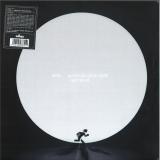
Founded in 2020 by Austrian producer Lee Stevens, Rising Seed has evolved into a joint venture with Ken Hayakawa and a collective of guest musicians. Blending Acid Jazz, Trip Hop, and Disco, the project bridges the warmth of live instrumentation with the depth of electronic production.
With a strong focus on recording and re sampling real instruments, Rising Seed crafts a rich, organic sound—where vintage samplers, drum machines, and analog textures meet hypnotic grooves and cinematic atmospheres. Inspired by artists like Moby, Kruder & Dorfmeister, and Massive Attack, their debut album True Lies unfolds like a layered collage, blurring the lines between past and future, truth and illusion.
The opening track, “Follow Me,” perfectly embodies this fusion: sampled instruments and vocal snippets blend seamlessly with live recordings of flute and saxophone, all set against a funky drum break. “Gone West” does the unthinkable—marrying a house groove with esoteric vocals, live sitar by Amrith Jan, and—why not?—a touch of harmonica. “Like A Lion” is a dub-infused downbeat track packed with crusty blues samples.
On “Freedom,” we hear a more minimalist side of Rising Seed, with a tight brush-drum arrangement and densely layered sitar melodies. Another high point is “Soldier of Peace,” featuring even more funky sitar and a subtle acid line, reminiscent of the early days of big beat. It’s followed by “True Lies,” which elegantly distills the downbeat sound of the late '90s while staying true to the Rising Seed formula.
“Psych Jazz” is, as the title suggests, both psychedelic and jazzy, albeit with a somber, low-slung trip-hop feel, while “Don’t Worry” is equally trippy yet more upbeat, carried by a moaning vocal sample that urges us not to worry. Finally, “Stay with Me” closes the album with a jazz-infused vibe that is both moody and uplifting, its shuffling drum groove and elegant piano melodies providing a fitting conclusion.
quête:between machines
- A1: Pharoah Jones
- A2: Ghost Gospel
- A3: Ill Feeling
- A4: Capital Punishment
- A5: Do Not Adjust
- A6: Cool Green Trees
- A7: Chill Scratch
- A8: Poisonous Fumes
- A9: Welcome Aboard The Starship
- B1: Keep On Runnin
- B2: Sounds Impossible
- B3: Painted Faces
- B4: The Knew Style
- B5: Chicken Wing Blues Sauce
- B6: Kool Breeze
- B7: Sexx Bullets
- B8: Soul Child
- B9: Take Off Runnin
- B10: Centurian
- B11: Bozack
- B12: Church
- B13: Splash One
- B14: Hank
- B15: 73 Goatee
"Chasing the funky symphonies that filled my head and my dreams..."
December 25th, 2023 - an Instagram post. Stimulator Jones shared half a dozen FIRE tracks from his beat tape archive. We were immediately drawn to the rough hewn boom bap.
"I'd release that", Rob commented.
Hours of material was shared and the result is this: Cool Green Trees (1999-2005). A collection of beats and loops Stimulator Jones created between the ages of 14-20 at home in his basement, bedroom and computer room in Roanoke, Virginia.
You will not believe the profound soulful genius contained within these naive schoolboy melodies.
December 25th, 1998 - 25 years ago to the day and his much-coveted Yamaha SU10 sampler was finally bestowed upon young Stimmy AKA Sam Lunsford: "I immediately hooked up a CD Walkman to the input jack and looped the beginning two bars of Grover Washington Jr.'s "Mercy Mercy Me". I don't know what exactly was so thrilling about hearing two measures of music repeating over and over but it was so infectious and hypnotizing and enthralling to me. I'll never forget that ecstatic rush of making my first loop - an uncontrollable, gleeful smile plastered all over my face." When you hear the pocket breakbeat symphonies featured here on Cool Green Trees, you'll feel the same sense of frisson.
In the wake of his Stones Throw breakthrough - Exotic Worlds & Master Treasures - Stimulator Jones was pegged by many as a 90s throwback artist. However, he literally IS a 90s artist. He's been recording music most of his life and he's now 40. He created the bulk of Cool Green Trees as a teenager. Everything before 2004 was recorded when Sam was still in school. He was in 8th grade when he made the 1999 tracks - he didn't even have his learner's permit. This album is a snapshot of a young man in a simpler time. Things were still mysterious back then and he was flying blind, relying on his ears and having to figure things out for himself: "I had no road map for becoming a beatmaker. I have been collecting music since I was a kid, I am a lifelong digger and seeker of cool and interesting sounds. I was there in the golden age of Hip Hop, and while I may have been a suburban white kid in Roanoke, Virginia, I was tuned in and I bought so many classic albums when they came out. I was attracted to Hip Hop because of the musical and poetic quality. I was hypnotized by the rhythms, partially because I was a drummer. I didn't brag about collecting my breakbeat records or making beats - it was something I did in isolation. It wasn't something I generally wanted to bring attention to and it didn't really score me any cool points. I certainly wasn't flexing on social media about it."
Hell, he can do that now!
Opener "Pharoah Jones" was inspired by Yesterday's New Quintet and Madlib's ability to capture that classic 70s sound whilst playing all the instruments. Sam created this one stoned afternoon by laying down a 2 bar loop and a shaker loop on his Yamaha SU700 sampler. He hung a microphone from the ceiling and played his Yamaha Stage Custom drum kit over the top before adding ender Rhodes and playing his dad's Selmer tenor sax through an Electro Harmonix Memory Man echo pedal. Yes! Up next, "Ghost Gospel" utilises a dope loop from a gospel record and adds some soul-funk drums overtop, whilst working that filter knob. Says Sam: "The loop reminded me of something Ghostface would rap over. The sample was in 3/4 waltz time but I flipped it for a 4/4 groove, a technique I picked up from RZA. "Ill Feeling" uses sped-up pieces from a dusty old funk record and putting them over a classic NOLA drum loop; gain chopping up a slow, bluesy 3/4 time signature and bending it to a 4/4 groove. Classy shit. "Capital Punishment" features drums tapped in live, inspired by MF Doom's Special Herbs series. "Do Not Adjust" consists loops found on a compilation of 70s French music at Happy's Flea Market, a classic Roanoke digging spot.
The sublime, evocative title track, "Cool Green Trees" was created when Sam was still living at home. He dumped samples off his SU10 into the family desktop and arranged them in a demo version of Pro Tools: "This track was sort of my ode to the DJ Shadow style of sample based production. Super spacey, slow, and moody. The heavily filtered drums were inspired by Alec Empire's 'Low on Ice' album. I later added some scratches and sounds from a Spider Man storybook record." "Chill Scratch" snags the final bit of a bossanova record and pairs it with a drum loop before adding experimental scratching run through an Electro Harmonix Memory Man echo pedal. "Poisonous Fumes" was made using a sampler, mixer and a turntable; a kind of mixtape beat collage with added scratches and sounds from various records. Using dialogue from superhero records was a nod to Madlib. "Welcome Aboard The Starship" is dark, downtempo trip-hop with a spooky bent. Sam paired a slow, hard drum loop with a guitar sample grabbed off a psychedelic rock record. To finish, he added various backwards sounds and weird atmospheric effects and a little scratching. Swoon.
Side B opens with "Keep On Runnin", made on a borrowed Roland SP202 sampler. Having always loved the sound of the Lo-Fi filter on those machines, reminiscent of the Emu SP1200, Sam always imagined Del or another of the Hieroglyphics crew rapping over this beat. You can certainly hear why. "Sounds Impossible" sees Sam experimenting with layering multiple kick samples at different volumes to create patterns similar to those heard by Showbiz and Lord Finesse during their God-level 1995 period. "Painted Faces" was made by chopping up a REDACTED record which he had gotten from Happy's Flea Market and paired it with a REDACTED drum loop. By the time Sam recorded "The Knew Style", he had acquired a shitty old 1960s portable turntable off eBay. It didn't function properly when he bought it but his brother opened it up, cleaned it out and got it working: "I remember he told me that there was a bunch of sand inside of it when he opened it up, as if its previous owner had taken it to the beach. I would take that turntable on my Happy's Flea Market digs so I could preview records...that's how I found this loop."
"Chicken Wing Blues Sauce" loops up a classic blues joint and pairs it with some REDACTED drums. A bit of filtering and arranging et voilà! "Kool Breeze", from 1999, is one of Sam's oldest surviving beats, as is "Sexx Bullets". The Roots sampled the same record, leaving Sam frustrated yet vindicated. "Soul Child" was an early SU10 creation, looping a dusty old Soul Children 45 and pairing it with 70s rock drum loops to great effect. "Take Off Runnin" was another loop found digging with a portable turntable. Paired with some boom bap drums it makes for a hypnotic head-nod groove. "Centurian" was intended to be a little beat interlude a la Pete Rock. The sample is from a sun-dappled soft-psych record and it's paired with a Robin Trower drum loop that just happens to fit perfectly. Sometimes you slap things together kind of haphazardly and magic happens. "Bozack" was the first beat Sam made using Pro Tools, his first foray into using chopped sounds instead of loops, an exciting new world. "Church" is beat interlude using a Phil Upchurch loop with the "Long Red" drums - a favourite break of Dilla et al. Sam was really on a tear in late 2004, probably because he was unemployed and phoneless and able to just make beats all day. He made "Splash One" on a borrowed Yamaha SU700 and again was experimenting with tapping the drums in live with his fingers, instead of using a loop or sequenced pattern. Channeling 9th Wonder, Sam used a water splash sound effect from a Batman record as a percussive element, hence the title (also a 13th Floor Elevators reference). The main loop is a backwards portion of one of his favourite Roy Ayers songs.
"Hank" is another fun little beat interlude thing, created on a borrowed Roland SP202 sampler with the fantastic Lo-Fi effect that resembled the Emu SP1200 at a fraction of the price. "73 goatee", from 99, is another of his oldest surviving beats, created in his bedroom with his Yamaha SU10 and his brother's Vestax MR-300 4-track recorder: "This one will always feel special. I can remember having a feeling all the way back then on the night that I created it that this was a solid beat with a catchy loop. There was something in the Fender Rhodes melody that resonated with me emotionally, and I had never heard a producer sample that portion before. I felt like I had found my own unique sound, my own unique loop. It came from an Ahmad Jamal '73. I actually even recorded myself rapping and scratching over this beat way back then, I still have that version in all its imperfect sloppy glory."
Sam explains just how much these tracks mean to him: "They all have immense historical and sentimental value and I'm proud of them. These beats come from an innocent, simple time when I was just figuring out how to craft these sounds. They're something very personal to me. They are the initial part of a journey that I really was taking *alone*. There was no YouTube. I couldn't Google shit. I didn't even know any other beatmakers, producers or DJs in my town that could teach me anything. It was always just me, alone, in a room with some equipment - chasing the funky symphonies that filled my head and my dreams. What I was doing wasn't cool. Most of my peers thought I was a weirdo and couldn't care less. Creating these sounds was an anti-social endeavour. In a sense, I felt like it was me against the world, and all I had to instruct and assist me were the recordings produced by my heroes - RZA, DJ Premier, Erick Sermon, Beatminerz, Showbiz, Diamond D, Beatnuts, Prince Paul, The Bomb Squad, Pete Rock, Q-Tip, E-Swift, Mista Lawnge, DJ Shadow, Cut Chemist, Peanut Butter Wolf, El-P and so many more...I dedicate this collection to them, and to my older brother Joe who has always been a musical and technical guiding light for me.
This was a time before every kid was a self-described producer and beatmaker, before everyone had a DAW, before Kanye and "chipmunk soul", before Red Bull beat battles, before there was any social media beyond chat rooms and AOL Instant Messenger, before Soundcloud, before SP-404 mania, before lo-fi beats to study to, before Splice, before targeted ads for MIDI chord packs, etc. In 99 when I told people that I had a sampler and made beats I was mostly met with bewildered confusion and indifference. Kids and adults alike would wonder why I got this weird machine for Christmas instead of something worthwhile like a Playstation or a mountain bike or even a guitar for that matter because at least that could be used to make "real music". Back then, sampling was still not widely respected as an art form - it was seen as lazy, talentless and unoriginal at best and outright criminal theft at worst. I had gotten respect for playing drums and guitar and things of that nature but this was a step in the wrong direction in the eyes of many."
The cover photo is a picture of Sam standing on his back porch in the latter part of 1998, just before he got his first sampler. He was 13 years old, in 8th grade. His dad took the picture with his 35mm film camera: "I actually wanted to be pointing my dad's .22 pistol at the camera lens but he wouldn't let me. He gave me an old walking cane to use instead. The Tommy Hilfiger puffer jacket came from the lost and found at William Fleming High School where my mom worked as a secretary. I was thrilled when she brought it home because we never spent money on expensive name brand clothing like that - we were for the most part strictly a sale rack, bargain bin, thrift store, yard sale, flea market kind of family when it came to clothes. My watch is some cheap off-brand fake gold department store watch." Mastering for this vinyl edition was overseen by Be With regular Simon Francis and it was cut by the esteemed Cicely Balston at Abbey Road Studios to be pressed in the Netherlands by Record Industry.
Infinity Division is the alias of electronic producer Ash Luk. Best known for his innovative blend of euphoric melodies, scattered breakbeats and gabber infused rhythmic chaos drawn from his relentless live performances, Ash’s newest offering, debut album SATISFACTION (which also marks the launch of his label, SOFTCORE UNLTD.), explores his relationship with all things anthemic.
Featuring artwork from Spyros Rennt, the thirteen track album traverses a diverse array of sonic landscapes. Spanning doomy post-rave and trance-driven metal to breakbeat-infused industrial pop, the album is united by a genre-defying exploration of the elusive essence of anthemic sound.
Venturing beyond the safety of machines, Ash steps to the forefront with his vocals on Seven Demons and Like Heaven, while From Evil, Weather Prophets, and Satisfaction feature vocal contributions from Zastar of Violent Magic Orchestra, Coy Mistress, and Nova Bruise, enriching the album’s diverse soundscapes.
In addition to his work with Infinity Division, Ash is one half of the doom electronic live duo S.A.T.I.N. alongside Ireen Amnes and is possibly best known for his work in Minimal Violence, a project known for their raw, hardware, punk influenced live performances. Releasing on well known labels such as Tresor and Technicolour / Ninja Tune. Their work was characterized by a DIY ethos and an emphasis on analog equipment, allowing for a direct and visceral approach to production. Now, with Infinity Division, Ash continues to build on a body of work that explores the space between genres, combining an attention to detail through carefully constructed sound design with the spontaneity and raw energy of his live performances. SATISFACTION sets the stage for the next phase of Infinity Division, showcasing a collection of tracks that draw from the essence of the past while reaching out toward a mirage of the future.
- Intro/Dream Inducement 01:31
- Jackie 02:04
- Changes 00:41
- Speed Of Light 01:16
- Project 79 01:19
- No No 01:05
- Happenings 01:04
- Falling 01:20
- Grounded 01:24
- Heat Maps 00:54
- Mind Meeting 01:11
- Rainbow Eternity 02:17
- Do That Now! 01:00
- Stiff Arrow 01:09
- June 15 00:34
- Scroll 01:09
- Crying Games 01:42
- Lost In Osaka 02:03
- Nerd Nork 01:44
- Avalon Control 00:45
- What Is? 01:06
- Take Flight... 02:09
Illusive Bristolian producer Claude Cooper returns with ‘Friendly Sounds Vol 1’; part psychedelic trip, part romping beat tape, part party. The album was inspired by the vinyl discoveries made from Cooper’s months of digging and cataloguing the bulging inventory of Bedminster’s Friendly Records record shop. Cooper fed these myriad captured sounds through the studio and then, blurring the lines between sampling and performance, arranged and embellished them with keyboards, drum machines, bass guitar and more, also co-opting BEAK> bassist Billy Fuller and esteemed composer Ben Salisbury to contribute.
With most of the tracks in and out within 90 seconds, the album is best enjoyed as a continuous course. Play side A, play the B, then flip it back and listen all over again. Stand out moments include tremulous cut ‘n’ paste jam ‘Jackie’, the moody string-laden ‘Rainbow Eternity’, funky sitar workout ‘Nerd Nork’, and atmospheric closer ‘Take Flight’. Sharing a similarly broad and experimental sound palette as the likes The Avalanches, Madlib, The Go Team, and Edan; ‘Friendly Sounds Vol 1’ is the soundtrack to a wild joyride down South Bristol’s North Street, foot on the gas, hand on the horn, LPs spilling from the boot.
Cooper’s irrepressible debut album ‘Myriad Sounds' (Jan ‘22) caught the attention of the UK's press and radio alike. Mojo's four star review described it as “Bristol’s beat scene backdrops late night jams”, Uncut enjoyed the "rugged psych-funk romp" and Louder than War declared "it’s vital and vibrant and exactly what we need to kick start the year”. Bonus round 'More Myriad Sounds' (Apr ‘23) added Brooklyn vocalist Brain Fog to the melange with a bounty of pyretic vocal performances. DJ Mag called it “A fierce, kaleidoscopic trip” while Bandcamp Daily said “This album of cross-genre influences is as likely to get it included in any number of best-of columns, with the theme of serious fun as their common element”. Called a "mysterious Bristol breaks scientist" by Lauren Laverne, BBC radio DJs including Cerys Matthews, Gideon Coe, Huw Stephens, Jamie Cullum, Stuart Maconie, and Tom Ravenscroft have rinsed Cooper’s tracks, with Huey Morgan inviting Cooper to contribute a Block Party Mix for his show.
‘Stay A While’, the first showing of Cooper’s new shop sampling stunners, was released on 7” in January ‘24. Lush string flourishes sliced with 6Ts girl-group vocals and rollicking piano chords resulted in a dreamy, end of night, lights up anthem in-the-making that The Arts Desk called “A horn-fired, beatsy, chop-around that recalls The Avalanches”. Releasing the album is Friendly Records, the best little record shop in Bristol and now a burgeoning record label. Opened by Tom Friend on North Street in 2016, it’s gone on to become a hub of the local musical community. As well as Claude Cooper, the label has released LPs by Alison Cotton, Floating World Pictures, Christian Madden & The Enemy Chorus, Nick Craft, as well as handling the War Child series of 7”s with BEAK>, Idles, J Dilla, PJ Harvey, Portishead, and Sleaford Mods + Hot Chip.
Claude Cooper will DJ at the one-day Friendly Festival on 10th May in aid of War Child, which will feature Sleaford Mods, Katy J Pearson, The 45s, Zalizo and DJ sets by Ishmael Ensemble, Heavenly Jukebox and Friendly Records DJs.
‘Zeitgeist’, the debut LP from celebrated Italian electronic music producer Dukwa, begins with a timeless dancefloor equation; swung drums, a clattering cobwell and flickering hi-hats lurch forward into a serious bassline. Within seconds, dancers are flung into the house anthem ‘You Don’t Want It’ that’s equally raw and charismatic, sensual and powerful. For the next forty-five minutes of rhythm, melody and studio trickery, ‘Zeitgeist’ continues to bend time, eras and bodies.
Having released EPs on respected labels including Numbers, Gudu and Diynamic Records, invariably with the support of Jackmaster, Peggy Gou and Solomun, Dukwa folds into the Slacker85 philosophy with ease, laying down a statement of intent that’s squarely for the dancers. Indebted to a youth digging in Florence’s record stores, embracing the peerless Italian rave scene, as well as his recent appearances at Circoloco and Kappa Future, ‘Zeitgeist’ subverts it’s knowing title to dance between styles with an urgency you can feel in your heels.
Before long, Dukwa is smoothly oscillating between acid overdrive and weightless house on ‘Catch All’, while the balance between softness and severity is refined even further on ‘Show Me’, showcasing the record’s first euphoric breakdown, a heads down, hands up moment that sacrifices none of his organic flow. Ably mastering many corners of his record box, ‘Avec Moi’ makes a confident left turn into tunneling trance, interspersed with a sensual french vocal.
‘All You Need’ provides the record’s beating heart, Dukwa’s overarching philosophy front and center around layers of synthesised groove, build and release: “The world is full of fighting, ignorance and greed, but right here on the dancefloor - the rhythm’s all you need”. Meanwhile, ‘My Turn’ channels more cinematic instincts, zoning in on an elegant piano riff in order to unravel a quietly epic deep house trip.
As ‘Zeitgeist’ heads toward its conclusion, Dukwa effortlessly squeezes the most emotive juice from his well-oiled studio. ‘Sad Eyes’ possesses the emotional punch of many vintage end-of-night anthems, still driving yet touched with a wistful ecstasy. Finally, for closing passage ‘Stck1’, Dukwa truly lets the machines sing, capturing a brief symphony of harmonising modulations that dip into weirdo electronica, without ever skipping his signature beats.
- Undesigned
- Judge The Seeds (A/ Happiness For No Reason B/ Bright Sadness)
- Probably Wizards
- Sympathetic Magic
- Bracelets For Unicorns (A/ The Spiritiual Body B/ The Articulate Body)
- Filling In The Swamp
- The Wounded Place (A/ Subliminal B/ Anonymous)
- Metaphoric Leakage
Following the hyperactive “Blood Karaoke” (2022, Reading Group), “Performing Belief” builds rhythmic thickets from gathered sounds interwoven with synths, drum machines and other samples. Having built these rhythmic nests, Krivchenia then called on two contemporary mages of the low end: electric bassist and fellow Angeleno Sam Wilkes (Wilkes/Gendel) and double bassist/multi-instrumentalist from Krivchenia’s native Chicago, Joshua Abrams (Natural Information Society). Wilkes and Abrams bring the presence of a grounding human witness to the rhythmic undergrowth, providing a centering and even at times melodic voice to the gathering. This alchemy carries a profoundly fresh sense of time, blurring the edges of the quantized grid and the generic boundaries of electronic music.
The core of the album is a lush, opulent matrix of percussion ranging from the familiar—hand claps and drum machines—to the mysteriously verdant, sampled largely from Krivchenia’s own performed field recorded collection. For years, he would record any and all of his musical encounters with natural objects: performing on a particularly resonant log on a hike, throwing rocks into a pristine pond, tap dancing in the mud. This archive of “natural” sounds became the fertile soil out of which the tracks on “Performing Belief” grew. What is gained in the process is not just a novel set of sounds, but a new rhythmic language. The particular give, the anticipatory rustle, the extra breath of a hollow log when functioning as a kickdrum provides a greenness that overtakes the rhythmic grid, giving this music a peculiar kind of stickiness. This rhythmic language, set in Krivchenia’s long-fermenting electronic musical palate, feels like a revelation, even while it calls back not only to his wonderfully elastic timekeeping behind the kit with his beloved band Big Thief, but also to his prior work in computer music as well as his deep study and love of the vast human archive of drumming. “Performing Belief” is in good company in the rank and file of the legendary Planet Mu label. From the foundational early releases of the likes of Jega and Venetian Snares, to the contemporary envelope-warping work of Jlin and hundreds of brilliant releases in between, Planet Mu has been a beacon of forward-thinking rhythmic music for decades, informing Krivchenia’s own sense of the weird metaphysics of musical time since he was a kid. Krivchenia’s contribution to this history calls to mind the principle of organic danceability that subtends Mu’s whole catalogue, while bending our sense of rhythm in new and gracious dimensions. Krivchenia brings out the loamy complexity of natural rhythms, a clearing as generous as it is inviting. Let the drummer give you some.
Fresh Blood straight from NYC, big tip!!
NYC’s underground producer Sweater On Polo back on the machines for the first release on Signal Route. “Mechanical Confusion” favors the techno and basement house approach of early 90’s Chicago innovators found on labels such as Dance Mania, Relief Records, and Saber Records. His style and approach carry a familiar old school angst, creating an intergenerational dialogue between the now and then. Going from acid house, to techno, and then synth punk, this 6 track EP captures the relentless range of the young artist.
Coming from a diverse background of equal amounts hip hop and rock, the producer behind the alias of nrl:ndr got into dance music late in his musical career. After playing in kraut-oriented bands like So Many Mammals, parts of that group reformed into the live techno outfit Tren Né, with the goal of fusing techno elements with live drums. Playing for illegal raves with a punk-like energy, nrl:ndr has cemented his relationship with his machines in service of the dance floor.
But his solo debut on blundar is quite far removed from that scene. To understand this music, one should be aware of the conditions under which it was manufactured. Reluctant to consider himself an artist in the traditional sense, nrl:ndr makes his music free of anticipation and without apparent goals. To glean into this outré musical space is like putting one's ear to the boarded up windows of the photograph that adorn the front sleeve.
The album makes extensive use of the Roland JV-2080, a sample-based synth rack from 1996 with a distinctly clean sound. Our producer dives deep into the expansion cards (labeled after genres like “Hip Hop” and “World”) for curious and sometimes cheesy samples. But he also forces the JV-2080 to do things which are not its forte, like the arduous task of programming decent kick drums.
Another technique that is testament to his experimental view on music making, is the idea of using sketches of unfinished tracks with different time signatures, and mash them together into something new - of which the results of one of these experiments can be heard on the closing track and its bilingual conversation between ambient and tribal.
Full of stunted rhythms and eerie melodies, the unclassifiable nature of the music of nrl:ndr lies somewhere in the vicinity of IDM, classical avant garde and private press synth. From the epic opening track - echoing the post-kraut drumming style of Michael Shrieve - to juggling with chopped up vocal samples and treading into almost trap-like territories on A4, he crosses into a multitude of genres without getting his hands too dirty with nostalgia.
- A1: She Loves Me
- A2: Dansons Dans
- A3: Nobody Moved
- A4: Dance Riff
- A5: No Trip
- B1: Shadance
- B2: Sequence X
- B3: A Cut & A Wipe 2024
- B4: Aceton
- B5: Iootd Dream Feat. Adrienne Altenhaus
- C1: Constant Click Feat. Adrienne Altenhaus
- C2: Mission Control
- C3: Princeton
- C4: A Car
- C5: Sonate Part Iii
- C6: Kunst-Zaken '87
- D1: Minimalize
- D2: Linda
- D3: À Saint-Tropez
- D4: A Shadow
- D5: Abstractions
2LP in printed inner sleeves + 12 page booklet with detailed info, secrets and unpublished pictures written by Walter Verdin himself. This collection dives deep into Verdin's prolific and experimental music from 1980 to the beginning of this millennium, capturing an era of a DIY punk spirit, improvisation, creative freedom and swimming against the tide.
We are thrilled to announce the upcoming release of 'Pingpong', a 2LP compilation showcasing previously unreleased works by Walter Verdin, the founding member behind Pas De Deux, the Belgian band which delivered 80's cult classics 'Rendez-Vous' & 'Cardiocleptomanie'. This collection dives deep into Verdin's prolific and experimental music from 1980 to the beginning of this millennium, capturing an era of a DIY punk spirit, improvisation, creative freedom and swimming against the tide.
This album is not just a compilation-it's a sonic journey into Verdin's unique approach to music-making, which he nurtured in the AV studio at KU Leuven's Audiovisual Department (AVD). Having begun his civil service there in 1980, Verdin was exposed to a rich array of audio and video tools that would shape his work for years to come. From the outset, Verdin's process was defined by an openness to experimentation, where he would explore sound and music organically rather than following pre-existing concepts.
The songs on Pingpong reflect his fascination with creating spontaneous, layered compositions. These recordings were made using limited tools, such as his duophonic Yamaha CS-40M synthesizer, borrowed drum machines, and tape loops, and were further enriched by techniques such as reverb and vintage sound manipulation. The results are raw, tactile, and full of personality-often more vibrant and personal than the polished, commercial recordings that would follow in professional studios.
Throughout the 1980s and 1990s, Verdin developed his craft, regularly drawing from his diverse interests in film history, soundtracks, video art, and avant-garde music. His innovative use of tape recorders, improvisational techniques, and later, MIDI and digital tools, makes for a fascinating and varied listening experience. This compilation includes everything from proto-techno and abstract new wave to avant-pop songs, sample-driven experiments, and the oddball TV-inspired tunes that have long been a staple of his work.
This selection is a true reflection of Verdin's "keen amateur" approach: a method focused on discovery, happy accidents, and unexpected results. These compositions aren't about achieving technical perfection, but about capturing moments of sonic exploration and transformation. The 21 recordings have been meticulously curated, with some tracks freshly arranged while others remain true to their original, unedited forms.
'Pingpong' finally brings these forgotten gems into the light. The album includes not only unreleased music but also fragments from Verdin's video art and multimedia projects, offering a rare glimpse into his creative evolution over two decades. Stretching up the boundaries between medium and message, aligning his own musical univers.
Take a deep breath and dive into the works of an artist whose explorations pushed his boundaries of sound and technology.
A Belgian sonic cut up, ping ponging in between many worlds.
- A1: Echoes Of A Billion Sun's
- A2: Messages From The Andromeda Galaxy
- A3: Stardust Memories (Among The Stars Dreams And Memories)
- A4: Trailblazer Of The Cosmos (Comet Rider A Leap Of Faith Into The Unknown)
- B1: Seeds Of Light (Hope For Growth And New Beginnings)
- B2: Fragile Eden (Threads Of Emerald Green)
- B3: The Cold Embrace Of Infinity
- B4: The Star Charts We Shared (A Maurizio Requiem)
After a 30-year interstellar silence, the enigmatic producer Alien Signal—pioneering alias of Italian electronic composer Alex Silvi—reemerges with Whispers from Distant Suns, a transcendent odyssey that bridges retro-futurism and modern electronica. Hailed as a magnum opus, this album transcends genre boundaries, captivating ambient purists, downtempo aficionados, and even experimental listeners with its hypnotic fusion of analog warmth and digital precision.
Cosmic Tapestry of Sound
Drawing comparisons to Vangelis’ Antarctica and Alpha—but reimagined through a 21stcentury lens—Whispers from Distant Suns marries nostalgic synth textures with cuttingedge production. Silvi’s mastery of melody shines through in tracks like “Stardust
Memories” and “Fragile Eden” where shimmering arpeggios and celestial pads drift over robotic, glitch-infused drum patterns and sparse, meditative percussion. The result is a paradox: a retro-futuristic soundscape that feels simultaneously ancient and alien, familiar yet unexplored.
Listener Testimonials
Fans and critics have flooded forums with praise:
“An auditory revelation! It’s like Vangelis met Jon Hopkins in a nebula—vintage soul with a futuristic heartbeat.”
“The textures are gorgeously cinematic. Closing your eyes, you’re adrift in a Tarkovsky film scored for the Andromeda galaxy.”
The Vinyl Experience
Pressed on heavyweight vinyl, the album’s physical release amplifies its immersive qualities. The gatefold sleeve, adorned with surrealist astrophotography and metallic
foiling, mirrors the music’s cosmic ethos. Side A leans into Balearic serenity, with sundappled grooves and aquatic synth ripples, while Side B delves into darker, more
experimental terrain—think Aphex Twin’s Selected Ambient Works colliding with the organic rhythms of Jon Hopkins.
Maturity in Motion
This album is a testament to Silvi’s evolution. Tracks like “Seeds Of Light” and “Message from Andromeda Galaxy” showcase his refined ear for dynamics, balancing silence and sound with surgical precision. Vintage drum machines spar with glitches, while field recordings of crashing waves and interstellar static blur the line between Earth and cosmos. The closing track, “The Star Charts We Shared” crescendos into a 6-minute ambient requiem, leaving listeners suspended in a state of weightless awe.
Final Transmission
Whispers from Distant Suns is more than an album—it’s a transcendent odyssey. Spanning time, space, and the artist’s own creative evolution, this immersive work invites listeners to lose themselves in its ebb and flow. Designed for moments both intimate and expansive, its balearic-tinged atmospheres resonate equally through dawnlit Mediterranean terraces or the solitary glow of headphones in darkness. These are compositions that pulse, morph, and haunt the air long after the final note fades. A living soundscape meant to accompany life’s quiet revelations and clandestine joys—a soundtrack to your most personal moments, crafted as what the artist calls ‘private dance music.’
Tailored for the Discerning Listener
Whispers from Distant Suns is designed with the true connoisseur in mind. This album is a must-have for:
Vinyl Collectors & Audiophiles: Those who value the warmth and tactile experience of heavyweight, limited edition pressings
Electronic Ambient and Downtempo Fans: Listeners who appreciate immersive soundscapes that merge retro analog charm with modern digital innovation.
Retro-Futurism Enthusiasts: Fans of pioneering artists like Vangelis, Boards of Canada, and early Warp Records who seek music that bridges nostalgic synth textures with futuristic experimentation.
Experimental Music Explorers: Individuals drawn to sonic narratives that invite deep, contemplative listening—perfect for both introspective moments and immersive listening sessions.
This release is not just an album; it’s a curated experience for those who desire music as a multidimensional art form, merging the vintage allure of analog sound with a contemporary, cosmic vision.
For fans of: Vangelis, Biosphere, Jon Hopkins, early Warp Records.
Modern Obscure Music is proud to present Pierre Bastien & DJ Low's "Swing Low", a work that fuses the poetic inventiveness of Pierre Bastien with the visionary legacy of the late DJ Low (Tom Deweerdt), a central figure in Belgian independent music and founder of the influential Lowlands label. This album, which interweaves memory and experimentation, represents Bastien's debut on the Barcelona label's catalog and a testament to the creative bond between the two artists.
The album, composed of seven pieces, stands out for its hybrid nature: five reinterpretations of Bastien's previous works, some of them coming from his influential Mecanoid (originally released by Rephlex), and two unreleased improvisations, A Pupa and Reviver, which seal the unique character of the project.
Pierre Bastien, recognized as a composer, inventor and builder of sound machines, has been a tireless explorer of the frontiers between the mechanical and the musical. From his contribution to the Belcanto Orchestra, his collaboration with the PRSNT project to his participation in Pedro Vian's Earth, Our Planet or his collaboration with Tomaga for the Other People label, his career illustrates a constant commitment to experimentation and the intersection of disciplines. Among the artists he has worked with are names such as Robert Wyatt, Jac Berrocal, Jaki Liebezeit and designer Issey Miyake. His works have found homes on iconic labels such as Marionette, Morphine and Discrepant to name a few.
The album is presented with a visual design by Koen Bruyneel, reinterpreted as a tribute to Tom Deweerdt, a decade after his departure.
green trax vol. 2 is the second collection on trip of classic material from steve o'sullivan's green label, originally recorded between 1996 and 2005.
these tracks capture steve's unique approach to minimal techno, heavily influenced by the innovative sounds of robert hood, jeff mills, and terrence dixon.
recorded live in one take directly from the machines, this collection embodies raw, unpolished energy - a tribute to the spontaneity of studio experimentation. several of the tracks included were previously released on green and recontextualised for trip.
There are records that come from the soul. No matter how primitive may be the recording techniques the musician has access to, the soul gets its way to the heart and mind of the listener. Samtvogel' is one of those records. Günter Schickert recorded that amazing piece of human greatness in 1974, using the media he had at the time, putting his brain at work to find the best way of taping everything he had to say. When I was recording Samtvogel' in 1974 I had only 2 Taperecorders. I played one track and while listening I added the second one. And so on. Four times. When I mixed all together I borrowed a 3rd taperecorder. And still added the last track to the master. I had a small mixer with 2 stereo and 1 mono but it was possible to pan tracks. No equalization. It all came out of my still living G2000 Dynacord guitar amplifier, of course valve, with no master, even the voice recorded through it. If I made a mistake in 1 track I had to repeat it from the beginning. And if while mixing I was not fast enough in changing the tape I had to start again. So it took me more than 3 months to get ready.'
Thanks to these three months of work, between June and September of 1974, 'Samtvogel' was privately issued that same year. It would later be issued on the Brain label, with a small change in the artwork -titles added to the front cover, which weren't on the original private pressing. Brain also reissued it on the label's Rock On Brain' LP series, this time with a completely different sleeve. The album contained two tracks on side one and just one on side two, and its sound has often been compared to the most explorative works of Syd Barret - however it must be pointed that Schickert did not need any mind spreading substances to allow his sounds float out of his mind & soul, they just came out in the most natural way. It will also appeal to fans of the echoed athmosferic guitar work of other kraut innovators such as Ash Ra Tempel, Manuel Götsching or A.R. & The Machines, and some may find on the vocal passages certain resemblances to Damo Suzuki on Can's 'Tago-Mago' era.
The Wah Wah reissue is housed in a quality sleeve that reproduces that of the original 1974 private pressing and features a 4 page insert with liners and photos - sound remastered at Eastside mastering Berlin. Get this bird now, before it flies away again!
There are records that come from the soul. No matter how primitive may be the recording techniques the musician has access to, the soul gets its way to the heart and mind of the listener. Samtvogel' is one of those records. Günter Schickert recorded that amazing piece of human greatness in 1974, using the media he had at the time, putting his brain at work to find the best way of taping everything he had to say. When I was recording Samtvogel' in 1974 I had only 2 Taperecorders. I played one track and while listening I added the second one. And so on. Four times. When I mixed all together I borrowed a 3rd taperecorder. And still added the last track to the master. I had a small mixer with 2 stereo and 1 mono but it was possible to pan tracks. No equalization. It all came out of my still living G2000 Dynacord guitar amplifier, of course valve, with no master, even the voice recorded through it. If I made a mistake in 1 track I had to repeat it from the beginning. And if while mixing I was not fast enough in changing the tape I had to start again. So it took me more than 3 months to get ready.'
Thanks to these three months of work, between June and September of 1974, 'Samtvogel' was privately issued that same year. It would later be issued on the Brain label, with a small change in the artwork -titles added to the front cover, which weren't on the original private pressing. Brain also reissued it on the label's Rock On Brain' LP series, this time with a completely different sleeve. The album contained two tracks on side one and just one on side two, and its sound has often been compared to the most explorative works of Syd Barret - however it must be pointed that Schickert did not need any mind spreading substances to allow his sounds float out of his mind & soul, they just came out in the most natural way. It will also appeal to fans of the echoed athmosferic guitar work of other kraut innovators such as Ash Ra Tempel, Manuel Götsching or A.R. & The Machines, and some may find on the vocal passages certain resemblances to Damo Suzuki on Can's 'Tago-Mago' era.
The Wah Wah reissue is housed in a quality sleeve that reproduces that of the original 1974 private pressing and features a 4 page insert with liners and photos - sound remastered at Eastside mastering Berlin. Get this bird now, before it flies away again!
There are records that come from the soul. No matter how primitive may be the recording techniques the musician has access to, the soul gets its way to the heart and mind of the listener. Samtvogel' is one of those records. Günter Schickert recorded that amazing piece of human greatness in 1974, using the media he had at the time, putting his brain at work to find the best way of taping everything he had to say. When I was recording Samtvogel' in 1974 I had only 2 Taperecorders. I played one track and while listening I added the second one. And so on. Four times. When I mixed all together I borrowed a 3rd taperecorder. And still added the last track to the master. I had a small mixer with 2 stereo and 1 mono but it was possible to pan tracks. No equalization. It all came out of my still living G2000 Dynacord guitar amplifier, of course valve, with no master, even the voice recorded through it. If I made a mistake in 1 track I had to repeat it from the beginning. And if while mixing I was not fast enough in changing the tape I had to start again. So it took me more than 3 months to get ready.'
Thanks to these three months of work, between June and September of 1974, 'Samtvogel' was privately issued that same year. It would later be issued on the Brain label, with a small change in the artwork -titles added to the front cover, which weren't on the original private pressing. Brain also reissued it on the label's Rock On Brain' LP series, this time with a completely different sleeve. The album contained two tracks on side one and just one on side two, and its sound has often been compared to the most explorative works of Syd Barret - however it must be pointed that Schickert did not need any mind spreading substances to allow his sounds float out of his mind & soul, they just came out in the most natural way. It will also appeal to fans of the echoed athmosferic guitar work of other kraut innovators such as Ash Ra Tempel, Manuel Götsching or A.R. & The Machines, and some may find on the vocal passages certain resemblances to Damo Suzuki on Can's 'Tago-Mago' era.
The Wah Wah reissue is housed in a quality sleeve that reproduces that of the original 1974 private pressing and features a 4 page insert with liners and photos - sound remastered at Eastside mastering Berlin. Get this bird now, before it flies away again!
- Riverside
- Marseille
- Alouette
- Blue Left Hand
- Velveteen
- Shotguns
- Rodeo
- Moon On The Water
- Talk Is Cheap
- Banshee
- Divinations
2023 was a whirlwind year for Oracle Sisters. The trio—Julia Johansen, Chris Willatt, and Lewis Lazar—followed the release of their debut album Hydranism with a globe-spanning tour that captivated fans and critics alike. From the highways between Knoxville and Nashville to sold-out clubs in rain-soaked Seattle, and festival stages across the UK, they logged countless hours on the road. Their journey was a tapestry of exhaustion and exhilaration, falling apart, brawls and disputes, love and acceptance. By the year’s end, just two days before Christmas, they found themselves in Tokyo, reflecting on the fleeting nature of time and the fragments of inspiration gathered along the way. It was there the seeds for their next album, Divinations, began to sprout. Composing as a true trio for the first time, Oracle Sisters pieced together sketches formed during stolen moments on tour. These fragments coalesced into Divinations, an album shaped by the band’s nomadic existence. The recording sessions spanned cozy Parisian studios, a barn in northern France, and the storied Valentine Studios in Los Angeles. Their creative process embraced experimentation—swapping primary instruments, playing with toy drum machines, and crafting melodies on quirky tools like the OP-1 and a baby Casio keyboard. This spirit of discovery lent the album a sense of spontaneity and wonder. At its core, Divinations channels mysticism and timeless storytelling. The band’s songwriting draws on diverse influences, from the surrealist poetry of Baudelaire and Rimbaud to the introspective philosophies of Carl Jung. Musically, echoes of Talking Heads, Air, and Leonard Cohen resonate throughout the album and tracks like “Riverside” delve into existential questions— “How far are you going? Is it more than money can buy?” Elsewhere on the album “Marseille,” born in the city that gave the song its name, kicks off as a trance with lyrics that play between the sincere and desperate self-help affirmations, we give ourselves while trying to find a bridge between our individual lives and a universal feeling. Lead-single “Alouette” is Oracle Sisters at their most direct; propelled by a driving bassline and exuberant strings, the track summons the sound of 80’s, 90’s, and early 2000’s rock n roll as they sing about “getting out of dodge, finding a pirate ship and sailing home.” Inspired by the book Caliban and the Witch, “Blue Left Hand” is a lyrical tapestry weaving together history, philosophy, and cultural critique. The lyrics, “It’s in the harbor of every page / It’s in the corner of the playwright’s stage / And every player and every fake / And every witch that we burned at the stake,” reflect on the forces that shaped the capitalist society we know today. Across Divinations’ 11 tracks it’s not only geographic boundaries that were crossed but also the boundaries of time and circumstance. While their work may not consciously reflect specific worldly events, they seek to embrace the universal and offer a space for healing. “Good music would make sense to a farmer in 17th century France as it would to a pastry chef in Slovenia in the 21st century,” shares Lazar. “It’s not written for any temporal powers that be. It’s about expressing our common humanity and taking it from there.” This intuitive approach fuels Oracle Sisters creative process - whether composing in a frozen French farmhouse or performing live with an ever-expanding lineup of collaborators, the band remains committed to exploring the unknown. Through Divinations, they hope to leave listeners feeling transcendent, levitating on waves of intuition and discovery.
Imaginary friends Akka & BeepBeep share the third release on their label: Floral Ancestors by Raduns. The 12” offers blooming ambient rooted in dub, lush drone and hand-picked cosmic that’s all grown deep in Detroit.
Spacious sonic arrangements vividly swell yet keep grounded within a sculptural rhythmic core. Raduns sows synth basslines and wispy pads next to harmonious guitars and muted field recordings. Grooving propulsion drives throughout. Rhythms appear, in negative space, like outlines between leaves. Recorded with machines direct to SD card, the compositions represent ephemeral blessings of experience. As if strolling into a verdant conservatory, the layered and diverse sensations blend into one cohesive revelatory experience.
On their first record, Raduns draws an ancestral line in Detroit as inspiration. A time when you could ride a streetcar from Dexter-Linwood to Belle Isle. A time before freeway expansion demolished vibrant Black neighborhoods. A time before the rebellion, motown and white flight. A time when Raduns’ great-grandparents were florists in the city, serving the community in times of celebration and times of grief. This melancholic circle shapes the project in which Raduns summons these Floral Ancestors, stretching upward from the darkness of the earth into the light of the world back down once more.
AKKA’s Side: “Grass Boulevard” exhales a luscious soundscape that develops through wave-crashing synths and circulated guitars to a transplanted acid lead. “Spread” lays out a decoration of blended sample and hold synth with kosmische styled guitar licks. Tracked as a single take in a Detroit community studio, the tune intuitively reseeds the symbiotic sprout between krautrock and Detroit techno.
BEEP’s Side: “Metrograde Bouquet” submerges you into the bulb of a handcrafted vase. Dub techno roots grow out into murky water with energy that is subtle yet profound. “Oldest of Arrangements” textures breaths of misty air cascading ventilating in on itself. The track’s time seems to stretch and disappear within a dark and deep undercurrent. A harmonic and reverberant resonance closes the record in a flowering of beauty and peace.
“You’re a flower child. Put this music out.” - Someone Important in Detroit
Wilurarrakutu is the brilliant debut from Papunya-based artist Keanu Nelson, an intimate exercise in musical storytelling and reflection. The album's eight tracks, sung in both Papunya Luritja and English, are verses of prose and poetry pulled directly from Nelson's notebooks and set to minimalist, DIY electronic arrangements.The evocative musical backdrops_featuring Casio keyboards, drum machines, and subtle synth flourishes_were created in collaborative sessions between Nelson and Sydney producer Yuta Matsumura. The two met by chance on Matsumura's visit to Papunya last year. Their impromptu jam sessions form the foundation for Wilurarrakutu's low-key sonic palette, influenced in parts by Papunya's strong local gospel music scene as well as the reggae beats often passed around the remote community via USB sticks and mobile phone transfers.Over these soundscapes, Nelson sings of family, friends, heritage, and culture, with a tone that balances joy and melancholy. They're themes and emotions that also echo through his work as a painter at the Papunya Tjupi Arts Centre. In this way, Wilurarrakutu becomes an extension of his art practice - a graceful audio portrait of a place that evokes the resonance of home.
- 1: Introduction (Instrumental)
- 2: The Only Difference Between Martyrdom And Suicide Is Press Coverage
- 3: London Beckoned Songs About Money Written By Machines
- 4: Nails For Breakfast, Tacks For Snacks
- 5: Camisado
- 6: Time To Dance
- 7: Lying Is The Most Fun A Girl Can Have Without Taking Her Clothes Off
- 8: Intermission (Instrumental)
- 9: But It's Better If You Do
- 10: I Write Sins Not Tragedies
- 11: I Constantly Thank God For Esteban
- 12: There's A Good Reason These Tables Are Numbered Honey, You Just Haven't Thought Of It Yet
- 13: Build God, Then We'll Talk
Remastered Re-issue!
Marvin Dash, Germany's best kept House Music secret. Real House Music headz have been following his versatile productions between Detroit House and Minimal Techno since the mid 90's. Back then many didn't know Marvin is really Ronald Reuter, hailing from the middle of Germany, Thuringia.
About 30 years ago Ronald and his buddy Jens Kuhn aka Lowtec teamed up for music production on their own terms in the vibrant House, Techno scene of East Germany. This scene was pure DIY: Parties somewhere out in the country, heartfelt, down-to-earth people and raw underground tunes from analogue machines. Their productions were way ahead of their times, but found a cult following by and by...
There's many great Marvin Dash records, but his main piece of work remains „Model Turned programmer“ on C-Rock's Stir15. Deep as hell, iconic soundscapes, 100% pure!
Les Disques Bongo Joe is reissuing Au Revoir, the debut album by Société Étrange, originally released in 2015 on the Lyon-based label S.K. Records, and now considered a cult classic. This Lyon trio, composed of Antoine Bellini (electronics), Romain Hervault (bass), and later joined by Jonathan Grandcollot (percussion), explores a minimalist instrumental soundscape, where repetition and tension play a central role.
Au Revoir was created with a raw and intuitive approach, mostly composed during the group’s earliest days. At the time, Antoine and Romain were working as a duo, experimenting with drum machines and electronic sounds inspired by the post-punk of the 80s, the robotic grooves of Neu! and Cluster, and the DIY spirit of early hip-hop. The result is a music that is both hypnotic and introspective, where the presence and absence of sonic elements balance with minimal precision. Between electronic layers and winding bass lines, the tracks move forward like on a foggy road, uncertain but captivating.
For this reissue, Société Étrange offers two new recordings. One of them is a revisited version of Voiturin à Phynance, renamed Voiturin à Fifinance for the occasion, with Jonathan Grandcollot now fully integrated into the group. His percussive style, both organic and melodic, has profoundly transformed the group’s sonic dynamics, adding richness and texture to this new version. The previously unreleased track Blanchard completes the edition, offering another facet of their universe, more spontaneous and free.
This reissue is more than just a re-release of an out-of-print album. It is a testament to the evolution of Société Étrange, a group that blurs genre boundaries, seamlessly blending post-punk, krautrock, dub, and electronic minimalism. With Au Revoir, the trio crafts a singular instrumental sound, where each note seems to carry a unique weight and intention, borrowing equally from abstraction and narrative.
Next Polyamore Recs release comes from Capofortuna – brothers Riccardo Cardelli (Funk Rimini) & Francesco Cardelli, and Davide Santandrea (Rame, Pastaboys) – the instrumental funk-jazz trio renowned for their ground-breaking productions and musical soundscapes. Here the Italian trio unveil a fusion of sounds with some heart felt nostalgia on their ‘Punti Di Vista EP’. In true Capofortuna style, this uber classy record pushes boundaries and is a further testament to the band’s constant evolution and commitment to musical innovation, all recorded at their boutique studio in Rimini.
The title cut is a collaboration between Capofortuna and producer Andrea ‘Neve’ Recla, highlighting their experiments with a Casio CZ3000 synth, adding a more futuristic electronic dimension. On ‘Venusian’ you will hear plenty of the Moog Rogue and the Roland JX3P, both machines together paying homage to Rimini’s vibrant arcade culture of the 90s. ‘Pianobar’ takes inspiration from the same musical moments of the 90s, adding melancholic trumpet flourishes played by Jacopo Buda. ‘Acid Basico’ nods its head to the darker sounds of Italo disco and Chicago house, seamlessly blending dub elements to create a genre-defying experience. Reflecting the trio’s shared musical heritage, ‘Punti Di Vista’ showcases Capofortuna’s ability to transcend genres at the same time staying true to their Italo-funk Rimini roots.
- Chant
- Fiori Strappati
- Petto Rotto
- Benu
- Cielo Azul
- Nido
- Cielo Fermo
- Alba
- Luna D’autunno
- Come Fan Le Stelle
- Ali Di Cotone
- Ali Di Fuoco
- L’ultimo Giorno
- Sogno Diurno
- Ocre
Limited edition pressing - 50 copies come with one page insert. Download code included.
The album Sonic Mystics for Poems (of Life and Death of a Phoenix) by Andrea Burelli is a work that masterfully blends traditional musical languages with the formal and conceptual sensibilities of contemporary music. It offers a profound reflection on the life-death-life cycle, centered on poetic texts that oscillate between human-sensitive experience and the mythical journey of a phoenix, a metaphor of this circular and infinite reality.
The work, which includes a collaboration with musicians from the renowned Solistenensemble Kaleidoskop, stands out for its clear influence from classical Western music and modal traditions, as well as experimental electronics. Composed for voices, strings, synthesizers, and drum machines, this music features a minimalist tapestry of polyphonies, enhanced by sophisticated electronic elements and a diverse array of rhythmic articulations.
Field Notes describes Andrea Burelli as a versatile artist capable of embodying a multitude of roles, from poet to composer, musician, and singer, emphasizing how her work reflects this versatility by ¨combining elements of art song, contemporary music, pop, and electronic sounds.¨ According to Groove Magazine, this LP evokes neoclassical chamber music and an imagined Italian folklore, aligning with contemporary explorations of modern vocal abstractions, similar to the work of artists like Marina Herlop, stating that: “This is how the new and the good emerge.”
Furthermore, the music has received positive feedback from internationally acclaimed artists such as Rashad Becker, who, in addition to being the mastering engineer of the project, describes it as "pure and honest"; James Young of Darkstar calls it "bold and innovative"; while Eartheater (PAN), Rabih Beaini, and Gigi Masin have praised it as "beautiful."
On December 6, 2024, Randomer will return with a new EP titled MTY-012: Everything Happens for No Reason, released via Anetha’s label, Mama Told Ya.
After a reflective hiatus, the UK prodigy is highly anticipated and ready to deliver meaningful music. The EP features five emotionally charged tracks—four produced by Randomer and one co-produced by Randomer and Anetha. Presented on a single vinyl, the release conveys a deeper message: life’s unpredictability can be embraced, reminding us that we can find our way even in chaos and randomness.
Torn between the meaningful and the meaningless, Randomer channeled his time into crafting music shaped by his extensive study of melodies, subconsciously
seeking to bring harmony to the world. The result is a cathartic journey across five tracks, each evoking a broad spectrum of emotions and inviting listeners to explore the depth of their feelings. Drawing from the music that deeply influenced him, Randomer traverses various genres and moods, seamlessly blending techno, trance, techstep, and sacred choral music in a perpetual act of personal reinvention.
Let the choir sing I Saw the World Melt (A1) right before my eyes, and let the people chant my melancholic melody. Nervous Breakdown. Lost in the riffs with dis ting from London, DHM Jam (A2) fuels me with adrenaline, I’m flying through memories, urged to move on. Yet, I’m still trapped : the clock shows Home Invasion (A3)—better start running. We will survive. But where’s my harmony? I Can’t Believe (B1) it. Why me? Why us? In this trance state of mind, I have so many questions, but those voices on the other side won’t answer. We’re doomed anyway, so why not plug in like the Two Perfect Machines (B2) we are, until the end.
For this new EP, Australian visual artist Nic Hamilton has been commissioned to create a poignant artwork alongside two melting teasers for MTY-012. As always, the design is expertly crafted by Diplomatie Studio, while the mastering is entrusted to Six Bit Deep, ensuring a polished and immersive listening experience.
DJ PT is a series dedicated to the minimalistic side of dance music.
Recorded in one take using an MPC and synth, these tracks allow you to get familiar with the sounds while delivering a high dose of machine funk. With no further editing, Dona offers an unfiltered, genuine interaction between himself and his machines—transparent and true to the moment
lim. to 200 180Gr Vinyl!
Schnieke is rich and fruitful, yet carries a sadness within. A 5-string violin charts its melodious journey from Istanbul to Belin, accompanied by electronics, breakbeats, live drums and percussions. An authentic oriental funky mood keeps you in a trance or gets your body moving tribally…
This is Schnieke, a.k.a. Özgür Akgül, with his first studio album Hediye, or Gift. The album is intended as a gift to Özgür's grandmother, Hadiye, who was very important to him and to whom he dedicates a song. But his debut album will also come as a gift to anyone interested in how a sophisticated musical sensibility brings together electronic elements with stringed instruments of all kinds. Özgür plays the violins himself, as well as the analogue synths and drum machines. Guest musicians include Hasan Gözetlik (trumpet and trombone), Göksun Çavdar (saxophone), Korhan Erol (electric guitar and bass), Burhan Hasdemir and Baris Güney (live percussion), Zafer Tunç Resuloglu (live drums), John Gürtler (church organ) and the Istanbul Strings, Turkey’s most vibrant string ensemble.
Their diverse influences create a wide emotional range on Hediye - sometimes dark and melancholic, sometimes wild, groovy and danceable, somewhere between jazz, dub and electro, each song surprising in its own way. Despite the variety of the individual songs, a captivating pulse runs like a thread through Schnieke's first album. Incidentally, Özgür came up with the band name during a night out in a bar, when a friend explained to him what Berlin slang he absolutely had to know. He liked the sound of the word ‘schnieke’ – it means something approximating ‘snazzy’ - and perhaps he secretly also wanted to flatter himself a little! Well, shouldn't we all do that much more often?
Hediye consists of eight tracks, three of which are traditional: Aman Doktor comes from Istanbul, Özgür's birthplace, and is a homage to his own origins. Kadioglu comes from the Aegean region and features the zeybek dance form which, despite its ‘standardisation’ in recent times, still summons up the ecstasy, inspired improvisation and musical finesse of its historical roots. The other five tracks are Özgür's own compositions, with Pasali providing the soundtrack for the 2010 Turkish feature film Memleket Meselesi. Creating compositions for film has been Özgür’s primary passion since his time as a student at the Filmakademie Baden-Württemberg. You can hear that in his music, because on his debut album Özgür does completely without vocal support, the instrumental depth stands for itself, and, in the style of The Cinematic Orchestra, space is created for us to develop our own images while listening – it is a soundtrack for the film we want to make of it.
- 1: Pendelen Svinger
- 2: Octagon
- 3: Den Første Lysstråle
- 4: Clock Of The Long Now
- 5: Mycelium
- 6: Hvit Lotus
‘Dyp Tid’, the fifth album from Norwegian psych-rock group Electric Eye, is a contemplation of the unknown and the ineffable. Crafted in a landscape where time and space collapse, the record is Electric Eye's most ambitious and experimental project to date. Originally commissioned by Sildajazz – the Haugesund International Jazz Festival – and premiering there in 2022, ‘Dyp Tid’ (Norwegian for ‘Deep Time’) is both a meditative journey and an exploration of what it means to exist in a universe where time stretches far beyond humanity’s grasp. First performed live in Skåre Kirke, an octagonal wooden church in Haugesund, Norway that was built in 1858, these six atmospheric compositions centre church organs, synths and choral vocals over any traditional ‘rock’ instrumentation. Gradually winding through ambient minimalism, kosmische improvisations and experimental psych-jazz, ‘Dyp Tid’ isn’t just an album but a space; a mental landscape where sound and time intersect. Talking about the album, Electric Eye’s Øystein Braut says: “We have always been drawn to the cinematic, to the sense that something feels larger than life, and in Dyp Tid we wove these elements together into something both deeply personal and utterly elusive.” Setting up in Bergen´s Duper Studio, the recording space became a laboratory to further develop these new ideas and transform the ‘Dyp Tid’ piece into a fully-fledged studio album: “We delved into analogue technology, explored vintage machines, and experimented with what lay at the edge of our control. We sought the sound of time’s depths, something that felt infinite and uncontrollable. In an age where everything seems algorithmic and predictable, we aimed to create something that refused to be boxed in – something that lives and breathes by its own rules. The album intricately weaves together live recordings from the wooden church and studio sessions, often oscillating between the two in the course of a single track.”
Clothilde’s new album sounds like a constant departure from almost everything. Up until now, her music pieces seemed uncontrolled, a total commitment to the machines. She was, somehow, in between us - listener, audience - and the idea of a machine producing sounds she doesn’t seem to control. Of course, none of this was entirely true, she was mostly in control, but the fantasy, the orchestration of it was beautiful. It was sci-fi-ish, Metropolis-magnificent.
In “Cross Sections” everything is purposely under control. We feel, without being told, that Clothilde is directing the narrative, inviting us to partake of this raw and austere electronic sound, forcing us to learn to enjoy it. This is new. Whereas before she would expect you to stay put and listen, eventually you would understand and give in. Or your body would. Now she is telling you to be there, she doesn’t want to be alone, she wants us to feel this subterranean urgency at all costs.
The real eureka moment comes with “Medullary Rays”, when we start cohabiting with the sounds, when they feel familiar. The darkness becomes real; it is palpable how she is stretching each sound and making them come to life at every moment. It is violent, brutal. Like every track, it's a relief when it ends, it's like coming out of a car crash alive. Much of the A side of is Clothilde pushing the boundaries of her sound. She is not testing but finding new ground and sharing it with us. She is exorcising, demolishing and building over and over again, she is crying and screaming, dozing off with the demential levels of bass, making us constantly listen to alarm bells. She is scaring the shit out of us.
The B side keeps the levels of anxiety high up, especially on the 13-minute “Ring”. Surrealistic drones come and go, every second sounds like the end of something, the accumulation of tension is torrential and it never, never stops. We hope there is a conclusion to this. But there is not. “Cross Sections” builds and feeds on this darkness but, in a way, it is self-contained. Never explodes, never releases itself from itself. It is a continuous process of catharsis that it is never over. It never aims to be. Like, you know, life itself.
We've all been there. It feels familiar. Now it has a sound, or sounds. It can be heard and it is outer dimensional. “Cross Sections” is a tremendous effort from an artist trying to survive something. You never know what is. You don’t need to know what it is. It is just there. Cliché but it has to be said: highest possible volume on this one.
Rian Treanor keeps knocking new doors of possibility with his new label Electronic Music Club and its initial focus on Rotherham Sight & Sound, participants of a community-based initiative in their shared post-industrial home town Rotherham. Utilising software synths designed by Rian and his dad Mark Fell, the trio twist out vortices of shearing, asymmetric anarchitecture, rudely resembling the sort of hyper-contemporary styles alluded to in Rian’s solo works, but inflected with cranky timing and an intuitive freedom that bears extraordinary results, especially when considering the fact the trio had no prior musical ability, and only encountered electronic music a few years ago.
After a couple of years of practice and performance, ‘Action Potential’ now firms up their quicksilver sound for club and home buzzes with seven actions that warp and morph from the needling jolts and hoof of ‘Pass The Go’, to shuddering detonations in ‘Dial’, each with a properly electrifying force carrying a genuine futureshock. Working within Rian’s systems-based framework, Anne, Kathleen, and Mick deploy a tactile feel for the machines, finely honed over the course of many sessions at the Rotherham Sight & Sound facility, that uses their visual impairments to synaesthetic advantage.
Between the wickedly metallic ragga swivel of ‘Hold’, the diffractive chain reactions of ‘When It Ends’, and more tempered, sloshing sensuality of ‘30 Seconds’, the trio follow their noses down wormholes that manifest an ideal of accessibility and expressionism within electronic music contexts that Rian and Mark have long worked towards, with Anne, Kathleen and Mick’s relative lack of cultural conditioning in this paradigm prompting them to act on pure instinct
Tristan Arp returns to Wisdom Teeth with his sophomore LP: ‘a pool, a portal’ - a vast, multi-dimensional record of pin-drop rhythms, hushed vocals and swirling ambience that maps out a vivid limbic space between the natural and the digital worlds. The LP began life while Tristan was still living in Mexico City, and was subsequently finished in New York. Carrying on from where his acclaimed debut ‘Sculpturegardening’ left off, the record marries hallucinatory modular synths with cello, found sound and spoken word, creating a rich sonic world in which machines mimic nature and acoustic instruments merge with their digital counterparts. Across the record’s narrative arc, listeners are invited to imagine a future world in which nature and machines collaborate to rewild and search for new modes of being. Far from apocalyptic, the artist’s vision is yearning and hopeful - a reflection on how we might evolve to overcome our very human limitations. “Hopefully we can all open a little portal into another world and integrate what we learn into our own”, Tristan offers. True to his word, Tristan shared much of the creative process with his machines, using modular generative processes to create randomised, improvisatory moments that he could collaborate on as artist and observer. Most of the tracks were captured in single takes as live performances and improvisations that were subsequently edited and cut down. Speaking of ‘Life After Humans’ - the record’s beguiling 10-minute centrepiece - Tristan recalls: “I neglected to record multi-track outs, but it was actually super empowering to be left with just a stereo track: I couldn’t mix individual elements even if I wanted to after the recording, but I’m happy I inadvertently limited myself in that way.” Alongside his own voice, the record features a stunning appearance from fast-rising Guatemalan cellist and vocalist, Mabe Fratti. The pair met in Mexico City in 2020, where she helped Tristan to learn cello - an encounter that ultimately went on to inform the recordings that made up ‘Sculpturegardening’. Her appearance on ‘a pool, a portal’ marks a full-circle moment in their creative relationship. The album’s artwork features photography by Zhang An - a photographer based in Nanjing, China. Despite their appearances, these are unmanipulated photos of real-world ice formations. As is the case throughout ‘a pool, a portal’, the lines between the natural and the artificial are playfully indistinct.
Strange Power!, the fifth record from Durham, NC-based songwriter and poet Anne Malin Ringwalt, emerges from the darkest waters of the self into a world remade. Releasing in conjunction with her second book of poetry, What Floods (Inside the Castle, Oct. 2024), Strange Power! overflows with Ringwalt's teeming and sensuous personal symbolry: glowing lilacs and gentle queens, dolphins wild and girls who grew up brave _ T.S. Eliot sung by Cat Power, backed by Mount Eerie. She sings: "I rose up from water." Ringwalt writes and performs with the authority of a lifetime spent harnessing the alchemy of storytelling; her belief in the power of words to heal and transform is palpable in each achingly- delivered lyric. Made amidst profound inner and outer change, Strange Power! also sees Ringwalt taking up the role of self-producer for the first time, mirroring and supporting the record's Orphic quest by gathering contributions from a coterie of friends wielding an electric range of American instruments. Violins, vibraphones, drum machines, electric guitars dappled with spring reverb, wind-blown shells, and a host of other numinous sounds form an unfurling and shadowy world which was then carefully honed during the mixing process (shepherded by Michael Cormier-O'Leary and Lucas Knapp) _ settling the final record in an eerie meridian between spareness and verdancy. The result is a beguiling and darkly blooming realm: the sound of a personal cosmos being remade, piece by piece. Ringwalt is at the height of her spirit as both songwriter-poet and singer, her willowy voice by turns conjuring and keening as she reckons with her deep past and the stories told since. Opening track "The Pines" sets the stage for a record of truly life-long scope: "I was a child, now I hold her / I was asleep for many years." Some songs, like the gorgeous "North Carolina" and "The Saint," were written as early as 2013 but, Ringwalt says, "insisted upon being remembered" as the record took shape; in its final form, they serve as inciting moments of self-discovery before the journey to come. "The Visionary" recalls one of Ringwalt's earliest musical breakthroughs _ her re-rendering of an Emily Brontë poem into a song at age 15 _ and, she says, "`cites' the melody of that song in the context of this new one _ a holding of the past and present and every layer in between/beyond, in utter solitude _ a solitude that reflects certain aspects of abandon as a child and an adult..." This unusually lengthy time-scale lends Strange Power! a deeply moving sense of narrative fullness. Stretches of the record _ particularly the "Judgment Day" ? "River" ? "Lilac Bloom" trifecta that form the black heart of Side 1 _ may recall familiar wanderings of personal underworlds such as Mount Eerie's Lost Wisdom Pt. 2 or Neil Young's Ditch Trilogy. Yet this hollowed landscape is in turn exorcized by the a capella "I Know," in which Ringwalt sings "I won't be gutted by you / For giving and trying to heal / I won't be gutted, I am not a fool / I deserve a love that is new" before the song concludes with a piano passage that recalls hymnal music _ suggesting a faith in life itself to offer new beginnings. Side 2 features some of Ringwalt's most powerfully introspective writing to date, as the songwriter casts off myth after myth in her search for personal transformation. By the final song, "Stories," the energy that has been gathering all throughout the record breaks loose as Ringwalt reflects: "I wrote so many stories, not knowing what the end was." But at this stage in the journey, we know there is no such thing as an ending; if the healing process is never complete, the storyteller's strange power is what finally offers liberation.
mindSET is the ninth album from enigmatic producer SW., directly following this summer’s excursion into his trademark techno, IDM and bleep soundscapes, on the myDEFINITIONS Vol II album. But with his mindSET album SW. takes a left turn, as pioneers often do, and we find ourselves on the lesser traveled side roads of electronic music history. Or in SW.’s own words: “the more abstract leftfield elements.”
It’s in these less-defined areas that SW. finds his sweet spot, building dancefloor soundtracks that defied definition. And with mindSET the sounds and the machines might have changed, the methodology remains the same.
“It draws from what was more generally seen in leftfield as a term for the slightly off-kilter house and broken beats that didn’t fit neatly into classic genres, whether that was Chicago house, French garage, drum and bass, or broken beat. It’s more about those in-between sounds that never really took off, only appearing briefly in the early to mid-90s and then quickly disappearing. There was a certain magic in that moment, which I wanted to capture. Also, the entire album was produced using classic analog equipment, with old machines that were used during that era. That’s the approach I’ve taken.”
The eight tracks on mindSET are shaped out of de-tuned techno pop synths and heavy, syncopated drums, grooving along chopped-up polymeters to create an eerie mood, as if orbiting an undiscovered planet for the first time. The harmonic movements are often bent out of shape, sometimes veering towards Gherkin Jerks or Cristian Vogel territory. But in the end, the sounds are less important than the atmosphere, and the tracks represent an attitude or an approach - to creating the music as well as experiencing it. mindSET is a nod to those dancers sharing an oddball moment, and for those of us on the same wavelength, it's a vibe we can all get inside.
2024 Repress
Dark Entries is honored to finally present the first ever official vinyl reissue of Space Museum by Solid Space. Solid Space was the British duo of Dan Goldstein (keyboards, vocals) and Matthew 'Maf' Vosburgh (guitar, bass, keyboards, vocals) formed in 1980. Dan and Matthew met at the age of 11 while attending school in north London. In late 1978 at at the age of 14, they formed Exhibit 'A' with Paul Platypus' and Andrew Lunchbox' Bynghall. They recorded two EPs in 1979 and 1980, self-released on Irrelevant Wombat Records and appeared on 'The Thing From The Crypt' compilation. After the dissolution of the group, Mathew started taking his guitar over to Dan's house where he'd play his Casio MT-30 and they would record songs. Eventually a second hand drum machine and Wasp synthesizer were acquired from classified ads in Melody Maker and the Solid Space sound was born. By this time they were just turning 18 and finally found the freedom to make the music they'd had in their heads. Over the course of the next two years the band assembled eleven bedroom recordings that would become one of the most cherished DIY obscurities of its kind. Their debut album 'Space Museum' was released in 1982 on cassette by In Phaze Records. All of the songs were mixed by label boss Pat Bermingham on 8-track tape at The Shed, in Ilford, which was literally a garden shed. The band's music and lyrics were heavily indebted to science fiction, in particular the 1960s television series Doctor Who. 'Space Museum' is an unveiling of atmospheric, minimalist post punk supported by bright melodies. The music combines drum machines and synths with acoustic guitar and toy drums whilst also experimenting with samples between tracks. Lyrics deal with space travel and a general sense of dejection. Representing a bubbling spirit within the underground, they foreshadowed an entire world of independent music which would emerge across the 80's and well into the 90's. For this reissue we've included two bonus tracks from the band's archive, Platform 6' originally released on the B-side of the second single by Exhibit 'A', this song features only Dan and Matthew and is the first Solid Space track ever recorded. Tutti Lo Sanno' is a cover of In Phaze label mates Marine Girls, though the lyrics have been changed to suit the gender of the new singer.Each song has been carefully remastered for vinyl by George Horn at Fantasy Studios in Berkeley. The record is sleeved in a replica of the cassette artwork featuring the Cybermen and Jamie from the Doctor Who episode "The Wheel in Space". Every copy includes a double sided 11x11 insert with lyrics, notes and never before seen photographs of the band taken by Maf as well as a postcard featuring an original advert for the cassette.
From the very first listen to Bingo paradis, the perfect antithesis of Ultra Dramatic Kid, his previous album, the melodic evidence and the catchy choruses jump out at you. As on the unreleased single Athènes/Petit soldat (2021), released between his two albums, Muddy Monk reconnects with his melodic instincts and instantly finds the right tempo on Arpailles, a suave instrumental with an unstoppable spin that immediately gives him the colour of the record still in the making. As usual, the musician accumulates machines and samplers in his home studio to develop a sound palette that is readily organic.
Muddy Monk's impressive career has been built up in his native Switzerland, far from the hustle and bustle of Paris, and he has always collaborated with a wide range of artists (Ichon, Jimmy Whoo, Myth Syzer, Ruby Red). Now, with Italian Giorgio Poi, he has found a new sidekick for a bilingual duet in the form of a summer hit: Tic Tac. And there's no shortage of hits (Chaki Queen, Toujours t'avoir) on this album of cocagne. Accompanied here and there by keyboardist Paul Prier (Christine and the Queens, Charlotte Gainsbourg), Muddy Monk has pulled off a brilliant hat-trick, adding yet another masterpiece to his exemplary discography.
The Ruins' eponymous EP (also known as the “gray record”) was originally released in the late spring of 1984 and in fact represents a significant moment in the Italian independent music scene of the early 1980s. The then contemporary burgeoning wave of entertainment music contaminated by experimental accents and conveyed essentially by electronic instruments saw the Ruins at the forefront. The band, essentially a duo, formed in Mestre (Venice) in 1978, had already carved out a window of national attention within the Italian new wave in 1981 with their first single “Short wave” and their participation in one of the very first (if not the very first) Italian new wave compilations entitled “Samples Only.”
Following this, between 1982 and 1983, there had been an important interlude in the evolution of the RUINS sound with the foundation of the quintet project (of which SPITTLE/DepenDance recently published an essential anthology titled “BRAIN FLAKES”). At the end of 1983, having concluded the group experience with the consequent and inevitable return to the original duo dimension the musical style further evolved putting even more emphasis on the unique blend of electronic sounds and almost black /soul influences of the new compositions that would later be collected in 1984 in the original version of E.P.
The duo's sound at that particular time was characterized by the innovative use of synthesizers and drum machines for unconventional song structures, which at the same time also encapsulated Ciranna and Pizzin's experimental ethos, thus allowing them to follow a parallel trajectory capable of maintaining a certain distance - while remaining somewhat related to - from the contemporary mainstream pop and the so-called ITALO disco strand.
Ultimately, this 1984 EP by the Ruins - of which Spittle DepenDance now offers a valuable reissue enriched with additional material from the period that has remained completely unreleased until now - is a testament to the band's innovative spirit and its role in shaping the Italian new wave scene, landing moreover to international acclaim and acclaim even over the following decades. With its mix of electronic experimentation and dark pop sensibility, it remains essential listening for fans of avant-garde pop music.
DEFTR (pron - ‘Defuture’): The Revolutionary Collaboration Redefining Ambient and Techno Music
DEFTR, the newly formed alias of Answer Code Request and Jan Wagner, presents their debut album “Run Away” on npm, introducing a captivating fusion of ambient and techno. This collaborative project marks a departure from Answer Code Request's renowned 4/4 techno framework, venturing into expansive auditory realms enriched by Jan Wagner's classical expertise.
Spanning eight meticulously crafted tracks, DEFTR's debut album explores a spectrum of blissful and resonant soundscapes. The compositions unfold with a delicate balance of ambient textures and rhythmic innovation, punctuated by evocative vocal samples that enhance the album's atmospheric depth.
Having previously released three EPs that hinted at this innovative direction, DEFTR solidifies their unique sonic identity with this full-
length release. The interplay between Answer Code Request's intricate rhythms and Wagner's ambient sensibilities creates a dynamic tension, resulting in a listening experience that is both immersive and transformative.
DEFTR's vision extends beyond the studio, aiming to bring their sound to life on stage with a focus on live performance elements, including drum machines and synths. While details of the debut album release show are forthcoming, Berlin is anticipated to host this significant event.
With their debut album, DEFTR not only establishes a new creative path for Answer Code Request and Jan Wagner but also sets a high standard for npm's inaugural release, promising an engaging and profound auditory journey.
"Natural Palace is real wave, where the city lights have dimmers and adjust to the vision of the night. They get bright before an afterparty, can ease some shade for a cooldown celebration or spark the shine upon your day. It all started as a distant dream between four friends with a love for '90s dance, '80s AOR and '70s downtown. The dream started to become a fever during a self-imposed recording lock-in. Now, the doors of the Natural Palace are ready to be opened as a post-pan band with songs that could be welcomed on the mid-level of a three-story German dance emporium and in the back rooms of laundromats on future retro nights.
RIYL: Throwing on ""Dewdrops in the Garden"" at the first signs of spring, smoke machines with extra fog juice, hanging out with Howard Jones in a HoJo lobby, Black Box dance parties with Neneh Cherry on top."
Death and the Maiden’s Uneven Ground draws back the velvet curtain on the trio’s crepuscular dreamworld with nine songs of their distinctive shadowy slow-motion fusion of underground electronic dance music and post-punk guitars washed through with psychic unease. The trio’s name is taken from that of a nineteenth century engraving by Edvard Munch: an artwork steeped in mythology, exploring the dark boundaries between love and death, strength and frailty, beauty and decay. Their three albums to date each reinforce the symbolism of the name, and Uneven Ground’s title could apply as much to their own journey in the years since Wisteria, their previous album, as to the times in which we live. Bassist and vocalist Lucinda King is the bedrock, guide and storyteller. Guitarist Hope Robertson weaves swooping, soaring motifs and sometimes deconstructed layers of noise to build analogue atmosphere for these alternate worlds. Danny Brady’s beats mix old-school drum machines with electronic tones and distortion, while his synth arrangements blend elements of psy-trance and acid house with more amniotic ambient and industrial textures. While Uneven Ground may be the most overtly “pop”-sounding album in their catalogue, it also ratchets up the ominous atmosphere, noise and experimentation. Once again King’s evocative lyrics appear as cryptic stories, built from events, memories, dreams, moments, warnings, regrets; where questions raised are left unanswered, and possibilities remain open.
Pink Rhythm was one of John Rocca"s mid-80"s solo side projects and a somewhat evolution of his pioneering early-80s band, Freeez. After Freeez ended, John still had some ideas left over which he explored with Andy Stennett of Freeez. John also re-worked one of the final jazz funk songs written (but unused) by Freeez called "India". He named the project Pink Rhythm after his self-funded, entrepreneurial record label that he used to launch Freeez. Pink Rhythm lasted a brief year or two, between 1984 and 1985. In 1985, three singles were released, including "Melodies Of Love, which has become a cult favorite. It has been described as "timeless drum-machine soul music" and a "cult funk slow jam". Over the years, John Rocca"s music has been sampled by many, including Jamie xx, Empress Of, Brandy, Burial, Todd Terry, Coolio, Cut Chemist and more. Often credited as one of the pioneers of brit-funk, John"s music is iconic and has been used in TV/Movies like; Better Call Saul, Midsommar, Irma Vep plus the fashion world for brands including Calvin Klein, Louis Vuitton and more. "Melodies of Love" - though never a pop hit - was recently been used the Joaquin Phoenix film Beau is Afraid as well as in the acclaimed British Film Blue Jean. It was also recently featured in a high-end ad campaign for Piaget. It is pure, smooth 80s drum machines, it is synth sounds, saxophones and keyboards.... it"s retro, but it could also be current. Either way, it"s as refreshing now as it was then.
Boxed set of five 7-inch vinyl records, 300 copies limited edition. Artwork poster included.
All tracks remastered from the original master tapes.
Alessandro Alessandroni is no longer remembered simply as 'the whistler' in Morricone's spaghetti western soundtracks – and rightly so, since he was the key figure behind much of Italian 'secret music' from the 60s and 70s, always there in the studio during recording sessions, whether as a multi-instrumentalist or as the leader of session vocal group I Cantori Moderni di Alessandroni. Today his pervasive presence and important role has been finally recognized by music professionals and enthusiasts alike, so much so that he is now considered the true father of Italian library music – a genre whose sound he shaped since 1968.
As a film composer, Alessandroni often worked for small productions that had very limited (and often regional-only) distribution, and whose budgets were worlds apart from those in the 'top league' where friends and colleagues like Morricone, Bacalov, Trovajoli or Piccioni thrived. Rarely released as a soundtrack, this music ended up, at best, forgotten inside dusty ¼-inch reels or, at worst, disappearing into thin air.
After a string of releases that have brought back to life forgotten or lost works by Alessandroni (Sangue di Sbirro, Afro Discoteca, Lost and Found, etc.), it was pretty natural for us at Four Flies to start delving into a little investigated area of his filmography: his scores for erotic films, the last genre to gain popularity in the flourishing Italian film industry of the 60s and 70s, and perhaps the most extreme too, the one that, by pushing things too far, eventually put an end to that industry and its genres.
So, we're now very proud to present Alessandroni Proibito, an exclusive boxed set of five 7-inch records. It contains a total of 14 previously unreleased tracks from the soundtracks of 4 soft-core erotic films that included hard-core sequences and, therefore, fell somewhere in-between normal commercial distribution and the underground scene of adult movie theatres.
Taking an artisanal approach to his musical craft, Alessandroni was not afraid of having to deal with spicy subject matter, wobbly productions, implausible plots, improvised actors, or cinematographers who were clearly no disciples of Storaro. And he was so good at making a virtue out of necessity, at turning budget constraints into creative advantages, that he created soundtracks that far surpass the films' quality, with music that at once captures and elevates the spirit of the erotic genre as if into a condensed symbol.
More specifically, the maestro recorded many of the pieces in a DIY fashion at home, using a 4-track Teac tape machine to arrange his compositions. The Teac allowed him to play different instruments on each track, which meant he could basically put an entire soundtrack together all by himself, or almost all by himself.
These recordings often feature drum machines – which provide that retro, early electronic music vibe – as well as funk guitars and exotic-sounding percussion in the rhythm tracks. In addition, there is an extensive, almost bewildering use of synthesizers to replace solo instruments that would have required a paid session player. On top this minimalist arrangement, Alessandroni layered what he could: some piano chords, a little flute and, most importantly, his signature 12-string guitar phrasing.
The result is just stunning: a unique mixture of electronic music and acoustic instruments, in a style that stops short of kitsch and ranges from cinematic ambient pieces like "Tensione erotica" to disco-funk tracks like "Snake Disco" and "One Sunday Morning", both of which feature vocals by Alessandroni himself.
Alessandroni Proibito comes with artwork by Eric Adrien Lee and a matching 30x70cm folded poster inspired to the insert-size posters which used to be hung outside movie theatres to attract cinema-goers.
The boxed set is being released in a limited edition of just 300 copies and will never be reissued. First come, first served.