First-time vinyl reissue of cult UK dance classic.
One of the cult acts of the heyday of London clubland in the early 1990s, the Ballistic Brothers consisted of later-X-Press 2 members Ashley, Rocky and Diesel, alongside David Hill and Uschi Clansen. After the success of underground smash ‘Blacker’ and ‘vs. Eccentric Afros Vol. 1’, The Ballistic Brothers returned with the second volume of their sampledelic good times with ‘Vol. 2’. The group came armed with years of dance floor expertise, and record making acumen, and delivered a further 8 tracks of good time funky grooves.
The opener ‘Delancey Street…The Theme’ paid tribute to their Camden-based record label and was an immediate anthem, while ‘Goodvibes…Goodnight’ was an irresistible mash-up. Elsewhere are jazz, funk, reggae influences and images of the streets of New York.
A vital snapshot of a very unique place in time, specially remastered for this Acid Jazz release, set in a spined sleeve for the first time, with a beautiful expansion of the original artwork
out of Stock
Last delivered 14 months ago available to reorder, subject to availability
Verdure – Timeless Wave
With ’Timeless Wave’ Verdure releases an overwhelming acidic tidal force of a track.
A 9 min long epic multi layered surge across various territories and morphing along the way, starting out at 145 bpm and picking up velocity in the course, details whizzing by in unsuspected clarity.
Verdure is featured on his own full release on Violent Cases 031 VC031 .
Six Ou Sept & L Art Cène – Cap Nord
Darkness is moving over the surface of the watery deep at ’Cap Nord’. Acid lines cut thru the black liquid with sharp fins. Then a long break...is it the swan song of whales or the intercom of AI reapers? The end or a new beginning? When the Acid fades the Tekno kicks in. 150 bpm is the pace. Both long intro and bold beatless interlude create DJ options.
Too Old Boyz – Darkettony
Too Old Boyz are back in town and they are not in the mood for fooling around. It’s getting dark, better check your rear. The lights are flickering and you can’t get off this train. 40 tons rolling through Gotham at 145 bpm.
Too Old Boyz are Tommers and Introspective Views. Check out their ’Danger Is Sauce For Prayers‘ EP on Violent Cases 022. [VC022] and their Rodenwald - Tauchstation Remix on Endless Night 2 [ENNI2].
With another awe inspiring custom artwork by Darkam. Mastered by Pozek in Vienna.
Teaser Sweet aus Schweden haben in ihrer heimischen Szene bereits gehörig Staub aufgewirbelt. Der Startschuss fiel ursprünglich im Jahre 2013, als Marcus Damberg seine Schwester Therese und den damaligen Bassisten Christoffer Cardell fragte: "Wollen wir nicht eine Band gründen?" Die ursprüngliche Besetzung wurde von Kalle Krantz am Schlagzeug komplettiert. Anfänglich spielte man noch Songs von Kiss nach, ehe sukzessive eigenes Material entstand. Nach dem ersten Demo wagte man sich auf die Bühne und spielte in der Folge drei Alben sowie eine EP ein: "Hit And Run" (2015), "In The Night" (EP, 2017), "Hypnotized" (2018) und "Monster" (2020). Für das neue Album "Night Stalker" haben Teaser Sweet nunmehr einen Vertrag bei High Roller Records unterzeichnet. In Therese Damberg besitzen die Schweden eine Sängerin, deren Stimme an eine Kreuzung aus Acids Kate, Leather Leone und Johanna von Lucifer erinnert.
Teaser Sweet setzen die lange Tradition von schwedischen Bands mit weiblicher Beteiligung fort, angefangen mit Crucified Barbara, über Slingblade und Thundermother, bis hin zu The Gems. Therese Damberg gibt allerdings zu bedenken: "Ganz bestimmt haben ABBA mit dazu beigetragen, dass schwedische Frauen das Selbstbewusstsein besitzen, Musik zu machen. Für mich ist es jedoch selbstverständlich, dass es im Hardrock Sängerinnen gibt - es existieren ja auch genügend Bands, die nur aus Männern bestehen. Ich sehe da jedenfalls keinen Unterschied."
Musikalisch zeigen sich Teaser Sweet von Judas Priest, Black Sabbath, Dio und den späten Europe inspiriert. Mit seiner galoppierenden Bassarbeit erinnert ein Song wie "Deep In The Woods" zudem an Iron Maiden.
Teaser Sweet aus Schweden haben in ihrer heimischen Szene bereits gehörig Staub aufgewirbelt. Der Startschuss fiel ursprünglich im Jahre 2013, als Marcus Damberg seine Schwester Therese und den damaligen Bassisten Christoffer Cardell fragte: "Wollen wir nicht eine Band gründen?" Die ursprüngliche Besetzung wurde von Kalle Krantz am Schlagzeug komplettiert. Anfänglich spielte man noch Songs von Kiss nach, ehe sukzessive eigenes Material entstand. Nach dem ersten Demo wagte man sich auf die Bühne und spielte in der Folge drei Alben sowie eine EP ein: "Hit And Run" (2015), "In The Night" (EP, 2017), "Hypnotized" (2018) und "Monster" (2020). Für das neue Album "Night Stalker" haben Teaser Sweet nunmehr einen Vertrag bei High Roller Records unterzeichnet. In Therese Damberg besitzen die Schweden eine Sängerin, deren Stimme an eine Kreuzung aus Acids Kate, Leather Leone und Johanna von Lucifer erinnert.
Teaser Sweet setzen die lange Tradition von schwedischen Bands mit weiblicher Beteiligung fort, angefangen mit Crucified Barbara, über Slingblade und Thundermother, bis hin zu The Gems. Therese Damberg gibt allerdings zu bedenken: "Ganz bestimmt haben ABBA mit dazu beigetragen, dass schwedische Frauen das Selbstbewusstsein besitzen, Musik zu machen. Für mich ist es jedoch selbstverständlich, dass es im Hardrock Sängerinnen gibt - es existieren ja auch genügend Bands, die nur aus Männern bestehen. Ich sehe da jedenfalls keinen Unterschied."
Musikalisch zeigen sich Teaser Sweet von Judas Priest, Black Sabbath, Dio und den späten Europe inspiriert. Mit seiner galoppierenden Bassarbeit erinnert ein Song wie "Deep In The Woods" zudem an Iron Maiden.
What it is, is funky! When the acid jazz scene ruled the world it looked for its inspiration in places that other jazz fans tended to overlook. The soul jazz of the late 60s and early 70s. The music of lounge bars and small clubs that fuelled the night life of black America. This compilation brings together ten examples of the sound and is a high quality listen from start to finish.
In the post-bebop world jazz was often condemned as an intellectual music aimed at the head not the feet, but a strain of the music was always for dancing, coming straight from the legacy of the big bands, and always tipping its head to what was going on in the R&B charts. The tracks included here all stay true to that legacy.
So whether we have Lonnie Liston Smith’s plea for 'Peace & Love' with its Bob Marley echoing horn lines, or Joe Bataan as band leader covering Isaac Hayes’ ‘Theme From the Men’, this is music allied with the contemporary sounds of the day. Oliver Nelson's synth heavy 'Skull Session' or his TV hit 'Theme From The Six Million Dollar Man' covered by Richard ‘Groove’ Holmes show this. At the heart of these recordings are the rhythms − and as such Bernard Purdie is the star either as a solo artist or simply as the man behind the kit with Harold Alexander.
This is Funky Jazz is an entry ticket to a party that everyone should want to be invited to.
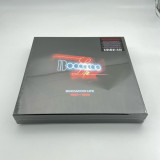
(10x12" box set, limited to 1000 copies, with premium finishing, uniquely numbered, incl. 10 records in individually printed sleeves, a booklet detailing the club's history & exclusive stickers) Boccaccio has secured its place among legendary venueslike Paradise Garage in New York and The Hacçinda in Manchester. Its bold fusion of emerging electronic genres such as New Beat, Acid, House, and Techno was way ahead of its time, drawing music lovers and clubbers from across Belgium and beyond.
Belgian label Music Man Records presents Boccaccio Life 1987-1993, a new compilation offering a fresh perspective on the legacy of the iconic Belgian club Boccaccio - often associated with the short-lived New Beat movement. The 40-track compilation highlights the raw and futuristic early house and techno sounds that were heard in the pioneering club.
Located in rural Destelbergen (Belgium), just a stone's throw from Ghent, Boccaccio has secured its place among legendary venues like Paradise Garage in New York and The Hacçinda in Manchester. Its bold fusion of emerging electronic genres such as New Beat, Acid, House, and Techno was way ahead of its time, drawing music lovers and clubbers from across Belgium and beyond. Sundays at Boccaccio were unlike anywhere else-offering sounds you couldn't hear anywhere else.
Boccaccio Life 1987-1993 is carefully curated by resident DJ Olivier Pieters and club regular Stefaan Vandenberghe, standing as the ultimate testament to a club that was more than just a venue. For those who experienced it, it was a community - a way of life. Hence the club's full name: Boccaccio Life.
This compilation stands as a testament to an innovative time in electronic music, capturing the raw, futuristic sounds of early house and techno. It sheds light on another side of Boccaccio, one that goes far beyond the short-lived New Beat scene. A carefully curated selection of 40 tracks, resonating with those who were there by offering familiar classics, while also reaching a new generation-those who never experienced it firsthand.
With tracks from Blake Baxter, Virgo, Frankie Knuckles, Tyree, and A Guy Called Gerald, the unmistakable influence of black American pioneers is clear-the originators of the firstanalog house and techno sounds. On the other hand, UK sound innovators such as The Orb and LFO bring both sharp textures and rough breakbeats to the table.
Club staple tracks include dreamy excursions from Roger Sanchez under his Egotrip moniker, the relentless basement house of Circus Bells by Robert Armani on Dance Mania, an uplifting take on a hip-house cut from The D.O.C. (Portrait of A Masterpiece in the CJ Ed-Did-It Mix), a timeless remix of UK Formation's Age of Chance from 1994, and an alternate take on The Tape by Boccaccio club regular and Belgian producer Frank De Wulf, taken from his B-Sides project.
While not always the obvious hits, these tracks have gracefully withstood the test of time, and were exclusive to Sundays at Boccaccio. Now, they are finally available to experience together in one collection, offering a timeless snapshot of a unique era.
out of Stock
Last delivered 14 months ago available to reorder, subject to availability
It’s always fun to let our audience peer through the party peephole with some hot behind-the-scenes info. For months, Black Light Smoke’s Control EP has supplied several of label head Tiga’s secret DJ weapons. In fact, he’s been sneaking out constantly after 9pm to play it out anywhere they’ll have him. And it’s little wonder to those who wonder why, as the Chicago-born producer’s top-flight mix of EBM, electro and Benadryl-soaked vocals has all the right people dancing.
Leadoff track "New York Is Dead” eulogizes the famous Big Apple Dance Party Scene in a way that will confuse the many who have embraced the city’s thriving “Groove With the Avengers” day rave series in Times Square. But the nihilism-liking doesn’t stop there, with the Friday-Til-I-Die attitude of “Black Hole at the Disco,” the pleather-dreaded post-cyberpunk of “Last Song Before Sunrise”, and the oxygen-deprived acid of “Break Your Back” culminating in the 11:45am-peak-time industrial trance of closer “Mind Control.”
Because we want this to be available to as many inhabitants of the blasted apocalyptic landscape we have pencilled in for 2034 or so, we have decided to make this release available both digitally and on vinyl. So whether you’ve managed to jack in illegally to a Spotify Wind Farm or you’re relegated to the hand-cranked misery of a Victrola while living in a barn or something, we’ve got you covered!
out of Stock
Last delivered 10 months ago available to reorder, subject to availability
Googling “paradise house”, the first results to pop up are an endless list of European b&b’s with whitewashed lime façades, all of them promising “…an unmatched travel experience a few steps from the sea”. Next, a little further down, are the institutional websites of a few select semi-luxury retirement homes (no photos shown, but lots of stock images of smiling nurses with reassuring looks). To find the “paradise house” we’re after, we have to scroll even further down. Much further down.
It feels like yesterday, and at the same time it seems like a million years ago. The Eighties had just ended, and it was still unclear what to expect from the Nineties. Mobile phones that were not the size of a briefcase and did not cost as much as a car? A frightening economic crisis? The guitar-rock revival?! Certainly, the best place to observe that moment of transition was the dancefloor. Truly epochal transformations were happening there. From America, within a short distance one from the other, two revolutionary new musical styles had arrived: the first one sounded a bit like an “on a budget” version of the best Seventies disco-music – Philly sound made with a set of piano-bar keyboards! – the other was even more sparse, futuristic and extraterrestrial. It was a music with a quite distinct “physical” component, which at the same time, to be fully grasped, seemed to call for the knotty theories of certain French post-modern philosophers: Gilles Deleuze, Félix Guattari, Paul Virilio... Both those genres – we would learn shortly after – were born in the black communities of Chicago and Detroit, although listening to those vinyl 12” (often wrapped in generic white covers, and with little indication in the label) you could not easily guess whether behind them there was a black boy from somewhere in the Usa, or a girl from Berlin, or a pale kid from a Cornish coastal town.
Quickly, similar sounds began to show up from all corners of Europe. A thousand variations of the same intuition: leaner, less lean, happier, slightly less intoxicated, more broken, slower, faster, much faster... Boom! From the dancefloors – the London ones at least, whose chronicles we eagerly read every month in the pages of The Face and i-D – came tales of a new generation of clubbers who had completely stopped “dressing up” to go dancing; of hot tempered hooligans bursting into tears and hugging everyone under the strobe lights as the notes of Strings of Life rose up through the fumes of dry ice (certain “smiling” pills were also involved, sure). At this point, however, we must move on to Switzerland.
In Switzerland, in the quiet and diligent town of Lugano, between the 1980s and 1990s there was a club called “Morandi”. Its hot night was on Wednesdays, when the audience also came from Milan, Como, Varese and Zurich. Legend goes that, one night, none less than Prince and Sheila E were spotted hiding among the sofas, on a day-off of the Italian dates of the Nude Tour… The Wednesday resident and superstar was an Italian dj with an exotic name: Don Carlos. The soundtrack he devised was a mixture of Chicago, Detroit, the most progressive R&B and certain forgotten classics of old disco music: practically, what the Paradise Garage in New York might have sounded like had it not closed in 1987. In between, Don Carlos also managed to squeeze in some tracks he had worked on in his studio on Lago Maggiore. One in particular: a track that was rather slow compared to the BPM in fashion at the time, but which was a perfect bridge between house and R&B. The title was Alone: Don Carlos would explain years later that it had to be intended both in the English meaning of “by itself” and like the Italian word meaning “halo”. That wasn’t the only double entendre about the song, anyway. Its own very deep nature was, indeed, double. On the one hand, Alone was built around an angelic keyboard pattern and a romantic piano riff that took you straight to heaven; on the other, it showcased enough electronic squelches (plus a sax part that sounded like it had been dissolved by acid rain) to pigeonhole the tune into the “junk modernity” section, aka the hallmark of all the most innovative sounds of the time: music that sounded like it was hand-crafted from the scraps of glittering overground pop.
No one knows who was the first to call it “paradise house”, nor when it happened. Alternative definitions on the same topic one happened to hear included “ambient house”, “dream house”, “Mediterranean progressive”… but of course none were as good (and alluring) as “paradise house”. What is certain is that such inclination for sounds that were in equal measure angelic and neurotic, romantic and unaffective, quickly became the trademark of the second generation of Italian house. Music that seemed shyly equidistant from all the rhythmic and electronic revolutions that had happened up to that moment (“Music perfectly adept at going nowhere slowly” as noted by English journalist Craig McLean in a legendary field report for Blah Blah Blah magazine). Music that to a inattentive ear might have sounded as anonymous as a snapshot of a random group of passers-by at 10AM in the centre of any major city, but perfectly described the (slow) awakening in the real world after the universal love binge of the so-called Second Summer of Love.
For a brief but unforgettable season, in Italy “paradise house” was the official soundtrack of interminable weekends spent inside the car, darting from one club to another, cutting the peninsula from North to centre, from East to West coast in pursuit of the latest after-hours disco, trading kilometres per hour with beats per minute: practically, a new New Year’s Eve every Friday and Saturday night. This too was no small transformation, as well as a shock for an adult Italy that was encountering for the first time – thanks to its sons and daughters – the wild side of industrial modernity. The clubbers of the so-called “fuoriorario” scene were the balls gone mad in the pinball machine most feared by newspapers, magazines and TV pundits. What they did each and every weekend, apart from going crazy to the sound of the current white labels, was linking distant geographical points and non-places (thank you Marc Augé!) – old dance halls, farmhouses and business centres – transformed for one night into house music heaven. As Marco D’Eramo wrote in his 1995 essay on Chicago, Il maiale e il grattacielo: “Four-wheeled capitalism distorts our age-old image of the city, it allows the suburbs to be connected to each other, whereas before they were connected only by the centre (…) It makes possible a metropolitan area without a metropolis, without a city centre, without downtown. The periphery is no longer a periphery of any centre, but is self-centred”.
“Paradise house” perfectly understood all of this and turned it into a sort of cyber-blues that didn’t even need words, and unexpectedly brought back a drop of melancholic (post?)-humanity within a world that by then – as we would wholly realise in the decades to come – was fully inhuman and heartless. A world where we were all alone, and surrounded by a sinister yellowish halo, like a neon at the end of its life cycle. But, for one night at least, happy."
out of Stock
Last delivered 3 months ago available to reorder, subject to availability
Apollo / R&S are delighted to welcome back The Primitive Painter, aka the duo of Roman Flügel and Jörn Elling Wuttke for a timely reissue of their 1994 lost classic self-titled album of sonorous IDM.
Growing up in Frankfurt, in the 80s and 90s the duo met at an indie rock club in their home town of Darmstadt, bonding over their shared obsession with the first wave of acid, Chicago house and early Detroit techno as well as their patronage of now iconic Frankfurt club nights like The Omen or Dorian Gray or the infamous Delirium Record shop run by scene stalwarts Ata (Robert Johnson) and Heiko MSO (Playhouse).
Taking inspiration from the likes of The Black Dog and Transmat as well as seminal compilations such as Planet E’s Intergalactic Beats and Warp’s Artificial intelligence compilation the duo honed their inventive take on the Detroit techno blueprint under the monicker Acid Jesus, debuting on their freshly minted Klang Elektronik label. The label was started in conjunction with Ata and Heiko after Fluegel & Wuttke (regular patrons of the Delirium store) pressed a demo on them, muttering the immortal line; “Please listen to the tape, we are big Mr. Fingers fans.”
Through the mid ’90s the project flourished giving rise to a classic album and a brace of singles that number amongst the best of the era’s techno, winning them a influential fans most notably Sven Väth, David Holmes and Andrew Weatherall who invited them to play live at one of the legendary Sabresonic parties in London.
Alongside the success of the Acid Jesus project, the duo found great inspiration in outside of the club, including an ambient happening when the KLF came to play Frankfurt; “There were live sheep eating grass on stage while they played at Mark Spoon’s club XS”, as well as cinematic influence from the likes of Jim Jarmush and Wim Wenders. It was however the euphonic IDM grandeur of Apollo Recordings self titled compilation of 1993 that really got their creative juices flowing: “It was a ten track compilation with artists like David Morley, Model 500, Aphex Twin which still sounds so good today,” Jörn enthuses. “ It was really the trigger to go away from the Detroit sound and more towards the big melodies of B12 etc.”
Deciding to make their tribute to this style of music the duo turned out 10 tracks of gauzy, melodious electronica in a white hot fever, one after another over the ensuing months. Settling on a name for the new project they picked ‘The Primitive Painters’ taking inspiration from the band Felt. “We are both children of the C86 movement,” explains Jörn. “this attitude of noisy art school influenced rock like Primal Scream, MBV, The Jesus & Mary Chain really inspired us to take a DIY approach to our music.”
They sent the resulting demo cassette to Renaat at R&S / Apollo. “We really had no expectations,” Jörn explains. “So we were shocked and delighted when we received a fax saying that he wanted to release it”.
The resulting release was bungled by an R&S mix up that attributed the album to the duo’s own Klang Elektronik label which confused both fans and distributors alike, denying the release the critical boost and attention that it so richly deserved. Accordingly the release slipped out without much fanfare, with a chastened Fluegel & Wuttke returning to their Acid Jesus activities which would eventually lead to their blockbusting success as Alter Ego.
Over the ensuing years the reputation of The Primitive Painter album has only grown, with second hand copies (only 500 vinyl were pressed) changing hands for exorbitant amounts on Discogs, leading us to this opportune moment of a richly deserved ‘first’ release on the label for which the project was started, Apollo / R&S.
“This really brings us full circle,” says Jörn. “Apollo / R&S meant and means so much to us as artists and so it was bittersweet to not have the official release - to put that right all these years later feels really good.”
This new vinyl release comes in re-created original gatefold artwork and includes all original 10 tracks (Stoned Soul Picnic was previously on the CD only).
out of Stock
Last delivered 14 months ago available to reorder, subject to availability
A new artist appears on the streets of City HC Records, he is Andrey Orenstein
multidisciplinary artist, part of the alternative Rock band ‘Tequilajazz’, with several solo musical incarnations such as: Amor Entrave, for electronic Indie beats with tocuhes of IDM of broken beats, Do you like trains? for Acid House, and 50DIX, dedicated to street beats such as jungle, drum n bass, ghetto house, Juke and Footwork, and the pseudonym he uses for Go Ahead! EP, the new and multifaceted 22nd release from the Valencian label.
IF U WANT 2 is the elegant track that takes us into the bustling avenues of the 2st century megapolis, where the urban rhythms of the dance battles in Chicago, Footwork and Juke, along with brief Jungle passages alternate in a brilliant composition with funk and jazz nuances accompanying tight percussion and distorted kicks at 160 BPM.
Tough and Ghetto House and rugged acid define FOOLZ, second track of the A-side in which the demonic power of the 303 sounds embrace the thick and husky voice that together with infectious laughter set a rhythm as pugnacious as it is playful.
FETTA DI LIMONE, Juke, Footwork and Jungle, a perfect combination of American influences, legacy of Dj Rashad together with the English tradition around bass music, are fused by 50DIX with the unexpected and playful Italian lyrics of Tomasso Girardi, in perfect conjunction with the pianos, ethereal pads and mutant synths, that forge the development of the track. Already anthemic before the first beat sounds.
Juke, IDM, Halftime and abstract broken beats combine for the ultimate dance elixir, in the last track of the vinyl titled ICE FEELS KEEN, reaching 170 BPM in a catharsis of braindance, soul and acid exaltation in a dreamy harmony, where the syncopated notes of Oleg Egorov's bass and the velvety voice of Julia Garnits (Ice Hokku) commune.
Bonus digital track - 50Dix ICE FEELS KEEN (DZA REFLIP). Hypnotic, sharp and minimalistic, DZA's remix transforms the original track into an intimate and evocative experience, in which every sonic element acquires more prominence and presence.
Bonus digital track 2 - Fetta di limone (Kaxtelian remix) Inspired by the classic hardtrance sounds of the 90s, from Valencian dance temples such as Chocolate, Kaxtelian reinterprets the track with distorted drums, catchy melodies and Rave spirit at 165 bpm.
Mastering by Steve Voidloss at Black Monolith Studios in London (UK), except for the Bonus track 2 mastered by Raszia.
Once again, artwork and design by Dani Requeni, giving artistic coherence to the label's aesthetic.
out of Stock
Last delivered 19 months ago available to reorder, subject to availability
High Roller Records, ULTIMATE EDITION, 4th pressing, 180g black vinyl, ltd 350, 425gsm heavy cardboard cover, lyric insert, poster, black vinyl bonus 7" in picture sleeve, restored & mastered by Patrick W. Engel at Temple of Disharmony, Cutting by SST Germany on Neumann machines for optimal quality on all levels.
High Roller Records, ULTIMATE EDITION, 4th pressing, 180g black vinyl, ltd 350, 425gsm heavy cardboard cover (revised) , lyric insert, poster (revised), black vinyl bonus 7" in picture sleeve, restored & mastered by Patrick W. Engel at Temple of Disharmony, Cutting by SST Germany on Neumann machines for optimal quality on all levels
Insolate unveils the 'Full Disclosure' album, arriving 7th March 2025 on her Out Of Place Records, released on digital and double record vinyl. It's the Croatian artist's second full-length release, already supported by the likes of Rodhad, Stephanie Sykes, and Nastia, following 2019's 'Order Is Chaos' on the label and its subsequent remix album, which featured reworks by Ben Sims, Pfirter, Sev Dah, Amotik, Under Black Helmet, Volster, ASEC, and Flamina.
"'Full Disclosure' is a reflection of who I am today. It represents the music I love to play, featuring high-energy bangers alongside functional tracks while experimenting with chords, vocals and melodies. As the title suggests, Full Disclosure is about openness, transparency, and revealing the full truth of who I am as an artist" - Insolate
'On Your Knees' starts Insolate's 'Full Disclosure' LP with rolling dub-infused rhythm drenched in a subtle but potent 303, an otherwordly vocal providing a tripped-out vibe. Closing out the A-side is 'Stand Strong', a pacey groove with an effective vocal sample and well-swung drums shot through with razor-sharp stabs.
On the flip, Insolate teams up with Croatian guitarist PEP for 'The Proof', a real banger that marks his debut in Techno production featuring mind-melting arpeggio sequences and a shadowy atmosphere. This is before 'Survival Symphony' strips things back via minimal drum work and electrifying synthlines that build in intensity.
The title track of Insolate's 'Full Disclosure' album, perfect peak-time cut 'Full Disclosure', continues with glitchy sequences, a bass bin-shaking groove, and another high-impact vocal sample. The aptly named 'Playground' then picks up speed with racing drums and rattling percussion while synths wriggle around playfully, followed by 'Big City', which features hauntingly enchanting melodies laid over bubbling arps and a steady beat. Insolate's 'The Biggest Fan' is another rave-ready trip with carefully crafted polyrhythms which won't fail to hypnotise the dancefloor before 'Ocean of Tears' closes out Insolate's stellar long-player via a captivating vocal harmony and acid-soaked 909s.
Since 1997, Insolate has become synonymous with the Croatian Techno scene via her HUSH! and TRAUM event series and her Osijek-based Out Of Place record label that's spotlighted artists like Anne, Francois X, and many more. She has built an impressive international career that's led her play at Berghain, Rex, and Tomorrowland, while her productions have seen her win the support of titans like Laurent Garnier and Ben Klock and join labels such as Luke Slater's Mote-Evolver and Bpitch.
'Full Disclosure' is a masterful body of work that shows the complete wealth of Insolate's talent and two-decade-long experience in Techno.
out of Stock
Last delivered 7 months ago available to reorder, subject to availability
The first-ever vinyl reissue of 1988’s I Wanna Have Some Fun, perennial pop icon and pin-up Samantha Fox’s third album. The only British female solo artist to score three Top Ten hits on both sides of the Atlantic in the 1980s, Samantha made her name as the nation’s favourite Page Three girl before launching an enviable music career.
I Wanna Have Some Fun features Sam’s irresistible Stock/Aitken/Waterman-produced cover of Dusty Springfield’s ‘I Only Wanna Be With You’ (#16 UK, #31 US) the gold-certified, Full Force-helmed title track (#8 US) and the acidinflected club favourite ‘Love House’ (#32 UK). Samantha’s most danceable, transatlantic and eclectic set so far, I Wanna Have Some Fun reached #46 in the UK and #37 in the US, giving her a third consecutive gold certification. Pressed on striking transparent red vinyl with black and yellow splatters to complement the original aesthetic, this edition boasts painstakingly rebuilt artwork and a newly designed inner bag featuring full lyrics.
A strictly limitededition picture disc is also available. I Wanna Have Some Fun is reissued alongside Samantha’s 1986 debut, Touch Me, and her eponymous 1987 sophomore album.
The first-ever vinyl reissue of 1988’s I Wanna Have Some Fun, perennial pop icon and pin-up Samantha Fox’s third album. The only British female solo artist to score three Top Ten hits on both sides of the Atlantic in the 1980s, Samantha made her name as the nation’s favourite Page Three girl before launching an enviable music career.
I Wanna Have Some Fun features Sam’s irresistible Stock/Aitken/Waterman-produced cover of Dusty Springfield’s ‘I Only Wanna Be With You’ (#16 UK, #31 US) the gold-certified, Full Force-helmed title track (#8 US) and the acidinflected club favourite ‘Love House’ (#32 UK). Samantha’s most danceable, transatlantic and eclectic set so far, I Wanna Have Some Fun reached #46 in the UK and #37 in the US, giving her a third consecutive gold certification. Pressed on striking transparent red vinyl with black and yellow splatters to complement the original aesthetic, this edition boasts painstakingly rebuilt artwork and a newly designed inner bag featuring full lyrics.
A strictly limitededition picture disc is also available. I Wanna Have Some Fun is reissued alongside Samantha’s 1986 debut, Touch Me, and her eponymous 1987 sophomore album.
Black vinyl / 505mcn paper / 30 x 60 cm Insert with Liner Notes by Tony Higgins printed on 250 mcn Lenza Top Recycling Paper / Condensed interview to Spata Sisters and exclusive pictures.
Personnel:
Enzo Randisi - Musser Percussion Keyboards
Riccardo Randisi - Acoustic Piano, Rhodes, ARP & Korg Keyboards
Marcello Pellitteri - Drums
Giuseppe Costa - Acoustic Bass & Electric Bass Guitar
Mimmo Cafiero - Congas & Percussions
Sandro Palacino - Tenor and Soprano Saxes
Loredana Spada - Vocalist
Cinzia Spata - Vocalist
Mary Lo Giudice - Vocalist
Mariella Gueli - Vocalist
Notes:
Did someone say Summer? Sicily is what Cuba is to the Caribbean, sun, sea, easy and friendly people with lots of troubles! You won't find anything better around that identifies the summer more than this album by Enzo Randisi who at the beginning of the 80s put together a Swing Ensemble as a tribute to that "cheerful" movement of Jazz music. But Enzo and his fellas just couldn't stay on track and put in the best that the alternative Palermo area could offer in that historical period, like the sisters Cinzia and Loredana Spata, who brought the production to a next level in the vocal version of All Blues or in Chic Corea's Spain. But what really struck us was Charles Cables' version of "Quite Fire" (here missspelled as "Quite Fair"), released a few months earlier only in Japan and which would only become famous in the 90s with the Acid Jazz movement, and this tells us a lot about how hungry Enzo and Riccardo were of musical knowle, to be able to find some pearls in a city with basically no record shops and isolated...well...it's on an island! For this re-press we enlisted Tony Higgins, who recently finished a very long commitment and greenlight to delight us with his polished English...Welcome back Tony!
Black Vinyl / 350 mcn double white coated paper / Poster sleeve / PVC outers / Original artwork / Exclusive 30x30 cm insert with Q&A by Tony Higgins with Ole Matthiessen printed on on 250 gram Gardamat coated paper. Archive picture from original recording session printed on 350 gram Gardamat paper. Archive pictures printed on 375 gram Vintage Bindakote Monolucido. All papers are acid free an printed with food based inks.
Personnel:
Jesper Nehammer - tenor saxophone
Ole Mathiessen – piano
Jon Finsen – drums
Henrik Hove - bass
Notes:
Danish jazz band founded in 1969. Band line up: Henrik Hove on bass, Ole Mathiessen on piano, Jesper Nehammer (later Thors Hammer, Alrune Rod and Entrance) on tenorsax, and Jon Finsen on drums. Played for a while every Monday in the famous Jazzhouse Montmatre in Copenhagen. Tordenskjolds Soldater only made this record (1970). The small record label Spectator Records was founded in 1969 by Jørgen Bornefeldt a former journalist from Danmarks Radio in coorporation with the jazz musician Carsten Meinert. Meinert recorded two albums on the label. He only joined the company in the beginning. Cindarellaistudiet The studio was destroyed august 6th 1972 by a major fire. And that was the end of Spectator Records. From 1969 to the end, the label recorded at least 23 lp albums and 9-11 singles/EP's. The picture shows Henning Kragh Pedersen from Cinderella in Spectators studio. The great Danish rock band Gasolin recorded their first single – Silky Sally - on Spectator Records. It was no success and sold only 155 copies. Silky Sally is now one of the most sought after Gasolin singles among collectors and is of course very expensive.
The music from Spectator Records is mostly jazz, progressive rock and hippie free style. But they also made strange records for children, education etc. Most records were issued in very small numbers (300-500). Some of the best progressive rock in Northern Europe was recorded here.
Quality of vinyl was often poor - even new looking records can have audible problems. Covers and labels are primitive and cheap. On the other hand the creativity could be outstanding - check the Furekaaben cover gallery or the artwork of William Skotte Olsen from Green Grass. Several record from the labels are cult today. A perfect copy of certain records costs a fortune.
Master tapes was never found after the fire in 1972. Unofficial reissues and bootlegs are therefore made on the base of the original records. Recordings that never made it to the vinyl got lost in the fire. Both Cinderella and The Copenhagen based band, Lines lyst, had material readdy for lp's which was never recorded. (Tony Higgins)
Volume 1 of this expertly curated project of 90s Italian House - put together by Don Carlos.
If Paradise was half as nice… by Fabio De Luca.
Googling “paradise house”, the first results to pop up are an endless list of European b&b’s with whitewashed lime façades, all of them promising “…an unmatched travel experience a few steps from the sea”. Next, a little further down, are the institutional websites of a few select semi-luxury retirement homes (no photos shown, but lots of stock images of smiling nurses with reassuring looks). To find the “paradise house” we’re after, we have to scroll even further down. Much further down.
It feels like yesterday, and at the same time it seems like a million years ago. The Eighties had just ended, and it was still unclear what to expect from the Nineties. Mobile phones that were not the size of a briefcase and did not cost as much as a car? A frightening economic crisis? The guitar-rock revival?! Certainly, the best place to observe that moment of transition was the dancefloor. Truly epochal transformations were happening there. From America, within a short distance one from the other, two revolutionary new musical styles had arrived: the first one sounded a bit like an “on a budget” version of the best Seventies disco-music – Philly sound made with a set of piano-bar keyboards! – the other was even more sparse, futuristic and extraterrestrial. It was a music with a quite distinct “physical” component, which at the same time, to be fully grasped, seemed to call for the knotty theories of certain French post-modern philosophers: Gilles Deleuze, Félix Guattari, Paul Virilio... Both those genres – we would learn shortly after – were born in the black communities of Chicago and Detroit, although listening to those vinyl 12” (often wrapped in generic white covers, and with little indication in the label) you could not easily guess whether behind them there was a black boy from somewhere in the Usa, or a girl from Berlin, or a pale kid from a Cornish coastal town.
Quickly, similar sounds began to show up from all corners of Europe. A thousand variations of the same intuition: leaner, less lean, happier, slightly less intoxicated, more broken, slower, faster, much faster... Boom! From the dancefloors – the London ones at least, whose chronicles we eagerly read every month in the pages of The Face and i-D – came tales of a new generation of clubbers who had completely stopped “dressing up” to go dancing; of hot tempered hooligans bursting into tears and hugging everyone under the strobe lights as the notes of Strings of Life rose up through the fumes of dry ice (certain “smiling” pills were also involved, sure). At this point, however, we must move on to Switzerland.
In Switzerland, in the quiet and diligent town of Lugano, between the 1980s and 1990s there was a club called “Morandi”. Its hot night was on Wednesdays, when the audience also came from Milan, Como, Varese and Zurich. Legend goes that, one night, none less than Prince and Sheila E were spotted hiding among the sofas, on a day-off of the Italian dates of the Nude Tour… The Wednesday resident and superstar was an Italian dj with an exotic name: Don Carlos. The soundtrack he devised was a mixture of Chicago, Detroit, the most progressive R&B and certain forgotten classics of old disco music: practically, what the Paradise Garage in New York might have sounded like had it not closed in 1987. In between, Don Carlos also managed to squeeze in some tracks he had worked on in his studio on Lago Maggiore. One in particular: a track that was rather slow compared to the BPM in fashion at the time, but which was a perfect bridge between house and R&B. The title was Alone: Don Carlos would explain years later that it had to be intended both in the English meaning of “by itself” and like the Italian word meaning “halo”. That wasn’t the only double entendre about the song, anyway. Its own very deep nature was, indeed, double. On the one hand, Alone was built around an angelic keyboard pattern and a romantic piano riff that took you straight to heaven; on the other, it showcased enough electronic squelches (plus a sax part that sounded like it had been dissolved by acid rain) to pigeonhole the tune into the “junk modernity” section, aka the hallmark of all the most innovative sounds of the time: music that sounded like it was hand-crafted from the scraps of glittering overground pop.
No one knows who was the first to call it “paradise house”, nor when it happened. Alternative definitions on the same topic one happened to hear included “ambient house”, “dream house”, “Mediterranean progressive”… but of course none were as good (and alluring) as “paradise house”. What is certain is that such inclination for sounds that were in equal measure angelic and neurotic, romantic and unaffective, quickly became the trademark of the second generation of Italian house. Music that seemed shyly equidistant from all the rhythmic and electronic revolutions that had happened up to that moment (“Music perfectly adept at going nowhere slowly” as noted by English journalist Craig McLean in a legendary field report for Blah Blah Blah magazine). Music that to a inattentive ear might have sounded as anonymous as a snapshot of a random group of passers-by at 10AM in the centre of any major city, but perfectly described the (slow) awakening in the real world after the universal love binge of the so-called Second Summer of Love.
For a brief but unforgettable season, in Italy “paradise house” was the official soundtrack of interminable weekends spent inside the car, darting from one club to another, cutting the peninsula from North to centre, from East to West coast in pursuit of the latest after-hours disco, trading kilometres per hour with beats per minute: practically, a new New Year’s Eve every Friday and Saturday night. This too was no small transformation, as well as a shock for an adult Italy that was encountering for the first time – thanks to its sons and daughters – the wild side of industrial modernity. The clubbers of the so-called “fuoriorario” scene were the balls gone mad in the pinball machine most feared by newspapers, magazines and TV pundits. What they did each and every weekend, apart from going crazy to the sound of the current white labels, was linking distant geographical points and non-places (thank you Marc Augé!) – old dance halls, farmhouses and business centres – transformed for one night into house music heaven. As Marco D’Eramo wrote in his 1995 essay on Chicago, Il maiale e il grattacielo: “Four-wheeled capitalism distorts our age-old image of the city, it allows the suburbs to be connected to each other, whereas before they were connected only by the centre (…) It makes possible a metropolitan area without a metropolis, without a city centre, without downtown. The periphery is no longer a periphery of any centre, but is self-centred”.
“Paradise house” perfectly understood all of this and turned it into a sort of cyber-blues that didn’t even need words, and unexpectedly brought back a drop of melancholic (post?)-humanity within a world that by then – as we would wholly realise in the decades to come – was fully inhuman and heartless. A world where we were all alone, and surrounded by a sinister yellowish halo, like a neon at the end of its life cycle. But, for one night at least, happy.
out of Stock
Last delivered 84 days ago available to reorder, subject to availability
Imaginary friends Akka & BeepBeep share the third release on their label: Floral Ancestors by Raduns. The 12” offers blooming ambient rooted in dub, lush drone and hand-picked cosmic that’s all grown deep in Detroit.
Spacious sonic arrangements vividly swell yet keep grounded within a sculptural rhythmic core. Raduns sows synth basslines and wispy pads next to harmonious guitars and muted field recordings. Grooving propulsion drives throughout. Rhythms appear, in negative space, like outlines between leaves. Recorded with machines direct to SD card, the compositions represent ephemeral blessings of experience. As if strolling into a verdant conservatory, the layered and diverse sensations blend into one cohesive revelatory experience.
On their first record, Raduns draws an ancestral line in Detroit as inspiration. A time when you could ride a streetcar from Dexter-Linwood to Belle Isle. A time before freeway expansion demolished vibrant Black neighborhoods. A time before the rebellion, motown and white flight. A time when Raduns’ great-grandparents were florists in the city, serving the community in times of celebration and times of grief. This melancholic circle shapes the project in which Raduns summons these Floral Ancestors, stretching upward from the darkness of the earth into the light of the world back down once more.
AKKA’s Side: “Grass Boulevard” exhales a luscious soundscape that develops through wave-crashing synths and circulated guitars to a transplanted acid lead. “Spread” lays out a decoration of blended sample and hold synth with kosmische styled guitar licks. Tracked as a single take in a Detroit community studio, the tune intuitively reseeds the symbiotic sprout between krautrock and Detroit techno.
BEEP’s Side: “Metrograde Bouquet” submerges you into the bulb of a handcrafted vase. Dub techno roots grow out into murky water with energy that is subtle yet profound. “Oldest of Arrangements” textures breaths of misty air cascading ventilating in on itself. The track’s time seems to stretch and disappear within a dark and deep undercurrent. A harmonic and reverberant resonance closes the record in a flowering of beauty and peace.
“You’re a flower child. Put this music out.” - Someone Important in Detroit
The legendary UK acid-jazz innovators Brand New Heavies dropped many a classic sounds and none more so than their iconic album 'Heavy Rhyme Experience Vol. 1. More than three decades after first release it remains an influential work that blends UK club jazz with US hip-hop. Featuring collaborations with artists like Main Source, The Pharcyde, Gang Starr, and Black Sheep, the album marked a groundbreaking fusion of genres back in its heyday and now two standout tracks from the album, 'Soul Flower' featuring The Pharcyde and 'It's Gettin' Hectic' featuring Gang Starr make their way to 7" for the first time and sounds as good as ever.
out of Stock
Last delivered 16 months ago available to reorder, subject to availability
On the Mixbone EP, two tracks from Eric Copeland’s 2017 record Goofballs get reworked by five of leftfield electronic music’s heaviest hitters. The Goofballs LP finds the Black Dice founding member conducting hectic, dancefloor-oriented experiments; The Vinyl Factory called it a “mangled, spangled journey into the fringes of industrial disco and hallucinatory club tackle.” Mixbone capitalizes on this direction with remixes that recontextualize and reshape the propulsive energy of the original songs into wholly different forms.
New York techno powerhouse and Allergy Season boss Physical Therapy contributes two aptly named takes on “Mixer Shredder” – the “Tegel Mix” churns with industrial EBM low-end, and the breakbeat and wubby bassline make the “Gatwick Mix” unmistakably English. NHK yx Koyxen remixes Eric for the second time, with a jittery and woozy electro interpretation of “Neckbone.” Cooper Saver, best known for his Far Away parties in Los Angeles, turns in one of the most unexpected remixes, keeping it 4/4 and creating what sounds like Shep Pettibone making acid house.
Coming off of her 2017 EP on Technicolour/Ninja Tune, Machine Woman decided to remix both tracks. With “Neckbone,” she adds a barely-discernible robotic narrative vocal, allegedly about Ryan Gosling. “Mixer Shredder,” on the other hand, travels from hissy lo-fi techno into something quite tranquil and beautiful. And with previous releases on 1080p, Freakout Cult, and Wania, Vancouver’s LNS channels the melodic electro tones of classic Bleep-era Warp, like a lost track from LFO or Drexciya.
“Danceable” might not be the first word one thinks of when describing Eric Copeland’s solo releases. But in a manner not dissimilar to the way Black Dice shaped the parameters of experimental music, the remixes here expand the limits of what the club can and should look like.
out of Stock
Last delivered 20 months ago available to reorder, subject to availability
Das vierte vollständige Studioalbum der Alt-Rock-Ikonen Alice In Chains. Black Gives Way To Blue wurde
2009 veröffentlicht und ist das erste Album der Band, auf dem sich William DuVall den Gesang und die
Gitarre mit Gründungsmitglied Jerry Cantrell, Bassist Mike Inez und Schlagzeuger/Gründungsmitglied Sean
Kinney teilt. Enthalten sind die Singles „A Looking In View“, „Your Decision“ und das Grammy-nominierte
„Check My Brain“.
out of Stock
Last delivered 21 months ago available to reorder, subject to availability
Influential DJ, producer, radio-presentator and founder of the Acid Jazz and Talkin’ Loud labels Gilles Peterson has handpicked his jazz favourites from the immense catalog of the Dutch jazz Timeless label. Included are Pharaoh Sanders’ cosmic jazz “Moonchild”, vocal-jazz from Carter Jefferson’s “Why”, danceable-jazz from Tom Grant “No Me Esqueca”, Art Blakey & The Jazz Messengers’ “In Case You Missed It”, making a total of 11 tracks.
In 2015, Peterson put together a Japan-only CD compilation of 10 of his favourite tracks, but for the vinyl version, the track list has been augmentend with the previously unreleased version of “Gibraltar (Alternate Take)” by Kirk Lightsey Trio feat. Freddie Hubbard, and “World Peace” by Timeless All Stars.
Timeless Jazz Classics Volume 1 is available on black vinyl and includes an insert with liner notes and track-by-track information by Gilles Peterson.
out of Stock
Last delivered 22 months ago available to reorder, subject to availability
We’re happy to cordially invite you to the REGRESSION SESSION, hosted by eternal Philadelphia scene flag bearers ZILLAS ON ACID!
And if you think this sounds awfully lot like a scam, you’re probably right: „Regression Session“ is just a front of their illegal black market operation, trading raw uncut gems on a large scale. Just listen to the opener and title track and you won’t exactly have a strong case for the Zillas selling out, but rough as it is, this thing is capable of destroying any dancefloor it touches.
Looking at their recent releases it’s fair to say the Z’s are on quite a run, putting out music on labels like Permanent Vacation, Throne Of Blood, Multi Culti or Ivan Smagghe’s Disques de la Mort. Tunes like the sneaky rough slow burners „Underling“ or „Start Digging“ sound like they could be lifted from the latter’s infamous DJ sets, while the deceptively titled „Cha Cha Cha“ or closer „Casual Observer“ justify the „Acid“ in the artist name. „Shining Snakes Across The Lake“ is what some years might have been called a mid-tempo house roller and probably counts as downtempo these days. Speaking of tempos, the penultimate „Sweet Days Of Discipline“ starts of masquerading as reaaally downtempo, but ends up throwing 155bpm kick drums at you, so better watch out, all you k-hole ravers! Let’s not forget to talk about „bquiet“, which is what you’d call mid-tempo house these days (125bpm) and uses the eternally banging combination of a jacking beat, a polyrhythmic bass line, some lead-synth stabs and talking vocal slices. You can practically smell the sweat.
So what’s left to say? What you see is what you get: They are Zillas, and they are on Acid. And they provide a collection of eight tunes that probably each don’t necessarily have a double-digit amount of tracks in their DAW projects, and that’s exactly what makes them so forceful. Join the regression session!
out of Stock
Last delivered 5 months ago available to reorder, subject to availability
Der Frankfurter DJ und Produzent Gregor Tresher veröffentlicht am 29. November sein mit Spannung erwartetes neues Album 'False Gods' mit 16 Titeln über PIAS Électronique und präsentiert mit seinem ersten LP-Projekt seit acht Jahren seinen vielfältigen und umfassenden Sound in seiner ganzen Fülle.
Tresher gilt weithin als seltene Ausnahme in der trendgetriebenen EDM-Szene. Von den Anfängen in den 90er Jahren in seiner Heimatstadt Frankfurt hat er sich bis heute einen beachtlichen Status erarbeitet, ob mit Remixes für Größen wie Depeche Mode, Moby oder Extrawelt, seiner Freundschaft und wiederholten Zusammenarbeit mit Sven Väth, oder mit seinen eigenen Alben - sowohl unter seinem richtigen Namen als auch unter seinem Pseudonym Sniper Mode.
Nun erscheint sein bislang umfangreichstes Projekt - Eine introspektive Reise in einen der aufregendsten Köpfe der modernen elektronischen Musik. Auf diese Reise nimmt er auch einige Freunde mit: Von u.a. Sven Väth, über Anja Schneider bis zum französischen Pionier Laurent Garnier.
out of Stock
Last delivered 10 months ago available to reorder, subject to availability
A next salvo of big people dubwise out of the ITAL COUNSELOR stable comes on this, the label’s first foray into the 7” format.
This relick of the legendary Black Brothers 1970s dub plate is perfectly crafted for dropping at the deepest of sound system sessions or right on your home hi-fi for some front room skanking. This is in no small part due to the pedigree of artists who contributed to its creation.
Hughie Izachaar first started in the reggae business as part of obscure UK band, Black Brothers, during the heady days of the late 70s and early 80s. Only known to have recorded two legendary dub plates, the band never committed their music to plastic. A multi-instrumentalist versed in the art of playing the melodica and guitar as well as singing, Izachaar went on to join the band, The Original Rockers, with whom he recorded the underground classic, “Mountain Rock.” Into the 90s and through the 2000s he has been heard across a number of 7”, 10”s, 12”s, and LPs on labels such as Reggae on Top, Jah Warrior, Inner Sanctuary, and King Earthquake.
On this release, he is reunited with the equally esteemed Jah Warrior who was responsible for Hughie’s high water mark showcase, “Can’t Take the Pressure” in 1998. Jah Warrior’s usual hard and strident steppers vibrations are in attendance here.
Uniquely, this 7” represents the first time Hughie and Jah Warrior have been combined with the third ingredient in this musical stew. Another long-time music industry journey man, Gil “Tuff Scout” Cang, augments the sound with additional production and remixing. A veteran of Studio One, Riz Records, and Tuff Scout, not to mention innumerable soul, acid jazz, and pop productions, Gil adds that “little way different” touch that has become a defining character of ITAL COUNSELOR productions.
As the saying goes: If you don’t know, get to know. Neither your ears, your skanking feet, or your soul will be disappointed!
Bruno Sanchioni releases "Capture EP 2" on Art Max Records. Bruno Sanchioni, a pioneer of electronic music and the mastermind behind legendary projects such as Age Of Love, BBE, and Bazz, returns with Capture EP 2, a follow-up that promises to make a lasting impact. Following the enthusiastic reception of the first installment, this new EP promises to be a unique sonic journey, where punchy acid sounds intertwine seamlessly with melodic and hypnotic atmospheres.
Capture EP 2 once again showcases Bruno Sanchioni's singular talent, as he skillfully blends boundless creativity with a deep respect for the roots of electronic music. Each track is crafted with his trademark originality, offering surprises at every turn while staying true to the spirit of his early works. The EP captures that timeless energy that has always been at the core of his musical approach.
This new EP, coming soon on Art Max Records, is much more than just a sequel. It is a brilliant showcase of Bruno Sanchioni's ability to innovate while remaining deeply rooted in a sonic tradition he masters to perfection. This EP stands as a must-have for those looking to rediscover the essence of an era, reimagined with the unique touch of one of the genre's true masters.
out of Stock
Last delivered 19 months ago available to reorder, subject to availability
In a very dark ambiance, rampge acid tekno doom sound will tell you the story of a man lost in an abandoned radiocative factory... Strange creatures seems to hunt... The result of a mutation....
But, on the B side, starts the fight between the survivor and those new world order monsters... you can try to escape, but at a time you need to face them : Good luck !
out of Stock
Last delivered 20 months ago available to reorder, subject to availability
2 long sides for 45RPM deep bass ! One side by Hesed, a long developpement from tribal tribe to Acidcore... the perfect morphing and story telling !
n the Flip MNT delivers an old school tribe tune, level-uping the Boucles Etranges style or old spiral effects... Minimal and tribal, pumpin and breathing.
the sleeve is an atwork from Davide Black Qirex, full printed and drawed little casino ! Punk & Tribe !
Founded in the late 1960s by record store owner Seidou
Adissa, Albarika Store is one of the most important
independent record labels on the African continent. That
it was founded in the relatively small ex-French colony
of Benin (then still called Dahomey), is a testament to its
founder’s musical taste and vision for what the local
musical scene had to offer.
This September, Acid Jazz releases the first ever vinyl
and CD overview of the label and its music, compiled by
David Hill of The Soul Revivers and West African
musical expert Florent Mazzoleni, who also wrote the indepth notes.
The compilation provides a look into what was a
developing and then thriving post-colonial music scene.
It focuses on the label’s biggest and most prolific act
Orchestre Poly-Rhythmo and its founder Melome
Clement – who released under a variety of names often
spotlighting on the musicians’ key to their sound. It also
looks at the other established artists on the label such
as the incendiary Les Sympathics De Porto Novo and
Les Volcans. All of these artists create a unique mix of
Westernised Funk, Soul and Latin sounds crosspollinated with the traditional music of the region.
A new SOS, from 024... Nijmegen Tekno crew !
A side from Wazig opening with a Breakbeat minimal killer threartening to fall 4/4... and doin' it !
Then will come his second tune, a Pumpin Mental Acid run !
Frixion side kicks harder, louder, kicker... Pityless swing in a Hardfloor ambiance. Heavy stuff !
Red Laser gets on a kinky tip, where poppers are currency and salacious activities mandatory as label chief Il Bosco grabs us by the nethers and heads for 'The Darkroom EP'.
Inspired by amyl-soaked tales of Euro basement sex club debauchery, and steadily edging its way to a never-ending climax, the EP is a highly charged exercise in x-rated synth-jizz and erotic Manctalo that'll have you quickly believing you're surrounded by massive pulsating dicks on a cocktail of GHB and Mkat.
Maintaining a persistent throb throughout, the EP has us reaching blindly through clouds of pink saturated club smoke, unsure of what our sweat-soaked hands will grasp on to.
Two remixes alongside three originals. Fabrizio Mammarella has the blood rushing to our head quicker than a whiff of Rush Black Label* on his mix of 'Notio Botherdini'. Adding extra acid for a trippier sexperience and urging willing participants to "close your eyes" as he achieves maximum thrust.
Meanwhile local Stretford poppers enthusiast** Bob Swans also has a fumble in the shadows, remixing 'Dark Room' with late late late on in the session in mind - a time of carnal lucidity and primal urges that'd make even Michael Barrymore's peculiar desires look vanilla. It's a sparse and special redux, fluffing us with that latexy bassline and never-ended sfx trails until we're quite literally cumming in your ears.
Apologies, that probably was a bit graphic.
*Poppers brand highly endorsed by Red Laser contributor Count Van Delicious
**Red Laser only hypothesizes to said producer’s poppers usage.
out of Stock
Last delivered 23 months ago available to reorder, subject to availability
A hard rock mash up - Bandleader Paul Ngozi's split album with his drummer and co-vocalist Chrissy Zebby Tembo. The set includes an oversized 8 page booklet detailing Ngozi’s arc, rare photographs, discography and annotations.
"Zambia’s Zamrock movement that exploded in the 1970s...provided young musicians access to European and American music, and created a unique sound. At its root, Zamrock melded fuzz-toned psychedelia, chugging garage rock and roiling funk with a broad mix of African cadences and beats...enlivening a scene that included bands like Musi-O-Tunya, Amanaz and the Ngozi Family” - New York Times
Zamrock was a bona-fide rock scene: on the African continent, only Nigeria can claim one so comprehensive, and Nigeria’s was largely catalyzed and funded by subsidiaries of the European major labels. Zamrock was as independent as the newly-named country, formerly known as Northern Rhodesia. Zamrock is starting in its completeness, especially for a scene that emerged, unfurled and disappeared so quickly. From Musi-O-Tunyaís fusion of Fela’s Afro-beat, Hendrix’s rock, South African jazz and traditional Zambian melodies and rhythms to Salty Dog’s acid folk/rock, Zambia’s rock scene contained all of rock’s subgenres. Zamrock was much more than an imitation of American and European rock music: it quickly became a uniquely Zambian movement, befitting of its name. WITCH, Paul Ngozi and Amanaz sound nothing like other rock music from the African continent - or elsewhere. Zamrock came from a nation's youth carrying forth the momentum of a political and social revolution with a musical revolution that maintained the fiery power of early rock - in the mid-to late-70s. From that era, Zamrockís energy is matched only by the punk and hip hop scenes of England and America.
The yellow and black cloudy vinyl showcases two modern Chicago house tracks perfect for summer vibes. "Feeling of Power" is a super groovy track that evolves with a feminine choir, slight acid lines, and sunny guitar arrangements. Smiles plastered on ravers, "Voodoo" will bring the best vibe and mood to dancefloors just in time for sunrises. Loopy, hypnotic, and incredibly housey!
out of Stock
Last delivered 11 days ago available to reorder, subject to availability
" The Brand New Heavies revisit their seminal 1994 album Brother Sister for its 30 year anniversary. Replete with groove-driven, horn-splashed, hand-clapping funk, Brother Sister saw the band dig deep into their jazz grooves, with N'Dea Davenport in full flight as diva/lead vocalist.
" Featuring some of their best loved songs including the chart hits 'Midnight at the Oasis', 'Dream on Dreamer', and 'Spend Some Time', Brother Sister debuted in the UK charts at #4 and went onto be a hit worldwide, the band rightly claiming their crown as Acid Jazz heavyweights, delivering knock-out punch after punch on this album.
" Freshly remastered, the 2LP vinyl - 18 tracks edition features three bonus tracks, and is pressed onto one black and one white vinyl, and will be signed by Andrew and Simon from the band.
* After the stunning success of their critically-acclaimed third album Sharpener, which reached number 3 in the jazz charts and number 14 in the independent music charts, London’s brass juggernauts Hackney Colliery Band blaze back onto the scene with their first collaborative album, ushering in a whole new era for the band.
* Featuring collaborations with a host of key names in jazz and world music including amongst others the father of Ethio-jazz Mulatu Astatke, British jazz funk legend James Taylor, trombonist Dennis Rollins, UK saxophonist Pete Wareham and Beninese singer-songwriter and Grammy Award-winner Angélique Kidjo, Hackney Colliery Band have effortlessly transformed their explosive live energy into 11 original recordings that push the groove and form in an accomplished manner.
*On ‘Collaborations: Volume One’, writers Steve Pretty, Olly Blackman and Luke Christie have between them penned the outfit's most dynamic material to date. ‘Mm Mm’ (feat. Angélique Kidjo and Roundhouse Choir) merges Beninese grooves with wah pedal trumpet textures, and the rousing call-and-response between Kidjo’s soaring vocal and the exhilarating choir adds a richness and depth to the composition.
*On ‘Snowfire’, innovative Norwegian pianist Bugge Wesseltoft brings a euro/nu-jazz feel to the album, while Dennis 'Funkybone' Rollins adds his trademark virtuoso trombone to the carnival-flavoured ‘Ricochet’.
*There’s an energy, respect for tradition and the exuberance of London in Hackney Colliery Band’s work, best exemplified in the evocative and downright thrilling James Taylor collaboration ‘Hypothetical’, with Taylor’s Hammond organ recalling the Acid Jazz era in which he made his name.
*New single ‘Netsanet’ (feat. Mulatu Astatke) is a deep exploration of Mulatu's trademark Ethio-jazz, while ‘Crushing Lactic’, composed by Tom Rogerson (fresh from a recent collaboration with Brian Eno) has a frenzied flow, with big horns and driving rhythm section.
*Elsewhere, Pete Wareham (stalwart of the London jazz revival) lends his free-flowing sax to ‘What’s Gone Before’, leading us into a powerful communion of jazz and brass as Mulatu Astatke’s ‘Derashe’ takes the listener down a vibrating rhythmic path while accompanied by blasts of horns and Mulatu’s trademark vibraphone.
*Two spoken word compositions (‘Why Yellow’ and ‘Climbing Up My Own Life Until I Die’) featuring York born writer and comedian Rob Auton lend an introspective voice to ‘Collaborations: Volume One’.
*A band never content to rest on its laurels, Hackney Colliery Band already have a number of collaborations in the works for ‘Volume Two’, and with further live shows planned for 2019, including the album launch at the famous Ronnie Scott’s Jazz Club, 2019 looks set to be HCB’s biggest year yet, both live and on record.
* Steve Pretty, the band’s frontman said: “It’s hard to believe that 2019 is our tenth anniversary, but now we’re ten years older it felt like the right time to get back to our jazz roots. It’s been such a privilege to work with so many of our musical inspirations both old and new on this record, and we’re super excited to be ushering in the next ten years with this new collaborative spirit: this is called ‘Volume One’ for a reason…”
Lalomie Washburn is an US soul vocalist (25th August 1941 - 18th September 2004) from the Soul/Funk 70's band „High Voltage“ who released her solo album, „My Music Is Hot“, in 1977 and collaborated with many artists including Stevie Wonder, Quincy Jones, Chaka Khan and Ray Charles over decades.
In 1992, she released several 12" singles including the independant hit „Try My Love“. This hit single leaded her 1997 second (self-titled) solo album and became a huge Acid Jazz classic to be found on various compilations in the mid to the late 90ts.
In 2005 she was inducted into the Omaha Black Music Hall of Fame.
Now, 20 years later this song still got all the energy and musicality to be back big in the clubs and with the 2024 Boogie Back Remix in the Boogie Funk style on the flipside, DJs will have even more reasons to spin it and prove their love for it…
out of Stock
Last delivered 11 months ago available to reorder, subject to availability