Als dieser exzellente Downbeat-Instrumental-Hip-Hop-Sampler 2002 erschien, waren Zero 7 für ihr brillantes Debütalbum "Simple Things" für den Mercury Prize und den Brit Award als bester Newcomer 2002 nominiert, ihr späteres, drittes Album "The Garden" erhielt 2007 gar eine Grammy-Nominierung. Zero 7 haben unglaubliche Musik gemacht, ihre Remixe stets mit Bedacht ausgewählt (so z.B. Terry Calliers "Love Theme From Spartacus") und sich zu einer hervorragenden Tourband entwickelt.
Die ursprüngliche ALN Vinylausgabe ist so begehrt, dass sie heute für teures Geld verkauft wird. Freuen wir uns auf den Soul-Klassiker "People Make The World Go Round" der Stylistics und die rare, von Roy Ayers produzierte Groove-Bombe "You Can’t Turn Me Away" von Sylvia Striplin. Don Blackmans "Holding You, Loving You" ist ebenfalls enthalten, das von Slum Village gesampelt wurde, die hier mit "Jealousy" vertreten sind, ebenso wie Herberts Boompty-Boom-Rub von Gainsbourgs & Bardots "Bonnie & Clyde". All diese Güte wird wieder für einen anständigen Preis erhältlich. Form ist vorübergehend, Klasse ist dauerhaft. Und Zero 7 sind eine Klasse für sich.
- Gepresst auf schwarzem 180g Doppel-Vinyl samt 30 cm großem Art-Print und Download-Codes für die ausgespielten Tracks und den Original-DJ-Mix in den Formaten MP3/FLAC/WAV.
out of Stock
Last delivered 20 months ago available to reorder, subject to availability
Honour's debut album is a ligament stretching from Lagos to London and to New York, curling across the diaspora and brushing the darker hues of blues, hip-hop, free jazz, ambient, gospel with Christian mythology and Yoruba folklore. As cinematic as it is painterly, Alàáfíà is a meditation on themes of life, death and love that pulls inspiration from the unexpected poetic profundity of casual conversations, field recordings, literature, ephemera, or personal archives. The result is an impressionistic vision in Black and Blur that both exhausts and implicates language_substantiating a mythos proposed by Fred Moten that sublimates boundaries between everywhere and nowhere; history and the present; the individual and the universal. Alàáfíà delineates a gothic landscape cut by overdriven beats, swooping orchestral blasts, choral bursts and ear- splitting fuzz, where the fleshly and spiritual realms commune. Dedicated to Honour's late grandmother, the title track began to take form after their last embrace and remains steeped in her influence and spirit_a tape-saturated composition that starts in Lagos and ends in London's smoke-stained cityscape, the song's dream-like quality developed out of the artist's grief and PTSD coping with this loss. Beneath the stretched guitar drones and stuttering loops, their grandmother's shared faith bubbles to the surface. "When Angels Speak of Love," borrows its title from two works by Sun Ra and bell hooks, respectively. Sculpting echoes of praise music into disorienting spirals perforated with syrupy DJ Screw-inspired breaks and sharp splinters of melancholic guitar, "When Angels Speak of Love" engages a conceptual dialogue with the spirits of both late thinkers, folding them into Honour's pantheon of ancestral guides. The album's ninth track, "Giz Aard ($uckets)," is a dirge of regimented drums which anchor this somber melody as it whirls into a blizzard of heartache, uncertain if its consequence will be death or eternal joy. The album's sole lyrical offering, "Pistol Poem (Lead Belly)," begins with a darkly humorous bar, "He went thru hell and back/ came back/ 2 get the strap," that swells into a haunting allegory based on the life of Philip "Hot Sauce" Champion. A modern take on the Blues, Honour's lyrics reify the artist's status as a student of both literature and popular culture, crossbreeding the artist's clever wordplay with additional references to Richard Pryor, Robert Johnson, Kelly Rowland & Bryon Gysin. Setting core principles of hip-hop, R&B, jazz and gospel music to atemporal soundscapes and compositions, Honour crafts a record that marinates in its own knotty contradictions. The ghosts that sit on the artist's shoulders have never been more tangible than with this emotive debut.
out of Stock
Last delivered 2 years ago available to reorder, subject to availability
DARKEND is the band fronted by Animae (also guest vocalist for GAAHL'S WYRD on various European festivals & venues). After a rather ordinary start based on thelikes of orchestral extreme metal, DARKEND developed a quite peculiar artistic style blending black metal patterns, ritual ambience, dark classic metal riffs and solos in the vein of Mercyful Fate/Angel Witch and a ritualistic,hypnotic vibe explicitly created in order to generate a deep sonic & Spiritual transcendence.Viaticum flows out from the Sacred Spaciousness beyond duality, enshrouding its Silent Nature with the voice of ancient ceremonial chants, dungeon synth ambience and sulphur riffs engraved on arcane metal patterns. Combining shades that span from Mercyful Fate to Dissection("An Incautious Exhumation Of What Lies Beneath Forgotten Ground")and from Dead Can Dance("In Your Multitude")to Arvo Pärt("In My Multitude"),the album enlightens an immersive and cathartic pathway towards the deepest hiddenfields of who we really are.
Issued on vinyl for the first time and pressed on 2 x 140g black vinyl, Juno Reactor’s 2004s album, ‘Labyrinth’, their 6th long player. Ben Watkins is an essential innovator of modern electronic music and a pioneer of Trance. Over the course of nearly 30 years, Watkins has created a unique driving fusion of electronica, orchestral and global music executed on an epic & symphonic scale. Juno Reactor was formed as an art project in 1990. Ben Watkins wanted to collaborate with other artists, producing exciting projects that were not commercially driven. He wanted to create experimental music and non-musical soundtracks that would work with installations, art pieces, and film projects. Labyrinth ranges from orchestral, industrial, and techno as well as containing Juno Reactor's trademark tribal sound (possibly as best featured in Conquistador II). The album also features two songs from Watkins' collaboration with The Matrix composer Don Davis on the films The Matrix Reloaded and The Matrix Revolutions, "Mona Lisa Overdrive" (from Reloaded) and "Navras" (from Revolutions). As well as releasing a string of influential albums as Juno Reactor, Watkins’ tracks have been placed in numerous highprofile feature films, television programmes and computer games and Ben Watkins composed large sections of the original score for the films The Matrix Reloaded and The Matrix Revolutions, as well as composing the entire orchestral score for Japanese anime feature film Brave Story.
out of Stock
Last delivered 23 months ago available to reorder, subject to availability
Celebrated Norwegian singer and composer Susanna announces her new album, Meditations on Love, out August 23rd via her own label SusannaSonata. Having spent five years writing material, Meditations on Love reflects the complexities and difficulties of maintaining love. So many songs celebrate the giddy joy of a new connection or lick the wounds from a break-up, but Meditations on Love explores what happens in between, examining the work required by a healthy relationship and contemplating the conditions that turn love into something toxic. Susanna's mastery of balladry is well documented, but on Meditations on Love, she introduces a rhythmic presence new to her work. The result is one of Susanna's strongest and most dynamic recordings of her career. The Norwegian artist Susanna has released albums as Susanna and the Magical Orchestra/Susanna/Susanna Wallumrod since 2004 on labels like Rune Grammofon/ECM/Grappa Musikkforlag and since 2011 on her own label SusannaSonata. Critically acclaimed for both her own songs and her highly personal interpretations of other people's songs, she wanders lightly and intented between champer folk, avantgarde, electronica, jazz and independent pop. Highly riyl Joanna Newsom, Sufjan Stevens, Kate Bush
Gregory T.S. Walker’s Minstrels & Minimoogs was self-published by a young, nomadic composer and virtuoso in 1988 to accompany an immersive multimedia performance at the University of Colorado Boulder’s Fiske Planetarium. Created with this outer, and other, world setting in mind, the four tracks find Walker stretching toward an ancient-to-future vision where Egyptian myths and Hieronymus Bosch-ian tableaus are rendered in a screaming three dimensional circuitry of electronic drums, synth guitars, and, of course, Minimoog. Given the musical terrains and outmoded topics traversed, and that this entirely DIY effort was originally released as a micro one-sided 12” edition, Minstrels & Minimoogs is as perplexing and euphoric a document lost-to-time as it is now found.
Born in 1961 into an intensely musical family spanning four generations, Gregory’s mother Helen Walker-Hill was a noted musicologist specializing in the rediscovery and work of historical Black female composers, while his father, George Walker, was the first African American composer to win the Pulitzer Prize for music. Both parents studied with the famed (and famously strict) Nadia Boulanger in Paris in the 1950s, and held to lofty aesthetic standards in their home life. Walker began studying the violin as a child, but when a burgeoning interest in the electric guitar and rock music as a teen manifested, it was largely verboten in the household. The rule was that the music played in the home was to be acoustic and classical. Although the elder Walkers eventually relented and allowed Gregory’s guitar to be plugged in for a brief interval on the weekends, the remaining days he settled for strumming it sans amplification.
Gregory, conditioned and eager for a life in music but looking to get out from under the influence and yoke of his famous composer father, ultimately chose to study computer music at the University of California at San Diego, where he earned a Master of Arts. This was followed by another MA in electronic music composition at that hotbed of West Coast experimental music, Mills College. Intermedia and multimedia in the arts was the rage in the 1980s, and Mills was one of the centers for it; audacious spectacle meeting visionary performance, such as one of the realizations for Anthony Braxton’s music for multiple orchestras a young Gregory performed in with his violin.
After a series of solo synthesizer concerts around California, Gregory followed a girlfriend on a mid-country move to Boulder, Colorado. After picking up yet another composition degree at University of Colorado Boulder, his life as a composer really started, writing a piece for extended technique for guitar, a passacaglia for vocoder and orchestra, as well as Minstrels & Minimoogs.
Envisioned as a multimedia performance such as the kind he’d experienced at Mills (which was all but unknown in Boulder at the time), Gregory roped in a number of college going or aged friends of varying skill levels and musical sympathies to accompany him with distorted sax or oblique spoken interludes. Confronted with a lack of finances, but driven to get his ideas captured in a complete musical package, the album was recorded in his brother’s apartment. If not every player assembled was on Gregory’s virtuosic level, so be it; it was more about capturing the spirit of his intentions and embracing the serendipity of mistakes.
An inspired attempt at world building, Minstrels & Minimoogs draws on the deep well of musical knowledge Gregory gathered from his parents and teachers, but all the while subverting that historical basis by incorporating mutant strains of prog and pop music. The work accumulated is not unlike the playful 1980s work of Gregorio Paniagua, where medieval estampies and rondeaus are wrenched into an anachronistic present where Hildegard Von Bingen and Kate Bush are contemporaries. Ars nova, new art, a 20th century minimalist jester and troubadour.
A one sided LP was the cheapest option Gregory found to have Minstrels & Minimoogs memorialized on vinyl, so somewhere between 50 to 100 copies were pressed. There was no distribution, outside of copies that were handed out to friends or sold at the performances at the planetarium. Gregory T.S. Walker’s cosmic-futuristic forays into oblique pop and baroque subversion could forever reside perfectly in both the domed simulacrum of our universe for which it was composed, in the formats it is being reintoduced now, and our own biblical firmament. For in the words of Gregory, straight from the original liner notes: “God Is A Minimoog”
Gregory T.S. Walker’s Minstrels & Minimoogs arrives again August 23, 2024 on vinyl and digitally as part of uncommon¢ (“uncommon sense”), an open-ended, serialized endeavor from Freedom to Spend that provides new meaning for rarefied recordings from music's outermost fringe.
Luminice Blue Transparent Vinyl. Can you hear the war drums beating? Prepare for battle! Lost In Cult Records, Black Screen Records, Gaziter and Deadpan Games are proud to present Wildfrost: the Original Game Soundtrack. For the first time on vinyl, enjoy the complete and unabridged orchestral score from composer Paul Zimmermann. Rich with folk roots and powerful crescendos, it's the perfect soundscape for your journey through the cold. No Pengoons were harmed in the making of this vinyl. Composer Paul Zimmermann on working on this soundtrack and vinyl: "Writing the music for Wildfrost was a blast. I loved mixing a ton of different instruments from all around the world to bring to life the colourful and unique setting of the game. The gameplay can get very challenging, so I wanted to make sure the music felt playful and uplifting, while also providing those big and heroic moments for our boss fights. I'm super pleased to partner with Lost in Cult and Black Screen Records to bring this soundtrack to vinyl. Seeing the positive response from players has been amazing and I hope this vinyl, with its unique artwork by Nuri Durr and the additional extras, provides fans of the game and its music another great way to connect with the world of the eternal winter!"
Black Truffle is thrilled to announce a reissue of Chico Mello and Helinho Brandão’s self-titled release from 1984, the first return to vinyl of this classic of Brazilian experimental music with its original cover art and complete track listing. An under-recognised figure whose work inhabits a singular terrain where radical new music techniques and music theatre meet musica popular brasileira, Mello has lived and worked in Berlin since the late 1980s. A student of Dieter Schnebel, Mello played in the 90s iteration of Arnold Dreyblatt’s Orchestra of Excited Strings alongside compatriot Silvia Ocougne, with whom he produced a radical and hilarious deconstruction of MPB classics on Musica Brasileira De(s)composta (an early and rather atypical release on Edition Wandelweiser).
On this release, his only recording predating his move to Europe, Mello works with the alto saxophonist Helinho Brandão, who appears to be otherwise unknown outside Brazil. The record’s six tracks range from solo saxophone improvisation to densely layered ensemble works bridging minimalism, acoustic sound art and a plaintive melodic sensibility that calls up Edu Lobo or Milton Nascimento. Beginning with a dramatic, dissonant wind and string surge from which emerge ominously pounding piano chords, opener ‘Água’ slowly builds in intensity, a halo of clustered vocal harmonies gradually closing in on Brandão’s squealing sax until the piece opens up to reveal a gorgeous passage of melodic singing. The piano accompaniment reduces to tolling bass notes as the voice begins a repeated incantation, suggesting a ritualistic atmosphere reminiscent of parts of Xenakis’ setting of Oresteia. Dissonant, sawing tremolos on the strings climb to a crescendo before disappearing into the sounds of water being poured and splashed into metal vessels, presented not as a field recording but as a percussive element performed by the ensemble. A child’s voice then appears, singing to piano accompaniment the same melody heard earlier in the piece. After a brief solo alto improvisation from Brandão, working with the guttural pops and fleeting melodic gestures of Braxton or Roscoe Mitchell, the remainder of the first side is dedicated to the leisurely unfolding of ‘Baiando’ over the course of twelve minutes. A trio for Brandão on soprano saxophone, Mello on a very period-appropriate phased nylon string guitar and Edu Dequech on bongos, the performance eases its way hypnotically through subtle variations on a set of rhythmic and melodic patterns, almost derailed at points by Brandão’s wild forays into extended technique but held together by Mello’s droning guitar notes.
The second side opens with another multi-part epic for a larger ensemble, ‘Matraca’, which makes use of strings, electric guitars and a wide range of South American percussion instruments. Rasping violin harmonics hover as drum hits, repeated guitar notes and triangle accompany a slowly descending bass glissando. A sudden change in direction introduces a thrumming, incessantly repeated bowed bass tone, beginning a series of episodes of minimalist phasing and pattern variation, the combinations of electric guitars and orchestral instruments giving the ensemble an ad hoc charm like the early Penguin Café Orchestra but with more percussive drive. Eventually the piece is overrun by a cacophony of the titular matracas (a kind of ratchet/cog rattle). Following a lyrical trio improvisation by Mello, Brandão and Gerson Kornin on bass, the final ‘Danca’ focuses entirely on Mello’s layered acoustic guitars and vocals, using this restricted palette to build up a haunting piece of almost orchestral density, reminiscent of the 70s work of Egberto Gismonti in how it thickens a folkish ambience with harmonic sophistication.
Arriving in a starkly beautiful gatefold sleeve and sounding better than ever in its new remaster, one might call the stunning music contained on Chico Mello/Helinho Brandão ahead of its time. But what (other than some of Mello’s own work) produced in the years since its initial release has really touched the organic fusion of minimalism, free improvisation, radical instrumental technique and popular song achieved here? Forty years after its first release, Chico Mello/Helinho Brandão remains music of the future.
out of Stock
Last delivered 2 years ago available to reorder, subject to availability
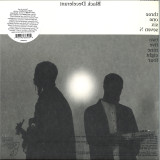
Black Decelerant is the second installment of Reflections, a series showcasing contemporary collaborations orchestrated by RVNG Intl., recently inaugurated by Steve Gunn and David Moore. Black Decelerant, the duo of Khari Lucas, aka Contour, and Omari Jazz, explores jazz traditions, improvising with synthesizers, guitars, and electronics as a practice laid forth by their musical ancestors. This experience allows for sonic meditations on themes such as Black being/nonbeing, mourning/life, expansion/limitation, and the individual/the collective. The two strive to create a sonic surface which can simultaneously allow Black listeners a place to be still, and to serve as a basis for a movement beyond "the moment." The album's ten compositions configure vast, resonant landscapes with signals, weathers and spirits, suspended in memory and distilled in time. The Black Decelerant machine recalibrates archival relics and acoustic impulses into collages of amalgamated timbres, where harmony exists not without discordance. Across the expansive space of the record, cadent storms of modulated sound ascend beside serene melodic spells. Piano keys and bass lines tumble in free fall throughout the release, accompanied on tracks "two" and "eight" by the spectral trumpet improvisations of Jawwaad Taylor. The duo arrived at their name upon reading Aria Dean's Notes on Blacceleration, an article which explores Accelerationism within the context of Black being or non-being as a foundational tenet of capitalism. Coupled with the record's intended effect, "Black Decelerant" references the music being an invitation to slow down, while hinting at the shared politics between themselves and the artists and thinkers who inspire them.
out of Stock
Last delivered 2 years ago available to reorder, subject to availability
Rare debut LP by the eccentric Peruvian singer Jean Paul "El Troglodita", known for his wild performances and extreme way of life. Enrique Roberto Tellería made his Peruvian television debut in 1965 under the stage name Jean Paul El Troglodita and wearing an imitation leopard skin suit. He would switch from melodic calm to shouting wildly or suddenly drop to the floor on his knees and smash the furniture like crazy. At the age of 19, DisPerú signed him to the label on the strength of these early performances. His first single included a freely translated version of 'Secret Agent Man' in Spanish. He began to work on the eleven cover versions that would feature on his first LP immediately, writing all his own lyrics and accompanied by the beat band Los Steivos. Despite the predominance of English beat music in Peru, the album only included three songs directly related to the British invasion: 'Bus Stop' by The Hollies, also played in raga rock style; 'Paint it Black' by The Rolling Stones; and 'The House of the Rising Sun', which follows the arrangement recorded by The Animals. So most songs come the American songbook. Apart from 'Tema de El Troglodita' (a versión of 'Secret Agent' by The Challengers), we find the bluesy 'Mustang Sally' (Sir Mack Rice). Two other US numbers, originally performed with orchestral accompaniment, were adapted to fit the rock band format: 'Poor Side of Town' (Johnny Rivers) and 'Take Me to the Moon' (Kaye Ballard). 'El verdadero amor' ('True Love'), an uncredited version is in a similar vein. The Spanish song 'Negro es negro' (Los Bravos) and the Brazilian track 'Que todo se vaya al infierno' (Roberto Carlos) also feature on the LP. El Troglodita's association with the so-called nueva ola, indicated on the back cover, needs clarification. In Peru, nueva ola was a mixed bag rather than a specific musical style and encompassed slow rock, twist, bossa nova and all the styles that the record industry produced to tame the wild rock 'n' roll impulses of teenagers in the early sixties. The Peruvian artists that performed these inoffensive Spanish adaptations of Paul Anka, Neil Sedaka or Frankie Avalon, were presented as successful models of youth culture. This was until 1964, when the Beatles with their mop-top haircuts hit the charts, vindicating rock 'n' roll and imposing the group format over the soloist model. Meanwhile the press continued to call any youth music recorded during the rest of the decade nueva ola. Jean Paul noted these distinctions early on and distanced himself from it in several statements. He saw his performance more in a style as a solo artist as following in the footsteps of e.g. Los Saicos. His 'hippie' lifestyle got him arrested by the new de facto military government in 1968, who accused him of promoting drug consumption and corrupting the Peruvian youth. The charges were soon dropped but his reputation was tarnished, and he ended up emigrating to Central America. The album includes Spanish sung versions of British beat songs and covers of the American songbook as well as various international hits.
After touring the globe showcasing their A/V moshpit-inducing live show, they are revealing their new musical creations to an unsuspecting public. Never Sleep are proud to present a landmark moment in the Japanese hardcore new rave scene. The blinding lights of DEATH RAVE point to an untraveled journey, a sci-fi fusion of black metal, gabber, cyberpunk, performance art and techno. It’s their first for the Berlin label (founded by Gabber Eleganza) following 2021’s EP Principle of Light Speed Variance. Full description VMO aka Violent Magic Orchestra break through the darkness and herald a spectacular mould-melting sound on their forthcoming album DEATH RAVE. After touring the globe showcasing their A/V moshpit-inducing live show, they are revealing their new musical creations to an unsuspecting public. Never Sleep are proud to present a landmark moment in the Japanese hardcore new rave scene. The blinding lights of DEATH RAVE point to an untraveled journey, a sci-fi fusion of black metal, gabber, cyberpunk, performance art and techno. It’s their first for the Berlin label (founded by Gabber Eleganza) following 2021’s EP Principle of Light Speed Variance. Ahead of the release VMO have brought their digital harcore to festivals around the globe, including Roadburn Festival, BANG FACE Weekender, Brutal Assault extreme music festival, Le Guess Who?, CTM Berlin and Dark Mofo. Their performance is the ultimate extreme visual music project in which techno, black metal, and industrial unite to create a ritual from the near future, 2099. All visual art and stage setting is provided by non-touring member, artist and programmer Kezzardrix (who has been visual director for millennium parade and BABYMETAL previously).The power consumption of a VMO show is equivalent to 56 guitar amplifiers, 5000W, a mind-expanding supreme noise and light experience. The band members all go by the names of classic black metal bands rendered in the Japanese katakana script; “ダークスローン”; “メイヘム”, and “エンペラー”. Their new LP is the first to feature lead vocalist ザスター. The record features guest vocals from extreme metal icon Attila Csihar, known for singing with Mayhem and Sunn O))). Other featured artists include Dylan Walker, singer of Full of Hell, punk-techno artist Infinity Division (aka Ash Luk), Icelandic darkwavers Kælan Mikla and Ican Harem of Gabber Modus Operandi. The result is a leap forward from their 2016 debut, where they have found a singularity where death metal meets Kraftwerk, or Rephlex goes black. Dressed in corpse paint and other hell-raising looks, onstage they are like “Shinigami (death gods) from the Death Note manga”. Singles Venom, Supergaze and Martello Mosh Pit featuring Gabber Eleganza have been released in the lead up to the record and have been shocking techno dance floors too with their hi-NRG-symphonic doom-gaze. They have shared their video for Planet Helvetech (here), created by Berlin-based Patrick Defasten. Helvetech combines the Norwegian word for hell (hevlete) with techno and is a reference to the infamous black metal shop founded by Mayhem’s Euronymous. It’s a song that imagines time travel from 2099 on the planet Helvetech (where VMO comes from) to 1990s Oslo. In 2023, they performed at the CTM festival in Berlin, as well as at Berghain, receiving rave reviews. At Sydney’s leading multi-sensory SOFT CENTER festival they drove the crowd into a frenzy on the 17 metre X 30 metre jumbo screen. They have also collaborated with artists, performing at the two day installation by the trailblazing Tianzhuo Chen - The Shepherd - at the Kyoto International Performing Arts Festival in 2021 here. At Sónar 2023, VMO provided the music for Taiwanese visual artist Yuen Hsieh’s work about virtual life after death DIGITAL AFTERLIFE AGENCY here. VMO will tour the world again for the new record, with appearances at ROSKILDE and media art and music fest Sónar 2024 announced so far and the DEATH RAVE experience getting bigger and bigger.
out of Stock
Last delivered 2 years ago available to reorder, subject to availability
‘Diré’, Idrissa Soumaoro new album, comes as a surprise to Malian and international audiences. Composer, singer, guitarist and master of the kamalen n’goni Idrissa Soumaoro presents here a beautiful collection of songs on his third album, Diré, named in honor of the town where he met his wife and where his first daughter, who is no longer with us, was born.
In 1971, after his studies at the INA in Bamako, Idrissa was transferred to Diré to teach music at the lPEG (Pedagogical Institute of General Education). He was 22 years old when he arrived in Diré. Idrissa has always been nostalgic for this beautiful place in the 333 Saints of Timbuktu region. As Idrissa sings in ‘Diré taga’ (Going to Diré), the track that opens the album, the city evokes deep emotions for the artist, as if it were a long-lost friend or lover. Celebrating the memory of the city of Diré leads the artist to retrace stories and lived situations that marked and animated him in years gone by: ‘I really miss the people, the colleagues, the friends and that period. Despite the time that has flown by, I would ardently wish to see Diré again’. Today, at the difficult time Mali is experiencing, remembering the city of Diré in the 1970s also means for the artist not giving up hope for peace: ‘The memory of Diré, a beautiful town in northern Mali, strengthens my hope for peace, union and real independence for the happiness of my people’; as he sings in ‘Sababou’, ‘Without hope, there is no life. Together we will succeed’.
The ten highly original compositions of the album are strongly based upon traditional music of Mali, but Idrissa’s life experiences, travels, education, collaborations and personal musical career have led him to compose and perform music with other influences. As Idrissa quotes: ‘My inspiration generally comes from the donso n'goni, a Bambara instrument played by and for hunters throughout Mali. This is a pentatonic instrument, similar to the blues exported to the USA by black African slaves. I've also spent so much time playing a variety of music that my music also reflects rumba, salsa (as well as Bamanan blues and a few derivatives: jazz, country, soul, rhythm and blues) etc. I have looked for and hope to have found my own form of expression from these influences’.
Throughout the album, his strong, clear voice sings in French, Bambara and English. It rides seamlessly upon a complex rhythmic sea of distinctly West African stringed instrumentation and percussion with accents of flute and balafon. There are keyboards in a few songs, but these, happily, do not dominate the music as we hear so often in today’s music. This album presents the music of a mature artist who has ‘been there, done that’ and returned to celebrate his country, his roots and his dreams in a flawlessly produced collection of songs of love, reassurance, fatherly advice and hope.
The album already has a long history: it was initiated in 2012 by Marc-Antoine ‘Marko’ Moreau, former producer and manager of Amadou and Mariam. Moreau had plans to produce the album and invited Idrissa Soumaoro to start recording in Manjul's studio in Bamako. When Moreau suddenly passed away, work on the album was still missing. The pandemic still added time for the production to continue. With the help of Climax Orchestra, arrangements and orchestrations were finalized in France. At the artist's behest, 'Diré' will finally be presented to the public by Mieruba, the independent label based in Ségou, the home of the blues in Mali. 'Let's stand together so that Mali can flourish': from conception to production and distribution, this is the message that 'Diré' carries.
out of Stock
Last delivered 2 years ago available to reorder, subject to availability
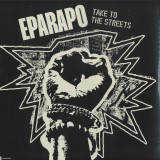
Wah Wah 45s are proud to present the full debut album from Afrobeat supergroupEparapo. Having come togetherduring the unprecedented events of the pandemic and the Black Lives Matter movement, and despite being a project born from the privations of lockdown, their music is ultimately an expression of hope, resilience & resurgence.
The word "eparapo" means "join forces" in Yoruba, the language of Afrobeat. It's also the title of a track by the late, greatTony Allen- drummer for Afrobeat legendFela Kutiand lifelong friend and mentor of our very own "Afrobeat Ambassador",Dele Sosimi. Not only did Tony help to invent Afrobeat, he always looked for ways to push the boundaries, never content with recreating what had gone before but constantly expanding and developing the genre. This project hopes to pay homage to his legacy, and that of Fela Kuti himself. Its aim is to innovate, fuse and diversify while still retaining the essence of the music.
The force behind Eparapo is bassist, composer & producerSuman Joshi.He has been a member of Dele Sosimi's Afrobeat Orchestra for nearly a decade and has performed on stage with the likes of Tony Allen, Seun Kuti, Ginger Baker & Laura Mvula. He is also bassist with UK jazz ensemble Collocutor and fusion project Cubafrobeat.
"The Eparapo project was conceived during a time of lockdowns & government scandals. The music that makes up this album was written and recorded against a backdrop of societal upheaval, culture wars and rising wealth inequality. With little scrutiny or resistance from the mainstream media, our human and democratic rights were being eroded and our institutions debased. Even our right to protest is now under threat. This is a call to action, an expression of frustration & anger at what our nation has become. It's saying that enough is enough, it's time to join forces and make our voices heard. It's time to take to the streets."Suman Joshi
The title track is an epic eleven minute musical representation of this frustration and anger, where the musicians really let loose and allow their voices to be heard. As the only instrumental track on the album it acts as a call to action that is central to this body of work. Featured vocalists on the album are Fela Kuti disciple and Wah Wah 45s artistDele Sosimi, who appears on the singlesBlack Lives Matter,From London To LagosandWho Invented Back & White?as well as a more recent recording,Follow The Money; and London based, Ghanaian born master percussionist and vocalistAfla Sackey, who takes lead vocals on the mournful yet somehow hopefulBeautiful City.
The rest of the group comprises of highly rated UK jazz vocalistSahra Gure; saxophonist, composer, producer and bandleader of the renowned forward thinking jazz outfit Collocutor,Tamar Osborn; keyboard player, producer and front man for Lokkhi Terra and Cubafrobeat,Kishon Khan; one of the UK's finest and most in demand trumpeters,Graeme Flowers, who has played with Quincy Jones, Gregory Porter and many more; trombonist for Bellowhead and mainstay of Dele's Afrobeat Orchestra,Justin Thurgur; and finally drummer for Steamdown and Sons of Kemet, as well as the man behind the Nache project,Eddie Wakili Hick.
The album will be available digitally and limited edition vinyl LP, with striking artwork by our award winning designer Animisiewasz.
out of Stock
Last delivered 19 months ago available to reorder, subject to availability
SIHR: sonic manifesto by a post-anything quartet feat. multi-instrumentalists from the Mediterranean inland Sea. New folklore for a devastated planet, including Frédéric D. Oberland (Oiseaux-Tempête), Grégory Dargent (H), Tony Elieh (Karkhana) & Wassim Halal (Polyphème).
After a few concerts/screenings improvised as a duo in Cairo and Beirut, as well as for the Rencontres d’Arles, the Lille photography center and the Belgian magazine Halogénure, Dargent and Oberland have teamed up with mavericks Elieh and Halal for a puzzling cross-border manifesto. The first sonic moves of this eclectic quartet, made in a bunker studio somewhere between Paris and Berlin, urgently took the form of a quest, that of a neo-folklore for troubled times, a music seeping with many kinds of atavism and experimenting in all directions. A fertile no-man’s-land where trance and contem- plation, jazz and electronica, acoustics and electricity would merge in a stimulating mystical magma.
From the possible emergence of a Babelian language to the shared desire to rediscover music as a ceremonial act, this encounter took place over three days of improvised sound bacchanalia, the phases of which were all recorded by Benoit Bel (Zombie Zombie, Thurston Moore Group, Oi- seaux-Tempête). A hallucinated and generous testimony, SIHR is a synergy of many different worlds and many different possibilities, the sonic vision of a present conjugated in a hybrid tense and exalted by too many tangos danced on the glowing ashes of our days.
Multi-instrumentalist & photographer, Frédéric D. Oberland has been leading the Oiseaux-Tempête collective for over ten years, lying somewhere between avant-rock and free jazz, repetitive music and electronics. Founding member of the bands FOUDRE! and Le Réveil des Tropiques, he’s also perfor- ming solo and composing soundtracks for cinema and installation art. Since 2018, Oberland co-cu- rates the NAHAL Recordings imprint alongside producer Mondkopf.
Electric guitarist, oud player, composer and photographer, Grégory Dargent cultivates his musical schizophrenia and identity through improvised music, trance music, jazz, hijacked maqam, repeti- tive music, pop, electro-acoustic installations and French chanson. From L’Hijâz’Car to Babx, from Berber singer Houria Aïchi to Rachid Taha, from Trio H to Sirventés enragés, from music for images to contemporary choreography, from the most acoustic of ouds to the most nuclear of guitars, he conducts, accompanies, composes, deciphers, questions, delves, makes mistakes, bounces back, ar- ranges, orchestrates and tirelessly shares his creative passions.
Tony Elieh is one of the pioneers of experimental music in Lebanon. A founding member of the first post-rock group of post-war Lebanon, The Scrambled Eggs, he has since developed his unique elec- tric bass skills in various groups and styles of music including collaborating with in groups such as Karkhana, Calamita and Wormholes Electric. Relocated in Berlin in recent years, he has performed a solo set of heavily processed bass generated sounds.
Is Wassim Halal only a darbuka player? Maybe !? But what about his music, compositions, ideas. You can find him with Polyphème playing and co-composing popular-contemporary music with Gamelan Puspawarna, or next to the french bagpiper Erwan Keravec, with the Bey.Ler.Bey trio (w/ Laurent Clouet & Florian Demonsant) working on an improvised-balkan-already-improvised-music, with per- formers and drawers Benjamin Efrati and Diego Verastegui, with Gregory Dargent and Anil Eraslan in H, creating a new pedal generating »Random taksim«, composing his own »Poème Symphonique pour 100 youyou« or composing pieces for ensembles.
"Star Wars Stories is a collection of the most famous melodies & fan favourite tracks from the recent Star Wars Universe including The Mandalorian, Solo: A Star Wars Story and Rogue One. This compilation features main themes, epic orchestral tracks and emotional songs, paying tribute to the originals John Williams, Ludwig Göransson, John Powell, Anthony Williams & Michael Giacchino. This project is a follow-up to the 2019 release Music From The Star Wars Saga – the essential collection, a compilation of music from the Star Wars films. Included are the most famous melodies & fan favourite tracks from the hugely popular tv series, paying tribute to Ludwig Göranssons’ work. This includes musical highlights from the series ranging from the infamous main theme to epic orchestral tracks & character pieces for Boba Fett & Luke Skywalker. From Solo: A Star Wars Story, this tribute to John Williams & John Powell’s 2018 album features action-loaded orchestral musical highlights from the film and themes for the beloved characters Han Solo and Chewbacca. Star Wars Stories is available as a limited edition of 1000 individually numbered copies on ""Hyperspace"" coloured vinyl. This 2LP-set is housed in a gatefold sleeve, includes an insert, and features secret inscriptions in the run-out grooves.
"
Star Wars Stories by Various Artists, released 2 May 2024, includes the following tracks: "Luke Skywalker Hallway Theme", "End Theme", "Flying With Chewie", "The Adventures Of Han" and more.
This version of Star Wars Stories comes as a 2xLP in a(n) Gatefold Sleeve packaging. This release comes with (a) Insert(s).
The vinyl is pressed as a marble, blue & white & black disc. Another vinyl is pressed as a marble, blue & white & black disc.
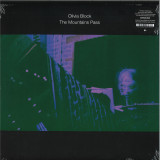
Black Truffle is pleased to announce The Mountains Pass, a major new work from Olivia Block. A key player in Chicago’s vibrant experimental music scene since the late 1990s, Block has developed an extensive body of work grounded in a personalised, at times emotive approach to the studio-based practices of the musique concrète tradition, while also encompassing improvisation, orchestral pieces, sound installations, and a sustained engagement with the piano. On The Mountains Pass, recorded by Greg Norman at Steve Albini’s Electrical Audio and meticulously edited and constructed over the course of three years, Block pushes into new terrain, introducing her singing voice and drums played by Jon Mueller into flowing assemblages that move seamlessly from ruminative organ tones and fragmented piano airs to explosions of sizzling synths and thundering percussion. Like many of Block’s past works, which include, for example, a sculptural installation using the sound of oyster beds, The Mountains Pass draws inspiration from nature and the animal world. Time spent in a particular mountain range in Northern New Mexico informs this suite of pieces, whose lyrics and titles refer particularly to animal life in the area. Beginning with bursts of white noise and delicate synthetic pops and squeaks, opener ‘Northward’ very soon reveals the special direction the album will take, as lyrical piano lines are joined by Block’s fragile voice, singing words written from the perspective of f2754, an endangered Mexican gray wolf who wandered more than five hundred miles from Arizona to New Mexico in 2022. The fragment of song quickly breaks off, leaving us with a ghostly electronic hum. ‘The Hermit’s Peak’ follows, one of two epic pieces at the album’s core. Beginning with chiming, almost harpsichord-like tones, it moves through episodes of spacious, ruminative piano, Jon Mueller’s sparkling cymbals, stuttering cut-up piano sounds, and a climax of keening organ and trumpet tones (performed by Thomas Madeja). Continuing the exploration of vintage keyboard and synth tones heard on Block’s Innocent Passage in the Territorial Sea (Room 40, 2021), the music sometimes suggests the great outer-limits works of 70s Italian prog figures like Franco Battiato or Arturo Stalteri in the languorous drift of synthesizer, organ, and piano tones and the meticulous yet organic flow of its construction. ‘Violet-Green’ opens the second side with another epic journey, its lyrical content concerning ‘a mysterious bird die-off and a forest fire’. Block’s crystalline voice and rich piano chords at times call up the restrained chamber songs of Janet Sherbourne, but fragmented and threaded through passages of woozy pitch-bent keyboards, hypnotic distant thuds, tinkling bells, and searing distorted synth tones. On ‘f2754’, the freedom of the roaming wolf surges through dense layers of rapid keyboard attacks and long organ tones over a propulsive drum performance straight out of Animal Magnetism-era Arnold Dreyblatt. This distinctive sound world is then reencountered in a darkened mirror image in the uneasy, metallic shimmer of the closing ‘Ungulates’, named in reference to a heard of elk roaming through the mountains. Like Battiato’s Clic or Gastr del Sol’s Upgrade & Afterlife, The Mountains Pass inhabits the underexplored terrain where the beauty of song coexists with a radical formal openness, illuminating the deep musicality and warmth that have been present in Block’s work all along.
out of Stock
Last delivered 2 years ago available to reorder, subject to availability
New selection of Acid Jazz songs this time from the funkier side of this music. Groove, rhythm and a lot of happy feeling.
Inside some classic artists of the genre such as Black & Brown, Jestofunk, LTJ Xperience, Funky Destination, Lo Greco Bros & Fusion Funk Foundation, Man Sueto, Vito Lalinga (Vi Mode Inc. Project), The Smoke Orchestra, The Last Minister , Gazzara with many versions not available on vinyl for some time or never released on this support.
Limited edition double vinyl.
Groove, rhythm and a lot of happy feeling.
out of Stock
Last delivered 6 months ago available to reorder, subject to availability
Escape Music are pleased to announce the release date for long awaited Turkish Delight studio album titled “Volume 1" with 500 limited edition double Vinyl “Side A+B Snowy White colour and side C+D Skull Gold colour” all will be numbered 1-500! ‘Turkish Delights Volume One’ celebrates the absolute joy that Escape Music co-owner Khalil Turk has for the kind of music he loves so much and has spent the last thirty and then some years championing. Indeed, his enthusiasm for a new band or a new song today is no different from when I first met him in the mid ‘80’s. I lost count of the number of phone calls he made to me when I was working for ‘Kerrang!’ magazine, where he would excitedly tell me ‘Dave, you just have to listen to this! It’s brilliant! You’ll love it!’ before playing me something over the phone – new and often obscure - he had picked up on his international record buying trips. Nine and a half times out of ten he’d be right!! Khalil’s quality control has been such that the record label he co-founded with fellow melodic rock enthusiast Barrie Kirtley in 1995 remains reliably and solidly in place all these years later. Escape continues to deliver monthly doses of quality hard rock, melodic rock and AOR to a very devoted following. Khalil had first entered the music business in the early ‘90’s, effectively as a talent scout for the German owned Long Island label. However, after the company folded, Turk felt that, rather than look at opportunities with other labels, he had the enthusiasm and now had rather more knowledge of the inner workings of the music business to put something together himself alongside the equally enthusiastic and astute Kirtley. We’ve seen hundreds of solid album releases from a huge variety of acts (including AXE, Steve Walsh (Kansas), John Elefante (Kansas), Lonerider, Shadowman, Alliance, Pinnacle Point, Mass, Heartland, Grand Illusion, Overland, Last Autumn’s Dream, Punky Meadows, ColdSpell, Chris Ousey, Ozone and Touch, to name just a few) as well as reissues (from Aviator, Sugarcreek, Jon Butcher Axis, Franke And The Knockouts, FM, Tantrum and Surrender, Zon, Hanover Fist etc) ever since. So here we are, over twenty-five years since that first Escape Music album appeared hot off the presses (Heartland’s ‘III’ album in November 1995, if you’re asking) and this collection of songs, personally chosen by Khalil, reiterates that pure joy he still possesses for the music he is utterly immersed by. With material from the pens of Steve Overland (FM), Chris Ousey (Heartland), Steve Morris (Export/Ian Gillan/Heartland), Mick Devine (Seven), Steve Newman (Newman/Compass) and Tommy Denander (Radioactive) there’s also a list of musicians culled from Khalil’s contact book that, quite frankly, is VERY impressive. Just a few names appearing on ‘Turkish Delights’ to throw at you include Ronnie Platt (Kansas), Billy Greer (Streets/Kansas), Billy Sheehan (Talas/David Lee Roth/Mr Big), Gary Pihl (Sammy Hagar/Boston/Alliance), Gene Black (Device), Jeff Pilson (Dokken), Jeff Scott Soto, Chris Childs (Thunder), Mike Slamer (City Boy/ Streets/Seventh Keys/ Steelhouse Lane) Joel Hoekstra (Whitesnake/Joel Hoekstra’s 13), Mark Mangold (American Tears/Touch/ Drive, She Said), Mark Stanway (Magnum), Mat Sinner (Sinner), Marco Mendoza (Thin Lizzy/Whitesnake/Journey), Ricky Phillips (The Babys/Bad English/Styx), Robin Beck, Robin Mc Auley (Grand Prix/MSG), James Christian (House Of Lords) Steve Overland (FM), Jerome Mazza (Pinnacle Point/solo), Terry Brock (Strangeways) and Vince DiCola (‘Transformers’/Thread/Storming Heaven). This is a cast of thousands. Well, it at least appears that way! It’s a very interesting package and, as Khalil would surely say, you’ll love it! - Dave Reynolds / August 2022. Produced by Khalil Turk for Turkish Delight Productions / Mixed and Mastered by Stephen DeAcutis at Sound Spa Studio, New Jersey, USA / *Mixed by Andy Zukerman / *Mastered by Fredrik Folkare / **Mixed and Mastered by Brian J Anthony (Vinyl Only) - Artwork Design by Hugh Syme (Rush/Bad English/Elton John) - Turkish Delights: The Musicians are: Ronnie Platt: Lead vocals (Kansas) / Billy Greer: Lead vocals (Kansas/Seventh Keys/Streets) / Jeff Scott Soto: Lead and backing vocals (Talisman/Yngwie Malmsteen/Trans-Siberian Orchestra) / Robin McAuley: Lead and backing vocals (Michael Schenker Group/Grand Prix/solo artist) / Chris Ousey: Lead vocals and Backing vocals (Heartland/Ousey-Mann/Virginia Wolf/Ozone)/ Jerome Mazza: vocals (Pinnacle Point/Steve Walsh) / James Christian: Lead and backing vocals (House Of Lords)Terry Brock: Lead vocals (Strangeways/Kansas) / Lee Small: Lead and backing vocals (Phenomena/Lionheart/Shy) / Mick Devine: Lead and Backing vocals (Devine Intervention/7/solo artist) / Ronnie Romero: Lead and backing vocals (Rainbow/Michael Schenker Group) / Tony Harnell: Lead vocals and backing vocals (TNT/Westworld/Starbreaker/Morning Wood) / Steve Overland: Lead and backing vocals (Lonerider/FM/Shadowman/solo artist) / Robin Beck: Backing vocals (solo artist) / Matt Sinner: Bass (Primal Fear/Sinner) / Joel Hoekstra: Guitars (Whitesnake/Trans-Siberian Orchestra/13) / Mike Slamer: Guitars (City Boy/Streets/Seventh Key/Steelhouse Lane) / Jeff Pilson: Bass (Foreigner/Dokken) / Gary Pihl: Guitars (Sammy Hagar/Boston) / Steve Morris: Guitars and Keyboards (Heartland/Lonerider/Ian Gillan Band/Shadowman) / Gene Black: Lead Guitars (Tina Turner/Rod Stewart/Device) / Billy Sheehan: Bass (Mr Big/The Flood/Talas) / Tracy Ferrie: Bass (Stryper/Boston) / Ricky Phillips: Bass (Baby’s/Styx/Bad English) / Rocky Newton: Bass (Michael Schenker Group/Lionheart) / Josh Devine: Drums (One Direction/Levara/Devine Intervention) / Takeaki Itoh: Bass (Pinnacle Point) / Jim Kirkpatrick: Slide guitar (FM/The Flood/Bernie Marsden Band) / Chris Childs: Bass (Thunder/Lonerider) / Steve Mann: Keyboards (Michael Schenker Group/Lionheart/Ousey/Mann) / Vince DiCola: Keyboards (Rocky4/Staying Alive/Transformers/Storming Heaven/Thread) / Mark Mangold: Keyboards (Touch/American Tears/Drive She Said) / Alessandro Del Vecchio: Keyboards (Revolution Saints/Edge Of Forever/Hardline) / Stevie D: Lead guitar / Marco Mendoza: Bass (Whitesnake/Thin Lizzy/Journey) / Jimmy Nicholas: B3 (Faith Hill/Kenny Loggins/Van Zant/Jim Peterik/Juice Newton) / Tommy Denander: Guitars and keyboards (Radioactive/Steve Walsh/Robert Hart)) / Brain J Anthony: Bass (Steve Walsh/Lonerider/Robert Heart/Robbie LeBlanc) / Brian Tichy: Drums (Whitesnake/Dead Daisies/ Foreigner) / Mark Stanway: Keyboards (Magnum/Grand Slam) / Robin Beck: Backing vocals (solo artist) / Nikolo Kotzev: Lead guitars (Brazen Abbot/Robin Gibb) / Fredrik Folkare: Guitars (Unleashed/Heartwind) / Mikael Rosengren: Keyboards (Heartwind) / Steve Newman: Guitars/keys/backing vocals (Newman/Compass) / Eric Ragno: Keyboards (Baby’s/Joe LynnTurner) / Fredrik Bergh: Keyboards (Talk Of Town/BloodBound) - CD Track listing: Intro; Live Again; Crazy Days; Bad Enough; Never Will Forget; Harder They Fall; Get Out Of Here; Believe; Hangman Blues; State Of Mind; Belly Of The Beast*; Holy Water; Sweet Serenity; Take It Away; Bad To Good. Vinyl Track listing: Intro; Live Again; Crazy Days; Bad Enough; Never Will Forget; Harder They Fall; Get Out Of Here; Believe; Hangman Blues; State Of Mind; Belly Of The Beast*; Holy Water; Sweet Serenity; Take It Away; Bad To Good; The Year 2000; Frozen Rose
out of Stock
Last delivered 2 years ago available to reorder, subject to availability
Embark on a sonic odyssey with "Between Poetry and Catastrophe," a 15-year labor of love by Norwegian electronic artist Ars Dada. The title draws inspiration from the poignant words "Music lives in the span between poetry and catastrophe", of the late Norwegian composer Arne Nordheim.
In this album, Ars Dada delves into the extremes—where chaos intertwines with serenity, and violence meets the poetic. Every track is a meticulously crafted journey, featuring real instrumentation such as vocals, piano, and strings, including a grand collaboration with the chamber orchestra of the Arctic Philharmonic Orchestra. From intense breakbeat chaos to delicate neoclassical string pieces, Ars Dada invites you to experience the visceral beauty of this musical tapestry.
This isn't just an album; it's an exploration of the human condition at its most extreme.
Thank you to the performers and Arctic Philharmonic
Written and recorded with support from Fund for Performing Artists
All music written, arranged and produced by Erlend Bilsbak/Ars Dada
All strings recorded in Kysten studio by Sivert Henriksen
Violin on all tracks except Fjordyp, End of September, Skyggespill, and Du Må Ikke Sove performed by Brynjar Lien Schulerud
Violin on Fjordyp, End of September, Skyggespill, and Du Må Ikke Sove performed by Sander Tingstad
Viola on all tracks except Tjernet performed by Heidi Schulerud Bilsbak
Cello on all tracks except Tjernet performed by Håvard Bilsbak
Grand Piano on Fjordyp and Skyggespill performed by Yegor Shevtsov
Alto soprano on Fjordyp, End of September, Sub Luna Saltamus, Du Må Ikke Sove, and Grief performed by Marika Schultze
All strings on Tjernet by performed by Arktisk Filharmoni (Arctic Philharmonic)
Mastered by Julien Guillot at Electric Voyage Studio
In 2005, an 18-year-old Raphael Gimenes left the sunny shores of Brazil behind, embarking on a journey to a distant and wintry land. "Dinamarca," the Portuguese name for Denmark, became his new home, where he has lived for almost two decades. Today, he presents his third album, a deep exploration of his life in Scandinavia. Rather than being a nationalistic tribute, "DINAMARCA" tells chapters from Gimenes" life story as a Brazilian living in the northern corners of the world. It guides us through the enchanting nordic woods, the vast fields stretching to the horizon, and the timeless sea resting beneath an endless sky. The melodies of blackbirds, the dances of red deer, and the whispers of ancient oaks form the backdrop for his musical stories. Within his songs, we experience moments of deep solitude and boundless inspiration, moments where reflection and creative passion intertwine. Gimenes skillfully turns the power of love into harmonies, dedicating songs to both his companion and his closest friends. Beyond these experiences, he leads us on journeys to Denmark"s neighboring lands, Norway and Sweden, where revelations and encounters with the mystical found their way into the lyrical fabric of his songs. The album"s orchestration includes Gimenes" vocals and the resonant chords of his classical guitar. Accompanying him throughout the album are Jan Kadereit"s multilayered percussion, and Lucas Delacroix"s bass synth, who also plays the electric guitar at times. The music further unfolds with the nuances of a string quartet, and a brass quintet, both recorded in the tropical highlands of Minas Gerais. Other guest musicians feature on individual songs, such as pianist Sebastian Macchi, flautist Flavia Huarachi, cellist Lucas Almeida, and singers Gaby Echevarria, Cecilia Pahl, and Cris Ferro. Gimenes has garnered acclaim and accolades across continents. His debut release, "Raphael Gimenes & As Montanhas de Som," delved deep into the rhythms and traditions of Brazil. It rose to prominence as the top Brazilian release in 2016 in Holland and was hailed as a "conceptual masterpiece" in Japan. His second album, "A Tongue Full of Suns," co-produced with Faroese multi-artist Teitur, ventured into the English language, blending Gimenes" inspirations from the world of prog-rock. Danish rock legend TimChristensen praised it as "top-shelf neo-folk," while Brazilian website80minutos described it as "hypnotizing." The music within "DINAMARCA" delves deep into the soul of a man who embraced a new land with open arms, while staying true to his roots. It unites elements from both of Gimenes" prior works, embarking on a journey across new musical horizons. The result is music that transcends borders, weaving itself into an intricately beautiful tapestry - a soul that has learned to harmonize with two worlds.
Reissued on vinyl for the first time, Juno Reactor’s 1997 ‘Bible of Dreams’, also newly mastered and available of
double black vinyl.
‘Bible of Dreams’ was Juno Reactor's fourth album. It had a very different sound from the group's previous albums,
and moved away from the traditional dance beats by implementing tribal influences. The band collaborated with
Amampondo, a traditional South African percussion act, on the single ‘Conga Fury’. Watkins and Amampondo went on
a five-week tour of the US, opening for Moby.
Featuring music from the film soundtracks The Matrix Reloaded, Animatrix, Mortal Kombat Annihilation and Beowulf.
Composer, producer, musician and performer Ben Watkins is an essential innovator of modern electronic music and a
pioneer of Trance. Over the course of nearly 30 years, Watkins has created a unique driving fusion of electronica,
orchestral and global music executed on an epic & symphonic scale.
Juno Reactor was formed as an art project in 1990. Ben Watkins wanted to collaborate with other artists, producing
exciting projects that were not commercially driven. He wanted to create experimental music and non-musical
soundtracks that would work with installations, art pieces, and film projects.
As well as releasing a string of influential albums as Juno Reactor, Watkins’ tracks have been placed in numerous highprofile feature films, television programmes and computer games and Ben Watkins composed large sections of the
original score for the films The Matrix Reloaded and The Matrix Revolutions, as well as composing the entire orchestral
score for Japanese anime feature film Brave Story.
out of Stock
Last delivered 2 years ago available to reorder, subject to availability
Black vinyl LP. Debut album by striking experimental duo featuring Aboriginal songman Fred Leone. Mixed by Jake Miller (Björk, Arca), mastered by Alex Wharton (The Beatles, MBV). RIYL: Autechre, Arca, Björk. Yirinda means 'Now' in Butchulla language. Australian duo Yirinda combine ancient Aboriginal language with sublime modern production. Fred Leone and Samuel Pankhurst's music invokes thousands of generations of story and culture, while emerging as something entirely new. Fred is one of three Butchulla songmen - a song and language custodian for the Butchulla people from the Fraser Coast region of Queensland, including K’gari (formerly known as Fraser Island). He sings the songs on this album in the endangered Butchulla language, now spoken by only a handful of people. Samuel is an internationally acclaimed contrabassist / producer known for his kaleidoscopic harmonies and polyrhythmic mastery. Their self-titled debut album was recorded in Brisbane by Samuel, then mixed in London by Jake Miller (Björk, Arca, Yves Tumor) and mastered at Abbey Road by Alex Wharton (The Beatles, My Bloody Valentine). The album sets Fred’s powerful vocals against striking experimental soundscapes, rich with strings, horns, double bass, synthesizer, piano and percussion. Every arrangement began with Fred's voice alone and from there sounds and systems were constructed. The result is otherworldly, a timeless art music outside Western convention. Yirinda have performed at the Australian Art Music Awards, Vivid Festival, Golden Plains, Dark Mofo, Supersense and elsewhere, and been covered by ABC Radio and NME Australia. Fred has toured Europe as a member of The Black Arm Band, and as a solo artist supporting Ash Grunwald. He founded Australia’s first Aboriginal hip hop label Impossible Odds in the late 2000s. Samuel has performed with the Brodsky Quartet and is a member of the Australian Art Orchestra. He has scored extensively for contemporary dance, and his studio work covers everything from the Bluey TV show to Hiatus Kaiyote
German melodic extreme metal act FAR BEYOND mark their return with their third studio album, The End of My Road, on February 16 via their new label home Prosthetic Records. FAR BEYONDüs latest full-length is an ambitious and fastidiously curated amalgam of melodeath, symphonic and power metal, covering themes of courage and heart in the face of depression and hardship. Formed in the early 2000s, FAR BEYOND is the solo project of Eugen Dodenhoeft. Based in the Franconian Switzerland region of Germany, FAR BEYONDüs history to this point has been one of slow and steady artistic progression with 2005's An Angel's Requiem and 2016's A Frozen Flame Of Ice albums showcasing Dodenhoeftüs penchant for seamlessly alternating dynamics of gothic and death metal symphonia. Lusciously complex by design, FAR BEYOND's latest album shines in its songwriting structure. Across the eight tracks, Eugen compiled up to 30 layers of vocals, synthesisers and orchestral textures. Whilst a solo endeavour at its core, The End of My Road sees collaborative guitar solos from Nathram's Lukas Grasslin as well as additional synthesiser embellishments from Ari Ahrendt on Tempus Fugit and the title track. The End of My Road was then placed in the hands of Patrick Staudle of Glaswald Studios in The Black Forest, Germany. Furthering their quest to understand the complexities of the unknown and transcend beyond the unknown, The End of My Roadüs contemplative atmospherics and concentrated sonic extremities merge seamlessly with a deft poetic touch. With Eugen adding: üThe End of My Road is my invitation to get lost in the sonic realms of FAR BEYOND and find a moment of peace and inspiration. I look forward to sharing this album with the world and hope that it touches the hearts of listeners, providing them with an unforgettable soundtrack for their own journey.
FOLLOWING THEIR RECENT REUNION, THE DELGADOS REISSUE THEIR FOURTH STUDIO ALBUM HATE ON COLOURED VINYL AND CD TO MARK ITS 21st ANNIVERSARY
Ushering in a new era of emotionally vulnerable and cinematic songwriting for celebrated Glasgow group The Delgados, 2002’s Hate is the group’s most ambitious recorded statement to date. Recorded amidst a backdrop of personal change and international crisis, Hate’s internal alchemy transmogrifies darkness into light. It’s an enclosed universe full of tragedy and magic, a swirling galaxy of lush orchestration, misanthropy dealt with kindness and black humour. Above all it showed a band coming to terms with their fragility with a new power and grace.
In Hate, the band’s ambition saw them striving to reflect the breadth of human experience, both the joy and tragedy of living in tumultuous times. Initially commissioned by The Barbican in London to compose music for a film about artist Joe Coleman, the instrumental music that instigated Hate was laden with darkness from the outset. The Delgados’ worldview has always been informed by nuance, an oblique but incisive lyrical perspective but on Hate a new rawness is woven throughout the songs. Coleman’s original subject matter - portraits of troubled historical figures like Ed Gein, Mary Bell and Jayne Mansfield - influenced the tonality of the music but the songs were written against a backdrop of international tumult and personal life changes for the band members. Beginning writing sessions following a family bereavement in drummer Paul Savage’s family, Hate was then recorded while both Alun Woodward and co-singer/guitarist Emma Pollock were expecting new additions to their young families, the latter with drummer Paul Savage. In the background to the recording process were the attacks on the World Trade Center of September 2001 and their aftermath. In this context, it’s remarkable that an album was made at all, let alone one so grand and compassionate. It’s a masterclass in restraint and imagination.
Hate sounds like the world in all its ugly glory. Recorded in Glasgow and New York with Tony Doogan, Dave Fridmann and the band as producers and using over 20 additional musicians, Hate grabs the baton from the group’s breakthrough critical and commercial success The Great Eastern. Bolder, broader and more all-encompassing than anything the band had previously attempted, the album’s palette is furnished by a string section, brass and reed instrumentation, a choir and electronic elements augmenting the core group of Emma Pollock, Alun Woodward, Paul Savage and Stewart Henderson. Far from being over the top, the group’s skill is in attention to detail, in honing and refining each arrangement, allowing each element its space.
It’s a fine balancing act that pays massive dividends. Woodward’s new lyrical vulnerability is spotlighted on tracks like The Drowning Years, which throws elegiac string arrangements against the narrative of characters living in darkness, punctuated by couplets that bring a real-life documentary feel to the narrative. All Rise brings a black comedy to the idea of a confessional before a transcendent, choir-led refrain brings ecstatic resolution to Woodward’s vocal in its highest register. On the single All You Need Is Hate, Woodward’s trick of subverting the Beatles standard showcases the dark humour at the centre of Hate. Here The Delgados’ perversity is in full flow, nurturing a glowing light from darkness, the resolving melody and Fridmann production recalling contemporaries The Flaming Lips (whose Michael Ivins assisted in mixing) or Mercury Rev. The perversity is the surging serotonin induced by the group while singing the lines “Hate is everywhere, inside your mother’s heart and you will find it there. You ask me what you need? Hate is all you need.”
It’s a dark magic that pervades Hate, indeed it’s almost the driving force throughout the album. Flipping minor to major and back again, Favours is fuelled by fear and violence before blasting into the heavens with the gauche line “and you’re feeling fine,” operating in stark contrast to the verses’ tone. Album opener The Light Before We Land finds Emma Pollock in the aftermath of recent family trauma. Her vocal is effortless; a study in steady restraint against the massive, Fridmann-patented drum sound powering Savage’s playing and Henderson’s instantly recognisable melodic basslines. Coming In from the Cold is Pollock in full flight, lifted to the heavens by wide-screen, instrumental texture. Her presence on Hate highlights her knack for lyrical impressionism, the timbre of her voice lending itself to drama while always retaining a mystique. Never Look At The Sun, inspired by the Coleman painting The Big Bang Theory (itself an explosives-themed study), revels in paranoia, her performance ringing out in the eye of the storm conjured by the swirling arrangements. It reaches the peak of a redemptive arc while seemingly parodying the very idea of redemption.
Hate was the sound of The Delgados completely fulfilling their potential, a fully realised vision buoyed by the weight of coming through a darkness into light. For its 21st anniversary, the album is being reissued on the band’s own Chemikal Underground on coloured vinyl and CD. Hate is all you need
These days we are back again in the 60s, as the world urgently needs a new peace movement.
Therefore we ultimately call everyone to hold their hands together and look into the future, - nothing describes better the message we deeply feel being part of, in the own words of Kito Jempere. For ''Let's Hold Our Hands Together'' he already called up the internationally awarded Swedish composer Adam Evald on vocals and the enigmatic Antoha MC on trumpet, backed by Public Possession artist, Eden Burns and our very own, Leonid Lipelis (check his latest 'Function As A Meaning' EP!!!), on the remix duties, Kito Jempere is the ''DJ's hero'' - selector, producer, own orchestra and band conductor (watch Boiler Room from PPF!), who has been delivering quality dance records through decades via DFA, Lo Recordings, Freerange.
Proclaimed as the ''The King Of Collaborations'' by Zweikommasieben, Kito has been working on music with together with Jimi Tenor, Red Snapper, Hard Ton, New Composers and got remixed by Palms Trax, Andras, Ruf Dug, Black Spuma and many more.
out of Stock
Last delivered 52 days ago available to reorder, subject to availability
A Break In Time ist ein Ambient-Album, das während des Lockdowns als eine Art Beruhigungstherapie / Meditationsübung geschrieben wurde. Das Projekt nahm schnell Form an, mit einer einzigartigen klanglichen Identität und einer Botschaft, die durch das Gefühl der Isolation während dieser Zeit inspiriert wurde. Das Album handelt von Zerbrechlichkeit, Naivität, dem Nachdenken über unsere Verwundbarkeit, aber auch über unsere Widerstandsfähigkeit und das Gefühl des Alleinseins und Zusammenseins. Die Entstehung dieses Albums mag weniger als ein Jahr gedauert haben, aber es ist ein Höhepunkt von Einflüssen, die bis in die frühen 90er Jahre zurückreichen, als er in Québec City aufwuchs. Damals war er einfach als Everything bekannt und trat live bei Raves und in Chill Out Rooms auf, bewaffnet mit nichts als einer 909, einem SH-101, einem Ensoniq EPS und einem Quadraverb. Seine Liebe zur Ambient-Musik ist nie verblasst. Mit frühen Einflüssen wie Carl Craigs bahnbrechendem "Landcruising", Warps "Artificial Intelligence" und Black Dog Production "Bytes" überbrückt dieses Album die Kluft zwischen hier und dort, jetzt und damals: wo die Zeit stillsteht.
Dies ist eine gemeinsame Veröffentlichung von Compost Records und Drumpoet Community.
- "A beautiful album full of spacious well crafted ambient compositions." - Peter Kruder / Peace Orchestra
out of Stock
Last delivered 22 months ago available to reorder, subject to availability
"Omoiyari" means to have empathy and consideration for others, and act on it. This fall, the American indie-folk multi-instrumentalist and singer-songwriter Kishi Bashi is set to release the companion album to his forthcoming documentary song film, titled Music from the Song Film: Omoiyari. Consisting of two LPs_"The Songs" and "The Score"_the release showcases what is essentially the soundtrack to Omoiyari, the feature-length motion picture co-directed by Kishi Bashi, aka Kaoru Ishibashi or "K," which is being released via MTV Documentary Films in November. Focusing on K's own six-year journey of discovery surrounding his research of the incarceration of 120,000 Japanese Americans that followed the attack on Pearl Harbor in 1941, the film is part social justice documentary and part song-film experiment. The album includes K's live improvisations, which are featured in the documentary, many recorded on the sites where the concentration camps stood. Written during and about the artist's transformational dive into his personal identity and serving as a broad survey of the Japanese American experience as well as the incarceration_Music from the Song Film: Omoiyari serves as an evocative musical accompaniment to the lessons of empathy and compassion portrayed in the film and highlights the process and power of one of modern indie's most talented musicians.
When Kronos plays a piece, they become fellow composers, true collaborators. Without them, we wouldn’t have the kind of string quartet playing that we find around us today. There are two kinds of string quartet playing: the ‘Before Kronos’ and the ‘After Kronos’.” – Philip Glass
‘Kronos Quartet has broken the boundaries of what string quartets can do.’ – New York Times
Nonesuch releases Kronos Quartet’s acclaimed album Kronos Quartet Performs Philip Glass on vinyl for the first time to coincide with Kronos Quartet: Five Decades, a year-long celebration marking the quartet’s 50th anniversary. Originally released in 1995, the album features David Harrington (violin), John Sherba, (violin), Hank Dutt (viola) and Joan Jeanrenaud (cello) performing Quartet No. 2 (Company) (1983), No. 3 (Mishima) (1985), No. 4 (Buczak) (1990), and No. 5 (1991), the first piece Glass wrote especially for Kronos. Recorded at Skywalker Sound in California, the album was produced by Judith Sherman, Kurt Munkacsi and Philip Glass. The cover art features Francesco Clemente’s painting The Four Corners (1985). At the time of the album’s release, the New York Times said, ‘It contains some of Glass's best music since Koyaanisqatsi. His ear for sumptuous string sonorities is undeniable,’ while the Washington Post called it ‘An ideal combination of composer and performers.’ It was a top 10 hit on Billboard’s Top Classical Albums, and spent 12 weeks on Billboard’s Classical chart.
In his original liner note, critic Mark Swed wrote, ‘Glass’ string quartets may contain his most intimate music. They are works through which a very public composer, perhaps the most important opera reformer of our age and a longstanding collaborator in large-scale music theater, holds up a mirror to himself and his way of composing. “In an odd way,” Glass explains, “string quartets have always functioned like that for composers. I don’t really know why, but it’s almost impossible to get away from it. It’s the way composers of the past have thought and that’s no less true for me. It’s almost as if we say we’re going to write a string quartet, we take a deep breath, and we wade in to try to write the most serious, significant piece that we can.” Glass says that as he sat down to write String Quartet No. 5, he had discovered that perhaps not taking a serious tone might be the most serious way to deal with it. “I was thinking that I had really gone beyond the need to write a serious string quartet and that I could write a quartet that is about musicality, which in a certain way is the most serious subject.”’
Glass’ first numbered quartet was written in 1966; however, he did not return to the string quartet medium until 1983, when he provided incidental music for a dramatization of Samuel Beckett’s prose poem, Company. During those 17 years, Glass had formed an ensemble and developed his style in a series of increasingly elaborate pieces for it. String Quartet No. 3 is also adapted to dramatic music, this time from his score to the 1985 Paul Schrader film, Mishima. It was with the music of Mishima that Kronos became associated with Glass, recording the string quartet sections of the soundtrack and subsequently working extensively with the composer on all five of his numbered quartets. Kronos also gave the first concert performances of Company and Mishima. String Quartet No. 4 was composed in remembrance of the artist Brian Buczak, who died of AIDS in 1988.
As Kronos’ anniversary season continues with further concerts around the world, Nonesuch will reissue Black Angels on vinyl on February 16. First released in 1990, the award-winning album includes George Crumb’s title piece, which inspired David Harrington to found the quartet. Called ‘an unusually elevated and searing Vietnam War protest’ by the New York Times, it sets a dark, powerful tone for this collection, which addresses the political/physical/spiritual consequences of war. Also featured are works by Charles Ives, István Márta, Thomas Tallis, and Dmitri Shostakovich. ‘Stylishly packaged, intelligently programmed, superbly recorded and brilliantly performed,’ proclaimed Gramophone. ‘In short, very much the sort of disc we’ve come to expect from the talented and imaginative Kronos Quartet.’ The Evening Standard included it among its ‘100 Definitive Classical Albums of the 20th Century’.
Born in Baltimore, Maryland, in 1937, Philip Glass is a graduate of the University of Chicago and the Juilliard School. By 1974, he had created a large collection of music for The Philip Glass Ensemble. The period culminated in the landmark opera, Einstein on the Beach. Since Einstein, Glass’s repertoire has grown to include music for opera, dance, theatre, orchestra, and film. His scores have received Academy Award nominations (including Kundun and The Hours, as well as Notes on a Scandal) and a Golden Globe (The Truman Show). Recent works include his memoir, Words Without Music, his first Piano Sonata, opera Circus Days and Nights, and Symphony No. 14. Glass received the Praemium Imperiale in 2012, the US National Medal of the Arts from President Barack Obama in 2016, and 41st Kennedy Center Honors in 2018.
Nonesuch’s relationship with Glass began in 1985, with the release of the score for Paul Schrader’s Mishima featuring Kronos Quartet. Over the years other Glass works on Nonesuch have included Einstein on the Beach (1993), Kronos Quartet Performs Philip Glass (1995), Music in Twelve Parts (1996), Glass Box (2008), as well as the soundtracks for Powaqqatsi (1988), Kundun (1997), Koyaanisqatsi (1998), and The Hours (2002), amongst others.
For 50 years, San Francisco’s Kronos Quartet – David Harrington (violin), John Sherba (violin), Hank Dutt (viola), and Paul Wiancko (cello) – has challenged and reimagined what a string quartet can be. Founded at a time when the form was largely centred on long-established, Western European traditions, Kronos has been at the forefront of revolutionizing the string quartet into a living art form that responds to the people and issues of our time. In the process, Kronos has become one of the most celebrated and influential groups of our era, performing thousands of concerts worldwide, releasing more than 70 recordings of extraordinary breadth and creativity, and collaborating with many of the world’s most accomplished composers and performers. Through its nonprofit organization, Kronos Performing Arts Association, Kronos has commissioned more than 1,000 works and arrangements for string quartet – including the Kronos Fifty for the Future library of free, educational repertoire. Kronos has received more than 40 awards, including three Grammy Awards and the Polar Music, Avery Fisher, and Edison Klassiek Oeuvre Prizes.
Kronos is prolific and wide-ranging on recordings. The ensemble’s expansive discography on Nonesuch includes three Grammy-winning albums: Terry Riley’s Sun Rings (2019), Landfall with Laurie Anderson (2018), and Alban Berg’s Lyric Suite featuring soprano Dawn Upshaw (2003); the 40th-anniversary boxed set Kronos Explorer Series; Nuevo (2002), a Grammy- and Latin Grammy–nominated celebration of Mexican culture; Pieces of Africa (1992), a showcase of African-born composers that simultaneously topped Billboard’s Classical and World Music charts; and Folk Songs (2017), Nonesuch’s 50th album with Kronos, which featured Sam Amidon, Olivia Chaney, Rhiannon Giddens, and Natalie Merchant singing traditional folk songs.
out of Stock
Last delivered 2 years ago available to reorder, subject to availability
Worthy re-issue of Robert Cotter's second late 70's soul album! Comprising five songs, with four of them being quite lengthy and well-structured for the dance floor, was entirely recorded in the United States by top-notch American musicians. "Timeless", a fresh and lively expression of late 70s soul music, was recorded at the Sundragon Studio in New York. This studio was home to legendary bands such as Talking Heads and Ramones, as well as a few 'disco studio groups' like Andrea True Connection, Tony Valor Sound Orchestra, and Camouflage, who recorded songs that later became considerable hits. For this reason, it's believed that the positive outcome of the album can be partially attributed to Ned Liben, an eclectic New York musician and co-founder of the studio in the Flatiron district of Manhattan, served as an exhaustive interlocutor for any artistic and technical needs. He was also the arranger of "Rock Me With Your Love", the most significant song on the album. Ned's successful mission was to capture the maximum timbral fidelity of Robert Cotter's voice using appropriate recording techniques, assisted by Michael George Ewing, a talented engineer who had previously worked on similar projects with well-known artists like Carol Williams, Maryann Farra & Satin Soul, Touch and Tony Valor. In fact, the piece features original and melodious lines, coupled with an excellent steady rhythm, spanning approximately 8 minutes and 30 seconds - in short, "a delightful sound for every beat." This ensured that the performance of the young singer-songwriter from New Jersey was faithfully reproduced without neglecting the overall musical landscape. The other four songs, arranged by Ben Lazzaroni with the same musicians as the first piece, are no exception. Best Record also delivered on the promise to Robert's older brother, Karl Potter, a powerful percussionist transplanted to Rome, for whom the roman label produced "Sweet & Salty Cha-Cha-Cha" (12", 1986). Robert Cotter, an artist about whom almost nothing has been written, is poised to gain recognition once word spreads about his album, which has been entirely remastered by Dom Scuteri and features a more congenial tracklist. This album is destined to be truly 'timeless', ready to captivate audiences around the world. Even the new cover artwork, created by Nerina Fernandez, pays homage to an artist who, despite expressing himself with elegance and simplicity, radiates energy and exudes love. "Timeless" is an inevitable revelation for anyone who missed it at the time, and for the next 40-plus years, it will remain an absolute must-listen for Robert Cotter's many fans, leaving them all in awe. In addition to the reissue on the classic glossy black vinyl, a strictly limited edition on red vinyl will be released exclusively by Clone Distribution.
out of Stock
Last delivered 2 years ago available to reorder, subject to availability
The vinyl edition comes with 6 high-quality lithograph art prints (by UK illustrator Hannah Alice) representing each of the birds on the album, held in a heavy board die-cut gatefold sleeve. This unique packaging is fully interactive - the cover image is interchangeable with any of the prints. Remastered by Brian Pyle from original tapes. Bert Jansch was often quoted as saying "I'm not playing for anyone, just myself" and this feels no more apparent than on 1979's 'Avocet', his beautifully meditative paean to British birds. For fans of Jansch this is often the album that is singled out as his best work. The freedoms of a post-Pentangle career are much in evidence; folk rock and even trad folk give way to an album that is not only without lyrical accompaniment but really quite orchestral, classical even, in its composition. There are surprises in particular in 'Lapwing' (a dirge-like waltz that wouldn't be out of place on a Nils Frahm album) and 'Bittern' (which speaks of Arthur Russell's more experimental pieces). Featuring ex-bandmate Danny Thompson, alongside Martin Jenkins (Dando Shaft, amongst others) with sleeve notes by Jansch aficionado Colin Harper (author of 'Dazzling Stranger: Bert Jansch and the British Folk and Blues revival'). Ltd ART PRINT EDITION, Classic Black vinyl, plus DLC w/ bonus live tracks.
Für LORNA SHORE ist das Dreigestirn von Songs im Herzen von '...And I Return to Nothingness' nichts weniger als ein Exorzismus - und ein Eintauchen in etwas Dunkleres. Von der orchestralen Passage, die den Titeltrack der EP eröffnet, geradewegs in einen Bombast aus geschwärzter Intensität und wütender Erhabenheit, sind diese aus New Jersey stammenden Extremisten zurück und erheben sich wie ein Phönix aus der Asche. Wiedergeboren und auf die Dunkelheit eingeschworen. Ein kommendes Feuer, das selbst die LORNA SHORE-Gläubigen fassungslos machen wird.Als die Welt im Jahr 2020 stillstand, tauchten LORNA SHORE tiefer in die kreativen Instinkte ein, die sie ursprünglich mit bahnbrechenden Alben zu einer festen Größe in der extremen Metal-Szene machten: 2015's 'Psalms' und 2017's 'Flesh Coffin'. Seitdem haben sie Einflüsse und Ideen miteinander verwoben, die von der symphonischen Grimmigkeit des europäischen Black Metals bis hin zu den komplexen, tödlichen Klangformeln des Death Metals und der auralen Intensität des Hardcore reichen. Was LORNA SHORE erreicht haben, ist ein neues Level an geschwärzter Technizität und der nächste Schritt auf ihrer Darkside-Reise. Verschönert mit dem Artwork des bekannten polnischen Malers Mariusz Lewnadowski (Bell Witch, Fuming Mouth) bekräftigt '...And I Return to Nothingness' den kreativen Fokus und die Intensität von LORNA SHORE. Die drei Tracks der EP: 'To the Hellfire', 'Of the Abyss' und der Titeltrack sind der Beweis, dass LORNA SHORE nicht nur ihr feuriges Vermächtnis fortsetzen. Sie entfachen es und setzen ihr eigenes Vermächtnis spektakulär in Brand.'...And I Return to Nothingness' ist nun als schwarze LP+CD mit Ätzung auf Seite B erhältlich.
Zum 10. Todestag von Lou Reed veröffentlichen DIE BUBEN IM PELZ ihr neues Album "Verwandler" (Konkord) auf welchem sie sich den Songs von Lou Reed widmen und diese in den Wiener Dialekt übersetzen. Als 2015 das selbstbetitelte Debütalbum (Konkord) von DIE BUBEN IM PELZ erschien, wirbelten sie damit viel Staub auf. Denn die beiden Gründungsmitglieder David Pfister und Christian Fuchs (beide vom Radiosender FM4) wagten etwas Riskantes. Die Buben übersetzten das ikonische Debütalbum von Velvet Underground komplett ins Wienerische. Wechselten die legendäre Andy Warhol-Banane auf dem Cover mit einer Wurst aus - und übertrugen die Atmosphäre des New York von 1967 in das Wien von 2015. Düstere Parallelen wurden ausgelotet. Flirrende Gitarren zum Klingen gebracht. Spirituelle Verwandtschaften mit Lou Reed, John Cale und Nico zelebriert. Die Platte wurde inzwischen zu einem viel beachteten Klassiker der deutschsprachigen, alternativen Popmusik. Für die deutsche Tageszeitung ,Die Zeit" beispielsweise ein Album des Jahres 2015. Ebenso erfuhr das Artwork der LP von Dieter Oitzinger große Aufmerksamkeit. Die Erstauflage auf Vinyl mit einer abziehbaren Wurst statt einer Banane ist inzwischen ein begehrtes Sammlerobjekt. 2017 und 2019 erschienen zwei weitere Platten auf dem Wiener Label Noise Appeal, zuletzt ,Geisterbahn" produziert von Alexander Hacke von den Einstürzenden Neubauten und Alexander Lausch. Neben Pfister und Fuchs bestehen DIE BUBEN IM PELZ auch noch aus dem Bassisten Christof Baumgartner (Black Palms Orchestra), Bernd Supper (Scarabeus Dream), Markus Reiter (Destroyed But Not Defeated) und Gernot Scheithauer (Liger). Brutalität und Zärtlichkeit Zum 10. Todestag von Lou Reed am 27. Oktober veröffentlichen Die Buben Im Pelz ihr neues Album ,Verwandler" (Konkord), auf dem sie sich erneut ausschließlich den Songs von Lou Reed und Velvet Underground widmen. Auch wenn Titel und Artwork auf den Klassiker ,Transformer" von Lou Reed anspielen, übersetzten die Buben dieses Mal kein komplettes Album, sondern eine Auswahl von Reed-Songs mit Blick auf sein gesamtes Schaffen. Und auch dieses Mal zeigt sich: Die Klassiker von Lou Reed, zwischen textlicher Brutalität und Zärtlichkeit, funktionieren auch in unserer seltsamen Zeit perfekt als tröstende Ventile. Egal ob in persönlichster Identitätssuche oder beim großen Blick auf die Welt. Black Vinyl!
Zum 10. Todestag von Lou Reed veröffentlichen DIE BUBEN IM PELZ ihr neues Album "Verwandler" (Konkord) auf welchem sie sich den Songs von Lou Reed widmen und diese in den Wiener Dialekt übersetzen. Als 2015 das selbstbetitelte Debütalbum (Konkord) von DIE BUBEN IM PELZ erschien, wirbelten sie damit viel Staub auf. Denn die beiden Gründungsmitglieder David Pfister und Christian Fuchs (beide vom Radiosender FM4) wagten etwas Riskantes. Die Buben übersetzten das ikonische Debütalbum von Velvet Underground komplett ins Wienerische. Wechselten die legendäre Andy Warhol-Banane auf dem Cover mit einer Wurst aus - und übertrugen die Atmosphäre des New York von 1967 in das Wien von 2015. Düstere Parallelen wurden ausgelotet. Flirrende Gitarren zum Klingen gebracht. Spirituelle Verwandtschaften mit Lou Reed, John Cale und Nico zelebriert. Die Platte wurde inzwischen zu einem viel beachteten Klassiker der deutschsprachigen, alternativen Popmusik. Für die deutsche Tageszeitung ,Die Zeit" beispielsweise ein Album des Jahres 2015. Ebenso erfuhr das Artwork der LP von Dieter Oitzinger große Aufmerksamkeit. Die Erstauflage auf Vinyl mit einer abziehbaren Wurst statt einer Banane ist inzwischen ein begehrtes Sammlerobjekt. 2017 und 2019 erschienen zwei weitere Platten auf dem Wiener Label Noise Appeal, zuletzt ,Geisterbahn" produziert von Alexander Hacke von den Einstürzenden Neubauten und Alexander Lausch. Neben Pfister und Fuchs bestehen DIE BUBEN IM PELZ auch noch aus dem Bassisten Christof Baumgartner (Black Palms Orchestra), Bernd Supper (Scarabeus Dream), Markus Reiter (Destroyed But Not Defeated) und Gernot Scheithauer (Liger). Brutalität und Zärtlichkeit Zum 10. Todestag von Lou Reed am 27. Oktober veröffentlichen Die Buben Im Pelz ihr neues Album ,Verwandler" (Konkord), auf dem sie sich erneut ausschließlich den Songs von Lou Reed und Velvet Underground widmen. Auch wenn Titel und Artwork auf den Klassiker ,Transformer" von Lou Reed anspielen, übersetzten die Buben dieses Mal kein komplettes Album, sondern eine Auswahl von Reed-Songs mit Blick auf sein gesamtes Schaffen. Und auch dieses Mal zeigt sich: Die Klassiker von Lou Reed, zwischen textlicher Brutalität und Zärtlichkeit, funktionieren auch in unserer seltsamen Zeit perfekt als tröstende Ventile. Egal ob in persönlichster Identitätssuche oder beim großen Blick auf die Welt. Black Vinyl!
The rising Tamil-Swiss artist Priya Ragu is set to release her long-awaited debut album ‘SANTHOSAM’ on October 20th.
‘SANTHOSAM’ (the Tamil word for ‘happiness’) is a standout dynamic album which takes her raguwavy sound – simmering R&B, masterful pop hooks, earthy soulful vocals, dance beats, and the warm tabla rhythms, and spiralling melodics of Tamil music – to even more adventurous heights. Defined by Priya’s contagiously positive spirit, it pulsates with gorgeously varied musical textures and urgent political themes. Once again crafted in collaboration with her brother and producer Japhna Gold, it’s an album that originates from Priya’s quest for self-discovery.
‘SANTHOSAM’ opens with ‘Ammama’s Note’, which features a voice recording in which Priya’s grandmothers is questioning why she isn’t married. Like many young South Asian women, Priya felt like she wanted to achieve much more before she settled down, regardless of other people’s preconceptions of what direction her life should take. That ability to write one’s own destiny continues the euphoric ‘School Me Like That’, set to a rumbling tambla beat and breezy synths. More universal issues are explored in the blazing anger of ‘Black Goose’, which was written in the wake of the murder of George Floyd and the Black Lives Matter protests, and ‘Let Me Breathe (Reprise)’, a spiritual call for freedom, emancipation, and peace.
Elsewhere, the record brims with highlight-after-highlight, taking in everything from the dancefloor disco energy of ‘One Way Ticket’ to ‘Power’ which features a rousing string arrangement that was written by Indian composer Bala and recorded with an orchestra in Budapest. It closes with ‘Mani Osai’, a song which continues a yearly family tradition in which Priya, Japhna and their father write a song together. Never intended to be a Priya Ragu track, it nonetheless felt like the perfect way to close the album – especially as the concluding “santhosam” chant conveys the meaning of the word with life-affirming zest.
You are about to embark on a new intergalactic journey into black space, fuelled by funk, powered by computers. Soul Jazz Records" new second collection of twisted hyperspace electro/funk "Space Funk 2: Afro Futurist Electro Funk in Space 1976-84", continues its intergalactic journey.
Featuring rare and off-the-wall space funk and electro rarities and obscurities, all released on small independent USA record labels in the late 1970s and 1980s. Artists on this release include Alien Starr, Bobby Demo, Maggatron, Mid-City Crew, Tribe, Junie, Rich Cason and the Galactic Orchestra and many more intergalactic space warriors! This is space age bionic funk, programmed to make you dance!!!
out of Stock
Last delivered 23 months ago available to reorder, subject to availability
Heavenly Recordings release the next two volumes in their series of remixed classics and unreleased versions. ‘Heavenly Remixes 7 & 8’ sees the label going back into the archive, as well as picking off some more recent remixes, and both albums primarily feature either previously unreleased versions or re-workings available for the first time on vinyl and CD.
Heavenly have always seen immense value in the remix, a value way beyond what it might bring commercially. Since their first release in 1990 (where Andrew Weatherall overhauled a one-off single by club kids Sly and Lovechild) Heavenly remixes have been carefully curated and treated as a key part of the A&R process. It’s an opportunity to view an artist through a different prism, to play out a musical ‘what if’ scenario. It’s the kind of exploration that’s happened consistently through the thirty plus years the label has released music.
The ‘Heavenly remixes’ series continues to showcase the very best remixes, versions, meditations, re-rubs and dubs from all around the world of artists right across the roster of the country’s most exciting record label. In most cases, the albums offer the first physical release for a remix, elevating them from streaming playlists to their rightful, spiritual home on super heavy vinyl (or shiny, super-packed compact disc).
Heavenly remixes 7’ heads to Belfast, where David Holmes - a producer who first appeared on Heavenly in 1994 amping up the acid on Saint Etienne’s ‘Like A Motorway’ - appears as solo artist and as one third of Unloved, who get a lift right to the heart of a Vauxhall sweatbox by Horse Meat Disco. It draws a line between Amsterdam and Frankfurt as Ludwig A.F. amps up the electronics on Pip Blom’s ‘Keep It Together’. It stops off in a south London studio where super producer Dan Carey plays the desk with Toy, then relocates LA psych rock band Fever The Ghost to an Ibizan shoreline as the sun sets on the horizon. It cements Sheffield’s reputation as the home of modern British techno with the return of true originators Forgemasters. And it pitches up in front of a renegade soundsystem late night at Glastonbury as Erol Alkan’s mighty rework of Con Man gets its third rewind of the night.
‘Heavenly remixes 8’ opens with Space Afrika’s lush, ambient reimagining of the Orielles’ ‘BEAM/S’ before Justin Robertson stretches Amber Arcades’ ‘Turning Light’ into eight minutes of electronic dub. Elsewhere, Baxter Dury’s peerless ‘Miami’ becomes a string-laden electro skank in the hands of French producer Pilooski; Edinburgh’s bedroom techno genius Eyes of Others’ ‘Safehouse’ turns into an East End bathhouse courtesy of disco deviants Decius; Ashley Beedle’s Black Science Orchestra turns Unloved’s heartworn torch song into seven minutes of glimmering dreamlike percussive house and Katy J. Pearson’s freak flag is flown high thanks to The Umlauts’ throbbing filtered electro mix. It ends similarly to how it began as TONE takes
Fran Lobo’s ‘All I Want’ on a gorgeous slow motion spacewalk.
out of Stock
Last delivered 32 days ago available to reorder, subject to availability
You are about to embark on a new intergalactic journey into black space, fuelled by funk, powered by computers. Soul Jazz Records" new second collection of twisted hyperspace electro/funk "Space Funk 2: Afro Futurist Electro Funk in Space 1976-84", continues its intergalactic journey. Featuring rare and off-the-wall space funk and electro rarities and obscurities, all released on small independent USA record labels in the late 1970s and 1980s. Artists on this release include Alien Starr, Bobby Demo, Maggatron, Mid-City Crew, Tribe, Junie, Rich Cason and the Galactic Orchestra and many more intergalactic space warriors! This is space age bionic funk, programmed to make you dance!!!
out of Stock
Last delivered 3 years ago available to reorder, subject to availability
Heavenly Recordings release the next two volumes in their series of remixed classics and unreleased versions. ‘Heavenly Remixes 7 & 8’ sees the label going back into the archive, as well as picking off some more recent remixes, and both albums primarily feature either previously unreleased versions or re-workings available for the first time on vinyl and CD.
Heavenly have always seen immense value in the remix, a value way beyond what it might bring commercially. Since their first release in 1990 (where Andrew Weatherall overhauled a one-off single by club kids Sly and Lovechild) Heavenly remixes have been carefully curated and treated as a key part of the A&R process. It’s an opportunity to view an artist through a different prism, to play out a musical ‘what if’ scenario. It’s the kind of exploration that’s happened consistently through the thirty plus years the label has released music.
The ‘Heavenly remixes’ series continues to showcase the very best remixes, versions, meditations, re-rubs and dubs from all around the world of artists right across the roster of the country’s most exciting record label. In most cases, the albums offer the first physical release for a remix, elevating them from streaming playlists to their rightful, spiritual home on super heavy vinyl (or shiny, super-packed compact disc).
‘Heavenly remixes 7’ heads to Belfast, where David Holmes - a producer who first appeared on Heavenly in 1994 amping up the acid on Saint Etienne’s ‘Like A Motorway’ - appears as solo artist and as one third of Unloved, who get a lift right to the heart of a Vauxhall sweatbox by Horse Meat Disco. It draws a line between Amsterdam and Frankfurt as Ludwig A.F. amps up the electronics on Pip Blom’s ‘Keep It Together’. It stops off in a south London studio where super producer Dan Carey plays the desk with Toy, then relocates LA psych rock band Fever The Ghost to an Ibizan shoreline as the sun sets on the horizon. It cements Sheffield’s reputation as the home of modern British techno with the return of true originators Forgemasters. And it pitches up in front of a renegade soundsystem late night at Glastonbury as Erol Alkan’s mighty rework of Con Man gets its third rewind of the night.
‘Heavenly remixes 8’ opens with Space Afrika’s lush, ambient reimagining of the Orielles’ ‘BEAM/S’ before Justin Robertson stretches Amber Arcades’ ‘Turning Light’ into eight minutes of electronic dub. Elsewhere, Baxter Dury’s peerless ‘Miami’ becomes a string-laden electro skank in the hands of French producer Pilooski; Edinburgh’s bedroom techno genius Eyes of Others’ ‘Safehouse’ turns into an East End bathhouse courtesy of disco deviants Decius; Ashley Beedle’s Black Science Orchestra turns Unloved’s heartworn torch song into seven minutes of glimmering dreamlike percussive house and Katy J. Pearson’s freak flag is flown high thanks to The Umlauts’ throbbing filtered electro mix. It ends similarly to how it began as TONE takes
Fran Lobo’s ‘All I Want’ on a gorgeous slow motion spacewalk.
out of Stock
Last delivered 15 months ago available to reorder, subject to availability
**AVAILABLE ON BLACK VINYL AND COKE CLEAR INDIE EXCLUSIVE**Detroit has a long tradition of being the farm team for the Big Apple jazz big leagues, but just as important is the acknowledgement of local legends who left their mark on the city by staying put and releasing amazing music right in Detroit. Kenny Cox and the Contemporary Jazz Quintet is one such group that could have and definitely should have had a wider audience in their day, but their recorded legacy continues to grow in estimation. Truly a comprehensive group with no weak links, the compositions and playing on this record show the incredible talent and innovation that was brewing in Detroit before, during and after Motown locked its doors in the Motor City. Of note is group member Charles Moore, an important figure in the jazz and arts scene in Detroit and founding member of an underground art and music co-operative called the Detroit Artist Workshop. A talented musician and composer in his own right, Moore and group leader Cox composed all the material on Multidirection. Cox described it as “more of an orchestral-type effort than just a combo per se.” in the original release liner notes by Nat Hentoff. Both were integral in the future DIY jazz universe by co-founding the highly influential Strata Records. But before embarking on that journey, his group recorded two timeless classics for Blue Note Records. Like many of the greatest musical albums, this work shines brightest as a whole with new dimensions to discover with each listen. This new and exciting re-issue is certain to provide the listening experience with the best possible platform.
**AVAILABLE ON BLACK VINYL AND COKE CLEAR INDIE EXCLUSIVE**Detroit has a long tradition of being the farm team for the Big Apple jazz big leagues, but just as important is the acknowledgement of local legends who left their mark on the city by staying put and releasing amazing music right in Detroit. Kenny Cox and the Contemporary Jazz Quintet is one such group that could have and definitely should have had a wider audience in their day, but their recorded legacy continues to grow in estimation. Truly a comprehensive group with no weak links, the compositions and playing on this record show the incredible talent and innovation that was brewing in Detroit before, during and after Motown locked its doors in the Motor City. Of note is group member Charles Moore, an important figure in the jazz and arts scene in Detroit and founding member of an underground art and music co-operative called the Detroit Artist Workshop. A talented musician and composer in his own right, Moore and group leader Cox composed all the material on Multidirection. Cox described it as “more of an orchestral-type effort than just a combo per se.” in the original release liner notes by Nat Hentoff. Both were integral in the future DIY jazz universe by co-founding the highly influential Strata Records. But before embarking on that journey, his group recorded two timeless classics for Blue Note Records. Like many of the greatest musical albums, this work shines brightest as a whole with new dimensions to discover with each listen. This new and exciting re-issue is certain to provide the listening experience with the best possible platform.