Kin Gajo is a Brussels based electro-acoustic jazz trio drawing inspiration on the one hand from J Dilla and Flying Lotus, and on the other from the sound of British jazz artists such as The Comet Is Coming, Yusef Dayes, and Alfa Mist. With their atypical instrumentation-accordion, saxophone, and drums-the trio has developed a sound entirely of their own, with the accordion often resembling a heavy analog synthesizer.
DJ and producer Lefto featured Kin Gajo on his compilation Lefto Presents Jazz Cats Volume 3, positioning the trio at the forefront of the young Brussels jazz scene. The music clearly demonstrates how original and vibrant the results can be when elements of contemporary jazz merge with diverse influences from a metropolitan melting pot.
With Tsuki ?, Kin Gajo releases their first full-length album.
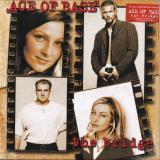
Rotes Vinyl, limitiert auf 1000 Exemplare. 4x A6-Postkarten mit Bandfotos Exklusives Interview auf den Innersleeves. Wir feiern das 30-jährige Jubiläum des legendären Albums ,The Bridge" von Ace of Base - jetzt als limitierte Auflage auf rotem Vinyl, in einem Gatefold-Sleeve und mit 4 exklusiven Postkarten mit Bandfotos. Das ursprünglich 1995 veröffentlichte Album markierte einen neuen Abschnitt für das schwedische Pop-Phänomen und verband unwiderstehliche Melodien mit einem reiferen und introspektiveren Sound. Mit Hits wie ,Beautiful Life", ,Lucky Love" und ,Never Gonna Say I'm Sorry" fing ,The Bridge" den Geist der 90er Jahre ein und bewies gleichzeitig die zeitlose Anziehungskraft der Band. Remastered und auf exklusivem rotem Vinyl gepresst - eine unverzichtbare Sammleredition für jeden Ace-of-Base-Fan.
“The group has no niche, it doesn’t fit in anywhere,” explains Necessaries drummer Jesse Chamberlain in a 1980 Melody Maker interview. “We just state the facts about life in America, like The Clash did about England, but we’re not so heavy about it.” The Necessaries rose from the ashes of Harry Toledo & The Rockets, a little-known New York art-rock band playing gigs at Max’s Kansas City during glam’s metamorphosis into punk. —From the liner notes by Michael IQ Jones The Necessaries came together in 1978 and in the too-brief lifespan of the band counted among their members, Ed Tomney (Rage To Live, Luka Bloom), Jesse Chamberlain (Red Crayola), Ernie Brooks (Modern Lovers), Arthur Russell (The Flying Hearts), Randy Gun (Love Of Life Orchestra). First championed by John Cale on the strength of Tomney’s songs, Cale produced their first single for Spy Records (under the I.R.S. umbrella) which was released in 1979. With the forward momentum brought about by the single, the band set about tracking demos intended for Warner Bros., but The Necessaries ultimately would sign to Seymour Stein’s Sire Records. These rough demo basic tracks lacked overdubs, mixes and any finishing touches that would have made them viable for commercial release, but due to tour commitments, the band had to put the sessions on hold to hit the road. While on tour, the band was shocked to discover that Sire had issued the unfinished tracks as their debut album Big Sky (issued in 1981). The band had Big Sky withdrawn and replaced with Event Horizon (issued in 1982) which included half the original tracks from Big Sky and continued to record throughout 1982 aiming for a follow-up. It was not to be and their final studio sessions remained unissued until now. Completely Necessary (Anthology 1978–1982) is the first authorized collection of recordings by The Necessaries and includes 37 tracks, 28 of which are previously unissued. Completely Necessary represents the most accurate musical history of the band laid out across three albums. Disc one is the band-approved first album Event Horizon, followed by Pilots Facing North, a disc collecting studio recordings spanning 1978–1981 and disc three finally sees the release of their final sessions, Songs From The Blue Colony. Album notes by Michael IQ Jones trace the history of the band for this compilation produced by The Necessaries’ Ed Tomney and Cheryl Pawelski (Omnivore Recordings). The audio has been restored and mastered by Michael Graves at Osiris Studio, and both the 3-LP and 2-CD sets feature previously unseen photos across the package. Finally, an essential missing piece of the late ’70s/early ’80s New York scene that was just slightly ahead of the college alt-rock soon to come, is finally available to rediscover—this time it’s authorized and absolutely necessary. BUY! HERE’S WHY! • The first authorized and comprehensive anthology by The Necessaries. • Mid-’70s/early ’80s New York rock/punk/art scene band included members: Ed Tomney, Ernier Brooks, Arthur Russell, Jesse Chamberlain, and Randy Gun. • 37 tracks, 28 previously unissued. • Liner notes by Michael IQ Jones, plus unseen photos.
Compiled by Philip King “And then came the rise of synth pop : blokes with dodgy haircuts hunched over keyboard-operated machines stuffed with wires and do-it-yourself tone oscillators making sounds like a brood of geese passing gas in a wind tunnel. Whoopee! This is the way the ‘70s ended : not with a blood-curdling bang bang but with a cheap, synthesized, emasculating whimper.” NICK KENT, NME. All The Young Droids: Junkshop Synth Pop 1978-1985 is a new compilation that charts the underbelly of the epoch-defining sound of the synthesiser in 80s popular music. Compiled by Philip King (previously seen compiling All The Young Droogs, Glitterbest and Boobs - The Junkshop Glam Discotheque), the music here connects the dots between DIY synth enthusiasts grappling with new, cheap synthesisers at the tail-end of punk and wannabe, jobbing songwriters enthral to the new music pioneered by Gary Numan, Depeche Mode and Daniel Miller’s Mute Records. Featuring rare tracks of auto-didactic progressive pop music, proto-techno punk, shoot-for-the-stars-land-in-the-gutter chart flops and heralded, underground synth classics, School Daze paints a picture of beautiful failure. Complete with extensive sleeve notes written by King and never before seen imagery, all 24 tracks were remastered by RPM in-house engineer Simon Murphy, many from vinyl copies due to lost master tapes. The story told on All The Young Droids is one of the dawning opportunity presented by both the emergence to the market of cheaper analog synthesisers and the distribution networks plus indie labels that exploded with the advent of punk music in 1976. While the music that sprouted out all over the globe in the wake of these factors was decried as fake, plastic, a refutation of punk’s guitar-led revolution, it’s telling that much of the music on All The Young Droids.. was created in bedrooms, ramshackle studios and home-made set ups with often borrowed equipment. In the era of record labels jumping to capitalise on the success of The Sex Pistols, The Clash (both on major labels, of course) these artists struggled to stand out from a new gold-rush with next to no budget or PR team. With radio and labels desperate for the new Yazoo, what resulted was a testament to necessity being the mother of invention. At the time, the synthesiser was the music of the future, a shiny new machine that could paint like an orchestra with a single finger and a 4-track. In the hands of Manchester avant-pranksters Gerry & The Holograms it’s a pulsing, sardonic weapon.. the only instrument on the Messthetics classic lampooning of New Wave fashion. In Hamburg, a 16 year old Andreas Dorau used it to write and record (with his female classmates on vocals) a global smash in Fred Vom Jupiter (later licensed to Mute Records). The hard-to-find English version (Fred From Jupiter, natch) is included here. Many artists with alreadystoried careers caught the bug and recorded synthesiser-fuelled peons to space, computers, the future and, of course, love-interests. Harry Kakoulli, late of Squeeze, recorded a solo album in 1979 that included the incredible power-synth-pop smash-that-never-smashed I’m On A Rocket. Similarly, Ian North of Neo and American Power Pop stalwarts Milk ’n’ Cookies bought a Korg MS20 and used a tape machine to record We’re Not Lonely, an absolute lost-classic of minimal synth pop. We’re Not Lonely also features on the Junkshop Synth Pop sampler 7” twinned with John Howard unreleased track You Will See, released April 12th 2025. There are plenty of compilation debuts in evidence. Sole Sister were a mysterious trio who were featured on the Scaling Triangles compilation of female-fronted, queer-adjacent post-punk / underground music that also featured The Petticoats. Selwin Image were from San Francisco and featured members of the recently defunct power pop/punk group The Pushups. Their stupidly catchy The Unknown fizzes with New Wave energy - think XTC to Sparks but remains unreleased until now. Dream Unit’s A Drop In The Ocean is an early synth wave cut, positively teaming with Joy Division instrumentation, previously only released on a long-forgotten and super rare, self-released EP. Incandescent Luminaire’s Famous Names belies an archetypal struggle of a small-town trying to make it in a cruel industry but is a thrilling New Romantic-Synth Wave cross over with a OMD gloominess that’s a joy to hear. Feminist Minimal Wave track I Am A Time Bomb by performance artist Peta Lilly and Michael Chance is a revelation destined for new found cult status. It was released on 7” and lost until now. The flipside to the subterranean, never-made-it synth pop mentioned above are the ambitious, even fruity attempts at success that have a perennial elegance to their confidence. New Jersey-ite Billy London (real name Ed Barth) tried to cash in on the synth boom with Woman, released by a major label, a lurching new wave track built on the Louie Louie rhythm and a wonderfully camp Lou Reedstyle sleazy vocal before exploding in the synthesised chorus. The song bombed but with a chorus like this, you have to wonder why? Ex-Glitter Band member John Springate’s My Life is truly epic, with doomed chord progressions and massive sounding drums turning into at least 3 different songs in the course of the track. Before you wonder what’s going on the song resolves with a glorious return to the main refrain. The dry-ice-dressed dance floor is well catered for too. Design’s Premonition and Vision’s Lucifer’s Friend are stone-cold minimal synth bangers, well loved but given a new lease of life here. The Warlord’s The Ultimate Warlord was released in 1978, a homespun proto Hi NRG banger that was later re-recorded by The Immortals in Canada who had a club hit with it. One-man- band Disco Volante’s No Motion was re-issued by Synth wave label Medical in 2012 but makes its first vinyl compilation appearance here. Close your eyes and you can imagine what Lawrence of Felt would have sounded like with some cheap Korgs a little earlier in his career. Gibraltar-based trio The Microbes imagined a computer programming people to dance - how prescient - and ended up with a propulsive, robo-funk track with splendid rubbery bass playing over a tectonic drum machine. Previously picked up by Belgian label Stroom TV, Dee Jay Bert & Eagle’s heavily Euro-accented I Am Your Master demands the listener to “come to paradise!” In a frankly terrifying manner. All The Young Droids is the first compilation to peel away from the narrative that dour, Minimal Synth and Cold Wave were the only musical children of the first rush of synth pop. Philip King and School Daze Records describe a much more complicated world: along with the austere, Brutalist children of Daniel Miller (who produced Alan Burnham’s Bowie-Low-influenced Science Fiction here) was a plethora of desperate cash-ins, accidental mainstream hits, ambitious pop dramas and major label punts that went nowhere. Crucially, the compilation blurs the line between junk and treasure. What if the two things are interchangeable. What if it’s all science fiction?
Between 2023 and 2025, L.F.T. split his time between Hamburg and Berlin, slowly piecing together what would become his most ambitious work to date. The result is Hell Was Boring - a double album that plays like a fever dream, unfolding as a dark, mythical tale about life, death, and the strange spaces in between.
L.F.T. - the alias of German producer and multi-instrumentalist Johannes Haas - has always thrived on tension: between punk urgency and electronic precision, between raw emotion and mechanical repetition. On Hell Was Boring, those tensions are amplified. Drawing on the spectral drama of Bauhaus, the melancholic minimalism of Linear Movement, the futuristic romanticism of Gary Numan, and even the sly swagger of Falco, the album feels at once deeply personal and part of a much older musical lineage.
The sound is stripped down to its bones: drums snap and rattle from a Roland TR-808, TR-707 and Korg KR-55; basslines growl from a Roland SH-101 and Korg MS-20; shards of guitar cut through clouds of tape hiss. Everything was tracked to a Teac Tascam 80-8 reel-to-reel, giving each track a lived-in, imperfect warmth. Nothing is overpolished - L.F.T. wanted the listener to hear the edges, the grit, the moments when the music almost comes apart.
Along the way, he invited friends and long-time collaborators into the fold - Das Kinn, Rosaceae, Felix Kubin, Children Of Leir, and Konstantin Unwohl - each leaving their own fingerprints on the record’s world of shadows and static.
Hell Was Boring isn’t a mere collection of songs; it’s a narrative that drags you into its orbit and doesn’t quite let go. It’s music for the late hours when reality feels porous, and for those moments when you’re not sure if you’re waking up or still dreaming.
TUP003 marks a meaningful milestone for The Underground Pulse with a release led by Saharty (Egypt) and Manzo (Mexico, now based in Italy). This EP is a carefully crafted journey through the roots of electro, drawing strong influence from the Italian electronic tradition while embracing modern, emotive production.
Characterized by warm analog textures, refined melodies, and heart-touching synth work, the release balances dancefloor functionality with deep musical sensitivity. Each track reflects a timeless approach to electro, where groove and emotion coexist naturally, creating an immersive listening experience.
Welcome to a story in which love and heartbreak go hand in hand.
Falling in love dances beyond time's grasp, Embracing the present becomes our steadfast task, The skin's whispered language, an ancient story told, We're free as waves, in their rhythm bold, Arrivals and departures, part of love's grand scheme, In music, writing, painting, love finds its dream.
So let me tell you about the Art Of Romantic Beings.
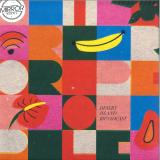
Desert Island Broadcast, the new album from Mirror People—the project of Portuguese musician and producer Rui Maia—is out September 26 on vinyl and across all digital platforms. The release is accompanied by the single Any Color U Like, following the earlier teaser track Million Questions, unveiled on May 9.
Described by Maia as “a radio transmission from a desert island—an imaginary space where different styles and references meet and coexist,” the record completes a trilogy begun with Voyager (2015) and Heartbeats Etc. (2022). “I wanted to create an album that felt both familiar and unexpected, like a lost signal reaching the right listener at the right time. It’s a celebration of music as companionship, even in isolated places,” says Maia.
Written between 2022 and 2025, Desert Island Broadcast features longtime collaborators and special guests, including vocalist Rö (Maria do Rosário), percussionist Ryoko Imai, saxophonist João Cabrita, and backing vocalists Ana Vieira and Isa Gomes.
With a career that has resonated both in Portugal and abroad, Mirror People continues to assert its relevance in the independent scene, delivering captivating songwriting and meticulous production.
Mirror People is the alter ego of musician, producer, and DJ Rui Maia, also known as the keyboardist of X-Wife. Conceived as a collaborative project with artists from diverse cultural backgrounds, Mirror People explores the intersections of disco, funk, and electronic music.
About the artist: Greetings from Oesje. I don't know what to say, it's very surprising that people so far away like my record from the 70s. This was my only record with songs in English, and vocoder. I was young and very ambitious that time, but now I'm a family man who works from eight till four. These days I only write songs in my own language, because music is just a hobby and I perform only on special occasions in Surinam. Surinam is where I come from. That is my story, I hope everyone enjoys my music.
Massiande has become one of the most captivating talents South America has produced for authentic House music.
An artist of multicultural roots, he was born in 1988 in Santiago, Chile, has lived most of his life to the side of US American people, has Dutch family heritage and his name derives from a Sierra Leone dialect. All of these global influences have had a great effect in the way he perceives and lives music.
Growing up as a profound and dedicated fan of Soul, Jazz and Disco; discovering House, a genre that connected these genres' roots with electronic experimentation, was a life turning point.
DJing since 2007, he is known for performing emotive and dynamic sets, with a moving soulful drive that resembles much of the spirit of New York, Chicago and Detroit pioneers.
After starting to focus on music production, 2013 brought his debut record "Heart Rushed Love" through German label Housewax, a record of classic vibes that received praise for its charm and character on underground scenes worldwide and, most notably, from House music artists in Chicago, including his personal hero, House maestro Larry Heard. Such a start would be a sign of great things to come.
Inspired by the same Chicago spirit, in 2015 the release of "Stand", through the prestigious MOS Recordings, represented a step further in his career as a producer, finding its place on the crates of DJs as diverse as Patrice Scott, Voiski, Apparat or Honey Soundsystem.
These days, Massiande brings a deeper and mature House sound which is reaching a wider audience, with his conceptual "Freedom" EP through UK's Phonica Records and the landmark "Yesterday, Today, Forever" EP on Jimpster's Freerange, while also revealing a consistent variety of skills on a fully dancefloor-oriented EP for Hercules & Love Affair's Mr. Intl imprint.
With a growing discography whose flair endures the test of time, Massiande's path thrives with a true passion for House that's appealing to both casual listeners and the most loyal purists of the genre around the world.
Drummer-composer Tom Skinner announces Kaleidoscopic Visions, his second solo album, out 26th September 2025 via Brownswood Recordings and International Anthem
Kaleidoscopic Visions unfolds across two distinct sonic landscapes. Side A presents entirely instrumental compositions performed by Skinner's live Bishara band—bassist Tom Herbert, cellist Kareem Dayes, and Robert Stillman and Chelsea Carmichael on various woodwinds and reeds—with electric guitar on two tracks courtesy of Portishead's Adrian Utley. A drummer-composer bringing his wealth of experience to bear on the role of bandleader, Skinner composed primarily on guitar, embracing the freedom that came with writing on his secondary instrument.
These compositions include "Auster," dedicated to late novelist Paul Auster, and "Margaret Anne," which honours Skinner's mother Anne Shasby, a former classical concert pianist prodigy who abandoned her own promising career in the face of systemic misogyny, only to impart on her son what Skinner calls "the gift of music."
Skinner’s musical world opens further on Side B, where a collection of poised vocal collaborations stretch out from jazz and improvisation towards a more dream-like, soulful sound. The centerpiece is "The Maxim," a ten-minute collaboration with Grammy Award-winning Meshell Ndegeocello, a dubby, spacious meditation on life and death, delivered with a free-spirited grace. For Skinner, working with Ndegeocello—whom he first saw at Glastonbury as a teenager in 1994—represents a full-circle moment, indicative of the indirect paths and inspirational detours that have shaped his life.
The album goes on to feature South Carolina-based singer Contour (Khari Lucas) who appears on the low-lit soul ballad ‘Logue’, and closes with ‘See How They Run’, featuring London keyboardist-vocalist Yaffra (Jonathan Geyevu). It is the album’s most overtly lyrical track, an articulate exposition of jazz-inflected spoken word that speaks not only to the genre-fluid nature of the music but the breadth of Skinner’s palette.
This should come as no surprise. On Kaleidoscopic Visions, one of London’s most vital musical figures gives us a sparkling glimpse of the multi-coloured lens through which his unique sound is now refracting.
"For Toronto outsider pop auteur Saya Gray, music is a glittering mosaic of endless influences. Her debut album is akin to a sonic chimera; its limbs assembled from disparate, but complimentary musical organisms. Does she make pop? Folk? Rock? R&B? The moment you think you’ve got her pinned, she’s gone like a flash.
Gray’s often collage-like sonicspheres, blanketed with layers of riffs upon layers of electronic chatter, demonstrate the limitless potential of music as an art form.
Saya Gray has received support from Pitchfork, The Guardian, The Times, Colors, The New York Times, BBC Radio 1, BBC Radio 6, NTS, Fader and has recently recorded an incredible Tiny Desk session to be release around her new album. "
DJ Support: Sasha, Marco Faraone, Robin M, Just Her, FKA Mash, Paul Van Dyk, Adriatique and CamelPhat
Bedouin joins forces with vocalist Marieme for their latest release ‘Reason’, available now on the duo’s Human By Default label. The track marks part of the imprint’s fifth anniversary celebrations.
‘Reason’ blends Bedouin’s hypnotic grooves and emotive melodies with Marieme’s soulful, evocative voice. Her lyrics explore themes of identity, freedom, and self-perception, resulting in a collaboration that balances movement with emotional depth.
Comprised of Tamer Malki and Rami Abousabe, Bedouin has spent over a decade developing a genre-blending sound rooted in their Middle Eastern heritage and Western upbringing. Their music has appeared on Crosstown Rebels, Big Beat, and more, while their Ibiza residency SAGA—now at Chinios Ibiza—has become a staple of the island since 2017. The duo has also performed at Coachella, Tomorrowland, Kappa Futur, Burning Man, Ushuaïa, and Hï Ibiza.
Marieme, born in Mauritania and raised between Senegal and the US, brings a distinctive storytelling approach through her recent singles ‘Harmony’, ‘Tell Me’, and ‘Havana Nights’. Her work promotes self-love and liberation, expressed with a powerful vocal presence.
Rising multi-media artist Shaboozey intends to build his own world.
Determined to carve his own lane in the Alt-Country / Hip-Hop space; he crafts a sound that pays homage to a cast of traditional Western influences, such as Bob Dylan, Lead Belly, Johnny Cash, and Leonard Cohen, while looking into the future of what the two genres have yet to introduce.
Remaining true to his Virginia roots, Shaboozey hopes to continue the region’s long-standing tradition of producing some of the most prolific creatives of the new millennium. This time through elevating the scope of contemporary hip-hop and introducing a modern Americana culture to a global audience.
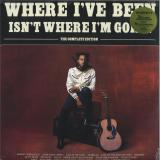
Fresh off of his inclusion in the groundbreaking Beyonce album, Cowboy Carter, of which he was the only featured artist to appear twice, Shaboozey is set to release his own album, Where I've Been, isn't Where I'm Going. An album that has been years in the making, it includes standout singles “Let It Burn,” “Vegas,” “Anabelle,” & the infectiously fun singalong anthem “A Bar Song (Tipsy).” Millions of streams later, and appearances on esteemed programs such as COLORS and The Late Show with Stephen Colbert, Shaboozey is set to become the new face of modern American country music.
Somehow it feels fitting that 1+1 equals not only 11, but also the two slabs of vinyl carrying Henry Hodson’s music here. A small inside joke, perhaps, but also a sign of how naturally this record came together: instinctive and shaped with intention. Hodson — who first appeared on Limousine Dream and later with a subtle and beautifully controlled EP via Silky Beats — continues his trajectory between deep house warmth and minimal clarity. These six tracks are drawn with the sort of fine-grained rhythmic detail that rewards attention without ever demanding it. Light-footed percussion, elegant restraint, grooves that breathe. The double 12’’ format isn’t a gimmick; it’s a commitment. Each track gets the physical space and sonic depth it needs.
The definition of the word 'fado' is technically 'fate', though the Portuguese meaning bound up with this term is more complex. The music itself can be fairly closely compared with that of Greek rebetika - also the American blues or the original working-class tango music of Argentina and Uruguay - and similarly takes it's common subject matter from the various cruel realities of the world. Though perhaps what distinguishes fado in character is it's often poised acceptance of the pains of life rather than protestation or resistance - as writer Paul Vernon says "It speaks with a quiet dignity born of the realisation that any mortal desire or plan is at risk of destruction by powers beyond individual control"
Death Is Not The End compile here a spine-tingling collection of fado recordings, taken from records issued in the mid 1910s through to the 1930s. The fado's Lisbon and Coimbra variants are presented here by some of the music's earliest recorded stars - spanning a time period leading up to the emergence of the fado's all-conquering star, Amália Rodrigues.
For years & years & years, I have been trying to get some solo music from Champa B on Future Retro London! This release has gone through so many different forms & iterations to try and accommodate getting him onto a release in some form & it's now finally here as a collaborative release with me.
I'm a huge huge fan of Champa B's tunes, especially his 93 darkside hardcore style that he previously done on releases for Modified Magic, Parallax Recordings & Green Bay Wax. I wanted so desperately to have him do some more music in that vein, but he was busy making other styles of music under his Grief alias as well as being busy with his day job to not really have the time for it.
But eventually, he was able to make some time for getting back into this style & we were able to do 2 collaborations and a solo tune each to get this done. Big thanks to him for his involvement in this release, hopefully not the last you'll see of his darker side!
Another DINTE tape curated by cult WFMU show and blogger Bodega Pop; Gary Sullivan's long-running project rooted in a passion for digging for music in bodegas and cell-phone stores across NYC's boroughs. This edition focuses in on late 1990s and early 00s hip-hop & rnb from across Southeastern Asia.
"While on a work trip to Chicago in the mid-2000s, I was craving a bowl of pho. A bit of sleuthing led me to hop on the red line "L" up to Argyle Street, ground zero of Chicago's Little Saigon. In the 1960s, Chicago restaurateur Jimmy Wong invested in property on Argyle Street with a vision to build the city's new Chinatown, a kind of mall with pagodas, trees, and reflecting pools. In 1971, the Hip Sing Association, a labor/criminal organization, established itself in the area, and along with Wong, they bought up 80% of the buildings on a three-block stretch of the street. Wong reportedly broke both hips in an accident, leaving his dream to wither; in 1979, Charlie Soo of the Asian American Small Business Association brought it back to life.
Soo expanded the area into a vibrant mix of Chinese, Vietnamese, and other Southeast Asian businesses, pushing for renovations, including an Argyle station facelift and the Taste of Argyle festival. At the time I exited the station and crossed the street to get a better look at a shop with a poster for A Vertical Ray of the Sun in the window, the area was home to some 37,000 Vietnamese residents.
Opening the door, I was gobsmacked by a cavernous Southeast Asian media store, bigger than any I'd been to in Dallas, Montreal, New York, or Seattle. I spent some time at the bins, pulling out collections by some of my then-favorite singers — Giao Linh, Khánh Ly, Phương Dung — before approaching the register to ask the young woman behind the counter if the they carried any Vietnamese rap. It was a longshot, I knew, but if such a thing existed on physical media and anyone carried it, it would be this place.
'Have you heard Vietnamese rap?' she replied, her tone of voice and facial expression betraying a comically exaggerated level of distaste. I admitted my ignorance but assured her that I had long cultivated a high threshold for cheesy pop music of all kinds and genuinely tended to like hip hop from around the world.
She rolled her eyes and pointed to an area I had missed. I walked toward a far corner of the store and knelt over a small box on the floor sparsely populated with CDs, VCDs, and cassettes. I pulled out half a dozen Vietnamese hip hop compilations and a strange-looking CD with a cavalcade of odd typefaces in a queasy multitude of colors: THAILAND RAP HIT, it boasted, with 泰國 "燒香" 勁歌金曲 below it. The information on the back provided an address in Kuala Lumpur and the titles in Thai and English translation. The first track included three simplified Chinese characters after the English-language version of the title, "The Chinese Association": 自己人.
WTF was going on here? Walking back to the register, I waved the CD, asking "What's up with this one?" She gave me a look. I placed it on the counter so she could bask in the cover's full glory. She shrugged. "I'm guessing it's Thai rap?" She looked disappointed in me when I said I'd take it.
It turned out to be a Malaysian pressing of half-Chinese Thai hip hop artist Joey Boy's third album, Fun Fun Fun from 1996, and it completely changed my sense what the genre could sound like. The rapper's self-assured, effortless, silly-but-cool rapid-fire delivery weaved in and out of the most bizarre, antic beats I'd ever heard. The six Vietnamese hip hop CDs were a mixed bag, mostly "serious" sounding mimicry of US rapping over predictable production, but the highs were very high. When I got home and listened to it all, I made a point to find as much hip hop from this part of the world as I could.
The tracks collected here provide a limited but potent reflection of the two-decade ascendency
and ultimate world-takeover of hip hop, as it displaced rock and its endless variants for millions of listeners. This not a fair and balanced overview of regional production: I've only included tracks from Cambodia, Indonesia, Myanmar, Philippines, Thailand, and Vietnam. Nor is this a biggest or most important artists collection; instead, I've tried to recapture the pure visceral thrill of that first time I heard Joey Boy, choosing bangers that sound like nothing else, from nowhere else."
I first found out about Dope On Plastic from a remix they had done of a track by Ontology (who has released previously on this label) & then later found out more about them when they had been sending tunes to Pete Dev/Null, which I would hear him playing on our radio show on Jungletrain.
Soon after that, whilst touring North America, I'd meet Dope On Plastic in person whilst I was in New York, get to hang out with them and visit their home studio. They showed me a tune at the time they were working on (which ended up being Odyssey) and it sounded sick, like something that I would definitely release on Future Retro London.
When they finished it and sent it over to me, along with some other music they had made around that time, there was more than enough to work with for a full EP & Life Energy is a collection of my favourite tracks of theirs of what they had sent me. Big up to Luca (Dope On Plastic) for their work on this EP, keep an eye out for more music from them in the future!
Fast-rising Dutch DJ/producer BELLA becomes the first new artist signing to Sally C’s Big Saldo’s Chunkers imprint, with the inspiring ‘Note to Self’ EP – her debut production.
Relationships are key for Sally C. Since the inception of Big Saldo’s Chunkers in 2020, she’s released three carefully chosen EPs, all from her own studio. When she met BELLA while playing a festival in Amsterdam during summer 2022, the click was instantaneous, with the pair going on to play an impromptu b2b that day. Vibing both musically and energetically, they kept in touch, with BELLA sending Sally her maiden productions ‘Note To Self’ and ‘Orchestra Spring’. Sally connected so deeply with the tracks that they’d form the backbone of her debut artist EP on Big Saldo’s Chunkers.
One listen to the final EP and it’s not hard to see why Sally wanted to emboss them as Chunkers. Three fresh originals taking in influence from ‘90s house, acid, electro and prog, all with a unique hard-to-pin-down energy that makes them hit with a special swing.
The title track – also the first production made for the EP - sees BELLA lay down a sonic blueprint – both for her own sound and the full body of work. “This set the vibe and guided me through the creative process. I was really trying to make something that felt my own, that was also unique and not something I’ve heard before,” she shares. ‘Note to Self’ is heavy on attitude and bounce, driven by banging old skool drums, a rapid-fire grime-style vocal and a duo of synth lines – one uplifting, the other mining a slick ‘80s sheen, and the results are memorable. An absolute tune that Sally’s delighted to add to the Chunker catalogue.
‘Orchestra Spring’ is the perky sequel, a wicked one-two punch of kaleidoscopic groovy house with lashings of attitude that loves to scribble outside the lines with lots of retro samples and trippy energy. ‘Odd Symphony’ completes the trio, a blazing late-night cut driven by a gurgling acid underbelly, gritty drums and warm chords, giving the EP a brilliant afterglow.
Real Lies’ new album ‘WE WILL ANNIHILATE OUR ENEMIES’ will arrive on April 16th 2025 via Tonal. The album is about taking the hand of someone you love intensely and running headlong into the chaos and noise and grinding forces that dominate modern life. It follows gilded 2024 collaborations with Mall Grab, Kettama and Drain Gang’s YEAR0001 label. Lyricist Kevin Lee Kharas and producer Patrick King created the record in their studio, hidden away under a railway bridge somewhere in London’s Zone 3. Three pictures stared down at them from the walls throughout, including an image of a young Sasha Shulgin in the relief print style of Che Guevara t-shirts sold at Camden Market, and a photo of an orbiter fairground ride in flight, taken sometime in the early 2000s. Kharas’ lyrical inspiration comes when he steps away from the tsunami of data flooding his consciousness and paces London’s rain-soaked streets late at night. “I wanted the songs on WWAOE to confront modern reality head-on, unflinching,” he explains. “I didn’t want to whine about a lost past. I didn’t want nostalgia. I wanted to learn to love the modern world, with all its horrors and futility.” After a teenhood spent playing in hardcore bands, the duo found ecstasy at a squat party for the first time, and moved to London. Since then, they’ve made music about finding romance and fun when the moon is up, becoming a cult act in the process.
Megadeth have announced their final, self titled album, for release in 2026, via Dave Mustaine’s Tradecraft imprint in partnership with Frontiers Label Group’s new BLKIIBLK label. The campaign is anchored by the first single “Tipping Point”, multiple variants and exclusives and and a farewell tour has been hinted for 2026 “There's so many musicians that have come to the end of their career, whether accidental or intentional,” DAVE MUSTAINE says. “Most of them don't get to go out on their own terms on top, and that's where I'm at in my life right now. I have traveled the world and have made millions upon millions of fans and the hardest part of all of this is saying goodbye to them. We can't wait for you to hear this album and see us on tour. If there was ever a perfect time for us to put out a new album, it's now."
Over the past decade, East London artist Kojey Radical has cemented himself as one of the most creative and unique voices in British music. His debut album Reason to Smile (2022) was released to critical acclaim, and saw him emerge as one of the defining voices in UK culture. Now, the 32-year-old readies to release his second album Don’t Look Down.
“I wanted to make this album more personal and more honest,” he says, “we have to be able to accept that the messenger has flaws and all.
16-tracks long, Don’t Look Down, set for release on 19th September 2025, is a musically rich and deeply introspective reflection on the shifting tides, lows and joys that have passed through his life since his emergence into the public eye.
Sonically, the album provides the most experimental and eclectic music of his career, with influences ranging from golden age Hip Hop to disco, grime to Indie, Jazz to Ska. Together, these strings combine to give a pertinent insight into Kojey’s inner world, and a timestamp documenting the feelings, emotions and experiences that arise when many reach the milestone of their 30s.
“When you’re younger, certain ages seem so grown,” he says, “you feel like you’re supposed to have your life together and all figured out by 30. Then especially when you're in the spotlight you feel extra pressure to have it figured out because so many people are looking towards you.”
Don’t Look Down follows debut album Reason to Smile (2022). A critical success, it landed at No.11 on the UK Album Charts and was nominated for the Mercury Prize as well as two MOBO Awards. In the following year came a nomination for Best New Artist at 2023 BRIT Awards and Best Contemporary Song at the Ivor Novello Awards. He toured across the UK, as well as hitting the festival circuit.
This sense of growth was not limited to music. Kojey was tapped by the British Fashion Council to host the 2023 and 2024 editions of The Fashion Awards as his stock in music and wider culture continued to rise.
The album he says, is a reflection of “the experiences I’ve had over the past few years. That shaped the direction I took going forward. It’s given me the opportunity to tell new stories from newer perspectives. It was liberating, and it was very necessary to keep me in love with the process and to keep making music.”
The result is his most innovative album yet, a project where a sense of profound personal interrogation and introspection dance in union with the rich musical tapestry. Don’t Look Down is a story of purpose lost and then found, of what happens in the aftermath of achieving your childhood dreams, and the ranging flux of emotions that rise to the surface once the music stop
Emerging during the early stages of the recording industry in Japan, the ryūkōka style adopted western classical, blues & jazz elements into traditional and classical Japanese music.
This collection of 1920s & 30s ryūkōka recordings follows on from the Kouta Katsutaro tape we put out a couple of years back, and further captures the hauntingly unique sound of a cultural merging that was starting to reflect itself via popular song, ahead of the widespread influence of western pop music during post-war US occupation.
"Death Is Not The End are on a mission to expand the musical archive, with compilations of everything from Jamaican doo wop to pirate radio idents and adverts weaving new threads into the history of music. Longing For The Shadow: Ryūkōka Recordings, 1921-1939 goes back to the beginnings of the recording industry in Japan, and a style merging traditional Japanese forms with western pop and classical. Swooning orchestrations and prominent vocals capture some of the melodrama and bombast found in US and European music of the time, but beds of plucked and strummed instruments give an ordered elegance, tying it firmly to Hogaku tradition. Not much has been written about Ryūkōka, and a 2017 book by Hiromu Nagahara gives some clue as to why, arguing that although popular with the public, it was dismissed by critics both for its adoption of western sounds and its dwelling on Japanese traditional styles. Close to a century later, those are some of the qualities that make this compilation so fascinating." - The Quietus
Originally released in 1986, Life Is Hard Then You Die was the debut
album from Liverpudlian indie-pop band It's Immaterial - Now reissued
and repackaged by Last Night From Glasgow, available October 2023
Simon Braithwaite of Smash Hits wrote that Life's Hard and Then You Die shows
that It's Immaterial "write jolly good pop songs - In fact everything else here is just
as inspired and original as their recent hit."
In a retrospective review, Michael Sutton of All Music wrote, "Musically, the LP is
all over the place - new wave country, blues, folk, and synth pop - Somehow the
smorgasbord of styles works, because the band members aren't being eclectic
just for the sake of it; they simply have a wide canvas, keeping the album fresh
from beginning to end."
PROMISE is the latest album from Brooklyn-based producer Ibe Soliman, aka Bad Colours. Known for his blend of house, proto-techno, rap, and soul, Bad Colours delivers a dynamic, emotionally resonant record. Driven by hypnotic rhythms and personal storytelling, PROMISE explores themes of vulnerability, desire, and transformation. It's a versatile album designed for both dancefloors and introspective listening.
PROMISE is the fourth LP from Bad Colours on Bastard Jazz, following 2024's collaborative album with Cor.ece, Been Here Before. Soliman's career spans over a decade—DJing alongside artists like James Murphy, Mark Ronson, and Q-Tip, and producing for Kendrick Lamar, Faith Evans, Keyshia Cole, and Rick Ross. His work has received support from KCRW, KEXP (including multiple Midnight in a Perfect World mixes), and CBC Radio 3, and has charted on both the NACC Top Electronic and Top 200 charts. Bad Colours has been featured in press outlets like NYLON, Nonderland, Resident Advisor, Electronic Groove, and Fusicology. His music has appeared in Netflix's Escape from Spiderhead, Hulu's Woke, Disney's Chang Can Dunk, Showtime's American Gigolo, Valorant's Rising Stars, and more.
Originally released in 1971, this classic album was the second studio album from the legendary American singer/songwriter Carole King. It is the 81st best selling album of all time, with over 10 million copies sold and is also ranked by Rolling Stone as 25th on the list of the Top 500 greatest albums of all time. A 12 track standard black vinyl, with download code insert (replaces previous version which had a mastering issue). Marketing.
Jalapeno Records are celebrating their 25th anniversary in the business. The label are marking the occasion with the release of a 3LP compilation featuring some of label boss Trevor Mac's favourite dancefloor gems from across the years. From a humble start in a basement recording studio on Holloway Road to a quarter century anniversary celebrated from their Brighton offices – Jalapeno Records has been an indie label with a mission - to bring the funk to the masses. Along the way that has taken in so many genres from chill to house, gospel to soul, breaks to drum & bass but it has all had a common thread running through it - the funk. "Twenty Five years means there are too many artists to list and this album is not supposed to be a Greatest Hits. We did that on the 20th anniversary. The album is dedicated to all of the artists that trusted us with their music and all the people who supported us along the way" says Trevor
k 11. Back Again (Hot Toddy Remix) feat. John Turrell — Kraak & Smaak
n 14. Alone with You (Purple Disco Machine Remix) feat. Cleopold — Kraak & Smaak
[k] 11. Back Again (Hot Toddy Remix) [feat. John Turrell] — Kraak & Smaak
[n] 14. Alone with You (Purple Disco Machine Remix) [feat. Cleopold] — Kraak & Smaak
[k] 11. Back Again (Hot Toddy Remix) [feat. John Turrell] — Kraak & Smaak
[n] 14. Alone with You (Purple Disco Machine Remix) [feat. Cleopold] — Kraak & Smaak
PAWSA & Adventures of Stevie V’s ‘Dirty Cash (Money Talks)’ Extended Mix marks an exciting evolution of the iconic dance track.
With PAWSA’s innovative production skills and Adventures of Stevie V’s timeless vocals, this release captivates both longtime devotees of the original and a new audience discovering its energetic essence.
On the flip is the classic Sold Out 12 Inch Mix had additional production, and the mix was done by David Morales.
Motor city royalty Floorplan, aka Detroit techno pioneer and creator of minimal techno Robert Hood and his DJ/producer daughter Lyric Hood, announce their forthcoming inclusion in the deeply respected ‘fabric presents’ mix series with the release of their new single ‘You’re A Shining Star’, out now. The full mix drops on digital/vinyl/CD via fabric records on 28th November.
Robert has been a long-standing fabric favourite since the institution's earliest years, clocking up over 20 sets in Room 2, including a live session on New Year's Eve, 2012. In 2008, he'd turn in Fabric 39 which is among the most revered contributions to the fabric mix canon. Now, with the forthcoming ‘fabric presents Floorplan’ mix, the story comes full circle - marking both the duo’s debut on the iconic mix series and a monumental moment for the family project.
About Floorplan: Emerging from a musically rich Detroit upbringing steeped in Motown and vinyl culture, Robert Hood became an early member of the seminal ’90s collective Underground Resistance, helping to spearhead the rise of techno. Going solo, Hood created minimal techno with his Minimal Nation LP. Groundbreaking productions, acclaimed performances, and his own M-plant label followed, until in ’96 he formed Floorplan - an alter ego to expand beyond minimal techno into gospel, soul and house-infused techno. Immersed in music from an early age, Lyric eventually caught the same electronic spark that’s driven her father for decades. In 2014, after the release of Hood’s debut Floorplan album Paradise, the project evolved as the then-16-year-old Lyric joined him to perform as Floorplan, including a supreme closing set at Dekmantel’s Boiler Room stage. Two years later, Lyric officially became a full member of Floorplan, cementing their father–daughter collaboration, and they’d release their co-produced album Victorious on M-Plant that same year.
To submit or to surrender? Robert Johnson resident Oskar Offermann doesn’t have the answers, and that’s kind of the point. Things change: one moment you’re touring the globe as a recognizable face of one of the greatest clubs in the world, the next you’ve started a new life as a teacher. How do you handle that shift? On this record, Offermann doesn’t offer solutions so much as trace his own way through it, reflecting the whole process in his music and creative work.
Whatever the story, whatever the case, Oskar Offermann can still produce some of the most emotive, bleepy, strange dance music out there and this 12 inch is the proof. Sonically and conceptually it leans into that precise, melancholic German school: at points drawing from 80s wave and experimental music, then flirting with trancey motifs and closing in divinely crafted breakbeat. In just four tracks it packs in a surprising amount of functional range, exactly what you’d expect from one of RJ’s longest-standing residents. The A- and B-sides mirror each other: they open at full intensity, tempos pushed well past the 130 BPM mark, easy to imagine ripping through a peak-time floor – and still both sides land on something far more personal and reflective.
Even inside a framework of high-intensity club tunes, Oskar’s character shines through loud and proud. Think the slightly disjarring yet melodically captivating winds in the middle of the B1 trance induced number “Accepting”, or the masterfully paced build of opener “Planet Interface”. The same goes for A2 “Televise Improvise” and B2 “Sei mal nur lieb”: on paper they should feel like breathers next to the two behemoths, but they don’t. Offermann crams so much substance and personality into them that they become quietly dangerous. There’s that magical mix of squelchy acid, rough low end and naturalistic melodies on B2, and the relentless emotional drive of A2 “Televise Improvise”. Oskar is really, really good at making dance music irresistible.
Character, skill and honesty in one record, meant for the attentive listener and the brave DJ. A rare combination nowadays, get it fast!
Renowned for his visceral work with HIGH-FUNCTIONING FLESH, Greg Vand dives deep into the experimental proto-industrial with his solo project NEWBOY, revealing a darker, looser, and more hypnotically unstable side of the music machines. “The Color of Everything” is a transmission compilation with cracked circuitry, lysergic funk, warped tape hiss, and urban hallucinations.Think Cabaret Voltaire jamming with Bourbonese Qualk, Ike Yard, and Esplendor Geométrico: a mutant rhythm ritual for abandoned clubs and alleyway rites. This is rhythm as both weapon and escape. A dystopian groove engine primed for fans of the avant-garde, the unstable, and the underground, all tuned into the fractured future of dance music.presented in ONE-OFF truly limited edition of 300 copies lacquered pressed on 180 gr. high quality solid BLACK vinyl.
We are thrilled to welcome back Aldo Cadiz to Beatwax Records with his brand-new EP “Amandorada.”
Years after his highly acclaimed debut album on Beatwax, Aldo returns with a stunning follow-up that once again showcases his unique sound signature — a perfect blend of hypnotic grooves, deep rhythmic precision, and timeless underground energy.
“Amandorada” captures the essence of Cadiz’s refined production style: warm textures, intricate percussion, and that unmistakable Latin-influenced pulse that has made him a favorite among DJs and music lovers worldwide.
This EP marks not only a reunion between Aldo Cadiz and Beatwax Records but also a new chapter in our shared musical journey. We couldn’t be happier to have him back on the label, delivering another powerful statement of cutting-edge electronic music.
Don`t sleep on this. Already making waves and getting hammered by all the big players in the scene.
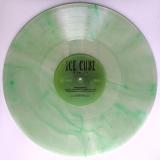
This holiday season, global hip-hop icon Ice Cube makes a powerful return with Man Up — a brand-new album from a cultural trailblazer whose influence spans music, film, and activism. With over 10 million albums sold and six Platinum plaques, Cube’s legacy is undisputed, from his revolutionary work with N.W.A. to timeless solo anthems like “It Was a Good Day.” Now, sharper and more unapologetic than ever, he’s back to deliver a project that fuses his raw lyrical power with a message rooted in resilience and authenticity.
To mark the release, Man Up will be available exclusively as an ultra-limited vinyl drop this holiday season. Each record features a one-of-a-kind hand-crafted cover — a unique blend of artisanal design and proprietary technology (created without A.I.) — alongside city- and country-specific sleeves that pay homage to Cube’s global impact in places like LA, Tokyo, London, and France. The campaign will be amplified through a global social media rollout, city-focused influencer activations, and Ice Cube’s upcoming North American tour. Major press coverage and podcast appearances will further elevate the conversation, making Man Up not just an album, but a collector’s piece and cultural moment fans won’t want to miss.
The ever enigmatic Deepchord makes a most welcome return to Soma with this, the first single to be taken from this latest full length, Ultraviolet Music. Three beautiful slices have been cut from the album to form this truly outstanding single and shows Deepchord return to a straight up mix of heady, cerebral dub techno infused with more solid rhythms.
X-IMG presents “SEARCHING HELL” the new album by industrial body music producer SARIN, this 12” full-length LP marks his first release in six years.
SARIN (aka Emad Dabiri) has spent the last years sharpening his teeth on numerous collaborations and dozens of remixes. His evolution and development is displayed in the Gesamtkunstwerk that is “SEARCHING HELL” a nine track cybernetic joyride into oblivion; featuring his distinct militant drumwork, heat-seeking bass lines and surgically interlaced sampling, augmented by deceptively serene atmospheric pads & bloodied vocals. All this composed and assembled with an array of analog, digital and software based weaponry. “SEARCHING HELL” seeks to find meaning in an increasingly meaningless & subjugated world while maintaining a subversive & defiant autonomy.
For the fifth release on Silum Records, the in-house production collective Wavetest teams up with longtime friend Lexx for two tracks and completes the 12” with a new creation of their own. “Last Dance at Zukunft” and “Alpine State” were both inspired by the iconic Zurich venue Zukunft which closed its doors in the spring of 2025. Club Zukunft was a cornerstone of Zurich’s underground club culture for nearly two decades. Everyone involved in the making of this record spent countless nights there, whether behind the decks, on stage or dancing in the crowd. This release is both a celebration and a heartfelt farewell to a place whose impact on Zurich’s music scene remains unmatched.
1987 eroberte „Houseman“ die Tanzflächen weltweit – nun kehrt der Klassiker als exklusive, farbige Maxi-Vinyl zurück: neu abgemischt, remastered und bereit für kraftvolle ClubMomente im authentischen Vinyl-Sound.
Track-Highlights der Maxi-Vinyl:
• New Radio Edit – die kompakte Fassung für direkte, energiegeladene Einsätze.
• Oliver Bach Remix – treibender Techno mit maximaler ClubPower.
• Dominatrix Remix – hypnotischer Indie Dance für anspruchsvolle und experimentierfreudige Hörer.
• Remastered Original – der Kult-Track in frischem, modernen Klangbild, klarer und druckvoller als je zuvor.
• Germany Calling (Remastered) – die legendäre Version neu aufgelegt und perfekt für nostalgische Vinyl-Momente
In 1987, ‘Houseman’ conquered dance floors worldwide – now the classic is back as an exclusive, coloured maxi vinyl: remixed, remastered and ready for powerful club moments with authentic vinyl sound.
Track highlights of the maxi vinyl:
• New Radio Edit – the compact version for direct, energetic performances.
• Oliver Bach Remix – driving techno with maximum club power.
• Dominatrix Remix – hypnotic indie dance for discerning and adventurous listeners.
• Remastered Original – the cult track with a fresh, modern sound, clearer and more powerful than ever before.
• Germany Calling (Remastered) – the legendary version reissued and perfect for nostalgic vinyl moments.
The Éthiopiques series returns! Essential archive recordings from an extremely fruitful period in Ethiopian music.
Before “Swinging Addis” took over the world, there was Moussié Nerses Nalbandian — the Armenian-born composer who shaped modern Ethiopian music. Mentor, arranger, and pioneer, he laid the foundations of Ethio-jazz.
This Éthiopiques volume revives his forgotten legacy, recorded live by Either/ Orchestra First issue ever with new exclusive photos and in depth liner 8-page insert.
“Ethiopian jazzmen are the best musicians that we have seen so far in Africa.
They really are promising handlers of jazz instruments.”
Wilbur De Paris
(1959, after a concert in Addis Ababa)
አዲስ፡ዘመን። *Addis zèmèn* **A new era.**
The time is the mid-1950s and early 1960s, just before "Swinging Addis" bloomed – or rather boomed – onto the scene. Brass instruments are still dominant, but the advent of the electric guitar, and the very first electronic organs, are just around the corner. Rock’n'Roll, R’n’B, Soul and the Twist have not yet barged their way in. Addis Ababa is steeped in the big band atmosphere of the post-war era, with Glenn Miller's *In the* *Mood* as its world-wide theme song, neck and neck with the Latin craze that was in vogue at the same period. Life has become enjoyable once again, with the return of peace after the terrible Italian Fascist invasion of Ethiopia (1935-1941). The redeployment of modern music is part and parcel of the postwar reconstruction. *Addis zèmèn* – a new era – is the watchword of the postwar period, just as it was all across war-torn Europe.
The generation who were the young parents of baby boomers** were the first to enjoy this musical renaissance, before the baby boomers themselves took over and forever super-charged the soundtrack of the final days of imperial reign. Music is Ethiopia's most popular art form, and very often serves as the best barometer for the upsurge of energy that is critical for reconstruction. Whether it be jazz in Saint-Germain-des-Prés or the *zazous* who revolutionised both jazz and French *chanson* after the *Libération*, be it Madrid's post-Franco Movida, or Dada, the Surrealists and *les années folles* that followed World War I, the periods just after mourning and hardship always give rise to brighter and more tuneful tomorrows. Addis Ababa, as the country's capital, and the epicentre of change, was no exception to this vital rule.
**Two generations of Nalbandian musicians**
Nersès Nalbandian belonged to a family of Armenian exiles, who had moved to Ethiopia in the mid-1920s. The uncle Kevork arrived along with the fabled "*Arba Lidjotch*", the** "*40 Kids*", young Armenian orphans and musicians that the Ras Tafari had recruited when he visited Jerusalem in 1924, intending to turn their brass band into the official imperial band. If Kevork Nalbandian was the one who first opened the way of modernism, pushing innovation so far as to invent musical theatre, it was his nephew Nersès who would go on to become, from the 1940s and until his death in 1977, a pivotal figure of modern Ethiopian music and of the heights it. Going all the way back to the 1950s. Nothing less. And it is Nersès who is largely to thank for the brassy colours that so greatly contributed to the international renown of Ethiopian groove. While the younger generations today venture timidly into the genealogy of their country's modern music, often losing their way amidst a distinctly xenophobic historiographical complacency, many survivors of the imperial period are still around to bear witness and pay tribute to the essential role that "Moussié Nersès" played in the rise of Abyssinia's musical modernity.
Given the year of his birth (15 March 1915), no one knows for sure if Nersès Nalbandian was born in Aintab, today Gaziantep (Turkiye/former Ottoman Empire) or on the other side of the border in Alep, Syria... What is certain is that his family, like the entire Armenian community, was amongst the victims of the genocide perpetrated by the Turks. Alep, the place of safety – today in ruins.
Before Nersès then, there was uncle Kevork (1887-1963). For a quarter of a century, he was a whirlwind of activity in music teaching and theatrical innovation. *Guèbrè Mariam le Gondaré* (የጎንደሬ ገብረ ማርያም አጥቶ ማግኘት, 1926 EC=1934) is his most famous creation. This play included "ten Ethiopian songs" — a totally innovative approach. According to his autobiographical notes, preserved by the Nalbandian family, Kevork indicates that he composed some 50 such pieces over the course of his career. This shows just how much he understood, very early on, the critical importance of song as Ethiopia's crowning artistic form. Indeed, for Ethiopian listeners, the most important thing is the lyrics, with all their multifarious mischief, far more than a strong melody, sophisticated arrangements or even an exceptional voice. (This is also why Ethiopians by and large, and beginning with the artists and producers themselves, believed for a long time — and wrongly — that their music could not possibly be exported, and could never win over audiences abroad, who did not speak the country's languages).
Last but not least, one of Kevork's major contributions remains composing Ethiopia's first national anthem – with lyrics by Yoftahé Negussié.
Nersès Nalbandian moved to Ethiopia at the end of the 1930s, at the behest of his ground-breaking uncle. Proficient in many instruments (pretty much everything but the drums), conductor, choir director, composer, arranger, adapter, creator, piano tuner, purveyor of rented pianos,... he was above all an energetic and influential teacher. From 1946 onwards, thanks to Kevork's connexion, Nersès was appointed musical director of the Addis Ababa Municipality Band. In just a few years, Nersès transformed it into the first truly modern ensemble, thanks to the quality of his teaching, his choice of repertoire, and the sophistication of his arrangements. It was this group that would go on to become the orchestra of the Haile Selassie Theatre shortly after its inauguration in 1955, which was a major celebration of the Emperor's jubilee, marking the 25th anniversary of his on-again-off-again reign.
At some point or other in his long career, Nersès Nalbandian had a hand in the creation of just about every institutional band (Municipality Band, Police Orchestra, Imperial Bodyguard Band, Army Band, Yared Music School…), but it was with the Haile Selassie Theatre – today the National Theatre – that his abilities were most on display, up until his death in 1977. To this must be added the development of choral singing in Ethiopia, hitherto unknown, and a sort of secret garden dedicated to the memory of Armenian sacred music, and brought together in two thick, unpublished volumes. Shortly before his death (November 13, 1977), he was appointed to lead the impressive Ethiopian delegation at Festac in Lagos, Nigeria (January-February 1977).
His status as a stateless foreigner regularly excluded him from the most senior positions, in spite of the respect he commanded (and commands to this day) from the musicians of his era. Naturally gifted and largely self-taught, Nerses was tirelessly curious about new musical developments, drawing inspiration from the very first imported records, and especially from listening intensely to the musical programmes broadcast over short-wave radio – BBC *First*. A prolific composer and arranger, he was constantly mindful of formalising and integrating Ethiopian parameters (specific “musical modes”, pentatonic scale, and the dominance of ternary rhythms) into his “modernisation” of the musical culture, rather than trying to over-westernise it. It even seems very probable that *Moussié* Nerses made a decisive contribution to the development of tighter music-teaching methods, in order to revitalise musical education during this period of prodigious cultural ferment. Flying in the face of all the historiographical and musicological evidence, it is taken as sacrosanct dogma that the four musical modes or chords officially recognised today, the *qǝñǝt* or *qiñit* (ቅኝት), are every bit as millennial as Ethiopia itself. It would appear however that some streamlining of these chords actually took place in around 1960. It was only from this time onward that music teaching was structured around these four fundamental musical modes and chords: *Ambassel*, *Bati*, *Tezeta* and *Antchi Hoyé*. A historical and musical “details” that is, apparently, difficult to swallow, especially if that should honour a *foreigner*. Modern Ethiopian music has Nersès to thank for many of its standards and, to this day, it is not unusual for the National Radio to broadcast thunderous oldies that bear unmistakable traces of his outrageously groovy touch.
lim. 150 blue transparent 180 Gr LP + 7" + Poster / incl. Silent Servant Remix
A cross-cutting label exploring the boundaries between different disciplines based on deep listening and music research, Modern Obscure Music is set to release 'INRI' (INDUSTRIA NACIONAL DEL RUIDO INFINITO) on the 1st December, the new album from Dellarge.
Inspired by the scenic beauty of his studio's surroundings at Lake Pátzcuaro in Michoacan, Mexico, Alejandro Barba, aka Dellarge, delves deep into the depths of his artistic consciousness to craft a spiritual album that encapsulates the essence of the place. 'INRI' stands for Industria Nacional del Ruido Infinito (National Industry of Infinite Noise) and serves as a vessel for Dellarge's innermost self-expression and reflections on the potential of humanity.
A multifaceted artist and veteran of the music industry for over two decades, his latest musical creation is an intimate and personal album and a departure from previous Techno/EBM-orientated Dellarge releases. 'INRI' (INDUSTRIA NACIONAL DEL RUIDO INFINITO) offers a mesmerizing blend of ambient, futuristic, and industrial sounds that transport listeners into a realm of mysticism, futurism, and duality and stands as a testament to Dellarge's artistic growth and his ability to transcend boundaries, offering listeners an immersive experience that connects them to his world.
Drawing inspiration from numerous sources, Dellarge found creative fuel in books such as 'El Arte de los Ruidos' by Luigi Russolo, 'Manifiestos y Textos Futuristas' by F.T. Marinetti, and science fiction classics including 'Congreso de Futurología' by Stanislaw Lem, 'Neuromancer' by William Gibson, and 'Dune' by Frank Herbert. Musically, he delved into the works of Coil, Michael Bundt, The Threshold Houseboys Choir, krautrock legends CAN and Popol Vuh, early Kraftwerk, Arthur Brown, Yello, Esquivel, The Residents, and Hector Lavoe for inspiration.
When asked about the creative process behind the album, Dellarge revealed a disciplined routine that involved immersing himself in the sounds, focusing on minute details that connected with the vivid world he envisioned. Ethereal tracks such as 'Viento Androide' and 'Viaje al Sol' offer a glimpse of a hopeful future, while darker compositions such as 'Corpus de Sangre' and 'Toro de Falaris', explore the wickedness and compassion within humanity. Each piece in the album represents a unique sonic journey.
'Viaje al Sol', the first single to be taken from the album, is set for release on the 27th October, and is also available as an EP which includes a remix from Juan Mendez aka Silent Servant. The remix is also included on the digital version of the album and available on 7" vinyl alongside an exclusive reworking of 'Cascabel' by the founder of Modern Obscure Music, Pedro Vian.