Quiet Village announces new label, The Quiet Village, and new single, ‘Reunion'. Matt 'Radio Slave' Edwards and Joel Martin's critically acclaimed project's first official single under the Quiet Village name in seventeen years!
Beginning life as a 'heady 6/8-time urban jazz odyssey, 'Reunion is a stunning piece of modern, Hi-Tech Jazz that draws influences from Pat Metheny, Timeline, Innerzone Orchestra, and Clyde Stubbelfield's drumming.
While previous Quiet Village material was hewn from a myriad of samples extracted from Edwards' and Martin's notorious digging, 'Reunion' and its follow-ups are drawn from a tight-knit crew of session musicians, including the likes of Jon Hester and Thomas Gandey, adding further depth and feel to the QV sound. Already a firm favourite with Gilles Peterson and Luke Una, the latter of which leaked a clip of the release via his inimitable Instagram presence and called it 'something so fucking beautiful. Tony Allen, Sun Ra meets Carl Craig, Underground Resistance, house, tech, funk, everything rolled into one'.
'Reunion’ is the first single on The Quiet Village, Quiet Village's new imprint. Despite continually producing new music and a slew of remixes, most recently for Running Back and Isle of Jura, the long-term friends and collaborators have been unable to release under their Quiet Village moniker since their LP 'Silent Movie' in 2008. While a few releases under QV and their sometime DJ aliases of Maxxi (Edwards) and Zeus (Martin) have emerged, 'Reunion' is the beginning of a new and re-energised Quiet Village that will see more original material and remixes, DJ and live touring that began in Japan in May and curated compilations of treasures, old and new, in the coming months and years.
Search:carl bee
Composed of the techno heavy weight Obscure Shape (formerly known as part of Shdw & Obscure Shape) and classically trained musician Conrad, BERG AUDIO is proud to welcome the duo’s exciting new project, URBAN CC. Focused on the raw side of house & dub techno, the pair’s debut release is already supported by some of the industry’s key players, setting an incredibly high standard for both their future productions as well as live performances that they have been working on during the past two years. URBAN CC’s “The Introduction” also gives the label a chance to showcase a wider array of genres, by releasing its first drum and bass output, something the well-regarded imprint has been planning to do for a long time, and is eager to keep on doing. URBAN CC is here, join the journey!
Denude is made up of members from the bands Piglet, Murder In The Red Barn,
Fuiguirnet, and Credentials.
Recorded by Shane Hochstetler in Milwaukee, WI. Mastered by Carl Saff in Chicago,
IL.
Their debut album, A Murmuration of Capitalist Bees, was recorded with minimal
production over three days at Howl Street Recording in Milwaukee. Engineered by
long-time friend Shane Hochstetler (Child Bite, Call Me Lightning), the album captures
the raw, immediate energy of the band's live sound. With just 14 hours of live tracking
and very few overdubs, the result is a tight, visceral eight-track LP that reflects the DIY
ethos Denude embodies.
Its a grinding, strutting, semi-broken kind of sound, and honestly we love it- we think you
will too. It manages to feel heavy without relying on heaps of distortion or growled
vocals, which don't get us wrong, we love. But it's fascinating to hear Denude's unusually
limber take on what feels like real emotional weight."- Fecking Bahamas
Nach Chick Coreas Piano Improvisations und Keith Jarretts Facing You war Paul Bleys Open, To Love
das dritte fabelhafte Kapitel in ECMs leise revolutionärem Solo-Piano-Manifest, dessen Wirkung bis heute
anhält und Improvisatoren beeinflusst. In den Liner Notes dieser Luminessence-Vinyl-Edition schreibt BleyBiograph Greg Buium: ”Nach mehr als fünfzig Jahren bleibt Open, To Love ein unvergängliches Juwel,
das für immer in der Gegenwart verankert ist und zu den großen Meisterwerken in ECMs riesigem Katalog gehört.” Das von Manfred Eicher im September 1972 in Oslo produzierte Album des kanadischen
Pianisten integriert auf brillante Weise drei Materialstränge zu einem weitreichenden und emotional starken
Erzählbogen. Das Repertoire besteht aus Liedern von Carla Bley und Annette Peacock (Carlas ”Closer”,
”Ida Lupino” und ”Seven” und Annettes ”Open To Love” und ”Nothing Ever Was, Anyway”) sowie zwei
Stücken von Paul, die Jazz-Standards neu aufrollen und umgestalten. In ”Harlem” und ”Started” fragmentiert Bley motivisches Material aus ”I Remember Harlem” und ”I Can’t Get Started”, Stücke, die er in den
Bebop-Jahren gespielt hatte, bis die Musik einen surrealistischen, traumhaften Charakter erhält, der sich
perfekt mit neuen Visionen freier Balladendichtung verbindet
"Has there ever been music that so much represents the fact that electronic sound exists between the dead and the living?" - by Chihei Hatakeyama. The ultimate improbient that pursues the original human way of dealing with sound, imagining the very sounds that emerged from people's activities long ago. This is the first vinyl release of a 2007 masterpiece by KEN IKEDA, known for his collaborations with computer music pioneer CARL STONE, DAVID TOOP a leading figure in the British experimental music scene, and Japanese jazz saxophonist AKIRA SAKATA. KEN IKEDA is a musician and artist who emits primitive and original electronic sounds, known for "DAM," a collaboration with CARL STONE, recorded inside a huge dam approximately 40 meters high and deep, and works on the label "ROOM40" run by Australian composer LAWRENCE ENGLISH. Remastered by Chihei Hatakeyama, a leading figure in the ambient to drone scene.
Ear World, out February 24th on Brooklyn-based record label 29 Speedway, is a collection of sound collage works by experimental cellist Dorothy Carlos. Her debut album ranges from song-like to abstract, incorporating site-specific sound installation work originally premiered in both 16-channel and quadraphonic formats. Voice and cello are reconstructed through glitch techniques to take on a digital form that is flirtatious and fleeting. Carlos is an experimental cellist active in Chicago and New York. Her work utilizes extended techniques and digital manipulation, merging free improvisation and computer music. She is interested in digital techniques as an opportunity to construct imaginary realities and capture a sense of intimacy.
Solo performances have been presented internationally by Experimental Sound Studio Chicago, Big Ears Festival, default, Center for New Music and Associated Technologies (CNMAT) at UC Berkeley, Chicago Jazz String Summit, and Bemis Center. Her work has been featured in The Wire, New York Times, and The Quietus and released digitally with D.O.T. Audio Arts and American Dreams. Dorothy holds a Bachelor’s degree from NYU where she studied classical cello and anthropology and an MFA in sound from the School of the Art Institute of Chicago.
Tracks 2-4 “My Ideal is Windy” quadraphonic installation commissioned by Experimental Sound Studio and the Chicago Park District.
Track 8 “Alter, alter” 16-channel installation premiered at the Chicago Laboratory for Electro-Acoustic Theater (CLEAT).
- A1: The Book Of Sounds - Part 1 07 34 Min
- A2: The Book Of Sounds - Part 2 08 32 Min
- B1: The Book Of Sounds - Part 3 05 05 Min
- B2: The Book Of Sounds - Part 4 05 05Min
- B3: The Book Of Sounds - Part 5 05 52 Min
- B4: The Book Of Sounds - Part 6 03 26 Min
- C1: The Book Of Sounds - Part 7 08 01 Min
- C2: The Book Of Sounds - Part 8 05 09 Min
- C3: The Book Of Sounds - Part 9 02 46 Min
- D1: The Book Of Sounds - Part 10 11 49 Min
- D2: The Book Of Sounds - Part 11 03 30 Min
- D3: The Book Of Sounds - Part 12 04 33 Min
The new recording of The Book of Sounds is an intimate exploration of the piano by pianist Carlos Cipa - a way of looking into the sound, of listening into the moment when Cipa's fingers press down on the piano keys. The Book of Sounds, composed between 1979 and 1982 by composer and pianist Hans Otte, is a musical pendulum movement of one hour in twelve 'pieces', as the composer himself describes them. Chords and melodies repeat themselves, sometimes quickly, sometimes slowly; they follow each other in harmonic cadences and yet never dissolve - a timeless back and forth.
The Book of Sounds is the European-German answer to the concert music of American minimalism. But it is also the essence of many questions about society and the human condition at that time. Inspired by Zen Buddhism, Otte was convinced that a return to simplicity, to the unagitated - a piano, harmonic cadences, a middle register - frees the listener to focus on what is really important in art: the human being. Introspection begins with listening. Seldom have simple chords and melodies been so selectively staged. It is a process of endless reduction - no wild sound dramaturgies, no climaxes, hardly any beginning or end. The interpreting pianist simply prepares a tableaux of perception for the listener. Cipa naturally sets accents; he recorded the 12 pieces on three different pianos - a Steinway grand piano, a Yamaha piano, and a Yamaha CP-70, an early electric piano - to help shape the tonal characteristics.
Carlos Cipa hits the nerve of the times with this new recording. What music can be as art is still up for debate today. The Book of Sounds is not 'art-proof' and in this it is still a provocation today; absolutely unspectacular and practising relaxation. It is a wonderful invitation to feel, experience, and perhaps even find oneself in the confrontation with the work - and for a moment not to fuel the discourse. Cipa, who otherwise appears as a composer himself, here carries out Otte's intended gesture of withdrawal in a double sense and steps into the background as creator but also interpreter, in order to bequeath The Book of Sounds to the loudspeakers and headphones at home in one step forward.
- A1: Dear John
- A2: Angel Artist Feat Tom Misch
- A3: Ice Water
- A4: Ottolenghi Feat Jordan Rakei
- A5: You Don't Know Feat Rebel Kleff & Kiko Bun
- A6: Still
- A7: It's Coming Home
- A8: Desoleil (Brilliant Corners) Feat Sampha)
- B1: Loose Ends Feat Jorja Smith
- B2: Not Waving, But Drowning
- B3: Krispy
- B4: Sail Away Freestyle
- B5: Looking Back
- B6: Carluccio
- B7: Dear Ben Feat Jean Coyle-Larner
Loyle Carner will release his highly anticipated sophomore record, 'Not Waving, But Drowning' on 19 April via AMF Records.
'Not Waving, But Drowning' follows Loyle's BRIT (Best Male, Best Newcomer) and Mercury Prize nominated, top 20 debut 'Yesterday's Gone'. The bedrock of honest and raw sentimentality that you heard on 'Yesterday's Gone' left an inextinguishable mark on music in general and UK Hip Hop in particular, standing out as an ageless, bulletproof debut.
'Not Waving, But Drowning', Loyle's new album, gives yet more evidence - as if it were needed - of his razor-sharp flow and his unique storytelling ability. Yes, he can rap, but he allies that with the sensitivity of a poet, the observational skills of a novelist, and warmth of your best friend. The album opens with 'Dear Jean', a letter to his mother in which he's telling her that he has found the love of his life, 'a woman from the skies', and he's moving out.
It goes without saying that Loyle's music is hard to categorise, but what is even more impressive is that for someone who grew up listening to Mos Def, Biggie Smalls, Roots Manuva, and Wu Tang Clan, he doesn't sound like any of them. Although he might from time to time give lyrical nods to them, he's no imitator.
Loyle loves cooking. There are two tracks on this album named after chefs. The British-Israeli chef Yotam Ottolenghi, and the now deceased Italian chef Antonio Carluccio. 'Ottolenghi' the first single from the album was featured on the BBC Radio 1 B-list, BBC 6 Music A-list and has already been streamed over 5 million times.
Loyle refers to real life for everything, the title of 'Yesterday's Gone' came from a song of his step father, the title of his new album 'Not Waving, But Drowning' comes from a poem by his grandfather, which in turn came from a Stevie Smith poem. What you hear on the track 'Krispy' is real. He is pouring his heart out to his best friend Rebel Kleff after their relationship went downhill, he invites him on the track to say his piece but he doesn't turn up, so we get a flugel solo instead.
Loyle also has his own personal black consciousness movement. When he refers to his 'fathers' in the track 'Looking Back' he really is referring to two fathers. His biological father, a black man who he knows, but knows very little of, and his step father, a poet and musician who happens to be a white man but died a sudden unexpected death from epilepsy (SUDEP). With no real emotional ties to his biological father, but a deep connection with a deceased step-father, where does a young child turn He succinctly captures many of the great, unspoken, cultural and historical paradoxes of multicultural Britain on 'Looking Back'.
An album like this is hard to find. It is for those who like their Hip Hop to have soul, and their soul to have spirit. This is because it works on so many levels, but it is reflecting the personality of its creator. There are a host of collaborators here, Jorja Smith, Rebel Kleff, Kiko Bun, Kwes, Jordan Rakei, Sampha, Tom Misch and more, but none are overpowering. They blend righteously into place.
Loyle is not bitter with people who have let him down, or a society that lets so many down, but the combination of anger and love he has gives his voice the perfect blend of strength and vulnerability. This might be a coming of age album, but it's also a coming of ageless album. Loyle's 2019 Spring tour - which includes London's Roundhouse - sold out within 20 minutes of being on sale.
Not Waving, But Drowning
A rapper that raps about family is hard to find. The boys in the 'hood' tend not to be that interested in how much a 'brother' loves his mother, or how much he misses his dad, or even how much he misses his best friend. The boys in the 'hood' tend to be obsessed with the size of their cars, girls, bank accounts, and other personal 'possessions'. Loyle Carner's Mercury and BRIT Prize nominated debut 'Yesterday's Gone' (Released 2017), made it clear that he wasn't that kind of rapper. In fact, every time I talk to him about his work we talk about the world, and we tended to confuse ourselves by calling his work rap, poems, or songs, sometimes in the same sentence. They are in truth all of these things.
Here's some poetry.
Honestly I need them.
I hate them but I grieve them
I think I've finally found the reason
Trust
Like the fire needs the air.
I won't burn unless you're there.
'Not Waving, But Drowning', Loyle's forthcoming new album, gives us yet more evidence, (if it were needed), that he still has what rappers call, flow, but he hasn't lost any of his story telling qualities. Yes, the boy can rap, but a rapper with the sensitivity of a true poet, the observational skills of a novelist, and warmth of your best friend. The album opens with 'Dear Jean', a letter to his mother in which he's telling her that he has found the love of his life, (a woman from the skies), and he's moving out. He really loves the woman from the skies, but he still loves his mum, and so he reassures her that there is no competition, and tells her that 'She's not behind me or behind you, but beside we and beside two', his words. Or to put it another way, moving out without moving out. My words.
It goes without saying that Loyle's music is hard to categorise, but what is even more impressive is that for someone who grew up listening to Mos Def, Biggie Smalls, Roots Manuva, and Wu Tang Clan, he doesn't sound like any of them. Although he might from time to time give lyrical nods to them, he's no imitator. He says finding his own voice was something he always found easy. Although young, (in terms of a musical career), he has confidence in his own words and his own voice, and has never been tempted to sound like he's been hanging out in the USA, or rolling in 'Grime' on the mean streets of East London. And so when it comes to the creative process he doesn't simply find a beat to jump on and ride. Beats are important, but they are tenderly layered with samples, keyboards, or live drums, all imaginatively assembled for the laying on of words. Some tracks start with the idea, some with poetry, and some with a verse from a singer or some other melodic inspiration, but there is no formula.
Here's some poetry.
Don't hold any memories of us
Rather hold you everyday until the memories are dust
Yo we only caught the train
Cos you know I hate the bus
A prolific reader, who has dyslexia is hard to find. Add ADHD (Attention deficit hyperactivity disorder) to that and life should become even more difficult. To deal with your difficulties you devise coping strategies, which can differ from person to person. Loyle loves cooking. There are two tracks on this album named after chefs. The British-Israeli chef Ottolenghi, and the now deceased Italian chef Antonio Carluccio. Loyle describes himself as 'weird' because he is happy to read a cookbook as if he was reading a novel or a book of poetry. He has opened a cookery school for young adults not just because he loves food and wants to make more of it, but because it is one of the few things that can focus the ADHD mind. And when it comes to his other love, football, his approach is the same. Focus. He wanted to be a striker he says, up front scoring goals, but found his best position was in midfield because he was able to focus, check options, and see passes ahead of time, providing passes for other players just when they needed them. He says, 'You don't grow out of ADHD, you grow into it.' Loyle is also working with Levi's® on their music project where he is mentoring young musicians over a six month period, culminating at Liverpool Sound City festival.
More poetry.
When the going is tough
I wait till it falls on deaf ears
Hearsay
Without the boundaries of love
He also said, 'Ask most people and they will say that they love their mothers, but most are not going to rap about her'. On his first album Loyle's mum Jean wrote about the 'scribble of a boy' that growing up would take things apart to see how they worked. On this album she speaks with pride about a man who has found his place in the world.
Yes, poetry.
I'm still looking for the answers
Trying to find the right questions
Still waiting for my fathers
But can't break them in to sections
This poetry is serious. Loyle has his own personal black consciousness movement. He told me that he always felt safe at home, and being the darkest one in the family never meant a thing, but then when he had to face the outside world he felt hostility. It shook him up. Now he had to start asking questions, but what were the questions. This is serious. When he refers to his 'fathers' in the verse above taken from the track 'Looking Back' he really is referring to two fathers. His biological father, a black man who he knows, but knows very little of, and his step father, a poet and musician who happens to be a white man but died a sudden unexpected death from epilepsy (SUDEP). So to whom would a young black (or mixed race) kid turn He succinctly captures many of the great, unspoken, cultural and historical paradoxes of multicultural Britain when he says, 'My great grandfather could of owned my other one.' We are a people descended from enslaved people on one hand, and enslavers on the other, something we are still struggling to come to terms with, and this can be apparent in one family. A big book could have told you that, but here we get it in one line on the track, Looking Back.
Loyle refers to real life for everything. The album is peppered with captured moments that he records on his phone. These moments can range from conversations with taxi drivers, to capturing the moment when England scores a goal in the world cup. The title of 'Yesterday's Gone' came from a song of his step father, the title of his new album 'Not Waving but Drowning' comes from a poem by his grandfather, which in turn came from a Stevie Smith poem. What you hear on the track 'Krispy' is real. He is pouring his heart out to his best friend after their relationship went downhill, he invites him on the track to say his piece but he doesn't turn up, so we get a flugel solo instead. Yes people, this is real.
An album like this is hard to find. It is for those who like their Hip Hop to have soul, and their soul to have spirit, this is an album for those who have, (I'm sorry, I'm going to say it), emotional intelligence. This is because it works on so many levels, but it is reflecting the personality of its creator. There are a host of collaborators here, Jorja Smith, Rebel Kleff, Kiko Bun, Jordan Rakei, Sampha, Tom Misch and more, but none are overpowering. They blend righteously into place. Loyle is not bitter with people who have let him down, or the society that has let him down, but the combination of anger and love he has gives his voice the perfect blend of strength and vulnerability. This might be a coming of age album, but it's also a coming of ageless album. His first album worked, and this second album is a continuation of that work. Not creating a form, but being formless, as someone like Bruce Lee once said.
And here's some poetry from mum.
We talked long in to the darkest hours
Until we saw the burnished sky
And our eyes stung
As our words blurred and became thoughts
As we were silenced by the dawn
We clung to each other like sailors in a storm
- Tout Tremblant De Fièvre (1969, Single "Tout Tremblant De Fièvre")
- Fac,On De Parler (1971, Album "Acte Ii")
- Annie, Christine Ou Patricia (1972, Single "Il Faut Rêver")
- A Bas Tous Les Privilèges (1973, Compilation "La Révolution Française")
- Les Indiens Du Dernier Matin (1974, Album "Acte Iii")
- Mon Premier Hold-Up (1975,Album "N°1 Usa Hits Of The 60'S")
- Disco Circus (François K Edit) (1978, 12" Single)
- Bains Douches (1980, Album "De Sang Froid")
- J't'ai Vu Dans Le Canoe' (1983, Single "Solange")
- Pourquoi Tu M'la^ches Pas? (1985, Single "Trop Sentimental")
As soon as Martin Circus was born in 1969, the band laid foundations for the French "Pop Musique" genre, deliberately turning its back on both French yéyés and rock'n'roll to better embrace psychedelia and the French language. In 1971, they were a pioneering, innovative group moving as fast as a speeding train, building upon everything they found on the way. However, faced with band members changing often, management issues and music evolution, Martin Circus ended up trying to fit in every style: soul, R&B, glam rock, disco, new wave, 80s mainstream music. To follow their journey is to listen to the world shifting along music charts. Behind the scenes, since the very first days of the band, one man had been pulling all the strings. Manager and artistic director Gérard Hugé used to work for both the band and the label - this has never been good news. What he cared about the most was getting records out, no matter who played on them. In the mid-70s, he registered the Martin Circus name, granting himself full power over the band. Deciding that it no longer had either a lyricist or a composer, he made the remaining musicians embark on a series of American 60s hits adaptations. As a result, they made tons of money : "Marylène" was a huge hit and gave them a new impulse. The Martins adopted a new look by wearing shiny Courrèges-style suits and platform boots, and on stage they performed dance moves choreographed by the eccentric Amadeo. They completely fit into the disco craze which was about to take over. Still, their music blended doo-wop and rockabilly with glam rock and funk music. They eventually hit disco with a soundtrack in the mannerof French disco groups such as Space and Voyage. Effortlessly, they released the epic 14- minute "Disco Circus", a track which was to become a real underground gem. DJ and remixer François Kevorkian then released it on the American Prelude label in a self-edited version, shortened to 7 minutes while retaining all the dazzling passages of the original track. It came to be a hit in the clubs of New York and Chicago, making a lasting impression on everyone who heard it. It got sampled on at least 40 tracks over the following decades and featured in dozens of bootlegs and prestigious compilations - by Laurent Garnier, Carl Craig, Juan Atkins, Joey Negro, The Beatnuts, The Rapture, and by Danny Krivit in the DJ culture film Maestro. As the 80s arrived, Martin Circus once again changed the way they looked and their style. Inspired by Devo and their cold dance music, by Buggles' synthpop and Plastic Bertand's postpunk. Throughout their career full of ups and downs, Martin Circus nonetheless managed to keep up with one stable element: contrary to what they seemed, the musicians never took the easy way out. Their playing and arrangements were consistently flawless and polished, they relentlessly dedicated themselves to playing quality music and this can only compel admiration. As Coco Chanel once said, "Fashion goes out of fashion, style never does."
Vinyl Only / Original artwork / Black Vinyl / 400 mcn paper / 30x30 cm insert with notes by Tony Higgins and graphic elaboration printed on 250 gram G.F. Smith Colorplan / PVC outers
Personnel:
Jorge Ruiz Lopez – Double Bass
Roberto Fernandez Trumpet
Leandro "Gato" Barbieri - Tenor Sax
Ruben Lopez Furst – Piano
Pichi Mazzei - Drums
Notes:
Jorge López Ruiz is one of most versatile of musical talents to emerge from Argentina. As a bass player, composer, performer and arranger he has worked across many genres including jazz, pop as well as stage productions and feature films.
BA Jazz was originally released in 1961 on Vik Records as the debut album from Lopez Ruiz featuring a mix of covers and original material. Alongside Ruiz Lopez are Roberto Fernandez on trumpet, Ruben Lopez Furst on piano, Pichi Mazzei on drums and a young musician called Leandro Barbieri on tenor sax. Leandro became better known at Gato Barbieri, who went on to build an international reputation working with Charlie Hayden, Don Cherry, Dollar Brand and Carla Bley and recording for Impulse! Records, Flying Dutchman and A&M Records.
The BA Jazz album has been a rarity for years and original pressings attract huge amounts from collectors. It's rarity is matched by the fantastic music contained with its grooves. It's a genuinely important record in the development of jazz in South America. (Tony Higgins)
- A1: Progetto Tribale - The Sweep
- A2: Onirico - Echo Giomini
- A3: Open Spaces - Artist In Wonderland
- B1: Alex Neri – The Wizard (Hot Funky Version)
- B2: M C.j. Feat. Sima - To Yourself Be Free - Instrumental Mix Energy Prod
- B3: Mato Grosso - Titanic Expande
- C1: Dreamatic - I Can Feel It (Part 1)
- C2: Carol Bailey - Understand Me Free Your Mind (Dream Piano Remix)
- C3: The True Underground Sound Of Rome - Secret Doctrine
- D1: Don Carlos - Boy
- D2: Lazy Bird – Jazzy Doll (Odyssey Dub)
Vol 2[28,99 €]
Volume 1 of this expertly curated project of 90s Italian House - put together by Don Carlos.
If Paradise was half as nice… by Fabio De Luca.
Googling “paradise house”, the first results to pop up are an endless list of European b&b’s with whitewashed lime façades, all of them promising “…an unmatched travel experience a few steps from the sea”. Next, a little further down, are the institutional websites of a few select semi-luxury retirement homes (no photos shown, but lots of stock images of smiling nurses with reassuring looks). To find the “paradise house” we’re after, we have to scroll even further down. Much further down.
It feels like yesterday, and at the same time it seems like a million years ago. The Eighties had just ended, and it was still unclear what to expect from the Nineties. Mobile phones that were not the size of a briefcase and did not cost as much as a car? A frightening economic crisis? The guitar-rock revival?! Certainly, the best place to observe that moment of transition was the dancefloor. Truly epochal transformations were happening there. From America, within a short distance one from the other, two revolutionary new musical styles had arrived: the first one sounded a bit like an “on a budget” version of the best Seventies disco-music – Philly sound made with a set of piano-bar keyboards! – the other was even more sparse, futuristic and extraterrestrial. It was a music with a quite distinct “physical” component, which at the same time, to be fully grasped, seemed to call for the knotty theories of certain French post-modern philosophers: Gilles Deleuze, Félix Guattari, Paul Virilio... Both those genres – we would learn shortly after – were born in the black communities of Chicago and Detroit, although listening to those vinyl 12” (often wrapped in generic white covers, and with little indication in the label) you could not easily guess whether behind them there was a black boy from somewhere in the Usa, or a girl from Berlin, or a pale kid from a Cornish coastal town.
Quickly, similar sounds began to show up from all corners of Europe. A thousand variations of the same intuition: leaner, less lean, happier, slightly less intoxicated, more broken, slower, faster, much faster... Boom! From the dancefloors – the London ones at least, whose chronicles we eagerly read every month in the pages of The Face and i-D – came tales of a new generation of clubbers who had completely stopped “dressing up” to go dancing; of hot tempered hooligans bursting into tears and hugging everyone under the strobe lights as the notes of Strings of Life rose up through the fumes of dry ice (certain “smiling” pills were also involved, sure). At this point, however, we must move on to Switzerland.
In Switzerland, in the quiet and diligent town of Lugano, between the 1980s and 1990s there was a club called “Morandi”. Its hot night was on Wednesdays, when the audience also came from Milan, Como, Varese and Zurich. Legend goes that, one night, none less than Prince and Sheila E were spotted hiding among the sofas, on a day-off of the Italian dates of the Nude Tour… The Wednesday resident and superstar was an Italian dj with an exotic name: Don Carlos. The soundtrack he devised was a mixture of Chicago, Detroit, the most progressive R&B and certain forgotten classics of old disco music: practically, what the Paradise Garage in New York might have sounded like had it not closed in 1987. In between, Don Carlos also managed to squeeze in some tracks he had worked on in his studio on Lago Maggiore. One in particular: a track that was rather slow compared to the BPM in fashion at the time, but which was a perfect bridge between house and R&B. The title was Alone: Don Carlos would explain years later that it had to be intended both in the English meaning of “by itself” and like the Italian word meaning “halo”. That wasn’t the only double entendre about the song, anyway. Its own very deep nature was, indeed, double. On the one hand, Alone was built around an angelic keyboard pattern and a romantic piano riff that took you straight to heaven; on the other, it showcased enough electronic squelches (plus a sax part that sounded like it had been dissolved by acid rain) to pigeonhole the tune into the “junk modernity” section, aka the hallmark of all the most innovative sounds of the time: music that sounded like it was hand-crafted from the scraps of glittering overground pop.
No one knows who was the first to call it “paradise house”, nor when it happened. Alternative definitions on the same topic one happened to hear included “ambient house”, “dream house”, “Mediterranean progressive”… but of course none were as good (and alluring) as “paradise house”. What is certain is that such inclination for sounds that were in equal measure angelic and neurotic, romantic and unaffective, quickly became the trademark of the second generation of Italian house. Music that seemed shyly equidistant from all the rhythmic and electronic revolutions that had happened up to that moment (“Music perfectly adept at going nowhere slowly” as noted by English journalist Craig McLean in a legendary field report for Blah Blah Blah magazine). Music that to a inattentive ear might have sounded as anonymous as a snapshot of a random group of passers-by at 10AM in the centre of any major city, but perfectly described the (slow) awakening in the real world after the universal love binge of the so-called Second Summer of Love.
For a brief but unforgettable season, in Italy “paradise house” was the official soundtrack of interminable weekends spent inside the car, darting from one club to another, cutting the peninsula from North to centre, from East to West coast in pursuit of the latest after-hours disco, trading kilometres per hour with beats per minute: practically, a new New Year’s Eve every Friday and Saturday night. This too was no small transformation, as well as a shock for an adult Italy that was encountering for the first time – thanks to its sons and daughters – the wild side of industrial modernity. The clubbers of the so-called “fuoriorario” scene were the balls gone mad in the pinball machine most feared by newspapers, magazines and TV pundits. What they did each and every weekend, apart from going crazy to the sound of the current white labels, was linking distant geographical points and non-places (thank you Marc Augé!) – old dance halls, farmhouses and business centres – transformed for one night into house music heaven. As Marco D’Eramo wrote in his 1995 essay on Chicago, Il maiale e il grattacielo: “Four-wheeled capitalism distorts our age-old image of the city, it allows the suburbs to be connected to each other, whereas before they were connected only by the centre (…) It makes possible a metropolitan area without a metropolis, without a city centre, without downtown. The periphery is no longer a periphery of any centre, but is self-centred”.
“Paradise house” perfectly understood all of this and turned it into a sort of cyber-blues that didn’t even need words, and unexpectedly brought back a drop of melancholic (post?)-humanity within a world that by then – as we would wholly realise in the decades to come – was fully inhuman and heartless. A world where we were all alone, and surrounded by a sinister yellowish halo, like a neon at the end of its life cycle. But, for one night at least, happy.
Mr Bongo is proud to present an official reissue of Zé Rodrix E A Agência De Mágicos ‘O Esquadrão Da Morte’. Written, arranged and composed by the genius of Zé Rodrix and performed by his band 'Agência de Mágicos’, this Brazilian library funk beauty is the soundtrack to Carlos Imperial's 1975 film of the same title. Echoing European soundtrack maestros such as Roy Budd and Ennio Morricone, but with a Brazilian swagger, Zé Rodrix's score is a sublime gem that needs rediscovery.
Rich in 70's soundtrack cool, the score is packed with orchestrated jazz, chase scene-funk, breaks, psychedelic freakouts and plenty of drama. The loose and quirky break-beat jazz-funk of 'Assalto' feels almost tailor-made for today's hip-hop production aesthetic. The opening drum break of 'Esconderijo' is a sampler’s dream and has already been reinterpreted by the Turkish Rapper Anıl Piyancı, as well as Brazil's DJ Caique.
Carlos Imperial was a jack of all trades. As a songwriter and music producer, he created a highly impressive back catalogue. It includes working with or writing songs for Tim Maia, Elza Soares, Brigitte Bardot, and Wilson Simonal. He also co-wrote the rare cult Brazilian 7" compacto 'Lindo Sonho Delirante (L. S. D') by Fábio. Carlos Imperial wrote liner notes and was an actor, filmmaker, television presenter, and media figure. His film 'O Esquadrão da Morte' is a violent heist movie starring Beto Bandeira, Claire Chevalier, and Baby Conceicao; in the vein of exploitation films and gritty, raw B-Movie cinema of the day. Both the film and album share striking, macabre artwork by artist Benicio.
The instrumentalist, arranger, and singer-songwriter Zé Rodrix has a musical achievements list that is also one to admire. He’s worked with the cream of Brazilian music, having written songs covered by the greats, including Quarteto Em Cy, Ronald Mesquita, Elis Regina, Karma, and Célia, to name just a few. His written arrangements have graced the music of Luli Lucinha E O Bando and Helio Matheus. He was a member of the iconic group Som Imaginário and played piano and synthesizer on Secos & Molhado's classic 1973 album.
We are super pleased to make this dusty treasure available again. It is a wonderful soundtrack score that more than holds its own with its European and American counterparts of the era.
Das neue Album der kalifornischen Punks von Destroy Boys - inklusive der Tracks Shadow (I'm Breaking Down) & Plucked.
In Zusammenarbeit mit Carlos De La Garza entstanden (Bad Religion, Paramore, The Linda Lindas), umfasst das neue Album Funeral Soundtrack #4
alles von Garagenpunk bis hin zu 90er Jahre College-Indie-Rock. Auf dem neuen Album sind Missy Dabice von Mannequin Pussy und Kat Moss von
Scowl zu hören.
Das Trio, bestehend aus Sängerin Alexia Roditis, Gitarristin Violet Mayugba und Schlagzeuger Narsai Malik, tourte bereits mit Alkaline Trio & Taking
Back Sunday durch Großbritannien, trat beim Slam Dunk, Roskilde, SBAM! und Sziget auf, war mehrmals in den USA unterwegs und trat beim Riot
Fest, Dia De Los Deftones und Coachella auf. Außerdem supporteten sie Blink-182 + Turnstile & Pierce The Veil im Jahr 2023. Für 2024 sind Auftritte
beim Lollapalooza und eine Tour mit Cavetown und Mother Mother geplant.
1/4" / 15 IPS / Dolby A Analogue Copy to DSD 256 to analogue console to lathe
Carlos Santana and Company Return to a Dynamic Blend of R&B, Latin, Funk, and Rock: Amigos Aims for the Hips, Spreads Joy, and Includes “Europa (Earth’s Cry Heaven’s Smile)” Amigos has been beloved for decades by both long-time and recent Santana admirers, with multiple generations of fans drawn in by the record’s contagious blend of R&B, Latin, rock, and funk elements. As well as its immense accessibility. Coming off a series of albums that heavily leaned into jazz fusion, the band returns to the more dynamic and concise approaches of its earlier works without losing the sense of adventurousness, craftsmanship, and virtuosity that turned it into a juggernaut embraced by both the mainstream and experimentally minded communities.
Mastered at Mobile Fidelity’s in-house studio in California, pressed at Fidelity Record Pressing, and strictly limited to 3,000 numbered copies, Mobile Fidelity’s 180g 33RPM LP of Amigos presents the 1976 album in audiophile sound for the first time on a domestic release. Part of the reissue label’s Santana series, this collectible version features quiet surfaces and black backgrounds that help reveal the intricate details, distinguished tones, and cohesive interplay that cause Santana’s music to take flight.
The enhanced aural perspectives extend not only to Carlos Santana’s intoxicating fills and solos, but to the rich tapestry of the rhythmic, melodic, and vocal elements that help Amigos feel as fresh today as it did several decades ago. This LP shines a beaming light on the surrounding musicians that simultaneously feed off and inspire their bandleader. The solidity and depth of the bass lines; the wash of the organ; the scope and carry of the vocals; the grip and weight of the low-end frequencies; and, possibly the most enticing traits, the textures of the acoustic guitars, numerous percussive devices, and then-modern synthesizers: all come across with tremendous presence and energy.
Entirely appropriate for a set that kicks from the start, with the opening “Dance Sister Dance (Baila Mi Hermana)” true to the song title’s combination directive-invitation meaning. Tropical, soulful, upbeat, and liberating, it beckons hips to shake and delicious libations to pour. Clinking cowbells, spirited background vocals, hand-tapped congas, and Carlos Santana’s six-string magma pour forth with abundance. The song sets the mood and expectations for a record that contains not an ounce of filler, and which inspires and spreads joy at practically every turn.
On the gold-certified Amigos, the ensemble never seems to run short of zest or happiness. Key in on the Latin bite and searing guitar architecture of “Take Me With You,” an instrumental that shifts tempo at its midpoint and sparkles with a samba-like outro that aims to put everyone in earshot on the dance floor. Surrender to the slow-burn of “Tell Me You Are Tired,” sent up with Greg Walker’s sympathetic vocals and spun around with whirling funk accents. Marvel at the Spanish guitar introduction, Mexican folk foundation, group vocals, and extroverted grooves of the forward-propulsive “Gitano,” with lead singing by conga/bongo expert Armando Peraza.
Having reached the Top 10 in the United States and spawned the hit “Let It Shine,” Amigos marked the final stint for bassist David Brown, the last of the group’s famed Woodstock lineup to depart. His contributions feel especially spirited throughout the album, compass readings that the group uses to chart their course. Just listen to how his passages pop on “Let Me” and frame the can’t-get-it-out-of-your-head “what you need is what you want” refrain. And while Carlos Santana remains the centerpiece of the brilliant and meditative “Europa (Earth’s Cry Heaven’s Smile),” Brown serves as a trustworthy anchor and friendly advocate.
- Radio Version Feat. Darryl Dmc Mcdaniels
- Soul Radio Version Feat. Darryl Dmc Mcdaniels
- 70: S Version
For more than five decades Carlos Santana has been the visionary force behind artistry that transcends musical genres and generational, cultural, and geographical boundaries. To date, Santana has won ten GRAMMY Awards and three Latin GRAMMY Awards, received the Billboard Century Award, is a member of the Rock and Roll Hall of Fame, received the Billboard Latin Music Awards’ Lifetime Achievement honor, is the recipient of the Kennedy Center Honors Award, and has been cited by Rolling Stone as #11 on their list of the “100 Greatest Guitarists of All Time.” Teaming up with producers Lino Nicolosi, Nicolosi Team, and Narada Michael Walden (Whitney Houston, Mariah Carey), Santana presents three distinct versions of his composition “Let The Guitar Play” - The Radio Version, The Soul Radio Version, and The 70's Version. The first two feature Run DMC's Darryl McDaniels who delivers a poetic rap over an EDM-style drum beat, serving as a dynamic catalyst for Santana to intricately weave his signature guitar magic. This limited edition three song 12” is pressed on tie-dye vinyl. This is a 2024 Black Friday Record Store Day release.
- Unperson
- Apparition 3
- Bruise
- Blackmail
- The Itself Of Itself
- Study For Tape Hiss And Other Audio Artefacts 11.58
- Apparition 5
Steven Wilson is no stranger to composing music that appears to counter everything else before it in his catalogue. Bass Communion, his long running solo electronic project, is no exception to this perverse streak that apparently likes to turn all expectations upside down. The Itself of Itself, Bass Communion's first album for 12 years, skilfully pays testament to this. Long established as a purveyor of mostly atmospheric or ambient textures, the seven cuts that represent The Itself of Itself take detours from this approach in order draw as much from musique concrete, noise music, abstract electronics and uneasy listening. Whilst still rippled with the same shades of light and dark that can be found throughout all of Bass Communion's work, The Itself of Itself reveals a fascination with analogue sounds and, more importantly perhaps, 'unwanted' analogue artefacts like tape hiss, wow and flutter, static noise, and sonic break-up, taking the music into a space at once different yet familiar. 'Apparition 3' presents a stark nod to Wilson's established command of shifting textures steeped in penumbral gauze, while 'Bruise' is akin to a space probe adrift and headed towards a white dwarf as all communication is reduced to a disturbing and indecipherable crackle. Between the other five cuts we witness fragmented, garbled and buried voices, vast vacillating banks of grainy hum, what sounds like the dying gasps of an oboe, spooky swirls from an indiscernible source, swathes of tape hiss, moody drones, and spiralling slivers of noise. Meanwhile on the title track, a mellotron flute rusts and collapses in on itself in a way that renders it the very antithesis of the one deployed on 'Strawberry Fields Forever'. Everything adds up to a dynamic listening experience where unease, dread and comparatively claustrophobic torrents of sound make (un)natural bedfellows to moments of enchantment and serenity. Above all, The Itself of Itself sees Steven Wilson cutting his teeth on an album that's at once cinematic and moody whilst proving him to be a master in electronic music craftsmanship. It's an album that might surprise some of those who have thus far been paying attention to his work as Bass Communion, but setting out to please everyone was never part of his raison d'etre. The Itself of Itself catches Bass Communion spreading its weatherbeaten wings to embrace new strategies and a strong desire to journey elsewhere. Arriving in a wonderful Carl Glover designed deluxe cover also comprising a 24pp. booklet of his photographs and an obi strip, this version of The Itself of Itself arrives in December on Lumberton Trading Company as a 2LP pressed in an initial run of 1000 copies.
Obscure & outstanding free jazz album reissued for the first time since it’s original release in 1969. Old-style gatefold sleeve LP, with liner notes by Ed Hazell.
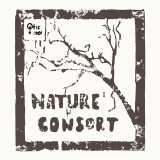
In the late 1960s, young jazz musician Bobby Naughton, a keyboardist and vibraphonist, faced significant challenges as he sought to record his first album. With major record labels and jazz clubs catering only to big names, Naughton and other creative musicians of his generation found themselves sidelined by the mainstream music industry. They turned to self-reliance and self-production, becoming part of a movement of independent musicians. Naughton’s debut album, Nature’s Consort, was a DIY effort in every sense—recorded on home equipment and featuring a hand-printed woodblock cover. The album was distributed independently at concerts and by mail, receiving little attention initially, but over the years it gained a reputation as a rare, sought-after artifact of the period.
Though recorded during an outdoor concert in Connecticut, Nature's Consort reflected the "loft jazz" scene in New York City. This avant-garde jazz movement centered around musicians who lived and played in loft spaces in lower Manhattan. Naughton commuted from his home in Southbury, Connecticut, to play with his bandmates Mark Whitecage, Mario Pavone, and Laurence Cook in New York's lofts. These musicians regularly performed at venues like Studio We, a key gathering spot for free-form jazz, where musicians could experiment and develop their sound, often with no audience present.
Naughton’s journey into jazz was a winding one. Originally from Boston, he played rockabilly and blues-rock before transitioning into free jazz. Inspired by avant-garde artists like Carla Bley and Paul Bley, Naughton sought to explore new forms of music that went beyond traditional jazz structures. His bandmates, Mark Whitecage and Mario Pavone, were both deeply affected by the death of John Coltrane in 1967, which prompted them to quit their day jobs, attend Coltrane’s funeral, and move to New York to pursue jazz full-time.
Nature’s Consort was a collective project, with band members sharing equally in any profits. However, Naughton was the driving force behind the group’s creative direction. He composed much of the original material and selected pieces by Ornette Coleman and Carla Bley for the band’s repertoire. Jazz critic Nat Hentoff praised the album for its “high-risk improvisation” and the musicians' ability to anticipate each other’s moves. Though Nature’s Consort received little press at the time, it has since been recognized as a significant early document of the loft jazz era, representing Naughton’s disciplined, improvisational approach to music.
- A1: Skywaving
- A2: Life In The Wires, Pt 1
- A3: This House Of Winter
- A4: The Solid State Orchestra
- B1: Evaporator
- B2: Strange World
- B3: Idiot Box 04 58
- B4: Absent Friends
- C1: School (Introducing The All Seeing Eye)
- C2: Propergander
- C3: Sign Of Life
- D4: Moral And Consequence 08 13
- D1: Life In The Wires, Pt 2
- D2: Starting Fires
Red[35,71 €]
The album is Frost* at its most ambitious, offering nearly 90 minutes of music over 14 exquisite tracks. The album is the brainchild of Godfrey who was inspired to create the conceptual world for the album based on the group’s previous release Day and Age (2021).
Fans of the band’s masterful debut album Milliontown (2006) will enjoy the band revisiting the style that made that debut album one of the most successful prog rock albums of the last 20 years, a fact that was not lost on Godfrey as he was writing this new record. “With Day and Age, we made it a very specific point: we're not doing any solos, we'll do clever arrangements. And we enjoyed that discipline, but this time I thought it might be good to row back on that position a bit. Plus I wanted to have a little bit of a nod to Milliontown with this album, because it's been nearly 20 years since Milliontown came out and I’m still proud of it. The 15-minute title track has a few of those Milliontown moments in it which were great fun to do again.”
Mitwirkende
wird veröffentlicht am 18. Oktober 2024
Line-Up:
Jem Godfrey – Keyboards, guitar, vocals
Nathan King – Bass, vocals
John Mitchell – Guitars, vocals
Craig Blundell - drums
"Jede Prog-Band, die etwas auf sich hält, sollte eigentlich ein Doppelalbum machen, oder?", fragt Frost*-Frontmann Jem Godfrey. Das war eine der ersten Ideen, als der Songwriter/Keyboarder/Sänger der Band die Arbeit an Frost*s 5. Studioalbum "Life in the Wires" in Angriff nahm. Das Album ist Frost*s ehrgeizigstes Werk und bietet fast 90 Minuten Musik auf 14 exquisiten Tracks. Das Album ist das Geistesprodukt von Godfrey, der von der vorherigen Veröffentlichung "Day and Age" (2021) der Gruppe inspiriert wurde, die konzeptionelle Welt für das Album zu erschaffen. Fans des meisterhaften Debütalbums "Milliontown" (2006) werden sich freuen, dass die Band den Stil wieder aufgreift, der das Debütalbum zu einem der erfolgreichsten Prog-Rock-Alben der letzten 20 Jahre gemacht hat - eine Tatsache, die Godfrey nicht entgangen ist, als er das neue Album schrieb. "Bei Day and Age haben wir es sehr genau genommen: Wir machen keine Soli, wir machen clevere Arrangements. Und wir haben diese Disziplin genossen, aber dieses Mal dachte ich, es wäre gut, in dieser Position ein wenig zurückzurudern. Außerdem wollte ich mit diesem Album eine kleine Anspielung auf Milliontown machen, denn es ist schon fast 20 Jahre her, dass Milliontown herauskam, und ich bin immer noch stolz darauf. Der 15-minütige Titeltrack enthält ein paar dieser Milliontown-Momente, die zu wiederholen mir großen Spaß gemacht hat." "Life in the Wires" wird als limitierte 2CD Edition, als Gatefold 2LP und als Digitales Album erhältlich sein, mit atemberaubendem Artwork von Carl Glover (Steven Wilson).
“this is the one I want at my final farewell, couldn’t find a better way of saying my final goodbye”
“italian music for the soul. life affirming”
“one of the greatest house tunes ever. bliss”
These are just some of the laudatory comments about ALONE on YouTube.
Recorded by the near mythical Don Carlos (Carlo Troja) in 1991 in the middle of Italian house fever it was instantly acclaimed as a classic.
Its’ dreamscape appeal has proved timeless and the enduring demand makes it perfect for ANORAX (#eatsleepcollect) to release on limited edition 10” single.
The original masters have been supplied by IRMA Records to ensure top notch sound quality as befits such an iconic gem.
Italian House Music for the Body & The Soul
For the first time in their diverse second act, they allow themselves to be a rock band, freed of adornment and embellishment. As much as Carlson’s guitar has always been the focal point of EARTH’s music, it’s been surrounded by consistently diverse instrumentation. Here the dialog between Carlson and Davies drumming remains pivotal, underpinned by the sympathetic bass of Bill Herzog (Sunn O))), Joel RL Phelps, Jesse Sykes and the Sweet Hereafter) and thickened by additional layers of guitar from Brett Netson (Built To Spill, Caustic Resin) and Jodie Cox (Narrows). Perhaps the largest left turn on Primitive And Deadly, though, is the prominence of guest vocalists Mark Lanegan and Rabia Shaheen Qazi (Rose Windows) who transform the traditionally free ranging meditations of EARTH into something approaching traditional pop structures.
On “Rooks Across the Gates,” a song stylistically the closest to the folk inspired modality of Angels Of Darkness, Carlson stretches out into some of his most lyrical playing to date, creating an almost symbiotic relationship between his performance and the vocals of old friend Mark Lanegan. “From the Zodiacal Light,” meanwhile, takes the late 60s San Franciscan/freaked-out jazz-rock transcendence of The Bees Made Honey In The Lion’s Skull and quickly re-appropriates that sound into a musky torch song for the witching hour.
This contradictive tension between a band pushing itself ever-forward whilst surveying their history is reflected in the albums twin recording locales. The foundation of the record was laid in the mystic desert highlands of Joshua Tree, California where EARTH recorded hour after hour of meditations on each track's central theme at Rancho de la Luna. Upon returning to Seattle these were edited, arranged and expanded upon at Avast with the help of long-term collaborator Randall Dunn (who was previously at the helm for the Hex, The Bees Made Honey In The Lion's Skull and Hibernaculum sessions).