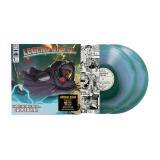
Christian Prommer – producer, drummer, DJ and multi?instrumentalist best known for his work with Trüby Trio, Fauna Flash, Drumlesson, Voom:Voom (with Peter Kruder), Prommer & Barck (with Alex Barck), and as the producer of DJ Hell’s Teufelswerk – presents his new album Rhythmic Nocturne, spanning spiritual deep house, jazz, balearic trip?hop and hypnotic rhythm explorations. A must for fans of St. Germain, Floating Points and refined grooves at all speeds.
This album distills ten years of Berlin into a twilight drift between order and abandon. Daytime studio sketches are pulled apart at night, reshaped by shifting perspectives that swing between jazz harmony, textural experimentation, and the heavy gravity of techno basslines and analog drums. Intimately close-mic’d piano, drums, percussion, cello, and strings are constantly recontextualized—dropped into new rooms, resonances, and imagined spaces—so their meaning keeps mutating. Room noise, human breath, and accidental sounds are folded into the pulse, turning spill and imperfection into rhythm. Even a piano lid thudding shut on “Dark Matter” is claimed as part of the beat, underscoring an album that embraces freedom, spontaneity, and the beautiful lack of accountability that defines this city at night.
Roman Flügel returns to Running Back with another chapter in an ongoing love affair between machine funk and dancefloor euphoria. Following a string of releases stretching from Garden
Party to the recent Dusty Jukebox EP, this latest offering continues a path that has become unmistakably his own.New Release Information
There are no dietary restrictions here. Just generous portions of basslines, rave signals, bleeps, and rhythm tracks, all layered with the kind of instinctive musicality that makes Roman’s productions feel both immediate and timeless. The spirit of early rave culture remains a guiding force, not as nostalgia but as a living source of inspiration, feeding into House music’s endless capacity for joy, surprise, and communal release.
As ever, the objective is simple: celebrate the moment. Preferably loud, preferably together, and preferably with plenty of icing on top
Never Sleep charity tape series ends up in Thornton Heath, London for the grimiest of bedroom work outs.
Early Fruity Loops philosopher Plasticman aka Plastician teams up with fellow trailblazers DJ Suicide & N Double A crew for a prompt internet radio set of prototype Grime. Rugged, raw and filled with the occasional KAOS Pad trigger / gunfinger FX; the devilish miscreants bring the lyrical vehemence.
Broadcasting from his parents place and utilising early productions Plasticman keeps the fibre optical momentum burning with early production, laser precision polyphonic instrumentals and quantified eski.
N Double A crew have so many quotables but its a "pass the mic" affair as limited equipment fort his bedroom bedlam. L Man spits certified gold on demand whilst Narstie echoes his signature cadence, Typah goes in hard with the colder than waiting in a queue outside Plastic People flow and Uzi destroys the stream with typical flair.
A landmark moment in innovation, internet radio was a key player in the growth of Grime and Dubstep. Helping build profile, connections and galvanize the online community.
There are records that do not so much belong to an era as they pass through it, leaving traces rather than statements, circulating in the margins where function outweighs discourse. World Cup, written at the end of the 1990s by Kiko, emerged in precisely that way — as a techno track whose presence was felt less through promotion than through repetition, carried from booth to booth, absorbed into the working vocabulary of DJs who recognized in it something immediate and self-evident. Its architecture is minimal yet insistent, driven by tension and release, a form of clarity that resists ornament and instead privileges duration, pressure, and movement.
When it resurfaced in 2006, it did not return as a revision but as a continuation, reaffirming its role within the ecology of the dancefloor. The same internal logic remained intact, allowing it to re-enter circulation without friction, as though it had simply been waiting to be picked up again. In both instances, the track operates less as a fixed object than as a tool — something to be used, extended, and recontextualized in real time.
Bringing together these two versions alongside Tainted Life, the release traces a subtle but telling trajectory. If World Cupdefines a certain techno functionalism, Tainted Life reveals another dimension: a proto-Italo sensibility that gestures toward what would later coalesce as electroclash, not through stylistic declaration but through texture, tone, and attitude. Long absent from digital circulation and largely confined to obscurity, it appears here not as a rediscovery, but as a piece whose relevance has simply remained latent.
Nothing has been added, nothing has been altered beyond what was necessary to restore presence. The recordings are allowed to exist in their own continuity, detached from the temporal markers that might otherwise confine them.
The artwork, conceived by H5, extends this approach into the visual field. Its restraint is not aesthetic minimalism for its own sake, but a form of structural clarity, where composition and absence articulate a space in which the record can be encountered without interference, as if resurfacing from a parallel timeline that never fully closed.
Two rare recordings from the archives of legendary producer Richard Hewson.
Rising Star (Cosmix) began life in 1984 as a vocal single performed by Debbie Sharp. Hewson reworked the original track into a percussive cosmic disco interpretation, aptly titled the “Cosmix”, experimenting with his newly acquired Bel Delay effects unit, which became central to his studio explorations at the time.
Deep Song dates back even further, to the late-70s Richard Hewson Orchestra period - the creative blueprint that would later evolve into Hewson’s cult studio project, The RAH Band. Written, produced and assembled by Hewson in his home studio before additional strings and vocals were layered in, the track was inspired by his deep admiration for Miles Davis, particularly the landmark album Kind of Blue. Deep Song was originally released as a B-side under a mysterious alias in 1979.
Undo & Casiowaves join forces to bend minds on their new EP “Chemical Eyes”. The Catalonian pairing, collaborators for the past five years, have built a body of work that’s conceptually rich and sonically sophisticated. The “Chemical Eyes” EP is a love letter to analog synths, taking us on a psychedelic trip through past and present, nostalgic but never mimetic.
Reality begins to warp the moment “Chemical Eyes” kicks in. The title track opens in post-punk territory, leaning into nostalgia both lyrically and sonically and with synth outro that lingers like a memory.
Parisian producer Chloé’s remix takes us firmly into the 21st century, chopping up the title track until it mutates into something more minimal and syncopated. This electronic take still retains the track’s post-punk mood, with contemplative loops and reverb-drenched guitar as we begin to move from the concert venue into the club.
B side “Trumpsky Beats” picks up the pace with neon-soaked synthwave that references the 80s synthpop icons in more than just name. Crisp, shimmering synths dance through warped bass lines and new wave drum patterns, creating a lush contrapuntal soundscape that thrives as much on nostalgic memory as it does on contemporary creativity.
Italo Brutalo’s remix amps up the intensity further with infectious snares and acid twangs. The German producer and synth enthusiast adds a tasteful complexity that pulls the EP fully onto the dancefloor.
Featuring rare- and first-on-vinyl tracks from beloved producers such as 2000 And One, Stasis, and CiM. Remastered by DMX Krew and with an accompanying online essay by Oli Warwick.
Across eight carefully selected slices of starry-eyed machine soul, Cold Blow presents an exquisite tour through backroom techno and downtempo electro. With a focus on thematic flow and an immersive listening experience, the London-based label explores works from leading lights of the 1990s and previously unreleased cuts that celebrate the human heart that can be discovered in synthetic sound practices. The development of techno in the 1990s saw the music evolve in different directions across the world. From the expressive blueprint laid out by the Detroit pioneers, a wide range of tempos and energies emerged. Techno's evocative synthesis and intricate drum machine programming was especially potent for deeper explorations away from the dancefloor. Documents Of A Different Reality casts back to when technology was steering quantum leaps in communication and creativity and the future was shot through with naive optimism. It was also a time when the media and industry hadn't caught up with the music to box it into distinct categories. As such, there's a sense of creative freedom that informs the older tracks on the album, from 2000 And One and Sandy Huner's sparkling example of early Dutch techno to London-based LA Synthesis' detailed take on braindance and the majestic night sky vision of cult legend Stasis. There's also space for rare, late 90s machine funk from Icelandic outlier Thor alongside Connective Zone's charmingly fractured bleep dream and a more contemporary offering from Barcelona-based duo Permutation. Meanwhile Mind Control and CiM both capture the spirit of stylistic fusion with twitchier rhythms that take influence from hardcore and jungle as much as techno. With an atmospheric through-line of melancholic pads and harmonious leads, this small but perfectly formed collection naturally follows on from previous, equally thought-out compilations on Cold Blow, and adds a distinct perspective on the history and continuing legacy of pioneering early ambient techno.
Celebrating 1 year of Lirica with a special reissue of this heavily sought after album from UK duo Relative Progress, remastered with a fresh design, still paying homage to the original asthetics
4 carries on the celebrated series, showcasing selections from the legendary Sub-Urban catalogue, bringing together a selection of classic garage house cuts from some of the scene’s most respected names.
Featuring standout tracks from Tommy Musto under both his Tribute & Unifunkation guises, Kenny Dope as well as Matthias Heilbronn & Mike Delgado as Lift, the release captures the soulful, groove-led sound that helped define New York and US garage house throughout the 90s.
Including favourites such as Kenny Dope presents James Rouse’s Dance and Unifunkation featuring Alexander East’s Feel Me, this fourth volume brings together a selection of proven club records in one DJ-friendly vinyl package.
Chlar returns to his Primal Instinct label with 'Modern Survival'
Following the widely praised Funk Assault (Chlar & Alarico) 'Minimum One Post A Week' EP, which kicked off the Primal Instinct label last summer and won the support of the likes of Rodhad, Tasha, and Luke Slater, as well as routine plays from Sarah Story on BBC Radio 1, Chlar now returns to his imprint with solo venture 'Modern Survival'. While the first Primal Instinct release saw references to artist urges and behaviours on social media, this next instalment explores a modern recontextualisation of humanity's hierarchy of needs in yet another high-concept EP.
First up, 'Internet Soulmate' boasts a crunchy bassline as its drum work chugs along the track playfully. The groove twists and turns before the hypnotic and tribal 'Supermarket Hunting' continues with sounds of nature, loopy rhythm and syncopated bleeps.
On the B-side's 'Body Control Officer', human-made grooves intertwine with machine-like thrum, synths whirring and zapping, while 'Competitive Influencing' takes off with rolling percussion, subtle whistles and distorted vocal one-shots. Closing out another stellar offering from the Primal Instinct frontman, Chlar brings the dark 'Scout My Algorithm', a brooding slow-burner offset by smooth arpeggio snippets and warped slices of digital noise.
"In an era where technology entwines our everyday existence, where the virtual realm shapes our interactions, and where the pursuit of influence takes centre stage comes an EP that delves deep into the modern tapestry of human existence. 'Modern Survival' is not merely a collection of songs and visual clips, but a poignant reflection on the intricate dance between our primal instincts and the brave new world we navigate today. The EP invites listeners on a journey of self-discovery and reflection, prompting them to ponder the fundamental essence of our existence in an environment of fast-paced technological evolution." - Chlar
Return to Sky is the follow-up to the band's classic Euporie Tide, which consolidated the band as a crucial underground force in the European psych scene and spread their unique brand of warm-toned stoner rock to a wider audience. The album is a condensed piece of acutely experimental, yet immensely engaging, instrumental rock. Each of the album’s five epics unfolds as a microcosm of the band’s genre-transcending psychedelia at large, yet adds something different to the whole.
The tracks on Return To Sky travel far and wide: heavy, detuned riffs are transformed into wide, pastoral soundscapes, and fluid minimalism warped into swirling crescendos and back again. Occasionally the band even manages to sound turbulent, fuzzed-out yet strangely peaceful at the very same time. Whereas so much of today’s psychedelic scene comes off as merely a tribute to a certain period of the past, Causa Sui has always been on a different mission. More than any other record in their catalog Return To Sky declares their roots in the avant rock of the late 1990s - where different eras and genres merged into something that resonated as much with the present as it celebrated the past. It also reveals the fact that members of the band has had their hands in many different projects since the band’s debut album in 2005: solo excursions into synthesizer music, collaborations with members of Sunburned Hand Of The Man and Tortoise as well as film soundtracks and improv sessions with krautrock legends Faust and Damo Suzuki. It has all worked a subtle influence on the kind of band they have become. On Return To Sky their sound is more earthy and heavy than other Causa Sui record, but it’s also a record that has absorbed everything from shoegaze and vintage Italian film music to spiritual jazz and afrobeat into its fabric. Causa Sui has never sounded deeper or more mesmerizing than on this set.
Founded in Puebla City in 1998 by Alberto Tlahuetl, Grupo Soñador played a key role in shaping a distinct regional take on cumbia at a time when the genre was largely dominated by Mexico City and the coastal scenes. Working with minimal resources, home recordings, cassettes, and affordable keyboards, the group developed a clean, melodic, and dance-driven sound that resonated deeply within the sonidero circuit. Their breakthrough track El Paso del Gigante (2001), spread organically through DJs and street dances, establishing Grupo Soñador as a cornerstone of Puebla’s emerging musical identity. Without a formal label structure, their music travelled hand to hand, from local fairs to migrant communities in the United States, becoming part of a wider underground network of circulation. Blending electronic instrumentation with sonidero rhythms, Grupo Soñador helped place Puebla on Mexico’s cumbia map, not through industry infrastructure, but through the dance floor.
To celebrate the 10th anniversary of the "Surf Rider" EP (originally released in 2015 on Lumière Noire), Dialect Recordings publishes a limited vinyl edition featuring an exclusive edit of "Lies" by Blackjoy. For the occasion, Il Est Vilaine’s long time collaborator Apollo Thomas has designed a brand-new cover and created a mini comics included with the vinyl. A beautiful collector’s item to honor this classic!
Zum allerersten Mal auf Vinyl, präsentiert in einer cardboard single sleeve LP inklusive vierseitigem Einleger
mit einem Text von Hermann Conen.
Im Juli 1995 trafen sich Arvo Pärt und Manfred Eicher in der Frankfurter Festeburgkirche mit vier aufmerksamen Musikern – dem Geiger Vladimir Spivakov, dem Cellisten Dietmar Schwalke sowie den Pianisten
Alexander Malter und Sergej Bezrodny –, um eine Aufnahme zu realisieren, die sich ganz auf die Kompositionen “Für Alina” und “Spiegel im Spiegel” konzentriert. Das Ergebnis, das ECM New Series Album Alina,
nimmt sowohl in der Diskografie des estnischen Komponisten als auch im ECM-Katalog einen besonderen
Platz ein. “Für Alina”, geschrieben 1976, war für Pärt eine bahnbrechende Komposition und zugleich
symbolisch der Ausgangspunkt für die folgenden Werke. „Ich könnte meine Musik mit weißem Licht vergleichen, das alle Farben enthält“, sagte Arvo Pärt damals. „Nur ein Prisma kann die Farben aufteilen und
sichtbar machen; dieses Prisma könnte der Geist des Zuhörers sein.“ Zeitgenössische Rezensenten meinten,
dass das aufmerksame Verfolgen des Flusses von Alina die Wahrnehmung schärfe. Gramophone beschrieb
das Album als „die Stimme eines inneren Exils, in sich gekehrt und zutiefst persönlich, aber für jeden
zugänglich, der bereit ist zuzuhören. Die große Gefahr beim Hören von Alina besteht darin, dass vieles von
dem, was man danach hört, plötzlich wie Lärm wirkt – zu viel Lärm. Aber es ist ein Risiko, das einzugehen
sich lohnt.“
b A2 Let's Try = Let's Try!; Written-By Original Score Written By – Koji Kondo
[c] A3 お花畑にて = In The Flower Garden; Written-By [Original Score Written By] – Koji Kondo
[e] A5 対クッパ戦 = Battling Bowser; Written-By [Original Score Written By] – Koji Kondo
[g] A7 Super Pipe House = Super Mario House; Written-By [Original Score Written By] – Koji Kondo
[p] B7 ごきげんスター = Irrepressible Star; Written-By [Original Score Written By] – Koji Kondo
[z] C5 ねぇねぇジーノごっこしようよ = Play "Save The World" With Me!; Written-By [Original Score Written By] – Koji Kondo
[xd] D1 土管からコンニチハ = Greetings From The Pipes; Written-By [Original Score Written By] – Koji Kondo
[xk] E1 Long Long Ago… = Long, Long Ago...; Written-By [Original Score Written By] – Koji Kondo
[xl] E2 ちょっとドキドキ = A Little Anxious; Written-By [Original Score Written By] – Koji Kondo
[xt] F2 対 クリスタラー戦 = Battling Culex; Written-By [Original Score Written By] – Nobuo Uematsu
[xu] F3 クリスタラー戦での勝利 = Victory Over Culex; Written-By [Original Score Written By] – Nobuo Uematsu
[xv] F4 クリスタラーの会話 = Conversation With Culex; Written-By [Original Score Written By] – Nobuo Uematsu
[yb] G5 オノレンジャー参上 = The Axem Rangers Bust In; Written-By [Original Score Written By] – Koji Kondo
[yc] G6 クッパ城(其ノ弐) = Bowser's Keep (Second Visit); Written-By [Original Score Written By] – Koji Kondo
[yi] H5 お・し・ま・い・! = The End!; Written-By [Original Score Written By] – Koji Kondo
[b] A2 Let's Try = Let's Try!; Written-By [Original Score Written By] – Koji Kondo
[c] A3 お花畑にて = In The Flower Garden; Written-By [Original Score Written By] – Koji Kondo
[e] A5 対クッパ戦 = Battling Bowser; Written-By [Original Score Written By] – Koji Kondo
[g] A7 Super Pipe House = Super Mario House; Written-By [Original Score Written By] – Koji Kondo
[p] B7 ごきげんスター = Irrepressible Star; Written-By [Original Score Written By] – Koji Kondo
[z] C5 ねぇねぇジーノごっこしようよ = Play "Save The World" With Me!; Written-By [Original Score Written By] – Koji Kondo
[xd] D1 土管からコンニチハ = Greetings From The Pipes; Written-By [Original Score Written By] – Koji Kondo
[xk] E1 Long Long Ago… = Long, Long Ago...; Written-By [Original Score Written By] – Koji Kondo
[xl] E2 ちょっとドキドキ = A Little Anxious; Written-By [Original Score Written By] – Koji Kondo
[xt] F2 対 クリスタラー戦 = Battling Culex; Written-By [Original Score Written By] – Nobuo Uematsu
[xu] F3 クリスタラー戦での勝利 = Victory Over Culex; Written-By [Original Score Written By] – Nobuo Uematsu
[xv] F4 クリスタラーの会話 = Conversation With Culex; Written-By [Original Score Written By] – Nobuo Uematsu
[yb] G5 オノレンジャー参上 = The Axem Rangers Bust In; Written-By [Original Score Written By] – Koji Kondo
[yc] G6 クッパ城(其ノ弐) = Bowser's Keep (Second Visit); Written-By [Original Score Written By] – Koji Kondo
[yi] H5 お・し・ま・い・! = The End!; Written-By [Original Score Written By] – Koji Kondo
[b] A2 | Let's Try = Let's Try!; Written-By [Original Score Written By] – Koji Kondo
[c] A3 | お花畑にて = In The Flower Garden; Written-By [Original Score Written By] – Koji Kondo
[e] A5 | 対クッパ戦 = Battling Bowser; Written-By [Original Score Written By] – Koji Kondo
[g] A7 | Super Pipe House = Super Mario House; Written-By [Original Score Written By] – Koji Kondo
[p] B7 | ごきげんスター = Irrepressible Star; Written-By [Original Score Written By] – Koji Kondo
[z] C5 | ねぇねぇジーノごっこしようよ = Play "Save The World" With Me!; Written-By [Original Score Written By] – Koji Kondo
[xd] D1 | 土管からコンニチハ = Greetings From The Pipes; Written-By [Original Score Written By] – Koji Kondo
[xk] E1 | Long Long Ago… = Long, Long Ago ..; Written-By [Original Score Written By] – Koji Kondo
[xl] E2 | ちょっとドキドキ = A Little Anxious; Written-By [Original Score Written By] – Koji Kondo
[xt] F2 | 対 クリスタラー戦 = Battling Culex; Written-By [Original Score Written By] – Nobuo Uematsu
[xu] F3 | クリスタラー戦での勝利 = Victory Over Culex; Written-By [Original Score Written By] – Nobuo Uematsu
[xv] F4 | クリスタラーの会話 = Conversation With Culex; Written-By [Original Score Written By] – Nobuo Uematsu
[yb] G5 | オノレンジャー参上 = The Axem Rangers Bust In; Written-By [Original Score Written By] – Koji Kondo
[yc] G6 | クッパ城(其ノ弐) = Bowser's Keep (Second Visit); Written-By [Original Score Written By] – Koji Kondo
[yi] H5 | お・し・ま・い・! = The End!; Written-By [Original Score Written By] – Koji Kondo
Double vinyl reissue of Skullflower’s epochal “IIRD GATEKEEPER” album - the first time that this album has been available on vinyl for 30 years. In addition to the original LP this definitive and expanded edition includes extra and unreleased tracks taken from the recording sessions. For the first time all the tracks recorded by the band during this period can be heard together giving fans unprecedented access to material previously only available in the bands’ archives. Recorded in London in 1991 and released in 1992 on Justin “Godflesh” Broadrick’s HeadDirt label in 1992, IIRD GATEKEEPER established a worldwide reputation and following for Skullflower and convinced many who heard it that they had encountered nothing less than the best band on the planet. Arriving at the height of the “grunge” and the expansion of underground guitar “rock” into corporate America, IIRD GATEKEEPER had its roots deep in the UK noise and power-electronics scene. Guitarist Matthew Bower and bassist Anthony Di Franco were both graduates of the Broken Flag school of British noise making with their respective projects PURE, TOTAL and JFK. IIRD GATEKEEPER was Skullflower’s third album and was the first of the band’s albums to feature a consistent line-up throughout its production: Matthew Bower (guitar), Anthony Di Franco on (bass) and Stuart Dennison (drums). Recorded and mixed in four sessions between January and June 1991the tracks on this edition of IIRD GATEKEEPER shows the band’s new line up developing their sound, warping and evolving in real time. As such this edition of IIRD GATEKEEPER provides a unique document of the band in a state of transition, with the chemistry of the individual playing combusting in the studio to create a wave of astonishing creativity. IIRD GATEKEEPER is perhaps the definitive British underground rock album of the 1990’s – unique and never equalled. With this new edition Dirter Promotions allows Skullflower fans old and new to listen to this classic album as it was intended: spark up, crank it up and prepare to have your ears and mind blown
Released on Polydor in 1972, He’s Coming captures vibraphonist Roy Ayers at a creative apex, as Ubiquity’s sound settled into the blend of jazz improvisation, funk rhythm, soul harmony, and spiritual import that would define his work throughout the decade. Emerging at the start of the 1970s, the album reflects Ayers’s deepening move toward a groove-centred musical language rooted in soul-jazz and early jazz-funk. The vibraphonist, keyboardist, composer, and bandleader is supported by a core ensemble that includes Harry Whitaker on electric piano, organ, and vocals; John Williams on bass, with Ron Carter featured on ‘We Live in Brooklyn, Baby’; David Lee Jr. and Billy Cobham on drums and percussion; guitarists Sam Brown and Bob Fusco; saxophonist Sonny Fortune; and percussionist Juma Santos. Tracks like ‘He’s a Superstar’, ‘Sweet Butterfly of Love’, and ‘Fire Weaver’ embody the record’s mix of urban narrative, spiritual reflection, and deep rhythmic momentum — qualities that would later make Ayers’s catalogue a source of inspiration for soul, funk, hip-hop, and neo-soul artists.
Leopard DaVinci is the official keyboardist of Dabeull's Band.
“Casual Conversation” pairs Leopard DaVinci’s high-gloss funk production with Moniquea’s signature vocal charisma for an instantly addictive modern funk single. Flirty, confident and groove-heavy, the track balances retro-inspired synth textures with a contemporary boogie pulse, making it a strong fit for editorial playlists centered around funk-forward, danceable and soulful music.
Moniquea already holds a respected position in the global modern funk community, and this release delivers exactly what that audience wants: attitude, melody, replay value and undeniable groove. “Casual Conversation” has crossover potential between dedicated funk listeners, nu-disco audiences and feel-good R&B selectors.
“Flaws” pairs Leopard DaVinci’s signature synth-led funk production with Helena’s fresh and expressive vocal presence for a release that feels both timeless and relevant. Built around a message of self-acceptance and inner strength, the track transforms vulnerability into groove, offering a refined mix of modern funk, boogie and soulful pop energy.
Its lyrical theme makes it especially effective beyond niche funk circles, opening space for playlisting tied not only to groove and retro-funk aesthetics, but also to confidence, empowerment and uplifting mood. “Flaws” is melodic, elegant and emotionally direct — a strong crossover track with both artistic identity and listener accessibility.
Sweet Breeze Sound's first 12" is inspired by DC's long-running DIY party Extended Play. Local legend and veteran Marc Meistro knows the room he's building for here and opens with a wildly inventive flip of an Earth, Wind & Fire classic, full of hefty Daniel Meinecke's Rhodes and organ solos. 'Be More Bruk' takes a tougher route through Baltimore club energy and the flip cut 'Roll Em Up' leans into early-80s NYC spirit for a proper outdoor-jam feel. 'Julien, Sammy, et Jojo' closes things out with an 80s-inspired African disco flip of an obscure Central African cut. Playful and fun.
Turn On The Sunlight is the long-running project of Texas-born, Maui-based musician and producer Jesse Peterson.
Originally formed in New York in the late 2000s, Turn On The Sunlight has evolved into a fluid, location-spanning practice rooted in collaboration, intuition and process. Now based on Maui, Peterson’s work draws together a wide network of musicians and environments, with recordings taking shape across Los Angeles, Tokyo, London, San Miguel de Allende and Haʻikū.
Loosely situated within a framework of organic, ambient-leaning jazz, 'Iseo' unfolds as a series of open, exploratory pieces, with electronics sitting subtly beneath acoustic and environmental elements. Built from layered instrumentation including synthesizers, guitar, zither, flutes, voice and field recordings, Peterson moves between grounded, tactile detail and more expansive, immersive states. A sense of warmth and permeability runs throughout: organic percussion, environmental textures and drifting rhythmic elements lend the record a gently saturated humidity, reflecting Peterson’s base in Hawaii, where the presence of nature is felt as much as it is heard.
Underlying the project is a way of working rooted in gathering, listening and tending. Instruments, ensemble sessions, field recordings and everyday environments are approached with attentiveness, shaped through collecting, refining and allowing things to settle. Relationships, landscape and lived experience shape the sound, giving 'Iseo' a tactile, almost hand-made quality.
Rather than fixed arrangements, the album feels as if it has been organically and lovingly assembled through a process of listening and response, each element finding its place within a wider, evolving whole. This approach reaches a natural centre point in the 15-minute piece 'Medianoche En La Calle Aurora', which unfolds patiently, bending through shifting environments as motifs and textures emerge and dissolve with quiet continuity.
Peterson’s role as both instigator and facilitator is central to the project. Bringing together a diverse group of collaborators including Carlos Niño, Mia Doi Todd, Laraaji, Ko Ishikawa, Luis Pérez Ixoneztli and Miles Spilsbury, he creates space for individual voices to emerge within a shared language. The result is a music defined by openness and generosity.
'Iseo' takes its title from Peterson’s son’s middle name, a word that can be understood to mean ‘one-world life’. The piece itself takes the form of a gentle lullaby, its melody loosely shaped around the syllables of his name and sung to Peterson’s son by Luis Pérez Ixoneztli, a close collaborator whose presence across the record reflects a long-standing relationship that extends beyond the music itself.
Sleeve art and design by Michael Willis.
'Electronic lullabies and folk songs from Ethiopia! A landmark recording from Ethiopia’s vibrant cassette era of the 1980s, Resonance of Time features pioneering composer Wesenyeleh Mebreku reimagining Ethiopian folk melodies through the humble circuitry of an early Casiotone keyboard.
'Historically, the works featured on Resonance of Time (የጊዜ ቃና Yegizie Kana) stand as quiet documents of Ethiopian musical memory. Many of the original songs included in this release emerged during important moments in Ethiopian history when music carried the collective emotion of the nation - love, loss, resistance, dignity, and hope. By arranging these pieces from Ethiopia’s musical heritage instrumentally, Wesenyeleh Mebreku aimed to preserve their essence while protecting them from being confined to a single era or performance style. In doing so, his preservation of Ethiopia’s musical heritage became a contribution to his country’s musical legacy itself, as Resonance of Time serves as an important musical milestone of this composer’s innovative recordings and musical developments in the prolific era of Ethiopia’s 1980s cassette tape culture.
'On Resonance of Time, Wesenyeleh made use of the first Casio electronic keyboard - the Casiotone CT-201 - to arrange and perform Ethiopian folk songs in his own unique style. Implementing the soulful, lo-fi character of the keyboard, Wesenyeleh’s interpretations of these works take on a life of their own. Charming analog tones interpret swirling sounds of organ and piano in kignit modality to the beat of a nostalgic rhythm machine while twinkling synthesizer sounds carry the melodies drifting out of time. The recordings reflect a watershed moment in Ethiopian musical history - when traditional melodies started being interpreted on electronic keyboards, and the advent of cassette tape recording allowed for music to be transmitted more accessibly than centuries-old oral traditions. During this time, Ethiopian musical modes were syncretized with new technology and budding musical experimentation, and Wesenyeleh’s interpretations on Resonance of Time are a landmark recording of this era, following in the tradition of reflecting upon and re-interpreting historical Ethiopian music for a new generation.
'Featured on the release are timeless Amharic folk songs and lullabies, Tigrinya love songs, Gurage and Oromifa popular songs, and even works closely associated with performers from Ethiopia’s 1970s popular music era such as Tiz Alegne Yetintu (ትዝ አለኝ የጥንቱ) which was famously performed by Tilahun Gessesse. Each piece, thoughtfully chosen by Wesenyeleh, is beautifully transformed into instrumental music of his own style - allowing these worlds of song to echo into the future while they are synthesized with the electronic innovations of the 1980s and Wesenyeleh’s own musical history.
'Wesenyeleh says this about his musical approach - ”Instrumental music, for me, is a space of reflection. Without words, the listener is invited to remember, imagine, and feel freely. In Resonance of Time, I hear my own musical philosophy: respect for Ethiopian kignit, careful dialogue with Western harmony, and a deep trust in melody as a storyteller.”
'Each piece performed on Resonance of Time speaks to a time when Ethiopian music was shaped by oral transmission through live performance and communal listening. In today’s fast-moving musical environment, revisiting these works is an act of cultural responsibility. These works remind us that melody once traveled slowly, settling deeply in the listener’s heart. The instrumental format allows these works to cross linguistic and generational boundaries, making them accessible to audiences who may not know the original lyrics but can still feel their spirit.
'Resonance of Time also reflects a broader historical dialogue: the meeting of tradition and adaptation. Ethiopian music has always evolved while holding onto its core identity. These arrangements affirm that evolution does not mean abandonment. Instead, it can be a form of safeguarding - ensuring that the musical wisdom of the past continues to resonate in the present and inspire the future.
'In this sense, the album is both personal and collective. It carries Wesenyeleh Mebreku’s own musical fingerprint, shaped by decades of practice, but it ultimately belongs to a wider cultural continuum. It is the artist’s contribution to keeping time audible so that memory, history, and sound may continue to speak to one another.'
Rhythms Of Prescott debuts on Potency with the highly-anticipated Run Of Deluxe EP. This has been getting rinsed by esteemed selectors such as Ben UFO at Houghton Festival through to Shanti Celeste at Dekmantel. The music speaks for itself on this one, listen for yourself. Limited copies!
Rhythm Of Paradise captures the essence of modern Italian piano house with the "Ti Sento EP".
A coherent and refined project that blends radio appeal and club depth, all with a warm, Mediterranean soul and pure Italian House Vibe.
The EP opens with the title track, an emotional summer anthem built on a sensual Italian female vocal. Beautiful piano hook in the real Italo style & warm M1 organ bassline, are the foundation that makes this track a unique narrative experience keeping balance between radio-friendly immediacy and a solid timeless club presence.
From the emotional Ti sento going to the festive, sunny mood of "Mi Piace" on A2, where the energy is amplified by a more driving rhythm and piano melodies that celebrate pure joy. It's the EP's track designed to create a peak of collective euphoria on the dancefloor.
On B, Micheal’s partner in crimes St. David reimagines “Mi Piace” track on a tribal dub journey with an Ibizan soul, where the original vocal is deconstructed into echoes, the bass becomes hypnotic, and the groovy organic percussions keeps the floor moving and shaking. A version for emotive charm of early Italo house, evoking euphoric dancefloors, Calypso beach parties in the style of Palmares or Irma records.
Closing with B2. Ti Voglio and its seductive groove, and a refined afterhours atmosphere. It demonstrates how Italian emotion in house music can also be communicated through the power of few elements that hits your sensitive side. Sax atmosphere and deep dub groove capture the rhythm of the listener for this beautiful closing track.
A complete collection of Timeless Italo House journey for those that knows !
Written and Produced by Michele Lamacchia. Includes remix from St. David
Mixed & Mastered by St. David
For our third celebratory release for 30 years of Ten Lovers Music we have another Various Artist selection called Frisson EP Part B. Kicking off the A side we have Mike Perras from Canada with Handle With Care, a superb opener, deep house with a saxophone solo that certainly gave us Frisson the first time we heard it. Following on is Takahiro Fuchigami from Japan with Wired City, another dark broken beat masterpiece made for the dancefloor. Onto to the AA side we have someone who is an integral piece of the Ten Lovers Music family Jose Rico from Spain who joins forces with Ruben Valero for Harmonies & Melodies, they draft in Anthonious on the Rhodes and it’s a deep house masterpiece. Finally Lobos Marinos from Japan, band leader Kazutaka Miya brings in Miki Hirose on the Trumpet and Shin Kowaka on Drums.
With Panorama, Frank Maston pays homage to the classic era of library records and Italian soundtracks of the 70s. A blissed-out, grooving collection of filmic cues, it continues the unique brilliance of Tulips and Darkland. Elegant and easy, subtle and stylish, breezy and beautiful; this is his Maston-piece. Commissioned by legendary label KPM, Panorama cements Maston as a master of modern classics and the most mesmeric of contemporary composers.
In early 2020, Be With suggested to Frank that he should make a KPM record. He wasn't aware that they were still putting out new library records - but he was super keen: "It was completely surreal and it still hasn't fully sank in that I have a record in that catalog, sitting alongside those incredible albums that were so influential to me."
Frank was visiting family in his hometown of LA in March 2020 when the world ground to a halt so the KPM project arrived at a fortuitous moment. Having fantasised about committing to a record with no distractions, with a proper budget, access to his gear and space to work in - to really dig in and try to write and arrange the best work he could possibly make - it was a real "be careful what you wish for" moment. But, as Frank explained, "it completely saved my year and sanity to have something to focus on and get excited about. It was my lifeline." He spent seven months on it, working almost every day.
Maston had already been making library-influenced music so when KPM outlined the criteria for the tracks it was exactly what he had been doing all along. He thought the best approach would be to make a follow-up to Tulips that had a parallel life as a KPM record. Enjoying complete creative freedom, “gave me the drive to power through and dig in deep. I'm not sure if I could have kept myself on such a rigorous recording schedule under my own steam, and I think the momentum I had writing and recording it is part of the strength of this record."
Maston’s sleek retro-groove instrumentals emulate the classic KPM “Greensleeve” reel-to-reel recordings that provided mood-setting music for mid-century cinema, television, and radio programs. Apparently in close conversation with the John Cameron-Keith Mansfield KPM pastoral masterclass Voices In Harmony, Maston's Panorama could be heard as that record's funky follow-up. Yes, it's *that good*. Another reference point from the hallowed library would be Francis Coppieter's wonderful Piano Viberations.
Opener "First Class" is a blissed-out groove, featuring the soothing vocals of Molly Lewis and a glistening harp over drums, a two-note bass motif (from Eli Ghersinu of L'Eclair) and an assemblage of guitars, synths, French horn and glowing vibraphone. Acid Lounge, anyone? The irresistibly funky "Easy Money" is a gorgeous cut led by more of Molly's vocals, pastoral flute and Rhodes, underpinned by drums and percussion, grooving bass, chilled guitars and synth strings. Kicking the tempo up, the percussive "Storm" is a vibin' filmic-fusion jam where psychedelic guitars (courtesy of Pedrum of Allah Las/Paint) organ, jazzy flute, Rhodes and vibes all compete for a place in the sun, over drums and walking bassline.
The heavenly "You Shouldn't Have" is a delicate, melancholic wonder; a dreamy instrumental where the melody is shared by a whistle, harpsichord and celeste, over a cyclical piano chord sequence and bass, synths, guitars, organ and distant French horn. The tempo rises again with the passionate, sticky "Fling", a summery, nostalgic groove with skipping drums and percussion, warm bass and electric guitar, yearning flute and synth strings. The brilliantly titled "Fool Moon" has that Voices In Harmony sound down pat. A romantic slow-mo dreamscape of Rhodes and harpsichord, piano, light drums and softly strummed acoustic guitar.
Side B opens with "Medusa", a hopeful, mellowed-out track with shuffling drums, feel-good flute, muted horns, glowing Rhodes and synth strings. The soft and gentle "Morning Paper" is an elegant way to start the day; a beatless blend of flute, guitar, percussion, ambient synths and vibes. The upbeat head-nod jam "Scenic" has that widescreen car-chase feel, uptempo drums and percussion, grooving bass, piano, synths and ambient electric guitar. "Adieu" is a smooth summer vibe, relaxing with brushed drums, Rhodes, flutes and horns. Molly Lewis's gorgeous vocals steal the show, alongside vibes, jamming organ and synth strings.
"Hydra" is another laid-back 70s-sounding retro cinema cue with light drums and percussion, walking bass, spacey synths, clavinet, glowing vibraphone, vintage organ and electric guitar. Closer "Jet Lag" is a laconic bow out; bass-driven drum machine soul, featuring hand percussion, Rhodes, vibes, synths and organ.
Multi-instrumentalist Frank played a bit of everything across Panorama. Yet, humble as ever, he believes the time, energy, and enthusiasm of all of the musicians invited to the sessions helped him realise his vision: "There were two Italian flautists who really understood what I was going for. Two french horn players, cor anglais, a vibraphonist and a flügel horn player. I've never involved this many people in my projects before, and yet the result is the most "me" record I've ever made."
Musically, a strong Italian theme runs through the record. Frank is fascinated by ancient Rome and both his parents are Italian (Maston was originally Mastrantonio before anglicisation). So, it felt natural to fully embrace these strands and tie everything together with the striking artwork. The Romans were influenced by Greek culture, emulating their art and architecture, which, in turn, influenced Renaissance era artists. Frank acknowledged this tradition when reflecting on his place in the lineage of library and soundtrack composers. He then asked his friend Mattea Perrotta, a painter and sculptor, for some sketches. What he received was exactly what he had in mind: "Especially the theater mask, which really captures the range of moods on the album". Frank arranged them as per the cover and it soon felt right: "I wanted to make a cover that was reminiscent of the classic KPM albums without making it too pastiche - so it has its own identity and looks at home alongside other library records, while still fitting in nicely in the KPM catalogue." The last step was for us to introduce Frank to Be With-KPM’s Rich Robinson, who helped put together the back and centre labels and align it all within the KPM standard.
Panorama is a perfect title for the album. With no opportunity to travel for tours or recording projects, Frank arranged postcards from his collection on his desk with beautiful views of the mediterranean coast, the Roman Colosseum and Cinque Terre. These also served as visual prompts: "That was part of the sonic concept - imagining myself driving down the mediterranean coast with this music on, with the top down." Additionally, the range of moods and vibes - "I tried to make each song very different from the previous one in terms of tempo and arrangement and feeling" - speaks to the idea of a Panorama of music and sounds and emotions. The last track was originally called Panorama, but KPM already had that title in their catalogue so it was changed to "Jet Lag", which, as Frank notes, "is perhaps even more fitting, since the trip is over".
In certain circles, this is a record that would easily be called „eternal“. Back in 1996, when it was originally released, it sounded like nothing else - and still does. The sixth record of Frankfurt’s soon to be imperial Playhouse label and Losoul’s first outing on the label, it hot-wired many things at once: house and techno, US roots and European fruits, grittiness and wittiness, high tech funk, the expansion pf playtimes and the concept of minimalism in dance music. Elegance met effectiveness.
A composition that hooked you and also caused a stir elsewhere. Daniel Bell licensed it to his Elevate label and commissioned a very young Theo Parrish to remix it, Michel De Hey did the same with his EC Records and treatments by Gerd among others.
Here you finally get both of those carefully restored, remastered and reissued next to the originals. Amply placed on a double 12“, it also features the previously unreleased D1. Stemming from the same time and era as Open Door it rings and feels like a compact lost brother. Addictive as on the very first day and here to stay.
Eleven years in the making, Kate Nash’s sixth studio album Cailín is a love letter to her Irish heritage. Produced by KoOoLkOjAk and recorded on the west coast of Ireland at Stiúideo Cuan, under the watchful eye of pioneering trad musician Charlie Lennon, Cailín is a raw, raucous album combining traditional Irish sounds with punk energy, nods to hip hop production and Nash’s knack for a killer hook.
“This was my first music,” says Nash, who grew up in an Irish community in North Harrow, where she attended a Catholic school. When visiting her mother’s “loving, vibrant Irish family” in Ireland every summer, she found that music infused the fabric of life in a way that felt natural and instinctive. “All my earliest musical memories were in Ireland: live music in the pub, going to Sharon Shannon gigs, seeing the best accordion player you’ve ever seen and it’s a bored-looking eight-year-old boy in a puffer jacket. There’s a real respect for musicians.”
Marrying punk protest songs with a joyful celebration of trad music, Cailín explores themes of colonialism, inequality, religion, internalised shame and forgiveness and family, drawing on the rich texture of Irish folklore and mythology. The tradition of strong Irish women is at the heart of the record, from the young girls celebrated on the “90s grunge eyeroll” of title track ‘Cailín’, to the resourceful single mother navigating the housing crisis in ‘Póg Mo Thóin’ (“There’s all these politicians arguing with each other on news programmes, then you cut to people’s real life and it’s like, can’t you just fucking help them?”), to Nash’s grandmother, memorialised in the poignant yet joyful ‘Irish Saints’.
Eleven years in the making, Kate Nash’s sixth studio album Cailín is a love letter to her Irish heritage. Produced by KoOoLkOjAk and recorded on the west coast of Ireland at Stiúideo Cuan, under the watchful eye of pioneering trad musician Charlie Lennon, Cailín is a raw, raucous album combining traditional Irish sounds with punk energy, nods to hip hop production and Nash’s knack for a killer hook.
“This was my first music,” says Nash, who grew up in an Irish community in North Harrow, where she attended a Catholic school. When visiting her mother’s “loving, vibrant Irish family” in Ireland every summer, she found that music infused the fabric of life in a way that felt natural and instinctive. “All my earliest musical memories were in Ireland: live music in the pub, going to Sharon Shannon gigs, seeing the best accordion player you’ve ever seen and it’s a bored-looking eight-year-old boy in a puffer jacket. There’s a real respect for musicians.”
Marrying punk protest songs with a joyful celebration of trad music, Cailín explores themes of colonialism, inequality, religion, internalised shame and forgiveness and family, drawing on the rich texture of Irish folklore and mythology. The tradition of strong Irish women is at the heart of the record, from the young girls celebrated on the “90s grunge eyeroll” of title track ‘Cailín’, to the resourceful single mother navigating the housing crisis in ‘Póg Mo Thóin’ (“There’s all these politicians arguing with each other on news programmes, then you cut to people’s real life and it’s like, can’t you just fucking help them?”), to Nash’s grandmother, memorialised in the poignant yet joyful ‘Irish Saints’.
San Dee, TMD - Watif EP - Command Center Records - CCRE001
Command Center Records operates as a unified collective, independent label, and boutique online shop that actively energizes the local Miami community. Launched in 2019, the brand champions multiple musical styles. curating a wide array of genres while amplifying dance music to the forefront.
San Dee and TMD team up to launch this debut vinyl effort, delivering a heavy-hitting release of deep, minimal house and breaks. Across four tracks, "Watif" engineers a landscape of floor-shaking groovers, fusing sub-heavy kicks and rolling bass lines with layering drum machine textures and analog synths.
House titan Adam Collins contributes TWO masterwork Watif remixes that incinerate peak-hour sets. With the first Remix, a deeper rhythmic breakbeat and slapping hi-hats that slightly varies from the original. The second remix, being the Top Down Mix, packs a groovy Detroit electro-house feel, that you'll find yourself cruising at high speed with the top down.
Rounding out the EP is “Listening Minds" which transports the audience through a cosmic soundscape, while a recurring voice instructs the room to "Listen."
Winter Collection arrives a little late, but it arrives right. Four tracks across two sides, drawing from Chicago, Detroit, Oakland, and Portland, mastered for DMM cut by Lawrie Dunster of Curve Pusher. The vinyl sounds like it means business.
The A-side opens with the Bryan Zentz Remix of Basic Analogue, originally written and produced by Mazi and Joshua Collins. Dunster’s remaster serves the synth work well, keeping the melodic lines clear and the low end present without overcrowding the mix. Zentz built something durable here, and the vinyl pressing confirms it.
Sound Whore by DJ Mes follows, and Mes doesn’t waste any time. The wah-wah guitar arrives early, the trumpet not far behind, and then the Latin percussion and vocal samples start stacking up. It’s a lot, but Mes holds it together with a groove that keeps pulling everything back toward center. You don’t resist it. You just follow.
The B-side belongs to the most requested track in the label’s catalog, and it’s easy to understand why. Mike Huckaby’s remix of Cesar Ramirez’s Congo Fury anchors itself to a conga line and then opens outward, synth lines drifting across the rhythm like smoke. Huckaby had a particular gift for this, the ability to make a moment feel like it could last forever without ever losing tension. Ramirez’s own keyboard solo survives toward the end, a subtle crescendo that feels earned. Dunster captures the whole thing with care.
It’s Time to Jack by Da Outlawz closes the record. 909 drums, cracking snares, chopped vocal fragments. Barebones Chicago house, designed for a sound system that can take the weight. Nothing complicated about it, and that’s the point.
Play it loud.
Track A1 written and produced by Maziar Namvar and Joshua Collins. Remixed by Bryan Zentz.
Track A2 written and produced by Jason Sutton.
Track B1 written and produced by Cesar Ramirez. Remixed by Mike Huckaby.
Track B2 written and produced by Gabriel Palomo & Geto Mark.
Mastered by Lawrie Dunster at Curve Pusher, UK.
Copyright Control
2026 Fresh Meat Records
Shorter Version
Winter Collection arrives a little late, but it arrives right. Four tracks across two sides, drawing from Chicago, Detroit, Oakland, and Portland, mastered for DMM cut by Lawrie Dunster of Curve Pusher. The A-side opens with the Bryan Zentz Remix of Basic Analogue, originally written and produced by Mazi and Joshua Collins. Dunster’s remaster keeps the melodic lines clear and the low end present. Zentz built something durable here, and the vinyl confirms it. Sound Whore by DJ Mes follows. The wah-wah guitar arrives early, the trumpet not far behind, then Latin percussion and vocal samples start stacking up. Mes holds it together with a groove that keeps pulling everything back toward center. You just follow. Mike Huckaby’s remix of Cesar Ramirez’s Congo Fury anchors itself to a conga line and opens outward, synth lines drifting across the rhythm like smoke. Huckaby had a gift for making a moment feel like it could last forever without losing tension. Ramirez’s keyboard solo survives toward the end, a subtle crescendo that feels earned. It’s Time to Jack by Da Outlawz closes the record. 909 drums, cracking snares, chopped vocal fragments. Barebones Chicago house, designed for a sound system that can take the weight. Play it loud.
Bosconi Records is thrilled to announce a distinctive vinyl release that harks back to berlin 2000’s good old days
The featured track of this release unveils Console’s , known and active as Acid Pauli, reinterpretation of a track that gained fabio’s attention during his stay in Berlin in 2000. Fabio Della Torre, the owner and A&R of Bosconi Records, stumbled upon this hidden gem during his year in Berlin as many djs in the city were spinning it. Finally his quest to uncover the origins of this track led him to a CD release on the label of Angelika Köhlermann. The track in question is Console’s reimagining of “Let’s Rock Baby” a composition by the independent musician and video artist Anne Laplantine, who adopted the Japanese-sounding alias Michiko Kusaki. This version was originally released alongside a series of remixes by artists such as Dmx krew, Felix Kubin, and Adult, all featured on Angelika Köhlermann’s label.
Today, Bosconi Records is thrilled to bring this iconic track to light again on vinyl, accompanied by fresh interpretations. It’s important to note that these reinterpretations breathe life into Console’s work, not Laplantine’s original track, making Console’s version the centerpiece of this release. We have a banger version from German electro luminary The Exaltics which his typilcal electro techno trademark sound. The Exaltics had just released his new album on Clone and has been featured by Helena hauff in her Fabric Mix compilation. Italian producers Voodoos & Taboos, known for their homonymous label and with an recent “banger” on Bordello a Parigi with an electro playful version. The vibrant Queen of Coins have breathed new life into Console’s track, delivering a fresh new-beat acid ebm burner, giving the track a new and personal perspective.
This project mirrors Bosconi Records’ commitment to exploring diverse dimensions of electronic music and featuring compelling compositions. The release looks to resonate with DJs and electronic music enthusiasts, offering a contemporary perspective on a timeless track.
A decade of sweat, sound, and raw energy has led us to this: our 10 years anniversary various.
Six tracks, one vision, and zero boundaries.
From the deep textures of Dub and IDM to the groove of House, and the driving force of Techno, Break and Minimal, this record is a celebration of the eclectic sound we’ve been digging since day one.
Featuring the core family Antoine LV, Elhadji, Sebizarre, and NOCH, alongside special guests and long-time friends Camion Bazar and Wooka.
Planar Traits adds to the Spectral Bounce catalog with SPEC08: Distance EP. Since 2021 the Stockholm-based artist’s creations have combined evocative soundscapes with dancefloor functionality. Here he steps up with four hydrographic cuts spanning the groove-led, the mysterious and the cerebral.
Beginning the expedition with the type of psychedelic and lithe tech-house for which Spectral Bounce is known, the A-side is glistening with aquatic shimmer. “Variations in Hue” and “Distance” are club cuts embellished with mystical melodies and sonar pulses, both propelled by chunky drums and driving sub frequencies.
The B-side goes deeper, revealing a more contemplative zone in which soft echoes of Detroit (“Bloom”) are spliced with 1990s Artificial Intelligence sensibilities (“Never-ending Light”). A perfect soundtrack for living room transcendence, as much as pelagic immersion.
SPEC08 — Dive in!
Credits:
Words by Cameron Leaf
Art by Susanne Janssen
Mastering & Cut by Analogcut
For thirty years, Alden Tyrell has been at the forefront of electronic music. This analogue alchemist has concocted heady grooves that transmute genres: acid, disco, electro, house, italo and techno; no style left unturned. Under his Tyrell Corporation moniker, he returns to the Bordello with a sound forged for dancefloors. Midnight Machines is a warm embrace that melts electro‑disco with star‑gazing synthlines. “Midnight Machines Pt. 1” balances robust melodies and incising snares with soulful undercurrents and joyous breaks. Past energies are re‑channelled. Arpeggiators rumble as beats throb. Beneath it all, there is a greater consideration of the interplay of elements.
This focus pulsates through speaker cones on the needle‑drop of “Love in Decay.” Elated key changes and bright shifts are tempered by bittersweet moments, early‑morning light piercing fresh mists of grey. Tempos rise on the flip with “Midnight Machines Pt. 2.” Sci‑fi‑scored disco lifts ever higher as scaling notes untether themselves from the floor and soar above vibrant rhythms. Coy and alluring, the bright “Romance Obscura” closes the record. Cowbells and bending wavelengths open into an expansive, intoxicating melody where keys search the horizon as arms fold around celestial bodies.
Dave Mech presents Berlin Seite on 12" vinyl and digital. A powerful LP featuring 10 tracks loaded with robust and elegant Techno. The first four tracks deliver modern Techno sounds, with celestial pads that wrap around you from the very first beat. A record that will become a permanent piece in your DJ bag. The release is completed with six additional digital-only tracks, recorded live in different clubs across Berlin, capturing that raw and untouched magic.
Vivod proudly presents the long-awaited debut album from Cestrian. The release features five essential tracks pressed to vinyl, with all eight tracks available digitally. A collection of dystopian electro workouts designed to clear the mind, fuel the imagination, and offer just the faintest glimmer of hope—though not too much. Dark, driving, and unmistakably Cestrian, this is a soundtrack for uncertain times.
Limited to just 150 vinyl copies worldwide. Get your pre-orders in early to avoid missing out.
All Nice Records returns with the 006 instalment, welcoming Raw Takes to the roster for a self-titled six-tracker that lives up to its name. No frills, no fuss, just pure, unfiltered club music pressed on wax Side A kicks off with House of Phreaks, a dense Chicago house sledgehammer built around a heavyweight bassline that sets the pace from the first bar, no introduction needed. Last Figure pulls the tension tighter before One For Gehm closes the first side as a heartfelt nod to Andreas Gehm - the legendary German acid pioneer whose influence continues to ripple through the underground. Flip it over and Piano Jam brings an unexpected melodic warmth to the centre of the record, while AECD wears its influences proudly, a 303-drenched acid workout rooted deep in the classic Chicago house tradition, the kind of track that feels like it could have come straight out of the Warehouse era. Crime Times seals the deal... gritty, atmospheric, and built for the late hours.
Madonna announced today her eagerly anticipated new album Confessions ll is set for release on July 3rd via Warner Records.
The new album is the continuation of the iconic counterpart Confessions on a Dance Floor. Ahead of the lead single, Madonna unveils the first taste of music with a trancelike visual teaser. Watch HERE. Fans can pre-order the album + the ultimate curation of expansive vinyl and CDs
Madonna sums up her new record best by quoting the first few lines of her song, One Step Away, “People think that dance music is superficial, but they’ve got it all wrong. The dance floor is not just a place, it’s a threshold: A ritualistic space where movement replaces language.”
Madonna adds “When Stuart Price and I first started working on this record, this was our manifesto”:
We must dance, celebrate, and pray with our bodies. These are things that we've been doing for thousands of years — they really are spiritual practices. After all, the dance floor is a ritualistic space. It’s a place where you connect
—with your wounds, with your fragility. To rave is an art. It's about pushing your limits and
connecting to a community of like-minded people.
Sound, light, and vibration Reshape our perceptions Pulling us into a trance-like state. The repetition of the bass, we don’t just hear it but we feel it.
Altering our consciousness and dissolving ego and time.
Edita's fifth vinyl is a hymn to the summer to come. Three tracks have already been released digitally, including a very unique reworking of Cerrone's "Supernature" by Inamo, a bombshell from Ivory that revitalized "Hideaway," and a fresh take on Animotion's "Obsession" by Soul Clap's Charles Levine. And as the icing on the cake, the bonus vinyl-only version from Mato gives us a truly moving dub version of "Good Life" by Inner City.
Samosa Records swings back into action for the summer months with Afrikano Vol. 1 - a scintillating four tracker EP from Various Artists which you will fall in love with on the first listen.
On the A-side, the always impressive Vagabundo Club Social kick things off with the enigmatically titled ‘Mr. Mista’ - a hypnotic, (almost calypso inspired) rhythmic explosion of Mibra guitar, whirling organ, horns and a wicked high end laser sweep. This is a pure chugger, folks. At a deceptive 120bpm it will have you dancing til dusk.
A2 brings us ‘Sweet Dance’ where C. Da Afro met De Gama: after a brief shuffle beat start (liberally peppered with rhythm guitar and organ stabs), the unusual duo make sure it’s all about the beat and horn breakdowns. Pre-drinks in Lagos, people watching and waiting for the night to start is the order of the day here. Cut this in half and it has ‘summer’ stamped right through it. Gloriously sweet.
On the B-Side, Atchoum & Grincheux take centre stage with ‘Demokoussé’. Les Inferno applies the special retouch here, and straight away we’re treated to a gloriously produced trip through breakbeat inspired beats, deep, throaty horns and an outrageously soaring sax. Oh you want more? Well try the addition of the gorgeous spiritual vocals that put the bow nicely on this African sizzler.
Finishing the EP on B.2 is Lego Edit and the aptly titled ‘Afromaniaco’. A pulsating, horn inspired shaker, this track grabs you right by the beat bone from the off and won’t let go. Lego Edit’s trademark deft touches and attention to detail is all on display here - sweet sounding African vocals weave in and out of the almost melancholy horn stabs and washboard beats. A soundtrack for one of those incredible sunsets, ‘Afromaniaco’ is the missing piece of this diverse jigsaw.
With Afrikano Vol. 1, Samosa Records has found the perfect accompaniment to what is hopefully a long, hot summer. So Samosa, so brilliant.
On his debut Feelin’, Ivory marries hi-tech sound design with the emotional pull of house for a collection of tracks shaped by a multitude of club music and R&B.
“Feelin’” is a dancefloor slammer, a healthy balance of tension and release that comes with an invite to conquer the floor. Followed by “I Need You Now”; a hulking warehouse cut built from barrelling, muscular kicks and a diced up diva house-esque vocal.
“Try” pulls the crowd back into room one for a huge, anthemic floor-filler underpinned by jagged synths. Ivory describes “Don’t Lose Control” as “one of the more emotional moments of the Record”; a track centered around dreamy pads, smooth house synth stabs and a disembodied post-human voice that sounds eerily poetic.
After their recent LP Mirages (Kraak Records, 2025) with French turntablist Guilhem’All, the group continues to explore collaborations with artists and instruments from diverse musical traditions. Building on decades of uncompromising acoustic exploration, Razen delves deeper into their practice with five improvisational pieces that unfold slowly in time and space. The duo’s radical core - Brecht Ameel and Kim Delcour - finds in Van der Harst a longtime kindred spirit, united by the impact of sound, intonation, and the sheer joy of playing.
To be released on April 24 via VIERNULVIER Records, the artwork for Stained Glass Starling was created by American visual artist Robert Beatty (Oneohtrix Point Never, Christina Vantzou, The Weeknd, Tame Impala). The physical release comes with a 16-page booklet including artwork and an interview.
A long-standing artistic kinship lies at the heart of this project, with first encounters dating back to the early 2000s in Belgian musical improv theatre. Van der Harst’s lifelong experience in improvised music and music theatre, spanning back to the 1980s, combined with a vast arsenal of rare and historical instruments, opens new tonal territories within the Razen universe.
These explorations are not incidental: his family roots in the former Dutch East Indies — through his great-grandfather — provide a quiet backdrop to his enduring affinity for Asian musical traditions. Instruments such as erhu, Javanese kacapi, and others introduce timbres
that bring the music its most pronounced Asian inflections to date.
Yet despite this shift in colour, the underlying ethos remains unmistakably Razen. Working from sound rather than form, the ensemble approaches music as painters approach a canvas: adding layers, contrasts and shades with care. There is no soloist’s ego here; all voices are equal, echoing principles found in gamelan traditions.
Over the decades, Razen and Dick Van der Harst have crossed paths repeatedly, notably through cult theatre productions by Belgian theatre maker Eric De Volder, including Zwarte vogels in de bomen (2002) and Huis der Verborgen Muziekjes I–II (2000–2006). Recording an albumtogether had long been a shared aspiration — a wish that crystallised after a 2024 concert at Concertzaal Miry in Ghent, part of the Ruiskamer series by VIERNULVIER Art Centre.
Phone Me Tonight was recorded in 1981 at Studio Maïa in Bondy, just outside Paris - a creative hub where many artists of the African diaspora shaped their sound. On this track, Eko Roosevelt collaborates with producer Gabriel Nahas, known for his work with artists such as Pasteur Lappe, Marthe Zambo, Toto Guillaume, and Manu Dibango. The result is a shimmering blend of synth-driven groove and Eko’s signature ‘Funky Disco Music’ sound, capturing a moment where analogue warmth met futuristic ambition.
For this 2026 reissue, Phone Me Tonight has been carefully restored and remastered, breathing new life into Eko’s iconic Yamaha DX7 synth lines. The track has been subtly tightened to the grid, making it perfectly suited for contemporary dancefloors & dj’s while preserving its original spirit and charm.
This EP also offers a glimpse into Eko’s creative world: rare photographs of his home studio in Lobé, featuring the very DX7 synth used during the original recording. In addition, you’ll discover exclusive footage from the Phone Me Tonight video shoot, filmed at the breath-taking Lobé Waterfalls, documented together with Lobé’s community throughout 2025 and 2026.
ABOUT LOBE MON AMI
Lobé Mon Ami was written by Eko Roosevelt in 1981 as a heartfelt tribute to his home community of Lobé in Cameroon. Two versions of the song exist; this EP presents the rare and original version, restored and remastered here for the very first time. Using the download code, listeners can also access an exclusive alternate version of Lobé Mon Ami and the full EP in digital formats.
The song weaves together multiple languages, including Batanga and French, reflecting the rich cultural fabric of the region. Through its lyrics, Eko tells the story of his life - born and raised in Lobé, venturing abroad in pursuit of music, yet always drawn back home. Each return rekindles his deep connection to Lobé. In a poetic gesture, he names surrounding villages in various languages such as Batanga throughout the song, turning it into both a personal memoir and a cultural map.
ABOUT EKO ROOSEVELT
Born on November 13, 1946, to princess Kethy Mbenyo and William Roosevelt, Eko Roosevelt has led a life filled with mythical appeal and musical excellence. Local lore recalls how, at the age of ten, he bravely fought off and killed a serpent near the waterfalls of Lobé. An event that became part of his local legend prior to his enduring legacy as a musician and traditional chief.
Eko Roosevelt discovered his passion for music in church before furthering his studies in Dakar, where he met his wife, Nicole. Together they moved to France, where Eko launched his recording career - first with the Dikalo Group, and later as a solo artist. His discography includes standout releases such as Kilimandjaro My Home, Funky Disco Music, and the hit single Nalandi. In 2020 he renewed his status as hitmaker through his work with Disclosure on the revised version of his single ‘Tondoho Mba’, originally released in 1982. His enduring legacy and pioneership within Makossa and Funky Disco music helped shape the sound of many DJ’s and producers such as Gilles Peterson, Disclosure, Folamour, Diplo, ANOTR, Jax Jones, Sonny Fodera and Daphni.
Over the years, he shared stages and collaborations with renowned artists including Claude François, Nino Ferrer, Manu Dibango, and Miriam Makeba. As a producer and arranger, he became a respected figure across the African diaspora, working with talents such as Toto Guillaume, Marthe Zambo, M'Pongo Love, and experimenting in the studio with visionary artist Francis Bebey.
In 1998, Eko returned to Kribi, where he continues to live, create, and perform. Alongside his musical career, he has composed three albums of Catholic music, still awaiting release, and is currently working on new material. Today, he remains a beloved figure both locally and internationally.
Since 1996, he formally assumed his role as traditional chief of Lobé (usually reffered to as 'Chef Traditionnel'), following in the footsteps of his grandfather; his majesty ‘Bevigna Eko Louis’ - an enduring source of inspiration throughout Eko Roosevelt’s life. Despite his royal duties, he continues to perform regularly across Cameroon. When he takes the stage, entire crowds sing along to Lobé Mon Ami and classics like Nalandi and Attend-Moi, celebrating a legacy that bridges generations.
Balancing tradition and music, his majesty Eko Roosevelt Louis remains deeply committed to both his community and his art. This reissue of Phone Me Tonight / Lobé Mon Ami marks a renewed chapter in sharing his rich musical legacy, and his musical future with the world.
In this, the return of the one and only XI to the last standing first wave US Dubstep label LoDubs, which brought him out onto the scene over a decade and a half ago with the Jazz-step a’la Silkie preceding anthem “G-Funk 3000”, XI once again shows he has an indelible gift for making choons that are system rocking and cerebral all at once.
Heavy support from a slew of sound system stretchers. Currently being heavily featured by Distinct Motive on his tour spots, of which XI is joining the DM on selected dates.
BAILE & Nuage land on Shall Not Fade with their ‘Back 2 Earth’ EP
Four deeeep timeless tracks on this 12 inch. Sleek, progressive, acidy house & trancey ethereal breaks ‘Back 2 Earth’ is full of that headsy 90’s energy à la Underworld and Orbital…..we’ve been getting very lost in these ones!
Written remotely between Brooklyn, New York (BAILE) and Yerevan, Armenia (Nuage) both producers are more than a decade deep in their craft and it shows. They say “this all began with Nuage sending over a few short demos. BAILE took those pieces and constructed them into more fleshed out tracks, after which the two passed the songs back and forth slowly filling in the blanks.” …and that's the key here - no rush, no agenda just the realest takes expertly hewn.
Same Beat on the A1 is just that.. breakbeats, spoken word vocal chops and repetitive synth lines, but less is more. The percussion, bassline and programming do the work. Sometimes it's more about what you leave out than what you put in.
On ‘TSP’ you Nuage’s signature metallic synths. It’s a definite eyes closed/hands in the air weapon. Hypnotic flow building and ratcheting up the energy.
Flip over to title track’ Back 2 Earth’ and we get a trancey, garage and house blend. Sleek synths & arpeggios and minimal chops that seem to whisper ‘heaven…earth’.. BAILE utilized the Prophet Rev2 for pads and synths and a Moog Little Phatty and Minitaur for the bass but we want to know can a breakbeat soothe?
'Catch Yourself' closes out the EP.. More breaks and arpeggios but this time with an acid lead from the TB-03, grungy bass and warm gated synths underneath. Sample spotters you aren’t scoring any points here, the “I know that sample” vocal here come from Felicia Douglass (a frequent collaborator of BAILE’s who is in The Dirty Projectors and Ava Luna) and makes double the point that this EP is one of those ones that even on first listen you already know it. ‘Back 2 Earth’ has been on the SNF schedule for a minute so big up BAILE & Nuage for the patience but what that extra private time has meant, is that we can say with certainty that this EP keeps sounding better & better & better..
The Reloved series – Four Flies Records’ ongoing project where today’s producers reimagine select gems from the golden age of Italian library music and soundtracks – welcomes a new chapter from the formidable pairing of Nicola Conte and Nico Lahs.
The tracks reworked in this vinyl EP all originate from the first half of the 1970s, a period when a fascination with African imagery and sounds was so pervasive among Italian composers that it became a prominent cultural and aesthetic trend. Applying their refined touch, Conte and Lahs have expanded the rhythmic and atmospheric potential of the original recordings without the need for invasive overwriting. Instead, they have emphasized the unique identity of each piece, adding a contemporary club energy that remains entirely respectful of the original spirit, structure, and essence.
The EP opens with Piero Umiliani’s “Nel Villaggio” (originally found on the 1975 library album Continente Nero), which Conte and Lahs have filtered through a hypnotic, sensual tribal-house lens. Side A continues with “Orgiastic Ritual”, a reimagining of Gianfranco Reverberi’s main theme for Black Magic Rites (Renato Polselli’s 1973 erotic-horror film), which elevates the original percussive groove, amplifying its ritualistic dimension and drawing the listener into a mesmeric sonic spiral.
On side B, “Oasi nella Giungla” – from Giuliano Sorgini’s Africa Oscura (recorded in 1974) – takes a more minimalist, electronic approach: the original material remains front and centre, enveloped in delays and subtle rhythmic touches. Closing the EP is Romolo Grano and Gianni Oddi’s “Kilimangiaro”, originally composed for the 1974 documentary Le Montagne della Luce; through the use of sampling and loops, Conte and Lahs transform it into an elegant afro-house cut, at once sleekly restrained and irresistibly magnetic.
This is undoubtedly the most club-oriented instalment of the Reloved series to date, propelling Italy’s library music heritage from the flickering screens and analogue airwaves of the past onto the dancefloors of the present.
International superstar Pitbull presents his 'Greatest Hits' album. The compilation features his chart-topping singles from 2009 to 2014, alongside electrifying tracks like 'Jungle' (feat. E-40 and Abraham Mateo) and 'Locas' (feat. Lil Jon). 'Greatest Hits' serves as a powerful testament to Pitbull's prowess in crafting infectious, energetic, and celebratory anthems. The album features monumental hits such as 'Give Me Everything' (feat. Ne-Yo, Afrojack and Nayer), 'Timber' (feat. Kesha), 'Time of Our Lives' (feat. Ne-Yo), 'Fireball' (feat. John Ryan), and many more.
Can you believe it? Certain Music turns 10+1 years!
Back in 2015, we released the very first record on our label, while also launching our first club night under the Certain Music banner.
10+1 years later, with 9 releases and more than 40 club sessions hosted across Spain, we’re proud to present the 10th release on the label: 10 Years of Certain Music, a special compilation bringing together 10 tracks from artists who became part of our journey through the years. Those artists we first met in booths, backstage rooms and smoky dancefloors, and who today we are proud to call family.
Contemporary club music: rooted in respect for the past, fully focused on the present, and driven by a vision for the future.
Here’s to the next chapter. Until then, grab your copy and join us on the ride.
In the beginning of the 1970’s, Guinea-Bissau was a country broken up into many ethnic groups and at the heart of a war for independence. By reviving traditional musical genres as Gumbé and singing in guinean Kriol, José Carlos Schwarz & Cobiana Djazz established an immediate affective bond with their audiences. Through its music and politically engaged spirit of the lyrics, the band played a significant role in shaping the social and political consciousness of the masses. As well as influencing local bands like Super Mama Djombo and giving back a deep sense of cultural identity to bissau-guineans.
The explosive birth of Cobiana Djazz brought about other kinds of detonation. Schwarz became involved in urban guerilla activities which resulted in several bombings in the centre of Bissau, leading to his imprisonment and torture. He remained in lockup for a total period of about 2 years, between 1972 and 1974.
The process of decolonisation, in the wake of the Portuguese revolution of 25 April 1974, led to the recognition, during the same year, of the sovereign nation of Guinea-Bissau.
Schwarz, a key figure in the fight for independence, played an important part in the transition to the democratic regime, profiting from his popularity as an artist. Soon, his criticism (underscoring opportunism and irresponsibility in high places) became a thorn in the side of the political elite. Uneasy with the disquieting effects of his work, government officials effectively separated the author from the masses by assigning him to the embassy in Havana.
José Carlos Schwarz met a tragic and untimely death at the age of 27, when his plane crashed on arrival at Cuba's José Martí International Airport, on May 271th 1977.
Hailed by african giants like Orchestra Baobab, Letta Mbulu or Miriam Makeba (with whom he recorded his first and only solo album), “Zé Carlos” and his poetry won a lasting position in the annals of Guinea-Bissau. However, this collection of songs remains relatively unknown outside the country and its diasporas.
We are proud to offer, in close collaboration with the Schwarz family, this first official reissue on vinyl. Remastered and pressed on heavyweight vinyl.
Madonna announced today her eagerly anticipated new album Confessions ll is set for release on July 3rd via Warner Records.
The new album is the continuation of the iconic counterpart Confessions on a Dance Floor. Ahead of the lead single, Madonna unveils the first taste of music with a trancelike visual teaser. Watch HERE. Fans can pre-order the album + the ultimate curation of expansive vinyl and CDs
Madonna sums up her new record best by quoting the first few lines of her song, One Step Away, “People think that dance music is superficial, but they’ve got it all wrong. The dance floor is not just a place, it’s a threshold: A ritualistic space where movement replaces language.”
Madonna adds “When Stuart Price and I first started working on this record, this was our manifesto”:
We must dance, celebrate, and pray with our bodies. These are things that we've been doing for thousands of years — they really are spiritual practices. After all, the dance floor is a ritualistic space. It’s a place where you connect
—with your wounds, with your fragility. To rave is an art. It's about pushing your limits and
connecting to a community of like-minded people.
Sound, light, and vibration Reshape our perceptions Pulling us into a trance-like state. The repetition of the bass, we don’t just hear it but we feel it.
Altering our consciousness and dissolving ego and time.
People Pleasers label head Shep' is back with a new EP while his last from July is still doing plenty of damage. Dealing in more of his lithe, trimmed down minimal tech, this one kicks off with 'Continental Beak Fest', a playful yet jacking groover with a charming personality driven by whimsical synth lines. 'Suburban Unicorn' features light but deep chords, dancing on a rubbery groove that's hooky as hell. Over on the flip, 'The Bullet Proof Fringe' assumes the more stern character usually associated with this sound, laced with an emotive vocal amid the darker grooves. Finally, 'Salad Spinner' on the B2 is back to the good times with celebratory vintage-tinged synths and cheery vibes. Refreshingly smiley tech.
Compounding a reputation for his unique vision on techno with an uncompromising underground ethos utilising a fusion of deep and energetic electronics, Lee’s sound always creates a myriad of tension and construction which has seen him become one of techno’s elite, appearing in the most prestigious underground venues across the planet. His consistently original and dynamic productions, which have earned him much international ecognition, are frequent and in great demand. Appearing on many impeccable cutting edge and classic imprints over the years, Lee’s music has generated relentless plays and support from the brightest and leading connoisseurs in the underground techno scene.
Continuing with the ‘Limited As Fuck’ series of releases, on our fiercely independent techno label based in Scotland, we’ve got an electronic guardian of such resolute astral belief in how the purest of dance music should be relayed to the occupants of any Celestial City. You will believe in RIOT when we say “The ‘Sentinel’ has awoken.”
Featuring eight tear drops out of the smoke fuelled rain from a distant belt in the galaxy, no ‘Moonrunner’ will be able to surf the ‘Gravitational Waves’ this Motor-City inspired journey takes you on. Book yourself passage on the Starliner ‘Off-World’ for a stargazing extravaganza into ‘The Gates Of Orion’ and witness the brightest of glimmers ........... in the dark.
The full digital release also features one bonus spellbinding track so your mind can melt into the depths of
space and time.
WARNING: YOU WILL OBEY IN ORDER THAT RIOT CAN TAKE YOU ONE STEP BEYOND …………….
Credits:
Written by Lee Holman
Mastered by Joe Farr
Artwork by Alan D. Oldham & Nomad
Savor Music celebrates a landmark 15 years in the scene with a three-part compilation series. This first installment sets the tone, bringing together a powerhouse selection of artists that define the label’s sophisticated, groove-oriented sound.
Side A opens with a major debut on A1, as Christopher Ledger unveils his new alter ego, The Nolan Protocol. This track serves as a masterclass in production, delivering a fluid, terrace-ready flow that is perfectly tailored for those golden sun-drenched moments on the dancefloor. Following this, A2 showcases the refined artistry of Colombian producer Donnie Cosmo, who brings his signature classy, swinging vibes to the record. His contribution is characterized by a lush, infectious energy that keeps the groove effortlessly sophisticated.
Side B shifts into deeper territory, starting on B1 with minimal royalty Priku. True to his reputation as a hypnotic master, he delivers a driving number that showcases the technical precision and steady momentum for which he is renowned. Finally, B2 rounds out the EP with a hauntingly beautiful piece from Emu. Combining the creative perspectives of his Venezuelan roots and Belgian base, Emu weaves together melancholic electro vibes to close out this first chapter with profound atmosphere and emotional depth.
Curated by Brian d'Souza (aka Auntie Flo), Plants Can Dance is a forthcoming new compilation bringing together a global community of artists, exploring the creative possibilities of biosonification - transforming signals from plants, ecosystems and the natural world into sound. Out June 26th, the project marks the culmination of several years of d'Souza’s work across music, ecology and technology.
The album arrives at a time when more artists are turning toward nature as both subject and collaborator, such as Brian Eno’s Earth Percent, which formally recognises “Nature” as an artist. Plants Can Dance sits within a wider cultural shift, which is redefining the relationship between sound and the living world.
The project builds on several years of work by d'Souza, whose Plants Can Dance events have taken place across the UK, Europe, India and Africa, appearing in institutions including the V&A, Tate and the Design Museum. What began as a series of intimate gatherings has since evolved into a global platform, reflecting a growing appetite for work that reconnects music with the natural world.
The compilation features contributions from leading practitioners including Modern Biology (Tarun Nayar) in collaboration with saxophonist Zekarias Musele Thompson, OMMA (Olga Maximovam founder of Playtronica), Jason Singh, Dr Helen Anahita Wilson, Justin Wiggan in collaboration with celebrated Norwegian jazz musician Arve Henriksen, Lamine Touré, Bit Marten and Balam, alongside new work from d'Souza himself. Using a range of tools - from commercially available devices to bespoke modular systems - artists translate electrical activity, environmental data and organic processes into musical material.
The processes behind each piece differ - from interpreting plant biodata to translating wind patterns into compositional structures - and the results are as varied as they are compelling. The record spans ambient, jazz, electronica and modern classical, yet all pieces are unified by a shared intent: to reimagine music as a space of collaboration between human and more-than-human worlds.
At the core of Plants Can Dance is a question about how we define music, and how we choose to listen. Traditional musical forms, with their fixed tempos and predictable structures, give way here to something more fluid and less easily controlled. The listener is invited to surrender expectation and engage with sound as an evolving environment rather than a linear narrative. In this context, the compositions function as what d'Souza describes as “acoustic ecologies” - sonic systems shaped by biological, environmental and elemental forces unfolding in real time.
Accompanying the release is a printed zine offering reflections from each artist, and deeper insight into the ideas and debates surrounding this practice. Rather than presenting definitive answers, Plants Can Dance positions itself as an artistic exploration grounded in curiosity, experimentation and critical thought.
Ultimately, Plants Can Dance is less concerned with proving whether plants “make music” than with changing how we listen. By inviting audiences to engage with sound shaped by non-humans, it opens up new ways of perceiving the environments we inhabit - not as passive backdrops, but as active, dynamic participants in a shared ecological network. In doing so, it offers a quietly radical proposition: that by listening differently, we might begin to relate to the natural world differently too.
Returning from an 18-month hiatus, Companion resurfaces with its long-awaited ninth offering – a six-track EP that beautifully distills the label’s devotion to patient tempos and deep immersive moods. The Garden is the result of a remote, cross-border dialogue between London and Belfast: a project born from a seasonal fatigue with the dancefloor and a collective turn towards our most inner states of being. The debut collaboration between Serenity Complex (Wigs) and Aika Mal, the EP is a meticulously detailed exercise in restraint, trading industrial harshness for a lush, subterranean hush.
The production breathes with a tactile, low-slung urgency: gritty, compressed drums and haphazardly recorded beatboxed percussion captured on a patio beneath the Devon sun provide a raw counterpoint to the EP’s cinematic sweep. Steered by narcotic basslines imbued with the brooding, early DNA of Massive Attack, these undulating pulses coil around the listener with a subtle, magnetic pull. They create a state of suspended momentum where tension never fully resolves and instead becomes the point of return. Aika Mal’s voice acts as a spectral anchor – mellifluous and transfixing as it moves in and out of each carefully curated element.
Drawing from the gossamer, reverb-drenched landscapes of Love Spiral Downwards and the gothic opulence of The Golden Palominos, the tracks lean into a slow, deliberate pace. Dub-influenced low end and trip-hop structures form the backbone, while fractured, gritty breakbeats bring a sharper edge. The release traces low-lit excursions into limerence, thriving in the heavy humidity of the afternoon just as easily as in the blue light of the pre-dawn or the apricity of first light.
The Garden celebrates togetherness by blurring two distinct artistic outlines into a single, prismatic whole. It is an invitation to submerge – a descent into the overgrowth.
Stólar label boss Philipp Priebe delivers the inaugural long player on his own imprint this December, entitled ‘Movements In An Empty Department Store’ and comprising eight original compositions from the German artist. This LP is about a kid’s dream - one night alone in an empty department store. A dream come true for lots of children and adults, as it gives you the opportunity to do what you want, try everything without the side eye of employees, snack through the entire food and sweets section and have a night off without thinking about consequences. This can become great, a nightmare or a feverish dream these eight tracks are your soundtrack to this adventure. Throughout the ‘Movements In An Empty Department Store’ album, Priebe further showcases his ability to craft, raw, cinematic and often mystical deep house music that acts as a cosseting sonic blanket for the listener throughout. From the swelling bass lines, dubby echoes and ethereal textures found in tracks like ‘Marble’, ‘Porcelain’, ‘Drenched In Dust’ and ‘Fever Dreams’, through to more rugged percussion driven dance floor tools like title-cut ‘Movements In An Empty Department Store’, ‘Cedar’ and ‘Clouds Floating In A Haze Of Light’ or the pensive, haunting closer ‘On The Way Out’, Philipp Priebe once again proves himself as a remarkable composer with a striking ear for detail and depth.
A decade has now passed since French-Algerian collective Acid Arab (a studio and live outfit helmed by producers Guido Minisky and Hervo Calvalho) wowed the world with their debut album Musique De France. Since, they've delivered two more albums, both of which take different approaches to fusing electronic beats and instrumentation with North African and Middle Eastern sounds and vocals. Resonance, their fourth full-length, sees them return to the raw, analogue-rich and bass-heavy club sounds that marked out their formative years at the turn of the 2010s - all heady Arabic vocals, traditional instrumentation, moody grooves, twisted acid lines and knowing nods to everything from acid house, new beat and EDM to industrial funk, dark new-wave throbbers, and the mid-tempo psychedelic pulse of new beat.
Maria is the debut album from renowned Brazilian electric bassist and composer Moyses Dos Santos. A homecoming for the London-based artist, Moyses’ debut reconnects him with his North-Eastern roots while assembling an international cast of collaborators including legendary Brazilian arranger Arthur Verocai, US trumpet sensation Theo Croker and London-based vocal star Lynda Dawn.
After relocating from Brazil to London in the early 2000s, Moyses dos Santos quickly became one of the capitals’ most in-demand players, sharing stages, studios, and writing credits with best-selling artists including Nile Rodgers, Janelle Monáe, Emile Sandé, Gregory Porter and Omar.
In 2022, Moyses toured with Brazilian jazz-funk legends Azymuth, completing the rhythm section alongside Brazilian drumming master Ivan "Mamão" Conti. "It felt like he was my wise Brazilian grandfather figure." Moyses recalls. "When you spend so many years working internationally, you unconsciously start to leave certain parts of yourself behind. Mamão encouraged me to reconnect with Brazilian music, and that's where this record really began."
Brazil’s North-east, where African, indigenous and European traditions collided and fused most intensely, produced a musical heritage unlike anything else on earth, Moyses dos Santos is a product of this syncretism. On Maria, named after his mother, Moyses brings the musical vocabularies of his youth to the fore. From the soul of the church band where he began to learn his trade as a musician, to the rolling batucadas – maractus, baiaos, sambas and frevos – which he played throughout his teenage years.
Drawing on the lineage of North American electric bass giants like George Duke, Jaco Pastorius, and Stanley Clarke, Moyses runs Brazilian musical traditions through jazz, funk, soul and disco: his sound charged with the cosmopolitan energy of London's contemporary jazz scene.
Lead single and album opener “Boa Viagem’ is joyous, carnivalesque dancefloor jazz: a timeless groove for the nightclub and street party alike. Calling directly to a higher power “Brazilian Spirit” is an astral-jazz phenomenon, featuring the transcendent trumpet playing of Grammy nominated Theo Croker. On “Saudade” Moyses calls upon iconic Brazilian maestro Arthur Verocai, whose signature string arrangements cascade around the divine vocals of ascendant London artist Lynda Dawn.
With impeccable style, charisma, warmth and virtuosity, Moyses steps forward with his stunning debut Maria: out on vinyl, LP, CD and digitally on the 12th June 2026.
Biz has some serious techno credentials, having landed on esteemed labels like Transmat and Acquit Records before now, and here he is back on his Subjekt label with a third outing in his limited series. This is cerebral techno steeped in Detroit style but looking to the future. 'No Pain, No Gain' is awash with crystalline pads over a surging groove, 'Monozukuri' gets more prickly with metallic percussive textures and a forlorn lead. 'Manipulate' unhinges from reality with trippy synth cascades that remind of 8bit video games and the flip then has a more introverted sound across three minimalistic, deep rhythmic excursions.
The Diary by Scarface returns to vinyl for the first time since 2014, now expanded to a 2xLP and featuring the never-before-released bonus track “Ease Up Now.” Newly remastered, this definitive edition includes the original 1994 artwork, carefully restored for vinyl by acclaimed designer Mr. Krum. Featuring fan favorites like “No Tears” and “I Seen a Man Die,” this platinum-certified classic is presented with upgraded audio and an expanded format, making it the most comprehensive edition to date.
The Diary by Scarface returns to vinyl for the first time since 2014, now expanded to a 2xLP for the very first time, including a previously unreleased B-Side!
Newly remastered, this definitive edition features the original 1994 artwork, carefully restored for vinyl by acclaimed designer Mr. Krum
Originally released October 18, 1994, The Diary debuted at No. 2 on the Billboard 200 albums chart, marking one of Scarface’s most commercially successful releases.
Indie Exclusive 2xLP on Opaque Red Vinyl with 8x10 Glossy Insert. Contains Bonus Track "Ease Up Now"
pdqb shows no signs of slowing down. Relentlessly productive and constantly locked into transmission mode, it delivers 13 tracks of its unmistakable Electro-Cognition sound. Sharp, futuristic, body-moving music wired straight into the nervous system.
From precision electro workouts to mind-bending synth transmissions, every track hits with purpose, style, and identity.
However, the remix lineup is equally heavyweight. Four elite reworks from four serious operators, each one twisting the source code into new dimensions.
---
Half pinball table, half neural reactor, wired directly into a wall of aging synthesizers. The so-called Transient Witness (aka Preconscious Data Quantum Buffer) records not what people did - but what they almost did: Every flash of hesitation, every thought that vanished before becoming real, every dream erased at sunrise.
At its center pulses a synthetic brain, decoding impulses too brief for language. These signal transients are micro-events that appear and disappear in milliseconds.
When activated, the table will not play sound. It remembers it. Each collision of steel ball and sensor triggers forgotten futures, lost timelines, phantom rhythms from decisions never taken. Basslines from parallel selves. Melodies from unrealized lives. Percussion patterns from collapsing probabilities.
The 13 original tracks featured on this release are a transmission recovered from one of its sessions. Electro pulses, synaptic breaks, machine funk, and signals from thoughts that never survived long enough to exist.
Inspiral Carpets announce Burn Like The Sun - their first studio album in 12 years. The album marks a major new chapter for Inspiral Carpets following a period shaped by loss, reflection and renewal. An extended hiatus left the future of the band uncertain, and the return to writing and recording became something deeper than simply making another record. What emerged is an album rooted in endurance, connection, and forward motion. At the centre of that story is the return of original frontman Stephen Holt, whose rejoining of the band reconnected Inspiral Carpets with their earliest creative identity while opening the door to an entirely new era. Rather than revisiting the past, the band approached Burn Like The Sun determined to create something fresh, relevant and emotionally honest - a record that acknowledges their history without being defined by it.
Inspiral Carpets announce Burn Like The Sun - their first studio album in 12 years. The album marks a major new chapter for Inspiral Carpets following a period shaped by loss, reflection and renewal. An extended hiatus left the future of the band uncertain, and the return to writing and recording became something deeper than simply making another record. What emerged is an album rooted in endurance, connection, and forward motion. At the centre of that story is the return of original frontman Stephen Holt, whose rejoining of the band reconnected Inspiral Carpets with their earliest creative identity while opening the door to an entirely new era. Rather than revisiting the past, the band approached Burn Like The Sun determined to create something fresh, relevant and emotionally honest - a record that acknowledges their history without being defined by it.
Inspiral Carpets announce Burn Like The Sun - their first studio album in 12 years. The album marks a major new chapter for Inspiral Carpets following a period shaped by loss, reflection and renewal. An extended hiatus left the future of the band uncertain, and the return to writing and recording became something deeper than simply making another record. What emerged is an album rooted in endurance, connection, and forward motion. At the centre of that story is the return of original frontman Stephen Holt, whose rejoining of the band reconnected Inspiral Carpets with their earliest creative identity while opening the door to an entirely new era. Rather than revisiting the past, the band approached Burn Like The Sun determined to create something fresh, relevant and emotionally honest - a record that acknowledges their history without being defined by it.
Mit "Consume" erweitern The Joy Hotel ihr musikalisches Universum.
Die für den SAY Award nominierte Glasgower Band The Joy Hotel veröffentlicht ihr zweites Album "Consume" (SO Recordings). Mit dem Nachfolger ihres von der Kritik gefeierten Debüts "Ceremony", das auf der Shortlist für den "Scottish Album of the Year Award 2025" stand, führt die Band ihren weitläufigen, cineastischen Sound in ungewöhnliche und dringliche Gefilde. Das Album setzt sich mit der endlosen Flut an Informationen, Ablenkungen und digitalem Konsum auseinander, die das moderne Leben prägen. Dabei werden Themen wie Liebeskummer, Nostalgie, Panikattacken, Ambitionen und das Ringen um Hoffnung in einer zunehmend gleichgültigen Welt behandelt. Musikalisch bewegen sich The Joy Hotel im Spannungsfeld zwischen Psychedelic Rock, Folk, Indie und cineastischem Alternative. Vielschichtige Harmonien, Call-and-Response-Gesang sowie eine stetig wachsende Palette an Gitarren, Keyboards und Rhythmus-Sektionen erzeugen einen Sound, der sich zugleich intim und gewaltig anfühlt.
Jhené Aiko’s highly anticipated fourth studio album, Westside Whimsy, pressed on 2LP standard black vinyl and packaged in a 12" gatefold jacket with LP insert
Want to know who “Poo-Sun” really was? Start here. A landmark masterpiece featuring the era-defining classic “Dancing Mist”.
Widely regarded as one of Japan’s greatest pianists, Masabumi Kikuchi was a towering figure whose unique musical vision and commanding presence helped shape the Japanese jazz scene from his professional debut in the late 1950s until his passing in 2015. Acclaimed both at home and abroad, his discography is filled with essential works, but POO-SUN, named after his longtime nickname, unquestionably stands among his finest achievements.
Driven by the powerful interplay of twin keyboards and twin drums, the album generates a groove that is both weighty and intensely dynamic. The center piece, “Dancing Mist”, can be seen as the culmination of the musical territory Kikuchi had reached during this period, a stunning statement of artistic maturity and vision. The album also features the ethereal beauty of “Yellow Carcass in the Blue” and the thrilling, edge-of-your-seat intensity of “Puzzle Ring”, making every track a highlight in its own right.
Sharp yet resilient, sophisticated yet visceral, POO-SUN is a masterwork that captures Kikuchi’s extraordinary talent at full force.
To celebrate the Ellis Dee Month we have repressed Ellis Dee Project Part Two for the first time since 2019. This time on yellow vinyl. The original 1992 self-released version by Roy was a one sided affair, so back in 2019 he revisited the classic and remixed it, which is what is on the flipside. We also had the A-Side remastered by Dapz and recut by Beau for 2026 - so thats sounding even better than before!
Two stone cold classics right here from the Roy Ayers masterminded RAMP, taken from the holy grail album Come Into Knowledge. Sampled the world over, influentially positive and as prized as they get, South Street’s new sub-label South Street Soul couldn’t have picked a more perfect double header to reissue as their inaugural release.
Although the RAMP acronym Roy Ayers Music Productions bared Ayers’ name, he did not perform with the Ohio band instead writing, arranging and producing the tracks alongside Edwin Birdsong and also William Allen. Drafting in some of the best session musicians in the game, from vocalists Sibel Thrasher and Sharon Matthews, The Spinners drummer John Manuel, guitarist Landy Shores and Cincinnati bass maestro Nate White, the result was pure ethereal excellence.
Rare groove at its finest ‘Daylight’ is one of the standout cuts from RAMP’s only album - soulful, sumptuous and laced with a celestial touch that takes this track to another realm of conscious. A track that was famously sampled by A Tribe Called Quest for their hit ‘Bonita Applebum’ and J Dilla’s remix of Common – Come Close.
On the B side, a Roy Ayer’s masterpiece 'Everybody Loves The Sunshine' given the RAMP revamp, an end of the night masterpiece, a hazed-out dreamer - just downright blissful grooves from start to finish. Ready-made to ride out into the sunset with.
Gorizont Sobytiy (Event Horizon), the duo of veteran electronic musician Nocow and his wife, DJ Designer, mark the project's debut with an album worth of material of 'frogg-step' / Pankratov Step. It's safe to say this is an intriguing proposition for even those well-initiated into the world of the contemporary Russian underground. What is perhaps most immediately obvious across the 11 tracks is a clear appreciation for golden-era Rephlex records, as if the duo are reflecting on how the iconic label was perceived in the Eastern bloc at the time. There's a nostalgic touch tugging at the heart strings with the warm ambient tones of 'Bananoivy Twist' or even the ballroom-esque organ melodies of follow up 'Chacha', both swiftly followed by a switch back into frantic gabber style kicks that recur across the album.
To give a little more away in terms of a background story, Nocow and DJ Designer draw influence from a film called Winter Evening in Gagra, a somewhat distant feeling artefact of late-Soviet cinema about a tap dancing champion's late nights spent gallivanting across the glitz of Moscow's pop music scene in the 1980s. Maximalist in its sound design, Pankratov Step draws its name from actor-protagonist Pankratov, not quite an out-of-time soundtrack as such but at the least a wry nod to the former world in which the film takes place. The cascading, brittle synthesis of 'Cemetry's Boss' forms an icy cinematic fusion again with a gabber influence at play whilst a fierce acid line works alongside myriad glitch rhythms and repeating keys on 'Octopus Werk'. Influenced by the local humour and sentimentality surrounding the film, a melodrama with themes of lost art and a kind of old-world transcendence the young circus performer yearns for, the duo use it as a vessel to describe the projects sound - a coalescing of vintage Soviet soundtracks, early IDM, Jake Slazenger and Expert Knob Twiddlers album. 'Pankratov-Step' becoming their own fictional genre. The LP marks another avant-garde chapter in Nocow's long back catalogue, as well as a fully formed collaborative debut for the currently enigmatic DJ Designer. Pankratov Step is the second release on GOST ZVUK sub-label MEMONT, curated by Kuzma Palkin.
It's time to celebrate five years of Paryìa! From the heart of the label, this compilation brings together our two favourite genres, bridging house and techno. Showcasing different cultures and backgrounds, this compilation represents the many different shades the electronic music scene has to offer. Finding that sweet spot through diverse moods and tempos, each track reflects the individual vision of the artist while taking its place within a collective journey that embodies everything the label stands for.
Featuring contributions from Cinthie, Fireground, Toobris, DJ Babatr, DJ Maria, Isabel Soto, Nesa Azadikhah, and Zombies in Miami.
Hit the North is a DJs’ movement
Not a label. Not a revival. A discipline.
Over the years, the collective travelled across multiple states in the US and parts of the UK, digging deep into private collections, basements, garages, storage rooms and forgotten boxes.
They weren’t looking for classics.
They weren’t looking for hits.
They were looking for attempts.
Artists chasing something bigger than themselves.
Trying to sound like Motown.
Trying to sound like Detroit.
Trying to sound like the records that saved them.
Many of them dreamed — at best — of becoming a one hit wonder.
Most never got that far.
Some never crossed a state line.
Some never crossed the street at the end of their block.
Some never played outside their hometown.
Some never played at all.
What they left behind were fragments.
Raw versions.
Unfinished recordings.
Alternate takes.
Rejected mixes.
Test pressings.
Acetates passed quietly from hand to hand.
Sometimes with real credits.
Sometimes with fake ones.
Sometimes with handwritten labels leading nowhere.
Titles that didn’t match the music.
Stories that changed every time you asked.
Often, the trail simply disappeared.
What remained was intention.
Energy.
Urgency.
Hope pressed into sound.
So the collective worked on it.
They edited certain parts.
Extended others.
Cut what didn’t serve the floor.
Not to modernise.
Not to rewrite history.
But to unlock the power that was already there.
The result sounds like Northern Soul pushed to its breaking point.
Fast. Physical. Emotional.
Built for movement.
Some circulated privately.
Others were never pressed at all.
Recorded in personal studios, borrowed studios, friends’ rooms, temporary spaces.
Always outside the system.
This is not nostalgia.
This is unfinished business.
Amsterdam-based collective Mèraque presents Paradiso, a hypnotic blend of Balkan and Middle Eastern folk with psychedelic club music. Traditional instruments such as oud, clarinet, guitar, and darbuka are interwoven with experimental downtempo electronics and subtle drum & bass influences.
Rooted in Balkan and Roma traditions, the band translates centuries-old melodies into a contemporary electronic landscape. In their interpretation of the traditional song Ederlezi, the emotional core remains intact, while modern production and deep grooves bring it to the dancefloor. Tracks like Space Ohm, inspired by Turkish Çifte Telli rhythms, move between ritualistic folk energy and hypnotic club structures.
The album features remixes by Anatolian Sessions, unders, and Dan Bay, further translating the material into an international club context.
After a brief hiatus, Cosmocities returns in 2026 with Tech Rico EP, the final release from longtime collaborator, visionary artist, and producer Erik Rico. Completed shortly before his passing last year, the EP stands as both a creative evolution and a tribute to an artist whose influence crossed genres and generations.
Erik Rico first connected with Cosmocities founder Matt Soulie through Inkswel during the release of Cosmic Love Affair EP in 2022, leading to further collaborations including The Rare Groove Project. Following that release, Soulie encouraged Rico to explore a more techno driven sound, which became the foundation for Tech Rico EP.
The EP sees Rico stepping into new sonic territory while maintaining the rich musicality that defined his career. “Tokyo By Train” marks his first full dive into techno with driving rhythms and atmospheric textures, while “Afro Beatdown (Let’s Go)” blends Afro rhythms and broken beats inspired by the spirit of Fela Kuti. “Summer In Chi Town” pays tribute to Chicago house with warm synths and skippy drums, later reworked by Inkswel with additional vocals from Erin Buku and Marley Love into a soulful bruk infused remix. Closing track “Madrid or Manhattan” delivers a hypnotic house groove layered with trippy vocoder vocals.
A singer, songwriter, multi instrumentalist, producer, and DJ, Erik Rico spent more than two decades shaping a sound that bridged soul, house, hip hop, and Afrobeats. His career included collaborations with Tupac Shakur, Q Tip, Ladybug Mecca, and Jurassic 5, as well as scoring work for HBO, MTV, and PBS.
More than just a release, Tech Rico EP celebrates Erik Rico’s artistic spirit, fearless evolution, and the deep musical connections he built throughout his life. Cosmocities is honoured to share this final chapter with the world.
Growing up just across the water from Italy, Clint Spiteri and Madeleine Baldacchino absorbed the shimmer of Italo disco long before Deadisko took shape. Their analogue pop celebrates the past while embracing the future. “1987” melts an addictive piano house groove with clean rhythms, a sleek and smooth sound with just a hint of romance. Cat-like, “La Costa” stretches before finding its funk-filled footing. Synth stabs are ruffled, teasing rhythm patterns opening avenues for melodies to bend, curve and race. The flip is introduced with the pop opulence of “This World.” Blue undercurrents are bolstered by Sean Kamati’s emboldening vocals, his smouldering voice accompanied by daring keyboard play. Brassy tones are veiled in smoke for “Ssunrise Drive.” Mechanical reverb is offered a human touch, organic warmth breaking through to an incandescent shine. Echoes of Italy that pulsate with the rhythm of Malta.
To mark 25 years of Tsunami Records, Wunsch delivers a landmark release that celebrates the label's legacy while looking firmly toward the future.
For this special anniversary project, Wunsch brings together a powerful lineup of artists who embody the spirit and evolution of the sound: Black Forests (Arcanoid and Wunsch), The Rare Breed (Regis and Wunsch), Broken English Club, Giving Ground (Function and Wunsch), Microcorps, Rumenige, and Sabotak. Each contribution reflects a distinct voice, yet together they form a cohesive statement - raw, uncompromising, and deeply rooted in the underground.
This release is more than a milestone; it's a testament to 25 years of dedication, vision, and sonic exploration. From driving, industrial textures to immersive and atmospheric moments, the record captures the essence of Tsunami's identity across decades.
A celebration of past, present, and future - this is Tsunami at full force.
he all-time house music legend Roger Sanchez drops his brand new studio album ‘Spectrum’ - his first in twenty years. Previewed by three high-energy bangers - ‘Grinnin’ (with Fedde LeGrand), ‘Come My Way’ and ‘Temptation’ (with Low Steppa, featuring Ragdoll) - the record features the new focus track ‘How Do We Say Goodbye’, a collab with Karen Harding.
The globally celebrated and Grammy-winning DJ, producer and label head has been working on the album for years, much of it during his time in Shoreditch which has informed its euphoric UK summer sonic influences. But its diverse tracks reflect a spectrum of sounds, from pulsating club tracks to dancefloor fillers, through to more emotional moments and atmospheric elements. Lyrically it’s also the result of translating his personal experiences into song.
Roger says, “I’ve been working on this for the past six years, so it’s definitely a labour of love. During that time I got the chance to travel around the world and work with some amazing vocalists and songwriters to help me bring this project to life. I’ve got flavours from the UK, Spain, the US - all of this is part of the spectrum for. This project is about music and frequencies and light: so everything from the light to the soulful to the club-ready infrared, the emotionally-weighted ultraviolet. That’s what ‘Spectrum’ is all about for me.”
The new focus track ‘How Do We Say Goodbye’ was created with the topline extraordinaire and always in-demand collaborator Karen Harding, whose all-star credits include work with MNEK, Armand Van Helden, Rudimental, Wilkinson and many more. It’s a massive highlight of the album, with Karen’s soaring vocal class bringing both an irresistible hook and a touching sense of nostalgia, while Roger’s dynamic production ascends from a trance-like ambience into an electrifying drop.
Beyond the singles, ‘Spectrum’ also features a diverse array of other talents spanning multiple genres and nationalities. These include Melanic C, Kele Le Roc, Chico Castillo, Kelli-Leigh, Carnao Beats, Donae’O and more. It’s a guestlist which lives up to the anticipation for the record.
‘SPECTRUM’ is available as a special 3LP limited-edition pressed on red transparent vinyl.
“Beautiful. Feels like every corner has been lovingly created. Highly recommended" Jamie Cullum, BBC Radio 2
“Incredible. One of my albums of the year” Dom Servini, Jazz FM
“What a beautiful message” China Moses, Jazz FM
“Completely envelopes you” Soweto Kinch, BBC Radio 3
“An uplifting, articulate soundtrack which instils hope and uncontaminated warmth” Backseat Mafia
“Scrimshire delivers a superior example of the style thanks to his musicality and inventive imagination” Jazzwise
“He has stepped up: a stronger musician, and a braver one, with nothing here that plays as filler” UK Vibe
DJ Support: Cerys Matthews, Gilles Peterson, Gideon Coe, Zakia, Jamie Cullum, Patrick Forge, Maflada, Dom Servini, Tony Minvielle, China Moses, Yolanda Brown
Drawing on influences from Charles Stepney to David Axelrod, into expansive folk-soul and jazz from the 60s, Bring Our Light To Every Corner is a deep and enchanting masterpiece from Scrimshire.
With captivating features by Dwight Trible, Idris Rahman, Faye Houston and Indian classical legend Mahesh Kale, the album holds together a suitably diverse set of ideas in a seamless journey full of heart.
"Cuba Greatest Hits" bringt die Hitze Havannas direkt ins Wohnzimmer und vereint die wichtigsten Klassiker der kubanischen Musik auf einem exklusiven Doppel-Vinyl. Von Son und Mambo bis Bolero und Latin Jazz bietet diese Compilation ein authentisches musikalisches Panorama mit Legenden wie Compay Segundo, Celia Cruz und Beny Moré. Ein atmosphärischer Katalogtitel voller Rhythmus, Lebensfreude und karibischem Flair - ideal für alle, die kubanische Musik lieben.
Welcome to THE VAULT for 1985. A collection that digs deeper into the year’s musical landscape – uncovering singles that may not have always reached the highest chart positions but remain essential to the rich and diverse pop story of 1985. Some were overshadowed at the time, some were highlights from albums that had already sold huge amounts, some found greater success internationally – but all deserve their place in this continued celebration of 80s pop.
45 tracks across 3-LPs – pressed in gorgeous green vinyl – NOW Yearbook – The Vault: 1985.
LP1 opens with a trio of tracks from huge-selling albums:- Bruce Springsteen’s ‘My Hometown’, the sixth single in the UK from ‘Born in the U.S.A’ - one of the best-selling albums of the decade, followed by Bryan Ferry with the stunning ‘Windswept’ from ‘Boys And Girls’ and Sting’s ‘Love Is The Seventh Wave’, taken from his solo debut ‘The Dream Of The Blue Turtles’. Next up, Go West with a U.S single release ‘Eye To Eye’, Scritti Politti with ‘Perfect Way’ – their biggest hit in America, and ABC with ‘Be Near Me’. The first side closes with two established bands; Heaven 17 and Orchestral Manoeuvres In The Dark… Flip the LP over for Adam Ant with ‘Vive Le Rock’, Midge Ure, Blancmange and the second collaboration between Philip Oakey & Giorgio Moroder with ‘Good-Bye Bad Times’. The Style Council’s ‘Welcome To Milton Keynes’ leads to LP1’s closer’s from Simply Red and Fine Young Cannibals who followed their debut ‘Johnny Come Home’ with ‘Blue’.
LP2 opens with Cocteau Twins and the dream-pop atmospherics of ‘Aikea-Guinea’, ahead of The Jesus And Mary Chain with ‘Just Like Honey’, and The Dream Academy with ‘The Love Parade’.
Brilliant with their cover of James Brown’s ‘It’s A Man’s Man’s Man’s World’ and jazz-influenced pop from Matt Bianco are up next ahead of the sublime ‘Castles In The Air’ from The Colourfield and Elvis Costello & The Attractions, who released the 1979 track ‘Green Shirt’ to promote their ‘Best Of’ collection … and the side closes with The Clash’s ‘This Is England’ which would become their last originally released hit…whilst on the other side…celebrate the dancefloor, with a vibrant mix of Hi-NRG, soul, electro and club-influenced pop:- Opening with Sheryl Lee Ralph’s ‘In The Evening’ and Barbara Pennington’s equally superb ‘On A Crowded Street’, the hi-energy continues with Miquel Brown and Hazell Dean ahead of a US hit from Laura Branigan (‘Spanish Eddie’) and Divine’s cover of ‘Twistin’ The Night Away’. LP2 finishes with a massive U.S. dancefloor smash for Eddie Murphy with ‘Party All The Time’.
The final LP kicks off with a bunch of singles that achieved bigger hit status in the US than here and opens with Billy Joel’s ‘You’re Only Human (Second Wind)’, a track written exclusively for his ‘Greatest Hits – Volume I & II’ compilation, ahead of pop-rock from John Mellencamp plus an anthemic smash from Bon Jovi. Pat Benatar’s ‘Invincible’ features ahead of The Power Station’s third US Top 40 hit…whilst back in the UK Chris Rea enjoyed his biggest chart hit to date with ‘Stainsby Girls’ and the side is completed by Marillion with ‘Heart Of Lothian’ the third hit from their huge ‘Misplaced Childhood’ album… Flip to the final side for the stellar vocals on ‘Act Of War’, the huge collaboration between Elton John & Millie Jackson ahead of dancefloor smash ‘New Attitude’ from Patti Labelle and ‘Show Some Respect’ a U.S. single from Tina Turner. Sophisticated pop-R&B from Michael McDonald and Daryl Hall & John Oates come ahead of the collection’s closers- and two outstanding vocal performances: Chaka Khan’s ‘Through The Fire’ and the U.S. breakthrough hit from Whitney Houston with ‘You Give Good Love’ – signalling the arrival of one of the decade’s brightest new stars.
NOW Yearbook – The Vault: 1985 – A deeper dive into an unforgettable year in pop.
DOGMA marks a new beginning for Coloray. As the name suggests, the project explores the endless search for meaning in a world that does not always offer one. Across 11 tracks, the artist reflects on queer romance, grief, youthful hope, and melancholic joy. Emotional, chaotic, and imperfect, DOGMA mirrors both the artist and the messy reality of a life unfolding. Rather than forcing rigid structures, the album embraces looseness and human presence. Live recordings and improvised songwriting take center stage- every lyric was written in the moment, and the tracks remain intentionally raw to preserve their imperfections.
In this way, the album is both personal and political. It calls for belief in keeping humanity alive and for dismantling the societal dogmas that push artists away from the core of their creative identity. DOGMA is an honest journey of self-authorship, unfolding through the sounds of new wave, disco-punk, electro, and ambient music.
Now, following great acclaim for Volume 1, CTR is proud to unveil another equally eclectic Post-Punk Era Selection Compiled by Jason Boardman ( Before I Die Records) Celebrated Manchester club-night curator & record Label Owner , DJ & digger - supreme.
A second compilation of late 1970s / early 1980s Post-Punk era bedroom & small studio innovations & DIY Inspirations - Featuring more rarely & never heard cuts from that period. Including tracks from the enigmatic Prana, Blank Students, Janet Armstrong & The Native Hipsters ..A rich vein .
Jason Writes Of Volume 2 :
"It was a delightful shock that No Ones Listening Anyway Volume One was so well received - thanks to everyone one who bought & enjoyed it. This led to John asking me to collate Volume Two, so here it is.
This time all the material was recorded & released in the UK between 1978 & 1984.
I was conscious that there was minimal female energy on Volume One so have tried to rectify that here on Volume Two. I have also tried to make it as varied as possible with none hit wonders, oddities, collectables, under the radar B-sides & a couple of previously unreleased on vinyl selections."
New Jon Savage Compilation release alert! Jon Savage's SF Sike 1966-72 (Double Vinyl) Limited Edition. Heavyweight Luxury Gauge Sleeve-Stock & Inners.
The real sound of San Francisco 1966-72." It was the new gold rush, but with drugs, music and freedom the goal. " (Jon Savage -The Guardian August 2012)
A limited edition double vinyl 18 track album celebrating the great pop music and idealism of that time & featuring Moby Grape, Skip Spence, Ron Nagle, Country Joe & The Fish & much more
Full contextual & track-by-track sleeve notes by Jon Savage. Ephemera & archive material from the period.
Over a decade has passed since this 12" was released, and it has truly aged like fine wine. This release features 2 timeless cuts from the mind and soul of cv313 mixed and recorded near the heart of Detroit. This was beautifully remastered by dub innovator and pioneer, Stefan Betke POLE @ scape mastering in Berlin, DE. The recordings were pulled from the session masters conducted by Bazza @ Alchemy Mastering in London to ensure a perfectly balanced mix and preserving the soul and spirit of the original tape masters while focusing on enriching every finite detail. While listening to these remasters you can feel the analog warmth of the original tape recordings, with a low end rumble in a way only POLE could pull off! On the A side we have cv313's classic "Lost Sequence" culled from the celebrated Japan exclusive "live" double CD album released back in 2009. On the B side there's a rare live version performed by intrusion at a loft event put on by the good folks over @ Little White Earbuds. This rare recording was reduced and stripped down, core traces of the original swim inside oceanic bass and modulated high end frequencies creating an atmosphere all of its own. This is one for the heads and a true lesson in space and bass!
In an engrossing lattice of polyrhythmic beat science and deep atmospheric meditation, Samurai Music is thrilled to welcome Marco Shuttle to the fold for the Sumud EP.
Since his early years locked into the 00s London techno scene, Marco Sartorelli has developed as an artist entirely on his own terms. Through the rush of new ideas and cross-pollination that has characterised cutting-edge techno over the past 20-odd years, Sartorelli has travelled as Marco Shuttle from one considered stylistic concept to the next. On his own Eerie label and across expansive releases for respected outposts such as Spazio Disponibile, Incensio and Astral Industries, he's taken an exploratory approach to rhythm and spatial design while always drawing on intentional thematic frameworks, creating distinctive and immersive dance music in the process.
As Samurai Music continues to celebrate the rich seams of inspiration where deep techno and drum & bass intersect, Sartorelli's malleable, mysterious strain of drum work fits right in and sets a captivating tone for the label's operations in 2026. 'Sumud' is a steely drum mantra dealing in fractured patterns with the primal patina of the early Artificial Intelligence era, while 'Las Dunas de Taroa' leans on gently pulsing melancholia undulating at a half-time pace. 'Iso 50' taps into raw, analogue minimalism once more, evoking the sound of Roman Flugel's Ro70 records in their icy, alien formation. Completing the set, we're guided towards the tense electronica of 'Polylayering What I've Got', where uneasy melodic chimes interlock with intricately programmed drum machines.
There's a distinct sense of golden-era, mid-90s electronica coursing through Sumud EP, but Sartorelli shrouds the classic tools at his disposal in his subtle signature atmospherics, pushing towards a plain of expression that transcends time.
Speak to Orlando Higginbottom, aka TEED, and themes of love and obsession with electronic music quickly emerge, rooted in a childhood shaped by classical training and underground dance culture. His project Totally Enormous Extinct Dinosaurs, initially a joke, grew into a global success, taking his melodic, vocal-driven dance pop to clubs and festivals worldwide. Since relocating to Los Angeles in 2015, the city"s sounds and "pre-gaming" nightlife culture have inspired his upbeat, club-focused DJ-Kicks mix. The compilation includes new exclusive tracks by TEED alongside exclusives from Joe Goddard, Jacques Greene, Austin Ato, Casino Times, and Oscar Farrell.
Luke Una introduces a new series of original, dancefloor-focused productions on his É Soul Cultura imprint, in partnership with Mr Bongo. True to the label’s ethos, the series pushes sonic boundaries into deeper, more expansive territories, delivering forward-thinking music for discerning dancefloors. The first release brings together UK garage royalty Zed Bias and the underground talents of MJK, as we’re served up a double hit of hypnotic, futuristic techno and house.
Zed Bias is an artist that needs little introduction. The main moniker of Manchester’s Dave Jones, over the past 25+ years he’s cemented himself as a crucial figure in UK garage and dance music as a whole. He’s remixed hundreds of artists including Whitney Houston, The Streets and Azymuth, been nominated for a MOBO award and, through his more experimental take on 2 step garage, helped lay the foundations for the development of bass music into dubstep. For this new release he teams up with Ghanaian-British producer and DJ, MJK. Earmarked as ‘One To Watch’ by DJ Mag, and similarly championed by Mixmag, MJK’s sound draws from the worlds of bass, grime, house and beyond.
Opening track ‘Keep On Livin’’ sees Zed Bias and MJK coming together in the studio. Passed to Luke by his manager If Khan, it’s a sonic alchemy rooted in black heart soul music yet seen through a prism of bass futurism. A heads-down cut of driving techno, with nods to Detroit, and firm UK foundations, that is both bass-heavy and otherworldly. It’s a simple yet effective, entrancing combination of percussion, bass, and keys, peppered with old soul samples that lock you into a groove and never let go. A track built for dancefloors big or small.
On the flip, MJK steps up solo with ‘Late to Camberwell’, diving into deeper, late-night territory. Known for his three-deck DJ mixing style, MJK has a real understanding of how to layer elements to keep people moving. A swirling cosmic feel reverberates through ‘Late to Camberwell’. Drum hits, shakers and synth loops are weaved together in style, creating a dose of deep, immersive rolling house. In Luke’s own words, “I found it very exciting to hear a new artist create such a beautiful sound that reminded me of Detroit and Artwork's late ‘90s techno alias Grain. It’s stripped-back raw house music of the highest calibre”.
RAWAX presents Basic Bastard aka Orlando Voorn!
Another great release from the dutch Legend, who teamed up on two tracks with Will B & Barksdale They delieverd here an beautiful hommage to Detroit. Worth to check!
The Dead Mauriacs is the project of French artist Olivier Prieur, "Paravents et miroirs, une cérémonie" is a live soundtrack.
The Dead Mauriacs describe their music as "Exotica Concrete" - their music is composed of field recordings made on a daily basis, as well as a diverse collection of sounds, including piano, Indian harmonium, violin, ukulele, didgeridoo, pieces of wood, glass, paper, and metal plates. The album is a spectacular 40-minute sound collage, assembled by sampling Exotica music represented by musicians and arrangers such as Les Baxter and Arthur Lyman, who were active in the 1950s.
"Exotica is a musical genre or sub-genre that emerged in the 1950s in the United States with musicians and arrangers like Les Baxter or Arthur Lyman. It is an extraordinary music because it is false: bird calls imitate bird songs, you can hear the sound of the waves, it is a Western fantasy, particularly North American, of a world and an imagery that never existed. It is a music associated with mass tourism, mass entertainment, consumerism. Arthur Lyman recorded about 30 records in 10 years in Waikiki. With his band, they played and recorded under a geodesic aluminum dome. The dome belonged to the owner of the hotel he played for every night. They did this at night to avoid noise. It's music that is both profoundly naive and totally flawed. In this, it is seductive and intellectually interesting. It is music that could easily be criticized today, but it is an imaginary in itself, like the Italian film music of the 1960s and 1970s." (Excerpt from the calax's interview)
The Dead Mauriacs are not only involved in music, but also in a wide range of other creative endeavors, including video and painting. He also repsonsible for the artwork of this LP. The inside of the product is also accompanied by an 8-page interview with Mauriacs and compiled his amazing artworks.
The Dead Mauriacs
Paravents et miroirs : une cérémonie / Screens and mirrors: a ceremony
Side A
Courte dérive, une ouverture / Short drift, an opening
Le retour des insectes électriques / The return of the electric insects Les oiseaux étranges / The strange birds Tension, terreur factice / Tension, false terror
Dénouement malais / Malaysian ending
Rituels et vanités 1 / Rituals and vanities 1
Rituels et vanités 2 / Rituals and vanities 2
Italiens dʼHambourg / Italians in Hamburg
Side B
Secrets pour piano / Secrets for piano
La suite Monory, Padoue-Le Caire-Nassau / The Monory Suite, Padua-Cairo-Nassau Hommes à découper / Men to cut out Lassitude moite / Clammy weariness
Le soleil artificiel du pont croisière / The artificial sun on the cruise deck
Pirogues et palmiers, vus de la scène / Pirogues and palm trees, seen from the stage La traversée / The crossing Rideau / Rideau
Fields recordings : Semproniano and Siena, Italy, Figueira, Portugal, Charentes, France. An electrical wire with a frequency shifter gave birth to the insects. Real and fake piano. Everything made with a computer and a midi keyboard.
Music premiered at Hörbar, Hamburg, 28th of December 2017. Music (and video) Olivier Prieur.
Thanks to Thorsten Soltau and all people at Hörbar.
Hello to Felix Kubin & Marie-Pierre Bonniol, Julia & Jan Warnke. Kisses to Hélène.
Tenampa kicks off 2026 with a release from one of the most respected minds in electronic music, equally renowned for his work as an audio engineer and producer. Known under several aliases including Freestyle Man or Sasse, Klas Lindblad uses the latter for this special outing on the Mexican imprint.
Under his Sasse moniker, Lindblad delivers a refined selection of dubby house cuts, infused with warm, spring/summer energy.Effortlessly groovy with a subtle, hypnotic flow, this is music designed for the dancefloor yet built to stand the test of time, showcasing the depth and sonic excellence that define his work.
This release is strictly limited to 300 copies worldwide and available exclusively on vinyl, reinforcing its status as a true collector's item.
The artwork comes once again from the always outstanding Manuel Cetina, aka El_Stitch, whose visual approach adds an extra layer of character and value to this timeless release, earning it a well-deserved place in any serious record collection.
Art-work by renowned Mexican artist: Manuel Cetina aka el_stitch's.
ALERT: BIG 90s ITALIAN RAVE COMP - a lot of very in demand tunes on here.
Navigators
Franco Falsini and the Interactive Test Universe
There are musicians who follow their time.
And then there are those who seem to move along a different trajectory—like navigators crossing sonic eras without ever truly belonging to any one of them. The story of Franco Falsini belongs to the latter. It is a story that begins long before raves, before techno, before the word “electronic” had even become a recognizable musical genre. A story that moves across continents, technologies, and sonic visions, eventually arriving at a small creative laboratory born in Italy in the early 1990s: Interactive Test. This compilation is a fragment of that universe. But as often happens with the hidden histories of music, understanding it requires going back. Far back.
The Beginning: Machines, Tape and Space
In the late 1960s Franco Falsini leaves Italy and moves to the United States. It is not merely a geographical journey—it is also a journey into a new idea of music. At the time, synthesizers are only just emerging from research laboratories. Multitrack tape recorders allow musicians to build entire sonic worlds on their own. Technology is still far from standardized: every studio is almost an experimental workshop. In Virginia, Falsini builds one of his own. Among cables, oscillators, electric guitars and reels of magnetic tape, a kind of music begins to take shape that resembles nothing else being made at the time. It is not simply rock, and it is not yet truly electronic. It moves somewhere in the space between the two. Out of these explorations emerges Sensations' Fix, the project through which Falsini releases a series of albums during the 1970s. Records that seem to come from a parallel dimension: cosmic landscapes, electronically treated guitars, synthesizers drifting like satellites. Many years later those albums would be rediscovered as visionary works. But at the time they were simply the result of relentless curiosity. A curiosity that would never fade.
The City That Never Sleeps
In the 1980s Falsini’s trajectory leads him to New York. The city is a sonic organism in constant transformation. In its clubs and recording studios something entirely new is beginning to take shape: music built from drum machines, sequencers, and samplers, created for the body before the living room. It is the dawn of modern dance culture. Falsini works as a sound engineer, producer and experimenter. From close range he observes electronic music transforming into a global language. Machines become more accessible, computers begin entering studios, and rhythm takes on an increasingly central role. Yet even in this phase Falsini does not simply follow what is happening. He absorbs. Observes. Reimagines. When he eventually returns to Italy, he brings back not only technical experience but also a clear vision: the conviction that electronic music is an open space, a territory still waiting to be explored.
Tuscany, Early 1990s
At the beginning of the 1990s something is happening in Italy as well. In clubs, abandoned industrial warehouses and clandestine parties, a new scene is beginning to form. It is rave culture: a spontaneous movement bringing together DJs, producers and listeners in a collective experience driven by rhythm, technology, and creative freedom. It is within this context that Franco Falsini, together with his brother Riccardo, creates Interactive Test.
The name almost sounds like a scientific experiment. In many ways, it is. Interactive Test does not emerge as a traditional record label. It begins as a laboratory—a place where ideas, sounds and musical identities can be tested and explored. Around the Falsini studio in Tuscany a small constellation of artists and DJs begins to gather, helping to shape the sound of Italy’s emerging electronic scene. Among them are Andrea Giuditta, Francesco Farfa, Gabry Fasano, Roby Mastelloni, Roby J and many others. Each brings a different musical sensibility. But they all share the same intuition: electronic music is not a genre. It is a language.
The Laboratory of Identities
One of the most fascinating aspects of the Interactive Test universe is its constant play with identity. Franco Falsini releases music under several different names: Open Space, Youth Wave, Agent Fylfoyt, Man Myth Magic. These are not simply pseudonyms.
They are different sonic perspectives, as if each project were a window opening onto a parallel musical universe. Open Space, for example, explores more atmospheric and visionary territories. Youth Wave moves between electronic groove and club-oriented rhythms. Other projects experiment with digital psychedelia or hypnotic techno textures. Interactive Test becomes something more than a label. it becomes an ecosystem.
Domestic Machines, Infinite Worlds
Looking back today at the technology used in those productions, one might almost smile. Many tracks were created on Amiga computers, MIDI sequencers and analog synthesizers wired together in home studios—tools that appear modest when compared to today’s digital possibilities.
Yet precisely these limitations became a creative force. Every sound had to be built, shaped and reinvented. Sequences developed slowly, almost like living organisms. The tracks did not always follow traditional dance music structures; often they felt like genuine sonic journeys. Music built from space.
A Hidden Constellation
Many of the records released by Interactive Test in the 1990s remained for years almost invisible objects, circulating quietly among DJs, collectors, and devoted listeners. Yet it is precisely this underground existence that helped preserve them. Listening again today, one perceives something rare: the feeling of music that does not fully belong to its own time. Music suspended between different eras. Perhaps because it comes from a vision that both precedes and transcends trends.
Continuing the Journey
Looking at Franco Falsini’s entire path—from the electronic psychedelia of Sensations’ Fix to the rave culture of the 1990s—a surprisingly coherent line emerges.
A line defined by exploration.
Each project, each pseudonym, each record appears as a new route within the same great sonic voyage.
Interactive Test was one of its stations.
A laboratory.
A community.
A creative platform.
This compilation gathers some of its traces.
Not as a simple archive of the past, but as a map of a musical territory that continues to expand even today.
LOS ANGELES—To celebrate the 40th anniversary of the celebrated Talking Heads and Jonathan Demme’s concert film Stop Making Sense, the set will be re-released as a 2LP and 2CD/Blu-ray set this summer.
Released last year, the sold-out Deluxe Edition of the soundtrack will return as a 2-LP black vinyl on Rhino and 2-LP crystal clear vinyl at retail. Both variants feature a 12-page booklet with liner notes from all four band members –Tina Weymouth, David Byrne, Chris Frantz, and Jerry Harrison—and band photos. The 2CD/Blu-ray version includes the entire 28-page booklet from last year’s Deluxe Edition and a Dolby Atmos mix of the complete concert, mixed by Jerry Harrison and E.T. Thorngren, who also mixed the original release. Both will be available on July 26. Pre-order now.
The band appeared together for a sold-out screening and Q&A last night at the Pantages Theater, the same theater at which Stop Making Sense was recorded. They were joined by Blondshell, who performed “Thank You For Sending Me an Angel.” Another special screening with the band will occur in Brooklyn at the King’s Theater on June 13, with the Q&A hosted by Questlove and The Linda Linda’s performing “Found a Job.” The two events cap off a banner year of celebrations for what many consider to be the best concert film of all time.
The inspiration for Stop Making Sense came when director Jonathan Demme saw Talking Heads perform during the band’s 1983 tour for Speaking in Tongues. Afterward, he approached them with the idea of making the show into a concert film. They agreed and worked together over the next few months to finalize the details. Ultimately, Demme filmed three shows at Hollywood’s Pantages Theater in December 1983 to create Stop Making Sense.
The concert film presents a retrospective of the band up to that point, with a performance that weaves together songs from all six of its studio albums. The show progresses methodically, opening with Byrne onstage performing “Psycho Killer” alone with a drum machine. After each song, he’s joined by a new band member until Weymouth, Frantz, and Harrison are all on stage with him. The group continues to grow throughout the concert as members of the stellar touring band are added: keyboardist Bernie Worrell, percussionist Steve Scales, guitarist Alex Weir, and backup singers Lynn Mabry and Ednah Holt.
The band performs 18 songs in Stop Making Sense, including its recent single at the time, “Burning Down The House.” That summer, the song was in heavy rotation on radio and MTV, helping the song become the band’s first top 10 hit in America. It was, however, a different song from Speaking in Tongues that was destined to deliver one of the film’s signature moments. Talking Heads would perform “Girlfriend Is Better” wearing the now iconic, oversized suit inspired by costumes worn in traditional Japanese theater. For good measure, a picture of David Byrne in the suit also graces the album cover.
Stop Making Sense focuses mainly on music by Talking Heads but does include a few songs recorded outside the band: “Genius Of Love” by Tom Tom Club, “What A Day That Was” and “Big Business” from Byrne’s 1981 album, The Catherine Wheel. Limited edition vinyl versions of both of these albums, along with Harrison’s The Red And The Black, were released for this year’s Record Store Day.
When it arrived in September 1984, Stop Making Sense was an artistic and commercial triumph. The film had people dancing in theatre aisles, and the soundtrack sold over two million copies. Just last year, the Library of Congress added Stop Making Sense to the National Film Registry in recognition of its cultural, historical, and aesthetic significance.
Weymouth praises Demme as a collaborator: “…Jonathan was a very enthusiastic, highly adaptive, and imaginative guy who was just as good a listener as he was a talker and collaborator. From the get-go you just got the impression he was as flexible as he was disciplined. Being team players, that boded well for a great relationship and a great film!”
Harrison says the film still holds up today: “To me, Stop Making Sense has remained relevant because the staging and lighting techniques could have been created in a much earlier time period. For example, Vari-Lights, lights with motors to re-aim them, had just come into vogue. Had we used them, there would have been a timestamp on the film, and it eventually would have felt dated...The absence of interviews, combined with the elegant and timeless lighting, created a film that can be watched over and over.”
Byrne says it’s interesting that this album was – for many people – an introduction to Talking Heads. “We had done a live album before this, but coupled with the film, and with the improved mixes and sound quality, this record reached a whole new audience. As often happens, the songs got an added energy when we performed them live and were inspired by having an audience. In many ways, these versions are more exciting than the studio recordings, so maybe that’s why a lot of folks discovered us via this record.”
Frantz recalls the sheer joy surrounding the entire Stop Making Sense experience. “I’m talking about real, conscious, transcendent joy… I’m talking about what the Southern gospel people call ‘getting happy,’ which means ‘to be filled with the Spirit.’ That is what happened to us onstage every night, and from my seat behind the drums, I recognized that this was happening to the audience too. Joy was visible in front of me and all around me every night.”
Big release outta Casablanca, Morocco from Cee ElAssaad.
We here at Local Talk have been big fans of Cee's deeply organic and uplifting House productions for a good while, so we're mighty happy to present this new release.
The A side starts up with a massive organ house workout that has been played on repeat at Mad Mats residency at the Soulmates club in Stockholm over the last 6 months or so. A peak time jam!
To add more fire we asked Emmaculate to throw down a remix for us, and it doesn't hold back. Deep, bumpy and utterly funky. Again...those house organs are fully at work!
On the B side Cee goes to church with deep but slight jackin' 4/4s over some heavy gospel preaching.
To enhance the gospel experience, our friend from Amsterdam, Marcel Vogel makes a long overdue guest visit on Local Talk and delivers a big gospel intro that moves into a jazzy and thumpin' house affair.
Kercha’s debut album ‘Open The Door’ arrives this April via DNO Records. The Black Sea artist’s mystical, disorienting style has set the tone for the label since he dropped the inaugural release six years ago. Now, across 16 tracks — including collabs with Mystic State, Congi, NST, Khromi and Finnoh — his smoky sampledelic dubstep is tighter, heavier, and more curious than ever, with a new sense of danger and bubbling rage that feels fit for our chaotic times.
Themes of movement and change course through the LP. On the opening gambit ‘A Path Into The Unknown’, twinkling arpeggios emerge from the gloom like stars lighting the way. Tracks like the eponymous ‘Open The Door’ and ‘Mind Extraction’ deliver that classic Kercha sound, where left-field samples dart in at right angles. ‘Dangerous Road’ weaves between the call and response action of grotty stabs and devilish subs. ‘Take A Break’, featuring Mystic State, goes on the attack with searing acid. ‘Can’t Wait For Today’, though lethargic in its pace, sees San Francisco-based rapper Finnoh deliver stream-of-consciousness bars that skewer our present and nudge us to revolution.
Work took place over the course of several years, during which Kercha relocated with his family from Russia to Georgia, where he now resides in the capital, Tbilisi. “Sometimes I wrote music while travelling on a bus, sometimes late at night while my family was asleep, sometimes just sitting on the grass in a park, and of course in my home studio as well,” he says. “By the time the album was finished, it included music from different periods, and it may vary in sound and concept.”
Any major upheaval in life will result in moments of hardship, but also hope. Both can be found throughout ‘Open The Door’. There’s times when the darkness threatens to envelope everything: during the cold, crackling ‘Disclosed’ and the eerie, dystopian ‘Infection Of Lies’; on ‘Trigger Activation’, with its grunting lows and broken glass hook, and ‘Ballistics’, where a wall of sub-bass is pierced by shrapnel stabs.
The balancing light comes on ‘4 AM’, featuring Nottingham duo Congi, when clashing swords and cinematic strings, meet a soft Rhodes piano — the juxtaposition between heavy low-end and floaty keys and vox reflecting those moments of transcendence often found in the early hours. From the injection of garage energy on ‘Bubs’, with Edinburgh’s Khromi. And on with ‘My Feeling’, featuring South Russian vocalist NST, which closes the album on a deep but expansive note, bookending the experience with more starlight synth tones.
“It’s a reflection of my life journey and the changes connected with emigration and overcoming various difficulties,” explains Kercha. “This period means a lot to me, which is why the album includes tracks from the time of preparing to leave up to adapting to a new country.”
Still, he wants listeners to be able to derive their own understanding. “I think the essence lies in the ability to contemplate, not in any predetermined meaning,” he says. “I can only say one thing: thank you for appreciating what I do and for your support. I hope it inspires you to make the same firm decisions to change for the better as it did for me.”
Out via 4 x 12” vinyl, ‘Open The Door’ is a captivating artistic statement, showcasing the journey of an artist with a truly original signature sound — a rarity that should be treasured and celebrated.
Rhythms of postmodern realism at the very bottom of the DNO.
Nonna Fab returns with the third release on his imprint, Movement and Soul Records, with a 5 track club-focussed EP 'Journey To The Outer Atmosphere'.
Following the success of his last release, we see a deeper dive into the more dance-floor orientated sound that Nonna is curating, spanning deeper soulful house across the release with influences of broken beat, jazz and percussive dance music.
The opening track 'Dawn Chorus' is a trip into a more natural soundscape and deeper arrangement of sound. A perfect track to take a steady dance-floor to higher heights.
The A2, 'Low Winter Sun', aptly named deep house music with no frills. Proper sub-bass tuned for tuned-up soundsystem use.
'Meditations' which is the final track on the A side has clear broken beat influences, percussive, deep and rhythmic. A breather for the dance floor.
The title track of the EP, 'Journey to The Outer Atmosphere' is a big peak time house journey to the cosmos. Expansive synths, 909 kit and if timed well, certified to blow the dance floor up. Clear François K inspiration here.
The final track of the release, 'First Light', is proper deep house music named suitably for an early sun rise roller with a huge hammond organ solo, enough to keep the leavers in the building.
Sciahri and his label Sublunar are thrilled to present "VEIL OF ECHOES," a new project that brings together both emerging and established talents from the label.
This release showcases
a fresh dimension of techno and electronic music, celebratingf originality by combining timeless cuts from the past with cutting edge sounds of the present and future. The journey begins with "IIum" by Temudo, an entrancing track with hypnotic synths that seamlessly transitions into Troys Awakening, featuring an irresistible and cerebral groove. Neel takes over with Follow Me, pushing the boundaries with intricate sound design crafted to move your body, followed by Marcal's Ancient Swing, renowned for its unique sound and processed vocals. Kameliia's Insolitam then transports you to another dimension with its deeply immersive and mental vibes.
Kaiser kicks off the next phase with Fearless Attitude, a powerful yet refined track, while Roll Dann continues the momentum with "Area 24," offering a softer yet penetrating synth line.
On side D, Cirkle's "Mooree" showcases his talent for
creating minimalistic yet razor-sharp tracks, leading into Juri Heidemann's "Reger," a mysterious piece with a groove designed to carry you to another realm. The project culminates with Kerrie's Jump The Gun, featuring intricate synths and a mind-bending bassline.
With "VEIL OF ECHOES," Sublunar aims to share a visionary collection that encapsulates the essence of techno and electronic music, bridging past influences with future innovations.
araviglia, the sixth album by Italian percussionist and producer Gabriele Poso, celebrates collective musicianship through a vibrant, groove-driven sound. Inspired by late 70s Italian disco and global rhythms, the record blends Mediterranean warmth, Afro Caribbean percussion and jazz sensibility, with one foot firmly on the dancefloor. Recorded live to tape in an analog studio in southern Italy, with heavy percussion, Rhodes, Hammond and a full brass section, the album delivers an organic, joyful sound built for both deep listening and global dance floors.
araviglia, the sixth album by Italian percussionist and producer Gabriele Poso, celebrates collective musicianship through a vibrant, groove-driven sound. Inspired by late 70s Italian disco and global rhythms, the record blends Mediterranean warmth, Afro Caribbean percussion and jazz sensibility, with one foot firmly on the dancefloor. Recorded live to tape in an analog studio in southern Italy, with heavy percussion, Rhodes, Hammond and a full brass section, the album delivers an organic, joyful sound built for both deep listening and global dance floors.
The original album + 6 bonus tracks - limited edition pressing on 180g vinyl
The most talented bossa nova group of the '60s, Tamba Trio perfected a breezy,
swinging version of bossa nova vocal jazz that proved incredibly influential in Brazil
and throughout the world.
Comprising pianist Luiz Eca, bassist Bebeto, and drummer Helcio Milito, the trio not
only played a wide range of instruments but also contributed incredibly close vocal
harmonies. Presented here is their debut album, 'O Barquinho' (Little Boat), which was
a huge hit in Brazil and throughout South and Central America.
One of their later recordings, a rendition Jorge Ben's ' Mas, que nada!' ( But That Is
Nothing!) and included here as a bonus, became their best-known hit, and used most
famously by Nike in a 1998 World Cup television commercial.
You can't put Bebe Rexha in a box. From her Grammy-winning songwriting roots on Eminem's "The Monster" to global chart-toppers with David Guetta and Florida Georgia Line, Rexha has established herself as a premier musical chameleon. With her latest project, Dirty Blonde, she officially enters a new era as an independent powerhouse. Now signed to EMPIRE, the Brooklyn-born star has crafted a 13-song "genre kaleidoscope" that serves as her first-ever visual album, representing a total creative rebirth and a departure from the major-label system she's known since she was a teenager.
Recorded across London, Tokyo, and Europe, Dirty Blonde captures the energy of Rexha's global travels. The project seamlessly blends heavy-hitting dance floor anthems with deep, personal storytelling. With the lead single "New Religion" she takes us straight to the club by reimagining the iconic dance record "Insomnia" by Faithless. On "Tokyo," she explores a drum & bass pulse inspired by a late-night rendezvous in Japan, while "Cike Cike" (produced by long-time collaborator DJ Snake) sees Rexha embracing her Albanian heritage by mixing traditional linguistic roots with modern 808 basslines.
At the emotional core of the album is the lead single, "I Like You Better Than Me." The track strips away the pop-star veneer to tackle themes of insecurity and self-scrutiny, blending raw lyrics with a pop-rock edge. From the Jersey-bounce-meets-country vibes of "Drink and a Little Love" to her vulnerable reflections on fame, Dirty Blonde is a celebration of an artist who is finally playing by her own rules. As Rexha firmly asserts, "The old Bebe is dead," leaving behind a focused, stronger creator who is making the music she truly loves.
As a group, Grand Puba, Sadat X, and Lord Jamar fused politically conscious lyrics with jazzy, sample- heavy production rooted in golden age boom bap. Widely praised by critics, \u2000One for All\u2000remains a cornerstone of early '90s East Coast rap. This box set includes the entire track list as 7" singles, including its most celebrated singles: "Brand Nubian," "Feel So Good," "Slow Down," "Wake Up" and "All For One.
Celebrating a decade since its live debut, Detroit-based artist Rebecca Goldberg announces the first-ever vinyl release of her original score for A Trip to the Moon, the iconic 1902 silent film by Georges Méliès. Composed in 2016, Goldberg’s reimagining of the groundbreaking film—originally titled Le Voyage dans la Lune—translates early cinema fantasy into a minimalist electronic soundscape shaped by synthesis, texture, and composed foley.
Goldberg’s approach honors the wonder and theatricality of Méliès’ vision while grounding it in Detroit’s lineage of forward-thinking electronic music. The score premiered in Paris in 2016 with live performances at Silencio, the club founded by David Lynch, and at Bar à Bulles, located above the legendary Moulin Rouge. The Paris events were produced by Why So Serious Productions and marked a rare convergence of experimental electronic performance and historic cinematic space. Goldberg also presented the live score in her native Detroit, reinforcing the transatlantic bridge that has long shaped her conceptual record projects.
Now, ten years later, the score will be released for the first time on vinyl in a limited edition of 300 copies. The pressing captures the nuance of the original live compositions while offering listeners a new way to experience the interplay between silence, rhythm, and sonic illusion. As with Goldberg’s previous conceptual 12" releases, the vinyl format serves not only as a medium but as an artifact that preserves and reframes cultural memory.
Through her compositions, Oonagh Haines explores nocturnal atmospheres where contemporary electronic music, underground aesthetics and deconstructed pop forms intersect.
Her music is built on a play of opposites: a modified voice performs its antipodal double, while avant-garde techno and sentimentalism coexist, carried by a certain nonchalance and a restrained posture that is not without recalling Anika.
Not Not Pretending is her first album. It will be released by moli del tro on 24 April 2026.
If you’ve been keeping your ears to the ground, chances are this won’t be your first encounter with the glistening, shape-shifting sounds of Yushh. She has spent recent years DJing across the globe and releasing a series of standout tracks and remixes, cementing her status as one of the most vital flag-bearers of the Bristol continuum.
Somehow, it has been three years since her last solo outing. Making up for lost time, we finally welcome Yushh to Timedance for a searing five-track EP, “Full Body AXY”.
Yushh’s sound resists stasis, nothing feels formulaic. Instead, each track moves with an expert sense of detail, striking a rare balance between precision and instinct, dancefloor science and raw emotion. With a natural flair, she bends low-end pressure into something airborne. Heavy sub frequencies dissolve into a feeling of weightlessness that is both physical and elusive.
How can music hit with such precision and still feel like it floats beyond the rules of gravity? Yushh answers in her own language, where tension and release blur, where sounds flicker between density and light, and where the dancefloor becomes a space for both body-centric exploration and emotional catharsis.
Dewa Alit, master of radical Balinese gamelan, returns to Black Truffle with Baur Bentur. Genetic (2020, BT063) introduced international listeners to the magical sound-world of Alit’s Gamelan Salukat, who perform on instruments tuned to a unique scale derived from modified versions of two traditional Balinese scales. The two pieces heard on Chasing the Phantom (2022, BT093) further demonstrated his radical fusion of tradition and experimentation, with passages where unorthodox techniques make the acoustic ensemble resemble glitching electronics. Baur Bentur now highlights another aspect of Alit’s work, presenting pieces composed in 2024 and 2025 where Gamelan Salukat performs alongside virtuoso pianist Sri Hanuraga. Alit’s music is grounded in deep reflection on the tradition of Balinese gamelan and its place in the contemporary world. His title, ‘Baur Bentur’, which translates as ‘mixing and smashing’, points to his embrace of the intercultural mixture of Eastern and Western elements in the search for innovation. Against the calcification of Balinese music into tourist entertainment, Alit poses his searching, experimental work, which celebrates the communal values and performance practices of traditional gamelan while pushing into startling new directions.
‘Sukat Tacara’ is a study in layered tempos, meters, and polyrhythms, a constantly shifting dialogue between piano and the instruments of Gamelan Salukat. It begins close to a traditional concerto, pairing a brisk sequence of melodic variations from the piano with a spare but propulsive accompaniment of drums and hanging metallophone tones, punctuated by low gong strikes. The piano builds in volume and density across a rapid succession of fragments, at points recalling George Antheil’s ticking wind-up machinery, though Hanuraga’s jazz background shines through in the fluidity with which he navigates the complexities of the score, where chromatic movement co-exists with bluesy phrases. An abrupt change in the piano to patterns of dense clusters introduces a new episode, during which the metallic instruments of the gamelan enter the foreground. The piece dazzles with its inventive rhythms and dynamics, building to a stunning passage featuring the signature heavy muting technique of the Gamelan Salukat metallophones in kinetic patterns that would be at home on a Príncipe release.
The title piece begins at high intensity and rarely lets up, working through bracing unison ensemble melodies and punctuation points where piano and gamelan together seem to become a single, thudding drum. For much of the piece the piano is tightly integrated into the ensemble, the harmonic extensions of the melodic line subsumed into a moving cloud of complex overtones generated by the gamelan instruments. Wildly kinetic on the rhythmic level, the piece swarms with microscopic movements of beating patterns generated by the ‘blend and crush’ of three simultaneous tuning systems: the equal temperament of the piano and the saih cenik (small scale) and saih gede (big scale) used by the gamelan instruments. Accompanied by the composer’s thoughtful liner notes and images of the musicians, Baur Bentur is a stunning next step in Alit’s radical combination of tradition and innovation.
"Zuhause sterben" by Endstation Altes Krematorium is quite possibly Lux Rec darkest release ever and as such, a perfect closure. This absolute, idle, desperate record will suffocate you, haunt you, certainly annoy you, and all of which is precisely intended. Daniele Cosmo and Florin Buchel gazed long into the abyss, so the abyss gazed back. This recording is what was found down there.
Seven - a number steeped in mystery and meaning, woven into the very fabric of time and space. Throughout history, the number seven has stood as an immutable symbol: from the days of the week to the alchemical metals, from the kings of Rome to its seven hills. An archetype that unites astronomy, myth, and ancient civilizations, finding its deepest expression in Rome.
According to legend, the Eternal City guarded seven sacred relics, the Pignora Imperii, objects whose possession ensured divine protection, prestige, and political authority. Ovid referred to them as the "pledges of power": testimonies of Rome's Trojan heritage and its connection with peoples such as the Sabines, Etruscans, and Greeks. These artifacts, now lost, were:
I. Lo scettro di Priamo
II. Il velo di Iliona
III. Il Palladio
IV. Le ceneri di Oreste
V. Lo scudo ancile
VI. La quadriga di Veio
VII. L'ago di Cibele
From this mythology emerges the new project by Lykos Records: a narrative journey in seven chapters, each dedicated to one of these relics, unfolding through the various artists releases corresponding to catalogue numbers 7, 14, 21... up to LYKOS-XLIX.
Chapter I, "Lo scettro di Priamo" LYKOS-VII, is dedicated to the symbol of Troy's power, brought to Latium by Ilioneus on Aeneas' command as a pledge of alliance and reconciliation. It is said to have been kept on the Palatine Hill.
To inaugurate this journey, seven Roman artists - PixFoil, DJ Red, Brando Lupi, Luigi Tozzi, Feral, Sunday Bath, and Worg - will give life to a sonic mosaic celebrating the musical heritage of the capital. Their tracks will form a collective work that bridges generations and diverse artistic visions.
Each double vinyl will feature an original illustration by Roberto Mulliri, wrapping the entire front and back cover and included inside as a poster.
Within the Pignora Imperii lies the strength and power of Rome, witnesses of the city's epic saga; likewise, Lykos Records weaves its destiny into the history of these sacred Roman objects, becoming a messenger of their enduring legends.
Introducing Sum Of Its Parts: A new collaborative music project led by Alex Nut. Featuring remixes by Boddhi Satva.
London, UK — A new musical project titled Sum Of Its Parts brings together a dynamic collective of musicians under the direction of DJ, curator and Eglo Records mainstay Alex Nut, who steps into a central creative role as the project’s musical director and producer.
Sum Of Its Parts is built on a fluid, collaborative model, featuring a rotating cast of musicians drawn from some of the UK’s most exciting contemporary music circles. Including Sam Crowe (Lianne La Havas) on Keys, Junior Ali-Balogun (Sault/Cleo Sol) on percussion and Duane Atherley (Kokoroko) on Bass.
Debut EP, The Message, introduces the project’s expansive sonic identity across two original compositions. The title track, The Message, is a 10-minute spiritual jazz odyssey—deep, meditative and expressive. In contrast, Hello High – which previously appeared on the Eglo Records Vol. 3 compilation – delivers a soulful, jazz-inflected house energy with dancefloor sensibility. Extending the release further, the B-side features two amazing remixes by revered House producer Boddhi Satva, who reinterprets the project’s sound through his unique Ancestral Soul lens.
Quinoa’s 8th reference goes off the beaten track, literally. Carola (f.k.a. Mägitee), comes at us with four stripped-back cuts that invite us into unexplored emotional realms. Consistent, throbbing, and rich in texture, it contains just enough of everything and not too much of anything.
The story starts on the A side with “Siouxsie”’s melee of drums and swells that instantly transport us to the smokey comfort of a dance floor, lost in the ecstasy of intertwining bodies.
It follows with “0863”, with a name that winks at his roots hailing from the Appenine mountain chain in central Italy. Its warm, intimate touch sets a suspended tone to the release.
On the flip side the energy shifts, with escapism-anthem “Getaway” whose strings and dreary vocals invoke a nostalgia of futures-to-be in places that may never exist.
Finally, the EP closes off with the title track “The Observatory”. Named after the Griffith Park Observatory, a place where he regularly used to wander at night in the company of deer, coyotes, and the Los Angeles lights. Its deep bassline and intense echoes aim to captivate the most avid stargazers.
We hope this music will touch you as much as it touched us.
madness" she whispered as she tried to navigate through an onslaught of people.
She carried a feeling of numbness within her that helped her manage the constant distortion and the all to obvious hypocrisy surrounding her. Mindless wandering after having just survived another day in the trenches was a welcomed exercise in fact she had already begun to dissociate from the commonly perceived reality; entering the one of her choosing. If one was to observe her, a sway to the hips could be noticed furthermore, as if momentarily height on a good thought the woman now strutted around attracting all sorts of attention, from negative to overtly admiring.
All the cages in her mind were artfully crafted with beautiful bars made of gold and the ceilings had their own stars and suns that shone upon them. None of them were locked
POEME ELECTRONIQUE was Dave Hewson (synthesisers, production), Sharon Abbott (lyrics, lead and backing vocals), Julie Ruler (backing vocals) and Les Hewson (bass), formed in 1980 by Dave Hewson in South London, UK, in 1980. Dave was studying music and as a rare kind of student species he had a deep fascination for New Wave and electronic music thus also playing and recording electronic music ever since like using the Boss DR-55, Cosmo Sound Super Drum, Elka Rhapsody 610, EMS Synthi AKS, Korg MS-20(X2)/Polysix/Polyphonic Ensemble 1000/VC-10 Vocoder, Linn Electronics LM-1, Octave Kitten, Roland RS-09/VP-330 Vocoder Plus, Simmons SDS-V Kit and Yamaha CS-80 on this retrospective POEME ELECTRONIQUE album with original material from 1981/82 only. Over the period of more than two years, Dave has remastered these tracks using the latest high-end tools making them sound better than ever before. The deluxe 2LP vinyl album comprises 16 tracks of which 14 have never been published before. “The Echoes Fade” and “Voice” are the original versions taken off their original 7” from 1982. The album “The Echoes Fade” cannot be described other than being a masterpiece and one of the best-ever early 80’s electropop records ever, and it surely has to be lined up with Rational Youth or Experimental Products’ cult albums (in terms of being minimal synth/wave scene reference albums), but to be frank, Anna thinks that POEME ELECTRONIQUE were even above their level.
Truly, they had deserved to go on the successful path like Depeche Mode, OMD or Soft Cell, but fate was against them as it seems. The main difference to other electropop groups of the time was definitely that Dave did not only master his synths technically-wise, no, he also knew how to actually play, and when you hear his amazing multi-track ‘manual sequencing’, programming skills, great harmonies and melodies throughout the tracks, along with the two girls’ performances – well they can really sing! – you will agree there is some something remarkably extraordinary in these tracks. You will find minimal electropop super hits like “Rendezvous”, “She’s an Image”, “Fragile”, or “Dilemma”; hauntingly beautiful melancholic tracks like “A Mourner’s Lament”, “This Night” or “It’s in the Atmosphere”; darkest minimal electronics on “Inside his Head”; and even more poppier tracks like “Follow”. This record will hopefully be loved by any electronic music lover and most probably marks the highlight in the growing Anna Logue Records catalogue – therefore Anna did not shy away from any costs and the album is truly an outstanding release in every single aspect including sound and artwork presentation. Apart from the bonus tracks you will find in the 2LP deluxe vinyl edition glossy inner sleeves with lyrics to all songs, as well as individual mini 7” sleeves for each song designed by our dear graphic designer Steve Lippert plus many additional group photos on the gatefold sleeves’ inner. After so many efforts and more than two years passing by, Anna is so over the moon to see this release being ready now and we have done all we could to make this an outstanding release, so now it’s up to you to give the band their final glory, but Anna is in no doubt that – at least after hearing the sound samples – you will.
Sweden has long had a celebrated techno scene and you'd be hard pushed to find anyone who has contributed to it as significantly as Cari Lekebusch. He has a vast back catalogue dating back to the mid-90s under many different aliases, including this one, Phunkey Rhythm Doctor, which yielded his 'Underground Poetry' EP back in 1995. 'Jazz Maze' is an exceptional start - urgent and punchy with freeform melody that brings the fun. 'Mad Poet' is much darker and has a doom-laden vocal over stiff, crisp drums. 'Sugardaddy' is a dubby bumper with a wobbly bassline and wispy synths, cyborg electronics and a cavernous groove. Don't sleep on this one.
Mit "Deep Hate" präsentiert Marc Dwyer (Buzz Kull) aus Sydney sein bisher intensivstes und zugleich raffiniertestes Werk. Die vier neuen Tracks bilden eine mitreißende Suite aus Industrial-Pop-Hymnen an der Schnittstelle zwischen Darkwave, Minimal Synth und Industrial Dance Music – unerbittlich und treibend, durchdrungen von einer Atmosphäre der Distanz und Sehnsucht. Jeder Song verkörpert den Puls der modernen Nacht, für die Außenseiter, für das Herz, das in der Leere noch schlägt. Eine moderne Fortsetzung der Tradition von Depeche Mode (Black Celebration) und den energiegeladenen Rhythmen von Front 242, neu interpretiert durch eine moderne Linse. Dwyer tourt mit Cold Cave, Boy Harsher und Molchat Doma. "Deep Hate" ist sein erster Release seit 2022 als 4-Track-Vinyl und CD mit zusätzlichen Remixen von PIG, Kontravoid, Cold Cave und Spike Hellis.
A founding member of the legendary Wu-Tang Clan, Ghostface Killah is Hip Hop’s masked poet — known for his cinematic storytelling, gritty slang, and razor-sharp delivery. With classic albums like Supreme Clientele and Fishscale, Ghostface carved his name into rap history as one of the most original and consistent voices in the game. The Wait is Over. Supreme Clientele 2 is FINALLY here. The highly anticipated album is a vivid- late-night noir where every bar brought Ghost’s inner thoughts to life. From Staten Island to sold out stages worldwide.












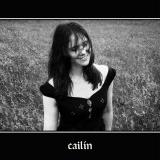
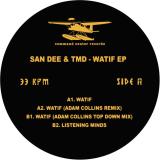

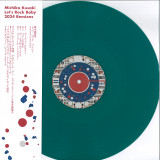
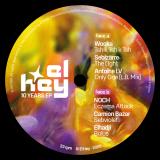
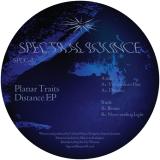


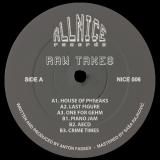

































![Cv313 - lost sequence ep [remastered]](https://www.deejay.de/images/l/6/5/209165.jpg)