Cerca:centuries

Generi
Tutto
LIBBY WEITNAUER - SIXTEEN KINGS’ DAUGHTERS

Libby Weitnauer’s first solo release is a contemporary exploration of two
traditional ballads.
One tells of a fierce fight against a male attacker, the other of heartbreak and
abandonment. Together with producer Mike Robinson, Weitnauer creates a
new soundscape for the tales and trials of women told in old songs.
This 45rpm 7” vinyl allows the listener to hear the stories unfold in their living
rooms much like they have been told for centuries.

pre-ordina ora23.07.2021

dovrebbe essere pubblicato su 23.07.2021

10,21

Last In: 2026 years ago
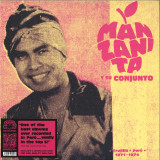
MANZANITA Y SU CONJUNTO - TRUJILLO, PERU 1971 - 1974

Following the 70s Peruvian cumbia compilation by Ranil last year, Analog Africa returns to Latin America to highlight the work of one of Perú’s undisputed masters of the electric guitar: Manzanita. This 13th release in the Limited Dance Edition Series includes 14 mostly instrumental compositions of electrifying Peruvian cumbia and guaracha. Manzanita's unique guitar lines rest on confident foundations that shifts gears effortlessly. Limited Edition LP in Gatefold Cover pressed on 180g high quality virgin vinyl

"I was in Lima, hanging out with collector-extraordinaire Victor Zela, who had spent the previous few years pouring his passion for Peruvian Cumbia into the blog „la cumbia de mis viejos“, a trove of incredible music. But after the birth of his first child, his priorities shifted and he decided to part with some of his rarest LPs. I was one of the lucky few given an early chance to examine his treasures, and when I picked up the album Manzaneando com Manzanita, Victor said: “Take it! its one of the best LPs ever recorded in Perú … easily in the top five”. That was all the encouragement I needed … two years later many of the songs from that masterpiece have made it onto Manzanita y su Conjunto, a compilation of electrifying Cumbia sides from Manzanita’s golden era.

Berardo Hernández – better known as Manzanita – first surfaced during the psychedelic Cumbia craze. At the head of the scene were the magnificent Los Destellos, whose leader, Enrique Delgado, was such a six-string wizard that other guitarists found it impossible to escape his shadow. But when Manzanita arrived, his electric criollo style sent shockwaves through Lima’s music scene and posed a serious threat to Delgado’s dominance as king of the Peruvian guitar.

Manzanita had come to Lima from the coastal city of Trujillo, five hundred miles up the coast – a place where Spanish, African and indigenous populations had been living and making music together for centuries – and came of age at a time when the first wave of psychedelic rock from the US and UK was starting to sweep the airwaves. But the sounds of Cream and Hendrix disappeared from the radio just as quickly in 1968 when Juan Velasco seized control of the country in a military coup. The new regime, which favoured local traditions over cultural ‘imports’ from the north, was a blessing in disguise for the Peruvian music scene.

Record labels flourished as new bands, raised on a hybrid diet of electric guitars and Cuban rhythms, rushed in to fill the vacuum created by the lack of imported rock. A new genre, known as Peruvian cumbia, was born and Manzanita quickly became one of its most original voices.

Starting in 1969, Manzanita y su Conjunto released a steady stream of singles that used Cuban guaracha rhythms as the foundation for dazzling electric guitar lines. After countless 45s and several years on the touring circuit, the band signed to Virrey, an important Peruvian label, and recorded two LPs acknowledged as masterpieces among aficionados of tropical music. Most of the songs on Analog Africa’s new compilation Manzanita y su Conjunto are drawn from those legendary sessions of 1973 and 74.

Although he scored a few more hits in the later 70s, his dissatisfaction with the music industry caused him to withdraw from the scene for several years; and when he finally retired for good, the golden age of Peruvian cumbia was a distant memory. But when Manzanita was at the top of his game he had few equals. Victor Zela was right: this is some of the best music ever recorded in Perú."

non in magazzino

Ordina ora e ordineremo l'articolo per te presso il nostro fornitore.

24,83

Last In: 4 years ago
Lucia Nimcová & Sholto Dobie - DILO

I first discovered khroniky – Ukranian folk songs – in the Highlands of Scotland. I was watching a screening of Bajka, a mesmerising documentary made by the filmmaker Lucia Nimcová and sound artist Sholto Dobie. I knew nothing about these ballads beforehand, but I was fascinated by these odd, beautiful songs, especially the easy way in which they mixed misery and levity, where gentle melodies blend with tales of dark violence. The folk songs describe hardship, murder, torture, death in gulags, heavy drinking, outsmarting men, love affairs. But they’re often very funny too – many of the songs make fun of marriage, and there’s an amazing subcategory of khroniky songs called potka (vagina) songs.

The khroniky have never been properly documented because they were considered too crude, or contained lyrics that were problematic, politically. When Ukrainian folk songs have been archived in the past, it’s normally a sanitised, more polite version of the ones that Lucia remembers from her childhood. Lucia grew up on the other side of the Ukrainian border in Slovakia. She is part of the Rusyn (Ruthenian) minority ethnic group found in the borderlands of Slovakia, Hungary, Romania, Ukraine and Poland. Rusyn is a centuries-old Slavic language, looked down upon as a poor, uneducated dialect by the neighbouring Ukraine and Slovakia. It was forbidden to talk about Rusyn culture at Nimcova’s primary school, but the khroniky stayed in her memories.

“I remember weddings when I was young,” says Lucia, who now lives in Addis Abeba, Ethiopia. “At the end of the night, when everyone was drunk and the young couple would go around their guests, people would sing in Rusyn. There was singing and dancing, and songs about being in prison or falling in love. I picked up the lyrics and sometimes my mum would make my sister and I sing them for people we met on the train. I was about five or six but the lyrics still come back when I sing to my kids.”

Determined that these rich, nuanced, unique songs shouldn’t be forgotten, she decided to record them. Over two years, Lucia, joined by experimental musician Sholto Dobie, visited Rusyn villages high in the Carpathian mountains to rediscover the songs and make the documentary. It was at the beginning of war breaking out in Ukraine in 2014.

“The Rusyn community is a very closed one,” explains Lucia. “Sometimes we’d have to wait several days to hear someone sing; we had to earn their trust before they shared something very personal to them. We’d stay up ‘til 5am at a wedding, then go straight to a morning baptism, or collect haystacks with the villagers, hoping they’d sing while they were working.”

DILO is named after an important independent Ukrainian daily newspaper that was shut down when the Red Army entered Lviv in 1939. The four long tracks on DILO blur field recordings with song; an unpolished, privileged glimpse into a private world. We hear dogs barking and insects buzzing in the summer heat, then a blast of hurdy gurdy or violin will drift in, or a plaintive song soars softly over the rural background noise, with casually harrowing lyrics about a cuckoo, “lifeless in a world of misery”, as translated in the album’s booklet.

For both Lucia and Sholto, it was important not to tamper too much with what they heard. “When you think about ethnography,” Lucia explains, “you have to have a lot of time, love and respect to document it with sensitivity.”

“The songs all have their own atmosphere and intimacy from the spaces they were recorded in and it was important to maintain these particularities and move with them,” adds Sholto, who now lives in Vilnius, Lithuania. “They guide and sometimes interrupt a journey between interiors – domestic spaces; in kitchens, by the fire – and exteriors; marketplaces, cow sheds. We used contact microphones to record metal bridges and fences, and we spent one afternoon recording a wool processing machine, the details of the rattling and tuning wheels are the ground layer for the third track.”

Lucia took rough notes and diary entries during the recording process, which are now shared in the booklet alongside a selection of lyrics, loosely translated, but revealing the depth and astonishing beauty that sometimes lies in the language of these folk songs.

The feel of the album is intimate, flipping between laughter, where a woman sings about selling her pussy to buy a cow in one track, then shifts to a raw, painful truth; an adult son asks his mother why his dad won’t be back for dinner, as he’s gone to war.

Since Lucia and Sholto began working together in 2014, they have shared the audio recordings on radio and film and shown photos in gallery spaces, making sure these special, smutty, poignant songs don’t get lost. This new record and booklet joins that same continuum, another glorious fruit from the same rare tree.

pre-ordina ora02.07.2021

dovrebbe essere pubblicato su 02.07.2021

23,49

Last In: 2026 years ago
Alleged Witches - Work After Machinery

Alleged Witches debut album breaks down centuries of human labour into an eight-part instruction manual for company best practice, stock control and tips for the optimum commute. The final break from nature, it's Pagan funeral marches, insect rhythms and doomed ambience for one last trip up the river. Artwork from Bill Connors.

non in magazzino

Ordina ora e ordineremo l'articolo per te presso il nostro fornitore.

16,77

Last In: 4 years ago
PAPIR - JAMS

Papir

JAMS

12inchPSYCHOBABBLE117LP
STICKMAN RECORDS
25.06.2021

She is the Moon soothed by the ancient lullaby of the Supernal Mother. An array of brightly coloured pebbles lie at her feet, a diadem of daffodils and dream-bits on her head, and a collection of reasonably priced records on her lap. She turns her gaze towards you, eyes filled with the howl of countless centuries and offers you an LP from her pile.

“Here, shove this on. It’s the new Purplehands. It’s class like.”

The record in question is ‘Intimate Fades’, an emotive meander through zones of bleepy ambient techno by way of electro, passing by sonic monuments to the likes of Golding and Rutter as it floats from A to B. In some distant, alternate universe the tracks on this LP soundtrack some 8-bit hero’s journey, a quest compelled by a sombre determination and Purplehands’ stylized sonic ruminations.

It is but the first star in an unfolding cosmos, mapped out to us by the High Priestess in her infinite wisdom.

pre-ordina ora25.06.2021

dovrebbe essere pubblicato su 25.06.2021

39,45

Last In: 2026 years ago
Jimmy Preacher Ellis - Since I Fell for You

Best known for his northern soul classic "Happy To Be", these two songs by Jimmy 'Preacher' Ellis are definitely his most underrated and rarest too! "Since I Fell For You" was his debut recording which he released together with The Centuries in the early 1960s. On the flip side we have the super funk of "Hard Times" with its fat open drum break.

Again, this release is nothing for those who are collecting classics only. However, open-minded djs and music enthusiasts around the world will most likely enjoy these two new discoveries.

pre-ordina ora07.05.2021

dovrebbe essere pubblicato su 07.05.2021

9,20

Last In: 2026 years ago
Johanna Summer - Schumann Kaleidoskop

Johanna Summer

Schumann Kaleidoskop

12inchACTLP9681-1
ACT
07.05.2021

The Süddeutsche Zeitung hailed Johanna Summer’s performance
at the Young Munich Jazz Prize in 2018 as “a small sensation.”
The pianist, born in Plauen in Saxony in 1995, had encompassed
the whole gamut, from jazz freedom to classical rigour. The critic
from this respected newspaper marvelled at her “amazing gift to
make well-known melodies sound so convincingly her own, they
develop a real sense of creative urgency.” Summer’s winning of
the prize itself became almost incidental; far more significant was
the fact that this competition heralded the arrival of one of the
most interesting new pianists in European jazz.
For her debut album, Summer has chosen to make compositions
by Robert Schumann the point of departure for her journeys into
pianistic fantasy. Schumann’s cycles of piano pieces
‘Kinderszenen’ (scenes from childhood) and ‘Album für die
Jugend’ (album for the young) had been familiar to her since
childhood, not just as player and listener but also - because
Schumann was from nearby Zwickau - as works by someone from
her region of Germany. From an early age she was enchanted by
both the melodic and the pictorial aspects of these short pieces.
And yet, to make her own adaptations of seven of the pieces was
a far from a simple task: “I worked for a long time on re-casting
them, trying out all of the pieces in all keys and in a lot of different
time signatures, creating several miniature interpretations and
finally arrived at this selection, which I shaped into a cohesive
sequence with a single arc.”
The depth of her involvement with the original Schumann pieces
comes across strongly on the album. As does her impressive and
complex personality as a jazz musician with a very wide range of
expression: romantic passages and an instinct for melody but also
powerful grooves and exciting innovations. And all imbued with a
sense of how to tell stories through music, a mature and clear
vision of dramaturgy, dynamics, tension and atmosphere. A
sentence written by Schumann seems to predict exactly the kind
of new life that Johanna Summer has breathed into these pieces:
“How infinite is the realm of forms, with everything that can be
used and worked on for centuries to come.”

pre-ordina ora07.05.2021

dovrebbe essere pubblicato su 07.05.2021

24,33

Last In: 2026 years ago
The Lasso - 2121

The Lasso

2121

12inchMMG001611
MELLO MUSIC GROUP
30.04.2021

On his latest opus, 2121, Michigan composer and multi-instrumentalist, The Lasso, creates a thermonuclear rocket ship glide of astral funk: a floating house party that exists at that eternal crossroads, suspended in timeless animation, the axis mundi where past, present, and future all get down. Its genesis traces back to the dozens of instrumental demos that The Lasso created throughout 2019 and early 2020, vulcanizing his singular twists on psychedelic rap with delirious mutations of vintage Ohio and Minneapolis funk. A long-brewing collaboration with New Mexico-based vocalist A. Billi Free, coupled with his introduction to the vocalist Rachele Eve, allowed for their voices to buoy his interstellar thump. Over the course of the summer of 2020, Lasso gathered various features from old and new collaborators to fill out the core vocalists, including Fat Tony, Hemlock Ernst (Sam Herring of Future Islands), Ill Camille, Namir Blade, and Nelson Bandela. In the fall of that year, The Lasso met up with The Saxsquatch and cellist Jordan Hamilton for the fait accompli: layering lush orchestrations to capture the haunted reverberations of a renowned 100-year old Michigan theatre. 2121 exists in its own galaxy, its own planetary tilt, its own sense of time. A record that asks whether the future is merely the place where the loop starts again, but this time a little more aged. As the centuries progress -- from 1921 to 2021 to 2121, with each repetition, we can hear the tape warble deepen and the hi-end lose its definition. What is it about this moment now that will shape our future ten decades hence? Life revolves in cycles, so you might as well maximize the upswing. If music is our collective vessel to track where and who we are and what we hope to lean towards in this next passage through history, the only sane answer is to turn 2121 up as loud as possible, until we all disappear into the shadows.

pre-ordina ora30.04.2021

dovrebbe essere pubblicato su 30.04.2021

24,33

Last In: 2026 years ago
FRANCISCO MORA CATLETT - MORA! II

Far Out Recordings is delighted to present Mora!, and for the first time ever on vinyl Mora! II. Mexican-American percussionist and former member of the Sun Ra Arkestra, Francisco Mora Catlett originally recorded and released his debut solo LP as a private press in 1987, but the sequel he recorded over the course of the next few years with an expanded Detroit jazz brass section was shelved for decades to follow. A pan-American melting pot of hypnotic afro-cuban rhythms, frenetic batucadas and fiery sambas, Mora I & II are holy grails of latin jazz, masterminded by an unsung hero of the genre.

Born in Washington DC, 1947, Francisco Mora Jr is the eldest child of two highly prominent Mexican artists, Francisco Mora Sr and Elizabeth Catlett, to whom this project was dedicated. Being born into a mixed heritage bohemian family provided Mora Jr with what he called a “creative, progressive, and healthy arts environment”, building the foundations for a fascinating career journey ahead. Mora grew up in Mexico City where he began working as a session musician for Capitol Records in 1968, before moving to study at Berklee Music College in Boston, MA in 1970. Once he’d completed his studies in 1973, he very briefly returned to Mexico City with the best intentions of cultivating an avant-garde movement in the city, but when the Sun Ra Arkestra came to perform, Mora ended up leaving with the band to tour the world for the next seven years, a decent innings within a group famous for its constantly evolving line up.

Settling in Detroit after his years with the Arkestra, Francisco set to work on his self-titled debut, gathering an ensemble of musicians that included keyboardist Kenny Cox, founder of the legendary Strata Records, esteemed bassist Rodney Whitaker of the Roy Hargrove Quintet and percussionists Jerome Le Duff, Alberto Nacif, and Emile Borde. The album openly embraces and unites the broad spectrum of improvisation, rhythm, and jazz that has thrived throughout the American continents for centuries. In Mora’s own words the album intended to “manifest the African heritage presence in the American continent.” Epitomising this outlook, album opener ‘Afra Jum’ deploys a melody based on Haitian, African and Native American motifs, which is expanded upon by the soulful excellence of the Detroit veterans Cox and Whitaker, amidst a backdrop of afro-cuban inspired percussion.

The sequel Mora II was recorded shortly after with an expanded line up that included trumpet legend Marcus Belgrave, famed for his work with Ray Charles, Charles Mingus, Hank Crawford, Eddie Russ and Wendell Harrison. Continuing the concept of the first album, the follow up moves deeper into South America with the samba jazz dance belter ‘Amazona’, led by the rich vocals of Francisco’s wife Teresa Mora. The ‘Afra Jum’ concept is further explored, with the original motifs beefed up by the additional horns, and interspersions of Sun Ra inspired rumbling free improvisations. This follow up album remained shelved until 2005, when Mora put it out as a now obscure CD titled River Drum, but only now has it been given the high quality vinyl treatment it so deserves, presented as the sequel to Mora! as originally intended.

Through the 90s and into the the 21st century Mora would continue his Pan-American explorations, moving toward a more electronic afro-futurist direction as part of Detroit techno pioneer Carl Craig’s Innerzone Orchestra. Mora also worked with Carl Craig, moog synth wizard Craig Taborn, and his former Arkestra colleague, the legendary Marshall Allen, to form the Innerzone Orchestra spin-off Outerzone, released in 2007 on Premier Cru Records. Mora I & II will be out as two vinyl LPs, CD and digitally 16th April 2021.

non in magazzino

Ordina ora e ordineremo l'articolo per te presso il nostro fornitore.

20,80

Last In: 4 years ago
PIERS FACCINI - Shapes Of The Fall

With his seventh studio album, Shapes of the Fall, Piers Faccini, pursues his passion for the kind of cross-cultural dialogues that have long been heard on Mediterranean shores throughout the centuries, bridging southern Europe with the Near East and Africa. Although the songs are written and sung in English, the musical influences in Shapes of the Fall draw heavily on Faccini's own Mediterranean ancestry, creating a musical voyage whose geography varies from song to song, crossing multiple frontiers with his voice over the course of the journey, from the snow tipped anglo-american Folk registers of songs like Paradise Fell or Together Forever Everywhere to the eerie desert blown notes of Middle Eastern or north African modes in tracks like Firefly or Dunya. Ruin or repair and hope or despair are the album's parallel narratives and if shapes of the fall are the myriad endangered forms that make up the mosaic of our environmental collapse, the descent, Faccini sings, is of our doing or undoing. ''Bring me my home back'' the chorus of the album's emblamatic opening song They Will Gather No Seed is not then, the singer's personal cry for a home but the animal lament of innumerable species on the brink of extinction. Faccini who has previously collaborated with cellist Vincent Segal for their 2014 duo album Songs of Time Lost has collaborated over the years with musicians far and wide in search of musical dialogue such as Ballake Sissoko, Ibrahim Maalouf or Jasser Haj Youssef. Two exceptional voices feature on the album; Californian singer-songwriter Ben Harper, a collaborator from his 2005 album, Tearing Sky and Moroccan singer and master of the trance traditions known as Gnawa, Abdelkebir Merchane. The album was co-produced by Piers Faccini and Fred Soulard.

pre-ordina ora16.04.2021

dovrebbe essere pubblicato su 16.04.2021

18,87

Last In: 2026 years ago
Bill MacKay and Nathan Bowles - Keys

Bill MackayandNathan Bowles

Keys

12inchDC784
DRAG CITY
09.04.2021

Bill MacKay and Nathan Bowles’ debut is well titled: keys are what they play
and keys unlock things too. Their trad bonafides are balanced with
inquisitive playing that adds surprise as a formal songwriting and arranging
tool. Spirited 21st Century folk music made of equal parts bluegrass,
classical, country, gospel and improv.
‘Keys’ is, on first blush, a collection of guitar and banjo duets - but from the
opening moment, it is clear that Bill and Nathan’s agreed-upon duo is a
living organism, growing as it goes. Behind the stately figures of ‘Idumea’, a
19th Century southern hymnal played out on their stringed instruments, a
low organ drone hums persistently, signalling that this music, while coming
from traditional places, is asking more of itself, seeking sparks of inspiration
to light the path forward.
Bill and Nathan met a few years back, if time has any meaning. It didn’t
seem to at the time - after the first night they hung out, it seemed as if
they’d known each other for a while already. A year later, in 2018, they
were booked as a duo at Cropped Out. Preparing for the show involved a
correspondence exchanging lots of provisional ideas, thoughts and music
back and forth from Chicago to Durham NC, then dashing through the ideas
again on the festival grounds an hour before the show. From this seemingly
hectic preparation, their playing that night was remarkably serene, a
spiritual treatise clothed in the casual and natural manner of the proverbial
porch, or in this case, riverside-jam, as the stage literally straddled the edge
of the Ohio River. It was a stellar, simpatico first moment that asked for
more moments like it.
After several more sets the following year, they felt ready to roll tape (as the
saying goes) and chose to do so in Chicago, with Nick Broste at The Shape
Shoppe. Again, an easy rapport prevailed, allowing them to work through
their collected ideas quickly and freely, with the moments of spontaneous
decision that can come only with comfort and trust in each other’s presence.
Throughout ‘Keys’, Bill and Nathan propel their power-folk engine with intent
and feeling, joy and solemnity, as images of wariness, wonder, anger,
deliberation, forgiveness, trust and devotion rise up from the music and roll
it forward into the unknown, a place we can sense both players are happy
to go.
Eight of the ten songs featured are originals, with the other two coming
from different centuries to this one. The diversity of song is matched by the
instrumentation: in addition to Bill’s guitar and Nathan’s banjo, they add
voice, piano, percussion, pump organ, requinto and electric organ to the
richness and rusticity, the traditionalism and open space of the
compositions.

pre-ordina ora09.04.2021

dovrebbe essere pubblicato su 09.04.2021

28,53

Last In: 2026 years ago
ELECTRIC JALABA - EL HAL / THE FEELING

Electric Jalaba

EL HAL / THE FEELING

12inchSTRUTLP226
STRUT
16.03.2021

Electric Jalaba comprises six accomplished musicians with an empathy thatfeels telepathic and a groove that immerses. In Arabic, the mother tongue ofMoroccan-born singer and guimbri player Simo Lagnawi, a leading practitionerof Gnawa music in Britain, they call this indefinable quality, "El Hal" - "Thefeeling". "It's the feeling that comes when we're playing and totally forgetting where weare," says producer and bassist Olly Keen. "The feeling of being grabbed by themusic and lost in the groove." 'El Hal / The Feeling' is the new third album fromElectric Jalaba and their first release in five years. It's a multi-faceted work thatfinds the band tighter than ever, deploying a vast cache of influences across ninetracks improvised and developed in their south London studio then deftlyproduced by Keen. Some tracks pay homage to the origins of Gnawa music,whose repertoire of Arabic-language praise songs contains remnants of WestAfrican dialects - Bambara from Mali, Fulani and Hausa from the Sahel region -that point to a centuries-old migration. "The trance-inducing effect of Gnawa was what hit us first. It was visceral, heartstopping," continues Olly, whose siblings - producer / keys player Henry Keen,guitarist / multi-instrumentalist Nathaniel Keen and singer / multi-instrumentalistBarnaby Keen - make up Electric Jalaba alongside revered Anglo-Italian kitdrummer Dave De Rose and Simo on vocals, krakeb and guimbri. "Simoselected the chant from the traditional song suites and, as a band, we extendedthese short pieces of ceremonial music and experimented with sound andstructure," explains Olly. Tracks include the Juno-led dancefloor single 'CubailiBa', 'Agia Hausa', a multi-layered wig-out that partly takes its inspiration fromSenegal's fiercely percussive mbalax rhythms and 'Daimla', a gloriously dubbyode to Allah and iconic maalems including the late Mahmoud Guinea. "There's avery strong rhythmic element within the band but because of our differentperspectives but the melodic components are really unique as well," says Henry.That feeling of being outside of yourself but totally within yourself at the sametime... That's what all of us, collectively, are striving for."

non in magazzino

Ordina ora e ordineremo l'articolo per te presso il nostro fornitore.

23,82

Last In: 5 years ago
Rise Black - Bad Robot EP

It didn’t always crave mayhem and destruction. There was even a time when it knew peace.

For centuries, its home was safe. Hidden away in the wintery recesses of MACS0647-JD, Alania provided peace and plenty. But that was before The Invasion. Before the Caucasians desecrated all that was sacred in their campaign for intergalactic dominance.

As one of the chosen, it was taken and forced to endure the horrors of captivity. Every memory and allegiance to its former identity was mercilessly reprogrammed. Forged in the fires of greed and death, Bad Robot was reborn.

Now, blinded by rage and bound to a power-hungry master, it leaves only blood and bones in its wake. One thing is certain: no one is safe. Bad Robot is coming for you.

non in magazzino

Ordina ora e ordineremo l'articolo per te presso il nostro fornitore.

7,14

Last In: 23 months ago
JILALA - JILALA

Until Now, Jilala has been a much sought-after phantom in relation to their better-known musical and spiritual contemporaries, The Master Musicians of Jajouka. Culled from three and a half hours of 1965 recordings by writers/artists/poets Brion Gysin and Paul Bowles, the first batch of Jilala recordings were released on a 1965 LP that was scarce even upon its initial release. The second batch of Recordings, which this LP has drawn from, came in the form of a CD by Baraka Foundation in 1998, which is also now long out of print. The Jilala brotherhood -- like the better-known Jajouka culture -- has pre-Islamic roots in Sufi mysticism that span across northern Africa from Morocco to India. Jilala shares the kinds of small, portable instruments historically favored by nomadic cultures. Even among the more ardent aficianados of "world music" these recordings have seldom been heard. In the original liner notes Ira Cohen provides a breakdown of the Jilala ensemble: "The instruments used are the shebaba, a long transversal cane flute, which leads the way; the bendir, a handheld drum resembling a tambourine without cymbals; and the karkabat which is a double castanet made of metal. On this record there are usually three flutes, six drums and one pair of castanets." In conjunction with the qraqaba -- an iron analog to the wooden castanets featured heavily in the Flamenco music of the Roma people that also flourished over the centuries mere miles to the north in southern Spain. These bendir drums provide a range very similar to that covered in contemporary popular music by the bass drum, snare, and cymbals that make up standard drum kit. The Trance-inducing grooves were major influences on such bands as Led Zeppelin, Agitation Free, Can and the Rolling Stones. The collective rhythms are often reminiscent early hip hop. oFirst time these tracks appear on vinyl - Pressed on 180 Gram Black Vinyl o Recorded by Brion Gysin & Paul Bowles in Morocco 1965 o Limited Edition of 300 Copies - DMM: Direct Metal Mastering o New Liner Notes by Peter Wetherbee o Contains insert of original liner notes from 1965 Jilala LP o Long out of print in any format for over 20 years.

pre-ordina ora05.03.2021

dovrebbe essere pubblicato su 05.03.2021

28,45

Last In: 2026 years ago
BAB - AÏDOUR

Bab

AÏDOUR

12inchCRWDSPCR021
Crowdspacer
18.02.2021

Culminating at 430m of altitude, mount Aïdour has been looking over the city of Oran for centuries. Legendary tales and myths are born in this place that have been inspiring writers through generations. It is there that the seeds and the roots of this record were planted, inspiring me to tell a story as well. 4 tracks about 4 destinations through a country of splendor. From North to South, East to West, from one century to another.Based on local field recordings associated with modern machines, this is the continuation of the legends started generations ago.

Bab is a member of French collectives 404 and Pardonnez Nous. He's currently making a documentary about Algerian Raï music which led him to visit the country multiple times recently and inspired him to do this dark and haunted EP, reminiscing of Muslimgauze.

non in magazzino

Ordina ora e ordineremo l'articolo per te presso il nostro fornitore.

8,78

Last In: 4 years ago
EVERYDAY DUST - OST: THE VALE

“The Vale” is in immersive electronic album of dark soundtrack work. It’s the first of several Everyday Dust releases scheduled for Castles in Space in 2021.

Everyday Dust is RJ McConnell. Based in Scotland, RJ ditched piano lessons when he realised I had no interest in being an instrumentalist. Instead he wanted to create his own musical works from the ground up. He goes on, “I was much happier working my way through music theory books on my own and applying my learning to my own music. We had a little home studio when I was a child. My Dad was also a musician and was involved in local amateur theatre where he prepared and operated all the sound cues on reel to reel tape. So from an early age I was messing around with tape machines, making tape loops and recording music. For years I tried to make the most interesting tones I could from a Yamaha home keyboard by passing it through my Dad’s guitar pedals, or recording to tape and playing it back at different speeds etc. My first proper synth was the Roland SH101.” He went on to study music and sound for theatre and worked for many years as a theatre composer before branching into larger events and eventually film and documentary work.

The Vale story starts in 2018. RJ again, “I was brought in as composer for an independent horror short that was being filmed in Istanbul. The film was a vampire movie, very atmospheric and beautifully shot. I was aware of being a Scottish composer on a Turkish film and therefore didn’t want to attempt in any way to make anything that sounded traditionally Turkish. I wanted to represent the idea of these ancient beings who had existed in one of the oldest cities in the world for centuries. I wondered how I could imply this “ancient” world with the instruments I had to hand. I recorded various old metal whistles, which were slowed right down to become eerie arcane horn blasts that sounded like they had come from another time. I also recorded lots of melodica, which was again slowed down to sound like wheezing old harmonium drones. I spent another day recording inside an old piano, plucking individual strings and also hammering them percussively with wooden beaters. Using synthesizers and effects as the “glue” to bring these sounds together I started to work on the cues for the film. I had scored most of the film by the time I heard it was being cancelled. The concept and story had been taken over by a streaming site who wanted to make it into a series - with a drastically different tone and style.

“Later that same year I had worked on a project that incorporated the folklore of a celtic water sprite who kept the waterfalls and streams running smoothly so they could turn the mills of the local village. In return the villagers would bring the water sprite bannocks (Scottish flatbreads) each day. I started to daydream about a darker, Lovecraftian twist on this story. Some Ancient One dwelling in the forests and controlling the water - the very life essence of the village - in return for offerings of the soul. The concept was filed away in the back of my mind for some months.

“The following year I was on a flight to visit my friend in Bodrum. He had been the producer and editor on the original disbanded Vampire film, and I found myself thinking about the project again. I wondered if the sound cue files were still on my laptop, which they were. It had been a year since I’d even heard them. Hearing the eldritch folk-tinged sounds of the whistles and plucked strings my mind instantly returned to the idea of the Lovecraftian folk horror story. I started jotting down notes and musical ideas and by the time I landed in Bodrum I already had the album title - The Vale. Having the album concept and prototype ideas to work with was a huge head start in making the album. Although all of the original cues were so dramatically developed and transformed that they really just served as the initial clay on the wheel.

“I used a Doepfer A100 modular synth to create the animalistic yelps, conches and horns that were improvised over the original cues as a response to the arcane “folk” world of the acoustic instruments. This half-acoustic half-modular landscape was the sonic scene-setter I needed to move onto the composition and musical journey of the album. I composed and developed most of the musical parts on an Oberheim Matrix 6 synthesizer. However all the percussion, rhythmic sequences and ornamental synth sounds were created from improvised modular sessions multitrack recorded. A lot of editing later, the soundtrack to the movie in my mind was finally there.

pre-ordina ora29.01.2021

dovrebbe essere pubblicato su 29.01.2021

24,33

Last In: 2026 years ago
Sugai Ken - Tone River

Sugai Ken

Tone River

12inchFIELD030
Field
27.11.2020

Caught somewhere between environmental sound studies and surrealist sonic architecture, SUGAI KEN helps mark the 30th release of Field Records with an ambitious new album. Commissioned by the Dutch Embassy in Tokyo, Tone River is the product of a year’s intensive work between artist and label, created in part to examine the relationship between Japan and the Netherlands with regard to water management.

While its doors to the Western world were closed during the 17th and 18th centuries, Japan kept abreast of Western science via a Dutch trade post in the bay of Nagasaki. When the country changed from a feudal society to a modern democracy through the turn of the 19th century, Dutch engineers lent their expertise to large-scale water management projects. One of the most prestigious projects of the time was the Tone River, which stretches 322 kilometers across Honshu, Japan’s largest island.

For this project, SUGAI KEN travelled to three points across the Tone River and used regular, binaural and underwater microphones to record environmental sounds, seeking to express the change in landscape of the river in its flow into the Pacific Ocean. On Tone River, these varied recordings are interspersed and juxtaposed with Ken’s distinctive take on synthesis, where raw and precisely sculpted textures and tones interact in stark, neutral space.

On this conceptually rigorous, yet beguiling and free-flowing record, SUGAI KEN glides between the elemental and hyper-synthetic in a flexible exploration of sound and story

non in magazzino

Ordina ora e ordineremo l'articolo per te presso il nostro fornitore.

15,08

Last In: 5 years ago
The Master Musicians Of Jajouka - Apocalypse Across The Sky

Available on vinyl for the very first time: the 1992 album "Apocalypse Across The Sky" by the legendary MASTER MUSICIANS OF JAJOUKA. Produced by BILL LASWELL, remastered for vinyl by HELMUT ERLER at D&M Berlin and according to Songlines one of the essential recordings of the ensemble.

No matter if you consider the MASTER MUSICIANS OF JAJOUKA a "4,000 year-old rock'n'roll band" (WILLIAM S. BURROUGHS) or even "6,000 years old" (ORNETTE COLEMAN) – without doubt, the music of the ensemble in all its incarnations over the centuries is deeply rooted in Sufi mysticism, paganism and the cult of the goat-god Boujeloud. According to a myth, many centuries ago Boujeloud appeared to a shepherd called Attar, an ancestor of today's ensemble leader BACHIR ATTAR, and till today every year at the end of Ramadan a fire in honour of the goat-god is ignited. This pagan root aside, the music performed in several hour long rituals on traditional instruments like tebel and tariyya (drums), ghaita (a woodwind instrument), lira (flute) and gimbri (stringed instrument) reveals hypnotic, trance-inducing qualities and is considered to have magical and healing properties.

In the 1950's, BRION GYSIN along with PAUL BOWLES were among the first westerners to witness such a ceremony, and it was GYSIN who invited the MASTER MUSICINS OF JAJOUKA to play in his restaurant in Tanger, and who later (in 1967) brought BRIAN JONES to the small village of Jajouka where the ROLLING STONES guitarist recorded the ensemble for what became the first "world music album" and that raised interest in the MASTER MUSICIANS OF JAJOUKA in the western world. Since those days, a wide number of creative minds like WILLIAM S. BURROUGHS, ORNETTE COLEMAN,MARC RIBOT, FLEA, TALVIN SINGH or the ROLLING STONES have worked with THE MASTER MUSICIANS OF JAJOUKA who are now performing regularly outside Morocco.

In 1991, iconic producer BILL LASWELL also embarked on a trip to the small village of just 800 inhabitants in the Rif mountains to record the group for his AXIOM label - "Apocalypse Across The Sky" is, unlike other LASWELL projects that bring together different cultures and genres, a pure document of the ensemble, raw and unpolished but exquisitely recorded, and ranks according to the world music magazine Songlines among the essential recordings of the legendary MASTER MUSICIANS OF JAJOUKA and is now available on vinyl for the very first time!

non in magazzino

Ordina ora e ordineremo l'articolo per te presso il nostro fornitore.

26,01

Last In: 3 years ago
Star Band de Dakar - Psicodelia Afro-Cubana de Senegal

Led by some of Senegal's most famous singers, like Youssou N'Dour and Laba Sosseh, Star Band achieved the perfect gumbo of Cuban and Senegalese sounds. Changüí, Guajira, Salsa, and Son mingled with cosmic Mbalax guitars, Sabar rhythms, Afro-Latin horns, and Spanish vocals spiced with a Senegalese twang.

With just two microphones and a four-track Revox tape recorder, Ibrahim Kassé, Star Band's founder and owner of Le Miami nightclub, recorded their entire catalog in his venue. Each album contained one stand-out Afro-Cuban tune, often covers of Cuban classics or original compositions using the deep, layered sound that had evolved over centuries from the roundtrip journey across the Atlantic. Six of Star Band's most psychedelic Afro-Cuban tracks, an ode to their finest hour, are selected here.

Remastered in the original mono, and accompanied by 12-page booklet containing an essay on Cubanismo in Senegal, a rare interview with Star Band guitarist Yakhya Fall and vintage photos from his personal collection, this album is the soundtrack to a time when Cuban music was the future for 1970's Senegal and commemorates the anniversary when another way — the Cuban way — was possible.

non in magazzino

Ordina ora e ordineremo l'articolo per te presso il nostro fornitore.

18,03

Last In: 6 years ago
Various - Tarantismo: Odyssey of an Italian Ritual

After their first issue focus on Benga, a Kenyan musical movement, FLEE is proud to present its new project: «Tarantismo: Odyssey of an Italian Ritual», available on 2LP Gatefold and as a bundle with 2LP Gatefold and a 168 pages Book.

Please note that the book only is not available

Dedicated to Tarentism, this project tells the story of a centuries-old choreo-musical ritual from Southern Italy, mobilizing frenetic rhythms and maniac dances, to exorcise women of a mysterious evil caused by the bite of a spider. Trans-disciplinary, this effort of documentation and artistic re-interpretation of one Europe’s most mysterious trance phenomenon is comprised of a double LP vinyl compilation including original recordings from Italian Maestro's Carpitella, Lomax and De Martino with reinterpretations from Don't DJ, Bottin, LNS, Bjorn Torske & Trym Søvdsnes, KMRU, Uffe and a hardcover Italian/English book.

non in magazzino

Ordina ora e ordineremo l'articolo per te presso il nostro fornitore.

26,01

Last In: 6 years ago
Various - Visitations (Chapter 1)

Various

Visitations (Chapter 1)

12inchEVENT0017
Chronicle
12.04.2019

We are not alone. Through the centuries we have created theories, heard stories, made films, and of course, music that is deeply inspired by the idea of the unknown, and the cosmos. We went far and deep into this cosmic void to gather 4 visionairs to help us present a new series on the label. "Visitations - Chapter 1", touches down through sonic dimensions with Damon Wild, Ben Sims, Steve Bicknell and Tadeo. These artists are amongst the few key figures who established the foundations of Techno music and continue to do so decades later.... Their influences are also undeniable to the aesthetics and sound of "Chronicle" and so we are more then honored to present each one of them on our new series. Their contribution to this compilation is of extraordinary measure, connected both in vision and purpose they provide us with extraterrestrial sounds that challenges the listener both intellectually and emotionally with each track standing strongly on its own while functioning in a cohesive way bringing the vision of Chronicle Records into focus.

non in magazzino

Ordina ora e ordineremo l'articolo per te presso il nostro fornitore.

9,87

Last In: 3 years ago
Bheki Mseleku - Celebration 2x12"

From the inheritor of John Coltrane's mouthpiece a re-integration of deep South African jazz roots with the Black Atlantic spiritual jazz continuum.

Celebration's release trumpeted the emerging dawn of South Africa's epochal changes. Sainted and blessed, Bheki Mseleku appeared as the herald of a new era, a prophet of rebirth and reconnection. This is a work signalling transition and change, and a sign of a South African music that was properly reconnected with global currents - a music that could journey far beyond the stifling combination of exile and oppression in which it had been bound.

Recognising Bheki as a kindred spirit to her late husband, Alice gave him the saxophone mouthpiece that John Coltrane had used during the recording of A Love Supreme. Coltrane was a permanent touchstone for the pianist, one of the few who Bheki felt had the same esoteric and spiritual focus as himself: 'the only musicians I know of who were deeply into this were Coltrane, and Pharoah and Sun Ra', he told an interviewer in 1992.

While the idioms of post-Coltrane spirit jazz are certainly to the fore on Celebration, they are energised by a swift and original musical vision, quite specific to Bheki's music, in which whole musical systems - the marabi and mbhaqanga jazz of the townships, American jazz, European classical, and more - are seamlessly mended together by the pianist's quicksilver musical sensibility and legendary technical ability.

Celebration was originally released on compact disc and cassette in the middle of 1992 by World Circuit. It was Bheki's first statement under his own name, and the first recorded presentation of his personal musical vision. This vision had been tempered across two decades which had combined intense professional playing with profound personal trials in both the spiritual and earthly domains, all set against the greater backdrop of South African political turmoil and exile in Europe.

The band brought together musicians hailing from three signally important points within the interconnected, communicating spaces of the Black Atlantic continuum - North America, post-colonial Britain, and southern Africa. With them, Mseleku created the first major South African-led musical statement to be produced after the sufferance of exile was ended. The ultimate and most egregious remnant of the centuries-long colonial era, apartheid, was finally being dismantled as they played. At this critical point, Mseleku's musical spirit work, channelled from a higher source, spoke of a time to come where all divisions might be transcended by a greater unity.

non in magazzino

Ordina ora e ordineremo l'articolo per te presso il nostro fornitore.

25,17

Last In: 4 years ago
Gazelle Twin - Pastoral

Gazelle Twin

Pastoral

12inchAGMR035LP
Anti Ghost Moon Ray
21.09.2018
  • 1: Folly
  • 2: Better In My Day
  • 3: Little Lambs
  • 4: Old Thorn
  • 5: Dieu Et Mon Droit
  • 6: Throne
  • 7: Mongrel
  • 8: Glory
  • 9: Tea Rooms
  • 10: Jerusalem
  • 11: Dance Of The Peddlers
  • 12: Hobby Horse
  • 13: Sunny Stories
  • 14: Over The Hills
disponibile anche

Coloured[16,77 €]


'Bound to shake your walls and rattle your windows' Max Reinhardt, BBC RADIO 3 "The first bit of evidence that Elizabeth Bernholz's next album Pastoral - due out in September - could be her best to date". THE QUIETUS "Will likely be one of the year's very best records.' CLASH 'What species is this What century' Forged in a rural idyll in Middle-England, the new album Pastoral, by Gazelle Twin, exhumes England's rotten past, and shines a torch over its ever-darkening present. Told through a troupe of multi-gender voices, in vernaculars old and new; from the shrill echo of folksong to tabloid-tinged jaunts, the artist aka Elizabeth Bernholz, presents the notion that 'there is horror in every idyll, and danger lurking beyond the 'quaint' '. The village square - once host to centuries of public torture - becomes a floral framed postcard, dolled-up for the Summer Fête. A sunny, afternoon walk over the hills unsettles a cloud of angry flies feeding from unidentifiable remains. Bigoted vitriol gently murmurs amidst tearoom chatter, as the neatly framed pastoral picture dissolves into a solemn ennui. Four years in the making, amidst life-changing events, including a move far out of the city, Pastoral will be the first major release by the artist since her widely acclaimed LP UNFLESH (2014, Anti-Ghost Moon Ray) and is seamlessly on-theme, together with Bernholz's J.G. Ballard-inspired A/V show 'Kingdom Come' (soundtrack released November 2017, Anti-Ghost Moon Ray) - a fascism-infused hellscape, this time set in deepest Old England. As its sole creator, Gazelle Twin 'The Composer, Musician and Producer' has crafted an album overflowing with a frenzy of traditional and contemporary musical tropes; from early music instrumentation - the harpsichord and the humble recorder, fed through myriad electronics - to the compelling, ritualistic application of found sample-looping. Beyond Bernholz's signature choral-infusions, here reverberating like a warped Sunday Service, there are even shades of '90s house and the once-thriving rural rave scene, albeit recalled as a watery, second-hand memory. In its consummation it is an album that feels pan-century, even pan-species. Set against a verdant backdrop of hedgerows and steeples, Gazelle Twin 'The Artist and Performer', constructs an eccentric and commanding visual embodiment of all-of-the-above - a costume fit for a court Jester of the 21st Century. The colours of Neo-Nationalism. Coke cans, and DANGER. 'It' (not 'she') hints at folkloric traditions with a footy mascot twist. The 'Ye Olde' and 'The Everyman' of the English cliché. Brandishing a sneer and a hobby horse. A riddle and a recorder. A jeer and a square dance in red, Adidas Gazelle's, and a mad, fixed GRIN - first glimpsed in the single, 'Hobby Horse' (22 June, Anti-Ghost Moon Ray). A deranged, absurd reflection of deranged and absurd times.

pre-ordina ora21.09.2018

dovrebbe essere pubblicato su 21.09.2018

16,77

Last In: 2026 years ago
Gazelle Twin - Pastoral

Gazelle Twin

Pastoral

12inchAGMR036LP
Anti Ghost Moon Ray
21.09.2018

'Bound to shake your walls and rattle your windows' Max Reinhardt, BBC RADIO 3 "The first bit of evidence that Elizabeth Bernholz's next album Pastoral - due out in September - could be her best to date". THE QUIETUS "Will likely be one of the year's very best records.' CLASH 'What species is this What century' Forged in a rural idyll in Middle-England, the new album Pastoral, by Gazelle Twin, exhumes England's rotten past, and shines a torch over its ever-darkening present. Told through a troupe of multi-gender voices, in vernaculars old and new; from the shrill echo of folksong to tabloid-tinged jaunts, the artist aka Elizabeth Bernholz, presents the notion that 'there is horror in every idyll, and danger lurking beyond the 'quaint' '. The village square - once host to centuries of public torture - becomes a floral framed postcard, dolled-up for the Summer Fête. A sunny, afternoon walk over the hills unsettles a cloud of angry flies feeding from unidentifiable remains. Bigoted vitriol gently murmurs amidst tearoom chatter, as the neatly framed pastoral picture dissolves into a solemn ennui. Four years in the making, amidst life-changing events, including a move far out of the city, Pastoral will be the first major release by the artist since her widely acclaimed LP UNFLESH (2014, Anti-Ghost Moon Ray) and is seamlessly on-theme, together with Bernholz's J.G. Ballard-inspired A/V show 'Kingdom Come' (soundtrack released November 2017, Anti-Ghost Moon Ray) - a fascism-infused hellscape, this time set in deepest Old England. As its sole creator, Gazelle Twin 'The Composer, Musician and Producer' has crafted an album overflowing with a frenzy of traditional and contemporary musical tropes; from early music instrumentation - the harpsichord and the humble recorder, fed through myriad electronics - to the compelling, ritualistic application of found sample-looping. Beyond Bernholz's signature choral-infusions, here reverberating like a warped Sunday Service, there are even shades of '90s house and the once-thriving rural rave scene, albeit recalled as a watery, second-hand memory. In its consummation it is an album that feels pan-century, even pan-species. Set against a verdant backdrop of hedgerows and steeples, Gazelle Twin 'The Artist and Performer', constructs an eccentric and commanding visual embodiment of all-of-the-above - a costume fit for a court Jester of the 21st Century. The colours of Neo-Nationalism. Coke cans, and DANGER. 'It' (not 'she') hints at folkloric traditions with a footy mascot twist. The 'Ye Olde' and 'The Everyman' of the English cliché. Brandishing a sneer and a hobby horse. A riddle and a recorder. A jeer and a square dance in red, Adidas Gazelle's, and a mad, fixed GRIN - first glimpsed in the single, 'Hobby Horse' (22 June, Anti-Ghost Moon Ray). A deranged, absurd reflection of deranged and absurd times.

pre-ordina ora21.09.2018

dovrebbe essere pubblicato su 21.09.2018

16,77

Last In: 2026 years ago
Various - ¡Desafinado! Spanish Bossa Nova (1963-1975)'

Mid last century. Commercial Music is a machine that generates dances that run each other over in the urge to reach the audiences and mark their place in time and history.

A never-ending list of choreographies co-habit: hully gully, madison, rock, limbo, twist and a long etcetera, until a new dance, bossa nova takes over the dance floors. Joao Gilberto, Tom Jobim or Vinicius de Moraes reach stardom in Brazil with this mix of samba and jazz, but the genre doesn't explode internationally until a few American jazzmen decide to import it. From there it reaches Europe, via France, thanks to Sacha Distel, the first on the continent to record an EP completely dedicated to this phenomenon.

It is 1962.

Shortly after in Spain, the number of artists including original or adapted tracks in their albums, escalate: Tony Vilaplana, Mina, Duo Dinámico, Latin Combo, Los 4 Brujos, Gina Baró, Grau Carol, Salomé or Marisol, who popularizes the new trend by recording 'Marisol rumbo a Río', a blockbuster film partially filmed in Brazil. The maestro Augusto Algueró writes the films soundtrack.

For this compilation we have consciously dug into the archives of three Barcelona based labels like Belter, Discophon and Olympo to serve Spanish sung bossa nova songs that have never, inexplicably, been released on vinyl, all songs are recorded during those two (musically speaking) prodigious decades: the twentieth centuries sixties and seventies.

non in magazzino

Ordina ora e ordineremo l'articolo per te presso il nostro fornitore.

26,01

Last In: 7 years ago
görkem özkaynak - turquoise

Görkem Özkaynak

turquoise

12inchSUR001
surach
22.06.2018

'Turquoise', that is Turkuvaz, is a French-origin word inspired by the color of the Mediterranean, located within the borders of Turkey. Meaning; blue is the color that plays the green. At the same time it is relative. Because both colors are in it, if you love blue you will see blue, if you love green you will see it green. It means heaven and earth. The eternity is turquoise... The eternity is infinite. At the same time; the boundary between the earth and the sky. Some will find love in it , some will find serenity, some will remember the loneliness and find sadness, embracing some with zeal and reminiscent of the return to the nest, the power of holding hands tightly with two hands.And according to my opinion, the concept of life, the mortal world, is how we see these lands curtained until the last breath of life that we have been living on for centuries.There are billions of beings in our sky and on Earth that do not attract our attention, We can not see, can not hear, can only feel, there are enough lights to count and never disappear in the stage. This EP that you hold in your hand is a reflection of it.
Music was the easiest way to reach you. In doing so, the motto was 'never disappearing at the stage'. I know, because if nobody hears me, God, the real dominion of light the true owner of all the darkness will hear me.

Each sound I created, I filled it with a light and I added a little more sand to the clock. Sounds I created is to show you your own technique of finding your way to light, to make you understand that you are not alone, and that there is someplace really there for you. Without much effort, resting and reviving.

I believe that every one of us who lives on earth has a specific, holy purpose. The important thing is to find and catch it. Our inner journey is to be able to complete our enlightenment as spiritually as possible. And I still believe that we always need music to do that. Because the sounds; they will never disappear.

Turquoise, which is the work of this enlightenment period, which I have lived and found to be my self, will be a source of light for you and help you find God who lives in you.

non in magazzino

Ordina ora e ordineremo l'articolo per te presso il nostro fornitore.

9,87

Last In: 7 years ago
Ustad Zia Mohiuddin Dagar - Raga Yaman (Rudra Veena // Seattle // 15 March 1986)
 
1

Raga Yaman
1) Alap
2) Jod
3) Jhala
4) Gat (Composition in Chautal)

Zia Mohiuddin Dagar : rudra veena
Manik Munde : pakhawaj
Gayathri Rajapur & Annie Penta : tanpuras

Recorded by unknown at the University of Washington, HUB Auditorium, Seattle, Washington 15 March 1986 , concert co-sponsored by the UW Ethnomusicology Division and Ragamala.
Original digitally processed audio recording made with Panasonic PV-9000 VCR, Sony PCM-F1, PZM mics. Mastered & Cut by Rashad Becker at Dubplates & Mastering 1117 & 0318.

Liner notes by Renaud Brizard, Stephen O'Malley & Ian Christe.
Front and back cover photos by Niranjan B. Benegal, Seattle Center Folklife Festival 1979. Elizabeth Reeke & Annie Penta on tanpuras.
Inner gatefold photography by Niranjan B. Benegal & Ira Landgarten.

Around ten years ago, deep into a cozy and hazy night following a concert with my sound brothers Daniel O'Sullivan and Kristoffer Rygg in London (as Æthenor), they graciously introduced me to a recording of rudra veena (a kind of noble deeper bass relative to the sitar, in a way) as performed by dhrupad master Zia Mohiuddin Dagar.

Dhrupad, for those who do not know, is a branch of Hindustani classical music said to "show the raga in its clearest and purest form". It's pacing concentrates heavily on the slow, contemplative alap section and works with specific microtonal gestures and deep characteristics of resonance ... in short I was hooked on this new (to me) and ancient form of music from the first listen, and feel that a more or less continual listening & reviewing of Zia Mohiuddin Dagar's recordings in the years that followed have influenced my own approach to music quite heavily (if, albeit, indirectly).

In early 2015 I was able to make contact with Zia Mohiuddin Dagar's son Bahauddin and some of his American students/disciples, primarily Jeff Lewis. Over time we developed a friendly and educational exchange, access a massive archive of recordings and developed these two paired titles for my label. It's been a long path to arrive at actually releasing them but also probably in many ways one of the most significant releases I've worked on. And I'm proud to be able to reveal these to date unreleased archival recordings of one of the masters of dhrupad, Z. M. Dagar, to the public for the first time.

Zia Mohiuddin Dagar was the nineteenth generation in a family tradition known as Dagar gharana, a rich lineage which continued and performed the musical form of dhrupad (Bahauddin Dagar continues the lineage as a master rudra veena dhrupad player of note today). Initially, dhrupad was a rigorous, austere, devotional genre that was sung in Hindu temples. But between the 16th and the 18th centuries, it became the preeminent genre in royal courts in North and Central India, and the Dagar gharana developed and continued publicly following the eventual loss of court patronage for dhrupad in the 19th century. The French ethnomusicologist Renaud Brizard covers the story of Zia Mohiuddin Dagar's life and teaching (a long story also in Seattle, my hometown!), the Dagar family and gharana, the rudra veena and more topics in an extensive set of liner notes in this release.

Raga Yaman was recorded at a public concert in Seattle at the HUB Ballroom at the University of Washington in March 1986 (the week after the accompanying release SOMA028 Ragas Abhogi & Vardhani was recorded) at the end of his last tour of the United States. Yaman was a special raga for Zia Mohiuddin Dagar, one of his signature raags. For centuries, Yaman has been considered as one of the most fundamental ragas in Hindustani music and is one of the first ragas which is taught to students. A deep knowledge of Yaman gives a key for understanding many other ragas. It's filled with tranquility, contemplation, pathos and spiritual yearning. .

-Stephen O'Malley, March 2018, Paris, France

non in magazzino

Ordina ora e ordineremo l'articolo per te presso il nostro fornitore.

26,43

Last In: 7 years ago
Ustad Zia Mohiuddin Dagar - Ragas Abhogi & Vardhani (Rudra Veena // Seattle // 9 March 1986)

Raga Abhogi
1) Alap
2) Jod
3) Jhala

Raga Vardhani
4) Alap
5) Jod
6) Jhala

Zia Mohiuddin Dagar : rudra veena
Annie Penta : tanpura

Concert recorded at the home of Shantha and Niranjan B. Benegal, Seattle, Washington 9 March 1986.
Recorded by Niranjan Benegal. Files obtained from Jeff Lewis.
Mastered & Cut by Rashad Becker at Dubplates & Mastering 1117 & 0318.

Liner notes by Renaud Brizard, edited by Stephen O'Malley & Ian Christe.
Front and back cover photos by unknown.
Interior photography by Niranjan B. Benegal, Dan Neuman & unknown, Seattle 1978-1980. .

Around ten years ago, deep into a cozy and hazy night following a concert with my sound brothers Daniel O'Sullivan and Kristoffer Rygg in London (as Æthenor), they graciously introduced me to a recording of rudra veena (a kind of noble deeper bass relative to the sitar, in a way) as performed by dhrupad master Zia Mohiuddin Dagar.

Dhrupad, for those who do not know, is a branch of Hindustani classical music said to "show the raga in its clearest and purest form". It's pacing concentrates heavily on the slow, contemplative alap section and works with specific microtonal gestures and deep characteristics of resonance ... in short I was hooked on this new (to me) and ancient form of music from the first listen, and feel that a more or less continual listening & reviewing of Zia Mohiuddin Dagar's recordings in the years that followed have influenced my own approach to music quite heavily (if, albeit, indirectly).

In early 2015 I was able to make contact with Zia Mohiuddin Dagar's son Bahauddin and some of his American students/disciples, primarily Jeff Lewis. Over time we developed a friendly and educational exchange, access a massive archive of recordings and developed these two paired titles for my label. It's been a long path to arrive at actually releasing them but also probably in many ways one of the most significant releases I've worked on. And I'm proud to be able to reveal these to date unreleased archival recordings of one of the masters of dhrupad, Z. M. Dagar, to the public for the first time.

Zia Mohiuddin Dagar was the nineteenth generation in a family tradition known as Dagar gharana, a rich lineage which continued and performed the musical form of dhrupad (Bahauddin Dagar continues the lineage as a master rudra veena dhrupad player of note today). Initially, dhrupad was a rigorous, austere, devotional genre that was sung in Hindu temples. But between the 16th and the 18th centuries, it became the preeminent genre in royal courts in North and Central India, and the Dagar gharana developed and continued publicly following the eventual loss of court patronage for dhrupad in the 19th century. The French ethnomusicologist Renaud Brizard covers the story of Zia Mohiuddin Dagar's life and teaching (a long story also in Seattle, my hometown!), the Dagar family and gharana, the rudra veena and more topics in an extensive set of liner notes in this release.

Ragas Abhogi & Vardhani were recorded in a private house concert in Seattle at the home of the Benegals in March 1986 (the week before the accompanying release SOMA029 Raga Yaman was recorded). The Benegals were friends (& Shantha Benegal was also a student) of Dagarsahib who sometimes hosted Hindustani music concerts in their home. It's a rare glimpse of a more intimate, personal and perhaps different kind of performance considering the form of dhrupad.

-Stephen O'Malley, March 2018, Paris, France

Stephen O'Malley would like to especially thank Bahauddin Dagar, Jeff Lewis & Jody Stecher for their enthusiasm, cooperation, patience, insight & advice toward developing these editions. Thank you also to Laurel Sercombe & John Vallier from the University of Washington Ethnomusicology Archives, Shantha Benegal, Philippe Bruguière, Dan Neuman, Ira Landgarten, Renaud Brizard, Ian Christe, Peter Rehberg, Rashad Becker, Daniel O'Sullivan & Kristoffer Rygg, all for their direct or indirect cooperation, assistance & patience.

non in magazzino

Ordina ora e ordineremo l'articolo per te presso il nostro fornitore.

26,43

Last In: 7 years ago
Dj Khalab - Zaire

Dj Khalab

Zaire

12inchOTCR12009
On The Corner Records
26.02.2018

Khalab has arrived OntheCorner with 'Zaire'.
'Zaire' is the beginning of a new narrative for the artist. In this first chapter Khalab creates urgent compositions with layers of sound from the past, present and future. 'Zaire' is underpinned by an intensely pounding heart of other-worldly percussion. The collaged loops frenetically jab in syncopation breaking off when the inherent swing casts its discrete groove to summon the dance. Unrelenting waves of synthlines, basslines and rhythm find harmony amongst the melodic chants and distortion.
Already making Gilles Peterson's 'All Winners' list on BBC 6 Music'Zaire' is a breathtaking nucleus for airwaves, dancefloors and, any digital devices masquerading as abeatbox. The tracks 'Aeh' and 'Night in the Jungle' are the vessel from which the heat of 'Zaire' steams. DJ Khalab has departed and with 'Zaire' Khalab has arrived On the Corner.
The two remixes on this EP offer magnified oppositions to the friction that Khalab seamlessly stiches into his tapestries of sound. The bass frequencies that Medlarbounces across his electro dirge, taking day into night, contrasts with the harmony and light of Will LV's journeying remix that drives through the troposphere.
'Zaire' is a prelude of the forthcoming 'Black Noise 2084' and the freeing of a narrative shackled in chains for centuries. Phrases of historic recordings collaged with future electronics and the analogue depth and artistic voices of the present makes this a ground breaking work of future music. The archive recordings bare a stark reminder of the need to face the barbaric recesses of modern human history. The many voices of Khalab's 'Black Noise 2084' are coming to be heard.

non in magazzino

Ordina ora e ordineremo l'articolo per te presso il nostro fornitore.

10,04

Last In: 8 years ago
Stefano Moretti - The Land Of Mikuni

THEATRE RECORDS WAS FOUNDED WITH THE IDEA OF CONCENTRATING THE MAJOR GENRES OF ELECTRONIC MUSIC ON A SINGLE STAGE. MANY CENTURIES OF THEATRAL ART HAVE TAUGHT THAT THE TRAGEDY AND THE COMEDY ARE STRICTLY LINKED IN SPITE OF THEIR DIFFERENCES. WITH THIS PILLAR THEATRE RECORDS CONTAINS VARIOUS GENRES THAT AT THE SAME TIME ARE SEPARATED IN TWO DIFFERENT SUB-LABELS.

THEATRE WHITE - THE MASK OF THE COMEDY INCLUDES THE STRENGHT AND MUSICALITY OF ELECTRO-HOUSE AND PROGRESSIVE-HOUSE.

THEATRE BLACK - THE MASK OF TRAGEDY KEEPS INSIDE THE SOUL OF GENRES AS DEEP-HOUSE AND TECH-HOUSE.

non in magazzino

Ordina ora e ordineremo l'articolo per te presso il nostro fornitore.

8,36

Last In: 8 years ago
Manu Dibango - Ceddo

Manu Dibango

Ceddo

12inchASVN043
Africa Seven
03.06.2017

For our second release we brought back to life African movie soundtrack "Ceddo" - composed by one of our favourite African artists, Manu Dibango. 6 tracks full of Funk. With a great story behind.... now it's getting a full vinyl re-issue!

"The film takes place during the 17th century : period of slave-trading and of the introduction of Christianity and Islam in West Africa. The adherents of these religions all desired and hoped to pack their buildings, mosques or churches,by whatever means necessary. Arms and alcohol began to appear, as well as shoddy godds --- gadgets from another era. Anyone with a rifle tracked down and trated men, women and children. Man became money. After having converted the royal family and government dignitaries, the Imam encounters the refusal of the "Ceddo". For the Ceddo, adhering to Islam or to Catholicism would mean renouncing African spiritualism, giving up being themselves. To accomplish his goals, the Imam usurps the throne with the complicity of the dignitaries --- similar to the coups d'Etat of our days. Combining spiritual and temporal power, the Imam reduces the recalcitrant to slavery in exchange for rifles. He obliges the others by force of arms to accept Islam. Ceddo is a film of reflexion, birnging together bits and pieces of facts and authentic events that took place in a period spanning the centuries up to the present day."

non in magazzino

Ordina ora e ordineremo l'articolo per te presso il nostro fornitore.

18,03

Last In: 4 years ago
Mulatu Astatke - Mulatu Steps Ahead

Mulatu Astatke

Mulatu Steps Ahead

12inchSTRUT056LP
STRUT
30.04.2017

Following his acclaimed collaboration on Strut with The Heliocentrics, the Father of Ethio jazz presents his brand new studio album, 'Mulatu Steps Ahead' for 2010! The album explores new directions in fusions of Western jazz with Ethiopian modes, moving forward the pioneering sound Mulatu developed during the '60s and '70s, showcased on the recent Strut compilation 'New York * Addis * London'.

For the new album, tracks were recorded with members of Either/Orchestra in Boston, with contributions by traditional Ethiopian musicians in Addis, members of The Heliocentrics and some of the UK's leading jazz and African players during the final sessions in London in November 2009.

Each track on the album tells its own story. The reflective, opener, Radcliffe, was composed specifically for the Radcliffe Institute during Mulatu's time lecturing at Harvard in Boston - the original score is now framed on the wall there. The Way To Nice was written and arranged on the tour bus during Mulatu's recent French dates - "with this track, you are travelling on a long journey, talking and thinking" explains Mulatu. "It was inspired by the many beautiful places on the coast road around Nice." Assosa adapts traditional music from the Assosa tribes in North-Western Ethiopia and Mulatu's Mood re-works a Mulatu jazz fusion composition from the early '90s into a new swinging Afro highlife arrangement. "I wanted to use West African styles within this version and try new ways of using the beautiful sound of the kora." Boogaloo and I Faram Gami I Faram reprise Mulatu classics with new, fuller scores and bonus digital track Derashe highlights the traditional diminishing scales of the Derashe people of Southern Ethiopia, a musical technique that would later feature in the classical compositions of Debussy and the jazz of Charlie Parker. "Many debate how this music developed but the Derashe have played these scales for centuries. It is an untold story."

non in magazzino

Ordina ora e ordineremo l'articolo per te presso il nostro fornitore.

22,27

Last In: 15 years ago
Black Flower - Artifacts

Black Flower

Artifacts

12inchSDBANULP02
SDBAN ULTRA
02.02.2017

Stirred up from deep within, from an abstract spiral of sound and movement, from a sensation of time and space absolving and converging at once, the Black Flower musicians have molded a tangible matter: the album Artifacts. Their second full album sounds international and ageless. Eastern influences, Ethiodub and jazz effortlessly merge. Fantasy and reality seem to fuse. In a word: nourishment for body and soul.

"Psyche-delicious and accessible 20th century Ethiodubjazz. As if John Zorn put on Fela Kuti's shoes and imbibed Mulatu Astatke's whirls."

Piloted by saxophonist /flutist /composer Nathan Daems (Ragini Trio, Dijf Sanders, Antwerp Gipsy-Ska Orkestra), this instrumental band aims for originality. Fellow musicians and 'brothers down the road' are Jon Birdsong (dEUS, Beck, Calexico) on cornet, Simon Segers (Absynthe Minded, De Beren Gieren, Stadt) at the drums, Filip Vandebril (Lady Linn, The Valerie Solanas, Antwerp Gipsy-Ska Orkestra) at the bass and Wouter Haest (Los Callejeros, Voodoo Boogie) playing keys.

For many of us, the Ethiopian aspect once made known to the world by Mulatu Astatke will stand out. Still, Black Flower further adds oriental scales, Afrobeat à la Fela Kuti, jazz in a John Zorn way and varied western music traditions such as rock and dub. The resulting melting pot is undoubtedly inspired by Nathan's distant travels and the multifariously colorful city of Brussels.

...Pretty legit if you ask me - LeFto, Studio Brussel

After their well-received debut album Abyssinia Afterlife (2014, W.E.R.F. / Zephyrus Records) that created an atmosphere of mythical figures and psychedelia, Black Flower now reflects on ancient and modern cultures. The album title Artifacts refers to centuries-old fragile objects or tools that empowered the development of human culture. The world today would look entirely different without those artifacts. The seemingly brittle suddenly becomes a powerful welding cornerstone. Add the musicians' personal musical backgrounds and the result is an album with an ageless mystique. Artifacts is the synthesis of different cultures, of the past and present, and personal and collective memories. It is the soundtrack to modern reality, based on the elements that connect us.

Brilliant - Gilles Peterson, BBC Radio 6

One of Belgium's Best Bands of these past years (...) Black Flower does not simply play a tune, they always groove! - Kurt Overbergh, Ancienne Belgique

Uncomplicated originality, plenty of space for fantasy and an organic tone: those are the ingredients for Black Flower to lay claim to an age-old human ritual: dancing! Still, Black Flower also stands out in various other settings. Their audience at a jazz club will have felt exalted, their audience at a late-night show will not have resisted dancing. The band wields influence over their surroundings in a way only heart-and-soul musicians can. This mastery has repeatedly taken them to United Kingdom, France, the Netherlands and Germany.

non in magazzino

Ordina ora e ordineremo l'articolo per te presso il nostro fornitore.

16,09

Last In: 5 years ago
Sven Kacirek - Songs From Okinawa

Sven Kacirek

Songs From Okinawa

12inchPINGIPU48
Pingipung
20.11.2015

On his album Songs from Okinawa, Sven Kacirek explores the traces of a unique traditional music from the famed Pacific islands south of Japan. He recorded a wide range of local musicians - both amateurs and well-known figures - and carefully wove in his own instrumentation: marimba, xylophone, and piano. The result is an album of timeless beauty and quiet elegance. The southern Japanese archipelago of Okinawa has a complex and turbulent history, particularly shaped by the conflicts between Japan and the United States - an aspect thoughtfully outlined in the liner notes by Mina Mermoud. Over the centuries, this layered past has given rise to a rich and distinctive musical culture. During the U.S. military occupation of the islands, Okinawan musicians began blending traditional forms with Western styles. Today, Okinawan music is recognised in Japan as a genre of its own. "I"m fascinated by the sublime simplicity and precision of Okinawan music - from its orchestration to the phrasing of the singing voice," says Kacirek. True to this admiration, he keeps many of the original vocal and instrumental recordings intact, gently adding his marimba or percussion without ever pushing himself into the spotlight.

non in magazzino

Ordina ora e ordineremo l'articolo per te presso il nostro fornitore.

19,96

Last In: 10 years ago
Articoli per pagina:
N/ABPM
Vinyl