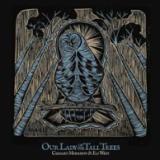
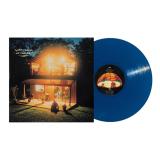
Their music draws from old folk sources, but it sounds vibrantly alive. On Our Lady of the Tall Trees , their sophomore release, the duo builds on the sensitive folk of their debut and shows why they are some of the finest roots songwriting of their generation. Now, more than a decade later, these beloved recordings are finally being pressed on vinyl for the very first time in special limited- edition releases. Together, Cahalen and Eli tap the root of the old country and bluegrass duets. As the sparse landscapes of Cahalen's vocals reflect the warm glow of Eli's voice, it's clear that this duo was made to sing together.
Their music draws from old folk sources, but it sounds vibrantly alive. Produced by Tim O'Brien, I'll Swing My Hammer With Both My Hands is the epic culmination of the duo's original run together. Now, more than a decade later, these beloved recordings are finally being pressed on vinyl for the very first time in special limited- edition releases. Together, Cahalen and Eli tap the root of the old country and bluegrass duets. As the sparse landscapes of Cahalen's vocals reflect the warm glow of Eli's voice, it's clear that this duo was made to sing together
Following the success of Naturalisten’s release “Forms”, E2-E8 is back with the latest offering from Milan-based artist Joseph Tagliabue. “Espansione” presents a meticulously crafted sonic exploration that transcends conventional genre boundaries. It is a double LP consisting of four distinct parts: an ambient concept presented in Part 1 & 2, and four techno tracks in Part 3 & 4. This structure makes for a multifaceted listening experience, seamlessly blending organic textures with synthetic manipulations.
Part 1 & 2 delve into immersive, post-natural ambient soundscapes. Tagliabue constructs a vaporous, dreamlike environment through the interplay of modular synthesis, analog effects, and meticulously designed soundscapes. The journey into the forest is not a merely thematic narrative, but rather a visceral sonic realisation. These expansive compositions, devoid of clear demarcations, invite the listener to a lysergic, meditative retreat, where ritualistic and mystical elements converge. The blurring of lines between machine and nature is a central motif, achieved through ethereal layers seamlessly integrated with ambient textures.
The album as a whole is a sophisticated sound collage, highlighting Tagliabue’s mastery of sonic manipulation. The dense sonic flow, characterised by echoes of distant temples and molten synthetic modulations, creates a compelling auditory and potentially visual experience. The interplay between organic and synthetic, combined with the album’s thematic depth, makes Espansione a noteworthy evolution in Joseph’s artistic expression. A work designed to be both deeply listened to, and physically experienced.
Early support comes from Vladimir Ivkovic, Marco Shuttle, Konduku, among others.
out of Stock
Last delivered 4 days ago available to reorder, subject to availability
Have Isaac Carter & Callum Asa made the most tasteful tech house EP of recent memory? The short answer is
yes....
Isaac and Callum, known for their respective club nights: OCHI and Planet People have been quietly chipping away at the coalface of underground dance music for quite some time now.
Isaac - perhaps known more widely as a regular at Circoloco & Phonox has shared bills with the likes of Moodyman, DJ Bone, Kai Alce, Laurent Garnier and Marcellus Pittmann whilst being championed by Joy Orbison, Ben UFO, Moxie, Seth Troxler, Raresh and Floating Points to name but a few. With such an impressive CV and wide ranging support, it’s wild to note that the first EP released on his own label, OCHI only came out in 2023. His star is clearly ascending with rapidity - so when we throw long term collaborator Callum Asa into the mix, things start to get really interesting. Calum has been running Planet People for the last couple of years, welcoming incredible names such as Shed, Surgeon, Willow, Ploy, Cooly G, Rroxymore and so many more. Steel sharpens steel and having been surrounded by such esteemed talent, it’s clearly rubbed off on the pair who present 4 polished, meticulously constructed, club ready masterpieces, each with their own distinct feel and an insatiable groove.
‘Feel Me’ sets the scene with a descending baseline that would eek a wiggle out of the most reluctant spectator. The twisted dub eeks out even more groove, locking in a more sinister bounce for the heads. By The time ‘Understand’ get’s into full swing, we’re already under the spell of Carter & Asa, this is the kind of roller that could go on forever and ever. The synth embellishments and washes of analog synth pull us deeper and deeper in, prepping us for the finale , ’Try You’ which simmers with deep, brooding intensity.
The magic of the dup’s appeal is that this EP will find its way into the bags of the deepest diggers and also appeal to a new generation of house fans. Elements of it are accessible , but in the right hands - the EP will open a portal to new worlds.
T-WAVE (original release date: 1 June 1980): 180g vinyl weight, clear orange vinyl.
Remastered & cut by Alex Wharton (Abbey Road Studios, London).
Sixth original album. The album is bursting with exhilarating funky sounds, including ‘Early Bird’, which starts with the sound of an alarm,
and ‘My Secret Beach’, a commercial song for the Mazda Familia.
out of Stock
Last delivered 7 days ago available to reorder, subject to availability
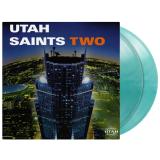
Two is the second album by British electronic group Utah Saints, and was released in 2000. It's the result of a eight-year layoff that was this close to retirement (in techno terms). In 1992, Utah Saints' self-titled debut was one of the year's most exciting dance releases. Jez Willis and Tim Garbutt's anthems boomed out with the exuberance of copyright liberation, but their unreleased second album was permanently bricked up by record label ffrr for copyright violation.
But in 2000 they finally got to release this beauty! Two features guest apparances by Michael Stipe (R.E.M.), Chuck D (Public Enemy) and Edwin Starr. On Two, you can hear samples ranging from Metallica, Average White Band, The Pretenders, The Stooges and Joyce Sims, so you can only imagine which samples were used on that unreleased album!
Two is available as a limited numbered edition of 1000 copies on clear/turquoise marble vinyl, and is packaged in a gatefold sleeve.
out of Stock
Last delivered 7 days ago available to reorder, subject to availability
Six of Ayumi Hamasaki's classic albums and her 2025 single "mimosa" are being released on vinyl!
Since its release in April, her latest album, "mimosa," has been a long-running hit across generations and is now available on vinyl on 7-inch colored vinyl.
In addition, six of her early masterpiece albums, which became a hit when their cover art was featured in the "mimosa" music video, are also being released
on vinyl at the same time!
"mimosa," a 2025 single that became a huge hit as the theme song for a TV drama, is now available on special 7-inch colored vinyl (clear yellow).
out of Stock
Last delivered 7 days ago available to reorder, subject to availability
Trumpeter Don Cherry, an Ornette Coleman soulmate and a world musician decades ago, became one of jazz's many early losses 10 years back. But saxophonist Pharoah Sanders, who joins him on this fizzing 1966 set, has since ascended to cult status, and he is still around to admire . In the 1960s, he knew no melodic fear at all, in which respect he was aptly partnered with Cherry. This is a quartet set, strongly influenced by the melodic approach of Coleman, but with a fierce abstraction of tone quite different from Coleman's playful lyricism.
Moreover, the rhythm team of Ed Blackwell on drums and Henry Grimes on bass provides a scintillating underpinning for the music that is worth listening to all on its own. Sanders' mix of Coltrane's yearning long notes, Ayler's ghostly, fluttering wail, Coleman's fast, bumpy phrasing and his own manic bagpipe screams certainly separates the faint-hearted from the stayers on the opening Awake Nu. But the conversation between Sanders and Cherry is light, lyrical and engaging on The Thing, and the saxophonist even gets into a stubborn, Sonny Rollins-like repeating Latin vamp on There Is the Bomb. An unflinchingly quirky classic. (THE GUARDIAN)
The latest release from Rainbow Disco Club’s label imprint, Beyond Space And Time, is the debut compilation from The Melting Hours, a live project by Wata Igarashi and Kuniyuki. WataIgarashi continues to make his mark on the history of techno, whilst Kuniyuki has long been revered as one of Sapporo’s greatest treasures. The two artists, who have long held mutual respect for one another, met whilst performing at the Draaimolen Festival 2025, and this encounter gave rise to The Melting Hours.
‘Blue Sun’ is imbued with a freshness reminiscent of the ambient jazz masterpieces released by prestigious labels such as ECM and Windham Hill. ‘Liquid Dunes’ sees the organic tones of the flute and percussion melt into over ten minutes of abstract sound textures, whilst the breathtaking ‘Cloud Touch’ awakens amidst a swirling vortex of pulsating downbeats and arpeggios. It is said that ‘Blue Sun’ was created by reconstructing studio rehearsal recordings, whilst ‘Liquid Dunes’ and ‘Cloud Touch’ were crafted from live recordings at Draaimolen 2025. The essence of these works—and indeed of the project The Melting Hours itself—lies at the heart of their improvisational nature.
It brings to mind the Rainbow Disco Club event back in 2026, where they wove their sounds amidst fresh greenery and surrounded by listeners under a clear blue sky. It felt as though the pulsating energy was spreading across the dance floor, guided by a session from The Melting Hours that seemed almost like a living creature. The organic breath one senses in this work not only evokes precisely that scene but also allows us to feel the unique, ephemeral nature inherent in this project—and, consequently, the boundless possibilities that stem from it.
Rainbow Disco Club のレーベル・ライン'Beyond Space And Time'から放たれる最新作は、Wata IgarashiとKuniyukiによるライブ・プロジェクト、The Melting Hoursによる初の音源集だ。テクノ史に残る実績を現在進行形で刻み続けているWata Igarashi、長きに渡り札幌の至宝として尊敬を集めてきたKuniyuki。兼ねてよりリスペクトを送り合ってきた両名がDraaimolen Festival 2025への出演を契機に邂逅し、始動したプロジェクトがThe Melting Hoursである。
快晴の元で新緑とリスナーに囲まれ音を紡いでいった、去る2026年のRainbow Disco Clubを思い出す。まるで、生き物のようなThe Melting Hoursによるセッションに導かれ、脈動するエネルギーがフロアに伝播していたようだった。この作品から感じられる有機的な息遣いは、まさにそんな情景を思い起こすものであると同時に...このプロジェクトが宿すその場/その時限りの唯一無二性と、それ故に広がっていく限りない可能性をも感じさせてくれる。
The pinnacle of Japanese AOR, delivering the finest mellow sound. The only album left behind in 1982 by the male-female unit of Hiroshi Narumi and Etsuko
Yamakawa is being reissued on clear deep blue colour vinyl.
After leaving Terumasa Hino’s group and moving to the United States, Mikio Masuda returned to Japan and formed the fusion band Mickey’s Mouth.
The band’s first album, released in 1976, is being reissued on clear yellow colour vinyl.
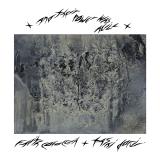
And Their Power Is Alive is a collaborative record between the Vashon Island based artist Faith Coloccia and Ashville based guitarist Tashi Dorji out September on Whited Sepulchre Records. Coloccia and Dorji’s longstanding collaborative relationship and friendship bolsters this massive conceptual weight –– the music is as stirring as it is gorgeous, as exploratory as it is surefooted. And Their Power Was Alive manifests and rises up as a profound iteration of the interrelatedness of the personal and the political, poetically. Coloccia’s plaintive voice, as always, is clear and stirring, intimate, close, and notably here recorded without reverb. She is steady and her lyrics echo dream phrases which visited her during major life shifts: a drive through the arid desert, explaining the concept of private property to the next generation, intergenerational knowledge and caregiving. All of this establishes a melancholia of reflections on land, history, scale. The first words sung on this record are: “Cosmic Horror! I am nothing, I am no-one” and even here, Coloccia is steady. Dorji’s glacial layers of distorted howling guitar create a rise and crest and fall –– symphonies of noise, roaring but distant like fire in the hills, interwoven with piano, organ, and tubular bells.
The long-awaited repress of "Baby EP" - Ricardo Villalobos's first solo single on raum...musik under the Villalobos moniker - is finally here. Featuring two tonally and energetically distinct cuts of dancefloor minimalism that are undoubtedly Ricardo. "Baby EP" sounds as cutting-edge as when it was initially released 12 years ago.
From the slightly euphoric and light-hearted atmosphere of 'hansup' (A) to the emotionally charged groove of 'Baby' (B), "Baby EP" travels through a world of intricately layered micro/macro percussions, eloquently programmed synths, and Ricardo's own vocals spread across the frequency spectrum - an added human touch to his usual machine funk. And while rhythm seems to be at centre stage here, in usual Villalobos fashion, both tracks resolve into pure jazzy melancholy. After dragging the listener into a world of (very) human feelings so uncommon in electronic dance music, "Baby EP" makes it very clear you are listening to Villalobos.
out of Stock
Last delivered 12 days ago available to reorder, subject to availability
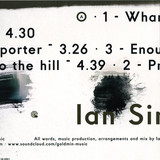
Ian Simmonds presents his new album "The right side of kind" on Goldmin Music. Ian Simmonds is one of the most creative Nu-Jazz/Downtempo producers of the last 20 years.
Although these words can't describe his music properly as the man is always looking for an innovative sound that could cross the boundaries of musical styles. The Welsh-born found his inspiration in music from all over the world and his songs don't only express one clearly defined feeling. They are more of a subtle mix of emotions that let the listener interpret it his way. As Ian said himself: "I think there's a lot of beauty in melancholy". For example, he spent over a year living in a castle in Germany to record his last album " The Burgenland dubs" in a solitary atmosphere where he could really think, breathe, make a plan. That's the point, Ian is always re-thinking things over, looking for a new source of inspiration which results in a constant evolution. He had the chance to collaborate both with amazing musicians like Goldfrapp and electronic music heads like Mathias Kaden, Soulphiction, Krause Duo..
The story of each re-release begins with the original. In the late 90s, Uwe Zahn (Arovane), along with Robert Henke (Monolake) and Stefan Betke (Pole), began releasing music on Torsten Pröfrock’s (Dynamo) newly launched DIN label. This was a very inconspicuous undertaking, but fans of the flourishing IDM, glitch, and constantly evolving abstract techno genres quickly picked up on the quality of sound coming out of Germany. After a few successful EPs, Zahn began working on his debut full-length, Atol Scrap. The release was a success, at least in the underground circles, where followers of the melodic harmonies, stuttering off-beat rhythms, and, most importantly, advanced sound design feverishly consumed the imprint’s output. There was only one thing missing – the album was never pressed on vinyl, and for decades remained in the digital domain. The fans, of course, inquired. There were multiple offers on the table, but Zahn retained control until he was assured that it was properly attained. “I thought of taking everything into my own hands and releasing the record myself,” says Zahn, “but at the end of last year, Matthias from Keplar asked me to re-release Atol Scrap on vinyl.” The label and its owner revolve in the Morr Music universe, and so it made sense for Zahn to trust the platform to treat the record right.
Listening to Atol Scrap over twenty years later it is inane not to admit how well it has held up. Where other genres clearly aged, becoming stale, bland, and dull, the music on eleven tasty tracks still keeps the neurons tickled with each note. More than an echo of the past, the bottled sound truly has matured. Many of the newly evolving techniques are recognizable on the album. “I created the digital artifacts with a digital multi-track recorder, the Fostex D80,” recalls Zahn. “The thing had a scrub wheel with which I could achieve wonderful glitch effects by winding through the audio data. I have sampled and further processed these artifacts.” And this approach is still embedded in Zahn’s sound design. “I still use my 24-track analog desk from Tascam to mix my audio. I love to use hardware synths and samplers. I’ve definitely built upon my studio experience in the 90s.” From this debut to the most recent output, Arovane’s sound has evolved to become more intricate, detailed, and pronounced. “My music has become much quieter and much slower. But that’s probably also due to the noise in the world.” And just as Atol Scrap reminds Zahn of the past, retaining charm preserved in a container traveling through time, it also jitters memories of long ago, when we were twenty years younger, less experienced, and bold. For me, among the many records of the time, this album held a special place in life, my heart, and many CD boxes moved across the world. And now I’m only happy to restock the vinyl space, where Atol Scrap belongs among the beloved records. Welcome home. - Mike Lazarev
Remastered and cut to vinyl by Kassian Troyer @ D&M. Cover art by Jim Kühnel based on a photograph by Uwe Zahn.
out of Stock
Last delivered 12 days ago available to reorder, subject to availability
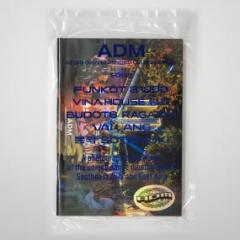
228 page photobook, printed on high quality Japanese paper.
Paperback
Size: 257 x 182 x 7mm
Enclosed in a printed clear plastic bag
Soi48 proudly presents this book, a photographic document of the unique dance music clubs
and culture of Southeast Asia and East Asia. The photos, from the years 2017 through 2025,
were taken in nightclubs, discos, festivals, raves, sound system parties, private parties and
migrant worker clubs — the places where Asia’s unique dance music genres are born and
thrive. ADM, with its exclusive on-the-spot snapshots, provides an extraordinary visual
archive of Asian contemporary dance music. Journeying through Thailand, Vietnam, Laos,
Malaysia, Indonesia, Philippines, Myanmar, Taiwan, Korea and Japan, Soi48 captures
glimpses of how people create their nights, visually comparing the differences between
countries in fashion, dance style, lighting, club interiors, flyers and more, showcasing the
distinctive entertainment culture that each country has created. The 167 photos also feature
the pioneering DJs and track makers who built unique music genres in each country, such
as Budots (Philippines), Vina House (Vietnam) and Saiyo (Thailand). Also of note: the book
provides a valuable record of nightlife during the COVID-19 pandemic; captures the energy
that migrant workers release in clubs on weekends; and in general showcases the ingenuity,
wit and passion of music lovers throughout the region.
Soi48:
A duo, comprising Tokyo natives Keiichi Utsuki and Shinsuke Takagi, that promotes the
magic of Asia and Asian music through DJ-ing, writing, design, and party activities. Their
interests range from traditional music to cutting-edge dance music, released on physical
media as well as on the internet. In addition to supervising the film Bangkok Nights (Kuzoku)
and the EM Records Thai music series, they introduce the joys of Asian music and travel
through talk events, TV, radio appearances, etc. Their books include TRIP TO ISAN: A
Traveling Thai Isan Music Disc Guide (DU BOOKS), OMK#001 (OMK), and ADM: Asia's own
unhinged club culture. As ever, they enthusiastically continue to research dance music and
sound system culture in Asian countries.
*Re-release of Holy Fuck’s 5th album originally released in 2020, now on clear vinyl limited to 500 copies*
Holy Fuck have today announced details of new album 'Deleter', which will be released on January 17th and is further previewed with the video for acclaimed latest single 'Luxe' (ft. Alexis Taylor). Having just concluded a US tour alongside Hot Chip, the seminal Canadian band will play a selection of European headline dates later this month (with a London show at Moth Club on October 23rd selling out immediately).
Arriving at a moment where attention spans are shot and anxieties are going into overdrive, 'Deleter', Holy Fuck’s fifth studio LP, is a defiantly full-bodied affair. Polyrhythmic and pleasure- focused, 'Deleter' sees Brian Borcherdt, Graham Walsh, Matt Schulz, and Matt “Punchy” McQuaid utilises their signature sound - seamlessly fusing the gauzy drive of krautrock and deep house’s dreamy ineffability, expertly blending purring motorik percussion with the sort of fuggy synthetic fizz and tang they are renowned for.
From the thrusting minimalism of opener ‘Luxe’ through to the triumphant chug of closing track ‘Ruby’, via club-ready rollocker ‘Free Gloss’ and the cosmic clatter of ‘San Sebastian’, Deleter is a record that joins the Holy Fuck dots within their widescreen, technicolour, crescendo- heavy sound.
*Limited edition (500) reissue of The Orchids second album – originally released on Sarah Records in 1991- remastered with the 7” and E.P tracks from the time. Translucent pink*
“The Orchids have a lightness of touch, an autumnal and mellow fruitfulness, a clear-eyed pop nous. Imagine some nexus that takes in Felt, Orange Juice, The Beach Boys and The Go-Betweens”
-Stuart Maconie
“The Orchids can come on like esoteric angels high on Felt and Massive Attack”
– John Mulvey, NME
The early summer bloom of 1992 felt like it had been pollinated by a lot of sunshine-loving records from the year before, optimistic headrushes that embraced hedonistic bliss or at least a sweeter ride. There was still an element of bedroom wistfulness to singles like Higher Than The Sun, Nothing Can Stop Us and even Paris Angels’ Perfume but there was no denying the appeal that techno, rave and Bleep held, especially when it was microdosed. Bands were more willing to experiment with technology and producers, if not necessarily going for all whistles-blazing club bangers.
The Orchids, hailing from the suburbs of Glasgow were unlikely to ever emerge from their hood as contenders for a deal on Soma Records (which had begun in 1991 in that city) but they evidently wanted to stretch their boundaries beyond their introverted debut. Unholy Soul is somewhat breezier than Lyceum. It’s still laced with a Scottish melancholy but there’s more breathing space within the production. They’d hinted as much on their 12” ‘Penetration’ EP from 1991 and lovelorn songs such as Waiting For The Storm and Peaches are now spiked by absent-minded cherubs with an ear for the 3.a.m comedown.
As lead singer James Hackett says today: “Unholy Soul was the first time we had spent more than a couple of days in the studio, doing so after work. It was a thrilling period of creativity and we had most of the songs written but not enough. We didn’t worry about that too much though because with Ian Carmichael there was a new opportunity for studio generation. Also this was the first time we had heard Pauline (Hynds) singing with One Dove so we asked her to sing on some of the songs. We were obviously influenced by a lot of the music of the time but you can still hear it’s The Orchids at heart”.
The next year of course One Dove (with Carmichael programming) released their debut album - produced by Andrew Weatherall - on the Boy’s Own label. It felt like there was a lot of ideas being spun back and forth between artists and producers in the early 90s. If some of the records also sound very much of that time that’s no bad thing either. There was a lot of loved-up nostalgia for the 60s then so it’s no surprise that many of the records have a youthful exuberance coupled to a technological innocence, that’s the charm.
Released in August 2020 to much acclaim, as well as receiving many accolades as one of the best albums of 2020, Duval Timothy present Help (2021 edition).
This new and limited edition will be released independently by Duval Timothy’s Carrying Colour label, fashion brand and shop. It comes on 2 x 140g milky clear vinyl, with new 2 x 12" square posters and shrink-wrapped.
Help was recorded in London and Los Angeles, and reveals the artists' experience traversing the meshes of the music industry, mental health, YouTube self-help videos, and the healing he discovered through friendship and collaboration. Co-produced by Rodaidh McDonald (King Krule, The XX) and Marta Salogni (Bjork), with collaborations from Lil Silva, Melanie Faye, Vegyn, Desta Haile, Mr Mitch, Dave Okumo, and Twin Shadow amongst others.
Duval Timothy is a multidisciplinary artist, whose practise is centred around colour and involves the use of music, photography, textiles, painting, sculpture, design, cooking and video. In between delivering a celebrated cookbook for Penguin Books, and an interactive installation at Tate Modern Turbine Hall, Duval makes music, which is sampled by the likes of Solange and Loyle Carner and collaborates frequetly with cktrl, Vegyn, Kwes, and Mr Mitch.
out of Stock
Last delivered 4 years ago available to reorder, subject to availability
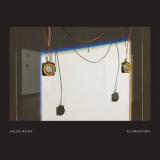
A clerestory - a bright or "clear" level or "story" - is an upper section of wall, most often in a church punctuated by windows. It is a powerful image for grasping this luminous new music from Jules Reidy. Light casts shadows, of course, and logics of shadowing, mirroring, and distorted reflection - of key importance for Reidy"s work as a whole - inform the sumptuous surfaces of Clerestory. "Shadow Symmetric" is a string quartet commissioned and performed by the JACK Quartet as part of their JACK Studio program. The piece makes simultaneous use of two pitch sets, beginning from the same starting point but expanded using different scaling to produce what Reidy describes as "two offset spectral layers." "Clerestory Windows" offers up a distorted mirror image of the string quartet, arranged as a series of episodes that each remake the material in their own way. It begins with an arrangement of the string quartet material for MIDI strings and voices, repositioning its rigorous harmonic exploration somewhere between the Lovely Music Ltd universe and a 90s RPG soundtrack. This episode derives from Reidy"s installation Inside, Crystals and Circuitry, held in Stockholm in 2025. The piece moves into a lyrical 12-string acoustic guitar air performed at the installation opening, before the strings from the first side reappear. From this emerge flickering arpeggios, achieved by arranging the string quartet material for the RMI, an early digital synthesizer. Clerestory is a meditation on fundamental dynamics of human experience: orientation and disorientation, the hazy borders the hazy borders between the material and the spiritual, and the instability of identity.
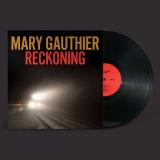
Reckoning is a dense, carefully nuanced, profoundly complex text, though all nine songs are presented as directly as possible: Mary's voice, her guitar, bits of harmonica. Folk music, of a kind, but not a broadside. Nothing so easy as that. Topical songs with a long view, because she's seen and lived too much of it. Mary's most celebrated songs — “I Drink,” “Mercy Now,” “Drag Queens in Limousines” — are confessional stories, closely observed, clear-eyed and compassionate. She sings with the unmistakable languor of her native Louisiana, writes with the bluntness of Boston, where she was once a successful restauranteur, and rewrites with the fierce precision of Nashville, her home for many years. Her 2018 release, Rifles & Rosary Beads, co-written with wounded Iraq war veterans, received a Grammy nomination for Best Folk Album, and an Americana Music Association nomination for Album of the Year. During Covid she wrote and saw published (by MacMillan) Saved by a Song: The Art and Healing Power of Songwriting, part memoir, part reflection on songwriting, through the lens of her most impactful songs. “A reckoning,” Mary Gauthier writes on the outer sleeve to her newest album, “can be personal, political, or spiritual. These songs inhabit all three realms at once.”
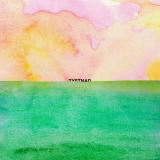
The word ‘Tystnad’ – literally translated – means silence. In this case, the Silence is less that of zen buddhism or that of John Cage, rather the name of the studio where Flowers Must Die – carriers of the torch of Swedish psychedelia for now nearly 20 years – retreated to make their most head-expanding album to date. Located near the Norwegian border in the verdant rural Värmland region, Silence Studios has been a countercultural hub for decades, attaining a legendary status as a residential outpost where bands can retreat to stretch out creatively and focus their psychic powers.
From just such origins, Flowers Must Die have crafted a collection of expansive and incandescent jams that maps out a lysergic trajectory between the idealistic, anything-goes mania of early ‘70s psychedelia and the 21st century. Tystnad is the sound of a band buoyed by the afterglow of their last Rocket release, 2017’s Kompost and its attendant touring, and expanding into extrapolations that marry the wildest free improv with haunting melody.
If Tystnad, as the band claim, is to be their last recording made in one room at the same time, then it displays a formidable escape velocity. Who’s to say whether Flowers Must Die have tapped into a Swedish continuum, one including the like of Pärson Sound, Dungen or Goat. What’s clear is that Tystnad is a timeless treatise, and a potent channeling of spirits –transcending genre in search of enlightenment anew.
A side is a trip... Bloody experience...
Like I say "if a record does not have something to say... then abort !"
Here frequencies becomes weapons !
Screwdrivers for solid brains !
The flip brings 2 Speedcore at same speed for a deejay pleasure, as expected with this vinyl only project !
The name of the EP in in memory of parties organised between 1994 and 1995 where the music was...
Enjoy !
Mastered by ArmguetNad.
Cut at The Exchange.
Visuals by Artcoton
out of Stock
Last delivered 18 days ago available to reorder, subject to availability
Gi Gi describes his process as “dubwise sampledelia.” It begins with fragments and ends somewhere else entirely, destabilizing its source material until it stops pointing backward. A borrowed sound, looped and bent, eventually forgets where it came from; it stops referencing anything but itself.
This liquid sensibility shaped his earlier work, music that hovered between drift and propulsion, suggesting the dance floor without fully stepping onto it. Presence was implied, edges stayed soft. The center was always there, but diffused like mist on a screen.
With In Lieu, that center comes into focus. Half written in Texas, half in Australia, the shift isn’t simply geographic, but internal. The record moves with a coiled, anticipatory energy; the drums arrive with more force and the bass organizes the room instead of melting into it. It's dense with the feeling of more bodies in the frame. Textures still smear and refract, but they move around a clearer axis.
Where past records circled their core, these inhabit it, pulling closer to the body. “Some Of” and “Arque” lean into low-end pressure without abandoning his instinct for drift. "Pink Dirt" circles around mechanical drums and dizzying vocal chops, head-down and visceral. Elsewhere, voices gain newfound contour, materializing in “Downswept” with intimate musings and nearly forming a lead vocal on the title track before dissolving again.
In Lieu moves with a newfound confidence, compressing inward, sounding closer to the source of its own pulse.
Some recordings herald the future in ways that are impossible to see in real time. Teodros Makonnen With His Organ (ቴዎድሮስ መኮንን ከኦርጋኑ ጋር), by the artist Teodros Makonnen, also known as Teddy Mak, is one of those. Today, electronic sounds, synthesizers, and digital production are taken for granted in Ethiopian music, but in the early 1980s, they were novelties that polarized opinion. Even to this day, the story of Teodros Makonnen’s legacy has never been properly told. He played a decisive role in defining the sound of the digital era of Ethiopian music that emerged in the 1980s and beyond, both as a keyboard player and as a producer, songwriter, performer, and sound designer.
Ethiopian music was at a crossroads in the early 1980s. Much like music in the rest of the world, technology and automation heralded either a quantum leap in musical development or the annihilation of musicianship, depending on who you’d ask. The changes were incremental nonetheless, but with the benefit of hindsight one can clearly see that the changes meant different things in different contexts. Drum machines and electric organs came to replace many hotel bands because, all of a sudden, one musician could control drums, melody, and accompaniment. Teodros was one of the first musicians in Ethiopia to explore the possibilities this opened up.
Teodros’ father, Captain Makonnen Beri, was a chief pilot at Ethiopian Airlines and a music enthusiast at that. This would prove important to his development, as Makonnen brought back a piano from Germany, which would lead to the first steps in Teodros’ long musical career. Captain Makonnen’s work as Head of Flight Operations and as a pilot exposed him to the wider world that was far from commonplace for most Ethiopians. In a house where music captivated the whole family, the piano gave Teodros’ talent an outlet. Not only was a piano at home rare in Ethiopian households, his father also brought an Indian teacher to their home to teach Teodros and his brother, Captain Samuel Makonnen, music theory (solfeggio or ear training) and piano. Teodros and his youngest brother, the late great Dereje, a member of both the legendary Ibex Band and the Ethiopian reggae group Dallol, took up music from that point onward, with Teodros beginning to develop his proficiency at the age of eight. His father encouraged him to practice tirelessly at home, and Teodros later received musical schooling at the German School in Addis Ababa. His obvious talent led to studies and formal education at the Yared School of Music, followed by continued studies in American jazz at Northern Virginia Community College in Virginia. Teodros cut his teeth professionally in his mid-teens, not only as a keyboardist, but also as an arranger for the Wabi Shebelle and Dahlak bands in the 1970s. He mastered electronic sequencing early, rising to prominence through the midnight recording sessions held during the military curfew. The pressures imposed by the curfew required precise and disciplined recordings, and Teodros delivered just that. This, in turn, led to collaborations with iconic artists such as Mulatu Astatke, Aster Aweke, Menelik Wossenachew, Tilahun Gessesse, Mahmoud Ahmed, and Alemayehu Eshete. In those days, he sat in as a keyboardist with the Dahlak Band when Dawit Yifru took a hiatus to study in Russia, and also with the Ethiostar Band. He secured a residency at the Wabi Shebelle Hotel with the Shebele Band, together with Zelalem Tadese (drums), later succeeded by Elias Bekele, Mulugeta Hailu (bass), Teferi ‘Bibisha’ Mengesha (guitar), Kumelachew G/Selassie (trumpet), and Teshome Deneke (saxophone). A friendly competition developed between the bands associated with the Ras Hotel (the Ibex Band), Ghion Hotel (the Dahlak Band), and Wabi Shebelle Hotel (the Shebele Band). The music scene at Wabi Shebelle saw teenagers commanding the spotlight in an industry otherwise dominated by musicians of an older generation. At the Wabi Shebelle Hotel, Teodros met a diplomat from Saudi Arabia and later visited him at his home in Addis Ababa, a meeting that had unexpected musical consequences. The man owned a Yamaha double-deck keyboard. That evening, they recorded Teodros Makonnen With His Organ (ቴዎድሮስ መኮንን ከኦርጋኑ ጋር) in one take. This recording, a cornerstone in the early digital sound of Ethiopian music, came about almost by chance, simply because Teodros got the opportunity. Traditional Ethiopian songs were cast in a wholly electronic style. Once freed from backing duties, Teodros’ keyboards could explore dreamlike soundscapes that took Ethiopian music in new directions. Even though the cassette contained well-known Ethiopian songs, they were given highly original arrangements, performed on an electric organ with drum machine backing and rhythm patterns that left the listener with suggestive, lingering sounds. “Libesh Kabashen” (also known as “Anchi Bale Game”) and “Odu Gol Golesa” wrap you in the very stuff that dreams are made of. Originally released on cassette only, this recording exudes a mystique that surpasses even some of the most obscure Ethiopian recordings of the day. It remained more or less unknown outside of Ethiopia until now. Some of the tracks, like “Addis Fikir,” are permeated with an almost naive buoyancy, free-floating sounds that lost contact with the ground the moment they were conceived. Others, like “Meche New Hageren Yemayew” and “Lelitu Alnega Alegn,” carry a moodier, quirkier timbre, with pulsating rhythms in the background. Yet even the darker pieces contain an unmistakable wave, something essentially Ethiopian. If most recordings of Teodros’s contemporaries at the time were teeming with atmosphere, his songs seem instead at home in the stratosphere, almost ethereal. Some of the music here could be filed under “lullabies,” were it not for the recurring, almost brooding feeling that engulfs the listener on the aforementioned tracks. You could easily be forgiven for drifting into a blissful haze as the music washes over you.
Up to the advent of electronic music production, Ethiopia was totally dominated by big bands on the one hand, and small groups on the other. The former were tied to large institutions such as the military, the latter emerged from the entertainment industry, in hotel bars and nightclubs. These groups were commercially driven, and bands ultimately had to foster a mercenary approach to employment, albeit not to the passion for music. In the light of this, Teodros’ musical legacy can be seen in two ways. On the one hand, he is a key player in Ethiopian music from the 1970s onwards, leaving an indelible mark through hundreds of compositions and arrangements, including soundtracks for numerous documentary films and advertisements for different companies. On the other hand, the way he and others employed electronics brought Ethiopian music onto a fork in the road.
The replacement of traditional instruments with electronic equipment was seen as impending doom by some. Others, like Teodros, saw new avenues for performance, production, and creativity. Just as later producers like Abegasu Shiota of Admas, Teodros was a trailblazer who opened paths that it took Ethiopian music as a whole more than a decade to rush into. The hotel scene had already been pushed toward electronic music by financial necessity and cost-cutting. Today’s revived global interest in Ethiopian music from the seventies and eighties, alongside a broader resurgence, has changed the reasons for using digital means of music production. They have become tools for musical dreaming. This is where the dreaming began.
out of Stock
Last delivered 8 days ago available to reorder, subject to availability
je prie pour que la goutte ne tombe pas
(I pray that the drop does not fall) is the first international release by Japanese trio Chi To Shizuku. While they have released five albums and a 7” in Japan, their spectral, haunted rock songs haven’t yet reached a much wider audience overseas. With this album, then, a live recording taken at Koenji HIGH, Suginami, Tokyo on 23rd November 2021, the unique, quartz-like character of Chi To Shizuku’s music is writ large, the bleak bliss of their songs carved onto twelve-inch vinyl.
Perhaps the best-known member of Chi To Shizuku, at least for audiences with an ear turned to Japanese psychedelia, is drummer Takahashi Ikuro, known for his membership of almost every group worth a damn from that scene – Fushitsusha, Nagisa Ni Te, Ché-SHIZU, Kousokuya, High Rise, Maher Shalal Hash Baz, LSD March, the list goes on. But the core of Chi To Shizuku’s music is the collaboration between vocalist, bassist and lyricist Morikawa Seiichirou, and guitarist and arranger Yamagiwa Hideki. Morikawa is a member of long-running punk/goth group Z.O.A., and has also played with YBO , Zzzoo, and as collaborator with Takeshi and Atsuo of Boris in A/N; he’s also recently been performing with Mitsuru Tabata. Yamagiwa’s history takes in stints with Katsurei and Cock C’ Nell, and he also recently guested with la scene 裸身.
All this contextual information does relatively little, though, to prepare you for the unique vibration of Chi To Shizuku’s lustrous songs. They shimmer in the same half-light, perhaps, as Shizuka and the quieter moments of LSD March, sharing a similar poise and classicism, and there’s a tenderness and wracked poetry to Morikawa’s voice that reminds of the emotional intensities both of traditional Japanese folk, and of British folk music: on “Musuu No Nemuri No Naka De Kumo Wo Tukamu”, the combination of his singing, backed with gorgeously plangent guitar, reminds of no-one so much as it does The Pentangle or Spriguns Of Tolgus. Chi To Shizuku’s love for the ballad as form gifts their music an archaic, sometimes arcane resonance, and from what you can hear on this album, it’s clear they’re in love with graceful melancholy.
But this is not a folk album, by any means; it just shivers with the same eternal spirit. There are also hints of prog rock, and you can catch some passages of scratchy, distended free rock, on the extended spirit invocation of “Nanhito Hanhito”. je prie pour que la goutte ne tombe pas is an extraordinary album, a melancholy surprise, that reminds dedicated listeners of the seemingly bottomless well of great music to be found via the Japanese underground in its many forms. Perhaps Michel Henritzi says it best, though, in his liner notes, when he writes, “Chi To Shizuku’s music reminds us that our life is a dream that lasts only a season, and that oblivion will follow.”
Recorded at Koenji High Suginami, Tokyo, 23 November 2021
Mix & Mastering: Taku Unami, photography : Noriko Akiyama
Liner notes by Jon Dale Printed by Alan Sherry
FKJ returns with Tyber— a project that captures a period of personal and creative transformation following the release of his acclaimed album ‘V I N C E N T’. Written and recorded across multiple continents, the album reflects years spent navigating movement, solitude, collaboration and renewal.
The result is FKJ at his most expansive and uninhibited. Across ‘Tyber’, groove-driven compositions sit alongside jazz-led instrumentals, sample-heavy explorations and more direct songwriting moments, moving seamlessly through genres without ever losing cohesion. The album feels both deeply personal and globally informed, spotlighting an artist documenting his evolution in real time. It captures musical snapshots across London, Los Angeles, Paris, Brazil, and beyond to create music that combines intricacy and intimacy seamlessly.
Anchored by themes of emotional equilibrium and self-care, Tyber balances vulnerable storytelling with an unmistakable, groove-laden optimism. The album seamlessly weaves together spontaneous, late-night collaborations with artists like Labrinth, Bas, and Baby Rose, alongside deeply personal solo compositions. Ultimately, Tyber is a vibrant celebration of human connection and resilience, offering listeners an immersive, cinematic invitation into FKJ’s newly restored world.
out of Stock
Last delivered 22 days ago available to reorder, subject to availability
The album title, Bachar Mar-Khalifé Plays Christophe, inevitably comes as a surprise: the Lebanese composer, singer, and multi-instrumentalist ventures into the world of the pop dandy who escaped the yé-yé era… From the very first notes, one thing becomes clear: splendor flows effortlessly from melodies restored to their fragility and simplicity. Bachar Mar-Khalifé explores the hypnotic melancholy of a world that is both sophisticated and crystal clear. A fascinating plunge “into this collapsing luxury,” as the lyrics of Paradise Lost say. Seven tracks with his collaborators Dogan Poyraz on drums and Aleksander Angelov on bass, seven narratives unfolding the musical richness of Christophe’s songs as much as that of Bachar Mar-Khalifé’s playing and singing. A captivating journey, both on record and on stage. It all started there, in fact. In April 2025, BMK dared to pay tribute to Christophe at the Fragile Festival, at the Cirque Zingaro, five years after his death. At first glance, it wasn't his familiar world. "I haven't idolized him my whole life," he explains. "I really knew Christophe personally before I knew his work in detail." During his childhood in Lebanon, and then after arriving in France in 1989 at the age of six, the music played at home left little room for Christophe's pop. "We listened more to Brassens, Brel, Ferré, Barbara. I hardly knew anything more than 'Les Mots bleus.' Then we met. Christophe loved the night, young musicians, exploring together..." In 2018, Bachar and Christophe recorded a Unik session for FIP, which involved recording a 45 rpm single live, followed by a concert at the Maison de la Radio. The younger brother has the opportunity to discover a legend, but also how it works: “His melodies allow you to go very far—even him, who seems to be searching for a new version with each interpretation, as if he wanted to return to the organic aspect of the song. A researcher who, out of a need for freedom, wants to escape the image people have of him.” So there was no question of overproducing these covers as one might do with the stage fright of tackling an intimidating work. “I tried to go very fast to deliver each song, as if I had composed it myself.” Working instinctively, very spontaneously, the bulk of the album comes from the trio's rehearsals and the concerts that followed. “I chose songs that moved me. Very beautiful melodies and very beautiful lyrics.” Whether the lyrics are by Jean-Michel Jarre or Alain Kan, “they often speak of love in danger.” “I like to hear this quote from Paradise Lost: ‘Dandy, a little cursed, a little aged / In this crumbling luxury.’ Here and there, he pruned the lyrics, as if to make them more audible, in Les Mots bleus, ‘The winter wind blows in April / I love the still silence’ – an evocation of the month of Christophe’s death. And he chose a little-known song from the yé-yé era, Les Amoureux qui passent, in which we hear the young trumpeter Siméon Petrov, who further expands the play on the archetypes of vintage romantic song. Between accepted fragility and the vertigo of feeling, between virtuosity of lightness and unfathomable depths, Bachar Mar-Khalifé unfolds an unexpected kinship with Christophe.” A kinship of silences and sonic surprises (a synthesized zurna sound in "Emporte-moi," for example) that will continue on tour. He is also preparing an album of original songs, his first since 2020, after many compositions for film and collaborations with other artists. He writes songs of love and dance, at a time when Lebanon and the world are experiencing such dark times. Perhaps this is yet another lesson from Christophe: to love and sing "in this crumbling luxury."
Brazilian artist Rubel isn’t one to be pigeonholed and typecast into staying in one sound. Casas, the follow-up to his debut album Pearl from 2015, brought a bigger, more epic, and richer production quality to the table. Fusing the worlds of MPB and hip hop, Rubel’s sophomore LP built on the momentum of its predecessor, gaining a Latin-Grammy nomination along the way. Mr Bongo is proud to be giving Casas its first worldwide release on vinyl and CD outside of Brazil and Japan.
The cliché they say is that the second album is always the trickiest; however, Rubel doesn’t seem to have had any problems on Casas. It’s a fountain of creativity and originality, marking an artist in full flow.
Conceived after Rubel spent six months living in Los Angeles, Casas is MPB-leaning at its core but is also driven by a hip hop inspired pulse. There is a clear influence from hip hop’s aesthetic across the 2010s woven subtly but fundamentally throughout. Nods to Frank Ocean, Kendrick Lamar and Tyler, The Creator can be heard across an album full of playful edge and personality. Luscious string-led arrangements and tracks that explore the rich folkloric rhythms of Brazil, sit next to songs with low-fi drum machines and features from acclaimed Brazilian rappers.
One of the highlights of the album, ‘Mantra’, starts with a traditional Brazilian rhythm that morphs into a hazy hip hop beat. A sublime song with a hooky call and response chorus, it features a guest appearance and verse by the Brazilian MC Emicida. Another highlight is the epic ‘Colégio’ (College) which further showcases the melding of stripped back drum machine beats with cinematic, sweeping arrangements. Elsewhere, ‘Partilhar’ is a swaying, heartwarming hug. A tale of longing and love that has become a singalong fan favourite at Rubel’s concerts.
Casas also shines a light on a string of key players in Brazil’s new vanguard, such as Pedro Fonte, Gus Levy, and Brazilian rapper / poet Rincon Sapiência to name a handful. The record has pop sensibilities yet also feels underground. It beats with the heart of a singer-songwriter, a feeling that was felt so strongly on Pearl, yet this time is bolstered by a level of arrangement and richness of sound that take it to another dimension - soaring horn and string sections elevating the songs from home recording to stadium-ready anthems. Keeping that intrinsic beauty and simplicity of a well-constructed song yet reframing it within a pop context is the true gift of this album.
Casas cemented Rubel’s status as one of Brazil’s leading contemporary talents and a key figure enriching the country’s already effervescent scene.
Clear vinyl. Originally released in 1999, The Sacred Talisman is the highly-acclaimed third studio album from Swedish power metal stalwarts Nocturnal Rites.
Her sound remains vast and yearning, with gut-punch drums pushing through explosions of colored powder; her voice is a chrome-plated sigh, and her agile melodies soar effortlessly. - Pitchfork *BEST NEW MUSIC*
she achieves some serious cinematic grandeur. - Stereogum
Simply too sublimely crafted to ignore. - Consequence of Sound
A catchy ethereal piece of pop - Brooklyn Vegan
Rose's layered, reverb-laden vocals hit like waves of sunlight, warming her lines almost to the point of wordlessness. - Paste Magazine
"Hila. A record about loss. What persists beyond the range of ordinary perception? The place mourning keeps returning to - not quite transcendence, not quite doubt. The edge of what we can see."
Frankie Rose has spent fifteen years building one of the most quietly distinctive bodies of work in American independent music. Bursting out of the shackles of her legacy on 2024's Love As Projection, 2026's Hila builds on the muscular, dance-ready songwriting and transcendent melodies to result on Rose's most exploratory and affecting record of her career. Imbued with yearning melodies and brooding post-punk dynamics, Hila is Frankie Rose at her most impressionistic and expansive.
Self-produced at her home studio featuring collaborations with drummer Justin Welch (Elastica/Lush), Hila was recorded following extensive touring with The Jesus & Mary Chain and Swervedriver. The result is the most confident, searching music Rose has produced; muscular in its production yet emotionally vulnerable in its diffracted neon glow. A record informed by loss and the way grief mutates our senses, it's fitting that Rose channels the nuanced darkness of later Coil, at times the pounding EBM-production of Skinny Puppy and the near-spiritual alien-ness of Cocteau Twins. On Hila, the doors of perception are constantly melting, revealing the porous nature of the seen and unseen. The result is a synesthesia that flips the senses.
If Love As Projection was an outward-looking record looking to embrace the world, Hila brings the dark cosmos into inner space. Rose's love for 80s production and soaring melodies remain, they're cornerstones to her craft after all, but there's something more assured and gothic underneath the massive waves of sound. Opener Olo shimmers into a pulsating, cinematic brooder, Rose's vocal transcending and swan diving between registers in the chorus breakdowns. First single Cant Be Wrong serves as a transition from the optimistic pop of Rose's previous album, introducing a thumping 80s funk rhythm track under the soaring vocal performance. The ebullient Shadow Twin is that song's sibling, recalling major label-era Strawberry Switchblade melancholy mixed with Robin Guthrie's twinkling guitar work.
Hila blossoms darkly from here on in, blowing out into a glacial wide-screen sonic dynamic. On Rainman and the title track the listener is transported to a rain-soaked, nocturnal cityscape ridden with desire, moonlight cutting through blinds, intoxicating chasms without bounds. Rose's use of saxophone and digital synthesis recalls the nightmusic of Hats-era Blue Nile or the more ambient end of Emeralds' catalog. Indeed, in the towering synthetic cello sounds that climb into the mind on Hila, there's a distinct flavour of the instrumentals on Bowie's Low. This is musick to play in the dark, to light the way a little, just enough to trick the senses.
Leading into the strobe-filled haze, single Manifest pounds forward with a massive Industrial 4/4 beat and post-punk/goth musicality, an exercise in unlit ecstasy. For Best Of Times, the liberal saxophone passages feel like a suppressed, 80s Michael Mann soundtrack with Frankie Rose's effortless, melodic vocal performance probing, searching for connection. Navigating through the dry, iced landscape into a rising sun, closer Velvet Refrain flips the melancholy of the preceding passages. With a massive sound dripping with harmony, the clanging guitar and vocal duet feels they're sound-tracking an unexpected happy ending after bouts of darkness."
Clear/Blue marbled Vinyl. Irgendwo zwischen altem Seemannsgarn, dichtem Zigarettendunst und tiefsitzender emotionaler Zwiespältigkeit haben Romans Nailed It ihren ganz eigenen, dreckigen akustischen Cocktail gemixt. Das Singer-Songwriter-Punk-Duo startete 2022 und veröffentlicht nun sein Debütalbum "In Need of Romance Intervention_". In den Texten geht es um den ungeschönten Alltag, das Jonglieren mit den eigenen Baustellen und die ewige Suche nach einem Funken Sinn - irgendwo zwischen emotionalem Chaos, Rückschlägen und dem Drang, trotzdem jeden Tag aufs Neue aufzustehen und weiterzumachen.
Released in 1983, "En la guía, en el listín" remains a permanent anomaly in the history of Spanish pop music, with few clear predecessors and even fewer descendants. It is an imperfect yet fascinating catalog of the many faces Derribos Arias could reveal. Its sound combines odd electric rock, leftfield proto-hip-hop, and dark, immersive songs that simply defy categorization. An essential album. Includes liner notes and the artwork of the original insert. By late 1981, the San Sebastián-based group La Banda sin Futuro had already transformed into Derribos Arias. Their first two singles dazzled critics eager for new ideas capable of placing Spanish pop alongside the contemporary music increasingly arriving from abroad in real time. 'Branquias bajo el agua', the standout track from the band's debut single, topped the list of Best Songs of 1982 as voted by listeners of Diario Pop on Radio 3 (Spanish National Radio). With an expanded four-piece lineup and a larger budget than they had enjoyed for their earlier singles, the band entered the prestigious Kirios Studios to record their album, with Paco Trinidad serving as producer. The electric intensity of 'Intima decoración' and 'Crematorio' -angular, off-kilter reinterpretations of a strain of rock descended from The Velvet Underground and The Stooges, a style with virtually no precedent in Spain-are excellent examples of the band's sound. To aberrate was the key term Poch used to describe his ineffable working method: a fearless creative freedom without which songs such as 'Lo que hay' could never have existed. The track stands as a leftfield proto-hip-hop number, later reworked as 'Disco pocho,' demonstrating both his admirable lack of prejudice and his complete disregard for any commercial ambitions the album might have had.Unfortunately, this album would never have a follow-up.
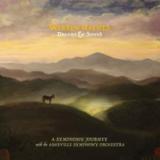
For more than three decades, this Grammy-winning US bandleader and roots master has outrun genre, classification and comfort zone, journeying between the acclaimed solo work with his own name on the marquee, his storied jam-band Gov't Mule, and America's fabled rock 'n' roll institutions from the Allman Brothers Band to the Grateful Dead. To represent this lifetime of roots and branches in a single project, while tearing down and reimagining his songbook with bold orchestral arrangements, acknowledges Haynes, was a daunting prospect that nonetheless exerted an irresistible pull. Now, the resulting live album - Dreams & Songs, released September 18, 2026 - is a living document of 2019's one- of- a- kind concert at the Thomas Wolfe Auditorium, with a visceral mix by the legendary Bob Clearmountain capturing the thrilling collision between Haynes' lineup of seasoned rock 'n' roll improvisers and the 64- piece Asheville Symphony Orchestra.
Issued on Crystal Clear vinyl is Max Richter’s emotive and minimal score to Damon Lindelof’s TV series about a post-apocalyptic global event where 2%
of the world’s population disappears without explanation. Richter’s approach explores the feelings of the protagonist’s family, the Garveys, through intimate,
small scale music. He tackles this psychological landscape by bringing a ritual quality to the score, while themes of departure and loss are represented by
a sense of sonic decay, relying on the instrumentation of a few sustained tones on pianos, harps and celesta.
Max Richter is a classically trained composer that defies boundaries. Trained at the Royal Academy of Music and finishing his studies under the tutelage
of avant-garde composer Luciano Berio in Florence, Richter’s career has followed many paths. His musical output ranges from ballets
(Wayne MacGregor’s Infra), reinventions of classical works (Vivaldi’s Four Seasons), collaborations with The Future Sound Of London, Roni Size and
Vashti Bunyan to writing scores for film and TV (Waltz With Bashir, Lost and Found, Last Days on Mars) and solo work.
Come Over Reshapes works because it never tries to smooth JdB's debut into something safe. It features seven artists from LA and the Midwest all taking his source material somewhere different as brooding, minimal jungle rubs up against dubbed-out weight and drifting psychedelic ambient. Despite the variety, the whole thing plays like a continuous narrative rather than a scattered remix comp. Some cuts are clearly built for the floor, others for the comedown room, and the sequencing respects both. Steffan Betke's mastering keeps everything sounding cohesive and like a thoughtful tribute record that expands on the original rather than just repackaging it.
Originally released in 1995 Methodrone was the first Brian Jonestown Massacre album. Redolent with the spirit of such high priests of effects and delay as Loop, Spaceman 3, and My Bloody Valentine, not to mention a fair dollop of the Jesus and Mary Chain ,over 70 minutes long Methodrone clearly is the sum of its influences..
When a British alt-soul and art-pop duo collaborates with Filipino musical royalty, the result is a blinding flash of artistic spirit that transcends geographical andgenerational barriers.
For Margate-based act Thandii, a chaotic whirlwind of a trip to Manila allowed Graham Godfrey and Jess Berry to explore a new cultural context of song- writing. After several prolific years of self-released albums together, they took the opportunity to channel Graham’s Filipino heritage through an ambitious project proposed by the label Sama Sama Records: for Thandii to make their next album with the most recorded drummer in the Philippines, Jun Regalado.
Now in his late 70s, Regalado has recently gained more recognition internationally after the reissue of his track ‘Pinoy Funk’ (from the Soundway compilation Ayo Ke Disco in 2024), along with the discovery of nearly 500 album appearances that are now finding themselves in the collections of younger generations. And on Coco Okayo - the first time he has collaborated outside of his contemporaries - Regalado effectively passes the torch.
In exploring a sound born of the diaspora with roots in British soul music, Coco Okayo makes full use of the polymath abilities of Thandii. While they provide vocals, percussion, flutes and production, they still manage to carve out space for regular Margate collaborators (including keyboardist Steve Pringle, Graham’s bandmate in Pigeon), as well as tapping Filipino connections in the United States such as Wyn Avillas and Ian Santillano.
“It’s a new genre coming from Filipino diaspora artists paying tribute to the Manila sound of the 70s,” say Thandii, “but combining it with modern day post-punk- disco, beat-driven-art-pop music coming from the small seaside town of Margate”. However the listener might interpret it, it’s clear that Coco Okayo is not stuck between worlds, but rather, has built a utopian world of its own.
out of Stock
Last delivered 29 days ago available to reorder, subject to availability
The Rascals are a British indie rock trio formed in 2006 by Miles Kane (guitar and vocals), Joe Edwards (bass) and Greg Mighall (drums), hailing from The Wirral on Merseyside. Before becoming The Rascals, all three members spent their formative years playing together in The Little Flames, gaining valuable experience touring with prominent contemporaries such as The Coral, The Zutons and, most significantly, Arctic Monkeys. It was while supporting Arctic Monkeys—drawing inspiration from their fiercely independent, DIY ethos and refusal to compromise—that the trio decided to trust their instincts and strike out on their own.
In September 2006, Kane, Edwards and Mighall began writing and jamming as a three-piece, giving birth to The Rascals. The band quickly developed a sound rooted in strong pop melodies and psychedelic flourishes, but distinguished by a darker, more introspective undercurrent. Influenced by artists such as Scott Walker, their music carries a sweeping, epic quality, while their lyrics often evoke a David Lynch–like atmosphere. As Kane explains, The Rascals were never content with skimming the surface, instead preferring to explore subtler, shadowy themes that reveal themselves over time.
Released on Deltasonic Records, Rascalize showcases clear influences from labelmates and peers such as The Coral, as well as echoes of bands like The Inspiral Carpets. Standout tracks including “The Glorified Collector,” “Does Your Husband Know That You’re On The Run?” and lead single “Freakbeat Phantom” highlight the band’s knack for catchy hooks, layered guitar effects and driving rhythms.
Swedish speed/thrash metal newcomers XION are set to release their second album, *When Stars Collide*, on 11 September via Fireflash Records. XION’s fresh blend of speed and thrash metal sounds unique, and you can clearly sense the power, dedication, boundless energy and ambition of this young band.
The quintet was formed in 2022, when some of the members were still under 18, yet they were already playing with the same precision and energy as more established metal bands. Since then, the band from Falun – the hometown of acts such as SABATON, BROTHERS OF METAL, TWILIGHT FORCE and others – has taken the world by storm. The combination of the members’ young age and their extremely precise and virtuosic musical skills has made XION one of the most interesting and promising newcomers on the Swedish metal scene in many years.
Mit der auf Metalville erschienenen LP "Godslave Limited Clear W Orangegreen Marble Vinyl Edition" präsentiert Godslave das nächste Level seiner Kreativität, bleibt aber im Großen und Ganzen seinem Stil treu. Godslave sind eine deutsche Thrash‑Metal‑Band, die sich durch geradlinige, riffgetriebene Kompositionen und eine ausgeprägte Nähe zur klassischen Teutonen‑Thrash‑Tradition auszeichnet; prägnante Lead‑Parts, treibende Rhythmusgitarren und rauer Gesang prägen das Klangbild. Die Arrangements setzen auf klare Strukturen, schnelle Tempiwechsel und gezielte melodische Einsprengsel, wodurch die Stücke zugleich eingängig und kraftvoll wirken. Live hat die Gruppe einen Ruf für energetische Auftritte, die die rohe Aggressivität der Studioaufnahmen unmittelbar transportieren. Auf ihren Veröffentlichungen bei Metalville zeigt die Band immer wieder, wie sich traditioneller Thrashsound mit moderner Produktion verbinden lässt, ohne die ursprüngliche Direktheit zu verwässern. Diese Edition wendet sich an Hörer/innen, die Wert auf handfeste Gitarrenarbeit und unverblümte Songstruktur legen.
Mighty Music is proud to announce the release of "Electrifyed", the brand-new studio album from NWOBHM pioneers TYGERS OF PAN TANG. The album finds the legendary British metal act returning to a heavier and more aggressive sound while retaining the melodic identity that has defined the band throughout its celebrated career. ""The heavier, the better" that was our mantra throughout the writing and recording of "Electrifyed"", singer Jack Meille comments about the writing process of the record. "We wanted to rediscover the pleasure of being driven by the powerful force of a heavy riff without losing that melodic touch all great Tygers songs have". Written with a clear artistic vision from the outset, "Electrifyed" draws inspiration from the raw energy of the band's early years, particularly their landmark debut album "Wild Cat", while showcasing the chemistry and creativity of the current line-up. The result is a collection of songs built around powerful riffs, memorable melodies and a renewed commitment to the heavy metal traditions the band helped establish. The album also introduces guitarist John Footitt on record for the first time. Joining founding member Robb Weir, Jack Meille, drummer Craig Ellis and bassist Huw Holding, Footitts guitar skills fit the album's muscular and contemporary sound. To achieve the sonic impact envisioned by the band, Tygers of Pan Tang worked closely with producer and musician Marco Angioni, a longtime friend and collaborator who helped translate the group's ambitions into a cohesive and powerful final product. The album artwork was once again entrusted to Andy Pilkington of Very Metal Art, whose striking cover concept perfectly captures the spirit and energy of "Electrifyed".
Transparent Orange w/ blue splatter vinyl. Mighty Music is proud to announce the release of "Electrifyed", the brand-new studio album from NWOBHM pioneers TYGERS OF PAN TANG. The album finds the legendary British metal act returning to a heavier and more aggressive sound while retaining the melodic identity that has defined the band throughout its celebrated career. ""The heavier, the better" that was our mantra throughout the writing and recording of "Electrifyed"", singer Jack Meille comments about the writing process of the record. "We wanted to rediscover the pleasure of being driven by the powerful force of a heavy riff without losing that melodic touch all great Tygers songs have". Written with a clear artistic vision from the outset, "Electrifyed" draws inspiration from the raw energy of the band's early years, particularly their landmark debut album "Wild Cat", while showcasing the chemistry and creativity of the current line-up. The result is a collection of songs built around powerful riffs, memorable melodies and a renewed commitment to the heavy metal traditions the band helped establish. The album also introduces guitarist John Footitt on record for the first time. Joining founding member Robb Weir, Jack Meille, drummer Craig Ellis and bassist Huw Holding, Footitts guitar skills fit the album's muscular and contemporary sound. To achieve the sonic impact envisioned by the band, Tygers of Pan Tang worked closely with producer and musician Marco Angioni, a longtime friend and collaborator who helped translate the group's ambitions into a cohesive and powerful final product. The album artwork was once again entrusted to Andy Pilkington of Very Metal Art, whose striking cover concept perfectly captures the spirit and energy of "Electrifyed".
Tash, founding member of Tha Alkaholiks, returns with a new EP that brings his signature voice, charisma, and West Coast energy back to the forefront. Known for sharp lyricism, humor, and effortless flow, Tash delivers six tracks that connect his legacy to a fresh chapter.
The project's centerpiece is the "Attention is a Drug" remix, a stacked lineup featuring Sway Calloway, King Tee, Defari, Tha Liks, Xzibit, Will.i.am, and Q-Tip. The EP also includes a classic Wake Up Show remix, bringing in DJ Revolution, Sway and Tech, and the Likwit Crew.
Pressed on limited clear vinyl, this is a collector's release built for Tash's core audience: Tha Alkaholiks fans, 90s and underground hip-hop heads, and Fat Beats regulars who've been true fans since day one.
Two tracks extending towards the 10 minute marker, very much in the unique style of Robert Mononom which was already being refined throughout his previous 3 EPs, now culminating in 2 excursions throughout deep hypnotic/psychedelic machine made sounds. A side is built on an aggressive triple and double beat kick drum with a very dubby "big room" presence upon which waves of other nuances in noise get overlayed slowly transforming the 165+ BPM experience throughout what sounds like an extended live mix. B side goes in more spacial/atmospheric direction where hi hats take control over the kick, capturing the witness in a whirlwind of dubbed out overlaying rhythmic patterns. A sound so raw and pure in its introspection, clearly showing Robert's capacity of developing an aesthetic of his own.
out of Stock
Last delivered 36 days ago available to reorder, subject to availability
Somewhere Between Heaven and Hell is the fourth studio album by the American band Social Distortion. It continues the melding of country and rockabilly influences with punk that began two albums before with the album Prison Bound. Clear influences include Hank Williams and Johnny Cash.
The album also marks the first time that a Social Distortion line-up had not changed in three consecutive studio recordings. The American punk rock band Social Distortion formed in 1978 in Fullerton, California and is fronted by vocalist, guitar player and main songwriter Mike Ness.
This pressing of Somewhere Between Heaven and Hell is available as a limited edition of 3000 individually numbered copies on yellow vinyl. The record is packaged in a deluxe sleeve finished with linen laminate and includes an insert with lyrics.
out of Stock
Last delivered 36 days ago available to reorder, subject to availability
This is a concept record that reflects on events that have had a calculable effect on a generation:
‘’By 83 and 84, it felt that nuclear war was going to happen. Not could happen but was going to.’’
Stephen Brotherstone
"What would you do in the event of a Nuclear war?"
I remember having discussions about what we would do when we heard the four minute warning siren. We would raid the sweet shop. I was 8 or 9 years old. The absurdity of this vivid memory encapsulates the concept of the record. It would take at least four minutes to get to the shop!
The record starts with an early memory of circling a church on a Raleigh Budgie (the smaller lesser known iconic Chopper bicycle) in 1981 and ends with staring up at a clear sky on Oldham Lows in 1990.
The record identifies and plays with the effects of an underlying fear of oblivion on a generation of children, but also society as a whole: The pieces take in media and government propaganda. Machinery (nuclear submarines) and buildings (nuclear bunkers) but also everyday activities of the civilian population, activities such as shopping, clubbing and staring at the sky. Thematically, the record is made up of personal memories mixed with historical events.
Instruments are mainly from 1980s. DX7 and 808 feature predominantly. The pieces feature numerous melodic motifs that develop and intertwine underlying ideas of espionage and layers of secret messaging. It also mirrors the ways in which governments and civilians interact. Decisions being made in the name of defence whilst people go about their daily lives. I am exploring the everyday experiences of the masses whilst major political decisions are taking place. For example, shopping on a Saturday afternoon versus heated Cold War tensions in 1983.
Although taking place conceptually in the years 1979-1991, this record mirrors current events. History repeating. It also mirrors the helplessness or maybe some oblivious everyday normality state that we adopt as a community whilst major political decisions are being made.
The idea that life goes on oblivious to larger scale politics, or on the other hand, the idea that we are all very aware but in a state of unreal normality. Adam Curtis goes into great detail about such things in his film 'Hyper Normalisation'.
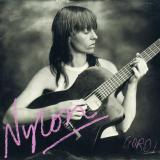
Gordi presents Nylon: an exclusive vinyl-only mixtape of unreleased new songs recorded direct to tape. This rare collection offers an unobstructed window into Gordi’s emotional well, adorned by her trade mark beguiling voice. She recorded the body of work live-to-tape in a single afternoon — with no overdubs and no edits — and played the new songs to fans on her Australian tour, selling every single advance copy before the internet knew anything about it. Now on clear vinyl.
Doomcrusher fuse stomping industrial riffs, uncompromising gutturals and uplifting hooks - modern core with electronic depth and metal roots.
In the crucible of the apocalypticatmosphere that envelops our world, Doomerusher was forged. Born out of the deepest desire to be the harbinger of change, the band emerged with a resolute mission: to defy the impending doom that looms on the horizon. Founded by Andy Posdziech (Any Given Day), Jean Bormann (Rage), Marv Kinkel & Rob Lee, Doomcrusher's sound is a powerful fusion of stomping and heavy mid-tempo industrial riffs, seamlessly intertwined with uncompromising gutturals that resolve into unfolding and uplifting hooks. The band's sound is further enriched by sophisticated electronic elements, adding depth and complexity to their musical tapestry. The ambition is clear - to redefine modern core music while staying true to the roots of the metal genre. Their music is not merely an auditory experience; it's a journey through the realms of sound, a deliberate exploration of the boundaries of heavy music. Doomcrusher stands as a defiant force against the inevitable, a rebellion that crushes the darkness of doom with an unwavering belief in the transformative power of music. DOOMCRUSHER BIO SHORT: Forged in the apocalyptic atmosphere, Doomcrusher blends stomping industrial riffs with guttural vocals and uplifting hooks. Their music, a deliberate exploration of heavy soundscapes enriched by electronic elements, redefines modern core while honoring metal roots- a defiant force against impending doom
More than 25 years after the start of collaboration with Acid Mothers Temple mastermind Makoto Kawabata (including the INUI series and the classic Kawabata/Youngs release) comes the first proper VHF LP by the prolific quintet. One of an occasional series of “minimalism” inspired LPs by the group, “In A Not C” is a not a barely changing drone, but a wild ride with the band in full flight, rushing along in a glorious swirl of psychedelic madness. Like the band’s well-known 2001 version of Terry Riley’s “In C,” the group uses a small cell of repeating sound as a jumping off point and then gradually revs up to maximum velocity. The current AMT lineup has produced a series of fun and unique variants on the band’s longstanding signatures, with the addition of vocalist/guitarist Jyonson Tsu and drummer Satoshima Nani providing a lightness and nimbleness of touch that resets the context of the band’s usual blazing electric guitar and burbling synth. Both sides here build to a multi-layered crescendo, with loops of Tsu’s gentle vocals competing with frenetic drums, whistling electronics, and guitar that alternates trebly feedback and soft arpeggios. Cut by Golden, pressed in Chicago at Smashed, first pressing on clear vinyl.
raum…musik welcomes Jaffa Surfa back for its 121st release with ‘Tribal Diesel EP’, a four-tracker moving through progressive techno, industrial-tinged minimal, house and broken beat. Rather than treating these as fixed genres, Surfa reshapes them into something uncanny and unmistakably tribal, while keeping the groove firmly at the centre.
That approach is clearest on the A-side. “Diggers Diesel” has a ritual pull and, as the EP’s title suggests, finds Jaffa Surfa at his most tribal. Processed drums and splintered voices gradually lock into a hook while murky synths shift beneath them. “Lidl Sin” takes a leaner, slightly industrial but definitely understated route. Its reduced arrangement leaves enough room for each detail to register, with drums, synth stabs and sequenced lines appearing to exist in a state of constant mutation. On the b-side, “NGLZ” is the EP’s most direct house cut, driven by heavy low end, syncopated rhythms and flashes of phased samples. Breakbeat accents and old-school vocal fragments nod towards US house, though the track’s restless movement keeps it from settling into anything conventional. “Upstarz Galeri” closes on a wider screen, carrying traces of krautrock and decades-old sci-fi and cyberpunk soundtracks without ever feeling nostalgic. Airy and expansive, it pairs breakbeats and growling basslines with densely layered samples, giving its machine funk an unexpectedly emotional charge.
'Tribal Diesel EP' never overstates the contrast between its parts. Jaffa Surfa holds everything together through texture, rhythm and an almost cybernetic atmosphere. It is clearly built for the club, but carries enough personality and ambiguity to reward closer listening.
out of Stock
Last delivered 4 days ago available to reorder, subject to availability
»Ampersand Curve« initiates a brilliant new phase of work by North Manchester’s most elusive artist, best known as Michael J. Blood. His string of ruffkut club bangers, as well as jams with Rat Heart & Samizdat over the past seven years, have made his records a true cult property, and now find him signed to one of the UK’s most foundational techno imprints – more of which later this year.
But under the Sees aegis, he swims in very different waters, following his instincts to use the studio-as-instrument to produce his most impressive, deep-minded work, made from – and for – the heart. Where MJB was all about off-the-cuff club jams cooked for immediacy, his new stylistic switch reveals myriad worlds of influence swirling under the hood, where interrelated spheres of spiritual jazz, dub, ambient, and concrète more clearly light up his rich inner world.
As the story goes, MJB was burgled a few years back and lost most of his studio just as the project was hitting its stride. It prompted a personal review of his practice, re-learning new kit, allowing him to bend the rules. Adopting a sort of first-thought, best-thought approach to composition, the new methodology fuelled a renewed imagination in flux, or what he identifies as Sees: a personalised way of conveying complex emotions. That undoing of musical and mental conditioning opens the walls of his music to vast new horizons. Opener »Ithaca« fathoms sonorous midnight jazz with 10 mins of a plangent, searching sax solo in HD widescreen, like some alternate version to the Blade Runner Love Theme, while a resonant vocoder soliloquy, »Unseem«, reaches into space harmonised between Alvin Lucier and Ron Trent, and »Sheer« chases the devil out of labyrinthine dub dimensions.
The floating dream architecture of »Caprices« caps the LP’s underlying narrative and painterly qualities with a romantic conclusion of blushing pads and shivered, metallic echoes of the subtropical that suggest a coming-to-terms with worries, refreshed and good to go again.
out of Stock
Last delivered 41 days ago available to reorder, subject to availability
Others take years to reveal why they belong together.
PLNK008 is the first solo release by Natural Goofy on Planka Records. Following a series of appearances across various labels and collaborations, this record offers a deeper look into the sound he has been quietly shaping over the years.
A collection of recordings gathered over time, connected less by genre than by a shared sense of mood and movement.
Rather than chasing functionality, the record follows instinct. Loops are allowed to breathe. Details appear slowly. Tension builds almost unnoticed. Elements drift in and out of focus. The intention was never to arrive somewhere quickly, but to stay inside a feeling for as long as it remains interesting.
The release also includes a special reinterpretation of one of the EP's tracks by dear friend and talented Italian producer Shkedul.
The original version of the track will be available exclusively as a digital bonus on Planka's Bandcamp.
These tracks were not designed to demand attention. They reward it.
Dark Entries helps Suzanne Ciani come out of the closet as Steve! Legendary composer, sound designer, and Buchla maestra Suzanne Ciani has a staggering list of accolades and accomplishments, from scoring Hollywood films to releasing influential new age records to literally designing the Coca-Cola bottle-opening sound. In the late 70s/early 80s, Ciani, while living in New York, acquired an Eventide H 949 harmonizer, which offered high fidelity pitch-shifting. In her words, “When I adjusted the pitch of my voice to 0.80, my natural voice became re-invented as what was clearly a gay man, who I called Steve. I became Steve; and Steve expressed himself as only he could.” Ciani adopted the male persona and collaborated with Peter Baumann of Tangerine Dream on “Steve Goes to a Party.” The track features Ciani-as-Steve adlibbing in decadent and delirious fashion alongside Baumann’s robotically funky beats. Steve would emerge again a few years later at George Louvis’s Stardust Studios in New Jersey, to create “Steve Saves the World,” an absurdist and ecstatic proto-house groover complete with a gospel-esque chorus from the Stardust All-Stars. This EP is rounded out by a birthday wish to Ciani’s then-boyfriend Alfred on “Steve Happy Birthday Wishes” featuring Suzanne. Steve’s Out of the Closet perfectly captures the delirious techno-poptimism of the 1980s downtown avant-garde, with parallels in Robert Ashley’s Perfect Lives or Lynn Goldsmith’s project Will Powers, responsible for the track “Adventures in Success.” The Steve sleeve was designed by Eloise Shir-Juen Leigh, and the record also includes a birthday card with liner notes from Ciani.
This album is a masterpiece in which the three core pillars of Akira Ishikawa’s musical vision—jazz, rock, and African music—are fused in a sublime and thrilling balance. One arresting track follows another: the solemn and majestic “Prayer”, evoking the eternal land; the clear yet subtly psychedelic “Dawn”; the serene and beautiful “Love”; and the highly dynamic, explosive “Jumbo”.
The brilliance of Hirmasa Suzuki’s arrangements deserves special mention—simple yet profoundly deep, they give vivid clarity to the album’s overall concept and imagery. Among Ishikawa’s serious, non–instrumental-cover works, this album stands shoulder to shoulder with Electrum, Bakishinba, and Uganda, and should be regarded as one of his definitive achievements.
Independent Belgian artist of Congolese descent MAHINA explores an eclectic voice where soul, Afrocentric melodies, R&B, reggae , and both acoustic and electronic sounds intertwine, carried by percussion. ZAZA is MAHINA's long-awaited debut EP.
Moving between deep introspection, spiritual messages, and enchanting harmonies, Mahina embodies a new voice - both innovative and singular. Her ambition is clear: to make listeners feel, heal, resonate, and find a space where music becomes a language of truth and elevation.
Alongside her music, Mahina has performed in the critically acclaimed theater production Dear Winnie (KVS & NNT) and appeared on screen in the short film Le retour des femmes colibris by visual artist Patricia Kaersenhout.
Zaza is much more then just an EP, it is an inner quest, a journey through love, faith, vulnarability and resilience. Through an eclectic sound palette : soul, Afro-rhythmic, R&B, reggae, acoustic and electronic. Mahina offers a unique identity, both intimate and universal.
This adventure is conceived as a breath, a space where emotions and spirituality meet. Balancing fragility and strength, softness and intensity, Mahina unfolds a sincere and captivating voice that seeks to make listeners feel, heal and resonate.
When everything around is racing blindly toward ruin, change direction and spin as fast as you can until you defy gravity and rise above the ground into blissful madness. "K-drone", the debut album by three renegades—Jakub Šimanský, Michal Vaľko, and Ján Podracký—is like a hallucinatory Calvary with five stations. Each station is a time-loop capsule, a tiny utopia sneering at the phantom progress of the world outside.
The opening track, "Speedrone", is pure vertigo; for seven long minutes, there's nothing to hold onto. Šimanský’s banjo cuts through the air, Vaľko’s hurdy-gurdy sounds like someone scraping a rusted sheet of metal with a handful of nails, and Podracký’s bass recorder hums like a slowly intensifying migraine. "Sine" is like a train journey through a barren wasteland, where the images outside the window constantly repeat like a bad trip. "Pro DJ" starts like a gig in a bar at the end of the line—a gig that never actually goes anywhere. It’s as if all three are locked in a spasm, their repeated motifs turning into haunting earworms. "Alien Radigue" shifts into a strange idyll in a clearing in the middle of the forest, where an unknown bird species trills in the background. The end and definitive dissolution come in "Slush", where everything suddenly slows down. Šimanský plucks a simple guitar melody, Podracký’s harmonica drifts from side to side like a boat gently rocking by the shore, and Vaľko’s hurdy-gurdy drones like a drunken mosquito buzzing around.
"K-drone" sounds like an acid anti-western movie recorded in a tucked-away burrow, like smoke-soaked folk and experimental campfire songs echoing through a deep forest. It evokes Third Ear Band's "Alchemy", it screeches and repeats like some of Henry Flynt's experiments, and you could easily imagine hearing it drifting from one of the windows on the cover of Hala Strana's eponymous album.
Jakub Šimanský is the bard of Czechoslovak guitar primitivism, an earthy folk sommelier whose fingerpicking you may also know from the duo Šimanský Niesner. Michal Vaľko, aka Line Gate, needs no introduction to fans. He has released three albums on mappa, and his hurdy-gurdy meditations hold an important place in the drone and minimalist music scene. "Den", "Apex", and "Trap" have become essential listening. Ján Podracký is a self-taught composer and musician whom you might know from various participatory music projects, such as an orchestra where all the players play diatonic harmonicas. Besides harmonicas, he has long explored a wide range of flutes. In short, a pied piper who will guide you through other worlds.
Heights Of Fire” by Capleton is being released as an LP via Diggers Factory and presents a brand-new album produced by Evidence Music. The release once again puts Capleton’s distinctive voice front and centre, while also speaking to collectors who value a high-quality pressing.
Musically, “Heights Of Fire” blends classic reggae foundations with modern production elements; weighty bass foundations, precise drums, and organic arrangements carry the messages. Guest appearances by Damian Marley and Stephen Marley, along with collaborations with Derrick Sound, Little Lion Sound, Eesah, Mista Savona, Mixing Finga, and L’Entourloop, provide sonic variety and international influences. Lyrically, the tracks revolve around spirituality, resistance, and personal reflection, which Capleton delivers with emphatic rhetoric.
Key characteristics of the LP include its distinct production signature and the collaboration with established reggae heavyweights, which give the album both depth and a contemporary freshness. The arrangements move between dense roots passages and airy choruses, making the record resonate with both traditional listeners and a younger audience. The release on Diggers Factory also underscores the clear collector focus of the physical rollout.
Eighteen months on from the runaway success of The Only Place I Know — the debut that crashed in at #1 on the ARIA charts and #2 on the ARIA Vinyl Chart — Lake Macquarie's Surf Trash are back, and they're not watering it down. Their sophomore album No Chaser lands neat, on the rocks, no apologies: ten tracks of melodic surf-pop-punk hammered out by a band that has clearly spent the last year sharpening every edge.
It's a record you can hear the kilometres in. Between The Only Place I Know and now, Andrew Scott, Lachlan Jackson, Patrick Russell and Nick Scott have torn through a sold-out national run, criss-crossed the UK and Europe, and made a habit of leaving rooms louder than they found them. No Chaser carries the dust from all of it — bigger choruses, leaner production, a touch more bruise underneath the gloss. There's still that windows-down, salt-on-the-windscreen feel that made the debut impossible to ignore, but it's wired into songs that swing harder and cut deeper. Less wistful afternoon, more last-light drive home with the volume creeping up.
The four-piece make melodic surf-pop-punk that sounds great turned up loud — driving in your mate's car on the way back to the beach. Their debut, The Fire Note wrote, "delivers a dynamic debut… blending raw energy, introspective depth, and timeless indie rock flair." Manchester World called their first show on UK soil "epic… high energy and great song after great song," and the live reputation has only grown since: a band that's earned every inch of the ceiling it now hits.
No Chaser is the sound of them no longer waiting for permission. Singalong harmonies, fast tempo changes, good old-fashioned rock 'n' roll with a sense of urgency.
LIMITED THIRD PRESS. 300 ONLY CLEAR VINYL WITH RED BLOOD SPLATTER, HOUSED IN A RED AND METALLIC SILVER SLEEVE.
The Swedish underground legends return with a brand new album. Let this reddit user take over …
“Listening to Brainbombs has been one of my weirdest experiences with music. Brainbombs are most definitely a band. I guess at the core they’re a hardcore punk/noise rock hybrid I guess? But… It's so unlike anything I’ve ever heard and I still don’t know if it's good or bad. I saw the edgelord Ed Gein album cover, and it intrigued me, so I listened to their biggest song and it was easily THE WORST thing I had EVER FUCKING HEARD. I shut it off as soon as it got to the vocals. I was shocked by the fact that it had almost a half million streams. But, a few hours later, I clicked on it again and didn’t know why.
Over the past few days, I’ve listened to all of their discography and looped a lot of it. And I don’t even think I like them. The music is abysmal, it's the same single riff and verse repeating for 5 minutes. To make it worse, the vocals are just a guy with a swedish accent awkwardly talking about murder and rape. That sounds awful right? It is awful. But at the same time I want to keep listening? It’s so childishly edgy and obnoxiously repetitive but so.. intriguing? Catchy? I’m not even sure. It's one of if not the weirdest experience I’ve ever had with music and I don’t know how to feel about it.”
God Bless The Band is released on 28th August 2026. God Bless The Band celebrates an incredible two decades of Courteeners, featuring tracks from their seven studio albums - St. Jude (2008), Falcon (2010), Anna (2013), Concrete Love (2014), Mapping the Rendezvous (2016), More. Again. Forever. (2020) and Pink Cactus Cafe (2024) - along with two brand new tracks ‘The Luckiest Man Alive’ and ‘Plus One Forever’ produced by Liam Fray and James Skelly. Formats include heavyweight black 2LP and CD plus retail exclusive Crystal Clear 2LP.
Mike D veröffentlicht sein Debütalbum Thank You und damit das erste vollständige Album mit neuer
Musik eines Beastie Boys-Albums seit 2011. Das Album verfolgt seine Ursprünge bis zu einer Reihe von
experimentellen Aufnahmesessions in Mikes Heimstudio und bietet ein Dutzend klanglich post-elektronischer
Grooves und hypnotischer Hooks zusammen mit Mike Ds unverkennbare Stimme.
Das Album erscheint als CD und auf „clear“ Vinyl.
Originally released in 2016, 'Your Wilderness' marked a pivotal moment in The Pineapple Thief's evolution, expanding the band's sonic palette & establishing a creative partnership with renowned drummer Gavin Harrison that would help define the group's next chapter. Widely regarded as one of the band's most ambitious & emotionally resonant works, the album remains a landmark release in modern progressive rock. Now, to celebrate its 10th anniversary, Kscope presents a newly remastered edition of 'Your Wilderness' on clear double vinyl, featuring a 2026 remaster by Steve Kitch &, for the first time on vinyl, the companion album '8 Years Later'. Previously only available as part of the sold- out 'Your Wilderness' Earbook, '8 Years Later' collects material written during the same creative period, offering a deeper insight into one of the most fertile eras in The Pineapple Thief's catalogue.
En Direct presents “No More Spectacles”, the fourth release from one of the finest electro EBM projects worldwide. With this new work, En Direct leans further into a sharper and more emotionally charged EBM sound while making clear they do not renounce their roots as the driving force behind the influential electro imprint Clear Memory. The record is infused with strong post- punk overtones, somewhere between the cold intensity of classic body music and the melancholic tension of post-punk reimagined through EBM structures. No More Spectacles delivers a sound that feels both immediate and deeply atmospheric. Drill-like kicks hammer through the mix while distorted basslines split the tracks wide open, locking into martial and commanding vocal lines that push the energy forward with relentless precision. Mechanical yet deeply human, the record balances darkness, groove, and emotional weight with remarkable control. Built for strobe-lit floors and restless bodies, “No More Spectacles” confirms En Direct as masters of a sound where post- punk sensibility and EBM functionality collide at full force. Presented in ONE-OFF truly limited edition of 300 copies lacquered pressed on 180 gr. high quality solid BLACK vinyl. All tracks have been specially remastered and mastered for vinyl by Daniel Hallhuber at Young and Cold Studios (Germany).
out of Stock
Last delivered 49 days ago available to reorder, subject to availability
HTRKs ,Work (work, work)", ein Kultklassiker, der zum 15-jährigen Jubiläum neu aufgelegt wurde, entstand aus der Trauer über den plötzlichen Verlust des Gründungsmitglieds Sean Stewart im Jahr 2010. Gekennzeichnet von quälend langsamen 808-Beats, unheimlichen Synth-Arpeggios und nebelhaftem Gitarrenrauschen, gepaart mit Jonnine Standishs einzigartigem Sinn für Distanz, wirkte ,Work (work, work)" düster, schroff und melancholisch. Doch wenn man tiefer in das düstere, minimalistische Werk eintaucht, offenbart sich ein romantischer Kern. Etwas, das sie in den folgenden Jahren noch weiter zur Geltung bringen sollten. Anlässlich des 21. Jubiläums des Projekts bringt Ghostly eine Deluxe-Obi-Edition in einer neuen, ,Clear Ash"-farbenen Vinylvariante heraus.
out of Stock
Last delivered 49 days ago available to reorder, subject to availability
Djedjotronic blasts us off on an interstellar journey with The Great Red Spot EP, the ninth release on International Chrome. Named after the ancient and gigantic storm on Jupiter (bigger than the Earth), the EP is similarly massive with a swirling, constantly moving energy. Includes a huge Jensen Interceptor remix of EP highlight, Death Clock and comes on clear red vinyl with artwork by Pointless Illustrations.
out of Stock
Last delivered 14 days ago available to reorder, subject to availability
offerings is a new project from Bruno Silva (Ondness, Serpente) and Gonçalo F. Cardoso (Lagoss, Prophetas, Hannibal Chew III).
Born from a shared obsession with the peripheral—rain puddles, empty city spaces and the flickering crawl of late-night credits—the album occupies a stalled threshold; a space that refuses to resolve into a clear image. It does not strive for the "new" nor the "old"; it exists in a state of suspension, like end credits that refuse to roll, fixed in a permanent noumenal state.
Composed through a frantic exchange of files during the stormy winter of 2026, End Credits Noumena functions as a document of inner domestic spaces. It captures a floating, jam-like camaraderie between two artists with shared fixations and divergent sound palettes. The result is gritty and acetic — a series of random, eerie transmissions that remain strangely inviting. These are offerings, left over for whoever chooses to claim them.
Manchester-born poet, writer, and producer Antony Szmierek has announced the release of his second album, Decoding Birdsong. Just eighteen months after his critically acclaimed debut, Szmierek returns with a new body of work that signals a clear evolution in both sound and scope. Rooted in his personal touchstones within electronic music, the album pairs expansive, immersive production with his trademark razor-sharp lyricism.
Where his debut had been a solo endeavour, Decoding Birdsong brims with collaboration, including Australia’s Pretty Girl, London band Los Bitchos, and Bristol producer 1-800 GIRLS, as well as Imogen and the Knife and indie pop star Ellur.
Coming in hazy and heady, an end-of-summer cosmic jammer from Nick Mitchell Maiato, full of big choruses, blazing guitars, country honk, and deep grooves—replete with funky horn section. It’s been four years since Poolside, the last release by One Eleven Heavy (Mitchell Maiato’s sometimes-band with James “Wooden Wand” Toth), and that time has clearly been used for some serious woodshedding on the auteur’s part. On Náquera, named after the Spanish pueblo in which he resides, Mitchell Maiato’s songwriting, vocals, and guitar playing all come into sharp focus as he mans the wheel on an ocean drive of interwoven electric guitar dueling, funky multi-movement jams, bittersweet odes to uncomplicatedness, and rolling rockers. Featuring an effortlessly graceful preface by Macon, GA piano prodigy Gavin Rushing, “Riki Rachtman” is a cosmic americana ballad examining the state of heavy metal in contemporary pop culture from the perspective of a disgruntled first-person narrator. “Critical Mass” is a soaring, two-chord ode to dropping out, with an opening organ salvo by Grateful Dead midi-tech Bob Bralove, a monster, key-changing guitar duel at its core, and a fat, snaking bass groove by Otto Wilberg (Mitchell Maiato’s former colleague in Desmadrados Soldados De Ventura).“Flamebait” is one of the record’s big surprises with its almost Lennon-esque rock-and soul slab of technocracy bashing, its woozy, three-part horn section, and its improvised, sun-scorched guitar solo slap-dab in the middle.And, on “The Angle,” we get an homage to rock-and-roll pool hustler narratives framed within an expansive country-funk jam that nods to Mitchell-Maiato’s love of Parliament and Grateful Dead in equal measure.
A deep and sophisticated addition to the catalogue of one of Germany’s oldest House labels. With Rhythm Puzzle, Bass Cab returns to Cabinet Records, one of Germany’s longest-standing and most respected House labels, continuing a legacy that has shaped underground dance music with quiet confidence and unmistakable identity for decades. Few labels have managed to preserve such a clear artistic vision over such a long period of time. Cabinet Records has always stood for depth over trends, substance over spectacle, and a deeply rooted connection to the essence of House music.
out of Stock
Last delivered 12 days ago available to reorder, subject to availability
The second volume of Surplus Enjoyment...
This one taking in some fan favourites from the SWAG vaults.
Three cuts from 2001 in previously unreleased and re-mastered form.
One limited, clear vinyl press.
out of Stock
Last delivered 28 days ago available to reorder, subject to availability
There is an ecstatic melancholy in Dent May’s music. The bedroom pop auteur’s songs are both bittersweet and exuberant, breaking your heart while you can’t help but sing along.
Over six albums, May has built a wildly diverse discography spanning 17 years. He has typically worked alone, assembling perfect pop gems on his laptop, playing nearly every instrument himself. But when he began preparations for his new album, May’s tried and true process suddenly felt stale.
The Big One brings together both the scrappy DIY ethos of Elephant 6 Collective and early The Magnetic Fields with May’s lifelong affinity for the great ’70s singer-songwriters like Harry Nilsson and Ram-era Paul McCartney. The songs balance a clear-eyed view of the world with a cautious optimism, looking at the everyday experiences of disappointment and heartbreak with a sense of possibility for the good that may still come. Things might seem bleak, May tells us, but that doesn’t mean we can’t be thankful for our brief time here on Planet Earth.
The title track is the beating heart of the record. Over a steady drumbeat, piano, and accordion, a melancholy May sings, “The big one’s coming, the big one’s on its way,” promising disaster. But May won’t wallow in the misery: “Thank the Lord for all my friends/We can make it ’til the end/No we can’t stop now/Who knows? Tomorrow it all could turn around.” For May, hope comes in the form of others.
It’s with this joyful melancholy Dent May draws in the world. Everything might be ending, the planet could be careening off into chaos, but tonight there’s a party down the block and you’re invited. Be sure and bring your friends.
I Bet on Sky is the third Dinosaur Jr. album since the original trio – J Mascis, Lou Barlow and Murph – reformed in 2005. And, crazily, it marks the band’s 10th studio album since their debut on Homestead Records in 1985. Back in the ‘80s, if anyone has suggested that these guys would be performing and recording at such a high level 27 years later, they would have been laughed out of the tree fort.
The trio has taken everything they’ve learned from the various projects they tackled over the years, and poured it directly into their current mix. J’s guitar approaches some of its most unhinged playing here, but there’s a sense of instrumental control that matches the sweet murk of his vocals (not that he always remembers to exercise control on stage, but that’s another milieu). This is head-bobbing riff-romance at the apex. Lou’s basswork shows a lot more melodicism now as well, although his two songs on I Bet on Sky retain the jagged rhythmic edge that has so often marked his work. And Murph…well, he still pounds the drums as hard and as strong as a pro wrestler, with deceptively simple structures that manage to interweave themselves perfectly with his bandmates’ melodic explosions.
After submerging myself in I Bet on Sky, it’s clear that the album is a true and worthy addition to the Dinosaur Jr. discography. It hews close enough to rock formalism to please the squares. Yet it is brilliantly imprinted with the trio’s magical equation, which is a gift to the rest of us. For a combo that began as anomalous fusion of hardcore punk and pop influences, Dinosaur Jr. have proven themselves to be unlikely masters of the long game.