Country songwriter from Brooklyn's indie underground, Dougie Poole blurs the lines between genre and generation on his third solo album, The Rainbow Wheel of Death. Rooted in sharp songwritingvand the organic sounds of a live-in-the-studio band, it's a classic-sounding record for the modern world. The Rainbow Wheel of Death's title nods to the colorful pinwheel that appears onscreen whenever a computer's application stalls. For Poole _ who found himself working as a freelance computer programmer once the pandemic brought his touring schedule to a temporary halt in 2020 _ it's also a reference to the holding pattern that's left much of society feeling stuck, unable to move ahead in an uncertain world. That feeling was pervasive when he in his New York City bedroom and wrapping up the songwriting process in the recording studio itself. Once hailed as the "patron saint of millennial malaise" for his sardonic wit and topical, tongue-in-cheek songwriting, Poole broadens his reach here. "High School Gym" builds a bridge between 2020s lo-fi textures and 1980s pop vibes, while "Must Be In Here Somewhere" _ whose narrator sits at a lap top, searching through "every server burning in North Carolina" for a digital souvenir of a long-lost relationship _ mixes modern concerns with classic country instrumentation. If records like 2017's Wideass Highway and 2020's breakthrough release The Freelancer's Blues told stories about uninspired Millennials languishing in dead-end jobs and no-good relationships, then The Rainbow Wheel of Death focuses on more universal issues like mortality, love, and the passing of the time. With The Rainbow Wheel of Death, Dougie Poole breathes new life into country music, retaining the acclaimed elements of his previous work _ drum machines, synthesizers, and his deep-set voice _ while pushing toward something warm, organic, and prismatic.
Warp setzt die Autechre Reissue-Serie mit den Alben #6 und #7, 'Confield' (2001) und 'Draft 7.30' (2003), fort, die beide seit Ende der Nullerjahre nicht mehr erhältlich waren. 'Confield' erscheint als Doppelvinyl mit bedruckten Innentaschen und DL-Code (WAV/FLAC/MP3). 'Draft 7.30' kommt als Doppelvinyl mit bedruckten Innentaschen im Hochglanz-Cover und DL-Code (WAV/FLAC/MP3).
- 'Offcuts from grooves, traces of symphonic strings, limping breakbeats, a weird oriental tune. What sounds like computer confusion becomes quite a beautiful picture of the chaos of your brain.' - The Guardian****
- 'Es existieren auf Draft 7.30 Momente, in denen die Musik fließt. Ein reißender Strom ist zwar ein Tümpel gegen Autechre-Tonströme, aber die subjektiven Definitionen von Ruhe und Entspannung waren schon immer vielfältig. Sicher ist nur eines: Der Nachbar wird weiterhin genervt sein.' - Sven Niechziol
out of Stock
Last delivered 3 years ago available to reorder, subject to availability
Jens Brands has created a large number of installations, musical performances and Interactive Media works. He uses the concepts of parallel activities rather then ideas of fusion. The pieces presented on this recording focus on sonic events related to electronic music (such as intense volumes and dynamics, white noise, square or sine waves) but stay entirely acoustic.
On a live performance of »Ratchets«, the sounds are generated with the idea of a physical, sculptural, yet invisible presence. It might happen that the body of a person moving around in the audience has more impact on the sound then the variations produced by instruments themselves.
"I was always interested in the idea of making acoustic music that has the quality of electronic music," muses Dortmund based musician and visual artist Jens Brand. "Electronic music is fantastic, but I don't like speakers very much."
Take his performance entitled »Motors And Styrofoam«. Pieces of glistening white styrofoam fitted with small motors hang from the ceiling above the audience's heads, squatting balefully in mid-air like lopsided clouds. Acting as a resonator, the styrofoam amplifies the whirr of the motors, which builds up into a loud, persistent drone overlaid with overtones.
Equally uncompromising is »Ratchets«, which deploys a number of football rattles, those small wooden devices originally used by hunters. The ratchets are set in motion by motors whose speed and direction are controlled by a computer: they click busily away, producing a dense, enveloping sound reminiscent of heavy rainfall. In performance, the sound of the ratchets is spellbinding in its rawness and intensity, attaining impressive volumes as it interacts with the features of the space.
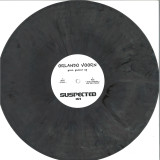
This new EP grey and black splattered 12" from Orlando Voorn features a real glut of goodness - there is the stone-cold classic 'Flash' under his Fix alias which is big, bouncy techno with wigged-out synths and plenty of playful energy. There is also the brand new title track 'Pulsor' which is a nice heady and deep cut with silky synth ripples and rubbery drums intertwining with one another perfectly. The two remixes included have never been available on vinyl before. The first is Orlando's chunky and funky techno rework of 'Boucle To The Beat', one of Toddy Terry's most recognisable early tracks. Then last of all is the colourful house sound of Ken Ishii's remix of 'Dope Computer'. It's a filter-heavy and loopy jam with prickly acid that will pump any party.
out of Stock
Last delivered 3 years ago available to reorder, subject to availability
This new EP grey and black splattered 12" from Orlando Voorn features a real glut of goodness - there is the stone-cold classic 'Flash' under his Fix alias which is big, bouncy techno with wigged-out synths and plenty of playful energy. There is also the brand new title track 'Pulsor' which is a nice heady and deep cut with silky synth ripples and rubbery drums intertwining with one another perfectly. The two remixes included have never been available on vinyl before. The first is Orlando's chunky and funky techno rework of 'Boucle To The Beat', one of Toddy Terry's most recognisable early tracks. Then last of all is the colourful house sound of Ken Ishii's remix of 'Dope Computer'. It's a filter-heavy and loopy jam with prickly acid that will pump any party.
out of Stock
Last delivered 3 years ago available to reorder, subject to availability
Blackploid has become one of Central Processing Unit's stalwarts in the past couple of years. Martin Matiske's project contributed a trio of EPs to the Sheffield label across 2021 and 2022, with each of them showing off the kind of electro chops and production sensibilities that made Blackploid an ideal fit for an imprint which also boasts the likes of Cygnus, Silicon Scally and Bochum Welt among its catalogue.
Now, for CPU's first release of 2023, Matiske levels things up with the debut Blackploid LPEnter Universe. Across these twelve tracks, Matiske leaves us in no doubt that he's a prime mover in the world of modern electronic music.Enter Universedoes not let up from start to finish, delivering a dozen pieces of leftfield electro that draws from the sound's greats while also showcasing an unpredictability and flair that is all of Blackploid's own.
The tone is set from the first frosty chords of opening cut 'Pulsation'. The track traverses the starscape on pitter-patter drums and chirruping synths, a lively and slightly dystopian roller with an adventurous undercurrent reminiscent of classic Rephlex drops. It's a style which Blackploid often draws for throughout the rest ofEnter Universe, albeit with elements added or subtracted at each stage.
Indeed, this album features some of the most unusual production you will hear on any record this year. While the grooves pulse away in a manner reminiscent of Drexciya or Legowelt, Blackploid layers the mixes with a whole cornucopia of synth tones. 'The Mission' boasts a bleep-bloop breakdown that sounds like malfunctioning rotary telephones; 'Silent Room' is a ghoulish jam which harks back to Warp's legendary Artificial Intelligence compilations; 'Automatik' and 'Wormhole' are defined by some brilliantly strange low-ends - you'll be thinking of Mr. Oizo's 'Flat Beat' with the wiggly former, while the gurgling, writhing anti-lead that dictates 'Wormhole' is oddly thrilling and more than befits the track's title.
This inventive approach is also apparent in some of the structural choices onEnter Universe. While the tracks here all keep a steady, dancefloor friendly pulse, several of them surprise you by switching up the approach after a minute or two. 'Pulsation', 'Automatik' and 'The Mission' all feature moments where a new element - extra hi-hats, a synth line entering from leftfield - inject fresh impetus into the tune to keep the listener on their toes.
Blackploid may push the sonic envelope onEnter Universe, but this does not mean there is no room for melody. In particular, the cuts here which most strongly channel 'Computer World'-era Kraftwerk do so by fronting some slyly tuneful work, particularly in the low end of the mix. 'Unidentified' serves up delightfully springy chords, 'Cell Mutation' leads from the bassline, and 'Space Curve' features little cells of melody and counter-melody working together to closeEnter Universeout on a high.
Blackploid's debut LP Enter Universe marries Drexciyan electro and Warp-school electronica with some brilliantly inventive production choices.
out of Stock
Last delivered 2 years ago available to reorder, subject to availability
Hoshina Anniversary hails from the westside of Tokyo and a place called Hachioj. His musical inspirations though come from an otherworldly place of rhythm, hyper-real melody and off-grid rhythm. This HakkyouShisou album on the mighty US label Constellation Tatsu is a fluid experiment which draws on experimental dance, jazz fusion, electronica and Japanese heritage. The sound design throughout is shiny and futuristic, particularly on the busy melodic patterns and loopy synth madness of 'Karoushi' which sounds like a computer left to its own devices after too much sugar. 'Dakuten' is a tripped out dub with sequenced progressions and lumpy drums, and 'Dareka No Rettoukan Wo Nomikomu' sounds like a house cut from Detroit's Omar S.
Heads have been after Otakar Olšaník and Jan Martiš's Advanced Process for a long time. That's because "coincidentally-cosmic disco" packed with spaced-out, smacky-synth dynamite tends to become sought-after. Originally slipping out on the mighty Coloursound in 1986, the label described the sound as "contemporary synthesizer underscores played by computers; depicting future technologies in today's process." If they'd just added "acid-drenched", they'd have been closer to nailing it.
The A-Side is totally beatless. It's also totally perfect. "Atomic Plant 1" is a pulsing synth epic and could've easily soundtracked a stylish 80s thriller such as Thief or To Live And Die In LA. It's a narcotically enhanced meeting between John Carpenter and Steve "Lovelock" Moore. "Atomic Plant 2" adds extra squelch and proper early computer synth squiggles. This stuff is addictive and truly ace. The 3 part "Fusion Point" showcases a dramatic and insistent industrial mood via a gripping sequencer pattern mixed with effects and accents. Menacing and magnificent. The trio of "Nuclear Radiation" tracks veer majestically from a hypnotic sequencer pattern with a heavy dramatic tune to hectic patterns without much of a tune, managing nevertheless to maintain a hold on the listener.
The drums enter proceedings on Side B and they're absolutely outstanding. Coming on like a slicker, heavier Johnny Jewel production, 20 years before Italians Do It Better, "Regulators 1" marries the smoothest head-nod beat you can wish for, with a murky mechanical rhythm and phasing effects. After the stunning beatless version ("Regulators 2") the suuuupppper slo-mo "Data Load" sounds like its wading through the heaviest K-Hole and is all the more thrilling for it. "Modem" is a brief and breezy funky bass and synth squiggle wonder, of the beatless variety. "Robot Masters", would you believe, actually sounds like something those Daft Parisians would've sampled on Discovery, over 15 years later. An uptempo, optimistic track with a real strut; propulsive rhythms with dramatic synths, what can only be described as "very-80s sounds" and digi-handclaps. The breathless "Digiheart" double bill rounds things out, one with a dynamic driving rhythm and more slick-as-hell beats and the other without drums. Mental, brilliant and completely essential.
As David Hollander, in Unusual Sounds: The Hidden History of Library Music, states, Coloursound was "founded in 1979 by composer, music lawyer, and vibraphonist Gunter Greffenius. A Munich-based library with a reputation for releasing innovative and ambitious music, it catered largely to the market for experimental sounds, its first release was 1980’s Biomechanoid, an abstract synthesizer excursion by Joel Vandroogenbroeck, of the pioneering kosmische band Brainticket. The record — complete with imposing, anonymous title and unearthly H.R. Giger cover art — set the tone for the label’s progressive leanings. The label’s catalogue stands as a tribute to the unfettered creative license that libraries were able to provide to forward-thinking musicians who, frustrated by the whims and constraints of the commercial scene, found complete freedom in the world of production music."
As with all our library music re-issues, the audio for Advanced Process comes from the original analogue tapes and has been remastered for vinyl by Be With regular Simon Francis. Richard Robinson has brought the original Coloursound sleeve back to life in all its metallic silver glory.
out of Stock
Last delivered 3 years ago available to reorder, subject to availability
Pink Vinyl
Canadian producer Dylan Khotin-Foote has kept his Khotin alias going for the better part of a decade; the impressionistic electronic project shifts with the movements in his life. Sometimes it leads, like when the club-friendly grooves of 2014's Hello World immersed him in the heart of Vancouver's underground dance scene, and sometimes it follows, like 2018's Beautiful You, a downtempo salve for DJ fatigue His melodic sensibility and playful ear for atmosphere remain the rippling core of the project's fingerprint; whether beat-driven or ambient, a foggy smear or a dusted and pristine print, a Khotin track has a distinct and instantly recognizable swirl. During and after the 2020 release of Finds You Well, his second LP on Ghostly International, Khotin-Foote settled back into a slower vibe in his hometown of Ed- monton. Even before the pandemic, his pivots to softer production, and away from DJing, left him with fewer opportunities in Vancouver and club bookings overall, and as a self-identifying introvert, he was fine with that. But the change of pace did open space for Khotin-Foote to grapple with concepts of adulthood and career. At his lowest, he almost walked off this musical path altogether; instead, he doubled down on the craft _ the tone, pacing, and dynamism of new material _ arriving at a definitive full-length. With Release Spirit, Khotin releases himself from the pressure of expectation, fusing and refining everything we know about his music. The warmth and familiarity of Khotin's dreamy, dulcet style meet new ideas and frameworks, a natural progression, a modest revelation; Khotin confirms it is okay to move slowly and he's never sounded better doing it. The album title borrows from the "release spirit" mechanic in the video game World of Warcraft. When players die, they are prompted to release their spirit and return as ghosts to find their corpses and come back to life. Khotin sees it as a worthy metaphor for the impending change his return home presented and the resulting process of purging artistic expectations to find his creative self again. On this go- around, he is freer, more playful, and more intentional within his palette of warped synth, breakbeats, and piano sounds _ including the classic Casio SK-1 presets he's used since the start _ mingling with wistful samples, field recordings, and other abstract snippets. For the first time, he enlisted Nik Kozub to do the mix and assist with sequencing. Khotin-Foote has long worked with the Edmonton-based musician and engineer in the mastering phase, as well as their days co-running the label Normals Welcome, and this time was able to involve his ears earlier given their newfound proximity. "I think it's my best sounding record to date." We begin on "HV Road" or Happy Valley Road, where Khotin-Foote spent time during a family vacation in British Columbia's Okanagan Lake. His plans to record crickets at night are quickly foiled by his younger siblings; the cute exchange orients the listener to a core memory of sorts, setting the tone of universally understood warmth and wonder that has defined some of Khotin's most transportive tracks. Hazy percussion takes hold, and we are swept further into the wisp of "Lovely," a grooving, melodic standout built on the interplay between the beat and human voice-like hums. Khotin knows this zone well; equally suited for a reverie or a club warm-up. The bubbling atmosphere and absurdity of "3 pz" offer a cosmic/comic interlude and also speak to reflections on his family's move to Canada two generations ago, and the audio tutorials they used to learn English. "I can only imagine my grandpar- ents repeating some of the bizarre phrases." "Fountain, Growth" finds Khotin in collaboration with Montreal's Tess Roby (Dawn to Dawn) for the project's first-ever vocal track. Roby's soft cadence echoes atop spiraling air pockets of rhythmic production, lending a breezy, almost shoegaze pop feel. Throughout the single and the album, wind gusts between the compositional layers, akin to the roaming spirits of its namesake, curving around the birdsong of "Life Mask" and seamlessly reaching "Unlimited <3." The latter bumps in slow motion; disembodied whirrs from his Casio collide with 808 drums and sub-bass for a vibe that teeters on trap and instrumental hip-hop. Release Spirit rests in a dream sequence. Oscillating synth lines dance around the heartbeat of "Techno Creep," a hyperactive REM state before the digitized ambient sprawl of "My Same Size." In the final pass, Khotin imagines transcontinental travel from the glow of his screen. He recorded "Sound Gathering Trip" to soundtrack a genre of YouTube videos he's taken to that follows train routes through Europe and Japan. The scene is serene and moving; piano keys warble as static-filled sound design shimmers off the rails, from cityscapes to the countryside, an introspective ride through a world beyond his bedroom. It doubles as an apt parting image for Khotin's project as a whole: dreaming big but happiest when riffing on the details, shaping environments from the inside out. Over the last decade, he has stretched from his core in Edmonton, leaving a trace in Vancouver and beyond; but when all signs point home, he loops back to see it all from a different vantage, revitalized, refined, and free.
out of Stock
Last delivered 3 years ago available to reorder, subject to availability
A compilation by To Pikap records diving deep into the 90's rave nostalgia. Pera Sta Ori starts with a jungle/idm track, while next Serge Geyzel contributes with a killer acid breakbeat. All 303 DimDJ's track also and ACU with a party feeling but yet sentimental track. Finally Dj Tsoug and TSEV add up a slice of braindance.
out of Stock
Last delivered 3 years ago available to reorder, subject to availability
Canadian producer Dylan Khotin-Foote has kept his Khotin alias going for the better part of a decade; the impressionistic electronic project shifts with the movements in his life. Sometimes it leads, like when the club-friendly grooves of 2014's Hello World immersed him in the heart of Vancouver's underground dance scene, and sometimes it follows, like 2018's Beautiful You, a downtempo salve for DJ fatigue. His melodic sensibility and playful ear for atmosphere remain the rippling core of the project's fingerprint; whether beat-driven or ambient, a foggy smear or a dusted and pristine print, a Khotin track has a distinct and instantly recognizable swirl. During and after the 2020 release of Finds You Well, his second LP on Ghostly International, Khotin-Foote settled back into a slower vibe in his hometown of Ed- monton. Even before the pandemic, his pivots to softer production, and away from DJing, left him with fewer opportunities in Vancouver and club bookings overall, and as a self-identifying introvert, he was fine with that. But the change of pace did open space for Khotin-Foote to grapple with concepts of adulthood and career. At his lowest, he almost walked off this musical path altogether; instead, he doubled down on the craft _ the tone, pacing, and dynamism of new material _ arriving at a definitive full-length. With Release Spirit, Khotin releases himself from the pressure of expectation, fusing and refining everything we know about his music. The warmth and familiarity of Khotin's dreamy, dulcet style meet new ideas and frameworks, a natural progression, a modest revelation; Khotin confirms it is okay to move slowly and he's never sounded better doing it. The album title borrows from the "release spirit" mechanic in the video game World of Warcraft. When players die, they are prompted to release their spirit and return as ghosts to find their corpses and come back to life. Khotin sees it as a worthy metaphor for the impending change his return home presented and the resulting process of purging artistic expectations to find his creative self again. On this go- around, he is freer, more playful, and more intentional within his palette of warped synth, breakbeats, and piano sounds _ including the classic Casio SK-1 presets he's used since the start _ mingling with wistful samples, field recordings, and other abstract snippets. For the first time, he enlisted Nik Kozub to do the mix and assist with sequencing. Khotin-Foote has long worked with the Edmonton-based musician and engineer in the mastering phase, as well as their days co-running the label Normals Welcome, and this time was able to involve his ears earlier given their newfound proximity. "I think it's my best sounding record to date." We begin on "HV Road" or Happy Valley Road, where Khotin-Foote spent time during a family vacation in British Columbia's Okanagan Lake. His plans to record crickets at night are quickly foiled by his younger siblings; the cute exchange orients the listener to a core memory of sorts, setting the tone of universally understood warmth and wonder that has defined some of Khotin's most transportive tracks. Hazy percussion takes hold, and we are swept further into the wisp of "Lovely," a grooving, melodic standout built on the interplay between the beat and human voice-like hums. Khotin knows this zone well; equally suited for a reverie or a club warm-up. The bubbling atmosphere and absurdity of "3 pz" offer a cosmic/comic interlude and also speak to reflections on his family's move to Canada two generations ago, and the audio tutorials they used to learn English. "I can only imagine my grandpar- ents repeating some of the bizarre phrases." "Fountain, Growth" finds Khotin in collaboration with Montreal's Tess Roby (Dawn to Dawn) for the project's first-ever vocal track. Roby's soft cadence echoes atop spiraling air pockets of rhythmic production, lending a breezy, almost shoegaze pop feel. Throughout the single and the album, wind gusts between the compositional layers, akin to the roaming spirits of its namesake, curving around the birdsong of "Life Mask" and seamlessly reaching "Unlimited <3." The latter bumps in slow motion; disembodied whirrs from his Casio collide with 808 drums and sub-bass for a vibe that teeters on trap and instrumental hip-hop. Release Spirit rests in a dream sequence. Oscillating synth lines dance around the heartbeat of "Techno Creep," a hyperactive REM state before the digitized ambient sprawl of "My Same Size." In the final pass, Khotin imagines transcontinental travel from the glow of his screen. He recorded "Sound Gathering Trip" to soundtrack a genre of YouTube videos he's taken to that follows train routes through Europe and Japan. The scene is serene and moving; piano keys warble as static-filled sound design shimmers off the rails, from cityscapes to the countryside, an introspective ride through a world beyond his bedroom. It doubles as an apt parting image for Khotin's project as a whole: dreaming big but happiest when riffing on the details, shaping environments from the inside out. Over the last decade, he has stretched from his core in Edmonton, leaving a trace in Vancouver and beyond; but when all signs point home, he loops back to see it all from a different vantage, revitalized, refined, and free.
out of Stock
Last delivered 64 days ago available to reorder, subject to availability
New edition of this Soul Jazz Records out-of-print classic album available now as a new limited-edition one-off pressing triple yellow vinyl album (plus download code), and limited-edition one-off pressing special yellow CD edition.
Soul Jazz Records’ Space, Energy and Light is a collection of music by early electronic and synthesizer pioneers (from the 1960s through the 1970s), mid-1970s proto-new age gurus and 1980s guerrilla D-I-Y cassette-era electronic artists, spanning in total over a near 30-year time frame. All of these artists used electronic advancements in music technology as a means of exploring not only space and the idea of the future, but also of looking inwards to the soul and of creating music in harmony with the natural world.
From computer software and hardware experimentalists and sound pioneers such as Laurie Spiegel and Kevin Braheny, as well as Mother Mallard’s Portable Masterpiece Company – the first synthesizer ensemble created in collaboration with Robert Moog – through to musique concrète experimentation, the album shows how technological advancements and creative artistic expression often went hand in hand.
In the mid-1970s artists Steven Halpern and Iaxos were instrumental in creating proto-new age music, experimenting in both the healing properties of sound and its relationship with the natural world. These artists also pioneered a new self-contained and underground D-I-Y approach to music, creating their own record labels, forming new distribution networks (with albums sold in meditation centres, health food stores and ashrams) far away from the commercialism of the mainstream music industry. In the early 1980s after the revolution of punk, these D-I-Y attitudes and ideas appeared once more in the growth of the distinctly anti-commercial and underground cassette-only careers of artists such as Germany’s Stratis and Carl Matthews in Britain.
Artwork includes some of the earliest photography of the Plieades star cluster dating from the 1880s.
"Listening to Space, Energy & Light in one sitting is a bit like experiencing constellations exploding within constellations inside your brain." Record Collector
"Incredible collection of spacey electronics and meditative soundscapes dating from the early 60s to the late 80s here, lovingly assembled by the Soul Jazz team. This compilation has it all if you like your music deep. Big names such as Iasos and Laurie Spiegel feature, but even if you think yourself a bit of a nerd in this field, there are some lesser known pearls to be found." Bleep
"Quite simply an amazing mix of some quite bizarre and interesting pieces of music, no way to describe it other than to buy it, put on some headphones and drift off to inner space.” Amazon
"New compilation charting almost three decades of experimental
electronic and synthesizer music from the most influential and often
unsung composers of their generation. Beginning and 1961 and
following the story until 1988, Space, Energy and Light connects
proto-new age gurus and DIY tape vigilantes who were equally
inspired by the advancements of new technology and its potential to
unlock utopian futures in both the music and the soul." Vinyl Factory
out of Stock
Last delivered 3 years ago available to reorder, subject to availability
WRWTFWW Records is thrilled to announce the first ever release of the soundtrack for the sci-fi Amiga demoscene wonder Odyssey by the Alcatraz group, with music from Greg - and what is possibly the first ever vinyl release for an Amiga demoscene soundtrack, if not the first ever vinyl release for a demoscene soundtrack whatsoever!
The special limited edition vinyl features the complete soundtrack of the demo sourced from the original masters as well as printed innersleeves, a 24x24 inch double-sided poster with extensive liner notes on the fascinating history of the Amiga demoscene on one side and a floppy disk print on the other, and a WRWTFWW sticker sheet. Odyssey is also available in digital format.
Wikipedia says: The demoscene is an international computer art subculture focused on producing demos: self-contained, sometimes extremely small, computer programs that produce audiovisual presentations. The purpose of a demo is to show off programming, visual art, and musical skills. Demos and other demoscene productions (graphics, music, videos, games) are shared at festivals known as demoparties, voted on by those who attend and released online.
In the demoscene galaxy, one era was particularly exciting: the Amiga years during which the demos were created for the Commodore Amiga home computer - a time of intense rivalry between programmers, graphics artists, and computer musicians, testing the limits of the (fixed) Amiga hardware.
The Odyssey demo was one of the largest productions ever released by an Amiga group, a real sci-fi movie on five floppy disks made with 3D sequences. It was presented at a demoscene party in 1991 and won the competition, setting a new standard for Amiga demo possibilities.
One of the highlights of the demo was the funky cosmic music from Swiss composer Greg, a true space opera, the 90s galactic soundscape you didn’t know was missing from your life! And so here it is, available for the first time, 10 tracks of pure video game music joy, adventurous computer pop, pixelated techno-trance, Star Wars gone floppy disk, and interstellar beats for days.
out of Stock
Last delivered 3 years ago available to reorder, subject to availability
A Notwist concert is a Notwist concert is a Notwist concert. The band around the core trio of Cico Beck and the Acher brothers Markus and Micha usually takes its studio recordings as a mere starting point for their live performances, considering them to be possibilities that need to be explored further. This is especially true for »Vertigo Days - Live from Alien Research Center,« a live record made under unusual circumstances. The band members rearranged songs from their ambitious 2021 album »Vertigo Days« in their studio in Weilheim to record and film a special performance. The songs took on a new life, becoming more psychedelic and intense when rearranged into a spontaneous, Krautrock-esque collage.
»Vertigo Days« was meant to transcend the conventional notion of a band as well as the creative and geographic boundaries inscribed into that concept. And even though life had other plans, this is precisely what the album did when it was released to both commercial success and critical acclaim in early 2021. Contributions by Tenniscoats singer Saya, Angel Bat Dawid, Ben LaMar Gay, Juana Molina, among others, as well as new member Theresa Loibl on bass clarinet, harmonium, and keyboard, expanded the band’s sonic palette, stylistic range, and even lyrical focus through the addition of different instruments, artistic approaches, and languages.
All of that was missing when the band retreated to their studio—dubbed Alien Research Center in response to, and in spite of, a nearby church called Christian Outreach Center—to further explore the possibilities of the source material. The band members considered this a challenge rather than an insurmountable problem and not only accepted, but fully embraced it. Trying to work as little as possible with the computers and samples—Saya’s voice on »Ship« being a notable exception—the band rearranged six tracks from »Vertigo Days« and a piece from the »One of Those Days« film soundtrack in order to allow themselves to improvise more freely, especially thanks to Loibl, who takes on a key role during these 45 minutes.
The intro sets the tone for what’s to come, contrasting loose jazz drumming with curious synthesizer rhythms in an abstract rendition of the first sounds that greeted the listeners on »Vertigo Days«. While the next four tracks—»Into Love / Stars«, »Exit Strategy To Myself«, »Where You Find Me« and »Ship«—follow the chronology of the album, they use the originals as a blank slate for further experimentation. The first track morphs into a feverish long-form jam that draws on the underlying groove to shift the dynamics from and leave behind the song structure of the studio version. It’s an exemplary piece in a recording that sees each individual musician leaving their mark on the overall sound, all while being perfectly attuned to what everyone else is doing around them. This continues up until the record’s triumphant finale, a whirring rendition of »Loose Ends.«
»Vertigo Days - Live from Alien Research Center« is at once a snapshot of a certain moment in the band’s history and the quintessential Notwist live record: a unique performance that both explores the untapped potential of the »Vertigo Days« studio recordings while also serving as an inspiration for upcoming live shows.
As with the studio album, the artwork for »Vertigo Days - Live from Alien Research Center« features photographs by Japanese artist Lieko Shiga, taken in the '00s.
Ian Haywood aka Ian Sweetness was born in Kingston, Jamaica. Gifted with talent, this versatile singer of culture Reggae music and Lover’s Rock, started at the age of nine with the church choirs. Bob Marley, Dennis Brown, Beres Hammond, Frankie Paul and the old school Reggae foundation artists are his greatest inspiration. His first recording was at the age of nineteen at the Creative Sounds Studio in Kingston. The tune’s title was “Rude Bwoy” feat. Simpleton. After that, he started to work with sound systems in his area, and from there he began to spend time in studios around Jamaica, such as Arrows Studio, King Tubby’s, King Jammy’s, Penthouse, Bobby Digital, and more.
Ian recorded tunes with different producers and labels, for example, Jah Life, and Bobby Digital, and was based at Arrows Studios, but still working with producers in Jamaica & overseas.
Frokedal is a popular folk singer-songwriter whose haunting vocals have scored the music of various acclaimed bands over the past decade. The members of Sa^ver are veterans of the Norwegian heavy scene. Having toured all over the world playing renowned festivals like Roadburn and Psycho Las Vegas, they now fill and orchestrate the gap between eerie softness and furious anger as a three-piece atmospheric sludge metal ensemble. This split 10" sees each of these artists present a song from the respective other artist's back catalogue, finding a transcendental middle ground between the other artist's musical realm and their own sphere. Commenting on the beginning of her own musical career, Frokedal notes: "Because everyone has a computer these days there's no limit to how many times you can multi-track. I was sick of that. I hoped to go the other way - to remove as much as I could and be left with a beating heart." Remarkably, Sa^ver have done just that in their execution of Frokedal's track «Shot-Put», turning down their guitars to give space to clean vocals and laying bare the synths that are an integral part of their sound. Driven by deep drones and soft layered vocals, the Homeric simile of a meeting at the shot put becomes even more compelling, turning the folksy original into a haunting ambient rock opus. In turn, Frokedal lays bare the heart of «I Vanish» from Sa^ver's debut LP in a gently swaying but bewitching folk version. In a world somewhere between the triple harmony magic of The Staves and the polyphonic madness of Le Myste`re des Voix Bulgares, Anne Lise conjures the unsettling path towards obliteration. Many things can be said about the way these songs sound and even about how they transcend the originals in some ways, but the true beauty of this EP lies in the way both Frokedal and Sa^ver incline towards each other to find a middle ground that is yet unexplored in their respective careers. Coming together, they prove that beauty is found in the eye of the beholder, but transcendence is found in the eye of the storm! Limited (100 copies ww) Single Colour (Dark Blue) Edition!
Arkada records is excited to announce our 4th release - forthcoming split vinyl EP featuring the sounds of ADJ & Adrien d’Elzius.
We are very happy to present the first part of the EP with the unique sounds of one of the pioneering artists in the UK underground Electro scene, the label owner of Pyramid Transmissions - ADJ
ADJ originates from and is based in London. He has been playing Underground Electronic Music for over 35 years as a DJ, starting in the days of Early Electro and Hip Hop. He has also been producing and releasing music for 25 years, releasing over 200 tracks in this time on a plethora of labels including Touchin Bass,For Those That Knoe, Another Perspective, Ai, Outside, Cultivated Electronics,Yellow Machines, Crobot Muzik, Diffuse Reality, Netlabel ,Digital Distortions and more...has done remixes for Flint Kids, Scanone, LASynthesis, Carl Finlow, Fleck Esc, Arsonist Recorder , Paul Hierophant to name a few.
He has run the Pyramid Transmissions Record label with label partner Pathic for 20 years and also ran the Analogique record label for 5 years from 1995-2000 releasing Techno, Electro and Electronica as 3 Elements.
ADJ also performed his first LIVE set in a few years in March 2020 MUTABOR in Moscow.
As a DJ, he has played at many festivals including a BLOC residency, Glastonbury For BLOC, Bestival, Shambala, Infiltrate at WMC Miami. 2019 saw another tour of the US with Silicon Scally,Ben Milstein, EVAC, Ion Driver and 214. He also runs the Dodo Club and Frequency Resonate(with Errorbeauty) nights in London and Berlin aswell as playing in Lille, Kiev, Moscow, St Petersburg Berlin,Zagreb,Athens, Napoli, Brussels, Budapest, Vienna, Valencia, Sofia, Paris and many more..
Second part of our EP presents the futuristic glitched-out sounds of the one of a kind Belgium producer Adrien d’Elzius also known under his allies HosmOz.
Adrien d’Elzius was born in the gloomy south of Belgium spending his youth hanging around in a camping and listening to Hip Hop, he started his life in a mess of paradox. At 10, he learned to play drums under his punk’s brother regard, and experimented different kind of rock until 18. That’s where someone showed him a track of Aphex Twin, who blew his mind and made him believe he had finally found the music that suited him. From there, he compulsively spend hours playing around with his computer and slowly made himself a place in the very small community of underground music lover of Brussels under the nickname hosmOz after winning a contest. From his melodic and acidic drill’n’bass beginning, his sound slowed down and got darker, challenging himself to try to create something he couldn’t before. He recently re-released his Lp on Diffuse Reality that make it available on physical form and also his debut album on Burial Soil with remixes by Umwelt and Lloyd Stellar.
The masters of the release are kindly made by Thomas Dunstan. Artwork made by our amazing designer Lawrence Cli
out of Stock
Last delivered 70 days ago available to reorder, subject to availability
Jonah David has been creating and releasing music as Fantasy Camp since 2012, when he began producing and making beat tapes at age 16 in small-town Pennsylvania. Now based in Wilkes-Barre, and 10 years older, David has built Fantasy Camp into a gothic dream pop powerhouse, celebrating his first label release with Casual Intimacy on Memory Music.
The record comprises seven tracks of bedroom-produced, universe-sized dream pop, lo-fi R&B, indie rock, and electro-pop that document the aftermath of a long-term relationship’s dissolution, and the complexities of dating outside of the parameters of traditional, long-haul partnership. Casual Intimacy captured that weirdness.
David grew up in Hamburg, Pennsylvania, and started Fantasy Camp as a faceless project to put out a massive collection of mixtapes and production work. Over the years, he built up confidence and desire for a different pace, and by 2018 started adding vocals to his work. Initially, he would record on his phone’s voice memos function and clean it up on his computer, but over the years he collected equipment to outfit a basic bedroom studio setup.
The album’s seemingly brief tracklisting belies a work of great beauty and depth, and one which turned into a one-man crusade for singer/guitarist Lars Andersson, intertwining deeply personal stories with his love for the era of Romanticism. “Every time I go to a museum and I’m about to pass through the era of Romanticism I stop in awe,” says Lars of the enduring appeal of the 18th century artistic movement. “Whatever it is – stories, paintings, music – it triggers something deep within me, something profoundly human. It really hits a nerve, and it utterly immerses me to a point where I can’t move.” The album replicates this feeling; a gloriously over-the-top blend of Slowdive and Sigur Rós, mixed with the single-mindedness of Daniel Johnston and the noisiness of Nirvana, it’s as bold and beautiful and every bit as ornate as the art that inspired it. Unlike their acclaimed debut, 2019’s All That Ever Could Have Been, which gradually came into focus with a 15-minute opening track, Picturesque hits home from the very first note of the short and sweet opener, ‘Ballerina’. That’s not to say there aren’t epics here – ‘Metamorphosis’ is essentially a 12-minute suite of three movements; blistering closer ‘The Lot’ is 11 minutes of Swans-inspired heaviness – but everything is much more direct and focused. This isn’t an album to lose yourself in, it’s one to get swept away by. “‘More is more’ was definitely the credo when making this record,” agrees Lars. “A big inspiration were bands like Pond and the way they manage to fill their songs up with stuff to the absolute maximum. While I definitely tried to give the listener some room to breathe at certain points and while, in good old post-rock fashion, it still builds up and breaks down, it relies much more on simple melody and harmony as opposed to noisy experimentation to transport feeling.” Never more so than on the first single, ‘The Golden Age’, which is the album’s centrepiece; a soaring slice of über-shoegaze that is so stunning you can’t take your eyes or ears off it. Like all the songs on the album, it’s based around a fairy-tale from the Romantic era. In this case, it’s Heinrich von Ofterdingen by the German poet, author and philosopher Novalis (other influences are: The Steadfast Tin Soldier by Hans Christian Andersen; The Seven Ravens and Hans in Luck by the Brothers Grimm; Undine by Friedrich de la Motte Fouqué and The Golden Pot by E.T.A. Hoffmann), with Lars drawing parallels between the titular character’s mystical and romantic searchings and his own personal quest. This is apt as the album has been an overriding obsession for Lars for the past two-and-a-half years; as well as writing and recording the songs (bandmate Phillip Dornauer played drums), he also mixed and mastered them at his Alpine Audio studio and Picturesque is very much his Brian Wilson or Kevin Shields moment. MOLLY were in the middle of their European tour when Covid hit in early 2020, forcing Lars to retreat back to his home outside Innsbruck and giving him time and space to think about every detail of the record. “Well, I was on a quest I guess,” he admits. “Like everyone, I was stranded at home and at some point I just said to myself, ‘If not now, then when?’ It was an intense process. I’ve worked on music from other bands and artists before but producing and mixing your own music is an utterly different animal. It was probably the most intense thing I’ve ever done, but it was also incredibly rewarding and the feeling of it all coming together piece by piece is incomparable.” The artwork is just as effective. “I think of Radiohead’s OK Computer – what you hear on the record is what you see on the cover,” explains Lars. “We were inspired by what we call ‘wimmelbilder’ hidden pictures in German, a very specific style in art where there are a lot of little things happening. When you see it from further away, it looks organic like a lost painting from the area of Romanticism, but the closer you look the more digital it gets. It’s a nice analogy.” He’s right, it perfectly sums up the conflict between Romanticism and 21st century life. “Romanticism was basically an answer to the Industrial Revolution as well as the social and political norms of the Age Of Enlightenment,” concludes Lars. “Now, we all live in a much more industrialised, materialistic, individualistic and sterile society than any early Romanticist could have ever possibly imagined. Over 200 years later the Romanticists have lost the battle.” With the divine and downright pulchritudinous Picturesque, MOLLY begin the fightback.1.Ballerina 2.Metamorphosis 3.The Golden Age 4.Sunday Kid 5.So To Speak 6.The Lot
out of Stock
Last delivered 3 years ago available to reorder, subject to availability
The four-piece known as Man…or Astro-Man? have been using the pandemic to conduct more research at Astro Labs and a by-product is a new vinyl single! The B-side features a cover by Solid Space. Space 1991. The year the future finally begins! You now indeed live in the future. The past is so outdated and we all know how fleeting the present is, so seriously... why not live in the future? In fact, the first ever computer “website” was created this very year. Soon enough, everyone will have their own personal “website” or “webspace” that will reside in its own virtual “domain.” Think of it: everyone in the whole world will be now be digitally connected and able to interact in just a matter of a few minutes. Dear citizens of the past and present: we want to welcome you all. Enjoy the future. The future is now.
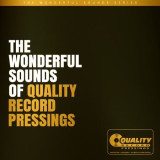
Celebrate the technical expertise of the world's finest LP pressing plant — Quality Record Pressings — with the finest LP sampler ever assembled!
The Wonderful Sounds Of Quality Record Pressings includes music hand-picked by Acoustic Sounds CEO Chad Kassem and classical music tracks chosen by the team at Reference Recordings.
Every song meets the criteria of excellent performance, perfect recording and flawless mastering. What better way to celebrate such a monumental anniversary for one of the absolute leading brands in analog high fidelity than with this to-die-for LP sampler? Contains most genres of music — blues, jazz, classical, R&B and female vocal. From now on, you'll only need to carry one demo record around with you.
Vinyl expert Michael Fremer, of Analogue Planet and Stereophile, gives you a track-by-track tour of the history and production of the songs on this special album.
What separates our world-renowned Quality Record Pressings LPs from other manufacturers? Since Acoustic Sounds CEO Chad Kassem launched QRP in 2011, the focus has been on producing consistently virtually silent vinyl playing surfaces, as well as reproducing details that were hallmarks of vintage labels — the "deep groove" label of Blue Note LPs, for example.
The craft of pressing fine vinyl is perfected in such details. Such as plating lacquers within 24 hours of their arrival at the plant. Cut grooves are prone to change with temperature fluxuations, high humidity and time. The sooner that lacquers are plated, the better the fidelity of the final pressing. Other keys include using a proprietary silver spray formulation, made fresh daily. And incorporating computer microprocessors on our presses to precisely control press functions with absolute precision. And an imbedded temperature sensor in the dye cycles the press with just as much control. The result — more consistency in each LP, high fidelity and reduced distortion. The ultimate sonic advantage.
Few musical discoveries in recent years - perhaps ever - have been as staggering as that of Soap&Skin aka Anja Plaschg. The sheer force this young artist (she is only eighteen) injects into her compositions almost beggars belief, her songs consuming every last drop of her with no regard for grace or beauty. They say I'm different – and they have been saying it about Plaschg since she was a little girl in the small South Steiermark village of Gnas, where her parents had a pigfarm. With her punkish looks, ripped clothes and nihilistic attitude to match, she felt like the archetypal outsider, hating piano lessons until hitting her teens when, all of a sudden, piano playing became her elixir. Anja began practising for 12 hours a day, took up the violin as well and composed her first classical pieces for the village music school. Her older brother installed a sound programme on the computer for her to play around with, and having figured it out for herself, she experimented with productions.Soap&Skin's first album “Lovetune for Vacuum” is a logical progression from her previously released pieces, an unwavering line of drama, inner conflict and melancholy. The impact of this debut lies in its paradoxicality: remarkably mature on the one hand, yet feeding on unbridled youthful exuberance on the other. The songs you find on the album have been written between 2005 – 2008 and have been recorded back at Anja’s place - mostly just by herself.
Portland's premiere purveyors of kraut-inflected party rock return with an
album's worth of tunes crammed into an extended playing set
The eponymous lead track bursts out of the gate with ebullience. Lee Ritter's
rhythms and Cord Amato's riffs fit comfortably in the space where Kraftwerk left
off and DEVO began. "Artificial Head" may be about a Fleshlight, or it could be a
paperback sci-fi-derived weed fantasy. You could listen to Møtrik while sober, but
why would you do that? Next up is the measured and groovy "Castle Electric"
which features a dialog between bassist/vocalist Erik Golts and a sexy computer.
His German is easily as good as her English and one wonders how the night
ended after she switched the lights "auf." Side one completes with "Unifox" built
up from a Dave Fulton synth composition into a full- fledged Møtrik track, this
being the first time the band has bucked its contrarian vision of a band that jams
in its own professional recording studio yet refuses to produce itself. "Outer
Reaches" is the patiently awaited sidelong epic. The contemplative and
exploratory scene begins with chirrups from an analog swamp, then slowly rises
through the hazy pastel atmosphere on a crystalline bubble before blasting off
into full- fledged Floydian outer space psych. As always, Møtrik colors between
the lines, applying its overall aesthetic to rock music, which is to say it's the
FORTRAN approach to basement partying. Artificial Head is just what your body
needs to feel complete. Pressed on Light Green Color vinyl.
The word datasal paints inner pictures for most people growing up in Sweden during the 1990’s. The datasal (a classroom for computers) was an ordinary classroom with few changes to fit the school’s 10 newly leased computers. The room represented the change of times in Sweden during this period: the fixed institutions and the awaiting digital flood wave.
The music of Datasal sounds captures the feeling of printing a downloaded picture of your favorite hockey player or music artist or the expectations building up as you wait for the modem to log in to interact with the thousands of users of the internet in 1995. The two tracks on this release manifests the excitement but also the bit of fright you felt connecting to the world in the mid 90’s - a time when the internet still was fun.
The sound is built around repetitive sequencer loops and programmed beats where electric bass, electric guitar and flute improvise around a theme, creating a sound that is best described as cosmic flute house. Datasal is an harmonic reminder of a time where digital progress seemed less harmful than today.
out of Stock
Last delivered 3 years ago available to reorder, subject to availability
Each of the three hundred covers is different! All are numbered.
After two well-received albums of Normal Bias, the time has come for a solo debut in U Know Me of the half of this valued dub dub, i.e. Piotr Krupiński, better known as YAC.
The starting point for "We Have Much More In Common Than What Divides Us" was the rhythm, and on the one hand synthetic sounds of classic analog synthesizers with the legendary EMS VCS3 at the forefront, and on the other hand the organic hypnotic sound of Tibetan bowls and tubular bells. All together strongly processed and traditionally ground with dub techniques and marked by the tape's noise.
The amazing graphic design was created by Bartosz Szymkiewicz.
The cover design is the result of an attempt to graphically represent the album's minimalist but full of lively nuances music. Each of the forms on the cover corresponds with its surface area to the length of the work it depicts. The composition was procedurally generated by a computer program, resulting in 300 unique covers. Interestingly, the program definitely preferred to arrange the forms close together, which is an unforeseen reference to the title of the album.
out of Stock
Last delivered 3 years ago available to reorder, subject to availability
The 2013 action-adventure game The Last Of Us was originally published in 2013 by Sony Computer Entertainment and was developed by Naughty Dog. The game is played in a third-person perspective and its player controls Joel, a smuggler who is escorting the teenager Ellie across a post-apocalyptic America. The game received critical acclaim, with praise for its narrative, gameplay, visuals, sound design, characterization, depiction of female characters. The Last Of Us became one of the best-selling video grames, selling over 1.3 million units in its first week. The game won multiple Game of the Year awards and has been cited as one of the greatest video games ever made.
The Last Of Us also received acclaim for its score, which was made by composer Gustavo Santaolalla. Santaolalla is also known for his work on Brokeback Mountain and Babel, for which he both won the Academy Award for Best Original Score. The Argentinian composer also created the music for the series Jane The Virgin and Netflix’ Making A Murderer. His soundtrack to The Last Of Us was his first in the video game industry. In 2020, he also returned to compose the music to the sequel, The Last Of Us Part II.
The Last Of Us is available on black vinyl. This 2LP is housed in a deluxe gatefold sleeve, includes printed innersleeves and an
The 2013 action-adventure game The Last Of Us was originally published in 2013 by Sony Computer Entertainment and was developed by Naughty Dog. The game is played in a third-person perspective and its player controls Joel, a smuggler who is escorting the teenager Ellie across a post-apocalyptic America. The game received critical acclaim, with praise for its narrative, gameplay, visuals, sound design, characterization, depiction of female characters. The Last Of Us became one of the best-selling video grames, selling over 1.3 million units in its first week. The game won multiple Game of the Year awards and has been cited as one of the greatest video games ever made.
The Last Of Us also received acclaim for its score, which was made by composer Gustavo Santaolalla. Santaolalla is also known for his work on Brokeback Mountain and Babel, for which he both won the Academy Award for Best Original Score. The Argentinian composer also created the music for the series Jane The Virgin and Netflix’ Making A Murderer. His soundtrack to The Last Of Us was his first in the video game industry. In 2020, he also returned to compose the music to the sequel, The Last Of Us Part II.
The Last Of Us is available on black vinyl. This 2LP is housed in a deluxe gatefold sleeve, includes printed innersleeves and an
Originally released in 2020 on cassette and digitally. more eaze is the nom de plume of Austin, TX mainstay m.maurice, a roving experimentalist who’s explored an astoundingly diverse range of sounds, from drone and computer music to avant-pop and beyond. claire rousay is a San Antonio, TX-based percussionist/composer/sound artist who uses physical objects and their potential sounds as a way to explore queerness, human physicality, and self perception. Together—through a suite of deeply personal aural collages—two of Texas’ most vital and vibrant sonic searchers beg the eternal question: If I Don't Let Myself Be Happy Now Then When?
Although only their debut album together, If I Don’t Let Myself… reveals a profound and fruitful relationship between m and claire. But the symphonic symbiosis goes even deeper still. Outside of musical breakthroughs, the pair helped each other conquer intensely personal changes, with m and claire transitioning and coming out as non-binary and trans, respectively.
As m explains, “to me this record is very much about this process of becoming—trying to reach something and getting there but sometimes not being quite where you want to be but at least getting closer. It’s about feeling alternately empowered and insecure socially as you transition and trying to cope with these conflicting emotions.”
Musically, the album showcases startlingly sincere sets of serrated but sedative situational music. A-side epic Drunk is a sprawling but taut rove of aural duality. Passages of exquisite elegance subtly clash with shimmering shards of sound. Pre-op is a poised and pensive piece of solemn reflection, harrowingly honest and delivered with clarity and composure, while Post-op closes out the set in a wholly uplifting and optimistic flair.
If I Don't Let Myself Be Happy Now Then When? is ultimately about coping during the respective transitioning phase in both of their lives, obliquely blissful and fraught with freedom.
100% GALCHER was by all accounts a game-changer when it landed in 2013 as an hour of original music from a relatively unknown producer ushered in by the beloved mix series Blowing Up The Workshop. Galcher Lustwerk's signature sound — a smoky stream-of-consciousness baritone shadow-boxing with beats, informed by funk, rap, rhythm, and blues — felt like an epiphany, impossibly hypnotic and complete. Resident Advisor writes, "100% GALCHER laid out a louche, lysergic and resolutely black take on deep house." Pitchfork remembers the music's immediate impact: "It's the sort of gem you felt inclined to pass around” — and by year-end list time, word-of-mouth intensified. It was Resident Advisor and Juno's mix of the year, and earned a top-ten placement in FACT Magazine's albums list, as well as Philip Sherburne's personal rundown for Spin." Since then, select songs from 100% GALCHER have seen small-run pressings, while the album has lived primarily on SoundCloud and YouTube as a low-key cult legend. The gateway into Lustwerk's now well-established catalog, known for its reliability as a late-night listen and its prophetic vision for the near future of underground dance music. RA would later name it a mix of the decade, citing its influence and imagination: “Original in every sense — unknown, unheard and unbelievably good.” In late 2022, marking ten years since he first recorded the material, Lustwerk returns to Ghostly International to release 100% GALCHER as a remastered limited-edition double LP.
Lustwerk is a product of the Midwest. Growing up in Cleveland, he'd tape over his parents’ cassettes and spend hours at his family computer recording loops and designing artwork for the jewel cases of burned CDs. In high school, he turned to Ableton Live and absorbed every electronic music magazine he could find at the local Borders Books store. In excerpts from the 100% GALCHER liner notes, Lustwerk looks back: "My dad drove me to this shop on the westside Bent Crayon, where I would get anything the blogs told you to get + whatever the clerk recommended. CDs stayed in their packaging, there was always an overflow of vinyl stacked on the floor. I was too shy to listen to anything before buying."
As a college student at RISD, he played in noise bands, plugged into Providence's DIY scene via Myspace, and started DJing weeknights at bars downtown. There he connected with Young Male and DJ Richard, who would go on to found White Material Records and offer their third release to Galcher Lustwerk, an alias realized via CAPTCHA test, a perfect artifact of its internet age. By 2012, Lustwerk had drifted to New York City and settled into a graphic design job, quickly growing disenfranchised by office culture. "Some days I felt like a token, other days I felt invisible." At night, he and his friends were carving out their own space
out of Stock
Last delivered 18 months ago available to reorder, subject to availability
WEȽ∝KER's 'ENHANCER' offers a high dive into the soggy hands and lands of Dujat & Beedles.
Having planted their flag firmly at the forefront of modern computer music, WEȽ∝KER return with 'ENHANCER', an astonishingly dynamic display of technique and form. This isn't sound for sound's sake; the duo's playful approach to composition ties many discrete events together to weave a warm-bath narrative. A tug at the skittering top layer reveals something so rare: there's real musicality under there, aching chords snaking through the crunchy boot-up sequence of "Gator" and underpinning the pneumatic drift of "Ohmbase".
ENHANCER's tracks unfurl with an instinctive flow, pulling/pushing in all the right places and guiding the listener through aural aqueducts. WEȽ∝KER are just truly properly at it again. Dive in, isn't it?
ENHANCER's artwork is the result of an all-Mancunian collaboration with sculptural artist and dead-powder virtuoso Nicola Ellis. Photographed by Glen Cutwerk and Bazz Patel, shot in the spleen of Salford's The White Hotel. Drippy, oily notes with a hint of flesh.
---
Mastered by Giuseppe Ielasi.
Available on pad-printed solid white cassette housed in a clear double case w/ exclusive gloss laminated cover-art. Pro dubbed by Headlesstapes Includes free download code Limited Edition of 50.
out of Stock
Last delivered 3 years ago available to reorder, subject to availability
100% GALCHER was by all accounts a game-changer when it landed in 2013 as an hour of original music from a relatively unknown producer ushered in by the beloved mix series Blowing Up The Workshop. Galcher Lustwerk's signature sound _ a smoky stream-of-consciousness baritone shadow-boxing with beats, informed by funk, rap, rhythm, and blues _ felt like an epiphany, impossibly hypnotic and complete. Resident Advisor writes, "100% GALCHER laid out a louche, lysergic and resolutely black take on deep house." Pitchfork remembers the music's immediate impact: "It's the sort of gem you felt inclined to pass around" _ and by year-end list time, word-of-mouth intensified. It was Resident Advisor and Juno's mix of the year, and earned a top-ten placement in FACT Magazine's albums list, as well as Philip Sherburne's personal rundown for Spin." Since then, select songs from 100% GALCHER have seen small-run pressings, while the album has lived primarily on SoundCloud and YouTube as a low-key cult legend. The gateway into Lustwerk's now well-established catalog, known for its reliability as a late-night listen and its prophetic vision for the near future of underground dance music. RA would later name it a mix of the decade, citing its influence and imagination: "Original in every sense _ unknown, unheard and unbelievably good." In late 2022, marking ten years since he first recorded the material, Lustwerk returns to Ghostly International to release 100% GALCHER as a remastered limited-edition double LP. Lustwerk is a product of the Midwest. Growing up in Cleveland, he'd tape over his parents' cassettes and spend hours at his family computer recording loops and designing artwork for the jewel cases of burned CDs. In high school, he turned to Ableton Live and absorbed every electronic music magazine he could find at the local Borders Books store. As a college student at RISD, he played in noise bands, plugged into Providence's DIY scene via Myspace, and started DJing weeknights at bars downtown. There he connected with Young Male and DJ Richard, who would go on to found White Material Records and offer their third release to Galcher Lustwerk, an alias realized via CAPTCHA test, a perfect artifact of its internet age. By 2012, Lustwerk had drifted to New York City and settled into a graphic design job, quickly growing disenfranchised by office culture. "Some days I felt like a token, other days I felt invisible." At night, he and his friends were carving out their own space, throwing parties in small basements, office buildings, and off-beat karaoke bars in Manhattan, influenced by series such as Mr. Sunday in Gowanus and The Bunker at Public Assembly. The lifestyle started to bleed into Lustwerk's musical vision. He remembers the night it clicked in Providence, partying and listening to tunes with Morgan Louis and Alvin Aronson. He went back to New York and pieced together his bedroom setup: a Dave Smith Tempest drum machine, a Waldorf Blofeld synthesizer, and a TEAC cassette recorder. Early snippets went straight to SoundCloud, where Lustwerk tested the crowd. Comments and messages offered instant feedback. One DM proved to be the greenlight: from Matthew Kent, an invitation to his burgeoning mix series Blowing Up The Workshop. 100% GALCHER traveled fast and far. A phenomenon he could only enjoy for a short period before discovering that nearly all the masters of the tracks got wiped by water damage to his computer. "The only copies were now on the 192kbs mp3 mix I sent Matt." Until now, after Lustwerk revived the lost tracks and handed them to Josh Bonati for remastering. "The original mix was never mastered so I hope older fans can find something new here." Hearing the enhanced set for the first time delineated by tracklist reveals this was a proper album all along. Sly synth interludes (all titled "Stem") clear the air for raspy house anthems like "Fifty" and "Parlay," the set's original breakout. Themes present across Lustwerk's catalog first materialize in this iconic run _ the link between the meditative state of Midwest driving and the solitary comedowns of nightlife. Lust- werk, the narrator, is an elusive character, a secret agent of the club, embodied by the hooks: "One minute I'm on / next minute I'm gone," he reminds us on cult-favor- ite "Put On." These narcotic, one-line refrains stick with you; look no further than the original YouTube upload of "Kaint" to know that fans can't let these phrases go. While recorded alone, 100% GALCHER was a collective moment. A decade later, Lustwerk sees the legacy as shared: "Making music can be an alienating experience, especially for DJs who travel a lot, it's all super isolating. It's easy to express lone- liness in the music itself, but when it comes down to getting things done, putting music out, you def should go on that journey w other people, friends, or maybe just a group of people online, build things with your friends then they can build to help you."
out of Stock
Last delivered 3 years ago available to reorder, subject to availability
Verschwimmende Traumchroniken Ein Martin Rev Album ist stets eine unberechenbare Überraschung. So verwunderte das 2003er Werk "To Live" mit dem erstmaligen Einsatz schroffer Gitarren statt Synthesizer-Kompositionen und auch wenn Rev auf dem Folge-Album "Les Nymphes" aus dem Jahr 2008 zu seinen traumverhangenen Melodie-Miniaturen zurückkehrt, ist die Platte in ihrer Konsequenz noch einmal radikaler. War Martin Revs Oeuvre zumeist von einem durch und durch minimalistischen Ansatz geprägt, machen die Stücke auf "Les Nymphes" im Vergleich einen fast opulenten, überbordenden Eindruck. Bereits nach den ersten Sekunden des Openers "Sophie Eagle" hat man den Eindruck, eine riesige Sound-Welle aus sich überlagernden Echo-Schleifen, Rhythmus-Loops und Phasenverschiebungen, auf der Melodie-Fragmente und Revs sporadisch auftauchende Stimmenfetzen wie Schaumkronen treiben, würde einen davon schwemmen. Auch die in der kontemporären Clubmusik zu verortenden Verweise, die sich erstmals auf dem Vorgänger "To Live" andeuteten, finden hier ihre Fortsetzung. So hört man auf "Triton" und dem Titelstück "Les Nymphes Et La Mer" auch jene, ob ihrer Härte teils befremdlich anmutenden Gitarren-Samples wieder, die das vorige Album dominierten. Alle anderen Tracks auf "Les Nymphes" sind jedoch vor allem von einer unterkühlten, traumartigen Slow Rave und PostIndustiral Atmosphäre geprägt, die in ihrer dreidimensionalen Breitband-Klanglichkeit mitunter an Werke von Coil erinnern. "Die Ähnlichkeiten von "Les Nymphes" mit House und Dance waren natürlich offensichtlich, obwohl ich nicht speziell danach gesucht habe. Es war wahrscheinlich das erste Werk, das ich von Anfang bis Ende am Computer fertiggestellt habe. Viele der Tracks wurden digital aus interaktiven Programmen und nicht mit Outboard-Geräten erstellt. Die Atmosphäre und der Sound wurden durch viel Lektüre in der griechischen Mythologie inspiriert sowie dem Studium der gleichen Geschichten in verschiedenen Sprachen. Wahrscheinlich war mein mehrjähriger Aufenthalt in Montreal ein starker Einfluss, da es eine französischsprachige Umgebung ist und es in allen Buchläden eine große Auswahl an klassischer Literatur in Französisch und anderen Sprachen gibt." so Martin Rev. Speziell jene Inspiration, die sich aus kulturellen Mythologien speist und auf "Les Nymphes" zu einer, sämtliche Realitäten verschwimmenden Traumchronik wird, macht das Album so anziehend. Man fragt sich mitunter, wie ein ätherisches House oder Techno Album unter Revs Regie klingen würde. Einmal mehr beweist auch dieses Werk die Kompromisslosigkeit, mit der Martin Rev arbeitet und seiner Bereitschaft, stets Risiken einzugehen unter der konsequenten Verweigerung sich nur an einer Ästhetik allein abzuarbeiten. "Les Nymphes" ist fraglos das Album eines Künstlers, der immer auf der Suche ist.
100% GALCHER was by all accounts a game-changer when it landed in 2013 as an hour of original music from a relatively unknown producer ushered in by the beloved mix series Blowing Up The Workshop. Galcher Lustwerk's signature sound — a smoky stream-of-consciousness baritone shadow-boxing with beats, informed by funk, rap, rhythm, and blues — felt like an epiphany, impossibly hypnotic and complete. Resident Advisor writes, "100% GALCHER laid out a louche, lysergic and resolutely black take on deep house." Pitchfork remembers the music's immediate impact: "It's the sort of gem you felt inclined to pass around” — and by year-end list time, word-of-mouth intensified. It was Resident Advisor and Juno's mix of the year, and earned a top-ten placement in FACT Magazine's albums list, as well as Philip Sherburne's personal rundown for Spin." Since then, select songs from 100% GALCHER have seen small-run pressings, while the album has lived primarily on SoundCloud and YouTube as a low-key cult legend. The gateway into Lustwerk's now well-established catalog, known for its reliability as a late-night listen and its prophetic vision for the near future of underground dance music. RA would later name it a mix of the decade, citing its influence and imagination: “Original in every sense — unknown, unheard and unbelievably good.” In late 2022, marking ten years since he first recorded the material, Lustwerk returns to Ghostly International to release 100% GALCHER as a remastered limited-edition double LP.
Lustwerk is a product of the Midwest. Growing up in Cleveland, he'd tape over his parents’ cassettes and spend hours at his family computer recording loops and designing artwork for the jewel cases of burned CDs. In high school, he turned to Ableton Live and absorbed every electronic music magazine he could find at the local Borders Books store. In excerpts from the 100% GALCHER liner notes, Lustwerk looks back: "My dad drove me to this shop on the westside Bent Crayon, where I would get anything the blogs told you to get + whatever the clerk recommended. CDs stayed in their packaging, there was always an overflow of vinyl stacked on the floor. I was too shy to listen to anything before buying."
As a college student at RISD, he played in noise bands, plugged into Providence's DIY scene via Myspace, and started DJing weeknights at bars downtown. There he connected with Young Male and DJ Richard, who would go on to found White Material Records and offer their third release to Galcher Lustwerk, an alias realized via CAPTCHA test, a perfect artifact of its internet age. By 2012, Lustwerk had drifted to New York City and settled into a graphic design job, quickly growing disenfranchised by office culture. "Some days I felt like a token, other days I felt invisible." At night, he and his friends were carving out their own space
out of Stock
Last delivered 3 years ago available to reorder, subject to availability
On the cusp of their 30th year with British indie Warp Records, Plaid return with a joyous new studio album, Feorm Falorx. From their playful early releases in the late 80's until now, they have explored diverse musical styles and embraced new methods of synthesis whilst maintaining a musical thread that spins back through the early Hip Hop scene of their youth and beyond to the sounds of the late 60s and 70s that inspired it.
Plaid have toured extensively and collaborated widely over the years, writing for and performing with sonic researchers, percussion groups, solo artists and orchestras, most recently for the BBC Concert Orchestra. They have written for computer games and scored several feature films, one of which, Tekkon Kinkreet, was awarded the Japan Academy Prize for Animation of the Year.
This eleventh studio album finds our duo, Ed Handley and Andy Turner, recreating a recent performance at the Feorm Festival, an intergalactic festival held on the planet Falorx. In order to survive the Falorxian atmosphere they were converted into light so the traditional recording devices they'd taken on 'The Campbell' were not functional. Fortunately, having consulted Earth's Space Agency, it was deemed safe to recreate the performance back in their London studio. Extensive testing of the resulting recordings have established a level of thought contamination deemed, “perfectly acceptable.”
Feorm Falorx will be released Universally on 11-11-22
Many Worlds Interpretation is a collection of cosmic Americana for electronics, guitar, and percussion culled from Jon Iverson’s extensive home-studio archive. 1984, Los Osos, California. In a small cinderblock cottage, hand-painted with bright psychedelic flora, Jon Iverson created vibrant new worlds. He spent long days and nights immersed in sound, perfecting home recording on his 8-track reel-to-reel, combining his love for kosmische and Berlin School electronics with an infatuation with ethnographic sounds and expansive guitar music. In a duo with fellow sonic traveler Thomas Walters, Iverson released missives from the studio on a self-titled LP released on country legend Guthrie Thomas’ Eagle Records. That release featured
three electro-acoustic compositions (“Naningo”, “River Fen”, and “Fox Tales”) as well as a gathering of guitar duo tapestries. Many Worlds Interpretation re-imagines those interplanetary works alongside several unreleased compositions that also feature synthesizer, guitar, and percussion, creating a re-visioned album which leans into Iverson’s electronic studio wizardry.
All songs have been carefully transferred from analog tape to high resolution digital, retaining their vintage studio warmth, but mixed and mastered for modern ears and audio systems. The album is pressed at 45rpm, further enhancing the audiophile experience.
Artist Statement
I worked in a Harley Davidson parts warehouse in the summer of 1976 in the San Francisco Bay Area. The goal was to save enough money to buy transportation for college and a Teac 4 track 1/4" reel to reel tape machine. By September there was a rusting monkey-vomit green car in the driveway and shiny new Teac with a Sony condenser microphone in the bedroom. At this point I had been playing guitar for a dozen years and like most children of the sixties, dreamed of joining
a band.
Went to college instead to study business.
But all was not lost. 1978-1979 was spent as Weird Al Yankovic's roommate and we recorded and created enough songs to play shows around San Luis Obispo, California, where we were attending college. Many of those recordings have yet to be heard by the public, including the first performances of My Bologna and many other parodies of pop songs of the day. We sent tapes to Dr. Demento, we auditioned for The Gong Show and were barred from playing at the local college after one memorable performance. Wild times.
I, however, was more intent on working on "serious" music, with albums from Vangelis, Tangerine Dream and Jean Michel Jarre providing inspiration. DJing at the local college radio station and then public radio outlet provided exposure to an endless stream of obscure albums (Sky Records from Germany was a particular favourite). Most of them would never make it to the air, but my buddies and I would pass them around like exotic treasure.
Fast forward a couple more years and I had picked up a Mini-Moog and eventually a Prophet V synthesizer as well as starting a collection of instruments from around the world. The Teac and synths formed the basis for a growing DIY studio that had taken over a modest-size garage (pictured on the cover) that had been converted into a two room cottage in Los Osos, California.
The Teac was eventually joined by a rented Otari 1/2" 8-track and then finally a vintage MCI JH-100 2" 16-track. The compositions on this album were recorded on these three machines between 1982 and 1989. At some point an Apple II computer with Alpha Syntauri sound card and keyboard were added and then later the first personal computer sampling hardware/software kit, the Decillionix DX-1. The DX-1 forms the rhythm track for “Fox Tales” and the Alpha Syntauri was programmed to create the pulsing synth for “Naningo”. “River Fen” was tracked with both the Alpha Syntauri and the Prophet V.
I knew this music wasn't commercial, but didn't care. It was inspiring working with the first computer-based synths and semi-pro gear. Home studios were still rare in the early 80s until the Tascam Portastudio blew the DIY door wide-open. But I was more interested in sound quality so stuck with reels of tape instead of lower fidelity cassettes.
During the time these songs were recorded, I was also collaborating with my good friend and mandolinist, Tom Walters. “River Fen”, “Naningo” and “Fox Tales”, were solo recordings that also ended up on the first Iverson & Walters album, First Collection. The other four pieces on this new LP were never fully finished or released until now.
— Jon Iverson, September 2022
out of Stock
Last delivered 3 years ago available to reorder, subject to availability
We have a very special new artist for you from Berlin. Dutch native Pete Bandit relocated to Berlin some years ago where we first met in 2018 when he was part of the “Times Are Ruff” collective. They contributed a track on Dirt Crew for our “Deep Love 2018” compilation.
Now recently going solo he developed his sound even more towards Detroit-ish house with dabs of techno and a bit of high tech jazz in there as well. This debut EP offers Loads of deep soulful grooves, spiritual “computer” music at it’s best!
The A-side “Wild Feelings” is such a beautiful opener to this record, with it’s lush spread out intro it paves the way with that perfect mood for what is to come, a mix of soul, funk and electronics and overall well crafted deepness. The keys on this one were contributed by the mysterious “Nelson of the East” topped with vocals by Pete himself. “It’s Happening Again” continues the story with soulful deep house textures and this one especially reminds us a lot of those early 90s Chicago/ New York House gems, the track is building towards a great breakdown key change and with its atmospheric strings and pads it’s a truly uplifting “Good Times” tune.
On the flip we have “Computer’s Creativity”. This track picks up the pace and is centered around a funky, almost slap like, bass line. Here again topped by a vocal add of Pete about “Computer’s Creativity” and with it’s cool break this one will also be a sure floor filler, guaranteed! The closing track on this record is the driving “Luv Your Body”, great percussion guides us through a loose set arrangement and make this one a perfect late hours or early mornings tune in any mix, it could go on forever!
All tracks have been mixed by Ariel Schlichter in Berlin and mastered by Salz Mastering in Cologne. Photography & Art by Break 3000.
out of Stock
Last delivered 5 months ago available to reorder, subject to availability
Soundway’s telescope to forgotten and lesser known musical realms extends to Argentina on a brand new, triple vinyl compilation, Síntesis Moderna: An Alternative Vision Of Argentinian Music 1980-1990.
A digital rewilding of computer and synth powered music, dripping with an impressive variety of influence, from Italo disco, electro-funk, post punk, tango, ambience, jazz-fusion, Afro-folk and techno pop. The record is a cultural document of a musical decade transformed after the lifting of restrictions of English language music post Falklands War, and the end of Argentina’s military dictatorship.
out of Stock
Last delivered 80 days ago available to reorder, subject to availability
There are only a few figures in music whose work influences and
shapes a genre as a whole. This is undoubtedly true of the Swede
Esbjörn Svensson. With his trio e.s.t., the pianist and composer
wowed audiences beyond age and genre affiliations. And his
influence on jazz as a whole reverberates to this day and already
within the second and third generation of musicians worldwide.
‘HOME.S.’ is Esbjörn Svensson’s only solo album and the sheer
existence of such a recording and its completely unexpected
discovery over a decade after its creation are nothing less than a
sensation: Since the early 1990s, Svensson focused almost his entire
creative energy and recording activities on his work with e.s.t.. Thus,
these new recordings are not only the first, but practically the only
ones that show Svensson in a setting other than that of the trio:
Intimate, concentrated and completely one with himself. The
recordings for ‘HOME.S.’ were made only a few weeks before
Esbjörn Svensson’s sudden death on June 14, 2008. Svensson
recorded the music in his Swedish home.
For almost ten years afterwards, the album rested untouched in his
wife Eva Svensson’s personal archive. Here, she tells the story
behind the discovery of the album and the music: “After Esbjörn’s
passing, I made sure all the contents of his computer were saved to
backup hard drives. And then I basically left them untouched for the
next ten years. At the point where I eventually felt ready to look into
the material, I soon realised that there was something I wanted to
look into.
“I took the hard drive and went to Gothenburg to meet with Åke
Linton, the sound engineer who had worked on all e.s.t. albums as
well as on their live shows. He was also the one who had helped me
to save the material from Esbjörn’s computer in the first place. So he
probably already knew that there was something hidden in there. But
nobody had listened to it.
“We went to his studio. And we pressed the start button. Then there
was a total silence and we couldn't speak for the entire time the music
was playing. After it finished, at first we were not able to say anything,
because we were both so touched and surprised that it was all there,
and that it was so beautiful. The tracks seemed to follow one another
like pearls on a string. After we just had sat there for a while we
agreed: This is really good. Musically, but also from a sound
perspective.”
Felix Laband’s The Soft White Hand is the masterwork of an artist who expresses himself through musical and artistic collage acting together to reinterpret his sources and to express significant elements of his own personal story.
Released by Munich-based Compost Records, the 14-track album is Laband’s first full-length offering since the critically acclaimed Deaf Safari in 2015. It is heralded by the single “Derek and Me”, and is being pressed on vinyl for distribution globally.
In The Soft White Hand Laband works with source materials that will be familiar to those who know his previous four records – Thin Shoes in June (2001), 4/4 Down the Stairs (2002), Dark Days Exit (2005) and especially Deaf Safari which reached deep into the South Africa scene and its political culture to inspire its vocal and music sampling. However, the disengagement he felt from his homeland during his latest album’s creation – an abiding sense of untethered-ness to place and space, exquisitely rendered in tracks like “Death of a Migrant” – is perceptible in Laband’s desire to illuminate instead aspects of his own life.
“For this album, my source material became almost autobiographical as opposed to African statements I’ve worked with previously,” says the artist. “I have sampled a lot from documentaries from the 80s crack epidemic in impoverished African American communities and believe my work speaks unapologetically for the lost and marginalised, for those who are the forgotten casualties of the war on drugs. In the past, I have had my issues with substance abuse, and I know first-hand about the nightmares and fears, what it feels like to be isolated and abandoned.”
Few artists have managed to air these intimate aspects of their life so luminously as Laband does in tracks like “5 Seconds Ago”, “They Call Me Shorty” and in the strange and meditative “Dreams of Loneliness”. “I’ve been building this weird, autobiographical story using other people talking. It’s kind of humorous but it is also sad and beautiful,” says Laband.
Yet, as in all of Laband’s recorded output, the delineations between emotions are never starkly drawn and The Soft White Hand is also shot through with beauty. Nature appears in recordings made in his garden in the intimate early morning hours, whether as in the calls of the Hadada Ibis and other birdsong in “Prelude” or of the vertical-tail-cocking bird in “Derek and Me”. The last is a wonderful track with Derek Gripper, the South African experimental classical guitarist of international renown, whose 2020 song “Fanta and Felix” imagines a meeting between Fanta Sacko and Laband.
Laband’s eloquence in reinterpreting classical composers such as Beethoven in “We Know Major Tom’s a Junkie” is another thrilling aspect of the new record. “I’ve been properly exploring classical music on this album,” explains Laband, “taking melodies from classical compositions and reinterpreting them”. A fresh quality comes to his work through this sonic adventuring: the tender manipulation of the mundaneness of the computer’s AI voice to reimagine and reinvent iconic lyrics and melodies in strange and unexpected configurations.
The Soft White Hand is Laband’s most cohesive body of work to date. Yet it remains, in its sheer artistic scope, impossible to describe fully. Darkness abuts the gossamer light. A song that summons the sunrise and all the hope of a new day could also be about the final dipping down of the sun that portends a troubled night ahead. Interludes are invitations to expand outwards or shift inwards. Mistakes and “weird fuckups” in the sound are cherished as convincing statements against what Laband calls the “grossness” of perfect sound in modern music.
For this world-leading electronic artist, the boundaries are unfixed. He is inspired by the German Dada artist, Hannah Höch, who memorably declared: “I wish to blur the firm boundaries which we self-certain people tend to delineate around all we can achieve.” His music consequently reflects a primal artistic impulse that is also visible in Laband’s considerable visual art output as seen recently in several solo exhibitions such as that held in the No End Gallery in Johannesburg in 2019 and in the works he produced during his 2018 Nirox Foundation Artists Residency. “My music is always about collage, as is my art,’’ he affirms. “Everything I do is collage. It is a medium I find very interesting because you are taking history and distorting it and changing its meaning and turning it upside down and back to front.” In her book Recollections of My Non-Existence, Rebecca Solnit calls collage “literally a border art”; it is “an art of what happens when two things confront each other or spill onto each other”.
With The Soft White Hand, Laband is confirming his singular ability to achieve this in both art and music, melting the divisions between the two creative disciplines until they become one. He is also affirming his belief that an album of music should be more than a collection of unrelated tracks, but should unfold a fully integrated, cohesive story as in the song cycles of the great classical composers. In doing so, he claims his position as one of the most significant artists working today.
Artist Statement – Felix Laband – August 2022
When the Khmer Rouge took their captives for processing, they identified their class enemies by looking at their hands. If they were sunburned, rough and calloused, they were those of a peasant, a proletarian to be spared. But if they were soft and white, then they were those of a city-dweller, an intellectual or bourgeois, an adversary to be liquidated.
In calling this album The Soft White Hand, I was reflecting on the Cambodian genocide and how it resonates in contemporary South Africa. The apartheid era is over, and gone with it is white political domination. Yet economic and social privilege is still held in soft white hands. But those who grasp it know just how tenuous is their hold, how it singles them out, and my music reflects their subconscious fears, the stress and guilt of clinging on to what others envy and desire.
The soft white hand of the title suggests to me a further image, one that relates to all of postcolonial Africa. In my mind’s eye, I see the soft, duplicitous handshake of the smooth representatives of the superpowers making deals and promising gifts that benefit only them, and not their African dupes.
Yet, soaring above the wailing of sirens sampled from the first day of the invasion of Ukraine, my music is also about love gained and passion lost. It is about the tender caress of a soft white hand that conducts you into a place of dreams to be enfolded by nocturnal melodies.
out of Stock
Last delivered 3 years ago available to reorder, subject to availability