Cerca:conduct

Generi
Tutto
Various - Tchic Tchic: French Bossa Nova 1963-1974  Colored Edition LP 2x12"
  • A1: Les Masques - Il Faut Tenir (1969)
  • A2: Isabelle Aubret - Casa Forte (1971)
  • A3: Christianne Legrand - Hlm Et Ciné Roman (1972)
  • A4: Jean Constantin - Pas Tant D'chichi Ponpon (1972)
  • A5: Billy Nencioli & Baden Powell - Si Rien Ne Va (1969)
  • B1-: Marpessa Dawn - Le Petit Cuica (1963)
  • B2: Jean-Pierre Sabar - Vai Vai (1974)
  • B3: Sophia Loren - De Jour En Jour (1963)
  • B4: Isabelle - Jusqu’à La Tombée Du Jour (1969)
  • B5: Sylvia Fels - Corto Maltesse (1974)
  • C1: Frank Gérard - Comme Une Samba (1972)
  • C2: Ann Sorel - La Poupée Des Favellas (1971)
  • C3: Charles Level - Un Enfant Café Au Lait (1971)
  • C4: Andrea Parisy - Les Mains Qui Font Du Bien (1970)
  • C5: Audrey Arno - Quand Jean-Paul Rentrera (1969)
  • C6: Aldo Frank - T’as Vu Ce Printemps (1970)
  • D1: Christianne Legrand - Cent Mille Poissons Dans Ton Filet (1972)
  • D2: Clarinha - Lemenja (1970)
  • D3: Hit Parade Des Enfants - Aquarela (1976)
  • D4: Jean-Pierre Lang - Tendresse (1965)
  • D5: Magalie Noël - Une Énorme Samba (1970)
  • D6: Françoise Legrand - La Lune

Ever since the late 1950s bossa-nova revolution, Brazil’s influence on French music has been undeniable. Pierre Barouh, Georges Moustaki and a vast array of lesser known artists, all made the Musica Popular Brasileira (MPB) an axis of promotion at the service of a cool and metaphysical, modern and mixed Brazilian lifestyle. Some were seduced by the poetic languors of the bossa, some were looking for fun, and others just loved the American hybridization of jazz-bossa, jazz-samba.


What is bossa nova? One of its creators, Joao Gilberto said: "Its style, cadence, everything is samba. At the very start, we didn't call it bossa nova, we sang a little samba made up of a single note - Samba de uma nota so .... The discussion around the origins of bossa nova is therefore useless”. It is nevertheless useful to remember that these magnificent Brazilian songs, which the guitarist describes as samba, were shifted and balanced around improbable chords. "I like things that lean, the in-betweens that limp with grace," said Pierre Barrouh, quoting Jean Cocteau.


With emotion, arrangements for violin and supple guitar licks, bossa nova rapidly changed. A transformation that can be heard in the Tchic, tchic, French Bossa Nova 1963-1974 compilation, the result of a cultural reappropriation, which traveled through the United States and supplemented itself in France.

A musical revolution that has remained significant, bossa nova was born in Rio. From 1956 to 1961, Brazil lived through its golden years. In five years, the country had invented its modernist style. Elected president in 1956, Juscelino Kubitschek de Oliveira, an elegant man with a broad forehead, brandished a promising slogan: "Fifty years of progress in five years". He quickly got to work. Not worried about increasing debt, he launched the project for a new federal capital, Brasilia, designed by the communist architect Oscar Niemeyer. Volkswagen opened state-of-the-art factories and created the “fusquinha”, the Beetle. In Rio, the Vespa made its first appearance. The Arpoador Surf Club crew run into the “girl” from Ipanema, Helô Pinheiro - the tanned garota ("chick"), between a flower and mermaid, who at 17 walked by the Veloso bar, where the fiery author and composer, Tom Jobim and Vinicius de Moraes, were getting drunk on whiskey. From then on, bossa symbolized cool.

In 1958, Joao Gilberto recorded Chega de Saudade, which the directors of Philips denied, calling it "music for fagots". The marketing director, who believed in it, secretly pressed 3000 78-inch vinyls and distributed them at schools around Rio, creating a tidal wave.

American jazzmen then took over. In particular, trumpeter Dizzy Gillespie and guitarist Charlie Byrd. In November 1962, the Brazilian Ministry of Foreign Affairs funded a "Bossa-Nova" concert at Carnegie Hall in New York, inviting the genre’s pioneers. Unprepared, the show soon turned to disaster. But the troupe was invited to the White House by Jackie Kennedy. The first lady loved "the new beat" and in particular Maria Ninguem, a song by Carlos Lyra, later covered by Brigitte Bardot.

In Brazil, the 1964 military coup quickly ended this euphoria. The destructive atmosphere that ensued pushed many Brazilian musicians to leave, if not to exile. Thus, Tom Jobim, Sergio Mendes and Joao Gilberto arrived to the United States. In New York, Joao Gilberto met saxophonist Stan Getz. At the time, he was married to the Bahianese Astrud Weinert Gilberto, who had a German father. She had never sung before, but she knew how to speak English. Getz therefore asked her to replace her husband on The Girl From Ipanema. The Getz/Gilberto record with Tom Jobim on piano, was released in March 1964. Phil Ramone, the "pope of pop" was in charge of sound.

Bossa nova arrived in Paris through the classic “guitar-voice” channel (Pierre Barouh, Baden Powell, Moustaki…) But France loved jazz and Paris had already welcomed its American contributors. All these good people were to pass through Saint-Germain-des-Prés. The cabaret l'Escale became the Mecca of Latin American sound where one could find Pierre Barrouh and his friends, such as the Camara Trio, samba-jazz aces, whose only record was published by the Saravah label. With a band strangely called Les Masques (a band that included Nicole Croisille and Pierre Vassiliu, among others), the Camara Trio recorded an interesting Brazilian Sound, including the track Il faut tenir which is present on this tasty compilation of rarities.

Other enlightened musicians can also be found on the compilation, such as Jean-Pierre Sabar (songwriter for Hardy, Auffray, Leforestier ...) and the French pop rock organist Balthazar. In 1975, Sabar recorded Aurinkoinen Musiikkimatka on a Finnish label, which featured the crazy Vai, Vai, included on this record. We are now following the footsteps of Brazilian electronic musicians such as Sergio Mendes, Eumir Deodato or Marcos Valle who created funk and disco sounds on their keyboards and synthesizers. A style that influenced Véronique Sanson when she wrote Jusqu’à la Tombée de la nuit in 1969 for Isabelle de Funès, the niece of Louis and a great friend of Michel Berger - Sanson did end up singing this track on her 1992 Sans Regret record.


The pinnacle of exoticism and travel, Sylvia Fels’ Corto Maltese includes bongos, sea mist and ocean sounds. The title was taken from Jacky Chalard’s concept album written in 1974, Je suis vivant, mais j’ai peur (I am alive, but I am scared), based on Gilbert Deflez’s science fiction novel.


However, bossa nova extended the scope of popularity. "In the 1970s, I was a fan of Sergio Mendes, Getz / Gilberto. I fell in love with this music that I knew because I had been an orchestral singer, " explained Isabelle Aubret, who in 1971 delivered a composite record of covers by the very funky Jorge Ben, Orfeu Negro, Tom Jobim, Vinicius de Morais and Jean Ferrat. "I recorded this album for Meys Records in Paris, far from Brazil, with wonderful musicians, François Raubert, Roland Vincent, Alain Goraguer...". The latter wrote the arrangements for Casa Forte, a very percussive title borrowed from Edu Lobo, one of the initiators of the bossa who spent time in California. "Jazz and bossa came together and produced very rhythmic music. I love singing, it allows me to dream, to have fun, to feel a high on stage, and these songs brought me joy, made me swing, my singing felt like a dance.”


The world tours of French singers and their desire for the tropics, often brought them to Rio with its hills, forests, caipirinhas and tanned bodies. There are surprises though, like this Iemenja (Iemenja is the goddess of the sea in the Afro-Brazilian candomblé religion). Not unlike the composer and musician Jean-Pierre Lang, based in Sao Paulo, Claire Chevalier taught Brazil to Brazil. In 1970, the singer and painter published a 45-inch vinyl, Mon mari et mes amants (My husband and my lovers), under the improbable pseudonym of Clarinha (little Claire). She was then living in Rio, with her husband, Joël Leibovitz, who founded a band called Azimuth, and who owned a record label specialized in "sambas enredos" songs for samba school parades.


For its B side, she asked Pierre Perret to come up with lyrics for a song composed by Carlos Imperial: "Oh goddess of the sea, o goddess Iemenja, I bring a white rose to adorn your long hair ..." . "Perret came to see us, and we had fun, remembers Joël Leibovitz. We wrote Lemenja for fun, we recorded it at the Havaí studio, behind the Central do Brasil the central station. Erlon Chaves, the arranger who worked with Elis Regina, joined us" adding his share of Afro-Brazilian percussions and funky brass to the mix.

There is a common misunderstanding in Franco-Brazilian history: that bossa, admittedly hedonistic, is perceived as funny, even though the poets who wrote the texts are often philosophizing on the human condition. Its French interpreters pull it towards a carnival inspired universe, far removed from its fundamental essence. Thus, Jean Constantin covered the famous Samba da minha terra, an ode to the art of samba written by the classic Bahian composer Dorival Caymmi, renaming it with the enticing title of Pas tant de tchi tchi pompon: "On your pier there is no tchi tchi / when you arch your back, you know everything is alright ”(lyrics by Gérard Calvi). This expedited bossa aims for the absurd, but retains a certain elegance.

Indeed, Jean Constantin was not an idiot, the rather large man had a huge mustache and liked fantasy, (Les pantoufles à papa, Le pacha, inspired by cha-cha-cha-cha, salsa and jazz) but he was also the lyricist of Mon manège à moi interpreted by Edith Piaf, the composer of Mon Truc en plume by Zizi Jeanmaire and the soundtrack of François Truffaut’s 400 Blows. Le Poulpe, published in 1970, from which this bossa is extract, was arranged by Jean-Claude Vannier, an accomplice of Serge Gainsbourg’s Melody Nelson. In short: "There is enough of samba / By looking at the parasol / Because my poor cabeza / Is going to die in the sun".

Even the American actress Marpessa Down, who was at the heart of the bossa nova revolution with her role as Euridyce in Marcel Camus’ film Orfeu Negro, winner of the 1959 Cannes Palme d'or, fed the clichée with Je voudrais parler au petit cuica - "Tell me how you manage to always make people want to dance / It's true, I must admit that I cannot resist your magic" - in consequence, once can hear the cuica, a little drum inherited from the Bantu.


But bossa nova had many angles. Societal, of course, pushing actresses who were symbols of women's liberation like Brigitte Bardot, Jeanne Moreau, or Sophia Loren to engage in the exercise of accelerated bossa. In February of 1963, Sophia Loren made a record in French in Rome, Je ne t'aime plus, featuring the song De jour en jour, a bossa written by two Italians, Armando Trovajoli and Tino Fornai, which was released a little later by Barclay. Bossa accompanied the 1960s, a decade of moral liberation. Ann Sorel, who interpreted La Poupée des favellas, caused a sensation with L’amour à plusieurs, a provocative song written by Frédéric Bottom and Jean-Claude Vannier. As for the actress Andrea Parisy, she displayed her bourgeois cheekiness in Marcel Carné's Les Tricheurs before interpreting Les mains qui font du bien. And Magalie Noël, the friend of Boris Vian, who sung Johnny fais-moi mal, was hired to sing Une énorme Samba, composed by Alain Goraguer (arranger to Gainsbourg, Bobby Lapointe and Jean Ferrat) with lyrics by Frédéric Botton.

But in the end, of what wood is bossa nova made of? The answer is given by Christianne Legrand, daughter of Raymond the conductor, and sister to Michel the composer: "With me, with jà" - jà means "immediately" in Portuguese. In 1972, the singer, an expert in vocal jazz and a member of the Double Six, published Le Brésil de Christianne Legrand. Two songs included on the Tchic Tchic compilation that demonstrate how bossa, jazz, funk, rock, etc. work like a swiss army knife: the music is used to denounce broken systems, or miracles, HLM et ciné roman, Cent mille poissons dans ton filet, two songs from the O Cafona soundtrack, a successful telenovela broadcast, at the time in black and white, on TV Globo. The first was adapted in French by the fighter and friend of the Legrand tribe, Agnès Varda. The second is content with a play on words, jostling them into a summer fun.


Véronique Mortaigne

pre-ordina ora17.04.2026

dovrebbe essere pubblicato su 17.04.2026

27,31
Ray Charles - The Genius Hits The Road LP
  • Alabamy Bound
  • Georgia On My Mind
  • Basin Street Blues
  • Mississippi Mud
  • Moonlight In Vermont
  • New York's My Home
  • I Wonder
  • Sticks And Stones
  • California, Here I Come
  • Moon Over Miami
  • Deep In The Heart Of Texas
  • Carry Me Back To Old Virginny
  • Blue Hawaii
  • Chattanooga Choo- Choo
  • Worried Life Blues
  • Hit The Road, Jack

Recorded in 1960, The Genius Hits the Road was a conceptual album by the great Ray Charles with all its songs referring to a geographical location. Arranged and conducted by Ralph Burns and featuring key members of Ray's band - including saxophonist David "Fathead" Newman and trumpeter Marcus Belgrave - plus strings, the album includes the perennial hit "Georgia On My Mind" - the Hoagy Carmichael song that Ray Charles made his own.

pre-ordina ora17.04.2026

dovrebbe essere pubblicato su 17.04.2026

14,24
BILLY WOODS - GOLLIWOG (TAPE)

BILLY WOODS

GOLLIWOG (TAPE)

CassetteBWZCASS804
Backwoodz Studioz
10.04.2026

GOLLIWOG is billy woods' first album in two years, preceded by 2023's Maps, his second collaboration with producer Kenny Segal. That nimble travelogue has little in common with woods' newest work, despite the fact that Segal shows up a couple times in the credits. GOLLIWOG is a haunting collection that weaves horror, humor, surrealism and Afropessimism into a cinematic tapestry, aided and abetted by a murderer's row of producers. African zombies, time traveling trap cars, malevolent ragdolls and a dying Frantz Fanon are just a few of the revelers in woods' danse macabre. GOLLIWOG features production from The Alchemist, Kenny Segal, EL-P, Conductor Williams, Preservation, Messiah Musik, Sadhugold, Ant (Atmosphere), Shabaka Hutchings, Steel Tipped Dove, DJ Haram, Willie Green, Jeff Markey, Saint Abdullah, and LA-based experimental jazz trio Human Error Club. Meanwhile, woods is joined on the mic by Backwoodz labelmates ELUCID and Cavalier, along with rappers Bruiser Wolf, Despot, Al.Divino, and singer-songwriter Yolanda Watson. GOLLIWOG is another triumph in the woods oeuvre, as layered and compelling as anything he has ever done. A black carnival pitched in a muddy field overnight, empty rides whirring and clattering in the dark.

pre-ordina ora10.04.2026

dovrebbe essere pubblicato su 10.04.2026

15,92
Dinah Washington - For Those In Love LP
  • Get A Kick Out Of You
  • Blue Gardenia
  • Easy Living
  • You Don't Know What Love Is
  • If I Had You
  • This Can't Be Love
  • My Old Flame
  • I Could Write A Book
  • Make The Man Love Me
  • Ask A Woman Who Knows

Classic album by Dinah Washington, one of America's most versatile singers of the 1950's who moved effortlessly between pop to gospel to jazz to blues. She teamed with the great Quincy Jones , For Those in Love is an essential album for any collection. Dinah Washington (1924-1963) recorded many albums for EmArcy Records and during the period 1954 to 1961 she worked with Quincy Jones, including the release presented here, For Those in Love, which was the first of their recorded collaborations. Featuring three brilliant small group sessions, taped on three consecutive days in March of 1955, the arrangements were by Jones, who also conducted the band and played a trumpet solo on 'Ask a Woman Who Knows'. The group of heavyweight players includes such stars as Clark Terry, Jimmy Cleveland, Paul Quinichette, Cecil Payne, Wynton Kelly, and Jimmy Cobb.

pre-ordina ora10.04.2026

dovrebbe essere pubblicato su 10.04.2026

14,24
Royal Liverpool Philharmonic Orchestra, Dane Lam - The Backyard of the Village: Orchestral works by Xiaogang Ye LP
  • A1: The Backyard Of The Village, Op. 89
  • A2: The Memories Of Mount Jing Gang, Op. 97
  • B1: My Faraway Nanjing, Op. 49
  • B2: The Loquat In Five Colors, Overture For Orchestra, Op. 108

This Signum Classics release presents four orchestral works by Xiaogang Ye, one of the most prominent figures in contemporary Chinese music, performed by the RLPO under conductor Dane Lam.
Recorded in February 2024 at Liverpool Philharmonic Hall, the album brings together music inspired by Chinese history and personal memory.

pre-ordina ora03.04.2026

dovrebbe essere pubblicato su 03.04.2026

29,20
NYZ - PRN2_M15t (TAPE)

NYZ

PRN2_M15t (TAPE)

CassetteSAUNA077CS
Cassauna
06.03.2026
  • Ntr1
  • Ntr2
  • Drg5
  • Drn9
  • Drg10
  • SL12:
  • Drg14
  • Drg15
  • Prn2#16
  • Otr
  • Prn2_9Ofm15Tb
  • Prn2_9Ofm15Ta
  • Prn2_M15T
  • Prn2_M15T_Selforg_Tapecut

NYZ (David Burraston) presents this collection of generative music pieces carefully extracted from a PreenFM2 gifted to him by Aphex Twin. PRN2_M15t is being released at the same time as an LP titled Stria from Dr. John Chowning who invented the original FM synthesis algorithms which were sold to Yamaha and used in the creation of the DX series of keyboards. An interview with Chowning, conducted by David Burraston, will be published at the same time.

David Burraston is an award winning artist/scientist working in the areas of technology and electronic music, operating Noyzelab as an independent art/science music studio since 1981. Numerous research publications include a 2006 PhD thesis Generative Music & Cellular Automata, which developed and applied fundamental new concepts from generative music practice to a key problem in complex systems theory.

His experimental arts practice encompasses field recording, landscape-scale sound art, chaos/complexity, practice-based research, sound synthesis and electronic music. He performs, lectures, conducts workshops and creates art installations in Regional NSW and around the world. David also designs and builds sound synthesizers based on his theories of chaos/complexity science. He was recently interviewed by Bandcamp Daily and The Wire Magazine.

David has worked with many diverse collaborators such as Aphex Twin, Chris Watson, Doug Quin, Russell Haswell, Robin Fox, Oren Ambarchi, Sarah Last, Cat Hope, Garry Bradbury, William Barton, Alan Lamb, MIT Media Lab and the Australian Broadcasting Corporation. In 2014 he independently published the legendary "SYROBONKERS!", the most technical and in-depth interview ever given by Aphex Twin.

pre-ordina ora06.03.2026

dovrebbe essere pubblicato su 06.03.2026

15,08
PAN AFRIKAN PEOPLE'S ARKESTRA - LIVE AT WIDNEY HIGH 1971 LP 2x12"

On a Sunday in the early 70s in South LA one could asily find themselves experiencing the Pan Afrikan Peoples Arkestra doing what they do for the community, performing incredible music. "Live at Widney High December 26th, 1971" is a previously unreleased PAPA recording. It finds director Horace Tapscott conducting the band at Widney Career Preparatory & Transition Center, a special-education magnet high school in Los Angeles. The band played shows here between 1970 and "72, often sharing the bill with contemporaries John Carter and Bobby Bradford"s group, and at one point the Sun-Ra Arkestra. These weekend shows were free and meant for the surrounding Black community. On this date the PAPA performed a range of compositions from the Ark"s expansive songbook, including arrangements of tunes by Pharoah Sanders and John Coltrane.

pre-ordina ora27.02.2026

dovrebbe essere pubblicato su 27.02.2026

29,83
JOE HISAISHI - Castle In The Sky (Symphony Version)

Symphony album which recorded the song of the image album 'The girl who came down from the sky' as a symphony composed of 60 orchestras in total. Performance: Tokyo City Philharmonic Orchestra / Conductor: Katsuaki Nakatani.

non in magazzino

Ordina ora e ordineremo l'articolo per te presso il nostro fornitore.

41,89

Last In: 72 days ago
ISAO SUZUKI - My Spare Time LP
  • A1: Wave
  • A2: Solitude
  • A3: A Child Is Born
  • A4: Killing Me Softly With Her Song
  • B1: Black Is The Color Of My True Love's Hair
  • B2: Good Morning Heartache
  • B3: What Are You Doing The Rest Of Your Life

Acoustic Bass: Nobuyoshi Ino
Acoustic Piccolo Bass: Isao Suzuki
Alto Saxophone: Sadao Watanabe
Arranged, Conducted, and Piano: Masahiko Satoh
Drums: Motohiko Hino
Guitar: Sadanori Nakamure

The beautiful new world that master bassist Isao Suzuki built with the support of a diverse group of musicians finally returns to life after nearly 50 years!

With his deep musical insight and collaboration among some of Japan’s finest jazz artists, Isao Suzuki created a work of timeless beauty that now resonates
once again in the modern era.

pre-ordina ora13.02.2026

dovrebbe essere pubblicato su 13.02.2026

43,49
Sam Slater - Lunng LP

Sam Slater

Lunng LP

12inchMBD_LP003V
MT. BRINGS DEATH
05.02.2026
  • 1: Heatsick (Feat. Hilary Jeffery)
  • 2: Plastic Fascist
  • 3: Praya (Feat. Bendik Giske, Maria W.horn)
  • 4: Past Blast
  • 5: Mancini Sighs
  • 6: Black Metal Rewind (Night Drive Astra, 200)
  • 7: Death By Nostalgia, 1688
  • 8: Passengers (Feat. Bendik Giske, Maria W Horn, Adam Betts)

Loaded with tension and anchored by bold textural and stylistic contrasts, Sam Slater’s third solo full-length finds the British sound artist, composer, and engineer grappling with his creative contradictions head-on.

Having spent a life time in bands and producing records, Sam transitioned somewhat by accident through his work with Johan Johansson into working as a composer on high profile projects such as his collaboration with Hildur Guðnadóttir on the Grammy Award-winning Joker and Chernobyl, and with Pulitzer Prize-winning journalist Mstyslav Chernov on the soundtrack to the lauded 2000 Meters to Andriivka. Having a vast set of interests and influences is an asset when helping realise a directors vision for a soundtrack, but one's own musical voice can end up being constrained. In Lunng, Slater has gone back to his wildly divergent range of influences and rather than shy away from the extremes, he's used them to create a singular vision.

Take the opening track “Heatsick”: Slater imagines an extravagant fusion of 2000s drone metal and vintage British brass, welding ear-splitting overdriven drones and blown-out choral vocals to stirring trombone swells from veteran player Hilary Jeffery. On paper, it’s hard to imagine—but Slater’s intentionality conducts these polarizing elements into a surreal blur of sonic extremes, with the guitars’ relative harshness softened by Jeffery’s eerily nostalgic colliery echoes.

His last solo album, I do not wish to be known as a Vandal (Bedroom Community, 2022), showcased this breadth by assembling a team of collaborators including Sam Dunscombe and Yair Elazar Glotman. On this record he’s linking up with acclaimed multi-instrumentalist Maria W. Horn, idiosyncratic sax virtuoso Bendik Giske, versatile percussionist Adam Betts, and the aforementioned Jeffery, Slater ushers these players toward a lattice of calculated confutations.

Working to explore the tension between the divergent practices of his collaborators—Lunng was meant to be challenging. On “Praya”, Giske’s familiar overblown horn phrases are almost vaporized, vanishing among Slater’s weightless synths and Horn’s chillingly hoarse vocals. There are traces of Horn’s Funeral Folk project, but Slater shifts the emphasis, letting her voice brush past the other elements like a hallucination.

Slater’s use of extremes isn’t just in the micro; dynamics drive the album’s overall flow. “Praya” sets the stage for the record’s heaviest, most prickly moment: “Passengers”. Here, Horn’s voice cracks, rasps, and gurgles over serrated synths and Betts’ ritualistic drums. Slater turns an industrial symphony into a folk opera—dark, dramatic, and strangely beautiful—etched with Giske’s fluttering phrases.

But the mood soon shifts. Slater careens toward chaos, unleashing double-time rhythms and piercing textures familiar to anyone with a soft spot for classic black metal. These grotesque incongruities are deliberate; Slater surveys years of musical conflict and leans in, using dissent as fuel to build kinetic energy.

The weight of sentimentality bears down on “Black Metal Rewind (Night Drive Astra, 2006)”, melting teenage memories into hypnagogic ambience—shoegaze dreams whirled with angelic choral delusions. On “Death by Nostalgia, 1688”, he ventures further into polarizing territory, distorting AutoTuned voices with cryptic strings and medieval tonalities, unsettling any stable sense of past or present.

In this record Slater focuses on pure energy, color, and mood. Lunng distills years of listening into a bracing brew—boiling each sound down to its essence, then serving it with unflinching intent.

John Twells, 2025

pre-ordina ora05.02.2026

dovrebbe essere pubblicato su 05.02.2026

26,01
Original Soundtrack - Cinema Serenade LP
  • A1: The Color Purple: Main Title Theme
  • A2: Scent Of A Woman: Tango (Por Una Cabeza)
  • A3: Yentl: Papa, Can You Hear Me?
  • A4: Il Postino: Theme
  • A5: The Age Of Innocence: Theme
  • A6: Far And Away: Theme
  • B1: The Umbrellas Of Cherbourg: I Will Wait For You
  • B2: Four Horsemen Of The Apocalypse: Theme
  • B3: Sabrina: Theme
  • B4: Out Of Africa: Main Title Theme
  • B5: Black Orpheus: Manha De Carnaval
  • B6: Schindler's List: Main Theme
  • B7: Cinema Paradiso: Love Theme

Cinema Serenade is an album by John Williams and Itzhak Perlman, featuring orchestral performances of famous and notable film themes,
with Perlman's violin at the forefront.. Amongst others, it features work by Michel Legrand, Elmer Bernstein, John Barry, André Previn and John Williams himself.

All the work on this album is conducted by Williams and performed by the Pittsburgh Symphony Orchestra. It also features exclusive liner notes from well-known film critic,
musicologist and professor Royal S. Brown,
Cinema Serenade is available as a limited edition of 500 numbered copies on aquamarine coloured vinyl.

pre-ordina ora30.01.2026

dovrebbe essere pubblicato su 30.01.2026

34,24
Soinuarenbidea II - Sintesis de Paisaje sonororos y Electrónica post industrial

Una interpretación de Soinuarenbidea II debería partir de esta premisa: todo es posible, nada es aleatorio, y en sí mismo es un imposible de aleatoriedades. El escenario planteado explora la idea de realidad aumentada desde una percepción sonora, ambiental y colectiva. La obra transita hacia adelante y hacia atrás recreando experiencias extintas de porvenir incierto, tratando de facilitar un fin pacificador. Cada pieza sonora se crea, se despliega, se repliega y se destruye, en una torsión permanente de toda la realidad que hace posible cada fragmento musical, cada identidad acústica, cada espacio sonoro. Lo onírico, la ficción, y el viaje están continuamente presentes, y es en el transitar de cada fragmento donde se produce el diálogo de la exposición musical. Los elementos de esta ficción se recrean continuamente, en un continuum donde se entrelazan y se van contorsionando a medida que crecen o decrecen con cada fragmento de síntesis concreta. Los temas explícitamente musicales son el magma que conduce a dar voluptuosidad al disco, siendo la piel un contexto o límite que en sí mismo fluctúa indefinidamente en texturas y configuraciones posibles. Y la urdimbre del silencio es la síntesis que está continuamente presente y que trata de cohesionar los fragmentos en continua colisión expresiva. Las grabaciones de campo proporcionan el material sonoro concreto, y como un fractal sonoro cada una de ellas ofrece diferentes grados de interpretación que a su vez conduce a nuevos fragmentos y nuevas creaciones. Así que se puede pensar que esta es una síntesis de una posible realidad, pero interpretable en infinidad de maneras. Un movimiento y una estaticidad implícitas que generan estructuras y dinámicas acústicas. Lo que se escucha no es real, pero en sí mismo forma parte de la realidad, creando un escenario expectante. Lo cinematográfico, plástico y teatral, danzante y dinámico cobra importancia en este juego, porque se trata de contar una historia, una experiencia recreada desde los puntos de vista del arte visual. Es a su vez hilo conductor y entretenimiento, discurso político y puro divertimento. Es desde este espacio de convivencia artística que tiene sentido la totalidad y justifica el formato sonoro planteado. La contradicción de la obra es patente en el formato, y es a su vez el planteamiento de una accidentalidad en el devenir vital. Contenedor de Ruido recoge todas estas contradicciones y las manifiesta en la obra Soinuarenbidea II. Es una historia sonora, es un cuento acústico. Es un fragmento de vitalidad en imágenes audibles. Es una invitación a la reflexión, a la crítica, al disfrute, a la meditación, a la celebración. Y sobre todo es esperanzadora apreciación de la realidad como algo maleable que confeccionamos colectivamente, que requiere de una paciente observación y la participación colectiva global, en un mundo finito pleno de diversidades y del que ignoramos prácticamente todo, al que deberíamos volver con respeto y devoción.

Soinuarenbidea II-ren interpretazio batek premisa honetatik abiatu beharko luke: dena da posible, ezer ez da ausazkoa, eta, berez, ausazkotasun ezinezko bat da. Planteatutako agertokiak errealitate areagotuaren ideia aztertzen du, soinu-, ingurumen- eta talde-pertzepzio batetik abiatuta. Lanak aurrera eta atzera egiten du, etorkizun zalantzagarriko esperientzia desagertuak birsortuz eta helburu baketsua lortzen saiatuz. Soinu-pieza bakoitza sortu, hedatu, tolestu eta suntsitu egiten da, musika-zati bakoitza, identitate akustiko bakoitza eta soinu-espazio bakoitza ahalbidetzen dituen errealitate osoaren etengabeko bihurdura batean. Onirikoa, fikzioa eta bidaia etengabe daude presente, eta pasarte bakoitzaren joan-etorrian gertatzen da musika-erakusketaren elkarrizketa. Fikzio honen elementuak etengabe birsortzen dira, continuum batean, non sintesi zati zehatz bakoitzarekin hazi edo txikitu ahala elkar lotzen eta bihurritzen diren. Esplizituki musikalak diren gaiak diskoari atsegintasuna ematera eramaten duen magma dira, azala testuingurua edo muga izanik, testura eta konfigurazio posibleetan mugarik gabe aldatzen dena. Eta isiltasunaren irazkia etengabe presente dagoen sintesia da, zatiak etengabeko adierazpen-talkan kohesionatzen saiatzen dena. Landa-grabazioek soinu-material zehatza ematen dute, eta soinu-fraktal batek bezala, horietako bakoitzak interpretazio-maila desberdinak eskaintzen ditu, eta horrek, aldi berean, zati eta sorkuntza berrietara eramaten du. Beraz, pentsa daiteke errealitate posible baten sintesia dela, baina hamaika modutan interpreta daitekeena. Egitura eta dinamika akustikoak sortzen dituzten mugimendu eta estatikotasun inplizitu bat. Entzuten dena ez da erreala, baina, berez, errealitatearen parte da, eta agertoki espektakularra sortzen du. Zinematografikoak, plastikoak eta antzerkikoak, dantzariak eta dinamikoak garrantzia hartzen dute joko honetan, ikusizko artearen ikuspegitik birsortutako istorio bat, esperientzia bat, kontatzea baita helburua. Aldi berean, hari gidaria eta entretenimendua da, diskurtso politikoa eta dibertimendu hutsa. Elkarbizitzarako espazio artistiko honetatik osotasunak zentzua du eta planteatutako soinu-formatua justifikatzen du. Obraren kontraesana nabarmena da formatuan, eta, aldi berean, bizi-bilakaeran istripu-tasa bat planteatzea da. Zarata-edukiontziak kontraesan horiek guztiak jasotzen ditu eta Soinuarenbidea II obran adierazten ditu. Soinu istorio bat da, ipuin akustiko bat. Bizitasun zati bat da, irudi entzungarrietan. Hausnarketarako, kritikarako, gozamenerako, meditaziorako eta ospakizunerako gonbidapena da. Eta, batez ere, itxaropentsua da errealitatea modu kolektiboan egiten dugun gauza xaflakor gisa hautematea, behaketa pazientea eta partaidetza kolektibo globala eskatzen dituena, dibertsitatez betetako mundu mugatu batean, ia guztia kontuan hartzen ez duguna, eta errespetuz eta debozioz itzuli beharko genukeena.

An interpretation of Soinuarenbidea II should start from this premise: everything is possible, nothing is random, and in itself is an impossible randomness. The proposed scenario explores the idea of ​​augmented reality from a sonic, environmental, and collective perception. The work moves back and forth, recreating extinct experiences of an uncertain future, seeking to facilitate a peaceful end. Each sound piece is created, unfolds, retreats, and is destroyed, in a permanent twisting of all reality that makes each musical fragment, each acoustic identity, each sonic space possible. The dreamlike, the fictional, and the journey are continually present, and it is in the transit of each fragment that the dialogue of the musical exposition takes place. The elements of this fiction are continually recreated, in a continuum where they intertwine and contort as they grow or diminish with each fragment of concrete synthesis. The explicitly musical themes are the magma that leads to the work's voluptuousness, the skin being a context or boundary that in itself fluctuates indefinitely in possible textures and configurations. And the warp of silence is the synthesis that is continually present and seeks to unite the fragments in a continuous expressive collision. The field recordings provide the concrete sound material, and like a sonic fractal, each one offers different degrees of interpretation that in turn lead to new fragments and new creations. So one can think of this as a synthesis of a possible reality, but interpretable in an infinite number of ways. An implicit movement and staticity that generate acoustic structures and dynamics. What is heard is not real, but in itself is part of reality, creating an expectant scenario. The cinematic, plastic and theatrical, dance and dynamic aspects take on importance in this game, because it is about telling a story, an experience recreated from the perspective of visual art. It is at once a common thread and entertainment, political discourse and pure entertainment. It is from this space of artistic coexistence that the whole makes sense and justifies the proposed sound format. The contradiction of the work is evident in its format, and it is, in turn, the presentation of an accidentality in the course of life. Noise Container gathers all these contradictions and manifests them in the work Soinuarenbidea II. It is a sound story, an acoustic tale. It is a fragment of vitality in audible images. It is an invitation to reflection, to critique, to enjoyment, to meditation, to celebration. And above all, it is a hopeful appreciation of reality as something malleable that we collectively craft, requiring patient observation and global collective participation, in a finite world full of diversity and of which we know practically nothing, to which we should return with respect and devotion.

Paisajes sonoros, diseño sonoro, drones y música grabada, realizada y arreglada para Contenedor de Ruido por David Aranaz. Coro: Basandere Ahotsak. Producido y mezclado por David Aranaz. Mástering: Estanis Elorza. Fotografía: David Aranaz. Texto: David Aranaz. Traducción: Saioa Aranaz Oreja. Trabajo y Diseño artístico: Cristina Martinez. Edición: Contenedor de Ruido Producciones y Sarbide Music. Distribución: Contenedor de Ruido.

Contenedor de Ruido agradece el apoyo en la realización de Soinuarenbidea II al coro Basandere Ahotsak y en especial a Eva Orbara Goicoa.

Soinuarenbidea II está dedicado al pueblo palestino.

Paisajes y objetos Sonoros, samplers y otras músicas transformadas para Soinuarenbidea II
Burlada: Paseos sonoros matinales por Merindad de Sangüesa, Calle Mayor, Capuchinas, Parque Uranga y varias iglesias y plazas. Pasajes del cotidiano: basura de papel, cristal y plástico.
Pamplona: Cementerio de San José. CEIP Sanduzelai /// Quinto Real: Fábrica de Armas, Puerto de Urkiaga y alrededores. Suite del silencio, bosques en movimiento /// Fábrica de armas de Orbaiceta: regatas, biosques, paseo sonoro hasta regata /// Belate: Puerto de Belate y alrededores. Vacas en pradera junto a las turberas /// Bardenas Reales: Suite de guitarra y Suite del silencio, estepa desértica /// Austria: Tranvías de Graz y Viena. Muchedumbre del metro de Viena.
Voces cinematográficas de: Matanza en Texas, Robocop, Espíritu Sagrado, Solo los Amantes Sobreviven, Voces de Gaza, Yojimbo, Terciopelo Azul, Los 7 Magníficos.
La pista A2 está dedicada a la memoria de David Lynch.
La pista B4 está dedicada a Eva Orbara Goicoa.
Pista A4: Contiene interpretaciones de piano de Three Piano Pieces Op.11 de Arnold Schoenberg.
Pista A5: Es una interpretación expandida con síntesis FM del Concerto Op. 24 - Etwas lebhaft - de Anton Webern.
Pista A7: Contiene la canción Besarkatu ninduzun (Letra de Josune López y música de Josu Elberdin) en interpretación de Basandere Ahotsak en la iglesia de Burutain bajo la tormenta.
Pista B2: Contiene la canción Recuerdos de la Alhambra (Fernando Tárrega) en interpretación torsionada de David Aranaz Sarasa.
Pista B14: Contiene la canción Agur María (Letra y Música de Estíbaliz Robles “Estitxu” y arreglo exclusivo de Alfonso Ortiz para Basandere Ahotsak) en interpretación de Basandere Ahotsak.

Equipamiento para Soinuarenbidea II.
Micros de condensador SE7, configuración XY y ORTF; Micros de cinta ORTIZ LUTHIER configuración XY y Blumlein; Grabadoras MARANTZ y ZOOM; Sintetizadores y samplers Elektron MONOMACHINE SPS-1, MACHINEDRUM SFX6 y MODEL:SAMPLES. Dave Smith MOPHO. Torso Electronics S-4. Sintetizador Modular 333 DIY; Guitarra clásica ALHAMBRA 6P; Esculturas Sonoras tipo Baschet, cristal y metales; Mesa Soundcraft FX16ii; Interface de Audio RME Babyface Pro FS; DAW Logic Pro; Procesamiento de modelado analógico con Acústica Audio, Waves, Softube, Brainworx, Sonible, Analog Obsesion, Tokio Dawn. Metering de Logic y RME DigiCheck . Amplificación Hafler PRO2400. Monitorización BW DM602 S3. Mezcla digital; Mastering híbrido.

pre-ordina ora30.01.2026

dovrebbe essere pubblicato su 30.01.2026

26,47
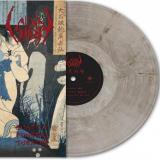
SIGH - GHASTLY FUNERAL THEATRE (LP)
  • A1: Intro: Soushiki (01:26)
  • A2: Shingontachikawa (05:27)
  • A3: Doman Seman (05:33)
  • B1: Imiuta (03:14)
  • B2: Shikigami (06:22)
  • B3: Outro: Higeki (01:31)
disponibile anche

Marble Vinyl[27,31 €]


Japanese black metal legends Sigh formed in 1989/1990. The genre-classic debut ‘Scorn Defeat’ followed on Euronymous’ Deathlike Silence Productions in 1993 & with each subsequent release, Sigh grew to become one of the country’s greatest & most revered metal exports. With a journey through the strange & the psychedelic, incorporating a whole eclectic mix of genre styles & experimentation throughout their career, Sigh has remained a vital creative force in the avantgarde field whilst maintaining their old school roots, as witnessed with the stellar 2022 album, ‘Shiki’. 2025 also saw Sigh reimagining their ‘Hangman’s Hymn’ album for a release on Peaceville as part of the band’s 35th anniversary celebrations, in the shape of ‘I Saw The World’s End: Hangman’s Hymn MMXXV’.

Maintaining the core trio of Mirai Kawashima, Shinichi Ishikawa & Satoshi Fujinami & on the back of the epic & darkly symphonic opus ‘Infidel Art’ (1995), Sigh adopted a more boundary-defying approach to their writing, whilst still keeping the dark foundations & traits of the band’s fundamental sound. The result was ‘Ghastly Funeral Theatre’ which surfaced in 1997 & draped in Eastern & horror-based atmospherics, the band also embraced elements outside of metal with what was their most experimental offering to date; utilising instruments such as the saxophone as well as acoustic passages & notoriously drawing comparisons to the moods of bands such as The Beatles at times, featuring catchy hooks & structures in line with the rock music genre, but masterfully woven into Sigh’s unique blackened metal tapestry.

Continuing with Peaceville’s re-issues of Sigh’s classic early ( & until now, hard to find) works, this edition of ‘Ghastly Funeral Theatre’ contains a new master created by Patrick Engel at Temple of Disharmony, featuring a new transfer from the original DAT source.

The release also includes a new interview with main-man Mirai Kawashima conducted by Dayal Patterson of Cult Never Dies, delving into the history & inspirations behind ‘Ghastly Funeral Theatre’.

This edition of ‘Ghastly Funeral Theatre’ is presented on black vinyl.

pre-ordina ora23.01.2026

dovrebbe essere pubblicato su 23.01.2026

21,81
SIGH - GHASTLY FUNERAL THEATRE (LP)
  • A1: Intro: Soushiki (01:26)
  • A2: Shingontachikawa (05:27)
  • A3: Doman Seman (05:33)
  • B1: Imiuta (03:14)
  • B2: Shikigami (06:22)
  • B3: Outro: Higeki (01:31)
disponibile anche

Black Vinyl[21,81 €]


Japanese black metal legends Sigh formed in 1989/1990. The genre-classic debut ‘Scorn Defeat’ followed on Euronymous’ Deathlike Silence Productions in 1993 & with each subsequent release, Sigh grew to become one of the country’s greatest & most revered metal exports. With a journey through the strange & the psychedelic, incorporating a whole eclectic mix of genre styles & experimentation throughout their career, Sigh has remained a vital creative force in the avantgarde field whilst maintaining their old school roots, as witnessed with the stellar 2022 album, ‘Shiki’. 2025 also saw Sigh reimagining their ‘Hangman’s Hymn’ album for a release on Peaceville as part of the band’s 35th anniversary celebrations, in the shape of ‘I Saw The World’s End: Hangman’s Hymn MMXXV’.

Maintaining the core trio of Mirai Kawashima, Shinichi Ishikawa & Satoshi Fujinami & on the back of the epic & darkly symphonic opus ‘Infidel Art’ (1995), Sigh adopted a more boundary-defying approach to their writing, whilst still keeping the dark foundations & traits of the band’s fundamental sound. The result was ‘Ghastly Funeral Theatre’ which surfaced in 1997 & draped in Eastern & horror-based atmospherics, the band also embraced elements outside of metal with what was their most experimental offering to date; utilising instruments such as the saxophone as well as acoustic passages & notoriously drawing comparisons to the moods of bands such as The Beatles at times, featuring catchy hooks & structures in line with the rock music genre, but masterfully woven into Sigh’s unique blackened metal tapestry.

Continuing with Peaceville’s re-issues of Sigh’s classic early ( & until now, hard to find) works, this edition of ‘Ghastly Funeral Theatre’ contains a new master created by Patrick Engel at Temple of Disharmony, featuring a new transfer from the original DAT source.

The release also includes a new interview with main-man Mirai Kawashima conducted by Dayal Patterson of Cult Never Dies, delving into the history & inspirations behind ‘Ghastly Funeral Theatre’.

This edition of ‘Ghastly Funeral Theatre’ is presented on black vinyl.

pre-ordina ora23.01.2026

dovrebbe essere pubblicato su 23.01.2026

27,31
Peter Rehberg - Liminal States LP

Peter Rehberg is known for his pioneering electronic work with computer software which over time evolved into a modular set up alongside running MEGO and then Editions Mego labels.

Rehberg was a prolific collaborator, with other musicians and with contemporary dance and theatre productions, most notably with French artist and choreographer, Gisèle Vienne with whom he created a series of soundtracks from Showroomdummies, released under the name DACM in 2002 (Showroomdummies MEGO 056), to Crowd in 2017. A collection of Rehberg’s solo works for Vienne was released in 2008 (Work for GV 2004-2008 EMEGO 092). The outfit KTL, with Stephen O’Malley, was initiated by Gisèle Vienne for her work Kindertotenlieder and subsequently made a series of soundtracks for Vienne’s works branching off into a prolific series of live shows. The work Rehberg did for theatre and performance teased out aspects of his practice one may not have encountered in his own solo work as PITA or that of collaborations with other musicians.

Editions Mego is proud to present a previously unreleased theatre soundtrack made for Icelandic choreographer Margrét Sara Guðjónsdóttir, whom Rehberg had a decade long collaboration with until his untimely passing in 2021. The original composition for Liminal States was created by Rehberg for the performance Pervasive Magnetic Stimuli in 2018 and then revisited as a catalyst for the concepts behind Liminal States. This work is based on an ongoing artistic research conducted by the choreographer into altered states of perception through phenomenological embodiment. It is the last in a trilogy dealing with the notion of larger forces that act on us beyond our conscious mind. The trilogy consists of Pervasive Magnetic Stimuli (2018), Boundless Ominous Fields (2024) and now Liminal States (2024).

Rehberg's score for Liminal States is a vast canvas of spectral ambience at once tangible and unfathomable in its constantly shapeshifting lysergic dread. The results are a psychological journey through the mental effects of sound on space and subsequently the mind. The first part presents cascading waves of shimmering electronics laying the groundwork for the second part where the psychological illusion splinters into all manner of sonic effects taking the listener on a deep mental voyage. If references are witnessed the late period long form hallucinatory works of Coil, such as Time Machines and Constant shallowness leads to evil, are amongst a similar mind message delivered here. Unlike any other release in Rehberg’s output Liminal States is a single long form work which, despite the form, retains Rehberg’s idiosyncratic sound vision.

Guðjónsdóttir and Rehberg’s collaboration blurs that relationship into a greater force which truly enables the theme of liminal states to unfold in a brave new fashion. Rich in timbre and sonic invention this is powerful work easily holding its own outside of the intended performance whilst still complimenting the missions statement entirely. This profound collaboration has the cumulative effect where the concept and soundtrack are one and may be one of the strongest works in the entire Rehberg canon.

non in magazzino

Ordina ora e ordineremo l'articolo per te presso il nostro fornitore.

24,58

Last In: 3 months ago
MARIOLINA ZITTA - CONCERT FOR BATS, VOICES AND NATURAL SOUNDS LP

At the end of the 1980s, Mariolina Zitta approached the world of natural sounds, studying musicology and developing a passion for speleology. Her encounter with Walter Maioli was fundamental, guiding and influencing her definitive research into sound archaeology and the primitive sources of musical acoustic phenomena. In these recordings Mariolina conducts a magical ritual as a cave priestess, celebrating the icons par excellence of the mysteries of the an ancestral enchantment on the border between consciousness and dreams, a symbolic liturgy of primordial reverberations, echoes and whistles. Edition of 200 copies.

pre-ordina ora

Questo articolo non è stato ancora rilasciato. È possibile pre-ordinare il prodotto ora.

19,96
COSMIC PSYCHOS - BLOKES YOU CAN TRUST LP
  • 01: Back At School
  • 02: Dead Roo
  • 03: I'm Up You're Out
  • 04: Loser
  • 05: Nightshift
  • 06: Hooray Fuck
  • 07: Do It To Me
  • 08: Never Grow Old
  • 09: What
  • 10: Elle

40 Years COSMIC PSYCHOS, 40 years dirty, mean, simple, garagey punk rock & roll! EU pressing of the guys seminal 1991 album, the first for Amphetamine Reptile Records back then Noisy alternative punk rock from Down Under for fans of Stiff Richards, The Chats, Nashville Pussy, Supersuckers, Hard -Ons, AmpRep, early Sub Pop "As 1990 set in, Jones vacated the guitar spot. Knight and Walsh asked their friend Robbie Watts, a self-taught guitarist, to join the fold. Watts said yes and Cosmic Psychos ventured to Wisconsin to record their third full-length release at producer Butch Vig's Smart Studios. Released in 1991, Blokes You Can Trust was the band's first record for the American noise rock label Amphetamine Reptile, after the bandmembers became drinking buddies with label head Tom Hazelmeyer. ... The Psychos conducted a European tour during which they developed an unusual trademark. After seeing many other rock bands take bows after performances, at the end of a show in Potsdam, Germany, Cosmic Psychos decided to alter the tradition by pulling down their pants and mooning the unsuspecting audience." - Do we have to say more? Classic.

pre-ordina ora21.11.2025

dovrebbe essere pubblicato su 21.11.2025

27,94
Mauricio Einhorn - Mauricio and Horns LP 2x12"

'Mauricio and Horns' by Bossa Nova legend and harmonica master Mauricio
Einhorn is produced by Jacques Muyal, with the Idriss Boudrioua Orechestra
arranged by Rafael Rocha and with guest artists Paquito D'Rivera and Lula
Galvao
In jazz, we all know the harmonica master, Mr. "Baron" Toots Thielemans, but we are
equaly fortunate to have our "Prince", Mauricio Einhorn. His early contributions in the
1950s to the birth of the Samba Jazz movement in Brazil played a pivotal role in the
creation of Bossa Nova, a genre that quickly became an integral part of the jazz world.
The influence of jazz on Brazilian music - exemplified by the great Carlos Lyra in
"Influencia Do Jazz" - was so profound that local musicians embraced it to forge a
new musical identity. Many of Einhorn's compositions have become timeless
standards performed worldwide since the early 1950s and '60s.
Together with another giant of the scene, alto saxophonist Idriss Boudrioua,
Mauricio's music gets an even grander presentation than ever before. This time, he
teamed up with an exceptionally talented young musician: a big band arranger and
trombonist named Rafael Rocha, who wrote all the arrangements and conducted the
recordings. Rafael's arrangements are nothing short of magical. They are never
overdone, always respecting the beauty of the original harmonies while infusing them
with his deep passion for jazz. His trombone solos recall the phrasing of Frank
Rosolino, and he modulates the pieces with swirling harmonies that evoke the very
roots of Brazilian jazz. In every track, Rafael enhances Mauricio's elegant and
expressive phrases without ever overpowering the artist, creating a "wall of sound"
that gracefully floats alongside Mauricio.

pre-ordina ora21.11.2025

dovrebbe essere pubblicato su 21.11.2025

35,59
ICE CREAM - Previously Unissued  LA California 1978
  • A1: With Love You'll Find Peace Of Mind (3.57)
  • B1: Seaside Vibes (3.12)

Epsilon Record Co is pleased to introduce its latest release ICE CREAM.

The two previously unissued tracks from 1978, recorded in Los Angeles, California, re-mastered by Steve Fuji.

Steve Fuji and I have collaborated on several projects including Paris Ford, The Kopestetics, Real Side, Taxie, Kenyatta, Henderson & Jones, Natural Impulse, Ray Williams & Prime Cut. He is a valued member of Epsilon Record Co and we are grateful for his assistance and expertise.

Several years ago Steve informed me that he had a master tape from a recording session he conducted in 1978 (he believes it was at Mystic Studio) from one of the original members and co-founders of Taxie, Charles Erwin Williams II, also known as ‘Ice Cream’.

The tape was in good condition and the original version of With Love You’ll Find A Peace Of Mind was 7 minutes 38 seconds. I asked Steve if it was possible to shorten it to approximately 3 minutes.

A few days later I received several versions re-mastered and re-mixed by him and we both agreed they sounded excellent.

We hope you will enjoy this as much as we do. It is a fantastic piece of unheard Californian soul music available exclusively on Epsilon Record Co.


The B side Seaside Vibe is a killer funky instrumental with an amazing production.

pre-ordina ora10.11.2025

dovrebbe essere pubblicato su 10.11.2025

19,54
O Morto & Ayoub ElAyady - Lila

O Morto & Ayoub ElAyady

Lila

CassetteSUC61
Sucata Tapes
07.11.2025
 
1

Originally commissioned by TBA during the COVID pandemic of 2020 as part of their Curfew programming O Morto, aka Mestre André now presents the full length version of his Lila composition, a collaboration with Moroccan musicians Ayoub ElAyady and Khalid Boulhamam.

Lila is the Arabic word for night and is also the name of the liturgic ceremony manifested in a trance, as a process of healing and therapy, through a ritual of sensory immersion conducted by music (gnawa), incense, colour and dance. From sunset to dawn, seven colours are revealed, associated with different rhythms and stages of ecstasy.

In »Lila«, Ayoub ElAyady, Khalid Boulhamam and O Morto summarily travel through the seven colours of the nocturnal ritual in all its scope – using both the form of tradition and electronic manipulation.!:

pre-ordina ora07.11.2025

dovrebbe essere pubblicato su 07.11.2025

13,66
Mark Fell - Nite Closures EP

Mark Fell inaugurates his new label – The National Centre for Mark Fell Studies – with his first solo electronic material in years; a slinky, ravishing volley of unique dance drills that have been in the works for over a decade, feeling somehow like Derek Bailey dissecting Singeli, or Autechre and Hermeto Pascoal dancing in hyperspace. There’s nothing else quite like it.

Back on the floor for the first time since dealing a pair of deep house 12”s with DJ Sprinkles, sending a contemporary classic in »Protogravity« with Errorsmith, plus a lauded collab with Gábor Lázár – all in 2015 – Fell taps back into core club concerns last explored to this uncompromising extent on his string of »Sensate Focus« EPs released between 2012–2013. He’s hardly been slacking since then, with a slew of far-reaching avant collabs with everyone from Rian Treanor to Limpe Fuchs, Okkyung Lee to Pat Thomas, Explore Ensemble to Will Guthrie – each one blurring distinctions between producer, composer, and conductor.

The »Nite Closures« EP is worth the wait – and then some. As ever, Fell manages to retain a highly distinctive, instantly identifiable sound while also tracing and mapping new bends in the continuum. His exploration of contemporary styles and patterns is here distilled and articulated with a rare, daring playfulness and sinuous intricacy – for over half an hour he flows from frantic to almost emotional at the drop of a snare. Trust it’s not your everyday / everynight club music, with an asymmetric angularity bound to wrong-foot fresher feet, but also the type of absolutely future-facing, skewed machine funk that clubs are crying out for, even if they don’t quite realise it.

As someone who’s witnessed the dominance of colouring-book Jive Bunny DJs recycle tested ideas ad infinitum, the message is a firm do-one to myopic ravers in »Nite Closures«. From the displaced anticipations tested in its extended dub and ravishing, tweaked polymetrics on its version, through a »Large Modulos #3« teeming with organismic details, to the hair-kissing swang of »auchterhouse (inversion)« and its clipped, cascading 2.1-step reprise, Fell offers thrilling new options for the loosey-gooseyest dancers at each turn. For us, it’s perhaps his greatest record this century.

pre-ordina ora17.10.2025

dovrebbe essere pubblicato su 17.10.2025

23,95
Anura & Sr. Lobezno - Afro-Ritmo EP

Anura & Sr. Lobezno

Afro-Ritmo EP

12inchSMS038
SAMOSA Records
14.10.2025

pictured cover sealed in shrink wrap (first time ever on Samosa)


Samosa Records comes back with a real summer bang in the form of the ‘Afro-Ritmo EP’ – a four-track journey into afro soaked vibes courtesy of Anura & Sr. Lobezno and featuring label boss De Gama!

First up on side A is the EP’s title track, the mesmerising ‘Afro Ritmo’. Anura & Sr. Lobezno announce their arrival on Samosa Records with this spicy West African rhythm bomb. Kakaki trumpet fanfares meld with intricate synth stabs and ethereal Oja flute, whilst the solid tribal beats and rolling bass dictate the dance moves. And dance you must…

Track 2 is the deliciously glitchy, conga bonanza ‘Sungu Sa’. Make no mistake, ‘Sunga Sa’ is out to get you from the very first beat – tempting you to go behind the curtain as the haunting guitar lures you ever closer to its secret door. Dark, uplifting and ritualistic, the chant of ‘Sunga Sa’ will live in your head rent free well after the sun has gone down. Don’t say you weren’t warned.

Over on Side B De Gama takes the title track ‘Afro-Ritmo’ and applies his unique sonic rubs, balms and enhancers to create a pulsating after hours jam full to the brim with Afrotropic sparkle and magic dust. Like an unstoppable chugging train steaming through a savanna, De Gama is the conductor supreme as the raspy synth, bluesy guitar riff and uplifting brass fanfares entwine around that pounding beat.

Finally, Track 4 gives us the seriously powerful Javier Morrilas remix of ‘Afro-Ritmo’. The original is stripped right down and given the Big Beat treatment for this insanely good take – a peak time switcheroo of a track that keeps you guessing as to where it’s taking you. As the flutey breakdowns and broken beat madness get you, you will fall in love with this one instantly.

The ‘Afro Ritmo’ EP is a powerful, masterful four tracker from Anura & Sr. Lobezno which is well at home in the Samosa Records cooking pot. Spread the word, buy the vinyl. You won’t be disappointed.

• Reviewed with love by The Black Light Disco

Written, Produced, Arranged and Mixed by Anura & Sr. Lobezno.
Keyboards & Percussions: Anura.
Trumpet: Jimmy Garcia
Sax & Flute: Carlos Ligero
Trombone: Prudencio Valdivieso

*Remix and Additional Productions by Stefano Gamma aka De Gama for De Gama Rec - Rome.
Jazz Guitar & Acoustic Bass by Pietro Nicosia.

** Remix and Additional Productions by Javier Morillas.

All tracks mastered by Francesco Pierguidi at L’n’P Studio – Rome.

Artwork and computer graphics by Nerina Fernandez.


SMS038

non in magazzino

Ordina ora e ordineremo l'articolo per te presso il nostro fornitore.

12,56

Last In: 13 days ago
NEIL ARDLEY - A SYMPHONY OF AMARANTHS

When we did the first ever vinyl reissue of this 1972 masterpiece back in 2012 it sold out so fast and so many lost the chance to grab a copy has translated into continuous messages asking us to do a repressing of this marvel - which we did and, again, it sold like hot bread. So here is a new edition of this UK jazz masterpiece, this time with a twist :

- Silk-screened cover art : we respect the original design, but have upgraded the printing from regular offset to silk screen to give it an artistic touch!

- In adition to the limited black vinyl edition (400 copies), we offer an ultra limited clear vinyl version (100 copies-only!)

One of the big names in UK Jazz, Neil Ardley was offered the leadership of the seminal New Jazz Orchestra in 1964. Under his direction the Orchestra moved though different styles and changes of personnel, bringing in musicians such as Mike Gibbs (trombone), Harry Beckett andHenry Lowther (trumpets) or even Jack Bruce (bass), some of them also contributed with the writing of some original compositions, making the NJO the root from which the UK's 70's jazz scene was to blossom.

By 1972 the NJO was already defunct, but his legacy remained in the works of its members. Ardley's 'A Symphony Of Amaranths' is a perfect example of what was boiling in the UK jazz scene. It was Ardleys tribute to his idols Duke Ellington and Gil Evans, and featured the skills of some great musicians of the scene including Don Rendell,Stan Tracey, Henry Lowther, Harry Beckett, Jeff Clyne & Jon Hiseman. Side B is inspired by the words of Edward Lear, W. B. Yeats, James Joyce and Lewis Carroll that are musicated by Ardley and feature, among other highlights, Ivor Cutler's narration of 'The Dong With A Luminous Nose' and Norma Winstone's vocals on 'Will You Walk A Little Faster'.


Musicians that participated in the recording session :

- Derek Watkins, Nigel Carter, Henry Lowther, Harold Beckett (trumpets)
- Derek Wadsworth, Ray Premru (trombones)
- Dick Hart (tuba)
- Barbara Thompson, Dave Gelly, Don Rendell, Dick Heckstall-Smith (woodwind, saxes)
- John Clementson (oboe)
- Bunny Gould (bassoon)
- Dave Gelly (glockenspiel)
- Neil Ardley (prepared piano)
- David Snell, Sidonie Goossens (harp)
- Stan Tracey (piano, celeste)
- Karl Jenkins (electric piano)
- Alan Branscombe (harpsichord)
- Frank Ricotti (vibraphone, percussion)
- Chris Laurence, Jeff Clyne (bass)
- Jon Hiseman (drums, percussion)
- Eric Gruenberg, Jack Rothstein, Kelly Isaacs (violin)
- Ken Essex (viola)
- Charles Tunnell, Francis Gabarro (cello)
- Ivor Cutler (narrator)
- Norma Winstone (vocal)
- Jack Rothstein, Neil Ardley (conductors)

non in magazzino

Ordina ora e ordineremo l'articolo per te presso il nostro fornitore.

28,19

Last In: 6 months ago
EVIDENCE - UNLEARNIEVIDENCENG VOL. 2

Im Eröffnungstrack von Unlearning Vol. 2, seinem fünften Soloalbum, bricht Evidence zunächst mit Mustern. "Set the autopilot, cruising speed", sagt er - eine Zeile, die an seinen charakteristischen entspannten Flow erinnert. Aber anstatt zu cruisen, wählt der aus Venice stammende Musiker die Störung. "That's a setup for a punch to land with 'true indeed'," fährt er fort und gibt den Ton für ein Album vor, bei dem es weniger um Bequemlichkeit und mehr um Transformation geht. Der Titel des Tracks "Plans Change" könnte nicht passender gewählt sein. Seit seinem Auftauchen mit Dilated Peoples hat Evidence immer eine kühle, mühelose Kontrolle ausgestrahlt. Aber "Unlearning Vol. 2" lehnt wie sein Vorgänger aus dem Jahr 2021 jedes Abgleiten in den Status eines Vermächtnisses ab. Es ist nicht nur ein stilistischer Schwenk, sondern eine tiefere, introspektivere Reise, die in technischer Meisterschaft wurzelt, aber von Instinkt und Neugier angetrieben wird. Anstatt vergangene Erfolge zu recyceln, erkundet Evidence raueres, emotionales Terrain und kreiert einen Sound, der sowohl geerdet als auch experimentell ist. Die Produktion zieht Tracks wie Sebb Bashs erschütterndes "Seeing Double", C-Lances nostalgisches "Top Seeded" und Evidence' eigenes unheimliches "Greatest Motivation" in einen hypnotischen Bann. Dennoch bleibt seine Stimme der Anker, der den Dunst mit Präzision und Tiefe durchschneidet. Tracks wie "Nothing's Perfect" zeigen seine lyrische Beweglichkeit, während "Laughing Last" Stoizismus und Verletzlichkeit in Reflexionen über Familie und Verlust verbindet. Die Kollaborateure stammen aus verschiedenen Epochen - The Alchemist, DJ Babu, Blu, Domo Genesis, Larry June, Conductor Williams und viele mehr -, doch das Projekt wird von einem gemeinsamen Ethos getragen: sich neu zu erfinden, einen neuen Kontext zu schaffen und Schmerz durch Kreativität einem Zweck zuzuführen.

non in magazzino

Ordina ora e ordineremo l'articolo per te presso il nostro fornitore.

26,01

Last In: 7 months ago
FUMIO ITABASHI - WATARASE -SYMPHONY- LP
  • A1: Part 1
  • B1: Part 2

The undiscovered recordings of jazz pianist Fumio Itabashi's iconic work Watarase were compiled from the perspective of a pioneering figure in the Japanese jazz scene, Minoru Wakatsuki, and garnered widespread acclaim with Watarase ECHO. The second installment, Watarase VOICE, focused on "voice" and featured unpublished tracks with a diverse range of vocalists. Now, as the third volume in the series, the complete version of the 2001 performance of Symphonic Poem “Watarase” by the Kanagawa Philharmonic Orchestra, conducted by Kazuhiko Komatsu, with Fumio Itabashi and Yukki Kaneko, will finally be released! The full version could only be heard on VHS video at the time, and is now being released for the first time as a physical edition, making it a highly anticipated and long-awaited release.

pre-ordina ora19.09.2025

dovrebbe essere pubblicato su 19.09.2025

33,57
múm - History of Silence

múm

History of Silence

12inchMORR206-LP
Morr Music
19.09.2025

múm are returning with a new album on Morr Music. »History of Silence« is the first full body of work by the Icelandic collective since 2013's »Smilewound« and their seventh studio album to date—recorded, deconstructed, put back together again, refined and finished over the course of two years. Vibrantly oscillating around a carefully curated palette of electronic and analogue sounds, the eight new tracks reflect the group's continuous strive to explore sonic spaces through subtle yet gripping songwriting.

For a long time now, múm have been exploring the idea of distance in their music. In the beginning, this was born purely out of necessity. Founded in Iceland in the late 1990s, the members soon began embarking on journeys across the world—collectively while touring, but also individually, exploring new places to live and create. Settling in, moving on, catching up: The concept of distance soon became an integral part of the collective's process. »History of Silence« leans into this idea, with space and time becoming indispensable pillars of the arrangements. While being coherent and structured, they echo their origins from different seasons, cities, and spaces—neatly stitched together with unparalleled craftsmanship. They breathe an overall airy and intimate atmosphere, yet resonate with the structural heft of time.

On »History of Silence« time manifests in unexpected, liberating, and mesmerizing ways. It does not move reliably forward; it drifts, takes twists and turns, even disappears completely. Electronic textures blur into acoustic sounds, voices flicker and dissolve, melodies stumble and repeat. The arrangements often feel like they’re wandering, gently resisting direction. »Our Love is Distorting,« for instance, begins with a subtle piano motif, playing hide and seek with feedback noises, digital artefacts, and lush—yet very quiet—string arrangements, before gradually forming into a distinctive song. It's a perfect illustration of múm's general approach on this album. »Mild at Heart« turns this idea upside-down, flowing freely from start to finish with moments of silence sprinkled in—serving to emphasize the musical elements. The music on »History of Silence« moves like weather: unexpected, intimate, quietly detailed. Contrasted with vivid phrases, rhythmic shifts, and small hooks, the album offers a new angle of compositional clarity and vision.

Work on »History of Silence« began at Sudestudio in southern Italy. Additional recordings were made in Reykjavík, Berlin, Athens, Helsinki, New York, and Prague. The strings were recorded by Sinfonia Nord at the Hof concert hall, Akureyri, arranged and conducted by Ingi Garðar Erlendsson, who has worked with the band for many years. The orchestral elements don’t dominate the record—instead, they surface gently, adding depth and resonance to the songs without disturbing the songs' fragility.

Contrary to what the album title suggests, »History of Silence« is a collection of bold and colorful songs, no matter how muted they might sound at times. They tickle like a feather drifting through the wind, ending up in unexpected places, stimulating long-forgotten thoughts and feelings, intimate moments of introspection. The songs move through the echoes those moments leave behind: the emotional traces of things unsaid, the weight of stillness. Offering closeness by means of distance and much-needed support.

pre-ordina ora19.09.2025

dovrebbe essere pubblicato su 19.09.2025

26,01
múm - History of Silence

múm

History of Silence

12inchMORR206-LPX
Morr Music
19.09.2025

múm are returning with a new album on Morr Music. »History of Silence« is the first full body of work by the Icelandic collective since 2013's »Smilewound« and their seventh studio album to date—recorded, deconstructed, put back together again, refined and finished over the course of two years. Vibrantly oscillating around a carefully curated palette of electronic and analogue sounds, the eight new tracks reflect the group's continuous strive to explore sonic spaces through subtle yet gripping songwriting.

For a long time now, múm have been exploring the idea of distance in their music. In the beginning, this was born purely out of necessity. Founded in Iceland in the late 1990s, the members soon began embarking on journeys across the world—collectively while touring, but also individually, exploring new places to live and create. Settling in, moving on, catching up: The concept of distance soon became an integral part of the collective's process. »History of Silence« leans into this idea, with space and time becoming indispensable pillars of the arrangements. While being coherent and structured, they echo their origins from different seasons, cities, and spaces—neatly stitched together with unparalleled craftsmanship. They breathe an overall airy and intimate atmosphere, yet resonate with the structural heft of time.

On »History of Silence« time manifests in unexpected, liberating, and mesmerizing ways. It does not move reliably forward; it drifts, takes twists and turns, even disappears completely. Electronic textures blur into acoustic sounds, voices flicker and dissolve, melodies stumble and repeat. The arrangements often feel like they’re wandering, gently resisting direction. »Our Love is Distorting,« for instance, begins with a subtle piano motif, playing hide and seek with feedback noises, digital artefacts, and lush—yet very quiet—string arrangements, before gradually forming into a distinctive song. It's a perfect illustration of múm's general approach on this album. »Mild at Heart« turns this idea upside-down, flowing freely from start to finish with moments of silence sprinkled in—serving to emphasize the musical elements. The music on »History of Silence« moves like weather: unexpected, intimate, quietly detailed. Contrasted with vivid phrases, rhythmic shifts, and small hooks, the album offers a new angle of compositional clarity and vision.

Work on »History of Silence« began at Sudestudio in southern Italy. Additional recordings were made in Reykjavík, Berlin, Athens, Helsinki, New York, and Prague. The strings were recorded by Sinfonia Nord at the Hof concert hall, Akureyri, arranged and conducted by Ingi Garðar Erlendsson, who has worked with the band for many years. The orchestral elements don’t dominate the record—instead, they surface gently, adding depth and resonance to the songs without disturbing the songs' fragility.

Contrary to what the album title suggests, »History of Silence« is a collection of bold and colorful songs, no matter how muted they might sound at times. They tickle like a feather drifting through the wind, ending up in unexpected places, stimulating long-forgotten thoughts and feelings, intimate moments of introspection. The songs move through the echoes those moments leave behind: the emotional traces of things unsaid, the weight of stillness. Offering closeness by means of distance and much-needed support.

pre-ordina ora19.09.2025

dovrebbe essere pubblicato su 19.09.2025

27,69
múm - History of Silence (TAPE)

múm

History of Silence (TAPE)

CassetteMORR206-CS
Morr Music
19.09.2025

múm are returning with a new album on Morr Music. »History of Silence« is the first full body of work by the Icelandic collective since 2013's »Smilewound« and their seventh studio album to date—recorded, deconstructed, put back together again, refined and finished over the course of two years. Vibrantly oscillating around a carefully curated palette of electronic and analogue sounds, the eight new tracks reflect the group's continuous strive to explore sonic spaces through subtle yet gripping songwriting.

For a long time now, múm have been exploring the idea of distance in their music. In the beginning, this was born purely out of necessity. Founded in Iceland in the late 1990s, the members soon began embarking on journeys across the world—collectively while touring, but also individually, exploring new places to live and create. Settling in, moving on, catching up: The concept of distance soon became an integral part of the collective's process. »History of Silence« leans into this idea, with space and time becoming indispensable pillars of the arrangements. While being coherent and structured, they echo their origins from different seasons, cities, and spaces—neatly stitched together with unparalleled craftsmanship. They breathe an overall airy and intimate atmosphere, yet resonate with the structural heft of time.

On »History of Silence« time manifests in unexpected, liberating, and mesmerizing ways. It does not move reliably forward; it drifts, takes twists and turns, even disappears completely. Electronic textures blur into acoustic sounds, voices flicker and dissolve, melodies stumble and repeat. The arrangements often feel like they’re wandering, gently resisting direction. »Our Love is Distorting,« for instance, begins with a subtle piano motif, playing hide and seek with feedback noises, digital artefacts, and lush—yet very quiet—string arrangements, before gradually forming into a distinctive song. It's a perfect illustration of múm's general approach on this album. »Mild at Heart« turns this idea upside-down, flowing freely from start to finish with moments of silence sprinkled in—serving to emphasize the musical elements. The music on »History of Silence« moves like weather: unexpected, intimate, quietly detailed. Contrasted with vivid phrases, rhythmic shifts, and small hooks, the album offers a new angle of compositional clarity and vision.

Work on »History of Silence« began at Sudestudio in southern Italy. Additional recordings were made in Reykjavík, Berlin, Athens, Helsinki, New York, and Prague. The strings were recorded by Sinfonia Nord at the Hof concert hall, Akureyri, arranged and conducted by Ingi Garðar Erlendsson, who has worked with the band for many years. The orchestral elements don’t dominate the record—instead, they surface gently, adding depth and resonance to the songs without disturbing the songs' fragility.

Contrary to what the album title suggests, »History of Silence« is a collection of bold and colorful songs, no matter how muted they might sound at times. They tickle like a feather drifting through the wind, ending up in unexpected places, stimulating long-forgotten thoughts and feelings, intimate moments of introspection. The songs move through the echoes those moments leave behind: the emotional traces of things unsaid, the weight of stillness. Offering closeness by means of distance and much-needed support.

pre-ordina ora19.09.2025

dovrebbe essere pubblicato su 19.09.2025

16,18
NORIO MAEDA - Shadow Of The Highway - Original Soundtrack
  • A1: Highway No Kage ~ Daiichi No Giwaku
  • A2: Matteita Onna ~ Daiichi No Wana
  • A3: Highway No Kage ~ Main Theme
  • A4: Nazo No Onna ~ Wana!?
  • A5: Matteita Onna ~ Main Theme
  • A6: Highway No Kage ~ Wana E No Chosen
  • B1: Sachiusu No Onna ~ Namiko No Tsuioku
  • B2: Nazo No Onna ~ Main Theme
  • B3: Highway No Kage ~ Teki Wo Motomete
  • B4: Sachiusu No Onna ~ Main Theme
  • B5: Matteita Onna ~ Variations
  • B6: Highway No Kage ~ Kanashii Ketsumatsu

Composed, Arranged, and Conducted by: Norio Maeda

Has there ever been a soundtrack so thrilling and beautiful? This is the pinnacle of cine-jazz, crafted by the master Norio Maeda.

Released in 1971, Shadow Of The Highway is a suspense-action film produced and starring Jiro Tamiya, and directed by Jun Fukuda.
True to its tagline—“A sports car tearing vertically through Japan, from Kagoshima to Hokkaido”—the film features a Mitsubishi Galant GTO racing
across the country. Often compared to the American New Cinema classic Vanishing Point, it stands as a Japanese road movie gem.

The music was composed by the legendary Norio Maeda. His piano corners with elegance, the vibraphone dashes forward with flair, the bass charges
ahead with power, and the drums shift gears with precision. Motion and stillness, obsession and desire, joy and sorrow—thrilling performances and
beautiful melodies elevate the film to new heights.

As a soundtrack, it is exceptional. But even more, it represents an extraordinary level of quality for Japanese jazz in 1971. The performances are so
remarkable that it’s unfortunate the exact personnel remain unidentified. However, it has long been rumored that the musicians may have been associated
with Takeshi Inomata’s Sound Limited—or possibly The Third.

Text by Yusuke Ogawa (UNIVERSOUNDS / DEEP JAZZ REALITY)

pre-ordina ora12.09.2025

dovrebbe essere pubblicato su 12.09.2025

43,07
Various - Dolores: Salsa & Guaracha From 70's French West Indies

In Guadeloupe, many people think that jazz and ka music are like a ring and a finger. To some extent, the same could be said about so called Latin music and the music played in the French West Indies.

Both aesthetics were born in the Caribbean and bear so many connections that they can easily be considered cousins. In constant dialogue, there are lots of examples of their fruitful alliance and have been for a while. The English country dance that used to be practiced in European lounges came to be called kadrille in Martinique and contradanza in Cuba. They both featured additional percussion instruments inherited from the transatlantic deportation. Drawing from shared feelings about the same traumatized identity – later to be creolized – it would be hard not to assume that they were meant to inspire each other. The golden age of the orchestras that graced the Pigalle nights during the interwar period further proves the point. As soon as the 1930s, Havana-born Don Barreto naturally mixed danzón and biguine music in a combo based at Melody's Bar. In the following decade, Félix Valvert, a conductor who was born and raised in Basse-Terre in Guadelupe, also worked wonders in Montparnasse with La Coupole, which was an orchestra made up of eclectic musicians. Afro- Caribbean performers of various origins were often hired on rhythm and brass sections in jazz bands, which used to enliven the typical French balls of the capital. In the 1930s and onwards, Rico’s Creole Band was one of them.


Martinican violinist-clarinettist Ernest Léardée, who would become the king of biguine music as well as the main figure of French Uncle Ben's TV commercials (a dark stigma of post-colonial stereotypes), had musicians from the whole Caribbean sphere play at his Bal Blomet – and they all enchanted "ces Zazous-là" (according the words of Léardée's biguine-calypso piece). In les Antilles (French for French West Indies), music history started to speed up in the 1950s, when trade expanded and radio stations grew bigger. The Guadelupean and Martiniquais youth tuned in their old galena radio sets to South American and Caribbean music. As for the women traders, les pacotilleuses, they bought and sold goods across different islands (the "passing of items through various hands" was thought to be most pleasurable) and brought back countless sounds in their luggage. Such was the case of Madame Balthazar, who once returned from Puerto Rico with the first 45rpm and 33rpm to ever enter Martinique.

Out of this adventure was created the famous Martinican label La Maison des Merengues, a music business she opened and undertook with her husband and which proved to be a major landmark. At the end of the 1950s, in Puerto Rico, Marius Cultier competed in the Piano International Contest playing a version of Monk's Round 'Midnight. He won the first prize and this distinction foreshadowed everything that was to come. Cultier, the heretic Monk of jazz, was quickly praised for writing superb melodies, always tinged with a twist that conferred a unique sound to his music. It didn't take long for the gifted self-taught musician to get to play with Los Cubanos, making a name for himself thanks to his impressive maestria on merengues.

The rest is history. Besides, in the late 1950s, Frantz Charles-Denis, born into the upper middle class in Saint-Pierre and better known by his first name Francisco, went back home after working at La Cabane Cubaine – a club located rue Fontaine where he had caught the Latin fever. Francisco's music was therefore heavily marked by his Cuban cousins' influence, which gave the combos he led a specific style and also led to renewal. Things were swinging hard in La Savane, located in the main square in Fort-de-France. He set up the Shango club close by and tested out the biguine lélé there, a new music formula spiced up with Latin rhythms. Soon afterwards, fate had him fly to Puerto Rico and Venezuela.

As for percussionist Henri Guédon (percussions were only a part of his many talents), he was born in Fort-de-France in May 22nd 1944, the day marking the celebration of the abolition of slavery. As an old man, he could remember that in " his father's Teppaz, a lot of hectic 6/8 music was constantly playing...". In the opening lines of his Lettre à Dizzy, a small illustrated collection of writings published by Del Arco, he highlighted the huge impact that cubop had on him as a teenage boy, around 1960. He eventually turned out to be the lider maximo in La Contesta, a big band steeped in Latin jazz. He was also the one who originated the word zouk to describe music which brought the sound of the New York barrio to Paris. It was the culmination of a journey that started in Sainte-Marie: "a mythical place for bélé, the equivalent of Cuban guaguancó". In the early 1960s, the tertiary economy developed to the detriment of agriculture. Yet rural life was where roots music emerged in Martinique and in Guadeloupe.

Record companies played a major part in the process of Latin versions sweeping across the islands – before reaching everywhere else. Producer Célini, boss of the great Aux Ondes label, and Marcel Mavounzy, both the head of Émeraude records - a firm which was founded in 1953 - as well as the brother of famous saxophonist Robert Mavounzy, were big names to bear in mind. Although there were many of them - all of whom are featured on this record - Henri Debs was definitely the major figure in the recording adventure. He proved to be so influential that he even got compared to Berry Gordy. In the mid 1950s, when he acquired his first Teppaz, he worked on his first compositions: a bolero and a chachacha. Then, he became the one man who made people discover Caribbean music, from calypso to merengue. He was among the first ones to rush out to San Juan, Puerto Rico, to buy records and distribute them through a store run by one of his brothers in Fort-de-France. He had members of the Fania All Star come and perform there, which he was madly proud about. He was also the first one to pay attention to Haitian music, such as compas direct and various other rhythms which would soon flood the market. As a result, many of the combos hitting his legendary studio would end up boosted by widespread "Afro-Latin" rhythms. However, he never denied his identity: gwo ka drums were given a major role, although they were instruments which had long been banned from the "official" music spheres. The present selection bears witness to such a creative swarming. Here are fourteen tracks of untimely yet unprecedented cross-fertilization: all types of music rooted in the Creole archipelago have found their way, whatsoever, to the tracklisting. Whether originating from the city or being more rural, they all go back to what Edouard Glissant, in an interview about the place of West Indian music in the Afro-American scope, called "the trace of singing, the one which got erased by slavery." "It is so in jazz, but also in reggae, calypso, biguine, salsa... This trace also manifests through the drums, whether Guadelupean, Dominican, Jamaican or Cuban... None of them being quite the same. They all point to the idea of a trace, seeking it out and connecting to each other through it. This is the hallmark of the African diaspora: its ability to create something new, in relation to itself, out of a trace. It may be the memory of a rhythm, the crafting of a drum, a means of expression which doesn't resort to an old language but to the modalities of it." The opening track features one of the emblematic orchestras of this aesthetic identity, criscrossing many music types from the archipelago. The 1974 Ray Barretto guajira – Ray Barretto was a major New York drummer influenced by Charlie Parker and Chano Pozzo – is magnificently performed by Malavoi, a legendary Fayolais group (i.e from Fort-de-France). Additionally, the compilation ends on a piece by Los Martiniqueños de Francisco. It symbolically closes the circle as it is a genuine potomitan of Martinique culture which also functions as a tireless campaigner for Afro-Caribbean music. Practicing the danmyé rounds (a kind of capoeiria) to the rhythm of the bèlè drum, it delivers a terrific Caterete, a kind of champeta of Afro- Colombian obedience which was originally composed by Colombian Fabián Ramón Veloz Fernández for the group Wgenda Kenya. The icing on the cake is Brazilian Marku Ribas, who found refuge in Martinique in the early 1970s, bringing his singing to the last trance-inducing track. These two "versions" convey the whole tone of a selection composed of rarities and classics of the tropicalized genre, swarming with tonic accents and convoluted rhythms. It is the sort of cocktail that the West Indians never failed to spice up with their own ingredients. For instance, the Los Caraïbes cover of Dónde, a famous Cuban theme composed by producer Ernesto Duarte Brito, has a typical violin and features renowned Martinique singer Joby Valente and his piquant voice.


The track used to be – or so we think – their only existing 45rpm. The meaningful Amor en chachachá by L'Ensemble Tropicana, a band which included Haitian musicians among whom was composer and leader Michel Desgrotte, also recalls how Latin music was pervasive in the tropics in the mid-1960s. They were the ones keeping people dancing at Le Cocoteraie in Guadelupe and La Bananeraie in Martinique. Around the same time, another "foreign" band, Congolese Freddy Mars N'Kounkou's Ryco Jazz, achieved some success on both islands by covering Latin jazz classics – such as their adaptation of Wachi Wara, a "soul sauce" by Dizzy Gillespie and Chano Pozo whose interweaving of strings and percussions can have anyone hit the dancefloor. How can you resist Dap Pinian indeed, a powerful guaguancó by Eugene Balthazar, performed by the Tropicana Orchestra and published by the Martinique-founded La Maison des Merengues? It also acts as a symbol of the maelstrom at work. Going by the name Paco et L'orchestre Cachunga, Roger Jaffory used to play guaguancó too: his Fania-inspired Oye mi consejo is one example of his style. Baila!!!!! Dancing was also one of the Kings' focus points. Oriza is a Puerto Rican bomba and a "classic" originally composed by Nuevayorquino trumpeter Ernie Agosto, which reserves major space for brasses, giving it a special sheen.

Emerging from the New York barrios crucible was also La Perfecta, a Martinique group originating from Trinidad, whose name directly references the totemic Eddie Palmieri figure as well as his own band, also called La Perfecta. Here they borrow Toumbadora from Colombian producer and composer Efraín Lancheros and interpret it by emphasizing percussions, which set fire to the track even more than the wind instruments. The same goes for Martinique's Super Jaguars, who use Tatalibaba – a composition by Cuban guitarist Florencio "Picolo" Santana which was made famous by Celia Cruz & La Sonora Matencera – as a pretext for sending their cadences into a frenzy. In a more typically salsa vein, the Super Combo, a famous Guadelupean orchestra from Pointe-Noire that was formed around the Desplan family and had Roger Plonquitte and Elie Bianay on board, adapt Serana, a theme by Roberto Angleró Pepín, a Puerto Rican composer, singer and musician also known for his song Soy Boricua. Here again, their vision comes close to surpassing the original. In the 1970s, L'Ensemble Abricot provided a handful of tracks of different syles, hence reaching the pinnacle of the art of achieving variety and giving pleasure. They played boleros, biguines, compas direct, guaguancó and even a good old boogaloo - the type they wanted to keep close to their hearts for ever, "pour toujours", as they sang along together in one of their songs. Léon Bertide's Martinican ensemble excelled at the boogaloo which had been composed by Puerto Rican saxophonist Hector Santos for the legendary El Gran Combo.


Three years later, in 1972, Henri Guédon, with the help of Paul Rosine on the vibraphone, tackled the Bilongo made famous by Eddie Palmieri. Such a classic!!!!! And so were the Aiglons, the band from Guadelupe: choosing to execute Pensando en tí, a composition by Dominican Aniceto Batista, on a cooler tempo than the original, they noticeably used a wonderfully (un)tuned keyboard in place of the accordion. On the high-value collectible single – the first one released by Les Aiglons under the Duli Disc label – there is a sticker classifying the track under the generic name "Afro". Now that is what we call a symbol. Jacques Denis

non in magazzino

Ordina ora e ordineremo l'articolo per te presso il nostro fornitore.

21,43

Last In: 53 days ago
FELIPE GORDON - LIVE SESSION LP 2x12"

Colombia's finest purveyor of all things jazzy and musical, Felipe Gordon is back on Local Talk with a double album, but this time around he's going all live.

Together with his 8 piece band, Felipe has recorded a "Live Session" that perfectly explains how live played jazz, funk and fusion work so well with electronic dance music.
Over eight compositions, Felipe and his band explore everything from downtempo jazz-funk (example, check 'Wes'), jazz-fusion (example, check 'Socorro Y Jupiter'), jazz-house (example, check 'Strings Of The Afterlife').

There's even a great disco-funk cover of Gypsy Woman for added dance floor effect.

All together, this is a beautiful session where Felipe and his friends showcase what you can expect when you experience this band live on stage...Bogota style!

non in magazzino

Ordina ora e ordineremo l'articolo per te presso il nostro fornitore.

27,52

Last In: 8 months ago
THE SHADOW RING - HOLD ONTO I.D.
  • Watch The Water
  • The Way Of The World
  • Coombe House
  • Wash What You Eat
  • Like When
  • Basic Everyday Life
  • Hold Onto I.d

Recorded from late 1996 through early 1997, Hold Onto I.D., The Shadow Ring's fourth album, marks the apogee of the trio's experimental rock epoch - their last record clinging to their factitious bandness before they let all song and structure go awash in sonic malaise for their final run of releases on Swill Radio. The surrealist dreams of City Lights and Put the Music in Its Coffin give way to pseudo-expressionistic lyrics mired in the banality and bleakness of the everyday, set against the backdrop of the Coombe House (as pictured on the album's cover). While Hold Onto I.D. is the group's most overtly autobiographical release to date, Lambkin's lyrics obfuscate his expressionist tendencies filtering them through the codes and languages of officialdom, linking the "inner self" with documents of the state_identification cards, National Insurance numbers, and British passport numbers. Having moved out of their parents' homes and into the top floor of the famed Coombe House, Graham Lambkin and Darren Harris set out to rework material drafted over the previous year, aided by Tim Goss, still safely in residence at the "Valebrook Inn." While the familiar sounds of Harris's deadpan recitation and Lambkin's electric guitar, amateurishly strummed, dominate the album, the emotive interludes of Goss's keyboards populate the record along with of home-cooked tape experiments and dime-store concrète. Originally released on CD and supported by a US tour with friends Scott Foust and Karla Borecky's Idea Fire Company, Hold Onto I.D. is perhaps the band's best-known and most accessible album. (The Shadow Ring's sole representative on a streaming platform, it was once acknowledged by the Guardian as one of "the 101 strangest records on Spotify.") Offered here for the first time on vinyl, Hold Onto I.D. is an essential album for both completists and the uninitiated alike. Throughout their legendary, decade-long run, the Shadow Ring were an enigmatic force on the international musical sub-underground. Before their disbandment in 2002, this shambolic rock outfit, formed by a group of rowdy teenagers in southeast England, left behind a mighty run of eight LPs, a handful of 7"s, and a spate of raucous live shows and cryptic zine appearances on both sides of the Atlantic, all which have bolstered their enduring word-of-mouth mystique. Beginning in 2023 with the first-ever vinyl pressing of the self-released pre-Shadow Ring tape The Cat & Bells Club (1992), Blank Forms Editions has been conducting a systematic retrospective of the storied group. Wax-Work Echoes and Hold Onto I.D. are the latest releases in a multiyear reissue effort that includes several LPs, a comprehensive CD box set, and a nearly five-hundred-page book.

pre-ordina ora22.08.2025

dovrebbe essere pubblicato su 22.08.2025

24,79
THE SHADOW RING - WAX-WORK ECHOES

Originally conceived as a compilation of outtakes and live recordings from The Shadow Ring's 1995 stateside tour, Wax-Work Echoes takes its name from the first line of "Put the Music in Its Coffin," the title track of the group's breakthrough release. Lambkin abandons the bitsand- bobs approach, advancing the Shadow Ring concept with entirely original material that builds on the unit's self-mythologizing lyrics, celebrates the clicking of horse hooves, ponders on the sociability of rats and mice, and warns of the dangers of poultry. The first Shadow Ring album to officially include Tim Goss in the main lineup, Wax- Work Echoes reveals the group in its final and lasting form, awash in the outer bounds of atmospheric exploration, with Lambkin's familiar wry and morbid lyricism and the stripped-down angularity of amateurishly detuned guitars fully intact. While Klaus Canterbury and Tony Clark seem all but forgotten, and the shrugged off S. Fritz is listed on the liner notes as performing only "when required," Lambkin did solicit contributions from outside the inner circle. A bit of "Mambo Twist," lifted from a tape of unreleased Vitamin B12 material sent to Lambkin by Alasdair Willis, found its way into "V.E.R.M.I.N.," while an extended epistle contribution from Richard Youngs (and, technically, Brian Lavelle) would be employed in the second half of "Catching Sight/Of Passing Things." Released on CD in 1996 for Bruce Russell's newly minted Corpus Hermeticum, Wax-Work Echoes was recorded concurrently with intense rehearsal periods, in anticipation of the forthcoming "Rose Watson Tour," and was supported by a celebratory fanzine media blitz. The album seemingly absorbs the frenetic excess of the band's transatlantic travels; Wax-Work Echoes channels the trio's wilder instincts into an unresolved catharsis, not yet free of frustration or restlessness. Out of print for almost three decades and available here for the first time ever on long-playing disc, Wax-Work Echoes is a classic from the outer eddies of The Shadow Ring's sound, a must-have for any aficionado's collection: "A window slides, glass slips from frame / And canvas carcass breathes again." Throughout their legendary, decade-long run, the Shadow Ring were an enigmatic force on the international musical sub-underground. Before their disbandment in 2002, this shambolic rock outfit, formed by a group of rowdy teenagers in southeast England, left behind a mighty run of eight LPs, a handful of 7"s, and a spate of raucous live shows and cryptic zine appearances on both sides of the Atlantic, all which have bolstered their enduring word-of-mouth mystique. Beginning in 2023 with the first-ever vinyl pressing of the self-released pre-Shadow Ring tape The Cat & Bells Club (1992), Blank Forms Editions has been conducting a systematic retrospective of the storied group. Wax-Work Echoes and Hold Onto I.D. are the latest releases in a multiyear reissue effort that includes several LPs, a comprehensive CD box set, and a nearly five-hundred-page book.

pre-ordina ora22.08.2025

dovrebbe essere pubblicato su 22.08.2025

24,79
NEIL ARDLEY - A SYMPHONY OF AMARANTHS

When we did the first ever vinyl reissue of this 1972 masterpiece back in 2012 it sold out so fast and so many lost the chance to grab a copy has translated into continuous messages asking us to do a repressing of this marvel - which we did and, again, it sold like hot bread. So here is a new edition of this UK jazz masterpiece, this time with a twist :

- Silk-screened cover art : we respect the original design, but have upgraded the printing from regular offset to silk screen to give it an artistic touch!

- In adition to the limited black vinyl edition (400 copies), we offer an ultra limited clear vinyl version (100 copies-only!)

One of the big names in UK Jazz, Neil Ardley was offered the leadership of the seminal New Jazz Orchestra in 1964. Under his direction the Orchestra moved though different styles and changes of personnel, bringing in musicians such as Mike Gibbs (trombone), Harry Beckett andHenry Lowther (trumpets) or even Jack Bruce (bass), some of them also contributed with the writing of some original compositions, making the NJO the root from which the UK's 70's jazz scene was to blossom.

By 1972 the NJO was already defunct, but his legacy remained in the works of its members. Ardley's 'A Symphony Of Amaranths' is a perfect example of what was boiling in the UK jazz scene. It was Ardleys tribute to his idols Duke Ellington and Gil Evans, and featured the skills of some great musicians of the scene including Don Rendell,Stan Tracey, Henry Lowther, Harry Beckett, Jeff Clyne & Jon Hiseman. Side B is inspired by the words of Edward Lear, W. B. Yeats, James Joyce and Lewis Carroll that are musicated by Ardley and feature, among other highlights, Ivor Cutler's narration of 'The Dong With A Luminous Nose' and Norma Winstone's vocals on 'Will You Walk A Little Faster'.


Musicians that participated in the recording session :

- Derek Watkins, Nigel Carter, Henry Lowther, Harold Beckett (trumpets)
- Derek Wadsworth, Ray Premru (trombones)
- Dick Hart (tuba)
- Barbara Thompson, Dave Gelly, Don Rendell, Dick Heckstall-Smith (woodwind, saxes)
- John Clementson (oboe)
- Bunny Gould (bassoon)
- Dave Gelly (glockenspiel)
- Neil Ardley (prepared piano)
- David Snell, Sidonie Goossens (harp)
- Stan Tracey (piano, celeste)
- Karl Jenkins (electric piano)
- Alan Branscombe (harpsichord)
- Frank Ricotti (vibraphone, percussion)
- Chris Laurence, Jeff Clyne (bass)
- Jon Hiseman (drums, percussion)
- Eric Gruenberg, Jack Rothstein, Kelly Isaacs (violin)
- Ken Essex (viola)
- Charles Tunnell, Francis Gabarro (cello)
- Ivor Cutler (narrator)
- Norma Winstone (vocal)
- Jack Rothstein, Neil Ardley (conductors)

non in magazzino

Ordina ora e ordineremo l'articolo per te presso il nostro fornitore.

28,99

Last In: 8 months ago
EVIDENCE - UNLEARNING VOL. 2 (TAPE)

EVIDENCE

UNLEARNING VOL. 2 (TAPE)

CassetteRSECASS421
Rhymesayers Entertainment
15.08.2025

Im Eröffnungstrack von Unlearning Vol. 2, seinem fünften Soloalbum, bricht Evidence zunächst mit Mustern. "Set the autopilot, cruising speed", sagt er - eine Zeile, die an seinen charakteristischen entspannten Flow erinnert. Aber anstatt zu cruisen, wählt der aus Venice stammende Musiker die Störung. "That's a setup for a punch to land with 'true indeed'," fährt er fort und gibt den Ton für ein Album vor, bei dem es weniger um Bequemlichkeit und mehr um Transformation geht. Der Titel des Tracks "Plans Change" könnte nicht passender gewählt sein. Seit seinem Auftauchen mit Dilated Peoples hat Evidence immer eine kühle, mühelose Kontrolle ausgestrahlt. Aber "Unlearning Vol. 2" lehnt wie sein Vorgänger aus dem Jahr 2021 jedes Abgleiten in den Status eines Vermächtnisses ab. Es ist nicht nur ein stilistischer Schwenk, sondern eine tiefere, introspektivere Reise, die in technischer Meisterschaft wurzelt, aber von Instinkt und Neugier angetrieben wird. Anstatt vergangene Erfolge zu recyceln, erkundet Evidence raueres, emotionales Terrain und kreiert einen Sound, der sowohl geerdet als auch experimentell ist. Die Produktion zieht Tracks wie Sebb Bashs erschütterndes "Seeing Double", C-Lances nostalgisches "Top Seeded" und Evidence' eigenes unheimliches "Greatest Motivation" in einen hypnotischen Bann. Dennoch bleibt seine Stimme der Anker, der den Dunst mit Präzision und Tiefe durchschneidet. Tracks wie "Nothing's Perfect" zeigen seine lyrische Beweglichkeit, während "Laughing Last" Stoizismus und Verletzlichkeit in Reflexionen über Familie und Verlust verbindet. Die Kollaborateure stammen aus verschiedenen Epochen - The Alchemist, DJ Babu, Blu, Domo Genesis, Larry June, Conductor Williams und viele mehr -, doch das Projekt wird von einem gemeinsamen Ethos getragen: sich neu zu erfinden, einen neuen Kontext zu schaffen und Schmerz durch Kreativität einem Zweck zuzuführen.

pre-ordina ora15.08.2025

dovrebbe essere pubblicato su 15.08.2025

20,59
Giuseppe Ielasi / Jack Sheen - The Vestige LP

The Vestige is the first fruit of a new intergenerational collaboration between Giuseppe Ielasi, a quietly prolific key contributor to the European experimental music scene for over twenty years, and Jack Sheen, a young composer-conductor-sound artist from Manchester whose recent projects have seen him moving seamlessly from enigmatic chamber music composition and installations to conducting the London Symphony Orchestra. Their materials and working methods differ significantly, with Ielasi having focussed for many years on electro-acoustic techniques alongside his ongoing commitment to the guitar, and Sheen primarily composing for traditional instruments. More important, though, is what they share: a fascination with what Sheen calls “mysterious, liminal musical material,” using irregular repetition and cyclical forms to create structures at once alive with activity and almost static, as well as a rigorous exploration of spatial diffusion and the interaction of sound event and environment. Working individually with a library of acoustic instrument sounds from Sheen’s recent projects and Ielasi’s guitar, the pair eventually met for several days at Ielasi’s home studio in Monza, sculpting the fourteen pieces that make up The Vestige. Like Ielasi and Sheen’s solo works, the record shows an exquisite attention to details of sequencing and pacing, the sound palette and compositional approach consistent throughout while each piece asserts its own identity. The twenty-five seconds of the opening piece serve as an entrée into the record’s distinctive world of sound: repeated chirps fluctuate in volume as they move across the stereo spectrum, woven between strangled snatches of string glissando against a backdrop of percussive ticks, long tones, and white noise. Across the remaining thirteen pieces, Ielasi and Sheen sketch further dimensions of the ambiguous space, where distinctions between pitch and noise, repetition and irregularity, electronic and acoustic remain pointedly unclear. As the record’s title suggests, the origins of the sounds we hear have become remote: while at moments we get flashes of timbres and attacks that could come from wind instruments, bowed strings, or prepared guitar, these remain vestigial traces, glimpsed through a veil of shifting white noise textures. These textures are themselves difficult to trace, suggesting artefacts of the recording process, electronic synthesis, amplified room sound, rubbed instruments or objects. The Vestige shows an unusual degree of attention to frequency range as a compositional tool, something it shares with the hyper-subtle variations of Ielasi’s electroacoustic works and the deliberately ‘unbalanced’ midrange-heavy ensemble of Sheen’s Sub. Here, movement between episodes is as much about adding or removing a frequency band as it is about changes in density, harmonic content, or instrumental texture. Tracks are marked by the sudden appearance of subbass or exaggeration of high frequencies in otherwise similar material, contributing to our sense that these fourteen pieces are like different views on a scene that we can never quite see clearly. While calling up a range of past music, from the early works of Rolf Julius to Simha Arom’s recordings of layered polyrhythms embedded in the background sounds of central African villages to the temporal distortions and layered hiss of DJ Screw, the alluring and disconcerting world of The Vestige is entirely its own.

non in magazzino

Ordina ora e ordineremo l'articolo per te presso il nostro fornitore.

23,11

Last In: 8 months ago
Joe Hisaishi - Joe Hisaishi Conducts LP 2x12"

Joe Hisaishis neues Album wurde Live in Tokyo in der renommierten Suntory Hall am 31. Juli 2024
aufgenommen. Zu hören ist die japanische Erstaufführung von „The Desert Music“ von Steve Reich,
einem Freund und Kollegen Hisaishis sowie „The End of the World“, ein eigenes Werk des japanischen
Komponisten. Aufgeführt wurden die Stücke vom Future Orchestra Classics unter der Leitung des Maestros.
Dieses Orchester wurde von Hisaishi gegründet, um sein Interesse an klassischer Musik mit anderen zu teilen.
Es ist ein Orchester junger Musiker, das für seine lebendigen, ausdrucksstarken Interpretationen sowohl des
Kernrepertoires als auch zeitgenössischer Werke bekannt ist. Die Vocalpartien wurden vom Philharmonic
Chorus of Tokyo und, in „The End of the World“, von der Sopranistin Ella Taylor gesungen.

pre-ordina ora08.08.2025

dovrebbe essere pubblicato su 08.08.2025

35,08
Stone Temple Pilots - Songs From The Vatican Gift Shop LP 2x12"
  • 1: Press Play
  • 2: Pop’s Love Suicide
  • 3: Tumble In The Rough
  • 4: Big Bang Baby
  • 5: Lady Picture Show
  • 6: And So I Know
  • 7: Trippin’ On A Hole In A Paper Heart
  • 8: Art School Girl
  • 9: Adhesive
  • 10: Ride The Cliché
  • 11: Daisy
  • 12: Seven Caged Tigers

Experience the Double-Platinum 1996 Album in Audiophile Sound for the First Time
Mobile Fidelity’s Numbered-Edition 180g 45RPM 2LP Set Is Sourced from the Original Analogue Tapes
1/2” / 30 IPS analogue master to DSD 256 to analogue console to lathe

If great art, as many believe, is inherently polarizing, then the Stone Temple Pilots’ Tiny Music… Songs from the Vatican Gift Shop easily ranks as the California-based band’s finest album. Simultaneously celebrated and castigated upon release in spring 1996, the group’s third full-length finds vocalist Scott Weiland and company expanding their “grunge” palette with a smart blend of glam rock, psychedelia, jangle pop, and other related styles. Having benefited from long-view reassessments that shed the biases and meanness of initial criticisms, the double-platinum effort is now largely and rightly seen as a creative masterwork. All the more reason why it deserves reference-grade production.

Overseen by producer Brendan O’Brien, Stone Temple Pilots used bedrooms, hallways, bathrooms, and the lawn to capture a broad blend of textures, spaciousness, and ambience that helped underline the group’s obvious (and somewhat unexpected) leap from normal “alternative” status to an artist whose aspirations went beyond that of many of its contemporaries. You can hear the multitude of details and tonalities with previously unattained clarity, presence, and scope on this fantastic reissue, which also delivers the impact and punch every rock record deserves. Another tremendous asset: The depth, grain, and pitch of Weiland’s voice.

For all the contagious choruses and glossy melodies that help make Tiny Music… Songs from the Vatican Gift Shop sparkle, the vocal performances of the late singer arguably rank as the best that the much-missed Weiland committed to tape. None other than the Smashing Pumpkins’ Billy Corgan — who, like many peers and critics, felt a pressing need to reevaluate the record as both time marched on and the self-importance attached to the “alternative” scene faded — praised Weiland’s efforts by noting: “Like Bowie can and does, it was Scott's phrasing that pushed his music into a unique, and hard to pin down, aesthetic sonicsphere.”

Smooth and diverse, those traits are everywhere on Tiny Music… Songs from the Vatican Gift Shop. From the clever combination of emotional closeness and distance he brings to the catchy albeit ultimately melancholic “Lady Picture Show”; to the lounge-fly balladeering that causes “And So I Know” to lightly swing akin to a bleary-eyed house band’s final number at a 4 A.M. bar; to the effortless cool and laissez-faire casualness he articulates on the grinding “Pop’s Love Suicide”; to the dimensional raspiness, defiant energy, and let-loose wail that sail through the crunchy “Big Bang Baby.”

The latter tune, the record’s first single and per Weiland a conscious attempt by the band to deconstruct its prior approaches, clearly borrows from the Rolling Stones’ “Jumpin’ Jack Flash.” Because of it, the song drew all kinds of barbs from naysayers. Their disdain extended to most material on Tiny Music… Songs from the Vatican Gift Shop, which indirectly references other prized acts such as the Beatles, Cheap Trick, T. Rex, and Lush. Those cynics failed to grasp that Stone Temple Pilots were paying homage and having a blast, with even Weiland, then battling serious substance-abuse and legal issues, getting in on the action.

Stone Temple Pilots’ skeptics also turned a deaf ear to the records’ stellar pop craftsmanship, sticky hooks, and sly commentary on music-industry machinations and fame. Not to mention the band’s intent, made clear from the outset. In an interview conducted in 1994, guitarist Robert DeLeo stated: “The last thing I wanted to do with this band was make everybody believe we invented something.”

Seen through that lens and the hindsight afforded history, and appreciated independent of the self-righteous authenticity standards of the day, Tiny Music… Songs from the Vatican Gift Shop sounds borderline fearless while authoritatively checking all the right boxes for fun, flavor, and finesse. Part winking send-up, part tribute to the glitter rock age, and part middle finger towards the hip crowd that didn’t know what they were missing, this mid-90s classic repeatedly invites you to drop the needle and press play.

pre-ordina ora31.07.2025

dovrebbe essere pubblicato su 31.07.2025

88,19
TEDDY ABRAMS - PRELUDES LP

TEDDY ABRAMS

PRELUDES LP

12inchNWAMLP193
NEW AMSTERDAM
25.07.2025
  • Microcosm
  • Echo Charlie Hotel Oscar
  • Nearby Parallel Universes
  • The Scream
  • Legendarium
  • Tact
  • Combined Species
  • Mahler's Pedal
  • Found Material
  • Toccata
  • Ballad For Yourself
  • Gigue
  • Pyotr
  • The Persistence Of Pitch Memory
  • Spake Schumann
  • Macrocos

Teddy Abrams, the Grammy Award winning conductor, composer, and multi-instrumentalist deemed by the New York Times as a “Maestro of the People,” and named Musical America’s 2022 Conductor of the Year, announces Preludes, an album of solo piano works composed and performed by Abrams and produced by Gabriel Kahane and Casey Foubert, via New Amsterdam Records.

Preludes is a contemplative, personal, and playful set of simple solo piano pieces whose recorded sonic identities were developed in collaboration with Gabriel Kahane and Casey Foubert. Kahane and Foubert “identified the personality of each Prelude and found a sound world for every track to match the intrinsic characteristics of the individual works.” The 16 pieces that make up Preludes take inspiration from the canon of classical piano works such as Bach’s Inventions and Bartok’s Mikrokosmos, yet they are imbued with Abrams’ immaculate compositional language and a depth in production uncommon to “classical” works.

Coming on the tail end of Abram’s Grammy Award Winning Piano Concerto (2023), Abrams explains: “After the crazy, frenetic, joyful energy of my Piano Concerto, I wanted to create a piano work that explored a completely different energy and soundscape. While the Piano Concerto is overtly populist, referencing American genres like jazz, funk, and Gospel music, the Preludes are meant to be introspective, intimate, and simple enough for pianists of many skill levels to play in both performance and home settings.

pre-ordina ora25.07.2025

dovrebbe essere pubblicato su 25.07.2025

21,43
ZIUR - EYEROLL LP

Ziur

EYEROLL LP

12inchHKLP53
Nyege Nyege Tapes
16.07.2025

Black Vinyl LP. The world has changed, we shouldn't try and pretend otherwise. While we were shut away in isolation our routines shifted, social patterns evolved, and our hopes and dreams were twisted into cobwebs we're still trying to wipe from our fingers. Ziúr tentatively approached this on her last album Antifate, an ambitious and complex hybrid pop fever dream that looked back to a Medieval escapist fantasy as the scent of revolution seemed to hum in the air. But when restrictions were eased, she found herself staring down a discombobulated society that had trapped itself in a spiral of microwaved nostalgia and detached, narcotic repetition. Eyeroll then is Ziúr's musical panacea, a tincture to wake us from our creative slumber and prompt external connection and reflection. It's a polyphonous hex that demands human interaction, and Ziúr's hand-picked alliance of collaborators - Elvin Brandhi, Abdullah Miniawy, Iceboy Violet, Juliana Huxtable, Ledef, and James Ginzburg - each provide distinct voices that together herald a bewildering sonic epoch. Ziúr's palette had to evolve to match the scope of the project, but it was pure necessity that informed the album's defining tone. Recording mostly at night, Ziúr was conscious of the noise she was making so developed a unique way to record organic percussion. Using a set of rototoms - low profile tunable drums - she scratched, scraped and gently tapped the skins to build up the undulating and unstable rhythmic backdrop for each track. It's the first sound we hear on the opener 'Eyeroll', rattling like lost marbles against Elvin Brandhi's primal croaks and screams. And when Brandhi's twisted articulations form words, Ziúr matches the energy with chaotic thuds and serrated blasts of saturated electronics. "I roll the shittiest cigarette," she squeals like she's about to start a mosh pit at Paris's GRM Studios. Without pause, Abdullah Miniawy takes over on 'Malikan', building on the promise of material with Simo Cell, Carl Gari and HVAD with corrosive trumpet blasts and charged, politically incendiary Arabic vocals. Inspired by pre-Islamic poetry and the Qu'ranic chanters he heard growing up in Saudi Arabia and Egypt, he spins labyrinthine stories that cross between the worlds, breaking down physical and spiritual borders simultaneously. Miniawy's scope is expanded even further on his second collaboration, 'If The City Burns I Will Not Run'. "If it rains and the city drowns," he utters over gaseous electronics, "I will not run away, but I will be anxious for the heart of one close to me." After a supple vocal turn from Manchester's Iceboy Violet on 'Move On' and a surreal interlude from poet- DJ-artist-theorist Juliana Huxtable on '99 Favor Taste', Brandhi returns with two more hyperactive collaborations: ,'Nontrivial Differential' and 'Cut Cut Quote'. On the former she slices into Ziúr's skeletal jazz eruptions, screaming and crooning interchangeably, fluxing between the rap battle and the cabaret. The latter is completely different meanwhile, with Brandhi settling into her role as front-woman and groaning dizzying improvised passages that sound like grunge crossed with psychedelic no-wave. Brandhi's spiky musical history has prepared her well for this collaboration; she's a prolific producer and has been using her voice spontaneously since debuting with father-daughter improv duo Yeah You in the mid 2020s. She's found an ideal foil in Ziúr, a producer who matches her restless energy and willingness to bend formality, and leaves an indelible mark on Eyeroll. But the album's most tender moments are from Ziúr herself, who winds the album down on 'Hasty Revisionism', growling over collapsible beats and cascading strings, and comes to an unexpected conclusion with country coda 'Lacrymaturity'. Its feverish amalgamation of country music and euphoric, experimental electronics might seem incongruous at first, but in context with the rest of the album is the only possible conclusion. With Eyeroll Ziúr is making a firm statement about togetherness, humanity, and the renewal of hope when all seems lost. By bringing together such a wide but philosophically harmonic team of collaborators, she's conducted a body of work that speaks to the creative fringe in no uncertain terms. Now's the time to throw away what you think you know, and build bridges you didn't think you need. Now's the time for action. She may have spent her entire career avoiding the solipsistic trappings of "queer art", but by assembling a communal statement that questions so many normative assumptions about music, politics, and beyond, Ziúr has chanced upon her queerest album yet. Cringe? Eyeroll.

non in magazzino

Ordina ora e ordineremo l'articolo per te presso il nostro fornitore.

22,27

Last In: 9 months ago
Sweetzak - Intuitive Fields LP 2x12"

Sweetzak

Intuitive Fields LP 2x12"

2x12inchFEMACOSME003
Femacosmé
07.07.2025

Debut album from French producer Sweetzak, half of the duo Rue des Garderies (whose album was acclaimed by some of the specialist media in 2024: Album of the Year by Inverted Audio ; Juno ; World of Echo ; Soundohm ...). An ambient epic of complex textures, sculpted with emotion and intuition.


Zach writes his dreams, his grand inner music emanating directly from his soul and offering it to the world, guided by his intuition.

Nine abstract, ambient, and celestial tracks, evolving with his sensitivity, conducted like an intimate orchestra, revealing his landscapes and skies.

Sweetzak takes us on a journey within himself and questions our emotions in this first album with complex textures, like a glimpse into what moves him.

non in magazzino

Ordina ora e ordineremo l'articolo per te presso il nostro fornitore.

26,47

Last In: 8 months ago
Digregorius - Arcana EP

A psychedelic start for the imprint where Digregorius tricks and conducts us into unknown lands...
Find the answers through this spiritual and musical exploration that waves from Folk to electro/ techno.

non in magazzino

Ordina ora e ordineremo l'articolo per te presso il nostro fornitore.

14,50

Last In: 9 months ago
NINA SIMONE - THE AMAZING NINA SIMONE LP
  • A1: Blue Prelude
  • A2: Children Go Where I Send You
  • A3: Tomorrow (We Will Meet Once More)
  • A4: Stompin' At The Savoy
  • A5: It Might As Well Be Spring
  • A6: You've Been Gone Too Long
  • B1: That's Him Over There
  • B2: Chilly Winds Don't Blow
  • B3: Theme From "Middle Of The Night
  • B4: Can't Get Out Of This Mood
  • B5: Willow Weep For Me
  • B6: Solitaire

Released in 1959, The Amazing Nina Simone marked her debut with Colpix Records, blending jazz, gospel, and folk with a striking orchestral touch. Unlike her piano-driven debut, this album leans on lush string arrangements led by renowned conductor Bob Mersey. A bold departure that highlighted her vocal depth, it showcased Simone’s ability to transcend genres with effortless grace.

pre-ordina ora30.06.2025

dovrebbe essere pubblicato su 30.06.2025

20,13
BOLDY JAMES - MAGNOLIA LEFLORE

Across the Tracks is a collaborative project between underground hip-hop heavyweights Boldy James and producer Williams Conductor. Comprised of ten tracks, the album stays true to their gritty, street-centered narratives, blending slow-paced, hard-hitting bars with Conductor's eerie, sample-laden beats. Boldy's laid-back delivery pairs well with the soulful, moody instrumentals. Tracks like 'St. Juliana' and 'The Ol Switcharoo' stand out, with Boldy's sharp lyricism and Conductor's production shining brightest. The guest features from Boldy's son and sister add some texture to the project as well. The album serves as a good release for fans of Boldy James' storytelling and Williams Conductor's distinct production style. Across The Tracks in bone-colored vinyl is a well-curated offering for those that want more intellectual lyrics in their street rap.

pre-ordina ora27.06.2025

dovrebbe essere pubblicato su 27.06.2025

42,82
BILLY WOODS - GOLLIWOG LP 2x12"

GOLLIWOG is billy woods' first album in two years, preceded by 2023's Maps, his second collaboration with producer Kenny Segal. That nimble travelogue has little in common with woods' newest work, despite the fact that Segal shows up a couple times in the credits. GOLLIWOG is a haunting collection that weaves horror, humor, surrealism and Afropessimism into a cinematic tapestry, aided and abetted by a murderer's row of producers. African zombies, time traveling trap cars, malevolent ragdolls and a dying Frantz Fanon are just a few of the revelers in woods' danse macabre. GOLLIWOG features production from The Alchemist, Kenny Segal, EL-P, Conductor Williams, Preservation, Messiah Musik, Sadhugold, Ant (Atmosphere), Shabaka Hutchings, Steel Tipped Dove, DJ Haram, Willie Green, Jeff Markey, Saint Abdullah, and LA-based experimental jazz trio Human Error Club. Meanwhile, woods is joined on the mic by Backwoodz labelmates ELUCID and Cavalier, along with rappers Bruiser Wolf, Despot, Al.Divino, and singer-songwriter Yolanda Watson. GOLLIWOG is another triumph in the woods oeuvre, as layered and compelling as anything he has ever done. A black carnival pitched in a muddy field overnight, empty rides whirring and clattering in the dark.

non in magazzino

Ordina ora e ordineremo l'articolo per te presso il nostro fornitore.

39,71

Last In: 8 months ago
Mark Ernestus' Ndagga Rhythm Force - Khadim

Khadim is a stunning reconfiguration of the Ndagga Rhythm Force sound. The instrumentation is radically pared down. The guitar is gone; the concatenation of sabars; the drum-kit. Each of the four tracks hones in on just one or two drummers; otherwise the sole recorded element is the singing; everything else is programmed. Synths are dialogically locked into the drumming. Tellingly, Ernestus has reached for his beloved Prophet-5, a signature go-to since Basic Channel days, thirty years ago. Texturally, the sound is more dubwise; prickling with effects. There is a new spaciousness, announced at the start by the ambient sounds of Dakar street-life. At the microphone, Mbene Diatta Seck revels in this new openness: mbalax diva, she feelingly turns each of the four songs into a discrete dramatic episode, using different sets of rhetorical techniques. The music throughout is taut, grooving, complex, like before; but more volatile, intuitive and reaching, with turbulent emotional and spiritual expressivity.

Not that Khadim represents any kind of break. Its transformativeness is rooted in the hundreds upon hundreds of hours the Rhythm Force has played together. Nearly a decade has passed since Yermande, the unit's previous album. Every year throughout that period — barring lockdowns — the group has toured extensively, in Europe, the US, and Japan. With improvisation at the core of its music-making, each performance has been evolutionary, as it turns out heading towards Khadim. “I didn’t want to simply continue with the same formula," says Ernestus. “I preferred to wait for a new approach. Playing live so many times, I wanted to capture some of the energy and freedom of those performances.” Though several members of the touring ensemble sit out this recording — sabar drummers, kit-drummer, synth-player — their presence abides in the structure and swing of the music here.

Lamp Fall is a homage to Cheikh Ibra Fall, founder of the Baye Fall spiritual community. The mosque in the city of Touba is known as Lamp Fall, because the main tower resembles a lantern. Soy duggu Touba, moom guey séen / When you enter Touba, he is the one who greets you. After a swift, incantatory start Mbene sings with reflective seriousness. Her voice swirls with reverb, over a tight, funky, propulsive interplay between synth and drums, threaded with one-two jabs of bass. Cheikh Ibra Fall mi may way, mo diayndiou ré, la mu jëndé ko taalibe... Cheikh Ibra Fall amo morome, aboridial / Cheikh Ibra Fall shows the way forward, he gives us strength, he gathers his disciples... Overflowing with grace, Cheikh Ibra Fall has no equal.

Interwoven with Wolof proverbs, Dieuw Bakhul is a recriminatory song about treachery, lies, and back-biting. Over moody, roiling synths and ominous, lean bass, Mbene throws out fluttering scraps of vocal, as if re-running old conversations in her head. The music shadows her despair to the verge of breakdown, at one moment seemingly so lost in thought and memories, that it threatens to disintegrate. Bayilene di wor seen xarit ak seen an da ndo... Dieuw bakhul, dieuw ñaw na / Stop judging your friends and companions... A lie is no good, a lie is ugly.

Khadim is a show-stopper; currently the centrepiece of Ndagga Rhythm Force live performances. The song is dedicated to Cheikh Ahmadou Bamba, aka Khadim, founder of the Mouride Sufi order. Serigne Bamba mi may wayeu / Serigne Bamba is the one who makes me sing. The verses name-check revered members of his family and brotherhood, like Sokhna Diarra, Mame Thierno, and Serigne Bara. Though Islam has been practised in Senegal for a millennium, it wasn’t until the start of the twentieth century that it began to thoroughly permeate ordinary Senegalese society, hand-in-hand with anti-colonialism. The verses here recall Bamba’s banishment by the French to Gabon, and later to Mauritania, in those foundational times. During exile, his captors once introduced a lion to his cell: gaïnde gua waf, dieba lu ci Cheikhoul Khadim / the lion doesn’t budge, it gives itself over to Cheikh Khadim. Deep, surging bass, steady kick-drum, and simple, reverbed chords on the off-beat lend the feel and impetus of steppers reggae. A reed plays snatches of a traditional Baye Fall melody; the dazzling polyrhythmic drumming is by Serigne Mamoune Seck. Mbene compellingly blends percussive vocalese, narrative suspense, exultant praise, introspection, and grievance.

Nimzat is a devotional tribute to Cheikh Sadbou, a contemporary of Bamba, buried in a mausoleum in Nizmat, in southern Mauritania. Way nala, kagne nala... souma danana fata dale / I call upon you and wonder about you... If I am overwhelmed, come to my aid. The town holds special significance for Khadr Sufism. An annual pilgrimage there is conducted to this day. The rhythm is buoyantly funky; the mood is sombre, reined-in, foreboding. Punctuated by peals of thunder, Mbene sings with restrained, intense reverence; huskily confidential, steadfast. Nanu dem ba Nimzat, dé ba sali khina / Let us go to Nimzat, to seal our devotion.

Mbene Diatta Seck: vocals.
Bada Seck: bougarabou, thiol, mbeung mbeung bal, tungune.
Serigne Mamoune Seck: bougarabou, khine, mbeung mbeung, tungune.
Text by Mark Ainley (Honest Jons).
Mastered by Rashad Becker.
Everything else by Mark Ernestus.

non in magazzino

Ordina ora e ordineremo l'articolo per te presso il nostro fornitore.

22,65

Last In: 3 months ago
RAJIE & YOSHITAKA MINAMI - The Tokyo Taste 7"
  • A The Tokyo Taste; Arranged By – 萩田光雄*, 後藤次利*, 高橋ユキヒロ*; Lyrics By – Chris Mosdell, 高橋ユキヒロ*; Music By – 後藤次利*, 高橋ユキヒロ*
  • B Cool Down; Arranged By – 坂本龍一*; Lyrics By – 来生えつこ*; Music By – 南佳孝*; Orchestrated By, Conductor – 坂本龍一*
pre-ordina ora17.06.2025

dovrebbe essere pubblicato su 17.06.2025

27,69
UEHARA HIROMI - Blue Giant - Original Soundtrack
  • A1: Impressions; Bass – 田中晋吾*; Composed By – John Coltrane; Drums – 柴田 亮*; Piano – 上原ひろみ*; Tenor Saxophone – 本間将人*
  • A2: Omelet Rice; Bass – Marty Holoubek; Clarinet – 小林未侑; Guitar – 國田大輔*; Percussion – 石若 駿*; Piano – 上原ひろみ*; Viola – 中 恵菜*, 古屋聡見; Violin
  • A3: Day By Day; Bass – Marty Holoubek; Cello – 向井 航*, 下島万乃; Conductor – 挾間美帆*; Drums – 伊吹文裕*; Flute – 野津雄太; Guitar – 井上 銘*; Piano – 上原ひろみ*; Viola – 中 恵菜*, 古屋聡見; Violin
  • A4: Kawakita Blues; Bass – 田中晋吾*; Drums – 柴田 亮*; Guitar – 田辺充邦*; Piano – 上原ひろみ*
  • A5: Ambition; Bass – Marty Holoubek; Cello – 向井 航*, 下島万乃; Conductor – 挾間美帆*; Guitar – 井上 銘*; Piano – 上原ひろみ*; Viola – 中 恵菜*, 古屋聡見; Violin
  • A6: Blue Giant ~Cello & Piano~; Cello – 向井 航*; Piano – 上原ひろみ*
  • A7: Motivation; Bass – Marty Holoubek; Clarinet – 小林未侑; Drums – 菅野知明*; Electric Piano – 上原ひろみ*; Flute – 片山士駿; Guitar – 國田大輔*; Percussion – 石若 駿*; Violin
  • A8: In Search Of...; Bass – Marty Holoubek; Drums – 菅野知明*; Electric Piano – 上原ひろみ*; Guitar – 國田大輔*
  • A9: The Beginning; Bass – Marty Holoubek; Drums – 菅野知明*; Guitar – 國田大輔*; Piano – 上原ひろみ*; Trumpet – 佐瀬悠輔*
  • A10: Monologue; Bass – Marty Holoubek; Cello – 向井 航*, 篠崎由紀*; Piano – 上原ひろみ*; Trombone – 三原万里子; Viola – 中 恵菜*, 古屋聡見; Violin
  • A11: Forward; Bass – Marty Holoubek; Cello – 向井 航*, 篠崎由紀*; Drums – 菅野知明*; Flute – 片山士駿; Piano – 上原ひろみ*; Trumpet – 佐瀬悠輔*; Viola – 中 恵菜*, 古屋聡見
  • Violin
  • A12: Another Autumn; Bass – 中林薫平*; Drums – 井川 晃*; Piano – 上原ひろみ*; Tenor Saxophone – 馬場智章*
  • B1: Next Step; Bass – Marty Holoubek; Drums – 菅野知明*; Electric Piano – 上原ひろみ*; Guitar – 國田大輔*; Percussion – 石若 駿*; Violin
  • B2: Challenge; Cello – 向井 航*, 下島万乃; Conductor – 挾間美帆*; Guitar – 國田大輔*; Trumpet – 伊藤 駿*; Viola – 中 恵菜*, 古屋聡見; Violin
  • B3: Kick Off; Bass – Marty Holoubek; Drums – 菅野知明*; Guitar – 國田大輔*; Piano – 上原ひろみ*; Trombone – 三原万里子; Viola – 中 恵菜*, 古屋聡見; Violin
  • B4: Samba Five; Bass – 田中晋吾*; Composed By, Arranged By – 陣内一真*; Drums – 柴田 亮*; Keyboards – 上原ひろみ*; Tenor Saxophone – 本間将人*; Trumpet – 村上 基*
  • B5: N.e.w.; Drums – 石若 駿*; Piano – 上原ひろみ*; Tenor Saxophone – 馬場智章*
  • B6: Recollection; Bass – Marty Holoubek; Cello – 向井 航*, 下島万乃; Conductor – 挾間美帆*; Guitar – 國田大輔*; Piano – 上原ひろみ*; Viola – 中 恵菜*, 古屋聡見; Violin
  • B7: No Way Out; Cello – 向井 航*, 下島万乃; Conductor – 挾間美帆*; Guitar – 國田大輔*; Viola – 中 恵菜*, 古屋聡見; Violin
  • C1: New Day; Bass – Marty Holoubek; Cello – 向井 航*, 下島万乃; Conductor – 挾間美帆*; Drums – 伊吹文裕*; Flute – 野津雄太; Guitar – 井上 銘*; Piano – 上原ひろみ*; Viola – 中 恵菜*, 古屋聡見; Violin
  • C2: Reunion; Bass – Marty Holoubek; Cello – 向井 航*, 下島万乃; Conductor – 挾間美帆*; Drums – 伊吹文裕*; Flute – 野津雄太; Piano – 上原ひろみ*; Viola – 中 恵菜*, 古屋聡見; Violin
  • C3: Count On Me; Alto Saxophone – 本間将人*; Bass – 田中晋吾*; Drums – 柴田 亮*; Piano – 上原ひろみ*
  • C4: Faith; Cello – 向井 航*, 下島万乃; Conductor – 挾間美帆*; Guitar – 井上 銘*; Piano – 上原ひろみ*; Viola – 中 恵菜*, 古屋聡見; Violin
  • C5: Nostalgia; Bass – Marty Holoubek; Piano – 上原ひろみ*; Violin
  • C6: What It Takes; Bass – Marty Holoubek; Cello – 向井 航*, 下島万乃; Conductor – 挾間美帆*; Guitar – 井上 銘*; Oboe – 神農広樹; Viola – 中 恵菜*, 古屋聡見; Violin
  • D1: We Will; Drums – 石若 駿*; Tenor Saxophone – 馬場智章*
  • D2: From Here; Cello – 向井 航*, 下島万乃; Conductor – 挾間美帆*; Cymbal – 伊吹文裕*; Oboe – 神農広樹; Piano – 上原ひろみ*; Trumpet – 伊藤 駿*; Viola – 中 恵菜*, 古屋聡見
  • Violin
  • D3: First Note; Drums – 石若 駿*; Piano – 上原ひろみ*; Tenor Saxophone – 馬場智章*
  • D4: Blue Giant; Drums – 石若 駿*; Piano – 上原ひろみ*; Tenor Saxophone – 馬場智章*

[b] A2 Omelet Rice; Bass – Marty Holoubek; Clarinet – 小林未侑; Guitar – 國田大輔*; Percussion – 石若 駿*; Piano – 上原ひろみ*; Viola – 中 恵菜*, 古屋聡見; Violin [1st] – 田中笑美子, 田村直貴, 西江辰郎; Violin [2nd] – ビルマン聡平*, 松崎千鶴
[c] A3 Day By Day; Bass – Marty Holoubek; Cello – 向井 航*, 下島万乃; Conductor – 挾間美帆*; Drums – 伊吹文裕*; Flute – 野津雄太; Guitar – 井上 銘*; Piano – 上原ひろみ*; Viola – 中 恵菜*, 古屋聡見; Violin [1st] – 田中笑美子, 田村直貴, 西江辰郎; Violin [2nd] – ビルマン聡平*, 松崎千鶴

[e] A5 Ambition; Bass – Marty Holoubek; Cello – 向井 航*, 下島万乃; Conductor – 挾間美帆*; Guitar – 井上 銘*; Piano – 上原ひろみ*; Viola – 中 恵菜*, 古屋聡見; Violin [1st] – 田中笑美子, 田村直貴, 西江辰郎; Violin [2nd] – ビルマン聡平*, 松崎千鶴

[g] A7 Motivation; Bass – Marty Holoubek; Clarinet – 小林未侑; Drums – 菅野知明*; Electric Piano – 上原ひろみ*; Flute – 片山士駿; Guitar – 國田大輔*; Percussion – 石若 駿*; Violin [1st] – 田中笑美子, 田村直貴, 西江辰郎; Violin [2nd] – ビルマン聡平*, 松崎千鶴


[j] A10 Monologue; Bass – Marty Holoubek; Cello – 向井 航*, 篠崎由紀*; Piano – 上原ひろみ*; Trombone – 三原万里子; Viola – 中 恵菜*, 古屋聡見; Violin [1st] – 田中笑美子, 田村直貴, 西江辰郎; Violin [2nd] – ビルマン聡平*, 松崎千鶴

[l] Violin [1st] – 田中笑美子, 田村直貴, 西江辰郎; Violin [2nd] – ビルマン聡平*, 松崎千鶴

[n] B1 Next Step; Bass – Marty Holoubek; Drums – 菅野知明*; Electric Piano – 上原ひろみ*; Guitar – 國田大輔*; Percussion – 石若 駿*; Violin [1st] – 田中笑美子, 田村直貴, 西江辰郎; Violin [2nd] – ビルマン聡平*, 松崎千鶴
[o] B2 Challenge; Cello – 向井 航*, 下島万乃; Conductor – 挾間美帆*; Guitar – 國田大輔*; Trumpet – 伊藤 駿*; Viola – 中 恵菜*, 古屋聡見; Violin [1st] – 田中笑美子, 田村直貴, 西江辰郎; Violin [2nd] – ビルマン聡平*, 松崎千鶴
[p] B3 Kick Off; Bass – Marty Holoubek; Drums – 菅野知明*; Guitar – 國田大輔*; Piano – 上原ひろみ*; Trombone – 三原万里子; Viola – 中 恵菜*, 古屋聡見; Violin [1st] – 田中笑美子, 田村直貴, 西江辰郎; Violin [2nd] – ビルマン聡平*, 松崎千鶴


[s] B6 Recollection; Bass – Marty Holoubek; Cello – 向井 航*, 下島万乃; Conductor – 挾間美帆*; Guitar – 國田大輔*; Piano – 上原ひろみ*; Viola – 中 恵菜*, 古屋聡見; Violin [1st] – 田中笑美子, 田村直貴, 西江辰郎; Violin [2nd] – ビルマン聡平*, 松崎千鶴
[t] B7 No Way Out; Cello – 向井 航*, 下島万乃; Conductor – 挾間美帆*; Guitar – 國田大輔*; Viola – 中 恵菜*, 古屋聡見; Violin [1st] – 田中笑美子, 田村直貴, 西江辰郎; Violin [2nd] – ビルマン聡平*, 松崎千鶴
[u] C1 New Day; Bass – Marty Holoubek; Cello – 向井 航*, 下島万乃; Conductor – 挾間美帆*; Drums – 伊吹文裕*; Flute – 野津雄太; Guitar – 井上 銘*; Piano – 上原ひろみ*; Viola – 中 恵菜*, 古屋聡見; Violin [1st] – 田中笑美子, 田村直貴, 西江辰郎; Violin [2nd] – ビルマン聡平*, 松崎千鶴
[v] C2 Reunion; Bass – Marty Holoubek; Cello – 向井 航*, 下島万乃; Conductor – 挾間美帆*; Drums – 伊吹文裕*; Flute – 野津雄太; Piano – 上原ひろみ*; Viola – 中 恵菜*, 古屋聡見; Violin [1st] – 田中笑美子, 田村直貴, 西江辰郎; Violin [2nd] – ビルマン聡平*, 松崎千鶴

[x] C4 Faith; Cello – 向井 航*, 下島万乃; Conductor – 挾間美帆*; Guitar – 井上 銘*; Piano – 上原ひろみ*; Viola – 中 恵菜*, 古屋聡見; Violin [1st] – 田中笑美子, 田村直貴, 西江辰郎; Violin [2nd] – ビルマン聡平*, 松崎千鶴
[y] C5 Nostalgia; Bass – Marty Holoubek; Piano – 上原ひろみ*; Violin [1st] – 田中笑美子, 田村直貴, 西江辰郎; Violin [2nd] – ビルマン聡平*, 松崎千鶴
[z] C6 What It Takes; Bass – Marty Holoubek; Cello – 向井 航*, 下島万乃; Conductor – 挾間美帆*; Guitar – 井上 銘*; Oboe – 神農広樹; Viola – 中 恵菜*, 古屋聡見; Violin [1st] – 田中笑美子, 田村直貴, 西江辰郎; Violin [2nd] – ビルマン聡平*, 松崎千鶴


[xc] Violin [1st] – 田中笑美子, 田村直貴, 西江辰郎; Violin [2nd] – ビルマン聡平*, 松崎千鶴

pre-ordina ora16.06.2025

dovrebbe essere pubblicato su 16.06.2025

53,82
Various - Bloom Into You LP

Various

Bloom Into You LP

12inch370162780007
Microids Records
13.06.2025
  • A1: In The Shadows Of The Sunbeams
  • A2: Wandering Thoughts
  • A3: You Can Stay The Way You Are
  • A4: Sunrise
  • A5: A Couple Of Sighs
  • A6: About To Be Trifled With
  • A7: Embrace
  • A8: I Don't Understand The Meaning Of "Special“
  • A9: Never Fall In Love With Me
  • B1: Touko Nanami's Confusion
  • B2: Expectations And Anxiety
  • B3: Repressed Memories
  • B4: Wavering Night
  • B5: Earnest Wish
  • B6: Embracing Loneliness
  • B7: Festering Thoughts
  • B8: I Want To See You
  • B9: Eye-Catch 1
  • B10: Eye-Catch2
  • B11: Eye-Catch 3

Yû enters high school hoping to finally discover love. But nothing happens, even when a boy makes a declaration...

She then meets Tôko, the perfect girl of the high school, in charge of the Students' Office and who seems to be like her because she rejects all her suitors.

Michiru OSHIMA is a prolific composer, arranger, conductor and lyricist, she started her career in background music for NHK (Japanese television) and movies. Her career is punctuated with participations and arrangements for major video games such as Ico (Playstation) or The Legend of Zelda: Twilight Princess (Nintendo). But it is in animation that she writes her most emblematic compositions. She is at the origin of the music of the famous series Full Metal Alchemist, of 2 parts of Star Wars: Visions (The Elder, The Twins) among others.

With "Bloom into you", she signs a dreamlike ode that beautifully accompanies the two students in their quest for themselves

pre-ordina ora13.06.2025

dovrebbe essere pubblicato su 13.06.2025

27,94
Crippled Black Phoenix - I, Vigilante
  • Troublemaker
  • We Forgotten Who We Are
  • Fantastic Justice
  • Bastogne Blues
  • Of A Lifetime
  • Burning Bridges

U.K. progressive post-rock supergroup Crippled Black Phoenix is a musical collective that has featured nearly 30 members in it's rotating roster. The constant driving force is multi- instrumentalist Justin Greaves (Electric Wizard, Iron Monkey Se Delan), who formed the band in 2004 with Mogwai bassist Dominic Aitchison. Creating what they describe as "endtime ballads" to signify both the slightly macabre nature of their songs & the unusual blend of styles as the final evolution in music. The band have made live shows a focus by performing in unusual venues across the world as well as using Victorian-era instruments in tandem with more modern instruments, often involving more than a dozen members onstage. In 2006, Crippled Black Phoenix released their first album, 'A Love Of Shared Disasters', followed in 2009 by 'The Resurrectionists' & 'Night Raider', but it was their fourth album released in 2010 on Invada Records - 'I, Vigilante' - an album of uncompromising soundscapes that garnered the band & album widespread critical acclaim within the media worldwide. On 'I, Vigilante', CBP create songs that feel both sky-crackingly epic & intimate at the same time. "We Forgotten Who We Are" is an 11 minute thundering storm which powers through sections of head-nodding chugging guitars to a sunrise of happy melody & back, "Fantastic Justice" is a staggering display of songwriting, with twists & turns that make the band sound like a mini orchestra - horns, strings, crashes & swoons with Greaves the dark conductor. The spoken-word opening to "Bastogne Blues" is perfectly evocative for a genuinely troubled song, CBP's command of bleakness is at it's strongest here; cinematic doesn't come close to describing the song's emotional resonance. When 'I, Vigilante' threatens to disintegrate into a black hole of misery, a faithfully screaming version of Journey's "Of A Lifetime" shows a sense of humour & some sweet guitar tones. This edition of 'I, Vigilante' is presented on black vinyl LP & is the first time the album has been released on single vinyl

pre-ordina ora06.06.2025

dovrebbe essere pubblicato su 06.06.2025

27,52
Sir Karl Jenkins - The Armed Man: A Mass For Peace LP 2x12"

The Armed Man: A Mass for Peace was commissioned by the Royal Armouries to mark the transition from one millennium to another. It reflects on the passing of ‘the most war-torn and destructive century in human history’ and looks forward in hope to a more peaceful future. The Armed Man is dedicated to the victims of the Kosovo conflict, whose tragedy was unfolding as it was being composed. It was first performed in 2000 by the London Philharmonic Orchestra and the National Youth Choir of Great Britain, conducted by Jenkins himself. The 25th anniversary edition includes a cover redesign; a history of the commission by Guy Wilson, Master of the Armouries; updated biographies for contributors; and new notes from Julian Lloyd Webber reflecting on the debut performance, plus a note from Sir Karl himself.

pre-ordina ora06.06.2025

dovrebbe essere pubblicato su 06.06.2025

41,13
Johnny Aux - Supersonic

Johnny Aux

Supersonic

12inchCBR001
Club Blanco
03.06.2025

After over 50 events of Bristol's beloved Club Blanco, the city's anointed high priest of night, Chez de Milo, is crystallising his party's dimension-hopping hedonism into a label, calling on an extended family of esteemed producers and musicians to make it happen.

First up is Johnny Aux, aka Quinn Whalley (Paranoid London, Sworn Virgins, Decius), delivering two offerings accompanied by remixes from Jamie Paton and Chez de Milo himself.

Supersonic blends a hyperspace bassline with euphoric 90s synth elevation that delivers us to a blissful dance floor crescendo, where you've been dancing for hours—maybe days— when the sun appears over the horizon and pierces through the club's blacked-out windows. Chez de Milo's re-rub wraps you up vines of a living, breathing forest, where all your favourite flora and fauna summon you to the dappled light of a clearing, front left of the booth.

On The Train locks you into a rolling groove, and electro slaps and smacks. It feels covered in equal parts space dust and the dust of an old crate of records, where this forgotten banger has been buried deep for 25 years, waiting for the right hands to pull it out. Jamie Paton veers off down a stranger track, conducting a driving Italo beat with eerie soundscapes dissected by lasers and a brooding bassline.

In stock dal12.05.2026

14,08

Last In: 40 days ago
PETE TONG - Ibiza Classics - 10th Anniversary Collection LP 2x12"

2025 marks the 10th anniversary of world-famous DJ Pete Tong, conductor Jules Buckley, and The Heritage and The Essential Orchestra coming together to create orchestral versions of some of the greatest electronic dance songs as you’ve never heard them before. Alongside his Royal Albert Hall shows in May Pete has curated a special 2LP neon coloured vinyl, featuring hits from all four albums such as ‘Pjanoo’, ‘Lola’s Theme’ ‘Killer’, ‘Insomnia’, ‘9PM (Till I Come)’, ‘Your Love’ & many more. The releases also feature new Mark Ralph 2025 edits of fan favourites ‘Finally’, ‘Man With A Red Face’, ‘Yeke Yeke’ & ‘Cafe Del Mar’ which all previously featured on medleys and a new 2025 single. This limited edition release features brand new artwork and notes from Pete.

non in magazzino

Ordina ora e ordineremo l'articolo per te presso il nostro fornitore.

35,71

Last In: 2 days ago
DONNY HATHAWAY - Everything Is Everything LP 2x12"
  • A1: Voices Inside (Everything Is Everything)
  • A2: Je Vous Aime (I Love You)
  • A3: I Believe To My Soul
  • B1: Misty
  • B2: Sugar Lee
  • B3: Tryin' Times
  • C1: Thank You Master (For My Soul)
  • C2: The Ghetto
  • D1: To Be Young, Gifted And Black

Donny Hathaway's first studio album Everything is Everything is a significant work in the realm of soul and R&B music, released in 1970. It marked an important point in Hathaway's career and showcased his exceptional talent as a singer, songwriter, and pianist.

The album was Hathaway's first release after being signed to Atlantic in 1969. Hathaway had already built a reputation early in his life, first as a gospel singer as a child under the name Donny Pitts. Raised in St. Louis, with religious influences, his grandmother Martha Crumwell was herself an accomplished gospel singer and guitarist. After dropping out of Howard University in 1967, Hathaway moved to Chicago, his birthplace, and started working on music for Curtis Mayfield's Curtom Records label where he was a songwriter, producer, arranger, composer, conductor and session player.

Everything Is Everything was produced by Hathaway and Ric Powell, who plays drums and percussion on the album; Hathaway wrote or co-wrote five of the album's nine songs. Hathaway had met Powell while at Howard University, as well as the future Impressions lead singer, Leroy Hutson, who jointly wrote the hit song that would eventually make it on the album, "The Ghetto."

The track was mostly an instrumental, except for Hathaway's vocal ad-libs and his singing of the chorus. Hathaway and Hutson composed another socially conscious song for the album, titled "Tryin' Times." Other songs were split between covers (Ray Charles's "I Believe to My Soul" and Nina Simone's "To Be Young, Gifted and Black"), spiritual affairs ("Thank You Master for My Soul") and love songs ("Je Vous Aime (I Love You)").

Released in July 1970, the album peaked at No. 73 on the Billboard Top 200 Albums chart and No. 33 on the Billboard R&B Albums chart.

This timeless classic is now reissued in the definitive deluxe 180-gram 45 RPM 2LP Analogue Productions (Atlantic 75 Series) format.

pre-ordina ora09.05.2025

dovrebbe essere pubblicato su 09.05.2025

88,19
Annie A - The Wind That Had Not Touched Land (LP+Inserts)

Annie A, the one-off collaborative project between Félicia Atkinson, Time is Away, Christina Petrie and Maxine Funke, arrives on A Colourful Storm with an inquisitive, exploratory composition evoking questions of inconstancy and reconciliation, vastness and finitude and the sometimes cruel deception of human perception. Who will conduct our dreams if we never wake?

It is a geographically diverse yet like-minded ensemble whose seeds were sown during an A Colourful Storm show in London, where time on stage was shared by Atkinson, Time is Away and Petrie. Atkinson had previously found solace in Time is Away's Ballads (ACOLOUR041), Funke's Seance (ACOLOUR035) and particularly the voice of poet Petrie, whose delivery drifts from a wide-eyed stream of consciousness to crystalline sensory expression. It is the perfect accompaniment to Atkinson's hushed tones, spoken sensitively like a mother to a resting child.

Atkinson's evocative sonic landscapes are formed from keyboard, voice and organic materials collected from life on the dramatic coast of Normandy, as well as field recordings from places far and wide. She breathes life into liminal spaces, the sound of wind, whispers and the distant clatter of rocks conjuring visions of places both beautiful and eerily familiar. Time is Away delicately arranges the field of sounds, their weaving and layering likened to the assembly of an Anni Albers textile. The spirit of Albers guides the piece, Petrie's recounting of her loom and thread a symbol of her endurance, vitality and seeking wonder in intricacies. The piece also features an exclusive concluding track by Maxine Funke, whose meditation on vulnerability confronts and surrenders herself to the enchanting natural world.

pre-ordina ora25.04.2025

dovrebbe essere pubblicato su 25.04.2025

20,59
John Barry - Dances With Wolves
  • Main Title Looks Like A Suicide
  • The John Dunbar Theme
  • Journey To Fort Sedgewick
  • Ride To Fort Hays
  • The Death Of Timmons
  • Two Socks The Wolf Theme
  • Pawnee Attack
  • Kicking Bird S Gift
  • Journey To The Buffalo Killing Ground
  • The Buffalo Hunt
  • Stands With A Fist Remembers
  • The Love Theme
  • The John Dunbar Theme
  • Two Socks At Play
  • The Death Of Cisco
  • Rescue Of Dances With Wolves
  • The Loss Of The Journal And The Return To Winter Camp
  • Farewell And End Title

"Dances With Wolves is the original soundtrack to the 1990 seven-time Academy Award and three-time Golden Globe Award-winning film of the same name. It is produced and directed by Kevin Costner, who also stars in the film himself. The original score and songs were composed and conducted by John Barry. Barry won the 1991 Academy Award for Best Original Score and the 1992 Grammy Award for ""Best Instrumental Composition Written for a Motion Picture or for Television."" John Barry's fifth Oscar-winning score is a profoundly moving body of music. Dances With Wolves is available as a 35th anniversary edition of 1000 individually numbered copies on translucent yellow coloured vinyl and comes in a deluxe sleeve finished with linen laminate."

pre-ordina ora25.04.2025

dovrebbe essere pubblicato su 25.04.2025

33,19
John Williams - Hook LP 2x12"

John Williams

Hook LP 2x12"

2x12inchMOVATM440
Music On Vinyl
25.04.2025
  • Prologue
  • We Don't Wanna Grow Up
  • Banning Back Home
  • Granny Wendy
  • Hook-Napped
  • The Arrival Of Tink And The Flight To Neverland
  • Presenting The Hook
  • From Mermaids To Lost Boys
  • The Lost Boy Chase
  • Smee's Plan
  • The Banquet
  • The Never-Feast
  • Remembering Childhood
  • You Are The Pan
  • When You're Alone
  • The Ultimate War
  • Farewell Neverland

"Hook is a 1991 fantasy adventure film directed by Steven Spielberg, starring Robin Williams, Dustin Hoffman, Julia Roberts, Maggie Smith and Bob Hoskins. The soundtrack was composed and conducted by legendary film composer John Williams. The narrative follows a grown-up Peter Pan who has to return to Neverland after his children are abducted by his old nemesis, Captain Hook. Hook performed very well and eventually became nominated for five Academy Awards. Amongst these nominations was the Academy Award for 'Best Original Song', for the song ""When You're Alone"". Hook is available as a limited edition of 2000 individually numbered copies on translucent red coloured vinyl. The 2LP comes in a deluxe sleeve with leather laminate finish."

pre-ordina ora25.04.2025

dovrebbe essere pubblicato su 25.04.2025

38,45
Conductor Williams - CONDUCTOR WE HAVE A PROBLEM, Pt. 3
  • 1: Modus Operandi V
  • 2: Get Away! (Feat. Rome Streetz)
  • 3: Board 40
  • 4: Hell In A Hellcat (Feat. Elijah Hooks & Elzhi)
  • 5: Space Heater (Feat. Domo Genesis
  • 6: Ecstasy
  • 7: Hold You (Feat. Benny The Butcher & Wiz Khalifa)
  • 8: Diamond Skin
  • 9: Guilty (Feat. Leon Thomas)
  • 10: Down Bad (Feat. Bishop Nehru)
  • 11: Necessary Cherry (Feat. Wiki)
  • 12: Kent (Feat. Elijah Hooks

Third installment in the "CONDUCTOR WE HAVE A PROBLEM" series. Features Rome Streetz, Elzhi, Elijah Hooks, Domo Genesis, Russ, Benny the Butcher, Wiz Khalifa, Leon Thomas, Bishop Nehru, and Wiki. On 180 gram black vinyl. CONDUCTOR WE HAVE A PROBLEM, Part 3 is the fifth album by producer Conductor Williams, released on October 31, 2024. It is the third installment in the CONDUCTOR WE HAVE A PROBLEM series, following both the first and second installments, which were released respectively in March and November 2023. The album is also Conductor’s first vocal compilation, featuring guest appearances from Rome Streetz, Elzhi, Elijah Hooks, Domo Genesis, Russ, Benny the Butcher, Wiz Khalifa, Leon Thomas, Bishop Nehru, and Wiki. The Conductor described the album as “a take on deception” and “a play on textures via emotion as sound, anxiety, fear, and joy. These all derive from a similar place, and this album is a journey through it


[f] 6. Ecstasy [Freestyle] (feat. Russ)

pre-ordina ora18.04.2025

dovrebbe essere pubblicato su 18.04.2025

36,93
Merzbow - Collection 001-010 (LP 10x1" Box + Book)
  • Collection 001 - 001 A 23:46
  • Collection 001 - 001 B 23:48
  • Collection 002 - 002 A 18:12
  • Collection 002 - 002 B 20:54
  • Collection 003 - 003 A 22:14
  • Collection 003 - 003 B1 09:33
  • Collection 003 - 003 B2 05:25
  • Collection 004 - 004 A 16:11
  • Collection 004 - 004 B1 07:08
  • Collection 004 - 004 B2 09:52
  • Collection 005 - 005 A1 08:38
  • Collection 005 - 005 A2 08:54
  • Collection 005 - 005 B1 07:14
  • Collection 005 - 005 B2 03:53
  • Collection 005 - 005 B3 03:57
  • Collection 005 - 005 B4 04:03
  • Collection 006 - 006 A1 17:35
  • Collection 006 - 006 A2 05:12
  • Collection 006 - 006 B 23:12
  • Collection 007 - Merzrock B1 + Dubbing 5 11:21
  • Collection 007 - Merzrock A1 + Anemic Pop 1 02:00
  • Collection 007 - Merzrock A1 + Anemic Pop 2 08:32
  • Collection 007 - E-Study #3-1 + Merzsolo 1 15:49
  • Collection 007 - E-Study #3-1 + Merzsolo 2 05:58
  • Collection 008 - Concrete Tape Ph#1~ 05:19
  • Collection 008 - E8 A1 + 006 A1 06:03
  • Collection 008 - Merzsolo 10/6.81 A1 10:36
  • Collection 008 - E8 B2/Concrete Tape Ph#1~ 06:28
  • Collection 008 - Sans Titre Merz 1 + Tape Loops 04:54
  • Collection 008 E6 A3 + Concrete Tape Ph#1~ 06:46
  • Collection 008 - Merzsolo 10/6.81 A5 + Violin 03:21
  • Collection 009 - N.a.m.4 + E-8 06:11
  • Collection 009 - Telecom 1/3 + N.a.m.5 17:32
  • Collection 009 - E-3-1-1 11:24
  • Collection 009 - E-3-1-2 01:50
  • Collection 009 - Tape Loop + Noise 1 (Concrete Tapes) 02:39
  • Collection 009 - Tape Loop + Noise 2 (Concrete Tapes) 04:25
  • Collection 010 - 007 B1 + Ah Corps 11:47
  • Collection 010 - E3 B2 + Ah Corps 11:28
  • Collection 010 - N.a.m.6 With Radio & Tapes 22:47

Carrying on their longstanding dedication to the seminal output of Merzbow, Urashima returns with what is unquestionably their most ambitious release to date: “Collection 001-010”, a deluxe, 10 LP vinyl box set limited to 299 copies, gathering together the entirety of the project’s first ten releases, originally released in 1981. Encountering the band in its early incarnation of the duo of Masami Akita and Kiyoshi Mizutani, raw, exposed and bristling with energy, foreshadowing numerous trajectories they would follow over the coming years, these astounding full lengths - the majority of which have never been released on vinyl - come housed in a beautifully produced, deluxe wooden box, with each LP in its own individual sleeve reproducing the original artwork, and a LP-sized 32-page book containing reproductions of artworls and collages by Masami Akita, an interview conducted by Jim O'Rourke, and liner notes penned by Lasse Marhaug, Thurston Moore, and Akita himself, amounting to what is unquestionably one of the most historically significant releases we’re likely to encounter in 2025.

Deluxe Edition of 299 copies, remastered from the original analog tapes by Masami Akita, each LP comes in its individual sleeve reproducing the original artwork, also includes a LP-sized 32-page book. ** Since its founding during the late 2000s, the Italian imprint, Urashima, has become a definitive voice in the landscape of noise. Bringing forth beautiful limited edition releases, they’ve sculpted a singular vision of one of the most vibrant and revolutionary bodies of experimental sound to have graced the globe. Among the many projects that they have supported over the decades, there has been an undeniable dedication to the output of the seminal Japanese noise outfit, Merzbow, making a significant amount of the project’s out of print back catalog available across a range of formats. Now they return with what is arguably their most stunning and ambitious release dedicated to the project to date: “Collection 001-010”, gathering the entirety of Merzbow’s first ten releases, largely privately released by the band on cassette across 1981, in a deluxe, 10 LP vinyl box set. Representing what is effectively ground zero in Japanese noise and collectively amounting to some of the most sought after releases ever produced within that movement, Urashima’s truly beautiful collection comes fully remastered by Masami Akita himself from the original tapes, presenting all but a small number in their first ever vinyl pressings, with each LP housed in its own individual sleeve reproducing the original artwork, alongside a LP-sized 32-page book containing reproductions of artworks and collages by Masami Akita, an interview conducted by Jim O'Rourke, and liner notes penned by Lasse Marhaug, Thurston Moore and Akita himself. Towering with energy and groundbreaking creative vision, within the realms of noise and experimental music, releases don’t get more monumental or historically important than this!

Merzbow came roaring onto the Tokyo scene in 1979, and remains, to this day, one of the most prolific and aggressively forward-thinking projects in experimental music. Eventually becoming the solo vehicle for the efforts of Masami Akita, in its earliest incarnation the project was the duo of Akita and Kiyoshi Mizutani, taking their name from German artist Kurt Schwitters' pre-war architectural assemblage, The Cathedral of Erotic Misery or Merzbau, and quickly set out to challenge entrenched notions of what music could be. Embracing technology and the machine, even in its earliest iterations, Merzbow pushed toward new territories of the extreme, arriving at a space of pure, unadulterated sonic onslaught that has continued, for over 40 years, to set the pace for the entire genre of noise, and has remained one of the movement’s most important, definitive voices, continuously laying the groundwork for countless artists who have followed in its wake.

When dealing with historical gestures, there’s an invertible aura surrounding original line-ups and early statements, and rightfully so. It is often within a band’s debut that we catch the purest glimpse of the raw energy and creative ferment that made them what they are. This is certainly the case when regarding the coveted early releases of Merzbow, capturing the emergence of the project in its form as the duo of Masami Akita and Kiyoshi Mizutani as they helped set the blue print from the then emerging movement of Japanese noise. Over the course of its nearly five decades of activity, Merzbow has always been noted for how prolific and ambitious the project is. This was no less the case in the very beginning. While they were active for roughly two years prior, in 1981 alone they issued ten self-released cassettes numerically titled “Collection 001-010”, albums which have both individually and collectively become holy grails in the realms of noise, with only two - “Collection 007” and “Collection 009” - ever receiving vinyl reissues prior to now.

As Lasse Marhaug deftly articulates in the newly commissioned liner notes for “Collection 001-010”, despite having been recorded in different location across a span of time, the sum total of Merzbow’s first ten releases might be best regarded as a single release to be listened to in the same, durational sitting, with the material standing well apart from what most came to expect from Merzbow, while foreshadowing numerous trajectories the project would take over the coming years. Not only do these recordings feature a vast array of instrumentation - tapes, acoustic and electric guitar, violin, drums, voice, recorder, organ, found sounds, clarinet, homemade and prepared instruments, a vast arsenal of effects and electronics, and piano, to only begin to scratch the surface - the majority of which would disappear from the project’s active sources of sound generation over the subsequent years, but there is a slow pacing and raw sense of openness and exposure that reveals strong connections to the avant-garde improvisations of groups like AMM, Musica Elettronica Viva, and Gruppo di Improvvisazione Nuova Consonanza, the psychedelia of groups like Taj Mahal Travellers and Flower Traveling band (both of whom Akita mentions having seen in youth within his interview with Jim O’Rourke), and rock in general - albeit in fully abstracted forms - unspooling as brittle, pointillistic, textural, raw and abrasive forms, that occasionally flirts with unexpected tonal sensibilities. As Marhaug describes it in his excellent liner notes: «Sonically, “Collection” sounds more sparse and stripped. It’s dry sounding, up-front, no reverb, and there’s less heavy low-end grime and thin on the signature frequency sweeps. Viewed in a 1981 context, musically, it’s more akin to what the LAFMS (Los Angeles Free Music Society) pool of artists were doing at that time than what was happening in industrial music... There’s a strong playfulness throughout, like the sound objects are being explored for the first time, without neither restraint nor hurry. Events are allowed to be fully examined before the music moves on, or simply cuts off. To a large degree, the music on “Collection” feels acoustic in nature, although a Electro-Harmonix ring-modulator features prominently throughout.»

Easily described as a rarely encountered revelation into the original and earlier documented studio sound of Merzbow, “Collection 001-010” collectively amounts to an engrossing sonic journey in its own right, while also allowing for important, often overlooked connections drawn from numerous other creative wellsprings, notably free jazz, underground rock, the output of European and Japanese avant-garde music, as well as Dada, Fluxus, and Mail Art, much of which, beyond the illumination made possible by the sounds, Jim O’Rourke’s fantastic interview with Akita, published in the booklet, further explores, offering great insights into the origins of Merzbow and the thinking behind the project, as well as aspects of the earliest days of Japanese noise.

pre-ordina ora18.04.2025

dovrebbe essere pubblicato su 18.04.2025

288,19
Mamuthones - From Word to Flesh
  • 1: Burn From Inside
  • 2: A Cage Full Of Sins
  • 3: Can't Be Done
  • 4: Before You Leave
  • 5: A Symmetry Of Faith
  • 6: Son Of Myself
  • 7: Carry On

How does one approach the morning after a party for the end of the world? This is a question which Mamuthones had to ask themselves, in the wake of their last album for Rocket, 2018's Fear On The Corner. Nonetheless, from the aftermath of this uncertain period has risen the still more flourishing realm of From Word To Flesh - a colourful and multi-faceted creation very much befitting the outsider spirit of Rocket's new Black Hole imprint. “I believe that with this album a circle has been closed” reflects Mamuthones mainman Alessio Gastaldello. “We returned to the atmosphere of the first Mamuthones albums with the skills acquired throughout the journey, with new sounds and with new creative processes. I would say that what remains constant – and at the core of our music – is the obsessive rhythms and the search for a sonic rituality: this is for certain our trademark”. This is clear right from the curtain raiser 'Burn From Inside', which beams the emotive approach of the band through the shamanic prism of Coil's Ape Of Naples. From there, hypnotic repetition marries to abstract abrasion and mournful laments with equal finesse, as redolent of the spiritual zest of Popol Vuh and Ash Ra Tempel as the gnostic folk of Six Organs Of Admittance. Elsewhere, 'A Symmetry Of Faith' summons a union of post-punk and psychically charged folk aligned with the recent work of Bristol's Beak. The Sardinian ritual of the Mamuthones – in which sinister masked figures weighed down with cattle bells conduct a ceremonial procession to ward off evil forces - has gone on for some two thousand years, and it may be that these ghoulish avatars are engaged in a celebration of the endless cycles of death and rebirth, fortifying spirits for a new epoch. Amidst the chaos and tumult of the 2020s, the band of this name has undergone just such a change themselves, and ‘From Word To Flesh’ is the fruit of their struggle. As Alessio says “With this album I think the Mamuthones have never been so unmediated, so naked: all masks gone”

pre-ordina ora18.04.2025

dovrebbe essere pubblicato su 18.04.2025

24,79
DEVO - Recombo DNA LP 4x12"

Devo

Recombo DNA LP 4x12"

4x12inchFTRSMO53A
FUTURISMO
21.03.2025
  • A Necessary Response With Gerald Casale
  • Recombo Dna (Demo)
  • The Words Get Stuck In My Throat (Live)
  • Sloppy (I Saw My Baby Gettin’) (Demo)
  • Be Stiff (Alternate Mix)
  • Pink Pussycat (Demo)
  • Goo Goo Itch (Alternate Version)
  • Strange Pursuit (Demo)
  • Sequence (B)
  • The Day My Baby Gave Me A Surprise (Demo)
  • Bushwacked (Prosthetic Version)
  • Girl U Want (Demo Alternate Version)
  • Turn Around (Demo Alternate Version)
  • Snowball (Demo Alternate Version)
  • Luv & Such
  • Conscious Mutation With Mark Mothersbaugh
  • Sequence (C)
  • Gates Of Steel (Demo Alternate Version)
  • Planet Earth (Demo Alternate Version)
  • Whip It (Demo Alternate Version)
  • Cold War (Demo Alternate Version)
  • Time Bomb
  • That’s Pep (Demo Alternate Version)
  • Mental Warfare With Gerald Casale And Mark Mothersbaugh
  • Make Me Dance (Labeled ’Make Me Move’)
  • Gotta Serve Somebody (Live) By Dove
  • I Saw Jesus
  • Psychology Of Desire (Demo)
  • Pity You (Demo)
  • Sequence (E)
  • Beautiful World (Demo)
  • Race Of Doom (Demo)
  • I Desire (Demo)
  • Big Mess (Demo)
  • Pink Pussycat (Demo)
  • The 4Th Dimension (Alternate Rough Mix)
  • Here To Go (Alternate Rough Mix)
  • Sequence (F)
  • Some Things Don’t Change (Rough Mix)
  • Big Adventure (Rough Mix)
  • No Noise (Rough Mix)
  • Love Is Stronger Than Dirt
  • Faster And Faster
  • Modern Life
  • We Are Unique With Gerald Casale And Mark Mothersbaugh
  • Sequence (G)
  • The Only One (Demo) With Vocal By Toni Basil
  • Baby Doll (Demo)
  • Some Things Never Change (Demo)
  • Plain Truth (Demo)
  • Sequence (D)
  • Happy Guy (Demo)
  • Sequence (H)
  • Before Baby Doll There Was Satan With Mark Mothersbaugh
  • Satan (Pre-Baby Doll)
  • Red Alert (Unreleased)
  • Sad Song (Unreleased Instrumental)
  • Mind Games (Demo)
  • Later Is Now (Instrumental)
  • It’s Not Nuclear Bombs You Must Fear With Booji Boy
  • Sequence (I)
  • The Somewhere Suite (Studio Version Demo)
  • Ton ‘O Luv (Instrumental Demo)

Also includes a large double sided poster , colour inner sleeves and liner notes by Gerald V Casale.

Spuds rejoice. After years of requests, Futurismo are thrilled to announce a brand new limited pressing of the DEVO’s incredible Recombo DNA 4xLP with Mini CD Set, plus also available is a brand new 3xCD version.


For decades Devo have been working non-stop at Recombo DNA Laboratories on a new kind of research to keep up with the mutating world around us. That extensive research is now ready for public consumption once again. Futurismo were the first to bring you this on vinyl and now they present unhindered access into Devo’s labs, documenting the scientific analysis and demonstrations as conducted by the band between the years 1977-2008.


This tireless research has manifested itself in Recombo DNA…an unmissable collection of studio demos and unreleased rare tracks that span Devo’s entire recording career, from their original basement days to their famed ’Freedom Of Choice’ era, right the way through to unused demos from their last studio album. You may know the track ‘Baby Doll’ but do you know it’s original incarnation as ‘Satan’? If you submit to the findings of Recombo DNA Labs you will, Futurismo’s version of this compilation includes six bonus tracks taken from the archives that had never been released, or even heard before.


This limited edition 4xLP set is a sonic fusion of demos, alternate versions and outtakes, demonstrating the true breadth and talent of one of America’s most important bands. But this set doesn’t stop at four beautiful slabs of mutated vinyl, also included is ’The Somewhere Suite’ served up on the format it was originally intended to be back in the May of ‘89, advertised although never released, it’s contained here in all it’s full length glory on a 3” Mini CD. Recombo DNA is also coming on a 3xCD digipak version for the very first time from Futurismo, including all the wonderful artwork and bonus material. Devo’s Recombo DNA is an essential addition to the collection of any science fearing spud, and the perfect sister release to last years Art Devo. The original 2017 pressing of Recombo DNA sold out in less than 48 hours, so grab this while you can. Each set includes 4xLP on limited edition coloured vinyl and includes a Mini CD. This fantastic collection of devolved recordings and bonus tracks are contained within the gloss laminated wide spined sleeve, with newly tweaked artwork, a huge A1 poster, full colour inner sleeves and liner notes by Gerald V Casale. A 3xCD digipak version is also available. Submit to these findings and witness audio mutation in action.

pre-ordina ora21.03.2025

dovrebbe essere pubblicato su 21.03.2025

67,65
CLIKATAT IKATOWI - THE TRIALS AND TRIBULATIONS OF... LP 3x12"
  • Librarian
  • Off To Here
  • Transmission
  • Affirmation
  • Saxby's Gail
  • Meatho
  • Identity Crisis
  • Too Simple
  • Affirmation
  • Ground Zero
  • Desert Oasis
  • Identity Crisis
  • Science Fiction Reality
  • Dna Timebomb
  • Transmissions
  • Pleiadian Dance
  • Feeding Of The Birds
  • Rise And Shine
  • Trials And Tribulations Of Diana Smith
  • Ramble On Candy Wrappers
  • Science Fiction Reality
  • The Appliance
disponibile anche

Color Vinyl[59,87 €]


Unverfälschter, kaputter Art-Punk aus San Diego's Gravity-Szene Mitte der 90er Jahre. Hier gibt es drei Alben von Clikatat Ikatowi - "Orchestrated And Conducted By...", "River Of Souls", und eine erstmalige Vinyl-Pressung ihres 1993er Demos, alle neu abgemischt und remastered von den analogen Originalbändern. Das 24-seitige Begleitbuch enthält Tony Rettmans farbenfrohen Essay mit Dutzenden von Fotos und Flugblättern aus dieser Zeit, die die Geschichte einer Stadt und einer Szene erzählen, die die spätere Form des kommenden Lärms definierte.

pre-ordina ora21.03.2025

dovrebbe essere pubblicato su 21.03.2025

57,35
CLIKATAT IKATOWI - THE TRIALS AND TRIBULATIONS OF... LP 3x12"

Unverfälschter, kaputter Art-Punk aus San Diego's Gravity-Szene Mitte der 90er Jahre. Hier gibt es drei Alben von Clikatat Ikatowi - "Orchestrated And Conducted By...", "River Of Souls", und eine erstmalige Vinyl-Pressung ihres 1993er Demos, alle neu abgemischt und remastered von den analogen Originalbändern. Das 24-seitige Begleitbuch enthält Tony Rettmans farbenfrohen Essay mit Dutzenden von Fotos und Flugblättern aus dieser Zeit, die die Geschichte einer Stadt und einer Szene erzählen, die die spätere Form des kommenden Lärms definierte.

pre-ordina ora21.03.2025

dovrebbe essere pubblicato su 21.03.2025

59,87
Cornflake Zoo - Knights of Fuzz

Cornflake Zoo was one of many untamed garage rock bands that burst out of Sweden in the wake of The Nomads. Their debut single, Hey Conductor, dropped in 1985 on the legendary Tracks On Wax label – the same stomping ground as the early days of The Creeps. With fuzzed-out guitars, a swirling Farfisa organ, and raw energy, they tore through the scene, releasing an EP, another single, and making stellar appearances on international garage rock compilations. But by the time they pulled the plug in 1990, their sound had transformed from ragged, riff-heavy garage rock to shimmering, melodic wimp-pop. And every note they played was pure magic. Now, we’re thrilled to announce the release of the ultimate Cornflake Zoo compilation, Knights Of Fuzz! This collection captures all their released tracks and throws in a few bonus tracks for good measure. It’s time to unearth Haninge’s best-kept secret and experience the sounds of a band that truly deserved to conquer the world. Set for release April 2205.

pre-ordina ora21.03.2025

dovrebbe essere pubblicato su 21.03.2025

29,83
MOHAMMED EL-BAKKAR - Port Said Music Of The Middle East

"Lebanese tenor, oud player, conductor Mohammed El-Bakkar became a star in Egypt, where he appeared in several Arabic-language films.
In 1952 he moved to the United States, where he even played a singing oriental rug salesman in the Broadway musica Fanny.
Port Said was his first LP, a magnificent piece of world music whose Eastern flavours will make the perfect soundtrack to your belly dance soirées. It was followed by six more volumes of his Music Of The Middle East series that brought Middle East musical tradition into the USA, being among the first Long-Playing records to do so, igniting a frenzy for what's become the World Music genre."

pre-ordina ora21.03.2025

dovrebbe essere pubblicato su 21.03.2025

23,11
Arthur Verocai - Encore

Arthur Verocai

Encore

12inchFARO122LPX
FAR OUT RECORDINGS
14.03.2025

*Repress*

180gr) 10 YEARS ON, ARTHUR VEROCAI'S ENCORE GETS A VINYL RELEASE. The highly anticipated follow up to Arthur's eponymous debut album from 1972, Encore saw Arthur joining the dots over 35 years to createa modern classic of Brazilian music that, like his debut, combined Brazilian influences with his take on American soul and cinematic experimentation, and shows Arthur's sound is as poignant now as it ever was.
To celebrate the album's 10th anniversary, Far Out Recordings announces the first ever vinyl edition of Arthur Verocai's 2007 masterpiece Encore. Remastered from the original tapes, Encore features 11 original compositions from Arthur with guest musicians including Azymuth, Ivan Lins and a nine-piece string section. The highly anticipated follow up to Arthur's eponymous debut album from 1972, Encore saw Arthur joining the dots over 35 years to create a modern classic of Brazilian music that, like his debut, combined Brazilian influences with his take on American soul and cinematic experimentation, and shows Arthur's sound is as poignant now as it ever was.

In the mid-2000's, following on from Marcos Valle, Joyce and of course Azymuth, Arthur Verocai joined the long-line of Brazilian musicians whose music was to be introduced to a whole new legion of fans by Far Out. The story of 'Encore' of course begins with Joe Davis, Far Out's head honcho who stumbled upon Arthur's debut in a dusty record store in downtown Rio in the late 80s. At the time of its release in 1972 critics panned Arthur's debut and both the album and artist subsequently vanished into obscurity. Fast forward to winter 2004 and Joe's at the studio of Far Out Recording artists Harmonic 313 - aka production duo Mark 'Troubleman' Pritchard and Dave Brinkworth - playing them some of his favourite Brazilian albums. Dave recalls the moment Joe put on Arthur's debut, 'As soon as the needle hit the record and we heard the fantastic arrangements, songs and sounds, Arthur completely blew our minds'.

Three months later and Dave was in Brazil with Arthur Verocai, and the plans for what was to become 'Encore' were being laid down. Produced by Dave, 'Encore' sees Arthur on incredible form, the 35 plus years between the recording of his debut and this the follow-up just melting away as Arthur picked up the (conductor's) baton once again to create 11 epic tracks of stirring samba-soul and experimental cinematic movements that sees him creating a record to rival his debut.


Born in Rio de Janeiro on 17 June 1945, Arthur Verocai began his professional music career in 1969 and over the next few years he was responsible for the orchestration of albums by Ivan Lins, Jorge Benjor, Elizeth Cardoso, Gal Costa, Quarteto em Cy, MPB 4 and Marcos Valle, among others. In the 1970s he was hired by Brazil's biggest TV station, TV Globo, as musical director and wrote the arrangements for many of the stations biggest shows. In 1972, following the success Arthur had with the production of Ivan Lins 1971 album "Agora", Arthur recorded his self-titled debut album on Continental Records. 'Arthur Verocai' challenged the musical conventions of the day, combining Brazilian influences with folksy soul and lo-fi electronic experimentations of American artists like Shuggie Otis or the orchestration of producer Charles Stepney.

non in magazzino

Ordina ora e ordineremo l'articolo per te presso il nostro fornitore.

23,11

Last In: 11 months ago
pdqb - Wetware Unveiled (MINI LP)

Bad news: Not much is known about pdqb, and what we do know is most likely either wrong or made up. The man who is credited for the productions is said to have gone insane due to being possessed by an alien parasite. His whereabouts remain unknown. Good news: Fortunately, Synaptic Cliffs owns about a dozen releases from whoever or whatever is behind the mysterious abbreviation and will publish every single one of them…because they are ultra awesome.

With the original tapes of this Mini-LP, pdqb left a fragmented note in the '90s stating that he decoded eight tracks originally produced with the NCO6.27 for test subjects who were all given some strange form of brain implants, and that a certain wetware could be unveiled in that manner, and that he conducted that research long before he developed a machine capable of hacking into the dreams of everyone who has ever lived.

However, the music could best be described as playful and dark, old-school Techno/Electro/Industrial blended with Chiptunes, IDM/Braindance, and Electronica. It is pressed on a beautiful green splatter vinyl.

The first 150 customers will be rewarded with a free leftover flexi disc from the '80s featuring two exclusive tracks composed by pdqb while he worked for Silvio Berlusconi's Mediaset TV production company. The flexi was originally included in the November 1985 issue of the Italian Playboy Magazine (cover girl: Grace Jones) and is extremely sought after.

non in magazzino

Ordina ora e ordineremo l'articolo per te presso il nostro fornitore.

15,92

Last In: 9 months ago
Doug Carn & Jean Carn - Spirit of the New Land
  • Dwell Like A Ghost
  • My Spirit
  • Arise And Shine
  • Blue In Green
  • Trance Dance
  • Search For The New Land
  • New Moon

Of all the artists who recorded for the Black Jazz label, keyboardist and composer Doug Carn was the most prolific, releasing four albums for the imprint. 1972’s Spirit of the New Land was his second Black Jazz release, but the first one (of two) to co-feature his wife, vocalist Jean Carn. It’s the most collectible of the bunch, showcasing Carn’s innovative approach of adding lyrics to jazz standards like Miles Davis’ “Blue in Green” and Lee Morgan’s “Search for the New Land,” while originals like “Arise and Shine” and “My Spirit” soar with spiritual fervor on the wings of his wife’s five-octave range.

Along for the ride are a stellar cast of players, including trumpeter Charles Tolliver, co-founder of the Strata-East label; saxophonist George Harper, who played with Herbie Hancock and Jimmy Smith among others; trombonist Garnett Brown, who appears on albums by Roland Kirk, Albert Ayler, and Art Blakey among his hundreds of album credits; tuba player Earl McIntyre, whose discography spans from Carla Bley to the Band; and drummer Alphonse Mouzon, founding member of Weather Report. This beautiful, uplifting album also comes with liner notes by Pat Thomas, author of Listen, Whitey! The Sights and Sounds of Black Power 1965-1975, that feature excerpts from a freewheeling interview conducted with Doug Carn himself. Pressed in blue with black swirl vinyl limited to 750 copies!

pre-ordina ora14.03.2025

dovrebbe essere pubblicato su 14.03.2025

38,45
Stephen Hough, City of Birmingham Symphony Orchestra / Sakari Oramo - Saint-Saens: The complete works for piano and orchestra LP 3x12"

The Gramophone 'Record of the Year' winning team of Stephen Hough and
the CBSO are joined by the principle conductor Sakari Oramo in this
benchmark recording of Saint-Saens' complete concertos

Forming part of Hyperion's iconic 'Romantic Piano Concerto' series, these
performances combine all the elegance required for the Frenchman's music with the
utmost bravura. Saint- Saens himself was a formidable pianist and his rare 1904 (!)
78rpm recording of Africa has until now been matchless; finally in Stephen Hough's
performance he has a rival

pre-ordina ora14.03.2025

dovrebbe essere pubblicato su 14.03.2025

42,23
ELLA FITZGERALD & LOUIS  ARMSTRONG - GREATEST HITS LP 2x12"

The queen Ella Fitzgerald and the king Louis Armstrong first met in 1946 for the recording of "The Firm Fram Sauce", a song made famous the previous year by Nat "King" Cole. They had the opportunity to collaborate again in the studio for a few tracks in 1950 and 1952, but it was mainly between 1956 and 1958 that the duo was extremely active. Thanks to the impetus of producer Norman Granz, the star-studded partnership recorded at this period nearly fifty songs, considered masterpieces of jazz history. All these great standards were released on Norman Granz"s Verve label, with a dream cast: Oscar Peterson, Herb Ellis, Ray Brown, Buddy Rich, and Louie Bellson. The grand finale took place in 1958 with their incomparable version of Gershwin"s "Porgy & Bess" conducted by Russell Garcia. For this Greatest Hits album showcasing the association of two geniuses, we have focused on the 1956-1958 period, choosing the most iconic standards and concluding this double vinyl on a high note with three excerpts from "Porgy & Bess".

non in magazzino

Ordina ora e ordineremo l'articolo per te presso il nostro fornitore.

22,06

Last In: 5 months ago
Rognvald - The New Selecta Vol. 2

Rognvald, aka Richard Wilson, returns at full throttle with part 2 of 'The New Selecta'. Rognvald's unique future-old skool sound continues to evolve in this release, the third 12" in his WIFE series. You will travel into unknown subterranean territory with 'The New Selecta', exploring the limits of break choppage and granular sound design on a loved and familiar soundscape, as well as 2 dread filled cuts of swampy ambient reductions.

Using a minimal sound palette to maximal effect, Rognvald deconstructs and abstracts the tropes of old skool jungle. Blending blunted breaks with burrowing subatomic sinewaves, euphoric rave vocals lead to a nuclear ruffneck ecstacy.

non in magazzino

Ordina ora e ordineremo l'articolo per te presso il nostro fornitore.

10,71

Last In: 6 years ago
John Barry - Walkabout (Original Motion Picture Soundtrack)

A lost paradise, a lost innocence, and a lost culture; these are the dominant themes presented in Nicolas Roeg's 1971 masterpiece Walkabout, a survival story of two children lost in the scorched Australian wilderness. Together with other seminal Australian surrealistic outback films, (e.g. Wake In Fright) Walkabout was a film that reshaped the Australian film industry and defined the country's New Wave. On the cusp of the film's 45t h anniversary it is pertinent to observe that for decades the film's original soundtrack has also been considered lost. Composed and conducted by the acclaimed British film composer John Barry, the score is a hallucinogenic mix of exotic romanticism, children's nursery rhyme and potent psychedelic experimentation. For decades, the consensus among soundtrack circles was that the master tapes were officially missing with little chance that the music would ever see a legitimate release, but The Roundtable is pleased to announce that this is no longer the case. The complete soundtrack to one of cinema history's most visually spellbinding films has now finally been re-discovered, sourced from the original stereo master tapes and prepared to the guidelines of the original ill-fated 1970s LP release.


The premiere soundtrack release to Nicolas Roeg's 1971 New Wave Masterpiece.
Lost hallucinogenic orchestral score from acclaimed film composer John Barry.
12-track LP re-mastered from the original stereo master tapes.
180g vinyl and deluxe packaging including archival film stills and original press material.
6 Panel digipack CD.

non in magazzino

Ordina ora e ordineremo l'articolo per te presso il nostro fornitore.

18,45

Last In: 6 years ago
LAURA AGNUSDEI - FLOWERS ARE BLOOMING IN ANTARCTICA LP

Italian composer and saxophonist Laura Agnusdei returns with “Flowers Are Blooming In Antarctica” a career defining record that sees the artist diving into uncharted waters, a profound timeless meditation on our relationship with planet Earth, the eco-conflicts arising and the fascination with non human forms of life, backdropped to a vivid soundtrack of coral exotica, spiritual Jazz, fourth-world minimalism, tropical electronics, tribal futurism and contemporary elegance.

Every step of Laura Agnusdei’s path, from electroacoustic experimentation to her constant research based upon the acoustic dimension of wind instruments and their interaction with polymorphic electronic sounds, seems to have pivoted into a new sense of awareness, as if the mind and intellectual practice has finally caught up with the body, the heart and the soul, resulting in her most organic and transcendent work yet. “Flowers Are Blooming In Antarctica” is loosely inspired around a trifecta of pioneering ideas that explore unconventional reality: James Bridle’s ‘Ways Of Being’ with his radical story that mixes ecology, tech and intelligence; Luigi Serafini’s late-70s fantastical ‘Codex Seraphinianus’, an unparalleled collection of flora, fauna, anatomies metamorphosed into new fragile beings; J.G. Ballard’s climate-fiction foreshadowing sci-fi ruminations. These influences shift Agnusdei’s musical trajectory injecting doses of terrestrial malaise, the earthy sub-saharan ‘Ittiolalia’ with its wah-wah filtered sax and trance inducing groove; the rubbery playfulness of ‘Oasi Bar’; the gentle eco-system of ‘P.P.R.N’ reminiscent of Herbie Hancock’s innovative synthesis of funk, space and synthesizers; the kaleidoscopic northern lights of ‘Emperor Penguin Lullaby’, where south-east Asian echoes reach icy shores; the Jon Hassell hyper-ambience of ‘Cuttlefish REM Phase’; the post-apocalyptic march of ‘The Drowned World, a jazz standard for an artificial civilization on the brink of self-destruction. Nothing feels out of place and it’s no coincidence that one of the most powerful messages on the record is delivered on centerpiece ‘Are We Dinos?’ via an interview conducted with two preschoolers. Radical optimism or sonic liberation?

Laura Agnusdei’s tenor sax cuts deep all across “Flowers Are Blooming In Antarctica”, a laser baton raised up to the clouds, a conductor orchestrating devotional soundscapes for a three-eyed dolphin, guiding us through prismatic pastures and acidic oceans. Her tropicalized realm is pin-pointed with Miles-like sheer clarity, a bristling nakedness on the verge of exploding at any time, creating an album where ascension becomes the unifying code.

pre-ordina ora21.02.2025

dovrebbe essere pubblicato su 21.02.2025

30,21
The Harold Wheeler Consort - Black Cream

Pop music history is littered with albums whose provocative covers promised something steamy and sensual inside but delivered a musical cold shower instead. This is not one of those albums. Fresh from arranging/conducting such Broadway shows as The Wiz and also forging a successful career penning jingles for such clients as McDonald’s, Pan Am Airlines, Boone’s Farm Wines, Kool Aid, and Coca Cola, composer/keyboardist Wheeler released this 1975 cult classic, a soulful, slinky masterpiece of bedroom jazz-funk. It’s Wheeler’s only album, but it may have been singly responsible for an increase in the mid-‘70s birth rate…light some candles and break out the lotion for this one. First reissue in any format, available in orange with black swirl vinyl limited to 750 copies!

pre-ordina ora15.02.2025

dovrebbe essere pubblicato su 15.02.2025

39,45
ROME STREETZ - NOISE KANDY 5
  • Second Seizure (Produced By Piff James)
  • Hell Backwards (Produced By Wavy Da Ghawd)
  • Clutchin (Produced By Wavy Da Ghawd)
  • Stunna Ft. Double Dee &Amp; Boldy James (Produced By Denny Laflare)
  • Chrome Magnum (Produced By Conductor Williams)
  • Go Raw (Produced By Sovren)
  • Accurate Ft. Curren$Y (Produced By Evidence)
  • Fire At Ya Idle Mind Ft. Joey Badass (Produced By Wavy Da Ghawd)
  • Pocket Full Of Beans (Produced By Young Chaacha)
  • Black Magic (Produced By Sadhugold)
  • Shake &Amp; Bake (Produced By Xaneotb)
  • Fastactionvenom Ft. Rigz (Produced By Saint James)
  • Heart Break Hotel (Produced By Wavy Da Ghawd)
  • Procall (Produced By Evidence)
pre-ordina ora31.01.2025

dovrebbe essere pubblicato su 31.01.2025

40,76
Brendon Moeller - Blue Moon

Taking our time has become a sort of ESP modus operandi, often proving that when variables are left to cook long enough—relationships, styles, politics, moments in culture—we may collectively yield a more considered result. Once in a 'Blue Moon', we set sights on a record that conducts some strange voodoo, some rare combination of elements that commands our entire being. Entering our atmosphere with a concise 6-track debut, dub technician Brendon Moeller has brought us exactly that. Although we’ve long been admirers Brendon’s work, separated by only a few degrees—he and ESP’s Lovefingers are the same age and shared a decade of salad days in New York City—it took another decade before enough courage was mustered to suggest we actually work together. Our reticence has seen Brendon’s aesthetic and palette evolve over the years, and the label has simultaneously sculpted a tone of its own, but now we’re more than proud to finally marry his highly refined output with our, let’s say, “deliberate” appetite. 'Blue Moon' touches everywhere Brendon has been as an artist—from the obtuse corners of ambient to IDM, dub techno to liquid drones and bass—yet the vocabulary is honed and succinct, relying on a very intentional handful of expressions. This is almost an exercise in restraint, all 6 tracks are delivered from a disciplined and committed point-of-view, but what we find most captivating is the exploration that this allows in terms of depth, texture, fluidity and pacing. There is a complexity hidden in plain sight that begs to be studied, a comfort that allows us to slip inside like a warm bath, an addictive tingling sensation that we must prolong indefinitely. Even as we write this testimonial, the album is going on a fourth repeat and we languish the intervening silence between tracks. This is being under the spell of Brendon’s 'Blue Moon'.

non in magazzino

Ordina ora e ordineremo l'articolo per te presso il nostro fornitore.

15,92

Last In: 6 months ago
Articoli per pagina:
N/ABPM
Vinyl