The record is largely sung in Scots language, one of Scotland’s three official languages along with Gaelic and English. “Scots gives me a way of expressing myself which is connected directly with the landscapes I love. It brings the songs alive and it is a fascinating language. The name of the record is in Scots - Forefowk means the people who came before, or ancestors. When we say ‘mind me,’ we can mean a few things- remind, remember, watch over or care for me. The record explores how tradition needs to be constantly reconnected with, built upon, looked after, and shared.”
Quinie sings with a style inspired by Scottish Traveller singers. “I began singing unaccompanied Scots Song in 2015 after hearing Scots Traveller singer Sheila Stewart on the radio. Initially I felt like I shouldn't sing these songs because I'm not a Traveller, and I saw people around me doing that in a way that made me uncomfortable. But on the other hand this music made sense to me and I felt driven to learn. Over the years I have met Traveller friends who taught me that settled people sharing these songs could contribute to raising awareness. Scottish Travellers are marginalised and discriminated against in modern Scotland, despite being custodians of so many of our important traditions. So I started to perform them and tell this story. From there I built on my repertoire and started writing my own songs”.
To develop this record, Quinie travelled across Argyll with her horse. They went on a pilgrimage of sorts through the ancient landscapes of the West of Scotland to explore the interconnected relationships between people, ancestors, animals, and place. The album’s vinyl release is accompanied by a book and film, documenting this unusual research process.
Forefowk, Mind Me was recorded in August 2024 at The Big Shed in Highland Perthshire with support from Creative Scotland. Quinie is accompanied by an ensemble of musicians: Ailbhe Nic Oireachtaigh (viola), Oliver Pitt (duduk, bouzouki, percussion), Harry Górski-Brown (small pipes, violin), and Stevie Jones (double bass, recording, and mixing). Each of these artists brings their own distinctive voice, bridging contemporary experimental practice with worlds of traditional and early music.
quête:connected
The record is largely sung in Scots language, one of Scotland’s three official languages along with Gaelic and English. “Scots gives me a way of expressing myself which is connected directly with the landscapes I love. It brings the songs alive and it is a fascinating language. The name of the record is in Scots - Forefowk means the people who came before, or ancestors. When we say ‘mind me,’ we can mean a few things- remind, remember, watch over or care for me. The record explores how tradition needs to be constantly reconnected with, built upon, looked after, and shared.”
Quinie sings with a style inspired by Scottish Traveller singers. “I began singing unaccompanied Scots Song in 2015 after hearing Scots Traveller singer Sheila Stewart on the radio. Initially I felt like I shouldn't sing these songs because I'm not a Traveller, and I saw people around me doing that in a way that made me uncomfortable. But on the other hand this music made sense to me and I felt driven to learn. Over the years I have met Traveller friends who taught me that settled people sharing these songs could contribute to raising awareness. Scottish Travellers are marginalised and discriminated against in modern Scotland, despite being custodians of so many of our important traditions. So I started to perform them and tell this story. From there I built on my repertoire and started writing my own songs”.
To develop this record, Quinie travelled across Argyll with her horse. They went on a pilgrimage of sorts through the ancient landscapes of the West of Scotland to explore the interconnected relationships between people, ancestors, animals, and place. The album’s vinyl release is accompanied by a book and film, documenting this unusual research process.
Forefowk, Mind Me was recorded in August 2024 at The Big Shed in Highland Perthshire with support from Creative Scotland. Quinie is accompanied by an ensemble of musicians: Ailbhe Nic Oireachtaigh (viola), Oliver Pitt (duduk, bouzouki, percussion), Harry Górski-Brown (small pipes, violin), and Stevie Jones (double bass, recording, and mixing). Each of these artists brings their own distinctive voice, bridging contemporary experimental practice with worlds of traditional and early music.
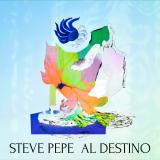
“Al destino”, the new album by Steve Pepe, began to take shape in 2023 after roughly a year of highly abstract sound research. The original intention was to create a dancefloor-oriented record, moving away from down-tempo structures, built around minimal, percussive compositions and high BPMs, with sound conceived primarily as a functional element.
In 2024, however, the process shifted. Less time was spent producing and more time reflecting. Emotions hovered between the urgencies of the present and unresolved past traumas, and almost without conscious intention, singing returned to the center of the project. It was not a calculated choice, but an inevitable one.
The resulting album does not draw its energy from distant places, nor does it focus on sonic experimentation as an end in itself. Instead, Al destino offers an intimate perspective on how memories and emotions shape the inner self, on the sensation of being simultaneously alone and deeply connected to everything, and on the struggle to reconcile feelings, sensations, love, and desire.
- Hex's Up
- Hooves And Cloves
- Where Would The Light Go
- Sungate
- Spiderette
- Evil Incarnate
- Wildling
- Treasure Trove
- Raven
- Summon The Sparks
Cassette[15,92 €]
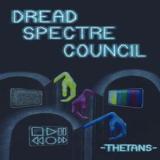
Dread Spectre Council is Kenneth Amundsen"s solo-moniker compiling years of archival demos reimagined and re-recorded. First presented through the debut EP "Dystopia/Eons" (2024) feat. Dale Crover (Melvins/Nirvana/Redd Kross) on drums. Connected to bands like Mindy Misty, Le Corbeau and Izakaya Heartbeat, - He has sneaked around the Norwegian indie scene for the past two decades. On Thetans Kenneth plays all instruments, records and mixes himself in a solitary catharsis. Bringing emotive confessionals, barn-burners and sect nodding psychedelics together in a melancholy-stroked indie rock epos, "unshakably human" as described by Last Day Deaf . A gang of co-conspirators is lurking to join for future releases and tours.
- 1: Brand New Heartache
- 2: Long Ride
- 3: The Lie
- 4: Barroom Feather (Radio Edit)
- 5: Blind
- 6: Nothing New
- 7: One To One Another
- 8: Always Almost
- 9: Barroom Feather
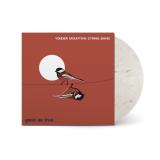
Good As True (2026), the 12th studio album from Yonder Mountain String Band, leans into a warm, expressive sound — bluegrass shaped with an indie edge, rock undertones, and a hint of country. Recorded live in the studio, its eight original tracks trace romantic, personal, and societal relationships and the work it takes to stay connected. The lead single “Brand New Heartache” pairs rock-driven verses with a bluegrass-lifted chorus as it follows the fallout of a breakup and the uneasy hope of starting again, while “Blind” opens with a striking instrumental riff that lingers long after the song ends, while its lyrics confront regret, mental health struggles, and the pull to become something better. “Long Ride” delivers a sharp, sarcastic look at life in a touring band; “Nothing New” and “The Lie” confront political rigidity and division; “One to One Another” and “Always Almost” pull toward quieter emotional corners; and “Barroom Feather” drifts into indie-folk terrain with one of the album’s most atmospheric jams. Across Good As True, Yonder moves between high-tempo runs, layered harmonies, and moments that breathe — a reminder that nearly three decades in, they’re still charting new ground.
- 1: Wichita Lineman
- 2: I'm Getting Old
- 3: Ordinary World
- 4: Two Whole Summers, Half A Life
- 5: Catch
- 6: Between The Bars
- 7: Alone And Forsaken
- 8: You've Been Flirting Again
- 9: Frozen
- 10: Gloomy Sunday
On her new album, Two Whole Summers, Half A Life, Lisa Bassenge is once again accompanied by her trusted fellow musicians, pianist Jacob Karlzon and bassist Andreas Lang, with whom she has already realised numerous projects. Typical of Bassenge, the repertoire comprises a seemingly wild yet harmoniously connected mix of pop, singer-songwriter and jazz elements. The spectrum ranges from Elliott Smith to Duran Duran, from Billie Holiday to Björk. ‘It's always about the expressiveness of the songs – that's the common thread for us,’ emphasises the Berlin-based artist. The album features a track by Hank Williams as well as Madonna's ‘Frozen’ and “Catch” by The Cure. Two original compositions are also part of the recording: the title track ‘Two Whole Summers, Half a Life,’ a tribute to the power of friendship and youth, and the neo-folk ballad ‘I'm Getting Old.’ Both works impressively underline Lisa Bassenge's own artistic signature. For over two decades, Lisa Bassenge has stood for stylistic openness and a characteristic voice that lends new nuances to every song. Despite all the diversity, jazz remains the tonal basis. The Scandinavian-style relaxed sound of Karlzon and Lang lends the interpretations a soft, atmospheric depth.
- World Of Trouble
- Hellbent On Colorado
- Loud And Clear
- Carolina
- The Wicked
- Plains Of Ohio
- Cincinnati
- Runaway Horse
- Overtime
- Funeral Singer
- Our Lady
- Eastern Bluebird
Inspired by the long tradition of radical country and folk artists, longtime friends Sally Buice and Molly Rochelson use their passion for literature and storytelling to craft an album that reckons with the current global fever pitch. The album's 12 introspective, thematically and sonically layered tracks chart a transformative pilgrimage through an inextricably connected world. A woman desperate to save her community from a gas pipeline in "Plains of Ohio," a devout grandmother traveling across the world to Yugoslavia in search of the Virgin Mary in "Our Lady," and a trouble- making Bible College misfit in "Loud and Clear" are just a few of the archetypes listeners meet.
The Cincinnati-based duo cut their teeth as teens busking on Market Square in Knoxville, TN. Produced by Eli LoPinto (Chris Stapleton), the duo opted for a bigger sound and the result is a bonafide, left-of-center indie country record. Path of Totality does not shy away from the weight of political strife and catastrophe, opting instead to boldly confront it, bringing to bear the power to unite us all.
- 01: The Lake Will Give You Everything You Need
- 02: Sounding The Voice (Feat. Koleka Putuma)
- 03: The Poetry Of The In-Between
- 04: Iqhude: A Tale Of Horns And Bones
- 05: I Am Because You Are
- 06: Portals
- 07: A Basic Guide To String Theory (Feat. Shane Cooper)
- 08: Everything Is Connected To Everything (Feat. Ben Lamar Gay &Amp; Gontse Makhene)
- 09: We Oscillate, We Modulate
- 10: Mothers
Pioneering Swiss trombonist and composer Andreas Tschopp marries contemporary jazz with South African horns and homemade ocarinas, creating a record quite unlike anything you've heard before. "What if We Align Our Breath" disregards the curvature of borders, genre, and time itself - tugging a thread through the history of wind instrumentation with ghostly agility.
At the heart of the record lie spiralling, bonelike kudu (antelope) horns - instruments that have lent their stirring calls to indigenous South African rituals and signalling systems for millennia. These horns are clustered, harmonised and stretched beyond their godly usage by Tschopp - his extended techniques coaxing an array of melancholy, playful voices to canter through the album.
Flourishes of trombone, alpine flutes and a stellar supporting cast on double bass (Shane Cooper), cornet (Ben LaMar Gay), udu drums (Gontse Makhene) and spoken word (Koleka Putuma) bring groove, countermelody and a sense of earthy introspection to the proceedings. This is inconceivable music: a sighing tapestry of brass, clay and bone that hints at some preconscious connectedness, tracing figures that rejoice, exhale and embrace outside of time.
Recommended if you like Francis Bebey, quantum physics, peat bogs.
Yuvi Havkin aka Rejoicer returns with an exceptional collaborative album, California Space Craft. On this aptly titled record, he joins forces with seasoned LA bass polymath Sam Wilkes — known for his inspired studio work with Sam Gendel and his dynamic live performances alongside Louis Cole and KNOWER — and drummer Tamir Barzilay, completing the LA-connected trifecta alongside a select handful of key featured guests. The idea for California Space Craft was born out of a series of inspired live sessions in Los Angeles between 2019 and 2022, notably at Listen to Music Outside in the Daylight Under a Tree, where the trio’s natural chemistry first began to bloom. The resulting recordings encompass a wide variety of inspired sound stylings, as one would expect from any of these accomplished artists on their own; however, the sum is truly greater than the parts here, with the fluidity of their freeform improvisations over a dedicated three-day recording session feeling remarkably focused as a cohesive whole. Opening track “Traveling Light” sets the LP’s tone with equal parts Sly & Robbie-style, space echo– drenched rhythms and the cozy kosmische, guitar-led feel of early-2000s genre-fluid explorers like Tortoise. As we continue on to “Ritual in G#,” we are reminded that this is indeed a unique and timeless sonic space the trio has created, as Havkin’s crisp Rhodes chords anchor an ever-evolving psychedelic sound bed. The soaring trumpet of Avishai Cohen adorns the Afrobeat-indebted “Lion Water,” with Barzilay laying down a proper Allen-esque groove, while “Further (with you),” featuring Nitai Hershkovits on keys, offers a defining look at the titular concept of the album — with pure Cali feels coalescing effortlessly into sciNew Release Information fi narrative modes and a proper dose of Rejoicer futurism. Elsewhere, “Her Hair in the Air” shines with fresh polyrhythmic intention, illustrating the balanced bond between the three collaborators at their conversational peak, and the brisk synth strokes of “Early Porpoises,” alongside LP closer “Oceanic Friends” — again ideally named — double as a grand, in-stereo ride into the blissful Pacific sunset horizon. California Space Craft embodies the power of open, collective intention and musical kinship, offering memorable, uplifting moments and an aural glimpse of hope, warmth, and loving melodious calm in an otherwise quite chaotic time for humanity.
West Hill Studio is the place where the sound that has defined all the productions and artistic projects connected to the Periodica Records label was developed. Located in the hills of Naples, it’s a private recording studio immersed in a small woodland and isolated from the city. A small wooden lodge and vintage equipment made it possible to create and convey, through music and ideas, a precise musical aesthetic that transcends contemporaneity and current trends. The catalogue is personally curated by Mystic Jungle – born Dario Di Pace – music and executive producer and founder of both Periodica and Futuribile, released exclusively on vinyl and in limited editions. Well known for a distinctive sound that has unpredictably ranged from mutant-disco to soft-rock and reggae-inflected explorations for over a decade, he now presents two new electronic funk/rock tracks in collaboration with Serbian guitarist Igor Sekulovič. A pair of deliberately raw cuts, with the B-side conceived as an homage to a seminal 1985 digital reggae riddim built from a preset on the Casiotone MT-40
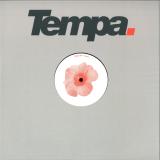
Following the widely acclaimed release of Body Shell in Spring 2025, Carré returns to Tempa, for a new EP, ‘Hibiscus’, featuring a collaborative track with LA-artist Bbyafricka, highlighting the synergy of West Coast Rap & London Soundsystem culture.
Connected by warmth and groove that define where Carré is musically right now, each of the four tracks on ‘Hibiscus’ stands on its own, yet together they continue to showcase Carré’s flair for producing sleek dubstep with melodic verve. From the shimmering ‘Warm Light’, the razor-sharp edge of ‘X Effect’, the deep stepper ‘Ride It Out’ to the stripped back ‘Hibiscus’ which glows with the addition of Bbyafricka’s sultry vocals, the EP is a concise statement of Carré’s evolving sound.
Speaking about the collaboration, Carré says, “I’d been a fan of Bbyafricka’s sound, style, and tone — tracks like ‘Baton Rouge’ and ‘Dumbo’ really stood out to me — and I could already imagine how her voice would fit with my production. The fact that she’s from LA made the connection feel even more natural. When I reached out, she was down straight away and came back with something I genuinely loved. She captured the energy of the track perfectly, and together I think we created something that feels authentic and even better than I’d imagined.”
For Bbyafricka, working on ‘Hibiscus’ was a moment of overcoming writer's block, “this song was me coming out of it on a weekend spent in Joshua tree, sitting outside looking at the view and the solar panels. I think you can envision what my view was when you play the song,” she explains.
Carré’s next outing on Tempa is a welcome return, signifying the home run she’s on as a producer and marking another impressive instalment in the producer's growing catalogue. In the last three years, Carré has quickly become a leading figure in the contemporary wave of artists pushing the true school Dubstep sound to new places and new audiences, expanding on the roots laid down by the likes of Skream, Benga, and Loefah.
A chance meeting in Mexico City set Points of Inaccessibility into motion. When Ibero-American composer Rafael Anton Irisarri crossed paths with Dutch media artist Jaco Schilp at MUTEK in 2024, a conversation about how technology shapes perception revealed an unexpected common ground. Schilp invited Irisarri to a spring 2025 residency at Uncloud, the Utrecht-based collective he co-founded, where Irisarri's sound began to take form amid an environment shaped by Schilp’s visual research.
The Uncloud studio was located inside the former Pieter Baan Centre, a forensic psychiatric prison where suspects of violent crimes were once confined. Its long history of silence and containment shaped the atmosphere in which the project developed. Within this setting, Irisarri coaxed long bowed-guitar tones through a network of pedals and looping systems. The raw gestures thickened into a vaporous and architectural field of sound. Schilp processed the material through a custom point-cloud software patch that produced images in continuous flux. The visuals flickered, dissolved and reformed like memories that resist coherence, functioning as a digital Rorschach that reflected the observer’s own perception.
Amid these spectral echoes, the project evolved into an examination of how the past persists within present signals. Memory endures as residue and interference, continually shaping perception even when its source has faded.
Schilp’s visual process required a continuous stream of sound in real time. Irisarri improvised throughout the residency, generating material that allowed the visuals to develop in parallel. Once back in his New York studio, he began shaping the recordings by carving pathways through the improvisations and mapping selected passages into MIDI. This process allowed him to build outward from the bowed-guitar material with minimal overdubs, adding Prophet 5 textures, Moog bass and strings that expanded the harmonic field while keeping the original performances at the center. To refine the structure, Abul Mogard provided editorial input, working with Irisarri’s stems to guide transitions and strengthen the overall pacing. The material, originally created under conditions of immediacy and constraint, evolved into a fully realized work through careful revision, patience and sustained reworking.
The title engages the geographic concept of the Poles of Inaccessibility, locations defined solely by their distance from all surrounding points. Irisarri adapts this idea to the conditions of digital life, where new forms of inaccessibility arise through the informational enclosures that structure perception. What appears to be a fully connected network often produces a deeper kind of separation, one shaped by the filtering logic of the systems that mediate experience. In this sense, the digital sphere mirrors its geographic counterpart. We inhabit spaces saturated with signals, yet the possibility of genuine contact becomes increasingly remote.
At its core, Points of Inaccessibility considers what can be understood as the new rituals of capitalist realism. Irisarri uses the term digital shamanism to describe the forms of simulated connection that organize contemporary life. These systems promise comfort through algorithms, influencers and AI interlocutors, yet they often reproduce the same conditions that generate loneliness in the first place. What appears as connection becomes the echo of connection, a sequence of gestures that imitate solidarity while withholding it. Like the geographic poles, these rituals are defined by distance. They pull us into environments where everything is illuminated, yet meaningful proximity becomes increasingly rare. In this sense, the work approaches a hauntology of the present, a reflection on futures that have stalled and intimacies that have been thinned by the algorithmic infrastructures that surround us.
This thematic tension unfolds across the album’s four movements. Faded Ghosts of Clouds introduces the work with textures that rise and dissipate in slow cycles, creating an atmosphere that resists clear definition. Breaking the Unison occupies a pivotal position in the sequence and focuses on the moment when the individual and the system fall out of alignment. Its shifting patterns trace the scattering of signals that once suggested connection, revealing the instability at the heart of contemporary perception. Signals from a Distant Afterglow forms the center of the album and features vocals by Karen Vogt, whose presence enters the sound field like a fragile transmission shaped by distance and delay. The closing piece, Memory Strands, follows motifs that appear, recede and briefly intersect before returning to quiet. Across these movements, the album outlines a landscape in which emergence and disappearance continually inform one another.
Listening to Points of Inaccessibility is an encounter with a sound field that is constantly in flux. Elements surface briefly, shift position and recede, creating a sense of motion that resists stable interpretation. The music moves between closeness and vastness, carrying traces of memory while withholding a clear point of resolution.
The album’s visual identity completes the project’s conceptual arc. In Mexico City, where Irisarri and Schilp first met, Daniel Castrejón transformed stills from Schilp’s point-cloud visuals into the cover image. The final artwork captures a single suspended frame of the digital material, a moment extracted from a field that is normally in constant motion. Its surface recalls the texture and abstraction found in the work of Catalan artist Antoni Tàpies, where material presence and erasure coexist within the same plane.
What emerges is a work that examines the tension between technological systems and human presence. Points of Inaccessibility asks whether connection is still possible within environments shaped by mediation and delay, or whether we have become isolated points within the very networks that promise proximity. What possibilities for relation persist within environments organized by algorithms and interruption? And how are we meant to understand presence when so much of it is constructed at a distance?
Points of Inaccessibility will be released on BioVinyl on February 6, 2026, with audiovisual performances planned throughout 2026.
Mastered by Stephan Mathieu
Artwork by Jaco Schilp
Design and layout by Daniel Castrejón
Artist photo by Iulia Alexandra Magheru.
»Ka ora te awa. Ka ora te iwi. The river is well, so the people are well«, says artist and writer Hana Pera Aoake. »In a Māori worldview, everything is connected and contains mauri, the life spark or essence inherent in all things, as they contain the residue of ancestors through whakapapa, or genealogy. Within Western environmental histories, there is a gap in knowledge around what we can learn through an act of listening.«
Hana Pera Aoake’s words resonated with Hinako Omori when they were invited by the Serpentine Gallery to write a piece of music for their »Serpentine Reader« publication on the theme of circulation. Aoake’s essay about listening to the river and other bodies of water parallels Omori’s own Japanese cultural view of water as a sacred source.
»studies on a river« places these two notions side by side, with Omori’s recordings of water sources and elegant 3/4 synth compositions matched to extracts from Aoake’s writing. The first side presents the music alone, while the second is where the project really clicks, with Aoake’s themes and Omori’s gentle, washing sounds completely in sync.
Allowing yourself to find meaning or beauty in the mundane is an act of generosity, Whether it’s seeing a smiling face in an electrical outlet socket, or discerning cosmic design amidst the forest floor detritus, it comes from a place of kindness to yourself and senses – and openness to hidden spirit of the world. These tracks came together during a period of intense personal change for adaa, rooted in a fruitful reflection on the connections between spirit and body, “feeling my flesh so I can feel and understand my spirit,” as adaa puts it. The sense of a crossover and clash of multiple connected realities – on-screens, on-line, on-earth, off-world, after-life – unites adaa’s multifaceted productions.
Ostensibly an assemblage of found sounds. scribbled thoughts and poems from diaries, and musial snippets, the album's scattered production reflects adaa’s own many mirror worlds. Field recording sit behind most tracks, alongside VST synths, guitars, and a variety of voices, from adaa’s own mangled vox to EVP samples taken from YouTube (recorded sounds believed to be spirits or paranormal activity), all processed to varying degrees.
While the music was mostly produced either in adaa’s studio in Providence, Rhode Island, or in bed, the field recordings bring the outside world in. The result of walks in the woods, hum of roads and highways, hiss of beaches, warmth of walks with friends and past lovers “around the East Coast”. It sits behind tracks like ‘sight’ where a lilting piano lin bobs atop a pond of rustling and distant whistles. Is that birdsong? Or ghosts? Saccharine hyperpop arpeggiation crossfades sharply into noise guitar squall. Angelic demon voices yawn into a hefty crescendo. Pure drones duet with gales of undefinable field sounds.
“Sometimes I feel like a seed in frosted soil,” says adaa. “If i choose to be optimistic.”
OK EG are a quietly influential force in electronic music, renowned for their masterful sound design, organic textures and meticulous arrangements. Forward thinking, always explorative and genre agnostic, the duo are at the leading edge of the Australian sound. Now entering the 10th year of their collaboration, Melbourne based producers Lauren Squire and Matthew Wilson have arrived with their own imprint called GEKO. GEKO is a platform for the duo to stretch out, freed from outside influences and in total control of the creative vision. This is high functioning dance music that bristles with confidence, expressed in vivid colour. Hypnotic, transportive and completely their own. The process is hybrid, analog machines connected directly to digital workflows. Two minds in sync.
Swiss artist Lukas Traxel releases his powerful debut album One-Eyed Daruma on We Jazz Records, March 10. The trio features Traxel on double bass, Otis Sandsjö on sax and Moritz Baumgärtner on drums. Compact, deep, and organic to the bone, Traxel & co's sound echoes the innovations of rhythmically driven avantgarde jazz while keeping things moving at all times. There's both drive and freedom to this sound.
ONe-Eyed Daruma features eight new compositions by Traxel, who crafted the outline for the album while dealing with the loss of his father. The group came together after an open invitation from the Zurich jazz club Moods to present a new group. The trio of Traxel, Sandsjö and Baumgärtner creates a full, symphonic, and powerful body of sound despite the instrumentation without a harmony instrument. The trio functions as a collective where the boundaries between composition, melody, and accompaniment are in flux, while keeping the common goal of creating new music together in sight at all times. Traxel reports that after playing bass in various groups with guitar and/or piano, he wanted to create a counterpoint of sorts with his new group and specifically go about it with a more sparse setup. As One-Eyed Drama proves, the idea behind the trio dynamic is a strong one and the unit makes use of their extra space in creating evocative, moody, swinging creative jazz with a distinguishable fingerprint of its own.
Lukas Traxel says:
"The process of composing this music while dealing with the loss of a loved one resulted in a writer's block at first. The notes would just not flow out of my pen until I noticed a mysterious-looking figure in the right upper corner of my piano. It was a daruma, an eyeless figure that in the Japanese tradition brings luck and prosperity. According to the myth, the first eye must be drawn onto the figure while expressing a wish. The second eye can be added only if the wish comes true. My daruma is meant to stay one-eyed as my wish, strongly connected and intertwined with my now gone father, is not meant to be fulfilled. The feeling of unfulfillment and imperfection of life serves as a common thread throughout this album, right down to its title. In a similar fashion, a composition remains incomplete until it is interpreted by musicians, and given form as music. That being said, for me playing together with this trio symbolises the upside: the sense of fulfillment in music and life.
Our musical influences include the American composer and singer Caroline Shaw, Swiss pianist Colin Vallon's trio, and composer/singer-songwriter Gabriel Kahane. In addition, I have listened a lot to the trio albums of Jimmy Guiffre and Sonny Rollins. Besides that, my musical heroes like Charlie Haden, John Coltrane, and Keith Jarrett always flow into the music. Another very important influence in the music is the work of American visual artist Agnes Martin, in whose works the imperfection of a multiplicity of repetitions results in a lively big whole in the end. (See "Wild Flower")
Live, the trio takes a lot of freedom in interpreting this music, yet we have a deeper, almost pop-like attitude towards the live performance as an experience. For me it's always important to build a strong narrative with the band while on stage."
One-Eyed Daruma by Lukas Traxel is released on 10 March 2023 by We Jazz Records on LP/CD/digitally. The LP edition is shelved in an inside-out sleeve and pressed on white vinyl. The CD is housed in a cardboard digisleeve with UV lacquer finish.
Waiting is the essence of travel. Patience is its own reward.
Two people. A Telecaster guitar with a few effect pedals. A drum machine. An audio interface is connected to a laptop. The ingredients are simple yet effective.
But any suggestion of four-track cassette machines and vintage bedsit productions is quickly dispelled by digital dubbiness and refined arrangements. A tail of reversed echos. The crystalline flourish of octave-pitched delays. Riddled hi-hats tickle and taunt. A bass drum asserts its space.
Winkler's guitar patterns have a fragmented, almost haphazard connotation. Searching in a shimmer of reverb. Until the beat, the framework, sets in to reveal structure. Intentionality. Reihse's programmed rhythms go just to the point of a groove, holding the moment of tension, knowingly delaying the gratification. Beats that have scratchy patina anda subtly playful edge; their crispness stands in contrast to the contemplative drift of the guitar. Is it a trance? Or a dance? Yes.
There are some apparent references here: a good portion of Les Disques du Crépuscule, some kraut-esque electronica, even a smidgen of Morricone / Spaghetti Western, blending into a kind of Musique Noir – yet these serve as a set of orientational coordinates, rather than quotations.
This is so far the most assured release by Periode, perhaps eschewing some of the naiveté that was wilfully cultivated in earlier output – there is no cheeky cover version this time. And no singing either. The nine pieces have the quality of a series, a variation on a mood, or a subset of moods. What emerges is an inviting swagger in the face of bleakness. There is a profound melancholy, but it is not the darker kind, and does not exclude humour.
First impressions may suggest that this is purely nocturnal music. Yet it equally evokes the harsh sunlight and baking summer heat. Or a rainy day. And transportation: the music suggests the motion of travel, even if that travel only happens within the mind. And waiting. Waiting while doing nothing much. Because that's all you can do. (Alexander Paulick)
Hiver completes a trilogy of EPs on Gudu with ‘Blue Hell’, another transmission of space-age machine funk from a duo who are truly shaping their own soundworld.
If you’ve followed Hiver, you should know the deal by now: they’ve spent the last decade honing a sound that draws heavily from dance music history – namely the starry-eyed synthesizer funk of classic techno and electro – that drips in colour and emotion without ever feeling retrograde. ‘Blue Hell’ is their third EP for Gudu, and maybe their most accomplished yet.
In Hiver’s words, “this EP was shaped by a mix of late night club energy and the more introspective, melodic ideas we’ve been exploring in the past years. A big part of it also comes from the tension between how people connect today. This constant, hyper-connected flow of networks, media, and online exchanges and our own way of creating music, which is very physical and personal. We’re always bouncing ideas through messages and files, but the real magic still happens when we meet in the studio, face to face. That contrast between digital connection and human presence became a sort of hidden theme behind the EP.”
“With Blue Hell, our third chapter on Gudu, we wanted to capture a moment of clarity, something direct yet still drifting. In a way, this release completes the excursion we began with the first two records: three points that trace the contours of the sounds we’re drawn to. Each track feels like a fragment of that journey, grounded in rhythm but always leaning toward depth and escape.”
Warehouse Find
Massiande has become one of the most captivating talents South America has produced for authentic House music.
An artist of multicultural roots, he was born in 1988 in Santiago, Chile, has lived most of his life to the side of US American people, has Dutch family heritage and his name derives from a Sierra Leone dialect. All of these global influences have had a great effect in the way he perceives and lives music.
Growing up as a profound and dedicated fan of Soul, Jazz and Disco; discovering House, a genre that connected these genres' roots with electronic experimentation, was a life turning point.
DJing since 2007, he is known for performing emotive and dynamic sets, with a moving soulful drive that resembles much of the spirit of New York, Chicago and Detroit pioneers.
After starting to focus on music production, 2013 brought his debut record "Heart Rushed Love" through German label Housewax, a record of classic vibes that received praise for its charm and character on underground scenes worldwide and, most notably, from House music artists in Chicago, including his personal hero, House maestro Larry Heard. Such a start would be a sign of great things to come.
Inspired by the same Chicago spirit, in 2015 the release of "Stand", through the prestigious MOS Recordings, represented a step further in his career as a producer, finding its place on the crates of DJs as diverse as Patrice Scott, Voiski, Apparat or Honey Soundsystem.
These days, Massiande brings a deeper and mature House sound which is reaching a wider audience, with his conceptual "Freedom" EP through UK's Phonica Records and the landmark "Yesterday, Today, Forever" EP on Jimpster's Freerange, while also revealing a consistent variety of skills on a fully dancefloor-oriented EP for Hercules & Love Affair's Mr. Intl imprint.
With a growing discography whose flair endures the test of time, Massiande's path thrives with a true passion for House that's appealing to both casual listeners and the most loyal purists of the genre around the world.
R2 2-CHANNEL ROTARY DJ MIXER
Introducing the Headliner R2, a 2-channel rotary DJ mixer that
is perfect for DJ’s looking for precise control and a warm sound,
without breaking the bank. The R2 is packed with features, like an
analog filter and 3-band isolator EQs on each channel, and uses
only high-quality components, including genuine ALPS potentiometers.
Featuring two stereo channels with selectable Line and Phono
RCA inputs, each channel on the Headliner R2 comes equipped
with gain control with a peak LED, a 3-band isolator EQ, a headphone cue selector, a large channel volume control knob, and a
filter activation switch.
The Master channel boasts an analog filter, headphone monitoring,
and output control section. The analog filter features selectable
High Pass / Low Pass Filter modes with Frequency and Resonance
controls, giving you precise control over your sound. Independent
Master and Booth outputs with volume controls, both with balanced
XLR and unbalanced RCA connectors, give you the flexibility to
connect to any sound system.
The Headliner R2 features genuine ALPS potentiometers, and a
sturdy metal enclosure with stained wood side panels for a classic
look that will complement any DJ setup. The modular internal
construction, coupled with the external power supply connected
via locking Mini XLR ensure superior audio performance.
The Headliner R2 is a reliable, high-quality mixer that will give
your DJ performances that classic vibe. Whether you’re spinning
house, techno, or classic funk/soul/disco jams, this fun little mixer
is the perfect addition to your setup.
• Two stereo channels with selectable Line and Phono RCA inputs
• Each channel features Gain control with Peak LED, 3-Band Isolator EQ, Headphones Cue selector with LED, channel
volume control and filter activation switch with LED
• Master channel features analog filter, headphone monitoring and output control section
• Analog filter features selectable High Pass / Low Pass Filter modes with Frequency and Resonance controls
• Genuine ALPS potentiometers
• Headphone Cue control section features volume control, mix control (Cue/Master), and split monitor switch
• High current headphone amplifier with dual 1/4” and 1/8” jacks
• Independent Master and Booth outputs with volume controls, balanced XLR outputs and unbalanced RCA outputs
• Additional Record output with unbalanced RCA jacks
• Dual LED level meters for the Master output
• Microphone input with level control on front panel
• Sturdy metal enclosure with stained wood side panels
• Modular internal construction for superior audio performance
• External split rail power supply connected via locking Mini XLR connector and push-button power switch
• Measurements: 320 x 219 x 106 mm
• Weight: 2.8 kg
Microphone Input
Nominal Input Level: -50dBu
Frequency Response: 20Hz – 20kHz (+/- 0.1dB)
THD + N: 100dB
Crosstalk: 100dB
Übersprechen: < -65dB
THD + N: < 0,05%
Kopfhörerausgang
Maximaler Ausgangspegel: 70mA/Kanal in 150Ω
Minimale Lastimpedanz: 32 Ohm/Kanal
Stromversorgung
Typ: Extern mit verriegelbarem Mini-XLR-Stecker
Eingangsspannung: 100-240v ~ 50/60Hz
Ausgangsspannung: +/-15V; 500mA
Spannungsbereich: 32 Ohm/Kanal
- A1: (Part I)
- B1: Prelude (Part Ii)
- B2: Maiysha
- C1: Interlude
- C2: Theme From Jack Johnson
The capstone of Miles Davis’ electric period, Agharta reigns as a funk-rock fireball — a blazing comet streaked energy and elan, a fearless organism feasting on adventure and freedom, a seven-headed Godzilla stomping its way through Osaka, Japan. Recorded on February 1, 1975 at Osaka Festival Hall at the first of a two-show stand, the double album offers an endless abundance of surprises and shifts — as well as a road-proven ensemble whose chemistry and abilities equal that of any of Davis’ celebrated bands. If the true measure of jazz is the capacity to adapt to the moment and challenge perception, Agharta is consummate.
Sourced from the original master tapes, housed in a Stoughton gatefold jacket, and pressed at Fidelity Record Pressing in California, Mobile Fidelity’s numbered-edition 180g 33RPM 2LP set of this epic live release presents it in audiophile sound on a domestic pressing for the first time. Offering greater degrees of separation, detail, and richness than the compressed CD editions and more clarity, openness, and presence than older vinyl copies, this version of the 1975 release helps bring the concert stage to your home. Just make sure your turntable and speakers are up to the challenge of Davis and Co.’s explosive performances — and producing the decibels they demand.
Teeming with vibrant colors, tones, and pace, Mobile Fidelity’s reissue captures the hear-it-to-believe-it flow, sweep, and moodiness of the music. Though the group honors looseness and freedom with religious verve, the specificity and scale rendered by this remaster allows you to detect methods behind the alleged madness that are often otherwise harder to discern. This insight extends to the understated changes in volume, harmonics, and phrasings. In many ways, you can listen as Davis himself did that early February evening as he helped coordinate the overall direction and decided on whether to blow his wah-wah-wired trumpet or take a turn on the organ.
Tellingly, Agharta would likely never have been made if not for Davis’ ventures overseas and, specifically, to the Land of the Rising Sun. Having for years faced a backlash on his native soil for his choices to experiment and blow past all known borders, Davis was welcomed with open arms in Japan. The concert documented on Agharta — as well as the day’s later show, captured on the equally exciting Pangea — stemmed from a sold-out three-week tour that would ultimately mark Davis’ final public appearances for years, as he soon settled into semi-retirement and nursed the wounds connected to an unprecedented stretch of restless and relentless output.
For all the band-fueled merit of Agharta — and there’s plenty, given the cast of saxophonist Sonny Fortune, bassist Michael Henderson, drummer Al Foster, percussionist James Mtume, and guitarists Reggie Lucas and Pete Cosey seemingly blasts off to outer space and travels distant galaxies by the time this minimally edited record runs its course — Davis’ own playing often remains overlooked. As critics Richard Cook and Brian Morton observed, it is “often fantastically subtle, creating surges and ebbs in a harmonically static line, allowing him to build huge melismatic variations on a single note.” He attacks like a man on a mission, out to prove naysayers wrong and bent on trailblazing another new path forward. Convention and skeptics be damned.
Noisy and furious, dark and discordant, abstract and off-balance, radical and intense, abrasive and atmospheric, strangely beautiful and hypnotically eccentric: Agharta evades simple description, and refuses to be pinned down in any established category — rock, jazz, punk, ambient, prog, avante-garde, or otherwise. Shot through with trench-deep grooves, screaming riffs, scalding solos, and free-improv leads, its cosmic thrust comes on as the equivalent of an animated pointillist painting comprised of millions of textured dots, dashes, and dabs that hold your attention so raptly you want to revisit the ideas again and again.
Always steps ahead of everyone else, Davis knew what he was doing even when Agharta debuted in Japan before later hitting U.S. markets. Though “Maiysha” and “Theme from Jack Johnson” are identified in the track listing, the record contains a number of uncredited references to other Davis works, including a nod to “So What.” This decision to bypass labels only adds to the art of the reveal — the rare black magic in which Agharta expertly deals.
“OTHERWORLDS” is a fantasy / sci-fi book presenting collaborators from the past and future through their otherworldly visions. Each artist offers an intimate glimpse into their own abstractions. The A3 spreads reveal visions, fragments of alternative realities, strange and mysterious flora and fauna, fantastic creatures and altered states of perception.
The book takes you on a curious journey through the minds of many, connected by shared inspirations and their collective contribution to building the Childhood Intelligence universe over the past eight years.
- A-1. I Am
- A-2. Opening Run
- A-3. Connected
- A-4. Unite!
- A-5. Evolution
- B-1. Naturally
- B-2. Never Ever
- B-3. Still Alone
- B-4. Daybreak
- B-5. Taskinlude
- C-1. M
- C-2. A Song Is Born
- C-3. Dearest
- D-1. No More Words
- D-2. Endless Sorrow
- ~Gone With The Wind Version~
This fourth album, released on 01 January 2002, features hit singles such as "Evolution" "M" and "Dearest"
This masterpiece features many of Ayumi Hamasaki's signature hits and showcases Ayu's explosive creativity, including her work composing under the name
CREA.
- A1: Mauri & Dark Vektor - Somos Incomprendidos
- A2: Uranio Empobrecido - Sawtooth Rain
- A3: Spectrums Data Forces - Future Is Here
- B1: Spammerheads - Cold Dead Hands
- B2: Cuentoscuro - Escalextric
- C1: Siarem - Vectors
- C2: Uhf - Those Dark Whims
- D1: Promisingyoungster - Deep In My Soul
- D2: Robot City - Sos L'horta Sud
- D3: The Bandit - Feelings
We Are The Robots Vol. 01 – Hypnotica Colectiva 25
Hypnotica Colectiva drops a fresh wax cut: We Are The Robots Vol. 01 — a heavyweight double vinyl release that channels the raw energy of the crew’s legendary club nights and distills 15 years of sonic exploration across electro, broken beats, and IDM textures.
Marking catalogue number HCR025, the Valencia-based imprint doubles down on its underground ethos, curating a ten-track lineup from artists deeply connected to the collective’s orbit. Each contributor brings a distinct flavor of robotic sound design.
Every track has been handpicked for its club impact, conceptual depth, and ability to resonate with the aesthetic of We Are The Robots — a party series that’s been pushing uncompromising electro since 2010. Expect a full-spectrum journey: from cerebral synth workouts to gritty analog pressure, industrial atmospheres, shadowy breaks, and raw minimalism.
Artwork come courtesy of Dani Requeni, keeping the HC Records design language sharp and functional. Steve Voidloss handles mastering duties, ensuring each groove hits with precision.
Mastered by Voidloss at Black Monolith Studio, London.
Artwork, Label art & Designs by Dani Requeni.
All rights reserved.
HC RECORDS
València, 2025.
- Way Back In The Way Back
- The Great Mystifier
- Mighty Dollar
- Quietly Blowing It
- It Will If We Let It
- Hardlytown
- If It Comes In The Morning
- Glory Strums (Loneliness Of The Long-Distance Runner)
- Painting Houses
- Angels In The Headlights
- Sanctuary
Coke Bottle Clear vinyl. Jun 25, 2021 (EST) CD MRG755cd 673855075525 $6.00 Jun 25, 2021 (EST) LP - Black MRG755lp 673855075518 $11.00 Dec 02, 2022 (EST) LP - Coke Bottle Clear MRG755lp-dlx-C1 673855075556 $12.50 TOTAL Quietly Blowing It was written and arranged by Taylor in his home studio_his 8' x 10' sanctuary packed floor to ceiling with books, records, and old guitars_as he watched the chaotic world spin outside his window. "Writing became a daily routine," he explains, "and that was a ballast for me. Having spent so much time on the road over the past ten years, where writing consistently with any kind of flow can be tricky, it felt refreshing. And being in my studio, which is both isolated from and totally connected to the life of my family, felt appropriate for these songs." Between March and June, Taylor wrote and recorded upwards of two dozen songs_in most cases playing all of the instruments himself_before winnowing the collection down and bringing them to the Hiss band. In July, the group of musicians, with Taylor in the production seat, went into Overdub Lane in Durham, NC, for a week, where they recorded Quietly Blowing It as an organic unit honed to a fine edge from their years together on the road. "We all needed to be making that music together," he recalls. "We've all spent so many years traveling all over the world, but in that moment, it felt cathartic to be recording those particular songs with each other in our own small hometown."
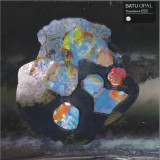
Building on the promise of nearly 10 years testing limits within club music, Batu presents his debut album Opal. Experimentation is a well-established facet of Omar McCutcheon's identity within the leftfield techno zeitgeist, but more than ever on Opal he seizes the opportunity to incorporate ideas beyond dancefloor impetus into his animated, forward-leaning sound.
Through the course of 11 tracks, rhythmic forms are mutated and manipulated, sonic matter bends across the frequency range and narrative structures coalesce and dissolve according to Batu's own internal logic. Unpredictability lies at the heart of all this music, bound together by a consistent modernist glint. It's a sound intrinsically connected to the superlative string of club 12"s, EPs and collaborations Batu has spun behind him thus far, even as it moves into unfamiliar terrain, guided by abstract inspiration from coastal landscapes and the mineral matter all life on Earth is built on.
Debut album from Batu on his own Timedance imprint following releases for Livity Sound, Hessle Audio or XL Recordings.
UK & Worldwide press campaign led by Dawn Creative. International press cover TBA and strong media (RA, Mixmag, DJ Mag, XLR8R) and radio coverage around the release (Jamz Supernova, KEXP, Dublab, Rinse France)
Extensive touring schedule for 2022 includes US, Mexico, UK, Europe, and features headline slots in multiple high profile festivals (Sonar, Dekmantel, Outlook, Dimensions, Waterworks and more)
Puglia-born Bress Underground brings his reverence for early US house and garage to a new outing for Spanish label Mate. 'This House' opens with chopped up vocal stabs, acrobatic drums and percussive rhythms. 'Connected' is smooth and seductive with dusty swing and muted chord work. 'Ready Or Not' brings some electronic futurism with sleek, liquid metal lines over deep, dynamic drums and 'Take Me Higher' is a big finish with Kerri Chandler kicks and chords, all finished with a true school house vocal. It's timeless, effective tackle for cultured floors.
- 1: Goodbye Clementine
- 2: Lluna De Foc (Interludi)
- 3: Confessions
- 4: Bring Me Back
- 5: Wild
- 6: Me Despido
Emma Yuzz bursts onto the scene with her EP Clementine, an intimate and emotional offering that fuses soul and R&B with her own authentic style. The EP includes six tracks: four songs (“Goodbye Clementine,” “Confessions,” “Bring me Back,” and “Wild”), an interlude (“Lluna de foc” - ‘Moon of fire’) and an outro (“Me despido” - ‘I say goodbye’), all connected by a deep emotional narrative
- A1: On The Way To You (Pwt72 Music And Dance Always Save Our Life)
- A2: The Fact That I Met That One Friend (Pwt39 We're Here)
- A3: Where Will We Go? Feat. Yusuke Shima (Pwt126 Where Will We Go?)
- A4: The Wind Blows On Penelope (Pwt47 You're My Alter Ego)
- A5: You Unparalleled (Pwt88 Looking For Yourself In Music)
- B1: Next Door To John Smile (Pwt126 Where Will We Go?)
- B2: We'll Always Be On Your Side (Pwt109 We'll Be Always On Your Side)
- B3: Keep Playing (Pwt39 We're Here)
- B4: Spot Light (Pwt138 3X3)
- B5: The End Opens Up New Possibilities (Pwt109 We'll Be Always On Your Side)
- B6: You Always Say "Yes" (Pwt47 You're My Alter Ego
Celebrating their 10th anniversary, piano trio Alter Ego presents their first-ever best-of LP featuring their signature ballads!
Alter Ego, a piano trio from the Setouchi region, has captivated listeners with their lyrical melodies.
This first-ever best-of LP features a carefully curated selection of the finest ballads they've crafted over the past decade.
This album was remastered at Alchemy Studio, a studio essential to Alter Ego's music.
The album features 11 tracks, including (2) "Meeting That One Friend," a tale of a special encounter; (3) "Where Will We Go?", a jazz waltz depicting the emotions felt at
a crossroads in life; (4) "The Wind Blows on Penelope," which depicts the flow of people connected to the coffee shop "Penelope," which is considered the origin of
pianist Hitoshi Ogata's career; and (10) "The End Opens Up New Possibilities," a song written at a time when parting with a loved one can also be a moment when a new
door opens. Music nurtured over time will gently reach your heart and leave a deep impression.
Selected by Yoshikazu Ogata & Keisuke Taniguchi
10th Anniversary Re-Release. Transparent-blaues Vinyl mit Bonewhite Splatter. Limitiert auf 200 Exemplare. Mit Human Nature zeigt die Band Caught a Ghost ihre außergewöhnliche Fähigkeit, Genres miteinander zu verschmelzen und dabei einen ganz eigenen, unverwechselbaren Sound zu schaffen. Das Album ist eine raffinierte Mischung aus Indie, Soul, Electronica und einem Hauch von Retro-Pop - eine musikalische Reise, die sich zwischen kraftvollen Grooves, atmosphärischen Synthesizern und souligen Vibes bewegt. Ein besonderer Höhepunkt des Albums ist die Single "Can't let go", die als Titelsong der erfolgreichen Krimiserie Bosch verwendet wurde. Der Song, der im Vorspann der Serie zu hören ist, fasst die Essenz von Caught a Ghost zusammen: Eine Mischung aus düsterem Soul, pulsierenden Beats und einer kraftvollen, aber gleichzeitig verletzlichen Stimmung. Die Tatsache, dass die Band nun auch Teil eines solch prominenten Projekts ist, unterstreicht nicht nur ihre künstlerische Relevanz, sondern zeigt auch, wie zeitlos und universell ihre Musik mittlerweile geworden ist.
- Puberty
- Seal My Fate
- Red
- Silverfish
- Super-Connected
- The Bees
- King
- Now They'll Sleep
- Untitled And Unsung
- L'il Ennio
- Judas My Heart
Nach dem gefeierten Debüt Star (1993), das Belly zwei GRAMMY-Nominierungen einbrachte, stand die Band an einem Wendepunkt. Mit Bassistin Gail Greenwood stiegen Tanya Donelly und die Brüder Chris und Tom Gorman in ein gemietetes Haus in Rhode Island, um gemeinsam Songs zu schreiben. Anschließend zog es sie ins legendäre Compass Point Studio auf den Bahamas, wo bereits AC/DC, Grace Jones oder Tom Tom Club aufgenommen hatten. Unter Produzenten-Ikone Glyn Johns (Led Zeppelin, Rolling Stones, The Who) nutzten Belly die entspannte Umgebung, spielten viel live ein und reduzierten Overdubs - um ihre Chemie unverfälscht einzufangen. Das Ergebnis war King: ein komplexeres, schwereres Werk mit den Singles Now They"ll Sleep, Seal My Fate und Super-Connected. Mit politischeren und persönlicheren Texten sowie Gail Greenwoods kraftvollem Bass markierte das Album künstlerisches Wachstum statt Kommerzialität. Das SPIN Magazine sah darin den Schritt von "Indie-Lieblingen zu Rock-Kandidaten". Erstmals seit 30 Jahren wieder erhältlich, erscheint King nun als lange erwartetes Repress auf schwarzem Vinyl, inklusive Original-Artwork und Fotografien von Christopher Gorman und Stephen DiRado.
Enigmatic artist GRANT, a longtime figure in the deep house and techno underground, collaborates with Alex Albrechton the title track 'Tangible Dreams'
The two connected via the Scissor & Thread label and Francis Harris, forming a creative partnership. The EP is a textured homage to late '90s dub techno, echoing Basic Channel and Chain Reaction, while retaining a modern touch. The tracks are timeless, groove-focused, and sonically deep.
On the release, GRANT says: "I've been a fan of Alex's work. Through Francis and Scissor & Thread, it felt natural to collaborate. This EP is the kind of music I love to play - not flashy or trendy, but tracks that hold up and grow on you."
With decades of record collecting and acclaimed releases on Lobster Theremin, Mörk, and his own imprints, GRANT has built a loyal following. His albums The Acrobat, Cranks, Perception, and Fantasy Blues are collectors' favorites.
Alex Albrecht, known for immersive performances at Paradise City, MNMT, Public Records, and Giant Steps, has released on Anjunadeep, Mule Musiq, and his Analogue Attic imprint.
With 'Tangible Dreams', GRANT and Albrecht deliver a collaboration destined to stand out.
After five years of activity, Orion Records is proud to present its first various artists release. “Horizon Begins” is a collection of tracks from artists connected to the Orion universe, encountered in clubs and festivals over recent years. The compilation aims to tell a complete story through its tracklist, moving from ambient to deeper shades of techno, with interludes of classic club sounds. An unknown project opens the record with an intro that sets the overall mood of the release, before giving way to deep and rhythmic moments by artists such as Martinou and Ateq & Orion. Skyra from Tbilisi closes side B with the unmistakable sound of Georgia. The second part of the release shifts towards a darker, more hypnotic direction with two key figures of the Swiss scene, Ben Kaczor and Lb Honne. The final chapter of this story is entrusted to Hame and Soela, a perfect soundtrack to close in a special way.
Skin/Glove is the second LP by Belgian musician Mathieu Serruys, following the release of his B.A.A.D.M. debut On Germaine Dulac back in 2014. Compiled over the course of a fortnight, the record features material recorded over the past five years: creaks of ice buckling under heat, thick hums like nauseating headaches, plumes of evaporated organ hymns, frostbitten crackles of dying tape loops. These disparate sources are unified by the pervasive corrosion of pain and time, which presses into the surface of every sonic object. Melodies splinter under the strain of being pulled apart; drones tremble under the gathering gravity of fatigue; dissonances flicker like candles on the brink of extinguishment. Yet despite the emotional density of the material itself, the process of composition provides a route toward comprehending how these sounds and experiences are connected. Skin/Glove reads as a constellatory map of adversity and grief, beautifully coalesced through the cathartic distance of retrospect, haunted by the sibilant whispers of distinct memories in dialogue, latticed by lesions that fatefully and poignantly intersect.
Pandemic, war, inflation, apocalyptic scenarios about climate change and artificial intelligence, all connected with widespread bonkers conspiracy narratives and growing fascist sentiments – in this crisis environment we re-emerge with a new issue.
What may appear like a ‘normal’ datacide issue – which it is indeed – is however also a part of a broader strategy. We’ve been busy expanding activities into the field of videos, documentaries and interviews. The very first signs of this are visible on our Noise & Politics YouTube channel.
There will be much more.
Datacide nineteen is now at the printers and will be available for the first time at the Hekate event at Forte Prenestino in Rome on October 6/7.
Subscribers, depending where they are based, will receive their copies soon after.
General distribution will commence later in October, our aim is to have the issue available in all the most important radical bookstores around Europe by early November. If you are interested to resell datacide in your area, please get in touch!
We will also have a table at the Radical Bookfair in London on November 4th, presenting the new magazine along with older issues.
With this issue we pick up the story where we left it with the last one. We’re unfolding a countercultural panorama, this time beginning in the mid-20th century with Howard Slater exploring the beginnings of the Electronic Disturbance Zone, multiple reflections of 1948 via the 1990s, sonic adumbrations of new social relations.
Christoph Fringeli then introduces us to a document from 1967 where situationist ideas popped up in the Extra-Parliamentary Opposition in West Berlin, in a text called Vietnam, the Third World and the Self-Deception of the Left, which contains a détournement of the Address to Revolutionaries of Algeria and of all Countries published by the Situationist International the previous year.
From 1967 we move on to 1978 with Ian Trowell, in an excerpt from his forthcoming book ‘Throbbing Gristle – An Endless Discontent’, tracking the movements of Throbbing Gristle as they play their first gig up north at the aptly named Wakefield Industrial Training College. Uncanny overlaps of the timelines of TG’s operation and The Yorkshire Ripper’s killing spree reveal themselves.
The time window from the 90s to the present day is illuminated by Nihil Fist, as we’re printing the interview previously published in video form on our YouTube channel.
This issue then moves into ficticious territory with stories and poetry by Joke Lanz, Dan Hekate, Howard Slater and Riccardo Balli. Book and record reviews follow, as do the charts and a short report of our wider activities since the last issue.
Please pre-order your copy now (6 euro incl. Shipping in Europe, 8 euro elsewhere) or, even better, take out a subscription (standard subscription for only 23 euros for 4 issues (Europe) or 3 issues (rest of the world) – or our super-subscription which includes also records, t-shirts, books and digital items.
Or just make a donation if you can’t be bothered with print, but want to support our work.
Millénium, a cry for life, a dance on hot coals, a punch of hope in the face of the world. After a gold record, two nominations for the Victoires de la Musique awards (winner of the new live talent award) and more than 450 concerts, Suzane returns with Millénium. A true mirror of our times, she explores the excesses of an ultra-connected world, the struggles of a generation in search of meaning, and the fragile beauty of humanity in the face of machines. With her sharp pen, her unique voice and her powerful yet poetic electro sound, Suzane has created a bold masterpiece, somewhere between rebellion and hope.
Repress.
Bicycle Ride takes you into lo-fi paradise. Enjoy the subliminal vibe of mellow melodies arising out of that true vintage piano sound. Sit back and experience the rhythms and pedal through your inner emotions. Shook's music will take you into a true admiration for melody, rhythm, music in a carefree treadmill of life. Listening to the latest productions of Shook is like watching a Ghibli movie with compositions by Joe Hisaishi. While balancing in the twilight zone between awareness and epiphany you can feel the influences by many artistic and obscure composers and musicians, Shook creates a personal form of electronic music. Creating its own melodies on vintage synths, acoustic pianos and recording drum shots to build his rhythm patterns.Shook creates an easy-listening experience with a deep appreciation for melody, synths and piano's, touching the current lo-fi revival connected with producers such as Nujabes. Influenced by the wonderful creations like the 'Chrono Trigger' video game soundtrack developed by music composer Yasunori Mitsuda. Inspired by synthesizer pioneer Isao Tomita to 70's and synth pop gurus Yellow Magic Orchestra. Become part of a surrealistic episode of yourself enabling you to safely meet your deepest memories.
Tasmin - Tezeta
The debut album is a journey through layers of influences connected by the band members bringing the sound of Ethio-Jazz, Afrobeat, Percussion, Dub and Tribal Music with an electronica sauce are interwoven, all mixed together in a delicate balance that creates a cinematic soulful and one-of a kind aesthetic blend from the connection of several worlds
The name "Tezeta" is taken from the well-known Ethiopian musical scale, which served as a major inspiration for the writing. This scale symbolizes nostalgia, longing & love songs and serves as a starting point that resonates a quiet pain and longing for a far away place, but still feels like home. In the case of Hadar and Tushiner, this is a tangible longing and the African sounds are woven into them like a second language
The approach to the production of the album reflects loyalty to the tradition of classic studio recordings that include tape reels, field recordings, African percussion, flutes, saxophone and old synthesizers combined with guitars and drums. Every recorded sound went through a filter of precision, listening, and searching for depth that is both technical and emotional
Their music always takes place in the present, it is a living, open moment, connected at the same time to what is heard in the distance from the winds of the Gulf of the African continent and through the streets of Tel Aviv, inviting listeners into a space where emotion and rhythm move together as one
Eran Hadar guitars, synths, percussion, sound
Eylon Tushiner saxophone, flute, keys
Dror Tshuva bass guitar
Omri Gondor drums
Within the nine carefully composed tracks of Young Bones, Mel D’s characteristic voice stands out in all its facets, varying from fragile to powerful, haunting to playful, but most of all soulful. With a voice that’s both extraordinarily clear and melancholic, Mel D is something surprisingly rare: a singer whose artistic expression goes beyond the mere use of her voice. On Young Bones, Mel D uses contemporary figures, rephrasing them into timeless formulas. Her unique musical language embodies references to genres like Indie or Alternative. In other moments, her sound leans baroque, then jazzy, soulful, and contemplative. Each song represents an ode to being connected: to the world, other people, and most of all to the beauty of music. Mel D draws her inspiration from struggles felt in the current world climate: “I have felt overwhelmed by the world we live in and its countless challenges,” said Mel D. “As if we’re all a bit directionless in our own lives.” Nevertheless, Mel D uses her musicality as a tool for resistance - using it to transform sadness and anger into creativity, and to give world-weariness a voice that seduces, comforts, and inspires. On Young Bones, Mel D sings us to a place where we might find hope - with songs rooted in concern, solidarity, humanness, and empowerment, inviting the listener to lean into those feelings. Bring the Witches Back, a hymn to witchcraft, is a quiet song that summons the return of witches with feminist urgency, for more love and magic to open ourselves towards each other and the world. Soft, a soulful song with a tender melody, gently lulls the listener into an in-between dimension, full of opportunities. Meanwhile, in the coming-of-age ballad, Slowly Growing, she raises questions about belonging and identity, pointing directly at our emotional core. Where Do You Look When It Hurts? speaks to the sensation of exhaustion and emptiness, offering musical warmth and a sense of community in moments of lethargy. Finally, listening to the album, one always feels in good company. Playfully working in folk and electro-pop elements, Mel D takes us on a ride toward love and a sense of belonging, particularly on the track We win. Young Bones was recorded in Zurich and Paris with two outstanding producers of our times: Renaud Letang, who has previously collaborated with Feist, Chilly Gonzales or Lianne La Havas, and Dino Brandão. The latter recognized Mel D’s artistic uniqueness during their first meeting, inviting her to a recording session in his studio and bringing her into the band of Swiss superstar, Faber. Mel D’s solo project was more a product of coincidence than planning, as she says, even though an undisputed talent and passion for music had always been apparent throughout her youth. During her studies in fine arts in Zurich, she founded the electronica-duo mischgewebe, and composed soundtracks for theater and movie productions, as well as for exhibitions. Long before forming her current artistic identity, she went by the nickname Mel D, in a humorous reference to the Spice Girls. Although her personality and musical language suggest thoughtfulness and a melancholy touch, Mel D acknowledges that an honest laugh is never out of place, making her sympathetic and approachable.
Let’s Start Again – A Collaboration between Mikekon & BTA (Byron The Aquarius), connected whilst Byron was touring Australia in 2023. Mike threw an intimate afterparty for Byron after his Nature’s Calling festival tour and got talking about Music, DJing and Life.
They threw some beats around to feel out and Byron began laying some lush keys, and within hours the magic was made. The project was left to cool off a little while and the two picked it up and polished it (Hence the title “Lets Start Again” before setting the date for a mid 2025 release via Mother Tongue distribution.
WIP Music is proud to have this as their first vinyl release under the label, further emphasising its desire to share timeless electronic music.
Amoul Bayi Records continues its mission of discovering and showcasing West African artists. After introducing talents such as Daba Makourejah and Saah Karim, the Dakar-based label returns with a new release from one of the most soulful
voices in Gambian reggae: Royal Philosopher.
"Thank You Jah" is a song of gratitude, carried by the emotive and distinctive voice of Royal Philosopher. With humility, he expresses his thankfulness for the talent he has received, the path he has walked, and the strength that has guided him along the way.
Built on a dynamic Digi Roots riddim produced by Yared and mixed by Rootical45, the track provides the perfect space for his voice to shine. The refrain – “Thank you Jah for giving I talent” – echoes like a personal prayer and a universal message, able to resonate beyond belief systems.
Royal Philosopher is a Gambian singer whose powerful and precious voice is shaped by spirituality, African heritage, and musical commitment.
Born in Banjul, he first discovered his vocal gift in a church choir, where he developed a heartfelt and sincere expression. He fell in love with reggae through the voice of Garnett Silk, whose intensity and devotion deeply influenced his path. He began his journey with the group The Royal Family, before pursuing a solo career, releasing music with consistency and authenticity.
Today, he presents "Thank You Jah", a single produced by Amoul Bayi Records, imbued with gratitude and faith, true to his artistic vision: sincere, elevated, and deeply connected.
Designed both for turntables and streaming platforms, the single will be released in digital format and on 7" vinyl. The artwork is by renowned Senegalese graffiti artist King Mow.
System is a retro futuristic album that is inspired by that iconic sound of the 80s. It seamlessly merges deep machine-like tracks alternated with surprisingly humanised pop songs.
With an extended palette of pianos and synthesizers Shook’s work will take you along those vintage funk and synth-pop sounds, while keeping you connected with touchy vocals from both Jasper and his partner Juliet.
Human Dynamics label debuts with a powerful vinyl collaboration EP from Uvall & Pierce.
The first-ever split EP from two close friends combines deep tribal grooves soaked in ritualistic textures and surgical low-end.
Four driving tracks have been crafted for different use-cases and moments, from warm-ups to peak-time and after-hours sessions.
Joint release embodies Human Dynamics' belief that the people and the sound are inseparably connected.
The line between art and entertainment has always been fuzzy. Certainly, there’s plenty of overlap between the two, but lately it feels like there’s a growing divide, an ever-widening chasm separating our fundamental need for creative expression and our insatiable appetite for disposable content. That’s where T. Hardy Morris comes in.
“I’ve spent a lot of time parsing the difference between the two,” he explains, “not just for myself, but for society at large. What does it mean to be an artist? How do we measure creative success? Where are the boundaries between audience and performer when everyone’s broadcasting their lives 24/7?”
Morris dives into those questions headfirst on his riveting new album, Artificial Tears, and while the answers don’t come easily, the search yields plenty of reward. Recorded in Nashville with My Morning Jacket’s Carl Broemel at the helm, the collection is an electrifying work of existential exploration, a raw, rock and roll reflection on meaning and identity in a modern world that’s simultaneously more connected and isolated than ever before. Despite the weighty ruminations at its core, the result is a remarkably grounded, down to earth album that’s at once honest and abstract, a poignant, clear-eyed look in the mirror from a master craftsman committed to his work for nothing more—and nothing less—than its own intrinsic value.
Cassette[18,07 €]
Wombo’s third album, ‘Danger in Fives,’ isn’t a reintroduction; it’s a reminder. Throughout ‘Danger in Fives,’ Wombo — the Louisville-bred three-piece of Sydney Chadwick (bass/vocals), Cameron Lowe (guitar), and Joel Taylor (drums) — not only enhance their formula, but routinely perfect it. The 11 tracks on ‘Danger in Fives’ fine tune Wombo’s enchanting alchemy while firmly pushing the band into new territory.
Wombo first connected in Louisville in 2016 and have crafted a unique lane over the near-decade since forming, contorting post-punk structures into uncanny shapes. On ‘Danger in Fives’ they twist another knot into their belt, and come out creatively renewed. Throughout ‘Danger in Fives,’ it’s clear what has made Wombo one of the most respected bands in their class, and it’s thrilling to hear them command new terrain.
Vinyl[32,98 €]
Wombo’s third album, ‘Danger in Fives,’ isn’t a reintroduction; it’s a reminder. Throughout ‘Danger in Fives,’ Wombo — the Louisville-bred three-piece of Sydney Chadwick (bass/vocals), Cameron Lowe (guitar), and Joel Taylor (drums) — not only enhance their formula, but routinely perfect it. The 11 tracks on ‘Danger in Fives’ fine tune Wombo’s enchanting alchemy while firmly pushing the band into new territory.
Wombo first connected in Louisville in 2016 and have crafted a unique lane over the near-decade since forming, contorting post-punk structures into uncanny shapes. On ‘Danger in Fives’ they twist another knot into their belt, and come out creatively renewed. Throughout ‘Danger in Fives,’ it’s clear what has made Wombo one of the most respected bands in their class, and it’s thrilling to hear them command new terrain.
- A1: Morning Of The Magicians
- A2: Absentia
- A3: Communion Phase
- B1: Spectrum Two
- B2: Quiet Storm
- B3: Mynd
- B4: Patron Saint Of Elsewhere
Artist, illustrator and bestselling author Matt Sewell is an avid ornithologist. He also plays the guitar in Sewell and the Gong, a music project with producer Chris Tate.
Their new album is a sonic journey into a whirling world of wild woods, dancing in the mud, late night pastoral adventures and some sort of 21st century hedonism connected to ancient rituals the mark the passing of seasons. It’s a glorious noise to get lost in.
- Answer To My Prayers
- Fire In Your Eyes
- We Remember You
- Strangers
- What Are We Looking For
- Take Me As I Am
- Brand New Start
- Dont Be Sorry
- She Cant Hide
- Better Walk Away
Blue Black Splatter Vinyl[23,95 €]
oulette - GO! (2025) | Melodic Rock at Its Finest!
Roulette is back, delivering another AOR/Melodic Rock milestone with their highly anticipated full-length album, "GO!" Featuring 10 brand-new
songs, this release follows the critically acclaimed "Now!" (2019) and continues the band's remarkable musical evolution.
Their recent EP "From Now Until Today" (2024) showcased their ability to develop their songwriting while staying true to their roots. Now, "GO!"
takes that journey even further.
"We have connected to our roots of Thin Lizzy, Def Leppard, Bryan Adams, and Van Halen," says bass player Hansi Fellbrink.
Expect powerful melodies, soaring vocals, electrifying guitar riffs, and a pounding rhythm section-everything that defines Roulette's signature
sound.
Following the massive success of their latest single, "Love's The Drug"-which has dominated the Swedish charts for over 7 months-"GO!" is set to
raise the bar even higher.
And with their reputation for extraordinary live performances, Roulette will bring their energy to the stage with several live shows, including an
exciting tour in Spain this October (2025).
Sounds like: Def Leppard, Journey, Europe oder Foreigner!
oulette - GO! (2025) | Melodic Rock at Its Finest!
Roulette is back, delivering another AOR/Melodic Rock milestone with their highly anticipated full-length album, "GO!" Featuring 10 brand-new
songs, this release follows the critically acclaimed "Now!" (2019) and continues the band's remarkable musical evolution.
Their recent EP "From Now Until Today" (2024) showcased their ability to develop their songwriting while staying true to their roots. Now, "GO!"
takes that journey even further.
"We have connected to our roots of Thin Lizzy, Def Leppard, Bryan Adams, and Van Halen," says bass player Hansi Fellbrink.
Expect powerful melodies, soaring vocals, electrifying guitar riffs, and a pounding rhythm section-everything that defines Roulette's signature
sound.
Following the massive success of their latest single, "Love's The Drug"-which has dominated the Swedish charts for over 7 months-"GO!" is set to
raise the bar even higher.
And with their reputation for extraordinary live performances, Roulette will bring their energy to the stage with several live shows, including an
exciting tour in Spain this October (2025).
Sounds like: Def Leppard, Journey, Europe oder Foreigner!
Cosey Fanni Tutti has announced details of a new album, 2t2, set for release on the artist’s own imprint, Conspiracy International, on 13 June 2025 on vinyl & CD. Composed, performed and produced by Cosey Fanni Tutti, the 9-track album moves between propulsive beat constructions and expansive electronic explorations, continuing themes from 2019’s acclaimed album TUTTI. It is a personal reflection; a sonic realisation of her life, drawing on her powerful inner resolve and expressing it through music. The album finds Cosey making sense of some very tough years, dealing with personal bereavements alongside swingeing world events that have impacted us all. Centring on her own strength and self will, the album’s two distinct sides – one rhythmic, one more meditative – are connected by an overwhelmingly positive mood. She explains, “My overtone chanting on the track ‘Stound’ was part of that, tapping into the inner self, to the core of your being, emotionally, physically, allowing the sounds to permeate and soothe as well as create a sense of power, resistance and resilience to what we face.” Even in the more melancholic moments, there’s a lightness that she explains is an “acknowledgement that it’s alright to be sad, that’s part of life, but there is so much joy too in our memories of people we lose and in the moments we share with each other. Joy is our resistance.” There are also threads from her most recent projects running through 2t2. Her latest book RE-SISTERS and the score she wrote for Caroline Catz’s film Delia Derbyshire: The Myths and Legendary Tapes are acknowledged, most directly on ‘Threnody’ which is dedicated to Delia Derbyshire and Andy Christian, an artist friend of Delia’s. He sent Cosey an abstract drawing of the same name, created one night from an improvised evening where he drew while Derbyshire intoned and sang softly as she looked at the drawings, as if reading a score expressing how they made her feel. Cosey’s process and the different strands that make up her work form a totality of vision. She goes on to say, “Once you get creating and listening, weaving, collaging sound it’s a wonderfully fulfilling feeling that takes you both out of yourself at the same time as essentially deep within.”
The artwork reflects this idea that the album is a “sound cameo”, reflecting the light within the music, and the buzz of life that exists within all of Cosey’s work. Musician, artist and author Cosey Fanni Tutti has continually challenged boundaries and conventions through her work. As a founding member of the hugely influential avant-garde band Throbbing Gristle, one half of electronic pioneers Chris and Cosey, and as an artist channelling her experience in pornographic modelling and striptease, her work on the margins has reshaped the mainstream. Her first solo album, Time To Tell (1983) was followed by 2019’s Tutti and 2022’s Delia Derbyshire: The Myths and the Legendary Tapes. Her debut book, the Penderyn Music Book Prize shortlisted Art Sex Music, was published in 2017, followed by RE-SISTERS in 2022 (both Faber), which will soon get a Spanish edition.
- A1: Coro Del Amanecer (Feat. Vero´nica Valerio)
- A2: Corazon De Rubi (Feat. Minu¨k)
- A3: Tlacotlan
- A4: Juku (Feat. Rumbo Tumba)
- A5: Chucum
- A6: Complete (Feat. Feat. Dina El Wedidi)
- B1: Xica Xica (Feat. Uji & Barrio Lindo)
- B2: Brigantes
- B3: Papan (Feat. Citlaly Malpica & Pablo Emiliano)
- B4: Ynglingtal (Feat. Jhon Montoya)
- B5: Madre Tierra (Feat. Luzmila Carpio)
Black repress[26,85 €]
Repress!
Wonderwheel recordings is proud to present the first full-length album from
producer Robin Perkins, aka El Buho. Balance represents a meeting of different currents that make up Buho's music: a fascination with the natural world, and its protection, a fascination with the rhythms, traditions and sounds of Latin America and a fascination with modern electronic music and production aesthetics. The album is peppered with Cumbia, Son Jarocho, Andean instrumentation & Afro-Colombian rhythms. Mixed with this, Robin integrates this idea of "nature music" - putting the sound of a misty forest, the songs of birds, of crunching leaves under foot or the rhythmic tapping of rain alongside synthesized sounds, electronic clicks or claps, deep basses. Trying at once to give them their own space but in a new, surprising perspective - it draws electronic music into something more soft, natural, different and appealing.
Balance is also an album that celebrates community and collaboration, showcasing collaborations with ten different artists form Latin America and beyond, both producers, instrumentalists and singers. Including more of a lyrical presence than his previous EPs, Perkins solicited the participation of talented singers like Dina al Wedidi from Cairo, Luzmila Carpio from Bolivia and the incredible decimas of Mexican poet Citlaly Malpica. The album also features the likes of harpist Veronica Valerio, Argentine multi-instrumentalist Rumo Tumba, jarana player Pablo Emiliano from Mexican Son Jarocho group Semilla and members of the Shika Shika family (the global collective he co-run's) Uji, Barrio Lindo, Kaleema, Minük and Jhon Montoya.
El Buho's music has an incredible power to convey feelings, atmospheres, memories or messages. The message that sits behind this music is to value on the one hand the power of community, of collaboration and of our modern, globally, connected world but also the remembrance, protection and celebration of the very earth we depend upon for our existence.
Juan Ramos is up to bat for the next Körperspannung release with the four-track stunner EP ‘Hard Bois’. Deeply connected to the ongoing pursuit of gay excellence and endeavors, Juan honors those who have come before us and touches us deeply in our soft spots at all the right moments. Across ‘Hard Bois EP’, the Berlin resident and behind the scenes operator (IYKYK) shows precisely why he’s one of dance music’s most exciting and dependable prospects. Opening the release, ‘Hard Bois’ combines snaking drums in a melange of samples with bff Kris Baha vocalizing sizzling and snaking lyrics winding around this propulsive club cut that could easily be a snapshot right out of a scene from Chicago’s iconic Medusa Club. ‘Saviour Sound’ is music that makes iron pipes sweat with hedonistic abandon. Exposed steel vibrates to a hardcore beat. Gears interlock to move the whole building into autonomous productivity. Conduits of electricity pulsate to the drama unfolding in a dim lit factory with dank corridors leading us on a path to a flowerbed growing and thriving in a subterranean hydroponic garden.
On the flip, the alarm strikes and it’s (shout it out): ‘Werk Day’! This is your call to get buttoned up and ready to make dreams reality. Head to the gym, pump those guns and then house your body. Technological funk winding through a sturdy and rock hard kick that helps you ride through the chasms of pleasure and pain. Rounding out the release is your ‘Acid BB’ rocking and roaring through the airspace of atomized acid matter, a perfect closer to a thoroughly exciting direction Juan Ramos takes with his newfound sound. Play it loud. Play it proud. Juan is one of our own and we do all we can to take care of each other.
Composed, performed and produced by Cosey Fanni Tutti, the 9-track album moves between propulsive beat constructions and expansive electronic explorations, continuing themes from 2019’s acclaimed album TUTTI. It is a personal reflection; a sonic realisation of her life, drawing on her powerful inner resolve and expressing it through music. The album finds Cosey making sense of some very tough years, dealing with personal bereavements alongside swingeing world events that have impacted us all. Centring on her own strength and self will, the album’s two distinct sides – one rhythmic, one more meditative – are connected by an overwhelmingly positive mood.
She explains, “My overtone chanting on the track ‘Stound’ was part of that, tapping into the inner self, to the core of your being, emotionally, physically, allowing the sounds to permeate and soothe as well as create a sense of power, resistance and resilience to what we face.” Even in the more melancholic moments, there’s a lightness that she explains is an “acknowledgement that it’s alright to be sad, that’s part of life, but there is so much joy too in our memories of people we lose and in the moments we share with each other. Joy is our resistance.”
There are also threads from her most recent projects running through 2t2. Her latest book RE-SISTERS and the score she wrote for Caroline Catz’s film Delia Derbyshire: The Myths and Legendary Tapes are acknowledged, most directly on ‘Threnody’ which is dedicated to Delia Derbyshire and Andy Christian, an artist friend of Delia’s. He sent Cosey an abstract drawing of the same name, created one night from an improvised evening where he drew while Derbyshire intoned and sang softly as she looked at the drawings, as if reading a score expressing how they made her feel. Cosey’s process and the different strands that make up her work form a totality of vision.
She goes on to say, “Once you get creating and listening, weaving, collaging sound it’s a wonderfully fulfilling feeling that takes you both out of yourself at the same time as essentially deep within.” The artwork reflects this idea that the album is a “sound cameo”, reflecting the light within the music, and the buzz of life that exists within all of Cosey’s work. Musician, artist and author Cosey Fanni Tutti has continually challenged boundaries and conventions through her work. As a founding member of the hugely influential avant-garde band Throbbing Gristle, one half of electronic pioneers Chris and Cosey, and as an artist channelling her experience in pornographic modelling and striptease, her work on the margins has reshaped the mainstream. Her first solo album, Time To Tell (1983) was followed by 2019’s Tutti and 2022’s Delia Derbyshire: The Myths and the Legendary Tapes. Her debut book, the Penderyn Music Book Prize shortlisted Art Sex Music, was published in 2017, followed by RE-SISTERS in 2022 (both Faber), which will soon get a Spanish edition.
Far Out Recordings continues its reissue campaign of the late Argentinian guitarist Agustin Pereyra Lucena's work with the first-ever vinyl reissue of his singular 1988 private press album, Puertos De Alternativa, now his most sought-after LP. The album features some of Agustin’s most uniquely beautiful compositions, including “Luces de Valeria” and “Preparativos Maritimos,” alongside Baden Powell's “Pequeño Vals” and “O Cego Aderaldo (Nordeste...),” and “Tema Barroco” by his longtime collaborator, Guilhermo Reuter.
By 1988, Agustín had established himself as one of Argentina’s foremost interpreters of Brazilian music. The seventies saw success with his group Candeias, and he gained recognition in Brazil, forming friendships and collaborations with luminaries such as Vinicius de Moraes, Baden Powell, Dorival Caymmi, Toquinho, and Maria Bethania. Following the era of dictatorship in South America, Agustín spent the late seventies and early eighties, living and touring in Norway as part of his European travels with his group Agustín Pereyra Lucena quartet.
Recorded after returning to his native Buenos Aires, Agustin Peyera Lucena’s Puertos de Alternativa emerged from this confluence of diverse experiences and influences, revealing an artist deeply connected to his environment. The album's title, meaning "Alternative Harbours," reflects Agustín's particular affinity for water. He observed that much of his favourite music originated from places with rivers and seas nearby, noting, "There is a flow near water that influences guitar playing for sure."
With a profound connection to both instrument and environment, Agustín’s music is often difficult to place. The album begins rooted deeply in South American soil, drawing clear inspiration from Brazilian guitar masters like Heitor Villa Lobos, Garoto and Baden Powell. But, as it progresses, a sense of journey unfolds, evoking new landscapes and horizons – from the crystalline beauty of glacial Norway to the gentle currents of the Rio de la Plata.
The ensemble on Puertos de Alternativa features notable Argentinian musicians, including drummer Osvaldo Avena, flautist Rubén Izarrualde, and saxophonist Bernardo Baraj.
Mastered by Stuart Hawkes at Metropolis Studios from the original master tapes which had been lovingly kept by Agustin’s nephew José Lucena Perreyra
Tracklist & Credits:
A1. Luces De Valeria (Agustin Pereyra Lucena)
Guitar, Vocals – Agustin Pereyra Lucena
Piano, Bass, Drums, Vocals – Guillermo Reuter
Tamboril – Julio Said
A2. Pequeña Valsa (Baden Powell)
Arranged By Flute – Lucho González
Drums – Osvaldo Avena
Flute – Alejandro Santos
Guitar – Agustin Pereyra Lucena
Tambora – Eduardo Avena
A3. Planicie (El Llano) (Agustin Pereyra Lucena)
Arranged By Flute – Lucho González
Flute – Rubén Izarrualde
Keyboards, Acoustic Bass, Percussion, Arranged By Keyboards – Guillermo Reuter
Guitar – Agustin Pereyra Lucena
A4. Tema Barroco (Guillermo Reuter)
Guitar – Agustin Pereyra Lucena
Percussion – Guillermo Reuter
A5. O Cego Aderaldo (Nordeste...) (Baden Powell)
Guitar – Agustin Pereyra Lucena
B1. Tres Que Quedaron (Agustin Pereyra Lucena, Andrés Laprida)
Drums – Osvaldo López
Flute – Rubén Izarrualde
Piano, Keyboards, Bass, Directed By – Guillermo Reuter
Soprano Saxophone – Bernardo Baraj
Electric Piano, Arranged By – Andrés Laprida
Guitar, Electric Guitar, Vocals – Agustin Pereyra Lucena
B2. Preparativos Maritimos (Andrés Laprida, Agustin Pereyra Lucena, Guillermo Reuter)
Guitar, Vocals – Agustin Pereyra Lucena
Keyboards, Acoustic Bass, Percussion, Arranged By – Guillermo Reuter
B3. Puertos De Alternativa (Agustin Pereyra Lucena)
Guitar, Effects – Agustin Pereyra Lucena
B4. Casi-Numbe (Luis González Cárpena, Agustin Pereyra Lucena)
Bass – Lucho González
Bass Flute – Rubén Izarrrualde
Berimbau – Horacio Veros
Keyboards, Piano, Vocals, Drums, Arranged By – Guillermo Reuter
Guitar, Vocals, Arranged By – Agustin Pereyra Lucena
Standard redefined The professional RMX-95 4+1 channel club mixer blurs the lines between analogue workflow and digital technology. The RMX-95 is a cutting-edge, extraordinarily versatile creative tool thanks to its dual-USB 2.0 interface, redesigned effects section, optional MIDI mapping of all controls and smooth integration of the djay Pro DJ software. The club mixer has a familiar and user-friendly interface, making it suitable for both professional and hobby DJs.
Surgical sound manipulation in every detail Will you go for ''Classic'' or ''Kill''? The RMX-95's 3-band EQ can be adjusted to allow maximum sound control for unique results. Echo, Reverb, Flanger, Phaser, Vinyl Brake, Loop Roll, Noise, Pitch Shift, Delay, Ping Pong Delay, Tape Delay, Bit Crusher and Transformer are just some of the many studio-quality effects included in the brand-new Beat FX unit. The dedicated FX frequency control (LPF/HPF) lets you apply the effects to a specific frequency range for a more unique sound. And that's not all: Each channel also features a bipolar filter unit (LPF and HPF) with real-time resonance adjustment. This allows for even more complex sound productions. Two digital displays show parameter changes in real time for precise control that goes beyond hearing. Connections galore The RMX-95 also excels in terms of connectivity: Four CD, two line, and two phono inputs are available on the four input channels. The separate microphone channel has two microphone connections (1 x jack, 1 x jack/XLR combination jack) and an additional AUX input. The master output offers RCA or balanced XLR cable connections. The booth output has two jack connections for stereo operation. However, it can also be used in mono mode.
A recording device can be connected to the Rec output via RCA jacks to record DJ sets regardless of the master output level. Last but not least, the DJ mixer has two jacks for headphones. Crisp cuts and smooth blending The adjustable curve of all faders provides DJs with the creative flexibility they want while mixing. Turntablists and scratch wizzards can also upgrade the crossfader with the contactless RMX innoFADER. Maximum flexibility: dual-USB audio interface Superior 24-bit sound quality is provided by the ten inputs and outputs of the high-quality dual-USB 2.0 interface. The two USB ports allow smooth transitions between DJs and maximum flexibility when using different setups in a single club night. In addition, the active USB hub enables the connection of additional USB devices. Fully digital architecture The RMX-95's digital architecture transforms the DJ mixer into an individually mappable MIDI controller. As part of this, the setup menu provides a wealth of customisable options, such as EQ frequency range, Neural Mix EQ mode, audio interface routing, and zone routing for the booth output. DVS-enabled for djay Pro & Neural Mix The RMX-95 works with Algoriddim djay Pro via plug and play. The DJ app's ground-breaking Neural Mix function lets you isolate beats, melodies, and vocals in the mix in real time. The RMX-95 supports djay Pro's advanced DVS integration with Mac, PC, iPhone and iPad.
The DJ software is also compatible with streaming services like Apple Music, Tidal, SoundCloud, Beatport and Beatsource. Indestructible design The club mixer's sleek black metal surface is not only eye-catching but also highly durable. The solid metal housing and hard-wearing metal shafts in all of the built-in potentiometers and switches provide a long service life, even with heavy club use. An internet connection and a separate Apple Music, Tidal, Beatport, Beatsource or SoundCloud subscription is required to use this service.
Professional 4+1-channel DJ club mixer - DUAL 10 In/Out USB 2.0 audio interface with superb, 24-bit sound quality
New Beat FX unit with multiple effects in studio quality: Echo, Reverb, Flanger, Phaser, Vinyl Brake, Loop Roll, Noise, Pitch Shift, Delay, Ping Pong Delay, Tape Delay, Bit Crusher,Transformer - FX frequency control (LPF/HPF) for manipulating effects in selected frequency band -
Sound filters: Bi-polar filter unit with LPF and HPF - Realtime resonance control for channel filters - Active USB hub to connect USB accessories
3-band EQ with adjustable behaviour (classic/kill) -
Two digital displays showing real-time information of parameter changes -
Digital mixer architecture with extensive adjustment options - Extensive setup menu, including:
- EQ frequency range (low, high)
- Neural Mix EQ mode
- Audio interface routing
- Booth output zone routing (matrix)
- Cue solo option
- RMX innoFADER compatible
- Adjustable linefader and crossfader curves
- MIDI-compatible control elements
- 2x High-retention USB 2.0 port, especially durable
- 2x Headphone outputs via 6.3/3.5 mm stereo jack with split cue
- 2x Mic inputs with dedicated MIC ON button
- Booth output in stereo or mono
- High-quality and hard-wearing, pure black metallic finish
- Sturdy construction in a metal housing with bolted metal shafts
- Kensington lock to secure the device
- Incl. instruction manual, power cord and USB cable
- Frequency Range: 20 Hz - 20 kHz +2/-3dB - Inputs: 7x line RCA, 2x phono RCA, 1x mic combo-XLR/jack, 1x mic 6.3mm jack (TR), 2x USB port - Outputs: master XLR (balanced), master RCA (unbalanced), booth (TRS) (balanced), rec RCA (unbalanced), 1x headphones 6.3mm jack, 1x headphones 3.5mm jack - EQ range classic at 70 Hz, 1 kHz, 13 kHz: -26 dB/+9 dB - EQ range isolator at 70 Hz, 1 kHz, 13 kHz: -90 dB (total kill)/+9 dB - EQ range mic at 100 Hz, 10 kHz: -12 dB/+ 12dB - EQ headphones at 100 Hz, 10 kHz: -29dB - Power Source: AC100-240V, 50/60Hz - Power Consumption: 29 W - Dimensions: 322(W) x 387(D) x 107.5(H) mm - Weight: 6.8 kg
dimensions (LxWxH) in mm
445x442x153
dimensions outerbox in mm
460x452x327
Stepping up to the plate for the second release of our catalog, we are pleased to share 'Aura Protocol', a four-track collection that taps into the emotive and melodic depths of 90s influenced progressive house from Mexico based Producer, Mahkina.
The A1 track ‘God, How Do I Handle This’ kicks off the EP with an introspective mood, blending atmospheric pads and hypnotic bass-lines. The deep, melodic structure recalls the emotional core of 90s prog, while evolving into an intricate tapestry of sounds. The second track ‘Flavour & Spice’ plays into Mahkina's latin roots. A fusion of playful percussion, and lush chord progressions, evoking the vibrant energy of classic 90s house, with an added modern twist from the artist's production style.
Flipping over to the B-Side, ’Sacoodelo" takes listeners to a well placed euphoria. Combining driving rhythms with evolving loops and rich synth work, its experimental side takes influence from the rhythmic structures of classic trancey house. The final track ‘Connected’ feels like the emotional and sonic culmination of the EP. Taking the listener on a more expansive journey, weaving through moments of tension and release via atmospheric build-ups, emotional breakdowns, and a sense of resolution toward the end.
RLF002 is a well represented embodiment of Mahkina's ability to fuse classic styles with contemporary sounds, resulting in an immersive, dynamic listening experience that resonates with both the heart and the body.
- A1: Coro Del Amanecer (Feat. Vero´nica Valerio)
- A2: Corazon De Rubi (Feat. Minu¨k)
- A3: Tlacotlan
- A4: Juku (Feat. Rumbo Tumba)
- A5: Chucum
- A6: Complete (Feat. Feat. Dina El Wedidi)
- B1: Xica Xica (Feat. Uji & Barrio Lindo)
- B2: Brigantes
- B3: Papan (Feat. Citlaly Malpica & Pablo Emiliano)
- B4: Ynglingtal (Feat. Jhon Montoya)
- B5: Madre Tierra (Feat. Luzmila Carpio)
BLUE Vinyl[29,62 €]
Repress!
Wonderwheel recordings is proud to present the first full-length album from
producer Robin Perkins, aka El Buho. Balance represents a meeting of different currents that make up Buho's music: a fascination with the natural world, and its protection, a fascination with the rhythms, traditions and sounds of Latin America and a fascination with modern electronic music and production aesthetics. The album is peppered with Cumbia, Son Jarocho, Andean instrumentation & Afro-Colombian rhythms. Mixed with this, Robin integrates this idea of "nature music" - putting the sound of a misty forest, the songs of birds, of crunching leaves under foot or the rhythmic tapping of rain alongside synthesized sounds, electronic clicks or claps, deep basses. Trying at once to give them their own space but in a new, surprising perspective - it draws electronic music into something more soft, natural, different and appealing.
Balance is also an album that celebrates community and collaboration, showcasing collaborations with ten different artists form Latin America and beyond, both producers, instrumentalists and singers. Including more of a lyrical presence than his previous EPs, Perkins solicited the participation of talented singers like Dina al Wedidi from Cairo, Luzmila Carpio from Bolivia and the incredible decimas of Mexican poet Citlaly Malpica. The album also features the likes of harpist Veronica Valerio, Argentine multi-instrumentalist Rumo Tumba, jarana player Pablo Emiliano from Mexican Son Jarocho group Semilla and members of the Shika Shika family (the global collective he co-run's) Uji, Barrio Lindo, Kaleema, Minük and Jhon Montoya.
El Buho's music has an incredible power to convey feelings, atmospheres, memories or messages. The message that sits behind this music is to value on the one hand the power of community, of collaboration and of our modern, globally, connected world but also the remembrance, protection and celebration of the very earth we depend upon for our existence.
Black Vinyl[14,71 €]
Black+ Limited Art Print + Limited 150 Page H[41,13 €]
YELLOW VINYL[16,77 €]
The record is largely sung in Scots language, one of Scotland’s three official languages along with Gaelic and English. “Scots gives me a way of expressing myself which is connected directly with the landscapes I love. It brings the songs alive and it is a fascinating language. The name of the record is in Scots - Forefowk means the people who came before, or ancestors. When we say ‘mind me,’ we can mean a few things- remind, remember, watch over or care for me. The record explores how tradition needs to be constantly reconnected with, built upon, looked after, and shared.”
Quinie sings with a style inspired by Scottish Traveller singers. “I began singing unaccompanied Scots Song in 2015 after hearing Scots Traveller singer Sheila Stewart on the radio. Initially I felt like I shouldn't sing these songs because I'm not a Traveller, and I saw people around me doing that in a way that made me uncomfortable. But on the other hand this music made sense to me and I felt driven to learn. Over the years I have met Traveller friends who taught me that settled people sharing these songs could contribute to raising awareness. Scottish Travellers are marginalised and discriminated against in modern Scotland, despite being custodians of so many of our important traditions. So I started to perform them and tell this story. From there I built on my repertoire and started writing my own songs”.
To develop this record, Quinie travelled across Argyll with her horse. They went on a pilgrimage of sorts through the ancient landscapes of the West of Scotland to explore the interconnected relationships between people, ancestors, animals, and place. The album’s vinyl release is accompanied by a book and film, documenting this unusual research process.
Forefowk, Mind Me was recorded in August 2024 at The Big Shed in Highland Perthshire with support from Creative Scotland. Quinie is accompanied by an ensemble of musicians: Ailbhe Nic Oireachtaigh (viola), Oliver Pitt (duduk, bouzouki, percussion), Harry Górski-Brown (small pipes, violin), and Stevie Jones (double bass, recording, and mixing). Each of these artists brings their own distinctive voice, bridging contemporary experimental practice with worlds of traditional and early music.
Repress of 2018’s classic compilation from Brownswood.
A primer on London’s bright-burning young jazz scene, this new compilation brings together a collection of some of its sharpest talents. A set of nine newly-recorded tracks, We Out Here captures a moment where genre markers matter less than raw, focused energy. Looking at the album’s running order, it could easily serve as a name-checking exercise for some of London’s most-tipped and hardworking bands of the past couple of years. Recorded across three long, fruitful days in a North West London studio, the crossover between each of the groups speaks to the close-knit circles which make up the scene.
Surveying the way that London’s jazz-influenced music had spread outside of its usual spaces in recent years, this album bottles up some of the vital ideas emanating from that burgeoning movement. Giving a platform to a scene where mutual cooperation and a DIY spirit are second-nature, it’s a window into the wide-eyed future of London’s musical underground.
Ubiquitous, much-lauded saxophonist Shabaka Hutchings is the project’s musical director. His own recent projects span from South Africa-connected, spiritually-minded jazz players Shabaka and the Ancestors to Sons of Kemet, who match diasporically-connected compositions with viscerally-direct live shows. His entry on the album, ‘Black Skin, Black Masks’, is typically difficult-to-define: with an off-kilter, shifting rhythmic backbone, repeated phrases – mirrored between clarinet and bass clarinet – shape the track with an alluring hue. His input ties together a deft, genre-agnostic sensibility that’s shared through all the players on the record.
Theon Cross – who’s also part of Sons of Kemet with Hutchings – starts his track, ‘Brockley’, with the solo, distinctive low rumble of his tuba. Winding and mesmeric, it sees tuba and sax lines winding together in rhythmic and melodic parallels. Ezra Collective – whose drummer and bandleader Femi Koleoso has toured with Pharaohe Monch – run a tight, Afrobeat-tipped rhythm on ‘Pure Shade’, with the final third changing gear into a melodic, momentous closing stretch.
Joe Armon-Jones, whose ludicrous chops on the piano have seen him touring with the likes of Ata Kak, showcases earworm-like, insistent motifs on ‘Go See’, balanced with a playful, improvisatory approach with room for ad-libbing and solos a-plenty. Taking a softer tact than many of the other entries, Kokoroko – whose guitarist Oscar Jerome has been making waves with his solo material – spin a lyrical, steady-paced meditation on ‘Abusey Junction’, matching chanted vocals with gently-played guitar.
Nodding to spiritual jazz influences, Maisha’s ‘Inside The Acorn’ is a wandering, explorative rumination, balancing delicate washes of piano and percussion with sharp interplay between flute and bass clarinet. In contrast, Nubya Garcia’s ‘Once’ is taut and carefully-poised, her tenor sax guiding a carefully-built energy to an explosive conclusion. And finally, Triforce’s ‘Walls’ is a performance in two parts: starting with Mansur Brown’s languorous, lyrical guitar, the second half switches up to a low-slung, g-funk-tipped groove.
"For Japanese people, min'yo is both the closest, and most distant, folk music" explains band-leader Katsumi Tanaka. "We may not feel it in our daily, urban lives, yet the melodies, the style of singing and the rhythm of the taiko drums are engrained in our DNA".
Initially indifferent to min'yo, a tragic event in recent Japanese history set Tanaka on his current path: "Following the Tohoku earthquake of 2011, I reflected on my life, work and identity. A fan of world music, I began searching for Japanese roots music I could identify with. Discovering mid-late 20th century acts like Hibari Misora, Chiemi Eri and the Tokyo Cuban Boys, I was captivated by their eccentric arrangements and how they mixed min'yo with latin and jazz music."
Lead singer Freddie Tsukamoto fell for min'yo after hearing a song from his hometown on a TV competition whilst in a restaurant. It was a revelation – until then he had been an aspiring jazz singer yet was uncomfortable singing in English. The restaurateur told him a min'yo teacher was his neighbour and the two connected. Tanaka and Freddie formed Minyo Crusaders in 2011 in Fussa, a city where the US military Yokota Air Base is located, in western Tokyo.
Recruiting other local musicians versed in afro and latin rhythms, they began hosting jam sessions at the Banana House, a building that was previously part of the military base and that used to house US soldiers. The band started recording their music, and their debut album "Echoes Of Japan" was released in 2017. It received huge acclaim in Japan and abroad, and was also released by British label Mais Um in 2019. Several European tours followed, as well as some US and South America gigs.
In this second opus, the Minyo Crusaders take us on a trip to Japanese folk songs fused with latin rhythms. Their unique arrangements breathe new life to classics like Kiso Bushi, Sado Okesa or Soran Bushi, among many other min'yo songs from all over Japan that were originally performed by Japanese fishermen, coal miners and sumo wrestlers hundreds of years ago. The magical groove created here proves once again that the Minyo Crusaders are one of the most dynamic representatives of the current Japanese world music scene. Yoi Yoi, Enjoy!
Repress of 2018’s classic compilation from Brownswood.
A primer on London’s bright-burning young jazz scene, this new compilation brings together a collection of some of its sharpest talents. A set of nine newly-recorded tracks, We Out Here captures a moment where genre markers matter less than raw, focused energy. Looking at the album’s running order, it could easily serve as a name-checking exercise for some of London’s most-tipped and hardworking bands of the past couple of years. Recorded across three long, fruitful days in a North West London studio, the crossover between each of the groups speaks to the close-knit circles which make up the scene.
Surveying the way that London’s jazz-influenced music had spread outside of its usual spaces in recent years, this album bottles up some of the vital ideas emanating from that burgeoning movement. Giving a platform to a scene where mutual cooperation and a DIY spirit are second-nature, it’s a window into the wide-eyed future of London’s musical underground.
Ubiquitous, much-lauded saxophonist Shabaka Hutchings is the project’s musical director. His own recent projects span from South Africa-connected, spiritually-minded jazz players Shabaka and the Ancestors to Sons of Kemet, who match diasporically-connected compositions with viscerally-direct live shows. His entry on the album, ‘Black Skin, Black Masks’, is typically difficult-to-define: with an off-kilter, shifting rhythmic backbone, repeated phrases – mirrored between clarinet and bass clarinet – shape the track with an alluring hue. His input ties together a deft, genre-agnostic sensibility that’s shared through all the players on the record.
Theon Cross – who’s also part of Sons of Kemet with Hutchings – starts his track, ‘Brockley’, with the solo, distinctive low rumble of his tuba. Winding and mesmeric, it sees tuba and sax lines winding together in rhythmic and melodic parallels. Ezra Collective – whose drummer and bandleader Femi Koleoso has toured with Pharaohe Monch – run a tight, Afrobeat-tipped rhythm on ‘Pure Shade’, with the final third changing gear into a melodic, momentous closing stretch.
Joe Armon-Jones, whose ludicrous chops on the piano have seen him touring with the likes of Ata Kak, showcases earworm-like, insistent motifs on ‘Go See’, balanced with a playful, improvisatory approach with room for ad-libbing and solos a-plenty. Taking a softer tact than many of the other entries, Kokoroko – whose guitarist Oscar Jerome has been making waves with his solo material – spin a lyrical, steady-paced meditation on ‘Abusey Junction’, matching chanted vocals with gently-played guitar.
Nodding to spiritual jazz influences, Maisha’s ‘Inside The Acorn’ is a wandering, explorative rumination, balancing delicate washes of piano and percussion with sharp interplay between flute and bass clarinet. In contrast, Nubya Garcia’s ‘Once’ is taut and carefully-poised, her tenor sax guiding a carefully-built energy to an explosive conclusion. And finally, Triforce’s ‘Walls’ is a performance in two parts: starting with Mansur Brown’s languorous, lyrical guitar, the second half switches up to a low-slung, g-funk-tipped groove.
New London-based label Plasticity Records hits the ground running with a hard-hitting, dancefloor-focused VA featuring four varied tracks, connected by a raw, propulsive sound thread running throughout.
Kicking off the A side is established Barcelona-based duo Nulek & Roto with Eternal Space — a stuttering, pitch-black techno/electro piece featuring an ominous vocal that sends shivers down your spine. Rounding out this side is Study Nights by Uruguayan talent Flhez, leaning heavily into the country’s rich musical tradition with plenty of spooky synths and rough analogue textures.
Over on the B side, Barcelona-based Romanian Mar.C delivers Not Normal — a tough-asnails, EBM-tinged techno number that’s sure to get any dancefloor moving. Last up is the broken and decidedly wonky Nuclear Era from Lima-based Venezuelan purveyor of all things percussive and leftfield, Acid Charlie.
A-Trak, Mele, Aroop Roy, Josh Ludlow, ALOT on Toy Tonics? Yes! The Berlin label comes up with a heavy package of remixes for Sam Ruffillo & Kapote’s „Robot Salsa“ EP. The Latin House EP by the 2 Italian producers. This stuff is the perfect floor fillers for the summer of 2025. While the Afrohouse wave has reached its peak and is becoming a bit „tacky“ a lot of underground DJs turned into playling different styles of latin music connected to electronic dance. And here we got Salsa and Boogaloo turned into 90’s house and indie dance. All of these will make the dancers get their hands in the air. Smiling faces and lot of endorphins secured.
- 1: Intro
- 2: I Was Disconnected Feat Sam Castell Ward
- 3: Mystery Man Feat Sebastian Golgiri
- 4: Intense Love
- 5: Credits Side A
- 6: On Connection
- 7: We Are All Human
- 8: Are You A Lost Sock? Part 3 ( K Edit)
- 9: Credits Side B
- 10: All Aboard (Digital Only)
- 11: The Aliens Have Arrived (Digital Only)
- 12: New York Shuffle (Digital Only)
- 13: We Are Connected (Digital Only)
Robyn is doing brilliant and important work - the world needs more music like this. Just one word: listen!" Giles Peterson “Even aside from her skills on her instruments and unique approach to music, Robyn devoted an immense quantity of emotional resources to the delivery of this record, and seemed to take its challenges on as a chance for personal growth. It was consistently clear that the personal input of the players was welcome in a fundamental way, and we all responded to Robyn’s efforts that went to the limits of her capacity and her love for bringing her project to you, the listener” Alabaster DePlume “It has been such a joy to work with Robyn, especially when entering the fascinating world of Robyn’s Rocket and Avant Garde jazz. We had our fun moments, like when the fire alarm went off during our recording session of Mystery Man, and we just rolled with it and kept it in. It’s like nothing matters. It’s such an honour to be part of the world of Robyn’s Rocket and to listen to the many stories, expressions and colours that shine throughout the album.”Sebastian Golgiri What happens when you bring together familiar faces at London experimental music venue Café OTO, Charles Hayward (drummer Abstract Concrete, This Heat) and John Edwards (double bass), and the Total Refreshment Centre (hub of new london jazz scene recording studio ) like Alabaster DePlume (singer and saxophonist) and Danalogue (synths from Soccer96, The Comet is Coming), and the learning disability autism art scene like singers/spoken word artists Sebastian Golgiri and Dean Rodney Jnr (Fish Police), on a magic carpet with space trumpeter Robyn Rocket? The answer materialises in the groundbreaking collaboration 'Robyn Rocket and People You May of Heard of'. Recorded across three days in three different studios connected to the three communities Robyn Rocket calls home, each session brought together musicians from these diverse backgrounds—many meeting for the first time. Together, they improvised and created a musical journey that transcends conventional boundaries.
This cosmic voyage features more than 20 musicians and a dog ( Taz from lost socks), gliding through free jazz, danceable tunes, loopy vistas and spoken word doors into different ways of seeing the world. At its heart lies a profound message about community as a vital part of existence and difference as something to embrace and value. The project culminates in the final single and focus track 'We Are All Human', featuring a poignant speech by Rocket from her night 'Robyn's Rocket - a residency at cafe OTO featuring experimental music and live visuals by artists with and without Learning Disabilities/ autistic and non autistic artists ' in the speech rocket talks about supporting each other—words she actively lives by and encourages others to embrace. Like many autistic people, Rocket has experienced abuse, bullying, isolation and feeling unwelcome in the world. “This project is like my nights but you can carry it around with you”, she explains. “I started my own night to share my work. I also recognised, it was a privilege to have my own night, I wanted to help other artists share their work too, and create an environment where people with and without learning Disabilities/Autistic and non autistic people as audience and performers could come together and get to know each other”. Historical Context
Earthly Measures are proud to present the release of ‘El Búho - Cumbias Imaquinarias’, this time on wax with some added remixes.
'Cumbias Imaquinarias' is an EP that flows full circle with one of El Búho’s earliest inspirations for making electronic music; digital Cumbia. It was a scene that exploded out of Buenos Aires around 2008 and went global. The scene soon saturated and fell out of fashion, but gave birth to artists like Chancha Via Circuito, Frikstailers, El Remolon and was a big inspiration for him as a young producer.
For El Búho there was always something there; the entrancing magic of the Cumbia rhythm reimagined for the electronic dancefloor. Cumbia is a music that is globally connected but also so diverse, evolving and growing into many subshoots of this one simple rhythm. This EP presents three Cumbia’s and one Porro rhythm (a derivation of the Cumbia rhythm from the Colombian Caribbean which evolved into its own style).
Joining El Búho on remix duties for this release are ARN4L2, Lagartijeando, Auntie Flo, La Jungla, Earthly Measures x Dreems, La Forasteria and Sun Sone. Each artist offering a completely unique approach and their own magic touch to this El Búho masterpiece.
- Five Pianos
- The Way You Choose To See It
- Everything Is Connected
- Cherish Life
- It's Great To See You Smile Again
- It's In Your Hands
- Winter Always Turns To Spring
- Finding The Silver Lining
- Hope Is A Decision
- Turning Poison Into Medicine
Jones hat mit "Piano Solos For Friends And Loved Ones" (2003) und "Vol. 2" (2007) bereits zwei Solo Piano-Alben veröffentlicht, die es physisch nur bei Konzerten oder über den eigenen Webshop gab. Das vorliegende neue Werk – auf CD und LP jeweils auf unterschiedlichen Instrumenten eingespielt – erscheint in beiden Versionen mit einem Poster mit Sleevenotes vom Künstler. Ein QR-Code auf dem Poster gewährt Zugriff auf ein 36-Seiten Booklet und Notenblätter zu 5 der Songs.
- A1: Raining In Kyoto
- A2: Pyramids Of Salt
- A3: It Must Get Lonely
- A4: Sister Cities
- A5: Flowers Where Your Face Should Be
- B1: Heaven's Gate (Sad & Sober)
- B2: We Look Like Lightning
- B3: The Ghosts Of Right Now
- B4: When The Blue Finally Came
- B5: The Orange Grove
- B6: The Ocean Grew Hands To Hold Me
Following ‘No Closer To Heaven’, The Wonder Years released ‘Sister Cities’, their most transformative work to date.
Recorded at Sunset Sound with Joe Chiccarelli (Manchester Orchestra, The Shins, Spoon) and Carlos de la Garza (Jimmy Eat World, Paramore), ‘Sister Cities’ is an album about distance, connectivity and the way humanity towers above boundaries.
What The Wonder Years do so effortlessly on ‘Sister Cities’ is no small feat; through poetic lyricism, ambient guitar swells and Jimmy Eat World-levels of crashing momentum. On ‘Sister Cities’, they take a massive, unexpected leap forward both sonically and thematically, now speaking confidently to the world at large.
Vocalist Dan Campbell on the inspiration behind ‘Sister Cities’: “It started with journals and photos. We started by documenting. We didn’t know where it would go or if it would go anywhere at all, but we wrote it all down. We took photos of everything. And
then when it came to put it altogether, we had this catalog of how we felt and what it looked like and sounded like and we built from there. Figuring out what the moments were that stayed with me the most. When did I feel most connected to the people around me and why? What did being in this place during this moment teach me? It was a difficult year personally and globally and we experienced that through this lens of being everywhere but home, kind of floating through places and seeing how being there altered our perspective.”
The album is housed in a 200-page, 13”x13”, full-colour book that includes photos, artwork, journal entries and lyrics. LP pressed onto Shinjuku Street Splatter coloured vinyl.
An overpowering sense of earnestness and vulnerability.” - Pitchfork
There is a lifetime yelled in every punk song, captured in the desperate and catchy ‘Sister Cities’.” - NPR MusicFrom the first notes, it’s already clear that The Wonder Years are stepping into uncharted territory.” - UPROXX
Show Your Power” music was part of a studio session with Nickodemus & Costa Rican rising star & versatile producer Barzo. Produced around the time Nickodemus was working on his album "Soul and Science". After many weeks of searching for the right vocalist Nickodemus finally connected with Ghanian vocalist Zongo Abongo who collaborated on 3 of his songs. Musically, "Show Your Power" is an uptempo joint with hard hitting afro-Caribbean beats & Rhythms, a UK inspired dub bassline & ska horns.
On the flip side, Mr. Doris shows his diversity also in the studio with good friend & producer Much Maligned for this heavy hitting Afro-Caribbean dance-floor shaker "Want Some More"
Black Vinyl + Art Print[17,61 €]
Black+ Limited Art Print + Limited 150 Page H[41,13 €]
YELLOW VINYL[16,77 €]
The record is largely sung in Scots language, one of Scotland’s three official languages along with Gaelic and English. “Scots gives me a way of expressing myself which is connected directly with the landscapes I love. It brings the songs alive and it is a fascinating language. The name of the record is in Scots - Forefowk means the people who came before, or ancestors. When we say ‘mind me,’ we can mean a few things- remind, remember, watch over or care for me. The record explores how tradition needs to be constantly reconnected with, built upon, looked after, and shared.”
Quinie sings with a style inspired by Scottish Traveller singers. “I began singing unaccompanied Scots Song in 2015 after hearing Scots Traveller singer Sheila Stewart on the radio. Initially I felt like I shouldn't sing these songs because I'm not a Traveller, and I saw people around me doing that in a way that made me uncomfortable. But on the other hand this music made sense to me and I felt driven to learn. Over the years I have met Traveller friends who taught me that settled people sharing these songs could contribute to raising awareness. Scottish Travellers are marginalised and discriminated against in modern Scotland, despite being custodians of so many of our important traditions. So I started to perform them and tell this story. From there I built on my repertoire and started writing my own songs”.
To develop this record, Quinie travelled across Argyll with her horse. They went on a pilgrimage of sorts through the ancient landscapes of the West of Scotland to explore the interconnected relationships between people, ancestors, animals, and place. The album’s vinyl release is accompanied by a book and film, documenting this unusual research process.
Forefowk, Mind Me was recorded in August 2024 at The Big Shed in Highland Perthshire with support from Creative Scotland. Quinie is accompanied by an ensemble of musicians: Ailbhe Nic Oireachtaigh (viola), Oliver Pitt (duduk, bouzouki, percussion), Harry Górski-Brown (small pipes, violin), and Stevie Jones (double bass, recording, and mixing). Each of these artists brings their own distinctive voice, bridging contemporary experimental practice with worlds of traditional and early music.
TOTEMIC MODULATIONS, UNEARTHED FROM WIND AND WORDS
“The album Chênes mainly brings together songs. These songs are narratives of scenes that unfold in the forest, or in the city but with animal and plant protagonists. One song also tells the story of a solitary walk in the mountains. They are like zoomed-in snapshots of the world of insects, amphibians, birds, and mammals. They are also celebrations of growing life, and the pleasure and joy it brings.
Composed over the course of about two or three years, it was a deliberate choice to bring them together for this album, even though they were not initially connected to one another. One of them is an exception and is more of a collection of vocalizations and cries without actual words, composed in a language incomprehensible to humans because it is nonverbal.
This collection of imitated chants and sung songs had to be illustrated by the collages of my friend Fen. Even though the stories describe real species and elements, they are indeed imagined tales. Her collages are, too. There’s also the violin that adds a wandering touch to the pieces, and other instruments that shape the environment and setting of these stories. Bells, bird calls, whistles, flutes, jaw harp, harmonica — all imitate more or less imaginary species. Each has its role and its life, down to the horsehair of the bow that rubs the strings of my violin to bring forth the sound.
Chênes is a title that pays homage to trees I love so much, though without preference over others. They have embodied several giants that I’ve often come across, greeted, and embraced” ~ Roxane Métayer
- Mama Hum
- Crystals Forming
- Hold On
- Bc I Love Ya
- Really Love
- As You Want
- Ribbits
- The Paths We Travel
- Only Time Can
- Circadas
- Safe Place
- Rainbows
((( O ))) is unveiling her highly anticipated fifth studio album, ((( 5 ))), marking the latest milestone in her visionary series of releases. Continuing her tradition of fusing music with the rhythms of the universe, she has introduced the concept of 'MoondropDISABLEDs,' which are individual pieces of audio-visual art released every full moon. These 'MoondropDISABLEDs' are then compiled into an annual collection called 'Sundrops,' released on her birthday. ((( 5 ))) represents the fifth installment in this series, offering a mesmerizing blend of genres and sonic landscapes that reflect ((( O )))'s deep connection with nature and the cosmos. Each track is crafted to resonate with the energies of the lunar cycle during which it was created, offering listeners an otherworldly experience. Looking ahead, ((( O ))) aims to complete a full collection of 12 'Sundrops' by the year 2032, creating an unparalleled anthology of art that spans a decade and encapsulates the cycles of the moon. Her work continues to inspire a global audience with its innovative blend of music, visual art, and spiritual exploration.
In the words of ((( O ))): “Each 'Sundrop' is a reflection of my journey through life, intimately connected with the rhythms of nature. With ((( 5 ))) being my first fully-produced album, I invite listeners to join me in sitting with the moments in between, with the simplicity of instrumentals from sounds that I used from my journeys living in the Philippines, celebrating the beauty and power of our cosmic connection. I needed it to create space versus taking up more space in an already overwhelming world we live in now.
- 1: Death By Horses
- 2: Devil's Flower
- 3: Lazarus
- 4: Your Soul
- 5: Mantis
- 6: Norpo
- 7: Under The Nails
- 8: Queen Of The World
- 9: Darling Corey
- 10: Gengivitus
- 11: Out
Prayer Meeting' is an incredible early document from the dark space rock collective from North Carolina. Remastered by Ivan Pjevcevic in 2024. Psych to post metal to prog and folk and heavy weirdness unite under USX's unique approach.
"Prayer Meeting" was originally the very first unreleased record by the pastoral psychedelic congregation U.S. Christmas, hailing from Marion NC, in the middle of the Appalachian region. USX have a long career and several released on the mighty Neurot Recordings, published just after an ultra-limited demo batch of “Prayer Meeting” was around.
“Some bands make demos. We made a record. We didn't do this for a label, an agent, or anyone but ourselves. It was the first step toward what would become a series of connected works. This record marks a special time in my life, and I'm sure the other dudes agree. Those days in the little trailer in Marion, NC were electric and filled with building power. Listen up, these are the sounds of our foundation.”
Nate Hall
"JUJU" drops on May 17th (WERF Records) and is programmed at Gent Jazz Festival (July 11th)
Juju continues the work done on the second album half, with the Terre Sol Four quartet: Willems' voice, drums, percussion objects, keyboards and field recordings accompanied by the saxes of Marc De Maeseneer, Vincent Brijs and John Snauwaert.Juju fits perfectly in Willems' output. Also: in the coherent oeuvre it has become, it is perhaps her most consistent release yet. It's infectious as hell, carefully crafted, packs a punch and more accessible than ever before.
Everything is connected. Not just in the grand scheme of things - politically, culturally, socially,... - but also in the colourful universe of Karen Willems. A lifelong quest for profound experiences through organizing sound led to the crucial Terre Sol-series, four tapes released in 2020. Out of that fertile well, Grichte (2022) was born. A double LP that presented Willems as an original explorer as well as a committed bandleader, it was her boldest statement to date.
While the first (solo) album halfalready received a follow-up in K A A P M I J (2023), another tape release that suggested there's still a lot of ground left to uncover, Juju continues the work done on the second album half, with the Terre Sol Four quartet: Willems' voice, drums, percussion objects, keyboards and field recordings accompanied by the saxes of Marc De Maeseneer, Vincent Brijs and John Snauwaert. It was already something to behold on Grichte, swerving from introspective exploration to expressionist riff rock and semi-Dadaist avant-garde.
On Juju, the four-piece digs even deeper and the results are utterly spellbinding. One of the many attractions of Willems' recent work is that it combines relentless artistic experimentation with a commitment to broader socio-political issues. In essence, the artist tries to set up a discussion with her surroundings, sending out musical invitations to connect and participate, reminding ourselves of responsibilities that are too easily forgotten in these hectic, self-centered times. The refugee crisis is one, ecology awareness another, and it's hard not to consider "Voor De Stranden Verdrinken" ("Before The Beaches Drown") a caustic warning. Things need to change.
As said earlier, the music on Juju remains as adventurous as before, but this time around, the playing feels even more confident, diverse and punchy. If the album opener accentuates its urgency with a throbbing pulse and reed sirens, "Tako Deli" continues with rich vocal arrangements, roaring saxes and sweeping melodies. What follows strikes with vigor and consistency: "Nuuki" is as dense as it is infectious, while "Fuzzy Williams" manages to combine Ellingtonian abundance with Swans-like preaching.
And there's more, much more. Eccentricity and playfulness ("The Woo Woo Room, Dance Back In Style", "In Open Veld") go hand in hand with smoldering exercises in tension and release ("Koortsdromen") and a ridiculously infectious call for connection in antisocial times ("Come Vai"). Guest contributions by Nabou Claerhout, Kapinga Gysel, Esther Lybeert and Filip Wauters enrich the band's sound considerably. By the time you reach album closer "When Daytime Lands", Willems takes you on a short trip through that eerie soundscape-land she previously explored.
In short: Juju fits perfectly in Willems' output. Also: in the coherent oeuvre it has become, it is perhaps her most consistent release yet. It's infectious as hell, carefully crafted, packs a punch and more accessible than ever before. It's the sound of an artist at the peak of her powers, not just expanding her range, but digging deeper with obvious glee. It's not just intriguing; it's inspiring to witness..
This fourth selection of outernational dub from Richard Norris is the best one yet. Booming bass, seismic echoes and fathoms deep reverb take up a widescreen space and shake the foundations. Mighty dub versions and melodies. Dive in!
Since 2020, and from coast to coast, indie-rockers Fib have been rewiring brains with their singular, jangly sound and furiously tight live performances. Fib's members connected in Portland through their love of punk, friendship, and their shared exceptional musical abilities. After releasing their debut self-titled tape in 2021 and touring the US, the band picked up and moved across the country after falling in love with Philadelphia. The city quickly warmed to Fib's controlled mania- the band putting on the tightest show imaginable, and then, at the end of the set, destroying their instruments in total chaos mode. They matched Philadelphia's freak- fitting like a fingerless glove. Now, connecting with Philly label Julia's War, the group is releasing their debut full-length record Heavy Lifting- a musical odyssey exploring arty pop, punk and progressive rock- while simultaneously breaking free from genre and giving the listener a vividly surreal auditory experience. With Heavy Lifting, Fib shed their early, scrappy, lofi limitations, and embraced a new, expansive and warm recording capture. This bigger sound allows the group to put their technical skill, harmonious vocals, and hyper-infectious songwriting on full display. Songs like 'Mutuals' and 'Say' are frenetic and bouncy- shifting through virtuosic arrangements held together with intermittent, powerful hooks. With tunes like 'Dotted Line' and 'PS,' the band settles deeper into the grooves and songwriting allowing the listener to zone in and bob their head a bit more. While the nine tracks that comprise Heavy Lifting are equally unique and invigorating showcasing the members' intricate guitar tangles and polyrhythms, the album is holistically composed- a greater sum than its parts. The release would easily sit well for fans of new bands like Palm, TAGABOW, and Water From Your Eyes, but would just as easily be a welcome addition for record heads who love bands like This Heat, Television, and Psychic TV. While this might all be hard to believe, and their name is Fib- it's no lie. Fib's Heavy Lifting is a vibrant, moving and endless sonic rainbow. Pick it up and step into their wild and ecstatic void.
DMV-by-way-of-the-U.K. punk duo Teen Mortgage have announced their debut album, Devil Ultrasonic Dream, out May 9th on vinyl via Roadrunner Records.
Produced by the band alongside longtime collaborator Kenny Eaton, the album’s first single, “BOX,” is a two-minute sprint of seething defiance, packed with hooks and unrelenting energy.
The album’s title, Devil Ultrasonic Dream, leans into the 1980s-era satanic panic in rock and roll. “The Devil Ultrasonic Dream,” explains frontman James Guile, “is about realizing a fantasy that Christian fascists don’t understand or want you to have. The devil—Satan—has always been a symbol of counterculture.”
Originally from England, Guile had been toying with the Teen Mortgage project under various monikers for years, crafting a sound steeped in sociopolitical commentary and built for the mosh pit, heavily influenced by classic ’80s punk. After relocating to Maryland five years ago, he connected with drummer (and former nurse) Edward Barakauskas via a Craigslist ad. Since then, the duo have spent years building Teen Mortgage’s presence in the DMV scene. In between a global pandemic and Barakauskas serving as an ER frontline worker, they managed to drop an EP and a string of singles before signing to Roadrunner Records in 2024.
Teen Mortgage has earned support slots with a stacked list of artists, from Weezer, Smashing Pumpkins, OFF!, and Alkaline Trio and return to the UK in June to play Download Festival and support Weezer at their Halifax Piece Hall show.
Immersed in the encounters of Afro-Brazilian cultures and in the influences of yoga philosophy, Brazilian singer-songwriter Alvaro Lancellotti drew inspiration to create his new album: “Arruda, Alfazema e Guiné”. The songs merge the spiritual and musical realms as fundamental elements of its conception, yet remaining free from any fixed aesthetic. With a percussive strength connected to its sound, “Arruda, Alfazema e Guiné” was released by the American label Amor in Sound, led by Mario Caldato Jr. (Beastie Boys) and Samantha De Lucena-Caldato.
Alvaro Lancellotti is a multifaceted artist whose songs have been recorded by renowned artists such as Marcos Valle and Maria Rita. Among his collaborators are Rogê, Wado, Davi Moraes, his brother Domenico Lancellotti, and legendary artists spanning generations, such as Mateus Aleluia and his father, Ivor Lancellotti.
The Crippled Flower was a post-punk band from Düsseldorf - and they arrived late. However, unlike many young, unsuspecting, hairsprayed hopefuls from that time, in 1985 they could sense that the end of their era was approaching. They knew too much to want to take the world by storm. They were four individualists searching their own way. Each of the band members only found their calling after the time that they had spent together – but that's exactly what makes The Crippled Flower still seem really interesting today, this static energy that does not discharge, but is simply there.
Searching dreamers should sound like that and that's what they were. Singer Phil Elston, for example, had brought his love of Kraftwerk from England to Düsseldorf. Even his bandmates found this strange, but they were also entangled in their own longings. This is because the times were still so crazy and these searchers were "on fire". A fire that glows in the band's recordings.
Listening to the songs today, The Crippled Flower sound like they are hugely at the height of their game; think of Wire, Felt, Scritti Politti or Minimal Compact. The variety of musical themes, as well as different soundscapes, which the band created can only be listened to in amazement. Often, it is only Phil Elston's Sprechgesang that confirms that this is really the same band. However, it was back in 1985 when, importantly, the catalyst that brought the musicians together - the short lived eclectic record store "Heartbeat" in Düsseldorf Bilk - occured. It was there where post-industrial and pop, melodic minimal music and sound attacks awaited those who wanted to discover music by artists and bands they did not yet know.
Cassette releases. All recorded on 4-Track. The Crippled Flower succeeded in this medium. Firstly, with a cassette just entited The Crippled Flower, working from project-like studio recorded sketches. Four more tracks from the short-lived band appeared in 1986 on "A Heartbeat Rendezvous“. A demo tape submitted to Les Disques du Crépuscule, however, did not lead to a worldwide career and so, unfortunately, it was soon over.
Stefan Krausen moved on to the follow-up project Deux Baleines Blanches with Stefan Schneider, which, in 1994, gave rise to the band Kreidler. Krausen was already drumming with the I-Burnettes on AtaTak and much later he studied painting in Munich. Nina Ahlers moved from Düsseldorf to Paris to study art, because in the 80s it was still the case that Paris was the destination of choice for those really wanting to become an artist – and that's what she did. Her work is characterized by a non-academic minimalism focusing on everyday objects. Stefan Schneider remained connected to music. Only Phil Elston, who helped sabotage fox hunts in England and wrote these observant lyrics about environmental destruction and time travel, seems to have escaped the social-media world. Whether he found Kraftwerk-fulfilment in Düsseldorf or moved on disillusioned remains a mystery to us. And somehow this also fits in with that peculiar, special band. - Oliver Tepel, Köln 2025 (Translation by Philipp Elston)
- A1: Love To All Doulas! 03 52
- A2: Some Rest For The Midwives . . . 07 19
- A3: Real Vital Organs 03 57
- A4: Surges, Expansions 02 43
- A5: In Appreciation Of Chico Hamilton's Vast Influence On The West Coast Sound 02 44
- B1: Birthworkers Magic, And How We Get Hear . . . 07 21
- B2: This "I" Was Not 02 37
- B3: Placenta, Nourishment, New Home, The Galaxy 09 03
- C1: Carla's Beads 01 51
- C2: Moonlight Watsu In Dub 04 34
- C3: Generous Pelvis 04 26
- C4: Bi-Location 09 08
- D1: Play Kerri Chandler's Rain" 17 32
black 2x12"[28,15 €]
Placenta is the fourth collection of broadly imaginative and highly collaborative Carlos Niño & Friends music released on International Anthem since 2021. But perhaps more notably for the zeitgeist of today, it is the first new music to be released by Carlos Niño & Friends following the November 2023 release of André 3000’s New Blue Sun – an album which Carlos produced alongside André, while co-writing, performing, and co-mixing every song. The announcement of Placenta also comes while Carlos is in the middle of tours with André to support New Blue Sun, where Carlos wields an immense presence as music director, bandleader, and percussionist, and performs alongside many of the same musicians that are present on his recent & Friends albums, including this new one.
Placenta is announced on the 1st solar return of Moss Niño, of whom Carlos and his partner Annelise are Earth parents. Their experience of pregnancy, labor and delivery were all profoundly impactful for Carlos. Becoming a father again (a whole 25 years after the birth of Azul Niño, who has become a regular artistic collaborator for Carlos) he felt total Inspiration for this set of recordings, and hence it is perhaps the most conceptually-grounded Carlos Niño & Friends album we've yet to present–fully connected to the spirit of family, birth, and "how we get here."
In Niño’s words, Placenta is “dedicated to Mothers, Children, Babies, Aunties, Doulas, Midwives, Birthworkers...,” and a short list of track titles includes: "Love to all Doulas!," "Some Rest for the Midwives," "Real Vital Organs," and "Generous Pelvis." The centerpiece of the album, the sprawling "Placenta, Nourishment, New Home, The Galaxy," is an unbelievably vivid immersion in the sonic architecture of Niño's memory-scape...like being present in his energy field...or being present in a birthing room, or maybe even being born yourself. And it just might be the most powerful, unique piece of music Niño has ever created.
Featured artists on Placenta, in order of their entry on the album, include: Nate Mercereau, Jamire Williams, Sam Gendel, Jamael Dean, Dexter Story, Brandon Eugene Owens, Maia, André 3000, Jesse Peterson, Ariel Kalma, Surya Botofasina, Annelise, Haize Hawke, Aaron Shaw, Devin Daniels, Tiffany de Leon, Michael Bolger, Michael Alvidrez, Moss, Iasos, Photay, Deantoni Parks, Adam Rudolph, Andres Renteria, and Cavana Lee.
LP + insert. A cosmically poetic duo playing Afro-Roots-Electro with a clear nod to spiritual jazz. Esinam Dogbatse (flute, synths, vocals, fx, percussion) | Sibusile Xaba (guitar, vocals, percussion).
ESINAM & Sibusile Xaba is a meeting of nomadic, wandering and kindred spirits in music. Both artists draw upon their ancestry: Belgian-Ghanaian(ESINAM) and Kwazulu Natal-South Africa (Sibusile Xaba) through a unique connection, a deep artistic and spiritual level, they use rhythms and grooves to translate stories to the audience. Their vocal chanting enhances trance to rhythmic patterns that grace us by melodies of the future and past.
On April 25th 2025, ESINAM & Sibsile Xaba will release their first joint album entitled 'Healing Voices'.
This album is a reflection of the kaleidoscopic multitude of musical inspirations running through the veins of two very talented solo artists. Both multi-instrumentalists, they provide many different layers to their music. Each track is a reflection of their cross-pollination. Musically inspired by Ghanaian Highlife and traditional songs from Zulu and Ewe culture, but with a distinct contemporary interpretation where their acoustic sound is enhanced by electronic gadgets.
As multi-instrumentalists, the two artists translate messages from their ancestors through rhythms and grooves. Their vocal chanting enhances trance to rhythmic patterns that grace us by melodies of the future and past.
Thanks to their Belgian-Ghanaian and South-African roots, they are unique in their being, strong in their union and connected on deep artistic and spiritual levels. The collaboration between ESINAM and Sibusile Xaba is bringing healing to body and soul.
In 2018 Esinam discovered Sibusile Xaba during his European (solo)tour. She was enchanted by his musical energy and craftsmanship and invited him as a vocal guest feature on the track 'Flowing River', from her debut album 'Shapes in Twilights of infinity'. When she was asked at the first edition of WOMAD Festival in South Africa if she wanted to collaborate with a 'local artist', she didn't have to think twice.
So in October 2022, Esinam and Sibusile seized this opportunity to dive into the rehearsal and recording studio, and discover and combine each other's musical universes to shape up new music together.
In May 2023 this collaboration continued with rehearsals, recordings and a first European tour with performances in Belgium, The Netherlands, France, Germany and Slovenia.
In March 2024 they released the first single 'Africa Wola' out of the fothcoming album. In November 2024, they released a remix of their first single by South-African DJ and producer DaCapo and played at Visa for Music in Morocco.
Emerging from the suburbs of North London in the early 1990s, Hulusi was an experimental electronic music collective formed by four friends of multi-ethnic origin: Cypriot, Caribbean, Indian and English heritage. Cultivating their musical practice within very specific parameters of time and space, Hulusi instills the essence and spirit of the acid house movement (and its aftermath) that had taken much of England by storm from 1988 onwards. The ‘Dream’ EP was the collective's first release of their self-funded and limited output, offering up a categorically elusive record that could soundtrack the most esoteric and life affirming club moments, whilst simultaneously satisfying the ears and obscure desires of those found dwelling in the heavily occupied ‘chill out’ rooms and nocturnal after parties. As the emerging UK rave scene aligned with newfound accessibility of music production, the late 80s and early 90s became a fertile ground for experimental electronic music, spawning a generation of bedroom and basement producers interacting with and creating music for often the very first time. Like many, Hulusi was a musical project that connected the dots between DIY spirit, technological advancements and the burgeoning cultural phenomenon of acid house. The project operated outside of the then perceived, traditional band conventions, instead developing their sound and exchanging ideas through the format of demo tapes and floppy disks, nurturing their work through individual bedroom studios and feedback sessions. Considered a crucial and possibly defining element of the record, is Hulusi’s unconscious exploration of the groups hybrid cultural identity. Rooted in a shared desire for self-invention, the Dream EPreflects Hulusi's response to a world of rapid musical and technological change. Each track on the record draws inspiration from both Western and Eastern musical frameworks, symbolized through the record’s structure. The ‘Western Side’, featuring "Dream," echoes the ambient techno and acid house influences of early rave culture and bands like 808 State and Orbital. In contrast, the ‘Eastern Side’ of the record is highly decorated with samples, yet stripped back, through its purposeful use of organic sounds, reflecting the group's fascination with blending Western modernism with imagined Eastern themes. Despite operating in near obscurity, Hulusi - The Dream EP acts as an audible catalyst to transport the listener to a different time and place, offering a lucid snapshot into the musical and cultural explorations of the past whilst simultaneously remaining a timeless piece of music.
- A1: Ile De Gorée
- A2: Il Veut Marcher Avec Toi
- A3: Y Vou Balé Va
- B1: Séhé Voulé
- B2: Fortifie-Toi
- B3: Il Veut Marcher Avec Toi (Remix)
- B4: Loué
Vinyl[22,27 €]
Jess Sah Bi is well-known as half of the legendary duo Jess Sah Bi & Peter One who brought homegrown Country-Americana to the West African masses with their smash debut Our Garden Needs Its Flowers in the mid-1980s. Touring stadiums and reaching listeners worldwide, their music has racked up millions of spins on YouTube and remains imprinted in the hearts of Ivorians of a certain age. ATFA reissued their album in 2018, garnering critical acclaim from publications including Pitchfork and Rolling Stone and reaching a new generation of listeners outside Ivory Coast (Cote d'Ivoire). Sometime in the early 90s, Die Sahbi - or Jesse, as he known to friends-became gravely ill with an unknown ailment and almost died. He visited various doctors and all kinds of religious healers and nothing helped. One day he went down to an Evangelical Christian revival in his neighborhood. They prayed over him and he was delivered. He says, "Their prayers helped chase out whatever demons and unhealthy spirits were inside me. After that my illness went away. When I went to the United States a few months later on an exchange program I wanted to make music to thank God because I was saved." He recorded an album of music praising God in order to honor a promise he made to himself at the depths of his desperation in the hospital. The album Jesus-Christ Ne Deçoit Pas Jesus Christ Does Not Let Us Down came out in 1991 and sold around 3000 cassettes in Ivory Coast. The master tape was lost along the way so the recording has never been on digital platforms until now. Jesse didn't have much time to record while visiting South Carolina, hence the relatively short album, 6 songs including two reprises for filler. A local pastor connected him with a studio and some American musicians (Robert Fortner and Gary Davis) to help. They added acoustic guitar, percussion and keyboard accompaniment to Jesse's soaring French and Gouro vocals, harmonica and finger-picked acoustic. The resulting recording is deeply soothing and contemplative music that perfectly compliments the songs already embraced by millions. But he had to find the rest of the studio expenses-$600 total-which he secured drawing cartoons for UNICEF. Jesse is Ivory Coast's first political cartoonist, a vocation for which he was widely celebrated at the time. It also made him a few enemies which lead to him leaving the country permanently a few years later. Jesus-Christ Ne Deçoit Pas is Jess Sah Bi's first and only gospel album. Fortunately, fans responded with enthusiasm: widespread radio airplay and concerts followed, along with a growing solo profile in the country. The first big gospel artists in Ivory Coast were the duo Mathieu et Constance, who emerged in 1989. There was a bigger gospel music movement in English-speaking counties like Ghana and Nigeria (Christians make up roughly 40% of the population in Ivory Coast, slightly less than Muslims). Jesse didn't have any intention of working in Christian music but he realized, "You don't make music to make money-you want to send a message." In the years since Jesus-Christ's release, gospel music in Ivory Coast has grown to become a key part of music culture in the country. Spiritual music appears in community actives across the public and private spectrum from religious gatherings and parties to television broadcasts and music festivals. And, as it has evolved and indigenized locally, gospel music has picked up elements of traditional Ivorian music, reggae and soul. The album ultimately precipitated the demise of the duo, who were soon separated geographically as Peter One relocated to Nashville. He went on to become a nurse and release a successful solo album on Verve following the ATFA collaboration. Nowadays Jesse lives in the Bay Area and continues to record and perform music wherever and whenever he has the chance. He is publishing a new book of humorous cartoons in 2025 and his most recent album Never Give Up came out in 2020
Exclusive collection of the Jamaican reggae singer and DJ.: all the tracks are from the Clement Bushay production in the years between 1974 and 1979 and nener released on a single vinyl. “Born in Clarendon, Jamaica on December 3rd, 1951, Prince Jazzbo, also known as Linval Roy Carter, burst into the music scene with his hit "Every Nigger is a Winner" and followed it up with "Step Forward Youth." These songs catapulted him to international fame, leading to a successful world tour.
Upon arriving in the UK, Prince Jazzbo connected with me, that I was already making waves with artists like Louisa Mark, Owen Gray, Tappa Zukie and Zabandis. This partnership led to a fruitful collaboration, and I am excited to share some of the incredible music that came out of our work together. I hope you enjoy it.” (Clement Bushay, November 2024)
- A1: Exxon
- A2: Flew
- A3: Briefcase Rap (Feat. The Alchemist)
- A4: Scapegoat
- A5: Guns & Roses (Feat. Ankhlejohn)
- A6: Divisible Interlude
- A7: Requiem
- B1: Having My Way (Feat. Abe Linx & Tully C)
- B2: Phenomenal
- B3: Stay Connected
- B4: Rare Find Interlude
- B5: Lessons (Feat. Eto & Rome Streetz)
- B6: Win Lose Draw
Willie The Kid and producer V Don reunite for the fourth chapter of their acclaimed "Deutsche Marks" series, delivering another masterclass in underground hip-hop. This latest installment pushes their signature blend of gritty, cinematic production and razor-sharp lyricism even further. V Don’s beats are moody and atmospheric, laced with haunting samples and hard-hitting drums, creating the perfect backdrop for Willie The Kid’s vivid, lavish storytelling.
The album features an elite lineup of guest appearances, including The Alchemist, who brings his signature touch to the project, as well as Rome Streetz, Eto, Ankhlejohn, and Tully C, all delivering standout verses. Notably, the late great Abe Linx also contributes, adding a poignant layer to the record. The chemistry between Willie The Kid and V Don remains undeniable, with *Deutsche Marks IV* serving as a testament to their consistency and creativity. This project is a celebration of both their growth and the timeless essence of street rap.
- A1: Searchin' Ft. Jem Cooke
- A2: Falling Down - Totally Enormous Estinct Dinosaurs & A-Trak
- B1: Y Don't U
- C1: Alive Ft. Bloom Twins
- C2: R U Dreaming? Ft. Mathew Jonson
- D1: So Low Ft. Zoe Kypri
- D2: La Hija De Juan Simon Ft. Mëstiza
- E1: Warrior Dance Ft. Jojo Abot
- F1: Sunrise Generation Ft. Fink
- F2: Force Ft. Jojo Abot
Audio alchemist Damian Lazarus continues to redefine the boundaries of electronic music with his fifth studio album, ‘Magickal’.
Renowned for his unparalleled ability to craft transformative sonic journeys, Damian Lazarus is a master of rhythm, melody, and vibration—a true pioneer among his generation’s visionary artists. Damian’s broad depth of experience encompasses a variety of disciplines: tastemaker, selector, label owner, A&R and a Grammy-nominated artist in his own right - each informed by his unique ear for sound. He is chief wizard of the hugely influential and culture-defining Crosstown Rebels label, a globally renowned DJ with a penchant for exotic outdoor locations and a highly regarded recording artist with four albums and a plethora of solo cuts, collaborations and remixes in his sprawling discography.
With his fifth album, ‘Magickal’, Damian steps into his next evolutionary phase, combining his newly found sobriety with a more mature outlook while still pushing boundaries and creating unforgettable moments. At the root of it all is the magical power of togetherness and human connection that only music can facilitate. Driven by this core ethos, Damian continues on his mission to share his heartfelt music, taking the dance floor into unexplored realms of experience, facilitating moments of transcendence, bliss and pure, unadulterated magic.
Damian Lazarus, the avant-garde architect of spiritually nourishing sounds, is joined by a stellar lineup of collaborators on his latest excursion. It’s imaginative and mystical, rhythmically captivating and daring in its own way, as is typical of Damian’s approach. Taking consideration of his past, the album references his previous work to create a tapestry of compositions that tap into the energy of key moments from his discography. Drawing on his existing catalogue creates cohesive through lines and thematically serves as a continuation of previous stories. November’s single, ‘Sunrise Generation’, for instance, works as a companion to ‘Vermillion’, which was recorded by Damian with his band The Ancient Moons and vocalist Moses Sumney back in 2015. ‘Sunrise Generation’, featuring the beautiful vocals of Fink, was Damian’s first major release since his Grammy-nominated 2021 collaboration ‘Don’t Be Afraid’ with Diplo and Jungle, and continues to take inspiration from global gatherings at solstice and those moments of collective awe at sunrise.
Indeed, the album’s themes of mental elevation and psychedelic sonic journeys are evident throughout. Damian channels this energy through tracks like the soulful ‘So Low’, featuring the incredible Zoe Kypri, and the luminous ‘Searchin’, with Jem Cooke, whose collaboration with Damian dates back to ‘Flourish’ (2020) and lead single ‘Into The Sun’. Uplifting is the operative word here, as Damian aims straight for our hearts and inner selves, stripping away the layers to take us on a trip inwards, and out into the ether all at once. There’s a clear nod to Damian’s appreciation of amapiano when he teams up with Ghanaian interdisciplinary healer Jojo Abot on ‘Warrior Dance’. Old friend and inspirer Mathew Jonson brings his virtuoso touch to ‘Are You Dreaming?’, while TEED and A-Trak form an awesome alliance for ‘Falling Down’ with its heartrending vocals. ‘Alive’ features the Bloom Twins, and also additional production from acclaimed producer Mark Ralph, who incidentally worked on Damian’s debut album ‘Smoke The Monster Out’ in 2009 and forms another throughline to the past. ‘Alive’ blends pop sensibilities and song structure with Damian’s inimitable sound - and could become one of Damian’s biggest moments to date. ‘La Hija De Juan Simon’ delves into the Latin energy synonymous with vibrancy and self-expression as Damian teams up with acclaimed Spanish flamenco-influenced duo Mëstiza. On a solo tip, he rolls out with the eight-minute-plus soulful funk flex ‘Why Don’t U’.
In a suitably aligned instance of serendipity, the arrival of ‘Magickal’ comes at a pivotal period in Damian’s life, just as it has been with previous album concepts. Albums made and released during big shifts in his life speak to the correlation between growth, personal evolution, creativity, catharsis and sharing that process musically. The last album ‘Flourish’, for instance, was recorded and released in the space of a few months during the first summer of the global pandemic. As a result, there’s a kind of vulnerability in the music, a subtle story that’s being told with emotional touchpoints that will be relevant to anyone listening. The universal human experience and spectrum of emotions are things almost everyone can relate to. With the enhanced clarity of his sobriety, Damian’s compositions embody the uplifting nature of simply being alive, connected and unified in our love for music and one another.
Day Zero, Damian’s iconic annual festival, is intrinsically linked to ‘Magickal’. It’s the setting for his imagination when producing the music, it’s the launchpad for each year’s kaleidoscopic adventures around the world, and this year’s edition will be the backdrop to the release of ‘Magickal’. As the pinnacle of Damian’s annual experiences, Day Zero marks a vital milestone for his artistry, an extension of his inner realm, carefully curated and created for his global family of lovers and dancers to revel in the awe-inspiring beauty of Mother Nature. Central to the ethos of Day Zero is its sustainability practices and deep consideration for the locality within which it is held. Connections with local elders embolden its depth, cultivating a strongly aligned purpose with the ritual, customs and energy of the land and its people.
‘Magickal’ will be released in the same week as Day Zero, tying the two projects together in a neat dovetail. 12 years since it started, Day Zero continues to play a significant role in the music Damian makes, curates and plays. For him, it’s the epitome of his vision: a stunning natural setting, the very best party people from around the world, an unparalleled lineup of friends and family, high production values, eco-centric policies and music from another dimension. With these interdimensional transmissions, Damian channels his inner alchemist, which, in turn, permeates into the vibrational framework of ‘Magickal’.
Never one to adhere to convention, Damian has opted for a disruptive album release. ‘Magickal’ is to be kept under wraps and then announced and released on Crosstown Rebels on 8th January 2025, bypassing the modern trend of prolonged single drops and ‘tombstone’ album releases. ‘Magickal’ is the embodiment of Damian and his intentional, against-the-grain approach and reinforces the album as a complete artistic statement, offering listeners the full cohesive experience from the very beginning. This is a return to the album as the pinnacle moment and not the afterthought. Singles, edits and remixes will follow the ‘Magickal album’ release, and, of course, there will be a world tour to promote the album (including Glastonbury and Coachella) and a chance to present the album in exciting, innovative and unique ways.
Forever dreaming, a sincere student of magic, new and old, social sorcerer, lover of nature and master of musical wizardry, Damian Lazarus is a potent force. With ‘Magickal’, he reaffirms his place as one of electronic music’s most influential figures, taking listeners on a profound journey into sound, spirit, and connection.
- Web Of Unfolding Appearance
- Figure Of Reflected Light
- Trancher And The Inheritors
- True Dimension (From The Opaque-Spike)
Entering its 26th year of activity, the morphing, Los Angeles based experimental outfit, Sissy Spacek, joins Shelter Press with Entrance, among the project's most captivating outings to date. Encountering the duo of John Wiese and Charlie Mumma joined in various configurations by an incredible cast of collaborators - Tim Barnes, Marco Fusinato, Aaron Hemphill, Brad Laner, Katsura Mouri, Ralf Wehowsky, and C Spencer Yeh - collectively transformed into a series a deeply intimate and delicate gestures of musique concrète, Entrance radically repositions the possibilities presented by group improvisation outside of time and place. Founded at the end of the last millennium, the Los Angeles based project, Sissy Spacek, initially emerged from the knotted, fiery context 1990s American noise and grindcore, producing sheets of visceral sonority that quickly set the scene on its head. Going through numerous evolutions, before eventually settling as a duo of John Wiese and Charlie Mumma - joined by a rotating and often recurring cast collaborators - over the last 25 years the band has continuously entered states of evolution that have defied the expectations of its own context, seeding the sonic extremes noise with subtle and sophisticated approaches to free improvisation and musique concrète. Fiercely positioning its efforts within the outer reaches of contemporary experimental music, while resisting the constraints of a singular sound or proximity, Wiese regards Sissy Spacek as being primarily centred around the practice of musique concrète and the pursuit of extremes. From its earliest releases - collage treatments of material gathered from the band's full throttle practice sessions - the project's conceptual framework has continuously evolved within a deeply engaged process of experimentation, not only reworking tactical approaches, but also definitions and perception regarding the location and action of their work. In recent years, this has led to an increasingly varied and diverse output. Percolating within, is a thread marked by a striking sense of delicacy and intimacy, driving forward while doubling as an unexpected challenge, in real time, to perceptions connected to the band's past. Entrance is the most recent of these. Embarking upon the four compositions that comprise the finalized four sides of Entrance, Wiese and Mumma enlisted longstanding collaborators, Tim Barnes, Marco Fusinato, Aaron Hemphill, Brad Laner, Katsura Mouri, and C Spencer Yeh, as well as new initiate, Ralf Wehowsky (of the seminal German electronic noise collective P16.D4), requesting a contribution of sounds from each, determined by a general set guidelines that dictated certain qualities the given sonorities, while allowing for the expression of each player's distinct creative voice. The sets of resulting recordings were then chopped, harvested, manipulated, and reassembled as the four tape compositions that make up the album - Web Of Unfolding Appearance, Figure Of Reflected Light, Trancher And The Inheritors, True Dimension (From The Opaque - Spike) - each blurring the lines of authorship and clear creative proximity in remarkable ways. Where historical gestures of musique concrète tend to draw upon non-instrumental sound sources - regarding its sonorous material as raw elements, unburdened by inherent meaning or association, to be transformed and imbued with musicality - Sissy Spacek turns this position on its head. Entrance comprises works of musique concrète that not only draw upon instrumental sound sources, with all their possible meanings or associations, but also individual characters and personalities of their players, crediting each resulting piece to its respective configuration of contributors. As such, Entrance is an effort of sound collage defined by a rare sense of intimacy and humanity: four pieces that often take on the resemblance of group improvisation, but have, in fact, been assembled outside of time and place. Bent under the ever-present hand of Wiese's tape treatments and manipulation, each of the album's four compositions unfurl startling states of sonic abstraction and percolating texture, marked by a striking sense of hard-shifting structure, that culminate as tense, driven manifestations of ambient music: scrapes, squeals, rattles feedback, rolling drums, bouncing tones, whispers, bent electronics, electric artefacts, and seemingly everything else under the sun, configured into immersive, sublime mediations in sound from the most improbable events.
- A1: A Carrion Harvest
- A2: Beyond The Veil (Of The Grey Mare)
- A3: Genesis Chamber
- A4: Deviant Spine
- A5: Engines Of War
- A6: The Finality Of Perpetuation
- B1: Crawling Over Corpses
- B2: In The Dread Of The Night
- B3: Drought Of Mercy
- B4: Psychosister
- B5: Ravage Of Empires
Petrol Green Vinyl[28,28 €]
Black Vinyl
“Sometimes They Come Back” is not just the title of a horror movie based on a macabre tale by Stephen King, it is also a summary of what happened to UK death etal veterans BENEDICTION, yet you might ke to add a “better than ever before”. While never officially disbanded, 2020’s Scriptures, the group’s eighth studio album achieved what is usually not an easy feat. It connected well with classics like Transcend the Rubicon (1993) and its immediate and memorable songwriting, the heavy-as-a-brick Grind Bastard (1998), and also saw legendary vocalist Dave Ingram return with his merciless roar and knack for morbid, twisted lyrics. After two albums with Dave Hunt on vocals, Scriptures was BENEDICTION’s first record in over a decade impressing with aggressive up-tempo attacks like ‘Iterations of I’ and ‘Rabid Carnality’ or the neck-breaking mid-tempo barrage of ‘Stormcrow’, songs that became live staples alongside ‘evergreens’ such as ‘I Bow to None’, ‘Magnificat’, ‘Subconscious Terror’ or ‘Vision in the Shroud’ in no time. With Scriptures, BENEDICTION even almost cracked Germany’s top ten by entering at a phenomenal #11 of the Official German Charts showing that the death metal veterans founded 1989 in Birmingham, England, offered an extremely well received sonic catharsis when due to the pandemic, people were locked down and pissed off.
When the shroud of Covid-19 lifted, the quintet finally could start to promote the album onstage with numerous festival gigs including Summer Breeze (DE), Copenhell (DK), Mystic Festival (PL), UK Deathfest, Alcatraz (BE), Party.San (DE), Obscene Extreme (CZ), Eindhoven Metal Meeting (NL) and Rock Hard (DE) to name but a few, played triumphant shows in South and Middle America as well as in their home country and all over Europe.
Kicking in the door without further warning, fast paced opener ‘A Carrion Harvest’ that mounts in a vicious Slayer-style break, starts with Ingram growling ‘Brace for impact, go!’ giving an unmistakable hint at what to expect during the following 47 minutes and 11 songs. With tremolo riffs and hammering grooves in spades, tracks like ‘Engines of War’, ‘Genesis Chamber’, ‘Crawling over Corpses’, ‘In the Dread of the Night’, and ‘Psychosister’ show a remarkable consistency and Scott Atkins, who produced the record at Grindstone Studio once again, ensures with a crisp and massive sound that the aforementioned impact leaves no bone unshattered. Garnered with artwork by Wolven Claws Artist, Ravage Of Empires continues BENEDICTION’s flawless discography on Premier League level and promises to become one of 2025’s undisputable old school death metal highlights!
With their brilliant new record in tow, founding members and guitarists Darren Brookes and Peter Rew, longtime vocalist Dave Ingram, drummer Giovanni Durst, and Nik Sampson (bass) will travel far and wide once more. Already confirmed are the Tales of the Triple Death Tour with Jungle Rot and Master kicking off on album release date as well as confirmed appearances at Wacken Open Air and Maryland Deathfest. More to be announced soon!
- A1: A Carrion Harvest
- A2: Beyond The Veil (Of The Grey Mare)
- A3: Genesis Chamber
- A4: Deviant Spine
- A5: Engines Of War
- A6: The Finality Of Perpetuation
- B1: Crawling Over Corpses
- B2: In The Dread Of The Night
- B3: Drought Of Mercy
- B4: Psychosister
- B5: Ravage Of Empires
Black Vinyl[22,48 €]
Petrol Green Vinyl
“Sometimes They Come Back” is not just the title of a horror movie based on a macabre tale by Stephen King, it is also a summary of what happened to UK death etal veterans BENEDICTION, yet you might ke to add a “better than ever before”. While never officially disbanded, 2020’s Scriptures, the group’s eighth studio album achieved what is usually not an easy feat. It connected well with classics like Transcend the Rubicon (1993) and its immediate and memorable songwriting, the heavy-as-a-brick Grind Bastard (1998), and also saw legendary vocalist Dave Ingram return with his merciless roar and knack for morbid, twisted lyrics. After two albums with Dave Hunt on vocals, Scriptures was BENEDICTION’s first record in over a decade impressing with aggressive up-tempo attacks like ‘Iterations of I’ and ‘Rabid Carnality’ or the neck-breaking mid-tempo barrage of ‘Stormcrow’, songs that became live staples alongside ‘evergreens’ such as ‘I Bow to None’, ‘Magnificat’, ‘Subconscious Terror’ or ‘Vision in the Shroud’ in no time. With Scriptures, BENEDICTION even almost cracked Germany’s top ten by entering at a phenomenal #11 of the Official German Charts showing that the death metal veterans founded 1989 in Birmingham, England, offered an extremely well received sonic catharsis when due to the pandemic, people were locked down and pissed off.
When the shroud of Covid-19 lifted, the quintet finally could start to promote the album onstage with numerous festival gigs including Summer Breeze (DE), Copenhell (DK), Mystic Festival (PL), UK Deathfest, Alcatraz (BE), Party.San (DE), Obscene Extreme (CZ), Eindhoven Metal Meeting (NL) and Rock Hard (DE) to name but a few, played triumphant shows in South and Middle America as well as in their home country and all over Europe.
Kicking in the door without further warning, fast paced opener ‘A Carrion Harvest’ that mounts in a vicious Slayer-style break, starts with Ingram growling ‘Brace for impact, go!’ giving an unmistakable hint at what to expect during the following 47 minutes and 11 songs. With tremolo riffs and hammering grooves in spades, tracks like ‘Engines of War’, ‘Genesis Chamber’, ‘Crawling over Corpses’, ‘In the Dread of the Night’, and ‘Psychosister’ show a remarkable consistency and Scott Atkins, who produced the record at Grindstone Studio once again, ensures with a crisp and massive sound that the aforementioned impact leaves no bone unshattered. Garnered with artwork by Wolven Claws Artist, Ravage Of Empires continues BENEDICTION’s flawless discography on Premier League level and promises to become one of 2025’s undisputable old school death metal highlights!
With their brilliant new record in tow, founding members and guitarists Darren Brookes and Peter Rew, longtime vocalist Dave Ingram, drummer Giovanni Durst, and Nik Sampson (bass) will travel far and wide once more. Already confirmed are the Tales of the Triple Death Tour with Jungle Rot and Master kicking off on album release date as well as confirmed appearances at Wacken Open Air and Maryland Deathfest. More to be announced soon!
- Bandorai
- Platinum
- Second Spring
- Sleep
- Anchor Us To Seabed Floor
- Red Dove
- Caro
- A Requiem
- Torc
- Thou Art Mortal
Black Vinyl[29,62 €]
On April 4th, Brighton-based Australian vocalist, producer, and multi-instrumentalist Penelope Trappes will release her fifth full-length album ‘A Requiem’. It comes alongside news of her signing to London imprint, One Little Independent Records. ‘A Requiem’ collects ten haunting, ambient soundscapes - incantations of dreams and nightmares, of death and grief, as well as power and autonomy. Carnal, transcendent cello drones are used to exorcise historical and generational traumas in an evocative and macabre piece of gothic experimentalism.
Seeking solitude for what she knew would be an intense and cathartic writing experience, Trappes travelled to Scotland and isolated completely. Amidst meditative and psychedelic states, she channeled demons and accessed parts of herself she’d long desired to cleanse. During candle-lit recording sessions she found herself drawn to cello, an instrument she has no formal training in, she explains, “I always felt an affinity toward the cello, I embraced it, held it, and became one with it as a way to accompany my voice. The nerve-like strings of the cello became external chords of my vocal folds… I scratched on them, leaned into them, and conjured all of the textures I could muster”.
‘A Requiem’ is a musical service in honour of the dead, a sanctuary Trappes built for herself to explore familial chaos and history. “I was looking for an equilibrium between a ‘heaven' and a ‘hell’” she explains, “screaming out to the wisdom of our foremothers - surfacing and leading me into true strength and beauty. I listened to the sorrow closely. Death is a part of our reality. Inevitable. Omnipresent. But nightmares can be beautiful”.
She continues, “This album is my personal requiem for my parents, my ties to the land where I was born, along with all of my epigenetically connected ancestors before them. The songs helped me summon up the strength to move through my own awareness of mortality, death, and impending loss. This album is a living funeral. It’s a ceremonial collection of music. It’s an externalising of the power and strength to fight the generations of abuse and darkness that my parents self-admittedly played out in their parenting and to keep it away from my own social patterns and my psyche. It’s not an uncommon thing in the world and this lamented warcry goes out to everyone to help exorcise patriarchal, political, and religious systems of abuses of power”.
- A1: Montego Bay - Everything (Paradise Mix) 04 59
- A2: Atelier - Got To Live Together (Club Mix) 06 06
- A3: Golem - Music Sensations 04 56
- B1: The True Underground Sound Of Rome Feat. Stefano Di Carlo - Gladiators 05 26
- B2: Eagle Parade - I Believe 04 26
- C1: Dj Le Roi - Bocachica (Detroit Version) 05 28
- C2: Green Baize - Synthetic Rhythm 01 41
- C3: M.c.j. Feat. Sima - Sexitivity (Deep Mix) 05 30
- D1: Kwanzaa Posse Feat. Funk Master Sweat - Wicked Funk (Afro Ambient Mix) 06 31
- D2: Progetto Tribale - The Bird Of Paradise 06 29
- D3: Mbg - The Quite 06 59
Vol 1[28,99 €]
Googling “paradise house”, the first results to pop up are an endless list of European b&b’s with whitewashed lime façades, all of them promising “…an unmatched travel experience a few steps from the sea”. Next, a little further down, are the institutional websites of a few select semi-luxury retirement homes (no photos shown, but lots of stock images of smiling nurses with reassuring looks). To find the “paradise house” we’re after, we have to scroll even further down. Much further down.
It feels like yesterday, and at the same time it seems like a million years ago. The Eighties had just ended, and it was still unclear what to expect from the Nineties. Mobile phones that were not the size of a briefcase and did not cost as much as a car? A frightening economic crisis? The guitar-rock revival?! Certainly, the best place to observe that moment of transition was the dancefloor. Truly epochal transformations were happening there. From America, within a short distance one from the other, two revolutionary new musical styles had arrived: the first one sounded a bit like an “on a budget” version of the best Seventies disco-music – Philly sound made with a set of piano-bar keyboards! – the other was even more sparse, futuristic and extraterrestrial. It was a music with a quite distinct “physical” component, which at the same time, to be fully grasped, seemed to call for the knotty theories of certain French post-modern philosophers: Gilles Deleuze, Félix Guattari, Paul Virilio... Both those genres – we would learn shortly after – were born in the black communities of Chicago and Detroit, although listening to those vinyl 12” (often wrapped in generic white covers, and with little indication in the label) you could not easily guess whether behind them there was a black boy from somewhere in the Usa, or a girl from Berlin, or a pale kid from a Cornish coastal town.
Quickly, similar sounds began to show up from all corners of Europe. A thousand variations of the same intuition: leaner, less lean, happier, slightly less intoxicated, more broken, slower, faster, much faster... Boom! From the dancefloors – the London ones at least, whose chronicles we eagerly read every month in the pages of The Face and i-D – came tales of a new generation of clubbers who had completely stopped “dressing up” to go dancing; of hot tempered hooligans bursting into tears and hugging everyone under the strobe lights as the notes of Strings of Life rose up through the fumes of dry ice (certain “smiling” pills were also involved, sure). At this point, however, we must move on to Switzerland.
In Switzerland, in the quiet and diligent town of Lugano, between the 1980s and 1990s there was a club called “Morandi”. Its hot night was on Wednesdays, when the audience also came from Milan, Como, Varese and Zurich. Legend goes that, one night, none less than Prince and Sheila E were spotted hiding among the sofas, on a day-off of the Italian dates of the Nude Tour… The Wednesday resident and superstar was an Italian dj with an exotic name: Don Carlos. The soundtrack he devised was a mixture of Chicago, Detroit, the most progressive R&B and certain forgotten classics of old disco music: practically, what the Paradise Garage in New York might have sounded like had it not closed in 1987. In between, Don Carlos also managed to squeeze in some tracks he had worked on in his studio on Lago Maggiore. One in particular: a track that was rather slow compared to the BPM in fashion at the time, but which was a perfect bridge between house and R&B. The title was Alone: Don Carlos would explain years later that it had to be intended both in the English meaning of “by itself” and like the Italian word meaning “halo”. That wasn’t the only double entendre about the song, anyway. Its own very deep nature was, indeed, double. On the one hand, Alone was built around an angelic keyboard pattern and a romantic piano riff that took you straight to heaven; on the other, it showcased enough electronic squelches (plus a sax part that sounded like it had been dissolved by acid rain) to pigeonhole the tune into the “junk modernity” section, aka the hallmark of all the most innovative sounds of the time: music that sounded like it was hand-crafted from the scraps of glittering overground pop.
No one knows who was the first to call it “paradise house”, nor when it happened. Alternative definitions on the same topic one happened to hear included “ambient house”, “dream house”, “Mediterranean progressive”… but of course none were as good (and alluring) as “paradise house”. What is certain is that such inclination for sounds that were in equal measure angelic and neurotic, romantic and unaffective, quickly became the trademark of the second generation of Italian house. Music that seemed shyly equidistant from all the rhythmic and electronic revolutions that had happened up to that moment (“Music perfectly adept at going nowhere slowly” as noted by English journalist Craig McLean in a legendary field report for Blah Blah Blah magazine). Music that to a inattentive ear might have sounded as anonymous as a snapshot of a random group of passers-by at 10AM in the centre of any major city, but perfectly described the (slow) awakening in the real world after the universal love binge of the so-called Second Summer of Love.
For a brief but unforgettable season, in Italy “paradise house” was the official soundtrack of interminable weekends spent inside the car, darting from one club to another, cutting the peninsula from North to centre, from East to West coast in pursuit of the latest after-hours disco, trading kilometres per hour with beats per minute: practically, a new New Year’s Eve every Friday and Saturday night. This too was no small transformation, as well as a shock for an adult Italy that was encountering for the first time – thanks to its sons and daughters – the wild side of industrial modernity. The clubbers of the so-called “fuoriorario” scene were the balls gone mad in the pinball machine most feared by newspapers, magazines and TV pundits. What they did each and every weekend, apart from going crazy to the sound of the current white labels, was linking distant geographical points and non-places (thank you Marc Augé!) – old dance halls, farmhouses and business centres – transformed for one night into house music heaven. As Marco D’Eramo wrote in his 1995 essay on Chicago, Il maiale e il grattacielo: “Four-wheeled capitalism distorts our age-old image of the city, it allows the suburbs to be connected to each other, whereas before they were connected only by the centre (…) It makes possible a metropolitan area without a metropolis, without a city centre, without downtown. The periphery is no longer a periphery of any centre, but is self-centred”.
“Paradise house” perfectly understood all of this and turned it into a sort of cyber-blues that didn’t even need words, and unexpectedly brought back a drop of melancholic (post?)-humanity within a world that by then – as we would wholly realise in the decades to come – was fully inhuman and heartless. A world where we were all alone, and surrounded by a sinister yellowish halo, like a neon at the end of its life cycle. But, for one night at least, happy."
Yearly compilation series RADAR KEROXEN return with its fifth volume of themed based albums showcasing the talents and misfortunes of carefully selected musical projects based or connected with the Canary Islands.
With its first volume released in 2020 aiming to introduce and divulge adventurous Island based music, the Keroxen imprint now presents Vol.5 with a collection of tracks born out of an in-situ collective performance at the Keroxen Festival iconic venue - a massive disused gasoline tank near the harbour of Santa Cruz de Tenerife.
The Radar Drone Ensemble, as it was named for that night only, took advantage of the tank’s natural reverb to perform an improvised piece exploring the cavernous resonance corners inherent to the locale. The four artists then took a few months to compose a 9 track LP inspired by the site’s peculiar sound.
Gonçalo F. Cardoso kicks opens up the proceedings with two broody new tracks, in a style not heard since his 2015 album A Study of 21st Century Drone Acoustics. Doomed and menacing atmospherics brush shoulders with creepy and ethereal chants creating the perfect opening for this drone themed edition of Radar Keroxen. Eduardo Briganty (also from MINIATURa) follows with two equally deranged feedback based compositions letting his guitar riffs and distortions roam free. Afgan aka Mladen Kurajica (from GAF, Lagoss and Tupperwear) takes things further to an Angus MacLise inspired drone collage of mystic percussions, field recordings and electronic modular storms. Resonance aka Javier Perez wraps up the journey with his now trademark soothing synth compositions full of warm tones and blissful melodies.
The album comes, as always, wrapped into a dizzying post-tropical collage artwork by Pura Marquez.
Produced by Grammy Nominated producer Leon Michels (El Michels Affair, Clairo). Big Crown Records is proud to present Derya Yıldırım & Grup Şimşek’s latest album Yarın Yoksa. The show stopping intensity of Derya backed by the psychedelic soul of Grup Şimşek with production by Leon Michels has yielded a stand out record that challenges genre with a broad appeal and a powerful message. They refer to themselves as “outernational” over international as they say it suggests a sound that’s more inclusive or “beyond borders.” Derya, who sings and plays the bağlama, is German born to Turkish parents. Drummer Helen Wells is Berlin-based by way of South Africa while keyboard player Graham Mushnik and guitar/bass player Antonin Voyant are both French. The collective influences they bring to Anatolian music make for a completely unique and fresh sound that both pushes the genre forward and champions its rich heritage. Yarın Yoksa which translates to If There Is No Tomorrow delves into deeply personal pain and collective resistance with a central thread of loss, longing, and hope for change running throughout. The lyrics are poetic and rely heavily on symbolic language, metaphors, and storytelling while the music shifts track to track making each tune stand out on its own but work together perfectly as an album. “Cool Hand”, the first single released on Big Crown in September of 2024, is a beautiful juxtaposition of intensity and light-heartedness over a thoroughly infectious groove. The message is poetic and complicated, repeatedly declaring “I love you, I’m crazy about you” but ultimately finding a sense of peace through accepting a broken heart. “Direne Direne” is a protest song that embodies the struggle and tireless pursuit of justice encouraging people to resist oppression. Derya’s lyrics soar over the psych-soul musical backdrop as her story of personal struggle transforms to a universal call for resilience and strength. The slow and weighty vibe of “Yakamoz” lets onto the meaning of the lyrics even to those who don’t understand Turkish. It is a deeply moving song that captures the profound emotions connected to displacement and loss without knowing if you will ever return. The steady groove of the band, along with the anguished vocals paint a vivid picture of the devastation experienced by the protagonist who ultimately realizes that her roots are within her and anywhere she goes is her home. Nine of the tunes on the album are original compositions but they also take on three Anatollian folk songs with their own inimitable approach. The acapella introduction of “Misket”, a folk song from Ankara/Türkiye, will stop you in your tracks. The tune deals with death and how the living cope and continue a relationship with those who have passed away. Another traditional tune from Sivas that they put their signature sound to is “Hop Bico”, a tune about a playful character named Bico who is a symbol of vitality and spirit. The synth intro grabs your ear from the first note and the earworm chorus encouraging Bico to lead the group in celebration and embrace life through dance has the same effect on everyone who hears it. The band has taken a big step forward that you can hear on this record. Derya’s passion and authenticity is front and centre and the music is too moving to deny. Yarın Yoksa is sure to captivate the hearts and minds of all those who hear it, and just wait till you hear them play it live… Upcoming Tour Dates (+More To Be Added): 18th March The Deaf Institute, Manchester / 19th The Jam Jar, Bristol / 20th Scala, London / 21st Norwich Arts Centre.
Blue Vinyl[17,61 €]
We are thrilled to announce another underground gem on our label. This time, it's Collage's incredible 4-track EP "Mit den Puppen tanzen" (Dancing With The Puppets). Originally released in 1984 on the small FMusic label, the 12" EP is a true highlight in German Electro and NDW history, becoming a sought-after item among collectors. It features intense lyrics by singer Katrin A. Kunze, with music composed by Markus Kammann and Jürgen Grah.
Kammann and Grah, both originally from Solingen - a small city near Wuppertal - had previously collaborated on the new wave project Schwarze Bewegung with a different singer. Their self-titled LP was released in 1982 on Bacillus/Bellaphon. During this period, the electro sound pioneered by Kraftwerk evolved into electro-funk, sparked by the release of Afrika Bambaataa's groundbreaking track "Planet Rock", which achieved global acclaim. The iconic Roland TR-808 drum machine, masterfully employed by Arthur Baker's production team, revolutionized dance music with further hits like "Looking for the Perfect Beat" and collaborations with Planet Patrol. Markus Kammann cites these tracks, along with black music as a whole, as key influences on his work. In contrast, much of the electronic music emerging from Germany at the time rather leaned towards the styles of artists like Klaus Schulze and Tangerine Dream. Kammann's influences are evident in Collage's EP, which incorporates elements of early electronic hip-hop, such as the scratching sounds in the title track (created with tape rather than turntables) and short rap segments in "Niemals zurück".
By this time, Kammann and Grah had acquired their own Roland 808 as well as a JUNO-60 keyboard. Grah, originally a drummer, played keyboards and vibraphone, while Kammann, primarily a guitarist, also played bass. All the lyrics on the EP were written and performed by Kathrin A. Kunze, who hailed from Cuxhaven, a northern German city. She moved to Wuppertal around 1983 to study literature, and the group Collage was born.
Through Uwe Bauer, drummer of Fehlfarben, and their manager Horst Lüdge (of Profil), Collage connected with Werner Lambertz, a legendary sound technician from Düsseldorf. Lambertz's state-of-the-art studio featured custom-built sequencers capable of triggering the JUNO-60, as well as expensive equipment like a vocoder. Over the course of a week, the group completed all four tracks.
The EP's hard yet playful electro beats were complemented by Kunze's distinctive performance and introspective lyrics, which lent the songs a uniquely German and wavy touch. Her subtle songwriting conveyed a sense of paranoia and sorrow, as seen in lines like "Ich glaub mir selber nicht. Wer hält denn schon, was er verspricht?" ("I don't believe myself. Who stays true to their word, anyway?").
Unfortunately, the EP was never properly promoted and was distributed solely through the independent market via EFA. Despite this, Collage continued working on new material and pre-recorded an album that garnered label's attention. Polydor expressed interest but proposed using the compositions for a solo project with singer Inga Humpe (of Neonbabies), who was already signed to their roster. This would have required replacing Kunze as the vocalist, an idea the group firmly rejected. As a result, the album was never released. In 1987, Kammann, Grah, and Kunze launched another project called Cold End, which released another brilliant and highly sought-after 12" single, Metropolitan Jungle, originally issued on Tam Tam and recently re-released.
The first-ever reissue of "Mit den Puppen tanzen" is limited to only 400 copies - 200 on classic black vinyl and 200 on blue transparent vinyl. The cover art remains true to the original 12" release, designed by the aforementioned Uwe Bauer (aka Bimbo Art). This reissue is a must-have for DJs and collectors alike
Black Vinyl[16,77 €]
We are thrilled to announce another underground gem on our label. This time, it's Collage's incredible 4-track EP "Mit den Puppen tanzen" (Dancing With The Puppets). Originally released in 1984 on the small FMusic label, the 12" EP is a true highlight in German Electro and NDW history, becoming a sought-after item among collectors. It features intense lyrics by singer Katrin A. Kunze, with music composed by Markus Kammann and Jürgen Grah.
Kammann and Grah, both originally from Solingen - a small city near Wuppertal - had previously collaborated on the new wave project Schwarze Bewegung with a different singer. Their self-titled LP was released in 1982 on Bacillus/Bellaphon. During this period, the electro sound pioneered by Kraftwerk evolved into electro-funk, sparked by the release of Afrika Bambaataa's groundbreaking track "Planet Rock", which achieved global acclaim. The iconic Roland TR-808 drum machine, masterfully employed by Arthur Baker's production team, revolutionized dance music with further hits like "Looking for the Perfect Beat" and collaborations with Planet Patrol. Markus Kammann cites these tracks, along with black music as a whole, as key influences on his work. In contrast, much of the electronic music emerging from Germany at the time rather leaned towards the styles of artists like Klaus Schulze and Tangerine Dream. Kammann's influences are evident in Collage's EP, which incorporates elements of early electronic hip-hop, such as the scratching sounds in the title track (created with tape rather than turntables) and short rap segments in "Niemals zurück".
By this time, Kammann and Grah had acquired their own Roland 808 as well as a JUNO-60 keyboard. Grah, originally a drummer, played keyboards and vibraphone, while Kammann, primarily a guitarist, also played bass. All the lyrics on the EP were written and performed by Kathrin A. Kunze, who hailed from Cuxhaven, a northern German city. She moved to Wuppertal around 1983 to study literature, and the group Collage was born.
Through Uwe Bauer, drummer of Fehlfarben, and their manager Horst Lüdge (of Profil), Collage connected with Werner Lambertz, a legendary sound technician from Düsseldorf. Lambertz's state-of-the-art studio featured custom-built sequencers capable of triggering the JUNO-60, as well as expensive equipment like a vocoder. Over the course of a week, the group completed all four tracks.
The EP's hard yet playful electro beats were complemented by Kunze's distinctive performance and introspective lyrics, which lent the songs a uniquely German and wavy touch. Her subtle songwriting conveyed a sense of paranoia and sorrow, as seen in lines like "Ich glaub mir selber nicht. Wer hält denn schon, was er verspricht?" ("I don't believe myself. Who stays true to their word, anyway?").
Unfortunately, the EP was never properly promoted and was distributed solely through the independent market via EFA. Despite this, Collage continued working on new material and pre-recorded an album that garnered label's attention. Polydor expressed interest but proposed using the compositions for a solo project with singer Inga Humpe (of Neonbabies), who was already signed to their roster. This would have required replacing Kunze as the vocalist, an idea the group firmly rejected. As a result, the album was never released. In 1987, Kammann, Grah, and Kunze launched another project called Cold End, which released another brilliant and highly sought-after 12" single, Metropolitan Jungle, originally issued on Tam Tam and recently re-released.
The first-ever reissue of "Mit den Puppen tanzen" is limited to only 400 copies - 200 on classic black vinyl and 200 on blue transparent vinyl. The cover art remains true to the original 12" release, designed by the aforementioned Uwe Bauer (aka Bimbo Art). This reissue is a must-have for DJs and collectors alike
On her forthcoming record, Rose Cousins holds our hands as she guides us on a journey through the "conditions of love." Ever the emotional explorer, the acclaimed, Nova-Scotia-based folk artist seeks truth, in all its imperfection, in the depths of our most complicated of emotions: love. Co-produced with trusted friend and longtime bandmate Joshua Van Tassel, this new collection of songs sees Rose return to her first love, the piano. “Piano is where I feel the most connected. It’s the best partner in expressing the emotion I’m mining,” she shares. Rose’s work as garnered her two JUNO Awards (2013’s We Have Made a Spark & 2021’s Bravado), two Canadian Folk Music Awards, eleven East Coast Music Awards and one Grammy nomination (2018’s Natural Conclusion), along with praise from the likes of the CBC, No Depression, LA Times, Billboard, Folk Alley, and NPR, who raved “Cousins’ disarmingly fluid vocal tone has the ability to convey the most internalized feelings without an ounce of fuss.” Over the years, she has shared stages with Patty Griffin, Mary Chapin Carpenter, Jann Arden, Bruce Cockburn, Josh Ritter, Kathleen Edwards, Joe Henry, Aoife O’Donovan and Anais Mitchell, and her music has fittingly underscored scenes from notable TV shows including Grey’s Anatomy, Fire Country, Station 19, and Batwoman, along with several independent films.
All The Hits is the speedy follow up to Myriad Myriads’ debut album, Shardcore (released on Trilogy Tapes in September 2024). 200 vinyl pressed. Myriad Myriads was FKA Bass Clef. Wrong Speed Records have released two albums by Bass Clef (the 2020 limited vinyl reissue of 2011 cassette Inner Space Break Free and 2021 album Magnetic Chapters). Both organic and beautiful, both differing takes on electronic dancefloor - from 70's Germany, late 80's UK, and 90's Detroit. Myriad Myriads closed out the 2024 Wrong Speed Fest Weekender in the back room of a rowdy pub in Glastonbury (real Glastonbury, not Pilton). To watch up close and see the physicality was rapturous, to hear this music at volume positively transformative. All The Hits, recorded in Myriad Myriad's hometown of The Hague, Netherlands, is Carl Stone meets Sonz Of A Loop Da Loop Era. Carl Cox meets Harmonia. It's a headphone monster. Through a PA it will destroy. At home it's a living room shuffle, a synapse burster. It's a privilege for us to somehow be in the position to release records by Myriad Myriads / Bass Clef. We've known him for a long time. He's remixed a couple of Hey Colossus tunes. Check out the recent Patrick Cowley/Jorge Socarras covers 12" You Laugh At My Face on State 51 Conspiracy. His 22-minute-long reworking is a masterpiece. We love to be connected. We love Wrong Speed Records switching from Part Chimp to Myriad Myriads and on to Deep Cabaret via Jacken Elswyth. All come from the same place, if you feel it you know. This is our record collection
Kate Hudson’s not sure what took her so long, especially with all the music whirling inside her. That hunger for musical expression from the woman who embodied the rocker’s muse in Almost Famous runs deeper. “I always felt connected to music. It was my outlet.” Natural and easy, there’s both self-examination and celebration flowing through her songs. She understands the phases of modern music in a way that’s fluid, but defined, honest, yet willing to leave it all at the door in the name of love.
After meeting in New York City more than a decade ago, Fred P & Simbad connected in London in 2017 to create a moment in time that rarely happens in underground electronic music these days. The results is Mantras For the Traveling Souls. A sonic journey where both friends experiment with pure emotional inspiration, analog electronics combined with live instrumentation to channel an experience for the mind body and soul. A timeless body of work.
"With their dulcet fusion of ‘60s French ye-ye pop, slinky Studio One reggae, and liminal Brazilian tropicalia, Claude Fontaine’s songs embody the best kept dreams of a globally connected world. The second album from the Los Angeles artist reflects the dream of creating the soundtrack for this utopia by the sea.
Released on Innovative Leisure, La Mer is a mesmerizing portal. It’s impossible for it to exist outside of the modern moment, but it floats on the gilded dust of the past. At times, Fontaine channels Jane Birkin as backed by Jorge Ben. Francois Hardy locked into sonic reverie with Mulatu Astatke, or Margo Guryan making lovers rock.
None of this is a happy accident. For her second opus, Fontaine assembled some of the most gifted musicians of the last five decades. First and foremost is her co-writer and producer, the multi-platinum Grammy-Award winning Lester Mendez, whose resume includes everyone from Grace Jones and Baaba Maal to Shakira and Nelly Furtado.
As with Fontaine’s self-titled first album, the legendary Tony Chin appears on guitar, bringing the orphic tones expected from someone who has played with some of the greatest reggae musicians of all-time (King Tubby, Dennis Brown, Lee Perry, Jackie Mittoo, Max Romeo, Sly & Robbie). On bass, there’s Ronnie McQueen, one of the co-founders of Steel Pulse. Sergio Mendes’ percussionist, Gibi Dos Santos, supplies propulsive locomotion. So does Ziggy Marley’s drummer, Rock Deadrick. And that’s just the abridged list of storied instrumentalists who appear on La Mer."
- A1: Louisa
- A2: One More Before You Go
- A3: Charlotte Dymond
- A4: The Black Fox
- A5: The Huntsman And The Moon
- B1: The Gallows Tree
- B2: Slow Down
- B3: Come And Go
- B4: Born To The Strain
- B5: Roll Back The Years
Silver[31,89 €]
Folk musician Seth Lakeman is set to release his self-produced new album The Granite Way, in February 2025 via his own label Honour Oak Records. It’s a collection of songs that was recorded within a week alongside a group of longtime collaborators of Seth’s, staying true to his roots and referring to ancient stories that inspired early West Country storytelling. Seth’s expert grasp of using folk music to convey a multitude of emotions in mere minutes cannot be overstated as he once again explores West Country folklore. ‘I made a point at the beginning of this writing period to stick with a narrative as best I can,’ he explains. ‘Each song feels strongly connected through history to the moors and the sea. I had written the stories and songs beforehand and had the melodic tunes ready for us all to explore when we recorded in the room, and the musical interplay between this lineup really displays their appetite for sounds and subjects within the folk tradition.’ While all the tracks on The Granite Way were written and produced by Seth Lakeman himself, the album was made possible with a group of musicians he has played alongside for many years, and will also be touring with them in early 2025 on his upcoming UK headline tour. They are Benji Kirkpatrick (electric guitar, acoustic guitar, banjo, mandolin and harmonica), Ben Nicholls (double bass and electric bass), Cormac Byrne (percussion and bodhrán), and Alex Hart (vocals), with additional studio contributions from Archie Churchill Moss on accordion and Dany Crimp on whistles.
- A1: Progetto Tribale - The Sweep
- A2: Onirico - Echo Giomini
- A3: Open Spaces - Artist In Wonderland
- B1: Alex Neri – The Wizard (Hot Funky Version)
- B2: M C.j. Feat. Sima - To Yourself Be Free - Instrumental Mix Energy Prod
- B3: Mato Grosso - Titanic Expande
- C1: Dreamatic - I Can Feel It (Part 1)
- C2: Carol Bailey - Understand Me Free Your Mind (Dream Piano Remix)
- C3: The True Underground Sound Of Rome - Secret Doctrine
- D1: Don Carlos - Boy
- D2: Lazy Bird – Jazzy Doll (Odyssey Dub)
Vol 2[28,99 €]
Volume 1 of this expertly curated project of 90s Italian House - put together by Don Carlos.
If Paradise was half as nice… by Fabio De Luca.
Googling “paradise house”, the first results to pop up are an endless list of European b&b’s with whitewashed lime façades, all of them promising “…an unmatched travel experience a few steps from the sea”. Next, a little further down, are the institutional websites of a few select semi-luxury retirement homes (no photos shown, but lots of stock images of smiling nurses with reassuring looks). To find the “paradise house” we’re after, we have to scroll even further down. Much further down.
It feels like yesterday, and at the same time it seems like a million years ago. The Eighties had just ended, and it was still unclear what to expect from the Nineties. Mobile phones that were not the size of a briefcase and did not cost as much as a car? A frightening economic crisis? The guitar-rock revival?! Certainly, the best place to observe that moment of transition was the dancefloor. Truly epochal transformations were happening there. From America, within a short distance one from the other, two revolutionary new musical styles had arrived: the first one sounded a bit like an “on a budget” version of the best Seventies disco-music – Philly sound made with a set of piano-bar keyboards! – the other was even more sparse, futuristic and extraterrestrial. It was a music with a quite distinct “physical” component, which at the same time, to be fully grasped, seemed to call for the knotty theories of certain French post-modern philosophers: Gilles Deleuze, Félix Guattari, Paul Virilio... Both those genres – we would learn shortly after – were born in the black communities of Chicago and Detroit, although listening to those vinyl 12” (often wrapped in generic white covers, and with little indication in the label) you could not easily guess whether behind them there was a black boy from somewhere in the Usa, or a girl from Berlin, or a pale kid from a Cornish coastal town.
Quickly, similar sounds began to show up from all corners of Europe. A thousand variations of the same intuition: leaner, less lean, happier, slightly less intoxicated, more broken, slower, faster, much faster... Boom! From the dancefloors – the London ones at least, whose chronicles we eagerly read every month in the pages of The Face and i-D – came tales of a new generation of clubbers who had completely stopped “dressing up” to go dancing; of hot tempered hooligans bursting into tears and hugging everyone under the strobe lights as the notes of Strings of Life rose up through the fumes of dry ice (certain “smiling” pills were also involved, sure). At this point, however, we must move on to Switzerland.
In Switzerland, in the quiet and diligent town of Lugano, between the 1980s and 1990s there was a club called “Morandi”. Its hot night was on Wednesdays, when the audience also came from Milan, Como, Varese and Zurich. Legend goes that, one night, none less than Prince and Sheila E were spotted hiding among the sofas, on a day-off of the Italian dates of the Nude Tour… The Wednesday resident and superstar was an Italian dj with an exotic name: Don Carlos. The soundtrack he devised was a mixture of Chicago, Detroit, the most progressive R&B and certain forgotten classics of old disco music: practically, what the Paradise Garage in New York might have sounded like had it not closed in 1987. In between, Don Carlos also managed to squeeze in some tracks he had worked on in his studio on Lago Maggiore. One in particular: a track that was rather slow compared to the BPM in fashion at the time, but which was a perfect bridge between house and R&B. The title was Alone: Don Carlos would explain years later that it had to be intended both in the English meaning of “by itself” and like the Italian word meaning “halo”. That wasn’t the only double entendre about the song, anyway. Its own very deep nature was, indeed, double. On the one hand, Alone was built around an angelic keyboard pattern and a romantic piano riff that took you straight to heaven; on the other, it showcased enough electronic squelches (plus a sax part that sounded like it had been dissolved by acid rain) to pigeonhole the tune into the “junk modernity” section, aka the hallmark of all the most innovative sounds of the time: music that sounded like it was hand-crafted from the scraps of glittering overground pop.
No one knows who was the first to call it “paradise house”, nor when it happened. Alternative definitions on the same topic one happened to hear included “ambient house”, “dream house”, “Mediterranean progressive”… but of course none were as good (and alluring) as “paradise house”. What is certain is that such inclination for sounds that were in equal measure angelic and neurotic, romantic and unaffective, quickly became the trademark of the second generation of Italian house. Music that seemed shyly equidistant from all the rhythmic and electronic revolutions that had happened up to that moment (“Music perfectly adept at going nowhere slowly” as noted by English journalist Craig McLean in a legendary field report for Blah Blah Blah magazine). Music that to a inattentive ear might have sounded as anonymous as a snapshot of a random group of passers-by at 10AM in the centre of any major city, but perfectly described the (slow) awakening in the real world after the universal love binge of the so-called Second Summer of Love.
For a brief but unforgettable season, in Italy “paradise house” was the official soundtrack of interminable weekends spent inside the car, darting from one club to another, cutting the peninsula from North to centre, from East to West coast in pursuit of the latest after-hours disco, trading kilometres per hour with beats per minute: practically, a new New Year’s Eve every Friday and Saturday night. This too was no small transformation, as well as a shock for an adult Italy that was encountering for the first time – thanks to its sons and daughters – the wild side of industrial modernity. The clubbers of the so-called “fuoriorario” scene were the balls gone mad in the pinball machine most feared by newspapers, magazines and TV pundits. What they did each and every weekend, apart from going crazy to the sound of the current white labels, was linking distant geographical points and non-places (thank you Marc Augé!) – old dance halls, farmhouses and business centres – transformed for one night into house music heaven. As Marco D’Eramo wrote in his 1995 essay on Chicago, Il maiale e il grattacielo: “Four-wheeled capitalism distorts our age-old image of the city, it allows the suburbs to be connected to each other, whereas before they were connected only by the centre (…) It makes possible a metropolitan area without a metropolis, without a city centre, without downtown. The periphery is no longer a periphery of any centre, but is self-centred”.
“Paradise house” perfectly understood all of this and turned it into a sort of cyber-blues that didn’t even need words, and unexpectedly brought back a drop of melancholic (post?)-humanity within a world that by then – as we would wholly realise in the decades to come – was fully inhuman and heartless. A world where we were all alone, and surrounded by a sinister yellowish halo, like a neon at the end of its life cycle. But, for one night at least, happy.
So 2020 was going to be the year of Van Weezer -- the big riffs rock album Weezer made as an homage to the metal bands they loved growing up -- until, thanks to the global pandemic, it suddenly wasn't. The entire time, however, Weezer frontman Rivers Cuomo was busy at the piano, writing a very different album that referenced another vital musical touchstone of his youth: The Beach Boys' Pet Sounds.
Throughout the summer of Covid-19, he and the band -- along with a 38 piece orchestra -- chipped away at masked recording sessions until the record was complete. The result is an album called OK Human -- a cheeky nod to Radiohead's technophobic future-trip OK Computer, but sounding nothing at all like that record. Taking the listener bit by bit through parts of Cuomo's every day, it's a Technicolor symphonic spree that meditates on how over-and-under-connected we all are, particularly in a year where we can see each other with greater ease, but actually can't physically be near each other at all.
OK Human is also packed to the brim with some of the best, most personal songs Cuomo has written in the last decade, all of which shine brighter and bolder with splashes of string and horn arrangements courtesy of album producer Jake Sinclair and arranger Rob Mathes. It's hard to imagine any other band who came up in the alt haze of the 90s creating a simply perfect orchestral pop album, but that is exactly what Weezer's done; OK Human is a testament to the excellent, enduring melodies Cuomo has written since Weezer's inception, and the ones he continues to write today.
Miki Yui is a musician, artist, and composer, originally from Tokyo, who has been based in Düsseldorf since 1994. Her whose work has long explored multiple forms of media, while documenting liminal zones of perception. On her latest album, As If, Yui creates a subtly connected suite of electronic music, drawn from improvisations and randomised processes that she has engaged with modular synthesis. Deeply poetic in its expression, even at its most minimal, the six pieces on As If have a curious tenor – they are, each of them, intensely sensuous, almost haptic listening experiences, as though the laser focus that Yui displays towards her compositions allows her to engage them as almost physical presences in the world.
One of the keys that unlocks the intimate complexity-in-simplicity of As If was Yui’s encounters with the Amazonian rainforest in Manaus, Brazil in 2018. Finding that the sounds in the rainforest both shadowed and echoed the music she had been making for two decades, she embraced the possibilities of modular synthesis, the sounds of which she discovered “have astonishing similarities to the sounds I experienced in the rainforest.” There is, indeed, something natural about the way these sounds bloom in real time; in their dedicated focus to the subtle development and mutation of several discrete parameters of sound, they grow slowly, gradually, their rhizomic structures suggesting that we are always situated within the middle of sound.
Sometimes, the material here has a kind of febrile energy, as on the ticking, clacking electronics of “Generativ”, a track that seems to rotate in the air in front of the listener, the light reflecting off its multiple surfaces as we catch the intricacies of its micro-patterns. Elsewhere, we slide into a cooled but welcoming environment, like the late-night fire-fly horizon of “Song 4”; there’s also the humid, dripping tropical sunset that’s documented on “Summernight”. It’s a music that’s hard to locate external coordinates for, though there are, perhaps, some parallels with the work of Laurie Spiegel, Eliane Radigue’s Vice Versa, and Pauline Oliveros’s “Roots of the Moment”. But As If is an extraordinary collection of naturally developing, rich studies for slowly mutating, enveloping, elemental electronics.
Berlin’s Moses Yoofee Trio have confirmed details of their first new material since their 2023 mini-album, Ocean. ‘WHIP.wav’ will be released digitally on October 18, 2024, and represents the first taster for their debut full-length, MYT, set to be released by Nils Frahm’s LEITER on February 7, 2025. The German group recorded much of the album over ten days in April 2024 at Glaswald Studios, in the countryside outside Stuttgart, before returning to Berlin to polish the results and record two further tracks at LEITER’s Funkhaus studio. Available on vinyl and via all digital platforms, the album was produced by the trio with long-time collaborator and mixing engineer oh.no.ty. ‘WHIP.wav’, the original version of which was previously shared to social media to great response, is a perfect showcase for the band’s unique brand of sophisticated jazz, its laidback summer grooves lit up by Moses’ fluid piano lines, while drummer Noah Fürbringer’s deft rhythms lock in with Roman Klobe-Barangă‘s understated bassline. At just 100 seconds long, it’s also as succinct and straightforward as MYT’s title – and indeed many of its tracks – which reveals a lot about the Moses Yoofee Trio. The new album’s tracks display a remarkable determination to distil their work to its essence, allowing their prodigious talents and graceful versatility to flourish in uncluttered surroundings. Their goals, they state concisely, are “emotions, moments and bangers”, and careful attention was paid to arrangements to ensure nothing superfluous made the cut. Before coming together as a band, all three members were already deeply involved in the music scene, touring, recording, and producing for a wide range of artists and bands. They connected in 2020 when Moses met Roman at Berlin’s Jazz Institute, and it was the latter who suggested they jam with his friend Noah, who was living in southern Germany at the time but frequently visited Berlin. Amid the extended lockdowns of the Covid-19 pandemic, the trio embraced the chance to fully immerse themselves in the creative process. Since then, Moses Yoofee Trio have cultivated an extraordinary reputation for their shows, and this year they won the German Jazz Prize’s prestigious Live Act of The Year award. Recent highlights include a 2,500-capacity Elbjazz Festival booking beside Hamburg’s harbour, a riotous appearance at London’s Jazz Festival, and an intimate gig before 200 people at the German capital’s now redundant Tempelhof Airport on the rooftop of an air traffic control tower. Despite their own work as a trio, all three musicians remain busy elsewhere, with Moses, like Roman, often working with chart-topping Berlin-based Peter Fox, a frontman for reggae/dancehall/hip hop crossover act SEEED, and accompanying him on his extensive solo tours. Noah, meanwhile, plays with another renowned artist, German-American rapper Casper, as well as Sweden’s acclaimed Petter Eldh and German comedian / actor / musician Teddy Teclebrhan.
- Clem's Crime 05:08
- Synth Love 04:32
- Silver Skin
- Good Boy
- Will Not Dance
. The idea for the band was originally conceived by singer-guitarist Joe Woodward whilst writing and recording songs in his kitchen on a 4-track recorder, and over time eventually found help from like-minded friends, Elliot Roberts and Cam Wheeler. The three of them would spend their nights experimenting with cassette recording with the admirable if not challenging aim to recreate the symphonic sounds of Phil Spector on a DIY budget. With growing confidence and having amassed a small catalogue of songs, a few aborted attempts were made to get a live band together before they found help from a second guitarist, Eli Allison, who had recently relocated from Cornwall. As necessity would dictate, the first shows as a quartet made use of a drum machine, but the ideal formation for the band wasn’t truly complete until meeting Nia Abraham, whose live drumming would add a more physical quality to the band’s sound. At the beginning of 2024, they began working more purposefully towards an end goal with the writing and recording of the five-song Nowhere Near Today EP. Though retaining some of their home recording practices, they also made use of a studio facility based in a disused shopping centre basement that was made available through SHIFT, a local artist collective connected to the band. The acquisition of an 8-track Tascam 488MKII, along with the natural reverb of SHIFT’s empty concrete space allowed for further opportunity to experiment with both cassette recording techniques and their still developing live sound, the two environments permitting an all-too-rare creative freedom. The process was transformative for the group, their Spector-inspired ambitions now taking on a more defined shape that skirted around the edges of psych, noise-rock and industrial-pop in a way that increasingly became their own. For a debut EP, the results are impressively realised, a confluence of expansive tremolo guitars, a deliberately primordial rhythm section and a contrasting vulnerable vocal performance that’s both melodic and bracing. It’s a record born both of private experimentation and public performance, who they are on stage and what they express on record informing the other but still distinctly each their own thing, shifting then dovetailing like the waves of feedback that wash through Nowhere Near Today. Still a young band, it’s tomorrow they feel a lot closer to.
Gifted & Blessed is back again, this time with his first full-length album as The Abstract Eye, bearing his soul through his arsenal of analogue and mostly vintage drum machines, synthesizers, and effects processors. You Can't Unsee Me consists of 8 pieces recorded live and in one take at different moments over the last 10 years. Throughout the album, AE exhibits simple-yet-complex sequencing and processing while emphasizing depth, warmth, and heart. Whether you're looking for music to dance to, music to relax and vibe to, or music to think deeply to, this has it all. One thing that's for sure about The Abstract Eye...once you've experienced what he brings to the world through his signature brand of electronic music, you simply can't unsee him.
- A1: Talk To Me
- A2: Lighthouse
- A3: Donegal
- A4: Big & Wild05 Mo Cheol Thú
- B1: Incertus
- B2: I Reach For You In My Sleep
- B3: Agnes
- B4: You & I Are Earth
- B5: The Rest Of Our Lives
Linking music and literature, building a bridge between the written and the sung – only the greats have managed to do this in the past. Leonard Cohen, Scott Walker, and Patti Smith were just some of the shining stars that Anna B Savage orientated herself towards as a teenager. Born on the anniversary of Bach’s death, the young musician spent her birthday every year in the Green Room of the Royal Albert Hall watching her parents perform compositions by the grand master. That shaped her. Today, thanks to albums such as her debut, “A Common Turn” (2021), and the incredibly sensual art-pop opus “in|FLUX” (2023), the singer-songwriter is one of the truly exceptional talents on the British independent scene. In her music, otherworldly vocals nestle up against chamber orchestral compositions, delicate arrangements rise up and blow away, and the musician’s highly eclectic sound grows song by song into an experience that lingers for days and weeks. Potentially life-changing.
A sense of rootedness is at the heart of Anna B Savage’s third record You and i are Earth, a record that is as much about healing as it is an unbowed sense of curiosity, and, more simply, “a love letter to a man and to Ireland.” Following on from her critically acclaimed records A Common Turn and in|FLUX, You and i are Earth manages to convey a sense of intimacy, while also being open-ended. Gentleness is as radiant a touchstone on the record as earthiness, something that Savage attributes to the place she finds herself at present, both geographically and emotionally. And quite literally the record bears witness to a particular piece of earth - Ireland, and Savage’s relationship to it as her new home. That process is brilliantly rendered on Agnes, a complicated piece of work featuring Anna Mieke that turns on tropes of duality and transformation. It mirrors an unsettling experience that Savage had through meditation, which ultimately ended in an immersive, beautiful feeling, “I felt like I was part of the earth, completely connected to the mycelium network, I felt like I was where I was meant to be.” In many ways, that experience framed the album’s artwork, a photograph taken in some woodlands in Co. Sligo, with Savage looking up at the trees, their fractals reflected in her eyes, mirroring something she had felt in her meditation, bringing us back full circle, and to that sense that we are essentially in unison, or at least striving to be, that “you and I are earth”.
- A1: Talk To Me
- A2: Lighthouse
- A3: Donegal
- A4: Big & Wild05 Mo Cheol Thú
- B1: Incertus
- B2: I Reach For You In My Sleep
- B3: Agnes
- B4: You & I Are Earth
- B5: The Rest Of Our Lives
Linking music and literature, building a bridge between the written and the sung – only the greats have managed to do this in the past. Leonard Cohen, Scott Walker, and Patti Smith were just some of the shining stars that Anna B Savage orientated herself towards as a teenager. Born on the anniversary of Bach’s death, the young musician spent her birthday every year in the Green Room of the Royal Albert Hall watching her parents perform compositions by the grand master. That shaped her. Today, thanks to albums such as her debut, “A Common Turn” (2021), and the incredibly sensual art-pop opus “in|FLUX” (2023), the singer-songwriter is one of the truly exceptional talents on the British independent scene. In her music, otherworldly vocals nestle up against chamber orchestral compositions, delicate arrangements rise up and blow away, and the musician’s highly eclectic sound grows song by song into an experience that lingers for days and weeks. Potentially life-changing.
A sense of rootedness is at the heart of Anna B Savage’s third record You and i are Earth, a record that is as much about healing as it is an unbowed sense of curiosity, and, more simply, “a love letter to a man and to Ireland.” Following on from her critically acclaimed records A Common Turn and in|FLUX, You and i are Earth manages to convey a sense of intimacy, while also being open-ended. Gentleness is as radiant a touchstone on the record as earthiness, something that Savage attributes to the place she finds herself at present, both geographically and emotionally. And quite literally the record bears witness to a particular piece of earth - Ireland, and Savage’s relationship to it as her new home. That process is brilliantly rendered on Agnes, a complicated piece of work featuring Anna Mieke that turns on tropes of duality and transformation. It mirrors an unsettling experience that Savage had through meditation, which ultimately ended in an immersive, beautiful feeling, “I felt like I was part of the earth, completely connected to the mycelium network, I felt like I was where I was meant to be.” In many ways, that experience framed the album’s artwork, a photograph taken in some woodlands in Co. Sligo, with Savage looking up at the trees, their fractals reflected in her eyes, mirroring something she had felt in her meditation, bringing us back full circle, and to that sense that we are essentially in unison, or at least striving to be, that “you and I are earth”.
Though 潘PAN is an entirely new artist - new outlook, new message, new material and name - you may have met the woman herself before. Back in the mid-‘10s, the Taipei-born rapper went by the moniker Aristophanes. After performing a career-changing feature on ‘SCREAM’, taken from Grimes’ celebrated NME Album of 2015 ‘Art Angels’, Aristophanes went on to build a cult fanbase, releasing her debut mixtape ‘Humans Become Machines’ two years later and then her distributor went bust during covid. Signed to Transgressive she re-released her mixtape followed by Reborn and Ghosts EPs earlier this year.
Across a constantly morphing sound palette that moves from metallic, apocalyptic beats to delicate nods to the traditional music of her Asian heritage, via heavy, industrial moments, spacious soundscapes and much more, the thread is Pan’s utterly mesmeric vocal. Performing in a mix of Mandarin and English, she explains that having the two languages to play with is “like featuring another artist who has a different way of describing things”.
Across the releases, confident sexual expression mixes with tenderness, empathy and a particularly feminine sort of strength to create a world that Pan hopes will transcend language and connect her audience via something more innate. “The music is a place to feel safe,” she says. “The message that I want to carry through these two EPs and the album is to demonstrate the strength of accepting your own situations. When you can’t make things right but you’ve done your best, sometimes it’s really hard to admit that to yourself. It takes strength to do that. I use lots of sexual metaphors, but I feel like it’s more about the female need to be seen and heard. I want to build something more delicate and layered and connected to our life experience - to the trauma and the pleasure and the growth.”
In the time since she last stepped into the spotlight, the musician has experienced her fair share of all these things. Now, it’s as an entirely evolved artist that she returns with a new collection of music that revels in it all: the trauma, the pleasure, the growth and the long-awaited rebirth of 潘PAN
The Acidboychair music project started in the early noughties as a commentary on what journalist Simon Reynolds would summarise a few years later as Retromania. Initially conceived by Thomas Baldischwyler and Andreas Diefenbach as a performative revival travesty with large-format drum computers and synthesizers reconstructed from cardboard, everything took a surprising turn when DJ Mooner (the man behind the now defunct Munich music label Erkrankung Durch Musique) took an interest in the adventurous audio material produced by Baldischwyler. In 2005, the LP 1987 (EDM1016), produced almost exclusively with long-forgotten software (SoundEdit 16, RB-338, etc.), was released on Mooner's label. As a result of the growing number of bookings, Baldischwyler had to think about improving the performability of his intentionally amateurish productions. Fortunately, the Ableton Live programme became a DAW with a MIDI sequencer and support for VST plug-ins as early as 2004 - and this made it easier for him to execute his intuitive, error-friendly version of acid house. This can be heard on the first two sample-heavy tracks on the A-side of Come Down Easy, which were recorded in 2005 and 2006 respectively at Acidboychair gigs at Hamburg's Golden Pudel Club and Munich's Registratur. The first two tracks on the B-side (produced sometime between 2006 and 2008) were actually supposed to be part of a solo release on the Acido label run by Dynamo Dreesen, but this never materialised. However, the final tracks and the 133.3 BPM lock grooves that follow are the title and central to this catalogue number TBG123: Through ethno-musicologist Arthur Boto Conley, who had already released a one-sided 12 on his label with material from one of Baldischwyler's audio installations, he met Florian Meyer (Don't DJ) and Marc Matter (Spoken Matter), who introduced him to their collaborative project Institut F?r Feinmotorik (IFFM). Baldischwyler's attempt to approach the sound aesthetics of IFFM led to the tape 60 Minutes Of Barely Modified Lock Grooves (TCCC06), recorded in Rome in 2018. A buyer of this tape introduced him to the Detroit collective Pure Rave, which he immediately contacted and introduced to the work of the IFFM. It was important for Baldischwyler to have an analogue update made and so both the Detroiters and IFFM, who now live in Berlin, were given 8 copies of EDM1016's backstock to remix the material in their own way. At their jam in Detroit, Pure Rave opted for the almost identical material that IFFM had also used for a live performance in the Hamburg project space Beek. The dominant jumps in both arrangements come from the track Eightyseven, produced in the early 2000s for the LP 1987, an awkward remix of the Spacemen 3 track Come Down Easy, which is also referred to in the liner notes on the inner sleeve of TBG123. The almost two-decade-old revival idea thus turns into false memory syndrome and runs into a - in keeping with our times - clean-cut (endless) groove. Kassem Mosse (The KM of MM/KM) on Come Down Easy after a first listening session: I think it all works very well as a mix, no matter where you start it carries you further forward back in the loop. if I understand the liner notes correctly, it's about the music's turn from tradition preservation (doing everything right) to ecstatic delusion (not doing everything right when intoxicated). Now that I'm reading again instead of listening, the titles give me a different understanding of the connections; how the skipping belongs together, which playtime is connected. Now I can name my favourites. Thank you for the journey!
- No Sugar In My Coffee
- Sleeping At Night
- Human Nture
- Time Go
- Hold Out
- Nothing For You Here
- Can't Leet Go
- Uuu
- Connected
- Somehow
- Get Louder
- Better
CLEAR BLUE W/ SPLATTER VINYL[22,06 €]
10th Anniversary Re-Release. Mit Human Nature zeigt die Band Caught a Ghost ihre außergewöhnliche Fähigkeit, Genres miteinander zu verschmelzen und dabei einen ganz eigenen, unverwechselbaren Sound zu schaffen. Das Album ist eine raffinierte Mischung aus Indie, Soul, Electronica und einem Hauch von Retro-Pop - eine musikalische Reise, die sich zwischen kraftvollen Grooves, atmosphärischen Synthesizern und souligen Vibes bewegt. Ein besonderer Höhepunkt des Albums ist die Single "Can't let go", die als Titelsong der erfolgreichen Krimiserie Bosch verwendet wurde. Der Song, der im Vorspann der Serie zu hören ist, fasst die Essenz von Caught a Ghost zusammen: Eine Mischung aus düsterem Soul, pulsierenden Beats und einer kraftvollen, aber gleichzeitig verletzlichen Stimmung. Die Tatsache, dass die Band nun auch Teil eines solch prominenten Projekts ist, unterstreicht nicht nur ihre künstlerische Relevanz, sondern zeigt auch, wie zeitlos und universell ihre Musik mittlerweile geworden ist.
- A1: Silent Night (3:39)
- A2: All I Want For Christmas Is You (4:01)
- A3: O Holy Night (4:27)
- A4: Christmas (Baby Please Come Home) (2:33)
- A5: Miss You Most (At Christmas Time) (4:32)
- B1: Joy To The World (4:18)
- B2: Jesus Born On This Day (3:41)
- B3: Santa Claus Is Comin' To Town (3:24)
- B4: Hark! The Herald Angels Sing/Gloria (In Excelsis Deo) (2:59)
- B5: Jesus Oh What A Wonderful Child (4:26)
- B6: God Rest Ye Merry Gentlemen (1:18)
LP 2x12"[46,18 €]
LP[26,68 €]
LP[26,68 €]
7" single[15,92 €]
12" single[15,92 €]
12" single[17,61 €]
LP[19,75 €]
2LP[90,34 €]
The Holiday Album That Turned Mariah Carey into the Queen of Christmas: Featuring the Standard “All I Want for Christmas Is You,” the Singer’s Blockbuster Merry Christmas Exudes Joy, Spirituality, and Conviction
Sourced from the Original Master Tapes, Presented in Audiophile Sound for the First Time, and Strictly Limited to 3,000 Numbered Copies:
Mobile Fidelity’s UltraDisc One-Step 180g 33RPM LP Set Plays with Superb Detail, Openness, and Definition
1/2" / 30 IPS / Dolby SR analogue master to DSD 256 to analogue console to lathe
Mariah Carey didn’t become the Queen of Christmas just because of her fervent love of the holiday. Or as the result of a brilliant marketing plan. The iconic singer earned her title by way of her blockbuster Merry Christmas, a 1994 album that quickly joined the likes of Bing Crosby’s White Christmas, A Jolly Christmas from Frank Sinatra, and Nat King Cole’s The Christmas Song as an all-time holiday vocal classic. Featuring a balanced mix of inspired originals and well-chosen covers, Carey’s fourth studio record has only grown in stature as new generations discover its magic. Mobile Fidelity’s 30th anniversary edition reissue of Merry Christmas makes her spellbinding performances and upper-tier register come alive like never before.
Sourced from the original master tapes, pressed at Fidelity Record Pressing, and strictly limited to 3,000 numbered copies, the pioneering label’s UltraDisc One-Step 180g 33RPM LP set of Merry Christmas plays with superb detail, depth, and dimensionality. Available in audiophile quality for the first time since its original release three decades ago, and featuring the bonus track “God Rest Ye Merry, Gentlemen,” the nine-times-platinum set breathes with a newfound openness and transparency that enhance the spirituality, passion, and festive tenor of Carey’s singing.
Benefitting from superb groove definition, a nearly inaudible noise floor, and dead-quiet vinyl surfaces, the music takes on a heightened energy and anticipatory emotion synonymous with the holiday season. Carey’s signature vocals explode with liveliness and dynamics, the full scope of her acrobatic range presented in clear, transparent sound that practically places her on a small stage in your listening room. This collectible version also breathes with the kind of warmth, intimacy, and coziness you want from a landmark vocal album.
Recorded when Carey helped put “diva” back into everyone’s vocabulary, Merry Christmas gave the New York native another smash right out of the box. What nobody knew at the time was the degree of the album’s staying power — and how, many years removed from its initial promotion cycle, its legend would still grow and even spark a 2010 sequel. Having re-entered the Top 200 charts every year since 2019, Merry Christmas ranks as one of the three most commercially successful holiday LPs ever made and, in due time, will likely earn the top distinction in that class. A global blockbuster, it seamlessly ties together Christian, gospel, and secular threads and speaks to a boundless audience, independent of denomination.
Most obviously, the record remains inescapably connected to “All I Want for Christmas Is You,” an uptempo anthem that towers as a holiday standard and one of the biggest-selling singles in history. Punctuated with celesta chimes, sleigh bells, springy keyboards, and joyous beats, the song echoes the simple albeit engaging melodies and doo-wop style of beloved holiday classics of yore — and blends such elements with contagious dance-pop rhythms to create an atmosphere rich in joy, wonder, and excitement. Radiant with golden soulfulness and sincere conviction, Carey’s exuberant singing and on-point phrasing put it all over the top. And how.
The song stands as the only effort in Billboard history to top the Hot 100 chart during at least three separate runs. Carey’s blockbuster has already hit No. 1 during five runs, spanning every year between 2019 and 2024. That’s just one of the many records the singer holds — and only one of the multiple highlights from Merry Christmas, which includes two other Carey-penned originals, “Miss You Most (At Christmas Time)” and “Jesus Born on This Day.”
Though slightly lesser known, Carey’s remarkable rendition of Darlene Love’s “Christmas (Baby Please Come Home)” further links her album with the big, lush, Wall of Sound heritage that helped inspire its production. Carey’s heartfelt take and transformation of the traditional “Santa Claus Is Coming to Town” into an animated tune that even adults can believe, as well as her clairon reading of “Joy to the World” — cleverly augmented with bits of Three Dog Night’s 1971 hit of the same name — further reinforce her status as Queen of Christmas.
At the peak of her powers, Carey finds equivalent success when tapping more spiritual veins. Witness the reverence she brings to the timeless carol “Silent Night,” the piousness she invests in “Jesus Oh What a Wonderful Child,” and the sacred feeling she conveys throughout “O Holy Night.” You’ll also never think of “Hark! The Herald Angels Sing” and “Gloria (In Excelsis Deo)” the same way again after hearing Mimi pour her heart and soul into them, and pair the songs together.
Indeed, it’s Carey’s pliable voice, melismatic technique, and five-octave range — on display here in definitive fashion — coupled with her undeniable love for Christmas and understanding of the religious significance of the season that make Merry Christmas a must-have holiday staple. And on Mobile Fidelity’s LP, something you better add to your wish list.
- 1: Moss Lung
- 2: Even When All Was Silent I Was Not Alone
- 3: The Mountain
- 4: To Cry Out In The Wilderness
- 5: Fight Song
- 6: Equals In Hope
- 7: Over
Scions are a new innovative experimental ensemble. The group features members from the award-winning minimalist chamber-jazz quartet New Hermitage, the Polaris-nominated drone-hymn duo Joyful Joyful, and the acclaimed producer and composer Michael Cloud Duguay. Their collaboration began at the Sappyfest music festival in Sackville, New Brunswick, in August 2022. During this event, New Hermitage and Joyful Joyful connected for the first time and teamed up with Duguay for a spontaneous improvisational performance based on his song writing. The enthusiastic response, capped by a standing ovation, solidified the ensemble's decision to pursue the project further, with Duguay deftly shifting from front-person to producer and musical director. After being awarded a Canada Council project grant in early 2023 the group took residence in Hotel Wolfe Island on Wolfe Island. Over a week the seven core members lived and worked together, culling material from sunrise improv sessions and collaboratively shaping it into a unique body of work that would later become To Cry Out In The Wilderness. In June 2023, the ensemble, now joined by double bassist Gabriella Ciurcovich, recorded their debut album in Halifax’s north end. Led by Duguay’s distinctive approach to site-specific production, the recording took place in the sanctuary of St. George’s Round Church, with engineering by Jake Nicoll, known for his sustainable recording methods using a solar-powered, mobile control room. The resulting album, To Cry Out In The Wilderness, finds the ensemble expertly exploring and powerfully combining their skills in jazz, devotional, classical, drone, folk, ambient, metal, improvisational, minimalist and avant-garde music. The project culminated in a week of production, with contributions from numerous artists from Halifax’s creative music community. Scions then presented their work live, performing on the opening night of Halifax’s Everyseeker festival of experimental music, where they shared the spotlight with the renowned Sun Ra Arkestra. Speaking on the narrative of To Cry Out In The Wilderness vocalist and lyricist Cormac Culkeen said: "When we came together to make this body of work, we started from a narrative seed; a post-apocalyptic humanity relearning and recreating itself, after a total ecological collapse." Speaking on "Fight Song" they add, "“Fight Song” became the song we thought the last of us might need. It is sung for an imagined last stand. It is a rallying cry to wholeheartedly fight a losing battle. So it is for us now, in this time of great dismay and unease. The axe must be disobeyed.
Label and collaborative musical collective, +33JOY announce their debut release, this first one from Bopperson & Bikbaye.
Born out of a meeting at New York’s annual Winter Jazz Festival, back in 2020, this 4 track EP entitled ‘The Wellness Project’ is a very personal project.
Neil Bopperson is a DJ, musician and producer originally from Yorkshire. Having travelled the world working as a DJ and chef, he landed in London for a while where he remixed afrobeat legend Dele Sosimi for Wah Wah 45s. Now residing in Paris, France, a sharer and carer of music in every aspect, he chooses not to follow trends but instead follow his heart, with variety being an essential part of his musical DNA.
Based in Los Angeles, Bikbaye Inejnema works as a cultural activist, writer, teacher, counselor and spoken word artist. He has a bachelor’s degree in Sociology boasting over ten years experience in social work. He works as a A.T.O.D. (alcohol, tobacco & other drugs) prevention specialist for Homeless Healthcare in L.A. He is also the Executive Director of The Conscious Youth Global Network (CYGN)
Bikbaye strives to utilize art to equip the youth with the skills to become positive, productive citizens. Focusing on diverse topics ranging from leadership development to financial literacy to health and nutrition, Bikbaye gives youth the tools they need to create empowered and enlightened content.
As Bikbaye says, “The goal is to flood the airwaves, the media, everywhere with enlightened art.”
This first release on +33JOY comes in the form of a collaborative project, with music coming predominantly from Neil, with a little help from some additional players - Sam Crowe; keys (Lianne La Havas, Little Simz & Native Dancer) and the saxophone of Nick Briggs; (Joel Culpepper, Poté & The Last Skeptik). All words and vocals are from Bikbaye.
After a chance meeting in NYC, where Bikbaye was hosting talks at The Winter Jazz Festival, speaking mainly about mental health and wellness in the music industry. His words really resonated with Neil, they connected and this EP is the outcome.
Sitting somewhere in the alternative hip hop world, music is used as a vessel for Bikbaye’s words to ring out. Upon being presented with Bikbaye’s recordings, Neil composed music and collected sound design accordingly.
Starting out the set is the stripped back ‘Wellness Is A Practice’, as the opener to proceedings the vocals take forefront and the message is clear. Found sound, an old crunchy keyboard and some guitar pulses keep the poem afloat.
‘Who Are You?’ raises important questions, directed at other artists and music industry professionals. Flute, choirs and spacy drums come together for an eerie and dubbed out moment.
Third track ‘Consumption’ conveys perhaps the most important memo on the release. Sam Crowe’s grand piano floats beautifully over the reading, really highlighting Bikbaye’s statements.
Finally, and with a more hopeful feel, ‘Changes’ was the last addition to the recording sessions. A sketch Neil had been sitting on for a while, DJ Bobafatt added some cuts and Nick Brigg’s sax solo opens this track out to a goosebumps inducing ending. The most upbeat of the four tracks serves as a perfect prelude to the club-ready remixes that will follow this release.
- Steppin' Out (Feat. Daniel David)
- Change It Up (Feat. Xl Middleton
- Give And Take (Feat. The Vapor Caves)
- Rock Me (Feat.marlon Petronio)
- Never Too Late (Feat. Maya Killtron)
- Drive Me Wild (Feat. Rojai)
- Boombox
- Time Flies (Feat. Shiro Schwarz)
Jonny Tobin is a Grammy and JUNO-nominated artist based in Vancouver. His sound resides in an alternate dimension between 90's video games and 60's Blue Note records, where fat synth funk grooves playfully collide with abstract jazzy undertones. To date, Tobin has released 5 original albums, making numerous official Spotify editorial playlists to the tune of over 10 million streams. As a live performer, recently Tobin headlined the 2023 Vancouver Jazz Festival and opened for notable acts like Adi Oasis, CARRTOONS and Braxton Cook. After the success of his 2019 vinyl debut "Sunrise" on Austin Boogie Crew Records, Tobin began work on Steppin' Out, his new and exceptional LP full of catchy modern funk songs. On this magnetic album executive produced by Austin Boogie Crew (ABC), the label connected Tobin with vocalists from all over. Featured collaborators include XL Middleton, Shiro Schwarz, Maya Killtron, The Vapor Caves, Rojai and Daniel David (FKA Trailer Limon), many of whom made previous appearances on ABC. Driven by Tobin's stellar production and synth wizardry, this project is a testament to the familial strength of the modern funk community in both good times and bad.
- Stolen Moments
- Hoe Down
- Cascades
- Yearnin
- Butch And Butch
- Teenie's Blues
The Blues and the Abstract Truth is not just a landmark album in Oliver Nelson's career but in the history of jazz itself
The album features an incredible ensemble of top-tier jazz musicians, often referred to as a "supergroup": Oliver Nelson (alto saxophone, tenor saxophone), Freddie Hubbard (trumpet), Eric Dolphy (alto saxophone, flute), George Barrow (baritone saxophone), Bill Evans (piano), Paul Chambers (bass), Roy Haynes (drums). The early 1960s were marked by a shift from the hard bop of the 1950s to more experimental forms, including modal jazz, free jazz, and the incorporation of avant-garde elements. Musicians like John Coltrane, Ornette Coleman, and Charles Mingus were all pushing the boundaries of jazz, and Oliver Nelson's work fits within this broader movement: in this album there's a perfect combination of modern compositional techniques, virtuosic performances, and emotional depth make it an essential listening experience for any jazz fan. It captures the moment when jazz was evolving into new, exciting directions while staying connected to its roots in the blues. The Blues and the Abstract Truth is considered one of the essential albums in modern jazz where Oliver Nelson's compositional style blends hard bop, modal jazz, and blues influences with sophisticated harmonic structures and striking arrangements. The album is noted for ts rich orchestration despite having a relatively small ensemble with use of textures and colours, particularly in tracks like "Stolen Moments," created a new standard in azz arranging.
Introducing the Headliner R4, a 4-channel analog rotary mixer
designed to elevate your DJ experience. Continuing the
tradition of precision, warmth, and affordability, the R4 is
packed with enhanced features and top-notch components,
including genuine ALPS potentiometers, ensuring an unparalleled mixing experience.
Crafted with four Line inputs, three Phono inputs, and one
Mic input on four stereo channels. Each channel boasts
essential features like gain control with peak LED, a 3-band
isolator EQ, headphone cue selector, generous channel volume
knob, and a filter activation switch, granting DJs precise control
over their sound.
At the heart of the R4 lies the Master channel, equipped with
an analog filter, headphone monitoring, and a comprehensive output control section.
Seamlessly toggle between High Pass / Low Pass Filter modes
with Frequency and Resonance controls to shape your signature sound.
Featuring independent Master and Booth outputs, both
equipped with volume controls and balanced XLR and
unbalanced RCA connectors, the R4 ensures seamless connectivity across various sound systems. Dual LED level meters for the Master output facilitate precise monitoring and
adjustment of audio levels. Additionally, the mixer boasts a
dedicated Record output with unbalanced RCA jacks, and an
additional microphone input with level control located on the
front panel.
The Headliner R4 stands as a testament to precision and
warmth in the DJ realm. Whether spinning house, techno, or
the timeless funk/soul/disco beats, this versatile mixer elevates
your setup, ensuring your mixes stand out with exceptional
quality and control
• Three stereo channels with selectable Line and Phono RCA inputs and one channel with selectable stereo Line and mono Microphone.
• Each channel features Gain control with Peak LED, 3-Band Isolator EQ, Headphones Cue selector with LED, channel
volume control and filter activation switch with LED.
• Master channel features analog filter, headphone monitoring and output control section.
• Analog filter features selectable High Pass / Low Pass Filter modes with Frequency and Resonance controls.
• Genuine ALPS potentiometers.
• Headphone Cue control section features headphones volume control, headphones mix control (Cue/Master), and split
monitor switch.
• High current headphone amplifier with dual 1/4” and 1/8” jacks.
• Independent Master and Booth outputs with volume controls, balanced XLR outputs and unbalanced RCA outputs.
• Additional Record output with unbalanced RCA jacks.
• Dual LED level meters for the Master output.
• Microphone input with level control on front panel.
• Sturdy metal enclosure with stained wood side panels for a classic look
• Modular internal construction for superior audio performance
• External split rail power supply connected via locking Mini XLR connector.
• Push-button power switch on rear panel
Microphone Input
Nominal Input Level: -50dBu
Frequency Response: 20Hz – 20kHz (+/- 0.1dB)
THD + N: 100dB (A-Weighted)
Crosstalk: 100dB
Übersprechen: < -65dB
THD + N: < 0,05%
Kopfhörerausgang
Maximaler Ausgangspegel: 70mA/Kanal in 150Ω
Minimale Lastimpedanz: 32 Ohm/Kanal
Stromversorgung
Typ: Extern mit verriegelbarem Mini-XLR-Stecker
Eingangsspannung: 100-240v ~ 50/60Hz
Ausgangsspannung: +/-15V; 500mA
Spezifikationen:
Abmessungen: 320 x 310 x 106 cm / Gewicht: 3,5 kg
J. Written has been preparing for this moment almost his entire life. From early on he has been writing. You might even say he was obsessed with writing. It did not matter what he was writing, he just felt compelled to write. Hence the name Written.
Born on January 18, 1994 (yes, he will gladly accept birthday greetings!) in the Payne Land neighborhood of Kingston, Jamaica, J. Written entered this world as Jason Rasheed Wright. Due to certain financial instability in his family they had moved around a bit to various locations within the Kingston area. His parents, wanting him to be safe, encouraged him to be at home with his two sisters and to occupy his time at home he began to write. And write and write. And write some more.
He would write daily journals and even create newspaper articles written on the walls of their home. This creative outlet gave way to writing poems, speeches and essays while a student in high school. At 16 he started a dance trope known as the ACEZ dancers who were quite popular around Kingston.
He was then drawn to music around age 18 and began to create beats at a studio in Trench Town. He became part of the Trench Town community and is still very connected with the people there. His drive to write songs became his new medium for expressing himself. And this has led to him being recorded for various producers and included in the song “Fear To Understand” with Albarosie. Other songs and music videos followed and J. Written was brought to the attention of reggae producer Doctor Dread.
“When I first saw a video with J. Written and began to listen to more of his songs I knew this was a unique artist with a special vibe and a knack for writing interesting songs” says Doctor Dread. So he came to Jamaica and produced a first album “Kaleidoscope” for J. Written which is due for release in late 2024.
“My mission is to be active and positive. Not to confirm with the norm. To sometimes make people feel uncomfortable with issues impacting our community and society at large. To give thought to what is happening in the world and presently around us”. J. Written has made his intentions clear and it is revealed through his music.
And of special note is that J. Written has a role in the Bob Marley movie “One Love” as Junior Braithwaite, a member of the early Wailers in the scene when the young Wailers first come to audition for Coxsone Dodd of Studio One.
The future is bright for J. Written. He is creating music and lyrics as a constant in his life. And now the world will be able to share in his vision of creative expression.
qebrus (pronounced Ké-brusse) was a project by Thomas Denis, an enigmatic French musician and producer born in 1981 and based in Caen, France, before his untimely passing in February of 2018. His undefinable otherworldly compositions and internet glitch trickery turned many heads catching the attention and support of esteemed artists such as Aphex Twin, Four Tet and Venetian Snares. The appeal of his music to other forward-pushing producers was emblematic of the uniqueness of his productions and led to collaborations with the likes of Tom Middleton, Otto Von Schirach and Mr Bill. His only release on Love Love Records, 'ᐔ ᐌ ᐂ ᐍ ᐚ', proved to be one his furthest reaching, originally released on CD during a flurry of musical productivity during 2017. Those 6 tracks of intricate extraterrestrial electronics now get the vinyl treatment, having been lovingly remastered or this reissue and pressed on green coloured wax.
The qebrus guise was that of an alien stranded on Earth and this concept was consistent throughout. The project gained notoriety almost exclusively on the internet, with many people's first experiences of his persona coming from the use of chaotic ASCII syntax in track titles which at the time 'broke' many of the websites he used to host his music. This theme of incomprehensibility extended to the sonic qualities of his music, foregoing any shred of familiar sounds in favour of an entirely electronically synthesised sound palate resulting in jarring and frenetic works full of near-imperceptible micro-details.
qebrus rarely performed live with one of the few occurrences being at an after-party following the now legendary Day For Night Festival 2016 in Austin, Texas where Aphex Twin played some of Qebrus' music to a crowd of 20,000 as Thomas watched on in what was undoubtedly an otherworldly experience for him.
Despite his vision being entirely self-driven without a care for popularity or recognition, there were many people across the globe that connected with the sheer weirdness of it all. 7 years on 'ᐔ ᐌ ᐂ ᐍ ᐚ' still sounds wholly futuristic and will likely remain so for centuries to come. In a time where it seems everything has already been done before Thomas leaves behind a legacy of an artist who was truly 'doing their own thing'.
Thomas is survived by his two children who will be receiving his proceeds from sales of this release.
“really alien sounding music”
Aphex Twin —
“Did you know that guy, Qebrus? He was on his own shit, he was making some really out there music, his music was incredible”
Venetian Snares —
“Listening to intelligent dance music producer Qebrus feels a lot like entering another dimension, his music stumbling its way through electronic chaos, leaving the listener unsure over what just happened.”
Thomas Hobbs — Crack Magazine
Sometimes, in order to readjust yourself, you need to free yourself from what you know best and detox from your constantly connected life. In the case of Philipp Lorenz, it specifically came down to embracing the countless possibilities that buzz around the edges of today’s dance floors, sealing himself off from any new music, and leaving his familiar setting in Berlin in favor of making new experiences in Italy’s capital.
Lorenz is best known as one half of producer duo Feeling Valencia and the founding member of acclaimed club
outfit Gheist. Under the newfound Bi Disc moniker, he now reveals a musical spectrum that aims at nothing less
than offering the most authentic version of himself.
“Pieces, Falling“ marries the analog with the electronic, and hints at the numerous musical influences of the
renowned composer. Mixed by famed German producer Olaf Opal, the result is a beautiful, deeply personal, and triumphant album filled with cluttered collages made from strings, manic drumming, field recordings, vocals, and layered melodies. Where other producers try to effectively build their songs to something anthemic, Bi Discs debut delivers one elaborate, victorious climax instead, where nothing feels forced but deeply felt.
Exquisitely compiled by Discrepant head honcho Gonçalo F. Cardoso from three tapes released earlier this year by the tireless mind-body of Spencer Clark through his own Pacific City Sound Visions, 'This Year In Coconuts Vol. 2' is another revelation into the deeply personal soundworld of this true voyager of both ancient, present and forthcoming times. Coming from a truly singular artist, capable of conveying multiple visions into a labyrinthine-esque mythology all of his own, these seven tracks feel as much part of their original setting as connected pieces from this never ending and puzzling netherworld.
Dedicated to the Temple of Isis in Pompei and opening sides A and B, the two tracks from 'Tempio d'Iside' set up a scenario not far from a dream version of the Temple itself, made from crystal clear synth-lines and levitating ambiences, like drifting into ancient memories from days to come. Making up about half of the compilation, the four tracks from 'Kowloon Spider Temple' drip into a feverish mosaic of Clark's by now trademarked cascading rhythms, unhinged alien-vocal samples, phantasmic textures and sparkling synth harmonies projecting a catchy hypnotic oblivion filled with intrigue. The sole title track from 'From the Caves and Jungles of Apulia' tangentially reports back to some lower-fi recordings of the past, with its murkier sound inducing the feeling of willing confinement within such caves and jungles. A brilliant Year in Coconuts, indeed.
Mastered by Rasha
- Court And Spark
- Help Me
- Free Man In Paris
- People's Parties
- Same Situation
- Car On A Hill
- Down To You
- Just Like This Train
- Raised On Robbery
- Trouble Child
- Twisted
Joni Mitchell Gets Jazzy, Counterbalances Love and Trust with Freedom and Confusion on Court and Spark
Mobile Fidelity's UltraDisc One-Step 180g 45RPM 2LP
Plays with Definitive Detail and Clarity: Pressed on MoFi SuperVinyl Strictly Limited to 5,000 Numbered Copies
Box Set Features New Liner Notes
1/4" / 15 IPS / Dolby A analogue master to DSD 256 to analogue console to lathe
Court and Spark, the most commercially successful album of Joni Mitchell's trailblazing career, arrived after a year in which she took some time to breathe and kept a low profile. The pause led to more breakthroughs for the singer-songwriter. Marking Mitchell's increasing drift toward jazz (and affinity for Miles Davis and John Coltrane), Court and Spark garnered four Grammy nominations, earned the Best Album of the Year vote in the prestigious Pazz & Jop poll, and ranks #110 on Rolling Stone’s list of the 500 Greatest Albums of All Time.
Sourced from the original analog master tapes, pressed at Fidelity Record Pressing on MoFi SuperVinyl, strictly limited to 5,000 numbered copies, and featuring new liner notes, Mobile Fidelity's UltraDisc One-Step 180g 45RPM 2LP box set presents the 1974 classic with definitive detail, tonality, and directness. Marking the first time the revered LP has received audiophile-quality treatment, it's one of six iconic 1970s Mitchell records Mobile Fidelity is reissuing on vinyl and SACD sets.
Benefitting from a virtually nonexistent noise floor, dead-quiet surfaces, and superior groove definition, this collectible edition reproduces without compromise the textures, details, and breathtaking craftsmanship that help make Court and Spark into what many fans believe is the Canadian native’s finest hour. Notes bloom and decay as they do amid an acoustic live environment. Soundstages extend far and deep, with black backgrounds and balanced tones adding to the uncanny realism.
The reference-grade presence and openness put in transparent view Mitchell’s incisive words and unique phrasing, as well as the contributions of her prized support musicians — including Tom Scott and the L.A. Express as well as guest turns by the likes of David Crosby, Graham Nash, Jose Feliciano, and Robbie Robertson. Mitchell, experimenting with the melodic parameters of guitar and piano, is rightly found at the center of it all. The jazz-rock rhythms of drummer John Guerin, slippery guitar lines of Larry Carlton, vibrant horns and reeds laid down by Scott — crucial to the songs’ shape-shifting arrangements — can now also be heard with fresh ears.
Visually and physically, the packaging of the Court and Spark UD1S set complements its distinguished status. Housed in a deluxe slipcase, both LPs come in foil-stamped jackets with faithful graphics that illuminate the splendor of the recording. This reissue is for listeners who desire to engage themselves in everything involved with the album, including Mitchell’s “The Mountain Loves the Sea” painting — a picture of waves embracing and receding away from a mountain, a metaphor for the record’s lyrical themes — on the cover art.
Pitching deceptively light compositions against underlying tensions, Court and Spark witnesses the singer-songwriter finding her footing with a group of top-shelf musicians who seemingly understand her visions as well as expanding her lyrical palette and venturing further into territory no artist had dared explore. Mitchell’s accessibly complex structures, beat-propelled rhythms, and spirited interplay with Scott & Co. both give the music a different identity than her prior efforts and point in the directions she soon headed.
Lyrically, Court and Spark matches the wit, integrity, originality, and intellect of anything in Mitchell’s oeuvre — no small feat. Offsetting positives with negatives, and considering circumstances from multiple angles, Mitchell explores issues connected to love and freedom, certainty and confusion, and trust and fear with unfettered boldness and introspective empathy. She teeters between surrender and retreat, and spends a majority of the record sussing out the complications and sacrifices involved with such actions.
Mitchell addresses the transactional nature of desire (the intimate title track, the upbeat “Raised on Robbery,” complete with rock ‘n’ roll pep from Robertson and zesty sax from Scott); anticipation and disappointment of romance (“Car on a Hill,” “”Down to You); fame and celebrity (“A Free Man in Paris,” “People’s Parties”); and sanity (the dark and stormy “Trouble Child,” a satirical cover of Annie Ross’ “Twisted”). Throughout, she sings with an emotionally penetrating beauty and devastating honesty that teaches about ourselves.
Or, as Mitchell relays on “People’s Parties”: “Laughing and crying/You know it’s the same release.”
The Boysnoize Records catalogue contains more than a decade of milestones in the life of Angeleno DJ and producer PILO. His signatures—a focus on sound design, and a digital crunch evocative of hardware rather than software—are present from the very beginning, but the evolution of Pilo’s skill and sophistication is clear as he stretches from electro to experimental to techno and back again in a slowly oscillating gradient. Yet despite his dozen or so releases in just as many years, G.L.A.M. (dropping November 8th, 2024 from BNR) is Pilo’s first proper album. That the record embraces the cyclical nature of time is apropos; the artist’s journey towards self-actualized mastery always ends with a new beginning.
Over the eight tracks of G.L.A.M., Pilo reaches deep into the dream that first ignited the passion that has driven him since. For a chosen few internet-connected American teens in the aughts, the sounds of European electro (and electroclash) trickled down their ethernet cables and instilled a fantasy of exotic, sartorial, sexually-fluid hedonism that felt a world away from the hard-edged masculinity of the hip-hop and skate cultures dominant at home. Pilo opens G.L.A.M. expressing this idealized fantasy with the track “Superstar DJ,” channeling the tongue-in-cheek self-celebritizing of Miss Kitten and The Hacker’s seminal work. “I’m a superstar, come meet me at the bar,” hiss Pilo’s heavily effected vocals, over a bassline of chopped mentasm synths driven by a swift, club-ready rhythm. The fingerprint of 2000’s electro a la International Deejay Gigolo Records is recognizably present, yet Pilo is too adept, too confident in his studio abilities to let his tracks rely on the retro. A great joy of this album is the future-facing richness of its production, always nodding to its spiritual guide of the past, while constantly breaking new sonic ground.
G.L.A.M. continues with “Girls Rule The World,” its vicious, droning bassline and sticky, titular hook making it the perfect electroclash soundtrack for a revenge plot on an ex-boyfriend. “What you Want” offers an instrumental exercise in “synthesizers are the new guitars,” and Pilo’s FX chops really shine as he warps and distorts his sounds into an undiscovered dimension existing somewhere between both. “Loverboy” enters the more melodic, Legowelt-inspired realm of electro, pushing above and beyond the foundation of analogue minimalism with flourishes of impressive sound design to construct something both climactic and cathartic. Scopa lends her perfect coldwave sprechgesang to titular track “G.L.A.M.,” with Pilo’s vocal processing offering surprises throughout and his FX chains wielded as instruments unto themselves.
On the track “A Slow Thinning Halo,” Pilo might be conjuring the haunting vocal chops and chiptune simplicity of early Crystal Castles, but the whiplash snap of his drums and sizzling production are all his own. “Spend the Night” is G.L.A.M.’s least nostalgic—and most unashamedly pop—offering, with the mic being passed between Sana and DEEVIOUS (previously featured on Pilo and Boys Noize’s 2023 track “Pvssy.”) DEEVIOUS’ sultry singing rides atop the bassline as it hypnotically struts across the floor, while Pilo’s skillful arrangement, deft rhythm programming, and atmospheric control elevate the songcraft into full-spectrum worldbuilding.
As the penultimate track, the contemporaneity of “Spend the Night” serves as transition away from the album’s previous, past-leaning exercises, allowing Pilo to step fully into the future with “One Last Embrace.” The closing track still references aughts sounds, but it borrows so widely and prolifically that Pilo’s reassemblage can only be described as singular. Here, Pilo pushes his engineering into psychoacoustic territory, as the eerie, beautiful melancholy of “One Last Embrace” explodes into a thrashing bassline that warbles like a drowning memory, struggling against the sinking weight of time. Pilo allows it to survive for 16 electrifying, gut-wrenching bars before letting go. In G.L.A.M., as in Pilo’s career, as in life, every ending can only be a new beginning.
Having spent their formative years in São Paulo Brazil, as a teenager, Lau Ro found themself uprooted from their home. Moving with their family to Europe in search of a better quality of life, their story was like that of many immigrants in the same position. Lau Ro's parents found work in factories and cleaning jobs, for the first few years in the North of Italy and then in Brighton on England's Southern coast. "We never managed to visit back home, so my connection to Brazil became largely made up of childhood memories and my fascination with all the 60s and 70s music I could find from there."
In Brighton, the young non-binary singer and composer would immerse themself amongst the city's vanguard of free-thinking artists and musicians. Lau Ro formed Wax Machine whose prefigurative, psychedelic community provided a glimmer of countercultural hope amid a backdrop of national political decline. From 2020-23, Wax Machine birthed three cult-favourite albums in as many years; indebted in part to their British psychedelic forebears from progressive folk, rock and jazz yore. But the kernel of Lau's Brazilian sound was already beginning to blossom across Wax Machine's releases. Now, taking root deeper still, Lau Ro steps forward with their debut album: Cabana.
Named after the small wood cabin at the bottom of their garden where the album was recorded, Cabana is a deeply personal record of memory, self-discovery and imagination. Melancholy and hope combine across ten tracks of dreamy bossa, ambient folk, fuzzy tropicalia and majestic MPB. The music is swathed in masterful string arrangements and trippy electronics in equal part, while Lau Ro's delicate, yet quietly confident voice takes acerbic aim (in both English and Portuguese) at polluted city life, while dreaming of a utopia, rich with nature and wildlife.
Like the musical equivalent of semantic drift, Lau Ro's displacement led to the creation of another Brazil. A mythic place in Lau's soul, as they put it, "where the sunshine and joy of my childhood remained untapped." Lau continues: "It's music that might sound as if it came out of a parallel universe Brazil, rather than its modern day landscape. I am nowadays rediscovering Brazil, going back as often as I can and trying to stay connected to these different parts of the world and myself."
The 2015 edition of Winnipeg’s send + receive festival, focussed on rhythm, turned out to be a generative meeting of minds. There, Mark Fell encountered the music of Will Guthrie, a meeting that was eventually to result in the frenetic acoustic drumkit and digital synthesis pairing heard on Infoldings and Diffractions (2020). At the same festival, Limpe Fuchs first heard and appreciated the music of Mark Fell, planting the seed of a collaboration that came to fruition when Fell (along with his son Rian Treanor) visited Fuchs at her home in Peterskirchen, Germany in September 2022. Black Truffle is pleased to announce the release of the results of this extensive session in the audacious form of a triple LP, housing over two hours of music across its six sides. The collaboration might appear unlikely: what common ground could exist between Fuchs, classically trained pianist, legend of improvised music, instrument builder and sound sculptor active since the 1960s, whose group Anima Sound connected the dots between free jazz, krautrock and ritual, and Fell, proponent of radical computer music, known for his bracingly austere productions that twist remnants of club music into algorithmic stutters? For all their seeming disparity in technology, approach and background, the music on Dessogia/Queetch/Fauch makes it immediately evident the pair share a great deal in their essentially percussive approach and ability to, in Fuch’s phrase, ‘establish silence’. Recording at her home studio, Fuchs had the use of her entire array of instruments, found, invented, and traditional, and treats the listener to some that don’t often make their way to concerts, including extensive passages performed (with Gundis Stalleicher) on pieces of wooden parquetry. Alongside metallic, wooden and skin percussion of all kinds, sounded and struck in every conceivable way, we also hear bamboo flute, viola, and Fuchs’ distinctive free-form vocalisations. Fell also stretched himself, with his contributions ranging from characteristically fizzing pitched percussive pops to swarms of sliding tones and abstract digital noise. Showing both remarkable restraint and improvisational freedom, much of the music consists of duets between a single percussion instrument and a distinctive mode of digital sound, often lingering in one timbral-rhythmic space for minutes at a time. Improvisational forward momentum coexists with a free-floating, wandering quality. On opener ‘Dessogia I’, the shimmering almost-gilssandi tones of Fuchs’ enormous set of microtonally tuned metal tubes ripples across Fell’s rubbery pulse, which moves up the frequency spectrum as Fuchs becomes more animated and switches to horn. At some points, as on the metallic chiming tones that open ‘Fauch I’, only the unexpected dynamic behaviour of Fell’s sounds distinguish them from Fuchs’ acoustic instruments. At others, like on ‘Queetch III’, the waves of sliding tones and noise textures are bracingly synthetic, joined by piercing squeaks and scrapes from Fuchs’ metal objects. Epic in scope, immersing the listener in an entirely distinctive world of sounds, and thrillingly bold in its melding of the most ancient musical procedures with cutting edge technologies, Dessogia/Queetch/Fauch is an unexpected major statement from two of the great mavericks of contemporary music.
Expected late October/early November
Scott Gilmore’s Volume 01, an Analog Synth Gem, Makes Its Vinyl Debut - Pressed at 45RPM for maximum fidelity.
Recorded on a vintage Tascam 388, the LP version of Gilmore’s alluring, easy-going instrumental electronic record arrives in the physical world via In Sheep’s Clothing Hi-Fi Records.
Los Angeles, CA — When the Los Angeles electronic musician and multi-instrumentalist Scott Gilmore recalls the creation of the songs on Volume 01, he describes specific moments of spontaneous inspiration. “I remember sitting at the tape deck, watching the leaves outside the window as they flittered in the sunlight—a moment of stillness that became intertwined with the melody I was recording,” Gilmore recalls, speaking of the track “Song For Cate.”
This sense of simplicity and presence is at the heart of Volume 01, which was recorded entirely on a Tascam 388 using a carefully curated selection of instruments.
Volume 01, an intimate, instinctual album that mixes lo-fi digital rhythms, strummed guitar, and melodic synth layers, is a collection of songs that captures Gilmore’s magnetic fluidity and the spontaneity of his process. Initially released digitally and as a limited edition cassette, Volume 01 is set to be issued on vinyl for the first time by In Sheep’s Clothing Hi-Fi.
The Tascam 388 is a classic mid-1980s analog machine that combines an 8-track reel-to-reel tape recorder with a built-in mixing console. Volume 01 exudes the kind of hazy, nostalgic warmth that only such recorders can provide. For the nine-song album, Gilmore harnessed analog synths including the Arp Odyssey, Yamaha CS-01, Korg DW-8000, Hohner Pianet T, Roland TR 606, and Roland SH 101, as well as bamboo alto saxophone, clarinet, electric guitar, and electric bass.
The album is awash in brief, propellant pieces. At just over four minutes, the relatively epic “Horizon Line” is driven by a three-note snare pattern, a two-note cymbal tap, with a humble bass-line serving as the rudder; Gilmore’s improvised keyboard runs move with an intuitive, conversational glee. The pensive "Shade" sounds like it could be a Penguin Cafe Orchestra demo. Closing track “D. Hareem” runs on a wobbly time signature but with an insistent, determined rhythm that belies genre descriptives. “I prefer to not know what I’m making as I compose,” Gilmore says. “It’s when I can’t clearly define what the music is that it’s then something that I want to put out into the world.”
In hindsight, Volume 01 was a portent. After its 2016 cassette release, Gilmore connected with International Feel, the Balearic imprint run by Marc Barrot, to release the sublime Subtle Vertigo. In 2019, Gilmore’s music caught the attention of Marc Hollander, the experimental composer and founding member of Aksak Maboul, which led to a signing with the Belgian label Crammed Discs. That deal enabled the creation of Gilmore’s solo album Two Roomed Motel and Doctor Fluorescent, a retro-futuristic, Vocoder-heavy 2020 collaboration with Eddie Ruscha V, a.k.a. Secret Circuit). Across these projects, Gilmore’s work has been mentioned in the same sentences as Stereolab, Arthur Russell, Woo, Air, R. Stevie Moore, and others, all of whom have combined synths and non-synths to memorable effect.
With the upcoming vinyl release, Volume 01 will set into wax an enduring set of works, offering listeners the chance to experience analog artistry in its most authentic, tangible form. In Sheep’s Clothing Records is honored to bring Gilmore’s work to vinyl.
The sea has long been central to Japanese culture, symbolizing both sustenance and spiritual depth. Charles A.D.'s Deep Diver draws inspiration from this, channeling the ancient traditions of diving and fishing into his music. Historically, the sea has influenced everything from Shinto rituals to the livelihoods of coastal communities. In Deep Diver, this reverence flows through aquatic soundscapes, where rhythmic waves of 90s house and Detroit techno meet Japanese minimal production techniques, New Age and Pacific Jazz. Like the tides, the album ebbs and flows, creating a serene yet dynamic homage to the timeless connection between Japan and the sea.
The opening track 'Deep Diver' plunges into the depths, its abstract sound design capturing the sensation of deep-sea propulsion. Rhythmic bubbles pulse gently alongside slow-moving chords, creating an otherworldly atmosphere. The textures are lush yet restrained, setting a tranquil stage that pulls the listener into a submerged world. 'Underwater Ruins' builds on this aquatic theme, introducing rhythmic layers and bass-heavy notes reminiscent of mid-90s Japanese ambient techno. The smooth, melodic flow nods to pioneers like Mr.YT and Susumu Yokota, while subtly incorporating the Detroit techno influence through soulful, deep basslines.
The track feels like a fusion of ambient and techno, balancing serene tones with a rolling groove, emblematic of Japanese techno soul. As the album progresses into 'Bubble Ring', it becomes clear that Charles A.D. is a master of minimalism. The production is timeless, leaning
on analog techniques where echo-drenched chords and carefully layered soundscapes take on an addictive, hypnotic quality. The simplicity of the composition is deceptive, as each element carries weight, drawing the listener deeper into the rhythm and space between the notes.
'Merperson' is where organic rhythms truly come into play. Charles A.D. gently evolves the patterns, allowing each percussive hit to flow naturally into the next. Soothing melodies emerge from within the track’s structure, eventually reaching an emotional peak without ever feeling forced. The organic nature of the arrangement creates an effortless progression that feels deeply connected to the natural movement of water.Starting the second half with 'Deep Exploration', the theme of underwater excursions becomes even more pronounced. Light, steady drumming anchors the track, allowing the melodic layers
to develop gradually. It unfolds with a calm, measured pace, before ending softly, almost as if the sounds are drifting off into the oceanic depths. 'Diffuse Reflection' stands out as the most dub house-influenced on the album, with rolling rhythms and hypnotic elements reminiscent of Maurizio's deep, pulsing sound. Yet here, the production feels submerged, with aquatic effects swirling around the rhythmic core, blending dub house with a fluid, oceanic touch. 'Traitors' delves even deeper into dub-inspired territory. Deep, resonant bass hits combine with wooden drums, while static-like sounds evoke the image of a radio tuning through static to find clarity.
Chords shimmer briefly before fading back into the liquid depths, evoking the ebb and flow of the tide. The final track on Deep Diver 'Levitation', is a fitting conclusion, as the rhythms merge and overlap like waves gently lapping the shore. The minimalistic arrangement allows each element to blend effortlessly into the next, creating a sense of unity and closure. The sounds move with the gentle grace of water, ending the album in a way that feels both complete and
open-ended, like the infinite motion of the sea.
Why the Eye is an experimental masked quartet from Brussels that propels bodies into trance during its live performances. All instruments are DIY and played in real time, without loops or sequencers. Fans of The Residents, Société Étrange, Autechre, Boards Of Canada, The Meridian Brothers and Fulu Miziki could easily relate to their sound. Describing their music as "Prehistoric Techno", Why The Eye are set to release their new album ‘Inspirex’ on the 4th of October via Exag Records. Opening with the fidgety JNSP, the vindictive summons La Machine is a brash, abstract experience with a deep yearning to set us free from everyday political confinement while the raw Où cours-je explodes into a wild rage of disorder and mayhem. At the heart of each track are the DIY instruments band member DjP (Jean Paul Domb) has assembled over the years, some of them directly inspired by the African sanzas. With names such as ‘radiocaphone’ and ‘castabignettes’, the instruments are cleverly connected to different effects pedals and are the heartbeat of Why The Eye. Elsewhere, the album title track reveals a snappy rhythmic quality with skittish sounds while Prairies and Animal are tribal-like in delivery with a deep-lying punk ethosele
3 Mâts Records presents its 4th release, showcasing the refined sound of Montei from Argentina, a gifted artist the crew connected with during his last Pryma European tour. This collaboration goes beyond just music; it was born out of a shared passion and human connection that compelled them to create something truly special together.
With this EP, the ship finds its anchorage, establishing a sound that blends storytelling with the profound and meticulous rhythms of Montei’s roots. Each track is a narrative, a reflection of the serious and soulful artistry of this land.
3 Mâts Records sets the stage for the midnight mooring. Don’t miss it.
"One of the most iconic groups of the late 20th century, Dire Straits established their timeless sound from the
moment they first appeared on the London gig circuit, in 1977. With faultless musicianship and memorable songs
that quickly connected with music lovers, it was clear the group would set their own path, proving that, even amid
the new-wave era, classic songwriting would never go out of fashion.
After three years of relentless hard work, touring, writing and recording their music, the group entered the 1980s
well on their way to becoming the biggest-selling band in the world. That year’s Making Movies album would also
make its presence felt on the silver screen, thanks to the inclusion of the UK No.8 single ‘Romeo And Juliet’ – later
used in films such as Empire Records, Hot Fuzz and I, Tonya – and live favourite ‘Tunnel Of Love’, which featured in
the 1982 Richard Gere film, An Officer and a Gentleman. Dire Straits’ frontman, Mark Knopfler, would later explain
to The Times how satisfying it was to write ‘Tunnel Of Love’: “It’s the moment when you know you’re really on to
something,” he said. “There’s a certain part of the song that I call the breakdown and when I got there I could feel
the drums, the piano, all the things that I wanted all the instruments to do. When you get to that state, there’s a
strange sense of one thing following another, of elements falling into place quite naturally.”
Paying extra attention to those elements, this half-speed master of Making Movies has been overseen by Miles
Showell at Abbey Road Studios, in London, resulting in a cut that has a superior high-frequency response (treble)
and very solid and stable stereo images. Pressed on 180g vinyl, it comes with alternative artwork that swaps the
red and the blue of the original album sleeve, plus a printed inner sleeve, a “Half-Speed Master”-branded obi-strip
and an Abbey Road certificate of authenticity.
"
Black Pus is the guttural, raw, freeform project of singular drummer, vocalist, & artist Brian Chippendale. A heavy drum foundation and distorted electronics anchor Black Pus" sound, and remain directly connected to the intensity of Chippendale"s legendary duo with Brian Gibson, Lightning Bolt. Recorded at Machines with Magnets by engineer Seth Manchester, Terrestrial Seethings is pure energy, pure Black Pus, capturing the precision, frenzy, and ecstatic performance in all its glory. After more than a decade playing and improvising, Chippendale"s imagination and curiosity continue to push his world of twisted joy in expressive new directions. While known primarily for his iconic style of drumming with Lightning Bolt, Chippendale has also worked alongside artists such as Björk, The Flaming Lips, Boredoms, Andrew W.K., and Lee "Scratch" Perry. Outside of music related endeavors, Chippendale has made a name for himself as a renowned painter and painterly silk screen artist. Known for his frenetic color work, for Terrestrial Seethings Brian created striking black drawings that, like its title, pervert assumptions. Chippendale"s approach to crafting music as Black Pus mirrors his restless and indomitable spirit as a creator. His daily practice of making music and art on his own is both as meditative and cathartic, as it is inquisitive and spontaneous.
Nothing But Net presents “Perceptions”, the debut LP from Los Angeles producer/beat maker Jamma-Dee aka Dyami O’Brien. Jamma-Dee has been a figure in the west coast modern funk and boogie scene, both as an accomplished DJ and music producer, having released records under his own name and producing for the likes of Joyce Wrice, Mndsgn and others.
From a musical upbringing in Los Angeles, Dyami’s adolescent obsession with record digging and beatmaking eventually led him to Dam-Funk’s renown Funkmosphere parties where he built friendships with key players in the LA funk scene and began to make a name for himself as a DJ and producer. In the second half of the 2010’s he released a series of EPs on Arcane and hosted the legendary Soul In Paradise show on NTS radio.
His first full-length, “Perceptions” is a long time in the making. Beginning with studio experiments nearly a decade ago, a version of the album found its way to producer and Nothing But Net label boss Onra, who helped guide the project to completion. The album artwork was created by outsider soul music conceptualist and painter, Mingering Mike, whom O’Brien felt compelled to reach out to after discovering his work years earlier. Thematically, the artwork, record, and its title touch on very modern themes: the alienation of life in a world of instant-gratification, an overly-connected society of masks, distorted realities and shifting identities.
Musically, “Perceptions” is the culmination of a life lived under the groove. Featuring a long list of collaborators, including Benedek, Mndsgn, Koreatown Oddity, the legendary Craig T. Cooper and fellow NBN labelmate, Devin Morrison, the double album touches on all of O’Brien’s musical influences. Album opener “Up N Down” sets the scene with it’s syrupy g-funk impressionism, before “Jamma’s Jam” bounces out of the speakers through an auburn-colored sunset haze of lush Rhodes chords and sparkling vibraphones. “It Takes A Freak” and “Datafile Groove” shuffle westward, re-imagining New Jack Swing grooves through a distinctly Californian lens. Elsewhere, the album touches on classic deep house rhythms (“Tic Toc” and “Silly”) and crystalline, downtempo R&B and UK street soul (“Joy”, “Saturday”).“U.R.” features legendary L.A. guitarist Craig T. Cooper laying down a network of stunning, silken guitar lines with absolute class.
Over the course of these 15 tracks, Jamma Dee consolidates, renovates and perpetuates the sound of his influences. “Perceptions” is a masterclass in modern funk and soul production.
The French producer, Manudigital, behind the now iconic "Digital Sessions," announces a new season which this time highlights the UK scene! After exploring the streets of Kingston, New York, Mexico, and even Trinidad & Tobago in search of ambassadors from the golden age of digital reggae and dancehall, Manudigital has now turned his attention to the vibrant metropolis of London.
Armed with the legendary Casio MT40 keyboard, or "Sleng Teng Keyboard," Manudigital has connected with singers and MCs who have written the history of the UK scene rooted in Jamaican culture: ragamuffin, jungle, grime, drum & bass, stepper, and more. All the developments in Jamaican music born in England over the last thirty years are represented here by a "who's who" of those who have shaped and continue to shape this exciting scene.
Forgetting You Is Like Breathing Water, the self-titled debut from the duo of trumpeter Will Evans and guitarist, synthesist, producer and multi-instrumentalist Theo Trump, arrives like a vault revelation. It feels like a decades-old yet newly unearthed masterwork of gorgeous ambient improvisation, the sort of thing scholars live to research and shepherd into deluxe reissue.
The patient, crystalline chords that swell and resonate like a series of confessions; the textured brass murmurs that suggest a ’60s or ’70s Fire Music master at their most poignant. Provocative found-sound experiments threading arcane religious recordings through dystopian soundscapes. Ear-shattering free-noise tumult. Where and when did this music come from? Who are these voices?
As it turns out, Forgetting You Is Like Breathing Water springs from an engrossing human story, though it isn’t necessarily the one you’d expect. This work of stunning maturity is in fact an entrance by two little-known explorers in their early 20s, who grew up together in Virginia, in the shadow of the Blue Ridge Mountains. It documents one of those perfect, sparkling moments in post-adolescence when big decisions and responsibilities are right around the corner, but for a spell, two young artists are able to create among the comforts and nostalgia of their shared past.
It also represents a reunion of sorts, as Evans and Trump connected as toddlers, became inseparable as boys, then pursued independent lives and creative paths as young adults. “Theo is my oldest friend,” Evans says, “and I feel like that’s what this band is — us meeting right in the middle of our interests.”
Now, having conjured this magic, they’ve detached once again: Evans, whose other works include the indie/avant-jazz unit Angelica X, is currently based in New York City. Trump recently moved to England, where he’d participated in his family’s theatre company, to go to school and further his solo ambient project. “This album didn’t start out as something super ambitious,” Evans explains. “It was more just an excuse to spend time together again and make music.”
***
In conversation, Evans and Trump are a delight, especially for cynics who might think that Gen-Z is only capable of doomscrolling. They come across as kindly young intellectuals who grew up using the internet as it was intended, for exposure to ideas and art across genres and generations. Trump points to indie-folk and the oracular post-rock of late Talk Talk, Bark Psychosis and Gastr del Sol. Pressed for his guitar heroes, he cites Bill Orcutt, Mary Halvorson and Marc Ribot, and mentions his devotion to alt-country. Heyday electro-industrial stuff like Skinny Puppy and Nine Inch Nails also meant a lot to him.
Evans is equally intrepid, though his background has a greater jazz focus. Ambrose Akinmusire, among today’s most thoughtfully commanding trumpeters, is a favorite. As for the soulful murmur he offers throughout Forgetting You, Pharoah Sanders’ wistful and lyrical contributions to Floating Points’ work is a touchstone.
The two grew up down the street from each other in the northern Piedmont town of Batesville, Virginia. Their families were friends, holidays were celebrated together and they became the most loyal of pals. As children they had a pretend band.
Then life unfolded, they attended different schools and their paths diverged. Evans discovered John Coltrane and became a jazz obsessive, as Trump found punk and hardcore and later began making ambient music. As a dedicated jazz trumpeter, Evans studied formally and widely; Trump was an autodidact, teaching himself guitar and absorbing synthesis and production techniques. The late teens and very early 20s brought moves away from home and back to home, as well as plenty of listening and learning. The Covid pandemic meant an opportunity to reconnect on long walks. Through it all, together and apart, they remained reverent of each other.
By early 2023, they found themselves living again among the Blue Ridge Mountains. In the evening, after giving trumpet lessons in Charlottesville, Evans would make the eerily beautiful trek “over the mountain” to Trump’s home in Staunton, Virginia. They’d talk and eat and begin to improvise, deep into the night. Evans played trumpet and sometimes drums. (Given the wee-hours recording schedule, the neighbors didn’t appreciate the latter.) Trump plugged a rickety, junk-store Telecaster-style guitar into a cheap solid-state amp and explored open tunings; he also layered on lap steel, electric bass, synths and electronics.
They locked in and relished each other’s gifts. In Trump, those include patience and intentionality and sonic decision-making; for Evans, a distinctive trumpet sound that both musicians think of as a singer’s voice. “Will’s playing is so thoughtful and well placed,” Trump says. “My goal from a producer’s mindset is that the trumpet will occupy the space that vocals would take.”
Often, they got lost in the best way. “The thing I look for most when I’m playing is that feeling of disappearing into what you’re doing,” Evans says. “Usually when that happens, the music is good.”
By the same token, they didn’t pursue free improvisation as an ethic, or as a pure process. Their goal was something closer to spontaneous composition. “We were trying to make good songs,” Evans says simply. Later, Trump did brilliant post-production work, expanding a modest setup into an enthralling soundworld. Under his judicious editorship, music that was wholly improvised sounds at times like a carefully composed new-music commission.
The results speak for themselves. “A Happy Death” summons up a swath of American desolation through the viewfinder of Wim Wenders. “Flesh of Lost Summers” and “Partings” are highlights from an essential ECM LP that never was. “A Collapse of Horses” infuses those seminal post-rock influences with the plod of doom metal or slowcore. The album’s final track, “The Mountains Are a Dream That Calls to Me,” was in fact the first thing the duo recorded, as an evocation of those twilit drives across the Blue Ridge Mountains. “Looking back at what we chose to name the songs,” Evans says, “and some of the sounds and how they make me feel, there is an air of impermanence and loss to this album.”
“I’m excited for everything that’s to come,” he adds, “but I recently thought, ‘Damn — that’s not going to happen again.’ It was a privilege for us to have that time together.”
Jason Kolàr (Stroom) returns to Dauw on this collaboration with Japanese musician Fumitake Tamura (Leaving Records). 'Ōki-sa' documents the duo's encounters during Kolàr's Japan tour in September 2023.
Fumitake Tamura and Jason Kolàr met in Tokyo during Kolàr’s Japanese tour in September 2023. Sharing a mutual admiration for their previous works, they decided to meet at Soundbar Patrol in Sangenjaya for a series of improvisational sessions.
The album contains a chronological sequence of ideas recorded on those summer afternoons, seamlessly connected by raw textures, lo-fi synths, and abstract beat-filled sound collages.
The title Ōki-sa was Kolàr's idea, a phonetic form of the Japanese word for 'size.' Fumitake found the Japanese phonetics of macrons and hyphens, which are not usually used in Japan, so visually interesting that they were adopted for the title.
Language communication is always subject to misreading and misunderstanding, even between speakers who share a mother tongue. Communication using sounds, which have no clear meaning, is even more prone to misreading and misunderstanding than language. Acknowledging this, they engaged in an intuitive process, with no prior discussion about references or guidelines, freely exchanging ideas and allowing the music to evolve organically.
This record aims to capture a three-day intersection of language and musical miscommunication, while also reflecting personal bonding and human connection.
- A1: Welcome Back
- A2: Just Like You
- A3: Automatic (Feat Panama)
- A4: Northern Lights (Feat David Harks)
- B1: String It Again
- B2: Mirage
- B3: Shadow Of You (Feat David Harks)
- C1: Primordial (Feat Niya Wells)
- C2: Still Not Forgotten
- C3: Take It From Me (Feat Emma Brammer)
- C4: Athena (Feat Anduze)
- D1: Don't Go (Feat Nteibint)
- D2: All For You
- D3: Through The Night (Feat David Harks)
2024 Repress
'Solar Nights' is the long awaited second album from German nu-disco star Tim Bernhardt, aka Satin Jackets. Released on Eskimo Recordings this April, 'Solar Nights' follows on from Bernhardt's critically acclaimed, and Gold certified, debut LP 'Panorama Pacifico' and features 14 tracks of smooth disco and leftfield pop sounds with guest appearances from the likes of Future Classic's Panama, David Harks, Niya Wells, Emma Brammer and Anduze.
The global success of 'Panorama Pacifico' has seen Bernhardt coaxed out from his remote studio in one of Germany's ancient forests to play to fans across the world, from South Korea to Mexico and beyond, experiences that inspired both the album itself and its title, 'Solar Nights'.
"In recent years the world's become smaller, a more inter-connected place. It can be dark and cold here, with snow all around, and the next day I can be playing to people on a beach. Somewhere on the planet it's always daytime or summer, but beyond that day and night just blend into each other these days," Tim explains. "We have daytime discos so you can go and party while the sun is still high in the sky, and you can go and hit the gym at night. Beit day or night, Satin Jackets is your soundtrack."
And what a soundtrack it is, from the first chords of opening 'Welcome Back' it's clear we're in safe hands here, the warm pads, delicate guitars and pianos providing the perfect introduction to the album. Whether it's the slow burning seductive pop of tracks like 'Just Like You', piano led house tracks like 'String It Again', the Balearic haze of 'All For You' or bonafide hits like the Nordic inspired 'Northern Lights' and 'Mirage' that between them have already scored well over 10 million streams across streaming platforms, 'Solar Nights' takes everything we loved from 'Panorama Pacifico' and polishes it to an ultra high sheen.
And in an age when rough and raw production is seen as an easy shorthand for authenticity, Tim's love of über-smooth production has made him an unlikely iconoclast, "I had always been fascinated by how glossy people like Nile Rodgers made their music," he reveals. "It always sounded like the musical equivalent of a fashion magazine's cover. I'd been making more underground music for a while but really wanted to go in totally the other direction and instead create a really smooth, polished sound."
That obsession with sonic fidelity shines through across every track on 'Solar Nights', and the years since his debut was released have been well spent perfecting his craft. "Even in just the last couple of years I've made some big changes in how I produce music. Compared to my debut, everything under the hood has changed here," he explains. "Every day, with every production, I'm learning new things and when I listen to these new tracks, the depth in the mixes, the clarity, I like to think of 'Solar Nights' as Satin Jackets but in 3D."
From wanting to recreate the sound of magazine covers to appearing on them, the past few years has been quite some journey for the still enigmatic producer. The man behind the golden mask may prefer to stay out of sight but 'Solar Nights' reveals him to be fully in control, producing music that reflects the glamour and glitz of 70s Manhattan, artfully updated for the 21st century.
It is summer dawn . . . and you are alone. Here is music for your strange mood. The piano starts the first track, slow tempo beat, a strict beat, a swinging beat. Lillemor—here minor harmonies give the tune a rural, romantic feeling of some place in Spain or France. The tempo changes to medium fast—the flute solos. Light phrasing contrasts beautifully to the earthy, swinging beat of the rhythm section and the repeating piano figures. The trombone adds a new color, a counterpoint of sound and phrasing, backed by the pulsating beat of this wonderful rhythm and the driving piano. Summer dawn . . . This music has more to offer, because it shows the personality of Sahib Shihab at its best. Sahib is a universal musician who reflects musical experiences in jazz since the end of the thirties. He lived through the important periods of modern jazz with his heart and mind wide open toward everything that was good music, regardless of being termed "Mainstream", "Bop", "Cool", "Westcoast", "Eastcoast", "Hard Bop'', et cetera. When you listen closely to his music, you will find traces of all these, but they are immersed in his deep musicianship and his true jazz personality. Sahib Shihab's background reads like the record of a master of advanced studies. Furthermore he played and collaborated with the coolest jazz musician of that period. Above all let's name Budd Johnson, Theolonius Monk, Tadd Dameron, Milt Jackson, Dizzy Gillespie, Illinois Jaquet, Elmer Snowden, Luther Henderson, Larry Noble, Fletcher Henderson, Roy Eldridge. In his early professional years, Sahib was heard mostly on alto sax; later, more often on baritone sax and flute. Today, his name is inseparably connected with these two instruments. The unity of his jazz performances is not alone bound up with the com¬positions and the arrangements of Sahib Shihab, though in their understated simplicity they have a melodic beauty that is seldom found in jazz of today. The rhythmical subtleties add to the overall qualities of being relaxed vehicles for free-blowing, but there is an immediacy that you hear and feel every moment when listening which defies analysis. The playing of the rhythm section helps greatly to promote the sense of flux and contrasting constant renewal that makes listening to this record so invigorating an experience. Well, this is no surprise, with Kenny Clarke as the nucleus of the rhythm group. Kenny 'Klook' Clarke is a major figure and contributor in jazz, one of the founders of modern jazz, and is ranked as one of the all-time great drummers. He influenced a whole generation of musicians with his playing, though living in Paris since the middle of the fifties somewhat dimmed his name to the general American public. Nevertheless, his name alone will assure a connoisseur to expect top class musical experiences. Talking of the rhythm section we have to name Jimmy Woode's bass, which together with Kenny's drumming, is the driving force for the group and the reliable harmonic anchor for the improvisors. By the way, Jimmy has been with the Duke quite a while, and this alone is an award for extraordinary craftsmanship and artistry. The good sounding rhythm with its full-bodied color is also a result of the added bongos of Joe Harris, who manages to stay out of the way of the players—a quality not often found with drummers—but his playing is felt through the set. There are two members of the group not yet mentioned. Two Europeans, pianist-composer-arranger Francy Boland from Belgium, and trombonist Ake Persson from Sweden. Francy Boland this time is a sideman, though normally he is a leader of recording sessions, both as composer-arranger and as musical director of the band. In the fifties he was in the States writing arrangements for different name-bands, such as Basie and Goodman. In Europe, he is famous for his swinging modern big band arrangements; and his inventiveness as a writer is reflected in his piano playing. He has the talent of using the right dynamic approach every moment, thus making his playing helpful to soloists and interesting for listeners as well. Ake Persson has been Scandinavia's out-standing trombone player for about ten years. There are only a few trombonists in Europe who might match his talents at times, but they lack the consistency of his playing. He is impressive, whether playing in a big band, or whether main soloist in his own small groups. American musicians love the sound of his slide trombone and his easily flowing romantic improvisations, so he often joins American name-bands as they travel in Europe. The music speaks alone . . . , we said it before. You have your soul to feel the beauty, to follow lines and structure, and to enjoy the spiritual excitement. Whether you enjoy the flowing, easy sounding theme of "Please Don't Leave Me", or the climaxing piano solo in the same piece—the bass solo in "Waltz For Seth" or the swinging baritone sax—listen to the first bars of this solo and pay attention to Kenny. Whether you listen to "Campi's Idea", (named after Gigi Campi, the well known Cologne jazz enthusiast who organized this recording) with the romantic flute solo of Sahib, the interesting tempo changes, the piano comping, the moving trombone solo; or to the up-tempo "Herr Fixit", with the cooking Kenny and humorous, driving flute solo, you know that these six musicians where in the right mood, in the right stimulating surroundings to feel what we all feel when it's: SUMMER DAWN.
Their first EP "Higher" on Toy Tonic last year reached no. 1 of BEATPORT House music charts and this follow up probably will be similarly successful as it has the same high quality of music and dancefloor catchiness every DJ dreams of.
The new "Everybody Knows" EP consists of four extremely groove infected house music tracks that connect the good things of 1990ies house with the indie disco of the 2000s. Think of Daft Punk in the studio with Kerri Chandler and LCD Soundsystem and you got the sound!
Dutch house wizzard Lars Dales (who also runs HEIST records) and keyboarder and super producer Lorenz Rhode (recently worked also with Purple Disco Machine) connected through their mutual love for dance music. After years of having worked together on several projects, such as the Dam Swindle liveshow, they finally got around to making more and more music together to release their amazing tracks under the name of SOUND SUPPORT: A perfect name because these tracks really support every DJs set ... they fill dancefloors in seconds and make people go mad.
Cindy is to release a new six song EP called Swan Lake on 4th October via Tough Love. The title isn't a nod to the folktale or ballet in any real way, but to the fact that it all has ended up in the collective imagination as an object, vaguely recognizable, a little suggestive, and mostly blank. Karina Gill, Cindy's songwriter, likes to make use of that kind of resonance to connect sound and experience. The six songs on this EP continue the stripped-down habits of previous Cindy releases, while adding a few departures and left-turns. Cindy likes to work at the essentials and the elements here say exactly what's needed. In other ways, these songs present a soft filigree that's unusual for their recordings. Oli Lipton (Now, Violent Change) on guitar and Will Smith (Now) on bass play counterpoint melodies to Gill's structures. Staizsh Rodrigues (Children Maybe Later, Almond Joy, Peace Frog) sings vocal harmonies that both offset and deepen Gill's voice and delivery. There are playful drums by Mike Ramos (Tony Jay, Sad Eyed Beatniks) and coolly elaborate guitar lines from Stanley Martinez (Famous Mammals, Violent Change, Non Plus Temps). Gill's songs strike this balance too: almost nonchalant reporting tied up in unexpected knots. A ride in an elevator connects up with questions about peace and/or the nature of things; the title track wonders about associative thinking and associative feeling; The Bell is an account of one of those times when everything makes sense but you can't explain it; and there's the scene of a party viewed with admiration for how friends can love each other. As Gill herself says: "People have told me that they can't quite identify my influences. Me neither. The foundational layers of music of the past and my past have been metabolized like breakfast and turned into more me, sorry to say. But I experience the music of people I'm connected with and it impacts me in the moment. There's the music I'm around - April Magazine, Sad Eyed Beatniks, Violent Change, Katsy Pline, collaborating with Mike on Flowertown - that I can feel a direct line from. Then there's music that is being made far away but feels close, like Lewsberg, specifically, for this EP. "
Cindy is to release a new six song EP called Swan Lake on 4th October via Tough Love. The title isn’t a nod to the folktale or ballet in any real way, but to the fact that it all has ended up in the collective imagination as an object, vaguely recognizable, a little suggestive, and mostly blank. Karina Gill, Cindy’s songwriter, likes to make use of that kind of resonance to connect sound and experience. The six songs on this EP continue the stripped-down habits of previous Cindy releases, while adding a few departures and left-turns. Cindy likes to work at the essentials and the elements here say exactly what’s needed. In other ways, these songs present a soft filigree that’s unusual for their recordings. Oli Lipton (Now, Violent Change) on guitar and Will Smith (Now) on bass play counterpoint melodies to Gill’s structures. Staizsh Rodrigues (Children Maybe Later, Almond Joy, Peace Frog) sings vocal harmonies that both offset and deepen Gill’s voice and delivery. There are playful drums by Mike Ramos (Tony Jay, Sad Eyed Beatniks) and coolly elaborate guitar lines from Stanley Martinez (Famous Mammals, Violent Change, Non Plus Temps). Gill’s songs strike this balance too: almost nonchalant reporting tied up in unexpected knots. A ride in an elevator connects up with questions about peace and/or the nature of things; the title track wonders about associative thinking and associative feeling; The Bell is an account of one of those times when everything makes sense but you can’t explain it; and there’s the scene of a party viewed with admiration for how friends can love each other. As Gill herself says: "People have told me that they can’t quite identify my influences. Me neither. The foundational layers of music of the past and my past have been metabolized like breakfast and turned into more me, sorry to say. But I experience the music of people I’m connected with and it impacts me in the moment. There’s the music I’m around – April Magazine, Sad Eyed Beatniks, Violent Change, Katsy Pline, collaborating with Mike on Flowertown – that I can feel a direct line from. Then there’s music that is being made far away but feels close, like Lewsberg, specifically, for this EP. " CINDY – UK Tour Dates: Oct 31st WOE is 6 @ Walthamstow Trades Hall, London w/ Cuneiform Tabs & Bobby Would. Nov 1st Coventry, UK Just Dropped In Records, 2 Halifax, UK The Grayston Unity, 4 York, UK The Fulford Arms, 5 Gateshead, UK The Central Bar, 6 Glasgow, UK The Glad Café, 7 Manchester, UK Rat & Pigeon, 8 Cambridge, UK NCI Centre.
Danish band Efterklang returns with their seventh studio album 'Things We Have In Common’, set for release on September 27th via City Slang.
An album about friendship, belonging, faith and understanding, themes which are palpable in the music, which is gentle and uplifting, healing and rousing.
Efterklang has become an open community with three permanent members: Mads Brauer, Casper Clausen and Rasmus Stolberg. On this album the core trio re-connected with their old friend and founding Efterklang member Rune Mølgaard who left the band in 2007 to join the mormon church, and ultimately withdrew from the church in 2022. His profound spiritual journey significantly influences the album's content and tone, on which he has co-written seven of the nine songs.
'Things We Have In Common' coincides with the 20th anniversary of the band’s debut album, and presents 2 decades of collaboration, exploration, evolution and reconnection.
Limited Neon Yellow Vinyl. Rahiem Supreme links up with WiFiGawd on new album YUNG $AKS 5TH - a record that moves freely through old school hip hop to esoteric new school rap. Rahiem paints vivid imagery with his lyricism, reminiscent of Slick Rick's storytelling where fact meets fiction, wit and charisma. Both artists hail from Washington D.C. and it was inevitable they'd cross paths after bumping into each at mutual studio sessions. WiFi played Raheim some of his beats, they connected instantly and the collaboration was born. The album is produced entirely by WiFiGawd, who also features on 'Run Shh Up', alongside a guest feature from Al Divino on 'Vintage Fendi'. Rahiem has previously collaborated with the likes of Fly Anakin, YUNGMORPHEUS, Ankhlejohn, Obijuan, Sadhugold, Ohbliv & Lean Low. WiFiGawd has previously worked with Soudiere, Tony Seltzer, Wiki and Trippjones.
Introducing the new record by Hendriks Toth on Sofa Movements Records.
Hendriks summed it up in his own words:
"I am glad that my first LP on vinyl is being released on a Slovak label.
Part of this LP was recorded on the streets of Kolkata, India, and also in Tbilisi, Georgia. Travel is closely connected to my music, and this EP is no exception, which is probably audible. Interestingly, in the track 'Low Histamine,' I sing for the first time (though perhaps I wouldn't call it singing).
Since I don't usually release music in Slovakia, I am very pleased that such alternative music can be released on vinyl on a Slovak label, and I take my hat off to the label manager.
I hope you will enjoy it, or at least find it an unusual experience, whether positive or negative."
Slightly Silver coloured vinyl[26,01 €]
ROEL SPANJERS presents: BIRDCATCHER II. With the release of his new solo album
Birdcatcher II, keyboardist/singer Roel Spanjers fulfills a long-awaited promise: the
successor to the obscure masterpiece Birdcatcher (2006).
Pianist and soulful Hammond player Spanjers is a sought-after live and studio (session)
musician in the European rhythm & blues, soul and roots/Americana scene. He toured
with such diverse artists as Luther Allison, Terry Evans, Normal, Frédérique Spigt, JW
Roy, Dayna Kurtz, Curtis Salgado, Smokey Wilson, Roscoe Chenier and many others.
Birdcatcher II will be released in September 2024 by Suburban Records and contains
ten new 'roots noir' songs. Recorded with guitarist/multi-instrumentalist Eric van
Dijsseldonk, drummer/producer Gabriel Peeters and some guests, including soul singer
Malford Milligan from Texas. The album was mastered by Kevin Reeves in Nashville.
Wander through a rich musical landscape that sounds familiar but fortunately leaves a
lot to the imagination. You hear echoes of Bobby Charles, Hi Records Soul from
Memphis, Americana à la The Band and the New Orleans of Allen Toussaint.
Truly an album full of varied songs that are strongly connected musically, thematically
and atmospherically and in which tradition is honored in a fresh and personal way.
Black Vinyl[24,58 €]
ROEL SPANJERS presents: BIRDCATCHER II. With the release of his new solo album
Birdcatcher II, keyboardist/singer Roel Spanjers fulfills a long-awaited promise: the
successor to the obscure masterpiece Birdcatcher (2006).
Pianist and soulful Hammond player Spanjers is a sought-after live and studio (session)
musician in the European rhythm & blues, soul and roots/Americana scene. He toured
with such diverse artists as Luther Allison, Terry Evans, Normal, Frédérique Spigt, JW
Roy, Dayna Kurtz, Curtis Salgado, Smokey Wilson, Roscoe Chenier and many others.
Birdcatcher II will be released in September 2024 by Suburban Records and contains
ten new 'roots noir' songs. Recorded with guitarist/multi-instrumentalist Eric van
Dijsseldonk, drummer/producer Gabriel Peeters and some guests, including soul singer
Malford Milligan from Texas. The album was mastered by Kevin Reeves in Nashville.
Wander through a rich musical landscape that sounds familiar but fortunately leaves a
lot to the imagination. You hear echoes of Bobby Charles, Hi Records Soul from
Memphis, Americana à la The Band and the New Orleans of Allen Toussaint.
Truly an album full of varied songs that are strongly connected musically, thematically
and atmospherically and in which tradition is honored in a fresh and personal way.
Balancing glitch-pop and contemporary piano, the Belgian pianist explores the edges of her voice, language and twisted electronica
The Belgian pianist and producer maya dhondt releases a new album titled 'wow, x', marking her debut solo album under her own name. Navigating between bedroom glitch-pop and contemporary piano, she presents sounds of alienating beauty.
The album ‘wow, x’ will be released on September 13 on vinyl and all digital platforms via VIERNULVIER Records.
“I find beauty in the uncomfortable and disorienting" - maya dhont
The first single, 'desire,' is a mutated synth-pop track that gets under the skin. The song centralizes longing for something you don't know (yet). Perhaps it's the smell of damp earth, which can be both pleasant and unsettling? The single is now available on all streaming platforms and comes with a schizophrenic video by Sakis Brönnimann.
The first release show is scheduled for Saturday, October 5, at De Koer, Ghent.
More shows will be announced soon.

A postmodern cramp, that's how one could describe the music of pianist and producer maya dhondt. Her music is an intuitive and a never ending exploration that has the potential to be and become a multitude of things at once.
On her first solo album under her own name, 'wow, x,' she presents 10 varied tracks in which she creates equally idiosyncratic sound worlds. She takes the liberty to endlessly experiment with vocals, piano, and a mix of distorted lo-fi electronic sounds with an open mind. The result is sometimes synthetic and weird, sometimes compellingly beautiful, and always captivating, drawing you into its underlying melody. These intelligently crafted productions are connected by a penchant for alienating beauty: like a warm, but damp cave where it’s pleasant to linger just a little longer. Her original sound moves within a sonic spectrum reminiscent of contemporary artists such as Lolina, Astrid Sonne, claire rousay, aya or Carla Dal Forno.
"What I create never stands alone, it can be many things at once"
If the world were a sculpture garden, maya dhondt eagerly picks from it to draw inspiration from both visual and literary passages as well as personal experiences. Her highly personal bedroom productions are grounded firmly in the world due to philosophical references and politically charged messages. And the world she lives in is being questioned on 'wow, x', as the title refers to "What Or Why?". This is evident in the single 'desire': "What is the thing that matters / to exist / or to know you’re existing?" What does one choose in life: to live in the moment or to live to remember that moment?
In the lyrics on 'wow, x', maya dhondt plays - at times childishly - with language and its boundaries. On 'tip toe tip,' banal wordplay leads to an unexpected confession, and the seemingly simple phrases in 'untitled' conceal hidden life lessons. dhondt's world of words is multilayered and multilingual: Dutch ('kleine cijfers, groot verlies'), English ('desire'), and French ('untitled') are at her disposal. And on the fierce track that is 'minimalinvasiv,' not only she turns to hardstyle, but also to German - a language dear to her due to her Swiss heritage.
Isik Kural returns with Moon in Gemini, a luminous scrapbook of slow-flowing narratives couched in intuitive and symbolic storytelling. Bending a playful take on environmental music to the folk song form, Isik's vocals coo atop pastoral field notes, airy chamber instrumentation and archival recordings culled from a curious musical life. A tender pastiche coalesces across the suite of Moon in Gemini's fourteen pieces, and Isik invites the listener to daydream as-deep-as-possible. "The songs on Moon in Gemini don't mind being slower or taking their time to reach the listener," says Isik, who wanted the title to speak to the album's dreamy, liminal nature. "I enjoyed how the phrase could be used to describe an object, a time or a place simultaneously," he explains. Similarly and subsequently, these songs contain a multiplicity of sonic artifacts, moments and spaces that span Isik's rich musical career to date. With the bulk of the album realized between Amasya, Turkey and Isik's current home in Glasgow, in both domestic and studio recording environments, additional tracks unearthed from his personal recording archive lend their lush patina. The record emerged as a fertile space to reimagine a handful of previously unreleased songs and unfinished ideas spanning the past fifteen years of his life and work, including streetside sounds documented while growing up in Turkey and recordings made while studying music engineering in Miami, Helsinki and Glasgow. Looking to the more recent past, Isik found himself wanting to build upon some of the methodologies and textures explored on his 2022 album in february, seeking a newly intimate, vocal-forward sound. He points to the track "film festival" from that album as a door through which to enter Moon in Gemini, where sample-based arrangements are presented in the context of asymmetrical "build ups and progressions" and ambience and vocals intertwine. Inspired in part by listening to iconic, if not sometimes misunderstood, singers such as Nina Simone, Aldous Harding and Ed Droste of Grizzly Bear, Isik aimed to carve out a new space for his voice on Moon in Gemini, experimenting with novel recording and mixing techniques. Captured at his aunt's farmhouse in Amasya during an extended three week recording session, we find Isik's vocal high in the mix, front-and-center and on newly expressive terms. As a songwriter, Isik is an intuitive and playful lyricist who allows his deep love of literature to flow through his off-kilter texts. Here, echoes of Silvina Ocampo's poem "Dialogues of the Silence" reverberate from the margins of "Most Beautiful Imaginary Dialogues". Likewise, Elliott Smith and Virgina Astley shapeshift through "Behind the Flowerpots," some lines of which were based on misheard lyrics from Smith's "Stickman" and Astley's "Some Small Hope." Attuned to the magic of happy coincidences, other unexpected "themes and connections between tracks flourished" during the recording process, resulting in some songs being more "thematically and lyrically connected to each other compared to previous records." The duos "Prelude" and "Interlude" as well as "Grown One Iota" and "After a Rain" explore connected stories, while "Almost a Ghost" and "Behind the Flowerpots" serendipitously emerged out of a conversation with Stephanie "Spefy" Roxanne Ward, whose balmy vocals heard highlighting in february return and call out to Isik's in sweet dialogue. Plumbing these new potentials of structure and songwriting, Isik also developed a taste for an expanded sonic palette, one enriched by the lulling undertones of live woodwinds and strings. The resulting collaborations with flutist Tenzin Stephen, harpist Kirstin McCarlie and clarinet player Giulia Tamborino envelop the record in an altogether "dreamier sound," swaying pastel and awash in lunar light. Moon in Gemini, brimming with natural imagery and lullaby-inflected tones, tunes into states of being where the wonder filled sound of everyday is heard and felt, perfectly imperfect in its poetry; where the invisible steps forward; where dauntless ghosts wait around every corner and play enriches the soul; where bird song fills sun-soaked afternoons and carries us on its wings into each enchanted evening. Isik Kural's Moon in Gemini will be released on vinyl, Japanese import CD, and digital editions on September 6, 2024. On behalf of Isik and RVNG, a portion of the proceeds from this release will benefit Mor Çaty Women's Shelter Foundation, whose social work at their solidarity centers and shelters supports women building lives unhindered by gender-based discrimination and male violence under free and equal conditions.
On August 16, Toronto-based musician and producer David Psutka aka ACT! (fka Egyptrixx / Anamai / Ceramic TL) will release his latest project ‘Face to Face, Day by Day’ for his own Halocline Trance imprint.
This is is Psutka’s third album proper as ACT! following the release of the “sonic mixtape” ‘Universalist’ in 2018 and the augmented reality soundtrack ‘Grey Matter AR’ in 2021; a series of Snapchat filters created by artist Karen Vanderborght and soundtracked by ACT! which explored the poetic and existential potential of AR and social media.
“Aesthetic accidents in the periphery of the ‘work’ can be the message. In 2018, at an Egyptrixx concert at Bagni Misteriosi de Teatro Franco Parenti - a gorgeous, sprawling outdoor pool theatre in Milan - I had a clarifying moment. Gigs around then had mostly been in pummelling, dark music venues, so I wasn't prepared for this expansive space (and the thoughtful work of the organisers who had layered sheets of plastic film on the pool to parallel eco-materialist themes from a previous album). It was the midday soundcheck that struck me most - brittle digital sounds from the set echoed off the colonial Milanese facades and ricocheted down the Via Carlo Botta, pinging off buildings in the distance and clashing with the noise of traffic, tourists and whatever else. It was a strange, collisionist moment, and a reminder that my essential approach to music is, above all, a preoccupation with the materiality of sound.
Everything on Face to Face, Day by Day began as an improvisation. Openness to accidents and the emotional complexity that comes from centering them in composition has become important to my work, and helps the music go beyond the possibility of what is playable, imaginable. I also wanted to channel adventurous solo pop records of the 1970’s and 80’s, like Yasuaki Shimizu, Jon + Vangelis and Stevie Wonder. These came from an interesting era in commercial music as studio production techniques became increasingly formalised as compositional devices, like AMS RMX16 percussion sounds and early digital stereo effects.
Like many musicians, I’ve been travelling and performing less since the pandemic and as a result, have wanted studio sessions to feel more collaborative and improvisational. There were great writing and recording sessions for this album. Vox, synth, sax and guitar jams - much of what ended up on the record isn’t edited much, if at all. I jammed a sm57 into Colin Fisher’s sax bell and created feedback loops using various preamps and distortion units. The clunky sounds were sampled and used as percussion elements. I also had a great synth jam session with Jeremy Greenspan at Barton Building Studio in Hamilton, which was recorded by filmmaker Liz Adler.
I’ve had a few months to sit with this album and see clear throughlines connecting it to previous projects. There are aspects of the experiential and structuralist sound design ideas from the EGYPTRIXX records; and also some arrangement tricks borrowed from ANAMAI - specifically, the use of interruptionist sound events. Perhaps most of all, it feels connected to the Ceramic TL + Ipek Gorgun record ‘Perfect Lung’ and its splattered take on musical complexity. “ (David Psutka)
In addition to ACT!, Psutka has released music with numerous projects including Anamai, Egyptrixx and Ceramic TL, he has collaborated widely with artists such as Junior Boys, Ipek Gorgun, and Kuedo as well as Jessy Lanza (2016) and an official remix for Massive Attack’s ‘Hymn of the Big Wheel (2012). The contributions on this album, from Robin Dann and Ben Gunning, reflect the deeply collaborative nature of the Halocline Trance label and the Toronto creative scene more broadly.
Many of Psutka’s releases have received critical acclaim from media outlets such as Pitchfork, Exclaim, The Quietus and Resident Advisor. As a live performer, he has toured extensively including performing at Sonar Festival, Roskilde, Mutek, MOMA PS1 Warm-UP and CTM Festival. He’s also presented sound installations at various institutions such as Galeria Civica Commune di Modena, and Art Gallery of Ontario (AGO).
In 2015, Psutka launched Halocline Trance as a home for his various sound projects, events and collaborations. Now a creative collective and label, it has grown to include a diverse array of artists including Casey MQ, Xuan Ye, Myst Milano, Colin Fisher and others. The label is described as “genre-agnostic” and conceptually open, supporting work across a wide spectrum of creative fields including soundtrack recording, AR design and traditional artist albums. Their impeccable roster also includes, theorist/improviser Eldritch Priest, and AR/VR artist Karen Vanderborght. In recent years, Halocline Trance has established itself as a platform that facilitates many of Canada’s most exciting creative music projects. Many of the releases have received critical acclaim from outlets including Pitchfork, Exclaim, Bandcamp and Resident Advisor.
Between December 2022 and January 2024, the collective De Niemanders (producer Rick Wiegerinck joined the team) visited asylum seekers' centers in the Netherlands with a mobile studio, searching for singers, musicians, and their music and stories. The music sessions were mostly filled with pure joy, while the conversations were heavy, hopeless, hopeful, cheerful, and everything in between. The collective connected with creative individuals from all over the world, who in turn introduced them to even more artists, writers, and storytellers. Rocco, Wout, and Rick quickly realized that they needed to offer more than ‘just’ the music album as a platform, so a completely unique Niemanders newspaper was born, and journalist Christianne Alvarado joined for a six-part podcast series.
Following their instincts, they created a new Niemanders album that became a genuine collaboration between the people they met and themselves. A significant difference from the prisons was that this time, the singers and musicians could be recorded in a mobile studio. As a result, the album is a mix of many singers and languages, telling the stories of their journeys, dreams, families, past lives ‘back home,’ and their current situation as refugees. There are songs inspired by the stories that residents of asylum seekers' centers told or wrote down, sung by Rocco, while other tracks emerged from writing sessions with singers Isma IP, Guy-El Mabiala, Q-Mars, and Hamid Reza Behzadian, and are also sung by them. The song material is a creative melting pot of colorful music that ranges from swinging afrobeat, highlife, desert rock, and rootsy psychedelia, but the alternative rock for which Ostermann and Kemkens are known also seeps through. You could say that, with few exceptions, each song is a film soundtrack for the text.
Unfortunately, the harsh reality of asylum procedures also intruded into some of the blossoming musical friendships. Due to a negative decision by the Immigration and Naturalization Service (IND), one of the great singers was forced to leave the Netherlands. This is just one example of the lack of control over—and the nerve-wracking wait for—an IND decision, which unfortunately seems to be something every person in an asylum procedure must endure. The asylum process can bring years and years of uncertainty and waiting, or sudden deportation.
"Every Tree Shall Fall: One", the debut release by Black x Sea, is a captivating 22-minute journey of five seamlessly connected tracks.
Chris Crisci of The Appleseed Cast and Gabriel Wiley of Mineral blend soothing dream pop with dynamic post-electronic elements, creating an immersive, ever-evolving soundscape.
LIMITED EDITION single-sided White Vinyl LP with screenprinted B-Side
4-channel rotary mixer with 3-band frequency isolator and filter section for DJs
OMNITRONIC TRM-422: THE ROTARY MIXER ON A NEW LEVEL
The desired child
Omnitronic's popular TRM series has been expanded: the TRM-422 combines all the proven features of the previous models, but additionally offers functions that numerous fans had wished for. During the development of the mixer, the focus was on the demands and suggestions of the community.
FULL CONTROL
Each of the 4 input channels has 2 line inputs, one of which can become a phono input at the touch of a button. The channels are each equipped with a volume as well as a gain control. In addition to the master isolator (bass, mid & high), the DJ has the option to activate a filter with HPF, BPF, LPF, resonance and sweep controls in each of the 4 input channels.
The master output is available to the DJ in both XLR and RCA versions.
EFFECT WAYS
The use of external effect devices is possible through an FX-In and FX-Out via 6.3 mm jack. The mixer's master insert is also equipped with a send & return (unbalanced) path. This allows additional external effects to be looped into the mixer.
DVS INTEGRATION
The mixer's timecode outputs allow easy integration of a DVS system (Digital Vinyl System) such as Traktor or Serato.
MONITOR SECTION
The booth output of the TRM-422 is provided with one XLR and one RCA connector. The signal of the booth output can be easily adjusted to the conditions in the DJ booth with the help of an EQ (High & Low).
MICROPHONE INPUTS
The TRM-422 offers 2 microphone inputs. The first mic input gives the DJ the ability to modify the mic signal with EQ (high & low).
BACKUP SOURCE
With the help of the AUX input on the front panel, players such as smartphones, tablets or MP3 players can easily be connected via mini-jack (3.5 mm) and thus serve as a backup solution.
ACTIVATABLE CROSSFADER
If you don't want to do without a crossfader during your DJ set, you have the option to assign each of the 4 channels to the integrated crossfader. If the crossfader is not used, it can easily be switched off.
SET RECORDING
The RCA record-out makes it easy to record your own DJ set.
FEATURES
4-channel rotary mixer with 3-band frequency isolator and filter section for DJs
3-band master frequency isolator with vintage ALPS potentiometers (Blue Velvet RK27)
Kill cut feature allows DJs to completely remove low, mid and high frequencies for amazing mixing
Filter section with HPF, BPF, LPF, resonance and sweep control for creative sound shaping
4 stereo input channels with gain control, clip LED, 3-way equalizer and phono/line switching
2 microphone input channels with gain control, 2-way equalizer on air switch
High-grade components ensure long life and excellent sound quality
16-digit stereo LED level meter, switchable between master and booth outputs
Booth output with separate 2-way equalizer and level control
PFL section with 16-digit stereo LED level meter, level control, PFL/master mix control and cue mix/split option
Fully assignable VCA crossfader with adjustable curve
2 effects send/return paths
4 direct outputs for Timecode applications
Inputs: 8 x line and 4 x phono (RCA L/R), 1 x front aux (mini jack)
Outputs: master and booth (XLR/RCA L/R), record (RCA L/R), master insert send/return (RCA L/R), FX in/out (stereo jack)
483 mm rack installation possible with supplied mounting brackets
Desktop console housing
TECHNICAL SPECIFICATIONS
Power supply: 100-240 V AC, 50/60 Hz
Power consumption: 24 W
Protection class: Class I
Power connection: Mains input IEC connector (M) mounting version Power supply cord with safety plug (provided)
Frequency range: Microphone 20 - 20000 Hz
Line 20 - 20000 Hz
Phono 40 - 18000 Hz
S/N ratio: >97,2 dB line
>91,7 dB Microphone
THD: Line -68 dB
Control elements: Power switch, source selector, Crossfader, Crossfader selector switch, Crossfade curve switch; Cue mix split function, EQ controls
Status LED: Power, master level meter, clip, CUE
Connections: Input: 4 x line via stereo RCA
Input: 4 x line/phono via stereo RCA
Input: 2 x Microphone via 3-pin XLR
Output: 1 x headphones via 6.3 mm jack socket (stereo) mounting version
Output: 1 x headphones via 3.5 mm jack (stereo) mounting version
Output: 1 x rec. via stereo RCA
Output: 2 x booth via 3-pin XLR
Output: 1 x booth via stereo RCA
Output: 2 x master via 3-pin XLR
Output: 1 x master via stereo RCA
Output: 1 x AUX sends via 6.3 mm jack socket (stereo) mounting version
Output: 1 x AUX returns via 6.3 mm jack socket (stereo) mounting version
Chanals: Input chanel: 4 x stereo with Line-Line/Phono switch via RCA, channel control via Rotary, 3-band tone control EQ, source selector, gain control, CUE switch, FX routing switch, Crossfader selector switch,
Microphon chanal: 2 x mono via XLR, channel control via Rotary dial, ON AIR switch,
Master output: 2 x stereo via XLR, channel control via Rotary
Booth output: 2 x stereo via XLR, channel control via Rotary
Rec. output: 1 x stereo via RCA
Headphones output: 1 x stereo via Plug 6,3mm/3,5mm (Jack), channel control via Rotary dial, Cue mix split function,
Max. level: Output: +18 dBu
Material: Metal
Housing design: Desktop console housing
Dimensions: Width: 41 cm
Depth: 28,5 cm
Height: 10,5 cm
Weight: 5,74 kg
BBsitters Club is a rock band based in Chicago that features Doug Kaplan and Charlie Olvera on guitar and vocals, Max Allison on bass, and Paul Birhanu on drums. As the label’s de-facto in-haus band, BBsitters Club satisfies Hausu Mountain co-founders Allison and Kaplan’s urge to remain connected to the rock and roll music they grew up loving and playing — far across the spectrum from the experimental electronics featured on the lion’s share of HausMo releases.
A solid four years after the one-two-punch releases of BBsitters Club & Party, the band’s 2020 debut studio album, and Joel’s Pick’s Vol. 1, the first volume in a series of audience-recorded live takes from shows around Chicago, we find the BBs reviving the Joel’s Pick’s series with Vol. 2. Charged with the energy of a close-knit group of friends willing to follow along with each other’s most outlandish ideas both in composition and live performance, JPV2 offers us a bewildering yet always tongue-in-cheek palette of ideas cherry-picked and mashed together into amalgams that both embrace “rock traditions” and defy them with a cherubic grin.
BBsitters Club’s amorphous compositions land somewhere between the world’s most baked prog band and a jamband that’s never content to lapse into wheel-spinning complacency. On JPV2, BBsitters Club cartwheel between eras and styles of rock music with abandon — a TV stuck flipping channels after your dad falls asleep with one leg on the remote. We encounter the elliptical dueling guitars and autumnal atmospheres of midwest emo / math rock, the gregarious stomp of electrified country rock, blues rock that has melted from ingesting one too many hallucinogens, and fried Devo-style art punk that breaches into the realms of ska before melting into free-form noise rock flecked with the bizarro imitative instrument tones of Kaplan’s MIDI guitar.
Repress.
British-Trinidadian poet/musician/author Anthony Joseph’s latest album was inspired by and echoes the fertile London scene. Anthony has surrounded himself with some of the best musicians on the local scene, including Jason Yarde, Shabaka Hutchings (Sons Of Kemet, The Comet Is Coming), Crispin Robinson (founder of the iconic acid jazz band Galliano,) and Rod Youngs (Gil Scott Heron’s drummer). Operating as a dedication to poetic ancestors and a coming together of musical generations, ‘The Rich are Only Defeated When Running for their Lives’ is also an almighty jam. Recorded live in August 2020, it shows off the prowess of a team of master musicians from Paris and London. Jason Yarde, who also produced Joseph’s 2018 album ‘People of the Sun’ is credited as producer/ composer/arranger - to startling, albeit intimate, effect. Running throughout the release are inter-connected themes: memory, place, belonging and acts of homage. Anthony Joseph has released seven previous albums - six on Heavenly Sweetness - and collaborated with Archie Shepp, Keziah Jones and Meshell Ndgeocello who produced his album, ‘Time’ in 2014. He is the author of four poetry collections and three novels. His 2018 novel Kitch: A Fictional Biography of a Calypso Icon was shortlisted for the Republic of Consciousness Prize, the Royal Society of Literature’s Encore Award, and long listed for the OCM Bocas Prize for Caribbean Literature.
“Todavía No”, La Paloma’s debut album, consolidates the young band from Madrid as one of the realities of the current scene. Undoubtedly, it’s definitely a bold step forward in all senses: compositional, interpretative, and artistic. Noise-rock to combat all the noise out there.
In “Una idea, pero es triste”, their celebrated debut EP, La Paloma expounded something very serious, but they explained it only once. Five songs that instantly connected with an audience eager for new references. In “Todavía no” there is more depth; here practically each cut shows a different shade of being La Paloma. “Tiré una piedra al aire” is far from “Algo ha cambiado”, but both are unequivocally La Paloma. Surely, this is something that can be attributed to the baggage acquired during this time lapse, but it certainly speaks very well of the artistic ambition of a band to which now seems to have no ceiling.
We are not, therefore, facing a mere extension of their 2021 EP, although musically they pick it up from where they left off. “Todavía no” is an accessible and contagious work, equal qualities shared with “Una idea, pero es triste”. It’s a work that conveys discontent and liberation, ambition and boredom. In large part, it’s due to the accredited ability of its composers Nico Yubero and Lucas Sierra to observe the world with the right dose of skepticism and disappointment, avoiding tormented gesticulation.
The presentation tour that followed the publication of the EP was extensive and led La Paloma to defend their songs throughout the Spanish geography, as well as visits to Portugal, Mexico and the United States. That state of grace was transferred to the studio, where they tried to reflect their live sound and proposal. With an elegant production and without undue frills, the mission of preserving the sharp fang shown in concert halls was achieved, ensuring, in turn, that the elements, arrangements and the proposal of each instrument were heard crystal clear.
Right from the start, we notice in the sequence many of the virtues that make La Paloma one of the most advantaged groups of the current scene: gushing guitars, the solidity of its rhythm section with Rubén Almonacid on bass and Juan Rojo on drums and the color tone provided by the voices of Nico and Lucas, who share the vocal tasks on alternate tracks.
But there’s more: songs that destroy the most generic canon of noise-rock to take it to little-explored territories, frantic guitar games and a cascade of imaginative arrangements. It combines popular song constructions with unpredictable structures that prevent you from anticipating what twist is to come next, making listening experience exhilarating and addictive.
“Todavía no” is a tightly cohesive album, a remarkable fact considering the two creative inputs from which the band draws from and the artistic ambition with which they faced the building of this work. Because we are talking about a complete work, conceived as such. The first chords of “Sigo aquí” sound and the disorganization of reality… is still disorganized, but somehow it makes sense now.