“Is all that we see or seem but a dream within a dream?” This quote from a poem by Edgar Allan Poe sums up the lamenting, primal work that is "All That We See or Seem"; a project conceived between Finland, England and Brazil. The self-titled album consists of two long-form pieces of droning mysticism hailing from the trio of Gruth (concept, production, electronics), Ellen Southern (vocals, field recordings, percussion) and Johanna Puuperä (violin, modular synthesizer, additional vocals).
The album opens straight into a thousand yard stare with “Myrskymielellä", adapted from a 1891 poem by the Finnish national poet, Eino Leino, who wrote it at the tender age of 13. Here a blank distant droning of synths and the sounds of flowing water hover underneath like a dark river observed from the air. This is a sound and feeling that will stay constant for the entirety of the piece´s thirty minute duration. It is a trance-inducing composition that slowly unfolds elements of pagan ancestry into its own life. At first, faint female vocals are introduced as distant spatial elements, which gradually advance into waves of cries and anguish as the piece progresses and moves further into the storm. The tranquility of the first half is slowly morphed into a full blown ceremony as driving ritualistic percussion and a foreboding witch-like presence shifts the piece into a Dead Can Dance-like territory. Here a constant enveloping mixture of violins, modular synths, field recordings and vocal screams creates the feeling of a grande finale. It is an astounding piece of music that develops like a drone symphony for the beginning of time.
With the second piece, “A Dream Within A Dream”, from Edgar Allan Poe´s 1849 poem, you are transported to the shores of an undisclosed island; a place where it´s only you, your thoughts and the endless emptiness. The continual sound of waves is soon brought together with a cloud of synths and mourning violins that will keep a steady dreamlike state during most of the piece´s duration. This time the wordless vocals feel almost angelic in their pageantry. The composition flows like a slow caress of the soul and feels like the spirit twin of Gavin Bryars' “The Sinking of the Titanic” with its lamenting slow movements towards the unknown.
Truly a ghost of a record, “All That We See or Seem” is an experience hard to shake and feels like entering sacred ground. We are in a place surrounded by earth, both ancient and present. "Let loose, Vanha, the rage of an earthly storm! Detach the elements, completely open the sky! In the Earth, let an incessant storm prevail, so that in my chest I would not feel the miserable pain” - Eino Leino
out of Stock
Last delivered 12 months ago available to reorder, subject to availability
The Pitch is a quartet made up of Boris Baltschun, Koen Nutters, Michael Thieke and Morten Joh. Founded in Berlin in 2009, they play a hypnotic form of structured improvisation full of acoustic exploration and electronic intervention. On Neutral Star, The Pitch are joined by Australian guitarist/composer extraordinaire Julia Reidy for a record of star gazing electro-acoustic jazz.
Reidy's playing and compositional technique between Takoma-style fingerpicking and Glenn Branca'esque microtonality, perfectly complements the loose improvisational framework The Pitch is providing. Endless ≠ Limitless, a recent piece by Reidy and Joh, is transformed from a washed-out/obscured tape delay composition into a colorful, meandering ensemble piece with a swarming character - blooming with intrigue for the patient ear. The B-side strikes a more gentle tone: the 24-minute Neutral Star begins with a siren-like overtone whose drone-like flowing slowly morphs into a deterritorial modality with jazzy undertone. Accompanied by constant eruptions of vibraphone, clarinet, electronics and double bass punctuation – while permanently questioned by Reidy's drippingly pearly steel guitar work. Slowly evolving into new territories through the expansive instrumentation and keen listening between the players.
The fact that Neutral Star was recorded in one take (by Rabih Beaini in his Morphine Raum studio/venue) in front of a live audience and without overdubs is hard to believe, even for the trained ear. The recording appears to be too multilayered for a single snapshot, with its compositional structures constantly shifting and moving against themselves, counterintuitively and anti-cyclically. Reidy´s playing has been described as "unstable harmonic territory, and the collaboration with The Pitch interprets this concept brilliantly - adding further non-places to the territory. And the listener, however, is never left alone in the process of tectonic shifts - at least as long as their listening is attentive and contemplative at once.
out of Stock
Last delivered 12 months ago available to reorder, subject to availability
In syrupy slow pursuit of a strong 2023 debut, Yungwebster's somnolent sequel is bolstered by pitch-perfect production from Space Afrika and Nathan Melja, who vaporise the rapper's auto-tuned post-Future drawl with euphoric orchestral drones, brittle micro-trap beats and weightless pads.
Over a decade ago at this point, Future released 'Codeine Crazy', the decelerated finale of 'Monster', one of his best-loved mixtapes. The track neatly summarised themes the Atlanta rapper had been circling for years at that point, layering his slurred, lean-dizzy rhymes over producer TM88's rubbery, melancholy synths. "Take all my problems and drink out the bottle," he moaned robotically, using the track's minor key bounce to represent the crushing delirium that followed fame and its tasting menu of intoxicants. It's still Future's high water mark creatively, and its traces can be observed in a full spectrum of contemporary sounds, from 6LACK's downtrodden, self-aware R&B to Lil Uzi Vert's feverish trap. But it's Yungwebster who's taken the haze to its logical conclusion, reimagining the Magic City-sculpted bumps as hypnagogic Actavis- 'n Xanax-hued ambient music. You could argue it was bound to happen - the more you sip, the slower it gets - and plays as a cracked mirror to cloud rap's long-smoked hybrid of Southern psychedelia and post-OutKast eccentricity.
Webster's opiated POV is clearer than ever before on 'II'. Just peep the cracks in his voice on the Space Afrika-produced opener 'Skyfall' as he coughs and splutters over watery samples, booming subs and SA's patented collage of soundtrack-ready strings and sirens. Presented at regular speed and in chipmunked form, it sets the pace for an album that, like its predecessor, constantly fucks with the timeline, pitching the whole master into doubletime or slowing it down to a crawl to present a curved, inebriated narrative rather than a straight line. Even without the tempo switches, Webster singles out beats that accent his warbled rhymes that sound as if they'll fall apart at any moment. French DJ and producer Nathan Melja backs 'Disheveled' with Black Ark-styled oscillations and airlock'd echoes, filtering the bassline until it almost disappears entirely; with room to breathe, Webster's able to take the lead - you might not be able to pick out the words, not entirely at least, but you get the message.
In fact it's Webster's voice that's the revelation on 'II' - with a coherent mix from producer tnotsobad, the nuances and fluttering tonalities emerge more vividly than they have before. It makes the flip between the regular speed and fast on 'Txts Red on iMessage' a textural decision, the different pace shifting the warbled cadences so Webster's voice becomes far more important than the additional elements. And on the album's Space Afrika-produced eight-minute centerpiece 'Crochet / I Swear', Webster's mumbled bio-mechanical whines create a much-needed foil for the decelerated boom-clack and suspended save room ambience. We get to encounter a personality here, not just an aesthetic, so as the album moves into its twilit fourth side, the beatless, voice-led somniferousness of 'YA SA' and ululating 'Phone' come off like a descent into tranquillised sedation. Rap has rarely sounded so chimeric.
On his sixth studio release Roulette, the prolific producer, songwriter, pianist and MC Alfa Mist has created his own sci-fi universe - a vast dystopia where themes of revenge, forgiveness and redemption loom large.
Alfa Mist’s albums have always tackled big themes. This time, however, he explores an imagined near-future in which reincarnation is discovered to be a potent tool linking dreams and past lives. But with this discovery comes consequences: ethical, moral and philosophical. “If reincarnation is real, how does that shape society?” he explains. “If reincarnation means accumulation of knowledge, would you share it and enable everyone to understand more about the world? Or do you struggle for power? And do some people want to stop others from remembering who they were?”
Over 15 tracks, Alfa explores these ideas with heady potency. Each song is a spin of the wheel – a different song and character. The musician’s signature is still there – lambent keys, intuitive groove, free-flowing jazz improvisation – but Roulette is imbued with a smoky psychedelia. An immersive listen, this album is designed “to feel” on every level, says Alfa. It also contains some of his most impressive arrangements yet - see the eight-minute title track that effortlessly flips through time signatures – “because life’s like that,” says Mist; it’s not always linear.
Roulette underlines Alfa Mist as one of the most forward-thinking composers in UK music, with poignant, plaintive melodies that lodge deep in your psyche. “I’m exploring different parts of myself,” he says. “But obviously, as I grow, all of those parts change. Music is a constant; it’s my state of mind that I constantly chisel and work on and make sure that’s always growing and staying interested in new things. As long as I do that, it’ll come out in the music.”
out of Stock
Last delivered 9 months ago available to reorder, subject to availability
Jackie Mittoo’s ‘Reggae Magic’ is a new collection from the great Jackie Mittoo. The album features a mixture of classic tunes and rarities from the period 1967-74, when Mittoo was at the height of his musical powers. Mittoo’s solo career began after the end of The Skatalites in 1965. He began pushing new musical boundaries, creating a uniquely identifiable organ-led funky reggae sound that owed as much to Booker T and The MGs, Jimmy Smith, Stax and Motown as to the post-ska and emergent rocksteady island rhythms of Kingston, Jamaica. His solo work at the legendary Studio One spanned seven albums and hundreds of singles.
Aside from producer and founder Clement ‘Sir Coxsone’ Dodd, it’s hard to think of anyone more central to the sound and success of Studio One than Mittoo; keyboard player extraordinaire, songwriter, arranger, musician, truly the Keyboard King at Studio One. Jackie Mittoo had been the youngest founding member of The Skatalites (at age 16), probably the most important group in Jamaican music. After they split, he became leader of the three pivotal groups at Studio One – The Soul Brothers, The Soul Vendors and Sound Dimension. He also became musical director for Studio One, helping create countless hits for singers Ken Boothe, Bob Andy, The Wailers, John Holt, Delroy Wilson and more – unforgettable tunes like Alton Ellis’ ‘I’m Still in Love with You’, Marcia Griffiths’ ‘Feel Like Jumping’, The Heptones’ ‘Baby Why’ and others. Between 1965 and 1968, many of the tunes created at Studio One can be attributed to Mittoo – timeless instrumental tracks, recorded either under his own name or those of The Soul Brothers, Soul Vendors and Sound Dimension, that have become the basis for literally 1000s and 1000s of Jamaican songs over many decades, giving the music an unsurpassed longevity.
The endurance of his music was as a direct result of significant developments in Jamaican music in the 1970s, namely the creation of three important new styles: Dub, Deejay and Dancehall. In the early 1970s Mittoo’s instrumental tracks were used as the musical source for a series of classic Studio One dub albums. At the same time Deejays at Studio One, including Dillinger, Prince Jazzbo and Dennis Alcapone, began toasting over these same popular rhythms to create their own new songs. In the mid-70s, a new generation of Studio One singers and deejays, including Sugar Minott, Freddie McGregor, Johnny Osbourne, Michigan & Smiley and others, began once again creating new melodies over these original instrumentals, signalling the birth of a new Jamaican style that became known as ‘dancehall’.
As dancehall swept across the island, rival producers copied these now classic rhythms. These original Jackie Mittoo-driven tunes spread like a virus throughout Jamaican music; be they the instrumental cuts to tunes such as Alton Ellis’ ‘Mad Mad’ , ‘I’m Just A Guy’, Larry Marshall’s ‘Mean Girl’, Slim Smith’s ‘Rougher Yet’, and instrumentals such as Mittoo’s classic ‘Hot Milk’ or ‘One Step Beyond’, The Sound Dimension’s ‘Real Rock’, ‘Heavy Rock’, ‘Full Up’, ‘Drum Song’, ‘Rockfort Rock’ … and the list goes on. These tracks became a constant soundtrack to the island, emitting from the ever-present sound of speaker boxes strung up around dancehalls. This recycling travelled even farther afield; The Sound Dimension’s instrumental ‘Real Rock’, updated by Willie Williams on his classic ‘Armageddon Time’ was in turn covered by The Clash. Lily Allen sampled Mittoo’s debut solo single ‘Free Soul’ for number one hit ‘Smile’; Dawn Penn’s ‘You Don’t Love Me (No, No, No)’, accompanied by The Soul Vendors, was revived by Penn and producers Steely & Cleevie in 1994, since covered by Rihanna, Ghostface Killah, Stephen Marley, Damian Marley and Beyonce. And so it goes; an endless time-leaping, continent-hopping diasporic musical map of the world with all roads essentially leading back to one man – Jackie Mittoo.
out of Stock
Last delivered 12 months ago available to reorder, subject to availability
"Ensomheden Vi Deler" ("The Loneliness We Share") is the result of a dialogue between the collages and the music of øjeRum, initiated by IIKKI, between December 2024 and July 2025.
øjeRum is Copenhagen based musician and collage artist Paw Grabowski.
With his collages, the distinctive feature of øjeRum's works is their ability to combine different historical and artistic periods, such as ancient sculpture, medieval frescoes, classical painting and photography, and to make them interact with one another. øjeRum is also renowned for his work as a musician, where he stands out for his surreal, mysterious and poetic universe. His music and art are closely linked. These two sides of the artist's work are constantly intertwined.
In his øjeRum guise, he plucks and strums his treated acoustic instruments, sounding at times like church bells, at times like angelic harp, at time like drones, and suspends the listener in the magic of his melodies. With a deep back-catalogue of releases since 2014 - spanning labels such as eilean rec., Room40, Line, Opal Tapes and many more - he continues exploring his minimal, textural and deeply personal style of ambient music.
The collage and music project "Ensomheden Vi Deler" ("The Loneliness We Share") is an exploration of loneliness, closeness and distance. A meditation on the fragile architectures and hidden shapes of human connection. This is his second release on IIKKI.
Fine Art Book, Ltd. to 500 copies:
Hand numbered & hand stamped / first edition and only edition (no re-print) / hardcover book (15 cm x 21 cm) on Wibalin Natural Cotton White / 80 pages, 35 collages printed on Freelife Vellum 120g/m2 / Swiss Binding / Coloured edges with neon green pantone / Neon Green pantone on front and back cover (logo, slot and circle) / Sticker on front cover.
Berlin musician and DJ Nastia Reigel presents her debut solo album, Identity, on Function's legendary Infrastructure New York imprint. Following a constant output of EPs on heavy-hitting techno labels like fabric, Rodhad's WSNWG and Token, and playing regularly at the likes of Berghain, Reigel now returns with new music that pushes deep into the core of her craft. She has honed and sharpened her sound into something sleeker and more uninhibited. Identity embodies the core of Nastia's production DNA, showcasing her as a powerful and precise engineer. These eight new tracks, mixed by herself, all offer something distinct and carry her unmistakable signature. Much like human identity itself, the album explores contrasting layers of tension, groove and mood, oscillating from hypnotic rollers to peak time intensity with ease. It is both a personal artistic statement and a DJ-ready techno toolkit for fans of Function and Sandwell District.
out of Stock
Last delivered 3 months ago available to reorder, subject to availability
Next up on Mesh is Throwing Snow’s ‘Jackals’, a five-track EP drawing on echoes of UK subcultures.
Written in Ireland late last year with the London 2010s in mind, ‘Jackals’ is Throwing Snow’s love letter to his time spent there, tapping into a detailed web of sounds and styles through a personal lens, but skillfully produced to resonate with many. Locating memories in a transient city that is constantly reconfiguring itself, each track is an attempt at honouring fragments of recent, but seemingly distant, musical history. Taking us from DMZ at Brixton Mass to FWD at Plastic People, or Future Garage Fridays in Soho (IYKYK) to early days of NTS, the EP captures some of the fleeting moments that continue to play a significant part in the city’s sonic patchwork.
Production-wise, all the tracks share the same sounds twisted in different directions. The hats are vocoded with noise and random LFOs, and much like the chaos of London, every bounce has a unique pattern.
Opening track ‘Jackals’ walks the line between dub and UK bass, quickly overtaken by a wonky synth lead that spirals eternally upwards. ‘Ohnein’ jumps in with a massive pad swirling above a half-time step. In Throwing Snow’s own words, ‘I had to check with Martyn whether I'd ripped him off, turns out I hadn't, but it's a heavy head nod crossed with Un Vingt from my first 12"’. ‘A Cloud Mountain’ - a nod to the timeless James Holden remix of Nathan Fake’s ‘The Sky Was Pink’, leans into a maximalist progression of deep chords and fractured synths. ‘Forged’ steps into a weightier space with sparse drums driven forward by a deep cut of bass and twitchy echoes. Rounding things off, ‘Path Dependency’ speeds things up with touches of DnB in the drums, distant echoes in the forefront and the occasional sub wobble holding things together.
out of Stock
Last delivered 8 months ago available to reorder, subject to availability
GAISTER (Olivia Salvadori, Akihide Monna and Coby Sey) release their self-titled LP.
The record captures the embodiment of an encounter, one moment of the trio’s ongoing relationship as artists who communicate with each other through sound, voice and music.
After orbiting in the same circles at each other's shows around 2016 in London, Sey and Salvadori eventually crossed paths. In 2017 Sey joined Salvadori’s artistic collective Tutto Questo Sentire on a residency in Capalbio, the southernmost part of Tuscany, Italy, and started working together. Down the line the pair ended up joining with Akihide Monna (of Bo Ningen), performing together in 2019 at Camden Art Centre on Cork Street in London.
When the trio come together something new is created, brought out after laying dormant, like an Icelandic Geysir. The setting of this particular encounter amongst the trio is essential in the album’s sonic palette, process and emotion. The album was recorded in Iceland at
Greenhouse Studios, where the trio formalised a set of intuitions; how nature can provide a guideline in the choices of the instruments, their materials and related rhythms; reflections on the voice as a sculptural element, pure sound and words.
As Akihide has said of the experience during their short and intense recording period: “The sound spontaneously spun out as if we were pulling at each other's hearts and minds with a strange internal connection and sensation. Something pure was brought out.”
‘Gaister’ itself is a made up word, sprung from the German ‘Geist’ to mean ‘spirit’, and made into a sound of its own. A purity, spirit and essence is pulled from the trio, in spite of their varying mother tongues (Italian, Japanese and English), musical genres and identities to create something new. Olivia Salvadori’s operatic vocals run free, flowing and moving in
synergy with Monna’s rhythmic drumming. Sey sings freely with Salvadori, their voices braided together like a waterfall.
This flowing nature is reflected in the album itself, its timestamps and scores are marked by encounters rather than tracks themselves. This album can be considered as one constant piece and a journey of its own that is not foreclosed, in keeping with the band’s ethos of
constant conversation and collaboration.
As Sey speaks of the trio’s relationship: “Olivia, Monchan and I had performed live together once before, several years before this song and this album came to be… and yet, we fully trust each other’s intuition when performing and creating music together because of our unified belief in the ability of sound and music to communicate and connect.”
credits
releases November 1, 2024
Nach vier erfolgreichen EPs veröffentlichen LOKI ihr Debut-Album Cyan. Mit facettenreichen Inspirationen von Phoebe Bridgers oder Big Thief über Bon Iver und James Blake bis hin zu 80er Ikonen wie Tears for Fears, lässt LOKI keine Langeweile aufkommen. Cyan ist ein Album, das die Reise selbst feiert. Es geht nicht um Ankommen, sondern um die kleinen Umwege: Die Musik entstand teilweise in den eigenen vier Wänden, mal zu Besuch bei Freunden oder beim Urlaub auf dem Land. Die Band erhielt Unterstützung vom Saxophonisten Malte Ahlborn, während Constantin "Coco" Kopp als Produzent mitgewirkt hat. Das Mastering wurde von Lars Kruse und Robin Schmidt übernommen. Cyan ist eine Ode an die musikalische Vielseitigkeit der achtköpfigen Band und das bisher größte Kapitel einer Reise, die noch lange nicht zu Ende ist.
Born from a chance encounter in a Villejuif squat over a decade ago, Ciccio & 2mo have cultivated a singular musical language through spontaneous and genre-defying collaborations — notably around cult French band Cheveu.
The duo brings together two key figures from the fringes of the European underground: Olivier Demeaux (aka 2mo), a pioneer of France’s electronic avant-garde, leading projects like Heimat and Accident du Travail (Teenage Menopause, Bruit Direct), known for his explorations across lo-fi synthwave, spectral post-punk, and drone-infused textures; and Francesco Pastacaldi (Ciccio), a jazz-punk drummer and member of the explosive trio Jean-Louis and the angular groove unit Abacaxi (Carton Records), also a longtime collaborator of the maverick performer Fantazio.
Their debut album 24 96 (The Trilogy Tapes, 2021), born from a series of abrasive studio improvisations, was followed by a sold-out show at London’s Café OTO. That performance, released as Maremoto, captured the duo’s raw, physical energy in its purest form.
Since then, Ciccio & 2mo have brought their visceral live act to stages across Europe — from Sonic Protest in France to the Meakusma Festival in Belgium, where their live set was released as Live at Meakusma Festival 2024.
Now, the duo returns with Bouc & Rouages, a bold and hallucinatory second album commissioned by Hublotone. This new opus introduces three singular voices into the mix: operatic singers Léa Trommenschlager and Bianca Iannuzzi, and genre- blurring rapper Pauline Sampler (aka Frizzy P, known for her work with M. Cole). The result is a soundscape in constant tension — pulsing drum machines, organic percussion, saturated synth layers, and hypnotic, looping riffs.
Equal parts physical and disenchanted, the music of Ciccio & 2mo traces a thrilling, unstable path through noise psychedelia, industrial memory, and experimental pop.
Imagine Cosey Fanni Tutti rubbing up against pop, with Charles Hayward (This Heat) on drums — and you’re getting close.
The 1st clash of the necks from polymath guitarists MacKay & Walker, taped live at Chicago"s own Whistler bar for release on the Whistler label. Reissued by us "cause of these dudes" uncanny alchemy and their constant, ever-melding flow. It"s an imperative: there"s not enough records around with such intense properties! Coincidentally, it came out 10 years ago. Big deal! We"d have done it when it was only 9 years old too - we just got busy, okay?
2000black releases it’s second LP ’27’.
A continuation of the afro futuristic sonic exploration, kept in its raw form. London boogie & house not house working under jazz influences, made for dancers footwork in heavy club grooves all spread over two pieces of vinyl.
Finally a follow up to ‘A Next Set A Rockers’
out of Stock
Last delivered 11 months ago available to reorder, subject to availability
It's spring of 2023 in the North Carolina Piedmont, and songwriter and singer M.C. Taylor - leader of the band Hiss Golden Messenger - is feeling alive. Joyful. Eternal, he might say. For the Grammy-nominated musician, whose albums have traced an internal path through adulthood, fatherhood, spirituality, and depression for well over a decade, this is something new. "The tunes on Jump for Joy were composed in free moments throughout 2022, a year during which Hiss was on the road more or less constantly," explains Taylor. "And perhaps because the post-pandemic energy out in the world felt so chaotic and uncertain, I found myself thinking a lot about the role that music has played in my life and how exactly I ended up in the rarefied position of leading a band and crew all over the globe through dingy graffiti-scrawled green rooms, venerated music halls, dust-blown roadside motels.
Sometimes playing in front of 5,000; sometimes 200. Sleeping sitting up. Laughing until my stomach hurts. Not being able to fall asleep at 3 a.m. in some anonymous bed because my mind is spinning with anxiety or depression or adrenaline, or because my ears are still ringing. Robbing Peter to pay Paul, then robbing Paul to pay Peter back. Over and over again. It's an outlaw life but one, I'm coming to realize, that makes me happy." The songs that make up Jump for Joy - the sharpest and most autobiographical that Taylor has written under the Hiss name - read as a sort of epistolary, postcards between the present-day songwriter and his alias Michael Crow, a teenaged dreamer very much like Taylor himself, who trips his way through the 14 tunes that make up the record. In this way, Jump for Joy is a meditation on a life lived with art, and the ways that our hopes and dreams and decisions bump up against_ and, with a little bit of luck, occasionally merge with real life. "Creating this character became the way that I could explore these vulnerable, tender moments that were so decisive in my life, even if I didn't know it at the time," explains Taylor.
Produced by Taylor and engineered by longtime Hiss compatriot Scott Hirsch over two weeks in the late fall of 2022 at the fabled Sonic Ranch studio in Tornillo, TX, just a short walk from the Mexican border, Jump for Joy dances with joyful, spontaneous energy that feels like a fresh chapter in the Hiss Golden Messenger oeuvre. Taylor is accompanied throughout the album by his crack live band: guitarist Chris Boerner, bassist Alex Bingham, keyboardist Sam Fribush, and drummer Nick Falk, a collection of musicians that have helped make Hiss Golden Messenger's live performances legendary affairs
out of Stock
Last delivered 12 months ago available to reorder, subject to availability
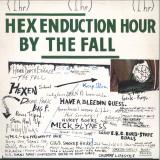
1982 was a decisive year for The Fall. Their critically acclaimed album ‘Hex Enduction Hour’ was released in March on Kamera Records, closely followed by ‘Room To Live’ in September of that year. ‘Hex Enduction Hour’ was the fourth studio album by The Fall, building on their lo-fi production and featuring a two-drummer line-up. The album was recorded in Reykjavik, Iceland and Hitchin, Hertfordshire. Featuring the classic line-up of Mark E. Smith alongside Steve Hanley (bass), Craig Scanlon (guitar), Karl Burns (drums), Paul Hanley (drums) and Marc Riley (guitar). This is another fine addition to Cherry Red’s series of deluxe Fall re-issues – “Fall Sound Archive”. ‘Hex Enduction Hour’ and ‘Room to Live’ are also available on a 7-CD boxset – “1982” Founded by its only constant member, Mark E. Smith, The Fall formed in Manchester in 1976 and were one of the most prominent post-punk groups in the world. Musically, there may have been several stylistic changes over the years, but it was often characterised by an abrasive guitar-driven sound and frequent use of repetition, always underpinned by Smith's distinctive vocals and often cryptic lyrics. “They are always different; they are always the same.” John Pee
out of Stock
Last delivered 12 months ago available to reorder, subject to availability
John Calvin Abney rises again from the Oklahoman prairies with his latest album Transparent Towns. The ten songs focus on how we remember, and ultimately accept, though he is not always certain the memories we carry adequately mark the moments that make us. "This record is wrapped around the passage of time, whether or not we can trust the memories that we swear on, how we forgive ourselves and others as seasons turn, and how we define what is important as we roll the boulder back up the hill," Abney says of Transparent Towns. "We build these routines and live our stories, we rely on our histories and our memories - spoken and recorded. Now, we're relying on copies of copies, memories of memories, all packed like sardines into our phones, and we're losing the ability to tell our own stories. I have to constantly remind myself, as well as redefine what matters at the end of a day." Transparent Towns is the seventh studio album for Abney, and his first since 2022's Tourist, which he crafted after spending the pandemic as an itinerant writer. In contrast Abney penned most of the album's 10 tracks during a period of introspection and convalescence while recovering from vocal cord surgery in 2023. The time to himself - "I didn't sing for nearly a year, and after surgery, I couldn't talk for a month, and couldn't sing for over three months," he says, left him contemplating how to trace his experiences in the silence. The album's title track is Abney's take on the inaccessible past, witnessing loss and grief through the years, damning the "days we let go left unsaid", and accepting the uncontrollable circumstances we are sometimes placed in. "The troubles and the joys exist vibrantly in your memory, but you're wondering if you remember correctly," Abney remarks. "I've sometimes had this sort of confusion between memory and dreams - you crafted this ideal in your head of how things were or might be, in order to soften the blow of a harsher reality." The places we inhabit dictate how our memories form, and for Abney, there is one place to which he is constantly drawn: Oklahoma. Although he was born in the biggest little city in America, Reno, Nevada, he grew up learning guitar and piano in Tulsa, playing bars and DIY spaces from Norman to Stillwater. His affinity for the land that raised him is evident in the production of Transparent Towns. Abney self-produced the record, tracking most of it at Cardinal Song outside of Oklahoma City, with Michael Trepagnier handling mixing and engineering. The band was comprised mostly of Sooner State musicians too, along with Lydia Loveless and John Moreland contributing harmony vocals. His signature vulnerable voice and lyrical handiwork comes through in each of the songs, along with his penchant for alternative pop melodies set against colorful chords and subtle soundscapes. Having toured for years backing up artists like Moreland, Wild Child, Ben Kweller, and S.G. Goodman, Abney embraces a lead role again, as he presses forward with the loving lament and defiant joy throughout Transparent Towns, calling us to leave behind the pressures we place on our ourselves and recognize that just because there is an ending, it doesn't mean it's the end.
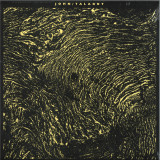
If there is one person, who has been causing a stir on the international club circuit recently, it is Barcelona's John Talabot. Already his debut “My Old School“ (which is meant literally by the way) on Permanent Vacation in 2009 and shortly after that the single “ Sunshine”, which he put out on his own Hivern Disc imprint, made him one of the most promising musicians of the Spanish electronic scene. And those two releases also already set the mark for John Talabot’s unparalleled music: raw, loopy, heavy on the kick drum, sample based, moderate on the tempo, distorted on the drums and light years away from the clean and ever revolving house sound of today. This unique style which also blends influences from afro beat, Detroit techno, Chicago house and cosmic disco, but also northern soul or the energy of Flamenco, immediately turned some heads around. James Murphy, Âme and Aeroplane started including Talabot music in their sets like it was the most natural thing. However - and this is quite rare - he not only gained legions of fans in the house and disco community, but also amongst the leftfield pop and indie rock followers. NME and Resident Advisor both had “Breakthrough“ features on John Talabot and he can be proud of a “Best New Music“ dubbing on
Pitchfork. (Being rather elusive on showing his face in magazines or the web it also came to some funny rumors that John Talabot was the alter ego of a well-known techno producer from Detroit).
At the same time he drew the attention of like-minded artists like James Holden and Luke Abott from Border Community, Blondes or Delorean, which lead to a bunch of fertile collaborations: Luke Abbott and Blondes remixed Talabot’s “Sunshine“ single , John Talabot remixed a track by Delorean and vice versa Delorean’s Ekhi contributed vocals to the track “Journeys “ on John’s album). Another example is the Young Turks Label (home of Jamie XX, Holy Fuck, El Guincho or SBTRKT ) on which he released the “Families“ EP in 2010. It was praised beyond limits. Pitchfork for
instance hailed: “… where pop and house influences sweetly buffer up against one another to provide an unyielding sense of elation“ and even brought Talabot a comparison with artists like Four Tet or Caribou.
While staying true to his sound, John Talabot has nevertheless shown a constant evolution as a producer since his first release. He has traced a solid musical path that has turned him into one of the big references of European House and has made him also a highly in demand Remixer (for the likes of The XX, Francesco Tristano’s “Aufgang” project, Shit Robot on DFA, Thaiti 80, Joakim or Teengirl Fantasy to name just a few ).
A progression that now crystallizes in “ƒin”, his first full-length album for Permanent Vacation. A record, in which the Barcelona mastermind sets aside the danceable immediacy to expand his stylistic palette more than ever. For that purpose, Talabot melts all the elements that have constructed his distinctive sound until now and makes them emerge from a new perspective, in which the construction of complex song structures, intricate rhythms and superpositions of ever-evolving melodies and atmospheres pick up the baton of the “a kick-drum and a sampler” philosophy of his initial productions. The result brings us 11 tracks (we should call them songs really!) dominated by dark ambiances, gaseous textures and bittersweet moods that, above all, reveal a kind of vivacity that’s really hard to find in contemporary electronics. “Fin” is far from being a track collection. From the majestic opener “Depak Ine“ to it’s solemn ending with
“So Will Be Now“ , one of the two tracks that features Talabot’s soul and label mate Pional, each song traces an overall dialogue with the rest, culminating a highly emotional journey through Talabot’s always compelling and unique musical vision.
out of Stock
Last delivered 5 months ago available to reorder, subject to availability
Indie exclusive Peak Edition on Orange & Black Swirl Vinyl, in a gatefold cover + poster.
It's spring of 2023 in the North Carolina Piedmont, and songwriter and singer M.C. Taylor - leader of the band Hiss Golden Messenger - is feeling alive. Joyful. Eternal, he might say. For the Grammy-nominated musician, whose albums have traced an internal path through adulthood, fatherhood, spirituality, and depression for well over a decade, this is something new. "The tunes on Jump for Joy were composed in free moments throughout 2022, a year during which Hiss was on the road more or less constantly," explains Taylor. "And perhaps because the post-pandemic energy out in the world felt so chaotic and uncertain, I found myself thinking a lot about the role that music has played in my life and how exactly I ended up in the rarefied position of leading a band and crew all over the globe through dingy graffiti-scrawled green rooms, venerated music halls, dust-blown roadside motels.
Sometimes playing in front of 5,000; sometimes 200. Sleeping sitting up. Laughing until my stomach hurts. Not being able to fall asleep at 3 a.m. in some anonymous bed because my mind is spinning with anxiety or depression or adrenaline, or because my ears are still ringing. Robbing Peter to pay Paul, then robbing Paul to pay Peter back. Over and over again. It's an outlaw life but one, I'm coming to realize, that makes me happy." The songs that make up Jump for Joy - the sharpest and most autobiographical that Taylor has written under the Hiss name - read as a sort of epistolary, postcards between the present-day songwriter and his alias Michael Crow, a teenaged dreamer very much like Taylor himself, who trips his way through the 14 tunes that make up the record. In this way, Jump for Joy is a meditation on a life lived with art, and the ways that our hopes and dreams and decisions bump up against_ and, with a little bit of luck, occasionally merge with real life. "Creating this character became the way that I could explore these vulnerable, tender moments that were so decisive in my life, even if I didn't know it at the time," explains Taylor.
Produced by Taylor and engineered by longtime Hiss compatriot Scott Hirsch over two weeks in the late fall of 2022 at the fabled Sonic Ranch studio in Tornillo, TX, just a short walk from the Mexican border, Jump for Joy dances with joyful, spontaneous energy that feels like a fresh chapter in the Hiss Golden Messenger oeuvre. Taylor is accompanied throughout the album by his crack live band: guitarist Chris Boerner, bassist Alex Bingham, keyboardist Sam Fribush, and drummer Nick Falk, a collection of musicians that have helped make Hiss Golden Messenger's live performances legendary affairs
out of Stock
Last delivered 12 months ago available to reorder, subject to availability
A double vinyl helping of dripping-in-soul house from Toronto's Demuir. It originally surfaced digitally in 2021 but has been constantly in demand ever since. Not at all surprising when you start to dip into the likes of 'Aesthetics' (dub), with its constant synth washes and subtle funk underpinning, or the loopy, bongo-teased hypnotism of 'No Corazon, No Beat'. It's a varied selection here, from late night floor crushers to the softer, jazzier 'Bichano Doce', but there are two constants remaining throughout, namely quality production and a knack for irresistible grooves built for the floor. Demuir by name, demure by nature.
out of Stock
Last delivered 43 days ago available to reorder, subject to availability
"The Golden Age of Wireless is the debut album by English musician Thomas Dolby. The album was originally released in May 1982. Several tracks have a submerged, barely audible layer of almost random sound that serves as a constant (and disturbing) subtext, occasionally erupting into a song. This sonic underworld is all part of Dolby's mechanical wizardry. Rolling Stone magazine awarded The Golden Age of Wireless four stars out of five, calling it ""one of the most impressive debuts"" of 1982. They compared the album's melodicism to the works of Paul McCartney and concluded that ""unlike many synthesizer bands from England, Dolby eschews morbid, droogy drones."" Musician magazine said the album was ""the best damned record to come out of Europe's current fascination with synth-pop. Period."" Theye added, ""Dolby is purely amazing. And best of all, he writes songs.""
The Golden Age Of Wireless is available as a limited edition of 1000 individually numbered copies on silver coloured vinyl and includes an insert. "
pen·ti·men·to - eine sichtbare Spur früherer Malerei unter einer oder mehreren Farbschichten auf einer Leinwand - frühes 20. Jahrhundert: aus dem Italienischen, wörtlich "Reue". Auf ihrem ersten Album seit "Still Life" (2022) bewegt sich Carson McHone an der Grenze ihrer musikalischen Vorstellungskraft und kanalisiert so unterschiedliche und überraschende Einflüsse wie Gitarrenrock, pastoralen Folk, Poesie, Feldaufnahmen, visuelle Kunst, Erinnerung, Familie und Landschaft zu ihrem bisher tiefgründigsten Werk. "Pentimento" ist ein kühnes und lohnendes Album. Es ist auch eine Abrechnung: Wie können Liebe und Schönheit in der Gegenwart von Brutalität existieren? Beunruhigend. Dissonant. Gegen ihren Schatten und mit ihre Spuren. Das ist es, was McHone und ihre Mitstreiter (zu denen Daniel Romano, Steve Lambke von den Constantines und andere gehören) auf "Pentimento" mit der Subtilität von Aquarellmalerei und dem Reichtum von Versen einfangen, mit Geisterstimmen und Kinderstimmen gleichermaßen. Jede Schicht ist ein Universum für sich und offenbart den Puls, der Carson McHones kreativen Antrieb belebt. Hier arrangiert und als Ganzes ausgedrückt, ist es ein Meisterwerk. "Alle Lieder von Pentimento entstanden als Gedichte vor dem Hintergrund globaler Krisen, nationaler Grenzen, ziviler Unruhen, Geburt, Tod, schlechter Liebe, neuer Liebe, wahrer Liebe. Sie wurden im Frühling und Sommer in der Wüste geschrieben. Dort werden Geschichte und Zeit in der Dramatik großer Felsbrocken sichtbar, in Schichten auf einer Felswand - das Potential und die vergangene Energie des alten Meeresbodens. Einige dieser Texte wurden auf Postkarten und in Briefen geschrieben. Andere entstanden als Verzierungen auf Aquarellbildern oder als Bildunterschriften für ein Foto in einem Tagebuch, oder sie wurden als Antworten am Rande eines Tagebuchs an ein neugeborenes Kind aus einer vergangenen Generation geschrieben. Diese "Artefakte" des Schreibens/Lebens gaben Aufschluss darüber, was schließlich zum Material für diese Aufnahmen wurde. Später, am Meer und während des ersten Schnees der Saison, kam eine besondere Gruppe von Musikern zusammen, um das Album zum Leben zu erwecken. Während die Hälfte der Songs nach einem strengen "Plan" aufgebaut wurde, kam die andere Hälfte bei dieser Gelegenheit zum ersten Mal zusammen und wurde an Ort und Stelle geprobt und live eingespielt. Über sechs Tage hinweg wurde alles auf einem 8-Spur-Bandgerät aufgenommen, einschließlich zufälliger Rückkopplungen, Bassdröhnen und spontanem Gelächter." - Carson McHone
On the cover of 8 Tips for Full Catastrophe Living, the new album by Asher White, The Statue of Liberty is in pieces but not destroyed - in progress, being built, not yet complete. Her torch is on the ground, her head somewhere out of frame. Before she was a symbol, she was metal, and living, sweating people riveted her together. The spirit of de/construction characterizes 8 Tips, White's 16th LP overall and first since signing to Joyful Noise. Like White's previous albums, 8 Tips for Full Catastrophe Living darts boldly among varied musical styles. Doom metal splits open into bossa nova; psychedelic rock and power pop flip into industrial techno. Each song emerges from its composite parts in the studio: White doesn't draft or demo before recording, but builds out her pieces sculpturally, sound by sound. "It's forever collage, forever assemblage," she says of her music. "To me, it has more to do with J Dilla, L.A. beat, and musique concrète than pop songwriting." The record's quick turns and vivid contrasts reflect White's cultural voraciousness. A writer, painter, and sculptor as well as a musician, she gathers materials constantly, always digging for new ideas in every possible form. The films of Claire Denis, the novels of Clarice Lispector, and the memoirs of Eve Babitz all funnel into White's reflection of 21st century disaster capitalism. 8 Tips is also White's first album to have been mixed outside her Providence studio; after recording it herself, she brought tracks to Seth Manchester (Lightning Bolt, Battles, The Body) who gave the album its brawny, unruly charge. "I was interested in making something that serves dually as a self-help book and a chronicle of self-destruction," says White. Overlaying autobiography onto character vignettes, 8 Tips for Full Catastrophe Living wrenches open the idea of apocalypse - an abrupt disaster rained down on uncomplicated innocents - and peers inside at its bursting, devastated particulars. Apocalypse is slow and uneven. Nations falter as do individual people, clinging fast to their old, dilapidated self-preservation strategies. What saved you in the past might destroy you in the future. Flip it around, shake yourself loose, ruin the person you've known yourself to be, and you might get the chance to become something else. "There have been so many end times, many other apocalypses." White says. "People were writing self-help tips, and people were partying." We have survived catastrophe before. Out of the ruins, people made work - art, books, culture. "I was interested in making something that sounds like a self-help book, but it's actually about self-destruction," says White. "In full catastrophe living, you just have to do a bunch of whippets. This album is mostly about doing whippets. I'm not even kidding."
pen·ti·men·to - eine sichtbare Spur früherer Malerei unter einer oder mehreren Farbschichten auf einer Leinwand - frühes 20. Jahrhundert: aus dem Italienischen, wörtlich "Reue". Auf ihrem ersten Album seit "Still Life" (2022) bewegt sich Carson McHone an der Grenze ihrer musikalischen Vorstellungskraft und kanalisiert so unterschiedliche und überraschende Einflüsse wie Gitarrenrock, pastoralen Folk, Poesie, Feldaufnahmen, visuelle Kunst, Erinnerung, Familie und Landschaft zu ihrem bisher tiefgründigsten Werk. "Pentimento" ist ein kühnes und lohnendes Album. Es ist auch eine Abrechnung: Wie können Liebe und Schönheit in der Gegenwart von Brutalität existieren? Beunruhigend. Dissonant. Gegen ihren Schatten und mit ihre Spuren. Das ist es, was McHone und ihre Mitstreiter (zu denen Daniel Romano, Steve Lambke von den Constantines und andere gehören) auf "Pentimento" mit der Subtilität von Aquarellmalerei und dem Reichtum von Versen einfangen, mit Geisterstimmen und Kinderstimmen gleichermaßen. Jede Schicht ist ein Universum für sich und offenbart den Puls, der Carson McHones kreativen Antrieb belebt. Hier arrangiert und als Ganzes ausgedrückt, ist es ein Meisterwerk. "Alle Lieder von Pentimento entstanden als Gedichte vor dem Hintergrund globaler Krisen, nationaler Grenzen, ziviler Unruhen, Geburt, Tod, schlechter Liebe, neuer Liebe, wahrer Liebe. Sie wurden im Frühling und Sommer in der Wüste geschrieben. Dort werden Geschichte und Zeit in der Dramatik großer Felsbrocken sichtbar, in Schichten auf einer Felswand - das Potential und die vergangene Energie des alten Meeresbodens. Einige dieser Texte wurden auf Postkarten und in Briefen geschrieben. Andere entstanden als Verzierungen auf Aquarellbildern oder als Bildunterschriften für ein Foto in einem Tagebuch, oder sie wurden als Antworten am Rande eines Tagebuchs an ein neugeborenes Kind aus einer vergangenen Generation geschrieben. Diese "Artefakte" des Schreibens/Lebens gaben Aufschluss darüber, was schließlich zum Material für diese Aufnahmen wurde. Später, am Meer und während des ersten Schnees der Saison, kam eine besondere Gruppe von Musikern zusammen, um das Album zum Leben zu erwecken. Während die Hälfte der Songs nach einem strengen "Plan" aufgebaut wurde, kam die andere Hälfte bei dieser Gelegenheit zum ersten Mal zusammen und wurde an Ort und Stelle geprobt und live eingespielt. Über sechs Tage hinweg wurde alles auf einem 8-Spur-Bandgerät aufgenommen, einschließlich zufälliger Rückkopplungen, Bassdröhnen und spontanem Gelächter." - Carson McHone
The seasoned DJ & producer (GALAPOGOS4, QWEL, GLUE, ALTERED TAPES) shines a light on his love for obscure Latin disco on this scorching hot 7". In constant rotation at our office since it arrived. Def don't miss this sun drenched, surefire dance floor filler!
out of Stock
Last delivered 4 months ago available to reorder, subject to availability
In Guadeloupe, many people think that jazz and ka music are like a ring and a finger. To some extent, the same could be said about so called Latin music and the music played in the French West Indies.
Both aesthetics were born in the Caribbean and bear so many connections that they can easily be considered cousins. In constant dialogue, there are lots of examples of their fruitful alliance and have been for a while. The English country dance that used to be practiced in European lounges came to be called kadrille in Martinique and contradanza in Cuba. They both featured additional percussion instruments inherited from the transatlantic deportation. Drawing from shared feelings about the same traumatized identity – later to be creolized – it would be hard not to assume that they were meant to inspire each other. The golden age of the orchestras that graced the Pigalle nights during the interwar period further proves the point. As soon as the 1930s, Havana-born Don Barreto naturally mixed danzón and biguine music in a combo based at Melody's Bar. In the following decade, Félix Valvert, a conductor who was born and raised in Basse-Terre in Guadelupe, also worked wonders in Montparnasse with La Coupole, which was an orchestra made up of eclectic musicians. Afro- Caribbean performers of various origins were often hired on rhythm and brass sections in jazz bands, which used to enliven the typical French balls of the capital. In the 1930s and onwards, Rico’s Creole Band was one of them.
Martinican violinist-clarinettist Ernest Léardée, who would become the king of biguine music as well as the main figure of French Uncle Ben's TV commercials (a dark stigma of post-colonial stereotypes), had musicians from the whole Caribbean sphere play at his Bal Blomet – and they all enchanted "ces Zazous-là" (according the words of Léardée's biguine-calypso piece). In les Antilles (French for French West Indies), music history started to speed up in the 1950s, when trade expanded and radio stations grew bigger. The Guadelupean and Martiniquais youth tuned in their old galena radio sets to South American and Caribbean music. As for the women traders, les pacotilleuses, they bought and sold goods across different islands (the "passing of items through various hands" was thought to be most pleasurable) and brought back countless sounds in their luggage. Such was the case of Madame Balthazar, who once returned from Puerto Rico with the first 45rpm and 33rpm to ever enter Martinique.
Out of this adventure was created the famous Martinican label La Maison des Merengues, a music business she opened and undertook with her husband and which proved to be a major landmark. At the end of the 1950s, in Puerto Rico, Marius Cultier competed in the Piano International Contest playing a version of Monk's Round 'Midnight. He won the first prize and this distinction foreshadowed everything that was to come. Cultier, the heretic Monk of jazz, was quickly praised for writing superb melodies, always tinged with a twist that conferred a unique sound to his music. It didn't take long for the gifted self-taught musician to get to play with Los Cubanos, making a name for himself thanks to his impressive maestria on merengues.
The rest is history. Besides, in the late 1950s, Frantz Charles-Denis, born into the upper middle class in Saint-Pierre and better known by his first name Francisco, went back home after working at La Cabane Cubaine – a club located rue Fontaine where he had caught the Latin fever. Francisco's music was therefore heavily marked by his Cuban cousins' influence, which gave the combos he led a specific style and also led to renewal. Things were swinging hard in La Savane, located in the main square in Fort-de-France. He set up the Shango club close by and tested out the biguine lélé there, a new music formula spiced up with Latin rhythms. Soon afterwards, fate had him fly to Puerto Rico and Venezuela.
As for percussionist Henri Guédon (percussions were only a part of his many talents), he was born in Fort-de-France in May 22nd 1944, the day marking the celebration of the abolition of slavery. As an old man, he could remember that in " his father's Teppaz, a lot of hectic 6/8 music was constantly playing...". In the opening lines of his Lettre à Dizzy, a small illustrated collection of writings published by Del Arco, he highlighted the huge impact that cubop had on him as a teenage boy, around 1960. He eventually turned out to be the lider maximo in La Contesta, a big band steeped in Latin jazz. He was also the one who originated the word zouk to describe music which brought the sound of the New York barrio to Paris. It was the culmination of a journey that started in Sainte-Marie: "a mythical place for bélé, the equivalent of Cuban guaguancó". In the early 1960s, the tertiary economy developed to the detriment of agriculture. Yet rural life was where roots music emerged in Martinique and in Guadeloupe.
Record companies played a major part in the process of Latin versions sweeping across the islands – before reaching everywhere else. Producer Célini, boss of the great Aux Ondes label, and Marcel Mavounzy, both the head of Émeraude records - a firm which was founded in 1953 - as well as the brother of famous saxophonist Robert Mavounzy, were big names to bear in mind. Although there were many of them - all of whom are featured on this record - Henri Debs was definitely the major figure in the recording adventure. He proved to be so influential that he even got compared to Berry Gordy. In the mid 1950s, when he acquired his first Teppaz, he worked on his first compositions: a bolero and a chachacha. Then, he became the one man who made people discover Caribbean music, from calypso to merengue. He was among the first ones to rush out to San Juan, Puerto Rico, to buy records and distribute them through a store run by one of his brothers in Fort-de-France. He had members of the Fania All Star come and perform there, which he was madly proud about. He was also the first one to pay attention to Haitian music, such as compas direct and various other rhythms which would soon flood the market. As a result, many of the combos hitting his legendary studio would end up boosted by widespread "Afro-Latin" rhythms. However, he never denied his identity: gwo ka drums were given a major role, although they were instruments which had long been banned from the "official" music spheres. The present selection bears witness to such a creative swarming. Here are fourteen tracks of untimely yet unprecedented cross-fertilization: all types of music rooted in the Creole archipelago have found their way, whatsoever, to the tracklisting. Whether originating from the city or being more rural, they all go back to what Edouard Glissant, in an interview about the place of West Indian music in the Afro-American scope, called "the trace of singing, the one which got erased by slavery." "It is so in jazz, but also in reggae, calypso, biguine, salsa... This trace also manifests through the drums, whether Guadelupean, Dominican, Jamaican or Cuban... None of them being quite the same. They all point to the idea of a trace, seeking it out and connecting to each other through it. This is the hallmark of the African diaspora: its ability to create something new, in relation to itself, out of a trace. It may be the memory of a rhythm, the crafting of a drum, a means of expression which doesn't resort to an old language but to the modalities of it." The opening track features one of the emblematic orchestras of this aesthetic identity, criscrossing many music types from the archipelago. The 1974 Ray Barretto guajira – Ray Barretto was a major New York drummer influenced by Charlie Parker and Chano Pozzo – is magnificently performed by Malavoi, a legendary Fayolais group (i.e from Fort-de-France). Additionally, the compilation ends on a piece by Los Martiniqueños de Francisco. It symbolically closes the circle as it is a genuine potomitan of Martinique culture which also functions as a tireless campaigner for Afro-Caribbean music. Practicing the danmyé rounds (a kind of capoeiria) to the rhythm of the bèlè drum, it delivers a terrific Caterete, a kind of champeta of Afro- Colombian obedience which was originally composed by Colombian Fabián Ramón Veloz Fernández for the group Wgenda Kenya. The icing on the cake is Brazilian Marku Ribas, who found refuge in Martinique in the early 1970s, bringing his singing to the last trance-inducing track. These two "versions" convey the whole tone of a selection composed of rarities and classics of the tropicalized genre, swarming with tonic accents and convoluted rhythms. It is the sort of cocktail that the West Indians never failed to spice up with their own ingredients. For instance, the Los Caraïbes cover of Dónde, a famous Cuban theme composed by producer Ernesto Duarte Brito, has a typical violin and features renowned Martinique singer Joby Valente and his piquant voice.
The track used to be – or so we think – their only existing 45rpm. The meaningful Amor en chachachá by L'Ensemble Tropicana, a band which included Haitian musicians among whom was composer and leader Michel Desgrotte, also recalls how Latin music was pervasive in the tropics in the mid-1960s. They were the ones keeping people dancing at Le Cocoteraie in Guadelupe and La Bananeraie in Martinique. Around the same time, another "foreign" band, Congolese Freddy Mars N'Kounkou's Ryco Jazz, achieved some success on both islands by covering Latin jazz classics – such as their adaptation of Wachi Wara, a "soul sauce" by Dizzy Gillespie and Chano Pozo whose interweaving of strings and percussions can have anyone hit the dancefloor. How can you resist Dap Pinian indeed, a powerful guaguancó by Eugene Balthazar, performed by the Tropicana Orchestra and published by the Martinique-founded La Maison des Merengues? It also acts as a symbol of the maelstrom at work. Going by the name Paco et L'orchestre Cachunga, Roger Jaffory used to play guaguancó too: his Fania-inspired Oye mi consejo is one example of his style. Baila!!!!! Dancing was also one of the Kings' focus points. Oriza is a Puerto Rican bomba and a "classic" originally composed by Nuevayorquino trumpeter Ernie Agosto, which reserves major space for brasses, giving it a special sheen.
Emerging from the New York barrios crucible was also La Perfecta, a Martinique group originating from Trinidad, whose name directly references the totemic Eddie Palmieri figure as well as his own band, also called La Perfecta. Here they borrow Toumbadora from Colombian producer and composer Efraín Lancheros and interpret it by emphasizing percussions, which set fire to the track even more than the wind instruments. The same goes for Martinique's Super Jaguars, who use Tatalibaba – a composition by Cuban guitarist Florencio "Picolo" Santana which was made famous by Celia Cruz & La Sonora Matencera – as a pretext for sending their cadences into a frenzy. In a more typically salsa vein, the Super Combo, a famous Guadelupean orchestra from Pointe-Noire that was formed around the Desplan family and had Roger Plonquitte and Elie Bianay on board, adapt Serana, a theme by Roberto Angleró Pepín, a Puerto Rican composer, singer and musician also known for his song Soy Boricua. Here again, their vision comes close to surpassing the original. In the 1970s, L'Ensemble Abricot provided a handful of tracks of different syles, hence reaching the pinnacle of the art of achieving variety and giving pleasure. They played boleros, biguines, compas direct, guaguancó and even a good old boogaloo - the type they wanted to keep close to their hearts for ever, "pour toujours", as they sang along together in one of their songs. Léon Bertide's Martinican ensemble excelled at the boogaloo which had been composed by Puerto Rican saxophonist Hector Santos for the legendary El Gran Combo.
Three years later, in 1972, Henri Guédon, with the help of Paul Rosine on the vibraphone, tackled the Bilongo made famous by Eddie Palmieri. Such a classic!!!!! And so were the Aiglons, the band from Guadelupe: choosing to execute Pensando en tí, a composition by Dominican Aniceto Batista, on a cooler tempo than the original, they noticeably used a wonderfully (un)tuned keyboard in place of the accordion. On the high-value collectible single – the first one released by Les Aiglons under the Duli Disc label – there is a sticker classifying the track under the generic name "Afro". Now that is what we call a symbol. Jacques Denis
out of Stock
Last delivered 6 months ago available to reorder, subject to availability
Makhunik Records Presents: "Withdrawals" - A Bold New Vinyl Release by RAKANS Withdrawals, the highly anticipated follow-up to Emergence EP and Deep State (Midnight Stallion) EP, marks a bold new chapter in RAKANS's ever-evolving sonic journey.
Set for release on I Makhunik Records, Withdrawals explores the tension between desire and detachment, featuring five tracks that blur the lines between electronic, experimental, and club sounds. Available on vinyl, Withdrawals invites listeners to experience the raw and intimate emotions that inspired its creation. Following the success of Emergence EP (Gently Leftfield Techno from a Core Dresden Artist - Resident Advisor/Single Review by Andrew Ryce) and Deep State (Midnight Stallion) EP on Boudica, which gained recognition for their atmospheric intricacies and deep, immersive textures, Withdrawals delves deeper into personal and societal themes, paired with the artist's signature ethereal soundscapes and captivating beats. Each track carries a narrative, from late-night reflection to hedonistic encounters, with a pulsating intensity that mirrors the artist's own process of creative and emotional release. With Withdrawals, RAKANS continues to push boundaries, creating a profound listening experience that resonates both in its melancholy and its intensity.
Description of the Title: The title Withdrawals reflects a state of emotional and mental transition, where one is caught between the craving for connection and the unsettling effects of isolation. It symbolizes the artist's inner turmoil and process of reclaiming personal agency after experiences of burnout and separation. The tracks are an expression of that journey-tracking the highs and lows of life in a world that constantly demands more. Through these melodies, RAKANS has captured the intensity of longing and the aftermath of desire, inviting listeners to confront their own internal conflicts. The narrative is personal yet universally relatable, and the title speaks to the often painful but necessary process of letting go, detoxifying from past habits, and learning to be at peace with oneself. "With Withdrawals, He wanted to channel the emotions that often come from the struggle between desire and self-preservation, between the drive to connect and the need to retreat. he's journey, both as an artist and as an individual, has been filled with moments of intense reflection, self-discovery, and sometimes, disconnection.
These tracks are the culmination of that inner conflict, a raw exploration of what it means to both lose oneself and find a deeper, often painful, form of clarity. Like the music he's created before, the sound of Withdrawals speaks to the space between tension and release, the liminal space where truth is often revealed in its most vulnerable form. He's always believed that music is a mirror to the soul, and in this EP, He's tried to reflect that feeling of being both pulled in and out of something greater. It's a raw and intimate look at the way we navigate modern life, often feeling like we're running toward something that we can't quite reach, yet constantly pulled back into our own personal truths.
This EP is personal, but it's also for anyone who's ever felt caught between two worlds, the one they want and the one they need. I hope it resonates with listeners who are experiencing their own form of withdrawal, whether it's from people, places, or even from themselves.
out of Stock
Last delivered 13 months ago available to reorder, subject to availability
Nu-hardcore quintet, Bodyweb, are the sound of someone’s nervous system on the verge of breakdown—hyperactive, tormented and unflinchingly vulnerable. Born out of the Leeds hardcore scene, they’re a shape-shifting alloy of jagged emotion and precision chaos. What began as late-night jams between Louis Hardy (Higher Power, Big Cheese, Fate) and Ben Jones (Pest Control) eventually mutated into train_wreck_simulation, a debut EP filled with frantic breakdowns and nu-metal swag that felt like the soundtrack to a digital exorcism. The final piece of the puzzle came from Hardy’s estranged childhood friend, pq. His twisted samples and synthetic textures are haunted and disturbed, injecting cyberpunk soul into hardcore flesh. Contorting through several iterations in the following years, the band absorbed Luke Thompson (Stiff Meds) on drums, filmmaker Tom Hobson on guitar and Naomi Macleod (Empire State Bastard) on bass, and laid down their first collective offering. deadwired is due out on Flatspot Records later this year. Bodyweb's second EP is a violent thesis on connection and pain that sends Hardy’s unfiltered vocals through heaven and hell. Four overstimulating tracks run a gamut of styles and influences from Slipknot to Björk, constantly lane-switching between dizzying heaviness, ambient soundscapes and brain-burrowing hooks. Entirely self-produced, deadwired upgrades the sonic formula laid down on the last record and raises the question: what else could exist in Bodyweb’s twisted roadmap? Nothing seems impossible. What seems important, however, is retaining the rawness in a style that can often turn sterile. “We still wanted it to sound very human. It had to be well produced but not cold and lifeless.” shares Hardy. “We didn’t use a click track. All guitars were real amps with microphones. We tried to make everything as real and raw as possible, we recorded using all the same gear we use when playing live too to really capture the energy of how it feels when we jam together." ‘Deadwired’ is a snapshot of violent implosion. Four ADHD-fuelled transmissions from the edge of spiritual collapse. It drags metallic hardcore through glitched-out ambience to confront ego death, generational trauma, and the violence of being alive. On stage, Bodyweb don’t just perform, they purge. Raucous live electronics meld with digitally contorted guitars. Breakbeats meet breakdowns—no backing track in sight. Bodyweb enable a collective catharsis. Mosh, dance, dive, scream, heal. A physical therapy session screamed into the void.
Back from the undead in the fresh (because we believe in upgrades & afterlifes!) is this new pressing of the first of all Gastr del Sol records, The Serpentine Similar. It is one of several distinct initiators of a definitive musical drift in the 1990s, and a drift all of its own, to boot! At the time, this album was largely heard within an underground whose boundaries were clearly defined - but if today"s sound-pool of "commercial" music is deeper and wider than it was back then, it is without a doubt due to the cracking open of certain doors of perception by Gastr del Sol, alongside their esteemed others. The year was 1992. After a bruising run of tour dates the year before, the final lineup of Bastro, a power-trio of David Grubbs, Ken (Bundy) Brown and John McEntire, retired, exhausted. Shortly thereafter, they were rebirthed, sans drums, via a new set of ideas composed in the cut-down configuration of Grubbs on guitars, keyboards and vocals and Brown on bass. Playing in duo format opened up sound and intention, leaving the need for speed (and the stock in rock) out, while letting in an expanse of brooding, droning acoustic space that highlighted the songs" serpentine shapes. This was something so radically different as to require a new calling card: henceforth, Gastr del Sol. Signing to Teen Beat, Gastr del Sol completed The Serpentine Similar in late 1992 for release the following year (the DC reissue came in "97). In the final rendering, Serpentine"s roof-rent, white-sky execution was attenuated with several percussion appearances from the prodigal John McEntire. Over the next five years, his cameo presence was a constant in Gastr del Sol"s steadily-evolving tradition of significant breaks from tradition at every turn. There would be an even more significant tradition-breaker onboard for all this; following the release of The Serpentine Similar, Jim O"Rourke joined Grubbs in Gastr as Brown exited (to focus on Tortoise, with McEntire et al). For the new Gastr duo, a world of new directions in music awaited, the future became the past, and the music of Gastr del Sol emerged from the thin air, then returned there. Now, The Serpentine Similar has been returned to vinyl from the temporal streams of contemporary music listening, a glorious rematerializing of all its spatial details on LP for the first time in 20 years.
Through the album trilogy Misanthropical House, Algorithm and Blues and Research and Destroy, The Good The Bad and The Zugly have limped their way through midlife crises and pubescent antics. Loud-mouthed and bitter, we have embraced our fate as mediocre losers on the narrow and winding Scandirock path. Haunted by a constant bad conscience over the outcome of our miserable lives, which in addition to bitterness, have resulted in substance abuse, pettiness, greed, spiritual lethargy, bastard offspring, excessive self-confidence, understated self-awareness, and of course - bodily decay. In breif; A urinal without a drain. The question has always been nagging: Why us? Why have we, since the dawn of time, been made to curse the day we were born? Well, the truth shall set you free, as they say.
Limited pink vinyl. Through the album trilogy Misanthropical House, Algorithm and Blues and Research and Destroy, The Good The Bad and The Zugly have limped their way through midlife crises and pubescent antics. Loud-mouthed and bitter, we have embraced our fate as mediocre losers on the narrow and winding Scandirock path. Haunted by a constant bad conscience over the outcome of our miserable lives, which in addition to bitterness, have resulted in substance abuse, pettiness, greed, spiritual lethargy, bastard offspring, excessive self-confidence, understated self-awareness, and of course - bodily decay. In breif; A urinal without a drain. The question has always been nagging: Why us? Why have we, since the dawn of time, been made to curse the day we were born? Well, the truth shall set you free, as they say.
Bendik Giske’s Beatrice Dillon-produced 2023 album gets an addendum with reworks from Carmen Villain, aya, Hanne Lippard, Hieroglyphic Being, Wacław Zimpel and Dillon herself.
Giske’s clearly got his ear to the ground; his last remix record was an invitation for Laurel Halo to put her stamp on »Cruising«, while 2018’s »Adjust EP« roped in Deathprod, Total Freedom, Lotic, and Rezzett. Now comes this new LP of remixes and it’s one of the best we’ve heard in aeons. Carmen Villain boots things off with a remix of »Slipping«, following her excellent (and way, way too underrated) »Nutrition EP« with a giddy, subtle roller that sounds as if it’s been constructed using only Giske’s raw stems. His breaths and leathery key presses – already amped up by Dillon’s detailed recording – are magicked into a dubby concrète groove that’s enhanced with the sparest melodic elements: echoing rainforest-at-night horn blasts, and lopped off decay trails that help fuel the momentum.
aya’s revision of the same track takes a different approach, forming forceful overlapping polyrhythms from Giske’s clanks, using the gamelan-like arpeggios for melodic weight and repetition. The result is a constantly shifting, hypnotic trancer that’s achingly organic – more Raja Kirik than Paul Van Dyke. Polish clarinetist and producer Wacław Zimpel, meanwhile, supplements his trippy recent collaboration with James Holden on a similarly levitational wrinkle of »Slipping« that twists Giske’s quivering sequences with microtonal synth prangs, and gusty echoes. But it’s Jamal Moss who plays fastest and loosest with Giske’s source material, calling back to April’s psy-house stunner »Dance Music 4 Bad People« with a powdery, sexualised banger that buries the breathy »Start« stems underneath neon synths, and brittle drum loops.
»I’m a digital nomad,« Lippard deadpans over Giske’s »Not Yet«. »I’m addicted you know that.« It’s a typically dry treatment from the conceptual artist that unexpectedly amps up the hypnotic qualities of Giske’s original, adding her circuitous charm to his concertina-ing sax sequences. And to tie things up perfectly, Beatrice Dillon returns with her diaphanous remix of »Rise and Fall«, built to emphasise the radically different approaches of each artist.
Russell Haswell and Florian Hecker have both a long history with Mego/Editions Mego. Individual releases have peppered the Mego catalogue since Haswell’s Live Salvage 1997->2000 cd release (MEGO 012) in 2001 and the debut Hecker release IT ISO161975 (MEGO 014) in 1998.
The individual exploration of sonic phenomena by these two practitioners has resulted in both being highly regarded for their uncompromising approach to sound as matter. Russell Haswell and Florian Hecker came together as a collaborative duo with the now-legendary record Blackest Ever Black, somewhat inexplicably, on the classical imprint of Warner Brothers.
In 2025, Hecker and Haswell return with a new album featuring the two-channel edit produced initially for their UPIC DIFFUSION SESSION #23, performed as a live diffusion across 8-channels at the X100 Festival, Berlin, 2023, celebrating the 100th anniversary of Xenakis' birth.
This record furthers the duo's exploration of Xenakis's UPIC system as the sole instrument. The UPIC is a computer music system that generates sound from visual input. The original intention of the system developed by Xenakis was to make a utopian tool for producing new sounds accessible to all, independent of formal training. One can locate footage of Xenakis and a group of children making drawings for the system in the 70's.
The duo set off experimenting with a diverse array of hand-drawn images to feed the UPIC system including news photographs of disasters and atrocities, "food porn" through to depictions of the natural world and microscopic images of molecular structures (including 'the blackest ever black'). The resulting eccentric audio from these images is claimed by the artists to heighten synaesthesia and is as mysterious as it is baffling.
Throughout UPIC DIFFUSION SESSION #23 frequency clusters move and morph in the most unusual manner, shifting and stretching into shapes that hint at some kind of magical process. What starts out deceptively simple soon unravels into a large array of sonic mayhem. Symbolic jet planes are shredded by a swarm of insects, a metal bowl howls into the void, a tiny tin toy crawls into a thicket with the resolute aura of a black hole. A burning geyser of laser forms liquid shrapnel. This is sound as an alchemical process, a constant chimerical flow into the netherworld and is the net result of the decades long radical investigations by the two artists involved. UPIC DIFFUSION SESSION #23 is a direct, rich and rewarding listen for those willing to invest time into the outer limits.
out of Stock
Last delivered 13 months ago available to reorder, subject to availability
Back on their own imprint for the first time since 2017, Gauss returns with Latent Space EP--three tracks of smoldering electro and dub-infused techno. The title track opens with a fresh take on the duo's signature sound: weighty low-end, kinetic rhythms, and slowly shifting pads that add both introspection and scale. Subtle yet immersive, it echoes earlier explorations while carving out a more refined and spacious terrain. Backprop shifts gears into floor-focused territory--percussive and punchy, with explosive chord stabs and tight drum programming. It's raw, relentless, and engineered for full-body impact. Closing the EP is Z-1, a tense electro workout driven by syncopated drums and morphing melodic sequences. Its constantly evolving structure gives the sense of forward motion without ever breaking its glide--a hypnotic, high-velocity closer in true Gauss form.
out of Stock
Last delivered 11 months ago available to reorder, subject to availability
"Reflection Code" is an EP that delves into the multifaceted aspects of human reflection through a collection of immersive musical compositions, each inviting the listener on a unique sonic journey.
The Practice of Desire — A deep techno track featuring enveloping pads and modulating metallic cosmic sounds, reminiscent of heavy matter from outer space. Accompanied by a lecture from Gangaji, this track adds an extra layer of depth and meaning to the musical experience.
Port Del Compte — Inspired by memories of Spain's stunning landscapes and a performance at the Parallel festival, this track transports the listener to picturesque settings, filling their heart with joy and harmony.
Bad Trigger — This track offers a profound reflection on life events, utilizing an expressive electronic soundscape with a compelling bass line at 144 bpm. It creates an atmosphere conducive to introspection and self-discovery.
Green Frequency — A shamanic sequence infused with forest vibes and the calls of an electronic bird. This composition immerses the listener in nature, evoking a sense of unity with the surrounding environment and the inner self.
"Reflection Code" invites listeners to explore their inner reflections and connect with each composition on a profound level, creating a unique auditory landscape that lingers long after the music ends.
Toki Fuko music can be described as mechanical signals are structured in a hypnotic substance. Their constant musical experimentation actor perceives as an analysis of the surrounding world.
out of Stock
Last delivered 5 months ago available to reorder, subject to availability
'it’s his loosest, dreamiest dispatch yet, an enveloping and atmospheric collection that constantly comes together and breaks apart.'
Maxo releases his new album Mars Is Electric. Earlier this week, Maxo released a third haunting video, directed by Vincent Haycock, from the visual world of ‘Mars’ for the title track. Maxo previewed the album with the release of singles “Human?” and “Donahoo’s Chicken” this spring, which arrived with equally raw, inventive, and unnerving music videos.
Mars Is Electric is Maxo’s first official release since he dropped two critically acclaimed albums in 2023 with Even God Has A Sense of Humor and Debbie’s Son. His fifth full-length album finds the Southern Californian artist self-aware and mature. Having lived the last decade of his musical life intentionally creating specific bodies of work rooted in imagery, observation, and capturing moments, Maxo spent this previous year freely creating without a specific plan, relieved from all obligations and restrictions.
“This is the first time that I really didn’t care, I didn’t approach things so seriously,” the artist shrugs off, meaning that without expectations or specific goals, his creativity flourished. This opening finds the artist having conversations he’s been avoiding, having lived silently in the pain of those topics for the past few years. Exploring uncomfortable themes about personal life, relationships, and family fractures, life before and after the loss of innocence, and an abundance of existential spirals.
The exploration was not only thematic but also musical in nature. During the creation process, Maxo was immersed in a wide array of music from past to present - France Joli, $amaad, Steve Spacek, Cherelle, DJ Quik, Lisha G - influences that seeped their way into these songs. The album opens in a loose, dreamlike state—experimental and searching, mirroring the emotional fog of someone looking for something real to hold onto. But as it progresses, so does Maxo’s energy as he fiercely rides and weaves on songs with a contagious confidence, producing some of his most kinetic and lyrically impressive music to date.
As the work and vision coalesced into a body of work, Maxo found that he was unlocking a creative language with his collaborators that felt wholly new - a new understanding of why and how he was making art for this world. What emerged from this year-long process was a new musical journey and a future where Maxo refuses to be another bad example of what could be, refusing to mind the blueprint set down. Maxo is the sole voice on the album featuring production by lastnamedavid, Quelle Chris, Baird, Groove, and more.
Listen to Mars Is Electric above, see full album details below, and stay tuned for more from Maxo very soon.
Ash Ra Tempel is the eponymous debut studio album by the Krautrock band Ash Ra Tempel. It features guitarist Manuel Göttsching with drummer Klaus Schulze and bassist Hartmut Enke.
Engineered by Conny Plank it was recorded in March 1971 and released in June 1971 on Ohr Records.
This 50Th Anniversary Album will be Released in Memoriam of all the Musical Contributors to this Release and on Manuel Göttsching´s MG.ART label. It´s the fourth and headlining edition in this series and was finalised, carefully overseen by Manuel Göttsching himself in the late Autumn of 2022.
Much has been written about the record and band.
Having finished a first musical chapter with their Steeple Chase Bluesband and still at very young age of only 17 and 18 years old Manuel Göttsching and Hartmut Enke met Klaus Schulze. Together they started to write and and compose what, to many, became one the holy grails of Psychedelic Rock and early Electronic Music -
the German variant which was later also named "Krautrock":
Ash Ra Tempel´s self-titled first album "Ash Ra Tempel".
"The trio of Klaus Schulze, Manuel Göttsching and Hartmut Enke decided to abandon conventional composition and song writing, in favour of free-form improvising and developing a new musical language. As such, they became notorious for jams that could exceed 30 minutes." Says Discogs. "Some of these recordings can be found on Manuel Göttsching´s "The Private Tapes" releases", which will be re-released on MG.ART as well, following this edition.
"Krautrocksampler" author Julian Cope mentioned it to be "… one of the greatest rock 'n' roll LPs ever made." (Julian Cope Presents Head Heritage | Unsung | Reviews | Ash Ra Tempel - Ash Ra Tempel". 15 March 2000.)
AllMusic called the album "both astonishingly prescient and just flat out good, a logical extension of the space-jam-freakout ethos into rarified realms."
Here we would like the Band to be heard, for what can easily be said as the first time in 50+ years, with the exception of some early Journalists for whom the young Manuel Göttsching wrote a statement of intent (the original text can be found inside this edition) as following:
"Our musical concept is based on a combination of blues rock and delicate collages of electronic sound. These two elements should remain inseparable. And in their complex unity, the different musical philosophies of each musician find a common sweet spot. Our music is a permanently impulsive experience left to develop as it will, starting from a common fixed point of departure. This is where the difficulty of the music begins: No standardized formulation of our music can and should be possible. Only the constant reaction within the band can determine the musical result. And this requires constant listening with full concentration on the part of the creators. The idea of a particular musician will be - if flexible enough - absorbed by the others, transposed to their own instrument, and reflected back into the music as an individual contribution. This reciprocity within the band is then transferred over to the audience. And this process means that their reaction is not only a contribution to the end result; it actually makes them jointly responsible for the creation of the final musical product.
…
On our album, the track "Amboss" represents the first layer. Conventional instruments communicate familiar music which is in part expanded through electronic means. In the second track of the album - "Traummaschine" - the actual basic sound approach is dissolved into an electronic Nirvana which no longer allows the concrete identification of actual instruments. Innocent, virgin listening, free from any and every association, can finally begin - and the music can be absorbed and processed free from the limitations of categorization. That is the purpose of our music: To convey freedom without any predetermined criteria or traditions.
Thank you for your attention."
(Taken from the original A-R-T Bio 1970)
Hartmut Enke, Manuel Göttsching and Klaus Schulze aka. Ash Ra Tempel travelled to Hamburg in March 1971 to record their debut, with assistance of another Icon, legendary engineer Conny Plank.
The rest is history.
out of Stock
Last delivered 13 months ago available to reorder, subject to availability
Ash Ra Tempel is the eponymous debut studio album by the Krautrock band Ash Ra Tempel. It features guitarist Manuel Göttsching with drummer Klaus Schulze and bassist Hartmut Enke.
Engineered by Conny Plank it was recorded in March 1971 and released in June 1971 on Ohr Records.
This 50Th Anniversary Album will be Released in Memoriam of all the Musical Contributors to this Release and on Manuel Göttsching´s MG.ART label. It´s the fourth and headlining edition in this series and was finalised, carefully overseen by Manuel Göttsching himself in the late Autumn of 2022.
Much has been written about the record and band.
Having finished a first musical chapter with their Steeple Chase Bluesband and still at very young age of only 17 and 18 years old Manuel Göttsching and Hartmut Enke met Klaus Schulze. Together they started to write and and compose what, to many, became one the holy grails of Psychedelic Rock and early Electronic Music -
the German variant which was later also named "Krautrock":
Ash Ra Tempel´s self-titled first album "Ash Ra Tempel".
"The trio of Klaus Schulze, Manuel Göttsching and Hartmut Enke decided to abandon conventional composition and song writing, in favour of free-form improvising and developing a new musical language. As such, they became notorious for jams that could exceed 30 minutes." Says Discogs. "Some of these recordings can be found on Manuel Göttsching´s "The Private Tapes" releases", which will be re-released on MG.ART as well, following this edition.
"Krautrocksampler" author Julian Cope mentioned it to be "… one of the greatest rock 'n' roll LPs ever made." (Julian Cope Presents Head Heritage | Unsung | Reviews | Ash Ra Tempel - Ash Ra Tempel". 15 March 2000.)
AllMusic called the album "both astonishingly prescient and just flat out good, a logical extension of the space-jam-freakout ethos into rarified realms."
Here we would like the Band to be heard, for what can easily be said as the first time in 50+ years, with the exception of some early Journalists for whom the young Manuel Göttsching wrote a statement of intent (the original text can be found inside this edition) as following:
"Our musical concept is based on a combination of blues rock and delicate collages of electronic sound. These two elements should remain inseparable. And in their complex unity, the different musical philosophies of each musician find a common sweet spot. Our music is a permanently impulsive experience left to develop as it will, starting from a common fixed point of departure. This is where the difficulty of the music begins: No standardized formulation of our music can and should be possible. Only the constant reaction within the band can determine the musical result. And this requires constant listening with full concentration on the part of the creators. The idea of a particular musician will be - if flexible enough - absorbed by the others, transposed to their own instrument, and reflected back into the music as an individual contribution. This reciprocity within the band is then transferred over to the audience. And this process means that their reaction is not only a contribution to the end result; it actually makes them jointly responsible for the creation of the final musical product.
…
On our album, the track "Amboss" represents the first layer. Conventional instruments communicate familiar music which is in part expanded through electronic means. In the second track of the album - "Traummaschine" - the actual basic sound approach is dissolved into an electronic Nirvana which no longer allows the concrete identification of actual instruments. Innocent, virgin listening, free from any and every association, can finally begin - and the music can be absorbed and processed free from the limitations of categorization. That is the purpose of our music: To convey freedom without any predetermined criteria or traditions.
Thank you for your attention."
(Taken from the original A-R-T Bio 1970)
Hartmut Enke, Manuel Göttsching and Klaus Schulze aka. Ash Ra Tempel travelled to Hamburg in March 1971 to record their debut, with assistance of another Icon, legendary engineer Conny Plank.
The rest is history.
out of Stock
Last delivered 13 months ago available to reorder, subject to availability
LP comes with 24 page 8.5x11 full color booklet. In the blurred and memorial hallways of bygone time, to remember is to wander between the rooms of our own experiences, to appear and disappear, like a play of overlapping shadows. In music set drifting through the architecture of his own memories, Moses Brown weaves a story that oscillates between the past and the present, like a mason turning over stones to reconstruct his childhood home in this beautiful and disquieting soundtrack to growing up. On Stone Upon Stone, Moses' first solo LP attributed to his given name after several releases under the brilliant and despondent "Peace de Resistance" moniker, he moves sidelong into the realm of soundtracks with this score to the construction of his childhood home in a story spanning 1993-2023. Laid out in lush and provocative minimalist instrumentals, the album unfolds a story about the planning, partial construction, and dissolution of a home in constant state of becoming through the lens of its only child, coming of age under flux. Influenced by the approach of friends and collaborators Straw Man Army's OST to Charles Darwin's Voyage of the Beagle, Stone Upon Stone was originally intended as a soundtrack to a novel of the same name by Wieslaw Mysliwski, an epic set in Poland about a family's construction of a mausoleum. Struck by the story's parallels with his own family's project, he got the idea to complete the work as a personal narrative. Created from layers of different mellotron voices then separated, re-amplified, and recorded as if they were a sitting chamber orchestra, the music eerily blurs the line between human and synthetic, giving way to something akin to a memory with it's blurriness of fact and fiction. In the same spirit of association, this record is certainly influenced by other minimalists working within the confines of "soundtrack", like Philip Glass' North Star and the film work of Michael Nyman. But Brown's soundtrack works within its own peculiar depth of field, living in the listener's imagination, thriving in its own sense of loneliness, aspiration, and confusion that only childhood can evoke. Listeners will feel the entropy of aging in Stone Upon Stone, like a memoir in cascading tones, that sets it apart from so much else in DIY music, and rewards with repeated listens. For Fans of Philip Glass, Kali Malone, Julius Eastman, Mica Levi, Roedelius.
Zwei erfolgreiche Independent-Musiker auf gleicher Wellenlänge: Kurt Vile, Alternative-Music-Gitarrist und
Singer/Songwriter aus Philadelphia, tut sich für seine neue Verve-EP mit Folk-Musiker Luke Roberts aus
Nashville zusammen. Unter den fünf Titeln findet sich mit Slow Talkers ‘22” die neue Version eines Titels
von Kurt Viles 2008er LP “Constant Hitmaker”, “Classic Love” ist ein neuer Track von Luke Roberts,
“Wildflower” ein Beach-House-Cover.
Antwerp-based duo Bobby & Djenko joins forces with hometown label Flipsight for their debut vinyl release. The Funky Dancer EP features four dancefloor-ready tunes full of character and percussion. The cover track 'Funky Dancer' is a vocal-led opener laced with crisp bongos and classic house stabs. A seductive groover 'Get high' takes the other piece of the A-side with a bouncy bassline and confident club mood. A French house-inspired 'Impala' kicks off the flipsight.
This belter is a constantly evolving phenomena including all types of elements with no dull moments. Closing off with a tribal flair, "Perc Talk" is a percussion-driven house jam with hints of jungle flavor - rough, raw, and ready to rumble.
out of Stock
Last delivered 4 days ago available to reorder, subject to availability
MEMOTONE, aka Will Yates, has announced details of a new 12-track album, smallest things, set for release on World of Echo on 1 August 2025 on vinyl and digitally.
The album launches today with first track, ‘Time Is Away Theme’, a live favourite that is finally available on album. Watch the video HERE Talking about the release, Will has said, “Staring at a square inch of neglected concrete, I recognise the beauty of existence. Quietly hysterical. While humanitarian catastrophes bubble across the planet, the tides remain in constant and disinterested motion. Your money is worth less than the dusty moss that powders this pavement.
It's certainly not worth a life. We are the smallest things, along with everything else." Will Yates has made music as Memotone since 2007. He operates in the tradition of what Robert Fripp has called 'a small, independent, mobile, and intelligent unit.' If you book him, he will come. When he arrives, he will have everything he needs to make his complex, engaging music: a clarinet, a guitar, synths, samplers and pedals, quickly unpacked in the corner of a club, gallery or village hall. Starting small, he will build layer upon layer of melody, accompanying himself and cutting across himself, creating a music that avoids cliche and moves beyond easy description. His recordings have followed the same trajectory. Moving quickly, he has released fifteen or so albums across various labels (including Trilogy Tapes, Discrepant, Soda Gong). Taken together, these recordings are the sound of a skilled, inventive composer pushing at the edges of what he wants to listen to himself. It is possible to hear a variety ofinfluences in his music: folk and jazz forms, the textural inventiveness of British DI electronica and Chicago post-rock and the blurred sci-fi brass of Jon Hassell are all discernible. But mostly, Will's work seems to stem from a constant drift between long hours in his home studio, and time spent outside in the woods and hills around his home in Wales.
Listening to the album, lushness creeps in at the edges, tiny green shoots appear on what might at first appear to be bare soil. smallest things sheds the skin of Will's previous recordings, removing the electronics and the looping and layering of previous work, to create something almost entirely acoustic. But don't be fooled into imagining music that's folksy, pastoral or twee. Opening track 'I Could See the Smallest Things' is a statement of intent. Widely spaced guitar is underpinned by earthy cello and sleepwalking clarinet, making a gorgeous threadbare pattern, which recalls a Morton Feldman miniature or a Morandi still life.
Beyond the skill involved and the years of self-taught music making that have gone into putting this record together, it is Will's close, careful attention and his talent for existing, observing and creating in the moment that make his work special. Memotone will perform at World of Echo’s annual birthday celebration on 8 Nov Expected Music, when they take over Walthamstow Trades Hall for an inter-genre, day-long investigation into some of the more outré manifestations of the contemporary worldwide underground.
out of Stock
Last delivered 14 months ago available to reorder, subject to availability
Founded in 1966, The Beachers is a group whose music is inspired by Caribbean rhythms and Panama’s musical tradition. Calypso, salsa and bolero are part of the unique Beachers sound, whose popularity peaked in the 70s during what is known as “The Golden Era of National Combos”. The Beachers have released 13 albums and more than 30 singles to their name, on prestigious Panamanian record labels like Tamayo, Loyola, or Sally Ruth Records, teaming up with other Calypso legends such as Lord Cobra.
The Beachers are still current and relevant, with five of the original members performing constantly through Panama and the world. Their energy and spirit is felt in the joy, rhythm and flavor of their songs.
Lloyd Gallimore, the band’s musical director since its foundation, and renowned producer Billy Herron have been working together on this new album, commemorating the group’s 50-year career.
This recording relives The Beachers’s magical trajectory and features collaborations with popular Panamanian musicians, a work that displays a sonic landscape filled with the history and legacy of Panama’s Calypso. It’s a tropical musical fantasy whose Caribbean influence has transcended time.
out of Stock
Last delivered 14 months ago available to reorder, subject to availability
For a decade now, BAD SUNS have thrived in the sweet spot between indie rock polish and modern alt-pop energy, crafting a sound that feels both urgent and timeless. Accelerator, their fifth studio album, doesn"t just refine that identity-it pushes it into new territory. Stratocasters shimmer through overdriven Vox amps, synths surge like late-night city lights, and the rhythm section pulses with a restless, undeniable energy. It"s a record that doesn"t just move; it commands attention. The band"s evolution has been constant. Since their early days cutting their teeth on tours with Halsey and The 1975, Bad Suns have spent the past two years stretching their reach across genre lines, proving their versatility at major festivals and iconic venues. Whether electrifying Red Rocks alongside All Time Low, opening for Angels & Airwaves, or winning over Finneas" pop-leaning crowd on their 2025 U.S. run, they"ve made a case for themselves as a band without borders. Helmed once again by longtime collaborator Eric Palmquist (MUTEMATH, Thrice) at Palmquist Studios, Accelerator feels like the band"s most conceptually realized work to date. Its 12 tracks unfold with cinematic ambition, balancing airtight hooks with an emotional resonance that shifts depending on how you approach them. It"s an album that doesn"t just sit in the background-it begs to be experienced.
Wild and untamed Swedish teenage heavy metal from 1981-1985. Includes their ultra rare single plus previously unreleased studio recordings. The album includes a booklet with interviews and photos documenting TRP’s wild stage shows and the local Swedish hard rock youth gangs of the 1980s. Blood splattered vinyl - limited edition of 600 copies worldwide.
The teenage boys that formed TRP came together in the small town of Fjälkinge outside of Kristianstad in southern Sweden back in 1981. In 1982 they recorded and released their legendary after single. They immediately became very popular with the local hard rock you gang’s attracting wild and rowdy crowds.
TRP performed wild and loud shows gilded by the bands furious use of pyrotechnics, smoke bombs, leather, studs and gallons of fake blood.
Their stage show combined with their music got the band banned in Sweden and it was said that they were obscene and promoted satanism.
The band didn’t let that stop them and instead they went into a studio and recorded several tracks with their new lead guitarist. However, these amazing recordings were never released...until now that is. Then in 1985 TRP performed their last show. Their final stand was heavy metal mayhem supreme and the whole stage went up in flames.
“I had welded a guitar slide with one end closed and filled it with chimney test smoke, then I screwed it to the top of the neck of the bass. It burned constantly for two songs, but the effect was cool. We spat blood, as usual, and Peter just kept firing off bombs like crazy. He managed to shoot one right up into Fredrik’s ass during a guitar solo…”
We are very happy to present you a special release from gutinstinct! After his contribution ‚Eternal Jungle’ on the 10 year anniversary compilation ‚Down The Danube River’, he returns to Fortunea Records with the Back To The Roots EP. A collection of tracks suitable for different moments in a clubbing environment.
The record opens with his melodious and emotional expression of ‚Art‘. This energetic track forces us to sink into venturesome sound waves driven by a dark but at the same time warm pad. A beautiful catchy synthesizer hook line is the icing on the cake on top of it.
Similar tonal but not as uplifting as the opener is the title-track of this EP. A simple, grooving, relentless and continuously deep journey that exemplifies gutinstinct’s profound innate understanding of rhythmic grooves and complexity in simplicity.
Sensuous chills and thrills continue with ‚Pueblo’ on the B-side. A constantly rolling and evolving piece of synth laden ecstasy with richness and colour, driven by the sort of thick analogue basslines and distinctive melodies that have come to define his catalogue.
Lastly, the record closes out with a remix of the title-track by the analogue gear enthusiast Jakobin. In this version he takes the beautiful arpeggio synth sounds and amalgamates them into a framework of lo-fi house aesthetics. You can just imagine this track slicing through an unbent sunset dance floor or morning afterhour ceremonies.
The Back To The Roots EP will be available on august 1st, 2025 digital and on limited vinyl.
out of Stock
Last delivered 11 months ago available to reorder, subject to availability
Roughly two years after the release of their initial statement of intent, debut single “Toutpartout PT2” with its hypnotic ripples, Andi Haberl and Florian Zimmer aka Bella Wakame have successfully channeled the magic of a 2024 live recording (captured at Berlin’s Donau115 & Silent Green) into their first proper studio offering. You can hear inspirations ranging from Bitchin Bajas, Jeremiah Chiu to Groupshow (Jelinek, Leichtmann, Pekler), the hypnotic, intricate battle between form and freedom (the fun of momentary formlessness) continues to unfold over the course of 10 new tracks, featuring album guest Indra Dunis (Peaking Lights). Their first single "Shadows of Nambei" was very much inspired by the wonderful band Spirit Fest and their song "Nambei".
You can either shorten the reins, or you can loosen them – and give things more slack. With Bella Wakame, it’s definitely the latter. Constantly challenging each other, they’re tapping a whole new energy. Tons of different energies.
Based on the impulsive, propulsive interplay between drums/sensory percussion (Andi Haberl) and modular synthesizer (Florian Zimmer), the frenzied, free-form results take listeners into completely new dimensions – sonic worlds that don’t really sound anything like their other musical outlets (The Notwist, SUN, Saroos, Driftmachine etc.).
Whereas most bands tend to notoriously overthink names/monikers, these guys obviously only care about the ecstatic push-and-pull that occurs once their instruments meet and overlap: it’s wildly explosive textures with a booming heart. Moving restlessly between motorik club, electro-acoustic jazz experiments, ambient excursions, and fast-paced instrumental anthems that seem to explode at the seams, one can immediately tell how much they enjoy the newfound freedom, the turbulent encounters born on the spur of the moment.
It’s all about a quick-paced exchange of friendly blows, a chasing of tails into ever-new musical terrains. Relying on just enough form for that wildness to blossom within, their just-in-time dashes continually unfold, refold, return, grow bigger – and leave you startled.
out of Stock
Last delivered 14 months ago available to reorder, subject to availability
Since its founding back in 2014, Blume has carved a unique place in cultural landscape, issuing free-standing works, spanning the historical and contemporary, that represent singular gestures of creativity within the field of experimental sound. Joining their broad efforts in building networks of context and understanding that already includes the works by Werner Durand, Sarah Hennies, Bruce Nauman, John Butcher, Jocy de Oliveira, Mary Jane Leach, Valentina Magaletti, Alvin Curran, Julius Eastman, Alvin Lucier, and following the first ever vinyl release to attend to James Tenney's legendary Postal Pieces, the label now presents the first LP published by the visionary Swiss composer Jürg Frey. Drawing from the transformative power of breath and resonance, this release represents one of the most profound explorations of musical metamorphosis to emerge from the contemporary experimental landscape.
The completed work represents a "conjunction of these two artists" that has "activated a transformative form of experimentalism." These renderings "dance with an airy lightness, humour, and play, imbuing them with a beauty and emotiveness that can be rare within experimental music." They exist as "breaths, carrying the curiosities of life, belonging to no time and all time, to no one and everyone: a human music to be inhaled and pondered, for which the outcome remains unknown." In this liminal space between composition and interpretation, between breath and resonance, Zurria and Frey have created something that transcends the boundaries of experimental music itself, offering what might be called a metaphysical cartography of sound in its most essential form. As Bradford Bailey observes in his penetrating liner notes, "music is rarely a fixed entity," existing instead in a state of perpetual flux, "taking on the influences of its interpreters and performers." This fundamental truth finds its most eloquent expression in the transformative collaboration between Italian flutist Manuel Zurria and Frey, longtime member of the Wandelweiser Group. Where conventional recordings might preserve a definitive version, this release activates what Bailey calls "states of unknowing and continued experimentation," allowing Frey's compositions to evolve into entirely new dimensional territories. The original string quartet and piano works dissolve into breath-carried architectures of sound, where "the original remains in a constant dialogue with its transformation." This is not mere arrangement but ontological metamorphosis - an alchemical process through which crystalline harmonies are reborn as atmospheric phenomena.
The metaphysical dimensions of this transformation become clear through detailed analysis of the musical result. Where Frey's original compositions operate through what he calls "basic confidence in the clear and restricted material," Zurria's interpretation activates entirely new perceptual territories. Space holds almost atomic sense of weight against the airy punctuations of timbres, textures, and tones, creating "suspensions of time within which questions and identities posed by instrumentation fade." The Extended Circular Music pieces - each comprising "a small number of bars to be repeated an undetermined number of times" - become organizations of sound that defy being definitive or fixed. Originally scored for different combinations of violin, viola, cello, and piano, these works now exist as pure phenomena of breath and resonance, where "hanging, breath-length utterances dance and intertwine amongst complex harmonic clusters and conjunctions."
The philosophical implications of this transformation illuminate a lineage of composers who have moved "away from abstraction and responding to the need to create" something beyond mere technique. Drawing parallels to Morton Feldman's understanding of non-functional harmony, Zurria's approach represents "a transformative form of experimentalism" that activates what Frey calls the "thaumaturgic power" of music - its capacity to heal and transform consciousness itself. The result is "a radical reimagining of ambience: sprawling sonorities and resonances adrift in space, carrying the liberated traces of the work's former incarnations and their truths." In Zurria's interpretation, Frey's String Quartet n.3 becomes something approaching "an organ played in slow motion, its seals leaking," while the Extended Circular Music pieces transform into "glacial chords from a diverse palette of voicings, harmonies, timbres, and tones."
Performed by Manuel Zurria. Recorded and mixed by Zurria at BigCardo, Catania between 2022-2024, with mastering by Bruno Germano at Vacuumstudio, Bologna, this Blume release represents a profound exploration of musical transformation.
Recorded at the legendary Atlantis Studio in Stockholm, Words Were Coming Out Our Ears captures a unique musical encounter in the moment. Pianist Johan Graden, bassists Vilhelm Bromander and Pär Ola Landin, and drummer Nils Agnas entered the studio without a fixed plan – the music emerged organically through improvisation and attentive interplay.
What sets this album apart is the instrumentation. With two double bass players, the music gains an unusual depth and weight, where the bass not only supports the harmony but also takes on melodic and textural roles. This is no traditional piano trio – rather, it's an ensemble where roles shift constantly, and the sonic landscape is shaped by sensitivity and openness.
One track features additional layers of sound with guest musicians Katarina Agnas on contrabassoon and Emil Strandberg on trumpet.
With Words Were Coming Out Our Ears, the ambition is to create a cohesive sonic identity – to allow each piece to take its own shape while still belonging to a unified whole. The music invites deep listening, guided by intuition and presence in the moment.
Alanis Morissette Delivers the Equivalent of a Spiritual Awakening on Supposed Former Infatuation Junkie:
Introspective Themes and Compassionate Emotions on Eastern-Tinged Album Have Grown More Relevant
1998 Smash Plays with Enhanced Detail, Rich Textures, and Sharp Focus on Mobile Fidelity’s 180g 33RPM 2LP Set:
First-Ever Audiophile Edition Strictly Limited to 3,000 Numbered Copies
1/2" / 30 IPS analogue master to DSD 256 to analogue console to lathe
Alanis Morissette refuses to adhere to convention on Supposed Former Infatuation Junkie. While most artists follow-up their breakthrough with an album that closely parallels the approaches that helped make them famous, the maverick singer-songwriter stayed true to herself and drew inspiration from travel to India before she began the recording sessions. As much as the preceding Jagged Little Pill put her on the global radar, Supposed Former Infatuation Junkie confirmed her role as a vital generational voice — and proved her blockbuster success was no fluke. Having set a mark for most sales of an LP in its debut week by a female artist, the 1998 smash remains a pop-rock staple.
Sourced from the original master tapes, strictly limited to 3,000 numbered copies, housed in a Stoughton jacket, and pressed at Fidelity Record Pressing, Mobile Fidelity’s 180g 33RPM 2LP set of Supposed Former Infatuation Junkie presents the triple-platinum LP in audiophile sound for the first time. Benefitting from defined grooves that befit the album’s nearly 72-minute length, this pressing plays with enhanced detail, refined clarity, sharper focus, and broader dynamics than prior versions.
Those traits are key given Morissette’s use of more textured and atmospheric soundscapes, not to mention her evolution into a more nuanced and controlled singer. Similarly, the scale and reach of David Campbell’s string arrangements come across as orchestrations should. Ditto the synth-based architecture shaped by producer and principal Morissette collaborator Glen Ballard. All in all, Mobile Fidelity’s collectible edition simply delivers more information via transparent means.
Notable for its balance, sophistication, and richness, Supposed Former Infatuation Junkie at heart finds Morissette pausing, taking a breath, and learning how to navigate life in a healthy manner after enduring one of the most exhausting and rocket-to-fame stretches any musician ever experienced. It’s the sonic equivalent of a spiritual awakening, a call to betterment, a brave assessment of the self and humanity as a whole. As such, the tunes on her second international (and fourth Canadian) release teem with gratitude, compassion, love, empathy — emotions that lend themselves to the largely mellow, contoured scope and Eastern-tinged melodies of the songs themselves.
“How ‘bout how good it feels to finally forgive you,” Morissette sings on the lead single “Thank U.” “How ‘bout grieving it all one at a time.” Those sentiments, and the vocalist’s embrace of concepts such as divinity and acceptance, not only provide a foundation on which Supposed Former Infatuation Junkie rests. They also reflect the personal maturation she gained from her embrace of Buddhist culture in India and a mindset bent toward notions of reconciliation, peace, and sensuality that were nearly absent in popular music in the late ‘90s.
Those themes continue on “That I Would Be Good,” a confident reflection that takes stock of one’s mental, physical, and emotional state in the face of both changing and unpleasant circumstances — and concludes with Morissette performing a flute solo, further exposing the raw intimacy of the introspective tune. She channels relatable simplicity and joy on “So Pure,” with her invocations of “dance” and “freestyle” speaking to the freedom of expression that courses throughout Supposed Former Infatuation Junkie. And perhaps no song finds Morissette showcasing her refreshed attitude toward life and opening up more than the relationship-themed “Unsent,” whose unconventional structures and lack of a chorus only add to its directness.
Akin to many albums that were ahead of their time, and despite the critical and commercial accolades afforded it upon release, Supposed Former Infatuation Junkie attracted new appreciation and perspective as it got older. Issued during an era where its ideas of serenity, absolution, tranquility, and contentment seemed largely alien, the record — akin to the ways its predecessor foreshadowed a movement — now functions as a visionary beacon that foretells of way to maintain sanity, dignity, and goodness amid a contemporary landscape filled with constant distractions, polarizing views, and incessant calls to purchase, promote, and produce without questioning the what-for purpose.
Supposed Former Infatuation Junkie dares to ask the questions and, at its best, supplies meaningful answers and alternatives that lead to longed-for enlightenment, healing, and laughter. For these reasons alone, it’s a record that never goes out of style.
Relay For Death is the noise project of the twin sisters Roxann and Rachal Spikula. Their hermetic works consistently reflect a bleak nihilism, all the while carving an autonomous space for survival as the rest of the existence crumbles. Previous works have been published by Hanson, No Rent, Total Black, and RRRecords.
The twins offered the consideration that "Mutual Consuming comes from a concept in the philosophies that underpin traditional Chinese medicine theory, where the two opposing states (yin and yang) are 2 states on a continuum and their interactions produce an infinite possible number of states of aggregation. Within this interplay, there is a dynamic balance that is maintained by a constant adjustment of their relative levels. So an excess of yin consumes yang and vice versa." We asked if this has anything to do with the concept of the Ouroboros, to which they responded, "we hadn't thought about Ouroboros, but the eternal cycle of things makes sense too. The gorge fest of existence." Does this relate to previous works? The twins concisely respond to that question in a rare interview in Untitled, "No."
Mutual Consuming is a dire piece of isolationist thrum, spectral caterwaul, and heavy gloom through an oblique and abstracted coupling of electronics, noise, and ominous field recordings. As immersive as Thomas Köner’s haunting ambience but fully entrenched in the industrial meditations of MB. Originally published as part of the instantly out of print boxset, On Corrosion - a 10 cassette anthology from 2019 that was housed in a handcrafted wooden box and featuring full albums from Kleistwahr, Neutral, Pinkcourtesyphone, Alice Kemp, She Spread Sorrow, G*Park, Relay For Death, Francisco Meirino, Fossil Aerosol Mining Project, and Himukalt. The collection stood as the 50th release for The Helen Scarsdale Agency.
Basel-based producer Tim Shatnyy made a welcome return to his home label, Resonance, with a massive and satisfyingly complex body of work. The media ecosystem of Beyond Dualism combines a game, an Instagram bot, generative radio, and a full-length album at the forefront of the high-concept universe. The rhizomatic blend of web development, sound engineering, and conceptual framework does not diminish the joyous energy of Tim Shatnyy's sonic adventures. Beyond Dualism's digi-charms coalesce into a dynamic tension of minimalist electronic music, funky glitch, club-ready heaviness, and a boundless, idiosyncratic approach of disorientating arrangements.
Beyond Dualism is the result of Shatnyy's deep, ongoing process of inner listening, constant change, and spiritual inquiry. It is a perfectly closed cycle of artistic creation, featuring hyper-realistic sound design and visionary manipulation on meta-levels of composition. Beyond Dualism offers the listener a continuous experience, revealing a nearly tactile and visual experience of a sound. Going beyond dualism is a journey. The way the artist has transformed his perception going through this path is reflected in the album's development and its structures.
out of Stock
Last delivered 14 months ago available to reorder, subject to availability
In the world of Pharaoh Overlord, little is ever as it seems. This band is less comprised of tricksters or mischief makers than fearless obsessives whose musical instincts take twisted and wild pathways. Now, fresh from forays into Italo-disco and synth-pop, they have thrown another still more mighty statement of intent into the universe. Louhi is a thunderous and majestic epic of joyful repetition and earth shaking power. A two-track minimalist-rock monolith forged from guitars, synths and hurdy-gurdy, inspired by the band’s eternal touchstone influence Outside The Dream Syndicate by Tony Conrad and Faust, and constructed around a single riff and melodic idea, it builds and evolves to fearsome pinnacles of elemental intensity.Luminaries and constant compatriots in the Pharaoh Overlord
headspace were recruited for this voyage into the ether. Vocalist and longtime collaborator Aaron Turner (SUMAC, Isis, Old Man Gloom)and Tyneside maverick Richard Dawson were equally keen to get on board, the former taking a spontaneous and improvisatory approach to his vocal parts, and the latter largely playing a part consisting of one guitar chord. Yet whatever routes Pharaoh Overlord take to their destination, a common theme is the consciousness-warping singularity of the riff and the mantra, and the temporal disorientation this can provoke mirrors the broader designs of this record, which takes traditional folk elements and transports them in the band’s singular time machine. “It’s our 25th Anniversary this year, and from time to time we hear wishes that if just we could play more of the stuff that we did twenty or more years ago” relate Jussi and Tomi. “We totally understand this. You could say we used Louhi to reset ourselves to the past, to be able to continue again to the future.” Aaron puts it another way, evoking simplicity in the chaos – “The world of Pharaoh Overlord is a magical one - every album is an invitation to enter that place and rejoice in doing so…”
Leng Records proudly presents Everything You’re About to Hear Is True: Volume 1, a compilation carefully curated by Rotation Soundsystem. Brought together by Rotation founders Dean Meredith and Ben Shenton, alongside the Wrekin Havoc trio of Rob J, Stuart Robinson, and Rich Hall, this debut volume captures the collective’s shared vision – shaped by decades of crate-digging.
Founded in 2013, Rotation has grown from a modest gathering in Staffordshire into a thriving community of like-minded music lovers, attracting heads and partygoers from across the UK – and well beyond. What began as an intimate affair has evolved into a full-scale, three-day celebration, now held in a grand yurt and powered by a bespoke six-way sound system. The rig features four Klipschorns, two JBLs with twin 18” and 15” sub reinforcements, compression horns, and an Isonoe 420 mixer.
Meredith explains: “With the help of my brother, Martin, I’m constantly looking at ways to improve the setup. I love the way Larry Levan did that at The Paradise Garage. We have a few things that are custom-made. I want our system to be unique to us.”
According to regular attendee, DJ and writer Steve KIW: “In the right hands, the sound system at Rotation – very much Dean’s labour of love – is untouchable. The comparisons with Mancuso’s Loft come easily because they are deserved. There isn’t a bad spot in the yurt. Wherever you are, it sounds incredible.”
As the dancing continues through the weekend, the DJ line-up has grown to match the occasion. Guests and headliners have included a roll call of legendary selectors: Bill Brewster, Colleen “Cosmo” Murphy, Phil Mison, Nick The Record, Ruf Dug, Mark Seven, and The Idjut Boys — the latter playing a marathon 10-hour set in 2024. The parties have also featured live performances from Emperor Machine, Quinn Lamont Luke, Reuben Vaun Smith, and Orbs of Light.
Presented on gatefold double vinyl, this lovingly assembled collection is the result of decades spent digging through dusty crates, reflecting the selectors’ deep-rooted passion for uncovering rare gems and overlooked treasures. Decidedly European in spirit, the album brings together 14 rarities with standout selections from Belgium, Sweden, Italy, Germany, and France. The vast majority of tracks are true obscurities, and nearly every one is a mid-tempo bumper.
“This has been a long time coming – something we’ve always dreamed of doing. We’re incredibly thankful to Leng Records, who understand our vision and what we’re trying to build. This compilation pulls together some of our favourite tracks from over the years. It’s not just a playlist – it’s a journey, a window into the sound of Rotation,” says Meredith.
out of Stock
Last delivered 56 days ago available to reorder, subject to availability
Demdike Stare & Cherrystones unveil a long-in-the-making darkside fantasy weaving atmospheric and loose-limbed cuts recorded at labs in London and Manchester, brilliantly shaking a bush of ghostly trig points ranging from the Mars rehearsal tapes to Minimal Man, Randy Greif’s cut-ups, Conrad Schnitzler’s industrial prototypes and ‘70s ECM sides – with vocal contributions from Ssabae’s mesmerising Laura Lippie.
In dazed pursuit of styles heard on Cherrystones’ DDS tape ‘Peregrinations in SHQ (Super High Quality)’, the renowned London digger properly hexes sonic leylines with his label bosses on 10 wickedly grubby and hazed sound experiments. They tumble down the rabbit hole like some sixth sense-guided call-and-response, resulting in an exquisite unfolding of psychoacoustic spaces familiar to their mutually spirited sounds.
Honestly it's some of the dirtiest and most esoteric gear we've heard from Demdike; you can sense a lifetime of incessant digging drip through every loop and crack; grotty no-wave, industrial noise, DIY psych, proto-techno and gnarled concrète, further bolstered by Cherrystones’ perpendicular, equally insatiable and fathoms-deep areas of interest. With a focus on scrappy, feral cuts and hastily recorded edits, the trio roughly re-draw wordless chants and hyper-compressed knocks over a vortex of found sounds that curdle in rhythmic heat. Never staying sill for long, the trio get drowned by watery ambience, then shredded loops, Technoid shrapnel and electric bass prangs dancing into the aether.
The crankiest spirit perfuses the whole thing, evoking states of unravel and psychic distress as they pit a near-peerless collective knowledge into the void. Laura Lippie acts as human ligature to sanity, a fleeting constant found smudged into the hip hop chops of ‘Familiar Unfamiliarity’, spectral incantations of ‘Prophet in View’, or a channelling of Ozzy in ‘Thee Oath’, among more deranged tongues on ‘Observing the Crux’.
It’s the missing link between ECM, Earth and Dilloway we didn’t know we needed - up there with some of the most satisfyingly deep and frazzled gear this century.
out of Stock
Last delivered 14 months ago available to reorder, subject to availability
We all knew what was on the line before ever setting foot in the studio to record Gone For Good. “Grow or die” had become our mantra. We had endured a four year hiatus (2018 - 2022), reconciled our personal grievances, re-established the band to our original fanbase and beyond, and grew from a trio to a four-piece. It was clear to us that not only was change going to be a constant presence in our lives and careers, it was the fuel that kept the fire lit. To us, Gone For Good is a record from a band that finally arrived at who they wanted to become after 15 years of searching. In an ever evolving industry that seems to deliver countless new artists that are fully realized, perfectly sculpted, we cast a line of hope that there is still room for a band with a story of becoming.
The Last Revel's 5 previous studio albums give listeners a roadmap; hints and clues to who we are now. Gone For Good continues our story in the most powerful way. It's a challenging thing to do to be 15 years into a grassroots career of self-released music, self-promoted touring, and truly believe that we hadn’t written our best songs yet. That there was something deeper down in the well. Gone For Good is the manifestation of this belief and the songs reflect this with stories of sacrifice, courage, love, faith, and self-reflection. We called on Dave Simmonett of Trampled by Turtles to produce Gone For Good for two reasons: one being that Dave’s deeply personal and prolific songwriting career is a testament to the fact that a good song can move mountains.
Two being that we knew having someone involved that we admired so dearly would bring out the best in us. No one wanted to show up to the studio and show Dave a song they didn’t truly believe in. Working with Dave at Pachyderm Studios in Cannon Falls, Minnesota over the course of 4 days was a powerful experience. Dave encouraged us to record everything live, together, in one room. The result being a sound we were searching for throughout our entire careers. It's just us; no studio magic to hide who we are. As a band we are the most proud of this record because we earned it. The countless hours working on our craft, the years touring, the work it takes to go on, it all shows up on Gone For Good. Whatever happens next belongs to us.
Dimi Angelis presents ANGLS 15, delivering four heavy, direct machine tracks with a punk
attitude.
The A-side opens with "The Lust of Flesh", a layered, psychedelic tool that gradually spirals into chaos. "Purgatory" on A2 takes a more spacious yet brutal approach - distorted percussion and a relentless, building clap create constant pressure and tension.
On the B-side, "Deadly Sin" ventures into sci-fi territory with a rolling low end, percussive
bleeps, and eerie atonal pads. The record closes with "Vanity", a hypnotic, straight-cut bleep
sequence fired on repeat, punctuated by classic 909 hats and sinister pads that rise and fall.
out of Stock
Last delivered 7 days ago available to reorder, subject to availability
Highly respected Brooklyn-based record store Archivio Records launches its flagship label, with the help of legendary UK Tech House pioneer Affie Yusuf.
This remarkable four track EP made up of previously unheard and unreleased gems, captured from DATs long thought lost during the mid-90s golden era of Swag Records, Wiggle, Surreal and co. delivers four distinct tracks, perfectly curated to suit the mood of the most discerning dance floors, at any time of the night!
Uba Cuba sees Affie transport you to pre-Revolution Havana, where the rum flowed and the good times rolled. A playful Latin-infused tech house roller, this track is guaranteed to put a smile on the face of everyone on the dance floor!
For the first track under his Parkwalker alias, Pashtwo is a decidedly deeper and darker excursion with a driving bassline, trippy vocals and a constant forward motion, perfect for those moments when you have the crowd really locked in.
Urgez Untold, the second Parkwalker contribution to the EP is an airy, groovy journey designed for those after hours moments when the sunlight is creeping in and the crowd is ready to let it all go in the pursuit of euphoria. Hypnotic bass, ethereal synths and bouncy, tropical drums give this one a universal appeal and a timeless feel.
Finally, Ode Reticular is Affie Yusuf at his brilliant, inventive best, crafting an epic track with three distinct phases. Starting as a dubby minimal chugger before morphing in to a quirky, playful tech house roller, then final chapter sprinkles mystical progressive elements to take you to another dimension, without ever needing to lose your spot on the dance floor.
An essential release for lovers of the early UK Tech house sound, seeking out undiscovered gems from the glory days of mid-90s London.
With future releases featuring Mark Ambrose, Pure Science, Carl Finlow and more, this is a label to watch closely and collect religiously.
out of Stock
Last delivered 7 months ago available to reorder, subject to availability
At this point the vast swathes of unreleased Muslimgauze material Bryn Jones left behind when he passed away over 25 years ago is as legendary as any of his work. And sure enough, there's still some being unearthed today. The new »Single #One« is the first in a series of four (three 7"s and one 12") taken from one of Jones' customary completely unlabelled DATs he sent to labels seemingly as fast as he finished them. Both sides here indicate that, even on what might have been throwaway efforts for other artists, Jones was constantly chasing his muse around new corners.
Side A begins with the kind of tough percussion loop often found on Muslimgauze releases, but even as foreboding synths start to swell in the background, Jones introduces a rhythmic, peppy little keyboard riff far jauntier than most things he created. Side B, meanwhile, takes Jones' looped hand percussion in a dubbier direction, but unlike other times he explored that space there are some elements (phased zaps, a slightly skanking rhythm) that, while not reggae exactly, makes this feel more like a traditional dub than Jones tended to make. Both sides stand in testament to a creator who never stayed in one place for very long.
out of Stock
Last delivered 11 months ago available to reorder, subject to availability
Pioneering British electronic musician Mark Van Hoen is set to release his latest solo album, The Eternal Present, on 23 May 2025 via Dell'Orso, a remarkable collection of tracks spanning nearly three decades of recordings from 1998 to 2024.
The Eternal Present embodies its philosophical title, inspired by Joseph Campbell's concept that "Eternity isn't some later time... Eternity is that dimension of here and now that all thinking in temporal terms cuts off." The album explores music as the ultimate expression of existing in the present moment, transcending time and creating a sonic experience that is simultaneously "spectral, ghostly, melodic, harmonic, and decayed."
An influential contemporary of Aphex Twin, Autechre, LFO and Boards of Canada, Van Hoen is best known for his solo work as Locust in the mid-'90s, which helped push post-rave electronic music into newly challenging realms. His extensive discography spans releases on influential labels including R&S, Touch, and Editions Mego. Van Hoen has worked on numerous collaborations throughout his career, including with Nick Holton and Neil Halstead of Slowdive under the moniker Black Hearted Brother—their album Stars Are Our Home was released in 2013.
The Eternal Present continues the lineage of Van Hoen's most significant works, with artwork by Ian Anderson (Designers Republic) reflecting the album's "eternal present" concept with a mysterious visual approach, allowing listeners to form their own imaginary landscapes. The mastering by Stefan Betke (Pole) enhances this document of the evolution of the artist over the years as he continues to hone his signature sound. Using a host of instruments including analogue synthesisers and employing various recording approaches, Van Hoen's equipment changed dramatically over the years—from early DSP processing used on his first solo record on Apollo ‘Playing With Time’ to various synthesisers, modular systems, tape machines, and digital workstations—contributing to the album's rich sonic diversity.
Throughout The Eternal Present, ideas are woven together through spoken word quotations and abstract vocals featuring notable collaborations from Rachel Goswell on the Slowdive cover "Shine" (from 1998), Megan Mitchell (Cruel Diagonals) on "Somewhere", and session vocalists Clare Dove and Dorothy Takev on "No-One Leave" and "It's Not You (In A Way)" respectively. The use of cleverly assembled vocal samples from an "undisclosed but very famous female vocalist" on "Multiplex" (2016) and the indistinct vocalisations on the Cabaret Voltaire-influenced "Only Me" (2017), constantly challenges and disorientates the listener through fluctuating, ever-changing musical elements.
The album was recorded across multiple locations including Somerset, London, Los Angeles, and New York—even beginning compositions during flights and in airport lounges—reflecting Van Hoen's changing personal circumstances, environments, and situations throughout the years.
Of Indian-Jamaican descent, Van Hoen was born and raised in England, absorbing diverse musical influences from his neighbors—African-Jamaican on one side and Punjabi Indian on the other. "Each family played their own music frequently, and I absorbed it." His musical foundations include Brian Eno, Kraftwerk, OMD, Tangerine Dream, Japan, Cabaret Voltaire, and Cocteau Twins, later finding inspiration in My Bloody Valentine, LFO, and '90s producers Robert Leiner and CJ Bolland.
These eclectic influences are evident on The Eternal Present, which contains snapshots of different periods in his life, with changing circumstances across decades creating a variety of textures and sounds. As Mark explains: "It holds the same sonic signature as many of my solo releases and early Locust albums. It's a natural development that has taken place in the last few decades. It's even related to the earliest music I made as a teenager, although perhaps more sophisticated."
“What a remarkably affecting, majestically broad and captivating work it is..what strikes you most is the album’s myriad diversity. Outstanding” (Electronic Sound)
“Whether channelling mid- 70’s Eno, early Aphex Twin or Neu! his vivid sounds shimmer with emotional weight” (Mojo 4*)
"Musically, Van Hoen belongs to a distinguished family tree. Originally influenced by the likes of Brian Eno and Tangerine Dream, and later presaging both Autechre's glitch and Boards of Canada's pastoral IDM." (Pitchfork)
out of Stock
Last delivered 12 months ago available to reorder, subject to availability
# 1st official vinyl reissue in over 30 years # sourced from tape # 8 page color bboklet with large-format hotos and full liner notes # band members' stories told at last // Universe was a Welsh rock band formed in the late 1960s, marrying progressive and blues musical elements with a powerful sound. Guitarist Steve Finn, bassist John Healen, and drummer Rob Reynolds formed the nucleus of the band, initially playing under the name Deep Blue Centre, then Spoonfull, rehearsing a set that included covers and originals influenced by acts like Cream, John Mayall, and Jimi Hendrix. By 1970, they had become Universe, the name reflecting the expansive ambition of their evolving music. Universe became known for their stellar live performances, playing countless gigs across Wales and well beyond. They shared stages with acts such as Jethro Tull, Yes, and Graham Bond, while also enduring a character-building but arduous tour of Hamburg and Norway. The constant touring polished their sound and inspired original material such as "Twilight Winter" and "A Woman's Shape." In 1971, the band recorded an album and a single, both self-titled, in Norway; these recordings later became prized finds among collectors. Though Universe's time was brief, their music endures as a fascinating chapter of the underground rock scene in Wales. With Steve Finn's ongoing solo work and the reissue of their recordings, Universe holds a unique place in early '70s rock history.
Pelican has always been a band that's not just from Chicago, but distinctly of Chicago. Formed in 2000 by guitarists Trevor Shelley de Brauw and Laurent Schroeder-Lebec alongside brothers Bryan and Larry Herweg on bass and drums respectively, Pelican's foundation was built upon the rule-free, genre-agnostic scene synonymous with the Fireside Bowl. "The `90s in Chicago was a free-for-all. Everyone was just coming from a place of pure creativity," says Shelley de Brauw. With Schroeder-Lebec returning to the band following Dallas Thomas' departure in 2022, this reunified version of Pelican allowed the band to tap back into the spirit of their formative era and build something distinctly new with Flickering Resonance. While longtime Pelican fans will recognize the album as an update to the band's ethos_one that's been constantly evolving since their very first EP_their new partnership with Run For Cover Records emphasizes something that's always been implicit to the Pelican formula. These songs take as much inspiration from titanic `90s post-hardcore, space-rock, and emo as they do traditional metal, showing that though Godflesh and Goatsnake records occupied the shelves of Pelican's songwriters, so too did Quicksand, Christie Front Drive, and Hum. "A lot of people didn't hear it at first," says Schroeder-Lebec. "I was like, well, I guess the metal world is where we fit. But now, we're more willing to acknowledge all the suits we're wearing."On Flickering Resonance, Pelican doesn't attempt to reinvent itself as much as emphasize the elements that were so often overlooked. Though Pelican's thick sonic backbone remains intact, the songs on Flickering Resonance show a more humanistic side of the band. Tracks like "Evergreen" and "Indelible" tease Pelican's doom-metal roots, but these songs feel equally, ebullient and truthful, playing like Texas Is The Reason songs transmuted into a post-rock landscape. Recorded with longtime musical compatriot Sanford Parker, who recorded their first EP, Pelican begins this new chapter of their career with an album that's neither full reinvention nor back-to-roots revivalism. After so much time apart, and with so much life having been lived between the original Pelican lineup's last recording sessions together, the band approached it with renewed vigor and a more communal spirit."There was more room for openness and critique with the understanding that we're all trying to craft the best song possible and that every suggestion is valid until it's proven invalid," says Shelley de Brauw. That process allowed everyone to embrace the material with a shared vision. "We didn't move forward unless we all wanted to move forward, and that felt like real community building," says Schroeder-Lebec of this unified approach. "I went from seeing it as my art and my craft to our craft that we were shaping together."In doing so, Pelican allowed themselves to look at their music less as a means of hard-earned catharsis and more as an appreciation for the glimmers of joy that occur even in the bleakest landscapes. Songs like "Cascading Crescent" and "Indelible" don't languish in what's been lost, these tracks see the band embracing what remains in their hands instead of lamenting what's slipped through their fingers. It's a concept that's mirrored in the artwork of Christian Degn that graces the cover of Flickering Resonance. It's a piece built off the concept of flame meditation, and how the smallest flames can often bring about the biggest transformations. A song like "Flickering Stillness" exemplifies this feeling through its sonic expanse, putting the band's sonic density and hyper-focused clarity on display, but with an emphasis on the profound human connections that have kept Pelican going all these years. "When Laurent left and we were able to carry it through, there became a real sense of gratitude for the fact we still have this artistic outlet and a community of people who want to be a part of it" That feeling of deep, grounded appreciation isn't just one that's within the band members, it's expressed in every track on Flickering Resonance. Because at the very core of Pelican, are four individuals who have grown both separately and together, and always will.Like a distant light faintly glowing in the darkest night, Flickering Resonance is a reminder of all that has passed us by, but also all that is still to come.
"redrum" (with lowercase r) is the original music written for the homonymous dance show by gruppo nanou (with lowercase g and n) Composed in 2023 and put on stage in 2024, it won the Ubu Prize (Italian theatre awards) as best dance show of the year. The music is almost entirely electronic, with spare guitars, bass and vocal parts. Bruno Dorella plays, produces and mixes everything. As the previous album "Paradiso" (also a soundtrack for gruppo nanou), there is a constant dialogue between the musician and the choreographers Rhuena Bracci and Marco Valerio Amico, and with the dancers' bodies, for a longtime collaboration that will hopefully evolve more and more
"redrum" (with lowercase r) is the original music written for the homonymous dance show by gruppo nanou (with lowercase g and n) Composed in 2023 and put on stage in 2024, it won the Ubu Prize (Italian theatre awards) as best dance show of the year. The music is almost entirely electronic, with spare guitars, bass and vocal parts. Bruno Dorella plays, produces and mixes everything. As the previous album "Paradiso" (also a soundtrack for gruppo nanou), there is a constant dialogue between the musician and the choreographers Rhuena Bracci and Marco Valerio Amico, and with the dancers' bodies, for a longtime collaboration that will hopefully evolve more and more
‘Mormaço Queima’ is where it all began for Ana Frango Eléctrico. Raw, quirky and lo-fi, it’s a debut album brimming with attitude and youthful energy, characteristics that would go on to define their sound. Previously released digitally in Brazil in 2018, with a private press CD version in 2020 and later a Brazilian vinyl version in 2022, here at Mr Bongo we felt it deserved a much-needed worldwide edition for all of us to savour.
A charming, idiosyncratic blend of MPB, Tropicália, and indie from a talented singer-songwriter, multi-instrumentalist and producer who would later become one of Brazil’s brightest international stars. ‘Mormaço Queima’ has a cool, laidback, swagger channelling ‘90s bands such as Pavement. The arrangements feel loose and easy, the opener, 'Farelos' (Crumbs), seems to ebb and flow on a razor's edge before the percussion and Antonio Neves' trombone draws the song into a structure. Another highlight is 'No Bico Do Mamilo', which has a free-flowing vibe, Ana pushing, pulling, and playing with the song's energy, keeping listeners constantly on their toes. Tracks such as 'Roxo' lean more into a punk attitude, with the pendulum swinging from easy-going to frenetic. The longest song on the album 'Picles', continues to sway the pendulum this time moving from DIY punk-funk into a psychedelic workout
Co-produced by friends and fellow future collaborators Guilherme Lirio, Gustavo Benjão, Marcelo Callado, and Thiago Nassif, ‘Mormaço Queima’ is a playful showcase of Ana Frango Eléctrico’s distinctive style. Plotting Ana's musical career, it's clear they are not one to be pigeon-holed, nor to be confined to a single genre. Instead, they are ever evolving and this captivating debut album was the building block for a career that has already seen them gain multiple Latin-Grammy awards and tour the world with their music.
Danilo and Liza Farba founded the band Farba Kingdom in Odessa, Ukraine. Like many other old port cities, it has always been a multicultural place – but also one of constant change. It is these rapid changes in living conditions that the duo processes musically – with a penchant for nostalgia as a protective shield for themselves and their audience. What does that sound like? Dark, electronic, and wavy.
In 2020, the band established this musical direction with their debut album "Німб": the desperation of post-punk, along with unsettling, crushing industrial vibes and well-thought-out hypnotic synth sequences. Listening to their music, one immediately conjures up the architecture of their hometown, where the mystical neo-Gothic style alternates with Soviet Constructivism. A visual experience that screams the hopeless sadness of this era to the world.
Danilo and Liza Farba are currently in exile in Romania.
out of Stock
Last delivered 15 months ago available to reorder, subject to availability
In the mid-1970s, a force of nature swept across the continental United States, cutting across all strata of race and class, rooting in our minds, our homes, our culture. It wasn’t The Exorcist, Goodbye Yellow Brick Road, or even bell-bottoms, but instead a book called The Secret Life of Plants. The work of occultist/former OSS agent Peter Tompkins and former CIA agent/dowsing enthusiast Christopher Bird, the books shot up the bestseller charts and spread like kudzu across the landscape, becoming a phenomenon. Seemingly overnight, the indoor plant business was in full bloom and photosynthetic eukaryotes of every genus were hanging off walls, lording over bookshelves, and basking on sunny window ledges. The science behind Secret Life was specious: plants can hear our prayers, they’re lie detectors, they’re telepathic, able to predict natural disasters and receive signals from distant galaxies. But that didn’t stop millions from buying and nurturing their new plants.
Perhaps the craziest claim of the book was that plants also dug music. And whether you purchased a snake plant, asparagus fern, peace lily, or what have you from Mother Earth on Melrose Avenue in Los Angeles (or bought a Simmons mattress from Sears), you also took home Plantasia, an album recorded especially for them. Subtitled “warm earth music for plants…and the people that love them,” it was full of bucolic, charming, stoner-friendly, decidedly unscientific tunes enacted on the new-fangled device called the Moog. Plants date back from the dawn of time, but apparently they loved the Moog, never mind that the synthesizer had been on the market for just a few years. Most of all, the plants loved the ditties made by composer Mort Garson.
Few characters in early electronic music can be both fearless pioneers and cheesy trend-chasers, but Garson embraced both extremes, and has been unheralded as a result. When one writer rhetorically asked: “How was Garson’s music so ubiquitous while the man remained so under the radar?” the answer was simple. Well before Brian Eno did it, Garson was making discreet music, both the man and his music as inconspicuous as a Chlorophytumcomosum. Julliard-educated and active as a session player in the post-war era, Garson wrote lounge hits, scored plush arrangements for Doris Day, and garlanded weeping countrypolitan strings around Glen Campbell’s “By the Time I Get to Phoenix.” He could render the Beatles and Simon & Garfunkel alike into easy listening and also dreamed up his own ditties. “An idear” as Garson himself would drawl it out. “I live with it, I walk it, I sing it.”
But as his daughter Day Darmet recalls: “When my dad found the synthesizer, he realized he didn’t want to do pop music anymore.” Garson encountered Robert Moog and his new device at the Audio Engineering Society’s West Coast convention in 1967 and immediately began tinkering with the device. With the Moog, those idears could be transformed. “He constantly had a song he was humming,” Darmet says. “At the table he was constantly tapping.” Which is to say that Mort pulled his melodies out of thin air, just like any household plant would.
The Plantae kingdom grew to its height by 1976, from DC Comics’ mossy superhero Swamp Thing to Stevie Wonder’s own herbal meditation, Journey Through the Secret Life of Plants. Nefarious manifestations of human-plant interaction also abounded, be it the grotesque pods in Invasion of the Body Snatchers or the pothead paranoia of the US Government spraying Mexican marijuana fields with the herbicide paraquat (which led to the rise in homegrown pot by the 1980s). And then there’s the warm, leafy embrace of Plantasia itself.
“My mom had a lot of plants,” Darmet says. “She didn’t believe in organized religion, she believed the earth was the best thing in the whole world. Whatever created us was incredible.” And she also knew when her husband had a good song, shouting from another room when she heard him humming a good idear. Novel as it might seem, Plantasia is simply full of good tunes.
Garson may have given the album away to new plant and bed owners, but a decade later a new generation could hear his music in another surreptitious way. Millions of kids bought The Legend of Zelda for their Nintendo Entertainment System back in 1986 and one distinct 8-bit tune bears more than a passing resemblance to album highlight “Concerto for Philodendron and Pothos.” Garson was never properly credited for it, but he nevertheless subliminally slipped into a new generations’ head, helping kids and plants alike grow.
Hearing Plantasia in the 21st century, it seems less an ode to our photosynthesizing friends by Garson and more an homage to his wife, the one with the green thumb that made everything flower around him. “My dad would be totally pleased to know that people are really interested in this music that had no popularity at the time,” Darmet says of Plantasia’snew renaissance. “He would be fascinated by the fact that people are finally understanding and appreciating this part of his musical career that he got no admiration for back then.” Garson seems to be everywhere again, even if he’s not really noticed, just like a houseplant.
out of Stock
Last delivered 10 months ago available to reorder, subject to availability
It happens everytime. As soon as we get the news that Lewis Fautzi, label owner, will release with us, his own imprint, the excitement is hard to describe. First of all, his vision makes him one of the most exciting artists in the scene and last but not least, he's always able to surprise us. Leading us through his own landscapes and rythms, Lewis creates a world which is very much of his, with a motion and a pace that are remarkable and hard not to notice. This release he's been preparing for a while is another masterpiece that will echo in our minds for a long time. Through beatless pads or fierceful kicks, the precise cutting edge of his creations are a delight to our ears and makes us all embark in a journey with no limits or boundaries.
out of Stock
Last delivered 8 months ago available to reorder, subject to availability
Chicago-based composer/producer Joey Meland makes music under the moniker Cocojoey. Treating genre conventions and ostensible barriers between disparate musical vocabularies like playthings to gleefully smash and reshape at will, Meland channels decades of experience as a polymathic professional musician adept in styles like metal, jazz, synthpop, and experimental sound design into their infinitely combinatory compositions. STARS, their first album on Hausu Mountain, follows the self-released COCOJOEY’S WORLD with a spellbinding burst of heart-on-sleeve self-expression. The album finds Cocojoey indulging their most adventurous impulses in production and technical instrumental performance, launching into a constantly morphing program that contrasts day-glo earworm hooks against cathartic moments of screaming intensity. Cocojoey’s music exudes warmth and finger-wagging mischief as it exhumes the depths of their psyche with the pure-hearted goal of making their audience smile — when those listening find a chance to breathe within the ecstatic overstimulation.
The album’s tightly constructed song cycle blasts the listener with moment after moment of novel juxtaposition, both in terms of genre and emotional energy, that keep us reeling in a state of delirious whiplash. Warp-speed piano solos over bossa nova-inflected chord progressions segue into detonations of death metal that front-load Meland’s ferocious screaming vocals and meticulously programmed double-kick drum patterns. A strain of iridescent prog emerges in the sheer overload of notes and ideas, as drum n’ bass breaks collide with labyrinthine multi-time signature keyboard lines and bright flashes of clean vocals. Despite whatever contrasting styles might hit within any given Cocojoey song, Meland returns again and again to the upheaval and release provided by extreme metal — though that idiom lands with joyful exuberance, an abrasive yet heartwarming flavor whose positive energy carries through even to those who might not encounter screams and hyper-technical drum breakdowns in their typical listening regimen.
It's the quiet ones we should watch, they always say. Which is particularly astute advice right now, when loud, constant self-declaration and saturated 'brand' visibility have become the norm. But above the babble and brightness, some voices will always speak quiet volumes - with calm eloquence and the kind of certitude that comes from valuing the playing out, not just the prize.
Sweden's José González is just such a voice. He first charmed his way into the UK's earshot via the murmurous and elegant, classically finger-picked folk pop of his 2005 album, Veneer, which has since sold over a staggering 430, 000 copies in UK alone. Two years later came In Our Nature, a further exploration of José's influences (Argentinian Folklore, the '60s US folk tradition and the British pastoral folk-pop style of the same era), on which he resisted the temptation to beef up his alluringly introvert aesthetic. The albums made the UK Top 10 and Top 20 respectively.
Conceived as the natural third part in an acoustic trilogy, Vestiges & Claws is a(nother) hushed and delicate solo set that forefronts the artist and guitarist's compellingly intimate vocal style and intricate playing technique, but it's often strikingly rhythmic in nature and cohere's perfectly, with hand claps and taps on the body of his instrument underlining the songs' mantric rise-and-fall pattern, while elsewhere, over-dubbed guitar parts and multi-tracked vocal harmonies entwine to sweetly immersive effect.
The title refers to both cultural practices and biological features that survive despite having lost their original function, and to currently useful tools, ie the 'claws' of modern life.
Vestiges & Claws was recorded almost entirely by José and self-produced, mostly in his Gothenburg home, using computer plug-ins to achieve a warm, analogue sound. He prefers working alone, mainly for artistic reasons. 'There were a couple of things that enabled me to complete this record: one was curiosity, to be able to play percussion and do a lot of harmonies and also to produce and mix the album; the other was aesthetics. I love to listen to Arthur Russell and Shuggie Otis, to music that has been done mostly by one person in their solitary state.'
As José sees it, the record is his personal, 'zoomed-out eye on humanity on a small, pale blue dot in a cold, sparse and unfriendly space. The amazing fact that we are all here, an attempt at encouraging us to understand ourselves and to make the best of the one life we know we have - after birth and before death.
Sherlock Hound is the animated series from the masterpiece directed by Hayao Miyazaki and coproduced by TMS Entertainment and RAI, wich was broadcasted for the first time in 1984. The series was a success and remains to this day one a beloved classic in the world of Japanese animation.
To celebrate the recent 40th anniversary of the series, we are pleased to offer this sublime edition with its 2 discs gathering the soundtracks from the TV series and for the initial animated film (The Blue Ruby & Underwater Treasure), completed by a 8-page booklet, illustrated with beautiful artworks.
The soundtrack to the animated series was composed by Kentarô Haneda (well known for his work on the Space Adventure Cobra series) and includes the two signature songs performed by Da Capo. The anime film soundtrack is the work of Kunio Muramatsu, and also includes two songs performed by Haruko Kuwana. Immerse yourself in the fascinating atmosphere of this cult 80s anime!
WRWTFWW Records is very happy to release Swiss cult band Grauzone’s recording of their April 12th 1980 live show at Gaskessel in their hometown of Bern. The 9-track album, documenting the very beginnings of the group, is available as a limited edition white vinyl LP in heavy 350gsm sleeve with special artwork by band member Stephan Eicher.
Experience the early Grauzone days, live from Bern, Switzerland, with a concert recorded at legendary local venue Gaskessel, with Martin Eicher on guitar and vocals, Christian G.T. Trüssel on bass, Marco Repetto on drums, Stephan Eicher on synth, and Claudine Chirac on saxophone. The performance is a true time capsule of the early 80s underground, showcasing the punk side of Grauzone with renditions of songs that were never officially released, as well as future fan-favorite “Moskau”. A piece of Swiss music history, This limited release is a must have for all Grauzone fans and DIY archivists.
About Grauzone:
The pioneering band from Bern (Switzerland) had a short-lived but highly-regarded career which birthed a cult discography that still fascinates and resonates today. Consisting of core members Martin Eicher, Stephan Eicher, and Marco Repetto, and on-and-off participants Christian GT Trüssel, Claudine Chirac, and Ingrid Berney, the elusive group broke new grounds in the early 80s, experimenting with punk and industrial music, early techno sounds, minimalism, new wave, pop, and various electronics. With an innovative and polished approach to design, visuals, performance, and all around style and philosophy on top of their superb music, the constantly transforming unit developed a whole experience - the Grauzone experience: wild and unpredictable, yet sophisticated and cohesive, or as Swiss music historian Lurker Grand would call it, "an Art band with a Punk attitude".
Completely rejecting the music industry rules and refusing to play the game of promotion, touring, release schedules, and TV appearances even though they had a multi-platinum international hit with the song "Eisbär", the band quickly disintegrated in full convention-defying glory, leaving behind an inspiring music legacy for the world to discover and discover again, one generation after the other.
Stephan Eicher went on to be, arguably, the most successful Swiss musician ever, with an international career extending from pop chanson to experimental escapades and collaborations with Moondog, artists Sophie Calle and Sylvie Fleury, and author Martin Suter among many other luminaries. Marco Repetto flourished as a techno and ambient producer, releasing multiple projects including releases on Aphex Twin’s Rephlex label.
out of Stock
Last delivered 15 months ago available to reorder, subject to availability
SofaTalk is an Italian producer known for his eclectic and genre-blending approach to electronic music. Drawing inspiration from the global underground, nu-jazz, and his roots in Italy, his sound is rich, experimental, and difficult to categorize, yet always engaging. Alongside running his label Cognitiva Records and curating events and radio shows, he continues to refine his style through remixes and collaborations.
His latest project, *The Soul's Code*, released via Oathcreations, is an 8-track album that further explores his unconventional sound. Featuring collaborations with Veezo and Zopelar, the album fuses house, funk, broken beat, dub, and jazz in imaginative ways. Tracks like "Dub Lush" and "The Truth" highlight SofaTalk's ability to craft deeply textured productions, while "Paradiddle," "Complex Journey," and "Around" showcase his playful, lo-fi sensibilities and love for rhythmic experimentation. The album closes with "Magpie Rules," a dreamy, breakbeat-driven finale that captures the surreal energy of the entire release. With support from artists like Fred P, Carista, and Bradley Zero, *The Soul's Code* is another bold step in SofaTalk's constantly evolving musical journey.
out of Stock
Last delivered 13 months ago available to reorder, subject to availability
Wytch Hazel's stellar 2016 debut Prelude confirmed these Lancastrian apprentice wizards to be Britain's most promising new hard rock band. Two years on, that promise comes to abundant fruition on II: Sojourn, an album that moves Wytch Hazel on from the innocence and exuberance of the debut to a darker, more profound and complex place, carefully wrought into optimum shape by the band's singer, guitarist, songwriter and mastermind Colin Hendra. "I'm really into the idea of an album," notes Colin. "I don't do mix-tapes, I don't listen to singles, I'm interested in albums. I want to make a good, listenable, cohesive work, that is the whole thing." Asked what inspirations were brought to bear this time, Colin has good news, and even better taste: "I was listening to plenty of Judas Priest, Thin Lizzy and Wishbone Ash last year," remarks the frontman. "This seems to be more of a hard rock album, where the last one was more rock-folk. It's definitely more rock than folk!" The most crucial influence fully expresses itself via Les Paul guitars in sweet twin harmony through cranked Super Lead Marshalls - "Exactly the same type of amp that Thin Lizzy would have used," beams Colin - a benefit of working in James Atkinson's Hand Of Law Studio, a converted gaolhouse in Leeds. "We knew there would be a lot more great gear, more amps, more options," enthuses Colin of this productive new work environment. "We were more prepared, we planned better. I had a lot more vocals to record on this album, pretty much every song has at least three harmonies, but James is a really chilled out guy, he made it easy for us. I had a very clear idea of how I wanted each song to sound, I thought about every single aspect. I probably over-prepared for this album, and it paid off!" Wytch Hazel's proud, avowed Protestant Christianity continues to set them apart from the occult hocus-pocus of their peers, and the very title Sojourn has a Biblical inspiration: "It's used a lot in the Old Testament, people would travel somewhere to stay for a short period of time," explains Colin, comparing the idea to Wytch Hazel's development since Prelude. "We're going to reside here with this sound for a while, and the next album might not sound the same. Come and have a listen to this aspect of Wytch Hazel - it's a temporary stay. We'll be here for a while, then there will be something else. I'm always writing, it's a constant stream, but I'm always trying to raise the bar, because I don't want the next album to be not as good as the other ones!"
This is an album made during a crucial period in South Africa’s history during which there was a palpable feeling of a slow turning towards the collapse of the apartheid state side by side with an increasingly well-organised culture of resistance through the formation of the United Democratic Front (UDF) and various affiliated bodies. However, as a result, there was increased pushback from the state security establishment, a turning to dirty tricks and the formation of hit squads whose members murdered and tortured many of our friends and created chaos throughout South Africa as well as neighbouring countries.
This album is situated in this political environment however it took advantage of the new do-it-yourself music technologies available at that time. Technologies that made it possible to make and release records without interference from traditional record company executives. Two musician friends of mine pooled their resources after their respective bands had broken up. Ivan Kadey (National Wake) and Lloyd Ross (Radio Rats) built an 8-track recording studio control room and fitted it out in a second hand caravan and called it Shifty. They parked it in a garage attached to the only house left in a demolished and derelict mining village near Soweto on the outskirts of Johannesburg.
All the work on this album was completed there, mainly after hours and mostly alone where I enjoyed an exhilarating freedom to develop a whole new set of musical skills and ideas, incorporating my love of a wide range of music I’d grown up with. Influences of 1970s progressive/kraut/and psychedelic rock combined with mbaqanga bass styles, early reggae/dub and Indian tabla rhythms. Stockhausen, early Zappa and Holgar Czukay were radio text and shredding influences, and Chris Cutler’s band Henry Cow & Art Bears helped me see a way to political expression. Mostly though was the exciting post-punk and no-wave music coming through to us from Europe and America: bands like This Heat, the Mekons, Raincoats, Sonic Youth and Pere Ubu were immensely important to me as was my reading from the period: J.M.Coetzee’s first 3 novels are strong influences on Free State Fence; the stark landscape, superstition, ritual, and sexual repression are in many of his settings. JG Ballard was a constant presence throughout that period, especially whilst living in such a surreal environment, surrounded by mine dumps, but mostly I think the whole French post-modern philosophical movement—Derrida, Foucault and of course, Baudrillard’s Simulacra and Simulation—set out a new sense of possibilities, possible ways to express oneself, ways to think, and ways to try and analyse the political intersection of public and private life. Most important at that time was the influence of sound recordings I had made and experiences garnered from working as a sound recordist on documentary films. These financed my work and later the studio and were consistent employment throughout the 1980s. Film work also enabled me to experience much of South Africa that was hidden from most. The track Independence Day is a good example; drawn from some time spent in the rural homeland of Venda. This then was the first full length Kalahari Surfers album, completed in summer of 1984 it was taken to EMI pressing plant but rejected by the cutting engineer as being ""political, pornographic and anti religious"". Chris Cutler at Recommended Records took up the challenge and released the album through his label. He wrote the original liner note
From the moment she began writing her new album, Japanese Breakfast’s Michelle Zauner knew that she wanted to call it Jubilee. After all, a jubilee is a celebration of the passage of time—a festival to usher in the hope of a new era in brilliant technicolor. Zauner’s first two albums garnered acclaim for the way they grappled with anguish; Psychopomp was written as her mother underwent cancer treatment, while Soft Sounds From Another Planet took the grief she held from her mother‘s death and used it as a conduit to explore the cosmos. Now, at the start of a new decade, Japanese Breakfast is ready to fight for happiness, an all-too-scarce resource in our seemingly crumbling world.
Jubilee finds Michelle Zauner embracing ambition and, with it, her boldest ideas and songs yet. Inspired by records like Bjork’s Homogenic, Zauner delivers bigness throughout - big ideas, big textures, colours, sounds and feelings. At a time when virtually everything feels extreme, Jubilee sets its sights on maximal joy, imagination, and exhilaration. It is, in Michelle Zauner’s words, “a record about fighting to feel. I wanted to re-experience the pure, unadulterated joy of creation...The songs are about recalling the optimism of youth and applying it to adulthood. They’re about making difficult choices, fighting ignominious impulses and honouring commitments, confronting the constant struggle we have with ourselves to be better people.”
Throughout Jubilee, Zauner pours her own life into the universe of each song to tell real stories, and allowing those universes, in turn, to fill in the details. Joy, change, evolution - these things take real time, and real effort. And Japanese Breakfast is here for it.
From the moment she began writing her new album, Japanese
Breakfast’s Michelle Zauner knew that she wanted to call it
‘Jubilee’. After all, a jubilee is a celebration of the passage of time
- a festival to usher in the hope of a new era in brilliant technicolor.
Zauner’s first two albums garnered acclaim for the way they
grappled with anguish; ‘Psychopomp’ was written as her mother
underwent cancer treatment, while ‘Soft Sounds From Another
Planet’ took the grief she held from her mother’s death and used it
as a conduit to explore the cosmos.
Now, at the start of a new decade, Japanese Breakfast is ready to
fight for happiness, an all-too-scarce resource in our seemingly
crumbling world.
‘Jubilee’ finds Michelle Zauner embracing ambition and, with it, her
boldest ideas and songs yet. Inspired by records like Bjork’s
‘Homogenic’, Zauner delivers bigness throughout - big ideas, big
textures, colours, sounds and feelings. At a time when virtually
everything feels extreme, ‘Jubilee’ sets its sights on maximal joy,
imagination and exhilaration. It is, in Michelle Zauner’s words, “a
record about fighting to feel. I wanted to re-experience the pure,
unadulterated joy of creation… The songs are about recalling the
optimism of youth and applying it to adulthood. They’re about
making difficult choices, fighting ignominious impulses and
honoring commitments, confronting the constant struggle we have
with ourselves to be better people.”
Throughout ‘Jubilee’, Zauner pours her own life into the universe
of each song to tell real stories and allowing those universes, in
turn, to fill in the details. Joy, change, evolution - these things take
real time and real effort. And Japanese Breakfast is here for it.
Available on clear with yellow swirl coloured vinyl.
out of Stock
Last delivered 5 years ago available to reorder, subject to availability
Orientation is proud to present its very first release!
Teik Aro is a Berlin-based DJ and producer from Italy. His first self-releases and early influences were driven by a passion for acid techno and high-energy, rave-inspired sounds, reflecting his love for raw and intense rhythms.
Over time, his sound has evolved into something deeper and more refined. Now, he explores a more organic and mental side of techno, focusing on seamless atmospheric flows while keeping the energy and pulse that defined his early work. Constantly shaping his sound, Teik Aro stays true to his roots while pushing forward into new sonic territories.
out of Stock
Last delivered 7 months ago available to reorder, subject to availability
Green vinyl, limited to 500 copies. Helheim, one of the founding pioneers of the Norwegian viking metal genre, are ready to release their 12th studio album "HrabnaR / Ad vesa". On this record, Helheim has made a split album with themselves. For the first time, the main songwriters V'gandr and H'grimnir have divided the album in two, where they solely take care of the vocals on the part they represent musically. This has resulted in two very different expressions - not uncommon for this band, but never as clearly as here. The first half, "Hrabnar", contains four stand-alone songs written by H'grimnir. The second part, "Ad vesa", is about the four components in Norse mythology that we know collectively as the human soul. In pre-Christian Norway, the concept of the soul was not a singular, unified entity, but a composite of many elements, of which the four key components were Fylgja, Hamr, Hugr, and Hamingja. Founded in 1992, Helheim are known and renowned all over the world for their authenticity and integrity when it comes to portraying their Norse heritage. Constantly growing and evolving, and staying clear of musical trends and fads, they've carved their own way for more than 30 years. This split album is no exception. Recorded in Duper and Solslottet Studio in 2024/2025, the album was engineered, produced, mixed and mastered by Iver Sandoy.