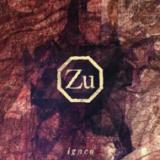
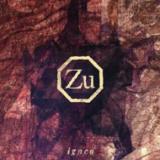
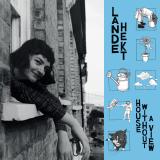
Deaf Star is a shoegaze / noise-pop / electronic project founded in San Francisco and now based in Barcelona, Spain. Rooted in melancholy-driven personal songwriting, the project drags those intimate impulses through blown-out textures, crude production, bass-heavy electronics, and walls of distortion, arriving at a sound that feels both fragile and annihilating.
Drawing from the jet-engine narcotic haze of Astrobrite, damaged intimacy of Sebadoh, nocturnal drift of Bowery Electric, dubwise productions of Andy Stott and The Bug, Deaf Star occupies a space where beauty is constantly on the verge of collapse, where “the nightmares were rehearsals”.
The album was mastered by Simon Scott (Slowdive) and features a collaboration with Dania.
All music by Ivan Zoloto, except 4 (with Dania Shihab). Voice message on 8 by Danielle Lefczik. Recorded and mixed in San Francisco, Belmont, and Barcelona. Mastered by Simon Scott. Photography by Nina Rathbone.
It feels like a lifetime ago that the first Rat Cage demo tape was spat into the Hardcore Punk underground. Maybe that’s because for the past 10 years Bry Suddaby has been relentlessly chucking out a slew of pummelling records, arming many Punks worldwide with a soundtrack to survival in the modern age of death and destruction.
Fourteen bloody releases later, the third RAT CAGE LP comes crashing in as the state of global horror reaches a grave pinnacle. In true RAT CAGE fashion, the drums relentlessly hammer away under rollercoaster riffs, while Bry’s viciously cynical bark spills the trials and tribulations of trying to get by in 2026.
For the uninitiated, RAT CAGE pulls influence from 80’s Northern European Punk like MISSBRUKARNA or APPENDIX, contemporary Swedish sweet spot Hardcore like HERÄTYS or FYFAN, ripping USHC ala POISON IDEA or OUT COLD, while naturally adding a classic British injection of GBH or THE VARUKERS.
As always, there’s the constant apprehension that you never quite know what’s around the next bend, and with ‘Not Asking for Much’ Bry has cast the net even further. There’s moments that get as heavy as BASTARD, as melodic as the UK SUBS, and even a title track that gets as rocking as the PINK FAIRIES. All amounting to a distinctive and characterful sound that’s unmistakably RAT CAGE.
With little to be hopeful about as we all suffocate within the authoritarian nightmare, this LP could once again be your beacon of fire. So, light the match and burn alone at maximum volume.
The acclaimed compilation series returns with volume 4! Fourteen tracks showcasing the most exciting emerging voices in Belgian jazz, ready to claim a permanent spot on your turntable.
The latest instalment in the celebrated compilation series once again shines a spotlight on the most adventurous and forward-thinking artists emerging from Belgium's jazz scene. Curated by Belgian tastemaker, DJ and broadcaster Lefto Early Bird, the collection continues a tradition of uncovering hidden gems and introducing them to a wider audience of dedicated diggers.
Over the years, the Jazz Cats series has become a trusted barometer of Belgium's ever-evolving jazz landscape. Long before many artists gained international recognition, they first appeared on these compilations, making the series both a discovery platform and a snapshot of one of Europe's most exciting musical ecosystems.
Jazz Cats Volume 4 captures a scene bursting with creativity, diversity and ambition. Across fourteen carefully selected tracks, the compilation explores the many directions contemporary Belgian jazz is taking today. Jazz, hip-hop, electronic music, afrobeat, spiritual jazz and experimental sounds coexist effortlessly throughout the collection.
The opening stretch of the compilation, led by Brussels-based Irreversible Entanglements band member Aquiles Navarro, Ola Tunji and HelenaCasella, offers an early glimpse into a scene that rarely stands still. Their music moves freely between traditions and contemporary influences, reflecting less concern with preserving genres than expanding them. Artists such as Lupo Spaccaro and Kunde, joined here by the raw soul voice of Fred Gata, draw inspiration from hip-hop and contemporary beat culture, yet neither approaches these influences in a conventional way. Instead, they reveal how naturally these sounds have become part of the vocabulary of a new generation of jazz musicians.
Experimentation emerges as another defining thread. KVR and BREAD FOR PIGEONS embrace unpredictability through unexpected textures, shifting atmospheres and confident compositional choices, creating music that constantly challenges expectations. Elsewhere, artists like Gaiko and VLIEGWERK favor immersive soundscapes that reward repeated listening. Whether there's a connection between musical adventurousness and a preference for capital letters remains a question for future research.
At the heart of the compilation lies a strong sense of movement and groove. Ragini Trio and Foutloos approach that rhythm from different angles, yet both build their music around powerful, pulsating foundations. Their tracks need close attention, revealing layers of detail and low-end richness that practically demand to be experienced on a proper sound system.
By the time it reaches its closing chapter, Lucid Lucia, SLAGADER and Kuna Maze bring the focus back to forward motion. Jazz and funk-infused grooves provide a fitting finale, reminding us that however far these artists push the jazz genre, they never lose sight of its ability to connect, uplift and move people.
The result is a body of work that feels remarkably cohesive despite its diversity: a portrait of a scene that continues to evolve through curiosity, collaborationand constant reinvention.
Defining the moment in sound and vision, Immersion are a snapshot of ‘the now’. Through constant reinvention, they have honed their sound into a startling present that references their past but refuses to live in it.
This perfect synthesis of their styles boldly creates a brave new world for core couple Colin Newman and Malka Spigel, along with satellite musicians Matt Schulz (Holy F*ck), whose drumming strongly features on many tracks, and Ed Chivers (AK/DK), who makes a guest appearance drumming on ‘Breaking Free, Diversity, Evolution’.
What Is Lost Will Return is the second ‘pure’ Immersion release in as many years and heralds their third UK tour since 2024. It follows 2025’s acclaimed WTF??, with the title reflecting the fact you can only say “What The F*ck??” so many times before looking beyond to see what endures.
With What Is Lost Will Return, the ever-productive ‘life and art partner’ duo present a reflective album of modular moods and stripped-down electronic psychedelia, leavened by a clipped guitar that you can nonetheless dance to, defying these chaotic times. It perfectly captures the yin and yang of the moment – or as Colin and Malka explain, “The emotion we feel the album invokes is a poignant mixture of joy and melancholy.”
“What Is Lost Will Return is an album of grooves, observational snapshots, hypnotic repetition, joyful creation, intoxicating melody and mystery, all threaded together by a fascination with new sounds and textures. It's both an underground gem and an album that bends pop into new shapes.”
John Robb, June 2026, MCR
With S.I.K. (Sociedad Internacional de la Kumbia), Conjunto Media Luna maps a constellation of sounds, friendships, and underground connections stretching across Colombia, Mexico, the United States, and beyond.
Produced in Bogotá between 2024 and 2026 by Iván Medellín, the album draws energy from rebajada culture, low-end frequencies, vinyl obsession, rap, and the hypnotic pull of cumbia. Accordion melodies, sampled fragments, drum machines, and sound system pressure intertwine throughout the record, creating a world where tradition is constantly reimagined through contemporary urban culture.
Featuring contributions from artists such as La Gallo 3:20, Turbo Sonidero, Amantes del Futuro, Mextape, León Pardo, Mismo Perro, and Hito de Piedra, S.I.K. unfolds as a dialogue between scenes that have spent years exchanging records, ideas, aesthetics, and frequencies.
The artwork comes from Mateo Rivano, one of the key visual architects of Bogotá's experimental tropical underground, whose imagery perfectly captures the album's blend of street mythology, sonic futurism, and tropical psychedelia.
Part sound system manifesto, part love letter to the global kumbia underground, S.I.K. is dedicated to everyone expanding the culture from their own corner of the map, through music, dance, graphics, fashion, and noise.
Edition of 600 copies, not sealed
Made with Love by Little Beat More 2026
Published by Little Beat More
raum…musik welcomes Jaffa Surfa back for its 121st release with ‘Tribal Diesel EP’, a four-tracker moving through progressive techno, industrial-tinged minimal, house and broken beat. Rather than treating these as fixed genres, Surfa reshapes them into something uncanny and unmistakably tribal, while keeping the groove firmly at the centre.
That approach is clearest on the A-side. “Diggers Diesel” has a ritual pull and, as the EP’s title suggests, finds Jaffa Surfa at his most tribal. Processed drums and splintered voices gradually lock into a hook while murky synths shift beneath them. “Lidl Sin” takes a leaner, slightly industrial but definitely understated route. Its reduced arrangement leaves enough room for each detail to register, with drums, synth stabs and sequenced lines appearing to exist in a state of constant mutation. On the b-side, “NGLZ” is the EP’s most direct house cut, driven by heavy low end, syncopated rhythms and flashes of phased samples. Breakbeat accents and old-school vocal fragments nod towards US house, though the track’s restless movement keeps it from settling into anything conventional. “Upstarz Galeri” closes on a wider screen, carrying traces of krautrock and decades-old sci-fi and cyberpunk soundtracks without ever feeling nostalgic. Airy and expansive, it pairs breakbeats and growling basslines with densely layered samples, giving its machine funk an unexpectedly emotional charge.
'Tribal Diesel EP' never overstates the contrast between its parts. Jaffa Surfa holds everything together through texture, rhythm and an almost cybernetic atmosphere. It is clearly built for the club, but carries enough personality and ambiguity to reward closer listening.
нет на складе
Последняя поставка 4 дня назад доступно для дозаказа без гарантии
Spanish producer Notzing joins Alpenglühen with Vermiström, a four-track EP exploring the deeper edges of experimental dance music.
Over the past few years, Notzing has established himself as one of the most compelling voices in Spain's underground techno scene. His sound is stripped back yet immersive, built from hypnotic drones, stretched loops, and subtle rhythmic developments that gradually pull the listener into a trance-like state.
With Vermiström, each of the four tracks unfolds organically, evolving with patience and precision. Intricate, unconventional rhythms intertwine with long-form sequences and richly processed textures, creating a constantly shifting sonic landscape.
What truly defines this EP, however, is its profound sense of depth and its unmistakable dub aesthetic. Every element occupies its own carefully crafted space: textured atmospheres, meticulously sculpted percussion, and syncopated sequences that seem to exist at two different tempos simultaneously. Creative use of delays and spatial effects subtly references the language of Jamaican dub, while an exceptional level of sound design and mixing gives the record remarkable clarity and dynamic range.
Rather than revealing everything at once, Vermiström unfolds gradually. Each listen brings new details to the surface, as subtle shifts in texture, rhythm and space slowly reshape the music from within.
нет на складе
Последняя поставка 39 дней назад доступно для дозаказа без гарантии
Ondrǣdan is the second aesthetic proposal by Sediments’ owners Pajaro Dune. This work is the result of a deep artistic experimentation and a thorough compositional refinement. Some of these materials have been distlilling in the studio for almost a decade of sound engineering and constant debate to make the experience much more profound.
From old English language, ondrǣdan it is a direct reference to our most primordial fears. Both an emotional yearning and a postapocalyptic kubriesque tale, the five works of this record capture five shades of rhythm and mood, where ambient, dub and downtempo meet in immersive narrative experiences. All them crowned with the luxurious sculptural artwork by Blanco Anyò who forces us look beyond the visceral to intuit the transcendent.
Pajaro Dune is the product that combines the creative minds of Jaime Romero aka Estrato Aurora and David Ortolà aka Syoqh aka d_o_ppelgaenger. More than half a life producing together from València, their multifaceted approach crystallizes in renowned works for Alpenglühen, Grabaciones Perpendiculares, The Monkey Bar, Eleve Music and now their own label.
|| We
become more from what is left,
deliver else than just the now,
build sound stories for the then. ||
нет на складе
Последняя поставка 39 дней назад доступно для дозаказа без гарантии
No Drama, the imprint founded and curated by Roy Rosenfeld, continues to expand its artistic vision with a sixth release valuing originality over convention. The label has steadily established a platform for forward-thinking electronic music, inviting artists to challenge familiar structures while remaining grounded in musical substance.
The latest release features two tracks by internationally recognized producer Yuvée, known for seamlessly blending live instrumentation with deep house, melodic elements, and organic percussion. While Yuvée appears solo on one track, the other is a collaboration with Omer Inbar, who performs under the name Oi.
The opening track, Lava Core, presents the sound that has earned Yuvée international recognition. Tribal influences unfold through carefully crafted percussion, while evolving textures occupy every part of the stereo field. Every section advances the narrative, allowing the arrangement to grow naturally while maintaining dancefloor impact from beginning to end.
The second piece, Blue, brings Yuvée together with Oi, an internationally acclaimed DJ, producer, and sound engineer whose work bridges psychedelic vibes and groove-driven electronic music. The collaboration introduces greater club energy. Tonal and atonal elements interact with shifting harmonies and evolving instrumental phrasing, creating constant movement without losing coherence.
Rather than relying on formulas, the duo demonstrates the value of artistic perspective in an era increasingly shaped by technological automation. The result is music that balances intellect with feeling, offering a listening experience that remains equally compelling on a festival sound system, in a club, or through focused listening at home.
With its sixth release, No Drama reinforces its commitment to artists who expand the language of contemporary electronic music through craftsmanship, authenticity, and creative ambition.
нет на складе
Последняя поставка 6 дней назад доступно для дозаказа без гарантии
AOP 11 Welcomes the Italian GNMR to the family for another psychedelic offering with the 'I Love You EP'
A1 opening with the title track I Love You with a no nonsense tribalism, taking us stumbling through a muddy Peruvian forest trip - after loosing & finding our minds
A2 follows with the deep and introspectif Sunrise Reprise. Slower broken drums guide, accompanied by moody groans and a nagging synth that weaves through the vines and trees.
B1 Bunda returns to the tribalism for a gated giddy dance ritual - clatterings drums, stuttered chants and rhythmic movements.
B2 rounds off the EP with Constantinople From The Mindset. Cleverly programmed loose percussion and trippy chants, a chundering bass and a solid kick, the track progresses craftily and confidently, gradually arriving at a euphoric and climatic.
нет на складе
Последняя поставка 22 дня назад доступно для дозаказа без гарантии
Manonmars’ 3rd album sees him at his most amorphous and psychedelic, at points sharper and laser focused, and at others more blurred and impressionistic than his previous records. Many of the core players remain the same, all of the production is once again handled by O$VMV$M (the duo of Neek and Amos Childs of Jabu) while Paulina Korobkiewicz (also of Young Echo) makes a return handling both the album’s cover artwork and contributing a series of diaristic field recordings and voice notes.
‘The project references movies, cartoons, fictional characters and video games, among other things. The album title is open to interpretation but all of these elements are forms of visual entertainment which have their own unique ability to transcend things like language barriers and cultural divides. The visual element is key because those details bridge the gap on a communicative level.’ - Manonmars
The album blends abstract, blurred braggadocio with more immediate personal details such as on ‘Volcanic Shield’ a posse cut of sorts featuring Bristol improv luminary Dali de Saint Paul and Franco Franco (½ of cyborg rap duo Kinlaw & Franco Franco) - where Mars recalls;
‘Memories of brighter days, happy meal hit the spot
Mum was spinning vinyl playing Super Ape or Pressure Drop
I would spend the weekend with the Turkish mandem on the block
single parent household, mum was studying or on the job
money came and went always was an on and off
made it back from school time to see what’s on the box’
The beat fades away to leave one of Korobkiewicz’s recordings of Mars’ mum talking about her life in London in the 80s, spending her money on reggae records as an ambient chord fades in like an echo of a jungle intro – stretching out as a link between generations of UK music.
The production by and large is brighter and more kinetic than earlier Manonmars records – with O$VMV$M drawing on everything from modern underground rap and drill through to jazz and acid ambient passages.
London is also a central character here, bustling and constantly shifting, either when bleeding in through field recordings, or as an ever-present backdrop in the lyrics;
‘I’m a fusion of Tippa Irie and Topper Harley
Hit the target like the black Atari
I dropped a tab now shit’s A Scanner Darkly
Got the munchies, Imma yam a sarnie
Pour the Wray and Ting like man at Carni
Exit Peckham Rye and turn left, walk past Hannah Barry
Get your (w)raps up like its January’
‘I've always considered London my home, despite spending some time in the South West of England too. My mum had been living in London for 25 years (...) That was a pretty big deal in some ways because it removed us from multicultural society during the period which overlapped with my teenage years. (...) I never got used to how quiet it was in the countryside (...) Bristol was the closest city to where we lived and it was through travelling there and making connections that I became involved in making music and playing gigs.’ - Manonmars
Mars’ practice as a painter (under his given name Jack Martyn Richardson) and photographer also loom heavy over the album, he cites Paul Verhoeven, Abdul Mati Klariwein and H.R Giger as influences – as well as Miles Davis, Drakeo the Ruler and DJ Rashad.
As with much of Richardson’s work the raps at times feel blurred to a point of almost inscrutability, creating a distance between the audience and himself. A process that ties into his visual work and the way he experiences the world as mainly abstract colour without his glasses. He explores this further in an ongoing visual collaboration with Korobkiewicz, ‘Fun and Games’ which serves as a visual archive of one of London's largest and oldest travelling fairgrounds.
‘I was diagnosed with very severe short-sightedness at the age of seven. I remember my early formative years as visually blurred. Some of my photography reflects this experience of partial vision and uncertainty, referencing memory and perception rather than fixed representation.’
Manonmars’ first public outing as a rapper was at a Young Echo radio event, broadcast shambolically from a practice room just off Jamaica street, Bristol in 2011, as much as things have moved on both stylistically and in terms of focus - strong links back to the city remain a key foundation throughout the collaborations and guest appearances.
‘I have no problem with being an outsider looking in. One of the things I enjoy about London is the anonymity (...) it's easy to be a stranger here when so much is happening. I feel like thats more valuable than people may realise.’
When everything around is racing blindly toward ruin, change direction and spin as fast as you can until you defy gravity and rise above the ground into blissful madness. "K-drone", the debut album by three renegades—Jakub Šimanský, Michal Vaľko, and Ján Podracký—is like a hallucinatory Calvary with five stations. Each station is a time-loop capsule, a tiny utopia sneering at the phantom progress of the world outside.
The opening track, "Speedrone", is pure vertigo; for seven long minutes, there's nothing to hold onto. Šimanský’s banjo cuts through the air, Vaľko’s hurdy-gurdy sounds like someone scraping a rusted sheet of metal with a handful of nails, and Podracký’s bass recorder hums like a slowly intensifying migraine. "Sine" is like a train journey through a barren wasteland, where the images outside the window constantly repeat like a bad trip. "Pro DJ" starts like a gig in a bar at the end of the line—a gig that never actually goes anywhere. It’s as if all three are locked in a spasm, their repeated motifs turning into haunting earworms. "Alien Radigue" shifts into a strange idyll in a clearing in the middle of the forest, where an unknown bird species trills in the background. The end and definitive dissolution come in "Slush", where everything suddenly slows down. Šimanský plucks a simple guitar melody, Podracký’s harmonica drifts from side to side like a boat gently rocking by the shore, and Vaľko’s hurdy-gurdy drones like a drunken mosquito buzzing around.
"K-drone" sounds like an acid anti-western movie recorded in a tucked-away burrow, like smoke-soaked folk and experimental campfire songs echoing through a deep forest. It evokes Third Ear Band's "Alchemy", it screeches and repeats like some of Henry Flynt's experiments, and you could easily imagine hearing it drifting from one of the windows on the cover of Hala Strana's eponymous album.
Jakub Šimanský is the bard of Czechoslovak guitar primitivism, an earthy folk sommelier whose fingerpicking you may also know from the duo Šimanský Niesner. Michal Vaľko, aka Line Gate, needs no introduction to fans. He has released three albums on mappa, and his hurdy-gurdy meditations hold an important place in the drone and minimalist music scene. "Den", "Apex", and "Trap" have become essential listening. Ján Podracký is a self-taught composer and musician whom you might know from various participatory music projects, such as an orchestra where all the players play diatonic harmonicas. Besides harmonicas, he has long explored a wide range of flutes. In short, a pied piper who will guide you through other worlds.
South Coast artist Howman lands back on DNO Records for his second outing, ‘Trap Eastwood’. First introducing his heavyweight fusion of rock, hip-hop, dubstep and electronica via his outstanding 2023 debut, ‘Moon Operator’, the multi-instrumentalist and producer returns with a refined palette. Still bearing the first class musicality, rich layering and imaginative sonics that we’ve come to expect, the new EP is more stylistically focused than its predecessor. This time, Howman homes in on a spot somewhere in the 140/dubstep/trap sphere, decorating it with digital fizz, alien bleeps, snarling bass, and the signature gruff twang of guitar that makes his music feel deeply personal and eternally human.
The title track is perhaps the most prominent example of the latter, where Howman’s Western-esque riff conjures up the tension before a duel at high noon, while the bend and wobble of each string shapes the movement of the track like the curves of a rattlesnake.
But it’s a constant from the start, like on opener ‘Strip Search’, with its cinematic guitar intro, and combination of repetitive keys, earnest strings and bear-hug bass that nods to classic hip-hop.
Or closer ‘Fatigue’, where the layers of stuttering plucks, emotive melody and scratchy slide noises form a downtrodden soundscape plagued by police sirens and punctured by “Champion Sound” snippets.
On ‘Navigator’, Howman’s approach is more subtle: fluttering strums and a simple bassline creating a brooding, enigmatic vibe in stark contrast to the urgent, alarm-like stabs which first grip the attention.
Throughout there is an overriding sense of the unknown. ‘No Spring’ weaves drawn-out flute notes, tinkling percussion, super-massive 808 lows and spurts of breakbeat into a twisting, winding thing that wants to lure and enchant. While ‘Frosty’ is as ice cold as its name suggests, murderous bass meeting a spidery piano melody in dread-inducing matrimony — along with snatched words from some familiar faces outside a Berlin edition of THE MINE.
Produced between 2022 and 2025 across various locations, influenced by Howman having to move into more solo live performance (as opposed to his previous band setups), and miraculously surviving a catastrophic data loss incident, the EP is a snapshot of disruption focused into creative cohesion. We’ve been told, however, that it’s not a new direction or a sign of things to come, which only serves to make his next release that much more enticing, that much more of a mystery.
Rhythms of postmodern realism at the very bottom of the DNO.
For more than a decade, Mama's Broke, the Canadian duo of Amy Lou Keeler and Lisa Maria, have forged a style carried across landscapes rather than tied to one Their forthcoming 12- song LP Reunion follows years in near- constant motion, bringing their folk- without- borders approach to small clubs, DIY spaces, and everywhere in between. Reunion reflects a world coming apart in plain sight, tracing fractured communities, the erosion of shared ground, and the growing awareness that the systems we were taught to trust no longer hold or deliver the promises they were meant to keep. The songs don't preach or prescribe; they reflect, holding up a mirror and leaving space for something else to take shape.
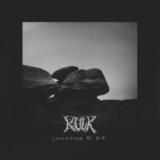
This Summer has never looked so bleak. Along with news of the album, Kulk have also released their new video single 'An Endless Kife': "An Endless Knife is about growing up. When we're younger, sometimes it feels like we're invincible. Like everyone we know and love are constant parts of the universe. When that reality is shattered, it changes how we see the world. You come to realise we are all just a couple of bad days from the worst. At the same time, it feels devastating. It reminds us to look after each other" - Kulk The band have toured across the UK extensively the past few years, playing amongst bands such as Part Chimp, Hey Colossus, Crowbar, Melt Banana, Iress, Big Brave, Gnoomes, Conan and Portrayal of Guilt... to name a few! They have toured twice with PigsX7, including shows at Electric Ballroom (London) and Rock City (Nottingham) and have appeared at the renowned UK festivals Arctangent and Desertfest
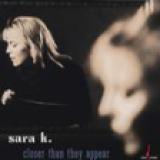
Originally released in 1992 and long elusive to collectors, this timeless tour-de-force launched the international career of the acclaimed singer- songwriter. Backed by an incredible lineup of musicians assembled by musical director and second guitarist Bruce Dunlap , the album showcases Sara's distinctive voice and unique 4- string acoustic guitar style. While her songwriting seamlessly weaves together elements of jazz and folk, the album poses a brilliant artistic statement: an intuitive, live dialogue that transitions effortlessly from sweet serenity to thunderous emotion. Rather than standard acoustic arrangements, the world- class ensemble treats the material with deep empathy, subtle accents, and constant creative daring
On Squirrel Flower's new album, Say a Prayer to the Gods of Getting Going, songwriter and multi-instrumentalist, Ella Williams, delivers her most transcendent and instantly classic record to date. It's an album full of hope and beauty, with themes of staying in constant motion, electric love, and knowing when to leave, but also when to stick around. After touring in support of 2023's Tomorrow's Fire, Williams remained on the road, following instinct over itinerary_passing through Gary, Indiana; Los Angeles; Putney, Vermont; Silver City, New Mexico; and Hudson, New York. Each stop became a site of creative renewal. She ended up recording the album at two locations: a makeshift studio in rural Wisconsin, and at Drop of Sun in Asheville, NC, featuring friends and collaborators such as Dimitri Giannpolous (Horse Jumper of Love), Sofia Jensen (Free Range), Clay Frankel (Twin Peaks, Hazel City), and many others along the way. Standouts like "Reelin" and "Highway Woman" showcase the push and pull of life as a musician; the constant need for embarking on a hero's journey in search of reflection and freedom. Others like "Not Me" and "Cleveland" are classic Squirrel Flower, but with a sharper and more concentrated writing style paired with some of Williams' strongest vocal delivery of her career. Mixed and co-produced by Alex Farrar (MJ Lenderman, Wednesday), Say a Prayer to the Gods of Getting Going is the sound of cosmic rebirth, looking behind to illuminate what's ahead. "Pack your life and your guitar," Williams sings on "Highway Woman." "You can change it as you go. You do not plan on dying." In addition to her seemingly nonstop DISABLED touring across North America and Europe, Squirrel Flower has been featured in outlets such as Pitchfork, Rolling Stone, The NY Times, Paste, and many others, as well as performances at NPR's Tiny Desk & KEXP. Williams' music has been streamed millions of times around the globe, proving her to be an undeniable force as a songwriter. FOR FANS OF Indigo De Souza, Soccer Mommy, Katy Kirby, Julia Jacklin, Tomberlin, Hand Habits, Phoebe Bridgers, Waxahatchee, PJ Harvey, Grouper, Chelsea Wolfe, Moses Sumney, Cat Power, Liz Phair, Alex G, Mazzy Star, Julie Byrne, Big Thief.
On Squirrel Flower's new album, Say a Prayer to the Gods of Getting Going, songwriter and multi-instrumentalist, Ella Williams, delivers her most transcendent and instantly classic record to date. It's an album full of hope and beauty, with themes of staying in constant motion, electric love, and knowing when to leave, but also when to stick around. After touring in support of 2023's Tomorrow's Fire, Williams remained on the road, following instinct over itinerary_passing through Gary, Indiana; Los Angeles; Putney, Vermont; Silver City, New Mexico; and Hudson, New York. Each stop became a site of creative renewal. She ended up recording the album at two locations: a makeshift studio in rural Wisconsin, and at Drop of Sun in Asheville, NC, featuring friends and collaborators such as Dimitri Giannpolous (Horse Jumper of Love), Sofia Jensen (Free Range), Clay Frankel (Twin Peaks, Hazel City), and many others along the way. Standouts like "Reelin" and "Highway Woman" showcase the push and pull of life as a musician; the constant need for embarking on a hero's journey in search of reflection and freedom. Others like "Not Me" and "Cleveland" are classic Squirrel Flower, but with a sharper and more concentrated writing style paired with some of Williams' strongest vocal delivery of her career. Mixed and co-produced by Alex Farrar (MJ Lenderman, Wednesday), Say a Prayer to the Gods of Getting Going is the sound of cosmic rebirth, looking behind to illuminate what's ahead. "Pack your life and your guitar," Williams sings on "Highway Woman." "You can change it as you go. You do not plan on dying." In addition to her seemingly nonstop DISABLED touring across North America and Europe, Squirrel Flower has been featured in outlets such as Pitchfork, Rolling Stone, The NY Times, Paste, and many others, as well as performances at NPR's Tiny Desk & KEXP. Williams' music has been streamed millions of times around the globe, proving her to be an undeniable force as a songwriter. FOR FANS OF Indigo De Souza, Soccer Mommy, Katy Kirby, Julia Jacklin, Tomberlin, Hand Habits, Phoebe Bridgers, Waxahatchee, PJ Harvey, Grouper, Chelsea Wolfe, Moses Sumney, Cat Power, Liz Phair, Alex G, Mazzy Star, Julie Byrne, Big Thief.
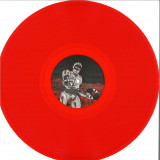
Djedjotronic blasts us off on an interstellar journey with The Great Red Spot EP, the ninth release on International Chrome. Named after the ancient and gigantic storm on Jupiter (bigger than the Earth), the EP is similarly massive with a swirling, constantly moving energy. Includes a huge Jensen Interceptor remix of EP highlight, Death Clock and comes on clear red vinyl with artwork by Pointless Illustrations.
нет на складе
Последняя поставка 14 дней назад доступно для дозаказа без гарантии
Having recorded with UFO, Babe Ruth, Cozy Powell's Hammer, Paice Ashton Lord and on countless chart hits for RAK Records as Mickey Most's studio session guitarist, Bernie was a founding member of Whitesnake. in just four years, Whitesnake became firmly established as one of the very biggest British rock bands, racking up multiple chart singles and albums.After leaving Whitesnake in 1982, Bernie Marsden was almost constantly writing, recording or touring. Although a revered guitarist of exquisite touch, which mercifully is preserved for us to enjoy on hundreds of studio recordings, it was on stage where his charisma and wit was best enjoyed.
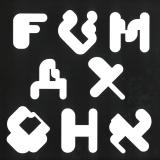
Robag Wruhme is the solo alias of Gabor Schablitzki, a quietly singular voice in minimal and house music since the early 2000s. His sound is built on precision without ever feeling rigid. Instead of chasing big moments, he lets tracks unfold through subtle movement and carefully balanced tension, always evolving but never rushing.
That same approach runs through this EP. It's about letting momentum emerge naturally, allowing each element to settle into place while the energy continues to build.
Across four tracks, Robag creates a world where rhythm and atmosphere constantly shape one another. The arrangements are rich with detail, yet nothing competes for attention. Even in the densest passages, every sound feels deliberate.
OLAHNI opens patiently, with ghostly textures and hypnotic vocal fragments setting the tone before the bassline slowly comes into focus. The arrangement keeps evolving, with subtle details drifting in and out as the groove steadily deepens.
IFTHAH takes things into darker territory, driven by a heavy rolling bassline and a looping motif that never quite loosens its grip, adding weight without disrupting the flow.
On FUMAXOHN, the groove remains tight while the mood shifts. A warm harmonic layer gradually emerges as the vocals dissolve into texture, drawing the track towards something more melancholic.
PENTHO closes the EP in its most direct form. Stripped back and driving, it lands with quiet confidence, bringing the journey to a close while holding onto the hypnotic tension that defines the record.
It's been a pleasure bringing this EP together, and we're excited to finally share it with you. We hope these four tracks draw you into Robag's world as much as they have us.
нет на складе
Последняя поставка 56 дней назад доступно для дозаказа без гарантии
The fifth chapter of The Third Room's curator-led series is shaped by Alarico, one of the defining voices of a new generation pushing techno into faster, sharper and more rhythm-driven territory. Through his productions, DJ sets and close ties to a network of like-minded artists, he has helped shape a contemporary sound defined by tension, detail and forward momentum. For his curation, the focus lies on connection. Bringing together artists operating within a shared sonic language, the release reflects a generation where precision, movement and emotional depth exist in constant dialogue. The record opens with Connection, a first official collaboration between Yanamaste and Alarico. The track captures the intersection of both artists' approaches: Yanamaste's intricate and distinctive synth work meets Alarico's driving, forward momentum. Fast, pulsing and tightly controlled, it unfolds through cycles of tension and release, stripped back to its essential elements. On Crimson Leaf Minstre, Toru Ikemoto builds a detailed and contrasting sound palette. Bright, delicate elements interact with darker stabs that disrupt and reshape the rolling bassline, creating a sense of movement that feels continuous rather than moment-based. The track leans into depth and variation, balancing clarity with a more mysterious tone. Blue Lights by Lea Occhi & Amotik shifts into a more groove-led space. What begins with a functional framework gradually opens up - subtle chords and restrained vocal elements add texture and attitude without overtaking the structure, resulting in a track that feels both light and deep. Closing the record, IB1809 sees Alarico return with a defining statement. Reduced but highly present, the track builds around a strong rhythmic core, where chords, melody and vocal fragments interlock with precision. There is a sense of contrast at play - melancholic yet driven, vulnerable yet forceful - culminating in a moment that feels both functional and expansive. Across all four tracks, the release remains tightly focused - fast, dynamic and cohesive, with a strong emphasis on movement and detail. As the fifth entry in the series, it captures a distinctly modern strain of techno, where emotional nuance and rhythmic intensity are no longer in opposition, but fully aligned. A1 Written and Produced by Irakli Danelia & Alarico Zucchi | A2 Written and Produced by Toru Ikemoto | B1 Written and Produced by Lea Occhi & Anil Chawla | B2 Written and Produced by Alarico Zucchi Mastered by Ahmet Sisman (The Third Room Studios) Artwork by Charlotte Ernst Design by Daniel Bornmann (STUEDIO.XYZ) Distribution by Clone Pressing by Matter Of Fact
нет на складе
Последняя поставка 12 дней назад доступно для дозаказа без гарантии
Aftersome refers to that suspended moment of wonder, when you realize you’ve been led here by a chain of unexpected events and small decisions — so improbable they almost feel preordained. Between chance and destiny, it is a fragile state where emotion and reflection intertwine.
This album by You Man embodies precisely that idea: each track is a step along this path, a resonance born of accidents and coincidences, ultimately shaping a coherent trajectory despite its improbability.
The work moves between techno, house and post-wave, infused with science-fiction and fantastical influences, constantly blurring the line between reality and imagination.
The experience is enriched by remarkable collaborations: Marc Almond (Soft Cell), Local Suicide, Jérôme Voisin, each bringing their own brilliance to this odyssey.
Michaela Turcerová’s compositions unfold in slow motion. The saxophonist and composer’s glacial music zeroes in on the granularities of each note as it rings, soaking in every subtle shift in texture and pitch.
Šumum exemplifies this patient approach to writing music, branching out from themes of loss and togetherness into an intricate tapestry of introspective sound. These four pieces invite deep collaboration between performers, who together shape the music through the shared process of listening and interpreting Turcerová’s relatively open scores. And while these works often grow from long, stretched-out tones, they also foreground forward direction: no note stays in one place, no melody is without action. Instead, Šumum chronicles how the tiniest shifts can lead to major transformation.
Šumum builds from Turcerová’s longheld interests in place and minimalism. Many of the composer’s works explore perception: how a room can shape the music we hear, and how repetition alters a melody. Like the music of Éliane Radigue, Šumum embraces the rainbow of colors that appear when close listening with the wave-like flow of looped melodic and rhythmic patterns. All the album’s pieces observe the subtle changes that happen as music grows.
Group communication yields the constant evolution that defines Šumum. The album feels like a conversation, with each instrumentalist swapping phrases or trading places when the moment feels right. “Straty” builds from a series of strongly accented drones that appear as quickly as they fade away; underneath them is a perpetual rhythm that drives the color of each long held note, from melancholy into radiance and back again. With “Vlny,” pitch eventually disappears, leaving a delicate rhythm, and with “Masy,” a matrix of brassy tones link together and eventually burst. No matter where the music goes, one thing remains true: Šumum invites close listening, and in the process, reveals the beauty of continual motion.
After Diogo’s hit record, we are following it up with another set of swinging dance floor detonators! Arriving directly from Brasil, Sérgio presents itself as another moniker from one of the greatest creative minds in all South America, Gabriel Guerra. With dozens of releases scattered over Future Times, Superconscious Records, LAMA, Got Tun, Balaclava Records, or his own 40% Foda/Maneiríssimo, he lands on our lap with a couple of highly effective, UK infused, and slightly nostalgic dance tracks. We’ve allways neutered a profound sense admiration for everything that Guerrinha was releasing under his 40% Foda/Maneiríssimo label, and had the feeling that his vibe was definitely one that we could relate to. Happy, a little wacky, and truly unpretentious dance floor madness! From acknowledging that, to reaching out was just a step. He was super available to work with us, and after the first talks he promptly provided us with a google drive folder with more of 100 unreleased tracks… Yes! You heard it! More than 100 gems of pure creativity ranging from all kinds of genres and across a fucking multiverse of alias and alter egos! So yes, that’s the kind of creative genius we are talking about… Moving from this “garagy” universe, Guerrinha presents us with a set of super fun tracks, which both leans over this infamous side of dance music, as well as it keeps an eye open for the most blatant forms of pop culture. Pure and simple dance floor tracks, to be enjoyed with a smile on your face.
"Is this the sound Sérgio?" or "Is this Sergio's sound?". The question of the questions seems silly, but it was postulated in 2019 to answer Guerrinha a new sound idea: A super appealing garage sound, so that any kind of doubt about the fact that Guerrinha's sets being fun, and that he himself would be able to mix swinging rhythms, would be eliminated. Sérgio is Guerrinha’s pseudonym for this, and since its first release in 2019 with the album “Utensílios” it has strangely become his most played alias, with a few small hits in the small Brazilian scene. After the pandemic drama, he returned in 2022 with the album "Mais Utensílios" and the single "Fantabobi / Riquititas", two releases that again grew the good problem of other djs constantly asking Guerrinha for these tracks. Now he releases the 12'' "Pelo da Churreia" via Discos Extendes, made in 2020 and containing small garage hits from that time. All this information raises the initial questions, since Sérgio is not just a pseudonym, but the curse that grew inside Guerrinha himself, sometimes it's in the appeal that “the bug catches on”.
нет на складе
Последняя поставка 3 года назад доступно для дозаказа без гарантии
There are two version of the LP - limited to 100 numbered copies with transparent wax and classic black wax edition. Both 180g with special OBI strip.
Maciej Envee Goliński is an artist who probably needs no introduction. He has been working with U Know Me practically since the label's inception. His last album ("Time & Light") made a huge impact worldwide, but we had to wait eight years for the next vinyl release. In the meantime, Maciej has certainly been busy – he has released numerous club singles under several aliases, and has helped record and mix numerous albums from the world of jazz, soul, and electronica. "Wyszymory" is a carefully crafted concept album, inspired by our roots. "Wyszymory" is an album on which every open-minded listener will find something that has been playing in their soul for a long time...
"Of all things visible and invisible, my life is most filled with music and a fascination with sound. It matters not whether they are natural or artificial, isolated or resonating through space. Sounds that evoke
memories, as well as those entirely new. Some of them have resonated unchanged for thousands of years. Certain resonances and rhythms have remained unaltered for generations so distant that they have left no other trace in human civilization.
This bond with our ancestors truly fascinates me. Ever since I realized it, I have become more attuned to inspiration. Listening to traditional and classical music, I kept finding new anchor points. I was constantly surprised by new invitations to ponder what connects – or divides – the pulse of our region’s traditional music with the rhythms of Africa, the tribes of the vast East, or the frozen North. My great authority, Tomasz Stańko, in interviews conducted by Tomek Michałowski, used beautiful parables of love and creativity to bring me closer to the Cro-Magnon cave artists. The Icelandic literary magician Andri Snær Magnason, in his book On Time and Water, captivated me with the fascinating observation that through emotional contact, words, ideas, or memory, we reach back and forward two or even three generations – spanning a period of about 270 years. Then there is Sam Kowalski, who with his wonderful obereks played on the gitalele, took me on a hypnotic journey, from which one returns with a deep admiration for the art of musical storytelling, passed down from generation to generation. Finally, my own children surprise me with talents, behaviors, and increasingly distinct features of those generations that now dwell only in my hazy memory and on old photographs.
I wanted the protagonists of this album to be the very phenomena that modern humans share with their ancestors, regardless of the level of civilization. Most vital among them is the relationship between humans, nature, and their own emotions. Wyszymory has nothing to do with an academic study, though I did delve into Slavic mythology, archaeology, and history in search of inspiration. Nor is it an album of traditional music, even if such music is present thanks to wonderful instrumentalists. I managed to invite artists who cross boundaries daily, working not only with Polish music but also with Hindu and African traditions, and even jazz, with its long history of blending influences. Naturally, the album became a kind of sonic comic book, where individual scenes and stories – the sounds, pulsations, and ideas on how to use them – came to me over time, often under unique circumstances and in inspiring contexts."
Envee
There’s something quietly defiant about Melody Boy. Written and recorded in a tiny beach hut studio on the English coast, and notably know for his previous work with Paul Weller and The Moons, Andy Crofts’ debut solo album arrives without compromise or concession to trend. It’s a record built on melody above all else, songs that feel unearthed rather than manufactured, guided by instinct, memory, and a lifelong obsession with the craft of songwriting.
Crofts, long established as a songwriter and musician, steps forward here with a voice that feels both seasoned and strangely elusive. There’s no rush to explain, no attempt to overstate. Instead, Melody Boy unfolds with a natural confidence, hook laden, harmonically rich, and emotionally direct without ever losing its sense of mystery.
Drawing from a lineage of classic songwriting while remaining firmly his own, the album leans into warmth, analogue textures, and a sense of timelessness that resists the churn of the modern music cycle. It’s not chasing a moment, it’s creating its own space.
Lead single “Blue” introduced that world: melodic, reflective, quietly anthemic. Across the album, that same thread runs deep, songs that reveal themselves slowly, rewarding repeat listens rather than demanding immediate attention.
There’s a deliberate sense of distance in Melody Boy. Not coldness, but clarity. A refusal to overexplain. The result is a body of work that feels personal without being confessional, detailed without being crowded.
In a landscape built on constant output and fleeting attention, Andy Crofts offers something else entirely: a record that trusts the listener to meet it halfway.
"Blue is another song that I can't get enough of at the moment" - Gary Crowley (BBC London)
There’s something quietly defiant about Melody Boy. Written and recorded in a tiny beach hut studio on the English coast, and notably know for his previous work with Paul Weller and The Moons, Andy Crofts’ debut solo album arrives without compromise or concession to trend. It’s a record built on melody above all else, songs that feel unearthed rather than manufactured, guided by instinct, memory, and a lifelong obsession with the craft of songwriting.
Crofts, long established as a songwriter and musician, steps forward here with a voice that feels both seasoned and strangely elusive. There’s no rush to explain, no attempt to overstate. Instead, Melody Boy unfolds with a natural confidence, hook laden, harmonically rich, and emotionally direct without ever losing its sense of mystery.
Drawing from a lineage of classic songwriting while remaining firmly his own, the album leans into warmth, analogue textures, and a sense of timelessness that resists the churn of the modern music cycle. It’s not chasing a moment, it’s creating its own space.
Lead single “Blue” introduced that world: melodic, reflective, quietly anthemic. Across the album, that same thread runs deep, songs that reveal themselves slowly, rewarding repeat listens rather than demanding immediate attention.
There’s a deliberate sense of distance in Melody Boy. Not coldness, but clarity. A refusal to overexplain. The result is a body of work that feels personal without being confessional, detailed without being crowded.
In a landscape built on constant output and fleeting attention, Andy Crofts offers something else entirely: a record that trusts the listener to meet it halfway.
"Blue is another song that I can't get enough of at the moment" - Gary Crowley (BBC London)
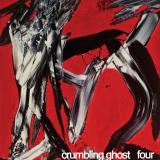
Within the broad church of metal and its many offshoots – rock, doom, stoner and all the rest – it remains a minor thrill to stumble across a group who seem to exist at a slight tangent to everything else. Crumbling Ghost is one such anomaly. Crumbling Ghost are not newcomers. They've been operating for some time, releasing records sporadically, Four' is in fact their fourth release. Along the way they've accumulated a fervent coterie of followers, not to mention the occasional nod of approval from tastemakers such as Stuart Maconie, Stewart Lee and Tom Ravenscroft. And though they've appeared at Roadburn, shared stages with Hawkwind and even Damo Suzuki, they remain (possibly by design) curiously under the radar.
The group's core idea is deceptively simple: traditional folk material refracted through the haze and heft of heavy, fuzzy stoner rock with a chunk of psyche and a smattering of doom. But crucially, this is done without the costumery and theatrical tics that often accompany such collisions. No mock pagan pageantry, no graveyard cosplay, no cartoon Satanism.
What Crumbling Ghost latch onto is not folk as a museum piece, but as a lived experience, the dramas rooted in the culture, stories, and daily lives of ordinary people, the folklore, the tales of love and death, murder and adultery, freedom and oppression. Singer Katie Harnett says. "Doting mothers, possessive, violent partners, vulnerable women, seasonal workers and Royal scandals this album is our representation of the trials and tribulations of human existence and universal experiences that still feel relevant today.
Guitarist John adds. "Themes of murder, betrayal, loss, jealousy, and love are found across the record. In particular, the songs of Martin Carthy have been a particular source of inspiration".
The result is a set of murder ballads, supernatural reckonings and cautionary tales, all wrapped in slabs of heavy, thumping fuzz and atmospheric sonics. Harnett's voice sits at the centre: unmistakably folk rooted, but shorn of prettification, melodic yet capable of real bite.
The album opener 'Bows Of London' is a murder ballad of sisterly hatred and grim sibling rivalry, centred on a haunted fiddle fashioned from a dead sister's bones. The loping relentless, hypnotic backing chillingly and perfectly accompanies the narrative. Of course, the story doesn't end well. 'Bill Norrie' follows, a hooky melody propelled by an insistent bassline and a haunting psych tinged haze punctured with sheets of noise.. The story of young Bill Norrie who sends a token to a married woman, whose jealous husband beheads him, without knowing he was his wife's son from an earlier affair. An instrumental palate cleanser arrives in the shape of 'Valtz Efter Tor Lohne' a Norwegian traditional the band jokingly describe as a "banger".
Then we have 'Lovely Joan' which offers a rare note of sly triumph: a quick witted woman outmanoeuvres a predatory nobleman, escaping with his ring and his horse. Muscular riffs give this tale of empowerment a welcome sense of teeth. 'Gower Wassail' is a traditional Welsh folk tune that captures the raucous spirit of communal ritual, noise making and drink fuelled hope for a good harvest. Captured perfectly here by CG complete with wah wah guitar and a drunken groove catching the song's celebratory chaos. Then we have a little gem in 'Last Of All Sleep' , an original band composition and a genuine highlight: a heavy lidded, shoegaze tinged folk reverie, equal parts distortion and delicacy. It's a drop-dead gorgeous shoegaze-tastic psychedelic grunge mini epic. The album closer 'The Unquiet Grave' is a very apt place to finish. It's about a young man whose constant grief at the death of his true love disturbs her eternal sleep so she cannot rest. Even though the playout on this track, complete with a demonic repeated riff and feedback feels suitably bleak, even this song allows a glimmer of release ... we think.
And there we have it, 7 songs, 7 worlds, all honed to perfection by producer Wayne Adams (Green Lung/Big Lad) that will reward every repeated listen.
Folk and metal/heavy rock do have a connection of course, just look at Green Lung and their 'folk horror' infused musical universe, but Crumbling Ghost are a very different beast.
'Four' amply and beautifully demonstrates that when it comes to 'folk horror' there's nothing quite as horrible as folk ... Here, the horror such as it is, and it must be said, the moments of light, comes not from theatrics, but from the songs themselves – which, after all, is where it's always lived.
Crumbling Ghost are John Mosley – Guitar / Donny Hopkins – Guitar / Ruth O’Loughlin – Bass / Katie Harnett – Vocals / Matthew Atkins- Drums.
Phosphor returns with its fifth release and a new chapter for the label’s founders, Blue Vision. As their second EP on the imprint, Machines Will Transform Us (PHP005) confirms the project’s direction: a precise balance between club-driven tech house and more immersive, hypnotic electro textures.
Across the EP, Blue Vision asks a simple question: after spending our days connected to algorithms and modern machines, can repetitive rhythms and mechanical grooves on the dancefloor turn us into machines once again, or instead help us reconnect with ourselves?
Machines Will Transform Us (A1) opens the EP with a driving Italo bassline and tight, tech-driven drums. Melodic 80s synths contrast with sharper electro elements, gradually building tension before a final drop designed for peak-time impact. The track sets the tone for the release: machines transform us as much as we transform them.
Then comes Just a Game (A2), blending spacious 90s progressive and synthwave influences over a rock-solid club bassline and crisp drums. Playing with atmosphere and emotion, the track explores the feeling that we are never too far from a simulation, that maybe everything is just a game. Perfectly suited for introspective yet intense moments, it acts as an ideal bridge between harder tracks in a set.
On the flip side, I Love Acid (B1) is direct, hypnotic, and designed to lock the dancefloor into a steady flow. Stripped back to punchy drums and a raw acid line, it takes a minimal approach that works equally well in early hours or late-night sets. Behind the title lies the idea of acid as both machine energy and mental escape, where repetitive sequences blur the boundary between human emotion and mechanical movement.
As a final touch, Scan Your Brain (B2) shifts into deeper, more immersive territory. Analog pad textures create a drifting atmosphere over a hypnotic bassline and electro drums. With this closing track, Blue Vision answers their initial question by imagining the dancefloor as a space to disconnect from rigid thinking. The vocal serves as a reminder that the brain is constantly overloaded, and that dancing becomes a way to let go, reset, and reconnect.
нет на складе
Последняя поставка 4 дня назад доступно для дозаказа без гарантии
Sasha takes charge of the 200th release on his influential label, Last Night On Earth.
The two richly detailed cuts balance cinematic emotion, club functionality and meticulous sound design and arrive on vinyl alongside the digital release.
Electronic music titan Sasha launched Last Night On Earth in 2011, and for 15 years, it has been at the forefront of the melodic underground. Breaks, house, techno, ambient and progressive have all been explored by a mix of original pioneers, new school innovators and Sasha himself, either solo or often in collaboration with friends, peers and exciting emerging talents. The label swiftly became a movement, with regularly sold-out showcases around the world and exclusive merch. Enduring tastemaker Sasha remains as busy and innovative as ever in the studio and on the road, and just weeks after his last outing here with Franky Wah, he returns with another standout single.
Majestic opener 'Hollow Sun 25' is a slow-burning seven-minute odyssey with an acid-infused bassline and Sasha's signature celestial touch in the spectral vocal fragments that infuse the mix. The wavy, fl uid grooves provide a constant, gentle uplift to this widescreen, immersive gem. 'Hollow Sun 24' reworks the same cut into something with a more epic and spine-tingling breakdown that douses dancers in classic Ibizan trance synths while the bassline is darker and the groove more heads down.
нет на складе
Последняя поставка 53 дня назад доступно для дозаказа без гарантии
Terence Fixmer Reimagines Chris Liebing & Luke Slater's 'Double Split' for CLR. Fixmer's remixes of Liebing/Slater's collaboration from the former's 'Evolver' LP release on 31st July.
Terence Fixmer has delivered two remixes of Chris Liebing and Luke Slater's 'Double Split' track, one of a handful of collaborations on Liebing's first-ever solo LP, 'Evolver', which was released in March this year. Having contributed to the LP as a member of The Alte Stuben Modular Ensemble, a super-group featuring Liebing, Daniel Miller, and Pascal Gabriel, Fixmer is a fitting choice to remix 'Double Split'.
Fixmer has been evolving his sound for more than 25 years. From deep and mind-bending to experimental and soulful, he is a visionary who has been hugely prolific, with many standout LPs and EPs on labels such as Mute Records, Novamute, Ostgut Ton, and Planete Rouge Records.
Fixmer's first 'Double Split' remix is inspired by the energy of the original, but focused on dubbier, hypnotic vibes. Strident drums and clattering percussion are stark by design, but smoky vocals and eerie synths hang in the air, bringing a bleak human futurism over all-consuming bass. Then comes the Melting Mind rework, which is boiled down to a handful of key elements, not least the original's penetrating acid line. It's an immersive, late-night dive that locks you in a state of constant motion and unrelenting pressure. The original from Chris Liebing and Luke Slater, a dark and futuristic roller with automated drums and layers of rusty synths encircled by acidic gurgles, completes the package.
нет на складе
Последняя поставка 63 дня назад доступно для дозаказа без гарантии
Ancient Infinity Orchestra return with their third album, It’s Always About Liberation, a new record that deepens the vision of their acclaimed recent work while moving into darker, more searching emotional territory.
Conceived as a partner to It’s Always About Love, this new body of work shares its predecessor’s generosity and spiritual openness, but carries a different charge. Where the previous album focused on healing and warmth, It’s Always About Liberation is largely animated by struggle, perseverance and the desire for transformation while still offering a path to betterment. It is music made in full awareness of a fractured world, yet unwilling to surrender to it.
Like It’s Always About Love the album title draws inspiration from words spoken by Moor Mother during their 2024 We Out Here festival performance that deeply affected bandleader Ozzy Moysey: “It’s always about love / It’s always about liberation.” Those twin ideas became a framework for the two albums Ancient Infinity Orchestra were creating. If one album explored love as repair, this one explores liberation as movement, continually striving toward freedom, clarity and deeper connection.
The 16-member ensemble is led by double bassist and composer Ozzy, with a distinctive line-up that explains their sound better than any artificial genre divisions: two double basses, harp, saxophones, clarinets, violin, viola, cello, oboe, flutes, mandolin, congas, piano, drum kit, with bells, shakers and other percussion instruments scattered on the floor of live sets and recording sessions, ready for members to use whenever the spirit takes them.
This orchestration, and the overlap between membership and friendship, gives Ancient Infinity Orchestra a sound that is at once expansive and intimate, earthy, and cosmic, constantly shifting yet grounded in shared intention. The attention to intention and the inviting sonic world connects the music to artists ranging from Alabaster dePlume to Gondwana label boss Matthew Halsall.
Gradually, the Orchestra became a grounding force in the emerging jazz scene in Leeds, bringing together individuals from different musical backgrounds co-founding the Café Oto-inspired Limpet Club or co-hosting the monthly Sonic Plunge (‘a platform for adventurous experimentation’) and co-founding the Leeds Improvisers Orchestra. Additionally, the ensemble acted as a bridge between musicians in Brighton and Leeds, after Ozzy spent a stint back on the south coast between 2020 and 2022.
Their debut, River of Light, was a vibrant celebration of togetherness recorded in three days and released on Gondwana in 2023. A Maida Vale session for Jamie Cullum’s BBC Radio 2 show brought them to a broader audience, as did bookings at North Sea Jazz Festival and Gretchen, Berlin. Since then, Ancient Infinity Orchestra has become a by-word for music that could be framed as ‘spiritual jazz’. Whilst Ozzy avoids the phrase when describing his music, he’s crystal clear that his heroes are associated with those words – citing Art Ensemble of Chicago, Pharoah Saunders, Coltrane (Alice and John), and Don Cherry as major influences.
Across trance-like meditations, rising grooves, moments of grief and collective uplift, It’s Always About Liberation speaks to the battle within the mind as much as the inequalities of the wider world. It acknowledges the darkness but lets connection and creativity have the last word Ancient Infinity Orchestra is a gathering of voices, traditions, and energies converging into something timeless. Their music is a journey inward and outward, always reaching toward the universal.
нет на складе
Последняя поставка 75 дней назад доступно для дозаказа без гарантии
Ras Michael's Dadawah. The Singing Drummer, a devout Rastafarian musician. Dadawah brought Ras Michael together with veteran studio hands: bassist Lloyd Parks, drummer Paul Williams, guitarist Willie Lindo, and last but not least pianist/organist Lloyd Charmers, who also produced.
The resulting album Peace & Love is a work of faith. Although not a concept album in the strict sense of the term, it thematically evokes the Biblical final days. "Run Come Rally" calls together the world's righteous in preparation for the upcoming battle with evil. Having gathered together the brethren from "Seventy Two Nations," all bow before Jah in a celebration of His greatness, then give voice to their desire to return to "Zion Land." The set concludes with "Know How You Stand"'s call for freedom, and with it the ability to fulfill Jah's plan.
The extraordinary power of the set's themes is echoed by the equally phenomenal backings, all conjuring up the most haunting of atmospheres. While the hand drums give the album a grounation feel, Parks and Williams simultaneously ground the numbers deep in roots. Intriguingly, though, there's no reggae guitar, just Lindo's sublime riffs and licks that flick into the rock realm, while constantly sliding back into blues. Charmers' piano and organ occasionally take over the reggae guitar role, but mostly his keys intertwine around Lindo's leads, accentuating melodies, scattering elegant flourishes here and there, and subtly building up the atmospheres. Charmers' production is superb, the musicians inspired, and Ras Michael's power undeniable. An astounding album that's lost none of its potency over the years.
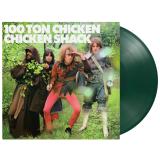
Chicken Shack are a British blues rock band founded in 1965 by Stan Webb, Andy Silvester, and Alan Morley, who were later joined by Fleetwood Mac’s Christine McVie, then still known as Christine Perfect. She would leave the band somewhere in 1969 to join Fleetwood Mac, and was replaced by Paul Raymond of UFO and Michael Schenker Group fame. They signed to the legendary British blues label Blue Horizon in 1967.
100 Ton Chicken is the band's third studio album from 1969 and offers a nice balance of blues standards and originals penned by the band's only constant member Stan Webb, who is still active to this day. It features the single "Tears In The Wind" and a cover of Davey Graham’s folk masterpiece "Anji".
100 Ton Chicken is available as a limited edition of 750 individually numbered copies on green vinyl.
MADMADMAD’s EP “Overload” is a thrillingly chaotic, genre-warping ride —think Mr Oizo on acid— that fuses fuzzy basslines, jagged guitars, and analog synth delirium into a dancefloor-ready collage of sound. From the Kraftwerk-tinged pulse of “Overload” to the acid-soaked, breakneck energy of “The Way” channeling The Chemical Brothers or Gesaffelstein, the record constantly shape-shifts while maintaining a raw, propulsive core. Tracks like “Mezcal” drift into hypnotic, minimal grooves reminiscent of Aphex Twin, while “Tout le Monde” and “Turn It Up” inject playful, off-kilter funk inspired by Tom Zé, Prince, ESG, and Beck. The title track closes on a high with a gritty, disco-infused groove nodding to early Daft Punk. Across the EP, MADMADMAD embrace disorientation as an artistic statement, drawing inspiration from Dadaism to mirror the overwhelming, information-saturated chaos of modern life.
For the first release of Les Enfants Black Series, we have the pleasure of welcoming Villaça, a Brazilian native now based in Barcelona.
For this release, he brings us a selection of deep cuts created for his live act between 2023 and 2024, featured in the tracks “A1. You Don’t Know”, “B1. Energy!” and “B2. A Moment of Reflection”, alongside the more uplifting “A2. Ready” that was made specifically the day after his first time in the club, with final touches and musical direction tips from Francesco Carvetta.
Expect an emotional and powerful journey from an artist who is constantly evolving, and keep an eye on the upcoming material on the Les Enfants Black Series, this is just the beginning.
нет на складе
Последняя поставка 6 дней назад доступно для дозаказа без гарантии
With bloated souls and skeletal bodies the three mad kings of the end times walk among us, with empty eyes and insatiable hunger. Innocence thieves, blood collectors, bastard children of archaic dynasties built upon the broken bones of the weak. Their consorts are the rotten and the dead, their champions soulless, empty vessels gasping for validation as they bathe in the nectar of inflicted pain. They lead us not into temptation, but into degradation and the all-consuming fire. Born in the heat and shadows of the Australian underground, in Brisbane in 2014, Graveir have carved out a stronghold for themselves in their homeland's black metal scene. Bleak, violent and uncompromising, their music possesses a powerful individuality that sees them following their own path, lone wolves in a world of people searching frantically for a voice to tell them how to think and what to believe. After their powerful 2016 debut, Iconostasis and its critically acclaimed successor, King Of The Silent World, hailed as 'captivatingly hypnotic' by Metal Bite, Graveir are poised to unleash their third set of black prophecies - The Festering Triad. The Festering Triad begins with the sinister 'Lords Of Misrule', rising from the silence with guitars like an insect swarm before a lugubrious, dolorous shift into life and movement. The song holds you on the edge of oblivion, a constant aura of threat radiating from its broken beauty. There's a powerful underlying melody too, but it's corrupted and riddled with disease. And while this unsettling and disorientating introduction to The Festering Triad is still crawling through your veins, 'A Futile Exhortation' bursts into flame - as implacable and unstoppable as the passage of time, formed from the seething darkness on the edge of chaos and touched by something ancient and primal. You are now in the heart of darkness, jagged riffs circling like atavistic, feral presences, hammering blast beats disrupting natural rhythms. Nothing is as it should be. Nothing stays within the expected boundaries. This is a malicious attack on the laws that govern reality. 'A Thief In The Heart Of Man' flies at you in a howl of rage and bloodlust; you can feel its desperate need to tear you apart and the inherent danger is exhilarating. Title track, 'The Festering Triad' arrives swathed in an aura of decaying majesty, a triumvirate of wickedness wreathed in flame, marching onwards, entwined in black briars of unease - on into twisted soundscapes of fear and dizzying anxiety, through boiling malignancy and relentless intensity to the finale of 'The Rite Of Degradation', where portentous grandeur and bestial hunger combine in bewildering, schizophrenic fury. This album is fuelled by a determination to leave you broken, beaten and humbled - and it succeeds, absolutely.
Bob Dylan's self-titled debut album was produced in a matter of hours and cost just $402 to record according to producer John Hammond. It serves as an insightful introduction for anyone wanting to explore Dylan's first steps as a professional musician. Recorded at New York's Columbia Studios on November 20th and 22nd 1961, Bob Dylan sang topical folk songs, accompanying himself on harmonica and guitar. The album contained just two original compositions by Dylan, 'Song to Woody' and 'Talking New York, the remaining selections covering interpretations of mostly old folk and blues numbers
Having built a reputation through an impressive run of standout releases on labels such as Life and Death, United Identities, HOME//GRXWN. and Berg Audio, coupled with an ever-growing presence behind the scenes, Dutch DJ/producer M-HIGH arrives on Up The Stuss for his label debut with ‘What’s Going On’ - a four-track collection that shifts shape as it moves.
A friendship dating back years, with Chris having been a key early supporter of M-HIGH’s productions, regularly digging through fresh sketches and unreleased ideas while both artists carved their own individual paths, that connection now comes full circle here with a heavily anticipated first outing on the label that has long felt inevitable - it was simply a case of when.
Never holding still in one form for too long, he plays with tension and release across the individual tracks, balancing airy, vocal-led moments with weightier, more grounded rhythms, allowing each idea room to unfold without losing momentum. There’s a constant sense of motion that runs through the record from the first minute to the last, yet it’s an EP that showcases distinct sides to his growing sound across each production. Melodic passages drift in and out of focus, giving way to tougher, more angular sections before circling back again.
Subtle nods to classic house touches, from organs to retro-leaning motifs, are reframed through a more off-center lens and direction, while flashes of electro influence and low-slung grooves keep things unpredictable for the later hours. It’s a record that feels built for both peak dancefloor use and also the in-between moments, when the energy shifts, the room resets, and the direction isn’t quite locked yet.
нет на складе
Последняя поставка 85 дней назад доступно для дозаказа без гарантии
Rawbeats Records returns to its main catalog with a heavyweight release from Mar del Plata’s own Juaan. Meticulously crafted between 2020 and 2022, these four tracks are essential peak-time weapons already backed by the scene’s biggest names.
A1. "Decihden" sets a relentless pace right out of the gate. It's built on a foundation of heavy, punchy kicks and a rolling, infectious bassline creating a high-energy, club-ready tool.
A2. "Fui Do Por", which shifts the EP into a slightly more hypnotic and spaced-out territory. Syncopated rhythms layered with dubby, atmospheric chords, create a solid tension that perfectly bridges the gap between warm-up and peak time.
B1. "Knt" goes straight for the business, heavy production, driven by raw drum work, acid-tinged squelches and underground flavor. Mixes into a perfect dark, constant, piece designed to lock the dancefloor into a pure trance-like state.
Closing things off is DC Salas Remix of KNT, Diego steps up to completely reinterpret the original, injecting a distinct percussive bounce and twisting the core stems into a darker, expansive journey. It serves as the perfect cerebral closer to a heavyweight EP.
нет на складе
Последняя поставка 67 дней назад доступно для дозаказа без гарантии
Lip Critic’s 2024 Partisan debut Hex Dealer was one of the most-hyped experimental releases of that year (“Like the B-52s on ketamine” -Paste) and signaled the Brooklyn band’s arrival as a borderline-batshit creative force. Theft World is their next chapter, built again from the chaos of two drummers locked in psychic combat, a sampler that sounds like it was struck by lightning, and frontman Bret Kaser’s paranoid preacher energy. But where Hex Dealer leapt from one absurdist vignette to the next, Theft World plays like a fully locked-in transmission. Themes orbit around the concept of theft, not just as a political force or digital dilemma, but as a surreal, emotional constant. Club rhythms and hardcore breakdowns pull as much from Tyler the Creator’s ‘Igor’ and Korn as they do Skrillex and Soul Coughing, coming together to soundtrack a world that’s constantly being striped apart and resold.
нет на складе
Последняя поставка 3 месяца назад доступно для дозаказа без гарантии
A catalyst for all sorts of noise-making endeavors, Bob Bellerue embraces chaos as a positive force. As a musician, he harnesses the violent timbres and textures from feedback clashing against piano wires, amplifiers, metal, zithers, electronics etc. He's also been central in harnessing community through his long standing Ende Tymes festival in New York, providing an intersectional platform for all voices to utter their noise. To a polite society, things such as chaos, noise, and anarchy threaten the normative structures that can assert control and maintain power over others. Bellerue qualifies his practice as a form of sonic animism, in which engages with that which is unheard in materials, equipment, and their relationships, developing a process of amplified discovery. The unhinged, the unquantifiable, and the unknowable are all possible outcomes in Bellerue's expansive works.
Chaos Is A Law is a macrotonal album, whose expressive de-centralization originates from rasping noise, intense textural accretions, brutalist drone, and inharmonic ambience. For all of the sustained harmonics and dissonant frequencies, the album is in constant motion, with Bellerue pushing dynamics that build, rupture, collapse and reform with an almost organic morphology. At times, it boils with a feral intensity. At others, its muscularity collapses into peculiar almost half-melodic figures, mutated within all the distortion. One could look to the free noise practitioners from New Zealand (e.g. A Handful Of Dust, Birchville Cat Motel, Surface of the Earth) or to the alchemical dronescaping of Stephen O'Malley and Organum. Yet, Bellerue's work maintains a bespoke tactility that is uniquely his.
In Bellerue's words, "The universe is a feedback loop. Creating and destroying. Growing and decaying. Loving and dying. Expanding and contracting. The big bang is the end result of everything merging together in the biggest black hole ever and then erupting into being over and over again. Praise chaos!"
”What Parts & Labor have figured out how to do, in a way no one else really has, is to make noise anthemic.” —PITCHFORK “Visions of disaster sound more optimistic with every album.” —THE NEW YORK TIMES “Parts & Labor is … creating rock albums that everyone who cares about rock music should own.” —CHICAGO TRIBUNE ”Part psychedelia, part noise, part all-out rock... exhilarating stuff.” —THE GUARDIAN ”East Coast art-punk with a 21st-century overhaul.” —Q ”A joyous explosion of sound.” —MOJO After a 14-year hiatus, prismatic noise-punk fireworkers Parts & Labor, a beloved institution of Brooklyn's '00s underground, re-emerge with a double-drummer lineup and colossal double album. The 79-minute Set of All Sets (July 10, Ernest Jenning Record Co.) is an expansive, blown-out gush of apocalypse-pop that imagines utopias and confronts the overwhelming weight of the infinite. Their first album since 2011, Set of All Sets finds the band re-energized, rebooted and expanding their punk-kosmische, matching their skyscraping melodies and squelching electronics with hypnotic rhythms and frenzied tumbles of percussion. Parts & Labor co-founders Dan Friel and BJ Warshaw are joined by the simultaneous battery of drummers Christopher Weingarten and Joe Wong — asynchronous members during their critically acclaimed four-album run on indie rock titans Jagjaguwar. The power trios that made 2007's breakthrough Mapmaker and 2011's swan song Constant Future have merged into a single four-piece, at once a brand new vision, a clamorous continuation and a recapturing of the deafening sound of their "final" two shows in 2012. With eight weaponized limbs from two veteran drummers, Parts & Labor surges forth with rhythms inspired by Tanzanian singeli, ecstatic free improv and the motorik of vintage krautrock. Friel and Warshaw beam with the most majestic and triumphant melodies of their career, windswept cascades of bubblegum Boredoms and Big-Music-gone-hardcore.
Across landscapes of electronica, ambient textures and jazz improvisation, Be Quiet unfolds as an intimate, spatial set of recordings - built on proximity and contrast, where different cultures, disciplines and sonic identities meeting Moalvaer's unmistakable trumpet voice. The album is accompanied by a documentary film directed by celebrated Norwegian filmmaker Per Manning, capturing the process, environments and relationships behind the music, and informing the project's visual world. Be Quiet unfolds as Molvaer steps into each collaborator's space, responding in real time and shaping a body of work that remains fluid, intimate and constantly in motion.
Initially conceived as a short-run cassette for Altered States Tapes, YL Hooi's nameless collection of textural apparitions oscillate between icy DIY minimalism, FX-drenched atmospherics and nang chamber dub. A ghost-like transmission, Hooi's voice serves to anchor an array of sonic abstractions and impressionistic melodic motifs as a sense of purgatorial ambience dominates throughout. Co-produced with alleged fellow Kallista Kult member Tarquin Manek (LST, M. Quake), Untitled's ultimate sensation is its halfway state, as if caught between worlds.
The album's final form speaks of its origins, recorded intermittently over a two year period (2017-2019). The extended time passage seeps into the song structures, spiralling and mutating from the same centre - the elegiac pulse of opener 'Title' presages the hymnal lilt of 'Straight Thru', before birthing the inverted bossa nova of 'W/O Love'. The result is a constantly shifting tableaux of shared liminal spaces. These songs seemingly emerge in plumes of smoke, magician's tricks conjured from the ether. It's a vision that ossifies at Untitled's midpoint with a cover of Love Joys' 'Stranger', the lovers rock original morphed into the transportive intimacy of Hooi's own hazy inner space, a totem of the LP's amorphous and ultimately sensuous qualities.
The sound from both down under and way out there in subspace, Untitled is an inspired masterstroke of experimental mystics. This 2021 Efficient Space edition is remastered and robed in new artwork that honours the Melbourne-based earth dragon's Chinese and Russian heritage.
нет на складе
Последняя поставка 71 день назад доступно для дозаказа без гарантии
Ever since the late 1950s bossa-nova revolution, Brazil’s influence on French music has been undeniable. Pierre Barouh, Georges Moustaki and a vast array of lesser known artists, all made the Musica Popular Brasileira (MPB) an axis of promotion at the service of a cool and metaphysical, modern and mixed Brazilian lifestyle. Some were seduced by the poetic languors of the bossa, some were looking for fun, and others just loved the American hybridization of jazz-bossa, jazz-samba.
What is bossa nova? One of its creators, Joao Gilberto said: "Its style, cadence, everything is samba. At the very start, we didn't call it bossa nova, we sang a little samba made up of a single note - Samba de uma nota so .... The discussion around the origins of bossa nova is therefore useless”. It is nevertheless useful to remember that these magnificent Brazilian songs, which the guitarist describes as samba, were shifted and balanced around improbable chords. "I like things that lean, the in-betweens that limp with grace," said Pierre Barrouh, quoting Jean Cocteau.
With emotion, arrangements for violin and supple guitar licks, bossa nova rapidly changed. A transformation that can be heard in the Tchic, tchic, French Bossa Nova 1963-1974 compilation, the result of a cultural reappropriation, which traveled through the United States and supplemented itself in France.
A musical revolution that has remained significant, bossa nova was born in Rio. From 1956 to 1961, Brazil lived through its golden years. In five years, the country had invented its modernist style. Elected president in 1956, Juscelino Kubitschek de Oliveira, an elegant man with a broad forehead, brandished a promising slogan: "Fifty years of progress in five years". He quickly got to work. Not worried about increasing debt, he launched the project for a new federal capital, Brasilia, designed by the communist architect Oscar Niemeyer. Volkswagen opened state-of-the-art factories and created the “fusquinha”, the Beetle. In Rio, the Vespa made its first appearance. The Arpoador Surf Club crew run into the “girl” from Ipanema, Helô Pinheiro - the tanned garota ("chick"), between a flower and mermaid, who at 17 walked by the Veloso bar, where the fiery author and composer, Tom Jobim and Vinicius de Moraes, were getting drunk on whiskey. From then on, bossa symbolized cool.
In 1958, Joao Gilberto recorded Chega de Saudade, which the directors of Philips denied, calling it "music for fagots". The marketing director, who believed in it, secretly pressed 3000 78-inch vinyls and distributed them at schools around Rio, creating a tidal wave.
American jazzmen then took over. In particular, trumpeter Dizzy Gillespie and guitarist Charlie Byrd. In November 1962, the Brazilian Ministry of Foreign Affairs funded a "Bossa-Nova" concert at Carnegie Hall in New York, inviting the genre’s pioneers. Unprepared, the show soon turned to disaster. But the troupe was invited to the White House by Jackie Kennedy. The first lady loved "the new beat" and in particular Maria Ninguem, a song by Carlos Lyra, later covered by Brigitte Bardot.
In Brazil, the 1964 military coup quickly ended this euphoria. The destructive atmosphere that ensued pushed many Brazilian musicians to leave, if not to exile. Thus, Tom Jobim, Sergio Mendes and Joao Gilberto arrived to the United States. In New York, Joao Gilberto met saxophonist Stan Getz. At the time, he was married to the Bahianese Astrud Weinert Gilberto, who had a German father. She had never sung before, but she knew how to speak English. Getz therefore asked her to replace her husband on The Girl From Ipanema. The Getz/Gilberto record with Tom Jobim on piano, was released in March 1964. Phil Ramone, the "pope of pop" was in charge of sound.
Bossa nova arrived in Paris through the classic “guitar-voice” channel (Pierre Barouh, Baden Powell, Moustaki…) But France loved jazz and Paris had already welcomed its American contributors. All these good people were to pass through Saint-Germain-des-Prés. The cabaret l'Escale became the Mecca of Latin American sound where one could find Pierre Barrouh and his friends, such as the Camara Trio, samba-jazz aces, whose only record was published by the Saravah label. With a band strangely called Les Masques (a band that included Nicole Croisille and Pierre Vassiliu, among others), the Camara Trio recorded an interesting Brazilian Sound, including the track Il faut tenir which is present on this tasty compilation of rarities.
Other enlightened musicians can also be found on the compilation, such as Jean-Pierre Sabar (songwriter for Hardy, Auffray, Leforestier ...) and the French pop rock organist Balthazar. In 1975, Sabar recorded Aurinkoinen Musiikkimatka on a Finnish label, which featured the crazy Vai, Vai, included on this record. We are now following the footsteps of Brazilian electronic musicians such as Sergio Mendes, Eumir Deodato or Marcos Valle who created funk and disco sounds on their keyboards and synthesizers. A style that influenced Véronique Sanson when she wrote Jusqu’à la Tombée de la nuit in 1969 for Isabelle de Funès, the niece of Louis and a great friend of Michel Berger - Sanson did end up singing this track on her 1992 Sans Regret record.
The pinnacle of exoticism and travel, Sylvia Fels’ Corto Maltese includes bongos, sea mist and ocean sounds. The title was taken from Jacky Chalard’s concept album written in 1974, Je suis vivant, mais j’ai peur (I am alive, but I am scared), based on Gilbert Deflez’s science fiction novel.
However, bossa nova extended the scope of popularity. "In the 1970s, I was a fan of Sergio Mendes, Getz / Gilberto. I fell in love with this music that I knew because I had been an orchestral singer, " explained Isabelle Aubret, who in 1971 delivered a composite record of covers by the very funky Jorge Ben, Orfeu Negro, Tom Jobim, Vinicius de Morais and Jean Ferrat. "I recorded this album for Meys Records in Paris, far from Brazil, with wonderful musicians, François Raubert, Roland Vincent, Alain Goraguer...". The latter wrote the arrangements for Casa Forte, a very percussive title borrowed from Edu Lobo, one of the initiators of the bossa who spent time in California. "Jazz and bossa came together and produced very rhythmic music. I love singing, it allows me to dream, to have fun, to feel a high on stage, and these songs brought me joy, made me swing, my singing felt like a dance.”
The world tours of French singers and their desire for the tropics, often brought them to Rio with its hills, forests, caipirinhas and tanned bodies. There are surprises though, like this Iemenja (Iemenja is the goddess of the sea in the Afro-Brazilian candomblé religion). Not unlike the composer and musician Jean-Pierre Lang, based in Sao Paulo, Claire Chevalier taught Brazil to Brazil. In 1970, the singer and painter published a 45-inch vinyl, Mon mari et mes amants (My husband and my lovers), under the improbable pseudonym of Clarinha (little Claire). She was then living in Rio, with her husband, Joël Leibovitz, who founded a band called Azimuth, and who owned a record label specialized in "sambas enredos" songs for samba school parades.
For its B side, she asked Pierre Perret to come up with lyrics for a song composed by Carlos Imperial: "Oh goddess of the sea, o goddess Iemenja, I bring a white rose to adorn your long hair ..." . "Perret came to see us, and we had fun, remembers Joël Leibovitz. We wrote Lemenja for fun, we recorded it at the Havaí studio, behind the Central do Brasil the central station. Erlon Chaves, the arranger who worked with Elis Regina, joined us" adding his share of Afro-Brazilian percussions and funky brass to the mix.
There is a common misunderstanding in Franco-Brazilian history: that bossa, admittedly hedonistic, is perceived as funny, even though the poets who wrote the texts are often philosophizing on the human condition. Its French interpreters pull it towards a carnival inspired universe, far removed from its fundamental essence. Thus, Jean Constantin covered the famous Samba da minha terra, an ode to the art of samba written by the classic Bahian composer Dorival Caymmi, renaming it with the enticing title of Pas tant de tchi tchi pompon: "On your pier there is no tchi tchi / when you arch your back, you know everything is alright ”(lyrics by Gérard Calvi). This expedited bossa aims for the absurd, but retains a certain elegance.
Indeed, Jean Constantin was not an idiot, the rather large man had a huge mustache and liked fantasy, (Les pantoufles à papa, Le pacha, inspired by cha-cha-cha-cha, salsa and jazz) but he was also the lyricist of Mon manège à moi interpreted by Edith Piaf, the composer of Mon Truc en plume by Zizi Jeanmaire and the soundtrack of François Truffaut’s 400 Blows. Le Poulpe, published in 1970, from which this bossa is extract, was arranged by Jean-Claude Vannier, an accomplice of Serge Gainsbourg’s Melody Nelson. In short: "There is enough of samba / By looking at the parasol / Because my poor cabeza / Is going to die in the sun".
Even the American actress Marpessa Down, who was at the heart of the bossa nova revolution with her role as Euridyce in Marcel Camus’ film Orfeu Negro, winner of the 1959 Cannes Palme d'or, fed the clichée with Je voudrais parler au petit cuica - "Tell me how you manage to always make people want to dance / It's true, I must admit that I cannot resist your magic" - in consequence, once can hear the cuica, a little drum inherited from the Bantu.
But bossa nova had many angles. Societal, of course, pushing actresses who were symbols of women's liberation like Brigitte Bardot, Jeanne Moreau, or Sophia Loren to engage in the exercise of accelerated bossa. In February of 1963, Sophia Loren made a record in French in Rome, Je ne t'aime plus, featuring the song De jour en jour, a bossa written by two Italians, Armando Trovajoli and Tino Fornai, which was released a little later by Barclay. Bossa accompanied the 1960s, a decade of moral liberation. Ann Sorel, who interpreted La Poupée des favellas, caused a sensation with L’amour à plusieurs, a provocative song written by Frédéric Bottom and Jean-Claude Vannier. As for the actress Andrea Parisy, she displayed her bourgeois cheekiness in Marcel Carné's Les Tricheurs before interpreting Les mains qui font du bien. And Magalie Noël, the friend of Boris Vian, who sung Johnny fais-moi mal, was hired to sing Une énorme Samba, composed by Alain Goraguer (arranger to Gainsbourg, Bobby Lapointe and Jean Ferrat) with lyrics by Frédéric Botton.
But in the end, of what wood is bossa nova made of? The answer is given by Christianne Legrand, daughter of Raymond the conductor, and sister to Michel the composer: "With me, with jà" - jà means "immediately" in Portuguese. In 1972, the singer, an expert in vocal jazz and a member of the Double Six, published Le Brésil de Christianne Legrand. Two songs included on the Tchic Tchic compilation that demonstrate how bossa, jazz, funk, rock, etc. work like a swiss army knife: the music is used to denounce broken systems, or miracles, HLM et ciné roman, Cent mille poissons dans ton filet, two songs from the O Cafona soundtrack, a successful telenovela broadcast, at the time in black and white, on TV Globo. The first was adapted in French by the fighter and friend of the Legrand tribe, Agnès Varda. The second is content with a play on words, jostling them into a summer fun.
Véronique Mortaigne
нет на складе
Последняя поставка 3 месяца назад доступно для дозаказа без гарантии
The perfect challenge for Saved My Life aka Siggatunez (Gooey) and Constantin Sankathi (The Healing Company). As a studio team, the two have spent the last decade transforming Italo disco, Brazilian samba, and French chanson into highly distinctive edits and remixes that stay etched in your memory.
For Crystal Grooves 803, the pair have refreshed Sharon Stoned's heartbreak anthem "Down" into an almost unbelievable track, a hybrid of garage and trance, anchored by Senpolya’s vocals, which capture the mood of the original with intense yet subtle precision: "Your favourite shirt I'll wear it everywhere." "Beauty & Thug" showcases another core strength of Saved My Life: reduce to the max. An R&B bootleg from the early 2000s is stripped of its slightly-too-mainstream choruses and rebuilt with string overdubs and studio craft into an hypnotic late-night jam. Soulful vocals always hit hardest when you least expect them: "So burgundy, the window to his soul." True to the spirit of SML's own imprint Downtown Romeo Records, the record comes complete with a sticker and an 8-page booklet including all lyrics. This release is dedicated to all people believing that music is more than just music: substance and meaning.
нет на складе
Последняя поставка 69 дней назад доступно для дозаказа без гарантии
Ltd. Edition "Rabbit Hole" Vinyl. "A Tale" is the fifth album from the Finnish collective Onségen Ensemble. Based in the north and shaped by its environment, Onségen Ensemble has built a distinctive identity through constant transformation. Rather than a fixed lineup, the band functions as a living ensemble: a stable core surrounded by ever-changing contributors. Each album introduces new voices, instruments and perspectives, allowing the music to evolve freely and remain open to the unexpected. With "A Tale", the band's expression becomes more ethereal and profound than before. While Onségen Ensemble operates within a progressive mindset; they deliberately avoid traditional genre boundaries, creating music that moves forward by absorbing influences intuitively, free from stylistic dogma. As with their previous records, they've always introduced new elements along the way - instruments as well as musicians - and this album is no exception. "The central theme of the album is peace. In many ways, it feels like the only value that still truly holds meaning in today's world. Peace is diverse, what we dare not be."
When Dope Lemon – the moniker of acclaimed Australia artist Angus Stone – released Honey Bones in 2016, it didn’t arrive with the noise of a blockbuster debut - it drifted in effortlessly, all hazy grooves and sun-faded introspection, and in doing so laid the foundation for something far more enduring. Over the past decade, the album has grown into a cult touchstone, defining a signature sound that fans have come to associate with escapism, nostalgia, and emotional ease.
For listeners, Honey Bones has become more than a record, it’s a feeling they return to, a constant companion through road trips, long summers, and reflective moments. But just as importantly, it was the catalyst that transformed Dope Lemon from a side project into a fully realised creative force. The album established a distinct identity and unlocked a new global audience, driving consistent streaming growth, and creating the platform for sold-out tours and subsequent releases that could confidently build on its world. In essence, Honey Bones didn’t just resonate—it set the trajectory, turning Dope Lemon into a lasting brand with both cultural credibility and commercial momentum.
H- side is etched
The American cable-television industry exploded in the 1980s, pushing broadcasts of diverse programming and emissions of low-laying cultures into homes. Community stations piggybacked on the digital developments of the time, extending their existence through telephony and broadcast a iliates. For those growing up in this time, in locations such as New York City, the localized communications beamed into their homes exposed them to an impressionable array of disparate sounds and visions.
Move into the 1990s and New York was filled to the brim of emergent cultures drawing from this ebullition of communication. From Rammellzee’s shapeshifting to the late Judy Russell and Frank and Karen Mendez’s Nu Groove imprint fusing reggae, poetry and house, nascent ideas emanated from the city walls, from within stores such as Sonic Groove store and on VHS releases such as Stakker’s The Evil Acid Baron Show, a legendary technicolor psychedelic trip along the wildest frontiers of acid house. As scenes expanded and identities developed, such individuals weather the events of the visceral now, expressing themselves right into an unpredictable future.
Function’s long career has seen him uncover a vast range of sonic identities, a mainstay through house, techno and industrial with collaborations with the likes of Regis, Damon Wild alongside his highly influential Infrastructure imprint. With influences deeply tied to pop art, rave and gay scenes, and early memories of block-parties emitting Kraftwerk and Strafe, he found himself seeking out the undercover illegal nights of the 90s on a quest of sexual unearthing, mixing the ever-yearning escapology mission of disco with the influential DJ sets of Jeff Mills.
For his new album Existenz, he marks a clear step away from the corporeal techno of his recent releases. Pivoting around themes of religion, sexuality, trauma and healing, it is a work expansive and celebratory, a clear liberation from a deeply internalized past. Formed from a collection of recordings made in a period from late 2016 to mid 2019, Existenz takes the form of a creative outburst in reaction to a number of traumas - recent, childhood and throughout Function’s life. Life partner Stefanie Parnow assisted the production process in its entirety, providing inspiration, spiritual healing and featuring vocal contributions.
Cosmic synths soar and swoop in ‘Pleasure Discipline’ through towering stacks of rhythm that stutter and creak to a halt before rebooting, a firm robotic response to human intervention. ‘Zahlensender’ reflects a spatial tetris of urban life, as digitalization set within an XYZ matrix confronts the sprawling city. Constant arpeggiated meditations echo synaptic transmissions, e ecting a dissolution of boundaries. ’The Approach’ recalls the unification of the self, a state of delirium non-subjective and smooth, as all connections and functions give way to simple intensities of feeling, crossing the threshold into spirituality. ’Golden Dawn’, featuring Stefanie Parnow, marks a further elevation of dubbed-out euphoria, as once more positive rays emerge. His ode to the effortless short-trip urban navigation 'Kurzstrecke' finds Function in motion, upfront and bold, snapshots of conversation and flickers of light. 'Ertrinken' finds metallic bass jabs swamping snipped synthetic voices, with hidden stores of emotion set as a nod to the history of vocoders as a tool for encrypted military communication. House icon Robert Owens features on 'Growth Cycle' and 'Be', entrenching a celebratory atmosphere over Function's clubwise leanings. Closing track 'Downtown 161' reflects the unmistakeable filtered and squashed interjections of television, and sampled dance vocals - a sound for the curious, dreamers and dancers.
With Existenz, Function reveals an essential body of work, spread over 4LP - thought experiments on the role of identity and spirituality after a lifetime of upheaval and trauma. Leading up until the release date, Function will undertake an album promo tour with select dates - A/V shows at Berlin Atonal and Rural festival in Japan, and three dates as part of his Bassiani residency.
нет на складе
Последняя поставка 28 дней назад доступно для дозаказа без гарантии
In a landslide of writhing textures and hypnotic rhythm, prolific techno explorer DOLTZ. returns to DJ Nobu's Bitta imprint for an expansive album that foregrounds his skill creating living, breathing soundscapes out of pure synthesis. Since debuting in 2020, Shun Watanabe has issued a steady stream of LPs and EPs that quickly established him at the forefront of techno innovation in the Japanese scene. It was natural then for him to forge a connection with DJ Nobu's celebrated Bitta label via 2024 release Inception EP, a forthright club-focused statement to balance out his more experimental output on Muzan Editions and other labels. Elsewhere, Watanabe has also been developing a fruitful collaboration with German techno veteran Tobias Freund, resulting in two bold yet elegant albums on Dutch label Delsin. On Final Trace, the DOLTZ. sound is steered with purpose towards tactile sonic terrain where microscopic detail rewards the patient listener. He explains a core inspiration for the album was Kobo Abe's avant-garde 1960s novel Woman In The Dunes, which drew on repetition and the quiet madness of an inescapable environment. That manifests as a forbidding demeanour that courses throughout Final Trace, detectable in every slithering trail of static interference and mind-warping tonal loop. This is expertly sculpted wormhole techno of the highest calibre, delivered by an artist with the creative spark to make something visceral and thrilling out of a technically advanced approach. The power of Final Trace lies in the subtlety of its progression as a seemingly incessant refrain slowly morphs before your ears, but this is far from a static album. From the mesmerising throb and thrilling crescendo of 'Faz' to the sprightly ripples and pulses darting across 'Resonance', there is a constant sense of movement and the bright-eyed wonder of new ground being broken at every turn. It's the perfect summation of everything exciting about Watanabe's rich expression as DOLTZ. -- stunning sonics driven by brilliant ideas.
нет на складе
Последняя поставка 4 дня назад доступно для дозаказа без гарантии
The 18th Parallel strikes hard once again with its new riddim series called ‘BONANZA CHARGE’. Carefully produced in its Geneva studio, the collective of musicians presents two vocal cuts and one horns instrumental released as three 7” singles with dubs mixed by Roberto Sánchez. This is heavyweight roots reggae tailor-made for the heaviest sound systems!
First song recorded on the riddim, ‘Don’t Tell Me To Smile’ is NIGHTSHADE’s debut single on Fruits Records and it really is music with a powerful message. Turning an everyday frustration into a universal cry, Nightshade sings out loud what she always wanted to answer to the countless strangers who told her – like so many other women – to smile… because “a woman who smiles looks so much prettier”.
She says: “If it’s really such an innocent thing to say as some claim, why do men never say it to other men? Why do some feel entitled to tell complete (women) strangers how they should look, feel or behave? These so-called ‘small comments’, repeated over and over, are just one piece of the constant scrutiny and everyday violence many women face – and we can’t take no more of it.”
Carried by three united voices, ‘Don’t Tell Me To Smile’ reminds us that a woman is not a decorative object meant to please the male gaze. It’s a call to see through the trap: under the guise of compliments, what is at work is control over women’s bodies and minds. A smile should come from the heart, never from an obligation.
нет на складе
Последняя поставка 3 месяца назад доступно для дозаказа без гарантии
Kennedy continues to sketch out imaginary worlds where thoughts and sensations are converted into sound via the power of machines. On this fifth instalment of Hi-Tech Soul, the Dutch producer channels fragments of midnight memories and daytime visions into something tactile yet elusive. As with previous chapters, the process remains shaped by surprise as hands and hardware entwine in a quiet, freeform dialogue.
The music itself drifts rather than drives, unfolding like shifting cloud forms that never quite settle. Loose, frayed house patterns hover in a state of flotation as basslines anchor just enough to stop everything dissolving completely. Each track has a sense of elevation where melodic synths filter through the mix like heavenly sunbeams breaking overhead. There's a constant progression to something that never comes, instead leaving you free to find your own meaning as textures blur into something soft, indistinct and gently euphoric.
A pure state of celestial suspension, 'Dream 5' is the newest offering in a series that takes you to a weightless world of infinite interpretations.
нет на складе
Последняя поставка 3 месяца назад доступно для дозаказа без гарантии
Bob Dylan... Das ist wohl DER Singer-Songwriter überhaupt und gilt als einer der einflussreichsten Musiker des 20. Jahrhunderts...
Die LP ‚The Early Recordings‘ präsentiert eine perfekte Sammlung von Bob Dylans schönsten Songs aus jüngeren Jahren. Mit dabei sind Klassiker wie „House Of The Risin‘ Sun“, „Baby, Let Me Follow You Down“, „You‘re No Good“ und eben besagtes „Man Of Constant Sorrow“.
Born in the Washington, DC area and raised in West Virginia, Miller has built a reputation as a thoughtful, boundary- pushing voice in alt- country and Americana, drawing from punk, traditional Appalachian music, and less conventional rock influences. For this record, he left his comfort zone behind and traveled to Tulsa to record at the legendary Church Studio, drawn by the city's deep musical legacy and its ties to artists like J.J. Cale. Co- produced with longtime collaborator Adam Meisterhans , the album was tracked live with a band of Tulsa- based musicians, including Grammy- nominated John Fullbright, under the steady hand of veteran engineers Gary Laney and Mike Prado. The result is John R. Miller 's most ambitious work to date - a spacious, textured collection that expands on the critically praised Depreciated and Heat Comes Down, blending road- worn storytelling, fuzzy atmospheres, and reflections on movement, memory, and change. Rooted in his West Virginia past yet shaped by constant travel and new collaborations, The Great Unknowing captures an artist trusting the process, embracing risk, and letting the groove lead the way.
Recorded and mixed by Steve Albini at Electrical Audio in Chicago, the album captures Zu at their most raw and explosive -- where avant-jazz energy collides with the weight of experimental rock. Igneo (2002) by Zu is the band's debut studio album and marks the starting point of their distinctive sonic identity. Even at this early stage, many of the elements that would define their later work are already clearly present. The album emerges from a context deeply rooted in experimentation and exploration. Compared to their subsequent releases, the sound here feels more open and less tightly structured, with a stronger emphasis on improvisation and real- time interaction between the musicians. The trio--baritone sax, electric bass, and drums--develops a language that blends free jazz, noise, post- hardcore, and touches of contemporary composition.
Listening to Igneo, you can sense a balance between raw energy and expressive freedom. The baritone sax shifts between abrasive bursts and more spacious, stretched- out passages, while the bass moves from repetitive grooves into fragmented lines. The drums, in turn, alternate between tight rhythmic frameworks and looser, more fluid playing. There's a constant negotiation between control and release. Unlike the band's later, more disciplined records, the structures here feel more fluid and unpredictable. The tracks don't follow conventional forms; instead, they evolve like living organisms, marked by sudden changes, contrasting sections, and a persistent sense of instability. This gives the album a dynamic, almost volatile character. The title Igneo-- suggesting something fiery and primal-- captures the essence of the record quite well. The music feels warm, raw, and in continuous motion, as if it were constantly on the verge of erupting.
Recorded and mixed by Steve Albini at Electrical Audio in Chicago, the album captures Zu at their most raw and explosive -- where avant-jazz energy collides with the weight of experimental rock. Igneo (2002) by Zu is the band's debut studio album and marks the starting point of their distinctive sonic identity. Even at this early stage, many of the elements that would define their later work are already clearly present. The album emerges from a context deeply rooted in experimentation and exploration. Compared to their subsequent releases, the sound here feels more open and less tightly structured, with a stronger emphasis on improvisation and real- time interaction between the musicians. The trio--baritone sax, electric bass, and drums--develops a language that blends free jazz, noise, post- hardcore, and touches of contemporary composition.
Listening to Igneo, you can sense a balance between raw energy and expressive freedom. The baritone sax shifts between abrasive bursts and more spacious, stretched- out passages, while the bass moves from repetitive grooves into fragmented lines. The drums, in turn, alternate between tight rhythmic frameworks and looser, more fluid playing. There's a constant negotiation between control and release. Unlike the band's later, more disciplined records, the structures here feel more fluid and unpredictable. The tracks don't follow conventional forms; instead, they evolve like living organisms, marked by sudden changes, contrasting sections, and a persistent sense of instability. This gives the album a dynamic, almost volatile character. The title Igneo-- suggesting something fiery and primal-- captures the essence of the record quite well. The music feels warm, raw, and in continuous motion, as if it were constantly on the verge of erupting.
“All I can do is make my art from an honest place with an honest intention.” Earth-o-Naut.
Earth-o-Naut is a songwriter, drummer, musician and producer. He was born in Liverpool and raised in one of its satellite towns, Skelmersdale. He was raised by his mum and uncles on music from every genre, falling in love, amazement and awe with the groove and the craft of songwriting. Nothing has changed to this day. Songwriting has also always been a constant. That quest to create something original and use the songwriting process as some form of catharsis. Learning guitar and piano was the next logical step, to help with the creation of new ideas into new songs. A lot of time was spent playing drumming gigs and then taking his own songs on the road, solo with just an acoustic guitar, learning the ropes and serving his apprenticeship. Great songwriters The Beatles, Curtis Mayfield, Bill Withers, Neil Finn and many others inspire Earth-o-Naut to this day.
Earth-o-naut has worked hard for many years on his studio chops and is the writer, arranger, recording engineer, mix engineer and producer on all of his own material, and he also works with other artists as a producer. Earth-o-Naut's debut album, 'This Is Nowhere. This Is Everywhere.' will be released on Agogo Records in June 2026. The debut album features UK drumming legend, Steve White and also the vocals of Amalia Estradas and Suzanne Maddock. 2026 will also see Earth-o-Naut take his songs on the road and play some live shows.st singular, emotive, and genre-defying releases of its era.
Orange Splatter vinyl. "Sermon of Mockery" by Pyrexia is not an album that tries to be accessible - it is built to be heavy, direct, and unsettling, and it delivers exactly that. Released in 1993, it sits right in the middle of a key moment when American death metal was evolving into something more technical and extreme. The sound is rooted in the New York scene: tight, compact riffing, constant stop-and-go structures, aggressive drumming, and deep guttural vocals with no room for melody. It's not about speed alone, but about control - everything feels deliberate, almost surgical in how the songs are constructed. Lyrically, the album revolves around a strongly blasphemous and anti-Christian theme. It's not just shock value; it's more like an inverted liturgy, where religious symbols are twisted into something dark and violent. This concept is consistent throughout the music, lyrics, and visuals, as you can see in the booklet. It may not be a mainstream landmark, but it played a key role in shaping the brutal death metal sound that followed. It influenced many underground bands and is still regarded today as a cult record. Listening to it now, the production may feel dated, but that's also part of its strength - it's raw, honest, and uncompromising. In short, it's a record that perfectly captures a specific era and mindset within the genre.
Seasoned sunset soundtrack label-owner, DJ and composer Mark Barrott returns with new album The Exit Diaries. A constant innovator and master of chillout, the record is a rich, deluxe affair comprising two long-form instrumental pieces that weave together soul, jazz, orchestral composition and electronica. With over three decades of output across multiple aliases, Barrott has carved out an influential space spanning early breakbeat futurism, Balearic folk, orchestral ambient and global electronica. He has earned widespread acclaim from the likes of Pitchfork, Mojo, Uncut alongside radio support from Mary Anne Hobbs, Elizabeth Alker and Hannah Peel. His new album ‘The Exit Diaries’ features two movements: side one, ‘Light Variations’, is inspired by “Sunday tunes” - a warm, slow-unfolding soundtrack of soul, Alice Coltrane–esque textures and gentle synths, elevated by the fluid drumming of Leo Taylor (The Invisible, Floating Points, Hot Chip). Side two, The Stone Tape, opens with the sweeping ‘When Devils Become Gods’, before drifting through the ambient landscapes of ‘Quarries’ and the cinematic, emotionally rich compositions ‘The Stone Cutter’s Dilemma’, ‘Land (iii)’ and ‘Closer’. Throughout, Barrott demonstrates a rare ability to transport listeners into deeply atmospheric, meditative spaces, delivering a deeply immersive and quietly profound addition to his catalogue.
Composer Vasco Mendonça presents his third album “Third Places”. The album brings together a collection of landmark performances and features some of the leading names in international contemporary music, including countertenor Iestyn Davies, mezzo-soprano Barbara Kozelj, the Porto Casa da Música Symphony Orchestra, the ensemble Het Muziek, and conductors Brad Lubman and Ernest Martínez Izquierdo.
More than just a record, “Third Places” stands as a space for artistic and political reflection on the present. Inspired by Ray Oldenburg’s concept of the ‘third place’ – a space beyond home and work where community life takes place – the album’s title refers to the venues where these works came to life, Casa da Música and the Muziekgebouw aan ’t IJ in Amsterdam: spaces for encounter, dialogue and cultural resistance. For Vasco Mendonça, these spaces symbolise “the ability to elevate the way we communicate with one another and to resist our most primitive and violent impulses”.
The voice lies at the heart of this work. The compositions explore the theatrical, intimate and political dimensions of vocal expression, drawing on texts of great social and emotional weight to create a shared space for listening and questioning the current state of the world.
One of the album’s central works stems from a profound contemporary concern. Inspired by the turbulent political climate in the United States following the 2016 elections and by his discovery of the poetry of Terrance Hayes and Tracy K. Smith, Vasco Mendonça composed a cycle of songs initially conceived for voice and percussion, later transposed for orchestra. The result is described by the composer as “a kind of imaginary American folklore”, where excess, transcendence, fascination and fear coexist.
The album also includes a reworking of material from the opera “Bosch Beach”, created in 2016 to mark the 500th anniversary of the death of Hieronymus Bosch, commissioned by the Dutch foundation Stichting Bosch 500. Based on a libretto by the writer Dimitri Verhulst, the work reflected on the European migration crisis through a scathing portrait of human indifference. In “Third Places”, Mendonça revisits some of this musical material to construct an incisive reflection on contemporary political discourse, transforming the opera’s numbers into archetypes of election campaigns, populism and performative communication.
Straddling contemplation and confrontation, lyricism and political tension, “Third Places” stands as one of the most ambitious recording projects in contemporary Portuguese music, offering an experience that is both aesthetic and critical, where music and thought intersect in a visceral way.
The digital version of the album will include a bonus track, “Marathon”, which explores the analogy between music and long-distance running, creating a piece in which time is transformed through breathing, the heartbeat and the ritualised repetition of movement and the body, in a constant tension between exhaustion and survival.
Ready for take off? Metallic States proudly welcomes Chris Carrier for the label’s first full-length album.
This release reflects the recent evolution of Chris’ sound, following a career that has crossed decades, trends, and the constant mutations of electronic music. He embraced these changes naturally while always remaining faithful to his roots and distinctive identity.
From slow-burning trance excursions and mental dancefloor cuts to rave-driven anthems and soothing downtempo moments, this more psychedelic album could well become a landmark entry in his vast discography.
нет на складе
Последняя поставка 22 дня назад доступно для дозаказа без гарантии
Following the underground cult success of Mystical Funk, Gerardo Frisina returns to the 7” format with a new double-sider aimed at dancefloors, collectors, and selectors with a taste for cinematic funk. A record that feels as though it emerged from a lost Afro-funk session, where cosmic funk and Afro-Latin grooves are filtered through a distinctly modern electronic sensibility.
On the A-side, “Duala”, inspired by the African city of Douala, pays tribute to Afro-funk in its most visionary era, evoking the unmistakable sound made famous by the great Manu Dibango. The track opens into a dense and hypnotic electronic funk journey: pulsating basslines, fluid guitars, psychedelic synthesizers, and a rhythmic tension that recalls the golden age of Afro-funk. A nocturnal voyage through rare groove and cinematic atmospheres, with the groove constantly remaining at the heart of the composition.
On the B-side, “Lindeza” is a tribute to the beauty and richness of Brazilian musical culture. A track that shifts perspective while keeping the temperature high: elegant, percussion-driven electronics with a Latin spirit, flowing at around 110 BPM. Warm and magnetic, the piece carries all the hallmarks of Gerardo Frisina’s sound, where futuristic jazz, tropical funk, batucada, and club culture meet in a refined production designed equally for deep listening and the dancefloor.
нет на складе
Последняя поставка 4 месяца назад доступно для дозаказа без гарантии
In Lande’s words: “It’s a daydreaming song about wanting a life of excitement and adventure rather than a dull and ordinary life - one where people underestimate you and belittle you. And where you’re forced to buy into capitalism and become a pathetic, losing player in a game that you hate. I’d rather escape and live in a queer space fantasy and be brave.”
Available on limited turquoise vinyl and digipack CD
It is with both pride and excitement that we announce the reissue of ‘House Without A View’, the out-of-print second album by singer-songwriter Lande Hekt – the first of a three-part reissue series on Circuitry, with ‘Going To Hell’ and ‘Gigantic Disappointment’ (first time physically) to follow in the coming months.
With a new album ‘Lucky Now’ released on Tapete in January, supported by an extensive spring UK tour (dates below), Lande’s contemporary twist on the classic C86 indie sound - with a queer feminist punk identity lyrically explicit throughout – is drawing in an ever-growing audience of devotees, such is the consistent quality of her songwriting, and the personality within.
The opening track of the album is ‘Half With You’ which “is about growing into yourself as a queer person, and enjoying who you are after not enjoying it for so long,” says Lande. ‘Cut My Hair’ is about how her relationship with her gender has changed over the last few years, becoming more comfortable in herself and understanding more about what makes her happy. “It’s also about how easy it is to not talk to people when you’re struggling, which is something I did for a long time,” admits Lande.
The title track of ‘House Without a View’ deals with childhood trauma and how events of our formative years “affect us so much into our adult lives and are intrinsic to our personalities and the way we cope (or don’t) with life and relationships,” says Lande. Although there’s darkness and sadness within the record, there’s also some shining beacons of positivity and a light-hearted side, albeit with a side of frustration. ‘Lola’ was written about Lande’s cat shortly after she came to live with her and her girlfriend. “She’s the first pet I’ve ever had and I wasn’t quite ready for how hard it would be to not be able to verbally communicate with her. I worried constantly that she was depressed because all she did was sleep, but my girlfriend assured me that that was regular cat behaviour.”
Mad Rey is a Paris-based producer and DJ whose universe moves freely between warm house, raw electronic textures, and influences drawn from the international club scene. First emerging through the D.Ko Records collective and label—one of the key forces behind the French house revival of the 2010s—he quickly developed a sensitive and organic signature, blending analog groove, evocative melodies, and a deep dancefloor energy. His notable releases on D.Ko, followed by projects with labels such as Red Lebanese and Ed Banger Records, reflect a singular trajectory at the crossroads of France’s most influential underground and electronic scenes.
Constantly evolving, Mad Rey is now opening a new chapter in his journey. An upcoming EP on Yoyaku affirms a more club-focused and percussive direction, while new productions leaning toward tech house outline a sharper sound designed for powerful systems and late-night dancefloors. This evolution comes with a clear ambition: to carry his music beyond French borders and expand his presence on the international stage.
Balancing production precision, DJ instinct, and an ongoing search for renewal, Mad Rey continues to shape a distinctive artistic world—rooted in the present yet firmly oriented toward the future of the dancefloor.
Crypt of the Wizard is proud to present Scimitar – Scimitarium I on vinyl and digital formats. Formed in 2024 by veterans of Copenhagen’s underground music scene—including members of Slaegt, Endless Glory, and Shaam Larein—Scimitar arrives as a fully formed force of nature. In their raucous wake lies Scimitarium I, a frenzied, whirling dervish of black occult rock. For those familiar with the members' previous efforts, this should come as no surprise. This piece of musical alchemy is a perfect knife-edge dance, seamlessly blending elements of black metal, post-punk, and occult rock. Dark and serpentine, onyx black, scaled and sacred, Scimitarium I unfurls itself like an endless snake wrapped tight around the world. With a dark heart and a head full of fever dreams, this is an album of breathless intensity. Shaam A.’s constant presence provides an abundance of rich, overflowing lyrics, delivered in her distinctive and haunting voice—written as if hurriedly scrawled in feverish reverie—and reinforced by winding, twisted narratives played out on violent yet harmonic duelling guitars, alongside a rhythm section of unyielding intensity. Scimitar has quickly become an indelible part of the city's fertile and ever-evolving metal scene—a place where stalwarts continue to push boundaries and break moulds with seemingly effortless zeal. This is an album of forged perfection, honed and sharpened like a curved blade—shimmering with lethal precision—driven straight into the heart of all matters
нет на складе
Последняя поставка 4 месяца назад доступно для дозаказа без гарантии
Shooting Daggers are a band that never seems to stop. Sal, Bea and Raquel are one of the hardest working outfits out there, constantly playing shows and lending their support to myriad causes all around the U.K. and Europe. So, it’s always an exciting prospect when the band takes some time out from the maelstrom to write and record new material. And 2 years on from the release of their acclaimed debut album ‘Love & Rage’ the band have been in Bear Bites Horse Studio with Wayne Adams (Big Lad, Green Lung) at the controls to come up with the goods once again. ‘The Real Life Thing’ is the latest hardcore sonic missive from one of London’s must-see bands, and it absolutely does not disappoint. Shooting Daggers are the real deal; the best, and most exciting and adventurous hardcore-inspired band in the country. A ‘mini album‘. 7 songs and 20 minutes of driving rocket fuelled punk meets melody picking up from their debut to go further into their own space. A selection of songs that are marked by a fierce energy, variety and cool musical nous, but always with a message firmly at its core. The band says … ‘It's a crucial time to focus on what really matters. Be present, be aware of real things happening in the world, with integrity and love we can make a difference as a community. There is hope out there, and if we all start treating nature, people and animals with respect and empathy we will be able to become better humans and coexist. In this mini album, we express the full range of our emotions through various sounds and genres. From cheerfulness to anger and hopefulness.
From hardcore punk, to shoegaze, to post hardcore and riot grrrl. We embrace our authentic self, with sensitivity in response to injustice, we act out, and all the while savouring every moment, being unapologetically yourself, empowering ourselves and each other’. With the help of some very special guests in the form of ‘The Menstrual Cramps' and Dennis Lyxzén from Refused, that message is driven home ‘big time’. ‘Adrenaline’ is as full on and heavy as Daggers have ever been, all buzzsaw riffs and rousing vocals, it’s a smart and catchy punch in the face to kick off proceedings. ‘My Oh My’ sweetens the vibe if only a bit with its layered post shoegaze guitars and anthemic vocals, exquisitely arranged we may add. It really shows how Daggers have taken the 90’s elements from Love & Rage and expanded it into something all their own. ‘T.R.L.T.’ back to ‘in yer face’ Daggers trademark off kilter punk, chants, fast bit, slow bits all straight into your head. ‘We just Wanna Play’ is, as Daggers put it ... ‘Empowering playground song for girls and queers to sing and play’. The perfect intro to … ‘Loud Mouths’ the first track to feature bestie guesties ‘The Menstrual Cramps’. A riotous call to arms. We are united with our sisters and queer folks in punk and hardcore, queercore is strong and more alive than ever. Together we will denounce problematic behaviours unapologetically, we won't shut up. Things must change and it’s happening when problems are pointed out and sorted. The scene is for everybody, and we are making it happen’. ‘Le Soleil’ is another step forward … a left field, almost dubby vibe with a dreamy melodic swirling vocal performance from Sal.
When Daggers decide to step outside the box, they do it seductively in style. ‘Glow’ is the second collaboration; this one featuring Dennis Lyxzén from Refused on dual vocal duties. A no brainer it seems … ‘Refused has been a band that never wanted to fit in with a specific sound, they are pioneers of experimental punk while still being rooted in hardcore. They believe in what we believe in, antifascism, veganism, social justice and Dennis on stage is anything but a generic hardcore singer’. It’s a celebration. It’s fuzzy, it's hooky and it’s heavy with, dare we say it, a bit of My Bloody Valentine in there too, generic hardcore it is not. And that pretty much sums up ‘The Real Life Thing’. This album and this band are anything but ‘generic’. They never stand still and continue to push the boundaries of what is ‘hardcore’ or ‘punk’ or whatever people think they are. T.R.L.T. is a delight and a surprise from start to finish, refreshing, abrasive, melodic and with a true beating heart. Embrace it.
Based in Manchester but individually from all over the UK, the five piece's debut is intelligent, political and acutely aware of what it means to be in a band in 2026. Built around driving guitars and wiry rhythms, tracks like 'Too Much Fun' and 'The Seeds' brim with the tangible energy of their live shows. These are songs written with the energy of a packed room in mind. Having built their reputation the old fashioned way; relentless rehearsals, constant gigging and self releasing music wherever they could afford to, Martial Arts' dedication has shaped both the band's identity and their sound. Across the Craig Silvey-produced (Arctic Monkeys, R.E.M., Florence & The Machine) EP, Martial Arts balance personal reflection with broader political ideas, often turning the lens back on themselves as much as the world around them. The result is a band that combines the urgency of the UK's current guitar underground with a selfawareness and critical thought that feels increasingly rare.
N.O.B.A. returns on Vibes Addikt with a raw and hypnotic vinyl only release, crafted for the most intense moments on the dancefloor. Blending driving techno energy with dark trance influences, the track unfolds through pounding kicks, razor-sharp synths and relentless tension before descending into an enchanting break layered with haunting Gregorian chants. A cinematic and almost mystical sequence before the track erupts back into full-force rave energy.
Following the identity and collector spirit of previous Vibes Addikt releases, this 10’’ edition fully embodies the label’s vision: dynamic, emotional and entirely dedicated to vinyl culture. No digital format, no streaming platforms — only pure analog pressure for DJs and collectors chasing rare weapons for the dancefloor.
Français
Vibes Addikt, le label de N.O.B.A. — régulièrement soutenu par des artistes tels que Charlotte de Witte, Amelie Lens, Klaudia Gawlas, Thomas Schumacher et bien d’autres — dévoile une nouvelle sortie ultra exclusive : un vinyle 10’’ pressé à seulement 150 exemplaires dans le monde.
N.O.B.A. revient sur Vibes Addikt avec une vinyl only release brute et hypnotique, pensée pour les moments les plus intenses du dancefloor. Entre techno frontale et influences trance sombres, le morceau déploie des kicks massifs, des synthés acérés et une tension constante avant de plonger dans un break envoûtant porté par des chants grégoriens hantés. Une séquence presque mystique et cinématographique, avant le retour d’une énergie rave explosive.
Dans la continuité de l’identité et de l’esprit collector des précédentes sorties Vibes Addikt, cette édition 10’’ incarne pleinement la vision du label : dynamique, emotionnel et entièrement dédiée à la culture vinyle. Aucun format digital, aucun streaming — uniquement la puissance du son analogique pour les DJs et collectionneurs en quête de pièces rares.
нет на складе
Последняя поставка 3 месяца назад доступно для дозаказа без гарантии
Very limited numbers, orders will need to be confirmed.
For his new album, Irreparable Parables, Andrew Wasylyk felt a strong desire to write a set of songs featuring an element hitherto rare in his work: the human voice. Equally strong was the conviction that he did not want to sing them himself.
The Scottish multi-instrumentalist and composer set about assembling a group of guest singers, sending out the songs to wherever they were in the world. The vocals were recorded remotely and then, like migrating birds, winged their way back to Scotland. The result is an album of great beauty which, perhaps preeminently in Wasylyk’s work, expresses the vulnerability and resilience of the human spirit.
Six singers appear on the record, represented by six songbirds illustrated on the sleeve by Clay Pipe Music’s Frances Castle. The cuckoo is a nod to Belle and Sebastian’s 2004 single ‘I’m A Cuckoo’, that band’s Stuart Murdoch being the first voice you hear on the new album. When the vocal for ‘Private Symphony #2’ arrived, says Wasylyk, “it was everything that I was looking for and more. But this is Stuart Murdoch. Of course he’s going to make something incredibly beautiful and thoughtful.”
The song lyrics were, for the most part, written by the singers. The music is Wasylyk’s creation. He navigates a sound world that lies somewhere beyond the borders of classical and jazz, ambient and abstract. It is difficult to describe, but easy to understand, which is to say to feel. That is the way Wasylyk’s work is experienced: as a feeling. It takes you back to childhood, perhaps, to feelings of comfort and safety, or to memories of walks at sunrise and sunset, or to the way a shadow falls on a particular field in a particular place at a particular time in your life. This is consoling music. That is why, though pretty, it is not merely pretty. These are songs to shore up the soul.
Wasylyk writes in a room, in his native Dundee, full of “half broken” instruments. He picks these up, plays a little, seeking an idea, a feeling, a door that lies ajar. The musical palette of Irreparable Parables includes brass and woodwind, a six-piece string section, guitar, bass, drums, vibraphone, Mellotron, Fender Rhodes, tape loops, synthesisers and percussion. The strings were arranged by the cellist Pete Harvey, a long-term collaborator.
Among the other guest vocalists are Gruff Rhys of the Super Furry Animals, Saya Ueno from Japan’s Tenniscoats and Peter Brewis from Field Music. Wasylyk himself takes the lead vocal on the title track, though a throat infection and touch of pitch-shifting have altered his singing in a way that even he, having fallen out of love with his own voice, finds acceptable.
The heart of the record can, arguably, be found in two tracks, ‘Love Is A Life That Lasts Forever’ and ‘Spectators In The Absence of God’, sung respectively by Molly Linen and Kathryn Joseph. The former, bright with trumpets, was inspired by the writing of Derek Jarman. “I was feeling deeply upset about the world and wanted to try and write some- thing that was obviously hopeful,” Wasylyk says.
‘Spectators …’ offers an emotional counterpoint. It is an “apocalyptic hymn” that seems to grapple with watching human suffering from afar, too distant to be at physical risk, but experiencing the psychological wounding, and feelings of helplessness, even complicity, that come with constant awareness of other people’s pain. “Kathryn’s a pal, I love her dearly, and she’s a brilliant artist who really feels what she writes,” Wasylyk says. “The cracked tenderness of her voice is spellbinding.”
The album closes with an instrumental piece, ‘Soul Enters The Ocean Sun Climbs Out Of The Sea’, all piano and strings, that offers a sense of resolution and ascension. A good moment, too, for Wasylyk to reflect upon the artistic companionship that he enjoyed while making this record – the songbirds that answered his call: “These humans are incredible at what they do. I’m deeply grateful and feel so lucky. It blows my mind.”
Jim O'Rourke and Jos Smolders teamed up again after their first collaboration, Additive Inverse from 2021. Over a period of three years, both artists worked in sessions of a day, each in their own studio.
The result is sometimes like a warm cloud of sounds, suddenly breaking up into a rhythmic, irregular pattern, after which it dives into introverted mindsets. The music is in constant flux
The project followed the same workflow, but this time Jim took the lead and kicked off with a salvo of sounds that he extracted from his Kyma System. Both Jos and Jim were quite interested in the spectral character of sounds. Jim applied Kyma algorithms while Jos granulated his basic recordings. That way, textures are built, quite slowly moving from warm to gritty, from hard surfaces to deep sonic wells.
In the culinary arts, it’s easy to overcomplicate the final product. Theme, presentation, texture…they’re important but should work to complement the raison d'etre of any food. At the end of cooking a dish, it should taste good and feed people. Some dishes, like barbeque or provoleta, resist the tendency towards hollow showmanship. One of their expressions can be more or less aesthetic, but the first purpose is to be simple and tasteful. Argentinian provoleta goes so far as to blur the line between ingredient and dish. It relies on the inherent flavor of provolone being heated at the right speed for the perfect amount of time. You can add garlic or chives or red pepper to the slice, but ultimately they serve to bring out an essence that’s already there.
Los Angeles’ Cousin Feo has developed his rapping acumen in the five years since releasing Provoleta, but returning to the project today shows that he always had the penmanship, grit and delivery that christens an emcee worthy of remembrance. Like the bubbles rising up in the appetizer that is the album’s namesake, Feo showed that true profundity is found in the simple gestures.
Since dropping the project in 2019, Cousin Feo has expanded his vision of a world where hip-hop and football, two proletarian art forms, mingle in creative and compelling ways. He has collaborated across multiple continents, chronicled football histories, aided in canonizing legends, kept the flames high in age-old rivalries and constantly forced his audience to search for the last time they heard bars this hard. In anyone else’s hands it would be too great a task.
The maturity he showed on Provoleta wasn’t nascent, it was an inherent quality forcing itself to the surface. The songs refract his experience as a working class Angeleno through the archetypes of Argentinian football legends. The kernel that unites the two worlds is hustle. When Feo was coming up, missteps had greater consequences than crashing out in the group stage and street deals had the weight of a Boca-River Plate match.
Each track uses slightly different ingredients to let Feo’s underlying talent shine. “Maradona” feels salvific, fitting for a football legend canonized from the Andes to the Alps and a Los Angeles rapper looking to inspire similar hope in the neighborhoods that raised him. On “Di Stefano” Feo massages the instrumental with the same composure of the late forward, until he pierces through the headphones like one of Di Stefano’s arrows. It’s also refreshing to hear a song celebrating Messi before his meme-ification, focusing on the universal truths contained in his footballing talent instead of using number 10 as a stand-in to make a point in a fruitless argument. And he still finds space to show deference to Batistuta, Kempes and other members of the Argentinian pantheon who’ve been erased from the popular imagination by the national team's contemporary success.
Real ones know that true players, true rappers, and true artists will always stand the attacks of time and consensus. In Provoleta’s first verse, Cousin Feo says he moves with the hand of God. Maybe one day he’ll tell the whole truth and let us know how he was able to wrestle the pen away too. Limited edition of 300 hand-numbered copies.
Full colour sleeve with rare use of the Italian only movie artwork.
A few years ago I issued the soundtrack to Virgin Witch, the score to an underground 1971
kinky British London / posh stately home horror that seemed more like an excuse to show as
many racy cars and devilish nude scenes as possible. This fleapit film was written by Hazel
Adair - the writer of legendary long-running TV series Crossroads, and her business partner at
the time Ken Walton (yes, the wrestling commentator). Virgin Witch was cheap and successful
enough to allow the whole team another go at the sexploitation game through their newly
formed production company Pyramid Films. Sex Clinic was the quick follow up; I say Sex Clinic,
the initial cinematic title was Clinic Xclusive, which was also called With These Hands, which
was also called La Masseuse Perverse. This film also came out in 1971 and they used the
musical services of Ted Dicks once again. Dicks had originally met Adair in 1960 through a cast
member performing in his first musical, Look Who’s Here.
If you are not aware of the great Ted Dicks, his quick bio reads as follows: born London 1928,
was educated through both grammar and art school and after National Service flirted with both
art and music. He worked with a series of very talented song writers - including Barry Cryer -
finally sparking properly with writer Myles Rudge. Together “Dicks and Rudge” had a hit with
their musical And Another Thing which starred Lionel Blair and Bernard Cribbins. Their talents
were spotted by producer George Martin and they followed this show success up with a series
of truly classic novelty pop chart hits, again with Cribbins - “Hole In The Ground” and “Right Said
Fred”. If you are not aware of the classic A Combination Of Cribbins LP they wrote, go and find
it. It includes “Gossip Calypso”, a triumph of novelty song writing that somehow manages to
squeeze in the lyric “Oxy-aceteline welder”, and is possibly the only song ever to do so. They
wrote further hits (winning an Ivor Novello for “A Windmill In Old Amsterdam”) and were in
constant demand throughout the 1960s and 1970s, working with artists such as Petula Clark,
Matt Munro, Bruce Forsyth, Topol and Kenneth Williams.
By the late 1960s Ted had also penned a handful of instrumental library cues including the
classic “Busy Boy” for the Standard Library company that got picked up as the theme for the
brilliant TV kids fantasy show Catweazle in 1970. It’s a light, kooky, hummable tune that lodged
its way deep in the mind of any child under 12 over the following decade.
When I first got the reels for Sex Clinic I’m not sure what I was sonically expecting - much of
Dicks’ music blends musical hall with jazz and some brilliant novelty - and maybe I was also
imagining a different kind of film to the one that was actually made. Turns out Sex Clinic is more
like a sleazy drama than an erotic adventure - I’ve read reviews that call it “nothing more than a
naked Crossroads”. Even knowing this I had no idea what the music was going to sound like. So
I was thrilled when it was almost the musical opposite of what I imagined. We have here a great,
easy jazz score. Not a proggy, wild or free jazz score, this is lightish, vibes-led, bluesy and really
charming, which gets slightly more lively when the naked pool party sequence kicks off, and
drifts effortlessly into more seductive midnight moods as and when required. And having now
seen the film, musically it’s unusually at odds with the on screen nudity, blackmail and revenge.
But like most of Ted’s work, the music sticks in your mind. Unlike the film. Which I suggest you
try and avoid unless you like watching plump randy middle aged men with terrible hair pursue
women half their age.
TRACKLISTING: There were no notes or titles to any of the cues on the reels. So I have just simply labeled the sides as per the reels that came in:
A unique collaboration between Industrial Breakbeat pioneers Meat Beat Manifesto (Jack Dangers) and the undisputed king of Japanese noise, Merzbow (Masami Akita). "We may not speak the same language, but in the vortex of sound, there's a raw, primal understanding that transcends words. Noise can be art, a visual representation could maybe be Jackson Pollock's No 5, a plexus of chaos redefining what music can and could be. Pushing boundaries with Masami wasn't just a musical adventure, it was a masterclass in sonic anarchy"
(Jack Dangers, January 2024). 'Extinct' sees the duo take listeners on a transcendental journey, focusing on the dismantling of beat and structure and recycling the result through layers of beautifully crafted noise and feedback loops, giving birth to new rhythms buried deep in the dirt. The 20 minute opener 'FLAKKA' takes constantly evolving breakbeats which are gradually broken down over time, driven through a filter of harsh noise, destroying the old to give birth to the new. Raw and unforgiving, the track is a behemoth that blends mutant forms of broken beats and hints of dub, creating rhythmic noise of the highest calibre in the process. 'Burner' takes the record to its ultimate conclusion, the initial drum beat broken down so that it is barely recognisable. Pulsating distortion and high end audio fragments bleed into each other as the track lumbers forth and destroys everything in its path before slowly unravelling, degrading and falling apart. A harrowing yet somewhat cathartic trip through walls of harsh industrial noise and audio degradation, 'Extinct' is a masterful pairing of artists who have delivered something truly unique yet totally relevant. Don't sleep on this one! (Todd Robinson / Subunit) Composed, recorded and produced November 2023 - January 2024 by Jack Dangers and Masami Akita.
Terry Francis stands as one of the original architects of acid tech house, a genuine pioneer whose influence shaped the sound and spirit of London’s underground scene in the 90s. From the seminal projects with Housey Doingz to his enduring tenure as a core resident at fabric, Terry has remained a constant and uncompromising force at the heart of the scene.
His contribution is impossible to overstate. Across three decades, Terry’s unmistakable sound, forward thinking approach and steadfast dedication have inspired artists across the globe. His work helped define an era and continues to resonate today.
Following a widely acclaimed run of reissues from the golden age of the early 2000s London underground, where the label was born, Sushitech Records now joins forces with Terry for a landmark moment, his first Sushitech LP, featuring various tracks from over the years alongside unreleased session recorded at Strange Weather Studios in 1999.
This special collection brings together eleven tracks, officially remastered from the original tapes and source material for the very first time. These are timeless productions, restored to reveal new depth, clarity and detail while preserving the raw energy that made them so vital and sought after, pressed on 180g vinyl. The release also features standout collaborations with Ricardo Afonso, Gideon Jackson and Haris, further cementing its status as an essential document of an era. A landmark collection, restored with precision and reintroduced in its fullest form.
нет на складе
Последняя поставка 20 дней назад доступно для дозаказа без гарантии
Terry Francis stands as one of the original architects of acid tech house, a genuine pioneer whose influence shaped the sound and spirit of London’s underground scene in the 90s. From the seminal projects with Housey Doingz to his enduring tenure as a core resident at fabric, Terry has remained a constant and uncompromising force at the heart of the scene.
His contribution is impossible to overstate. Across three decades, Terry’s unmistakable sound, forward thinking approach and steadfast dedication have inspired artists across the globe. His work helped define an era and continues to resonate today.
Following a widely acclaimed run of reissues from the golden age of the early 2000s London underground, where the label was born, Sushitech Records now joins forces with Terry for a landmark moment, his first Sushitech LP, featuring various tracks from over the years alongside unreleased session recorded at Strange Weather Studios in 1999.
This special collection brings together eleven tracks, officially remastered from the original tapes and source material for the very first time. These are timeless productions, restored to reveal new depth, clarity and detail while preserving the raw energy that made them so vital and sought after, pressed on 180g vinyl. The release also features standout collaborations with Ricardo Afonso, Gideon Jackson and Haris, further cementing its status as an essential document of an era. A landmark collection, restored with precision and reintroduced in its fullest form.
нет на складе
Последняя поставка 20 дней назад доступно для дозаказа без гарантии