Twenty-four strikes on Exarde with Parchi Pubblici, the hardware analog act from Italy who records his songs in one take and have been laying it heavily and steadily for a while, henceforth we can hear the result of it with our own ears. The release consists of four original works by the man himself with first three ready for peak time club cuts with the help of roaring analog machines. They are produced to ready to sweat the dance floor, these stories are followed by a great outro track to conclude this EP. “Pressed Trouble” which is the name of this disc describes the content of it perfectly, because sure as hell this body of work is on the mission to create trouble and trouble sometimes needed to construct the top-level audio trips. Having produced digital contents for the respected labels that you can look up, this is a debut physical vinyl release by the artist and it is a great honour to host him on the label and hopefully to many more to come in the future.
Axel Karakasis once more unleashes his talents and demonstrates his skills! On the Clutter E.P, brings you a vinyl edition of four solid bangers. Dark and heavy basslines, powerful percussions and proper techno groove is the recipe for this great release.
DJ Support: Jimpster, Terry Farley (FAITH), Bill Brewster, Kruder & Dorfmeister, Laurent Garnier, Black Coffee, Jazzanova
Fred Everything’s latest album, 'Love, Care, Kindness & Hope', came out last May to critical acclaim, gaining support from various players such as Laurent Garnier, Kruder & Dorfmeister, Jimpster and Jazzanova to name but a few.
Not content with having an A-List cast of guests on the album (Stereo MC’s, Robert Owens, James Alexander Bright…) Fred also enlisted top Remixers for the singles. We decided to put 4 of the best ones on a Vinyl sampler for record lovers.
Osunlade leads the pack here with his Yoruba Soul remix of Never feat. Robert Owens, keeping things steady for the dancefloor with his signature sound. Waajeed takes the same track and flips it into a different territorry, both musically and sonically, with his Hi-Tech Jazz feel.
Next, we have the enigmatic Clive From Accounts, re-imagining Soul Love featuring Stereo MC’s, with his precise and soulful beats. And to close the EP, Rocco Rodamaal takes Breathe featuring James Alexander Bright and turns it into a solid floor burner.
They’re Only Chasing Safety is the fourth studio album by American melodic hardcore band Underoath. It was released on June 15, 2004, through Solid State Records. Following the release of their third studio album, The Changing of Times (2002), half of the band's members were replaced. After finalizing the line-up with vocalist Spencer Chamberlain, the band recorded They're Only Chasing Safety with producer James Paul Wiser (Dashboard Confessional, Further Seems Forever, Paramore). In the heavy and punk music scene, the album is considered a watershed moment.
The blend of heavy metal and hardcore influences with a strong pop/punk sensibility spawned a new branch of heavy music. The sound eventually became synonymous with the scream scene of the mid-2000s. The record went gold in 2011
For over a decade, Mako has been a distinctive presence, both as an individual and through his music, a talent we've proudly showcased at Metalheadz.
This September, we are honoured to release his third album on the label, and his second solo endeavour, which serves as a seamless continuation of his earlier work. His 2020 album, 'Oeuvre', represented years of dedication and refined production, solidifying Mako's esteemed place within the Metalheadz family.
Now, four years later, we're thrilled to present 'Oeuvre – Part 2'. This 12-track album is a celebration of Mako's deep passion for music, while also reflecting his sometimes disillusioned views on a modern era that often seems to pass us by. In a world where individuality can struggle to shine amidst an overwhelming flood of content, Mako's superior production stands out as a beacon, demanding not just recognition, but active listening.
Mako's commitment to his musical community is evident throughout the album, with contributions from long-time collaborators Fields, Hydro, Villem, and Mikal, each bringing their unique expertise to the project. The album also features a special collaboration with the late Marcus Intalex, a friendship that blossomed in the years before Marcus' untimely passing and one that continues to bear fruit.
Diving into the heart of the album reveals Mako's charm as a producer: from the captivating vocals in 'Feed You', the sleek homage to techstep in "Suspension', to the pure dancefloor energy of 'Direct Source', a track long favoured by Goldie. As expected, Mako also delivers deeper, more contemplative pieces like the album's opener 'True Expression' and the graceful melodies of 'Overshare'.
For over a decade, Mako has been a distinctive presence, both as an individual and through his music, a talent we've proudly showcased at Metalheadz.
This September, we are honoured to release his third album on the label, and his second solo endeavour, which serves as a seamless continuation of his earlier work. His 2020 album, 'Oeuvre', represented years of dedication and refined production, solidifying Mako's esteemed place within the Metalheadz family.
Now, four years later, we're thrilled to present 'Oeuvre – Part 2'. This 12-track album is a celebration of Mako's deep passion for music, while also reflecting his sometimes disillusioned views on a modern era that often seems to pass us by. In a world where individuality can struggle to shine amidst an overwhelming flood of content, Mako's superior production stands out as a beacon, demanding not just recognition, but active listening.
Mako's commitment to his musical community is evident throughout the album, with contributions from long-time collaborators Fields, Hydro, Villem, and Mikal, each bringing their unique expertise to the project. The album also features a special collaboration with the late Marcus Intalex, a friendship that blossomed in the years before Marcus' untimely passing and one that continues to bear fruit.
Diving into the heart of the album reveals Mako's charm as a producer: from the captivating vocals in 'Feed You', the sleek homage to techstep in "Suspension', to the pure dancefloor energy of 'Direct Source', a track long favoured by Goldie. As expected, Mako also delivers deeper, more contemplative pieces like the album's opener 'True Expression' and the graceful melodies of 'Overshare'
“Wild Boy …” is a reissue of the well-known 2016 release curated by Brian Chidester, renowned researcher and biographer of Eden Ahbez. Especially for this album, Brian wrote an interesting text about Abi’s life, which definitely became the decoration of the release.
With the new 2020 re-release, we went a little further and kept what is commonly referred to as studio cuts. It’s a few more minutes in the studio with ahbez himself, full of emotion and life. In addition, to the delight of fans, the edition includes an additional composition Nature Boy (Mantovani Orchestra).
Especially, it is worth noting the outstanding mastering prepared from practically decomposed tapes by the Grammy-nominated Jessica Thompson, which guarantees the deepest and warmth possible sound. Jessica a huge ahbez fan and we’re highly appreciated for what she has done to save his music for the future.
Eden Ahbez is definitely at the origin of psychedelic music and this release can be taken as further proof. Over the past twenty years, the iconic figure of the world’s first hippie Eden ahbez has become famous primarily for his 1948 song “Nature Boy”, praising universal love, and his amazingly solo album from the 1960s called “Eden’s Island” – one from the first concept albums in the history of music and probably the first psychedelic music album. “Wild Boy: The Lost Songs Of Eden Ahbez” deepens understanding of the origins of the psychedelic movement in the 1950s.
The disc contains a musical selection of works by Eden ahbez himself, written by him in the period after Nature Boy. The inclusion of songs such as “Palm Springs” – Ray Anthony Orchestra and “Hey Jacques” by Erta Kitt gives the listener the chance to discover for the first time the little-known recordings of world-famous artists composed by Eden ahbez. Through “Wild Boy” and “Surfer John” you can hear the author’s handling of absurd rock and exotic experimentation, as well as sweet psychedelic pop like Monterey (with Paul Horn on flute). Overall, Wild Boy: The Lost Songs Of Eden Ahbez offers an overview of the lost works of 1949-1971 with seven unpublished recordings and eight rare singles.
If in 2020 you are missing the hallucinogenic content in Eden Ahbez, it amazingly makes up for that deficiency with simple chords, expansive arrangements, and lyrics about travel, relaxation, free love, and spirituality. Thus creating the standard of psychedelic music. Eden Ahbez’s songs weren’t only fantasy and his personal philosophy was the real thing that he lived.
reviews:
“This carefully and extensively researched compilation culls covers by top notch mainstream artists juxtaposed with unreleased Eden recordings. What might sound like a mixed bag is actually more like a chronological, musical non-fiction novel about Eden Ahbez. While Eden was writing hundreds of songs and performing live and making recordings in various styles, his songs were also being picked up by popular artists like Nat King Cole and Eartha Kitt who recorded with a more polished mainstream style. There are also some early rock n roll style recordings here. Eden’s professionally recordings often end up as Novelty Pop records such as “Child of Nature” and “The Clam Man” but if you read between the lines and listen to the lyrics it is pretty eye-opening that he is singing about Eastern-religion-style and pre-hippie philosophies about being at one with the planet Earth.
All of this is explained in the lengthy liner notes inside the lp along with a few choice photos that establish Eden as a founding father of Southern California mystic/psychedelic music.” – Tiki_News
“Eden Ahbez’s life philosophy was summed up in the lyrics of his most famous song, “Nature Boy,” a 1948 hit for Nat King Cole: the song describes a “strange enchanted boy” who wanders the world in search of truth. “The greatest thing you’ll ever learn,” he concludes, “is to love and be loved in return.” Ahbez was a pre-cursor of California’s beatniks and hippies, and an exalted icon of ex-otica via his rare 1960 album Eden’s Island. Beyond “Nature Boy” and Eden’s Island, though, there were nu-merous lesser-known Ahbez record-ings. Ahbez biographer Brian Chidester has been doing an exemplary job of archiving and documenting that catalog of work. The Exotic World of Eden Ahbez (reviewed in UT#38) appeared a few years ago, gathering together 14 Ahbez-related rarities” – Ugly Things
Madonna is reissuing LIKE A PRAYER this summer to celebrate the acclaimed album’s 35th anniversary. Pressed on opaque silver vinyl, it will be the second release from the Silver Collection, a series of limited-edition vinyl reissues celebrating 40 years of Madonna’s illustrious career. The Silver Collection debuted last year with True Blue and will continue to spotlight other Madonna albums in the coming months.
Originally released on 21 March 1989, LIKE A PRAYER quickly became an iconic album, acclaimed by critics and cherished by fans. It was Madonna’s fourth studio release and one of the most personal albums of her career. The title track became Madonna’s seventh No. 1 hit in the US. In the UK, the album was a major success as well, topping the UK Albums Chart and solidifying Madonna's status as a global superstar. A massive international success, the album has sold 15 million copies worldwide and remains a favourite among fans.
The repress has been hotly anticipated from fans and we plan to run heavyweight online promotion including new content from the Madonna socials (FB 19m / IG 19m).
Paul Tillman Smith is a significant figure within in the music community of Oakland/Berkeley, California. His connections and collaborations read like a who’s who of famous musicians.
As leader of 70s Buddah Records group ‘Vitamin E’ and then onto ‘Bridge’, the subsequent band cut an album in 1981 for the CBS distributed Bang label that never saw the light of day. It was released by First Experience Records as a double LP and CD in 1999 and is recognised as being one of the finest unreleased discoveries within its genre.
IZIPHO SOUL are thrilled to release on a 7” for the first time two gems from this magnificent body of work. CRYING FOR LOVE written by Paul Tillman Smith and Michael Robinson is perfection personified, from the production through to the lyrical content - and of course the sublime vocals of Debravon Lewis (RIP) the tone of her voice will move you to tears.
On the flip is LISTEN, penned by Paul Tillman Smith - a tour de force rendition by the late great Freddie Hughes with Sonny Lewis on sax, adding that extra touch of class.
Following a period of theta wave and hemi-sync techniques, Le Sculpteur d’Esprit (the Mind Sculptor) arrived in this dimension to transport listeners through 4 portals of altered-consciousness into thought-worlds where interactive sculptures are revealed in their own minds, as the artist themselves.
‘Close your eyes. From the darkness, a transparent triangular pentagonal prism appears in the distance, with its soft outlines refracting all colours from the spectrum. As you gently glide closer, you notice an unfamiliar world through the other side of the prism, this is the portal to your thought sculpture (Pensée Sculpture) number 1’
Fomat: Limited edition of 300 carbon neutral ISCC-certified Bio-Vinyl by Deepgrooves, Amsterdam, NL. Includes an artwork insert with the English translation of the Pensée Sculptures.
Credits:
Field recording, clarinet, flute, guitar electronics and all artworks by Aboutface
Additional Violin by Taro. Cello by Abdelrahman Hariry (Cello).
Pensée Sculptures channelled by Aboutface, translated into French by Noemie Decaen. Bonus content & the digital version of this release is available via the included Bandcamp download code. All artworks and music by Aboutface.
The journey continues…fasten your seat belt and enjoy your galactic trip to the unknown.
Phil Robertson, the name behind Arbilla and his new vinyl release on Xistence Records, Movement EP features an original track and 2 remixes by the Australian masters Biz (Peter Elmaloglou/Cliq, Subjekt, Transmat) and Microworld (Philip McGarva/Styrax,Curle,Transmat). Each track brings it’s own special vibe to the listener, you can expect a truly adventurous record…
A side: original track is with nice 808 drum works what drives this one forward, hypnotic and soulful stripped back tune.
Biz remix definitely has energy and deep emotional content, melodic touches for the soul.
Inner track on B side from Microworld, deep and effective techno groove with distorted kicks what gives an extra character for the trippy sound.
Rhino rediscovers the magic of Madonna's "Celebration" album with an upcoming 4LP repress, releasing on 1 March 2024. This album highlights the chart-topping success of Madonna in the UK, offering a carefully curated collection of her greatest hits across four discs. It's a nod to the enduring influence of the Queen of Pop, who recently performed six dates at the O2 for her Celebration world tour.
The repress has been hotly anticipated from fans and we plan to run heavyweight online promotion including new content from the Madonna socials.
In striking daubs of bled-out colour and finely sculpted layers of instrumentation, Lord of the Magi arrives on Tartelet Archives with an album of ambient reflections.
Copenhagen-based Theo Nicola Anker has different sides to his musical output. But on Soul Exchange, he shakes off stylistic concerns to focus on a purer emotional expression. It’s an instinctive paean to the pastoral life he grew up with, sent with love from his city-centre apartment. His chosen tools – guitars, pedals, synths – are the medium of the message. “I appreciate music with personality, character, and charisma,” Anker says, “so I always strive to create tracks that tell a story and evoke a specific atmosphere. No single idea for a track is solely melodic, rhythmic, compositional, or focused on mix techniques. It's always about the bigger picture, the overall vibe.”
On Soul Exchange, the overarching mood is an inviting, becalming one, but there’s plenty of space for melancholy and even a little friction. That’s apparent in the natural synergy of the organic and electronic elements as much as the emotional content, rounding out as a wholesome, holistic listening experience.
HEART-SOUL & INSPIRATION Featuring VINCE HOWARD - I’M GONNA LOVE YOU MORE
Mythical band ‘Heart-Soul & Inspiration’ and their band leader, L.A. drummer and producer Vince Howard cut their self-titled (and only) album in 1974 for the Los Angeles-based Viscojon label. The result was an astonishing collection of music filled with playful sexy moans, climaxing grooves and soulful hooks.
One of the album’s highlights (and clocking in at an epic eleven minutes) is ‘I’m Gonna Love You More” - a tantric reimagining of Barry White’s 1973 sexually charged classic. Where White was content delivering a subtle and syrupy innuendo, Howard transformed the break-heavy track into a meandering funk workout.
We are proud to present ‘I’m Gonna Love You More’ on a 7” for the first time - cut at 33⅓ RPM over two sides (Parts One & Two)
Carved out from between the cracks of life over a 2 year period, Low Flung presents his eighth full length album ‘The Wheel’. Together, the 11 tracks provide a space to process and sit with difficult change. This takes the form of microscopic minimalist landscapes. Presented in both audio and physical form as micro grooves on a 12” vinyl.
At times the sound wanders and walks, other times it remains still, clear and precise. The omni-present artifacts found in ‘The Wheel’ are left to breathe a different life during each listen. Drones act like familiar trails losing their path as space transforms like a breeze over a table of sand. Hyper focused spores evolve around blurred waves of time. Electronic tones are captured flowing to the rhythm of a decaying natural world.
‘The Wheel’ is a patchwork of sonic experiments made using modular synthesis, fixed architecture synthesis, Buchla Music Easel (replica), outboard effects, cassette manipulation techniques, samplers and field recordings taken along the texturally rich and historically questionable eastern coastline of Australia.
The tracks have been composed with a materiality that embraces the acoustics of different listening environments. Much like mood, this means each listening experience is unique due to the natural acoustics of your listening space. The sounds on this album embrace this phenomena, creating a rich, visceral listening experience that slowly scratches away at discrete moments of time
Rather than attempting to traverse new sonic fields of experimentation in ‘The Wheel’, the album touches on the various spaces Danny has explored over the past ten years as an Audio Visual artist. Although technically eighth, it would be more fitting to say this album draws a clear line from ‘Blow Waves (2018)’ to ‘Outside The Circle (2020)’ to become the third and final chapter in the expanded non linear, unintentional landscape series. Serendipitous that each was conceived over 2 year periods of time.
While the key focus is sitting with difficult change, this album is also a celebration of any moment you might find yourself in. Good, bad, easy or hard, this album is an attempt to help with feeling content wherever you are along your path. With each cycle a new context.
Montreal duo Bas Relief present a collection of rough-cut IDM and pitch-corrected emo on Insulary, a five-song EP out June 2023 on Brooklyn imprint Quiet Time. Written and compiled long distance from threads of bass music-inspired alt pop and guitar recorded in isolation, Insulary is the duo’s first substantial release since 2018. Granulated microglitches fill out the digital drum arrangements, calling on influences Baths and Loraine James, overlaid with warm piano progressions, melancholic guitar loops, and collaged vocal production.
These self-reckoning, forlorn vocals form a patchwork narrative, hazed like a shapeshifted memory, long reconfigured with each conjuring, coherence inconsistent but still there. Recurring dreams find home among recursive passages, self-referencing lyrically and with samples churned through plugins, recorded on loop until you fall upon the most satisfying aha! moment and lock it to the grid. At certain moments all the pieces combine to reminisce in sentimental shards of Porter Robinson or The Postal Service, while never straying from Bas Relief’s own vernacular.
Visiting the past in person simply by walking the routes you took in a life long past, that reenactment of memory, that attempt to capture that which you can’t – it might even be a future – is a central bolt of Insulary’s lyrical content. It’s sentimental, it longs for some past which might not even have existed, and it’s hopeful too, never capitulating to traditional structures in its embrace of unusual stylistic combinations. Insulary – brim-packed with fragments of drum and bass, uptempo electronica, and emo – is but a preview of Bas Relief’s exciting near future
"In this album, Akira Umeda mixes 42 recordings, dated between 1988 and 2018, which, in a sense, reflect the incredible range of his creative work: from songs, to ambient music; from field recordings to prank calls. The cassette tapes, whose contents make up this double-LP, had been stored in Umeda’s house in São José dos Campos, in São Paulo, Brazil.
Restless, and easily bored, Akira moved seamlessly from one activity to another – he was a little bit of everything (and nothing at all). Such people usually go unnoticed and unrecognized, something which Umeda found perfectly acceptable. Nevertheless, unlike most people, he had no right to see himself in this light – in the light of ephemerality and anonymity –, for in everything he tried his hand at, he inevitably left an impressive and distinctive mark.
The term cruising refers to the practice of seeking and obtaining instant, no-strings-attached sexual gratification with strangers. Akira Umeda was well-acquainted with this term, but his practice of it was not restricted to the aforementioned context. Rather it extended into all spheres of his life and work. A historian by training, he later became a ceramicist, a photographer, a visual artist, a draftsman, a graphic designer, a DJ, a musician, an audio technician, a writer, a researcher... He made forays into a myriad of artistic and academic fields – with a single intention: to achieve a specific objective and promptly exit stage left, as it were."
The Kniteforce White label is renowned for its original content and authentic old skool sound. The deepest of the underground cuts released by Kniteforce, this sub label gives new artists space to experiment, but keeps the vibe rare and sought after by never repressing and never remixing....
the EP FACE I is an evolution from the previously released album JAHRE. it fits into the narrative of urban life and our own personal development. both chronology and emotions are explored here and adapted with lyricism and atmospheric digital and analog sound.
it starts with 1984, beginning of our emotional journey and also literary (GEORGE ORWELL) fixpoint of the electronic adaptation. we feel a kind of lightness in our society, upswing and freedom determine everyday life for a large part of germany. we are free, everything seems possible! almost we move through an utopia. new prosperity and contentment let us blossom, no digital friends and in-between worlds alienate our seemingly naive and peaceful being.
in TMV a first individual emotional world comes to the fore, the mood is mixed and seems fragile. euphoria and melancholy mix to an undefined state of emotional and musical confusion. LYRIK gets a first big space here and carries from the part of confusion into a part of detachment. despite the ambivalence of the first moment, the scene ends in a transcendental, positively driving state of letting go and rest ...
the next part takes us away from the familiar and seemingly peaceful MOMENTS. we jump into the year 2184! 200 years later we are sitting here now, society has turned into an emotional desert like in ORWELLS fiction. a lonely CYBORG sits in the ruins of our once joyful cathedrals and sings about his tearing apart. he can't be without, but also can't be with his own anymore. like a cursed of two worlds he sits stranded in space and time.
the conclusion is made by TMVA, here we get into a very intimate emotional farewell to a lost and unfulfilled love. the calm tempo lets everything flow out that has confused and driven us for years. who or what do we want to become emotionally? are we even capable of letting ourselves fall after decades of searching and disruption? are we already dying? in the end only art and the love of it remains to save us.
MOOD CHILD is the new artistic platform of DJ/Producers, SIRUS HOOD & MANDA MOOR.
Evolving from a collective idea during our difficult pandemic period, MOOD CHILD is, at its centre, about community, collaboration, friends and family. Working together, feeding each others creativity and forging fresh and exciting new sounds and projects.
MOOD CHILD is an invitation to a journey that blends different feelings, emotions and desires. To activate your inner child. Reinvigorate the wild, primitive and unfiltered state of being and create an almost divine sense of unity. All through the power of music and art.
Their collective sensibility is nurtured upon the dancefloor and last summer they were blessed to have presented a first MOOD CHILD experience in collaboration with Hï and Café Mambo in Ibiza. The mood then took them to Bagatelle in Zürich and Lovefest in Serbia and they now prepare to launch their 2023 campaign alongside the elrow family for a sold out event in Andorra 1st of April.
However, what is a party without its soundtrack? Their first release, as its title suggests, brilliantly displays the labels primal perception… ‘Homo Sapiens’ is the mood child of Sirus Hood and Malikk. Four carnal creations, all guaranteed to ignite a rabid dancefloor response.
‘Booty Side’ uses its compass to expertly navigate its way through bubbling acid and rolling snares as we go in search of Jack, while the title track will have us going ape to its chest-beating bump and knuckle-dragging groove.
Silverback beats swing low on the flip too as ‘King MTF Kong’ bites hard with its heavy Chicago hustle and detuned synth, while the feral Juke-infused finale, ‘Gorilla Walk’, is a break-neck bass-driven and bruising encounter that is more Jersey club than Empire State building.
The ‘Home Sapiens’ EP is released on the 14th April and will be available on vinyl and digital formats, alongside a series of exclusive NFTs.
MOOD CHILD’s official online store will launch soon and feature not only the music and digital art projects, but also an official clothing brand, sample packs and exclusive content from their artists.
Miles Away Records are extremely proud to introduce our latest single by the incredible Howard Lemon Singers. You Are Somebody and For The Children are two blinding tracks cherry-picked from the incredibility rare 1977 album Seasons released on the legendary TK Records subsidiary Gospel Roots.
Both sides of this 45 are oozing with positivity and good sentiment, a fine example of the harmony between sacred and secular sounds, and the experimentation taking place, during the late 1970s as gospel artists were modernizing the soundtrack, and lyrical content of gospel music..
You Are Somebody is a gorgeous modern soul heater. Accomplished vocalist Esther Smith's sublime voice delivers her vocal lines with such confidence and assurance that the words seem to strut over the funky basslines and drumming support. Flip it over and For The Children is a more mid-tempo burner, but don't let this fool you - it's "stop-you-in-your-tracks" good. Smith's vocals once again shine brightly and are delightfully accompanied by the Nile Rodgers-esque 'wacka-wacka' guitar of Lester Snell throughout. Musicianship is of the highest quality as Howard Lemon, group leader, called upon some of the best musicians from STAX Records – Willie Hall and the aforementioned Lester Snell were key components of such groups as the Isaac Hayes Movement and the Bar Kays.
These two nuggets are presented here for the first time on a 45 and complete in our customary teal green labels and sleeve. Remastered and cut by Timmion.
IZIPHO SOUL are stoked to release their second vinyl offering from THE REGIME, the Australian funky collective are now 25+ members and they are set to reach new
heights in 2023.
BE A LOVER oozes silky soul, funk flavours, sensuous instrumentation with an effortless flow.
A glockenspiel begins the story of our sleeping subject, snoring loudly. Queue harp and chimes to set the scene, dancing guitar strings, pulsating bass and punchy
brass. Lead vocalist Liam Stacey serenades the Gods with his soulful ode to funky liberation followed by Jaspar Gubbay with his oh so smooth tone. The track closes with an epic prophetic funky-mantra.
Sonic indulgence right here that will keep you listening again and again!
On the flip is KEEP ON LOVIN’, a unique, creative full on production that only THE REGIME can pull off! * Explicit content is present on KEEP ON LOVIN' *
Gjidoda Music is a label produced by Gjidoda Music crew
Our label is dedicated to pushing the boundaries of artistic expression and promoting innovative and unique content. We believe that music, photography, and design are powerful mediums for conveying emotion and telling stories, and we strive to showcase the very best in these fields.
Together, these three pillars - unique music, modern photography, and minimalist design - form the foundation of our label and guide everything we do.
Between electronic music and traditional African music, dive into the heart of this subtle mix thanks to the leading artists of the genre! Bonobo - Vaudou Game - Bonga -Guts - Fatoumata Diawara - Philippe Cohen Solal - Manu Dibango -Anschorsong
British musician, multi-instrumentalist, producer and DJ cktrl returns with the release of his new EP ‘Yield’. Born from a desire to change the narrative around contemporary Black British music, the boundary-pushing musician aims with this project to prioritise the art of bonafide musicianship. A stark departure from cktrl’s previous work, ‘Yield’ is a celestial and palpably more inward body of work that harkens back to the pre-electric age of modal jazz while simultaneously pulling in elements from the disciplines of classical and baroque music. Speaking on the project’s sonic identity, cktrl says: “I want to be able to show that you can make things from scratch again that have that feeling and beauty without having to sample an old record. Even though that’s an art-form within itself, I want to show raw orchestration and instrumentation can be the sole source” The origins of the title came from a period where cktrl was looking to find solace in himself after an introspective period of grief and heartbreak. As an intentionally instrumental project with minimal vocals, cktrl wants prospective listeners to see these new songs as guided meditations where they can wholly insert themselves in it. Eliciting and reaping whatever feelings come to the fore. Speaking on what ‘Yield’ means to him as a concept, cktrl explains: “Some people who I've asked to define the word ‘yield’ have looked at it from a harvest point of view, whereas others have seen it as something to submit to, to render, like you're giving up yourself. I see it as a barometer for how you feel - no matter if you're at your lowest or your highest vibration, you still need to show up for yourself. You still have to be present. It’s about getting the best from yourself no matter where you are in life” The new project is the follow up to last year’s ‘Zero’ which featured collaborations with esteemed contemporaries like the GRAMMY-nominated Mereba and anaiis. Upon the project’s release, it was met with a plethora of critical acclaim from highly regarded publications and platform such as British Vogue, Dazed, CRACK Magazine, Resident Advisor, NOTION, Harper's Bazaar and ES Magazine for its sprawling and experimental scope, spanning avant-garde jazz, classical music, alternative R&B and electronica. cktrl has a tune for every occasion: as content making beats by himself at home in Lewisham as he is amongst this generation’s fashion and cultural vanguards. Music has been a part of his life for as long as he can remember: from clarinet lessons throughout his school life to fond memories from his NTS days. Moulded by a unique blend of his West Indian heritage, years of classical training in both the clarinet and saxophone, cktrl strives to do what hasn’t been done before. His approach to creation is decidedly wide-ranging and broad. In fact, where sonic descriptions might fail to encompass the breadth of cktrl’s scope, three words surface when he unpacks his musical aims: freedom, range and feeling. Elsewhere, throughout his career, cktrl has been recognised and heralded by fashion and film VIPs as he firmly embeds himself within the black cultural renaissance emerging here in Britain. Acquiring a global network of creatives that include the late Virgil Abloh, Bianca Saunders, Tremaine Emory, Saul Nash, Maximilian Davis, Ahluwalia, Stephen Isaac Wilson, Sean Frank, Campbell Addy, Ib Kamara and Jenn Nkiru who secured him a cameo in Beyoncé’s ground-breaking film ‘Black Is King’.
From a research work started in full lockdown three years ago, finally sees the light (or darkness) Echi Senza Fine, a remastered collection of sound material by Tasaday. Inspired by the controversial media story in 1971 of the discovery of a tribe in the Philippines that apparently had technology that had stood still in the Stone Age, the project officially borrows the name Tasaday in 1984 from the evolution of Nulla Perreale, in turn union of Die Form (musical part) & Orgasm Denied (performative part).
To put it in the words of Marcello Ambrosini, the Tasadays find in Die Form the controlled destruction of the form after its careful design and construction, while in Nulla Iperreale the spontaneity free from any possible superstructure. They declare themselves new primitives, not in the perspective of a nostalgic return to a pre-industrial or prehistoric external world, but in the exception of an inner experience in stark contrast to the leviathan of the single utilitarian thought that has dominated the West for centuries.
Their production-action does not allow itself to be tempted by the repetitiveness used by many industrial groups of those years, thus resulting seminal in the evolution of the scene. Their impulse to go further and not remain caged in the format of the new wave is witnessed by their particular sound vocabulary that sees, along with the use of conventional instruments, the use of DIY tools such as Chopper Vox and highly sui generis tools, like the Camolofono, cariole loaded with sheets, stones, tubes, chains and “garbage” of various shapes and sizes.
A discography dotted with primordial electronic experiments that reaches the new millennium through several vinyl records and an endless number of cassettes. From this undefined and mysterious number of tapes that is born Echi Senza Fine: 14 tracks (+ 2 digital bonuses) remastered, collected by Asymmetrical, who also edited the release insert, a collage of visual and textual material from their fanzines. A series of 300 transparent vinyl + Insert.
An aura of mystery is hidden on this magnificent album released on EMI Nigeria in 1974 and today a collector’s cult object was the only one named Moonrakers Band.
Steve Black tells: “We were the original members of The Moonrakers and were based in Zaria, then in 1972 we left band management and started The Elcados. The original management of The Moonrakers sold the name to his elder brother who had a club in Kano and they brought Prince Bola Agbana to get other musicians to continue The Moonrakers while we moved in as The Elcados.”
Moonrakers Band and Elcados were the two bands that inflamed northern Nigeria in the early 70s with a more rocking and virtuoso sound, and especially with tons of rare grooves, then everything else around it.
Coming to the album content tracks like Wait For Me, Cut Your Coat According To You Size, Yara Manyan Gobe, but also Enia Sa Pele and Move on, will make floating camels appear on the dancefloor, or in your house.
Following their iconic remix of ‘Space Date’ in 2019, the classic collaborative work of Adam Beyer, Layton Giordani and Green Velvet, we are thrilled to have Pleasurekraft back on Drumcode for their debut solo release on the label.
Not keen to colour within the lines, the production duo caught Adam Beyer’s ear as they carved out their self-dubbed ‘cosmic techno’ niche within the techno genre. Conceived as a musical vision that attempts to go beyond mere hands-in-the-air moments, Pleasurekraft incorporate a cinematic soundscape as a canvas for philosophical themes regarding humanity's place within the cosmos. Their 2020 album, ‘Love in the Age of Machines’ explored the myriad and often dystopian relationships we have with the ubiquitous technologies that pervade our every interaction.
The new two-tracker ‘Sex and the Machine’, continues this thematic trajectory in considering the role machines will increasingly play in satisfying the more carnal desires of our species. The title track considers questions such as, will machines of the future have the capacity for thoughts and feelings? Will our answers to such questions be forever tainted by our singular perspective, unable and unwilling to grant future silicon entities such capabilities? The EP’s second track, ‘Body Horror’, with its repeating refrain, “You are changing”, considers the manner in which future technologies will continue to merge with biological entities giving rise to all manner of unimagined consequences. Both tracks showcase the tough, yet still melody-driven cosmic techno sound Pleasurekraft has become synonymous with. However, despite the cerebral content that inspired the music – the form is still pure dance floor muscle.
• Gil Scott-Heron’s “Pieces Of A Man” is one of the most important albums in the history of black American music. Although it didn’t set the charts alight, it stands as a masterpiece alongside contemporary works such as Marvin Gaye’s “What’s Going On”, Curtis Mayfield’s debut LP, Funkadelic's “Maggot Brain” and Isaac Hayes’ “Shaft”. All were brilliant in their way, but lyrically Scott-Heron was on a different level from almost every other writer.
• It was a landmark album with its bold, poetic lyrical content allied to progressive and melodic music, and it saw producer Bob Thiele help Gil and his musical partner Brian Jackson paint the picture they needed to get their message across. Thiele put Gil and Brian together with Ron Carter, Hubert Laws and Bernard Purdie, giving them the musical heft they wanted.
• For many years the focus was on ‘The Revolution Will Not Be Televised’, which was included in the Grammy Hall Of Fame in 2014, but this focus sometimes overshadowed the heights which Gil reached throughout the album. Today ‘Home Is Where The Hatred Is’ and ‘Lady Day And John Coltrane’ are also considered standards, whilst the album’s title track is a prescient and heart-breaking warning about the way in which big business dehumanises its workers.
• The album reached its landmark 50th year in 2021 and we decided that we would create this special edition to celebrate its incredible sound. The original master tape was taken to Frank Merritt at The Carvery in London, who cut it as a double disc 2 x 45 RPM record, in an all-analogue chain. The original record - especially side two - was long, and serving it up this way allowed the music a greater level of fidelity.
• The release is packaged in the original album’s gatefold sleeve.
The Tel-Aviv centered Yotam Avni officially joined forces with Stroboscopic Artefacts last year, turning in a sensual an invigorating entry for the Monad series. Thanks to his personalized fusion of esoteric and worldly sound elements, Avni immediately made a case to deliver more work to the label, and now he has done so with 'Perlude to Dybbuk,' the second in a new series of S.A. releases to feature the Oblique Artefacts visual team's distinct, elegant portrayals of scanned foliage. As with Avni's previous Monad contribution, the new Perlude to Dybbuk makes references - both in title and in sonic content - to the ancient Hebrew folklore of his homeland (a 'dybbuk' being a kind of limbonic spirit attaching itself to the body of a living human until it has successfully reached its final destination). However, the atmospheric, rather than overt, use of these references gives this record a level of dignity and quality as well as a premonitory feeling that hovers over the proceedings.The opening 'Avka (New Life)' opens with the twin stimuli of chthonic, rolling percussion and ambience that has become a modern Stroboscopic tradition, but ever so gradually deviates from the realm of the easily anticipated. Some of the surprises to be found here are sharp, organic drum fills and sighing strings that have an uncanny vocal quality to them. By the time a surgically clipped acid synth sample comes into the mix, the track has reached a simmering level of excitement and the listener's imagination will have license to reside in a virtual world seamlessly combining elements both ancient and futuristic.Dybbuk' temporarily situates listeners back in brutal modernity, with the first sounds heard being something like insistently slicing helicopter blades. Avni merely uses this as the foundation, though, for a genuinely unique construction whose shamanic beats, throttled horn and undertow of frenzied electronics combine to give the feeling of being menaced and eventually overtaken by a spirit entity. This piece shows just what Avni is capable when operating in a more aggressive, 'post-industrial' mode, and the result stands up with some of the best exponents of that genre.The finale 'Modern Matters' is the most readily club-friendly selection from the disc. This potent, floor-shaking and perspiration-inducing number superimposes resonant vocals from traditional Middle Eastern folk song onto this alchemical mixture of machine oil and sweat, and provides a romantic flair without resorting to naïve, touristic 'ethno-techno.' Avni's skillful dedication to counterpoint, and determination to make a finished form is more than the sum of its parts, shines through here and throughout the duration of this record.
The fourth single from Okinawa Delays (singer Satoko Ishimine and Okinawa-based producer Mizuki) is I Can't Sleep, a collaboration with Tokyo-based Balearic evangelist Max Essa.
This is a Balearic disco tune with a bassline reminiscent of the 80's electro-disco of Klein and M.B.O. and Gino Soccio, and a Japanese monologue that sounds like a daydream.
The Japanese monologue, penned by producer Mizuki himself, was inspired by his stay in Ibiza, and is an insomniac, daydream-like monologue of a girl after she returns from a party. (There is an English translation on the back of the vinyl sleeve.)
As always, her voice is great, but it's also interesting that the content is far from her innocent image.
The single features an original mix for the midnight dance floor as well as a dub version by Balearic master Leo Mas and a remix by Pete Herbert, perfect for the beach club or poolside.
Percussionist Jamie Muir was a member of King Crimson during the recording of Larks' Tongues In Aspic, in 1973. Staying less than a year with Robert Fripp, the Scot had already cut his teeth with another master guitarist, Derek Bailey, as part of the Music Improvisation Company, along with Evan Parker, Hugh Davies and Christine Jeffrey, whose eponymous 1970 album was one of the first releases on ECM. Muir and Bailey recorded Dart Drug eleven years later, in 1981.There's no shortage of great percussionists in the brief history of free improvised music but on the strength of Dart Drug alone Jamie Muir deserves a place at High Table. Unlike for example Han Bennink and John Stevens, though, you can't hear echoes of any particular jazz drummer in Muir's playing, even if he has expressed appreciation for Milford Graves (who himself sounded like nobody else who'd come before him).What on earth did Muir's kit consist of Some instruments are clearly identifiable (bells, gongs, chimes, woodblocks); others could be... well, anything. Old suitcases thwacked with rolled up newspapers Tin cans and hubcaps inside a washing machine Who cares It sounds terrific - but if you're the kind of person who faints at the sound of nails scraping a blackboard, you might want to nip out and put the kettle on towards the end of the title track.Dart Drug is consistently thrilling, and often very amusing - but it's certainly not easy listening. In music we talk about playing with other musicians, whereas in sport you play against another opponent (or with your team against another team). Why not play against in music, too That's precisely what happens very often in improvised music, and Bailey was particularly good at it. How can a humble acoustic guitar hope to compete with a Muir in full flight Sometimes Bailey's content to sit on those open strings, teasing out yet another exquisite Webernian constellation of ringing harmonics and wait for the dust to settle in Muir's junkyard, but elsewhere he sets off into uncharted territory himself.'The way to discover the undiscovered in performing terms is to immediately reject all situations as you identify them (the cloud of unknowing) - which is to give music a future.' Bailey evidently concurred with this spoken statement by Muir, including it in his book Improvisation.Derek Bailey is no longer with us, of course, and Muir gave up performing music back in 1989. All the more reason for seeking out this magnificent, wild album.
Mannequin's 100th - a comp looking forward featuring an international and serious cast... BIG TIP!
The modern synthwave scene would be significantly poorer without the keen ear and tireless efforts of the Mannequin label run by Alessandro Adriani. Geographically situated within the nerve centers of Rome and Berlin, yet with a musical spirit that easily transcends these boundary lines, Mannequin's back catalog has been an important component in the modular assemblage that makes up electronics-based independent music in the 21st century, and an important reference point for those who need to defend against the lazy accusations that this such is purely retro' in its form and content. Recent accolades and accomplishments - being named Resident Advisor's label of the month' for May of this year, starting the 'Death of the Machines' 12' series, and being given the 'green light' for bi-monthly parties at the Säule room in Berghain - have been earned through Mannequin's unflagging commitment to sonic diversity and Adriani's own realization that the anxious and sharp-edged sounds associated with, say, the Cold War of the 1980s can convey a completely different message today. Adriani says it best when claiming that there is no such thing as 'old' or 'new' music...only the music of now'. With this cogent statement of intent, Mannequin continues to go on exploratory missions to find the best and most relevant aspects of genres like acid, industrial, EBM, post-punk, coldwave and still more.
Which brings us to Mannequin's newest project and 100th release overall: the Waves of the Future double LP compilation, which itself is not a conventional retrospective collection. Case in point - none of the artists appearing on this collection have put out their own releases on Mannequin yet, despite acting as Mannequin's unofficial ambassadors (via DJ sets and other means). This makes the set even more compelling rather than less so, since it shows how Mannequin fits into a larger picture that includes other scene leaders and label owners including Beau Wanzer, Willie Burns (WT Records), Silent Servant (Jealous God) and Ron Morelli (L.I.E.S.). Of equal importance is how Waves of the Future projects a sense of aesthetic resilience and continuity, showcasing just how well the current artists allied with Mannequin employ and re-interpret the sonic lexicon that appears on that label's reissues of 'classic' acts such as Nocturnal Emissions, Bourbonese Qualk, Din A Testbild and Doris Norton.
However, none of this would matter as much if the music itself didn't have strong potential for lighting a blaze in the dark corners of the human imagination, and of course for forcing bodies into motion. Each track here pivots around a couple of key sound elements that seem to set the stage for the next track to come: see the sputtering / chopped ghost voices on Morelli's Charges Won't Stick,' which easily informs the slicing drone and authoritarian beat of Shawn O' Sullivan's Ill Fit,' which then lays down the emotional foundation for the sequencer-powered With You' from An-I & Adriani or the glassy landscape of Illum Sphere's Exhaustion'. Elsewhere, the wired mischief of Not Waving intersects easily with the spherical electro-funk and coded commands of Beau Wanzer. When all the disparate parts of Waves of the Future are soldered together, it perfectly illustrates Mannequin's non-linear philosophy and Adriani's suggestion that Mannequin listeners directly engage with the music rather than trying too hard to analyze or dissect it.
The Music for this release was a process of literal Catharsis, a purging of a build up of negative thoughts and emotions, but the music is also designed to be confrontational. The intent is to challenge mediocrity, to ask questions about the whole notion of techno as merely a form of debauched escapism. The music also asks questions about destructiveness and apathy. The aim is for something with meaning, as opposed to transience. Our demons are your contentments'
Catharsis is the result of the meeting and collaboration between veteran techno producer 'Heretic' and dark ambient producer 'Emission'.
The project is a quest to explore and purge negative thoughts via music. a modern ascetic experience in the pursuit of inner peace.
To celebrate Kontra-Musik Records hitting the ten-year mark, founder and label owner Ulf Eriksson has put together a collection of some of our finest releases. This has been a daunting task, for we are happy to announce that we could easily have made several very different compilations that we would have been equally contented with - there are so many superb tracks we had to leave out. This has, however, been a labour of love. Much like the label itself. Eclecticism has always been a lodestar for Ulf Eriksson, as we hope this collection gives testimony to. The label has always been moving freely between techno, house and more experimental sounds. Kontra-Musik intends to show different angels of perspective, not to convert you to a new Religion or Ideology. Being open to a broad variety of sounds and rhythms - judging them not solely by their functionality but rather by their personality - has been the Kontra-Musik way from day one. While it has been a crooked and sometimes exceedingly hard road to follow, we're hoping to carry on for several years to come. After 10 years, the label still feels meaningful and current to us - in short: it's still worth it. Kontra-Musik would like to thank everyone - from contributing artists to faithful friends of the label who have supported us all these years. None of this would have been possible without you.
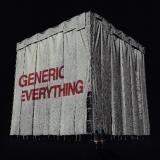
Chase & Status announce their forthcoming album Generic Everything, out 9th October 2026, alongside new single “Gone Too Far” featuring Debbie. The 10-track project brings together an expansive cast of collaborators including J Hus, Little Simz, Skrillex, Giggs, D Double E, Blanco, IRAH, Col3trane and more, continuing the duo’s long-standing ability to connect scenes, generations and sounds across British music.
Generic Everything follows a landmark period for Chase & Status, which has seen “Baddadan” spend over 15 weeks in the UK Top 10 and achieve Platinum status, while “BACKBONE” featuring Stormzy became their first ever UK Number One single. Alongside a BRIT Award for British Producer of the Year, a record-breaking sold-out UK arena tour and their Milton Keynes National Bowl takeover, the duo continue to operate at a career-defining level more than two decades in.
Built around the idea of resisting creative conformity in a world increasingly shaped by algorithms, endless content and more, Generic Everything sees Chase & Status once again refusing to be confined by genre.
Moving between rave, rap, soundsystem culture and electronic music, the album pairs their unmistakable production with some of the most distinctive voices in UK music and beyond, capturing a duo still driven by the instinct to keep evolving, collaborating and pushing their sound forward.
out of Stock
Last delivered 6 days ago available to reorder, subject to availability
GoldFord’s soul music is rooted in truth. His raw, unvarnished songs are a balance of introspection and catharsis, grappling with heartbreak, healing, and the quiet revelations that come with growth. After spending a decade in corporate America, the St. Louis native (now based in Los Angeles) turned to music as a means of survival following a devastating personal loss. “I was more afraid of dying with regret than I was of failing,” he says of his decision to finally choose the path at 30, a choice that set his entire trajectory in motion.
That initial fearlessness has since fuelled extraordinary momentum. With over 4 million monthly listeners on Spotify, GoldFord has rapidly become one of the most compelling emerging voices in contemporary music. His breakout EP, Orange Blossoms (Oct 2024), has surpassed 100M streams, and his latest project, Space of the Heart (Sept 2025), has already generated 90.8M streams, 2.7M saves, and over 153,000 pieces of user-generated content across TikTok and Instagram. The standout track “Easy Does It” has reached 43.5M streams and continues to accelerate with more than 250K new weekly discoveries on Spotify.
GoldFord’s touring trajectory has followed the music's rapid ascent. He began in intimate rooms like Los Angeles’ Moroccan Lounge and New York’s Baby’s All Right before embarking on a debut North American tour that sold over 25,000 tickets. This momentum carried over to his first UK and European run, which required multiple venue upgrades in cities like London and Manchester. The international momentum continued with an Australian debut in March 2026, alongside key festival appearances at Austin City Limits and Noah Kahan’s Out of the Blue. He is currently headlining 1,000+ capacity venues on the Space of the Heart North American tour, including sold out shows in historic rooms like The Fonda and Webster Hall, with upcoming festival slots at Shaky Knees and Oceans Calling.
At this point, the vast swathes of unreleased Muslimgauze material Bryn Jones left behind when he passed away over 25 years ago are as legendary as any of his work. And sure enough, there's still some being unearthed today.
The fourth entry in a 7" single series is taken from one of Jones' customary completely unlabelled DATs, which he sent to labels seemingly as fast as he finished them.
A new series of singles collecting one of Bryn Jones’ innumerable DAT tapes that would show up at the labels he worked with sans any identifying marks.
Side A layers multiple voices (a background, faraway wail that either is or is akin to a muezzin, and a flatly declaimed two-word phrase that periodically halts proceedings) over his classic, slightly brick-walled hand percussion for a strangely meditative experience, as Jones phases elements in and out, more or less prominently in the mix. Side B however, open in a surprisingly dreamy place for Muslimgauze, with a looped ascending synth pad and beautiful sampled singing only gradually acquiring percussive accompaniment. As with the other side, Jones is content to let these elements interact and swap spaces in the mix for the duration, trusting in the sturdiness of his chosen components to carry the listener through.
"Every day, the skies of New York City fill up with unseen clouds of radio signals spreading over immigrant neighborhoods. These culturally charged clouds of radio energy burst with a flow of content that continually shifts and transforms, following the lifecycle and rhythm of the streets.
Set sail for the next leg of the journey! Diggers Factory is thrilled to present the One Piece: Into the Grand Line (Soundtrack from the Netflix Series) Deluxe Vinyl Boxset.
Following the Straw Hat Crew as they finally move Into the Grand Line, the soundtrack captures the epic, high-seas energy of the hit series. Composed by the powerhouse duo Sonya Belousova & Giona Ostinelli, the score blends orchestral scale with pirate folk-rock grit, now pressed on stunning colored wax.
Whether you're dodging Baroque Works or looking for a giant whale, this box set is the ultimate treasure for any Straw Hat at heart.
2LP Black Audiophile Vinyl: Two black vinyl representing the fiery spirit of adventure and the deep mysteries of the Grand Line.
Custom Die-Cut Jackets: Two single jackets featuring a central die-cut hole that reveals the beautiful map-work of the inner labels.
16-Page Booklet: A deep dive into the production with exclusive set stills and behind-the-scenes imagery from Season 2.
Double-Sided Poster (20" x 27"): Choose your vibe with the cinematic group shot of the crew or the iconic "Grand Adventure Awaits" sunset art.
6 Exclusive Postcards: Vintage-style travel postcards from legendary stops like Loguetown, Little Garden, and Drum Island.
Sticker Board: A collection of high-quality stickers including Laboon, the Going Merry, and Luffy's legendary $30,000,000 Wanted Poster.
Collector's Box: All contents are housed in a premium, wooden-textured outer box.
Netflix's epic high-seas pirate adventure, ONE PIECE, returns for Season 2-unleashing fiercer adversaries and the most perilous quests yet. Luffy and the Straw Hats set sail for the extraordinary Grand Line-a legendary stretch of sea where danger and wonder await at every turn. As they journey through this unpredictable realm in search of the world's greatest treasure, they'll encounter bizarre islands and a host of formidable new enemies.
The Rascals are a British indie rock trio formed in 2006 by Miles Kane (guitar and vocals), Joe Edwards (bass) and Greg Mighall (drums), hailing from The Wirral on Merseyside. Before becoming The Rascals, all three members spent their formative years playing together in The Little Flames, gaining valuable experience touring with prominent contemporaries such as The Coral, The Zutons and, most significantly, Arctic Monkeys. It was while supporting Arctic Monkeys—drawing inspiration from their fiercely independent, DIY ethos and refusal to compromise—that the trio decided to trust their instincts and strike out on their own.
In September 2006, Kane, Edwards and Mighall began writing and jamming as a three-piece, giving birth to The Rascals. The band quickly developed a sound rooted in strong pop melodies and psychedelic flourishes, but distinguished by a darker, more introspective undercurrent. Influenced by artists such as Scott Walker, their music carries a sweeping, epic quality, while their lyrics often evoke a David Lynch–like atmosphere. As Kane explains, The Rascals were never content with skimming the surface, instead preferring to explore subtler, shadowy themes that reveal themselves over time.
Released on Deltasonic Records, Rascalize showcases clear influences from labelmates and peers such as The Coral, as well as echoes of bands like The Inspiral Carpets. Standout tracks including “The Glorified Collector,” “Does Your Husband Know That You’re On The Run?” and lead single “Freakbeat Phantom” highlight the band’s knack for catchy hooks, layered guitar effects and driving rhythms.
On her debut album Switchbacks, Nashville-based artist Hannah Cole finds inspiration in the image of the switchbacks – sinuous twists in the road that obscure what's ahead. For a young artist making her way in the music industry, it's a powerful image: we can't really know what's ahead for us but – as Cole has learned – you should honk your horn to tell the world you're coming, and otherwise just enjoy the ride. Melding shoegaze and alternative rock with infectious pop melodies and strains of 90s nostalgia, Switchbacks is a commentary on the pursuit of success and how to protect the pure joy and love that lives at our core.
Across the ten tracks of Switchbacks, Cole swings her gaze at many unsettling aspects of the scramble toward success. Lead single "MMA" explores the ugly side of the music industry through the image of Las Vegas. On the brightly off-kilter "Give," she sings, "I feel like I've become an actor, / A TV pastor / climbing up a topless ladder," explaining that "the pursuit of success can feel like buying lottery tickets all the time for money that you'll never see." "Mechanical Bull" seethes with rage as Cole grapples with being seen as just the "girlfriend" in music settings and not being perceived as an equal to her partner, while on "Pitcher," she's paralysed in the face of wanting to achieve perfection. Later, she shrugs off the need to impress on "100 Bucks," reminding herself that she's enough for the people she loves.
Switchbacks is not only a finely-crafted debut album but also a deeply human artifact, tracing an arc that blazes like a comet to the height of ambition and then leaves you in the shimmer of self-acceptance and contentment. "Success is a moment that comes and goes," Cole concludes, "but I think the joy and experience that comes with making music is something I can take with me forever."
When Drop Nineteens disbanded in the mid-'90s, singer Greg Ackell decided he would never make music again. He wouldn't noodle around on a guitar in his basement. He wouldn't get a group of friends together just to jam. He was done with music entirely. Following the release of the shoegaze masterpiece Delaware in 1992, and the intricate experimentations on National Coma in 1993, the group disbanded. They shared stages with Radiohead, Hole, Blur, PJ Harvey and Smashing Pumpkins. They went from being teenagers in Boston to mid-twenty-somethings with a few MTV videos, a couple BBC sessions and numerous festival appearances under their belt. So when Drop Nineteens ceased to be, Ackell felt content. He had the rest of his life in front of him to figure out what he wanted to do. Music was a closed chapter.That was until 2021, when a friend from the band's early days got Greg on the phone to suggest making some music together, just to see how it felt. Instead of shutting it down like he had been doing over the years, he decided to entertain the prospect. For the first time in nearly 30 years, he picked up a guitar with intent. He immediately called up Steve Zimmerman, the band's bassist and fellow guitarist, and the two got writing. It felt effortless for Ackell, like he never stopped writing music. "We were off to the races," he says, "But also the question came up: what does a Drop Nineteens song sound like today?" Enter Hard Light, the band's stunning third record. It's the band's proverbial follow up to Delaware, a modern Drop Nineteens record that is completely singular in its sound and vision. The first task making Hard Light was, of course, getting the rest of the band back together. Drop Nineteens is an inherently collaborative project. Ackell writes the lyrics, and he works with band members Steve Zimmerman, Paula Kelley, Motohiro Yasue, and Peter Koeplin to create the sonic world. The record came together over the course of a year, recording at a patchwork of studios all around the country: Boston, Brooklyn, San Francisco, Los Angeles. When Kelley and Ackell first heard their vocals recorded together on the opus album closer "T", the chemistry was undeniable. Making music together felt natural, fluid, exciting.Hard Light is a romantic record in the literary sense. Beauty from longing; longing from beauty. You put the album on and want to be clad in a velvet dress sprawled across a fainting couch. You want to be holding someone's hand while you sit back in the tall grass. The guitars are expansive and expressive as ever. Ackell and Kelley's vocals are cool, crystalline, and luminous. "Gal" comes on like a dream. The vocals pour in when you least expect them, once in the middle, where Ackell delivers one of the strangest (and best) lyrics on the record, "And there were snakes/with cats at the wheel." Hard Light's first single, "Scapa Flow" is triumphant and an excellent example of what a modern day Drop Nineteens song sounds like. The guitars glide cloud-like, floor toms shuffle and rumble in the background, searching. Ackell and Kelley's vocals are as toned as they are bound. Hard Light is every bit the ride that Delaware was, diverse in its sounds, with surprises at every turn. Drop Nineteens have brought clarity and cool in 2023 to the genre they helped create. A portrait of a band 30 years later, as talented and dedicated to their craft as ever. To put it more bluntly, they're at the top of their game.
In a world increasingly shaped by disposable content, Chat Pile answer with something defiantly real and organic, a mentality that permeates Who Loves The Sun, their third full-length record. Since the band’s formation just over six years ago, the Oklahoma City-based quartet Chat Pile has grown from a scrappy passion project into one of the defining heavy acts to emerge from the 2020s underground. Ray B. (vocals), L. Manhole (guitar), Stin (bass), and Cap’n Ron (drums) create a crushing, crass, and cathartic take on noise rock that captures a raw, undeniably human essence in an age marked by technological overreach and the cold state of society. Nothing about Who Loves The Sun feels synthetic.
Whereas their debut album God’s Country depicted a particularly American flavor of dread, and the follow up Cool World showed a cruel planet defined by global systemic violence, Who Loves The Sun peels the skin back on how collective indifference defines this new century. Spanning imagery of coastlines devouring cities, dead-end jobs, and submission to data-driven inauthenticity, the album dissects the apathy-bloated state of 21st-century existence as a slow-motion apocalypse. As with much of Chat Pile’s work, Oklahoma City itself looms over the album like a character, its sprawling isolation, economic contradictions, and underlying sense of decay embedded in the fabric of the record. The perfect allegory for the thematic essence of Who Loves The Sun is the photo embossed on the record’s cover, where Devon Tower, a glassy, largely vacant monolith, looms high above the Oklahoma City skyline while a burnt-out home or storefront envelops the foreground. The album remains lyrically and sonically confrontational, but Chat Pile approached the songwriting with hooks in mind, drawing on melodic tones of pre-2000s indie rock, alt-rock, and new wave. From the blood-soaked vocal passages of “Christabel ’26” to the eerie trip-hop pulse of “Same Rules,” Who Loves The Sun is deeply human despite its allusions to a dying, divided .
In a world increasingly shaped by disposable content, Chat Pile answer with something defiantly real and organic, a mentality that permeates Who Loves The Sun, their third full-length record. Since the band’s formation just over six years ago, the Oklahoma City-based quartet Chat Pile has grown from a scrappy passion project into one of the defining heavy acts to emerge from the 2020s underground. Ray B. (vocals), L. Manhole (guitar), Stin (bass), and Cap’n Ron (drums) create a crushing, crass, and cathartic take on noise rock that captures a raw, undeniably human essence in an age marked by technological overreach and the cold state of society. Nothing about Who Loves The Sun feels synthetic.
Whereas their debut album God’s Country depicted a particularly American flavor of dread, and the follow up Cool World showed a cruel planet defined by global systemic violence, Who Loves The Sun peels the skin back on how collective indifference defines this new century. Spanning imagery of coastlines devouring cities, dead-end jobs, and submission to data-driven inauthenticity, the album dissects the apathy-bloated state of 21st-century existence as a slow-motion apocalypse. As with much of Chat Pile’s work, Oklahoma City itself looms over the album like a character, its sprawling isolation, economic contradictions, and underlying sense of decay embedded in the fabric of the record. The perfect allegory for the thematic essence of Who Loves The Sun is the photo embossed on the record’s cover, where Devon Tower, a glassy, largely vacant monolith, looms high above the Oklahoma City skyline while a burnt-out home or storefront envelops the foreground. The album remains lyrically and sonically confrontational, but Chat Pile approached the songwriting with hooks in mind, drawing on melodic tones of pre-2000s indie rock, alt-rock, and new wave. From the blood-soaked vocal passages of “Christabel ’26” to the eerie trip-hop pulse of “Same Rules,” Who Loves The Sun is deeply human despite its allusions to a dying, divided .
In a world increasingly shaped by disposable content, Chat Pile answer with something defiantly real and organic, a mentality that permeates Who Loves The Sun, their third full-length record. Since the band’s formation just over six years ago, the Oklahoma City-based quartet Chat Pile has grown from a scrappy passion project into one of the defining heavy acts to emerge from the 2020s underground. Ray B. (vocals), L. Manhole (guitar), Stin (bass), and Cap’n Ron (drums) create a crushing, crass, and cathartic take on noise rock that captures a raw, undeniably human essence in an age marked by technological overreach and the cold state of society. Nothing about Who Loves The Sun feels synthetic.
Whereas their debut album God’s Country depicted a particularly American flavor of dread, and the follow up Cool World showed a cruel planet defined by global systemic violence, Who Loves The Sun peels the skin back on how collective indifference defines this new century. Spanning imagery of coastlines devouring cities, dead-end jobs, and submission to data-driven inauthenticity, the album dissects the apathy-bloated state of 21st-century existence as a slow-motion apocalypse. As with much of Chat Pile’s work, Oklahoma City itself looms over the album like a character, its sprawling isolation, economic contradictions, and underlying sense of decay embedded in the fabric of the record. The perfect allegory for the thematic essence of Who Loves The Sun is the photo embossed on the record’s cover, where Devon Tower, a glassy, largely vacant monolith, looms high above the Oklahoma City skyline while a burnt-out home or storefront envelops the foreground. The album remains lyrically and sonically confrontational, but Chat Pile approached the songwriting with hooks in mind, drawing on melodic tones of pre-2000s indie rock, alt-rock, and new wave. From the blood-soaked vocal passages of “Christabel ’26” to the eerie trip-hop pulse of “Same Rules,” Who Loves The Sun is deeply human despite its allusions to a dying, divided .
In a world increasingly shaped by disposable content, Chat Pile answer with something defiantly real and organic, a mentality that permeates Who Loves The Sun, their third full-length record. Since the band’s formation just over six years ago, the Oklahoma City-based quartet Chat Pile has grown from a scrappy passion project into one of the defining heavy acts to emerge from the 2020s underground. Ray B. (vocals), L. Manhole (guitar), Stin (bass), and Cap’n Ron (drums) create a crushing, crass, and cathartic take on noise rock that captures a raw, undeniably human essence in an age marked by technological overreach and the cold state of society. Nothing about Who Loves The Sun feels synthetic.
Whereas their debut album God’s Country depicted a particularly American flavor of dread, and the follow up Cool World showed a cruel planet defined by global systemic violence, Who Loves The Sun peels the skin back on how collective indifference defines this new century. Spanning imagery of coastlines devouring cities, dead-end jobs, and submission to data-driven inauthenticity, the album dissects the apathy-bloated state of 21st-century existence as a slow-motion apocalypse. As with much of Chat Pile’s work, Oklahoma City itself looms over the album like a character, its sprawling isolation, economic contradictions, and underlying sense of decay embedded in the fabric of the record. The perfect allegory for the thematic essence of Who Loves The Sun is the photo embossed on the record’s cover, where Devon Tower, a glassy, largely vacant monolith, looms high above the Oklahoma City skyline while a burnt-out home or storefront envelops the foreground. The album remains lyrically and sonically confrontational, but Chat Pile approached the songwriting with hooks in mind, drawing on melodic tones of pre-2000s indie rock, alt-rock, and new wave. From the blood-soaked vocal passages of “Christabel ’26” to the eerie trip-hop pulse of “Same Rules,” Who Loves The Sun is deeply human despite its allusions to a dying, divided .
To celebrate the launch of the 4th and last DLC of Atomic Heart, Kid Katana Records teamed up with Mundfish to bring you this high quality album for the first time on an exclusive double vinyl.
With over 10 million players since its release, and a nomination at the 14th Hollywood Music in Media Awards, Atomic Heart has kept on bringing new content in the game, enriching the players’ experience with new Stories, Threats and Music to pursue the fight for freedom and progress.
The physical edition is a premium 2LP designed in close relationship with the game's creative team: Track selection handpicked by Atomic Heart team, including tracks from Mick Gordon, GeoffPlaysGuitar and Boogrov, and 1 new track (DLC #4 trailer exclusive) 2-colored vinyls with unique red and black “corona” effect: handmade vinyl effect melting red and black colors to shape a unique vinyl color on each product, mirroring the cover art.
Exclusive cover art with mat finishing and glossy effect on the Twin and motorcycle
out of Stock
Last delivered 4 days ago available to reorder, subject to availability
In Walter Benjamin’s seminal essay “Art in the Age of Mechanical Reproduction”, he posits that the aura of art objects is destroyed by the ability to photographically reproduce them. When you had to make a pilgrimage to a work it remained elusive, charged, ever distant; but when you can easily see a reproduction, such aura dissipates. What Benjamin did not anticipate is that in the age of AI and the frictionless fount of digital content, we have imbued mechanical and analog means of media production with aura. Film cameras from the last 100 years are in high demand (the point and shoot Olympus Mju I featured in Wim Wenders film Perfect Days still sells for $200), vinyl sales continue to grow year by year, 35mm and 70mm film screenings have become aura-drenched events people travel across country for, and as to the world of vintage and analog synthesizers, when a friend asked for the price on the Yamaha CS-80 synth used on Toto’s “Africa”, the answer was a cool $60,000.
Despite the ability to simulate almost any synthesizer on a computer, the original physical units retain their mystique. Perhaps this lies in the physical process, many of these synths are temperamental and difficult to fully utilize, and the effort and ingenuity can be felt in ways that will always be absent from easy digital simulacra. Perhaps there is an aura in their imperfection, as Brian Eno wrote: “Whatever you now find weird, ugly, uncomfortable and nasty about a new medium will surely become its signature. CD distortion, the jitteriness of digital video, the crap sound of 8-bit - all of these will be cherished and emulated as soon as they can be avoided.” Some may call this nostalgia, but such sonic imperfections are the sounds of humans interacting with the physical world, and it is understandable to feel a pang of emotion and attachment in a time of exponential alienation.
Marche 22 was recorded over a week at the Museo Del Synth Marchigiano in Macerata, Italy. The museum is filled with rare and obscure synths (especially CRB, GEM & Elka) as well as salvaged materials from a nearby shuttered Farfisa organ factory, including MARS, an unfinished realtime audio processing application developed by IRIS - similar to the now well known MAX/MSP. Kyle Dixon and Michael Stein play a suite of pieces that encompasses the last sixty years of synthesizer music—there are nods to Cluster, Tangerine Dream, Jean Michel Jarre, and Morton Subotnick. Dixon and Stein are like jazz masters playing the American songbook with their own riffs and quotations. What shines through in these varied works that are sometimes rhythmic, sometimes melancholic, and sometimes both, is a soul, a spirit, an emotion vibrating through the tones like the charge of coming rain or the thrum of a distant train on the tracks. - Neil Fauerso
Louisiana Red's "Anti-Nuclear Blues" is considered a classic among acoustic blues albums and comes out on CD (w/bonus tracks) and LP in random coloured vinyl , limited to 500 copies worldwide - for fans of Buddy Guy, Junior Wells, Sonny Terry, Lightnin' Hopkins Louisiana Red was born in Alabama in March 1932 and died in Hanover almost exactly 80 years later. The early life of Iverson Minter, also known as Louisiana Red, was marked by suffering.
His mother died of pneumonia a week after he was born. When he was five years old, his father was executed by the Ku Klux Klan. After that, he lived in orphanages until he was able to spend the rest of his childhood with his grandmother. As a teenager, he was sentenced to hard labor for burglary and subsequently sent by Uncle Sam to the Korean War. Iverson had wanted to become a blues musician ever since he had met Muddy Waters. In the late 1950s, he played in John Lee Hooker's band. In the mid-1970s, he moved to Europe, where he gained recognition among a wider audience through appearances at the WDR Rockpalast and the Montreux Jazz Festival. In the 1980s, Fritz Rau signed Louisiana Red for his successful festival series, the "American Folk Blues Festival." In 1983, he released his acclaimed album "Anti- Nuclear Blues," whose content and message are more relevant today than ever. The original vinyl edition has since become a sought-after rarity. Now, the album is being released for the first time on CD, featuring six bonus tracks from the 1981 "American Folk Blues Festival," as well as a reissue on vinyl with a fresh sound.
For the 10th Anniversary of the iconic and unique For Honor, Kid Katana Records teamed up with Ubisoft to bring you this high quality album on an exclusive double vinyl. With over 35 million players since its release, For Honor has kept on bringing new content in the game, enriching the players’ experience with new Heroes, Factions and Music to keep the battle for survival and honor alive.
The physical edition is a premium 2LP designed in close relationship with the game's creative team:
● Track selection handpicked by For Honor team, including 2 new tracks (Year 10 exclusive) and a track never released before from Y1 Season 7
● 2 Golden vinyls
● Exclusive cover art with glossy effect on the logo
● Exclusive 16-page booklet with insights on each faction’s music, liner notes
from the game’s creative team and composers Luc St-Pierre, Danny Bensi and
Saunder Jurriaans
The tracklist is a selection of music from the 10 seasons of the game, one side per faction:
GoldFord’s soul music is rooted in truth. His raw, unvarnished songs are a balance of introspection and catharsis, grappling with heartbreak, healing, and the quiet revelations that come with growth. After spending a decade in corporate America, the St. Louis native (now based in Los Angeles) turned to music as a means of survival following a devastating personal loss. “I was more afraid of dying with regret than I was of failing,” he says of his decision to finally choose the path at 30, a choice that set his entire trajectory in motion.
That initial fearlessness has since fueled extraordinary momentum. With over 4 million monthly listeners on Spotify, GoldFord has rapidly become one of the most compelling emerging voices in contemporary music. His breakout EP, Orange Blossoms (Oct 2024), has surpassed 100M streams, and his latest project, Space of the Heart (Sept 2025), has already generated 90.8M streams, 2.7M saves, and over 153,000 pieces of user-generated content across TikTok and Instagram. The standout track “Easy Does It” has reached 43.5M streams and continues to accelerate with more than 250K new weekly discoveries on Spotify.
GoldFord is stepping into a more luminous and soulful era as he prepares to unveil his next body of work. Defined by the warmth and light of his latest single, Only You Do, the music remains a dedicated exploration of mental wellness, restoration, and the profound power of human connection. From its opening chords, this new project serves as both a continuation and an elevation of his journey toward healing.
Ever since the late 1950s bossa-nova revolution, Brazil’s influence on French music has been undeniable. Pierre Barouh, Georges Moustaki and a vast array of lesser known artists, all made the Musica Popular Brasileira (MPB) an axis of promotion at the service of a cool and metaphysical, modern and mixed Brazilian lifestyle. Some were seduced by the poetic languors of the bossa, some were looking for fun, and others just loved the American hybridization of jazz-bossa, jazz-samba.
What is bossa nova? One of its creators, Joao Gilberto said: "Its style, cadence, everything is samba. At the very start, we didn't call it bossa nova, we sang a little samba made up of a single note - Samba de uma nota so .... The discussion around the origins of bossa nova is therefore useless”. It is nevertheless useful to remember that these magnificent Brazilian songs, which the guitarist describes as samba, were shifted and balanced around improbable chords. "I like things that lean, the in-betweens that limp with grace," said Pierre Barrouh, quoting Jean Cocteau.
With emotion, arrangements for violin and supple guitar licks, bossa nova rapidly changed. A transformation that can be heard in the Tchic, tchic, French Bossa Nova 1963-1974 compilation, the result of a cultural reappropriation, which traveled through the United States and supplemented itself in France.
A musical revolution that has remained significant, bossa nova was born in Rio. From 1956 to 1961, Brazil lived through its golden years. In five years, the country had invented its modernist style. Elected president in 1956, Juscelino Kubitschek de Oliveira, an elegant man with a broad forehead, brandished a promising slogan: "Fifty years of progress in five years". He quickly got to work. Not worried about increasing debt, he launched the project for a new federal capital, Brasilia, designed by the communist architect Oscar Niemeyer. Volkswagen opened state-of-the-art factories and created the “fusquinha”, the Beetle. In Rio, the Vespa made its first appearance. The Arpoador Surf Club crew run into the “girl” from Ipanema, Helô Pinheiro - the tanned garota ("chick"), between a flower and mermaid, who at 17 walked by the Veloso bar, where the fiery author and composer, Tom Jobim and Vinicius de Moraes, were getting drunk on whiskey. From then on, bossa symbolized cool.
In 1958, Joao Gilberto recorded Chega de Saudade, which the directors of Philips denied, calling it "music for fagots". The marketing director, who believed in it, secretly pressed 3000 78-inch vinyls and distributed them at schools around Rio, creating a tidal wave.
American jazzmen then took over. In particular, trumpeter Dizzy Gillespie and guitarist Charlie Byrd. In November 1962, the Brazilian Ministry of Foreign Affairs funded a "Bossa-Nova" concert at Carnegie Hall in New York, inviting the genre’s pioneers. Unprepared, the show soon turned to disaster. But the troupe was invited to the White House by Jackie Kennedy. The first lady loved "the new beat" and in particular Maria Ninguem, a song by Carlos Lyra, later covered by Brigitte Bardot.
In Brazil, the 1964 military coup quickly ended this euphoria. The destructive atmosphere that ensued pushed many Brazilian musicians to leave, if not to exile. Thus, Tom Jobim, Sergio Mendes and Joao Gilberto arrived to the United States. In New York, Joao Gilberto met saxophonist Stan Getz. At the time, he was married to the Bahianese Astrud Weinert Gilberto, who had a German father. She had never sung before, but she knew how to speak English. Getz therefore asked her to replace her husband on The Girl From Ipanema. The Getz/Gilberto record with Tom Jobim on piano, was released in March 1964. Phil Ramone, the "pope of pop" was in charge of sound.
Bossa nova arrived in Paris through the classic “guitar-voice” channel (Pierre Barouh, Baden Powell, Moustaki…) But France loved jazz and Paris had already welcomed its American contributors. All these good people were to pass through Saint-Germain-des-Prés. The cabaret l'Escale became the Mecca of Latin American sound where one could find Pierre Barrouh and his friends, such as the Camara Trio, samba-jazz aces, whose only record was published by the Saravah label. With a band strangely called Les Masques (a band that included Nicole Croisille and Pierre Vassiliu, among others), the Camara Trio recorded an interesting Brazilian Sound, including the track Il faut tenir which is present on this tasty compilation of rarities.
Other enlightened musicians can also be found on the compilation, such as Jean-Pierre Sabar (songwriter for Hardy, Auffray, Leforestier ...) and the French pop rock organist Balthazar. In 1975, Sabar recorded Aurinkoinen Musiikkimatka on a Finnish label, which featured the crazy Vai, Vai, included on this record. We are now following the footsteps of Brazilian electronic musicians such as Sergio Mendes, Eumir Deodato or Marcos Valle who created funk and disco sounds on their keyboards and synthesizers. A style that influenced Véronique Sanson when she wrote Jusqu’à la Tombée de la nuit in 1969 for Isabelle de Funès, the niece of Louis and a great friend of Michel Berger - Sanson did end up singing this track on her 1992 Sans Regret record.
The pinnacle of exoticism and travel, Sylvia Fels’ Corto Maltese includes bongos, sea mist and ocean sounds. The title was taken from Jacky Chalard’s concept album written in 1974, Je suis vivant, mais j’ai peur (I am alive, but I am scared), based on Gilbert Deflez’s science fiction novel.
However, bossa nova extended the scope of popularity. "In the 1970s, I was a fan of Sergio Mendes, Getz / Gilberto. I fell in love with this music that I knew because I had been an orchestral singer, " explained Isabelle Aubret, who in 1971 delivered a composite record of covers by the very funky Jorge Ben, Orfeu Negro, Tom Jobim, Vinicius de Morais and Jean Ferrat. "I recorded this album for Meys Records in Paris, far from Brazil, with wonderful musicians, François Raubert, Roland Vincent, Alain Goraguer...". The latter wrote the arrangements for Casa Forte, a very percussive title borrowed from Edu Lobo, one of the initiators of the bossa who spent time in California. "Jazz and bossa came together and produced very rhythmic music. I love singing, it allows me to dream, to have fun, to feel a high on stage, and these songs brought me joy, made me swing, my singing felt like a dance.”
The world tours of French singers and their desire for the tropics, often brought them to Rio with its hills, forests, caipirinhas and tanned bodies. There are surprises though, like this Iemenja (Iemenja is the goddess of the sea in the Afro-Brazilian candomblé religion). Not unlike the composer and musician Jean-Pierre Lang, based in Sao Paulo, Claire Chevalier taught Brazil to Brazil. In 1970, the singer and painter published a 45-inch vinyl, Mon mari et mes amants (My husband and my lovers), under the improbable pseudonym of Clarinha (little Claire). She was then living in Rio, with her husband, Joël Leibovitz, who founded a band called Azimuth, and who owned a record label specialized in "sambas enredos" songs for samba school parades.
For its B side, she asked Pierre Perret to come up with lyrics for a song composed by Carlos Imperial: "Oh goddess of the sea, o goddess Iemenja, I bring a white rose to adorn your long hair ..." . "Perret came to see us, and we had fun, remembers Joël Leibovitz. We wrote Lemenja for fun, we recorded it at the Havaí studio, behind the Central do Brasil the central station. Erlon Chaves, the arranger who worked with Elis Regina, joined us" adding his share of Afro-Brazilian percussions and funky brass to the mix.
There is a common misunderstanding in Franco-Brazilian history: that bossa, admittedly hedonistic, is perceived as funny, even though the poets who wrote the texts are often philosophizing on the human condition. Its French interpreters pull it towards a carnival inspired universe, far removed from its fundamental essence. Thus, Jean Constantin covered the famous Samba da minha terra, an ode to the art of samba written by the classic Bahian composer Dorival Caymmi, renaming it with the enticing title of Pas tant de tchi tchi pompon: "On your pier there is no tchi tchi / when you arch your back, you know everything is alright ”(lyrics by Gérard Calvi). This expedited bossa aims for the absurd, but retains a certain elegance.
Indeed, Jean Constantin was not an idiot, the rather large man had a huge mustache and liked fantasy, (Les pantoufles à papa, Le pacha, inspired by cha-cha-cha-cha, salsa and jazz) but he was also the lyricist of Mon manège à moi interpreted by Edith Piaf, the composer of Mon Truc en plume by Zizi Jeanmaire and the soundtrack of François Truffaut’s 400 Blows. Le Poulpe, published in 1970, from which this bossa is extract, was arranged by Jean-Claude Vannier, an accomplice of Serge Gainsbourg’s Melody Nelson. In short: "There is enough of samba / By looking at the parasol / Because my poor cabeza / Is going to die in the sun".
Even the American actress Marpessa Down, who was at the heart of the bossa nova revolution with her role as Euridyce in Marcel Camus’ film Orfeu Negro, winner of the 1959 Cannes Palme d'or, fed the clichée with Je voudrais parler au petit cuica - "Tell me how you manage to always make people want to dance / It's true, I must admit that I cannot resist your magic" - in consequence, once can hear the cuica, a little drum inherited from the Bantu.
But bossa nova had many angles. Societal, of course, pushing actresses who were symbols of women's liberation like Brigitte Bardot, Jeanne Moreau, or Sophia Loren to engage in the exercise of accelerated bossa. In February of 1963, Sophia Loren made a record in French in Rome, Je ne t'aime plus, featuring the song De jour en jour, a bossa written by two Italians, Armando Trovajoli and Tino Fornai, which was released a little later by Barclay. Bossa accompanied the 1960s, a decade of moral liberation. Ann Sorel, who interpreted La Poupée des favellas, caused a sensation with L’amour à plusieurs, a provocative song written by Frédéric Bottom and Jean-Claude Vannier. As for the actress Andrea Parisy, she displayed her bourgeois cheekiness in Marcel Carné's Les Tricheurs before interpreting Les mains qui font du bien. And Magalie Noël, the friend of Boris Vian, who sung Johnny fais-moi mal, was hired to sing Une énorme Samba, composed by Alain Goraguer (arranger to Gainsbourg, Bobby Lapointe and Jean Ferrat) with lyrics by Frédéric Botton.
But in the end, of what wood is bossa nova made of? The answer is given by Christianne Legrand, daughter of Raymond the conductor, and sister to Michel the composer: "With me, with jà" - jà means "immediately" in Portuguese. In 1972, the singer, an expert in vocal jazz and a member of the Double Six, published Le Brésil de Christianne Legrand. Two songs included on the Tchic Tchic compilation that demonstrate how bossa, jazz, funk, rock, etc. work like a swiss army knife: the music is used to denounce broken systems, or miracles, HLM et ciné roman, Cent mille poissons dans ton filet, two songs from the O Cafona soundtrack, a successful telenovela broadcast, at the time in black and white, on TV Globo. The first was adapted in French by the fighter and friend of the Legrand tribe, Agnès Varda. The second is content with a play on words, jostling them into a summer fun.
Véronique Mortaigne
out of Stock
Last delivered 3 months ago available to reorder, subject to availability
The story that underlines on the deep levels of the artist cannot be said & done with a few words. It has to be discussed and aknowleged by the the most intricate ways of human wholesomeness and the connection of the art that we call sound. Human Collapse has been created with love for a human life but at the same time understanding that we are collapsing as a society in one way or another, whenever we chasing the material things or feeling absolute content and secure with minumum the world is giving us. Humanity Collapse is all about experiencing it together wrapped in an idea that we’ll be able to understand. The final track of the B side is taken by truly incredible artistic force called Charlou. The deep mind from France has taken his view on the subject with an insatiable musical acknowlegedment.
out of Stock
Last delivered 21 days ago available to reorder, subject to availability
Recorded about a year after Scenery, his second album retains the delicacy and emotional depth of his playing, but adds a new strength that gives the world Fukui paints a clearer contour and striking dimensionality. From the bittersweet, heart-stirring melody of “Mellow Dream” to the vibrant, exhilarating drive of “Horizon”, the album is filled with performances that shine brilliantly. It is also notable that the number of original compositions only one on the debut—has increased to three here, allowing listeners to appreciate Fukui’s musicality even more fully. Considering its maturity and the richness of its content, it may even be fair to say that this work surpasses his first album. Ryo Fukui, who sadly passed away...
Random Color ReVINYL Edition. Never has a Songs: Ohia album's process been so integral to its overall feel as is the case with DIDN'T IT RAIN, the band's sixth proper full-length. The album, like the working class South Philadelphia neighborhood in which it was birthed, has a real used goods kinda feel to it. Engineer Edan Cohen employed what some may consider "old-fashioned" recording techniques -- the entire album was recorded live with no overdubs, the full band playing in one room with the players always within arms' reach of one another; singers Jason Molina, Jennie Benford and Jim Krewson (the latter two of Jim & Jennie And The Pinetops) sharing microphones singing live together, sometimes sitting in chairs, sometimes standing. The result is a sound which resembles the warmth and personality of the classic Muscle Shoals Sound recordings of the early- to mid-70s: Willie Nelson's PHASES & STAGES, the Rolling Stones' "Wild Horses", and others by Aretha Franklin, Boz Scaggs, Bob Seger, Lynyrd Skynyrd and Wilson Pickett.Inspired by the Mahalia Jackson song of the same name, the title track is a beautiful song about the shifting tides of life and the old cycle of "a lot of shit going down before shit clears up". It's a damn fine place to start an album that seems in no hurry whatsoever to make a universal statement, instead perfectly content to walk its own path toward resolution. And damn if Songs: Ohia principal songwriter Jason Molina hasn't gone and created a record that is even more intensely personal and healing than any of his previous works. Neil Young had his AFTER THE GOLDRUSH, this is Molina's DIDN'T IT RAIN. Indeed, this is the album with which Molina really leaves his mark as a serious songwriter and artist. On 1999's genre-bending Ghost Tropic full-length, Songs: Ohia made it clear that it could make a cohesive album that took its listener on a journey from front to back. Its dislocated feel set a haunting tone, and its largely instrumental and drone-like quality was the process of the Ohia eluding itself and its own tendencies, searching for the underside of its roots freshly yanked. With DIDN'T IT RAIN, Molina & Co. return to the beauty of the song form and offer up a startlingly soulful and introspective song cycle in which Molina -- accepting a comfortable degree of anonymity amongst the other players -- meditates on what it means to feel rooted again (in the city of Chicago, where he's called home for the past three years), sounding more sturdy at his core than ever.
For nearly four decades, since its founding during the mid 1980s, the Belgian imprint, Sub Rosa, has continuously plumbed the depths of numerous, radical creative histories, assembling a catalog of releases that has almost no equivalent, while remaining nearly impossible to nail down. That said, for most of its run, Sub Rosa has been primarily recognized for its rigorous explorations of the lesser explored shadows of experimental sound practice (sound-art, sound-poetry, early electronic and electroacoustic music, free-improvisation, etc.), delivering a remarkable body of artifacts that have collectively helped to rewrite history in their wake. While it's always been impossible to anticipate where the label might take us next, threading their catalog are plenty of releases that throw further wrenches in the cogs, expanding our understanding of what they pursue, as in the case of a handful of titles, appearing as early as the 1980s, dedicated to ethnographic field-recordings from various parts of the world. Among the most striking and celebrated of these was 2017's Ethiopian Urban And Tribal Music: Mindanoo Mistiru / Gold From Wax, comprising an astounding body of recordings made by Ragnar Johnson and Ralph Harrisson in Ethiopia during 1971, reissuing material originally released by Lyrichord the following year. Now, Sub Rosa returns to the incredible work embarked upon by the pair and captured on that same trip with Ethiopian Musics 1971, comprising the recordings originally released by Ocora shortly after their completion, expanded in this edition to include an entire disc of never before released music. Widely regarded as some of the most important field-recordings ever made of indigenous Ethiopian folk music (as captivating and intoxicating as they are revelatory: providing insights into the roots of the country's singular traditions of popular music and jazz that have come to be celebrated the world over), this incredible collection is issued by Sub Rosa in a beautifully produced 2LP edition, complemented by a four page insert providing detailed descriptions of each song, as well as notes by the ethnomusicologists and recordists, as well as a 2CD edition, with a twelve page booklet. Insanely good and absolutely essential for any fan of field-recording, ethnomusicology, the music of Ethiopia, or the label's mission at large. Once again, Sub Rosa has defied our expectations and delivered a remarkably important intervention in the history of recorded sound.
Located in the Horn of Africa region of East Africa, few cultures are distinctly singular, while being so diverse (containing 80 distinct ethnic groups who speak 70 languages and 200 dialects) as that of Ethiopia. The home to some of the oldest surviving sects of Judaism, Christianity, and Islam (each contributing important aspects of its collective cultural body), particularly the country's culinary and musical traditions have become celebrated the world over, and (generally speaking) feel entirely independent of those of its neighbors. Given this, it's unsurprising that, during the summer of 1971, the young ethnographer, Ragnar Johnson, accompanied by Ralph Harrisson, traveled to Ethiopia to begin his brief career as a field recording ethnomusicologist, capturing material on reels of magnetic tape that would be subsequently released across three LPs for Lyrichord and Ocora, respectively, coming to form a cornerstone of documentation and study of the country's many indigenous musical traditions, as well as providing wide, global access to them for the first time. While Johnson's recording career was relatively brief, ending toward the end of the decade when he began to focus more on teaching in UK universities, with a focus on the anthropology of art and social anthropology, his impact on the field was lasting. Between 1971 and 1979, in addition to those he made in Ethiopia, he made hugely significant recordings in Yemen (also issued by Lyrichord before being reissued by Sub Rosa) and Papua New Guinea, which were originally released by David Toop's Quartz Publications to wide celebration, before being revisited by Ideologic Organ in 2023.
While it's worth noting that commercial releases of ethnomusicological recordings by labels like Folkways, Lyrichord, and Ocora were still in their relatively early days when he entered the field, Johnson's recordings quickly stood apart for their vivid qualities and clarity of space, allowing them to stand the test of time. As he later stated: "I used a Uher Report L stereo tape recorder, BASF quarter inch tapes at a recording speed of seven and a half inches per second with two directional microphones mounted to record an isosceles triangle of stereo sound," he reveals. "The location of the microphones and musicians was critical. The musicians were fully informed of all aspects of the recording process."
Johnson's recordings are extremely vivid, there is a clear sense of space and the cries of the flutes exist across the entire stereo field. It's a reflection of Johnson's skill as a field recordist that his recordings continue to be reissued over forty years later. "I used a Uher Report L stereo tape recorder, BASF quarter inch tapes at a recording speed of seven and a half inches per second with two directional microphones mounted to record an isosceles triangle of stereo sound," he reveals. "The location of the microphones and musicians was critical. The musicians were fully informed of all aspects of the recording process… I used to enjoy being in the moment and hearing something wonderful despite the stress of the vigilance required to ensure that the recordings were accomplished according to plan. The responsibility is to record and document the music as effectively as possible so that it has been preserved for posterity. It is better to actually record music than to sit in a seminar room debating the ethics of recording music." It is this very ethos and sense of clarity that can be encountered across the length of Ethiopian Musics 1971.
For the sake of clarity, the two LPs of material that comprise Ethiopian Musics 1971 should be regarded as a single body of recordings alongside those made in Ethiopia by Ragnar Johnson and Ralph Harrisson during the summer of 1971 (previously issued by Lyrichord and reissued by Sub Rosa), and as two that have, until now, remained historically distinct. The first LP gathers that material released by Ocora during the early 1970s on Musiques Ethiopiennes, while the second comprises (as far as we can tell) twelve never before issued recordings, expanding the journey and making this the definitive edition of the release with its incredible total of 23 recordings of songs, allowing it ever greater scope to achieve the recordists' modus operandi of capturing the broadest and most diverse cross section of Ethiopia's many musical cultures, ranging from different forms of urban music captured in Addis Ababa, documenting largely orally transmitted idioms within which lyrical content is given greater emphasis than the instrumental components (played on masenko fiddles, craar and bagana lyres, washint flutes and kabaro drums), to folk idioms hailing from the Danakil desert and the border regions with Sudan and Kenya. There are songs sung and played in bars, divination chants, laments, dances, Christian songs, and Amharic sung poetry, to only begin to scratch the surface.
Ethiopian Musics 1971 is one of those rare albums where each musical moment is pure, intoxicating gold, while also being greater through the sum of its parts. There are the many songs, forming a rich tapestry of remarkable range across the respective two LPs/CDs (moments that wondrously flirt with sonic abstraction; hypnotic rhythms; pulsing chant; melodies that, in structural arrangement and tonal combination, help us reframe how such a thing might be understood, and a great deal more), each imbued with a remarkable directness and emotive sensibility, and there is the stunning quality of these recordings themselves, transporting each sound to our ears as though we intimately share its creator's space, while being imbued with the pure heart and remarkable spirit with which they were made. As we said before, it's little wonder, once heard, why these recordings and this music feels as fresh and relevant (enduring more than 50 years) today as when they were made. Once again, Sub Rosa has raised the bar with this essential addition to the incredible work that Ragnar Johnson and Ralph Harrisson did back in Ethiopia during 1971, radically expanding our access to the sounds that they captured with these stunning, beautifully produced 2LP and 2CD editions. Absolutely engrossing from the first sounding to the last, this one can't be missed.
Deaf Center member Otto A Totland’s 2014 debut LP, an intricate work for solo piano.
Otto A Totland's modern compositional elements are most widely recognized as half of the Norwegian duo Deaf Center, where his melancholic, intricate piano work provides haunting relief to the beds of noise and deep strings from Erik K Skodvin. Pinô is the first full-length release by Totland, though his solo work has been released once, as the 5-minute A-side of Sonic Pieces 7inch Harmony From the Past. Otto's previously brief vignettes are now expanded into a fully personal realization of his own style.
Initial track Open fills itself with heavy, knowing pauses that quickly become overwhelmed with the desire to understand what's to come. Each silence leads into quick flutters of keys, preparing the listener for a vast terrain of giddy beauty, bleak depths, and true contentedness. Pinô quickly recalls deep winter; in front of a fireplace for days on end, you lose how far along you've ventured into the 18 tracks without any idea how far is left to go. The experience feels inevitable, with no other option but to curl up somewhere cozy and appreciate the sense of timelessness that Totland has created. His album is a haunting modern compositional treasure, expressed through instrumentals completely unique to Totland and captured masterfully by Nils Frahm at Durton Studios.
With Pinô, Otto A Totland appears out of the Norwegian landscape, sharing an achievement that will provide a relief during the brooding winter darkness. Though a highly personal endeavor, the recognizable continuation of Totland’s compositions will attract fans of Deaf Center, and the cinematic and classical components of his solo work will hold sway for those familiar with Harold Budd or Dustin O’Halloran.
out of Stock
Last delivered 5 years ago available to reorder, subject to availability
When I first heard YELKA play I thought to myself: “I’d like to play in that band.”
In the meantime I have realised that it would not be as easy as I imagined. The fluffy easy sound that gets created is so particular that it would not be so easy to execute those exact sounds of the band. This is mostly due to the unconventional harmonies of the guitar. Daniel himself said he is content with the guitar and added an extra one on almost all of the songs. Which I, as a fan of Daniels anarchic approach to playing, love.
Also Yelka’s groovy smooth bass playing is in the forefront of the album once again. Her sound bounces through the guitar riffs as if it's the most common thing on earth. Once Yelka adds her vocals to the songs, that’s when they almost become pop and reminiscent of Velvet Underground.
Christians drums hold these two together through the track list, with a fun Krautrock and jazz influenced style. Everything was recorded live and it sounds fantastic!
The 6th track of the YELKA album "Jeans" is a highlight with the piano support from Federico Corazzini, who adds lush open jazz chords to the incredible intricate harmonies of the band. Arne Bergner (Studio Popschutz) who is once more responsible for the production of the album, also added a beautiful choir arrangement. The finishing touches completing YELKA´S wonderful sound as always added by Norman Nitzsches Mastering (Mokik Studio).
From top to bottom an amazing album: "King of the World" (Steely Dan cover), a pop song with a fantastic keyboard solo from `the one and only Dan Ra´ alias Daniel Nentwig (The Whitest Boy Alive), "Moon for Now", an atmospheric jazz-ish tune, to "Walking Whispering", a strong 9-minute guitar heavy number... I think there are more than two guitars in this one.
American indie rock/pop/jazz whatever - school (after all, it's the third album in the band's America trilogy) and yet above all Berlin, in its most likeable and perhaps even coolest form.
New from Ulla’s 28912 label comes a gorgeous bouquet of lowercase wonders from Justin Cantrell aka J and the Woolen Stars, part of Picnic, and the brains behind the excellent Daisart and se Dessaisir Publishing labels.
»Puff« is a glistening pool of lush refractions and music-box lullabies, featuring an array of acoustic instruments and fragile foley sounds that are gently peeled away until all we’re left with are the faded outlines of half-remembered songs.
A sound that roots itself in the prophetic machinations of artists like Fennesz and the languid Japanese minimalism of Fourcolour or Moskitoo, »Puff« strikes a delicate balance, sounding as bewitchingly informal as a Tenniscoats set, but also consistently muddling the perception of high and low-brow sound. Cantrell’s skill lies in a sort of sonic conjuration, bamboozling the brains of those of us who grew up listening to stepped-on audio via ramshackle RealMedia streams by alchemising the content, turning found sound into gold. Just tell us you don’t get chills from hearing the bitrate-impaired acoustic guitar on »Dirty like an angel«, set against a backdrop of windy, harmonic detritus. It’s both meticulously contrived and gloriously off-the-cuff, like one of Vincent Gallo’s classic »When«-era demos reduced down to 96kbps.
Similarly, »She knows just what to say« provokes faint memories of folk music, with impromptu fiddle parts gently steamrolled to create a sound that’s nothing short of exquisite, like pressed flowers rediscovered in an old, discarded book. Even the more palpably electronic elements are hand sculpted in a way that belies the era we’re living in - it’s music for a digital age that sounds oddly unplugged, flawed and human. An unmistakably lovely antidote to the opiating nostalgia of our time.
Fela Kuti in Dub is a showcase album containing four essential songs by Fela Kuti in the style of a Jamaican Discomix, evolving from an instrumental cover version to a dub version, celebrating the musical heritage of Nigeria and Jamaica likewise.
Please understand this work as a hommage to both musical cultures.
The four tracks were chosen because they are a timeless witness to the political potential of music, that being proofed by their actuality. The songs feature essential dub effects like echoes, reverb and filtering but also feature analogue sound effects underlining and sonically illustrating the missing lyrical content. These vary from thundery spring reverbs and percussion instruments imitating the pouring rain on „Water No Get Enemy“ to marching soldiers and shot gun like reverbs on „Zombie“. From a cash register on „Expensive Shit“ to the dub sirens created live on a Korg MS10 on „Everything Scatter“.
Only analogue instruments, sounds and dub effects were used on this recording. Mixing, dubs and arrangements were done live in consecutive sessions. The premaster was done by Sodi Marciszewer at Zarma Studios (Fela Kuti, Femi Kuti, Seun Kuti, Damian Marley) on the original Decca desk used by Fela Kuti in Lagos. Fela Kuti In Dub was conceived and produced by Cpt. Yossarian alias Manuel da Coll musician, producer and soundman from Munich/Germany. His last work „Bob Marley In Dub“ (2021, Echobeach) attained a lot of critical acclaim and was featured by Don Letts on BBC6, the Riddim Magazine and Helmut Phillips book „DUB - The Sound Of Surprise“ amongst others.
out of Stock
Last delivered 57 days ago available to reorder, subject to availability
Entering a POWERFUL new phase, LE SSERAFIM (KIM CHAEWON, SAKURA, HUH YUNJIN, KAZUHA & HONG EUNCHAE) returns with their 2nd Studio Album ‘PUREFLOW’ pt.1, now presented in a collectible 12-inch vinyl format. Available in two colours - Electric Yellow Glitter and Hot Pink Glitter. Contents include: Record Jacket, Inner Sleeve, Vinyl, Photocard Set (5ea), and Lyric Poster. Dimensions: 312 x 312 x 3.5mm
Entering a POWERFUL new phase, LE SSERAFIM (KIM CHAEWON, SAKURA, HUH YUNJIN, KAZUHA & HONG EUNCHAE) returns with their 2nd Studio Album ‘PUREFLOW’ pt.1, now presented in a collectible 12-inch vinyl format. Available in two colours - Electric Yellow Glitter and Hot Pink Glitter. Contents include: Record Jacket, Inner Sleeve, Vinyl, Photocard Set (5ea), and Lyric Poster. Dimensions: 312 x 312 x 3.5mm
Steig ein in die neueste Mega-Firma von Seattle, Telehealth. Sind sie Rebellen, die mit Synth-Punk/New Wave die Grundlagen unserer techno-kapitalistischen Hölle untergraben wollen? Oder sind sie Unternehmer, die Marken aufbauen, um die Märkte zu stören und die Massen auszunehmen? Der einzige Weg, das rauszufinden, ist, ihr Debütalbum für Seattles älteste Mega-Firma, Sub Pop Records, zu kaufen. Green World Image folgt auf eine ausgedehnte US-Tournee, ein selbst veröffentlichtes Album und eine knackige 7"-Single aus dem Sub Pop Singles Club aus dem Jahr 2023. Für Fans von B-52s, Water From Your Eyes, Devo und Snooper. Die Kalshi-App ist ein ,Prognosemarkt für den Handel mit der Zukunft", eine Plattform, auf der Leute auf das Ergebnis von fast jedem realen Ereignis wetten können - von der Genauigkeit der Wettervorhersage bis hin zur Frage, ob in Gaza offiziell eine Hungersnot ausgerufen wird oder nicht. Als der Mitbegründer der Plattform, Tarek Mansour, Ende 2025 als offizieller Wett-Partner zu CNN kam, meinte er nach dem Deal: ,Die langfristige Vision ist, alles zu finanzieren und aus jeder Meinungsverschiedenheit einen handelbaren Vermögenswert zu machen." Telehealth wurde in dem chancenreichen Umfeld des Post-COVID-Seattle als skalierbares Musik-Startup mit ähnlichen Zielen gegründet. Das Unternehmen wurde 2022 von dem Ehepaar und Glücksspielbegeisterten Alexander Attitude (Synthesizer/Gesang/Gitarre) und Kendra Cox (Synthesizer/Gesang) gegründet, zu denen sich die langjährigen Mitarbeiter Ian McCutcheon (Schlagzeug), John O'Connor (Bass) und Dillon Sturtevant (Gitarre) gegründet. Die Gruppe will alle Meinungsverschiedenheiten darüber, wie die chaotische lokale ,Musikszene" weitergehen soll, zu Geld machen. Kann man DIY sein und gleichzeitig eine gute Suchmaschinenoptimierung haben? Kann man progressives kulturelles Ansehen und bares Geld gleichzeitig verdienen? Ist Kunst, die durch ,Kulturförderungen" der Tech-Industrie finanziert wird, irgendwie langweilig, authentisch gorpcore (junge Männer leben laut der New York Times den ,Quarter-Zip-Lifestyle") oder ironischerweise punkig? Für Telehealth ist die Antwort auf diese Fragen nicht ja oder nein, sondern eher eine unerschlossene Lücke im Musikmarkt, die auf eine Band wartet, die visionär und verrückt genug ist, auf die Verbreitung zu setzen. Produziert von Trevor Spencer, Green World Image, ist das zweite Album von Telehealth (nach dem Debütalbum Content Oscillator und einer Veröffentlichung des Sub Pop Singles Club, beide aus dem Jahr 2023) und sein Börsengang mit den Angel-Investoren Sub Pop ein vertikal integriertes Kunstwerk für die Post-Grunge-, Post-Flanell-Seattleiter und Konsumenten auf der ganzen Welt, die ebenfalls bereit sind, ihre eigene Leidenschaft für Musik zu finanzieren. Das traumainformierte, ergebnisorientierte und äußerst tanzbare Weirdo-Punk-Album ist inspiriert von Attitudes Zeit als ehemaliger Architekt in einer Climate PledgedÖ-Stadt, die mit ihrem Netzwerk aus effizient zonierten 5-über-1-Gebäuden die Kunst der ,Green World"-Architektur perfektioniert hat. Der PNW-Post-Punk von Telehealth schafft ähnliche architektonische Räume, in denen sich die glänzenden, futuristischen, techno-industriellen Rhythmen und Synthesizer des Seattle der Bezos-Ära mit dem rohen, unabhängigen Underground-Sound vermischen, den die Stadt aus kulturellen und Marketinggründen liebevoll bewahrt. Das Ergebnis? Stell dir XTC, REM und YMO vor, mit einem stärkeren Fokus auf ROI. Stell dir The B-52s vor, aber B2B. Stell dir einen intelligenteren Brainiac, einen transhumanen Gary Numan oder einen terminalen Online-Pylon vor. Endlich eine Band mit so vielfältigen Talenten, dass sie sowohl in deinem Keller als auch in den Amazon Spheres spielen kann.
On their fourth proper studio album Ruckus, Galactic wholeheartedly move not so much away from their past as a bad-ass New Orleans jazz & roll band, as they move toward another of its traditions: Voodoo funk.
Not merely content to stick to Mardi Gras or Dr. John esthetics, Galactic points firmly toward the technological present with their primordial groove machine music. Bass, bass, and more bass is the order of the day, and strange keyboard sounds come bubbling under like some lost Lee Perry session gone digital. Ruckus is a spooky ride to the other side of midnight. That moment in time when anything is possible.
This is musical rebirth of a band. Galactic was made all the better for its brave new direction. Ruckus is a album packed with ass-burning grooves and was produced by Dan The Automator.
Ruckus has not been available on vinyl more than 2 decades, and now it's finally out again as a limited edition of 750 individually numbered copies on yellow & green marble vinyl, and includes an insert.
Fika Recordings are pleased to present Bring On The Apathy, the third solo record from Scottish songwriter Adam Ross. Adam Ross is an indie-folk songwriter based in north-east Scotland. He is a solo artist and has also led the cult indie band Randolph's Leap for over a decade, releasing music with legendary Fence Records and Lost Map as well as Olive Grove Records and Fika Recordings. He is known for his unique brand of articulate lyricism which blends humour, poignancy, wordplay and offbeat stories.. “Bring On The Apathy” was recorded onto tape, using traditional analogue techniques at Glasgow’s Green Door Studio with Samuel J. Smith. It showcases some of the most emotionally open, lyrically deft and characterful songwriting so far from one of Scotland’s most accomplished writers. The vintage recording approach brings a warmth and intimacy to a record which is in equal parts raw and organic while also beautifully arranged and performed as Adam is joined by a raft of excellent collaborators. The album itself is a reaction. Whether it be in the title, the lyrical content or the method in which the sounds were captured. “I was feeling fairly down and uninspired about the musical landscape” Adam explains. “The risk with digital recording where every instrument is overdubbed separately is that it can end up sounding metronomic, sterile and lacking personality.
I also started to get a bit freaked out by the topic of AI-generated music and the insidious, creeping impact it’s already having. I therefore decided that, as a bit of a protest, I wanted to make something that sounded extra-specially human and hand-crafted, where you could hopefully hear the interplay between musicians.” For this reason, Adam decided to record the majority of the album live, as a band, playing together in the same room without a click track. “I’d put a band together to tour my last album, Littoral Zone, and I really enjoyed the way we all worked together. Green Door Studio was chosen as the destination as it specialises in analogue sound production but it had an extra significance for Adam. “Green Door was the first studio I ever recorded in, back in 2009. This time around, the “unforgiving” nature of tape recording became an inspiration. “The musicians on the record are such great players that they rarely make mistakes, so there was a confidence there that we wouldn’t need to rely on copious amounts of editing or post-production, which isn’t always possible with tape anyway. The core band consisted of Owen Curtis-Williams on drums, Cameron Maxwell on bass, Pedro Cameron on violin, Gillian Fleetwood on harp and (long-time collaborator with Randolph’s Leap) Pete MacDonald on piano. Mercury Prize-nominated artist C Duncan was drafted in to write and perform backing vocal arrangements along with Amanda Nizich and Gillian Fleetwood. Adam says “I’d been listening to a lot of Bob Dylan, Karen Dalton and Bill Callahan records and I thought it might be interesting to apply those sorts of influences to my brand of Scottish quirk-pop”.
CORTIS IS BACK WITH THEIR 2ND EP ‘GREENGREEN’. AVAILABLE IN VINYL. CONTENTS OF THE ALBUM INCLUDE: CORTIS BRIDGE 12" VINYL, GATEFOLD JACKET, INNER SLEEVE, BOOKLET (16PG), PHOTOCARD (6EA), PHOTOCARD SLEEVE. DIMENSIONS: 316 X 316 X 7 MM.
Several years after the release of ‘Metamorphosis’ (with Sid Hille), Multicast Dynamics (Samuel van Dijk) reemerges on Astral Industries with ‘Circles’ - an enchanting two-part work venturing into deep unconscious realms. Sonic landscapes unfold in a sequence of hidden spaces and intimate revelations, featuring detailed sound design and rich thematic content.
Circle One initiates the process, opening gently with glassy drones and the patter of distant voices. A faint light shimmers through swirling pools of liquid memories and melting forms. The atmosphere builds, and everything is engulfed in the act of transfiguration.
Passing through the threshold, Circle Two traverses further into cavernous territories. Boundless drifting soon becomes a gravitational pull toward something deeper. Submitted to the powerful undercurrent, incoming primordial pulsations signal a quest that reaches its fated culmination.
Perhaps the revelation of something long-lost, entering the Circle eludes to that which on the surface remains hidden, yet its rediscovery inevitable.
out of Stock
Last delivered 5 months ago available to reorder, subject to availability
Wasteland is a record that is unafraid to plunge into the darkness of the modern world and embrace the weirder, edgier and more unnerving moments that come from doing so. It is an album that captures all the enormity of life from the micro to the macro, zooming in on the personal as well reflecting on broader societal issues.
“Wasteland is about the idea of a place once known or familiar that is now broken down and unrecognisable,” says Ghedi. “It’s about exploring the process of watching someone’s surroundings and environment collapse.” And within that you have a lot going on. “It also explores death, personal loss, grief, mental health and how the natural world provides solace and meaning for that loss and how these worlds blur into one another.”
Ghedi has always been an artist that in many ways perfectly encompasses folk music in its purest form but he is also someone that frequently pushes the boundaries of that label and no more so is that apparent than on this record. As like previous albums, such as 2018’s A Hymn for Ancient Land and 2021’s In the Furrows of Common Place, Ghedi uses traditional folk songs as a means to explore contemporary issues via modern and experimentally-leaning music. “With the traditional material on this album I wanted to find songs with content that resonated with me,” says Ghedi. “But also that were based roughly around the north of England.” This is a central underlying theme to the album for Ghedi. The feelings of loss, erosion, and degradation are often most pronounced in working class communities and this was something he wanted to weave in. “It was important to voice and choose material that represented or expressed issues that correlated with things going on around me.”
However, as remarkable as some of the traditional material is, some of the most arresting work on the album is Ghedi’s entirely original compositions. Lead single ‘Wasteland’ is a stunning piece of work that while rooted in an environment being corrupted and broken – “there’s violence on these hills” Ghedi sorrowfully sings, before claiming this is no longer somewhere that can be called home – it is also a stirringly beautiful composition that soars and glides as it opens up, as sweeping strings swoop and in and out of Ghedi’s twangy electric guitar.
The decision to incorporate more fuller sounds, such as electric guitar and huge drums, results in a notable shift and evolution in tone for Ghedi. “The lyrical content needed something more band-driven and loud to deliver them,” he explains. “Incorporating the electric guitar in my songwriting was also a big part of opening the sound up, using drop tunings pushed me to use my voice in a wider range, which forced me to use falsetto a lot which I haven’t previously done before. That then opened the sound up and gave me creative ideas for bigger arrangements and to sonically really push things.”
What Ghedi has done in creating his masterpiece is construct a remarkable space where deeply intimate and personal feelings coexist with reflections on environment, place and society, while also interweaving historical context via traditional songs. Wasteland is as much of a world to explore and exist in as much as it is an album, with Ghedi carving out his distinctly unique sonic language and voice to explore that singular environment.
Wasteland is a record that is unafraid to plunge into the darkness of the modern world and embrace the weirder, edgier and more unnerving moments that come from doing so. It is an album that captures all the enormity of life from the micro to the macro, zooming in on the personal as well reflecting on broader societal issues.
“Wasteland is about the idea of a place once known or familiar that is now broken down and unrecognisable,” says Ghedi. “It’s about exploring the process of watching someone’s surroundings and environment collapse.” And within that you have a lot going on. “It also explores death, personal loss, grief, mental health and how the natural world provides solace and meaning for that loss and how these worlds blur into one another.”
Ghedi has always been an artist that in many ways perfectly encompasses folk music in its purest form but he is also someone that frequently pushes the boundaries of that label and no more so is that apparent than on this record. As like previous albums, such as 2018’s A Hymn for Ancient Land and 2021’s In the Furrows of Common Place, Ghedi uses traditional folk songs as a means to explore contemporary issues via modern and experimentally-leaning music. “With the traditional material on this album I wanted to find songs with content that resonated with me,” says Ghedi. “But also that were based roughly around the north of England.” This is a central underlying theme to the album for Ghedi. The feelings of loss, erosion, and degradation are often most pronounced in working class communities and this was something he wanted to weave in. “It was important to voice and choose material that represented or expressed issues that correlated with things going on around me.”
However, as remarkable as some of the traditional material is, some of the most arresting work on the album is Ghedi’s entirely original compositions. Lead single ‘Wasteland’ is a stunning piece of work that while rooted in an environment being corrupted and broken – “there’s violence on these hills” Ghedi sorrowfully sings, before claiming this is no longer somewhere that can be called home – it is also a stirringly beautiful composition that soars and glides as it opens up, as sweeping strings swoop and in and out of Ghedi’s twangy electric guitar.
The decision to incorporate more fuller sounds, such as electric guitar and huge drums, results in a notable shift and evolution in tone for Ghedi. “The lyrical content needed something more band-driven and loud to deliver them,” he explains. “Incorporating the electric guitar in my songwriting was also a big part of opening the sound up, using drop tunings pushed me to use my voice in a wider range, which forced me to use falsetto a lot which I haven’t previously done before. That then opened the sound up and gave me creative ideas for bigger arrangements and to sonically really push things.”
What Ghedi has done in creating his masterpiece is construct a remarkable space where deeply intimate and personal feelings coexist with reflections on environment, place and society, while also interweaving historical context via traditional songs. Wasteland is as much of a world to explore and exist in as much as it is an album, with Ghedi carving out his distinctly unique sonic language and voice to explore that singular environment.
Iconic Atlanta quintet SEVENDUST is back with its 15th studio album, ONE, set for release on May 1, 2026 via Napalm Records. The upcoming full-length LP forges ten simultaneously lean and gut-punching tracks out of gargantuan riffs, seismic grooves, and signature soul-stirring hooks, once again produced by Michael “Elvis” Baskette (Alter Bridge, Falling In Reverse, Mammoth). The group, comprised of Lajon Witherspoon (vocals), Clint Lowery (lead guitar, backing vocals), John Connolly (lead guitar, backing vocals), Vince Hornsby (bass), and Morgan Rose (drums), busts down the door with the first single “Is This The Real You”. Its swaggering fretwork alternately wallops and gallops in lockstep with a pummeling rhythm anchored by thunderous drums. The riff rolls and seethes, and the vocals swing from guttural growls into the embrace of a jazz-y chantable chorus.
A hummable lead ties the bridge together. Echoes of a tensely picked single-note set the tone for “Threshold.” Lajon’s delicate delivery gives way to a contentious distortion-boosted refrain. Then, there’s “Unbreakable,” which has all the makings of a clarion call for the collective and a future live staple. Strains of soft piano slip into the undertow of a towering hook punctuated by a promise, “We were meant to be unbreakable… even when we’re at our lowest lows. And if it gets too cold, I’ll never let you go.” The title track succinctly sums up the record as a whole. Bellowing out of a maelstrom of roaring distortion, Lajon’s voice reaches heavenly heights. For over three decades, SEVENDUST have made countless fans feel a part of something special. The group’s community isn’t passive. Members of the “7D Army” make a very active commitment to being part of this family – as evinced by sold-out shows worldwide and innumerable tattoos of the band’s logo and lyrics. Since 1994, the band has quietly built a legacy without parallel, encompassing sales of nearly eight million albums, a GRAMMY® Award nomination for “Best Metal Performance,” three Top 15 entries on the Billboard 200, hundreds of millions of streams, and the fierce loyalty of millions of listeners in every corner of the globe.
As often, it started with discovering a CD, leading to the depths of the Internet Archive. I still remember the excitement of going through B.L. Underwood's recordings for the first time and realising how unique his approach to electronic music was, every track had something powerful yet moving within it, as he could play around with genres and tempos yet carrying a very distinctive touch. After a short detective work to get in touch with the artist, and quite some time curating the content of this compilation (the hardest part by far), System Of Objects is proudly presenting the remastered version of 6 of his tracks that showcast B.L. Underwood talent and uniqueness.
out of Stock
Last delivered 5 months ago available to reorder, subject to availability
long content, you may need to expand row to see all... Begin Here features fan favorites “She’s Not There, “Summertime,” and “The Way I Feel Inside,” plus three US bonus tracks including “Tell Her No.”
This definitive new edition combines all 17 tracks from the UK and US versions of The Zombies’ 1965 debut album, remastered in its original mono mix. Begin Here (Mono Remastered) is the next chapter in the series of Zombies reissues via the band’s own label Beechwood Park Records, with the same team as Odessey and Oracle - again being overseen by Matthew and Jamie White, mastering by Reuben Cohen at Lurssen Mastering, and brand-new liner notes by the legendary David Fricke. The album will be housed in a single pocket jacket with poly-lined sleeves and an insert.
long content, you may need to expand row to see all... Karajans legendärer Dvořák auf recyceltem Vinyl
Die unverkennbare Kraft und Leidenschaft von Dvořáks Sinfonie Nr. 9 „Aus der Neuen Welt“, eingefangen in Karajans legendärer Aufnahme von 1977 mit den Berliner Philharmonikern, erscheint nun in einer limitierten Edition auf recyceltem Vinyl (ReVinyl / Farbe: Red Appeal) – ein beeindruckendes und nachhaltiges Format. Jede zu 100 % aus recyceltem PVC hergestellte Schallplatte besticht durch eine einzigartige, rot-marmorierte Optik, die sie zu einem echten Unikat macht. Hier trifft eine zeitlose Interpretation auf einen neuen Standard für umweltbewusste Audiophile. Diese Einspielung wird weithin für ihren lebendigen, dramatischen Schwung, ihre üppige emotionale Tiefe und ihre erstklassige orchestrale Präzision gefeiert und gilt als Meilenstein in der Geschichte der klassischen Musikaufzeichnung. Karajans Interpretation offenbart feinfühlig, wie Dvořák die musikalischen Eindrücke seiner amerikanischen Zeit in das unverwechselbare Gefüge seines mitteleuropäischen, romantischen Stils einwebt.
Cathartic avant-rock, literate DIY folk & experimental composition exploring displacement, love, climate change, belonging & the places we call home - RIYL Jim O’Rourke, Richard Youngs, This Heat, Richard Dawson, Flying Nun. ‘Real Home’ is the new album by the Manchester-born, London-based artist Kiran Leonard. His sixth album proper (not including innumerable tour-only CD-Rs and short-run cassettes), since his precocious debut in 2013, ‘Real Home’ finds Leonard invigorated by inspiration and experience, making passionate, literate, and mercurial music that explores displacement, love, memory, climate change, connections to home and more. Encompassing songs recorded after moving to South London, ‘Real Home’ reflects on ideas of belonging and domesticity through folkloric, stream-of-consciousness songwriting. Across nine tracks, Leonard traces lived impressions of the household and the city, expressing sentiments of dislocation, alienation and stasis, but contentment too. Infusing the avant-rock effervescence, terraced dynamics and visionary lyricism of his music with what he defines as a greater sense of openness, Leonard is as versatile, fervent and imaginative as ever on ‘Real Home’, yet his music is somehow more intimate, affecting, and acutely expressive. Shaped by dual considerations of simplicity and formalism, ‘Real Home’ is by turns beautiful, allusive, and ruminative, an album on which Leonard considers what his songs have resembled in the past and what they mean now. In recent years, Leonard has crafted eloquent chamber music inspired by the likes of James Joyce and Clarice Lispector (‘Derevaun Seraun’), responded to contemporary politics and communication breakdown in the digital age (‘Western Culture’), and compiled solo works and ensemble recordings for a longform ode to Jonas Mekas and to one of Leonard’s enduring themes; home (‘Trespass On Foot’). On ‘Real Home’, Leonard reiterates this abiding thematic focus yet ascends to new, different heights, in music of cathartic delicacy and dissonance where all the myriad dimensions of his work to date seem to crystallize. There are sinuous songs about struggle and defying the pace of city life through drift and diversion (‘Pass Between Houses’), stirring songs of intense feeling and crescendo, described as a form of speculative detective fiction (‘Theatre for Change’). There are touching solo piano ballads (the title track), symbolic contentions with carbon capture and climate change (‘Utopia of Bog’), modes of experimental minimalism (‘Void Attentive’), and other profuse feats of compositional range, embroidered with wild tendrils of narrative and lyrical depth. A record to pore over, and get lost in. Exemplifying the vast aesthetic scope of Leonard’s music, lead single ‘My Love, Let’s Take The Stage Tonight’ is inspired by country lodestar Hank Williams, Russian poetry and a late period love poem by William Carlos Williams. Yet for Leonard, the song signals a sense of accessible materiality, and is the product of a more linear approach to writing songs: “My imitation of the great Hank Williams, in spirit if not in substance…This is one of the best efforts on Real Home at a song-as-object. Looking at it now I realise I was trying to write a song that made itself known as a song to the listener, and I wonder whether that’s crucial if you want a song to transcend its context. And that this is either accomplished through a total openness – by being inviting, by laying the tricks of the song out plain to see, as Williams and his many ghostwriters did so well – or by adopting a knowing aloofness, positioning oneself against the listener but letting it be known that that’s what it’s doing. In this song I try both, but mostly the former: as in, I wanted to write a song where every line follows on from the next.” Imbuing the endlessly elaborate and inventive qualities of his music with a newfound streak of candid, clear-cut melodicism, Leonard has reached a special place in his artistry, on a record that feels familial, and expresses closeness. Assembled with affiliates including Lauren Auder, Otto Willberg, Jasper Llewellyn (caroline), Tom Hardwick-Allan (Shovel Dance Collective), Magda McLean (caroline, The Umlauts), Alex Mckenzie (caroline, Shovel Dance Collective), Isabelle Thorn (Dear Laika) & more, the recording process had a significant influence on the subject matter of ‘Real Home’, in sessions defined by close-knit camaraderie and artistic eccentricity: “The theme of the home obviously recurs throughout the record; the album was mostly recorded in domestic spaces with friends, and the name of the album is Real Home. I like the qualifier ‘real’, like you’re getting past the cloak of the word and towards the thing-itself…also nearly all the percussion in this record was recorded on items from my dad’s shed (jam jars, sandpaper, blocks of wood, etc). Real home record!” ‘Real Home’, like anything by Kiran Leonard, is a record of dazzling multiplicity. Yet it’s a companionable prospect with a central premise; a collection of songs where listeners old and new can find a home. An album led by a scene; of Leonard standing at the threshold, ready to welcome you inside. “Exceptional songs that linger” - The Guardian // “An autodidact of amazing talent & energy” – Pitchfork // “A ridiculous amount of talent…confrontational, celebratory, provocative or perverse – he manages all of these emotions & more” - The Quietus /
With one exception, this disc is a recording of a concert given at the Ateliers Claus in Brussels in March 2024. It was preceded by three short hours of improvisation the day before and the day before that, during which ErikM and I made a series of careful observations of each other's playing. It must be said that neither of us had skimped on transporting a few cases, the contents of which would have allowed us to play several concerts in a row without ever repeating ourselves. Erik had brought his turntables to Brussels, as well as sophisticated electronic machines, accompanied by a virtually infinite sound bank. For my part, I had both a mechanical orchestra and a range of acoustic instruments at my disposal. In two sessions, we eliminated the superfluous and the ineffective. On the evening of the concert, it was through close observation-of each sound, each direction taken by one or the other, each intention, each break-that we composed this record in the moment: vigilant and scrutinising, like the pairs of eyes on the cover of this album.
long content, you may need to expand row to see all... Das Warten hat ein Ende: 18 Jahre nach ihrem letzten gemeinsamen Projekt haben Gnarls Barkley mit ihrem neuen Album Atlanta ihr finales musikalisches Kapitel vorgelegt. Das mit Spannung erwartete Werk von CeeLo Green und Danger Mouse markiert den krönenden Abschluss einer der einflussreichsten Kollaborationen der modernen Musikgeschichte. Mit der Single-Auskopplung „Pictures“ bewies das Duo bereits pünktlich zum Release, dass ihre Chemie aus souligen Gospel-Vocals und vielschichtiger Produktion nichts von ihrer Magie verloren hat. Atlanta ist dabei weit mehr als eine nostalgische Reunion; es ist die Vollendung einer Geschichte, die 2006 mit dem Welthit „Crazy“ begann. Die beiden gebürtigen New Yorker kehren mit diesem Album zu ihren Wurzeln zurück und vereinen erneut Soul, Hip-Hop und Psychedelia zu einem einzigartigen Sound. Für Fans markiert diese Veröffentlichung einen „Full Circle Moment“, der den Geist der Selbsterfahrung und künstlerischen Freiheit feiert, für den Gnarls Barkley seit jeher stehen.
Repress of the 1 st album of the fresh Afro funk sensation ! Recorded on analog equipment in Lyon in 2014 !
Peter Solo is a singer and composer born in Aného-Glidji, Togo, the birthplace of the Guin tribe and a major site of the Voodoo culture. He was raised with this tradition’s values of respect for all forms of life and the environment. With his new band, Vaudou Game, Peter Solo claims, and spreads this spiritual and musical heritage. Chants are at the heart of the Voodoo practice, but for times immemorial, harmonic instruments have never accompanied them. No balafon, no kora - only the “skins” support the singers. However, in 2012, Peter, along with his band based in Lyon, France, decided to explore and codify the musical scales that are found in sacred or profane songs of Beninese and Togolese Voodoo so they can be played easily on modern instruments. Peter composed the album Apiafo, using the two main musical scales of this tradition. The first musical scale on Apiafo leans towards raw Funk with a sound similar to the famous 70’s bands, L’Orchestre Poly Rythmo De Cotonou and El Rego. Funk, is the skeletal structure of this record, and provided the opportunity for Peter to invite his uncle, Roger Damawuzan - the famous pioneer of the 70s Soul scene - on two tracks. Their collaboration on “Pas Contente” is a highlight on this 100% analog album. Apiafo was entirely recorded, mixed and mastered with old tapes and vintage instruments. The second scale, which had never before been transposed for instruments, evokes deeper feelings and a sacred ambiance. The moving song Ata, an invocation to a supreme divinity is another highlight of this record. Even if some can recognize similarities between this scale and Ethiopian scales, they are in fact different. Peter, the only African band member, introduced the other musicians to the universal values of Voodoo and he taught them his native language. On the recording of Apiafo and during their live performances, the musicians all sing and answer Peter in the Mina language. The strive for authenticity, the analog sound and vintage looks don’t mean that Vaudou Game is looking backwards. This is Togolese funk, born in the post-colonial era but that never before explored its ancient roots so deeply and proudly.