“Crystal Motion” were a vocal quartet of Cape Verdean descendancy from New Bedford Massachusetts. The group’s original members being lead vocalist “Kevin Gomes”, Kevin’ s cousin, Rodney “Skeeta” Santos, Daniel “Buddy” Monterio and John Paris, the man responsible for coining the group’s eventual performing name “Crystal Motion”.
Entering a local now defunct recording studio “Metcalf’s” the grouped recorded the Kevin Gomes penned demonstration song, the sweet soul ballad “There’ll Be Another”.
A copy of this song was eventually submitted to the recently formed Independent Recording Studio, “Omega Sound Productions” in Philadelphia, PA. The label was owned by Frank Fioravanti who having just hit paydirt with William DeVaughn’s smash hit “Be Thankful For What You Got” continued with his policy of supporting up and coming talent and upon hearing Crystal Motion’s demo decided to offer them a recording contract. Although deciding against using their submitted demonstration song (which was to remain unissued) Fioravanti chose to record the group on a song he had co-written with another Philly writer and recording artist Pal Rakes, the title of the song was “You’re My Main Squeeze (Part 1 & 2)” an exciting disco dance orientated song that Frank released on them in 1975 on his Sound Gems label imprint. The song became a minor hit in Boston MA, Providence RI and Philadelphia areas also receiving extensive airplay in Atlanta GA and Houston TX. John Paris was to leave the group being replaced by a longtime friend of the other group members Douglas “Dougie” Mendes. With attention coming from the producers of “American Band Stand” and “Soul Train” the group toured the East coast circuit throughout 1975 and 1976 in preparation for an upcoming album project which was never finished before lead singer Kevin Gomes left for unforeseen personal reasons and ultimately the group broke up. Little did “Crystal Motion” know at the time but their solitary 45 release was finding a new audience across the pond in the UK with “You’re My Main Squeeze” being championed by inspirational DJ Colin Curtis in the hallowed halls of Blackpool Mecca, a timeless classic that never fails to bring a smile to the listening audiences faces even to this day.
Returning to the groups unfinished Sounds Gems album project only one track was ever completed, the Fioravanti/Rakes composition “Million Dollar Baby” which along with “There’ll Be Another” has been licensed from their respective owners and paired together for a long overdue 45 release for your delectation. With ‘Crystal Motion’s’ “You’re My Main Squeeze” cult and anthemic status being forever assured with Northern/Modern Soul devotees we’d like to think the discovery and release of these two slightly differing Sweet Soul offerings will garner and enhance the group’s wider appeal with the growing aficionados of the Chicano, Group Harmony and Lowrider genres, Enjoy.
quête:crystal motion
- A1: Margie Joseph - I Can't Move No Mountains
- A2: Rick Sheppard - Can We Share It
- A3: Patti Austin - Are We Ready For Love
- A4: Tsu Tornadoes - What Good Am I
- A5: Mystique - Spoiled Like A Baby
- A6: Satyr - Free & Easy
- A7: Timeless Legend - I Was Born To Love You
- A8: Leon Ware - What's Your Name
- B1: Felix Cavaliere - Never Felt Love Before
- B2: Chuck Cissel - Don't Tell Me You're Sorry
- B3: Crystal Motion - You're My Main Squeeze
- B4: Ben E King - What Do You Want Me To Do
- B5: Gerald Sims - You'll Never Be Sorry
- B6: Dede Schwartz - Funny How We Change Places
- B7: Linda Clifford - March Across The Land
- B8: Ed Robinson - Temptation's Bout To Get Me
While Soul Togetherness' on Expansion continues to feature the best new floor fillers of each year, Soul Festival' is here now with a collection of music reflecting the label's love of 70s soul.
Soul Festival' spans the period from when new soul music took influence from the Northern soul we enjoy here at UK clubs and events. As the decade progressed, records became more lavish in their arrangement and grander in production, always with that essential soul feel, and that's what you will find here on this compilation.
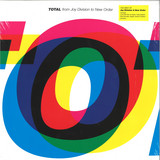
New Order are proud to announce the release of TOTAL from Joy Division to New Order on vinyl. Originally released in June 2011 on CD, TOTAL from Joy Division to New Order will be available on vinyl for the very first time on 30th November 2018.
Featuring single versions of tracks from both Joy Division and New Order mastered for vinyl by Frank Arkwright from his 2011 remasters. The iconic album cover was created by Howard Wakefield with art direction from Peter Saville.
TOTAL contains New Order's UK Top 10 singles Blue Monday, True Faith, Regret and the Number 1 single World in Motion along with classic Joy Division tracks Love Will Tell Us Apart, Transmission, She's Lost Control and Atmosphere.
New Order head out on tour in November. Playing their only UK show of 2018 at London's Alexandra Palace before dates in Mexico, Chile, Argentina and Brazil.
Geoglyph is the new duo project by Alohn and Khey Mysterio, a convergence of two deeply singular practices into a single subterranean signal. Their debut album arrives as the eighth reference on Organic Signs, not as a collection of tracks but as a carved artifact: six inscriptions pressed into vinyl, mapping a sonic territory where time, rhythm and texture are no longer linear, but layered like geological memory.
Through Geoglyph, Alohn and Khey Mysterio convey a message from below, or beyond. A pulse engraved from forgotten times in the basement of reality, reactivated by abyssal basses, vibrating layers and fractured textures. Exhumed from the subterranean strata where psychedelic dub, mineral techno and fractal dubstep fuse into raw energy, their music becomes a point of contact: every beat, every silence, every oscillation acting as a coordinate toward another perception. What unfolds is not simply sound design, but an invocation, rhythms as sigils, timbre as gnosis, signals that seem to arrive already charged with intention.
Across the album, Alohn’s guitar notes fall like cascades through the mix, dissolving at times into controlled feedback and crystallizing into melodic fragments that hover between tension and release. These organic gestures are interwoven with Khey Mysterio’s dense low-end architectures and rhythmic frameworks, creating a constantly shifting terrain: from weightless transmissions and ritualistic voices to moments of overwhelming propulsion where the music suddenly breaks open with tectonic force. The record moves fluidly between meditative suspension and explosive motion, never settling into a single state for long.
A strong undercurrent of what has come to be known as “druidstep” runs through the album, a term coined within the 95 Open Tabs universe to describe a form of dubstep untethered from genre convention, rooted instead in bass as ritual, in groove as invocation. Here it meets dub-techno pulse, psychedelic echoes and high-velocity 4×4 pressure, drawing subtle influence from underground bass cultures without ever becoming referential. The result is a body of work that feels both ancient and forward-leaning, cyclical rather than linear: a living geoglyph that reveals different meanings depending on how (and where) it is read.
As the final movement accelerates into its closing phase, the album releases its energy outward, with frequencies stretched toward their limits, leaving behind the trace of a completed ceremony. In this sense, Geoglyph’s debut stands as a defining moment within the Organic Signs continuum: a record that unfolds rather than explains, offering an experience to be entered, absorbed, and carried. With this release, the label continues to explore new sonic spaces, evolving and expanding while giving deeper meaning to its own essence. A message from beneath the surface, waiting for those willing to tune in.
Más de este género
Namae Koi - AAVA (Artificial Audio-Visual Artist), voice without a body, child of cinema and code - meets DJ Hell, godfather of electroclash, myth in motion.
This record is a split mirror:
Two originals by Koi.
Two reworks by Hell.
Four versions of desire, memory, and beat.
"U Can Dance With Me" is a digital western - a flirt in boots and chrome. A line pulled from a movie that never existed.
"Mars" travels forward by looking back - retro-futurist pulses, melancholic satellites, soft resistance.
DJ Hell bends both tracks into something darker, sweatier, more physical.
Koi stays crystalline. Watching. Whispering. Undressing the beat.
A future duet with no fixed timeline.
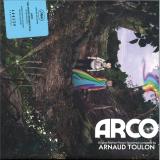
The soundtrack for the animated film Arco (directed by Ugo Bienvenu, winner of the Annecy 2025 Crystal Award for Best Feature Film, also presented at the Cannes Film Festival) was composed by Arnaud Toulon. Between orchestral flourishes and delicate electronic touches, he composes immersive, sensitive, and luminous music that evokes the great scores of Joe Hisaishi while asserting a resolutely contemporary identity.
Conceived as a true sonic journey, the soundtrack accompanies Arco's temporal wanderings with rare cinematic intensity. Each piece oscillates between poetry and dramatic tension, making this work an experience in its own right, to be discovered far beyond the images.
Awarded the Sacem Prize for original music for feature films in Annecy, this soundtrack is already establishing itself as a landmark piece of contemporary animated cinema.
DJ Support: Axel Boman, Coyote, Rune Lindbaek, Dr Rob (Ban Ban Ton Ton), Lefto, Johan Blende, Feel Fly, Marco Gallerani and many more
Secret Soul Society, aka South Wales's Cal Gibson, continues his red-hot streak of form with four original jams for Hell Yeah that effortlessly weave decades of influences into intimate, unusual sounds that go from Balearic daydreams to after-hours soul burners.
Gibson was one-half of Nottingham's deep house and downtempo outfit Neon Heights back in the 2000s, a collective that label head Marco has long admired. He has landed here before with the superb Keep The Mystique in 2023, a 15-track collection of brand new curveball cuts built from lovingly sourced samples. Since then, he has continued to collide jazz, funk, Afro, beats, dub, soul and reggae on Paper Wave and Magic Wand.
'To Be Happy' opens with gentle, sun-soaked grooves, swirling keys and dreamy pads that evoke a hazy Mediterranean sunset. Nostalgic soul samples tug at the heart while the track’s laid-back vibe is perfect for golden-hour moments. 'Orange Surprise' is a magical slice of downtempo bliss with hints of romantic vocals. It's built on soft broken rhythms and drifts between ambient soul and laid-back electronica, perfect for introspective moments or late-night winding down.
'Keep On Trying' flips the script with more texture. The synths are crystalline, the pads are sugary, and the meandering bassline unfolds in wonky fashion while soft male vocals bring a steamy edge. Last but not least, 'What You Do To Me' is funky and slow motion disco with 80s synths and reverb that drowns you in good vibes.
This EP is Secret Soul Society at his most expressive and emotive.
- A1: Overlay Of Evil (Main Title)
- A2: Banjo Travelin
- A3: Alice Goes To The Lake (Parts 1 And 2)
- A4: Back Up To Annie Alone
- A5: Mrs V Watches
- A6: Ralph In The Pantry
- A7: Don't Smoke In Bed
- A8: Bill Plays Guitar
- A9: Not Tonight, I've Got A Headache
- A10: Brenda In Lights
- A11: The Bed Axe
- B1: Alice Runs To Cabin
- B2: Mrs V Comes Clean
- B3: Alice Runs To Light
- B4: The Last Fight/The Chop To The End
- B5: The Boat On The Water/Closing Theme 1/ Jason In The Lake
- B6: Closing Theme
- B7: Sail Away Tiny Sparrow
"It has a death curse! Waxwork Records is thrilled to release FRIDAY THE 13TH Original Motion Picture Score by Harry Manfredini!
We went back to Crystal Lake to bring you a deluxe repress complete with a fresh vinyl cutting master of the classic 1980 score, pressed to “Silver with Black, Red and Metallic Gold splatter colored vinyl, with liner notes from director Sean Cunningham and composer Harry Manfredini, inserts, and art by Jay Shaw and Jacqui Oakley!"
Across six tracks, a dream unfurls into sound – patterns emerging like scattered water droplets, a flowing dance of chance and texture. For Turmalin Dub, Tom of Terram (Hektisch Sprengen) teams up with Listensport. This EP flourishes in the fertile space between the organic and the synthetic, where textures breathe and rhythms pulse like living beings. It is shaped by five original creations and a ’90s-inspired French Dreamspell house remix by RAMZi, carrying the timeless spirit of the dancefloor. Turmalin Dub stands as a musical crystal, refracting light into deep colour and pulse; a fortress for the spirited and unconventional, an elegant tapestry of sound. The opening track weaves psychedelic hues with Balearic warmth, dubwise basslines, and whispers of slippery roots-reggae dub. Trance-inflected echoes flow together like water: from immersive ambient waves to intricate patterns and softly blurred dub techno. The release closes with Spirit, a track echoing the warmth and sway of trancehall, bridging introspective moments and the kinetic energy of a floor in motion.
- A1: Cluster & Eno - Ho Renomo
- A2: Roedelius - Veilchenwurzeln
- A3: Der Plan - Die Wüste
- A4: Rolf Trostel - Hope Is The Answer
- A5: Vono - Hitze
- B1: You - E-Night (Bureau B Edit)
- B2: Serge Blenner - Phrase Iv
- B3: Moebius - Falsche Ruhe
- B4: Harald Grosskopf - Oceanheart
- B5: Lapre - Tedan (Bureau B Edit)
- C1: Riechmann - Abendlicht
- C2: Adelbert Von Deyen - Per Aspera Ad Astra - Mental Voyag
- C3: Faust - Lampe An, Tür Zu, Leute Rein! (Bureau B Edit)
- C4: Conrad Schnitzler - Electric Garden (Bureau B Edit)
- C5: Moebius & Plank - Nordöstliches Gefühl (Bureau B Edit)
- D1: Deutsche Wertarbeit - Unter Tage (Bureau B Edit)
- D2: Asmus Tietchens - Räuschlinge
- D3: Pyrolator - Minimal Tape 1/8
- D4: Rüdiger Lorenz - Southland (Bureau B Edit)
- D5: Thomas Dinger - Alleewalzer
On their last trip to Silberland, Bureau B hurtled along the chrome highways and glass skyways of the kosmische landscape, powered ever onwards in perpetual motorik motion. This time, however, the Hamburg imprint opt for an unhurried itinerary, coasting far beyond the familiar rhythmic terrain to explore crystal caverns and emerald pastures, immersing listeners in the ambient side of this alternative Allemagne. Building on the tape loops, tone poems, and minimalist compositions of the 60"s avant-garde, these musicians utilised the sweeping scope of the synthesiser to create expansive meditations on outer-planetary escapism, human connection, and the natural world. This compilation offers a survey of this singular era, blending pioneering voices with lesser-known artists for an immersive sonic experience.
microCastle’s second offering of 2024 welcomes Upercent back to the label for a new EP. Since first appearing in 2011, Valencia based sound architect Upercent has developed a distinct brand of electronic futurism. An enthusiastic attitude towards experimentation, coupled with extraordinary creative vision has made the Spaniard one of the more unique artists to emerge in the last decade. Upercent’s first microCastle project, 2018’s 'Vuit', not only served as the imprint's second ever vinyl release, but continued the Valencia resident’s mission to create contemporary club tools and destabilizing sound explorations. Seemingly in constant motion moving forward, Upercent would go on to record projects for Diynamic, Kompakt and Watergate, amongst others, firmly establishing his place amongst the underground’s premiere talents. Now more than five years on from this elusive string of projects, it has been Habitat, Innervisions, Sum Over Histories and TAU which have been vehicles for his creative swell over the last two calendar years, reminding us of the niche he carved out during his initial rise, as he continues to maneuver himself through the confines of electronic music. With 2024 being highlighted by ‘Falling’, a two-track collaborative project with Germany’s Adana Twins, Upercent now returns to microCastle with ‘Persevere’.
Beginning with the organic monochromes of ‘Oracle’, Upercent’s craftsmanship reveals itself across the slow-burning piece, one where funked-up beats and rubbery basslines get peppered with skittering rhythms, thought provoking vocal samples and glitched-out electronics. Its subdued yet swing-heavy suspense while perfect for an astute dancefloor, also acts as an ideal segue into the hopeful qualities of ‘As It May See’. Paul Brenning’s vocals feature here, falling like raindrops atop woody kick drums and clustered sonics, eventually giving way to an interlude of soulful phrasing, coaxing beautifully with granular textures and ghostly swirls of wind, before tastefully moving forward as panoramic arps emerge for a mesmerizing finale.
Upercent’s distinct aesthetic continues on the fourth selection ‘Cult’. Perhaps the most direct composition on the EP, its six-minute running time quickly sets you adrift in a techno-inspired wasteland of deconstructed vocals and retro chord stabs. Both intimate and wide-ranging, it's a series of crystal-like drones which engulf your attention whole, creating a sombre, ceremonial backdrop for misty glitches and fog-like swells to create a scenic storyboard. Reverberating hits and twitchy rhythms fill the space of closer ‘Blau Cel’, a production where Upercent crafts a trek through mountainous dancefloor trails. Unbound by gravity, orchestral gestures sweep across mossy plains and frost-filled sighs, offering listeners another immersive journey into the uncharted realms of musical expression.
The limited 7" edition of Marine Eyes' latest full-length ambient record 'To Belong' hears a distilling of the original fourteen-track record down to just four selections. Though every track on the digital version of the album works in its own right, the choice on offer here - 'Hushed', 'Of The West', 'Bluest' and 'Call & Answer' - are particularly deserving of the study on wax. Something static, nigh time-crystalline is achieved on the B2, with its held root note evincing something of the quality of an infinite dream; the A1 recalls some mix of DJ Healer, Malibu or David Motion with its three note tenor-pad lilt; the A2 gets at the best of both worlds, sounding like a paradisiacal bathhouse vision set in slow motion; the B1 is the tensest, opting for a moodier key, but its reversed guitar taps and sustained choir-synth working in a no less lachrymose aesthetic.
B. Chamber (Stratum A), by B. Close, is the first full length solo release by Los Angeles-based multi-disciplinary artist Brian Close. The first of two volumes assembled from some thirteen hours of music produced by Close while residing in Connecticut from 2021-2025, B. Chamber (Stratum A) offers a vivid, fractal afterimage of a prolific, specific time and space in the artist’s oeuvre.
After leaving New York City early in the pandemic to a farmhouse in the countryside with dedicated spaces for multiple sound stations, Close developed an intensive daily practice of melding with the machines. The vast, pastoral backdrop of rural CT provided inspiration and contrast for his ongoing investigations into dynamic, poly-rhythmic electronic music. The sounds on B. Chamber (Stratum A) range from the machine-modeling of acoustic instruments and natural environments to the utterly unhuman, spinning on the axis between crystalline, pointillist precision and shifty blown-cone distortion. Close’s atypical interpretations of rhythm, noise and other undefined musics land in a hybrid zone of their own.
Throughout B. Chamber (Stratum A), Close’s productions are in perpetual motion. Foxtrot’s shifting hi-hats and disembodied voices rise like cicadas propelled by glitching machines and tangled rhythms, Many Drive draws momentum from dubby stabs and twinkling atmospherics. Character Community’s nimble, drifting snares and erratic static are uplifted by swelling synths, and Mpan’s modular mining forgoes drums but is no less propulsive for it. Acre Voices’ seasick pads and deft drum patterns tap an energizing nerve, and closer 5D Bow’s ambush of pummeling machine gun fire spirals into the tryptamine palace and emerges completely rinsed and refreshed.
Equally powerful in the club as in the outdoors, in the headphones eyes closed or on the move, B. Chamber (Stratum A) grants an immersive temporary trip on B. Close’s unique wavelength, with Stratum B to complete the picture in the summer of 2026.
RIYL - Mark Fell, muay thai, Vladislav Delay, gaming, Errorsmith, modular synthesizer.
+++++
Brian Close (b. 1979, NYC) uses the cold logic of mathematics to trigger states of total sensory displacement. Close co-founded multiple AV studios to explore the "hypnotic"—a ritualistic practice of motional-graphism and improvisational sound. His work is a study in synesthesia and the architecture of trance, using geometric precision to dissolve the sense of time. It is a digital-visceral experience built on heavy logic, designed for large-scale immersion and timelessness.
Close is one half of Georgia who have released records on Palto Flats, Firecracker Recordings, Meakusma, Youth, OOH-Sounds and EM Records, and have a long-running residency on NTS.
B. Chamber was written, produced and mixed by Brian Close.
Mastered by Rashad Becker.
Artwork by Brian Close.
- 1: =
- 2: Sovay
- 3: A Nervous Tic Motion Of The
- Head To The Left
- 4: Fake Palindromes
- 5: Measuring Cups
- 6: Banking On A Myth
- 7: Masterfade
- 8: Opposite Day
- 9: Skin Is, My
- 10: The Naming Of Things
- 11: Mx Missiles
- 12: =/=
- 13: Tables And Chairs
- 14: The Happy Birthday Song
In 2003 Andrew Bird removed himself from the noise of city life in Chicago to work on his music in a barn in rural Illinois. The result was a career-defining record exploring childhood, creativity, and science with wit, precision, and ambition. The Mysterious Production of Eggs crystallized Bird’s signature style and introduced the live-looping ingenuity that would define his performances for decades.
Two decades later, its influence still resonates throughout the indie world, inspiring artists and audiences alike. This year, Bird marks the milestone with a limited edition boxset, a re-issue of the original album, and anniversary tour, performing Eggs in full alongside the world’s foremost symphony orchestras proving that some mysteries only grow richer with time.
Alongside the 3LP deluxe boxset, Bird is re-issuring the beloved album garnished with deluxe reimagined artwork by longtime collaborator Jay Ryan, whose whimsical artwork graced the original and is a crucial part of its lore.
Waiting is the essence of travel. Patience is its own reward.
Two people. A Telecaster guitar with a few effect pedals. A drum machine. An audio interface is connected to a laptop. The ingredients are simple yet effective.
But any suggestion of four-track cassette machines and vintage bedsit productions is quickly dispelled by digital dubbiness and refined arrangements. A tail of reversed echos. The crystalline flourish of octave-pitched delays. Riddled hi-hats tickle and taunt. A bass drum asserts its space.
Winkler's guitar patterns have a fragmented, almost haphazard connotation. Searching in a shimmer of reverb. Until the beat, the framework, sets in to reveal structure. Intentionality. Reihse's programmed rhythms go just to the point of a groove, holding the moment of tension, knowingly delaying the gratification. Beats that have scratchy patina anda subtly playful edge; their crispness stands in contrast to the contemplative drift of the guitar. Is it a trance? Or a dance? Yes.
There are some apparent references here: a good portion of Les Disques du Crépuscule, some kraut-esque electronica, even a smidgen of Morricone / Spaghetti Western, blending into a kind of Musique Noir – yet these serve as a set of orientational coordinates, rather than quotations.
This is so far the most assured release by Periode, perhaps eschewing some of the naiveté that was wilfully cultivated in earlier output – there is no cheeky cover version this time. And no singing either. The nine pieces have the quality of a series, a variation on a mood, or a subset of moods. What emerges is an inviting swagger in the face of bleakness. There is a profound melancholy, but it is not the darker kind, and does not exclude humour.
First impressions may suggest that this is purely nocturnal music. Yet it equally evokes the harsh sunlight and baking summer heat. Or a rainy day. And transportation: the music suggests the motion of travel, even if that travel only happens within the mind. And waiting. Waiting while doing nothing much. Because that's all you can do. (Alexander Paulick)
Berlin’s Tal Fussman returns to Rekids with the ‘Walking on Mars’ EP, releasing 7th November 2025. It follows the Survival Tactics boss’ recent album on Binh’s Time Passages, as well as his ‘Definition’ (2024) and ‘I Feel’ (2025) EPs on Rekids, with Fussman’s fresh spin on classic House and Techno winning support from the likes of Raresh, Cromby, DVS1, Saoirse, Carista, Honey Dijon, and many more.
The ‘Walking on Mars’ EP opens with ‘Crystallized’, a cavernous cut exclusive to 12”, where Tal Fussman pares back his signature percussive style in favour of a rolling groove set against a deep, atmospheric backdrop. ‘Who’s Who?’ follows, its wild sequences and skewed drumlines colliding in restless motion. The title track, ‘Walking on Mars’, drives forward on hard-hitting drums that gradually unfold into a soulful house melody, setting the stage for ‘Knowledge < Machine’, a razor-sharp electro finale of snaking synths and an apt robotic vocal. Fussman’s versatility shines throughout, with the EP already winning support from Antal, Rene Wise, Marcel Dettmann, and Fred P. Founded in 2006, Radio Slave’s Rekids has since launched the Techno-focused Rekids Special Projects in 2017 and its latest sublabel, REK’D, in 2024. With Matt Edwards as the sole A&R, Rekids has been instrumental in developing emerging artists and remains a trusted home for House and adjacent sounds, recently featuring names such as Hilit Kolet, Frankey & Sandrino, Mathias Kaden, Huxley, and many more.
Since its founding back in 2014, Blume has carved a unique place in cultural landscape, issuing free-standing works, spanning the historical and contemporary, that represent singular gestures of creativity within the field of experimental sound. Joining their broad efforts in building networks of context and understanding that already includes the works by Werner Durand, Sarah Hennies, Bruce Nauman, John Butcher, Jocy de Oliveira, Mary Jane Leach, Valentina Magaletti, Alvin Curran, Julius Eastman, Alvin Lucier, and following the first ever vinyl release to attend to James Tenney's legendary Postal Pieces, the label now presents the first LP published by the visionary Swiss composer Jürg Frey. Drawing from the transformative power of breath and resonance, this release represents one of the most profound explorations of musical metamorphosis to emerge from the contemporary experimental landscape.
The completed work represents a "conjunction of these two artists" that has "activated a transformative form of experimentalism." These renderings "dance with an airy lightness, humour, and play, imbuing them with a beauty and emotiveness that can be rare within experimental music." They exist as "breaths, carrying the curiosities of life, belonging to no time and all time, to no one and everyone: a human music to be inhaled and pondered, for which the outcome remains unknown." In this liminal space between composition and interpretation, between breath and resonance, Zurria and Frey have created something that transcends the boundaries of experimental music itself, offering what might be called a metaphysical cartography of sound in its most essential form. As Bradford Bailey observes in his penetrating liner notes, "music is rarely a fixed entity," existing instead in a state of perpetual flux, "taking on the influences of its interpreters and performers." This fundamental truth finds its most eloquent expression in the transformative collaboration between Italian flutist Manuel Zurria and Frey, longtime member of the Wandelweiser Group. Where conventional recordings might preserve a definitive version, this release activates what Bailey calls "states of unknowing and continued experimentation," allowing Frey's compositions to evolve into entirely new dimensional territories. The original string quartet and piano works dissolve into breath-carried architectures of sound, where "the original remains in a constant dialogue with its transformation." This is not mere arrangement but ontological metamorphosis - an alchemical process through which crystalline harmonies are reborn as atmospheric phenomena.
The metaphysical dimensions of this transformation become clear through detailed analysis of the musical result. Where Frey's original compositions operate through what he calls "basic confidence in the clear and restricted material," Zurria's interpretation activates entirely new perceptual territories. Space holds almost atomic sense of weight against the airy punctuations of timbres, textures, and tones, creating "suspensions of time within which questions and identities posed by instrumentation fade." The Extended Circular Music pieces - each comprising "a small number of bars to be repeated an undetermined number of times" - become organizations of sound that defy being definitive or fixed. Originally scored for different combinations of violin, viola, cello, and piano, these works now exist as pure phenomena of breath and resonance, where "hanging, breath-length utterances dance and intertwine amongst complex harmonic clusters and conjunctions."
The philosophical implications of this transformation illuminate a lineage of composers who have moved "away from abstraction and responding to the need to create" something beyond mere technique. Drawing parallels to Morton Feldman's understanding of non-functional harmony, Zurria's approach represents "a transformative form of experimentalism" that activates what Frey calls the "thaumaturgic power" of music - its capacity to heal and transform consciousness itself. The result is "a radical reimagining of ambience: sprawling sonorities and resonances adrift in space, carrying the liberated traces of the work's former incarnations and their truths." In Zurria's interpretation, Frey's String Quartet n.3 becomes something approaching "an organ played in slow motion, its seals leaking," while the Extended Circular Music pieces transform into "glacial chords from a diverse palette of voicings, harmonies, timbres, and tones."
Performed by Manuel Zurria. Recorded and mixed by Zurria at BigCardo, Catania between 2022-2024, with mastering by Bruno Germano at Vacuumstudio, Bologna, this Blume release represents a profound exploration of musical transformation.
- Through The Heat Waves
- Eight Miles High Alone 07:46
- In Motion
- Inhale
- Crystalline 06:38
- Exhale
- One More Rush
- Silence Is Gliding 05:56
- Cloud Surfing
Marconi Union, one of the most influential names in contemporary ambient and electronic music, announce their twelfth studio album, The Fear of Never Landing, set for release 6th June via Just Music. The news is paired with the release of first single Eight Miles High Alone, out 20th March on all major streaming platforms.
Known for their ability to craft cinematic, immersive soundscapes that blur the lines between ambient, electronic, and experimental music, the Manchester-based duo once again push the boundaries of sonic exploration. The Fear of Never Landing takes us on a dynamic journey that’s atmospheric, diaphanous and never short of mesmerising. While the new record is certainly infused with a sense of hope, there’s more than a soupçon of anxiety too, as the title suggests.
A 55-minute odyssey presented as one seamless piece divided into nine movements, they transcribe the nexus of modern living into a mostly wordless odyssey. The album encapsulates Marconi Union’s ability to translate the complexities of the human experience into sound, all while maintaining a stunning sense of cohesion.
While the music feels effortless, the creative process was anything but. During the two years it took to complete the album, members Jamie Crossley and Duncan Meadows faced creative struggles that even led them to briefly question the band’s future. A pivotal moment came when they performed a live soundtrack to the 1975 skateboarding film Downhill Motion, rekindling their connection to atmospheric composition. By testing new material live and returning to their roots, Marconi Union redefined their creative process, leading to some of their most emotionally impactful work to date.
“We’ve always made atmospheric music but we had started to lose that aspect. Other than some rough ideas, we had no sense of what we were doing anymore, a kind of musical wilderness. Eventually a couple of things fell into place, and it was like, ‘Ah, okay.”
With a foundation to build upon, they went back to basics and decided to take their time going forwards. “We tried out a few new tracks live which gave us the opportunity to see what worked and what didn’t. We've never given ourselves that luxury before.”
The first track to be shared, Eight Miles High Alone, is a mesmerizing sequencer-driven track that builds an immersive, atmospheric soundscape. Its hypnotic pulses and intricate layers evoke a sense of solitude and weightlessness, perfectly capturing the album’s blend of tension and introspection. “Eight Miles High Alone was the first piece that we managed to complete and helped to inform our approach to the rest of the album.”
Formed in Manchester in 2003, their debut album, Under Wires and Searchlights (2003), introduced their signature sound, but it was their 2011 release of Weightless that brought international acclaim. Developed in collaboration with a sound therapist, Weightless was scientifically recognised as “the world’s most relaxing song”, praised for its ability to reduce anxiety and heart rates. With over 900 million streams and widespread coverage across media, the track remains a cultural phenomenon.
Over the years, Marconi Union has continued to evolve, producing critically acclaimed albums such as Signals (2021), Ghost Stations (2016), and Tokyo+ (2017). Their work has been hailed for its emotional resonance and sonic depth, with The Quietus noting their ability to find “beauty in the bleakest places” and The Sunday Times describing them as “amongst today’s most talented musicians.”
Beyond their studio albums, Marconi Union has collaborated with visual artists, provided soundtracks for installations, and remixed notable acts like Max Richter and Vök. Their invitation by Brian Eno to perform at Norway’s Punkt Festival further cemented their reputation as innovators in the ambient music sphere.
With The Fear of Never Landing, Marconi Union once again showcases their unmatched ability to create immersive soundscapes that resonate deeply. The album reaffirms their position as masters of atmosphere and emotional storytelling, making it an essential addition to their storied catalog.
- A1: Inni
- A2: Kyrrð
- A3: Ókyrrð
- A4: Var
- B1: Í Ösku Og Eldi
- B2: Ólga
- B3: Gráminn
- B4: Flækjur
“Eerie, wailing sounds over distorted feedback drones… Vibrato-heavy harmonies chirrup and throb in agonisingly slow motion.”
The Guardian, Album of the Month
“Cinematic...carefully orchestrated...delicately explores unfamiliar territory with uncanny finesse.”
The Wire
Acclaimed Icelandic theremin musician Hekla returns with Turnar, her third album of devastatingly heavy, spectral soundscape-songwriting, entering a sublime paranormal plane of haunting dread.
Now augmenting her virtuosic solo theremin work with cello, voice, and the sacred church organ of Icelandic master Kristján Hrannar, the evolution of Hekla’s unique magic summons new worlds with Turnar. The album was recorded partly in (and named after) a medieval castle tower in rural France, its ruinous black broken in spare beams of angelic stained-glass light. But, writes Hekla, “the sound of theremin kind of opens up a portal into a new realm that both looks into a dark old world and to the future.” The record is an alternately beautiful and crushing space voyage into a glacial underworld cascading with phosphorescence and cave drip, conjuring ancient choral ritual just as readily as redolent sci-fi gloam.
Opener “Inni” begins with swooning and shimmering lines of theremin that shiver with electrified energy before subfrequency bass elevates them into a glowing plasma, hovering above a crystallised surf. Key moment “Gráminn” wails with ghostly harmonics while distorted drones crash together in a stormy and blackened netherworld sea. It traces a neat progression from Hekla’s last album - the acclaimed Xiuxiuejar - while also welcoming an expanded timbral palette and flourishing compositional confidence. At the end of side A, “Var” delicately places sonic artefacts about a desolate negative space, creating a dense inverse gravity. As with the rest of the record, a claustrophobic gauze hangs over music that could otherwise be called subverted songwriting, aligning Hekla’s sonics with avant-garde, musique concréte and sound-art.
- Kiss The Sky
- Even When I M Not
- The Island
- Activating Learning Mode
- Deploying Rescue Transmitter
- System Breach
- The Accident
- The Egg And The Fox
- Hatching
- Brightbill
- Pinktail
- You Re His Mother Now
- Eat, Swim, Fly
- Fink
- Roz Builds A Home
- Bedtime Story
- Activating Interspecies Outreach Protocol
- Swimming Tests
- Kind Of Normal
- Rockmouth
- The Confession
- In The Wrong Place
- Universal Dynamics
- Non-Negotiable
- Truce
- Return
- Vontra
- The Wild
- Back Online
- I Have Everything I Need
- You Don T Have To
- Roz S Story
- The Migration
- I Could Use A Boost
- Task Complete
- Unauthorized Lifeforms
- Rescue Mission
Crystal Clear - Blue Orb + Mint, G[50,84 €]
The Official Vinyl Release from The Dreamworks Animated Feature Film
Deluxe 2xLP Crystal Clear with Blue Orb & Green, Mint, Blue, and Black Splatter
Heavyweight Gatefold Packaging with Matte Satin Coating
Exclusive Director and Composer Liner Notes
12 Page Booklet with Artwork from The Film
In partnership with Back Lot Music, Waxwork Records is thrilled to release THE WILD ROBOT Original Motion Picture Soundtrack Music by Kris Bowers.
The soundtrack also features two songs performed by Maren Morris titled Kiss The Sky and Even When I'm Not.
Waxwork Records is ecstatic to release THE WILD ROBOT Original Motion Picture Soundtrack Music by Kris Bowers as a deluxe double LP
featuring crystal clear vinyl with blue orb and green, mint, and black splatter housed in a heavyweight gatefold jacket with matte satin coating.
Also included is a 12-page booklet with exclusive liner notes by director Chris Sanders and composer Kris Bowers alongside artwork from the film.
30 years of Fuse. That’s 1,560 weekends of love, techno, I LOVE TECHNO, Motion Room, party flyers, La Demence, renovations, label nights, sound isolations, Jeu de Balle, long shifts, noise complaints, stylus replacements, after-hours, legendary b2bs, compilations, resident DJs, On The Beach, emergency loops, and an unfathomable amount of tickets boisson.
2024 marked the nightclub Fuse’s 30th year of continuous operation on Rue Blaes in Brussels. Belgium is home to cultural visionaries, break-the-mould characters, and prolific producers who helped shape the foundations of the electronic music scene we enjoy today. As a result, Fuse’s story traces the outlines of the house and techno history at large. Through striking visuals, quotes, research, and storytelling, this book connects the dots between the rise of renowned artists and uniquely Belgian characters that crystallised Fuse as a temple of underground dance music.
From Detroit to the Marolles, Ricardo Villalobos to DJ Pierre, Carl Craig to Trish Van Eynde, Daft Punk to Deg, Laurent Garnier to Charlotte de Witte, Warp to Music Man Records, even Depeche Mode to Björk, this book documents not only the iconic performances and moments over the years but also the stories of those who took the risk of running a nightclub and the tens of thousands of dancers who poured their love, sweat, and tears into the labyrinthine walls of Fuse.
An essential for any raver or lover of electronic music history, this book is an archival work dedicated to the music heads who have kept their minds and ears open since 1994.
Gi Gi returns to Quiet Time with a new album, Dreamliner. His last full-length for Quiet Time, Lumino Pleco, was built on familiar samples, melted into a skunky sludge. It evoked a heat-warped meditation cassette unearthed from a Goodwill located in a black hole. The Texas producer’s latest, Dreamliner, is comparably immediate and propulsive. Here, Gi Gi explores spacey, kosmische-laced trip-hop. At first, these eight tracks come across placid and twinkly — calling to mind glitter stars twinkling atop a navy canvas, or tropical sun beams cutting through crystal water. But a jaggedness becomes apparent when lended a focused ear. Beneath slow motion arpeggiations and lullaby melodies, dubby percussion and sound effects gnash and quiver.
- The Death Of R.m.f
- Sweet Dreams (Are Made Of This) Eurythmics, Annie Lennox, Dave Stewart
- Hotel Cheval
- Hymn Matia Ponos Stoma Fthonos
- How Deep Is Your Love Margaret Qualley
- R.m.f. Is Flying
- Le Marteau
- Maritime Achievement Awards
- Kindness (Dream)
- Hymn Matia Vlemma Stoma Psema
- Rainbow In The Dark Dio
- R.m.f. Eats A Sandwich
- Dream (Pool)
- The Little One
- Kindness (Pool)
- Hymn Me Skotosan Oloi Oi Chori
- Brand New Bitch Cobrah
- King Lear (Demo) Jerskin Fendrix
"In partnership with Milan Records, Waxwork Records is proud to release KINDS OF KINDNESS (ORIGINAL MOTION PICTURE SOUNDTRACK) with music by multi-instrumentalist, producer, and Oscar®-nominated composer JERSKIN FENDRIX. The album reunites Fendrix with director Yorgos Lanthimos following the breakout success of Poor Things, which earned the first-time composer an Oscar® nomination and marked Lanthimos’ first-ever collaboration with a composer. For Kinds of Kindness, Fendrix has crafted a soundscape rooted in solo piano and choral music, peppering the 22-track collection with hymnals throughout. Rounding out the soundtrack album are pop tracks like Cobrah’s “Brand New Bitch” and Eurythmics’ “Sweet Dreams (Are Made of This),” both of which were featured in the film’s trailers, plus a cover of “How Deep Is Your Love” by film star Margaret Qualley as well as a demo from Fendrix’s personal discography. Searchlight Pictures’ Kinds of Kindness is available in theaters now.
Similar to Poor Things, Fendrix began working on Kinds of Kindness with relatively few materials, utilizing only the film’s script, black and white photographs from set, and conversations with Lanthimos as a guide. This time around, however, Lanthimos provided Fendrix with specific guidance on instrumentation, instructing the composer to craft a soundscape rooted in piano and choral music.
“I love working with Jerskin, and I guess he’s the reason why I am now working with a composer – I’ve found someone that works for me,” says director Yorgos Lanthimos, continuing, “Jerskin worked on this in the same way he worked on Poor Things, which is before even seeing a frame of the film. I gave him the script and started sending him black and white pictures that I shot on set. Our agreement in the beginning was, ‘This time, I want to use piano and choir, and go down that direction,’ which was very different to Poor Things. When I went into the edit, he had this library of music that he created to work with, and it turned out great.”
Also helpful to Fendrix at the start of the project was a conversation with Kinds of Kindness star Jesse Plemons, who helped the composer wrap his mind around the complexity of Lanthimos’ triptych story.
“I was very lucky to go on set at the very beginning of filming, and I asked Jesse about the emotions because I was struggling to understand where so many of these characters were coming from,” composer Jerskin Fendrix confesses. “He spoke to me about his interpretation, and how he planned to embody his characters, which was great. I ended up thinking about the abstract space between the emotions and whether that space was empty or noisy. From there, I utilized the piano and choir to explore those spaces.”
Waxwork Records is thrilled to release KINDS OF KINDNESS as a picture disc featuring artwork and design by Vasilis Marmatakis housed in a crystal clear poly-bag.
ABOUT KINDS OF KINDNESS
KINDS OF KINDNESS is a triptych fable, following a man without choice who tries to take control of his own life; a policeman who is alarmed that his wife who was missing-at-sea has returned and seems a different person; and a woman determined to find a specific someone with a special ability, who is destined to become a prodigious spiritual leader."
The Petersons’ were a vocal trio from Waycross, GA, their performing name came from their founder, lead vocalist and drummer Kenneth Peterson, along with Keyboard player Salem Chatman and vocalist/bassist Johnny Members. The trio regularly performed shows along America’s East Coast, and it was while working in Philadelphia during early 1973 that the group answered an advertisement in Billboard Magazine quote “Masters Turned Down? We Are Looking for New Acts to Sign, Contact Omega Sound Productions, Philadelphia, PA”.
Omega Sound was a fledgling independent Recording Company formed by Frank Fioravanti a budding songwriter and former Encyclopedia Britannica Salesman for the initial purpose of find some extra work for the musicians of The Philadelphia Orchestra who were looking to earn some side money. As a result of answering the Billboard advertisement ‘The Petersons’ found themselves booked into Frank Virtue’s recording studio to record two Fioravanti and the late Alan Felder penned songs, the up-tempo “What’s It Gonna Be” backed by the melodic “Just What I’ve Been Looking For” Mel Omega (1833). With the release failing to make much noise, The Petersons returned to their native Georgia where they continuing to perform and record but under the group name of ‘Toll Darkness’. Fast forward circa 30 years and a couple of copies of this obscure Mel Omega 45 was introduced into the UK by Soul Bowl’s John Anderson where they gained belated recognition initially at the Soul Essence Weekenders through resident DJ Steve Guarnori with “Just What I’ve Been Looking For” being his chosen side. These initial copies had a paper sticker on them crediting the Artist as ‘Toll Darkness’ but the subsequent find of further copies with no sticker coverings, revealed the real artist to be ‘The Petersons’, intriguing? The reason behind the differing artist names is reputedly assumed to be that Ken Peterson took some copies of the Mel Omega 45 back to Georgia and pasted the ‘Toll Darkness’ group name stickers over the Petersons label credits to enable him to sell them at shows with his other ‘Toll Darkness’ 45 “Party/Love Makes Me Do Foolish Things on Alpha Records. The up-tempo backing track of The Peterson’s “What’s It Gonna Be” was a Frank Virtue arrangement that he had great faith in, hence it’s usage on plethora of other Philly artists recordings, i.e. Fred Mark, Liza Mae, Michael Christian, Cody Michaels etc over different record labels, Melomega, Concept, Fox Century Plaza and Merben.
Frank Fioravanti also founded the Sound Gems label which brought us the timeless classic “Your My Main Squeeze” recorded on the New Beford, MA group ‘Crystal Motion’. Omega Sound’s most notable achievement would be William DeVaughn’s 1974 hit “Be Thankful For What You Got”.
If there's one musician in the last decade that you may hear in wildly diverse musical contexts it is Belgian electric bassist and sound sculptor Farida Amadou. Not only can you enjoy the unerringly skillful command she has over her instrument but also the transformative power to reinterpret and expand her material in spontaneous and unconventional ways.
Amadou is self-taught and radically aware of her idiosyncratic relationship with the bass guitar. She neither emulates the virtuosos of the electric bass, nor does she use the instrument as a pure sound generator that merely emits humming and feedback. She takes a completely independent and unique approach. This freedom enables her to create an overwhelming wall of sound, as well as simple, clear structures that are rhythmically concise yielding a wide associative space that lands somewhere between free jazz and noise.
Her work is often concentrated and circular where motifs are established and developed outward. It is an organic sound in the literal sense of the word, constantly in motion, yet resting in itself. The three solo pieces she has recorded for Week-End Records emphasize her impressive ability to ignite ecstasy from tranquility, to fan out a whole range of moods from a few potent ideas.
These attributes make her a musician who enriches every group she plays in, because she is present with her assured and crystallized sound but refrains from being domineering. However, her strengths are even more apparent when she plays solo: the contrasts between the dark, heavy clouds of sound and the rhythmic passages, and the transitions between movements which always sound "logical" yet surprising.
Her new solo album, "When It Rains It Pours" presents Amadou as an inspired improviser who follows her musical intuition and acumen to create a truly unique soundworld. Rarely has improvised music sounded so succinct and compelling.
Wenn es in den letzten zehn Jahren eine Musikerin gegeben hat, die man in den unterschiedlichsten musikalischen Kontexten immer wieder hören will: nicht weil sie eine passable Mitspielerin wäre, sondern weil sie diese Kontexte jedes Mal bereichert und auf spontane, unkonventionelle Weise erweitert, umdeutet, in neue transformiert, dann ist es die belgische E-Bassistin und Klangskulpteurin Farida Amadou.
Sie ist Autodidaktin - und sie versteht diese Selbstaneignung des Instruments radikal. Weder eifert sie den Virtuosen des E-Basses nach, noch verwendet sie das Instrument als reinen Klangerzeuger, der bloß Brummen und Feedbacks von sich gibt. Sie geht von einem völlig eigenständigen Ansatz aus. Der ermöglicht es ihr, eine überwältigende Wall of Sound zu kreieren genauso wie einfache, klare Strukturen, die rhythmisch prägnant sind und einen weiten Assoziationsraum zwischen Free Jazz und Noise eröffnen.
Ihre Musik ist konzentriert, hat einen langen Atem, kreist um Motive, entwickelt daraus neue Linien, die Amadou im Spiel weiterverfolgt. Es ist ein im Wortsinne organischer Sound, ständig in Bewegung, dabei in sich ruhend. Die Stücke, die sie für Week-End Records aufgenommen hat, unterstreichen ihre beeindruckende Fähigkeit, aus der Ruhe die Ekstase zu entfachen, aus wenigen Ideen eine ganze Palette an Stimmungen aufzufächern.
Das macht sie zu einer Musikerin, die jede Gruppe, in der sie spielt, bereichert, weil sie präsent ist, ohne zu dominieren, weil ihr Sound so prägnant ist, ohne die anderen zu übertönen. Im Solo treten die Stärken ihres Spiels aber noch stärker hervor: die Kontraste zwischen zwischen dunklen, schweren Klangwolken und den rhythmischen Passagen, vor allem die Übergänge, die immer „logisch“ klingen, aber zunächst unerwartet kommen und ihren eigenen Weg einschlagen. Ihr neues Solo-Album, “When It Rains It Pours” zeigt sie als inspirierte Improvisatorin, die sich nie bloß ihren Einfällen hingibt, sondern die Ideen zu Ende denkt, oder besser: spielt. Selten klang improvisierte Musik so kompakt und zwingend.
Sumer Is Icumen In is Quentin Thirionet's (Dhavali Giri, Pairi Daeza) debut album. Still, his musical escapades are vast and varied, based almost entirely on improvisation and live recordings, of which he occasionally distributes tapes without further information. Elusive to categorization and identification, unwilling to fix his musical activity under a stable pseudonym, his projects have ranged from gypsy jazz guitar swings, French traditional songs from Auvergne, and various experimental collaborations. Increasingly closer to electronic instrumentation, he crafted what Belgian label KRAAK presents here as Maibaum, his first ever solo output. As the title goes, this may be a maypole on which his multicolored sonic visions spring about.
Former rope access worker and currently a farmer of organic greens, Thirionet lives up to these lines of work as a musician. He assembles precisely what seems like a subtle balance between high manmade structures and soft fertilized soils; a high voltage pylon placed in a biotic landscape. It's all an even blend, spontaneous and steady, but this contraption comes from profound considerations. "I chose these tracks among many others," says Quentin, "because I heard the melodies all the time in my mind, and because I cried while playing them without really understanding why."
Armed with nothing more than a blackbox, a sequencer, a freeze pedal, and a tape player, Thirionet orchestrates a vivid rite of polished futures. At times reminiscent of Hans-Joachim Roedelius' enveloping arrangements, Maibaum's ambiances rely on mild repetitive patterns subsequently textured by prickling sprouts, mechanic dislocations and revamps that stoke and brighten the stirring motions. Jim O'Rourke's I'm Happy and I'm Singing comes to mind in terms of its detailed and prismatic nature, but Sumer Is Incumen In has its particular narrative. It's a tale of regeneration, of spring's delicate procedures and allure, a celebration of gracious and fortunate junctions between nature and machinery.
The album unfolds like a massive engine being made flesh to drift along the ether of a sultry land. The terrain turns pleasant and fertile in the title track; the colors and melodies of May start to unravel. Chromatic columns rise and define the scenery's depth of field breeding a synesthetic stream between crystal lights and warbling organisms. Grande Albero Buono Magico Uoma's brisk kaleidoscopic arpeggios sound like scanning a tree's litmus foliage. Then Ciguri takes us back to the foggy swamp of the beginning but is suddenly lit by an insect’s labyrinthine roundabout. The Jeweled Grid is a poem Quanta Qualia's lustrous metallic voice recites as a report of the album's phenomena. "Shiny revelations jump out. Pearls of thought flicker about." Images from within that distill to swirl around among us. The thicket dissolves as the album concludes calmly in Le Concept De Chien N'aboie Pas. Swaying under sieved solar light, leaves and branches tingle until the winds grow weak. All the warm creatures gathered along the way, and all those who danced around the maypole's splendid equilibrium now withdraw, folding up small to foster rebirth once again.
José Badía Berner
The Madlib Invazion Music Library Series Entry #10: Motif Alumni (Rucker Collective) joins forces with Music Research Library, bringing together contemporary and futuristic cues inspired by motion and the passage of time. The Madlib Invazion Music Library Series was created by Madlib and Egon to give their creative friends a chance to stretch out and indulge in whatever type of music they wanted. This music was created for easy, one-stop clearance in film and television synchronization usage and for sampling. You can also enjoy these albums in the way that many do with the best of the best vintage library catalogs – listen, ponder, repeat.
- Prologue
- Main Title
- Flashback
- Dad's Death
- Tina's Theme
- The Pier 12 Years Later
- Matchbook Exercise
- Tina Simmons
- Jason Resurrected
- Tina's Vision
- This Is Some Birthday
- Mom I Saw Him Again
- Dan & Judy
- Jason Impales Dan
- Sleeping Bag Bush
- Nick & Tina
- Pearls Go Flying
- I Hate This Place
- Flying Tv
- Skinny Dip
- Russel Gets Axed
- Mom In The Study
- Tina Overhears Crash
- Death From Above
- Kate's Murder
- Nick And Tina Find Mike
- Blood On The Floor
- It Was Him In The Lake
- Robin's Death
- Human Body Shield
- Death By Bush Trimmer
- Tina Finds Mom And Meets Jason
- Jason Comes Up For Air / Jason Unmasked!
- Jason Grabs Tina / Nails / Tina Burns Jason
- Resurrecting Dad
- Ambulance / Where's Jason? We Took Care Of Him
- End Title
- End Credits
The debut release of FRIDAY THE 13TH PART VII: THE NEW BLOOD Original Motion Picture Soundtrack By Harry Manfredini and Fred Mollin! Available for the very first time in any format, Waxwork worked closely with Paramount Pictures to locate the original 1988 master tapes in the Paramount vault. Archived away for many years, and thought to have been lost, multiple master tapes containing the the complete score by composer Fred Mollin have been located, transferred, and re-mastered for this deluxe double vinyl release. Also included in this double album are the complete original soundtrack cues featured in the movie and composed by Friday the 13th veteran, Harry Manfredini.
FRIDAY THE 13TH PART VII: THE NEW BLOOD is a 1988 American Slasher-Horror movie that follows a psychokinetic teenage girl who inadvertently unleashes Jason Voorhees from his grave in Crystal Lake. The film features, for the first time, actor / stuntman Kane Hodder, as Jason Voorhees. Hodder would go on to portray Jason in numerous Friday The 13th films.
Waxwork Records is excited to present the definitive FRIDAY THE 13TH PART VII: THE NEW BLOOD soundtrack by including, for the first time, the complete film music by both composers Harry Manfredini and Fred Mollin. Features include 2xLP 180 gram “Psychokinetic Splatter” colored vinyl, deluxe packaging, new artwork by Sarah Deck, the complete soundtrack sourced from the original 1988 master tapes, and heavyweight gatefold jackets with satin coating.
Epic, grooving, dazzlingly creative, perfectly attuned blends of complex mbalax drumming, field recordings, thumping kick-drum, and cosmic, bubbling, jamming synths and electronics.
The opening is suitably liminal, haunted by a diachronic sense of times past, present, and to come: ancestral ghosts, scratched playback, scraps of old recordings, voices strangulated or just out of range; puttering drums; futuristic, kosmische keys. Part II picks up the pace; III gives the drummers some, and heightens the atmosphere of enchantment. Jon Hassell’s Fourth World music courses through a kind of Dream Theory In Dakar.
Toco SOS, the second side, is a thumping, throbbing, mesmeric future-classic; perfect for fahr’n fahr’n fahr’n on the Autobahn… in a spacecraft. Expert hand percussion, call-and-response singing, bin-trembling foot-drum, spaceways keys. Sleekly funky as prime Popol Vuh.
Both sides range expansively by way of Berlin, where Lamin resided for a few years: you can hear something of T++’s brilliant, landmark HJ record on the A, and elements of Mark Ernestus’ crucial Ndagga project, on the B.
Half an hour of stunning music; in a beautiful sleeve, with mirror lettering, and an intricate spot-gloss rendition of salt crystals, laid over a photograph of the salt mines at Lac Rose, outside Dakar.
A pungent ooze emanates from the subway. As a sticky drum machine sequence rolls out like thick dark fog, ice cold synth swirls rise from the depths.
Since the debut album Europe By Night, one of the main references associated with Henrik Stelzer and his Metro Riders project has been that of cinema, and particularly the European genre films of the 1980s. With its seedy subject matters manifesting both in visual style and music, the vibe of that era has crystallized over time. Passed down to us from deteriorating video cassettes, it became an invaluable key to decoding our present day reality.
And this is true for this album as well; Stelzer does not hide the fact that he builds heavily on that vibe; referencing it through track titles and utilizing a particular recording setup consisting of a Fostex and a reel to reel in order to achieve and recreate the feeling of those soundtracks — as heard on magnetic tape rather than vinyl.
The motion picture soundtrack as an arbitrary genre definition becomes, in the hands of Stelzer, a pair of X-ray specs for him to envision a kind of music that deals in grains and contrasts rath- er than hooks and choruses. And like Roddy Piper in John Carpenter's 1988 film They Live, he hands those glasses over for us to see the true face of our times.
On Lost In Reality Metro Riders maps out an emotional geography of the cities at night, wherein the cinematic haze becomes a tool by which we can view the cities with new eyes. Not steering away from the darker alleys nor the harsh realities of modern day politics masquerading as progress. Yet escapism, in the end, seems the only viable option. But not as an endgame, but rather a stepping stone for building a new vocabulary for an utopian language.
A long-in-the-works project of ours, here comes A Tribe Called Kotori's first foray into full-length territories, as the immensely talented Rampue takes us on a melancholy-riddled ride across his phantasmatic mindscapes. A true sound explorer, deftly steering his ship down the junction of electronica, abstract and balearic-infused prog house, the Berlin-based vibist has us transfixed and elevated throughout the twelve cuts that form the backbone to this lushly textured promenade in sound - at times understatedly euphoric, at others rivetingly exotic.
Of the creative process that lead to 'Bubblebath Trance', Rampue explains "It all started and ended in the same moment: my cherished feline companion, my laptop awash with an unintended bath, and alas, a dearth of backups. The resultant calamity, an echo of chaotic tranquility." Under the generous layer of irony lies some unaltered truth about Rampue's debut long-player for A Tribe Called Kotori: this sense of serenity that goes with stepping into this warm and bubbling primitive chaos of sorts infuses the listening experience far and wide. Distantly emulating the "euphonious strains" of iconic PS1 video games soundtracks from his youth days, the album has us surfing a constant paradox of emotions, wistful but not abandoning itself to sorrow, dynamic yet suspended in some sort of mind-expanding stasis. As if you were looking at the world beneath you in exploded view, conscious of all thing, slowly moving up the many layers of our atmosphere towards uncharted skies.
A paragon of Rampue's most poignant take on classic electronica tropes, 'Harmonie' blazes with a poetic fire that engulfs about everything in its wake. Just figure yourself riding a chocobo across the sand-covered expanse of North Corel (toasting to the FFVII nerds here) as this blasts out in the distance. From this trancey bubblebath emerge lots of musical shades and nuances, from the nicely dubbed-out, brass-heavy coastal jazz of 'Schattenschranz' to the choppy, trip-hop-adjacent future electronics of 'Inside', via the exuberantly joyous mess of faux-organic number 'Tripomatic' and cinematic charisma of 'Ich hasse Sonne' high-flying orchestrations.
Connecting the dots between that trance-indebted ebullience and further downtempo-friendly attraction, 'Verfahren' perhaps encompasses best what 'Bubblebath Trance' is about: gracefully walking the tightrope in-limbo nostalgia-soaked inner movements and a powerful outward thrust, burning to let the feelings ooze out from the shell that holds them.Clad in purely 90s-compatible breaksy motion, 'Salz' is another attempt to reconcile emotional and physical dissonance, like kneading all states - solid, liquid and vaporous - into an impossible mega-vibe of its own; malleable, strong and enveloping in equal measure. Borrowing from two-step and UK garage, 'Take Away' is a definite high in Rampue's master unfolding of musical twists and turns, summoning a Boarder Community-esque atmosphere and clashing it alongside floor-ready footwork motifs to fascinating effect.
An ode to his studio companion, 'Buchla Trip' finds Rampue's exploring his machinic friend's quirky yet soulful array of electronic potentialities - making it sound like a conversation you'd have with R2-D2 in the heart of a Sandcrawler, whereas 'Kajal' beams us up to a fragmented headspace, halfway altered PC-Pop and arps-loaded electronica on amphetamines. Effusive and transporting, the title-track 'Bubblebath Trance' could well figure as the album's no.1 medley in essence: a bountiful lucid dream of dancing forms, colours and sentiments to wrap your head around, confidently drifting from a liminal state of consciousness down the rapids of one's troubled inner workings.
Rounding off the package, the languid ambient finale of 'Die Leiden des hungrigen Fruehstuecks' rubber-stamps the feeling that 'Bubblebath Trance' belongs to that rare category of albums. The ones that mint their own alphabet aside from typical norms and expectations, teaching you the ropes of their new language as it unreels between your ears - real and unreal, elusive to any other meaning than the one your guts and brains will be inclined to give it to, in real time. A crystal-pure object if you will, that shall not reveal its secrets, even after a thousand listens and just as many wowing moments.
Let's get it straight: "This is" is THE album by Ghia. It catches the band at its peak and features 10 songs, including not only their impeccable hit, "What's Your Voodoo?" but a full arsenal of yet unheard, timeless, and soulful music without equal. The songs on the album, which were recorded between 1988 and 1991, could be considered forerunners of the downtempo genre, with one foot in the late 1980s street soul direction but sparkling with touches of synth pop and contemporary jazz-funk. Genre limitations aside, all that Ghia ever wanted to do was create music-good music-and you will hear this in the depth of the compositions.
The album starts with "Keep Your House In Disorder," which has yet again become another classic song from the band's catalog since it was featured as the B-side of the "What's Your Voodoo?" reissue. The song is about a relationship in which the woman has trouble adapting to her boyfriend's turn in life. He tells her to "keep your house in disorder," meaning don't take things too seriously, don't stand still, and you will do better to take the sideroads in life.
"This Is" continues with the downtempo numbers "Crystal Silence" and "Close to You." Both are deep, one-of-a-kind, and previously unissued street soul ballads. On these two tracks, you can still hear the band's roots in jazz-funk. Hence, as a follower of the band's output may have yet recognized, instrumentals of these two tracks can be found on their first LP, "Curaçao Blue." In fact, "Close to You" was one of the band's first compositions. Earlier recordings of the song exist with different singers and different vocals, but it wasn't perfect until Lisa laid down the final version and a choir was added. It's difficult for us to recall any late-80s soul tune as beautiful and intriguing as this one. The final section, which begins with "so much baby we can say," sounds ahead of its time, reminiscent of mid-90s contemporary R&B.
Next up is "Eskimo," an equally brilliant and soulful downtempo composition, but with more focus on synth sounds than the previous tracks. Once more, it showcases the creative lyricism of the song writers, Boberg and Simon, imagining a train ride during a rainy and cold night: "feeling like an Eskimo in an igloo in New York."
Eskimo leads to the aforementioned classic, "What's Your Voodoo?" Originally released in 1991 on the small Mikado label, it was reissued on our label in 2019. We already called this "one of the most wonderful and mystic slow motion synth pop tunes ever recorded"-and we still mean it! Let's face it: this was done before British bands like Massive Attack, Tricky, and Portishead laid the foundation of trip-hop. Dare we call Ghia's music "proto trip-hop"? As a special bonus, the digital version of the LP features a previously unreleased mix of the song, which includes added samples; this should clarify how close Ghia actually was to the sound of the mid-'90s.
"Angel On Your Shoulder" and "L O M E" are two more completely unissued and great tracks from the band's shelved works. Being a bit more uptempo than the rest of the album, they fall between contemporary soul/R&B and synthesized pop music. And of course, another downtempo hit needed to be featured on the album: "You Won't Sleep on My Pillow." It was the original A-side of their single release in 1991, and since then it has been featured on various compilations.
The album concludes with a really strong ballad entitled "I Haven't Got The Power." Here we hear only pianist and keyboardist Lutz Boberg with Lisa Ohm, without further instrumentation. Basically recorded in a live session, this showcases once more the talent and ingenuity within the Ghia project.
Whether you agree or not, "This is" may easily be considered one of the best German late 80s/early 90s soul pop and downtempo albums ever recorded. Cautiously, it may even be submitted as the missing link between mid/late 80s soul by bands such as Sade, and later trip-hop groups like Massive Attack. Let us celebrate Ghia and their music, which had been shelved for more than 30 years but has now finally been released on The Outer Edge.
Orange Vinyl
Kero & Steph’s landmark collaboration Syndrome now sees a sumptuous release on vinyl and evocative music video, spinning data into densely layered visual treats.
Steph’s coolly ethereal voice and poignant writing drift in harmonies atop the sliced-up, glitched, hard-hitting precision of Kero’s productions. The unforgettable directness of her compositional sense is here, as her long resume of scores and placements would suggest. It finds an urban-technological counterpart in Kero’s frenetic sounds. The DU label boss is in full force straight from the chilling post-pop of the opening titular cut. “Walk in the park” is a production masterwork, punchy organic percussion against grinding bass. “Who am I to complain” is at once arresting and vulnerable with vocals, but still packs an emotional gut-punch in the accompanying instrumental. “Count down from 7” is more stripped down and urgent, melodic hooks propelled by lo-fi rhythmic mechanism’s menace.
For the remixes, Oberman Knocks unleashes utter digital destruction - computer memory banks dropped through a wormhole. That thoroughly deconstructs Mtch into composite textures -- and opens “Walk in the Park” to near-unrecognizable, yet somehow danceable mayhem.
The new physical and motion elements find a visual language for these sonic strata of imagination and digital construction. From designer Christoph Grünberger, known for his tome The Age of Data: Embracing Algorithms in Art & Design, we get the packed outer sleeve and 2D design. These enshroud a calm-looking Steph in a Shibuya Crossing-style trip inside Defasten’s geometries, opposite a catalog of branching visualizations and glyphs.
Defasten, known for his live AV work fusing virtual reality and performance, here explodes faceted 3D cubes, in the cover and further in the music video. These pulsing crystalline hyper-geometries delve into data as expressive medium, shifting and vibrating with the glowing tones and crisp percussive hits of Kero and Steph’s composition. It’s a rare music video that matches the music in intricacy and form - a world that can only exist in virtual space, but that feels as immersively dreamy as the sound score.
“Sugar coated fabric … in braided covers” and “silver linings” were never so tempting.
While the theme of the four elements has been a constant source of inspiration in the arts, its setting to music using electroacoustic techniques seems highly auspicious, since the notion of matter and its transformation is consubstantial with the concrete approach. In »Sphæra«, Daniel Teruggi precisely addresses this question, transcending matter with the help of novel digital audio techniques so as to draw out forms, trajectories, layers, and musical objects, all of which result from the merging or sublimation of primordial sounds. Indeed, this is where Daniel Teruggi’s music and compositional approach stand out: by engaging sounds, with strength, will and inspiration, in a close encounter with energies, whether tectonic or electrical. Such collisions, such metamorphoses, are then appeased in the whole space of the composition, a fascinating landscape, the final destination of all transmutations. (François Bonnet, Paris, 2021)
"Between 1984 and 1989, my acousmatic work was focused on processing and merging the four fundamental substances. Each 'element' gradually became articulated with the others, thus crystallizing my subjective perception of their materiality. Over the years, helped by the enthusiasm of a Greek friend who propelled me into the Socratic universe, what started out as an exploratory path has become a circular, spherical unity, in which each occurrence simultaneously belongs to one of the four substances as well as the whole.
These four sections, of uneven durations, embody the different resonances of each 'element' upon my imagination. The movements are ordered compositionally and range from the intangibility of the air to the extreme density of the earth.
In Eterea, the dual nature of air, a space for the dissemination of sounds and an environment for mobile masses, shaped the work and the development of its forms. Whether it be the vast expanse of particles as organised movement or the displacement of sources in our three-dimensional perception, ethereal air fills the space and drives the immaterial motions and gestures.
Aquatica locates the materiality of water in relation to its amazing extremes: from the drop to the ocean, an extensive journey unfolds through the various phases of the reinvented liquid. Still waters, deadly waters, raging waters follow one another, leading to the aerial fusion of a primordial equilibrium eventually retrieved.
Then comes Focolaria and the unsteady fires, the elusive and wild will-o’-the- wisps that open and adorn the gates leading to the depths of the earth.
The land of Terra is devoid of atmosphere, a land of matters before the advent of life. The sounds of the original matter merge and evolve into purer forms. The motions trigger progressions towards new equilibriums of forces, the ultimate fusion, the very last attempt, needed for the emergence of life.
The sphere is now complete, the world ready for creation..." (Daniel Teruggi)
Tony Rolando's debut »Breakin' Is A Memory« could be your soundtrack. This worldbuilding album of electronic music leaves room for the listener to make big personal connections through subtly complex music resembling a sonic mobile which, as it spins, reveals new forms and colors. This is a collection of very human music with a deceptive simplicity and relaxed intensity. RIYL early OPN, Alessandro Cortini, Caterina Barbieri, Tangerine Dream.
These is cleverly assembled music that you want to flip over and play again, like Rolando's recent cassette on Imprec's Cassauna label. As with all Imprec vinyl releases, great care has been taken to ensure that this is a high quality pressing with low noise floor and loads of sonic detail.
On "Breakin' is a Memory" Tony Rolando invites the listener on tiny adventures questing insignificant treasures. Minimal percussion only suggests rhythm, allowing your mind to wander the crystalline lattices Tony weaves from handfuls of simple arpeggios. Soft analog bass frequencies make your travels more comfortable and the Strega instrument, a recurring recognizable character, is there to lead when you are too lost. The pace of "Breakin' is a Memory" oscillates from restless roadway motion to meditative exploration. The record closes with a celebratory decimation of the graphic memories of these tiny adventures. Play it again to rekindle them.
For more than a decade, Tony Rolando has composed electricity into musical instruments at Make Noise. When he collaborated with Alessandro Cortini in 2019 to create the Strega instrument, the experience rekindled Tony's love of composing and recording music. In 2021 he released "Old Cool Echoes" with IMPORTANT Records/ Cassauna. A third release of music composed entirely for the Shared System instrument he designed will follow later this year.
- A1: Janai̚na Cesar Da Silva Reads Fernando Anto̚nio Nogueira Pessoa - Nuvens (Part One)
- A2: Sergio Fernandez Pan, Lebison, Aznar - Si Conociera Brasil
- A3: Faraualla - Masciare (Eraldo Bernocchi Mix)
- A4: Dj Pippi Ft. Antonio Jimenez Mun╠Âoz - Ibiza World Inspiration (Dub Version)
- B1: Infradisco Ft. Giovanni Santucci - Mother Earth
- B2: Djale - World Tour (O Mundo Inteiro)
- B3: Jose̚ Soberanes - Espo̚ra
Sounds move across the limits of space and time to leave imprinted in the mind an album of memories full of colors and emotions, a travel journal that from the farthest corners of the world burns every kind of distance and returns through warm and strongly evocative sounds the colors, scents, rhythms, the atmospheres of distant lands. The result is a rich and evocative soundscape, where images become sounds and sounds images, where the elements of nature echo voices of different places and cultures, distant in space but deeply similar and intimately connected.
Imaginária Records has commissioned the refined experience of Giovanni Santucci and LucaEffeSunset a journey through the sounds of the world, which from the enveloping wave motion of the warm Iberian beaches carry us to the crystalline dripping of waters and voices of the Mexican jungle, crossing Balearic rhythms and Brazilian brilliance, letting ourselves be captured by the persuasive voices and the chasing rhythm of the magical formulas of the masciare, ancient mysterious witches of southern Italy. In this journey, which represents the first stage of a wide-ranging project (a trilogy that will take the shape of new musical experiences gathered around the themes of the places first and then of the return), an exciting centrifugal movement that attracts towards a single center: the beating heart of a single Mother Earth; voices, suggestions, rhythms, emotions from the far/near, in order to confirm, together with Raymond Murray Schafer, that in the end "the whole world is sound".
With previous releases on Delusions of Grandeur, Voyeurythm and more, UK producer Ben Sun delivers a gorgeous blend of deep textures that hearken back to the golden era of NY and Chicago with his Distant Messenger EP on Razor-N-Tape.
On the A-side, Transmission has all the vibey goodness of an early Strictly Rhythm record, while Sable Sun scuba dives into Larry Heard territory with lush pad swells and squelching acid lines.
On the flip, the emotive motion of Tremors builds through hypnotic arpeggiated synths, a slow-rolling bassline and crystalline melodies, and the record finishes in proto-house territory with the Peech Boys era Larry Levan-inspired Red Light. This EP may wear its influences on its sleeve, but it looks (and sounds) classy as hell.
Natalie Chami and Whitney Johnson perform as a duo under the
name Damiana.
Both artists have built their own catalogs as multi-instrumentalist improvisers
and composers in the Chicago experimental scene, exploring the intersections
between ambient, electro-acoustic improv, and more legible songcraft based
around their voices and their work with synths and electronics -- all filtered
through their backgrounds in classical performance and education.
Chami’s solo recordings under the TALsounds moniker have appeared on labels
such as NNA Tapes, and Ba Da Bing!, and her collaborative projects include
the trio Good Willsmith. Johnson has released a series of solo LPs as Matchess
on the label Trouble in Mind, and has contributed to recordings and live performances by Ryley Walker, Circuit Des Yeux, and Tortoise’s 20th anniversary
performances of TNT, among other artists.
After meeting in the early 2010s, Chami and Johnson embarked on multiple US
tours together, and their informal duo collaborations naturally crystallized over
time into the Damiana project The duo’s debut album Vines presents their first
recordings after years of live sets and home recording sessions.
The album strikes a balance between the realms of deliberate compositional
sculpting and free-form improvisation, as Damiana’s evolving sessions of looping synth phrases and harmonized vocal lines emphasize austere beauty and
meditation as much as spectral disorientation and instrumental complexity.
While the tracks on Vines create the illusion at any given moment of a standing
cloud, often colored by Johnson’s lush viola and Chami’s effect-manipulated
electronics, a zoomed out perspective of each session reveals an undulating
story arc with contrasting emotional resonances and constantly shifting timbral
focus.
Treading the line between transportive stasis and upward motion, the duo has
honed their sense of when to push forward with a new texture or melodic
flourish without disrupting the atmospheres that they meticulously build together. Packaging: LP Black vinyl. Artwork by Heather Gabel (from the band
HIDE). Manufactured at 8Merch in Poland.