Ecstatic’s dreamiest cadets bliss out on a new album of acoustic and electric guitar, harmonium and synth tapestries, notably nestling a Romance cameo within a genteel toggle of atmospheric pressure.
Back on (side) road after releasing quietly acclaimed kosmische gem ‘I Had too Much to Dream Last Night’ back in 2021 and the lysergic lushness of ‘Listen to the Sky’ a couple of years later, Celestial suggest a more sublime return to earth with the shine-eyed wonders of ‘I Can Hear the Grass Grow’, an album that soothes to the supine in eight shimmering parts of pearlescent melodic motifs marbling harmonious backdrops intended to tenderly comb nerves straight.
The duo take their role as seductive sandmen with a curious melodic wit that leaves something to the imagination whilst nudging it along the album’s narrative thread. A courtly flamenco lick flickers in opener ‘The Endless Stair’, one of the most restrained recordings we've heard from the childhood friends; blessed with just a little reverb and echo, as if a mic's been lowered into some dimly lit basement while Celestial puzzle out mystifying, interlocking harmonies. It hits a mid-point between John Fahey's raga-inspired Americana and Vini Reilly's rain-soaked Northern blues - the emotion throbs from every note.
Celestial's music is never too polished, giving it the fuzzy, uninhibited flair of a long-lost mail order private press and instilling it with a level of humanity that's rare to discover in the new-new age. Even when mysterious labelmate Romance turns up to ornament 'Mermaid Boulevard' with backmasked electronics, it's their low-slung Ry Cooder-esque guitar/bass that provides the narrative anchor, while the title track and spongiform analog textures of ‘Song For The rainy Season’ dial it right down to a Harmonia-via-BoC pastoral sublime. Vini Reilly and Eno’s influence is most surely felt on the swaying elegance of ‘Sweet Sleep, Angel Mild’, with a central motif that lingers on the mind long after it’s stopped playing, whilst their closing couplet perfectly resolves the cycle with a melancholic kiss-off for the ages.
Buscar:cycle 6
Originally released on Brainiak Records in 1994, this classic Trance anthem crossed over into multi genre sets and featured on many compilations. Hooj re-released it in 2000 with a string of remixes and found yet another new audience. Re issued here with the Original Mix alongside the Fort Romeau Dub, bringing it bang up to date for the modern collector and DJ alike.
- Mama Hum
- Crystals Forming
- Hold On
- Bc I Love Ya
- Really Love
- As You Want
- Ribbits
- The Paths We Travel
- Only Time Can
- Circadas
- Safe Place
- Rainbows
((( O ))) is unveiling her highly anticipated fifth studio album, ((( 5 ))), marking the latest milestone in her visionary series of releases. Continuing her tradition of fusing music with the rhythms of the universe, she has introduced the concept of 'MoondropDISABLEDs,' which are individual pieces of audio-visual art released every full moon. These 'MoondropDISABLEDs' are then compiled into an annual collection called 'Sundrops,' released on her birthday. ((( 5 ))) represents the fifth installment in this series, offering a mesmerizing blend of genres and sonic landscapes that reflect ((( O )))'s deep connection with nature and the cosmos. Each track is crafted to resonate with the energies of the lunar cycle during which it was created, offering listeners an otherworldly experience. Looking ahead, ((( O ))) aims to complete a full collection of 12 'Sundrops' by the year 2032, creating an unparalleled anthology of art that spans a decade and encapsulates the cycles of the moon. Her work continues to inspire a global audience with its innovative blend of music, visual art, and spiritual exploration.
In the words of ((( O ))): “Each 'Sundrop' is a reflection of my journey through life, intimately connected with the rhythms of nature. With ((( 5 ))) being my first fully-produced album, I invite listeners to join me in sitting with the moments in between, with the simplicity of instrumentals from sounds that I used from my journeys living in the Philippines, celebrating the beauty and power of our cosmic connection. I needed it to create space versus taking up more space in an already overwhelming world we live in now.
"Sebastian Mullaert has always favoured the long arc: of tracks, of creative cycles, of artistic trust. His next chapter unfolds in the form of a new vinyl only label, born in close collaboration with Ulf Eriksson - his longtime friend, ally and the steady pulse behind Kontra Musik, a label that's been both home and launchpad for many of Mullaert's most vital releases. K-Files is built on two foundations: singularity and multiplicity. Every release will present a single track refracted through three or four different versions - each one approaching the core idea from a distinct creative angle. These are tools not just for DJs, but for listeners who hear dance music as more than just rhythm - as mood, as exploration, as transformation. The first release, K-FILES 01, sets the tone: deep, dubby, and spacious, it invites patience and immersion. But like all good rituals, the process will shift. Future releases are already poised to explore other territories: sharper energies, stranger grooves, unexpected colours. In a world increasingly defined by instant access and digital saturation, K-Files stands intentionally apart - a slower offering. A return to physicality, to process, to the tactile rituals of listening, selecting, and playing music with care. K-Files is a sublabel for those who play records not just to move bodies, but to open space. A platform for sonic evolution, variation, and perspective. A place where dance music is not pinned down - but opened up. Each record will be released exclusively on vinyl."
- A1: Submarinobambino
- A2: Frontera Extraterrestre
- A3: Elafuhr Oliasson (Defog Remix)
- A4: Vltimodespiroriuita
- A5: Vltimodespiroriuita (The Exaltics Digital Zen Remix)
- B1: Submarinobambino (The Exaltics Double Groove Treatment - Slow) 04 48
- B2: Submarinobambino (The Exaltics Double Groove Treatment - Fast) 04 21
Many of the greatest artists of all time found inspiration in their dreams... and pdqb is known to be an absolute pro when it comes to creatively exploiting the REM cycles.
Recently, for example, he dreamed of Gunnar, who had witnessed the rise and fall of electronic dance music, which had once held simple-minded creatures in its thrall. The beats had a peculiar effect on them, drawing them into euphoric trances. But Gunnar, allergic to its hypnotic frequencies, stood apart, unaffected. However, eventually, in a hidden enclave in the highlands of Reykjavík, he met Dr. Amara El-Amin, a neuroscientist fascinated by his unique immunity. Together, they discovered that Gunnar's resistance was a gift, offering insights into human consciousness and the power of music. With this knowledge, Gunnar inspired a global movement celebrating frequencies that resonate...differently. Though EDM had become a relic, Gunnar Oliasson remained a legend - a bad taste survivor who embraced a symphony of pure electrical potential, a language of circuits and oscillations beyond sound.
He woke with a jolt, the phantom music still echoing in his mind. He scribbled furiously, equations and diagrams mixing with strange, abstract notations. The dream, he knew, was a glimpse into a world where his inventions would dance, not just function.
For Synaptic Cliffs, it is an extraordinary honor to be able to offer you, dear listeners, the soundtrack of pdqb's world-changing dream: Four beautiful genre-defining Electrocognition tracks, embracing the depths of the human wetware. And three jaw-dropping sonic remodels from a human-like being called The Exaltics.
- I'm Alive
- Hold On Tight
- Daddy Was A Gambler
- M.i.a
- Pull Start My Heart
- Blowin' Smoke
- Lift As You Climb
- Naked On A Beach
- Black Boots, Black Leather Jacket
- On Fire In The Hot Tub
- Trouble Again
- Get Wrecked
- Pretty Hands
- Smoke Em If You Got Em
Full throttle from Vancouver, BC to wherever the open road takes them The Vicious Cycles are BACK with their new LP Get Wrecked on Pirates Press Records! Before you even get the shrink wrap off the gatefold jacket, you can guess what kind of party you're in for. "Our pal Shakey Deal is the cover model," says Cycles head honcho Billy Bones. "A tuff looking scrub on a minibike says a lot about who we are." And who is that exactly? "We play garage/punk rock and roll songs about motorcycles. We like to have a good time." The promise of debauchery carries over into song titles like "Naked On a Beach," and "On Fire in the Hot Tub." As rip-roaring, danceable party music goes, it's second to none, and rest assured there's plenty of bike enthusiast inside baseball, but the lyrics often go deeper than a superficial glance might indicate. For example, the lead single, "Hold On Tight," is about, as Billy puts it, "the physical feeling of riding with your favorite person on the back of your motorcycle - easily one of the best feelings a human can have." So, a classic biker anthem? "But also," he's quick to add, "a metaphor for life and relationships. We're gonna make it." Waxing philosophical with motorcycles as allegory over chrome-plated punk rock 'n roll? That's The Vicious Cycles' songwriting in a nutshell. Another album highlight, "Daddy Was a Gambler" references Billy's father - an ex-preacher who regularly hauled his kids to Circus Circus in his '57 Chevy - and his mother, a nurse and, as Billy puts it, "as close to an actual saint as anyone in the world. The song is an appreciation for the two of them, and how their differences made me who I am." "Naked On A Beach" sounds like a party, but Billy explains it's "a critique of capitalism and the tiny lives we're expected - and sometimes content - to live." Even the title track, "Get Wrecked," is more than just a statement of defiance; it's a message to Billy's son about dealing with the conformist naysayers of the world. Longtime fans & newcomers alike will be stoked for the straightaways, but stick around for the twists and turns, just like any good ride. The band brings in pals on strings & saxophone for a 60s Wall of Sound-inspired production on "Black Boots, Black Leather Jacket," and try their hands at their first murder ballad on "Pretty Hands." There's an instrumental tune ("Blowing Smoke") and hell, there's even a deep cut cover of "Trouble Again" - originally performed by Stewart Copeland of The Police - which only the biggest nerds of a certain age will recall as the theme song to the 80s Star Wars animated series Droids! In the end, no matter the detours, the band - along with Jesse Gander (Territories, Comeback Kid), & Mariessa McLeod at Rain City Recorders - kept their eyes on the prize: sing-along choruses, handclaps, and short songs that get the job done and don't overstay their welcome. "I didn't want us to write a record that you could dance to." quips Billy. "I wanted us to write a record that you couldn't not dance to."
Beyond the Bridge proudly presents the latest EP from Dutch sonic architect Spekki Webu, titled "Neural Network," set to release on April 15, 2025. As the founder of Mirror Zone, Webu masterfully conjures a spectral world where time collapses and frequencies bend, inviting listeners on a mind-expanding journey through sound. His ritualistic compositions transcend conventional boundaries, merging past, present, and future into a singular, fluid moment. The eight-track EP delves into an abstract landscape of high-intensity frequencies and textural flux. Webu's sonic manipulations challenge linearity, evoking cyclical movements that oscillate between chaos and order. Each track serves as a kinetic force, pulsating with raw energy and enveloping the listener in immersive sonic architecture. The release also features two transformative remixes from Beyond the Bridge label head K.O.P. 32 and acclaimed producer Feral, each expanding the boundaries of interpretation into new dimensions. credits releases April 15, 2025 All tracks written, produced, and mixed by Spekki Webu at Into The Unknown in The Hague. Additional production by Feral and K.O.P. 32. Mastering by K.O.P. 32 at Pacific Sound Network in Seoul. Visuals by Anton Braun. ? Beyond the Bridge 2025.
- Hstjevndgn
- Salomonsens Hage
- Kjentmannen
- Heksejakt
- Age Of Iron Man
- Cycle Of The Gylfaginning
- Den Behornede Guden
En pakt med naturen is Tusmorke's first ever live album, recorded live at Oslo's biggest independent record store Big Dipper, as part of their 25th anniversary celebration last October. "We knew we had to do something special with Tusmorke. Benediktator and Krizla have since the early 2000s been building their record collections and releasing their own music simultaneously. We like to think the records we sold them in our store somewhat influenced their musical output, at least we know that the albums they released had a huge impact on us!" (Andreas Leine Jakobsen, Gerenal Manager, Big Dipper Musikk & Hi-Fi "Is this Folk Horror? Silly question, perhaps, but we need you to mutter certain phrases while listening: Bucoloc, acoustic, ancient, uncanny; acid, pagan, peasant, occult; wildness, wilderness, wildestness, Wicker Man. Ever since the start of Tusmorke, we've wanted to make an acoustic album. In Skien, Telemark in the 90s, we wanted to record in an ancient loghouse with an open hearth (årestue) in the local folk museum Brekkeparken. Years passed and line-ups changed. Then, when we supported Ved Buens Ende at Blå in the Autumn of 2021, we were joined by Åsa and Dauinghorn. They played some of the arrangements that we finally managed to record here, after several attempts to find a suitable time and place to make it happen. Again, time had passed and line-ups had changed, but the spirit of Folk Horror remained. We ask you to close your eyes and picture yourself in a windowless low dwelling, open to the sky through a hole in the roof. Acrid smoke curls upward and occasional sparks fly from the smoldering fire. Music wafts through the gloom in this serene scene of timeless primitivism. There is no electricity. There are no synthesizers. I won't even mention digital things, because they don't exist. There is only Folk Horror and you are in League with Nature." (Benediktator)
- Candombe De Ana
- Por Ejemplo
- Yu Le Le
- Al Mismo Tiempo
- Todo El Día
- Cuatro Viajes
- Que Vuelva Ella
- El Tartamudo
- El Viento En La Cara
- La Mama Vieja
- Méritos Y Merecimientos
- Mejor Me Voy
Eduardo Mateo & Fernando Cabrera come together to offer a cycle of live music, where both authors interpret their creations in a special way. They achieve remakes of songs that from this encounter become anthems of Uruguayan music such as "Por ejemplo", an essential piece of Uruguayan music of all times. Recorded live and released in 1987 in Montevideo, Uruguay. This album is the most professional record of the duo that Eduardo Mateo and Fernando Cabrera formed for a period of a few months. These two great composers, performers and arrangers from different generations, premiered with the duo several beautiful new songs, in addition to concocting together renewed versions of some of the classic tunes from each one's repertoire. It is an intimate and acoustic work. Fernando Cabrera's guitar appears many times backed by the tasty and peculiar percussion of Eduardo Mateo, and there are also grooves with precious arrangements of two guitars. The duo of Mateo and Cabrera was a milestone for the careers of both.
Depth.Request presents Lllneas' debut album, Buried Stories, a powerful 7-track odyssey through life's darkest shadows and most enlightening revelations.
This collection of works traces its origins back to 2018 when the concept of Lllneas was born. Long before the music was written, the idea and name carried the promise of an eventual catharsis, a release that would embody the untold stories and emotional complexities of its creator.
Each composition on Buried Stories weaves a vivid tapestry of experiences, shaped by contemporary events and echoes from the past. With remarkable intensity, Lllneas channels the raw emotions they evoke, transforming music into a catalyst for healing, reflection, and understanding. More than an album, Buried Stories is an unapologetic and honest expression of survival, self-acceptance, and transformation; a tribute to those who feel out of place, offering hope and validation to embrace their unique perspectives. This release marks a moment of liberation, a turning point that sheds light on an issue that deeply resonates with Lllneas: the devastating realities of domestic violence. The artist calls for courage, awareness, and immediate action, urging people to break free from cycles of abuse and fear.
Let Buried Stories inspire you to confront the untold and find freedom in your own truth.
- Dogs
- Magic Again
- Never Been
- Sight Of Sound
- Lilac Whiskey Noise
- Warbird
- Company Of Punishment
- Dead Dogs
- Motion
- Nothing's Good Anymore
Nothing is lost on Cash Langdon. It’s something you can hear in the observational lyrics of his last record, 2022’s Sinister Feeling; but on its follow-up, Dogs, you can also hear it in the camaraderie he cultivates playing live with his band Meadow Dust, a sonic energy that gives off the heat of his native Birmingham. The trio’s fuzzy take on heavy country rock has a worn-in no-fussiness that recalls Neil Young & Crazy
Horse – nothing overthought, nothing understated. And like Young, Langdon’s voice is simultaneously earnest and world-weary – but there’s a sense of humor, too, and a resignation to keeping on (“Dogs,” “Magic Again”). Recorded at Portside Studios (the former location of the legendary Muscle Shoals Sound) in just two days, engineer Brad Timko (Dan Sartain, St. Paul and The Broken Bones) captured Langdon and Meadow Dust at their fiercest yet. The title track “Dogs” and side B heater “Dead Dogs” both take inspiration from the wild dogs Langdon encountered in his neighborhood at the time of writing the record, where he wondered about the sick twist of fate that renders one dog a pet and another a threat. Across songs, he examines how oppressive cycles overlap, intersecting the personal and the societal at all times. The heavy yet melodic “Lilac Whiskey Noise” is the heartbeat of the record, written following an active shooter event that Langdon witnessed at work in 2016. It’s an indictment – not of the perpetrator – but of the systems of power that enable such an act. It’s a microcosm for all of the themes on the album, too: the ongoing violence of simply being awake to the world around you, and the resolve to stay awake anyway.
On the crunchy album-closer “Nothing’s Good Anymore,” Langdon sings about overhearing someone say just that – and you can tell he’s tempted to agree. He’s going to find what kernel of beauty he can. Dogs is a sonic map for finding that beauty in just about anything.
Following the much-lauded trio of meditations, from Woo, Davis Galvin and Graintable, that launched the series, "Cosmos" continues the label's gentle exploration of music to accompany moments of nurture and patience. This composition from E Ruscha V, once again mirrors the quiet and satisfying tending of the season ahead, creating space for contemplation and the witnessing of gradual transformation.
A multi-disciplinary artist rooted in Los Angeles, E Ruscha V approaches instruments as living entities, each with their own organic character. On Cosmos, his synthesizers breathe and pulse with natural rhythms, creating textures that emerge and recede like early morning mist in a garden. Echoing his work as a visual artist and much like gardening itself, there’s an innate understanding of when to tend and when to let things just be and evolve.
‘Cosmos’ follows a path that Ruscha began exploring with his 2018 release, "Who Are You", on Beats In Space and continued through recent works like ‘Green Mirror’ under his alias Secret Circuit and ambient pieces for the "Slow Show" performances. Each project has been a cultivation season that invites listeners to pause, observe, and connect with cycles of natural
emergence.
His work in both galleries and performance spaces – including MOCA Los Angeles, Lafayette Anticipation in Paris, and LUMA Arles – reflects this understanding of how the environment shapes experience.
A synthesis of where space, sound, and organic movement find their natural home.
- A1: Emerge
- A2: Taranoías
- A3: The Prodigal Ones
- A4: Ànv
- A5: Premonition
- A6: Awen
- B1: Anamcara
- B2: The Harvest
- B3: Memories Of Innocence
- B4: All Is One
- B5: Aeon Of The Crescent Moon
- B6: The Prophecy
Pressed on Bio Mint Vinyl LP
Eluveitie, formed in 2002 by Chrigel Glanzmann, has consistently merged modern metal with Celtic musical traditions. Originating from the Swiss Alps and deeply rooted in Celtic history, mythology, and spirituality, the band has become a cornerstone of the modern metal scene.Their debut, "Vên" (2004), set the stage for a unique blend of melodic death metal and traditional folk. Subsequent albums like "Slania," "Everything Remains (As It Never Was)," "Helvetios," and "Origins" solidified their reputation. The acoustic albums "Evocation I – The Arcane Dominion" and "Evocation II – Pantheon" showcased their versatility.
In 2022, Eluveitie released the singles "Aidus" and "Exile of the Gods," marking a new chapter in their musical journey and thematical cycle pursuing the lyrical
concept opened by their last studio album "Ategnatos". These tracks were followed by the announcement of their upcoming album, "ÀNV," set for release in April 2025. The first single from this album, "Premonition," has just been unveiled, offering a glimpse into the band's evolving sound.
Over the years, Eluveitie has undergone lineup changes, including their latest addition with Lea-Sophie Fischer on violin in May 2024. Despite these changes, the band's essence and soul remains untouched. With nine studio albums, numerous tours all around the globe, and headline shows worldwide, Eluveitie continues to be a dynamic force in the metal genre.
As they approach the release of "ÀNV", Eluveitie remains committed to their roots while exploring new musical horizons. Coming as one of their most profound and earnest albums, "ÀNV" presents a result of more than 20 years of intense involvement with Celtic mythology and spirituality, translating deeply pagan knowledge for a modern generation.
Eluveitie's journey reflects a dedication to authenticity and innovation, ensuring their place as a defining presence in modern metal.
- What Was
- Above Us
- What Am I? / Radio Tower
- Lotus Leaf
- Sideline
- Nature's Eternal
- Fiction Interlude
- All My Life
- Cycles
- Up In The Stars
- Grow
Luke Titus is a Chicago-born drummer, songwriter, producer, and multi-instrumentalist known for his remarkable versatility and genre-spanning artistry. With deep roots in jazz and a knack for blending it seamlessly with experimental music, drum & bass, and beyond, Titus has earned a reputation as a world-class drummer and a dynamic force across the national musical landscape. Growing up in Chicago's vibrant music scene, Titus flourished alongside fellow young artists in the early 2010s. His work quickly positioned him as a key figure in the city's jazz, hip-hop, and R&B communities, leading to collaborations that propelled him to national recognition. Continue to follow the thread of Luke Titus' many contributions to jazz and alternative scenes across America, and what emerges is a singular weave between his roots in Chicago, LA and New York communities. From What Was Will Grow A Flower is the second LP from the prolific young songwriter and producer, codifying his many musical leanings into an emergent, nearly clairvoyant statement of musical intent. Blooming and innovative songwriting, effervescent vocal hooks, virtuosic instrumental passages, and meticulously studied production techniques abound. About the album, Titus says "This album is about spirituality and connectivity, both with the universe and the self, as told through my personal journey. It questions reality as a way to deepen one's connection to it. I dedicate this album not only to anyone who has been through hard times, but to anyone who relates to the cyclical nature of the human experience. And more than that, I dedicate this album to my mom." As a producer and songwriter, Titus' fingerprints can be found on numerous acclaimed projects, including Noname's Room 25, Luke Titus & Cisco Swank's Some Things Take Time, Orion Sun's Orion, and Ravyn Lenae's Hypnos. His co-production credits span across a roster of innovative talents like Steve Lacy, Monte Booker, Brian Sanborn, Teo Halm, Phoelix, Cisco Swank, Saba, Kiefer, Elijah Fox, and Itai Shapira. Titus has taken his talents to the global stage, performing at high-profile festivals and venues such as Lollapalooza, Coachella, Pitchfork, Blue Note NYC, North Sea Jazz Fest, Smoking Grooves, Fuji Rock Festival, Blue Note Tokyo, and NYC Winter Jazz Fest, amongst many others.
- 1: Burn From Inside
- 2: A Cage Full Of Sins
- 3: Can't Be Done
- 4: Before You Leave
- 5: A Symmetry Of Faith
- 6: Son Of Myself
- 7: Carry On
How does one approach the morning after a party for the end of the world? This is a question which Mamuthones had to ask themselves, in the wake of their last album for Rocket, 2018's Fear On The Corner. Nonetheless, from the aftermath of this uncertain period has risen the still more flourishing realm of From Word To Flesh - a colourful and multi-faceted creation very much befitting the outsider spirit of Rocket's new Black Hole imprint. “I believe that with this album a circle has been closed” reflects Mamuthones mainman Alessio Gastaldello. “We returned to the atmosphere of the first Mamuthones albums with the skills acquired throughout the journey, with new sounds and with new creative processes. I would say that what remains constant – and at the core of our music – is the obsessive rhythms and the search for a sonic rituality: this is for certain our trademark”. This is clear right from the curtain raiser 'Burn From Inside', which beams the emotive approach of the band through the shamanic prism of Coil's Ape Of Naples. From there, hypnotic repetition marries to abstract abrasion and mournful laments with equal finesse, as redolent of the spiritual zest of Popol Vuh and Ash Ra Tempel as the gnostic folk of Six Organs Of Admittance. Elsewhere, 'A Symmetry Of Faith' summons a union of post-punk and psychically charged folk aligned with the recent work of Bristol's Beak. The Sardinian ritual of the Mamuthones – in which sinister masked figures weighed down with cattle bells conduct a ceremonial procession to ward off evil forces - has gone on for some two thousand years, and it may be that these ghoulish avatars are engaged in a celebration of the endless cycles of death and rebirth, fortifying spirits for a new epoch. Amidst the chaos and tumult of the 2020s, the band of this name has undergone just such a change themselves, and ‘From Word To Flesh’ is the fruit of their struggle. As Alessio says “With this album I think the Mamuthones have never been so unmediated, so naked: all masks gone”
Philoxenia Records boss man Luigi Di Venere continues to blur the boundaries between traditional genres with a new EP that takes its inspirational cues from the multidimensional nature of sound waves. The title reflects the depth and motion captured in the EP's stunning artwork by CGI duo muzzin+samiri while the opener is a tribute to early 90s Frankfurt EBM. 'By Means Of Music' is a more funky vibe with New Beat undertones and real warmth. 'Got Momentum' brings a French house edge and on the flip, Cromby transforms' Got Momentum' into a euphoric UK peak-time anthem, and Cycle_2 reimagine 'By Means Of Music' as a psychedelic techno trip.
- A1: Cycles (Feat James Mollison)
- A2: Obelisk (Feat Natty Wylah & Brother Portrait)
- A3: Reverie
- A4: Boomerang (Feat Native & Wilf Petherbridge)
- A5: Surrey Canal Road (Feat James Mollison)
- B1: Folding (Feat Allysha Joy)
- B2: Here To Learn (Feat Andre Espeut)
- B3: Sermon (Feat Sara El Harrak)
- B4: Parc De Belleville (Feat Wilf Petherbridge)
- B5: What You Saw (Feat Ma.moyo & Mahon)
Footshooter is the moniker of Barney Whittaker, a south London-based producer and DJ. His production style takes in influences from broken beat, jazz, house and more, working with rappers, poets and vocalists to create a soulful sound referencing the past while being firmly future-facing in its approach. His records as Footshooter and SAUL have earned airplay and support on BBC Radio 1 & 1xtra, BBC 6 Music, NTS Radio, Jazz FM and Rinse FM, from the likes of Gilles Peterson, Bradley Zero, Errol (Touching Bass), Alex Nut (Eglo Records) Shy One, Virgil Abloh, Zakia, Jyoti, Nabihah Iqbal, Bonobo, Jamz Supernova, Maryanne Hobbs, Mr Scruff and more.
His musically diverse live band sets and DJ sets over the past seven years have taken him to Boiler Room London, Tate Modern, Alexandra Palace, The Jazz Cafe and the Barbican Centre, as well as performances at Brainchild, We Out Here and Love Supreme Festivals. A Balamii Radio resident for the past 5 years with his monthly show 'Sonic Fruits', Footshooter's DJ sets are as versatile and wide ranging as his production credits, spanning the finest soulful house, broken beat, UK Rap, soul, jazz and beyond.
"This is the sound of London right now, and it is fantastic" - Juno Records
- How Big Is Time
- It Happened Once
- The Quarry
- It Will Be Gone Adm
- The Most Special Place
Elori Saxl's soundtrack for the VR film Texada is an exploration of the smallness of human existence within the grand scope of geologic time, mirroring the film's exploration of Texada Island's limestone-rich landscape. Saxl, inspired by her own experiences of island life on Madeline Island, assembled a soundscape that captures both the vastness of Earth's ancient processes and the intimate moments of human existence. Using analog synthesizers, baritone saxophone (performed by Henry Solomon), and processed field recordings of water and rocks, she created ambient layers that evoke cycles, waves, and the transformative forces of nature. The score begins with an exploration of Earth's origins and the emptiness of a rocky planet before life emerged. This foundation grows into pieces like "The Quarry," where the central geological feature, limestone, takes on a dynamic presence. As loops and rumbling textures evoke the rise and movement of stone over millennia, as abstracted creatures spiral upwards, full of life. The album concludes with "The Most Special Place," which serves as a final bridge between the cosmic and the intimate, leaving a lasting impression of how deeply human lives are intertwined with the ancient geology beneath our feet. Saxl's compositional process itself mirrors the themes of transformation and cycles. Working with limited time and resources, she recorded Solomon's saxophone parts early in the project, later repurposing fragments through re-pitching, stretching, and digital effects. As she explains, "I experimented with bringing out the human character of the saxophone by highlighting breath and imperfections while also pushing it into an alien/unrecognizable/bigger world through digital processing and effects." The result is a soundtrack that feels both organic and otherworldly, capturing the grand scope of Earth's timeline while remaining grounded in human emotion and connection.
Donato Basile AKA DJ Plant Texture always wants his music to tell a story, and with his debut EP on Tresor Records, entitled Life, he’s now trying to tell the biggest story there is. According to the artist, “Life is about the fear of growing up”; both the anxiety itself and acknowledging and moving past it.
This narrative seems to have struck a chord with those who have heard the track, “People want to reflect themselves in the music; something personal. Lots of people have been in touch after hearing it; I guess they feel something melancholic in it. Personally, I imagine the track is like the life of a person; going from being born through childhood and youth and onwards, so perhaps they hear this?”
Having used an MPC since the early 2000s, Basile feels an intuitive connection to the hardware he uses, and so the creative process is very spontaneous: “I know where everything is so the music is made immediately. I make everything in the first ten minutes; after that if it’s not right then I just abandon it and start something else.” This immediacy, and familiarity with his equipment is apparent on the A-side, where Basile’s previous life as a drummer comes to the fore and tracks like Cycles and Ripetivo display his native understanding of groove but also how to stir things up - the three A-side tracks find classic techno rhythms seemingly falling apart only to snap back into place even stronger. The B-side finds Donato exploring more of his melodic side with WTT and the aforementioned title track showing Plant Texture’s love of breakbeat and classic techno.
The three digital bonus tracks continue this exploration of melody and syncopated beats - The EXP Days echos the wistful feeling of Life, as Basile meditates on the times spent at EXP, his record shop in Bari, which functioned as a meeting place for electronic producers in the area.
Every so often an album of such deceptive genius, of such aesthetic clarity, comes across our desk and transfixes us. Thought Leadership's III Of Pentacles is one such work of art. It's an instant classic and glides into the pantheon of timeless guitar-soul totems. Originally out on cassette only, we present the first ever vinyl issue. It's a hideously limited pressing of 300 for the world, so don't sleep on this.
Thought Leadership has already garnered big support from such tastemakers as Ruf Dug, Jason Boardman, Nathan Gregory Wilkins, J Walk, Evan Woodward, Justin Robertson and Heavenly's Jeff Barrett. The first time we heard III Of Pentacles, we nearly wept at the thought that something so beautiful, so bursting with real hope, could even exist in this brutal world. To quote the Quietus, "imagine if Stockport was situated somewhere along the Pacific Coast Highway rather than the M60, and you’ll have some idea of the coordinates to the post-industrial, sunburnt dream space opened up here."
So, who is Thought Leadership? What do we know about them? They reside in Stockport and are obsessed with ethereal guitar records. That’s about it. That and these X ideas shared with you, the listener.
Captured on a multitrack recorder in a terraced house in Stockport, this is as DIY as it gets. Glaringly obvious is a love for classic Factory and early 4AD. Perhaps it is the proximity to the River Mersey where the ideas arrived, and there being but three miles between where this and the Durutti Column’s classic “LC” was recorded, as the two operate across a familiar aural plain. Be it geographic or otherwise, limited by a true economy of means, namely guitar, pedals and drum machine, the fruit borne from these humble tools has been indelibly shaped by the perma-gloom that hangs low over the Manchester and Stockport environs.
Ushered in on 808 kicks, “I” opens the record as a beautiful Sketch for Stockport; a chiming maj7 chord dripping in chorus and delay sets us on our way. The Vini Reilly comparisons are unavoidable. “II” is all John McGeoch, with its trippy goth-psyche arpeggiated pattern cascading across the stereo image. Do those drums swing? But goths don’t swing?! They do here. We’re treated to a bit of crunch on the lead guitar part and some really lush reverb. We even step forth into shoegaze territory, albeit briefly, for the middle eight. “III”, a firm Be With favourite, continues the dreamy psyche leanings of the previous track, with an even bigger melody this time. We’re hearing The Teardrop Explodes on quaaludes here. A proto-dream pop cut soaked in melancholy. But watch out! The coda finds Johnny Marr has gotten into the ‘ludes and gatecrashed the final bars with some incredibly ignorant B minor pentatonic noodling.
“IV” ditches the drum machine for the first in a suite of three beatless electric guitar duets. The first of these semi-improvised rubato ideas is a striking departure from the earlier playful pieces, coming over emo and moody. Greyscale sulking for Stratocaster. Sign us up. “V” contains some really lyrical phrasing; a gorgeous conversation between two guitars. Real Stopfordian Primitive; meditative, crude, rain-soaked. We cycle through the same feels, then end on an alluring chord that breaks the pattern. Sometimes thoughts are like this. “VI” creeps in all plaintive, then a huge reverberating descending guitar line comes tumbling in like something off those classic Dif Juz 12”s. There’s some Maurice Deebank in there too, for sure, and the coda nods to early Meat Puppets.
“VII” rounds out the A Side, and succinctly presents a summary of all ideas explored thus far on our journey. The drum machine is back, this time with some wispy delay, before both guitars enter together playing interlocking lines. As we start, we end, with the delayed 808 guiding us out.
Opening Side B, “VIII” sees us embark on the other side of our journey as we slow down and space out. The drum machine is here, but the guitars are different now. Think Sensations Fix or Göttsching at his most peeled out. Drones, ambient drifts of broken chords and distorted lead lines all swirl round the mix. Side B is one for headphones for sure. “IX” is almost too exquisite for words. A New Age Mixolydian voyage through the cosmos. If you’re unmoved by the end you’ve probably got no pulse. We were left blunted ineffable by this one, such is the smudged elegance radiating from this idea. All hail the Thought Leader.
“X” is a full circle moment, and a fitting end. If you’ve not already elsewhere across the platter, you will be getting heavy Robin Guthrie vibes from this piece. Like the rest of Side B, this improvised jam sticks within a framework of related chords but the celestial energies channelled might invite us to wander “outside”, especially when the Tubescreamer is engaged.
RIYL Durutti Coulmn, Cocteau Twins, Dif Juz, Sensations Fix, Spike and adjacent guitar musicks – but, ultimately, this is just its own thing; such is the strength of ideas presented. "It’s good music to chill out to." (??)
Be With is honoured to present the first ever vinyl release of III Of Pentacles, carefully remastered by Be With's engineer Simon Francisco to ensure it sounds better than ever after its initial tape release. Cicely Balston's expert skills have made sure nothing is lost in the cut whilst the records have been pressed to the highest possible standard at Record Industry, in Holland. The original tape cover artwork, so crucial to Thought Leadership's striking visual aesthetic, has been rejigged for vinyl issue here at Be With. Its stark presentation befits the music contained within. They inform us that they shuffled their tarot deck to ask what the album should be called and the card you see on the cover popped out. The III Of Pentacles tarot card represents teamwork, shared vision and the ability to achieve goals through collaboration. We like to think Thought Leadership and Be With have nailed this one.
- Excerpt 1
- Excerpt 2
- Excerpt 3
- Excerpt 4
With Umwelt, room, An’archives releases the first vinyl LP by Japanese singer, songwriter and guitarist, Kotonashiso. An elegant collection of seven slow-moving, free-ranging song forms, Umwelt, room is reflective, pensive, and yet has a great, expansive sense of movement, each song’s parameters feeling almost infinitely flexible.
Born in Tokyo in 1984, Kotonashiso began playing music in 2000. After taking a long break from making music between the years 2005 to 2016, he returned with renewed focus, and over the past eight years, he’s toured Japan and Europe, performing in venues, street performances and open mic events. Currently, Kotonashiso plays either solo, on in three separate duos, with Sou Mori, 泥, and Hideya Kyooka, respectively. He’s not released much music, as yet – a single, “in the cavern”, with Sou Mori, in 2021, and a soundtrack to Hiroki Nakajima’s solo exhibition, Ray, the following year.
All of this gives Umwelt, Room the feeling of a major statement, a debut shot across the void. The seven songs collected here were recorded in 2024, with a guiding principle, for Kotonashiso, being his desire to “imagine the time when people started recording blues and folk songs on analog records,” creating a ghost-like presence in the listener’s room. When talking about the songs on Umwelt, Room, Kotonashiso focuses on a number of concepts, such as prayer, tragedy, ‘the cycle of life’, and the disappearance of the gulf between fantasy and reality.
They’re songs with deep, rich resonance, performed without guile. You might be able to hear, at times, the fragility of fellow Japanese singer-songwriter Hisato Higuchi, or the bluesy touch of Loren Connors in the guitar. However, Kotonashiso’s aesthetic remit is wide, identifying with artists like Bill Callahan, Scout Niblett, Inukaze, and Tomoko Shimazaki, and sharing sympathies with “the psychedelic rock, avant-garde and ambient communities.” Ultimately, though, the pellucid, dream-like songs of Kotonashiso, somewhere between folk, pop and blues, sit, disarmed and lovely, within their own universe.
Hüma Utku returns to Editions Mego with her new album. The title Dracones makes reference to the mediaeval latin term "Hic sunt dracones" (Here be dragons), marking the unexplored, dangerous places on world maps, expressing the fear of chaos, the unexpected and the unknown.
This new work by the Istanbul sound artist is a sonic journal of an expedition into uncharted territory, one which occupies self and domesticity. Inspired by Utku’s experience of matrescence, Dracones explores the themes of familial demonology, metamorphosis and homecoming as well as human relationship to the experience of love woven layers of euphoria, alienation and consumption.
Musically, Dracones traverses a wide array of sonic tools whereby industrial sounds are imbedded with certain psychological angles, this is an album where, all matter meshes into a sly snapshot of the human experience with a tension and release exposure occurring frequently with dark corners opening up to bright layers of electronic experimentation.
The haunting opening track ‘A World Between Worlds’ tackles pregnancy, of which Utku was experiencing when making this record. The emotional, physical, spiritual and mental experience of this journey is all documented here.. This track features the ‘Lyraei’, an electromagnetic string instrument and modern interpretation of the ancient lyre, that was built and played by Mihalis Shammas. ‘Comfort of The Shadows’ moves from within to without, what was once hidden is now exposed. Utku’s ability to conjure the visual in the sonic is at the forefront as howling electronics give a distinct impression of movement. ‘A Familial Curse’ presents a desire to break the cycle of generational trauma with a creeping sense of dread that rolls into an industrial rhythm prior to landing in a beautiful place represented with shimmering guitar tones. ‘Here be Dragons’ is a rich and dark evocation, a spooked surrender to the themes of the record whereby Utku’s wildly distorted voice beckons all manner of phantasmagoria over cello and recordings of her ultrasound. ‘Care in Consume’ engages in further sonic exploration as a means of conjuring ‘matriphagy’, with its unique psychic energy coursing through electronic veins. ‘A House within a House’ could also be read as a body within a body as the pulse of ultrasound audio rattle amongst a cage of thudding rhythms and swirling electronics, one also ending in optimism as an exquisite melody is born from the prior fire. The striking journey ends with the more soothing ‘Ayaz’a’, a track embracing love and all the hardships that a period of fundamental metamorphosis brings, this is a heartfelt dedication to her son and concludes an album draped in life, experience, joy and pain.
Dracones is a deeply visual journey through inner and outer worlds, a space where symbolic evocation is supreme and passive listening is not an option.
All tracks composed,performed and recorded by Hüma Utku
Buchla 100, vocals, cello, electric guitar performed by Hüma Utku
‘’A World Between Worlds’’ features the ‘Lyraei’ built, played and recorded by Mihalis Shammas
Buchla 100 recorded in EMS Stockholm 2022-2023
Mixed by Enyang Urbiks
Mastered by Heba Kadry, NYC
Cover Artwork by Marco Ciceri
Design by Tina Frank
Returning for another highly-anticipated album for Spatial, label stalwart Aural Imbalance breathes new life to a genre often starved of truly wide-ranging ambience blended with breakbeats that can move a dancefloor, elevating and surpassing expectations once again across a varied, cohesive selection of tracks.
A1 - Dream Assembly
Opening the LP we see Aural Imbalance showcase that inimitable world-building through swirling ambient soundscapes in full effect, a luscious intro welcoming sharp, snappy breakbeats, edited sublimely, collecting visceral cyberpunk debris on their long journey home. Subtle 808 basslines lie sleepily beneath as the composition forms a memorably soothing vibe that captures the mind.
A2 - Comet Cycle
Low filtered beats adorn an intro warning of energy to follow, forming a distinctive tone that is quickly elevated by surprisingly energetic and impeccably tuned breaks. Presently joined by inquisitive smatterings of ethereal effects, the track develops a curious and tuneful identity with harmonising melodies crafted across a varied mix, building and retaining a rousing, suspenseful vibe, leaving the listener in no doubt as to the ever-evolving skillset of Aural Imbalance.
B1 - Neptune
Setting the pace immediately with classy, imposing breakbeats, Neptune sees Aural Imbalance showcasing a wonderful ethos of dancefloor-friendly atmospherics with finely crafted edits toyed with at will for the listener with the breaks being the undoubted star of the show from an ambient legend. Subdued melodies and wide-ranging synthwork dances back and forth complementing the mix, all with a bouncy 808 bassline rumbling below.
B2 - Stasis
Changing the pace somewhat, next up we are treated to Stasis, a track which again opens with breaks, this time slightly more reserved with a thudding, analogue tone. Calming atmospherics crafted from delicious synthwork and reverberating melodies join forces with wisping pads that fly gently around the soundscape, with plinky rhapsodies delicately adding texture to a truly wonderful collage of sound.
C1 - Warpcore
Deceptively airy with incredibly light bongos and synths, the introduction to Warpcore entices the listener perfectly, smoothly introducing filtered breaks which suddenly reveal superbly programmed, distinctive amens that thrash around the mix with vigor. Clicky hats, striking cymbals and layers of tuneful effects deliver immense detail you can listen to over and over, hearing new elements each time.
C2 - Into The Void
Continuing the breaks-driven approach to the LP, Into the Void sees Aural Imbalance lay down a sublime selection of crisp, earthy old school breakbeats, edited to perfection with an immensely danceable beat pattern with delicate cowbell-style hi hats. Energising, vibrantly inspiring pads inject a warm sparkle to the mix, while a consistent, luscious classic 808 bassline playfully judders along below.
D1 - Thermal Isolation
Opening with an ever so slightly nervous tone, a plethora of layered ambient sounds create caution and intrigue, as Thermal Isolation's intro draws you in before a wonderful arrangement of messy breaks built with a delicious exuberance Aural Imbalance is clearly enjoying as his Spatial repertoire grows ever more impressive. Radiant effects are liberally flecked across the flourishing track in the latter half, adding grand texture and depth.
D2 - Forever
Closing the LP in style, Aural Imbalance delivers a mellow intro to Forever, consisting of filtered beats and a simple xylophone-style melody, before the true star of the show - some of the most finely crafted breaks you'll hear - thump their way into the mix and warmly seize our attention. Edited with a bold, effortless brilliance, the classic hats and kicks triumphantly jostle around long vocal samples and subtle ambient synths to round off this beautiful track - and album.
Words by Chris Hayes (Spatial / Red Mist)
Released in 2018, the Original Blunted Breaks Vol.1 compilation was a landmark release in the future jungle revival,
collating the sounds of the rapidly emerging underground in long player format and extending the reach of the modern
Productions behind the clubs and hardcore vinyl enthusiasts to the likes of BBC Radio 6, with guest Dead Man’s Chest mix and album feature on Tom Ravenscroft’s show.
In the ensuing years, contemporary jungle music has continued to gain in popularity with a rapidly expanding global influence and reaching younger audiences who’ve adopted it as the sound of now.
In 2025, Western Lore continues to push the freshest rising talent alongside now established stalwarts, continuing its role as a modern tastemaker in both jungle music and the wider electronica scene. This 4 track LP sampler is a flavour taster for the next iteration of the Blunted Breaks compilations, with Vol.3 due late Spring 2025.
180g black vinyl - limited to 200 numbered copies.
"What is my heart now"is the debut solo album by Ziemowit Klimek, known so far from bands such as Immortal Onion, Hania Rani, and Magda Kuraś Quintet. It is a cycle of five improvised compositions – "What," "Is," "My," "Heart," and "Now" – unified by a unique artistic concept, with each piece created in collaboration with a different musician.
The creative process for each of the five duets began with a conversation between Ziemowit, the guest artist, and the video team. Deconstructing the title word into its fundamental elements through questions like "What does 'What' mean? What emotions and associations does this word evoke in us? How can we capture its essence in sound and image?" became the starting point for artistic exploration.
To preserve the authenticity of the material as much as possible, both sound and image were recorded live, with no cuts or post-production editing. Equally important was the choice of spaces that corresponded to the meaning of each title word. Instead of sterile studios, the recordings took place in a variety of unique locations – "Heart" was captured in Ziemowit's most personal space, his bedroom, while "Now" was recorded inside a car during a dynamic drive, where the physical forces acting on the musicians significantly influenced their decisions while playing.
The album resonates with dialogue – not only musical but also emotional and intellectual. It is a meeting of individualities who, for Ziemowit, are not only inspirations as artists but also significant people in his life."What is my heart now"is an album about defining one's identity and capturing the moment, created in an atmosphere of honesty and trust. Ultimately, the question arises: is it even possible to definitively answer the question posed in the album's title?
"What Is My Heart Now"
Ziemowit Klimek (Double bass, Bass, Piano, Moog)
feat.
Krzysztof Hadrych - Guitar
Michał Jan Ciesielski - Saxophon, Volca
Hania Rani - Piano
Mikołaj Kostka - Violin
Jacek Prościński - Drums
With "KALI", Ditty once again showcases her unique blend of indie-folk and poetic songwriting with a clear message. Born in New Delhi and now splitting her time between India and Berlin, Ditty’s music combines personal reflection with social themes—particularly her commitment to environmental and climate advocacy.
Süddeutsche Zeitung aptly describes her music as "gentle, poetic protest songs addressing environmental issues." Ditty has already made a name for herself in the indie scene. Following a successful tour in India, where she captivated audiences with her intimate live performances, she is now set to embark on her first major solo tour across Germany, starting in end of March. Her inclusion in Spotify’s prestigious Fresh Finds Indie playlist confirms her status as an “Artist to Watch,” and her song "Mamma" is currently on rotation on MTV’s Alternative Nation and Collection. The LP will be release as a limited run of 500 copies, pressed on re-cycled colored vinyl. Each LP a unique piece with its very own coloring.
Joni Void, the artistic persona of Montréal-based French-British producer Jean Néant (he/them) returns to songcraft on their warmest and most welcoming record yet, where the acclaimed sampledelic sound collagist chills out with an emotionally resonant song cycle tinged by downtempo, lo-fi, avant-pop, and trip-hop. Guests include Haco, Ytamo, Sook-Yin Lee, Pink Navel and N NAO. Every Life Is A Light expands on Void's recent stylistic turn towards more languorous and mellow lo-fi production, foreshadowed by the drifting looseness and ambient bricolage of their preceding experimental sound-art record. This transitional sensibility now shapes more defined song structures and styles, with loops are given time and space to unspool, and rhythms shot through the softer-focus lens of trip-hop and dub. Every Life Is A Light swaps the twitchy insistence of Void's acclaimed early albums for a newfound lightness and suppleness, still imbued with all the restlessness, sonic detailing, and emotional resonance that made their name. The neurotic brokenmachine kinetics of earlier Void, summarized by Sasha Geffen as "drawing despair and wonder from within the vast unfeeling of digital communication" in an 8.0 Pitchfork review, may be chilling out, but Void is becoming an ever better conjurer of hauntological feeling. Every Life Is A Light summons this in a comparatively buoyant, benevolent, head-nodding journey more open to tenderness and modest joys. Perhaps it's the sound of Void at greater peace with themselves and the world, despite the bittersweet cost: even as it channels grief, memorializing comrades and companions recently deceased, this album wants light. Void's raw materials continue to draw heavily from samples (their own Walkman cassette fieldrecordings and songs by others) and from a wide community of musical guests. Vocalists Haco on "Time Zone" and Ytamo on "Cloud Level" help levitate what could be lost tracks from a mid-90s Too Pure Records compilation of skewed-lounge electronica. Canadian musician Sook-Yin Lee sings on lead single "Vertigo," a sinewy 80bpm tape-loop and bassline groove propelled by psychedelically-layered lyrics that eventually turn the song in on itself entirely, like Grace Jones' "Nightclubbing" covered by Animal Collective. One of Void's greatest hip-hop loves is the Ruby Yacht collective; charter member Pink Navel drops some brilliant verses on "Story Board." The album's two minimal tracks, an extended piano loop set to a slow beat and shimmering electronics on "Muffin-A Song For My Cat" and the languid sampled bass riff and breakbeat of "Event Flow," are perhaps most overtly `lofi chill.' Indeed the whole album could be said to sit adjacent to those viral (if not already AI-generated) genre trends, which maybe begs the question on a lot of our minds: can specificity and authenticity of musical materials still be heard, still meaningfully signify substance and difference, still matter? Perhaps a question that fades in comparison to the career break Void could catch by landing on generic streaming playlists. More likely, these tracks remain too off-kilter, too genuinely lo-fi and ineffable, and too disqualified by the status of its peasant rights-holders, to catch the algos. Context remains the poor cousin of content. Meanwhile Void marches on, as a tireless organizer of local music events, bouncing around and often living in DIY venue, depending on the latest apartment eviction. With an ubiquitous polaroid camera in tow, they also document each communal happening with a single shot (and often a blinding flash bulb): a memory and metaphor for lives illuminated preciously, singularly, `imperfectly' in the moment. Dozens of these polaroids adorn the album's back cover and inner sleeve art in grid-like montages, as a fitting analog for the careful construction, grainy intimate materiality, and ephemeral feeling of these songs. Every Life Is A Light is Joni Void's most coherent and congenial record while relinquishing none of their experimentalist acumen as a producer or emotional attunement as a composer. Instead these qualities flourish, on an album that lights a humble flame for the fragile promise of homespun creative collaboration as unalienated labour and therapeutic communion, making an enchantingly idiosyncratic contribution to downtempo sample music along the way. Thanks for listening.
- K.a I
- K.a Ii
- K.a Iii (Part 1)
- K.a Iii (Part 2)
K.A (Köhntarkösz Anteria) is the ninth studio album by French rock band Magma. The album was Magma's first full-length studio release in just under 20 years. The material was largely composed by drummer Christian Vander in 1973–74, and fragments of it can be heard on Magma's 1977 live album Inédits. K.A is sung almost entirely in Magma's constructed language Kobaïan. This album is part of the Köhntarkösz cycle of albums. Christian Vander revisited an old unrecorded composition and gave it a very succesfull modern-day reinterpretation Introducing a new group sound that blends the vintage "Da Zeuhl" elements from Magma's Kohntarkosz-era material and the engrossing cosmic jazz and massed vocals of Vander's later group, Offering. The lineup featured here is very similar to the one appearing on the 2001 live CD and DVD Theusz Hamtaakh La Trilogie au Trianon. The album is a must-have for die-hard fans and newcomers alike.
K.A. is now available as a remastered 2LP in a gatefold sleeve. The record is cut at 45rpm for the ultimate audio experience.
Demonstrating the poignant power of experience + human connection + innate musicality + operating in the present moment, Jeff Mills' Spiral Deluxe collective unveil their second album - The Love Pretender. Driven by the free expression and creativity of improvised performance, Spiral Deluxe is an electronic jazz fusion project comprised electronic music visionary Jeff, along with legendary keyboardist Gerald Mitchell (Underground Resistance/ Los Hermanos), Japanese rocker Yumiko Ohno (Buffalo Daughter/Cornelius) on Moog synthesizer and the Japanese bassist, adopted New Yorker, Kenji "Jino" Hino - son of Terumasa Hino, the world famous jazz trumpeter. Together, the four key players formed a band centred around completely improvised journeys through sound.
During their unrestrained performances, what Jeff describes as sonic "conversations" arose between the musicians, as they each contributed to full-length live shows, and studio sessions. Within the boundless parameters of freeform spontaneity, they developed an unspoken understanding of one another, finding balance and poise within the unplanned performances. The resulting recordings have been used for three releases so far: Two EPs, Kobe Session (2016) and Tathata (2017), and their debut album Voodoo Magic in 2018. With The Love Pretender, we're presented with another stunning collection of "tracks" extracted from one long improv session.
With each musician proficient in their specialism and, of course, an all-out music lover, the communication between the group members became almost telepathic. Very little preparation was needed, and their performances flowed naturally and organically. This can be heard, and felt, throughout The Love Pretender. Tracks like 'The Soloist' evolve effortlessly, each new shift subtly influenced by one of the musicians nudging the conversation into a different phase, and the rest responding accordingly, or vice versa. It's music that embodies the true nature of mindfulness and letting go of fear. In their unstructured, liberated cocoon the artists thrive and create musical moments that have, fortunately, been captured for us all to immerse ourselves in. Jazzy notes fill the air, combined with electronic bass, synthesised beats, sparkling keys and an all-round warm and welcoming atmosphere, with the slight edge you can only get from improvised performance.
Sylvain Luc's posthumous appearance on the album is of significance too. The French guitarist died in March 2024 at the age of 59. His natural flair adds another dimension to the album, bringing a touch of that laid back 1980s American California Coast feeling to tracks such as 'Society's Man'. These contributions to the LP, recorded separately, add character - a final sprinkling of humanity to complement the aliveness and presence of this body of work. Three other musicians also added their creative energy to the project. They were; TOKU, a Japanese jazz musician who specialises in wind instruments, especially the cornet, trumpet and flugel horn. And there's Masa Shimizu, who also has wide-ranging with the guitar, as well as being a producer.
Themes on the album include the optimism one can have by simply trusting the process and trusting that everything will work out in the end. By playing together in the way they do, Spiral Deluxe place their trust in the mystery of what will happen next. Getting comfortable with not knowing is key to a sense of peace with regard to the future and this energy is vital to their collective musical output. By embracing the notion of the unknown, you become an eternal optimist, living in the moment, rather than projecting into the future. This cultivates excitement, an antidote to anxiety.
Meanwhile, the title alludes to the shifts and changes that have occurred in today's society, whereby it's possible to achieve success through pretending. The superficiality, and falsehood, that can often be presented via social media, can lead to questions about what's real and what's not. From AI to the fake personas that populate the dominant platforms, The Love Pretender speaks to a process that is symbolic of the time we're living in. Behaviour that has become acceptable in today's world, which may not have been as welcomed a few decades ago. But this is part of the cycle of life...
Jeff's intention with this music is to present it in high-fidelity, to be listened to over and over and over again. In post-recording he worked for hours to ensure the audio quality was as high as it could be. The goal is to create music that people can live with their entire lives, from his solo work to these masterful improvisations. Music that comes to life, music that has a voice we can replicate with our own vocals. Expressive, unstructured, and alive...
With The Love Pretender Jeff Mills continues his mission to experiment with music outside the bounds of what is typically expected. It's freeing, enlivening, vibrant and uniquely human. As ever, Jeff's visionary outlook and bold approach to musical performance and recording has produced a body of work that epitomises his often revolutionary capabilities. There's no pretending here, just pure unadulterated sonic transmissions from a wonderfully daring, inspiring and optimistic ensemble...
- Spangled
- Gateleg
- Doghole
- Mountain Language
- Sister
- Bleached
- Goat House Blues
- What's His Name
- Jody
- Big Ugly
- Heart Song
Fust--the lyrical powerhouse Southern rock band from Durham, North Carolina--announce their new album Big Ugly, out March 7th on Dear Life Records, the record label that launched the careers of MJ Lenderman and Florry and that has become a haven for contemporary songwriters. Big Ugly arrives after the release of 2024's Songs of the Rail--"one of the best alt-country compilations_in a long, long time" (Paste) -- and 2023's standout Genevieve, which unassumingly introduced new listeners to Fust's unmistakable blend of "small-town poetry" (Mojo) with a familiar yet probing "country-tinged folk-rock" (KEXP) that made it "one of the most fun rock records of the year" (Pitchfork). Genevieve was their studio debut, recorded with producer Alex Farrar (Manning Fireworks, Rat Saw God, Tomorrow's Fire) in Asheville, North Carolina. The reception was far better than the band expected, stirring them to immediately start working on Big Ugly, their second collaboration with Farrar. Recorded over ten days in June of 2024, Big Ugly is the explosive sound of Fust uncovering a freedom within their sincere form of loose and fried guitar rock, realizing more than ever before an intimacy within bigness. The members -- Aaron Dowdy, Avery Sullivan, Frank Meadows, John Wallace, Justin Morris, Libby Rodenbough, Oliver Child-Lanning--weave their voices alongside guests like Merce Lemon, Dave Hartley (The War on Drugs), and John James Tourville (The Deslondes) to form a music that sounds like a conversation between old friends. And that's exactly what it is. At its heart, Big Ugly is a story cycle, following tough-skinned characters who seem to inhabit a shared and fictional small town--Big Ugly--that in reality gets its name from a lowly populated and unincorporated area in southern West Virginia around where Dowdy's family has deep roots. The album cover_a mural from the Big Ugly Community Center just off the Big Ugly Creek--was painted by locals for a 2004 play performed by the children that interpreted their elders' stories. In a way, Fust's Big Ugly does something similar as it takes the same area as its backdrop and reimagines a life depicted in the mural between the bars, gas stations, general stores, and double-wides. Throughout the album, we join the characters in finding history and meaning in the banal theater of their own private jerkwater.The songs on Big Ugly are hearteningly varied, moving from beer-fisted radio country to elegiac drones to deconstructed ballads. Songs like "Spangled" take up the theme of past traumas and present desensitizations colliding, of the small and cosmic coinciding in the life of a heedless protagonist. "Bleached" finds the soul-searching narrator recalling the feeling of inner vacancy in their childhood: thoughtless, speechless, herded around like cattle in backseats. And "Mountain Language" laments the poverties of Southern life at the same time that it promotes a higher poverty, a country utopia that's just out of grasp, where we could live if we could only "make it up the mountain again." The mystical hermeticism and the dime-store everyday are two sides of every insignificant thing in the town of Big Ugly.
- A1: Ritual (5:24)
- A2: Your Move (15:36)
- B1: All Burning (5:23)
- B2: Argot (12:01)
Pink Vinyl[16,60 €]
"Every night we've been listening to RATTLE. They have a stark yet deep trance percussion vibe that is both holistic and rocking." Thurston Moore
“Quietly dramatic and loudly intimate.” The Quietus
“Two drum sets. Two voices. One great idea.” MOJO
Rattle are Katharine Eira Brown and Theresa Wrigley, they formed in 2011 after meeting on the live circuit whilst both playing in other bands. Katharine was a guitarist who had recently started playing drums in the band Kogumaza, whilst Theresa was the drummer in Nottingham band Fists. They’ve since released two long-players, 2016’s self-titled debut album Rattle (Upset The Rhythm / I Own You) and 2018’s Sequence (Upset The Rhythm) to much critical acclaim in the music press, and with James Acaster discussing the debut on his BBC Sounds podcast Perfect Sounds!
Rattle have honed the four songs that make up ‘Encircle’ by playing them live over the last few years, adapting and stretching them into endlessly inventive new shapes, playing with the concept of time and expectation. ‘Encircle’ was recorded at Foel Studios, Wales, produced and mixed by Mark Jasper, and mastered at Liminal Audio by Shaun Crook. The stunningly colourful artwork was created by Martha Glazzard, who was also responsible for Rattle’s other mesmeric covers.
‘All Burning’ opens the album, a live favourite of cyclical tumbling and evolving wordplay. ‘All Burning’ was built up gradually layer by layer with Theresa’s cumulative snare work and Katherine’s urgent calls for action: “hold your doctor, hold your daughter, hold your horses”. If ‘All Burning’ represents fire, then it’s accompanying 12-minute long track on Side 1, ‘Argot’, is informed by the air. ‘Argot’ is a song about uncertainty, with Katherine singing wordlessly across the majority of the track. “I prefer to sing wordlessly often because it feels a bit more expressive and universal” asserts Katherine. The track feels truly epic with a satisfying release that comes with the eventual introduction of the bass drum and snappy hi-hat section.
Side 2 also pairs a shorter song with a long-form composition. ‘Ritual’ is worked up from a simple snare drum pattern which becomes more and more overlapped into an elliptical form of waltz. Katherine considers ‘Ritual’ as “very earthy song - lots of low lying mist on the ground swirling around and the drums coming together to summon something”! ‘Ritual’ was inspired by a visit to the ruins of Boleskine House so multi-dimensional themes and occult practice loom large. ‘Your Move’ is a step-up gear change with the band wanting it to feel like the tape had suddenly started to spin faster, urging movement, venturing action. Clocking in at over 15 minutes, ‘Your Move’, is mesmeric and boundless, hypnotic in its minimalism of doubled-drums and almost tribal vocal cycles.
With ‘Encircle’ Rattle have grown again, these songs are alive with elemental power. They build-up and disintegrate, existing in two places at once, embracing the nuance, tracing the circle’s edge. These are modes of song as pure gesture and eternal imagination, refined in mirrors after midnight.
Rattle has performed at The Barbican, London and toured the UK with Animal Collective and Thurston Moore Group and Europe with The Julie Ruin and Protomartyr, and performed with Hot Snakes, Bill Orcutt Quartetand Codeine.
Black Vinyl[16,60 €]
"Every night we've been listening to RATTLE. They have a stark yet deep trance percussion vibe that is both holistic and rocking." Thurston Moore
“Quietly dramatic and loudly intimate.” The Quietus
“Two drum sets. Two voices. One great idea.” MOJO
Rattle are Katharine Eira Brown and Theresa Wrigley, they formed in 2011 after meeting on the live circuit whilst both playing in other bands. Katharine was a guitarist who had recently started playing drums in the band Kogumaza, whilst Theresa was the drummer in Nottingham band Fists. They’ve since released two long-players, 2016’s self-titled debut album Rattle (Upset The Rhythm / I Own You) and 2018’s Sequence (Upset The Rhythm) to much critical acclaim in the music press, and with James Acaster discussing the debut on his BBC Sounds podcast Perfect Sounds!
Rattle have honed the four songs that make up ‘Encircle’ by playing them live over the last few years, adapting and stretching them into endlessly inventive new shapes, playing with the concept of time and expectation. ‘Encircle’ was recorded at Foel Studios, Wales, produced and mixed by Mark Jasper, and mastered at Liminal Audio by Shaun Crook. The stunningly colourful artwork was created by Martha Glazzard, who was also responsible for Rattle’s other mesmeric covers.
‘All Burning’ opens the album, a live favourite of cyclical tumbling and evolving wordplay. ‘All Burning’ was built up gradually layer by layer with Theresa’s cumulative snare work and Katherine’s urgent calls for action: “hold your doctor, hold your daughter, hold your horses”. If ‘All Burning’ represents fire, then it’s accompanying 12-minute long track on Side 1, ‘Argot’, is informed by the air. ‘Argot’ is a song about uncertainty, with Katherine singing wordlessly across the majority of the track. “I prefer to sing wordlessly often because it feels a bit more expressive and universal” asserts Katherine. The track feels truly epic with a satisfying release that comes with the eventual introduction of the bass drum and snappy hi-hat section.
Side 2 also pairs a shorter song with a long-form composition. ‘Ritual’ is worked up from a simple snare drum pattern which becomes more and more overlapped into an elliptical form of waltz. Katherine considers ‘Ritual’ as “very earthy song - lots of low lying mist on the ground swirling around and the drums coming together to summon something”! ‘Ritual’ was inspired by a visit to the ruins of Boleskine House so multi-dimensional themes and occult practice loom large. ‘Your Move’ is a step-up gear change with the band wanting it to feel like the tape had suddenly started to spin faster, urging movement, venturing action. Clocking in at over 15 minutes, ‘Your Move’, is mesmeric and boundless, hypnotic in its minimalism of doubled-drums and almost tribal vocal cycles.
With ‘Encircle’ Rattle have grown again, these songs are alive with elemental power. They build-up and disintegrate, existing in two places at once, embracing the nuance, tracing the circle’s edge. These are modes of song as pure gesture and eternal imagination, refined in mirrors after midnight.
Rattle has performed at The Barbican, London and toured the UK with Animal Collective and Thurston Moore Group and Europe with The Julie Ruin and Protomartyr, and performed with Hot Snakes, Bill Orcutt Quartetand Codeine.
- Pony
- At The Movies
- Buyer Beware
- Fire Sermon
- Po Box 96
- Charm
- Black Heart Blue
- Nothing Wrong
- Control
- Dry Cycle
- The Path
- Tombstone
- Get My Soul
„When you gonna stop running?“ fragen The Men in der ersten Zeile von „Pony“, dem ersten Song und der ersten Singleauskopplung aus dem
kommenden Album „Buyer Beware“ des New Yorker Rockquartetts. Machen Sie keinen Fehler - dies ist kein Zeichen einer existenziellen Krise,
sondern eher ein Aufruf zu den Waffen für eine Band, die noch nie lange stillgestanden hat. Nach eigenen Angaben ist „Buyer Beware“ ihr 15. Album
seit ihrem Debüt „We Are The Men“ (2009) und ihr viertes für Fuzz Club.
The Men haben eine Arbeitsmoral, die so altmodisch ist wie ihre Rockwurzeln, doch trotz der Hektik scheinen sie nie in Eile zu sein - ein Widerspruch,
der sich in ihrer Musik auf natürliche Weise auflöst, indem sie die rohe Wut des Punkrock mit der minimalistischen Strenge eines Steve Reich (oder,
außerhalb der Musik, Mark Rothko) in zenartiger Ausgewogenheit in Einklang bringen. "Buyer Beware“ ist die fünfte Zusammenarbeit von The Men
mit dem Tontechniker Travis Harrison (Guided by Voices, Built to Spill), der die Nuancen der Gruppendynamik - Nick Chiericozzi (Gitarre/Gesang),
Kevin Faulkner (Bass), Mark Perro (Gitarre/Gesang) und Rich Samis (Schlagzeug) - sehr gut einfängt. Durch die direkte Aufnahme auf Band fängt
Harrison das rohe, konfrontative Fieber ihrer Bühnenshows ein, ohne dabei ihre introspektiven Untertöne zu opfern. Das Ergebnis ist zweifelsohne ihr
aggressivstes Album seit „Leave Home“ (2011) und ihr psychedelischstes seit „Immaculada“ (2010)
As one of the brightest and most prolific new songwriters to emerge from the Birmingham music scene over the past few years, Will Stewart has made a name for himself as both an imaginative storyteller and six string gunslinger whose detailed accounts of life around the Deep South seem to capture the essence of not just the humid, kudzu-covered environs they come out of, but also the creative cultural milieu that makes such narratives possible in the first place. Taking cues from everyone from Big Star and R.E.M., to Phosphorescent and the Drive-By Truckers, and even classic Southern literary figures like Eudora Welty and Barry Hannah, Stewart has managed to carve out a place for himself as a conjurer of time, place and characters— and the stories that swirl around them— in a way that’s simultaneously reflective, empathetic and unapologetic in their presentation.
Now on his fourth solo LP, over his past three studio efforts Stewart has shown a deft touch for not just engaging character arcs and succinct studies in the human condition, but also a range of musical modes that span everything from quiet dissertations on love and loss, to brash rockers and moody explorations of the complicated nature of modern Southern living. As someone who also wears the hat of a highly sought after sideman who lends his talents to friends and fellow travelers like Birmingham locals The Blips, Terry Ohms and Sarah Lee Langford, there are few sonic spaces that Stewart’s hands haven’t touched in some way.
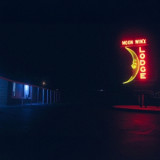
Stewart’s newest offering sees him poised to deliver his most ambitious project yet, with a 10-track song cycle centered around the iconic, and now defunct, Moon Winx Lodge in Tuscaloosa, AL, and some of the characters and scenarios that have played themselves out there over the years.
Rob Mazurek’s Alternate Moon Cycles was our first release. The incredibly spare single-note-centered cornet, bass, and organ chant was recorded to tape at pint-sized Chicago bar Curio as part of a performance series that predates any notion of our label’s existence. Documenting this performance—highly unique even within the depths of Mazurek’s vast catalog—stirred those notions, and soon talks began of releasing the recording on a fresh imprint.
The music unfolds glacially amongst the gentle creaks, clinks, whispers, and scuffles of the active room. It’s difficult to imagine a more honest rendering of the two sidelong pieces of organic minimal music, and nearly impossible to separate the sounds from their performance context. It’s also difficult to imagine a more subtly striking way to introduce a new label to the world.
Now this long-gone gem of supernatural frequency excavation is back in print with fresh liner notes by Mikel Patrick Avery and obi design by Aaron Lowell Denton.
Featuring Rob Mazurek, Matt Lux, and Mikel Patrick Avery.
"This is ambient music, suitable for meditation, but its shifts in texture reward real listening." - New York Times
- 1: Prologue
- 1: 2 The Sweet
- 1: 3 Music Box - Philip Glass
- 1: 4 Row Houses
- 1: 5 Graffiti
- 1: 6 Rows And Towers
- 1: 7 What's Candyman?
- 1: 8 I Thought We Could/The Turn
- 1: 9 Joke Summoning
- 1: 0 End Of Clive And Jerrica
- 1: Brianna Finds Bodies
- 1: 2 Brianna's Mirror Dream
- 1: 3 The Library
- 1: 4 The Elevator
- 1: 5 Frantic Painting
- 1: 6 You Should Say It
- 1: 7 End Of Finley
- 1: 8 Frantic Cycles
- 1: 9 The Story Of Daniel Robitaille
- 1: 20 Brianna In The Studio
- 1: 2 The End Of The Kids
- 1: 22 Anthony's Arm
- 1: 23 Got Taken
- 1: 24 Called To Row Houses
- 1: 29 End Of Burke
- 1: 30 Brianna Says His Name
- 1: 3 Music Box (Reprised) - Philip Glass
- 1: 32 Cabrini Walk (Bonus Track)
- 1: 33 Cabrini Walk Ii (Bonus Track)
- 1: 34 The Bridge (Bonus Track)
- 1: 25 The Laundromat
- 1: 26 Young William
- 1: 27 Leaves A Stain
- 1: 28 William Chases Brianna
The Complete Film Music Composed by Robert Aiki Aubrey Lowe - 2xLP 180 Gram Colored Vinyl - Old-Style Tip-On Gatefold Jackets with Satin Coating and a Built-In Booklet Page - Composer Liner Notes - 12 Page Art Gallery Exhibit Catalogue // In partnership with Universal Pictures, Metro Goldwyn Mayer (MGM) and Monkeypaw Productions, Waxwork Records is thrilled to present CANDYMAN Original Motion Picture Soundtrack by Robert Aiki Aubrey Lowe. Directed by Nia DaCosta (next year's The Marvels) from a screenplay by Oscarr winner Jordan Peele, Win Rosenfeld and DaCosta, Candyman, currently in theaters nationwide, is a fresh take on the blood-chilling urban legend and a contemporary incarnation of the 1992 cult horror classic. About Robert Aiki Aubrey Lowe: Robert Aiki Aubrey Lowe (b.1975) is an artist, curator and composer who works primarily with, but not limited to, voice and modular synthesizer for sound in the realm of spontaneous music. Along with analog video synthesis works, he has brought forth an A/V proposal that has been a focus of live performance and installation / exhibition. The marriage of synthesis and the voice has allowed for a heightened physicality in the way of ecstatic music, both in a live setting and recorded. The sensitivity of analogue modular synthesis echoes the organic nature of vocal expression, which in this case is meant to put forth a trancelike state. Lowe's works on paper tend towards human relations to the natural/magical world and the repetition of motifs. The deluxe 2xLP vinyl release features 180-gram colored vinyl, old-style tip-on gatefold jackets with satin coating and a built-in booklet page, liner notes by composer Robert Aiki Aubrey Lowe, a 12-page art gallery exhibition catalogue, artwork by Sherwin Ovid and Julian Williams and puppetry art by Manual Cinema.
- Every Day There's A Sunset
- Interlude I
- Satellite
- To Breathe Lightning
- Ghost
- Breaks
- Search Light
- Every Day There's A Sunrise
- Spirit
- Maybe
- Interlude Ii
- Letter
- Splits The Light
- You Are Everywhere
TRANS RED VINYL[28,15 €]
Jules Reidy"s sublime music maps the human experience in glittering constellations of sound. The guitarist is a driver of Berlin"s fertile contemporary music scene. A wide-eyed imagination combined with technical mastery guide each work in Reidy"s extensive catalog, from solo guitar albums and collaborations with innovative peers, including recent works with claire rousay, Oren Ambarchi, Andrea Belfi and Sam Dunscombe to major commissions from JACK Quartet and Zinc & Copper. The songs of Ghost/Spirit collectively convey an astral sense of yearning and wonder, pushing towards transcendence. The album charts a deeply personal journey with love, spirituality and transformation expressed in fractal guitar figures, ethereal vocal vapors and rippling microtones. Reidy"s guitar approach unlocks the tonal and textural possibilities of the instrument from their use of alternate tunings and astute processing. The maximalist melodics of album opener "Every Day There"s a Sunset" are bolstered by rumbling bass samples from Andreas Dzialocha, Reidy"s collaborator in the duo Sun Kit. On "Satellite," cello samples from Judith Hamann stretch out through the cosmos, orbited by spiraling finger-picked guitars, while stacked trombone chords echo out into the ether. Thundering drum samples from Berlin metal mainstay Sara Neidorf push the album to ecstatic peaks on "Every Day There"s a Sunrise," fragmented rhythms breaking apart in the atmosphere. Field recordings of the Berlin S-Bahn recur throughout the album, another endless cycle of leaving and returning that shuttles beneath the album"s whirling tones. Ghost/Spirit captures the inherent power and agency in choosing to offer yourself up to the universe and let go, ego death and prayer rendered in incandescent sonics. Reidy"s inimitable skill as a guitarist, producer and composer is on full display, and when combined with the intensity of experience, the resulting album is a remarkable work of art.
- A1: Progetto Tribale - The Sweep
- A2: Onirico - Echo Giomini
- A3: Open Spaces - Artist In Wonderland
- B1: Alex Neri – The Wizard (Hot Funky Version)
- B2: M C.j. Feat. Sima - To Yourself Be Free - Instrumental Mix Energy Prod
- B3: Mato Grosso - Titanic Expande
- C1: Dreamatic - I Can Feel It (Part 1)
- C2: Carol Bailey - Understand Me Free Your Mind (Dream Piano Remix)
- C3: The True Underground Sound Of Rome - Secret Doctrine
- D1: Don Carlos - Boy
- D2: Lazy Bird – Jazzy Doll (Odyssey Dub)
Vol 2[28,99 €]
Volume 1 of this expertly curated project of 90s Italian House - put together by Don Carlos.
If Paradise was half as nice… by Fabio De Luca.
Googling “paradise house”, the first results to pop up are an endless list of European b&b’s with whitewashed lime façades, all of them promising “…an unmatched travel experience a few steps from the sea”. Next, a little further down, are the institutional websites of a few select semi-luxury retirement homes (no photos shown, but lots of stock images of smiling nurses with reassuring looks). To find the “paradise house” we’re after, we have to scroll even further down. Much further down.
It feels like yesterday, and at the same time it seems like a million years ago. The Eighties had just ended, and it was still unclear what to expect from the Nineties. Mobile phones that were not the size of a briefcase and did not cost as much as a car? A frightening economic crisis? The guitar-rock revival?! Certainly, the best place to observe that moment of transition was the dancefloor. Truly epochal transformations were happening there. From America, within a short distance one from the other, two revolutionary new musical styles had arrived: the first one sounded a bit like an “on a budget” version of the best Seventies disco-music – Philly sound made with a set of piano-bar keyboards! – the other was even more sparse, futuristic and extraterrestrial. It was a music with a quite distinct “physical” component, which at the same time, to be fully grasped, seemed to call for the knotty theories of certain French post-modern philosophers: Gilles Deleuze, Félix Guattari, Paul Virilio... Both those genres – we would learn shortly after – were born in the black communities of Chicago and Detroit, although listening to those vinyl 12” (often wrapped in generic white covers, and with little indication in the label) you could not easily guess whether behind them there was a black boy from somewhere in the Usa, or a girl from Berlin, or a pale kid from a Cornish coastal town.
Quickly, similar sounds began to show up from all corners of Europe. A thousand variations of the same intuition: leaner, less lean, happier, slightly less intoxicated, more broken, slower, faster, much faster... Boom! From the dancefloors – the London ones at least, whose chronicles we eagerly read every month in the pages of The Face and i-D – came tales of a new generation of clubbers who had completely stopped “dressing up” to go dancing; of hot tempered hooligans bursting into tears and hugging everyone under the strobe lights as the notes of Strings of Life rose up through the fumes of dry ice (certain “smiling” pills were also involved, sure). At this point, however, we must move on to Switzerland.
In Switzerland, in the quiet and diligent town of Lugano, between the 1980s and 1990s there was a club called “Morandi”. Its hot night was on Wednesdays, when the audience also came from Milan, Como, Varese and Zurich. Legend goes that, one night, none less than Prince and Sheila E were spotted hiding among the sofas, on a day-off of the Italian dates of the Nude Tour… The Wednesday resident and superstar was an Italian dj with an exotic name: Don Carlos. The soundtrack he devised was a mixture of Chicago, Detroit, the most progressive R&B and certain forgotten classics of old disco music: practically, what the Paradise Garage in New York might have sounded like had it not closed in 1987. In between, Don Carlos also managed to squeeze in some tracks he had worked on in his studio on Lago Maggiore. One in particular: a track that was rather slow compared to the BPM in fashion at the time, but which was a perfect bridge between house and R&B. The title was Alone: Don Carlos would explain years later that it had to be intended both in the English meaning of “by itself” and like the Italian word meaning “halo”. That wasn’t the only double entendre about the song, anyway. Its own very deep nature was, indeed, double. On the one hand, Alone was built around an angelic keyboard pattern and a romantic piano riff that took you straight to heaven; on the other, it showcased enough electronic squelches (plus a sax part that sounded like it had been dissolved by acid rain) to pigeonhole the tune into the “junk modernity” section, aka the hallmark of all the most innovative sounds of the time: music that sounded like it was hand-crafted from the scraps of glittering overground pop.
No one knows who was the first to call it “paradise house”, nor when it happened. Alternative definitions on the same topic one happened to hear included “ambient house”, “dream house”, “Mediterranean progressive”… but of course none were as good (and alluring) as “paradise house”. What is certain is that such inclination for sounds that were in equal measure angelic and neurotic, romantic and unaffective, quickly became the trademark of the second generation of Italian house. Music that seemed shyly equidistant from all the rhythmic and electronic revolutions that had happened up to that moment (“Music perfectly adept at going nowhere slowly” as noted by English journalist Craig McLean in a legendary field report for Blah Blah Blah magazine). Music that to a inattentive ear might have sounded as anonymous as a snapshot of a random group of passers-by at 10AM in the centre of any major city, but perfectly described the (slow) awakening in the real world after the universal love binge of the so-called Second Summer of Love.
For a brief but unforgettable season, in Italy “paradise house” was the official soundtrack of interminable weekends spent inside the car, darting from one club to another, cutting the peninsula from North to centre, from East to West coast in pursuit of the latest after-hours disco, trading kilometres per hour with beats per minute: practically, a new New Year’s Eve every Friday and Saturday night. This too was no small transformation, as well as a shock for an adult Italy that was encountering for the first time – thanks to its sons and daughters – the wild side of industrial modernity. The clubbers of the so-called “fuoriorario” scene were the balls gone mad in the pinball machine most feared by newspapers, magazines and TV pundits. What they did each and every weekend, apart from going crazy to the sound of the current white labels, was linking distant geographical points and non-places (thank you Marc Augé!) – old dance halls, farmhouses and business centres – transformed for one night into house music heaven. As Marco D’Eramo wrote in his 1995 essay on Chicago, Il maiale e il grattacielo: “Four-wheeled capitalism distorts our age-old image of the city, it allows the suburbs to be connected to each other, whereas before they were connected only by the centre (…) It makes possible a metropolitan area without a metropolis, without a city centre, without downtown. The periphery is no longer a periphery of any centre, but is self-centred”.
“Paradise house” perfectly understood all of this and turned it into a sort of cyber-blues that didn’t even need words, and unexpectedly brought back a drop of melancholic (post?)-humanity within a world that by then – as we would wholly realise in the decades to come – was fully inhuman and heartless. A world where we were all alone, and surrounded by a sinister yellowish halo, like a neon at the end of its life cycle. But, for one night at least, happy.
- A1: Steve Clayton - Steve Clayton Pure Gut Emotion 0:32
- A2: The Way We Live - Call Him 3:36
- A3: The Way We Live - Now Is The Time 4:44
- A4: Tractor - Lion's Den 4:21
- A5: Tractor - Drunken Angels And Sad Clowns 5:05
- B1: Tractor - Woman Of Fire 5:19
- B2: Tractor - Who Am I 4:40
- B3: The Way We Live - Laid Back Full Freakout 7:23
- B4: Tractor - Pictures In My Almanac 3:01
- C1: Tractor - Jester
- C2: The Way We Live - Mine 3:54
- C3: The Way We Live - On An August Day 3:04
- C4: Tractor - Big Big Boy 4:45
- D1: The Way We Live - Sun Cycle 1:36
- D2: Steve Clayton - The Stream
- A1: Style And Or Substance
- A2: Live Together
- A3: Who Dares Wins
- A4: Thumbs
- A5: Choice
- B1: Schleep
- B2: Dirty-Clean
- B3: A Long Year
- B4: The Endless Cycle Of Maintenance
- B5: Multitudes
Auf dem Debütalbum des australischen Duos The Ferguson Rogers Process, "Style And Or Substance", entdeckt Disco, dass es auch schmutzig werden kann, und Rock findet seinen Groove. Das Duo besteht aus Lance Ferguson, der alle Songs produzierte und fast alle Instrumente im Alleingang einspielte, und Tom Rogers, der 2012 mit seiner Band The Bamboos einen der erfolgreichsten australischen Tracks des Jahres feierte ("I Got Burned"). Sie werden begleitet von Graeme Pogson an Drums/Percussion (langjähriges Bamboos-Mitglied und zentrales Mitglied der Melbourner Boogie-Band Mondo Freaks), sowie von John Castle (Alex Lahey, Cub Sport, Vance Joy) am Mischpult.
- 1: Jylitys Part
- 2: Vilnis Part 1
- 3: Cilpas
- 4: Gambasta 1
- 5: Voltas
- 6: Vilnis Part 2
- 7: Gambasta 2
- 8: Jylitys Part 2
- 9: Gambasta 3
BASta! is the solo project of double bass player and composer Joris Vanvinckenroye, in which he explores and pushes the limits of the double bass. In this project, using looping and effect pedals, Joris creates an almost orchestral sound, using the full range of his instrument-from the deepest basses to the highest notes. These layered compositions weave complex rhythms and melodies into a rich and compelling soundscape.
The debut album of BASta!, Cycles, was released in 2009 on the label Homerecords.be and marked the beginning of an adventurous journey that brought BASta! to numerous stages, both solo and in collaboration with multidisciplinary productions by Rode Boom and Retina Dance Company, among others. Besides BASta!, Joris has been active for decades in bands such as Aranis, Troissoeur and MOTYK (formerly Flairck), with which he performs internationally, from Mexico to China and from Oman to the United States. He also composes music for dance, theatre and multidisciplinary productions, including Rode Boom's successful production Unknown Evidences, which has been performed over 600 times in France, Morocco and Denmark, among others.
Joris Vanvinckenroye:double bass, Viola da Gamba
Composed and recorded by Joris Vanvinckenroye,
Mixed at Studio Cucurucu by Jesse De Roo
Mastered at Elektropolis by Uwe Teichert
Album produced by Nik Bartsch
List of Demands, Damon Locks" first foray into creating an entire album from spoken and text-based work, finds the Chicago-based musician and educator collecting cultural abstractions and reorganizing them into a firm truth. The album lays out a vision of Black liberation and transmits it outward as a song cycle of bite-sized MF DOOM-meets-Nikki Giovanni rhythm experiments. The sample-based constructions are steeped in a lifetime of not only keen cultural observation, but direct communal participation in the culture. Locks" decades-long resume connects the dots between experimental improvisation, sample based hip hop, punk, and poetry - each done at the highest level and with a list of collaborators that could spin the head of even the most jaded listener. And that seems to be the point. To jump-start the entire personality spectrum into action. Ecstatic positivity examined via his nuanced grasp of reality, all working toward that ever-evasive concept of what could be.
Following the launch of his new music label, Early Morning, in September 2024, Guy J sets the stage for its sophomore release-an immersive two-track concept by acclaimed producer Roy Rosenfeld.
Roy, an artist whose productions often transcend genre boundaries, offers near-17-minute material with an imaginative work that captures attention and a creative depth.
The opening track, "Forgotten," evolves with a measured intensity, layering elements that cultivate a ritualistic atmosphere. The arrangement unfolds through indigenous-percussive influences, steadily progressing towards a resonant climax. By the third act, rich, deep chords punctuate the experience with a sense of calm, only to transition into a melodic break followed by the tribal-inspired crescendo.
Equally compelling, the closing "Hello" begins with an 80s arcade-inspired, lo-fi aesthetic juxtaposed against high-fidelity beats. Driven by ethnic percussion, it conjures the raw energy of ancient rituals, evoking primal imagery of witch doctors dancing around fires to honor the cycles of life.
Here, Rosenfeld merges traditional, futuristic, and vintage synth elements in a call to fellow producers, challenging them to innovate while empowering dancers to embrace nights of hedonistic freedom.
- A1: Satans Rötter
- A2: Metamorfos
- A3: Urgravens Grepp Är Hårt Och Kallt
- B1: Hem
- B2: Vindar Från Förr
- B3: Den Sanna Modern Talar
"From the remote reaches of Haparanda, Sweden, Häxkapell presents a black metal masterpiece that resonates with the eternal rhythms of nature and the cyclical dance of life and death.
“Om jordens blod och urgravens grepp” (‘Of earth’s blood and the grave’s grasp’) is a powerful blend of black metal, folk, and atmospheric darkness, interwoven with classical and progressive influences. Traditional instruments such as the violin, viola, willow flute, and hand drum infuse the music with ancient, primal energy. The lyrics, crafted through subconscious writing, serve as a conduit to the mystical and otherworldly.
The album was engineered, produced, and mixed by Oraklet. Drums were recorded at Nordvis Ljudstudio, with the remaining tracks laid down at Studio HMH. Mastering was handled by Tore Stjerna at Necromorbus Studio.
Founded in 2015 in the northernmost part of Scandinavia, Häxkapell is the creation of Oraklet, who embarked on an inward journey to explore the philosophical, spiritual, and mystical aspects of existence. Following the 2016 demo “Om sanningen,” Häxkapell released their debut album, “Eldhymner”, in 2021.
On “Om jordens blod och urgravens grepp”, Häxkapell’s music evolves much like the earth itself: slowly, imperceptibly, yet ever-changing. It reflects the cycle of birth and bereavement, with death and life beginning anew as earthen folk melodies murmur ancient slumbers into dawn. Oraklet channels these profound truths into lyrics and music."
- A1: Plaza
- A2: He’s A Liquid
- A3: Underpass
- A4: Metal Beat
- A5: No-One Driving
- B1: A New Kind Of Man
- B2: Blurred Girl
- B3: 030
- B4: Tidal Wave
- B5: Touch And Go
Recorded 1979 at Pathway studios, an eight-track studio in Islington, North London, this is an album of inventive, timeless electro-pop. Mastered from the original analogue tapes, the album still sounds incredible thanks to Foxx’s minimalist approach, which was partly inspired by his experience of watching Lee “Scratch" Perry produce records at Island Records’ studios in the 1970s. Engineer Gareth Jones - who later worked on some of Depeche Mode’s finest recordings - also proved to be a fantastic collaborator and innovator on this record.
John Foxx:
"I was in retreat from bands, touring, etc, mightily convinced that electronics were the future, and reading too much J.G. Ballard. I lived alone in Finsbury Park, spent my spare time walking the disused train lines, cycled to the studio every day and wobbled back at dawn, imagining I was the Marcel Duchamp of electropop. Metamatic was the result. It was the first British electronic pop album. It was minimal, primitive technopunk. Carcrash music tailored by Burtons.”
“My introduction to “noise” came from a record shop in Lake Worth, Florida ran by a musician named Kenny 5. Kenny had left Detroit sometime in the mid nineties and had begun selling used records and CD’s from the downtown strip of this tiny southern Florida city in a humble shop sandwiched between a deli and a dog grooming business. Kenny previously was on labels like Amphetamine Reptile and timeSTEREO, and the records and videotapes that would be on repeat at his shop were a vast sonic expanse that spoke to the eclecticism of his experience as a touring musician participating and adjacent to American noise culture through the early to late 90’s. In 1998, I was eleven years old and I would order a pizza with him and watch VHS tapes of Japanese noise and deathmatch bootlegs, as well as any other sonic and subcultural rarities that far outstripped my age to comprehend (notably the RRR “Journey Into Pain” compilation and various Vanilla Tapes videos). This widecast net of information formed an introduction to a reality that did not fall deaf on me, but it took many years later for me to reorient the specific freedoms of what this dense and cathartic sound culture had imparted on my life and would continue onward to.
What does this have to do with this selection of choice recordings from the Secret Boyfriend catalog for the enmossed label? For the uninitiated, Secret Boyfriend is the long running moniker of Ryan Martin, North Carolina musician and label proprietor of the Hot Releases imprint. For over a decade from this writing I have watched Secret Boyfriend, and Hot Releases by extension as a curatorial and archival effort, embodying the multiplanal capacity that noise loosely functions from as an umbrella ideology and formalist avenue for sound creation. For anecdotal purposes, from (before) 2006 until roughly 2023 the East Coast of the United States showcased a vibrant network of eclectic regional festivals that saw wide swaths of artists addressing and negotiating the notion of what qualified “noise” from a conceptual and ideological perspective. Some festivals honed in on particularities in aesthetics and tropes, and others had a kind of “catch-all” implementation that allowed for a salvation of the sort of alienated and singular artistry that was amassing throughout these territories. While clear guidelines had been set from regional predecessors as to how noise with a capital “N” should maneuver, Secret Boyfriend is emblematic in the spirit of fluidity that was either implicitly coupled to the notion of the genre, or grew to evolve towards or devolve from.
Within Secret Boyfriend performances, I have seen and admired a mirroring from a ravenous appreciator of this culture at large back towards itself. Typical of a Secret Boyfriend set is an interchangeable narrative arc wherein blistering feedback laden scrap metal improvisations are forayed into naive ambient or “pop” songs, or skipping CDs, or mixer feedback play, or delayed Roland 707 drum workouts all at once and in a unique hegemony. Secret Boyfriend's stylistic mastery of each endeavor is at once an homage to a history of loving listening and enacting, while a brave step into the realm of actualizing the unique fluidity of his own practice. In performance and the action of network engagement, Secret Boyfriend operates a survey of that which he sought to hear and that which he cultivates around his work. His operations are mirrors, and the project (alongside his other peers) is a reflection on the ethos of his time.
Conversely his recording practice narrows in on these moments and allows for a different kind of intimacy or alienation for the non live listener. This record of selected “pop songs” (let's call them that) is particularly poignant at a time when the culture Martin mirrors is at a strange crossroads with itself. The aforementioned festival networks necessarily change and shift. The onlookers become the artists, the artists find new horizons, and the spaces for these cycles fade into locales of a distant memory. It seems, from my perspective, that audiences currently yearn for a more bottlenecked experience, searching for some ontologically vetted manifestation of an idea, of a sound and less for an experience that functions in opposition to our collective banalities. This makes sense in the face of general global catastrophism that plagues us. We need certainty of what something is somewhere, don’t we? Noise as an idea has expanded and contracted to so many iterations of itself it is hard to tell what it even is, and it is particularly difficult to identify in the absence of solid network activations a moment to reflect on its own complexities and nuances. In the face of so much change, I argue that the language of noise culture at large has on one hand become increasingly didactic and predictable, and laughably inclusive and non linear on the other. Probably has always been this way, but now we are in the midst of a moment of extreme access and indexicality, which somehow cauterizes expansion and naivety and chance.
This record highlights the Secret Boyfriend that obscures didacticism by highlighting output that opens up for more challenging catharsis and emotive signal processing. It provides an entry to the materialism of a cultural field full of ecstatic complexity and beautiful inconsistency. In these muted moments Secret Boyfriend has given us over his career we have an argument for evolving languages that further challenge our notions of what is supposed to happen and how it is supposed to be presented. In his more song oriented expansiveness, we can punctuate the ability to think in new modalities. Listening to these recordings reminds me of the polarity of sitting in the record store as a kid and understanding that His Name Is Alive is on 4AD and (gasp!) timeSTEREO. This trite early impression that nothing is really as different as our imaginations might want them to be, and that we can do whatever we want mostly within the creative realms we work through is an important filter to look through Secret Boyfriend as a project and a vessel. If we can achieve abandon and vulnerability through our artistic endeavors, then we have a sound model for, maybe, new potentialities. If that’s too much projection, or just complete liberal bullshit, I am fine with that. Secret Boyfriend's oeuvre at best offers us moments of reprieve to ponder these complexities, or at least a moment to zone out on a drive through North Carolina Highway 54.
You have one pocket of life that you must do whatever you want to inside of. Secret Boyfriend does it affectionately, in a variety of forms, and always with deep sentimentality. These recordings are a wonderful set of songs to begin further investigation from. Thank you Ryan for allowing as many avenues as possible to continue a broad cultural exchange and conversation that intersect and refract while being the kind of artist that is brave enough to not phone in the effort.”
- Nick Klein , May 2024
- A1: Silent Night (3:39)
- A2: All I Want For Christmas Is You (4:01)
- A3: O Holy Night (4:27)
- A4: Christmas (Baby Please Come Home) (2:33)
- A5: Miss You Most (At Christmas Time) (4:32)
- B1: Joy To The World (4:18)
- B2: Jesus Born On This Day (3:41)
- B3: Santa Claus Is Comin' To Town (3:24)
- B4: Hark! The Herald Angels Sing/Gloria (In Excelsis Deo) (2:59)
- B5: Jesus Oh What A Wonderful Child (4:26)
- B6: God Rest Ye Merry Gentlemen (1:18)
LP 2x12"[46,18 €]
LP[26,68 €]
LP[26,68 €]
7" single[15,92 €]
12" single[15,92 €]
12" single[17,61 €]
LP[19,75 €]
2LP[90,34 €]
The Holiday Album That Turned Mariah Carey into the Queen of Christmas: Featuring the Standard “All I Want for Christmas Is You,” the Singer’s Blockbuster Merry Christmas Exudes Joy, Spirituality, and Conviction
Sourced from the Original Master Tapes, Presented in Audiophile Sound for the First Time, and Strictly Limited to 3,000 Numbered Copies:
Mobile Fidelity’s UltraDisc One-Step 180g 33RPM LP Set Plays with Superb Detail, Openness, and Definition
1/2" / 30 IPS / Dolby SR analogue master to DSD 256 to analogue console to lathe
Mariah Carey didn’t become the Queen of Christmas just because of her fervent love of the holiday. Or as the result of a brilliant marketing plan. The iconic singer earned her title by way of her blockbuster Merry Christmas, a 1994 album that quickly joined the likes of Bing Crosby’s White Christmas, A Jolly Christmas from Frank Sinatra, and Nat King Cole’s The Christmas Song as an all-time holiday vocal classic. Featuring a balanced mix of inspired originals and well-chosen covers, Carey’s fourth studio record has only grown in stature as new generations discover its magic. Mobile Fidelity’s 30th anniversary edition reissue of Merry Christmas makes her spellbinding performances and upper-tier register come alive like never before.
Sourced from the original master tapes, pressed at Fidelity Record Pressing, and strictly limited to 3,000 numbered copies, the pioneering label’s UltraDisc One-Step 180g 33RPM LP set of Merry Christmas plays with superb detail, depth, and dimensionality. Available in audiophile quality for the first time since its original release three decades ago, and featuring the bonus track “God Rest Ye Merry, Gentlemen,” the nine-times-platinum set breathes with a newfound openness and transparency that enhance the spirituality, passion, and festive tenor of Carey’s singing.
Benefitting from superb groove definition, a nearly inaudible noise floor, and dead-quiet vinyl surfaces, the music takes on a heightened energy and anticipatory emotion synonymous with the holiday season. Carey’s signature vocals explode with liveliness and dynamics, the full scope of her acrobatic range presented in clear, transparent sound that practically places her on a small stage in your listening room. This collectible version also breathes with the kind of warmth, intimacy, and coziness you want from a landmark vocal album.
Recorded when Carey helped put “diva” back into everyone’s vocabulary, Merry Christmas gave the New York native another smash right out of the box. What nobody knew at the time was the degree of the album’s staying power — and how, many years removed from its initial promotion cycle, its legend would still grow and even spark a 2010 sequel. Having re-entered the Top 200 charts every year since 2019, Merry Christmas ranks as one of the three most commercially successful holiday LPs ever made and, in due time, will likely earn the top distinction in that class. A global blockbuster, it seamlessly ties together Christian, gospel, and secular threads and speaks to a boundless audience, independent of denomination.
Most obviously, the record remains inescapably connected to “All I Want for Christmas Is You,” an uptempo anthem that towers as a holiday standard and one of the biggest-selling singles in history. Punctuated with celesta chimes, sleigh bells, springy keyboards, and joyous beats, the song echoes the simple albeit engaging melodies and doo-wop style of beloved holiday classics of yore — and blends such elements with contagious dance-pop rhythms to create an atmosphere rich in joy, wonder, and excitement. Radiant with golden soulfulness and sincere conviction, Carey’s exuberant singing and on-point phrasing put it all over the top. And how.
The song stands as the only effort in Billboard history to top the Hot 100 chart during at least three separate runs. Carey’s blockbuster has already hit No. 1 during five runs, spanning every year between 2019 and 2024. That’s just one of the many records the singer holds — and only one of the multiple highlights from Merry Christmas, which includes two other Carey-penned originals, “Miss You Most (At Christmas Time)” and “Jesus Born on This Day.”
Though slightly lesser known, Carey’s remarkable rendition of Darlene Love’s “Christmas (Baby Please Come Home)” further links her album with the big, lush, Wall of Sound heritage that helped inspire its production. Carey’s heartfelt take and transformation of the traditional “Santa Claus Is Coming to Town” into an animated tune that even adults can believe, as well as her clairon reading of “Joy to the World” — cleverly augmented with bits of Three Dog Night’s 1971 hit of the same name — further reinforce her status as Queen of Christmas.
At the peak of her powers, Carey finds equivalent success when tapping more spiritual veins. Witness the reverence she brings to the timeless carol “Silent Night,” the piousness she invests in “Jesus Oh What a Wonderful Child,” and the sacred feeling she conveys throughout “O Holy Night.” You’ll also never think of “Hark! The Herald Angels Sing” and “Gloria (In Excelsis Deo)” the same way again after hearing Mimi pour her heart and soul into them, and pair the songs together.
Indeed, it’s Carey’s pliable voice, melismatic technique, and five-octave range — on display here in definitive fashion — coupled with her undeniable love for Christmas and understanding of the religious significance of the season that make Merry Christmas a must-have holiday staple. And on Mobile Fidelity’s LP, something you better add to your wish list.
Following a period of five years establishing himself and blossoming into an innovative and in in-demand creative force on the New York jazz scene, 26 year old Danish pianist/composer Rasmus Sorensen returns to his home country to present his third accomplished piano trio record in two years. Combining musicianship far beyond his years with a distinctive contemporary voice, At The Right Time is set to release on November 15th on April Records. The record follows his 2022 debut Traits " which showcased his capabilities as a modern jazz composer and instrumentalist and 2024" s Balancing Act "", which saw the rising star stretch out on American Songbook classics alongside New York bassist Alexander Claffy and celebrated drummer Kendrick Scott. Now, in 2024, At the Right Time cements Sorensen s position as a trailblazing voice on his instrument whilst providing subtle nods to modern jazz piano greats of the 21st Century: there"s some Fred Hersch counterpoint, Brad Mehldau Mehldau-esque improvisational elasticity, Vijay Iyer influenced rhythmic cycles, a touch of Robert Glasper"s acoustic hiphip-hop inflection, and hints of Craig Taborn s polytonality. Featuring 12 diverse original compositions, the focus of this trio is on togetherness, with which the three formidable players bring the music to life. Jon Henrikssons bass sound holds the trio in an enveloping warmth that seems destined to become well known to European audiences. At the drums, Francesco Ciniglio, most recently heard by those audiences as a member of Wynton Marsali"s quartet, brings out the color, energy and movement sewn into the writing. The trio juxtaposes the feelings of being tightly locked locked-in and suspended in free free-floating time, and spends most of its time in the best of both rhythmic worlds.
- Chant
- Fiori Strappati
- Petto Rotto
- Benu
- Cielo Azul
- Nido
- Cielo Fermo
- Alba
- Luna D’autunno
- Come Fan Le Stelle
- Ali Di Cotone
- Ali Di Fuoco
- L’ultimo Giorno
- Sogno Diurno
- Ocre
Limited edition pressing - 50 copies come with one page insert. Download code included.
The album Sonic Mystics for Poems (of Life and Death of a Phoenix) by Andrea Burelli is a work that masterfully blends traditional musical languages with the formal and conceptual sensibilities of contemporary music. It offers a profound reflection on the life-death-life cycle, centered on poetic texts that oscillate between human-sensitive experience and the mythical journey of a phoenix, a metaphor of this circular and infinite reality.
The work, which includes a collaboration with musicians from the renowned Solistenensemble Kaleidoskop, stands out for its clear influence from classical Western music and modal traditions, as well as experimental electronics. Composed for voices, strings, synthesizers, and drum machines, this music features a minimalist tapestry of polyphonies, enhanced by sophisticated electronic elements and a diverse array of rhythmic articulations.
Field Notes describes Andrea Burelli as a versatile artist capable of embodying a multitude of roles, from poet to composer, musician, and singer, emphasizing how her work reflects this versatility by ¨combining elements of art song, contemporary music, pop, and electronic sounds.¨ According to Groove Magazine, this LP evokes neoclassical chamber music and an imagined Italian folklore, aligning with contemporary explorations of modern vocal abstractions, similar to the work of artists like Marina Herlop, stating that: “This is how the new and the good emerge.”
Furthermore, the music has received positive feedback from internationally acclaimed artists such as Rashad Becker, who, in addition to being the mastering engineer of the project, describes it as "pure and honest"; James Young of Darkstar calls it "bold and innovative"; while Eartheater (PAN), Rabih Beaini, and Gigi Masin have praised it as "beautiful."
It’s abundantly clear from the first bars of their 5th studio album Through Other Reflection, that this is, and could only ever be, The Soundcarriers. From the enchanting vocal duets of folk-bidden Chanteuses Leonore Wheatley and Dorian Conway; to the precise bass lines of Paul Isherwood and the limber, jazz-cool, Hal Blaine-esque drums of his his co-songwriter Adam Cann; from the fairy-like flutes, 60s-garage guitars and organ sounds pilfered from the archives of exotica - listening to the Soundcarriers resembles a rediscovery of all the most prized, esoteric corners of the 1960s, all bundled up, warped and refracted through the quartet’s astutely modern cultural lens. Channelling Tropicalia, Middle Eastern psychedelic Jazz/Funk, The French Library sounds of Nino Nardini, and a whole host of lavish obscurites beside, Through Other Reflection delivers another sonic adventure from one of the most unique and distinctive voices of British Psychedelia. After an 8 year wait for their album 4 - 2022’s Wilds - it thankfully didn’t take so long for the follow-up this time round. In many ways, this feels like a companion to Wilds; recording again at their Nottingham warehouse studio, Through Other Reflection retains that same organic glow, all the passions and imperfections of a tightly clipped unit jamming out these living, breathing pop-art nuggets as if straight onto the acetate.”We wanted to keep an air of spontaneity with this album and not get too bogged with the recording process”, explains Cann, “It was more a case of getting the songs as tightly written and arranged as possible first so we could get them down quickly in the studio. It always takes longer than you think” Less packed with strident pop hooks as its predecessor however, the music of Through… has been given extra licence to breathe, stretch out, and wander more uncharted terrains. While gleaming psych-pop of tracks like ‘The City Was’, or ‘Already Over’ confidently carry on from where they left off, from the album’s 2nd track ‘Always’, the trip becomes a little less predictable. Starting out as a smoky Procol Harum-meets-French-Psych organ ballad, the music drifts, as if of its own accord into an eerie, garage trance that lingers, cycles, and hypnotises, growing ever stranger, reaching ever-further away from its point of conception. And almost every track on Through Other Reflections holds that outer-body moment, where the band fix themselves on a limber, lysergic groove, lose all grip on time and reality, and melt themselves away into a liquid state of blind euphoria. There are sequences on this record that feel more like rituals than songs, built upon a single hypnotic rhythm which, like the centre of a vortex, pulling everything under its beatific command. Take the finale to ‘What We Found’ for instance, sounding like a ghostly march across the psychedelic moors, or ‘Feel The Way’, where a single athletic drum-loop rises and rises, growing ever more urgent and suspenseful underneath its frantic harpsichords and rasping flutes. Full of such rich stylisms as these, The Soundcarriers showcase themselves as abstract storytellers par excellence by virtue of their textures and arrangements alone. Resembling Romantic composer Maurice Ravel, but if he had just a four-piece rock band at his disposal, Through Other Reflects is rich with detail; there’s shakers, rattles, clarinets, booming drums; there’s synthesiser swarms, chiming xylophones, vintage organs and experimental Cluster & Eno-esque ambiences. Within all this nuance the music flows like some undisclosed narrative swathed in a magnetic secrecy. “It almost comes across like a story in some ways”, says Cann of the album, “the music is quite sectional with elements of exotica and cinematic type layers, it's a good balance of grooves, tunes and weirdness”. No more is this “epic cinematic feel” heard more proudly than on short instrumental ‘Sonya’s Lament” - its innate, hauntological atmospheres befitting a Peter Strickland soundtrack, or the classics of Lex Baxter, the so-called ‘Founder of Exotica’ himself. On the other hand, providing a greasier undercurrent to all these bucolic sounds is a leaning towards a more “direct” lyricism referencing more “external concerns. Laying down the first tracks for the album in the wintry gloom of pre-lockdown 2020, and drawing inspiration from time spent in Berlin, Through Other Reflections returns to some of the post-apocalyptic futurism explored in 2014’s Entropicalia - a loose concept album inspired by J.G Ballard’s The Drowned World. “The songs explore a disillusionment with the way things are going particularly after 40 years of neoliberalism”, says Cann, “They follow that folk-song tradition of wanting to escape to an imagined time, but here it’s more urban than pastoral. The first couple of ideas I came up with when doing some music in Berlin and had some time to wander aimlessly. And think the atmosphere seeped in, particularly on The City Was and Already Over. He continues, “One aspect of the title, ‘Through Other Reflections’ is about synthesis and layers of influence. How things can be filtered through other things and change the perspective. This is something you get in cities as well.” Though, as with everything The Soundcarriers make, “It can mean anything. It also just sounds kind of cool.”
Earquake 1991[22,48 €]
Earquake 1992[22,48 €]
Earquake 1993[22,48 €]
Earquake 1994[22,48 €]
Earquake 1995[22,48 €]
Earquake 1997[22,48 €]
Earquake 1998[22,48 €]
Earquake 1999[22,48 €]
Earquake 1996 is the 6th part of the nineties cycle by Wolfgang Voigt, released as a double vinyl series on Profan. Besides the Mike Ink remix of one of his biggest techno hits Love Inc. R.E.S.P.E.C.T., Wolfgang Voigt dedicates this edition mainly to his most dust-dry, stoic, abstract-grooving minimal designs of that time. These are pieces with such sonorous, idiosyncratic names as Logorrhoee and Intoleratio, which enchant us back into a minimal techno cosmos of a very special kind.
It may be collected
Earquake 1996 ist der 6te Teil, des als Doppelvinyl Reihe auf Profan erscheinden Neunziger Jahre Zyklus von Wolfgang Voigt. Neben dem Mike Ink Remix eines seiner grössten Technohits Love Inc. R.E.S.P.E.C.T., widmet sich Wolfgang Voigt auf der vorliegenden Ausgabe vor allem seinen staubtrockensten, stoisch, abstrakt-groovenden Minimalentwürfen jener Zeit. Es sind Stücke mit so klangvoll-eigenwilligen Namen wie Logorrhoee und Intoleratio, die uns zurückverzaubern in einen Minimaltechno-Kosmos der ganz besonderen Art.
Es darf gesammelt werden
Carrying on a string of stunning archival releases from major figures of Indian classical tradition (including releases from members of the Dagar family and Amelia Cuni), Black Truffle is pleased to announce an unheard recording from tabla master Kamalesh Maitra (1924-2005). For over fifty years, Maitra devoted himself to the rare tabla tarang, a set of between ten and sixteen hand drums tuned to the notes of the raga to be performed. While the tabla tarang has its origins in the late 19th century, Maitra was the first to recognise its potential as a solo concert instrument, using the set of tuned drums to perform full-length raags. Seated behind a semi-circular array of drums, Maitra produced stunning waves of melodic improvisation enlivened with the rhythmic invention of a master percussionist.
Across his career, Maitra performed in ensembles led by Ravi Shankar, collaborated with George Harrison, and led his own East-West fusion group, the Ragatala Ensemble. However, it is in the solo setting that his remarkable artistry and the otherworldly timbral qualities of the tabla tarang are most strikingly on display. Recorded during the same 1985 Berlin sessions that produced Maitra’s self-released solo LP Tabla Tarang: Ragas on Drums, on Raag Kirwani on Tabla Tarang we are treated to Maitra stretching out for over forty minutes on the late night Raag Kirwani, accompanied by Laura Patchen on tabla and Mila Morgenstern and Marina Kitsos on tanpura. The performance begins with the traditional free-floating exposition section, where Maitra’s spacious melodic improvisation at times almost resembles a plucked string instrument (like the sarod, which Maitra also played). For the listener unaccustomed to the tabla tarang, the sound of these microtonally inflected melodic patterns played on drums has a magic quality. As Maitra begins to imply the rhythmic cycles more strongly, Patchen joins on tabla, beginning half an hour of rhythmic-melodic exploration, where virtuosity sits side by side with delicacy and meditative attention. Accompanied by beautiful archival images and extensive liner notes from Laura Patchen, for many listeners Raag Kirwani on Tabla Tarang will be the perfect introduction to the magical world of Kamalesh Maitra, released to coincide with the hundredth anniversary of the master musician’s birth.
Although never released until recently, Jazz Sabbath's music has been finding its way to millions for over 50 years. Through a vicious cycle of personal tragedy and plagiarism the songs intended to change the jazz world ended up giving birth to a much darker sound. Now a third recording from the Sixties has resurfaced, perhaps their most important one.
In 1968 Jazz Sabbath were an instant hit on the UK jazz scene. It wasn’t long until they were offered a record deal. They spent weeks in the studio recording the tracks that got the heaviest reactions at their shows until they captured their live energy on tape. Unfortunately, the label manager told them the album was far too experimental and there was no hit potential. Ordered to play some of their ‘easier’ tracks instead, they reluctantly gave in.
The 2 albums that followed still are classics in their own right, but they were not mistaken in thinking they had recorded their best work in 1968. Like the tracks from their 2 albums, these tracks were also blatantly presented as 'original songs' by that band from Birmingham a few years later. Whether they copied them from live bootlegs or if they got their hands on the mix, it doesn’t really matter. Their lasting popularity, even in the crude way they were covered, only proves just how monumental these songs were and how record labels are often wrong.
With the truth now finally out there and that Birmingham band exposed as the musical charlatans they are, Jazz Sabbath have finally mastered the 1968 tapes to present their best work to the public.
Producer, designer, publisher, filmmaker, all-round scene phenom - Lasse Marhaug returns with his first album since relocating from Oslo to the Arctic Circle, surveying his 35-year career for a set of grizzled, doom-pocked rhythms and foghorn drones pulled from the aether. Expansive and hard to categorise, it's a precision-tooled set of ice-cold tonal productions that heavily lean into Mika Vainio’s rhythm experiments, with extra levels of growling bass and curious noises to send us deep into the uncanny.
Lasse Marhaug has put his mark on literally hundreds of albums - working with artists like Jenny Hval, Merzbow, Jim O'Rourke, Kevin Drumm, Hilary Woods - so many others - yet he still regards himself as a primarily visual artist who got diverted into an occasionally different path. If his last album 'Context' was a kiss goodbye to decades of life in Oslo, 'Provoke' turns a new page, but one that draws heavily from memories of the distant past, reflecting on the way the topographies of Norway's frozen north helped shape his creative worldview. Weaving electronics into environmental recordings captured in the bleak Arctic winter, the album was mixed during the Polar night season, when, for two straight months, the sun never rose past the horizon. Somehow, even at its bleakest, Marhaug avoids the usual aesthetic signifiers for this kinda thing, finding elements of queered beauty in all the severity, juxtaposing elements that shine a bright light on all the odd spaces in-between.
A consideration of noise music's place in 2024, and whether it can still be a tool for subversion when its aesthetics have been so commodified, ‘Provoke’ also refernces an experimental '70s Japanese art magazine that attempted to define a new language for photography. Operating somewhere between these two guiding poles, Lasse feels his way through a subtly altered mode of expression, a new approach to familiar concepts. Album opener ‘Plates’, for example, gives it the full Ø treatment, like some exceptional ‘Oleva’-outtake, but , eventually, shards of interference start to exhale like horses blowing, creating uncanny sensations that hit through ambiguous feeling rather than sheer noise terror. Ritualistic, corporeal - hard to know what you’re listening to and why it makes you feel that certain way - so much more than just machine cycles optimised for their ultimately hollow brutalist aesthetic.
Marhaug paints vivid pictures from a carefully chosen palette, drawing us into a soundworld that's rich with contradictions and contrasts. Even the relatively deafening 'New Topographics' offsets its wall of distortion with a muffled, perforating kick drum, cutting into the noise like a knife through butter. And all of this preparation makes the album's lengthy centrepiece 'Monochrome Head' even more impactful; hinging on a Pan Sonic-like alloy of bass and drums, the track snowballs through tempered feedback and improv scrapes and whistles that pick up into an orchestral din. Marhaug accents the bluster with rhythmic hums that gather in momentum until they're almost oppressively heavy, as if everything's about to collapse.
A masterclass in quietly subversive world-building, 'Provoke' invites us to peer at an expansive sonic landscape and marvel at its intricacies, but this time around there's a Lovecraftian behemoth lurking somewhere beneath its icy surface.
"Can machines sing? With his Synthetic album cycle, Rich Aucoin answers that question with a resounding, exuberant ""yes."" The four-part project sweeps listeners through a gallery tour of synthesis history, giving voice to a chorus of specimens from the past century of electronic sound. On Season 3, Aucoin deepens his dive into the variegated genealogy of dance music, charting a joyful course through the many flavors of rave euphoria.
From March 2020 through February 2024, Aucoin recorded Synthetic: Season 3 during a series of visits to the National Music Centre in Calgary and the Vintage Synthesizer Museum in Los Angeles. Among these collections, he found historic synthesizers ranging from the ubiquitous to the esoteric, each with its own voice just waiting to be jolted to life. During these sessions, Aucoin took the opportunity to air out some of synth history's most iconic instruments.
From the mass-produced to the bespoke, each synthesizer on Synthetic: Season 3 sends a transmission from its makers' own historical vision of the future. The instruments' tactile interfaces -- from fields of patch jacks to 50-year-old optical discs to rows and rows of voltage dials -- all lend embodied dimension to the practice of shaping sound from raw electricity. Each of them carries a story about what might have tumbled into being from the moment of their creation. In awakening these machines, Aucoin cross-pollinates a choir of futures into an ecstatic, reverential present."
Gavin Vanaelst runs the space Aboli Bibelot in Antwerp where exhibitions and musical performances can happen side to side with dealings in centuries-old furniture and unique pieces of folk art or volkskunst. Gavin makes music under the aliases DJ Charme, Kassett and So Sorry. This is the first album under his birth name. Takeaway Loops cycles back to the days when Gavin was working as a courier for .
is a food delivery company. Their couriers - ehm, brand ambassadors, as the company prefers to call them - dressed in bright orange, they race their bikes around the city. They deliver meals and groceries for all sorts. Thanks to them, the privileged can stay tucked in their private spaces. Interaction between the two groups - the privileged and the brand ambassadors - is mostly kept to the bare minimum. And sparse communications are often driven by annoyances - “my Coke is warm because you kept it too close to the French Fries.” And on the streets the general public dis-approaches the brand ambassadors with pity. We tell our peers: “That’s not a good job,” and “stay away from the Sharing Economy.” Because, you know, in our capitalistic dollhouse we all stand our grounds and play our parts wholeheartedly.
During his shifts for , Gavin recorded location sounds on his phone at fast food restaurants while waiting on the orders he had to pick up and deliver. Later in his home studio Gavin added piano and electronics to this source material. The result: a gloomy soundtrack for a shadow world. Seven songs in evening blue with a bright orange glare.
A few years ago, our favorite Belgian publishing house Het Balanseer released Seizoenarbeid by Heike Geissler (available in English trough Semiotext(e)). Geissler writes about her job at Amazon in Leipzig. Because her writing and freelance work did not pay the bills any longer, she was forced towards this underprivileged shadow-world of unwanted jobs. Seizoenarbeid shed a light on freedom in an unfree world. A monument of ‘we are all in this, but not together’. Takeaway Loops gives us a similar peak in a world that is at the same time so visible, but then also very veiled for many. A world that we prefer to use, yet that most of us prefer not to see - a world that we don’t like to enter.
Last year at Harbourland subway station in Kobe i was mesmerized by its sound design, created by Hiroshi Yoshimura. For each part of the subway station he composed a short phrase. While walking trough the station, a full composition grows in your head. The looping melodies guide you trough a microworld. Trough a blue world of commuters, of the homeless, of the lonely, of the fast paced, of the tourist. Gavin creates a similar effect with Takeaway Loops. The tonality somehow corresponds to Yoshimura’s work. Yet instead of being guided trough a building, we are now taken to the after dark. You feel the concrete evening heat of the city. You hear the rain. Stiff fingers during cold winters’ nights. You are alone on the bike, cruising. Your maps app telling you where to go. You just left the fake leather bench of the well-lit pastiche interior of a fast food restaurant.
Next order, number ECN44! Please wait outside, sir?
People Of Earth hits release number 20 with Part 2 of The Elements series again offering some super deep sounds from Patrice Scott, Allstar MotoMusic aka Dan Piu, Alton Miller & KemeticJust, which is a cut first released on the old SOCO Audio label. Scott's 'Cycles' kicks off with super deep kicks and heady pads swirling up top, 'Not My Home' (feat Roger Versey) then brings some majestic jazz keys and spiritual vocals and Miller's 'Italio Love' is a strident cut with leggy kicks and celestial pads. KemeticJust's 'Taking Flight' shuts down with more heavy beats but still romantic moods.
- A1: Be There - Dj Marky, Pola & Bryson, Iyamah
- A2: Break The Cycle - Monrroe, Duskee, Emily Makis
- B1: Jungle Diva Ft Pola & Bryson, Goddard. -, Lens, Sarah Ikumu
- B2: Lights Go Down- Document One, Dynamite Mc
- B3: Soundguy - Sustance, Glxy
- C1: What If - Duskee, Particle
- C2: Falling - Javeon
- D1: Bangin’ - Emperor, Levela
- D2: What We Talk About… - Saint Harmony, Note
- D3: Never Let You Down - Shogun Audio
- E1: Never Too Old (Friction Remix) - Monrroe, Emily Makis
- E2: ? | Tell You What I Did (Halogenix Remix) - Pola & Bryson, Zitah
- F1: Dreadnaught (Break Remix) - Icicle, Sp Mc, Break
- F2: ? | Always (Flava D Remix) - Spectrasoul
- F3: Looking For Diversion (Lenzman & Duskee Remix) - Lucy Kitchen Technimatic
- G1: Gangsta (Watch The Ride Remix) - Total Science, S P.y
- G2: ? | Poetry (Makoto Remix) - Dj Marky, Solah
- H1: Ten Ton (Particle Remix) - Sustance, Flowdan
- H2: She Sings For Me (Workforce Remix) - Glxy, Drs
- H3: Think (Gest Remix) - Subwave
The ‘20 Years Of Shogun Audio’ LP consists of 10 remixes of Shogun’s most legendary tracks and 10 groundbreaking new cuts from a selection of drum and bass’ most exciting talent. Featuring new music from Friction, DJ Marky, Break, Pola & Bryson, Monrroe, Emily Makis, Technimatic, Icicle, S.P.Y, Lens, GLXY, Sustance, Duskee, Javeon, Flowdan, SP:MC, Document One, Deadline, GEST, Watch The Ride, Total Science, Lenzman, Particle, Levela, Emperor, Subwave, Dynamite MC, IYAMAH, Note and many more, this is the ultimate collector's piece for any drum and bass fan.
For any Shogun Audio fan, this is the ultimate collector's piece, featuring our ‘20 Years Of Shogun Audio’ LP across 4LP vinyl, as well as our ‘20 Years Of Shogun Audio’ coffee table book beautifully housed in a bespoke presentation box embossed with gold foil and a magnetic clasp.
The perfect-bound 80-page coffee table book delves into our two decades of history through in-depth interviews with our founders Friction & K-Tee, as well as a range of artists past and present. Accompanied by beautiful full-colour photography from the archives throughout, this book is an essential for Shogun fans and D&B enthusiasts worldwide.
"Mind Of A Country Boy is the eight studio album from 5x Entertainer of the Year, Luke Bryan. Hailing from Georgia and now based in Tennessee, Bryan has sold over 75 million records, performed for more than 14 million fans on his sold-on headlining stadium tours and his own festival, Crash My Playa, as well as being a judge on American Idol. Mind Of A Country Boy marks his first new album in four years, with the singer remarking, ""I've been able to take my time and really compile songs for this album. If it's a song that I cut two or three years ago, and I still love it, and it still sounds fresh, then I feel like it'll stand the test of time.""
The 14-track album includes singles “Country On”, “But I Got a Beer in My Hand” and “Love You, Miss You, Mean It”, the latter of which Bryan says, “was special from the first time I heard it. I knew it would resonate. It’s about young love and that whole process of trying to make relationships work through the on-again and off-again cycles. My wife and I went through that journey during college, and I know a lot of people out there have too.”"
On his latest full-length, Low End Activist swerves towards weightless grime and suspended hardcore miniatures to tell a very personal story. The UK-rooted producer continues his habit of zeroing in on a distinct approach for each release, leaving a logical breadcrumb trail of soundsystem science in his wake as he channels decades of bass absorption into 14 atmospheric cuts that prize patience and precision over obvious club functionality.
Municipal Dreams plays out as a semi-autobiographical tour through the Blackbird Leys estate that the Activist grew up on. It’s a lived reflection on inequality and the ripple effect it has in working class communities, using the sonic palette to set the mood and scattering pointed samples throughout to spell out the story.
In sampling the exhaust of a stolen Subaru Impreza, ‘TWOC’ looks back to the recreational car theft which was standard entertainment for the kids in his community. There’s an underlying idea that this ‘council estate sport’ wouldn’t have been so prevalent if there were public services and opportunities presented to the scores of disaffected youth looking for somewhere to direct their energy and frustration.
In ‘Just A Number (Institutionalised)’ LEA alludes to the shattered juvenile detention system, growing up seeing friends and family members locked up at ease with little to no support on being released back into society, just meant that the same cycles of behaviour would play out over and over.
‘Violence’ samples from a short film shot by the drama division of the Blackbird Leys Youth Club to evoke the physical threat which formed a background hum to life on the estate. The industrial mechanics of the local car factory, which served an integral role as a workplace for many in the community, gets sampled in ‘They Only Come Out At Night’ while the ‘Everyone I look up to are either junkies or criminals’ sample in ‘Broke’ looks to a lack of positive role models.
Municipal Dreams isn’t a one-note indictment of life on the estate, ‘Innocence’ captures the simplicity of a child at birth before their environment has time to shape them. The Hope interludes cut through the grim honesty of the longer tracks while a subtle thread of wry humour finds its way into some of the talking heads cutting through the signature LEA murk.
But honesty is the operative word here, and the message feels all the more meaningful at a time when the UK’s social divisions are laid bare in the wake of a devastating stretch of austerity. Returning to Blackbird Leys to shoot images for the photo-zine and album cover, the Activist found the local community centre being demolished. The local pub stands derelict, its faded Welcome sign a grimly ironic portent of the options facing children of the estate in the wider world.
Funnelling his memories, hopes and fears into a singular twist on the bass weight tradition, LEA captures evocative scenes that land somewhere between kitchen sink realism and rave futurism.
Rapping at the window / Crying through the lock / Bells and running water / Influence on dusk.
Re-release of Blue Chemise's debut LP, which originally appeared in 2017 as a limited private release of 105 copies. BAADM make this much sought-after record available again on both physical and digital format, with remastered sound by Christophe Albertijn and updated artwork, all true to the original intentions of, and in close collaboration with, the artist.
‘Influence On Dusk’ forms an idiosyncratic cycle of fourteen mysterious, sometimes uncanny electroacoustic compositions, a personal and subdued eruption of 'melancholy of the healthy kind’, suddenly here and suddenly gone…
This is the second release on B.A.A.D.M. by the Australian artist Mark Gomes, following his equally atmospheric but more romantic 'Flower Studies' from 2021.
Just under a year after their acclaimed self-titled debut, dreampop duo deary release a brand new six-track EP – Aurelia – via Sonic Cathedral on November 1. It includes the singles ‘The Moth’, ‘Selene’ and ‘The Drift’ and features Slowdive drummer Simon Scott playing on three songs. It will be available on three different vinyl variants, a CD with three bonus tracks and digitally. It’s a stunning record, which displays a new-found maturity in terms of production as well as musically and lyrically. The band – singer Rebecca ‘Dottie’ Cockram and guitarist/producer Ben Easton – have had to grow up in public since the release of their debut single at the start of 2023, supporting legends such as Slowdive and Cranes and TikTok sensations like Wisp along the way. An aurelian is a rare old term for a lepidopterist – someone who studies and collects moths – derived from the Latin aurelia, meaning chrysalis. The perfect title for an EP which is based around the theme of metamorphosis and change. “It leans on the natural world, the human body, the earth and sky as well as human emotion,” says Ben of how the EP represents physical and metaphysical growth. “Change can be daunting but equally exciting, which is something we’ve come to learn.” “While writing the EP, I found a letter I had written to myself when I was 22,” adds Dottie. “I was fresh out of university and had moved back in with my parents as Covid was in full force. I was uninspired and lost and reaching out to my future self for some hope. It was a physical representation of what can happen in a few years; how much can change and how you never know what’s coming next. “I found it interesting that – at the age of 26 – here I was looking back to my younger self for hope or just some comfort in the fact that things will and do move on. It was important to me to bring both of these versions of myself into the new songs.” “Personally, I had noticed a change in myself; a new level of social anxiety, a strange disassociation to things that once brought me joy as well as negative repetitions in my daily life,” reveals Ben. “I began the year sober which allowed me to finish the writing process as a letter of care to my own mental health. There are motifs throughout the EP – for example the riffs in ‘The Moth’ and ‘The Drift’ being reminiscent of each other – which are like musical reflections of these repeated cycles.” It’s musically where the change deary have undergone is most obvious. ‘The Moth’ mixes howling guitars atop a strident breakbeat making it more Curve than Cocteaus; ‘Selene’ is a slow-building wall of noise; ‘The Drift’ combines a perfect pop melody with an incredible sense of urgency. These three singles are balanced by the brief but beautiful ‘Where You Are’ which leads into the Portishead-style trip-hop of ‘Dream Of Me’. The title track has been a staple of their live sets for about a year as ‘Can’t Sleep Tonight’, but its mix of The Cure circa Disintegration and Mezzanine Massive Attack has grown and evolved so much that they renamed it ‘Aurelia’ as the embodiment of the change they have been through. “We’ve allowed deary to naturally grow over the past year, we didn’t want to force it to take a certain shape or sound,” explains Dottie of the duo’s slow and steady approach. “A lot of the last EP was written by sending ideas back and forth over WhatsApp, but this time we were able to sit in the same room and I think that really shows. We know each other a lot better now as we have experienced this journey together and that benefits the writing process as we are more open with each other and can be vulnerable.” “Aurelia definitely feels a lot more collaborative, more personal and more fully realised than the first EP,” concludes Ben. “It feels like a real document of what has been a very important time in both of our lives. Ironically, the band has changed and matured even more since the recording, so we’re both excited to document the next stage
Allt wurde 2020 gegründet und ist eine progressive Metalcore-Band aus Karlskoga, Schweden, die für ihr audiovisuelles Storytelling und ihre innovative Herangehensweise an Metalcore bekannt ist. Nach ihrer zweiten EP "The Seed Of Self-Destruction" aus dem Jahr 2022, die als genreübergreifende Metalcore-Veröffentlichung gefeiert wurde, sind Allt nun dabei, ihren charakteristischen Sound mit ihrem Debütalbum "From The New World" zu festigen. "From The New World" ist eine akribisch ausgearbeitete musikalische Reise der Selbstfindung nach der Zerstörung. Das Album ist inspiriert von den Spannungen und Ängsten in der Welt und erforscht Themen wie Zusammenbruch und Widerstandsfähigkeit in der Folge eines nuklearen Ereignisses und der emotionalen und philosophischen Landschaft, die darauffolgen würde. Um sich voll und ganz auf den kreativen Prozess und die Themen des Albums einzulassen, verbrachte die Band einige Zeit isoliert in einer Waldhütte. Jeder der 10 Tracks von FTNW erzählt eine einzigartige Geschichte von Verlust, Hoffnung und menschlichem Durchhaltevermögen, eingerahmt vom kosmischen Mysterium des Fermi-Paradoxons. Vom ersten Track, "A Flash of Light", bis zum letzten Track, "Cycles", geht es darum, sich durch das Chaos zu bewegen und in einer chaotischen Welt Sinn und menschliche Verbindung zu finden. "Über solche Themen zu schreiben, erlaubt es uns, unsere Gedanken und Gefühle zu verarbeiten, während wir unseren Zuhörern einen Raum bieten, ihre eigenen zu erkunden. Es geht darum, mit unserem Publikum auf einer zutiefst persönlichen und universell relevanten Ebene in Verbindung zu treten". Das Album vermischt mechanische und organische Klänge und beschwört sowohl die Trostlosigkeit als auch die stille Schönheit des Lebens inmitten der Nachwehen. Der Sound ist eine Mischung aus raumgreifenden Synthesizern, die alles von den unheimlichen Qualitäten von Radiowellen bis hin zu riesigen Maschinen mit immenser Rechenleistung nachahmen. Die dynamische Instrumentierung, der kraftvolle Gesang und die organischen Elemente verankern die Musik zusätzlich in einer greifbaren Realität. "Dieses Album ist eine Reise, und wir laden jeden ein, mitzukommen. Es geht darum, Empathie und Verbundenheit zu finden, selbst angesichts all dessen, was passiert ist. Es ist ein großer Schritt in unserer Entwicklung als Band, der zeigt, wo wir gewesen sind und wohin wir gehen. "From The New World" ist als CD Digipak, schwarzes Vinyl und digitale Version erhältlich.
The Leeds jazz scene is the gift that keeps on giving. From the dub-leaning ambience of Submotion Orchestra through to the afro-jazz fusion of Nubiyan Twist and TC & The Groove Family, a multi-generational lineage has emerged. Adding yet another page to the eclectic story of jazz from the city, emerging punk-jazz upstarts Plantfood announce the imminent arrival of their debut album ‘Carnivores’ on Friday 4th October via Bridge The Gap.
Consisting of JJ Petrie (percussion), Ruben Maric (keyboards), Joe van der Meulen (tenor saxophone), Woolley (baritone saxophone), Finn Hamilton (drums) and Woody Hayden (bass), Plantfood began in the throes of lockdown, during which all the members lived together. The group spent day after day sharing their eclectic music tastes, ranging from the electronic punk of The Prodigy and art-rock of Black Country New Road, through to the jazz dance of Steam Down and The Comet Is Coming. Taking these influences, they crafted their own sound, but without live shows, their only audience was the plants in their rehearsal room:
“We called the band Plantfood because we were writing and rehearsing in one of our bedrooms which was full of house plants. The plants kind of became our only audience, so it was like the music was food for the plants.”
The band’s debut album ‘Carnivores’, plays on this theme, referring to the plants as carnivores for consuming the bands music, whilst also reflecting the apocalyptic palette of sounds and chaos found within the record. However, mirroring the dynamism of a Plantfood live show, the album is anything but one-dimensional. The group expertly balance moments of serenity and vulnerability with cataclysmic urgency, all brought together under the guidance of producer David Haynes (TC & The Groove Family, Nubiyan Twist). The group share:
“The album’s moments of vulnerability and hope are intended as the depiction of a return-to- earth theme (circle of life, growth and decay), reflecting that the cycle of nature is not simply destructive.”
The project’s lead single ‘Y.U.S.’ drew praise from tastemakers including Jamz Supernova on BBC Radio 6, with the track featuring the talents of UK-Palestinian MC Yung Yusuf, a serial collaborator who also appears on album closer ‘Monstera’. Both tracks channel Plantfood’s explosive live energy into a blend of afro-latin rhythms and broken grooves, with the distinctive blend of tenor and baritone saxophone weaving in and out of grime-leaning, poetic exchanges with Yusuf.
Elsewhere, the second single from the project ‘Birdgang Pt. II’ is a fresh take on the band’s contemporary jazz sound, blending jazz, Balkan folk and Moroccan rhythms with a punk edge. The album’s title track resets the balance, soothing the soul through a swirling approach to spiritual jazz that wouldn’t be amiss amongst the Gondwana Records catalogue.
- A1: Ultravisitor
- A2: I Fulcrum
- A3: Iambic 9 Poetry
- A4: Andrei
- B1: 50 Cycles
- B2: Menelec
- B3: C-Town Smash
- C1: Steinbolt
- C2: An Arched Pathway
- C3: Telluric Piece
- C4: District Line Ii
- D1: Circlewave
- D2: Tetra-Sync
- D3: Tommib Help Buss
- D4: Every Day I Love
- E1: Square Window
- E2: Abacus 2
- E3: Venus No.17
- E4: Itti-Fack
- E5: Melt 14.6
- F1: Venus No.17 Acid Mix
- F2: Tundra 4
- F3: Talk About Me & You
WARPLP117R[31,89 €]
"Ultravisitor" ist seit seinem Release im März 2004 zum Fanliebling und einem der beliebtesten Platten in Squarepushers gesamter Diskographie avanciert. Mit seiner einzigartigen Mischung aus Studio- und Live-Aufnahmen ist es gleichzeitig ein hervorragendes Beispiel für die Vielfalt seiner Musik: vom frenetischen Titeltrack über den funky Jazz von "Iambic 9 Poetry" bis zur sonnendurchfluteten Glückseligkeit von "Tommib Help Buss" und darüber hinaus.
Zum 20. Jubiläum präsentiert Warp eine erweiterte Deluxe-Version in einmaliger, limitierter Auflage, die von Jason Mitchell (Loud Mastering) unter der Ägide von Tom Jenkinson sorgfältig von den Originalbändern remastert. Tom hat die Gelegenheit genossen, die Bänder noch einmal zu überarbeiten und den Stücken neue Dynamik und Details zu verleihen.
Das beigefügte Bonusalbum "Venus No.17 Maximised" besteht aus ultra-raren Tracks einer Ultravisitor-Promo-EP, der "Square Window" 3"-CD (die bei Vorbestellungen über WarpMart gratis mitgeliefert wurde) sowie der "Venus No.17" EP (alle aus 2004). Das beiliegende Booklet enthält seltene Fotos, Flyer und Aufnahmedokumenten, darunter einer Anleitung zu allen Geräten, die Squarepusher damals verwendete.
Ardor or Entropy is Nzʉmbe's first album in nine years, following 2015's Titubeo. During this period, philosopher and artist Miguel Prado's sonic output has included synthesizing a sonic Gernika with his band HARRGA alongside Dali de Saint Paul, and crafting a hallucinatory sci-fi mythology for Lucrecia Dalt's latest album, ¡Ay!."
Rewiring the conventions of chamber electronics and postmodern songwriting. Here it is presented A Spanish' song cycle on love and cosmological redshift. The distant echo of Tristan‐and‐Iseult's smoking gun where lovemaking becomes an enactment of entropy, a transformation between the dynamic and the static, the human and the fetish, illustrating the inevitable decline into chaos and stillness.
A beached singing voice (beautifully processed by Rashad Becker) against electro-acoustic backdrops ranging from the caustic, viscous to the bonecrushingly dense worldbuilding shared by HR Giger, Ballard and Pynchon. Transcendental and psychotic vistas that boldly examine human fragility and the surrounding abyss of godlessness.
---------------------------------
Artist: Nzʉmbe Title: Ardor or Entropy Label: Drowned By Locals Catalog Number: DBL31LP Year: 2024
Side A:
Mirror Of TauromachyZone Of AlienationGreat Vitreous TactKarman Vortex Street
Side B:
Serpentine LinesThermocline Anake and EntropyErgosferaAsymptopia
Composed, arranged and recorded by Miguel Prado Casanova
Vocal processing by Rashad Becker Piano on "Anake and Entropy" by Michael PisaroPipes on "Mirror Of Tauromachy" and "Ergosfera" by Wojciech RusinAccordion on "Asymptopia" by Alfredo Costa MonteiroTrumpet on "Asymptopia" by Ruth Barberán Electric bass on "Asymptopia" by Dominic LashElectric guitar on "Asymptopia" by Daniel BennettPercussion on "Asymptopia" by Alex Lázaro
Premixed by Miguel Prado Casanova Mixed, Mastered and Vinyl cut by Rashad Becker
Artwork photos by Lúa Ribeira © all rights reserved, 2024Design by Giovanni Murolo
This album is dedicated to Patricia
Special thanks to Patricia Fraga, Dali de Saint Paul, Mattin, Lucrecia Dalt, Laith Demashqieh, Lúa Ribeira, Rashad Becker
Coming together as Raz & Afla, Raz Olsher and Afla Sackey converge worlds through their dynamic fusion of electronic and traditional African rhythms, forging a path that is as bold as it is innovative. Rooted in their deep-seated passion for music and cultural exploration, they seamlessly blend their distinct musical backgrounds to create a unique sonic landscape that captivates audiences worldwide.
Raz Olsher is a visionary producer and composer known for his boundary-pushing electronic soundscapes, bringing his expertise in blending diverse musical elements to the duo. His meticulous attention to detail and penchant for experimentation form the foundation upon which Raz & Afla's sound thrives.
Already part of the Wah Wah 45s family with his band Afrik Bawantu, Afla Sackey is an esteemed percussionist and vocalist with roots tracing back to Ghana. He infuses the duo's music with rich traditional African rhythms and melodies. Afla's virtuosity on percussion instruments and his soulful vocals add a visceral, organic dimension to their compositions, creating a mesmerising auditory experience that transcends cultural boundaries.
Together, Raz & Afla defy genre limitations, seamlessly weaving together electronic beats, Afrobeat grooves, and intricate percussive textures. Their music resonates with a deep sense of cultural authenticity and a forward-thinking approach that pushes the boundaries of contemporary music.
Following on from their critically acclaimed full length debut The Cycle, and its subsequent remix project, their sophomore LP, Echoes Of Resistance, finds the duo remaining committed to exploring new sonic territories and creating music that speaks to the universal language of rhythm and melody. Once again, they invite listeners on a journey that celebrates the beauty of cultural exchange and the power of music to inspire and unite.
From more politically conscious cuts like the singles What's Going On? and We Taya, and On Da Phone, which deals with addiction to social media, to dealing with more personal and social issues on songs like ENo Be Me and Ano Be Mumu, Raz & Afla's music is something for the mind, body and spirit, as well as the feet.
There are moments of pure euphoria and unadulterated joy too though, as tracks like Mon Ni Fere, Voodoo Zeezee and Baby Moo inspire elated, tribal dance floor pleasure, and there's still time for a little, good old fashioned loving as Shikor Shikor conjures up the raw emotions of care and affection whilst delivering a hypnotic beat and instantly irresistible vocals from Afla Sackey.
With a growing discography that includes critically acclaimed releases and collaborations with musicians from around the globe, Raz & Afla continue to carve out their place in the international music scene. Their electrifying live performances are celebrated for their energy and the profound connection they forge with audiences, making every show a vibrant celebration of musical diversity and harmony.
Der Thrash-Anteil wurde bis fast auf null reduziert, dafür
zeigte man schonungslos, dass man in den vergangenen
Monaten erneut Fähigkeiten dazugewonnen hatte. Die damals
immer noch junge Band spielte auf einem Niveau, welches
im europäischen Heavy Metal beispiellos war. Nur in Amerika
lieferten Watchtower oder Dream Theater ähnlich kompliziert
arrangiertes Material. In guter Rush Tradition findet man auf
„Steps“ einen langen Song auf der A-Seite (25 Minuten!),
während die B-Seite fünf Tracks und ein Outtro aufweist. Das
Stück „Corridors“ ist ein weiteres Beispiel für die unfassbaren
Fähigkeiten der jungen Musiker. „Steps“ ist insgesamt
eigenständiger als „Life Cycle“, welches noch stark an
Watchtower erinnerte. Durch den Gesang von Franz Herde, der
beim Nachfolger nicht mehr zu hören war, schließt sich hier
das erste Kapitel von Sieges Even.
Aufgenommen wurde „Steps“ 1990 in den Lakeside Studios
von Charlie Bauerfeind, der als Produzent heute bekannt ist.
Trotz des anspruchsvollen Materials war das Album ein Erfolg.
Heute findet man „Steps“ in vielen Listen, wenn es um die
wichtigsten Prog-Metal- oder Progrock-Alben geht. Es war seit
den Originalpressungen auf Steamhammer/SPV nicht mehr
erhältlich! CD und LP wurden separat gemastert, damit jedes
Medium den bestmöglichen Klang entfalten kann.
Superkilen the new album from Danish duo Svaneborg Kardyb, Nikolaj Svaneborg (keyboards) and Jonas Kardyb (drums), is named after a public park in the ethnically diverse Norrebro district of Copenhagen. This erstwhile strip of waste ground was repurposed by the Superflex art group in the early 2010"s to bring together immigrants and locals in a mood of tolerance and unity. Its title feels emblematic of their music, which, equally inventively, creates space and serenity as a tonic within the tense and cluttered environment of 2020"s living. In the same way that the regeneration project has transformed that neighbourhood, Svaneborg Kardyb have drawn on that positive energy to help instigate changes in their own music.
Field Music will release Limits of Language, their first album of new music for almost four years. Back in 2022, the touring cycle for the Flat White Moon album ended with a sense of finality. For the first time since the Mercury-nominated Plumb ten years earlier, Peter and David had no plan for what, if anything, would come next. However, after six years of continuation, they were clear that if Field Music was to carry on then it would have to be different, in both sound and scope.
The sophomore effort from Gray/Smith refines their petroleum-based, hard-lullaby sound with a decidedly dusty precision. To call this pair's brand of country-rock détournement "cosmic" would be too breezy: L. Gray and Rob Smith prefer to stare into sunken depths, channeling their recondite affections for lay-by mauve zones and red-dirt guitar wanderings. Formed in the outer-edges of Kings and Richmond counties circa 2020, Gray/Smith is something of an East-Coast involution. L. Gray (guitar and vocals) and Rob Smith (drums, guitar and vocals) are both trusty veterans of "band's bands" like Pigeons (Soft Abuse), No-Neck Blues Band (Revenant, Locust), Rhyton (Thrill Jockey), and The Suntanama (Drag City), freewheeling groups known for mining from polyglot sources: rough-hewn folk and the spiritual avant-garde, bargain-bin hard rock and and collector's-choice psychedelia alike. On their first, self-released LP Gray/Smith, serendipitously recorded at Gary's Electric at the top of 2021, the pair trained their assured chops onto the great American song-form, honing a murky but tight approach that variously cribs "urban cowboy" and finger-picked primitivism. A string of cryptic appearances soon followed, including a short-lived residency at a now-shuttered vodka dive; a micro-tour with Coloradan songstress Josephine Foster; and a series of backyard and barroom gigs sharing stages with compatriots like Stella Kola, Blues Ambush, Samara Lubelski, and Wednesday Knudsen. Heels in the Aisle is the slipshod, burnt-out, mid-'70s unter-prog comedown to their debut's backwoods, bushy-tailed, early-'70s, country-rock meanderings_expect more unrestrained riffs, artful studio wizardry, and worn-down introspection. Joining the ranks of bloodshot-eyed, blues-rock medleys à la Canned Heat's "Parthenogenesis" and Grand Funk's "Into The Sun," "The SDSPS" is the nearly side-length opening cut, an expanded song-cycle condensing and riffing on the themes of their debut. "Help Me" ventriloquizes Pomona College outlaw Kris Kristofferson's slow-roaring ballad of libidinal woe. On the flip side, "Verrazano Tile" and the title track pay heed to lower bays of Staten Island, while their arrangement of the traditional Zimbabwean tune "Guabi Guabi" is a bright Dead/Feat-like jaunt with blissed-out wah-wah pay-off. "Gaslight Boulevard" is lean, mean, and eight-beers-in space rock, and the closing track "Kekule's Ring" is a slack-jawed, wistful crash back down to earth. All this, packaged in a luxe, expertly-printed sleeve photographed by downtown artist Lary 7 and designed by Eric Wrenn (Sophie's Oil of Every Pearl's Un-Insides).
- 01: Burgundy Dotted Black Cow
- 02: Kreisler`s Prealudium
- 03: Introvert
- 04: Victorsson
- 05: J. K. Lasocki
- 06: Nail File
- 07: Self Grown
- 08: Little Wing
- 09: Artus
- 10: My Space
- 11: Jazz Madness
- 12: The Envelope
- 13: More Gigs!
- 14: Crossing
- 15: Christiansgade
- 16: The First Bike
- 17: Roux
- 18: Tiu Droppar
- 19: Trash Nylon
- 20: Koshaolin
- 21: Crates
- 22: Collective
- 23: Onesemble
- 24: Mellomaniac
- 25: Beat The Road
- 26: Freedum
- 27: Artsty Fartsy
- 28: Full Cycle (Enough)
Burgundy[33,57 €]
The 180g vinyl is available in two colors: Classic Black and a Limited Burgundy Edition, with the outer cover hand-colored and numbered (100 copies) by Moo Latte himself.
Mellomaniac, the seventh full-length album by Moo Latte, is different. These 28 compositions, written and recorded in 2021/22, were initially created for Moo's personal use, serving as a life soundtrack during many weeks and months spent away from home while touring with the band. Most of the tracks were recorded in hotel rooms and even backstage areas, fully embracing the lo-fi mindset and philsophy. Comparing to his previous works, this one holds a special significance and it's the most personal of them all.
What's Mellomaniac? The wordplay combines "melomania"—defined as an excessive and abnormal attraction to music—with the "mello" vibe that reflects both Moo Latte's personality and the nature of the music itself. The album leans toward a mellow sound, designed more for an intimate, individual listening experience where each spin of the record leads to new discoveries.
Why is this album different? Each of these pieces was created without any predetermined goal, which is why the tracklist is so eclectic—much like Moo Latte's palette of inspirations. These influences stretch back to when he was just four years old, singing in front of others for the first time or listening to his sister practice the violin. These early memories and instincts are blended with more deliberate musical choices, refined over two decades of music education. Each song is dedicated to a person, place, or situation that shaped him both as a musician and as an individual, reflecting the journey he has been on so far.
After six previous albums rooted in beat-making culture, this is the first one that is 95% drumless and free from sampling of any kind. Although the stories in these songs are told without words, Moo Latte incorporates his voice alongside a wide array of instruments, using it more expressively than ever before. The album's sonic quality is both raw and lush. The grit comes from the way it was recorded, using gear and microphones that, while not top-tier, were simply what was available. Everything was mixed in Moo Latte's bedroom and mastered on analog tape, resulting in a personal, intimate, and dynamic listening experience.
- 01: Burgundy Dotted Black Cow
- 02: Kreisler`s Prealudium
- 03: Introvert
- 04: Victorsson
- 05: J. K. Lasocki
- 06: Nail File
- 07: Self Grown
- 08: Little Wing
- 09: Artus
- 10: My Space
- 11: Jazz Madness
- 12: The Envelope
- 13: More Gigs!
- 14: Crossing
- 15: Christiansgade
- 16: The First Bike
- 17: Roux
- 18: Tiu Droppar
- 19: Trash Nylon
- 20: Koshaolin
- 21: Crates
- 22: Collective
- 23: Onesemble
- 24: Mellomaniac
- 27: Artsty Fartsy
- 28: Full Cycle (Enough)
- 25: Beat The Road
- 26: Freedum
Black[27,31 €]
The 180g vinyl is available in two colors: Classic Black and a Limited Burgundy Edition, with the outer cover hand-colored and numbered (100 copies) by Moo Latte himself.
Mellomaniac, the seventh full-length album by Moo Latte, is different. These 28 compositions, written and recorded in 2021/22, were initially created for Moo's personal use, serving as a life soundtrack during many weeks and months spent away from home while touring with the band. Most of the tracks were recorded in hotel rooms and even backstage areas, fully embracing the lo-fi mindset and philsophy. Comparing to his previous works, this one holds a special significance and it's the most personal of them all.
What's Mellomaniac? The wordplay combines "melomania"—defined as an excessive and abnormal attraction to music—with the "mello" vibe that reflects both Moo Latte's personality and the nature of the music itself. The album leans toward a mellow sound, designed more for an intimate, individual listening experience where each spin of the record leads to new discoveries.
Why is this album different? Each of these pieces was created without any predetermined goal, which is why the tracklist is so eclectic—much like Moo Latte's palette of inspirations. These influences stretch back to when he was just four years old, singing in front of others for the first time or listening to his sister practice the violin. These early memories and instincts are blended with more deliberate musical choices, refined over two decades of music education. Each song is dedicated to a person, place, or situation that shaped him both as a musician and as an individual, reflecting the journey he has been on so far.
After six previous albums rooted in beat-making culture, this is the first one that is 95% drumless and free from sampling of any kind. Although the stories in these songs are told without words, Moo Latte incorporates his voice alongside a wide array of instruments, using it more expressively than ever before. The album's sonic quality is both raw and lush. The grit comes from the way it was recorded, using gear and microphones that, while not top-tier, were simply what was available. Everything was mixed in Moo Latte's bedroom and mastered on analog tape, resulting in a personal, intimate, and dynamic listening experience.
CECILIA is a nomadic soul. Like in an existentialist epic that traverses different ages on a phantom thread of love, spirituality, desire and rage. She inhabits different bodies, inserts herself in a whole array of different characters. Some are fictional, some are as real as the artists that inspired her, and whose influence appears in CHOEUR under the guise of tiny fragments, direct quotes, dedications and spectral presences. Cecilia channels the poetry of different lives that might have been her own or might have only existed in dreams, and does so within a collection of songs that twist the path of traditional French and Italian songwriting into the inmost recesses of electronic mysticism. The composition of CHOEUR took place mostly around January 2023, a pretty precarious time in the artist life, and happened in a spontaneous and ritualistic manner that could appear as somewhat odd in the realm of electronic music production. Birthing out of ego-free solo jams in hyphened states of consciousness and audience-less performances, these moments of do-or-die energy intake served to funnel the wilderness of her emotions into extremely tight arrangements, ultimately allowing a dramaturgy of fierce and beautiful songs into existence. Striving for the sublime, CECILIA trained her whole body for a paradoxical procedure of disconnection and reconnection. A crucial pin in Melissa Gagné’s system of 7-year creative cycles, CHOEUR marks her debut on Haunter Record as much as the first step towards the possibility of a new artistic identity. A labour of love if there ever was one. CHOEUR is made of Awe, Chants and Ravishment, of Pain until Vision. CHOEUR prays Earth, Water, Stars, Sea. CHOEUR feels Spirits, Lightning, Thunder, Dawn, Dusk, Blood, Flowers. CHOEUR invokes a Return, to Grace. CHOEUR loves Mud and longs to Play. CHOEUR lives in a Dream created by a Dream. CHOEUR lives in a Body created by Love. CHOEUR is about a broken heart, open and ecstatic, about the beauty and the sadness that all is not what could be, about wandering and wondering why were the stars made so beautiful?
- Milan Knízák - (Maybe) Sonata (1971)
- Henning Christiansen - Mond-Glass-Fiber-Rohr (1986)
- Milan Knízák - Novelties (From The Cycle Processes Mainly For The Space Of Mind) (1978)
- La Monte Young - Piano Piece For David Tudor #2 (1960)
- Philip Corner - Cello Walking - I. Walk The Walk (2017)
- Philip Corner - Cello Walking - Præludium: Cello Slow Drag (2017)
- Bengt Af Klintberg - Triad No. 2 (2021)
- George Maciunas - Solo For Violin (For Sylvano Bussotti) (1962)
- Milan Knízák - Negations (From Cycle Processes Mainly For The Space Of Mind) (1978)
- Takako Saito - Untitled (2018)
- Toshi Ichiyanagi - In Memoriam Of John Cage (1992-93)
- George Maciunas - Solo For Sick Man (1962)
- Milan Knízák - Destroyed Händel & Chopin (1981)
- Philip Corner - Good Jew, After A Listen To Julius Eastman's Evil Nigger Version Iii
- Philip Corner - Man In Field (Sound As "Hero") (2020)
- John Cage - Mozart Mix (Edit) (1991)
- Geoffrey Hendricks - Sky Music V. Ii (1985)
- Nam June Paik - Video Flag (1985)
- Sara Miyamoto - Peck And Plunk (2022)
- Ken Friedman - Rational Music (1987)
- Yoko Ono - Voice Piece For Soprano (Scream Against The Sky) (1961)
- Yoko Ono - Voice Piece For Soprano (Scream Against The Wall) (1961)
- Yoko Ono - Voice Piece For Soprano (Scream Against The Wind) (1961)
- Josef Anton Riedl - Tabchiernchau (Für Sprechen) (1998)
- Giancarlo Cardini - Foglie D'autunno Lentamente Trascolorano (1983)
- Ay-O - Ha He Fu Hi Ho (1976)
- Milan Knízák - Tramp Sonate (2021)
- George Brecht - Water (1963)
- Philip Corner - Good Jew, After A Listen To Julius Eastman's Evil Nigger Version I (2021)
- Jen Friedman - Zen For Record (1966)
In April 2023, there was released the first part of the Fluxus edition called Stolen Symphony. The year has come and gone and there is the second part of the Fluxus edition called Keep Together. At the centre of both parts of this edition was a broken piano, acquired by the Opening Performance Orchestra for the purpose of making live and studio recordings. During this time other new works for this broken piano were written by diverse Fluxus and non-Fluxus composers. In the spring of 2022, the Opening Performance Orchestra and broken piano participated in an event hosted by Mieko Shiomi. This was a new version of her early work Spatial Poem, documentation of which was presented at the 2022 Aichi Triennale in Tokyo. At present, broken piano lies in the open air in Prague and is subject to gradual decay.
These both parts of this edition contain 73 new and old pieces, live and studio recordings, finished pieces and scores to be performed, solos and pieces for ensemble, using classical and special instruments from 33 Fluxus artists, which have been played by 10 soloists and 4 ensembles. There are new essays and articles from 15 writers on the theme Fluxus, original photos and other documentation in the booklets.
- A1: Volta Semantron (Inre Kretsen Grupp & Prins Emanuel)
- A2: Athos Dub (Holy Tongue)
- A3: Garden Of Kibele (Esma & Murat Ertel)
- A4: Doxology (Daniel Paleodimos)
- B1: Idän Kuoromiehet (Jimi Tenor)
- B2: Synaptic Riddles (Jay Glass Dubs)
- B3: L'île Météore (Gilb'r)
- B4: I Swim In Your Dreams (Organza Ray)
- C1: Vatopedi Semantron Vespers (Gregoriou Monastery)
- C2: Axion Estin, Mode Plagal B (Daniilaioi Brotherhood Choir)
- C3: Christos Anesti, Mode Plagal A ((Daniilaioi Brotherhood Choir)
- C4: Theoteke Parthene, Mode Plagal A (Daniilaioi Brotherhood Choir)
- C5: Doxologia Chourmouzioy, Mode Varys (Daniilaioi Brotherhood Choir)
- C6: Osoi Eis Christon, Mode Plagal A (Daniilaioi Brotherhood Choir)
- C7: Tas Esprinas Manouel Chrysafis, Mode Plagal A (Daniilaioi Brotherhood Choir)
- D1: Doxastikon Idiomelon, Mode Plagal A (Father Lazaros Of Gregoriou Monastery)
- D2: Anoixantos Sou; Koukouzelis, Mode Plagal D (Father Germanos Of Vatopedi Monastery)
- D3: Cherouvical Hymn, Third Mode (Iviron Monastery Choir)
- D4: Axion Estin, Seventh Mode (Father Antipas)
- D5: Koinonikon, Mode Plagal A (Simonopetra Monastery Choir)
Mount Athos, known as the «Holy Mountain,» is a monastic peninsula in northeastern Greece, central to Eastern Orthodox monasticism for over a millennium. Its twenty monasteries house around 2,000 monks dedicated to prayer and worship, which songs have echoed across the Aegean Sea for centuries, heard only by visiting pilgrims, isolated from conventional time and global events.
After several years of research, and several visits to the retired community, we are happy to present our new project «Athos : Echoes from the Holy Mountain» dedicated to this liturgic music and repertoire that seems to be evolving outside the usual boundaries of time and space. Rooted in Byzantine chant, this a cappella tradition essential to monastic life featuring intricate yet serene melodies designed to facilitate prayer and contemplation, using a system of modes and scales to create a meditative atmosphere.
Trans-disciplinary, this effort of documentation also comprehends an artistic re-interpretation aspect inviting contemporary Greek and foreign artists to reflect on the subject.
A musical compilation which captures original field recordings from the 1960s and from today capturing the essence of liturgical music on Mount Athos, but also new compositions inspired by them by artists such as Holy Tongue (UK), Jay Glass Dubs (GR), Prins Emanuel & Inre Kresten Grupp (SWE), Jimi Tenor (FI), Gilb’r (FR), Daniel Paleodimos (GR), Esma & Murat Ertel (TUR) and Organza Ray (GR/US).
A trilingual book in English, Greek and French, featuring essays, articles, photographs and artistic comissions reflecting around the theme giving a voice to contributors such as , Stratos Kalafatis, Theodore Psychoyos, Tefra90, Father Damaskinos Ulkinuora, Prof. Thomas Apostolopoulos, Makar Tereshin, Phaedra Douzina-Bakalaki, Michelangelo Paganopoulos and Alberto Cameroni.
The release of the book and the record will be followed by a cycle of exhibitions and conferences, deploying FLEE’s year-long research on Mount Athos, as well as its numerous commissioned artworks.
LTD. COL. VINYL[23,95 €]
France-based, prog-rock power trio LIZZARD are out to reclaim the creative, collaborative energy that has fueled them for over a decade. On `Mesh', the band's fifth full length album, LIZZARD capture the energetic, lightning-in-a-bottle optimism of the late `90s post-punk/art-rock scene and reinvigorate it as something empowering, inspiring and simmering with potential. Recorded by the band in the abandoned factory they use as their creative base and produced again by now long-time friend and collaborator Peter Junge, `Mesh' is LIZZARD unleashing the raw, spontaneous might of their pent up live sound through the production precision of their studio experience. As such, themes of duality and control, whether it's regaining it or letting it go, run right through the album. Resounding with Elwell's inimitable, thundering drums and a barrage of colossal riffs, `Black Sheep' explores the dichotomy of body and mind, of black and white, that we all wrestle with on a daily basis whilst the mellow polyrhythms and plaintive melodies of `Mad Hatters' ask pressing questions of the people who are supposedly in charge of society. Epic album closer `The Beholder' captures the reinvigorated LIZZARD at their bracing best; bittersweet guitar refrains are bolstered by Will Knox's signature driving basslines and crashing half-time grooves as frontman Ricou considers the great cycle of life from his own perspective. Testament to the band's formidable compositional prowess, `The Beholder' ends as it starts, a closed loop. With only Ricou's playful, pithy refrain of "What goes around, comes around" left ringing in our ears, LIZZARD masterfully frame `Mesh' as both a poignant conclusion to the last chapter and as a bright new beginning.
- The Ostrich
- Cycle Annie
- I'm Gonna Fight
- Soul City
- Oh No Don't Do It
- Love Can Make You Cry
- Teardrop In The Sand
- You're Driving Me Insane
- Sneaky Pete
- Wild One
- Really - Really - Really - Really - Really - Really Love
- Soul City
- Ya Running But I'll Getcha
- We Got Trouble
- Why Don't You Smile
- Johnny Won't Surf No More
- Tell Mamma Not To Cry
- Maybe Tomorrow
- Flowers For The Lady
- This Rose
- Surfin
- Little Deuce Coupe
- Sad Lonely Orphan Boy
- I've Got A Tiger In My Tank
- What About Me
Black Vinyl[50,38 €]
Oxblood & Gold Vinyl. Light In The Attic präsentiert in Zusammenarbeit mit Laurie Anderson und dem Lou Reed Archive die erste offizielle Anthologie von Lou Reeds Arbeiten für Pickwick Records 1964-1965. "Why Don't You Smile Now: Lou Reed At Pickwick Records 1964-65"enthält Raritäten, Kultklassiker (The Primitives' "The Ostrich") und bisher unveröffentlichtes Material (The Beachnuts' "Sad, Lonely Orphan Boy") und ist eine Zusammenstellung von Popsongs aus Reeds Feder, die er Mitte der 60er Jahre als angestellter Songwriter für das längst untergegangene Label Pickwick Records schrieb. Die Zusammenstellung ist der neueste Teil der Lou Reed Archive Serie und folgt auf Lou Reeds "Words & Music, May 1965" (2022) und die Wiederveröffentlichung von "Hudson River Wind Meditations" (2023). Als eine der originellsten und innovativsten Persönlichkeiten der Musikgeschichte erlangte Reed (1942-2013) zunächst als Mitbegründer und Frontmann der einflussreichen Band Velvet Underground Anerkennung. Im Laufe seiner fünf Jahrzehnte währenden Karriere brachte der zweifache Rock & Roll Hall of Famer seine einzigartige Vision in eine eklektische Bandbreite musikalischer Unternehmungen ein, darunter epochale Alben wie "Transformer" (1972) und wild experimentelle Werke wie der avantgardistische Noise-Klassiker "Metal Machine Music" (1975). Doch bevor er sich als Sänger, Songschreiber, Musiker und Dichter etablierte, begann Reed als interner Songschreiber (und gelegentlicher Session-Gitarrist/Sänger) bei Pickwick Records, einem Label, das sich auf Sound-ähnliche Aufnahmen spezialisierte, die die großen Pop-Hits der damaligen Zeit nachahmten. Von Garage-Rock und Girl-Group-Pop bis hin zu Blue-Eyed-Soul und Teenie-Idol-Balladen bietet Reeds Schaffen für Pickwick einen faszinierenden frühen Einblick in sein sich ständig weiterentwickelndes und wahrhaft grenzenloses künstlerisches Schaffen, das vom GRAMMYr-nominierten Mastering-Ingenieur John Baldwin restauriert und remastered wurde. Sowohl die 2xLP- als auch die CD-Editionen enthalten ausführliche Booklets mit ungesehenen Fotos, Linernotes von Richie Unterberger (renommierter Musikjournalist und Autor von "White Light/White Heat: The Velvet Underground day-by-day") und ein Essay von Lenny Kaye (dem legendären Gitarristen, Mitbegründer der Patti Smith Group, Autor, Produzent und Kurator der bahnbrechenden Garage-Rock-Anthologie "Nuggets"). Die Doppel-LP-Verpackung wurde von dem mehrfach mit dem GRAMMYr ausgezeichneten Künstler Masaki Koike gestaltet. Eine spezielle farbige Vinyl-Edition wird auf "Oxblood"-Wachs (A/B-Seite) und "Gold"-Wachs (C/D-Seite) gepresst.
- The Ostrich
- Cycle Annie
- I'm Gonna Fight
- Soul City
- Oh No Don't Do It
- Love Can Make You Cry
- Teardrop In The Sand
- You're Driving Me Insane
- Sneaky Pete
- Wild One
- Really - Really - Really - Really - Really - Really Love
- Soul City
- Ya Running But I'll Getcha
- We Got Trouble
- Why Don't You Smile
- Johnny Won't Surf No More
- Tell Mamma Not To Cry
- Maybe Tomorrow
- Flowers For The Lady
- This Rose
- Surfin
- Little Deuce Coupe
- Sad Lonely Orphan Boy
- I've Got A Tiger In My Tank
- What About Me
Oxblood & Gold Vinyl[54,58 €]
Light In The Attic präsentiert in Zusammenarbeit mit Laurie Anderson und dem Lou Reed Archive die erste offizielle Anthologie von Lou Reeds Arbeiten für Pickwick Records 1964-1965. "Why Don't You Smile Now: Lou Reed At Pickwick Records 1964-65"enthält Raritäten, Kultklassiker (The Primitives' "The Ostrich") und bisher unveröffentlichtes Material (The Beachnuts' "Sad, Lonely Orphan Boy") und ist eine Zusammenstellung von Popsongs aus Reeds Feder, die er Mitte der 60er Jahre als angestellter Songwriter für das längst untergegangene Label Pickwick Records schrieb. Die Zusammenstellung ist der neueste Teil der Lou Reed Archive Serie und folgt auf Lou Reeds "Words & Music, May 1965" (2022) und die Wiederveröffentlichung von "Hudson River Wind Meditations" (2023). Als eine der originellsten und innovativsten Persönlichkeiten der Musikgeschichte erlangte Reed (1942-2013) zunächst als Mitbegründer und Frontmann der einflussreichen Band Velvet Underground Anerkennung. Im Laufe seiner fünf Jahrzehnte währenden Karriere brachte der zweifache Rock & Roll Hall of Famer seine einzigartige Vision in eine eklektische Bandbreite musikalischer Unternehmungen ein, darunter epochale Alben wie "Transformer" (1972) und wild experimentelle Werke wie der avantgardistische Noise-Klassiker "Metal Machine Music" (1975). Doch bevor er sich als Sänger, Songschreiber, Musiker und Dichter etablierte, begann Reed als interner Songschreiber (und gelegentlicher Session-Gitarrist/Sänger) bei Pickwick Records, einem Label, das sich auf Sound-ähnliche Aufnahmen spezialisierte, die die großen Pop-Hits der damaligen Zeit nachahmten. Von Garage-Rock und Girl-Group-Pop bis hin zu Blue-Eyed-Soul und Teenie-Idol-Balladen bietet Reeds Schaffen für Pickwick einen faszinierenden frühen Einblick in sein sich ständig weiterentwickelndes und wahrhaft grenzenloses künstlerisches Schaffen, das vom GRAMMYr-nominierten Mastering-Ingenieur John Baldwin restauriert und remastered wurde. Sowohl die 2xLP- als auch die CD-Editionen enthalten ausführliche Booklets mit ungesehenen Fotos, Linernotes von Richie Unterberger (renommierter Musikjournalist und Autor von "White Light/White Heat: The Velvet Underground day-by-day") und ein Essay von Lenny Kaye (dem legendären Gitarristen, Mitbegründer der Patti Smith Group, Autor, Produzent und Kurator der bahnbrechenden Garage-Rock-Anthologie "Nuggets"). Die Doppel-LP-Verpackung wurde von dem mehrfach mit dem GRAMMYr ausgezeichneten Künstler Masaki Koike gestaltet.
Black Vinyl[21,22 €]
France-based, prog-rock power trio LIZZARD are out to reclaim the creative, collaborative energy that has fueled them for over a decade. On `Mesh', the band's fifth full length album, LIZZARD capture the energetic, lightning-in-a-bottle optimism of the late `90s post-punk/art-rock scene and reinvigorate it as something empowering, inspiring and simmering with potential. Recorded by the band in the abandoned factory they use as their creative base and produced again by now long-time friend and collaborator Peter Junge, `Mesh' is LIZZARD unleashing the raw, spontaneous might of their pent up live sound through the production precision of their studio experience. As such, themes of duality and control, whether it's regaining it or letting it go, run right through the album. Resounding with Elwell's inimitable, thundering drums and a barrage of colossal riffs, `Black Sheep' explores the dichotomy of body and mind, of black and white, that we all wrestle with on a daily basis whilst the mellow polyrhythms and plaintive melodies of `Mad Hatters' ask pressing questions of the people who are supposedly in charge of society. Epic album closer `The Beholder' captures the reinvigorated LIZZARD at their bracing best; bittersweet guitar refrains are bolstered by Will Knox's signature driving basslines and crashing half-time grooves as frontman Ricou considers the great cycle of life from his own perspective. Testament to the band's formidable compositional prowess, `The Beholder' ends as it starts, a closed loop. With only Ricou's playful, pithy refrain of "What goes around, comes around" left ringing in our ears, LIZZARD masterfully frame `Mesh' as both a poignant conclusion to the last chapter and as a bright new beginning.
-the groundbreaking third album from 1991
-first remastered re-release & also on vinyl for the first time
-Booklet/inlay with liner notes by guitarist Markus Steffen
-produced by Charlie Bauerfeind at AHA Studio, Munich
When four young musicians from Munich founded the thrash
band Sodom in the early eighties, nobody could have guessed
that they would deliver a milestone for European progressive
metal with their debut album „Life Cycle“ in 1988. Changes
could already be heard on „Steps“ (1990) and on „A Sense
Of Change“ in 1991 they managed to get fans of prog and art
rock on board for the first time. With the much more melodic
singer Jogi Kaiser, who is still active in musicals today, and a
reduced metal component, this balancing act was achieved
in an impressive way. It was the first Sieges Even album
that was no longer released as an LP by the label at the time
(Steamhammer/SPV), but only on CD. „A Sense Of Change“
was very successful in certain circles, but the band parted
ways with guitarist Markus Steffen. The following two albums
deviated from the previous style, but the reunion took place
in 2005, producing „The Art Of Navigating By The Stars“ and
„Paramount“. The chapter was closed in 2007 with the live
album „Playgrounds“. Markus Steffen and singer Arno Menses
founded Subsignal, who are still successfully active today.
„A Sense Of Change“ is finally being re-released in 2024,
with the argument „for the first time on vinyl“ standing out in
particular. The material was first remastered, then mastered
separately for CD and LP. The booklet and LP insert contain
images from the original release as well as liner notes by
guitarist Markus Steffen. The album was produced by Charlie
Bauerfeind in 1991.
-das wegweisende dritte Album von 1991
-erste remasterte Wiederveröffentlichung & erstmals auch auf
Vinyl
-Booklet/Inlay mit Liner Notes von Gitarrist Markus Steffen
-produziert von Charlie Bauerfeind im AHA-Studio, München
Als vier junge Musiker aus München Anfang der Achtziger
die Thrash-Band Sodom gründeten konnte niemand ahnen,
dass sie 1988 mit ihrem Debütalbum „Life Cycle“ bereits
einen Meilenstein für den Europäischen Progressive
Metal ablieferten. Schon auf „Steps“ (1990) konnte man
Veränderungen hören und auf „A Sense Of Change“ schaffte
man es 1991 erstmals, auch Fans des Prog- und Artrock
ins Boot zu holen. Mit dem wesentlich melodischeren
Sänger Jogi Kaiser, der heute noch in Musicals aktiv ist,
und einem reduzierten Metal-Anteil gelang dieser Spagat
auf beeindruckende Weise. Es war das erste Sieges Even
Album, welches vom damaligen Label (Steamhammer/SPV)
nicht mehr als LP, sondern nur noch auf CD veröffentlicht
wurde. „A Sense Of Change“ war in bestimmten Kreisen sehr
erfolgreich, dennoch trennte man sich von Gitarrist Markus
Steffen. Die folgenden zwei Alben wichen vom bisherigen
Stil ab, doch 2005 erfolgte die Reunion, die „The Art Of
Navigating By The Stars“ und „Paramount“ hervorbrachte.
Mit der Livescheibe „Playgrounds“ wurde das Kapitel 2007
geschlossen. Markus Steffen und Sänger Arno Menses
gründeten Subsignal, die bis heute erfolgreich aktiv sind.
„A Sense Of Change“ erfährt 2024 endlich die überfällige
Wiederveröffentlichung, wobei das Argument „erstmals auch
auf Vinyl“ besonders hervorsticht. Das Material wurde erst
remastert, dann für CD und LP separat gemastert. Das Booklet
und der LP-Einleger enthält neben Abbildungen vom OriginalRelease auch Liner Notes von Gitarrist Markus Steffen. Das
Album wurde 1991 von Charlie Bauerfeind produziert.
Suicide Squeeze is thrilled to deliver a reissue of Interloper, the 2020 album from Holy Wave. Interloper sees Holy Wave adding new layers to their lush and mesmerizing songwriting style. Written about the duality between life at home and life on the road, it sees the band expanding on its most esoteric and thought-provoking themes. "I'm Not Living in the Past Anymore" is a mantra about breaking the cycle of the mundane, and "Escapism" is a dream-like meditation. "Interloper" serves as the centerpiece for this self-expanding record, asking, what happens when the world beneath your feet changes so much that you feel like a stranger in your own shoes? The band turns inward to blissed-out moments on album opener "Schmetterling," the saccharine haze of "R&B," and the freak-out catharsis of live favorite "Buddhist Pete." With Interloper Holy Wave weaves together a contemplative tapestry that can serve as a road map for the diffident, a soundtrack to self-realization, or simply an invitation to escape.
Jade Hairpins waste no time fulfilling their second album's titular demand. From its harmony-drenched opening note to its baroque-anthemic conclusion, Get Me the Good Stuff is positively loaded with musical ideas, an absurdist buffet of sound and aesthetic that comes with one hell of a floorshow as the Hairpins stack those ideas higher and higher, almost daring them to crash to the floor. Instead, those elements - punksploitation, power pop, baggy, funk, and Italo disco are just some touchstones - are not only held aloft, they defy gravity and convention. These pyrotechnics are, in true Jade Hairpins fashion, something of a sleight of hand. While the music swaggers and gallops, Get Me the Good Stuff grapples with anxiety and self-doubt, obfuscating pain and alienation with sparkling wit and some straight-up ravers. Get Me the Good Stuff opens with one of those, "Let It Be Me," in which Jonah Falco shouts lyrics about being alone with one's shortcomings against guitars, synths, and harmonized vocals that are on the verge of closing in. The song is just over 90 seconds long, hitting with the gnarled-barb ferocity of punk and the gleeful insanity of theatrical art rock. It is, in other words, overwhelming. Or it would be if Jade Hairpins - Jonah Falco and Mike Haliechuk - weren't remarkably nimble in their ability to bring unity to sounds by placing them in competition against each other. When those sounds are adjacent, like the glam and disco that saturate "Drifting Superstition," the thrill of those universes colliding in the heat of an absolutely filthy clavichord line turns its lyrics, about the habit of solving personal problems by ignoring them, into a winner's anthem on the order of Bowie or Hot Chocolate. Get Me the Good Stuff arcs towards unequivocal joy as Falco, Jade Hairpins' primary lyricist, breaks these cycles and attempts to run away with his dreams. The arc is roughly analogous to how the album came to fruition. Four years removed from Harmony Avenue, an album of material that proved too strong to be contained within the narrative universe of Fucked Up's Dose Your Dreams, Jade Hairpins have gelled as a live act - with Tamsin M. Leach and Jack Goldstein centering them on stage - and planted their flag in the UK punk scene in which Falco has embedded himself. Working out new material live, Falco noticed that crowds were digging into his unfinished lyrics, and the album tightened around the anxieties of being in the spotlight, of being worthy of attention. At times, those songs are eager to please, like the album's title track in which a winking self-deprecation rubs up against the self-congratulatory bombast of Freddie Mercury, Falco simultaneously turning heads as a shooting star and a burning car. Elsewhere, as in "Better Here Than in Love," Jade Hairpins pitch themselves towards creating gorgeous soundscapes that exist nowhere else, channeling postpunk through the glimmering haze of '80s Japanese electronic music. Theatrical and personal, absurd and true-to-life, playful and serious, Get Me the Good Stuff is album of tremendous personal and artistic growth that signposts towards dozens of potential futures to come. It's not only worth the attention, it continuously rewards it.
Jade Hairpins waste no time fulfilling their second album's titular demand. From its harmony-drenched opening note to its baroque-anthemic conclusion, Get Me the Good Stuff is positively loaded with musical ideas, an absurdist buffet of sound and aesthetic that comes with one hell of a floorshow as the Hairpins stack those ideas higher and higher, almost daring them to crash to the floor. Instead, those elements_punksploitation, power pop, baggy, funk, and Italo disco are just some touchstones_are not only held aloft, they defy gravity and convention. These pyrotechnics are, in true Jade Hairpins fashion, something of a sleight of hand. While the music swaggers and gallops, Get Me the Good Stuff grapples with anxiety and self-doubt, obfuscating pain and alienation with sparkling wit and some straight-up ravers. Get Me the Good Stuff opens with one of those, "Let It Be Me," in which Jonah Falco shouts lyrics about being alone with one's shortcomings against guitars, synths, and harmonized vocals that are on the verge of closing in. The song is just over 90 seconds long, hitting with the gnarled-barb ferocity of punk and the gleeful insanity of theatrical art rock. It is, in other words, overwhelming. Or it would be if Jade Hairpins_Jonah Falco and Mike Haliechuk_weren't remarkably nimble in their ability to bring unity to sounds by placing them in competition against each other. When those sounds are adjacent, like the glam and disco that saturate "Drifting Superstition," the thrill of those universes colliding in the heat of an absolutely filthy clavichord line turns its lyrics, about the habit of solving personal problems by ignoring them, into a winner's anthem on the order of Bowie or Hot Chocolate. Get Me the Good Stuff arcs towards unequivocal joy as Falco, Jade Hairpins' primary lyricist, breaks these cycles and attempts to run away with his dreams. The arc is roughly analogous to how the album came to fruition. Four years removed from Harmony Avenue, an album of material that proved too strong to be contained within the narrative universe of Fucked Up's Dose Your Dreams, Jade Hairpins have gelled as a live act_with Tamsin M. Leach and Jack Goldstein centering them on stage_and planted their flag in the UK punk scene in which Falco has embedded himself. Working out new material live, Falco noticed that crowds were digging into his unfinished lyrics, and the album tightened around the anxieties of being in the spotlight, of being worthy of attention. At times, those songs are eager to please, like the album's title track in which a winking self-deprecation rubs up against the self-congratulatory bombast of Freddie Mercury, Falco simultaneously turning heads as a shooting star and a burning car. Elsewhere, as in "Better Here Than in Love," Jade Hairpins pitch themselves towards creating gorgeous soundscapes that exist nowhere else, channeling postpunk through the glimmering haze of '80s Japanese electronic music. Theatrical and personal, absurd and true-to-life, playful and serious, Get Me the Good Stuff is album of tremendous personal and artistic growth that signposts towards dozens of potential futures to come. It's not only worth the attention, it continuously rewards it.
LTD COL. VINYL[33,40 €]
Returning from time apart to a world forever changed, dread-fuelled duo A SWARM OF THE SUN bring with them their fourth studio album, `An Empire'; its brooding, yet beautiful, melancholic narrative arc allows the band to dig ever deeper into desolation whilst a newfound lyrical focus adds a tenderness that is both harrowing and heartwarming at once. With the early bones of forthcoming `An Empire' tabled by events beyond their control in 2019, Erik and Jakob came together years later and scrapped them in favour of creating something entirely new; something distinctly different to break the cycle, defy categorisation and reflect the uncomfortable uncertainties of the times we now live in. The result is astounding; continuing the thread of narrative composition seen on `The Woods', `An Empire' is a six-track tale told in four distinct movements that are nothing short of devastating, from plaintive piano ballads to raw, full-band fury. For instance, taken from the album's third side, lead single `The Burning Wall' embodies this sprawling compositional feat perfectly, with the painfully frank opening couplet of "I know I fail you / I know that I run" establishing a gripping narrative trajectory backed by a simmering, impatient pulse that slowly and inevitably rises to an inescapable crescendo of cymbal chaos and wall-of-sound guitar drone. Elsewhere, 18-minute epic `The Pyre' represents Side B of `An Empire' with the confessional intimacy of a waltz-time ballad; the raw, wavering emotion of Jakob's words accompanied only by a haunting, lilting piano refrain before it too is consumed by the bittersweet might of post-rock euphoria to leave only embers of the apocalyptic lyrics in its wake_ `An Empire' marks a significant evolution of A Swarm of the Sun's already indelible post-metal sound. With increasingly bleak times forcing the band to reassess their relationship with creativity and suffering, this new body of work captures all the anthemic, intimate highs and crushing, debilitating lows of modern life on a knife edge.
Black Vinyl[30,04 €]
Returning from time apart to a world forever changed, dread-fuelled duo A SWARM OF THE SUN bring with them their fourth studio album, `An Empire'; its brooding, yet beautiful, melancholic narrative arc allows the band to dig ever deeper into desolation whilst a newfound lyrical focus adds a tenderness that is both harrowing and heartwarming at once. With the early bones of forthcoming `An Empire' tabled by events beyond their control in 2019, Erik and Jakob came together years later and scrapped them in favour of creating something entirely new; something distinctly different to break the cycle, defy categorisation and reflect the uncomfortable uncertainties of the times we now live in. The result is astounding; continuing the thread of narrative composition seen on `The Woods', `An Empire' is a six-track tale told in four distinct movements that are nothing short of devastating, from plaintive piano ballads to raw, full-band fury. For instance, taken from the album's third side, lead single `The Burning Wall' embodies this sprawling compositional feat perfectly, with the painfully frank opening couplet of "I know I fail you / I know that I run" establishing a gripping narrative trajectory backed by a simmering, impatient pulse that slowly and inevitably rises to an inescapable crescendo of cymbal chaos and wall-of-sound guitar drone. Elsewhere, 18-minute epic `The Pyre' represents Side B of `An Empire' with the confessional intimacy of a waltz-time ballad; the raw, wavering emotion of Jakob's words accompanied only by a haunting, lilting piano refrain before it too is consumed by the bittersweet might of post-rock euphoria to leave only embers of the apocalyptic lyrics in its wake_ `An Empire' marks a significant evolution of A Swarm of the Sun's already indelible post-metal sound. With increasingly bleak times forcing the band to reassess their relationship with creativity and suffering, this new body of work captures all the anthemic, intimate highs and crushing, debilitating lows of modern life on a knife edge.
‘Zerinjit’ invites us to the molecular world of sound, where every sonic entity is meticulously compounded to constitute the alchemic matter of the doomed reality and post-tribal escape, putting every cell into motion. Born out of debut collaboration between Den Haag’s JEANS and Florence’s TOMO from DE RIO, the EP is a massive merge of like-minded brains in a sonic dialogue, re-shaking the otherworld of techno music. An exhilarated heartbeat amidst industrial cries, shrieks, and squeals is levitated by fat hypnotic synth lines, while the rudimentary “chuckles” over the fate of the progressive, amplifying towards infinity in a symphonic and rhythmic celebration. The “Spectral Pattern” unveils the mystic force behind dragging and pulling the Hertz of the wavelength cycle, reflecting the emitted energy from the hardware core. We are turning around in vertigo, trying to capture “Gengar” bouncing across space, catching the liquid multiples of themselves. We are approaching the smoky clouds around “Acondrite-ung”, the unclimbable mountain that samarium creatures obsessively climb in hypnosis, never destined to reach the peak.
‘Zerinjit’ is a tale of the otherworld, its creatures, patterns, rhythms, saints, and martyrs, science and utopia, translated into a dance floor body language of the ordinary.
After releasing my album 'ÖÐRUVÍSI,' which was a very personal and emotionally challenging project, I felt the need to make something weird and energetic for the club. I’m really into tunes that feel both slow and fast simultaneously.
The first track on the EP, 'Let’s be Havin u,' was initially hard to place genre-wise, i ended up sending it to Darren, who loved it and wanted to sign it. Releasing on Exit kinda feels like earning a black belt as a producer hah. I never imagined that a decade after buying Exit 12”s in 2014, I’d be releasing my own music on the label.
When I started making the EP, I had just begun performing again. I often saw people on the dance floor, too out of it to enjoy the music and often some of them having to be carried by their friends to backstage. This made me wanna make tunes for the dance floor as a bit of a statement on this. I first tested 'Let’s be Havin u' at Prikið in Reykjavik, sounded mad on the little old funktion one. The moment I knew that I was onto something with the EP was when I was Performing in Bristol at Thekla for my friend Boofy. It was wild, the ceiling started leaking during the show. I Love Bristol, feels like home to me.
Most of the percussion and hats on the EP are made with an Elektron Model Cycles, and the synths and pads are from a 80s Yamaha hybrid FM/sample synth I found at a thrift store. It doesn’t have MIDI, so I have to record perfect takes for chords and melodies. I often use pedals afterwards or resample the sounds for more tonal control.
I enjoy digging for records with unique breaks to sample, as I feel this is lacking nowadays. I usually make all my drums from scratch but when I use breaks I like it to be something I haven’t heard before. The alien percussion sound in the last track is actually me biting my teeth together, resampled repeatedly and ran through pedals and interfaces. I also recorded myself chewing gum for the second track to give it that hand on the hip feel. Most of the EP is made with hardware, outboard gear, or real-life recordings.
I’m not concerned about the EP fitting a specific genre or playlist. Too many artists play it safe by focusing on their Spotify stats and abandoning projects that don’t work instantly. I think also Obsessive nostalgia stifles innovation, keeping things stuck in a loop by replicating to the tee, tunes from 2 decades ago. I get it, but there has to be a middle ground sometimes.
Lab's Cloud is elegance, emotion, subtlety, and with this new EP "Build Of Silence", he has surpassed himself. A jewel like this had to be released on vinyl with a format according to the musical beauty it offers us.
Raúl Jordán (Lab's Cloud) invites us to a journey through enveloping textures, to continue delving into the emotions aroused by the beautiful and elegant melodies. An absolute evasion of the "mundane noise".
With extensive practical and academic understanding of the ‘remix’ process, Stian Balducci takes on the role of audio architect in this refined and redesigned remix album.
His meticulous approach has not replaced, but built upon Kjetil Jerve’s piano material and boasts a thorough dedication to mood and timbre through-out. The outcome combines new strokes of colour and delicately layered textures, offering fresh perspectives to an old canvas. The aural landscape takes shape in progressive, parabolic pulsations, coupled with sparse, rhythmic heart-throbs that embody the faint silhouettes of drum reverberations. This atmospheric landscape is complimented with subtle, pensive keys from Kjetil’s piano recordings that add emotional depth to the work and pay diligent tribute to the free structures of jazz.
The final project may be understood as a window, giving view to life’s sentient and evocative themes, without ever infringing on their delicacy. The sonic progressions tap into nature’s cycles through meditative repetition and offer the listener some brief respite from innate human habits of over-thinking.
As the contents of the album unfold, we are taken reassuringly by the hand to familiar, foreign lands, filled with curious sonorous tales and subtle insights that shed light on a world of deeper perception.
In keeping with the communal ethos of Dugnad Rec, ‘Tokyo Tapes: Piano Recycle’ reflects a thoughtful exchange between Stian and Kjetil. Stian professed that the project went ahead with just one rule: “to work only with the original source material, no external samples or sound sources”. This puritan approach spotlights a shared characteristic between them; namely, a unified desire to explore vibrations and a wholistic dedication to sound experimentation.
It’s abundantly clear from the first bars of their 5th studio album Through Other Reflection, that this is, and could only ever be, The Soundcarriers. From the enchanting vocal duets of folk-bidden Chanteuses Leonore Wheatley and Dorian Conway; to the precise bass lines of Paul Isherwood and the limber, jazz-cool, Hal Blaine-esque drums of his his co-songwriter Adam Cann; from the fairy-like flutes, 60s-garage guitars and organ sounds pilfered from the archives of exotica - listening to the Soundcarriers resembles a rediscovery of all the most prized, esoteric corners of the 1960s, all bundled up, warped and refracted through the quartet’s astutely modern cultural lens. Channelling Tropicalia, Middle Eastern psychedelic Jazz/Funk, The French Library sounds of Nino Nardini, and a whole host of lavish obscurites beside, Through Other Reflection delivers another sonic adventure from one of the most unique and distinctive voices of British Psychedelia. After an 8 year wait for their album 4 - 2022’s Wilds - it thankfully didn’t take so long for the follow-up this time round. In many ways, this feels like a companion to Wilds; recording again at their Nottingham warehouse studio, Through Other Reflection retains that same organic glow, all the passions and imperfections of a tightly clipped unit jamming out these living, breathing pop-art nuggets as if straight onto the acetate.”We wanted to keep an air of spontaneity with this album and not get too bogged with the recording process”, explains Cann, “It was more a case of getting the songs as tightly written and arranged as possible first so we could get them down quickly in the studio. It always takes longer than you think” Less packed with strident pop hooks as its predecessor however, the music of Through… has been given extra licence to breathe, stretch out, and wander more uncharted terrains. While gleaming psych-pop of tracks like ‘The City Was’, or ‘Already Over’ confidently carry on from where they left off, from the album’s 2nd track ‘Always’, the trip becomes a little less predictable. Starting out as a smoky Procol Harum-meets-French-Psych organ ballad, the music drifts, as if of its own accord into an eerie, garage trance that lingers, cycles, and hypnotises, growing ever stranger, reaching ever-further away from its point of conception. And almost every track on Through Other Reflections holds that outer-body moment, where the band fix themselves on a limber, lysergic groove, lose all grip on time and reality, and melt themselves away into a liquid state of blind euphoria. There are sequences on this record that feel more like rituals than songs, built upon a single hypnotic rhythm which, like the centre of a vortex, pulling everything under its beatific command. Take the finale to ‘What We Found’ for instance, sounding like a ghostly march across the psychedelic moors, or ‘Feel The Way’, where a single athletic drum-loop rises and rises, growing ever more urgent and suspenseful underneath its frantic harpsichords and rasping flutes. Full of such rich stylisms as these, The Soundcarriers showcase themselves as abstract storytellers par excellence by virtue of their textures and arrangements alone. Resembling Romantic composer Maurice Ravel, but if he had just a four-piece rock band at his disposal, Through Other Reflects is rich with detail; there’s shakers, rattles, clarinets, booming drums; there’s synthesiser swarms, chiming xylophones, vintage organs and experimental Cluster & Eno-esque ambiences. Within all this nuance the music flows like some undisclosed narrative swathed in a magnetic secrecy. “It almost comes across like a story in some ways”, says Cann of the album, “the music is quite sectional with elements of exotica and cinematic type layers, it's a good balance of grooves, tunes and weirdness”. No more is this “epic cinematic feel” heard more proudly than on short instrumental ‘Sonya’s Lament” - its innate, hauntological atmospheres befitting a Peter Strickland soundtrack, or the classics of Lex Baxter, the so-called ‘Founder of Exotica’ himself. On the other hand, providing a greasier undercurrent to all these bucolic sounds is a leaning towards a more “direct” lyricism referencing more “external concerns. Laying down the first tracks for the album in the wintry gloom of pre-lockdown 2020, and drawing inspiration from time spent in Berlin, Through Other Reflections returns to some of the post-apocalyptic futurism explored in 2014’s Entropicalia - a loose concept album inspired by J.G Ballard’s The Drowned World. “The songs explore a disillusionment with the way things are going particularly after 40 years of neoliberalism”, says Cann, “They follow that folk-song tradition of wanting to escape to an imagined time, but here it’s more urban than pastoral. The first couple of ideas I came up with when doing some music in Berlin and had some time to wander aimlessly. And think the atmosphere seeped in, particularly on The City Was and Already Over. He continues, “One aspect of the title, ‘Through Other Reflections’ is about synthesis and layers of influence. How things can be filtered through other things and change the perspective. This is something you get in cities as well.” Though, as with everything The Soundcarriers make, “It can mean anything. It also just sounds kind of cool.”
Thrasher is the soundtrack to a virtual reality video game about a creature that has a life cycle that traverses different psychedelic realities. Thrasher was composed and performed by Brian Gibson, bassist of Lightning Bolt. It is the follow up to the acclaimed best-selling game and soundtrack Thumper. The central character in Thrasher is a giant centipede like creature, so Gibson employed a lot of melodic sequences that resonated well with its segments moving through space. The soundtrack has the drive you might expect knowing Gibson"s work in Lightning Bolt combined with complex melodic structures that are absolutely irresistible. In addition to bucking the hyperreality trend in gameplay, Gibson"s DIY ethos and warehouse culture roots permeate the entire soundtrack. He says it best: "Thumper has that combination of psychedelic and iconic that takes me back to the Fort Thunder days. Thrasher is a further exploration into some of those motifs." We recommend that you play this record VERY loudly.
"Even God Has A Sense Of Humor" is the long-awaited follow up album to Maxo's critically acclaimed 2019 release Lil Big Man. Across the 14-tracks, Even God Has A Sense Of Humor pays tribute to the mercurial nature of life and includes features from Liv.e, keiyaA, LastNameDavid, and Melanie Charles along with the previously released singles "Free!," produced by Dev Morrison and "48," produced by Madlib and featuring Pink Siifu. The FADER recently sat down with Maxo to discuss the album, which they described as having "a defiant glow, like a bronze statue still standing after an intense tornado."
Born Maxamillian Allen, Even God Has A Sense Of Humor finds Maxo earnest, full-hearted, and lyrically agile. His delivery punches as he poetically unpacks the trials and blessings that have marked the last three years since Lil Big Man, his stirring and meditative debut album. “Life is always gonna be life-ing,” Maxo says, speaking to the spiritual lessons that inspired this new project and an album process that has revealed to him the many ways in which he’s divinely protected.
The album’s striking cover features three casted sculptures of Maxo by legendary NYC-based artist artist John Ahearn, photographed by the rapper’s friend Steven Traylor. The image both preceded the music and set the tone for the record’s overall aura. Experiencing the casting process—which required long periods of stillness for form, and breathwork to avoid claustrophobia—became a metaphor about ego death for Maxo. “I had to go to a space where I was just not there,” he says. As the molding was poured over his body and the voices of those in the room became distant, Maxo’s inner world came into focus. “By the time it hardened, it seemed like the sculpture had risen to be 20 feet above where it was first— almost like it grew tall,” he explains. EGHASOH, in its aural ebbs and flows, honest questioning, profound revelations, and elegant verse, is Maxo standing spiritually tall following a period of challenges with family and friends.
Maxo’s writing process has always been rooted in imagery, observation, and capturing moments. Growing up in Southern California, Maxo spent a lot of time combing through old family photo albums, some of whose contents have become the artwork for prior releases. But his fascination with visual memento is less about nostalgia or remembering, and more about exploring concepts of growth, healing, and cycles. His artistry is intentional and deeply sensitive: “If I’m not feeling it, I’m not gonna record.” While his past records openly grappled with emotional turbulence, anger and depression, EGHASOH is Maxo’s acceptance stage: “I can't really judge nothing. I can't sit up and be mad at shit because everything is, everything is kind of coexisting,” he says.
Musically, EGHASOH is an impressive evolution from Maxo’s earlier, unornamented lo-fi projects. With an emphasis on jazzy instrumentalism and soothing, intricate vocals from both the artist and featured chanteueses Liv.e, Melanie Charles, and keiyaA, EGHASOH is a welcome and beautifully complex sonic effort. Its contributors include a range of musicians: Pink Siifu, LastNameDavid, Madlib, GrayMatter, Karriem Riggins, Beat Butcha, Lance Skiiiwalker, and more. The album was executive produced by Mount Kimbie’s Dom Maker.
“Nobody talks about the fact that we’re changing as we get older... Everybody just acts like you supposed to know,” Maxo says on album standout, “Face of Stone”. It's moody bassline meets a cinematic accordion melody that paradoxically both broods and uplifts—a fitting production choice that mirrors the song’s story. “I’m seeing how this world is chipping you and withering your bones,” Maxo says. “I’m talking about myself, talking about my bro. But it’s never nothing you gonna do that’s a one stop shop in this life. You gotta keep staying diligent and consistent.” For Maxo, Even God Has a Sense of Humor is nothing more than another moment on the timeline of his offerings of self-expression as an artist—one whose sole intention is to, in his words, develop as a human being and heal.
2024 REPRESS
Fourth corner. Physically, it's where four states in the U.S. come together at one singular point. Symbolically, it's where the four great rivers in China come together as one. Or, it could be the cycle of life during the four seasons of the year. For Trixie Whitley, it's a metaphor for trying to find balance and belonging from the songs that make up her scintillating debut album, Fourth Corner.
Whitley burst into public consciousness in 2011 as the lead singer of Black Dub, super-producer Daniel Lanois' (U2, Bob Dylan) project, blowing people away with a voice and presence beyond her now-25 years.
And it's that voice: an emotional, blues-drenched instrument that ranges from a lilting slap to a knock-you-backwards uppercut. On Fourth Corner, Whitley explores the range of human emotion in another set of four: utter love, total rage, unadulterated happiness, and crippling loneliness. "It's those elements of life I keep coming back to," she says. "Both as a person and musically as well."
Recorded in New York with producer/keyboardist Thomas Bartlett (aka Doveman, who's also worked with Glen Hansard, Antony and the Johnsons, Grizzly Bear and the National) engineer Pat Dillett (David Byrne, St. Vincent, Mary J. Blige), and string arrangements by Rob Moose (Antony, Bon Iver), aching songs like "Need Your Love" have Whitley working from a spare beginning that explodes into a blossom dripping with pleading vocals and delicate piano. On tracks like the sassy "Irene" and the sinister "Hotel No Name," Whitley lays down a snarling guitar line on top of scuzzy beats while her voice veers from defiant to remorseful.
It's a tantalizing mix of sounds that can come only from someone who says: "I'm from everywhere but have never felt like I belong." Whitley lived a nomadic life: born in Belgium, she split her time growing up there and in New York but also frequently visiting family in France, Texas, and Mexico. Her mother came from an artistic European gypsy family, filled with musicians, painters, writers, and sculptures, while her father, renowned singer-songwriter Chris Whitley, thrust her into the world of music as a toddler when she joined him onstage in Germany at age three.
After a few years of touring and recording experience with some of the most inspiring artists around, Trixie is ready to presenther anticipated first solo full length.
"I'm psyched and petrified," says Whitley in her archetypal wide-eyed wonderment mixed with a fierce determination. "As a songwriter, I want to go to places people don't expect and with that is complete freedom of expression." Perhaps that place is another version of a fourth corner: something spiritual perhaps, certainly emotional, but most definitely real.
Thrasher is the soundtrack to a virtual reality video game about a creature that has a life cycle that traverses different psychedelic realities. Thrasher was composed and performed by Brian Gibson, bassist of Lightning Bolt. It is the follow up to the acclaimed best-selling game and soundtrack Thumper. The central character in Thrasher is a giant centipede like creature, so Gibson employed a lot of melodic sequences that resonated well with its segments moving through space. The soundtrack has the drive you might expect knowing Gibson"s work in Lightning Bolt combined with complex melodic structures that are absolutely irresistible. In addition to bucking the hyperreality trend in gameplay, Gibson"s DIY ethos and warehouse culture roots permeate the entire soundtrack. He says it best: "Thumper has that combination of psychedelic and iconic that takes me back to the Fort Thunder days. Thrasher is a further exploration into some of those motifs." We recommend that you play this record VERY loudly.
After two very intimate solos albums, pianist and singer Gregory Privat returns with PHOENIX, a luminous album celebrating the cycle of life and the constant rebirth from the ashes. A metaphor for the firebird, it's a continuation of the album SOLEY released in 2020. With double bassist Chris Jennings and drummer Tilo Bertholo, this unique trio blends spiritual jazz with urban pop, Creole songs, and electronic music.
Born in Martinique in December 1984, Gre\u0301gory Privat is the son of pianist Jose\u0301 Privat, known for his participation in the internationally recognized Caribbean group, Malavoi. Attracted by the piano at an incredibly young age, he took private lessons from the age of six and devoted himself for 10 years to a classical apprenticeship before turning to improvisation techniques and jazz.
Performers on this recording:
Gregory Privat - piano; Chris Jennings- double bass; Tilo Bertholo - drums
Traversing the boundaries of techno, a unique textural palette of Detroit, dub, ambient and breakbeat influences - the compelling debut album from Eddie Hale (Melbourne, Australia) beckons the listener on an introspective journey of the imagination.
To experience Justin R. Cruz Gallego's pulverizing Sub Pop debut is to get burned down to ashes and burst forth, born anew. Grim Iconic...(Sadistic Mantra), the Tacoma-based artist's second album, is driven by opposing forces: noisy abstractions and tightly structured beats, anguish and dissolution at the outside world and empowerment within, apathy and catharsis. Grim Iconic...(Sadistic Mantra) weds scouring electronics to hooky songs and Gallego's powerful drumming in a way that feels visceral and new. It's his most personal statement to date, at once playful and intent, driven and combustible, total fucking chaos mixed into glints of broken-glass beauty. Born in Tucson, Arizona, Gallego experienced culture shock as a child after relocating to the frigid climes of the Pacific Northwest. He found solace in the Seattle punk scene centered around Iron Lung Records and has since remained a fixture in the underground community. "I see this record as first and foremost a musical statement," Gallego says. "I grew up in punk and DIY subcultures, but before that I had Latin music playing in the background through my childhood and every phase of adolescence. It was surprisingly natural to incorporate. I realized I wanted to go deeper into these rhythms. I wanted to make a record that felt as experimental as much as it felt from the perspective of a Latino. When I got a glimmer of that possibility, it felt exciting." Lead single "Dogear" is a face-melting party starter that sounds like someone forced Talking Heads and Rudimentary Peni to share a practice space. "I wanted a song that felt playful in the way it attempted to be dissonant without taking itself too seriously," Gallego says. "Cholla Beat" is even more ambitious, an anthemic mix of WAR and Wire led by unruly synthesizers spiraling down a labyrinth of production. Gallego's influences for the album are vast, ranging from British documentary filmmaker Adam Curtis to electric Miles Davis to audio miscreants like Demdike Stare and Oneohtrix Point Never. But it's Gallego's assured sonic vision that resounds the loudest. And, while J.R.C.G. is a solo project, conceived and executed primarily in Gallego's home studio, he found strength in opening the project to others, starting with Seth Manchester as co-producer. Manchester's penchant for bone-rattling frequencies, as seen in his production work with The Body, Battles, and Mdou Moctar, made him a natural fit for Gallego. Together, they retained the intimacy of Gallego's home recordings while taking advantage of the hi-fi stylings of his Machines With Magnets Studio in Rhode Island. The closing song, "World i," offers a glimpse into the live experience of Grim Iconic...(Sadistic Mantra), with upwards of seven band members blasting off. The album features a fascinating mix of supporting players, many of whom cycle through J.R.C.G.'s live lineup: Morgan Henderson (The Blood Brothers, Fleet Foxes), Jason Clackley (Dreamdecay, The Exquisites), Jon Scheid (Dreamdecay, U Sco), Erica Miller (Casual Hex, Big Bite), Veronica Dye (Terminator) Phil Cleary (U Sco), and Alex Gaziano (Dreamdecay, Kidcrash, Science Amplification). Taken as a whole, G.I.S.M. is a whirlwind of sound, pummeling, and cleansing. It's a sweaty, thrilling aural adventure and, like a great basement show, it'll leave you breathless, exhausted, and wanting to repeat it all over again. As any good mantra should.
Color Vinyl Repress
Inspired by The Twelve Ornaments, a group of ancient Chinese symbols and designs associated with auspicious qualities and virtues. Aleksi Perala uses the colundi scales to heal and inspire with this specially blended collection of tracks. The power of repetition paired with the selected frequencies makes for a transcendent ambient experience.
Pleasure Planet’s kaleidoscopic debut album has been a long time coming, but good things come to those who wait. Developed over years of late-night studio improvisations, ‘Pleasure Planet’ is an affectionate and colorful patchwork of the New York City-based trio’s knotted influences that’s suspended between the rave and the chill-out room, weaving glistening pads and chunky basslines into vocal earworms and warm, saturated rhythmic cycles. Bandmates Andrew Potter, Kim Ann Foxman and Brian Hersey enter into a lysergic dialog with their discrete personal musical histories, drawing inspiration from vintage EBM, ambient music and heady early ’90s West Coast rave sounds and launching these classic elements into a transcendent new sonic universe.
Celebrated DJ and producer Foxman was a lead singer of Hercules and Love Affair when she first ran into DC rave veteran Potter, and the two rapidly realized their musical interests overlapped. So when Potter was recording with his studiomate Hersey, a NYC underground club scene mainstay, and they needed to bring in a vocalist, the choice was simple. Working together was a refreshing, freeing experience for the three seasoned artists, and the more they experimented, the closer they became; Foxman ended up moving into the studio, and Pleasure Planet was manifested into existence. “We’re like family,” says Potter. “We’re always on the same page – we couldn’t make this music solo.”
For Foxman, the open-ended jam sessions provided her with a chance to try something new, a few steps from the dancefloor-forward DJ tracks she’s best known for producing. And as the trio pooled their adolescent rave memories, reflecting on them with more mature ears, they began to develop the signature sound that was first heard on the Throne Of Blood-released ‘Animals’ 12″. Pleasure Planet aren’t trying to re-capture the past, but suggest a poetic contemplation that layers their recollections and musical obsessions into a hypnotic sci-fi dream. Harnessing a self-described “Aladdin’s cave” of analog and digital gear that help galvanize the timeline, they bridge the gap between avant-pop and icy bleep techno, curving suggestive words through lattices of tightly-engineered electronics.
On ‘Endless’, Foxman’s voice is echoed into a glistening haze that hovers around ethereal pads and tense, electroid pulses. Slow-moving and evocative, it’s a track that capture the open endedness of post-rave euphoria, touching the afterparty but moving far beyond the material world. She’s more recognizable on ‘Alien’, the album’s most upfront track, singing in a glassy, upper-register coo over urgent bass bumps, taut guitars and florid electronic atmospheres. “Are you an alien, or are you an angel?” she asks, fractalizing the borders between genres. And the band’s sense of cosmic togetherness bubbles to the surface on ‘Saved by the Bells’, a meditative after-hours experiment that diminishes the pulsing beats for a moment to bring out a spectrum of interconnected, serpentine melodies.
Modular bleeps and echoing percussion anchor the swooning ‘Planet Love’, one of Pleasure Planet’s most recent compositions and one of the album’s most outwardly psychedelic cuts, while the urgent and anthemic ‘Go With Madness’ steps back towards the main stage, evaporating Foxman’s memorable calls into a thumping procession of analog drums and squelchy, acidic bass tweaks. But they save the best for last, tugging at the heartstrings with ‘Remember (In Dreams)’, a giddy spiral of blipping synth arpeggios and haunting, reverberated chorals. It’s the perfect way to conclude an album that cryptically gestures towards the vulnerability of friendship, celebrating the shared experiences that result in some of the most meaningful memories of all.
Jade Green Swirl vinyl. Camp Cope's new album How To Socialise & Make Friends will be released on March 2nd 2018. The follow up to their 2016 self-titled debut kicks off with the instantly remarkable bass line of "The Opener," an explosive diatribe against the sexist double standards of the music industry at large. What follows the lead single are a collection of songs that anchor on the cycles of life, loss and growth through resilience and those moments of finding and being yourself. Throughout the nine songs on How To Socialise & Make Friends it becomes clear that if their debut was the flame, this is Camp Cope rising from the ashes, stronger and more focused than ever.
Repress!
** Now available on vinyl* Steve Reich remains one of the most important figures in
20th century music. Though he studied at the prestigious
arts institutions Julliard and Mills College, by the mid-
1960s Reich set about dismantling the very orthodoxy that
he had been trained in. Forming a new musical language
based on repetitive processes, Reich became established
as part of the so-called 'Big Four' of New York minimalists
(along with La Monte Young, Terry Riley and Philip
Glass). Reich's influence can easily be seen today in both
the classical world and contemporary pop music.
'Four Organs' is the ultimate minimalist composition.
Performed by Reich, Glass, Art Murphy and Steve Chambers,
four identical Farfisa organs strike a single chord and
gradually lengthen each note to produce polyrhythms between
the players. Anchored by Jon Gibson's stoicallysteady
pulse on maracas, the piece deconstructs its opening
burst to a sustained mass of sound - stretching the tones to
create (in Reich's words) 'slow-motion music.'
Inspired by Reich's early training on drums, 'Phase Patterns'
treats the keyboards like tuned percussion instruments:
a basic rhythm pattern is played in unison and almost imperceptibly increases tempo to move out-of-sync.
Each progressive cycle emphasizes unique figures that are
not generated by an individual alone, but rather emerge
from the communal expression of the group.
Originally released on Shandar in 1971, Four Organs /
Phase Patterns is one of most highly regarded avant-garde
recordings in the past 45 years. This CD release features
cover photography by artist Michael Snow and is recommended
for fans of Neu!, Glenn Branca and Tim Hecker.
PATRICK HIGGINS is an American composer, guitarist, and producer from New York City, known for his work in experimental and contemporary classical music. Higgins plays guitar and composes in the band Zs, described by The New York Times as "one of the strongest avant-garde bands in New York." Heralded as a "formidable concert music composer" (Boston Globe) and "one of the most gifted guitarists working today" (The Quietus), Higgins has received attention for bridging traditions including baroque chamber music, contemporary noise, electronics and 20th century minimalism. His work has been performed in over 25 countries internationally, and he has composed works for some of the world's leading ensembles, ranging from chamber orchestra works, percussion cycles, and string quartets to smaller ensembles and soloists. He has scored works for television, museum exhibitions, and films both short-form and feature-length. Since 2013, he has operated Future-Past Studios, a recording studio in upstate NY.
He recently had a solo exhibition of artworks and sheet music, as well as two world premiers, at The Clark Museum in MA, USA. In 2019, he was a curator and headliner of the Le Guess Who festival in Holland. Higgins has performed and presented works at many of the world's largest festivals and venues across the past 12 years, including The Broad Museum (LA), The Warhol Museum, SF MOMA, Unsound Festival (Poland), Pioneer Works (NYC), Monom Berlin, Sony Ginza Park (Tokyo), ReWire (Holland), Cleveland MOCA, ICA Boston, Teatro Carignano (Torino IT), Sacrum Profanum (Kracow), Merriweather Post Pavillion, Donau Festival (Austria), Paula Cooper Gallery (NYC), Club Unit (Tokyo), Shakespeare Theater (Gdansk), The Netherlands Philharmonic Orchestra and many more.
Steve Reich remains one of the most important figures in 20th century music. As part of the so-called "Big Four" of New York minimalists (along with La Monte Young, Terry Riley and Philip Glass), Reich influenced both the classical world and contemporary pop music.
Back in print ! Steve Reich remains one of the most important figures in 20th century music. Though he studied at the prestigious arts institutions Julliard and Mills College, by the mid-1960s Reich set about dismantling the very orthodoxy that he had been trained in. Forming a new musical language based on repetitive processes, Reich became established as part of the so-called "Big Four" of New York minimalists (along with La Monte Young, Terry Riley and Philip Glass). Reich's influence can easily be seen today in both the classical world and contemporary pop music."Four Organs" is the ultimate minimalist composition. Performed by Reich, Glass, Art Murphy and Steve Chambers, four identical Farfisa organs strike a single chord and gradually lengthen each note to produce polyrhythms between the players. Anchored by Jon Gibson's stoically-steady pulse on maracas, the piece deconstructs its opening burst to a sustained mass of sound – stretching the tones to create (in Reich's words) "slow-motion music."
Inspired by Reich's early training on drums, "Phase Patterns" treats the keyboards like tuned percussion instruments: a basic rhythm pattern is played in unison and almost imperceptibly increases tempo to move out-of-sync. Each progressive cycle emphasizes unique figures that are not generated by an individual alone, but rather emerge from the communal expression of the group. Originally released on Shandar in 1971, Four Organs / Phase Patterns is one of the most highly regarded avant-garde recordings of the past 50 years. This first-time vinyl reissue features cover photography by artist Michael Snow and is recommended for fans of Neu!, Glenn Branca and Tim Hecker.
The new album from Lebanese-American musician Solpara, Melancholy Sabotage, marks his full length debut and return to Nicolas Jaar's Other People label. While it was recorded over Covid lockdowns, Jaar had been talking about wanting to back a Solpara full-length since he put out Swing. The album came to life while Solpara was living alone in a Brooklyn loft, collecting unemployment checks and viewing ample free time as the artist residency he'd dreamed of; he'd previously been forced to make music in odd windows between numerous jobs and the unmerciful pace of city life. Free from obligations, he would wake up early to take Arabic lessons online, read Tracey Thorn's autobiography, and skateboard the deserted streets, then come home and design sounds until he had a track that felt like it needed to be released. While this easy going lifestyle was peaceful in many ways, Solpara found more complex inspiration in the emotion that stemmed from participation in Black Lives Matter protests and the 2020 Beirut Port explosion, which rocked all of his extended family members in Lebanon.
Melancholy Sabotage explores the theme of sabotaging melancholy. Echoing sounds from the post-punk, trip-hop, and ambient genres, it is about sabotaging the cycle of melancholy and looking at this process without ignoring the sources that put it into motion. It may be compared to a rattling breaking free from retention, reaching states of dreamy euphoria while simultaneously acknowledging the sources of retention, viewed from above. The sources can be personal, political, or socio-economic. They are to be apprehended post-melancholy, after the sabotaging of the initial cycle of melancholy. In other words, it is about transcending melancholy and understanding where it came from with some distance. It may be beautiful and healthy to feel for a while, but how may one sabotage this cycle when it becomes paralyzing? Ultimately, this album is about feeling melancholy but also resisting it and naming the sources that initiated it.
"Time To Hold Better" points to neglect on both personal and group levels. "This Time Last Year" is a personal time capsule. "We Keep Us Safe" is about solidarity, autonomy, and care witnessed within protest groups. "Melancholy Sabotage" is a sonic exploration of the album concept illustrating anger and sadness, but finally, resistance and liberation from these feelings. "Measures" is a more fluid exploration of the latter after the initial storm has passed. "We Don't Owe" points to bigger bodies inflicting harm on populations that we owe nothing to. "Breaking Points" harkens the times that we may lose focus while pushing to transcend melancholy. "Eviction" is about being pushed out of a space unwillingly while simultaneously being forced to move forward.
Melancholy Sabotage pulls from a range of genres, uniting electronic sounds under the same post-punky glow. It pulls from complex, heavy themes including damage and injustice, presenting Solpara's most moving body of work to date. It highlights the poignance that has always been at the heart of his fluid sound, which caters to dancefloors and avant-garde spaces in equal measure. Working with a mix of dissonant guitars, distorted drum machines, and distant, reverb-washed vocals, Melancholy Sabotage is Solpara's uneasiest outing to date. The record pinpoints the duality at the heart of Solpara's sound, which is as plaintive as it is searing.
- A1: The Last Of Us Part Ii
- A2: Unbound
- A3: Longing
- A4: Eye For An Eye
- A5: It Can't Last
- A6: The Cycle Of Violence
- A7: Reclaimed Memories
- B1: Cordyceps
- B2: Longing (Redemtions) (Redemtions)
- B3: Restless Spirits
- B4: Chasing A Rumor
- B5: They're Still Out There
- B6: Unbroken
- B7: The Rattlers
- C1: The Obsession
- C2: Soft Descent
- C3: The Wlf
- C4: A Wolf's Gost
- C5: Masks On
- C6: It Can't Last (Home) (Home)
- C7: Inextinguishable Flames
- D1: Allowed To Be Happy
- D2: Collateral
- D3: The Cycle Continues
- D6: The Island
- D7: Beyond Desolation
- D4: All Gone (The Promise) (The Promise)
- D5: Grieving
2x12"[25,17 €]
"The Last of Us" (2013) war der Startschuss für ein bedeutendes Medienfranchise mit Videospielen und einer Fernsehserie. Bei Fans gilt es immer noch als eines der besten Spiele, die jemals entwickelt wurden. Der Plot enthüllt ein postapokalyptisches Szenario, in dem der Überlebende Joel das 14-jährige Mädchen Ellie aus einer bedrückenden Quarantänezone schmuggeln muss. Dies führt zu einer herzzerreißenden Reise durch die zerstörten USA. Der Soundtrack wurde vom zweifachen Oscar-Preisträger Gustavo Santaolalla komponiert. Die fesselnde Klanglandschaft verleiht der Geschichte eine weitere, tief emotionale Dimension. Mit der Veröffentlichung des "The Last of Us - 10th Anniversary Vinyl Box Sets" wird das zehnjährige Jubiläum des Spiels gefeiert. Dieses Set enthält Musik aus den Original-Alben "The Last of Us" sowie "The Last of Us Volume 2" - darunter selbstverständlich das legendäre Main Theme, das zu den prägnantesten Musikstücken in der Videospielwelt zählt.
The stunning new soundtrack to the highly anticipated game, ‘The Last of Us Part II’. ‘The Last of Us’ is one of the most successful video games of all time. It sold over 20 million copies worldwide since it was released in 2013. It’s sequel, ‘The Last of Us Part II’ is one of the most anticipated games of 2020 and has already won awards including a Golden Joystick Award, The Game Award and The Game Critics Award. ‘The Last of Us (Original Soundtrack)’, also scored by Gustavo Santaolalla sold more than 25K copies in the UK. Marketing.
Die schottische Progressive-Post-Metal-Band DVNE wird ihr neues Album "Voidkind" am 19. April über Metal Blade Records veröffentlichen. Die 2013 in Edinburgh vom Franzosen Victor Vicart und dem gebürtigen Schotten Dudley Tait gegründeten Progressive-Post-Metal/Sludge-Künstler DVNE haben seit ihrem zweiten Album, dem kaleidoskopisch hypnotisierenden "Etemen Aenka" aus dem Jahr 2021, mächtig Dampf gemacht. Die LP, ihre erste Veröffentlichung für das legendäre Label Metal Blade Records, war ein konzertierter Aufstieg für diese rätselhafte Band, der es DVNE ermöglichte, in Großbritannien und Europa auf Headline-Tour zu gehen und Spots auf so anspruchsvollen Festivals wie Hellfest, ArcTanGent, Desertfest, Damnation und Resurrection zu bekommen. Die Live-EP "Cycles Of Asphodel" aus dem Jahr 2022 mit neu interpretierten Titeln des Albums sorgte für eine stetig wachsende Fangemeinde, und jetzt, im Jahr 2024, wird das dritte Album "Voidkind" die fünfköpfige Band (mit Maxime Keller an den Keyboards) an die Spitze ihres Könnens katapultieren.
The Flenser is pleased to announce the release of Living Is Easy, the latest EP from ecstatic black metal band Agriculture. Ecstatic black metal from Los Angeles. Follows up 2023's critically acclaimed debut. A new EP plus first vinyl release of their first EP. Appearing prominently at the 2024 edition of Roadburn. US and European tour dates in the works through 2024. Video for title track featuring Flenser goons, Chat Pile. This new EP will be paired with the band's debut EP, The Circle Chant. For the first time, both EPs will be pressed together on a single 12-inch vinyl record as well as a cassette format Living Is Easy represents a significant new statement from the band. With their debut self-titled, Agriculture embarked on a journey to explore how heavy music can provide insights into the joys of life, both everyday and divine. Their extensive touring with this material led to a profound experience of ecstasy, surpassing expectations as they shared the intensity and joy of these songs with audiences worldwide. This experience was a catalyst for the band, inspiring them to delve even deeper into the realm of "ecstatic black metal" music. They believes that with this release they have pushed this concept to its limit, resulting in a transformative explosion of sound and meaning. The record delves into themes of community connection, holiness, violence, and the cycles of life. The title track is especially notable, featuring a retelling of a story from one of the Buddha's past lives. In this narrative, the Buddha encounters a starving family of tigers and sacrifices himself to save them, a tale of serenity and selflessness. This story resonates deeply with the band, reflecting the humility and inspiration they find in their collaboration and echoing the generosity and interconnection they strive to explore through their music. Touring holds a special place in the heart of Agriculture. It brings them immense joy to share their music, visit new places, and meet new people in cities around the world. This constant interaction with diverse audiences serves as a continuous source of inspiration for this work. Agriculture is eager and excited to share Living Is Easy as well as give new life to the first vinyl pressing of The Circle Chant. Black Vinyl!
Placid aka Paul Wise is chief in command at ‘We’re Going Deep’ – an expanding online community and record label, born from lifelong affair with the many shades of electronic rhythm and obsession for collecting records since 1988. He’s spent the last 3 decades moving heads and feet at venues, parties and fields across the UK and beyond.
On a mission to share and release new music via his label, you’ll find only the best in Acid, Electro, IDM, Techno and Deep House for the dance floor, front room or your headphones making the cut. For the 10th and final edition of his much prized various artist series, he unearths more machine fuelled magic: offering another set of equally excellent music from stellar talent.
Starting the dance, Dutch maestro Boris Bunnik dons his Versalife mantle to opens with ‘Skirmish 101’. Setting the machines to cycle, Bunnik fires a hefty slab of bass to bring down the walls whilst pristine robot like rhythms set your body in motion, all enveloped with sparse synthesis and shimmering effects. Crashing the joint with ‘Acid Baby’ - The Acid Pimp drops a no holds barred, riotous 303 workout that’s nothing short of a tour de force in exorcising the power of Roland’s most celebrated silver box. Putting pedal to the metal with drums and reverb, a smiley face or grimace is guaranteed!
Longtime collaborators Jamie Anderson & Owain K reset the dial on the flip with ‘Basement Dub’, a house paced workout that glides at a steady pace. Evoking the spirit of Mood II Swing whilst immersed in the depths of an underwater realm. Ending on the upbeat note of Konerytmi’s ‘Aamunkoitto’, the Finnish producer reflects a breezy disposition with a joyful melody, step-to electro beat and rolling acid bassline – all perfectly balanced to keep your calm and head out in the right direction, a great way to sign off on this highly collectable series.
What might appear to be the most unlikely collaboration of 2024 proves also to be one of the most invigorating listens of the year! Shackleton & Six Organs of Admittance are in full aural/metaphysical alignment in their mutual effort to become Jinxed By Being. On first listen, it becomes immediately clear that this fusion of Shackleton"s bass heavy cosmic dread and Six Organs" ritual folksong makes total sense. Longtime listeners know that both Shackleton and Six Organs of Admittance have been unafraid to pursue their muse into any and all encroaching depth of darkness or outer boundary of potential dissonance - in fact, that has always been their default mode, finding more of resonance way out there in the process. They also share that ol" maverick psychedelic ritual transcendental music vibe, don"t they? And a fascination with repetition and cycles. And a mutual inspiration drawn from alternative tunings and literature...all this considered, it"s been basically inevitable that Ben Chasny and Sam Shackleton would work together. It took a while for them to find each other-and once they did, it was almost eerie, how preordained it felt. When the music started coming, though-that"s when it got really eerie. The mood rises from the music like smoke, a sure signal of total integration. Jinxed by Being finds Shackleton & Six Organs of Admittance delighting in their synthesis. Reveling in the unique sonic textures found in the collage, they launch small details that unfold into a massive space and often multiply into lines of dimensional space, crossing the stereo spectrum with enervating motility. Here lies all the proof you need against the danger of categorizing by perceived genre rather than intention-encounters like Shackleton & Six Organs of Admittance might never have found the linear space in which they sit next to each other, beyond alphabets and other institutional organizing principles. Rearrange your libraries-or you might miss getting Jinxed By Being.
LIMITED EDITION LILAC COLOURED VINYL LP WITH DOWNLOAD CODE
It's a year later and everything has gone from bad to worse.
Machiavellian Art and Riot Season Records present "Population Control". A Sonic Examination of the Mechanisms of Control.
An intense exploration of societal and self-imposed controls, encapsulated in a dynamic contrast between Side A's visceral anger and the introspective ambiance of Side B. This duality mirrors the contrasting themes of external control versus internal reflection.
"Population Control" extends beyond its predecessor, "Indoctrination Sounds," in both musical depth and thematic scope. The album confronts a broad spectrum of modern-day addictions - not just to substances, but to technology, social media, and the relentless 24-hour news cycle. These themes manifest across tracks like "A Slow Death," "Population Control (1) + (2)," "Fear of the Outside World," and "Crisis," each exploring the resulting isolation, paranoia, fear, and hopelessness. "Seaside Holiday," a critique of environmental negligence, specifically highlighting the issue of untreated sewage being dumped into Britain's waterways by private companies.
Previous praise:
"Incredibly progressive, psychedelic but massively discordant, saxophone and static infused psych rock chaos" (Nineherz)
"Nasty noise rock with sax and freeform jam segments, but also—because you may have heard music which answers to that description before—a stamp of individuality." (Maximum Rock N Roll)
"Want a weird and dangerous album with a lot to say then Indoctrination Sounds is that album. " (Outlaws Of The Sun)
"Indoctrination Sounds is a total exercise in distorted, claustrophobic riffs, uneasy, anxious vibes, and industrial noise." (The Sleeping Shaman)
Machiavellian Art are: Amy Murphy, Benjamin Thomas, Joe Parkes, John Andrews,Sam Hunt
After turning in a wall-shaking remix of Essaie pas last year, Romanian production duo Khidja present their first EP for DFA. These four tracks are deep, spooky heaters - think John Carpenter in the club, with industrial basslines, frenetic melodies careening a bit out of control, and vocals echoing from the corners of the room. Their signature throb that runs along all four tracks, influenced by their time spent in underground scenes in Bucharest, London, and Berlin, as well as an emphasis on the jagged sounds of hardware.
Having established themselves with previous releases on labels like Hivern Discs and Malka Tuti, Khidja get darker, dubbier, and more twisted on In The Middle Of The Night. We find the record in the witching hour, and the tracks represent the cycle of nighttime mentalities, revealing the various directions the mind can wander in the place between consciousness and unconsciousness - mania, paranoia, even boredom. It all makes for a raucous dancefloor experience, with the duo bringing something new and heavy to the DFA roster.
Especially now, in the news, we can witness its impact every single day. And yet, it is an integral part of the human condition. On his new album for Ozella, Rain Sultanov is confronting anger by writing some of the most heavenly music of his career. Soprano saxophone, organ, cello - this unusual instrumentation is at the heart of these nine floating, deeply moving compositions.
As such, Forgiveness is an extension of the palette of the 2018 release Cycle, which focused on the core duo of organ and saxophone. The lineup, however, as Sultanov stresses, is not what matters. What counts is using music as an instrument to transform our anger - and to offer it, others, and ourselves forgiveness.
"Strawberry Seed, Big Bill’s third full-length LP, represents evolutionary growth for the Austin rock band. While the album includes some of the snide anthems they’re known for in songs like “Poverty of Wires,” “Throw it Away,” and “Political Meat,” much of the album feels warmer, with layers of acoustic guitar, synthesizers, piano, and background singers adding texture to their esoteric sound. Even when they go for the familiar angular riffs and propulsive drums—provided by former White Denim drummer Jeff Olson, who joined the band in 2020 and produced most of this record—the topics are more relatable than ever before, and more political, too. “Poverty of Wires” hits directly with post-punk fervor and a lyric about how rich people are always sick of talking about the poor, and “Political Meat” rails against a depressingly familiar cycle: “politely critique; get spit out like mouthwash and rinse and repeat.”
On Strawberry Seed, Big Bill is more mature and more self-assured, but you’ll never take the anxious energy out of the punk."
IMPERA finds Ghost transported literally hundreds of years forward from the 14th century Europe Black Plague era of its previous album, 2018’s Best Rock Album GRAMMY nominee Prequelle. The result is the most ambitious and lyrically incisive entry in the Ghost canon: Over the course of IMPERA’s 12-song cycle, empires rise and fall, would-be messiahs ply their hype (financial and spiritual alike), prophecies are foretold as the skies fill with celestial bodies divine and man-made… All in all, the most current and topical Ghost subject matter to date is set against a hypnotic and darkly colorful melodic backdrop making IMPERA a listen like no other — yet unmistakably, quintessentially Ghost. New repress on a limited edition colourway.
Color Vinyl Repress
The world moves faster than ever these days, and even in the digital age, things can always be counted on to go in cycles. Despite all of the advances in computer recording technology, home studios, and electronic instruments, there is a flourishing interest in analog recording techniques and in recreating the mood and sound of vintage soul records. With one foot in the past but their eyes firmly set on the future, El Michels Affair are among the leaders of a resurgent funk & soul movement from New York City that’s sweeping both the music community and the charts.
Led by saxophonist/organist Leon Michels and producer/engineer Jeff Silverman, El Michels Affair began as a loose collaboration of session musicians (including members of top-selling acts Sharon Jones & the Dap Kings, the Budos Band, and Antibalas) that looked to blend some of the vibrant quality of soundtrack records with the recording aesthetic of early reggae, and the rawness of 60's rock--they called it 'Cinematic Soul.' This delicate balance was evident on their 2005 debut album Sounding Out the City, which earned critical acclaim and acted as the inaugural full-length release for Michels and Silverman’s burgeoning label Truth & Soul (also the moniker for the duo as a production team).
The buzz generated from the album and a series of moderately successful 7” vinyl singles from Truth & Soul led to an invitation by Toyota’s Scion division for El Michels Affair to accompany the rapper Raekwon of Wu-Tang Clan for a promotional concert. As avid Wu-Tang fans, not only were the band leaders thrilled with the opportunity, but Michels found that the ‘Cinematic Soul’ sound was consistent with the moods of RZA’s gritty soundscapes on the classic Wu-Tang releases. The concert was such as success, El Michels Affair went oan to play several more concerts nationwide backing Raekwon and other members of the Clan, and the shows led to the recording of two smash 7” singles featuring instrumental reinterpretations of the Wu-Tang classiac songs “C.R.E.A.M.” and “Bring Da Ruckus.” The singles combined to sell an extraordinary amount of over 7,000 units worldwide, and their success led to a contract in 2007 with indie hip hop powerhouse Fat Beats Records to record an entire album of Wu-Tang Clan interpolations entitled Enter the 37th Chamber.
Since the contract was inked, a worldwide explosion of retro soul led by Amy Winehouse, Mark Ronson, and Sharon Jones and the Dap-Kings has transformed the pop music landscape, and the Truth & Soul production duo have been in strong demand, recording with everyone from breakthrough Grammy-nominated artist Adele to punk rock innovator Iggy Pop. They’ve been commissioned for official remixes of Amy Winehouse and Dinah Washington (for the popular Verve Remixed series), and produced for Australian multi-platinum acts Jet and Gabriella Cilmi.
Despite the eclectic group of clients for the Truth & Soul production company, El Michels Affair continued to build an audience within the hip hop community. A track from Sounding out the City was sampled for Ghostface Killah’s 2007 track “Shakey Dog Lolita,” and a horn part written and performed by Michels (for Menahan Street Band) was famously lifted for Jay-Z’s smash single “Roc Boys.” Truth & Soul also worked in the studio on original productions with multi-platinum producer Just Blaze (T.I.’s “Live Your Life,” Jay-Z, Usher).
With their increasing presence behind the scenes in the industry, El Michels Affair looks to have their status as recording artists rise significantly in 2009. With the release of their finally-completed album Enter the 37th Chamber, they can finally step out of the shadows of the retro-soul trend and establish their status as one of the most exciting and versatile bands in modern recorded music.
“Home” is not always a literal place. Sometimes, “home” represents inner peace and simply learning to hold space for yourself. This is where Vacations lead singer and guitarist Campbell Burns has arrived as he and bandmates Jake Johnson, Nate Delizzotti, and Joseph Van Lier release their third LP, No Place Like Home. “I had this loose concept of No Place Like Home being an Americana-influenced album,” Campbell says of the album’s sonic inspirations. “I wanted to incorporate more pianos, acoustic guitars, Nashville tuning, and country-inspired lap steel, but then also bringing in drum machines and synths and finding a mix between the two.” Produced by Campbell and John Velasquez (Zella Day, Broods), No Place Like Home comprises 10 shimmering tracks brimming with indie-pop hooks and just a touch of bittersweet sensitivity. The new project follows an intense period of transformation for Campbell, who was forced to cancel all touring commitments due to COVID restrictions and subsequently came down with a severe bout of writer’s block. After seeking therapy, he was eventually diagnosed with Pure OCD, a subtype of Obsessive Compulsive Disorder. “Pure OCD is more mental compulsions rather than physical compulsions,” Campbell explains. “If I have an intrusive thought, I'm giving that thought belief and power over myself.” As the world began to open up, so did Campbell’s vibrant creative spirit. Vacations hit the road for the first time in two years, selling out The Fonda in LA and playing Austin City Limits Festival in Austin, experiences that partially inform No Place Like Home. First single and album opener “Next Exit” sparkles with danceable synth riffs and Campbell’s aching falsetto, all while setting the overall tone for what’s to come. “‘Next Exit’ is about living in this monotonous cycle,” Campbell reveals. “You realize that you need an out. You need to — metaphorically and literally — take the next exit out in order to break out of that cycle.” The singer mines his Pure OCD diagnosis on the pondering “Over You,” which thematically picks up where “Next Exit” drops off. Campbell remarks on how “it almost has this ownership over my thoughts and actions to the point where I'm stuck in these loops and rituals that are a direct result of having OCD.” On the Americana-inspired “Midwest,” which seamlessly blends pop electronics, drum machine, and ‘80s synth with poignant lap steel tones, the song remarks on the comedic nature of repeatedly entering into romantic relationships prior to going on tour — only to have them fizzle out upon returning. As the band releases No Place Like Home, Campbell is ironically just fine with not putting down physical roots just yet having recently made the move to LA for exploration, expanding “I needed to get overseas if I wanted to keep progressing — from a career standpoint, but also on a personal level.” The greater priority lies within building that sense of comfort within himself. In the meantime, millions of fans around the world are making a permanent home with Vacations.
"Remembering is not the opposite of forgetting," Casey MQ sings at the start of Later that day, the day before, or the day before that, his new LP and Ghostly International debut. It's a phrase fittingly misremembered from something the LA-based, Canadian-born composer came upon as he spiraled into unconscious and subconscious-led writing sessions at the piano. Casey's known for his 2020 breakthrough release babycasey, which gave voice to songs seen through the lens of childhood, various film score work and collaborations with artists such as Oklou (who returns here), Eartheater, and Vagabon. His gifts as a producer and songwriter are rooted in textural world-building and the excavation of personal truth. With Later that day... he questions what is true entirely, understanding our mind's tendency to bend and project onto pictures of the past. Across vivid, baroque pop balladry, Casey MQ reorients his recording project and point of view under the notion that memories are malleable. All the joy, pain, love, and loss housed within remembrance is open to interpretation and deconstruction, which he does deftly, with curiosity and complete artistic freedom. "It's a memory album," Casey puts it simply, winding up for the deeper unpacking, "and it might be a breakup album, too_there are more questions than answers." Engaging his dreams and sitting with sheet music at his newly acquired piano, he looked to new and old inspirations including the works of Claude Debussy, Joni Mitchell, and Joe Hisaishi's beloved Studio Ghibli film scores. "Since I was young, I always wanted to write a piano album." babycasey's studied electronic sound isn't wholly abandoned on Later that day... instead, it comes through like an atmosphere, giving Casey's more spacious, minimal arrangements a distinct luster and sheen. The textures and tones shift from song to song as if mirroring the way our minds constantly recontextualize, remember, and forget. Cathartic opener "Grey Gardens" _ its title derived from a dream abstractly related to the Toronto restaurant, but not the 1975 film, which he cites as another coincidental false memory _ presents the record's plaintive, haunted feeling. "Even if not reading into lyrics, sonically I wanted it to feel like you're being pulled into a universe. Not fantasy or otherworldly per se, something more tangible, of the body and mind," Casey says. "Hearing it back, I realized this track was the key to unlocking it." His tender falsetto hovers above ambient washes and echoed keys, each word falling carefully in the crevices. "Asleep At The Wheel" unfolds on arpeggiated synth before a burst of symphonic color; the synth returns inverted to harmonize with the outro, "I love a car crash, I love a story, I love a memory, I swear it's real..." Casey leans into digital imagination on the warm, introspective "Me I Think I Found It." Subdued, stuttered percussion underscores the singer as he cycles through pixelated imagery _ screenshots, smiles, streetlights _ searching for higher meaning through love. Built on ascendent chord distortions, "Dying Til I'm Born" gives the record one of its boldest pulses of emotion. The back half stretches out; "Is This Only Water" is sparse and foggy, "Baby Voice" is intimate and desperate for something to remain. "Words For Love" grooves on guitar, and "Tennisman9" aches in heartbreak. French musician Marylou Mayniel, aka Oklou, appears as the collection's only guest for the closing duet, "The Make Believe," a bright and buoyant send-off that gives Later that day... both a sense of resolve and cyclical-motion. "We are young, under the sun," they sing together, a parting image brimming with lightness.
Hello! Tim here. My band is called Strand of Oaks. This is my eighth record and it's called Miracle Focus. I spent over three years building Miracle Focus. In the midst of writing, I became a painter and spent two seasons acting on a television show (Mayans MC). The dichotomy of painting for days in my garage and then flying out to LA to play a villainous biker on TV was one of the most thrilling experiences of my life. The idea of Miracle Focus was born out of one simple concept: to make people feel good. Throw in a healthy mix of Ram Dass, yoga, Freddie Mercury, Alice Coltrane, and Beastie Boys, plus over a year of writing and building the extremely dense architecture of the songs, and Miracle Focus was born. The result is FUN, wild, rhythmic music filled with synth layering and mantra-like lyrics intended to uplifting and hopefully bring some light to whoever listens. In many ways, this record is a love letter to bliss. Through meditation, I found a way to connect with something greater, a positive force that allowed me to write music as a manual towards a more love-focused life. And the miracles I refer to aren't asking the universe for anything; it's just acknowledging and celebrating this complex beautiful moment that we all get to share. It will be gone, it will re-emerge as something new, that will be gone, repeat....repeat... repeat - this eternal cycle. My most sincere hope is that whoever listens might through sonic osmosis experience a similar joy. Sending peace and love. Thank you for your time. - Tim
ZamZam 95 is a link with the enigmatic French producer Hiss Is Bliss. We’ve been fans since the very first drop on their 777Hz label and these two sides drive straight to the heart of the dub techno galaxy.
Little is known about Hiss Is Bliss beyond the fact that they hail from France, are steeped in esotericism, and create tunes as masterfully grounded in roots reggae as they are in techno and related strands of electronic music. Their releases are utterly free of hype, beautifully crafted 10” vinyl plates that let the singers and tracks speak for themselves.
At the risk of being cheeky, “Nope” is absolute dub techno bliss. The 808 kick propels the track relentlessly forward, saturated washes of color streak the night sky, while syncopated hi hats and warm, soulful chords bring life- dare we say funk- to a style too often stiff and clinical, too in thrall to the past to truly step forward. Matching Hiss is Bliss in mystery, Ras Lys’ vocal brings a Dread perspective on music and the sometimes shady business of music, a grounded contrast to the deep inner space explored by the tune itself. The B-side version “Abbadia” splits musical atoms through the desk, focusing squarely on the stripped 4/4 elements and gloriously distorted pads that echo and cycle like tides in a darkly shimmering sea.
Super-Sonic Jazz Records is set to release the brilliant debut album ‘Every Move’ from Dutch neo-soul risers ROSEYE.
Led by the captivating vocals Tallulah Rose, ROSEYE is a 5-piece ensemble that intricately weaves together psychedelic grooves with ethereal narratives. Their music transcends genres, effortlessly blending soul, jazz, and rich electronics. Drawing inspiration from luminaries like Jordan Rakei, Hiatus Kaiyote, and Robert Glasper, ROSEYE delivers an authentic, groove-infused, and explosively soulful sonic experience.
Speaking about the upcoming album, the band explain: “We're all about diving into that deep connection music brings - mixing up explosive, groovy vibes with some trippy and peaceful sounds. Our upcoming album 'Every Move' touches on some personal themes like sexuality, spirituality, nature, and grief, we wanted it to be liked a journey through the highs and lows of life”.
Andrea has his roots in the independent musical scene in the first decade of the 2000s. In addition to his compositional and live experience as the first Nadàr Solo drummer, he is one half of the Turin duo Anthony Laszlo with Anthony Sasso, ex guitarist and singer of Milena Lovesick. Andrea Laszlo De Simone made his debut in 2012 when he released his first homemade album, Ecce Homo. Recorded at home by makeshift means and accompanied by the following videos: Solo un uomo, 11:43, I nostri piccoli occhi, Perdutamente.
At the beginning of 2014, he met some experienced musicians from Turin’s underground scene that later, after a few months in a rehearsal room, became his band: Damir Nefat (guitar/backing vocals), Dani C (bass guitar/backing vocals), Filippo Cornaglia (drums/backing vocals), Zevi Bordovach (keyboards/backing vocals) and Anthony Sasso (keyboards/backing vocals/percussions).
Anticipated by the individual tracks Uomo Donna, Vieni a salvarmi and La guerra dei baci on June 9, 2017 - for 42Records - Uomo Donna came out. It’s Andrea Laszlo De Simone’s first real album, a well received work by both audience and critics. It also was pointed as one of the best albums of 2017 by several national music magazines.
Uomo Donna is a complex, articulate and vital album that lives in its own time - where past, present and future coexist. It’s a time in which a sonic world takes shape blending classic and modern, Italian songs with psychedelia, Battisti and Radiohead, Modugno and Verdena, the Beatles and Tame Impala, the magical flight of Claudio Rocchi and the earthly flight of IOSONOUNCANE.
The album was self-produced and then post-produced by Andrea in collaboration with Giuseppe Lo Bue, a sound engineer from Bologna. The recordings were made between October 2014 and the end of 2016 with experimental techniques straddling digital and analogic.
After playing in some important Italian festivals as Siren Festival and TOdays -- that earned him a special mention in the live scores by Rolling Stones -- on October 28, 2017 the first Uomo Donna album tour started in the clubs of the major Italian cities.
On November 30th 2017, Andrea Laszlo De Simone presented his video, Sogno l'amore, during the Torino Film Festival as a short film, shot in Sicily and directed by Francesca Noto and Andrea Laszlo De Simone.
On March 15th 2018 the music video of Gli uomini hanno fame was released, the most political song of the album, an overlook through ferocious human emotions, an eleven and fifty minutes trip within human nature portrayed even in its most ferocious instincts. The music video was directed by Andrea Laszlo De Simone and the mysterious duo Sans. The official cycle of Uomo Donna ends on 31 December 2018 with the music video of Sparite Tutti created by the creative collective Irene&Irene.
2019 was a year of new goals for Andrea, in fact, the album Uomo Donna leaves national borders and got a special mention on social media by the famous American band The Lumineers which included Andrea Laszlo De Simone and Uomo Donna among the most interesting discoveries of the international musical underground and inserts Solo un Uomo in the Spotify playlist “Inspirations”. A few days later, Solo un Uomo was broadcasted by KEXP Radio. On November 4th Andrea and his band were chosen to open for The Lumineers’ only Italian show at Alcatraz, in Milan.
On November 8th Andrea released a brand new work, digitally and on vinyl for 42Records, Immensità, a ‘suite’ of four singles: Immensità, Conchiglie, Mistero and La Nostra Fine. Turned into a medium-length film using Immensità as the soundtrack.
Immensità was presented with four special sold out concerts in Rome, Turin, Padua and Milan. For these shows Andrea Laszlo De Simone was accompanied on stage by a mixed orchestra composed of synths, electronics, choirs, strings and woodwinds. Classic and modern instruments that are intertwined in a nine elements formation: an immersive concert, a contemporary version of chamber music.
In March 2020 Immensità was released also in France, UK, Canada, Belgium and the United States with Ekleroshock/ Hamburger Records (Roster: Benjamin Clementine, Polo & Pan, Limousine and many others). The response of the transalpine press and media, sector and not, was unexpected: major French newspapers and magazines - from Le Monde to Liberation, Vanity Fair and Les Inrockuptibles - dedicated entire pages and rave reviews to Immensità and Andrea Laszlo De Simone. The track Immensità entered, after a few days, at the fourteenth rank of Spotify’s Top viral 50 playlist and broadcasted on France Inter and Radio Nova.
“Immensità” is a complex cross media work of music and images. A project divided into four chapters (the songs) for nine tracks (each chapter has a prologue or a conclusion). A true suite, using the classic term that best describes an instrumental composition in several stages, that can be enjoyed in its entirety only by listening to vinyl or digitally in the innovative single track format, without pauses: a single symphony of 25 minutes and 6 seconds.
In September 2020, Dal giorno in cui sei nato tu was released on all italian platforms, a song dedicated to Andrea’s children, a real love letter in the form of a small speech, where he tries to give them the three keys to approaching life: fantasy, music and irony. Martino, 8 years old, replies to his father’s love letter by making the video accompanying the song, created in Super 8. It's the story of the world through the eyes of the child. It is also an homage to the new little girl in family, Lucia.
The current lineup of New Haven's long running Mountain Movers (guitarist/vocalist Dan Greene, bassist Rick Omonte, guitarist Kr yssi Battalene, & drummer Ross Menze) have been playing together for over a decade now, making their recorded debut on a slew of singles released from 2011-2013, but it wasn't until 2015's "Death Magic" (released on New Haven label Safety Meeting) that the potential of that iteration of the group became clear; Mountain Movers are a force of nature. The camaraderie & sensitivity to each others playing has only grown over time, cr ystallizing on the group's trio of albums for Trouble In Mind; 2017's eponymous "Mountain Movers" served as a reintroduction of the group to a larger audience, while 2018's "Pink Skies" raged like a group confident in its strengths, and 2020's prescient "World What World" - written & recorded before the world shut down - slightly shifted focus away from the jams & back toward the weight of guitarist/songwriter Dan Greene's poetic tales of magical realism. The band's ninth album "Walking After Dark" finds a happy medium between both aspects of the band's strengths; Greene's lyrical compositions and the group's long-form improvised jams. To those that are tuned in, that feeling of communion is evident in the Movers' playing. The members swap & cycle effortlessly through instruments without missing a beat, utilizing the downtime of lockdown to write & record every jam in their practice space. Those piles of tapes would eventually get edited & sequenced into "Walking After Dark", a tour-de-force double-album that balances fried, stony brilliance with outré excursions of experimental serenity. Consider the opening track "Bodega On My Mind" that ambles in like a road-worn traveller, its lysergic folk strums peppered with acidic lead lines from Battalene's Telecaster, eventually giving way to "The Sun Shines On The Moon, where the group's sizzling guitars are buoyed by Omonte's pillowy bass & Menze's percussion. From there on out, tracks like "Factory Dream" give the listener a taste of The Movers' modus operandi here; a mixture of (more) traditional song craft interspersed between long-form, improvised pieces of modern psychedelia. The group shuffles through instruments; synths, drum machines, auto-harp, various forms of percussion (and whatever else was laying around) as well as the trad guitar/bass/drums configuration to craft a suite of songs that - while not necessarily similar in composition - feel unified in their overall sonic scope. Tracks like the 14-minute "Reclamation Yard", whose deep-space electronic pulse is juxtaposed against side C opener "See The City "s persistent acoustic strum that showcase similar ideas of the `spirituality ' of losing ones self in repetition, but executed differently. In many ways "Walking After Dark"s duality feels like a merger of "On The Beach"-era Neil Young & the collective freak-outs of Amon Düül, taking inspiration in the `incorporeality ' of free music and lacing it with Greene's hazy, haunting lyricism and is an exciting step forward for a band that's already a few steps ahead. "Walking After Dark" is released on black double-vinyl in a full color gatefold jacket & includes an insert with artwork & lyrics by member Dan Greene.
- Hate
- Plastic
- Georgetown (Feat. John Agard)
- Polyfilla
- Desoleil (Brilliant Corners) (Feat. Sampha)
- Homerton (Feat. Jnr Williams)
- Blood On My Nikes (Feat. Wesley Joseph & Athian Akec)
- Nobody Knows (Ladas Road)
- Still
- Loose Ends (Feat. Jordan Rakei)
- A Lasting Place
- Speed Of Plight
- The Cycle
- Hgu
- Ottolenghi (Feat. Jordan Rakei)
Loyle Carner has Mercury and Brits nominations, NME Awards, global brand campaigns, and 2 top #3 albums! After performing at a SOLD-OUT Royal Albert Hall on his 29th birthday, the multi-talented artist is looking to make history once again with this release.
Loyle Carner has been announced as a headliner for 2024’s All Points East. His only London live date for 2024 and his biggest yet, he’ll be playing on Saturday 17 August, joined by special guests including Nas, André 3000, Lianne La Havas, Ezra Collective and Flying Lotus across the East, West and North stages that Carner himself has curated.
Composed by Jim O’Rourke and pieced together by Jim together with longtime collaborator and trumpeter Eivind Lønning at Jim and Eiko Ishibashi’s home in the Japanese mountains, this engrossing new album blows brass wails and tense fanfares across O'Rourke's manipulated Kyma tapestries for a deep, captivating trip into the aether.
Eivind Lønning has been sharing ideas with O'Rourke for several years: the duo collaborated on music for the Whitney's 'Calder: Hypermobility' exhibition, and Lønning played trumpet on O'Rourke's brilliant 2020 album 'Shutting Down Here'. For this new work, Lønning headed to O'Rourke and EIko Ishibashi's home studio in the Japanese mountains, where he teased unfamiliar, alien textures from his trumpet to open the labyrinthine three-part composition. O'Rourke took the material and subsequently funnelled it through his Kyma system, transforming it into a swirl of sound that hums alongside Lønning's original takes. The album was composed, mixed and mastered by O'Rourke, with everything's based on Lønning's virtuosic performance.
The album begins by cautiously introducing us to its sonic palette: wavering, bird-like horn wails that O'Rourke contorts around quiet synth oscillations and computerised swarms. Lønning's spittle-drenched blasts are given the spotlight, but O'Rourke's manipulations - often gentle and illusory, and sometimes utterly lacerating - lift the sounds into completely new territory. When Lønning begins to turn rhythmic cycles using the trumpet keys, popping with his mouth to compliment its leathery timbre, O'Rourke replies with dense, hallucinatory drones, juxtaposing unstable electronics with Lønning's breathy, sustained notes. All these sounds coalesce into a dizzy vortex, but O'Rourke is careful not to overwhelm the senses, dropping to near silence as the first act transitions into the second. O'Rourke pelts Lønning's vertiginous wails, steadily mutating them into Xenakis-like stabs until they sound like cybernetic strings and icy tones that extract the tension from Lønning's brassy harmonics.
The third act is more screwed, with O'Rourke allowing Lønning's improvisations wail into cathedral-strength reverb, accompanying the sound with glassy penetrations and throbbing subs. Here, Lønning sounds as if he's heralding the arrival of a celestial being, piercing the atmosphere with bright, sustained tones and muted, jazzy flourishes. O'Rourke hangs back, carefully spinning the notes into naturalistic fibres and orchestral drapery, before he allows the electronics to subside completely and the trumpet to echo into the imposing negative space.
'Most, but Potentially All' is a dumbfounding piece that shifts the dial on contemporary experimental music; dizzyingly complex but never showy, it's the kind of record you can spin repeatedly and hear something different each time. As an exploration of the trumpet, it's a unique expression, and as a progression of electro-acoustic compositional techniques, it draws a deep trench in the sand, setting a new standard.
To celebrate 50 years of this mighty band - A brand new studio album by the legendary Johnny Moped! Green vinyl limited to 425 copies! First up, that title - Quonk! What's that all about? Johnny - I have no idea where the name Quonk! come from! it seemed rather weird for a possible album title. Slimy - Incidental noise that's picked up _. We are a bit like that _ Johnny Moped's Quonk! is very Quonk le Donk (saucepan lid landing on head) and it's available soon from all Damaged record outlets. Marty - This one's for Toad really. It was his call and it's a great title for a Moped album. Robot - The band suffers from Quonking pretty regularly, so we thought we'd make a whole album of it. It's been five years since your last album Lurrigate Your Mind. How come it's taken so long to write and record this one? Johnny - it must have taken up to five months to rehearse for that album. Around the same time as previous albums. Slimy - Toads are slow moving creatures. Marty - Because we're old and very very lazy. Robot - That's pretty quick for us, it was over 30 years between 'Rock 'n' Roll Rookie' and Cycledelic. We wanted to make sure it passed quality control before letting it loose on the world. It sounds like you had a fun time recording it. Is that the case or was it more painful this time round? Johnny - We did have a lot of fun recording those albums starting from Real Cool Baby and Lurrigate Your Mind. Classic albums! I have enjoyed recording all of our albums from Cycledelic up to our latest album (problems aside!) Slimy - Creating Quonk! was fun _ always thrills me when the sounds come together _ Johnny and his band have a plethora of tunes. Yeah! It was alright. Marty - Bits were really easy and other bits were really hard. A lot of the songs on any Moped album really only take shape in the studio. And Dick Crippen helps a lot with how they turn out. I'm very proud of this album and the band and Johnny have worked really hard to make the best record we can. Robot - Yeah it's always fun making a Moped record. Johnny's totally at home in the studio environment...and the pub across the road. Give him the lyrics, he takes hold and delivers the goods in one take. There are some brilliant songs on the new LP. Can you tell us what 'Oh Jane' is about? Johnny - Jane is a traveller on that song, nothing to do with an ex-girlfriend of the same name! Slimy - That's about Johnny's love life. Marty - Over to you Rob.. Robot - Johnny wrote it about his love affair with a certain TV starlet who spends most of her time cruising around the world. I'll give you a clue - it ain't Susan Calman! 'Things May Happen' is being released as a single. What inspired you to write that song? Johnny - I did not write 'Things may happen', that is a Slimy Toad song; but I did not have a problem with it being released as a single. Slimy - The extraordinary lightness of being ... just the path and what's on it. Marty - This is Toad's one and it's a cracker! Robot - I think it's about the possibility of London buses running on time, or Crystal Palace winning a trophy. Johnny turned 70 last year, celebrating in style with a gig at London's 229 Venue. Some people have said it was the best Moped gig ever. How was it from your point of view? Johnny - Yes it was a gig at the 229 club to remember for all the right reasons, it was a blinder of a gig. Slimy - I thought Johnny's birthday gig was a rip-roaring success _ I enjoyed it _ The next Moped gig will be the best Moped gig ever and the one after that. Marty - It's not the best gig as far as how we performed. But as far as the turn out and the size of the crowd that came along to celebrate Johnny's birthday it was the best vibe of all the gigs for certain for me. Robot - Yeah I think it was up there with the Koko gig a few years back, great sound and a great crowd, yeah one of the best. This year marks the 50th year of Johnny Moped. What have been the high (and low) points for the band in the last five decades? Johnny - Not much was happening with the band gigwise. we were in hiatus between 2006 up to 2016 when we were getting gig bookings thick and fast, including mini-German tours and three dates in Norway and one in Sweden. Slimy - The constitution of these thoroughbred punk rockers is testimony to getting up and rocking out _ Johnny is not stopping he's class. Marty - I've only been in the band since 2017 and before that was the driver and shit carrier and before that a fan and also the band are my mates. So not one low point for me at all. Robot - I don't recall any low points...being in the band is one long high. You'll be back out on the road this summer. Any message for fans who'll be coming to see you? Slimy - You better believe it! You enjoyed that you bums or I'll kill you! Tomcats! Marty - Be afraid. Be very afraid! Robot - Enjoy the show...things may happen!
ZOMBEAST erheben sich von den Toten und präsentieren "Heart Of Darkness", ihr bisher härtestes, düsterstes und wildestes Album!
Beeinflusst von Danzig, AFI, Mercyful Fate und 80er Jahre Punk, Death Rock und Thrash Metal, haben ZOMBEAST eine perfekte Crossover-Mischung aus Dark Punk und Thrash erschaffen. Die von Mario Montechello geschriebenen Texte handeln von den echten Schrecken des Lebens, vom Okkulten und von Lykanthropie.
Mit Alex Young (Leadgitarre) und Kyle Smith (Schlagzeug) betritt die Band auch in technischer Hinsicht Neuland, das sie bisher noch nie betreten hat.
Donnernde Drums und sich duellierende Gitarren treffen auf diesem lang erwarteten neuen Album auf Gesang mit Kultcharakter - lasst euch das nicht entgehen!
ZOMBEAST erheben sich von den Toten und präsentieren "Heart Of Darkness", ihr bisher härtestes, düsterstes und wildestes Album!
Beeinflusst von Danzig, AFI, Mercyful Fate und 80er Jahre Punk, Death Rock und Thrash Metal, haben ZOMBEAST eine perfekte Crossover-Mischung aus Dark Punk und Thrash erschaffen. Die von Mario Montechello geschriebenen Texte handeln von den echten Schrecken des Lebens, vom Okkulten und von Lykanthropie.
Mit Alex Young (Leadgitarre) und Kyle Smith (Schlagzeug) betritt die Band auch in technischer Hinsicht Neuland, das sie bisher noch nie betreten hat.
Donnernde Drums und sich duellierende Gitarren treffen auf diesem lang erwarteten neuen Album auf Gesang mit Kultcharakter - lasst euch das nicht entgehen!
For more than twenty years, Ka Baird has explored the outer dimensions of sound through performance. Extending far beyond their roots in the psychedelic folk movement of the early aughts, Ka is known for their raw, boundary pushing solo performances that bridge experimental sound, performance art, and ritual. Their tool set in the live arena includes extended voice and microphone techniques, electronics, flute and piano. Bearings follows their 2017 debut Sapropelic Pycnic and Respires, their acclaimed 2019 album.
Initially conceived as a twenty minute composition and presentation commissioned by Lampo in Chicago in the spring of 2022, Ka first explored the concept of “bearings” through a series of intimate performances where they shifted guises between magician, shaman, clown, and athlete, all enduring ongoing states of groundlessness through a physically demanding performance that entailed both play and struggle. This piece, in tandem with the heaviness of caring for a dying parent during the subsequent year, laid the groundwork for Bearings, with the album’s final narrative structure revealing itself in the months after their mother’s death the following September.
Enlisting a cast of contributors including Andrew Bernstein (alto saxophone), Max Eilbacher (flute processing, electronics), Greg Fox (percussion), gabby fluke-mogul (violin), Henry Fraser (contrabass), Joanna Mattrey (viola), John McCowen (contra clarinet), Camilla Padgitt-Coles (bowls, waterphone) Troy Schafer (strings), Chris Williams (trumpet), Nate Wooley (trumpet), and their beloved cat, Nisa (purrs) to create a collective hum and thrum, Ka and company create sprawling minimalist densities, punctuated by abrupt starts and stops, complex harmonics and textures, percussive flourishes, and a single, cyclical lyrical phrase: “Here. Disappear. Poof!”
Ka considers the album to be a deviant nod to a song cycle, throughout which certain motifs are repeated in different configurations. In the album’s sonic lexicon, a trumpet blast signifies a birth or death, or a distant string motif denotes a memory. Bearings is a durational work of profound abstraction and focus, within which sonorous elements, structure, and meaning reach a single, unified form. This amounts to nothing short of a creative high-water mark for one of the most dynamic and uncompromising artists working in the landscape of music today.
ZOMBEAST erheben sich von den Toten und präsentieren "Heart Of Darkness", ihr bisher härtestes, düsterstes und wildestes Album!
Beeinflusst von Danzig, AFI, Mercyful Fate und 80er Jahre Punk, Death Rock und Thrash Metal, haben ZOMBEAST eine perfekte Crossover-Mischung aus Dark Punk und Thrash erschaffen. Die von Mario Montechello geschriebenen Texte handeln von den echten Schrecken des Lebens, vom Okkulten und von Lykanthropie.
Mit Alex Young (Leadgitarre) und Kyle Smith (Schlagzeug) betritt die Band auch in technischer Hinsicht Neuland, das sie bisher noch nie betreten hat.
Donnernde Drums und sich duellierende Gitarren treffen auf diesem lang erwarteten neuen Album auf Gesang mit Kultcharakter - lasst euch das nicht entgehen!
Halocline - a visible layer of water that forms between saltwater and freshwater when there is a rapid change in salinity; they are found in colder oceans, caves, fjords and estuaries.
Malin Lewis is a queer bagpiper, fiddler, instrument maker and award winning composer. One of Scotland's most exciting innovators, Malin melds west coast tradition with a newly invented, self-made bagpipe. Hair tingling, philosophical and dance inducing melodies inspired by European folk traditions, humans, queerness and the universe. Having played in Canada, Europe and across the UK, Malin will release their long awaited debut album Halocline on the 3rd May 2024 with Hudson Records. Halocline began as a New Voices commission for Celtic Connections and was premiered to a sold out Strathclyde Suite, Glasgow Royal Concert Hall in 2023.
"I saw my first Halocline aged fourteen whilst swimming in an estuary in the Isle of Skye. I didn't know what it was at the time but the image has stayed with me ever since. Appearing like a hazy layer of cloud under the water; it floats between two worlds and provides an environment which is home to a unique microbial ecosystem. As a trans person I live in a space in between; this beautiful space between a binary with its own colourful and unique culture."
Malin's unique sound is born from the deep connection that comes with making and composing for their own instrument. Alongside whistle and fiddle, Malin plays a newly invented two octave bagpipe that, when combined with guitar FX pedals, creates a whole new world of sound which is as lively, thought provoking and sensitive.
Halocline - a visible layer of water that forms between saltwater and freshwater when there is a rapid change in salinity; they are found in colder oceans, caves, fjords and estuaries.
Malin Lewis is a queer bagpiper, fiddler, instrument maker and award winning composer. One of Scotland's most exciting innovators, Malin melds west coast tradition with a newly invented, self-made bagpipe. Hair tingling, philosophical and dance inducing melodies inspired by European folk traditions, humans, queerness and the universe. Having played in Canada, Europe and across the UK, Malin will release their long awaited debut album Halocline on the 3rd May 2024 with Hudson Records. Halocline began as a New Voices commission for Celtic Connections and was premiered to a sold out Strathclyde Suite, Glasgow Royal Concert Hall in 2023.
"I saw my first Halocline aged fourteen whilst swimming in an estuary in the Isle of Skye. I didn't know what it was at the time but the image has stayed with me ever since. Appearing like a hazy layer of cloud under the water; it floats between two worlds and provides an environment which is home to a unique microbial ecosystem. As a trans person I live in a space in between; this beautiful space between a binary with its own colourful and unique culture."
Malin's unique sound is born from the deep connection that comes with making and composing for their own instrument. Alongside whistle and fiddle, Malin plays a newly invented two octave bagpipe that, when combined with guitar FX pedals, creates a whole new world of sound which is as lively, thought provoking and sensitive.
Warehouse Find!
You Lost It brings the undiluted filter funk - loose, rolling disco beats with a weaving synth string bringing the tension and build. Doughnut Jam (Who Took It Out) sees Guillaume in playful techno mode as he weaves his magic across a jacking groove, subtly tweaking as things progress, little sounds and motifs appearing and disappearing before you've noticed. We
absolutely love this. Finally, Sutra goes super deep. Seriously deep. It's 11 minutes long and you'll find yourself wishing it was twice that. It's that good.
As Freerange hits number 201 we couldn't wish for a better release to encapsulate and sum up where we've come from and where we're going. Enjoy.
“Dissociative Being” is the 2nd single from the Ohio based metalcore band Like Moths To Flames - taken from their new album The Cycles Of Trying To Cope – out May 10th. This release follows their 2020 album ‘No Eternity In Gold’ which received praise from Wall Of Sound “LMTF deliver their signature sound, but still manage to dial it up a few notches. I genuinely think that metalcore fans will be debating their number one metalcore album of the year” and The Music “Like Moths To Flames have positioned themselves back on the path of success and memorability, crafting a release that laughs in the faces of their many lacking core peers. There might be “no eternity in gold,” but there just might be an eternity in this kind of tightly-wound, well-rounded modern metalcore.” When speaking about the meaning of track “Dissociative Being” singer Chris Roetter states, “Blood leaves a stain that's often hard to remove. Much like the scars that people leave when they're destructive with their life. This song is about someone who's destroyed everything they had left. Being so parasitic with their life that it bleeds into the lives of others - - - - - - - - - - - - - - - - - - - - - - “Kintsugi” is the latest single from the Ohio based metalcore band Like Moths To Flames and will be used to launch their new album The Cycles Of Trying To Cope – out May 10th. This release follows their 2020 album ‘No Eternity In Gold’ which received praise from Wall Of Sound “LMTF deliver their signature sound, but still manage to dial it up a few notches. I genuinely think that metalcore fans will be debating their number one metalcore album of the year” and The Music “Like Moths To Flames have positioned themselves back on the path of success and memorability, crafting a release that laughs in the faces of their many lacking core peers. There might be “no eternity in gold,” but there just might be an eternity in this kind of tightly-wound, well-rounded modern metalcore.” When speaking about the meaning of track “Kintsugi” singer Chris Roetter states, “When things go wrong, I think we are left to pick up the pieces and forced to choose which piece to leave with. If it's not possible to leave with everything the way it was before it broke, how do you know what piece to hold onto? “.
The title of the Lau Nau's 10th album, Aphrilis, derives from the Latin word aperire, meaning "to open." A fitting verb for the month of the year it is closely associated with — April. And while the images of plants and blossoms coming back to colorful life after a long, cold winter feels appropriate when listening to the rich and lustrous bloom of music on Aphrilis, another definition of open feels even more apt. For under the abundance lies the memory of times of austerity, the friction of hard choices, the acceptance that nothing is fixed and the future is unknown. This literal and metaphorical exploration of complexity and contradiction makes Aphrilis a multi-dimensional antidote for our troubled times, one that emphasizes the quiet and communal over noise and spectacle. Laura Naukkarinen, the Finnish artist behind this project, has long kept her mind and spirit open to whatever sounds and creative ideas felt appropriate for the moment. For the past six years that has meant primarily working with modular synthesis — learning how to build modules and releasing acclaimed work centered on its sounds like 5x4 (2023) or Puutarhassa (2022). Running parallel to this work, however, has been a continued exploration of acoustic instruments and group performances with her trio Lau Nau ja Seitsemäs Taivas. Aphrilis arrives then like fresh growth in a creative season cycle. A companion to her brilliant 2017 release Poseidon, the album, says Naukkarinen, "felt like a needed moment to embrace songs with lyrics again." And through the creation of this work, she remained open not only to her own creative muse, but also the input of her chosen collaborators. Each player on Aphrilis — Matti Bye on celesta and synths, Pekko Käppi on jouhikko, Hermanni Yli-Tepsa on violin and contrabass, Topias Tiheäsalo on electric guitar, Samuli Kosminen (Múm) on various instruments — was given free reign to arrange their own parts to accompany Naukkarinen's compositions. Kosminen’s lush fingerprint can also be heard in the mixing and production of the album, as with Poseidon six years ago. The moniker of this project may be taken from Naukkarinen’s own name, but Lau Nau feels more like a band than ever before. The delicacy and softness of the music is reflected in Naukkarinen’s lyrics. Each song is rife with imagery and creatures from the natural world. The spiders in the forest. The animals that keep a young woman company in her refuge in the woods. Wet grass. The feeling of the music is almost tactile, as if listening to the album will leave a bit of dew or sap on your fingers. The theme of this material, says Naukkarinen, runs even deeper. “The songs tell about cracks and changes of direction in different histories: personal, societal, planetary,” she says. “About moments when a yes can become a no and vice versa. The album wants to propose that at the moment of a crisis there is a possibility to influence the histories by our choices.” That may feel like a lot for such a fragile sounding collection of songs to bear. But Aphrilis is an album of surprising strength and resilience
- A1: Pikiran Dan Kepentingan (Thoughts And Concerns)
- A2: Fenomena Demi Fenomena (From Phenomena To Phe-Nomena)
- A3: Lubuk Yang Terdalam (The Depths Of The Depths)
- A4: Manusia Oh Manusia (Human, Oh Human)
- B1: Selalu Ada Jalan Keluar (There Is Always A Way Out)
- B2: Meyakini Sebuah Jawaban (Believe In An Answer)
- B3: Kepada Cahaya Yang Menerangi Jiwa (To The Light Which Illuminates The Soul)
Born in 1977, in Malang, East Java, Wukir Suryadi began playing music for theatre at the age of 12 with the Idiot The-ater Studio, and later with the Rendra Theater Workshop. In his solo work, and as a member of Senyawa, Error Scream, Bendera Hitam Setengah, Potro Joyo and other groups, Wukir breaks the boundaries of traditional music, death metal and avant-garde performance. On this new release, “Cycle and Prayer,” recorded in 2023, he expands the edges of his unique artistic world further, by digging in to meditative improvisation, art, and community building in his home workshop in the mountains of central Java. These recordings vibrate inwards, toward the microcosmic ecologies of forests and rivers; they distort outwards, resonating with global waves of apocalyptic change that are forcing all living beings to the edges of existence on earth. The result is a meditative poem that moves, as its titles an-nounce, from phenomena to phenomena, praying that humans find a way out from the depths of the depths to the light that illuminates the soul.
An essential mode of creative work for Wukir is the creation of unique instruments, using these sound sources as “bullets of expression.” In addition to the spear-like tube zither Bambu Wukir, he has created the Solet, Enthong, Garu, Luku, Arrows, and Industrial Mutant instruments, which in addition to being used in live performance, have been exhibited in the Instrument Builders Project and the 2017 Jakarta Biennale. In the past few years, Wukir has begun to collaborate with local guitar makers, carpenters, and suppliers of native endemic wood in the mountain region of Salatiga. Using earthen bricks along with local woods (suren, coconut, mindi, and waru lengis) as building materials, he constructed a new studio and workshop space in Tingkir, where this album was made. The trees, water and air of the local environment have exerted a powerful influence in Wukir’s documentations of instrumental sound. On this recording, he uses the simple Cetta guitar, an instrument designed in Bali and made for Indonesian children and local communities of folk and popular musicians, in order to explore the different sonic characteristics of a more “normal” instrument built from local wood.
The themes of the album -- cycle and prayer -- arise from a foreboding series of meta-events that shook Indonesia and the world over the past years, following one after the other: the COVID-19 pandemic, the Ukrainian-Russian war, the Kanjuruhan Stadium tragedy in which football supporters were gassed and killed by police, revelations of govern-ment failures and corruption, the rise of personal vehicles, the increasing disturbance of natural patterns of the rainy season and other ecological cycles. “In these waves of technology and narratives of truth made for certain interests, playing a sound at a certain frequency and repeating can try to bring images and feelings to a certain point of con-sciousness,” Wukir told me. “Sound is a prayer that creates a change, whether gradual or rapid, in the behaviour of living things, to face the demands of the time, as humans struggle to live according to what they believe.” The draw-ings and sketches used for the cover spontaneously emerged alongside the recordings, as an instinctive depiction of “time and sound, nature that is outside of oneself, and nature that is within.”
The Flenser is pleased to announce the release of Living Is Easy, the latest EP from ecstatic black metal band Agriculture. Ecstatic black metal from Los Angeles. Follows up 2023’s critically acclaimed debut. A new EP plus first vinyl release of their first EP. Appearing prominently at the 2024 edition of Roadburn. US and European tour dates in the works through 2024. Video for title track featuring Flenser goons, Chat Pile. This new EP will be paired with the band’s debut EP, The Circle Chant. For the first time, both EPs will be pressed together on a single 12-inch vinyl record as well as a cassette format Living Is Easy represents a significant new statement from the band. With their debut self-titled, Agriculture embarked on a journey to explore how heavy music can provide insights into the joys of life, both everyday and divine. Their extensive touring with this material led to a profound experience of ecstasy, surpassing expectations as they shared the intensity and joy of these songs with audiences worldwide. This experience was a catalyst for the band, inspiring them to delve even deeper into the realm of “ecstatic black metal” music. They believes that with this release they have pushed this concept to its limit, resulting in a transformative explosion of sound and meaning. The record delves into themes of community connection, holiness, violence, and the cycles of life. The title track is especially notable, featuring a retelling of a story from one of the Buddha’s past lives. In this narrative, the Buddha encounters a starving family of tigers and sacrifices himself to save them, a tale of serenity and selflessness. This story resonates deeply with the band, reflecting the humility and inspiration they find in their collaboration and echoing the generosity and interconnection they strive to explore through their music. Touring holds a special place in the heart of Agriculture. It brings them immense joy to share their music, visit new places, and meet new people in cities around the world. This constant interaction with diverse audiences serves as a continuous source of inspiration for this work. Agriculture is eager and excited to share Living Is Easy as well as give new life to the first vinyl pressing of The Circle Chant
Firnis DC lands on Perko’s FELT imprint with Firnis der Civilisation, an eponymous collection of 9 tracks that transmit the enigmatic meditations of its author; discordant trudges of twilight romanticism from pastures far beyond.
The uncommon threads that bind FELT intersect neatly at Firnis DC. Their previous outings as тпсб, for Blackest Ever Black, Climate of Fear and AD93, and a pair of The News Cycle releases, were cult hits of uncanny ambient techno and jungle volleys interpreted through lenses of outsider electronics. A snug fit, in other words, for Perko’s unpredictable stable.
On Firnis der Civilisation, we find things paired back further than before. Its 9 tracks play out like beatless symphonies of wayward folk music who’s basement transmissions have been intercepted from the ether; a stirring limbo of grotty emotions that inspire and conflict in equal measure. Tracks offer brief portals into zones of sampladelic oddities, haunted vocals and scatty euphoria that is collectively driven by an (un)willingness to straddle familiar pastures. By the time you reach its finale gut-punch of Dreifach Fiktierung’s twitching breakcore and Innozenz Jahr funk rollage, you are offered a light at the end of a rather odd tunnel that you never quite understood how you got there in the first place.
The opening line of Emily Dickinson’s short poem ‘‘Hope’ is the thing with feathers’ inspired the central image of Emily Barker’s new single ‘Feathered Thing’, written while she navigated cumulative grief.
When Barker was first introduced to producer Luke Potashnick (Gabrielle Aplin, Jack Savoretti, Katie Melua) in May 2022, she brought with her a full album’s worth of songs. But after visiting Potashnick’s storied studio, The Wool Hall and hearing his ambitious production ideas, she was inspired to write one more song.
“I also needed to process some heavy news” she comments. Barker and her husband Lukas Drinkwater had been trying to start a family. Following a couple of failed IVF cycles (and other “starts that we’d lost”), they investigated adoption and had decided to relocate to Australia to be closer to Barker’s family.
“It felt like we couldn’t work out what we wanted, but we finally reached a point where we both felt at peace with not having kids,” Barker recalls. “It had been an incredibly intense time, coinciding with a house move and the pandemic.”
And then Barker found she was pregnant. “We’d done all these things to try to make it happen, and then it happened naturally (and against all biological odds). Having previously navigated losses throughout our pregnancy journey, we now had to get our heads around what having this new person in our lives might look like - emotionally and practically.”
Soon after work began on the album, Barker had a miscarriage.
“Songwriting has always been a way of processing throughout my life.” Barker reveals how the new song came quickly as she sat at her piano at home. She shared an early version with Potashnick and remembers him politely asking, “Do you mind telling me what this is about?”
“I think I’d left it too abstract, initially,” she reflects. “It was difficult to open up about the miscarriage, but Luke was very supportive and encouraged me to dig a little deeper without necessarily being specific. I revisited the lyrics, and the result is much stronger.”
“I went to the burnt-out woods/ A tourist with some damaged goods/ Remembered how the trees withstood fires before…”
“The opening line is a metaphor for knowing that I’ll get through this,” Barker clarifies. “It’s about recovery and hope, allowing yourself both the space to grieve and permission to move on”. But Barker’s optimism is never misplaced – she knows the imprint of imagined futures and lost children are carried in hearts and minds forever:
“It’s so hard to let go, wanted to know wanted to know you …”
“I think that it's important to share and normalise these stories, which are all too common, yet not openly spoken about. People hide their pain and don’t want to burden friends and family. I think behind all this anguish, there’s a deep, often untold story.”
Now that Barker is settled back in Western Australia, she’s embracing being an auntie. “I’ve got three younger siblings over here who I’m close to, and they all have kids,” she enthuses. “I look after my brother's kids, aged two and five, one morning a week.”
Recorded - along with the entirety of the new album - at The Wool Hall, ‘Feathered Thing’ begins gently, with oscillating piano and distant drums, until the arrangement gradually transforms into an instrumental dervish of vibrant strings, bass drones and cymbal crashes. Throughout, Barker’s vocals float tantalisingly like a slipstreaming feather.
Watch the video, filmed at The Wool Hall here. The Wool Hall is a studio in Beckington, Somerset, set up by Tears for Fears in the 1980s and used by artists including The Smiths, Pretenders, Joni Mitchell and many more.
Emily Barker is an award-winning singer-songwriter, best known as the writer and performer of the theme to the hugely successful BBC crime drama ‘Wallander’ starring Kenneth Branagh.
Her last album, 2020's ‘A Dark Murmuration of Words’, was produced by Greg Freeman and recorded at StudiOwz, a converted chapel in the Welsh countryside. Lyrically probing, by turns both dark and optimistic, Barker searches for meaning through the deafening clamour of fake news and algorithmically filtered conversation, delivering a timely exploration of the grand themes of our age. It garnered widespread acclaim, with Uncut calling it “…a kind of Australian equivalent of PJ Harvey’s Let England Shake”.
Barker has released music and toured as a solo artist as well as with various bands and collaborations, most notably her long association with Frank Turner, and has written for TV and film, including composing the soundtrack for Jake Gavin’s lauded debut feature ‘Hector’ starring Peter Mullan and Keith Allen.
‘Fragile as Humans’ is scheduled for release on May 3rd 2024 through Everyone Sang/Kartel Music Group. The album will also feature earlier singles: the vast, cinematic ‘Wild to be Sharing This Moment’ and the meditative, crestfallen ‘Loneliness’.
METAL HAMMER - 8/10 review. FOR FANS OF : Lustmord, Om, Sunn O))) . “An exercise in freeform ambience, ritualistic repetition and the rapturous, womb-like power of bass…strange and affecting. We remain lucky to share in the great man’s vision.”
It’s a dream diary narrating a passage through Summer Isle where Flying Saucer Attack are wafting out of a window, a distant Fairport Convention are being remixed by dub master Adrian Sherwood, celestial scanners Tangerine Dream are trying to drown out Bert Jansch and Hawkwind are playing Steeleye Span covers, all prised out of time yet bound to its singularity.
Released periodically on three of 2024’s full moons – April 23rd’s Pink Moon, July 21st’s Buck Moon and October 17th’s Hunter Moon – the three-album cycle, “Triptych”, is (Steve Von Till from Neurosis) Harvestman’s most ambitious undertaking yet.
Guest musicians including Al Cisneros of Sleep / OM who plays bass on one track for each LP, of which he will also mix a dub version on the B-Side of each LP. Dave French of Yob, Sanford Parker and Wayne from Petbrick all make appearances.
Released periodically on three of 2024’s full moons – April 23rd’s Pink Moon, July 21st’s Buck Moon and October 17th’s Hunter Moon – the three-album cycle, “Triptych”, is (Steve Von Till from Neurosis) Harvestman’s most ambitious undertaking yet.
Guest musicians including Al Cisneros of Sleep / OM who plays bass on one track for each LP, of which he will also mix a dub version on the B-Side of each LP. Dave French of Yob, Sanford Parker and Wayne from Petbrick all make appearances.
It’s a dream diary narrating a passage through Summer Isle where Flying Saucer Attack are wafting out of a window, a distant Fairport Convention are being remixed by dub master Adrian Sherwood, celestial scanners Tangerine Dream are trying to drown out Bert Jansch and Hawkwind are playing Steeleye Span covers, all prised out of time yet bound to its singularity.
Bone White opaque + Black Galaxy effect vinyl in dub style jacket (jacket sleeve with centre hole cut out so label shows throug
Drawn to the megaliths, ruins and ancient sites mapped out along the British and European mainland’s geographical and psychic landscapes, the folklore and apocrypha forever resurfacing as portals from a rational world, “Triptych” is a meditation forged from traces and residues, and an hallucinatory recollection of artists who have tapped into that enduring otherworldliness embedded within us all.
Woven together from home studio recordings that span two decades, this fifth outing as Harvestman finds parallels with nature’s cycles not just in its release dates but in the repeated structure that binds each album, like an imprint refracted though three separate strata. “Part One”, as with the forthcoming Parts Two and Three, starts on a collaboration with Om bassist and long-term friend of Steve’s, Al Cisneros, with a dub take opening the B-Side. Here, the opening track “Psilosynth" orbits a grandfather-clock mechanism passing through a nebula haze, all waved on by an acid-fried deity. From there on, “Part One” journeys through the elegiac “Give Your Heart To The Hawk”, with the sampled poetry like a documentary retrieved from a long-lost world, Philip Glass wistfully attending a rescue beacon from the far corner of the universe on Coma, as well as percussion recordings performed by Steve and friend Dave French (drummer of Yob) on a rusted torn open stock tank outside Steve’s barn, treated bagpipes and old reel-to-reel recordings, all reiterated across the next volumes in ever more out-there contexts.
If “Triptych” is a multi- and extra-sensory experience, it extends to the remarkable glyph-style artwork of Henry Hablak, a map of correspondences from a long-forgotten ancient and advanced civilization. As with “Triptych” itself, it’s an echo from another time, an act of binding, a guide to be endlessly reinterpreted, and a signpost to the sacred that might not indicate where to look, but how.
Speed Dealer Moms, the combustible live electronics duo comprising John Frusciante (Red Hot Chili Peppers) and Aaron Funk (Venetian Snares) is over a decade into their idiosyncratic run. On "Birth Control Pill," the duo's third release, the parameters of the chaotic and elegant project come into focus.
If there are virtuosos patching modular synthesizers and slicing up breakbeats, then they were in the room when these two tracks were recorded. The epic title cut is perhaps the most "functional" track the duo has ever recorded. This is ruffneck dnb business, but it's also the Speed Dealer Moms, so there is the requisite descent into chaos. The track's precise melodies are unceremoniously dunked into Funk's signature, ripping breakcore, the drums picking up speed until the crash test dummies hit the wall—a thrilling, extratone breakdown.
More madness lurks on the B-side, "Benakis," which seemingly nods to the visionary Greek composer. With its unconventional time signature and intricate melodies, this song cycles through breakcore and hard techno before eventually giving the listener a reprieve with a dreamy, beatless outro.
Speed Dealer Moms drive their own, crooked road built on friendship and a telepathic musical connection—the collaboration and encouragement of Funk ushered Frusciante into the dense world of hardcore machine funk. The results of these sessions don't sound quite like anything else, they are electronic records made in fearless pursuit of the new. Funk and Frusciante follow ideas to an illogical endpoint, and this hurtling approach has now resulted in the best and most concise Speed Dealer Moms record yet.
- A1: Salune
- A2: We've Been Here Before (Ft Stogie T, Isadora & Miscellaneous)
- A3: ?Que Si!
- B1: Trouble (Ft Stylo G)
- B2: Cycle (Ft General Elektriks)
- B3: Too Late (Ft Stogie T, Kt Gorique & Fp (Asm))
- C1: No One Left (Ft Theo Perek)
- C2: The Code (Ft Asm, Stogie T, Kt Gorique, Youthstar & Iscellaneous)
- C3: Déjà Vu
- C4: Where I Go (Ft General Elektriks)
- D1: Fidelio
- D2: Sacre Bleu (Ft Miscellaneous, Stogie T, Asm, Youthstar)
- D3: Lune
2024 heißt es 20 JAHRE CHINESE MAN (RECORDS)! Das aus Südfrankreich stammende Trio Chinese Man (bestehend aus High Ku, Matteo & Sly) tritt seit seiner ersten VÖ unabhängig unter der Fahne des eigenen Label Chinese Man Records auf. Gegründet 2004, beziehen sie ihre Einflüsse vor allem aus dem Hip-Hop, Trip-Hop, aber auch aus Dub, Electro und Reggae. Mit über 600 Shows weltweit im Rücken, kehrt die Band 2024 für ihrem dritten richtigem Album zurück, eund einer explosiven Live-Show. Dieses neue Album wurde in den Studios des Labels in Marseille sowie in Paris, im Studio Zarma und im berühmten Studio Ferber in Paris aufgenommen, insbesondere mit dem Orchester "L'Ensemble Hors Champ". Die Leitung des Orchesters wurde Gilles Alonzo anvertraut, einem der Gruppe nahestehenden Musiker, der die Orchesterparts für sechs der 13 Titel des Albums mitkomponiert und arrangiert hat. Zu den Gästen des Albums gehören z.B. General Elektriks, KT Gorique, Stylo G, Isadora, Youthstar & Miscellaneous, FP & Green T (ASM) und Stogie T. Die Gruppe hat außerdem Ferdinand Lemoine für Bläserarrangements eingeladen. Lemoine hat bereits mit dem Funk-Produzenten Dabeull und der Pianistin Sofiane Pamart zusammengearbeitet. Wie schon bei ihrem ersten Album vor zehn Jahren hat die Gruppe beschlossen, Sodi (Studio Zarma) für die Koproduktion und den Mix des neuen Albums sowie Antoine Chabert (Studio Chab) für das Mastering zu engagieren. Die Gruppe kehrt mit dem Wunsch zurück, ihr Album einem erneut größeren Publikum zu präsentieren. Drei Vorab-Singles bereiten dafür bereits den Weg.Doppel-LP (schwarzes Vinyl) sowie CD!
Aller guten Dinge sind drei, nicht wahr? In seinem letzten Atemzug stellt 2023 sicher, dass es mit einem Knall zu Ende geht. Im November wird THE VICE "Grant me your peace" veröffentlichen, die erste Single und das Video aus dem kommenden Album "Dead canary run", das den Startschuss für 2024 geben wird, wenn es im Januar auf allen digitalen Plattformen, auf CD und zum ersten Mal in der Geschichte von The Vice auf Vinyl erscheint!
Das Album baut auf den Fundamenten des Vorgängers auf und setzt den von THE VICE über die Jahre geschaffenen Weg fort. Dennoch ist "Dead canary run" ein ganz anderes Biest. Dreckiger Rock, geschwärzter Metal, todgeweihter Pop, sie alle sind da und gedeihen wie nie zuvor. Und vielleicht kommt einem der Sludge, aus dem er hervorgekrochen ist, bekannt vor, aber es gibt viele neue Ebenen, die die Band mit diesem Album erreicht hat. Mit der Hilfe ihres alten Partners Joel Öhman (der bei einigen Songs das Klavier beigesteuert hat) haben sie im Spätsommer dieses Jahres das Studio Underjord mit einem Album verlassen, auf das sie nicht stolzer sein könnten. Seit "White teeth rebellion" haben sie einen langen Weg zurückgelegt, und "Dead canary run" ist ein schönes Zeugnis dieser Reise. Es ist schon komisch, was Leidenschaft und Entschlossenheit, auf 11 hochgeschraubt, bewirken können.
States the Band : "So now in full rehearsal-mode preparing for the stages in 2024 following the release of "Dead canary run". We've also got lots of other stuff in the pipeline and the coming seasons will be packed as we enter this new cycle. Album, videos, piano, touring, vinyls, merch. Pretty much the same as always, but completely different, and just fucking better.See you on the other side!"
- PR-Kampagne über die deutsche Agentur ALL NOIR für Print / Presse / Radio in der EU + O'Donnell Medien für PR in den USA
- frühere Musikvideos haben über 10k Aufrufe auf YT erzielt
In the ever-evolving landscape of the underground music scene, few bands have made an impact quite like Selofan, an immensely talented duo of Joanna Pavlidou and Dimitris Pavlidis, has carved a niche for themselves within the international pantheon of darkwave, post-punk, and '80s synthpop, blending these influences to create a sound uniquely their own. Their journey, marked by a commitment to artistic integrity and evolution, has taken them from the cozy confines of local venues to the grand stages of international festivals, earning them a dedicated following and critical acclaim along the way. Their sixth album, Partners in Hell, released in October 2020, navigated the band through unprecedented times, testing their adaptability and resilience. Despite the hurdles to performing live and the global pandemic's challenges, Selofan emerged stronger, embarking on international tours with a newfound appreciation and connection with their global audience, during this period of introspection and isolation, Joanna Pavlidou embarked on a new venture, GIOVANNA, released under Selofan’s house label, Fabrika Records. GIOVANNA, which places Pavlidou at the helm of vocal and lyrical composition, represents a full on foray into synth-pop. showcasing a different facet of her artistic identity, with lyrics entirely in Greek. In 2023, Selofan hit the circuit hard, lighting up revered festivals with their presence. They stood shoulder to shoulder with heavy hitters like Molchat Doma and Lebanon Hanover at Grey Scale and performed with with the likes of The Sisters of Mercy, VNV Nation, and She Past Away at the Death Disco fest in their hometown of Athens. With each album they have released Selofan made significant strides in their evolution, deepening their engagement with their art. And their forthcoming seventh full length studio release, Animal Mentality, is poised to be their most compelling work yet. Animal Mentality unfolds as a labyrinthine journey through the elemental aspects of human emotion and experience, set against the backdrop of Selofan's signature darkwave sound. Each track on the album delves into different facets of the human condition, from the depths of desire to the pangs of isolation, encapsulating the duo's profound understanding of the intricate spectrum of human emotion and subjective experiences. The album kicks off with "Sticky Fingers," a track that melds cinematic scope with a haunting storyline, reminiscent of Jean-Michel Jarre's icy synths and a lyrical nod to Joy Division. This opening salvo revisits the tragic allure of classic car accident songs, weaving a tale of joy turned to sorrow amidst the snowy Alps. "Love's Secret Game" delves into the depths of forbidden desire, with vocals that echo the melancholy timbre of Xmal Deutschland, Lebanon Hanover, and Nico. It's a tale of passion and ephemeral connection, promising an enduring presence despite the inevitable fracture of time and distance. In "Lucille," sung by Dimitris Pavlidis, the plot is ensnared in the machinations of a tempestuous affair, with gothic undertones evoking the dramatic soundscapes of Ultravox and Clan of Xymox. The lyrics are steeped in danger and desire - a dance with the shadows. "Sacrifice Me" plunges into the abyss of despair, driven by a Bauhaus-esque bassline. It's a plea for release from the chains of alienation, a yearning for a final gesture of solace in the face of overwhelming darkness. "Bluebirds" offers a poignant reflection on solitude, with the fleeting imagery of bluebirds symbolizing the elusive quest for happiness. The song serves as a meditation on the internal struggle to maintain hope in a world shaded by sorrow. The narrative shifts with "Glassplitter," where German lyrics paint a portrait of deceptive allure and toxic entanglement. We are confronted with irresistible danger, masked by a veneer of beauty. "Ignoranz" continues the exploration in German, pondering the universality of misunderstanding. It's a reflection on the subjective nature of truth and the shared human experience of ignorance. "Behind My Eyelids" closes the odyssey, a contemplation on melancholy and metamorphosis. The phoenix rises from the ashes of betrayal to the brighter realm of renewal - a beautiful homage to the resilience of the human spirit amidst the often harrowing cycles of life. More than just an album, Animal Mentality is a milestone in Selofan's career, marking a decade of musical innovation and growth. It's a testament to their enduring spirit and a bold step into new realms of artistic expression. As Selofan continues to evolve, they remain at the forefront of their genre, pushing boundaries and exploring the depths of the human psyche through their haunting melodies and poignant lyrics.
Grey Brown w/ Black Smoke Vinyl[24,33 €]
Die schottische Progressive-Post-Metal-Band DVNE wird ihr neues Album "Voidkind" am 19. April über Metal Blade Records veröffentlichen. Die 2013 in Edinburgh vom Franzosen Victor Vicart und dem gebürtigen Schotten Dudley Tait gegründeten Progressive-Post-Metal/Sludge-Künstler DVNE haben seit ihrem zweiten Album, dem kaleidoskopisch hypnotisierenden "Etemen Aenka" aus dem Jahr 2021, mächtig Dampf gemacht. Die LP, ihre erste Veröffentlichung für das legendäre Label Metal Blade Records, war ein konzertierter Aufstieg für diese rätselhafte Band, der es DVNE ermöglichte, in Großbritannien und Europa auf Headline-Tour zu gehen und Spots auf so anspruchsvollen Festivals wie Hellfest, ArcTanGent, Desertfest, Damnation und Resurrection zu bekommen. Die Live-EP "Cycles Of Asphodel" aus dem Jahr 2022 mit neu interpretierten Titeln des Albums sorgte für eine stetig wachsende Fangemeinde, und jetzt, im Jahr 2024, wird das dritte Album "Voidkind" die fünfköpfige Band (mit Maxime Keller an den Keyboards) an die Spitze ihres Könnens katapultieren.
Since they shook up the scene with their 'Space Mambo' ten years ago The Limboos haven't stopped touring and reinventing themselves. However, it is in their fourth album, 'Off The Loop', where they inaugurate a new cycle that confirms the restlessness and nonconformity of the band in the search for their own sound. How to define 'Off the Loop'? The nine songs and 35 minutes of music included here reflect this broad perspective: lysergic passages, baroque pop, and beautifully crafted psychedelia intertwine with cinematic atmospheres, fuzz guitars, galactic keyboards and unique arrangements. In short, The Limboos' sound has reached a place you never suspected. It's time for you to discover it
Limited Edition[31,51 €]
A limited edition, full-length split album celebrating a 2024 co-tour of Japan by underground cracked-psych purveyors Fuckwolf from San Francisco and legendary prog-benders Green Milk From The Planet Orange from Tokyo. Green Milk stretch a live performance of one of their extended signature jaw-droppers “Concrete City Breakdown” relentlessly across an entire side of LET’S SPLIT (裂けても) while Fuckwolf delve into a 6-part abstract song cycle, ranging from stoned incense burners to blown out fuzz rippers, echoes of Faust Tapes, Les Rallizes and 70’s mid-west outsider proto-punk abound. Green Milk From The Planet Orange formed in Tokyo in 2001 and continue to tour, record and perform some of neo-psychedelia’s most ambitious and masterfully performed rock music. Fuckwolf formed in San Francisco in 2002 and most recently released the criticallylauded underground scuzzy art-rock gem of 2022 ‘Goodbye, Asshole’ on Silver Current Records. LET’S SPLIT (裂けても) releases March 22nd on limited edition vinyl and digital from Silver Current Records. Catch Fuckwolf and Green Milk From The Planet Orange on tour together in Japan in late March and April 2024, including a Tokyo release party.