In the lead up to part two of the highly anticipated Outro Tempo compilation, MFM drops this teaser EP with the never before heard cassette madness of São Paulo's Bruhahá Babélico and Individual Industry's ethereal electro pop on the flip.
Music From Memory announces a series of Brazilian releases for this Spring that pick up where their 2017 Outro Tempo compilation left off. Circling around the musical projects that emerged out of the art world in Brazilian cities during the late 1980s and 1990s, 'Outro Tempo II: Electronic and Contemporary Music from Brazil, 1984-1996' takes anotherdive into the depths of the Brazilian underworld, exploring the rhythms that lurk beneath the Ipanema sunset. It shines light on more illustrious unknowns and on the genre-defying music that maintained asymbiotic, yet uneasy, relationship with mainstream popular culture.
Поиск:d culture
Все
- A1: Converters - I've Been Converted
- A2: Harrison Jones - On That Other Shore
- A3: Wisdom - Change
- A4: Johnson Family Gospel Singers – Imitations
- B1: Calvin B. Rhone - I Believe
- B2: Psalms - Praise The Lord
- B3: Mr. Jesse R. Mcguire – Jesus Is On The Mainline
- B4: Paradise - Keep The Fire
- C1: Wisdom - Let The Lord Come In Your Life
- C2: Prophecy - Take It To The Streets
- C3: New Creation - Ain't No Right Way To Do Wrong
- D1: Calvin B. Rhone - That's How Much He Loves You
- D2: Harrison Jones & The Voices Of Harmony - On
- D3: Mr Jesse R. Mcguire – Jesus Is On The Mainline (Steve Cobby Remix)
Available april 30th
Heavy heavy heavy gospel compilation.. Including a few tracks that are under the radar or recently discovered such as Harrison Jones - On that Other Shore, Converters, I've Been Converted and the super limited self-released 45 by Mr Jesse R. McGuire – Jesus Is On the Mainline. Only 50 copies were ever pressed... Also holds Paradise's brilliant "Keep the Fire.".. TIP!!
Although gospel and disco music seem like polar opposites—one is secular while the other has embraced a hedonistic culture—the marriage of the two genres has birthed the uplifting spirituality and dance floor thump found in gospel disco. By the mid-'70s many established and independent gospel artists started creating records with a tight four-on-the-floor beat that touched both churchgoers as well as patrons of the drug-fueled establishments of the '70s.
Cultures of Soul Records is proud to present the second installment of Greg Belson's Divine Disco. Belson is one of the world's leading authorities on the funky gospel sound; for this collection he dug deep into his crates to
undercover the rarest independent and private press gospel disco records ever recorded. Greg Belson's Divine Disco sound is one that's been heard around the world from his DJ appearances at Glastonbury's NYC Donwlow stage to LA's Funky Sole to soul nights across
Europe.
Many tracks are under the radar or recently discovered such as Harrison Jones - On that Other Shore, Converters, I've Been Converted and the super limited self-released 45 by Mr Jesse R. McGuire – Jesus Is On the Mainline. Only 50 copies were ever pressed. This volume even includes gospel disco from the UK with Paradise's brilliant "Keep the Fire." This compilation also includes remixes and edits by Steve Cobby (who was a member of Fila Brazillia) and the Divine Situation production duo of Greg Belson and Paulo Fulci.
"kiska" Is The Lead Single Off Kedr's Sophomore Release, Your Need. The Album Is A Celebration Of Life And Rebirth. It's About A Fighter's Spirit, And If You Will, A Little Audacity And Courage. Dj'ing And Early Forms Of Dance Music Inspired A Furious Burst Of Creative Energy After Months Of Melancholy, Sadness And Reflection To Record The Album In Only A Matter Of Weeks. After Her Breakout Album, Ariadna, Which Put Her On The Forefront Of Russia's Burgeoning Electronic Scene, Kedr Felt Lost With Her Identity And Was Searching For The Direction Of Her Next Chapter. For A While She Felt Trapped By Her Own Image And Needed Quite Some Time To Resolve This Internal Dissonance - To Grow, To Evolve. Dj'ing Was The Main Catalyst To Pull Her Out Of This Rut. The Art Form Shifted Her Inspiration To Mainly Old School Styles Of Dance Music: Ghetto, House, Breakbeat And Uk Garage. For The Prior Year And A Half She Was Listening To Ambient, Kraut-rock And More Experimental Genres - One Can Hear The Brighter, More Energetic Influence Of Early Electronic Music In The Songs On Your Need. One Day She Was Talking With Her Friend Flaty (zhenya), A Very Talented Artist From St. Petersburg Who's Signed To The Gost Zvuk Label, And They Decided To Do A Single Together. He Came To Visit Her In Moscow, But They Ended Up Spending 10 Whole Days Writing Music Together, From Dawn To Dusk. They Vibed Off Each Other's Musical Ideas Perfectly And Understood Each Other Even Without Speaking. Zhenyais A Beatmaster And Pays Attention To Even The Smallest Details Of A Track. He Brought Incredible Richness To The Composition And Kedr Considers Him Her Teacher In This Area. Kedr Was In Charge Of The Melodies And Vibe Of The Tracks, And The Vocal Elements. Your Need Is Like A Chapter Of Life. It's A Story That Illustrates Different Scenarios And Moods That Our Mythical Hero Experiences, Living In An Urban Jungle. From Lost Love To A Bad Trip On The Dance Floor, From Euphoria To Deep Introspection. Our Hero Sometimes Feels Bold, Lost Or Devastated, But Also Tender And Full, Like All Of Us At Some Point In Life. The Ending Is Joyful And Bright. The Last Song Gives Hope And Faith That A New Day Will Come And Wash Away The Old. You Can Feel Like New Every Day. Your Need Reflects An Array Of Genres And A Mix Of Cultures - A Harmonious Combination Of Differences. Everything Kedr Loves About Ghetto Music, In The Traditions Of House, Dub, Breakbeat, 90s Electronic Music And Modern Sounds - She's Embraced And Expressed It All Throughout. Your Need Is Kedr's Ode To Music From Different Eras And Changing Periods.
From the minds of Direct Beat and Detroit Bass Classics, comes the first initial compilation of electro/techno heat... "Electro In The Key Of Detroit: Volume 1"...Proven dance floor dope & record crate staples that provide the hungry ears of masses the groove to move: World-Wide. 'DJ K1's "Erase The Time" (featured on Detroit's WGPR TV "New Dance Show" in the 1990s) rocked the airwaves and global clubs with its signature thumping style laced beneath alien-like melody and repetitive vocal structure. 'Posatronix' mutant-rhythm mantra, "Pure Techno Sound" pulls the weight of Detroit's street dance roots down to the origin of how to boogie in space. A sure-fire stepper that also shared popularity on TV dance show platforms from Techno City. 'Blaktony's tempo-pushing "Holla Holla" , direct from the documentary soundtrack: "AUX88: Portrait Of An Electronic Band" dvd box set (a radio Dj/mix show favorite) sees the light of day on this wax collectable, giving praise to Motor City footwork culture. Also included in this monster EP is the rare 'AUX88' voyage entitled: "Phantom Power"...a gem and collector's choice. Crafted exclusively for the laid-back option away from the party or to enjoy accompanying a night's drive. This collection of re-issued jams and new explorations 'IS' the must-have for the electro/techno & bass aficionado...See it as either a DJ's weapon of choice, or the gift from vault
Lurking in the shadows of the underground since 2013, subtly shifting trends and creating new bass cultures with a firmly understated frame of mind, Itinerant Dubs resurface with three new dance experiments that cross the boundaries and join the dots with brutal simplicity of thought. No tricks, cheap thrills or passing tastes; this is pure UK heat coming straight from the machines to your needle. The opener, "Dub This", lashes out heavy 808 percussion amid a blur of sparse, jagged licks of acid, while "Human Emulation" uses electro science as its platform for dancehall annihilation, leaving "Three Four" to linger more placidly in a hazy, mid-air smoke that we've come to recognise as the apex Itinerant Dubs sound. Murderous and iconic. The shadows resurface.
An exploration of traditional Chadian music with an electronic twist...
Chad is in many ways a blind spot on the map of today's global musical conversation. Overlooked, misunderstood and misrepresented, outside observers rarely concede the country an autonomous voice over its past, present and future. N'Djamena, the dusty capital of Chad with its well-kept stories of boundary-breaking musical collaborations and thirst for experimentation is a city that reflects the country's diversity: the arid North, bordering the Sahara, where nomadic tribes revere the endless desert with their handcrafted instruments. The lush tropical South, where the frenetic drumming of local initiation ceremonies blends with sounds of neighboring Congo and Cameroon. Right in the middle: N'Djamena, a forgotten melting pot of cultures and peoples bursting with unrecorded stories of life at the margins of the world's attention.
Tackling this view is precisely one of the aims of Pulo NDJ. In May 2018, Nickodemus accepted an invitation from Hape Collective to travel to N'Djamena to teach a group of young adults DJ'ing and electronic music production, which resulted in the encounter between and a group of talented artists from Cameroon, Chad, Congo and Togo. After a weeklong series of listening to original songs & demos, the recordings continued in a pop-up studio created by DJ Buosis & Nickodemus which culimated in Desert To Douala, an album featuring 11 songs, all originally written and recorded in N'Djamena.
The project found its inspiration in the city's un-narrated diversity and seeks to explore the possibilities offered by technology to demonstrate how the country's rich heritage connects with existing musical conversations. It strives to create bridges in a world of walls. It has been a yearlong creative process that built friendships and fostered understanding among people united by a passion for music and creation.
Mar & Sol presents the new album of the legendary band África Negra,"Alia cu Omali". New songs and some popular classics recorded between Lisbon and S.Tomé.
This album Its a reflection of the old rumba and soukous music that this epic band of São Tomé e Príncipe got us used to. They are an icon and one of the main bands of this island, representing in their music the authenticity and culture of the former Portuguese colony on the equatorial meridian.
It is our mission to expand this culture and here it is the testimony in our series of Luso Afro music which could best represent São Tomé.
Salour is a German artist who runs his own esteemed events in Hamburg and has played all over Europe from Watergate in Berlin to Culture Box in Copenhagen. His dub infused style is utterly distinctive and these new cuts prove that once more.
North Scapes opens up with a molten, acid tinged bassline. As it grows more wild there are icy hi hat loops layered in with some big piano chords to finish it in style and mean the floor will really go wild. Liquid Lava is more direct, with hard hitting techno kicks and deft synth sounds colouring in the grooves. Then comes the excellent Urban Signals, a dramatic, dubbier cut with cavernous bottom ends and subtle, supple synths layering in warmth and atmosphere. Last of all, Peter Schumann's LSD25 Restyle of North Scapes pairs it back to a warm, bubbly warm up house tune that will get you moving with its sonar blips and nice, deep cut and churning drums.
All four of these tracks are fresh and classy efforts sure to make their mark.
Available on vinyl for the first time in 40 years, Outernational Sounds is proud to present a masterpiece from the Los Angeles jazz underground - Horace Tapscott's burning, spiritualised 1978 set, The Call.
One of the unsung giants of jazz music, the composer, bandleader, arranger, pianist and community activist Horace Tapscott was the undisputed keystone in the grassroots Los Angeles jazz scene. Throughout the 1960s and 1970s, his radical community arts and music formations the UGMA (Underground Musicians Association, later changed to UGMAA - Union of God's Musicians and Artists Ascension), and his protean big band, the Pan Afrikan Peoples Arkestra, were at the epicentre of music, culture and politics in the Los Angeles area.
From their 1960s base at the Watt's Happening Coffee House on 103rd St, to their decade-plus- long 1970s residency at the Immanuel United Church of Christ on 85thE St and Holmes Ave, Tapscott's groups were the beating heart of underground music in LA. Hundreds of musicians passed through and played their part. Major figures in LA jazz such as Arthur Blythe, Azar Lawrence, Jimmy Woods, John Carter, Bobby Bradford, Sonny Criss, Ndugu Chancler and dozens of others all paid dues or just got down with Tapscott, not to mention the core Arkestra regulars who have since become celebrated names - Nate Morgan, Jesse Sharps, Adele Sebastian, Dadisi Komolafe, Gary Bias, to mention only a few.
Tapscott and the Arkestra were down on the ground - playing fundraisers in park and street, organising teach-ins and workshops for young and old, mixing it with radical theatre groups, firebrand poets, political radicals, Black separatists, community groups and churches. They lived communally, and built an ark for the Black arts in the heart of the city. But as a result of this grassroots community focus and Tapscott's antipathy to the music industry, the Arkestra didn't record for nearly two decades. That only changed when long-time jazz fan Tom Albach started Nimbus Records. The label was initiated specifically in order to document Tapscott and his circle, and the first three records showcased Horace and the Arkestra.
The Call was put together from two studio sessions in April 1978, one at Hollywood Sage and Sound, one at United Western - the latter session had the addition of a string section, who can be heard on the moody Cal Massey composition 'Nakatini Suite' and Jesse Sharps' swinging modal trip, 'Peyote Song No. III', with its swirling soprano solo. In keeping with the communal nature of the Arkestra, the other two compositions, 'The Call' and 'Quagmire Manor at Five A.M.' are also by Arkestra members. But at the centre of the music is the builder of the Ark, the visionary whose original call to action started a movement whose legacy continues to this day - Horace Tapscott.
Heed The Call!
Life is all about rhythms. We don't know what we're dancing to until we're in so deep we can no longer control ourselves. The rhythm controls us.
Right now both Guti and the Martinez Brothers are dancing to the conga rhythm. Guti's third album, they've been dancing to it since the summer, teasing us with a whole slew of percussive new... And they'll continue throughout 2019. Chance are you will, too. Eventually the rhythm will control all of us. It's too infectious not to.
Here's the 411: 'The Year Of The Conga' is Guti's third and most rooted album to date. It came about through a personal request from brothers Chris & Steve Martinez. Both unapologetic Guti fans they wanted the very first album on their Cuttin' Headz label to be his. The result is a total reconnection back to his Argentinian foundations, his club roots and everything that first lured him to the dancefloor...
'I'm back to my roots and found my Latino groove again,' says Guti who wrote the album throughout 2018, starting it whilst bulleting through Japan by train, the majority crafted in the jungle of Dominican Republic, having collected and sampled native percussion instruments, and then finally mixing down on his return to Europe. 'Every song is full of rhythm and created to make you dance...'
He's not messing around; from the writhing snakelike percussion and rousing calls and cries of opener 'Aee' right through to the final mesmerising waves and farewell struts of finale 'Voladora' this an album is born both for and from the dancefloor. No overthinking, no purism, no exclusion; just unabashed physical hypnosis, fuelled for the floor, guided with gut instinct and years of groovecraft. It's the sound of an artist who's disconnected, explored and reconnected. He's older, he's wider and more in tune with his own pace and palette. One of the most diverse and explorative artists to come from Loco Dice's Desolat stable, this is Guti simplifying his passions down to an essence of everything that's magic about his roots and our shared dancefloor culture.
The highlights are in abundance; those hazy-but-persistent New Jersey organs on 'Telling The Truth', that wobbly sub on 'Red Eye', that shimmering sinewy acid line on 'Se Baila', the spicy pianos and wet horns of 'La Orchestra Fantasma', the list goes on. Each cut designed for deep mix pleasure, each cut rolling with a strong organic flavour and alluring percussive dynamics, each cut showing Guti at his most inspired, warmest, playful and ready to wrap you up so deep in a conga you'll soon lose yourself.
Cuttin Headz, cuttin straight to the chase but never cutting it fine... Let us be the first to wish you happy new year with the first ever album on the currently unstoppable label. We'll wish you a happy new conga, too. 2019's going to be a vintage and Guti and the Martinez Brothers are leading the charge.
After a long wait, Melbourne's Public Opinion Afro Orchestra (The POAO) is set to release their second album, 'Naming & Blaming', a pulsing, percussive journey into classic afrobeat. Recorded by a 17 piece ensemble, led by fierce vocals and a howling horn section, it's a fitting 21st-century response to the world-shaking music of 1970s Nigeria. The result is true to the afrobeat blueprint of hypnotic, extended songs, improvisation and political comment but adds to the formula a host of pan-African influences and hip-hop elements that reflect the deep ranging roots of the band. As the title suggests, and in true afrobeat tradition, Naming & Blaming pulls no punches. It is an outspokenly political record, a cauldron of strong opinions where indignation and optimism coexist. Led by the vocals of MC One Sixth and singer Lamine Sonko, the critique of colonialism is applied to both the African and Australian experience, the battles of many cultures informing the group's ethos as does the importance of community and staying true to one's convictions. Uplifting visions of a brighter possible future as laid out in 'No Passport,' the album's rambunctious opening song, are balanced with honest reflections on injustice like guest Robbie Thorpe's take on Australia's chequered history in the title track.For the Naming & Blaming cover, the band was honoured to have the opportunity to work with one of the originators of the Afrobeat movement Lemi Ghariokwu, the legendary collage artist and illustrator responsible for all of Fela's most famous album covers of the 1970s. This relationship is what the POAO is all about, paying respects to the culture and keeping it alive and relevant in the 21st century. Over the last decade, The POAO have established themselves as a firm festival favourites with their contemporary approach to Afrobeat.
- A1: Gypsy's Curse
- A2: Fake Fur
- A3: The Ride Pt.2
- A4: Where Water Flows
- A5: The Black Light
- A6: Sideshow
- A7: Chach
- A8: Missing
- B1: Minas De Cobre (For Better Metal)
- B2: Over Your Shoulder
- B3: Vinegaroon
- B4: Trigger
- B5: Sprawl
- B6: Stray
- B7: Old Man Waltz
- B8: Bloodflow
- B9: Frontera
- C1: El Morro
- C2: Man Goes Where Water Flows
- C3: Glowing Heart Of The World
- C4: Too Much Sprawl
- C5: Rollbar
- D1: Minas De Cobre (Extend-Omix)
- D2: Minas De Cobre (Spatial Mix)
- D3: Minas De Cobre (Acoustic Mix)
- D4: Lacquer
- D5: Drape
- D6: Bag Of Death
+ download coupon
2LPX version is an indies only format.
An Album About Crossing Physical And Metaphorical Borders That Has Never Been Timelier: Calexico's Classic Album 'the Black Light' Turns 20 This Year. This Limited Celebratory Anniversary Edition Includes All New Artwork By Victor Gastelum, Extensive Linernotes, And 11 Bonus Tracks.
What Was Surprising About The Black Light (and What Set Its Architects Apart From Their Indie Rock Peers) Was The Album's Unusual Willingness To Wade Into The Rapids Of American And Mexican Culture, Fully Immersing Itself Midstream. From The Outset, With 'gypsy's Curse', The Record Combines Guitar Twang And Flamenco Flourishes; And By Its End, Almost An Hour Later, It's Contrived A Skillful And Instinctive Union Of Smoky Bar Room Jazz, Arthouse Indie Rock, And Compelling Mariachi Brass In 'frontera'. If Calexico Falls Short As A Name, It's Only In The Fact That - Alongside Their Mining Of Mexico's Fertile Musical Past - Joey Burns And John Convertino Weren't Just Digging Into California's Songbook...they Were Unearthing America's Too.
- Anniversary-edition On 180g Heavy Double Vinyl Including 11 Bonus Tracks
- Limited Clear Double Lp On 180g Heavy Vinyl
- New Alternative Artwork By Victor Gastelum
- Gatefold Cover With Embossed Logo And Silver Print And 8 Page Booklet
- Limited To One Pressing Only
Rian Treanor will release his anticipated debut album 'ATAXIA' on Planet Mu this March. The striking full-length follows singles for The Death Of Rave and Warp's Arcola imprint as well as live sets at Boilerroom x Genelec, Nyege Nyege festival, tours in India and various high profile EU shows.
The title 'ATAXIA' means 'the loss of full control of bodily movements' and relates to Rian's music which is 'intended to make people's bodies move in unpredictable ways.' He adds 'the angles in the letters, the phonetics seem to mirror the geometry and idiosyncratic patterns in the music.' Rian explains that components of the tracks were made by generating a series of irregular events and re-structuring them, or by destabilising a pattern that is constant.
When asked how the album compares with his previous releases, he says 'My earlier EPs share a similar interest in angular and asymmetrical rhythms that are designed for club sound systems,' adding 'they were more improvised, focusing on sequencing and pattern modulation, using standard drum sounds and synthesiser patches. ATAXIA is more focused and stricter, it's more co-ordinated in terms of the track selection and the rhythmic structures. I spent more time refining the synthesis and sound design, pushing it further than the previous releases.' He expresses an interest in exploring opposites in his music: 'fluidity and syncopation,' 'systematic and unpredictability,' 'reduction and extremity,' 'irregular symmetry,' 'easy listening and brutal'.
There's clear a conceptual backdrop, but the music itself is not overthought. There's an immediate joy to much of the album - check out ATAXIA_D3 with its wonderful cut-ups and modulations of the phrase 'people don't understand people.'
The roots of Rian's playful sound are directly linked to his love of the music he grew up with. Coming from Sheffield, you can hear elements of industrial, synth-pop, bleep, extreme computer music and speed garage at play. From Cabaret Voltaire to Warp and beyond; the sound of his city has been, and is, an integral part of his musical development and is still a direct influence.
Last year, he noted in an interview that "I'm not a computer programmer, I'm not an articulate person in that kind of way. I'm a visual artist." Now he elaborates 'I meant more that I'm a visual thinker.' Drawing and visual art have been a fundamental part of his life 'since I was a child. I got really into graffiti as a teenager and around the same time I got into mixing and these both developed together.' You can sense the mind of a visual artist at work in his music which is also reflected in the artwork he created for this project.
As well as his visual art, installations and multichannel sound works he is involved in numerous collaborations such as with composer Nakul Krishnamurthy exploring the common ground between Indian classical music and electronic music and his work with improv saxophonist Karl D'Silva, plus his time studying with Lupo at Dubplates and Mastering in Berlin (who taught him the 'importance of reduction') have all helped shape and push his sound into other unique and adventurous zones. Treanor is developing on different levels and in different forms all at the same time, re-imagining the intersection of club culture, experimental art and computer music, presenting an insightful and compelling musical world of fractured and interlocking components.
We are very excited to present you this new signing and debut EP by Dampé. A studio and live project from South East London. Since moving to the city, Dampé has been intimately involved in its club culture " from running warehouse spaces and booking venues to DJing and performing in groups across the city and Europe, under a slew of different aliases.
The music is made on a boat on the Thames and is a combination of dusty analogue gear, live instrumentation, and samples. For Dampé, influential parties were "Co-Op, FWD>>" and "You're A Melody" and echoes of those dances can almost be felt in the sound. Across five original tracks, the EP explores weirder and worldlier ends of house music, all with a nod to undeniably UK sounds.
"Peach Shuffle" is a made-for-the-floor, broken beat work-out that has this great warped and chopped Persian vocal sample giving the track a unique and world-wide touch, followed by "St James" Road", a crunchy live Rhodes jam and ode to a favourite street south of the river. "Move Me" is all garage-infused vocal loops and singing bowls and acts as an experiment-come-DJ tool. "Carn" is a super-swung hip hop beat featuring "SMBD" aka "Simbad" providing additional keys. Closing out with "Zongo Junction, At Night", a late night roller with material pieced together from saturated CR 78 samples and field recordings made when Dampé was recording sound for a film about witchcraft and the internet across rural Ghana.
To round up this exciting EP we ask a fellow SE London enthusiast "Nebraska" to make a remix of the title track "Peach Shuffle". Cutting up the vocal of the original, adding some mean bass and pouring a smooth "dance floor" sauce over it. The delicious end result is something we are very proud off and we hope you will enjoy as much as we do!
Just before Maceo Plex's Ellum Audio label reaches its half century, the influential outlet serves up a standout EP from fast rising talent Fred Lenix.
Iago Frederici is a young Brazilian music producer who merges new era electronic melodies with his unique perspective of Latin American and Turkish cultures. Always expressing himself well, he is a regular face in Sao Paolo who is driving the thriving local scene forwards, and this new EP is sure to win him plenty of new fans across Europe.
It kicks off with 'The Rails', a bristling tech track that is run through with wiry synths and frosty filters. It's cold and austere and perfect to shake up a big warehouse space with a real sense of futuristic drama.
Next comes 'Manipulated Dead', an excellent electro tinged number that builds the suspense with some edgy drum work and rumbling synths. A sense of cosmic ambiance lights up the background and make this a track with real feeling.
The slick electro bomb 'Manipulated Living' closes things out with excellent drum programming and taught kicks. The slippery synths bring real fluidity to the grooves and some distant pads enrich the whole thing with a sense of real serenity.
These are three fantastic tracks from a producer who is all set to blow up.
Third LP of Cabaret Contemporain, French band (featuring Fabrizio Rat on keys) who use acoustic instruments (piano, guitar, bass, drums, contrabass) to produce a « hand-crafted » club music infused with techno. Inspired by Jeff Mills, Robert Hood or Drexciya, the five members already had a career on classical scene; their idea is not to replay classical techno tunes but to create a new path for the electronic music. 2 tracks featuring with the label boss, Arnaud Rebotini.
« Ballaro », which opens Cabaret Contemporain's third album, begins with light percussions, which seem to turn on themselves, while being conveyed by reverberations close to dub. After a few minutes of convolutions, the piece gets out of hand, transporting the listener into a rich form of pulsating trance, irrigated by a soaring melody and punctuated by persistent piano tones. « La selva »; more subdued, has the same energy, the track ending in an even more powerful way, a kind of paroxysm.
Finally, the strangest and most minimal « Cactus », features a singular groove, which evokes the most brutal house from Chicago, or the sometimes obsessive techno from Detroit. Just like other tracks such as « Transistor » or « TGV », fuelled by sweat and trance, Séquence Collective bears all the intensity of a techno cut for clubs' dancefloors. The only difference being that their music is not played with synths, drum machines or software, but with acoustic instruments. Dual curriculum The band is composed of five musicians and a sound engineer: Fabrizio Rat on piano, Giani Caserotto on guitar, Julien Loutelier on drums, Ronan Courty and Simon Drappier on double bass and of course Pierre Favrez on console. They are all in their thirties and met at the prestigious Paris Conservatoire in the late 2000s. However, all the musicians in the band have a double curriculum and navigate freely between the institutional realm and the underground or pop music scenes. Through classical or contemporary music, jazz and improvisation, rock and experimentation, they share a common passion for the original and futuristic techno of the 1990s, that of Jeff Mills, Robert Hood or Drexciya, which they have decided to reinvent and further in their own way. Not as a simple stylistic exercise practiced by virtuoso musicians, but rather as a new path for modern music, and for their generation. « The original idea » they say, « was to make club music by hand, like craftsmen. Like in the early days of jazz, our band managed to transform itself into a kind of dancing machine. Our music is therefore functional because it is danceable, but also mental and abstract, while offering several layers of listening. You can dance and play, have a purely physical and sensory connection to the music. But you can also immerse yourself in its listening, perceive refined harmonies or more complex rhythmic superpositions »
If the tones of Cabaret Contemporain are truly unique it is because each member of the band has developed a very personal approach through the use ''prepared'' instruments. The strings of their piano, guitar or double bass may recall strange machines with literally incredible sounds, obtained using objects such as chopsticks, clothes pegs, foil, hangers, a tiny pie mould or many other utensils from a DIY store. A collective energy
Cabaret Contemporain is first and foremost a live band that has been performing in venues and festivals since its inception in 2012 (Nuits Sonores, Siestes Electroniques, L'Aéronef, Le Trabendo, Philharmonie de Paris, Gaîté Lyrique, Rewire, Dancity, Barcelona Accio Musical...), both at traditional jazz and contemporary music venues, and more often at electro music hubs. When facing the audience, the band, which plays each of its sets in one go, without a break, shows an intense physical presence, which competes with the musical power of DJs who share the stage with them. Their performance, full of tension and repetition, which requires maximum concentration and a state close to trance from the musicians, is sometimes, according to them, « a mental journey and a mystic experience ». A dimension that brings to mind the historical techno culture and its dancers who, communicating on the dancefloor, were carried until the early hours of the morning by the power of the beat. An album inspired by the stage Since their beginnings, their compositions on record have drawn their energy directly from the practice of their concerts, whether referring to Terry Riley (2014) or Moondog (2015), an EP and an album dedicated to the repertoire of the two American artists, the original compositions of Cabaret Contemporain (2016) and Satellite EP (2017), as well as this new album. Séquence collective can be listened to as a condensed transcription of their inventions and their live experiments. The tracks, more than half of which were improvised during sessions held in the former Vogue studios near Paris, were recorded in live conditions, « like an old school rock band » they say. As usual, they invited a new musician to join them in the studio. After collaborating with Étienne Jaumet or Château-Flight, Arnaud Rebotini, César winner for best film music, added a welcome synth touch on two tracks (Pro- One, Prophet 600), which boosted the group's formidable collective energy. The album ends with « October Glide », again performed with Rebotini, a lyrical and lively track, built on a powerful and slow progression of timbres and percussions, which would ideally find its place at the core of a techno party « peak time »
Following on from last year's releases by Neue Grafik and Selectors Assemble, CoOp Presents step into 2019 with a new 4-track EP courtesy of Oliver Night; a DJ, producer & singer born and raised in North London.
In addition to joining the Selectors Assemble family recently, Oliver is a member and producer of Roots Manuva's Banana Klan. He established himself as a DJ some 15 years ago, and has since played across the capital, from the Tate Modern to Boiler Room. His music has been supported in the past by the likes of Tony Humphries, Kerri Chandler & Seth Troxler,
This four-tracker illustrates Oliver's diverse range of influences, from the initial inspiration of his Jamaican uncle, musician Hughie Izachaar (who worked with Lee Scratch Perry & others), through to his passion for London's broken beat movement. Oliver's sound epitomises tru-skool UK sound-system ethics; grounded in reggae and dub production sensibilities, whilst built solidly for the bruk and house music dances of today.
The set kicks off with title track, 'Make Believe', featuring the powerhouse vocals of BB.JAMES aka Bethany Barnett Bywater, who's had previous releases with EVM128, Spoek Mathambo and Waze & Odyssey. London-based singer BB is a talent to watch in her own right, as proven on this monster of a track, which has all the ingredients to crossover & damage dancefloors underground and over. Sassy soulful vocals ride a woofer-shattering b-line and synth stabs with devastating effect - a sureshot future anthem.
Next up is 'Swing For Life', an instrumental jazz-house affair, which features the talents of Vancouver-born trumpeter, Jay Phelps - a highly-prolific, highly-acclaimed musician in the jazz world, who found his base in the capital over a decade ago and has since worked with a veritable who's who of international jazz artists, including Courtney Pine, Wynton Marsalis, Amy Winehouse, Hugh Masakela & George Benson, to name a few.
Finally, the flipside brings with it two versions of the cut 'U Got To', remixed by Selectors Assemble family, Cengiz, and label founders IG Culture (fresh from receiving a 'Lifetime Achievement Award' at the 2019 Worldwide Awards) and Alex Phountzi (formerly of Bugz In The Attic) aka NameBrandSound, delivering more of their signature bassweight business. Oliver unleashes his own vocal talents on this track, deftly demonstrating a rich, soulful Omar-esque quality to his voice, and completing a truly heavyweight debut for the label.
This record is huge. Essential business, no BS. A truly firing start to the new year for CoOp Presents.
Limited vinyl & digital available on ********
In September 2016 Chouk Bwa met the Brussels-based duo The Ångstromers. A traditional Haitian Mizik Rasin — roots music — band, Chouk Bwa, formerly Chouk Bwa Libète, realizes the source of a drum and dance style using percussion and call-and-response vocals that are infused with Haitian Vodou.
'Chouk Bwa' means 'Root' in Haitian Creole. Three percussionists and two dancers are led by composer Jean Claude 'Sambaton' Dorvil on vocals and the fer, an iron bar/bell that announces different rhythms employed to call up the spirits, assisted by Gomez 'Djopipi' Henris.
Chouk Bwa display the deep African heritage of Haiti, torn from Africa and secretly re-planted in a new land. The band members speak for Haiti, a nation that has seen the hardest of times and maintains a relentless spirit and strength through its culture.
The two tracks were selected from the first meeting with the Ångstromers at Café Central, Brussels, recorded live in September 2016. Modular synths and other vintage electronic instruments bring another dimension to Chouk Bwa's music.
On People of the Sun, Strickland blazes down that trail fully at the helm of his music—performing, writing, and producing with his outrageously able Twi-Life band on deck—even as he sonically and socially traces the African diaspora from present to past in an effort to unpack his identity. "I'm thinking about where we came from," says Strickland, "and how that clashes and goes hand in hand with what we've created here as Black Americans." The result is an album that's busy and beautiful, inventive and contemplative, an amalgam of influences from West Africa (griot culture, Afrobeat, percussion) and America (post-bop, funk-soul, beat music) performed in the key of revelation. Another facet that sets the album part is Strickland's lesser-known woodwind obsession with the bass clarinet, which adds its noirish hues to so many of these songs.
+++ Available in a non-specified number of copies, these releases are hand-cut on vinyl by the label itself.
Transparent vinyls with a center white silk screen design and hand stamped catalogue number.
External cover designed by Regno Maggiore in white silk-screen print on die-cut black paperboard.
Internal sleeve with an illustrated poetry by Regno Maggiore, tracklist and info +++
Written and recorded in 2018 during and after a nomadic travel in the open air, Astroveliero is the debut ep of Regno Maggiore and an introspective journey inside h** beliefs and experiences.
Across 6 free-flow tracks, the artist has created a world of multi- layered textured details and organic instruments, blended with a fine tune work of sound engineering.
Astroveliero joins together different musical influences as well as world cultures, with a result that could be assimilated to the fourth world tradition.
The ep spans from the quasi- krautock ambient composition in Oracolo to percussive songs like La Danza di Sabasaa and Selva Oscura, balancing haunting atmospheres and benign forces, drawing modern anxiety, spiritual raises and dreamlike visions.
With just a quick appearance on the recent compilation Paradisia V, out on Gang of Ducks as well, Regno Maggiore is creating a new bold world around h**, and we just can't wait to listen more.
vtgnike is danil avramov, born in Vladimir,russia. started actively
making music in 2010 after moving to moscow. after releasing couple of
eps under different monikers, got a few vtgnike d.i.y. cds(one of
those probably got into nico's ears in NY) i've got beautifull DUBNA
LP on other people(yes really still think its a great record) and few
month after its release got in jail because of drug charges dated
2009. long story here. im 100% on weed legalization and
decriminalization of other drugs in a logically gentle and mentally
stable sociaty(and the world is not equal, its diversed and i respect
all non violent cultures :-). got free in 2016(THANKS TO EVERYONE
INVOLVED AND NICO) and got another album with a gostzvuk fam.
i am a proud resident of NII club.
in producing i've been switching music genres all my life ) electronic
music that has a flow in it, dosnt need to be glued to any specific
range of bpm, etc.
Milan based collective Just This continue their mission into the darkest territories of electronic music with the Evolution EP from Hill Of Vision featuring an Alex.Do remix, due February 22nd.
Title track is a bleak, disorienting journey through muffled acoustics and gloomy surroundings narrated by an eerie vocal. For his remix, Alex.Do reinterprets the tension of the original into a floating dance floor weapon.
'Signs' is a stripped back swirl of strange melodic inflections and cyclical effects, whilst 'Land Of Vision' dissects the framework of atypical techno into an immersive doomsday soundtrack.
Evolution EP delves deeper into the blackened acoustic world of Just This, repurposing references from gothic tales and electronic music culture into a singularly murky aesthetic.
Guadeloupe 1986. The football World Cup has all the Islanders' eyes riveted to their TV sets. At every half time breaks, local TV channel RFO broadcasts a music video on repeat: ''Tou't Jou Pa Min'm". Max Rambhojan, the local singer responsible for this monster tune, has arrived.
In the video, he effortlessly sings and kickstarts a joyous street party with his band, Show Man, his dancers, kids, friends, family and what seems like the whole neighbourhood. The song will gain cult status from then on, cementing the power of the 'Zouk Chiré' sound, a high tempo version of Zouk, highly influenced by Guadeloupe's Carnival mass drum bands. Max self-releases his first solo album on vinyl in 1985, enrolling some of the best musicians the scene has to offer: his band leader King Klero, Guy Jacquet of les Vikings de la Guadeloupe fame on production duties, Ramon Pyrmée on synths, Claude Vamur, Meliza... In 1992 a new solo album follows. By then the artists have familiarized themselves with computers and the sound has gone full-on digital. In that album Max records an updated version of his 'Tou't Jou Pa Min'm' anthem to great effect.
Reducing Max Rambhojan to a zouk artist would be a mistake. He's first and foremost a master of Gwo-Ka, a musical practice born during the transatlantic slave trade and performed by all ethnic and religious groups of Guadeloupe. It has never ceased to exist and has become a major part of the Island folk music culture. Max Rambhojan was schooled as a kid by Gwo-Ka pioneer Guy Conquette, and quickly joined the backing band of another legend, Ti-Sélès. That sound is the root of his particular style, especially vibrant on two tracks in his repertoire: 'Cecilia' and 'On Jou Matin', both featured on this release's b-side. A touch of Spiritual Jazz is also palpable, allowing a magical vibe to spread, giving birth to some of the deepest music from this era.
In 2019, Max still performs Gwo-Ka every week-end in Guadeloupe and also hosts a show on local radio Media Tropical, 88.1FM. Secousse and Hot Mule are proud to present those 4 lost gems on wax and digital, carefully restored and remastered.
- A1: Jacob Mafuleni & Gary Gritness - Zvichapera
- A2: Elias Agogo - Some Music (Exclusive)
- A3: The Healing Force Project- Nyctophobia
- B1: Blay Ambolley - Walk For Ground (Aldubb Remix) (Exclusive)
- B2: Tiliboo - Dekondorr (Exclusive)
- B3: Trio Toffa - Titon To
- C1: The Sorcerers - The Horror
- C2: Onom Agemo - I Don´t Like It I Don´t Hate It (Exclusive)
- C3: Selma Uamusse - Mozambique (Exclusive)
- C4: David Hanke - Impala Roundabout
- D1: Raoul K - Just In A Moment To Find A Way To Sun Day
- D2: Andrea Benini - Jawa
Part two[22,06 €]
European music culture has never been closed, on the contrary - it has always integrated influences from all other parts of the world. Two Tribes makes an effort to give insight in how musicians living in Europe today incorporate and transfer musical traditions particularly from the African continent into their own oeuvre.
Featured on Two Tribes are a broad range of constellations, ranging from musicians with roots in African countries who reside in Europe to collaborations between European and African artists. Musically our compilation tries to capture at least a part of the enormous diversity that contemporary music from Europe of this kind has to offer. The spectrum ranges from classical - songs' using traditional instruments from both continents to electronic productions that combine musical heritage with current club culture. Our selection can only be a musical snapshot since there is so much movement in this genre at the moment.
As you can hopefully see and hear, the leitmotif while compiling Two Tribes was to keep an eye on the ease of handling different cultural influences amongst the featured artists. It was important to us that the included music doesn´t just copy African music styles one to one but has an own handwriting and builds a bridge between the musical legacy of both continents. With all the track included, we have found a number of great examples and decided to showcase twelve of them on this first volume. The music included refers to the musical traditions of Senegal, Kenya, Nigeria, Ivory Coast, Ethiopia, Morocco, Zimbabwe and South Africa amongst others. The involved musicians are spread all over Europe, from Finland to Great Britain, Italy, England, France and Portugal to Germany.
Be it organic or electronic music, we think that all of the tracks really deserve your ear! Tobi Kirsch & Ubbo Gronewold, June 2018
Tradition and experimentation are two familiar
territories that C'mon Tigre, a duo who find
their identity by working with musicians from
all over the world, can balance between very
well. As they did for their debut album (2014),
they have put together a multicolored collective
for their second record 'Racines', out on
February 15, 2019 for BDC/K7.
The title is a French word that means "roots",
referring to the musical roots in which C'mon
Tigre's feet, head and heart are immersed, and
from which their contaminated tracks sprout to
create unusual and original sound environments. In their new album the sounds of the
Mediterranean - the sea of their land -
intersect, intertwine and overlap with a
kaleidoscope of other sounds and a new
approach based - they explain - "on the type of
work we had done when we rearranged the first
album for live shows, by emphasizing the
synthetic part of our tracks". This time around
they did it from the very beginning: "The
composition of the pieces immediately included
the use of machines and synthesizers as a
basis for acoustic instruments. The goal was to
reprocess the terrain of Mediterranean
influences that was undoubtedly our starting
point".
Imagine a work in progress where bass and
guitars interact with woodwind, synths, percussions, vibraphones, dipping the listener into a
sensual and hypnotic musical journey. Sailing
from the Mediterranean basin and being guided
by the fascination for Africa and the Middle
East, C'mon Tigre give rise to a personal
language, made up of mixtures with jazz,
afrojazz, the rhythmics of hip hop, funk, 70s
disco. All without ever confining their songs to
one style, but pushing the exploration as much
as possible, into a dimension that every journey
worthy of this name should encompass. "With
the musicians we work with the exchange and
experimentation continue till the end, the
songs can take different directions at any time'.
The result is a mixed, cosmopolitan record,
which escapes from any label for the affirmation of a free attitude. The attitude that led
C'mon Tigre to seek a connection with dancefloor culture, even if considered only as an
evocation to revisit in an absolutely personal
way
YANGA brings a new dimension to the rapidly growing scene of Afro-Latin independent music taking shape in Los Angeles and concentrated in the fertile enclave known as the Inland Empire. Intertwined with other intrepid musical explorers who call the IE home, YANGA has sprouted their own distinct branch on the tree of Caribbean music and culture.
Much like their cousins and Names You Can Trust label mates of the same Southern California region (QUITAPENAS, EL SANTO GOLPE and BUYEPONGO), YANGA creates new recipes based on a traditionalbouillabaisseof Afro-Carib rhythm, sharing a few ingredients and musicians to develop a deeper chemistry and cohesiveness but cohering into their own piquant flavor.
YANGA's singular focus and strength is their inspiration from and adherence to the beloved rhythms found throughout the Caribbean coast of Colombia — rhythms like cumbia,garabato, tambora and zambapalo. These rhythms form a touchstone and a proud statement of purpose for their debut on Names You Can Trust.
Led by John D'Alessandro's accordion and the fiery female voice of Eddika Organista (El Haru Kuroi), this new recording is an intense ode to the band's fundamental influences, conceptually crystallized in the studio of Chicano Batman bassist Eduardo Arenas with veteran Marcos Garcia (Antibalas, Chico Mann, Here Lies Man) crafting the mix. It's a realized and impeccably executed scene of dark, gritty and saturated drums and bass, the entire sonic landscape dosed with subtle psychedelia and studio wizardry that never overshadows the band's natural performance or their reverence for the classic sounds of the tropical '70s. The finished product is a perfect juxtaposition between vintage and modern. This special edition, double-issue single packed with deep dancefloor grooves are a sure-shot entry into the timeless canon of Afro-Caribbean recordings.
YANGA brings a new dimension to the rapidly growing scene of Afro-Latin independent music taking shape in Los Angeles and concentrated in the fertile enclave known as the Inland Empire. Intertwined with other intrepid musical explorers who call the IE home, YANGA has sprouted their own distinct branch on the tree of Caribbean music and culture.
Much like their cousins and Names You Can Trust label mates of the same Southern California region (QUITAPENAS, EL SANTO GOLPE and BUYEPONGO), YANGA creates new recipes based on a traditionalbouillabaisseof Afro-Carib rhythm, sharing a few ingredients and musicians to develop a deeper chemistry and cohesiveness but cohering into their own piquant flavor.
YANGA's singular focus and strength is their inspiration from and adherence to the beloved rhythms found throughout the Caribbean coast of Colombia — rhythms like cumbia,garabato, tambora and zambapalo. These rhythms form a touchstone and a proud statement of purpose for their debut on Names You Can Trust.
Led by John D'Alessandro's accordion and the fiery female voice of Eddika Organista (El Haru Kuroi), this new recording is an intense ode to the band's fundamental influences, conceptually crystallized in the studio of Chicano Batman bassist Eduardo Arenas with veteran Marcos Garcia (Antibalas, Chico Mann, Here Lies Man) crafting the mix. It's a realized and impeccably executed scene of dark, gritty and saturated drums and bass, the entire sonic landscape dosed with subtle psychedelia and studio wizardry that never overshadows the band's natural performance or their reverence for the classic sounds of the tropical '70s. The finished product is a perfect juxtaposition between vintage and modern. This special edition, double-issue single packed with deep dancefloor grooves are a sure-shot entry into the timeless canon of Afro-Caribbean recordings.
TUTTI is comprised of eight soundscapes: an audio self portrait comprising of manipulated sound recordings from Cosey's life, music and art:
'It's the only album I've made that is an all encompassing statement expressing the totality of my being. A sense of the past in relation to the present and everything in between.'
These eight pieces were originally conceived as the soundtrack to the autobiographical film 'Harmonic Coumaction', and performed live in February 2017, part of a series of events that accompanied the COUM Transmissions retrospective which opened Hull UK City of Culture 2017. Later that year, 'Harmonic Coumaction' was presented as an audio-visual installation for Cosey Fanni Tutti's solo exhibition at Cabinet Gallery, London.
Cosey Fanni Tutti explains: 'Working on the COUM Transmissions exhibition also coincided with writing my autobiography - collating archive material and re engaging with my past. My work is a continuum, the past feeding the present and vice versa. The album is an interpretation of my past and present, of my understanding the shifting perceptions of how they inform one another. One form creating another through a metamorphic process.'
On TUTTI, the music has been updated and enhanced with elements of the original tracks re-recorded and further processed specifically to create a unique stand-alone document, separate to the live performance and installation. Recorded at Cosey Fanni Tutti's studio in Norfolk, the album, as on her debut release, Time To Tell, merges Cosey's art activities with her exploration of sound: The album's autobiographical theme is not locked into any specific time or place, the 'voices', instruments and sounds together span decades of my life, music and art. In this context my name 'TUTTI' shifts from its role as a noun to perfectly represent the concept of the album, also acting as sign for me the artist.
TUTTI is Cosey Fanni Tutti's only solo album release since 1982's Time To Tell. Time To Tell was recently given its first release on vinyl, on a long awaited official deluxe edition. The interim years between solo releases has seen a blisteringly prolific output as an artist and musician. Renowned for her art, her work in the sex industry, as co-founder of Industrial music and Throbbing Gristle, and her pioneering electronic music solo and as Chris & Cosey, Carter Tutti and Carter Tutti Void, she has created throughout with the motto 'my life is my art, my art is my life'.
Cosey's autobiography ART SEX MUSIC was published to worldwide acclaim by Faber & Faber in 2017, a Japanese edition has just been published with further translations and an audio book to follow. TUTTI
The second release on AF Trax, again with all profits being donated to Hope Not Hate, is the debut from Al Jerry who has the following to say -
I was initially picturing Al as an ambivalent character trying to evoke in his music deep issues and emotions related to Middle Eastern cultures, but not without a certain self-depreciating sense of humour and a questionable taste for stereotypical arabesque harmonies.
On a personal level, I'm from a family who is half-French, half-Armenian (from Turkey). I grew up with this sort of historical ambivalence in mind, born and bred in the relatively untroubled French culture but not completely oblivious (how could I) of the troubled past of my modern Armenian ancestry who had experienced the first genocide of the 20th century - which as you may know some people and countries still deny its very existence as we speak now in 2018. So, instead of doing something purely on my personal history and origins, I just wanted to celebrate/acknowledge the modern history of the both fascinating and chaotic Middle Eastern cultures.
When I introduced that vague idea of a project/alias to B with an early version of Sana'a Riots, he got instantly into it. The hybrid feel of the project really allowed us to experiment and mess around with odd tonalities and enthused solos. It was the first time for both of us that we manage to collaborate on an EP with someone else. We had never tried something together before and it actually turned out to be a lot of fun. More to come from Al then :)
AF Trax = Against Fascism Trax and is a new label project instituted by JD Twitch/Optimo Music. Its aim is to make a musical and cultural protest in opposition of rising far right politics and ideology in the world. Encouraging artists to make music intended to interrogate these toxic ideas, and with all label profits donated to Hope Not which campaigns to counter racism and fascism. Against Fascism Trax's intent is to provoke conversation, inform and financially support the opposition to fascist thinking. Its simple idea is that we must do something more than just talking. The moral thing to do is to act
Left Ear are issuing two previously unreleased Full-Length versions of Space Farm's mid 90's Egyptian inspired tracks. Both, 'The Dawn of Birds' and 'Camels in Desert Air' were initially cut short to allow for additional remixes on the original release. For their 2019 issue, Left Ear have decided to focus only on these downtempo original songs allowing the heavy percussion and synth workouts to shine through on a loud 45RPM press.
Space Farm is the story of three friends Darrin, Bill and Waleed their love for 80's NY culture, Egyptian music and a cross continental business plan that never materialised. Darrin and Bill grew up in North New Jersey only a few miles from NY city and met while studying in '90. Bill spent his formative years listening to the emerging sounds of 80's left-leaning New York radio stations, while Darrin immersed himself in the DJ and B-Boy culture. Fast-forward to '94 and the two found themselves living in Boulder, Colorado. By this time the tag-team had started producing music and would look to their NJ roots for a group name, deciding on the title 'Space Farm' after a kooky local petting farm they often cracked jokes about. Armed with an open mind and a bunch of old studio gear the duo began producing music inspired by 80's NY, however after a budding friendship began with Egyptian native Waleed they were inspired to start experimenting with Egyptian and Arabic sounds. After hearing their output Waleed pushed for the release of an Egyptian inspired record saying 'it would sell like crazy in Egypt', that 'he would bring it back to Egypt on his next visit and get it to all the right people that need to hear it'. The record got done but, due to circumstances beyond their control it never made it over to Egypt. The duo performed live a few times in Boulder before finally returning to NJ. Darrin recalls playing their final party in Boulder in which the Space Farm record was played from start to finish, 'Some joker ran up to us while we were playing and kept signalling to up the tempo we were like F Off! raver boy'.
Gaijin Blues is Naphta and band mate PlaystationYoga Music's tribute to Japanese pop culture, manga and video games. This EP is the result of tours to different regions of Japan and spending time in record shops, as well as playing classic RPGs. Gaijin Blues is a blend between Japanese and Western music with live studio instruments. It's a feeling, an expression and a time and space vehicle.
Secret of Mana explores live percussion and bass with strings, live flute and dreamy vocals, whilst Cafe LeBlanc references a peaceful location in JRPG Persona 5 and features more soothing strings and is inspired by manga soundtracks.
Metal Gear Rex is string-lead and features complex melodies and vocal chops. Another tribute to Japanese gaming culture, this one has a driving, hypnotic bassline and an eye on the dance floor.Guardia Castle opens with a 4/4 disco beat before introducing unexpected layers of blissful, melodic female vocals, acoustic guitars and flutes.
- A1: Not Drowning, Waving - Frogs
- A2: Mark Pollard - Quinque Ii
- A3: Blair Greenberg - Beach
- A4: John Heussenstamm - Sawan
- A5: Beyond The Fringe - Guitar Fantasia
- B1: Meera , Atkinson - White
- B2: Free Radicals - My Lips Are Moving
- B3: John Elder - Again
- B4: Helen Ripley-Marshall - Under The Sun
- B5: Blair Greenberg - Rainforest
- B6: Sam Mallet - Westgate Bridge At Dawn
- C1: Gary Havrillay - Temple
- C2: Ros Bandt - Starzones
- C3: John Elder - Wayayisma Petra
- D1: Sam Mallet - Stream Daimons' Speak
- D2: Blair Greenberg - Gleaming
- D3: Robert Bleeker - Glowing Trombones
- D4: Tom Kazas - Blankets Of Ice
- D5: Errol H. Tout - As Darkness Falls
Midday Moon is a survey of ambient and experimental music that emerged from Australia and New Zealand between 1980 and 1995. These recordings are sourced from a rich variety of micro-labels, private pressings, theatre soundtracks and artists' personal archives. Curated by Melbourne based DJ and archivalist, Sanpo Disco (a.k.a Rowan Mason), the collection delves deep into the world of outsider music that emerged in Australia and New Zealand in the latter half of the twentieth century, as synthesisers and early workstations began to enter the consumer marketplace. The record is an odyssey in itself, a journey that takes listeners into the unsung world of Australian new age composers. There are stories abound within this volume, from the mysterious disappearance of Helen-Ripley Marshall after the release of her 1988 album 'Green Chaos', to the journey of American-born, Perth based blues/rock guitarist John Heussenstamm, who unexpectedly turned his finger to 'ambient' music in the late 80's; and again from Melbourne based Ros Bandt, who made a series of recordings exploring the resonance of a hollow concrete cylinder 5 stories beneath busy Collins Street in Melbourne's CBD. Compiled by Sanpo Disco / Mastered by Mikey Young . '(Ambient music is) a surrounding influence that induces calm and a space to think... it can accommodate many levels of listening attention without enforcing one in particular.' - Brian Eno / 'A richer and more diverse ambient genre began to form. Music that crafts a unique cultural geography of landscapes and atmospheres: real and imagined, natural and man-made. Some artists turned their attention to the singular acoustic ecologies of overlooked spaces around the country. Others fostered interests in non-Western music cultures and instruments. The common thread is their use of new technologies to conjure interior and exterior regions, through acoustic and synthesised sounds.' - Sanpo Disco
Vaal announces the release of debut album 'Nosferatu' via new label Pale Blue Dot.
A dark, cinematic triumph, title track 'Nosferatu' was the first song to be released from the record, following a huge few years of touring and underground releases, including one of 2016's most ubiquitous tracks 'Wander To Hell' and 'Monument' on Afterlife.
Vaal has established a sterling reputation as one of the key members of the Afterlife family. Steadily cultivating a strong identity and sound, merging a crossover of techno and breaks, traces of 'Bachian' melodies and UK rave culture.
White Shadows In The South Seas is the title of a book written in 1919 by Frederick O'Brien as part of a trilogy he wrote based on his experiences living in the Pacific islands in the early part of the 20th century. His book was taken as the starting point for a film to be directed, initially, by Robert Flaherty (famous at the time for his groundbreaking documentary / fiction film Nanook Of The North) with W.S.Van Dyke as his support. The film, ultimately, apart from the title, had little to do with O'Brien's book and Flaherty left the film after a few months leaving Van Dyke to finish it.
I purchased O'Brien's book, along with many others, from Basement Books, a secondhand bookstore in Melbourne/Australia. Part of my 'Islomania' and on going fascination with all things Pacific. When I discovered there was a 1929 silent film based on the book I sought it out and started to present it as part of my 'Live Music/Silent films' repertoire. Tabu by Frederick Murnau, which coincidently also had Flaherty as co-director originally, was the first film I ever wrote / improvised a score for and presented as a live film/music performance. My repertoire extends to over 23 films now.
My eclectic and diverse musical and artistic interests extend into 'Hawaiian', 'Exotica', 'Ambient' and 'Electronic' Music. I have produced several volumes of so called 'Electronic, Ambient, Exotica' on CD and Vinyl, including Kiribati, Globe Notes, Rayon Hula ( on Vinyl, CD and digital format ) and most recently, New Globe Note on Vinyl and White Shadows In The South Seas on CD.
White Shadows In The South Seas features some of the music presented in my live screenings of the 1929 silent film.
The film is the story of Dr. Matthew Lloyd, an alcoholic doctor who is disgusted by the exploitation by white people of the natives on a Polynesian island. The natives dive for pearls, however, numerous accidents occur and one diver dies. In anger, Dr. Lloyd punches Sebastian, the employer. As revenge and to prevent further interruption of his activities, he tricks Dr. Lloyd onto a ship with a diseased crew (thinking they are ill) and his men rough him up and send the ship off into a storm. Dr. Lloyd survives and is washed ashore on an island where none of the natives have ever seen a white man before. Lloyd is rescued and ultimately falls in love with the chief's daughter, who is Taboo, hence Lloyd is prevented from pursuing his love for her. An incident occurs and a young boy is thought to have drowned but Lloyd is able to revive him, earning him points and permission with the chief's daughter. Lloyd begins to realise that the local islanders have no sense of the value of the black pearls which grow in abundance around their island and he starts to dive for them and collect them. One morning the white man Sebastian unexpectedly turns up on a scooner and starts to offer the islanders trade for their pearls. Llloyd tries to interrupt the encounter and is shot and dies. His wife and the islanders morn for his dead body and, symbolically, the passing of a way of life.
Mike Cooper plays - Electric and acoustic lap steel guitars / electronics / Zoom Sampletrack / Kaos Pad / Casio SK1 / Korg Drum Machine / Self Made Instruments.
It also features field recordings made on Pulau Ubin by Mike Cooper during a month as Artist In Residence for The Artist Village / Singapore.
I would like to acknowledge and thank Lawrence English (Room40 Records) for his assistance and encouragement with the original recordings and the CD version of White Shadows In The South Seas.
All music written and played by Mike Cooper PRS/MCPS - except Po Mahina (trad. Arr. Cooper) and Hilo Hanakahi (trad. Arr. Cooper)
Recorded and Mixed at the Steelworks in Rome 2012/2013.
A White Shadow In The South Seas
In February 2014 'A White Shadow In The South Seas' was the title of an audio-visual installation I made at the Teatro In Scatola in Rome, Italy, presented as part of a series of sound installations titled 'Visitazioni' produced by Proposte Sonore.
The essay below, as well as our collection of Hawaiian shirts, Exotica and Hawaiian vinyl records, was an inspiration for this installation.
'..the transformation and reconstitution of the souvenir commodity as an indigenous ethnic art form and a scarce relic of Hawai'i's romanticized past...' from - Clothing and Textile Reasearch Journal - From Kitsch to Chic by Marcia A. Morgado.
And....
Michael Thompson's Rubbish Theory (1979)
' ...a critical aspect of Western culture is the pre-disposition to see objects in terms of two overt categories: the transient and the durable. Objects identified as transient have finite life spans and lose value over time, whereas those identified as durable have infinite lives and over time increae in value....category assignments are arbitrary, but once assigned a category membership determines relative value. Fashion apparel-by defenition-is assigned to the transient category; paintings commonly are designated durables....how is it that transient objects.. ( e.g. Hawaiian shirts and vinyl records ) ..sometimes become durables.
Objects assigned to the rubbish category are largely invisible, have no value and, ideally, no life span. Fashion for example, no longer worn and relegated to the back of the wardrobe has fallen into the covert rubbish category. But rubbish can be rescued and transformed. Thompson says ' What I believe happens is a transient object gradually declining in value and in expected life span may slide across into rubbish. Here it exists in a timeless and valueless limbo where it has a chance to be re-discovered and be successfully transformed to a durable. Such transferes are radical: objects gradually slide from transcience to rubbish, but the transformation from rubbish to durable involves an all-or-nothing leap across two boundaries, that separating the worthless from the valuable and that between the covert and the overt. Things drift into obscurity but they leap into prominence.
The delightful consequence of this hypothesis is that in order to study the social control of value we must study rubbish.
The rubbish-to-durable transformation is accompanied by the development of highly specialized knowledge derived from the discovery of subtle variations and complex details that went unnoticed in the objects transient stage. The discoveries initiate renewed interest in the object and its market value begins to climb. As prices soar beyond the reach of ordinary people, the object becomes available only in high priced collectors' markets. Furthermore, as market values rise, the aesthetic value of the object undergoes a reassessment as well, and it becomes increasingly apparent that the objects intrinsic beauty has been overlooked. Ultimately the object is re -assigned as a durable and becomes recognized as a timeless classic.
Exotica, Ambience and Pacificism - A dialogue with Mike Cooper & Professor Philip Hayward Deputy Pro Vice Chancellor of Research Southern Cross University, Lismore, Australia.
Perhaps one of the most unique and unlikely exponents of the highly collectible genres of ambient electronics, experimental tape-music and PINA (Private Issue New Age), this English-born Jamaican- raised sound designer, artist and existentialist furrowed his own unblinkered path through lesser chartered electronic fields for many moons before eventually teaming up with Bill Laswell (with Material) and Daevid Allen in New York to bring self-taught synthesis to Gong during their most oblique periods.
Creating two impossibly rare self-pressed vinyl LPs of conceptual inner-visionary outer-galactic angular tonal-dronal alien-art soundscapes in the process, the man known under figure shifting guises such as Dennis Wise/Denis Weise/Dr. Wise etc, combined a culture of sound system circuitry and radiophonic trickery adding Tea-pot poetry and sci-fidelity future- folk to his magnetic mesh.
Presented here as the first ever dedicated Wize Music collection this record combines compositions spanning 1979-1984 in both a solo capacity as well as small- group projects featuring members of the Emerald Web band.
Imagine a comic book where a Funkenstein monster called 'Laraaji-Scratch Perry' invaded your record shelf while Komendarek and Holger Czukay kept lookout... Dr. Dennis might be the only one Wise enough to outsmart all of them with his powerful amorphous anaesthetic.
To throw a CANDELA is a popular expression for hosting an impromptu encounter revolving around tobacco, fire and music. CANDELA and fire are used as metaphors of passion, warmth and love, and this is what CANDELEROS transmit in their live performances, delivering their very own unique Afro-Caribbean vibes with a strong identity: folklore and psychedelia given a modern twist in a ritual of catchy drums, surf guitar riffs and South American percussions.
Infusing punk energy into their remarkable interpretation of traditions, the six-piece band embarks on a journey through the vibrant and immensely rich musical culture of the Caribbean, fusing merengue, champeta, salsa, and son, with bullerengue and cumbia; constantly reinventing themselves.
William, Fernando, Urko, Sergio, Alex and Andrés, come from different regions of Colombia and Venezuela. Their paths crossed in Madrid, Spain, where the Latin American family comes together through art and culture, gathering in diverse groups that focus on bringing their common cultural heritage to the world.
Their passion for endless musical improvisation, always crossing the thin line between genres, can be felt in these two tracks selected by Galletas Calientes Records .
A-Side 'La Cumbia Del Chinche' is an experimental, mind-bending cumbia, driven by a heavy mix of electronic and acoustic drums, hissing guacharacas and hallucinogenic guitars.
B-side 'El Boleta' is a totally freaked-out, uptempo merengue; a clever blend of subtle electronic drums, organic and hard-hitting percussions, psychedelic guitars and keys with the iconic ghostly tremolo and trippy reverb of seventies Peruvian cumbia.
Having remained continuously active since 1971, the Yoruba Singers are the longest-running musical group in Guyana. Emerging from a music scene mostly dominated by slick, commercial entertainment, the Yoruba Singers brought a new dimension to Guyana popular music, cooking up a potent stew of afrocentric vibes, steeped in a committed invocation of the country's African heritage. The Yoruba Singers released several recordings during their imperial period in the nineteen seventies and eighties, but what is broadly regarded as the group's magnum opus is the 1981 album Fighting for Survival. The album sums up the group's first decade of operation, serving up a heavy mix of calypso, jazzy funk, reggae and afrobeat. Initially released on the short-lived Interculture label and later reissued on a Guyana-only compact disk, the album has long been more talked about than actually heard. But thanks to Cultures of Soul a new edition is now available in wide release, and with it comes the opportunity to experience some of the deepest grooves the Caribbean has to offer!
Lost Futures is a new label that explores experimental and often radical approaches to dance music from the past. In a musical landscape that increasingly claims to seek and reward new forms and ideas, Lost Futures delves into the recent past to revisit forward-thinking, optimistic projects that, owing to the social, musical or outright political climate, perhaps struggled to find an audience. Allowing only time to re-contextualise these leftfield, sometimes misunderstood and ultimately human bodies of work, Lost Futures taps into the inherent idealism of rave.
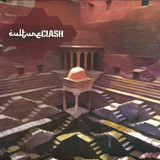
LF001 trips back until the early nineties to revisit the alternative scene emerging from the Dutch city of Utrecht. Here, three young men - DJ Zero One (Sander Friedeman), TJ Tape TV (Arno Peeters) and DJ White Delight (Richard van der Giessen) - joined forces to form 'The Awax Foundation'. Inspired by the transcendent and revolutionary electronic music arriving on their shores imported from Chicago and Detroit, combining their knowledge, gear and ever-expanding vinyl collection allowed additional freedom in paying sincere tribute to these intoxicating sounds, while also developing their tastes in a more personal, eclectic direction.
The musical flavours of Awax initially leaned toward acid house and the roots of techno. However, with three different mindsets in the mix, their tastes were rarely fixed. One thing each shared in common was a devotion to collecting rare sounds, specifically more adventurous and international samples than those emanating from the increasingly-hard, masculine dance music emerging from the Netherlands during the period. Inspired by the cross-over global sound of bands like Suns of Arqa, or 'World Music', as it was perhaps patronisingly termed at the time, the trio became interested in the idea of making techno with 'ethnic instruments'.
Of course, this being 1992, none of The Awax Foundation had access to such instruments, instead, they had a vast, collective library of samples from all over the world. There were no collaborations and no clear plan. Instead, they set to work using a Yamaha TX16W sampler, the legendary Atari 1040ST computer, a cheap mixing desk and a couple of low-end synths and FX machines. When Richard mentioned the project to his friend, Akin Fernandez, the London DJ and owner of cult label Irdial Discs, Fernandez was intrigued enough to invite the trio to record a one-hour show for his 'Monster Music Radio' series on London's then-burgeoning Kiss FM.
Forced to come up with a name, 'CultureClash' seemed like the obvious choice, even if the members of Awax were only creatively sparring among themselves. Along with the term 'ethno-techno', slightly dubious to a hopefully more conscious Western audience in 2017, these were the only guiding principles to the quietly ambitious project that soon combined cutting-edge machine rhythms with samples sourced from everywhere from Bolivia to Togo, and inspired by everything from Ravi Shankar's epic soundtrack to the Oscar-winning movie Ghandi, to the technical limits of their own setup requiring a dazzling degree of cut-and-paste work. Some tracks even emerged out of academic studies within the ethnomusicology department at The University of Amsterdam.
The show aired on October 2nd, 1992, recorded in one blistering take and without any rehearsals, traversing a huge variety of tempos and styles. If the performance wasn't seamless, it was undeniably thrilling, fresh and ambitious. As such, several labels, including Fernandez's aforementioned Irdial Discs expressed an interesting in commercially releasing CultureClash, while another imprint proposed a series of twelve-inches and an album. But the sheer complexity of the project meant that it never saw the light of day, while the trio embarked on different journeys ahead, both creative and personal.
Twenty five years later, and the original CultureClash lineup and founding members of The Awax Foundation provide the sound of the first release from Lost Futures. An otherworldly, ambitious and optimistic compilation, accompanied by extensive sleeve notes from the trio, CultureClash is a timeless ode to experimentation in dance music's ever-overlapping culture.
It has been bubbling for almost four years now inside the walls of a basement in the small-town idyll of Salzburg. Word gets around about ecstatic nights in an intimate atmosphere in the Heizkeller location of the cultural association FREAKADELLE. The monthly events held by the club culture collective, which formed in 2011, have long since become known beyond city and state borders, and so, national as well as international guest artists would frequently pay visits to Mozart town in the last years. Following the club members' wish to maintain relations to the artists beyond the fleeting transience of a night in the club, this release aims at strengthening and cementing these interpersonal ties. The compilation includes tracks by Hüseyin Evirgen aka MAGNA PIA (Cassegrain), Institut fuer Zukunft resident PERM, techno pioneer PATRICK PULSINGER and Pop theorist Didi Neidhart aka LOW PROFILER.
Limited hand-stamped 12'' edition. Comes in five different versions of screen printed sleeves.
Loya is a new project by French producer Sébastien Lejeune, which allows him to research his
own cultural heritage, as a native of La Réunion.
For the past five years, Loya has been exploring the musical environment of the sister islands of the
Mascarenes (Indian Ocean), breaking down the boundaries between electronic music and
traditional music in a globalized world. Growing up in the great melting pot of La Reunion, Loya was
exposed to a number of cultures and rhythms that fueled his curiosity.
Settling in metropolitan France in the mid-90s, Loya's first encounter with electronic music
happened upon discovering acts such as Autechre, Plaid and Boards of Canada. Soon, Loya was
drawing from Intelligent Dance Music and bleep techno to build complex rhythm arrangements and
ethereal melodies. Throughout this research, Loya gradually managed to tame the erratic nature of
his machines to summon states of trance that reminded him of the music he grew up listening to as
native of the Mascarene.
From this route through the meanders of contemporary electronic music, Loya developed a
trademark sound based on triple time beats, pointillist sound design and a taste for experimentation.
Such distinctive features can already be heard on his first self-produced album Eruption, released
in 2014 and the EP Indian Ocean, released in 2016 on Mawimbi Records, although Corail is his
most accomplished work and a testament of his clear talent.
Exploring the blue depths of the Indian Ocean with the fluency of a native, the ten compositions of
Corail unfold like an archipelago. Showcasing the talents of traditional musicians such as Mauritius
ravanne icon Menwar and Madagascan accordion master Régis Gizavo, Corail finds a fine balance
between the soft, velvety ripples of modular synthesizers and the rawness of frantic percussion
motifs and local field recordings.
Neville Watson returns to DBA with The Midnight Orchard, his first full-length in five years. Watson is a key figure on the electronic music scene at large and has made regular appearances on Don't Be Afraid, as well as on celebrated imprints such as Crème Organization, Clone and Rush Hour, where he released some of his best-known work alongside Kink.
In a crowded landscape of factory-line jack trax and synthesis for the sake-of-it, it's little surprise that Watson's physical, arresting takes on house and techno have been such a staple in the record bags of the world's leading DJs for the past twenty years. Throughout The Midnight Orchard, Watson seamlessly bridges his futurist leanings gleaned from a lifelong commitment to electronic music with the anarchic spirit of his acid-house heritage.
The record still finds catharsis in the relentless pulse that has defined Watson's life since his early residencies where he peddled ecstatic escapism to towns on the commuter belts of London, notably via his involvement in seminal Reading party Checkpoint Charlie. However, there's a more somber, arguably introspective and perhaps even somewhat wistful tone at play throughout. This might surprise those who've invested their feet and hearts in tracks with titles like Night Of The Inflatable Muscleheads and Everything I Know About House (I Learned on Facebook).
In a move away from his previous musical leanings, The Midnight Orchard embraces a distinctly more UK sound, unapologetically chronicling the paranoia that can be found skirting the euphoria of rave. And while Watson has avoided the eyebrow-arching pitfalls of the self-serious DJ full-length, it must be noted that the rhythms here are more skittering, the atmosphere less jubilant and the signature lo-fi hiss, fully popularised and bastardised since Watson's last album, has taken on a more fore-boding tone.
Meanwhile, the atmosphere elsewhere harks to a more idealistic world, particularly on the cascading and subdued Eine Kleine Emusik, and the euphoric We Own The Night. Twin Tub and Reet Dux provide dubby, sensual moments of escapism. There's uncompromising, hard-nosed rhythms on Dee Sides, and cosmic electro throughout 4am in the Trees. The album then concludes in a bold fashion with Displays of Brotherly Love and the resolutely hopeful atmosphere of Phosphorescent.
Reflecting decades of immersion in club culture and taking inspiration from wider-found sounds, The Midnight Orchard is loaded with thrilling parallels and a sense of genuine unpredictability. Tracks like Come On In and Anarcho Midnight are layered with unease, utilising pitch dark arpeggios and skittish, growling electronics to devastating effect.
Having dedicated the last eighteen months of his life to the studio, Watson has rec-orded what is undeniably the most unexpected music of his career. Amid the dark-ness, The Midnight Orchard has borne fruit.
For the last 20 years London-based author and party organiser Tim Lawrence has dedicated himself to excavating the history of New York City party culture and bringing some of the most powerful aspects of that culture to London's dance scene, from where it has ricocheted around the world. Having conducted the first set of major interviews with David Mancuso, Lawrence started to put on Loft-style Lucky Cloud Sound System parties with David and friends in London in June 2003. In early 2004 he published Love Saves the Day: A History of American Dance Music Culture, 1970-79, which tracked the influence of the Loft on the wider New York DJ, dance and disco scene. In 2009 his biography of the iconic musician Arthur Russell became the first book to map the wider downtown music scene. These beautifully written and politically insightful histories have educated, inspired and celebrated the previously overlooked foundations of contemporary dance music.
Lawrence's most recent publication, Life & Death On The New York Dancefloor, 1980 - 1983, published in late 2016, shines a light on 'one of the most dynamic and creative periods in the history of New York City'. Falling between the more regularly celebrated sounds of disco, house and techno, the period produced a uniquely hybrid series of sounds that never acquired a settled name. This led them to be largely ignored by historians and even DJs, yet the power of the period's music and the scenes it birthed, Lawrence argues, remains undeniable. Met with a rapturous response, Life and Death On The New York Dance Floor saw Lawrence on the road for most of the next year as he spread the word about the characters, the records, the clubs and the bands that shaped the post-Disco, post-Punk, and burgeoning Hip Hop landscapes of New York City during the early 1980s—a period when freedom still ruled.
This, the first of a 2-part sonic tribute to the 1980 - 1983 era as well as a musical companion piece to Life & Death On The New York Dance Floor sees recognised musicians (David Byrne of Talking Heads) nestle up alongside the belatedly recognised (Arthur Russell's Dinosaur L and Loose Joints, and Suicide's Alan Vega) and the downright obscure (Gray, 2 Teens Kill 4 and Tuxedomoon). An indication of what's to follow, Dinosaur L's original album version of 'Go Bang' has been dramatically overshadowed by the definitive François Kevorkian remix yet received regular play by David Mancuso and remains an enthralling experimental Arthur Russell jam.
Lovingly curated across 2 slabs of vinyl, the album introduces listeners to a stunning array of sounds, styles, vibes and feelings that encapsulate this most fertile and forward-thinking era, when music, fashion, sound system innovations, leaps in music technology, a DIY attitude and a freedom from corporate politics combined with extraordinary expressivity. All music contained within this album has been hand-picked and programmed by Tim Lawrence. It represents a selective yet rich introduction to one of the most extraordinary periods in New York City's epic musical history.
This is the first release on Reappearing Records, a label led by Tim Lawrence and distributed worldwide by Above Board distribution. Licensing courtesy of Tracksuit Music. Mastering by Optimum Mastering, Bristol UK. Artwork & design courtesy of Atelier Superplus. 2018.
London's FYI Chris joined Toy Tonics!
After releases on Rhythm Section, Church and West Friends - the 2 DJs, producers and record shop dons from London/Peckham chose the German Toy Tonics label for their next release.
The guys know what's fresh in club culture. They been store managers at one of London's coolest record stores: Rye Wax/Peckham for the last 2 years. And they are becoming one of the most interesting names of the post-house scene of London.
Their first encounter with Toy Tonics was though label boss Kapote. They quickly realized that there are big similarities in their musical vision and way how dance music should develop... so what makes more sense to make an EP together
So here it comes: FYI Chris next level electronic funk music! MPC style.
Have fun!
Bristol-based producer Drone finally makes his bow for Coyote Records with the release of new four-track EP, 'Light Speed'. Written over the first six months of 2018, 'Light Speed' forms Drone's most accomplished and absorbing release to date, bringing new textures, layers and depth to his music and to the club - a space where his beats have been a mainstay in the sets of producers like Kahn & Neek since debuting on Hear Other Sounds in early 2017. A regular at Coyote's Bristol parties over the course of 2016 and 2017 and inspired by the clinical, freeze-dried grime of label contemporaries like Last Japan, as well as Sector 7 bosses Boofy and Lemzly Dale, Drone has probed, honed and developed his sound to marry the raw impact of his early beats with detailed, widescreen scope. There are nods to the soundsystem culture of his new home city of Bristol on the coarse textures and booming, dubby low-end of 'Narroways' for example, while title-track 'Light Speed' captures the icy, shimmering Coyote sound aesthetic in full view. B-side tracks 'Probiscus' and 'Fangz' continue this theme apace, bleeding into one another like patchwork to showcase a grime sound moulded by the club, but finessed away from it. Born in Hastings, Drone has spent the last three years studying Music Production in Bristol, during which time he's guested on Rinse FM, released on London's Hear Other Sounds and Boofy and Lemzly Dale's influential Sector 7 imprint, as well as self-releasing a limited edition USB - comprised of a slew of unreleased beats - in February 2018.
- 1: Lamb With A Wolf Mask
- 2: Museum Of The Two Of Us
- 3: Nari Yuko Jin
- 4: Nobody`s Gold
- 5: My Black Jacket
- 6: Friendly Enemies
- 7: The End Of Metaphor
- 8: Dirty Dirtiness
- 9: The Place Where Designers Go To Die
- 10: Bean Tale
- 11: The Night Before The Typhoon
- 12: Gangsters, Seoul
- 13: Day Drinking At A Seaside Town
- 14: Bats We Are
The demons of night are out again: Seoul's one-stop shop creative collective Byul.org returns this fall with its third international album, entitled Nobody's Gold, out via Alien Transistor (worldwide) and the group's own Club Bidanbaem imprint (South Korea). Comprising 14 new songs, it's a dizzying, haunting affair that channels the group's manifold influences and references points (from post-punk to Stockhausen and back via club culture) and yet sounds intriguingly coherent.
Moving in and out of the shadows, Nobody's Gold breaks forth as pure sonic landscape - a universe of its own, folding and unfolding into both more experimental patterns, yet also with occasional hooks and dark catchy structures, gracious build-ups flickering among the hazy roar and thunder. After the screak and squeal of 'Lamb with a Wolf Mask,' the foreboding sounds of 'The Museum of The Two of Us' segue into a synthesized party tune about a missing friend being chased by police ('Nari Yuko Yin'), one of several vocal tracks with a sinister edge. Taking things up another notch, 'Friendly Enemies' is probably the closest this group will ever get to creating a stadium-ready anthem. On the other end of the spectrum, 'The Place Where Designers Go To Die' is a magnificent void with an immense and irresistible undertow...
Never too jolly (not even while 'Day Drinking at a Seaside Town' or during takeoff via epic pop tune 'Bats We Are'), Nobody's Gold compiles soundscapes with a very tangible, corporeal presence - iridescent sonic sculptures placed in unlikely settings (e.g. outer space, see: 'Dirty Dirtiness'), born at the fringes where night blends into day and vice versa.
Inspired by everyday life, half-remembered drug/club experiences, Pascal Quignard's disturbing La haine de la musique, Stockhausen and Bill Evans, the new LP sees the collective remain true to its DIY foundations while repeatedly questioning our listening habits and 'the exaggerated love for the concept of love,' as they put it.
Founded around the dawn of the millennium as a group of poetry-loving friends who'd occasionally meet for drinks, Byul.org has long become an extremely prolific and versatile collective within Seoul's scene: Main song-writer TaeSang Cho and his mates Yu Hur, Jowall, YunYi Yi, SuhnJoo YI, HyunJung Suh, and SoYoon Hwang went from publishing to recording, from releasing tunes to design, art direction and more. Although their list of clients includes Atelier Herme`s and the Venice Biennale (they did the Korean Pavilion twice), the group still remains a drinking circle of close friends at its core: Pals who simply like to create and carouse and dream and live and perform and play tunes together.
Earlier in the year, Red Light Radio co-founder Hugo van Hejiningen and Identified Patient joined forces to debut their new musical project, Stallion's Stud. Artificial Dance is ready to release the first fruits of the duo's studio collaboration.
The four-track EP digs deep into their shared love of electronics, post-punk era experimentation, DIY music culture and dubbed-out drum machine rhythms. The results are undeniably dark and intoxicating, with former punk singer Hugo fronting proceedings via mind-altering vocals and twisted lyrical flows.
Opener 'Promising Promises' sets the tone for what follows, with Hugo's spoken vocals wrapping themselves around ricocheting industrial dub rhythms and raw, delay-laden electronics. The delay trails to oblivion remain a force to be reckoned with on the creepy, fuzz-fuelled cold-wave doom of 'Instrumental Aria', while the throbbing and clanking 'Unpredictable' and 'Voice of No' ratchet up the intensity by several notches via end-of-days guitars, heavyweight bass and face-melting percussion.
- A1: Muriel - Alton & Eddie
- A2: Dearest Darling - Jiving Juniors
- A3: Are You Mine - The Echoes & Celestials
- A4: Dearest Beverley - Jimmy Cliff
- A5: Send Me - Keith & Enid
- A6: Midnight Love - The Downbeats
- A7: Til The End Of Time - Chuck & Dobby
- B1: Album Of Memory - The Mellowlarks
- B2: True Love - Horthens & Stranger
- B3: Diamonds & Pearls - Dobby Dobson
- B4: I'm Going Back - The Charmers
- B5: Pleading For Mercy - The Blues Busters
- B6: Do You Know - Owen & Millie
- B7: Heavenly Angel - Laurel Aitken
A collection of Jamaican doo wop & R&B records taken from the late 50s and early 60s. These records represent a period in which soundsystems were just starting to dominate the island, with Duke Reid and Sir Coxsone stepping up their rivalry by beginning to make and release their own records rather than rely on US imports for use in their dances. Many of these records are definitely more-or-less imitations of the American records, as the uniquely Jamaican ska sound was yet to take hold - however many of the future stars of ska, rocksteady and reggae were beginning to cut their teeth in the industry on these records, incl. Jimmy Cliff, Derrick Harriott, Alton Ellis and more, and they provide a unique view into the fledgling independent record industry culture in Jamaica that would prove to be unbelievably proflific and unparalleled for an island of it's size.
Planet Battagon are innovators in Droid Jazz. Electronics, jazz and outer-national sounds ain't no new thing. But following in the extra terrestrial sounds and cosmic mythology of Sun Ra, Planet Battagon are not reaching for the cosmos but simply made of it. Droid consciousness is the starting point but what's consciousness got to do with it. The droid's need culture, music and art and of the highest and most experimental of that lies Droid Jazz.
Originating on Lord Battagon's home planet the group are documenting the folklore and jazz stylings of the Trans-neptunia neighbourhood out on the edgelands of the solar system. This debut release follows on from a Lord Battagon outing on the Atlantic Jaxx label. 'Who's out on Quaoar' is taken from the Ltd Ed 12' 'Battagon Symphony', part one of 'The Rough Guide to Trans-Neptunia'. The release also features 'Salacians of Neptunia', a homage to the early droid cultural pioneers and the chant like 'Moon of Dysnomia' that is played ceremonially to temper the erratic saline tides of the aforementioned moon especially during its retrograde period. Droids and saline do not mix well and OntheCorner are releasing these 'Rough Guides to Trans-Neptunia' after intercepting distressed transmissions prior to a
devastating saline tide.
The Noise Droids of Planet Battagon are:
Jack Baker - Acoustic Drums
Martin Slattery - Bass Clarinet,Alto Sax & FX
Oli Savill - Percussion
Mickey Ball - Trumpet
Nathan Curran (Tugg) - Synth Bass, Syn Drums, FX & Conductor
Play It Say It welcome New York artist David Berrie for a first EP on the label and one that offers three dynamite pieces of punchy, high impact and inventive house music.
Raised amongst the diverse culture of NYC's nightlife, Berrie started sneaking into clubs as a youngster and since then has risen through the ranks to have now played iconic rooms like Output NY and DC-10 Ibiza. Fusing his musical history with other genres to create his own, unique style of house and techno, David has taken his passion to the studio and served up essential tunes on Hot Creation and Cuttin' Headz.
Opening the account is 'Revolution', seven superbly programmed minutes of slick and involving house beats and knotted bass. It's a restless, body shaking track to make the floor move with futuristic synths fleshing it out and bringing a vital sense of machine soul.
The equally compelling 'JB Loop' is another dynamic bit of electronic house music. Rubbery drums bobble and bounce about with wild computer sounds and infectious bass all ramping up the energy levels and making for a standout track.
Last but not least, 'Rear End' is a supple, intricately designed track with slippery synths, spinning hi hats and bass surges all wrapping around each other to make for real minimal funk. It's a track that oozes Detroit vibes and cannot fail to sweep up the floor.
These are three characterful and masterfully produced cuts of high-class dancing music.
NYC's Disco powerhouse West End Records should need no intro. The home of too-numerous-to-list club classics for over 30+ years is still impacting today on what we know to be club culture. The label started by one Mel Cheren (RIP) with assistance from Larry Levan and more way back in 1976 is still held in such high regard today with it's catalogue constantly being played, rediscovered, reinterpreted and loved by waves and waves of new fans and admirers.
From the West End vaults we are pleased to present Ednah Holt's 'Serious, Sirius Space Party', a thundering, slo-mo, bass-heavy slab of NYC electronic funk that will sound familiar to those who paid close attention to what the maestro Larry Levan was doing in his sacred booth at the Garage in 1981, or to those who tuned in to peep what the master Afrika Islam was doing on his now semi-religious, hip-hop blueprint 'Zulu Beat Show' on WHBI. That's right, you can guarantee if those 2 guys were playing your record in the city at the same time then you had an underground 'hit' on your hands. The fact that it crossed over from the discotheques to the streets and back again speaks of the appeal of this super heavyweight jam, the legendary team up of Kenton 'Kenix' Nix, Larry himself on the mix, and former Ritchie Family vocalist Ednah Holt makes for some heady listening. One for the after hours dancers, B-Boys and B-Girls and lovers of the downtempo workout. A true and essential NYC classic.
All tracks featured re-mastered, re-pressed and re-released with the permission of and in conjunction with West End Records, New York City / BMG.
Debut physical release from Scottish newcomer Andrew Greens AKA Ash Is. Hailing from Edinburgh and at the heart of club culture in his city, he is running parties and sharing stages with the likes of Baltra, Bwana, and other forward thinking international artists. This release comes packed with 3 affecting club tracks, each serving a different purpose. Ash Is fuses elements of rave, house, techno, and electronica to serve up moments of euphoria & tenderness. Fluttering arpeggios, dusty breaks, warm pads & feeling laden melodies often feature, capturing a sense of post-club emotion. These are three heavy hitting cuts that truly carve out a lane of his own.
Bruce - Aka Larry Mccarthy - Is Set To Release His Debut Album Sonder Somatic This October On Uk Imprint Hessle Audio. The Album Packs 11 Singular Uk Club Tracks That Evoke A Distinctly Emotive And Dense Energy, Channelling Detailed Sound Designs, Tangled Textures And Club Anthems For 2018 And Beyond.
The Record Is Deeply Varied In Styles, Ideas And Tempos, From The Tight Rhythmic Groove Of Album Opener 'elo' To The Weaponised Onslaught Of Ominous Club Cuts 'what' And 'cacao' - Through Drifting, Meditative Techno And The Skeletal Sound Design Of 'ore' And 'baychimo.' Each Track Shifts The Tonal Mood In Subtle And Distinct Ways, Whilst Retaining A Consistent Icy Sound Palette Infused With Colour And Human Warmth.
The Shapeshifting Hessle Audio Imprint Is Run By Pearson Sound, Ben Ufo And Pangaea. For Over Ten Years, Through Their Combined Tastes They Have Continued To Unravel And Explore The Edges Of Sounds And Ideas From The Wider Dance Music Scene, Across The Boundaries Of The Functional And The Experimental, With Consistently Innovative Results. As A Long Time Follower Of The Label, Bruce Wanted To Craft An Album That Continues Their Singular Attitude And Approach, Incorporating Vibes From Uk Soundsystem Music As Well As Music From His Home Town Of Bristol.
"from Being A Fan Of Their Work From The Very Beginning, It's Not Only The Music They Have Released That Has Informed My Taste/work, But Also The Journey They Have Formed Through The Application Of Their Attitude And Approach." - Bruce
Much Of Sonder Somatic Was Shaped By Bruce's Own Understanding Of Club Culture As A Whole, And Predominantly His Personal Relationship With It Both Professionally And Recreationally. The Album Was Partly Written As An Attempt To Capture That Rare Transformative Feeling That Can Cause You To Fully Lose Yourself In A Club Space, Disconnecting From Your Immediate Environment For A Short Time.
Sonder Somatic Follows Eps For Timedance, Livity Sound, Idle Hands And Hemlock, And Comes 4 Years After His Debut Ep 'not Stochastic' For Hessle Audio. The Album Pushes The Boundaries Of What Club Music Can Be Whilst Expertly Refining His Work As Both A Club Producer And An Experimental Sound Designer. With A Unique Sense Of Flair That Sets Him Apart, Sonder Somatic Is Set To Raise Bruce's Profile Across All Corners Of The Dance World.
Cyberfunk proudly presents:
CFNK005:Simple Technique - Superfuture EP
Since the inception of Cyberfunk one artist in particular has really taken on the core values and ethos of the label and has been working extensively with us.
After his debut release on Cyberfunk "Cold Steppin" gained heavy rotation on the dnb circuit from some of the scenes heavyweights. We gave Bournemouth based duo Ulterior Motive a chance to remix "Cold Steppin" and released it as part of our first ever Remix EP - Remixed Vol1. This dominated the charts for several weeks in a row.
Other than the aforementioned, the West London based producer has kept mostly quite bar one release - "Gorilla" which was part of the first in a series of various artist LP's from us: VA:LP-001
This EP has been in the works for quite some time, with some parts taking in excess of 3 years! (Yes we know but he's worth the wait we promise) this is a project we have been working on closely with Freddie and although he has kept us waiting we are happy to be releasing such a diverse and unique EP from an equally diverse and unique beard, sorry... - artist! Excuse me. (You'll see what I mean...)
We feel this is the truest and purest representation of Simple Technique as an artist. With a strong mix of tempos and styles all of which have been filtered through his unique outlook on music and rave culture. From bass house to Drum and bass to hiphop and trap influences with beautiful soundscapes in-between. This EP has flavours from all over and the raw signature sound that our fans have come to expect from a Simple Technique set.
We hope you enjoy the music. <3
If you are feeling it, please let us know
If you hate the music please still let us know so we can further promo the EP.
- A1: Gen 19
- A2: Broadcast Pain
- B1: Depersonalised
- B2: Syncofated
- C1: Monitored Meanings
- C2: They Loved Ft. They Live & Poison Arrow
- D1: Violent Circuit Autonomy Ft. Lewis James
- D2: Your Bit Crushed Heart
- E1: Nachtlus
- E2: Lost In A Memory
- E3: Filtered Scenes
- F1: Wij Zijn Ft. Lewis James & Kid Drama
- F2: Ur A Star (Reprise) Ft. Alia Fresco
The Storied Music Producer Readies His Sophomore Solo Album For Release, Ten Years After His First Album, The Gemini Principle. The Ten-year Gap Between Solo Albums Has Seen Dbridge Releasing Landmark Collaborations And Projects As Part Of The Autonomic Movement, Module Eight, Heart Drive And Exploring Other Bpms As Velvit.
Dbridge's Journey Within Electronic Music Has Seen Him At The Front And Center Of Electronic Music Culture And Then By Design, As The Seasons Change, He Has Retreated To His Own World To Work On His Next Statement.
A Love I Can't Explain Is The Sound Of Dbridge Making Music For Himself. As A Man He Finds Himself In A New Phase Of His Life- In Love, Married And A Father That Is No Longer Concerned With Previous Constraints And This Has Led To A New Freedom In Creation. An Artist Looking At The Same Sculpture But Now From A New Perspective.
Following on from the three highly-acclaimed CoOp Presents 'Selectors Assemble' compilation EPs from the past year, it's now time to focus on some of the individual talents from the ever-evolving movement. As the international foundation grows, we invite aboard the extremely talented Neue Grafik into the fold.
French producer, instrumentalist and DJ, Neue Grafik, has been building a strong rep for himself over the past few years, releasing records previously on labels such as Rhythm Section, 22a and Wolf Music. His sound is a hybrid of jazz, house, broken beat and hip hop, all with his unique geographical flavours of African ethnicity, Parisian roots and a love for London thrown into the mix.
So to the music - two brand new tracks, 'I Miss Something' and 'Bed Stuy's Mood', complete with remixes from EVM128, Danvers, Xtra Bruk and NameBrandSound (aka label bosses IG Culture & Alex Phountzi) respectively, making this one essential package for the bruk soldiers and beyond.
In Neue Grafik's words...
"I remember the first time I was at a CoOp party and met IG - I just said something like "unbelievable party, well done! Thank you, man". I didn't expect to be a part of this brilliant family a few months after that; it's totally insane to think about it now.
I began to hang properly with the CoOp fam during a DJ session at The Flex in East London. I was so happy to live in this moment; surrounded by these talented performers, artists and producers, excitedly talking about unreleased music on everyone's USB sticks.
This EP is a personal vision of the broken beat scene and my love for that. A meeting with artists who build my own taste, with friends keeping the same vibrancy and desire for this music. 'I Miss Something' and 'Bed Stuy's Mood' are two tracks dedicated to Porte Des Lilas (Paris), and Bedford-Stuyvesant (New York). One was made in my house, the other on holiday. These two tracks, as well as the remixes from the Selectors Assemble crew, represent a real and deep friendship."
More essential music from the CoOp Presents camp, available on limited vinyl and all digital services. Don't sleep.
'Cohesion' is the third full album from Anchorsong - AKA Tokyo-born, London-based electronic artist Masaaki Yoshida. Taking inspiration from Classical Indian Percussion, and '70s and /80s Bollywood film soundtracks
Anchorsong creates a journey of psychedelic, danceable and free-spirited compositions that blur the boundary between rhythm and melody. It was whilst extensively touring his previous album, 'Ceremonial', that Masaaki
became deeply fascinated with percussion, and shifted his attention away from the African drums present on his last record to the music of the Middle East, South East Asia, and then more specifically to the sounds of India. 'The Indian
percussion was the one I was most fascinated with, so I began to dig into that genre deeper, I started with classics like Ravi Shankar, and the more classical Indian musicians. But then I began to explore the world of Bollywood and movie
soundtracks which is another world and the more I listened to composers like Sapan Jagmohan, Rajesh Roshan and Kalyanji Anandji, the more the concept of the new record began to form.
Choosing to work with traditional Indian instruments like the tabla and dholak, Yoshida wanted to use instruments that possessed melodic qualities, and could be tuned to work in the context of electronic music. He found that when Indian
percussions mixed with other instruments they began to sound like a melody that blurred the border between rhythm and melody. The concept of bringing together contrasting elements and cultures is evident from the album's title,
'Cohesion'. Here Anchorsong has brought together musical traditions and sounds from across borders, forging a truly unique body of work. Having reached new heights with 'Ceremonial' through accolades such as BBC 6Music's #5 Album
Of The Year, 'Cohesion' looks to build on such successes through the coupling of a comprehensive European tour kicking off around the release of the album.
After a strong debut these boring middle-aged, middle-class family men continue their adventures in the world of acid this time with a strong two track release on Finnish ProForm Series. A-side 'TÖKS' takes us to the exciting world of serious low ends, electro beats and 303 lines you haven't heard before. If you want to burn down the floor or house, this is your choice! On the flipside 'Tolkun Acid' continues the strong Finnish storytelling culture mixing mysterious Finnish lyrics with some deep grinding acid lines. The ultimate choice if you want to confuse and make everybody dance at the same time. Limited and numbered edition of 200, after that it's gone, no represses, no digital, so you know what to do!
Re-mastering by: Ray Staff at Air Mastering, Lyndhurst Hall, London
Four-and-a-half decades after the event, saxophonist Charles Lloyd's Love-In, recorded live at San Francisco's Fillmore Auditorium in 1967, the counterculture's West Coast music hub, endures as much as an archaeological artifact as a musical document. From sleeve designer Stanislaw Zagorski's treatment of Rolling Stone photographer Jim Marshall's cover shot, through the album title and some of the track titles ("Tribal Dance," "Temple Bells"), and the inclusion of John Lennon and Paul McCartney's "Here There and Everywhere," Love-In's semiology reeks of the acid-drenched zeitgeist of the mid 1960s, a time when creative music flourished, and rock fans were prepared to embrace jazz, provided the musicians did not come on like their parents: juicers dressed in sharp suits exuding cynicism.
It is likely that more joints were rolled on Love-In's cover than that of any other jazz LP of the era, with the possible exception of saxophonists John Coltrane's A Love Supreme (Impulse!, 1965) and Pharoah Sanders's Tauhid (Impulse!, 1967). Chet Helms, a key mover and shaker in the West Coast counterculture, spoke for many when he hailed the Lloyd quartet as "the first psychedelic jazz group."
It is to Lloyd's credit that, at least in the early stages of his adoption by the counterculture, he resisted dumbing down his music. The adoption stemmed from Lloyd's espoused attitude to society, his media savvy, his sartorial style and his sheer nerve in playing jazz in the temples of rock culture. He took the quartet into the Fillmore West three years before trumpeter Miles Davis took his into the Fillmore East—as documented on Live at the Fillmore East, March 6 1970: It's About That Time (Columbia)—by which time his pianist, Keith Jarrett, and drummer, Jack DeJohnette, were members of Davis' band (although Jarrett didn't appear at the 1970 gig).
Danish producer Asmus Odsat debuts on Iceland's FALK DISKS with four leftfield dancefloor cuts entitled 'Ecstatic Half Truth' this September.
Before moving to Iceland, Asmus Odsat was a key figure within Copenhagen's electronic music scene for nearly a decade. A former resident at Culture Box, Odsat was also co-founder of Ritual Malmö as well as the BULK club night, which has hosted artists like Surgeon, Dasha Rush, Lucy and Sleeparchive. Odsat now joins FALK DISKS, the club focused sub-label of FALK Records (Fuck Art Lets Kill) with his 'Ecstatic Half Truth' EP, receiving early support from names like Courtesy who included it in her guest mix on B.Traits' BBC Radio 1 show.
'Deal With It' sets the tone of the package with frenzied synths, warped atmospherics and a crunchy kicks before title track 'Ecstatic Half Truth' delivers a cacophony of percussion alongside twisted melodies and off-kilter breaks.
Up next, fast paced arpeggios meander alongside metallic top lines and a filtered 303 that unfolds throughout, making way for 'Soften The Clocks' which rounds off the package utilising disjointed rhythms, intense acid sequences and thundering low-end throbs.
Fast-moving Times, In Which Popularity And Quality Are Often Equated Or Commonly Confused With One Another, Aids And Abets This Imitation Game Some Call Conformity, Others Professionalism. In The End, Both Paths Will End Up In Predictability. Here's Where Stathis Kalatzis, Aka Mr. Statik, Comes To Play. The Resident At Athens' Multi-purpose Cultural Space Six D.o.g.s Has Not Only Been One Of The Scene's Pivotal Figures, But Since He Started To Release His First Solo Releases In The Mid-00s, The Now Berlin-based Greek Dj Has Earned A Reputation For Being A Trend-ignoring, Unconventional Producer.
Whether His Output For Bpitch Control, Rotary Cocktail, Or Even Last Year's Debut Ep "rogue
Cherub" For Away - Mr. Statik Enjoys Thinking Outside The Box By Crossing His Diverse Pop-cultural Interests And Pulling In Expertise And Perspective From Beyond The Usual Functional Formulas. After A Decade Of Not Staying In One Comfort Zone Or Sticking To One Musical Direction, He Finds Himself More Comfortable In His Producer Shoes Presenting His Debut Album "metamorphose". Housing A Few Film References In This For Mr. Statik Typical Nebulous Fashion, The Ten Tracks Not Only Carrying The Narrative Potential Of An Imaginary Score, But Primarily Exploring A Versatile Array Of Influences, Themes, And Contradictions (which Mr. Statik As An Illustrator Also United On The Albums' Artwork). Ranging From The Sci-fi Infused Album Opener "insomnia", The First Non-dancefloor Piece He Ever Produced Around 7 Years Ago, Over "atastrophe", An Homage To Ancient Greek Theater, To Collaborate With Others Such As Beatrice Ballabile, Jan Niklas Jansen (locas In Love), And Rbma Alumnus Claude Speeed, Who Contributed Synth Work On "soulfur".
"metamorphose" Succeeds In Constantly Changing Its Tones, While Maintaining An Emotional
Frame, In Which Mr. Statik's Melancholic, Introvert, At Times Hopeful And Euphoric, Bottom End
Inclined Electronic Music Can Elaborate.
Mr. Statik On His Album Debut:
"i Have Always Tried To Approach Producing As Storytelling Exercises. This Allowed Me To
Experiment Finding Myself In Uncharted Territories, More Specifically In Music That Doesn't
Necessarily Fit To A Dance Floor - Unless It's A Very Adventurous One. 'metamorphose'' Is Loyal To That Mindset. I Usually Draw Inspiration From Cinema And Comic Books And Have Always Been Fascinated With Sci-fi, South Asian Culture, Surrealism And The Dreamworld. Initially The Album Was Supposed To Be A Collage Of The Various Influences That Had Shaped My Life, But Ended Up Being Something Very Different. During The Conceptualization And Recording Process A Lot Of Things Around Us Have Changed, Primarily For The Worse. I Became More And More Sensitive And Susceptible To Pessimism And Trendy Visions Of 'dystopian Futurism', So That The Lp Emerged Being An Exercise In Positivity: 'metamorphose' Is A Verb Describing The Act Of
Conversion, But In Greeklish It Is Describes The Urge Towards Others To Start Transforming Their
Environment, In This Case For The Better."
Limited Edition. Triple Transparent Vinyl 180g Incl. Poster & Download Code. Box Will Be Opened For Shipping To Avoid Seam-split. Hinweis: Box Ist Verschweißt, Wird Aber Für Den Versand Geöffnet
On October 19th Kompakt presents a new LP and audiovisual venture by Danish producer Kasper Bjørke and close cohorts. Epic and in length but always captivating, 'The Fifty Eleven Project' is an entirely ambient concept album, that interprets and evokes the emotional rollercoaster Kasper experienced, from his cancer diagnosis and throughout the five years of regular check-ups. The week of album release marks his second anniversary of getting the all-clear.
The base of the album was composed on vintage analogue synthesizers, reverbs, echo and sequencers - using the computer solely as a recording device - by Kasper and synth wizard Claus Norreen, in the latter's Copenhagen studio.
The violins, violas and cellos are composed and played by the Italian composer Davide Rossi, who has also worked with Ennio Morricone, Jon Hopkins, Ro¨yksopp, The Verve and Goldfrapp.
The piano parts are composed and played by Danish musician Jakob Littauer (of Kompakt labelmates Jatoma) on an old upright piano in a studio, and on a Steinway Grand Piano in the concert hall at the Royal Danish Music Conservatorium. From Max Richter's 'SLEEP', Hannah Peel's 'Mary Casio: Journey To Cassiopeia', to much of Brian Eno's 'Music For Installations', 'The Fifty Eleven Project' continues in a rich vein of work by contemporary composers which explores a situation/condition, and is made with functionality and healing in mind.
The visual side of 'The Fifty Eleven Project' is made in collaboration with the culture laboratory Prxjects and acclaimed LA based artist/filmmaker/photographer Justin Tyler Close, who has created art films for each of the album's 11 tracks - plus one music video, including clips from all 11 films. The 11 films will be assimilated into a video exhibition at Klub in Copenhagen from 12th - 21st October. The ambition is that the installation will tour Europe and the US in 2019. Furnished in an exquisite fabric box, this 180 gram 3LP clear vinyl box is presented by cover art created by world-renowned artist Landon Metz, further cementing the release's multidisciplinary links to the art world.
Am 19. Oktober präsentiert Kompakt das neue Album und audiovisuelle Abenteuer von Kasper Bjørke und Freunden. - The Fifty Eleven Project' ist ein komplett ambientes Konzeptalbum, das die emotionale Achterbahn, die Kasper nach seiner Krebsdiagnose und während fünf Jahre regelmäßiger Untersuchungen erlebt hat, interpretiert und offenlegt. Die Woche der Veröffentlichung des Albums markiert den zweiten Jahrestag seit der Entwarnung.
Die Basis des Albums wurde von Kasper und synth wizard Claus Norreen in seinem Kopenhagener Studio auf analogen Vintage-Synthesizern, Reverbs, Echos und Sequencern komponiert - der Computer wurde ausschließlich als Aufnahmegerät gebraucht.
Die Geigen, Bratschen und Celli wurden vom italienischen Komponisten Davide Rossi komponiert und eingespielt, der auch mit Ennio Morricone, Jon Hopkins, Röyksopp, The Verve und Goldfrapp zusammengearbeitet hat.
Die Klavierparts wurden von dem dänischen Musiker Jakob Littauer (bekannt vom Kompakt-Projekt Jatoma) auf einem alten Klavier im Studio und auf einem Steinway-Flügel im Konzertsaal des Royal Danish Music Conservatorium komponiert und eingespielt.
Von Max Richters - SLEEP', Hannah Peels - Mary Casio: Journey To Cassiopeia' bis hin zu Brian Enos - Music For Installations' - - The Fifty Eleven Project' setzt die Arbeit zeitgenössischer Komponisten fort, die sich mit einer Situation/einem Zustand auseinandersetzten und die auf Funktionalität und Heilung ausgerichtet ist.
Die visuelle Seite von - The Fifty Eleven Project' entstand in Zusammenarbeit mit dem Kulturlabor Prxjects und dem renommierten Künstler/Filmemacher/Fotografen Justin Tyler Close aus LA, der für jeden der elf Tracks des Albums Kunstfilme erstellt hat - plus ein Musikvideo mit Clips von allen elf Filmen. Die elf Filme werden vom 12. bis 21. Oktober in einer Video-Ausstellung im Klub in Kopenhagen gezeigt. Ziel ist es, dass die Installation 2019 durch Europa und die USA tourt.
Verpackt in einer exquisiten Stoffbox, die vom weltberühmten Künstler Landon Metz entworfen ist, zementiert diese 180-Gramm schwere 3xLP-Klarsicht-Vinylbox seine multidisziplinäre Verbindung zur Kunstwelt.
Quest, transit, chaos, mutation, transfiguration, ascension and illumination. These are some of the steps followed in the journey of life that are embodied on each track of the album Adonai. The solo debut of the multi-instrumentalist composer Marco Paul condenses a career of more than ten years, in which, the search for the truth of oneself and authentic sound has traveled and nurtured from different genres and cultures. Adonai is an odyssey that combines sounds and images of the earthly and oneiric worlds: an audiovisual work that opens several windows to the different perceptions of the facts that make up the life of the human being.
After 9 years of constant international touring, 6 albums and more than 400 live performances with the bands Sour Soul, Ratbot and Funk My Jesus, as well as the conception and musicalization of the award-winning short films "Undermine" and "24K All You Need Is Gold", Marco Paul decided to retire to an island in the Caribbean, where he found and refined his sound. Thus, between 2014 and 2016 he created the music for Adonai, a work produced by Aitor Etxebarria under the label of Forbidden Colours.
The recording includes guest musicians from different countries such as Aitor Etxebarria (synthesizer, electronic magic) and Hibai Etxebarria (double bass) from the Basque Country; Michael Alan Hams (drums and percussion) and Joe D'Etienne (trumpet) from the United States; and Fatima Gozlan from Hungary (Ney and Derbake).
The consummation of the work is a mid length film created in 2018. It consists of 5 chapters directed by 5 different directors.
The audiovisual journey begins with the conception of the philosophical "Filius", an alchemical symbol that represents the inner child, which transforms the experiences of life into the soul's gold. Later, in "Sylvian" (title that refers to the brain fissure that contains the auditory cortex), by listening to the subtle message that surrounds us, our consciousness and perception expand. Then, in "Tiamat", the pristine chaos that gave birth to the gods, embodies chaos, the confusion generated by the multiple voices: on one hand the moral and imposed precepts, on the other hand, the inner voice that seeks the liberation of the infinite possibilities. In "Hawa", through the recognition of the power of solitude and introspection self-reflective awareness is reached. Finally "Adonai" is the ascension to enlightenment: the further connection with the absolute. As an encore (only available in vinyl) "Teurári" is a gift: a tiny flower where all the points of the universe merge.
Hosono's solo career would take many twists and turns from this point forward, with forays into exotica, electronic, ambient, and techno, culminating in the massive success of techno pop group Yellow Magic Orchestra (YMO), who made their debut in 1978. Admired by artists ranging from Van Dyke Parks to Mac DeMarco, Hosono continues to forge ahead as he heads into his fifth decade as a musician. With the re-release of his key albums for the first time outside of Japan, his genius will be discovered by a whole new generation of fans around the world.
.
The unbelievably prolific Haruomi Hosono is one of the major architects of modern Japanese pop music. With his encyclopedic knowledge of music and boundless curiosity for new sounds, Hosono is the auteur of his own idiosyncratic musical world, putting his unmistakable stamp on hundreds of recordings as an artist, session player, songwriter and producer.
Born and raised in central Tokyo, his adolescent obsession with American pop culture informed his early forays into country music, which he would revisit later in his career. Hosono made his professional debut in 1969 as a member of Apryl Fool, whose heavy psychedelia was somewhat at odds with his influences, which leaned towards the rootsy sounds of Moby Grape and Buffalo Springfield. The latter was one of the main inspirations for his next group, Happy End, whose unique blend of West Coast sounds with Japanese lyrics proved to be highly influential over the course of three albums. After the band’s amicable break up in 1973, Hosono began his solo career with Hosono House, an intimate slice of Japanese Americana recorded inside a rented house with recording gear squeezed into its tiny bedroom.
Neneh Cherry returns with Four Tet-produced LP Broken Politics
Following the release of her first earth-quaking single in 4 years at the beginning of August, counter-culture pop icon Neneh Cherry announces her fifth solo album Broken Politics, produced in its entirety by Four Tet.
Continuing her blurring and conflation of the personal and the political, the second single Shot Gun Shack tackles the link between violence and deprivation using poetic logic. The track deals with the ever-present and always-global issue of gun violence in society. The track's name was the result of inspiration that sprung from a half-remembered conversation Cherry had at the funeral of late jazz great Ornette Coleman.
Broken Politics pointedly asks the question; how do we conduct ourselves in extraordinary times In an era where the signal-to-noise ratio is more uneven than ever, what are the measures we must take to retain and remember our own personhood It searches for answers, patiently and with great care, and with a fearlessness to acknowledge that sometimes the answers don't even exist. It's a record that's equal parts angry, thoughtful, melancholy, and emboldening, as Cherry and her collaborators continue to expand her ever-widening sonic palette to craft truly singular and potent music.
The Next Installment In Cold Diamond & Mink's Soul Investigations Introduces A Three Part Harmony Group From California. "my My My Baby" Is A Smoking Hot Group Harmony Groover That Should Drop A Few Jaws At Your Next Dj Set.
Thee Baby Cuffs Was Born Out Of Love For Soul Music And Chicano Culture. Their First 45 "where Did Our Pride Go", Came Out In 2017 On The Raza Del Soul Label, Covering An Unsung Early 70's Larry Saunders Production. "my My My Baby" Continues On The Same Lane Of Midtempo Soul Over Funky Drums And Soulful Horn Lines. The Lyric Is Your Middle Of The Road Love Song Material, But The Group Harmony Lifts It Right Off The Ground Like It's Meant To Happen In This Kind Of Music.
Get A Few Copies And Rock The Instrumental On The B-side Before Dropping The Vocal, If You Feel Like It. Soul Music That's This Potent Is Better Enjoyed In Excess.
Produced By Cold Diamond & Mink
The second in a series of all-time CLASSIC hip-hop anthems from the Nervous vaults, pressed onto high quality dinked 45's.
Remastered from the original source material and featuring the unedited 'dirty' version on the A-side, and the full instrumental on the B-side, these 45's are for the heads who know what time it really is! 'How Many Emcee's Must Get Dissed' is that raw, NYC, Beatminerz flavour, even the video that dropped on MTV in 1993 is legendary featuring the whole Black Moon mob in their native Brooklyn posting up with their crew. Everyone remembers that Timberlands & Philly Blunts rap from the mid 90's onwards, raw SP1200 beats, dusty loops and samples pulled out of crates in the darkest corners of the five boroughs, a truly creative period in rap music and popular culture with many artists who came up in the era shaping the future of music from the streets upwards. Black Moon are one such group, their indelible mark on music is still felt today, the blend of streetwise raps and sturdy, murked out, jazzy beats supplied by the Dewgarde brothers is timeless. They sure don't make em like this anymore and if they did we're sure Black Moon would continually crush the competitors as they always did. Essential New York rap classics right here! Don't front. Fully legit, licensed and reissued by Above Board distribution in conjunction with Nervous Records, NYC. 2018.
is it the best jazz record from japan, as the french-born english disc jockey, record label owner and music collector gilles peterson once assumed or is it maybe the best jazz record of all jazz records
well, everybody needs to decide by himself and has to listen to 'watabase', the second solo piano album of the japanese jazz pianist fumio itabashi, that was originally released in 1982.
tokyo based mule music unearth it, remastered the original recordings and brings it back to the global stores in order to seduce all music lovers that embrace notes who come straight from the heart and soul.
while diving deep into the seven compositions on 'watarese', any sensible listener finds out, that the instrumental piano pieces are somehow soulfully connected to what keith jarret plays on his legendary 'the köln concert' live album for the munich based ecm record company.
like jarret, itabashi does not play his notes academic. he let them fly, gives them some kind a life of their own, hits the piano keys deeply emotional and injects his compositions and interpretations some kind of nervous human soul.
in terms of style some call his 'watarase' recordings post-bop, others contemporary jazz. none of such definitions fit really, as all is just that kind of agitating jazz that melts spirituality with humanity. three tunes, the epic 'someday my prince will come' as well as 'msunduza' and 'i can't get started', are interpretations of compositions by the us-american movie score pioneer frank churchill, south african pianist dollar brand and russian-american composer and songwriter vernon duke.
all other four compositions been written and recorded by the 1949 born itabashi who started to play the piano when he was eight years old. while studying at the tokyo based kunitachi college of music, he fell in love with jazz.
his love was so deep, that he starts to work in the 1970's with such legendary japanese jazz musicians like trumpet player terumasa hino, drummer takeo moriyama and saxophonist sadao watanabe.
till today fumio itabashi is a vital part of the japanese jazz culture as a live performer and film score composer. those who want to see how he makes love with his piano should check the world wide web for the french documentary 'jazzed out', that captured his unique way of playing in one episode.
but as music is always firstly for the ears, and not for the eyes, this little letter in-front of you would rather like to recommend to play the 'watarase' recordings loud to get hooked by the highly infectious piano gems that have been recorded at nippon columbia 1st studio in tokyo on 12th and 13th of octo-ber 1981.
they will haunt you. they will come for good. and they will force you to be a good friend with the repeat button - whatever medium you chose to surrender to the piano jazz music of fumio itabashi.
'Shlom Hatzibur' - 'Yanshuf al Anaf Gavoha' a repress of a long lost new wave single along with edits by 'The Models' and 'Mule Driver'.
'Shlom Hatzibur', a band formed by Yuval Banay and Oren Elazary, was active between 1984-1985. This was the year in which the band 'Mashina' paused their activity. ('Mashina' was established in 1983 - and is considered by many ones of the most influential rock bands in Israel). In 1984, they independently published two singles, one of which was 'Yanshuf al Anaf Gavoha'.'Yanshuf al Anaf Gavoha' (Owl on a High Branch) represents a rare moment in Israeli musical history and culture: a moment of disillusionment and expression of personal voice, contemporary sound, and rhythm which stood out during a turbulent political period.
During the First Lebanon War, in the 80s, a generation of young people traveled on the weekends from the battlefields of southern Lebanon and flocked to the rising nightclubs in Tel Aviv. From army discipline to individual freedom, from the threat of death to the city's vibrancy. It is a song of adolescence in a divided and alienated society, and its reissue is more relevant than ever.
The song mixes industrial rhythm with Post-Punk, Rock and Ska. The unusual musical production and the use of a drum machine were influenced prominently by the musical soundtrack played in Tel Aviv's record shops and alternative nightclubs (eg, 'Fuzz', 'Penguin').
Greg Belson is a veteran DJ and one of the premiere collectors of soul music worldwide. He's known as the go to authoritarian for Gospel Soul music, is the compiler of the Divine Disco series on Cultures of Soul and presents his radio broadcast Divine Chord Gospel Show on LA's creative hub.
and Paulo Fulci is a DJ and producer out of Bristol UK. His work as part of the Situation edit crew has been released and supported as part of the underground for many years....he now spends his days slangin' records, whilst honing his disco scalpel skills in the late twilight hours.Following on from their incendiary slab of two sided gospel goodness 'Born Again' & 'Soul Revival', the Divine Situation duo have crafted the next lot of bangin' spiritualized dancefloor destroyers for your record box.
Here we have an EP catering for several sides to your night. The lead off cut is the flat out roof raiser 'The Problem Solver'.....then it's boogified territory with 'Brand New Feelin', before they close out with the end of 'nighter, 'Try Love'.
Once again, Moton bringin' the heavyweight platters that matter!
The Strictly Rhythm imprint is legendary and is instantly recognisable by connoisseurs worldwide. It's a label that has contributed time and time again to dance music culture across it's almost 30 year lifespan. Countless classics passed through the NYC offices of Mark Finkelstein and Gladys Pizarro and this brand new 'Strictly Classics' series looks to celebrate this cornerstone dance label and it's immense catalogue by going back to the archives and presenting some double-header action for diehard fans and newcomers alike. That's right, the 'proper' mixes, reissued from source and remastered to the highest spec, each track spread across one side of a 12" for optimal sonic playback.
Number 3 in the series kicks off on a proper old-school tip with CLS' mammoth 'Can You Feel It' from 1991, a collaboration between Todd Terry and Benji Candelerio CLS made a huge and lasting impression with this euphoric and anthemic slab of dancefloor madness. Instantly recognisable from it's ravey riff and funky drum programming, file this one under 'rave classic'! Over on the flip side we have South Street Player's smoothed out '(Who) Keeps Changing Your Mind', a rolling and deep jam from Roland Clark and George Morel that came out in 1993. This one's some lights down, honest to god soulful house music, skipping garage drums and that organ driven groove offer the perfect vehicle for Clark's gorgeous vox to soar over. Yet another set of absolutely essential SR cuts from the archive!
Remastered with love by Optimum mastering, Bristol from original master sources. Made in conjunction with Strictly Rhythm 2018.
'The U.K. Singles Volume One: 1972-1978' presents ELO's early output of hits and b-sides as originally experienced by the band's fans in their native U.K. This collector's box set features 15 groundbreaking 45 RPM singles plus 1978's "The ELO EP," each fully recreated from their original releases more than four decades ago.
All of the music on 'The U.K. Singles Volume One: 1972-1978' was remastered from the analogue source tapes while each of the 16 7" vinyl discs in the collection features detailed reproductions of the original sleeves and labels from the 1970s. Nine of these singles - including "Roll Over Beethoven," "Evil Woman," "Livin' Thing," "Telephone Line" and "Mr. Blue Sky" - reached the Top 10 of the British charts and remain among the world's most enduring classic rock songs. On rock radio and beyond, ELO's hits continue to permeate pop culture. In 2017, "Livin' Thing" was featured in a widely-seen advertisement for Volkswagen while "Mr. Blue Sky" underscored a pivotal scene in the Marvel Studios blockbuster Guardians Of The Galaxy Vol. 2.
A captivating collection of early singles by the renowned Zimbabwean Mbira master and a true African music icon. The songs were mostly recorded in the 1970's, during the buildup to the Chimurenga revolution,
and were only ever released in Stella's home country. Deep resistance & culture. 'I am a rebel', smiles the 70-year-old Stella Chiweshe. Her album 'Kasahwa: Early Singles' offers a fascinating introduction to the world
of Mbira, with the term not only referring to the instrument, consisting of 22 to 28 metal keys mounted on a wooden healing tree body, but also to a musical genre - and on a much wider level, to an entire culture and deeply spiritual
lifestyle, very much at the core of the young Zimbabwean nation. 'Kasahwa' is a collection of impossible-to-find early seven inches, eight cuts spanning the period from 1974 to 1983 and representing Mbira in its purest
form. None of these songs has been released outside of Africa so far.
An Invitation To Disappear is the debut LP by British electronic musician Inland aka Ed Davenport - and his first release for A-TON. Based on his soundtrack for a video installation by conceptual artist Julian Charrière, Davenport has recast the material and field recordings into eight tracks of rhythmically intricate electronics and spectral, ambient techno, inspired by Charrière's visually striking, 76-minute tracking shot through a palm plantation toward a totemic soundsystem on full blast.
Both the album and original soundtrack were created in response to the 200th anniversary of the eruption of Indonesia's Tambora volcano in 1815, which plunged the world into darkness and caused a series of extreme weather conditions. At the time, the natural climate change crisis resulted in numerous global famines and is known throughout the northern hemisphere as 'The Year Without Summer', with global communities forced to adapt to sudden radical changes in temperature and weather.
An Invitation To Disappear offers a contemporary parallel, leading viewers - and listeners - down a seemingly endless direct path of gridded palms from dawn to dusk; a bio-commercial monoculture where ancient jungle once flourished. Light flickers between rows of fruit-laden trees and a distant fire burns in the undergrowth where the border between natural image and computer simulation breaks down. At the same time, formerly incoherent rumblings of sub-frequencies begin to transform into the contours of rhythm. This is reflected sonically in eight perspectives on the lush, synthetic jungle, made of myriad buzzing fauna, morphing melody and colossal bassweight. All paths lead toward an apocalyptic dancefloor, though speeds vary widely; rhythms dissolve from straight to broken, synth tempos operate by their own internal clocks (and logic). Juxtaposing industrial agriculture with rave culture, the album explores the industrialization and refinement of nature, and the new strange forms emerging from the synthetic grids of both.
As Inland, Davenport has previously contributed soundtracks to other installations by the Swiss-born Charrière, whose artistic practice focuses on bridging environmental science and cultural history, often taking place in remote geophysical locations, including ice fields, volcanos and radioactive sites.
Julian Charrière is a French-Swiss artist based in Berlin. A former student of Olafur Eliasson at the Institut für Raumexperimente, Charrière's art explores post-romantic constructions of nature, staging tensions between deep or geological timescales and those relating to mankind. His work has previously been shown across the globe, including at the main exhibition of the Venice Biennale in 2017, a solo show at Kunsthalle Mainz this past Spring and an upcoming solo show at the Berlinische Galerie opening September 26.
Inland (real name Ed Davenport) is a British producer, DJ and founder of Counterchange Records based in Berlin. Known for his detailed and explorative house and techno releases on his own label, Infrastructure, Naïf and more, Davenport has recently gravitated toward the contemporary art world, finding inspiration in the cross-pollination between Berlin's art and music scenes. Previous sound design collaborations with Charrière have been exhibited in institutions such as the Musée des Beaux-Arts de Lausanne in 2014 and Thyssen- Bornemisza Contemporary in Vienna in 2017.
The gallery version of An Invitation To Disappear premiered this past April at the Kunsthalle Mainz and will be on display at the Berlinische Galerie as part of Charrière's solo exhibition As We Used to Float, opening September 26, 2018. The LP will premier live together with the video installation during a special presentation in Berghain the same day for Berlin Art Week.
The inaugural release on enigmatic conceptual artist and Freerotation regular Aboutface's new label Coordinates- a limited physical release series exclusively showcasing his music and original art, depicting conceptual themes and exploring the aural terrain of two sets of location coordinates around the world. Coordinates #1 explores ultra-sonic bat recordings from Lincolnshire, England, and ancient mayan culture from the Chiapas region, Mexico.
- A1: The High Life - Marion Ryan
- A2: Vamos - A - Baila - Chico Arnez
- A3: Jonny One Note - Ted Heath
- A4: Wimoweh - Eve Boswell
- A5: House Of Bamboo - Neville Taylor
- A6: Baia - Tony Scott
- A7: Jump In The Line - Frank Holder
- A8: Mambo For Latin Lovers - Ido Martin
- B1: Fanagalo - Frank Chacksfield Ft Frank Holder
- B2: Taboo - Charles Blackwell
- B3: Voom-Va- Voom - Eve Boswell
- B4: Crazy Latin - Don Carlos
- B5: Vaba -Ba - Boom - Edmundo Ros
- B6: Boliviana - Victor Silvester
- B7: Don's Mambo - Don Carlos
- B8: The High Life - Basil And Ivor Kirchin Ft Toni Sharpe
Volume five of the killer Britxotica! series, looking this time at 16 super rare and briliantly bonkers latin and percussive pop cues from the wild British Isles!
HISTORY:
Britxotica! (pronounced 'Britzotica') neatly describes an odd and yet undocumented pre-Beatles British musical scene where famed UK composers as well as unknown singers and bandleaders threw convention on holiday and went wild wild wild! Put together by Jonny Trunk with DJ / tastemaker and Smashing nighclub legend Martin Green, these groundbreaking new compilations shine new light on lost and forgotten corners of British culture and sound.
For this, Part Five of our planned Britxotica! series we head to lively latin tinged dancefloors where Brits could cha cha cha to the KIrchin band, 'Jump In The Line' with Frank Holder and Mambo with Ido or Don. This killer collection of British dance obscurities brings us lively sounds from the rarest UK record bins, including this time an amazing cover version of the legendary loungecore hit 'House Of Bamboo' plus the stunning 'Jonny One Note' by Ted Heath, the track that originally introduced John Craven's Newsround. To sum up, this is another exciting, wild and occasionally bonkers compilation by Jonny Trunk and Martin Green, two of the UKs most wild record collectors. Also, there are men in underpants on the sleeve, What's not to like
"At the crux of American-born, Shanghai-based producer Eli Osheyack's debut album, Sadomodernism, is a question of agency. Borrowed from film theory, the album title was originally coined by writer Moira Weigel to describe a waning European art house tradition that vehemently rejects 'naïve pleasure'—the tranquilizing comfort of conventional cinematic narrative, like mainstream Hollywood—and opts for violence and pain, with the aim of shaking audiences out of cinematic manipulation and into their own position vis-à-vis the malaise of contemporary life. Echoing the work of sadomodernist auteurs, Osheyacks's Sadomodernism is a deeply political project with critical ambitions. The smashing and blending of genres, from techno, industrial, noise and gabber to ballroom and metal, even opera, and spontaneous percussion arrangements, sometimes mixed with distorted spoken word, do not mean to please, but provoke through disorder and chaos. Laden with Brechtian alienation affects, Sadomodernism interrogates the notion of autonomy in contemporary music, club culture, and social-political life."
Here at Death & Leisure we are on a continuing mission to surprise and experiment, and so with our new release we present something very special, Blackmoon1348 and The Tibetan Monks of The Tashi Lhunpo Monastary. This project sounds like nothing else, it fuses heavy drone guitar sounds with traditional tibetan throat singing and live instrumentation.
BlackMoon1348 in collaboration with the Tibetan Monks of the Tashi Lhunpo Monastery (Tibet/ India). 2017 BlackMoon1348 embarked on a cultural experimentation of cultural diversity in the arts, forming a collaboration of ancient Tibetan ceremonial practises and instrumentation with sub-harmonic drones and industrial soundscapes. The music amalgamates sacred mantras that date back to the early teachings of Tibetan Buddhism practised in the Tashi Lhunpo Monastery, with heavy detuned western instruments, synths, and electronic music for the first time in recorded history. The Tashi Lhunpo monastery was once home to the Panchen Lama who subsequently 'disappeared' under the oppressive Chinese rule of Tibet. A handful of the Tashi Lhunpo monks were fortunate to escape into exile and have since re-built the monastery in Mysore, South India - now flourishing with over 400 monks practising within the monastery. Tibetan Buddhism is an outlawed ancient tradition within Tibet - monks, nuns, and Tibetans cannot openly practise their heritage and traditions, forcing Tibetans to inhabitable plateaus, with such areas are now under 'Chinese Re-development', the land being stripped of natural resources for China's ever growing economy and totalitarian rule. Tibetans face persecution for as little as owning a Tibetan flag, or picture of the Dali Lama, with such actions landing you in jail, tortured, poised, and/or being released just before the point of death. It is important for us to remember and celebrate the traditions of the Himalayas and its sacred, peaceful practises.
The music was recorded live in one take at Flesh and Bone studio in Hackney for NTS Radio's Black Impulse show. Engineered, mixed, and mastered by Oliver and Owen at Flesh and Bone, capturing the raw, ethereal essence of the collaboration and ceremonial sounds buried deep within the Himalayas. This was the first time in history for such collaboration of tradition, ideology from Adeline Rozario and orchestrated by David Kerry of BlackMoon1348 who created this music to diversify and bring together ceremonial instruments, diversifying the metaphysics of transcendence through ceremonial Tibetan practises.
It is important to understand that BlackMoon1348 are not attempting to change the fundamental meaning or belief of the Tashi Lhunpo Monks, or assume to have a deep-rooted understanding of the ancient traditions of Tibetan Buddhism, This is our understanding of Tibetan culture and practices as truly and honestly as we see and feel it, and our attempt to spread this beautiful, sacred, culture, and keep it alive within today's society.
Liberation through hearing.
Having Previously Released Some Rare Solo Material From Ende Shneafliet Member Hanjo Erkamp Aka Dr. C. Stein, Artificial Dance Is Now Serving Up Something Special From The Cult Dutch Minimal Wave Band's Lesser-known Side Project, King Ende Shneafliet. The Result Is The First Ever Vinyl Release Of Tracks From The Outfit's Cult Dimension Mix Series.
Adding king' To Their Name In Honour Of Original Dub Maestro King Tubby, King Ende Shneafliet Produced Far More Experimental And Out-there Material Than Their Better-known Big Brother. They Released Their First Cassette, Dimension Mix Chapter I In 1981 Via Cult Label Trumpett, With Batches Of Follow-up Material Trickling Out On Various Obscure Tapes And Later Cd-rs Up To The Year 2000.
Artificial Dance's First Dip Into The Dimension Mix Archives - A Second Vinyl Volume Will Follow Later In The Year - Features Selections From Chapter Ii (1999), Which Was Originally Recorded Between 1981 And '88. The Magical, Mind-altering Music Is Raw, Lo-fi, Spaced-out And Forward-thinking, Combining Effects-laden, Sample-heavy Sound Collages And Reverberating Ambient Soundscapes With Pulsating Proto-electro Jams, Moody Minimal Wave Instrumentals And Kosmiche-influenced Throw-downs. It Effectively Joins The Dots Between Early-80s, Diy Electronic Exploration And Dub Soundsystem Culture.
Often inspired by the cosmology, sonology, and culture of indigenous people from Borneo, Nursalim Yadi Anugerah is a Pontianak based composer well-known for his peculiar approach on instrumentation and composition. Adapted from Kayaan people oral literature Takna' Lawe', HNNUNG is a chamber opera that amplifies the cosmic dramaturgy of Kayaan culture—in which the narrative of matriarchy is essential. HNNUNG the opera was performed by Balaan Tumaan Ensemble and Kerubim Choir using various instruments ranging from kaldii' and sape' to tenor saxophone and contrabass. For this edition, he selects nine recording pieces from his opera HNNUNG in the form of sonic-fiction—he lets his composition works as a narrator.
Cat.no.: XVIII-IV
Format: MC
Planet E are proud to present 'AW18 Collection', a 3 track EP from British producer Tom Flynn due September 14th. Drawing upon a broad and learned musical understanding, 'AW18 Collection' fuses disparate strands from the worlds of fashion, club culture and sound design to forge a highly atmospheric, singular release. 'Packard', the title of which is inspired by parties in the historic Detroit power plant of the same name, establishes an unrelenting energy from the get go. A bouncing kick lays the foundations for rolling synths, unnerving vocal samples and delicate piano refrains to wander. 'Anna' is an indulgent nod to the catwalk, marching with intent amidst immersive chords and subtle melodies. The B side hosts a trippy cut full of interplanetary glitches and melancholic harmonies. Drawing upon hints to the extraterrestrial, 'Marx' creates a dizzying swirl with glistening textures. Carl Craig was sold straight away: 'When Tom sent me his demo of 'Packard' I knew I wanted to release it on Planet E. The mix of looped electronics with soul of the piano brought me back to when I first heard the post-Disco classic 'Beyond the Clouds'. I can imagine the kids on The Scene rockin' hard to this.'
Tired of reading the words 'classic', 'masterpiece', 'missing link', 'cult', in every press release Just trust us on this one: We have no choice but to use those words and urge you to(re)discover one of the ultimate Afro-Disco lost classics.
How could such a masterpiece stay in obscurity for so long Well, no one knows where N'Draman is. He's presumed dead, and so is Mr Patrick, the label owner, an ex-football player
who turned his focus into fashion after suffering a career ending injury. Selling jeans from an outlet in Monrovia (Liberia), he only ventured in the music business for a short period of time,
releasing a handful of incredible albums on his Cosmic Sounds imprint. The word on the street was that Nigerian legend William Onyeabor was somehow involved with the production of the album, or maybe playing synths on it. Both were inaccurate, although N'Draman Blintch's previous and first record Cikamele, was indeed recorded at Willfilms, Onyeabor's studio. And some of the musicians playing here were also key members in his pool
of session musicians. Cosmic Sounds is many things: Psychedelic, politically engaged, funky to death, full of synths,
with an artwork to die for, a perfect crossover of African and Western culture: Music for the body and soul, Cosmic disco before the genre even existed. Did DJ Danielle Baldelli hear it
Was it ever played by Larry Levan or Mancuso In a pre-internet era, it's unlikely but not impossible. We are extremely honored in carrying the reissue of this gem and have treated the task with
utmost respect: both artwork and audio were restored by specialists, and liner notes were written by Temitope Kogbe, Afro-Funk expert who runs the Odion Livingston label, founded
with legendary producer Odion Iruoje. 38 years after its original release, the world is finally ready to hear Cosmic Sounds in all its glory.
- A1: Emad Youssef - Al Bareedo Ana (The One I Love)
- A2: Abdel El Aziz Al Mubarak - Ma Kunta Aarif Yarait (I Wish I Had Known)
- B1: Kamal Tarbas - Min Ozzalna Seebak Seeb (Forget Those That Divide Us)
- B2: Madjzoub Ounsa - Arraid Arraid Ya Ahal (Love, Love Family)
- B3: Khojali Osman - Malo Law Safeetna Inta (What If You Resolve What's Between Us)
- C1: Zaidan Ibrahim - Ma Hammak Azabna (You Don't Care About My Suffering) (Live)
- C2: Saied Khalifa - Igd Allooli (The Pearl Necklace)
- C3: Taj Makki - Ma Aarfeen Nagool Shino! (We Don't Know What To Say!)
- D1: Hanan Bulu Bulu - Alamy Wa Shagiya (My Pain And Suffering) (Live)
- D2: Abdelmoniem Ekhaldi - Droob A Shoag (Paths To Love)
- D3: Samira Dunia - Galbi La Tahwa Tani (My Heart, Don't Fall In Love Again)
- E1: Mohammed Wardi - Al Sourah (The Photo)
- E2: Abdullah Abdelkader - Al Zaman Zamanak (It's Your Time)
- F1: Mustafa Modawi & Ibrahim El Hassan - Al Wilaid Al Daif (The Youth Who Came As A Guest)
- F2: Ibrahim El Kashif - Elhabeeb Wain (Where Is My Sweetheart)
- F3: Mohammed Wardi - Al Mursal (The Messenger)
In Sudan, the political and cultural are inseparable. In 1989, a coup brought a hardline religious government to power. Music was violently condemned. Many musicians and artists were persecuted, tortured, forced to flee into exile — and even murdered, ending one of the most beloved music eras in all of Africa and largely denying Sudan's gifted instrumentalists, singers, and poets, from strutting their creative heritage on the global stage.
What came before in a special era that protected and promoted the arts was one of the richest music scenes anywhere in the world. Although Sudanese styles are endlessly diverse, this compilation celebrates the golden sound of the capital, Khartoum. Each chapter of the cosmopolitan city's tumultuous musical story is covered through 16 tracks: from the hypnotic violin and accordion-driven orchestral music of the 1970s that captured the ears and hearts of Africa and the Arabic-speaking world, to the synthesizer and drum machine music of the 1980s, and the music produced in exile in the 1990s. The deep kicks of tum tum and Nubian rhythms keep the sound infectious.
Sudan of old had music everywhere: roving sound systems and ubiquitous bands and orchestras kept Khartoum's sharply dressed youth on their feet. Live music was integral to cultural life, producing a catalog of concert recordings. In small arenas and large outdoor venues, musical royalty of the day built Khartoum's reputation as ground zero for innovation and technique that inspired a continent.
Musicians in Ethiopia and Somalia frequently point to Sudan's biggest golden era stars as idols. Mention Mohammed Wardi — a legendary Sudanese singer and activist akin to Fela Kuti in stature and impact in his music and politics — and they often look to the heavens. A popular story is of one man from Mali who walked for three months across the Sahel to Sudan because the father of the woman he wanted to marry would only allow it if he got him a signed cassette from Wardi himself. Saied Khalifa is said to be the one of the few singers to make Ethiopian emperor Haile Selassie smile.
Such is the stature of Sudanese singers and the reputation of Sudanese music, particularly in the "Sudanic Belt," a cultural zone that stretches from Djibouti all the way west to Mauritania, covering much of the Sahara and the Sahel, lands where Sudanese artists are household names and Sudanese poems are regularly used as lyrics until today to produce the latest hits. Sudanese cassettes often sold more in Cameroon and Nigeria than at home.
But years of anti-music sentiment have made recordings in Sudan difficult to source. Ostinato's team traveled to Ethiopia, Somalia, Djibouti, and Egypt in search of the timeless cultural artifacts that hold the story of one of Africa's most mesmerizing cultures. That these cassette tape and vinyl recordings were mainly found in Sudan's neighbors is a testament to Sudanese music's widespread appeal.
With our Sudanese partner and co-compiler Tamador Sheikh Eldin Gibreel, a once famous poet and actress in '70s Khartoum, Ostinato's fifth album, following our Grammy-nominated "Sweet As Broken Dates," revives the enchanting harmonies, haunting melodies, and relentless rhythms of Sudan's brightest years, fully restored, remastered and packaged luxuriously in a triple LP gatefold and double CD bookcase to match the regal repute of Sudanese music.
A 20,000-word liner note booklet gives voice to the singers silenced by an oppressive regime.
Take a sail down the Blue and White Nile as they pass through Khartoum, carrying with them an ancient history and a never-ending stream of poems and songs. It takes two Niles to sing a melody.
The 8 track album features new collaborations with DJ Phil, Gantman, DJ Paypal, and Sirr Tmo, and a previously unreleased classic from 2013, co-written with DJ Rashad. WFM will be available in Vinyl and digital formats on September 7th 2018. Listening to WFM, the first thing that jumps out at you is Heavee's masterful use of synthesizers and sound design. You get the sense that these elements have been lovingly crafted during countless hours of sonic experimentation and invention in the studio. As Heavee explains, the primary focus on synths represents a departure from his usual creative process: 'Usually in my method of production, synths or sounds come somewhat close to last, likely after I find structure or rhythm. Basically, it's not something I particularly go for first, but this time around they became the building blocks'. Heavee has made a conscious decision to challenge himself, adopting a different approach to his past productions. In doing so, he moves away from the familiar sampling techniques which characterised his earlier work: 'I am a child of the last days of ghetto house culture as it shifted into juke/footwork. My parents, aunties, and uncles played house and ghetto house music at family functions, BBQs and house parties. That's my roots and where I came from. However, on this record, I chose to stray away from vocal samples, to give myself room to grow in different areas.' Heavee finds his voice in emphatic fashion on Cloud Ride feat. DJ Phil. His lyrical content and flow are on point as the track flips seamlessly from hip hop to footwork and back again. DJ Phil features on 3 tracks in total, a reflection of Heavee and Phil's close friendship and musical connection. As Heavee explains: 'Phil's studio is a safe space for me. Whether he is in the room or not, I don't feel weird about trying something that might be silly, taking it to the next level, or coming from a place of pure inspiration. Phil has historical, musical and cultural knowledge relevant to Chicago. He shares a lot of invaluable knowledge with me' WFM features It's Wack a classic collaboration with DJ Rashad that still sounds fresh today. Heavee remembers how Rashad would always stay connected, even during his relentless touring schedule: 'We'd get calls no matter where he was. We would talk about everything! He ALWAYS had new info; what new music was popping, scenes that were really accepting or supportive of what we were doing, blends that made the party go off, sites, adventures and just fuel us with support from him and give us living proof of the global support that was to come and the journey that was ahead of us.' Although Heavee makes music with the dancefloor firmly in mind, the sheer quality of his music transcends that space. So sit back and enjoy the next chapter in the Teklife story. All that remains is for Heavee to sign out with a message for the worldwide Teklife family: 'First, Thank you to everyone who supports what I do as an Individual, and Teklife Music as an entirety. You don't understand how much your support means to us, it literally keeps us moving. The takeover is far from over! Second, thank you to everyone involved in this project, I couldn't have made it without you. This process taught me so much about what it takes to become the person you want to be. It starts inside of you, and you have to really work for it, you can't wait and wonder. I feel beyond blessed to present this gift to the world, walking this journey of self -discovery through music with you!!!
Ishio Dai (Japanese electro beat maker) is new generation of dance music talent in U.K capital London .He making new style' organic jungle/drum and bass dubstep jazzy Brokenbeats and contemporary techno. His music education are influence by 90's euro rave culture . But he is 100% japanese that this is special case .
His 2017' 12inc vinyl Mirage was quick sold out in London/Soho and east london. Richard Fearless (Death in Vegas) played on I.D magazin'mix. and Rinse FM' Jungle proguram DJ RON interviewed . A lot time NTS Radio' DJ's played his new dubplate.
U.K finest dubstep artist 'Horsepower production' (Tempa Swamp81) support his new label Effective96 .They colaborate new electro beats that's nothing others .(cutting number EF-011 )
The final chapter in the story of Gurrumul, the highest selling Indigenous musician of all time and an Australian icon, is now written with the release of 'Djarimirri (Child of the Rainbow)'. Over four years in the making and completed just weeks before his passing in 2017, the album is an astounding achievement of music. It presents traditional songs and harmonised chants from Gurrumul's traditional Yolngu life with dynamic and hypnotic orchestral arrangements in a blend of the highest forms of both his culture and our western orchestral culture.
My Favorite Robot's next release is a very special remix by DJ Tennis. It initially comes as a 10' white vinyl and will then be available digitally in autumn.
MFR's 'Barricade' was first released on DJ Tennis's Life And Death label back in 2012. It was a huge house track that resonates to this day, so it makes sense the taste- making Italian steps up to remix it. He is someone with a cultured take on brooding house and techno, as evidenced by the music he A&Rs for his label as well as things like his own standout DJ-kicks mix from last year.
His new remix is a masterfully melancholic one that starts with a delicate ambient synth line hanging in mid air. Breathy vocals eventually arrive to send shivers down the spine and finally, deep, rolling, mid tempo kicks bring a groove that carries you away into a reverie. It's made all the more mournful and poignant thanks to some broad synth chords and swirling pads later on and is sure to provide a real centre point of any seriously emotional set.
This is a stunning and absorbing single and another high point for My Favorite Robot Records.
ALEX is a dark, haunting and brooding synthwave record that sets the night on fire, taking you from darkness all the way to the shining lights of Broadway. With hints of cyberpunk, outrun and other 80's inspired retrowave influences, ALEX has developed a true signature sound that is funky, groovy and totally rocking. X takes you on a futuristic, electronic music trip that's filled with nostalgia and suspense. Artist bio: In the last few years, Ireland's Bart Graft has been releasing healthy amount of great music. His signature sound of pastel coloured and retro inspired synth music is stellar synthwave from the top of the shelve. Along with bigger names in the genre such as Mitch Murder, Waveshaper, The Midnight, and others, he truly is holding up the genre's current producer flame high. Inspired by the works of Talking Heads, Laurie Anderson, Talk Talk, Brian Eno, Pink Floyd, Tear For Fears, The Ward Brothers, Peter Gabriel, Frank Zappa, INXS, and many more... Nostalgic synth stabs accompanied by pulsating guitar licks, energetic drums roll around yet a bunch of track are plain chill. This album is a trip to the rooftops of 80s and 90s culture. From the fast-paced rock track, to ambient vaporwave, the balance is just right as 'Modern Life' cements Bart Graft as a force to be reckoned with.
- A1: Franz Von Papen
- A2: Konstantin Freiherr Von Neurath
- A3: Wilhelm Freiherr Von Gayl
- A4: Johann Ludwig Graf Schwerin Von Krosigk
- A5: Hermann Warmbold
- A6: Hugo Schäffer
- B1: Franz Gürtner
- B2: Kurt Von Schleicher
- B3: Paul Freiherr Von Eltz-Rübenach
- B4: Magnus Freiherr Von Braun
- B5: Franz Bracht
- B6: Johannes Popitz
- B7: (Bonuswitz)
Shortly before the turn of the year 2017/18, my friend Jan Müller wrote me an e-mail: »Dear Martin, I'll send you the new album of my band ›Dirty Dishes‹ now. The album is titled ›Kabinett Von Papen‹. It is a concept album, which has the third-last government cabinet of the Weimar Republic as a subject. So, please tell me how you see it - whatever your verdict, I'll use it as an incentive to put my mind and body in the service of global pop culture even more so in the future«.
Dirty Dishes is founded in 2005 by Jan »Rasmus Engler« Müller (Tocotronic) and Rasmus »Jan Müller« Engler (MHerrenmagazin, Little Whirls, Ludger) when the two are bored during recording sessions for the second album of their group Das Bierbeben. Immediately, they write two pieces of music (»Bon Giorno«, which has alcohol and drug abuse as a subject, as well as »Drink a Coke«, a Brigitte-Mira-dedicated anthem for the caffeine-containing soft drink), which are released in the same year as a single under the title »Hurra...! Endlich Ferien!« on the label K.i.N.d.V. Two years later, the duo releases their debut album »Tea Is Not Our Cup of Coffee«. Here one can hear the first experimental and more conceptual works such as »Dirty Dishes as Goofy as Asterix«. The following albums (»Mit uns nicht!«, 2009, and »Von der raffinierten Kunst, jemanden in einen Tümpel zu stoßen«, 2013) juxtapose song and experiment. The first pure concept album, including now-permanent members ALEXANDER (Schrottgrenze, Station 17), Guido vom Flockenberg (Back On The Road), Isabella Stellmann (pedagogue) and Zopfus (ByteFM), is »Der Egel vom Tegel - Die kleine Rock-Operette der Dirty Dishes« (2010), followed by »Round about Ignaz Kiechle«(2013). The latter brings together songs that deal with significant events in the life of former Agriculture Minister Kiechle and were recorded freely improvised in just one recording session.
On the now-available »Kabinett Von Papen«, composed in monastic retreat, each piece is named after a minister from Papen's presidential cabinet (1.6.1932-3.12.1932) and represents them tonally and/or lyrically succinct.
Another very special EP on Al Zanders A to Z label
Teaming up this time with vocalist Sheyi, for a one-off foray into Broken Beat territory.
The story of its inspiration begins with a trip to Notting Hill Record & Tape Exchange...
After asking for some broken beat, the assistant ventured a withering opinion that "won't be monotonous enough, try the house music section instead"
Turns out it was Phil Asher of Co-op fame - who, after establishing a genuine desire for said genre - sold Al a bunch of West London music which became the influence for this EP.
Allowing Sheyi to shine over a bare bones, syncopated rhythm track on the title cut and an equally stripped down 'Satisfy' Al amps up the groove, with the G.I.T dub, which was made for IG Culture's radio show.
Limited run on these - don't snooze !
It is said that every generation casts its mind back to a previous era in times of crisis; the resources that will allow us to decode the questions of our moment may lie in the myths of another era.
Le Renard Bleu, the new musical and cinematic collaboration between Lafawndah and composer Midori Takada, and filmmakers Partel Oliva, takes a cross- generational echo as ground zero for recovering a crucial myth for uncertain times: the blue fox.
As transmitted by Takada, the fox appears in both ancient Senegalese and Japanese folktales as the trickster archetype; belonging both to the heavens and to the earth, the fox is the agent of chaotic good, shaking the world up when its energy has become stagnant. Above all else, the fox is famous for its cunning nature.
Renard Bleu marks the first new music released by Takada in nearly twenty years; it would be difficult to overstate the importance of her return to the public eye. Her first solo record, 1983's Through the Looking Glass, has been rediscovered and heralded as a lost classic; the influence of her percussion trio, the Mkwaju Ensemble, continues to permeate and inspire a new generation entranced by its lucid beauty, playfulness, and sensual patience. Takada has performed in numerous film score orchestras, including the ensemble for Akira Kurasawa's Dreams, coincidentally a key influence on Renard Bleu.
In the ensuing years, Takada has worked closely with theater group the Suzuki Company of Toga on productions of Electra and King Lear, an experience, she says, that allowed her to pursue 'a unity of music, body and space.' Recent live solo performances have evinced the depths of her exploration of all three.
Equally, it is Lafawndah's freedom of tone, decentralized maps of ancient and modern music cultures, and alloying of devotional intensity with modern songcraft casts her as a distinct relative of Midori Takada's.
Over the course of two EPs, self- directed music videos, and countless live performances, Lafawndah has drawn out an uncompromising exploration of how theater, situational intervention, and choreography can amplify the affective palate of forward pop music. One can trace the influence of artists such as Meredith Monk, Carlos Sara, and Andy Kaufman as much as musical antecedents AR Rahmann, Missy Elliott, or Geinoh Yamashirogumi.
It is in a mutual commitment to this unity that Lafawndah, Takada and Partel Oliva find fertile aesthetic common ground.
The music of Renard Bleu originated in Takada's preoccupation with the legend of the fox; after constructing a vivid instrumental composition dramatizing the spirit animal's journeys through waterphone, bells, marimba and various forms of drums, Lafawndah responded - in her inimitable mix of fairytale and undertow-- with melodies and lyrics capturing a dialogue between her and the fox himself. Eventually, the duo met in Tokyo for a week of communing with the material at Avaco Creative Studios, where new elements were composed on site.
Created in partnership with KENZO and premiered today via their channels, it was Partel Oliva who imagined a contemporary cinematic frame for the myth of the fox to re- appear, creating a hybrid of choreography and narrative around Takada and Lafawndah's performance of their joint composition (also titled Le Renard Bleu.) Returning to film in Japan for the third time, Partel Oliva's moving image work (Club Ark Eternal, The Pike and the Shield) has set the standard for and revolutionized the fashion art film. Their deployment of original music, dance, and a highly stylized mis en scene coalesces here in the casting of Los Angeles krump artist Qwenga as the eponymous fox, stalking the halls of the ancient Noh theater in which Takada and Lafawnda's performance takes place.
Why call up the myth of the fox now In Le Renard Bleu, Lafawndah and Takada's collapsing of distance between generations, styles, and milieus intimates that the relationship to time must be shaken. The future lies in fragments in the past; to remember is to recover it; the fox rises to thicken the plot.
2022 repress
currently the rediscovery of long forgotten japanese electronic, jazz and new age music is at a peak like never before. but although many re-issues already flood the record stores around the world: the large, diverse musical culture of japan still got some gems in store that are really missing.
for example, it is still quiet around the the work of japanese bass player, new-age and ambient musi-cian motohiko hamase. when the today 66-years old artist started to be a professional musician in the 1970's, he quickly gained success as a versed studio instrumentalist and started to be part of the great modern jazz isao suzuki sextett, where he played with legends like pianist tsuyoshi yamamoto or fu-sion guitar one-off-a-kind kazumi watanabe.
he also was around in the studio when legendary japanese jazz records like 'straight ahead' of takao uematsu, 'moritato for osada' of jazz singer minami yasuda or 'moon stone' of synthesizer, piano and organ wizard mikio masuda been recorded.
in the 1980's hamase began to slowly drift away from jazz and drowned himself and his musical vision into new-age, ambient and experimental electronic spheres, in which he incorporated his funky medi-tative way of playing the bass above airy sounds and arrangements.
his first solo album 'intaglio' was not only a milestone of japanese new-age ambient, it was also fresh sonic journey in jazz that does not sound like jazz at all. now studio mule is happy to announce the re-recording of his gem from 1986, that opens new doors of perception while being not quite at all.
first issued by the japanese label shi zen, the record had a decent success in japan and by some overseas fans of music from the far east. with seven haunting, stylistically hard to pigeonhole compo-sitions hamase drifts around new-age worlds with howling wind sounds, gently bass picking and dis-creet drums, that sometimes remind the listener on the power of japanese taiko percussions. also, propulsive fourth-world-grooves call the tune and all composition avoid a foreseeable structure. at large his albums seem to be improvised and yet all is deeply composed.
music that works like shuffling through an imaginary sound library full of spiritual deepness, that even spreads in its shaky moments some profound relaxing moods. a true discovery of old music that oper-ates deeply contemporary due to his exploratory spirit and gently played tones. the release marks another highlight in studio mule's fresh mission to excavate neglected japanese music, that somehow has more to offer in present age, than at the time of his original birth.
The music on this EP was conceived in China, between 1989 and 1993. The original tracks were mixed to DAT in real time, in a small neighbour-proof studio inside my apartment in Macau, a 19th floor with a view to the hurricanes. There's a small, unexpected or improbable story behind each track, some little magic fused with the local atmosphere, certainly guaranteeing their lasting authenticity 25 years later.
TAIPEI DISCO
Late 80s Guangzhou was an exotic city where the traditional past coexisted in harmony with the present and even already with the future.
I'd rather spend my weekends in Guangzhou than diving into Hong Kong consumerism - as most ex-pats in Macau did. I took a cab at the border and travelled 150 Km through chaotic roads with family and friends until reaching the hot, humid, mega South China metropolis.
We ate on street joints in the evenings, went on to a karaoke bar and ended up at Taipei Disco, the only proper club in town. All the others were inside hotels and played generic music or they were seedy, sleazy, smoky cabarets.
Taipei Disco used to be a cinema and played cantonese pop music and anglo-saxon pop/rock (that was new). The spacious dance floor was generously lighted, the atmosphere was airy and modern. Boys and girls were in the habit of dancing in pairs, one in front of the other, observing a respectful yet sensual distance. When the girl took a few steps back, the boy went along and vice versa. With legs and feet (more than the upper bodies) synchronized with the music, they never exceeded in extroversion. Cool.
I always carried a MicroComposer and a portable DAT recorder in my travels through China and weekends in Canton. Any spontaneous musical idea was imediately recorded and memorized. The MicroComposer allowed multitrack recording, which was very handy on the road. Based on the emphatic choreography of Taipei Disco's dancers, i started to compose a rhythm track while sitting at a table, with headphones, listening to Cantopop in the background. As if by magic - not a rare occasion in music - everything began fitting together. Odd as it may seem, the track ended up sounding more germanic (Kraftwerkian) than Cantonese pop.
The story ends in a circle: the cantonese DJ at Taipei Disco, whom i used to ask to play certain records, wanted to play my music at the disco when it was basically only just a rhythm track and little else. From a cupboard under his set up he took out a battered keyboard (unrecognizable brand) and invited me to play over the track with the available sounds on the keyboard. The circle was complete, with Cantonese clubbers happily dancing forwards and backwards, as if it were another Cantopop hit.
I didn't get payed but the house offered us free ice cream cups in which little Portuguese flags were sticked.
The track would be finished later, in studio, with vocoder strings ensemble and synth solos.
TAIPEI DISCO (LIVE)
The live version of 'Taipei Disco' was recorded during a live set at the China Pop venue, in Macau, 1993. China Pop was a rock club built in the ample space of an old fishing warehouse, located in the labyrinthic Inner Harbour area. It was decorated with large Mao Zedong and Cultural Revolution posters and memorabilia and had a unique atmosphere, fusing Pop Art with film noir. We began our performance at 1AM, pretty early for Macau's nightlife standards. We were lucky. An audience showed up. And in Macau there were always several friends among the audience, which tranformed a musical performance into a relaxed party.
The atmosphere was particularly surreal on that night. The front row was dominated by French Crazy Horse dancers, a sort of Oriental Moulin Rouge. The girls had finished their last performance of the evening at the Crazy Horse and were still energized from their show. During our performance, right in front of us and perfectly synched, we could hear the famous irreverent screams of can-can dancers. You always had to expect the unexpected in Macau.
RED MAMBO (IMPROMPTU)
I was familiar with the Portuguese-speaking African countries well before having lived in China. I found myself returning several times to one in particular, always attracted by its magic and very distinct, identitary culture and music: Cape Verde.
During the early years of DWART a lot of the inspiration for drum machine rhythms (Roland's TR series) came from African music, especially from new musical trends that gained full autonomy with Cape Verde's independence from Portugal, as was the case with funaná.
I had the privilege of having known and befriended some of the greatest Capeverdian composers, musicians and singers during the 70s and 80s, such as Bana, Luís Morais, Cesária Évora, Paulino Vieira, Chico Serra, Tito Paris, and historical bands such as Bulimundo (ambassadors of funaná) and Os Tubarões (great innovators of morna, coladera and funaná, with the sonic impact of an afro-beat big band).
When Luís Filipe de Barros began playing Os Tubarões for the first time on Portuguese radio, that was the turning point for African music in Portugal. The 'Tabanca' album was so widely heard and talked about that it quickly got a Portuguese release through one of the big labels of the time.
The mystic of this band from the Santiago Island would reach the East. Os Tubarões played to a packed room in Macau in 1992, and after the bombastic gig we arranged a dinner and party at my place.
We ate and drank generously and the moment came for a jam session at the small studio on the 19th floor. Because Os Tubarões didn't all fit in the studio, we recorded an impromptu with only three of the musicians: Tótó Silva (electric guitar), Mário Russo Bettencourt (bass) and Zeca Couto (piano). And there we were improvising without barriers, suddenly detached from cultural roots, labels and constraints, a truly unique moment. The track is now being released exactly as it was recorded, imbued with the real communion between the musicians. And it could only be titled 'Red Mambo'. I wish to dedicate it to the memory of Ildo Lobo and Jaime do Rosário, founders of Os Tubarões, sadly and too soon departed from the land of music.
"Oozing.. oozing soul, oozing feel, oozing the essence of rhythm and the body. This is what Elbee Bad is about. A native New Yorker who has long since transplanted himself in Berlin, Elbee Bad AKA The Prince of Dance is back on Thema Recordings with a masterclass mini album that will resonate for years to come. "Crossing Dimensions" is more than just a record, it is a philosophy on turntablism and what it means to be engaged in this culture. Sitting comfortably on the shelf next to artists like Mr. G, Moodymann, and DJ Sprinkles, Elbee recalls this genuine house feeling while adding a spice that could only be summoned out of his creative nuance. From the anthemic knowledge of "Request Monster" to the bass blistering sonnets of "Crossing Dimensions", Elbee showcases the sound of an artist who is deeply in touch with himself, the crowd, and the history of this music. No filler, no bullshit, just truth, love, and HOUSE.
Text by: Nathan Levenson"
After a debut outing on International Black last year with his best friend Mallard, LT graduates onto Rhythm Section INTL with a stunning debut solo effort: FOREST FLOOR.Aged just 20 years old, Lewis Taylor aka LT is another prodigal talent from the north of England, whose association with Rhythm Section goes back to his school days. A fan of the label from an early age, Lewis regularly made pilgrimages to the pool hall as soon as he was old enough to do so. It was these visits with his old school friend Mallard (who had recently moved down to London from Derbyshire to study music) which proved to be a formative influence, prompting him to try his hand at production...It turned out he was quite the natural, with his second ever effort as an 18 year old making it onto this very EP. Sitting somewhere between electro, house and techno with a healthy dose of breaks - LT constructs complex arrangements with as much of a nod to the retro summer of love stylings of Lone as to the new age bounce of the Pender Street Steppers. The piano house stabs of 'Untitled (Chesney)' reverberate around chopped breaks and screaming samples, anchored down by bouncy organ bass and FM lead synth which really begs the question: 'How did LT develop such a rich lexicon of club culture references in such a short time' We'd be tempted to believe it was just pure luck, if this mastery of rave aesthetics wasn't repeated throughout the EP...
Mesosphere fizzes with arpeggiated energy before giving way to a magnificent yet subtle drop that will serve festival main stages as well as it will back room clubs. Before the EP is over, LT has one more trick up his sleeve in Forest Floor - the titular track which is the musical equivalent of watching the sun rise through a misty glade after a night spent alone in the wilderness. With this gentle touch, LT proves he's more than another kid on Ableton making bangers - he has breadth, incredible musicality and a rare ability to transcript sceneries into sounds. Finishing with 'North Circular' possibly a reference to the free Parties on the London Orbital or merely just a coincidence you decide.
We couldn't be happier to welcome LT onto the RS INTL roster in what feels like a fulfilment of destiny. It's such a great honour to have nurtured and now introduce the next generation via the Rhythm Section platform.
Repressed!
Following his collaboraton with Nicolas Jaar's Clown & Sunset label,
Ecuadorian-based producer Nicolá Cruz has self-produced and self-recorded this landmark
album.
Infuenced by new digital technology, blended with local culture, Cruz builds his tracks layer
by layer, instrument by instrument, drum by drum, exploring local
indigenous and Afro-cosmologies in a modern setng - using homeland traditons and
rhythms to build on a vibrant history of visual and sonic art, catapultng them into the 21st
century. The results of which will easily apply to fans of John Talabot, Romare, Clap! Clap!
and Nicolas Jaar.
'drifs efortlessly and at will between down-tempo electronica and woozy, beat-
driven house' Consequence Of Sound
'Woozy club music of lost innocence' Oslo World Music Festval
The very first release of 2018 from Eureka!, is the well known Parisian sampling master S3A (Sampling As An Art) with his perfect definition between underground quality emotional house music and dancefloor efficiency.
He released from Lazare House Records, Hold Youth, Concrete Music, Local Talk, Phonogramme and Faces and with his background culture based on a solid knowledge of house music, soul, funk made him one of the most promising house artist of the French scene.
Mountain Charr contains 3 tracks in completely different styles. 'Doop Doop' is definitely a sound of S3A, with characteristic vocal cut up by adding powerful horn section and melodic piano loop.
'Emotional M1' is classic yet warm and cosy low deep groove track that is playable regardless of a time or place, from lounge to dancefloor.
To complete the package we have 'Denials', a more down tempo offering, but its melody is fascinating and yes, sexy.
This EP definitely brings you his predominant sense of sampling.
Artwork by Kouhei Asakura
From the remote township of Te Mata, in the rugged hills of New Zealand, comes a new imprint following in the tradition of mid-80s rub-a-dub from an often overlooked corner of dancehall culture.The brainchild of local farmer and radio personality Red Robin - alongside the deadly production duo Naram and Art - the first 12' features two heavy-like-lead riddims with discomix cuts from four unsung heroes of the 80s with conscious, street-level lyrics.
Side A finds legendary singer Winston 'Midnight Riders' Powell rise again on a synth-infused piece of classic rub-a-dub. Despite being his first release in decades, he delivers a cutting edge vocal from his Kingston 9 borough about life Outta Road in the Jamaican capital. He then crosses live to special agent Speng Bond for a deejay report on the current state of Britain in Dread Outta Road. With a more uptempo riddim, the flipside sees Toronto-based 80s star Steve Knight fire some timely shots at corrupt politicians with Dem a Fraud, before Los Angeles-based MC Tippa Lee comes correct with a self-affirming deejay cut on Salute the Veteran.
Both sides are served with one-away dub mixes from Naram and added textural touches from Disrupt. Six cuts on one record, strictly limited pressings.
'Solidarity Forever Vol. III' Co´meme is the last chapter of this series, in which Co´meme introduces new artwork, a new logotype and three Various Artists EPs. 'Solidarity Forever' is a motivator for our everyday actions, and a reminder of why we are doing what we do, 'Solidarity Forever' is Co´meme's commitment to the reconstruction of underground culture. The last EP, Volume 3, features music by RIZU X (Laredo, TX/Nuevo Laredo, MX), ANA HELDER (Rosario, Argentina), AYE AYE (Vaparai´so, Chile), Christian S (Cologne, Germany) and Katerina (Helsinki / Sofia). You will be able to hear Texmex Hardcore Industrial, New German Hot Wave, Psychedelic Seaside Dub, Motivating Rebel Techno, and Highly Sensitive Low Tech Jazz - here's more utopian music against dystopian times. Welcome to volume three...
* "Of all the dubplates in my bag from this last few years, the ones I've selected most often have Walton's name scribbled on the sleeve. 'Black Lotus' is a unique creative statement; I'm very proud to release it on Tectonic and to support Walton, who I believe is a true talent." Pinch
* On July 6th Tectonic recordings presents the game-changing second album by 26 year old Mancunian Sam Walton, better known as simply Walton.
* 'Black Lotus' follows his inclusion on Tectonic's landmark 100th release - Riko Dan's 'Hard Food' EP, plus the 'Praying Mantis'/ 'Koto Riddim' 12' (also on Tectonic) and the 'Taiko' EP on Kaizen - the latter two of which hinted at the album's sound, but didn't fully prepare us for the brilliance to come.
* Abstract electronics, grime, dubstep and new styles that don't even have a name yet coalesce perfectly on this classic in the making. It finds Walton at peak power, reaching just as far (if not more so) than anything on the Pan, Different Circles, Boxed or Tectonic catalogues for pure futurism and new-terrain-traversing brilliance.
* Spacious and modern sounding, with just the right amount of grit, on 'Black Lotus' Walton has taken things the next level - setting an impressive new high bar. This is the best music to take inspiration from far eastern culture since Photek's seminal 'Ni - Ten - Ichi - Ryu' and 'The Water Margin'.
* Cinematic may be a term bandied about too often, but on this record it unquestionably applies, with the whole thing playing out like an epic movie, full of highs, lows, action, reflection and changing scenes.
* The album kicks off with 'Black Lotus', which makes it quickly evident that this isn't just another generic longplayer; a weightless/sino style intro segues into a mystical kalimba line, which is then is enveloped by huge waves of synthesized, pitched-down brass.
* 'Point Blank' offers locked, harsh mechanical funk, full of aggravated excitement, before sleek, spacious grime and disguised pop garage achieve twisted anthem status, on the hugely satisfying 'Koto Riddim'.
* 'No Mercy''s Yakuza crime riff is perfect for Riko Dan's threatening menace, especially at the point his voice gets distorted into a guttral and unsettling, demon-like wretch.
* 'Mad Zapper' is abstract, comprised of simple yet challenging beats, tones and stutters, whilst 'Angry Drummer''s taiko/kumi-daiko style percussion has a rousing, heavy thump.
* 'Pan' sounds equally enthralling whether soundtracking a dark movie scene of impending danger, or carying enratptured ravers on a danceflor journey, especially one suited to the synapse-prodding drama of a high production, lazer-heavy festival set.
* Choppy drums and bouncy bass tones are laced with the georgeos melody of 'Ehru', and 'Vectors' is sleek 'n' deep breakbeat-garage-meets-IDM.
* Although already known for elements of musicality, Walton raises his game even higher with the beautiful closing track 'White Lotus', which has a wow factor akin to hearing Aphex's Twin's 'Jynweythek Ylow' for the first time.
* 'The title came from the idea that I wanted it to be sweet and melodic in areas, but dark and grimey at the same time', recalls Walton. 'I never really listened to much Japanese and Chinese music before working on this, and that element originally came from listening to a lot of Sino grime stuff. It wasn't until I was deep into the process of making the album that I started listening to loads of traditional stuff on YouTube for melodic ideas, which changed how it turned out. The whole dubstep techno crossover thing was also a big influence.'
* 'I'm really happy to have Riko Dan & Wen on there', he adds. 'I've done a few remixes of Riko tunes which have had a great response, so it's been wicked to get some original material done together. The track with Wen was first started a while back, so I'm glad it was finally finished and will see a release.'
* Walton has been steadily gaining serious clout through releases since 2011 on Hyperdub, Keysound, Tectonic and Kaizen, with supporters including Mumdance, Logos, Slimzee, Laurel Halo, Wen, Hodge, Mary Anne Hobbs, Giles Peterson, Paleman, Teki Latex, Commodo, Loefah and Kode9. Key club, festival and radio shows include FWD at Plastic People, Fabric, Outlook, NTS, Rinse and BBC 1xtra.
For its tenth year as a label, 4Weed Records proudly presents Zion Kingdom, a special EP we've been working on since long time. A feature between historical sound system Dread Lion Hi Fi, also active as producer and promoter, and Mr Biska, this release is enhanced by legendary Henry Tenyue's trombone melody, aka Matic Horns, and it is mixed, dubbed and mastered by Steve Vibronics.
Over the years Matic Horns has been collaborating in studios and live performances with the best Jamaican and English talents such as Gregory Isaacs, Freddie McGregor, John Holt, Luciano, Aswad, UB40, Horace Andy, just to name a few. Dread Lion Hi Fi crew is a historical Italian sound system, that has been a reference point for the reggae vibez in Italy, promoter of historical events such as the Milano Dub Club and the Dubwise Festival, where the best producers, singers and selectas of the international scene have been hosted. The combination with master Steve Vibronics was born far away in time, from a consolidated relationship over the years that brought about this collaboration.
The track opens with a magical trombone melody by Matic Horns that perforates the pad carpet laying down the whole tune while indicating the path, a victorious march to Zion. The guitar riff, which perfectly fits to the trombone melody, introduces the drop of a deep overwhelming rhythm that transmits the desire of moving and dancing, and at the same time a spiritual mantra for high meditation. The production is enriched by three different dubs, mixed and made unique by Steve Vibronics' technique, reverbs, filters and delay, a very guaranty for the lovers of Uk Dub in roots and culture style.
- A1: Intro - Ft. Pete Cannon
- A2: Little Menace - Ft. Serum
- A3: Her Room - Ft. Pete Cannon
- A4: Crooked Flex - Ft. Whiney
- B1: Flow - Ft. Nulogic
- B2: War Games - Ft. Pete Cannon
- B3: Tears - Ft. Whiney
- B4: No Regrets - Ft. Pete Cannon
- C1: She Just Wanna Dance - Ft. Whiney
- C2: Birthday Song - Ft. Logistics
- C3: Samurai - Ft. Serum
- D1: Highwater - Ft. None Decay
- D2: No Gravity - Ft. Anile
- D3: Blow Them Away - Ft. Serum
- D4: Blank Pages - Ft. Pete Cannon
Always Seen With A Smile On His Face, Inja The Poet, Lyricist, Storyteller And Unparalleled Master Of Ceremonies Presents His Debut Album On Hospital Records. His First Drum & Bass Focussed Long-player 'blank Pages' Flexes His Lyrical Style With Heartfelt Sentiment, Roughneck Flows And Quick-fire Wordsmith Wizardry. All Partnered With Heavyweight Productions From Pete Cannon, Nu:tone, Logistics, Serum, Whiney And Anile.
Inja's Back With Partner-in-crime Pete Cannon On 'war Games'. A Funky Bassline Lays The Foundations For This Fear-fighting Tale. As The Breaks Roll Out Inja's Militant And Deep Rhetoric Puts This Track On A New Level, With Signature Percussive Flair From The Sought After Hip-hop Beatmaker.
Inja's Spoken-word Piece For Amnesty International 'she Just Wanna Dance' Was A Viral Online Hit In 2017. It's Now Been Given A Turbo-charged Re-work By Med School Young-gun Whiney. Inja's Poignant Commentary On The Prolific Problem Of Harassment In Club Culture Sits Atop A Grimey Half-time Stepper That Switches Up Into A Lethal Upfront Roller.
Inja Proves He Can 'juk' Any Riddim In 'samurai'. Serum's Steppy Beat And Woofing Bassline Balances Inja's Story Of The Samurai, Slicing Through The Tune Like The Lyrical Sensei He Is.
even With A White Page And Black Ink, You Can Spell Out More Colour Than The Eye Can See.' - Inja
While notorious in the Chicago streets, RP Boo's music had been unfairly confined to a few white labels and self-released mixtapes until his two archival Planet Mu LPs Legacy and Fingers, Bank Pads & Shoe Prints introduced broader audiences to his sonic history, some of it fifteen years after it was first recorded. I'll Tell You What! is the next step in his mission, and the first time he's released an album of contemporary material. The title, a favorite maxim of his, welcomes listeners to sit down and let him narrate in the unforgettable abstract fashion he's known for. He explores familiar motifs such as the cosmos, movement, and opposition, using densely interwoven vocals, unpredictable percussion, and evil humming bass as his tools of choice. RP Boo's music doesn't follow the traditional rules that most compositions do. Layering decades of samples from yesteryear to the present over his commanding vocal cut-ups, he transports the listener to their own realm of the space-time continuum. The main difference between this record and his prior work is now we hear Boo tell new stories about preaching his gospel outside of Chicago, from his experiences frantically touring the globe over the last five years. The words 'things ain't been the same / since I hopped the plane' are repeated on top of engine sounds and rumbling bass on Flight 1235, a glorious paean to his new jet-setting adventures. The spirit of competition runs through RP's veins as much as blood does, something you can't unlearn when you've been making music for Chicago's footwork circuit as long as he has. The local culture has served as a shelter from the violence that has plagued the city, pitting kids against each other with their feet rather than weapons. On At War Boo reminds us 'we are at war in the streets', a double meaning to both the mayhem in this world and the sweetness of rivalry on the dance floor. Another battle-themed track Cloudy Back Yard, one of the spacier moments on this album, is an abstract on the state of footwork's home. Chicago remains the backyard of this artform even though it's left the porch and traveled to new neighborhoods worldwide. Back at home though, competition among the DJs and dancers continues, and as the man himself says, 'with all this hate, there's smoke, and it's cloudy'. I'll Tell You What! throws more than a few curveballs into the mix. Footwork has always borrowed from hip-hop, and many vocal tracks are almost condensed raps, dating back to the street chants pioneered on Dance Mania Records in the ghetto house days. On Bounty, Boo grabs the mic and brazenly lays down a full-on verse of terror over a thick atmosphere of his signature sweltering low-end and erratic Roland R-70 patterns. While he's most famous for his confrontational battle anthems, his melancholy moments are just as powerful. You get the best of both of those worlds on U-Don't No, with soulful samples finishing his own cocky sentences, one of the most elegant tracks RP has made to date. Deep Sole closes the record out, with the words 'It's always beautiful at the end' looping over waves of hypnotic synthesis, confidently looking death straight in the eyes.
'syncho Sound System & Power' Features The Music Of Nigeria Fuji Machine,
Which Includes Some Of The Country's Finest 'fuji' Master Drummers And Singers, And Is Newly Recorded By Soul Jazz Records In Lagos, Nigeria. Fuji Is The Heavily Percussive And Improvisational Style Of Nigerian Popular Music, At Once Modern And Yet Deeply Rooted In The Traditional Islamic Yoruba Culture Of Nigeria.
Here On This Album Nigeria Fuji Machine's Striking And Powerful Lead Vocalist Taofik Yemi Fagbenro Soars Above A Wild And Energetic Backdrop Of Polyrhythms Played On Traditional Talking Drums, Trap Drums, Electronic And Street Percussion To Create A Powerful Wall Of Intense Sound. Fuji Is A Hi-energy Street Music, Heavily Percussive Which Evolved Out Of The Islamic Celebration Of Ramadan, Which Became A Major Event In Mid-20th Century Lagos. Groups Of Young Men Walked Through Muslim Neighbourhoods At Night Singing Improvised 'wéré' Music To The Accompaniment Of Pots, Pans, Drums, Bells
And Anything Else Available, Waking Believers For The Early Morning Prayer. By The Early 1970s This Music Had Crossed-over Into Popular Nigerian Culture Where It Came To Be Known As Fuji, First Made Popular By The Artist Alhaji Sikiru Ayinde Barrister, As The Music Began To Be Performed Commonly At Parties And Social Events. In The 1970s And 1980s Three Nigerian Artists - King Sunny Adé, Chief Ebonezer Obey And Fela Kuti - All Secured International Major Record Deals Bringing Popularity To The Nigerian Musical Styles Of Juju (adé And Obey) And Afro-beat (fela Kuti's Unique Mixture Of Highlife, Funk And Jazz) Abroad, But In The Process Ignoring Much Of Nigeria's Rich Musical Landscape. Fuji Is, Alongside Highlife, Juju, Afro-beat, Sakara, Afro-reggae, Waka, Igbo Rap, Apala And Numerous Others - One Of These Central Styles Of Nigerian Music. The Singer Barrister Described The Music As Follows: 'fuji Music Is A Combination Of Music Consisting Of Sakara, Apala, Juju, Aro, Afro, Gudugudu, And Possibly Highlife.' Juju Performer King Sunny Adé Described The Difference Between The Two
Styles Of Fuji And Juju Somewhat Competitively Thus: 'fuji Music Is More Or Less Like My Music Without Guitars. It's Like I'm Singing In A Major Key And They Are Singing In A Minor. The Music Itself Is The Music Of Juju Music.' Today Fuji Remains A Powerful Popular Music With Deep And Powerful Islamic Roots
Which Continues To Modernise And Attract New Generations Of Young Nigerians And Nigeria Fuji Machine's 'syncho Sound System & Power' Is A Powerful And Intense Musical Experience. This Album Is Released As A Limited-edition Heavyweight Vinyl Edition (+free Download Code), Deluxe Cd And Digital Format.
New Zealand based EBM auteur Body Beat Ritual makes his debut on Bergerac with an incendiary EP of full throttle intense dark wave bangers. Growing up in North West England immersed in hardcore punk and rave culture led to musical experiments and Body Beat Ritual is his unique splicing of both aesthetics.
Using a combination of hardware, audio samples and midi sequencing, Body Beat Ritual reclaims the moment when underground musicians in Manchester, Chicago and Ghent put down their guitars and picked up drum machines and sequencers bringing the intensity, rawness and aggression of the band environment to the dancefloor. Mortal Sin is a certified smasher. Absolute dancefloor decimation whenever it's played out. No more description necessary. No Mercy evokes the Lost Boys vibe with an equally high octane raw workout. Trent Reznor meets Jeff Mills at a DAF gig on a flatliner. The EP closes with Body Politics which lowers the tempo to a chuggier zone, with an ode to female empowerment which keeps up that Body Beat pressure and intensity.
With 'Solidarity Forever Vol.2' Co´meme continues this new chapter of its own history, introducing new artwork, a new logotype and three Various Artists EPs. 'Solidarity Forever' is a motivator for our everyday actions, and a reminder of why we are doing what we do, 'Solidarity Forever' is Co´meme's commitment to the reconstruction of underground culture.
These 12's are introducing artists new to the label, new collaborations and new approaches from Co´meme members already familiar to you.
Volume Two features tracks by RIZU X (Laredo, TX/Nuevo Laredo, MX), ANA HELDER (Rosario, Argentina), VASKULAR (Santiago de Chile) and GLADKAZUKA (Medellin, Colombia). You will be able to hear deep borderline doom house, modern leftfield workout techno, a hispano-oriental acid track, and an uptempo instrumental Hip Hop adventure - here's more utopian music against dystopian times.
* Arikon is a solo project of Berlin-based drummer & producer, Arik Hayut - half of doom-tech duo Gainstage with Pierce Warnecke. Loyal to the sonic concepts of Gainstage, Arikon presents The Prophet's Blood Is Boiling, a solo enterprise into deepest 'drum & drone'. Hypnotizing distorted polyrhythms puncture through shards of fragmented melodies, producing potent mixtures of desperate tin can banging, a panoramic sonic scope, and the bleakest of soundsystem nightmares. Across the album, Arikon deploys an arsenal of samples plus electronic, acoustic, and self-constructed percussion instruments, constructing eight powerful productions that manage to embody both brute force and delicate decay.
* Formerly active in Tel Aviv's leftfield experimental scene during the 90's, Hayut made Berlin his permanent home for working on his own projects while composing and performing music for off-theater and contemporary dance. In 2004, a severe health crisis initially threw Hayut into crisis, slowing down his activity to a standstill. However, the precarious process of his fortunate recovery contributed to Hayut involving himself more deeply with concepts of time, death, and decay.
* Inspired by the decadent still life paintings of the Flemish Baroque, the cover artwork for The Prophet's Blood Is Boiling comprises a bowl of decomposing fruit. Like the music, its aim is to illustrate the beauty and perfection of the decay process, whilst also referring to the West's hyper-capitalistic, technology-centric culture. In recent years a new form of 'digital life' has been born, whereby all data - regardless of its worth or importance - is mummified, reproduced, and distributed with no real disintegration or loss in quality. This new digital life is resulting in a sort of 'frozen death', ending the hitherto natural cycle of life.
* The songs on themselves are inspired by the 'beasts of holiness' - mythological monsters that appear in the Hebrew bible and the Jewish apocrypha (non-canonical scriptures). There's the punching of bassy thuds out of an oceanic ambient swell throughout 'Tanin Gadol', named after the ancient water monster of Babylonian times. The dense net of fumbling scrapes and amp-busting hits of noise on 'Nahash Akalaton' similarly refer to a titular sea-snake monster, its tendrils lashing out of the speakers aggressively. These demons symbolize a force of evil equal in power, yet in direct opposition to the monotheistic deity of their time. They were therefore neither acknowledged nor canonized in much dominant scripture. Arikon invokes these demons across The Prophet's Blood Is Boiling, setting them loose across these gnarled noisy chambers of pummeling percussion and cracked sampled detritus.
Sfetsas formed GFO in 1976, in order to accomplish an ambition dating back to his 1960's Avant-garde period in Paris: to create a piece of work that would expand the boundaries of Greek traditional music. The result is a Progressive-Jazz Fusion masterpiece comprising complex and intriguing compositions, and performed by Athens' best musicians of the day.
.
Sfetsas grew up on the island of Lefkada where he studied classical music from an early age at the local conservatory. At the same
time he was genuinely connected to traditional music and especially to the sound of the clarinet, the lead instrument in the region's
folk music. From a young age Sfetsas would perform with Gypsy orchestras in local feasts. It was this experience that inspired him
to create the GFO after his return from Paris in 1975. Sfetsas founded the orchestra while working at the National Radio, an orchestra comprised mostly of members of the Variety Music Orchestra, who had a solid background in both classical and traditional music. In that way, he was able to realise his ambition. Something he could not do in Paris, since it was impossible to find musicians trained
in both musical cultures.
The recordings on this album, forming only a small part of his overall body of work with GFO, are previously unreleased. The music
was recorded Stereo on Reel Tape and with high standards for the time, with the current mastering process highlighting even more
the quality of the recordings. The result is a truly impressive and pure audiophile album.
teppas Records presents 'Osaka Steppas' Vol. 3, the third in a series of releases showcasing the Japanese underground dub movement. This edition features Osaka producers Hiroshi and Roots Masashi in collaboration with Spanish producer Ojah and well-respected UK singer Rudey Lee. The Osaka Steppas' raw and unrelenting sound developed in the subterranean clubs of Osaka, a port city famous for its counterculture night life. Inspired not only by the sounds of Jamaica, but also drawing inspiration from UK and European soundsystem culture with enough bassweight to test even the toughest of soundsystems. Presented in a beautifully designed full colour sleeve inspired by the works of the legendary ukiyo-e woodblock artist, Hokusai. This release is not to be missed.
Side A features an earth rocker riddim from Ojah & Hiroshi, with conscious lyrics sung by the legendary Rudey Lee.
Side B features a much sought after dubplate from Osaka producer Roots Masashi, a deep, dark & mystical steppa.
Beautiful 1 LP Edition with 350g cardboard old Stoughton tip-on sleeve, Sticker - MKWAJU ensembleâs highly sought-after album reissued on vinyl for the first time since 1981. Also available on CD. - 33 rpm LP mastercut by Emil Berliner from original tapes! WRWTFWW Records is over the moon to announce the official reissue of legendary album KI-Motion by Japanese percussionist Midori Takadaâs MKWAJU ensemble, sourced from the original masters and available in two versions: a vinyl LP cut at Emil Berliner Studios and housed in 350g old Stoughton tip-on sleeve, and a digipak CD. A highly creative and transcendental fusion of marimba, vibraphone, bamboo percussion and synthesizers, KI-Motion was recorded in 1981 and captures the birth of Midori Takadaâs exploration of minimalism, African rhythmic tradition, and ambient music. The album takes its conceptual inspiration from the tamarind ( âmkwajuâ in Swahili), a drought resistant tree notably used to craft some of the first mallets and marimbas but also known for its culinary and medical uses, an essential symbol of life and identity for the Central African grasslands. Drawing from the regionâs culture and music as well as the crucial notion that rhythms represent the very fabric of life, Midori Takada leads her ensemble into environmental heaven to create one of the highlights of her recording career and an absolute must-have from the golden age of Japanese ambientâ¦the ideal companion to her majestic Through The Looking Glass opus!
the producer, multi-instrumentalist, DJ and record collector Gabriel Cyr AKA Teleseen releases 5th album 'The Emotional Life of Savages' via French imprint Goldmin Music.
African rhythms, Latin heat and otherworldly electronics collide like neurons, processed through a New York state of mind. The pancontinental sounds are mirrored in his own life, which has oscillated back and forth between various countries.
A jazz background combined with a love for house and techno are ingrained in the grooves. Also key is the samba, baile funk and MPB that inspired him while living in Rio de Janeiro, plus the sounds he reabsorbed on returning to NYC's club scene.
This wide range of influences spanning the global underground coalesces into a rich, vital and coherent whole. Warm and soulful, but also evoking an intoxicating, heady atmosphere, the hypnotic and ultra-rhythmic tracks subtly shift and build to fever pitch, due primarily to deft polyrhythmic drums and percussion - both played and sequenced.
"Working on this record I finally found myself able to manifest a certain sound I'd been hearing in my head for years, combining the rhythmic intensity of afro-house and afro-Brazilian music with the more cosmic sounds of Detroit and deep house", explains Cyr on his musical vision.
The gentle sundowner glow of 'Myrtle Avenue' with its textured synth waves and wandering Parrish-esque keys acts as a precursor to the potent nocturnal adventure to follow: 'Espelhos' captures a similar essence to Black Science Orchestra's classic 'Save Us (The Jam)', before the heat goes up and heads go down for the eastern-tinged, autotune-laden fire of 'Khalil'.
The album then intensifies further still on the percussion-heavy, big bottomed cosmic throb of 'Jaguar', whilst Brazilian flavour meets tech house rush on 'Fundos', before the party reaches its feverish close on the wiggling batucada- meets-tribal-house of 'Temporada De Seca'.
Born in the north eastern United States, as an adult Cyr has always been nomadic. He has sought to live and immerse himself in other cultures and absorb their sounds, but eventually always succumbs to the Big Apple's magnetic pull. Back home, a key inspirational catalyst for the album was the Brooklyn-based party Africainoir, where he's a resident DJ.
Alongside cutting his teeth producing illbient/hip hop and working as an engineer, he ran his own studio for period, before starting his own label Percepts, on which to release his dub techno style debut. He has since released on 100% Silk, Boomarm Nation and Feel Up Records, and now 'The Emotional Life Of Savages' marks Teleseen's first album for Goldmin.
Iberian Juke Is Extremely Proud To Present 'take Me Back To The South', Sophomore Album By Label Founders Bsn Posse And Our First Ever 12" Vinyl Release. After Their Debut Lp 'forever' For British Label Slime Recordings 2015, The Duo From Málaga Has Been On Quite A Strong Form With A Handful Of Powerful Releases Including Several Eps For Iberian Juke, Modern Ruin Records, Below Music And Breaking Bass, The B-sides, Bootlegs And Remixes Project 'summer Madness Series', And Incursions For Label Imprints Sequel One Records, Hyperboloid Records Or Vandal Records.
With This Album Bsn Posse Want To Reflect Their Love, Respect And Passion For The Footwork Culture In General And For The City Of Chicago In Particular, With Its Guetto Suburbs Being The Origin And Starting Point Of The Juke And Footwork Movement. 'take Me Back To The South' Combines Masterfully In Eight Tracks Elements Of Jungle, Drum & Bass, Soul And Funk With The Classic Juke And Footwork Take At 160bpms.
The Lp Is A Sincere 'thank You' From The Duo To All The Humble Artists That Work Extremely Hard To Put Footwork Into The International Electronic Music Scene. Thanks To This Culture We Have Travelled To Incredible Places And Meet New People With The Only Aim Of Sharing Our Passion For The 160bpms.
Left of centre experiments from the Dutch underground of yesteryear. Muziekkamer was the name of the home recording studio that gave birth to the twelve tracks on 'Popmuziek', an intriguing document of sketch arrangements and primitive, fairytale sampling wave cuts. This is music which excels due to its inherent naivety; the limitless ambition of 'Black Box' almost sounding like a precursor to the 90s ambient techno of Likemind or Stasis. On 'Being Home Tonight' we can hear an early form of what the likes of Tolouse Low Trax have been bringing to the forefront of contemporary club culture whilst the erratic art-rock of 'Walkman' mirrors what Leven Signs & co were doing over the pond. In trying to create something which represented 'intrusiveness' as a contrast to an earlier ambient tape the trio incidentally blurred the lines between various musical fashions to come. An amazing snapshot of time and place!
Music Mania and Indica Dubs is proud to present the third release in their Mania Dub series. Following the classic 'Almighty Dub' (MD001) and 'Rastafari' (MD002) comes another of the UK Dub scene's most renowned producers; The Bush Chemists, with one of their most popular anthems from 1996: Light Up Your Spliff. Douglas Wardrop began creating music using a 4-track recorded in 1989, before forming The Bush Chemists in 1993 with Paul Davey and Culture Freeman.
Bulkhead present their debut album - Aft Pressure - due June 1st on 2MR Records. In 2015, during the coldest Toronto winter on record, two old friends - Pop District and Patrik Benjamin - locked themselves away in the studio to experiment with a medley of hardware. Both solo artists in their own right, they had overseen their own projects prior, but had never considered how a collaboration might sound. Exploring the polarity of extreme cold and immersive warmth with a distinctly analogue feel, the duo carved themselves an aesthetic. And so Bulkhead was born. Using a raw, organic palette they repudiate formal structure and polish, opting instead for a freeform blend of unhindered mechanical techno and fuzzy ambience - slambient, if you will. Debuting in 2016, their 'Worker's Kampf' cassette album on LA imprint Far Away Tapes sold out quickly, warranting another release on 2MR featuring highlights of the cassette on 12' and digital. Continuing with the purveyance of abstract arrangements and machine wizardry, their forthcoming album - Aft Pressure - is a striking exploration of the intersection between frenzied techno and harmonic warmth.Fragments of techno and EBM mutate without strict guidance, rebuilding themselves into new forms with stunning physical qualities. Whilst many of the tracks might file under dance music, the DIY spirit of the album transcends a nightclub, occupying a peculiar space between the uncensored grit of the post-punk scene and some melancholic form of ambient minimalism. Angular percussion slices its way through dizzying synth leads whilst serene harmonies wander on their own accord. Darting melodies are made all the more powerful by their harsh timbre as drum-less excursions provide a cinematic backdrop. Aft Pressure is a statement of intent, blurring the parameters of dance music culture with equal doses of insanity and serenity. At the same time, it's also a hell of a lot of fun...
- A1: Encie´ndelo (Feat. Dj Jigu¨e & Yissy Garci´a)
- A2: Compan Eros Tropicales (Feat. Dj Jigu¨e)
- A3: Bomba (Feat. El Individuo)
- A4: Dia´spora (Feat. Negro Wadpro)
- A5: Ciclo De La Vida (Feat. Luz De Cuba & Kamerum)
- A6: Traketeo (Feat. Luz De Cuba)
- B1: Carambuko (Feat. Joao Pglagarto)
- B2: Soy Libre (Feat. El Individuo)
- B3: Number One (Feat. Nin O Fony)
- B4: Encontra´ndome (Feat. Sigrid)
- B5: Blues De Mi Barrio (Feat. Yasek Manzano)
- B6: Eshu (Feat. Kamerum)
- B7: Hasta Pronto (Feat. Dj Jigu¨e & Yissy Garci´a)
For A Long Time, Electronic Music Has Been Understood In Terms Of Sounds Rooted In Particular Places: The Styles Of House And Techno Inextricably Wedded To Detroit, Or The Early '90s Jungle Sound Which Carries Echoes Of London. But That's Something Which Is Changing - In Latin America More Than Anywhere Else. A New Project, Led By Gilles Peterson And Rum Maker Havana Club (that Created The Havana Cultura Platform In 2007 To Promote The Island's Contemporary Culture), Shines A Light On Cuba's Fast-mutating, Rhythmically-adventurous Underground. It's A Scene Where Old Ideas Are Transplanted Into New Contexts, And Like-minded Scenes Are Brought Together In New Dialogues.
Havana Cultura: ¡su´belo, Cuba! Showcases An Extended Network Of Like-minded, Forward-thinking Musicians Driving Cuba's Music Forward. Following Repeated Trips To Connect With Venues, Collectives And Djs, Peterson And Will Lv - One Half Of Lv, Who've Released On Hyperdub And Keysound Amongst Others - Linked Up With Dj Jigu¨e, A Much-respected Producer And Dj, Whose Guampara Label Has Charted New Directions For Cuban Music. He's Been Profiled By The Fader And Vice, And The Album Features His Extended Network Of Collaborators, Connecting Afro-cuban Traditions With Contemporary Movements And Ideas.
The Album Provides A Snapshot Of A Unique Club Culture That's Fast Evolving. On The One Hand, It's Indebted To Cuba's Unique Characteristics, Where Regularly-practised Traditions Are Coloured By Intermittently-experienced Cultures From Outside. On The Other, It's Part Of A Global Shift Toward De-centred Club Music, With Homegrown, Influence-grabbing Dance Cultures Tilting Attention From Club Culture's Traditional Epicentres. It Offers A New Side To Havana That's Firmly Rooted In Its Past.
Favorite Recordings proudly presents Combattant, first EP by Pat Kalla produced by Bruno Patchworks' Hovart (aka VOILAAA).
PAT KALLA is a musician, singer and storyteller. Patrice of his birth name, in tribute to the great Lumumba! Lover of words, French language, and music of course. Born in Lyon, from a Cameroonian father, musician and political activist, and a French and literary mother, he explores from his childhood the Soul, the Slam, the Funk ... and the art of telling stories, life being a great one...
After years of touring alongside many bands (Conte & Soul, Legend of Eboa King, Mento Cloub, Voilaaa Sound System), and several acclaimed titles on the two albums by Voilaaa, he comes back with this project to put a bit of primordial lightness in a rainy world: A tribute to the African culture in honor of a father with "Sawa" origins, the tribe from the people of Makossa.
Jojo Ngallé, Moni Bilé, Pain, Manu Dibango, Franco, Rochereau, Kabaselé, Fela, François Nkotti & The Black Style, all these legends' vinyls have turned on the family turntable and the collection has whetted the child's appetite. Through this new trip, he revisits styles that are sometimes little known to Western audiences, such as High-Life, Makossa, Angolan Music, Afrobeat, Afro-Disco and others. We could talk about Franc CFA', we could talk about Jacques Foccart, but we will rather dance, because "the dancer seems naive, but his feet must be connected with earth to understand history..."
Backed by the "Super Mojo Disco", a hyperactive band from Lyon with deep groove and positive energy, Pat Kalla offers us an anti-crisis project, where swaying and feel-good humor is mandatory! An album soon in the crates, beware « c'est médicament » (it's medicine)!!
Fresh off the back of the languorous poolside disco and tropical pop of their debut album 'Shapes On Shapes' released last November, LA based duo Wild & Free return with a collection of essential remixes from label mates and influences alike by revisiting the heady disco of recent single 'Ferns and Stuff'.
Both multi-instrumentalists, singers and producers in their own right, Wild & Free duo Drew Kramer and George Cochrane came together in 2015 and have spent the past 2 years crafting a series of acclaimed EPs and remixes (for the likes of Joe Goddard (Hot Chip), Panama, Gigamesh, RAC and Ben Browning of Cut/Copy) that saw them tipped by the likes of Spin, XLR8R, Indie Shuffle, Clash Magazine, Data Transmission and many more and take their live show on the road playing alongside the likes of Brooklyn's Body Language.After releasing a few solid ep's and two full lengths album's Xinobi has gained real recognition among established and well-known artists and opinion-makers, and his underground cult has amplified. What has followed is remixes, edits and reworks for artists such as Sbtrkt, The Avener, John Grant, Toro Y Moi, Nicolas Jaar, Agnes Obel, Kris Menace and Tensnake.Along with Moullinex and Mr. Mitsuhirato he gave birth to the still-growing-influent Discotexas who here lend their label mates their expert musical arrangement skills with 'Discotexas Club Mix' thrown in for good measure. And it doesn't stop there, with legendary New Yorker Justin Strauss, who has produced and mixed records and remixes for the likes of LCD Soundsystem, Beyonce, La Roux and Goldfrapp contributing a 'Whatever/Whatever' mix as part of the slick and hugely influential production duo he formed with Bryan Mette.
Already noticed for his remixes and array of collaborators and with several releases under his belt (including a track on the 'Bonjour Colette' compilation), Tokyo-based Yuki Abe AKA producer/DJ Boys Get Hurt gets his inspiration from the melancholic feelings the end of summer inevitably brings about, a personal and evocative sensibility in tune with the land of the rising sun's delicate culture. Yuki expertly crafts bouncy disco-house music with sprinklings of electronica, indie, ambient, hip-hop and R&B. Here he adds a mix with a loose and joyful feel that fits the sentiments of what Wild and Free represent perfectly.
Soul Jazz Records' latest album 'Yoruba! Songs and Rhythms for the Yoruba Gods in Nigeria' is newly recorded in Lagos, Nigeria. The album is co-produced by Soul Jazz Records label head Stuart Baker and Laolu Akins (founding member of the legendary 1970s Nigerian Afro-Funk/Rock group Blo). Yoruba! features an array of local master drummers led by Olatunji Samson Sotimirin and singers (featuring the lead vocals of Janet Olufanmilayo Abe) performing heavyweight Afro-rhythms, with talking drums, Bata and Dundun drums and a mass of percussion in these deep spiritual and sacred songs used to honour and worship the traditional and ancient Yoruba gods in Nigeria, West Africa.
The enormous impact of Yoruba and West African music and culture is worldwide - from the first Afro-centric explorations of African-American jazz musicians in the 1950s such as Art Blakey, Randy Weston and Dizzy Gillespie, the explosion of Nu Yorican Latin music in New York City starting in the 1960s - Mambo, Boogaloo, Latin funk and soul - through to the sacred and powerful Afro-derived music of the religions of Santería in Cuba, Candomblé in Brazil and Voodoo in Haiti, which all came into existence on account of the Atlantic slave trade which began over 400 years ago. On a wider scale West African music remains the primary root of all African-American musical forms - from New Orleans jazz to Bronx rap, gospel, soul and more.
This album features songs honouring the Nigerian gods of the Yoruba traditional religion - Yemoja, Obatala, Ogun, Sango and others - as well as a selection of instrumental cuts focussing on the Bata and Dundun drums. The album comes complete with extensive text and photography included in the 40-page outsize booklet/gatefold double vinyl + inners showing the influence of Yoruba culture throughout the world and the social and historical context for the music contained here.
Watch out for a limited edition remix of the project by Osunlade, also forthcoming on Soul Jazz Records.
- A1: Heron Dance
- A2: Twilight Song
- A3: Yes—Singing
- A4: Dragonfly Song
- A5: A Homesick Song
- A6: The Willows
- A7: Lullaby—Lahel
- B1: Long Singing
- B2: The Quail Song
- B3: A Teaching Poem
- B4: A River Song
- B5: Sun Dance Poem
- B6: A Music Of The Eighth House
Music and Poetry of the Kesh is the documentation of an invented Pacific Coast peoples from a far distant time, and the soundtrack of famed science fiction author, Ursula K. Le Guin's Always Coming Home In the novel, the story of Stone Telling, a young woman of the Kesh, is woven within a larger anthropological folklore and fantasy. The ways of the Kesh were originally presented in 1985 as a five hundred plus page book accompanied with illustrations of instruments and tools, maps, a glossary of terms, recipes, poems, an alphabet (Le Guin's conlang, so she could write non-English lyrics), and with early editions, a cassette of field recordings' and indigenous song. Le Guin wanted to hear the people she'd imagined, she embarked on an elaborate process with her friend Todd Barton to invoke their spirit and tradition.
For Music and Poetry of the Kesh, the words and lyrics are attributed to Le Guin as composed by Barton, an Oregon-based musician, composer and Buchla synthesist (the two worked together previously on public radio projects). But the cassette notes credit the sounds and voices to the world of the Kesh, making origins ambiguous. For instance, The River Song' description reads, The prominent rhythm instrument is the doubure binga, a set of nine brass bowls struck with cloth-covered wooden mallets, here played by Ready.' According to writer and long-time friend of LeGuin, Moe Bowstern (who pens the liners for the Freedom To Spend edition of Kesh), Barton built and then taught himself to play several instruments of Le Guin's design, among them the seven-foot horn known to the Kesh as the Houmbúta and the Wéosai Medoud Teyahi bone flute.' Barton's crafting of original instruments lends an other-worldly texture to the recordings of the Kesh, not unlike fellow builders Bobby Brown and Lonnie Holley. Bowstern notes, Other musician / makers have crafted their own Kesh instruments after encountering the earlier cassette recordings that accompanied some editions of the book.' Both Barton and Le Guin are sensitive to the sovereignty of indigenous Californians and were careful not to trample the traditions of the Tolowa people who lived in the valley long before the Kesh. You research deeply, and then you bring your own voice to the table,' said Barton. Within the Kesh culture, the numbers four and five shape the lives, society and rituals. Barton composed loosely around these numbers, patiently listening to the land of Napa Valley for signs and audio signals from the natural elements. Todd incorporated ambient sounds of the creek by Le Guin's house and a campfire they built together. The songs of Kesh are joyful, soothing and meditative, while the instrumental works drift far past the imaginary lands. Heron Dance' is an uplifting first track, featuring a Wéosai Medoud Teyahi (made from a deer or lamb thigh bone with a cattail reed) and the great Houmbúta (used for theatre and ceremony). A Music of the Eighth House' sends gossamer waves of the faintest sounds to float on the wind.' Like the languages invented in the vocal work of Anna Homler, Meredith Monk, and Elizabeth Fraser, the Kesh songs and poems play with the shape of voice.
The Music and Poetry of the Kesh cassette was meant to accompany and enhance the experience of reading Always Coming Home. Presented in this edition as a long-playing album, where only traces of the book linger (the jacket offers some of Le Guin's illustration, and a letterpressed bookmark featuring the the narrative modes of western civilization and the Kesh valley is included), the music alone breaking the silence of what might be. It can transport—offering a landscape for imagining a future homecoming. One in which we are balanced, peaceful, and tend to the earth and its creatures. A line from the Sun Dance poem reminds us, We are nothing much without one another.' Freedom To Spend gives new life to the recordings of the Kesh people in the first ever vinyl edition of Music and Poetry of the Kesh, out on LP, and digital formats on March 23, 2018. The LP will include a deluxe spot printed jacket with illustrations from Always Coming Home, a facsimile of the original lyric sheet, liner notes by Moe Bowstern, multi-format digital download code and a limited edition bookmark letter pressed by Stumptown Printers in Portland, OR.
This past Monday, January 22, Ursula passed from this realm to another leaving a life spent building and exploring other worlds while challenging social concepts of the real word she inhabited.
Freedom To Spend had been working under Ursula's enthusiastic endorsement and with Todd Barton, her musical collaborator on Kesh, to give the music that accompanied her 1985 epoch a new life. With the Le Guin family's encouragement to move forward with our planned release, we are humbled to play this small role in sharing Ursula's work.
As Pete Swanson, one third of Freedom To Spend, stated, Ursula's legacy is her work which transformed the world, and this is another piece of the universe that her imagination birthed becoming real.' Listen to A Teaching Poem / Heron Dance' below.
Enigmatic producer Waxwood has a genuinely global outlook. Born in Russia, resident in Brooklyn and a regular visitor to Los Angeles, he can often be found jetting off to far-fung parts of the World in order to make feld recordings and immerse himself in different musical cultures.
You can hear these disparate global infuences and inspirations in
Waxwood's frst single for Claremont 56, which comes on the back of a near legendary 2015 cassette for NYC's Styles
Upon Styles, Sahasraha, which magically fused tropical hand
percussion and densely layered feld recordings with lilting ambient chords, hypnotic electronic rhythms and all manner of intoxicating
aural fourishes. 'Kama' is a slightly different beast from its' predecessor, with a sunny disposition and laidback breeziness throughout. Although underpinned
by a sturdy kick-drum pattern, its chiming melodies and metallic
percussion fourishes - reminiscent of indigenous music from far-
fung nations such as Malaysia and Indonesia - combine with gentle acoustic guitar motifs and waves of acid-esque electronics to create a beguiling and life-affrming mood. It offers more proof that Waxwood is a producer with a unique musical vision. The track's inherent gentle breeziness is explored in greater detail on the accompanying remix, which has been provided by Phantom Island regulars Fuga Ronto (AKA Swiss musicians/producers Ron Shiller and Tobi Schweizer). Riffng on Waxwood's original, they've added superb new vocals and instrumentation - think dreamy harmonies, tumbling synthesizer melodies and mesmerizing guitar parts - to create a sunset-friendly Balearic revision that's both stunningly beautiful and dazzlingly sun-kissed.
Only those who read all the credits on record liner notes will know the full details: Areski is of course Brigitte Fontaine's partner in life, but also her creative alter ego, and the composer of the music of most of her songs. Even though it was his wife Brigitte and not him who wrote the lyrics, Areski is a poet in his own right. Furthermore, he is polyvalent: composing, arranging, singing, improvising, playing every possible instrument and even acting! Areski, to sum up, is the perfect mix of the tradition of Munir Bashir with the European sophistication' of someone like Jean-Claude Vannier, one foot permanently in Versailles (where he was born) and the maghreb. Areski, is left bank French songs without the stylistic effects, revised and updated through contact with arab-andalusian music. He is a Living Theatre style happening with a dose of cosmic free jazz, surrealist poetry viewed through the prism of Kabyle culture... All that and a lot more!
Areski honed his talent observing the stars of traditional chaâbi, testing it out in bars and dives before meeting, during military service, the singer Jacques Higelin with whom he would record his first cult album, and who would present him to his wife-to-be, Brigitte Fontaine. Between 1969 and 1980, with her, Areski would contribute an essential chapter to French underground music including classics such as Comme à la radio (with the Art Ensemble of Chicago), Je ne connais pas cet homme, L'Incendie, Le Bonheur and Vous et nous. For all that, Areski has never really tried to have a career under his own name, in spite of the wonderful Un Beau matin first published in 1970, and which it is high time to de (re)discover (better late than never). Those already in the know will not be surprised to see, especially, Jean-Charles Capon, author of the inspired L'Univers-solitude, Brigitte Fontaine of course, or Daniel Vallancien, author of a no-less inspired duo with saxophonist Philippe Maté. All contributing to an acerbic poetic universe, concerned but never militant, and open to worldwide influences long before they became a fashion.
Inspired, poetic, in a word essential: Un Beau Matin is one of the best albums of the French underground produced by Pierre Barouh on his label Saravah, alongside those by Maurice Lemaître, Catharsis, Claude Yvans, Mahjun, Barney Wilen, Cohelmec Ensemble et Michel Roques.
This ridiculously soulful Summer-House EP is the first installment by Peter on Big Bait since 2015. We baked the essence of 3 years of studio work on 12 vinyl. Amongst two brilliant solo tracks, Peter brought in two coops with some exclitingly interesting producers:
Arpeggio Funk' is the first co-production by the Columbian shooting star Felipe Gordon with Big Bait label boss Peter Clamat. The guys met up on soundcloud and immediately started working out some tunes together.
She hates Getting Photos' and Tanzflächengebet' are solo productions by Mr. Clamat. Outstanding, colorful, perfect work as usual. Last but not least track no. four is the uplifting, 90's flavored remix of an unpublished Clamat-gem by Ugly Drums and Chesney. The two guys are old-stagers of the German House Culture and well known for their releases on Kalakutta Soul, AVA, Quintessentials etc.
- A1: Lesbian Mouseclicks - Bye Bye
- A2: Bakeliet - Don't Let Them Know
- A3: Distel- Dögn
- A4: Neurobit - Inner Hideaway
- B1: Pornologic - Pterodactyl Extraordinaire
- B2: Staatseinde - Ruimtevaart Vooruit
- B3: Hunter Complex - Desert
- B4: Autonon - Not For Immortals
- C1: Sololust - Space Drama
- C2: Milligram Retreat - Allégement
- C3: Puin+Hoop - Slaapstaking
- C4: Hadewych - Apse
- D1: Logosamphia - La Hars
- D2: Peter Quistgard - Nono
- D3: Murw - Een Soort Van Geel
- D4: Treasure Of Grundo - Itli
Enfant Terrible was one of the first labels to give recognition and attention to the pioneers of minimal electronics / proto-elektro / avant-garde pop / experimental pop music from the late 1970's and early 1980's. Next to that it is one of the few labels in this field of music that truly invests in the development of new talents in this music tradition. In short: Enfant Terrible has been mapping the field of this counter culture and contributing to its development since the very start of its activities.
But in this world of followers and copycats we have an agenda of our own. We go furthur and dare to move into new territories. Both when it comes to content and ways of organizing the business part we are at the forefront of independent music culture. We keep it real, stay ourselves and a hundred percent independent.
While Enfant Terrible for an important part has built the current niche of minimal electronics we also have always looked beyond rigid style definitions and established artists. All our compilation releases have been highly acclaimed for this.
The time is now... we go for the logical next step... supporting and contributing to the local music scene.
'Kamp Holland' is an overview of the current independent electronic music scene from Holland. Some of the artists on this compilation have been inspired by the music tradition we have been building. Others are inspiring Enfant Terrible in its current development. Always furthur we go...
This is the Royal Dutch Underground!
First released in 1995 on Jonah's own Aba Christos Tafari Records,Intergalactic Dub Rockis a trip. While the 90s rave continuum buried down the hole of cosmic sci-fi culture, dub's fascination turned elsewhere after 80s touch-stones like Shaka'sBrimstone & FireandCaptain Ganja and the Space Patrol(re-issued by Bokeh last year). But Jonah takes things way far on this, his most adventurous outing: let your needle cruise along these bleeps and strings of 50s space travelling dreams, and the flutes and melodicas of planet earth, hear them clang with the hardest dub FX units the UK could buy at the time. It's one of the most righteous and outward-looking steppas LPs, now liberated from the hands of Discogs-types with a previously CD-only bonus track, 'White Nile'.
Inyotef, Bongoman, Jahman Dan, Kheru - Jonah Dan goes by many names and many trades - akete nyabinghi master, vocalist, producer and filmmaker. For many years he was the go-to studio percussionist for the UK dub scene, collaborating with basically everyone: Paul Fox, Jah Warrior, Robert Tribulation, Jah Fingers, Tony Roots, Alpha and Omega. Along with Bush Chemists (stars of BKV 020...) and Disciples, he toured the continent, spreading the message of UK dub and laying the seeds for a lot of the EU scene today. At some point his Aba Christos Tafari Records morphed into Inner Sanctuary, one of the greatest 90s labels still in operation, go check.
The Land of Look Behind soundtrack returns to vinyl in a remastered and expanded edition that includes a download of three previously unheard and unreleased tracks from the original sessions. Alan Greenberg, who wrote and directed this film documenting the funeral of Bob Marley, provided K. Leimer with location tapes which were used to originate many of the rhythmic patterns for Land of Look Behind. Loops of the monologues and phrases that exhibited more distinctive cadences and pacing, the words, glottal stops, clicks and coughs of witnesses were used as cues for the percussion instruments. In effect, speech became the organizing principle of the musical score. By eliminating the accuracy of click tracks, musicians were prompted to rove through the inconsistent intervals of the voice-derived patterns. Also included is a four-page insert featuring an essay by Paul Dickow.
K. Leimer founded Palace of Lights in 1979. Leimer's early work has recently been reissued by Autumn and RVNG, and his early cassette work is in the critically acclaimed VOD box set American Cassette Culture. Leimer has been actively producing music since the mid 1970s — his current catalog includes seventeen albums plus two collaborative albums with Marc Barreca.
Leimer's work is included in the collection of The British Library.
It's A Funny Old World, And Yet Again, The Black Dog Have Provided The Soundtrack. Our Fast-approaching Dystopia Has Been Envisioned And Documented By The Band For Decades. Now, The Black Dog's Two New Albums, Post -truth And Black Daisy Wheel, Translate Their Growing Horror Into Some Of Their Most Accessible And Impactful Music, Translating Our Manufactured Reality Into High Energy Dancefloor Constructions On Post -truth, And Reflective Ambient Excursions On Black Daisy Wheel.
Long Familiar With The Tropes And Pitfalls Of Esoteric Undergrounds, In Both The Pre- And Post Internet Eras, The Black Dog Have Ventured Deep Into Contemporary Conspiratorial Cultures With A Trenchantly Critical Eye. In The 80s, Conspiracy Theories Were A Tonic For A Sceptical Mind, A Stimulant To Agile Thinking. Today, They Have Become The Stock In Trade Of Mainstream Political Influence. The Scene Has Morphed Into A Rabbit Hole Where Nothing Is 'really' Real, Everything Is A Hoax, And Everyone Is Out To Get You. The Mindset Is Beyond Paranoid, The Discourse So Far Post-fact That Only Opinion And Assumed Identity Matter. Arguing Against Proven Science Is A Part Of The Entry Criteria, And Wilful Pedantry Its Standard Currency. The Impact On Mental Health Is Corrosive: Fear, Uncertainty And Doubt Multiply And Replicate Until The Most Ridiculous Theories Are Invented To Explain The Most Basic Things: Tarmac, Banana Skins, Duvets. Auto-suggestion Is Rife, Where Willing Victims Drink Bleach (mms) At The Behest Of Youtube Videos, Flat-earthers Are Taken Seriously, And The Manufactured Fearful Believe They Are Being Gang-stalked For Finding Monsters On Pixelated Screens. The Distinction Between The Real World And The World Of An Auto-hoaxer Is So Blurred That Reality Melts Away; You're Only Ever One Personal Detail Away From Being Doxxed, At Which Point Reality Bites Back, Hard.
You Couldn't Make It Up, Even Though That Is Exactly What The Conspiratorial Fringe (now One Sharp Corner From The Mainstream) Always Do. The Fact That There Are Real People Involved In This Scene Creates A Real Sense Of Pathos And Anger Which Is Deeply Embedded In The Music On These Two Albums. As Soon As You Start Engaging With People In The So-called 'truth Movement', One Minute It's Painful, But The Next Can Be Genuinely Funny; These Are People Who Are Both On Edge And Upon The Edge Of A Larger Social And Political Reality That, For Worse And For (even) Worse, Defines Our Times. Hence These Two Very Different Albums. Black Daisy Wheel Is Reflective, Often Intense, Frequently Compassionate; While Post -truth Was Written While The Black Dog Was Fully Engaged With People Whose Paranoia Was In Full Swing.
Welcome To Our Disinformation.
Limited To 500 Copies - 180g
It's A Funny Old World, And Yet Again, The Black Dog Have Provided The Soundtrack. Our Fast-approaching Dystopia Has Been Envisioned And Documented By The Band For Decades. Now, The Black Dog's Two New Albums, Post -truth And Black Daisy Wheel, Translate Their Growing Horror Into Some Of Their Most Accessible And Impactful Music, Translating Our Manufactured Reality Into High Energy Dancefloor Constructions On Post -truth, And Reflective Ambient Excursions On Black Daisy Wheel. Long Familiar With The Tropes And Pitfalls Of Esoteric Undergrounds, In Both The Pre- And Post Internet Eras, The Black Dog Have Ventured Deep Into Contemporary Conspiratorial Cultures With A Trenchantly Critical Eye. In The 80s, Conspiracy Theories Were A Tonic For A Sceptical Mind, A Stimulant To Agile Thinking. Today, They Have Become The Stock In Trade Of Mainstream Political Influence. The Scene Has Morphed Into A Rabbit Hole Where Nothing Is 'really' Real, Everything Is A Hoax, And Everyone Is Out To Get You. The Mindset Is Beyond Paranoid, The Discourse So Far Post-fact That Only Opinion And Assumed Identity Matter. Arguing Against Proven Science Is A Part Of The Entry Criteria, And Wilful Pedantry Its Standard Currency. The Impact On Mental Health Is Corrosive: Fear, Uncertainty And Doubt Multiply And Replicate Until The Most Ridiculous Theories Are Invented To Explain The Most Basic Things: Tarmac, Banana Skins, Duvets. Auto-suggestion Is Rife, Where Willing Victims Drink Bleach (mms) At The Behest Of Youtube Videos, Flat-earthers Are Taken Seriously, And The Manufactured Fearful Believe They Are Being Gang-stalked For Finding Monsters On Pixelated Screens. The Distinction Between The Real World And The World Of An Auto-hoaxer Is So Blurred That Reality Melts Away; You're Only Ever One Personal Detail Away From Being Doxxed, At Which Point Reality Bites Back, Hard. You Couldn't Make It Up, Even Though That Is Exactly What The Conspiratorial Fringe (now One Sharp Corner From The Mainstream) Always Do. The Fact That There Are Real People Involved In This Scene Creates A Real Sense Of Pathos And Anger Which Is Deeply Embedded In The Music On These Two Albums. As Soon As You Start Engaging With People In The So-called 'truth Movement', One Minute It's Painful, But The Next Can Be Genuinely Funny; These Are People Who Are Both On Edge And Upon The Edge Of A Larger Social And Political Reality That, For Worse And For (even) Worse, Defines Our Times. Hence These Two Very Different Albums. Black Daisy Wheel Is Reflective, Often Intense, Frequently Compassionate; While Post -truth Was Written While The Black Dog Was Fully Engaged With People Whose Paranoia Was In Full Swing. Welcome To Our Disinformation.
Limited To 500 Copies - 180g
The anonymous underground figure of Phoboz is associated with one colour - black. Not only is his online presence a mystery, with alternative stage names such as Doghead, Phaseliner, and Parseq. He is also connected to the well-respected Motorlab label, whose releases from the outset have been devoid of portraiture, biographic information, or textual support. Black covers, a few silver symbols of factory hardware, and nothing more.
Nonetheless, one Russian venue online has referred to Phoboz's earlier work as 'digital music for sentient people.' There's a vague connection between darkness, industry, and Russian feelings of late. Actuality is black.
These same emphases define the newest release by Phoboz on Resonance Records, entitled 'Flow' and overseen by Moscow's techno kingpin Nikita Zabelin. Forty minutes of resonant, insistent beats, straight from the gut of some abandoned factory. A heavy, even thunderous tradition fades to black, leaving the echo of prior decades to repeat itself, over and over. Even the titles of this release speak of something lost in the dark: 'Forgotten Planet' or 'Shifted Bias.' One tradition has evanesced; a future equivalent remains vague.
Phoboz gives voice to that shift from erstwhile desire to present-day drive, from industrial progress to post-industrial flow. The sounds of a forgotten culture.
Grammy-nominated Ostinato Records presents "Abu Obaida Hassan & His Tambour: The Shaigiya Sound of Sudan" in a gatefold LP packaging with vintage photos and authentic Sudanese designs.
A complex blend of Arab melodies, Nubian rhythms, and signature Sudanese call and response by a legend of Shaigiya music from nothern Sudan.
Abu Obaida Hassan and the wonders of his five-string tambour remained largely a mystery. In the early 2000's, a prominent Sudanese newspaper declared him dead. Internet forums confirmed his passing. Many in Khartoum, Sudan's capital, said he had indeed died.
But rumors that he was still alive persisted.
What was always certain is Abu Obaida Hassan's mercurial talent.
His command of a modified tambour, backed by a chorus and two drummers, unleashed swirling melodies alongside complex Nubian rhythms and hypnotic Sudanese call and response. His bands roster constantly changed, but he remained at the helm, playing for sold out shows in cities across the country and capturing the dancefloors and youth of 1970's and 80's Sudan. This is a rich, raw example of the human experience with sound from northern Sudan, an ancient part of the world, and the birthplace of civilization. Music like this isn't mastered overnight.
The Ostinato team first came across Abu Obaida's recordings in 2011, finding scratchy bits and pieces along the years. We traveled to Sudan in 2016 to find the clues to piece together the Abu Obaida Hassan puzzle. Through some extensive detective work with our man in Khartoum, Ahmed Asysouti, and a generous dose of good fortune, we tracked Abu Obaida to the rural outskirts of Omdurman, the old capital just across the White Nile from Khartoum. Age has taken its toll, but he remains full of life and music, ready to jointly curate a selection of his eight best cuts. He has written over 100 songs, only 30 were recorded.
Abu Obaida comes from the Shaigiya people, whose culture is spread around the ancient city of Merowe, home of traditional Nubian culture, where pyramids older than those in Egypt still stand. They trace their entire lineage to one man, Shaig, who migrated from the Arabian peninsula in the 15th century. An endlessly rhythmic syncretism between Arab and Nubian styles, Abu Obaida's Shaigiya music was an in demand party affair in an era when a vibrant nightlife and roving sound systems were a staple of life in Sudan.
It was music for a modern era, and Abu Obaida, at just 19, rebelliously abandoned traditional Shaigiya music traditions, pioneering a new sound by adding an extra string to his tambour and electrifying an instrument adored across East Africa. The result was complexity in simplicity and a hyper-talented artist who mirrors the story of Sudan's highs and lows, from the leading tambour maestro of the hour to such obscurity on the fringes that he was believed dead. "They killed me!", he likes to joke.
Abu Obaida Hassan, his music and the musical traditions of the Shaigiya remain alive and kicking. A culmination of a 7-year journey — from first hearing Abu Obaida's distinct sound, found only in Sudan, to finding the man — has produced the first global release of Shaigiya music and is just the beginning of Ostinato's immersion into Sudan, with a full compilation of the lavish musical history of one the most diverse countries in Africa due later this year. All brought to you by the Grammy-nominated team behind last year's "Sweet As Broken Dates."
Born in 1990 to a truck manufacturer in Nara Japan, Youtaro was attracted to HIPHOP early on. First engaging with the culture through break dancing and then by making beats by 2010. In 2012 he began to release his MPC2000XL beats on Bandcamp -beats with heavy basslines and rough samples, described as a CHILL that intoxicates.
Since the release of their critically acclaimed debut album in 2013 on Names You Can Trust, La Mecánica Popular has quietly been contemplating the evolution of the group's sound, philosophy, and overall approach to making music. Band leader Efraín Rozas' experimental nature has continually pushed the boundaries of his own definition of not only Latin American music, but its broader relationship with music's global culture and history. The sound of "psychedelic salsa" that LMP helped capture in their debut was destined for further outside-the-box interpretations, and with the formation of a new quintet lineup over the last few years, LMP began to incorporate a more free, improvised and instrumental-focused performance of Rozas' increasingly radical compositions. The band subsequently took this liberated approach directly into the studio, recording Roza Cruz live, in its entirety. It was a cathartic experience, a necessary methodology for the new album's concept that embraced the intimate performance of its players and did away with standard techniques of isolation and overdubs.
The evolution of the band's sound on Roza Cruz brings forth a blend of styles rarely heard together, a touch reminiscent of electric-era Miles Davis or Eddie Palmieri at his most experimental, as the driving force of timbales and congas provide a bed for a wave of lush, analog amplification that mirrors the dueling leads of fuzz guitar and electric piano. But as far out as those instruments take the listener, the raw rhythm — the clave — always keeps it tethered to the earth and the dance, a cerebral yet visceral gift for the mind and feet.
Black To Comm's Marc Richter returns under his Jemh Circs guise for a 2nd album of sonic abstractions. In contrast to Black To Comm's analogue tape and vinyl based sound, in Jemh Circs he works with digital sources by primarily sampling modern Pop Music (and various other oddities) on YouTube (et al.) and sending chunks of it through a variety of arcane transformations and mutations.Using similar esoteric methods as on his 2016 debut album but with very different results the record deconstructs the hypermodern sound of Pop Music with a Post Punk attitude, energy and primitivism. Richter's combining disparate elements that shouldn't really work together but somehow all the chaos is making strange sense creating a collection of oddly diverging sonic vignettes with a surreal and anarchic spirit. This is music deeply rooted in the present but still difficult to pinpoint to a certain year or style."(untitled) Kingdom" converts a seemingly one-dimensional concept into a complex puzzle of ideas, sounds and narratives, completely assimilating the original sources and transforming them into novel entities with an unexpected melodic and rhythmic quality.Some press clips for previous releases:The overall effect is quite remarkable. Each track is like a hologram of pop music itself, a tiny part that reflects the whole. You almost feel that you could open them out and re-create entire popular music cultures. We'll be grateful for that when the next solar storm fries all of our hard drives. (Ian Sherred / The Sound Projector) In that way Jemh Circs is a record about process - not just how Richter loops and distorts and mutates his samples, but how the sounds of pop music create a particular sonic signature, one that gets more interesting the farther they're pulled from their original context. (Marc Masters / The Out Door) Recycling random audio off YouTube, Jemh Circs' process couldn't be less sentimental, but the results turn out to be sneakily emotive. (Philip Sherburne / Pitchfork)
Aria Rostami and Daniel Blomquist are from San Francisco, CA, though Rostami has recently moved to Brooklyn, NY. Rostami and Blomquist's work occurs in two stages: the gathering/preparation of source material and the live performance. Rostami and Blomquist's source material primarily focuses on the exchange of information, repetition and decay, and surrendering aspects of creative control. The source material is either sampled and altered by Blomquist or composed and recorded by Rostami. Sometimes this material is repeatedly passed back and forth to be altered, others, it's barely touched.
Following prior albums on Glacial Movements and Jacktone, the duo return with their third full length, "Distant Companion" named after the multiple star Polaris. Comprised of Polaris Aa in orbit with Polaris Ab which in turn, are in orbit with a distant companion, Polaris B. Polaris, aka The North Star, was the star that American slaves followed to freedom. It carries with it a history of Civil Rights, a cosmic history of our origins, as all stars do, and a glimpse into the past as it floats light years away. The first two songs of "Distant Companion" were recorded during a protest performance at Grey Area Foundation of the Arts in San Francisco that featured artists representing communities, cultures and countries on the travel ban list (Executive Order 13769.) For this performance they sampled voice recordings of Persian poets Rumi, Hafez and Forough Farakhzad. Every generation seems to find, in their own way, that the pursuit for equality is not linear, but that we must know our pasts, be in tune with the present and have a will for a better future. This record stands on the shoulders of communities, artists and movements that have made art in protest of oppression, and we hope, in some way, to make a contribution to this conversation. All songs have been mastered for vinyl by George Horn at Fantasy Studios. Cover artwork features a collage by London-based artist Anthony Gerace, and each copy includes a postcard featuring a photo of the duo.
Futile Demise EP is an emotional and disconcerting journey through the mind of Finnish artist Juha Puupera¨. Drawing on influences from Norwegian black metal, UK sound system culture and Italian horror cinema of the 1970s, Gruth mixes dark and aggressive tones in his sonic palette. His production methods are often experimental and the style rarely fits into one box as it spans forward-thinking techno, black ambient and doom industrial.
With his EP, Gruth shapes Montevideo-based Tormenta Electrica label's first release. Of the four tracks featured, two are collaborations with the Finnish techno and ambient artist Ikola, known for his Etherwerks label, while the mysterious Helsinki-based violinist and sound designer KuJo contributes to the other two.
Following from Deetron's accomplished entry in to the DJ-Kicks mix series, !K7 are now serving up one of the original singles from it. Produced by the Swiss artist and featuring soul futurist Steve Spacek, it comes with the original and three vital versions. Entitled 'Chose Me', the single is six tender minutes of musical electronic soul. Warm and supple bass, twinkling keys and smeared chords form the atmosphere as Spacek delivers a dreamy and heartfelt vocal up top. It's a track to get the spine tingling, while the Instrumental allows the celestial keys to ring out into a night sky as the main focal point. On the Jupiter Version, the drums are more loose and broken up, lending a spaced out vibe that will be perfect on outdoor terraces as the weather warms up. Jumbled percussion tumbles next to the chords as the vocal soars. A Jupiter Instrumental closes out this cosmic and cultured house EP.
- A1: The Fatback Band - Yum Yum (Gimme Some)
- A2: The Philly Armada Orchestra - For The Love Of Money
- A3: Ray Camacho - Movin', On
- A4: Billy Garner - Brand New Girl (Part 1)
- A5: Robert Jay - Alcohol (Part 1)
- A6: King Floyd - Baby Let Me Kiss You
- B1: Uncle Louie - I Like Funky Music
- B2: 87Th Off Broadway - Moving Woman
- B3: Tommy Stewart - Bump &Amp, Hustle Music
- B4: T-Connection - Do What Ya Wanna Do
- B5: Little Beaver - Concrete Jungle
- B6: The Barons Ltd - Making It Better
The Lucid Dream return in April with the release of new single 'SX1000', the first taster from the recently completed 4th album.
Driven by fans raising £10,000 to hell replace all equipment robbed after a Paris show in early 2017, a new album became the instant focus for The Lucid Dream in the summer of 2017.
The track is a slice of pure acid house, and will again see them acknowledged for venturing into pastures new, setting themselves apart from 'genres', 'scenes' or what any other band are currently doing.
'SX1000', as with the whole album, was penned over the summer by Mark Emmerson (vocals/guitar/synths), using only the classic Roland 303/808 synths, bass and vocals as tools for writing.
Inspiration for the writing was formed via continuous listening to the Chicago to UK acid house works of 1986-1992, the focus predominantly on the groove. 5 months on from those writing sessions and The Lucid Dream have competed their 4th album in 5 years, this track a perfect indicator as to what awaits. A record made for the dancefloor.
The Lucid Dream formed in Carlisle, Cumbria, in 2008. A string of sold-out 7s was followed by the debut longer player, 'Songs Of Lies and Deceit', in August 2013. The album gained critical acclaim from the likes of Uncut, Q, Rocksound, Clash, The Quietus, and leading French culture magazine, 'Les Inrocks', to name a few. The initial vinyl pressing of the debut album (500 copies) sold out within 2 days, and was backed by a main stage slot at Kendal Calling, and supports to Death In Vegas and A Place To Bury Strangers (full UK tour).
The bands 2nd album ('The Lucid Dream') was released in March 2015 to further acclaim. This included 2 BBC 6 Music sessions, and press from Uncut, The Skinny, Louder Than War, and Drowned In Sound, who named the album #7 UK album of 2015. Further supports to Clinic and A Place To Bury Strangers coincided.
3rd album, 'Compulsion Songs' was released in September 2016, on Holy Are You Recordings. The vinyl pressing of the album sold-out within a day, prompting an immediate 2nd press, with pre-sales of the album topping 1,000 before release. The album was backed by a headline UK tour, and a main slot at Liverpool International Festival of Psychedelia (for which they were singled out for major plaudits from The Quietus, The Skinny and Drowned In Sound). The album again received acclaim from the likes of Mojo, Uncut, Classic Rock Magazine, BBC Radio 2 (Huey Morgan) and across the board on BBC 6 Music (Lauren Laverne, Marc Riley, Tom Ravenscroft, Gideon Coe, Stuart Maconie).
DJ Katapila's Aroo EP is the latest addition to the iconoclastic producer's catalog of fast-paced, pan-West African-influenced dance music. From a young age, Ishmael Abbey was a beloved local DJ in Accra, Ghana's competitive and rapidly-evolving music galaxy. DJ Katapila's debut release with Awesome Tapes From Africa, 2016's reissue of Trotro, ignited international acclaim for the Ghanaian DJ and producer: The New York Times, Pitchfork, Resident Advisor and FACT heaped praise on his work. Katapila launched a touring career beyond his grueling schedule of all-night parties around Ghana's southern coast and neighboring countries, heading to Europe and the UK, where he performed at festivals and clubs the pasty two years. Katapila brought Ghana's street party culture to audiences overseas, a wave of joy and happy dancers were left in his wake. The song Aroo' uses his earlier song Cocoawra' as a jumping off point and expands upon its endearing quick-rhythmed interplay of vocal hiccups and percussive clinks. Katapila thinks of Aroo' as a simple math equation: Francophone rhythms plus techno equals so hot and danceable.' While traveling this past summer in Europe, he continued to work on the minimalist electronic music steeped in his hometown rhythms that has made him a growing and singular voice in West African music. Having never travelled outside his region before, the contemporary sounds of London impacted his sonic palette, triggering new song African Techno.' He explains, In Europe and the UK they like these techno songs and house music. They have songs that sound like African music, and we have songs that sound like house music and techno music.' Ghana Baby DJ' references his ongoing development of Ga dance music style gbe ohe. It also conjures his daughter's voice and inimitable vibe and blends it with the characteristic clave rhythm of this. The EP's final cut is a track released with a an eye-catching music video this summer called "Monkey." Following radio play in Ghana and demand from fans online, this track makes its debut on vinyl. Awesome Tapes From Africa is proud to present new music from this unmistakably original artist with an honesty and unpretentiousness that feels good at this current point in history.
The second of Alma Negra's 12 Rhythms Series is dedicated to the Maloya sound from La Réunion, a tiny island where a
melting pot of cultures is reflected strongly in its music. Maloya's roots go back to the time of slavery, its quick tempo and raw
energy making it not only a popular dance music but also a powerful protest through movement.
On their Maloya EP, the Basel collective pay tribute to the hypnotic rhythms that were feared both by the Catholic Church and the French government for the musical form's subversive part in the rebellion against colonialism.
The release revolves around two contrasting Alma Negra re-workings of Lindigo's Tany Be. The first takes a classic call &
response structure in 12/8 and 6/8 rhythms, adding a driving bass line and guitar licks. A solid 909-kick locks things in step,
along with a sax flourish and FM synths. Their re-imagining of African and Tamil influences for modern dancers is a triumphant
manifestation of the music's origins.
With the main reworking focusing on a rolling dance floor groove, the Dub Mix concentrates on trance-inducing aspect of
Maloya. Using a modular set up to pick apart layers of percussion, it is a dense and heady trip into the spirit world.
The B side focuses on Christine Salem, one of today's stars of the Maloya scene. Without wanting to squeeze the soul from her
deep tones, Kabaré is slowed down a notch, with drums added sparingly. This sensitive treatment gives the track just enough
weight and tension to punch in on todays dance floors without losing the intent of the original.
The source material for this EP has been road tested from the very beginning of Alma Negra's journey. The collective have gone
to great lengths to ensure the original creators are on board with their treatment of their music and are honoured to be given the
chance to distil their own ethos into a record that is bubbling with today's dance floor drive. Their reverent treatment aims to
preserve the power and beauty of the source material, to bring uncovered gems to a new audience.
Gitkin sold guitars. To be precise, he re-branded, sold and traded knock-off Gibsons. A lone, travelling salesman, he toted his counterfeit wares to guitar stores and music emporiums. His trade took him to most corners of the USA, passing through big, smoggy cities and nowheresville small towns. His nights were spent at not-so-salubrious motels. It was at those nocturnal stop-offs that he'd often cross paths with newcomers to the States. His fellow travellers were mostly immigrants, newly-arrived, from places like Ethiopia, Mexico, Indonesia.
Or at least, that's the story as Brian J Gitkin has been able to piece it together. This album, '5 Star Motel', is by a different Gitkin, an ode to the one described above. Or to put it another way, this is the younger Gitkin's homage to his elder relative: the elusive, guitar salesman uncle he never met. A steady drip of anecdotes have construed an image of his relation's itinerant, huckster lifestyle. Finding a cassette of his recordings, it spoke of the effect of those encounters: lo-fi and scratchy, the music leaped seamlessly, in difficult to discern ways, between different far-flung styles.
On '5 Star Motel', that younger Gitkin (henceforth referred to simply as Gitkin) has sought to expand the philosophy he encountered on that tape. The guitar is common thread, the raft to navigate a sun-dappled stream of ideas. It's an embrace of cultures where folkloric stringed instruments still rule, or where they've led to a more recent embrace of the electric guitar. He traces the loose, meandering paths which join them together.
It's about America, the world outside its borders, and the inscrutable, inevitable dialogue that exists between them. Take 'Cancion Del Rey', where the sound of Peruvian chicha - steady-moving, alluring, and lyrical - winds its way through Gitkin's fuzz-filtered licks, and the rhythm underpinning it. Or 'Yama', where Middle Eastern influences echo out of grooving, cyclical riffs. Touching on the distinctive tones of Tuareg music and the Sahara, too, 'Grand Street Feast' charts a sand-dusted, melodic misadventure.
Paris club kid MAXIME IKO joins BPitch with this five-track trip into the depths of his mind !
Infused with acid licks and electro motifs, this is a scintillating debut from an artist who represents diversity and inclusiveness - two cornerstones of club culture. Maxime's influences range from the gothic, dark and lurid through to the often flamboyant gay culture, launching his own highly-regarded gay event at Rex Club called 'Cockorico' and, later, putting on 'Le Bal Con' at Badaboum - a party that celebrated the wild, creative side of nightlife with art performances and lots of crazing dancing. Maxime's 'Concilium' EP starts with the frenetic 'Achartade', a track which pulsates with eerie vibes, closing with the multi-tempo closer 'Concilium' - a demonstration of Maxime's penchant for playfulness and experimentation. In between those two killer cuts we have 'Repulsion', where the main riff has a jaunty, arpeggiated rhythm, 'Timeline's Wrong', a heads down acid roller with vocal stabs and a totally absorbing atmosphere and finally, 'Closure' a spine-tingling emotionally-charged adventure. One that will lift the roof off anywhere it's played. An accomplished collection from a man who values the roots of electronic music culture and brings his own unique vibe with each performance and new release... allez!
Gqom Oh! records presents "The Originators", a five track EP respresenting the past, the present and the future of Gqom - the thunderous club sound from Durban, South Africa. The Gqom Oh! label was set up by Rome-based DJ and musician Nan Kolè to highlight the music and artists of Durban, the often overlooked cradle of the new South African sound. The label's 2016 compilation - 'Gqom Oh! The Sound of Durban Vol.1' - broke the sound out of South Africa, Pitchfork calling it The largest and most thoughtful survey of the genre available to western audiences to date'. Recently joining Kolè is Sboniso Brandon Luthuli aka Citizen Boy on the ground as local A&R. The EP's A-Side is dedicated to two of the genre's most prominent producers. DJ Lag is a frontrunner in pushing Gqom worldwide. Making music from a young age and building up a solid reputation in South Africa, he's known as the "King of Gqom". Griffit Vigo, a real innovator in the Gqom genre, grew up in the same area as DJ Lag and has attained a legendary status amongst his peers. "When I was in Durban the first time I noticed that Griffit Vigo was a kind of legendary figure, he'd been inspiring all the Gqom Durban artists for a long time. Nobody knew where he was but everybody was playing him and sometimes using his beats to make new songs. The main track 'Ree's Vibe' was the peak moment of DJ Lag's sets all over the world. If Lag is the Gqom King then Griffit Vigo is the Gqom Legend."- Nan Kolè. Sbucardo is one of the most respected DJs around the streets and the townships of Durban. Featuring Abnormal on 'Iphoyisa', whose lyrics in Zulu translate to We at the club, Mr police man don't disturb us", the track represents the South African scene and Gqom culture in Durban very well. Naked Boyz (officially the first in Durban to explore new territories in broken beat in 2011) 'Story Teller' is characteristic of the Sgubhu style, a blend of Gqom with more conventional house sounds, the new genre taking over Durban and finding its way onto mainstream radio. Scene kingpins Rude Boyz round off the release's line up of Gqom originators with 'Umshunto'.
Dutch artist Mokona returns to Templar Sound for his third release on the label with 'Love in Restricted Areas', described as being set in a private laboratory complex deep inside a forest, recorded during the summer after long nights of medical research.
* 'Love in Restricted Areas' continues the lush and serene soundscapes explored on 2015's 'Breathless' EP, while mixing more club friendly tracks like 'Perfumed Steel' and 'A.N.G.E.L. Guard System' with the meditative as found in 'Heart Sync' and 'Natalie's Aquarium Lab'. With a strong cinematic feel permeating throughout, and having taken his name from a character of the manga xxxHOLiC, which explores Japanese mythology and culture, it makes perfect sense that a track like 'Cupid's Bow' feels like it could have been lifted from a Studio Ghibli soundtrack.
* Though hard to pin down to a single genre, Mokona has produced a beautifully layered record that is just as fitting for head phone listening as the chill out room.
'Rockin live ruff and tuff', this is the untrammelled counterpart to Dadawah, six years later in 1980, fresh from the Black Ark: free, rawly spiritual trance-music, a full-force nyabinghi freak-out.
The drummers are headlong and rollicking, thunderous and explosive. Even more so than Dadawah, the mix is ecstatically echoey, giddily dubwise without let-up. Ras Michael himself sings from the mountain-top, like he just don't care — at the top of his lungs, in voices, screeching like a bird — with the delirious abandonment otherwise owned in reggae by Lee Perry.
Amongst the uncredited performances swirled into proceedings, there are squiggles of flute straight from the Upsetters song-book, the minor-key organ stabs and abstraction of electric space-jazz, and sax-playing more attuned to the Headhunters than the Blazing Horns. (I Ya I in particular is a stunning fifteen minutes.)
This is the real thing, music without affectation. Pure reggae. Sun Ra fans should love it, anyone with ears to hear.
Prepared and manufactured at Abbey Road, D&M and Pallas, beautifully presented in rigid, old-school, tip-on sleeves, with matt-coated fronts and untreated-paper backs, 180g vinyl.
'These sounds are sounds of inspiration and love and culture to the universal benefit of mankind... So therefore meditate and stop hate.'
Very hotly recommended.
Signing on the second release of the label Blue Night Jungle, the duo DudMode disturbs its machines and inspirations around a wild and mystical acid techno - sometimes minimalistic, sometimes extravagant. Two faces of a same coin which the Lyon guys are trying to explore by inviting, for the whole B face, two french artists they feel very close with : Jibis, head-speaker of a new techno beat both dense and aerial , Vardae, owner of the label Allegorythme Records and great defender of a more mental and obscure vibe. « Une Nuit Dans l'Herbe » (« One Night In The Grass ») EP marks the strong come back of lyonnese rave culture's children, already sanctified by a long and sensual experience on the stage.
Sonic Groove Records presents the advent of a new strain of contemporary techno for 2018 and advancing electronic music culture further into the future with this release. This is a document of the convergence and alliance of two distinct artistic visions, that of veteran and pioneer Thomas P Heckmann under his Drax moniker and current dedicated activist Blush Response. The results of this cutting edge collaboration are pure dance floor revelations of the infectious and mind expanding kind. Four cryptic transmissions initiating a sequence of combined sonic DNA output.
This is an interpretation of techno rooted in radical experimentation and upgraded to the next level with compelling innovation. Side A initiates the drama with mysterious analog machine signals of both purist and experimental dark techno that are composed of elements crafted at the molecular level. Side B continues with intensity delivering more of the combined audio expression of the artists. The intense coded communication weaves through in waves of perfectly balanced synthesis that is reinforced with heavy percussion and complex intertwined and engaging rhythms. A new key to other dimensions in sound. Essential
It is Melodies International's greatest pleasure to bring forth its latest reissue comprising two stripped-back, reflective pieces of US folk soul.
Largely forgotten for the past forty-odd years, Bobby Wright (now Abu Talib)'s "Blood Of An American" and "Everyone Should Have His Day" resurface as politically-infused works that shine bright and still hold meaning to this day.
The 60s and 70s constituted an exceptional era for its unique blend of popular culture and political radicalism. Household names such as Sly Stone, Marvin Gaye and Gil Scott-Heron used art to express their discontent with the current state of affairs, namely the US government's involvement in warfare and their inability to deal with critical social issues of the time. Though not a musician, Muhammad Ali (born Cassius Clay Jr) was advocating a similar anti-government stance in the boxing ring, and his objection to serving in the Vietnam War sealed his status as an icon for the wider counterculture generation.
Meanwhile in Queens, New York City, Abu used to work several jobs as a construction worker and cab driver - but still found time to play with his band in clubs for $100 a night to support his family. Against the backdrop of international conflict and violence, most of his surroundings failed to listen to how he felt. However, he considered music to be the greatest form of communication with the world and it was his belief that a positive message should be spread to future generations.
After one band member was killed in Vietnam and another went into the service, Abu resolved to pick up his guitar and record these songs as a duet in 1974 with his bassist - the only other remaining band member. Combining guitar, bass and a voice that quavers with emotion he self-released the record in 1974, one which holds its own alongside the all-time greats.
These songs of introspection remind us of the beauty there is in simplicity and how moving art can be when the feelings expressed come from the heart. MEL009 will be released in its original 7" format alongside a 16-page Melozine, featuring words from Abu Talib, social studies professor Paul Rekret and much more.
Maya Deren (1917-1961) was a Russian-American filmmaker and one of the most important voices in avant-garde cinema of the mid-20th century. When she decided, between the end of the 40s and the beginning of the 50s, to make an ethnographic film in Haiti, she was criticized for abandoning the avant-garde film world where she had made her place, but she was ready to expand to a new level as an artist. Deren not only filmed, recorded and photographed many hours of voodoo ritual, but also participated in the ceremonies. It was in working on this film that Deren recorded the Haitian musicians found on these sides originally released in the very early days of Elektra records. 'Voices Of Haiti' (here repressed as a 12" with new mastering) -a beautiful artifact of percussion and chant heavy ritual music- is one of the earliest and best Western ethnographic documents of voodoo culture in Haiti. It is unmissable both for its historical value and for the beauty and spiritual power of the music it contains.
After 20 years in the lab Conny Frischauf releases her debut EP for International Major Label. - Effekt und Emotion is on point when it comes to songwriting, sound aesthetic and craftsmanship. Made with a deep understanding of soundscapes and pop culture, the musical language of Conny Frischauf breathes a magical and melancholic vibe that transfers itself into the subconscious of the listener without any comment. Full of unexpected moves and elegant references which disappear right before getting aware. Music for advanced dreamers. Discrete, unique, peerless and therefore a perfect match for the IML collection.
JANKA is a new project from two established Polish producers Daniel Drumz and Hatti Vatti.
"Krzyzacy" EP was recorded on fully analog gear during several live session.
JANKA's music was inspired by dub culture, 90's style and British bass music.
45 RPM - colored vinyl record
300 copies only
A multi-platform production that explores the overlap between the digital and the organic through field recordings of Inuit throat singing may sound, on surface level, to be something that is a rather niche. However, Zoe Mc Pherson's exploration of this world on String Figures is a deeply rhythmic, immersive and forward-thinking piece of electronic- leaning music that remains just as danceable as it does experimental.
The album is fundamentally one of duality, exploring the traditional and the contemporary, organic and electronic, audio and visual, history and the future. Rooted in this duality is also a core theme around string being one of the most ancient and playful art forms and the seemingly infinite possibilities it offers in terms of shapes, structures and figures lines up with this as a trans-global art project. One that over time will involve video art, choreography, 3D motion design, macro film, instrumental and electronic sound. Although for now is being presented through an AV performance, films and a record with Mc Pherson collaborating with director Alessandra Leone.!
Over the seven tracks (which are laid out as chapters) the record explores glitchy electronics, dub-tinged grooves, polyrhythms, and a huge array of instruments that takes in quiet blasts of atonal sax alongside wonky synths. This of course cross-pollinates with the throat singing and experimental field recordings to create an utterly inimitable sonic sphere. For Mc Pherson it's about mixing worlds, histories and timeframes and she uses a 1991 quote from Laurie Spiegel to hit home how she has elaborated upon this original thought of history and future overlapping. 'Folk music is considered anonymous common property in a culture and that's what a lot of computer music and other kinds of music data may end up becoming.' However, there's also a purer reason for the exploration of these worlds and colliding them together. 'Basically I thought that electronic music that is only digital is a bit boring and as I'm connected to jazz music for many reasons, I wanted it to sound organic: real instrumentation, field recordings.'
Belgian musician Dijf Sanders pens and produces soundtracks for distant, far-flung places that brood with exotica, psychedelia, jazz and electronica. His new album 'JAVA', is a psychedelic and modern search for the sounds of the homonymous Indonesian island. Armed with a set of field recorders, Dijf traveled to every urban and rural corner of Indonesia in the spring of this year. As a contemporary incarnation of ethnomusicologist Alan Lomax, he collected an impressive repertory of recordings, commissioned by the Europalia Arts Festival and KAAP Creative Compass. 'Kacapi', 'Kendang', 'Angklung', 'Calung' or 'Gamelan' are not the names of indigenous tropical diseases by the way, but those of local instruments that Dijf encountered on his adventurous musical quest. For two weeks the American expert ethnographer Palmer Keen stood by Dijf through his total immersion into the island's colourful culture and rich, ceremonial traditions. On his return to Belgium, Dijf headed straight back into the studio with the gathered material and invited some of his musical soulmates to put the icing on the cake. It is no coincidence that the three guests - Nathan Daems, Filip Vandebril and Simon Segers - are all part of Black Flower, a band that famously flirts with Oriental sounds. From hours and hours of field recordings, Dijf distilled ten psychedelic pieces which ride on waves of ecstasy and trance, and bridge the gap between two worlds. Tribal rhythms and warm melodies are fused to a seamless and beautiful musical work in utopia. The Brugge-born, Gentbrugge-based musician is one of those great Flemish talents. In the past, he earned his stripes with Teddiedrum and The Violent Husbands and has produced bands like Kenji Minogue and Blackie & The Oohoos. He has also released music under his own name including the critically acclaimed album 'Moonlit Planetarium'. Welcome to Dijf Sanders' wonderful journey into future exotica.
Lvis Mejía's newest project, titled Anthropology of AmnesiA is an acousmatic essay addressing our utter necessity to remember in the face of existential oblivion, an innate behaviour of the human race.
Presented as a 33 minute long continuous composition, Anthropology of AmnesiA unrolls as a series of chapters, the contemplative character of the piece opening a particular frame within the listening experience, where Lvis Mejía attempts to convey the phenomenon of the collective consciousness through the cultural traces we leave behind.
Mejía's takes the idea of one species, one culture, one past' and places it at the center of the concept of the piece. Anthropology of AmnesiA examines a number of interpretations of rituals, orchestrations, chants, synthesis and field recordings - nestled within the piece are recordings of animals, fire, water and a human heart - the sum of these sonic identities incidentally reshaping their roots.
The diversity of the sonic sources highlights the comparative study element of Mejía's work yet the common thread remains the human experience, recorded stories and the viva voce.
Soul Has No Tempo are proud to present 'The Self' - the new album from London-based drummer/producer Richard Spaven.
Richard Spaven is one of the most sought-after drummers in progressive and contemporary music. Drumming for the likes of José James, Gregory Porter, Guru's Jazzmatazz, Flying Lotus, The Cinematic Orchestra, TY and more, he has gained international recognition, both on stage and in the studio. Richard is an influential, genre-defying musician - the result of working closely with a diverse range of artists, combined with his own rich musical taste. Gilles Peterson said it best - "there's much more than just rhythm with this man".
His debut album 'Whole Other*' (2014) touched on many musical palettes and bridged the gap between jazz and electronica. With 'The Self', Richard introduces us to his personal journey. The moment in time where a jazz drummer affirms his love for club culture, delivering an album that travels from drum & bass to broken beat, dubstep and more, all seen through the lens of a drummer. The club culture influence is apparent in the way Richard wrote and produced this album - sampling his own drums on the Photek cover 'Hidden Camera' and collaborating with Metalheadz MC, Cleveland Watkiss to recreate the London sound system vibe so integral to his background.
Featuring guest artists from diverse backgrounds - Jordan Rakei, Jameszoo, Kris Bowers, MC Cleveland Watkiss and Richard's established partner in crime, guitarist and composer Stuart McCallum, 'The Self' is masterfully combined with Richard's unique production and showcases his trademark drumming style of precision, creativity and finesse.
The Single > Side A 'PHRAKHANONG DISORDER' is T.D.O.S. second single featuring Japanese turntablalist DJ TO-RU (Dujada-Goja) is a bass battle on a downtempo hard drum beat, hypnotic and chaotic like Bangkok's streets. Phra Khanong is a neighbourhood of this megapolis where hip hop culture meets local traditions. Side B is 'NAMBA VIBRATIONS' with DJ TO-RU fine cuts on a dirty digital mish-mash of bass and dub beats,. Just in tune to get lost in electric downtown Osaka before heading to the dance floor facing a massive sound system. The Artist > The Dude Of Stratosphear aka T.D.O.S. is Jerome Doudet (Swiss/French artist and bass player based in Bangkok). DJ, vinyl collector, musician, graphic designer and East Asian music connoisseur, The Dude of Stratosphear was groomed in the vibrant alternative scene of the very international city of Geneva Switzerland. Growing up in a musical household (His father was a disco DJ), Growing up in a musical household (His father was a disco DJ), Jerome was exposed to a wide range of music at very early age, and started playing the 4 strings at the age of 10. Bass player in the swiss math-core bands Knut for a decade, he toured intensely all around Europe's biggest venues and festivals. He also joined the very underground american band Half Japanese for a couple of european tour and recorded the album Bone Head in 1997. And on top of the list was opening for the mighty KISS with the canadian band Bionic (CA) at Molson center in Monteal. Also member of various bands such as Imericani (SP/IT/CH), Intercostal (CH), Troll Patrol (CH), Bliscappen Van Maria (CH-IT), Edison (CH), Polar (CH-FR), Prejudice (CH-FR), Buz (CH), Void (CH), Ultra DB (CH), to name a few.
The Berlin-based Citylow label has been releasing quality house and techno for some time now. Born from a mix of musical influences from the metropolitan suburban life, the label is characterized by vintage, analogue sounds, modular systems and the many other influences of label manager Alfredo Trastulli aka F.T.G. The heart of the label is Citylow Humans Crew, a movement of underground artists around the world who day-after-day match their story with an underground music philosophy.
Staunchly dedicated to vinyl culture and with an ethos that tends to veer toward assured, confident sounding house and techno, theirs is a modus operandi that's served them very well indeed. For their latest, the attention switches to Fuckthegovernment.Ltd label boss F.T.G, who hooks up with regular collaborator Brando Torri aka Siyha Kuma for another release that speaks volumes of their talents. The A side features the remix, which comes at us from none other than the fucking parisienne talent Jef K, who in this instance has hooked up with Mikael Weill to supply a differing take on the original. Jef K of course, is a man who needs no introduction to house music fans. One of Paris' most acclaimed DJs and producers, he has a monthly gig at famed club Concrete, where he's renowned for sumptuous basslines and exquisite house music. Gritty and relentless, their remix is characterised by some steely bass hits and a stubborn refusal to compromise. A gnarly jam that soon comes to life courtesy of a quite brilliant bassline, this one is sure to make an impression wherever it's let out of the bag. Exceptional stuff we're sure you'll agree. Elsewhere, the B side features the original, which we soon realise is where the aforementioned remix earned its industrial stripes.
The amazing Romeo and Jermaine - Big Chiefs from different ends of the city -came together to celebrate their shared devotion to the deep roots of NO's 'Indian' culture. Vocals and percussion only but these guys deliver a fearsome wallop. Ooooh na na.