* Over the past six years, Dimensions has become a leading name in the underground, with its festival, International Series, DJ Directory and Dimensions Soundsystem. Now, Dimensions extends its influence with the start of its label - Dimensions Recordings. The label launches with a 12-track compilation across three separate discs. 'An Introduction' makes a huge statement in setting out the label's intent and breadth. With artists established and new stepping up to present 12 exclusive tracks.
* Dimensions Recordings explores its darker side on An Introduction Part 3 with intergalactic oddities and twisted techno constructions, the release is definitely ones for the late hours. 'Crosstalk' from gear heads London Modular Alliance opens; a squelching, electro, hardware excursion demonstrating a small snippet of what's to come from the talented trio. Next, French artist, Upwellings steps up to demonstrate his purist approach as he unites elements of dub and techno to create the beautifully spacey 'Soft Shadows'. The third offering comes courtesy of Fachwerk label boss and prolific techno artist, Mike Dehnert; who presents raw but melodic track in 'Tokio,'which maintains his minimal and stripped back aesthetic beautifully. Chicago's Steven Tang in his Obsolete Music Technology rounds off the release with 'Comb Freq,' a devastatingly powerful mix of acidic, bleeping dance floor energy!
out of Stock
Last delivered 4 years ago available to reorder, subject to availability
Eglo Records are proud to present Fatima's highly anticipated debut album 'Yellow Memories'.
Featuring production work from the likes of Floating Points, Theo Parrish, Oh No, Scoop DeVille, Computer Jay, Knxwledge and more... the velvet toned Swede has truly crafted something special.
Offering a modern take on classic Soul and RnB, the album strikes a beautiful balance of cutting edge, contemporary production, soulful expression, melancholic introspection and vibrant, candy coated melody. An accomplished singer /song-writer with a stunning range, her prowess and versatility are a force not to be reckoned with. As powerful and mesmerising on stage as she is in the studio, Fatima possesses a talent heard all to rarely in todays musical climate.
Rockets Audio starts the saga with 4 finest minimal house trackers by Matheiu, Denis Kaznacheev and the master trio Wareika. A rocket (from Italian rocchetto "bobbin" is a missile, spacecraft, aircraft or other vehicle that obtains thrust from a rocket engine. Rocket engine exhaust is formed entirely from propellant carried within the rocket before use. Rocket engines work by action and reaction and push rockets forward simply by expelling their exhaust in the opposite direction at high speed, and can therefore work in the vacuum of space.
In fact, rockets work more efficiently in space than in an atmosphere. Multistage rockets are capable of attaining escape velocity from Earth and therefore can achieve unlimited maximum altitude. Compared with airbreathing engines, rockets are lightweight and powerful and capable of generating large accelerations. To control their flight,
rockets rely on momentum, airfoils, auxiliary reaction engines, gimballed thrust, momentum wheels, deflection of the exhaust stream, propellant flow, spin, and/or gravity.
Rockets for military and recreational uses date back to at least 13th century China. Significant scientific, interplanetary and industrial use did not occur until the 20th century, when rocketry was the enabling technology for the Space Age, including setting foot on the Earth's moon. Rockets are now used for fireworks, weaponry, ejection seats, launch vehicles for artificial satellites, human spaceflight, and space exploration.
SOUND rockets are the most common type of high power rocket, typically creating a high speed pitch by the wave of rythm with an oxilator. The stored delay can be a simple pressurized detune or a single filter delay that disassociates in the presence of a curve (EQ + FILTER ), two hats that spontaneously react on contact (RANDOMIZER), two snares that must be ignited to react, a solid combination of effects with oxidizer (solid GROOVE), or solid fuel with liquid oxidizer (hybrid FILTER BAND DELAY). Chemical rockets store a large amount of energy in an easily released form, and can be very dangerous. However, careful design, testing, construction and use minimizes risks.
Eno Williams, frontwoman of Ibibio Sound Machine, uses both English and the Nigerian language from which her band's name is derived for the dazzling new album Doko Mien. Long lauded for jubilant, explosive live shows, Ibibio Sound Machine fully capture that energy on Doko Mien, the followup to their Merge debut Uyai.
In a glowing piece in the New York Times, those songs were praised for following 'in the tradition of much African music, [making] themselves the conscience of a community.' By pulsing the mystic shapes of Williams' lines through further inventive, glittering collages of genre, Ibibio Sound Machine crack apart the horizon separating cultures, between nature and technology, between joy and pain, between tradition and future. That propensity for duality and paradox seems common in people whose lives span continents.
Williams was born in the UK, but grew up in Nigeria, always steeped in her family heritage. She obsessed over West African electronic music, highlife, and the like, but was equally empowered by Western genres such as post-punk, disco, and funk. The London octet have enveloped themselves in that maximalist quilt proudly since their 2013 formation. Though it can often bring with it news of stress and uncertainty, the modern world further brings all these disparate traditions into connection.
'Everyone has everything now,' says multi-instrumentalist Max Grunhard. 'Everyone has immediate access to every genre, picking things up from everywhere—like magpies.' And while they haven't suddenly left their African roots behind, Doko Mien does find increased representation of English lyrics in the ratio. By sharing more directly with more universal lyrics, the record feels more anthemic, reaching for grander heights.
'We wanted to give people a reason to sing along, to find their soundtrack every day,' Williams says. 'We wanted everyone to feel as if they're part of the music as well.'
Late album highlight 'Guess We Found a Way' addresses the change with a coy smile. 'Guess we found a way to speak to you/ Guess we found a way to say what's true/ To say what's real,' Williams coos over glistening chains of reverberant synth and diamond dust percussion, before returning to Ibibio in the chorus. Perhaps the best example of the group's ability to convey meaning across language and tradition, to blend past and future into a singular present comes on 'She Work Very Hard'. The traditional Ibibio folk tale bobs over the waves of tuned percussion, chunky synth, and pinprick highlife-esque guitar, while Jose Joyette's drums and Derrick McIntyre's bass funk groove bring everyone to the dance floor. 'These stories won't be forgotten. Feel the music: it speaks to everybody,' Williams says. 'We can travel back in time together, while convening on a futuristic, present tense. We hope that we can give people that reason to wake up, that one song to sing and dance and be happy.'
Doko Mien: Tell me everything. On their new album, Ibibio Sound Machine provide the perfect companion, ready to digest as much as possible and then further unfurl beauty and hope. They remember and honor the past and charge forward toward the future, all while intensely expanding the present.
The Daktaris is a well-disciplined army of two hundred African Bull Elephants marching relentlessly up your business to the beat from Funky Drummer. Or so began the liner notes on the original pressing of this album.
Truth is often stranger than fiction. In 1998 Desco Records—a precursor to Daptone and Soul Fire records—released The Daktaris' Soul Explosion, ostensibly as a reissue of an unearthed Nigerian LP from the seventies. Though it's now common knowledge that the story was a bit of a hoax, the record's significance as a seminal part of the Afrobeat and afro-funk renaissance of the last two decades cannot be denied. The roots of the Budos Band, Antibalas, and uncountable others can be traced back to this enigmatic afro-funk release.
Now, two decades later, Daptone has remastered the album from the original tapes, including a bonus track that had previously only been available on a 45, and featuring extensive all new liner notes by Bosco Mann telling the bizarre true story behind the Daktaris sessions.
KEY MARKETING POINTS:
- FULLY REMASTERED, including new bonus track, 'In the Middle.'
- Extensive new liner notes by BOSCO MANN explaining the real story behind The Daktaris.
- Features members of The DAP-KINGS and ANTIBALAS.
- Features JOJO KUO (drummer for FELA KUTI) on vox and percussion.
- Originally released on DESCO RECORDS in the 1998, has been out of print for years.
- The spirit of the late, great Fela Kuti runs through The Daktaris' Soul Explosion. - Jazz Times
One Instrument presents ""One Instrument Sessions", a new format on which each artist shows a more personal narrative of the sound experiments they compose.
Neel opens the series with a solo record including "Aria", a 20 minutes long piece made with the E340 Cloud Generator of Synthesis Technology, and "The Morning After", composed with the Roland SH-01A.
The E340 Cloud Generator is an oscillator which Neel says has always been a fan of. It has eight sines and sawtooth VCOs with unique modulation capabilities. "Aria" came to life while he was preparing for a live techno set: when he stopped the recording the oscillator kept running producing the sound and tones audible in the composition.
The Roland SH-101 is Neel's favourite synth. "The Morning After" is one of the 9 experiments he created while using the boutique version of the machine.
rRoxymore returns with the latest instalment in her Thoughts of an Introvert series. The first part, which hit stores in 2017, was born out of introspection and a yearning for solitude. Tracks like 'Prodrome,' which refers to symptoms indicating the early onset of an illness, seemed to reflect a global weariness, a head-nodding, late night search for comfort and respite. On part 2 though, a new energy is evident in the tracks.
'This Is Not What You Think' shrugs and fizzes with resilience, it feels like a maniacal, primal release from frustration and anguish. 'Run... Feet' finds an even more optimistic, upbeat bounce, not far from the stomping house euphoria of her first outing for DBA, Organ Smith, but with the newfound confidence of an artist who is pushing both technology and style to the outer limits. 'Mythical Technology', meanwhile, is a dancefloor-ready paean to techno's own futurist manifesto.
1973s brilliant Celestial Ocean, by the legendary Swiss krautrock band BRAINTICKET, is a concept album that details an ancient pharoahs journey into the afterlife (substitute the word "journey" for "trip" and youll get what they were driving at). However, Brainticket were not mere products of their time, they explored some truly compelling musical territory and produced a superlative blanket of sound-featuring a pioneering mix of early synthesizers, flute, zither, sitar, and male / female stream-of-consciousness spoken word vocals-that ebbs and flows in the same general cosmos as classic Gong. This reissue is fully remastered from the original master tapes.
RAWAX is very proud to present the 5th release of the "Paul Johnson Traxx Series" on Chiwax!
We're celebrating the 20th Anniversary of Paul's legendary album "Second Coming".
Great music extends father than your ears can hear. Listening to resent recordings of Peder Mannerfelts music is listening to recordings of a complete creative flow. Superb tracks created inside of Peder Mannerfelts Villa Nellcôte.
Opener "Rhythm Inflection" is similar to a heartbeat but rebuilt using a parade of machines and biting ice-cold sounds that implies a climax that never comes.
Repetitive thuds are the wrecking ball of "Technology As Apathy" while saw waves continuously crunch until your ear are obliterated on "Failed Grammar". "Titled" is the centerpiece, however. Its sonic gears grind into hollowed-out spheres. A voice from the heavens echoes "Reset, reduce, turn up, repeat" until the words lose all meaning and are battered into the metal walls by distilled rhythms.
EP2 is the last ashes of a manuscript that's been waiting for ages to be turned into dust. It is the final nail in the coffin of his past that began with EP1 and Lines Describing Circles. Peder Mannerfelts music is gradual and always on the move, the process spans over the whole production.
In Gianfranco Rosi’s portrait of Naples, Sotto le Nuvole, the ground shakes periodically. Between Mount Vesuvius and the Tyrrhenian Sea, the fumaroles of the Phlegraean Fields hiss volcanic gas and steam. Below the sleeping volcano, modern day Naples emerges in black and white and fills with voices, with lives. From the traces of history and the concerns of the present, Rosi documents a city immersed in its continuous past, with Daniel Blumberg’s minimal soundscape hovering in a sonic space between liquid and air.
Tasked with creating a soundscape that would suspend space within Rosi’s film, Blumberg called upon the extended technique of saxophonists Seymour Wright and John Butcher to create a gossamer fabric of traces and sounds abstracted from their instruments. Having transitioned from theoretical physics to the saxophone, John Butcher has always deeply considered space in the context of his playing. His concerns are with flow, density and how the saxophone is situated in the living world. Zeroing in on the core sonic properties of the mechanical and acoustic components of the saxophone, Seymour Wright has integrated its every breath, reed vibration, keypad clatter and hissed microtone of his alto into his own, unique improvisational language. In his work with these two seminal players, Blumberg makes his most concentrated soundtrack to date - reinforcing the film's sense of overlapping time and space, and pushing at the limits of experimentation.
Initially recorded in Daniel’s flat in London, Butcher and Wright centre themselves around long, consistent tones, so soft that it seems breath is being gently pulled from the saxophone's bell by an invisible hand. Blumberg himself adds haunting bass harmonica, and recordings of Wright’s launeddas - a traditional and ancient triple pipe polyphonic reed instrument from Sardinia, Italy. Blumberg then travelled to the volcanic region of Baia, next to Pompeii. Once a flourishing classical Roman city loved by Nero, Baia slowly sank under hydrothermal pressure, leaving the city in a kind of geological purgatory. Using specialised geophones and hydrophones, Blumberg took those initial recordings and amplified them underwater, sending them calling out across the ruins of Baia’s mosaics, Nymphaeum statues and villas.
“It was important to me that the music was whispered in the same landscape that Gianfranco has worked for the past three years, so that you can hear the volcanic air gulping, the lapping of the waves, the steam and bubbles popping against John and Seymour’s saxophone breaths – an echo from a suspended time.”
What emerges is deeply melancholic, tender, subtle and right at the edges of audio technology. Submerged in an aquarian mausoleum, the mysterious vibrations of the saxophone and its bell become an echo of an echo, wading from the future into the past. ‘Sotto le Nuvole’ is less a soundtrack than a process of aeration - a sonic puncture in the material of the film which allows its central message to breathe, and a remarkable experiment at the limits of the saxophone’s possibility.
Mutant, in partnership with Universal Pictures, and Back Lot Music, are proud to present the premiere physical media release of 3x Academy Award®-Winning composer Ludwig Göransson's original soundtrack to Christopher Nolan's forthcoming motion picture The Odyssey.
The Odyssey, is a mythic action epic shot across the world using brand new IMAX® film technology. The film brings Homer’s foundational saga to IMAX® film screens for the first time and opens in theatres everywhere on July 17, 2026.
The Original Motion Picture Soundtrack from The Odyssey is available to order on 3x 140gm Black vinyl and 2x CD set.
For their next release, Phase Group invites you deep into the mind of a singular artist to offer a glimpse of their prolific body of work, zooming in on music composed specifically between 2018 and 2021.
Across 16 tracks, ‘Summa 2018-2021’ by Serbian producer Andria reveals a highly unique approach to sound design and composition, spanning the realms of futuristic IDM, ritual ambient, fourth-world techno and other elusive electronic genres.
Listening to this album in its entirety feels like entering a self-contained sonic world, where animistic and ancestral traditions are refracted through unfamiliar forms of technology. It’s an album which moves effortlessly from moments of deep and contemplative abstraction, as heard in tracks like ‘Sunlessness’, with it's atmosphere of otherworldly field recordings and ancient rites, to propulsive tracks that will guide clubs through ceremonial trance states such as ‘Floating Island’, where industrial kicks underline expressive poly-rhythms, evocative synths and snarling digital glitches.
The release is a gripping and immersive listening experience filled with spellbinding and expertly conjured sounds alongside highly effective moments of dance music that will surely find their way into the sets of the most expressive and fearless DJs. This is one for fans of Coil, Shackleton, Andy Stott and Demdike Stare.
Behind the work is Andrija Čugurović the Belgrade-based artist. A graphic designer by day (and in-house designer here at Phase Group), he dedicates his nights and time away from work and production to Belgrade’s underground electronic scene, digging deep into the worlds of Bass, Techno, Industrial, Ambient, IDM, Experimental and Computer Music.
A regular attendee at spots like Drugstore and the 20/44 boat since a young age, Andrija has honed a deep connection with the music he creates and DJs and that is evidenced in this highly original collection of music. This is his second release on Phase Group, coming after his debut EP ‘o o o o o’ in 2020, the second release on the label.
'Summa 2018-2021’ is available digitally and on high-fidelity C-90 cassette, dubbed at Tapeline UK and distributed by Rubadub.
All tracks composed and produced by Andrija Čugurović.
Mastered by Giuseppe Ielasi.
Artwork by Andrija Čugurović.
‘I have always been drawn to those ambiguous territories between beauty and terror, and the Trinity test is their epitome: magnificent, sublime, terrifying, annihilating. A destructive power that, somehow, only love can compare with.’
The prescriptive art and performance of Berlin based, French producer, Julienne Dessagne, has concluded with a starkly beautiful reimagining of Chris Isaak’s Wicked Game.
As Fantastic Twins, her continuing creative manifestation for music and performance, has released an array of electronic art for the body and mind. A sonic exploration of dual characters shaped through experimental pop, cinematic electronics and the outer edges of techno.
First appearing on the cult Hippie Dance label, before establishing a long and warm collaboration with Keith McIvor aka JD Twitch and his inspiring Optimo Music label, as well as her own House Of Slessor label, this release comes full of mythology and symbolism.
Immersive sound design, narrative tension, and emotionally charged atmospheres, the origin of the project – Wicked Game (Trinity Version) – was composed for a live performance at the Beta Biennale Of Architecture Of Timișoara in September 2024 and given a limited digital release soon after.
The impact on the artist and the music was multi-layered:
‘While recording this cover, images of the Trinity nuclear test, as reimagined by David Lynch in Twin Peaks (Season 3 / Episode 8) kept resurfacing, almost on a subliminal level, suggesting another wicked game: humanity’s love affair with science and technology, driven by the same mix of desire fascination and inevitability that animates Chris Isaak’s original song.’
Approached by Emotional Response, this updated “vinyl” edition is re-recorded / remastered and comes with new interpretations by Julienne herself, as well as remixes by Aho Ssan and Optimo (Espacio).
Dessagne offers a spectrum of mixes and moods; the centrifugal ‘Trinity Version’ a sweeping cinematic masterpiece, between beauty and terror, the artist transmits the aesthetics of sublime; while ‘Thousand Suns Version’ fuses industrial and techno soundscapes for a beatdown reimagining; the melancholia ‘Atomic Love Version’, where the beautiful vocals are matched with a glitchy, clipping ambience; and the finale, the ‘Core Version’ shines a personal, drifting odyssey.
The accompanying remixes see Aho Ssan (Niamké Désiré), composer and sound artist, his remake merging a love of darkcore drone with moments of uplifting energy, the ‘Core Version Aho Ssan Remix’, a fusion of craft and Dessagne’s vocals.
To close, taking up the Optimo remix mantle, Jonnie Wilkes embraces the propulsion, his ‘Thousand Suns Version Optimo (Espacio) Remix’, offering brooding, electro-driven percussion that overflows with emotion and completes this stunning, evolving, organic and singular remake.
(remastered classic incl DL card) Environ is proud to present the Metro Area 15th Anniversary Edition, Metro Area's eponymous debut album, meticulously remastered using the original source tapes and generously spread across three slabs of vinyl. The12-track triple LP and digital package combines all the songs from both the original US and licensed European releases, and features new commemorative artwork unique to this edition. In the late nineties, the budding producers Morgan Geist and Darshan Jesrani bonded over their shared love of slower tempos and '70s and '80s NYC club culture. Obsessed with record digging and the sounds they heard on late-night "club classics" radio shows—and turned off by current releases they saw as artlessly "updating" sublime disco by sampling, filtering and subjugating them with huge kick drums —the duo set out to discover how their favorite old 12" records were made. They naturally gravitated towards extended dubs of songs—full of strange mistakes and echoing backing tracks—instead of the better-known vocal versions. Lacking the big budgets and gear that made so many of their favorite classic records come together, they were forced to take a guerrilla approach. They reprogrammed their techno-oriented arsenal of secondhand synths and samplers, using novel digital recording technology to capture live instrumentation and prioritizing mood over hooks, and the resulting music was just wrong enough to sound unlike anything else being released at the time.After just four underground 12" releases, the duo—now well-known as Metro Area—released their first and only album, Metro Area, in the fall of 2002. Fifteen years later, it's time to celebrate the culmination of their shared history and inspiration once again. Environ is proud to present the Metro Area 15th Anniversary Edition, Metro Area's eponymous debut album, meticulously remastered using the original source tapes and generously spread across three slabs of vinyl. The 12-track triple LP and digital package combines all the songs from both the original US and licensed European releases, and features new commemorative artwork unique to this edition.
Rubadub is proud to present this uncovered early-90s transmission from Heinrich Mueller (Drexciya / Arpanet / Dopplereffekt etc.) under his Intellitronic alias.The lead track “Pixel” has only ever appeared on the Magic Tracks (Deep Detroit Volume Two) CD compiled by Juan Atkins in 1993, whilst the rest remained unreleased, until now. Four tracks of stripped-back machine funk referencing pre-millennium printing technology.
Dark Entries is Elbow Deep in the Hoopla thanks to J.D. Slater. Legendary actor, director, and composer J.D. Slater is sometimes known as “the Lou Reed of gay porn.” Slater cut his teeth in the New York punk scene, even opening for the Talking Heads and Blondie at CBGB with his project Frenzy. A true polymath of the erotic, he co-founded Raging Stallion Studios with Chris Ward in 1999, which has remained a prolific outlet in the world of gay pornography. Elbow Deep collects the scores from three late 1990s fisting-focused Club Inferno films: At Arm’s Length, Hand Over Fist, and Heads or Tails. Never before released, these works show Slater digging deeper into the electronic music production techniques that were blossoming in that era, like loop-based sampling. Says Slater, “Suddenly I could have access to every instrument in the world. My whole concept of sound and structure evolved with the technology.” The works here are trance-inducing groovers, laced with acid and dosed with brooding ambience. Check out the Gregorian vibes on “Grand Fuck,” the legato lurch of “Stallion Funk,” or the frosty atmospheres of “At Arm’s Length.” Elbow Deep in the Hoopla comes with an insert featuring an interview with J.D. Slater. Starkly sexy, these tracks remind us of Slater’s creed: “The main rule for writing a porn score is to remember what you are writing for.”
Built with the immediacy that comes from limitation, iPhone Grime is almost exactly what it says on the tape case. Pulled directly from the portable communication device of Front Left Life's Louis Payne, iPhone Grime is the perfect distillation of raw ideas through a simple medium. When producers can drown in the infinite possibilities of the DAW vortex, a simple phone app can steer you swiftly to the sharpest results. Snippets of real world sound captured on the mic ground these quick-fire beats in a time and place, dynamic and street-level like grime and early dubstep was when it was being imagined on PlayStation games and filmed on ropey phone cameras.
Payne is undoubtedly bringing perspective to his sketches, having forged a connection with London's club scene through his part in the widely hailed Front Left Life parties in Catford, at Venue MOT and elsewhere. With a roll call of guests that cuts a sharp line through the best of bassweight club music right now, his taste and knowledge precedes his first steps into the production arena. Rather than puzzling out the path to a thousand likes for a hardware jam reel, he's opted for a direct line between his brain and the beat at the end of it.
You can hear the naivety behind vocal loops like the one nagging away on 'Follow That', calling to mind the first time you ever tried making a Fruity Loops beat. But these are no amateur throwaways — the technology has moved on and Payne's instincts guide him towards legit constructions that could easily do damage in the club. Sometimes they exist as no more than an eight bar loop, while others like 'Wind It Up (Dream Dealers Version)' or 'Extra Dimensional Being' stretch an idea out. Throughout it all, the looming throb of square wave bass glues the record together and anchors the grime dimension of Payne's job lot of phone jams.
Payne's work is all his own, and the snatches of real life around the beats anchor this music in his own London life. But, like previous shifts in technology and accessibility, iPhone Grime also raises an important prospect—that anyone with one of these apps, a Bluetooth speaker and an idea can bring music out of studios and into the world. History has already proven, when that happens the possibilities become thrillingly unpredictable.
Blume presents two pieces composed in 1970 by the American pianist and composer David Tudor (1926-1996), one of electronic music's most important pioneers, for the Pepsi-Cola Pavilion, a unique artist-designed and programmed space for Expo '70 in Osaka, Japan, created by Experiments in Art and Technology (E.A.T.). Pepsibird and Anima Pepsi deploy electronic technology as a means to experience sound in ways that are anything but matter of fact, rendering liberated environments within and through which one might democratically express and commune. Viewed through the lens of what was, is, and might have been, they offer the tools for time travel: an unmediated encounter with radical, optimistic ideas that gave way to the complex cultural landscape of our time.
Initially trained on organ and then piano, Tudor emerged as a leading figure within New York's musical vanguard after his groundbreaking 1950 performance of Stefan Wolpe's Battle Piece and the American premiere of Pierre Boulez's Second Sonata. Within less than a year he had joined the Merce Cunningham Dance Company as its accompanist, a role he kept until his death, and began one of his most lasting creative relationships with John Cage, who would state that his entire output between 1951 and the end of the 1960s was written with Tudor in mind. Christian Wolff, Earle Brown, Morton Feldman, Sylvano Bussotti, Mauricio Kagel, and Karlheinz Stockhausen all wrote works for him during the 1950s and '60s. Through indeterminacy and chance-based methods, Tudor was noted for radically intervening with the works he played, often making them entirely his own, and it was this same singularity of vision that led him to gradually abandon the piano in favor of electronic process, through which he began working as a composer in his own right.
His engagement with electronics dates to the early 1950s and Cage's Project for Music for Magnetic Tape. By the following decade the pair had moved to live electronics, with Tudor rendering works like Cartridge Music and Variations II through contact microphones and complex systems of feedback and amplification. Before modular synthesizers existed, he designed and built his own electronics, often with engineers from Bell Laboratories, producing dozens of unique instruments and processing tools that helped lay the groundwork for the technological needs embraced by most electronic musicians ever since. A clear marker of his emergence as a composer came in 1966 with 9 Evenings: Theatre and Engineering, where he premiered Bandoneon! (a combine), turning the cavernous performance space into a feedback instrument and a total environment. The event led directly to the founding of E.A.T. the following year by the engineers Billy Klüver and Fred Waldhauer, alongside Robert Rauschenberg and Robert Whitman.
Among the most ambitious of E.A.T.'s projects was the Pepsi-Cola Pavilion, for which Tudor composed four pieces between March and April 1970: Pepsibird, Anima Pepsi, Pepscillator, and Microphone. Together with Forrest "Frosty" Myers, Robert Whitman, the sculptor and filmmaker Robert Breer, and the architect John Pearce, he was tasked with the design and function of the building: a 120-foot diameter steel and polyvinyl dome, shrouded in mist and fog and lit in the evenings by a square of intense blue-white xenon light. Tudor worked with Gordon Mumma and Fred Waldhauer on a unique sound system capable of processing and variable distribution through 37 speakers, controlled both by automated means and by the performer, and with Lowell Cross on a sound-activated laser deflection system inside the pavilion's mirrored performance hall.
Both pieces are an advanced form of musique concrète: libraries of tape recordings, live mixed and processed through the pavilion's sound console and distributed through 8 channels of stationary and rotating patterns designated by Tudor's instructions (small circle, great circle, large rhomboid, spiral, small triangles, small ovals). Pepsibird is focused upon a physical interiority, its source tapes being recordings of the brain wave activity of humans and animals: cat's eye, nerve firing, bats, EKG, alpha waves, a modified nightjar. Recorded in situ in 1970 and mixed down to stereo, it retains a striking sense of the space and ambience that Tudor achieved in performance. For more than eighteen minutes he merges subtle textures and pulses, at times resembling birdsong, within a blanket of vast, resonant ambience of subaquatic density, foreshadowing the relationship to the natural world of later works like Rainforest IV (1973).
Anima Pepsi is centered on the exterior: field recordings that Tudor made of animal and insect sounds (mosquitoes in a jar, a fly on flypaper, a wasp chewing, a beetle walking) and a mix of human and animal sounds that he called the "funny tape". Where Pepsibird deploys interior sounds in ways that allude to the natural world, Anima Pepsi pushes the sounds of nature and humanity toward the otherworldly through the clear presence of electronic sounds and processing, moulding detailed, pointillistic patterns of abstract sonority into gauzy blankets of ambience and space.
The collaboration did not last: less than a month after the opening, Pepsi withdrew its support, fired E.A.T., and disregarded Tudor's tapes, which according to accounts had to be smuggled out by staff, playing its own soundtrack in the pavilion for the rest of the Expo. Heard today, Pepsibird and Anima Pepsi anticipate many territories of later electroacoustic practice, from field recording to live processing, while the terms on which they were made, radically unpredictable, indeterminate, and experimental to the core, reconfigure what we've come to expect from electronic process, making one wonder if the past was ahead. Issued by Blume in a highly limited vinyl edition of 300 copies on red vinyl, with a 20-page LP-size booklet containing You Nakai's essay and newly commissioned liner notes by Bradford Bailey.
Blume presents The Days Pass Quickly Immersed in the Shadow of Eternity, a new work by Lea Bertucci commissioned by the ZKM Center for Art and Media Karlsruhe and premiered in Karlsruhe in November 2025. Written for, and created in collaboration with, the flutist Norbert Rodenkirchen, it draws on his collection of Renaissance, Medieval, and Neolithic instruments, harnessing sounds that have been largely absent from the modern world. What does it mean to employ one of humanity's oldest known technologies, the flute, appearing in human hands tens of thousands of years before the advent of the wheel, within an experimental, electroacoustic composition that is inherently forward-thinking?
Since her emergence within New York City's Noise scene during the early 2010s, Bertucci has balanced a fierce dedication to the DIY ethos and immediacy of the underground with a refined sense of creative rigor and ambition, moving from brittle, challenging compositions for saxophone, electronics, and tape toward investigations of acoustic phenomena, site-specific resonance, and complex harmonic interplay. Following her return to the rural environments of Upstate New York where she was born and raised, her work has entered a more introspective phase, with an expanded instrumental, technical, and vocal palette that has found her increasingly composing for others, as on 2023's Of Shadow and Substance and on Fata Morgana, a work for organ released earlier this year.
The piece grew from a meeting with Rodenkirchen after a performance by the early music ensemble Sequentia, to which he belongs. Struck by his ability to conjure "spirits from deep within human memory, as a clarion call into the present", Bertucci began a series of conversations that led the pair into the studio at ZKM in the summer of 2024. Conceived for ZKM's 42.4 speaker system, grouped into 8 discrete outputs before being mixed down to stereo, the work aligns with the collaborative process she has honed alongside her solo efforts, in duos with Ben Vida, Lawrence English, and Olivia Block: a dialog with personal and responsive agency offered to both musicians.
It carries forward her inquiry into the fundamentally human aspects of listening ("I am looking for sounds that call from somewhere deep within the listener and that tap into archetypal human knowledge and feeling") and her investigation of psychoacoustic phenomena and otoacoustic emissions through a meticulous alignment of pitches and timbres. Where many of her most celebrated efforts played, and played with, the room, this one is rooted in an implied space: the flutes recall and blur the boundaries between the eras and environments in which those instruments were originally played, from acoustically engineered Renaissance and Medieval halls to the naturally reverberant caves of the Neolithic, and those of the present.
Bertucci is not the first to bring ancient sound sources into experimental music: Harry Partch's instruments drew on Greek, Chinese, and Japanese precursors, Alvin Curran regularly plays a conch shell, and Walter Maioli has spent decades working at the borders of experimental music and archaeology. Her piece occupies a more rarefied position through its hybridity, combining advanced technology with archaic sound sources while sidestepping the exoticism and romantic primitivism that can hobble such efforts. Compared with its closest cousin, Phill Niblock's Four Full Flutes, where the instruments are manipulated beyond clear recognition, here the flutes remain recognizable and embrace the layers of history they carry. The result is an electroacoustic work that largely forgoes the auditory signifiers of the idiom: it could easily pass for a live ensemble, and only attentive listening reveals that it could only have been made through advanced technology.
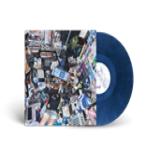
As Rodenkirchen's playing interweaves with Bertucci's computer-facilitated arrangements of flute samples, ranging from pulsing clusters to dense combinations of sustained tones, timbres, and distances, the piece draws connections with folk and spiritual traditions across human history: Medieval polyphonic ecclesiastical music, Sardinian canto a tenore, Pygmy vocal music, Buddhist chant. By conjoining one of our earliest known technologies with our most advanced, Bertucci proposes that our tools are not the message, but rather the unending continuum of humanity itself. Issued by Blume in a highly limited vinyl edition of 300 copies on transparent light blue vinyl, with newly commissioned liner notes by Bradford Bailey.
Max Cooper delivers the latest instalment in the acclaimed fabric presents series, marking a landmark release as the first tracks to be presented in Spatial Audio. Fusing his signature blend of emotive electronica, immersive sound design and club-focused energy, the project captures Max’s ability to bridge the gap between cutting-edge technology and deeply human storytelling. Featuring exclusive material alongside carefully curated selections, the mix places him alongside previous fabric presents contributors including Daniel Avery, Overmono, Helena Hauff and Mount Kimbie, while pushing the series into new sonic territory.
Leading the accompanying EP is Flecks, a collaboration with LSB that pairs fast drum & bass breaks with Max Cooper’s unmistakable immersive production. Referencing the iconic Hurt You So break, the track fuses old-school jungle influences with a modern, spatial mix, hypnotic synth lines and subtle vocal fragments draw the listener deeper into its expansive soundscape. Also featured is Bredren’s Hash (Max Cooper Remix), a tension-filled drum & bass track built around distorting basslines and constantly evolving movement.
The EP's focus track, AO, sees Max Cooper reunite with Rival Consoles for a more introspective moment. Swapping high-tempo breaks for a slower electronica and house framework, the track unfolds through beautifully detailed percussion, organic rhythmic textures and sweeping synth melodies, culminating in a soaring central passage that showcases the pair's shared gift for emotionally resonant electronic composition.
Released via fabric Records, fabric presents: Max Cooper represents another evolution of the long-running series, a release that is equally at home on immersive listening systems and the dancefloor.
“Paradigm of Tomorrow” is the representation (or sound) of concepts related to an innovative future and the radical changes brought about by technology in society that is, a way of thinking that redefines the present and opens up new possibilities. Published by Biometric-Audio (DE) Mastered by Paul Mac (UK) Lacquer cutting by Simon Exchange (UK) Release Management: Daniele Angelo (IT) Distribution: Triple Vision (NL) Artwork: Yuki Raw (DZ) A3 – She Spoke in a Detached Way Voice recorded by Hamza (Zahham) in Algiers (DZ) Mixed by Basic in collaboration with Punchlines Room (IT) Recorded at Neoromatik Studio (DE)
Kalita presents the fourth and final instalment of their groundbreaking ‘Borga Revolution!’ series, uncovering another selection of essential recordings from the rich and far-reaching world of Ghanaian highlife. Spanning deep, hypnotic highlife through to the vibrant electronic productions of 1980s Burger Highlife, Volume 4 captures a period of extraordinary musical change, as Ghanaian artists absorbed influences from funk, disco, boogie, and new synthesizer technology. With previous volumes championed by tastemakers including Gilles Peterson, Antal, Tom Ravenscroft, and Hunee, this final chapter turns its attention once again to the music of the Ghanaian diaspora.
Volume 4 brings together rare recordings from artists such as Rex Omar, Nat Fredua, and CST Amankwah, alongside the elusive, deeply hypnotic and beautiful sounds of the Abibifo Dance Band of Ghana (led by the legendary bassist Ralph Karikari) and Baffour Kyei. Unearthing recordings that have languished in obscurity for over forty years, the compilation moves between deep highlife, rhythmic dancefloor cuts, and pioneering digital productions, revealing yet more musical ingenuity of Ghanaian artists both home and abroad. The final instalment in the ‘Borga Revolution!’ series, it offers another vital collection of forgotten favourites and hidden treasures for DJs, collectors, and anyone drawn to the endlessly inventive sounds of Ghanaian music.
The 1970s and 80s saw Ghanaian musicians begin to incorporate Western sounds like funk and disco into their music, reflecting the changing global musical landscape. However, the country's political instability and economic hardships, marked by military regimes and curfews, forced many artists to leave Ghana in search of better opportunities abroad. In Europe and the U.S., these musicians fused their traditional highlife roots with emerging digital sounds, using cutting-edge technology like the DX7 synthesizer and drum machines to create the genre now known as Burger Highlife.
With ‘Borga Revolution!’ Kalita offers a vivid exposition of this musical transformation, using rare interviews, archival photos, and detailed liner notes to bring to life the pioneering spirit of both well-known icons and unsung innovators of Ghanaian Highlife, one of West Africa’s most exciting musical movements.
· The final installment in Kalita's 'Borga Revolution!' series, examining the development of Ghanaian dance music in the 1970/80s, and focussing on the phenomenon of Burger highlife (a blend of Ghanaian highlife with disco, boogie and synths).
· 2xLP in gatefold sleeve, with printed inner sleeves examining the stories of the artists featured on the volume.
· Includes 10 highly sought-after and under-the-radar recordings, including those by the phenomenal Rex Omar, Nat Fredua, CST Amankwah, Baffour Kyei, Chief Kofi Sammy, and the Abibifo Dance Band of Ghana.
Nina Wilson, better known as Ninajirachi, is an Australian electronic producer who released her debut album I Love My Computer is a concept record built on her connection with her PC, swiping between genres of EDM, tech-house, speed garage, dubstep, and hyperpop. Wilson builds on the legacy of early-2000s and 2010s Australian electronic artists like PNAU and Flume using technology as a medium, a motif, and a mirror for reflection.
Between remixing Princess Nokia, Deadmau5 & The Neptunes, releasing on Nina Las Vegas’ NLV Records and RL Grime’s Sable Valley, Ninajirachi has performed at Lollapalooza, EDC, Laneway, Listen Out, Splendour, Falls Festival, and more and toured with Mallrat, Charli XCX, Porter Robinson and Cashmere Cat.
Nina Wilson, better known as Ninajirachi, is an Australian electronic producer who released her debut album I Love My Computer is a concept record built on her connection with her PC, swiping between genres of EDM, tech-house, speed garage, dubstep, and hyperpop. Wilson builds on the legacy of early-2000s and 2010s Australian electronic artists like PNAU and Flume using technology as a medium, a motif, and a mirror for reflection.
Between remixing Princess Nokia, Deadmau5 & The Neptunes, releasing on Nina Las Vegas’ NLV Records and RL Grime’s Sable Valley, Ninajirachi has performed at Lollapalooza, EDC, Laneway, Listen Out, Splendour, Falls Festival, and more and toured with Mallrat, Charli XCX, Porter Robinson and Cashmere Cat.
New York-based Japanese jazz and electronic music polymath Takuya Nakamura presents his debut album Shape The Future - almost 35 years into his storied musical journey.
An expansive double album, the album’s first LP documents a spellbinding live performance by Nakamura recorded at fabric. A hybrid set combining DJing, live electronics, vocals, and trumpet, the set also features studio versions of special collaborations with Shigeto, Currency Audio and Tim Reaper. The second LP complements the first by assembling studio recordings of select album tracks. Altogether the two volumes make for a definitive display of Nakamura’s exceptional musicianship across jazz, DnB, jungle, broken beat, deep techno and more.
Across his career, Nakamura has played Brazilian music, merengue, salsa and straight-ahead jazz. He’s opened for Sun Ra Arkestra, performed with David Byrne, Laurie Anderson, Lee “Scratch” Perry, Wu-Tang Clan, and Arto Lindsay, appeared on sessions with Terry Riley, ASAP Rocky, Goldie, and TV On The Radio, and remixed the likes of Quincy Jones, Sun Ra, Billie Holiday, and The Streets. He’s also played under director and playwright Robert Wilson.
Although the musical past and present of the Tokyo-born, New York-based DJ and trumpet player is undoubtedly eclectic, Nakamura is abidingly steeped in the sounds of jazz and jungle. This’ll be obvious to casual observers who may have seen any viral videos of him. But there’s more to this. The depth of Nakamura’s engagement with these kinds of music, the way they’ve made him into the person he is, the decades-long path they’ve taken him on; to now arrive at the summit of a solo album is all truly remarkable. Shape The Future resonates with every chapter in this story.
In high school, Nakamura’s friends started listening to jazz and jazz fusion, which piqued his interest, especially when they started going to clubs to see it live, where they managed to see US legends like Sonny Rollins play. Eventually he began to play jazz every day and his musical skill emerged early. He soon became obsessed with getting closer to the source of this music, which led to his studies at the New England Conservatory of Music in Boston with George Russell, an influential figure who had taught Miles Davis and John Coltrane. Nakamura drank it in: not only the technical aspects but the sense of a direct connection to “a music culture where Russell and his friends changed harmony forever. I wanted to know how that was possible!”.
This was a radical experience in itself, but then another revolution happened for Nakamura. He was playing in a venue called The Western Front, near Boston and discovered that the elderly owner had his own soundsystem and was playing what was then - in 1992 - only just becoming known as jungle. This was as freeing a musical revelation as his proximity to the giants of jazz was, and in that instant the two things fused. He understood that using technology to fill a dancehall with sound and a jazz musician’s reflexes are all working to the same ends: “You’re always making decisions,” he says, “but it doesn’t have to be really difficult. It’s the truth of the frequencies, and how they’re affecting people’s minds.”
From that moment on, his life path was set. Moving to New York City, he sought out jungle and its offshoot sounds wherever he could find them, gigging and collaborating relentlessly, and gradually developing his own live and hybrid live/DJ shows. Through regular appearances at New York fixtures Zebulon and CBGBs, and continual shows elsewhere in the city, Nakamura developed his live performance and DJing and it was in these environments that he gradually weaved together his twin loves without compromising either, building an international reputation in the process.
It’s only fitting then that his first album, almost 35 years after he first found his musical direction, should be a live one: a window into this never-ending process. Even here, he had to be persuaded that he should make a record. A member of the fabric team got turned on to his music after their daughter saw him play. Of course, as a jungle lover, Nakamura knew fabric – which has a special place in the history of jungle and drum’n’bass – and “had wanted to play there since I was very young.” You can hear the club in the record: this isn’t just a live show, in keeping with his jungle roots, it’s Nakamura duetting with the soundsystem, and you can feel how the emotions in the room would have ebbed and flowed.
This dynamic translates to a transfixing record. Setting the tone with lushly textured ambient and reverberant jazz, Nakamura segues into cinematic breakbeat and stellar fusion, infusing it all with intoxicating low end and hypnotic rhythms. The LP’s midway point locks into mesmeric percussion heightened by resonant echoes of piano and trumpet. There’s an endless pull to this music. Nakamura adjusts the levels for maximum impact throughout, and the overall effect begins to evoke some harmonious hybrid between a jazz ensemble, a classic Metalheadz 12” and a Theo Parrish DJ set. His electric form continues through surreal jazz, intricate electronics and rolling sub-bass velocity, right up to the subtly devastating final cover of Peter Gabriel and Kate Bush’s ‘Don’t Give Up’, with Nakamura’s fragile vocal sitting in the heart of a huge sound.
From Tokyo jazz nights to formative studies and encounters in Boston to his artistic development in New York, Nakamura reaches another milestone with his monumental debut album. It’s a release that happened just the way a Takuya Nakamura record should. In the same way his instincts led him to musical revelations, taking his own sweet time has led him to make one of the most extraordinary debut albums imaginable, all executed in his own singular style. In Nakamura’s world, the universe finds a way.
Nu Vision is the latest project of Duke Cooper, band leader and label boss of Nation, Kode and DirtyBlends. There are three humans who make up Nu Vision, and they all have their own stories and discographies, records released on labels you might know, gigs played in Chicago or Berlin or someone’s loft, lives lived, friends made, sleep lost - fighting for theirart, standing by truths, defending voices, honoring progenitors, whilst pushing a new paradigm. Time is both fleeting and heavy for us all, but it is not without receipts.
Nu Vision is a band in the classic do-you-believe-in-alchemy sense - equal parts rhythm, damage, and deep feeling. Drenched in nostalgia and futurism, The Seed is a singularity of sound + vision; as if heavily rotated by VJ Dave Kendall on MTV’s 120 Minutes but materialized via today’s technology.
The Seed 10 inch provides additional music inspired significant icons Section 25, Liaisons Dangeruses and Adrian Sherwood having paved the way with their prior successes..- this package of The Seed is no freshman effort; but rather, a masterclass in continuing sonic education, delivering a unified experience from beginning to end. A NU VISION.
The Seed 10 inch provides additional music inspired significant icon band: Section 25 from the period of 1981-1984 with a more electronic-dance direction, process which culminated in the album ' From the Hip ' and remix single "Looking From A Hilltop", both released in 1984 as "Insecure Man is about being true to manhood with Robert Lane leading the charge with his vocabulary message of the current state of society.
Insecure Dub focuses on the period of 1981-1984 with an alternative electronic-dance direction process as an inspired blueprint from Nu Vision inspired from Adrian Sherwood having paved the way with his individual success.
Inspired from electrifying songs produced by Chrislo Haas (DAF) and Beate Bartel (Mania D. / Matador) reinforced by Krishna Goineau’s French and Spanish Speech-Attack-Lyrics Liaisons Dangereuses created a unique style anything other than a Berlin or Düsseldorf ‘thing’ – that was propelled to an international underground phenomenon of fame.
Nu VIsion was inspired to create a blueprint from the period of their productions of 1981-1982 with an electronic-dance direction paying homage with passionate craftsmanship utilizing what equipment was possible in the studio at the time of this recording featuring new members; Zoe Murphy & Fletch The Stranger on vocals and James Chazz on Saxaphone with a Ring Modulator.
There are few electronic musicians as accomplished as A Guy Called Gerald From writing genre-expanding records as a member of 808 State and as a solo artist, to crafting what journalists call the greatest jungle album ever made under the moniker Black Secret Technology, AGCG has spent four decades redefining what electronic music can be. With collaborations, remixes, and tracks for the biggest names in house, techno, drum & bass, and jazz, one thread remains constant: in any decade or any genre, AGCG's music continues to be celebrated as genre-pushing excellence.
Juice Box is AGCG's label, named after his Manchester-based soundsystem. Originally established in 1992, the label went on an unofficial hiatus before the decade's end as AGCG's output demanded wider release. pairing two essential cuts from Gerald's vault that have long deserved proper vinyl treatment. On the A-side, the absolute classic "Voodoo Ray" finally returns to wax. On the flip, 1990's "I Won't Give In" resurfaces from the archive, a reminder that even Gerald's deep cuts carry the weight of lost classics. Juice Box is back, and the catalog has plenty of treasures to unearth, along with new material from one of the all-time greats.
Ramjac Corporation, aka Paul Chivers, emerged from the UK's late-'80s rave underground, performing live at parties like Sunrise, Energy, Back to the Future, Fun-da-Mental and Synergy. Building tracks with an Atari computer and an E-MU 12-bit sampler, turning severe technical limitations into raw, elastic club music, 88-92: It is What it Was gathers music born in bedrooms then tested in front of crowds at warehouse raves, while the culture was still inventing itself without boundaries, completelyfree.
Ramjac was the original artist on Irdial Discs, following label founder Akin Fernandez's Aqua Regia, and introduced Lee Purkis' In Sync and Neuropolitique to the label, shaping the singular catalogue of that extraordinary imprint alongside Luke Slater's Morganistic, Thee J Johanz and Anthony Manning.
That legacy is now revisited by Musique Pour La Danse, with the release of a limited edition vinyl and digital edition featuring extended liner notes by Nick Halkes of XL Recordings, Positiva and Kicks Like A Mule fame, who witnessed the early Ramjac period first-hand. The release is illustrated by Grant Fulton, who created the visual identity for The Shamen's Synergy events and Orbital albums.
This album presents music written exclusively between 1988-92 and forms the foundation of Ramjac Corporation's ongoing live performances. Restored from the original floppy discs, the recordings preserve the uniquerelationship between early digital technology, sampling culture and live improvisation that defines the Ramjac approach.
Mixed for release for the first time by Trevor Lancaster-Smith, whose 90s engineering work encompassed Leftfield, Faithless and Roni Size, the album brings these compositions into sharp focus while preserving the character of the original instruments and performances. Not just a historical document, 88-92: It is What it Was is a living body of work: music created then, realised now, and continuing to surprise and evolve.
Forty years of cassette releases, pressed for the first time on vinyl
First of two instalments exploring the previously unreleased sonic archives of one of Poland’s most enigmatic
living artists - with its first volume focused on his deep listening practice and spiritual reverie (recorded 1990–2013)
The last time Andrzej Dudek-Dürer took a banknote bearing the face of the Polish anarchist Jarosław Dąbrowski from his pocket to trade it for a pair of shoes was in 1969. He bought them for 120zł - the equivalent of 100€ today - and never replaced them since then. Only rebuilt them, year after year, drawing a needle and thread through the leather each time it split, closing one wound before the next one opened. It became a ritual of precision, stitching a record of another year into their soles.
That same year, in Wrocław, he arrived at a conclusion that would recalibrate everything that followed. Convinced he was the reincarnation of Albrecht Dürer, he adopted the surname Dudek-Dürer, stopped cutting his hair and began wearing the same garments every day. It was the first ritual of many, though he wouldn't have called it that yet. Look closely enough, over the decades, and it is always the same gesture, returning in different material: hair growing in a single unbroken strand, a needle drawing thread through leather, sitar strings pulled taut across a neck he built with his own hands and magnetic tape spooling forward inside the cassette boxes stacked against his walls.
None of this began in a vacuum. Dudek-Dürer emerged from the Wrocław neo-avant-garde, in a Polish art world where an exhibition could be cancelled overnight by the stroke of a censor's pen. In 1973, his exhibition Auto-crucifixion was shut down by the state, and for a time he found himself blocked from exhibiting his own art at all - the one force in his life that ever came close to cutting the thread.
He seemed to experience it differently. In 1974, after long, patient research into sitar craftsmanship, he built his first prototype with his brother, a knowledgeable luthier. In 1978, in a smoked-out jazz club, he took his first steps into sound recording with the unreleased album Jazz From Underground with his first band. By 1979, recognition started to travel further than he could.
Turning toward Far-Eastern philosophy, meditation and the idea of reincarnation was another language of freedom for him. It was a way of claiming an inner territory the state could not reach, a border it could not close. Mail Art served a parallel function, reaching further out: in a country that restricted travel and expression, sending and receiving art through the postal system became an act of quiet rebellion.
The body, in his understanding, is only an envelope readied for constant transformation. From this came Metaphysical Telepathy: during the years he could not leave Poland, he treated that confinement as a rehearsal room, sending his mind out ahead on the same thread his body would later follow. Living Sculpture grew from the same root with performances of stillness beside static art objects, until the boundary between the object and the man beside it simply dissolved. Camera Meditation extended the same instinct into photography: a shutter click flattening three dimensions into two so that a single instant could be held forever. Inspired by the pioneers of self-portrait photography like Robert Cornelius, he used it to document time itself, and kept explaining to me: "You know. This is not about vanity. This is about observing time passing.”
The isolation did not end suddenly. It ended the way his own philosophy had already predicted it would, from the inside first. Mail Art quietly solved the problem politics couldn't. Correspondence built during years of confinement slowly worked its way through doors the state itself had kept locked. Contacts made through folded paper and stamps became invitations. Ultimately, invitations became passports.
In 1983 he made his first trip outside Poland, to Germany, in search of the audio technology he couldn’t get his hands on before. In 1985, he was invited by the Indian embassy in Poland to give a sitar concert on an instrument he had spent a decade patiently stringing together - half sitar, half tanpura, built from patience and determination. After the collapse of the People's Republic of Poland, the travels kept unspooling: South Korea, then Mexico, then Australia, Canada, New Zealand, Singapore, Japan and the United States - each stop leaving behind its own small knot of tape, tied off and carried home.
In the decades since, recognition arrived at the same unhurried pace: he conducted workshops at UC Berkeley, served as vice-president for artistic affairs of the Union of Polish Art Photographers and the Union of Polish Visual Artists between 2010 and 2014 and received the Bronze Medal for Merit to Culture - Gloria Artis. His visual work gradually entered collections including the National Museums of Warsaw, the Stedelijk Museum, Tate Modern, MoMA and the Venice Biennale. His musical practice, by contrast, never found that kind of room - left to circulate quietly, sharing his cassette tapes directly, waiting for someone willing to follow it further.
It took months before I could find a way to reach Andrzej Dudek-Dürer - his presence online is very close to nonexistent. Surprisingly, LinkedIn turned out to be the only door still open, a faintly absurd irony given everything else about him. I packed the strict minimum for a three-day trip and an empty notebook and made my way to Wrocław. His headquarters sits in the neighbourhood of Grabyszyn: a two-storey pre-war house that has belonged to his family for generations. The man who opened the door was long-haired, long-bearded, in his trademark leather shoes and patched jeans. We sat in his living room, in front of a computer where decades of recordings sat organised in cryptically named files, surrounded by books and objects that had arrived one layer at a time, leaving room for only two chairs in the middle. His shoes sat by the door, rebuilt so many times they had become their own quiet sculpture. Cassette tapes filled boxes against the walls, almost unlabelled, each one a spool of thread holding decades of sound that had never once been asked for, until now.
I listened for hours: meditating in front of strangers on the porch of a Seoul temple until the tourists stopped taking photos and simply waited with him; a stand-off with border guards at the US–Mexico crossing over an instrument they couldn't identify and didn't trust; a session with the Stockhausen family that he still, decades later, describes like it happened last week. All of it interrupted, occasionally, by the smell of soup boiling and fresh bread warming on the ceramic stove. After two days, it felt like being handed the end of a very long thread and asked, gently, to keep following it. I left with a USB drive holding his full discography, signed with his unmistakable signature.
Astral Meditations From A Living Statue is a length of that thread, drawn out from the boxes stacked against his walls - recordings gathered from different rooms, different countries, different decades. This first record breathes slowly: incense-thick, meditative, built for stillness. A cutting-edge séance in outer space where machines learn how to dream.
It begins with the neo-classical improvisations of Andrzej, space-delayed, recorded at Klub Muzyki i Literatury in Wrocław in 2002. 'When..So' opens the curtains with a deep-rooted meditation accompanied by slow-decaying piano figures illuminated by a candle-lit spirit gathering.
Los Angeles, 1990: a dormant villa, a grand piano, the voice of Bonnie Barnett. 'Exception' is captured in a single room, in a single afternoon - voice and keys circling each other, neither one leading, until the silence between the notes starts to feel like the instrument.
'The Meta...' and 'Tired Of...', recorded at Studio Morandi in Ponte Nossa, Italy, in 1992, settle into a sitar drone built entirely from patience - overtones stacking and beating against each other, strung by a man who never once set foot in India. 'Mastery Of...' follows, recorded the same year at Studio Suski in Łomianki, pushing that same hum further still, until pitch dissolves into a spectral reverie. 'Transcendental Sound', from 2000, closes the first record in a slow bath of celestial frequency - better heard beside the shores of the Odra river.
More than fifty years after deciding that a life could become an artwork, Andrzej Dudek-Dürer continues to inhabit that decision. His shoes keep wearing thin against the earth's crust. His hair keeps growing, one strand at a time. His cassette tapes keep spooling in the dark of their boxes.
Now the thread finds its last shape: a single unbroken groove, spiralling inward from the outer edge to the label at the centre. Never cut - the way nothing else in his life ever was. Drop the needle and it will find that groove and follow it, the same way a needle once followed leather, once followed a border it couldn't cross, once followed string into an instrument that didn't exist until he built it. This record is the other end of a thread that has been travelling for fifty years. For the length of both sides, it rests here, in your hands. This is a timeless proof that the Lord of the New Age was never lost."
Volume 2: Unreleased Jack opens the vault for the first time, presenting previously unheard material from the formative mid-’80s period. These recordings reveal the experimental edge of a young innovator pushing the limits of emerging technology and redefining what club music could be.
Channeling his honed sample craft towards the ominous portent of modern times, Romare returns with his fifth album Oblivion, with the previous 3 out of 4 LP's appearing on Ninja Tune. Across a suite of downtempo, broken beat, bubbling grooves and brooding reveries Archie Fairhurst threads a narrative that wrestles with the big questions of the present moment — the tipping points of the planet and technology, the fight for social justice and the power structures that govern our existence. While his trademark source material continues to cast a long line back through recorded history, this is Romare at his most contextual.
Nothing is placed by accident. 'Machines' hums its throbbing 4/4 pulse along to a German language recital of Johann Wolfgang von Goethe's 'Blessed Longing' — an enduring reflection on the human condition that rings true from way back in the 19th Century when it was written. 'Computer Love' slinks into a sumptuous trip-hop lull laced with sci-fi flourishes sculpted from samples of old computer documentaries — a bittersweet romantic backdrop to our complicated situationship with the devices in our lives. 'Take Us' goes one step further on its hard-stepping boom-bap strut as a subtle tale of possession by screens unfolds around Romare's signature strain of technicolour mutant funk.
There is space for optimism in the message on Oblivion as well — the strength of the suffragettes as a benchmark for social justice and activism amidst the speakeasy slink of ‘Deeds, Not Words', and spring-loaded acid house joint 'Change' pointing to the need for positive action in the face of imminent calamity.
The artwork for the album follows Fairhurst's thought process, drawing on Edvard Munch's iconic 'The Scream' along with Philippe Halsman and Salvador Dali’s ‘Voluptuous Death’ to help render the ideas of the album visually.
The wild ride of Oblivion races towards a final beguiling opiate on 'The Last Lullaby' — the perfect sedative after the rush of information and emotion that comes with a full-length trip through Romare's vivid, uniquely creative world of sound.
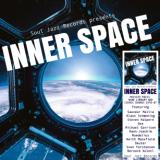
Soul Jazz Records’ new ‘Inner Space’ collection is a mixture of Cosmic electronic music and proto-New Age sounds. The album features a wide range of European, British and American auteur electronic artists, including Hans-Joachim Roedelius, Steven Halpern, Michael Garrison, Ose, Klaus Schønning, Bernard Xolotl and others.
Their cosmic, exploratory music sits somewhere between the worlds of personal, inner space and galactic outer space. All of the music featured here was recorded in the 1970s and 1980s, much of it released on small bespoke private-press record labels, often owned by the artists themselves.
The album also features rare tracks from a number of Library Music artists, all of whom used electronic music to explore a variety of common celestial or Gaian themes – cosmology, spirituality, science, mother earth, wellness, technology, consciousness, exploration, healing and harmony – in their work. These include pieces by Sauveur Mallia, Keith Mansfield and Sven Torstenson.
Here on this album you will find the Sun Ra’s of New Age, the Picassos of Library Music and the Burroughs of space-related electronic music. Away from contemporary music fashions, these unique and highly individual artists remained free in their music to explore new ideas of sound and technological experimentation – together with the larger concepts of time, space and matter – a freedom rarely granted, and one that we celebrate here.
another gem from the endless treasure island called Power Music and the Mastermid behind who is DJ Duke! This time in the rebound the 1997 classic "Electro Force"!
Volume 1 - Growth
Resurrection is a long-term musical work that has accompanied Christine Benz for almost twenty years. The first track was created in 2007 (track id - Born after Code), with another piece added nearly every year thereafter.
Throughout this time, she continued to produce other music while steadily developing her artistic language.
Musically, the album moves between minimal techno, ambient and experimental electronic music. Across different phases of her life, Resurrection gradually grew into an archive of her personal and musical evolution.
The complete work unfolds as a trilogy across Volumes 1-3.
At its core lies her fascination with sound as material. Rather than thinking in terms of conventional melodies, she works with textures, vibrations, and spatial relationships. A small number of elements give rise to complex sonic spaces, where minimal changes can have a profound effect. Mistakes, chance occurrences, and unexpected responses from the systems she uses also become part of the music. Even from chaos, remarkable structures
emerge. Whenever unplanned beauty reveals itself, she preserves it as a small “miracle” in which control and chance intertwine.
The complete work unfolds across three chapters: Growth, Structure and Resonance, exploring repetition, frequency, perception, consciousness and technological development in the relationship between humans and
machines. It moves from origin through the formation of an internal order towards connection and interaction.
Volume 1: Growth, draws upon the Fibonacci sequence and the spiral as symbols of natural development, with the music growing through repetition and minimal change into increasingly complex forms. Throughout the
project, technology appears as a tool, a partner and a mirror of our perception, raising the question of whether consciousness, responsibility and empathy can evolve alongside technological progress.
During the project’s long evolution, Donato Dozzy developed an interest in Christine’s distinctive sound design.
In 2021, this led him to propose his own interpretation of Our Determination for Volume 1, subtly reworking the track through his own musical perspective.
The artwork developed by Christine also went through a creative process of its own. The original photographs were taken in a basement around 2019, with a wet curtain draped over her. In 2026, she decided to transform
this visual world into a moving-image artwork. For the production, a film crew reconstructed the entire setting.
The video shoot demanded a great deal from Christine: after several hours beneath the wet curtain, the cold was no longer merely part of the staging. This elaborate creative process gives the artwork its distinctive character
and makes it an essential part of Resurrection.
The first chapter will be released in November 2026 as a double-vinyl edition housed in a distinctive gatefold sleeve with an inside-out finish, matte varnish, and partial raised spot UV varnish. Two further double-vinyl
releases, Structure and Resonance, will complete the trilogy. All three volumes will be released on Pirat Records.Records.
DJ Stingray 313's INDUSTRY 4.0 EP is a sonic exploration into modern manufacturing concepts and the impact on humanity.
Moods and titles across the EP cover artificial intelligence (LARGE LANGUGE MODEL), the internet, and robotics (MULTI FUNCTIONAL ROBOTICS and SENSOR DATA) – all set to his signature high-energy, industrial, cyborg-style productions.
Together, the tracks on INDUSTRY 4.0 work as a striking and current introspective of humanity’s uncertain evolution, moving as fast as the technology it creates.
Mensch & Maschine. A concept. 13 tracks. One system. No coincidence. No compromise. Everything follows a logic. We live in a time where progress is no longer a goal, but a reflex. We accelerate without knowing the destination. We develop without questioning. We trust without understanding. We are driven by the idea that technology produces solutions. Without calculating the risks. Meanwhile, something new is emerging. A form of intelligence. Not human. Not emotional. Unstoppable. Consistent. Precise. Superior. Maybe not today. But eventually. Mensch & Maschine exists exactly there. Between what we create and what replaces us. This work does not provide answers. But it may ask the right questions. What happens when we are no longer the most intelligent entity? What remains of the human when systems begin to replace them? And who makes the decisions when we no longer decide for ourselves?