Screen Time is a series of instrumental guitar pieces recorded during the summer of 2020 as the world confronted the pandemic shutdown and as the people of good conscious stood up against the oppression of racist police oppression and murder. How much screen time does a parent allow a child? How much screen time does a child need to realise a world which has the means to coexist as a community in shared exchange?
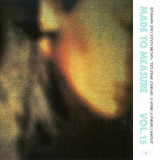
The cover image of Screen Time is of a youngster curled into a book, the pages vibratory with text radiating through the skin, blood and bone – an aspect entirely missing from digital media, though the actuality of transparency in our daily lives through streaming etc we can only hope leads to the awareness of fairness.
Screen Time is in reflection to dream time, a state of meditation, hypnagogia and pillow talk.
Thurston Moore born 1958, moved to NYC 1976, started Sonic Youth 1980, edited the fanzines KILLER, Sonic Death, and Ecstatic Peace Poetry Journal, started Ecstatic Peace records + tapes label, senior editor of Ecstatic Peace Library, and Flowers & Cream, edited books at Rizzoli and Abrams, on faculty at the Naropa University summer writing program since 2011, published through various imprints, worked collaboratively with Yoko Ono, Merce Cunningham, Cecil Taylor, Rhys Chatham, Lydia Lunch, John Zorn, Takehisa Kosugi and Glenn Branca, composed music for films by Olivier Assayas, Gus Van Sant, and Allison Anders, records and tours both solo, with various ensembles and with his own band, resides everywhere.
Mastered by Lasse Marhaug for Southern Lord.
Search:da poet
Ruth B is releasing her sophomore album "Moments In Between" via Downtown Records. With the breakout success of her debut single “Lost Boy,” Ruth B. emerged as an immediately captivating artist who drifts between moody realism and a dreamworld of her own making. An occasional poet who created her own storybooks as a child, the Canadian- Ethiopian singer/songwriter/pianist infuses all her songs with a raw emotional honesty, even as she lets her imagination wander into fantastically charmed terrain. On her sophomore album Moments In Between, Ruth pushes that dynamic to a new level of boldness and sophistication, embracing her most beautifully strange impulses while delivering her most impactful work to date. As the daughter of immigrants from Ethiopia, Ruth grew up on music from her parents’ native country and later discovered the artists who would become formative influences on her songwriting, such as Stevie Wonder and Lauryn Hill. After taking up piano at the age of eight and singing her entire life, Ruth began writing songs in her late teens and soon came up with “Lost Boy.” Initially posted on Vine in 2015, the Peter Pan-inspired piano ballad quickly went viral, with listeners undeniably drawn to Ruth’s heart-on-sleeve storytelling. By the end of 2015, she’d released her gold-certified debut EP The Intro, which led to such triumphs as winning Breakthrough Artist of the Year at the 2017 Juno Awards. Made with producers like Joel Little (Lorde, Taylor Swift) and Mike Elizondo (Fiona Apple, Regina Spektor), her gold-certified full-length debut Safe Haven arrived in 2017 and earned her three Juno nominations, including Album of the Year and Artist of the Year. Executive-produced by Patrick Wimberly (Solange, Blood Orange, Ellie Goulding), Moments In Between finds Ruth also working with producers like Ido Zmishlany (Demi Lovato, Shawn Mendes), Justin Raisen (Angel Olsen, Santigold), Doug Schadt (Maggie Rogers, Ashe), and D’Mile (a five-time Grammy Award-winner known for his work with Khalid and Ty Dolla $ign). In a departure from the minimalist alt-pop of Safe Haven, the album unfolds in a more elaborate and kaleidoscopic sound, yet never overshadows the understated power of Ruth’s vocals or the pure vulnerability of her songwriting. “For me writing songs has always been therapeutic, and I hope that hearing my songs helps other people in the same way,” she says. “Whether they’re feeling lonely or heartbroken or happy, I want them to know that someone else understands what they’re going through.”
For more than a decade now, Fleck E.S.C. has marked himself out as one of the most playful and prolific producers in the electro game. Across dozens of releases for labels including Bass Agenda and Science Cult, the France-born, Japan-based artist has made his name through a production style which balances limber beats with exploratory textural work.
Fleck E.S.C. debuted on Central Processing Unit in 2018 with the Discrete Opinion EP. Now, after stopping by the Sheffield label last year on a Silicon Scally remix job, Fleck E.S.C. delivers his second EP for CPU in the form of Rough Silk. The record's intriguing title proves an apt introduction to this four-track affair. These cuts are at once sleek and abrasive, anchored by robotechnic machine-funk grooves yet also full of strange, shifting shapes.
The opening title-track expertly sets out Rough Silk's stall. Heralded by gurgling synths and all manner of whirring percussive tones, 'Rough Silk' blossoms around the minute mark with the introduction of a wickedly buoyant lead synth. This is music at once visceral and full of mystery, the sound of wending through the back alleys, and the feeling carries through to the following cut 'Hat in the Cat' - as the synth pads spool out overhead, the machine-funk snap of the beat has an almost aquatic quality that links it back to Drexciya.
Much like 'Rough Silk', the record's first B-side 'Faking Sweet' also shifts gears. The opening strains of the track seem to be preparing for another insistent, expansive broken-beat pulse, but it stiffens its neck around ninety seconds in. Programmed drums whirr around a jittery machine-gun bass while discordant synths pull at the edges of the track, all of which brings a strong dystopian energy that increases further as the percussion sounds become increasingly bug-eyed.
After so much excitement, 'Digger Play' closes out the EP with a softer touch. There's still plenty of low-slung bounce to the beat, but the track runs a little slower, and there's a warm wistfulness in the synths which gives 'Digger Play' a painterly, almost poetic feel. However, while it may take its foot off the gas, the production here is as deft as it is everywhere else on Rough Silk.
With new EP Rough Silk, electro whizz Fleck E.S.C. brings the sort of casual mastery to proceedings that has characterised his career to date.
RIYL: Silicon Scally, Jensen Interceptor, Annie Hall
Repress
dark red marbled vinyl
The Factory hereby presents to you its first release: The Factory 001.
A compilation album which features the likes of artists such as Legowelt, Kypski, Regularfantasy, Klangstof & many more. The aim of The Factory is to bring new and established electronic artists together by giving them a platform and full creative control. All contributions are one of a kind and genres range from IDM, lo-fi house to techno.
The first 250 vinyls are numbered and will include a zine that features drawings, photography and poetry by art squad Rots, Zefanya Anindjola, Cathelijne van der Korput and Nina de Koning.
Following up to their acclaimed "Hold" EP from last year, German duo Alma reemerge on Definition with their new transmission, "Mother". Through four cuts dropping anchor down the most remote nooks of our dance-friendly galaxy, Alma move the cursor from proper floor-focused 4x4 grooves to kosmische-informed pop excursions with dextrous style and seamless elegance. Crafting their own blend of emotionally whelming club music, it's material primed for extended use whether you are sitting on some high-rise, towering rooftops at sunrise or enjoying a freeze-dried cocktail on Alpha Centauri. Presented in both original version and remix form courtesy of label head Definition himself, title-track "Mother" is the epitome of a slo-burner, rolling at low speed but gaining tension, weight and impactfulness as it runs. Circuits sizzling and piano stabs blazing, Alma dish out a compelling sample of their cross-dimensional wares, sure to take any dancefloor in the zone without further ado. Definition's Remix revamp trades the original's steady swing for a further syncopated, newbeat-infected swagger, laying further emphasis on the synth leads and lashing drumwork as poetic, bleached-out pads keep painting the sky all shades of pastel. A more Italo-inflected affair at first, the tear-jerking "Lost In The Stars" has us gliding in a parallel universe of its own, where epic-sized synth combers and muscular bass onslaughts avalanche over brittle lines of soft-tongued vocals. As concretely submerging as it is designed to trigger off deep emotional response from the ravers, this one is tailored to weave instant communion between the jockey and his audience. Flinging in the breaks and cross-cutting delays, Kiel outfit Avidus shift the angle of approach towards harder, faster EBM firepower, binding their rowdy, FX-soaked chords with the chorus to create a wholly distinct dancing and listening experience.
'The Fantasy Life of Poetry & Crime' is another beguiling left turn by one of our most prolific artists, Peter Doherty and is some of his finest work to date Peter's deft lyricism combined with Frederick's delicious francophone musical arrangements is a marriage made in heaven.
Written during lockdown and produced by Frédéric Lo 'The Fantasy Life of Poetry & Crime' was recorded at Cateuil in Étretat (Normandy) and Studio Water Music in Paris and mixed by François Delabrière at Studio Moderne, Paris. All words are by Peter Doherty and music by Frédéric Lo.
'The Fantasy Life of Poetry & Crime' is another beguiling left turn by one of our most prolific artists, Peter Doherty and is some of his finest work to date Peter's deft lyricism combined with Frederick's delicious francophone musical arrangements is a marriage made in heaven.
Written during lockdown and produced by Frédéric Lo 'The Fantasy Life of Poetry & Crime' was recorded at Cateuil in Étretat (Normandy) and Studio Water Music in Paris and mixed by François Delabrière at Studio Moderne, Paris. All words are by Peter Doherty and music by Frédéric Lo.
Raw Poetic produzierte sein neues Album 'Laminated Skies' mit seinem Buddy und häufigen Kollaborateur Damu The Fudgemunk und Gastmusikern wie Pat 'P' Fritz (git) und Luke Stewart (bass). Musikalisch schöpft das mehrdimensionale Werk aus den Genres, die Hip-Hop ausmachen, und Einflüssen aus allen Facetten des Spiritual Jazz. 'Laminated Skies' ist Raw Poetics sechstes Soloalbum und das erste offizielle auf einem Label. Qualität ist ein stetiges Synonym des Künstlers, der auf einen reichhaltigen Lebenslauf mit den Eltern in der Black Panther-Bewegung, mit seinem Onkel Jazzlegende Archie Shepp, als Lead-MC des Duos Panacea (Rawkus) und mit Kollabos mit K-Def, Blu und Kev Brown zurückschauen kann. Das gemeinsam mit Damu produzierte 'Ocean Bridges' (2020) mit dem Saxophonisten Archie Shepp wird als eines der besten Alben des Jahres gefeiert.
Nearly 24 years ago, on 7th July 1998, the first Hefner LP was released, it garnered some great reviews, ensured the band were to become one of Peel’s favourites (they had 5 entries in 1999’s festive 50!), and cemented their reputation as Britain's largest small band. NME - “truly independent, unassuming and painfully honest: the sound of thin, white indie dukes in spectacles.” Melody Maker - “heart-skeweringly astute” combination of “grimly sweet lyrics and delicate, tentative tunes.” Time Out - “awe-inspiring in their naked honesty” More recently, the album was number 25 in Pitchfork’s 50 greatest Britpop albums, above A Northern Soul (Verve), Fuzzy Logic (Super Furry Animals), Vauxhall and I (Morrissey) and Tellin’ Stories (the Charlatans) Breaking God’s Heart now gets the essential 20th anniversary vinyl re-issue, accompanied by some shows where Hefner frontman, Darren Hayman, will play the album in full Here’s what Darren has to say about the record now: Breaking God's Heart is an awkward, over confident start to my career. I have yet to get to grips with it again properly in preparation for these anniversary shows. It's so far away in my past that I have some difficulty in relating to the person who made it. Mostly when I hear it I'm just amazed at the confidence, and possibly arrogance, I had then. I insisted on mostly first takes being used, vocals being recorded live in the room with the instruments, a ban on any reverbs or ambience being used. It was like I was trying to sabotage my career at the first hurdle. Many of those decisions were based on half understood, interviews with my idols from the American Lo-Fi scene but I really didn't know what I was doing. It does make a bizarre and caustic record though, and I know there are plenty of people who think this is my best work and I never got back to the blunt energy of these recordings. I do see their point. Quotes - Hefner's is a bedsit world of spindly guitar and towering passions; of skewwhiff ideals and surprisingly smooth melodic surges; of awkward outbursts and slow-burning lo-fi for lovers… 'Breaking God's Heart' is all about sparkling melodies, twinkly-eyed poetry, intimate confessions, a thrillion knowing references to sex, soul and sadness and the sort of chipper attitude that says: 'This is a record you will relish for years to come'. So save yourself time, start treasuring it now. 8/10 NME // Hefner are running on the same rock-not-rock fuel as early Violent Femmes or The Modern Lovers, and like those groups are expert at building emotionally charged arrangements by adding or subtracting at precisely the right time. 8/10 Drowned In Sound
Limited exclusive red vinyl.Tim Armstrong, guitarist and frontman of
Rancid, took a different path on his 2007 solo debut, with able backing
from L.A
Reggae revivalists The Aggrolites, Armstrong crafted a grooving, fun-filled modern reggae album, influenced by ska, rock steady, roots reggae, and dancehall and filtered through a modern pop- punk attitude.The sound of the record (nimble, jumped- up, and retro but fully modern) impresses instantly, but as the record goes on, Armstrong's voice emerges as the star. His raspy croon, staccato
toasting, and ragged shout fit the reggae sound surprisingly well.
After the release of DISSIDÆNCE Episode 1, warmly met with both critical and popular success, Vitalic keeps his promise and returns with a second instalment, darker and more techno than the first, and this time with a marked industrial aesthetic - cold and minimal. The composition and production style have a post-cold wave heritage, something that has always been part of the artist's DNA but is now brandished with renewed pride.
DISSIDÆNCE Episode 2 opens with Sirens, a towering tornado of synths and sweat, followed by Dancing in the Street, The Void and Light is a Train, sparse techno boiled down to its essence - mechanical, cold and alarming. Tempering this hostility are moments of grace and poetry like Marching, Friends & Foes and Winter is Coming, both melodic and melancholic.
A two-pronged project masterfully orchestrated by Vitalic, a strange cosmic voyage of implacable energy.
Her debut LP, Banshee, was released on Wax Poetics. Has collaborated with MF Doom, Czarface, Ghostface Killah, Dennis Coffey, and more. Kendra Morris’s Nine Lives, to be released on Karma Chief Records (a division of Colemine Records) in early 2022, marks not only the culmination of the decade since the release of her first LP Banshee, but also a turning point in Kendra’s life. Nine Lives heralds the beginning of a new chapter; label, and an evolution to the next level of adulthood. This collection of her original songs encapsulates moments from what could be nine lifetimes. Kendra, while very much a New Yorker and veteran of almost 2 decades on the NYC scene, hails from Florida and aesthetically embodies the broader sense of American culture, bringing to her contemporary sound influences found in music and cinema dating back to the mid 20th century. Her music conjures imagery evocative of road trips to weird and wonderful places. Concurrently a visual artist, filmmaker and animator, Kendra harnesses the feline nine lives metaphor repeatedly. In the context of the chapters of her musical trajectory alone, we see at least 9 lives. From discovering multi-tracking on a karaoke machine as a child, to playing in bands in Florida, moving to NYC and creating music alone on an 8 track, releasing her first 2 LPs on Wax Poetics, releasing her 2016 EP Babble and collaborating with DJ Premier, 9th Wonder, MF Doom, Czarface, Ghostface Killah, Dennis Coffey, and David Sitek, to name a few. The life of this multi-disciplinarian artist contains units of time and story lines through which we can all relate to universal themes of love, loss and overcoming one's fears. Kendra, never ceasing to heed her spiritual calling to continue creating music and art, no matter what, has no plans of slowing down but a belief in only evolving, eager to begin experiencing her next nine lives.
Limited!
Gaïsha - Oriental Psychedelic Sounds and Funky Grooves
Gaïsha is a collaboration between the Belgian-Moroccan singer, Aicha Haskal, and Les Cerveaux Lents.
Aicha Haskal’s voice is smooth and warm voice and switches seamlessly between Arabic chants, parlando and even rap. The Arabic lyrics of the song ‘Ghalat’ were written by the Egyptian poet Abdelhamid Farag, who calls himself a ‘poète de l’ éloignement’. His lyrics are permeated with deep melancholy and romance. The song is a tribute to Abdelhamid, who passed away in 2020.
B-side ‘L’Amour Digital’ is based on ‘Sihtou Wajdan’, a traditional Muwashah. Muwashah is a poetic form that originated in Al- Andalus (Muslim Spain in the 11th century). Aicha adds to the poem a reply in French, giving the song a universal and interconnecting flair.
‘Ghalat’, een ode aan de Egyptische dichter Abdelhamid Farag, knalt uit je speakers met een geweldige levenslust”- Cutting Edge
Wie fan is van de muziek van Altin Gün, heeft met deze nieuwe single van het Gentse Gaïsha er een leuke ontdekking bij. - Indiestyle
"Het ritme, de synths en de groove lijken westers, maar verder ademt alles aan deze track een oosterse melancholie uit.” - Damusic
Jimpster’s lockdown LP was made throughout 2020 and finally sees the light of day at the end of February 2022 having been delayed around 6 months due to the ongoing vinyl pressing hold ups. Birdhouse is the revered producers seventh full length LP and can be considered a full circle as he takes a step away from the dance floor to revisit his early inspirations of jazz, 70’s fusion, library music, ambient and sample-based downtempo electronica. With its soulful touches, vocal and live musician features and trademark warm Jimpster production, we also think it could be his most accomplished and accessible yet.
The opening title track sets the tone for what’s to come with rustling percussion, widescreen choral samples, dub FX and drifting pads all coming together to create a sense of optimism. The first of six vocal features comes next. Ascension with UK vocalist Oliver Night (featured on IG Culture’s recent Earthbound LP) is a simple soul jam with live bass from Nick Cohen and Jimpster’s beloved Fender Rhodes joining the lo-fi drum groove.
Next up we’re treated to Voodoo featuring brilliant young NYC MC/poet/producer who first grabbed Jimpster’s attention with his mind-melting track Signs, released in 2020 on Youngbloods. Yoh’s sung (not sung) vocal flow adds a new dimension to the Jimpster sound and is hopefully the first of many more collaborations to come with this perfect pairing. Still Believe takes us on a tripped-out journey into slo-mo, lopsided MPC beats punctuated with otherworldly vocal samples, live bass and Rhodes making for an immersive late night mood.
The first of two tracks on the LP featuring London vocalist and songwriter Cairo drops next entitled Beautiful Day. Another incredibly talented young artist introduced to Jimpster through a mutual friend, Cairo adds a deep and uplifting vibe making for a track you’ll come back to time and time again. A slow-burning nu-soul groove which will draw you in with its warm glow. Lazarusman is a Johannesburg-native poet and vocalist known for his collaborations with Stimming, Joris Voorn and Booka Shade. Here he delivers a poem called Heavy, perfectly punctuating the haunting reverb-drenched horn, Detroit-esque chord stabs and filtered drums.
Future Paradise drops the BPM's further still for a slow-stepping synth ride mixing up rising arpeggios, dubby flugel horn FX and the lushest of strings. It’s been 15 years since Jimpster and Capitol A last joined forces on Left n Right from Jimpster’s Amour LP. Known for his work with Jazzanova, King Britt, Mark De Clive-Lowe and 2008 club anthem Serve It Up on Mantis, the San Francisco native MC delivers his inimitable flow to a blunted jazzy hip hop groove making for one of the LP highlights.
Up next, Rain is an intimate and understated slice of contemporary soul music which pushes another spellbinding Cairo vocal front and centre, underpinned by loose, crunchy beats, dusty keys and moogy flourishes. Picking up the pace, Doors Of Your Heart sees Jimpster get busy chopping up a funk groove whilst Nick Cohen lays down another killer live bass line. Lush keys, modular synths and some crazy FX processing take this into the stratosphere and call to mind some of his earliest productions in the late 90’s on his seminal LP Messages From The Hub.
Winding things down, Jimpster continues to revisit some of the sounds and flavours of his earliest work on Tell You, which goes seriously deep with touches of cinematic big band horns and a looped up vocal sample. Closing out the LP we have the aptly titled Full Circle complete with sublime Metheny/Mays-style pads, muted synth arps and subtle FX to drift away to.
repress
An underwater adventure by young Parisian Shelter. Where previous releases have seen the synth-obsessed Frenchman take his inspiration from Caribbean rhythms or Balearic attitudes, this marine missive sees Shelter turn to the lavish world of the library,creating his an alternate score to Jean Faurez' 1960 documentary short.
More submersible than snorkel, our journey begins in the very dark of the deep, mystical harp trills echoing through the inky blackness, picking up the bioluminescent shimmer of an Abraliopsis Squid. Gradually we make our way into the light, cruising past shoals of silver scales and underwater forests. Immersion' offers a placid, percolating rhythm and billowing pads, providing sonic symmetry for the dancing leaves, while the spheric soundscape of 'La Vie A L'Ombre' bubbles away like an underwater volcano. The optimistic ambience of 'Plenitude Azotee', brimming with delicate melody and glistening sequences, perfectly captures the wide-eyed wonder of a reef dive, before drifting into the serenity of 'Parade', an aquatic acquaintance of A.R.T. Wilson's 'Overworld'. A brief foray into shark fin funk sees out the A-side, before we're back amid the beauty of the ocean floor, 'Variation Abyssale II' echoing the album opener but with even more poetry. The exotic and otherworldly sine waves of 'Dans La Jungle De Varech' simultaneously sound like a rainforest canopy, alien landscape and coral microcosm, expanding our horizons nicely ahead of the adrenaline rush of 'Hors D'Haleine'. Shelter then sets us at ease with the
tidal tonality and subtle shuffle of 'Fumeurs Noirs', a sublime synthetic suite,
then leaves us to marvel at the soft focus splendour of 'Synthii Outro'.
- A1: 1/4 Dead
- A2: Blissful Myth
- A3: The Psycho Squat
- A4: Rotten To The Core
- A5: Poppycock
- A6: Cosmic Hearse
- A7: The Cloud Song
- A8: Vampire State Building
- A9: Blasphemy Squad
- A10: When You Are A Martian Church
- A11: Pig In A Blanket
- B1: Inside
- B2: Nothing But A Nightmare
- B3: Flesh Crucifix
- B4: Slimy Member
- B5: Love Is Not
- B6: Radio Schizo
- B7: Happy Farm
- B8: Alice Crucifies The Paedophiles
- B9: Army Of Jesus
- B10: Dutchmen
The words legendary, seminal, and classic get thrown around at will these days, but Rudimentary Peni’s debut album is all of them. Recorded over two days at Southern Studios by John Loder and originally released in 1983 by CRASS off-shoot label Corpus Christi, “Death Church” showed a band moving away from the urgency of their two early 7”s and into their own realm. Creating a template that bands have been trying to replicate ever since, while ticking all the boxes to become a genre-defining album. Iconic artwork, a unique sound and their own lyrical universe. All merging seamlessly. Sonically the album is full of Nick Blinko’s extraordinary vocals and equally remarkable guitar, Grant Matthews’ big meandering driving basslines and Jon Greville's tight and relentless drum work which together made something intricate and hard hitting, with a sequence that makes the 21 songs on the album flow perfectly. Visually, the album is every outsider art lover’s wet dream. A six-panel poster sleeve with every inch covered in Nick Blinko’s claustrophobic black and white line drawings, while lyrically the songs deal with madness, religion, death, and questioning humankind from a dark poetic place rarely found in any art form. Remastered from the original master tapes by Arthur Rizk and housed in a replica poster sleeve, including the original insert, “Death Church” is back in print in LP, CD and cassette after nearly a decade of no official reissues.
When Welsh twins Stewart & Paul Summers (Ten Benson / The Sharp Tongues) started some experimental recordings combining psychedelia, poetry and punk rock, the resulting songs got them thinking….
Recruiting old touring comrades Sam Mansbridge (The Rumblestrips) on bass, Hanna Edgren (Tits Of Death) on keys and vocals and Gui Rujao (Los Pepes) on drums, DaemöniK Fonce were fully formed and some gigs hastily arranged.
Magic spells, time-traveling futurists, sword-bearing horse riders, mountain-residing sorcerers, possessed journeyman,
ominous warnings: Demons and Wizards lives up to its title as a collection of fantasy-based narratives rooted in dreamy,
gothic-minded arrangements. Universally recognized as the finest effort of Uriah Heep's four-decade-plus career, the 1972
LP also perseveres as a prog-rock landmark that influenced countless of bands ranging from Metallica to Styx. And now, it
sounds better than ever on this extremely cool green-vinyl gatefold pressing from Wax Cathedral.
The first album on which founding members Mick Box, Ken Hensley, and David Byron are joined by staple drummer Lee
Kerslake, Demons and Wizards captivates by way of taut songwriting and instrumental execution. Rather than function
as the primary attraction, make-believe lyrical themes augment a formidable assembly of folk-derived melodies, sharp
medleys, and powerful hooks. Acoustic guitars weave webs of finite textures through which crackling, church-like organ
passages and space-conscious bass lines maneuver. Songs come across with an ethereal, powerful feel.
Glowing with old-fashioned tube-amp warmth, concise and punchy fare like 'The Wizard,' 'Traveler In Time,' and the hit
'Easy Livin'' touch upon garage-rock basics. Epics such as 'Circle of Hands' and 'Paradise/The Spell'—a multi-part sonic
excursion whose choral grace and spiritual glide evoke distant lands, misty cloud forests, and peaceful eternities—cling to
a sensitivity underscored by deft piano touches. No wonder Uriah Heep spent the remainder of its lifespan trying to again
capture such a balance.
An album including 10 tracks created by Joe Hisaishi with various artists, based on a poetic note of inspirations written
by Director Hayao Miyazaki during the process of film production
Vocal: U-MI, Sizzle Ohtaka, Tsunehiko Kamijo, Mosieur Kamayatsu, RIKKI
With her very own musical language, pianist Julia Kadel has become a
regular talking point in jazz circles, releasing her first two records on Blue
Note/Universal she and her trio were nominated in 2015 for the
prestigious German Music Award Echo Jazz as "Newcomer of the year"
and Julia Kadel as "Female instrumentalist of the year"
Julia Kadel's variable competitions, her imaginative playing and the band's
striking improvisations became more courageous over time. On 'Kaskaden' they
have now reached a new dimension of detail and intensity. More determined than
ever, the trio balances the fine line between harmony and atonality, intuition and
reflection, poetry and austerity.The live qualities of the trio, which was founded in
2011, its subtle interaction and intuitive understanding encouraged the trio to
produce the new album under live conditions - especially as it took place in the
legendary MPS studio in Villingen (Black Forest, Germany). Its history dates back
to 1958, great jazz pianists such as Oscar Peterson, George Shearing, Monty
Alexander and Bill Evans once recorded here. With the Bösendorfer Grand
Imperial grand piano - once acquired for Friedrich Gulda - in the center
surrounded by classic analogue technology, Kaskaden was captured to tape oneto- one. This influenced not only the charismatic sound but also the special
atmosphere that characterises the album.
Furthermore, the location of the recording not only came as a surprise but
probably also as a small sensation to every fan of MPS as the Julia Kadel Trio is
the first MPS act after over 35 years recording again in the historic studios; the
popular German magazine Der Spiegel reported about it.
Re-mastering by: Cicely Baston at Alchemy/Air Mastering, London
Wendell Harrison was born in Detroit in 1942 where he began formal jazz studies for piano, clarinet and tenor saxophone. At 14, while still in high school, Harrison started performing & recording professionally with artists such as Marvin Gaye, Grant Green, Sun Ra, Hank Crawford … and many others.
In 1971, Harrison began teaching music at Metro Arts (a multi-arts complex for youth) where he also connected with Marcus Belgrave, Harold McKinney and Phil Ranelin…soon after they formed the (now legendary) Afro-centric TRIBE record label and artist collective. TRIBE used the Metro Arts complex as a vehicle to convey a growing black political consciousness. Wendell Harrison also published the very popular TRIBE magazine, a publication dedicated to local and national social and political issues, as well as featuring artistic contributions such as poetry and visual pieces.
In 1978 Harrison and McKinney co-founded REBIRTH, a non-profit jazz performance and education organization, in which many notable jazz artists have participated. Around the same time Wendell Harrison also created the WENHA record label and publishing company, which released many of his (now classic) recordings as well as those of other artists, such as Phil Ranelin, Doug Hammond and Reggie Fields (The Real ShooBeeDoo).
In the early 1990s, Wendell Harrison was awarded the title of “Jazz Master” by Arts Midwest. This distinction led Harrison to collaborate with fellow honorees and gave him the chance to tour throughout the United States, Middle East and Africa. Even to this day Wendell Harrison’s recordings for the TRIBE, WENHA and REBIRTH labels have a large worldwide fanbase.
DREAMS OF A LOVE SUPREME is a monster album that features an all-star line-up that includes Phil Ranelin on trombone, Harold McKinney on Keyboards and Roy Brooks on percussion. Although you can hear the 80ies creeping in with a smoother sound, more synths, and disco/R&B vocals… this remains a very spiritual (and soulful) jazz record. The record’s an irresistible blend of soul jazz combined with funky electric instrumentation…a groovy sound which is very much of its time, yet overtly timeless and as relevant today as it was back when it was initially released. Notes courtesy of Tidal Waves
"Même Soleil" is the result of a dialog between the French photographer Gaël Bonnefon and the French musician Frédéric D. Oberland initiated by IIKKI, between December 2019 and June 2021.
Self-taught multi-instrumentalist & photographer, Frédéric D. Oberland finds himself at the crossroads of image and sound, favoring a synesthetic approach. He articulates different modes of narration, combining the raw character of the documentary form with the transfigured reality of myth and poetry, allowing him to question notions such as the sacred, the monstrous, the fraternity, while at the same time returning to the political news of the present. Attentive to the pulse of the body, his work is willingly itinerant, modulating between the ripples of dreams, watching the points of incandescence and the bursts of electricity that act as revelations of our presence in the world, here and now. He’s the co-founder of leading bands such as Oiseaux-Tempête, FOUDRE!, Le Réveil des Tropiques, FareWell Poetry and is co-curating the label NAHAL Recordings.
"Fueled by travels and their emanations, Frédéric D. Oberland’s music had to build new horizons this year, outlined by the curves of semi-modular synthesizers, the avalanches of effect pedals and the zigzagging paths of electric circuits. Même Soleil, his third solo album, manages to merge mystical visions of the unconscious and the absurdity of an apocalyptic present in a sensory whirlwind, operating an astonishing mutation with tones still unexplored in his previous releases. A visual as well as a musical journey that takes shape in a book and a record of the same title, Même Soleil is the result of a collaboration with the photographer Gaël Bonnefon. Seeking the tension between the blinding light of day and the glittering visions of saturated night skies, the two pieces in dialogue transcend reality to deliver their own truth, as bright as the first light of the sought-after morning." (Alice Butterlin)
Gaël Bonnefon graduated with highest honours from the Fine Arts School of Toulouse (Isdat) in 2008. He has exhibited at Villa Pérochon, at the Eté photographique in Lectoure, at the 104 in Paris during Jeune Création 2012, at Rencontres Internationales de la Photographie d’Arles and at PhotoEspaña, at the Abattoirs Museum in Toulouse in 2014, at the Château d’Eau Gallery in 2012 and 2019 and in the Vitrine of Frac Île-de-France in 2020. His work is part of the collections of Frac Midi-Pyrénées, Château d'Eau gallery, Kulturamt in Dusseldorf and Kiyosato Museum in Japan ; he participated in Temps Zero projects Berlin, Braga, Rome, Bucarest, Groningen and Thessaloniki. He has also been granted artist’s residencies in Germany, France and Israel. His first book Elegy for the Mundane was published by La Main Donne in 2019. He continues his intimate and dense journey and presents his second publishing, Même Soleil with photographic works from 2009 to 2021.
"At first brutal and declining, the substance of Gaël Bonnefon's photography is just like a gaze that fears being one day extinguished and that is always looking to be born again. In photography as in love, recoil and desire, tension and easement, repetition, wandering and rest, flight and pursuit. Here photography allows itself to be traversed by flashes of life, renewed forces, echoes of far-off kindnesses and lost joys. It sings silently, lover of a thousand faces from which the thread of a single and same image is born, followed without relent, from the snowy peaks of childhood to the lost worlds of the present." (Michaël Soyez)
They are here, all over: sudden, random molecular movements. Invisible and yet extremely effective. Perceptible only to those who turn on things from a peculiar outlook. Now Rio unfolds the second edition of “Risks Issues Opportunities”, bringing interstellar musical developments full of little, yet profound molecule advances. Eight mystical fate spinners, with the muscle to shed some light on unanswered questions, that will stay unanswered after all. Monolithic, yet deeply fragile compositions, made by terrestrials like Leipzig based producer Syncboy, Pannotia from Sydney, Italy based dusty drum machines lovers Twoonky, Charlotte Simon, known as one half of the art duo Le Trucs from Frankfurt, Berlin mystic’s like Airaboi or Nadia D'Alò of the duo INIT, Brooklyn based “The Thing” housekeeper Willie Burns and Vienna’s symbolist sound poet Bocksrucker. They all created electric signs for the above. Murky analogue prophesiers without prophecy, bringing headway music against the greedy frontier spirit. Hypnotic tones out of a hazy musical outer space. Like a dream that forgot to dream, they wave around with veiled frequencies full of ray, processed through analogue machine power. Music, that is able to in sight humans to an Atget photography. Able to transmit flashes to the firmament, to stars that wander darkling in eternal space. And yes: to some who listen a sudden physical movement might transpire, despite the fact that all was made without a particular practical value. Art for art's sake. In favor of an alternative to reality. Compellingly haunted by itself. Like stone, that awaits a random molecular movement.
"Rock and metal music have always been a haven for those who have bigger stories to tell; who have grander emotions to convey. For more than thirty years, Finnish figureheads Amorphis have done their best to carve their very own niche in heartfelt yet aggressive, melancholic yet soothing tunes. On “Halo”, their staggering fourteenth studio effort, the Fins underline their trailblazing status as one of the most original, culturally relevant and rewarding acts ever to emerge from the land of the thousand lakes. In the past, mythology and legend took the role of today’s pop culture: Stories and a set of values uniting us by giving us a voice and a tapestry on which we can find each other and identify with something. By weaving the tales of Finnish national epos “Kalevala” into their songs and interpreting them in a timeless way, Amorphis combine the role of ancient minstrels and luminaries of the modern world, honouring tradition without getting stuck in the past. The vibrant, lively, and touching beauty that is “Halo” highlights their musical and storytelling mastership on a once again soaring level: It’s a progressive, melodic, and quintessentially melancholic heavy metal masterwork plucked from the fickle void of inspiration by original guitarists Esa Holopainen and Tomi Koivusaari, bassist Olli-Pekka Laine, drummer Jan Rechberger, longtime keyboardist Santeri Kallio and vocalist Tomi Joutsen, the band’s long-standing lyrical consciousness Pekka Kainulainen and a selected group of world class audio professionals led by
renowned Swedish producer Jens Bogren. Considering the band’s prolonged journey in the forefront of innovative metal music, it’s difficult to grasp how Amorphis manages to raise the proverbial bar time and time again, presenting a more than worthy finale to the trilogy begun with 2015’s “Under the Red Cloud” followed by 2018’s “Queen of Time.” “It really is a great feeling that we can still produce very decent music as a band,” says Holopainen, a founding member of the band. “Perhaps a certain kind of self-criticism and long experience culminate in these latest albums.” To the songwriter himself, “Halo” sounds both familiar and different. “It is thoroughly recognizable Amorphis from beginning to end but the general atmosphere is a little bit heavier and more progressive and also organic compared to its predecessor,” he elaborates. Tomi Joutsen, the man with vocal cords capable of unleashing colossal, bear-like growls as well as singing soothing, mesmerising lullabies, adds, “To me, ‘Halo’ sounds a little more stripped down compared to ‘Queen Of Time’ and ‘Under The Red Cloud.’ However, don’t get me wrong: when a certain song needs to sound big, then it sounds very big.” He’s right, of course: By stripping down some of the arrangements, the monumental moments become even more monumental. That’s of course also thanks to producing renaissance man Jens Bogren who harvested the thirteen final tracks from a batch of thirty songs Amorphis offered him. “Jens is very demanding, but I really like to work with him,” says Holopainen. “He takes care of the whole project from start to finish, and he allows the musician to focus on just playing. I may not be able to thank Jens enough. Everything we’ve done together has been really great, and this co-operation has carried Amorphis significantly forward.” Indeed. Setting off with the stormy grandeur of opener “Northwards,” Amorphis take us on an epic journey through the lands of the north, their rich cultural and historical heritage and musical traditions. This is not only an album for fans or metal connoisseurs. It’s a must for every imaginative mind out there with a soft spot for cinematic soundscapes, triumphant melodies and breathtaking dynamics measuring the borderlands of light and dark. However, no Amorphis album would be complete without the imaginative and poetic storytelling of renowned lyricist and “Kalevala” expert Pekka Kainulainen. “From day one, Pekka has always been an enthusiastic and prolific lyricist for Amorphis,” says Joutsen. “It is a slow process of translating archaic Finnish poetry into English and adapting it our progressive rhythms. Fortunately, Pekka does everything on time and with great care.” Since 2007’s “Silent Waters,” Kainulainen has been navigating the mythological waters of his homeland with great skill and respect. For “Halo,” he outdid himself once again. “‘Halo’ is a loose themed record filled with adventurous tales about the mythical North tens of thousands of years ago,” he explains. “The lyrics tell of an ancient time when man wandered to these abandoned boreal frontiers after the ice age. While describing the revival of a seminal culture in a world of new opportunities, I also try to reach the sempiternal forces of the human mind.” Thirty-one years after their inception, with uncounted global tours under their belt and fourteen albums deep in their career, Amorphis still proves to be the musical fountain of youth, an extraordinary band constantly reinventing itself without abandoning its mystical roots. With “Halo”, they deliver an astonishing album that deserves to be played everywhere, transcending the realms of metal and rock by its sheer profoundness and musicality."
"Rock and metal music have always been a haven for those who have bigger stories to tell; who have grander emotions to convey. For more than thirty years, Finnish figureheads Amorphis have done their best to carve their very own niche in heartfelt yet aggressive, melancholic yet soothing tunes. On “Halo”, their staggering fourteenth studio effort, the Fins underline their trailblazing status as one of the most original, culturally relevant and rewarding acts ever to emerge from the land of the thousand lakes. In the past, mythology and legend took the role of today’s pop culture: Stories and a set of values uniting us by giving us a voice and a tapestry on which we can find each other and identify with something. By weaving the tales of Finnish national epos “Kalevala” into their songs and interpreting them in a timeless way, Amorphis combine the role of ancient minstrels and luminaries of the modern world, honouring tradition without getting stuck in the past. The vibrant, lively, and touching beauty that is “Halo” highlights their musical and storytelling mastership on a once again soaring level: It’s a progressive, melodic, and quintessentially melancholic heavy metal masterwork plucked from the fickle void of inspiration by original guitarists Esa Holopainen and Tomi Koivusaari, bassist Olli-Pekka Laine, drummer Jan Rechberger, longtime keyboardist Santeri Kallio and vocalist Tomi Joutsen, the band’s long-standing lyrical consciousness Pekka Kainulainen and a selected group of world class audio professionals led by
renowned Swedish producer Jens Bogren. Considering the band’s prolonged journey in the forefront of innovative metal music, it’s difficult to grasp how Amorphis manages to raise the proverbial bar time and time again, presenting a more than worthy finale to the trilogy begun with 2015’s “Under the Red Cloud” followed by 2018’s “Queen of Time.” “It really is a great feeling that we can still produce very decent music as a band,” says Holopainen, a founding member of the band. “Perhaps a certain kind of self-criticism and long experience culminate in these latest albums.” To the songwriter himself, “Halo” sounds both familiar and different. “It is thoroughly recognizable Amorphis from beginning to end but the general atmosphere is a little bit heavier and more progressive and also organic compared to its predecessor,” he elaborates. Tomi Joutsen, the man with vocal cords capable of unleashing colossal, bear-like growls as well as singing soothing, mesmerising lullabies, adds, “To me, ‘Halo’ sounds a little more stripped down compared to ‘Queen Of Time’ and ‘Under The Red Cloud.’ However, don’t get me wrong: when a certain song needs to sound big, then it sounds very big.” He’s right, of course: By stripping down some of the arrangements, the monumental moments become even more monumental. That’s of course also thanks to producing renaissance man Jens Bogren who harvested the thirteen final tracks from a batch of thirty songs Amorphis offered him. “Jens is very demanding, but I really like to work with him,” says Holopainen. “He takes care of the whole project from start to finish, and he allows the musician to focus on just playing. I may not be able to thank Jens enough. Everything we’ve done together has been really great, and this co-operation has carried Amorphis significantly forward.” Indeed. Setting off with the stormy grandeur of opener “Northwards,” Amorphis take us on an epic journey through the lands of the north, their rich cultural and historical heritage and musical traditions. This is not only an album for fans or metal connoisseurs. It’s a must for every imaginative mind out there with a soft spot for cinematic soundscapes, triumphant melodies and breathtaking dynamics measuring the borderlands of light and dark. However, no Amorphis album would be complete without the imaginative and poetic storytelling of renowned lyricist and “Kalevala” expert Pekka Kainulainen. “From day one, Pekka has always been an enthusiastic and prolific lyricist for Amorphis,” says Joutsen. “It is a slow process of translating archaic Finnish poetry into English and adapting it our progressive rhythms. Fortunately, Pekka does everything on time and with great care.” Since 2007’s “Silent Waters,” Kainulainen has been navigating the mythological waters of his homeland with great skill and respect. For “Halo,” he outdid himself once again. “‘Halo’ is a loose themed record filled with adventurous tales about the mythical North tens of thousands of years ago,” he explains. “The lyrics tell of an ancient time when man wandered to these abandoned boreal frontiers after the ice age. While describing the revival of a seminal culture in a world of new opportunities, I also try to reach the sempiternal forces of the human mind.” Thirty-one years after their inception, with uncounted global tours under their belt and fourteen albums deep in their career, Amorphis still proves to be the musical fountain of youth, an extraordinary band constantly reinventing itself without abandoning its mystical roots. With “Halo”, they deliver an astonishing album that deserves to be played everywhere, transcending the realms of metal and rock by its sheer profoundness and musicality."
- A1: Heart Mirror
- A2: Time
- A3: Remembrance
- A4: New Dawn
- A5: A Soul Combined
- A6: Gaze
- A7: The Well
- A8: Shone Bright
- B1: Release (With Color Of Time)
- B2: A Breath (With Benoit Pioulard)
- B3: Glimmer (With City Of Dawn)
- B4: Held (With Grandbruit)
- B5: Catch (With Wayne Robert Thomas)
- C1: Heart Mirrored (With Jonas Munk)
- C2: Shone Bright (Marine Eyes Rework)
- C3: Time (Cat Tyson Hughes Rework)
- C4: New Dawn (Robert Farrugia Rework)
- C5: Release (Belly Full Of Stars Rework)
- D1: Remembrance (Anthene Rework)
- D2: The Well (Ai Yamamoto Rework)
- D3: A Soul Combined
- D4: Held (Patricia Wolf Rework)
- D5: Gaze (Christina Giannone Rework)
Remembrance follows a similar formula found on zake's previous effort, Geneva (released on Past Inside the Present, 2020). He produced eight short phonic motifs and then invited artists to collaborate, rework, and expand upon the source material resulting in a new, unique creation. The album consists of eight short vignettes by zake, six collaborative pieces, and eight completely reworked tracks. The track titles and overall theme of these works are based off the gorgeous poetic narrative "Remembrance" written Julia Frizzell.
Big Crown Records is proud to present Piece of Me, the sophomore full length offering from Lady Wray. This is something of a homecoming for Nicole. Where her 2016 solo debut Queen Alone leaned more towards Soul and R&B with tinges of hip-hop, this record changes the mixture. It's still R&B with the textures of analog Soul, but there is a heavy Hip Hop influence that brings the sum of Nicole's career together in a new sound that will de ne her future. Boom-bap drums and chunky bass lines are front-and-center creating a perfect head-nodding backdrop for Lady Wray to take on the good, the bad, the difficult, and the joyful on her most personal collection of songs to date. The title track, "Piece of Me," which has already become a classic since it's 2019 release is about the people in your life who need more than you are willing to give. This tune and the B side of the 7" "Come On In" were the first songs put to tape for this album and they were recorded with Nicole sitting in a chair 8 months pregnant with her daughter. Her voice is so powerful, so raw, so thorough on these initial songs - it's wild to think that they were recorded this way. And even wilder to know that she knocked them all out in one take. Longtime collaborator and producer Leon Michels keeps the musical backing restrained and expertly executed, setting up Lady Wray for the full spotlight and setting the tone for the rest of the album. While the upbeat energies of "Under The Sun" and "Through It All" are sure to become hits that reconnect Lady Wray with her 90s R&B fanbase, "Where Were You" offers a behind the scenes look at what those days of stardom in her youth were really like. Nicole takes on the racial tension in America with her poetic and powerful "Beauty In The Fire" and leans heavy into her faith and church upbringing on the showstopper, "Thank You". She gushes about the profound love she's come to know for her daughter on "Melody" and celebrates life's ups and downs on "Joy & Pain". In 2021 it is rare to hear a varied yet cohesive album with no "skippers", but that is what you have here in spades. The tried and true chemistry between Lady Wray and Leon Michels has undeniably found a higher level and this album stands as a testament to conviction and dedication for all of us to enjoy and be inspired by.
- A1: Rain (Featuring Taylor Pace)
- A2: My Life
- A3: A Poem
- B1: Harlem
- B2: Brooklyn (Featuring Ade Da Poet)
- B3: To Begin (Featuring Pharoah Davis)
- C1: Praise The Lord
- C2: Spirit (Featuring Melodie Nicole)
- C3: Without You (Featuring Jessica Care Moore)
- D1: Occupy (Featuring Mosi)
- D2: Right Here Waiting (Featuring J Ivy)
- D3: What I Want To See
Gratitude is the eagerly anticipated new solo album from Abiodun Oyewole, the poet, teacher and founding member of The Last Poets. The album liner notes include an extensive new interview with Abiodun himself, detailing the writing process of the album.
Looking back, the Last Poets are often referred to as the godfathers of rap, and by listening to their early recordings; it’s easy to hear why. Their words encompass revolution, sex, death, drugs, and Black Power - they own their words. From their mouths – words are a sense of pride, a statement, and a feeling of empowerment. There’s no self-conscious hang-up with the Last Poets using words as an art form. On May 19th, 1968 (in celebration of Malcolm X’s birthday), The Last Poets performed their first ever concert in Mount Morris Park (in Harlem), now called Marcus Garvey Park. Their debut album was released in 1970 including poet/singer Abiodun Oyewole.
Now AFAR is proud to present a whole new way of thinking socially, politically, emotionally, and humanly – via the perspective of Abiodun Oyewole of The Last Poets with his new solo album ‘Gratitude’ - it's not a protest album, it's an inspirational LP/CD via the inclusive words and God-like voice of Abiodun - this is not an angry man, but an older wiser man - reflecting on his life and spiritual quests. Rappers love him for coining the phrase "Party and Bullshit" decades ago - but this is not that - this is a sacred journey with a universal message for all people regardless of their background and nationality.
“ONE OF THE MOST INFLUENTIAL SPOKEN-WORD GROUPS THAT PIONEERED HIP-HOP” NPR
“EXPERIMENTING WITH STREET POETRY AND PERCUSSIVE SOUND, THE MUSIC OF HARLEM’S LAST POETS HELPED LAY THE GROUNDWORK FOR HIP-HOP” ROLLING STONE
- A1: Elizabethan
- A2: Speed Of Light
- A3: Made In The World
- A4: Arriving At The End
- A5: Bored Wife
- B1: Broke In Many Parts
- B2: Telegraph Pole
- B3: Raise Your Glasses
- B4: Penal Colony
- B5: Ray Davies And The Kinks
- C1: Moon And Star
- C2: Methylated Spirit
- C3: Tell Me
- C4: What Falls Away
- D1: Camel Rock
- D2: Shiny Armour
- D3: With Good Reason
- D4: Mean Time
- D5: Aqualine
Fronted by brothers Peter O'Doherty and Reg Mombassa, Dog Trumpet have been playing, writing and recording their music since the
early 90s. Reg and Pete were founding members of iconic Australian band Mental As Anything, who hit the charts around the world
with “Live It Up”. The band made a mark with their left field mix of music, art, video and humour and leading eventually to ARIA
awards and induction into the Hall of Fame in 2009.
Recorded and produced by Peter at home in his 'South Road' studio, the brothers have created an inventive and original body of work
distinguished by an eccentric and offbeat harmonic warmth and melodic drive propelled by Reg's distinctive slide guitar and Peter's
elegant acoustic guitar and mandolin. Their poetic, yet at times absurdist lyrics are set against a sonic backdrop that could loosely be
described as a meld of rock and roll, psychedelic folk, country and semi-abstract blues.
Released in 2013, double album “Medicated Spirits” was their sixth album, and features “Speed Of Light”, “Made In the World”,
“Bored Wife” and “Ray Davies And The Kinks”.
As the world continues to plunge into a fiery blaze of calamity, the Southern Hemisphere's air warms, its leaves glow green, and the damp earth jolts awake. Springtime is coming to Australia, and it will be ushered in by three sonic shamans who are no strangers to our ears. Gareth Liddiard (Tropical Fuck Storm / The Drones), Jim White (Dirty Three / Xylouris White) and Chris Abrahams (The Necks) are Springtime _ a new endeavor that is as much a tonal experiment as it is a meditation on modern-day absurdity. Springtime's self-titled debut combines free jazz, poignant lyricism crafted alongside renowned Irish poet Ian Duhig -- aka Gareth Liddiard's uncle - and improvisation to craft austere portraits of a world paralyzed by shellshock. It's as monstrously ravishing as it is clumsy in its elegance. Words run into each other with little regard for one another's injuries. There are sounds which come out of nothingness to wallop and brutalize their fellow sounds. The live recording of Will Oldham's "West Palm Beach" is treated with love and respect and would certainly be met with open arms by its author. Across the span of seven tracks, Liddiard incants with wild-eyed fury as White and Abrahams lay down stuttering strings, fizzling electronics, and feathery piano melodies. It is within these raving abstractions that one may find an answer to the enduring question, "What fresh hell will this new season bring?"
Pressed on 140g Black Vinyl Including a signed print from Eddie Piller, limited to 750.
Demon are proud to release “Eddie Piller Presents British Mod Sounds Of the 1960s”, the follow up the “The
Mod Revival”. Featuring 100 original tracks across 6LPs, its a deep dive into the Mod scene in '60s Britain.
Including a selection of classic and rare tracks, tracing the scene from its R&B rootsto a soulful finale
Curated by Acid Jazz Records and Modcast founder Eddie Piller, and featuring new sleeve notes from
respected author and broadcaster Paul 'Smiler' Anderson.
As Eddie Piller points out in the forward to the extensive sleeve notes that accompany this collection, he
chose the word 'Sounds' carefully, reflecting the variety of talent contained here, from uncool session
musicians without an ounce of style in them, acts who saw an opportunity to jump on the Mod bandwagon
and bands who whole heartedly embraced Mod way of life.
And so this new collection mixes the Mod mainstays (Small Faces, The High Numbers The Action, The Fleur
De Lys), with a generous selection of future superstars (David Bowie, Rod Stewart, Elton John, Marc Bolan,
Jeff Beck and Graham Gouldman of 10cc are all represented here), and a few artists so obscure, so rare, that
they never got to release a record in the '60s, but Eddie has tracked down the tapes nonetheless.
"Be in with the In Crowd once more."
Every great youth cult deserves a great soundtrack, and when the '60s Mods adopted classic American R&B,
with a side order of hip Jazz, they undoubtedly found the right music for their exuberant and stylish way of
life. And yet, buying expensive imports, hoping for a local release or praying for a rare visit from overseas
talent was never going to be enough to satisfy British youth with a thirst for the latest sounds. Certainly not
those on the dancefloor and definitely not those with their own musical ambitions.
It was a music scene that began with imitation, before skill and imagination lead curious minds to innovation,
a scene that evolved from average (at best) copies of releases on the Chess, Motown and Stax labels, to
become something more sophisticated,something quite unique, something very British.
All formats are stylishly packaged (of course) and include new sleeve notes by Paul 'Smiler' Anderson, author
of the best-selling and highly regarded books'Mods: The New Religion' and 'Mod Art'.
" Joe Pass’ For Django, recorded for Pacific Jazz in 1964, has long been considered a classic of the jazz guitar repertoire with Pass paying tribute to Django Reinhardt without in any way attempting to emulate him. Rather, Pass honours Django using his own masterful guitar style joined by fellow guitarist John Pisano as well as bassist Jim Hughart and drummer Colin Bailey.
Highlights in this program of tunes either composed by or associated with Django include “Rosetta,” “Nuages,” and “Fleur D’ Ennui.”.
Blue Note Records’ Tone Poet Audiophile Vinyl Reissue Series is produced by Joe Harley and features all-analog, mastered-from-the-original-master-tapes, 180g audiophile vinyl reissues in deluxe packaging. Mastering is by Kevin Gray (Cohearent Audio) and vinyl is manufactured at Record Technology Incorporated (RTI)."
Gordon Koang is a fountain of warmth and joy, immediately accepting any stranger who strays into his presence. With a beaming smile that is unfettered by blindness, a condition he has lived with since birth, Gordon welcomes any and all around him, encouraging them to sit for a while and chat, maybe even to share a song.
Originating from the Nile Valley in what is now South Sudan, Koang was born blind and began playing music from an early age, busking on the streets of Juba and producing his own self-released CD-R’s and cassettes, before becoming a crowd favourite and recording a series of singles and music videos celebrating South Sudan’s cultural wealth. His music went viral, spreading throughout the country, and Koang was invited to perform at everything from weddings and political rallies to church meetings and parties alike. His reputation quickly grew as the poet and homegrown hero of the Nuer people, sometimes called the ‘Michael Jackson of South Sudan’.
In 2013, while Koang was performing to expatriate Nuer communities in Australia, renewed conflict broke out at home. He made a difficult and heartbreaking decision to not return to Sudan, applying to the Australian government for humanitarian protection. After six long years of waiting, living in a foreign country far away from his family, he now proudly calls himself an ‘Australian’, and eagerly awaits the day he will rejoin his wife and children in safety.
Unity is, remarkably, Gordon’s eleventh full-length album, and his first since coming to Australia. It is his only recorded output in a painstakingly long six years of living as an asylum seeker, mostly recorded in the last winter months of 2019, when Gordon began performing with local musicians through the Music in Exile label. The album was completed just weeks before Gordon was awarded his permanent residency. He could have had no way of knowing, and yet there is no frustration in the songs, not a shred of impatience or anger - only Gordon’s unending positivity, his love of all people and of the world he has never seen.
Sly & The Family Stone are celebrating the 50th anniversary of this classic album, originally released on December 10th 1971. The album was a commercial success featuring the hit single “Family Affair” which reached number 14 on the official UK chart. This was a departure from the optimistic psychedelic soul of previous records and shifted to a more political and militant vibe, perfectly encapsulating the turbulent political climate in the United States at the turn of the 1970's. To this day the album is highly regarded and continues to rank in many publications 'best album' lists, including '500 Greatest Albums Of All Time'. 12 track red vinyl LP, which will supported with a PR and marketing campaign. Stock is limited/will be allocated.
As funny as it may sound, Anaïs Mitchell has spent the past 15 years in some kind of hell. OK, not actual hell, but the multi-faceted world of Hadestown, a musical project she began in Vermont in 2006 that has grown into a Tony®- and Grammy®-award-winning Broadway phenomenon with touring editions now delighting audiences as far away as South Korea.
“I experienced so much joy working on Hadestown, but it just kept ramping up and up and requiring more and more attention,” Mitchell admits. “I had to become so single-minded and really put blinders on to my other creative life.” As it did for many artists, the COVID-19 pandemic unexpectedly offered Mitchell a blank slate to reconnect with her own music. The result is a new self-titled album made with close collaborators from Bon Iver, The National and her own band Bonny Light Horseman, Mitchell’s first collection of all-new material under her own name since 2012’s Young Man in America.
“I was nine months pregnant when the pandemic reached New York, so we made an 11th hour decision to leave and have the baby in Vermont,” Mitchell recalls. “We left the city and had the baby a week later, and then like everyone, we were in the midst of this unprecedented stillness. It felt like I could see behind me: oh, there’s New York City. There’s Hadestown. There’s my life with just one kid. A certain kind of stress and expectations. In Vermont, we moved onto my family farm and lived in my grandparents’ old house, with a new baby. I’d look at pictures on my phone from a few months earlier and wonder, whose life was that? This record, and the songs that are on it, came out of that time. I got into a flow again that I hadn’t felt in a really long time.”
Dubbed by NPR as “one of the greatest songwriters of her generation,” Mitchell is a master of the worlds of narrative folksong, poetry and balladry. Those talents are evident from the first moments of the new album, as Mitchell narrates what she calls “an unbearably romantic” trip over the Brooklyn Bridge colored by Bon Iver member Michael Lewis’ heartstring-tugging saxophone accompaniment. “Having left New York, I was able to write a love letter to it in a way I never could when I was living there,” she says. “It was like, fuck it. This is how I feel. There is nothing more beautiful than riding over one of the New York bridges at night next to someone who inspires you.”
Produced by Mitchell’s Bonny Light Horseman bandmate Josh Kaufman, the album proceeds to chronicle Mitchell’s reconnection with the Vermont roots that have been so formative in her life and music. “Bright Star” finds her making peace with the idea of being at peace in the familiar setting of her grandparents’ house, while “Revenant” was inspired by paging through a box of journals and letters belonging to herself and her grandmother — “a very pandemic activity,” she says. “That house is literally my happy place. I can picture myself as a kid, in this house, laying on the carpet with a sunbeam coming through the sliding glass door. There’s something about it that is really connected in my mind to my childhood and a very free, imaginative, creative time. “Revenant” has a lot to do with that house and reconnecting with my childhood self.”
Mitchell concedes that she tends “to be someone who thinks it has to be hard in order for it to be good or beautiful,” but that feeling has changed, partly thanks to her deep connection with musicians she’s met through the 37d03d collective established by The National’s Aaron and Bryce Dessner and Bon Iver’s Justin Vernon. During the pandemic, some of those artists participated in a “song a day” writing group — an idea Mitchell says is usually “totally opposite of how I roll. But it really helped me to gain access to some kind of trust and intuition and flow. I began a bunch of these songs while doing that.”
“It unlocked something that allowed me to finish a bunch of songs I’d been sitting on, and feeling a bit paralyzed about how to finish them,” she continues. “Because no one was touring, it’s not like I was playing them for anyone before we were in the studio. In other times, I’ve trotted things out in advance. Here, it was like, here’s all these brand new songs. Let’s discover what they can be. That was really exciting.”
That discovery process took flight at Dreamland Recording Studios outside Woodstock, N.Y., which Mitchell describes as “this weird, janky, beautiful church - it’s my favorite studio in the world.” Kaufman, Lewis and Big Red Machine drummer JT Bates formed a core band around Mitchell, while Aaron Dessner and Thomas Bartlett joined the sessions mid-week on guitar and piano, respectively.
After the appropriate COVID tests came back negative, “it was a pretty extraordinary feeling to hug, kiss and share the same space playing together,” Mitchell says. “We went into that world for a week and didn’t leave the studio for any reason. I felt very safe with all those guys. It was warm and joyful.”
Mitchell says this environment brought out unexpected details in the material, which was recorded almost entirely live together in the room. “Sometimes we tried separating things out, like vocals, but we always ended up back in the room together,” she says. Indeed, after spending the better part of a day recording overdubbed versions of “Little Big Girl” that nobody loved, the musicians gave up and tracked it again live. “We got so frustrated that we went in and I was like, I’m just going to sing this as hard as I fucking can. It felt like that’s what the song wanted to be,” Mitchell says. “It felt like all those songs wanted to be recorded as live as possible.” The exception to the rule was Nico Muhly's arrangements for strings and flute, which were added from New York City afterward.
Mitchell will debut the new material during various headline tours in the U.S. and Europe in 2022, at which she’ll be accompanied by players from the album. On stage, she can’t wait to further hone the sights, sounds and scenes that bring the songs to such vivid life. “I’ve spent a lot of time trying to write in the voice of other characters, especially with Hadestown. It’s fun for me, but these songs are not that,” she says. “Weirdly, they’re all me. The narrator is me. That’s why it felt right to self-title the album. It felt like after so many years of working on telling other stories, now here are some of mine.”
As funny as it may sound, Anaïs Mitchell has spent the past 15 years in some kind of hell. OK, not actual hell, but the multi-faceted world of Hadestown, a musical project she began in Vermont in 2006 that has grown into a Tony®- and Grammy®-award-winning Broadway phenomenon with touring editions now delighting audiences as far away as South Korea.
“I experienced so much joy working on Hadestown, but it just kept ramping up and up and requiring more and more attention,” Mitchell admits. “I had to become so single-minded and really put blinders on to my other creative life.” As it did for many artists, the COVID-19 pandemic unexpectedly offered Mitchell a blank slate to reconnect with her own music. The result is a new self-titled album made with close collaborators from Bon Iver, The National and her own band Bonny Light Horseman, Mitchell’s first collection of all-new material under her own name since 2012’s Young Man in America.
“I was nine months pregnant when the pandemic reached New York, so we made an 11th hour decision to leave and have the baby in Vermont,” Mitchell recalls. “We left the city and had the baby a week later, and then like everyone, we were in the midst of this unprecedented stillness. It felt like I could see behind me: oh, there’s New York City. There’s Hadestown. There’s my life with just one kid. A certain kind of stress and expectations. In Vermont, we moved onto my family farm and lived in my grandparents’ old house, with a new baby. I’d look at pictures on my phone from a few months earlier and wonder, whose life was that? This record, and the songs that are on it, came out of that time. I got into a flow again that I hadn’t felt in a really long time.”
Dubbed by NPR as “one of the greatest songwriters of her generation,” Mitchell is a master of the worlds of narrative folksong, poetry and balladry. Those talents are evident from the first moments of the new album, as Mitchell narrates what she calls “an unbearably romantic” trip over the Brooklyn Bridge colored by Bon Iver member Michael Lewis’ heartstring-tugging saxophone accompaniment. “Having left New York, I was able to write a love letter to it in a way I never could when I was living there,” she says. “It was like, fuck it. This is how I feel. There is nothing more beautiful than riding over one of the New York bridges at night next to someone who inspires you.”
Produced by Mitchell’s Bonny Light Horseman bandmate Josh Kaufman, the album proceeds to chronicle Mitchell’s reconnection with the Vermont roots that have been so formative in her life and music. “Bright Star” finds her making peace with the idea of being at peace in the familiar setting of her grandparents’ house, while “Revenant” was inspired by paging through a box of journals and letters belonging to herself and her grandmother — “a very pandemic activity,” she says. “That house is literally my happy place. I can picture myself as a kid, in this house, laying on the carpet with a sunbeam coming through the sliding glass door. There’s something about it that is really connected in my mind to my childhood and a very free, imaginative, creative time. “Revenant” has a lot to do with that house and reconnecting with my childhood self.”
Mitchell concedes that she tends “to be someone who thinks it has to be hard in order for it to be good or beautiful,” but that feeling has changed, partly thanks to her deep connection with musicians she’s met through the 37d03d collective established by The National’s Aaron and Bryce Dessner and Bon Iver’s Justin Vernon. During the pandemic, some of those artists participated in a “song a day” writing group — an idea Mitchell says is usually “totally opposite of how I roll. But it really helped me to gain access to some kind of trust and intuition and flow. I began a bunch of these songs while doing that.”
“It unlocked something that allowed me to finish a bunch of songs I’d been sitting on, and feeling a bit paralyzed about how to finish them,” she continues. “Because no one was touring, it’s not like I was playing them for anyone before we were in the studio. In other times, I’ve trotted things out in advance. Here, it was like, here’s all these brand new songs. Let’s discover what they can be. That was really exciting.”
That discovery process took flight at Dreamland Recording Studios outside Woodstock, N.Y., which Mitchell describes as “this weird, janky, beautiful church - it’s my favorite studio in the world.” Kaufman, Lewis and Big Red Machine drummer JT Bates formed a core band around Mitchell, while Aaron Dessner and Thomas Bartlett joined the sessions mid-week on guitar and piano, respectively.
After the appropriate COVID tests came back negative, “it was a pretty extraordinary feeling to hug, kiss and share the same space playing together,” Mitchell says. “We went into that world for a week and didn’t leave the studio for any reason. I felt very safe with all those guys. It was warm and joyful.”
Mitchell says this environment brought out unexpected details in the material, which was recorded almost entirely live together in the room. “Sometimes we tried separating things out, like vocals, but we always ended up back in the room together,” she says. Indeed, after spending the better part of a day recording overdubbed versions of “Little Big Girl” that nobody loved, the musicians gave up and tracked it again live. “We got so frustrated that we went in and I was like, I’m just going to sing this as hard as I fucking can. It felt like that’s what the song wanted to be,” Mitchell says. “It felt like all those songs wanted to be recorded as live as possible.” The exception to the rule was Nico Muhly's arrangements for strings and flute, which were added from New York City afterward.
Mitchell will debut the new material during various headline tours in the U.S. and Europe in 2022, at which she’ll be accompanied by players from the album. On stage, she can’t wait to further hone the sights, sounds and scenes that bring the songs to such vivid life. “I’ve spent a lot of time trying to write in the voice of other characters, especially with Hadestown. It’s fun for me, but these songs are not that,” she says. “Weirdly, they’re all me. The narrator is me. That’s why it felt right to self-title the album. It felt like after so many years of working on telling other stories, now here are some of mine.”
On his aptly-titled Mascot Records’ debut, What Happens Next, roots singer-songwriter and guitarist Davy Knowles boldly steps forward with timeless and cohesive songwriting; sleek modern production; and a lyrical, play-for-the-song guitar approach informed from soul, folk, rock, and blues. The 12-song album is just as influenced by The Black Keys, Fantastic Negrito, Gary Clark Jr., as it is Muddy Waters, Junior Kimbrough, and R.L. Burnside. It is a cohesive body of work rather than a collection of disparate songs. On What Happens Next, Knowles’s poetic songwriting, and his soulfully emotive singing steal the show. The 12-song body of work offers forth a peaks-and-valleys album experience winding through brawny riffs, jazzy blues balladry, and vintage soul before concluding with one of Knowles’s most personal songs released to date. Throughout it all, his guitar playing is brilliantly understated, his rhythm work is deft and dynamic—beefy on the rockers, and subtly supportive on the slower tunes—and his leads are economical but feature juicy blues bends and thick as molasses lead guitar tones."What Happens Next" is released on CD and digitally on October 22, 2021 and on vinyl on December 3, 2021 via Mascot Label Group/Provogue Records.
Green Vinyl[21,13 €]
Big Crown Records is proud to present Piece of Me, the sophomore full length offering from Lady Wray. This is something of a homecoming for Nicole. Where her 2016 solo debut Queen Alone leaned more towards Soul and R&B with tinges of hip-hop, this record changes the mixture. It's still R&B with the textures of analog Soul, but there is a heavy Hip Hop influence that brings the sum of Nicole's career together in a new sound that will de ne her future. Boom-bap drums and chunky bass lines are front-and-center creating a perfect head-nodding backdrop for Lady Wray to take on the good, the bad, the difficult, and the joyful on her most personal collection of songs to date. The title track, "Piece of Me," which has already become a classic since it's 2019 release is about the people in your life who need more than you are willing to give. This tune and the B side of the 7" "Come On In" were the first songs put to tape for this album and they were recorded with Nicole sitting in a chair 8 months pregnant with her daughter. Her voice is so powerful, so raw, so thorough on these initial songs - it's wild to think that they were recorded this way. And even wilder to know that she knocked them all out in one take. Longtime collaborator and producer Leon Michels keeps the musical backing restrained and expertly executed, setting up Lady Wray for the full spotlight and setting the tone for the rest of the album. While the upbeat energies of "Under The Sun" and "Through It All" are sure to become hits that reconnect Lady Wray with her 90s R&B fanbase, "Where Were You" offers a behind the scenes look at what those days of stardom in her youth were really like. Nicole takes on the racial tension in America with her poetic and powerful "Beauty In The Fire" and leans heavy into her faith and church upbringing on the showstopper, "Thank You". She gushes about the profound love she's come to know for her daughter on "Melody" and celebrates life's ups and downs on "Joy & Pain". In 2021 it is rare to hear a varied yet cohesive album with no "skippers", but that is what you have here in spades. The tried and true chemistry between Lady Wray and Leon Michels has undeniably found a higher level and this album stands as a testament to conviction and dedication for all of us to enjoy and be inspired by.
- A1: Lamparilla
- A2: Suplica
- A3: Tormentos
- A4: Lindos Ojos
- A5: Quimera
- A6: Corazon Que No Olvida
- B1: Las Tres Marias
- B2: Dicha
- B3: Mi Panecillo Querido
- B4: Sombras
- B5: Amor De Mi Linda Guambra
- C1: Vestida De Azul
- C2: Amor En Tus Ojos
- C3: Arbol Frondoso
- C4: Carnaval De Guaranda
- C5: Plegaria
- D1: Tus Ojeras
- D2: Limosna
- D3: Invocacion Sentimental
- D4: Nocturno
- D5: Desesperacion
- D6: Imploracion Indigena
Gonzalo Benitez and Luis Alberto Valencia were kingpins of the musica nacional movement in Ecuador. Check them out on the cover, on a rooftop in Quito’s Old Town, surveying their dominion. In 1970, when Valencia collapsed onstage during a performance of the yaravi Desesperacion — ‘My heart is already in ashes’ — and died four days later, aged 52, his coffin was carried through those city streets on the shoulders of his fans.
They began singing as a duo in their mid-teens. During twenty-eight years together they recorded more than six hundred songs, for Discos Ecuador, Nacional, Granja, Ortiz, Rondador, Onix, Fuente, Real, Tropical, Fadisa, RCA Victor — and of course CAIFE.
Their exquisitely romantic harmonising is a sublime blend of collected forbearance and abject self-annihilation, underpinned and elaborated by the heart-piercing, improvisatory guitar-playing of Bolivar Ortiz. Effectively the third member of the group. ‘El Pollo’ sets the tone and intensity for everything that follows: listen to his soloing at the start of our opener, Lamparilla.
Musically a pasillo — a cross between a Viennese waltz and the indigenous yaravi rhythm — Lamparilla draws its verses from a poem by Luz Martinez from Riobamba, written in 1918 when she was 15, under the influence of Baudelaire and Mallarme. Another pasillo here, Sombras is one of the best-loved songs in the musica nacional canon, setting lines about undercover sex and loss by the Mexican poet Maria Pren, which were considered pornographic on publication in 1911.
And Benitez & Valencia looked back still further, to the indigenous roots of Ecuadorian music, as the key to its future. Carnaval de Guaranda is their take on a song dating back to the era of the Mitimaes, a broad group of Bolivian tribes conquered by the Incas and displaced to Ecuador. ‘Impossible love of mine / I love you for being impossible / Who loves what is impossible / Is the truest lover.’
Lovingly presented in a gatefold sleeve with spot-gloss, and printed inners, with stunning photos and expert notes. Excellent sound, drawn from original tapes, by way of Abbey Road, D&M and Pallas.
- A1: What's Going On
- A2: What's Happening Brother
- A3: Flyin' High (In The Friendly Sky)
- A4: Save The Children
- A5: God Is Love
- A6: Mercy Mercy (The Ecology)
- B1: Right On
- B2: Wholy Holy
- B3: Inner City Blues (Make Me Wanna Holler)
- C1: What’s Going On Stripped Version (Previously Unreleased)
- C2: What’s Going On Mix 1/No Strings Or Horns
- C3: What’s Going On Rhythm & Strings Instrumental Mix
- C4: Symphony Demo Version
- C6: What’s Going On (Original Mono Single Mix)
- D1: God Is Love (Original Mono Single Mix)
- D2: Mercy Mercy Me (The Ecology) (Original Mono Single Mix)
- D3: Sad Tomorrows (Original Mono Single Mix)
- D4: Inner City Blues (Make Me Wanna Holler) (Original Mono Single Mix)
- D5: Wholy Holy (Original Mono Single Mix)
UMC are proud to present the release of What’s Going On: 50th Anniversary 2LP Edition on January 28th, 2022. This premium vinyl release features direct-to-analog mastering from the original primary album tape reels by acclaimed engineer Kevin Gray, one of the first times this has been done since 1971, offering an undeniably authentic listening experience. What’s Going On: 50th Anniversary 2LP Edition bonus LP opens up the album’s writing and production palette. Featured are four rare cuts making their vinyl debut, highlighted by a previously unreleased “stripped” version of the title song, plus all six original mono single mixes and their B-sides, with all of those 7” versions on vinyl for the first time since their original releases. Among them are alternate versions of “God Is Love” and “Flying High (In The Friendly Sky),” the latter issued on 45 as “Sad Tomorrows.” Full track listing below. With two 180gm records, a tip-on heavy stock jacket, original gatefold with complete lyrics, this formidable release also includes printed sleeves with track details, a rare image from the cover sessions, and a brief essay honoring arranger David Van De Pitte. Highlighted is a main essay by acclaimed author and poet Hanif Abdurraqib who was just named one of the 25 recipients of the 2021 MacArthur “genius” grant.
Scott Lavene is set to release ‘Broke’ on 7th June 2019, an album that is drenched in living in the gutter but staring at the stars.
Lavene has the lyrical smarts and the fairground bark of an Ian Dury, the incisive wordplay of a Costello and the deadpan pop of Madness in his creative DNA, along with the street poetry of an Essex boy version of Lou Reed, the dislocated funk of Talking Heads, the jellied eel lyrical bounce of Chas and Dave, and the inventive surreal see-saw of a Tom Waits, and many other nonconformists.
It’s an intoxicating brew that he makes his own in this collection of wonderful quirky songs that make up ‘Broke’.
These are songs that are full of detail and a life lived in scuffed shoes, rainy towns and the magic of the everyday. Songs about small talk, being skint, doomed affairs and the sweetness of falling in love over a cup of tea.
Creating unconventional backdrops for his street tales Scott builds up shapeshifting rhymes and looping grooves.
After more than a year of strengthening our bodies through workout, our poetic endeavors via the discovery of our inner worlds, and also the life of plants and mushrooms, insects, arachnids, birds and wild mammals, after a year and a half that saw us in lockdown, shattered around the planet, after one a and a half year in which we deepened our production skills and also the meaningfulness of our work, Cómeme returns to a new planet with new music.
The beginning is this unique collaboration between Medellín based musician and DJ Julianna, and Matias Aguayo aka “The Don” himself.
In this deep therapeutical exploration of rhythm and sound, these artists established a magical dialogue on distance, leading up to this EP called “Que si el mundo”, roughly translated: “What if the world”.
Between soulful industrial expressions, emotional breakdowns but also discoveries free of any grids and algorithms, Julianna and Aguayo have created a beautiful piece of work, intense as the movements that we had to experience mentally and economically. “Que si el mundo” is state of the art electronic music of today, a work that is both introspective but also extremely open to the outside world and the universe. Compositions reminiscent of Coil, Angelo Badalamenti, Closer Musik, Steve Pointdexter or Mark Broom, shaped this EP that can be considered a short album in its conceptual layout and narrative. Let’s dive into it...
A1. Hiedra
One of the more danceable tunes, ideal for both a sensual warmup or the very late night to the rising sun sensitivity, is polyrhythmical melancholy and hypnotic inevitability, slow dance, deep trance.
A2. Primer Paso
A fat, slick and modern synth sequence, accompanied by heavy drumming and celestial drops that seem to fall onto the body of the listener or dancer, this post EBM stomper is a manifestation of elegant minimalism and reason. As if Liaisons Dangereuses reincarnated in a cloudy forest, to then pause towards the end of the track, with sentimental and gloomy synth chords that open the view towards the horizon.
B1. Que Si El Mundo
The title track keeps up the more melodic approach - somewhere between ambient, avant- garde and late night jazz. Morphing melodies that are both disturbing and soothing at a time encounter smooth free jazz drumming with drums that seem to have travelled from the sixties to today’s world.
B2. Bajo Tierra
This track continues the deep drumming experience that this record means, between laid back rides and intense taikoesque drumming. Distorted dark pads and subterranean choirs build up to a heavy sadness and intensity. Again, a therapeutical track to send those demons fly.
B3. Micelio
A more hopeful conclusion of the EP is “Micelio”. Open chords, soothing and melancholic, spread over profound drum grooves of champed and house. Nothing seems as it was before. A new life has begun.
Together, René Audiard and Ali Cakir are Düve: The symbiosis of René Audiard's electronic programming virtuosity and Ali’s expressive oud playing. Their first EP on Mesma, “Part 1”, compiles four diverse productions compatible with late night dances as well as escapist mind-wandering. Combining elements of dance music with improvisational oud performance and poetry, Part 1 oscillates between house, experimental music and free jazz. As a return to beat-based electronic music, Düve’s Part 1 reconnects Mesma to its love for moody microscopic house.
The opening track, “Baglama”, introduces Ali’s acoustic presence with an atonal improvisation, soon turning into a rough and upbeat rhythmic jam under’s Soren electronic direction.
“Djinn Tonic” is an intricately layered progression of loops generating an unsettling atmosphere, both futuristic and nostalgic.
Following the introductions, the full breadth of Düve’s project is developed in Avvad: A dark, textured and moody journey into an ever-changing world of echoed and looped oud phrases over a familiar house beat, connecting the whole to smokey underground dance floors.
Finally, “Santr”, the EP’s longest piece, is a hypnotic promenade led by Ali’s voice and oud and accompanied by Soren’s chopped up drums and bouncy bass — an expressive and performative track, evoking dance music only in a volatile manner.
"""Riding SCORCHING hot on the heels of their recent self-titled debut, fans could be forgiven for expecting more of the same from Champyun Clouds’ second long player of
2021. A hodgepodge of cutting-room-floor-fodder and experiments that would’ve been b-sides or Japan-exclusive CD bonus tracks in those halcyon days of physical formats’ golden ages is not what we’re getting. Let’s save those for a deluxe anniversary reissue
one day. Nah - sheer, unabashed creativity fuels this album; and weirdly enough, they’ve managed to branch out in interesting ways while also creating an album that is more immediate and banger-centric. Although Nail’s eclectic psych-lounge tendencies and
Asa’s irreverent poetry and broad Nottingham lilt remain the key touchstones of CC’s sound, opener “Check For Silt”s rough drum’n’bass beats offer an immediate and clear sonic progression for the Nottingham duo. The LP ultimately plays a bit like a haunted
jukebox in outer space - with elements of dub, britpop, early house, trippy, blissed-out sunshine pop (reminiscent of mid-90s His Name Is Alive at their most Beach Boys-aping), William Orbit-esque 90s psych-pop electronica, distorted glam rock shuffles and
garage-y funk. There’s a particularly great moment of sequencing at the end of the first half where I got lulled into a state of near-euphoria with the Air-like “The Flowered Crown” before getting slapped ‘round the face by “I’m Not Right For You”, which sounds
like Nile Rogers producing a demo for Sheila & B. Devotion, except he recorded it at the bottom of a well. Sophomore slump? Never heard of him, mate."""
Angel Olsen covers “Something On Your Mind,” while Karen Dalton’s version is found on the flip.
The latest release in Light in the Attic’s 7" Covers Series.
Artwork by Los Angeles-based fine artist Robbie Simon.
Pressed at Third Man Pressing. Non-Returnable.
Didn’t you see, you can’t make it without ever even trying? — Dino Valenti, lyrics from “Something On Your Mind”
Light in the Attic is honored to be releasing Angel Olsen’s gorgeous cover of Karen Dalton’s moving interpretation of ‘Something On Your Mind,’ a song that enduringly underscores the unspoken thoughts, painful truths and buried emotions between people and within oneself. Thematically, the song is universal and resonates as much with listeners today emerging from a post-pandemic world as it did for Karen Dalton when she first recorded it in 1971 for her second and final studio album, In My Own Time. “‘Something On Your Mind’ for me is about letting yourself face something that keeps setting you back,” says Angel Olsen, who has come to the forefront of Karen Dalton appreciators around the world, both in her contribution of this new interpretation and as the voice of Dalton’s personal journals in the recent documentary, Karen Dalton: In My Own Time. As part of the latest installment of LITA’s long-running cover series, Angel’s cover is found on the a-side, while the flip includes Karen’s 1971 version.
Previous singles in Light in the Attic’s Covers Series includes musician, poet, and author Leslie Winer collaborating with Manchester-born composer Maxwell Sterling on a truly gorgeous cover of Tim Buckley’s 1967 forlorn love song “Once I Was,” Bill Callahan & Bonnie ‘Prince’ Billy covering Johnnie Frierson’s beautiful and inspiring tune “Miracles,” BADBADNOTGOOD with Jonah Yano covering “Key To Love (Is Understanding)” by Milwaukee’s funk/soul pioneers Majestics, Charles Bradley & the Menahan Street Band covering Sixto Rodriguez, Mac DeMarco covering Haruomi Hosono’s “Honey Moon,” and Iggy Pop with the Zig Zags transforming Betty Davis’ dirty funk into a heavy Sabbath grind, amongst many others.
Nusrat Fateh Ali Khan & Party lose themselves in this collection of ancient songs whose lyrics recall Sufi poetry and stories. Shahbaaz is intense, ecstatic and uplifting. Nusrat Fateh Ali Khan is one of the key artists on Real World Records and certainly one of the most influential. His voice is universally recognised as one of the greats in musical history and he was key in bringing the Qawwali music tradition—a form of Sufi devotional music popular in South Asia—to the Western world. In his lifetime, Khan collaborated with many Western musicians, including Peter Gabriel, Eddie Vedder and Michael Brook. His vocals appeared on soundtracks to films directed by Martin Scorsese, Oliver Stone and Tim Robbins. The foremost reason for his popularity is inventiveness—an ability to bring together separate traditions. To the popular Qawwali (devotional Sufi) form he has blended elements of the highly classical vocal tradition known as Khal (Persian for imagination). In this way he has created a wholly original fusion. More importantly perhaps he also draws on a range of lyrical material. It is as though he is continually both forgetting and reliving the six centuries of his family’s musical experience in a quest to find new and ever more daring paths to the sublime, carrying both eastern and western audiences to that realm known to the Sufis as Isshq— the state where earthly passion and divine love are reconciled.
Pink Vinyl
Olli Aarni (born in 1988) lives in Helsinki. He has a Master of arts (Finnish language) from the University of Helsinki in 2016, makes sounds, music, video, sound poetry and other things. Does tricks on a skateboard. Works as a publishing editor, though quite selectively these days. "Loput" is his new album after releases on Longform Editions, Mappa, Ikuisuus, Aguirre Records (Lichen Gumbo) and many other labels.
2020, a year that will be forever engraved in our memories as Year One of the Covid debacle.
So much has already been said about it that we feel there is no need for more.
However, 2020 was also the year when we’ve released Tapan’s remix to Decha’s song Niebla from her sold-out debut album Hielo Boca as part of MT0028 Decha - Hielo Boca Remixes. This remix led to a fresh collaboration between the Serbian duo and the German vocalist, which in time bred a brand new track, titled simply TWENTY.
On Twenty, Tapan’s massive bass lines, heavy kicks and their sense for drama and epicness, meets Viktoria Wehrmeister aka Decha’s soft poetic lyrics and tribal style. The result is a massive slow yet heavy tribal industrial track for the alternative dance floors and late night situations in dark dark basements.
The record is comprised of 4 tracks, an original version and a beatless version as well as a deep and trippy dancehall interpretation by our favourite remixers Full Circle (aka Joakim & Alexis Le-Tan) and a punky mid-tempo banger by Mexican maestro and total inspiration Rebolledo who gives his signature sonic attitude to his interpretation of the original track.
Gwendoline, is a duo-antihero of the Rennes indie scene. Sensitive loosers and jaded start-up nation greats, Micka and Pierre shape their own style, a dark shlag wave in a percussive and poetic spoken-word style, with counter discussions as their primary source of inspiration, looking at those around them. Between fatalistic lyrics, self-deprecation, sarcasm and bitterness of the world's mediocrity, their sincere cold-wave is the symbol of a disenchanted youth and the perfect soundtrack to protest.
In 2017, they recorded their first album by locking themselves up for a fortnight to compose everything in one go, feeding off their daily environment in Rennes, numerous evenings spent at the bar and the anxieties of our time. At first self-produced on Bandcamp, this album "Après c'est Gobelet!" is pressed in confidence on vinyl in June 2020 on the Spanish indie label Dead Wax Records, whose stocks run out before the end of the year and which is now unavailable in France.
At the end of 2020, Gwendoline has also seen the doors of the Trans Musicales open to her, a favourite of Jean-Louis Brossard, for a live show at the Ubu, captured by FIP & Culturebox and accompanied by Maëlan and Romain, their stage accomplices.
Written without pretension and ambition, the duo is surprised by the interest shown in the project, between their programming at the Transmusicales, and the feedback from the press including major international media (KEXP, France TV, Les Inrocks, Post Punk Magazine...).
A video clip was released in April 2021 to illustrate one of their flagship tracks, the heady and heady "Chevalier Ricard", which was also a favourite of Franck Vergeade, music editor of Les Inrockuptibles (January 2021).
Gwendoline is the project from Micka (a.k.a. Mikoune) and Pierre (a.k.a. Daniel).
Based in Rennes, musically influenced by the classic cold wave which originated in their country, precarious and aimless, they shape Gwendoline to their own image.
Pure DIY ethics, quick recordings at their home studio.
Dark lyrics, self-mockery, criticism, sarcasm derived from the world’s mediocrity.
- 01: An Easy Slide On
- 02: Weird Little Gopher
- 03: Pulses Of Wind, Real Or Imagined (Feat. David Leon)
- 04: Slow Bell Jawn B (Feat. Ramon Landolt)
- 05: Telefunk
- 06: Dust Moths (Feat. Jaimie Branch &Amp; Matt Mitchell)
- 07: Rain On Cape (Feat. Michael Coleman)
- 08: Days &Amp; Nights, For Em (Feat. Grey Mcmurray)
- 09: Goodnight Moss
Brooklyn based drummer/producer Jason Nazary (of Anteloper) makes his We Jazz Records debut with "Spring Collection", released on 25 June. The album sees Nazary crafting some deliciously sparkly solo cuts plus working long disctance with choice collaborators Jaimie Branch, David Leon, Ramon Landolt, Matt Mitchell, Grey McMurray and Michael Coleman. This is essentially a collection of home recordings and the whole operation has an infectious feeling of immediacy to it. The result is improv adjacent electronic music, with modern production aesthetics transposed over spontaneous compositions.
Jason writes:
"With Spring Collection, my aim was to capture the spirit of spontaneity & collaboration lost in the absence of live music. Like most everyone else last spring, I suddenly had a lot of time on my hands and with all my work cancelled, and with an indefinite lockdown in effect, it became immediately apparent that most of my time – save a walk or two a day around the neighborhood – would be spent in the tiny one bedroom apartment I share with my wife and two cats.
What kind of music does one make during lockdown? I would begin my days with a cup of coffee and all the cables of my modest little modular set up in my lap, slowly discovering new sound worlds as I connected one cable after another – these became the beginnings for the pieces in Spring Collection. With these unformed sketches, I would record an improvisation, an exploration of sonics: a small kit of bells, shakers, pans, pots; their resonance captured in fine detail with ultra sensitive microphones. These became, in effect, a conversation first with myself, but later one I knew I had to open up, make social. In the desire not to diminish my collaborative impulses, I felt compelled to involve some of my favorite musicians in the process alongside me."
"Spring Collection" is released by We Jazz Records on 25 June on vinyl (neon orange & black vinyl editions), tape and digital formats. The vinyl edition comes with a booklet including original artwork and poetry by Todd Colby.
Hector Oaks and Coco-Paloma bring forth a unique collaboration. Different backgrounds but a shared love for electronic music. With the help of CLUBQU, an innovative Label born in Berlin during the first lockdown, their paths crossed at a music studio in what once was Berlins airport.
As the daughter of an opera singer Coco-Paloma grew up internationally, amidst chaos and music. Her lyrics reflect existentialism and a bittersweet melancholy. Dramatic, yet always a hint of hope.
Defiant of any genre, Hector Oaks daring production breaks boundaries. Showcasing a variety of rhythms, tempos and intensities that converges with Coco-Paloma's poetry, into the future without forgetting lessons of the past.
If there is no tomorrow, why would you act the same?
- A1: 1/4 Dead
- A2: Blissful Myth
- A3: The Psycho Squat
- A4: Rotten To The Core
- A5: Poppycock
- A6: Cosmic Hearse
- A7: The Cloud Song
- A8: Vampire State Building
- A9: Blasphemy Squad
- A10: When You Are A Martian Church
- A11: Pig In A Blanket
- B1: Inside
- B2: Nothing But A Nightmare
- B3: Flesh Crucifix
- B4: Slimy Member
- B5: Love Is Not
- B6: Radio Schizo
- B7: Happy Farm
- B8: Alice Crucifies The Paedophiles
- B9: Army Of Jesus
- B10: Dutchmen
The words legendary, seminal, and classic get thrown around at will these days, but Rudimentary Peni’s debut album is all of them. Recorded over two days at Southern Studios by John Loder and originally released in 1983 by CRASS off-shoot label Corpus Christi, “Death Church” showed a band moving away from the urgency of their two early 7”s and into their own realm. Creating a template that bands have been trying to replicate ever since, while ticking all the boxes to become a genre-defining album. Iconic artwork, a unique sound and their own lyrical universe. All merging seamlessly. Sonically the album is full of Nick Blinko’s extraordinary vocals and equally remarkable guitar, Grant Matthews’ big meandering driving basslines and Jon Greville's tight and relentless drum work which together made something intricate and hard hitting, with a sequence that makes the 21 songs on the album flow perfectly. Visually, the album is every outsider art lover’s wet dream. A six-panel poster sleeve with every inch covered in Nick Blinko’s claustrophobic black and white line drawings, while lyrically the songs deal with madness, religion, death, and questioning humankind from a dark poetic place rarely found in any art form. Remastered from the original master tapes by Arthur Rizk and housed in a replica poster sleeve, including the original insert, “Death Church” is back in print in LP, CD and cassette after nearly a decade of no official reissues.
Wendell Harrison was born in Detroit in 1942 where he began formal jazz studies for piano, clarinet and tenor saxophone. At 14, while still in high school, Harrison started performing & recording professionally with artists such as Marvin Gaye, Grant Green, Sun Ra, Hank Crawford … and many others.
In 1971, Harrison began teaching music at Metro Arts (a multi-arts complex for youth) where he also connected with Marcus Belgrave, Harold McKinney and Phil Ranelin…soon after they formed the (now legendary) Afro-centric TRIBE record label and artist collective. TRIBE used the Metro Arts complex as a vehicle to convey a growing black political consciousness. Wendell Harrison also published the very popular TRIBE magazine, a publication dedicated to local and national social and political issues, as well as featuring artistic contributions such as poetry and visual pieces.
In 1978 Harrison and McKinney co-founded REBIRTH, a non-profit jazz performance and education organization, in which many notable jazz artists have participated. Around the same time Wendell Harrison also created the WENHA record label and publishing company, which released many of his (now classic) recordings as well as those of other artists, such as Phil Ranelin, Doug Hammond and Reggie Fields (The Real ShooBeeDoo).
In the early 1990s, Wendell Harrison was awarded the title of “Jazz Master” by Arts Midwest. This distinction led Harrison to collaborate with fellow honorees and gave him the chance to tour throughout the United States, Middle East and Africa. Even to this day Wendell Harrison's recordings for the TRIBE, WENHA and REBIRTH labels have a large worldwide fanbase.
It is on WENHA that Harrison released the opus: DREAMS OF A LOVE SUPREME (1980), which we are presenting you today.
DREAMS OF A LOVE SUPREME is a monster album that features an all-star line-up that includes Phil Ranelin (Freddie Hubbard, Solomon Burke, Mulatu Astakte) on trombone, Harold McKinney (Tribe) on Keyboards and Roy Brooks (Yusef Lateef, Chet Baker, Mingus) on percussion. Although you can hear the 80ies creeping in with a smoother sound, more synths, and disco/R&B vocals… this remains a very spiritual (and soulful) jazz record. The record’s an irresistible blend of soul jazz combined with funky electric instrumentation…a groovy sound which is very much of its time, yet overtly timeless and as relevant today as it was back when it was initially released.
Tidal Waves Music now proudly presents the first ever vinyl reissue of ‘Dreams of A Love Supreme’ since its release in 1980. This official reissue is now available as a deluxe 180g vinyl edition (limited to 500 copies) and comes with an unreleased bonus track.
- A1: Push Out The Noise (Feat Jessica Care Moore - Intro)
- A2: A Beautiful Chicago Kid (Feat Pj)
- A3: When We Move (Feat Black Thought & Seun Kuti)
- A4: Set It Free (Feat Pj)
- A5: Majesty (Where We Gonna Take It) (Where We Gonna Take It)
- B1: Poetry (Feat Marcus King & Isaiah Sharkey)
- B2: Saving Grace (Feat Brittany Howard)
- B3: Star Of The Gang (Feat Pj)
- B4: Imagine (Feat Pj)
- B5: Get It Right
- B6: Exclamation Point (Feat Morgan Parker - Outro)
A Beautiful Revolution Pt. 2 was created with hope and inspiration in mind. The spirit of the album was meant to emulate what a greater day would sound and feel like. We were in the midst of some tough political and socially challenging times. There was still hurt, anger and pain lingering, so I was thinking, “what is the next step in this revolution?” I thought about what being still in these times had brought me and that was a peace beyond understanding, a greater love for self, a closer connection with God, and more appreciation for my family, friends and the simple things in life. I wanted to write about that and create music that embodied that. What does a new day, a brighter day feel like being told through an emcee and some gifted musicians? How could this music be an example of the beautiful aspects of revolution that include joy, self-love, compassion, dreams, peace and good times? As a piece of art, I believe we took it to different places musically only to come back to the original intention. To bring joy to people’s hearts, fun to their lives and smiles to their souls. ABR2. Love Common RADIO: 6Music A List, Album Of The Week on 6Music, support across BBC R1, 1XTRA, Radio 2, 6Music. PRESS: Features in Huck, New Cue, DIY, Daily Star, The Guardian, Line Of Best Fit, MOKO, Clash, NME and more… “If ‘…Pt 1’ felt like a look at the progress we made last year, then this follow up stares down the road ahead – not with trepidation, but with boundless optimism” – DIY **** ‘A Beautiful Revolution, Pt. 2’ is the soundtrack to a new revolt. It’s about unity in the face of adversity and bringing awareness to the Black struggle. But at its core it’s a celebration of Black pride that sees Common in full swing as a champion of peace, love and freedom.” - NME “This is Common’s most hopeful album in years” – The Independent “A late career high” - Clash
- A1: Sagittarius A (Right Ascension) 05 15
- A2: Pleasure Discipline 05 57
- A3: Ertrinken 05 38
- B1: Growth Cycle (Featuring Robert Owens) 05 52
- B2: Zahlensender 08 04
- B3: The Approach 03 27
- C1: Nylon Mood 06 26
- C2: Alphabet City 05 43
- C3: Don't Ask, Don't Tell 06 10
- D1: No Entiendes 06 56
- D2: Kurzstrecke 06 43
- D3: Golden Dawn (Featuring Stefanie Parnow) 07 14
- E1: Interdimensional Interferenc 05 58
- E2: Distant Paradise 08 05
- F1: Be (Featuring Robert Owens) 04 50
- F2: Vampir 06 29
- G1: Downtown | 161 11 38
H- side is etched
The American cable-television industry exploded in the 1980s, pushing broadcasts of diverse programming and emissions of low-laying cultures into homes. Community stations piggybacked on the digital developments of the time, extending their existence through telephony and broadcast a iliates. For those growing up in this time, in locations such as New York City, the localized communications beamed into their homes exposed them to an impressionable array of disparate sounds and visions.
Move into the 1990s and New York was filled to the brim of emergent cultures drawing from this ebullition of communication. From Rammellzee’s shapeshifting to the late Judy Russell and Frank and Karen Mendez’s Nu Groove imprint fusing reggae, poetry and house, nascent ideas emanated from the city walls, from within stores such as Sonic Groove store and on VHS releases such as Stakker’s The Evil Acid Baron Show, a legendary technicolor psychedelic trip along the wildest frontiers of acid house. As scenes expanded and identities developed, such individuals weather the events of the visceral now, expressing themselves right into an unpredictable future.
Function’s long career has seen him uncover a vast range of sonic identities, a mainstay through house, techno and industrial with collaborations with the likes of Regis, Damon Wild alongside his highly influential Infrastructure imprint. With influences deeply tied to pop art, rave and gay scenes, and early memories of block-parties emitting Kraftwerk and Strafe, he found himself seeking out the undercover illegal nights of the 90s on a quest of sexual unearthing, mixing the ever-yearning escapology mission of disco with the influential DJ sets of Jeff Mills.
For his new album Existenz, he marks a clear step away from the corporeal techno of his recent releases. Pivoting around themes of religion, sexuality, trauma and healing, it is a work expansive and celebratory, a clear liberation from a deeply internalized past. Formed from a collection of recordings made in a period from late 2016 to mid 2019, Existenz takes the form of a creative outburst in reaction to a number of traumas - recent, childhood and throughout Function’s life. Life partner Stefanie Parnow assisted the production process in its entirety, providing inspiration, spiritual healing and featuring vocal contributions.
Cosmic synths soar and swoop in ‘Pleasure Discipline’ through towering stacks of rhythm that stutter and creak to a halt before rebooting, a firm robotic response to human intervention. ‘Zahlensender’ reflects a spatial tetris of urban life, as digitalization set within an XYZ matrix confronts the sprawling city. Constant arpeggiated meditations echo synaptic transmissions, e ecting a dissolution of boundaries. ’The Approach’ recalls the unification of the self, a state of delirium non-subjective and smooth, as all connections and functions give way to simple intensities of feeling, crossing the threshold into spirituality. ’Golden Dawn’, featuring Stefanie Parnow, marks a further elevation of dubbed-out euphoria, as once more positive rays emerge. His ode to the effortless short-trip urban navigation 'Kurzstrecke' finds Function in motion, upfront and bold, snapshots of conversation and flickers of light. 'Ertrinken' finds metallic bass jabs swamping snipped synthetic voices, with hidden stores of emotion set as a nod to the history of vocoders as a tool for encrypted military communication. House icon Robert Owens features on 'Growth Cycle' and 'Be', entrenching a celebratory atmosphere over Function's clubwise leanings. Closing track 'Downtown 161' reflects the unmistakeable filtered and squashed interjections of television, and sampled dance vocals - a sound for the curious, dreamers and dancers.
With Existenz, Function reveals an essential body of work, spread over 4LP - thought experiments on the role of identity and spirituality after a lifetime of upheaval and trauma. Leading up until the release date, Function will undertake an album promo tour with select dates - A/V shows at Berlin Atonal and Rural festival in Japan, and three dates as part of his Bassiani residency.
Orfeu Da Conceição was originally a stage play in three acts by poet and lyricist Vinicius De Moraes with music by Antonio Carlos Jobim. Premiered in 1956 in Rio de Janeiro. The play put the basis for the classic films Orfeu Negro. Needless to remember that Jobim and De Moraes were two seminal figures in Brazilian music, two modernists whose work was a major influence for generations to come. In fact Orfeu Da Conceição can be considered the beginning of their songwriting relationship. First released as 10" in the same year of the theater premier, the album features vocalist Roberto Paiva and guitarist Luiz Bonfà. An essential release for all Brazilian music fans out there.
The Lauded Krautrocking, Global Groove Ensemble’s First Album On Maverick Producer Madlib’s Label. The late Christian Burchard, who founded the Embryo ensemble in 1969, loved the slogan Auf Auf, German for Up, Up, or Keep On Going. Anyone with anything more than a passing interest in the German Krautock scene of the 1970s and 1980s knows that Burchard followed that intent, all around the world, tirelessly seeking out new sounds and inspirations and creating a catalog of music unlike most anything else the world has ever heard. Madlib has often said Embryo is his favorite rock band. Of course the hip-hop-producer-with-the-deepest-musical-knowledge knows Embryo is more than just a rock band – but, for the purposes of these notes, let’s keep it simple. When Marja Burchard, Christan’s daughter, who grew up with Embryo and toured with them for years, took the reins of the ensemble after Christian’s death in 2018, she started recording what would become this album, over the course of two years, finishing it in the throes of the Covid pandemic in 2020. She approached Madlib and Egon, who had, years back, visited and jammed with Christian Burchard, and Embryo musicians Uve Mullrich, Roman Bunka and Jan Weissenfeldt, in a Bavarian wine cellar, with the idea to issue Auf Auf on Madlib Invazion. The reply was a resounding, definitive “yes.” So here is Marja’s take on the Embryo ethos, continuing with her father’s intrepid style, and leading the band in her own style. Auf Auf ranges from the deep, free-form jazz of “Alphorn Prayer” to modal music from Afghanistan on “Baran” to psychedelic-tinged jazz-rock of the title track Joining Marja are those like Embryo veterans Bunka, on oud and guitar, and Karl Hector and the Malcouns/Whitefield Brothers/Poets of Rhythm producer and guitarist Jan Weissenfeldt and others, including important players on the global scene from Afghanistan and Morocco
New Zealand dreampop luminaries French For Rabbits have dedicated nearly a decade to creaming warmly detailed and expansive music together. Their third, prophetic, LP The Overflow is set for release via Reckless Yes (UK), AAA Records (NZ/Aus), and A Modest Proposal (Italy) is described by the band as their most “immediate and honest” record to date. The Overflow draws on the influence of contemporary artists Laura Jean, Hannah Cohen and Hundred Waters alongside the storytelling of folk and rap music, and even references 90’s cultural touch points such as Moby, Enya and The Lion King. Whilst its inspirations are diverse-the result is a singular album that is confident in its delivery. The album follows on from their elegantly stated second LP The Weight of Melted Snow and their 2014 break-out Spirits, which received millions of streams, and song placements everywhere from the Vampire Diaries to Netflix’s Never Have I Ever TV series. On their new album, the group, led by Brooke Singer, sweeps forward with their most dazzling body of work to date-from the introverts’ anthem ‘The Outsider’ to the unfurling end-of-the-world statement piece “Nothing in my Hands”. Written and recorded mostly in 2020 in Wellington, the songs on The Overflow cover a wide range of topics, with the common threads of introversion and anxiety woven throughout. Yet, on first listen, you could be forgiven for mistaking the album’s subject matter for something lighter and more upbeat, resplendent with featherlight vocals and delicate layers
- A1: Wildcat
- A2: Elevator Shaft
- A3: Salal Harvest Chant
- A4: Broken (Everything Is Broken) (Everything Is Broken)
- A5: My Nest
- A6: I'm Crowded
- A7: Blue Ears
- A8: Baked Potato
- A9: Lucifer Peacock Raven
- B1: Oyster Mushrooms
- B10: Chase The Badger
- B11: Polecat That
- B2: Tukwila Joe
- B3: That Big Thing
- B4: Orange Peel
- B5: High Falutin' Blue Rasputin
- B6: Silver Moon Duck
- B7: Bobcat & Turkey
- B8: Ocean Trip (Ocean Shores) (Ocean Shores)
- B9: Railroad Maypole
Originally released on cassette in 1993 and now for the first time on vinyl, this is an incredible document from a teenage Arrington de Dionyso. All the seeds of his 30+ career are engrained on these fully formed Tascam recordings. "Bobcatflamethroat" was originally released as "Pine Cone Alley Cassette #9" in August of 1993. The songs were recorded on a Tascam Porta-One 4 Track cassette studio inside a secret area in the basement of the College Activities Building at the Evergreen State College, known as "Happyland". This album has never before seen a digital release of any kind, however there is one song "Everything is Broken" which later became part of the original "canon" of Old Time Relijun after that band was formed in 1995. That song was re-recorded on the first Old Time Relijun album "Songbook Vol. I" released in 1997. I still dig most of the tunes on this one- these were all written and recorded while preparing to welcome a new young life into the world (my daughter Lucinda, born August 22, 1993). So while not specifically "Children's Music" per se, the tunes are wild, hopeful, optimistic yawps of playful abandon for all ages. There are a number of "inside jokes" that only would have made sense to the very tight knit inner circle hat I considered my "core" group of friends at that point in my life. I also think there are more than a few "hits" on here. I was 18 years old! Anyone who has followed the last thirty years of my musical career should find something of interest and delight on this album. For some reason I chose to record most of the guitar and bass parts "direct" without an amplifier- I'm not sure why I did that but it's a unique sound in retrospect. There's a decent dose of throatsinging and other odd vocal techniques, proving that I dove deep into this territory of vocal exploration at a very young age. Also plenty of mouth harps, flutes, kazoos, and clarinet, although this was just BEFORE I bought my first bass clarinet. The song "Kite Dragon Hypnosis" showcases the very first time I EVER recorded anything with a saxophone! The lyrics are reflective of my interests in the theories of "Ethnopoetics" as put forth by Jerome Rothenberg in many of his books such as "Shaking the Pumpkin" and "Technicians of the Sacred", as pathways to understanding the universality of myth and shamanism as connective threads through human poetic expression. And yes, if you know something about the Evergreen State College, I did indeed receive 16 credits for working on this album.
Comet Records is so thrilled to present Psyco on Da Bus 20th Anniversary, for the occasion it will be reissued as a Double Vinyl LP and newly remastered.
Recorded in just few weeks in the US during Tony Allen's Black Voices album tour in Spring 2000, on Doctor L’s G3 in different places as hotels rooms, local studios (Nyc, Toronto) and the tour bus.
Doctor L and the members of Tony Allen & Afrobeat 2000 band get the idea of making a collective album alltogether, co-writing both songs and music a
nd creating a new spectrum that reflects their different musical backgrounds. Doctor L, Tony Allen, Jean-Phi Dary, Cesar Anot, Jeff Kellner are the “psyco bus” members.
Completed later in Paris with guests artists like Smadj, Dom Farkas and Eric Guathier, Psyco On Da Bus project fill the gap between the 70's and the new millenium, blending afrobeat rhythms, gospel & soul vocals, jazz & funk licks with wicked electronics and astonishing production.
From the futuristic funk of “Afropusherman” to the eastern sounds of “Many Questions” or the killer floor filler “Push your mind Breakbeat” , from the underrated spiritual suite “Time To Take A Rest”, hybrid fusion of free jazz, poetry, rare groove and nu-beats, to the outstanding “Never Satisfied”.
Last but not least the artwork was created and produced by the talented french graphist designer, filmmaker Edouard Salier. Tony told about his collaboration with Doctor L on this project in 2001: “Younger people are coming into Afrobeat right now. And I personally don't want to be past, I want to be future. Young people like hip-hop, and techno, which is what I must think about. It's the direction I want to take. It's an experiment I've wanted to try. That's why I wanted Doctor L to produce the album.”
Brooklyn based drummer/producer Jason Nazary (of Anteloper) makes his We Jazz Records debut with "Spring Collection", released on 25 June. The album sees Nazary crafting some deliciously sparkly solo cuts plus working long disctance with choice collaborators Jaimie Branch, David Leon, Ramon Landolt, Matt Mitchell, Grey McMurray and Michael Coleman. This is essentially a collection of home recordings and the whole operation has an infectious feeling of immediacy to it. The result is improv adjacent electronic music, with modern production aesthetics transposed over spontaneous compositions.
Jason writes:
"With Spring Collection, my aim was to capture the spirit of spontaneity & collaboration lost in the absence of live music. Like most everyone else last spring, I suddenly had a lot of time on my hands and with all my work cancelled, and with an indefinite lockdown in effect, it became immediately apparent that most of my time – save a walk or two a day around the neighborhood – would be spent in the tiny one bedroom apartment I share with my wife and two cats.
What kind of music does one make during lockdown? I would begin my days with a cup of coffee and all the cables of my modest little modular set up in my lap, slowly discovering new sound worlds as I connected one cable after another – these became the beginnings for the pieces in Spring Collection. With these unformed sketches, I would record an improvisation, an exploration of sonics: a small kit of bells, shakers, pans, pots; their resonance captured in fine detail with ultra sensitive microphones. These became, in effect, a conversation first with myself, but later one I knew I had to open up, make social. In the desire not to diminish my collaborative impulses, I felt compelled to involve some of my favorite musicians in the process alongside me."
"Spring Collection" is released by We Jazz Records on 25 June on vinyl (neon orange & black vinyl editions), tape and digital formats. The vinyl edition comes with a booklet including original artwork and poetry by Todd Colby.
In 1958 the painter Isson Tanaka (22 July 1908 – 11 September 1977) moved to Amami Ōshima, an island in the Ryukyus. There, in self-chosen isolation, he committed himself exclusively to his art until his sudden passing in 1977. In 2018 Seiha Kurosawa, Kanako Azuma and Hideki Umezawa visited Amami Ōshima to create a video installation about Tanaka’s insular life. The work, entitled “Dokkyaku” (tr. The Lone Visitor), shifts between the texture and materiality of Tanaka’s paintings in relation to the natural world of Amami Ōshima and its people. The video invites viewers to understand—poetically—the artist’s sensitivity to nature and the expressivity of his works.
During his stay on Amami Ōshima, Hideki Umezawa recorded a lot of natural sounds to recreate a sort of simulated ecology of Tanaka’s mind – or: of the painter’s mind. On this long playing record these recordings are blended with electronically generated sounds. Next, Andrew Pekler, who has never actually visited Amami Ōshima, upon hearing Umezawa’s field recordings creates - in the spirit of Isson Tanaka - a complementary dreamscape of the island’s phenomena. Of what could be.
This is a work that doubts between site specific and creative imagination. With sounds echoing between the anecdotic and the imaginary. It is a sensitive and highly stylized interpretation of a world that Isson Tanaka had also carefully studied. A painter at work; a way of seeing. So, after Christophe Piette’s ‘Six Tableaux de Quelpaert’, released by Edições CN in 2019, we again moore an island in the nautical footsteps of a painter. While Piette drew a story through – among other things - recording dialogues at his island home, at the restaurant table, et al. Pekler and Umezawa paint their pictures in a more musical fashion. Where natural sounds evaporate into electronic clouds of imagination.
Hideki Umezawa (b.1986, Gunma) is Japanese artist / composer. He won 1st prize at Luc Ferrari’s international competition – Presque Rien Prize 2015 (France), and the Contemporary Computer Music Concert 2015 (Japan). “Dokkyaku” was originally created for "Fukami – Une plongée dans l'esthétique japonaise", an exhibition at Hôtel Salomon de Rothschild in Paris, France as part of ‘Japanismes 2018’.
Andrew Pekler (b. 1973, Samarkand) works with techniques of digital sampling and analog synthesis to re– contextualize found sounds and archival musical materials. In addition to numerous album releases, Pekler has also produced a number of video, installation and web-based works, as well as music for theater, dance, and film.
- 01: An Easy Slide On
- 02: Weird Little Gopher
- 03: Pulses Of Wind, Real Or Imagined (Feat. David Leon)
- 04: Slow Bell Jawn B (Feat. Ramon Landolt)
- 05: Telefunk
- 06: Dust Moths (Feat. Jaimie Branch &Amp; Matt Mitchell)
- 07: Rain On Cape (Feat. Michael Coleman)
- 08: Days &Amp; Nights, For Em (Feat. Grey Mcmurray)
- 09: Goodnight Moss
Orange Vinyl[23,32 €]
Brooklyn based drummer/producer Jason Nazary (of Anteloper) makes his We Jazz Records debut with "Spring Collection", released on 25 June. The album sees Nazary crafting some deliciously sparkly solo cuts plus working long disctance with choice collaborators Jaimie Branch, David Leon, Ramon Landolt, Matt Mitchell, Grey McMurray and Michael Coleman. This is essentially a collection of home recordings and the whole operation has an infectious feeling of immediacy to it. The result is improv adjacent electronic music, with modern production aesthetics transposed over spontaneous compositions.
Jason writes:
"With Spring Collection, my aim was to capture the spirit of spontaneity & collaboration lost in the absence of live music. Like most everyone else last spring, I suddenly had a lot of time on my hands and with all my work cancelled, and with an indefinite lockdown in effect, it became immediately apparent that most of my time – save a walk or two a day around the neighborhood – would be spent in the tiny one bedroom apartment I share with my wife and two cats.
What kind of music does one make during lockdown? I would begin my days with a cup of coffee and all the cables of my modest little modular set up in my lap, slowly discovering new sound worlds as I connected one cable after another – these became the beginnings for the pieces in Spring Collection. With these unformed sketches, I would record an improvisation, an exploration of sonics: a small kit of bells, shakers, pans, pots; their resonance captured in fine detail with ultra sensitive microphones. These became, in effect, a conversation first with myself, but later one I knew I had to open up, make social. In the desire not to diminish my collaborative impulses, I felt compelled to involve some of my favorite musicians in the process alongside me."
"Spring Collection" is released by We Jazz Records on 25 June on vinyl (neon orange & black vinyl editions), tape and digital formats. The vinyl edition comes with a booklet including original artwork and poetry by Todd Colby.
- A1: Push Out The Noise (Feat Jessica Care Moore - Intro)
- A2: A Beautiful Chicago Kid (Feat Pj)
- A3: When We Move (Feat Black Thought & Seun Kuti)
- A4: Set It Free (Feat Pj)
- A5: Majesty (Where We Gonna Take It) (Where We Gonna Take It)
- B1: Poetry (Feat Marcus King & Isaiah Sharkey)
- B2: Saving Grace (Feat Brittany Howard)
- B3: Star Of The Gang (Feat Pj)
- B4: Imagine (Feat Pj)
- B5: Get It Right
- B6: Exclamation Point (Feat Morgan Parker - Outro)
A Beautiful Revolution Pt. 2 was created with hope and inspiration in mind. The spirit of the album was meant to emulate what a greater day would sound and feel like. We were in the midst of some tough political and socially challenging times. There was still hurt, anger and pain lingering, so I was thinking, “what is the next step in this revolution?” I thought about what being still in these times had brought me and that was a peace beyond understanding, a greater love for self, a closer connection with God, and more appreciation for my family, friends and the simple things in life. I wanted to write about that and create music that embodied that. What does a new day, a brighter day feel like being told through an emcee and some gifted musicians? How could this music be an example of the beautiful aspects of revolution that include joy, self-love, compassion, dreams, peace and good times? As a piece of art, I believe we took it to different places musically only to come back to the original intention. To bring joy to people’s hearts, fun to their lives and smiles to their souls. ABR2. Love Common RADIO: 6Music A List, Album Of The Week on 6Music, support across BBC R1, 1XTRA, Radio 2, 6Music. PRESS: Features in Huck, New Cue, DIY, Daily Star, The Guardian, Line Of Best Fit, MOKO, Clash, NME and more… “If ‘…Pt 1’ felt like a look at the progress we made last year, then this follow up stares down the road ahead – not with trepidation, but with boundless optimism” – DIY **** ‘A Beautiful Revolution, Pt. 2’ is the soundtrack to a new revolt. It’s about unity in the face of adversity and bringing awareness to the Black struggle. But at its core it’s a celebration of Black pride that sees Common in full swing as a champion of peace, love and freedom.” - NME “This is Common’s most hopeful album in years” – The Independent “A late career high” - Clash
Back in 2004, Vampisoul was extremely honoured to play a role in the return to recording of the legendary Joe Bataan, which fully materialized in the lauded 2005 album "Call My Name", written and produced by Daniel Collás.After being out of print for a while, the LP has now been revamped featuring new artwork and liner notes written by Andrew Mason and Daniel Collás, plus photos from the sessions.
“This whole project grew out of a song called 'Cycles Of You', which I had written around 2000-2001 with the guitarist and bassist of my band at the time, Easy. The chord progression and vocal melody really reminded me of Bataan, and it occurred to me that it wouldn't be impossible to get him into the studio to do a guest vocal if we ever recorded it. I had met Bataan a few years before at a small, family-reunion style show at the Nuyorican Poets Cafe in my neighborhood, where he not only still sounded great, but was also gracious and easy to talk to.
He was agreeable, so we decided to turn it into a Joe Bataan session and do 'Cycles Of You'. The funny thing is, 'Chick-A-Boom', a live favorite with Easy, was hastily added so we could have a B-side, but it ended up chosen to be the A-side of the single. When I got the opportunity from Vampisoul to do a full album, I was hoping Bataan and I could write some songs together, but our schedules proved tough to coordinate. I figured the best way to go about it was to do most of the work and just have him come sing on it. I thought this might be a little weird for him, since he is used to writing and producing most of his own records, but he was open to it.
The reactions to this album were gratifying. Diehard fans accepted it as a welcome addition to the canon and regularly compared it to some of my favorite records of Bataan's. At one point a New York radio station's listener poll listed two songs off of the album in the top ten of all-time best-loved Joe Bataan songs, and Ry Cooder enthusiastically mentioned "Call My Name" in a Wall Street Journal interview.” Daniel Collás, producer of "Call My Name".
“Victory in Blood” is the band's first studio album in over 10 years and offers fresh material for the first time after the highly acclaimed 2018 EP "Annihilation". The new longplayer can be counted as another milestone in the long band history of UNANIMATED and proves that they are still true masters of Nordic Black/Death Metal with insane melodies! The truly incredible artwork and layout was handled by none other than Daniele Valeriani (Mayhem, Triptykon, Behemoth, Dissection, etc. – just to name a few). The vinyl version comes in a Ltd. Gatefold 180g. 2LP, with an Etching on Side D, Art Print and 12-page LP-Booklet. This exclusive vinyl edition also includes a cover version of Brazilian metal legends Sarcofargo, which will be only available on this format. The CD version comes as a 6-panel Pocket Pac eco-friendly enclosure with 12-page CD-Booklet. Also available as digital album.
Since its creation in 2007, Hifiklub has led more than 150 collaborations which have allowed the Toulon trio to open its music to multiple artistic experiences revealing a constant desire for research and novelty. From unprecedented encounters to unique projects, Hifiklub has developed over the years a now substantial discography whose musical proposals range from pop to jazz through the most experimental sounds and even traditional music. One path, however, remained unexplored: contemporary music."Last Party On Earth" is organized around the association of three energies: contemporary composer Jean-Michel Bossini, singer Duke Garwood and the instrumental ensemble Hifiklub.
Surrounded by mysticism and darkness, the creation has cinematographic dimensions. It positions the listener in a depth and disposition of soul where the voice - and the poetry - of Duke Garwood is carried by Hifiklub and Jean-Michel Bossini around cold and tormented atmospheres. The album seduces by the detail of its sounds, its apparent tranquility and its intimate atmospheres thwarted by harsh flashes.
Mixed by Alain Johannes (Queens of the Stone Age, Them Crooked Vultures, Eleven), the album sees the exceptional participation of the string trio Anpapié (Alice Piérot, Fanny Paccoud and Elena Andreyev) who magnificently perform the score by Jean-Michel Bossini.
All songs performed by Hifiklub, Duke Garwood and trio Anpapié (conducted by Jean-Michel Bossini)
Pascal Abbatucci Julien – drums, percussion
Eléna Andreyev – cello
Jean-Loup Faurat – guitar
Duke Garwood - vocals, guitar
Régis Laugier – bass
Nico Morcillo – guitar
Alice Piérot – violin
Fanny Paccoud – alto
Collaboration is an essential ingredient to this open trio’s creative approach, forming a recurring theme in Hifiklub’s extensive discography and filmography. Based in Toulon, the hyperactive experimental rock band offer a diverse ever-evolving catalogue that now boasts over 150 artist collaborations since they started in 2006. Over the years they have formed as many fruitful artistic friendships allowing them to explore the endless possibilities of expression combining sound, image and text.
Some of the artists that feature in Hifiklub’s kaleidoscopic discography: Lee Ranaldo (Sonic Youth), Alain Johannes (Queens of the Stone Age, Them Crooked Vultures, Eleven), Roddy Bottum (Faith no More, Imperial Teen), Matt Cameron (Pearl Jam, Soundgarden), The Legendary Tigerman, Jad Fair (Half Japanese), Iggor Cavalera (Sepultura, MixHell), Jean-Marc Montera, R. Stevie Moore, Mike Watt (Minutemen, The Stooges), Fatso Jetson, Nels Cline (Wilco), Scanner, Mike Cooper, Eugene Chadbourne…
Comes with 10'' booklet and download code. Limited 500. - "Those awaiting", the name chosen by the musicians of Sabreen, still rings true forty years after the foundation of this group in Jerusalem. Voice of the hopes as well as the anger of the Palestinian youth, this group has recorded four self-produced albums. With the weapons of poetry, they will embody the voices of resistance against the occupation but also the desire for emancipation from tradition.Emblematic of this state of mind, their second album Death Of The Prophet was released on cassette at the beginning of the first intifada. It will be the soundtrack, while providing the tuning fork of the future generations. Whether meditative beaches or collective outbursts, joyful outbursts or more serious moments, the band goes through the range of feelings, drawing its inspiration from the sources of classical Arabic music and popular folklore. The result is a unique style, irreducible to any category. All that makes that forty years later, this cult album, never released on vinyl, remains very current. Including booklet with extended liner notes by Jacques Denis and rare photos.
It’s been four successful collaborative releases and Mama told ya has grown up so much since this last couple of years.
Faithful to its praise of collaboration, this fifth release will be no exception: Anetha invited the prodigious Alex Wilcox in a 4-tracks emotional roller coaster adventure entitled « It’s okay to cry ». Because yeah, newsflash : it really is.
Best piece of advice from Mama, you should now let it go, open the floodgates, release the pressure. Let yourself be carried through BPMs, Glitched-Ghetto-Techno, satured yet textured, that our powerful duo concocted. It is time to catharsis! The artwork has been commissioned to the extraordinary Risa from Olga Goose Candle. It was an evidence to bring to the table her vintage kooky wax characters whose ultimate poetic fate is to melt. Into tears.
Photographer Anaïs Lallite and designers Diplomatie Studio took care of the design, mastering was entrusted to Sixbitdeep, as usual. Embark for a jazzy-cowboy-bepopesque-techno ballad in Funky Blender (A1). At first, you’ll feel the sharp blades twirling by your ear: Alex Wilcox chops up what’s left of our sorrow then smooths it up with some soul in it through that « groovgeous » bass saxophone. Featuring Latrice Pink, Alex Wilcox shows some damn good maestria in glitched and vocal effects with RESPOND! (A2). The urge to let it go is relentless. So irrepressible that you let the boisterous uptempo drumming race sweeps you in direction of that point of no return where you’ll have nothing else to do but finally release. And here we are, Paris, Texas (B1), where two universes collide. Both Anetha and Alex Wilcox discharge their heart into two beautiful tunnels of grief intertwining into one bomb aquatic transe track. The drop you’ve been waiting for is here and it’s okay to cry, honey. Alex Wilcox upbeats one last time our journey in a spooky, spine-chilling electronic course in BOO. (B2).
Sharing his InBach album with the world in 2020 set events into motion that ultimately led to Arandel making second edition in the critically acclaimed, borderless project that unites rare instruments, musical reimanigation.
Arandel unites once again behind the musical phrases of the Leipzig composer specialists of ancient and modern instruments (Thomas Bloch), modern synthesizers and moogs, strings experts (Gaspar Claus), and the poetic spoken word of Myra Davies and Bridget St.John.
Textextext - (add your write up)
"There is a Bach for everyone" Arandel says, "and that discovery is what led me here, to InBach". Beneath the intricate history, the godlike adoration placed upon Bach, he was a playful musician, an eclectic one even. And so, a full year after the release of the first InBach record on InFiné, there is enough material to make a second one. "There is so much about Bach I didn't even know when making the first one - but after the release, people kept coming to me, telling me about certain pieces I should listen to or rework; songs that I had never even heard of."
The second InBach grew like a garden from the seeds of the first one - an eclectic journey through melodic fantasies, intricate sound design and a certain Pop silver lining. Some tracks were born out of Arandel's band performing on stage, experimenting with the songs live and composing them anew, like "Nos Contours", a new, French-lyrics version of Bodyline with Ornette, Arandel's stage partner.
InBach vol. 2 is a logical consequence then, of someone diving into a pool of music and history so large that it is being chronicled to this day. A substantial part of the instruments used on the lofty, eclectic album were recorded at the Musée de la Musique Paris: rare instruments like the *Erard square piano, ondioline, Zach's cello, Stroh violins*. They help shape the unique sound of Arandel's InBach project: sometimes _eerily familiar, always otherworldly and elusive.
In the vein of rare instruments, the first guest musician Arandel approached for InBach was Thomas Bloch, who lends his gift to four tracks over the two albums, playing the ondes Martenot, one of the first electronic musical instruments ever invented. Thomas has worked with many major artists in his career of ike of Radiohead, Gorillaz, Marianne Faithful, Tom Waits, Daft Punk.
The record travels *between styles, ideas and moods elegantly - it is a distinctly fun and personal album. Freeing himself from the weighty shackles of expectation surrounding the classical maestro, Arandel goes for the core of every Bach piece he tackles, making them his own. on "Octobre", based on Air On G-String, from Orchestral Suite No. 3 D-dur, BWV 1068, his nephew tells a dreamlike story of an ominous gang of children, literally blossoming in the mud. "Fabula" - featuring the French singer Scalde - based on the melancholic, Christian lament Meine Seele wartet auf den Herrn, becomes a grandiose, auto-tuned pop ballad on InBach vol. 2, featuring the virtuoso cello of fellow InFiné associate *Gaspar Claus*.
The use of spoken word is another new layer to InBach, and acts a lyrical thread carrying the listener through InBach vol.2: the closing track features Bridget St.John, John Peel-associated folk legend from the UK to offer to collaborate on a poem for this second volume, she replied to him with a line from André Gide : "You can't discover new land if you aren't willing to lose sight of every shore". A lovely way to sum up the InBach experience for both artist and listener.
Color Vinyl
'This is the story of a man, marked by an image from his
childhood.' Thus begins, with deceptive simplicity, Chris
Marker's La Jetée (1962). The film, by far Marker's bestknown
work, synthesizes many of the elusive filmmaker's
central preoccupations - time and memory, power and resistance,
the ephemerality and resilience of love - yet it also
undermines the very idea of film. Composed almost entirely
of still photographs, La Jetée quite literally pieces together
the tale of an unnamed, forsaken protagonist, drafted into a
series of time travel experiments in post-apocalyptic Paris.
While Marker creates some of the most hauntingly beautiful
imagery in cinema, what animates La Jetée's frozen
pictures is its sparse and unsettling soundscape. Whispers,
breaths and heartbeats offer an unnerving reminder of
bodily rhythms that, inside the film and out, will inevitably
cease. Fragments of symphonic music at once capture a
love affair and underscore the tragedy awaiting it. The poetic
momentum of the narrator's voice, our only guide: 'On
the tenth day, images begin to ooze, like confessions.'
Superior Viaduct is honored to present the first-time release
of the soundtrack from La Jetée. This vinyl album
features both French and English voiceover narrations,
along with organic textures and Trevor Duncan's impressionistic
score. More than half a century has passed since
La Jetée's theatrical release - now is the time to travel back
to the 'sudden roar' of this masterpiece in a completely
different light.
Intimate, sensual: such is the music of Malik, shaped as desired over the albums: Un (2017), Tempéraments (2019), which earned him the nomination “Revelation album of the year” at the Victoires de Music 2020… And, today, Troy. Which opens a new chapter, that of an organic bias whose idea germinated after his last tour. Major fashions, solar and organic: TROIE imposes itself in warmth and sensuality.
Malik Djoudi has always been fond of duets or collaborations - with Juliette Armanet, Cécile de France or even Etienne Daho, support from the start - does not deprive himself of it here. Thus, we savor the tempo shared with the young rapper Lala & ce, “Point sensible” and the synthetic poetry explored with Philippe Katerine, “Eric”. Third collaboration, and not the least: "A few words", sung with Isabelle Adjani, the immense actress in a state close to Ohio, that of the navy sweater made in Gainsbourg.
Underground coldwave duo The KVB are back
with their most potent and immediate record yet.
Produced and mixed by Andy Savours (Black
Country New Road, My Bloody Valentine, The
Horrors), ‘Unity’ represents an exciting
development in the band’s sonic journey.
Across the album’s ten songs, The KVB
masterfully pull together their trademark
components; radiant guitars, textural synths and
an ear for a moody, brooding melody all presented
here with a renewed dynamism.
Throughout the album, lyrical themes combine
double meanings and a sleight of hand is present;
Le Corbousier’s brutalist ‘Unité d’habitation’
informs the title track and via the French-to-English
translation ‘Unité’ becomes ‘Unity’ - a rallying cry to
totality on the dancefloor. ‘Unbound’ is informed by
the classic shoegaze stylings of Slowdive and Ride
but also late-modern poet Keston Sutherland and
the idea of recreating a special moment lost to the
past.
Black vinyl, housed in a deluxe spined sleeve with
the vinyl itself housed in a double sided printed
inner sleeve. Comes with digital download card
included
Spoken word recordings from Gregory Corso, Tina May Hall, Sam Lipsyte, Christine Schutt, Gary Lutz, Allen Ginsberg, Dawn Raffel, Jason Schwartz, Kathryn Scanlan, Scott McClanahan, & Terry Southern. About 40 years ago, in a record shop on Long Island during a weekend visit there to see my parents, i found a double-LP that looked like something i should definitely buy. It was called "BIG EGO", by the The DIAL-a-POEM POETS. On the cover was a picture of John Giorno (a great poet Ed Sanders had turned me on to) on a NYC rooftop with Philip Glass, Meredith Monk, and two kids. It cost $2. I bought it and rushed back to my parents house, where i still had my old turntable in the basement, not far from my Jimi Hendrix and Zappa Crappa posters, and my framed portrait of John Cage. My copy of Eno's "Discreet Music" was still on the turntable, having been left there years before, when i'd fled Long Island for good. I lifted it from the platter, gently slid it back into its sleeve, like a priceless religious artifact, and put Side A of the Dial-a-Poem LP on. I almost lost my mind while listening to it. The next day i went back to the same record shop looking for more DIAL-A-POEM LP's. i found two. One had a long list of names on the back, some famous, and some i'd never heard of before. I bought both LP's, and an hour later, for the first time in my life, i was exposed to the art of Laurie Anderson, whom i'd never heard of before. This was 1978. Her contribution was a piece called "Time To Go". It changed my life. Or at least, that’s how I remember it. I was just a kid, so there were a lot of moments like that, around then. Nowadays, these moments can be had in seconds, with a click of the cursor. That evening, as i sat alone by my imaginary campfire (ie; that record player in my parents basement), i promised myself that someday, somehow, i would embark upon a WORDS & MUSIC project that might move people the same way i was moved when i first heard Laurie, and Robert Wilson & Christopher Knowles, and Burroughs, and Ginsberg, and Corso, and Anne Waldman, and John Ashbery, and the great Charles Olson, and so many others. Words, for the very first time, had wielded the same power as music. And it was visceral. Just like music. It ran deep. It was a FEELING. John Giorno died in 2019, but he kept poetry alive like nobody's business. I was lucky enough to have spent some time with him in the early 1980's, when i was briefly a member of The Fugs, and often found myself surrounded by those Ginsberg called, "...the greatest minds of my generation". Ed Sanders (who'd ushered me into that scene) once told me that when he came to NYC, it was easy to go to a cafe, or to St Marks Church, and hear Burroughs, Corso, Ginsberg, and all the greats, reading their poetry. He said that even if you were just a bum on the street, you could just walk right up to them, and start a conversation. They were totally accessible, if they were in the right mood at that particular moment. So i was shocked when Sanders told me he didn't approach any of them, not even once, til he'd been going to their readings for nearly ten years. "For almost a decade, I went to every reading, every lecture, every panel discussion. But I never went near them. Never approached them. Not even once", Sanders told me. "For ten years, all I did, was listen." It took me four decades, but ... better late than never. I finally made WORDS & MUSIC, Book One.
- 01: Kanephoros
- 02: Up Down
- 03: Watch Devil Go
- 04: In Extenso
- 05: Go Mind
- 06: Tryptique Pour La Foire Des Tenebres
- 07: Le Ciel Manque De Genealogie
- 08: Kamikazes Nightmare
- 09: Entre Java Et Tombok
- 10: Eddy G. Always Present
- 11: Before In
- 12: Eleven
- 13: La Dynastie Des Wittelsbach
- 14: 1883-1945, Heavens
- 15: Au Stylo Feutre, Un Paysage
- 16: Canephore
To write these few lines, we spoke to saxophonist François Jeanneau, an old friend of Jacques Thollot who also played on several of his albums, including the “Watch Devil Go” which interests us here. He told us a story which, according to him, sums up the personality of Thollot. A noted studio had reserved three days for a Thollot recording session. The first morning was devoted to sound checks and putting some order in the score sheets which Jacques would hand out in a somewhat anarchic manner. Then everyone went for lunch. When the musicians returned to the studio, Thollot had disappeared. He wasn’t seen again for the three days. When he reappeared, he had already forgotten why he had left, The music of Jacques Thollot is in the image of its’ author: it takes you somewhere, suddenly escapes and disappears, returning in an unexpected place as if nothing had happened.
Four years after a first album on the Futura label in 1971, Jacques Thollot returned, this time on the Palm label of Jef Gilson, still with just as much surrealist poetry in his jazz. In thirty-five minutes and a few seconds, the French composer and drummer, who had been on the scene since he was thirteen, established himself as a link between Arnold Schoenberg and Don Cherry. Resistant to any imposed framework and always excessive, Thollot allows himself to do anything and everything: suspended time of an extraordinary delicacy, a stealthy explosion of the brass section, hallucinatory improvisation of the synthesisers, tight writing, teetering on the classical, and in the middle of all that, a hit; the title-track - that Madlib would one day end up hearing and sampling.
“Watch Devil Go” was in the right place in the Palm catalogue, which welcomed the cream of the French avant-garde in the 70s. But it is also the story of a long friendship between two men. Jacques Thollot and Jef Gilson had known and respected one another for a long time. Though barely sixteen years old, Thollot was already on drums on the first albums by Gilson starting in 1963 and would play in his big band (alongside François Jeanneau once again), ‘Europamerica’, until the end of the 70s.
In a career lasting half a century and centred on freedom Jacques Thollot played with the most important experimental musicians (Don Cherry, Sonny Sharrock, Michel Roques, Barney Wilen, Steve Lacy, François Tusques, Michel Portal, Jac Berrocal, Noël Akchoté...) and they all heard in him a pulsation coming from another world. (Jérôme "Kalcha" Simonneau)
- A1: Ke Ke Ke Ke Ke Ya
- A2: Talk To Tapestries
- A3: The World Is Round
- A4: The Old Man Carrying A Black Bag Is In Their Garden
- A5: Chihuahua Talking Dog
- A6: St Mar
- A7: Meshes Over Morning
- A8: Offerings
- A9: Sang Sang
- B1: Shaking Johnny
- B2: The Tattoo Breathes
- B3: Little Red Sports Car (From Psycho Boys) (From Psycho Boys)
- B4: Commit To Fire
- B5: Authoress
BERTIE MARSHALL is a writer/ performer. He is also an acclaimed memoirist, most well known for his book ‘Berlin Bromley’ (2006) about his transformation from Bertie, an anxious, androgynous, depressed teenager, into Berlin, a teenager who would reject suburban values and become a founding member of punk’s ‘Bromley Contingent’, alongside Siouxsie Sioux, Steven Severin and Billy Idol.
October 29th sees Upset The Rhythm release ‘Exhibit’ by Bertie Marshall, collecting for the first time his songs and spoken word tracks from this fertile period of the 80s-90s.
He’s currently working on ‘Looking: Backwards To Go Forwards’, picking up from where ‘Berlin Bromley’ left off. His other books include the debut novel ‘Psychoboys’ (1997), ‘Nowhere Slow’ (2014), ‘From Sleepwalking to Sleepwalking’ (2016), ‘Wild - re write’ (2017), ‘The Peeler’ (2018) and ‘Pete’s Underpants’ (2019). In 2015 the British Library purchased his writing archive.
From 1980-83, Bertie was the frontman for post-punk boundary-pushers Behaviour Red - they released one single (favourably played by John Peel), did a mini-tour and broke up. At various times Behaviour Red featured Noel Blanden of Normil Hawaiians and fine artist Nicola Tyson. Their sound was characterised by looseness and freedom, boasting at times tribal drumming, streams of vocals, dazed guitars and feedback. Bertie continued sketching out atmospheric compositions afterwards too, walking a tightrope between bewildered pop and gothic folk. Central to everything is Bertie’s commanding voice; heartfelt, impassioned and masterfully leading you through the story.
Bertie became interested in spoken word and performance poetry in the 90s, which then led him into writing and performing in his own plays and devised theatre pieces. He did regular readings and performances in NYC and began writing books inspired by the visceral talents of Acker & Burroughs. Having lived in Berlin, San Francisco, and Brittany, Bertie now lives in London.
Driven by support from the likes of Gilles Peterson, Quantic, Nightmares On Wax, The Nextmen, Lauren Laverne, Danny Krivit and most prominently Craig Charles, Sam Redmore has built a name for himself over the last few years for crafting soul-drenched remixes and reworks of both solidified classics and lesser-known material.
Having spent so much time re-working the classics it is no surprise that production values are high when it comes to his own original music.
At the start of 2021 Sam signed to Jalapeno Records, giving everyone involved cause for celebration after a difficult year and his debut album is slated for May 22.
Many of the album tracks were purpose-built for inclusion in his DJ sets - which can range from cumbia, afrobeat, samba, funk and reggae through to house, broken beat, disco and everything in between…
On The One will be the first single to drop from the album and features the inimitable vocals of poet and rapper Mr. Auden Allen as well as the soul drenched horns of Renegade Brass Band. Debuted on BBC 6 Music when Sam performed a guest mix in April this year, it seemed the perfect track to debut from Sam's new record.
- A1: Mon Amour Tu Bois Trop - 3 27
- A2: Les Chants De Maldoror (Kraut Koto) - 4 37
- A3: À Rebours (Hang Bôté) - 3 33
- A4: Intérieur Négro - 3 13
- A5: Vowel - 2 33
- B1: Hard Billy - 3 41
- B2: La Mort De Pierre - 2 38
- B3: Le Cirque De Consolation - 3 40
- B4: Il Pleut Des Hommes - 3 43
- B5: Dandelion (Piano Solo) - 2 15
- B6: Missing Love - 3 22
Léonie Pernet's second album Le Cirque de Consolation, to be released November 19th on InFiné & CryBaby, inhabits a world where borders dissolve and everyone makes their own unique and singular utopia. Hereby, the record questions the links between pop music, African cultures and electronic music, neo-classical music or the role of voice, whether human or synthetic. Sophomore albums can be a painful process for an artist - how refreshing it is to hear one so decidedly optimistic.
Textextext - (add your write up)
The sought after whirlwind of French Pop that exploded onto the scene with her debut "Crave", Leonie Pernet, returns with her second album, "Le Circque de Consolation", a sort of double negative of her first. While the yearning that sat at the center of "Crave"might not have been resolved, the young multi-instrumentalist and singer has found a new perspective - a more open and positive outlook on her own life and work. Perhaps telling, then, that the title was the first element of the album to exist: as it is and has always been a journey of personal (and collective) consolation first, a musical confrontation with the self.
"This record parallels my life's journey," confirms Léonie, "it reflects what has happened in my life since 'Crave' came out and how I feel today. There's still a lot of melancholy, but a lot more sunshine and light. In four years, I've become sober, which has saved me; I've worked a lot on my voice, which is a part of a desire to speak, to address my audience more directly, and also a more pronounced pop desire." In line with her new-found "openness", Leonie invites another musician into her creative process for the first time on "Le Cirque de Consolation": Jean Sylvain le Gouic, who lended his coproduction and perspective to her, while Leonie still plays almost all instruments herself with an astounding prowess.
Leonie's voice oozes with a new-found self-confidence and takes center stage amidst eclectic, distinctively fun and open-minded production. Sometimes she sings in English, mostly in French: "I worked a lot on my voice," confirms Léonie, "I didn't dare to sing before, neither live, nor on record, nor in the studio." Surrounding her astounding, intoxicating voice are forays into any direction imaginable: from harsh, experimental electronics to the more sombre, organic and quiet moments - and everywhere, there is the vision of Africa, (also Middle East) it's many sonic gifts and cultures.
Leonie has found a universal utopia that she craves for - a musical, cultural amalgamation that is decidedly non-western, political and poetic, rooted in self-discovery and the connection with other humans: African and oriental percussion, synthesizers, drum-machines; Léonie mixes genres and instruments with ease and precision. The French novelist and philosopher Édouard Glissant - whose work and writing had a big influence on Pernet - coined the term "Creolization ", the "bringing together of several cultures or at least several elements of distinct cultures, in one part of the world, resulting in new data, totally unpredictable in relation to the sum or the simple synthesis of these elements."
From "Hard Billy ", a techno-influenced rebellious anthem, to "Les Chants de Maldoror," a club and dance song propelled forward by feverish derboukas, to the deeply moving "A rebours" and its Afro-electronic rock. Léonie Pernet inhabits a world where borders dissolve and everyone makes their own unique and singular utopia. Hereby, the record questions the links between pop music, African cultures and electronic music (Intérieur Négro), neo-classical music (Le Cirque de consolation, Dandelion), or the place of the voice, whether human or synthetic as in the atmospheric "Vowel". Sophomore albums can be a painful process for an artist - how refreshing it is to hear one so decidedly optimistic.
SPICE singer Ross Farrar speaks of the band’s ambition to forge a sort of aesthetic patois: a mode of expression as strikingly regional as it is recognizable. Last year’s self-titled debut, released in the depths of the pandemic, fully achieved this goal, distilling decades of North Bay punk and post-hardcore into an urgent, artful set of emotive unrest. Their latest single, A Better Treatment b/w Everyone Gets In, further refines the group’s singular mix of weathered melody and abrasive poetics, equal parts bracing, bruised, and cryptic.
“A Better Treatment” began as a song about a friend who died but through the turmoil of collaboration transformed into something more macroscopic and opaque, blurring the boundary between hopeful and defeated (“I thought loving someone would cure my self-hatred”). Bass and drums build against walls of guitar while the violin threads its own melancholy within the noise; Farrar is blunt about the intention: “The violin is an instrument of death you know.”
“Everyone Gets In” is both poppier and more pained, an anthem for angst aging into the reverie of regret: “We lose our strength / along the way / we lose each other / the funeral sways.” The tempo sways too, gradually slowing to an anxious crawl before finally revving back into a storm of shimmering guitar and splashing drums, fighting against the dying of the light. It’s music of raw truths and
rejected pedestals, storied but unswerving, a revolt against the great regress: “and my / my time is spent / adoring seasons / that I / I never should’ve.”
SPICE singer Ross Farrar speaks of the band’s ambition to forge a sort of aesthetic patois: a mode of expression as strikingly regional as it is recognizable. Last year’s self-titled debut, released in the depths of the pandemic, fully achieved this goal, distilling decades of North Bay punk and post-hardcore into an urgent, artful set of emotive unrest. Their latest single, A Better Treatment b/w Everyone Gets In, further refines the group’s singular mix of weathered melody and abrasive poetics, equal parts bracing, bruised, and cryptic.
“A Better Treatment” began as a song about a friend who died but through the turmoil of collaboration transformed into something more macroscopic and opaque, blurring the boundary between hopeful and defeated (“I thought loving someone would cure my self-hatred”). Bass and drums build against walls of guitar while the violin threads its own melancholy within the noise; Farrar is blunt about the intention: “The violin is an instrument of death you know.”
“Everyone Gets In” is both poppier and more pained, an anthem for angst aging into the reverie of regret: “We lose our strength / along the way / we lose each other / the funeral sways.” The tempo sways too, gradually slowing to an anxious crawl before finally revving back into a storm of shimmering guitar and splashing drums, fighting against the dying of the light. It’s music of raw truths and
rejected pedestals, storied but unswerving, a revolt against the great regress: “and my / my time is spent / adoring seasons / that I / I never should’ve.”
Both noted for strikingly forward-thinking bodies of solo work dating back to the 1990s, the duo of Andrew Pekler & Giuseppe Ielasi - collaborators for the better part of a decade - reemerge with 'Palimpsests’, their first outing with Shelter Press. Built from deconstructed layers of texture, tone, and arrhythmic percussiveness, the album’s 2 sides distill 6 years of work into 9 splintered, airy reimaginings of minimalism - each surprising, creatively rigorous, and startlingly beautiful - that rest at the outer reaches of contemporary electroacoustic practice and musique concrète.
Based in Berlin and Milan respectively, Andrew Pekler and Giuseppe Ielasi have individually carved singular paths across numerous disciplines within experimental music for more than 20 years, each deploying sampling, synthesis, and acoustic sources to weave their own, distinct worlds of sonorous abstraction. Brought together by years of friendship and a shared devotion to layered texture and complex, fractured structure, the pair first joined their creative energies in 2013, a collaboration that culminated as the LP, ‘Holiday For Sampler’, issued by Planam.
'Palimpsests’, the duo’s second outing, draws its material from a series of improvisations made by the Pekler and Ielasi in Milan during 2015. Over the ensuing six years, those recordings would undergo various transformations - cut, reworked, sampled, and added to by each artist, working at geographic distance between Berlin, Kyoto and Monza - before culminating, like the album’s title suggests, as a unique manifestation of musical palimpsest; “an object reused and altered, while still bearing visible traces of its earlier form”.
With each of the album’s compositions nodding toward a city with which Pekler and Ielasi hold biographical connections, 'Palimpsests’ constructs sound as poetic metaphor; a series of ghosts - traces of memory, image, and action - cut and reassembled, in cycling permutations, before been set into action at a glacial pace with layered, transparent forms.
Defined by remarkable restraint and pointillistic precision, across the album’s two sides Pekler and Ielasi weave the fractured remnants of their sessions - reduced to glitches and warbling fragments of texture and tonality - into pulsing expanses of spatial ambiance that defy imagism, blur the boundaries between the synthetic and organic - reducing their sources to a series of unknowns - recast the boundaries of electroacoustic practice on markedly singular terms.
Shelter Press is thrilled to present 'Palimpsests’, another brilliant outing from the duo of Andrew Pekler and Giuseppe Ielasi. Issued in a limited edition of 500 copies on black vinyl, with artworks on printed inner and outer sleeves by Traianos Pakioufakis.
Following a prosperous career in music and poetry, Detroit-based musician and performer Malik Alston readies his vibrant album 'Malik Alston Presents Painted Pictures: Air' set for release via The Jazz Diaries. The album is a spirited celebration between jazz virtuosity and Motor City house music, showcasing Alston's roots in Jazz, Gospel, Soul and Dance Music.
Marco Gomes is coming with a much personal and intimate album named ” week “, as much as a real research on sounds and textures. It’s a day to day travel in which each element of the week, each day, with its particular soundscape, is part of an ensemble that expresses the complexity of emotions and the difficulties to catch the real life in its crudeness. This album is kind of melancholic, it’s hard to deny it, but it’s not expressed in a naive or depressed language. Some dark sounds, industrial, are always balanced with melodic or harmonic elements. Rhythms change along the pieces, the idea remains, in this kind of sharp and sweet poetry, in a kind of spiritual romanticism. This quest of sound of structures is an existential investigation on the modern life through the prism of ruled time oppression versus sublimation of the machines.
Elsa Hewitt is a London-based music producer and writer hailing from Sussex, via Yorkshire. Beginning as a young singer-songwriter producing demos on a four-track, she progressed through fronting post-punk bands and solo electronic songwriting, all the while developing a passion for album-making which would ultimately lead her to electronic production, establishing her name producing avant-garde, experimental & ambient, leftfield dance, and lo-fi, psychedelia. Since her 2017 official debut ‘Cameras From Mars’, stepping onto the scene as a Future Bubbler and Lynsey de Paul Prize winner, Hewitt has amassed a series of distinct yet interlinked philosophical worlds; each one holding its own tones of joyful beauty and abstract darkness. With a boundless approach to merging elements of dance & ambient, Hewitt’s adventurous approach remains pinned by her earthy voice, idiosyncratic songwriting style and sharply poetic lyricism.
On 2020, the first full length album recorded at the infamous Chateau d’Herouville in France since its closure in 1985, Starr explores a year which none of us will soon forget.
Starr says of the album “I feel like this is us at our most blunt, I certainly haven’t felt very poetic this last year.
I’ve been writing about what is right in front of me and have chosen to eschew beauty for the raw reality of what has been happening in NYC this year.”
2020 is a genre hopping, time traveling whirlwind with heavy depth and impeccable range which is set very firmly in the surreal and manic time we are living in. The music and lyrics found within equal the surreal with the subtly psychedelic, the manic with a frantic talent.
About Brion Starr:
To qualify Brion Starr as a rock artist would be missing the point, an auteur in the deepest sense, the singer/songwriter makes records which stitch together familiar sounds from each generation past back to the dawn of popular music without ever crossing the fine line of retro-nostalgia, it sounds new while also accessing memories of something from your past that never actually happened, some band you’ve heard before that never actually existed or perhaps did on some alternate timeline.
Starr continues the complex derivation through the ages which was started on previous albums Global Identity (2018) and Rope Memories (2019) like a time traveler sent back to serenade us into a trance, once fallen under the spell of these melodies, hooks, and lyrics you become helpless, they embed themselves in your mind until you find yourself humming the tunes and wondering how you got here.
Aufgang is back with its 3rd album, “Broad Ways”, slated for release in November 2021
With this 3rd album, the franco-lebanese duo perpetuates its winning alchemy by drawing on the psychic and collective traumas of recent History at the crossroads between European and Middle Eastern cultures.
What more was there to prove for the Aufgang duo since their re-invention of US techno a few years ago through the means of organic instruments like piano + drums, and releases on Infiné & BlueNote/Decca ?
Maybe that they would from now on independently take onto themselves, the full conception and distribution of their body of work, supported by a collective of visual-arts creators, dancers, and emerging talent-incubators (Bi:Pole/Believe/ BigWax/Alter-K)...
“Broad Ways” could be translated as «in many ways» in the sense that there are many ways of seeing the world, and that everything is not binary and that on the contrary, our lives are shaped by the each other’s own paradigms...
In this clever mix of experimental techno, lyrical prowess and melodies in the Arab tradition, can one imagine a future that would solve the world’s current contradictions in a boiling magma so complex of which Edgar Morin would be proud... Following this unique trademark, this art of mixing influences and cultures, along the New York, Paris, Lebanon and now Sydney axis... how far will they go?
According to Pitchfork, AUFGANG “blends piano, drums and electronic music with virtuosity, with one foot in the club and the other in the conservatory.”
Rami KHALIFÉ, composer and pianist, transcends the classical heritage of his years studying at the Juilliard School in NYC and the Middle Eastern origins of his masterful family: his father Marcel KHALIFÉ is a major composer and musician in the Arab world.
The drummer and producer Aymeric WESTRICH has an instinctive DIY approach and infuses his music with his knowledge of urban and electronic cultures, developed with Kery James, Cassius, Phoenix and more recently Lomepal.
Taking their inspiration from multiple artistic movements and currents, from the Disco of the mythical Larry Levan to the poetry of Oum Kalthoum, these two free electrons have created their sound between Paris, Beirut and New York, in reaction to the frenetic energy of big cities, as if in an effort to prevent this energy from corroding their freedom. It’s a unique experience born from the sublime diversity of these two masterful approaches.
“ When I started working on the piece in March of 2020, I had only decided to record it in the way I wanted to. The coronavirus was spreading globally, and the situation was gradually changing into something very serious. With no gigs scheduled and hardly seeing anyone, I felt as if my spirit was in a slightly deeper place than usual during the production. I sat down in front of my equipment as if I were dropping a fishing line into a quiet lake. I kept feeling that something new was lurking beneath the water surface. I was trying to catch that something that seemed to be just out of reach, that floated in and out of sight like a speck of smoke. “ _Referenced from: Afterword of 7FO「Ran - Bouten」
2021 brings a new album by Osaka electronic musician / producer 7FO. This work is a departure from the recent global ambient / new age approach, and the unique sound aesthetic created using only hardware equipment is a new frontier of 7FO or a return to his origin. "Ran - Bouten" is a new electronic music album with a poetic sensibility using machines.Discovered by overseas labels such as RVNG intl., Bokeh Versions, and Metron-and with the release that followed EM Records in his hometown Osaka, it's like his personal folk craft that was once quietly played at his own pace. Music has reached listeners around the world. In recent years, he has been touring from a famous performance with Tapes at the Belgian "Meakusma Festival 2019" to a Japan-Korea tour. "Ran - Bouten" was born as a result of facing the sound alone without being asked by anyone to cool down the heat when the steaming and intense experience had settled down. Inside the cool electronic sound like a water bath, you can feel the maker's heart sending hot blood.Peep into the condensed universe of a home-recorded miniature world that looks like an independent production of unknown age. He was alone in a dark room, making full use of KAWAI's 1990 digital and FM synthesizers , tracing the shape of nature and resonating the micro and macro sound worlds. The Rhythm and melody that continues to the Paradise Pure Land, which floats in a dreamy atmosphere, is the true value of 7FO even without his guitar play.Mastering by Makoto Oshiro, which supports everything from home listening to club sound systems. Hiroaki Hidaka designed the jacket to make the image of the sound appear cool and friendly everywhere.
Dave Chappelle's viral video "8:46". The video was YouTube's top trending video of 2020 with over 30 million views. The video and subsequent album are a searing rumination in the aftermath of the murder of George Floyd that ignited worldwide outrage and led to protests on race inequality, police brutality and the criminal justice system. Filmed in Ohio on June 6, during the COVID-19 lockdown, "8:46" addresses one deadly plague, while in the grips of another. The B-side of the album features poet Amir Sulaiman's performance of "My Insides Out" and "We Must Win," also recorded in Ohio. It also includes "White Noise," 8 minutes and 46 seconds of silence in remembrance of George Floyd and the countless victims of police brutality and systemic racism. The album cover and artwork features performance and backstage photos from Chappelle's performance as well as images from various George Floyd protests in Los Angeles, CA, all taken by Grammy-nominated artists and photographer Mathieu Britton.
If one always looks at the sky, he will end up with wings, a wise French man once declared. Halifax, Nova Scotia based musician Jeremy Costello had wings, long before he looked up. Wings of imagination. Brandishing in his head, transforming deep-rooted emotions into poetry and sound. Since 2012 the Canadian self-releases music as Special Costello, a moniker under which he records solo or with local friends like Saxophone player Nick Dourado or guitarist Dave Burns. His lyrics are sincerely woven poetic enunciations that balance between introspective emotions and existential philosophical demands. Lyrics from a spirit that is in love without an object, unconditional, mirroring his very own subconscious inner being. The music reflects his tempers in many colours. Glimpses of Synth-Pop, psychedelic rock nuances, traces of new romantic utopia, infantile Casio minimalism, Shoegaze haze, drama wave: Special Costello blends many styles, uniting all in his very own musing grandeur of pop music.
After an array of digital releases, Berlin based label Marmo Music now publishes the Special Costello touch for the first time physically fabricated on vinyl. Seven songs featuring the longing voice of Jeremy Costello, sometimes in correlation with spoken words and dialogues by noted artists, poets, and scientists. All creations have been recorded by himself between Spring 2017 and winter 2020, using the extrasomatic help of instruments and machines like Farfisa Combo Compact transistor organ, Roland JX3P polyphonic analog synthesizer, Roland D50 linear synthesizer, Roland Rhythm Composer TR-08, Arturia Microbrute monophonic analog synthesizer or a Gibson Thunderbird IV bass guitar. In communication with his sensitive inner blues, they created an atmospheric voyage into the heart of Special Costello, that fulfils Arthur Russel’s sapient declaration: being sad is not a crime! Seven musical paintings full of intimate, vibrant feelings and existential thoughts, veiled in an antidepressant neo new romantic glam. An epic tune like “The Next Day”, in which Costello’s singing links with thought-provoking spoken word samples, sounds like Robert Ashley is meeting Hans-Joachim Roedelius in a psychic séance with Brian Ferry. In comparison, a song like “If Not Depression, Then What?” grooves with a pulsating wave bass figure and an overall gently floating electronic majesty, while Costello’s voice takes deep listeners to an unknown higher ground. On the other hand, a composition like “Unsetting” offers a nonchalant graceful funk drift with reverberant hand claps, minimal guitar strains and a chromatic synth pop grace. Above all the music Costello’s voice cries, screams, whispers, and weeps with a compelling introspective elegancy, that invites to associate intensely with the nonpareil Special Costello touch.
Written, composed, and recorded by Jeremy Costello between 2016 to 2020 in Halifax, Scotch Village and Toronto (Canada).
Instruments used by the artist: Farfisa Combo Compact transistor organ, Roland JX3P Programmable Preset Polyphonic Synthesizer, Roland D50 linear synthesizer, Yamaha DX7 Frequency Modulation/Programmable Algorithm Synthesizer and TX7 FM Expander, Roland Computer Controlled Rhythm Composer TR-08, Arturia Microbrute Analog Synthesizer, Gibson Thunderbird IV bass guitar, MicroKorg Synthesizer/Vocoder, Electro Harmonix Small Stone Phaser, Memory Boy Analog Delay, Alesis Quadraverb, and finally, their voice was recorded using Shure Beta57A and AKG D 330 BT dynamic microphones.
East Coast minimal wave institution Xeno & Oaklander’s seventh full-length further distills their iconic noir synth pop into a streamlined suite of gleaming, graceful retrofuturism. Inspired by ideas of synesthesia, scent, star worship, and obsolescent technologies, the duo of Liz Wendelbo and Sean McBride began conceiving the blueprint of Vi/deo while sequestered at their Southern Connecticut home studio during the pandemic. The context of isolation, streaming, and remote dreaming seeped into their chemistry, manifesting as both homage to and meditation on a certain cinematic strain of technicolor fantasy: the screen as stage, distance disguised as intimacy, where tragedy and glamor crossfade into one.
Opening with the precision synthetic melancholy of “Infinite Sadness,” the album marks a peak fluidity between the pair’s fusion of analog electronics and poetic melody, both refined and oblique, classic but contemporary. Wendelbo modeled her singing on “a young boy in a choir,” alternately holding notes and whispering them, with the lyrics clear, the voice elevated. McBride’s synthesizers serve as the perfect counterpart, tiered and polished, threading fluorescent architectures of a lost audio-visual age. Theirs is a... more
- A1: Love Is The Same
- A2: I Want You Dear
- A3: Paula Marie
- A4: A Woman Was Made To Be Loved
- A5: Reincarnation Of Love
- B1: Love Is The Same (Alternate Instrumental)
- B2: Paula Marie (Alternate Instrumental)
- B3: Move Your Body (Alternate Instrumental)
- B4: Funkin' Coast To Coast
- B5: Love Is The Same (Alternate Take)
Our second LP this month is an unreleased magical modern soul LP from the band Coast To Coast, the full story below by band leader Mark Beiner...
I met Ben iverson in 1976 when I was 17 years old. I was a junior at Newtown High School in Elmhurst, Queens. At that time, I took a part time job as a Produce Clerk at Walbaum's Supermarket on Northern Boulevard in Jackson Heights, Queens, where I met Ben Iverson who was the "Frozen Food Manager." In between the music, this job was steady income, and he and his Wife, Diane, started a family and raised two Daughters, Tonia and Cytherea, whom I am still in contact with today.
Back then, I remember going to work early just to talk to him about his musical background and his time spent in the 50's and 60's with the Ohio Doo Wop Group, "The Hornets", or better known as, "Ben Iverson and The Hornets." However, Ben was somewhat quiet and at a loss for words when I questioned him with regard to "Ben Iverson and the Nue Dey Express", as well as his short career as Manager and Songwriter for Brooklyn's own, "Crown Heights Affair" in the early 70's.
Between the 50's and 60's, "Ben Iverson and The Hornets" shared billing at music events with recording artists such as, The Drifter's, Bill Haley and The Comets, Pat Boone, Etta James, Mary Wells, Nancy Wilson, Jackie Wilson, Sam Cooke, Aretha Franklin, Lloyd Price and Al Green. Many of these names got their start in the 50's, which Ben met at music concert events hosted by Radio Disc Jockey, Alan Freed. Alan was truly the first Concert Promoter for Doo Wop, Rhythm & Blues, and early Rock & Roll.
In 1978 after Ben and I discussed getting together and composing music, I started writing poetry and expressing in writing my break up with my college girl friend, Paula Vasta. Paula's middle name was Marie, so in kidding around, I would call her "Paula Marie." Ben thought my lyrics were "powerful" and wanted to put them in music. Thus our first recorded 45 rpm record called "Paula Marie", backed with "I Want You Dear." This launched our musical partnership and within a year, the Coast to Coast Band was formed. Ben and I went on to writing two albums worth of material, which in turn gave us a lot of time and presence on stage at our live gigs.
The regular Coast to Coast Band members consisted of Ben Iverson on Lead Vocals, Rhythm Guitarist and Co-Executive Producer, Joe Crowley, who is known today as "New York Congressman Joe Crowley." Carl (Woody Wood) Morton on Bass Guitar, Jimmy Johnson on Keyboards. Woody and Jimmy used to hang and play rap in its early days with "Run DMC" in St. Albans, Queens. Lead Guitarist, Lou Jimenez, currently owns his own recording studio, Music Labs in Elmont, Long Island. On Drums, Eddie Byam, on Alto Sax, Jay Cohen, who in the 70's used to record for "Gary U.S. Bonds." Gary Pevols on Trumpet. On Bone, Scott Burrows, Trumpet player, Steve Becker, whom we lost to Testicular Cancer at the age of 25, along side Neil Levine, Stan Stockley, Tom Russo and additional members that came and went that we used for live gigs and studio recordings.
In addition, special recognition goes out to our Producer, Recording Engineer and Multi-sound Recording Studio, Owner, Dave Weiner and staff. Dave and I launched Multi-Sound Records under the Multi-Sound label in 1980.
Last, of course myself, Mark Beiner, where I served as Executive Producer, Songwriter, Business/Marketing Manager, and background vocals.
Unfortunately, Ben Iverson passed away on March 21, 2008, and cannot be here to share this with us, but his music and voice still lives on!
COLOURED vinyl[45,42 €]
Over nearly 20 years, Howlin Rain may have become the quintessential independent American rock ’n roll band: a steam-spitting Hydra of cranked guitars, kicking asphalt dust through a kaleidoscoping travelogue of desert motels and dives, volleying forth transmissions of sci-fi poetry from the blacktop veins of this cracked and aching country.
Now, in America 2021, capping these strangest and sorest of times, the band returns with The Dharma Wheel, a six-track, 52-minute dive into a joyous fantasy realm of exaggerated present.
“I wanted The Dharma Wheel to be a portal from our everyday world, the one from which you stand on hard ground and hold the album in your hands and peer into the artwork, and into another universe,” says songwriter, guitarist and vocalist, Ethan Miller. “You enter into that universe with your eyes and ears and mind and take a ride through free-form meditation on these ideas — from big, fundamental concepts about our existence right down to the grease that rolls down the arm of a pulp novel killer as he eats a gas station hot dog in an old Dodge in an alleyway.”
Lyrically, Miller has completed his evolution into a mushroom-plucking Whitman of the West, singing outlandish tales in a topographic blend of Humbead’s Revised Map of the World and an inverted U.S. where downtrodden bodhisattvas roam the back streets and moonless country roads.
“Down in Florida swamps, run by nature’s law, standing in the water, Eden gone. Two men loading rifles, beasts making time, they shot a boy from an orange tree and watched the colored birds take flight, watch the colors as they soar and dive.” — ‘Under the Wheels.’
The band, Jeff McElroy (bass, backing vocals), Justin Smith (drums/percussion, backing vocals) and Dan Cervantes (guitar, backing vocals), again sounds hardwired into Miller’s vision, building tracks that swagger and sway in response to his verse. Lending a hand this time around is the legendary Scarlet Rivera (Bob Dylan’s Rolling Thunder Revue) on violin, and the endlessly inventive Adam MacDougall (Chris Robinson Brotherhood, Circles Around the Sun) on keys.
Songs were shaped via the blast furnace of endless gigs, then recorded often mere hours after the band slipped the stage.
“The captured sonic fact about this record is that it’s the sound of a band that rehearsed this material a lot and put a ton of work into its construction and was on the road a lot and recorded on days off in the tour schedule,” Miller says. “In some cases we were on stage on Saturday night playing these songs at quarter-to-2 in the morning and by Noon the next day we were sipping coffee in the studio playing them for the machine.”
Rivera’s violin is the first sound heard as the album dawns on the instrumental “Prelude.” Soon, the band joins, twirling the theme into a psychedelicized awakening. “Don’t Let the Tears” brings the boogie, with MacDougall’s madcap synth work and wah-wah guitars showering 70’s glitter upon a parquet dance floor of the mind. “Under the Wheels” and “Rotoscope” center the album with taut, compositional epics populated by murdering drifters and fuzz pedal explosions. The blue hour comedown of “Annabelle” meditates upon the weariness of lost love, with Rivera again amping the heartache via her violin strings.
“In the evening the trains go by, and shake the dust from dirty walls, sometimes I feel like a spider in an old mason jar, who threatens only convex light from down the hall. I’ve been lost to the world since the photos of the black hole, landed on my desktop screaming, perhaps the all and nothing all-in-one is just too much to take, for particles and matter that never found their way.” — ‘Annabelle’
The record closes with the 16-minute title track, a multi-movement suite which cycles from Crazy Horse-meets-Traffic jams through colossal, mass-moving funk stomp, eventually cresting and washing into a sing-along gospel lament.
The Dharma Wheel is an album of great depth, and one steeped in good vibes: a rich, glistening world of the ultra-vivid. As illustrated in Arik Roper’s cover art, the grand dharmachakra has been set in motion, churning off the California coast.
“We were trying to build a world big enough that the imagination won’t go soft on you after just a few listens and where our love for this music, and music in general — along with a good dose of audacity — create a magic carpet ride through the world of The Dharma Wheel,” Miller continues. “In pursuing that I think we also managed to make a record that has a lot of joy in it: the joy of playing music, the joy of experiencing music, the joy of storytelling and poetry, the kind of singular joy and extended ecstatic moment that only a real ‘band’ can express in just that way.”
And it’s this joy, this exuberance and dedication to the lines of cosmic expression — all centered in the exalted art of the everyday — that constructs the heart of the record. At its core, The Dharma Wheel is the triumph of a working band, a transmission from a never-paused before arriving for our strange, bruised, spectacular now.”
Black vinyl[39,37 €]
Over nearly 20 years, Howlin Rain may have become the quintessential independent American rock ’n roll band: a steam-spitting Hydra of cranked guitars, kicking asphalt dust through a kaleidoscoping travelogue of desert motels and dives, volleying forth transmissions of sci-fi poetry from the blacktop veins of this cracked and aching country.
Now, in America 2021, capping these strangest and sorest of times, the band returns with The Dharma Wheel, a six-track, 52-minute dive into a joyous fantasy realm of exaggerated present.
“I wanted The Dharma Wheel to be a portal from our everyday world, the one from which you stand on hard ground and hold the album in your hands and peer into the artwork, and into another universe,” says songwriter, guitarist and vocalist, Ethan Miller. “You enter into that universe with your eyes and ears and mind and take a ride through free-form meditation on these ideas — from big, fundamental concepts about our existence right down to the grease that rolls down the arm of a pulp novel killer as he eats a gas station hot dog in an old Dodge in an alleyway.”
Lyrically, Miller has completed his evolution into a mushroom-plucking Whitman of the West, singing outlandish tales in a topographic blend of Humbead’s Revised Map of the World and an inverted U.S. where downtrodden bodhisattvas roam the back streets and moonless country roads.
“Down in Florida swamps, run by nature’s law, standing in the water, Eden gone. Two men loading rifles, beasts making time, they shot a boy from an orange tree and watched the colored birds take flight, watch the colors as they soar and dive.” — ‘Under the Wheels.’
The band, Jeff McElroy (bass, backing vocals), Justin Smith (drums/percussion, backing vocals) and Dan Cervantes (guitar, backing vocals), again sounds hardwired into Miller’s vision, building tracks that swagger and sway in response to his verse. Lending a hand this time around is the legendary Scarlet Rivera (Bob Dylan’s Rolling Thunder Revue) on violin, and the endlessly inventive Adam MacDougall (Chris Robinson Brotherhood, Circles Around the Sun) on keys.
Songs were shaped via the blast furnace of endless gigs, then recorded often mere hours after the band slipped the stage.
“The captured sonic fact about this record is that it’s the sound of a band that rehearsed this material a lot and put a ton of work into its construction and was on the road a lot and recorded on days off in the tour schedule,” Miller says. “In some cases we were on stage on Saturday night playing these songs at quarter-to-2 in the morning and by Noon the next day we were sipping coffee in the studio playing them for the machine.”
Rivera’s violin is the first sound heard as the album dawns on the instrumental “Prelude.” Soon, the band joins, twirling the theme into a psychedelicized awakening. “Don’t Let the Tears” brings the boogie, with MacDougall’s madcap synth work and wah-wah guitars showering 70’s glitter upon a parquet dance floor of the mind. “Under the Wheels” and “Rotoscope” center the album with taut, compositional epics populated by murdering drifters and fuzz pedal explosions. The blue hour comedown of “Annabelle” meditates upon the weariness of lost love, with Rivera again amping the heartache via her violin strings.
“In the evening the trains go by, and shake the dust from dirty walls, sometimes I feel like a spider in an old mason jar, who threatens only convex light from down the hall. I’ve been lost to the world since the photos of the black hole, landed on my desktop screaming, perhaps the all and nothing all-in-one is just too much to take, for particles and matter that never found their way.” — ‘Annabelle’
The record closes with the 16-minute title track, a multi-movement suite which cycles from Crazy Horse-meets-Traffic jams through colossal, mass-moving funk stomp, eventually cresting and washing into a sing-along gospel lament.
The Dharma Wheel is an album of great depth, and one steeped in good vibes: a rich, glistening world of the ultra-vivid. As illustrated in Arik Roper’s cover art, the grand dharmachakra has been set in motion, churning off the California coast.
“We were trying to build a world big enough that the imagination won’t go soft on you after just a few listens and where our love for this music, and music in general — along with a good dose of audacity — create a magic carpet ride through the world of The Dharma Wheel,” Miller continues. “In pursuing that I think we also managed to make a record that has a lot of joy in it: the joy of playing music, the joy of experiencing music, the joy of storytelling and poetry, the kind of singular joy and extended ecstatic moment that only a real ‘band’ can express in just that way.”
And it’s this joy, this exuberance and dedication to the lines of cosmic expression — all centered in the exalted art of the everyday — that constructs the heart of the record. At its core, The Dharma Wheel is the triumph of a working band, a transmission from a never-paused before arriving for our strange, bruised, spectacular now.”
EVERY TIME I DIE is a loud rock institution committed to leaving an outpouring of chaotic passion and blissful malcontent all over their records and on the stage. With boiling charisma and unrelenting energy to spare, the Buffalo, NY band manages not one but two near-impossible tasks. They've survived two decades as an underground entity cherished for coloring outside the lines, and contrary to most career arcs, continually improving with each successive album as they charge ahead. EVERY TIME I DIE makes a glorious hardcore-punk noise. Alchemized by a swampy summoning of Southern rock and coarse poetry, the music swirls beneath sardonic and clever wordplay, cementing them as leaders, not followers. The band's ninth studio album, Radical, is 16 tracks of peak-EVERY TIME I DIE, including raucous new anthems. They deliver what you have come to know and love and then diverge into new paths. To say that "All This And War" featuring guest vocals by Josh Scogins from The '68 is absolute brutal heaviness is an understatement. It's an addictive punch in the face, you'll want on repeat. The boys then run off to explore the dark haunted woods of a more somber and melodic side in the track "Thing With Feathers" featuring Andy Hull from Manchester Orchestra. Radical proves with every track that it is a distillation of the strengths of their past, injected with their unyielding revelry and signature sarcasm while cognizant - and fiercely combative - of the present state of world affairs.
Tenesha the Wordsmith, who came to the fore on On The Corner's 2018 release 'Black Noise 2084', has delivered a hard-cutting, gut-wrenching, and extremely moving spoken word album produced by Khalab that brings together different lines of black music - folkloric, jazz, and electronic dance - into an afro-futurist narrative with thunderous results.
Originally from Oakland, California, "a place where revolutionaries are born, Tenesha the Wordsmith originally began to fuse hip hop and poetry while living in Albany, New York, where she created her first collection 'Body Of Work'. Her early influences have returned with features from beatboxers and vocalists that give the album a distinctly urban hip hop vibe.
- A1: Dat Luit Van Freverts Hoff 03 00
- A2: Mammes Lütket Aum 02 47
- A3: Wach Up, Jakob 02 55
- A4: De Junge Van´n Kutsker 03 07
- A5: Püiper 06 10
- A6: Dat Iuerdeil 02 28
- B1: Trewwer 03 07
- B2: Bärgmusüik 02 58
- B3: Lütker Moses 03 14
- B4: Sprinkuiße 02 50
- B5: De Junge Van´n Schlächter 03 05
- B6: Sunnenlucht 03 04
- B7: Müin Nome Ess Plöger 03 12
Faitiche presents, for the first time on vinyl, a selection from the 84-track (!!) remix project originally released in 2013 as a three-tape set by Trip Shrubb aka kptmichigan aka Michael Beckett. Known to many from bands like Tuesday Weld or The Schneider TM Experience, Beckett remixed his way through Harry Smith’s famous Anthology of American Folk Music – a compilation of American folk, blues and country recordings released in 1952, soon to become key point of reference for the emerging folk revival movement. Having translated the title into the local dialect of the part of Germany where he lives, Beckett began reinterpreting all of its 84 tracks using sampler, effect pedals and loops – sometimes making several tracks in a single day. A colossal undertaking whose results are beyond accomplished and that is summed up in the selection of thirteen tracks on 'Trewwer, Leud un Danz'.
Murray Royston-Ward writes about 'Trewwer, Leud un Danz':
"Total sacrilege ... A collection of remixes of tracks from Harry Smith’s Anthology of American Folk Music which was originally released in its entirety. The album is titled Trewwer, Leud un Danz (sorrow, song and dance) which is drawn from an endangered ‘Low German’ dialect (lippisch Platt) and is poetically approximating Smith’s volumes Ballads, Social Music and Songs.
The hardware employed encompasses analogue, virtual analogue and digital. A primordial soup of electrical fields, striated granulation, micro-circuitry, molecular oscillations and mathematical manipulation; communicating directly with the guitars, zithers, mountain dulcimers, fiddles, jaw harps, banjos, harmonicas and human voices of 1930’s America: itself a reterritorialization of African and European folk traditions that reach back farther and farther into our collective pasts. (…)"
"WHAT THEN?" is the second album from Irish singer-storyteller David Keenan. The follow-up to his critically acclaimed 2019 debut "A Beginner's Guide To Bravery", which charted at Number One on the official Irish independent album charts, and Top 10 on the national album charts. It was also one of the best selling vinyl album releases by an Irish artist of 2019. At the end of 2019, David Keenan premiered his concert film 'Alchemy & Prose' at the London Doc'N'Roll film festival. "WHAT THEN?" has been produced by Jonathon Mooney of Portland, OR cinematic-indie rockers Other Lives. Guests on the album include celebrated Scottish author, namesake and soul brother David Keenan, Irish poet Stephen Murphy and Nashville drummer Aaron Steele, best known for his work with Portugal. The Man and Hayley Williams. David Keenan will be touring America in September as special guest of Rodrigo y Gabriela before returning to Europe to headline his own tour through October to December.
Born in Majorca, Marc Melià is a composer/producer, who’s been based in Brussels for over 10 years. First spotted alongside Françoiz Breut, Lonely Drifter Karen or Borja Flames, he released Music for Prophet in 2017. It was issued on Gaspar Claus’s label Les Disques du Festival Permanent, as part of Flavien Berger’s curation.
On that first album, Marc Melià had explored the possibilities of a mythic synth; on Veus, as if sloughing, he applied the process of sound modification to his own voice, until becoming an android. But an android who sings of love and dreams, a sensitive automaton who plays with the tropes of pop music. Through this device, Marc Melià knowingly seeks poetry and beauty within transgenics, in the search of a universe where one can surf though waves of profoundly moving chord patterns, hear voices unconstrained by range limitations, or dance freely, as in zero gravity.
Part of the album has been recorded in Une ferme dans les Vosges, courtesy of Rodolphe Burger. It was recorded with Roméo Poirier, one of the most promising figures of ambient, and the elegant multi-talented Lou Rotzinger. As if progressing in parallel with his own linguistic experience, to add another layer to the sloughing, side A is sung in Catalan, Marc Melià’s mother tongue, and side B in French, his adopted language.
Like an echo to his previous album, Veus opens with an instrumental, “Pulse on a E”, which starts with a sequence created with a single note transposed to its octave, just like “Fata Fou”, the last song on Music for Prophet.
Although the title seems to reference an iconic 80s synth, “DX7” is actually about the seven days of the week. It is a love song, about the temperamental oscillations which make every morning the blank canvas of an unpredictable story. Wednesday, I hate you, Sunday, I love you. With few words and a lot of emotion, a synthetic voice is trying to grow more human each day.
“Dent de Serra” deals with the weight of memory on our relationships, but also with the way we revisit them constantly in order to integrate souvenirs within present relationships. Suddenly, the song stops and enters a new dimension, everything is different, as if what had just happened was now forgotten forever.
Oxytocin (“Oxitocines” in Catalan) is said to be the hormone of love. This song deals in a playful way with the duality between science and faith, between rational and magic, when it comes to sentimental relationships. Love is a universal theme, it is everywhere in the world, and love songs have been written for a very long time. But this particular love song is an ode to an aspect of love that has been less sung about: biology, which makes it possible to feel like you’re floating in space when you fall in love.
“Les étoiles” is a trio with Flavien Berger and Pi Ja Ma. The song is about attraction. What attracts humans to each other, but also the inevitable gravitational attraction. The song is also about accidents, magic moments that take us outside of our daily lives and give us the possibility to imagine a sidereal, infinite love.
“A propos d’une chanson” was born after Marc Melià had dreamed he had written the most beautiful song he’d ever created. When he woke up, he realized that song was actually O Superman by Laurie Anderson.
Aside from these songs, Marc Melià offers a few breaks, instrumental but no less narrative.
“Final d’hivern” conjures these quiet moments between two intense events; sleeping at night between two days; the calm that settles in after a hard winter, right before spring properly starts.
Using a musical language that clearly references Ryuichi Sakamoto, “Romain”, with its theme based on a melancholic chord pattern, could be the soundtrack to a 1970s movie lost in time. Little by little, elements that seem to come from a completely different context find their place, while turning the initial mood into something strange and unexpected.
Finally, “Retorn”, which finishes the album, is a reprise of the theme of “DX7”.
From the chords that make up a song, to the days that make up our lives, existence is but a cycle, and Veus is an exploration of them. Marc Melià keeps on drifting on his personal path, between homage to the past and visions of the future.
Summer was conceived as an entry point for Sonae to access and wrestle with difficult themes, to engage with them authentically, artfully, personally. It was also the starting point for a collaborative audio-visual project with video artist Jennifer Trees (the confronting multimedia installation that premiers in September 2021 at Stadtgarten, Cologne).
Summer articulates these ideas using the unique musical and sonic language that Sonae has been developing across previous releases. The expressive textures and tender melodics of 2015’s Far Away is Right Around the Corner; the atmospheric noise and brute unease of 2018’s I Started Wearing Black; the vicious edges of her 2019 remix-tape Music For People Who Shave Their Heads. Summer is haunted by blistered cellos and spectral string drones, the elegant and emotive movement around diatonic harmonies that echo the classicism and bucolic themes of Vivaldi’s The Four Seasons (1775). Like Vivaldi, Sonae’s work is programmatic, presenting a progressive, intensifying narrative and suggesting aural phenomena of the natural world - buzzing insects, breaking rocks, waves crashing, dust and heat rising - and characterising the seasonal spirit as capricious, volatile and punishing. In these ways, Summer is related to pastoral traditions of European classicism, evoking the aura of doomed and dust-blown gothic grandiosity. It also has feet firmly planted within the lean, sound worlds of underground techno - pulsating four-on-the-floor beats with deep, vibrational sine-wave sub kicks; elegantly bleak, distorted atmospherics that straddle the uncanny space between corrosion and euphoria. The result is a visceral and poetic listening experience. Original, highly affecting, fully engaging body, mind and soul. (…)
Sonae’s music evokes imagination, provokes emotion, and disrupts and defies expectations. She explores the edges and intensities of experience, creating audible and embodied sensations that suggest the physical, atmospheric, and psychological effects of global warming on a living organism. We feel the fatigue, the slowness, sweatiness, dizziness, the sensations of uncomfortable warmth and burning; the atmospheres are hazy, dark and heavy, articulations are brutish and tactile, crunchy and sharp; there is restlessness and resignation, desolation and awe.
Summer is not a warning. It is not an explanation or an argument. It offers no answers. Summer simply holds up a mirror and asks us to experience and behold both the beauty and the brutality of our present reality. It is a work of protest, grief and hope, and it functions as a space for the listener to reckon with these truths and sensations for themselves. (Leah Kardos, London, June 2021)
Sonae (Sonia Güttler) is a German electronic producer and DJ, based in Cologne. Her acclaimed debut album was released in 2015 with Monika Enterprise (Berlin) followed on the same label with her second album in 2018 : ‘’I Started Wearing Black’’. Her Third album ‘’Music For People Who Shave Their Heads’’ has been released in 2019 with bit-phalanx (London).
Sonae plays live solo and with the label collective Monika Werkstatt at places like Institut Für Zukunft (Leipzig), Meakusma Festival (Eupen), Ausland (Berlin), Pop Kultur Festival (Berlin), Fusion Festival (Germany), Uh-Fest (Budapest), Cafe Oto (London), 23rpm Festival (London) The Cube (Bristol) and more on the same bill with Squarepusher, Plaid, Darkstar, Kyoka, Frank Bretschneider, Tim Exile.
The Zru-esque adventure takes its suite with a full-length LP recorded in adventurous (avant) times. No time left for the deliverance of these melodious flights, playful tribalistic cadences and surrealistic lyrics. Art-Funk duo Zru Vogue tackles avec grand-chic inner themes in order to let the listener get lost in the domain of dreams and spirituality. Surfing on Californian rocks, Andrew L. Jackson & Rick Cuevas affirm here their heretic talent in an non-angular form. Zru is a (post) 'beat' poet.
Highly anticipated debut from 2020 breakthrough artist, London-based musician and poet Arlo Parks.
“My album is a series of vignettes and intimate portraits surrounding my adolescence and the people that shaped it. It is rooted in storytelling and nostalgia
- I want it to feel both universal and hyper specific.” - Arlo Parks
This album news continues an outstanding year for Arlo, who was included on the BBC Sound Of 2020 poll and Radio 1 Brit List, as well as the Dazed 100 list,
and was named as an ambassador for mental health charity CALM.
Winner of the BBC Music Introducing Artist Of The Year 2020.
Includes the Radio 1 A-listed singles ‘Black Dog’ and ‘Hurt’.
First LP pressing is on 180g deep red vinyl with foldout poster and digital download code
one hand on the steering wheel the other sewing a garden is the name of the second album by Canadian songwriter Alexandra Levy, publicly known by the moniker Ada Lea. On one hand, it’s a collection of walking-paced, cathartic pop/folk songs, on the other it’s a
book of heart-twisting, rear-view stories of city life. Ada Lea has followed up the creative, indie-rock songcraft of her debut what we say in private with surprising arrangements and new perspectives. The album is set in Montreal and each song exists as a dot on a personal history map of the city where Levy grew up. Due on September 24th from Saddle Creek and Next Door Records in Canada, the physical record will be released alongside a map of song locations and a songbook with chords and lyrics, inspired by Levy’s love of real book standards.
Levy penned and demoed this batch of songs in an artist residency in Banff, Alberta. After sorting and editing she made her way to Los Angeles to record with producer/engineer Marshall Vore (Phoebe Bridgers) who had previously worked on 2020’s woman, here E.P. After a long walk to the studio each morning, Levy spent her session days diving into the arrangements, playfully letting everything fall in place with complete trust for her collaborators. She notes “Marshall’s expertise and experience with drumming and songwriting was the perfect blend for what the songs needed. He was able to support me in a harmonic, lyrical, and rhythmic sense.” Other contributors that left a notable fingerprint on the soundscape include drummer Tasy Hudson, guitarist Harrison Whitford (of Phoebe Bridgers band), and mixing engineer Burke Reid (Courtney Barnett). Many songs came together with a blend of studio tracks and elements from the pre-recorded demos.
The resulting sounds range from classic, soft-rock beauty to intimate finger-picked folk passages and night-drive art-pop. And the textures are frequently surprising due to the collage of lo-fi and hi-fi sounds that tastefully decorate the album without ever clouding the heart-center of the song. Tracks like “damn” and “oranges” feel timeless with their AM gold groove and 70’s studio sheen, while songs like “my love 4 u is real '', “salt spring” and “can’t stop me from dying” sound completely modern in their use of electronics, sound effects, and pitched vocals. In their subtle, sonic variety, all of the album’s songs flow together with ease into one big, romantic dream for Levy’s silken vocals to float above.
Inspired by personal experience, daydreams, and Elena Ferrante’s Neapolitan novels, the lyrics of one hand... center storytelling on a bigger scale. The experience and emotions of a year are communicated through Levy’s vignettes of city life. Her prose is centered in its setting of the St Denis area of Montreal as it draws up memories from local haunts like Fameux, La Rockette, and Quai des Brumes in rearview reverie. Levy creates a balance through the album’s year by splitting her songs evenly into four seasons. Opening track “damn”, as a song of winter, kicks off the narrative with the events of a cursed New Year’s Eve party. Immediately this timeline becomes jumbled into a Proustian haziness. The listener is then led through the heat-stricken, brain fog of Summer song, “can’t stop me from dying” and then into the autumnal romanticism of “oranges” before returning back to New Year’s on “partner,” which Levy describes as “a woozy late-night taxi blues reflection on moments when timing can be so right, yet so wrong…”. These collected stories as a whole chart the unavoidable growth that comes with experience. “All is forgiven in time. All is forgotten in time. And when the music stopped, I heard an answer” (from “my love 4 u is real”).
Whether to consider these songs fiction or memoir remains unknown. On one hand, Levy says “Why would I try to write a story that’s not my own? What good would that do?” but on the other hand, she is quick to note the ways that language fails to describe reality, and how difficult this makes it to tell an actually true story. The poetic misuse of the word “sewing” in the album’s title serves as a nod to the limitations words provide. What does it mean to sew the garden? And how can we appreciate its carefully knit blooms when the rearview mirror is so full of car exhaust?
one hand on the steering wheel the other sewing a garden is the name of the second album by Canadian songwriter Alexandra Levy, publicly known by the moniker Ada Lea. On one hand, it’s a collection of walking-paced, cathartic pop/folk songs, on the other it’s a
book of heart-twisting, rear-view stories of city life. Ada Lea has followed up the creative, indie-rock songcraft of her debut what we say in private with surprising arrangements and new perspectives. The album is set in Montreal and each song exists as a dot on a personal history map of the city where Levy grew up. Due on September 24th from Saddle Creek and Next Door Records in Canada, the physical record will be released alongside a map of song locations and a songbook with chords and lyrics, inspired by Levy’s love of real book standards.
Levy penned and demoed this batch of songs in an artist residency in Banff, Alberta. After sorting and editing she made her way to Los Angeles to record with producer/engineer Marshall Vore (Phoebe Bridgers) who had previously worked on 2020’s woman, here E.P. After a long walk to the studio each morning, Levy spent her session days diving into the arrangements, playfully letting everything fall in place with complete trust for her collaborators. She notes “Marshall’s expertise and experience with drumming and songwriting was the perfect blend for what the songs needed. He was able to support me in a harmonic, lyrical, and rhythmic sense.” Other contributors that left a notable fingerprint on the soundscape include drummer Tasy Hudson, guitarist Harrison Whitford (of Phoebe Bridgers band), and mixing engineer Burke Reid (Courtney Barnett). Many songs came together with a blend of studio tracks and elements from the pre-recorded demos.
The resulting sounds range from classic, soft-rock beauty to intimate finger-picked folk passages and night-drive art-pop. And the textures are frequently surprising due to the collage of lo-fi and hi-fi sounds that tastefully decorate the album without ever clouding the heart-center of the song. Tracks like “damn” and “oranges” feel timeless with their AM gold groove and 70’s studio sheen, while songs like “my love 4 u is real '', “salt spring” and “can’t stop me from dying” sound completely modern in their use of electronics, sound effects, and pitched vocals. In their subtle, sonic variety, all of the album’s songs flow together with ease into one big, romantic dream for Levy’s silken vocals to float above.
Inspired by personal experience, daydreams, and Elena Ferrante’s Neapolitan novels, the lyrics of one hand... center storytelling on a bigger scale. The experience and emotions of a year are communicated through Levy’s vignettes of city life. Her prose is centered in its setting of the St Denis area of Montreal as it draws up memories from local haunts like Fameux, La Rockette, and Quai des Brumes in rearview reverie. Levy creates a balance through the album’s year by splitting her songs evenly into four seasons. Opening track “damn”, as a song of winter, kicks off the narrative with the events of a cursed New Year’s Eve party. Immediately this timeline becomes jumbled into a Proustian haziness. The listener is then led through the heat-stricken, brain fog of Summer song, “can’t stop me from dying” and then into the autumnal romanticism of “oranges” before returning back to New Year’s on “partner,” which Levy describes as “a woozy late-night taxi blues reflection on moments when timing can be so right, yet so wrong…”. These collected stories as a whole chart the unavoidable growth that comes with experience. “All is forgiven in time. All is forgotten in time. And when the music stopped, I heard an answer” (from “my love 4 u is real”).
Whether to consider these songs fiction or memoir remains unknown. On one hand, Levy says “Why would I try to write a story that’s not my own? What good would that do?” but on the other hand, she is quick to note the ways that language fails to describe reality, and how difficult this makes it to tell an actually true story. The poetic misuse of the word “sewing” in the album’s title serves as a nod to the limitations words provide. What does it mean to sew the garden? And how can we appreciate its carefully knit blooms when the rearview mirror is so full of car exhaust?
"Widerstehe dem Drang, den Raum zu füllen." Diesem Impuls folgt die New Yorker Elektronik-Experimentalistin Nicky Mao aka HIRO KONE auf ihren vierten Album "Silvercoat The Throng", das Elemente von experimentellem Techno, Spoken Word, Neo-Klassik und Industrial Noise verwebt. Kompositorisch drückt sich dies in einer schwelenden, schattenhaften Energie aus, die verschleiert, aber variabel ist und in einer Komposition aus Streichern, Synthesizern, Rhythmus und Stimme nachgezeichnet wird. Der Titel spielt auf den poetischen Begriff der "Möglichkeit, die aus der Dunkelheit gerettet wurde" an, was das formverändernde, hingebungsvolle Gefühl dieser ehrgeizigen und eleganten Klangentwürfe treffend beschreibt, die trotz der Vergänglichkeit entstanden sind, angetrieben von dem Streben, "immer artikulierter, differenzierter" zu werden. "Silvercoat The Throng" zeigt HIRO KONE auf dem Höhepunkt ihrer Kräfte, aber lauscht selbst.
New York electronic experimentalist Nicky Mao's 4th full-length, Silvercoat the throng, emerged against the backdrop of lockdown, compelled by an intuitive directive: “resist the urge to fill the space.” Compositionally this translated as a simmering, shadowy energy, veiled but variable, traced in a composite of strings, synthetics, rhythm, and voice. The title alludes to a poetic notion of “possibility, rescued from darkness,” which aptly evokes the shape-shifting, devotional feel of these ambitious and elegant sound designs, crafted in defiance of impermanence, driven by the pursuit of becoming “more and more articulated, differentiated.”
Collaborations with travis from ONO, Speaker Music, and Muqata'a further expand the album's lyrical, liminal palette, meshing elements of experimental techno, spoken word, neo-classical, and industrial noise into a fluid, encrypted dialect all its own. Mao speaks of creative strategies of solidification and reification, encounter and transformation, pure being and punctuation – a multitude
of sparks, fuses, and forking paths leading across fresh thresholds and twilit terrain. Taken as a whole, Silvercoat captures Hiro Kone at the peak of their powers, alchemizing disruption and decomposition into regenerative interior worlds: “Within the darkness and absence is an opportunity for discovery.”
"Flower Studies", the enchanting third album by Australia’s Blue Chemise, consists of eight intimate, delicate and touching ‘études’, reflecting Mark Gomes’ introspective musings on a series of floral studies by 19th-century French photographer Adolphe Braun (1812-1877).
Behold whither eventually
Imposing sounds and a grandiose bleakness
Majestic flowers in centuries-old photographs
And silences where heather grows
No story, only depictions of flowers
Nature filtered through a temperament
The suggestion of poetical ideas
Nature draws the imagination to infinity
Paysages composés
Like beautiful melodies
Nature’s great harmony
Is that of an immense and divine keyboard
The diffused freshness of budding greenery
A cult for flowers
Privately eavesdropping on nature
To hear the voices of the trees
— Mark Gomes (Blue Chemise)
Originally released in the early 1980s this reissue features the Belgian
electronic artist Benjamin Lew along with Steven Brown, the front man of
US band Tuxedomoon.
With his small analog synthesizer, Benjamin had a unique talent for creating
magical, evocative and poetic atmospheres. “Douzieme Journee” takes the listener on a journey through alien landscapes, which has elicited comparisons to
the music of Jon Hassell and Brian Eno.
“An album of mesmerising strangeness, an exotic, surreal trip. Elusive and fascinating” - New Musical Express, 1983
Love returns with 'Lavender', the follow up to the Canadian crooner’s LP, 'Night Songs' (Taxi Gauche Records, February 2020).
A reflective timeline of dusty folk, 'Lavender' aims to capture the modern loneliness of the 21st century. A sorrowful soundtrack, inspired by the production of great crooners and folk artists of the 70s/80s like Cohen, Lightfoot, and Nick Drake, to name a few, Love achieves a similar quality on Lavender. Like a Chris Isaak trapped in a David Lynch film, Love’s haunted
vocals guide the listener through poetic verses on the archetypes of love and truth, posthumous poetry by his grandfather circa 1930s, and escapism, all melting and flowing into a pool of celestial wisdom.
Acoustic guitars sweep across desolate sonic landscapes of global narcissism, social media and the universal need for connection. Hypnotic bass grooves and lush 3D string ensembles, wrap the listener in a familiar cinematic romance, embraced and mystified. 'Lavender' explores the universal threads that make us feel and experience what we do, in a time when the need to peer into ourselves has never been more important. 'Lavender' draws you inwards, like staring up at the stars at night, or standing alone with the silence of the forest, 'Lavender' wants you to find your own meaning. Self-recorded in a variety of spaces through out Turtle Island (Canada & The USA). Specifically, Toronto Island, a basement in Edmonton, AB, various apartments and motels in Los Angeles and around the United States, on a road trip west via the Trans-Canada highway and ending at a cabin in the foothills of the Rocky Mountains.
“There’s a lonesome vibe to his brand of heartland rock, evoking late nights on a deserted road, or neon-lit streets just after a rainstorm.” (Brooklyn Vegan)
Cobra Poems is a set of 10 new originals by Daniel Romano and the group
of exceedingly well-dressed talents known as the Outfit.
Here, they display an ever-increasing swagger and a rare ability to synthesize
a shocking amount of rock history into something new, relevant, immediate,
and yes, poetic. “If all the words of joy should shed their syllabic countenance,
would they not still resonate at this same frequency?
If distillate love made aural and amplified struck every unbidden ear, would
it not blossom with this same audible bouquet? Here then is the document ‘
the evidence, the proof, the truth, the real thing, the one thing, the only thing.
Daniel Romano’s Outfit, now and always. Call it communion. Call it a rhapsody.
Call it Cobra Poems. Go on. Dig it.”
Cobra Poems was recorded in Camera Varda, the Outfit’s newly built studio on
the banks of the Welland Canal. It will be supported by live dates in Germany, Netherlands, Sweden, Norway, Denmark, the United Kingdom, the United
States, and Canada in 2022.
The edition that marks the start of the brand-new Comets Coming could not be more suitable: it is that Rodrigo Brandão, like his grandfather Herman Poole Blount, dust of stars that the world knows as Sun Ra, may have his feet on the Earth, but he has definitely a sidereal head.
Brandão arrived recently to Portugal, but already left a strong mark in the most adventurous Lisbon scene, having performed several concerts in which his language has been wrapped in the exploratory sounds of musicians such as Rodrigo Amado, João Valinho, and Hernâni Faustino. The agitator, poet and spoken word artist, brought a vast experience that over the years saw him collaborate with artists as distinct as the members of Metá Metá or Prince Paul (that one!) on BROOKZILL!.
This work, however, came in his luggage, across the ocean, on the rediscovery trip that brought him from Brazil to Lisbon. OUTROS ESPAÇO was recorded in São Paulo in late 2019 with a luxury crew: Tulipa Ruiz and Juçara Marçal added to the microphone, Thiago França played flute and alto & tenor saxophones, Guilherme Granado dealt with the synthesizers and effects, Marcos Gerez measured the overall pulse with his electric bass, Thomas Rohrer played soprano and 'rabeca' (fiddle), and Paulo Santos dealt with the percussion. In addition to the base band, OUTROS ESPAÇO also features some members of Sun Ra Arkestra's current incarnation. Respectively: Danny Thompson (RIP) on baritone and bongo, Elson Nascimento on 'surdo' (tom drum), Knoel Scott on tenor and soprano, with the giant Marshall Allen in a prominent role leading the collective towards the unknown, while playing the alto sax and synthesizer.
In OUTROS ESPAÇO, Brandão reaches for words from different origins, from contrasting times and cultures, all with magnetic resonance imaging: what is not from his furrow comes to him from Candomblé (“Quando Os Orixás Desfilam Sobre A Cracolândia”), from his readings of Sun Ra (“Eu Sou 1 Instrumento” is an adaptation of the poem I Am An Instrument), or from the school's playgrounds (“Jamais Nos Esqueceremos”). And in these words there are teeth and nails ingrained in injustice (“Quantos Coltrane...?, “Todo o Dia Tem +”) and kaleidoscopic delusions that result from the speed of light (“Sol da Meia Noite”).
The crew that travels through these OUTROS ESPAÇO (PT for "Other Spaces") has freedom as the main fuel, jazz as a measure of their reach, and all swings in the world as maps, so they can lose themselves at the end of the cosmos. There is urgency and reflection, craziness and precision, surprise and well-known ancestral raw material, that makes us vibrate inwardly with the same trembling as the comets that are coming.
The visionary and veteran Scotty Hard was responsible for making everything sound like the music of the spheres, dealing with the mixing from his INGUASONIC SOUND studio in Brooklyn, NY.
And lastly, in January, Rob Mazurek, another frequent ally of Brandão, another notorious space traveler, offered a poem that frames this project. Among other things, he writes:
Make this place sing
Make this place thunder
Make this place shake
It couldn't be in any other way.
Following the critically acclaimed Vinyan cassette, Kāthā is Siamese Twins’ second curated pan-Asian compilation selected to form a continuous and coherent whole, whose strong transcendental ambience comes tinged with Eastern psychedelia. Kāthā is the Khmer and Thai name used for chanted sacred mantras and magical incantations that offer protection, charm, or certain influence in life. Its origins stem from "Gāthā", a Sanskrit term referring to any poetic metre commonly used in legends - verses recited (usually mentally) in rhythm with the breath as part of mindfulness practice or meditation. A hypnotic sound bath in which tribally-rooted ambient morphs into one entity. Drones, live instruments and esoteric textures are transformed into a contemporary Kāthā interpretation.
- A1: Power Of Mind (Feat Raw Poetic)
- A2: Reporting
- A3: Enchanted Spirits (Feat Insight)
- A4: Upload Optimism
- A5: God Speed (Feat Blu)
- B1: Four Better Or Worse (Part 1 - Feat Nitty Scott)
- B2: Four Better Or Worse (Part 2 - Feat Blu)
- B3: Four Better Or Worse (Part 3 - Feat Raw Poetic)
- B4: Four Better Or Worse (Part 4)
Black vinyl[25,76 €]
The music that would become Conversation Peace began with a trip to KPM’s London HQ in late January of 2020. I had just finished wrapping up post production on my album Ocean Bridges with Archie Shepp and Raw Poetic. I actually received the invitation during the summer of 2019 during studio sessions for Ocean Bridges and scheduling for the top of 2020 made the most sense. So I packed up a few records and a few drum machines then embarked on my first trip to England. We had a quick meeting about expectations, then it was time to see the archive. As a record collector, I’m very familiar with the legacy of the KPM brand. I had been lucky enough to find a few over the past decade during my digging trips up and down the east coast, but looking at the complete vinyl catalogue was a great privilege. I anxiously began combing through records from morning to night looking for the right sounds. The whole experience was surreal.
Listening to the entire catalogue was a history lesson and the amount of great composers and compositions in the recordings was endless. I’d be lying if I said it wasn’t somewhat overwhelming. As a producer looking for textures, inspiration and grooves, the abundance of those things made it extremely difficult to narrow down what I wanted to use. From drums to sound fx to orchestras to small rhythm sections to ambient noises, I heard a wide variety of things and they were all so well produced and recorded. Every instrument you can think of was there! I spent a little over a week capturing sounds knowing that my work was cut out for me when I returned to my home in DC. Once I got home, I got to work. I captured so much, that it took me about a month just to organize all those ideas. Little did I know the world would drastically change in the next month following my return. My flight to and from London would indefinitely be my last time traveling for a while. I worked diligently with the material and took my time making sure I had strong ideas. The history of KPM and the opportunity to collaborate with the prestigious lineage made the stakes very high for me and I knew I needed to deliver a quality product. It’s an honor to be the first artist to release a KPM Crate Diggers title. - Earl Davis (Damu the Fudgemunk)
- A1: Power Of Mind (Feat Raw Poetic)
- A2: Reporting
- A3: Enchanted Spirits (Feat Insight)
- A4: Upload Optimism
- A5: God Speed (Feat Blu)
- B1: Four Better Or Worse (Part 1 - Feat Nitty Scott)
- B2: Four Better Or Worse (Part 2 - Feat Blu)
- B3: Four Better Or Worse (Part 3 - Feat Raw Poetic)
- B4: Four Better Or Worse (Part 4)
Blue vinyl[25,76 €]
The music that would become Conversation Peace began with a trip to KPM’s London HQ in late January of 2020. I had just finished wrapping up post production on my album Ocean Bridges with Archie Shepp and Raw Poetic. I actually received the invitation during the summer of 2019 during studio sessions for Ocean Bridges and scheduling for the top of 2020 made the most sense. So I packed up a few records and a few drum machines then embarked on my first trip to England. We had a quick meeting about expectations, then it was time to see the archive. As a record collector, I’m very familiar with the legacy of the KPM brand. I had been lucky enough to find a few over the past decade during my digging trips up and down the east coast, but looking at the complete vinyl catalogue was a great privilege. I anxiously began combing through records from morning to night looking for the right sounds. The whole experience was surreal.
Listening to the entire catalogue was a history lesson and the amount of great composers and compositions in the recordings was endless. I’d be lying if I said it wasn’t somewhat overwhelming. As a producer looking for textures, inspiration and grooves, the abundance of those things made it extremely difficult to narrow down what I wanted to use. From drums to sound fx to orchestras to small rhythm sections to ambient noises, I heard a wide variety of things and they were all so well produced and recorded. Every instrument you can think of was there! I spent a little over a week capturing sounds knowing that my work was cut out for me when I returned to my home in DC. Once I got home, I got to work. I captured so much, that it took me about a month just to organize all those ideas. Little did I know the world would drastically change in the next month following my return. My flight to and from London would indefinitely be my last time traveling for a while. I worked diligently with the material and took my time making sure I had strong ideas. The history of KPM and the opportunity to collaborate with the prestigious lineage made the stakes very high for me and I knew I needed to deliver a quality product. It’s an honor to be the first artist to release a KPM Crate Diggers title. - Earl Davis (Damu the Fudgemunk)
‘Concordance’ is Susan Howe’s and David Grubbs’s fifth album in the
fifteen years of their unexpected and richly satisfying collaboration. Here
they’ve pared down their materials to voice and piano, aspiring to the
hushed intensity of their live performances. What had previously resulted
from Grubbs’s recomposition of recorded materials now arrives as
unadorned duo performance.
“Howe is a poet who has spent her career reminding us that our
experiences of meaning and sound are synchronous.” - Tess Taylor, The
New York Times
‘Concordance’ is Susan Howe’s and David Grubbs’s fifth album in the
unexpected and richly satisfying collaboration that began with ‘Thiefth’
and includes ‘Souls of the Labadie Tract’, ‘Frolic Architecture’ and
‘WOODSLIPPERCOUNTERCLATTER’. Where these works feature the
fragmentation and multiplication of Howe’s recorded voice - in a style
akin to her celebrated text collages - with ‘Concordance’ they’ve pared
down their materials to voice and piano, aspiring to the hushed intensity
of their live performances. After fifteen years of working together, the
subtleties of inflection and interaction that previously resulted from
Howe’s nuanced delivery and Grubbs’s composition using recorded
materials now arrives as unadorned duo performance.
One of America's greatest living artists, Bollingen Prize-winning poet
Susan Howe’s text for ‘Concordance’ originates in a collage poem of the
same name published by Grenfell Press, which then became the title
work in her most recent book, published to acclaim by New Directions in
2020. She has continued to rework the text for this performed version,
incorporating material from her 2015 book of essays, ‘The Quarry’. Her
source material is scissored from print concordances of the poetry of
Milton, Herbert, Arnold, Browning, Dickinson and Coleridge, as well as
old field guides to birds, rocks, trees, moths and mushrooms; Howe’s
fiery commitment to placing these echoes of the past in dialogue with the
present speaks to her position as one of America’s essential artists.
David Grubbs is Professor Of Music at Brooklyn College and The
Graduate Center, CUNY. He is the author of ‘The Voice in the
Headphones’, ‘Now that the audience is assembled’ and ‘Records Ruin
the Landscape: John Cage, the Sixties, and Sound Recording’ (all
published by Duke University Press) and, with Anthony McCall,
Simultaneous Soloists (Pioneer Works Press). Grubbs has played in
Gastr del Sol, The Red Krayola and Squirrel Bait and performed with
Tony Conrad, Pauline Oliveros and Will Oldham, among many others.
Charlie Parr’s album, ‘Last of the Better Days Ahead’, is a collection of
powerful new songs about how one looks back on a life lived, as well as
forward on what’s still to come.
Its spare production foregrounds Parr’s poetic lyricism, his expressive, gritty
voice ringing clear over deft acoustic guitar playing that references folk and
blues motifs in Parr’s own exploratory, idiosyncratic style.
When it comes to what it all means, Parr says it best: “Last of the Better Days
Ahead is a way for me to refer to the times I’m living in. I’m getting on in years,
experiencing a shift in perspective that was once described by my mom as ‘a
time when we turn from gazing into the future to gazing back at the past, as
if we’re adrift in the current, slowly turning around.’ Some songs came from
meditations on the fact that the portion of our brain devoted to memory is also
the portion responsible for imagination, and what that entails for the collected
experiences that we refer to as our lives.
Other songs are cultivated primarily from the imagination, but also contain
memories of what may be a real landscape, or at least one inspired by vivid dreaming. The album represents one full rotation of the boat in which we
are adrift looking ahead for a last look at the better days to come, then being
turned around to see the leading edge of the past as it fades into the foggy
dreamscape of our real and imagined histories.”
“Like John Hartford jamming with St Francis of Assisi, Parr strikes a fine balance between immense generosity toward humanity and barely contained
outrage towards humanity’s tendency towards coldness and conformity.” 8/10
Uncut
“Hypnotic stories of low-key endurance and universal questions, like Raymond
Carver’s fiction set to a louch, crystal-clear soundtrack” **** Mojo
Following their critically well received debut album, Seekers, in 2017 - Our Kingdom Undone sees BEYOND GRACE refining and redefining their sound into something that’s simultaneously more intricate and more intense than ever before, combining conceptually ambitious songwriting and high octane heaviness in equal measure. Our Kingdom Undone’s gestation period took place under a pall of social unrest and political uncertainty the world over, so it’s perhaps no surprise that each of these eight songs is a cathartic scream of raw emotion and primal poetry. Full to the brim with lyrics that rage with unfettered fury and unbound frustration against the rise of isolationism, exploitation, rampant militarism, and religious indoctrination. Recorded at Stuck On A Name studio by Ian Boult and Bookhouse studio by Tom Hill, before being mixed and mastered by Charles Elliott (Tastemaker Audio / Abysmal Dawn), Our Kingdom Undone (whose stunning artwork was provided by in-demand UK artist Shindy Reehal) is both a crushing statement of intent and a vital reminder that the personal is political, that the ends do not justify the means, and that we must not let our fear divide us and drive us into an age of unreason.
New Yorker Singer-Songwriter entdeckt den Westcoast-Sound. Das 2019 erschienene Album "The Unseen In Between" etablierte den amerikanischen Musiker Steve Gunn als einen Großmeister des US-Songwritings - mit seinem neuen Album "Other You" unterstreicht er nun diesen Anspruch. Gunn, der ursprünglich aus Pennsylvania stammt und mittlerweile in Brooklyn lebt, ist für die Aufnahmen zu seinem neuen Album an die Westküste gereist. Das passt perfekt, denn seine Musik ist der ideale Soundtrack für Roadtrips von der Ostküste an die Westküste des Landes. Sein fein destillierter Sound lässt sich dabei zwischen Roots Rock, Americana, Folk und Jazz treiben. Steve Gunn ist Traditionalist und Suchender zugleich. Zumeist geht er nur mit losen Ideen ins Studio, bei denen er am Anfang nie so genau weiß, wo sie ihn am Ende hinführen werden. Ähnlich gestaltete sich das auch dieses Mal. Sein sechstes Studioalbum "Other You" nahm Steve Gunn zusammen mit Produzentenlegende Rob Schnapf (Beck, Elliott Smith, Kurt Vile) in dessen Mant Studios in Los Angeles Ende 2020 und Anfang 2021 auf. Schnapf hat großen Anteil an der Entstehung dieses Albums. Er schüttelte nicht nur das Soundbett auf, sondern mischte auch Steve Gunns Stimme in den Vordergrund, um den poetischen Lyrics des Songwriters die richtige Bühne zu bieten. Mit Hilfe von befreundeten Musikern wie Juliana Barwick, Mary Lattimore, Bridget St. John, Jeff Parker, Bill MacKay, Ben Bertrand und dem Schlagzeuger Ryan Sawyer (TV On The Radio, Thurston Moore, Gang Gang Dance) entstand mit "Other You" ein Album, mit dem Steve Gunn nicht nur die Grenzen von Genres auslotet, sondern auch seine eigenen.
Ramona Córdova is a sound artist — passionate about writing, communicating, linguistics, behavioural & social psychology, observation & investigative research, photography, sound recording, and design. Their artist focus is on project-based sound and visual media, public engagement and live performance — although they are best known for their music and are typical regarded as a singer songwriter. Ramona Córdova intends to speak to the challenges of living under systems of oppression while inspiring introspection and personal growth toward the maturing of our societies. Ramona is Haitian-Filipina, Puerto Rican, born in Kingman, Arizona, USA and is inter-feminine trans non-binary.
"When I first started working on Naïve I was completely consumed by all of the technical details involved in making a 'professional studio recording' on my own - one which could not be refuted or disregarded as subpar. My only other hope was to tell some sort of story with whichever songs i could piece together. The content and message of which were much less important to me.
The story that Naïve ended up telling comes from a cohesion of themes, ceaseless in my personal experiences living day to day in the world. Although the album dares to tread on tact while speaking poetically and lyrically about issues such as systemic oppression, racism, misogyny, policing and patriarchy - I think the album really just wants to reflect - to serve as a reflection - in order to foster healing and healthy growth towards maturing. I feel it commanding a kind of firm kindness as a reminder to love yourself enough to accept others, by way of accepting yourself.
Pressed onto this 180-gram vinyl are 10 songs I wrote while living in many different places around the world. Spontaneous recordings of inspired notions of song, written one rainy evening up high above the vineyards in Banyuls-sur-Mer became Men on the Mountain. A Scrap of paper holding jots about a sudden storm on a hot day in August while helping friends on their farm in Puglia became Mouth of Autumn and Peace Through Violence. As I dressed myself into the fragile reality of the United States, I became flooded by its manipulative social governing systems. As the monuments of slave-owners, colonisers, and white supremacists came crashing down in the name of responsibility and accountability, The Bridge Works was built, a song about crossing bridges towards empathy and equality. Civil rights activist and American-Football quarterback, Colin Kaepernick, taking the knee during the United States national anthem pre-game ceremony, brought about So Long. The incessant murdering of black, brown, and transgender citizens brought Woke, Scared I'll Bite You, and The End. The murder of Eric Garner and the feeling of being choked-out and suffocated under the weight of systemic oppression brought about Still.
From all of this birthed the collection of songs that is Naïve, a title given to the album by French Ghanian artist Eden Tinto Collins. Although written both in Europe and the U.S., most of the songs were performed and recorded at the end of the year 2018 in Philadelphia, during the American-Holidays season. Still, Loving Him, and The End were written in Philadelphia, but produced in Vlorë, Albania. This helped serve as a reminder that the issues these songs speak of are not isolated to the United States of America." - Ramona Córdova
Re-mastering by: Kevin Gray
This is a reissue of a now out-of-print album from live trio date by the legendary LA-based pianist, composer and multi-bandleader, Horace Tapscott. Pianist Horace Tapscott is always at his best when he is leading a trio. Born in 1934 in Houston, Texas, Horace came from a musical family centered around his mother, Mary Malone Tapscott, who worked professionally as a singer and pianist. When Horace was nine, the family moved to Los Angeles. As a teenager in the late 1940's, Horace was surrounded by the music of Central Avenue: Art Tatum, Charlie Parker, Coleman Hawkins, Dexter Gordon, were among the many cats on the set. Around this time, Horace also began to take music lessons from teachers Dr. Samuel R. Browne and Lloyd Reese, whose other students included Eric Dolphy and Frank Morgan. Horace's musical studies included trombone in addition to piano.
In 1952, Horace graduated from Jefferson High, got married to Cecilia Payne and went into the Air Force. Horace played in an Air Force Band while he was stationed in Wyoming for his term of duty. After mustering out, he returned to Los Angeles where he worked around on various gigs until he joined the Lionel Hampton Big Band as a trombonist.
In 1959, Horace finally went with the Hampton Big Band to New York, where his friend Eric Dolphy introduced him to John Coltrane. A tough winter, a lack of gigs, and too many nights on the floor of a friend's art gallery finally sent Horace packing for sunny Southern California, where a life with wife and family awaited his return.
The sixties saw Horace emerge as a die-hard leader of the Avant Garde. Horace began to gain public notice playing with his own group, that included alto saxophonist Arthur Blythe, bassist David Bryant, and drummer Everett Brown II. Horace also appeared on records for the first time.
Horace was always outspoken about racism, politics, stereotypes, and social ethics. His forward-minded vocal presence on and off the microphone is as much a part of his art as his piano playing. As a result, he was labeled a "dissident," categorized as an "employment risk," and black-listed from the music industry establishment in the early 1970's. None of this slowed Horace down. He began gigging sporadically at Parks and Recreation events and for churches around Watts. This "dark period," with his only regular gig at his friend Doug Weston's Troubadour on Los Angeles' "Restaurant Row", was also a time of intense creativity.
Around 1977, Horace reorganized the Pan-Afrikan Peoples Arkestra with the help of several old friends and many new faces. The Arkestra performances involve singing, dancing, and poetry in addition to the music. Soon after the new group's debut, Horace came to the attention of producer Tom Albach who contracted Horace to record a number of albums for Nimbus Records. Albach also helped introduce Horace to an international audience by arranging several European tours.
The 80's saw Horace emerge as one of jazz's premiere solo pianists. He recorded several solo piano albums for Nimbus.
'Deutsche Krimi passionnel' oder 'Ostalgie fuer begeisterte Kranken'? Well, this album may very well have been the perfect soundtrack of some very obscured 5-year-planned and very mentally disturbing, for truly some very fucked-up alienating D.D.R. / East German Democratic People's Republic remake of Tarkovski's old sci-fi classic 'Stalker' and that somehow, thank God, never made it to the Elevated Socialist Working Masses, for otherwise that 'Berliner Mauer' would have collapsed much earlier and certainly with a hell lot of more drastic damage! I mean, ''Mein Selbstmord! Im Monschein hinter dem Baum!'', now, what psychotic poetry of Goethean-Nietzschean 'Faustian' 'Sturm und Drang Tragoedie' and Romantic Mass-Industrial 'Todestrieb' Mantra is that? 'Das Ewig Weibliche (oder gibt's vielleicht auch Das Ewig Maennliche?) des alten Werthers Leiden in Teutobuerger Schwarz-und-buchenwaldklinik?' For this dark synth-guided croonin' could have turned into the ultimate 'Alan Vega Suicide' Project of the Soviet Bloc, its bloody very last Collective Act! Mastered by Guy Tavares.
COLOURED CLEAR VINYL[26,85 €]
New Yorker Singer-Songwriter entdeckt den Westcoast-Sound. Das 2019 erschienene Album "The Unseen In Between" etablierte den amerikanischen Musiker Steve Gunn als einen Großmeister des US-Songwritings - mit seinem neuen Album "Other You" unterstreicht er nun diesen Anspruch. Gunn, der ursprünglich aus Pennsylvania stammt und mittlerweile in Brooklyn lebt, ist für die Aufnahmen zu seinem neuen Album an die Westküste gereist. Das passt perfekt, denn seine Musik ist der ideale Soundtrack für Roadtrips von der Ostküste an die Westküste des Landes. Sein fein destillierter Sound lässt sich dabei zwischen Roots Rock, Americana, Folk und Jazz treiben. Steve Gunn ist Traditionalist und Suchender zugleich. Zumeist geht er nur mit losen Ideen ins Studio, bei denen er am Anfang nie so genau weiß, wo sie ihn am Ende hinführen werden. Ähnlich gestaltete sich das auch dieses Mal. Sein sechstes Studioalbum "Other You" nahm Steve Gunn zusammen mit Produzentenlegende Rob Schnapf (Beck, Elliott Smith, Kurt Vile) in dessen Mant Studios in Los Angeles Ende 2020 und Anfang 2021 auf. Schnapf hat großen Anteil an der Entstehung dieses Albums. Er schüttelte nicht nur das Soundbett auf, sondern mischte auch Steve Gunns Stimme in den Vordergrund, um den poetischen Lyrics des Songwriters die richtige Bühne zu bieten. Mit Hilfe von befreundeten Musikern wie Juliana Barwick, Mary Lattimore, Bridget St. John, Jeff Parker, Bill MacKay, Ben Bertrand und dem Schlagzeuger Ryan Sawyer (TV On The Radio, Thurston Moore, Gang Gang Dance) entstand mit "Other You" ein Album, mit dem Steve Gunn nicht nur die Grenzen von Genres auslotet, sondern auch seine eigenen.
Chuck E. Weiss is an American singer-songwriter known for mixing blues, beat poetry and rock and roll. Extremely Cool is his first full-length album, released In 1999. It features a collaboration with Tony Gilkyson and Tom Waits, who co-produced the album. As a result, the style is also similar to that of Waits, both musically and vocally. Johnny Depp also served as producer, for the track “Devil With Blue Suede Shoes”. This song features Toby Dammit on drums, whom had previously worked with Iggy Pop, The Residents and many more.
- A1: Yyyyyy2222
- A2: Indigo Grit (Feat Guest)
- A3: Lose You Beau
- A4: Solemn
- A5: Lv
- A6: Preparing The Perfect Response
- A7: Ny (Interlude)
- A8: Rings (Feat Guest)
- A9: Noise Sweet
- B1: Like Orchids
- B2: Meet Me At Sachas
- B3: U (Feat Kinseylloyd)
- B4: Track 14
- B5: Girl Scout Cookies (Feat Bianca Scout)
- B6: Ladybird Drone
- B7: With Your Touch
- B8: Strength (Feat La Timpa)
- B9: Honest Labour (Feat Hforspirit)
- A10: B£E (Feat Blackhaine)
Manchester UK's Space Afrika make music of what they term "overlapping moments" - oblique mosaics of dialogue, rhythm, texture, and shadow, half-heard through a bus window on a rainy night. Honest Labour, the group's first full-length since 2020's landmark hybtwibt? (have you been through what i've been through?) mixtape, expands the project's palette with classical strings, shimmering guitar, and visionary vocal cameos, leaning further into their enigmatic fusion of ambient unrest and cosmic downtempo. It's a sound both fogged and fragmented, at the axis of song craft and sound design, born from and for the yearning solitudes of life under lockdown. The album title is tiered, alluding to a legendary patriarch from co-founder Joshua Inyang's Nigerian family tree (who was lovingly called "Honest Labour" for his loyalty and resilience) as well as the nature of self-designated work, such as Space Afrika's music - a "labor of love" in its truest sense. With fellow co-founder Joshua Reid recently relocated to Berlin, the pair began sharing files last fall, piecing together poetic vignettes of looping haze and found sound, inspired by the notion of "records that leave an impression, and help the listener deal with their life." As the isolation of Covid compounded with the worsening winter, the songs skewed increasingly introspective and emotive, reflecting a mood of dissipating futures and the infinite nocturnal unknown. The artists cite two core motivations for Honest Labour: to transcend the sum of their influences, and "to show what we're capable of." Both ambitions are entirely realized. The collection's 19 tracks flow with a synergy and sophistication as rare as they are radical, untethered to the dusty dub-techno templates of Space Afrika's early years. These are interstitial anthems, expressionistic and open-ended, delirious but deliberate, attuned to the drift and dreamstate of the present moment: "Ultimately this is an homage to U.K. energy, and an album about love and loss."
- A1: Yyyyyy2222
- A2: Indigo Grit (Ft Guest)
- A3: Lose You Beu
- A4: Solemn
- A5: Lv
- A6: Prepring The Perfect Response ~
- A7: Ny Interlude
- A8: Rings (Ft Guest)
- A9: Noise Sweet
- A10: B£E (Ft Blckhine)
- A11: Like Orchids
- A12: Meet Me T Schs
- A13: U (Ft Kinseylloyd)
- A14: <>
- A15: Girl Scout Cookies Ft Binc Scout
- A16: Ldybird Drone
- A17: With Your Touch
- A18: Strength (Ft L Timp)
- A19: Honest Lbour (Ft Hforspirit)
Manchester UK's Space Afrika make music of what they term "overlapping moments" - oblique mosaics of dialogue, rhythm, texture, and shadow, half-heard through a bus window on a rainy night. Honest Labour, the group's first full-length since 2020's landmark hybtwibt? (have you been through what i've been through?) mixtape, expands the project's palette with classical strings, shimmering guitar, and visionary vocal cameos, leaning further into their enigmatic fusion of ambient unrest and cosmic downtempo. It's a sound both fogged and fragmented, at the axis of song craft and sound design, born from and for the yearning solitudes of life under lockdown. The album title is tiered, alluding to a legendary patriarch from co-founder Joshua Inyang's Nigerian family tree (who was lovingly called "Honest Labour" for his loyalty and resilience) as well as the nature of self-designated work, such as Space Afrika's music - a "labor of love" in its truest sense. With fellow co-founder Joshua Reid recently relocated to Berlin, the pair began sharing files last fall, piecing together poetic vignettes of looping haze and found sound, inspired by the notion of "records that leave an impression, and help the listener deal with their life." As the isolation of Covid compounded with the worsening winter, the songs skewed increasingly introspective and emotive, reflecting a mood of dissipating futures and the infinite nocturnal unknown. The artists cite two core motivations for Honest Labour: to transcend the sum of their influences, and "to show what we're capable of." Both ambitions are entirely realized. The collection's 19 tracks flow with a synergy and sophistication as rare as they are radical, untethered to the dusty dub-techno templates of Space Afrika's early years. These are interstitial anthems, expressionistic and open-ended, delirious but deliberate, attuned to the drift and dreamstate of the present moment: "Ultimately this is an homage to U.K. energy, and an album about love and loss."
JJ DOOM is the artist name for producer/vocalist Jneiro Jarel and British-born, mask-wearing maverick DOOM (AKA MF Doom).The nine track EP features tracks from the expanded Butter Edition of the duos debut album 'Key To The Kuffs' including DOOM collaborations with Clams Casino, BBNG, Del The Funky Homosapien, Beck, Thom Yorke & Johnny Greenwood. Originally released in 2014 as a limited edition picture disc, now available in 180g black vinyl.
"On paper, a full collaborative album from NYC's notorious rap villain DOOM and space age production from Jneiro Jarel can't fail. In practice it's even better. DOOM is in the form of his life here." Mojo
"No less quotable than he was in '99... heavy on the diabolical brainiac grifter guise that's fueled his post-KMD creativity for some 15 years, balancing knowledge and absurdity like a master." Pitchfork
"... it's poetry. The way he freeforms his verses and puts it all together, I don't think anyone else quite does it like that... GUV'NOR was my single of 2012. It's genius, that tune." Thom Yorke, Dazed
TRAMPOLENE’s third album ‘Love No Less Than A Queen,’ through the
Strap Originals label, features 12 brand new TRAMPOLENE original songs
and was produced by Mike Moore (Baxter Dury/Liam Gallagher), Richard
Jackson (Super Furry Animals) & Jason Stafford (Albion Rooms) and mixed
by Dave Emery (Arcade Fire/Elbow).
Says TRAMPOLENE main man Jack Jones: “The album was a way of me summing up my life so far. It made me search into myself and understand that life
really is a gift after all and that being at peace isn’t wrong or something you
don’t deserve and it actually makes things better that way.”
The album features all five singles including ‘Shoot The Lights,’ ‘Oh Lover,’
‘Come Join Me In Life,’ ‘Gotta Do More Gotta Be More’ and ‘Uncle Brian’s Abattoir’ (featuring Peter Doherty).
Jack Jones is a spoken word poet, singer and songwriter. He moonlights as lead
guitarist in Peter Doherty & The Puta Madres. BBC Radio produced a documentary portrait of Jack Jones & TRAMPOLENE, entitled ‘Another Swansea Poet’ in
2019. Jack writes about everyday life, his upbringing, and offers his own social
commentary on the world.
After the successful digital release in 2017, the "Ein Fenster zum Sprache" EP is now available for the first time on vinyl as part of Record Store Day 2021.
Amewu has already made a name for itself in the rap landscape and convinces with unbelievable rap talent as well as enormously profound, reflective and poetic texts. Phase by Team Avantgarde and Chris Fader are also represented as features on the EP.
Musically, the EP moves in a creative field of tension between enormously energetic, powerful, processing tracks like "Arrival", and very profound, calmer songs like "Seinbildung".
Schneider TM is the multidimensional music project of Dirk Dresselhaus which has been operating since the mid 90's. His latest opus is also his first for release for Editions Mego.
With an extensive catalogue under his belt, one may wonder where this one takes us? The 8 of Space orbits the realm of "pop" more overtly than the project has done for 14 years, residing in the line of works that temporarily ended with "Skoda Mluvit" from 2006. In the age of scattered streaming listening habits The 8 Of Space champions the classic album format with connected tracks that act like chapters adding up to what could be framed as an 'audio-movie'. The 'plot' revolves around a post-dystopian landscape which posits the make up of reality in the future.
The vessel is electronic pop music but one which takes inspiration from the spirit of a multitude of musical forms absorbed into a trans human sound world where biological & technological elements complement each other (We are NOT The Robots!). The music unifies the analog world of acoustic and electric instruments with electronic & digital possibilities that range from heavily processed acoustic & electric guitars and bass, tube organ, analog modular synth units, acoustic drums and percussion, analog & digital drum machines & effect units, hardware and software processing. Experimental & extended musical techniques build a world of musical elements that is sometimes upside down and mirrored. Electric guitar becomes rhythm machine & modular system, voice becomes sound object & synthesizer, effects are used as instruments, acoustic guitars are being modulated by voices etc. Reality and illusion are getting mixed up. One can hear short moments of longer recordings in the tracks which are snapshots of bigger musical pictures that lurk behind what's actually audible. Generative music, audio spirals like clockworks create ever changing musical combinations; thrown-in sounds, polyrhythms & cascades based on the concept of chance attributed to the service of the SONG.
The lyrics are a key component. Holistic, associative poetry acts as interactive trigger points for the mechanisms of existence in times of a paradigm shift that are open to the listeners discretion. Autobiographical elements combine with science fiction and dreams, protagonists shift where the 'I' or 'me' is not necessarily the voice of the artist, nor even the same person. Alongside a more naturalised voice another protagonist appears represented by a processed voice. This character, named iBot, evolved around the start of the millennium and has appeared on some previous Schneider TM recordings. It can be seen as a post-human, or even a trans-human character, a combination of human & technology, uncertain of the future, which lends iBot it's melancholic tone.
In the opening song "Light & Grace" iBot appears in an advanced form of AI, which managed to hack & hijack a commercial space travel program (eg, Virgin Galactic) to invite those rich, who profited most from the destruction of planet earth, for a holiday trip into space to unknowingly fly them directly into the middle of the sun. In this episode it seems to have developed higher ethics than humanity itself with ambition to save the planet with as much of its cooperative life as possible."Light & Grace" serves as an intro / opener for this album to be followed by 7 other tracks featuring different windows of consciousness represented by diverse characters & protagonists.
All the elements on The 8 of Space, the music, sounds, vocals and artwork fit together as a whole, creating a dazzling electro pop future questioning it's own certainty. This is experimental electroacoustic pop music featuring glorious melodies dancing along human/machine voices, each track is a small universe that triggers the physical mind and tickles the subconsciousness.
For Indie Stores Only. Pressed on Sea Green vinyl, packaged in a deluxe tip-on jacket, and limited to 2,000 copies worldwide. The debut album by Joan Shelley pressed on vinyl for the first time. Originally released in 2012 and long-elusive to fans, Ginko is the starting point for Shelley, now revered for her songwriting, “dazzling poetic imagery” (The Guardian) and “radiant sense of calm” (NPR Music). Standout tracks “By The Ohio” and “Siren” show what is to come, while “Sure As Night” was her first collaboration with guitarist Nathan Salsburg
The full-length debut from Bendigo Fletcher, Fits of Laughter is a collection of moments both enchanted and mundane, sorrowful and ecstatic: basking in the beauty of a glorious lightning storm, waking with a strand of your beloved’s hair happily caught in your mouth, drinking malt liquor while bingeing “The X-Files” on a lonesome Saturday night. As lead songwriter for the Louisville, KY-based band, frontman Ryan Anderson crafts the patchwork poetry of his lyrics by serenely observing the world around him, often while working his grocery-store day job or walking aimlessly in nature (a practice partly borrowed from the late poet Mary Oliver). When matched with Bendigo Fletcher’s gorgeously jangly collision of country and folk-rock and dreamy psychedelia, the result is a batch of story-songs graced with so much raw humanity, wildly offbeat humor, and a transcendent sense of wonder.
True to its spirit of purposeful wandering, Fits of Laughter unfolds in a wayward yet lushly detailed sound, embroidered with everything from crystalline harmonies to blistering guitar riffs to heady drum-machine beats. For help in forging the album’s ragged elegance, Bendigo Fletcher worked with producer Ken Coomer (the original drummer for Wilco and Uncle Tupelo), whom Anderson met in a flash of strange serendipity. Soon after he’d connected with Coomer via phone and bonded over a shared affection for Pink Floyd’s Obscured by Clouds, the band headed to Nashville to record in Coomer’s garage studio, laying down the album’s eight songs in nine frenetic days.
In keeping with the regional perspective that defines much of folk and country music, Fits of Laughter ponders certain paradoxes inherent in the band’s homeland. “In Kentucky there’s a long-running frustration of tradition and stubbornness versus progress,” says Anderson. “On one side you’re looking at things like the coal industry or Mitch McConnell, but then there’s also a feeling of togetherness and a fuck-the-man attitude and a loving desire for everyone to be left alone.” Referring to Fits of Laughter as a coming-of-age album, Anderson also examines a more internal conflict throughout the songs, including his choice to abandon his medical-school aspirations in favor of pursuing a career in music. “The title’s really about the spectrum of emotions I’ve felt on the way to finding what makes me feel like I’m living truthfully, rather than holding onto what I think other people’s expectations are of me,” he says. “It’s a phrase that bridges all of those emotions—everything from joy to hysteria.”
- A1: Ain't Nobody
- A2: Reach Out (Feat Charlotte Haining)
- A3: Smile & Wave
- A4: Listen Up
- A5: Sanctuary
- B1: Pressure (Feat Cleveland Watkiss)
- B2: Underdog (Feat Dj Marky)
- B3: Piano Skit
- B4: Baby Angel Face (Feat Eva Lazarus)
- C1: Explode
- C2: Soul Silhouette (Feat Singing Fats)
- C3: Hands, Lights, Flames, Phones (Feat Drs & Fox)
- C4: Problems Skit
- D1: Take Me Home
- D2: Stranger
- D3: Smile More
Hospital Records are extremely proud to present ‘Smile & Wave’, the
second studio album from drum & bass’ friendliest MC, Inja.
With the biggest smile on his face, the lyricist, vocalist, poet, artist and storyteller delivers
16 tracks, seamlessly weaved together through Inja’s infectiously feel-good flow and sincere
wordsmithery. The entire album was produced by Whiney, further cementing their relationship as one of the most untestable dance music pairings. Also featuring Charlotte Haining,
Eva Lazarus, DRS, Fox, Cleveland Watkiss, Singing Fats, and DJ Marky.
Album title track ‘Smile & Wave’ is the musical embodiment of Inja’s playful demeanour.
Known for being the world’s smiliest artist, Inja wrote and recorded this feel-good bouncer
alongside his daughter who is “pretty much the first person to hear anything” he’s up to
musically. Expect a rude bassline and infectious wordplay.
Teaming up with superstar singer-songwriter Charlotte Haining, ‘Reach Out’ sees two of the
most distinct voices in dance music come together over a bittersweet wobbler written about
times when you feel “so out of place, out of reach” in the words of Inja. Having worked
alongside an impressive array of electronic artists including Hybrid Minds, Sub Focus, My Nu
Leng and Friction, Charlotte’s delicately powerful hooks are the perfect counterpart to Inja’s
heartfelt flows.
Luscious pads and dubbed out pianos and guitars set the scene on ‘Baby Angel’ featuring the
worldwide wave-maker Eva Lazarus who returns to Hospital Records for the first time since
featuring on Etherwood’s ‘Light My Way Home’ back in 2015. Having worked alongside staple
figures including Mungo’s Hi-Fi, Zed Bias and Gentlemen’s Dub Club, Eva infuses her reggae,
hip-hop and jungle flavours alongside Inja’s humbling storytellings.
Inja’s “personal favourite to perform live as it smashes every and any system”, ‘Explode’, is a
140BPM anthem featuring flows that will ignite any room and a killer instrumental that will
have you bobbing no questions asked. Proving himself to be a versatile and skillful microphone controller, Inja’s ability to shell down any tempo is ever more apparent on this upfront
banger.
Three legendary MCs unite on ‘Hands, Lights, Flames, Phones’ where Inja joins forces with
two of Manchester’s very finest - DRS and Fox. Sharp lyricism is rife as the triple threat of
three titan wordsmiths link up, seeing energetic bars bouncing off each other over a cold-cut
drum & bass roller. This is a combination not to be tested.
Inja has established himself as a pinnacle figure within the realms of drum & bass. Loved for
his ability to express his thoughts into honest, relatable lyrics in ‘She Just Wanna Dance’, a
spoken word piece for Amnesty International that was a viral online hit in 2017, and more
recently switching it up to ‘We Just Wanna Dance’ during the UK lockdown, expressing his
desire to be reconnected with ravers again. Then picked up by BBC News and Sky News.
On top of being the MC of choice for drum & bass powerhouse group Kings Of The Rollers,
Inja is no stranger to tearing things up on the airwaves with support from the likes of DJ
Target, Rene LaVice and Danny Byrd on BBC Radio 1 over the years. Since his debut ‘Blank
Pages’ album on Hospital Records in 2018, Inja has flourished as a multi-talented MC, vocalist, singer and songwriter with a series of singles including the Beatport Drum & Bass charttopper ‘Game Face (Stay Alert)’ alongside Whiney, as well as the infamous ‘Lumberjackin’’ on
Serum’s Souped Up.
"To all the supporters that enjoy anything I’m a part of, I would never have had the opportunities to see as much of the world as I have without you. My gratitude has no bounds and I’d
love to share a smile with you all one day.” - Inja
160 gram black vinyl LP, with glossy color jacket, and 8 page full sized color booklet with lyrics, rare photos, and notes by Hamisi Delgado, Werner Graebner, and Salim Zahoro.
Formed in the mid-1950s, Kiko Kids Jazz created a stunningly unique sound amidst an explosion of Tanzanian guitar bands in the years leading up to the country’s independence. Defined by Salim Zahoro’s warm voice and the heavy tremolo of his electric mandolin, Kiko Kids Jazz incorporated their love of early acoustic Cuban Son, rhythms from their home town of Tabora, the exciting and competitive scene of acoustic/electric dance bands in Dar Es Salaam and Nairobi, the poetic strains of Taarab and Arabic music, and the tranquility of coastal Tanzania.
The results are both comforting and intriguing: expressive, strung out melodies on Salim’s mandolin and subtly com-plex percussion lock into deep grooves of thumping acoustic bass, jerky rhythm guitars, and Cuban-style trumpet breaks. The kind of sounds that can be approached from several rhythmic angles, until it all gels in the mind and soul.
Despite being one of the most beloved and innovative bands of their time, this is the first Kiko Kids Jazz LP ever re-leased, consisting of our favorite songs from 1962 and 1965, all beautifully remastered from original tapes and press-ings. We were fortunate to work with bandleader Salim Zahoro before his passing at age 85, shortly before the completion of this record.
Recommended for fans of Cuban Marimba Band, the Zanzibara and Ethiopiques series, Lipa Kodi Ya City Council, Original Music, etc.
Produced in collaboration with Salim Zahoro (1936-2021), Werner Graebner (Jahazi Media) and Hamisi Delgado. Licensed from Mzuri Records.
A desperate, desert-baked Midnight Highway of Lost Souls, Cuckolds, Wastrels, blistering Righteous Anthems and delirious Apocalyptic Fever-Dreams. This sublime collection of knowns and unknowns, battered Nashville legends and forgotten backwoods-poets features tales of Grisly Barroom Homicides, Jilted Lustmords, Grim Divorcees in Bedlam and Fiery Suburban Infanticides. Often originally waxed and distributed in unrewarding amounts, these Troubled Troubadours sing of Cowardice, Infidelity, Spurned Lover's Suicide Pacts, Tortured Jailbirds, Vengeful Inebriates and dubious Parenting Skills.
Years in the making – ‘Hillbillies In Hell’ (Volume XII) presents 16 timeless tribulations - Sinful Seductresses, Grinding Poverty, Nihilistic Murderous Horrors, Satan's Eternal Maze of Hardships and Temptations and God's blazing Light of Redemption.
A dank yet at times uplifting stash of marginal 45s - some of these sides are impossibly rare and are reissued here for the very first time. All for your prurient listening pleasure…
. Elton Britt - Lost Highway
, Porter Wagoner - Fairchild
, Justin Tubb - The Great River Road Mystery
, Sanford Clark - It's Nothing To Me
, Johnny Paycheck - You'll Recover In Time
, Stonewall Jackson - Somebody's Always Leaving
, Porter Wagoner And Dolly Parton - The Party
, Buddy Starcher - When Payday Comes
, Tommy Curtis And Bill Taylor - Devil's Stumbling Block
, Jody Reynolds - Devil Girl
, Henson Cargill - Going Backwards
, Lorrie Collins - Another Man Done Gone
, Bobby Braddock - Revelation
, Stonewall Jackson And The Brentwood Children's Choir - That's All This Old World Needs
, The Speer Family - You Can't Run Away From God
, The Singing Rambos - When Payday Comes",Witness...
Various Artists ‘In Bed With Marina’
Classic Indie/Chamber-Pop
2LP MA90 (Marina Records) £15.50
Deal: B/C: 4015698905656
THIS ONE MISSED THE DEADLINE FOR THE OFFICIAL RSD LISTINGS BUT WILL BE AN **UNOFFICIAL RSD DROP 2 ** RELEASE...LIMITED +NON-RETURNABLE..
Celebrating its 25th anniversary, this classic Marina compilation from 1996 makes its first appearance on vinyl. Packaged in a deluxe gatefold cover, In Bed With Marina features track-by-track notes, lots of photographs, two vinyl-only bonus cuts and a gorgeous poster.
Enjoy 24 stunning tracks on two groovy LPs incl. many unreleased cuts and exclusive contributions by Edwyn Collins, Shack, Teenage Fanclub, The Pearlfishers, Cowboy Mouth, The Bathers, Harpers Bizarre, Sugartown, Paul Quinn & The Independent Group, Jazzateers, Antonio Carlos Jobim, Malcolm Ross, The Secret Goldfish, and many others.
Red Transparent Vinyl[18,45 €]
A Colourful Storm presents Seance, a new set of songs by Maxine Funke.
Following a productive recording period beginning with Silk (2018) and ending with Forest Photographer (2020), Seance marks a remarkable levitation of Funke’s tender, softly spoken songcraft first documented on Lace (2008) and Felt (2012) into new creative heights. Folksong confessionals with the burden of memory. Ghostly confines, murmurs from the cracks. Soil, blood and skin. The beauty and mundanity of the everyday.
The voice of Funke is a distinctive instrument, one which perfectly elucidates her sometimes confessional, at other times deeply inward allusions to love, loss, joy and disquiet. Lyrics grounded in observation and adventure (“Eyeballs, asphalt, grass clippings, peppercorns”) unravel into uneasy truths daubed in self-consciousness and forbidden desire (“I’m not shy / There's just a sparkle in your eye and I don't feel right”). The simplest things can be the most difficult to express.
Opener ’Fairy Baby’ and ‘Homage’ are sensuous and probing, celebrating new beginnings while cautiously closing old chapters. ‘Quiet Shore’, a seven-minute reverie of guitar strum and poetry, conjures spirits long forgotten and shines as Funke’s first solo foray into longform songwriting. A perfect accompaniment to the album’s centrepiece, ‘Lucky Penny’, a euphoric, entrancing rush foreshadowing the delicate dreamspeak still to come.
An assertive, visionary recording by one of New Zealand’s most extraordinary voices, Seance is a lover’s lament, a revealing of self and a secluded wander through fields of enchantment.
"The definition of a hidden gem" - John Peel / "The world seems finally to be catching up to Leslie Winer, whose startling intelligence and singular vision shine through her copious recording life." - Max Richter / "She might just be the coolest woman on the planet!" - Boy George "When I Hit You - You'll Feel It" is a 16-track anthology that celebrates the extraordinary work of musician, poet, and author, Leslie Winer. The collection spans Winer's three-decade-long musical career: from her groundbreaking solo work in the early '90s to her latest inspired projects. Featuring musical contributions from Jon Hassell, Helen Terry, Jah Wobble, Renegade Soundwave's Karl Bonnie, and others, the collection also spotlights Winer's diverse collaborations, unearths previously-unreleased recordings and was newly remastered by the GRAMMYr-nominated engineer John Baldwin. The album includes a new interview with Winer, captured by the compilation's co-producer, acclaimed author and critic Wyndham Wallace. Rounding out the package is an insightful essay by the award-winning writer and scholar Louis Chude-Sokei and an original cover collage by the renowned British photographer and artist, Linder, featuring photography by Mondino, and design by designer Christopher Shannon. Musician, poet, iconoclast, model, artist, enigma. Leslie Winer is many things. She grew up in Boston with a voracious appetite for music and the written word and embraced the city's lively jazz and folk scene in the '70s. Moving to New York for art school, she formed an unlikely friendship with writer and artist William S. Burroughs and lived on-and-off with Jean-Michel Basquiat. In London, where Winer began her musical ventures in earnest, she was a regular at Leigh Bowery's underground club Taboo, where she met many of her collaborators, including filmmaker John Maybury, Kevin Mooney (of Adam and the Ants), and Boy George. Winer's striking looks also attracted fashion designers and photographers. Throughout the early '80s, she was an in-demand model-appearing in campaigns for Valentino, Christian Dior, and Yohji Yamamoto, and serving as a muse for a young Jean-Paul Gaultier, who later dubbed Winer "the first androgynous model." She posed for Helmut Newton, Irving Penn, and Pierre et Gilles, and graced the covers of The Face, French and Italian editions of Vogue, and Mademoiselle. But music was Winer's true passion and, at the turn of the '90s, she would unknowingly help invent the massively popular genre known today as trip-hop. On her debut, Witch, Winer masterfully blended the uninhibited sampling of early hip-hop with dancehall basslines and programmed beats, while weaving mesmerizing - and coolly-detached - spoken-word vocals into her ambient tracks. It was unorthodox in the most delicious ways. While Witch was finished in 1990, it wouldn't be released for three years, due to the whims of Winer's label. By the time the album saw the light of day (released under the pseudonym "c"), trip-hop was gaining mainstream traction via acts like Portishead, Massive Attack, and Madonna. Although Winer eventually gained wider acknowledgment (prompting the NME to give her the dubious distinction of "The Grandmother of Trip-Hop"), Witch initially went sorely unnoticed. Winer continued to record, undeterred by the elusive nature of mainstream success in the modern music business. Her network of inspired collaborators continued to grow and expand, yet her influence remained largely a secret except to those in the know, such as Grace Jones and Sinead O'Connor, who would cover her songs. In the modern era, one is hard-pressed to find an artist who continues to push the creative envelope as much as Winer does. And yet, three decades after her revolutionary debut, her work remains just as startling and fresh.
‘Medieval Femme’, Fatima Al Qadiri’s new ten track suite inspired by the classical poems of Arab women, invokes a daydream through the metaphor of an Islamic garden, at the border between depression and desire, where the present temporarily dissolves, leaving only past and future. Mixing neon drones and the faint outlines of Arabesque melody, ‘Medieval Femme’ reveals a fully-realised, dreamlike setting, shaded with colour and subtle friction. Conveying a thematic state of melancholic longing, Fatima seeks to transport the listener to a place of reverie and desolation, to question the line between two seemingly opposite states and rejoice in celestial sorrow. ‘Medieval Femme’ takes instrumentation from music of the Middle Ages, recast in a futuristic setting; soft-synth lutes, organs and pipes reverberate in space while gauzy pulses ripple in response. Fatima's vocals of repeated, mantra-like phrases are sometimes pitched and altered, drawing out increasingly intense peaks, angelic choruses and yearning incantations. On ‘Tasakuba’, Kaltham Jassim’s recitation of a couplet from the 7th century poet Al-Khansa', the sorrow of her words are given a turbulent, hallucinatory setting, before the album resolves on the final song, the limpid, airy ‘Zandaq’.
Fine Art Book, Ltd. to 400 copies:
Hardcover book printed on Munken Print White 115g/m2 // 108 pages, 24cm x 22cm, 65 photos // Logo, slot and circle embossed // Matt laminate + selective varnish // Hand-numbered, hand-stamped
"Même Soleil" is the result of a dialog between the French photographer Gaël Bonnefon and the French musician Frédéric D. Oberland initiated by IIKKI, between December 2019 and June 2021.
Self-taught multi-instrumentalist & photographer, Frédéric D. Oberland finds himself at the crossroads of image and sound, favoring a synesthetic approach. He articulates different modes of narration, combining the raw character of the documentary form with the transfigured reality of myth and poetry, allowing him to question notions such as the sacred, the monstrous, the fraternity, while at the same time returning to the political news of the present. Attentive to the pulse of the body, his work is willingly itinerant, modulating between the ripples of dreams, watching the points of incandescence and the bursts of electricity that act as revelations of our presence in the world, here and now. He’s the co-founder of leading bands such as Oiseaux-Tempête, FOUDRE!, Le Réveil des Tropiques, FareWell Poetry and is co-curating the label NAHAL Recordings.
"Fueled by travels and their emanations, Frédéric D. Oberland’s music had to build new horizons this year, outlined by the curves of semi-modular synthesizers, the avalanches of effect pedals and the zigzagging paths of electric circuits. Même Soleil, his third solo album, manages to merge mystical visions of the unconscious and the absurdity of an apocalyptic present in a sensory whirlwind, operating an astonishing mutation with tones still unexplored in his previous releases. A visual as well as a musical journey that takes shape in a book and a record of the same title, Même Soleil is the result of a collaboration with the photographer Gaël Bonnefon. Seeking the tension between the blinding light of day and the glittering visions of saturated night skies, the two pieces in dialogue transcend reality to deliver their own truth, as bright as the first light of the sought-after morning." (Alice Butterlin)
Gaël Bonnefon graduated with highest honours from the Fine Arts School of Toulouse (Isdat) in 2008. He has exhibited at Villa Pérochon, at the Eté photographique in Lectoure, at the 104 in Paris during Jeune Création 2012, at Rencontres Internationales de la Photographie d’Arles and at PhotoEspaña, at the Abattoirs Museum in Toulouse in 2014, at the Château d’Eau Gallery in 2012 and 2019 and in the Vitrine of Frac Île-de-France in 2020. His work is part of the collections of Frac Midi-Pyrénées, Château d'Eau gallery, Kulturamt in Dusseldorf and Kiyosato Museum in Japan ; he participated in Temps Zero projects Berlin, Braga, Rome, Bucarest, Groningen and Thessaloniki. He has also been granted artist’s residencies in Germany, France and Israel. His first book Elegy for the Mundane was published by La Main Donne in 2019. He continues his intimate and dense journey and presents his second publishing, Même Soleil with photographic works from 2009 to 2021.
"At first brutal and declining, the substance of Gaël Bonnefon's photography is just like a gaze that fears being one day extinguished and that is always looking to be born again. In photography as in love, recoil and desire, tension and easement, repetition, wandering and rest, flight and pursuit. Here photography allows itself to be traversed by flashes of life, renewed forces, echoes of far-off kindnesses and lost joys. It sings silently, lover of a thousand faces from which the thread of a single and same image is born, followed without relent, from the snowy peaks of childhood to the lost worlds of the present." (Michaël Soyez)
Composer, multi-instrumentalist, poet, griot, improviser and community
leader William Parker presents a pair of brand new trio albums which
further expound on his limitless vision.
One of the iconic and enduring music leaders to emerge in the world over the
last half century, William Parker continues to raise the bar higher.
‘Painters Winter’ features the trio of Daniel Carter (reeds, trumpet, flute) William Parker (bass, trombonium, shakuhachi) and Hamid Drake (drums). Carter
& Parker have been perpetual space-ways traveling companions since first
meeting & immediately beginning to channel music together in early 1970s
NYC. Here, Carter again brings the full assembly of instruments he has for decades been a master of: trumpet, alto & tenor saxophones, clarinet and flute.
Likewise, Hamid Drake is a musician’s musician; one of the most in-demand
drummers in the world. He is in command of a vast lexicon of drum languages,
learned and absorbed directly. His frequent flyer miles could get him a ticket to Saturn and back. Drake & Parker launched their devoted “two-man big
band” partnership in 2000 and haven’t stopped since. In trio with Daniel Carter,
they’ve created one previous album together, ‘Painters Spring’, released that
same year.
Drake has made mention of his awe that William could pick up any new instrument and make beautiful music with it from jump. The title track of ‘Painters
Winter’ features Parker on trombonium, one of those many instruments that
he plays beautifully on. The track “Painted Scarf” features Parker on shakuhachi, upon which he has clearly become a master.
William Parker: bass, trombonium, shakuhachi
Daniel Carter: trumpet, alto & tenor saxophones, clarinet, flute
Hamid Drake: drums
Great follow up album! Led by Derya Yıldırım’s hypnotizing bağlama and vocals, the group draw a meaningful continuity from the Turkish folk repertoire to their original songwriting, with a strong sound identity and a dancefloor - friendly energy.
Grup Şimşek is a fresh and modern pop - group which combines Anatolian Folk and contemporary grooves, often contaminated by Psychedelia and progressive rock flavours.
Turkish singer and saz player Derya Yıldırım has been burning the candle for Turkish folk and psychedelia since her infamous performance at the New Hamburg Festival back in 2015. Soon after, Grup Şimşek was born and there started a ri ch journey of musical feast, exploring and rendering new versions of Anatolian classics as well as building a songbook of original compositions, with references to the music of The Doors, west coast US psych, Turkish musical activist and hero Selda Bagçan and many heroes of musical Anatolia.Grup Şimşek are itinerant by nature. They live apart across various European homes and span Turkish, German, French and English heritage with Derya living in Berlin. Despite this spatial incongruence, the group's harmo ny oozes through their music with a rich stew of funk - noir groove, organ energy, hypnotic saz (Turkish stringed instrument) and synths all layered beneath Derya's warm sometimes heartfelt vocal, singing verse and poetry, borrowed, evolved and new.
- 1: Tachycardia
- 2: Barbary Coast (Later)
- 3: Gossamer Thin
- 4: Counting Sheep
- 5: Mamah Borthwick (A Sketch)
- 6: The Rain Follows The Plow
- 7: A Little Uncanny
- 8: Next Of Kin
- 9: You All Loved Him Once
- 10: Till St. Dymphna Kicks Us Out
- 11: Overdue *
- 12: Too Late To Fixate *
- 13: Afterthought **
- 14: Empty Hotel By The Sea *
- 15: Napalm *
‘Ruminations feels like a direct line into the spirit of Right Now. Oberst reckons with having the fabric of his life ripped apart by a disease of the flesh he couldn’t control or understand. Perhaps that sounds familiar? He paints a startling picture of how surreal life becomes when backlit by illness… these songs are heartrendingly beautiful, filled with the beauty of day-drunkenness and Proustian flights into memory and waking up in the afternoon and realizing that, however imperfect the day is, it’s a day.’
– GQ (2020)
Conor Oberst’s critically acclaimed 2016 solo album, Ruminations, will be released in a double-LP expanded edition – featuring five bonus tracks, four previously unreleased, as well as an etching on side D – on Record Store Day, June 12; it will be made available widely in all formats on July 23. The five bonus tracks were recorded during the Ruminations sessions; while full band versions of them were released on the 2017 companion album Salutations, these solo acoustic recordings are now included for the first time on Ruminations.
Ruminations was recorded in the winter of 2016, when Oberst found himself hibernating in his hometown of Omaha after living in New York City for more than a decade. He emerged with the unexpectedly raw, unadorned album, which NPR called one of his ‘most personal records… a collection of brave, dark songs… unmistakably moving and contain[ing] some of Oberst's best lyrics and imagery.’ The Sunday Times further said it was his ‘rawest album yet. Political and very, very personal’, calling Oberst ‘one of the best songwriters around’, and including the album in its list of best of the year.
“I wasn't expecting to write a record,” said Oberst in 2016. “I honestly wasn’t expecting to do much of anything. Winter in Omaha can have a paralyzing effect on a person but in this case it worked in my favour. I was just staying up late every night playing piano and watching the snow pile up outside the window. Next thing I knew I had burned through all the firewood in the garage and had more than enough songs for a record. I recorded them quick to get them down but then it just felt right to leave them alone.”
In the Nebraska studio he built with his Bright Eyes bandmate and longtime friend Mike Mogis, Oberst recorded all the songs in the span of forty-eight hours. The results are almost sketch-like in their sparseness, and they ultimately became the songs that comprise Ruminations. These tracks do not have the multi-layered instrumentation of the most recent Bright Eyes and solo albums: This is Oberst alone with his guitar, piano, and harmonica; the songs connect with some of the rough magic and anxious poetry that first brought him to the attention of the world.
- 1: Sunshine Of Our Days
- 2: You're Not In My Plans
- 3: It All Turned Out The Way I Planned It
- 4: Dreamland
- 5: Dreaming Of You
- 6: Headache
- 7: The Wind Doesn't Speak To Me Anymore
- 8: Well I Know You're Lonely Now
- 9: Love Peddler
- 10: Babe Oh Babe
- 11: That's Me
- 12: Question
- 13: Thank God You're Mine
- 14: If I Thought You'd Ever Change Your Mind
- 15: Passing Through
- 16: *I Wish I Knew The Man I Thought You Were
- 17: *Royal Jelly
An actor, musician, visual artist and unyielding creative spirit, Dreaming of You (1971-1976) gathers for the first time the best of Karen Black’s studio and demo recordings. Produced by Cass McCombs and meticulously restored from the original tapes, the collection’s fifteen tracks are a holistic depiction of Black’s dreamy, introspective and earnest musical identity. Cass McCombs and Karen Black became fast friends. They collaborated again on “Brighter!” from McCombs’ 2013 album Big Wheel and Others, and also wrote toward a solo album for Black. “She’d given me all of her poetry and I was trying to work them into some kind of meter that would work as songs,” McCombs says. They were able to record two of them before she died, “I Wish I Knew The Man I Thought You Were” and “Royal Jelly.” See EPK for full description
The prolific MC, producer and musician Oddisee’s album ‘The Iceberg’ is a plea for humanity to dig deeper in search of understanding and common ground. ‘The Iceberg’ is a distillation of stereotypical tropes in hip-hop and beyond, 12 tracks about money, sex, politics, race and religion that appear superficial until his multi-dimensional lyrics unfurl to expose the complexities of individuality and identity; how we see ourselves and how others see us. Deeply soulful, and shot through with jazz, Go-go, gospel, thick R&B and hard beats, the album is a timely, poetic statement. Oddisee has released two studio albums, several EP’s, mixtapes, and instrumental albums, and has over 30 million plays on Spotify. He’s been profiled by NPR, the Washington Post, praised by Pitchfork and Stereogum, performed on NPR’s Tiny Desk, Red Bull Sound Select, and at festivals including Glastonbury and Sasquatch. ‘The Iceberg’ follows two releases in 2016, the ‘Alwasta EP’ and the instrumentals album ‘The Odd Tape.’ His 2015 full-length ‘The Good Fight’ was a top five album on the iTunes Hip Hop/Rap chart and he was #5 on Billboard’s Next Big Sound Chart.
COS might not be the first genre defying progressive music group you’ve heard who share both wordless onomatopoeic vocals and a snappy three letter title (complete with philosophical leanings and alchemic penchants) but on listening to this first ever custom Cos compendium you might have just discovered a new favourite!
Perhaps it’s no coincidence that COS share close spiritual, stylistic or social connections to the aforementioned bands, as one of the few long-withstanding single-syllable ensembles to remain utterly idiosyncratic and incomparable within their hyper-focussed and impenetrable creative bubble. But as a 1970s group that effortlessly MIX head-nod prog, synth-driven jazz, cinematic sound-designs, dislocated disco, arkestral operatics and high-brow conceptual anti-pop grooves, it’s easier to remember the name COS than thumb the vast amount of genre-dividers in your local record shop which COS COULD occupy. With the crème de la crème of Belgian jazz/prog/psych/funk within their ranks, their combined idea-to-ability ratio litters the Cos-ography with concepts that aficionados, future fans, collaborators and critics still haven’t began to unravel.
With their earliest roots in the compact jazz group Brussels Art Quintet the group spent their sapling years creating art-school prog under the name Classroom, this flourishing collective, cultivated by multi-instrumentalist mainstay Daniel Schell, would soon shed its leaves, dropping band-members and typographics reducing its moniker to simply COS (a multi-purpose, globally recognised word, with links to Alchemy and philosophy, with a hard phonetic delivery to suit the groups heavier rhythmic approach). In it’s new skin COS also shed all forms of orthodox language to find its true exclusive voice. Fronted, in the conventional sense, by the daughter of author and part-time jazz player Jean De Trazegnies, the bands wordless singer changed her name to Pascale SON, to accentuate the French word for “sound”. Drawing comparisons with sound poets like Polish jazz legend Urszula Dudziak or Hungarian Katalin Ladik, but retaining the crystalline femininity (and funk) of Flora Purim, while effectively sharing an imaginary lyric book of non-words with Damo Suzuki, Magma or a future Liz Fraser... To use the word “unique” would, by COS academic standards, be lazy journalism.
Beautifully presented translucent blue heavyweight vinyl LP, cased in 4 panel printed outer and inner sleeves.
Subexotic Records presents our first project with talented producer Onepointwo. Konstantinos Giazlas (aka Onepointwo) hails from Thessaloniki, Greece, and sites influences from the late 50s electronic experimental sounds, motorik,krautrock, lush shoegaze melodies and modern electronica. Talking about hiscreative outlook, Kostas says: "I continually look to emulate a musical journey into space, time, memories and frequencies". This journey is conducted with the use of minimal electronics, abstract and distorted shortwave radio signals, dystopian soundscapes, all carefully wrung out from criss-crossing digital and analogue sources, fused with a passion for heavyeffects and percussive sounds. Fashioned from a collection of tracks hitherto believed to be lost to a cruel computer malfunction, Synchronization was salvaged from a final reboot. No editing, no tweaking, no second chance - these tracks have reached terminal velocity. Luck is on our side, as what remains reveals a series of intricate yet powerful soundscapes, with finely wrought motifs that repeat and build to create Onepointwo's trademark shimmering psychedelic impact. His previous discography includes Keene (Poeta Negra) / SANS (Lotus RecordShop Editions) and various appearances & remixes on domesticlabel compilations. 2020 brought about 2 album releases on highly regarded cult UK labels Miracle Pond and Woodford Halse, garnering a slew of positive reviews, including warm praise in Electronic Sound Magazine.
Second release of the year already from the party music people of Abstrack. This time, it’s Brussels based artist Strapontin whose original production is on the menu, with re interpretation from several gifted companions. The multitude here is no excuse for genericity or easy recipes, rather a fertile playground for toying around with a wide range of vibes and moods.
Matches is a poetic, sensual spoken-word piece. The song feels like a flower about to blossom, though with plenty of hybrid DNA in it. In the end it leaves the way wide open for further emotions to get through. And they do.
Sasnal Park is the emotion of wander : looking for something forever, but for what? The drums make you believe that you found it but they turn out to be a mirage, and so does every tangible element of the track. A beautiful journey in the end even if you don’t know where you’ve been.
Family Diner … no ambiguity this time : a mystical roller as dark as it is trippy. Or maybe more trippy. Either way, not sure you can resist dancing to this one played out loud. Lose yourself to screaming halfway through, but only to fall back well rooted in those dancing feet afterwards.
On the flip, remixers put it where they’re expected to : A Strange Wedding takes the wandering “Sasnal Park” on the Edge of trancy club music, closer to the roots of Abstrack parties.
Feon turns the belter “Family Diner” into a road roller : sirens and massive subs engage into a memorable fist fight.
And home man Vidock choses the very dreamlike “Matches”, adding quite a touch of dancefloor but not removing one inch of dream.
With “The Giggle Gallery” musical performance duo Brik Tu-Tok takes you on a surreal trip to an obscure giggle theatre of the 21 century. It’s an delicous muddle full of sophistated and sparkling weird pop songs, all baptized in absurdity. The soul of the album lies in its poetic lyrics and cryptic storytelling. Brik Tu-Tok's imagery is a combination of pleasantly derailed thoughts and offbeat fantasy. They mix joy with panic and evil with laughter. “The Giggle Gallery” is an theatrical album with sharp edges. Fresh yet nostalgic. Catchy eclectic!
Brik Tu-Tok is the musical library of theatre makers Maxim Storms and Linde Carrijn. Together they mould the theatrical with the musical into a new absurd universe, where eccentric characters sing out their souls. Brik Tu-Tok is poetic, brutal and humorous. “The giggle gallery” released on vinyl on Rotkat Records.
Discos Transgénero re-issue the Marnie Weber classic first solo LP, “Songs Hurt Me” originally from 1989. This seminal record was an important part of the Los Angeles post-punk performative art rock scene. Brooding synthesizers, heavy bass, strange melodies, and poetic lyrics lead you through an industrial journey. These songs were born from Weber’s earliest performance art characters: a deer, an old woman, a manic courtesan, and a butterfly. Songs Hurt Me was originally co-produced by Phillip Drucker AKA Jackson Del Ray of Savage Republic and 17 Pygmies fame.
Marnie is a pioneer in art rock from the 80’s in Los Angeles. She emerged early in the music scene as the bass player in the Party Boys, a formative and important Los Angeles post-punk downtown art scene band. During this period, the Party Boys performed shows with The Minute Men, Savage Republic, The Red Hot Chili Peppers, Fourwaycross, The Blue Daisies, Perry Farrell’s first band Psi Com, Camper Van Beethoven, and many more. Bruce Licher of Independent Project Records, whom Marnie met in art school, released the first Party Boys record. After performing with the Party Boys, Marnie went on to become a noted solo performative art musician in her own right. She has released five solo records and numerous group album releases.
As a visual artist Marnie created the cover of Sonic Youth’s A Thousand Leaves album – interesting to note Marnie is the hamster girl on the cover. She also designed posters for Sonic Youth and did a co-release of her second album with Thurston Moore on his label Ecstatic Peace. Expanding from her musical roots, Marnie exhibits artwork, films, sculptures, collages, sound installations, and costumes internationally in museums and galleries. She has had two extensive survey exhibitions of her artwork – most recently at the Museum of Contemporary Art in Geneva.
Songs Hurt Me was remastered by Mark Wheaton at Catasonic Studios Los Angeles using the original tapes for an unprecedented restoration of this historic album. Discos Transgénero has thoughtfully designed and pressed the reissued LPs in Germany. This unique edition of Songs Hurt Me is a limited release of 400 copies distributed worldwide.
Repress! This is the first full length release from The Sure Fire Soul Ensemble. The Sure Fire Soul Ensemble - If you are a fan of the organ, gritty Funk, and beautiful original soundtracks, these guys are for you. The SFSE is a heavy, original, instrumental soul band based out of San Diego, CA that released their debut self titled album on Colemine Records in June of 2015, and the band will be releasing their sophomore album in the fall of 2016 on the same label. The Sure Fire Soul Ensemble has recently shared the stage with Lee Fields and the Expressions, Big Sam's Funky Nation, Kung Fu, Polyrhythmics, New Mastersounds, Monophonics, Kamasi Washington, and many others. They draw influence from the masters of the style from the past and modern day, including: The Meters, Isaac Hayes, El Michels Affair, Mulatu Astatke, Budos Band, The Nite Liters, Menahan Street Band, Fela Kuti, and The Poets of Rhythm.
- A1: An Introduction To Intention
- A2: Yesterday's Sun
- A3: Sustainer| Cub/Cub
- A4: The Scouring Of The White Horse
- A5: Throbbing Motor Lifeforms
- A6: Heralding The Dawn
- A7: Sage
- A8: And They Named Him Hen The Sun Stands Still
- A9: All Of Us, Under The Sun
- A10: Midsummer Men
- A11: The Sun-Stone
- A12: First Rays Of The Summer Sun
Beautiful orange & yellow sunburst vinyl - Solstice '21 sees twelve bright lights of independent electronic music mark the coming Summer Solstice. In such dark days, the age-old practice of celebrating the move from shadow to light, feels steeped in a renewed symbolic power. Solstice '21 marks this significant moment with a rich array of musical offerings. Reflective, lively, and always powerful, this collection is spun with modern twists of an ancient thread. Rotator - This is the first outing under this moniker from Justin Owen, also known under the alias Licit, as well as being a protagonist in the world of modular synthesis as the man behind the Abstract Data modules; Letters from Mouse - "Bubbling analogue synthesis from Scotland." This analogue synth maestro and inimitable broadcaster (aka The Magic Window), boasts a string of quality releases, including the recent highly acclaimed album An gàrradh, also on Subexotic; Cub/cub - "Cub/cub explores the world in-between nostalgia and nihilism, analogue and digital, real and false; creating evocative and mournful musical collages." First discovered on Boards of Canada forum Twoism, Cub/cub's two debut releases with Subexotic demonstrated his considerable talent to mix fascinating texture with beguiling melody. With an astonishing follow-up album coming soon, his rising star feels unstoppable; Orbury Common - "aural ephemera from the home of the orbs." This mysterious duo from the West of England are blessed with delightful musical cunning; their brilliant debut on Subexotic lifted the lid, and this offering reaffirms exciting times lie ahead; Onepointwo - "Minimal electronics, abstract radio signals and dystopian soundscapes are proceeded from both digital and analogue sources." A creator of intricate yet powerful collage, with finely wrought motifs that repeat and build to create a shimmering psychedelic impact. This is Onepointwo's glorious trademark. Spell-binding releases already exist on Woodford Halse, Poeta Negra, Lotus, as well as an imminent powerhouse album forthcoming on Subexotic; Giants of Discovery - "Experimental electronica with the occasional noisy guitar thrown in." Giants of Discovery's ability to get to grips with the musicality of his subject, has lead to previous exquisite sojourns into realms such as Victorian cosmic horror and Greek mythology, as well as an equally fantastical, towering follow up album on Woodford Halse; Wonderful Beasts - "A Wonderful collaboration between boycalledcrow and Xqui." Their playful interaction finds ways of crafting acoustic fragments into unexpected kaleidoscopes of sound. With beguiling debuts on cult label Wormhole World (soon to be followed up by an extraordinary new album on Subexotic), there is a kind of breathless magic about everything they do; Dogs versus Shadows - Electronic Sound Magazine says "A rare example of gamekeeper turned poacher...a welter of impressive electronica." Lee Pylon's ability to straddle a wealth of uncompromisingly inventive creations, and his broadcasting prowess as the much loved Kites & Pylons, is already the stuff of legend. A multitude of releases across many labels including Subexotic, Woodford Halse, Miracle Pond, Third Kind, Submarine Broadcasting, Sensory Leakage, provide a glittering treasure trove of work; Counter Silence - A stalwart of Subexotic, Counter Silence's sparkling and wistful musical work very much stands alone in temperament and style. 2020's Pathways EP on Subexotic remains a precious oasis, imbued with a haunting solitude that lives on in the memory; Transient Visitor - "All music unlocked by Alex Cargill (C.O.I. Central Office of Information) and Martin Jensen (The Home Current)." These two intercontinental maestros (well Sidcup & Luxembourg) boast impressive solo back catalogues across many labels (including Castles in Space, Polytechnic Youth, Woodford Halse). Their newly conceived collaborative Transient Visitor project, brought about the superb TV1 album in 2020 - we can see the sparks fly again in this welcome 2021 return; Simon Klee - "Natural, Electric, Organic Psychedelic - Sounds, noise and psychedelic beats." Klee's playful alchemy engages the mind and spirit, as witnessed in a flurry of top quality releases in recent times (e.g. Subexotic, ANR, Woodford Halse), and there is a visceral joy in his work that is perfectly placed for a midsummer celebration. Klee also produces a truly excellent mixcast and increasingly essential tape label, both under the guise of Anticipating Nowhere; Rupert Lally - "Hailing originally from England but now based in Switzerland, Guitarist, Percussionist and Electronic Musician Rupert Lally began his career as a Sound Designer and Composer for Theatre and TV, before launching his solo career in 2005. Since then his releases have blurred the boundaries between electronic and acoustic music." Lally's consistently brilliant work is always a highlight of the electronic music calendar, including recent stellar works across many labels such as Spun Out Of Control, Third Kind, Woodford Halse, and Modern Aviation.
Tape
It might be easy to assume that the distinctly focused compositional voice unveiled on Rose Bolton's The Lost Clock is the product of its creator's rigorous, almost hermetic dedication to her own particular aesthetic universe. A quick survey of Bolton's artistic career, however, reveals that her carefully sculpted approach to abstract electronica has been forged through a longstanding engagement with a wide range of intertwining creative activities.
This album—coming out on Important Records' cassette imprint, Cassauna—demonstrates both the Toronto-based composer's unique mastery of colour and her gift for breathing a tactile, organic quality into synthetic landscapes. Bolton's distinctive sensibility is akin to that of a painter—every hue has been carefully mixed so as to imbue its accompanying gesture with its own life and personality. This tangible dimensionality her electronic work assumes, however, can be traced back to the work Bolton has been doing since the 1990's. She has produced a large and varied catalogue of work that includes pieces for solo performers, chamber ensembles, orchestra, electronics, voice, and to accompany installations and films. A number of her works reside in several of these zones simultaneously, such as Song of Extinction, an ambitious collaboration between herself, filmmaker Marc de Guerre, poet Don McKay, and multiple live ensembles, that was mounted in an abandoned power station for Toronto's Luminato Festival.
This quasi-instrumental vitality isn't the only feature of The Lost Clock that reflects Bolton's diverse artistic practice. It can also be heard within the structural realm. Each of the collection's four tracks trace a patient unfolding and favour a certain roundness of timbre, even as finer details begin to fidget along the perimeter of the music. As with her writing for the concert hall, Bolton doesn't shy away from the evocative here, yet she doesn't pursue this poignancy through conventional, direct or quasi-narrative means. Her compositions lead the listener gradually through their impressionistic sonic scenery, but neither the path they take nor their ultimate destination are at all predictable. The ostensible gentleness each piece exudes dissolves as dissonances slowly insinuate themselves, obscure textures writhe just out of earshot, percussive lattice work materializes, or as the overall blend begins to exert a heavier weight. Her lucid-dream vision of form functions in tandem with her acute micro-level attentiveness to engender a vivid and elusive soundworld that resists classification.
Over more than two decades Rose Bolton has been garnering acclaim and enthusiasm from audiences and major collaborators alike. Last year, her brooding string quartet The Coming Of Sobs was nominated for Classical Composition of the Year at the JUNO Awards, following earlier accolades such as SOCAN Awards for Young Composers, and the Canadian Music Centre's Norman Burgess Fund. Her music has been commissioned by the likes of the CBC, stalwart experimental music festival the Sound Symposium, as well as key interpreters and ensembles such as percussionist David Schotzko, accordionist Joseph Petric the Esprit Orchestra, Continuum, Arraymusic, the Kitchener-Waterloo Symphony, and guitar quartet Instruments of Happiness (led by Tim Brady). Together with Marc de Guerre, she produced an 8-speaker sound and video installation for Toronto's Nuit Blanche Festival. She's also been featured by the likes of revered pianist Eve Egoyan, The Vancouver Symphony, L'ensemble contemporain de Montréal, The Music Gallery, and AKOUSMA, while appearing in concert alongside the likes of Jerusalem in My Heart (Constellation Records), Tanya Tagaq, and Francis Dhomont. Bolton is also a respected film composer, notably contributing music to the highly regarded documentary Anthropocene: The Human Epoch (co-directed by Jennifer Baichwal, Nicholas de Pencier and Edward Burtynsky).
As a performer, she variously employs electronics, violin, and viola. Parallel to her engagement with exploratory approaches, she's invested in the fiddle traditions of the British Isles, and various Canadian regions. She teaches this repertoire at the Royal Conservatory of Music. Bolton has also performed with Rhys Chatham, Owen Pallett, opened for Charlemagne Palestine, and appears on recordings by the likes of Chatham and Aidan Baker. In 1999 she joined the Canadian Electronic Ensemble, whose fifty-years together make them the world's longest-running live-electronic music group. In February 2020, the CEE held a residency and provided guest lectures at Carnegie Mellon University's music department. Bolton has also led workshops at the Banff Centre, also founded the SOCAN/ Moog Audio-sponsored program EQ: Women in Electronic Music, which worked to foster community and mentorship among (trans/cis) women and non-binary individuals.
Kojaque follows his critically acclaimed cult concept record, ‘Deli Daydreams’, with an
expansive, urgent debut album. In this landmark debut, Kojaque mines both his
emotional interior as an artist, and the external forces of a love triangle barrelling
towards chaos. ‘Town’s Dead’ is a mind-bending, explosive and expansive trip,
documenting a tumultuous love triangle that unfolds across New Year’s Eve in a
place where gentrification poses as much a threat as the violence of street dealers.
Sonically, the record smashes any previous expectations, stretching an aural palate
that leaps from rage to solace, from clattering musical combustions to tender
ruminations. The tremendous scope and scale of ‘Town’s Dead’ demonstrates an
artist utterly untethered to assumptions about what a particular voice or genre should
be, and instead explores radical musical territory. Dark corners of parks, bedrooms,
clubs, streets and psyches are excavated and pouring over the rubble is an artist
who refuses to conform, unafraid of the vulnerabilities that are exposed when the
voice rings true, because there’s just no point in being anything else.
Kojaque is part of a new wave of Irish artists flooding the world with blistering and
sophisticated literature, film and music - ideas and work that emerged from a social
revolution stonewalled by late-stage capitalism. Welcome to that state of mind, where
the path less travelled is the only one worth taking.
On the announcement of his debut album Kojaque has said: “‘Town’s Dead’ comes
from the potential that I see in Dublin and in the people I’m surrounded by day in and
day out. There’s nothing but talent and ambition among young people, I’m constantly
reminded of that through the art and music that I see being made but I think so often
the city grinds you down, it takes your hope and your ambition. I know that it can
change because so many of my friends express the exact same wants, desires and
frustrations with living in Ireland. If so many of us are on the same page then I know
that things can change, there just needs to be some sort of catalyst to kick start that
change and for me that’s always been art and music. Time and time again, amazing
art continues to be made in spite of the struggles and setbacks that are presented
when living here. The title track and the album is a fight against what can sometimes
feel inevitable, it’s a rejection of what people tell you is your destiny as a young
person in the city, Town’s NOT dead it’s just Dormant.”
CD housed in digisleeve containing 12-page lyric and photo booklet.
Black double vinyl housed in 5mm wide spine single sleeve with 12-page lyric and
photo booklet.
“Hints of Odd Future and its offspring... Kojaque is not your average rapper” - i-D
“Dublin’s hip-hop community are making waves right now... an intimate introduction
to the world this bold artist inhabits” - Clash
“Social realist rhymes set to silky hip-hop” - NME
“Likeable and funny” - Trench
“The Dublin MC forcing us to face real life; both the gory and the glory” - Wonderland
“Ireland’s freshest hip-hop hope, Kojaque, serves ‘soft hip hop’ with a side order of
poetry and performance art” - Notion
- A1: Lanquidity
- A2: Where Pathways Meet
- A3: That's How I Feel
- B1: Twin Stars Of Thence
- B2: There Are Other Worlds (They Have Not Told You Of)
- B1: Lanquidity (Alternate Version)
- C2: Where Pathways Meet (Alternate Version)
- C3: That's How I Feel (Alternateversion)
- D1: Twin Stars Of Thence (Alternate Version)
- D2: There Are Other Worlds (They Have Not Told You Of)
Strut present the definitive edition of Sun Ra's classic 'Lanquidity' album from 1978 with brand new 4LP box set and 2CD editions. Recorded overnight at Bob Bank's Blank Tapes on 17th July 1978 after the Arkestra had appeared on Saturday Night Live, the album is unique in the Ra catalogue. "Most critics felt that it was more of a fusion-inspired record," explains Michael Ray."As the name suggests, the album is liquid and languid." Bob Blank continues,"Musically, it was very ad hoc and freeform. There were horn charts but most trackscame out of improvised jams. Sun Ra just did his thing." Comprising five effortlessly fluid pieces, the album eases in with Lanquidity. Danny Ray Thompson remembers, "This was one of Sun Ra's on-the-spot compositions. It is almost like an Ancient Egyptian Stargazing Ceremony, mapping out the stars and the planets." Where Pathways Meet is "Sun Ra's funky version of an Egyptianmarch. Pharaoh is sending his troops off to fight and this is his pep-talk!" continues Thompson. "The music seems to take different pathways but still converges." The loping groove of That's How I Feel, features the reflective trumpet lines of Eddie Galewith solos by John Gilmore and Marshall Allen: "Marshall comes in with that snake charming oboe." Says Thompson. The funky Twin Stars Of Thence weaves around Richard Williams celebrated elastic bassline while the haunting closer, There Are Other Worlds (They Have Not Told You Of), is pure "space music." The poet Mama Nzinga described it as 'The essence of light. Spirit takes a ride inside the deep darkspace of just being."
Perila (Aleksandra Zakharenko) left her native Russia six years ago, landing in Berlin. Finding her place almost immediately - first at Berlin Community Radio and through that amongst a group of like-minded creative individuals (including her current flatmates Special Guest DJ and exael) - she started a regular practice of working on an expressionistic "sonic diary" of field recordings and electronic sound research for her own pleasure. When the opportunity arose to create her own podcast series, WET (or Weird Erotic Tension) was born. Upon hearing her evocative and atmospheric music layered with friends Nat Marcus and Inger Wold Lund's erotic spoken word poetry, Sferic Records asked to release it, and Perila - a project name originally used for her BCR show - truly came to be. Aleksandra, who was raised in St. Petersburg, has been involved in music since childhood thanks to her melomaniac father. She's been both drummer and singer in local bands in Russia, and is also the co-founder of radio.syg.ma - one of the first online stations in Russian focusing on experimental sounds - but Perila is something else entirely. You could loosely describe it as ambient, but her soundworld is so specific and transportative, filled with detail and movement, it's more akin to hauntological musique concrète, touched by song. Her fascination with voice and language - she studied English literature at university - is still evident, although that's now her voice, her texts, her crooning you can hear on the Everything Is Already There cassette (Boomkat Editions, 2020), her processed breaths on the Meta Door L cassette (Paralaxe Editions, 2020). The Wire Magazine got it right when they said about Irer Dent that, "Sensuality is presented as a secret pass to a higher consciousness." For her debut album, How Much Time it is Between You and Me?, released via Smalltown Supersound on June 11th, Aleksandra takes inspiration from the concept of time, which she felt keenly during the pandemic. Recorded primarily in September 2020 in a rural village in France - her only travel during the first year of the pandemic period - surrounded by mountains but otherwise alone with no internet, her perception of time there differed immensely. She describes the trip as, "an immersive experience into self," viewed through a "silence prism" where everyday sounds usually ignored felt amplified. While her work has always dealt in intimacy - be it the private thrills of WET or the audible closeness of our surroundings - the organic response and consistent feedback she gets for Perila made Aleksandra recognize a longing, a need for it in today's world. Intent on creating work based in honesty and tenderness, Perila's practice also explores how we feel music and emotion throughout the body and how sound can help to release it. How does the sound enter a body and travel through it? Where does movement start? How do you reach and unblock emotional clusters with the help of sound and deep listening of the body responses? Aleksandra likes to describe her music and performances as trips - thick narratives drifting along sound to get closer to self. Let Perila guide you through this journey.
Federico Durand’s music is a weave of sound searching introspection and delight through simple melodies, made in the heart of Argentina. Federico likes music, gardens, John Keats’ poetry, collecting stamps and Earl Grey tea. Since 2010 he has been released on various labels such as 12k, Home Normal, IIKKI, Spekk, White Paddy Mountain and more.
"Herbario is the Spanish name given to a collection of dried plants and flowers preserved in an album. The collector usually writes with pencil the name of the herb, the place and date of collection, thoughts, and the habitat where the plant was collected from.
I live in a place surrounded by mountains and wild gardens which are, to me, a source of inexhaustible beauty. Through them I feel the passage of time: an ancient, circular temporality that follows the course of seasons, dialogues with the dark stillness of the mountain and the moon calendar. Each musical piece of Herbario has the name of my favourite flowers and trees.
Through a year of uncertainty, from March 2020 to March 2021, I composed this album in the same way a botanist would have proceeded: collecting and preserving simple, broken and hypnotic melodies." - F. D. / La Cumbre, Argentina.
- 01: Preface (Xu Zhang )
- 02: Particles Of Light Flashing In The Morning Sky (Kong Nishan Kuguang Noli Zi )
- 03: The White Ruins That Transformed Into A City (Du Shi Nibian Mao Shitabai Ifei Xu )
- 04: A Big Tree With A Bump That Is Older Than Me (Wo Yorimoming Li Keshikohuchi Tsuda Shu )
- 05: A Distant Fire, A Distant Cloud (Yuan Kihuo , Yuan Kiyun )
遠き火、遠き雲 (Tōki Hi, Tōki Kumo / A Distant Fire, A Distant Cloud) is the second collaboration by Tomoyoshi Date and Stijn Hüwels. The album was commissioned by Laaps.
Tomoyoshi Date and Stijn Hüwels met for the first time in 2015 in Tokyo, being introduced to each other by Chihei Hatakeyama. That same evening, they recorded what would later become Hochu-Ekki-Tou, their first album, released on Home Normal in 2019. For "Tōki hi, tōki kumo", they teamed up again to create a slow and bright album, using field recordings, processed guitar, piano and synth. The title refers to a poem by Tadahito Ichinoseko, recited by the poet on the album as well.
Tomoyoshi Date creates acoustic and organic sounds with a little touch of digital processing. He began to create electronic music in 1998. In 2003, he forms the group Opitope with Chihei Hatakeyama (released by SPEKK), in 2012 the group ILLUHA with Corey Fuller (released by 12k), and the group Melodia with Federico Durand (Home Normal). His solo albums were released from Flyrec (2009, Japan) and Own Records (2011, Luxembourg). Also he worked as emergency doctor until 2014, and started his ambient oriental medical clinic "Tsuyukusa Clinic" in Tokyo since 2014. Tomoyoshi currently resides in Narita, close to Tokyo.
Stijn Hüwels has a profound fascination for minimalism. He's using mainly layers of processed guitar and field recordings. He released on Dauw, mAtter, Eilean Rec., Home Normal, White Paddy Mountain and Slowcraft/Lifelines. He released albums in collaboration with Chihei Hatakeyama, Norihito Suda, An Moku and Ian Hawgood. Together with James Murray he forms Silent Vigils. Stijn lives and works in Leuven and Brussels, Belgium. He's also curating Slaapwel Records since 2014, a label dedicated to music to fall asleep with.
Spoken word version of Steve Von Till's first poetry book. Limited, one-sided + etched.
Intimate voice recordings with hallucinatory textures and treatments.
Harvestman: 23 Poems Poems & Collected lyrics received wide acclaim establishing Von Till as a poet in his own right.
Side B LP etching artwork by Matzatl
Features stunning linocut artwork by Matzatl on the cover.
In 2020 Steve Von Till published his first book of poetry, Harvestman: 23 Untitled Poems and Collected Lyrics. Published by the University of South Dakota’s Astrophil Press, the book established Von Till as a formidable and thoughtful author of verse—a fact that Neurosis fans knew all along, but the wider world was only just becoming aware of.
“There is a depth of hope, acceptance and loss that permeates these poems,” Joseph Haeger said in his review for The Inlander. “Like any great piece of art, Harvestman contains multitudes, and that’s exactly what I was hoping for when I cracked it open. Von Till has already established himself as a great musician, and he’s about to put his stake into the ground proving himself to be a damn good writer.”
For 2021, Von Till has reimagined Harvestman in a new format, delivering an intimate and captivating reading of the collection with sound enhancements. “Being a constant sound-seeker, I thought it would be more interesting to have some textures and treatments to break up the intimate voice recordings,” Von Till says of his decision to add some atmosphere to the spoken-word version of Harvestman. “The background sounds used on some of the tracks were pieces related to No Wilderness Deep Enough that were either not used or repurposed to interweave further connections between my artistic output at this time of my life.”
A unique new album of poetry and music featuring Marianne Faithfull set to the music of Warren Ellis, and featuring Nick Cave, Brian Eno and Vincent Ségal
With She Walks in Beauty, Marianne Faithfull with composer and multi-instrumentalist Warren Ellis releases one of the most distinctive and singular albums of her long, extraordinary life and career. It was recorded just before and during the first Covid-19 lockdown – during which the singer herself became infected and almost died of the disease – with musical friends and family including not only composer Warren Ellis but Nick Cave, Brian Eno, cellist Vincent Ségal and producer-engineer Head. She Walks in Beauty fulfils Faithfull’s long-held ambition to record an album of poetry with music.
It’s a record that draws on her passion for the English Romantic poets, a passion she fostered in her A Level studies with one Mrs Simpson at St Joseph's Convent School in Reading. From there she entered the world of As Tears Go By, of Mick Jagger and the Rolling Stones, Top of the Pops and the left-hand path of pop and stage stardom. Sixties iconography and outrage followed, as did her subsequent battles with addiction before her 1979 return to powerful female and artistic autonomy with Broken English, an album which featured her setting to music Heathcote Williams’ poem of eviscerating rage, Why D’Ya Do It?
Drawing deep on the poetry of Shelley, Keats, Byron, Wordsworth, Tennyson and Thomas Hood, Faithfull’s vocal performances set to Ellis’s subtle collages of sound draw out the heart, the quick, the vibrant living matter in all these great poems, making them fresh, renewing them with the complex, lived-in timbres of her voice, and set to a subtle palette of ambient musical settings. It’s both a radical departure and a return to her original inspirations as an artist and performer.
The greatest poetry is best heard, and Faithfull’s accounts of some of the greatest lyric poetry in our language – Keats’ Ode To A Nightingale and Ode To Autumn – are spine-tingling in their deep understanding of the poetry’s powerful currents of meaning and identification. On Nightingale, her voice opens up like an epic landscape, while in Shelley’s miniature masterpiece, To The Moon, she sounds otherworldly, as if calling down from another medium, and the atonal, otherworldly sound textures provided by Eno on Bridge of Sighs and La Belle Dame Sans Merci become a compelling foil for Faithfull’s haunting interpretations of these rich, dark poems.
“They’ve have been with her her whole life,” says Ellis. “She believes in these texts. That world, she inhabits it, embodies it, and that really comes through. There’s just something about the way she can deliver that is incredibly affecting.”
“Eventually I always end up where I was meant to be,” says Faithfull. “I’ve noticed that. It may take a long time, but I get there. I never forget these things. After all these years, I’ve drawn the strands back and they still mean something and they resonate more, actually, because I now have life experience. Life and near-death experience. Many times! Not just once.” She Walks in Beauty is scheduled for release April 30th, with artwork created for the album by British artist and lifelong friend, Colin Self, and with the full texts of the poems, and commentary, included in the liner notes. While Faithfull continues to recover from the after-effects of Covid-19, and the world around us continues to struggle with the impact of the worldwide pandemic, these are poems and performances to steady and lift the spirit.
What future? What futures? When fear substitutes truth / Misinformation obscures reality / And speculation prevails on experience / Brutality seems necessary / And empathy appears naïve.
One. Simple. Direct. Question. Quale Futuro? What Future? Obliterated by a tumultuous year with lingering anxiety, uncertainty and a city ready to break any strand of hope, Qlowski, resorted to what they know best, turning frustration into dreams, stockpiling possibilities, fabricating desire and simply, living. This is Quale Futuro? their debut LP for Maple Death Records
London based twee-punks Qlowski entered the studio in late January 2020, basically before everything. Crammed in a small studio room in Tottenham Hale with producer Lindsay A. Corstorphine (Sauna Youth, Cold Pumas, Middex) they created a striking, full blown manifesto, where their early post-punk nuances are heightened by an extremely poetic and compelling vision that encapsulates words, imagery and noise. Propulsive rhythms, a modern spin on kiwi-pop and a weird combination of dark punk, noise rock and flower pop are still the foundation of their sound but it’s the combination of bandleaders Mickey and Cecilia’s voices that creates an eerie effortless sense of familiarity. It’s no wonder they’ve known each other since they were young kids. ‘A Woman’ shines bright with Cecilia’s intimate and prismatic approach that unites Poly Styrene’s fierce delivery with the ethereal vocal melodramas produced by Joe Meek in the 60s. Mikey’s howl is confrontational and direct, moving from the motto-induced style of Italian new wave art-punks CCCP on ‘Lentil Soup’ to a deep commanding calm steadiness on ‘Lotta Continua’ and frenetic frenzy on ‘To Be True’. The stabilizing presence of Danny and Christian’s rhythm section has freed the band to develop and expand furious kraut-punk assaults like on deep cut ‘The Wanderer’. Les Miserable from London punks Italia 90 lends his snarl on the sci-fi 50s tinged romantic closer ‘In A Cab To Work’.
What future? What futures? When fear substitutes truth / Misinformation obscures reality / And speculation prevails on experience / Brutality seems necessary / And empathy appears naïve.
One. Simple. Direct. Question. Quale Futuro? What Future? Obliterated by a tumultuous year with lingering anxiety, uncertainty and a city ready to break any strand of hope, Qlowski, resorted to what they know best, turning frustration into dreams, stockpiling possibilities, fabricating desire and simply, living. This is Quale Futuro? their debut LP for Maple Death Records
London based twee-punks Qlowski entered the studio in late January 2020, basically before everything. Crammed in a small studio room in Tottenham Hale with producer Lindsay A. Corstorphine (Sauna Youth, Cold Pumas, Middex) they created a striking, full blown manifesto, where their early post-punk nuances are heightened by an extremely poetic and compelling vision that encapsulates words, imagery and noise. Propulsive rhythms, a modern spin on kiwi-pop and a weird combination of dark punk, noise rock and flower pop are still the foundation of their sound but it’s the combination of bandleaders Mickey and Cecilia’s voices that creates an eerie effortless sense of familiarity. It’s no wonder they’ve known each other since they were young kids. ‘A Woman’ shines bright with Cecilia’s intimate and prismatic approach that unites Poly Styrene’s fierce delivery with the ethereal vocal melodramas produced by Joe Meek in the 60s. Mikey’s howl is confrontational and direct, moving from the motto-induced style of Italian new wave art-punks CCCP on ‘Lentil Soup’ to a deep commanding calm steadiness on ‘Lotta Continua’ and frenetic frenzy on ‘To Be True’. The stabilizing presence of Danny and Christian’s rhythm section has freed the band to develop and expand furious kraut-punk assaults like on deep cut ‘The Wanderer’. Les Miserable from London punks Italia 90 lends his snarl on the sci-fi 50s tinged romantic closer ‘In A Cab To Work’.