This is the second release of music from effgee on his own imprint fellice. With support for the first release from the likes of Move D, this next release brings you three house grooves for the summer, featuring some tracks from effgee’s archive which will finally see the light of day.
out of Stock
Last delivered 4 years ago available to reorder, subject to availability
Repress, note new price. Black vinyl issue of the long sold out RSD compilation. Housed in heavy duty slipcase box. FOR FANS OF… Daptone Records, Big Crown Records, 45s, Soul, Funk, R&B. This is the follow up to our first volume of Soul Slabs, which is a collection of tracks from our 7” release series. For many of them, it's the first time they'll be appearing on an LP. Soul Slabs Vol. 2 is a collection of A-sides from the 7” catalog of Loveland Ohio’s Colemine Records. Specializing in heavy soul, funk, and R&B, Colemine prides itself on authenticity and an old school production style, while still making songs that seem fresh and are moving the genre of soul forward. This 3LP collection of 27 tracks puts their diverse catalog on full display, many of these songs being presented for the first time on an LP. Featuring artists such as Durand Jones & The Indications, Kelly Finnigan, Ben Pirani, Jr. Thomas & The Volcanos, Delvon Lamarr Organ Trio, Monophonics, Ikebe Shakedown, The Dip, The Sure Fire Soul Ensemble, Soul Scratch, and more!
Released for the first time on vinyl, Queen’s compilation ‘The Platinum Collection’, featuring all three of their Greatest Hits albums, shows their unrivalled track record of chart-topping, award-winning, record-breaking rock and pop classics. June 17th will see the limited edition 6LP colour vinyl set released in a slipcase with brand new artwork. Each piece of vinyl will be a different colour and come in its own individually designed sleeve. The set also comes with an exclusive 24-page 12″ photo booklet. LIMITED EDITION
out of Stock
Last delivered 4 years ago available to reorder, subject to availability
"Blues guitar icon and five-time GRAMMY nominee Robben Ford teams up with saxophonist Bill Evans to present a timeless blend of jazz, soul and funk.
Robben Ford is an American rock blues and jazz guitarist. Ex member of fusion pioneers Yellojackets, he is admired for his solo works but also known for his collaborations with giants of music like Miles Davis, Joni Mitchell, George Harrison and many others. Here, he is working with Bill Evans, a legendary American saxophone player, who contributed to numerous iconic Miles Davis albums. Three years after its initial release, “The Sun Room” is finally available on finest 180g vinyl in a beautiful 1LP pressing."
"Blues styles have been used and adapted extensively throughout country music’s recorded history. In fact along with elements of Southern rock, the core of Country Music Hall of Fame member Hank Williams Jr.’s sound has always been the blues, and his latest album, Rich White Honky Blues, is a sonic testimony to that. Having used these same blues elements on his early albums, this raw and gritty new studio album returns to those roots. The project came together this past summer over three hot days in Nashville, Tennessee inside producer Dan Auerbach’s legendary studio, Easy Eye Sound. The vibrant and raucous album was recorded live with some of the finest blues session players in the country with Kenny Brown (guitar), Eric Deaton (bass) and Kinney Kimbrough (drums) all joining Bocephus and Auerbach in the studio. Never one to rest on his laurels, even after 56 studio albums and induction into the Country Music Hall of Fame, the acclaimed singer/songwriter and musician is still finding new creative ground to explore.
"
Christy Moore is a prolific Irish singer/songwriter and one of the founding members of Planxty
and Moving Hearts. One of the most inspirational musicians Ireland has ever produced, he has been a key part of the evolution of modern Irish roots music for more than half a century.
THE CHRISTY MOORE COLLECTION covers his solo recording from 1981 through to 1991. Originally released in 1991 we will be re-issuing THE CHRISTY MOORE COLLECTION on Vinyl on 17th June 2022.
This collection includes the Christy Moore hits ‘Missing You’ and ‘Nancy Spain’ and will release just in time for Father’s Day!
James Hinton aka The Range veröffentlicht neues Album nach 6 Jahren. Mercury ist stimmungsvoll, mitreißend und unbestreitbar von Rave beeinflusst.
Auf Mercury baut Hinton auf den Techniken auf, die er auf seiner von der Kritik gefeierten LP Potential aus dem Jahr 2016 etabliert hat, und versucht, eine menschliche Verbindung im Internetzeitalter zu schaffen, indem er Vokalisten aus den Ecken von YouTube, Instagram und Periscope sampelt. "Ich habe das Gefühl, dass ich Wege finden kann, mich auf eine Art und Weise auszudrücken, für die ich in der realen Welt zu schüchtern oder unfähig bin", sagt Hinton über diesen Prozess. Mercury ist stimmungsvoll, mitreißend und unbestreitbar von Rave beeinflusst. Obwohl es IDM-Größen wie Aphex Twin und Grime-Pionieren wie Skepta verpflichtet ist, bewegt sich Hinton auf dem Album außerhalb der Grenzen eines bestimmten Genres. Das Ergebnis ist sowohl maximalistisch als auch zurückhaltend: riesige, weiche Synthies treffen auf treibende Beats, die die komprimierten Vocals seiner sorgfältig ausgewählten Clips ausgleichen. "Mercury ist mein bisher vielseitigstes Album", sagt Hinton. "Meine Erinnerungen an Rave-Musik, Grime und MPC-Musik spielen in fast jedem Song eine große Rolle." Mercury wurde von James Hinton mit zusätzlicher Produktion von Damian Taylor (Bicameral, Ricercar, Relegate) produziert, von Lexxx (Alex Dromgoole) gemischt, mit Ausnahme von "Relegate", das von Damian Taylor gemischt wurde, und von Dave Cooley bei Elysian Masters in Los Angeles, CA gemastert.
out of Stock
Last delivered 4 years ago available to reorder, subject to availability
Mark Du Mosch is a master of electronics. Gracing a glut of labels in a career spanning more than a decade, he arrives at Schrödinger’s Box with a very special release. Presence is a fiver tracker of enviable quality. Set in the canon of warm techno, Du Mosch focuses on melody and texture. “Studio M Uno” is bright and unassuming, “Koriander” both assured and fragile. The tracks on offer feel like the musical accompaniment to a Summer’s day, a time where cares are in the present and future worries do not exist. The unseen complexities of the everyday are an audio focus, the intertwined interplay of drum patterns in “Mrk I Utilities” and the mechanical dawn of the title piece throb with a human pulse. Always present, but never imposed, is the techno composition that brought this dutchman to the attention of so many. This is plain to hear in the diverse threads that are collected to produce the rich and varied closer, “Too Much.”
out of Stock
Last delivered 4 years ago available to reorder, subject to availability
Alex the Fairy is an artist based in Berlin producing music with an emphasis on electronic and concrete methods. Alex the Fairy is also part of the 3Ddancer trio, a live act focusing on improvisation and expression using electronics.
Alex The Fairy writes: "I had sent The Tapeworm tracks before, but I was being difficult so was asked to send a new bunch, with a deadline. I sent the new bunch, a fairly odd collection expecting perhaps some of them to be combined with the older stuff but not seeing any coherence in them. I figured The Tapeworm would find at least something. To my surprise the suggestion that came back was exclusively the tracks I had sent the second time, and, re-listening through the tracks in this new order after returning from a Christmas dinner lying on the floor of my nephews bedroom gave them a completely new context. Despite them being quite varied in terms of age (one had been flung together a few days earlier on the train while another was approaching Schulreife) they seemed to meld together in such a way that I hardly recognised them…
Last year my grandmother died. My last grandparent. I had put off seeing her during corona, as I thought it best not to put her at risk and had almost left to visit her days before her death but had delayed my departure because of a medical appointment. My failure to her weighs heavy on my mind - fates grimacing grin: too little, too late. The approaching march of death, one generation closer was a confrontation I wasn't prepared for.
While clearing out her flat in the following weeks I had kept some of my grandfathers cassettes, live recordings of jazz greats, Pink Floyd, Sade and some classical among them, none originals, several presumably from the radio e.g. a church organ rendition of Bach. At the time I wasn't sure why I was hanging on to them, other than the urge to hoard, and that it felt wrong not at least to keep some. Half a year later, half way through mixing this cassette, suffering from my first bout of COVID, I had the insatiable urge to hook up the cassette player I had received from my grandfather after his death around nineteen years earlier and had been dragging along with me since. I stuck a cassette in only to immediately return to the safety of my covers. I began to work my way into what I had saved, hearing the fruits of my grandfathers labour decades before. It felt like quite an intimate interaction with someone I had long lost contact to/was long gone. Quite a wonderful thing, these time traveling cassettes.
I returned to the tracks to mix them shortly before my corona/cassette experience, with a new mixing console at hand. I had been looking for one for several years, but nothing had ever clicked, until I found this old broadcast desk 30 minutes from my place (it also coincided with a payment from a job the sum of which matched the price identically… fates return). Installing became a massive hassle and I doubted my decision continuously, but the further it was implemented the more it made sense. The first track I recorded with the mixer is on this cassette. Shortly before the mixing I was introduced to an Effektgerät by a friend, Rapha. Another good friend Art lent me their one, and I ended up using copious amounts of it throughout mixing, alongside my usual space creators. All the tracks on this release were mixed again on this mixer and are in a sense all a bit of a dub of the originals. I wouldn't have worked this way without the mixer, and the effect gave me a dimension I hadn't had before, so, from a technical perspective, the mixer and this effect define this release, giving it a coherence, at least for me. Emotionally of course the chaos and turbulence of the preceding year and my newfound appreciation for the medium give it a meaning I will struggle to formulate." – Alex The Fairy, Berlin, 9 May 2022
out of Stock
Last delivered 4 years ago available to reorder, subject to availability
After making waves and receiving coverage from a wide range of outlets such as Complex and Coindesk for being the first artist in history to accept a $1M advance in Bitcoin, Money Man drops off the aptly titled crypto-inspired album, Blockchain. The album coincides with the release of his first NFT which saw fans clamoring to snatch up the limited amount of tokens available to mint within a matter of days. Money Man flexes his knowledge of cryptocurrency and financial gains across 13 tracks, enlisting help from Moneybagg Yo, Jackboy, & Yung Bleu as we see his star power headed to the moon.
out of Stock
Last delivered 4 years ago available to reorder, subject to availability
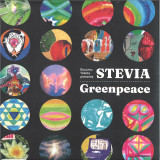
In 1997 and 1998, the late great Japanese composer, producer, and DJ Susumu Yokota released two of the most eclectic albums of his decades-long career, Fruits of The Room and Greenpeace. Recorded under his Stevia alias for Tokyo Techno pioneer DJ Miku’s Newstage Records/NS-COM, they were Yokota-san’s homage to the foundational days of club music in Japan.
This year, Glossy Mistakes are proud to present the first official vinyl editions of Fruits of The Room and Greenpeace, originally released on CD during the golden days of the format. Packaged in reimagined cover artwork created by the celebrated Japanese visual artist Masaho Anotani, these two albums perfectly capture the diversity at the heart of Yokota-san’s oeuvre. Across Greenpeace sees Yokota-san conjuring up a heady concoction of dusty loops, sampledelic breaks, kraut-rock and psychedelic downbeat. A remarkable listening experience based on the inspired era of a genius.
When Yokota-san wrote and produced the music on Fruits of The Room and Greenpeace in 1997, he was reflecting on the broader culture that surrounded dance music in Japan in the early to mid-nineties. It was an era when the psychedelic culture of late sixties America, the afterglow of UK acid house/rave, the new age movement and cyberpunk dovetailed together. Within DJ Miku and Yokota-san’s social circles, the thinking of Timothy Leary, Ram Dass, Allen Ginsberg, Jack Kerouac and William S. Burroughs electrified the air.
By 1996, the moment, brilliant and blinding as it was, was over. “We all felt that the rave scene fizzled out,” DJ Miku says. As he puts it, there was a collective feeling around him that it had all become too much. From the calm that followed, DJ Miku, Yokota-san and their open-eared peers made the decision to switch tracks and start from scratch. DJ Miku believes that with his Stevia releases, Fruits of The Room and Greenpeace, Yokota-san wanted to express the sweet and sour nature of the passing of those wild early days and his wish for true peace. “At the time, we saw eye-to-eye, with an implicit understanding of each other,” he explains. “Even now, twenty-five years later, I am confident it was like that.”
out of Stock
Last delivered 3 years ago available to reorder, subject to availability
Delivering their signature no-nonsense EBM infused techno, Fractions return to Monnom Black with their 2nd highly anticipated EP of uncompromised club music that crosses the boundaries of sonic analogue sound design with innovative results. The ep is the sublimation of experimental overtones and modular beats, to make for a diverse approach that challenges the existing order in electronic music.
"Our Daytona EP is the result of an evolution of our sound, thanks to a new hardware-centric production featuring various machines and a new modular rack" - Fractions
out of Stock
Last delivered 2 years ago available to reorder, subject to availability
Go Sailor were a great, short-lived band from the mid-90s who represent
a key link in the US indie music chain
Featuring Rose Melberg (Tiger Trap, The Softies, Gaze, Brave Irene, Knife Pleats),
Linton (Henry's Dress, The Aislers Set) and Paul Curran (Take A Day fanzine,
Crimpshrine, Monsula), they released three great singles and a few compilation
tracks, and then went their separate ways. But what records they are! Basic and
lovely in their song- writing, they're perfect snapshots of where indie- pop was
during that last burst of pre- internet indie activity. Touching on time- honored
themes of friendship and love (lost and found), they resonate with honesty and
purity of intention. The trio reunited in the early 2010s to play to enraptured
crowds at the NYC and Athens Popfests, and their appearance at the Slumberland
20th Anniversary show was the stuff of legend. This album compiles all three of
their 7" singles (for Slumberland, Yoyo and Lookout!) and compilation tracks and
was first released on vinyl in 2011. Due to pressing plant issues it quickly went
out of print, so we are very happy to bring you this new edition, back on vinyl
where it belongs with a new insert featuring liner notes and lots of cool band
pictures and ephemera. Pressed on Watery Blue Color Vinyl.
Landscape Tantrums Lost for two decades, the recent rediscovery of Landscape Tantrums the first attempt at recording the music that would become The Mars Volta’s De-Loused In The Comatorium revealed an important and hitherto missing chapter in the group’s evolution. Selfrecorded by Omar (assisted by Jon DeBaun) at Burbank’s Mad Dog Studios within a head spinning four days, Landscape Tantrums captures De-Loused in somewhat embryonic form, though much of what would make The Mars Volta’s debut album such an electrifying, sublime experience was already in place: the fearless invention, the fusion of futurist rock elements and traditions from outside of the rock orthodoxy, the sense of virtuosity working in service of emotional effect. From a distance, The Mars Volta must have seemed as if they were on a high when they walked into the studio to record what they expected to be their debut album (“I didn’t think of it as demos or a dry run,” Omar says). The group had recently played the Coachella festival to rave reviews, a vindication of the quixotic risk Omar and Cedric had taken, quitting At The Drive In to lead such an uncompromising musical proposition.
Their debut EP, Tremulant, had similarly signalled their singular vision, and been rewarded with similarly positive feedback. But the truth was that The Mars Volta entered Mad Dog in tatters, scarcely believing anything other than failure lay within their reach. They’d recently lost their bassist, Eva Gardner, and parted ways with keyboard play Ikey Owens. Tensions were brewing with drummer Jon Theodore, too himself a replacement for founding drummer Blake Fleming Omar questioning Theodore’s commitment to the group. And sound manipulator Jeremy Michael Ward’s drug problem had gotten so far out of hand that he’d been sent to rehab, and wouldn’t return until two days into the Landscape Tantrums. The pressure upon Omar was intense, and it began to manifest in the form of physical and emotional breakdowns. His art was his life, but now he began to wonder if it was actually going to kill him. Under such heavy manners, miracles occurred at Mad Dog. Surely that’s the only way to describe the music contained on Landscape Tantrums, as Omar fashioned early versions of Inertiatic ESP, Drunkship Of Lanterns and Eriatarka that rivalled the Rick Rubin produced versions that ended up on De- Loused for intensity, precision and immediacy, as Cedric delivered a powerfully intimate reading of Televators, and as a bare bones version of the group sketched out the peaks of what would become their debut masterpiece in barely half a week, on a shoestring, and believing they wouldn’t last long enough to see it hit the shelves. Listening to Landscape Tantrums now, with the benefit of hindsight and the knowledge of what these songs will become, one notices Cedric has yet to fully find the voice that will lend The Mars Volta their devastating authority, that Eriatarka will evolve even further under Rick Rubin’s watch, and that the lyrics to De-Loused’s climactic chapter, Take The Veil Cerpin Taxt, have yet to be penned. But one also notices how lithe the group sound here, how hungry, and one appreciates the raw edge that Rubin would later polish to a venomous sharpness. More than mere historical curiosity, Landscape Tantrums is an essential text for the dedicated Mars Volta aficionado, and a breathtaking album in its own right.
[a] a1. Roulette Dares (The Haunt Of) [Unfinished Original Recordings Of De-Loused In The Comatorium]
Mastered by Bernie Grundman from the Original Analog Master Tapes & Pressed at Gotta Groove!
Numbered Deluxe Laminated Gatefold Jackets!
Only 2500 Numbered Limited Edition Copies Worldwide!
John Coltrane returns to his roots using the Blues to explore the boundaries of Jazz! Features McCoy Tyner, Steve Davis and Elvin Jones! Recorded in 1960 during the My Favorite Things sessions, Coltrane Plays The Blues features "Blues To Bechet," "Blues To Elvin" and "Blues To You" in addition to three other tracks.
"Coltrane's sessions for Atlantic in late October 1960 were prolific, yielding the material for My Favorite Things, Coltrane Plays the Blues, and Coltrane's Sound. My Favorite Things was destined to be the most remembered and influential of these, and while Coltrane Plays the Blues is not as renowned or daring in material, it is still a powerful session. As for the phrase "plays the blues" in the title, that's not an indicator that the tunes are conventional blues (they aren't). It's more indicative of a bluesy sensibility, whether he is playing muscular saxophone or, on "Blues to Bechet" and "Mr. Syms," the more unusual sounding (at the time) soprano sax. Elvin Jones, who hadn't been in Coltrane's band long, really busts out on the quicker numbers, such as "Blues to You" and "Mr. Day." - Richie Unterberger
"The Coltrane Quartet, three-fourths complete at the time of this recording, had begun its historic rise and had also turned the corner in Coltrane's music, transitioning from the expressive verticality of Giant Steps to the more elongated, long-limbed lyricism that would define his role in the avant-garde. It can come as no surprise that to do so, he engaged the material he'd known longest and best - the blues." - Neil Tesser, author of The Playboy Guide To Jazz
10” Mini LP featuring outtakes and re-recorded B-sides from the 'Back In Mono' sessions!!! Back in Mono, The Courettes´ third album, was critically acclaimed worldwide and made it onto numerous best -of -the-year lists in 2021. If, like us, you can’t get enough of Back in Mono, here's some good news! Back in Mono - B-sides & Outtakes is coming out at the end of May, just in time for the band's UK tour! Bringing some more “spit ´n´ snarl garage-meets-Phil Spector pop” (Mojo) in three brand new unreleased tracks.Look forward to hearing the three new smash tunes 'Daydream', 'Tough Like That' and 'Talking About My Baby', all wrapped in a new mix by Wall of Sound aficionado Seiki Sato (Japan) and produced by the hit wizards Søren Christensen & C.T. Levine.Also included are the three non-album B-sides from the band's most recent singles. These B-sides have been newly spruced up with extra instrumentation. Making up the eight tracks is the inclusion of a Courettes rarity - 'So What' was previously only available on a split single with The Jackets released on Chaputa Records back in January.
Having initially met more than a decade ago at a local community radio station, sometimes doing guest slots on each other’s live, improvised noise shows, Cormac Culkeen and Dave Grenon knew they had a mutual interest in working with sonic textures. They listened to each other’s bands for a handful of years, and in 2017, “made good on a threat” that they’d been making for quite a long time: to start a band. At Cormac’s gentle but clear urging—declaring that they’d gone ahead and booked a space in which to record a video—the two wrote their first song, “Sebaldus,” an ambitious 12-minute trip, which also serves as the fireworks finale to their self-titled debut album. With surges of pathos that smooth out into something more soothing in turn, Cormac goes: “The hunter, you’ve seen him / The archer, his arrows are strong / And hunger, you’ve known her / I know the winter is long.” The track is as much about enduring a Canadian winter as it is about the eponymous 8th century hermit, shot through with sublimated desire. As Cormac put it, Joyful Joyful’s songs are “a little bit outside of time.” But while the lyrics beg close, oblique reading unto themselves, there’s also a distinct sense that they’re only one of many more ways that the duo shapes sound. Cormac, whose voice is like a sea with irregular tides, lights up about an idea in traditional sean-nós Irish music that songs already exist and are out there; it’s up to the singer to become the conduit. This belief in music as something to be channelled, and something more than sound, resonates with the singer’s fundamentalist religious past. To paraphrase: lots of group singing, harmonies, no instrumentation, totally unmediated, no priest, congregational—not choral, not a performance, not about talent, the spirit moves through people. “Of course that informs how I think about singing,” Cormac says. So, when they were exiled from the church because of their queerness, they took the music with them, dislocating it from its dogmatic bounds but not from its transcendent potential. This record might be thought of, then, as a kind of queering of sacred, devotional traditions—or at the very least, a space where all of these things can be held at once. Perhaps perceivable by some as contradictions, these intersecting influences create the conditions for an incredibly singular sound. Dave is steady and exploratory in his handling of this multiplicity, arranging sounds as they’re revealed, corralling them, coaxing them into form. “Because Dave is there,” Cormac says, “I get to sing three times higher, and three times lower, and faster, and backwards, and all of these sounds! That are there. They’re all there.” When asked about early musical memories, Cormac recalled an immediate fascination with harmony: from demanding that the first person they ever heard singing it explain what they were doing, to always (still, to this day) singing in harmony with their twin sister around the house, to being part of a children’s choir that sang soprano in Handel’s Messiah—not realizing until they entered the room with all the other ranges that their learned melody was but one part of the whole. Just as tellingly, Dave reflects on his early attraction to “abstraction and becoming abstract,” describing childhood afternoons messing with microphone and speaker feedback loops, producing long, enduring sounds with almost undetectable variations. In a way unique to the coalescing of these two listeners, notions of harmony are central to their output. Dave samples field recordings, old keyboards and synths, and vocal drones, running the live singing through four or five parallel effects chains, sampling and treating everything again in the moment. “Another way to put it is that Cormac’s voice comes into the board and then comes back out shifted, delayed, and shattered; Cormac and I hear it, live with it, and respond,” Dave says. This work is contingent not only on a deep intuition (neither of them read sheet music) of polyphony and due proportion (something St Thomas Aquinas famously listed as an attribute of beauty) but also on their connection to each other and ability to read subtle cues. Dave says they’d hold each other’s hands while performing if it was more convenient to do so, riffing on something else Cormac mentioned about traditional Irish singing: that someone would always hold the singer’s hand, for fear that without a tether to the ground they might find themselves utterly lost, unsure how to return. Joyful Joyful doesn’t shy away from offering such experiences of departure; they’re willing to unsettle their audiences because they themselves are unsettled. Their shared penchant for spooky, heavy music, and self-described “omnivorous” listening practices equip them with an array of sonic concepts that support this effort; Diamanda Galás, The Rankin Family, Pan Sonic, Pauline Oliveros, Keith Fullerton Whitman, Yma Sumac, and Catholic hymnody were just a few that came up. Observing their audience gives them insight about the effect of each song—something they considered while arranging the album. Its arc is marked by soft, sometimes sudden oscillations between cacophony and euphony, day and night (listen for insects), and from sexual, visceral entanglements to more ephemeral, celestial ones. Front to back, it arouses expansion, unraveling. Of lightning, Vicki Kirby writes: “quite curious initiation rites precede these electrical encounters. An intriguing communication, a sort of stuttering chatter between the ground and the sky, appears to anticipate the actual stroke.” By all accounts, something similar seems to happen at Joyful Joyful shows, between those on the stage and those off it, between what’s earthly and what’s beyond. “A lightning bolt is not a straightforward resolution of the buildup of a charge difference between the earth and a cloud … there is, as it were, some kind of nonlocal communication effected between the two,” writes Karen Barad, extrapolating on Kirby’s thought. Cormac acknowledges that while they and Dave play a role in this mysterious charge that comes about, they’re not solely responsible. However ineffable it may be, it’s undoubtedly a form of communion—and a sensuously shocking one at that
The movements of KUNZITE’s Mike Stroud and Agustin White have seen them orbiting around each other, occasionally crossing paths yet consistently admiring each other’s work. The pair traversed the globe separately with their different projects and personal adventures -- Mike touring with his band Ratatat and Agustin on a spiritual journey exploring yoga, meditation and psychedelics -- while looking to one day do something together. The formation of KUNZITE saw them finally able to merge their minds and mission, with a sound that blends psychedelia with electronic, beat-heavy production and live instrumentation. Most of the recording process for their new album, VISUALS, started while at Agustin’s stripped back studio in Hawaii, and finished at Mike’s barn studio in upstate New York, with instrumentation including acoustic, electric and lap steel guitars, organ, synthesizers and the charango.
Batsaykhan is the rebirth of the first project to ever release on Favela Discos, only a few hours after the label’s blogspot was put online back in 2013. Formerly known as Batsaykhantuul, Batsaykhan is not only one of Nuno Oliveira’s alter-egos but also something between a science fiction character and an ancestral spirit doomed to wander the earth in an apparently human physical manifestation.
The first album, Maestro Ir Noras, is a small and simple collection of tracks featuring only guitars and other stringed instruments, the second, being even smaller (only a single track) already seemed to lead us on through the psychedelic desert that would define the sound of the project.
After a long hiatus, Batsaykhan finally emerged from the drawer, or maybe it was from the desert, only to reveal that he had shape-shifted, now taking the form of a trio. With the help of André Azevedo and Tito Silva, Nuno started working on old demos of unpublished compositions and adapting them to the new formation. The trio started the process of refining the songs and the sound of the record, using only a strict selection of synths, percussions, bass and guitar.
They ended up settling down on a terrain of moving sands for those who feel the need to define their sound, between a forest of psychedelia, a river of ambient and the obvious desert that has buried the guitars under its “western” sand.
Batsaykhan’s self-titled release, and the project’s first long play will finally unveil itself on the last day of February, digitally and on 12’’ vinyl, with design and artwork by Rita Laranja.
In Trux We Pux is an editorial project organized by the Porto based label and collective Favela Discos. Focusing on the city’s thriving experimental and improvised music scene, it sets out to portrait in a series of four volumes some of the characteristic sounds and collaborative practices that have been in development in Porto during the last few years.
Milteto is an informal orchestra born out of the Favela Discos collective somewhere in 2014. The idea, that had been around for a while, was materialized for a concert in one of the first events hosted by Favela, in the extinct Picadilly Pub in Porto, a small strip club turned underground venue. It was one of those wet pre-covid nights where the condensation dripped down the mirrored walls, in a loud endurance contest that resulted in a fainted audience member.
For a very large number of reasons, it would be hard to define Milteto’s whole “career” in an album: the band has always inhabited the live context, trying to create massive immersive sound experiences for both the listeners and the musicians, subconsciously seeking to achieve transcendence by volume.
So, in reality this is a momentary reflection of an always mutating entity, instead of trying to define the several years of drastically different experiences in just 45 minutes, they took to the album as just another live presentation where they adapted to the idea of what a record could be as if they would adapt to a venue.
Faced with the idea of creating an album that reflected the project’s mutability, the band looked at the medium itself for inspiration, as the vinyl record has two sides, they thought that maybe it would be a good idea to reflect that on the music. So the recording sessions were split into two days, with two different groups of guests. One side set to recreate a more physical manifestation of the band, the other a more mental side, the first teeming with percussion, the other with electronic devices and synthesisers.
Grönland Records announce a revised, remastered reissue of “Sleepwalkers” by DAVID SYLVIAN. Available as a gatefold 2LP with exclusive art print and as a gatefold digipack CD, this new edition also features the previously unreleased track “Modern Interiors”.
in the 00s, DAVID SYLVIAN produced two of his strongest and most solitary statements, BLEMISH and MANAFON. but those records don’t tell the whole story. during that the same period, SYLVIAN created an alternate body of work: a series of collaborations and side projects with leading talents of pop and improv, electronic and contemporary classical music. the best of these recordings are gathered here on SLEEPWALKERS, meticulously sequenced and remixed: the fruits of one-off meetings and lifelong partnerships, they jump from bliss to intrigue, romance to sensuality, as arch experiments lead into the lushest pop.
the single ‘world citizen – i won’t be disappointed,’ written with RYUICHI SAKAMOTO, is a sublime example, with an impeccable melody and lyric warmed by SYLVIAN’S gorgeous tenor. SYLVIAN has worked with SAKAMOTO for close to three decades. by contrast, on ‘pure genius,’ a collaboration with CHRIS VRENNA aka tweaker, he sounds like he’s walked into a heist flick, singing the part of a delusional, dangerous bedroom genius. as sylvian explains, tracks like this ‘give me a chance to write in a way that’s completely non-personal, playful. it’s an exercise of some kind, working within the parameters of a given assignment.’
intrigue of a different kind drives ‘sugarfuel,’ with music by JEAN-PHILIPPE VERDIN, aka READYMADE FC. the lyrics offered ‘an opportunity to grapple with a more overt sexual theme than anything i’d previously attempted, as suggested by a vocal sample in the original track provided, a threateningly insistent ‘i’m on your side.’ so i took that as my point of entry and ran with it. i would love to write more on this subject should i find the right context. you’re always aware of walking a thin line exploring sexuality with language alone. the failings of the great and the good are strewn all around.’
NINE HORSES’ ‘wonderful world’ strolls in on a black tie bassline and the echoing coos of swedish chanteuse STINA NORDENSTAM, whose high chirps brush hands with SYLVIAN’S lead; there’s the blistering ‘money for all’ by FRIEDMAN and SYLVIAN, an oblique response to the fallout of 9/11 and the war on iraq. this is followed by the last known recording of SYLVIAN’S singing voice in over a decade, ‘do you know me now?’, a live studio recording later augmented by JAN BANG, EIVIND AARSET and ERIK HONORÉ. it’s certainly a title that’s become more relevant over time as SYLVIAN, in the latter stages of his career, repeatedly comes face to face with a new generation of admirers fixated on the life and times of the band formed by his younger self. SYLVIAN is one of only a handful of musicians to have successfully moved on from overt pop beginnings into a domain all his own but is consistently plagued by the misguided desires or expectations of some unfamiliar with his evolution to do a u-turn, pick up where he left off in the late 90s. although this compilation, as well as his writing for NINE HORSES, adequately shows SYLVIAN’S traditional love of melody is
intact, that it’s consistently remained part of his output, there’s no denying his focus has shifted, evolved.
the refusal to embrace complacency, the need to cover new ground ‘as older generations of popular musicians have a moral duty to explore despite, or because of, the greater possibility of failure’ will, i believe, lead to a reassessment of his later work that embraces a sightly more complex relationship with what we’re referring to as ‘melodic’, accompanied by an exploration of improvisation without dogma or beholden to any ‘givens’ for which he’s not infrequently been castigated. for SYLVIAN, there are no such boundaries. it’s obvious that different facets of his work co-exist without conflict but not necessarily for the majority of his audience. again, this places SYLVIAN in the odd, rare, unenviable(?) position of moving forwards leaving many in his devoted audience behind as, should he decide to return to music, it’s unlikely he’ll be aiming to placate an audience in love with work that preceded the 00s. in fact we’ve no idea where new work, should it surface, may lead.
SLEEPWALKERS also spotlights the innovators who contributed to MANAFON and BLEMISH. CHRISTIAN FENNESZ hangs a crackling, shimmering curtain behind the vocal on ‘transit,’ matching his signature mass of sui generis sounds to sylvian’s stately performance. and the title track began with an instrumental handed to SYLVIAN by MARTIN BRANDLMAYR of POLWECHSEL, soon after the first recording session for MANAFON. spite crackles in the gaps between the percussion, and onkyo artists TOSHIMARU NAKAMURA and SACHIKO M set the stage for the scathing lyrics in the chorus.
it cuts close to the bone and so do the two spoken word cuts, ‘angel’ and ‘thermal,’ produced by SAMADHISOUND recording artists JAN BANG and ERIK HONORÉ (and featuring ARVE HENRIKSEN on trumpet). SYLVIAN describes the latter work as a ‘love poem’ to his daughter. ‘‘thermal’ reflects on a period when our time in sonoma, ca was coming to an end. we’d stayed in temporary accommodation which had lulled us into a false sense of security. we had pear, apple, lemon, and figs trees growing in the yard. a small but exotic paradise. a cocoon. but the cracks were beginning to show in the relationship between ex-wife INGRID CHAVEZ and i which is where i think this underlying sense of anxiety, which runs throughout the poem, is derived from, coupled with the need to provide physical and spiritual stability to the children, the youngest of whom was just under two at the time. the poem is addressed to her. our world was dissipating, coming apart at the seams, but we were an island unto ourselves.’
‘five lines’ marked the start of a new partnership with acclaimed young composer DAI FUJIKURA, who at the time of recording was also working on remixes of MANAFON for what became DIED IN THE WOOL. the string quartet was performed by the celebrated ICE ENSEMBLE and written for SYLVIAN, who FUJIKURA cites as an early influence. says SYLVIAN, ‘the composition moves through numerous changes in time signature but as i had no knowledge of what these were i just relied on my gut instinct, and responded, as i always do, with what felt right to me, composing an entirely new melody in the process. some months later i was working in a studio in london and dai dropped by. i rather tentatively asked if he’d like to hear a rough mix of the song as it stood, painfully aware that my contribution might make no sense to him at all but, to my relief he loved the result.’
there’s one further new addition to this collection, the first official release of a track composed in response to the tsunami in fukushma, ‘modern interiors’, featuring SYLVIAN once again in collaboration with BANG and AARSET.
like 2000s EVERYTHING AND NOTHING, SLEEPWALKERS is a retrospective of a particular decade when SYLVIAN was free of major label interference and could follow his own instincts without having to explaining himself – but it’s also an eye-opening complement to his solo releases. as SYLVIAN explains, ‘some collaborations seem to be a one-off exchange but you can never be too certain of that fact. others have been long term. in this respect, RYUICHI comes to mind. there’s others with whom you hope to continue working as you feel you’ve barely scratched the surface. other times offers come out of the blue, welcome, inspired. regardless, it’s wonderfully explorative to have so many possibilities to juggle with. each collaboration seems timely. it’s as if there’s a rightness to the exchange at a given moment in time.’
in the meantime, we hope you enjoy the work presented here, personally selected, remixed and sequenced and entirely remastered. these are the orphans, abused, estranged, exotic, migrating from diverse corners of the globe, brought together under one roof which they're learning to share despite their differences.
‘as many of you will already be aware, despite relatively continuous work on solo albums, i’ve maintained strong ties with a number of musicians throughout my life in one context or another. on this new collection, let’s call it SLEEPWALKERS 2.0, a selection of collaborative work produced over the period encompassing blemish through to manafon, i’ve included compositions by nine horses as well as more fleeting flirtations and one-offs. neglected offspring. represented also is long term friend and writing partner, RYUICHI SAKAMOTO, as well as more recent but potentially equally productive partnerships such as CHRISTIAN FENNESZ, ARVE HENRIKSEN and contemporary classical composer DAI FUJIKURA.
i hope you enjoy the work presented here, personally selected, remixed and sequenced and entirely remastered. these are the orphans, abused, estranged, exotic, migrating from diverse corners of the globe, brought together under one roof which they're learning to share despite their differences.
we contain multitudes. we’re nothing if not contradictory.’
DAVID SYLVIAN, 2010
(consistency is contrary to nature, contrary to life: aldous huxley)
out of Stock
Last delivered 4 years ago available to reorder, subject to availability
Hermione FRANK aka rRoxymore has spent the past decade cherry picking the labels she works with whilst building up a totally unique signature sound - DBA, Timedance and recently Ideophone.
Hermione's Aus EP sounds soft and intricate yet punchy and powerful. Beautiful synth licks and crunchy drums melded together with plenty of UK attitude. A daydreamer’s delight, it offers restrained weight and it’s the perfect elixir for any morning
dance floor.
out of Stock
Last delivered 3 years ago available to reorder, subject to availability
Wick Records is proud to present Michael Rault, the eponymous new album from one of the most talented songwriters in the game. A remarkable re-imagination of '70s pop perfection, the album began to take shape during a time of endings. Michael, on the cusp of turning 30 and freshly off the road promoting 2018's A New Day Tonight, had just ended a romantic relationship, and cut ties with his management and touring band. Returning home to Montreal where his van was already buried in six feet of snow, he hunkered down in his bedroom studio and began writing. Over the span of five months he penned most of the album. From the drug-fueled, dance floor slow-stepper, "Neither Love Nor Money", to the introspective "Inside Your Heart", to the tongue-in-cheek playfulness of "Champagne", the body of work he created in this epoch of uncertainty is proof of just how crucial that time of endings really was. Bruised but certainly not beaten, Michael delivers a lush, timeless collection of songs - continuing his increasingly profound exploration into the worlds of progressive pop, psych folk, yacht rock and beyond. Trust us...you're gonna love it!
Key Selling Points
• Sophomore album on Wick Records.
• Indie Only Blue Galaxy vinyl Covered by Paste, Pitchfork, Stereogum and many others.
• “Hook after hook after hook” - PASTE
Fuchs is a band that never was. It vanished as quickly as it appeared in the picture, much like the animal that can be seen on this album and after whom it was named. In 2005, Kante singer and guitarist Peter Thiessen travelled to Weilheim to visit Markus and Micha Acher in their studio, where they were joined, among others, by Notwist-affiliated musicians like Cico Beck, Robert Klinger, Carl Oesterhelt and Stefan Schreiber. Spirits were high, but schedules were full: after a week of improvised sessions, everyone went their own way. The recordings gathered dust until Markus Acher found them again in 2021 while cleaning out his studio. After carefully re-evaluating the rough mixes, the musicians decided to finally release them. The resulting album comprises six tracks that musically draw on jazz, aesthetically lean on dub techniques and ideologically pick up on krautrock: there’s no solos to be heard on this record, just a few equally skilled and open-minded musicians listening to each other carefully, providing each other with space in which to unfold. »Fuchs« is a document of egos dissolving in a collective spirit.
Thiessen and the Acher brothers met in the 1990s and bonded not only over their shared background in hardcore music and the DIY ethos in which it was rooted, but also over their love for jazz. »If you look at those two things combined, you will eventually become convinced that you don’t have to be formally trained to make music that at least resembles jazz«, says Thiessen today. He invited Micha Acher to join his band Kante on flügelhorn in 2004 for a tour that saw the expanded group play unusual encores after the official concert was over. »Micha had taught us some dixie pieces, so night after night we would play a freestyle dixieland ska set in front of the remaining audience!« Naturally, the Acher brothers didn’t have to ask twice when they invited him for a visit in Weilheim to further explore their mutual interests in a studio setting. »I got on my way immediately and took two or three loose ideas, a tape echo and a guitar on whose headplate you could create fantastic sounds with me«, says Thiessen.
Between immersing themselves in books by the photographer Leonore Mau, cooking together and drinking the occasional fruit schnapps, the trio went into the studio. Says Thiessen, »Micha brought his flügelhorn and some wonderful ideas with him, Markus an Indian harmonium and a plan, Carl Oesterhelt came with a glockenspiel and a Chinese zither and a bunch of amazing jazz musicians joined in, too.« He considers the resulting recording sessions to be a kind of attempt at musically translating their conversations during those days. They discussed different approaches to jazz, whether sampling and musical miscitations can unlock ecstatic potentials and the possible parallels between syncretistic religions and pop music. »There’s traces of glossolalia, it's like a blurry séance«, adds Thiessen in regard to the sessions.
It is especially this spirit that managed to live on even though the recordings themselves were abandoned. »What we all liked most when listening back to the recordings is probably their marginal and fragmentary character, the empty spaces—the moments in which the virtuoso solo never comes, in which the centre remains empty.« The six pieces on »Fuchs« are chock-full of exactly these moments. When at one instant, the players seem to disperse and improvise freely, they always meet again on common ground a short time later, continuing on their way together. There are no conventions or even previous agreements that guide them, just a shared will to explore a vast range of curious sounds and unusual rhythms together as a truly unified constellation of very different musicians. Fuchs is a band that never was. Its ideas still reverberate vividly even 17 years later.
BLEEP was the hype par excellence at the beginning of the techno movement in 1990/91. BLEEP – inspired by the beeping sound of small toy robots – stood for a phase of good mood and sounds that had never existed before. LFO with their groundbreaking track of the same name and Tricky Disco were two protagonists of those happy days.
More than 30 years later, Jürgen Laarmann (editor of the legendary Frontpage Magazine 89-97, promoter of Love Parade and Mayday 91-97, Bash Rec. 91-94) had the thought that nothing is missing in current electronic dance music as much as bleep.
The idea came about when discussing how to create a soundtrack for the art and techno hype of the day and the crypto art moving currenting stirring up the art market. The comeback of bleeps in a new guise is surely a tried and true remedy: the Bleep Gigaverse makes the blockchain shake.
With his old friend and Bash Records buddy Mijk van Dijk, Laarmann developed the NFT anthem with the striking Fazer bullet intro and a fat 2022 bleep that has been extensively tested on post-Corona dancefloors. Club legend Justus Köhncke (Whirlpool Productions among others) himself a big Bleep fan and Laarmann’s neighbor, contributed a house mix. Most recently, they managed to bring the great Michael Wells – the Godfather of Bleep into the Bleep Gigaverse. He contributes as Tricky Disco with all new bleeps and also with a Hardstyle mix, so the EP offers a spectrum with really different mixes.
May it bleep forever now!
By Mijk van Dijk & Jürgen Laarmann
BLEEP war für wenige Monate zum Beginn des Technomovements in 1990/91 der Hype schlechthin. BLEEP – angelehnt an das fiependen Sound von kleinen Spielzeugrobotern – stand für eine Phase guter Laune und Klängen, die es nie zuvor gegeben hatte. LFO mit ihrem bahnbrechenden gleichnamigen Track und Tricky Disco waren zwei Protagonisten jener glücklichen Tage.
Mehr als 30 Jahre später hatte Jürgen Laarmann (Editor des legendären Frontpage Magazins 89-97, Veranstalter von Love Parade und Mayday 91-97, Bash Rec. 91-94) den Gedanken, dass nichts der aktuellen elektronischen Dance Musik so sehr fehlt wie der Bleep.
Die Idee entstand, als man darüber diskutierte, wie man einen Soundtrack für den Kunst- und Technohype dieser Tage erschaffen könnte, jene Kryptokunst, die den Kunstmarkt aufwirbelte. Das Comeback der Bleeps in neuem Gewand ist das probate Mittel: das Bleep Gigaverse lässt die Blockchain erbeben.
Mit seinem alten Freund und Bash Records Kumpel Mijk van Dijk entwickelte Laarmann die NFT Hymne mit dem markanten Fazer-Geschoss Intro und einem fetten 2022er Bleep, der auf den Post-Corona Dancefloors ausgiebig getestet wurde. Club Legende Justus Köhncke (u.a. Whirlpool Productions), selbst großer Bleep Fan und Laarmann‘s Nachbar, steuerte einen housigen Mix bei. Zuletzt gelang es ihnen, mit dem großen Michael Wells den Godfather of Bleep ins Bleep Gigaverse zu holen. Er steuert einen NFT Tricky Disco mit ganz neuen Bleeps und einen Hardstyle Mix bei, so dass die EP ein Spektrum mit wirklich unterschiedlichen Mixen bietet.
May it bleep forever now!
By Mijk van Dijk & Jürgen Laarmann
out of Stock
Last delivered 3 years ago available to reorder, subject to availability
Die Power Metal Gnome WIND ROSE stürmen in die epische Schlacht auf Warfront! Nach der Veröffentlichung ihres hochgelobten 2019er Albums Wintersaga mit epischen Geschichten und noch epischeren Riffs kehren WIND ROSE, die mächtigsten Gnome des Power Metal, aus der Schmiede zurück und hämmern auf ihrem neuen Album Warfront (10. Juni via Napalm Records) neue Hymnen auf
den Amboss!
Die fünfköpfige Band aus Pisa, Italien, der mit ihrer viralen Neuinterpretation der Minecraft-Hymne ”Diggy Diggy Hole” (bis dato über 30 Millionen Aufrufe auf YouTube) ihr sensationeller Durchbruch gelang, schärft ihre Schwerter und stürzt sich mit zehn neuen heroischen Songs auf die Schlacht. Egal wie groß der Sturm,
wie eisig die Winterkälte, WIND ROSE’s Gespür für sensationelle Hooks und eingängige Riffs - gekrönt von Francesco Cavalieri’s markanter Stimme - katapultiert sie an die Speerspitze des Folk- und Power Metal, ohne ihre einzigartige Härte einzubüßen!
WIND ROSE liefern auf Warfront jede Menge Gnom-Abenteuer, dramatische Orchesterarrangements und puren Spaß - Replay garantiert!
40-plus years since its original release, the pop-punk-new wave inventions of Anthony
Moore’s ‘Flying Doesn’t Help’ are freshly remastered, blasting the sparkling, angular
sounds into today with perfect vitality.
After spending the early years of the 1970s making experimental music first as a solo
artist, then with Slapp Happy and Henry Cow, 1976’s ‘OUT’ sessions had reinvigorated
Anthony’s youthful love of the naive pop melodies of pop radio, the undeniable excitement
of songs. While ‘OUT’ ultimately went unreleased at the time, the iconoclasm clouding the
late ’70s air was addictive and transformative for Anthony. England seemed to be roiled
as violently as it had been in counter-cultural days a decade earlier; the UK pop charts
breathlessly reflected the changing spectrum with equal parts aging hippie and prog
delicacies alongside new ascendant sounds: rough-hewn pub and punk rock, plus dub
reggae and disco and ska and Stiff and Krautrock. This proved to be an ideal environment
for Anthony to make records by exploring, as he puts it, the “deep connection between
minimalism, repetition, working with tape and celluloid and forming the modules of a
three-minute pop song.”
Caught up in a no-holds-barred era, Anthony was more than happy to play the out-of-hishead madman, raving through outrageous exchanges with the press, while ‘Judy Get
Down’ received Single Of The Week honours from the NME (with review penned by Brian
Eno). Represented by Blackhill Enterprises, Anthony did production work throughout
1978-1979, on Kevin Ayers’ ‘Rainbow Takeaway’, Manfred Mann’s Earth Band’s ‘Angel
Station’ and the first This Heat album, meanwhile cutting his own songs on a dead time
deal at Workhouse Studio with engineer / producer Laurie Latham. Through the wee
hours of countless nights, the two pieced together ‘Flying Doesn’t Help’, with a little help
from friends (an inspired bunch, including Bob Shilling, Charles Hayward, Chris Slade,
Robert Vogel, Festus, Matt Irving, Sam Harley, Bernie Clark, Edwin Cross and Martine
Moore on the telephone).
Building upon the axis of pop and experimental impulses that distinguished ‘OUT’, and
informed further by the raw sensibilities exploding everywhere, ‘Flying Doesn’t Help’
blasts out of the speakers with its own unique blend of sophistication and aggression,
Anthony’s keyboard flashes between arpeggiations and outright stabs among the noise of
slicing guitars, funk basslines and the reverbed blare of the drumkit. Opening with
Anthony’s greatest hit, ‘Judy Get Down’, and containing a noise-laden remake of the
Slapp Happy/Henry Cow number, ‘War’, among other delightful sweet-and-salty
confections, ‘Flying Doesn’t Help’ never stops moving, fuelled with raw outrage and dark
satirical intent, churning with the energy of next-gen types like Tubeway Army and DEVO,
while shimmering with the elegance of the still-challenging old guard types, like Cale and
Bowie.
Clearly, ‘Flying Doesn’t Help’ was steeped in the time, and the original release reflected a
deep mistrust of the corporation mindset. Information was a dubious concept, and
connections to any recognizable organization were seen as untrustworthy, so facts like
musician credits were left out of the package, and even Anthony’s name was altered (he
was credited as A. More on the album and Tony More on a single release). The label
name QUANGO was conceptual as well, standing for ‘Quasi Autonomous NonGovernmental Organization’; each record was sealed with red tape that the listener was
required to cut through in order to get to the music. Rather than recreate the conditions of
the original release of ‘Flying Doesn’t Help’, this reissue instead embraces the changed
environment of the current time and place: instead of no credits, now they are complete,
with Anthony’s full name restored and even the artwork subtly ‘relocated’ to reflect a new
set of relationships. All of which brings the forward-looking sounds of ‘Flying Doesn’t Help’
into the more independent-minded 21st Century syntax where it belongs.
Mondo, in partnership with Back Lot Music Wright, are proud to present the premiere physical release of Steven Price's electrifying score to LAST NIGHT IN SOHO, the latest film by Edgar Wright.
Edgar Wright wanted a score to soundtrack the two eras of Last Night in Soho and tie together the stories of these two very different young women. To achieve this, Wright turned once again to his now-regular composer, Academy Award® winner Steven Price, who successfully scored both Baby Driver and The World’s End.
While Price’s influences for the score included contemporary film music by the likes of Ennio Morricone and John Barry, a “’60s session band” sound with echoing fragments of dialogue add a different and sometimes subliminally sinister edge to the score. The sounds of ‘60s Soho blend into the present-day London scenes as Eloise is sucked further into the past. “The idea is that Sandie’s voice becomes part of the film, so you hear her siren song from the ‘60s coming through, and Anya became an intrinsic part of it… I was pleased that the lead actress is also the lead singer in the film score; the whole thing knitted together.”
The album also features songs performed by Anya Taylor-Joy, including the lead single from the film "Downtown (Downtempo Version)"
SUMMER OF SOUL (…Or, When The Revolution Could Not Be Televised) Original Motion Picture Soundtrack accompanies Ahmir “Questlove” Thompson’s directorial debut documentary SUMMER OF SOUL, which won the Grand Jury Prize and Audience Award at the Sundance Film Festival. Like the documentary, most of the audio recordings that were recorded during the 1969 Harlem Cultural Festival have not been heard for over 50 years, keeping this incredible event in America’s history lost – until now. The SUMMER OF SOUL (…Or, When The Revolution Could Not Be Televised) Original Motion Picture Soundtrack is a joyous musical celebration and the rediscovery of a nearly erased historical event that celebrated Black culture, pride and unity. For the album, Questlove carefully selected 16 live renditions of jazz, blues, R&B, Latin, and soul classics performed over the course of The Harlem Cultural Festival in 1969 as chronicled by the film. Performers include The 5th Dimension, Gladys Knight & The Pips, B.B. King, Nina Simone, The Staple Singers, David Ruffin and Sly & The Family Stone! Extensive promo & marketing activity across all media outlets. The CD format was released in Jan. Standard black vinyl 17 track double LP in gatefold sleeve. Promo/marketing activity.
"Released in May 1986 on SST Records and Blast First! in the UK, EVOL was the third studio album by Sonic Youth and showed the first signs of the band transforming their No Wave past into a greater alt-rock sensibility. “EVOL … marks the true departure point of Sonic Youth’s musical evolution,” noted Pitchfork, “In measured increments, Thurston Moore and Lee Ranaldo … bring form to the formless, tune to the tuneless, and with the help of Steve Shelley’s drums…, impose melody and composition on their trademark dissonance.” ""If Daydream Nation is Sonic Youth’s opus, EVOL was crucial research. There’s a directness that makes everything feel close. It is pure tension with little release. The entire record is a shadow." Stereogum likewise praised the album as one, “full of suspense…, the cornerstone [Nico-evoking] monotone [by Kim Gordon]. ‘In The Kingdom #19,’ featuring Mike Watt on bass and … vocals [by Ranaldo]…, is a harrowing story of a highway wreck over a suitably edgy instrumental backing punctuated by … live firecrackers in the vocal booth.” For Popstache, “EVOL slithers into the unconscious. Once the....detuned melodies and haunting riffs and final whispers of feedback depart from the speakers… the music [leaves] a faded footprint, forever reeling the listener back for another strange trip.” // “The seeds of greatness…” Pitchfork (who placed the album #31 of the Top 100 Albums of The 1980s) // “A near-masterpiece.” Trouser Press // “A stunningly fluent mixture of avant-garde instrumentation and subversions of rock’n’roll.” All Music Guide"
Now available at a much cheaper price. SOS JFK, the one and only album from folk two-piece The Children’s Hour, which featured Josephine Foster and Andy Bar. Initially released in 2003, the album introduced audiences to Foster’s enchanting vocals and poetic folk, which would be developed to staggering effect in her later solo recordings, such as the recently released critically acclaimed album Blood Rushing (Fire Records). The Children’s Hour were an acoustic duo comprised of members Andy Bar and Josephine Foster. The two friends first connected in 2000 in a short-lived rock trio called Golden Egg, and then on a lark formed the pop song-writing duo oriented toward more naïve themes. Foster was a recent opera school dropout and the band became a vehicle for her to explore singing in a non-operatic manner into a microphone and learn to play the guitar. Bar was finishing studies at the Art Institute of Chicago and was honing a personal and highly melodic fingerpicking style inspired by bossa nova in particular. They were heard performing in a Chicago dive bar and given a surprise invitation to make a studio recording (SOS JFK), which both found to be an extremely nerve-wrecking learning experience. Meanwhile fans of their music rose up from unexpected corners, even invited by the band Zwan to open all the shows of both bands´ maiden tour. Initially conceived of as a modest front porch collaboration and side project, the band did not withstand all the attention long. Bar and Foster took meandering paths in diverse directions, although the two remain stalwart pals and both continue to dedicate themselves to the muses.
Single sleeve, 12” 45rpm EP. 'Avocet Revisited' is a four track EP, commissioned by Earth recordings as a companion piece to Bert Jansch’s 1979 avian-themed masterstroke ‘Avocet’. Again drawing inspiration from the resplendence of birds native to British waters (Bert himself was a keen ornithologist), Earth invited this quartet of artists to each choose a species that particularly speaks to them, and base a track around it. The results have been universally graceful, evocative, and majestic - much like the creatures themselves. Fulmar - Drifting low and gliding high, the flight patterns of this gull-like creature are echoed in Edwyn Collins and Carwyn Ellis’s paean to the bird that spends most of its life airborne. Part waltz, part lullaby, ‘Fulmar’ is exquisite in its simplicity, with Carwyn’s elegant arrangements providing the perfect foil for Edwyn’s unmistakeable intonation. // Curlew - The opening of Modern Studies’ track - the call of the Curlew itself - is as recognisable as the looping feathered frame of its namesake. Perfectly showcasing the handsome orchestral arrangements that have become the group’s signature style, there is a lightness of touch here that evokes Virginia Astley’s ‘From Gardens Where We Feel Secure’. // Goosander - Another Scottish resident, both artist and avian. Unmistakably Alasdair Roberts, ‘Goosander’ is at once refined and somewhat feral; Alasdair’s picking supplemented by sighing organ drones and spartan electric guitar. // Golden Plover - Playing us out, Trembling Bells’ contribution has a Harvest feel - the last days of summer invoked by the warm refrain and gentle orchestration found on 'Golden Plover’. In another lifetime, this song - infused with the sounds of yesteryear - could very easily have made it onto the Wicker Man soundtrack… which should tell you all you need to know. A pagan hymn reimagined for the Scarfolk era! The band is joined by Callum Calderwood (violin), Rory Haye (vocals), Andrew Pattie (vocals) and Belle & Sebastian’s Stevie Jackson (12 string guitar). // Notes come courtesy of musician and keen twitcher, Karine Polwart, whose lyrical, prosaic turn of phrase brings the creatures here to life, as effortlessly as the songs themselves. Artwork again comes from Earth collaborator Hannah Alice (recently nominated for the Art Vinyl 2016) who has gifted each bird magnificent new plumage in her unique style.
"My Life And I", first album from the northern irish artist Kaz Hawkins on
the Dixiefrog's label is a compilation form of her early songs and shows
with strength this unique talent - this edition is a 2LP Set
Her voice is powerful and addictive, very emotional and the compositions are
really catchy. The blues and soul coming from the singer puts her next to the big
names of the genres, reminding us of Etta James and allowing the comparision
with Beth Hart and/or Adele.
King tracks that should be in every blues and rock fans collection, 180g red vinyl complete with unique sticker. BB King's singles issued on Kent have often been overlooked but constitute an important part of his discography from the early days when he was a hugely popular performer for African- American audiences before achieving wider popular fame.
Nashville, TN based songwriter Michaela Anne returns with her new
album Oh To Be That Free, the follow up to her 2019 Yep Roc debut
Desert Dove
The record was produced by Michaela and Aaron Shafer- Haiss. 'I wrote this
collection of songs as a simultaneous reckoning and healing," says Michaela
Anne. "They came after a period in my life of self sabotage and unraveling by my
own doing. But during the making of this record, life altering experiences
occurred and a deeper layer of meaning for these songs appeared. Between the
time we started to record and the very final mastering, I conceived, grew and
birthed my first child. In the middle of this pregnancy, and the middle of making
this record, my mother suffered a devastating and debilitating hemorrhagic
stroke. These songs became healers for me as though I had written them for my
future self."
LIMITED WHITE VINYL EDITION OF THE 1992 DEBUT OF ATMOSPHERIC
DEATH/DOOM FROM THE DUTCH LEGENDS, MARKING THE ALBUM'S
30th ANNIVERSARY. The Gathering is a Dutch alternative rock band &
was founded in 1989 by brothers Hans & René Rutten & vocalist Bart
Smits
The early incarnation of the band featured a much more death & doom metalbased style than the more atmospheric rock & experimental music they became
known for over the years, having enjoyed a highly successful career globally over
a 20-year period. The band recorded 2 demos initially before making their studio
debut with 'Always…'. 'Always…' was The Gathering's debut full- length album.
Originally released in 1992 , it is a prime example of classic atmospheric death/
doom metal with brutal vocals & slow funereal riffing influenced by bands such as
Celtic Frost, as well as the implementation of keyboards to accentuate the dark
ambience. Now released on Peaceville for the first time, a track from the release
was even featured on an early Peaceville Records compilation, 'Volume 4', with
the track 'In Sickness & Health'.