
Cerca:deco 2

DJ Eddie Fowlkes created the techno genre alongside Derrick May, Juan Atkins and Kevin Saunderson. Now the 'Godfather of Techno Soul' uses his extensive knowledge and experience to create a dynamic wax release drenched in Motor City inspiration - this four-track vinyl package is both a love letter to his musical roots and an inspired representation of the left-of-centre house that Classic is known for. For the lead track, 'AHYEE', Eddie carves out his own sound in a low growl as distorted percussion whirs over a four-on-the-floor beat. 'Blow' goes tougher, with an undulating bass that adds a wonky unease to the rhythmic kick and syncopated decoration. On the B-side, ‘Talking To Me’ makes use of a distinctive spoken-word vocal over an expansive and rhythmically intricate accompaniment, celebrating the culture through expert sampling and production techniques, whilst ‘Complex’ is more beat-focused with driving synth rhythms. Coming from producing some of the first techno records nearly 40 years ago, unique releases like this continue to prove Fowlkes' status as a constant innovator, and his ear for house music is undeniable.
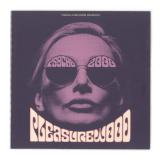
Psycho 2000 - A dark but funky theme that begins with an occulting Italian echo-oscillator drone that is soon followed by pulsating bass and breakbeat drums, leads to tremolo guitars, an ostinato on electric mandolas, strings climbing eloquent ladders, otherworldly electronics, and a cinematic finale.
An evocation of a parade of wooden nutcracker soldiers elaborately dressed in gold-trimmed black uniforms down a wide avenue decorated with mardi gras beads and animal skulls upon golden cobblestones toward a tornado spiralling out purple-hued glissandos and curlicues of elephant smoke.
White Spiritual - Head nod action, the twinkling of a late 60’s Vox Continental II with sickly transistors, the noodling matrix of an intergalactic telephone exchange carried on a bed of bouncy bass with a firm backbeat.
The Johnny Guitar Watson-esque bite and sting of a ‘67 Teisco guitar preludes slabs of unison dark brown moog and organ giving way to the dance of fingers over the black naturals and white sharps of the Continental II.

12
There’s more than a hint of ambition on the double LP sophomore effort from Sam Austin Rabede, the producer known as DJ Black Low. Pretoria, South Africa-born and based, the young man makes amapiano with new ways of expressing this local turned-global style of dance music.
In DJ Black Low’s musical imagination, the songs manage to smoothly vacillate between dreamy and firmly-grounded. Adorned with vocalists across most of the twelve tracks, there’s a new dimension to Black Low’s now-signature approach to abstract, angular deconstruction of the rhythmic developments in his songs.
The album references influences and ambitions in its song titles and lyrics while the music itself is anthemic in its sonic and structural aspirations. On many of the songs a slow-burning tension transforms into something unexpected until you’re somewhere else as the track concludes. There is an emotional and compositional maturity that builds on his earlier work. Vocals and lyrics are in focus.
Production collaborators among Black Low’s Gauteng Province circle add to the constantly churning array of ideas that populate this consistently surprising release. Despite being a relative newcomer, DJ Black Low is onto something here.

8
After last year’s Black Clouds Above The Bows, Amsterdam-based collective Wanderwelle presents the second entry of their trilogy for Important Records, which is dedicated to telling the story of the climate crisis and its effects on coastal areas around the globe. For this album the artists incorporated the sound of a dying organ, fatally wounded in a climate related event.
All Hands Bury The Cliffs At Sea consists of electro-acoustic threnodies for an environment at risk due to the effects caused by receding coastlines around the globe. Wailing odes tell the story of the catastrophic activity of eroding waves and winds shaping the land that are enhanced by the climate crisis. First hand experiences and meetings with local maritime experts on the subject of these receding coastlines inspired Wanderwelle to compose these albums.
During their travels, the artists stumbled upon a small church in a town on the east coast of Scotland. The building was quite damaged, the roof was being stabilized and the ancient walls showed great tears running vertically down the structure. One of the church’s volunteers told Wanderwelle that the damage had been caused by a nearby cliff that collapsed in the sea. An event increasingly common in the region.
The church organ was ruined in such a way that it was deemed unplayable, as most of the pipes were gravely damaged and in dire need of restoration. Musical instruments directly affected by the environment -and especially the climate crisis- are quite rare. Despite the damage, the artists were allowed to record a few tones of the instrument with their equipment, which was actually meant to be used for field recordings later that day.
In Black Clouds Above The Bows, antique cavalry trumpets were recorded and manipulated by Wanderwelle to sound an environmental alarm in the same manner as they were once used to warn men on the battlefield. Similar processing was used on the recordings of the dying organ, resulting in spectral, deconstructed tones beyond recognition. In addition to the damaged organ, the artists recorded piano, cello and harmonic additive synthesizers in later stages of the composition process, manipulating these sounds to mimic the perpetual activity of the sea shaping the land.Furthermore, a great deal of inspiration was found in maritime superstition, lore and mythology.
As told in the legend of Aspidochelone, a legendary sea creature of enormous size, was once mistaken for an island. After sailors docked and lit a fire, the beast submerged resembling a land mass sliding into the sea. The album’s title is derived from the saying ‘All Hands Bury The Dead’, a maritime burial phrase, as the duo likes to think ‘All Hands’ refers to all of mankind since we are all responsible for these impending catastrophes.
Cello, violin, voice, pipe organ (damaged), bowed guitar, EBow, Prophet-6 synthesizer, modular synthesizer, field recordings.
RIYL: Oliveros/Deep Listening, Arvo Part, Lambda Sond, Sarah Davachi
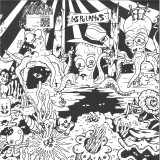
Los Pulpitos“ are gathering their underground-water-crowd and all the depressurized party peepz for this 2nd release on Terra Magica Rec!
Dirk Leyers (Africaine 808/Closer Musik fame) teamed up with no other than Dengue Dengue Dengue’s Felipe Salmón as „Los Pulpitos“. During the pandemic heydays these two sweet’n’tiney tasty Pulpitos went down the deepwater abbys to show dem kids where the dancefloor monsters hide. Expect Candomblé-Afro-Disco-Dubtechno-Polyrythmics gone bubbeling-blub! 1960s-70s-80s-90s-Ragga-Dub-Breaks-Electronic-Cumbia-gone-Deconstructed-Club-2000UK-Mainroom hot tub rub. Leftfield-Shefield-90sExperimental-70sFunk-Psychedelic-Dubstep-UKBass-Wobble! We simply call it: “Tentacle Tech“

Reba's 858 Ass marks the first trip to Transarctica. Precise percussions, ethereal pads and voices, textures and breaks, 858 Ass is a 4tracker deconstructing influences like bass, breaks & jungle. The first EP sets the tone and direction for the new label, that will explore a broad musical aesthetic with the distinct “Transarctica” touch.
8
Expanding on the blueprint of previous releases, Trieste-born, London-based producer Sohrab is the Kalahari clan’s latest inductee. OYSTER43 is a distillation of the Italian producer’s stylistic scope in its purest form; impeccably crafted dance music with a healthy dose of prog.
Running deep with this one. Smartly refined constructions primed for meditative club use, the first four tracks are rendered in pristine detail. From the widescreen and tunnelling to straight-up utopian, there’s a life-affirming vitality like only the most quintessential '90s prog-house can achieve.
The record begins to veer into realms of dilated abstraction on the second plate. Where ‘Fleeting Thoughts’ unfurls like a slice of hi-tech IDM undergoing an ayahuasca ceremony, ‘Sunseeker’ and ‘Deconstruct’ keep the ritual going at a lysergic, slo-mo chug. ‘Crystal Clear’, on the other hand, evokes the ‘70s with a bucolic, avant-garde synth lullaby.

12
Welcome to Dazion’s Grooveboxxx – a maxi-sized love letter to The Hague’s 80s and 90s club scene crafted with minimal tools and loaded with vibe. It’s no coincidence it arrives on Dekmantel, a label with its own roots in the same Dutch city’s electronic music culture.
Dazion is The Hague’s Cris Kuhlen, previously spotted releasing on Second Circle, Safe Trip and Animals Dancing. He cut his teeth clubbing and working at long-since closed clubs like Eau, described in Kuhlen’s own words as, “clubs with blocks to dance on, lazers, decorations, crazy extravert sic parties.”
In capturing the spirit of Eau and the other formative parties of his youth, Kuhlen limited himself to just one machine to make his longest work to date – the Roland MC-303 Groovebox. While these entry level units from the mid-90s had stripped down functionality in the wider spectrum of studio gear, they contained all the iconic Roland sounds in a Rompler style, giving the user access to everything necessary to make raw, immediate club tracks without requiring an entire studio’s worth of hardware.
The brash gear of choice set the tone for a record of rough, ready and playful jams which end up more sophisticated than you’d expect from such limited means. ‘La DS’ jacks with a freaky, bleep techno intensity, while ‘Kimberly & Nance Backstage Rehearsal’ rides an angular groove tooled to inspire the weirdest dance moves of the night. Every track is named in reference to a particular nightspot, a hazy memory or moment from Kuhlen’s formative raving years.
This is the sound of Dazion having the time of his life. You might well hear a nod to the odd rock totem being given a re-version in irreverent new beat style or some gnarly US acid breaks vibes riding underneath helium rap licks. But for all the cheekiness, the tracks stand up both as nods to halcyon days and relevant workouts for the sweatiest parties in the here and now. As MC Paul T says in dramatic style heralding the intro of Grooveboxxx, “This movement will live on forever.”

Force Placement's AEROBICIDE EP is a killer workout of afterhours acid and galaxian breakbeat.
Four hypnotic bangers from Los Angeles with remix support from DJ Manny, D.I.E., and Martyn Bootyspoon
Los Angeles – Following releases on 100% Silk, Clave House, BANK NYC and Lost Soul Enterprises, FORCE PLACEMENT arrives on EVAR Records with four tracks of naughty squelching acid and breakbeat techno hypnotically calling you to the afterhours, backed by a trio of remixes from Martyn Bootyspoon, Detroit In Effect, and DJ Manny, representing North American excellence in techno, electro, and footwork, respectively.
A longtime friend of the EVAR crew from renegade breakcore parties in Santa Barbara to underground experimental electronics happenings in Los Angeles, Into the Woods and The Black Lodge resident Jason "Force Placement" James taps into his love of weird trippy atmospherics, rhythmic complexity and DIY punk/noise aesthetics to create this quartet of mystic, mysterious bangers, crafted with the MPC1000, Elektron's Octatrack sampler, the Korg minilogue, and Ableton.
The AEROBICIDE EP begins its killer workout with "Yeeks," a cabalistic ass-mover driven by a haunted female vocal sample floating atop locomotive bass and shakers – a factory's worth of industrial sounds and eerie accents move in and out of the mix, adding intrigue and interest.
Moving to the main room of the rave, "Balloon Animal" shoots you through an inflatable tube of squelchy acid techno as knives cut the air around you, while "Upsetter" adds a shuffling breakbeat rave bounce into the acid mix. "Quartered" chops it up with Clone-style dark analog electro that gets increasingly deconstructed by dirty, stretched percussion and rivulets of synth reverb raining down the walls.
Rounding out this occult aerobics class, some of North America's most compelling forces in dance music are called in for remix duty. Unsung electro hero Detroit In Effect aka D.I.E. – the man behind such classics as "RU Married" and "Get Up" – leans deep into the classic Motor City palette, pairing lush, spacey pads with that hard-swung Detroit bounce to create a mellow groover that will keep you going all night. Montreal's world-class party starter M. Bootyspoon recalls Substance Abuse-era Hawtin and mid-'90s Midwest techno on his "Balloon Animals" remix, with nasty claps and concentric loops of hard acid bleeps and squelches. And who better to tackle "Upsetter" than Southside Chicago's footwork futurist DJ Manny? The Teklife king eschews the romantic R&B tones of his recent Planet Mu album for a tough-as-nails rework that ups the tension and the tempo to create an otherworldly saga for the dance circle.

(Umwelt & Sonae Remix)
For the very rst time Blintmusik welcomes two artists to remix tracks from the label’s back catalogue. Keeping the tradition of two tracks per release - on the A side we meet the french grandmaster of Electro, Umwelt. His remix of ‘Chauncey Street‘ is a pure dark whirlwind with bitter-sweet synth-strings oating over a set of forward pushing drums
and a drilling bassline. On the ipside is Sonae, best known for her immersive albums on labels like Monika Enterprise.
Her Remix of ‘92 Avenue‘ opens the gates to a distorted synth-utopia. In a total deconstruction, the Cologne based artist turns the original club banger into a nightmarish noise staccato which spirals down your spine before dropping into a heavyweight kickdrum-inferno. Truly unsettling club music at its best.

For this second release, Yuko Records introduces Emi Ömar, member of Recordeep. He delivers three tracks with a homogeneous musical universe, symbolized by his synthesizer signature sound and 90's influences on the tracks "Trou Noir" and "Largo Winch" and an organ house touch on the last track "Découpe du Roi". Vinyl only.

4
We are both very pleased to introduce Johannes Brecht to the Siamese family! A highly talented, trained and decorated musician is a fair description of Johannes and we’re proud to call him a friend and sometimes even a mentor.
This record has been in the works for a long time and since all of us wanted to have this EP out on vinyl too it took some time to get everything in place. As expected the three originals show a wide array of Johannes Brecht's world of electronic music. It's about creating something with love and passion rather than staying on safe ground

Lee Burridges’ All Day I Dream Presents Jim Rider’s Fantastic New EP, The Final Straw
The UK-Producer Revives the Labels’ Heavier Melodic Sensibilities Across 4-Originals
The title track opens an EP led by intention, accenting a time in the producer’s life where he was disillusioned with his day job and intent on pursuing music full time once again. “The Final Straw'' includes a romantic, husky narrative delivered by Namibian vocalist “Black Soda” (AKA Annely Ickua). Here we find him pulling from his musical upbringing - melodic elements afforded to him by his Mother, a folk musician and singer, and his focus on percussion fueled by his background as a drummer.
“Rascals” is a follow up to “Fools” from Jim’s 2021 Beatport category #1 EP “Popcorn & Politics”. It pays homage to the classic 1950s American TV show “Little Rascals” with eccentric keys and playful percussion alongside dazzling, eccentric elements from keys to tropical-inspired marimbas. “Los Que Caen,” as the name suggests, is inspired by Rider’s love of latin music and percussion and includes a heavy bass guitar riff, bouncy synths and a harp-led rhythm section. EP closer “The Cypriot” blends lead flute lines with plucky synths and a driving bassline while sporadic haunting vocal ad-libs and delayed keys add decoration to the track.

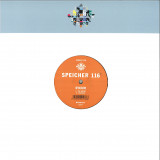
Trends come and go, but our SPEICHER series has never been shy of releasing futuristic, renegade TRANCE. Though the hallowed grounds we inhabit may be on pause, we are always slaves to the rave.
Welcome the debut from SYCUM. An alias from a legendary Berlin musician who needs to remain faceless in order to let the music speak first. So let us dive in….
“The Dream” whispers to the early days of UK rave. Ecstasy encoded transmissions are sent via a galactical groove, set out to space amid a constellation of euphoric sounds that make shapes. “Decoded” is built on the foundation of relentless progression – layered with synth built sorcery of the most profound kind.
Trends kommen und gehen, aber unsere SPEICHER-Reihe hat sich nie davor gescheut, futuristischen, abtrünnigen Trance ans Tageslicht zu bringen. Auch wenn die heiligen Stätten, die wir normalerweise unser Zuhause nennen, zurzeit geschlossen sind – wir bleiben dem Rave Untertan.
Wir heißen das Debüt von SYCUM willkommen. Es ist das Pseudonym eines legendären Berliner Musikers, der gesichtslos bleiben muss, um zuerst die Musik sprechen zu lassen. Tauchen wir also ein…
"The Dream" flüstert von den frühen Tagen des UK-Raves. Ecstasy-codierte Übertragungen werden über einen galaktischen Groove gesendet, der sich inmitten einer euphorischen Klangkonstellation in den Weltraum begibt und dort Form annimmt. "Decoded" steht auf dem Fundament unerbittlicher Progression – Schicht um Schicht baut es sich auf einer Synthesizer-Zauberei der tiefgründigsten Art auf.


Coloured Vinyl
The tenth, jubilee release of "Instrument" series is a sudden turning point and immediately changes the rules of the game, anticipating emerging trends. Oleg Buyanov - one of the main GOST contributors responsible for prominent records "True White" and "Height Difference" makes his debut in "Instrument" framework. OL's new release creates a path of complete diverseness - a unique mix of ambient, dub and mutational electronica, though the author's hip-hop DNA is still recognisable.
The release title as well as its symbol flirts with the privacy of communication in the context of its facilities and tools of the present world. Music acts as the info-channel, which provides unseen and coded data to a person from aside. The vagueness of mood, recurrent rhythm changes, and order of arrangement seem to rhyme with the paranoid feeling of being wiretapped. OL (along with another GOST ZVUK resident Flaty) recently had a similar experience of sound synthesis with their Serwed project whose recent LP was released via West Mineral Ltd. The groove of "SORM" is swirling, distorted and sometimes "disengaged"; sound guided by its waves exists in a constant process of decomposition, dissolution and then reassembles in new configurations.

Artist and multi-instrumentalist Flaer embraces the search for quiet miracles on first full-length LP Translations.
In 2023, Realf Heygate - who makes music as Flaer - released his debut mini-album Preludes, composed on his mother’s piano and his childhood cello.Returning to ODDA for his debut full-length album, Heygate is now looking in another direction. A record that embraces transition and movement, Translations is in many ways more internal, less rooted to a single place and reflective of the process of laying new foundations in Cornwall.
Like Preludes, Translations is coloured with found sounds and field recordings, from the starlings which can be heard singing through the open window of his studio, to the brittle recordings of his mother, who was a linguist, learning Spanish on a set of language tapes. In both cases, Heygate embraced the translations and memories inherent to the sounds.
“When I digitised my mother’s tapes, they warped and stuttered in a very similar way to the starling’s song,” he explains. “They had this uncanny rhythm and pulse that I couldn’t quite decode, but was saying something." These decayed transmissions hint at loss, resisting clarity in favour of the ineffable.
Translations is also a record of ambiguities and in-betweens, suggested by the double meaning of the album’s opening track ‘Entre’. At once intricate and expansive, threaded with birdsong and acoustic guitar motifs, this and ‘Starling Descends’ (a reference to Vaughan Williams’ ‘The Lark Ascending’) act as a bridge away from the pastoral themes of Preludes towards a more assertive sound. At times intimate in its textured instrumentation and at others more overtly grand in orchestration, reflecting awider palette of influences.
“Flaer began in many ways when I picked up my mother’s instruments, seeking a form of reconnection. Where words evaded me, they became the tools through which I found a language for grief – and above all, for love.”
Recorded between 2023 and 2025 – what Heygate calls “A gradual process of sowing and harvesting ideas rather than a single intense creative period” - each track follows a rhythm similar to the small maquettes and sculptures he has been working on in his visual practice, whereby structures and melodies form intuitively in moments that are as rare as they are fleeting.
“It's that feeling of searching that I really enjoy,” Heygate continues. “I never know what the destination of the composition is going to be, and I never really find what it is."
Translations is released on limited edition off-white vinyl LP (500 copies worldwide) with one of five signed and numbered handmade risograph prints. It's also available as standard black vinyl LP and digitally.

15
Laputa, a title taken from the fantastical floating island of Gulliver's Travels is aptly named as 'The album that never landed' for, apart from a limited touchdown in Japan, Laputa was never released. This mystical world is a summation of Yokota's journey so far, a complex and at times challenging work but immeasurably rewarding. Beguiling and bewitching in equal measure.
Over fifteen undulating sonic fugue states, he guides listeners round a liminal world, made up of familiar materials but formed in a way defying all laws of perspective and physics. Background murmurings give way to almost uncomfortably foregrounded chattering, and one perceived soundstage segues into another impossible tableau of sonic apparitions, some recognisable in form, but all boldly decontextualised and arranged in expertly cluttered amalgams.
Laputa's obscurity was a prime reason Lo Recordings decided on the Skintone retrospective. Falling as it did between The Boy and the Tree on The Leaf Label and our own debut of Symbol. It was something of an audio crime that the album had never been properly explored and discovered. Lo Recordings hope Laputa can now ascend to its rightful place... hovering above us.

- Side A
- 1: =
- 2: Sovay
- 3: A Nervous Tic Motion Of The Head To The Left
- 4: Fake Palindromes
- 5: Measuring Cups
- 6: Banking On A Myth
- 7: Masterfade
- Side B
- 8: Opposite Day
- 9: Skin Is, My
- 10: The Naming Of Things
- 11: Mx Missiles
- 12: =/=
- 13: Tables And Chairs
- 14: The Happy Birthday Song
- LP 2:
- Side A
- 1: Sovay (Live In Berlin)
- 2: A Nervous Tic Motion Of The Head To The Left (Mayfair Studio)
- 3: Blood (Wall To Wall, Beech House)
- 4: Measuring Cups (The Barn)
- 5: Banking On A Myth (Beech House)
- 6: Zeros And Ones (The Barn)
- Side B
- 7: Opposite Day (Beech House)
- 8: Skin Is, My (The Barn)
- 9: Naming Of Things (Mayfair Studio)
- 10: Mx Missiles (Beech House)
- 11: Tables And Chairs (Demo)
- 12: The Happy Birthday Song (Beech House)
- LP 3:
- Side A
- 1: Capital I (The Barn)
- 2: Right On Time (The Barn)
- 3: The Happy Birthday Song (The Barn)
- 4: Measuring Cups Demo (The Barn)
- 5: Knapsack (The Barn)
- Side B
- 1: Fake Palindromes (With Nu Deco Ensemble)
- 2: A Nervous Tic Motion Of The Head To The Left (With Nu Deco Ensemble)
- 3: Happy Birthday (With Nu Deco Ensemble)
- 4: Tables And Chairs (With Nu Deco Ensemble)
- Standard Lp
- Side A
- 1: =
- 2: Sovay
- 3: A Nervous Tic Motion Of The
- Head To The Left
- 4: Fake Palindromes
- 5: Measuring Cups
- 6: Banking On A Myth
- 7: Masterfade
- Side B
- 8: Opposite Day
- 9: Skin Is, My
- 10: The Naming Of Things
- 11: Mx Missiles
- 12: =/=
- 13: Tables And Chairs
- 14: The Happy Birthday Song
In 2005, Andrew Bird was a previously unimaginable combination of virtuoso violinist, singer-songwriter, guitarist, and whistler. With that year’s album The Mysterious Production of Eggs, Bird minted a new sound that continues to be imitated today.
To celebrate the 20th anniversary of The Mysterious Production of Eggs, Andrew Bird is releasing a very special boxset featuring a 54 page book including photographs, special surprises, and two essays: one written by Andrew himself, and another by Anders Lindall examining the circuitous and fascinating process Andrew and collaborators took to record the album.
The boxset also includes the original release of the album, alongside two LPs of never before released material, on black vinyl. On one LP, a one-to-one playthrough of the album but of demos, live cuts, and alternate versions. The third LP includes more never released rarities on Side A, and a selection of songs from the original album performed by Andrew with the Nu Deco Ensemble. The original cover artist has created all-new artwork for the anniversary piece.

8
Heavyweight psychedelic improvisers EarthBall are back with their third and most monstrous record to date: ‘Outside Over There’, released on Upset The Rhythm (Nov 7th). Born from the haunted basements of Nanaimo, Canada, the quintet thrives on spontaneity, shaping improvisation into jagged hallucinations and ecstatic eruptions.
Recorded live-off-the-floor in 2024 in Jeremy, Izzy, and Kellen’s basement, and mixed by drummer John Brennan, ‘Outside Over There’ is an album that feels both summoned and inevitable. Each track lands with uncanny purpose, as if uncovered rather than written.
The opener, 100%, features a cameo from comedian and English icon Stewart Lee, who lent his blessing for the band to use a fragment of his stand-up. The album was mastered by John Dieterich (Deerhoof), with liner text contributed by longtime comrade John Olson (Wolf Eyes). Olson describes the album in his unmistakable style:
“This eight-track odyssey unfolds like a dreamscape, where whispered incantations brush against the shadowy fringes of the cosmos, and wild, Cézanne-inspired rock anthems erupt like geysers of color in the midst of a western warm and wet rain storm… culminating in the sprawling eleven minute masterpiece, ‘And The Music Shall Untune The Sky,’ aptly dubbed the Earth Crusher. A creation so utterly deconstructed and intertwined with the pulse of nature itself that if AI was called upon to conceive ‘Outside Over There’ anew, it would just spit back, “F.U. in Tree Font”. An enchanting invitation for even the flat-earthers to join the circle, if only just a little.”
EarthBall’s trajectory has been relentless. Their 2024 album ‘It’s Yours’ was praised by The Quietus as “fully aggressive and fully life-affirming,” and by The Wire as "a boisterous mind-melting album”. The band’s live double set LP ‘Actual Earth Music Vol. 1 & 2’ (2025) captured blistering performances: a performance opening for Wolf Eyes at the Fox Cabaret, and a Café OTO improvised throw-down featuring Chris Corsano and Steve Beresford. These releases on their own confirm them as one of Canada’s most vital experimental exports, not to mention the impressive self-released discography on their Bandcamp. The band’s reach has stretched far beyond their west coast roots with a UK tour May 2024, plus this past June, EarthBall closed Montreal’s Suoni Per Il Popolo Festival alongside Pulitzer Prize-winning composer Raven Chacon. This November they will perform at Le Guess Who? Festival in Utrecht, with a European tour to follow (tour dates below). Outside of EarthBall, each member carries their own torch. Jeremy Van Wyck, founding member of the legendary Shearing Pinx, has toured extensively, released over 100 records, and has been a vital force in the Vancouver and West Coast underground for the past 25 years. He and Isabel Ford (Izzy) play together not only in EarthBall, but also in Psychedelic Dirt, Shearing Pinx, Behaviours, and Crotch.
John Brennan collaborates widely, including recently with Endlings (Raven Chacon and John Dieterich), Evichen (Victoria Shen), Francesco Fonassi, Plan Your Future (with Greg Saunier of Deerhoof), Brennan/Corsano duo and Physics with John Dieterich. Kellen Maclaughlin performs with KVMP and Ora Corgan, while saxophonist Liam Murphy is a west coast staple, playing with the best across Vancouver Island and the mainland. On three of the tracks of ‘Outside Over There’, the band is joined by their comrade Justin Patterson, who also plays with Brennan in the duo Modale. This cross-pollination fuels EarthBall’s sound - a collective improvisation, psychically overdriven, and grinding into bloom.
Outside Over There’ is more than an album though, it is a ritual, a gathering of sound at the forest’s edge; where feedback, saxophone screams, and ecstatic vocals dissolve the boundary between chaos and clarity. EarthBall invite you into their circle, to share in the joyful terror of spontaneous creation. ‘Outside Over There’ will be released on November 7th through Upset The Rhythm digitally and as a limited blue-in-black vinyl LP.

8
Heavyweight psychedelic improvisers EarthBall are back with their third and most monstrous record to date: ‘Outside Over There’, released on Upset The Rhythm (Nov 7th). Born from the haunted basements of Nanaimo, Canada, the quintet thrives on spontaneity, shaping improvisation into jagged hallucinations and ecstatic eruptions.
Recorded live-off-the-floor in 2024 in Jeremy, Izzy, and Kellen’s basement, and mixed by drummer John Brennan, ‘Outside Over There’ is an album that feels both summoned and inevitable. Each track lands with uncanny purpose, as if uncovered rather than written.
The opener, 100%, features a cameo from comedian and English icon Stewart Lee, who lent his blessing for the band to use a fragment of his stand-up. The album was mastered by John Dieterich (Deerhoof), with liner text contributed by longtime comrade John Olson (Wolf Eyes). Olson describes the album in his unmistakable style:
“This eight-track odyssey unfolds like a dreamscape, where whispered incantations brush against the shadowy fringes of the cosmos, and wild, Cézanne-inspired rock anthems erupt like geysers of color in the midst of a western warm and wet rain storm… culminating in the sprawling eleven minute masterpiece, ‘And The Music Shall Untune The Sky,’ aptly dubbed the Earth Crusher. A creation so utterly deconstructed and intertwined with the pulse of nature itself that if AI was called upon to conceive ‘Outside Over There’ anew, it would just spit back, “F.U. in Tree Font”. An enchanting invitation for even the flat-earthers to join the circle, if only just a little.”
EarthBall’s trajectory has been relentless. Their 2024 album ‘It’s Yours’ was praised by The Quietus as “fully aggressive and fully life-affirming,” and by The Wire as "a boisterous mind-melting album”. The band’s live double set LP ‘Actual Earth Music Vol. 1 & 2’ (2025) captured blistering performances: a performance opening for Wolf Eyes at the Fox Cabaret, and a Café OTO improvised throw-down featuring Chris Corsano and Steve Beresford. These releases on their own confirm them as one of Canada’s most vital experimental exports, not to mention the impressive self-released discography on their Bandcamp. The band’s reach has stretched far beyond their west coast roots with a UK tour May 2024, plus this past June, EarthBall closed Montreal’s Suoni Per Il Popolo Festival alongside Pulitzer Prize-winning composer Raven Chacon. This November they will perform at Le Guess Who? Festival in Utrecht, with a European tour to follow (tour dates below). Outside of EarthBall, each member carries their own torch. Jeremy Van Wyck, founding member of the legendary Shearing Pinx, has toured extensively, released over 100 records, and has been a vital force in the Vancouver and West Coast underground for the past 25 years. He and Isabel Ford (Izzy) play together not only in EarthBall, but also in Psychedelic Dirt, Shearing Pinx, Behaviours, and Crotch.
John Brennan collaborates widely, including recently with Endlings (Raven Chacon and John Dieterich), Evichen (Victoria Shen), Francesco Fonassi, Plan Your Future (with Greg Saunier of Deerhoof), Brennan/Corsano duo and Physics with John Dieterich. Kellen Maclaughlin performs with KVMP and Ora Corgan, while saxophonist Liam Murphy is a west coast staple, playing with the best across Vancouver Island and the mainland. On three of the tracks of ‘Outside Over There’, the band is joined by their comrade Justin Patterson, who also plays with Brennan in the duo Modale. This cross-pollination fuels EarthBall’s sound - a collective improvisation, psychically overdriven, and grinding into bloom.
Outside Over There’ is more than an album though, it is a ritual, a gathering of sound at the forest’s edge; where feedback, saxophone screams, and ecstatic vocals dissolve the boundary between chaos and clarity. EarthBall invite you into their circle, to share in the joyful terror of spontaneous creation. ‘Outside Over There’ will be released on November 7th through Upset The Rhythm digitally and as a limited blue-in-black vinyl LP.

4
Northern Electronics presents NE112, a collaborative work by Anthony Linell and Evigt Mörker, entitled ’Ett anständigt liv’.
Marking the first alignment between the two artists, the record unfolds as a study in continuity, pressure, and sustained focus. Across four pieces, a steady and tensile sonic language develops, immersive in its repetition and controlled in its ascent. Subtle psychedelic inflections — recalling early trance states — surface within a darker, more restrained framework. The result is neither nostalgic nor decorative, but reduced, deliberate, and directed forward.
All tracks written and produced by AL & KL in Sofia, Sweden, during the winter of 2024 Mixed and mastered by Giuseppe Tillieci at EnissLab, Rome

4
DJ Support: Luke Una, Leftfield, Ewan McVicar, Optimo, Damian Lazarus, Jimpster, Hifi Sean, Lovefingers, Heidi Lawden, Justin Robertson, Damian Harris, Sean Johnston (ALFOS)
Electronic music icon Jon Dasilva continues to push forward into the future with “Sun Brings Joy”, alongside Swedish production compadre Skyskrapa and vocalist extraordinaire Donald Waugh.
Coming in a few different flavours, the Bass ID mix has already piqued interest on the socials... is it house? Is it techno? Is it bass music? Who knows, but Luke Una has already called it “the tune of the year”…
The package is completed with a remix from in demand genre bending dj/producer Spatial Awareness.
A mercurial producer, he has had a string of cutting-edge productions to his name spanning over two decades, on labels including Ellum Audio, Rush Hour, Soma, Mute, Deconstruction, Better Days, Eskimo, and many more. His early productions were considered seminal works, combining breaks, African influences, Acid and Bleep culture.
He is in the process of finishing a number of electronic projects for labels such as Balkan Vinyl, Mighty Force, I Love Acid and Hottwerk.

Rave-o-lution - Teknology EP (HDK-3)is a manifesto disguised in project.
Forged in the raw energy of the underground, Rave-o-lution - Teknology EP explores the connection between machine, movement and collective consciousness. This is not nostalgia, it’s forward motion. Teknology as a tool, rave as a language, evolution as a necessity.
Across four different versions, the same core signal mutates and adapts, shifting pressure, tempo and density while staying locked to its original frequency. Each version is built for a different moment on the floor, from deep hypnosis to pure mechanical drive.
Sometimes a pad emerges in the break, a moment of suspension where emotion cuts through the structure. A brief opening. A breath inside the system. Proof that even the hardest teknology carries feeling beneath the steel.
HDK-3 is made for soundsystems at full power, bodies in sync, and minds ready to disconnect from the surface and dive deeper.
No compromise.
No decoration.
Just rave — evolved.

- 1: Aeva
- 2: Daemon
- 3: Archaeans
- 4: Aennihilator
- 5: Asaese
Debut solo album from leader of legendary psych band Föllakzoid, Available on white color vinyl! RIYL: Föllakzoid, Beatrice Dillon, Huerco S., Arca, Amnesia Scanner, SOPHIE, Kaitlyn Aurelia Smith. Musician and filmmaker Domingæ is probably best known as the founder of experimental psych band Föllakzoid. Written whilst stranded in Mexico and Tokyo on her way to a world tour with Föllakzoid, her new debut solo album Æ has taken the decompositional system she devised for the band and added the depth of inner exploration and a symbiotic relationship with musical craft. The resulting sound is as groovy and hypnotic as the best Föllakzoid tracks but with a seductive and darkening electronic texture. She has become a channel in which the shadows inhabit. Domingæ's sounds and formats are articulated via depuration, expanding in time and space via the subtraction of shifting elements. The process of unlearning and uninstalling previously established creative softwares in order to achieve dissolution has always been a central focus in her creative pursuit. Æ is a result of said experimentation, the dissolution of preconceived notions to create a minimal sound yet rich in textures.
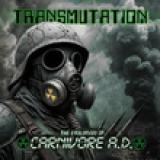
- 1: Prologue
- 2: Transmutation
- 3: I Stand Alone
- 4: Social Decomposition
- 5: Mine Is The Hand
The Evolution Has Begun. Dedicated with love and honor to the memories of Peter Steele and Keith Alexander, Carnivore A.D. emerged as a post armageddon neo barbaric soundscape - a relentless force keeping the primal energy of Carnivore alive on stages and festivals around the world. Formed by NYC Hardcore and Metal veterans Baron Misuraca (vocals & bass – ex-SHEER TERROR), Chuck Lenihan (guitar – ex-CRUMBSUCKERS), and Joe Cangelosi (drums – ex-KREATOR, WHIPLASH, MASSACRE). Co-founded with full endorsement by original drummer Louie Beateaux, Carnivore A.D. has honored its roots by performing the explosive and brilliant works of Peter Steele with intensity, respect and raw power. But now, with the release of their first-ever studio EP "Transmutation", Carnivore A.D. transcends tribute.
They have challenged themselves to write new material - not to replace the original legacy, but to continue its spirit through their own lens. While the legacy of Carnivore remains sacred, Carnivore A.D. has become something more than its origin - a band with its own scars, its own instincts, and now, its own songs. “Think of Carnivore AD as a renowned dining establishment where it’s Chef passed on years ago but the recipes remain and folks still want to dine there instead of cooking the food themselves. And Chef Pete wouldn’t mind because his friends are making it with love.”- Louie Beateaux.
10
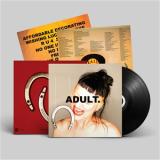
ADULT. kooperiert nicht. Seit über 25 Jahren verkörpert die dystopische Detroit-Synth-Punk-Institution, gegründet von Nicola Kuperus und Adam Lee Miller, unbeirrbare Frustration, Misstrauen und Beklemmung. Man könnte erwarten, dass sich die Kanten mit der Zeit abschleifen, doch ADULT. hat kein Interesse am Komfort eines Vermächtnisses. Noch nie klang die Musik des Duos so unmittelbar, so dringlich und so unverhohlen wütend wie auf dem abschließenden, kompromisslosen Kissing Luck Goodbye.Mit aufgerüstetem Equipment und einer neuen Klangbibliothek gebaut, ist das Material erdrückend dynamisch, lauter - und zugleich klarer. Kuperus' dominante Darbietung rückt im Mix stärker in den Vordergrund und skizziert ein Arsenal aus lebhaften, ätzenden Rufen, Sprechchören und Gedankensplittern. Lachen - ob in den Texten oder als besessene Präsenz - fungiert als Leitmotiv und verweist auf die bedrohliche Absurdität der modernen Zeit.,THE CHAOS IS WHAT THEY WANT", singt sie in ,R U 4 $ALE" - zugleich eine Absichtserklärung: einer brennenden Welt aus Gier und Unordnung mit trotzigem, meisterhaft zusammengebautem Chaos zu begegnen. ,Du hast in dieser Höllenlandschaft, in der wir gerade leben, zwei Möglichkeiten: kämpfen oder depressiv sein", sagt Miller. ,Beides ist okay. Aber, na ja, die Entscheidung war einfach."ADULT. ist bekannt für hochriskante Katharsis auf der Bühne und griff kürzlich auf seinen Backkatalog an Bassgitarren-Songs aus den 2000ern zurück, wobei sie die vorausschauende Anxiety Always-Ära erneut nachzeichneten - teils aus Notwendigkeit angesichts der heutigen politischen und technologischen Angsttemperatur. Die Reaktion war sofort spürbar: ,Wir waren in Paris, und die Kids sind von der Bühne gesprungen. Und ich dachte nur: Das ist großartig. Das ist irgendwie die Energie, in die ich wieder zurückwill", sagt Kuperus.Diese Erkenntnis fiel mit einer Reihe von Rückschlägen zusammen - Kuperus' Anfällen von chronischem Schwindel, dem Verlust ihres engen Freundes und Kollaborateurs Douglas McCarthy von Nitzer Ebb, dem das Album gewidmet ist - alles unter dem drohenden Regime noch einmal erheblich verschärft. ,Wir dachten nur: Alles zerbricht. Wir zerbrechen. Wir sind kaputt." Dieses Gefühl hielt jedoch nicht an, denn letztlich waren sie viel zu sehr von Wut aufgeladen, um stillzuhalten. Die Stimmung vor Kissing Luck Goodbye waren vier Mittelfinger, die kerzengerade nach oben zeigten.Anstatt sich zurückzuziehen, konzentrierten sie sich auf den Prozess und überarbeiteten ihr Setup - inklusive der ersten neuen Mikrofone seit 20 Jahren. Hält man das Album an irgendeiner Stelle an, zählt man wahrscheinlich ein Dutzend Dinge, die gleichzeitig passieren, in seltsamer, schwindelerregender und dissonanter Harmonie. ,No One Is Coming" attackiert Untätigkeit angesichts des Faschismus - ,NO ONE IS COMING TO YOUR RESCUE". ,None of It's Fun" feuert mit atemloser Dringlichkeit, rasenden Glissandi und pointierten Zeilen wie: ,OH I AM TEARING MY GUTS OUT / LOOK AT ME_ DO YOU THINK THAT THIS IS AMUSING?"Eine geradlinige Basslinie und Kickdrum prallen im Abschlusstrack ,Destroyers" auf pulsierende Mantras, werden dann vollständig gesättigt und kakophonisch. Ihre jüngeren Ichs hätten den Song vielleicht sich selbst zerstören lassen, doch hier gelang es ihnen, die Lautstärke durch alle Extreme hindurch zu stabilisieren und Raum für ein eindringliches, abschließendes A-cappella zu schaffen: WE PAY THE PRICE FOR THOSE IN POWER EXPLOITING YOU EXPLOITING ME CONSUMING YOU CONSUMING ME SICK SICK SICK SICKENING IT IS US THAT ARE DEVOURED BY EVERYTHING I WILL EAT YOUR HATE

- A1: Ratio (Pt. Ii Organ) ->
- B1: Ratio (Pt. Ii Dub) ->
Reissue der Deconstructed Mixes von Floating Points' "Ratio" aus 2017 im schwarzen Disco-Bag. Der epische Track von fast 19 Minuten Länge knüpft an Sam Shepherds frühe, dancefloor-orientierte Releases an, avancierte live schnell zum Publikumsliebling und war ein absolutes Highlight des Sets.
a A1: Ratio (Pt. II Organ) -> 19min: 04 sec @ 33rpm
b B1: Ratio (Pt. II Dub) -> [7min : 36 sec] @ 45rpm
[a] A1: Ratio (Pt. II Organ) -> [19min: 04 sec] @ 33rpm
[b] B1: Ratio (Pt. II Dub) -> [7min : 36 sec] @ 45rpm
[a] A1: Ratio (Pt. II Organ) -> [19min: 04 sec] @ 33rpm
[b] B1: Ratio (Pt. II Dub) -> [7min : 36 sec] @ 45rpm
[a] A1: Ratio (Pt. II Organ) -> [19min: 04 sec] @ 33rpm
[b] B1: Ratio (Pt. II Dub) -> [7min : 36 sec] @ 45rpm

- The Orientalist
- Mother Dubber
- 112: Dub
- Hard Working
- Bad Weather
- Short Visit
- Enter The Dragon
- Onew Dub
- Delhi-Katmandou
- Taniotoshi
- Echo-Logik
When High Tone Live dropped on Jarring Effects, it wasn't just another live album - it was a statement. Captured in the spring of 2003, the Lyon-based collective condensed years of experimentation into an 11-track journey that redefines what live dub can be. Since their formation in 1997, High Tone have stood at the crossroads of dub, electronic music, rock, and urban culture. With Jarring Effects as their home base, they built a reputation for transforming the stage into a laboratory - a place where basslines mutate, beats deconstruct, and every frequency breathes. High Tone Live draws from four key releases - Low Tone, Opus Incertum, Bass Température and ADN - Acid Dub Nucleik - revisiting them through the raw energy of the stage. Classics like "Dehli Katmandou" and "Enter the Dragon" are stretched, twisted, and reborn in extended, improvisational forms. Two unreleased tracks, "112 Dub" and "Onew Dub," complete the set, adding a dose of fresh material to a disc that feels both retrospective and forward-looking. As with any live recording, there are rough edges: the mix shifts, some moments feel caught mid-explosion. But that's the beauty of High Tone Live. The imperfections add warmth, immediacy - a reminder that this music is made by humans pushing machines to their limits. High Tone Live stands as one of the strongest documents of Europe's post-dub explosion. It's a record that bridges continents and genres - a sonic travelogue where analog grit meets digital hypnosis. More than a live set, it's a manifesto of independence and sound exploration, stamped with the unmistakable seal of Jarring Effects.
4
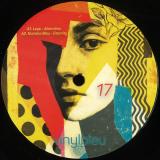
Nouvel EP de la série Vinylbleu, ce pressage vinyle réunit Leks avec son titre Alienation, véritable retour aux sources, ainsi qu'une nouvelle track de DE$ et deux productions signées Numéro Bleu. Une face tekno et une autre orientée hardtek, la track Onde Stationnaire est également sortie sur l'album digital Whispers of the Spiral du label Eskwad Records, à découvrir en ligne.

2
Dam Swindle x Salsoul Reworks
Dutch duo Lars Dales and Maarten Smeets, better known as Dam Swindle, are the latest in a line of decorated contemporary producers taking on rework duties for legendary New York disco label, Salsoul Records. Comprised of four tracks split into two volumes, the pair provide fresh takes on a number of Salsoul hits, including the classic ‘Let No Man Put Asunder’ by First Choice and Double Exposure’s ‘Everyman’. There’s some funky edits of tracks by Kebekelektrik and Kongas, wrapping up an essential Reworks package courtesy of one dance music’s premier acts.

- 1: Supervisory Committee
- 2: Talkshow
- 3: Back Room
- 4: Civic Behaviour
- 5: Connecting Employment
- 6: Western Values
- 7: Lobbying
- 8: Party Donation
- 9: Pluralistic One-Party-Rule
- 10: Young Bloods
- 11: Campaigning
TALKSHOW is Haexler's 3rd EP and clearly marks an evident deep dive into the environment of purist Powerviolence. While the Hardcore influences were overtly visible on their previous releases, Haexler now turn their heads towards fully submerging in a primitively harsh tone that flirts with lo-fi soundscapes and noisey elements. On TALKSHOW, Haexler return with their concise and accurate deconstruction of political frameworks, frontally addressing the scope of formations of the liberal democracy, following the foundation of Agnoli's classic "Die Transformation der Demokratie." The full set of disputes regarding the scheme that builds the foundation of liberal democracies from lobbyism all across the possible impact of the media (talkshows), rituals of parties, political pluralism to western values is ferociously dissected with cynical implementations of snippets off the TV series "Mad Men". TALKSHOW will only take a comparably short amount of time to fittingly blast your head off. Make sure to be prepared! Classic black one-sided 11-Track 12" w/ b-side etching and lyrics insert!
6
Cambridge-based improv collective Concrete Gazebo present their latest collection of open-hearted, quantum splice-downs, via Goldsmiths University label NX Records.
"Acid Heath" documents the ebb and flow of a collective in flux; online and in-the-flesh improv sessions form the raw material to be welded into new and fantastic forms by the group's hive-mind. Instruments falling into the pot this time around include a heavily effected Harmonic Art Handpan, the Yamaha PortaSound PSS-50, live-triggered field recordings, and mobile phone recordings of the jams themselves.
The result is a murky, atmospheric stew, at different times suggesting a sort of Fenland psychedelia, lof-fi krautock, or a deconstructed Broadcast.
When not making music, the band have organised free, open-to-all improvisation nights, "Under The Concrete Gazebo", since 2018.

- The Set Up Part 1
- Can You Get Me Out Of Phoenix?
- Jumping Off In Madras
- Dilaudid Diane
- Keep The Shades Down
- Getting Out Of The Ward
- The Set Up Part 2
- The Reckless Life
- Walking With His Sleeves Down
- The Meter Keeps Ticking
- The Set Up Part 3
- The Last Time I Saw Her
The Delines were finishing the "Mr. Luck & Ms. Doom" sessions when Willy brought in a tune called "Walking With His Sleeves Down". Vocalist Amy Boone learned it on piano and the Band recorded it live. The take was stunning but the song didn"t quite fit the record so they set it aside along with "The Reckless Life", "Dilaudid Diane" (featured in their recent encores) and "Jumping off in Madras". The song worked sonically but again didn"t feel quite right lyrically and when they finished the record Willy couldn"t stop writing songs for it. The US opioid epidemic with thousands of young people rattled with addiction and living in tents and on the streets and in old cars and RVs, influenced "Luck and Doom" but even more so with The Set Up. Their stalwart producer, John Morgan Askew, was at the helm again and he"s the king of building atmospheric worlds. You can really feel it on this one. By the time we finished they realized "The Set Up" was the wayward, misguided, and lonely sister to "Mr. Luck & Ms. Doom". More ragged and undone but all CinemaScope Delines.

- =
- Sovay
- A Nervous Tic Motion Of The Head To The Left
- Fake Palindromes
- Measuring Cups
- Banking On A Myth
- Masterfade
- Opposite Day
- Skin Is, My
- The Naming Of Things
- Mx Missiles
- =/=
- Tables And Chairs
- The Happy Birthday Song
- Sovay
- A Nervous Tic Motion Of The Head To The Left
- Blood
- Measuring Cups
- Banking On A Myth
- Masterfade
- Opposite Day
- Skin Is, My
- The Naming Of Things
- Mx Missiles
- Capital I
- Right On Time
- The Happy Birthday Song
- Measuring Cups
- Knapsack
- Fake Palindromes
- A Nervous Tic Motion Of The Head To The Left
- The Happy Birthday Song
- Tables And Chairs
- Tables And Chairs
- The Happy Birthday Song
Im Jahr 2005 war Andrew Bird eine bis dahin unvorstellbare Kombination aus virtuosem Violinisten, Singer-Songwriter, Gitarristen und Pfeifer. Mit seinem Album ,The Mysterious Production of Eggs" aus diesem Jahr schuf Bird einen neuen Sound, der bis heute nachgeahmt wird. Anlässlich des 20-jährigen Jubiläums von ,The Mysterious Production of Eggs" veröffentlicht Andrew Bird ein ganz besonderes Boxset mit einem 54-seitigen Buch mit Fotos, besonderen Überraschungen und zwei Essays: einen von Andrew selbst und einen von Anders Lindall, der den verschlungenen und faszinierenden Prozess untersucht, den Andrew und seine Mitstreiter bei der Aufnahme des Albums durchlaufen haben. Das Boxset enthält außerdem die Originalveröffentlichung des Albums sowie zwei LPs mit bisher unveröffentlichtem Material auf schwarzem Vinyl. Auf einer LP befindet sich eine vollständige Wiedergabe des Albums, jedoch mit Demos, Live-Aufnahmen und alternativen Versionen. Die dritte LP enthält weitere unveröffentlichte Raritäten auf Seite A und eine Auswahl von Songs aus dem Originalalbum, die von Andrew mit dem Nu Deco Ensemble gespielt werden. Der ursprüngliche Cover-Künstler hat ein völlig neues Artwork für das Jubiläumswerk geschaffen.
12
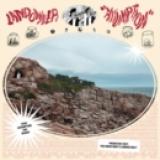
"Western Massachusetts band Landowner play abrasively-clean minimalist punk. Singer Dan Shaw started Landowner in 2016, writing and recording the project's debut Impressive Almanac with a practice amp and a laptop drum machine. Shaw's initial concept was a made-up genre called “weak d-beat”, meant to sound intentionally absurd “as if Antelope were reading the sheet music of Discharge”. When Shaw joined with his current bandmates in 2017, they translated these early experiments in restraint, minimalism, and caricatured hardcore as a live band. This provided Landowner with its own unique set of blueprints: the guitars “slap hard” without using any distortion or effects, the rhythm section is tight, fast, and repetitious, and the song structures make space for lyrics that reflect on the global systems and dark absurdities our lives are tangled in. Comparisons could be made to The Fall, Lungfish, or Uranium Club, but across their five albums, they make it clear: Landowner just sound like Landowner.
Assumption is the band's fifth album. Sonically, it captures the vibrancy and intensity of their live performances. The album title “Assumption” encapsulates the album's multi-layered themes. We make assumptions, taking in information online through an overload of decontextualized snippets and headlines, and then quickly form conclusions, or we allow artificial intelligence to do the thinking for us. Assumption is the sound of a band that established its own musical identity and has reached a place of tightness with an ease gained from years of playing together, sounding mechanically precise and at the same time fully human. It may be the band's most cohesive and fully realized work to date."

Aspen Edities is pleased to present Aerial, the third album of the experimental quartet Oker.
Whereas their album debut Husene våre er museer (2018) and its follow-up Susurrus (2021) focused on collective and individual compositions, Aerial features two longform pieces of fully improvised music, sculpted from the recognizable acoustic sound palette that the quartet has developed across a decade of extensive touring. The titles, Aerial, Equinoctial Tide and Crepuscular Rays refer to meteorological and planetary phenomena, and in Oker’s interplay we hear light, wind, clouds, and tidal cycles transpire as shimmering, roaring, rubbing, coalescing and diverging environments of sound. The sonic stoicism and minimalism in their expression is challenged by frictioning micro-chaoses, combining to create calm, winding paths of musical detail and form. Echoing our planet and its meteorological reality, Aerial yields both consistency and perpetual change.
Bringing together some of the most compelling musicians from the Norwegian improvised music scene, Oker operates as an acoustic experimental quartet devoted to the amalgamation of improvised and composed modes of expression. Their music combines fine-tuned tonalities, deconstructed grooves, acoustic noise and other sonic events, taking their rather conventional instrumentation as a point of departure. Textures in gradual change coexisting with responsive and spontaneous gestures create a varied but coherent musical ecosystem which can be airy or dense, dry or blooming. A certain minimalist or stoic approach to sound production is an overarching and recurring element in all of Oker’s music, differentiating their sound from the majority of music in the field of improvised music or free jazz.

- A1: Arco Arca
- A2: Spiral 2097
- A3: A Good Brainwash
- A4: Ca Va
- A5: Core Feat Claude Violante, S Diamah, Len, Fiona Walden, Serguei Spoutnik, Janis, Silly Boy Blue
- A6: Deconstruire
- A7: Nobody On The Floor
- B1: Patternity
- B2: Resting Is Working (Slow Mix)
- B3: Resting Is Working (Fast Mix)
- B4: Thedral
- B5: Shame
Like a crusader, Apollo Noir relentlessly pursues his noble cause: pushing modular and analog experimentation ever further while remaining irresistibly accessible. Here is CORE, his 4th studio album, fusing post rave techno Detroit à la Drexciya and Manchester early Autechre (Spiral), OPN’s most epic era (Nobody On The Floor), futuristic UK jungle (A Good Brainwash), letfield amen-breaked ambient (ça va), a mega massive cadaver exquis song (CORE) featuring Remi Sauzedde’s very close friends (Janis, Ley, Claude Violante, Silly Boy Blue, S Diamah, Serguei Spoutnik and Fly HQ), diving deeper - as a true obsessive lover of drum machines (TR909, TR808 and TR606) - in the raw deconstruction of techno rhythms (Déconstruire), unleashing a dark and heavy Bassline at 145 bpm with grime vocal samples (Patternity), heavy modular beats blending perfectly with soft and voicy Korg M1 pads (Shame)... Apollo Noir knows his classics and contemporaries inside out, forging his own path with deranged yet beautiful twists (Thedral, Arco Arca).

AUMATRA
The vibration that links the invisible. A shared pulse between mind, body and machine. AUMATRA is neither a place nor an object. It is a living structure: a sonic ritual activated when the pulses of different minds fall into sync.
A space where every sound becomes a frequency, and every frequency becomes a connection.
Inspired by the ancestral and shaped by the digital, AUMATRA is a weave of intensity, discipline and collective creation-an echo from the past projected toward what has yet to be name

- A1: This Doesn't Exist Anymore
- A2: It Started To Hurt And Then It Just Continued
- A3: Everything You've Ever Dreamt Of And Less
- A4: A Substitute For Experience
- A5: Cyclopentane Fantasy
- A6: Post Sport Principle
- A7: Reverse Nightmare
- A8: 100 Feet To Burn On The Ground
- B1: Dumb Milestone
- B2: I'm Noticing The Blossoms More This Year
- B3: The Extremes
- B4: Terminally Online (For You)
- B5: Underachievers Anonymous
- B6: I Have Been To Heaven Once
- B7: Old Love, Old Fears
15
Inspired by witnessing the broken tension and renewed possibilities of a laptop breaking down at a gig – not to mention the void left behind by the sudden end of a relationship – Pentu’s latest release is a jump-cut menagerie of musical moments. Sewn together into ‘And I Saw My Devil And I Saw My Deep Blue Sea’, these fifteen tracks continue the London-based producer’s active departure from the soundscapes and song structures that dominated their previous writing style. These disparate pieces slice themselves off into sudden silence, or veer into unpredictable sidebars, hopping from hyperactive instrumentals to beautifully deconstructed YouTube samples. Described by Pentu as “emotionally intuitive to write”, this is music by and for the endlessly scrolling modern mind – “navigating the world alongside the splintered, interruptive emotional hyper realities of social media.”
The sudden silences, drones, and interruptions are perhaps less surprising than the guitar-based textures of metal & shoegaze woven into several vital passages by Pentu. The result is a collage that encapsulates the erratic feeling, not only of a relationship’s end, but simply of navigating online mediascapes.”I found myself realising that my phone, the constant interrupter of nothingness and silence, was both a cause of depression (reliving memories, dating apps) and a relief from it (creating new friendships, distractions, also dating apps)”, says Pentu.
Pentu’s attempt to overcome content overload by actively curbing his setup of laptop-guitar--synth does little to reduce the scope of this album’s sonic palette. YouTube vlog samples (from videos with next-to-no views) are an attempt to recontextualise and dramatise material that “would have otherwise been throwaway moments lost in the internet”, adding staccato moments of reality to Pentu’s beautiful and jarring album-length paean to overstimulation.

6
'Flowers', the new EP from Elizabeth Davis, finds itself at the cross-section of many factors. In part, it’s the result of Davis’ obsession with a seminal folk song. But it also coincides with her rediscovery of the voice and language as an instrument. It was recorded during an autumn residency at Sternhagen Gut, the cultural refuge run by Gudrun Gut and Thomas Fehlmann, located deep in the Uckermark countryside halfway between Berlin and the Baltic coast.
The six tracks on 'Flowers' all take Pete Seeger’s ‘60s protest-folk song 'Where Have All The Flowers Gone' as their starting point. However, they veer off in different directions, from vocal loops and deconstructed lyrics, to instrumental drones and glitchy, manipulated rhythm tracks. Like many musicians, Davis has learnt composition by a process of disassembly, analyzing musical works piece by piece, and 'Flowers' began as one such forensic exercise. “But sometimes,” says Davis, “a source is so loaded up on meaning that the studies and experiments can become worthwhile and meaningful works in their own right.” 'Flowers' began to take on a life of its own, raising renewed questions about age-old themes such as war, authorship, translation and historical structures.
Davis is no stranger to cover versions. From studying violin to playing in free jazz and punk bands, interpreting other artists’ works has long been a key part of her musical approach. And since her radio show 'Deep Puddle' recently drew to a close after seven years, her experiments with narration and sound collage have found their way into her musical work once again. For 'Flowers', she cut up the source material (with a nod to Gysin and Burroughs), and reassembled the lyrics, the musical notes, and recordings by different performers, to create uncanny new forms.
But perhaps the biggest influence on 'Flowers' was conversations about music, art and pop subcultures with Gut. These dialogues helped Davis find a balance between far-out sound design experiments and catchy melodies, combining a certain avant-garde element and modern day songcraft. And it’s this sense of conversation, this revisiting of topics and renewal of ideas, that will keep us coming back to 'Flowers' long into the future.

KIK is the new project of two core strategists of sonic enigma HHY & The Macumbas: Jonathan Uliel Saldanha & João Pais Filipe. Ditching acoustic instruments in favour of drum synthetics & tightly controlled sound design, the duo's debut album NIGHTSHIFT focuses on off-kilter club tracks that thwart 4-on-the-floor flavours whilst maintaining trance-inducing extended cycles. If the devil is in the details, this is all about the spectromophology of the details.
Beginning with moving morse code blips in an odd time signature We Can't Dance announces the characteristic unlife of the album's pulse. Once the kick enters, syncopations progressively accumulate into a weave of interacting rhythmic lines. Smoke Machine's groove is reminiscent of the riddims Saldanha explores in his HHY & The Kampala Unit, adding scintillating pads and snippets of blitzed out laughter.
The album's third track, Proff, hearkens back to the initial pulse, displaced and pitched down in register. Here's a more meditative temperament on display, where the regular geometries of the club have been moved into higher-order structures. Segments rise & fall into earshot. Deepening the meditative mood, Back Room explores a short melodic leitmotif anchoring the track's wander- lust.
The rhythmic assault continues in Tactical Gear, bringing further experiments into polyrhythmic contours exacerbated by preci- sion movements of echo & delay. Limping can be heard as a what-if sonic fiction taking Autechre-inspired abstractions through Durbanoid Gqom terrains. The album closes with its longest track, Night Shift, that segments into shifting sound worlds.
Drawing from industrial grit, cybernetic percussion and the eerie fluorescence of after-hours energy, NIGHTSHIFT exists in the liminal space between body music and abstraction——a soundtrack for phantom warehouses and malfunctioning machines. This isn’t just music; it’s an immersive sonic environment, a journey into the heart of deconstructed dancefloors.
For fans of Rian Treanor, Proc Fiskal, Jlin and Lorenzo Senni.
Most recently, HHY has been collaborating with Nyege Nyege through projects such as Kampala Unit and Arsenal Mikebe, performing live with the ensemble alongside Valentina Magaletti, and producing records for artists like Fulu Miziki, as well as collaborations with Phelimucasi, Rey Sapiens, Kingdom Choir and others. He also released Camouflage Vector: Edits From Live Actions 2017–2019 on the label, a live album featuring two tracks with Adrian Sherwood.
Previous collaborations include Tunnel Vision with Badawi (released on Tzadik), the HHY & The Macumbas album Beheaded Totem on House of Mythology, and Fujako (Wordsound, with MC Sensational), along with double-bill shows with acts such as Clipping and Death Grips.


10
2024 repress
In February 2021, Jan Jelinek's seminal album "Loop-Finding-Jazz-Records" turned 20. The anniversary repress, a double LP with two bonus tracks (B-sides from the Tendency EP, 2000), is a little late to the party.
What the press said about Loop-Finding-Jazz-Records:
“Don’t be misled by the title, though for there isn’t a finger-snapping rhythm c bebop lead anywhere on the album. Instead, Jelinek chooses to explore the visual effect moiré - two shifting patterns creating an implied third dimension - in the audio realm.” (Alternative Press)
“The title acts as explanation for the studio technique that provided the basis for this album, snippets of other people’s arrangements deconstructed through a sampler into loops and then splashed onto an audio canvas.” (ATM)
“Jelinek’s sound evolved out of his dislike for (and inability to play) keyboards.” (RPM)
“Jelinek has abstracted his sources beyond recognition, looping his millisecond samples into flickering patterns of sonic moiré laid atop a dub Techno framework. (...) Jelinek might as well have sampled a horn player’s hissing intake of breath – it would have been ‘jazz’ enough for his purposes.“ (The Wire)
“It’s a perfect inversion of conventional music, a sonic negative. Everything that would typically be foreground is moved back or pushed off the screen altogether, and the flecks of sonic debris that would normally be covered by other sounds are left to carry the melody and rhythm.” (Pitchfork)
“All you need to know is that these onomatopoeic non-specific songs (...) are warm, paradisical creations”. (NME)
“Listen carefully and you’ll hear textures slowly unfolding and mutating. Presuming you’ve not fallen asleep of course.” (iDJ)
“At times, it’s all a bit dripping tap Japanese water torture; so sedentary it drowns in its own motionlessness” (DJ)
“Loop Finding Jazz Records' is a genuine modern classic whose re-release is anything but a cynical mortgage repayment exercise. Consider this a second chance, then pretend you had it all along.” (Boomkat)
PS:
“I’ve been fortunate enough to see Jan Jelinek live once, at Tonic NYC (...). Wearing a black and white striped shirt, he looked like a nihilistic Charlie Brown.” (beachsloth)

4
We have sourced a whole bunch of original stock from Charles Webster's very tidy Miso label. This is one of them from 20 years ago, but the sounds still have a future edge. It's deep, dubby, minimal, but with meaningful and intricately crafted melodies that bring astral energies. Lo Rise's 'Life Goes On' is the source material for a quartet of tasty remixes. Charles Webster & Martin Iveson mix it into a fleshy, techy dub with a jazzy vocal, Dean DeCosta brings more bump to the drum and glitch to the texture, and Markus Enochson strides into classic 00s tech house. Jimpster shuts down with a sparkling and jazz-inflected dub.

- A1: Robert Pico - Le Chien Fidèle
- A2: Annie Girardot - La Femme Faux Cils
- A3: Spauv Georges - Je Suis L'état
- A4: Zoé - Zoé
- A5: Jacques Da Sylva - Fou
- A6: Valentin - Je Suis Un Vagabond
- A7: Jacques Malia - Histoire De Gitan
- A8: Bernard Jamet - Raison Legale
- B1: Jean-Pierre Lebort - Barbara Au Chapeau Rose
- B2: Les Concentrés - Fils De Dégénérés
- B3: Les Missiles - Publicité
- B4: Hegessipe - Le Credi D'hegessipe
- B5: Marechalement Votre - Ethero Disco
- B6: Mamlouk - Decollez Les
- B7: Mozaique - L'amour Nu
- B8: Jean-Marc Garrigues - Je Dis Non
- B9: Penuel - Astronef 328
17
The journey through French-speaking pop archives continues with this fifth volume, packed with fuzz, gimmicks, and dissent. Far from the charts, the selected tracks display a great creative freedom, often backed by corrosive humor. Welcome to the surprising, kaleidoscopic, and colorful world of the late sixties and early seventies, Wizzz!
Born in Montauban, Robert Pico stumbled into music by chance when he met René Vaneste, then artistic director at Pathé-Marconi. René brought him to Paris to record his first 45 RPM EP in 1964. A year later, Pierre Perret introduced him to Vogue, where he recorded his second album with Claude Nougaro’s orchestra. Sylvie Vartan then introduced him to RCA, where he recorded four singles, including the astonishing "Chien Fidèle," a track backed by a hair-rising fuzz guitar. Alongside his solo career, he also composed for other artists like Alain Delon (the song was recorded but remains unreleased), Magali Noël, Bourvil, and Georges Guétary. In the Paris of the sixties, he mingled with Mireille Darc, Elsa Martinelli, Marie Laforêt, France Gall, Françoise Hardy, Petula Clark, Régine, Dani, Serge Gainsbourg, Joe Dassin, Franck Fernandel, Charles Level, and Roland Vincent. Despite his efforts and winning a Grand Prix Sacem for his final record, Robert Pico didn’t achieve the expected success in show business and decided to leave Paris and return to the Southwest, where he devoted himself to writing. He is the author of 23 books (including Delon et Compagnie, Jean-Marc Savary Editions 2025, a memoir about his youth and his many encounters). Today, he is relieved to never have become a celebrity and devotes himself to his work with passion.
In 1969, the Franco-Italian movie Erotissimo was released, directed by Gérard Pirès (who later directed Taxi in 1998, written and produced by Luc Besson). This pop comedy features Annie Girardot, Jean Yanne, Francis Blanche, Serge Gainsbourg, Nicole Croisille, Jacques Martin, and Patrick Topaloff. The soundtrack was written by Michel Polnareff and William Sheller, with lyrics by Jean-Lou Dabadie. "La Femme Faux-cils," performed by Annie Girardot. It recounts the feelings of a rich CEO's wife who seeks to develop her sex appeal under the influence of advertisement and magazines. Groovy, sparkling and light, this track, with ITS lush arrangements humorously critiques consumer society and feminine beauty standards.
“Je suis l’Etat” (1967) is the flagship track of the first EP by singer-songwriter Spauv Georges, aka Georges Larriaga, better known as Jim Larriaga (1941-2022). Born into a family of bakers, the young man was initially planning to become a hairdresser when he discovered English-speaking music through Elvis Presley and the Beatles. After this revelation, he decided he would become a songwriter and gave himself five years to succeed. He recorded his first two EP’s independently for RCA under the pseudonym Spauv Georges; meaning “that poor George”, a nickname given to him by the mother of her friend Jean-Pierre Prévotat (future drummer of the Players, Triangle, or Johnny Hallyday). Portraying a depressed and eccentric young man, Spauv Georges created corrosive and amusing songs that didn’t reach a wide audience, despite a TV appearance with Jean-Christophe Averty.
Supported by his loyal friend and fellow songwriter Jean-Max Rivière, Georges Larriaga met the future singer Carlos in the early '70s, then Sylvie Vartan’s assistant. He wrote songs for Carlos, including the popular "La vie est belle," "Y’a des indiens partout," and "La cantine", which went onto become a huge hit in 1972. He also composed for Claude François (“Anne-Marie”, 1971), Charlotte Julian (“Fleur de province”, 1972), helped launch child singer Roméo (who sold 4 million records), and later wrote the hit "Pas besoin d’éducation sexuelle" (1975) for the young Julie Bataille. In 1971, Jim recorded an album for Disc'Az: “L’univers étrange et fou de Jim Larriaga”, which featured pop gems like “La maison de mon père”.
The story of the song "Zoé" began when Pierre Dorsay, artistic director at Vogue Records, asked Swiss singer and musician Pierre Alain to write a song for a new female singer. The inspiration came when he realized that Zoé (the artist's name) was also the name of France's first atomic battery, created in 1948, which consisted of uranium oxide immersed in heavy water! The lyrics reflect a bubbling energy that must be handled with caution, while the instrumentation echoes this atomic theme, notably with the use of a theremin.
Zoé’s career lasted only as long as a single 45 RPM, but it seems Christine Fontane was the vocalist behind this pseudonym, who is known for several EPs, a good "popcorn" album in 1964, and a handful of children’s singles in the '70s. Regardless, the photograph on the cover is of a different girl entirely.
Later, Pierre Alain continued his career, writing songs for himself, Marie Laforêt, Danièle Licari, Alice Dona, Arlette Zola (3rd place in Eurovision 1982), and achieving multiple gold and platinum records in Canada. Also an inventor with several patents, president of the Romande Academy, and head of the French Alliance in Geneva, he now composes atonal music, books, and poetry. Moreover, he is also the host of "Les Mardis de Pierre Alain" at "Le P'tit Music'Hohl" in Geneva.
Filled with oriental choruses and fuzz guitar, "Fou" is from Jacques Da Sylva's only EP released by Vogue in 1967. Despite the quality of this recording, all traces of this singer disappear after this first effort.
Valentin is a baroque pop singer born in Belgium. He is the songwriter and composer of most of the tracks on his three singles released in the late 60s in Canada. A legend says that he reincarnated himself as Jacky Valentin during the 1970s for a rock'n'roll revival career in Belgium, but his older brother sadly debunked this story. Valentin's first two singles were arranged by Claude Rogen, a Parisian session pianist who had come to Canada to promote the song “Mister A Gogo”, a cover of David Bowie’s “Laughing Gnome”, adapted by singer Delphine, his wife at the time. Far from his usual network, Claude Rogen arranged music for Polydor, including the arrangements for “Je suis un vagabond” in 1969, a jerk tune with string arrangements and a furious optimism.
Jacques Malia wrote, composed, and recorded his only 45 EP for Festival in 1966. “Histoire de gitan” is an incredible beat track with bohemian scat that tells the story of a gypsy musician who came to Paris to make it in the Music-Hall, to no avail. The hero of the song and its author probably shared a similar fate, as Jacques Malia faded into anonymity after this remarkable attempt.
Bernard Jamet recorded two EPs for Barclay in the late sixties and co-wrote several songs with Christine Pilzer, Pascal Danel, and prolific songwriters Michel Delancray and Mya Simile. The track “Raison Légale” (1968), his masterpiece, immerses the listener in a courtroom right when a murderer is being judged, with jerk rhythm and free arrangements. A unique, paranoid, judicial, and psychedelic oddity.
Jean-Pierre Lebrot-Millers started his career in show business in 1967 as a singer and songwriter for the Philips label. After three singles, he wrote several songs of a new kind with his friend Pierre Halioche, in the midst of the sexual liberation movement and the democratization of drugs. With provocative lyrics, “Les filles du hasard” and “Barbara au Chapeau Rose” were released on a Philips singles in 1968. The character of Barbara was inspired by a queen of Parisian nightlife during the psychedelic years: model Charlotte Martin, who dated Eric Clapton from 1965 to 1968, then Jimmy Page from 1970 to 1983. Jean-Claude Petit’s arrangements, with a table-filled intro, soul brass, and Hendrixian guitar, emphasize the flamboyance of a hedonistic and sexy character, whose dog is named Junkie because “Junkie est un nom exquis”! The track was recorded live in three takes with a full orchestra.
Upon its release, the record was censored by Europe 1 and RTL due to its references to drug use. Jean-Pierre Lebrot was then banned from the airwaves and later dismissed by his record label. He changed his artist name to Jean-Pierre Millers, while his companion Pierre Halioche became D. Dolby for a new dreamy composition, “Chilla”, which Jean-Pierre produced himself with arrangements by Jean Musy. Once again, the song was immediately censored everywhere. After this setback, he decided to stop singing and started taking on odd jobs to support his Swedish wife and their son until the day he met Jean-Pierre Martin, then production manager at Decca, who had worked with Manu Dibango. Martin offered Jean-Pierre Lebrot-Millers, then employed at Rank Xerox, the position of artistic director at Decca. He accepted and became, a year later, promotion director (radio, press, TV). He worked on Julio Iglesias’s first album for Decca, which became a massive hit and allowed him to meet Claude Carrère. The latter asked him to write new songs and find their performers, much like a “talent scout.” It’s through him that Jean-Pierre discovered Julie Pietri and Corinne Hermès. He composed “Ma Pompadour” for Ringo, Sheila’s husband, and took the microphone again for the syncope hit “Rendez-Vous” in 1982.
That same year, Jean-Pierre Lebrot-Millers tried to release a track for which he had heavily gone into debt: “Si la vie est un cadeau”. Having recorded it in London, he presented it to numerous professionals, all of whom refused to get involved. The same thing happened with Antenne 2 and the Sacem when he proposed the song as France’s entry for Eurovision. He then met Haïm Saban, who was producing cartoon soundtracks and had just launched the Goldorak theme song. Saban, having listened to the song, declared it had the potential to become a hit. He sent Jean-Pierre and Corinne Hermès to meet the CEO of the Luxembourg radio and television network. The latter received them, asked to hear a verse and chorus a cappella in his office, and immediately hired them to represent Luxembourg at Eurovision 1983. They reworked the arrangements and recorded a new version with Haïm Saban as co-producer. The song ended up winning Eurovision 1983, a great comeback for our hero. He continued producing and hung out with the band Nacash in Belgium when a couple came to introduce their daughter for an impromptu audition in a hotel room. The girl sang “Les démons de minuit” while dancing to a radio cassette. Impressed, he had her take singing lessons for a year and composed a song for her (for which he had the melody and title, but no lyrics). This required him to go on the hunt for a lyricist, who ended up being Guy Carlier. They recorded the song, which was initially a ballad, at Bernard Estardy’s CBE studio, and gave the singer a new name: Melody. They showed the song around their industry network without success. Later, Estardy called Jean-Pierre to suggest changing the rhythm and making it pop-rock. Orlando, Dalida’s brother, liked the result and decided to co-produce the track. “Y’a pas que les grands qui rêvent » became a classic hit. The song has since been covered by Juliette Armanet (as a ballad, like the original) and Valentina.
Born into an aristocratic Breton family, Hervé Mettais-Cartier worked as a DJ at Queen Kiss, a nightclub in Poitiers, where he formed the band Les Concentrés with Michel (an actor) and Christian (a radio technician). Together, they created a repertoire of whimsical songs (“Ma bique est morte”, “J’suis un salaud”, “Fils de dégénéré”...) that they performed on stage dressed in white (in homage to “concentrated milk”). They performed at Bliboquet and Olympia in 1968 for the 10th edition of the “Relais de la chanson Française” organized by L’Humanité-Dimanche and Nous les Garçons et les Filles, sponsored by Pepsi Cola. Winners in the author-composer category, alongside Danish singer Dorte, their visibility allowed them to record a 45, and appear on television in Jean-Christophe Averty’s show. The A-side of the disc features Bruno le ravageur, a casatchok dedicated to Bruno Caquatrix, the director of Olympia, nicknamed in the song “Coq Atroce” or “croque-actrices”. The B-side is dedicated to “Fils de dégénéré”, a quirky tribute to Hervé's aristocratic roots, mixing absurdity with sophisticated vocal harmonies.
After Les Concentrés, Hervé Mettais-Cartier formed the duo La Paire et sa Bêtise with his friend Olivier Robert. They performed in Parisian cabarets and toured with Pierre Vassiliu. In the late 1970s, Hervé began a solo career. He recorded two albums for the Motors label in 1978 and 1979, which did not achieve their anticipated success due to lack of promotion. In 1980, he met Bernadette, with whom he started a family and created a “Chansons à voir” (songs to see) show that he performed until his death at the end of 2024.
Publicité comes from the final EP by the Missiles (Ducretet Thomson, 1966), a disc that also includes “La (nouvelle) guerre de cent ans”, featured on Volume 4 of our Wizzz! series. Please refer to the booklet for the story of the band.
“He’s 1.82 meters tall, 28 years old, weighs 135 kg, is black and Belgian”: this is the description of singer Hegesippe on the back of his sole single (Decca, 1967). He appears on the album cover wearing a Greek toga, like a hippie gag – we are at the end of the year 1967. In “Le crédo d’Hegesippe”, this former bodyguard of Antoine and the Charlots plays the delightful card of the thick brute converted to Flower-Power and non-violence, with arrangements by Jean-Daniel Mercier, aka Paul Mille.
“Ethéro-disco” was released on a promotional record for clients of the Maréchal company (Liège, Belgium) for the New Year 1979. Over a funky rhythm, celebrity impersonations (Brigitte Bardot, Jacques Dutronc, Fernandel…) deliver an enigmatic text about pharmaceutical products like ether, bismuth, and aspartate. The track was composed by Dan Sarravah (responsible for Joanna's “Hold-up inusité” featured on Wizzz! Volume 3) and Tony Talado, who was also a singer (one 45 in 1967), songwriter (with over a dozen credits between 1964 and 1985 in various styles from surf music to disco), author (Devenez Végétarien, Dricot Editions, 1985), ad designer, and psychologist.
Décollez-les is on the A-side of Mamlouk's only single, a pseudonym for Marsel Hurten, who is known for his work on several EPs in the late sixties, as well as composing music for Hervé Vilard’s “Capri, c’est fini”, Claude Channes' “La Haine”, Annie Philippe’s “On m’a toujours dit”, and Nancy Holloway’s “Panne de Cœur”.
This strange song, with Afrobeat horns and absurd dialogues between a chef and his kitchen staff, is the result of a collaboration between Marsel Hurten and one of his neighbors, a photographer from Pavillon-sous-Bois (93), where the musician settled after returning from the Algerian War. A music video was shot to promote the record.
Marsel Hurten was born in Tourcoing (59) into a musical family. At a young age, he joined the brass band founded by his grandfather, playing the piston before studying trumpet at the conservatory, as well as teaching himself how to play the guitar. As an orchestra musician, he toured in France, Belgium, Germany, and England. He released a series of solo 45’s between 1965 and 1968 for the DMF and Az labels before stopping recording to focus on working for other artists (Gilles Olivier, Noëlle Cordier…).
“L’amour nu” (Vogue, 1971) is the work of the short-lived Belgian band Mozaïque. The track, written by singer Jacques Albin, closely resembles another of his compositions, “Carré Blanc”, which he recorded in 1969 for Disc’AZ.
Represented by the Lumi Son micro-label based in Marignane (Côte d'Azur), Jean-Marc Garrigues released two 45 RPMs in the late sixties, defending the French jerk sound. The song “Je dis Non” is a short, joyful ode to youth, pop music, and rebellion.
Songwriter and performer Jacques Penuel released three singles. The first one, “Astronef 328” (Fontana, 1969), features a dizzying series of chords punctuated by sound effects, a sci-fi story, and arrangements by Jean-Claude Vannier.
We would like to sincerely thank Pierre Alain, Moon Blaha, Marsel Hurten, Bastien Larriaga, Jean-Pierre Lebrot-Millers, Bernadette Mettais-Cartier, Robert Pico, Olivier Robert, Claude Rogen, Micky Segura.

- A1: New Song
- A2: Shunkashuto
- A3: Classic
- A4: Be Over Come
- B5: Arupejio
- B6: Hajimari No Hi Ni
- B7: My Song
- B8: Green Light
- B9: Kaze Kara No Tegami
haruka nakamura has released two new albums simultaneously.
Titled "ALL DAY" and "ALL RAY," the two albums total 16 tracks, a series of beat sounds.
"ALL DAY"
Scenery of the four seasons in the light, scenes of everyday life passing.
"ALL RAY"
A journey wandering in search of hope, a longing for light from the darkness.
It's been two years since haruka nakamura released the "Light Years" series, a four-album series spanning the four seasons, in collaboration with
THE NORTH FACE Sphere.
In the two years since, while working on films and various other projects, she has continued to create beat sounds by self-sampling melodic sketches
that suddenly pop into her mind in the course of everyday life, as her life's work.
These tracks, "ALL DAY" and "ALL RAY," will be released as a culmination of her collaboration with THE NORTH FACE Sphere, spanning two albums,
totaling 16 tracks. These songs feature even more striking melodies and beats than her previous work. While both works focus on the light of the four
seasons, they each have a different expression.
On the path to the album, eight singles will be released in advance over eight consecutive weeks.
The artwork was created by Suzuki Takahisa (16 design institute) using photographs taken by Haruka Nakamura, with a watercolor-style arrangement.
All ten jackets, including the eight singles, are decorated with beautiful, unified artwork that adds to the album's unique worldview.

11
A chopped-and-screwed love letter to the sounds of rebajada – half-speed cumbia, pioneered by Sonido Dueñez in the 1990s, and born from an overheated turntable motor that didn’t make the crowd stop dancing. With Debit’s treatment, rebajada becomes an ethereal, at times intense ambient tapestry that’s also a history lesson.
Spend any amount of time pacing the streets of Monterrey, the bustling city in the north of Mexico where Delia Beatriz, aka Debit, grew up, and you’ll be sure to catch traces of cumbia echoing from Bluetooth speakers, DIY soundsystems, or car stereos. An Afro-Latin dance form and »practica cultural« originating in Colombia in the early 19th century, cumbia evolved rapidly in the early 1900s, as a localised sound played on drums and flutes quickly modernised to integrate European instrumentation like the accordion. When it reached Mexico in the 1940s, the sound shifted again, fusing with mariachi styles and integrating further vallenato folk elements. Eventually, cumbia spread across the entirety of Latin America, splintering into a spectrum of different musical styles such as chicha in Peru, and cumbia villera in Argentina. And over in Monterrey, cumbia inadvertently found its own idiosyncratic groove.
From the 1950s to the 1970s, waves of immigrants from across Mexico and Latin America headed to Monterrey to find work, making a home in Colonia Independencia. Colombian cumbia records, shipped in from Mexico City, Houston, and Miami, became the soundtrack of the neighbourhood, relaying familiar stories to a rural working class adjusting to their new industrial reality. The sound struck a chord with locals, and huge street parties hosted by ramshackle soundsystems known as sonideros unified the diverse community. So when cumbia rebajada materialised serendipitously in the 1990s, it emphasised and highlighted the memory distortions at the heart of the immigrant experience. Local record collector, selector, and sonidero Gabriel Dueñez had been playing cumbia for hours one night when disaster struck: his turntable’s motor overheated and slowed down, turning the music into a warped groan, with half-speed voices echoing over wobbly accordion drones and splashy drums. But the crowd kept dancing, and Sonido Dueñez realised he’d struck gold – cumbia rebajada was born.
Over the next few years, he dubbed a popular series of mixtapes, hawking them at the flea market on the dried-up Santa Catarina riverbed beneath El Puente del Papa, the bridge that links downtown Monterrey with Independencia. These woozy archives became the stuff of legend, poetically but subconsciously shadowing DJ Screw’s series of epochal cassettes that appeared over the border in Houston. Beatriz uses Sonido Dueñez’s first two tapes as the starting point for »Desaceleradas«, entering into a dialogue with time, culture, and geography as she recalls the sonic ecosystem that surrounded her decades ago, long before she emigrated to the USA. If 2022’s acclaimed »The Long Count« was an attempt to recover concealed pre-Columbian history in the face of colonisation, »Desaceleradas« jumps forward, figuring out how memory and shared celebration can resist a more contemporary form of cultural erasure. As AI systems scrape, blend, and decontextualise culture around us, leaving vapid slop, »Desaceleradas« proposes a slower, more careful, and ultimately more human kind of engagement. It’s an archive with a pulse.

One of the leading Japanese alternative rock band, GEZAN’s leader, MahitoThePeople’s director debut film, i ai was released in March 2024, and it is an atypical coming-of-age film decorated with tinge of red.
The film takes place in Akashi and Kobe, Hyogo prefecture. This film’s main characters are Ko (Kentaro Tomita), a rookie member of a band and a brother-like figure of his, Hee (Mirai Moriyama) who Ko idolizes and the story of this movie is based on their struggles with life and death. The story is also based on Mahito's real-life experiences and while reality and fiction are duplicated, the boundary between them slowly melts away. The film co-stars Honami Satoh, Kazuki Horike, Mitsuru Fukikoshi, Eita Nagayama, Kyoko Koizumi, K-BOMB, Ichi Omiya and many other unique personalities. It should also be noted that the transparent images filmed by photographer, Masafumi Sanai gives the film, a special emotional quality.
The film is not bound by any film theory but it poses a theme common to GEZAN's recent works and Mahito's writing activities: How can we live in a crumbling society while interacting with others? We can never live alone but living with others is also never easy. How can we overcome this time of extreme division of the world?
What left quite a strong impression in this film that not only Mahito personally directed but also wrote the script and composed the soundtrack as well was the main theme song, entitled “i ai”. This new piece of GEZAN is an extension of the work that this band has continued doing over the last few years. This 12" single, contains the song, “i ai” and it will be the first time released on vinyl.
Led by soft guitar arpeggios, the song gradually builds to a fever pitch, condensing the mood of the film which encompasses both tranquillity and intensity. The chorus of ineffable, multiple voices united together sounds like a lament that has spilled out of society or a cry of joy. GEZAN's collaboration with the 15-member chorus group, Million Wish Collective has been in development of late and the cultivated sensibilities through their activities are put to use in this song.
The song can also be considered a slow, relaxed dance track that lasts 9 minutes and 8 seconds. It has something in common with organic dance tracks from South America and other regions, and it is significant that GLOCAL RECORDS which represents glocal music from around the world in Japan are releasing it as a DJ-friendly 12-inch single.
The B-side features a remix by COMPUMA who is also closely associated with GEZAN. The song starts with an African styled percussion, with a thumb piano in the middle of the song and then returns to that memorable chorus. This song feels like a 18 minutes and 18 seconds long short movie like suite, with some dizzying changes from the beginning to the end. It is remix filled with enormous drama!
The cutting and mastering of this 12” was done by TOREI who is also active as a DJ and the artwork was created by jvnpey, a visual artist and graphic designer based in Tokyo. Their loving work also makes this 12" very special.
When I asked AI to find a synonym for the word, “division,” it displayed in succession, a series of words: “integration,” “consolidation,” “unification,” “unity”, and “reconciliation". All of these phrases are somewhat whitewashed and embarrassing but the mirage-like chorus echoing in the song, “i ai” seems to be trying to find a new word, that is a synonym for the word, "division. In this film, “i ai”, the message, “Let's live together after the end roll” was thrown out but included in this 12-inch, the message, “Let's live together after the music stops”, emerges.

- 1: Dream Legend
- 2: Strawberry White Paper" Again
- 3: Tears Are Not Just Decoration
- 4: Two People Who Can't Go Home
- 5: Atonement
- 6: Jam
- 7: Melody
- 8: Look Up At The Stars At Night
- 9: An Afternoon Gazing At The Sea
- 10: Story
January 21, 2026 marks the 40th anniversary of Hideaki Tokunaga's major label debut.
A long-awaited new album will be released on this memorable day! Titled "COVERS," it marks the launch of a new series of cover albums that truly showcase Tokunaga's talent.
This is his first studio recording since moving to Nippon Columbia, and his first cover album in 11 years since his smash-hit series "VOCALIST 6." With "VOCALIST," Tokunaga
built his own brand on the concept of faithfully covering classic songs by female artists. "COVERS" features a wide selection of works by both male and female artists,
reinterpreting classics that he "want to sing now" with his own powerful arrangements and vocals. It's been exactly 40 years since the release of his debut song, "Rainy Blue."
Look forward to the new sound that has been created as a result of this journey.

- A1: Clean Up (Ep Mix)
- A2: Go Get Your Money
- A3: Beretta (Feat. Lucey Way)
- B1: Things
- B2: Rolling
- B:3 Go Get Your Money (B-Sharp Mix)
First Word Records are proud to bring you 'Penny Ballads', a 5-track EP from Royce Wood Junior. Royce Wood Junior is a Grammy & Mercury Award-nominated musician, songwriter and record producer from London, currently based in Brighton. As a multi-instrumentalist, he's collaborated with a litany of brilliant artists over the years, such as Jamie Woon, Nao, Disclosure, Jessie Ware, Olivia Dean, Joy Crookes, Jamie Lidell and Jordan Rakei, additionally to touring with the likes of the legendary Thomas Dolby. He's released two acclaimed solo albums to date ('The Ashen Tang' in 2015, and 'No Two Blue Ticks' in 2021). 'Penny Ballads' demonstrates RWJ's varied talents, with a collection of alternative soul compositions, each one as unique as the next. It includes the first two singles, the Poplife-Prince era flavoured 'Go Get Your Money', and the double-time future funk adrenaline shot, 'Clean Up', along with three previously-unreleased tracks. 'Beretta' is low-slung soul funk, beginning with quirky squelchy synths, before the soulful lead vocal of feature artist Lucey Way breezes in to melt everyone's hearts. 'Things' sweeps in next, an infectiously soulful midtempo heavy soul bop, with an instant earwork of a hook, like a modern-day Steely Dan / Doobie Brothers, complete with a head-nodding string section to end the track. The collection concludes on a more melancholy downtempo tip with 'Rolling'; an almost-folktronic anthem, with a key refrain that wouldn't be out of place on a 70's Stevie piece. RWJ (aka Jim Wood) says of this project… "Back in the 17 and 1800's Troubadours and minstrels would go from Tavern to Tavern selling Penny Ballads, single sheets of music and lyrics written quickly and frivolously to make a quick buck.. It strikes me that we're in a similar phase in the way we value music in 2025. An old Penny Ballad was cheap and dog-eared, ink-smudged, sung aloud by firelight, Now songs live in the digital ether, dissolved in the air, a ghostly breath paid in micro cents. The new era of Penny Balladry is here, and weird. This EP is a snapshot of my writing over a two year period. Focussed on minimal recording styles, one mic on the drums, generally first or second takes on parts and vocals, I wanted the music to feel like small moments with lyrics that talk about the weird nuances of being alive as a latter stage human on the cusp of the Ai revolution. Culturally so evolved, but physiologically still just a bunch of mammals walking about with primitive fears and needs. Just trying to reconcile it all moment to moment…" Previous support for Royce's music has included Radio 1's Future Sounds, BBC 6 Music's New Music Fix, Annie Mac, Clara Amfo, Jo Whiley (BBC Radio 2), Mary Anne Hobbs, Jamz Supernova, Tom Robinson, Huw Stephens (BBC 6 Music), Zane Lowe and MistaJam. There have been sessions previously for the likes of Red Bull and press from Huck, Line of Best Fit, Clash, Aesthetica & DIY magazine. Entirely self-written and self-produced, this EP gives a solid taste of RWJ's talents. A deeply funky diverse set of music from an immensely talented individual. 'Penny Ballads' is due to be released on vinyl & digital, 24th October 2025. The vinyl version also includes an exclusive additional mix of the first single 'Go Get Your Money'. TRACKLIST: 01: Clean Up (EP Mix) 02: Go Get Your Money 03: Beretta (feat. Lucey Way) 04: Things 05: Rolling 06: Go Get Your Money (B-Sharp Mix) Deconstructed Mixes

- 1: Opening Credits
- 2: Stay On The Main Roads/Truck Explosion/Here They Come/Mutants Watch/Pretty Girl/Spider
- 3: Bobby Runs After Beauty The Dog/Bobby Runs Back Down The Hill
- 4: Oil Can Spout/Old Man Tells Story/Mutant Attacks Big Bob
- 5: Bobby Hears A Noise/Nailingbig Bob To A Tree/Bobby Runs/Mutant Enters The Rv
- 6: Explosive Diversion/Big Bob's Burned Corpse
- 7: Stealing The Baby/Lynne Is Shot/Rv Fight/Finding The Walkie-Talkie
- 8: Dog Scare/Running Back Up The Hill/Finding The Camp/Mutants Run To Rv/Ruby Steals The Baby
- 9: Ruby Runs With Baby/The Rabbit/Brenda Sees Mutant/Dead Mom Decoy
- 10: Gas Trap/The Rv Explodes/Chasing The Baby/Rock Fight/The Rattlesnake
- 11: End Credits
- 12: Bobby Runs Back Down The Hill
- 13: Bobby Runs
- 14: Lynne Is Shot/Rv Fight
- 15: Chasing The Baby/Rock Fight
- 16: Dog Scare/Running Back Up The Hill
- 17: Wild Synth Wind
- 18: Wild Axe Hits
- 19: Percussion Suite 1
- 20: Percussion Suite 2

7
disponibile anche
Cassette[16,77 €]
"It’s an album where I’ve limited myself to using only two instruments—a metallophone and a four-track tape recorder. Explorations of the metallophone and tape sounds are deconstructed and reintegrated into tracks with cassette loops. This release is part of this year’s Muscut label series, dedicated not to electronic but to electro-acoustic music focusing on analog recording and production."
Taken from the Shape platform interview (March 2024)

Alvorada is Montanha’s first long play: an ambient-leaning work, nocturnal in mood yet touched by electricity, tracing a journey from waking activity into dream logic. Recorded mostly in the late hours of the evening with windows open to the city, letting its air and sounds influence the music, it sometimes reached the early moments of sunrise. The title, meaning “dawn,” reflects both the liminal hours of its making and the band’s own renewal. These tracks are closer to drawings than songs: narratives written between instruments, moments of tension and release, fragments of memory and dream. The tracklist follows this nocturnal voyage with the patience of Eno, the disquiet of Uematsu, and the madness of Miles Davis’ Decoy, oscillating between streets and sleep, routine and reverie.
Montanha was formed in 2010 by André Azevedo, Nuno Oliveira, João Sarnadas, and Tito Silva, bonding over architecture school all-nighters on videogame soundtracks (Age of Empires, Super Mario). They began as a psychedelic rock combo and in 2013 released their self-titled EP which introduced a raw, improvised energy. But the album that was meant to follow was abandoned as the band entered hiatus. The four members turned their creative drive towards co-founding Favela Discos, where experimentation with media and form reshaped their ideas of music, and developed their taste, their way of playing, and a more personal sound that was more open and disconnected from a defined genre.
By 2017, Montanha had returned to the studio with new experience, no longer a rock band in the traditional sense but a project devoted to improvisation and electronic soundscapes. An ever gentrifying city forced them to abandon acoustic drums, and they embraced electronic beats instead, and became mobile; one guitar dissolved into full synths, leaving the other to converse with bass. Improvisation remained their compass. In improvisation there are no mistakes, only missed opportunities. Montanha found their opportunity in the routine of the studio to break routines of pop and experimental. The result is a body of nearly fifty hours of recordings, sculpted into an album.
Alvorada is not only Montanha’s first LP but also the dawn of their new phase. Improvised yet carefully sculpted, the record expands the territory of the song into nonlinear narratives, letting the language of night, dream, and city seep into its form.

- A1: Main Title
- A2: Fite Nite
- A3: Bumpy Ride
- A4: Dan Ducks Out
- A5: Bonsai Tree
- A6: Decorate The Gym
- A7: Miyagi Rattles Bones
- B1: Miyagi Intercedes
- B2: On To Miyagi's
- B3: The Pact
- B4: Troubled Lovers
- B5: Japanese Sander
- B6: Paint The Fence
- B7: Daniel Sees The Bird
- C1: Fish And Train
- C2: Training Hard
- C3: The Kiss
- C4: Japanese Hand Clap
- C5: No Mercy
- C6: Daniel's Moment Of Truth
- D1: Fish And Train (Alternate Ending)
- D2: Miyagi Rattles Bones (Alternate Ending)
- D3: Fascination
- D4: Japanese Hand Clap (Opening With Overlay)
- D7: Daniel's Moment Of Truth (Alternate Take)
- D5: Japanese Hand Clap (Alternate Opening)
- D6: No Mercy (Opening With Overlay)
In celebration of the 40th Anniversary of the blockbuster summer film of 1984, SPACELAB9, in conjunction with Columbia Pictures, proudly presents The KARATE KID: 40th Anniversary Original Motion Picture Score Double LP!
Released for the first time ever on vinyl, the collection features the full 20 track score album by legendary composer Bill Conti, plus 7 bonus tracks.
Double LP package features beautiful original cover artwork created exclusively for this album by renowned artist Astor Alexander, plus stills from the original landmark 1984 film and a brief note from composer Bill Conti.
11
Emerging through waves of reverberation and haze, ‘Deep Star’ unfolds as a submerged odyssey through Coma World’s distinct terrain of leftfield dub and psychedelia. The duo of Maxwell Hallett (Betamax) and Pete Bennie craft a sound that moves between meditative underwater drift and sharp, rhythmic pressure.
Each piece develops like a current, where bass resonance and percussive detail create an undertow of motion that guides the record’s flow. Beneath the murk, subtle shifts in tone and momentum reveal the album’s depth: flickers of tension and release that mirror the shifting light below the surface.
‘Deep Star’ captures Coma World at a point of lucid refinement, translating improvisation into form without losing its raw edge. Immersive and alive with motion, it’s a record that invites listening as descent—sound as gravity, pulling you deeper the longer you stay.


An alto saxophone and acoustic piano engage in an intimate musical dialogue, reflecting on the current state of improvised music. Okuda and Dyberg’s album unites two artists at the peak of their musical collaboration, deconstructing jazz history into shimmering fragments, reassembling them in new forms that deliberately move away from traditional references. The music incorporates diverse influences—glimpses of classical composers like Webern and Prokofiev, abstract electronic elements reimagined acoustically, and a genuine spirit of exploration seeking a unique musical fusion.
Rooted in jazz, the Okuda / Dyberg Duo performs conceptual improvisations that include pulse, durations, interactions, natural/everyday life objects, soundalized: water dropping, light rain comes to a coffee-filter dripping, construction work or glass breaking sounds. Born in 2018. Glasscut is their third release – the first on vinyl – after Nigatsu 二月 (2019) and Naboer (2020).

French musician, producer, and live artist Contre Soirée aka Olivier Decodts makes a significant return to Veyl with 'Psychiatry', a four-track EP shaped by deeply personal experience and emotional intensity. Rooted in post-punk, the release blends electronics with guitar parts, everything performed by Olivier himself.
What may have initially sounded like a PR stunt quickly revealed itself as anything but: ’Psychiatry' was conceived, completed, and sent to the label during Olivier’s stay in a psychiatric hospital. The first three tracks form a raw and honest narrative, tracing the events and emotional journey leading up to his hospitalization and explore the boundaries between vulnerability and resilience.
Closing the release is a cover of the Pixies' 'Gauge Away', a long-time favorite of Olivier’s. His rendition pays tribute to the original while placing it firmly within the emotional and sonic context of the EP, a final note of reverence and catharsis.
'Psychiatry' is a fearless expression of personal truth, pushing beyond the dancefloor to uncover something more intimate and affecting.

- 1: Breakin' Up Xmas
- 2: Holly Jolly Christmas (Ft. Brassville)
- 3: Jolly Man
- 4: North By Northeast
- 5: Corn Whiskey Christmas
- 6: Happy Xmas (War Is Over)
- 7: All About A Baby
- 8: Jinglin' Jack Guy
- 9: Store-Bought Christmas
- 10: December 26
- 11: Krampus Night
- 12: Grandpa's Gone
- 13: Bethlehem, Pa
"We're in the joy business," says frontman Ketch Secor, who launched the Grammywinning band in 1998. "From the very start, a lot of the virtues of Christmas -- the revelry, the singalongs, the happiness -- have been present in our show." Nowhere is that more apparent than OCMS XMAS , the group's first holiday album. Decorated with seasonal spirit and string-band stomp, it's the rare breed of Christmas record that packs a punch all year long, shining new light on the band's chart-topping version of American roots music. Old Crow Medicine Show aren't just reinterpreting their favorite yuletide standards; they're adding new songs to the canon, too, from "Jolly Man" -- a country-blues number inspired by Mississippi John Hurt and laced with harmonica, sleigh bells, and resonator guitar -- to the Zydeco- flavored "All About A Baby." They're telling fresh stories, too. On "Corn Whiskey Christmas," a bootlegger drives his Chevrolet through the snow on Christmas Eve, bringing moonshine to those craving a cup of cheer. On the John Prine-worthy "Bethlehem, PA" -- a sly reimagining of Jesus' birth story, with lyrics that substitute Steel Country for Jerusalem -- the band heads to the Keystone State to witness the Nativity, making stops at Wawa and Motel 6 along the way.
"Grandpa's Gone" grapples with the loss of a family figure during the holiday season, while the wicked "Krampus Night" puts a minor- key spin on the Christmas catalog, paying tribute to a folkloric creature who, according to Secor, "just might leave ya coal and steal your soul." Old Crow have thrived for more than a quarter century. Like many of their heroes, they've become torchbearers of classic folk music, reshaping those sounds for the modern world. They're creators, not replicators, and OCMS XMAS finds them tackling another tradition -- the time- honored Christmas album -- with humor, hillbilly twang, and novel ideas. Supported by the band's first-ever "Holiday Hootenanny" tour, OCMS XMAS just might be the start of a new tradition itself: a celebration of the seasonal sounds, shared joy, and holiday rituals that bring us all together. Christmas just got a new soundtrack.

- Specimen 1.1
- Specimen 2.1
- Specimen 3.1
- Specimen 4.1
- Specimen 5.1
- Specimen 6.1
- Specimen 7.1
- Specimen 8.1
- Specimen 9.1
- Specimen 0.1
After screaming to the world You Don't Know What Chiptune Is, arottenbit returns with an even more radical and collective statement: You Don't Know What A Rework Is. Ten tracks, completely deconstructed and rebuilt by twenty Italian bands, each in their own sonic language. From drone swallowing the void to the most savage death metal, from visceral punk to a fearless flamenco twist, every track becomes an uncharted territory, a journey where arotttenbit's identity dissolves and multiplies into twenty new forms. Most of the recordings were captured by Otto himself with his mobile studio, during a tour across Italy that took him into basements, rehearsal rooms, and underground spaces, harnessing raw and direct energy from the bands in their natural environment. Mixing and mastering then came to life at Otto Engineering Labs, his personal sound-space where everything was stitched together and transformed into a single living organism.
[a] SPECIMEN 1.1.[FLC:011-015] (FEAT. FULCI)
[b] SPECIMEN 2.1.[ISK:006-008] (FEAT. JASON DAHLKE)
[c] SPECIMEN 3.1.[FSG:005-007] (FEAT. FOSGENE)
[d] SPECIMEN 4.1.[OVO:004-007] (FEAT. OVO)
[e] SPECIMEN 5.1.[UND:008-010] (FEAT. UNDERTAKERS)
[f] SPECIMEN 6.1.[HWF:007-009] (FEAT. HYPERWÜLFF)
[g] SPECIMEN 7.1.[3ST:009-010] (FEAT. THREESTEPSTOTHEOCEAN)
[h] SPECIMEN 8.1.[MBR:006-007] (FEAT. MASTER BOOT RECORD)
[i] SPECIMEN 9.1.[LXN:010-011] (FEAT. LESLIEXNIELSEN)
[j] SPECIMEN 0.1.[8NE:006-008] (FEAT. OTTONE PESANTE)
10
The Selenites Band - Journey on Az Ma'ar Moon An Ethiofuturist odyssey With Journey on Az Ma'ar Moon, their third studio album, The Selenites Band continue their exploration of ethiojazz, deconstructing and reinventing it to project it towards the stars.
Conceived as a journey to an imaginary moon, each track becomes a stage in an interstellar narrative, where myths, ancestral rhythms and Afrofuturism intertwine.
Between heritage and experimentation, the group deploys a groove from elsewhere: a mystical, cinematographic and resolutely modern trance.


13
GATEFOLD DOUBLE VINYL WITH SPOT UV FRONT COVER
Following the skewed-unself-help-brilliance of ‘Sus Dog’ (which marked his first full foray into songs, abetted by Thom Yorke), and its companion piece ‘Cave Dog’, Chris Clark returns to the dancefloor’s simple, but no less affecting pleasures, with ‘Steep Stims’.
“I found it hard to pull away from listening to this record, hard to stop making it, I had to remove myself from the Stims and stop enjoying it at some point. The album feels like nature to me. I love it when electronic music feels more naturalistic than acoustic music, more potent, that’s the devil’s trick, the promise of electronic music.” comments Chris.
“I used an old synth - the Virus on all of the tracks. I used it at Mess in Melbourne - run by my friend Robin Fox - I loved it so much I had to buy one when I got back to the UK, it took a while to find. They’re a bit clunky to program but make some of my most favourite sounds.”
‘Steep Stims’ marks a back-to-basics approach, invoking the early years of gung-ho creativity enforced by limitations in technology at the time. “Most of the tracks on this album capture the spirit of making music on old samplers, which don’t have much memory time”, explains Clark. “It reminds me of making ‘Clarence Park’, my first album, where I would have to finish tunes in the session, as they would be saved on floppy disks and I couldn’t easily go between tracks. This new record is just a few synths and a few choice sounds; the writing is the important thing.”
Made quickly, ‘Steep Stims’ reflects the immediate rave energy of his live show, but that’s not to say it’s basic floor fodder, as it’s rife with personality, synth magic, and knack for melody. Although swift and impressionistically captured rather than laboured over, it’s still formidably deft, with plenty of oddball weirdness lurking beneath the dancefloor.
Soft, orange, scorched, brutal, the opening track ‘Gift and Wound’ captures the classic dance music dread / awe / euphoria combo perfectly, before ‘Infinite Roller’ merges sparkly-minimalism with snarling bass and soft sines, which turn more dense and metallic as it progresses.
The melancholic smoke belch of ‘No Pills U’ gives strong classic vibrations, which is belied by its creation, made in just 20 minutes. “I love working quickly sometimes”, comments Clark. “Inspiration hits, rough and ready. It’s off the cuff but also screams ‘don’t gild the lily with nonsense, keep it simple keep it clean’”. Segueing into its elder brother, the piece becomes bigger and beatier on ‘Janus Modal’, where it permutates for over 7 minutes of fluttering, beatific club majesty.
At ‘18EDO Bailiff’ you inexplicably find yourself at a clearing, things have suddenly got much quieter. You enter a decrepit and eerie old house, and as you move through its unsettling interior, you arrive at ‘Globecore Flats’. A real piano tuned to 18 notes per octave gives the pair of tracks a haunted, olde worlde feel, which promptly gets eaten by a huge tech step tearout monster, birthing a strange but exotic beast.
The white hot ‘Blowtorch Thimble’ is all hooktasm-rave-hyper-amen-energy, whilst acidic flute leaps around like Ian Anderson on pingers throughout the catchily simple jump-up lurch of ‘Civilians’.
“‘In Patient’s Day Out’ is like some sort of Morricone-does-kraut-rock-with-drum-machines, but that’s probably just in my head” says Clark. “I made several versions of this then went with the early mix but cranked through some choice outboard because it just had something.”
Drumless, yet still full of exhilarating-big-trance-drama, ‘Who Booed The Goose’ flashes by in stroboscopic fast forward, then ‘5 Millionth Cave Painting’ gives a palate cleanser, letting “the virus with its delicious broken, luxurious reverb have a moment”, before ‘Negation Loop’ swoops down in all its glory, with Clark’s tweaked vocals leading deconstructed trance breakdowns, tape edits and brutal noisebursts.
An antidote to the bombast of its predecessor is ‘Micro Lyf’, which closes the set on a poignant note, of sorts. Muted staccato gives way to field recordings “that gradually put it in this outside space; alien in a meadow somewhere nameless. It feels like a sinkhole. The record kinda swallows itself up and then is gone”, ends Chris.

Old-time and traditional music stay exciting for their contrasts. Exacting instrumentation honed through mentorships and late-night jams at fiddler's conventions tangles with a community-sourced inventiveness that influences variants and new sounds. Joseph Decosimo is a master of this genre for this very reason, blending deep technique with an openness and curiosity that keep his music crackling with life. A "marvelous fiddler" (No Depression) and banjo player who braids "exultation and veneration" (INDY Week) into his music, on his third solo album Fiery Gizzard Decosimo gathers a close-knit ensemble of friends from his musical career to infuse his interpretations of fiddle and banjo pieces with a contagious communal joy. As an artist working with traditional music from the South and Appalachia, Decosimo chooses songs based not only on historical significance and lineage but also his own sensory approach. For Fiery Gizzard, his ear was tuned to otherworldly tones and mystery, sourcing from field recordings such as Virginia fiddler Luther Davis' hypnotic version of "Shady Grove" while amping up the music's psychedelic potential. On the middle Tennessee banjo composition "Flowery Girls," a VHS of bluesman Abner Jay inspired Decosimo to rig up a pickup inside a fretless banjo and play it thr ough a tube amp to capture some of Jay's edge and funkiness. But to round out the sound and keep it kinetic meant galvanizing a genre-eschewing crew to jam out - and not in a "spaced-out drooly" kind of way, he laughs, but as a sort of "responsive conversation." Decosimo has always been a community-minded artist. He began playing as a seventh graderin Tennessee, fostering relationships with older players at jams and in homes, a learning mode natural to his inquisitive nature and desire for musical connection. A folklorist by intuition, he later became one by profession, studying with old-time legend Clyde Davenport, teaching in East Tennessee State University's renowned bluegrass program, and receiving his PhD at the University of North Carolina with a dissertation titled "Catching the `Wild Note': Listening, Learning, and Connoisseurship in Old-Time Music." In North Carolina, Decosimo kicked about in the verdant environment of Durham and Chapel Hill's folk and indie scenes, collaborating with artists including Alice Gerrard, Hiss Golden Messenger, and Jake Xerxes Fussell. This community has influenced his own music, including his "sublime and strangely heartening" (Bandcamp Daily) 2022 release While You Were Slumbering and Beehive Cathedral, Decosimo's 2024 "Appalachian mountain music treasury" (New Commute) trio album with Luke Richardson and Cleek Schrey for Dear Life Records. Continuing on this path, Fiery Gizzard is home base for a loose outfit of mostly Tarheel-based musicians from within and beyond traditional music. Inspired by a tour with fiddler Stephanie Coleman (Nora Brown), guitarist Jay Hammond, and synth builder and multi-instrumentalist Matthew O'Connell, Decosimo assembled studiomates based on close friendships and comfort. Coleman, O'Connell, and Hammond contribute to Fiery Gizzard, along with bassist and producer Andy Stack (Helado Negro, Wye Oak), horn player Kelly Pratt (Beirut, David Byrne), Mipso and Fust's Libby Rodenbough, Joseph O'Connell (Elephant Micah), and trad/experimental artist Cleek Schrey. Decosimo's fiddle and banjo work is virtuosic, intricate and simple simultaneously, a testament to his many years of study. On some tracks, his playing or lovely, plain-hearted singing is the centerpiece, such as on his interpretations of Texan street preacher Washington Phillips' 1929 recording "I Had a Good Father and Mother" or the Eastern Kentucky fiddle barn-burner "Glory in the Meetinghouse," famously played by Luther Strong for Alan Lomax. But there's also a trusting open-door policy, like where Southern Appalachian tune "Ida Red" relaxes into Coleman's sweet, confident fiddling and Hammond's loping guitar. As a bandleader, Decosimo's confidence and enthusiasm for the music reveal the heart of traditional music and how it can come to life through community. Fiery Gizzard is Joseph Decosimo as a powerful champion of traditional music - a sponge who soaks up as much as he squeezes out, a responsive artist who makes his genre accessible, and a magnet who can bring musicians of all sorts into his orbit with his same passion.

- 1: Costume Montage - From "Spider-Man
- 2: Farewell - From "Spider-Man
- 3: Main Title - From "Spider-Man 2
- 4: He's Back - From "Spider-Man 2
- 5: Harry's Death - From "Spider-Man 3
- 6: Black Suit Theme - From "Spider-Man 3
- 7: Becoming Spider-Man - From "The Amazing Spider-Man
- 8: Promises - From "The Amazing Spider-Man" I I'm Spider-Man - From "The Amazing Spider-Man 2
- 9: The Rest Of My Life - From "The Amazing Spider-Man 2
- 10: Theme - From "Spider-Man: Homecoming
- 11: Academic Decommitment - From "Spider-Man: Homecoming
- 12: Bridge And Love's Burning - From "Spider-Man: Far From Home
- 13: Swinging Set - From "Spider-Man: Far From Home
- 14: Forget Me Knots - From "Spider-Man: No Way Home

10
The pioneering electronic sounds of Daphne Oram reimagined by TAAHLIAH, Cosey Fanni Tutti, Marta Salogni, Arushi Jain and others using tapes from Oram's archive.
To mark the centenary of overlooked electronic pioneer Daphne Oram, Nonclassical - together with Oram Trust and Oram Awards - have commissioned new music by a set of contemporary visionary minority-gender electronic artists celebrating the next generation of trailblazers.
This group of artists span early-career to high-profile DJs and musicians across diverse electronic worlds, representing a spectrum of distinct practises - from uncompromising club beats, performance art and sound art to ambient music and deconstructed future-forward Arabic dance music.
The artists have created these new works using samples from Oram's archive - housed at Goldsmiths, University of London - which features a mix of sound clips covering not only her innovative Oramics machine and other electronic music, but also match strikes, cat purrs, scraped objects and commercial jingles as well as recordings of Oram's own voice.
Look out for gigs around the UK and at London's Barbican Centre around the release.

4
Following the monumental release of the JS Zeiter album, Lempuyang is back with a VIP remix 12" packed with stellar reworks. Legendary minimalist and tech house man Dean Decosta kicks off with a Reconfiguration of 'Arrival' that rides on fathom-deep drums with gently churning percussion and endless reverb. Rod Modell's Darker mix has more intent but remains silky smooth and deft then the JS Zeiter Reshape brings some more techno energy with a frictionless groove topped with dusty hi hats. Mike Schommer shuts down with a gently broken beat dub of 'Pradox' for early morning sessions.

- Oh!
- Color Coordinator (Feat. Eleanor Friedbgerger)
- Do You Like So So
- Wandering Eye
- Characters
- The Fiction Writer
- Purple On Time
- Moonface
- Floor Length
- All The Things That Feel Good
- Walking
NYC electronic music collective P.E. return with their third and final album Oh!, due October 3 on Wharf Cat Records. Oh! Is the sound of a startled exclamation punctuating an exit, and the embodiment of the music within: fun and fluorescent, fluid and flirty, dirty and a little dangerous. From their conception in 2017 through the NOPE Tape series, P.E. existed as an experiment in co-conspirited collaboration. Oh! continues to cast a wide net, featuring an expanded lineup from their original formation, including Eleanor Friedberger of The Fiery Furnaces on the lead single "Color Coordinator". The resulting music ranges wide as ever, from the jubilant grooves of the title track and "Color Coordinator" to "The Fiction Writer" - a tender duet between Veronica Torres and Jonny Campolo - through the city pop sounds of "(Do You Like) So So?" and "Purple On Time", and into the abstracted beyond. This isn't a goodbye, but a "see you around". A tear falls down the cheek of a stranger, dancing as they catch your smile in the reflection of a glass building. Ceremoniously, serendipitously, they sidewalk surf away, stepping on something sharp - "Oh!" - leaving a teardrop on the city pavement. Following the last P.E. show, Jonny Campolo fully embraced his persona of The Grayscale Clown. You can hear him crooning in pets (along with Nick Campolo and Chase Ceglie) and droning in Microfibers (featuring Keegan & Eugene of Decor). His brother Nick Campolo successfully uploaded his consciousness to the cloud. He & his simulacrum perform in the aforementioned pets and solo as Nick Nun Ca. Ben Jaffe was in a freak nuclear waste accident when his DNA merged with a puma - he is now known as The Puma Man. You can catch him prowling around NYC with Sleaze Generator and as a sax beast for hire. Bob Jones went on a silent meditation and forgot how to speak. He now quietly releases music under the name R.A. Jones (as on his recently released Whispered to A Child), and as Scythe with David West (on A Colourful Storm). Jonathan Schenke disappeared for six months without a trace; when he returned he had developed a nervous tic anytime he heard a 909 rimshot or a saxophone. His recent solo album Passages (on No Gold) features neither of the above, nor does his project Gift Horse with Matthew Hord. Veronica Torres headed west to pursue her studies, developing a ceramic polymer whose beauty has caused madness in certain individuals. Her band Cha Cha 9 is a darling of the Minneapolis scene. P.E. would like to say thank you from the bottom of our hearts to everyone who listened to our records and danced at our shows - your love is felt. Thank you so much to Wharf Cat Records for all of the support over the years. Thank you to the fans. Thank you Pill and Eaters. Mitwirkende

17
As trans-Atlantic alchemists pulling from a shared dialectic that somehow encompassed both postmodern deconstructionist tendencies and a delightfully subversive sense of poptimism, it’s easy to see how David Cunningham and Peter Gordon immediately hit it off upon initially meeting each other back in the late-1970s at the height of their youthful transgressions. Having initially worked together on the second Flying Lizards’ LP fourth wall, with its ingenious fusion of dismantled rhythms and rearranged melodies juxtaposed against the slyly sultry singing of Snatch’s Patti Palladin— with Gordon adding a few sprinkles of mischievous sax in the mix— it’s no wonder the collaboration would lead to further musical adventures.
Which leads us directly to the genesis of The Yellow Box. Embarking on a collaborative exercise in the structural repurposing of music as untethered puzzle pieces in need of rearrangement with no predetermined outcomes, the duo gave birth to a project that would see them move through both time and recording studios across Europe, taking nearly two years from 1981-1983 to complete. Enlisting the great Anton Fier on drums from The Feelies/Lounge Lizards nexus and John Greaves on bass from Henry Cow/Soft Heap lore to round out their dueling creative counterparts, the album would be something of a lost treasure until its eventual release on Cunningham’s Piano imprint in 1996.
Cinematic in scope, and filled with drifting drones, beautiful counter-melodies, eery minimalism, Kraftwerkian synthesizers, looped voices, skronky interludes, and other shifting undercurrents of sound, it was an album that utilized both a diverse array of expressive languages, as well as early sampling techniques and prepared instruments, well before most people were thinking in such expansive, integrated terms at the dawn of the 80’s. But such is life at the vanguard of new music. And one of the reasons that it likely sat on the shelf for so long before finally being released well over a decade later. Like a sparser, less groove-oriented version of My Life in the Bush of Ghosts, or a more radical take on the experimental work of Can’s Holger Czukay, The Yellow Box stands at the crossroads of time and technology, fusing multiple strands of musical thought and compositional techniques into a disjointed whole that somehow still comes off as a conceptually complete record.
Now, here it is again, over 40 years later, with perhaps even more historical resonance than it had before, remade and remodeled just waiting to be rediscovered again.

- A1: It’s Too Quiet..’!! Featuring Pher, Nick Hakim, Kamilah Produced By Melo-X, Foisey Additional Production By Blk Deco, Dj Harrison, Iiye
- A2: Wywd’!? Featuring Hitech X Milfie Produced By Hitech
- A3: Nxgga League..’!! Featuring Ss.sylver, Tyah, Dende Produced By Michael White, Devin Burgess, Iiye
- A4: Lookin..’!!
- A5: Jeff Hamilton..’!! Featuring Lance Skiiiwalker Produced By Harry Fraud
- B1: Velvet Room..’!! Featuring Jaas, Ss.sylver Produced By Jacob Rochester
- B2: Exxxtra Prelude..’!! Featuring Kamilah, Tyah Produced By Groove Additional Production By Dj Harrison X Iiye
- B3: Exxxtra..’!! Featuring Peso Gordon, Sista Salem, Vonbeezy Produced By Groove
- B4: Cadillac Or Lex..’!! Featuring Tyah, Lance Skiiiwalker Produced By Swarvy
- B5: X..’!! Featuring Vonbeezy, Swaggyq Produced By Velvetian Sky
- B6: Rip Brittany Murphy..’!! Featuring Peso Gordon, 1Rich Park Produced By Conquest Tony Phillips
- C1: Pig Head..’!! Produced By Apollo Rome
- C2: Swamp..!! Produced By Swarvy
- C3: Keith Sweat..’!! Ft Big Rube Produced By Lookdamien
- C4: Uptown..’!! Ft Kamilah, Ss.sylver Produced By Iiye X Dj Harrison
- C5: What Eye Became..’!! Featuring Nelson Bandela, Nick Hakim, Vcr, Kamilah, Tyah, Lance Skiiiwalker / Pro-Duced By Iiye, Lance Skiiiwalker
- C6: Iss On De Floe’..!! Featuring Hitech X Vonbeezy, Ss.sylver Produced By Hitech Additional Production By Melo-X
- D1: Dirty Steps Produced By Iiye
- D2: Twin N Paris’! Produced By Lyele
- D3: Wipemedwn Produced By Tony Seltzer X Clams Casino
- D4: 22’S Produced By Devin Burgess
- D5: Hgtv’! Produced By Ben Hixon
- D6: Tote’! Produced By Conquest Tony Phillips
Acclaimed experimental hip-hop artists Pink Siifu and Turich Benjy are thrilled to announce the release of a limited edition vinyl of their groundbreaking 2023 collaborative album, IT’S TOO QUIET..’!!. This exclusive pressing includes six previously unreleased bonus tracks, offering fans an expanded auditory journey through the duo's innovative soundscape.
Originally released on October 31, 2023, IT’S TOO QUIET..’!! was lauded for its genre-defying fusion of underground hip-hop, alternative trap, and electronic influences. The album showcases Pink Siifu's visionary artistry and Turich Benjy's dynamic versatility, creating a sonic experience that is both immersive and boundary-pushing. The project fea-tures collaborations with notable artists such as Nick Hakim, WiFiGawd, Vayda, Lance Skiiiwalker, and Kamilah, among others.
Critics praised the album's eclectic production and cohesive vision. HipHopDX noted that "IT’S TOO QUIET..’!! is a grab bag of deliriously joyful rap songs that span all sorts of popular subgenres," highlighting the album's ability to blend diverse musical elements seamlessly. In Search of Media commended the album's high energy and eclectic sound, stating that it "combines both their skills as emcees poignantly."
In addition to the original 17 tracks, this special release includes six unreleased bonus tracks, providing listeners with new material that delves deeper into the duo's creative synergy. All packaged in a beautiful 2LP vinyl in gatefold sleeve — don't miss out!
[d] A4. lookin..’!![gorgeous] featuring WifiGawd, Vayda produced by Tony Seltzer, iiye

- A1: North Face
- A2: Serious Matter
- A3: At First Sight
- A4: Black Sun (Feat. Dennis Walks)
- A5: Steep Gully
- B1: Sound Collapse
- B2: Pothole Invasion (Feat. The Viceroys, Lone Ranger)
- B3: Worldwide Confusion (Feat. The Mighty Gravillons)
- B4: Stars Above (Feat. Cornell Campbell)
- B5: Metamorphism (Feat. The I-Twins)
10
First chapter of a futuristic dub experiment series by The 18th Parallel. Geneva based collective invites engineer extraordinaire Roberto Sánchez to revisit 10 scorcher riddims from the Fruits Records vault to craft this inventive modern classic. Reminiscent of the greatest dub albums by King Tubby, Scientist, Prince Jammy, or Lee ‘Scratch’ Perry.
Fruits Records presents the first volume of a series of dub albums by Swiss collective The 18th Parallel. Following in the tradition of Jamaican producers who revisited their catalogues in dub versions, such as Bunny Lee and his Aggrovators with King Tubby, Junjo Lawes or Linval Thompson teaming up with Roots Radics and Scientist, or Joe Gibbs and his Professionals with Errol Thompson, Fruits Records is launching a series of dub albums produced by the label's studio band, The 18th Parallel, which will invite different sound engineers to (re)mix the tracks throughout the albums: DUB AVALANCHE. This first volume offers a deep dive into the label's catalogue through ten classic or unreleased riddims revisited by Fruits Records' long-time partner, Spanish sound engineer extraordinaire Roberto Sánchez. The instrumentals are brilliantly performed by The 18th Parallel and punctuated by the voices of legendary artists such as The Viceroys, Lone Ranger, Cornell Campbell, and Dennis Walks, who appear fleetingly before disappearing into clouds of echo. Roberto Sánchez performs ten explosive, creative sound deconstructions, playing with stylistic codes to stimulate our memory and offer a timeless sensory experience.
Like the classics of the genre, the cover art evokes a quirky retro-futuristic imaginary space where, breaking with convention, the talent of Mexican artist Melissa Santamaría is expressed through a striking metaphor of a sonic avalanche.
DUB AVALANCHE VOL. 1 is already establishing itself as a future must-have for fans of uncompromising reggae and dub!

- A1: 100%
- A2: Helsinki
- A3: Outside Over There
- A4: Seeing Docks Unlock
- A5: Hellfire Relations
- B1: Where I Come From
- B2: Behind The Mall
- B3: And Music Shall Untune The Sky
Heavyweight psychedelic improvisers EarthBall are back with their third and most monstrous record to date: ‘Outside Over There’, released on Upset The Rhythm (Nov 7th). Born from the haunted basements of Nanaimo, Canada, the quintet thrives on spontaneity, shaping improvisation into jagged hallucinations and ecstatic eruptions.
Recorded live-off-the-floor in 2024 in Jeremy, Izzy, and Kellen’s basement, and mixed by drummer John Brennan, ‘Outside Over There’ is an album that feels both summoned and inevitable. Each track lands with uncanny purpose, as if uncovered rather than written.
The opener, 100%, features a cameo from comedian and English icon Stewart Lee, who lent his blessing for the band to use a fragment of his stand-up. The album was mastered by John Dieterich (Deerhoof), with liner text contributed by longtime comrade John Olson (Wolf Eyes). Olson describes the album in his unmistakable style:
“This eight-track odyssey unfolds like a dreamscape, where whispered incantations brush against the shadowy fringes of the cosmos, and wild, Cézanne-inspired rock anthems erupt like geysers of color in the midst of a western warm and wet rain storm… culminating in the sprawling eleven minute masterpiece, ‘And The Music Shall Untune The Sky,’ aptly dubbed the Earth Crusher. A creation so utterly deconstructed and intertwined with the pulse of nature itself that if AI was called upon to conceive ‘Outside Over There’ anew, it would just spit back, “F.U. in Tree Font”. An enchanting invitation for even the flat-earthers to join the circle, if only just a little.”
EarthBall’s trajectory has been relentless. Their 2024 album ‘It’s Yours’ was praised by The Quietus as “fully aggressive and fully life-affirming,” and by The Wire as "a boisterous mind-melting album”. The band’s live double set LP ‘Actual Earth Music Vol. 1 & 2’ (2025) captured blistering performances: a performance opening for Wolf Eyes at the Fox Cabaret, and a Café OTO improvised throw-down featuring Chris Corsano and Steve Beresford. These releases on their own confirm them as one of Canada’s most vital experimental exports, not to mention the impressive self-released discography on their Bandcamp. The band’s reach has stretched far beyond their west coast roots with a UK tour May 2024, plus this past June, EarthBall closed Montreal’s Suoni Per Il Popolo Festival alongside Pulitzer Prize-winning composer Raven Chacon. This November they will perform at Le Guess Who? Festival in Utrecht, with a European tour to follow (tour dates below). Outside of EarthBall, each member carries their own torch. Jeremy Van Wyck, founding member of the legendary Shearing Pinx, has toured extensively, released over 100 records, and has been a vital force in the Vancouver and West Coast underground for the past 25 years. He and Isabel Ford (Izzy) play together not only in EarthBall, but also in Psychedelic Dirt, Shearing Pinx, Behaviours, and Crotch.
John Brennan collaborates widely, including recently with Endlings (Raven Chacon and John Dieterich), Evichen (Victoria Shen), Francesco Fonassi, Plan Your Future (with Greg Saunier of Deerhoof), Brennan/Corsano duo and Physics with John Dieterich. Kellen Maclaughlin performs with KVMP and Ora Corgan, while saxophonist Liam Murphy is a west coast staple, playing with the best across Vancouver Island and the mainland. On three of the tracks of ‘Outside Over There’, the band is joined by their comrade Justin Patterson, who also plays with Brennan in the duo Modale. This cross-pollination fuels EarthBall’s sound - a collective improvisation, psychically overdriven, and grinding into bloom.
Outside Over There’ is more than an album though, it is a ritual, a gathering of sound at the forest’s edge; where feedback, saxophone screams, and ecstatic vocals dissolve the boundary between chaos and clarity. EarthBall invite you into their circle, to share in the joyful terror of spontaneous creation. ‘Outside Over There’ will be released on November 7th through Upset The Rhythm digitally and as a limited blue-in-black vinyl LP.

10
Halina Rice is a London-based electronic music artist known for her groundbreaking approach to music production and live performance.Rice has established herself as a leading figure in the contemporary electronic scene, blending complex soundscapes with immersive visual elements.
Her previous releases have been praised for their innovative use of technology and emotional depth, earning her a dedicated following around the world.
UNREALITY is the latest installment in the NEW WOLRDS series where each track is considered as the creation of a unique environment using textured synths, warped sound design and underpinned by a beat-driven dance sensibility.
Rice has toured the album extensively across the UK and Europe with sold out headline shows as well as festival appearances on the lineup with artists such as Jon Hopkins, Max Cooper and Rival Consoles.
Press coverage for the album includes Mundane Mag, Narc Magazine and previous support for the artist project includes feture length articles in Electronic Sound Magazine, DJ Mag, Mixmag, Decoded, Earmilk and Headphone Commute.
"Rice is part of a frontier movement of like-minded artists who twist, transform and manipulate the hallmarks of electronic dance music and visual accompaniments into exciting new shapes"
Electronic Sound Magazine

Dutch artist Sander van der Toorn returns to Kit Records, following his much-loved work with analogue-decayed folk duo Love is Yes, in 2024. While Sander's signature haze of tape-smeared synthesis and motorik guitar is ever present, "kom-kom" represents a departure from the elysian warmth of Love's debut.
The industrial throb of tracks like 'FIVE' and 'Rainhum' bear the deconstructed hallmarks of krautrock pioneers Neu!, and even the dystopic glow of artists like Plastikman or Pole. When kom-kom's harmonic ambitions resurface, such as on the synapse-aching 'Dwarsdoor', or the glassy structures of 'Hazenhart', the effect is startling.
van der Toorn cites the inspiration of Morton Feldman and Sarah Davachi when describing his work less as a linear listening experience, more a collection of sculptures that can be viewed from different angles. In this way, kom-kom doesn't have to move forward; the encounter can be one of stillness, of static objects given movement by the beholder's shifting perspective.
Sounds like: John Fahey being stretched into infinitely long pieces of spaghetti.
Recommended if you like: intercontinental rail travel, Mark Fisher, a nice malbec.
Limited edition of 100 cassettes, with risograph printed artwork.

An incredibly special project between decorated Manchester punks Loose
Articles and lauded Marseille rapper NADIR, the inviting clash of cultures
come together in a beautiful smash hit - penned as a love letter to
Manchester and Marseille, merging culture, camerarderie and football
You try genre defining this one??? The B Side remix by The Beatmasters is currently
bouncing across dancefloors across the UK and France.

Fides Records celebrates ten years of independent sound and vision with the monumental 41-track release “FIDES X – 10 Years of Fides”. The first 12” FIDESX 1, set to release on 24th October sets the tone for the seven-part vinyl journey, opening with a powerful statement of intent.
UFO95 introduces “After Light Comes Shadow”, a bleep-infused 4/4 cut whose broken accents unfold into layers of cinematic tension. Z.I.P.P.O and Claudio PRC follow with “Marte Rosso”, a poetic excursion across Martian landscapes shaped by evolving pads and hypnotic grooves. D-Leria’s “Underwater” plunges deeper still, driven by relentless modular propulsion and immersive aquatic textures.
The B-side expands the spectrum. Stephanie Sykes & Dyad contribute an untitled roller infused with spiritual intensity and organ-like resonance, while BIMOL’s “Fragmento en La” twists cinematic atmospheres and industrial edges into broken rhythms guided by a haunting Spanish vocal. Bringing the record to a close, Decoder delivers “We Keep Lying To Ourselves”—a slow-burning, 808-driven piece of subtle progression and timeless elegance

An electrified meeting of minds, Candy Girl is a lost 1975 session by jazz pianist Mal Waldron, recorded in Paris with core members of the mighty Lafayette Afro Rock Band, the American funk unit who had made France their home and whose deep grooves would later be mined by generations of hip-hop producers.
By 1975, Waldron was a decade into his self-imposed exile from the United States—a transformed musician who had reassembled his sound in Europe and Japan after a devastating breakdown in the early '60s. His post-1969 output had stripped jazz down to its core elements: modal intensity, locked grooves, and hypnotic repetition. Candy Girl doesn’t interrupt this trajectory—it extends it, wrapping Waldron’s minimalist mantras around the funked-up chassis of the Lafayette rhythm section.
Originally released in microscopic quantities on the Calumet label and long shrouded in obscurity, Candy Girl was recorded spontaneously in the studio of French producer Pierre Jaubert, whose Paris HQ had become the workshop for both avant-garde jazz (Archie Shepp, Art Ensemble of Chicago, Steve Lacy) and psychedelic funk (Lafayette Afro Rock Band AKA Ice). This session finds Waldron jamming freely with bassist Lafayette Hudson, drummer Donny Donable, and keyboardist Frank Abel on clavinet, Moog and more—laying down raw, unfiltered instrumental funk with an experimental edge.
Highlights include the low-slung vamp of “Home Again”, the crisp, break-laden groove of “Red Match Box”, and the mesmeric swirl of the title track “Candy Girl” —a minor-key electric piano waltz with hints of cosmic soul. There's even a deep cut for the crate diggers: the somber yet meditative “Dedication to Brahms”, where Waldron deconstructs the Romantic composer’s third symphony into a sparse jazz reverie.
Unlike his polished sessions for Japanese labels or the avant-garde swing of his earlier Prestige work, Candy Girl feels more spontaneous, even accidental — and that’s part of its power. It’s a document of Waldron as bandleader, collaborator, and explorer, captured in the midst of a vibrant, cross-cultural scene in mid-70s Paris. Never officially issued with a cover and barely released at all, Candy Girl is a rare convergence of two underground traditions: Waldron’s Euro-exile electric jazz and the raw, sampled-future funk of the Lafayette Afro Rock Band. Now finally resurfaced, it deserves its rightful place in both stories.

- 1: (All I Wanna Do Is) Decompose (With You)
- 2: Phantom With The X-Ray Mind
- 3: Witch Mountain
- 4: I Hate Humans
- 5: Whatever You Do, Don't Fall In Love
- 6: Haunted House Of Love
- 7: Kill!!!
- 8: Ramon
- 9: The Wild
- 10: The Crawling Love
- 11: The Stakeout
- 12: Stalkin
- 13: Beware: Cosmic Plague
- 14: The Changeling
- 15: You Swallow Spiders In Your Sleep
- 16: Satan Is Alive In You

We're proud to announce the upcoming second vinyl release from Black Teeth Records, and it's a serious one - courtesy of none other than ARtroniks, a Ghent-based producer who's been crafting heavyweight dub-infused pressure since the late nillies. No small name in the game - his work has long resonated in the deeper corners of the bass music world. This new four-tracker is a bold evolution of his sound: a stripped-down, technoid dubstep blend steeped in cyberpunk atmospheres, engineered for proper sound system deployment.
Transit - hauntingly dystopian and beautifully cinematic. A perfect intro, interlude, or ender. Backlash - pure weaponry: sharp, relentless, and built for dancefloor impact. L121 - deconstructed minimalism that cuts deep; skeletal but heavy. Vitamin - hypnotic low-end movement with tight percussive tension.

6
Scintillating, alchemical kosmische; visionary, deep, and luminous; and beautifully sleeved, with gold foiling and silver ink.
Works In Metal fans out a set of acid treatments and finely sharpened blades — cutting, shaping, suspending form. Sounds are melted down and forged as if liquid metal.
The works are paired. Arc’s Blue Flame previews the smoking volatility at the album’s core. Echoes and resonance soften the dissonant, bright textures; all overlaid with Fofana’s signature, percussive kick drums. Welding drills into the discordant thrills and spills of metamorphosis. Sparks fly and the bittersweet arc of change unfolds.
Fofana discreetly folds in text, poetry, and field recordings, spooring their decomposition and recomposition with a prismatic point of view. The coupling Obscure Light (Decomposition) and Obscure Light (Recomposition) marks something new in his music. The pulse is brightly honed, cascading beyond the dancefloor, exultingly eluding musical genre.
Works in Metal is perhaps Fofana’s most narrative album. At its heart is the killer, extended Lure of the Fragment / So Another Sound Suggests Itself. Melodies circle in call-and-response patterns, balancing proximity and distance, signalling the inward gravity required to work with metal. A nested story-line, with birds flying in; an album within an album. Dredging up memories and associations, Fofana filters in selections from his sound-archives. Layered with synths, field recordings become instruments in their own right. The last three minutes proffer precious clarity — a memory, in miniature, flashed onto molten metal.
In 1943 Suzanne Césaire declared that ‘our surrealism will then supply them the leaven from their very depths. It will be time finally to transcend the sordid contemporary antinomies: Whites-Blacks, Europeans-Africans, civilized-savage: the powerful magic of the mahoulis will be recovered, drawn from the very wellsprings of life. Colonial idiocies will be purified by the welding arc’s blue flame. The mettle of our metal, our cutting edge of steel, our unique communions — all will be recovered’. Works in Metal is a tribute to her prophecy; its enactment, sculpted in sound.

- A1: Fantasy Night Flight
- A2: If You Cry
- A3: Frosty Scenery
- A4: A Long Journey
- B1: Saying Goodbye To You And Me
- B2: Decorating The Window Of My Heart With Red Flowers
- B3: Mood Romantica
- B4: Lover And Rain Clouds
Two of Lamp's masterpieces will be released on vinyl at the same time! Two of Lamp's masterpieces from the 2010s, "Tokyo Utopia Tsuushin" and "Yume",
will be reissued on vinyl! After becoming a viral hit on TikTok in the 2020s, Lamp now has over 2.1 million monthly listeners on Spotify.
In addition to his deep-rooted popularity in Asia (China, Taiwan, Hong Kong, Korea, Indonesia, etc.), he was selected as a support act for Mitski last year
and accompanied them on their North American tour. At the same time, his solo tour "FUTURE BEHIND ME" North America 2024, which visited 17 locations
in North America, was all sold out. This summer's solo show at LINE CUBE SHIBUYA was also sold out immediately, and Lamp's two masterpieces,
which are currently gaining worldwide acclaim, will be released on vinyl at the same time!
This is the sixth album by Lamp, a mixed-gender trio that has inherited the Japanese pop music of each era and sublimated it into new pop music by sprinkling
elements of 70's pop and Brazilian music throughout.
This album depicts the mental landscape of a man and woman passing each other in a certain place in a city.
It suddenly reminds us of the cold and warmth of winter, a nostalgic feeling that everyone has experienced at least once.
The jacket features many illustrations by Suzuki Oji, who was active in the manga magazine "Garo," which had a great influence on young artists in the 70s and
produced many geniuses in the manga world, and is known for his representative work "Motorcycle Girl."
The unique, fantastical illustrations resonate with Lamp's music to create a fantastical world.
- B8: Heather (Lost Verse Version)
- A1: Bed Rest
- A2: The Cut That Always Bleeds
- A3: Wish You Were Sober
- A4: Heather
- A5: (Online Love)
- A6: Fight Or Flight
- A7: Maniac
- B1: Affluenza
- B2: Checkmate
- B3: (Can We Be Friends)
- B4: Little League
- B5: Comfort Crowd
- B6: The Story
- B7: The Cut That Always Bleeds
6
Furthering the passionate exploration of cinema that has guided her two previous LPs - 2017’s ‘Fassbinder Wunderkammer’ and 2020’s ‘I Should Have Been a Gardener’ - the Milanese guitarist/composer, Alessandra Novaga, returns to Die Schachtel with ‘The Artistic Image Is Always a Miracle’, two sides off shimmering, tense compositions – culminating as one of her most creatively ambitious and conceptually rich outings to date – freely inspired by the life and work of the Russian director Andrej Tarkovsky and the music of Johann Sebastian Bach.
Classically trained at the Musik Akademie in Basel, Switzerland, over the last decade Alessandra Novaga has emerged as one of the leading figures within northern Italy’s thriving new, experimental, and improvised music scene, rendering striking solo efforts, in addition to collaborations with Loren Connors, Stefano Pilia, Elliott Sharp, Nicola Ratti, Paula Matthusen, Sandro Mussida, Kid Millions, Travis Just, Francesco Gagliardi, and others. Remarkably ambitious and forward thinking, her approach to the guitar embarks upon a relentless deconstruction and rethinking of her instrument’s unique properties through distinct applications of structure, resonance, space, and tone, creating in a deeply personal and emotive music, seeking narrative and meaning within the abstractions of sound.
In 2017, with the LP, ‘Fassbinder Wunderkammer’, issued by Setola Di Maiale, Novaga embarked upon the exploration of her love of film. Having begun with Rainer Werner Fassbinder, this was followed in 2020 by Die Schachtel’s release of ‘I Should Have Been a Gardener’, a deeply intimate mediation on the life and work of Derek Jarman. Rather than focusing on a fixed point of inspiration or a single film to work from, these pieces achieve a form of abstract portraiture, distilling elements drawn from these filmmaker’s life and work into ambient networks of texture and tonality. ‘The Artistic Image Is Always a Miracle”’ freely inspired by the Russian director Andrej Tarkovsky and the music of Johann Sebastian Bach, finds Novaga radically expanding her sonic palette within this approach.
The seeds of ‘The Artistic Image Is Always a Miracle’ can be traced to a conversation that Novaga had with Alan Licht (contained in the highly regarded Common Tones: Selected interviews with artists and musicians 1995–2020, Blank Forms, 2021), relating to the connections between music and cinema, which led her to consider Andrej Tarkovsky’s use of Bach's music within a symbiotic framework: how the music illuminates the imagism of the films, and the film illuminates new dimensions of the music. Slowly developing over the subsequent years, the resulting album comprises six individual works, some of which draw directly upon pieces of Bach’s music that Tarkovsky used in his films – specifically 'Erbarme dich, Mein Gott', 'Das alte Jahr vergangen ist', and 'Ich ruf zu dir, Herr Jesu Christ' - while others draw upon the sensibilities and moods evoked in the imagination by the director’s films.
As a point of departure and illumination into the process and spirit that underscored the creation of the album, Novaga points toward a passage in Tarkovsky’s "Sculpting in Time”:
“Art is born and takes hold wherever there is a timeless and insatiable longing for the spiritual, for the ideal: that longing which draws people to art. Modern art has taken a wrong turn in abandoning the search for the meaning of existence in order to affirm the value of the individual for its own sake. What purports to be art begins to look like an eccentric occupation for suspect characters who maintain that any personalized action is of intrinsic value simply as a display of self-will. But in artistic creation the personality does not assert itself, it serves another, higher and communal idea.”
‘The Artistic Image Is Always a Miracle’ can be understood as a realisation of the collectivism of which Tarkovsky speaks, in the service of something far beyond the expression of self. Encountering Novaga moving into fairly uncharted waters, three of the album’s pieces incorporate the human voice we encounter the voices of others: that of the poet Arsenij Tarkovsky, the director’s father; a singer from Bach’s ‘Erbarme dich, Mein Gott’, capturing a broadcast in an underground parking lot, and Novaga’s own, rendering the melody from Bach’s “Ich ruf zu dir, Herr Jesu Christ”. Roughly alternating between solo excursions on guitar and bristling electroacoustic pieces, over the course of the album’s two sides Novaga weaves one of her most abstract and ambitious bodies of recordings to date, shifting between the complex tonal mediations generated by the six strings of her instrument, and phycological densities activated by the expanded pallet of sonority made possible by the tactics and approaches of musique concrète.
An immersive, deeply engaging meeting of beauty and melancholy within a labyrinth of voices and ideas, ‘The Artistic Image Is Always a Miracle’ transfigures the life and work of Andrej Tarkovski – one of the greatest auteurs in the history of cinema – into a singular, experimental statement of collective truth. Belonging to recent, ambitious stream of contemporary new music releases on Die Schachtel that’s already included Novaga’s ‘I Should Have Been a Gardener’, Stefano Pilia’s ‘Spiralis Aurea’, Jim O'Rourke & Giovanni Di Domenico’ ‘Immanent In Nervous Activity’, Claudio Rocchetti’s ‘Labirinto Verticale’, and Damāvand’s ‘As Long As You Come To My Garden’, among others, ‘The Artistic Image Is Always a Miracle’ is available on as a limited edition of 300 dark turquoise vinyl LPs released on June 21, 2024. The LP, designed by Bruno Stucchi / dinamomilano, comes with an 8-pages insert illuminated by Alessandra’s text as well as the lovely and intense photographs of Matilde Piazzi.

Returning with its final instalments, Die Schachtel's Decay Music series extends its explorations of inspired contemporary experimental efforts of the ambient, ethereal, and emotively abstract with Luigi Turra and Elio Martusciello’s “Liminale” and Sergio Armaroli and David Toop’s “And I Entered Into Sleep”, two astounding electroacoustic gestures of blurred space and time, plumbing complexity of meaning bound to sonority. Creatively groundbreaking and inspired, radically rethinking the terms of what ambient music can be perceived to be, they stand among the most striking efforts to appear within the series to date.
An aural bridge between two distinct generations of Italian experimental musicians, “Liminale” is the debut collaborative outing from the creative partnership of Luigi Turra and Elio Martusciello. Active within the context for roughly two decades, Turra (b. 1975) is a reductionist/electroacoustic composer, noted from his tense deployment of concrete and acoustic sources — particularly small sounds and noises — whose work threads the balance between silence, tactile auditory perception, and aleatoric music. Martusciello (b. 1959), on the other hand, is a musician and composer working across the fields of acousmatic and electroacoustic composition, sound installation, multi-media and audiovisual art, and computer music improvisation, who is widely celebrated for both his solo efforts and his collaborations with Eugene Chadbourne, Mike Cooper, Alvin Curran, Chris Cutler, Rhodri Davies, Iancu Dumitrescu, Michel Godard, Tim Hodgkinson, Lawrence D. "Butch" Morris, Jérôme Noetinger, Tony Oxley, Evan Parker, Z'EV, and others.
A single, nearly 40 minute work, extending across the two sides of the LP, “Liminale” — as its title eludes — is an exploration of the liminal through sonic means: “places that exist on the threshold, transitional spaces suspended between a before and an after, between the real and the evanescent” conceiving the soundscape as “a liminal place, a space to be inhabited without the certainty of where it leads.” Unfurling like a labyrinth navigated in darkness, the piece’s first half is marked by sparseness and restraint, as slow-paced guitar tones and harmonics thread silences and resonant ambience within a sprawling sense of space, delicately populated by tiny sounds, fleeting punctuations drawn from undeterminable sources, vocal utterances, and the unexpected appearance of intoxicating piano tones.
As “Liminale” progresses into its second half, Turra and Martusciello enter a more densely populated notion of the in between. No less defined by the presence of space and mystery, discreet textures rustle and writhe within passages of pure concrete abstraction and a fragmented, stretched sense of musicality: long-tones, metallic pulses, minimal vibrations, processed vocalizations, guitar harmonics, and deconstructed piano melodies, buried in spectral, gauzy hazes drifting from beyond arm’s reach within an imagistic and immersive landscape of profoundly meditative scope, where each sonic element flirts the line between emergence and disappearance.
Intimate, fragile, and achingly beautiful, “Liminale”, Luigi Turra and Elio Martusciello’s debut collaboration, is a masterstroke in sound-craft and composition, revealing the potency of meaning locked within transitional spaces and the undefined, and imbuing silence with monumental gravity and weight. Mastered for vinyl by Giuseppe Ielasi, and taking electroacoustic minimalism to an etherial extreme, “Liminale” is issued as the ninth entry in Die Schachtel’s Decay Music series, highlighting inspired contemporary experimental efforts of the ambient, ethereal, and emotively abstract.

- Angel's Gear
- Avant-Garde Gas Station
- Slacker
- Folk Song
- Touch The Chimes
- Ethereal Security Guard
- Thursday Morning
- Pool Dizzy
- Nuages
- Mediocre Garden
- Second Contact
- Prime Mover Unmoved
- Oceanographer
- Gentle Decoder
When Brion Gysin died a tape was found in his possession which was posthumously released under his name entitled "The Pool". It took many years and a lot of letters to realize this was actually a composition by his friend Paul Bowles, as they often sent recordings back and forth to each other. Dumb EPs are the same in a way, like tapes or letters crossed through time. Not as they are confused, from a band not earnestly wearing influences on its sleeve. But as a future touchstone making music that is uniquely their own.

- The Slammer
- Bruiser
- Incarcerate The Rich
- Disco Misfits
- Their Law
- Vive Le Rok
- Mofo Face
- Superficial Intelligence
- Never Mind The Botox
- Built For Fun
- Play A Fast 'Un
- Where There's Hope
Formed in the mid-eighties Midlands, they are still not only eating pop but spewing it up in a chaos of thrilling ideas on new album ‘Delete Everything’. Their eighth record sees them further refine, define and deconstruct their melange of industrial rock, loop da loop techno, gonzoid hip hop and punk rock into a series of captivating sci-fi anthems. The band still look and sound like they have stepped out the pages of 2000 AD magazine with Graham Crabb and Mary Byker trading vocals like bouncing Duracell bunnies to the itching, compulsive beats surrounding them. Davey Bennett brings the bottom end and Cliff Hewitt plays the beats whilst Adam Mole delivers guitar aggro and sometimes waves his keyboard around with a delinquent glee. Still creative, still in a world of their own Pop Will Eat Itself have deleted everything and started all over again.

12
Formed in the mid-eighties Midlands, they are still not only eating pop but spewing it up in a chaos of thrilling ideas on new album ‘Delete Everything’. Their eighth record sees them further refine, define and deconstruct their melange of industrial rock, loop da loop techno, gonzoid hip hop and punk rock into a series of captivating sci-fi anthems. The band still look and sound like they have stepped out the pages of 2000 AD magazine with Graham Crabb and Mary Byker trading vocals like bouncing Duracell bunnies to the itching, compulsive beats surrounding them. Davey Bennett brings the bottom end and Cliff Hewitt plays the beats whilst Adam Mole delivers guitar aggro and sometimes waves his keyboard around with a delinquent glee. Still creative, still in a world of their own Pop Will Eat Itself have deleted everything and started all over again.

14
Formed in the mid-eighties Midlands, they are still not only eating pop but spewing it up in a chaos of thrilling ideas on new album ‘Delete Everything’. Their eighth record sees them further refine, define and deconstruct their melange of industrial rock, loop da loop techno, gonzoid hip hop and punk rock into a series of captivating sci-fi anthems. The band still look and sound like they have stepped out the pages of 2000 AD magazine with Graham Crabb and Mary Byker trading vocals like bouncing Duracell bunnies to the itching, compulsive beats surrounding them. Davey Bennett brings the bottom end and Cliff Hewitt plays the beats whilst Adam Mole delivers guitar aggro and sometimes waves his keyboard around with a delinquent glee. Still creative, still in a world of their own Pop Will Eat Itself have deleted everything and started all over again.

8
20/20 Vision is doing a fine job of digging into its archives and reissuing genuine treasure. Next up is a Spirit Catcher classic from 2007 that has been long out of print. The Belgian pair of Jean Vanesse and Thomas Sohet really hit on a fresh sound with their blend of electro-deco and deep house and this double pack still sounds hot all these years on. From the mid-tempo and seductive boogie of 'Motown Spring' to the cosmic tech of 'Search Is Over' via the dazzling disco radiance and sleek Metro Area style vibes of 'Rollercoaster', these are sophisticated sounds that marry dancefloor clout with great sound design. Check 'Voodoo Knight' for a playful and well-worked party starter, by the way.

MoBlack Records brings together four deep-burning cuts, each sculpted for late-night floors and sunrise rituals alike. MERZZY & DJ RONY open with Walhala, a hypnotic ride that balances raw percussion with mythic tension. Belyi & Kirr follow with Good Karma, a rolling groove where warmth and restraint meet in perfect balance. On the flip, Giaggi’s Chopit sharpens the edge with fractured rhythms and a cosmic pull, before Deco (BE) closes the circle with Breathing—a deep exhale of layered synths and pulse-driven low end.

8
múm are returning with a new album on Morr Music. »History of Silence« is the first full body of work by the Icelandic collective since 2013's »Smilewound« and their seventh studio album to date—recorded, deconstructed, put back together again, refined and finished over the course of two years. Vibrantly oscillating around a carefully curated palette of electronic and analogue sounds, the eight new tracks reflect the group's continuous strive to explore sonic spaces through subtle yet gripping songwriting.
For a long time now, múm have been exploring the idea of distance in their music. In the beginning, this was born purely out of necessity. Founded in Iceland in the late 1990s, the members soon began embarking on journeys across the world—collectively while touring, but also individually, exploring new places to live and create. Settling in, moving on, catching up: The concept of distance soon became an integral part of the collective's process. »History of Silence« leans into this idea, with space and time becoming indispensable pillars of the arrangements. While being coherent and structured, they echo their origins from different seasons, cities, and spaces—neatly stitched together with unparalleled craftsmanship. They breathe an overall airy and intimate atmosphere, yet resonate with the structural heft of time.
On »History of Silence« time manifests in unexpected, liberating, and mesmerizing ways. It does not move reliably forward; it drifts, takes twists and turns, even disappears completely. Electronic textures blur into acoustic sounds, voices flicker and dissolve, melodies stumble and repeat. The arrangements often feel like they’re wandering, gently resisting direction. »Our Love is Distorting,« for instance, begins with a subtle piano motif, playing hide and seek with feedback noises, digital artefacts, and lush—yet very quiet—string arrangements, before gradually forming into a distinctive song. It's a perfect illustration of múm's general approach on this album. »Mild at Heart« turns this idea upside-down, flowing freely from start to finish with moments of silence sprinkled in—serving to emphasize the musical elements. The music on »History of Silence« moves like weather: unexpected, intimate, quietly detailed. Contrasted with vivid phrases, rhythmic shifts, and small hooks, the album offers a new angle of compositional clarity and vision.
Work on »History of Silence« began at Sudestudio in southern Italy. Additional recordings were made in Reykjavík, Berlin, Athens, Helsinki, New York, and Prague. The strings were recorded by Sinfonia Nord at the Hof concert hall, Akureyri, arranged and conducted by Ingi Garðar Erlendsson, who has worked with the band for many years. The orchestral elements don’t dominate the record—instead, they surface gently, adding depth and resonance to the songs without disturbing the songs' fragility.
Contrary to what the album title suggests, »History of Silence« is a collection of bold and colorful songs, no matter how muted they might sound at times. They tickle like a feather drifting through the wind, ending up in unexpected places, stimulating long-forgotten thoughts and feelings, intimate moments of introspection. The songs move through the echoes those moments leave behind: the emotional traces of things unsaid, the weight of stillness. Offering closeness by means of distance and much-needed support.

8
múm are returning with a new album on Morr Music. »History of Silence« is the first full body of work by the Icelandic collective since 2013's »Smilewound« and their seventh studio album to date—recorded, deconstructed, put back together again, refined and finished over the course of two years. Vibrantly oscillating around a carefully curated palette of electronic and analogue sounds, the eight new tracks reflect the group's continuous strive to explore sonic spaces through subtle yet gripping songwriting.
For a long time now, múm have been exploring the idea of distance in their music. In the beginning, this was born purely out of necessity. Founded in Iceland in the late 1990s, the members soon began embarking on journeys across the world—collectively while touring, but also individually, exploring new places to live and create. Settling in, moving on, catching up: The concept of distance soon became an integral part of the collective's process. »History of Silence« leans into this idea, with space and time becoming indispensable pillars of the arrangements. While being coherent and structured, they echo their origins from different seasons, cities, and spaces—neatly stitched together with unparalleled craftsmanship. They breathe an overall airy and intimate atmosphere, yet resonate with the structural heft of time.
On »History of Silence« time manifests in unexpected, liberating, and mesmerizing ways. It does not move reliably forward; it drifts, takes twists and turns, even disappears completely. Electronic textures blur into acoustic sounds, voices flicker and dissolve, melodies stumble and repeat. The arrangements often feel like they’re wandering, gently resisting direction. »Our Love is Distorting,« for instance, begins with a subtle piano motif, playing hide and seek with feedback noises, digital artefacts, and lush—yet very quiet—string arrangements, before gradually forming into a distinctive song. It's a perfect illustration of múm's general approach on this album. »Mild at Heart« turns this idea upside-down, flowing freely from start to finish with moments of silence sprinkled in—serving to emphasize the musical elements. The music on »History of Silence« moves like weather: unexpected, intimate, quietly detailed. Contrasted with vivid phrases, rhythmic shifts, and small hooks, the album offers a new angle of compositional clarity and vision.
Work on »History of Silence« began at Sudestudio in southern Italy. Additional recordings were made in Reykjavík, Berlin, Athens, Helsinki, New York, and Prague. The strings were recorded by Sinfonia Nord at the Hof concert hall, Akureyri, arranged and conducted by Ingi Garðar Erlendsson, who has worked with the band for many years. The orchestral elements don’t dominate the record—instead, they surface gently, adding depth and resonance to the songs without disturbing the songs' fragility.
Contrary to what the album title suggests, »History of Silence« is a collection of bold and colorful songs, no matter how muted they might sound at times. They tickle like a feather drifting through the wind, ending up in unexpected places, stimulating long-forgotten thoughts and feelings, intimate moments of introspection. The songs move through the echoes those moments leave behind: the emotional traces of things unsaid, the weight of stillness. Offering closeness by means of distance and much-needed support.

8
múm are returning with a new album on Morr Music. »History of Silence« is the first full body of work by the Icelandic collective since 2013's »Smilewound« and their seventh studio album to date—recorded, deconstructed, put back together again, refined and finished over the course of two years. Vibrantly oscillating around a carefully curated palette of electronic and analogue sounds, the eight new tracks reflect the group's continuous strive to explore sonic spaces through subtle yet gripping songwriting.
For a long time now, múm have been exploring the idea of distance in their music. In the beginning, this was born purely out of necessity. Founded in Iceland in the late 1990s, the members soon began embarking on journeys across the world—collectively while touring, but also individually, exploring new places to live and create. Settling in, moving on, catching up: The concept of distance soon became an integral part of the collective's process. »History of Silence« leans into this idea, with space and time becoming indispensable pillars of the arrangements. While being coherent and structured, they echo their origins from different seasons, cities, and spaces—neatly stitched together with unparalleled craftsmanship. They breathe an overall airy and intimate atmosphere, yet resonate with the structural heft of time.
On »History of Silence« time manifests in unexpected, liberating, and mesmerizing ways. It does not move reliably forward; it drifts, takes twists and turns, even disappears completely. Electronic textures blur into acoustic sounds, voices flicker and dissolve, melodies stumble and repeat. The arrangements often feel like they’re wandering, gently resisting direction. »Our Love is Distorting,« for instance, begins with a subtle piano motif, playing hide and seek with feedback noises, digital artefacts, and lush—yet very quiet—string arrangements, before gradually forming into a distinctive song. It's a perfect illustration of múm's general approach on this album. »Mild at Heart« turns this idea upside-down, flowing freely from start to finish with moments of silence sprinkled in—serving to emphasize the musical elements. The music on »History of Silence« moves like weather: unexpected, intimate, quietly detailed. Contrasted with vivid phrases, rhythmic shifts, and small hooks, the album offers a new angle of compositional clarity and vision.
Work on »History of Silence« began at Sudestudio in southern Italy. Additional recordings were made in Reykjavík, Berlin, Athens, Helsinki, New York, and Prague. The strings were recorded by Sinfonia Nord at the Hof concert hall, Akureyri, arranged and conducted by Ingi Garðar Erlendsson, who has worked with the band for many years. The orchestral elements don’t dominate the record—instead, they surface gently, adding depth and resonance to the songs without disturbing the songs' fragility.
Contrary to what the album title suggests, »History of Silence« is a collection of bold and colorful songs, no matter how muted they might sound at times. They tickle like a feather drifting through the wind, ending up in unexpected places, stimulating long-forgotten thoughts and feelings, intimate moments of introspection. The songs move through the echoes those moments leave behind: the emotional traces of things unsaid, the weight of stillness. Offering closeness by means of distance and much-needed support.

- Another Grand Offering For The Swine
- Noonday Demon
- Mind
- Ditto
- Freeeee
- Divine Blight
- Happy
- Feliz
- Breeze
- Fantasia
- Songs For The Record Exchange
- How Long Must I Stay In This Place?
Following the "rich jangle and big, well-developed songs" (Bandcamp) of 2023's Bananasugarfire, Edling sought to deconstruct his creative process by centering collaboration instead of a more solitary pursuit in songwriting, even as personal matters made isolation a more natural instinct. He describes taking time to make notes of the ways, timing and forms in which songs came to him in the process of demoing the record, and regularly questioning if his approach was like that of "watching a pot of water boil" or waiting for a bolt of light to appear in the sky. In many ways, Shooting Star is an appeal to the muse, a record of "songs about writing songs" born from Edling's desire to trust his instincts despite the posturings of inner demons and creative roadblocks, and to celebrate the little wins along the way. The result is a sprawling new work packed to the brim with playful eccentricities and dynamism, one that owes as much of its inspiration to mid-century folkies like Michael Hurley and Karen Dalton as it does to alt rock of the nineties like Yo La Tengo and Stereolab. Shooting Star is a constellation of influences, experiences, reckonings-with the state of the world, with others, with creativity, with oneself-with no two songs created in the same way. Instead of holing up in a recording studio, the creation of the record was formed by a patchwork of collaborations in a variety of recording locales, all which were later alchemized by mix engineer Matthew Schimelfenig. - RIYL Sparklehorse, John Cale, Yo La Tengo, Superviolet, Spirit of the Beehive, Horse Jumper of Love, Of Montreal
- A1: Sonic The Hedgehog 2 - Sky Chase Zone
- A2: Pokémon Blue/Red - Pallet Town
- A3: The Legend Of Zelda: Ocarina Of Time - Song Of Storms (Hymne À Mr. Pichon)
- A4: The Colonel's Bequest
- A5: Super Mario 64 - Piranha Plant Lullaby
- A6: The Legend Of Zelda: Majora's Mask - Final Hours
- B1: Super Mario Galaxy - Gusty Garden Galaxy
- B2: Wario Land 3 - Golf Minigame Entrance
- B3: Final Fantasy 7 - Cait Sith Theme
- B4: Chrono Trigger - Delightful Spekkio
- B5: Street Fighter 2 - Balrog Theme
- B6: Mario's Picross - Mushroom Picross
- B7: Simcity - Village
These albums are the end result of a collaboration between Cartridge 1987 and the YouTuber Edward who created the YouTube channel "Retro Discovery". With over 200,000 subscribers, this YouTube channel aims to highlight everything related to the "Retro Gaming" culture and the nostalgia that surrounds it.
These albums put together all the musical credits of the 3rd and 4th seasons of Edward's YouTube channel. All the remixes come from the games featured in Edward’s videos.
This is like a tribute to the original composers of these tracks, who have carried these videogames even further than expected, thanks to their musical talents.

- Cool Your Jets
- I'm Just A Ghost
- Gold Dreaming
- Night Bus
- Friday Night
- Saloon Six
- Sirens In The Night
- I Wasn't Looking
- The Piano Player Always Drinks For Free
- Sunshine
The Delines "Scenic Sessions" 10th anniversary Coke Bottle Green Colored LP reissue. Originally issued in 2015 as a Rough Trade and Tour exclusive The Delines album, Scenic Sessions sold out in a period of weeks with their End of the Road Festival appearance that Sept. It was time for a reissue as it is one of the fans favourites and never available outside of the UK at retail with only 1000 copies printed. The band always thinks of this one as The Delines at summer camp. We recorded it during a minor heat wave, it"s loose and a bit rawer than most of our other records, and there"s a no pressure easy going feel to the session that really comes across. It"s a band favorite, too, because while recording it I think we all knew we were becoming a real band.

10
Released by Hegoa Records and Night School Records.
Greatest Heads is the fourth album by the radical Basque- Berlinesque group Al Karpenter. A deconstruction of structured “rock” music, here Al Karpenter re-imagine “the band” to explore the intersection between Free music, afro-beat, the avant garde and gonzo rock.
If Theodore Adorno wrote “To Write Poetry after Auschwitz is Barbaric” in 1949, Al Karpenter attempts to answer the difficult question today; what kind of music can be done in the face of a genocide? Álvaro Matilla, Marta Sainz, Enrique Zaccagnini & Mattin’s response to the planet’s slipping into a vortex of hate is to create a music ecstatic, a music of protest bursting with multiple musical languages and glossaries, full of overlapping histories and thrilling tensions.
Greatest Heads posits a plurality of musics both in opposition and intertwined: Al Karpenter play rock instruments pulled apart in the studio in post-production. Distorted rhythm chunks bit-crushed and dissipated, segments of freedom oppressed by waves of sound invading from every direction. The interplay between the chief instrumentalists and renowned, storied sound artist Mattin creates something akin to ESP freedom-seekers Cro Magnon playing in Miles Davis’ early 70s groups, The Los Angeles Free Music Society tightening up into a clenched fist of plunderphonics and runaway percussion.
We Are All Karpenters opens Greatest Heads with the most straight-forward song refrain of the record accompanied by a band that soon crash into eruption, imagining Sun City Girls in full free rock mode.
The modulating synth sound soon sucks the band into its wake to create a spine-chilling climax of distorted sound, made fully orgasmic with mastering engineer Rashad Becker’s attention to detail. On Izugarrizko Buruak (Greatest Heads), Matilla intones in Basque over a mangled distorto-beat. A Brand New Astraphobia creates a black space for a heavily processed guitar to blow up before falling to earth at night, a gentle figure serenading the coming end.
On Side B, the band begins by being masticated by a brutal phaser, squelching and stretching the music into new territories. The overt message of Stop The Genocide! is besieged by violence before Worm City aggressively samples the ghosts of soul music, mixing in noise bursts, prepared piano and swiping, abstracted sound. Epic closer Perfect Love feels like a beat poetry performance on a burnt world, still grasping for community, for home, for some sort of human love. A Mad love, then; an angry love fuelled by solidarity and collaboration.
The band’s cascading layers of references and polyglottal musics attempt to create the perfect lover, alive with rage and disorientating ecstasy: Al Karpenter.

Artist and multi-instrumentalist Flaer embraces the search for quiet miracles on first full-length LP Translations.
In 2023, Realf Heygate - who makes music as Flaer - released his debut mini-album Preludes, composed on his mother’s piano and his childhood cello.Returning to ODDA for his debut full-length album, Heygate is now looking in another direction. A record that embraces transition and movement, Translations is in many ways more internal, less rooted to a single place and reflective of the process of laying new foundations in Cornwall.
Like Preludes, Translations is coloured with found sounds and field recordings, from the starlings which can be heard singing through the open window of his studio, to the brittle recordings of his mother, who was a linguist, learning Spanish on a set of language tapes. In both cases, Heygate embraced the translations and memories inherent to the sounds.
“When I digitised my mother’s tapes, they warped and stuttered in a very similar way to the starling’s song,” he explains. “They had this uncanny rhythm and pulse that I couldn’t quite decode, but was saying something." These decayed transmissions hint at loss, resisting clarity in favour of the ineffable.
Translations is also a record of ambiguities and in-betweens, suggested by the double meaning of the album’s opening track ‘Entre’. At once intricate and expansive, threaded with birdsong and acoustic guitar motifs, this and ‘Starling Descends’ (a reference to Vaughan Williams’ ‘The Lark Ascending’) act as a bridge away from the pastoral themes of Preludes towards a more assertive sound. At times intimate in its textured instrumentation and at others more overtly grand in orchestration, reflecting awider palette of influences.
“Flaer began in many ways when I picked up my mother’s instruments, seeking a form of reconnection. Where words evaded me, they became the tools through which I found a language for grief – and above all, for love.”
Recorded between 2023 and 2025 – what Heygate calls “A gradual process of sowing and harvesting ideas rather than a single intense creative period” - each track follows a rhythm similar to the small maquettes and sculptures he has been working on in his visual practice, whereby structures and melodies form intuitively in moments that are as rare as they are fleeting.
“It's that feeling of searching that I really enjoy,” Heygate continues. “I never know what the destination of the composition is going to be, and I never really find what it is."
Translations is released on limited edition off-white vinyl LP (500 copies worldwide) with one of five signed and numbered handmade risograph prints. It's also available as standard black vinyl LP and digitally.

- A1: Travis Street - Jackie Morris Said
- B1: Barden Juniors Remix
After recent sold-out vinyl and cassette releases garnering plays on BBC 6Music and NTS, among other Radio Play, 0282 are back with another choice double-sider.
Travis Street’s ‘Jackie Morris Said’ is an instrumental mid-tempo soul stomper, with Advance copies being very well received on contemporary Northern Soul Dancefloors throughout the UK. DJ feedback has likened it to all-time classic instrumental Mod & Soul numbers by the likes of Googie Renee and Wynder K Frog.
The flipside sees a remix by Barden Juniors, fresh from recent DJ gigs with the likes of Keb Darge, DJ Food, and Doug Shipton from Finders Keepers records. Their wonky angular deconstruction is in the vein of classic European Library Tunes from the late 60s / early 70s, and feedback on promo copies has seen it described as “a lost KPM out-take”, “the soundtrack to a lost public information film from 1973”, and “a time-travelling Kool Keith instrumental”.
It has already had radio play support from the likes of Markey Funk (Delights).

- Love In Rockets
- Dyson Sphere
- Trouble
- Art Bell
- Dancing Down The Hall
- Cage Tropical
- Game To Play
- Red Museum
- Epic Slack
- Decontrol

- A1: Black River (Introduction)
- A2: Bit’s Our World
- A3: Make It Right
- A4: Through Our Veins
- A5: No Harm (Intermission)
- A6: I Can’t Believe
- A7: Yasiin’s Lament
- A8: No Maybes
- A9: Message From A Creole (Interlude)
- B1: Freedom Song
- B2: Grandmamaland (Interlude)
- B3: Can’t Let Them
- B4: Throw Your Woes Away
- B5: Free Interlude
- B6: Just Keep On
- B7: More Love
- B8: Whole Hearted
- B9: Rivière Noire Decolonise Your Mind
- B10: No Time To Waste
19
„Rivière Noire“ ist das erste Album von Reginald Omas Mamode IV auf dem Kölner Label Melting Pot Music und sein erstes Solo-Projekt seit 2022.
Reginald Omas Mamode IV ist ein anglo-mauritischer Sänger, Produzent und Multiinstrumentalist. Geboren und aufgewachsen in Großbritannien, pflegt er eine enge Verbindung zur afrikanischen Insel Mauritius, der Heimat seines Vaters. Seine musikalischen Wurzeln reichen von Süd-London bis zu den Maskarenen-Inseln (Réunion, Mauritius und Rodrigues), wo seine Familie einst an den legendären „Electric Sega“-Aufnahmen der 1970er beteiligt war. Musik liegt den Mamodes im Blut: Auch seine Brüder sind als Musiker aktiv.
Reginalds Stil vereint Elemente aus Golden Era Hip-Hop, Jazz, Soul, Afro, Funk sowie den traditionellen mauritischen Stilen Sega und Maloya. Man hört Einflüsse von J Dilla und D’Angelo, aber auch den Spirit von Sly Stone, Shuggie Otis oder Lee Perry. Mit vier Soloalben auf dem Londoner Label Five Easy Pieces sowie zahlreichen Kollaborationen gehört Reginald zu den prägenden Stimmen der britischen Beat- und Jazzszene. Seit 2012 wird er regelmäßig von BBC-Legende Gilles Peterson unterstützt, der seine Musik seither kontinuierlich spielt.
Gemeinsam mit seinen Brüdern Mo Kolours und Jeen Bassa sowie langjährigen Weggefährten wie Al Dobson Jr. und Tenderlonious zählt Reginald zu den Mitbegründern der 22a-Kooperative. Das US-Magazin The FADER beschrieb deren Sound einmal als „ein kaleidoskopisches Patchwork aus Hip-Hop-, House- und Groove-Explorationen – verbunden durch den zeitlosen Glauben an Rhythmus als universelle Sprache.“
„Rivière Noire“ markiert eine künstlerische Weiterentwicklung – fast schon eine Wiedergeburt. Zum ersten Mal verzichtet Reginald vollständig auf Samples. Stattdessen spielt er sämtliche Instrumente und Gesangsspuren selbst ein. In seinem bescheidenen Studio erschafft er organische Grooves aus Live-Drums, Drumcomputern, Perkussion, Gitarre, Fender Rhodes und Synthesizern.
Seine Musik ist Ausdruck einer tiefen Sehnsucht nach universeller Liebe und Mitgefühl. Sie reflektiert globale Herausforderungen ebenso wie persönliche Erfahrungen: wachsende Armut, politische Spannungen, ethnische Spaltungen – aber auch alltägliche Beobachtungen. „Rivière Noire“ ist Reginalds Aufruf an die Menschheit, sich ihrer Verbundenheit bewusst zu werden.

- Ida Red
- Glory In The Meetinghouse
- Flowery Girls
- I Had A Good Father And Mother
- Shady Grove
- Pretty Fair Maid
- Billy Button
- Puncheon Camps
- The Queen Of Rocky Ripple
- Boatsman
disponibile anche
SEAWEED GREEN VINYL[22,27 €]
Old-time and traditional music stay exciting for their contrasts. Exacting instrumentation honed through mentorships and late-night jams at fiddler's conventions tangles with a community-sourced inventiveness that influences variants and new sounds. Joseph Decosimo is a master of this genre for this very reason, blending deep technique with an openness and curiosity that keep his music crackling with life. A "marvelous fiddler" (No Depression) and banjo player who braids "exultation and veneration" (INDY Week) into his music, on his third solo album Fiery Gizzard Decosimo gathers a close-knit ensemble of friends from his musical career to infuse his interpretations of fiddle and banjo pieces with a contagious communal joy. As an artist working with traditional music from the South and Appalachia, Decosimo chooses songs based not only on historical significance and lineage but also his own sensory approach. For Fiery Gizzard, his ear was tuned to otherworldly tones and mystery, sourcing from field recordings such as Virginia fiddler Luther Davis' hypnotic version of "Shady Grove" while amping up the music's psychedelic potential. On the middle Tennessee banjo composition "Flowery Girls," a VHS of bluesman Abner Jay inspired Decosimo to rig up a pickup inside a fretless banjo and play it thr ough a tube amp to capture some of Jay's edge and funkiness. But to round out the sound and keep it kinetic meant galvanizing a genre-eschewing crew to jam out - and not in a "spaced-out drooly" kind of way, he laughs, but as a sort of "responsive conversation." Decosimo has always been a community-minded artist. He began playing as a seventh graderin Tennessee, fostering relationships with older players at jams and in homes, a learning mode natural to his inquisitive nature and desire for musical connection. A folklorist by intuition, he later became one by profession, studying with old-time legend Clyde Davenport, teaching in East Tennessee State University's renowned bluegrass program, and receiving his PhD at the University of North Carolina with a dissertation titled "Catching the `Wild Note': Listening, Learning, and Connoisseurship in Old-Time Music." In North Carolina, Decosimo kicked about in the verdant environment of Durham and Chapel Hill's folk and indie scenes, collaborating with artists including Alice Gerrard, Hiss Golden Messenger, and Jake Xerxes Fussell. This community has influenced his own music, including his "sublime and strangely heartening" (Bandcamp Daily) 2022 release While You Were Slumbering and Beehive Cathedral, Decosimo's 2024 "Appalachian mountain music treasury" (New Commute) trio album with Luke Richardson and Cleek Schrey for Dear Life Records. Continuing on this path, Fiery Gizzard is home base for a loose outfit of mostly Tarheel-based musicians from within and beyond traditional music. Inspired by a tour with fiddler Stephanie Coleman (Nora Brown), guitarist Jay Hammond, and synth builder and multi-instrumentalist Matthew O'Connell, Decosimo assembled studiomates based on close friendships and comfort. Coleman, O'Connell, and Hammond contribute to Fiery Gizzard, along with bassist and producer Andy Stack (Helado Negro, Wye Oak), horn player Kelly Pratt (Beirut, David Byrne), Mipso and Fust's Libby Rodenbough, Joseph O'Connell (Elephant Micah), andtrad/experimental artist Cleek Schrey. Decosimo's fiddle and banjo work is virtuosic, intricate and simple simultaneously, a testament to his many years of study. On some tracks, his playing or lovely, plain-hearted singing is the centerpiece, such as on his interpretations of Texan street preacher Washington Phillips' 1929 recording "I Had a Good Father and Mother" or the Eastern Kentucky fiddle barn-burner "Glory in the Meetinghouse," famously played by Luther Strong for Alan Lomax. But there's also a trusting open-door policy, like where Southern Appalachian tune "Ida Red" relaxes into Coleman's sweet, confident fiddling and Hammond's loping guitar. As a bandleader, Decosimo's confidence and enthusiasm for the music reveal the heart of traditional music and how it can come to life through community. Fiery Gizzard is Joseph Decosimo as a powerful champion of traditional music - a sponge who soaks up as much as he squeezes out, a responsive artist who makes his genre accessible, and a magnet who can bring musicians of all sorts into his orbit with his same passion.

New pressing for this album, in translucent highlighter yellow. Inspired by minimal pop and the pioneers of electronic music, LES MANIÈRES DE TABLE, Annie-Claude Deschênes’ first solo album, is as danceable and melodic as it is disquieting and dystopian, proposing to set the table differently by deconstructing the social codes of politeness imposed on us. Conceived during the lockdown to overcome the surrounding inactivity, the songs that make up LES MANIÈRES DE TABLE were not intended to be released. It was by familiarizing herself with new technologies (drum machines, sequencers) that the conceptual and aesthetic ideas that define the album began to develop organically. Through producing beats composed from samples of utensils, table etiquette became a source of inspiration, a form of conformity that she enjoyed deconstructing. At the same time, a fascination for surveillance cameras and other futuristic-looking, but already obsolete technologies became part of her visual universe. Her experiments gradually evolved into a full-fledged project reminiscent of the works of the pioneers of electronic music. The album is inspired by Steve Reich’s minimalism, Kraftwerk’s synthetic textures, Herbie Hancock’s stylistic diversity and experimental cinema’s non-traditional approach to narration.

- Little Earl
- Kid Codeine
- Drowning In Plain Sight
- All Along The Ride
- Lynette's Lament
- Hold Me Slow
- Surfers In Twilight
- Past The Shadows
- This Ain't No Getaway
- Saved From The Sea
- The Gulf Drift Lament
2025 repress in a new colour variant (Pearl White colour vinyl) with printed innersleeve. The third album proper for "Country-got-Soul"s finest, The Delines, on Decor Records sees them exploring the US Gulf Coast, not far from where Amy Boone grew up. The songs in this cinematic opus all focus around this area and are inspired by when Amy asked Willy Vlautin to write her a song like Tony Joe White"s "Rainy Night In Georgia" after her tragic accident being hit by a car in 2016 and her 3 year recovery. This follows on from 2019"s The Imperial which was number one in the UK official AMA charts for two weeks. Written and partially recorded before lock down the rest of the album was finished last Summer, produced by John Morgan Askew at his Bocce studios just outside of Portland, Oregon.

- Cheer Up Charley
- The Imperial
- Where Are You Sonny?
- Let's Be Us Again
- Roll Back My Life
- Eddie And Polly
- Holly The Hustle
- That Old Haunted Place
- He Don't Burn For Me
- Waiting On The Blue
2025 Repress, New Colour variant, Apricot colour vinyl. Led by vocalist Amy Boone (The Damnations, TX), Cory Gray on keyboards, & horns, Tucker Jackson (The Minus 5) on pedal steel, as well as former Richmond Fontaine members: Sean Oldham, Freddie Trujillo, and Willy Vlautin. Vlautin, the acclaimed novelist and songwriter for Richmond Fontaine, has penned all ten tracks. Recorded in Portland, Oregon and produced by John Morgan Askew, The Imperial shows us again why songwriter, Willy Vlautin became so enamored with Amy Boone"s voice. The combination of Vlautin"s songs and Boone"s voice creates a late night country soul world full of hopefulness and heartbreak.

7
Hamburg-born composer, pianist and producer Niklas Paschburg announces his latest project, 'Mexican Alps' EP due for release on July 11th. 'La Hormiga' is a rhythmic exploration of life in motion. Pulsing beats and textured synths create forward momentum, echoing the journey through the winding paths of Oaxaca's mountainous surroundings, where tradition and nature intertwine. 'Mexican Alps' combines inspirations gathered from the picturesque mountains of southern Mexico and the majestic peaks of the Swiss Alps. The EP is a mesmerizing journey through those landscapes; drawing inspiration from nature's grandeur and the vibrancy of Día de los Muertos, Niklas blends electronic textures, atmospheric samples, and innovative instrumentation to create a soundscape that is both grounding and transcendent. Without relying on his signature piano, this EP explores new creative territories, evoking deep emotional resonance and moments of introspection. -- If his first album, 'Oceanic '(2018), was conceived as an ode to the Baltic Sea, for his next release, 'Svalbard' (2020), produced with Andy Barlow of Lamb, the Hamburg-born musician, now a Berliner by adoption, sought refuge on an island in the Arctic Ocean, surrounded by snow, ice, darkness and breathtaking landscapes. This time, however, the setting is completely different. "It all started with an invitation to play at a festival in Oaxaca," Niklas says. "Since I had never been to Latin America, I began considering how to take advantage of the opportunity to stay for a while and write something there. I started looking for houses, but I quickly realized it was almost impossible to find one with a piano—it's not a common instrument in Mexican culture. I thought, why not try immersing myself in a writing process that doesn't involve one? I was so excited about the idea that I jumped in." 'Mexican Alps' is the result of a challenge in which Paschburg harnessed his collection of synths and effects to create an ambient-electronic record. On the one hand, an evolution of the work primarily carried out in 'Svalbard' and 'Panta Rhei'; on the other hand, an episode in its own right, distinct from its predecessors due to the absence of the piano and the greater role played by improvisation, by coincidence, it became his first work created without his signature instrument. "Not having the opportunity to write chords, harmonies, and everything else on the piano, I improvised more, focusing on the sound. This was the approach I used to record demos in Mexico, which I then brought with me to Switzerland, where I carried on working on the EP. In addition to my usual setup (the OB-6 by Dave Smith and Tom Oberheim and the OP-1 by Teenage Engineering, plus my ever-beloved Hohner accordion, inherited from my grandfather), I was also guided by the purchase of a new Moog Matriarch with a unique delay. All this helped me build the sound I had in mind: a spacious, abstract, 3D sound that is definitely immersive." He expands. It is an emotional landscape that translates into music. In some of the tracks, Paschburg has also included field recordings collected during the Día de los Muertos, a deeply felt Mexican holiday: "A great celebration, a colorful parade of skeletons, skulls, flowers, and decorated altars, so engaging and intoxicating that I felt compelled to use its sounds in my music." It was precisely from this blend of influences that the fourth track, "Oaxaca de Juárez", emerged—a single characterized by a catchy funk procession and enhanced by the guitar work of Tal Arditi, a rising European jazz artist and singer-songwriter based between Basel and Berlin. 'Mexican Alps' is his new calling card, featuring an enveloping sound crafted by Paschburg in collaboration with Gijs van Klooster, who mixed the EP in a studio specifically designed for Atmos music. Mastering was handled by Bo Kondren at Calyx Studio in Berlin.

- 1: Press Play
- 2: Pop’s Love Suicide
- 3: Tumble In The Rough
- 4: Big Bang Baby
- 5: Lady Picture Show
- 6: And So I Know
- 7: Trippin’ On A Hole In A Paper Heart
- 8: Art School Girl
- 9: Adhesive
- 10: Ride The Cliché
- 11: Daisy
- 12: Seven Caged Tigers
Experience the Double-Platinum 1996 Album in Audiophile Sound for the First Time
Mobile Fidelity’s Numbered-Edition 180g 45RPM 2LP Set Is Sourced from the Original Analogue Tapes
1/2” / 30 IPS analogue master to DSD 256 to analogue console to lathe
If great art, as many believe, is inherently polarizing, then the Stone Temple Pilots’ Tiny Music… Songs from the Vatican Gift Shop easily ranks as the California-based band’s finest album. Simultaneously celebrated and castigated upon release in spring 1996, the group’s third full-length finds vocalist Scott Weiland and company expanding their “grunge” palette with a smart blend of glam rock, psychedelia, jangle pop, and other related styles. Having benefited from long-view reassessments that shed the biases and meanness of initial criticisms, the double-platinum effort is now largely and rightly seen as a creative masterwork. All the more reason why it deserves reference-grade production.
Overseen by producer Brendan O’Brien, Stone Temple Pilots used bedrooms, hallways, bathrooms, and the lawn to capture a broad blend of textures, spaciousness, and ambience that helped underline the group’s obvious (and somewhat unexpected) leap from normal “alternative” status to an artist whose aspirations went beyond that of many of its contemporaries. You can hear the multitude of details and tonalities with previously unattained clarity, presence, and scope on this fantastic reissue, which also delivers the impact and punch every rock record deserves. Another tremendous asset: The depth, grain, and pitch of Weiland’s voice.
For all the contagious choruses and glossy melodies that help make Tiny Music… Songs from the Vatican Gift Shop sparkle, the vocal performances of the late singer arguably rank as the best that the much-missed Weiland committed to tape. None other than the Smashing Pumpkins’ Billy Corgan — who, like many peers and critics, felt a pressing need to reevaluate the record as both time marched on and the self-importance attached to the “alternative” scene faded — praised Weiland’s efforts by noting: “Like Bowie can and does, it was Scott's phrasing that pushed his music into a unique, and hard to pin down, aesthetic sonicsphere.”
Smooth and diverse, those traits are everywhere on Tiny Music… Songs from the Vatican Gift Shop. From the clever combination of emotional closeness and distance he brings to the catchy albeit ultimately melancholic “Lady Picture Show”; to the lounge-fly balladeering that causes “And So I Know” to lightly swing akin to a bleary-eyed house band’s final number at a 4 A.M. bar; to the effortless cool and laissez-faire casualness he articulates on the grinding “Pop’s Love Suicide”; to the dimensional raspiness, defiant energy, and let-loose wail that sail through the crunchy “Big Bang Baby.”
The latter tune, the record’s first single and per Weiland a conscious attempt by the band to deconstruct its prior approaches, clearly borrows from the Rolling Stones’ “Jumpin’ Jack Flash.” Because of it, the song drew all kinds of barbs from naysayers. Their disdain extended to most material on Tiny Music… Songs from the Vatican Gift Shop, which indirectly references other prized acts such as the Beatles, Cheap Trick, T. Rex, and Lush. Those cynics failed to grasp that Stone Temple Pilots were paying homage and having a blast, with even Weiland, then battling serious substance-abuse and legal issues, getting in on the action.
Stone Temple Pilots’ skeptics also turned a deaf ear to the records’ stellar pop craftsmanship, sticky hooks, and sly commentary on music-industry machinations and fame. Not to mention the band’s intent, made clear from the outset. In an interview conducted in 1994, guitarist Robert DeLeo stated: “The last thing I wanted to do with this band was make everybody believe we invented something.”
Seen through that lens and the hindsight afforded history, and appreciated independent of the self-righteous authenticity standards of the day, Tiny Music… Songs from the Vatican Gift Shop sounds borderline fearless while authoritatively checking all the right boxes for fun, flavor, and finesse. Part winking send-up, part tribute to the glitter rock age, and part middle finger towards the hip crowd that didn’t know what they were missing, this mid-90s classic repeatedly invites you to drop the needle and press play.


Eduardo de la Calle and DJ Surgeles meet Fabio Giachino, David Strike, and Manu Melero Amaya in Telmaco Xavier Quintet, a project where jazz and electronics engage in a real-time exchange rather than a controlled experiment. Set for release on Apnea 115 in May 2025, Time Pawn is built on interaction--musicians and machines reacting to each other, shifting between structure and instinct. Eduardo and Surgeles don't frame jazz within an electronic grid, nor do they treat electronic textures as a decorative layer. Instead, they allow both elements to retain their full character, pushing and pulling in ways that never settle into easy resolutions. Fabio Giachino's piano moves freely, alternately threading through and cutting across the pulse. David Strike and Manu Melero Amaya bring movement that resists the obvious, allowing groove to exist without being locked in place. The result isn't about merging styles but letting them exist in the same space--sometimes in harmony, sometimes in friction, always in motion.

- A 1: Scoop
- A2: I Never
- A3: Breakdown
- A4: Slap 5. Cue
- B 1: Semitones
- B2: Paycheck
- B3: They Go Wild
- B4: All I Need
“My hero’s back,” Madeline Kenney sings on the second track of her newest effort, Kiss from the Balcony. In a sense, she means herself; made with friends Ben Sloan and Stephen Patota across just a few in-person studio sessions in Oakland, these tracks represent a culmination of Madeline’s musings on growth and resilience reaching back years, brought to life through this generative and vibrant collaboration. Close listeners can hear the breadth of stylistic elements and themes carried through from various eras of her work, which all come together in a cohesive and timeless record.
In two week-long intensive sessions, the three collaborators grew these nine songs from fragments, sketches, and seeds. With a background in experimental percussion and sound design, Ben Sloan brings an electronic sound to Kenney’s writing; Stephen Patota provides ingenious guitar melodies throughout and grounds the project in acoustic elements. Kiss from the Balcony was originally intended to be an EP, but the sessions brought forth such fruitful ideation and play that the project was expanded to a full length album. It sits in Madeline’s discography as a thematic and musical progression that sees her iterate on ideas about love and explore new sonic motifs through her work with Patota and Sloan.
Much of Kiss from the Balcony is a meditation on modern relationships, a feminist and utterly human contemplation of power and who holds it. “Hereditary backward leaning,” she describes in ‘Slap,’ of the female condition; “But no-one ever likes to see the girls break down / So they keep it to the bathroom floor” she sings in the rapturous opener, ‘Scoop.’ While the songs are shrouded in metaphor, the ubiquity of heartbreak and resilience decode much of the internal conflict Kenney depicts. The album sees her recognize the precarity and peculiarity of life and take it by the horns, realizing she controls her own narrative:
She explores the relationships between joy and suffering, choosing to see them as inseparable, two sides of a single coin. “It’s never over / When will they love me?” Kenney asks on ‘They Go Wide,’ describing her positionality both as a woman in relationship and as an indie artist in the modern music industry.
A playful hopefulness pervades the record, providing a sense of revelation in the journey throughout, Kenney’s radical acceptance of life as it is like a lyrical tongue out at the absurd.


A1 - Sequence Array
Exquisitely filtered breaks open Sequence Array as Aural Imbalance opens the EP with a glorious intro capped off with a tight 808 bassline solo before the dependable, rapturous crunch of amens thrash their way into the mix. Programmed with dextrous skill allowing the crisp subtleties of the breaks to breathe among the layers upon layers of floral ambience, this one is an amen journey to remember.
A2 - In Formation
A more understated affair takes the stage as In Formation is introduced by airy pads and light DJ-friendly filtered breaks in the backdrop before a punchy yet delicate break pattern - high on the juddering snares and low on the kicks - ushers us along through plinky melodies and mood-elevating synthwork, completing a journey of reflective solitude from the master of ambient atmospherics.
AA1 - Voices From Neptune
Light keys and excitable, shimmering waves of ambience kick off the elegantly composed Voices from Neptune, setting a sumptuous tone before the uniquely constructed breakbeats commence. Kicks and energetic hi hats & snares are soon joined with a light Hot Pants break, crisp and complimentary in the mix as low pass melodies bask in the soothing swathes of exquisite synthwork.
AA2 - Decoded Message
Closing out the EP, Aural Imbalance sets free his Decoded Message, opening with a quietly suspense-fuelled intro flecked with light hi hats before a yearning, mournful melody intersects with a tapestry of ambient pads and effects. Swirling with an array of subtle jangling melodies to form a kaleidoscope of spine-tingling mood music, the compositions capped-off with old-school breakbeats riddled with analogue charm and earthy bass.
Words by Chris Hayes (Spatial / Red Mist)

- A1: Share This Love
- A2: Made Through Ritual
- A3: In Due Time
- A4: Free Spirit
- B1: Shades Of Light
- B2: Freedom’s Call
- B3: Cosmic Dust
- B4: Children Of The Drum
Strut present the first international release in over 30 years by legendary Afro-jazz group Oneness Of Juju with their new album Made Through Ritual on 11th July 2025.
In 1975, the late DJ / producer and jazz distributor Jimmy Gray and James “Plunky” Branch joined a musical revolution, founding Black Fire Records and releasing the label’s debut album, the classic African Rhythms by Oneness of Juju. This July, Plunky brings this important musical relationship full circle with Made Through Ritual, produced by Plunky’s son Jamiah “Fire” Branch and Jimmy’s son Jamal Gray.
The album takes a novel approach to beat culture. Working from demos created by Jamal using a selection of original jazz samples, Plunky took the tracks, replayed and re-interpreted the arrangements using live musicians. “The album explores the art of deconstruction and reconstruction in music - sampling, sequencing, and live improvisation merge with multi-track recording to craft intricate harmonies and arrangements,” explains Plunky. “The process became a ritualistic expression of creativity and transformation.”
The resulting album is a fascinating listen. Opening with the meditative soul chant ‘Share This Love’ voiced by regular Oneness vocalist Charlayne “Chyp” Green, the album opens out into a series of jazz vignettes including the title track, ‘In Due Time’ and ‘Free Spirit’. The powerful album closer, ‘Children Of The Drum’ celebrates black culture and legacy through the poetry of Roscoe Burnem.
Released on 1LP and 1CD with specially commissioned cover artwork by contemporary Ivorian artist Maxime Manga, Made Through Ritual represents an important new chapter in the Oneness story. The album will be supported by a selection of European tour dates during Autumn and Winter 2025.

- A1: 337
- A2: 337
- A3: 337
- B1: 337
- B2: 337
- B3: 337
Sublime private-press piano improvisations channeled from another world by Willem Nyland. Remastered from the original tapes and reissued for the first time, with in-depth liner notes by Matt Marble of the American Museum of Paramusicology. A Columbia-educated chemist by profession and a self-taught pianist by affinity, Willem Nyland (1890-1975) is known as a spiritual teacher in the tradition of Greek-Armenian mystic George Gurdjieff. In the mid/late 1960s, a split with Gurdjieff led Nyland to start his own group in upstate New York. There, after a Friday night lecture on 'The Work' and a shot of brandy, Nyland would launch into remarkable piano improvisations on a specially tuned baby grand, sometimes playing for over an hour. Each improvisation was meticulously recorded and cataloged, a major part of Nyland's teachings. 16 of these recordings were released as standalone LPs on Nyland's own Gauge Hill Press, with artwork by Hungarian American decorative artist Ilonka Karasz, Nyland's wife of over 50 years. These records, with their cascading, deeply emotional playing and beautiful cover art, have become highly coveted by collectors and "paramusicologists." Each contains depths of spiritual information and lyrical, almost visual instrumental storytelling. Nyland deftly and subtly shifts moods and tones throughout these truly inspired extended improvisations.

Emerging from the Kansai underground with a sense of ritual and restraint, G Version III returns with a slab of meditative pressure, carved for sound systems. Following last year’s cassette release on Digital Sting, the Kyoto-based producer deepens his exploration of experimental steppers and sacred low-end science.
TRK 1 treads heavy—medium-tempo four-to-the-floor steppers, soaked in 80s/90s UK dub DNA and wired with flickers of celestial synth energy, edged with something unknown.
TRK 2 drifts off-grid—a 100bpm oddity conjuring sacred synth rituals and off-beat spatial tension. Droning and eerily weightless, it hangs like a vapor of frozen scent in an echo chamber.
Flip the plate and TRK 3 and 4 ignite—raw, unrelenting steppers built to test the physical limits of the rig. No compromise, no decoration—just ritual voltage for the floor.
Riddim Chango’s 16th release channels something ancient through circuitry, born for the weight.
10
3XL’s first new release in 2025 by Italian trio Cortex of Light is a synapse-tickling dose of classic FSOL-era world-building that takes in gloopy trance cooked down with sub-heavy, vaporous dub, mutant acid, breakbeat rave, Artificial Intelligence and a Mark Fell-style algorithmic brainmelt.
You'll know if you've spent any time following Piezo's output that the Milan-based producer and Ansia boss has a knack for lysergically enhancing any club template he sets his sights on. With releases on Idle Hands, Wisdom Teeth, Loefah's 81 and most recently Dekmantel, Luca Mucci has blottered up dubstep, hard drum, 2-step and minimal techno, here re-convening with fellow Milanese journeymen Aitch and primordial OOze/xàr num as Cortex of Light to blur those edges even further
'ILLUMINOTECNICA' isn't the trio's first release, but it's their most substantial and easily most developed. If 2024's 'Aeon Is A Child At Play With Colored Balls' showed off their aptitude for threading their luminous soundscapes into a horizontal soundtrack, then this album is a proper chance for Cortex of Light to show off their versatility in a different setting, matching dancefloor hallucinations with expertly sculpted sound design.
Psilocybin-tainted soundscapes scrape into breathy flute sounds and chest-thumping bass drops on the opener, haunted by a vision of electronic music that's been contrived in back rooms, squats and outdoor raves for decades at this point. Like so much of the rest of the 3XL catalog, there's a drive and coherence here that comes from classic dub techno and chill-out room fodder (think The Black Dog or Pentatonik), but always infused with something that dates it to the present era, be it a tactile sliver of Visible Cloaks-style neo-new age ambience, or a sort of mescaline-dipped take on Photek's bass-heavy, meticulously hazed 'Solaris' period downtempo gear, chopped 'n screwed into the uncanny.

The PS7 label continues to impress a year after first launching with more soul-drenched sounds and lazy grooves. P Sol is again the NYC beat maker behind this 7" which kicks off with the deep, laid back swing of 'Trust'. A range of vocals, from backing tunes to r&b females and smoky males, all coalesce around a most organic groove with hooky pads. 'Harlem World (7" edit)' then has even more of a noodling funk bassline and deconstructed, slow motion groove full of hip-hop style conscious lyrics and serene string sweeps. Two real heart warmers which will likely sell out, just like all previous releases.

- A1: Mc Trix – Big Greetings!
- A2: Oer Beatz- Boty 2025
- A3: Dj Plash- Shobo
- A4: Markowy - Organ'izm
- A5: Dj Spike / Breakdafunk Orchestra - Brown Funk
- A6: Dj Pablo - Momentum
- B1: @600V - Flute Groove
- B2: Dj Spike / Breakdafunk Orchestra- Make My Day
- B3: Decó - Rock On
- B4: Merrenda – Mystic
- B5: Dj Feel-X - Let Me Get Down
The Battle of the Year Poland 2025 Official Soundtrack is a powerful compilation created especially for b-boys and b-girls, capturing the energy and raw essence of the Polish breaking scene. Curated to accompany the prestigious Battle of the Year Poland event, this release features exclusive tracks from some of the most respected and influential producers in the country.
The tracklist showcases an all-Polish lineup, including talents such as Oer Beatz (IBE Beat Battle Winner), DJ Plash (Official DJ – Olympic Games 2024 Paris), the legendary DJ 600V, DJ Pablo, and many more. Each beat is crafted to elevate the dancefloor and pay tribute to the roots and future of hip-hop culture in Poland.
This soundtrack is not just a musical release—it's a celebration of movement, rhythm, and community, reflecting the strength of the Polish breaking scene on the global stage.

- Bells
- Disappears
- The Slide
- Answer
- Love Or Worship
- So Far (Feat. Leng Bian)
- Brick Or Stone
- New Flavor
- The Letter
- The Staircase
A lush, energizing contemporary pop record, built on heart-swelling minimal/maximal electronic production + deep feels. Reality"s breaking and rebirth is happening, one day at a time - essential asks deconstructed and refitted in new ways. Unconventional songwriting/performance duo Sharpie Smile ride inspired waves of futurist sound art, a dreamy, ethereal vision-quest through serpentine soul-terrain. RIYL: SOPHIE, 100 gecs, Ouklou

- A1: Diamond Smiles; Written-By – Bob Geldof
- A2: Second-Last Call; Backing Vocals – David Vandervelde; Written-By – Burch*, Bennett*
- A3: Twice A Year; Written-By – Burch*, Bennett*
- A4: Mirror Ball; Acoustic Guitar, Backing Vocals, Harmony Vocals – Sherry Rich; Bass Guitar, Slide Guitar – Rick Plant; Drums – Alex Moore (12); Engineer – Jay Bennett; Harmony Vocals – Pat Sansone; Tambourine – Glenn Kotche; Written-By – Bennett*, Rich*
- A5: Footprints
- A6: Hotel Song; Drums – David Vandervelde; Rhythm Guitar – Jason Sipe; Written-By – Bennett*, Rich*
- B1: Invitation
- B2: When Heaven Held The World
- B3: M Plates
- B4: Cartoon Physics
- B5: Beer
- C1: Another Town Another Ride Another Window 3
- C2: I Don't Have The Time
- C3: I'll Decorate My Love; Backing Vocals – Edward Burch
- C4: The Engines Are Idle
- C5: How Dull They Make The Razor
- D1: Without The Benefit Of Sight
- D2: Hank
- D3: Talk And Talk And Talk
- D4: Wicked World; Written-By – Daniel Johnston
- D5: Little Blue Pills


Take It Easy! We need more taglines like these in such trying and self-recriminatory times, where the stresses of a part-imagined urgency prevent us from decompressing in the way our social lives really should allow for. But is dance music, whose traditional motto is to "jack", compatible with such a mantra? DJLMP shatters these apparent antinomies of relaxation and danceability with three new edited heaters here, designed for triumphant joie de vives of the kind that do not poke, prod or demand too much from us. A later Diana Ross sample is put on heavy opening rotation on 'Diana's Loop', while similarly echoic verboffs are exchanged on 'Spring Touch', where dub delays haze the mix into something a little more convulsive. Space for wonky downtime is reserved on the B's 'Reggatronic', in a rare case of hip, lo-fi breathing room reserved for a dance record.

- A1: For The Love Of Life (Ending Theme Full Version) 04 21
- A2: Grain (Opening Theme) 01 26
- A3: Drift Mind 03 01
- A4: Part 02 00
- A5: Float Flower 02 22
- A6: Collage Man 01 39
- A7: Sweet Home 01 53
- A8: Gingerly 01 40
- A9: Nacht Tour 01 36
- A10: Xenia 01 36
- A11: Room 02 16
- B1: Idler Wheel 01 13
- B2: Bush 02 01
- B3: Drift 01 47
- B4: Rest 01 33
- B5: Sweeper 03 03
- B6: Be Lit Up 01 30
- B7: Decola 01 35
- B8: Mid Point 01 44
- B9: Twip 02 03
- B10: Red Line 01 42
- B11: Angel Hand 01 48
- B12: Make It Home 03 47
- C1: What Do I See 02 25
- C4: Hold On 01 24
- C5: Close Your Eyes 01 55
- C6: Our Destinations Calls 02 08
- C7: Right And Wrong 01 35
- C8: Cast Upon The Wind 01 45
- C9: Catch 01 47
- C10: You Are The Move You Mak 03 11
- D1: S’alright 01 35
- D2: Faith 02 16
- D3: Than One 03 59
- D4: Present 01 32
- D5: The More That I See 01 58
- D6: It’s A Long Way To Go 02 02
- D7: We’ll Be Waiting For The Night 03 48
- D8: Changes 01 55
- C2: The Seeds Of Time 04 26
- C3: Before You Go To Sleep 02 15
41
A young doctor on the verge of greatness finds his career and life shattered after choosing to treat two children rather than the town mayor. The deaths of one of the children are inexplicable. What if he had saved a monster?
Monster, the manga created by Naoki Urasawa, is an acclaimed psychological thriller that has been a huge critical and commercial success. The complex and gripping story, which follows the moral choices of a surgeon confronted with a serial killer he has saved, has attracted a wide international audience. Monster has won several awards and is regarded as one of Urasawa's major works, affirming her place as a master of suspense in the world of manga.
Kuniaki Haishima is a Japanese composer best known for creating the soundtrack to the anime Monster. In addition to his contribution to Monster, Haishima has also composed music for TV series (Terra Formars and S-CRY-ed) and films (Tokyo Tribe and Helter Skelter).


Under the right conditions, half-remembered dreams can meld seamlessly into hazy present moments. Time spent alone can be an emotional blank canvas, and an opportunity to deconstruct sense and feeling; a patchwork of snippets both rooted in memory and abstracted from reality. The title of ‘quilted lament’ perfectly captures the way Gretchen Korsmo and claire rousay’s overlapping missions come together to do just this. Worn polaroid melodies and snatched everyday noises seem overheard through windows onto the street. They feel emotionally twinned, claire and Gretchen, it’s not always possible to tell where one ends and the other begins. Their musical thoughts and DNA are sewn together into a mini symphony of warmly embracing movements.
Built remotely between pre-existing friends in the underground music scene, the duo layered ideas onto audio files, and sent them back (and forth). And these luscious instrumentals truly do feel assembled by intuition, casually crafted with little need for guidance. “claire and I are both emo,” explains Korsmo. “We are both former texas-dwellers too and relate over both the woes and beauties of being in the American DIY experimental music scene.” Buoyant piano keys and hushed layer vocals tracks sit alongside a humming field-recorded scrapbook; a neighbour caught in a moment of private inspiration while street noise elevates; a private hymnal in the bathroom while the washing machine ends its cycle. Both artists take field sounds from a wealth of Zoom and Tascam recordings made in the last half-decade in Santa Fe, San Antonio, Los Angeles, Kamakura, Japan and elsewhere – from a baseball game announcer in Santa Fe, to the sound of a friend eating a juicy peach. At times, the bedroom walls seem to grow thin amid atmospheric creaks and disembodied whispers. Despite its very emo core, this is a recording engulfed in an intense sense of bliss, more at peace than we’ve heard either artist before.


- A1: Patina Shift
- A2: Blistex
- A3: Rust Halo
- A4-: Lesio
- B1: Sightjacker Ft. Visio
- B2: Here Used To Be A Star
- B3: Spume (Formerly An Icefield)
- B4: Hypnoxia
- C1: Astral Trepidation Ft Jiyoung Wi
- C2: Spotshadowsphere
- C3: Cable Eater
- C4: Velvet Myst Ft. Heith
- D1: Nerveghost
- D2: Relaxus
- D3: L’ Inaperçu Nous Traverse Ft. Bernardino Femminielli And Habib Bardi
15
Corrosiv, the sophomore album from Orchestroll, reveals the duo at their most mature and vulnerable. Originally conceived as a reflection on hybridity and bastardization, the album deploys New Age and ambient compositional tropes as a launchpad, exposing their trite sanctity to the realities of corrosion. Having come of age in the 1970s and 1980s, the New Age movement perdures today as a domain of contradictions; its promise of transcendence riddled with the very commercialized dogma from which its adherents claim to flee. Healing modalities such as reiki, crystal therapy, and sound baths are simultaneously pathways to solace and sites of exploitation; their sonic counterparts—ethereal synth pads, shimmering textures, celestial drones—claim to facilitate meditation and enlightenment while devolving into empty signifiers of vitality. With Corrosiv, Orchestroll displays neither reverence nor disdain toward New Age: they exhume it instead, revealing the saccharine effervescence and commodified murk undergirding its aesthetics. The result is intoxicating—disquieting.
Born from a two-week residency at EMS Studios and expanded through a performance at MUTEK Montreal’s 25th anniversary, Corrosiv has since outgrown its original conceptual nucleus, taking on a broader scope. Its inquiry into New Age ideology’s voided rhetoric and aesthetic mysticism now informs a broader interrogation of cultural mediocrity, anti-authoritarianism, gatekeeping, music industry toxicity, and the crumbling edifice of late capitalism and techno-feudalism—all the mechanisms by which meaning is stripped from ceremony, and once-potent forms of knowledge are subsumed into the machinery of economic extraction, severed from their original essence, and transformed into hollow simulacra. Corrosiv distills these themes through a loose narrative: a soul, fixated on wellness as dictated by cosmetic economism, becomes ensnared in an endless afterlife, unable to transcend and shed its dilapidated consciousness.
Framed as an act of audio dissolution, the album thus engages in an alchemical process, whereby complex waveshaping, morphing synthesis, and distortion enact a ritual of fragmentation. There is also friction: between the rigid, mechanical imposition of systematized order and the untamed, chaotic force of organic metamorphosis. Here corrosion and confinement are not solely conceptual motifs; they are enacted in real time, sculpting the album’s terrain. Scraping, tarnishing, degradation—the languid wear of form and substance—become instruments in their own right: buffing as abrasion, entrapment as transformation, corrosion as a means of reconfiguration. The ‘protagonist,’ if there must be one, is the listener, caught within the throes of structural determinism and the potential for emancipation, unable to pass into something greater as the specters of collapsed futures accumulate in the margins.
Corrosiv extends its reach through collaborations with familiar voices: Heith (PAN), VISIO (Haunter), Femminielli (Drowned by Locals), Habib Bardi (Interzone), and Jiyoung Wi (Enmossed, Psychic Liberation, Doyenne) each leave their imprint on its sprawling landscape. At 1h16m, it is a procession, dense with earworms that burrow into the listener’s unconscious.
Misshapen, broken-down metals leach copper into blood, acid reflux burning through the core. Psyche disaggregates into cosmic turmoil, drifting between planes—tongue on rustline, gullet laced with solvent hymns, molars unlatching, bitcrushed to marrowspill. A spasm of brine, ferrous scripture, venomtext blooming in leaden rivulets, cartilage smoldering in phosphor decomposition, synapses drowning in a quicksilver choir. Crest of bile, churning ore, breath clotting into arsenic mist, vein-thread cinched, a corrosive gospel, limb by limb, oxidized to silence.
Ultimately, as the music exhales its final breath, its residue refuses to dissipate—and stillness alone remains. There are no conclusions here—no resolution, no collapse—only the slow drift outward of a vessel unmoored, lost in the sea of symbolic souring. Corrosiv sings the song of a world barren of prophecy, littered with aesthetic detritus. Whether this magic has been transfigured or simply worn away is unclear: the last breath dissipates, but the oxidation does not stop. The silence, too, will decay.
Conceptualized, composed, performed, recorded, mixed, engineered and produced by Jesse Osborne-Lanthier, and Asaël Richard-Robitaille in 2023 and 2024 at Elektron Musik Studion (EMS) - Stockholm, Sweden and Landsc8pe Studio - Montréal, QC, Canada.
Artwork by Jesse Osborne-Lanthier.
Mastered by Stephan Mathieu @ Schwebung Mastering.

- 1: Gritter
- 2: Tendrill
- 3: Dry Riser Inlet
- 4: (A Higher Form Of) Killing (Radio Phuque Edit)
- 5: Diable (Wayco Survival Mix)
- 6: Deconstruction (Reconstruction)
disponibile anche
White[27,69 €]
These ultra heavy industrial metal tracks were recorded over two sessions at the iconic Maida Vale studios: 28th April 1991 and 30th March 1993 and were sourced directly from the BBC Archives (with thanks), with careful remastering for CD and vinyl. The 1991 session was recorded during the same period as "Industrial" (Deaf Records / Peaceville), with the 1993 session recorded around the time of "Desensitized" (Earache). "If you look on your PITCHSHIFTER albums you will see that we always credit John Peel. He was instrumental in getting the band out there and often played our music on the radio when no one else dared. The 'Peel Sessions' we did were a great honour and every time I met John he was always such a great guy... a legend" (JS). Founded in Nottingham in 1989, PITCHSHIFTER's early style was heavy industrial metal, being cited as one of the originators of the genre along with Godflesh - a style which they termed "Death Industrial". These sessions and albums mark the end of that classic period, before a shift towards the more commercial, beat-driven Industrial style from the mid-90's onward that they are still known for.

These ultra heavy industrial metal tracks were recorded over two sessions at the iconic Maida Vale studios: 28th April 1991 and 30th March 1993 and were sourced directly from the BBC Archives (with thanks), with careful remastering for CD and vinyl. The 1991 session was recorded during the same period as "Industrial" (Deaf Records / Peaceville), with the 1993 session recorded around the time of "Desensitized" (Earache). "If you look on your PITCHSHIFTER albums you will see that we always credit John Peel. He was instrumental in getting the band out there and often played our music on the radio when no one else dared. The 'Peel Sessions' we did were a great honour and every time I met John he was always such a great guy... a legend" (JS). Founded in Nottingham in 1989, PITCHSHIFTER's early style was heavy industrial metal, being cited as one of the originators of the genre along with Godflesh - a style which they termed "Death Industrial". These sessions and albums mark the end of that classic period, before a shift towards the more commercial, beat-driven Industrial style from the mid-90's onward that they are still known for.

12
Claire Chicha aka Spill Tab is feeling more free than ever before. The LA-based, French-Korean songwriter and producer,has spent the past five years as spill tab honing a sound that is as raw-edged as it is refined, channelling low-slung guitar-strumming confessionals as well as the earworming melodic hooks of anthemic pop to produce a heady and distinctive mix.
Following the 2019 release of her intimate and infectious debut single “Decompose”, Spill Tab has evolved her spill tab project through three EPs: 2020’s synth-pop influenced Oatmilk, 2021’s playful, uptempo Bonnie, featuring Gus Dapperton and Tommy Genesis, and 2023’s co-produced, sonically-intricate Klepto, which gleefully meanders from the Hiatus Kaiyote-influenced jazz freakouts of “CRÈME BRÛLÉE!” to the guitar-chugging thump of “Splinter”. Live, meanwhile, Spill Tab has been tapped for her explosively energetic presence to open the North American leg of popstar Sabrina Carpenter’s tour, as well as touring through Australia with alt-rock trio Wallows.
With “PINK LEMONADE”, opening single from her forthcoming debut album “ANGIE” , spill tab’s freewheeling sound finds its fullest expression, harnessing this onstage experience and recorded experimentation with her bass-weight and pitched-up vocals. Here we find Chicha only ever chasing that “weird thing”, fizzing with an infectious enthusiasm and intricate musicianship. “The best songs come from writing the main idea in a day, as it’s so instinctual,” she says, such as “PINK LEMONADE” recorded “from a clip taken out of a 40-minute jam that we then chopped and spliced”.
Born to her French Algerian composer father and Korean pianist mother, Claire Chicha spent her early childhood in the mixing room of her parents’ LA post-production studio, bringing coffees to artists as they tracked scores for exciting new projects. “I hung out in that studio all the time until I was around 10 years old, absorbing jazz music my dad was into and classical music that my mom loved,” Chicha says. “My mom had a big hand in making me an adventurous kid, always trying new things from piano to harp and violin, forever soaking up new sounds.”
At 12, Chicha’s life was uprooted as she relocated to Thailand to live with her mother’s family following the collapse of her parents’ business after the 2008 recession. What followed was an unstable and formative few years of early teenagedom, navigating new cultures and life changes. In Thailand, Chicha began learning guitar to cover the Paramore and Green Day tracks she had grown to love while also becoming immersed in Thai traditional music. After a year, she moved once more to live with her aunt in Paris and there she was introduced to the classic sound of Serge Gainsbourg and Édith Piaf before ultimately returning to LA following the untimely death of her father.
“I had to become a real people person to fit in everywhere I was moving, and it immersed me into so many different styles of music,” she says. “I went from listening to the nasal singing of Thai traditional music at muay thai fights in Bangkok, to emotive classic French songs. It definitely informed the need to experiment with my sound as I became more interested in making music.”
At high school in LA, Chicha joined one of the country’s foremost show choirs and realised a natural aptitude for stagecraft and performance as she sang medleys in competitions throughout the US. Going on to study Music Business at NYU, Chicha found a love for the alternative soul and singer-songwriting of the likes of Moses Sumney and Bon Iver, as well as developing her own sound while spending summers interning as an A&R at Atlantic Records and being exposed to the gamut of New York’s live music scene.
“I was going to so many shows as an A&R intern and seeing just how much a lot of music sounded alike,” she says. “It made me realise I wanted my music to feel different, to cut through the noise but still make something that felt honest to me.”
Beginning to independently release tracks, Soill Tab gradually built a loyal fanbase with the release of wistful early numbers “Calvaire” and “Cotton Candy” and soon found herself signed to a major label. Yet, as her career progressed through the COVID pandemic the demands of a corporate major began to conflict with her own searching style. “My last two EPs were under contract and it felt like I was always chasing the carrot,” she says, “I felt a certain pressure to put out tracks quickly and find that ‘hit’. It wasn’t the right environment to truly make what I wanted.”
Ultimately parting ways with her label, Chicha began work on a new album, exploring new sounds and ideas with her LA-based community of collaborators like producer David Marinelli, Solomonophonic, Wyatt and Austin and John DeBold, without expectation. “It became this beautiful experience of only following ideas that I really believed in and exploring all the musical avenues I hadn’t before,” she says. “I’ve never been more excited about songs and I’ve never felt like a project is more mine.”
Writing and recording while touring with Sabrina Carpenter and Wallows, Chicha road-tested her new tracks to see what might land best with an audience who had likely never heard her music before. “You have to win people’s hearts as an opener and you can see what resonates and what doesn’t,” she says. “I would watch people fall in love or not and it’s usually always the song you’re having the most fun with that does the best. That’s what I put on the record.”
« Angie », Spill’s Tab debut album is relased on because Music and expected for May 16th release.

- Anne Sexton's Glasses
- Heathen Spiritual
- Christmas Eve At The Wizard's House
Wie in einer Szene aus einem Traum stand Thor Harris auf einer überfüllten Bühne mit 13 Musikern: Er klopfte, zupfte, verbeugte sich und blies lyriklose Liebeslieder in ein großes Auditorium von 325 leuchtend roten Sitzen - ohne dass auch nur eine Seele darauf saß. Dies war die Entstehung von "Heathen Spirituals", das fünfte aufgenommene Werk von Harris' abenteuerlichem Ambient-Ensemble Thor & Friends und das erste, das einer himmlischen Wiederholung der Live-Auftritte der Gruppe aus Austin ähnelt. Es ist ein jahrhundertealtes Konzept: eine Platte in einer leeren Musikhalle aufzunehmen. Geleitet von Craig Ross (Patty Griffin, Spoon), einem unerschrockenen Produzenten und lebenslangen Mitarbeiter von Harris, wurde Thor & Friends zwei Tage lang verkabelt, um frei fließende meditative Stücke auf unverstärkten Orchesterinstrumenten im Jessen Auditorium, einem atemberaubenden Art-Déco-Relikt aus den frühen Tagen der Butler School of Music der University of Texas, einzuspielen. Thor Harris ist ein Handwerker, künstlerisch und anderweitig: Er ist Klempner-, Tischler- und Holzarbeiter. In musikalischen Zusammenhängen taucht sein Name oft in Verbindung mit den fünf Worten ,bekannt für seine Arbeit mit" auf, er war Mitglied der Avant-Rock-Götter SWANS und den Indie-Lieblingen Shearwater, aber auch an wichtigen Aufnahmen von Bill Callahan, Amanda Palmer, Devendra Banhart und Shahzad Ismaily beteiligt. In vielen Kreisen ist Harris auch dafür bekannt, dass er ein offenherziger Verfechter der psychischen Gesundheit ist mit einem teuflischen Sinn für Humor und einer Vorliebe für unterhaltsame soziale Kommentare (sein Lehrvideo ,How to Punch a Nazi" führte dazu, dass er im Jahr 2017 von Twitter verbannt wurde). "Heathen Spirituals", das am 16. Mai 2025 auf Joyful Noise Recordings erscheint, enthält drei Originalstücke mit einer Laufzeit von 35 Minuten. Die rhythmische Wiederholung der Eröffnungsséance ,Anne Sexton's Glasses" evoziert ein kognitives Crescendo, während das bezaubernde "Christmas Eve at the Wizard's House" ein Gefühl der Schwerelosigkeit hervorruft. Das krachende, von Chören begleitete ,Heathen Spiritual" rührt derweil ein wunderschönes Requiem für einen sterbenden Planeten an. In glorreicher Treue fangen die Sessions die instinktive Reinheit der Live-Auftritte von Thor & Friends ein.

For RSD 2025 the influential band will be releasing a new double LP edition of their Nine Sevens box set of 7" records first released in 2018. Combining the run of early singles with more obscure later period tracks underlines the strength in depth that Wire had. This is pop art as art/pop and an exploration of the blank canvas of pop culture and how far that canvas can be stretched going from three minute constructs to ambient washes. The 7" single was always the ultimate artefact and statement with the A side being the band momentarily paused in time and distilled and freeze-framed into the forever with less than three minutes of electric sound. These "sevens" released from 1977 to the end of that decade, signpost the band's remarkable development from their brilliantly monochromatic early phase to the textured complexity of the almost psychedelic unzipping of their sound and vision. In some ways the compilation of Nine Sevens onto a double album makes for quite a weird documentation of the band in this period. The first disc, to some extent, follows the script of a singles / greatest hits collection but the second one goes wildly off-piste and ends up somewhere quite far from where the collection started. A conventional Greatest Hits collection, besides being conceptually a bit naff would, if strictly based on charting singles, consist of only one song! A Best Of is subjective and somewhat pointless in the age of the Spotify playlist that anyone can make. The only thing really that these tracks have in common (besides being by Wire) is that they were released or destined to be released on 7" by Wire in the period 1977-1980. - Nine Sevens is both title & elevator pitch!' Wire always understood the language of pop and also the artfulness of playing with it, deconstructing it and reassembling it into new and thrilling shapes. Decades later, these adventures into sound are like slices of delicious, perfect pop/noise and hits from a parallel universe. Track list:Side A1 Mannequin 2 Feeling Called Love 3 12XU 4 I Am the Fly5 Ex-Lion Tamer 6 Dot Dash *7 Options R * Side B 8 Outdoor Miner (single version) * 9 Practice Makes Perfect 10 A Question Of Degree * 11 Former Airline *12 Map Ref. 41ºN 93ºW Side C 1 Go Ahead * 2 Our Swimmer * 3 Midnight Bahnhof Café * 4 Second Length (Our Swimmer) **5 Catapult 30 ** Side D (154 EP) 6 Song 1 * 7 Get Down 1 + 2 * 8 Let's Panic Later *9 Small Electric Piece * * previously unreleased on vinyl album ** recorded in 1980 but not released until 2014

This fourth selection of outernational dub from Richard Norris is the best one yet. Booming bass, seismic echoes and fathoms deep reverb take up a widescreen space and shake the foundations. Mighty dub versions and melodies. Dive in!

FM Pause is back on ROW Records with wonky rhythms, rough textures and sounds that feel unstable yet precise. This 3-track EP is all about deconstructing sounds, exploring chaos, and discovering what emerges. An over-compressed, pulsating machine that builds itself up, glitches out and slowly self-destructs.
A Chaos Of Flowers is an album that builds on their ferocious 2023 album nature morte. BIG|BRAVE"s music has been described as massive minimalism. Their fusillades of textural distortion and feedback emphasize their music"s frayed edges as much as its all-encompassing weight. The potency of the trio"s work is their singular artistry combining elements of traditional folk techniques and a modern deconstruction of guitar music. Gain, feedback, and amplitude are essential. For A Chaos Of Flowers guitarist/vocalist Robin Wattie drew heavily on the poems of artists whom Wattie found kinship in, their words resonant with experiences of those often sidelined by cultural norms. "I discovered that most poems from folk traditions or in the public domain seem to be by men - to which I could not quite relate. In my search, I rediscovered some of my favorite works and poets," says Wattie. Guitarist Mathieu Ball and drummer Tasy Hudson help Wattie shape poetry into pieces as dense and impenetrable as they are vulnerable. BIG|BRAVE achieve their colossal sound through minimalist approaches, a deft understanding of dynamics and an inventive employment of percussion and distortion. The trio reconceptualize what it is to be heavy or minimal, challenging perceptions with their illumination of painfully overlooked perspectives. Guest guitarist Marisa Anderson lends earthen, blues-inflected atmospheres to the album, where guitarist Tashi Dorji and saxophonist Patrick Shiroishi amplify the squall. Working closely with frequent collaborator and producer/engineer Seth Manchester, the internal tumult of Wattie"s voice rings out in warbles, haunting echoes, and unearthly harmonies across bold immense walls of distortion. BIG|BRAVE have collaborated with metal monsters The Body on a previous Thrill Jockey release, Leaving None But Small Birds, and have toured internationally with bands like SUMAC, Godspeed You! Black Emperor, SUNN O))), and Lingua Ignota. As they continue to ascend in their journey as pioneers in the contemporary metal scene, it"s safe to say that BIG|BRAVE are here to stay.

Originally released in the late '80s, this album stands as a defining statement of the Japanese noise and industrial scene—an unrelenting fusion of power electronics, mechanized chaos, and avant-garde intensity.
The brainchild of Ichiro Tsuji, Dissecting Table’s sonic assault exists in the same lineage as the dystopian brutality of Whitehouse, the mechanical terror of SPK, and the raw sonic deconstruction of early Einstürzende Neubauten. At the crossroads of noise, industrial, and extreme experimental music, Ultra Point Of Intersection Exist embodies the radical spirit of the era, pushing boundaries alongside contemporaries like Controlled Bleeding and Ramleh.
This long-awaited reissue restores a crucial chapter in noise history—available now for the first time as an official release on limited edition vinyl and digital formats.

- A1: Dimension 32 X Quantum Break
- A2: By The Fire - Spaniel Mac X Mochadoodle
- A3: That Time Of The Year - Flowray X Stanislove
- A4: Comfort Night - Sunday Museum X Jowally
- A5: Underneath The Tree - Hokø X Eleven
- A6: Christmas Eve - Jam'addict
- A7: Christmas Is Coming - Pierson Booth X Jüle
- B1: Mistletoe - No Spirit
- B2: Wintery Nights - John Lee X Jazzyhan
- B3: Decorating The Tree - Solar Body X Marsquake
- B4: Camping In The Snow - Kainbeats
- B5: Last White Snow - Lock X Softy
- B6: Cozy Fire - Lucid Keys
- B7: Magic In The Snow - Monocloud X Jam'addict
- C1: Snow Globes - Sebastian Kamae X Mindr
- C2: A Winter's Love - Fugee X Lucie Cravero
- C3: By The Fireplace - Softy X Casiio X Jazzyhan
- C4: The Day Before Christmas - No Spirit
- C5: Dreaming Of A White December - A Bowl Of Rice X Moon-Uh
- C6: Candlelit - .Eehou X Softy
- C7: Evergreen Memories - Chronodrift
- D1: Coming Home For Christmas - Flâneur X Dani Catala
- D2: The Night Before - Solar Body
- D3: Santa‘s List - Marsquake X Dosi
- D6: Waiting For Presents - Thaehan X Luqęt
- D4: Candlelight - Morningtime
- D5: A Wish For Christmas - Vimef X Jwxd X Lucid Keys
27

Dallas based producer Decoder lands on Delsin with four versatile techno interpretations. From deep and immersive techno hypnotica to emotive electro bliss. It's a well rounded EP with some type of elegance from a young producer who seems to have been doing this for decades. Decoder's sound palette is warm and forceful, very direct yet still sensitive.

For their 21st release, Not An Animal Records welcomes the Northeast-of-England's Tom Rankin, aka Frequencies Of Love to the fold for his first-ever release. A half-step away from their usual low-slung sound, the EP is a bright and sepia-tinted affair bringing prime-time energy to the label. It is rooted squarely on the dancefloor and steeped with glimmering synthesizers and lashings of keys. Despite this stylistic departure, the ever-present driving grooves make it feel right at home.
The EP begins with Tucan, delicately shifting and changing synthesizer arps flow throughout, weaving a delightful tapestry of past and present.
The record glides smoothly into round 2 with Bpsyde pulling no punches; it has a distinct atmosphere of the old-school about it. A one-two of percussive breaks on the one hand and progressive bass on the other with LFO Arps, keys and nineties vocal chops completing the combo.
Pegasus is a shimmering whirlpool off the Adriatic coast. An antiphonal of choral chanting and female spoken word endlessly circle the groove, occasionally combining in a viscous duetto of wacky, Italo-flavored deliciousness.
For the remix, groove deconstruction connoisseur Fantastic Man gives Pegasus the Midas treatment. Riding a throbbing and reprogrammed bassline, key elements from the original mix cameo throughout the track, rounded off by piano chord progressions to complete the pensive sound that constitutes the glue throughout the EP.

What happens when you combine SUMAC: a band that uses the volume, distortion, and guitar-centric approach of metal to make music that has the malleability of jazz and textural exploration of noise with Moor Mother: a poet and sound artist that has deconstructed hip hop to a point where it"s less about rhyme and rhythm (though obviously both are present in her work) and more about oratorical cadence and power.
The Film is an album that takes attributes of both artists" work and finds common ground in shifting musical patterns, and expressive force. The record is a musical thumbing of their noses at the more traditional approaches of their respective fields, an innovative, powerhouse of an album. The Film"s moniker speaks to the fact that it is conceived and delivered as a complete album, a full story or narrative. Moor Mother puts it best: "The idea is to create a moment outside of the convention. This is a work of art.
Thinking about the work as a Film, instead of an album or a collection of songs. This task is impossible in an industry that wants to force everything into a box of consumption. You won"t understand or get the full picture until the artwork is completed. This work is developing and is requesting more agency within the creative process." The Film is just such a work, a nebulitic collaboration between SUMAC and Moor Mother.

5
Emerging from the suburbs of North London in the early 1990s, Hulusi was an experimental electronic music collective formed by four friends of multi-ethnic origin: Cypriot, Caribbean, Indian and English heritage. Cultivating their musical practice within very specific parameters of time and space, Hulusi instills the essence and spirit of the acid house movement (and its aftermath) that had taken much of England by storm from 1988 onwards. The ‘Dream’ EP was the collective's first release of their self-funded and limited output, offering up a categorically elusive record that could soundtrack the most esoteric and life affirming club moments, whilst simultaneously satisfying the ears and obscure desires of those found dwelling in the heavily occupied ‘chill out’ rooms and nocturnal after parties. As the emerging UK rave scene aligned with newfound accessibility of music production, the late 80s and early 90s became a fertile ground for experimental electronic music, spawning a generation of bedroom and basement producers interacting with and creating music for often the very first time. Like many, Hulusi was a musical project that connected the dots between DIY spirit, technological advancements and the burgeoning cultural phenomenon of acid house. The project operated outside of the then perceived, traditional band conventions, instead developing their sound and exchanging ideas through the format of demo tapes and floppy disks, nurturing their work through individual bedroom studios and feedback sessions. Considered a crucial and possibly defining element of the record, is Hulusi’s unconscious exploration of the groups hybrid cultural identity. Rooted in a shared desire for self-invention, the Dream EPreflects Hulusi's response to a world of rapid musical and technological change. Each track on the record draws inspiration from both Western and Eastern musical frameworks, symbolized through the record’s structure. The ‘Western Side’, featuring "Dream," echoes the ambient techno and acid house influences of early rave culture and bands like 808 State and Orbital. In contrast, the ‘Eastern Side’ of the record is highly decorated with samples, yet stripped back, through its purposeful use of organic sounds, reflecting the group's fascination with blending Western modernism with imagined Eastern themes. Despite operating in near obscurity, Hulusi - The Dream EP acts as an audible catalyst to transport the listener to a different time and place, offering a lucid snapshot into the musical and cultural explorations of the past whilst simultaneously remaining a timeless piece of music.

6
The debut album from CEM, 'FORMA' was developed as a soundtrack to Mauro Ventura’s series of "action painting performances" and uses various bell sounds (cowbells, doorbells, Shinto bells, singing bowls) to pick out anxious giallo sequences and heaving Dadaist formations.
CEM's best known for pneumatic DJ sets that have propped up Berlin's queer underground for a decade at this point, but don't expect to find any vaped darkroom tek on 'FORMA'. Each of the six compositions were commissioned for Ventura’s performative installation at Volksbühne in 2022, and CEM opted to represent the piece's themes of labor and repetition by sampling an arsenal of bells and metal objects that anchor his varying widescreen vignettes. 'The Calling' is a relatively subtle introduction, establishing the space with double bass drones and ratcheting digitally altered chimes - it's 'Bells Corrupt' that cements CEM's concept more righteously, harking back to Goblin's iconic 'Suspiria' score without pastiching any of its Italo-prog themes. Cycling ritualistic bell loops with squashed, industrial-strength thuds and granulised laptop belches, CEM silhouettes the tension and the vivid color of Argento's film, chrome plating the result.
'An Industrial Satire' is even more convincing; this one takes its cues from legendary German sound artist Limpe Fuchs, and the first part integrates scraped, alien resonances with CEM's loping industrial rhythms and squelchy EBM bassline. The real shift occurs in the second part, when CEM's choppy electroacoustic minimalism falls away to unlock his rolling hand drum performance, that he matches with a ghaita sample lifted from the Master Musicians of Joujouka's 1971 album with Brian Jones. With the future-facing deconstructions a memory, 'Statue Garden' beds reedy organ drones in eerie gallery ambiance, and closer 'The New Sincerity Test' finds Lithuanian performance artist Gertrūda Gilytė skewering the wellness industrial complex over nauseous subsonic oscillations and scratchy noise.

Following his debut solo release on his own imprint last year, Rhythm by Nature founder SaPu returns with "Tribal Tales EP", a three-track EP that expands his sonic palette into deeper, groove-heavy territory. Stepping away from his usual sound, SaPu delves into the rhythmic textures of Detroit with a fresh approach, blending spacey atmospheres, hypnotic synths, and bold percussive work.
SaPu’s first offering, 'Pulsar' (A1), is a deep tribal roller—built around warm, space-laced pads, thick basslines, and filtered percussion. Designed for early morning momentum, it keeps the energy flowing while maintaining a refined, hypnotic edge. Flipping to the B-side, title track 'Tribal Tales' (B1) goes straight for peak-time impact—a relentless dancefloor cut marked by warped synth manipulations, acid-tinged sequences, and eerie vocal loops, all laced with dub elements. Closing out the EP, We Are the Aliens head honcho Snad—a multidisciplinary Philadelphia-based artist with an ear for analog warmth—puts his own stamp on the release. His remix of 'Tribal Tales' (B2) deconstructs the original into a trippy, dub-infused voyage, fusing hardware-driven grooves, rolling acid lines, and breakbeat elements for a late-night trip.
"Tribal Tales EP" marks an exciting evolution for SaPu and a standout fourth release on his imprint, further cementing Rhythm by Nature’s identity as a home for contemporary dancefloor grooves with an edge.
Purple Vinyl
House music, nightlife entertainment and DJ/Producer virtuoso Louie Vega has proven over and over again that he's a master chemist in the studio. His latest release is an uptempo and speaker-knocking remix of Funkadelic's 'Ain't That Funkin' Kind of Hard on You' (produced by George Clinton and & G Koop) from the album 'First Ya Gotta Shake the Gate'.
The original version is nothing short of a classic, but it's as if the song had never been invited to a Louie Vega post-midnight global extravaganza. Was the song not aware that spellbound dancing and high BPMs were the standard for House Music Normally, such a blaring disregard for nightlife decorum would relegate a song to the pits of sonic hell, but we're talking about George Clinton here!The original opens up with a G-funk groove that screams Westside and lowriders. The listener is then blessed with Clinton as he adds his sage, soulful and pimpadelic vocals, complemented by Funkadelic singers asking him about the pains of the funk. The semblance of a beat that could drive the dancefloor into the morning hours is there, but in no way has it blossomed into its full glory. Enter Louie Vega.
His remix immediately greets listeners with a decadent spread of instrumentation and chutzpah. The original song's DNA populates the first thirty seconds of the remix but then an explosion takes place and the song assumes a new identity. The transcendent experience is akin to taking the elevator to a rooftop party and once the doors open- boom! The remix begs you to dance, the G-funk groove is now in your face instead of being laidback and percussion takes a front seat to take you away. The song is alive, there's no other way to describe it.
Be sure to buy your vinyl at an outlet near you! the Louie Vega remix of Funkadelic's 'Ain't That Funkin' Kind of Hard on You' on Vega Records!

- A1: Kamic, L'artiste
- A2: Générique Début
- A3: Jo Vient Vendre Ses Trucs À Moreno
- A4: Kamic Au Bord De La Seine
- A5: Spaghetti Drums And Tuna Sax
- A6: La Patek, Je L'ai Vendue
- A7: Kamic Devant La Fenêtre Du Musée
- A8: Kamic Dévisse, Démonte Et Observe
- A9: Moreno Calls
- A10: Cobb Découvre Les Oeuvres
- A11: Jo Devant Son Brasero
- B1: C'est Qui M ?
- B2: Cobb Achète Le Modigliani
- B3: Jo Chez Cobb
- B4: Arrestations
- B5: Cobb Détruit Les Œuvres
- B6: Interrogatoires
- B7: Épilogue
- B8: Cobb En Panique Avec Sa Femme
- B9: Late, I Wanna Run Home
- Original soundtrack of "Les Règles de l'art". 100% new original songs by The Liminanas/Lionel Liminana & german -french music composer David Menke .
- Black LP, gatefold sleeve
- Exclusive Record Store Release

A collaboration between US label Astral Spirits and Sweden’s Thanatosis Produktion, It could / If I marks the debut album from Stockholm-based duo Johan Jutterström (saxophone) and Alex Zethson (piano). Together, they reinterpret jazz standards and explore an eclectic mix of compositions by Leonard Cohen, Pet Shop Boys, John Lurie, and 19th-century composer Alexander Fesca.
Jutterström and Zethson’s musical partnership dates back to their teenage years, when they bonded over a love for jazz and the struggle to find their own voice within it. Their duo work has always been about navigating that tension—trying to capture jazz, failing, and finding another way forward. This album continues that pursuit, emphasizing not just what is played, but how it is played.
The record’s title reflects their approach: a process of reaching for something just out of grasp. Songs are deconstructed, rearranged, and treated like palimpsests—scrubbed clean and rewritten while allowing traces of the original to shine through. The result is a dynamic and deeply personal exploration of sound, filled with both reverence and reinvention.
Both musicians have extensive backgrounds in jazz, improvisation, and experimental music. Zethson, a prolific pianist and composer, has worked with ensembles like Fire! Orchestra and Trondheim Jazz Orchestra, and plays keyboards in ensembles such as Vilhelm Bromander Unfolding Orchestra, Goran Kajfes Tropiques, Vathres, and Angles (current with the jazzopera The Death of Kalypso). Jutterström, a saxophonist with an artistic PhD, has performed internationally and runs the ensemble STHLM svaga, a band who have performed commissioned pieces by jazz legends such as Ron Carter, Archie Shepp and Roscoe Mitchell.
With It could / If I, the duo crafts an intricate, ever-shifting dialogue—an ongoing attempt to "stick jazz music," as they put it, constantly approaching, never quite arriving, and finding beauty in the pursuit.

Mr. Luck & Ms. Doom is the Delines most realized and strongest album to date, a record of romantic misfits and grifters who live out of suitcases and cars, who can"t seem to settle down, who hope that in the next town or city will be the score that saves them. Mr. Luck & Ms. Doom features the stalwart Delines line up: Amy Boone on vocals, Cory Gray on horns and keyboards, Sean Oldham on drums, Freddy Trujillo on bass, and Willy Vlautin on guitar. The record features Amy Boone"s lush, world worn voice, the cinematic production skills of Askew, and the horn and string arrangement of Delines keyboardist and trumpeter, Cory Gray. This is wide screen, CinemaScope, Delines at their best.

- A1: Ile De Gorée
- A2: Il Veut Marcher Avec Toi
- A3: Y Vou Balé Va
- B1: Séhé Voulé
- B2: Fortifie-Toi
- B3: Il Veut Marcher Avec Toi (Remix)
- B4: Loué
disponibile anche
Vinyl[22,27 €]
Jess Sah Bi is well-known as half of the legendary duo Jess Sah Bi & Peter One who brought homegrown Country-Americana to the West African masses with their smash debut Our Garden Needs Its Flowers in the mid-1980s. Touring stadiums and reaching listeners worldwide, their music has racked up millions of spins on YouTube and remains imprinted in the hearts of Ivorians of a certain age. ATFA reissued their album in 2018, garnering critical acclaim from publications including Pitchfork and Rolling Stone and reaching a new generation of listeners outside Ivory Coast (Cote d'Ivoire). Sometime in the early 90s, Die Sahbi - or Jesse, as he known to friends-became gravely ill with an unknown ailment and almost died. He visited various doctors and all kinds of religious healers and nothing helped. One day he went down to an Evangelical Christian revival in his neighborhood. They prayed over him and he was delivered. He says, "Their prayers helped chase out whatever demons and unhealthy spirits were inside me. After that my illness went away. When I went to the United States a few months later on an exchange program I wanted to make music to thank God because I was saved." He recorded an album of music praising God in order to honor a promise he made to himself at the depths of his desperation in the hospital. The album Jesus-Christ Ne Deçoit Pas Jesus Christ Does Not Let Us Down came out in 1991 and sold around 3000 cassettes in Ivory Coast. The master tape was lost along the way so the recording has never been on digital platforms until now. Jesse didn't have much time to record while visiting South Carolina, hence the relatively short album, 6 songs including two reprises for filler. A local pastor connected him with a studio and some American musicians (Robert Fortner and Gary Davis) to help. They added acoustic guitar, percussion and keyboard accompaniment to Jesse's soaring French and Gouro vocals, harmonica and finger-picked acoustic. The resulting recording is deeply soothing and contemplative music that perfectly compliments the songs already embraced by millions. But he had to find the rest of the studio expenses-$600 total-which he secured drawing cartoons for UNICEF. Jesse is Ivory Coast's first political cartoonist, a vocation for which he was widely celebrated at the time. It also made him a few enemies which lead to him leaving the country permanently a few years later. Jesus-Christ Ne Deçoit Pas is Jess Sah Bi's first and only gospel album. Fortunately, fans responded with enthusiasm: widespread radio airplay and concerts followed, along with a growing solo profile in the country. The first big gospel artists in Ivory Coast were the duo Mathieu et Constance, who emerged in 1989. There was a bigger gospel music movement in English-speaking counties like Ghana and Nigeria (Christians make up roughly 40% of the population in Ivory Coast, slightly less than Muslims). Jesse didn't have any intention of working in Christian music but he realized, "You don't make music to make money-you want to send a message." In the years since Jesus-Christ's release, gospel music in Ivory Coast has grown to become a key part of music culture in the country. Spiritual music appears in community actives across the public and private spectrum from religious gatherings and parties to television broadcasts and music festivals. And, as it has evolved and indigenized locally, gospel music has picked up elements of traditional Ivorian music, reggae and soul. The album ultimately precipitated the demise of the duo, who were soon separated geographically as Peter One relocated to Nashville. He went on to become a nurse and release a successful solo album on Verve following the ATFA collaboration. Nowadays Jesse lives in the Bay Area and continues to record and perform music wherever and whenever he has the chance. He is publishing a new book of humorous cartoons in 2025 and his most recent album Never Give Up came out in 2020

6
No less deep, in fact debatably deeper still, Ghost Dubs aka Michael Fiedler returns after the runaway success of his highly acclaimed 'Damaged' 2LP (1500 units sold and 'Dub/Reggae album of the year' for 2024 in The Wire Magazine), with 'Extended Damaged Versions'. Six dubbed out reworks of tracks from last year's album, deconstructed by the man himself, again for The Bug's PRESSURE label. Kicking off with the irresistible seismic grind of 'Dub Regulator', a dancefloor driven beast that miraculously eclipses the original mix, the opening cut increases in weight and intensity seductively, upping the fx drenched madness with its incessant droid hypnotics. The album's mutant dub techno relentlessly probes, stretches and disfigures all of the previous originals, version by version, on this fascinating follow up release to 'Damaged'.
As Fiedler surgically splices and dices his own original source material into successively more warped variants, gleefully atomizing the originals into molten space echo fragments. 'Thin Dub' is a masterclass in simultaneous saturation and evaporation, wilfully liquified in the heart of the echo chamber. Anyone already smitten by 'Damaged' (ie Pole, JK Flesh, Echospace, Valentina Magaletti etc have all graciously, recently acknowledged its greatness), will definitely find further reverb drenched nourishment on 'Chemical Version', which releases a whirlpool of heavily sedated delay trails, and ends up sounding like a wall of sound mirage, vaguely resembling prime Porter Ricks at their sub aquatic peak. Finally, the ambient pulsations of 'Lobotomy Version' sets the album adrift in deepest space, as this superbly crafted collection reflects Michael Fiedler doing what he does best, getting lost in his own mixing desk sorcery, whilst reflecting the captivating morphology of his live shows, where he magically revamps his heavyweight tracks into pure voodoo, casting spells effortlessly....Not an attempt to just milk 'Damaged', 'EDV' is itself a standalone triumph, an invaluable transformation of the original album's material into an epic, fresh, dub odyssey.

10
Doomed Utility is the debut album by Alex Wang, a bass-heavy, noisy, and abstract work that blends industrial and club music into an unsettling soundscape.
Sound existed before there were human ears to hear it—ancient and eternal, as silence itself. In the first few hundred thousand years after our cosmos was born, a deep hum traveled through a plasma of hot particles, eventually finding its way into our machines. Now, computers weave a web of sound around us, abstracting from meaning, pleasure, or melody, crafting disharmonies that dig into us raw.
In Doomed Utility, that primordial hum resurfaces—fractured, raw, and discordant—pulling us into rhythms of exhaustion, exhilaration, and annihilation.
This is a sound that doesn’t merely enter us; it claims us. It lingers, waits—hungry. It tears through cognition and rips through bodies. We may have no obvious use for it, but it has a use for us.
Computer sound perpetuates itself through our ears, our thoughts, and our human culture. It recalls all things, binds all things, moves all things. We are its resources, its vessels for messages not yet decoded, and for purposes yet unknown.

Andy Crysell
Selling The Night: When Club Culture Meets Brands, Advertising and the Creative Industries
They say nothing good happens after midnight, but in the case of creativity, that’s just not so. The night fosters a different kind of creativity: something urgent, spontaneous, carved out of necessity. Tracking the past, present and future of this complex dynamic, Selling The Night explores what happens when after-dark creativity influences wider culture and converges with everything from media, advertising, design and to gaming, fashion, hospitality, alcohol, beauty, tourism and far beyond. Also, as importantly, the implications of brands taking space within dance music as sponsors and supporters.
Author Andy Crysell speaks to DJs, promoters, marketers, academics, activists, archivists, policymakers, photographers, writers and designers. He samples KFC through to Fiorucci, Absolut and Red Bull, and moves from New York disco to the modern global underground.
Selling The Night witnesses how ideas migrate from subculture to influence the creative industries. It searches for lessons in improving the value exchange between dance music and brands, seeking something more symbiotic and less parasitic. All the while, it celebrates what makes after-dark ideas so special – the unique and democratising role they play.
“So much has changed in dance music over the decades. Selling The Night offers a very timely look at the role that brands and culture marketing have played in the past and will play in the future.” Kazim Rashid (Resident Advisor)
“The friction created when youth subcultures meet corporate cultures is long overdue a deconstruction, Selling The Night is necessary reading on how and why there is a transfer of time and money between consumer brands and cultural ecosystems; and what both sectors have to gain and lose through these relationships.” Finlay Johnson (Association For Electronic Music)

- You (The Feral Human Thunderstorm)
- One Of The Dreamers
- I Was There
- From The Ashes Of Our Age
- Father
- Calliope
- Your Beloved Hollywood
- Believe In Something
Die Berliner Post-Punk-Band The Underground Youth um den Musiker und Autor Craig Dyer meldet sich mit ihrem zwölften Studioalbum „Décollage“
zurück. Das von Dyer selbst geschriebene, aufgenommene und produzierte Album ist eine Übung in künstlerischer Dekonstruktion, sowohl im Namen
als auch in der Form, und markiert eine entscheidende musikalische Wende. „Décollage ist die Kunst, ein Bild zu erschaffen, indem man Teile eines
bereits existierenden Werks herausreißt, abreißt oder entfernt. Meine Idee war es, diese Technik auf die Musik anzuwenden“, erklärt er. „Ich baute
Wände aus statisch überzogenen Hip-Hop-Drum-Samples, Schichten von Streicherarrangements im Stil von Lee Hazlewood und von Serge Gainsbourg
inspirierten Mellotron-Melodien auf, dann begann ich, diese schönen, chaotischen Wände aus Lärm abzureißen und legte einen neuen Sound für The
Underground Youth frei.“
Von Momenten geisterhaften Minimalismus bis hin zu ausladenden Crescendos aus Lärm und Melodie haben die Songs hier eine schattenhafte,
traumhafte Qualität. Neben Dyer besteht The Underground Youth aus der Schlagzeugerin und bildenden Künstlerin Olya Dyer, dem Gitarristen
Leonard Kaage (der auch bei der Postproduktion des Albums mitwirkte) und der Bassistin Samira Zahidi. Ursprünglich als Soloprojekt von Dyer im Jahr
2008 gegründet, hat die Band inzwischen 11 - mittlerweile 12 - Studioalben und 4 EPs veröffentlicht und dabei einen einzigartigen Sound entwickelt,
der im Laufe der Jahre von cineastischer Lo-Fi-Psychedelia über rauen, melancholischen Post-Punk bis hin zu Gothic-Folk-Noir reichte.

10
The Crystal Hum is the debut vinyl release by Taiwan-based artist Yuching Huang and her first release for Night School.
A beguiling dreamscape of crackles, spluttering, love-struck Casios presided over by the the spectral vocal and guitar work of Huang, Yuching sings love songs at the end of this world and the beginning of the next. Recorded during a hiatus from her group Aemong (a duo with artist Henrique Uba) in Berlin, these songs elevate Huang’s unique vocal style and grasp of atmospherics. The Crystal Hum deconstructs balladry, Garage, guitar music and reforms it into a
unified ghostly otherworld version of these languages.
The Crystal Hum thrums with buried desire, trails of nocturnal reverb seeping out of apartment windows, diaristic vocal performances and deeply emotive, evocative Western-style strings. Formulated by Yuching Huang after periods of frustration and experimentation, the album is an exercise in minimalism and paring back, with some tracks like JohnJohn featuring little else than an elastic bass, spring reverb trails, an interjecting vocal and swelling, dislocated synths. The effect is spellbinding, the soundtrack to getting lost in the labyrinthine, closed streets of Venice, Taipei, Hong Kong, or mirror versions of them in the imagination.
On opener Fly! Little Black Thing, a subterranean funk bassline roots Huang’s singing, a rudimentary, unreliable beat floundering in whimsy underneath. Demure, dream Dance music, Huang references classic lo fi experimenters Suicide and Arthur Russell as well as Night School label mates The Space Lady and Ela Orleans. In fact, after the release of Aemong’s third album Crimson, Huang credits the direction of The Crystal Hum to being enchanted by The Space Lady’s Greatest Hits,
the landmark lo-fi recording made by Susan Dietrich Schneider in 1990. The new, minimalist approach to her sound world reveals and shrouds in equal measure. On the heart-melter Love, a sultry mid-tempo Casio + bass backing drops into the ether with Huang’s vocal swimming in preternatural void before emerging anew, in awe at the world. Every chord change heralds new perspectives, every guitar flurry swells and drips emotion, nothing is wasted and space billows out from between the grooves.
Huang never reveals more than necessary, making this an in-between love album: the right amount of mystery and darkened mirror shines wanely on The Crystal Hum while remaining fragile and vulnerable in the sweet spots. Turning over in pillowing smoke and night in the dark corners, Huang sings in both Mandarin and English. The songs speak of earthly matters seemingly at the edge of dissipating into nothing. Distorted, beguiling Sambas warble like sweating dancehalls in an imagined Lynchian 60s, as on Thoughts. Closer You, An Illusion warps a classic 60s Girlgroup bassline beloved of the likes of Les Rallizes
Denudes into a slight ballad on the edge of the void, held back by the teary-eyed, wistful and enveloping vocal cooed by Huang. Each song feels like a love song dedicated to the bits between worlds, between beats, the negative space between people where desires, feelings and loss hangs in the air, resolute and unresolved.

5
180g black vinyl - limited to 200 numbered copies.
"What is my heart now"is the debut solo album by Ziemowit Klimek, known so far from bands such as Immortal Onion, Hania Rani, and Magda Kuraś Quintet. It is a cycle of five improvised compositions – "What," "Is," "My," "Heart," and "Now" – unified by a unique artistic concept, with each piece created in collaboration with a different musician.
The creative process for each of the five duets began with a conversation between Ziemowit, the guest artist, and the video team. Deconstructing the title word into its fundamental elements through questions like "What does 'What' mean? What emotions and associations does this word evoke in us? How can we capture its essence in sound and image?" became the starting point for artistic exploration.
To preserve the authenticity of the material as much as possible, both sound and image were recorded live, with no cuts or post-production editing. Equally important was the choice of spaces that corresponded to the meaning of each title word. Instead of sterile studios, the recordings took place in a variety of unique locations – "Heart" was captured in Ziemowit's most personal space, his bedroom, while "Now" was recorded inside a car during a dynamic drive, where the physical forces acting on the musicians significantly influenced their decisions while playing.
The album resonates with dialogue – not only musical but also emotional and intellectual. It is a meeting of individualities who, for Ziemowit, are not only inspirations as artists but also significant people in his life."What is my heart now"is an album about defining one's identity and capturing the moment, created in an atmosphere of honesty and trust. Ultimately, the question arises: is it even possible to definitively answer the question posed in the album's title?
"What Is My Heart Now"
Ziemowit Klimek (Double bass, Bass, Piano, Moog)
feat.
Krzysztof Hadrych - Guitar
Michał Jan Ciesielski - Saxophon, Volca
Hania Rani - Piano
Mikołaj Kostka - Violin
Jacek Prościński - Drums

2025 Repress
"La Duquesa", the most tender and most refined piece of the album Amygdala, perfectly casual and serious, deep and euphoric, all at the same time, is dedicated to the Spanish Duquesa de Alba, who, as holder of 46 titles of nobility, is even more highly decorated than Queen Elisabeth. Koze is fascinated by this lady: With her peculiarly creepy appearance she seems like a relic from the past era of the Spanish nobility. She is the most pictured woman in Spain and a pop phenomenon. When, in 2011, she married a man 24 years younger than herself, the entire country badmouthed her. Sometimes Koze would love to be that younger
man, who the Spaniards dismiss as a legacy hunter! Encore the needle is cookin'. Dj Koze did it again. His homage to Audrey Horne. "Burn with me" - a fucked up, deep and schizophrenic brainfoodbouncer with legato bass and hi hats way out of time. The beat burst like shagging, the dirty off hi-hat lashes remorseless in the twatherd - everyone just wants to get laid straight away.
