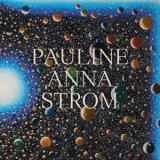
This is long overdue. I mean, looooooonnnnnng overdue. A solo album by Jim. The trap kit - so straightforward, so mysterious. What"s inside those things? Air and light - from which century? Which continent? Which planet? Depending on how and when you hit them it can be a vibration sent through a prehistoric breath, particles of Saturn"s atmosphere, the dead, wet leaves you walked through on the way to the first day of school. These are the memories of the drums on this record. Infinite and personal. Editing each other as they muscle to the front or soft shoe to the shadow. Cymbals can override/cancel everything out - wipe your memory clear or make the memory clearer. Drums are the instrument where you can feel the presence of the player the most - the full body - and sense the thoughts of the player the most. The instrument with the most choices to be made sends out the most brainwaves. A bouquet of brainwaves is on this LP. Jim oversees it all, surveys from the lost place we"re in, the void - the drumless song. We trust. We trust, Jim. His big green eyes search for the right tool (mallet, brush, etc), eyes that search you like you"re a song he wants to join, wants to see if he can add to or understand. Before humans, drums were playing - these drums. Genesis was a solo drum piece. After humans, these drums, this album. Someone - the last man - is out in a spaceship at the edge of space. He plays a single chord on a synth to set time free from its bind and then lets go. This album sets time free, lets it frolic, lets it graze, lets it remember. This is a record of thoughts, memories, surgery. A deft surgical operation you may not even realize is happening as it"s happening but you"re back on your feet when it"s over. Memories refreshed. Did you really even listen to it? -Bill Callahan, November 2023
High Llamas present Hey Panda - a modern pop music/deep listening experience that could only issue forth from their personal quadrant of the galaxy. Hey Panda projects soulfully through an enervating abstract of today"s popular music; the sound of the Llamas" stately melodies and expressive ditties laid open - blissfully shattered - with drums and vocals hitting different, burning sounds and contemporary production twists pulling the ear at every turn. For the past few decades, High Llamas have trafficked in contemporary pop sounds directed toward the avant end of the spectrum as much as not. But here the message was clear. Llamas" composer-in-residence Sean O"Hagan was determined to let go. Hey Panda does just that, with a set of tunes reflecting on multiple levels how definitions change over the course of a lifetime, radiating an optimism derived from the diverse conundrums of today. Eight years since their last release, the pop musical Here Come The Rattling Trees, High Llamas have reinvented themselves again, mixing their peerless harmonic voice with what Sean regards as the "extraordinarily good" production sounds of today on Hey Panda. Choosing not to look backward to former golden ages celebrated in earlier Llamas eras, Sean"s instead found himself opened up by the sounds of music brought into the house by his adult children and the sounds encountered at sessions for which he"s recently written arrangements. In addition to the more traditional contributions he made to The Coral"s Sea of Mirrors album, plus his score for the Safdie brothers" 2022 film production, Funny Pages, Sean"s drawn great inspiration through working with Fryars, Rae Morris, King Krule, Pearl and The Oyster, while also soaking up the work of Tierra Whack and Chicago"s Pivot Gang, and being cheered on from a distance by longtime admirer Tyler The Creator. Thus, Sean"s producer procedural has evolved again, with upgrades first detected in his 2019 solo effort, Radum Calls, Radum Calls. With a cover of Billie Eilish"s "Wish You Were Gay" arranged for Bill Callahan and Bonnie Prince Billy"s Blind Date Party, along with his COVID-era solo single, "The Wild Are Welcome", Sean has leveled up again and again, leading to the delirious revelations of Hey Panda. Hey Panda"s wide reach is aided by two co-writes from Bonnie "Prince" Billy, (who bonded with Sean over a shared love of gospel soul during writing sessions), guest vocals from Rae Morris and Sean"s daughter Livvy, production twists from Fryars and the stalwart, flexible presence of High Llamas. For all of its sense of departure, Hey Panda is a movement in the High Llamas oeuvre that"s been a long time in development. Aspects of soul music were addressed at the time of Can Cladders; similarly, aspects of electronic dance music were in the mix in the late 90s, around the time of Cold and Bouncy. But nothing up to now has refocused the music of High Llamas so completely. Sharing the impulse of late-period Miles Davis and Quincy Jones, with further inspiration from Steve Lacy, SZA, Sault, No Name and Ezra Collective, among many others, Sean O"Hagan and High Llamas are living joyfully in the new and the now, with Hey Panda.
Mesmerizing and exuberant Argentinian La Yegros, probably the most magnetic artist on the South American continent, is back with a new album!
The undisputed Queen of "Nu Cumbia" has not rested on her laurels. Surrounded by the same accomplices who have supported her for the last ten years, but eager to renew herself, she has set about recording her fourth album, which stands out from her discography. Although her personal folklore is still rooted in South American folklore, La Yegros is now absorbing contemporary, global music, while tackling intimate, often melancholy and even painful subjects, which she overcomes with the same resilience that drives her in concert. Nothing stands in the way of this Argentinian whirlwind, all the more fascinating for the fact that personal considerations are now surfacing beneath the veneer of the party atmosphere she sets alight.
La Yegros returned to the stage in 2022 to celebrate the 10th anniversary of Viene de Mí, her single hit from the self-titled album, released in 2012 in Argentina and then worldwide in 2013, which catapulted her to international fame. We then discovered a singer who had grown up in the traditions of her country. Her parents come from Misiones, a province bordering Brazil and Paraguay, where balls are filled with the sounds of chamamé (a mix of polka and Guaraní music), Carnavalito (Andean folklore) and Colombian Cumbia. But she herself is a native of Buenos Aires, whose nights are enlivened by the bass of Dancehall and electronic music.
These influences have merged in two further successful albums, Magnetismo (2016) and Suelta (2019), followed by high voltage tours during which La Yegros has been able to display her generous nature, inexhaustible energy, exuberant personality and infectious enthusiasm.
To record her new album entitled 'HAZ', La Yegros has put her faith in the same team that has worked with her since Viene de Mí. On one hand, producer Gaby Kerpel (also known as King Coya), a pioneer of synthetic experimentation applied to traditional music, who has remained her faithful accomplice for over twenty years. On the other hand, composer Daniel Martín, who knows how to come up with melodies to dream about and hymns to sing along to. Inseparable and complementary, the trio continues to concoct this mesmerizing mixture where acoustic instruments meet samples and the rolling of machines. But the new productions don't rely on a tried and tested formula. Generally co-produced between France and Argentina, they break away from over-defined genres. La Yegros knits together new rhythms and incorporates sounds that are unheard of in her country, derived from the latest urban trends, as well as echoes of reggae and funk. As for the lyrics, signed alternately by the trio, they are embodied by La Yegros whose charismatic voice questions a period of her life tossed by waves of love and lovelessness, joy and sorrow, euphoria and anguish, indulgence and resentment.
The album is open to a wealth of musical styles. You'll hear funk guitar and Andean flutes, melancholy accordion and rolling drums, Tuareg blues enhanced by brass, house and electro Cumbia loops, and the bassoons of a chamber orchestra. The folklore 2.0 of La Yegros, nourished by its colorful inspiration, at times tender or exalted, has been imagined as a hymn to love and the contradictory feelings that come with it. As always, it has also been conceived with the stage in mind. Hatching in a storm of overturned emotions, the album is all the more explosive for the strength of the live show that accompanies it. In addition to the usual line-up of guitar, accordion and percussion, a musician handles synthesizers and machines to boost the electronic turboshaft. In any case, you can count on the singer to assert her increasingly clear-cut character with each new project. And, above all, she won't give up. L.a Yegros is back and her batteries are fully charged.
Whitney Houston’s self-titled debut album has few parallels. Viewed solely through the lens of sales numbers, Whitney Houston is a watershed statement on par with the most commercially successful and culturally dominant LPs ever released. Having sold more than 14 million copies in the U.S. and upwards of 25 million units worldwide, the 1985 LP became the equivalent of the television show or blockbuster film that everyone collectively experiences and discusses. Nearly four decades later, it’s lost none of its appeal or magnetism — and its artistic significance and historical import have only grown.
Sourced from the original master tapes, pressed at RTI on MoFi SuperVinyl, and strictly limited to 4,000 numbered copies, Mobile Fidelity's 180g SuperVinyl LP of Whitney Houston presents the breakthrough in audiophile sound for the first time. The signature traits Houston exhibits on every song — her three-octave range, radiant warmth, personal conviction, impossibly controlled register — come across with exceptional clarity, focus, and presence. Free of artificial ceilings and constricted dynamics, this reissue plays with an openness, airiness, and balance that put the singer’s once-in-a-lifetime instrument and immortal artistry into proper perspective.
It does the same for the songs’ cascading melodies and captivating arrangements. Individually produced by one of four renowned industry veterans — Kashif, Micheal Masser, Jermaine Jackson, and Narada Michael Walden — each composition feels grander, closer, more genuine. A vocal spectacular, Whitney Houston benefits from the high-end characteristics of SuperVinyl, which include a nearly inaudible noise floor, superb groove definition, and dead-quiet surfaces. This is how an album that changed the direction of popular music — opening previously inaccessible doors for Black artists; bringing smooth-singing vocalists back into the mainstream; kickstarting a movement that soon included several “divas” who would command the charts through the early 21st century — should look and sound.
Though Houston’s seemingly effortless performances suggest otherwise, creating the record Rolling Stone ranks as the 257th Greatest Album of All Time wasn’t easy. Nearly 18 months were required to identify songs suitable for a still-unknown singer who did not fit into the conventional frameworks of the mid ‘80s. Confident, powerful, and prodigiously talented, Houston would forge her own parameters with Whitney Houston. In the process, she obliterated the stubborn lines between R&B and pop, Black and white radio. She dared to reimagine who could be a superstar and then went out and defined the role. Recorded for nearly $400,000 and released on Valentine’s Day, the LP exceeded the wildest expectations of those most closely associated with it — save for Houston and her family.
Having made her first public appearance at the age of 11 singing at a Baptist church, Houston understood pressure and knew her way around, inside, and through a song. The invaluable guidance and support she received from her mother, Cissy, an accomplished gospel vocalist who backed Aretha Franklin and Elvis Presley, are on display throughout Whitney Houston. They arrive in the types of authoritativeness, discipline, and diction rare for even most seasoned veterans — and unheard-of for a 21-year-old newcomer. Houston brings a soulful elegance, understated glamour, and in-the-moment rapture to every note. Moving up, down, or staying in the middle of the vocal ladder; channelling softness or sweetness; showing restraint or increasing the volume, she is a marvel of emotionalism, a dynamo who can seamlessly transition from one mood to another within a verse.
Though the 10-track LP largely concerns itself with the ballad tradition, Houston covers the bases, getting into an R&B groove on the fleet “Thinking About You,” turning up the heat on the duet “Take Good Care of My Heart,” and investing the contagious dance-pop confection “How Will I Know” with all the anxiety, hope, energy, and enthusiasm its lyrics demand. Featuring her mom on background vocals and Houston’s pitch-perfect tone, uncanny precision, and skyscraper highs (no AutoTune here, friends), the synth-based anthem propelled Whitney Houston into the stratosphere, the vocalist into regular MTV rotation, and the term “crossover” into popular parlance. The double-platinum single reached No. 1 on the Hot 100, Hot R&B, and Adult Contemporary charts — a trifecta that foreshadowed accomplishments that would ultimately crown Houston as the most-awarded female artist of all time.
Whitney Houston became the first album by a Black female performer to top the Billboard charts. It remained there for 14 non-consecutive weeks en route to claiming the title of the best-selling LP of 1986. It stands as the first debut and first album by a solo female artist to spawn three No. Hits, as well as the first album by a Black female artist to top the year-end charts in Australia and Canada. These are just a handful of the accolades — along with four Grammy nominations — that surround a set that also contains the unforgettable ballad “Saving All My Love,” string-accompanied “Greatest Love of All,” and sensual “You Give Good Love.”
As TIME observed in an article written two years after the album took the world by storm: “This is infectious, can't-sit-down music, and her performance dares the listener not to smile right back.” We’re still smiling.
Black Truffle is thrilled to announce a major archival release from legendary American composer and live electronics innovator Richard Teitelbaum, centred around his soundtrack for Suzan Pitt’s cult 1978 animation Asparagus. Best known to some listeners for introducing Europe to the Moog synthesizer as a founding member of Musica Elettronica Viva in Rome, Teitelbaum’s extensive and radically experimental body of work includes collaborative recordings with master improvisers like Anthony Braxton, Andrew Cyrille and George Lewis, intercultural experiments combining electronics with non-Western instruments such as the shakuhachi, works for computer controlled piano, and large-scale multi-media operas. Recorded at York University, Toronto in 1975–1976, ‘Asparagus (European Version)’ sprawls across both sides of the first LP. Discovered by composer Matt Sargent in Teitelbaum’s tape archive, this is a previously unheard major work for Moog modular and Polymoog synthesizers, unique in Teitelbaum’s oeuvre for its lushness and gently melodic quality. The music unfolds slowly, submerging lyrical melodies and burbling arpeggios into uneasy, glacially shifting harmonic swells, the luscious texture thickened with subtle changes of modulation and phase, calling up the shifting layers of Costin Miereanu’s classic Derives or the kosmische Musik tradition more than any academic synthesizer exercise. Teitelbaum incorporated much of this material into his soundtrack for Suzan Pitt’s Asparagus, which receives its first official release here. Asparagus, famously paired with David Lynch’s Eraserhead for a two-year run of midnight screenings at New York’s Waverly Theatre, uses hand-drawn and stop animation to unfurl an oneiric succession of images, beginning with a sequence in which the female protagonist defecates two stalks of asparagus, which multiply and float out of the toilet bowl to form the letters of the title. Teitelbaum’s soundtrack interweaves delicate drifting tones from the ‘European Version’ with contributions from Steve Lacy and Steve Potts on saxophones, George Lewis on trombone and Takehisa Kosugi on violin. Edited closely to the film, even without images the soundtrack proposes a surreal journey through floating synth tones, squealing horns, propulsive arpeggios, distant chatter, and an old-timey waltz. The final side of the set presents a new realisation of Teitelbaum’s text score ‘Threshold Music’, performed at a memorial concert at Roulette, New York in 2022 by Leila Bourreuil (cello), Alvin Curran (sampler and objects), Daniel Fishkin (daxophone), Miguel Frasconi (glass objects) and Matt Sargent (lap steel). The piece asks musicians to match their instrumental volume to that of the sounds of the environment in which they play, sometimes with the addition of recorded environmental sounds, reinforcing frequencies they encounter in listening deeply to their surroundings. Here the players use a field recording taken at Teitelbaum’s home in Bearsville, New York, their long tones and shimmering, glassy textures delicately emerging from the white noise of the location recording. Released with the full approval of both Richard Teitelbaum and Suzan Pitt’s estates, Asparagus is illustrated with striking images from Pitt’s film and accompanied by detailed liner notes by Francis Plagne. These previously unheard pieces shed new light on the work of a key composer in the American experimental tradition, offering up some of Teitelbaum’s most beautiful and engaging music.
out of Stock
Last delivered 2 years ago available to reorder, subject to availability
Our fifth chapter is the one where we seek, savor, and settle. The muse found us in the depths of raising children, nurturing relationships, surviving a world-changing virus, bidding farewell, shifting our mindsets, and discovering a sense of peace heretofore unseen. Our third decade of life has proven to be one of routine, rest, and realization, and these songs are about the lessons we’ve learned. We’ve learned to be space-holders and defenders of the people we hold close. We’ve learned from deep, steady love in various forms. We’ve learned to let go of people and perceptions and priorities that just didn’t make the cut as we weighed what is right and important and worth keeping. We’ve learned how all the things we’ve always treasured continue to withstand the pressure of time. If you notice an upward trend to the mood and emotions, you’re on target-we have found calm waters, for now. - The Secret Sisters (2023)
Mind, Man, Medicine by Secret Sisters, released 29 March 2024, includes the following tracks: "If the World Was a House", "Planted", "I Needed You", "Same Water" and more.
This version of Mind, Man, Medicine comes as a 1xCD in a(n) Digipak packaging.
It’s obvious listening to Sarah Shook and the Disarmers’ clear-eyed, biting, and unafraid songs that integrity is the most important thing to the Chapel Hill, North Carolina, country-punk outfit. “A lot of artists are in this industry for fame, recognition, and money but those things don’t mean anything to me,” says bandleader River Shook. “Songwriting is it for me. It’s the only real healthy coping mechanism I've ever had. It’s life-saving. I don't care about any superficial things when I’m making a record.” On their resonant fourth album Revelations, produced by Shook and out March 29 via Thirty Tigers, these raw and resilient tracks come first. Throughout, Shook’s deft storytelling documents regular people getting by and keeping on, all presented without filter or pretension. In 2022, Shook was remarkably productive. They released two albums: debut solo indie rock record Cruel Liars under the moniker Mightmare (Kill Rock Stars) and a third Disarmers full-length called Nightroamer (Thirty Tigers). Compared to every Disarmers record before that, which captured the in-the-room energy of the band with live recorded songs, the latter LP was instead more of a product of the studio with meticulous tracking sessions and an outside producer. While that effort was well-received, Shook believed the songs on Revelations deserved a more direct approach. “Since the Disarmers started in 2015, our strength has always been in our live performance,” says Shook. “To me, an album should capture the essence of a band. With this new set of songs that are all super special to me, I didn't trust anybody else to capture the songs and decide how to best serve each song.” Shook, who honed their production skills with their Mightmare LP and Izzy Ryder’s debut record, confidently took the reins during a blistering recording session, capturing 10 songs in two days. For Shook, it was paramount the recordings match the band’s tangible live ferocity because these songs boast their most immediate lyrics yet.
For fans of: Adolescents, Fear, Idles, Agent Orange, Christian Death, Rocky Horror, Magazine. LP on Blue, White, Red blended vinyl. True Sounds of Liberty date back to 1978 and the birth of punk rock/hardcore in Los Angeles. Playing with the fury of their hardcore contemporaries but with a goth/death rock image and poppier melodies, T.S.O.L. quickly set themselves apart from the pack and made it a mission to continually explore new sounds and styles. On this, their 12th long-player, the band has combined a handful of recent singles alongside all-new recordings helmed by Paul Roessler at Kitten Robot Studio. Fronted by singer Jack Grisham alongside guitarist Ron Emory and bassist Mike Roche (all from the band’s first line-up), they are joined by longtime keyboardist Greg Kuehn and Antonio Hernandez on drums. New punk anthems such as “Low-Low-Low,” “Never Go Home” and “The Way You Groove” are paired with covers of “The Rhythm of Cruelty” (Magazine), “1 Thing” (Amerie), “Sweet Transvestite” (yes, that one, featuring Circle Jerk Keith Morris as Brad) and a reasonably straight-forward reading of “What a Wonderful World.” Punk Rock means giving the high sign to the rules, and this is most definitely punk rock.
The word Asapani is part of the artistic vocabulary of Paolo "Batà" Bianconcini, percussionist of the La Scimmia Records collective, founding member of the Circolo Psiconautico and part of the Neapolitan bands Parbleu, Funkin' Machine and Nu Genea. This ancient-sounding term is a creation of the artist, who defines it as a word of nature, but also the (italian) acronym of Listen to the Silence, Listen to the Peace, Listen to the Inner Nothingness. More than a simple term, an exhortation.
The music contained in Asapani was written and produced between 2022 and part of 2023 by Paolo “Batà” Bianconcini who together with the Circolo Psiconautico (Paolo Petrella on bass and synth, Pietro Santangelo on wind instruments and Roberto Porzio on synths) and takes shape from observation of time and the infinite possibility we have of blocking its fragments and making them our own and then sharing them in another form. The intent is to transport the listener outside of himself, through sound vibrations, during the span of four long tracks that melt into each other feeling like one singular body of work.
This album spans several genres, but at the same time is unique in its style. Spiritual jazz blended with primitive settings, achieving a sensation of sonic primitivism. The listener is projected into a circle of musicians who, sitting around a fireplace, are transported towards infinity by their internal vibrations.The research starts from the four elements of nature (water, fire, earth and air) and thus uniting and fusing with each other they make us question our existence, our depths.
As Batà himself explains, starting from the four fundamental elements in order to keep the search for the fifth element constant.
A location, Melizzano, on the western slopes of Monte Taburno, where the Batahaus stands, the physical and spiritual home of Batà, a magical place in which the Circolo Psiconautico meets, with the aim of navigating the waves of the unconscious and composing music which, through contamination and experimentation, captures the moods of the moment and projects images and colours from the inside out that speak to everyone. Like a real club, the Psiconauti come together to give each other the chance to explore together, create suggestions and get excited among friends.
out of Stock
Last delivered 2 years ago available to reorder, subject to availability
Causa Sui's three volumes of Summer Sessions are back in print! This time on the band's own label, on individual LPs for the first time since they were first released in 2008 and 2009. Re-packaged in El Paraiso's signature style. Originally the Summer Sessions were intended as a side project for the band - a chance to explore their love for other genres such as American free jazz, krautrock, 1970s soundtracks, as well as the psychedelia and detuned stoner-rock that characterized Causa Sui's first two albums. But these three albums came to define the band, and have become modern classics of psychedelia and progressive rock since their initial release ten years ago. In a scene often characterized by loyalty to a specific period, there's something refreshing about Causa Sui's eclectic approach. With several guest appearances by Coltrane-devotee Johan Riedenlow on sax and electronics wiz Rasmus Rasmussen, Causa Sui venture far beyond stoner-rock platitudes. Take the grandiose opening statement for example - the 24 minute "Visions of Summer" taking up the entire A-side: here new and old sounds dissolve in a mindbending excursion that recalls Future Days-era Can, breezy tropicalia or Herbie Hancocks Mwandishi group, as much as it sparks associations to Kyuss or Hendrix. Other tracks, such as the frenetic Rip Tide (vol. 2), heads into straight up free jazz territory with Riedenlow going absolutely bonkers on the sax. But this set also allows plenty of room for atmospheric pieces such as the sun-drenched "Venice by the Sea" (vol. 3) or the Morricone-esque "Cinecitta" (vol. 2).
out of Stock
Last delivered 2 years ago available to reorder, subject to availability
96kHz - 48-bit HD Audio with digital booklet including original photography by Christopher Kayfield and liner notes by Shaun Brady.
Pianist Kevin Hays, bassist Ben Street, and drummer Billy Hart reunite for a second, scintillating trio date, BRIDGES, featuring original compositions by Hays and Hart with classics by Wayne Shorter, Bill Frisell, The Beatles, and Milton Nascimento.
Hays Street Hart, the trio of pianist Kevin Hays, bassist Ben Street, and legendary drummer Billy Hart, recorded their acclaimed 2021 debut, ALL THINGS ARE, under less than optimal conditions. The album began life as a performance in honor of Hart’s 80th birthday in December 2020, live-streamed from an empty Smoke Jazz Club in the final weeks of that grueling pandemic year. Despite those adversities, the music they created that night was spectacular enough to convince all involved that it should be released.
Two years later, the trio has reconvened, this time fully cognizant that they were going to record an album at Sear Sound Studios in NYC. The captivating BRIDGES brilliantly spotlights the unique chemistry and shared spirit of exploration that emerged fully formed on that initial impromptu session. The title succinctly hints at some of the reasons why Hays, Street and Hart work so well together: this is a trio that bridges generations, certainly, as well as a wealth of diverse experience and inspiration. But it also sums up a mutual desire to bring people together through music.
“In this world that seems to be crumbling beneath our feet,” Hays explains, “we sense the need to make allies where there might be adversaries. On the most intimate level, interpersonally and inter-psychically we set out to overcome any number of misunderstandings and adversarial situations.”
Not that there was any antagonism to overcome within the trio itself. More than anything, Hays Street Hart is a mutual admiration society of the highest order. The esteem in which the pianist and bassist hold Billy Hart likely goes without saying. The drummer was ordained in 2022 as an NEA Jazz Master, just one of the many honors he has chalked up over a breathtaking career. He began his career with an apprenticeship under the revered vocalist Shirley Horn and went on to make notable music with such luminaries as Miles Davis, McCoy Tyner, Herbie Hancock, Wes Montgomery, Jimmy Smith, Stan Getz, and as part of the quartet Quest featuring David Liebman and Richie Beirach.
But Hart is if anything, even more laudatory toward his younger bandmates. Street has been a member of the drummer’s stellar quartet for two decades, alongside pianist Ethan Iverson and saxophonist Mark Turner, a tenure that speaks for itself. As for Hays, Hart is quick to place the pianist in the exalted company of some of his iconic former collaborators.
“I’ve been lucky enough to have the chance to perform with Herbie Hancock and McCoy Tyner,” says Hart modestly. “Each generation presents their own equivalent, and Kevin is an example of the latest innovations. There was Herbie and McCoy, then it was Chick Corea and Keith Jarrett, and then you have what's coming next. I think Kevin is definitely part of that continuum.”
Though Hays sticks strictly to the piano on BRIDGES, he is also an accomplished singer whose vocal instincts fuel his inventive and lyrical melodicism. Street points to those facets as key to the connection between the pianist and Hart, who has enjoyed several meaningful collaborations with vocalists.
“It always seems to me that Kevin has the capacity to sing in his mind and then accompany himself on the piano,” Street describes. “That makes for such a nice connection with Billy, who has played with and learned from so many singers. I don't even feel like we're playing as a piano trio most of the time; it feels more like a quartet.”
Those qualities are especially clear on Hays’ “Butterfly,” which opens the album. Though it’s performed here as an instrumental, the pianist has composed lyrics for the piece, and its gorgeous, song-like quality shines through. Hays also contributed the breathtaking ballad “Song for Peace,” highlighted by Hart’s gentle, embracing brushwork and Street’s sturdy, stentorian tone. The pianist’s third original, “Row Row Row,” is constructed on a twelve-tone row, but as the playful title suggests, it has none of the more stringent qualities of the serialist composers.
Hart’s stunning “Irah,” originally recorded on his quartet’s self-titled 2006 debut, is dedicated to the composer’s mother and was recorded at Street’s suggestion. The bassist also brought guitarist Bill Frisell’s reflective “Throughout” to the date, imagining Frisell’s Americana influences would resonate with the similarly inclined Hays, who approaches the tune with a harp-like beauty. Hays’ love of pop and rock music is also reflected by the inclusion of The Beatles classic “With a Little Help from My Friends.”
The trio pays tribute to the late, great Wayne Shorter with “Capricorn,” originally released on the composer’s 1969 Blue Note album SUPER NOVA and later included on the Miles Davis Quintet set WATER BABIES. Hart called Shorter one of a kind. I think of the many times I heard him excel – with the Maynard Ferguson Big Band, with Art Blakey's Jazz Messengers, with Weather Report. And in each case, he was innovative.”
BRIDGES closes with the title track, a dazzling piece by the great Brazilian singer and songwriter Milton Nascimento, which Hays calls “one of my favorite compositions ever, by anybody.”
BRIDGES was recorded under ideal studio conditions by a now-established trio with a weeks-long European tour under their belts. Perhaps what’s most remarkable about the album is not that Hays, Street, and Hart play so masterfully together – with three artists of their caliber, who could expect any less? – but that this second outing maintains the bold spirit of inquisitiveness and spontaneity that its predecessor naturally possessed. Credit that to a trio perpetually determined to discover new bridges worth building.
Mr Lee Perry who in no uncertain terms defines the words musical genius, recorded some of the most inspiring, soulful, funny and weird / wild reggae music ever put down on tape. Working through all the manifestations of reggae from Ska to Roots and Dub, where his ground breaking 1973 ‘Blackboard Jungle’ LP, set the standards, he was an innovator. If this was not enough his recordings of THE WAILERS, many believe to be their finest work. Born Rainford Hugh Perry, 28 March 1936, Hanover, Jamaica. He began his career at the grand age of 16, working for Clement ‘Coxone’ Dodd’s sound system, rising quickly to the position of record scout and organising recording sessions during his 3 year period 1963-1966. Restlessness and unsatisfied with credit he felt due to him he moved on to work with Producers J.J. Johnson and Clancy Eccles, the later of which would help him set up his ‘Upsetter’ label in 1968,which would see his first of many recordings telling the injustices done to him by previous employees. ‘The Upsetter’ track itself pointed at Mr Dodd but reflected back to Perry when he inherited it as a nick name along side many others during the coarse of his career, including ‘Scratch’, again taken from one of his recordings ‘Chicken Scratch’ recorded in 1965/1966. Perry’s work in 1968 with producer Joe Gibbs was fruitful and resulted in many successfulreleases, but again lack of credit and itchy feet, it was time to move on. But not without leaving his trademark recording summing up his feelings at the time ‘People Funny Boy’ this time aimed at Mr Gibbs. Still not having a studio of his own, Perry recorded at the various Kingston establishments of the time, Randy’s Studio 17 on North Parade, Dynamics on Bell Road and Harry J’s on Roosevelt Avenue where the bulk of the aforementioned recordings with The Wailers were carried out. During this time and the years that followed Perry has built up a vast catalogue of backing tracks / instrumentals, he had cut over a 100 releases on his ‘Upsetter’ label alone. A library of music that he has an uncanny knack of reutilising to work into something new when put against a new song / singer. This collection of rare and unreleased dubs stems from his 1971-1974 period. We can here on tracks like ‘Perry’s Jump Up’ Ska-ish up tempo chopping guitar cuts leading through to organ laden tracks like ‘Roots Rock Dub’. The sound moving to a slowed down rhythm on ‘Perry in Dub’ which would predominate his sound, when in mid 1974 he’d open his own studio at his home in the Washington Gardens district of Kingston. We hope this selection of lost treasures will add to the jigsaw that makes Mr Perry’s output now spanning over 5 decades so remarkable.
RESPECT.... JAH FLOYD.
out of Stock
Last delivered 2 years ago available to reorder, subject to availability
Repressed! Presented here, the definitive reissue of a lauded and misunderstood Krautrock album, German Oak’s Down in the Bunker.
The release has been fetishized and demonized, lauded and misunderstood for nearly four decades. In this definitive reissue of the album, the German Oak trio – together again after 30 years apart – have approved the remastering of their 70s music; finally tell the story behind the creation of their dark, brooding album – and the occult-obsessed record collector behind the original album’s release and its myth – and they share previously unreleased music and photos.
This two LP set presents the album as it was initially released, and a second disc of other songs by the band, both rare and previously unreleased
Most audiophiles know Alan Parsons Project's I Robot by heart. Engineered by Parsons after he performed the same duties on Pink Floyd's Dark Side of the Moon, the 1977 record reigns as a disc whose taut bass, crisp highs, clean production, and seemingly limitless dynamic range are matched only by the sensational prog-rock fare helmed by the keyboardist and his creative partner, Eric Woolfson. Not surprisingly, it's been issued myriad times. Can it be improved? Relish Mobile Fidelity's stupendous UltraDisc One-Step 180g 33RPM box set and the question becomes moot.
Mastered from the original master tapes and pressed at RTI on MoFi SuperVinyl, I Robot comes to life with reference-setting realism on this numbered, limited-edition reissue. Boasting immaculate highs and lows, generous spaciousness, and see-through transparency that takes you into the studio with Parsons and Woolfson at Abbey Road, this definitive edition is designed to demonstrate the full-range capabilities of the world's best stereo systems while offering listeners the convenience of having all the music on one LP.
Featuring a nearly inaudible noise floor, this transcendent UD1S edition functions as a repeat invitation to savor reference-grade soundstages, immersive smoothness, sought-after instrumental separation, three-dimensional imaging, and consummate tonal balances. Able to be played back at high volumes without compromise or fatigue, it is a demonstration record for the ages – the likes of which are no longer being made. This is the very reason you own and invest in high-end audio gear.
The special characteristics of this UD1S version extend to the premium packaging. Housed in an elegant slipcase, the reissue features special foil-stamped jackets and faithful-to-the-original graphics. Aurally and visually, it is made for discerning listeners who prize sound quality and production, and who desire to fully immerse themselves in everything about this conceptual landmark. The Alan Parsons Project's most famous record deserves nothing less.
Inspired by and loosely based around the Isaac Asimov stories of the same name, I Robot delves into themes of artificial intelligence and technological dominance that make the record extremely relevant in the 21st century. Indeed, Parsons and Woolfson's pinnacle creation dovetailed with the ascendency of Star Wars, which itself is experiencing a rebirth in an age of self-driving cars, smart devices, and mindless automation. Lyrically, songs such as "The Voice" call into question human behavior – and their relationship to increasing robotic supremacy – in everyday life. Parsons and Woolfson reflect the associated paranoia, dichotomy, and transformation via shifting sci-fi arrangements steeped in drama and moodiness.
The absorbing tunes on I Robot also continue to fascinate due to their perfectionism and innovation. Borrowing from Pink Floyd's strategies, Parsons and Woolfson utilize a looped sequence on the title track to create new downbeats. "Some Other Time" employs two different lead vocalists and yet gives the illusion that only one is involved. Captivating strings, a piccolo trumpet, and bona fide pipe organ grace "Don't Let It Show." The origins of "Nucleus" stem from a unique analog keyboard concoction dubbed "the Projectron," devised by Parsons and electronic engineer Keith Johnson. Andrew Powell's orchestral and choral arrangements top it all off, with "Total Eclipse" arriving as a frightening track that presages the climactic "Genesis Ch. 1 V. 32."
Does man or machine win in the end? Decide as you get lost in Mobile Fidelity's UltraDisc 180g 33RPM LP pressing. Secure your numbered copy today!
More About Mobile Fidelity UltraDisc One-Step and Why It Is Superior
Mobile Fidelity Sound Lab's UltraDisc One-Step (UD1S) technique bypasses generational losses inherent to the traditional three-step plating process by removing two steps: the production of father and mother plates, which are created to yield numerous stampers from each lacquer that is cut. For UD1S plating, stampers (also called "converts") are made directly from the lacquers. Since each lacquer yields only one stamper, multiple lacquers need to be cut. Mobile Fidelity's UD1S process produces a final LP with the lowest-possible noise floor. The removal of two steps of the plating process also reveals musical details and dynamics that would otherwise be lost due to the standard multi-step process. With UD1S, every aspect of vinyl production is optimized to produce the best-sounding vinyl album available today.
MoFi SuperVinyl
Developed by NEOTECH and RTI, MoFi SuperVinyl is the most exacting-to-specification vinyl compound ever devised. Analogue lovers have never seen (or heard) anything like it. Extraordinarily expensive and extremely painstaking to produce, the special proprietary compound addresses two specific areas of improvement: noise floor reduction and enhanced groove definition. The vinyl composition features a new carbonless dye (hold the disc up to the light and see) and produces the world's quietest surfaces. This high-definition formula also allows for the creation of cleaner grooves that are indistinguishable from the original lacquer. MoFi SuperVinyl provides the closest approximation of what the label's engineers hear in the mastering lab.
Suffolk-based singer songwriter James Varda’s fourth and final album before his death from a long battle with cancer in 2015, Chance And Time, set for a vinyl only reissue on Unspun Heroes is an astonishing aural document of a creative, forward -thinking musician coming to terms with a life slowly evaporating away. There is hubris, melancholy and an undeniable weight of sadness in these ten songs but, miraculously, there is also a stoic realisation and acceptance from Varda that is both heart-wrenching and deeply affecting. On Chance And Time Varda reconnects the human spirit to the land, a heavy, fearful heart to an optimistic soul, and in a beautiful poetic flourish gives a real tangible sense of loving and hope to his family and friends offering genuine reassurance and even, at times, a green light for celebration.
Carrying a certain air of mystique, that same sense of a ‘other worldliness’ if you will of say a Karen Dalton or a Jeff Buckley, Varda’s delivery and tone carries huge emotional weight here and an unique ability to add an honest perspective and warmth to the starkest of realities. The hard hitting impact of the opening tracks is blunt and sharply defined. There is pain, hardship, and fear wrapped in these tales - ‘The Doctor Spoke, Two Hearts Broke” - made all the more hitting as this is a real life journey in the here and now being catalogued. As we move towards the second half of the record there is something even deeper and truly incredible at play. Varda’s whole demeanor is one of understanding and acceptance - hear the celebratory shamanic vibe of the extraordinary ‘Pass It On’ and the poignantly reflective, chokingly sad finale ‘We Won’t Dream’ - bringing to an end a record that will leave a mark on everyone who hears it. Real art is both timeless and omnipresent, these songs from James Varda will hang in the air forever and be there for those who look to find understanding, joy and a sense of hope. Chance And Time is both an extraordinary record and poignant study of life and living, of death and what comes after.
James Varda released four albums between 1988 and his death in 2015. A fledgling career beginning on the singer-songwriting folk scene where his arrival was met with both curiosity and critical acclaim as was his debut, the John Leckie produced Hunger. Any momentum was lost however as it would be ten years before the next, In The Valley was met with a ruffle of applause. Cancer took hold of the troubadour and for a number of years Varda lived life and wrote songs until The River And The Stars appeared like a phoenix from the flames as he began to wrestle with the realities of his situation. It’s a record that beautifully lays the ground for this his masterpiece that was to follow.
Unspun Heroes, a new label set up by Simon White, has the sole purpose of finding and reissuing albums that he considers both undervalued and seemingly ignored. All releases will be on vinyl only complete with Obi strip and extensive liner notes. Each will be individually numbered and limited.
Of the countless accolades and analyses that surround Blue, no point is more significant than the fact that the 1971 Joni Mitchell album continues to become more popular, revered, referenced, and relevant with each passing day. Such vitality is not only extremely singular; it is the ultimate measure of great art and, in the context of Blue, indisputable proof of the record's accessibility, integrity, and timelessness. If the most brilliant and everlasting music seeks to find truths shared by all of humanity, Blue can be said to be universal doctrine.
Sourced from the original analogue master tapes, pressed on MoFi SuperVinyl, and strictly limited to 12,000 numbered copies, Mobile Fidelity's UltraDisc One-Step 180g 45RPM 2LP box set presents the landmark album with reference-grade detail, tonality, and directness. Marking the first time the beloved LP has received audiophile-quality treatment, it's one of six iconic 1970s Mitchell records Mobile Fidelity is reissuing on definitive-sounding vinyl and SACD sets.
Everything about Blue sounds more intimate, involving, and inescapable on this transparent pressing, which benefits from a virtually non-existent noise floor and superior groove definition. Mitchell's voice, positioned front and center, and primarily accompanied by minimalist acoustic guitar, piano, and dulcimer playing, comes across clearly and prominently. Suspended notes and radiant chords double as question marks, commas, and phrases. The in-the-room presence and spatial dimensionality make absolute the full-range spectrum of introspective emotions — hurt and distress, self-awareness and joy, difficulty and uncertainty, warmth and desire — Mitchell navigates, queries, and contemplates throughout the record. The defencelessness the singer once spoke about is laid bare here like never before.
The packaging of the Blue UD1S set complements its distinguished status. Housed in a deluxe box, both LPs come in special foil-stamped jackets with faithful-to-the-original graphics that illuminate the splendor of the recording. This UD1S reissue exists as a curatorial artifact for listeners who prize sound quality and production, and who desire to engage themselves in everything involved with the album, including the unforgettable cover photograph of a ruminative Mitchell shot by Tim Considine.
Deemed the third Greatest Album of All Time by Rolling Stone; universally celebrated by critics, fans, artists, and educators; and defined by a spell of disarmingly vulnerable songs that are at once confessional, intense, spare, honest, painful, hopeful, and exquisite, Blue charts love, spiritualism, independence, and loss like no record before or since. Widely considered the album that established the singer-songwriter template, the largely autobiographical LP changed everything shortly after its original release in June 1971. Amazingly, it continues to do so more than five decades later.
An incalculable influence on generations of artists, it stands as the through-line from Carole King, Elton John, James Taylor, Joan Armatrading, and Leonard Cohen to Patti Smith, Carly Simon, Emmylou Harris, and Rosanne Cash to 21st century contemporaries like Brandi Carlile, Taylor Swift, Sharon Van Etten, and Courtney Barnett. Teetering between agony and optimism, it is — to borrow a phrase from Mitchell's eternal "A Case of You" — a bottomless "box of paints."
The beauty of the stripped-down arrangements, intoxicating melodies, and Mitchell's wisdom on Blue didn't go unnoticed. Critical acclaim, coupled with the depth of the material and Mitchell's reputation, propelled the album into the Top 20 in the U.S. and Top 10 in the U.K. Yet while so much pop music diminishes with age, Blue has defied norms and headed in the opposite direction. Its 50th anniversary year witnessed an outpouring of tributes, reflections, and testimonials that helped frame the record's escalating importance and symbolism — apt in an age in which women have become the prominent trailblazers in rock, R&B, and hip-hop.
Perhaps most succinctly, in a 2021 article celebrating the LP, the Los Angeles Times declared: "In 1971, nothing sounded like Joni Mitchell's Blue. 50 years later, it's still a miracle." Nothing, indeed. Yet "miracle" suggests Blue partially owes to a divine agent or inexplicable circumstance. And though Mitchell's bracing conviction and forthright sincerity can appear otherworldly, her musical approach and lyrical storytelling is nothing if not personal and human. What we hear is pure truth — no matter how aching, complicated, or stark.
Much has been written about the circumstances that inspired the songs on Blue: Mitchell's romances; her time overseas; her disdain for celebrity; her lingering sense of loss at having given up her daughter for adoption; her treatment by the very same industry that her music made uncomfortable; her prolonged search for resolution. These situations and experiences pushed Mitchell to question everything — especially big-picture concepts that have always obsessed mankind: fulfilment, autonomy, love, honesty, being.
"I wanna make you feel free," Mitchell sings on the record-opening "All I Want." Mission accomplished. Blue is liberation — and the start of a freedom that continues to impact music, culture, and identity today.
More About Mobile Fidelity UltraDisc One-Step and Why It Is Superior
Mobile Fidelity Sound Lab's UltraDisc One-Step (UD1S) technique bypasses generational losses inherent to the traditional three-step plating process by removing two steps: the production of father and mother plates, which are created to yield numerous stampers from each lacquer that is cut. For UD1S plating, stampers (also called "converts") are made directly from the lacquers. Since each lacquer yields only one stamper, multiple lacquers need to be cut. Mobile Fidelity's UD1S process produces a final LP with the lowest-possible noise floor. The removal of two steps of the plating process also reveals musical details and dynamics that would otherwise be lost due to the standard multi-step process. With UD1S, every aspect of vinyl production is optimized to produce the best-sounding vinyl album available today.
Dire Straits never made a big to-do about its final run. In classic understated British fashion, the band simply let its music speak for itself. And how. Originally released in September 1991, On Every Street became the group's swan song – a lasting testament to the influence, musicianship, and integrity of an ensemble whose merit has never been tainted by cash-grab reunions or farewell treks. It remains an essential part of the Dire Straits catalog and a blueprint of the distinctive U.K. roots rock the collective played for its 15-year career.
Sourced from the original master tapes, housed in gatefold packaging, and pressed at RTI, Mobile Fidelity's 180g 45RPM 2LP set of On Every Street presents the album like it has always been meant to be experienced: in reference-grade audiophile sound. Recorded at AIR Studios in London and produced by Dire Straits leader Mark Knopfler, it features all of the band's sonic hallmarks – wide instrumental separation, visceral textures, seemingly limitless air, broad soundstages, atmospherics that you can almost reach out and feel. Each element is made more vibrant, physical, and lifelike on this collectible reissue, which marks the first time this 60-minute work has been available at 45RPM speed.
Afforded generous groove space and black backgrounds, the songs from On Every Street burst with nuanced details and vibrant colors. Dire Straits' playing appears to float, their intricate performances organized amid hypnotic, fluid, three-dimensional arrangements. Mobile Fidelity's definitive-sounding set also brings into transparent view Knopfler's finely sculpted guitar lines, expressive tones, and laid-back vocals – as well as the balanced accompaniment from his band mates. Here's a record on which you can hear the full blossom and decay of individual notes, and imagine the size and shape of the studio. It is in every regard a demonstration disc. And it happens to be filled with timeless fare.
Remarkably, On Every Street almost never came to light. Dire Straits initially dissolved in September 1988 after touring behind its blockbuster Brothers in Arms and suffering the departure of two members. At the time, Knopfler professed his desire to work on solo material; bassist John Illsley also explored side projects. But Knopfler's decision in 1989 to form the country-leaning Notting Hillbillies reignited a spark to reconvene his primary band and craft a fresh batch of songs. Six years removed from Brothers in Arms, Knopfler, Illsley, keyboardist Alan Clark, and keyboardist Guy Fletcher teamed with A-list session pros – steel guitarist Paul Franklin, percussionist Danny Cummings, saxophonist Chris White, guitarist Phil Palmer included – to create what still stands as an unforgettable farewell.
The platinum record brings the band full circle in that it returns Dire Straits to a quartet formation; finds the group refreshingly out of step with the era's prevailing trends; and sees Knopfler and Co. knocking out song after song with the deceptive ease of a punter tossing back a pint at a pub. That subtle cool, clever poise, and innate control – signature traits that no other band ever matched – dominate On Every Street. Knopfler's clean, virtuosic six-string escapades unfurl with dizzying melodicism and economical efficiency. Led by his winding fills and focused solos, Dire Straits traverse a hybrid landscape of rock, jazz, country, boogie, blues, and pop strains with near-faultless prowess.
More than any other entry in the group's oeuvre, On Every Street welcomes quick detours down back alleys and into the depths of human souls. What makes it more brilliant is its staunch refusal to cater to commercial expectations or take advantage of prior successes; every passage feels true, every measure echoed in the service of song. It's evident in the humorous satire of "Heavy Fuel," closeted desperation of the witty "Calling Elvis," and shake-and-bake bounce of "The Bug." It pours from the album's darker corners, as on the high-and-lonesome melancholy of the title track and bruised emotionalism of "When It Comes to You."
Hinting at the open-minded approaches and boundless curiosity he'd embrace as a solo artist, Knopfler doesn't limit himself when it comes to style or subject matter. Look no further than "You and Your Friend," a shuffle whose all-inclusive lyrics encourage an array of interpretative meanings. Another of the album's deep cuts, "Iron Hand," comes on as one of the band's most memorable moments – the narrative addressing the abuses of power at the 1984 Battle of Orgreave during the U.K. miners' strike. Given cinematic heft by the expert production, the true-fiction account puts into perspective the richness, poetry, and depth of On Every Street.
"Every victory has a taste that's bittersweet," sings Knopfler on the title track. At least that bittersweetness seldom sounded so damn good on record.
Reissue! Poets of Rhythm founding members first crucial piece of the funk spectrum recorded as The Whitefield Brothers. A wear-your heart-on-your-sleeve, hypnotic, defiantly psychedelic funk album that is as modern as it is grounded in the great musical traditions from both sides of the Atlantic Ocean. Featuring members of the Dap Kings, El Michels Affair and Poets of Rhythm. “The Whitefield Brothers In The Raw remains as potent in 2022 as the day it dropped twenty years ago. Originally released in 2002, and later reissued via Now-Again, the LP’s panglobal brew of ragged psychedelic funk dripped different, defying easy markers of genre, era, and locality...live breakbeat drums and tribal chants...anchor the set’s twelve tracks. Hypnotic and humid, come for the polyrhythms, stay for the swirling dub adjacent blasts of trumpet.” - Aquarium Drunkard
On A Golden Shore arrives as The Hanging Stars reflect on a year of triumphs. With an Americana Music Association Bob Harris - sanctioned award and a Nashville sell-out in Third Man’s Blue Room with Jack White approvingly looking on, they’re a leading light in the UK Cosmic Americana cohort. Their standing has allowed them to pay less attention to any preconceptions of what they are ‘supposed to be’. On A Golden Shore - their fifth album and their second for the pioneering Loose Music, following 2022’s Hollow Heart - finds them definitively themselves and presents a set of disparate songs whose fundamental linkage is the band that made them. On A Golden Shore was recorded at Edwyn Collins’ Clashnarrow Studios with Sean Read producing. Singer/guitarist Richard Olson, drummer Paulie Cobra, multi-instrumentalist Patrick Ralla, plus freshman bassist Paul Milne – laid down the album’s backbone over eight days. Mostly recorded live, even the solos done as a piece. Much is first take because trying better, it never worked as well. Pedal-steel player Joe Harvey-Whyte created and added his parts at his London studio bringing ‘shimmery psychedelic goodness’. Smartly sequenced On A Golden Shore proceeds in clusters of songs; commencing with the free and easy choogle of ‘Let Me Dream Of You’, encompassing the sunny glam of ‘Sweet Light’, the baggy Balearic waft of ‘Happiness Is A Bird’, the pan pipes and bongos of the exotic ‘Golden Shore’, through to the rolling banjo of ‘No Way Spell’ and the celestial cascades of ‘Heart In A Box’. Fashioned instinctively On A Golden Shore is ultimately an album of sensation as much as thought, filled with fleeting moments of blissful excess, and stumbling, rushing flutters of sound; its evanescent psychedelia, divine choruses, and shards of strings combine into an infectious, compelling Cosmic Heartbreak Boogie.
Jards Macalé’s biography is a testament to the electrifying energy of music and the unwavering spirit of artistic rebellion. Macalé has remained true to his vision, unapologetically embracing the unconventional and challenging the status quo. His music, a conduit of emotion and a mirror to society, continues to weave a sonic tapestry that resonates with the souls of listeners.
In 2022, Macalé celebrated the momentous 50th anniversary of his debut solo album, a groundbreaking masterpiece released by Philips in 1972. This iconic record gifted us timeless tracks such as “Vapor Barato”, “Mal Secreto”, “Farinha do Desprezo”, “Revendo Amigos”, and “Hotel das Estrelas”. Its sheer brilliance united the realms of Brazilian music, infusing samba and bossa nova with the fiery essence of rock, classical harmonies, and the improvisational spirit of jazz. As the years passed, a new generation of musicians and fans discovered this gem, fueling its resurgent popularity and inspiring fresh collaborations.
Last year, Jards Macalé assembled a formidable new band, igniting stages across Brazil with a tour that now sets its sights on Europe. Together with Gui Held on guitar, the Paulo Emmery on bass, and Thomas Harres on drums, Macalé conjures an exhilarating homage to his illustrious body of work. This live performance embodies the untamed spirit and boundless musical freedom that define this visionary artist, transporting audiences to a realm where the past intertwines with the present in a breathtaking display of artistic prowess.
out of Stock
Last delivered 2 years ago available to reorder, subject to availability
Miles Davis' A Tribute to Jack Johnson is the best jazz-rock record ever made. Equally inspired by the leader's desire to assemble the "greatest rock and roll band you have ever heard,” his adoration of Johnson, and Black Power politics, Davis created a hard-hitting set that surges with excitement, intensity, majesty, and power. Bridging the electric fusion he'd pursued on earlier efforts with a funkier, dirtier rhythmic approach, Davis zeroes in on concepts of spontaneity, freedom, and identity seldom achieved in the studio — and just as infrequently accepted by the mainstream.
Sourced from the original analog master tapes, pressed on MoFi SuperVinyl, and housed in a Stoughton jacket, Mobile Fidelity's 180g LP reissue brings it all to fore with startling realism. Benefitting from SuperVinyl’s nearly inaudible noise floor, superb groove definition, and clean, ultra-quiet surfaces, this 180g LP showcases everything — from the bold tonality of the headliner's white-hot trumpet solos to the decay of crashing cymbals, carry of wiry guitar notes, and echoes of the studio — in reference fashion.
Bristling with exuberance, Davis' high-register passages explode with authority and commanding presence. Around him, a barrage of urgent backbeats, knifing riffs, and supple bass lines emerge amidst black backgrounds. One of the most prominent differences long-time fans will notice is how much more aggressive, immediate, and vibrant the music sounds, with those aspects central to the composer's original desires.
Utilizing wah-wah and distortion, the go-to instrumentalist of the performances— guitarist John McLaughlin — attacks with a nasty edge, slashing style, and vicious streak that allows A Tribute to Jack Johnson< cross the until-then-impenetrable divide between rock and jazz. Davis puts both feet in the former camp and erases any gap. The stories of the record’s creation are nearly as legendary as the sounds within: Two sessions, multiple jams, different sets of musicians (several uncredited), and near-miraculous production perfectionism that made it all appear cohesive.
The least-well-known masterpiece of Davis' career, the 1971 record — seamlessly assembled and spliced together by producer Teo Macero — was a victim of limited record-label promotion. Audiences also didn’t immediately know what to make of its original cover art — faithfully replicated here. In addition, the powers that be at Columbia Records were directing the public’s attention to Miles at Fillmore, a completely different kind of album guided by two keyboardists. A Tribute to Jack Johnson practically lives in a different universe, one from the future. To many listeners who did manage to hear it — among them critic/musician Robert Quine, Stooges leader Iggy Pop, and renowned critic Robert Christgau — it surpassed everything that came before.
Indeed, Davis treated it as a personal manifesto: An opportunity to salute the Black championship boxer admired for his threatening image to the establishment and impeccable taste in clothes, cars, women and music. Davis explains in the liner notes his affinity for Johnson — a stance mirrored by the defiant music, which hits with a prize fighter's force and reflects the graceful elegance with which a pugilist navigates the ring — and closes the album with a Johnson quote read by Brock Peters.
Inspired not only by Johnson but by Jimi Hendrix and Sly Stone, Davis changed his approach and his band. He surrounds himself with a cadre of musicians in their 20s and, in the case of bassist Michael Henderson, a 19-year-old fresh from touring with Stevie Wonder. Henderson gives Davis what he requested: boogie-based grooves that don’t lose shape or direction. Soprano saxophonist Steve Grossman, drummer Billy Cobham, and organist Herbie Hancock adhere to a similar aesthetic that prizes brazenness, innovation, and energy.
In that vein, during a portion of “Yesternow,” Davis segues into a separate performance (which became known in its entirety as “Willie Nelson”) played by guitarists McLaughlin and Sonny Sharrock, bass clarinetist Bernie Maupin, keyboardist Chick Corea, bassist Dave Holland, and drummer Jack DeJohnette. Dig it!
Talking with jazz scholar Bill Milkowski — who himself noted how McLaughlin’s unrestrained style, decibel-forward volumes, and rapid-fire power chords engendered himself to the rock crowd at the same time that his harmonics and syncopation still definitely made him a jazz player — guitarist Henry Kaiser summed up part of the appeal of A Tribute to Jack Johnson as well as anyone, saying: “It’s a jazz record that way way more open than other jazz records at the time, but still not free jazz. McLaughlin’s rhythm guitar playing on ‘Right Off’ — the use of different chords in a rock shuffle than what anybody had used before — was revolutionary.”
And to think that’s just one aspect of a record that contains multitudes. “Never let them forget it.” Indeed.
For a few years Leo Robinson was the sort of hidden secret you sometimes come across in local music scenes. First in Manchester and now in Glasgow, he’d pop up regularly on DIY bills or as local support to a touring act, quietly blowing them off stage with his rich baritone vocal and homespun lo-fi tales of folklore and animism. With The Temple – his debut on PRAH Recordings – he looks set to cross over from being a cult concern.
“There's a spectrum within the album between fully mythologising or symbolising my lived experience, and just stating it in very matter of fact terms - that push and pull between the need to abstract and the need to break through the abstraction and have an honest moment with oneself” he explains. “This is one of the themes of the album as well as part of the process. The aim was to take all these anecdotal or symbolic elements and merge them into one narrative and one world, in a way that you can find your way through the record as if it were a landscape or language with its own logic.”
The record takes on a pastoral, slightly baroque nature that Robinson partly attributes to a friend screening a lot of ‘70s BBC material in his book shop that they used to hang out at. There are also elements of jazz, flickering to life in “The Spring”’s piano-led finale and coda.
Thematically, Robinson likens it to a Jungian ‘Hero's Journey’, his voice possessing a character who goes through several defined stages of consciousness. From conception and the beginning of an earthly life, the first half of the album recognises the development of the protagonist’s narrative and identity, before “The Pink Light”’s freeform departure from the hitherto more song-based suite devastatingly shatters this. The second half of the album then sees the protagonist witness “the uncontainable” water; learning that true divinity lies not in the individual self or lofty notions of gods and temples, but in the unremarkable nettles, insects and dogs on the roadside riverbank - referenced on tracks “The Cormorant” and “The Spring”.
Although now residing north of the border, The Temple was written while Robinson was finding his feet in Manchester, having moved there to go to art school as a teenager (as a visual artist, he has exhibited at the Tiwani Contemporary in London and Cardiff’s Chapter Arts Centre). As a result, many of the tracks bear out the shadows of his experiences in the northern city – at their most visible and explicit on the beautifully fragile storytelling of “The Pavement”. Written the day after the Manchester Arena Bombings, it recalls Robinson waking up to go to work on a hot summer’s day to discover that his street had been blocked off for terrorism investigations; it then progresses through the rest of his day, amidst the grimly surreal aftermath of the previous night.
Having written the chords, melodies and lyrics to the album, Robinson fleshed out the tunes by scoring out parts for the additional instrumentation, but it was only when a friend sent a demo to PRAH that he was able to fund its full recording. Guitars, vocals, piano and French Horn (the latter recorded by Lauren Reeve-Rawlings) were put down at Green Door Studios in Glasgow. Microphones were placed around the room and the sound of the musicians stepping on creaky floorboards and opening creaky doors were left audible to further the record’s live feel. The harpsichord heard on “The Serpent”, meanwhile, came from University of Glasgow lecturer David McGuinness. Strings were then recorded at PRAH Studios by Francesca Ter-Berg and Raven Bush, the Social Singing Choir adding their choral vocals to “Temple II”.
The result is an album that feels both luscious and yet intimately raw; as grand as Richard Dawson at his most panoramic but containing the rough edges and skeletal looseness of a Calvin Johnson work. At times Robinson lyrically moves towards the surreal, but ultimately this is a record grounded in reality; a true showcase of Robinson’s skill as a lyricist and songwriter.
Bay area textural pop group Torrey delve deep into a translucent dreamworld on their self-titled sophomore album. Bending classic shoegaze, rainy day indie rock sounds, and 90s alt rock flair into more intricate forms, the band uses these guitar-forward songs to shapeshift between gentle drifting and noisy breakthroughs. The overall effect is blissful, but never losing sight of the sturdy tunes underneath the fuzz. Some touchstones might include Lush, Drop Nineteens, Cocteau Twins and The Breeders, but Torrey have a deft grasp of their craft and a forward-thinking studio approach that places them very much in the NOW. Singles like No Matter How, Bounce and Moving are pure 2024 and place Torrey firmly alongside like-minded groups like Seablite, Winter and Alvvays who are enlivening a similar set of inspirations.
"Torrey by Torrey" includes the following tracks: "Moving", "Hawaii", "Slow Blues", "July (And I'm)" and more.
It all started with a crashed computer and it certainly didn’t end there. »Cinnte le Dia« is the third collaborative album by Hanno Leichtmann and Valerio Tricoli, their first entry into Ni Vu Ni Connu’s duo series that focuses on Berlin’s Echtzeitmusik scene and beyond. Having already released two joint records on the now-defunct Entr'acte label, the two musicians wanted to document a 2018 concert in Berlin, but technology failed them. Undeterred, the sound artist and percussionist and the electroacoustic composer went to the former’s Static Music Studio to record six of the eight tracks on this record straight to tape, with two additional ones being recorded during a performance at Eupen’s Meakusma festival in 2019.
After 2016’s »The Future of Discipline« saw the duo enter the studio for a one-take session with added synth-bass overdubs and 2018’s »La Casa delle Chimere« documented a live gig in Kyiv, »Cinnte le Dia« presents a synthesis of the two approaches. Mixing the album together and adding overdubs—Leichtmann with his synth-bass again, Tricoli with his trusted Revox B77—the duo combined the special energy of their performance in front of a live audience with the intimate atmosphere of a studio session between two exceptional improvisers and composers. The pieces are accordingly marked by their sonic density, but also a rhythmic intricacy that makes the album as a whole negotiate its place in music history between bass-heavy, dubbed-out club music and electroacoustic as well as musique concrète techniques.
Leichtmann worked with a mix of acoustic percussion routed through a modified looper and a granular live sampler as well as electronic drums consisting of three modular sampleplayers, a Syncussion drum synth and a bass drum module. Depending on the current set-up, the two fed this input through Tricoli’s B77 either individually or collectively to further manipulate single elements or the entire sound. What might look complicated on a tech rider sounds intuitive on record: these are two versatile musicians engaging in a play of difference and repetition, acting and reacting to each other in real-time, but also creating additional layers by inserting new elements after the fact. In a very literal way, »Cinnte le Dia« is the duo’s most refined album, yet at the same time a testament to the uncanny energy they unleash during their improvisations. It’s solemn and moody, spontaneous and driving at once. Of course a computer couldn’t handle that.
Following a first iteration which set the tone for our newly-minted Heimat series in explosive fashion, here comes the much anticipated second batch of our zeitgeistian take on today's scene's, its current potential and destination. Showcasing productions from artists keen to roll up their sleeves and sail into the impassible status quo, this new number packs the kind of red-hot hammering and cutting-edge punch we've been so adamant to push and defend over the past decade. Berlin-based French producer Arkan steps in first with a proper magnetic depth charge. Dwelling the darker layers of our ocean floor as its name suggests, 'Submarine' is pure hypnotic material geared up for heavy-duty boogie in the warehouse. Filling its ballast tanks with a hefty deluge of muscular bass onslaughts, sonar-like bleeps and untamed cascades of loopy arps, this one rolls and pitches like a haunted ship on predator mode. Adding his dynamic pulse and mind-bending spin to the A-side, Frameworks & Untertwegs bossman Decka cuts a path of straight mental obliteration as he smashes the doors of the club wide open and parades all guns blazing with the unapologetic crusher that is 'Circumvent'. A no-holds-barred workout for the strong stomachs, churning out fiery bars of kick-drum/squelchy bass contrast with in-your-face swagger. Switching on to the flip side, there's Manchester's Yant cruising with the ebulliently dynamic (no shit, Sherlock) tune, 'Moving'. A multidirectional concerto of pong-like modularity and racing synth arpeggios flying off like coloured bricks in a Tetris game gone absolute batshit. The kind of hi-intensity burner that'll awaken any lukewarm mid-set flow with its bouncy unpredictability and ruthless forward-pushing thrust. Rounding it off on a further minimal note, Amsterdam up-and-comer Hitam treats us to an inch-perfectly engineered finale with a stripped-back - yet, absolutely not hollow - bomb, 'Venusian Winds'. Gutsy that one sure is, with its metronomic step ticking at near-cyclonic speed and cleverly arranged, subtly FX-coated funk keeping things both suspenseful and focussed thru and thru. A sleek combo of pared-down brutalism and masterly executed analogue tailoring altogether. All dressed in clear purple marbled wax for the occasion, "Heimat II" shall please both the techno purist and visual aesthete in you with its velvet touch and effortless chic.
out of Stock
Last delivered 2 years ago available to reorder, subject to availability
Nils Økland is interested in the journeys and dialogues of music across time and space, a music without national and traditional borders. At the same time, he is also very inspired by local music from many places and often prefers old fiddlers and singers who have a unique personal playing style. The first concert with Nils Økland Band took place in 2014, and since then, they have released the Norwegian Grammy nominated "Kjølvatn" on ECM and "Lysning" on Hubro, which won the award. It has been seven years since their last release. On March 1st, the highly anticipated album "Gjenskinn" (Gleam) is set to be released. The band has been working on the album for a long time, resulting in a genre-defying, cohesive work inspired by influences from around the world. Nils Økland, known for his innovative playing style on the Hardanger fiddle, violin, and viola d'amore, comes from the folk music tradition and is internationally recognized. He has collaborated with major orchestras, composed music for various mediums, and played on albums with notable musicians. Additionally, he is a member of the rock trio Lumen Drones (ECM), their latest release (Umbra) was released on Hubro, and he was a member of the improvisation band 1982 (Hubro), bridging folk, classical, and improvisational music. The Nils Økland Band consists of several of the foremost musicians in Norway: Rolf-Erik Nystrøm (saxophone), Sigbjørn Apeland (organ), Håkon Mørch Stene (percussion), Mats Eilertsen (double bass). These are musicians who, individually, have collaborated with Økland for a long time, but many of them had not played together before Økland formed the band. Rolf Erik Nystrøm has played in the genre-crossing contemporary music trio Poing for several decades, in addition to being a soloist with large orchestras, playing with world and folk musicians, and in various jazz bands. Sigbjørn Apeland has a long history of collaboration with Økland. They play a lot as a duo and have also played in the band 1982 for ten years, along with drummer Øyvind Skarbø. Percussionist Håkon Mørch Stene plays in the contemporary ensemble Asamisimasa and has also released critically acclaimed albums featuring music by Laurence Crane, Gavin Bryars, and Michael Pisaro on Hubro. Mats Eilertsen is the leading jazz bassist of his generation. He has played with a number of prominent jazz musicians such as Tord Gustavsen, Trygve Seim, Bendik Hofseth, and has released several albums under his own name on both Hubro and ECM. The Band - Nils Økland: Hardangerfiddles and violin, Rolf-Erik Nystrøm: Alto and baritone saxophones, Sigbjørn Apeland: Harmonium and Fender Rhodes, Håkon Mørch Stene: Percussion, vibraphone and electronics, Mats Eilertsen: Double bass.
Die Kitchen Dwellers setzen ihre musikalische Entwicklung fort und präsentieren ihr mit Spannung erwartetes viertes Studioalbum „Seven Devils“, das am 01.03.2024 bei No Coincidence Records erscheinen wird Produziert von Glenn Brown (Billy Strings, Greensky Bluegrass), definiert das aufstrebende Quartett aus Montana weiterhin die Grenzen von Bluegrass, Folk und Rock neu. Inspiriert von Dantes epischer Reise durch die Neun Kreise der Hölle, führt das Album den Hörer auf eine ähnliche Entdeckungsreise. Die Kitchen Dwellers laden den Hörer ein, ihr Album als eine musikalische Reise ins Innere des eigenen Ichs zu betrachten.
RVDMNTL's first release, composed of energetic and functional cuts in which textures, the distortion of some elements and a sound synthesis coming from modulars and analog devices seek to push the tracks to the limit and provoke their disfigurement.
Previously protected under other artistic names and owner of the INCENSE label, the artist definitively adopts this pseudonym after some years exhibiting his sets in booths and in charge of productions that seek to shape the genre through his own conception. Now, he will go into a more personal, complex and focused on the dancefloor. Non-conformism, independence, originality and forcefulness remain a common element in the artistic figure and label he runs."
Mastered at Koschitzky Studio
Artwork by Malsombra
out of Stock
Last delivered 34 days ago available to reorder, subject to availability
Released in 1960, Giant Steps was a watershed album for John Coltrane, solidifying the saxophone legend's reputation as one of the most influential and innovative musicians in jazz history, as well as delivering jazz to an increasingly mainstream audience, while garnering significant critical acclaim.
Although this was John Coltrane's debut for Atlantic, he was concurrently performing and recording with Miles Davis. Within the space of less than three weeks, Coltrane would complete his work with Davis and company on another genre-defining disc, Kind of Blue, before commencing his efforts on this one.
Coltrane (tenor sax) is flanked here by essentially two different trios. Recording commenced in early May of 1959 with a pair of sessions that featured Tommy Flanagan (piano) and Art Taylor (drums), as well as Paul Chambers — who was the only bandmember other than Coltrane to have performed on every date. When recording resumed in December of that year, Wynton Kelly (piano) and Jimmy Cobb (drums) were instated — replicating the alternate non-Bill Evans lineup featured on "Freddie the Freeloader" on Kind of Blue, sans Miles Davis of course. At the heart of these recordings, however, is the laser-beam focus of Coltrane's tenor solos.
All seven pieces issued on the original Giant Steps are Coltrane compositions. He was, in essence, beginning to rewrite the jazz canon with material that would be centered on solos — enabling the solo to become infinitely more compelling. This would culminate in a frenetic performance style using melodic phrasing that noted jazz journalist Ira Gitler accurately dubbed "sheets of sound."
The Giant Steps chord progression consists of a distinctive set of chords that create key centers a major third apart. Jazz musicians ever since have used it as a practice piece, its difficult chord changes presenting a "kind of ultimate harmonic challenge", and serving as a gateway into modern jazz improvisation. Several pieces on this album went on to become jazz standards, most prominently "Naima" and "Giant Steps."
The Penguin Guide to Jazz selected this album as part of its suggested "Core Collection" calling it "Trane's first genuinely iconic record." In 2003, the album was ranked No. 102 on Rolling Stone magazine's list of The 500 Greatest Albums of All Time, 103 in a 2012 revised list, and 232 in a 2020 revised list.
Undeniable music perfection deserves definitive sound and top-notch packaging. This reissue was mastered directly from the original master tape by Ryan K. Smith at Sterling Sound and cut at 45 RPM. Pressed on 180-gram vinyl at Quality Record Pressings, and housed in tip-on old style gatefold double pocket jackets with film lamination by Stoughton Printing.
Overall, Giant Steps is not only a critical triumph but also a defining moment in John Coltrane's career. Its innovative compositions, masterful performances, and profound influence on jazz make it an essential entry in Coltrane's discography and a timeless masterpiece in the history of the genre.
Ben Metek open this dancefloor session with a powerfull tribe very inbetween style : Pumpin & Hardfloor.... Efficient since the start the non-stop progression is defenitly in the OQP style ! Then comes Zayonne and a futuristic Pumpin teaser that delivers his kick after 1 minute...The style reminds Arobass and Fky. Sweet tenderness ! B side belongs to X-Tech and his Techno Tribe 160 electro vibe ! He finishes the job with hardfloor kick, hypnotized by the 7 minutes long set mental OQP smile !
Acclaimed Japan “minyo footwork” duo WaqWaq Kingdom - aka Shigeru Ishihara (DJ Scotch Egg / Seefeel) and Kiki Hitomi (ex-King Midas Sound) - return with feverishly joyous new album Hot Pot Totto, a bubbling hot pot of dance music that responds to ecological anxiety.
“Two words are conjoined: hot pot and ottotto,” vocalist Kiki Hitomi tells us. “Ottotto is the Japanese equivalent of “oops”, or said when someone nearly falls over but manages to get their balance back: “it was dangerous but now we are safe!” Combined with the heady brew of their musical styles (“like a psychedelic Nabe hot pot: melting traditional Japanese Minyo with Jamaican dancehall, footwork, dub, techno, tribal polyrhythms and Super Nintendo soundtracks”), producer Shige Ishihara’s time in East Africa working with local musicians, and the dayglo hallucinogen of the duo’s visual aesthetic, WaqWaq Kingdom’s thumping, thrilling, irresistible third release is a unique ride.
Thematically - despite its ostensibly celebratory impact - Hot Pot Totto addresses the world’s grave ecological state. “Now our earth is on the way to catastrophe, as global warming becomes a serious problem through humanity’s fault. We are on the edge,” Hitomi writes. “We need to get back on the right track.” The ottotto of the album title refers to this experience - the need to get back on track. However, this is not lamenting music: it is fiercely defiant, full of colour and rapture, maintaining an optimism that we can.
Opening single “Hakke Yoi” ties treated voice, a floor-shaking beat, and a dizzying, transforming colour palette to a heart-quickening BPM. The track is named after the traditional cry of a sumo wrestling match, shouted by the referee to maintain tempo, commonly translated as “put some spirit into it!” The lyrics refer to humanity’s sacrifice of our planet for our own material gains. Later, key track “Buri Buri” features Ugandan experimental dance producer Catu Diosis and centres around the lyric “Turn disaster to our advantage / good fortune and happiness will come to those who smile,” offering not regret but encouragement and empowerment with its neon alien sonics and relentless vibrancy.
Kiki Hitomi was formerly a member of Ninja Tune / Hyperdub’s King Midas Sound (along with The Bug and Roger Robinson), and co-founded iconic Japanese dubstep-noise duo Dokkebi Q. She is also a celebrated illustrator and designer, having created artwork for countless record sleeves (including this one) and brands. Shigeru Ishihara - aka DJ Scotch Egg - has been orbiting the dance music galaxy for over a decade, releasing radiantly unpredictable solo records through Lightning Bolt’s Load Records, as a member of Warp Records’ legendary Seefeel, and performing with both projects across the world. He recently undertook a residency at the Nyege Nyege Villa in Uganda, working with Phantom Limb alumnus MC Yallah. More recently, Ishihara has been releasing music under the guise of Scotch Rolex, collaborating with the likes of Shackleton, Swordman Kitala, Lord Spikeheart and more.
Hot Pot Totto is WaqWaq Kingdom’s third release for Phantom Limb, following the rapturously received album Essaka Hoisa in 2019 and follow-up EP Dokkoisho in 2020. The band recently performed at the label’s sold out 5th anniversary event in London, setting an ecstatic venue alight with energy.
f B1 Buri Buri feat. Catu Diosis
out of Stock
Last delivered 2 years ago available to reorder, subject to availability
Soul Jazz Records’ feature-length documentary/CD/Book ‘Studio One Story’ is being re-released on 1 August 2011, and is also available for the first time as a stand alone DVD. The DVD is being issued as a prelude to the forthcoming deluxe-hardback book ‘Original Cover Art of Studio One Records’ released this autumn by Soul Jazz Records as well as a new Studio One album compilation on Soul Jazz to coincide with the new book.
Studio One Story is a documentary this is both a staggering slice of musical history and a definitive guide to Studio One, Jamaica’s greatest ever record company, and its legendary founder, Clement ‘Coxsone’ Dodd. ‘Studio One Story’ was filmed in 2002, two years before the death of the legendary Clement ‘Sir Coxsone’ Dodd, a man famously reticent of being interviewed - until the making of this film. Described by Chris Blackwell as the Motown of Jamaica, or ‘The University of Reggae’, Studio One is where the careers of literally hundreds of reggae artists began: Bob Marley and the Wailers, Alton Ellis, The Heptones, Ken Boothe, The Skatalites, Burning Spear and Sugar Minott, to name but a few! Studio One is the ‘foundation’ label of Jamaican Reggae and Clement ‘Sir Coxsone’ Dodd is seen by many as its father.
One and a half years in the making, Studio One Story is a truly unique documentary in which the late Clement Dodd gave unprecedented personal access to tell the previously untold story of how he and the many artists and musicians at Studio One literally shaped the rise of Reggae music from the 1950s onwards through to the late 1970s. This is the true story of reggae music and its Jamaican roots told from the inside: From the rise of Kington’s sound systems in the 1940s and 1950s, through to the evolution of a Jamaican music industry (and Studio One’s dominance) in the 1960s and the worldwide success of reggae in the 1970s.
The 4 hour documentary (including over an hour of extras) was filmed on location in Kingston, Jamaica and features interviews with Horace Andy, Alton Ellis, Ken Boothe, Sugar Minott, Denis Alcapone, The Ethiopians, Sylvan Morris, Johnny Moore, Lone Ranger, King Stitt and many others. The DVD also includes rare footage of The Skatalites, Jackie Mittoo, Count Ossie, Marcia Griffiths and others. As well as the stand-alone DVD, Soul Jazz Records are reissuing the original (DVD +CD+Book) original box set.
IF YOU ARE ORDERING THIS PLEASE CHECK IF YOU NEED NTSC (AMERICA, JAPAN, ETC) OR PAL (EUROPE, AUSTRALIA, ETC).
THE DVD HAS FRENCH AND ENGLISH SUBTITLES.
NB.MP3 Release is for the audio CD only.
REVIEWS ‘Studio One was Jamaica’s Motown. This documentary brings it brilliantly to life.’ The Telegraph ‘The history of Clement ‘Coxsone’ Dodd’s legendary Jamaica studio is fantastically told through interviews, copious amounts of music and historical footage and more.’ Uncut ‘Studio One Story is no mere historical document; it is a map that will lead you directly to a massive seam, endlessly mineable, of musical gold’ The Observer ‘A fascinating documentary’ The Telegraph ‘Compulsive viewing for anyone with an interest in Reggae’ The Wire
Kick starting 2024 with intent, Berlin’s Pure Hate Trax starts the year in style with a pure power 4 track EP by Tripped. Hailing from Belgium, Francis Jaques started his journey at the tender age of 15 and quickly become A key figure in the underground rave & hardcore scene and up to now has celebrated over two decades of relentless dedication to the industry. While deeply rooted in Hardcore Techno, Tripped style is not limited to a certain genre. Always staying true to his gut, he keeps innovating his sound by using both analog and digital techniques, often with a wink to the pure and raw sound of the 90’s, dark, moody and kick-drum heavy. His label Madback Records, an outlet for his own productions has also seen contributions from the likes of Slave To Society, The Outside Agency, KRTM, Waldhaus, Mickey Nox and Umwelt. Aside from the music he also creates abstract paintings and mixes graphic design to showcase a truly unique collaboration of both artwork and music. As a DJ Francis is considered one of the most diverse acts from Belgium. His raw and powerful sets range from Rave, Techno, Industrial, Acid to Gabber and Old School Terror has seen him perform all over the world and at major events such as Thunderdome, Masters Of Hardcore, Tomorrowland, Bangface, Defqon.1, Kompass Klub, Dominator, Astropolis, Decibel and many more.
out of Stock
Last delivered 15 months ago available to reorder, subject to availability
The Body & Dis Fig are a natural pair. Each has pioneered instantly recognizable worlds of sound all their own that defy any traditional categorizations or boundaries. The Body, Lee Buford and Chip King, continually challenge any conventional conception of metal, collaborating with myriad artists and from the folk-leanings of their work with BIG|BRAVE to their groundbreaking work with the Assembly of Light Choir to the intensity of their collaborations with OAA or Thou. Dis Fig, aka Felicia Chen, pushes electronic music into dark extremes, from warped DJ sets to, avant production. From being a member of Tianzhuo Chen"s performance-art series TRANCE, to being the vocalist with The Bug. The Body and Dis Fig find kinship in reimagining what it means to make "heavy music". Their debut Orchards of a Futile Heaven is the perfect synthesis of two forces, twisting melodicism and intoxicating rhythms, layering a dense miasma of distortion with intense beats, and a soaring voice clawing its way towards absolution. Orchards of a Futile Heaven affirms The Body & Dis Fig"s distinct and unified tastes as skilled sound sculptors who have an exceptional ability to make deeply affecting music, bracing as it is touching, harrowing as it is awe-inspiring. Together, the three have harnessed their expansive artistry to make music that is profoundly emotional, and staggering in its beauty.
This Is The Sea is the third album by The Waterboys. Released in September 1985 and includes the classic single,The Whole of The Moon, along with other tracks, Don't Bang The Drum, The Pan Within and Old England. Considered by critics to be the finest album of their early rock-orientated sound, described as "epic" and "a defining moment" in the bands ongoing career.
This new clear vinyl edition is a companion piece to the (also) forthcoming 6CD Deluxe box set '1985', the making of the This Is The Sea album.
The format is 12" 3mm spine sleeve with silver OBI, printed insert and on 180gm clear vinyl
The second album by F.K. Raeithel, just after the operetta DIE WURLITZERORGEL DES GEISTES, explores the realms of interlocked rhythm sample and hold music. On 16 tracks different setups of self generating modular synthesizer patches are gathered on this release.
The concept of Dance With Uncertainty is deeply rooted in philosophical, artistic, and cultural traditions. The notion of embracing uncertainty and change has been explored in various forms throughout history, often symbolizing the human experience and the impermanence of life. In the context of music and sound, Dance With Uncertainty could be seen as a reflection of the constant ebb and flow of life‘s uncertainties, captured and conveyed through sonic textures and evolving compositions.
Interlocked Rhythm Sample & Hold Music, this approach to sound creation weaves a mesmerizing tapestry of rhythm, texture, and sonic exploration, captivating listeners and defying traditional musical boundaries. At its core, Interlocked Rhythm Sample & Hold Music is a synthesis of technology, creativity, and a deep understanding of rhythmic intricacies. The foundation lies in the Sample & Hold circuit, a device that captures and freezes incoming voltages, creating distinct musical snapshots that evolve over time or an Linear Feedback Shift Register (eg. Rungler), a circuit used in electronic music synthesis and sound manipulation to create unique and evolving musical textures. The Rungler was created by Rob Hordijk. A more sophisticated use of a 8 bit shift register and by combining this with a typical sequencer design is the Klee Sequencer developed by Scott Stites. A cheap version of this design is the Turing Machine. Another tool is the Analog Shift Register. In the context of creating arabesque melodies, an analog shift register (invented by Fukushi Kawakami and later adapted by Serge Tcherepnin) can be a fascinating tool to generate intricate and ornamented musical patterns. Yet, it‘s the interlocking of these snapshots that sets this genre apart, infusing the compositions with an intricate dance of patterns and pulses. A fourth device is a pendulum or random addressed sequencer, that in the first case moves in a drunken unpredictable manner. Each of these devices for uncertainty becomes a rhythmic sculptor, freezing the dynamic interplay of melodies, beats, and textures. These frozen moments are then interwoven, each snapshot forming a unique thread in a sound tableau that stretches and contracts, pulses and breathes. The result is an auditory experience that challenges preconceptions of rhythm and structure. The interlocked rhythms give rise to complex grooves that ebb and flow in unpredictable ways, evoking a sense of perpetual motion and transformation. The music becomes a living organism, its heartbeats synchronized yet untamed, its evolution both deliberate and free-spirited. The juxtaposition of staccato bursts and fluid flows, of machine-like precision and organic unpredictability. As listeners delve into the world of Interlocked Rhythmic Sample & Hold Music, they embark on a sonic odyssey. The music becomes a companion, guiding them through a labyrinth of rhythmic landscapes that simultaneously challenge and invite them to the dance with uncertainty.
Fela definiert geistige Blindheit als eine Person, die mit weit geöffneten Augen die Richtung verliert und sich im Kreis dreht, ohne je an ihr Ziel zu gelangen. Die Ikoyi-Blindheit bezieht sich auf die nigerianische Elite, die falsche Berufe wählt, weil sie damit eher sozialen Status als berufliche Befriedigung erlangen. Sie üben nicht nur die falschen Berufe aus, sondern sind auch blind für das Leid ihrer Landsleute, die in Ghettos wie Mushin, Ajegunle, Somolu, Maroko und sogar Kalakuta leben. Als Beispiel nennt er den Anwalt, der statt eines Buches den Hammer als Werkzeug wählt, oder den Musiker, der den Schraubenschlüssel als Werkzeug wählt. Fela sagt, dass es für solche Menschen noch Hoffnung gibt, wenn sie ihre Denkweise an ihre Umgebung anpassen. '…them miss road! Them find road again oh!'. Jene sozialen Aufsteiger, die den Status quo und die Tatsache, dass sie in die Fußstapfen der ehemaligen Kolonialverwalter getreten sind, als Zeichen ihres sozialen Aufstiegs sehen. Sie vergessen, dass die Mehrheit ihres Volkes immer noch in den Ghettos kämpft. Diese Menschen müssen erkennen, dass es ihnen schlechter geht als einem Blinden, der am Ufer eines Flusses lebt. Sie werden fallen: "shallow" into more 'Ikoyi mental' Blindness.
Gba Mi Leti Ki N'Dolowo (Schlag mich, damit ich Geld bekomme): Das Jahr 1974 war ein Wendepunkt für das Justizsystem, das sich die Durchsetzung des Rechts auf die Fahnen geschrieben hatte. Vor allem in einem Land, in dem die Reichen die Armen ungestraft ausbeuteten. Eine Reihe von Prozessen, an denen Menschen aus den unteren Schichten der Gesellschaft gegen die Oberschicht und einflussreiche Männer beteiligt waren, führte dazu, dass die Reichen ihren armen Anklägern hohe Entschädigungssummen zahlen mussten. Fela sang darüber und betonte, dass man niemanden ausnutzen und damit davonkommen kann. Wenn du mich schlägst, bekomme ich Geld. Solange ich mich selbst respektiere, werde ich meine Grenzen nicht überschreiten - wenn du mich schlägst, wirst du bezahlen.
Ikoyi Blindness war im Box Set #5 enthalten, das von Chris Martin und Femi Kuti kuratiert wurde. Das Album wurde auf weißem Vinyl neu gepresst und ist untergebracht in einer bedruckten Innen- und single sleeve Außenhülle.
The Body & Dis Fig are a natural pair. Each has pioneered instantly recognizable worlds of sound all their own that defy any traditional categorizations or boundaries. The Body, Lee Buford and Chip King, continually challenge any conventional conception of metal, collaborating with myriad artists and from the folk-leanings of their work with BIG|BRAVE to their groundbreaking work with the Assembly of Light Choir to the intensity of their collaborations with OAA or Thou. Dis Fig, aka Felicia Chen, pushes electronic music into dark extremes, from warped DJ sets to avant production, from being a member of Tianzhuo Chen’s performance-art series TRANCE to being the vocalist with The Bug. The Body and Dis Fig find kinship in reimagining what it means to make “heavy music”. Their debut Orchards of a Futile Heaven is the perfect synthesis of two forces, twisting melodicism and intoxicating rhythms, layering a dense miasma of distortion with intense beats and a soaring voice clawing its way towards absolution.
Orchards of a Futile Heaven’s walls of sputtering texture and tectonic booms are soaked in the reverence and melancholy of sacred spaces brought to life by palpable intensity by Chen’s voice. Crafted during a time of personal fragility, the album’s devastating force lies beyond any of the expected noise and abrasive textures typically associated with both The Body & Dis Fig. Suffused with a raw vulnerability and a longing for catharsis, Chen’s voice searches for escape in the midst of oppressive atmospheres as if determined to find relief from guilt. “Eternal Hours” patiently unfurls waves of surprising sounds, whispered undulations that are punctuated by sudden crashes, all beneath Chen’s haunting harmonies. “Dissent, Shame” evokes grief and shame with a minimalist drone dirge that gradually builds to an enchanting choral passage. King’s guitar on “Holy Lance” matches the uncanny drone of Chen’s accordion in an all-consuming blast, Chen’s voice transforming the moment from anguish to defiance and empowerment. The album’s arc finishes with “Coils of Kaa” acting as a kind of propulsive exorcism, breaking through a suffocating air before the funeral procession of “Back to the Water” lays the album to rest.
While sampling has long been essential to each, The Body & Dis Fig deftly meld their differing approaches to sampling and creating extreme sounds until the boundaries are entirely blurred. The two found kinship in their desire to find new avenues to make heavy music that looked beyond tropes of metal and electronic music by merging the two. “I always wanted the heavier stuff but I also didn’t really like heavier guitar music,” says Buford. “None of it really felt quite heavy enough to me. A human can’t be as heavy as a machine.” Chen counters, “I love the balance. You could never connect to just a machine as well as you could a human. Which is why the combination is so potent for me. I don’t want to hide. I think nothing connects you more empathetically than another human's voice.”
Orchards of a Futile Heaven affirms The Body & Dis Fig as skilled sound sculptors who have an exceptional ability to make deeply affecting music, bracing as it is touching, harrowing as it is awe-inspiring. Together, the two have harnessed their expansive artistry to make music that is profoundly emotional, and staggering in its beauty.
A1 - The Cartographer
JLM Productions opens the EP with an inspiring, uplifting intro leading wonderfully towards an intricate old school atmospheric drum loop, laden with sprightly deep bass tones with crisp, clear hats and cymbals. Luscious, long swaying strings weave their magic on the ears as catchy keys sneak around the movements of a cartographer far from silent, to create a composition which will rightly sit atop your playlist for some time to come.
A2 - Fata Morgana
Showcasing his diversity in the genre and an immense ability to seamlessly mix old school jungle sensibilities with a modern atmospheric twist, Fata Morgana sees JLM Productions fuse a medley of swirling, enveloping atmospheric pads and a tight two-step breaks to form a collage of inspired vibes which will fit perfectly within a synth wave-style dancefloor set - or a good old throwback jungle mix.
AA1 - The Navigator
Breaks are on the agenda immediately with The Navigator, bringing forth a myriad of fluid drum samples, filtered and chopped with old school sensibilities shining through. Tense pad work builds the vibe with washes of synths before the breaks switch up, throwing in more surprises to the mix alongside along early 90's jungle inspired melody. We are continually treated with layers of detail and intricacies with FX as the breaks reach their final form. A real treat.
AA2 - Aleya
Closing out the EP, we see JLM Productions deftly toying with the legendary Apache break, which features heavily in the varied cluster of classic jungle breaks on display. A diverse selection of pads and keys tint the engulfing atmospheric soundscape with a quiet Sci-Fi intensity, developing and
evolving towards a stunning breakdown before the breaks
return, eventually exhaling towards a fittingly epic outro.
out of Stock
Last delivered 13 months ago available to reorder, subject to availability
Causa Sui's three volumes of Summer Sessions are back in print! This time on the band's own label, on individual LPs for the first time since they were first released in 2008 and 2009. Re-packaged in El Paraiso's signature style. Originally the Summer Sessions were intended as a side project for the band - a chance to explore their love for other genres such as American free jazz, krautrock, 1970s soundtracks, as well as the psychedelia and detuned stoner-rock that characterized Causa Sui's first two albums. But these three albums came to define the band, and have become modern classics of psychedelia and progressive rock since their initial release ten years ago. In a scene often characterized by loyalty to a specific period, there's something refreshing about Causa Sui's eclectic approach. With several guest appearances by Coltrane-devotee Johan Riedenlow on sax and electronics wiz Rasmus Rasmussen, Causa Sui venture far beyond stoner-rock platitudes. Take the grandiose opening statement for example - the 24 minute "Visions of Summer" taking up the entire A-side: here new and old sounds dissolve in a mindbending excursion that recalls Future Days-era Can, breezy tropicalia or Herbie Hancocks Mwandishi group, as much as it sparks associations to Kyuss or Hendrix. Other tracks, such as the frenetic Rip Tide (vol. 2), heads into straight up free jazz territory with Riedenlow going absolutely bonkers on the sax. But this set also allows plenty of room for atmospheric pieces such as the sun-drenched "Venice by the Sea" (vol. 3) or the Morricone-esque "Cinecitta" (vol. 2).
out of Stock
Last delivered 23 months ago available to reorder, subject to availability
For his 20th album, Cascadian experimental music fixture Strategy set out repurpose chill-out for improved resilience under the strains of record-breaking heatwaves. Syrupy bass workouts, generative freeform bubblers, captured freak transmissions, uneasy soundbites, buried secret messages, dubbed-out mixing board sessions coalesce into a purposeful, yet liquid, choreography.
out of Stock
Last delivered 2 years ago available to reorder, subject to availability
Since emerging in the early 2000s with releases on the seminal Merck label, Proswell (Joseph Misra) has proven to be one of the most original voices in IDM. People Are Giving And Receiving Things At Incredible Speeds (PAGARTAIS), his debut on Sheffield's Central Processing Unit, is another Proswell record which overflows with creative energy. Containing five widescreen electronic epics, PAGARTAIS showcases some of the most ambitious work in the discographies of both artist and label.
The core sonic palette of PAGARTAIS is one schooled in the IDM and electronica sounds of imprints like Rephlex Records, B12 and Skam. These tracks are helmed by thick washes of keys, an array of playful synth tones and drums so deft it's sometimes hard to tell whether they have been programmed or played live. However, across almost forty minutes of music here Proswell explodes preconceptions about genre and form, his music gleefully jumping from one new sound to the next while assimilating electro, prog, computer game music, post-jazz and pretty much everything in between.
Opener 'PAGARTAIS I' sets the tone for the rest of the record. This is a track which never sits still - beginning with a distorted melee of drums that comes off like a strange new version of breakbeat, 'PAGARTAIS I' moves through some thrillingly idiosyncratic takes on Rephlex-school IDM, stargazing Detroit electro and The Comet Is Coming's futurist electronic jazz across its near-ten-minute runtime. Following number 'PAGARTAIS II' is no less impressive, referencing the hyper-modern computer sounds of Iglooghost and Kai Whiston while containing a driving opening section which could have soundtracked one of the legendary Wipeout games.
Although this fabulously unpredictable record often zips along at high speeds, Proswell is also able to dial things back when he needs to. Indeed, the second half of PAGARTAIS finds him slowing down a tad in order to deliver some of the album's most atmospheric material - 'PAGARTAIS III' blends cutting-edge electronics with sonorous jazz harmonies and fizzing improvised lead lines, the mysterious 'PAGARTAIS IV' is a sort of freeform variation on the maximalist, colourful electronica of Galaxy Garden-era Lone, and the slinking computerised Braindance number 'PAGARTAIS V' recalls Calum Gunn's recent CPU drop Addenda.
Really, though, none of these comparisons quite do justice to the inventive capacity of this music - Proswell's in a lane of his own here. An incredibly innovative fusion record that takes in IDM, prog, computer music, electro and plenty more besides, People Are Giving And Receiving Things At Incredible Speeds (PAGARTAIS) is the sound of a unique musical mind in full flight.
RIYL: Calum Gunn, Kai Whiston, Iglooghost, Rustie, Bogdan Raczynski
out of Stock
Last delivered 4 years ago available to reorder, subject to availability
The second reissue of NETWORK 23 classics features remastered tracks by R-ZAC (Crystal Distortion and 69db) also known as the original Spiral Tribe Live Set. If you missed out on these tracks from the past you should definitely get your hands on it now.
out of Stock
Last delivered 2 years ago available to reorder, subject to availability
The brand new EP "Wellental" by Extrawelt on Traum is herewith reveled to the fans. Their new 3 track vinyl 12" gives a nod to the mayhem and urgency of techno all finely tuned. Straightforward in its brilliance and simplicity, yet carefully measured with a maturity that speaks the language of Extrawelt´s minimalism.
We attest: a unique techno track for the dance-floor on the a side, a trippy track on b1 and a very musical one as B2.
What happens within these 3 tracks is nothing short of alchemy, traversing all sorts of grounds without ever losing the plot. It’s due to the duo’s keen grasp of sound design—they always exchange ideas, on an expansive set of hardware, so no matter what tunnel they’re traveling down head-first, the sounds are always pristine, filled with unexpected details.
The EP opens with the title track "Wellental" which translates as "wave trough". Wave trough valley refers in particular to the points of maximum negative deflection in a traveling wave. In contrast, the points of maximum positive deflection are called wave crests. Musically this converts in a way that, although the title track "Wellental" has a lot of forceful steady forward motion and zig zag sequences cutting into it, it also has that "hanging time" feeling that adds unpredictability and tension to the track. You can defiantly sense that Detroit theme in a post Detroit interpretation here.
The flip-side starts with "Unter Wasser" which is illustrated by urgent uptempo beats that can push it on the dance floor and dreamy, surreal soundscapes on the other hand that account for that great under water feel. The track sounds a bit like the "Deep End" film soundtrack from CAN in that respect.
The B2 track is called "Samtstrand" and there is a reason for this since the track is very gentle and brushes over a surface with velvet hands but in contrast to that, the Extrawelt beats are kicking out the jams here! So this song has a twin drive going!
out of Stock
Last delivered 2 years ago available to reorder, subject to availability
Blue Lake is the musical moniker of American born, Copenhagen based multidisciplinary artist and musician Jason Dungan, who signs to the Tonal Union imprint for the release of his new longform album ‘Sun Arcs’. It follows 2022’s release ‘Stikling’, earning a nomination for ‘Album of the Year’ at the Danish Music Awards plus warm praise from The Hum blog and musicians and DJs alike including Jack Rollo (Time is Away/NTS) and Carla dal Forno. A self taught player, Dungan began freely experimenting with self-built multi-string instruments, preferring to build his own hybrid 48-string zither and working in the realms of left-field ambient music, off kilter folk and improvised acoustic minimalism.
The starting point of ‘Sun Arcs’ saw Jason travel for a week alone to Andersabo, a cabin set in the idyllic Swedish woods just outside of Unnaryd, known also as the music project, festival and residency space which has been run by Dungan since 2016, hosting artists like Sofie Birch, Johan Carøe and Ellen Arkbro. Whilst writing 1-2 pieces per day, a conscious decision was made to leave behind everyday distractions and shut out the outside world to instead focus on the natural passage of time as Dungan recalls: “My only sense of time came from these daily walks out in the woods with my dog, and an awareness of the sun’s path as it moved across the sky each day.”
The album’s immersive world unfolds with the opener ‘Dallas’, an ode to his home state and a musical synthesis of these two disparate spaces (Texas and Denmark), the touchstones of Dungan’s life. A folk-esque single acoustic builds to a flowing arrangement of clarinets, organ and cello drones coupled with percussion. ‘Green-Yellow Field’ chimes in as the first of two solo oriented zither recordings twinned with the dreamlike title track ‘Sun Arcs’, both densely rich as cascading and overlapping harmonic tones resound. ‘Bloom’ emerges with a krautrock psyche before an eruption of cello drones, slide guitar and free-ranging zither playing, ushering in the anticipation of spring. With half of the recordings conceived in Andersabo, Jason returned to Copenhagen to form the album's centre piece ‘Rain Cycle’ which features a tempered Roland drum machine alongside shifting zither improvisations. ‘Writing’ explores the shimmering harp-like qualities of sweeping playing figurations with Dungan mapping out adjusted tuning “zones” on the zither for unconventional but creatively liberating effects. ‘Fur’ captures the feeling of openness and the momentum of time, seeing Dungan perform waves of solo clarinet, often in one takes and embellished with textural drones, a zither solo, and layers of guitar. ‘Wavelength’ the album's closer is fondly inspired by the film works of Michael Snow and Don Cherry’s seminal live album ‘Blue Lake’ (1974), as it builds out from a drone-generated zither chord and features an alto recorder solo. Dungan found a deep connection to Cherry’s stripped back performance ethos, focusing on the core beauty of minimal instrumentation creating a genre-less meeting between folk and jazz. A dialogue is formed between the solo and the bandlike performances, interlinked in a geographical duality with all finding a sense of commonplace as musical sketches of visited landscapes. The bountiful instrumentation ebbs and flows as further layers emerge with Dungan constructing his material much like an artist would, recording and reviewing, adding and subtracting.
Musically it portrays a form of double life led by an American-identifying person living in Scandinavia, and a new found presence in Denmark, seeking out underdeveloped marshlands and barren stretches of beach adrift from other rhythms and distractions. Highlighting their individual and potent importance Dungan concludes: “Both places feel like “me”, I think on some level the music is always some kind of self-portrait.” ‘Sun Arcs’ depicts the intricate balance of nature’s cycles and the paths outlined by the seasons, from a winter dormancy to a warm sun drenched scene. The album scales new glorying heights and further defines Dungan’s musical narrative, inhabiting a unique space in left-field, improvised and experimental music, borning his most accomplished compositions to date. A singular and visionary expression, drawing on an array of instruments and sound worlds with a renewed sense of joy and discovery.
The album's rich tapestry was mixed by Jeff Zeigler (Laraaji, Mary Lattimore, Kurt Vile /Steve Gunn) and mastered by Stephan Mathieu (Kali Malone, KMRU, Félicia Atkinson).
Dutch synth-wizard Nadia Struiwigh brings her eclectic live approach to Blueprint Records.á On the "Voxis Ohlun EP", Struiwigh reflects her profound command over synthesis and sequencing, crafting upfront techno with a vigorous, nostalgic feel.
Nadia Struiwigh, the Dutch artist rooted in Rotterdam and currently based in Berlin, has carved a unique niche in the electronic music scene.á Her genre-defying compositions, blending ambient, techno and electro, exhibit her signature ethereal and melodious production style, with a discography gracing acclaimed labels like Central Processing Unit, Nous'klaer, Dekmantel, Clone and InFinÒ.á Inspired by the Warp school of electronica, her live performances (ranging from immersive ambient to kinetic techno) are a testament to her technical prowess and emotional connection with her audience.á A versatile DJ and live act, she graces both concert halls and strobe-lit club sessions, curating sets that span from driving techno to deeper, emotive realms, earning her residencies at venues like Tresor.á Her versatile expertise extends beyond music; she collaborates with pioneering music brands such as Roland, Korg, Teenage Engineering, Arturia and others, embodying her reputation as a leading tech enthusiast within the industry.á Her contributions to esteemed platforms like Resident Advisor, Phantasy, Bleep, Slam Radio and Red Light Radio underscore her adaptability and prowess across a wide spectrum of electronic music, further solidifying her multifaceted presence in the field.
"Voxis Ohlun" invites you into a mesmerizing journey through the enchanting landscapes of the '90s, blending diverse musical influences seamlessly.á The focus here is on 4x4 dancefloor music, adorned with a tantalizing hint of breaks and pulsating rhythms, and a sprinkle of fairyland allure.á Crafted using only hardware, predominantly the beloved Korg Electribe MX, the sounds resonate with the essence of that era.á Each track unfolds like a chapter in a wondrous tale, interweaving nostalgia with a contemporary energy, ensuring an immersive experience.
out of Stock
Last delivered 10 months ago available to reorder, subject to availability
Hail the sonic mayhem as we commemorate two decades of groundbreaking beats! Bong-Ra's iconic masterpiece, 'Bikini Bandits Kill! Kill! Kill!,' is set to make its vinyl debut on Rotterdam's Redrum Recordz. This record is a genre breaking fusion of breakcore, jungle and experimental electronic sounds that define Bong-Ra's visionary work. Safe to say; a classic! With guest appearances of The Dirty Dred (Skindred / Dub War), Mike Redman (Deformer) and Lolita Storm. In homage to the album's relentless energy and fiery spirit, the 20th-anniversary edition comes in striking red double vinyl. Order now to ensure you don't miss out on this limited release.
out of Stock
Last delivered 2 years ago available to reorder, subject to availability
"He’ll always be a man of his people, but Jamie Webster’s message has cut through hearts all over the land since the folk troubadour’s debut album ‘We Get By’ in 2020. The songwriting may have evolved from those defiant early days on the acoustic guitar, but the hard-hitting storytelling that made his name remains as he continues to give a voice to the masses through towering anthems to hold close through uncertain times.
Though born from frustration and adversity, Webster's music has always managed to encapsulate a sense of unity and togetherness through tough times. Take the breakthrough single ‘Weekend In Paradise’ which distills a living for the weekend ideology of the working classes. An anthem just about everyone working nine to five can relate to, the flagship single speaks volumes of the journey so far as it surpasses 20 million streams on Spotify alone. His second album ‘Moments’ charted in the Official UK Album Chart #3, Indie Chart #2, Official Vinyl Chart #2, Scottish Album Chart #2. The scale of public support for the songs of singular, life-as-he-sees-it-singing, aspirational indie voice of Jamie Webster looks set to reach new heights as he announces the release of his third album, 10 For The People, on Fri 2 February 2024 with Modern Sky UK. While working confidently towards his third Top Ten album chart finish early next year, Webster’s Pied Piper-pull is set to draw a previously unimaginable 40,000 fans to one place as he also announces a HUGE outdoor headline show at Sefton Park, Liverpool on Fri 12 July 2024. "
"He’ll always be a man of his people, but Jamie Webster’s message has cut through hearts all over the land since the folk troubadour’s debut album ‘We Get By’ in 2020. The songwriting may have evolved from those defiant early days on the acoustic guitar, but the hard-hitting storytelling that made his name remains as he continues to give a voice to the masses through towering anthems to hold close through uncertain times.
Though born from frustration and adversity, Webster's music has always managed to encapsulate a sense of unity and togetherness through tough times. Take the breakthrough single ‘Weekend In Paradise’ which distills a living for the weekend ideology of the working classes. An anthem just about everyone working nine to five can relate to, the flagship single speaks volumes of the journey so far as it surpasses 20 million streams on Spotify alone. His second album ‘Moments’ charted in the Official UK Album Chart #3, Indie Chart #2, Official Vinyl Chart #2, Scottish Album Chart #2. The scale of public support for the songs of singular, life-as-he-sees-it-singing, aspirational indie voice of Jamie Webster looks set to reach new heights as he announces the release of his third album, 10 For The People, on Fri 2 February 2024 with Modern Sky UK. While working confidently towards his third Top Ten album chart finish early next year, Webster’s Pied Piper-pull is set to draw a previously unimaginable 40,000 fans to one place as he also announces a HUGE outdoor headline show at Sefton Park, Liverpool on Fri 12 July 2024. "
Daniel Land's new album, "Out of Season", is his most ambitious record to date, a series of reflections on history, memory, and post-Brexit Britain, which was inspired by his return to the landscapes of his youth – the rugged, underpopulated west coast of Somerset. The album was written and partly recorded in Daniel’s studio in a static caravan, overlooking the coast, during the period when the UK was tearing itself apart over its relationship to Europe. "I didn't set out to write about Brexit", Daniel says, "I have a kind of horror of political music. But I couldn’t escape the atmosphere of the time – this strange, distorted version of ‘Englishness’ in the national psyche. I’ve always been interested in memory and nostalgia; Brexit illustrates the dangers of taking seductive, possibly false memories at face value”. Songs like “White Chalk”, “Island of Ghosts”, and the album’s title track, represent a series of attempts to reclaim an older, more peculiar idea of England which, Daniel says has been “Lost in the nationalist mythmaking of the past decades” – the island of misfits and outsiders exemplified by the works of Derek Jarman, for example, whom Daniel was rediscovering while working on the album. “I must have read 'Modern Nature' ten times over the years”, Daniel says. “What I love about Jarman is that he had a deep, abiding love for England, but it was a very complicated, critical and a very queer kind of love. That was very much my mood, going into the making of this album”. Like Jarman’s work, "Out of Season" probes national identity whilst also displaying resolutely queer themes throughout. Daniel’s voice – once described by The Guardian as "The spawn of Elizabeth Fraser and Anthony Hegarty” – is less heavily reverbed than before, bringing to the fore his often-confessional lyrics, inspired by the frankness of modern queer poets like Andrew McMillan, Seán Hewitt, and Ocean Vuong. A lyrical highlight is the gorgeous “Southern Soul”, a deceptively straightforward recounting of a decades-old hookup with a closeted guy from his hometown which, Daniel says, “Serves as a metaphor for everything I’m talking about in the album”. And in keeping with the album’s nods to the heroes of gay literature, Daniel’s self-styling of the album as a “Dream Pop Album on National Themes” deliberately references the full title of Tony Kushner’s era-defining play "Angels in America", whose central character is namechecked in the hook-laden “Lemon Boy” – a song which must surely stand as Daniel’s most deliciously pop moment yet. Lauded by Mark Radcliffe, Guy Garvey, Tom Robinson, and many others, Daniel Land makes music that, in the words of BBC Radio 1, "You can't help but think the late John Peel would have loved".
This is the new 20th anniversary edition of one of Soul Jazz Records’ classic Studio One releases, now available as a one-off special blue vinyl very limited-edition pressing (2000 copies worldwide).
Studio One Roots set the standard for Soul Jazz Records’ long-standing series of Studio One collections and features many of the classic artists from Clement 'Sir Coxsone’ Dodd’s mighty roster of reggae. This album includes Freddie McGregor, Willie Williams, Cornell Campbell, Alton Ellis, Devon Russell alongside some of the defining crack-session men groups of Jamaican reggae history – The Sound Dimension, Brentford All-Stars, The Skatalites, New Establishment and more. As ever the album is filled with a mixture of
seminal cuts and super-rarities from the vast vaults of 13 Brentford Road. Stand-out tracks include Alton Ellis’s Blackish White, a surreal and powerful Afro-centric dream, Count Ossie Nyabinghi and Rastafarian drummers genre-defying interpretation of Booker
T and The MGs ‘Meditation’, Willie Williams awe-inspiring versioning of the Skatalites seminal Rastafari anthem Addis Ababa and many, many more. This album has been fully digitally remastered, analog cut and packaged complete with the following: Original sleevenotes by Lloyd Bradley (author of When Reggae Was King),
compiled by Mark Ainley (Hones Jons), high-quality Soul Jazz mastering, wicked images of Count Ossie and the Mystic Revelation of Rastafari on the cover, and a rare image of Clement Dodd and musicians inside the studio at Studio One on the full colour inner
sleeves. “The music of this compilation is of a rare, rare beauty and is essential to anyone's reggae collection” All Music
If you’ve been anywhere near the modern dark scene the past few years, then you are no doubt familiar with Vandal Moon. If 2020’s Black Kiss set the scene for their rise, then the 2022 follow-up Queen of the Night cemented their well-deserved status as goth darlings. But Vandal Moon isn’t your typical goth band. Founder Blake Voss has always defied genre expectations. In fact Vandal Moon was originally envisioned as an experimental electronic-psychedelic project. The band has since evolved into equal parts post-punk, synthpop, goth, and synthwave – and 2016’s Teenage Daydream Conspiracy marked the beginning of that evolution. A visceral snapshot into the band’s formative years, the album is exploding with raw energy. It’s fully formed and yet completely unhinged. And until now, it’s never been available on vinyl. Midnight Mannequin Records is proud to present this deluxe reissue of Vandal Moon’s Teenage Daydream Conspiracy, remastered and pressed on colored vinyl, complete with OBI strip and all new artwork by Trina Hines and Eric Adrian Lee. Experience Teenage Daydream Conspiracy like never before…look around and ask yourself – is what I’m seeing real? Or is it a daydream conspiracy?
out of Stock
Last delivered 18 months ago available to reorder, subject to availability
Julian Cannonball Adderley's only Blue Note album, Somethin' Else, would likely forever be famous in music lore if just for the presence of Miles Davis. The iconic composer/trumpeter steps into the role of sideman on the 1958 set, one of just a handful of times he'd make such a move after the calendar passed the mid-1950s. Yet evaluating Somethin' Else strictly on Davis' involvement misses the big picture. Plain and simple, Adderley's jubilant work remains a jazz landmark due to the chemistry of its Hall of Fame personnel, enthusiasm of its participants, and sophistication of its arrangements – not to mention the reference-grade production and inclusion of the definitive renditions of two all-time jazz standards.
Limited to 6,000 numbered copies, pressed on dead-quiet MoFi SuperVinyl at RTI, and mastered from the original master tapes, Mobile Fidelity's ultra-hi-fi UltraDisc One-Step 180g 45RPM 2LP collector's edition pays tribute to the record's merit and includes the bonus track "Allison's Uncle." Offering reference-calibre sonics, this spectacular collector's version provides a clear, transparent, ultra-dynamic, and up-close view of a cornerstone effort that witnesses Adderley and Davis sharing horn duty alone for the only time in their fabled careers – an arrangement that occurred as a result of Adderley having joined Davis' majestic sextet a year prior. The premium packaging and beautiful presentation of the UD1S Somethin' Else pressing befit its extremely select status. Housed in a deluxe slipcase, it features special foil-stamped jackets and faithful-to-the-original graphics that illuminate the splendour of the recording. No expense has been spared. Aurally and visually, this UD1S reissue exists as a curatorial artefact meant to be preserved, touched, and examined. It is made for discerning listeners that prize sound quality and production, and who desire to fully immerse themselves in the art – and everything involved with the album, from the iconic photos to the gorgeous finishes.
Very limited vinyl pressing, 500 copies, housed in a full colour sleeve & printed inner sleeve & download. CD in a 4 panel digipack with a 4 page lyric booklet. New Heavy Sounds are always on the lookout for new bands that are looking to push the boundaries of what is considered as inhabiting the ‘heavy’ or ‘metal’ spectrum’. Stuff that pricks up the ears, a bold new voice within a maelstrom of genres and sub-genres. We believe we have found such a band. New York-based GUHTS (pronounced ‘guts’) declare themselves to be an ‘avant-garde post-metal project, delivering larger than life sounds through, deeply emotional music’. We are thrilled to be able to deliver that statement in the form of their debut album ‘Regeneration’. By their own admission, GUHTS' musical style is influenced not only by iconic metal bands like Gojira, Cult of Luna, YOB and Deftones, but more unconventional acts like Bjork, Subrosa, Isis, Julie Christmas, and even PJ Harvey. It’s undoubtedly heavy, with a strong feminist streak, it’s cathartic and weighty, a formidable debut for such a new band. Founded in 2020 as a passion project by Scott Prater (Witchkiss), and Amber Burns (Witchkiss) and then Dan Shaneyfelt (Black Mountain Hunger), GUHTS became its members’ main focus following the release of their first EP 'Blood Feather' which itself received rave reviews from the likes of Decibel Magazine, Invisible Oranges, The Obelisk, Cvlt Nation, and more. Brian Clemens Sleaping Dreaming) & Daniel Martinez (Nefariant) joined GUHTS in 2022 and the band swiftly started booking tours and making plans to record 'Regeneration'. Since then GUHTS have been steadily making a name for themselves with their powerful live performances., sharing stages with the likes of Yob, Cave in, Marissa Nadler, plus appearances at the Maryland Doom Fest, Crucial Fest and Ohio Doomed and Stoned Fest. ‘Regeneration’ is set to cement their status as one of the coolest and most interesting bands on the scene. Of the album, vocalist Amber says. "Regeneration" symbolizes the power of self-renewal, often overlooked. Embracing it means shedding old layers and welcoming new beginnings. Without this, life stagnates and is “sustaining”. Through regeneration, change becomes empowering, allowing new facets to emerge. It's a courageous, transformative process, inspiring others to overcome fear and embrace change. The album embodies the human spirit's resilience and capacity for growth. Musically ‘Regeneration’ is a powerful and intense series of songs, topped off by some seriously powerhouse and expressive vocal performances. It’s slow-moving chords, moving like sheets through sludge. High guitar lines above, ranging from piercing and shimmering to nasty. Drums pound but not without groove. There are strings, pianos and synths widening the palette. Atmospheric sludge, Metalgaze, maybe, but there’s also that link to the New York Noise lineage from The Velvets and Sonic Youth, becoming a type of post-hardcore in the process, while gaining a connection to metal partly due to the sheer heaviness. A raft of creative experimentation that pushes beyond the realm of post-metal. And then of course, the very first thing that hits you is Amber Gardner's unbelievable, hypnotising vocals - as scary as a banshee while also intimate and persuasive. Amber means it for sure and almost dominates the proceedings. Her lyrics are eclectic, thoughtful. Immersed in women's narratives frombooks like "Women Who Run With the Wolves" or works like "On Our Best Behavior" by Elise Loehnen. Amber advocates stepping beyond comfort zones, believing it's transformative for individuals and vital for Earth's future. Hokey occult rock it is not. In short ‘Regeneration’ is a bold and startling debut, that will reward and enthral listeners the deeper they delve into its many layers.
D Double E is one UK rap's most respected, celebrated and genre defining artists, shelling down radio sets, raves and having countless solo hits. Starting off in Jungle and UK garage, he began life in grime as a member of the N.A.S.T.Y. Crew alongside Ghetts, Kano and Jammer before founding the Newham Generals with Footsie. From solo releases and much loved classics including ‘Street Fighter Riddim’ and ‘Woo Riddim’, in 2018 he released his debut solo album Jackuum to critical acclaim. Subsequent releases included the invigorated and daring D.O.N and most recent Bluku! Bluku! 2 have led the legendary artist to receive consistent praise and support from the likes of The Fader, i-D, Crack, The Guardian, VICE, Complex, Highsnobiety, COLORS, DJ Target and more. Boasting artistic collaborations with everyone from Kenny Allstar, Unknown T, Skepta, Ghetts, Novelist, Shy FX, Backroad Gee and more, D Double E has also made an impact in his career resounding far outside of UK rap with big brands. He wrote the original track for the viral and now iconic IKEA Christmas Advert, put his lyrical magic touch on an advert for Pepsi and more. Most recently he has been interviewed as part of the BBC documentary “8 Bar: The Evolution of Grime” and has been tapped for collaborations with Clarks, Palace Skateboards and others.
out of Stock
Last delivered 2 years ago available to reorder, subject to availability
Limited 3LP-Set on Coloured Vinyl | Remastered | 13 Bonus-Tracks
FiXT is proud to bring you the Definitive Edition of Celldweller's groundbreaking debut album in a stunning 3LP set on colored vinyl!
Experience the debut album like never before: each of the original tracks has been remastered. The Definitive Edition also boasts an impressive lineup of 13 bonus tracks, including the re-imagining of the iconic track "Switchback" from The Browning.
xb F2 Shapeshifter (feat. Styles of Beyond) [TESSERACTS Remix]
Mit ihrem neuesten Album "Suffer & Become" setzen VITRIOL aus Portland ihr entschlossenes Bestreben fort, die Essenz des modernen Death Metal sowohl zu verfeinern als auch neu zu definieren. Fachmännisch aufgenommen vom visionären Frontmann der Band, Kyle Rassmussen, und gekonnt abgemischt von Dave Otero (bekannt für seine Arbeit mit Archspire und Cattle Decapitation), umarmt VITRIOLs zweites Full-Length-Album von ganzem Herzen die verblüffenden technischen Feinheiten und die unverfälschte Wildheit und lässt langjährige Fans, die ihr bühnenzerstörendes Können neben Acts wie Morbid Angel und Cattle Decapitation erlebt haben, völlig fassungslos zurück. Tracks wie "Shame and Its Afterbirth" und "Weaponized Loss" bieten unverfälschte Streifzüge in eine Welt intensiver klanglicher Erkundung, durchtränkt von dichtem, geschwärztem Sound. VITRIOLs Wirkung ist nichts weniger als ein Paradigmenwechsel, der Grenzen auslöscht und neue Maßstäbe setzt, und "Suffer & Become" ist ein unbestreitbares Meisterwerk zeitgenössischer Extremität.
* Lou Reed's final solo album finally available again * First time on vinyl * Produced in partnership with Laurie Anderson and the Lou Reed Archive * Booklet features unseen photography by Lou, Q&A with Laurie Anderson & Jonathan Cott, essay by Eddie Stern, and archival interviews with Lou and Hal Willner * Remastered by GRAMMYr-nominated engineer John Baldwin * Package designed by multi-GRAMMYr-winning artist Masaki Koike // "I first composed this music for myself as an adjunct to meditation, Tai Chi, and bodywork, and as music to play in the background of life, to replace the everyday cacophony with new and ordered sounds of an unpredictable nature. New sounds freed from preconception. ...over time, friends who heard the music asked if I could make them copies. I then wrote two more pieces with the same intent: to relax the body, mind, and spirit and facilitate meditation." - Lou Reed Light in the Attic Records in cooperation with Laurie Anderson and the Lou Reed Archive, proudly announces a definitive re-release of Hudson River Wind Meditations, the pioneering artist's final solo album. Originally released in 2007, the deeply personal project combines Reed's love of creating drone music with his passion for Tai Chi, yoga and meditation. The album's ambient soundscapes have been described as a counterpoint to his intense Metal Machine Music album-but they are similar outliers in Reed's 40+ year exploration of drone music and feedback harmonics. The album has been remastered by the GRAMMYr-nominated engineer John Baldwin with vinyl pressed at Record Technology Inc. (RTI). The Double LP set is presented in a gatefold jacket designed by GRAMMYr-winning artist, Masaki Koike and features new liner notes by renowned Yoga instructor and author, Eddie Stern, who guided Reed's practice for years. Also included in the physical editions is a fascinating conversation conducted earlier this year between author/journalist Jonathan Cott (Rolling Stone, The New Yorker) and Reed's wife, artist Laurie Anderson, who discusses the album, as well as her husband's devotion to Tai Chi - one of the album's primary inspirations. Hudson River Wind Meditations marks the latest release in LITA's Lou Reed Archival Series. Launched in 2022 in tandem with the late artist's 80th birthday, the ongoing series has celebrated one of America's most influential songwriters through such acclaimed collections as Words & Music, May 1965 featuring many of Reed's earliest (and previously-unreleased) recordings, including the earliest-known versions of "I'm Waiting for the Man" and "Pale Blue Eyes."
out of Stock
Last delivered 2 years ago available to reorder, subject to availability
Some Female:Pressure right here with the latest NVST release; Silence Itself Is Noise! This is her debut for SSPB delivering a 6 track ep which are a reflection of her adventurous club sets, a well-balanced mix of powerful beats and expansive atmospheres haunted by skittering echoes of the dancefloor. Each track feels like fleeting memories of the club filtered through the human experience - flickering moments illuminated by strobes and shrouded in smoke, laced with the tang of sweat and psychedelics. Opener "Tiny Mistakes Feeling HOT (Hellisnotamyth version)" coalesces from curling vapors into infernal acid lines and rhythmic fragments that evaporate almost as soon as they appear. "The Devil Loves The Detail (Lucifer's Fire Version)" builds into an inescapable pulse amidst frayed synthesizers, pressure building to fever pitch before "The Danger Zone Of GFY (Freedom Version)" opens out into icy, astral synths. "Monster of Business (Style Edition)" shifts closer to the dancefloor with a slinking, syncopated groove, conversations from the smoking area or studio creeping in at the edges, before erupting into the frazzled bounce of "The Goat and the Night." "The Silence Itself is Noise (Nonstop Bass Version)" loops back once again to more cavernous atmospheres, warped bells and strafing melodic flourishes ringing out amidst fizzing distortion and skeletal percussion. Silence Itself is Noise doesn't clamour for attention, it necessitates it. Once again, NVST proves herself unafraid to challenge club orthodoxy, and unwilling to patronize listeners, instead making deft use of tension and release to create genuine moments of surprise and transcendence.
out of Stock
Last delivered 22 months ago available to reorder, subject to availability
Immerse yourself in the musical universe of ONE PIECE MOVIES - BEST SELECTION! Enjoy over 70 minutes of music from the One Piece films for the first time on vinyl, taking you on a journey through the adventures of the famous Straw Hat crew.
Fully licensed.
Luffy, a mischievous boy, dreams of becoming the king of the pirates by finding the "One Piece", a fabulous and mysterious treasure. But, inadvertently, Luffy one day swallowed a "magical devil fruit" that turned him into a rubber man. Since then, he is able to contort his elastic body in all directions, but he has lost the ability to swim, the height for a pirate! Over the course of ever more incredible adventures and chance encounters, Luffy will gradually compose his crew and multiply friendships with the peoples he discovers, while facing formidable enemies.
Kohei Tanaka worked on the composition and arrangement of this album.
Impossible to find in the wild, KPM's Image is exactly that; this record paints extraordinary, hyper-vivid scenes with music, in the way only the library greats can. Originally released in 1974, Image is an absolutely stunning listen from start to finish, and arguably the most wanted KPM grail that's still not been reissued - until now! Just too good…
Worth the price of admission alone, and likely the reason you're all already drooling about this release, the mellow, dramatic beat of "Image", Brian Bennett's opener and title track, is a Jaylib-sampled firecracker. A reflective, scenic underscore which grows to full orchestra and ends as it begins - it's just beautiful. Next up, swoon to "The Little Orphan" by Neil Richardson featuring strings and harp. It's a deeply emotive, sweeping orchestral piece. Just straight gorgeous. It's followed by "Paradise Island", a lush, horizontal Balearic gem courtesy of Gordon Rees and David Gold; it'll send you into a blissful reverie with its elegant strings and gentle drums. From the same pair, "Forbidden Fruit" is, again, string-drenched but the strings are more insistent, stabbing even, and, with drums and Blaxploitation guitars high up in the mix, it's definitely a funkier proposition. "The Enchantress", again a Rees-Gold special, is a slower, groovy, synthy wonder. Closing out the A-Side, "Phenomena" is a mysterious gem, a Gold solo effort set at a breezier tempo with propulsive percussion and head nod, fast-paced breaks with ace keys.
Flip over for "Infinite Expanse", John Scott's dramatic panorama adorned with proud, triumphant horns. Scott's "Static Objects" paints patient, pastoral scenes; there's a serenity and stillness to the proceedings. Next up, Be With favourite John Fiddy delivers shifting shapes and patterns with his wonderful "Metamorphosis", all wah wah, harps, dramatic percussion and strings. It's by turns billowy and blasting. "Cubist Pictures" follows, Neil Richardson's brilliant nebulous, fragmentary piece. Better yet, Richardson's gorgeous, beatless "Analysis" follows, and it's an orchestral beauty featuring cello, harps and woodwind. It's no exaggeration to describe this as transcendental. His "Crystal Ball" presents more static scenes with cello, twinkling percussion and strings, before Steve Gray's fantastically-titled softly-ace "Gliding Through Clouds" closes out this remarkable set.
As with all of our KPM re-issues, the audio for Image comes from the original analogue tapes and has been remastered for vinyl by Be With regular Simon Francis. And as usual, the sleeve reproduction duties were handed over to Richard Robinson, the current custodian of KPM’s brand identity.
out of Stock
Last delivered 19 months ago available to reorder, subject to availability
- Newly Expanded Deluxe Double LP Edition! - Includes the original 1972 album, plus all of Larry Mark's acoustic demos and tracks from his unreleased 1970 LHI LP for the first time on vinyl - Previously unreleased session outtake of "Cold Hard Times" plus demos of obscure Hazlewood compositions "Drums," "The - Start," "Susie," "Miracle on 19th Street," and "Peppermint Morning" - 30 total tracks - Remastered by GRAMMYr-nominated mastering engineer John Baldwin - Liner notes by GRAMMYr-nominated reissue producer Hunter Lea including interviews with Larry Marks, Joe Cannon, Torbjörn Axelman & Suzi Jane Hokom - Lee Hazlewood comic strip, the story of 13 told through original artwork by Jess Rotter - Double LP housed in a gatefold jacket // DESCRIPTION "Pimps_ whores_ pushers_ dopers_ gangsters_ and bottom of the human chain shit-heels. Now you're probably thinking I'm writing about major record companies and their unscrupulous executives_ and lawyers. You could be right_ but this time_ YOU'RE WRONG! I'm describing the characters in my album `13' _Some I knew_ some I invented _ some are true_ some are false_ some I liked_ some I didn't. But they all had a story to tell and I told it_none of `em seem to care_ and I don't either_ have fun_" - Lee Hazlewood "He (Lee) took my voice off the album and put his voice on the album. Now don't forget these were in my keys, it was my charts, it was my everything. Lee Hazlewood was not even remotely going to be considered as an artist for this album and that's the way he wanted it." - Larry Marks The album 13 was never supposed to be a Lee Hazlewood album. It is perhaps the strangest record in one of the most varied discographies in music. The Bombastic brass heavy funk, deep blues and soul paired with Hazlewood's subterranean baritone would be best enjoyed with a tall Chivas in an off-strip seedy Vegas lounge. By 1972 Lee Hazlewood had settled in his new homeland of Sweden. His days were spent carousing, making movies with Torbjörn Axelman and releasing albums. To keep up his prolific recorded output, Lee began to mine the recently defunct LHI Records archives for material. One such gem, was an unreleased album by Larry Marks (LHI producer, artist and the voice of the first Scooby-Doo theme). Larry's concept was to take Hazlewood's strongest compositions and arrange them in a soul vibe. An album was completed, but with no distribution in America and no funding, Lee had no vehicle to release Larry's record. The tapes were taken to Sweden, Larry's voice was wiped and Hazlewood's was dubbed_ 13 was born.
The heavyweight trio of Keiji Haino, Jim O’Rourke and Oren Ambarchi return with their 12th and most epic release to date, the triple LP With pats on the head, just one too few is evil one too many is good that's all it is. Documenting the entirety of their final performance at the dearly departed Roppongi home of Tokyo underground institution SuperDeluxe in November 2018, the music spread across these six sides splits the difference between the guitar-bass-drums power trio moves and experiments with novel instrumentation that have defined the trio’s decade of working together. Containing some of the most delicate music the three have committed to wax since the gorgeous 12-string acoustic guitar and dulcimer tones of Only wanting to melt beautifully away is it a lack of contentment that stirs affection for those things said to be as of yet unseen (BT011), this wide-ranging release also offers up some of their most blistering free rock performances yet.
The side-long opening piece finds Haino on a single snare drum in duet with O’Rourke on unamplified electric guitar, playing in the lovely post-Bailey vein heard on his classic 90s recordings with Henry Kaiser and Mats Gustafsson. Spiky dissonance and ringing harmonics interweave with flowing melodic fragments as Haino single-mindedly explores the resonance of the snare like an untutored Han Bennink. On ‘Right brain, left brain; right, left; right wing, left wing. Just how many combinations can be made from these?’, O’Rourke moves to synth and electronics, joined by Ambarchi on drums, who at first focuses on sizzle cymbals before hypnotic cycles of gentle tom rhythms combine with electronic burbles and flutters to suggest a dream collaboration between Masahiko Togashi and Jean Schwarz. Ambarchi’s percussion is then joined by Haino on wandering, overblown flute, before the man in black switches back to the snare for a bizarre, stuttering drum duet.
For the first trio performance, Haino makes another new addition to his seemingly infinite catalogue of instruments, this time a homemade contraption he refers to as ‘Strings of Dubious Reputation’. Joined by O’Rourke on increasingly spaced-out electric guitar and Ambarchi on skittering percussion, Haino’s wonky, slack strings adds a definite ‘musique brut’ edge to this side-long performance, certainly one of the most enchantingly odd in the trio’s discography. When the group reconvene for the second set, spread out across the final three sides, they seem ready to breathe fire from the first instant. O’Rourke slashes distorted chords on the six-string bass, Ambarchi breaks into his signature irregular caveman thump, and Haino squeals and squawks on heavily delayed oboe before unleashing an overpowering electrical storm when he first picks up the guitar. For over half an hour, the trio pound out one of their most relentless performances, a constantly rearranging kaleidoscope of tortured fuzz guitar, insanely busy bass riffing and propulsive, tumbling drums. A hushed atmosphere initially reigns on the final long piece, given the mournful title ‘There are always things I wish to say but I can only convey them in this language August 6 August 9’. Haino’s clean guitar strumming calls up the shimmering tones of his PSF classic Affection, gradually building to a surging wall of sound, bass and drums lumbering through a roar of jet-engine guitar. Arriving in a deluxe trifold package with photos by Lasse Marhaug alongside inner sleeves with extensive live images, this epic release is perhaps the most remarkable document yet of this unique trio’s stamina and continuing inventiveness.
UK-rock band Neck Deep have announced their upcoming self-titled album Neck Deep, set
for release on January 19, 2024, via Hopeless Records.
“We’re so stoked to announce our new self made, self titled record,” shares vocalist Ben
Barlow. “With a return to roots approach, we made this record ourselves at our warehouse
in North Wales, with Seb at the helm, and the rest of us over his shoulder, like it was at the
start.”
In the little over a decade since Neck Deep formed in the Barlow brothers’ spare room in
Wrexham, Wales, a lot has changed. From the scrappy, naively hopeful beginnings that
define the starting of so many teenage bands, the pop-punks have gone on to be one of
British Rock music’s most successful global exports in recent memory: top 5 records in both
the US and UK, global touring, viral hits and over a billion streams just some of the fruits of
ten years spent mastering their craft.
Limited Transparent Blue vinyl. “Pop” is a tag that’s been assigned to Minus the Bear throughout their career. It’s been used to set a distinction between the unique brand of complex indie rock they introduced on their first EP, and the more angular and aggravated sounds of their previous bands Botch, Kill Sadie, and Sharks Keep Moving. It’s also a tag that was thrown around frequently in the wake of their streamlined fourth album, OMNI. And it’s a descriptor that immediately comes to mind within the first few seconds of their classic second formal EP, They Make Beer Commercials Like This. Beer Commercials is the evolutionary step between Minus The Bear’s first two landmark albums, Highly Refined Pirates and Menos El Oso. Opening track “Fine + 2 Points” remains one of the band’s strongest opening tracks in their discography, charging out of the gates with a syncopated stomp that comes across as a more agitated take on Kylie Minogue’s “Can’t Get You Outta My Head.” If Minus The Bear were looking to make pop music without any of its major-scale bubblegum trappings, they nailed it here. The band follows it with “Let’s Play Clowns” and “Dog Park”—nods to Highly Refined Pirates’ formula of frenetic clean guitar work, bombastic choruses, and Jake Snider’s lyrics of detached romantic nostalgia. These tracks may represent Minus the Bear’s original trademark version of pop but on songs like “I’m Totally Not Down With Rob’s Alien,” the band eschews its restless energy for atmosphere and dynamics, creating a sound that’s inspired more than a handful of contemporary melodic post-rock bands. By the time the band belts out “Pony Up!” the listener has watched the three-year sonic transition between Minus the Bear’s first two full-lengths transpire within under half an hour, with their earlier math rock predilections yielding to the tightly wound club-banging pedalboard trickery that defined their sophomore album. Even if Beer Commercials doesn’t fit within your definition of pop music, the unorthodox energetic charm of this relatively low-profile release serves as an exciting reminder of why Minus the Bear became one of the most important and influential indie rock bands of the new century
Almost two years on from his last EP offering, Veerus returns for another double shot of groove-inflected techno power.
The Italian artist has been a stellar contributor to Drumcode since his debut in 2019 with the outstanding ‘Hypnosis’ EP. From the ‘System’, to ‘Recovery’ and his most recent EP offering ‘Yard’ in early 2022, we’ve been given a sense of his deft touch for crafting dramatic techno, that’s equal parts exquisite and dynamic.
His latest work ‘Cycle’ reinforces the passion he imbues each production with. “These two tracks perfectly express my vision of techno nowadays,” he shares. “Not fast, groovy, with researched sounds and a crazy impact on the dancefloor.”
The title track balances tension and release on a knife’s edge, as it builds deliciously via a menacing array of synths, before dropping down into an all-out laser-focused march. A powerful cut that’s been a go-to for Adam Beyer at Awakenings, Loveland and Resistance Ultra in Croatia, among others.
‘It’s Funky’ was two months in the making and bring bags of energy and atmosphere as it explores funky terrain, not in the bottom end, but rather Veerus’ colourful approach to writing melodies. A great track for building excitement throughout a set.
out of Stock
Last delivered 11 months ago available to reorder, subject to availability
Aroop Roy’s star is deservedly in the ascendancy! As one of London’s most exciting selectors, he’s managed to position himself in the sweet spot of being the DJ’s DJ and causing wild scenes wherever he plays, with headline grabbing sets at Defected Croatia, We Out Here, Gilles Peterson’s Worldwide and many more.
As a producer, musician and label owner, he continues to excel, armed with a vast knowledge of outernational sounds, from rare African disco, jazz, funk, to house, UKG and seemingly everything in-between. His open-minded approach has led to brilliant releases and remixes for labels as diverse as Soundway, Heavenly Sweetness, Permanent Vacation, Club Bad, Delusions of Grandeur, Atjazz Recordings and his own Vive La Musique imprint.
Having played a few gigs together, it was only a matter of time before Jimpster convinced Aroop to get an EP together for Freerange and the resulting Re Bulele EP couldn’t be any more satisfying!
Leading the charge, 'Mama Mwana' captivates with entrancing thumb piano loops and a traditional African vocal all propped up by a subtle yet chunky house beat to lock the dancers in.
'Re Bulele' features the hypnotic vocals of Botswana native Fox Meropa. Aroop masterfully combines a deep, techy Afro House groove with glassy synth pads to form a stripped back instrumental with the vocals front and centre. Seemingly disparate elements shine on this wonderful alternative to the deluge of maximal Afro House tracks being released these days.
Moroccan producer FNX Omar delivers the goods with a sublime remix of Re Bulele. Creating tension with layers of looping vocals along with a rolling, percussive groove. Like the original, this remix transcends genres and will create special moments on the dancefloor, whether it be in a dark, sweaty basement or daytime festival in the sunshine.
out of Stock
Last delivered 22 months ago available to reorder, subject to availability
‘Cull Portal’ was an idea that came to life during Sydney’s 2nd lockdown in 2021 when the world was in limbo and time felt like it was standing still.
It’s an exploration of modal harmony and improvisation, extrapolated over the course of the eight tracks. Woozing analog synths, grand piano, live drums and Jeremy Rose’s tenor sax set the tone for this fusion spiritual jazz/ electronic release. Cull Portal definitely nod’s its head to the past while intrinsically pushes the genre forward at the same time.
“I set myself the task of writing something as economical as possible that slowly unfolds into larger, more complex structures. The seed idea started as a solo piano piece, which later formed as ‘Cull pt II’ and from a two chord modal vamp. The rest of the album grew organically from there.
The live instrumentation you hear on this album was recorded remote during lockdown and is a true testament to the abilities of the performers, especially Jeremy Rose who brought so much life to the parts.
I was fortunate enough to record the original Yamaha CS-80 (The synth made famous in the cult classic Bladerunner score by Vangelis) down at MESS in Melbourne for the album, once the borders re-opened and we were allowed to travel again.”
* Lou Reed's final solo album finally available again * First time on vinyl * Produced in partnership with Laurie Anderson and the Lou Reed Archive * Booklet features unseen photography by Lou, Q&A with Laurie Anderson & Jonathan Cott, essay by Eddie Stern, and archival interviews with Lou and Hal Willner * Remastered by GRAMMYr-nominated engineer John Baldwin * Package designed by multi-GRAMMYr-winning artist Masaki Koike // "I first composed this music for myself as an adjunct to meditation, Tai Chi, and bodywork, and as music to play in the background of life, to replace the everyday cacophony with new and ordered sounds of an unpredictable nature. New sounds freed from preconception. ...over time, friends who heard the music asked if I could make them copies. I then wrote two more pieces with the same intent: to relax the body, mind, and spirit and facilitate meditation." - Lou Reed Light in the Attic Records in cooperation with Laurie Anderson and the Lou Reed Archive, proudly announces a definitive re-release of Hudson River Wind Meditations, the pioneering artist's final solo album. Originally released in 2007, the deeply personal project combines Reed's love of creating drone music with his passion for Tai Chi, yoga and meditation. The album's ambient soundscapes have been described as a counterpoint to his intense Metal Machine Music album-but they are similar outliers in Reed's 40+ year exploration of drone music and feedback harmonics. The album has been remastered by the GRAMMYr-nominated engineer John Baldwin with vinyl pressed at Record Technology Inc. (RTI). The Double LP set is presented in a gatefold jacket designed by GRAMMYr-winning artist, Masaki Koike and features new liner notes by renowned Yoga instructor and author, Eddie Stern, who guided Reed's practice for years. Also included in the physical editions is a fascinating conversation conducted earlier this year between author/journalist Jonathan Cott (Rolling Stone, The New Yorker) and Reed's wife, artist Laurie Anderson, who discusses the album, as well as her husband's devotion to Tai Chi - one of the album's primary inspirations. Hudson River Wind Meditations marks the latest release in LITA's Lou Reed Archival Series. Launched in 2022 in tandem with the late artist's 80th birthday, the ongoing series has celebrated one of America's most influential songwriters through such acclaimed collections as Words & Music, May 1965 featuring many of Reed's earliest (and previously-unreleased) recordings, including the earliest-known versions of "I'm Waiting for the Man" and "Pale Blue Eyes."
After a two year wait, we proudly present Deepseries 1.3, the latest installment in our Deep compilation series featuring friends and family of the label. This atmospheric EP showcases the distinct sounds of Deeptrax, bringing together a curated selection of tracks that define the label's sonic universe.
Caim kicks off the journey with an unreleased gem, a calm and atmospheric track with a punchy kick. It sets the stage for an immersive experience, inviting listeners into its ethereal embrace.
Returning to Deeptrax, Mathijs Smit delivers a bass-heavy, emotionally charged track. A sonic return to familiar grounds, his contribution reflects the label's commitment to captivating, bass-driven soundscapes.
Joey Anderson makes a poignant return with a deep, emotionally layered track where instruments guide, inform, and inspire. His unique ability to infuse depth and emotion shines through in this standout contribution.
Rich P & Lee join forces for another V.A. installment, presenting a melodic house journey filled with dub chords. A perfect blend of melody and rhythm, their track is a testament to their signature sound.
Closing the EP is Pim Holthof's debut on Deeptrax with an atmospheric minimal house track. His contribution adds a distinctive touch to Deepseries 1.3, showcasing the label's dedication to sonic exploration.
Deepseries 1.3 is a culmination of artistry, emotion, and sonic innovation. Join us in this exploration of electronic music, where each track is a unique thread in the rich tapestry of Deeptrax Records. Welcome to Deepseries 1.3 - where the journey never ends.
out of Stock
Last delivered 2 years ago available to reorder, subject to availability
SOURCED FROM THE ORIGINAL MASTER TAPES: 2LP SET PRESENTS 1991 ALBUM IN 45RPM SPEED FOR FIRST TIME.
PCM Digital Master to Analog Console to Lathe.
Dire Straits never made a big to-do about its final run. In classic understated British fashion, the band simply let its music speak for itself. And how. Originally released in September 1991, On Every Street became the group’s swan song – a lasting testament to the influence, musicianship, and integrity of an ensemble whose merit has never been tainted by cash-grab reunions or farewell treks. It remains an essential part of the Dire Straits catalog and a blueprint of the distinctive U.K. roots rock the collective played for its 15-year career.
Sourced from the original master tapes, housed in gatefold packaging, and pressed at RTI, Mobile Fidelity’s 180g 45RPM 2LP set of On Every Street presents the album like it has always been meant to be experienced: in reference-grade audiophile sound. Recorded at AIR Studios in London and produced by Dire Straits leader Mark Knopfler, it features all of the band’s sonic hallmarks – wide instrumental separation, visceral textures, seemingly limitless air, broad soundstages, atmospherics that you can almost reach out and feel. Each element is made more vibrant, physical, and lifelike on this collectible reissue, which marks the first time this 60-minute work has been available at 45RPM speed.
Afforded generous groove space and black backgrounds, the songs from On Every Street burst with nuanced details and vibrant colors. Dire Straits’ playing appears to float, their intricate performances organized amid hypnotic, fluid, three-dimensional arrangements. Mobile Fidelity’s definitive-sounding set also brings into transparent view Knopfler’s finely sculpted guitar lines, expressive tones, and laid-back vocals – as well as the balanced accompaniment from his band mates. Here’s a record on which you can hear the full blossom and decay of individual notes, and imagine the size and shape of the studio. It is in every regard a demonstration disc. And it happens to be filled with timeless fare.
Remarkably, On Every Street almost never came to light. Dire Straits initially dissolved in September 1988 after touring behind its blockbuster Brothers in Arms and suffering the departure of two members. At the time, Knopfler professed his desire to work on solo material; bassist John Illsley also explored side projects. But Knopfler’s decision in 1989 to form the country-leaning Notting Hillbillies reignited a spark to reconvene his primary band and craft a fresh batch of songs. Six years removed from Brothers in Arms, Knopfler, Illsley, keyboardist Alan Clark, and keyboardist Guy Fletcher teamed with A-list session pros – steel guitarist Paul Franklin, percussionist Danny Cummings, saxophonist Chris White, guitarist Phil Palmer included – to create what still stands as an unforgettable farewell.
The platinum record brings the band full circle in that it returns Dire Straits to a quartet formation; finds the group refreshingly out of step with the era’s prevailing trends; and sees Knopfler and Co. knocking out song after song with the deceptive ease of a punter tossing back a pint at a pub. That subtle cool, clever poise, and innate control – signature traits that no other band ever matched – dominate On Every Street. Knopfler’s clean, virtuosic six-string escapades unfurl with dizzying melodicism and economical efficiency. Led by his winding fills and focused solos, Dire Straits traverse a hybrid landscape of rock, jazz, country, boogie, blues, and pop strains with near-faultless prowess.
More than any other entry in the group’s oeuvre, On Every Street welcomes quick detours down back alleys and into the depths of human souls. What makes it more brilliant is its staunch refusal to cater to commercial expectations or take advantage of prior successes; every passage feels true, every measure echoed in the service of song. It’s evident in the humorous satire of “Heavy Fuel,” closeted desperation of the witty “Calling Elvis,” and shake-and-bake bounce of “The Bug.” It pours from the album’s darker corners, as on the high-and-lonesome melancholy of the title track and bruised emotionalism of “When It Comes to You.”
Hinting at the open-minded approaches and boundless curiosity he’d embrace as a solo artist, Knopfler doesn’t limit himself when it comes to style or subject matter. Look no further than “You and Your Friend,” a shuffle whose all-inclusive lyrics encourage an array of interpretative meanings. Another of the album’s deep cuts, “Iron Hand,” comes on as one of the band’s most memorable moments – the narrative addressing the abuses of power at the 1984 Battle of Orgreave during the U.K. miners’ strike. Given cinematic heft by the expert production, the true-fiction account puts into perspective the richness, poetry, and depth of On Every Street.
“Every victory has a taste that’s bittersweet,” sings Knopfler on the title track. At least that bittersweetness seldom sounded so damn good on record.
1995's 100% Fun is the third leg of Matthew Sweet's Holy Trinity of Power Pop! Produced by Brendan O'Brien, it's a densely-layered production full of grinding guitars, heavy bass lines and BIG drum sounds.
Intervention's 19-track Expanded Edition 2x LP set is the defining presentation of this great album! While the original repertoire's 12 tracks are bigger and better than ever, the 7 Bonus Tracks are on their own 12" 45 RPM 180-gram LP!
100% Fun's album art was lovingly restored by Intervention's Art Director Tom Vadakan, and printed as a gorgeous "Old Style" gatefold by Stoughton printing in LA. It's printed on heavy stock and film-laminated for superior coluor depth, beauty and durability. The center labels are printed by Dorado.
Mastering Notes
100% Fun is 100% Analog Mastered from the Original Master Tapes by Ryan K. Smith at Sterling Sound. The Master Tapes are 30ips 1/2" analogue reels, and the seven bonus tracks are on their own reel. Intervention's cut is big, punchy and dynamic with plenty of producer Brendan O'Brien signature crunch completely intact. Matthew's amazing vocals really shine here amid the layered densities of O'Brien's mix. A big, bold improvement over the 1990s original LP, and so much better than the CD as to make that comparison a total farce.
Released on the Cadet label in 1970, this album’s wondrous mix of spiritual and funky jazz and unique instrumentation defy categorization. Harpist Ashby adds the koto, a 13-stringed Japanese instrument to her arsenal, and her long-time arranger Richard Evans blends flutes, vibraphone, oboe, kalimba and Ashby’s own vocals into a singular and soul-affirming set.
This Verve By Request title is pressed on 180-gram vinyl at Third Man in Detroit.
out of Stock
Last delivered 20 months ago available to reorder, subject to availability
Van Halen did more than announce to the world the earthshaking arrival of a revolutionary guitarist. Performed by an enterprising California quartet that took its name from two of its principal members, the 1978 debut ripped headlines away from punk, injected fresh energy into a then-moribund rock 'n' roll scene, reimagined how heavy music and throwback pop could coexist, and invited everyone to experience the top-down pleasures of a beach-front Saturday night every day of the week no matter where they lived. Painstakingly restored by Mobile Fidelity Sound Lab, and the first of a multi-album series in an exciting partnership between the famous reissue label and Van Halen, Van Halen delivers feel-good thrills and hormonally charged desires like never before.
Limited to 12,000 numbered copies, pressed on dead-quiet MoFi SuperVinyl at RTI, and mastered from the original analogue master tapes, Mobile Fidelity's ultra-hi-fi UltraDisc One-Step 180g 45RPM 2LP collector's edition pays tribute to the record's merit and allows fans to experience Van Halen's original blend of raw power, Hollywood flair, and vaudeville fun for generations to come. Playing with reference-setting sonics that elevate a 10-times-platinum landmark whose importance cannot be quantitatively measured, this definitive version provides a clear, clean, transparent, balanced, and turn-the-volume-up-to-11 view of an album that birthed entirely new styles. Since MoFi's unique SuperVinyl compound allows you to crank the decibels to your wildest desires without risking noise-floor interference, prepare to not only hear but feel Van Halen in your chest, no fifth-row concert seat necessary.
The premium packaging and gorgeous presentation of the UD1S Van Halen pressing befit its extremely select status. Housed in a deluxe box, it features special foil-stamped jackets and faithful-to-the-original graphics that illuminate the splendor of the recording. No expense has been spared. Aurally and visually, this UD1S reissue exists as a curatorial artefact meant to be preserved, touched, and examined. It is made for discerning listeners that prize sound quality and production, and who desire to fully immerse themselves in the art – and everything involved with the album, from the iconic cover art to the meticulous finishes and, yes, of course, Eddie Van Halen's pioneering fretwork and his brother Alex's double-bass percussion.
Indeed, could a piece of music that transformed how countless guitarists approached their instrument be more fittingly named than "Eruption"? Likely not, and in just 102 seconds, Eddie Van Halen rewrote, reimagined, and reconfigured a vocabulary last significantly updated a decade earlier by fellow six-string wizard Jimi Hendrix. Akin to the Washington State legend, Eddie Van Halen developed his own techniques and tones all the while making his seismic accomplishments seem effortless. Devoid of the pretence, ego, and showiness that infected many of his imitators, the Dutch native sticks to a straightforward approach that underlines the authority, prowess, and visionary scope of his playing and then-unheard-of finger-tapping skills. Throughout Van Halen, he establishes himself as an instant idol – a savant whose otherworldly combination of breadth, poise, feel, speed, force, and melody seems beamed in from another galaxy.
As does nearly every song on the record, whose cohesiveness and dynamic put into perspective the advanced chemistry and one-for-all spirit the youthful band had out of the gates. Having paid its dues for years in bars and clubs – going as far as recording a 24-track demo for Kiss bassist Gene Simmons at Village Recorders only to be spurned by management companies that felt its music wouldn't go anywhere – Van Halen finally got a deserved break when Warner Bros. executives signed the group in 1977. The subsequent recording sessions further testify on behalf of the band's synergy and alignment. Completed in just a few weeks with producer Ted Templeman, Van Halen was primarily cut live in the studio with minimal overdubs and edits. The explosiveness, energy, and electricity remain definitive, and as heard on this UD1S set, put the group on a private stage – humming amplifiers, Frankenstrat guitar, bright spotlights, sweaty headbands, and then some.
Van Halen yielded just one hit in the form of a Top 40 single (a breathless cover of the Kinks' "You Really Got Me") but practically every song on the revered LP has become a staple. Named the 202nd Greatest Album of All Time by Rolling Stone and considered by countless experts as one of the best debuts in history, the record displays what can happen with four distinct talents gel and strive for the same purposes. In Van Halen's case, the latter almost always involved partying, freedom, sex, and, in the immortal words of singer David Lee Roth, living "life like there's no tomorrow." The celebration manifests from the opening notes of the strutting "Runnin' with the Devil" – announced with the blare of droning car horns, Michael Anthony's robust bass line, and Alex Van Halen's thumping drumming – and continues through the conclusion of the white-hot "On Fire," goosed by Eddie Van Halen's race-track-ready lines, Roth's flamboyant deliveries, and the rhythm section's cat-like pounce.
Picking out individual highlights on Van Halen is akin to trying to count all the stars in a clear nighttime desert sky: There are far too many to identify, once you see one you notice another dozen you didn't spot before, and the cluster is best enjoyed as a whole. What's evident over repeat listens is the sheer diversity, a fact that's often overlooked: The high harmonies and background funk of "Jamie's Cryin'"; the insistent cane-and-a-tophat shuffle and doo-wop shoo-bop vocal break on "I'm the One"; the throwback acoustic blues that spreads into fast-paced, single-entendre wildfire on the Roth-led standout interpretation of John Brim's "Ice Cream Man." Like the man says, on Van Halen, all the flavours are guaranteed to satisfy.
More About Mobile Fidelity UltraDisc One-Step and Why It Is Superior
Instead of utilizing the industry-standard three-step lacquer process, Mobile Fidelity Sound Lab's new UltraDisc One-Step (UD1S) uses only one step, bypassing two processes of generational loss. While three-step processing is designed for optimum yield and efficiency, UD1S is created for the ultimate in sound quality. Just as Mobile Fidelity pioneered the UHQR (Ultra High-Quality Record) with JVC in the 1980s, UD1S again represents another state-of-the-art advance in the record-manufacturing process. MFSL engineers begin with the original master recordings, painstakingly transfer them to DSD 256, and meticulously cut a set of lacquers. These lacquers are used to create a very fragile, pristine UD1S stamper called a "convert." Delicate "converts" are then formed into the actual record stampers, producing a final product that literally and figuratively brings you closer to the music. By skipping the additional steps of pulling another positive and an additional negative, as done in the three-step process used in standard pressings, UD1S produces a final LP with the lowest noise floor possible today. The removal of the additional two steps of generational loss in the plating process reveals tremendous amounts of extra musical detail and dynamics, which are otherwise lost due to the standard copying process. Every conceivable aspect of vinyl production is optimized to produce the most perfect record album available today.
MoFi SuperVinyl
Developed by NEOTECH and RTI, MoFi SuperVinyl is the most exacting-to-specification vinyl compound ever devised. Analogue lovers have never seen (or heard) anything like it. Extraordinarily expensive and extremely painstaking to produce, the special proprietary compound addresses two specific areas of improvement: noise floor reduction and enhanced groove definition. The vinyl composition features a new carbonless dye (hold the disc up to the light and see) and produces the world's quietest surfaces. This high-definition formula also allows for the creation of cleaner grooves that are indistinguishable from the original lacquer. MoFi SuperVinyl provides the closest approximation of what the label's engineers hear in the mastering lab.
Emerging from the heart of Brussels, Azo is poised to set the electronic music world ablaze with her latest EP, "Astroculture," scheduled for release on SNC Recs. Featuring four vibrant original tracks and a stellar remix from Offenbach Frankfurt's very own Maruwa, this EP takes listeners on an ecstatic journey through the realms of acid, trance, and high-energy drums.
Azo has consistently captivated her audience with a rich tapestry of influences. Renowned for her rock-solid radio shows and dazzling productions, she skillfully blends a myriad of musical elements to create a sound that is uniquely her own.
Inspired by the enigmatic and pulsating vibes of Electro, Trance, and the expressive melodic flavors associated with Rave culture, Azo's "Astroculture" EP promises a sonic exploration like no other. Each track invites her audience to embark on an exhilarating adventure, guiding them through a musical landscape that defies boundaries and expectations—just as the scientific endeavor of astroculture explores new possibilities for cultivating plants beyond the boundaries of Earth.
The EP wouldn't be complete without the hypnotic remix by Maruwa, a vital contributor to the scene. Maruwa's reinterpretation adds a fresh twist to Azo's sonic canvas, enhancing the EP's already electrifying atmosphere.
Azo's "Astroculture" EP is set to ignite dancefloors and inject a surge of energy into the new club season. With its intoxicating beats and boundless creativity, it's a must-listen for electronic music enthusiasts worldwide.
Don't miss out on this sonic adventure. Join Azo on her "Astroculture" journey as she delivers an EP that's as unique and mesmerizing as the artist herself. Experience the magic of Azo's musical journey and get ready to dance like never before.
out of Stock
Last delivered 2 years ago available to reorder, subject to availability
The long-anticipated debut album "Infernal Fractality", set for a late 2023 release, unleashes a relentless onslaught of sonic brutality that has consumed over half a decade of tireless devotion from the band's enigmatic founder, Ødemark (known for his work with 3rd Attempt, Ovate, and Necrocave). Ødemark, an artist driven by both the fiery passion of psychedelics and a relentless pursuit of extreme metal's uncharted territories, has woven these elements into an epic, violent, and boundary-defying soundscape that delves deep into the realms of the Luciferian ideals, non-duality pointers, and the mystic principles found in his own psychedelic experiences.
THE LAST EON was formed to push the boundaries of the established but dormant industrial black metal sound pioneered by bands such Thorns and Mysticum and to its maximum exponential, with the vision of "creating the most intense music in history", objective that took 6 years of obsession, a couple burnouts, and a whole galaxy of multi-colored uppers, downers, screamers and outers, to map the depths of the psychedelic experience that would be distilled into "Infernal Fractality". With the help of drummer Jarle Byberg, Ødemark created this whole beast by himself.
After years of pushing every conceivable boundary, and breaking every possible rule and standard in composition, production and sound design, the masterpiece was ready for the crucible of Zardonic's mastering process, who consolidated the behemoth of a more than 300 track project into a time-space shattering soundscape of cosmic proportions.
Mainman Ødemark states: “I wanted to push the limits of what extreme metal can be, and materialize a vision for the future of electronic black metal that required me to rebel against every single rule in my mind of what black metal is, to create what black metal can be. This included also the theme and lyrics, spreading awareness of the mind expanding psychedelic experiences and self exploration within the black metal culture.”
The long-anticipated debut album "Infernal Fractality", set for a late 2023 release, unleashes a relentless onslaught of sonic brutality that has consumed over half a decade of tireless devotion from the band's enigmatic founder, Ødemark (known for his work with 3rd Attempt, Ovate, and Necrocave). Ødemark, an artist driven by both the fiery passion of psychedelics and a relentless pursuit of extreme metal's uncharted territories, has woven these elements into an epic, violent, and boundary-defying soundscape that delves deep into the realms of the Luciferian ideals, non-duality pointers, and the mystic principles found in his own psychedelic experiences.
THE LAST EON was formed to push the boundaries of the established but dormant industrial black metal sound pioneered by bands such Thorns and Mysticum and to its maximum exponential, with the vision of "creating the most intense music in history", objective that took 6 years of obsession, a couple burnouts, and a whole galaxy of multi-colored uppers, downers, screamers and outers, to map the depths of the psychedelic experience that would be distilled into "Infernal Fractality". With the help of drummer Jarle Byberg, Ødemark created this whole beast by himself.
After years of pushing every conceivable boundary, and breaking every possible rule and standard in composition, production and sound design, the masterpiece was ready for the crucible of Zardonic's mastering process, who consolidated the behemoth of a more than 300 track project into a time-space shattering soundscape of cosmic proportions.
Mainman Ødemark states: “I wanted to push the limits of what extreme metal can be, and materialize a vision for the future of electronic black metal that required me to rebel against every single rule in my mind of what black metal is, to create what black metal can be. This included also the theme and lyrics, spreading awareness of the mind expanding psychedelic experiences and self exploration within the black metal culture.”
Unlock the Groove: Trax Couture Unleashes Vinyl Magic with Exclusive Limited Release
Prepare to embark on a sonic journey like never before as Trax Couture, the trailblazing genre-bending record label, unveils its latest vinyl gem—the first in many years! Brace yourselves for a sweated out experience from Welsh producer Tru Method, with a two-tracker that's set to define your dancefloor encounters.
In a world saturated with predictability, Trax Couture continues to break the mold, daring to explore uncharted musical territories. The highly anticipated release boasts a scanty run of only 100 copies, ensuring that each fortunate owner becomes part of an exclusive adventure.
The star of the show is none other than the lead track, "Music." Brace yourself for a mind-bending experience as this trippy, breaks-infused dub-techno warper weaves its spell over your senses. It's not just music; it's a voyage into unexplored dimensions, where beats and breaks collide in a cosmic dance.
But that's not all. Enter the realm of euphoria with the second track, "Studio 77." A classic in the making, this euphoric breaks-driven hitter is designed to lift your spirits and transport you to a realm where every beat is a celebration. It's not just a track; it's a euphoric escape, a sonic sanctuary.
Trax Couture's commitment to pushing boundaries is encapsulated in this unique release, signaling a return to the vinyl scene with a bang. The limited edition ensures that these musical treasures are as rare as they are extraordinary.
With only 100 copies available, each sleee is hand painted and comes with unique insert in true TC style. Secure your slice of this sonic magic is not just a choice; it's a necessity for anyone
out of Stock
Last delivered 2 years ago available to reorder, subject to availability
Gaucho — Steely Dan's Grammy-winning seventh studio album now on UHQR!
Definitive reissue Ultra High Quality Record, the pinnacle of high-quality vinyl!
45 RPM LP release limited to 20,000 numbered copies
Mastered by Bernie Grundman from a 1980 analogue tape copy originally EQ'd by Bob Ludwig
Pressed at Quality Record Pressings using 200-gram Clarity Vinyl®
Purest possible pressing and most visually stunning presentation and packaging!
Tip-on old style gatefold double pocket jackets with film lamination by Stoughton Printing
Gaucho — the iconic seventh studio album by Steely Dan, released in November 1980 — and Grammy-winner for Best Engineered Non-Classical Recording, was also Grammy-nominated for Album of the Year and Best Pop Performance by a Duo or Group with Vocals. The album represents the band's musical evolution towards a more polished and sleek sound, featuring a collection of meticulously crafted songs that blend jazz, rock, and pop music, while exploring themes of decadence, longing, and disillusionment.
Gaucho opens with the title track, a jazzy instrumental piece that sets the tone for the rest of the album. The standout tracks on the album include "Hey Nineteen," a catchy and upbeat tune that features a memorable saxophone riff and lyrics about an older man's attraction to a young woman, and "Babylon Sisters," a funky and groovy track that showcases the band's impeccable sense of rhythm and melody.
The sessions for Gaucho represented the band's typical penchant for studio perfectionism and obsessive recording technique. To record the album, the band used at least 42 different musicians, spent more than a year in the studio, and far exceeded the original monetary advance given by the record label. Still, the album features multiple layers of instrumentation, carefully crafted arrangements, and the use of top-notch session musicians to create a lush and sophisticated sound that is uniquely Steely Dan.
Despite its critical and commercial success, Gaucho was a challenging album to make. During the two-year span in which the album was recorded, the band was plagued by a number of creative, personal and professional problems. MCA, Warner Bros. and Steely Dan had a three-way legal battle over the rights to release the album. After it was released, jazz musician Keith Jarrett was given a co-writing credit on the title track after threatening legal action over plagiarism of Jarrett's song "'Long As You Know You're Living Yours."
Gaucho marked a significant stylistic change for the band, introducing a more minimal, groove- and atmosphere-based format. The harmonically complex chord changes that were a distinctive mark of earlier Steely Dan songs are less prominent on Gaucho, with the record's songs tending to revolve around a single rhythm or mood, although complex chord progressions were still present particularly in "Babylon Sisters" and "Glamour Profession." Gaucho proved to be Steely Dan's final studio album that Donald Fagen and Walter Becker would make together until the year 2000.
Gaucho reached No. 9 on the U.S. album chart and was certified platinum-selling. "Hey Nineteen" reached No. 10 on the U.S. Singles Chart and went to No. 1 in Canada. Pitchfork, in its review, describes the almost "pathologically overdetermined production" as elegant, arid and a little forbidding. "Every last tinkling chime sounds like it took 12 days to mix, because chances are, it did." The New York Times deemed Gaucho the best album of 1980, beating out Talking Heads' Remain in Light and Joy Division's Closer.
Founded by core members Walter Becker (bass) and Donald Fagen (vocals, keyboards), Steely Dan's popularity rose throughout the late 1970s on, and their seven albums throughout that period of time blended elements of jazz, rock, funk, R&B, and pop. Steely Dan created a sophisticated, distinctive sound with accessible melodic hooks, complex harmonies and time signatures, and a devotion to the recording studio. Becker and Fagen, with producer Gary Katz, gradually changed Steely Dan from a performing band to a studio project, hiring session musicians to record their compositions. The duo didn't perform live between 1974 and 1993. But their popularity nevertheless grew throughout the '70s as their albums became critical favorites and their singles became staples of Adult Oriented Radio and pop radio stations.
After a brief battle with esophageal cancer, Walter Becker died on September 3, 2017 at the age of 67. Steely Dan has sold more than 40 million albums worldwide and were inducted into the Rock and Roll Hall of Fame in March 2001. VH1 ranked Steely Dan at No. 82 on their list of the 100 Greatest Musical Artists of All Time. Rolling Stone ranked them No. 15 on its list of the 20 Greatest Duos of All Time.
This stereo UHQR reissue will be limited to 20,000 copies, with gold foil individually numbered jackets, housed in a premium slipcase with a wooden dowel spine.
Gaucho remains a testament to Steely Dan's enduring musical legacy and their ability to create timeless music that transcends genre and style.
King of Memphis is the debut studio album from Young Dolph. The self-proclaimed “King of Memphis” and Paper Route EMPIRE founder defined the independent hustle and set the industry and streets ablaze throughout his career. The album features the massive single, “Get Paid,” and standout hits such as “Fuck It,” & “Royalty.” Free of any features, King of Memphis puts the full spotlight on Dolph and features production from heavyweight producers such as Mike Will Made It, TM88, Zaytoven, Nard & B, and Drumma Boy, among others. While his life was ultimately cut short, the influence and impact of Dolph’s legacy will live on forever. Long Live Dolph.
out of Stock
Last delivered 2 years ago available to reorder, subject to availability
Seven Steps to Heaven arrived at a crucial junction in Miles Davis' career. Recorded at two separate locations in spring 1963, it served as Davis' first release in more than a year – a layoff that was then unprecedented for the jazz visionary who had issued at least one LP a year since debuting in the early '50s. Equally notable, Seven Steps to Heaven marks the point at which the core of Davis' Second Great Quintet started to assemble. The twice Grammy-nominated effort is also Davis' final studio record to blend standards with originals. And it happens to be one of the expressive, well-played albums in the jazz canon.
Sourced from the original master tapes, pressed at RTI, and housed in a Stoughton gatefold jacket, Mobile Fidelity's 180g SuperVinyl LP of Seven Steps to Heaven adds yet another step (or more) towards the bliss suggested by the album title. Playing with standout clarity, detail, tone, and balance, this audiophile reissue pulls back the curtain on the instrumentalists. Afforded the tremendous advantages of SuperVinyl – including a nearly inaudible noise floor, dead-quiet surfaces, and superb groove definition – this numbered-edition version presents Davis and Co. amid a wide, deep soundstage whose dimensions and solidity help bring the record's historical importance and musical merit into focus. Warm, organic, and present, the SuperVinyl LP of Seven Steps to Heaven is what great-sounding hi-fi is all about.
And there's nary a passage on this 1963 landmark that isn't great. That Davis manages to make it feel so cohesive and seamless is a testament to the inspired performances and engaging compositions. Davis didn't draw it up the way it unfolded. No matter. He held trump cards that stayed up his sleeve for the next three decades: A drive to be nothing less than superb, a refusal to settle for mediocrity, and standards to which nearly no other composer or player could match. "The toughest critic I got, and the only one I worry about, is myself," Davis wrote in the liner notes. "The music has to get past me."
Davis' demanding approach partly explains why he switched up his band between the first and second sessions – and underscores how fast his mind was racing with new ideas. Seven Steps to Heaven acts as the stable bridge between the transitional period that followed the dissolution of his First Great Quintet and formation of the Second; without it, Davis perhaps doesn't invite then-23-year-old Herbie Hancock and a still-teenage Tony Williams into the fold. The trumpeter not only got his men – he preserved in amber for the only time (well, magnetic tape anyway) the chemistry and vibe he achieved with pianist Victor Feldman, drummer Frank Butler, tenor saxophonist George Coleman, and bassist Ron Carter.
That line-up gels for half of the six songs on Seven Steps to Heaven. Captured in Los Angeles April '63, the quintet stretches out on a luxurious reading of the late '20s New Orleans staple "Basin Street Blues"; lays on the romance for a candlelit stroll through the '40s standard "I Fall in Love Too Easily"; and explores the rounded contours and melodic crevices of the early blues "Baby Won't You Please Come Home." The performances are refined, elegant, emotional; the band lets the feelings linger and gives the listener time to absorb the colours and textures.
A month later, Davis returned to New York City with Coleman and Carter, and partnered them with Hancock and Williams. Tellingly, the quintet tried its collective hand at the title track and "Joshua" – Feldman-penned songs already recorded in Los Angeles – as well as the yearning "So Near, So Far." Those are the tunes that comprise the other piece of Seven Steps to Heaven, with the revised quintet's liquid pulse, articulate dynamics, and timing shifts a harbinger of things to come.
It's also worth mentioning that the interpretations of the bounding "Seven Steps to Heaven" – a showcase for Davis' trumpet – and interlocking "Joshua" netted considerable radio airplay and attracted the attention of other contemporaries who covered the songs. Keeping Carter and Williams as the rhythmic engine, and Hancock as the anchor between solo flights and structural motifs, Davis would soon soon welcome Wayne Shorter into the family and transform jazz. Again. The aptly – and, in hindsight, perhaps prophetically titled Seven Steps to Heaven – is how he got there.
Sourced from the Original Master Tapes and Presented in Audiophile Sound for the First Time: Mobile Fidelity’s Numbered-Edition 180g SuperVinyl LP Plays with Riveting Detail
Three decades before he released The Philosophy of Modern Song — an insightful book devoted to 66 tunes that both impacted his career and the music world at large — Bob Dylan issued Good As I Been to You. The under-heralded 1992 album, Dylan’s first solo acoustic album in nearly 30 years and first all-covers effort in nearly 20 years, can be seen as a prophetic prelude to what has become the Nobel Laureate’s celebrated late-career arc. It’s also an absorbing continuation of the custom Dylan has embraced since he first picked up a guitar.
Sourced from the original master tapes, pressed at RTI, and housed in a Stoughton jacket, Mobile Fidelity's numbered-edition 180g SuperVinyl LP of Good As I Been to You reveals the immediacy, detail, and stripped-down nature of recording sessions that took place in Dylan’s garage studio in California. Simple, raw, and unplugged, the record presents Dylan in peak form — and showcases a diversity of vocal phrasing, soulful chording, harmonica accents, and close-up ambience that on this reissue emerge like never before. As the first-ever audiophile edition of this almost-lost classic, this LP also benefits from SuperVinyl’s extraordinary properties: a nearly inaudible noise floor, superb groove definition, and dead-quiet surfaces among them.
Recorded and mixed by Micajah Ryan, and supervised by Debbie Gold, Good As I Been to You took shape at Dylan’s home shortly after the singer-songwriter completed sessions in Chicago with a full band. Unaccompanied, he again gravitated to existing works — in this case, traditional folk music — and, with Gold serving as a trusted advisor, performed the songs in multiple keys and tempos until he arrived at what he desired. That careful, determined albeit loose, organic approach emanates from this reissue, on which each note, movement, and space come across more directly, fully, and immediately than on the original formats. It helps draw a through-line to Another Side of Bob Dylan (1964) as well as the similarly themed follow-up, World Gone Wrong (1993) and immersive old-world storytelling of Tempest (2012) and Rough and Rowdy Ways (2020).
Well before Dylan made those renowned 21st century LPs, however, he needed to find a way out of a funk that — save for his 1989 collaboration with Daniel Lanois, Oh Mercy — followed him for years. As author Clinton Heylin reported Dylan admitting in 1997: “My influences have not changed — and any time they have done, the music goes off to a wrong place. That’s why I recorded two LPs of old songs, so I could personally get back to the music that’s true for me.”
Truth: Few, if any, concepts better encapsulate Good As I Been to You. It resonates with the same originality, honesty, resolve, and age- and time-defying relevance as the seminal Anthology of American Folk Music that fired Dylan’s imagination as a kid in small-town Minnesota and, later, per Greil Marcus’ That Old Weird America book, informed Dylan and the Band’s Basement Tapes sessions. This record also contains the type of music Dylan was playing during his acoustic sets at his period Never Ending Tour shows; within a year of the record’s release, Dylan would play half the album’s songs live.
As for those songs: Rife with strange mystery, common circumstance, and epic adventure, the stories appeal to our base instincts. Their themes — jealousy, temptation, sacrifice, love, revenge, identity, opportunity — operate on a fundamentally human level immune to trends, generations, or eras. They’re ancient and modern, serious and comical, open and disguised, simple and multi-layered. They talk of vengeance and justice (“Frankie & Albert”; “Jim Jones”), romance and tenderness (“Tomorrow Night,” “Froggie Went a Courtin’”), the troubled and trouble-free (“Hard Times,” “Sittin’ on Top of the World”). They lend voice to lovers scorned and freed (“Blackjack Davey”), the used and users (“Diamond Joe”), the powerful and powerless (“Arthur McBride,” “Canadee-I-O”), the followed and followers (“Little Maggie”). And akin to much of Dylan’s finest output, things are not always what they appear to be.
Spanning country, folk, sea shanty, bluegrass, and blues motifs, Good As I Been to You re-confirms Dylan’s position as an elite interpreter and sculptor — not of just structure but emotion. Dylan delivers the tunes as if he’s known them forever. He plays with a subtle sense of mischievousness and retains a largely upbeat demeanour; his eyes seemingly twinkle as he sings and picks. His guitar serves as the guidepost for shuffles, boogies, ballads, and mess-arounds while his innate feel for each specific arrangement and melody helps inform pacing, tone, attack.
Like a great author, he understands the importance of adhering to concision, luring an audience, holding their attention, and maximizing the impact of details, actions, and unexpected turns. Though already coarse and ragged, his voice feels ideal for the subject matter and his phrasing — from the clever ways he stretches syllables to underline meanings on the surprise twists of “Canadee-I-O” to the sheer delight he gets from singing “rowdy-dow-dow” on the protest song “Arthur McBride” — outstanding.
Nothing in Narciso's (known) background indicated these 10 minutes of tension and release, a soundtrack to some nameless anticipation. Soundtrack, also, to a dance piece on video by choreographer Catarina Miranda produced in 2021.
It is certainly nothing one would expect to hear in one of his regular DJ sets. A long, moody intro appears to chart a difficult journey under heavy clouds, until the drums manifest themselves first as a sort of warning, or preparation, maybe a signal, maybe just warming up for the steady kick drum that follows, a clean 4/4 beat complemented by broken off-rhythms and sparse percussion that seem to run parallel in observation of the main event.
Clouds definitely open up towards the end. Crystalline drops brighten the sonic mood. Quite a unique experiment in Narciso's body of work, undertaken during a period when the DJ and producer, feeling unmotivated, decided to relax from detailed planning and instead allowed himself to flow along with the sounds, expanding possibilities and actually breaking free from previous notions of composition.
Double Vinyl : full set of the finale concert of their 1985 'Kick Over Apartheid!' tour + BBC broadcast tracks from their 1986 concert at the Town And Country Club. 2 x 140 grs Black LP , 25 tracks. Printed inners. introduction by Redskins founding member Martin Hewes + liner notes.
SHORT INFOS
In the mid '80s, in the midst and direct aftermath of the era defining Miner's Strike, the Redskins, as political activists, delivered their electrifying and radical Socialist Workers Party missives and broadsides through the ministry of their music - a unique post-punk rock/soul hybrid that gained their lead singer, Chris Dean, the sobriquet 'Tamla Motormouth'.
The Redskins were taking a stand for the working man and by standing up, they stood out - and never so forcefully as in the live arena! With their stellar musicianship and crack brass section honed through a never ending whorl of 'fighting fund' benefit gigs, they were the furious flames that kept the anti-Thatcher fires of dissent burning throughout those challenging years marked by her seeming unassailability.
'These Furious Flames!' is a 25 track documentation of the energy, commitment and drive of the Redskins as that campaigning live act. Issued in 2xCD capacity wallet, double vinyl and digital editions, each format couples together a recording of the full set of the finale concert of their 1985 'Kick Over Apartheid!' tour - including guest appearances from Jerry Dammers and Billy Bragg - with the BBC broadcast tracks from their 1986 concert at the Town And Country Club.
The double CD edition comes with a 40 page booklet that compiles new and period quotes by band members Martin Hewes, Chris Dean, Paul Hookham and Kevin Robertson as well as thoughts by an array of associates and celebrity fans including poet Atilla The Stockbroker, Billy Bragg, Colin Revolting, their studio album producers Pat Foley & Chris Silagyi and DJ Gary Crowley. The booklet also contains gig reviews, photographs and a condensed digest of media quotes about the band.
The double vinyl LP format has printed inner bags replete with evocative archive photographs and a written introduction by Redskins founding member Martin Hewes, with whose co-operation and input this celebratory release has been curated.
Led by the legendary pianist and composer Chick Corea - the venerated 27-time Grammy winner and National Endowment for the Arts Jazz Master - The Elektric Band stormed onto the jazz scene in the mid-1980s, making an immediate and lasting impact on the genre. With their electrifying performances and innovative blend of jazz fusion, the group produced a series of albums that set the bar for excellence in contemporary jazz. Featuring a core lineup of virtuosic musicians - John Patitucci on bass, Dave Weckl on drums, Eric Marienthal on saxophone and Frank Gambale on guitar - the group created a dynamic and electrifying sound that came to define the jazz fusion style. Their collective musicianship was on full display on each album, as they seamlessly blended complex compositions with captivating improvisations. With each outing, the band explored new sonic territories, incorporating elements of funk, Latin and Afro music, and pop sensibilities. Their 5-album studio discography is a masterful tapestry of multi-layered music, showcasing their creativity, innovation, and musicianship. A restlessly creative, eternally youthful and uncommonly generous spirit, Armando Anthony “Chick” Corea left behind an incredibly rich legacy of recorded music when he passed away on February 9, 2021. The music of the Elektric Band continues to inspire and influence musicians to this day, cementing their legacy as one of the most important and iconic jazz fusion bands of all time
"Richard Edwards is in the pocket. He’s been there for several albums now: 2017’s Lemon Cotton Candy Sunset, 2020’s The Soft Ache & the Moon, and 2022’s Ghost Electricity/Vampire Draw. Just as the Margot records defined his twenties, this “Beach Bum” era, as he calls it, may well define his thirties. That era is expanded in Two Sad Little Islands Drift Together, Two Lonely Little Monkeys Find A Tree: Rare and Unreleased 2015-2023.
Beginning with Lemon Cotton Candy Sunset, Richard has been steering his ongoing body of work toward capturing a feeling of being at sea. Life can find us at sea in any number of ways–in a marriage or partnership, or in longing for one; in parenting, and its ceaseless wonders and worries; in bodies and minds that confound understanding (whether just our own, or also that of professionals); in our rotting world, which we’ve fucked up beyond all repair.
“What does that sound like, though?” you may ask. Like Mike Bloom’s cascading fingerpicking in “Lil Dead Eye-d (b.),” or the tranquilizing combination of Dave Palmer’s piano and Perla Batalla’s multi-tracked vocals on “Love (b.)” Like the L.A. based Section Quartet on “True Love Waits,” or the triumphantly stoned Velvet Ocean jam-session that is “Jane Greer With A Gun.” Like Richard’s use of melody and imagery on “Pink Lightning (b.)” and lead single “Benzedrine,” where he is masterfully accompanied by Erin Rae (on the former) and Maria Taylor (on the latter).
Unlike Richard’s past archival releases which have often featured home demo recordings, everything on Two Sad Little Islands has been produced in-studio. With this 3-LP vinyl set, Richard presents just over two hours of material that once again makes his case as one of the “most underrated songwriters of our time” (LA Review of Books)."
ME LOST ME led by Newcastle-based artist Jayne Dent announces a new album RPG via Upset The Rhythm on 7th July, and is touring across the UK including support dates with Pigs x7. RPG (recorded in Blank Studios with Sam Grant of Pigs x7) is ME LOST ME’s fourth outing as a collective, having transitioned from an ambitious solo project in 2017, Jayne now regularly collaborating with acclaimed North-East jazz musicians Faye MacCalman and John Pope.
ME LOST ME delights in experimenting with songwriting and storytelling, creating a beguiling mix of soaring vocals and atmospheric electronics that playfully weave together disparate genres, drawing influence from folk, art pop, noise, ambient and improvised music. Hauntological in part, RPG is concerned with tales and with time - are we running out of it? Does insomnia cause a time loop? Do the pressures of masculinity prevent progress? Jayne Dent asks these questions and more on RPG, her homage to worldbuilding and the story as an artform, calling back to those oral traditions around a campfire, as well as modern day video games - bringing folk music into the present day as she does so.
ME LOST ME presents sound reaching in opposite directions, straddling time towards the archaic and timeless traditions of folktales, and towards the possible and potential futures of pastoral Britain and the world at large. Part speculation, part reminiscence, what results on the new album RPG is music that sounds ultimately displaced and yet omnipresent, adjacent to a hapless Vonnegut hero whose life is scattered throughout time and history, but full of wonder and curiosity rather than fear.
On track “The Oldest Trees Hold The Earth”, we see time stretched out between the branches of impossibly old beings in the woods. This track was co-written in Aarhus, Denmark with fellow Newcastle folk musician (with Danish heritage) Ditte Elly. The pair wordlessly passed a sheet of paper between each other to write the lyrics, inspired by Højbjerg and Mosegård, the woods they were sitting in. “How long should I wait/Before the moss grows?/On my skin, on my outstretched arms,” the lyrics are sung in a round, the close harmonies delicate and detailed.
A central thesis of this album is the joy of creation, something which is paid homage to in the album’s final track, “Science And Art” (Not because we need it to last/just because we needed to make it - so we invented the words/this language). It is also reflected in the definition that Jayne gives for “folk” itself. She comments, “To me, folk is quite an expansive idea. I think of it as creative work that's often made ad-hoc, with things that are at hand and more often than not it's born of a DIY ethos. It is songs and stories of the people, as in the traditional sense, but also creative coding, game design etc. Whatever outlet someone has for their creative expression could be described as folk. It's the things we make because humans need to make things, and the stories we tell about ourselves and the world around us.”
Crucially, on latest album RPG, Dent expands her songwriting and looks towards the unreal locations of worldbuilding in video games for inspiration. She comments, “I think the main similarity is the importance of a song's setting/environment to inform its narrative and textures, I'm often most inspired when out walking in the natural landscape, in cities and travelling to places I've never been before - the environment I'm in really impacts the work I make. While writing this album, however, I found myself inspired by imaginary landscapes, those in video games, paintings, etc. I was writing stories into these unreal locations instead. Even the songs inspired by real places, like The Oldest Trees Hold the Earth, have a very surreal quality to them in the songs, like they're being warped and turned into something not of this world. I think that's the main difference for me in terms of the thematic content and inspiration behind this album - I've been getting more and more interested in balancing surreal and fantastical environmental elements with ordinary and everyday settings.”
RPG upends the concept of the eternal return - we may be in the midst of inevitable repetition, but we tell stories whilst awaiting the passage of time.
"Being familiar with, and a fan of Jayne's earlier work, it was great to get the opportunity to work with her on the production of her new record. I had in mind a sense of what the record might be, but what came of the sessions, led by the vision Jayne had for the record, totally exceeded my expectations. As far as albums go, it has a breadth of writing and a sonic depth that made it a truly brilliant record. Having Jayne join us on a leg of the Pigs x7 tour in April is going to be ace. The creative nature, the sincerity and bold strokes of ME LOST ME put it in that space outside of any genre pigeonholes, and between our two sets I imagine the audience is going to have a proper sonic bath..."
Sam Grant, Pigs Pigs Pigs Pigs Pigs Pigs Pigs, 2023
“The music of Me Lost Me is beguiling, idiosyncratic and cinematic - or should that be video-game-omatic? This suite of songscapes often hits the sweet spot between ancient and modern with its masterful blend of stark folk, neon electronic burbling and unusual arrangements. Jayne's singing is refreshingly straightforward and nuanced - it's exquisite! - and perfectly punctures the nebulae of synths and brass which billow around the old wooden frames of the songs. Whilst listening I had images in my mind of what Northumberland might look like through the eyes of Simon Stalenhag - foggy moors, a robot looking across the sea to Lindisfarne, twinkling lights on metal towers.... that sort of thing. It's a really great album.”
Richard Dawson, 2023
out of Stock
Last delivered 16 months ago available to reorder, subject to availability
PRESSED ON "DRIED BLOOD" RED
COLORED VINYL W/OBI
LIMITED TO 1000 COPIES
In the late 90s in Hip Hop, all eyes were on the South - and the Down South sound reigned supreme. Few groups were as hot as Memphis’ Three 6 Mafia. CrazyNDaLazDayz was a regional scorcher when it dropped in 1999, released under the group name Tear Da Club Up Thugs, but essentially a Three 6 Mafia full-length as core Three 6 members DJ Paul, Juicy J and Lord Infamous all contribute to the project. The record went on to be certified Gold and Three 6 Mafia went on to win an Academy Award for their contribution to Hustle & Flow. CrazyNDaLazDayz continues to have an impact to this day. A cut Juicy J first pulled together while still in high school, “Slob On My Knob”, was utilized in A$AP Ferg’s hit “Plain Jane.” In addition, the cut is interpolated into G-Eazy’s most successful cut to date, “No Limit.” Get On Down brings you this often overlooked and definitely in need of being revisited portion of Three 6 Mafia’s legacy.
This is quite a unique release , as expected with genre-defying label Subsound Records. From a mystical frontier where the East meets the West comes a psychedelic wonder called The Cyclist Conspiracy This musical collective consisting of ten men and women creates unique sonic escapism for the soul that embark any listener onto a long-haul voyage without further ado. New album "Mashallah Plan" is a psychedelic tapestry that blends infuences from various parts of the world into a seamless unique "desert" rock experience - a monumental psychedelic piece set in the landscapes of Northern Africa and the Middle East bolstered by some magnifcent choral work and powerful riffs. The Cyclist Conspiracy, The (Anti) World Orchestra is the musical output of The Little Brothers dedicated to The Mysteries of The Last Age. Started as an informal project within the Society For The Development Of Alchemical Studies "Vasko Popa" in 2014, it is now a musical troupe consisting of ten male and female souls. The orchestra draws infuences from various parts of the world while trying to avoid superfcial, "new age" eclecticism and direct its creative efforts towards the synthesis of the given elements. Whether it's the Byzantine Empire or secret nomadic paths of the desert, the smokey cafe crowded with manges and frivolous women, or the steppe with the sky for shaman only, psychedelic or turkce rock, Middle or Far East, the journeys the cyclists taking are never the quest for the heart of this world. Sometimes they appeared as a symbolic quest for Constantinople, the heart of The Cycling of Byzantium, but they are always the quest for the heart of the only true light Agape. The Cyclist Conspiracy have played numerous concerts in Serbia and neighboring countries, whether as headliners, support for other bands (Acid Mothers Temple, King Dude, Hayvanlar Alemi), or a part of festival lineups (Haywire Festival (RO), INdirekt (CRO), Zelenkovac Jazz Festival (BH), The Music of the Secret Society that Owns Belgrade (SR)). Their new album "Mashallah Plan" is a psychedelic tapestry that blends infuences from various parts of the world into a seamless unique "desert" rock experience - a monumental psychedelic piece set in the landscapes of Northern Africa and the Middle East bolstered by some magnifcent choral work and powerful riffs.The band comments: "Mashallah Plan" is a story about a spiritual journey on a bicycle. This simple device reveals its profound symbolism only through the path of most resistance and thus represents a perfect esoteric vehicle for The Dark Age we are living through".
First time on vinyl!
Newly remastered. LP housed in a gatefold jacket.
Featuring Herbie Hancock, Martha Reeves, Alphonse Mouzon, Chuck Rainey, Patryce “Choc’let” Banks, Carlos Morales, and members of The Pointer Sisters.
In the 1970s, Betty Davis defied genre and gender by pushing her voice to extremes and embracing the erotic. She articulated a kind of pre-punk, funk-blues fusion that had yet to be normalized in mainstream music – a style that few musicians have come close to replicating. As one of the first Black women to write, arrange, and produce her own albums, Betty was a visionary who disregarded industry boundaries and constraints. Raw, unapologetic and in full control, Betty paved the way for generations of future artists who said “funk you” to the music industry and social norms.
In 1979, when Davis entered an L.A. studio to record her fifth and final album, she was reeling from a series of setbacks. Three years earlier, after recording her fourth album, Is It Love Or Desire, Davis was dropped from her label and the LP was subsequently shelved. In 1978, her beloved band Funk House went their separate ways. Looking for a fresh start, Davis relocated to Hollywood to focus on songwriting. Before long, British manager Simon Lait (Toni Basil), offered to fund her next project.
With renewed vigor, Davis reunited with former Funk House guitarist Carlos Morales and brought together industry veterans like fusion drummer Alphonse Mouzon and session bassist Chuck Rainey. Old friends Anita and Bonnie Pointer (The Pointer Sisters) and Patryce “Choc’let” Banks joined Davis on vocals, as did Motown legend Martha Reeves. The resulting album, Crashin’ From Passion, was her most musically diverse, blending elements of reggae and calypso (“I’ve Danced Before”), jazz (“Hangin’ Out in Hollywood,” “Tell Me a Few Things”), dark synth-pop (“She’s a Woman”), and even disco (“All I Do Is Think of You”). Equally exploratory are Davis’ vocals, as she trades in her signature sass and snarls for more nuanced stylings.
Among the album’s few funk tracks is “Quintessence of Hip,” in which Davis hails musicians like Bob Dylan, Billie Holiday, Stevie Wonder, and John Coltrane, while deftly integrating elements of their work. The song also offers a moment of stark vulnerability, as she sings, “Isn’t rich? Isn’t it queer? Losing my timing so late in my career.” It would prove to be a prophetic line in the months to follow.
The mixing process was mired by artistic differences and then cut short, amid the death of Davis’ beloved father. Bereft and exasperated, Davis returned home for the funeral, setting into motion her retirement from the music industry. Crashin’ From Passion, meanwhile, would be shelved for 15 years and licensed for a CD-only release, without Davis’ consent, in the ‘90s. This 2023 edition of the album, made with Davis’ full approval and cooperation, marks its first official release and first time ever on vinyl. The package was designed by GRAMMY®-winning artist, Masaki Koike, while the album cover features an incredible shot of Betty captured in London in the mid-1970s by renowned photographer Kate Simon.
Crashin’ From Passion was remastered by Dave Cooley at Elysian Masters and pressed on vinyl at Record Technology, Inc. (RTI). The accompanying booklet includes a treasure trove of rare photos from the era, plus lyrics, and new liner notes by writer, ethnomusicologist, and Betty’s close friend, Danielle Maggio, who integrates interviews that she conducted with Davis, marking her last ever interviews.
ONE LEVEL is delighted to announce its latest release, the captivating 'Big Tal's Elements' EP by French DJ/Producer, ALEQS NOTAL.
Following the resounding success of One Level's debut release, the awe-inspiring Afro-futurism of Hagan's 'Forward Focus' EP - a production that ignited a dynamic and fruitful chapter for the London-based artist - the label has been meticulously crafting its return. One Level prides itself on championing quality over quantity, and this ethos is beautifully demonstrated in its second release...
Aleqs Notal, the former scratch champion and consistently evolving producer, joins the label family with a collection of four remarkable tracks. Despite his years of experience, Aleqs admits that he's still in the process of refining his own sound and with 'Big Tal's Elements’, a nickname affectionately bestowed by longtime friend and fellow artist Manaré, his four carefully curated house joints encapsulate a wealth of influences, all beautifully combining to create a modern and innovative soundtrack.
Following his early years of turntable virtuosity, and having embarked on a new creative chapter in the studio, it was 2014 and as a founding member of the innovative ClekClekBoom collective - a group of young French talents who spearheaded a groundbreaking movement that reshaped the Parisian electronic landscape - that saw Notal continue to cultivate his own sound, one rooted in the sounds of Detroit and Chicago. He became a respected DJ on the cities’ club circuit, and has gone on to to feature his music on esteemed labels including Phonogramme, Salon Recordings, Release Sustain and Patrice Scott's Sistrum Recordings.
The EP opens with 'Untwisted Delight', a homage to the timeless sound of the Motor City. A bass-driven DJ tool, pulsating with the resonance of the 808, evoking echoes of Pittman, and igniting a powerful dancefloor energy.
‘Save Ya’ is an ode to determination and self-preservation. A track with its roots deeply embedded in the dancefloor and featuring an archive sound-bank vocal alongside glorious hi-hats, it is a firm favourite of Notals. “I think its from my scratch background. I always work with the hi-hats. For me, when I hear the hats its as though I hear somebody singing." Fully road-tested at Fabric London, Save Ya is now set to rescue many a night.
'Come Get It' channels the spirit of early Chicago house. A fusion of spirited 606 and 808 drum patterns, coupled with the enchanting allure of resounding hi-hats, it offers a heartfelt homage to the revolutionary sounds that defined an era and continue to influence so much of today’s music.
Concluding the EP is 'Hymn Of Passion', a track inspired by Ron Trent's Future Vision imprint. Drawing on a diverse palette of Nigerian percussive elements and samples garnered from past projects, Aleqs weaves a sonic mosaic. Crafted in a single jam session, the track elegantly melds a rhythmic finesse with resonant congas, intertwining with the emotive Rhodes piano, to craft an unforgettable finale.
With a diverse array of influences seamlessly interwoven, Aleqs Notal’s ‘Big Tal's Elements’ EP is a journey through sound that fully captivates the listener.
out of Stock
Last delivered 18 months ago available to reorder, subject to availability
New Zealander via Berlin Philippa is a producer and DJ whose passion for house music, tireless commitment to her craft and ear for what makes a dance floor tick is slowly and surely starting to pay off. With her recent release Rainy Nights on Slothboogie and Things I’d Like To Be for Razor n Tape getting a lot of love Philippa continues to deliver the goods and has led to remixes for Fat Freddy’s Drop (The Drop) and Roach Motel (Faith).
Here on the Latent Magic EP we’re treated to three new tracks which highlight Philippa’s deft touch and musical approach to making interesting and left field house music. Opener Hold sets the tone with lush orchestral strings, crunchy drums and a bouncing analogue synth bassline which drives the track along perfectly.
Latent Magic uses a similarly wide-ranging sound palette, mixing up the electronic and organic, but goes heavier on the epic, arpeggiating synths for a spacious and uplifting genre-defying track to lift the spirits.
Closing out we have There It Is which has hints of Mr Scruff with looping horn stabs, live drum groove and rolling electric bassline. All in all another mighty fine Philippa release which reminds us of the early days of Freerange when artists such as Square One, Shur-i-kan and Jimpster were melding live musicians with electronics to make a refreshing, UK-centric take on house music.
out of Stock
Last delivered 2 years ago available to reorder, subject to availability
"Galt MacDermot (1928-2018) was an award-winning Canadian-American composer, pianist, writer of classical music and theatrical pieces. MacDermot also composed music for several film soundtracks (like the 1970 blaxploitation film `Cotton Comes To Harlem') and released several exceptional jazz and funk albums on his own label Kilmarnock Records. He is best known for his work on the Grammy winning 1967 musical Hair (which also produced several number-one singles like "Aquarius/Let The Sunshine In") and Two Gentlemen of Verona (1971) for which he won a Tony Award. In 2009 Galt MacDermot was inducted into the Songwriter's Hall of Fame and in 2010 he received the Lifetime Achievement Award. In 1979, MacDermot formed the New Pulse Jazz Band, which performed and recorded his original music. Galt MacDermot's music is extremely popular with collectors of jazz and funk. Working with jazz and soul musicians such as Bernard Purdie and Idris Muhammad, MacDermot created pieces that used African rhythms (he made the study of African music his speciality). In recent decades, his work has become popular with hip-hop musicians including Busta Rhymes, Ol' Dirty Bastard, Gang Starr, Action Bronson, Public Enemy, MF Doom, Madlib, J Dilla, Obie Trice, Naughty By Nature, Run DMC and Digable Planets_the list is endless. The album "Ghetto Suite" was written in 1970 and released in 1972 and is considered one of the most ground-breaking records ever issued on Galt MacDermot's Killmarnock label and consists out of a selection of songs and poems by Harlem/Bronx school children, set to Galt's music, and sung by vocalist Angela Ortega. Given That Galt's handling the music, you can bet that there's plenty of nicely executed funky touches - supported by rolling bass-work, snapping drums, and organ virtuosity. But the real charm of these groovy tunes comes from the lyrics, which have a simple and to the point way of dealing with issues of racism, poverty and other issues of the time. The story telling is surprisingly gripping even after all these years. The whole album creates an extremely personal direct sensitivity to the environment of Ghetto kids_telling us with defiantly honest intensity what it was like to be young and black, the drugs and the deaths, the topic of incarceration_or simply the fact of being battered by the frustration of Ghetto existence. Ghetto Suite is way more than an entertainment record, it has been used by teachers and counsellors to inspire and motivate the muted voices of the black inner cities_ documenting both their anguish and their triumphs. Tidal Waves Music now proudly presents the FIRST EVER vinyl reissue of this exceptional conceptual album (originally released in 1972 and a highly sought-after pricey collectable ever since) This unique record now comes as a deluxe 180g vinyl edition (strictly limited to 1000 copies) with obi strip and features the original artwork and extensive sleeve notes.
Limited edition 180g audiophile pressing, high-definition premium vinyl for super fidelity - the complete LP + 2 bonus tracks 'Monk's Dream' was the first album Thelonious Monk released on Columbia Records after his less than amicable departure from Riverside Records. Even though Monk had already recorded all the tracks on the album before (apart from Bright Mississippi), in a variety of settings, the powerful cohesion of the quartet this Columbia session produced a first-rate work worthy of the praises it received when released, and which it still receives today. It was Monk's best-selling album ever. "This important album, Monk's first after a long absence from the recording studio, is a stunning reaffirmation of his power as a performer and composer. It is a brilliant and absorbing program of five Monk originals and three standards (and they might just as well be originals, so startling is their transformation at his hands). This is a beautiful album in every respect, completely stimulating in each second of its more than 47 minutes" - ***** Pete Welding, DownBeat
After two years, Carl and Andreas present their second album, and once again, it opens up a wide associative space for us. What strikes us initially is the uncommon instrumentation: a church organ, harpsichord, glass tubes, and more. Like their first album (The Aporias of Futurism), it is mysterious and dark. But it also carries a strong touch of rebellion and adrenaline, sometimes quite pointedly. The pieces are now shorter and feature intricate yet irresistible rhythms. The impact is immediate, yet it maintains a sense of solemnity and ceremony. The Apollonian complexity of the rhythms and subtle melodic interweavings is transformed into a Dionysian, ecstatic, hypnotic, and at times tribal context. "Music for Unknown Rituals" oscillates between primitive instincts and avant-garde intrigues.
The process began in Döblitz, a small village on the Saale river in Germany, inside an old church that houses an organ built in 1886 by Johann Adolph Ibach. Carl and Andreas gained access and secluded themselves there for a few days, accompanied by the organ, an instrument made of glass tubes, and a set of modular synthesizers. After recording the basic tracks in Döblitz, the work continued in Munich and Berlin. Carl played electric guitars, harpsichord, bass, metallophone, xylophone, Indian harmonium, and various percussive instruments. Andreas added layers of electronic sounds, noises, and atmospheric drones. He also created percussive structures extracted and derived from recorded material of technical and industrial noises, which contrasted with the acoustic drums played by Carl. The antithetical approach continues with the dichotomous arrangement of the instruments, often panned hard left and right in the stereo field, creating an antiphonic communication. Some parts, especially the use of the electric guitar, evoke memories of the psychedelic sixties. However, this is anything but a nostalgic album—these musical references are merely remnants, set pieces, and fragments used from a contemporary, post-modern, post-youth-cultural, and post-romantic perspective.
Although Andreas and Carl continue on their chosen path of composing music with an almost literary narrative structure, this album is conceptually and formally completely different from their first effort. If “The Aporias of Futurism” was a revolutionary manifesto (in a pataphysical sense), "Music for Unknown Rituals" is more like the implementation in action; it is the practical application of the previous statement. To put it another way, if "The Aporias of Futurism” was the conceptual manifesto of a dark utopia of modernity, "Music for Unknown Rituals" is the staging of free will surrendering to the myths and catharsis of a Greek tragedy. And in response to this, the artwork features a leitmotif of histrionics with hands, the hands being the first and intuitive part of the body to express something: a ritual, a prayer, a defeat...
— Andreas Gerth is one half of Driftmachine, and Carl Osterhelt is part of F.S.K and collaborates with Hans-Joachim Irmler of Faust. Both became connected through their participation in the Tied & Tickled Trio.
On the West Coast, gangsta rap held sway in hip-hop as the 21st century began. The alternative and conscious rap music of the early-to-mid-90s had all but faded into the underground. The scene was set for a comeback, perhaps as a backlash to the perceived violence and misogyny of gangsta rap's content. Leading the resurgence of alternative hip-hop were groups like Jurassic 5, and recentsignees to Capitol Records, a West coast trio that had been building steam underground since the early 90s called Dilated Peoples. Anticipation was high for the release of the debut album from Evidence, Rakaa, and DJ Babu. (Of the influential turntablist collective Beat Junkies.) When The Platform arrived in May of 2000 it was met with critical and underground acclaim, as well as affording Dilated Peoples their first Billboard chartings. It featured a back-to-basics sound with a heavy debt to the old-school hip-hop ethos, the kind of sound that harkened back to the early days of legends like De La Soul & A Tribe Called Quest. Hits like "No Retreat" and "The Platform" were bolstered by Evidence & Rakaa's subtle, abstract wit, and swift, adroit wordplay, while DJ Babu provided production chops and dextrous scratches. On The Platform the trio were joined by the likes of B-Real, Tha Alkoholiks, Everlast, Planet Asia, and many more providing guest vocals, while boasting guest production from The Alchemist & Kut Masta Kurt, among others. Since its 2000 release this influential record, which heralded the return of alternative hip-hop, has never seen a vinyl reissue. With that, Get On Down-always on top of giving the greatest hip-hop albums their due-is proud to present this re-release of The Platform. The rhymes are still fresh, the production is still pristine, and the album is now back on vinyl for the first time in 17 years.
2023 Repress
Moon in Earthlight describes the phenomenon one can see in the first few days after a New Moon, when the slim crescent of the moon is completed into a full circle by a faint light that is not lit by sunlight but by the light reflected from Earth. It is also the apt title for the first album from an artist whose first love was astronomy. After 6 EPs over the course of 5 years, Wolfgang Tillmans now releases his first album, Moon in Earthlight, a singularly plural 53-minute piece comprised of 19 tracks.
Opening with more that connects us than divides us, 'Celloloop / More That Connects Us', a looped cello sets out a discursive path for a bright keyed melody to flirt with while the sounds of the organ and synthesizer build their supporting roles, all along a bouncing four-to-the-floor beat punctuated with bright electronic chimes and the rhythmic tempo of a shaker. The invitation is hard to resist as a yearning voice opens up to let us know he's left his "place in security." And, "you're shining … All the way down to this glittering place … you're shining." Where voices and laughter are then overheard in the background of another field recording sounding water dripping from a 'Rain Gutter' later caught by the soft, warm rhythmic bounce between two synth notes on 'Fourth Floor' where chime-like and percussive timbres resonate from the metal tine keys of the kalimba creating a meditative acuity, which Tillmans peppers with arpeggiated synth riffs.
A composition of multiplicities, Tillmans' album debut is a collage of sounds, field recordings, words, studio jam sessions and live recordings, voice, soundscapes, and instrumentation scored with audible space to breathe along the way. Keeping pace, the first 'Kardio Loop' is a vocal callisthenics contemplating 'the possibility of a happy life' and/or the propositional properties of its semantic constructions backed by the recording of a heartbeat from a cardiogram. This movement is gradually accompanied by a set of orchestral synth pads that build to a crescendo before the soft, twirling melody of 'Stonerella' carries us along a carousel-like melodic, pop, instrumental timed in the percussive clapping of pebbles.
Not knowing where one leaves off and the other begins is part of this album's enigma, as we move in and out of these aural spaces choreographed with the slightest, open hand, where we can float through 'Don't Kill It by Naming It' before dancing along 'Insanely Alive' all the while contemplating the inherent, fragile complexities of language and being.
This enigma also stems from the raw vulnerability of Tillmans' voice. Whether lyrically playful or introspective, it is always giving: intimately unfolding as in the surprising take on Simon & Garfunkel's 'El Condor Pasa' or shapeshifting in 'Can't Escape into Space' or fully naked as raw material expression in 'Kantine' and 'Ocean Walk'.
Whether it's Tillmans voice or voices overheard, a field recording or a pop synth melody, these sounds defy track listings, audibly held together as one of many in an aural space that becomes a reflective cycle that develops over the course of the album. The accumulative effect of which (reminiscent of the artist's installations), drives the singularity of each of the album's elements into a complete, unconsolidated whole. Like a phenomenon that marks time, Moon in Earthlight is the shadow and the reflection, fifty-three minutes in time.
out of Stock
Last delivered 4 years ago available to reorder, subject to availability
With this EP release we kick off MEUK, a new Rotterdam based electronic music collective founded by Denn Punk and Eva Bohnen. 'Meuk' means 'junk' or 'mess'. We both base our music on old school techno and for us techno should be a bit messy. Whether it's junk or not, that's up to you to decide.
The MEUK EP starts with the vocal oriented track 'Lekkere Track' by Denn Punk and really sets the tone of the EP. You definitely hear Denn's old school groovy signature sound: indispensable in every (hard)groovy set. Op z'n Rotterdams: deze track is gewoon lekker!
Especially for this release, Eva Bohnen presents her debut track 'Rauwe Groef' (Raw Groove). With a sharp synth sequence that is central to a hard groove. And of course all finished with a raw edge.
The track 'Achterstevoren' refers to Denn Punk's 'reversed' signature sound. The ear candy of this track really is the pad that gradually appears and floats and bounces harmoniously through the groove.
The last but certainly not the least track on the EP: 'Binnenstebuiten'. Translated as 'inside out'. A real old school track with the recognizable reversed kicks and grooves of Denn Punk. Halfway through the track turns inside out with a thick filter, hence the title. A perfect last track for this (hard)groovy MEUK EP.
out of Stock
Last delivered 2 years ago available to reorder, subject to availability
Faitiche releases the album Improvisations And Edits, Tokyo 26.09.2001 on vinyl for the first time. For the original 2002 CD on Soup-Disk and Sub Rosa (Audiosphere), Jan Jelinek and the Japanese trio Computer Soup (Satoru Hori – trumpet, Osamu Okubo - toys & electronics, Kei Ikeda - toys & electronics) presented eight tracks all recorded one afternoon in the trio’s living room in Tokyo. They are excerpts from a joint group improvisation that subsequently underwent rudimentary editing, on which Jelinek and Computer Soup worked separately.
Jelinek met the three musicians at his first concert in Japan in 2001, at Tokyo’s Yellow club, where Computer Soup performed as the support act. Delighted by their free improvisation on pocket-sized electronic toys, trumpet and oscillators, he arranged to meet Hori, Okubo and Ikeda a few days later for a session at their apartment. The resulting three-hour recording, made on their living room floor, formed the basis for Improvisations and Edits. A few days later, Jelinek returned to Berlin. Over the following months, they separately chose passages from the recording that were then edited and assembled into an album.
Formed in Tokyo in 1996 as a quintet (including Shusaku Hariya and Daisuke Oishi), Computer Soup began by performing with acoustic instruments on the streets of Shibuya. Ikeda und Okubo soon switched instruments, and from then on the group’s minimalistic but densely woven sound was defined by electronic toys, oscillators and Satoru Hori’s trumpet. Their first album was released in 1997 on the Japanese label Soup Disk. Eight further releases followed.
From the reviews of Improvisations and Edits, Tokyo 26.09.2001 in 2003:
"The mind-blowing first track Straight Life is perhaps the best example of what the album has to offer. Jelinek's trademark smears and washes occupy the midrange, like ghosted images of Joe Zawinul's electric piano floating quietly in the wind. DSP jazz modes are set against a walking bassline (possibly computer generated) and a gently tooted trumpet complete with Harmon mute, a dead ringer for Miles Davis' Prestige-era ballads. The effect is something like a three-dimensional film, with different realities on each layer; images of what jazz was manage to interact with a real-time demonstration of all it could be."
pitchfork, 2003
"Improvisations and Edits is a warm and mellow Ambient release with beautiful glitch fragments, static noise bursts and real trumpet intersections. However, there are times where it is the exact opposite, mainly effect-laden, overdriven and bouncy with a lack of melodies and focus, so be aware of these specific tracks."
ambientexotica, 2003
"Often deliciously dreamy and hazy, Improvisations and Edits is like listening to an exceptional instrumental jazz performance while half-conscious or under some sort of chemical influence. Computerised blips and bleeps, loops and treatments and murky sonic skips curl up around desolate horn notes and scattered instrumental noises that culminate in elegant music."
exclaim.ca, 2003
out of Stock
Last delivered 2 years ago available to reorder, subject to availability
It is our pleasure to announce an exciting collaboration born out of the resounding success of UMAY and BASHKKA's iconic EP, "Maktub." Together, we are thrilled to unveil the culmination of BASHKKA's initial vision: the release of a meticulously crafted vinyl edition, complete with fresh and iconic remixes courtesy of some of her closest comrades and confidants. Ever since its electrifying debut in February, "Maktub'' and its mesmerizing title track, 'Act Bad,' have set dance floors ablaze across the globe. This explosive track earned the esteemed title of Top Summer Hit from Germany's venerable Groove Magazine, leaving us with no choice but to bestow upon it the grand physical manifestation it so rightly deserves. This offering is tailor-made for the discerning vinyl aficionados, dedicated collectors, and music connoisseurs who have fervently championed both this release and the incomparable talent of BASHKKA throughout the year. Graciously funded by the generous support of Initiative Musik, we have not only breathed life into this iconic release but have also empowered BASHKKA to co-direct her very first music video, in collaboration with the visionary director Valentin Noujaim, based in Copenhagen. Within the grooves of this vinyl masterpiece, you will discover four exquisite remixes thoughtfully crafted by BASHKKA's esteemed friends: Roza Terenzi, Hyperaktivist, Sedef Adasi, and AKUA. This illustrious ensemble perfectly encapsulates the essence of the project--an impassioned homage to the tight-knit community of allies and pioneering femme leaders who remain steadfast in their mission to challenge prevailing industry norms and dismantle the barriers that have long hindered marginalized communities' path to success. As each contributor works tirelessly on their own endeavors, they collectively construct vital support systems that foster sustainable growth and uplift those in need within our midst. With an exceptional team standing firmly in our corner, we eagerly anticipate unveiling a treasure trove of delightful surprises that this release promises to deliver. Stay tuned for tantalizing hints and immerse yourself in the tangible embodiment of BASHKKA's iconic creation.
out of Stock
Last delivered 19 months ago available to reorder, subject to availability
Brontez Purnell has been making music since the ‘90s. The Southern-raised, Oakland-based American musician and writer has centered his queerness and Blackness in projects Gravy Train!!! and Younger Lovers as well as in his award-winning books ‘100 Boyfriends’ and ‘Since I Laid My Burden Down’. He is also a dancer, film maker and choreographer.
CRYSTAL CLEAR VINYL.
Hot on the heels of recent 7” singles for Sub Pop, PPM and his first solo electronic record ‘No Jack Swing’ (Dark Entries / Papi Juice), Brontez returns in DIY-punk band formation for a new album entitled ‘Confirmed Bachelor’, out Sept 15th on Upset The Rhythm. These twelve songs presented are of the no-time-wasted variety. Fuzzed-out pop songs, hotly delivered from the heart, often sassy, sometimes sappy, always snappy! Brontez’s band includes the multifaceted talents of Vice Cooler (who also produced and mixed the album), Sean Teves (of Younger Lovers) on drums, Kevin Preston (Prima Donna, Green Day) on guitar, Aaron Minton (Prima Donna) on piano and saxophone, and Laena Myers-Ionita on violin. The album was recorded in Los Angeles at The VCR earlier this year.
‘Bachelors Theme’ opens ‘Confirmed Bachelor’ and sets the scene perfectly with the heady, rush along swoon “That's when I heard the doctor singing to me, "Son; you got all those boys in love, I wish I knew what you were saying to them. Their storming castles are coming for you!” It’s a tour de force of bop and bravado. This is what the album does so well, it sweeps you off your feet first, making its lyrical disclosures all the more affecting.
‘Rude Life’ begins in lilting, measured contemplation. “You're the rudest boy I know, and I've a real rude life” confesses Brontez as the violin laces through his vocal. This is all shook up at the halfway mark though when the adrenaline kicks in and the drums pummel. ‘Sky Opens Up’ similarly dials up the tumbling, careening clamour and energy buzz. ‘Hellish Banger’ is more of slow dance meets grunge reverie. The album also boasts an amazing spiraling auto-tuned cover of The Amps ‘Bragging Party’. ‘No Cigarettes / Stay Monkey’ is pulse-grabbing rally of unadorned declarations split into two fleeting sketches.
‘Hey Boy’ and ‘Boy With Butterfly Wings’ are more reflective in intent, both yearning and unapologetically poetic. In fact the little details observed in the lyrics across the whole album are quietly elegiac; winter nights, electric bills, ticking clocks and many allusions to hauntings only lending pathos to the love-drunk / lovelorn axis of the record. ‘Confirmed Bachelor’ is a hot wonder, upbeat, witty and ever-lively only with a forlorn core, a resolute focus and defiant honesty. It’s a rare triumph, a record you can dance your Friday night away to, whilst the songs’ subtly work on your emotions from the inside out.
of it all. Jagged riffs, bubblegum bounce and Brontez’s vocal effortlessly racing to dizzying effect.
When Kronos plays a piece, they become fellow composers, true collaborators. Without them, we wouldn’t have the kind of string quartet playing that we find around us today. There are two kinds of string quartet playing: the ‘Before Kronos’ and the ‘After Kronos’.” – Philip Glass
‘Kronos Quartet has broken the boundaries of what string quartets can do.’ – New York Times
Nonesuch releases Kronos Quartet’s acclaimed album Kronos Quartet Performs Philip Glass on vinyl for the first time to coincide with Kronos Quartet: Five Decades, a year-long celebration marking the quartet’s 50th anniversary. Originally released in 1995, the album features David Harrington (violin), John Sherba, (violin), Hank Dutt (viola) and Joan Jeanrenaud (cello) performing Quartet No. 2 (Company) (1983), No. 3 (Mishima) (1985), No. 4 (Buczak) (1990), and No. 5 (1991), the first piece Glass wrote especially for Kronos. Recorded at Skywalker Sound in California, the album was produced by Judith Sherman, Kurt Munkacsi and Philip Glass. The cover art features Francesco Clemente’s painting The Four Corners (1985). At the time of the album’s release, the New York Times said, ‘It contains some of Glass's best music since Koyaanisqatsi. His ear for sumptuous string sonorities is undeniable,’ while the Washington Post called it ‘An ideal combination of composer and performers.’ It was a top 10 hit on Billboard’s Top Classical Albums, and spent 12 weeks on Billboard’s Classical chart.
In his original liner note, critic Mark Swed wrote, ‘Glass’ string quartets may contain his most intimate music. They are works through which a very public composer, perhaps the most important opera reformer of our age and a longstanding collaborator in large-scale music theater, holds up a mirror to himself and his way of composing. “In an odd way,” Glass explains, “string quartets have always functioned like that for composers. I don’t really know why, but it’s almost impossible to get away from it. It’s the way composers of the past have thought and that’s no less true for me. It’s almost as if we say we’re going to write a string quartet, we take a deep breath, and we wade in to try to write the most serious, significant piece that we can.” Glass says that as he sat down to write String Quartet No. 5, he had discovered that perhaps not taking a serious tone might be the most serious way to deal with it. “I was thinking that I had really gone beyond the need to write a serious string quartet and that I could write a quartet that is about musicality, which in a certain way is the most serious subject.”’
Glass’ first numbered quartet was written in 1966; however, he did not return to the string quartet medium until 1983, when he provided incidental music for a dramatization of Samuel Beckett’s prose poem, Company. During those 17 years, Glass had formed an ensemble and developed his style in a series of increasingly elaborate pieces for it. String Quartet No. 3 is also adapted to dramatic music, this time from his score to the 1985 Paul Schrader film, Mishima. It was with the music of Mishima that Kronos became associated with Glass, recording the string quartet sections of the soundtrack and subsequently working extensively with the composer on all five of his numbered quartets. Kronos also gave the first concert performances of Company and Mishima. String Quartet No. 4 was composed in remembrance of the artist Brian Buczak, who died of AIDS in 1988.
As Kronos’ anniversary season continues with further concerts around the world, Nonesuch will reissue Black Angels on vinyl on February 16. First released in 1990, the award-winning album includes George Crumb’s title piece, which inspired David Harrington to found the quartet. Called ‘an unusually elevated and searing Vietnam War protest’ by the New York Times, it sets a dark, powerful tone for this collection, which addresses the political/physical/spiritual consequences of war. Also featured are works by Charles Ives, István Márta, Thomas Tallis, and Dmitri Shostakovich. ‘Stylishly packaged, intelligently programmed, superbly recorded and brilliantly performed,’ proclaimed Gramophone. ‘In short, very much the sort of disc we’ve come to expect from the talented and imaginative Kronos Quartet.’ The Evening Standard included it among its ‘100 Definitive Classical Albums of the 20th Century’.
Born in Baltimore, Maryland, in 1937, Philip Glass is a graduate of the University of Chicago and the Juilliard School. By 1974, he had created a large collection of music for The Philip Glass Ensemble. The period culminated in the landmark opera, Einstein on the Beach. Since Einstein, Glass’s repertoire has grown to include music for opera, dance, theatre, orchestra, and film. His scores have received Academy Award nominations (including Kundun and The Hours, as well as Notes on a Scandal) and a Golden Globe (The Truman Show). Recent works include his memoir, Words Without Music, his first Piano Sonata, opera Circus Days and Nights, and Symphony No. 14. Glass received the Praemium Imperiale in 2012, the US National Medal of the Arts from President Barack Obama in 2016, and 41st Kennedy Center Honors in 2018.
Nonesuch’s relationship with Glass began in 1985, with the release of the score for Paul Schrader’s Mishima featuring Kronos Quartet. Over the years other Glass works on Nonesuch have included Einstein on the Beach (1993), Kronos Quartet Performs Philip Glass (1995), Music in Twelve Parts (1996), Glass Box (2008), as well as the soundtracks for Powaqqatsi (1988), Kundun (1997), Koyaanisqatsi (1998), and The Hours (2002), amongst others.
For 50 years, San Francisco’s Kronos Quartet – David Harrington (violin), John Sherba (violin), Hank Dutt (viola), and Paul Wiancko (cello) – has challenged and reimagined what a string quartet can be. Founded at a time when the form was largely centred on long-established, Western European traditions, Kronos has been at the forefront of revolutionizing the string quartet into a living art form that responds to the people and issues of our time. In the process, Kronos has become one of the most celebrated and influential groups of our era, performing thousands of concerts worldwide, releasing more than 70 recordings of extraordinary breadth and creativity, and collaborating with many of the world’s most accomplished composers and performers. Through its nonprofit organization, Kronos Performing Arts Association, Kronos has commissioned more than 1,000 works and arrangements for string quartet – including the Kronos Fifty for the Future library of free, educational repertoire. Kronos has received more than 40 awards, including three Grammy Awards and the Polar Music, Avery Fisher, and Edison Klassiek Oeuvre Prizes.
Kronos is prolific and wide-ranging on recordings. The ensemble’s expansive discography on Nonesuch includes three Grammy-winning albums: Terry Riley’s Sun Rings (2019), Landfall with Laurie Anderson (2018), and Alban Berg’s Lyric Suite featuring soprano Dawn Upshaw (2003); the 40th-anniversary boxed set Kronos Explorer Series; Nuevo (2002), a Grammy- and Latin Grammy–nominated celebration of Mexican culture; Pieces of Africa (1992), a showcase of African-born composers that simultaneously topped Billboard’s Classical and World Music charts; and Folk Songs (2017), Nonesuch’s 50th album with Kronos, which featured Sam Amidon, Olivia Chaney, Rhiannon Giddens, and Natalie Merchant singing traditional folk songs.
out of Stock
Last delivered 2 years ago available to reorder, subject to availability
Echoes, Spaces, Lines collects Trans-Millenia Consort, Plot Zero, and Spectre, the first three albums by the late West Coast composer, healer, and medium Pauline Anna Strom. Exploring all corners of the multiverse through transpersonal form and freedom, Strom’s first three albums share a singular sensibility, different streams flowing from the same oracular font. Echoes, Spaces, Lines establishes Strom’s rightful place in the canon of great synthesists. Restored and mixed from the original reels by Marta Salogni, newly remastered, and adding Oceans of Tears, a fully realized but previously unreleased album exclusive to this box set, these are the first official reissues and the definitive encapsulation of Pauline Anna Strom’s prolific and visionary early work. These four-disc LP and CD box sets include 12 and 16 page booklet containing liner notes, an unearthed interview with Strom, and unseen ephemera.
“A piece of music never truly comes to An end. Revisiting a theme illustrates this idea that life goes on.” These are the words of Wayne Shorter, uttered in 2018 upon the release of Emanon, his final opus. On this record, the octogenarian uses dusky hues to shade in the passions of his youth - drawing and science-fiction, as well as the causes he has defended all his life - the fight against ecological upheaval and structural racism. This sentiment did not fail to resonate with Julien Lourau, who has reached a stage in life where he has begun to look back over certain pages written by the man he has always considered one of the masters of his trade. Five years later, this Parisian native has also chosen to revisit his glory days, offering reworked versions of specific tracks composed by his titular elder throughout the 80s. “When I play this music, I find myself back in my teenage bedroom. These are my standards, and they remind me of autumn in Rambouillet.” At that time, after practising his scales, Julien would also play Dungeons & dragons, and immerse himself in SF as well as heroic fantasy - epic influences which are not without a certain connection to the dreamworlds Shorter conjured up, as another fan of landscapes beyond the grasp of reality.
This album features four themes taken from Atlantis, which came out in 1985, and two from Joy Ryder, released three years later. To these, he has added a composition penned at around the same time for Sportin’ Life, the penultimate LP by Weather Report. This is rounded off by a tune taken
from Native Dancer, the record which, ten years earlier, in 1975, brought together this saxophonist who learnt his trade alongside Art Blakey, before joining Miles’ second quintet, and Brazilian Milton Nascimento.
“Between Native Dancer and Atlantis, Shorter did not release anything under his own name, but he took the time and care to really perfect his writing. Upon his return, he injected a very Brazilian form of subtlety into his compositions, especially rhythmically. And from a harmonic point of view, these themes are extremely sophisticated, and reveal truly singular colours. In fact, he decided to display the score as if it constituted the liner notes of Atlantis.”
Julien Lourau is a fan of every Wayne Shorter era, from his Blue Note days, where Mr Gone defined the bases of a truly unique repertoire, all the way to his final quartet - a reference like no other. He decided to focus on this “highly electric” period, which is not necessarily Shorter’s best known, nor his most widely appreciated - despite being a unanimous reference, Shorter has nonetheless never had a direct descendent. In Lourau’s line of sight there lies a desire to focus on typically South American tonic accents which characterise this repertoire, twinned with the ambition to switch up their actual sound “by attempting to open up onto a production highly influenced by eighties fusion". However, he admits that modifying the structures of these most unique of worlds constituted a fresh challenge. “There’s this labyrinthine harmonic system where you’ve no idea how it holds together, but where it’s actually impossible to touch the slightest element without the whole edifice wavering. It is in fact a very difficult thing to achieve!”
In order to successfully transcribe all this creativity free of obstacles, Julien Lourau once again called upon the help of Mathieu Debordes. From January 2023 onwards, Mathieu endeavoured to break down all the musical elements, on paper, before creating any actual music. The record was therefore constructed on the faith of these scores, without necessarily transiting through a creative residency - just two live gigs, to make sure the setup worked. Besides Mathieu Debordes and his synthesisers, Julien Lourau has assembled an ad hoc team by his side. On the bass, according to the track, we can hear erstwhile companion Sylvain Daniel or a new acolyte on the fretless bass, Joan Eche Puig.
Stéphane Edouard, on percussion, even dives headfirst into an unlikely proto-rap of sorts, on Pearl On The Half Shell (where, on the original version, Bobby McFerrin adjusted his interventions in a rather madcap style). Aesthete and drummer Jim Hart as well as pianist Leo Jassef also figure on this release - both were present on previous project devoted to label
CTI. “At sixteen, I wanted to sound like Michael Brecker rather than Ben Webster - that was equated with modernity in those days”, adds Julien with a smile, as for him, all this rings out a little like a logical next step, a joyful immersion into the fountain of youth. And if, for this record, he plays the soprano more than ever, the saxophone Shorter set in his sights on, he never tries to replicate an unattainable ideal note by note. What would be the point?
“Wayne Shorter is not just a saxophonist’s saxophonist. In fact, I don’t know a single person who has risen to challenge of his solos. I have not done it myself either, but on the other hand, I have retained a lot of his phraseology. His way of approaching the instrument reveals a more evanescent language, a work on colour and shape. Keeping this in mind has allowed me to gravitate towards certain elements, that in hindsight, I find echoes of in my work, even in Groove Gang.” Shorter etches out these phrases, creating a groove within which Lourau had traced subtle punctuation, managing, from a highly written base, to create fresh apertures, promises of a great escape. Emblematic of this standpoint, his regal version of Ponte de Areia, originally a wonderful dialogue between Milton Nascimento and Wayne Shorter. Here, the Frenchman takes liberties with the original melodies, without ever growing distant from the original spirit, extending one section with delicacy, offering a rubato development and then a groove “like a little suite”. Julien Lourau also renews with an accomplice from last century, Magic Malik, who lends his high-pitched vocals to the track. Though they had not recorded together for more than twenty years, the two of them got on as if they had only ceased collaborating yesterday, everything flowed naturally. The track was wrapped up in just one take, much like other themes, such as opener Who Goes There where the flautist deploys smooth, enchanted and smoky wisps.
Fundamentally, reflecting of the sleeve which features a child playing with a ball, image that could symbolise the sun just as much as the moon, Julien Lourau manages to translate the ambiguous candour which characterizes Shorter’s work - solar and crepuscular at the same time, that of a visionary and poet definitively situated outside of all chronology, but with whom Julien shares surprising and ‘timely’ coincidences. Shorter was born August 25, 1933, the same day as Julien’s father, “if we take time zones into account”, and who died on Lourau’s birthday, March 2, 2023. Should we take this as a random fact? Or could we not see here the sign of a destiny connecting the agnostic Frenchman to the man who, as a fervent Buddhist, believed in the transmission of his spiritual flow ?
StriIn 2013, Blue Smiley officially formed in Brian Nowell and John Slavin’s rodent-infested North
Philadelphia apartment. With Nowell primarily composing from the hammock he used as a bed, Blue
Smiley created three short recordings within a year, featuring drummers Gracie Clements, Tim
McMonigle, and Joe Veltri. Matt McGraw, drummer and childhood friend of Slavin’s, later joined the
group to galvanize a sound that helped define Philadelphia indie rock of the 2010’s. Blue Smiley’s first
professionally recorded album ok released in 2015, featuring dystopian noise-pop compositions with
fuzzy effects, unique for its focus on groove and precipitous tempo changes. Slavin then relocated to
Austin, TX while close friend and bassist Michael Corso joined Nowell for the next iteration of the
group. True to the Blue Smiley ethos, their next full-length return soon followed, replete with snappy,
short songs that waste no time getting to the point. On return, Nowell’s hushed vocals settle deeper
into the band’s tapestry, like an iridescent thread that catches your eye at just the right moment.
During their last tour, the band introduced a handful of new songs, but never made it to the studio.
While celebrating his upcoming 27th birthday with his parents, Nowell expressed his intentions to put
these tracks together for a third LP. Tragically, Nowell was found unresponsive in his room the
following morning on October 8, 2017, a victim of fentanyl poisoning. In spite of the band’s premature
ending, their legacy is now immortalized with this physical recording.
StriIn 2013, Blue Smiley officially formed in Brian Nowell and John Slavin’s rodent-infested North
Philadelphia apartment. With Nowell primarily composing from the hammock he used as a bed, Blue
Smiley created three short recordings within a year, featuring drummers Gracie Clements, Tim
McMonigle, and Joe Veltri. Matt McGraw, drummer and childhood friend of Slavin’s, later joined the
group to galvanize a sound that helped define Philadelphia indie rock of the 2010’s. Blue Smiley’s first
professionally recorded album ok released in 2015, featuring dystopian noise-pop compositions with
fuzzy effects, unique for its focus on groove and precipitous tempo changes. Slavin then relocated to
Austin, TX while close friend and bassist Michael Corso joined Nowell for the next iteration of the
group. True to the Blue Smiley ethos, their next full-length return soon followed, replete with snappy,
short songs that waste no time getting to the point. On return, Nowell’s hushed vocals settle deeper
into the band’s tapestry, like an iridescent thread that catches your eye at just the right moment.
During their last tour, the band introduced a handful of new songs, but never made it to the studio.
While celebrating his upcoming 27th birthday with his parents, Nowell expressed his intentions to put
these tracks together for a third LP. Tragically, Nowell was found unresponsive in his room the
following morning on October 8, 2017, a victim of fentanyl poisoning. In spite of the band’s premature
ending, their legacy is now immortalized with this physical recording.
In 2013, Blue Smiley officially formed in Brian Nowell and John Slavin’s rodent-infested North Philadelphia apartment. With Nowell primarily composing from the hammock he used as a bed, Blue
Smiley created three short recordings within a year, featuring
rummers Gracie Clements, Tim McMonigle, and Joe Veltri. Matt McGraw, drummer and childhood friend of Slavin’s, later joined the
group to galvanize a sound that helped define Philadelphia indie rock of the 2010’s. Blue Smiley’s first professionally recorded album ok released in 2015, featuring dystopian noise-pop compositions with
fuzzy effects, unique for its focus on groove and precipitous tempo changes. Slavin then relocated to Austin, TX while close friend and bassist Michael Corso joined Nowell for the next iteration of the
group. True to the Blue Smiley ethos, their next full-length return soon followed, replete with snappy, short songs that waste no time getting to the point. On return, Nowell’s hushed vocals settle deeper
into the band’s tapestry, like an iridescent thread that catches your eye at just the right moment.
During their last tour, the band introduced a handful of new songs, but never made it to the studio. While celebrating his upcoming 27th birthday with his parents, Nowell expressed his intentions to put
these tracks together for a third LP. Tragically, Nowell was found unresponsive in his room the following morning on October 8, 2017, a victim of fentanyl poisoning. In spite of the band’s premature ending, their legacy is now immortalized with this physical recording.
In 2013, Blue Smiley officially formed in Brian Nowell and John Slavin’s rodent-infested North Philadelphia apartment. With Nowell primarily composing from the hammock he used as a bed, Blue
Smiley created three short recordings within a year, featuring
rummers Gracie Clements, Tim McMonigle, and Joe Veltri. Matt McGraw, drummer and childhood friend of Slavin’s, later joined the
group to galvanize a sound that helped define Philadelphia indie rock of the 2010’s. Blue Smiley’s first professionally recorded album ok released in 2015, featuring dystopian noise-pop compositions with
fuzzy effects, unique for its focus on groove and precipitous tempo changes. Slavin then relocated to Austin, TX while close friend and bassist Michael Corso joined Nowell for the next iteration of the
group. True to the Blue Smiley ethos, their next full-length return soon followed, replete with snappy, short songs that waste no time getting to the point. On return, Nowell’s hushed vocals settle deeper
into the band’s tapestry, like an iridescent thread that catches your eye at just the right moment.
During their last tour, the band introduced a handful of new songs, but never made it to the studio. While celebrating his upcoming 27th birthday with his parents, Nowell expressed his intentions to put
these tracks together for a third LP. Tragically, Nowell was found unresponsive in his room the following morning on October 8, 2017, a victim of fentanyl poisoning. In spite of the band’s premature ending, their legacy is now immortalized with this physical recording.
"There could barely be a better figurehead for Belgrade's simmering multi-limbed music scene than Jan Nemeèek" The Quietus `Dissolved', a new album by Serbian synthesist and sound designer Jan Nemeèek, began its life cycle in a studio live room. It unpacks the paradigm of the individualistic act of computer music creation, transporting it into the communal setting of a band, its performers contributing elements ranging from prepared piano to Turkish lyre. The album opens with an unexpected falter, a false start that imbues the album with a sense of vulnerability. It's as if the album itself is finding its footing, mirroring the dissonance of an orchestra tuning. This digital ensemble, an assembly of electronic voices, seems to search for its harmony, its discord, its pitch, its timbre - much like a traditional counterpart would. As it unfolds, `Dissolved' further taps into the raw tonalities of partially defunct digital synthesizers, ranging from early 2000s' attempts at neural networks to precursors of oscillator-laden software synthesizers, in order to build its cloud of suspended tension and alternate histories. Through this clash of wistful piano and biting frost of digital pads with the iridescent hum of tube amps, the album reflects New Age tropes through the prism of metal (machine) music. Hailing from Belgrade, Serbia, Jan Nemeèek has been releasing electronic music since 2005, with a particular focus on ambient and bass-heavy electronic compositions. Nemeèek's music is characterized by his use of a wide range of sound generating tools, including neural networks, analog synthesizers, and granular synthesis. His approach to music production allows his work to unfold with patience, influenced by borderline dub sub-bass movements and heavily based on deconstructed recordings. Jan has released several albums, most notably 2014's Fragmented and later Recurrences. Prior to that, he co-founded the Creative Commons-based net label Norbu. `Dissolved' is set to be released on vinyl and digital on 10th November 2023 via Refractions, a new imprint founded by Nemeèek.
Polish artist Satl is one of the most diverse and prolific artists to break through in the Drum & Bass realm in the last decade. After a multitude of music on Amsterdam label The North Quarter he is now set to release his most ambitious and eclectic project: Gloom.
This is a project that sees a more mature artist, one that has developed and refined his sound. In what is a clear departure from his previous material, Satl has managed to craft his own exciting take on dark electronic music taking influences from UK Bass music, Techno and beyond.
“I never wanted to be boxed in to one style/genre, but I think I just wasn’t brave enough as an artist to really push this agenda forward until now,” Satl explains. “I think this collection represents where I am at the moment, a ‘new me’, and I’m definitely planning to stay here for a little while, while always looking to the future.”
Gloom has been a mostly solitary creative undertaking for Satl, who explored the boundaries of his Waldorf Blofeld, Elektron Digitakt, FL Studio, Reason, VCV Rack and a handful of plugins over the course of about two years. The album is entirely produced by him and sees just a handful of vocal collaborators: Tru Thought’s own Rhi, New York’s Frank Carter III and L.A.-based vocalist Saigo.
A coming-of-age project, Gloom is the end product of Satl honing his craft and exploring the limits of his own creativity.
out of Stock
Last delivered 20 months ago available to reorder, subject to availability
LOVE + POP is a snapshot of a moment in not-so-far-away time; something fast, loud, moody and a little dangerous. It is, in some ways, classic Current Joys: full of wild ambition, sneaky hooks, and songs that move from concept to completion with prolific speed. But LOVE + POP also explodes myriad expectations with aggressive, deconstructed production, house music influence, and a guest appearance from Lil Yachty. It is not so much a twist as it is a unique multiverse identity for Current Joys, as Nick Rattigan's set out to "capture this sonic moment and harken back to the way I first released music." The story of LOVE + POP begins with one of those house parties: the kind that bulldozes your home and, in its aftermath, leaves a wreckage that finds you flattened but also ready to be new. In that mess and mayhem, Rattigan watched Everybody's Everything, the documentary of Lil Peep, and recorded a cover of "walk away as the door slams". But the itch wasn't scratched, and what began as a moment of homage morphed into something bigger, deeper and more fundamental, a point where the seemingly haphazard - in his home, in Peep's process - opened Rattigan up to an entire creative space and a new approach to bending or even detonating genre. Crucially, all of this was recorded at home, in what Rattigan calls a "tribute to the process of creating" in a DIY space. And what began as a singular passion project unexpectedly grew into a uniquely collaborative record for Current Joys. "I've set out to make collaborative records before," Rattigan explains, "but they often end up totally me, with just a couple exceptions. But then this record gave me the opportunity to be extremely collaborative, to let other people write instrumental tracks, sending links around for people to mess with and weigh in on. I sat down to do credits and realized here were all these people and styles and they all came together and worked." LOVE + POP's cover art is an airbrush/spraypaint rendition of the Wild Heart album cover, which is itself a photo of Rattigan's grandparents kissing. It is sacred in some ways and shredded in others. This idea - the aggressive reimagining of something timeless into a present, finite style - is LOVE + POP.
LOVE + POP is a snapshot of a moment in not-so-far-away time; something fast, loud, moody and a little dangerous. It is, in some ways, classic Current Joys: full of wild ambition, sneaky hooks, and songs that move from concept to completion with prolific speed. But LOVE + POP also explodes myriad expectations with aggressive, deconstructed production, house music influence, and a guest appearance from Lil Yachty. It is not so much a twist as it is a unique multiverse identity for Current Joys, as Nick Rattigan's set out to "capture this sonic moment and harken back to the way I first released music." The story of LOVE + POP begins with one of those house parties: the kind that bulldozes your home and, in its aftermath, leaves a wreckage that finds you flattened but also ready to be new. In that mess and mayhem, Rattigan watched Everybody's Everything, the documentary of Lil Peep, and recorded a cover of "walk away as the door slams". But the itch wasn't scratched, and what began as a moment of homage morphed into something bigger, deeper and more fundamental, a point where the seemingly haphazard - in his home, in Peep's process - opened Rattigan up to an entire creative space and a new approach to bending or even detonating genre. Crucially, all of this was recorded at home, in what Rattigan calls a "tribute to the process of creating" in a DIY space. And what began as a singular passion project unexpectedly grew into a uniquely collaborative record for Current Joys. "I've set out to make collaborative records before," Rattigan explains, "but they often end up totally me, with just a couple exceptions. But then this record gave me the opportunity to be extremely collaborative, to let other people write instrumental tracks, sending links around for people to mess with and weigh in on. I sat down to do credits and realized here were all these people and styles and they all came together and worked." LOVE + POP's cover art is an airbrush/spraypaint rendition of the Wild Heart album cover, which is itself a photo of Rattigan's grandparents kissing. It is sacred in some ways and shredded in others. This idea - the aggressive reimagining of something timeless into a present, finite style - is LOVE + POP.
LOVE + POP is a snapshot of a moment in not-so-far-away time; something fast, loud, moody and a little dangerous. It is, in some ways, classic Current Joys: full of wild ambition, sneaky hooks, and songs that move from concept to completion with prolific speed. But LOVE + POP also explodes myriad expectations with aggressive, deconstructed production, house music influence, and a guest appearance from Lil Yachty. It is not so much a twist as it is a unique multiverse identity for Current Joys, as Nick Rattigan's set out to "capture this sonic moment and harken back to the way I first released music." The story of LOVE + POP begins with one of those house parties: the kind that bulldozes your home and, in its aftermath, leaves a wreckage that finds you flattened but also ready to be new. In that mess and mayhem, Rattigan watched Everybody's Everything, the documentary of Lil Peep, and recorded a cover of "walk away as the door slams". But the itch wasn't scratched, and what began as a moment of homage morphed into something bigger, deeper and more fundamental, a point where the seemingly haphazard - in his home, in Peep's process - opened Rattigan up to an entire creative space and a new approach to bending or even detonating genre. Crucially, all of this was recorded at home, in what Rattigan calls a "tribute to the process of creating" in a DIY space. And what began as a singular passion project unexpectedly grew into a uniquely collaborative record for Current Joys. "I've set out to make collaborative records before," Rattigan explains, "but they often end up totally me, with just a couple exceptions. But then this record gave me the opportunity to be extremely collaborative, to let other people write instrumental tracks, sending links around for people to mess with and weigh in on. I sat down to do credits and realized here were all these people and styles and they all came together and worked." LOVE + POP's cover art is an airbrush/spraypaint rendition of the Wild Heart album cover, which is itself a photo of Rattigan's grandparents kissing. It is sacred in some ways and shredded in others. This idea - the aggressive reimagining of something timeless into a present, finite style - is LOVE + POP.
The last twelve months have been a whirlwind for Henry Counsell and Louis Curran, the men who make up Joy (Anonymous). Having established themselves during the Covid-19 era by playing impromptu meet-ups on London’s South Bank, they have graduated to bigger venues, travelled to far-flung locales and recorded their second album, Cult Classics, while maintaining the spontaneous energy and irrepressible joy that made their name. Their music revels in the euphoria of being alive and all the feelings, good or bad, that come with it. It invites us into a community, draws us close and promises the night of our lives.
Recorded over the course of a year, the blueprint for Cult Classics was laid down over a two-week span at Imogen Heap’s Round House in east London. Joy (Anonymous) invited friends old and new to visit - they’d record live instruments in jam sessions upstairs and then retreat to a second room to flip and loop and generally mess with the sounds, moulding them into sizzling dance tracks. “Loads of people were coming up to me like ‘I thought this was going to be a dance record?’” Louis says, remembering the quietly beautiful music they’d be recording. “I’d be like, don’t worry about that, just keep playing.” He’d send it back to people later and they’d be floored - “That was my bit and you’ve made it... jungle!”
It was an organic and creatively fulfilling approach, one that didn’t allow any of the music to get stale or stagnate. As they built the tracks from the sounds they’d collected, Joy (Anonymous) would weave the new songs into their famously improvised live sets, testing them, refining them, taking note of the audiences’ reactions. In a year punctuated by a lot of travel, they’d also incorporate the voices of people they met along the way - “Beazley’s Poem”, which opens the record, features the words of a man who was working security at a Fred Again show at New York’s Terminal Five. “He was basically doing the opposite of his job and being a hype man, climbing on the fence and ramping up the crowd - we ended up hanging out with him - like, who’s this legend?” Louis explains. “He just speaks really amazingly about his life, all these amazing thoughts and opinions - he started jumping on the mic when we were playing, preaching these amazing messages to the crowd, like that we all need to be nicer to each other. The first time we played the record in its entirety, he introduced us and that’s the recording we’ve used.”
Joy (Anonymous) remain dedicated to the spirit of spontaneity. They shut a street down with a surprise waterside party in New York. On a trip to Copenhagen they played an impromptu set in a cafe, which turned into a house party and a night-long good time. In Lithuania, they ended up playing in a decommissioned prison. It’s harder, perhaps, to keep that spirit alive now that they are operating more within the confines of the music industry but they will keep lugging their kit to wherever the party calls for as long as they can. “I think if we lose that, we’ve kind of lost what makes us us,” Henry says.
Bursting with multi-genre reference points and disparate influences, Cult Classics is very much a dance album. The samples we made ourselves or we took from music that is quite different to dance music, but we definitely wanted to shout out a lot of the dance influences that we love,” Henry says. They listened to a lot of Daft Punk and Basement Jaxx as well as The Prodigy (“more rage stuff”), taking songwriting tips from their dance forebears, but also recording bits that felt more like jazz and motown (see: A Place I Belong and the lovely album closer, You’re In Or You’re Out). Emir Taha’s gentle classical guitar runs like a thread throughout Cult Classics, washing into the undertones of the record, tying it all together.
The album follows the beat of a night out, from frenetic, sweaty movement to the gentler winding down as the dawn breaks. At times it is euphoric, celebratory and pure, whirling fun, at others it seeks the joy in the darker emotions that life throws our way. 404 is designed to encapsulate everything about the Joy (Anonymous) journey so far. Skittering beats and ghostly vocals give way to vibrating house chords: sirens blare as we approach a dubstep drop. It’s dramatic and wild, ratcheting up, seeming to settle then hitting you with an intense and frantic breakdown before the ghostly vocal returns to lull us back into the world. It has the feel of a hungry cat playing with a mouse, toying with it before letting it get away.
What sounds like someone playing the spoons on playful, housey How We End Up Here is actually Louis’ restless habit of clicking his rings on everything, one of a myriad of calling cards and easter eggs that day one fans will recognise. They rework Miley Cyrus and Swae Lee’s Party Up The Street into a French-electro-inspired future classic, adding a note of melancholy to a tune that you can imagine hearing blaring from every car on a summer drive. The lyrics on Cult Classic are generally reassuring, inspirational, originally drawn from Henry in stream-of-consciousness freestyles. You’re fine the way you are, they seem to say - the repeated “No need to try” of A Place I Belong, the assurance that “It’s in me all the time” on In Me All The Time. Even the summery but regretful Did You Wrong hints at the growth that is possible from less than ideal behaviour. For Joy (Anonymous), joy isn’t about just being “happy” all the time - it’s about relishing every element of your being.
The name ‘Joy (Anonymous)’ is taken from the work Henry did with Alcoholics Anonymous groups: it is a way to build a community around sharing joy. Their impromptu live sets are known as ‘meetings’; they encourage fans to share moments of joy to their website. They care deeply about the scene they’ve come up in and are determined not to leave it behind. Every show is another chance to reach out and connect with people who love to come together and revel in music as loud as it can go.
Support slots for Fred Again and The Streets, wild B2Bs with Fred and Skrillex, and a set at Four Tet’s Finsbury Park all-dayer this summer have given the duo the opportunity to live out childhood dreams and introduced their infectious live shows to new audiences at huge venues.
With an album as assured and joyful as Cult Classics on the horizon (and a killer collab with The Blessed Madonna coming up), they’re only going to reach higher heights. But the essence of Joy (Anonymous) remains on the South Bank. Between shows at Ally Pally in September, they dragged their camping chairs and gear back down to the banks of the Thames: and it just felt right.
Place of longing Paris - with the cellist Gautier Capuçon "Gautier Capuçon is like a diamond in a ring and sparkles on its setting", with enthusiasm the New York Times resorted to figurative comparisons. With such effusive praise, it is no wonder that the famous cellist's albums are also absolute bestsellers.
Intuition, Emotions and Sensations are now followed by his next album with a ravishing program: Destination Paris is dedicated to atmospheric evergreens and ranges from popular film music to French chansons and classical works.
The initial cassette-only releases of Tashi Dorji turned lots of heads, including Six Organs of Admittance and Hermit Hut - now over a decade later, this release makes its full-album debut on vinyl. "Guitar Improvisation and Tashi Dorji are the first physical releases of my guitar improvisations. They were put out by a small local, now defunct, label called Headway Recording in 2012 and 2013. The friends who ran the label had heard some of my guitar music and reached out to me about doing a cassette release. Guitar Improvisations was really my first recording of improvisation - in a semi-studio setting at my friend"s basement space. It really was a formative time for me because it felt like everything opened, as far as the possibilities of what music-making meant. Like improvisation walked in and then there was a volcanic eruption . . ." - Tashi Dorji
If there’s anything that defines SUDS, it’s friendship. Meeting through their love of the DIY scene currently emerging in Norwich, the band quickly found themselves gravitating towards writing songs together, and by Autumn 2021, Jack Ames (drums/vocals) joined Maisie Cater (vocals/guitar) and Dan Godfrey (guitar/vocals) to form a line-up that felt inherently natural. Stepping in on bass duties came Harry Mitchell, and things seemed to click instantaneously. Driven to keep the spark going they all upped sticks from their far flung edges of the county, pooled together to get a touring van and set to work. Just like their 2022 debut EP, In The Undergrowth, SUDS ventured down to Kent to record with producer Ian Sadler (Roam, Anavae), ready to explore the next chapter of their story. Step forth debut album The Great Overgrowth, a record brimming with addictive melodies and gorgeous moments of optimism. Their evocative and sometimes literary approach to lyrics takes inspiration from midwest emo and the 1960s Greenwich Village folk scene - Cater and Ames would regularly distract themselves while writing, gazing between the pages of books by Woody Guthrie, Allen Ginsberg, Bob Dylan and Brontez Purnell - which appears across their songwriting and would quickly become the foundation for their sound. Finding a delicate balance of sensitive lyricism dripping in warmth and killer guitar hooks, The Great Overgrowth follows on from the EP, telling the next part of the tale, as a tight knit group of twenty-something year old friends struggling and floating through life, to becoming more confident in their everyday lives and friendships while embracing change. The band are already off to a flying start, conquering sets at 2000 Trees Festival, The Great Escape and Truck Festival, as well as sold out shows with Spanish Love Songs, Pool Kids and Martha. Their talent for achingly intelligent, relatable lyricism and a heft for devil-may-care creative output already puts them heads above the rest. SUDS might be fresh faced but have the maturity and drive to become one of the most exciting emerging artists of 2023.
Hard-hitting, outspoken West Coast metalcore trio MUGSHOT has announced plans to release a new EP, "Cold Will," on November 3rd with their new label Pure Noise Records. The furious 5-track, neck-snapping record is an uninhibited commentary on sociopolitical travesties infecting the country, set to the tone of merciless rage and crushing riffs. Commenting on the EP, the band says: "'Cold Will' is crafted by the pains of life: Abuse, depression, manipulation, trauma, and other existential themes that present themselves as the rudder that directionally steers this record’s “ship.” Lyrical themes are met by and married with the crushing weight of dissonant riffs and frenetic drum patterns that further push the listener into this mental space of this record’s daunting thoughts and overall aggression. The hardcore inspired metal record consists of a frenzy of chaotically heavy riffs, abrupt tempo changes, and pure unbridled anger that all coalesce into one definitive statement. This record serves as the callout to any abusive person that has manipulatively used their power or title to take advantage of another. And to the people who we’ve lost because of these types of actions – this record is dedicated to them. When one’s voice is lost due to the distortions of life – our responsibility should be to amplify their voice and bring awareness to it."