Presenting 'Fire Zone'. Album written, produced & mixed by Zane Reynolds and pressed on 180g vinyl, by Ekster. Coming out May 2019, including poster 57x57cm artwork by the artist. Mastered & cut by Helmut Erler at Dubplates & Mastering.
The music of Zane Reynolds AKA SFV Acid celebrates lysergic life in small town America. His are urban hallucinations. Conceived in 'business parks, strip malls', in 'blue collar luxury'. On a diet of 'diner burgers'. From the self-released, hand-painted cassettes of his high school years, he has moved to work commissioned by locals 100% Silk, Japan`s Big Love, and Dutch imprint, BAKK. His latest long-player, Fire Zone, will be issued by Belgian label, Ekster.
The album continues to reference Zane's Los Angeles home, and in this case the devastation that rages there every Summer. The concept however, reaching away from the horror and flames, to offer an escape.
There are moments, interludes, that hint at, and hide, something darker. Where drone twists from tape hiss. Bends. Out of shape. Where chords distort. Their degraded edges disintegrating. Charred perhaps But Ai welcomes you to 'San Fernando Valley', and a low-riding 808 booms. Less L.A. More Overtown, or Liberty City. Its racing booty bass calmed by wind chimes. The rapid Electro-Funk clip countered by modal synths. Its sunny disposition reflecting the SFV climate.
Playful rhymes, fragmented dialogue, and answer phone messages, rub up against Rave sirens. Roland`s silver box squeezes out a Sci-Fi Jazz. Through ping-ponging percussion. Through a drum and bass battery. Punched by keys that wanna be horns. Rewinds that create a bin-blowing vacuum. Shore-line samples washing the more head-nodding tempos. Euphoria rising while a perfect beat pops and locks. (text: Robert Harris)
out of Stock
Last delivered 6 years ago available to reorder, subject to availability
This score is pound-for-pound the funkiest with its heavy bass and drum groove throughout each movement of the score. Most of the pieces from this soundtrack also include killer samples and breaks, my favourites being 'The Diamond Fortress' with Ronnie Scott on solo sax and Chris Karan on Drums and 'Thief On The Prowl' featuring Tubby Hayes and Daryl Runswick on Bass. This release also has an exclusive edit. The Main Theme (vocal by The Three Degrees) and instrumental scores have been combined to deliver an unforgettable version of this great title theme. Now for the first time, Dynamite Cuts brings you yet another exclusive 2x7' 45 collection featuring some of Roy Budd's finest work.
DIAMONDS Musicians
Roy Budd Key boards - Harpsichord, Clavinet, Electric Piano
Paul Fishman - ARP 2600, Electronic programmed
Daryl Runswick - Bass & Double bass
Brain Daly & Judd Proctor - Guitar
Ronnie Verrell - Drums,
Tristian Fry - Percussion
Frank Riccotti - Vibraphone
Ronnie Scott - Alto Sax
Tubby Hayes - Baritone & Flute
The Three Degrees - vocals on 'Diamonds theme'
String orchestral parts led by violinist Sidney Sax: 1974 The National philharmonic
Recorded at CTS Wembley
Roy Budd - Arranger
out of Stock
Last delivered 7 months ago available to reorder, subject to availability
Alisú is the electronic project of Chilean producer and graphic designer Jessica Campos de la Paz. Alisú started her career in 1998 by performing live sets of dub, techno, IDM and experimental sounds, not only as Alisú but also in the project Manziping with Rodrigo Rivera and Antonio Díaz, performing at many South American festivals. On her first release for Bottom Forty, Alisú composes three beautiful, purely hardware based tracks for the Rompiente EP with rhythmic vibes that take you from resonant underwater depths up into reflective cosmic atmospheres.
The opening track “Cyberspace” shows Alisú’s synth prowess with a driving and building yet ambient electric world that eventually dissolves into different sparkling arpeggiations, while “Rompiente’s” fractured vision of a perfect aural reality spreads across a beautiful seven minutes of hyper active arp’s and bass rhythms. “Wake Up” has been a club and festival favorite as it’s dance floor driving kicks create a solid groove mixed with transcendent pads and spaced out sounds are the perfect formula for keeping a dance floor moving while also elevating the listener to a higher level of emotion. Rounding out the Rompiente EP is a percussive rhythmic remix from one of our all time favorites In Flagranti who give us the deep and disco influenced bass lines we know and love.
out of Stock
Last delivered 6 years ago available to reorder, subject to availability
Limited edition 45 vinyl with two brand new tracks form Juno and Mercury prize nominated Canadian soul Queen Tanika Charles. On the A side "Love Overdue" the 1st taken from the forthcoming new album "The Gumption" is an irresistible R&b/Soul mover that equally pays homage to Amy Winehouse and 60s Club Soul. On the flipside the floorshaking "Remember to Remember" sounds like Diana Ross and The Supremes produced by Drake, explosive contemporary Motown ssound.
Produced by a stable of some of Canada's finest musical minds including DJ Kemo (The Rascalz, Kardinal Offishall), Chin Injeti (DJ Khalil, Eminem, Drake) and Daniel Lee (Hooded Fang, Phedre), "The Gumption" is the awaited new album by Juno Award and Polaris Music Prize-nominated Canadian new star Tanika Charles and it's scheduled for release on May 10.
Watch out 45 is limited to 500 copies worldwide.
out of Stock
Last delivered 7 years ago available to reorder, subject to availability
Headz up! Guti's current club cutter 'Red Eye' continues to wriggle and writhe its way hypnotically into our sets and psyches with these two crucial versions from one of house and techno's most respected gentlemen... The one and only Kenny Larkin.
Weighing in at a combined length of 20+ minutes, both remixes capture the Detroit legend at his deepest and most cosmic with his hands glued to the dials. Not just part of the biggest single from Guti's 'Year Of The Conga' album so far, they also tell a unique tale of their own...
These mixes were originally meant for the full release earlier this year, alongside killer mixes from Loco Dice and Priku. But when Larkin received a shiny new Moog One he rang Guti and label bosses the Martinez Brother and told them that they'd have to wait... He was about go back in with a whole new modular perspective.
You can feel it, too; that deep throb on the subs and trippy psychedelic swirls of his 'Black Eye' mix and that wobbling voluptuous bassline in his 'Pink Eye' mix are just two examples of Kenny's attention to sonic detail and pure analogweight on these two immersive, alluring remixes.
Well worth the wait, and another precision chapter to the beautiful back-to-roots adventure that is Guti's third artist album 'Year Of The Conga', don't sleep on these... They're going out strictly as Record Store Day specials. Vinyl crew, this one's for you.
Private Selection's first full length LP comes in blistering form from Santiago Leyba. Recorded in L.A. and his hometown of Albuquerque, New Mexico, the songs on 'Western Vices' are a reaction to some of the bleaker circumstances that exist in these places. Not unlike Santiago's past work, this music reflects the paranoid and altered states that some people live in as a result of their surroundings. It lies in contrast to escapism and revels in dreadful realities to bring to life a highly rhythmic, woozy and disenchanted collection of tracks. The 12 songs are named after characters, landmarks and phrases associated with L.A. and Albuquerque, acting as reference points for the dialogue of sounds that hold them together.
Santiago Leyba has been producing music as a solo artist and in collaborative affairs since 2010. Raised in New Mexico, he currently lives and works in New York City. Leyba has recorded and performed most recently as Santiago (Unknown Precept, Private Selection Records), Western Versions (Pastel Voids), and U.S. Hard (Pastel Voids, Blankstairs).
From the artist --
"Western Vices is meant to be listened to at high volumes."
out of Stock
Last delivered 7 years ago available to reorder, subject to availability
Footjob is releasing its second various artists sampler called 'Footure Classics Vol.2'. The latest edition complies 5 tracks - traditionally genre-specific between house and disco. This time fresh names are presented besides the established suspects Sascha Ciminiera and Lukas Lehmann such as legendary Hans Nieswandt (Whirlpool Productions) as well as acclaimed DJ Friction from Benztown. Both debutants lend a helping foot in order to add two wonderful tunes. As if this would not be enough, the compilation is wrapped up with a very special trove from the archives of DJ Service.
out of Stock
Last delivered 6 years ago available to reorder, subject to availability
Connaisseur posthumously releases Daso's self-titled long player to create a final memento for his musical legacy.
We first came in touch with Daso when we saw him performing live at the
Dachkantine in Zurich around 2006. He really had this stage talent which
fascinated us straight from the beginning. At this party we agreed on the first release on Connaisseur, the "Adventure EP" including the strong "Sam n Max", which was a great presentiment of the many releases to come.
Daso was a unique character with a lovely sense of humour, and surprising quirks which could be like marvels to us. One moment, we would be worried just seeing him crossing a busy street and in the next, he would be rocking the stage with major self-confdence and the attitude of a real rock star.
In our history of Connaisseur, he defnitely was one of our most important
artists, and some of his best music was released with us. He played many label nights, and together we enjoyed uncountable laughs, discovered cities and countries while touring and collected invaluable memories.
It is the way of the world that we as a label eventually focussed on new artists, and Daso, too, embarked in new directions. We still stayed in touch, even though the gaps between our contacts became bigger with time. The frst time we realized that Daso was ill was in the frst quarter of 2016. We had invited him to our 10th anniversary party in Berlin, but he didn't feel well enough to be able to come. Shortly after this, he went to the doctor and was diagnosed with cancer. We were shocked. Daso was always such a positive person, it simply didn't add up for us that someone like him could get sick.
Obviously an irrational and unjust thought, but it just felt so unfair.
When he started chemo therapy I spoke to him on the phone, and my label partner Martin, who lives in Berlin, gave him a frst hospital visit early in summer of that year. A bit later we visited him together, and yes, he was optimistic, still full of humour and also motivated to pick up his career again as soon as possible. This impression was of course only from a distance, but I was delighted to see how confdently he presented himself on socials after all his treatments, and how after recovery he started playing gigs again.
At some point I realized Daso hadn't been active on his socials for a while, which concerned me. This was in the frst quarter of 2018. His last post on Facebook had been made on November 30th and I knew this couldn't bode well. After contacting some common friends I was told his prospects were not good. I was about to go on an Easter holiday but planned to visit him on my next monthly trip to Berlin. I didn't have the chance. On Easter Monday, April the 2nd, 2018 Daso passed away.
At Daso's funeral, which was on a wonderfully sunny day in late spring, his father came up to me and asked if I might be interested in releasing this album, which Daso had been able to fnalise in the last months and weeks of his life. We didn't decide on doing so lightly, knowing that the release of a post-mortem album can bring up certain issues. However, in the end, we agreed to do it, as we sincerely strive to create a fnal memento for Daso's musical legacy.
The self-titled album Daso will be released on April 5th, three days after the first anniversary of Daso's obit.
In 1959 Michel Giacometti moved to Portugal and dedicated the following thirty years of his life recording traditional music all over the country. In the present decade Portuguese music has been thriving and finally travelling abroad, long gone are the days those hidden gems were kept in secret in this distant corner of Europe. The discovery of current Portuguese music sparked an interest to Portuguese music, past and present.
With both of those ideas in mind, Giacometti and the interest in Portuguese music, 'Antologia de Música Atípica Portuguesa' creates an anthology of current sounds to the future. You can see it as history being made or a broad catalog of sounds that live and breathe the experimental and electronic that is happening in Portugal. The first step happened two years ago with the releasing of the first volume on this anthology, 'O Trabalho' ('The Labour') and we now move onto Vol. 2, 'Regiões' ('Regions'), with each track connecting with a different province from Portugal.
Some names return to this volume, like Live Low with the beautifully haunting 'Montemor' or Gonzo (our own Gonçalo F. Cardoso), affirming his path in building detailed and processed field recordings music. More than a list of names, or songs, this second volume of 'Antologia de Música Atípica Portuguesa' recreates a passage throughout different landscapes of Portugal, constantly leaving a trail of past, present and future. The trail doesn't limit itself to the music, but to the traditions contained in the sounds and the stories spelled by the words.
The beautifully slowed haunting-waltz 'Por Riba', by Síria (Diana Combo), sets everything in motion and builds the way to Random Gods' upbeat march 'Gazulo à Estronca da Santosa'. 'Malta Inquieta' (Ondness) embraces the most modern/contemporary side of this volume, proving that 'Regiões' goes beyond the idea of catalog or even its own concept of 'anthology' and provides music that's hard to categorize or even judge by modern standards. We are not afraid to say it: 'Malta Inquieta' is an experimental jazz-electronic modern gem.
It's followed by the guitar of Rui Carvalho, aka Filho da Mãe, with 'Manta', closing the A side with one of his enchantments. B side strikes with the aforementioned 'Montemor', setting the tone for a different trip, building up on more abstract and freeform music by Banha da Cobra ('Asylo'), Fantama ('Lamento das Beiras') and the track by Gonzo. 'Regiões' finishes with the right tone, fields recordings worked by Luís Antero, that tie the connection between Giacometti and the now - with the now still happening and building up on the story of the future 'Antologia de Música Atípica Portuguesa'.
This is an 18-song project featuring some of the most legendary emcees alongside some of today's newest emcees. Every song has scratches on it and each track has that traditional Boom Bap Hip Hop feel.
Los Angeles based DJ and Producer Tone Spliff drops his full-length LP Ardore Melodico (roughly translating to 'blazing melody'). Grounded in an east coast sound and steeped in tradition with an ever-present emphasis on the DJ, Tone links up with some talented emcees to deliver a solid album. Sounding like a beast on the drum machine and the 1's and 2's, it's apparent Tone Spliff has some skills to flex on his latest project.
The beat-creator, originally from Utica, NY, said he made around 70 beats between February and April of 2017. He then started hitting up emcees he's worked with in the past and new emcees he wanted to work with for the album. Tone details that 'All of these tracks were made in 2018, so some of them have only been stashed for a few months.
SIXX:A.M. is Nikki Sixx (Mötley Crüe) on bass, James Michael vocals, and Dj Ashba (Guns N' Roses) on guitar The Heroin Diaries Soundtrack: 10th Anniversary Edition will be released in CD, CD/DVD, Deluxe vinyl, and digitally All releases will include 3 re-imagined tracks Originally released in 2007, The Heroin Diaries Soundtrack includes singles Life Is Beautiful,' Pray For Me,' Tomorrow,' and Accidents Can Happen' The Heroin Diaries Soundtrack was SIXX:A.M.'s debut album and has sold over 350k The Heroin Diaries Soundtrack was created as a companion piece to Nikki Sixx's book The Heroin Diaries, which chronicles his severe heroin addiction in 1987 With the current opioid epidemic happening around the world showcasing how Life Is Beautiful is more important than ever. Partnerships set up with Heavy Metal who is creating a Heroin Diaries graphic novel, Simon & Schuster who is releasing The Heroin Diaries 10th Anniversary Edition book, and Leica who will be hosting a gallery event featuring photos by Nikki Sixx as well as releasing a new camera
On March 15th Erased Tapes presents the invigorating and powerful debut solo album Lines of Sight by Australian-born, Liverpool-based composer, saxophonist and founder of Immix Ensemble, Daniel Thorne. Deeply moving, full of otherworldly beauty and rapture, the album is alive, throbbing like a circulatory system, colourful and glowing. It literally dazzles - effectively capturing what the birth (or death) of a planet might sound like.
In Daniel's own words, 'Thematically, this music was inspired by birds-eye aerial images and the idea of perspective - how something incredibly complex like a river or the surface of the ocean is reduced to a simple line or shape when viewed from the heavens. The line between natural and man-made becomes increasingly blurred.'
Every strand is fresh, vital and purposeful. The description 'seamless' might suggest a smooth, bland fusion, but here elements overlap in intermittent, undulating layers of mesh. Avant-garde, noise, electronics, ecclesiastical, classical, a touch of jazz and traces of Wyatt-style contemporary folk come together, each occupying their own space while acquiescing with the whole.
'Several compositions are derived from ratios and processes, and are highly calculated, while others evolved in a much more organic way. I wanted to create music that blurred lines between acoustic and electronic, organic and synthetic, composition and improvisation.
I've long been a fan of studio-based composition, but have always found the infinite possibilities on offer daunting and, often, a stumbling block. To get around this I set myself a challenge of limiting myself to the physical instruments in my possession - a few different saxophones and a bass synth, with no more than four tracks to record them,' he adds.
Lines of Sight follows Thorne's work as artistic director of the acclaimed, collaboration-focussed group Immix Ensemble. Together with experimental electronic artist Vessel, he co-wrote Transition released on Erased Tapes in 2016, described by BBC Radio 6's Mary Anne Hobbs as 'a remarkable new piece of music'. More recently, he worked with acclaimed modular synth wizard Luke Abbott, to create a four-part suite, which was premiered live in June 2017. Immix Ensemble have also performed special live commissions with Kelly Lee Owens, Dialect, Jane Weaver and Bill Ryder-Jones, among others.
Prior to leaving Australia, Daniel was fortunate to work with some of the country's leading new music ensembles as both a composer and performer, receiving commissions from the TURA New Music Festival and the Australia Council, as well as being appointed as Composer in Residence at the Western Australian Academy of Performing Arts. In the UK he was the recipient of the prestigious Dankworth Prize for Jazz Composition, and also undertook a residency at Metal Liverpool, which provided him with the time and space to create Immix.
As the first track under Thorne's own name, 'Iroise' was recorded for the Erased Tapes 10th anniversary release 1+1=X, alongside works by Nils Frahm, Penguin Cafe, A Winged Victory For The Sullen and Rival Consoles. He also recently remixed Manu Delago, known as the live percussionist for Björk and Ólafur Arnalds. After a first solo performance at Sea Change Festival 2018, the new year will see Daniel tour across Europe, promoting the forthcoming release of Lines of Sight.
" I used to live in rue de Clignancourt, and remember as a kid going to the 14th of July West Indian ball organized by my father rue André Del Sartre in Montmartre every year. There I would meet, among others, saxophonist Robert Mavounzy. Sticking to the area, my older brother had a band and often played at the famous venue La Cigale, where even Henri Salvador joined him for a jam from time to time."Since childhood Serge Fabriano bathed in music, to-ing and fro-ing between his native Guadeloupe and Paris where he grew up. He attended the music conservatory, learnt how to play bass, met and played with many musicians and was ultimately angling for a career as a music teacher. But Serge had wanderlust; he lived to meet new people and was passionate about travel.Thus, it was in a squat located rue de Flandres in the 19th district of Paris that Serge Fabriano met by chance zarb player Djamchid Chemirami, one of Iran's greatest percussionists, who invited him to the Arts Festival of Shiraz-Persepolis. After a month-long motorcycle journey, he and his guitar teacher, Roger Bénichou, arrived in Tehran. Sadly their guitars didn't survive the journey. It was there that he met, among others, Woody Shaw, Max Roach and his wife Abbey Lincoln. Serge also formed a friendship with saxophonist Gary Bartz and stayed on a month playing with the cream of the musicians who'd attended to the Festival.During the mid-70's, he alternated between teaching classes and live gigs, and performed in Germany with a funk band comprised of ex-GIs from the US Army. He also met the members of Chick Corea's group, Return to Forever, and especially Stanley Clarke who became a great source of inspiration to him.From 1978 onwards, Serge Fabriano put aside teaching and devoted more time to music. He became a musician's musician, doing studio recordings with rock bands. He also played with members of the Caribbean diaspora, which included the great drummer Marcel Lollia (known as Velo), Patrick Jean-Marie, Guy Conquette, Winston Berkley, Mino CineluDuring the "Ayatollah Comédie" musical comedy tour organized by the Journal Liberation, Serge met actor Pierre Clémenti (Il Gattopardo, Belle De Jour, The Conformist). This was a game-changer : "I was trying to record my first record. Clémenti suggested the Studio Beaubourg in Paris. "The group Fabriano Fuzion - Fabriano Unit Zion - was born.The band brought together some of the Caribbean's most inspired musicians: Martinican-born Mario Canonge on the piano (his first appearance on an album), Alain-Jean Marie on the synthesizer, Edouard and Pierre Labor on saxophones, Claude Vamur (Kassav ') on the drums, singer/percussionists Marie-Reine Lamoureux and Marie-Céline Lafontaine, percussionists Roger Raspail, Sully Cally and Hector Ficadière (Tumblack, Vent Levé) on Ka percussions.It is precisely the Gwo Ka - this ancestral 'root' music deeply embedded in the heart of the Guadeloupe musician - which constitutes the rhythmic backbone of this first opus. The Gwo Ka, the jazz, the poetry and the spiritual vibe are gathered here to form a splendid album; one of the true masterpieces to emerge from the French West Indies.Rarely will a band have borne its name so well than Fabriano Fuzion - its music is a multiple and collective work in which each element brings its identity and its richness, conferring to this major work a truly fusional dimension.
Black Friday LP now made a regular catalogue item. When it comes to authentic, ride-or-die hip-hop, few crews have as much resonance as Mobb Deep. Featuring two double-threat MCs who also produced - Havoc and the sadly-departed Prodigy - the crew changed the hardcore rap game in 1995 with their sophomore classic The Infamous, and went on to rule the dark corners of hip-hop for the second half of the 90s and well into the 2000s. After multiple Mobb Deep platters in the '90s, Prodigy entered the 2000s as a solo artist with force, rolling over a stomping, piano-freaked backdrop laced by producer The Alchemist, with Keep It Thoro.' It has held up over time, proving itself as an anthemic classic that the streets and clubs still respect. Flaunting a smooth-but-menacing flow, Prodigy's no-nonsense lyricism on Keep It Thoro' is prototypical modern age brag rap. Countless MCs have followed his flow, from Fabolous to Joey Bada$$. The song is short and sweet, clocking in at just over 3 minutes. There are no wasted verses, just hardcore rhymes that stay with you. But Thoro' was the tip of the iceberg on what proved to be one of the more coveted rap full-lengths of the era. The album boasted other charting singles, including Rock Dat Shit' and Y.B.E.' (featuring B.G.), but it can be argued that the album's real gems are buried deeper. Genesis,' What U Rep' (featuring Noreaga) and Three' are all sinister yet pensive. Wanna Be Thugs' and Delt With The Bullshit' are strong and evocative Mobb Deep cuts, featuring production and vocals by Havoc. And alongside other standouts, perhaps the deepest cut of all - especially in light of Prodigy's way-too-soon passing due to complications from Sickle Cell Anemia - is You Can Never Feel My Pain,' which details the health issues and challenges this talented MC and producer had been facing his whole life. H.N.I.C. was Prodigy's first solo album, but it is perhaps his best. Among fans he will never be forgotten, for his skills, his storytelling and his no-B.S. approach to the art of MCing.
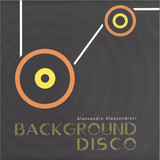
Just say Background Disco and you're quickly reminded of the super-groovy sound that pervaded certain sequences of 1970's Italian films, generally set in discos or clubs with a strong presence of music. Soul, disco, and funk tracks playing in the background, between a dance on the floor and a glass of J&B at the counter, that were supposed not to overcome the dialogues. Two of these jewels, signed by Alessandroni for the sexy comedy FRITTATA ALL'ITALIANA (1976, Alfonso Brescia) and previously released by our label in the collection LOST & FOUND (Four Flies Records 2017), definitely deserve the upgrade to the 12'' format. Therefore, they are proposed in a new edit designed for the dancefloor, each in a double version: the sung one (by lesser known Lorena, a member of Alessandroni's vocal band I Cantori Moderni) and the instrumental one.
Originally released as a Paddy McAloon solo album in 2003 and now fully remastered. A 9 song CD and double LP (1 side is etched) which includes several instrumental tracks including a 22 minute title track. Features new artwork and liner notes written by Paddy McAloon. The album was conceived and recorded after Paddy was diagnosed with a medical condition that dramatically affected his vision and has become regarded as one of the great lost classic records. Ads, features, interviews and reviews across all press. Radio support across 6Music, R2, Absolute and ILR network. Online/social media activity. Poster campaign and database mailout.
out of Stock
Last delivered 4 years ago available to reorder, subject to availability
Fifth part of the Strata-East Dolphy Series, Glass Bead Games is arguably the crown jewel of the Strata East movement, an amorphous genre that treads an unusual path between post-bop, 70's avant-garde and spiritual jazz, with a groove.
Glass Bead Games is full of revelations at many levels. First, the decade of the 1970s did produce genuinely creative, "human" new music flowing from the jazz mainstream; second, Bill Lee was more than Spike's dad: he was a superlative bassist, a team player of the first order, a powerful catalyst who, if anything, deserves to be better known than his son; third, Billy Higgins was, as so many musicians insist, a once-in-a-lifetime drummer—the bellows inspiriting the collective flame.
Most importantly, Clifford Jordan was an artist of the first order, his playing so effortless and unforced, unselfconscious and focused, mature and wise that, at a time when altissimo fury was all the rage, it's small wonder his authentic voice frequently went unheard. His musical rhetoric is so personally expressive, its substance so compelling, the listener couldn't care less about the extraordinary technique required to convey its captivating message. Compared to some of his more acclaimed peers he's a less aggressive yet paradoxically more directive and shaping influence. The climaxes, rather than spelled out, are merely suggested, registering with deep and lasting impact on the listener. It all comes down to learning the language, those precious little beads. Not every player, including Jordan or the listener, can use it like Shakespeare, but all can learn to read Shakespeare and understand its principles of arbitrariness and serendipity, of invariance and transformation.
Jordan, no less than Shakespeare, requires a like-minded cast of players—in this case four musicians of such redoubtable proficiency that each remains committed to keeping the beads in play. He's not a man content with a mere musical "dialogue" with his fellow musicians nor is he about to take the initiative in pulling his troops up to his level. Instead he begins to tell a musical story that's so compelling his three comrades are inspired equally to contribute to a collaborative narrative. This is brilliant music-making by a Coltrane- influenced successor who feels no obligation to mime the predecessor. It may be the most significant saxophone performance on record since Coltrane and, providing the listener stays with it for any length of time, the most deeply satisfying. Jordan's game—so effortless, unforced, and "level"—erases distinctions between composed and improvised, soloist and ensemble, narrator and narrative, the dancer and the dance. It seems incapable of wearing out its welcome.
'Sometimes you wake up and you've just lost the plot. Is life great or is it not Should I eat more fruit Is buying diamonds rude' Ca$hminus are asking all the wrong questions. After their debut on Bordello A Parigi last year and a recent appearance on Credit 00's Rat Life imprint, the Belgo-Australiana duo unleash a collection of their wildest works to date. The package opens with 'Atlandwehr', a jaunting affair that could have risen from the filthy Berlin Landwehr canal, only to dissolve again after six frenzied minutes, leaving nothing but a trace of bubbles on the skanky surface. The gritty 'La Foire', a grimy take on Belgian new beat, fuses raw, stepping drums with a playfully gnarly synth line. Luckily 'De Vlasmarkt' is lurking around the corner: this is the awkwardly joyous soundtrack to an annual phenomenon in Ghent, where young and old folks gather on the 'Vlasmarkt' square after a heavy night of boozing, to collectively gaze at at the sun coming up whilst drinking Irish coffees until they drop. G-funk meets electro on the flipside, where Cora from Chengdu showcases her vocal swag on '' to a backdrop of supreme subbass and rattling beats. Man of the moment Cornelius Doctor of HARD FIST fame (the adventurous imprint he runs with Tushen Rai) delivers a beast of a rework that both hypnotizes and elevates. The acapella leaves you in charge of your own destiny.
The second of March's PY LPs is one the label has been eager to unleash for what seems an age. The killer new full length from ace experimental electronic musician Bernard Grancher. Coming to the attention of the label via his last record on ERR.REC; PY is mining much of this current wave of incredible French electronic music (as previous releases by Dialectric, Alexandre Bazin, (Arc en) Ogive and the mighty Cite Lumiere attest to) and is in hindsight, somewhat an extension of label head Dom's own record buying and digging habits just now (70s French synth LPs featuring heavily in his Utrecht fair baggage twice yearly!)
Grancher himself began his 'career' as a somewhat under the radar, host / director of 'mostly forbidden' radio programmes, where in Bernard's own words, he created 'incongruous sound collages, that gradually slip towards noisy or disturbing sounds intended to replace the music of others', within its broadcasts'. Then, armed with a large accumulation of 'machines I found at low prices, with an unknowing of quite how they function' he sought the help of friends Yan Hart-Lemonnier and Eric Lumbleau (from the hugely respected 'Mutant Sounds' blog, and his project Vas Deferens Organazation).
Then, having released what he describes as two 'rather talkative' LPs by taking again 'the concept of it's emissions: Hallucinatory slogans and Electro punk', Grancher, then released with ERR.REC, leading in turn to the PY full length here.
A fabulous LP hugely recommended to all kraut heads, experimental electronic sound collages, motorik grooves and minimal synth all figure strongly. To use one final quote from Grancher; 'Abandon any idea of listening comfort; this record leads you into a dangerous race that will be impossible to jump on'.
300 copies on vinyl only, released 2nd week of March.
Angel-Ho is known as one of the founders of Non Worldwide, alongside Chino Amobi and Nkisi. Highly regarded as a DJ and electronic music producer, on 'Death Becomes Her' she shifts things up to another level.
Pulling on inspiration from her flamboyant favourites from Lady Gaga, Missy Elliot, and Bjork through to Kanye West, this ambitious, artful and sometimes radical album of neo-pop pushes the pop framework even further, often teetering on the brink of vertiginous chaos and dissonance, whilst slowly revealing its depth and grandeur once you settle into its sound world.
Alongside a cast of collaborators that include French producer Nunu, South African producer Baby Caramel, Asmara Maroof from Nguzunguzu, Bon and Gaika, Angel re-orientates the usual trans-atlantic pop sound to encompass a brace of experimental, diasporic producers to create beats that alternate between angular, propulsive, murky, loose, abrasive and breezy.
On top of these often advanced rhythms, she also raps and sings for the first time with lyrics about love, sex, glamour and struggle, universal fantasies, treated with an ambiguity that restructures the narrative within a trans-identity. Her choice of guest MCs also reflects this energetic queering with K-$ and Qweezy from Cape Town, plus underground Asian American rapper K-Rizz laying down assertive bars.
On 'Death Becomes Her', Angel-Ho carves out a new space with her unique take on contemporary pop. Overflowing with charisma, sometimes reminiscent of Grace Jones, this album is fiercely sassy and celebratory. It feels like the start of something very exciting.
Alt. folker Will Oldham - better known as Bonnie 'Prince' Billy - is set to drop a joint record with gently psychedelic crew Trembling Bells
Just four years after their debut album Carbeth, Trembling Bells are amassing a formidable body of work at a startling velocity. Just twelve months after the release of their critically acclaimed third album The Constant Pageant, the Glasgow quartet return to share the billing with a similarly restless creative spirit. A few thousand miles separate Will Oldham and Trembling Bells' drummer and principal songwriter Alex Neilson, but their stories intersect as far back as 2005, when the young Leeds-raised Neilson found himself playing drums on Alasdair Roberts' No Earthly Man, with Oldham producing. In time, a friendship between mentor and student became one between two kindred musicians. Neilson augmented his work with free-psych-drone practitioners Directing Hand by playing with the Bonnie 'Prince' Billy band. The drummer's eagerness to experience new epiphanies yielded unforgettable memories. In Big Sur, he recalls, 'we took mushrooms at midnight, then visited a natural hot spring built into the dramatic cliffs overlooking the Pacific Ocean. The stars were as vivid as frozen fireworks.' All of which is worth dwelling on, because without that background of mutual openness and empathy, it's hard to imagine The Marble Downs existing.
Neilson recalls a conversation about a 'collaboration' in the summer of 2010, though stresses that it 'was nothing too formal at first'. By the end of that year, a limited-edition seven-inch New Year's Eve Is The Loneliest Night of the Year showed what an inspired match the vocals of Trembling Bells singer Lavinia Blackwall and Will Oldham made. The cut-glass precision of the classically-trained student of medieval music and the worldly, careworn tones of Oldham created an unlikely chemistry. It must have seemed that way to Neilson too. He set about assembling a cache of songs with the purpose of further harnessing that chemistry. The result is an album that has, once again, redrafted the boundaries of what Trembling Bells can achieve together. Indeed, genre-lines aren't terribly helpful this time around. Yes, Trembling Bells' love affair with traditional music remains a constant — most emphatically so on the unaccompanied Blackwall/Oldham two-hander, My Husband's Got No Courage In Him. Then there is Blackwall's musical setting of Dorothy Parker's poem Excursion Into Assonance — and the thorough-going new-found classicism of Neilson's increasingly assured songwriting. Albeit delivered with Trembling Bells' rain-lashed sense of abandon, Love Is A Velvet Noose sounds like a standard of sorts — a warped consequence of Neilson's increasing fascination with the songbooks of Cole Porter and Hoagy Carmichael. 'I'm not saying I stand any chance of emulating them,' he adds, 'but the appreciation is definitely there.'
The knowledge that Oldham and Blackwall would be sharing centre-stage on The Marble Downs gave Neilson extra impetus to flex his songwriting muscles. I Can Tell You're Leaving finds both vocalists on irresistible form, dissecting their dying relationship with no heed to the other's feelings. 'You treat me like a child,' sings Oldham. 'I need a man,' she responds, barely catching breath. 'Now like Merle Haggard, you'll see the fighting side of me,' he later promises. 'I guess that's one of the lighter moments on the album,' ponders Neilson, 'I was trying to get a Planet Waves-era Bob Dylan feel there, with the piano and walking bassline.'
Here and elsewhere, the band — Blackwall, Neilson, bassist Simon Shaw and guitarist Mike Hastings — has never sounded more psychically attuned to one-other. On the slow-reveal sonic establishing shot of I Made A Date (With An Open Vein), two minutes of manic modal chaos elapses before Oldham takes the narrative reins of a majestic call-and-response folk-rock epic. The electrifying free-folk portent of Riding — a revival of the Palace Brothers classic — is no less compelling, calling to mind the words of broadcaster Stuart Maconie when he praised Trembling Bells for their ability to invoke simultaneously 'the charm of folk music and the power of rock.' Ditto Ain't Nothing Wrong With A Little Longing, in which Neilson slams down a four-to-the-floor beat over a synergy of demonic krautrock keys and a dialogue between Oldham and Blackwall that scales Nancy & Lee levels of romantic intrigue.
With nine songs gone and one remaining, the album's sonic undulations find an arresting denouement in the form of an inspired cover. Adapted from Robin Gibb's 1970 solo masterpiece Robin's Reign, Lord Bless All sees Trembling Bells tease out the hymnal qualities of Gibb's original with a slow volcanic upswell which — on four minutes — explodes into heavy psychedelic technicolour. What pleases Alex Neilson when he listens back is 'a sense of a common vocabulary and identity being forged.' If, by that, he means that there isn't another band on the planet that quite sounds like Trembling Bells, it would be hard to disagree. The evidence is right here.
'I didn't know anything about Trembling Bells. I just heard them and was knocked out. I instantly became a fan.' Paul Weller
'Trembling Bells are my kind of band.' Joe Boyd
"Jesus fucking shit! These jamz claw so hard at the tatties below methinks the Lord misnamed them, having intended to say Trembling BALLS." Will Oldham
'A poetic incantation of British identity far brighter than Michael Gove's GCSE syllabus.' Stewart Lee
'This time, I'm attempting to reclaim the art of songwriting from the charity shop bargain bin.' Alex Neilson
Prolific soul man Carlton Jumel Smith made a fresh opening into deep vintage soul sounds with his Timmion single debut. Now he's back for more with the dancefloor track "This Is What Love Looks Like", paving the road towards his album, which is dropping on Timmion at the beginning of 2019.
Think of classic funky soul with a little bit of Chicago, some Tighten Up guitar and blaring horn melodies, and you get an idea, where this energizing groove is headed. Carlton gets going with his soulful testimony, while the A-list of Finnish soul and jazz players from Tuomo Prättälä and Jimi Tenor to Jukka Eskola strengthen the Cold Diamond & Mink band to new heights.
If the first single dripped with heartaches and bitterness, this one is a monumental sonic heart emoji instead, seasoned with sweet sunshine. Even though Carlton can play any part the lyric casts him in, the conveyor of positivity suits him well. In real life it's not rare to see the man smiling, and when performing he oozes with peace, love and soul, turning the audience inside out. Here he's laid down one for the dancers!
out of Stock
Last delivered 7 years ago available to reorder, subject to availability
Johnny Clarke & King Tubby & Dillinger & Prince Jazzbo feat. Tommy McCook & The legendary Aggrovators & The Mighty Diamonds - Soul Jazz Records presents Bunny Lee: Dreads Enter the Gates with Praise - The Mighty Striker Shoots the Hits!
Soul Jazz Records presents this new collection featuring the heavy 70s roots reggae of Bunny
Lee - a living legend, one of the last of the great Jamaican record producers who helped shape
and define reggae music in the 1970s from a small island sound into an internationally
successful musical genre.
From teenage fan to young record plugger for Duke Reid, Sir Coxsone and other early
pioneering Jamaican musical entrepreneurs, Lee has spent his whole professional life inside the
Kingston music industry. In the 1970s he rose up to become one of the major record producers
in Jamaica alongside Lee 'Scratch' Perry and the other 'small axe' producers who broke the
dominance of the 'big tree' producers that had ruled Jamaican music in the 1960s.
Featuring some of the heaviest Jamaican artists, including Johnny Clarke, King Tubby, Dillinger,
Prince Jazzbo, Tommy McCook, The legendary Aggrovators (featuring Sly and Robbie), The
Mighty Diamonds and more, the album is a rollercoaster ride of rare, deep and classic 1970s
roots, dub and DJ sounds.
During this era, 'flying cymbals', crashing reverbs, dark echoing thunderclap gunshots and
other 'implements of sound' filled his record productions as Bunny Lee explored the outer limits
of dub with his friend King Tubby in the mix on wild versions that accompanied any 45. A
Bunny Lee record provides a creative and mysterious hidden guide to reggae music itself, a
double-sided three-minute intangible history lesson etched in wax.
Bunny Lee was one of the first Jamaican producers to travel to England in the late 1960s, at
the beginning of the nascent British reggae music industry as record companies such as
Trojan, Pama and others began licensing Jamaican music in the UK to supply the expanding
West Indian communities living up and down England. Lee encouraged other Jamaican
producers to do the same, including Lee Perry, Harry J and Niney The Observer and also
became a conduit between the British music industry and numerous younger Island-based
producers - a frequent flyer reggae ambassador, a musical courier exchanging tapes for
royalties.
Bunny Lee's first recordings in the late 1960s were mainly rock steady but as the 70s
approached the music soon began to mutate and slow down into 'reggae' as the sound became
heavier, more rootsy and the sound itself began to change with the explosion of dub.
Lee was at the forefront to this dramatic musical shift into roots reggae and by this time had
become a major producer, capable of working with whoever he chose as world-famous singers,
DJs and musicians lined up to work with the charismatic man. Lee also employed a fluid but
stable set of crack session musicians who he named The Aggrovators.
Most of the recordings featured here come from the mid 70s, a time when Bunny Lee was
definitely in the zone, releasing heavyweight singles at an almost unstoppable rate. Bunny
Lee's career stretches over five decades and he has upwards of 2,000 production credits on
vinyl.
This album comes with extensive sleevenotes, an interview with Bunny Lee and exclusive
photography. The album is available as a CD pack with 24-page booklet, massive triple LP vinyl
with digital download code, house inner and full notes, as well as digital album.
With any new medium, the full power is only unearthed with experimentation. ARTS reveals to the world an exceptional diamond, Netsh presents himself to the world surrounding the label with an exceptional record that aims to makes you really wonder why techno & electronic music nowadays has one simple direction. The artist expresses himself freely in the sonic spectrum and floats from one side to the other like no other. This record was built to make you wonder, question, inspire, but more than anything open your mind to something you might have heard only from very few artists in the world.
Ras G's Dance Of The Cosmos Is The Heralded Beatsmith's First Foray Dedicated To The 4 On The Floor' Tabernacle Of Chicago House . Deeply Ingrained In The Music Is The Message Of Black Diaspora. As We Sonically Time Travel In Typical Ras G And The Afrikan Space Program Fashion Dance Of The Cosmos Takes Us On A 30 Minute Journey Way Beyond The Ionosphere.
After 'Cobraxine', 'Boogie Throb', and the Ana Ott released 'Molochville', Brecht Ameel (Razen/Ameel Brecht) gives us his new album under the Br'lâaB moniker 'Other People's Crimes'; a high-on-paranoia, pre-crime-surveillance narrative, constructed after hours in the studio from a combination of Ameel's own recordings on a widely varied set of instruments, library music, flea-market broken vinyls and old cassettes. Part blind-overdub palimpsest-collage, part straightforward composition, the 10' contains both Br'lâaB's loop constructions and tracks performed by the found audio phantom band called the Acid Boogie Quartet. Bearing more gritty layers of both sound and subtext than ever, the 'Other People's Crimes' EP stands as an artefact of wild paranoia and spy-thriller sonics, weaving vignettes of surveillance gone wrong, doublethink and confessional echolalia.
Police and thieves are in the streets, running wild with nosebleeds and ill will ids. Dial v for victim as the night horizon broods a neon luminol glow. Howling at the vortex, buried under blindfolds, vigilantes take to crime with fear and ketamines.
On People of the Sun, Strickland blazes down that trail fully at the helm of his music—performing, writing, and producing with his outrageously able Twi-Life band on deck—even as he sonically and socially traces the African diaspora from present to past in an effort to unpack his identity. "I'm thinking about where we came from," says Strickland, "and how that clashes and goes hand in hand with what we've created here as Black Americans." The result is an album that's busy and beautiful, inventive and contemplative, an amalgam of influences from West Africa (griot culture, Afrobeat, percussion) and America (post-bop, funk-soul, beat music) performed in the key of revelation. Another facet that sets the album part is Strickland's lesser-known woodwind obsession with the bass clarinet, which adds its noirish hues to so many of these songs.
Genre: Electronic, World (Arabic). 180gram vinyl includes 12'x24' art print poster + 320kbps DL card. RIYL: Matar Mohammad, Pauline Oliveros, Nadah El Shazly, Lucrecia Dalt, Chino Amobi, Sote, Arca, Fatima Al Qadiri, Tacita Dean, Stan Brakhage. Jerusalem In My Heart (JIMH) returns with Daqa'iq Tudaiq, the third full-length album from the Montréal-Beirut contemporary Arabic audio-visual duo, following the acclaimed 2015 release If He Dies, If If I f If If If (ye ar-end li sts at The Wire (#39), The Quietus (#24) and A C loser Listen (Top 10), among other accolades).
Featuring voice, electronics, buzuk and other instrumentation from composer-producer Radwan Ghazi Moumneh (Matana Roberts, Suuns, Big Brave) and abetted by the 16mm analog film work of Charles-André Coderre in live performance, JIMH continues to expand the horizons of its profound conceptual and aesthetic engagement with Arabic/Middle-Eastern traditions. Daqa'i q Tudaiq translates as 'minutes that bother/oppress/harass'—which presumably needs no further explanation—and features two distinct album sides of music. Side One realizes a long-held dream of Moumneh's to record a modern orchestral version of the popular Egyptian classic 'Ya Garat Al Wadi' by the legendary composer Mohammad Abdel Wahab. JIMH assembled a 15-piece orchestra in Beirut, enlisting the celebrated Montréal-Cairo composer Sam Shalabi (Land Of Kush) as arranger and musical director for the session. Anchored by the stately hypnotic pace of mallet and percussion instruments (riq, santur, derbakeh, kanun), the piece unfolds with lush, languid, reverb-drenched manoeuvrings through virtuosic Maqam shifts (Oriental scales). Moumneh's melismatic lead vocals and electronic production sensibility pay homage to the genre's documented historical recording traditions, while pushing things subtly and respectfully into new territories of sonic distortion and noised, artefact-laden transmission.
The song's original title (with lyrics penned in 1928 by the poet Ahmad Shawqi) translates as 'Oh Neighbour Of The Valley', but JIMH takes a different line from the original lyric as the new title for its orchestral-electronic re-interpretation. 'Wa Ta'atalat Loughat Al Kalam' (' The Language Of Speech Has Broke Down') is an expression of wordless love and transcendent communication between two lovers' eyes in Shawqi's poem; JIMH re-titles the song with this line, exploding the sentiment with more complexity, tragedy and socio-political meaning - also prefiguring the formal aesthetic ruptures JIMH bring to the piece itself. Love in a time of politics, politics in a world conspiring against love, and the specificity of Arab diasporic experience in our brutish 21st century. Side Two comprises four tracks of non-ensemble 'solo' material by Moumneh which push rupture and decomposition/recomposition of tradition further into avant-garde territory - voice, buzuk and electronics take the lead on a suite of emotive and evocative songs, including the percussive loopdriven instrumental 'Bein Ithnein' ('Between Two' ) and the stunningly unsettling processed vocal track 'Thahab, Mish Roujou', Thahab' ('(The Act Of) Departing, Not Returning, Departing'). Daqa'iq Tudaiq is a masterful, mesmerizing artistic statement and confirms Jerusalem In My Heart as one of the most engaged and forward-looking avant-Arabic projects at work in contemporary music today. Thanks for listening.
out of Stock
Last delivered 5 years ago available to reorder, subject to availability
Bei Flatpocket Dreht Sich Alles Um Die Scheine Oder - Um Es Genau Zu Nehmen - Um Das Nicht Vorhanden Sein. Das Erste Album Von Flatpocket Hieß "geldfundphantasyen" Und Erschien Im Jahr 2012. Sechs Jahre Später Sind Twit One Und Lazy Jones - Die Beat-genies Hinter Dem Projekt - Immer Noch Pleite Genug, Um Ein Ganzes Album Darüber Zu Machen: "dispo Ii Dispo". Obwohl Flatpocket Durch Samples Und Dialoge Die Ganze Zeit Über Geld Spricht, Ist Der Subtext Eigentlich Die Ablehnung Des Materialismus Aus Einer Künstlerrischen Perspektive. Klanglich Ist Es Ein Halbes Beat-tape, Ein Halbes Hörspiel Und Ständig Dope. Inklusive Features Von Hulk Hodn, C.tappin Und Bob Marley.
Supercharger head honcho Black Orchid goes in for some seriously deep and authentic sounding
breakbeat driven D&B under his Ark X moniker. X2LV is basically the perfect representation of the
vibe Diamond Life was set up for in the first place: lush pads, solid beats and a slightly euphoric yet
melancholic feel throughout.
On the flip Myor Massiv and Diamond Life stalwart FFF drops one of his prettiest cuts to date.
Know How showcases the breakcore legend's ability to keep things sparse and beautiful, a slow
burner of epic proportions.
NCZ007, 'In Memory Of,' brings together Stanislav Tolkachev, VSK, JoeFarr and ONTHEGROUND for a 4 track compilation. Each artist has contributed a track to the general theme of 'broken techno,' with outstanding, stylistically diverse results.
'Ant Parade' by Stanislav Tolkachev opens the record with a hypnotic march. Over a gently lulling rhythm, a bright melody repeats over an eerie and disorientating soundscape. VSK's 'Blue Snake' ratchets up the energy, with skittering percussion and tense, murky bleeps propelling the track frantically onwards.
Nicz records owner Myztical teams up again with Diagnetic Origin as ONTHEGROUND on 'Interstellar Gardening.' A sonorous melody emerges from rattling beats, serving up a heady communion of intangible, elusive euphoria and melancholy. JoeFarr concludes the record with 'I am a Visitor.' Staccato kicks and fuzzed out synths stretch and twist, while a dislocated, brash voice announces itself to the listener.
out of Stock
Last delivered 4 years ago available to reorder, subject to availability
Liška, the Czechoslovakian word for fox. Beguiling in its beauty, cunning in it's charm. Said to be one of the most intelligent animals on the planet its global family consists of thirty-seven varieties; all of them recognised, respected and feared for their persuasive, creative, resourceful and elusive nature. The Liška we will talk about today is no exception to these hereditary rules and within the grooves of this record Finders Keepers present an 'elusive' musical artefact that best exemplifies every facet of this composer's animal namesake.
Had he not been born in the small Bohemian town of Smecno in the early 1920s the story of The Fantastic Mr. Liška might have well taken a different course. Alternatively, fettered by the hampers of communism, this lifelong resident of Czechoslovakia would never quite find his seat at the same table as the likes of John Barry, Ennio Morricone, Michael Nyman and Stanley Myers, nor drop enough phonographic breadcrumbs to track his legacy. But having waited patiently behind the borders of the wider landscapes of international cinema, Liška's musical brood, spanning multiple stylistic decades and generations, has now started to walk proudly amongst his would-be, latter-day compeers. In an era where music lovers have almost become immune to adjectives like 'lost', 'rare' and 'unreleased' in a climate where previously lesser-known off-kilter master composers such as Vannier, Kirchin and Axelrod have become widely revered, it is perhaps the perfect time for discerning listeners to advance above the feeding trough and seek out this truly pioneering and revolutionary Eastern European composer. Rivalled only by the likes of Krzysztof Komeda and Andrzej Korzynski in Poland, alongside Alexandr Gradsky in Russia, and often splitting workloads with fellow Czech composers like Luboš Fišer, Zdenek Liska's filmography of over almost 300 fully formed movie scores virtually eclipses the achievements of these socialist era luminaries. Respected unanimously in both Czech and Slovakian by studio bosses, producers, directors and actors alike Liška is widely known for his ability to take the existing energy in a reel of film and literally change the polarity to suit his own interpretation while maintaining the full support from his 'client' who would in-turn end up working under this composer's creative direction. Not only was Liška a genius of emotive orchestral and coral composition, his grasp on small group arrangements and intimate, minimal scores set him above the competition. By utilising primitive sample techniques by 'looping' a films existing ambient noise, or rearranging found sounds and dialog into subtle melodic arrangements, Liška would independently develop his own techniques which had simultaneously become known in Paris as musique concre`te. It is a direct extension of these experiments that saw Liška also draw parallels with Walter Branchi (Ennio Morricone's main electronic sidekick) in Italy as well as Daphne Oram in the UK, making Liška a relatively untravelled pioneer of early electronic composition and sound design due to his unlikely global environment. Imprisoned, preserved or reserved; time has been kind to Liška's music.
'Listen To The Music' is the fourth star-studded 'Songs Around The World' album and video series from the world-renowned Playing For Change organization. It features audio recordings of hit rock and world-beat songs, along with a compelling series of performance videos in which Playing For Change's unique recording process is documented to great effect. each song is multi-track recorded and videotaped in multiple picturesque locations around the world by visionary producer and hilanthropist Mark Johnson. The full 12 song project features more than 200 Artists and was recorded in 25 different countries. Featured stars include The Doobie Brothers, Ellis Hall, Jack Johnson, Dr. John, Warren Haynes, Cyril and Ivan Neville, John Cruz, Preservation Hall Jazz Band (New Orleans), TP OK Jazz Band from Congo
(Kinshasa), John Densmore, Bombino, Buddy Guy, Waddy Wachtel, Roots Gospel Voices of Mississippi, James Gadson, Reggie McBride, Karl Denson,Roberto Carcasses, Mamadou Diabate, Lee Oskar,Anders Osborne and Pancho Amat.
Now available on vinyl.
Names You Can Trust presents the second installment of Rueda de Bullerengue, a collaborative series with NY-based Bullerengue collective, Bulla En El Barrio. Named after the group's ongoing monthly performance and workshop in Brooklyn, Bulla's collaborative spirit and dedication to the tradition of los bailes cantados has made an indelible mark on the bubbling tropical music scene of New York City, and in turn, found their way into the crates and sets of DJs and vinyl aficionados via their first 7-inch release on NYCT in 2017. Since those initial moves, Bulla has continued to grow and add working members while maintaining a philosophy and connection grounded in the traditions of their Colombian origins. They've studied and collaborated with elders and legends like Emilson Pacheco and Darlina Sáenz, and this past year embarked on a recording with Barranquilla-based collective Tonada Baile Cantado — the focus of this edition's recording and release.
Considered one of the premier groups advancing the tradition of Bullerengue within Colombia, this incredibly talented group of young musicians are a rarity for their skill and age. In a region where there are ongoing festivals celebrating the tradition of Bullerengue that still command massive audiences and performers, Tonada is a true representative of what can happen when such an amazing tradition is passed forward to an eager next generation. Produced by Bulla members Camilo Rodriguez and Diana Herrera (aka Carolina Oliveras) in between their time smashing stages across the U.S. for Combo Chimbita, this is a carefully nurtured and powerful bridge to the beloved traditions of Colombia's Caribe region.
Without further ado, here lies Volume 2 of Rueda de Bullerengue, featuring Tonada Baile Cantado, a new generation of traditional Colombian dance music transmitted directly from Barranquilla — Four dance floor crashers in the styles of fandango and chalupa, ready-made for your 45 spins in the inimitable style of Names You Can Trust.
A welcome branching out into the reggae universe, Rocafort is proud to present The Circle of Confusion featuring the legendary sweet falsetto voice of Cornel Campbell. Lausanne Switzerland meets Kingston Jamaica in this heartfelt, stripped back, feel-good homage to the late 70s roots reggaestyle.
The Circle of Confusion are a Swiss production duo: Seb.K (Shakedown productions) and Phil'eas (Black Diamond Sound). Diehard reggae fans, they dared to contact their favourite Jamaican singer and got a result with Campbell delivering the lyrics on the spot, written on the day of Nelson Mandela' death. There's depth and feeling in this wonderfully lilting, plaintive song, typical of Campbell's social consciousness and beautiful soul. Hard to believe it was all strung together in a shiny, clean Swiss studio when the sound is so simply warm and Jamaican. Beautiful run on the keyboards by Jah Lou.
If you were moved by the Rhythm and Sound album of 2001, you will not be disappointed with this splendid roots collaboration. We can only hope there's more to come.
White Shadows In The South Seas is the title of a book written in 1919 by Frederick O'Brien as part of a trilogy he wrote based on his experiences living in the Pacific islands in the early part of the 20th century. His book was taken as the starting point for a film to be directed, initially, by Robert Flaherty (famous at the time for his groundbreaking documentary / fiction film Nanook Of The North) with W.S.Van Dyke as his support. The film, ultimately, apart from the title, had little to do with O'Brien's book and Flaherty left the film after a few months leaving Van Dyke to finish it.
I purchased O'Brien's book, along with many others, from Basement Books, a secondhand bookstore in Melbourne/Australia. Part of my 'Islomania' and on going fascination with all things Pacific. When I discovered there was a 1929 silent film based on the book I sought it out and started to present it as part of my 'Live Music/Silent films' repertoire. Tabu by Frederick Murnau, which coincidently also had Flaherty as co-director originally, was the first film I ever wrote / improvised a score for and presented as a live film/music performance. My repertoire extends to over 23 films now.
My eclectic and diverse musical and artistic interests extend into 'Hawaiian', 'Exotica', 'Ambient' and 'Electronic' Music. I have produced several volumes of so called 'Electronic, Ambient, Exotica' on CD and Vinyl, including Kiribati, Globe Notes, Rayon Hula ( on Vinyl, CD and digital format ) and most recently, New Globe Note on Vinyl and White Shadows In The South Seas on CD.
White Shadows In The South Seas features some of the music presented in my live screenings of the 1929 silent film.
The film is the story of Dr. Matthew Lloyd, an alcoholic doctor who is disgusted by the exploitation by white people of the natives on a Polynesian island. The natives dive for pearls, however, numerous accidents occur and one diver dies. In anger, Dr. Lloyd punches Sebastian, the employer. As revenge and to prevent further interruption of his activities, he tricks Dr. Lloyd onto a ship with a diseased crew (thinking they are ill) and his men rough him up and send the ship off into a storm. Dr. Lloyd survives and is washed ashore on an island where none of the natives have ever seen a white man before. Lloyd is rescued and ultimately falls in love with the chief's daughter, who is Taboo, hence Lloyd is prevented from pursuing his love for her. An incident occurs and a young boy is thought to have drowned but Lloyd is able to revive him, earning him points and permission with the chief's daughter. Lloyd begins to realise that the local islanders have no sense of the value of the black pearls which grow in abundance around their island and he starts to dive for them and collect them. One morning the white man Sebastian unexpectedly turns up on a scooner and starts to offer the islanders trade for their pearls. Llloyd tries to interrupt the encounter and is shot and dies. His wife and the islanders morn for his dead body and, symbolically, the passing of a way of life.
Mike Cooper plays - Electric and acoustic lap steel guitars / electronics / Zoom Sampletrack / Kaos Pad / Casio SK1 / Korg Drum Machine / Self Made Instruments.
It also features field recordings made on Pulau Ubin by Mike Cooper during a month as Artist In Residence for The Artist Village / Singapore.
I would like to acknowledge and thank Lawrence English (Room40 Records) for his assistance and encouragement with the original recordings and the CD version of White Shadows In The South Seas.
All music written and played by Mike Cooper PRS/MCPS - except Po Mahina (trad. Arr. Cooper) and Hilo Hanakahi (trad. Arr. Cooper)
Recorded and Mixed at the Steelworks in Rome 2012/2013.
A White Shadow In The South Seas
In February 2014 'A White Shadow In The South Seas' was the title of an audio-visual installation I made at the Teatro In Scatola in Rome, Italy, presented as part of a series of sound installations titled 'Visitazioni' produced by Proposte Sonore.
The essay below, as well as our collection of Hawaiian shirts, Exotica and Hawaiian vinyl records, was an inspiration for this installation.
'..the transformation and reconstitution of the souvenir commodity as an indigenous ethnic art form and a scarce relic of Hawai'i's romanticized past...' from - Clothing and Textile Reasearch Journal - From Kitsch to Chic by Marcia A. Morgado.
And....
Michael Thompson's Rubbish Theory (1979)
' ...a critical aspect of Western culture is the pre-disposition to see objects in terms of two overt categories: the transient and the durable. Objects identified as transient have finite life spans and lose value over time, whereas those identified as durable have infinite lives and over time increae in value....category assignments are arbitrary, but once assigned a category membership determines relative value. Fashion apparel-by defenition-is assigned to the transient category; paintings commonly are designated durables....how is it that transient objects.. ( e.g. Hawaiian shirts and vinyl records ) ..sometimes become durables.
Objects assigned to the rubbish category are largely invisible, have no value and, ideally, no life span. Fashion for example, no longer worn and relegated to the back of the wardrobe has fallen into the covert rubbish category. But rubbish can be rescued and transformed. Thompson says ' What I believe happens is a transient object gradually declining in value and in expected life span may slide across into rubbish. Here it exists in a timeless and valueless limbo where it has a chance to be re-discovered and be successfully transformed to a durable. Such transferes are radical: objects gradually slide from transcience to rubbish, but the transformation from rubbish to durable involves an all-or-nothing leap across two boundaries, that separating the worthless from the valuable and that between the covert and the overt. Things drift into obscurity but they leap into prominence.
The delightful consequence of this hypothesis is that in order to study the social control of value we must study rubbish.
The rubbish-to-durable transformation is accompanied by the development of highly specialized knowledge derived from the discovery of subtle variations and complex details that went unnoticed in the objects transient stage. The discoveries initiate renewed interest in the object and its market value begins to climb. As prices soar beyond the reach of ordinary people, the object becomes available only in high priced collectors' markets. Furthermore, as market values rise, the aesthetic value of the object undergoes a reassessment as well, and it becomes increasingly apparent that the objects intrinsic beauty has been overlooked. Ultimately the object is re -assigned as a durable and becomes recognized as a timeless classic.
Exotica, Ambience and Pacificism - A dialogue with Mike Cooper & Professor Philip Hayward Deputy Pro Vice Chancellor of Research Southern Cross University, Lismore, Australia.
Art is a matter of different phases and influence. The artists' core reaches out like heat waves. And very rarely do these artists' core merge like Brigitte Fontaine and Arseki Belkacem have. Their Saravah Era lasted ten years (1969 to 1979), ten years of "folle sagesse" (crazy wisdom), above all genres and song limitation.
"Le plaisir secret que donne une chanson, dessin à la craie sur le mur de tes sons" (the personal delight within song, a chalk drawing on your wall of sounds) whispers Areski, right after Brigitte's voice on the penultimate song of the double album "Vous et nous". Released in 1977, this free flowing record contains 33 songs, it's their 6th album after "Comme à la radio", "Brigitte 4", "Je ne connais pas cet homme", "L'incendie" and "Le bonheur", and it continues to spread the wide and generous spectrum of the couple fully blossoming talent. Electronic experiments, North African trance, refined acoustics and medieval drones gracefully blend with the acid and candid tongues of the singers, surprising us each step along the way. The making of this record was also full of twists and turns. It started out as a solo effort by Areski at Jean-Pierre Chambard's studio. Little by little, as Areski was filling tapes with poems and improvised skits, Brigitte would sneak into the studio at nightfall, adding her voice here and there, her whispers then became screams, giving fuel to the fire in a total blaze, a surreal blaze. The solitary work ("je") thrived to become us ("nous") and you ("vous") ...
The blues roots grow surprisingly deep in the Finnish music scene. From this fertile ground rises singer Emilia Sisco, who debuts on Timmion with her phenomenal single "Don't Believe You Like That". With her strong background in fusing blues, r&b and jazz, Emilia apparently slips also nicely into the dark soulful grooves of Cold Diamond & Mink.
In "Don't Believe You Like That" Emilia sets herself into the role of a mistreated lover, who still tries to see a speck of hope in the doomed relationship. By dubbing herself, and accompanying the lyric with graceful harmonies, she succeeds in building a powerful beat ballad, that should appeal to the darker end of the dance floor.
There's a special lane in history for soul music this understated. It's cool and intimate at the same time, like there's something dangerous lurking under the surface. So roll up something nice, if that's your thing, and hop along for the ride.