Berlin-based, Tel Aviv-born DJ and producer Roy Brizman aka Gel Abril is the new face on Dubfire's imprint. In the midst of the pandemic, Roy found solace in his grief and channeled it into a creative outpour, resulting in a series of captivating releases on reputable labels like Arteform Recordings, Subtil, and VDK. He has also launched his own imprint, Silvi Recordings, solidifying his place in the industry. Get ready to experience the magic of Roy Brizman.
15 years into its ongoing experimentation that has pushed the sonic fusion between science and technology, SCI+TEC remains at the very forefront of electronic music. From day one Dubfire’s label has continuously forged its own path, with its feet firmly on the dance floor and its sights set on the future.
out of Stock
Last delivered 33 days ago available to reorder, subject to availability
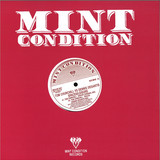
Mint Condition - A record label focused on excavating the outer fringes of classic House and Techno. Unreleased mixes, classics and overlooked gems mined from the last 20+ of contemporary dance music are the order of the day. From Chicago, Detroit and New York to London and beyond, Mint Condition have got their expert digging hats on to bring you exclusive heat and those rarer than rare jams that have been on your wants list for years! Dig in....
Back to 2002, the beginning of the new millennium. Tom Churchill's Headspace Recordings label had already been making an impact on the deeper strains of techno emanating from within the UK. With releases from detroit's Sean Deason, CiM, Hanna, Vince Watson and many more, Headspace was already a 'must check' label within record buying and DJ circles. This stellar split EP with NYC's Dennis DeSantis saw the pair remix each others tracks, both turning in very different, but equally complimentary sonic excursions. Churchill's 'Spaces' is surefire deep-space techno boogie of the highest order, swinging and funky and melodic in equal measure. The DeSantis remix of 'Spaces' is also a total winner, a stripped back exercise in expert minimalism, full of feeling and a perfect partner to the original mix. On the flip is Dennis DeSantis' 'Leisure', a sprawling and laconic broken house jam. Brilliant and teasing melodic synth motifs sit atop nagging acidic basslines and space. Again, the remix follows the original and Tom Churchill dials the track down into chasm deep shuffling drums and basslines and dubbed out FX. It's hard to think of an EP where two artists can remix each others music in such a compelling way, and for it to work so well. This is truly an excellent release and it's a real pleasure to see these tracks back on the streets. Sublime, and essential.
'Spaces / Leisure' has been legitimately re-released with the full involvement of Headspace Recordings for 2020 and remastered by London's Curve Pusher from the original sources especially for Mint Condition. 100% legit, licensed and released. Dug, remastered, repackaged and brought to you by the caring folks at your favourite reissue label - Mint Condition!
out of Stock
Last delivered 40 days ago available to reorder, subject to availability
In the midst of a wave of hybridizing ambient, drone, folklore and experimental electroacoustic music, Roxane Métayer has gained a cult following with only a couple of releases to date. Following her debut album (Éclipse Des Ocelles) for Morc with a split EP and a limited cassette for Wabi-Sabi, Roxane now turns to Marionette with her intimate narrative based multi-instrumental recordings, a match made in the heavens if you ask us. With her violin, woodwind, voice and various effect pedals, Métayer takes the listener on a newfound journey into the ancient, medieval, and primordial.
Perlée de sève is Métayer’s second full length, a sophomore to the critically acclaimed Éclipse Des Ocelles, where Métayer continues to sonically realize the map of the fictional habitats that inhabit her mind. Coming from a background of studying narration and different animation mediums, it’s no surprise that her recordings evoke vivid imagery and carry a trace of the environment they were conceived in. The instruments morph as extensions of her body and ultimately become new organs, a means of communicating these bio-memetic stories and creating a dialogue between herself and her surroundings. Meandering melodies intertwine with accompanying drones, mantra-like fragments and a handfeel percussion lend themselves as living and breathing elements in Roxane’s beguiling and spellbinding anecdotes.
Roxane is an observer of the world, her projects conceived from elements that inform her reality, such as the organic imagery and sounds of nature, then transforming that into a strangely familiar parallel universe that would not exist otherwise. Whether it's active research or taking her instruments to the forest, Métayer opens up her imagination by taking this mental journey to discover locations, creatures, and time periods then channeling that into her own fairy tales. The album and track titles act as a portal into those worlds, like chapters in a book where the protagonists are animalia, plantae, and fungi. As Métayer wrote in an interview: “Stories are a privileged way to create an awareness of a specific subject.”
First time officially reissue, sourced from the original master tapes in a new edition, the Milan based imprint Dialogo, returns with this compilation published in Italy by RCA Victor in 1962 - a precious historical document of some important international jazz and pop artists who came to Italy and left their marks, influencing the generations of those golden years.
It contains
***Chet Baker with Ennio Morricone's Orchestra, with "Il Mio Domani" (My Tomorrow) and "So Che Ti Perderò" (I Know That I'll Loose You) two recordings of works composed and sung for the first time in Italian by one of the most important worldwide trumpet "Golden Trumpet" and singer "Voice Of Angel" jazz artist. ***Helen Merrill with "Estate" (Summer) and "Nessuno Al Mondo" (Noboby In The World), two recordings sung for the first time in Italian. She agreed to record two 'light' songs because the Orchestra that performed them was conducted by Armando Trovajoli, a qualified exponent of Italian jazz and an extreme modernist. ***Paul Anka with Ray Ellis Orchestra, Perez Prado and His Orchestra, Neil Sedaka and Stan Applebaum Orchestra
c 03: Paul Anka - Ogni Giorno (Love Me Warm And Tender) feat. Ray Ellis Orchestra
e 05: Neil Sedaka - Esagerata (Little Devil) feat. Stan Applebaum E La Sua Orchestra
g 07: Paul Anka - Voglio Sapere (I'd Like To Know) feat. Ray Ellis Orchestra
i 09: Neil Sedaka - Un Giorno Inutile (I Must Be Dreaming) [feat. Stan Applebaum E La Sua Orchestra]
out of Stock
Last delivered 3 years ago available to reorder, subject to availability
Berlin based sound artist Sa Pa delivers AI-33, titled ‘Atmospheric Fragments’. Originally intended as a soundtrack to accompany ten short experimental films as part of a physical exhibition in 2020 curated by Manon Bernard, Atmospheric Fragments was alternatively premiered online as a digital showroom - with its music performed and recorded both live and independently in 2021.
Atmospheric Fragments was conceived as a collaborative audio-visual project, positing the viewer inside a sonic boom of introspective parenthesis and offering a place for internal dialogues under the circumstances of a largely unknown and rapidly changing modern world.
Sa Pa’s work presents a fresh sonic reinterpretation of urban landscapes, skylines and modern environments, procuring from its source material a whole new kaleidoscopic world of its own. The record consists of two mixes - ‘Studio’ and ‘Live’ - which demonstrate a deep explorational study of our everyday surroundings, plunging the listener into a realm of heightened sense experience and microscopic detail. Where the ‘Studio’ mix embodies the precision and management of the studio workspace and is more ambient in nature, such intricacies are exchanged for a larger, livelier sound stage and alternative sonic material in the ‘Live’ mix.
A nebulous ocean of shifting spaces and effervescent textures, Sa Pa augments and modulates field recordings into a fluid and ever-evolving narrative. Seen through a viewfinder of deep and immersive observation, new transients, momentary artefacts and poetry in motion begin to reveal itself. In a world caught in momentary stasis, Atmospheric Fragments is a forensic inquiry into our perceptive environment, with its augmented lens placing us on the cusp of the ungraspable.
out of Stock
Last delivered 4 months ago available to reorder, subject to availability
After spending his debut album exploring techno and mechanical sounds in the depths of the Pas-de-Calais mines, Toh Imago looks up to the sky, with an open breeze on his face, as tree branches and canopy filter out the sun’s rays on Refuge. All the machines used during the album recording are tuned at 432hz, carrying the mystical benefits of Earth’s resonance. Spending just seconds with the opening track, the listener is drawn into the safety that Refuge was intended to provide, and each subsequent piece pulls you deeper and deeper into the album’s forest.
Textextext - (add your write up)
‘Refuge’ was recorded on the edge of the Mormal forest, in the North of France. With nature as a setting and studio accomplice, the album features synthesizers, field-recordings, as well as the acoustic qualities of reverbs from the nearby forest. As the artist’s inner world and nature converge in moments of self-reflection, so the album’s 11 recordings harmoniously unfold in a cavalcade of machines and organic sonorities.
While the first LP 'Nord Noir’ explored his family’s mining past, ‘Refuge' is about being present and the desire to re-contextualize the relationship between nature and humans. It is a record of uplifting tones that is filled with optimism, imbued with the lightness of those who finally reconnect with nature, their roots, and the feeling of groundedness.
Like the steps taken on a walk in the woods, the 11 tracks sonically tell the story of an inner journey divided in three chapters. "Asile sauvage", "Sylve barbare" and “Avril Mormal" take the listener into a fast-paced progression of rhythms. When the heart of the forest is reached, the journey becomes intimate, revealing a sacred space where breathing becomes the leading tempo ("Locus Neminis") and the traveller becomes a spirit lost in space ("Cosmos Intra”). The journey's climax is reached with "Monde intérieur". The album closes with "Chiff Chaff" which accompanies the listener back to a reality, hopefully a more reassuring one.
Across the album, Toh Imago finds inventive ways of opening a dialogue between nature and machine, both literally and metaphorically, creating a soundscape that both feels like and was created by the natural world that surrounds him.
The album offers a shelter from a predetermined world. It’s a story told through ambience, racy and subtle electronics, and the memories of lichens clinging to shoes.
out of Stock
Last delivered 9 months ago available to reorder, subject to availability
This compilation brings together 22 sound poems, including both pioneering and current pieces, and constitutes itself as the first great overview of sound poetry from Peru. It continues a cycle that began in 2009 with the appearance of a CD called Inventar la voz: Nuevas tradiciones orales To Invent the Voice: New Oral Traditions and was followed up in 2011 with another one called Irse de lengua [To Let It Slip], both of which contributed to articulate diverse manifestations of poetry that used technological means, also in the context of intense activity in the local scenes of experimental music and sound art that opened spaces for interdisciplinary dialogues. What we know as sound poetry is the product of a technological revolution associated with the appearance of various means of recording, transmission and amplification of the voice. A long process that took shape in the 20th century, until it became a discipline, articulated as an international movement which, based on phonetic research, expanded into a universe of oral/vocal artistic practices as part of a new technological context. The recordings gathered here comprise a time frame that goes from 1972 to 2021. We find poems that work with montage techniques, either because they explore simultaneity or juxtaposition, such as those by Mario Montalbetti, Frido Martín, Florentino Díaz, Carlos Estela, Luisa Fernanda Lindo, Macri Cáceres, Rodrigo Vera Cubas, Tilsa Otta, Giancarlo Huapaya/Omar Córdova, Virginia Benavides, Lisa Carrasco and Luis Alvarado. Others emphasize vocal/oral performance: we find the phonetic poems of Carlos Germán Belli and Eduardo Chirinos, as well as the concrete conceptual poems of Michael Prado, Sandra Suazo, Peru Saizprez, and the oral/guttural poem of Omar Aramayo. Finally, we find another group of pieces where the poem starts with the creation of a computational parameter or algorithm, as is the case with the pieces by Jorge Eduardo Eielson and Enrique Verástegui, eventually reaching the use of Artificial Intelligence as in the poems by Francisco Mariotti and Paola Torres Núñez del Prado. The Verbal Matter: An Anthology of Peruvian Sound Poetry is part of a series produced by Buh Records for Centro del Sonido, a website set up as a digital archive of Peruvian experimental music and sound art. The compilation has been made by Luis Alvarado and is published in a limited edition of 300 copies in vinyl format. It includes extensive notes and visual documentation. Mastered by Alberto Cendra. Art by René Sánchez.
‘Runner is a calmly luminous orchestral piece with the pulsating, propulsive
rhythms that animate much of Mr. Reich’s music.’ – New York Times
‘Reich interweaves the two groups to create a dense textural tapestry that sounds like his most native orchestral thinking to date. A beautiful and dramatically charged masterpiece.' – San Francisco Chronicle
Nonesuch Records releases the first recordings of Steve Reich’s Runner (2016) and Music for Ensemble and Orchestra (2018), performed by the Los Angeles Philharmonic and conducted by Susanna Mälkki.
Reich says Runner is written “for a large ensemble of winds, percussion, pianos, and strings. While the tempo remains more or less constant, there are five movements, played without pause, that are based on different note durations. First, even sixteenths, then irregularly accented eighths, then a very slowed-down version of the standard bell pattern from Ghana in quarters, fourth a return to the irregularly accented eighths, and finally a return to the sixteenths but now played as pulses by the winds for as long as a breath will comfortably sustain them. The title was suggested by the rapid opening and my awareness that, like a runner, I would have to pace the piece to reach a successful conclusion.”
“Music for Ensemble and Orchestra is an extension of the Baroque concerto grosso where there is more than one soloist,” the composer continues. “Here there are twenty soloists – all regular members of the orchestra, including the first stand strings and winds, as well as two vibraphones and two pianos. The piece is in five movements, though the tempo never changes, only the note value of the constant pulse in the pianos. Thus, an arch form: sixteenths, eighths, quarters, eighths, sixteenths. Music for Ensemble and Orchestra is modeled on my Runner, which has the same five movement form.”
Nonesuch has recorded every new piece of music by Steve Reich since 1985, beginning with The Desert Music and continuing through 2018’s Pulse/Quartet, resulting in 22 albums and the two box sets Phases in 2006 and Works: 1965-1995 in 1997. Most recently, the label released his Reich/Richter, performed by Ensemble intercontemporain and conducted by George Jackson, in June 2022. The Times said, ‘What a delight to be able to focus on the music, delivered here with a clever mix of pinprick precision and reverberant haze by 14 members of Ensemble Intercontemporain. The more intently you listen, the more subtleties emerge among the shifting, criss-crossing textures and phrases, sometimes coloured with gentle melancholy but decisively upbeat by the end. Reich/Richter is an ear-tickling tonic and a happy companion to Reich’s newly published book, Conversations.’ Nonesuch will put out a collection of Reich’s complete works in 2023.
Reich released a book earlier this year, Conversations, that includes dialogues with past collaborators, fellow composers, musicians, and visual artists who have been influenced by his work, including: David Lang, Brian Eno, Richard Serra, Michael Gordon, Michael Tilson Thomas, Russell Hartenberger, Robert Hurwitz, Stephen Sondheim, Jonny Greenwood, David Harrington, Elizabeth Lim-Dutton, David Robertson, Micaela Haslam, Anne Teresa de Keersmaeker, Julia Wolfe, Nico Muhly, Beryl Korot, Colin Currie, and Brad Lubman. The Wall Street Journal called the book ‘a testament to the influence of an idea – one that triggered a cultural turning point,’ and the New York Times said, ‘The joy of the book is to hear artists from a variety of disciplines and backgrounds rhapsodizing about their relationship to Reich’s music and how it influenced their own creative processes.’
Steve Reich has been called ‘America’s greatest living composer’ (Village Voice), ‘the most original musical thinker of our time’ (New Yorker), and ‘among the great composers of the century’ (New York Times). His music has influenced composers and mainstream musicians all over the world. Music for 18 Musicians and Different Trains have earned him two Grammy Awards, and in 2009, his Double Sextet won the Pulitzer Prize. Reich’s documentary video opera works – The Cave and Three Tales, done in collaboration with video artist Beryl Korot – have been performed on four continents. His recent work Quartet, for percussionist Colin Currie, sold out two consecutive concerts at Queen Elizabeth Hall in London shortly after tens of thousands at the Glastonbury Festival heard Jonny Greenwood (of Radiohead) perform Electric Counterpoint followed by the London Sinfonietta performing his Music for 18 Musicians.
In 2012, Reich was awarded the Gold Medal in Music by the American Academy of Arts and Letters. He has additionally received the Praemium Imperiale in Tokyo, the Polar Music Prize in Stockholm, the BBVA Award in Madrid, and the Golden Lion at the Venice Biennale. He has been named Commandeur de l’Ordre des Arts et des Lettres and has been awarded honorary doctorates by the Royal College of Music in London, The Juilliard School, and the Liszt Academy in Budapest, among others. ‘There’s just a handful of living composers who can legitimately claim to have altered the direction of musical history and Steve Reich is one of them,’ states the Guardian.
Redefining what an orchestra can be, the Los Angeles Philharmonic (LA Phil) is as vibrant as Los Angeles, one of the world's most open and dynamic cities. Led by Music & Artistic Director Gustavo Dudamel, this internationally renowned orchestra harnesses the transformative power of live music to build community, foster intellectual and artistic growth, and nurture the creative spirit. This is the third recent recording by the orchestra on the label; the others were the Louis Andriessen pieces The only one and Theatre of the World. Additionally, the Los Angeles Philharmonic’s recordings of The Gospel According to the Other Mary and Must the Devil Have All the Good Tunes?, with Yuja Wang, released on Deutsche Grammophon, are included in this year’s John Adams Collected Works boxed set. Nonesuch also released an LA Phil recording of Adams‘ Naïve and Sentimental Music in 2002.
Susanna Mälkki is sought-after at the highest level by symphony orchestras and opera houses worldwide. About to embark on her final season as Chief Conductor of the Helsinki Philharmonic Orchestra, she concludes a seven-year tenure with a distinctive dynamism and imaginative flair to her programming. In addition to a full season in Finland, she will lead the Helsinki orchestra on tour to the prestigious Lucerne and Edinburgh festivals, New York’s Carnegie Hall, and Washington’s Kennedy Centre this season.
Shelter Press extend a quietly cine-poetic invitation to visit the Outer Hebrides via immersive sounds - field recordings of psalm singing and local dialect - collected and arranged by interdisciplinary artist Joshua Bonnetta, going hand-in-hand with Shelter Press’ core interests in the fading light of its 10th year in operation. A beautiful artefact - complete with 60 page photobook.
Accompanied by an evocative photo study and access to an accompanying film and essay, Bonetta’s second release for Shelter Press following 2016’s ‘Lago’ imparts a real feel for the archipelago, off the north west coast of Scotland, where he was stationed during an artist’s residency during 2017-2019. Stitched together from observant field recordings and interviews with residents on the islands of Barra, Berneray, Harris, Lewis & North Uist, the work elicits a sense of timelessness in its slow drift between shores, hills, standing stones and the intimacy of its voices, including Gaelic spoken word, folk song and whistling. Save for the appearance of a plane overhead, the sounds of car and boat motors, plus a little bit of electronic disturbance that pull you into the modern era; the results practically imagine what it would have been like to visit the islands with a recording device at any point since the last ice age.
For Bonetta, who hails from rural Canada, the similarities between his formative landscapes and those of Scotland must have appeared familiar, perhaps a subconscious recall/reminder that the two places shared a landmass, albeit 425 million years ago. His sound sensitive subtlety and cinematic ear in arranging his collected sounds serves to highlight the way the modern world only just infringes on Innse Gall’s ancient landscapes and only relatively modern tongues (if we’re thinking in geologic terms of scale). We hear the sounds of its avian population seamlessly eliding its humans in the whistling of Alick Macauley, and the natural cadence of of its mild oceanic climate mirrored in lilting Gaelic folksong, here performed by Calum McDonald, Joey Morrison, and Maggie Smith, and more generally practiced by only a tiny percentage of Scotland’s population (some 1%) but still surely alive in its meridian isles where time moves much more slowly.
With the nuance and poetry expected of a Shelter Press title, ‘Innes Gall’ reflects on the area’s anglicised name, meaning “islands of the strangers”, with calming, soberly documentarian results as heartwarming and fascinating as a visit to the area, just without the effort of travel, and from the comfort of your own living space. Bonnetta is incapable of ignoring the cinematic frame, and intersperses each shot with enough poetry to keep you entranced.
SoiSong is the stunning but short-lived partnership of Coil co-founder Peter "Sleazy" Christopherson and veteran Russian electronic experimentalist Ivan Pavlov. Though friends since 1997, the project birthed roughly a decade later in Bangkok, where Christopherson relocated following the death of his Coil collaborator John Balance in 2004. Named after the Thai word for `two' along with a notorious red-light district street nearby, the duo dialed into a cryptic language of lurching synthetics, Eastern minimalism, and interdimensional glitch, oscillating between elegance and mayhem. qXn948s collects some of their earliest recordings, and remains as transgressive and transcendent a listen now as it was upon its release a decade and a half ago. Pavlov characterizes SoiSong as less a musical group than a "utopian, semi-alien platform for collaboration, devoid of pronounced personality or centralized authority_ more like a message from elsewhere that anyone is welcome to participate in and spread." Every facet of the project was disruptive and oblique: self-released CDs packaged in elaborate origami that had to be destroyed to be accessed; a website with password protected sections, where different passwords were provided for different events, objects or releases; performance merchandise of headphones and a Walkman melted shut so the music can only be heard as long as the set of batteries last. Theirs was a muse as unprecedented as it was uncompromising, equal parts pranks and profundity. qXn948s began with samples and software composed intuitively in tandem before a large monitor, then progressively processed and scrambled into bewildering arrangements of digital frequencies, alternately spartan and claustrophobic, uneasy and uncanny. Vignettes of small melody emerge and are obliterated; gamelan-esque tones spiral above cybernetic pulse programming and funereal didgeridoo; skeletal piano meanders in the distance while flickering circuitry pummels patterns of white noise. Pavlov describes his and Christopherson's chemistry as "unspoken and sincere, and very efficient." That music this aggressively disorienting and complex congealed in a smoothly organic fashion is testament to the rare vision of its creators.
out of Stock
Last delivered 3 years ago available to reorder, subject to availability
SoiSong is the stunning but short-lived partnership of Coil co-founder Peter "Sleazy" Christopherson and veteran Russian electronic experimentalist Ivan Pavlov. Though friends since 1997, the project birthed roughly a decade later in Bangkok, where Christopherson relocated following the death of his Coil collaborator John Balance in 2004. Named after the Thai word for `two' along with a notorious red-light district street nearby, the duo dialed into a cryptic language of lurching synthetics, Eastern minimalism, and interdimensional glitch, oscillating between elegance and mayhem. qXn948s collects some of their earliest recordings, and remains as transgressive and transcendent a listen now as it was upon its release a decade and a half ago. Pavlov characterizes SoiSong as less a musical group than a "utopian, semi-alien platform for collaboration, devoid of pronounced personality or centralized authority_ more like a message from elsewhere that anyone is welcome to participate in and spread." Every facet of the project was disruptive and oblique: self-released CDs packaged in elaborate origami that had to be destroyed to be accessed; a website with password protected sections, where different passwords were provided for different events, objects or releases; performance merchandise of headphones and a Walkman melted shut so the music can only be heard as long as the set of batteries last. Theirs was a muse as unprecedented as it was uncompromising, equal parts pranks and profundity. qXn948s began with samples and software composed intuitively in tandem before a large monitor, then progressively processed and scrambled into bewildering arrangements of digital frequencies, alternately spartan and claustrophobic, uneasy and uncanny. Vignettes of small melody emerge and are obliterated; gamelan-esque tones spiral above cybernetic pulse programming and funereal didgeridoo; skeletal piano meanders in the distance while flickering circuitry pummels patterns of white noise. Pavlov describes his and Christopherson's chemistry as "unspoken and sincere, and very efficient." That music this aggressively disorienting and complex congealed in a smoothly organic fashion is testament to the rare vision of its creators.
out of Stock
Last delivered 3 years ago available to reorder, subject to availability
Auf seinem beeindruckenden neuen Album 'Lost Dialect' spricht Eric Hilton die 12-Bit-Sprache des Trip-Hop, ein Genre, das er als Mitbegründer der legendären elektronischen Downtempo-Band Thievery Corporation mitinitiiert hat. Auf zehn expansiven Tracks nutzt der Produzent die Old Skool-Skills, um den Nu Skool-Chill zu schaffen. Alte Wege bleiben stark. Sprechen auch Sie den 'Lost Dialect', Eric Hiltons Weiterentwicklung des Trip-Hop, auf Montserrat House Music.
out of Stock
Last delivered 3 years ago available to reorder, subject to availability
For most of us, life is a series of human interactions; some good, some bad, some happy, some sad. But what would life be without those peripheral characters who plant themselves into our worlds through the sheer force of their presence? Whether we speak to them or not, those vibrant contrasts to the everyday tide of ordinary people are a magical part of the human experience. Oddballs and misfits, flamboyant instigators or low-key game changers, we all clock them on our own hectic journeys, and they make the day a little brighter. Everyone has their favourite people.
Following the runaway success of their first one-shot single in 2020, Favourite People reconvene for a full-length of blues-tinged cuts stemming from sessions at Selva Studios in Brooklyn. The project’s roots predate the studio, from scattered jams and sweaty nights in New York nightspots to impromptu recordings on cruise ships, but the flashpoint of inspiration that truly set the album in motion was the arrival of a blonde 1960s Fender Telecaster. From there, the motley crew of sharp-shooting string slingers and sticks men set about crafting paeans to those striking souls who make the world a more colourful place.
The emphasis here is on the kind of forward-facing, electrically charged mix you felt (whether you realised it or not) hearing early Sabbath or Priest for the first time. With their undeniable bias towards vintage soul, Favourite People are far from heavy metal, but the same lineage of blues and by extension jazz informs the music, while the tonal crunch of that 70s era guides the sound. Feasting on tasteful overdrive and leaning on the unmistakable flavour of tape for much of the recording, the deal was sealed on this purposeful exercise in vibe thanks to the near-mythical texture of Guy Davie’s EMI Nigeria console at Electric Mastering.
Across the album there are mellow shades and bursts of good-time get-down exuberance, but the lead singles capture the essence of the band in no uncertain terms.
‘Promise Of Nibbles’ brings the Favourite People MO into sharp relief with a low-slung, hard swinging blues confection full of overheating organ and duelling guitars in pursuit of Southern-stewed boogie (im)perfection.
‘We’ll Be Late To The Party’ turns up the tempo and dials in the fuzz, striking an anthemic note which lands somewhere between urgent highway escapism and euphoric communal revelation.
‘Mass and Mustiness’ leans in on the funk dimension of the group’s sound with the sweetest licks and chops on that fabled telecaster backed up by an acutely angled beat and the slinkiest of b-lines.
These are but three of the vibrant vignettes laid down by this quietly unassuming collective of heads down jammers, loose groovers and vintage sound freaks –heavy grooving instrumentals pulled from their own moments of pure musical magic and captured on disc for your listening, dancing, living, loving pleasure.
out of Stock
Last delivered 3 years ago available to reorder, subject to availability
Mondays at The Enfield Tennis Academy, x2 LPs of long-form, lyrical, groove-based free improv by acclaimed guitarist & composer Jeff Parker's ETA IVtet. Recorded live at ETA (referencing David Foster Wallace), a bar in LA’s Highland Park neighborhood with just enough space in the back for Parker, drummer Jay Bellerose, bassist Anna Butterss, & alto saxophonist Josh Johnson to convene in extraordinarily depth-full & exploratory music making. Gleaned for the stoniest side-length cuts from 10+ hours of vivid two-track recordings made between 2019 & 2021 by Bryce Gonzales, Mondays at The Enfield Tennis Academy is a darkly glowing séance of an album, brimming over with the hypnotic, the melodic, & patience & grace in its own beautiful strangeness. Room-tone, electric fields, environment, ceiling echo, live recording, Mondays, Los Angeles. Jeff Parker's first double album & first live album, Mondays at The Enfield Tennis Academy belongs in the lineage of such canonical live double albums recorded on the West Coast as Lee Morgan’s Live at the Lighthouse, Miles Davis' In Person Friday & Saturday Night at the Blackhawk, San Francisco & Black Beauty, & John Coltrane's Live in Seattle.
While the IVtet sometimes plays standards &, including on this recording, original compositions, it is as previously stated largely a free improv group —just not in the genre meaning of the term. The music is more free composition than free improvisation, more blending than discordant. It’s tensile, yet spacious & relaxed. Clearly all four musicians have spent significant time in the planetary system known as jazz, but relationships to other musics, across many scenes & eras —dub & Dilla, primary source psychedelia, ambient & drone— suffuse the proceedings. Listening to playbacks Parker remarked, humorously & not, “we sound like the Byrds” (to certain ears, the Clarence White-era Byrds, who really stretched it).
A fundamental of all great ensembles, whether basketball teams or bands, is the ability of each member to move fluidly & fluently in & out of lead & supportive roles. Building on the communicative pathways they’ve established in Parker’s -The New Breed- project, Parker & Johnson maintain a constant dialogue of lead & support. Their sampled & looped phrases move continuously thru the music, layered & alive, adding depth & texture & pattern, evoking birds in formation, sea creatures drifting below the photic zone. Or, the two musicians simulate those processes by entwining their terse, clear-lined playing in real-time. The stop/start flow of Bellerose, too, simulates the sampler, recalling drum parts in Parker’s beat-driven projects. Mostly Bellerose's animated phraseologies deliver the inimitable instantaneous feel of live creative drumming. The range of tonal colors he conjures from his extremely vintage battery of drums & shakers —as distinctive a sonic signature as we have in contemporary acoustic drumming— bring almost folkloric qualities to the aesthetic currency of the IVtet's language. A wonderful revelation in this band is the playing of Anna Butterss. The strength, judiciousness & humility with which she navigates the bass position both ground & lift upward the egalitarian group sound. As the IVtet's grooves flow & clip, loop & repeat, the ensemble elements reconfigure, a terrarium of musical cultivation growing under controlled variables, a tight experiment of harmony & intuition, deep focus & freedom.
For all its varied sonic personality, Mondays at The Enfield Tennis Academy scans immediately & unmistakably as music coming from Jeff Parker‘s unique sound world. Generous in spirit, trenchant & disciplined in execution, Parker’s music has an earned respect for itself & for its place in history that transmutes through the musical event into the listener. Many moods & shapes of heart & mind will find utility & hope in a music that combines the autonomy & the community we collectively long to see take hold in our world, in substance & in staying power.
On the personal tip, this was always my favorite gig to hit, a lifeline of the eremite records Santa Barbara years. Mondays southbound on the 101, driving away from tasks & screens & illness, an hour later ordering a double tequila neat at the bar with the band three feet away, knowing i was in good hands, knowing it would be back around on another Monday. To encounter life at scales beyond the human body is the collective dance of music & the beholding of its beauty, together. – Michael Ehlers & Zac Brenner
out of Stock
Last delivered 6 months ago available to reorder, subject to availability
* Dazed and Amazed Duo Color Vinyl * Fully printed inner sleeves * Liner notes by Larry Mizell Jr. // The album is named for the combs used to maintain an Afro hairstyle, and that's significant. The group's Ishmael "Butterfly" Butler said it summed up what they wanted to do with it: "It means the utilization of the natural, a natural style," he has said. Like with 1993's debut _Reachin' (A New Refutation of Time and Space)_, 'utilizing the natural' meant creating hip hop that blended jazz with the formidable rap skills of the aforementioned Butterfly, Craig 'Doodlebug' Irving and Mary Ann 'Ladybug Mecca' Vieira. Unlike that debut, it meant broadening to include guests such as Gang Starr's Guru, Jeru the Damaja, and Jazzy Joyce. Following the gold-selling commercial success of their debut, they here set out to prove their artistic prowess. This is intelligent, alternative hip hop that sounded like party music. Its lyrics are dense with wit, social commentary and politics - and its original inner sleeve was modeled on the newspaper of the Black Panther movement.
out of Stock
Last delivered 3 years ago available to reorder, subject to availability
Pittsburgh, PA-native Buscrates returns to Bastard Jazz with a synth-heavy 7" single, "Internal Dialogue." The two-tracker sees the artist take an easy-going approach to his signature funk-filled sound, with a slowed-down tempo and melodic key riffs. "Internal Dialogue" is a mellow boogie joint that combines plenty of Moog, rich ARP strings, and syncopated clavinet chord stabs; "Early Morning" is reminiscent of a late-90s neo-soul beat, with rich Rhodes chords, while a squelching bass line evokes 70s electro-funk. Both tracks are undeniably Buscrates and are sure to have your head bobbing.
Buscrates - aka Orlando Marshall - is a DJ, producer, and multi-instrumentalist based in Pittsburgh. He draws influences largely from 90s hip hop and early-mid 80s electronic funk, which is evident in the boomy, swinging drums and bubbly Minimoog bass lines heard throughout some of his productions. He works locally and sometimes internationally either behind a pair of turntables spinning 45s or working his trusty Roland SP-404SX sampler and various other little portable gadgets at one of his beat sets. Some of his production credits include Phonte & Eric Roberson, Wiz Khalifa, and the late great Mac Miller.
out of Stock
Last delivered 26 days ago available to reorder, subject to availability
France is the trio of Jeremie Sauvage on electric bass, Mathieu Tilly on drums and Yann Gourdon on amplified hurdy-gurdy. They play one note / one rhythm producing energetic performances reminiscent of the early collaborations between Faust and Tony Conrad. Creativly recycled influences result in intense shows with pounding overtones and repetitive pulsing rhythms. Loud straight and trance-inducing.
The pertinency of the recordings only slowly appear On Occitanie" in the mass of sound, the rhythmic repetition and the elongated drones. The hurdy-gurdy forces you deeper, highlighting points of microtonal flux, cracking open the single note, the nodding rhythm, to imply the presence of every note, every sound, inside it. The insensible evolution, lurks in a corner of noise and finally imposes itself slowly on careful listening.
The band members of France perform in various other projects: Tanz Mein Herz, Toad and Jérico, all are member of the collective La Novià, an organisation based in Haute-Loire which brings together professional musicians and is a place for reflection and experimentation around traditional and / or experimental music.
In 2009, France was invited to play in Pau, a city far south-west of France, next to spain, by the people running Pagans Musica, a like-minded traditionnal-oriented group of people, also bent on educational issues concerning the local music and dialect: Occitan and on fusioning traditional musics and rock related sounds and instruments. They had set up a show for France and their band Artus and originaly wanted to have Acid Mother's Temple join the bill. The japanese band had done versions of songs coming from their village (eg. "La Nòvia") but weren't touring near France so instead they invited Duo Ancelin Rouzier as the third act, a band both Artus and France were also very fond of.
Pagans had everything set-up for the concert to be recorded and as France had plenty of time for sound-check, they went on to record the Pau" album in the afternoon, taking a thirty seconds pause in the middle of the session so as to mark both sides of the vinyl. The Occitanie Lp is the recording of the live set later that night, with no cut and a longer, more savage performance.
For most of us, life is a series of human interactions; some good, some bad, some happy, some sad. But what would life be without those peripheral characters who plant themselves into our worlds through the sheer force of their presence? Whether we speak to them or not, those vibrant contrasts to the everyday tide of ordinary people are a magical part of the human experience. Oddballs and misfits, flamboyant instigators or low-key game changers, we all clock them on our own hectic journeys, and they make the day a little brighter. Everyone has their favourite people.
Following the runaway success of their first one-shot single in 2020, Favourite People reconvene for a full-length of blues-tinged cuts stemming from sessions at Selva Studios in Brooklyn. The project’s roots predate the studio, from scattered jams and sweaty nights in New York nightspots to impromptu recordings on cruise ships, but the flashpoint of inspiration that truly set the album in motion was the arrival of a blonde 1960s Fender Telecaster. From there, the motley crew of sharp-shooting string slingers and sticks men set about crafting paeans to those striking souls who make the world a more colourful place.
The emphasis here is on the kind of forward-facing, electrically charged mix you felt (whether you realised it or not) hearing early Sabbath or Priest for the first time. With their undeniable bias towards vintage soul, Favourite People are far from heavy metal, but the same lineage of blues and by extension jazz informs the music, while the tonal crunch of that 70s era guides the sound. Feasting on tasteful overdrive and leaning on the unmistakable flavour of tape for much of the recording, the deal was sealed on this purposeful exercise in vibe thanks to the near-mythical texture of Guy Davie’s EMI Nigeria console at Electric Mastering.
Across the album there are mellow shades and bursts of good-time get-down exuberance, but the lead singles capture the essence of the band in no uncertain terms.
‘Promise Of Nibbles’ brings the Favourite People MO into sharp relief with a low-slung, hard swinging blues confection full of overheating organ and duelling guitars in pursuit of Southern-stewed boogie (im)perfection.
‘We’ll Be Late To The Party’ turns up the tempo and dials in the fuzz, striking an anthemic note which lands somewhere between urgent highway escapism and euphoric communal revelation.
‘Mass and Mustiness’ leans in on the funk dimension of the group’s sound with the sweetest licks and chops on that fabled telecaster backed up by an acutely angled beat and the slinkiest of b-lines.
These are but three of the vibrant vignettes laid down by this quietly unassuming collective of heads down jammers, loose groovers and vintage sound freaks –heavy grooving instrumentals pulled from their own moments of pure musical magic and captured on disc for your listening, dancing, living, loving pleasure.
Ryuichi Sakamoto, Daniel Lanois, Loscil, K Leimer, Deaf Center, Tangerine Dream, Arvo Pärt Wake is a distillation and reflection of the work of three Portland musicians thrown, like the rest of the world, into forced isolation by the continually-mutating curse of a natural world in disequilibrium. The product of involuntarily inward-looking emotional landscapes, Wake emerged sounding surprisingly expansive and confident. The trio uses a variety of instruments –including harp, fretless bass, piano, and a variety of synthesizers– to conjure sparkling panoramas of the imagination that are deep-pooled and impressionistic, bracing yet comforting. Mike Grabarak and Joshua Ward have performed together for years as a duo under the moniker of Location Services, while Derek Hunter Wilson has primarily worked as a solo composer in the classical realm. For the Points Of No Return compilation, Beacon Sound's 50th release and a benefit for the Beirut Musicians Fund, they recorded a collaborative piece entitled "Interdependence In Solitude" that was so promising the label offered to release an album if they continued down the path they had started upon. The resulting eight songs are simply mesmerizing. Made during a period of change and upheaval in the world and society where many people were disconnected from others, the album is the product of a collage-like dialogue built on trust and patience. While the musicians couldn’t physically be together for much of this time, they began sending musical ideas to one another in a conversational back-and-forth that acted as an anchor of stability – something they found they could turn to and depend on when things felt uncertain elsewhere. This comfort zone led to some transcendent moments of experimentation. “Delicate Need”, for example, features recordings of exaggerated pizzicato that were sampled and then run back through processing effects, which were then subsequently performed live over the original track. As things became less risky on the Covid front, they would occasionally meet for backyard rehearsals. Indeed, a recording of one of these rehearsals became the basis for the opening track “Photo Aware”. Wake will be available later this summer as a limited edition LP, with design work by Berlin-based Studio Bernhardt. The cover painting was created by Portland artist Nate Ethington. Highlights: – Derek was invited by the artist Gregory Euclide (Bon Iver, Erased Tapes) to participate in his label project, Thesis, along with artists such as Benoit Pioulard, Loscil, and Julianna Barwick. – Derek‘s first and second albums as a solo artist were released by Beacon Sound (Travelogue, 2017; Steel, Wood, & Air, 2019). – Location Services likewise released their 2019 album Reincorporate on the label. – The artists plan to tour together in 2023. Cascadia release shows TBA. Bios: Location Services is the Portland-based project of multi-instrumentalist Mike Grabarek (Magic Fades) and harpist Joshua Ward. They’ve released music on Beacon Sound and Beer On The Rug. They perform both written and improvised music. Derek Hunter Wilson is a composer and multi-instrumentalist based in Portland. He has released two solo albums on Beacon Sound and has also collaborated with visual artist Gregory Euclide for his Thesis Project label, resulting in a split 10" with Spanish musician Rauelsson. He has additionally collaborated with poets Zachary Schomburg and Brandi Katherine Herrera for several sound and performance pieces. He has performed live on the West Coast and in Berlin, sharing the stage with artists such as Colleen, Amulets, and Liima.
Felicia Atkinson’s music always puts the listener somewhere in particular. There are two categories of place that are important to »Image Langage«: the house and the landscape. Inside and outside, different ways of orienting a body towards the world. They are in dialogue, insofar as in the places Atkinson made this record—Leman Lake, during a residency at La Becque in Switzerland, and at her home on the wild coast of Normandy—the landscape is what is waiting for you when you leave the house, and vice-versa. Each threatens—or is it offers, kindly, even promises? —to dissolve the other. Recognizing the normalization of home studios these days, she revisited twentieth-century women artists who variously chose, and were chosen by, their homes as a place to work: the desert retreats of Agnes Martin and Georgia O’Keefe, the life and death of Sylvia Plath. Building a record is like building a house: a structure in which one can encounter oneself, each room a song with its own function in the project of everyday life.
At times listening to »Image Langage« is immediate, something like visiting a house by the sea, sharing the same ground, being invited to witness Atkinson’s acts of seeing, hearing, and reading in a sonic double of the places they occurred. In an aching moment of clarity in »The Lake is Speaking,« a pair of voices emerge out of the primordial murk of piano and organ, accompanying the listener to the edge of a reflective pool that makes a mirror of the cosmos. "I open my feet to fresh dirt, and the wet grass. I hold your hand. You hold his hand. In the distance without any distance. The comets, the stars." At other times, listening to »Image Langage« is more like being in a theatre, the composition a tangle of flickering forms and media that illuminate as best they can the darkness from which we experience it. On »Pieces of Sylvia,« a noirish orchestra drones and clatters beneath and around a montage of vocal images, stretching the listener across time, space, subjectivities. Atkinson says that "Image Langage" is like the fake title of a fake Godard film. There is indeed something cinematic about Atkinson’s work—not cinematic in the sense that it sounds like the score for someone else’s film, but cinematic in the sense that it produces its own images and langage and narratives, a kind of deliberate, dimensional world-building in sound.
»Image Langage« is built from instruments recorded as if field recordings, sound-images of instruments conjured from a keyboard, instruments Atkinson treats like characters, what she calls “a fantasy of an orchestra that doesn’t exist.” And then, speaking of Godard, there are the monologues, operating as both experimental-cinematic device and a literary style of narration. Voice can be a writerly anchor or a wisp of a textural presence. Atkinson’s capacious and slippery speech plunges into and out of the compositional depths, shifting shapes, channelling the voices of any number of beings, subjectivities, or elements of her surroundings—not unlike her midi keyboard, able to speak as a vast array of instruments.
»Image Langage« is an environmental record, in the vastest sense of the world. It is about getting lost in places imagined and real; it registers, too, the dizzying feeling of moving between such sites. It puts forth a concept of self that is hopelessly entangled with the rest of the world, born of both the ache of distance and the warmth of proximity.
For Félicia Atkinson, human voices inhabit an ecology alongside and within many other things that don’t speak, in the conventional sense: landscapes, images, books, memories, ideas. The French electro-acoustic composer and visual artist makes music that animates these other possible voices in conversation with her own, collaging field recording, MIDI instrumentation, and snippets of essayistic langage in both French and English. Her own voice, always shifting to make space, might whisper from the corner or assume another character’s tone. Atkinson uses composing as a way to process imaginative and creative life, frequently engaging with the work of visual artists, filmmakers, and novelists. Her layered compositions tell stories that alternately stretch and fold time and place, stories in which she is the narrator but not the protagonist.
FRENCH COMPOSER, PRODUCER AND MULTI INSTRUMENTALIST ADRIEN DURAND’S THIRD ALBUM
"Our last album, “La Course” was released in 2020 during the lockdown. Inspired by the feedback from listeners, who received the music with special attention, the idea and need for “(Loin des) Rivages” was born.” - Adrien Durand
Bon Voyage Organisation is the story of the construction of an ensemble, the quest for harmony, through music, between beings. This story has been the central leitmotif in Adrien Durand's composition and production work for almost ten years. Adrien Durand is a renowned Parisian bass keyboard player, composer, producer and mixing engineer having worked with noteworthy projects such as Amadou & Mariam and Papooz among others. Known for his knowledge of ensemble recording and arrangement techniques, BVO is his attempt at meticulously creating a musical dialogue around his compositions with a distinguished cast of musicians from di?erent backgrounds without the pressure associated with pop music recordings reminding us of the musical ensembles of the 70’s such as that of Carla Bley, Soft Machine or Irakere. (Loin des) Rivages was recorded over five days in June 2020 at Studio Atlas, the studio of Air’s Jean- Benoit Dunckel and mixed the following summer by Adrien Durand in his Parisian studio, Bureau 12. It was an orchestrated performance considering that all ten tracks of the album were played live, gathering up to thirteen musicians in the same room. The album follows what was initiated with BVO’s previous album La Course: an entirely instrumental sound free from any constraints. The close collaboration between Adrien Durand and the members of the ensemble allowed for an exquisite completion. Together, they deliver the incredible energy of "Le Sentier des Orpailleurs", the depth of melancholy of "Apacheta", and the originality of "Et s’éveillent"... Inspired by the great explorers of the soul: Sun Ra, Moondog and Coltrane - a cover of his Naïma actually opens the album - Adrien Durand mixes humanity’s first instruments (percussion and the wind) with its latest ones (mixing desks and synthesizers). Thus, he continues the most interesting yet rewarding artistic journey: The journey inward, far from the standards of civilization, in the heart of what some can take for madness, reaching into a jungle of the soul so marvelously represented in Clément Vuillet’s artwork. This is not an intellectual record but rather a spiritual e?ort, because, as Adrien Durand likes to repeat in his concerts: "Let us step into music as we step into a sanctuary."
From deep in the heart of Moomin Valley, frozen in time for many
midwinters passed, comes a genuine treasure chest of never
heard Moomin melodies and instrumental comet songs composed
for the continued animated adventures of our Fuzzy-Felt freak folk
friends who disappeared from UK TV pastures in the mid-1980s.
From the top of the Hobgoblin’s Hat and the bottom of Snufkin’s
satchel, original Moomins composer Graeme Miller (‘The Carrier
Frequency’) kindly shares this patchwork selection of spellbinding
sound poems and percussive peons made using the very same
selection of ocarinas, kalimbas, miniature squeak boxes, Waspy
synths, cornflake box shakers and a seemingly endless array of
talent and lo-fi home studio trickery.
Regarded as one of the most enigmatic, beguiling and haunting
imported children’s programmes to ever grace UK TV screens,
‘The Moomins’ was one of the first-ever commissions by Anne
Wood (‘The Teletubbies’) who ingeniously replaced the original
Polish/Austrian/Finnish soundtrack with homemade music
experiments by unknown post-punk theatre students Graeme
Miller and Steve Shill (aka The Commies From Mars) who, after
the screening of two unforgettable series in 1983 and 1985, were
left in eager anticipation of rescoring further Moomin adventures
with new melodies, arrangements and sound designs, which then
lingered in the ether waiting until the Groke awoke and
Snorkmaiden sang once more.
With future felt adventures screened exclusively in Poland and
Germany for many years (often as feature films) these unheard
recordings are the only genuine musical sequel to the bizarre UK
version of ‘The Moomins’ and stand as important inclusions in
Graeme Miller’s own portfolio of theatrical theme music and sound
installations as part of The Impact Theatre Cooperative, including
collaborations with artists and writers such as Russell Hoban.
Witnessed in fragmented form during a short run of incredible rare
live screenings at The Barbican Theatre and various film festivals,
this record marks the first time this music has been heard in its
original full-length form, free from sound effects, dialogue and
whimpers of euphoric joy and nostalgia from those who have
continued to crave the company of our Moomintrolls and their
mysterious music over the last five decades.
Lazarus Recordings makes its long awaited return with the head honchos new EP, DJ Deluxe – Alive By Default. This EP is full of his fast paced breakbeat goodness that has become synonymous with DJ Deluxe’s production style. He takes that ‘93/’94 breakbeat hardcore sound, adds some 1998/1999 breakbeat style and then amps it up with modern production techniques. You will find all that made the early breakbeat hardcore sound so good but all the dials have been turned up to 12! The only thing that can top Deluxe’s insanity is that of DJ Beeno, and here he really lets lose and unleashes his love of fast paced techno for his remix of Get On Your Knees. This EP isn’t just one thing, it's not old skool, it's not new skool, but it is both and so much more.
Club / DJ Support
Jay Cunning, Billy Bunter, the Fat Controller, Liquid, Hyper On Experience, Glowkid, Slipmatt, Dj Jedi, Dj Luna-C, Dj Brisk, Paul Bradley, Jimni Cricket, Bustin, Jimmy J, Doughboy, Lowercase, Dave Skywalker, Ponder and many others
out of Stock
Last delivered 3 years ago available to reorder, subject to availability
Awe Kid explores ideas of trans-humanism, evolution and digital immortality on Body Logic, a fantastically lush new album for Atomnation. The immersive 10 track record plays with organic, breathing textures punctuated by moments of digital unrealness to result in an album permeated with a dream-like quality. This contrast is mirrored by the artwork from Portugal's acclaimed The Royal Studio.
Awe Kid is an alias of Sine Language Records co-founder Rick Parsons. It is the product of years spent exploring a multitude of different music. From early days in post-hardcore groups and on to a love of 90s Warp, electronic jazz and more experimental niches, the multi-instrumentalist has now settled on his own unique fusion of breaks, ambient and left-field dance music. This deft studio wizard mixes up melodic nostalgia with forward-thinking sound design using whatever he can get his hands on, from analog and modular hardware, to samplers, field recordings to digital techniques.
Says Parsons, “I love working with digital processes because you get these unexpected moments where you dial something in, that somehow takes on a tangible, organic form in the real world. Searching for these sweet spots was the motivation for the album, contrasting natural textures against synthetic elements, and finding ways to create something that feels like it exists outside of the computer.”
While the album pays homage to dance music traditions, such as the broken beat of title track 'Body Logic', and full-throttle breaks of 'Zenith', these are assimilated and repurposed to create something that defies genre categorization. The listener's journey is perfectly paced, with broody but uplifting cuts of electronica giving way to shimmering, celestial melodies, and dusty breakbeats emerging from dense layers of atmosphere, only for the mood to be reset with soothing, suspenseful synths and haunting vocal samples. Elsewhere, devastatingly emotional ambient is followed by punchy grooves and propulsive melodies to make for a real ride.
out of Stock
Last delivered 10 months ago available to reorder, subject to availability
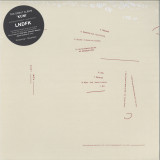
LNDFK (aka Linda Feki) presents her ground-breaking debut album, "Kuni" on Brooklyn-based Bastard Jazz Recordings. Undeniably on the rise after her 2019 breakout performance at Primavera Sound, LNDFK has already caught the attention of Pitchfork, Rolling Stone, Clash Magazine, Noisey, and Brooklyn Vegan (among many others) while being championed by the likes of Gilles Peterson, Tom Ravenscroft, and Jamz Supernova & landing spots on tastemaker playlists like Spotify's "Pollen" and "Fresh Finds."
"Kuni" is a spellbinding exploration of dichotomies: Love & Death (Eros & Thanatos), Flower & Fire, Delicacy & Violence, Poetry & Realism, Purification & Destruction. These opposites are reified in the 10-track LPs multifarious and multifaceted sounds, elegantly meandering through a variety of styles and genres, spearheaded by Linda and features the production wizardry of Darrio Bassolino who co-wrote the album.
"Kuni" opens with "Hana-bi," an ambient instrumental piece that sets the tone for the album. Inspired by the Takeshi Kitano 1997 film of the same name – particularly Joe Hisaishi's stunning soundtrack, as well as Kitano's paintings which appear in the film. "Hana-bi" expresses the dialoguing opposites of flowers and fire, the first of many dichotomous representations throughout the album. "Takeshi" acts as an extension and to "Hana-bi," albeit one of opposing sound, with its driving, highly syncopated drums (which reappear throughout "Kuni") – à la Karriem Riggins, Questlove, or Yussef Dayes – frenetic bass line, and jazz chords. Linda's sultry voice is interspersed, initially jumping around in scat fashion, being triggered as if a sample, before her lyrics come in; her vocals are used like an additional instrument, adding to the song's rich texture. "Kuni" truly hits its stride with the next song, "Smoke – a moon or a button" (its title lifted from the 1959 book by Ruth Krauss and Remy Charlip), which is structured like a jazz standard yet flows into neo-soul territory sonically with those prodigious drums a highlight once again.
LNDFK touches on experimental hip hop in two songs on the record (both of which were released as singles in 2021): "Don't Know I'm Dead or Not (feat. Chester Watson)" – track #4 – and "How Do We Know We're Alive (feat. Pink Siifu)" – track #9. Although they embrace a more hip hop-leaning sound, these songs by no means shy away from the exploratory theme, and feature two of the alt-rap scenes rising stars with Chester Watson and Pink Siifu who offer provocatively impressing verses, combining dense word play with unconventional flows. While these tracks may first appear to be outliers on the album, they are undeniably in tune with "Kuni's" message and sonic palette, acting as testaments to LNDFK's willingness to explore and experiment.
Meanwhile, "Ku" – the third and last single before the album release – furthers the pre-established future soul sound while meandering through nu jazz and left-field electronic. Inspired by the graphic novel and film, "Sin City," and its female assassin protagonist Miho, "Ku" is a musical interpretation of Miho's story, incorporating both her beauty – the first half of the song – and murderous tendencies – the second half – to create a stunning juxtaposition, culminating in an ambient finale that suggests the character's vulnerability and inner peace. The song gracefully bridges the gap between Hiatus Kaiyote-esque songwriting, Dilla's rhythmic syncopation, and Thundercat's instrumental prowess (LNDFK has shared a stage Brainfeeder labelmate Kamasi Washington).
Mixed in throughout "Kuni" are a series of instrumental pieces that function as something akin to an interlude. The aforementioned intro, "Hana-bi," and the album closer "se mi stacco da te, mi strappo tutto:" act as bookends, while "Om" indicates the half-way mark, and "Ktm" sees Jason Lindner add his sound the album. These tracks are the ambient foundation of "Kuni," representing the thematic duality of the work. Clocking in at only 24 minutes, "Kuni" packs an astonishingly diverse array of sounds, styles, and themes, all while showcasing virtuosic musicianship and instrumental prowess.
Appearing on "Hana-bi" and "Ktm," renowned international artists Asa-Chang and Jason Lindner add an additional perspective to "Kuni": Asa-Chang on "Hana-bi," and Jason Lindner on "Ktm." Asa-Chang - famously of the Japanese avant-garde group Asa-Chang & Junray - provides vocals and percussion to an alternate version of the instrumental opener, while the acclaimed keyboardist Jason Lindner offers his synth expertise on "Ktm." These features highlight the spirit of collaboration found in LNDFK's music, always willing to try out new ways of working.
LNDFK is a singer and songwriter, born of two cultures – an Italian mother and Arab father. She grew up in Naples, away from her father, the Sahara, her homeland and traditions, which has helped nourish the desire to rediscover – through art – an engagement to her roots. Her music melts with jazz, neo-soul and hip-hop influences, filtered through her experiences and sensibility.
Her first EP, "Lust Blue," was composed with the artistic production of Dario Bass and released by Feelin' Music; after that she released several singles that saw international radio support (BBC, NTS, Wordwide FM) and gained a massive audience on digital platforms. Together with her band, she toured around Europe, performing alongside such notable artists as Kamasi Washington and Mndsgn, among others. Most recently she toured Italy, and performed at Primavera Sound Festival 2019 in Barcelona.
"Kuni," is due out on NYC label Bastard Jazz Recordings in February, 2022, while the vinyl LP will follow shortly after.
out of Stock
Last delivered 4 years ago available to reorder, subject to availability
dutch sound artist albert van abbe now joins the raster family, with an unexpected collaboration with founder olaf bender aka byetone titled DUAL. having spent time working side by side in ’s-hertogenbosch at the willem twee studio, the result of their collaboration is both smooth and haptic, rounding out as an expressive camaraderie between the two veteran producers. jovial and innocent, DUAL alludes to the experimental research process of finding common ground. fully embracing the haphazard richness of live recordings, the result is a remarkable fusion of contrasting outputs; intricate collaborative efforts and byproducts woven together with an eager indifference towards expectation. the artists embrace a skewed navigation through pronounced highlights, intricate lulls and moments of temporal stasis, intermittently punctuated as a means of intentionally avoiding notions of rigid perfection. with ‘real-time’ approach directing DUAL’s creation, the pair effectively shies away from any meticulous planning, and the music runs free and negates any rigid parameters one might have expected. quirky titles exude the collaged form of the release, and underline its innocent charm. as a whole, DUAL focuses on the creative process and fully engages listeners with its own dialogue, though it is very outspoken, at times even abrasive.
out of Stock
Last delivered 4 years ago available to reorder, subject to availability
Mattiel, the Atlanta based group made up of Mattiel Brown and Jonah Swilley, announce
the release of their third album, ‘Georgia Gothic’, on Heavenly Recordings. ‘Georgia
Gothic’, a magic third in Mattiel’s run of full-length albums, was shaped in the quiet
seclusion of a woodland cabin in the north of the Atlanta duo’s mother-state; “Some
faraway place that just Jonah and I could go where there would be no distractions,
nothing else going on, and we could turn everything off and only focus on writing songs,”
reflects Brown.
Where 2017’s self-titled debut and its 2019 follow-up Satis Factory were written with what
Swilley refers to as a “hands-off” approach - he arranging the music and Brown the lyrics
and vocals, the two working largely separately - the making of ‘Georgia Gothic’ was, for
the first time, a truly collaborative undertaking. “This was the first time we made a point to
just be together and work out ideas in the same room. That was the initial intention... it
was about learning what each other wanted to accomplish on a sonic level, and then just
trying different things out,” Swilley continues. “Everything happened backwards. Normally,
you’d have friends that make a band... with us, we started making music from the jump,
and then became homies.”
Cultivated by time spent together on the road touring the first two albums, it is this
newfound sense of intimacy between Mattiel’s members that enabled the writing of
‘Georgia Gothic’ not as two separate musicians, but rather as one creative entity. The
album remained within the four walls of Brown and Swilley’s private world for much of its
evolution - with recording taking place in a simple studio set up by the pair in the
borrowed room of a dialysis centre, Swilley in the producer’s seat - until, nearing
completion, it was transferred into the trusted hands of the Grammy award-winning John
Congleton (whose extensive list of credits includes artists as diverse as Angel Olsen, Earl
Sweatshirt, Erykah Badu and Sleater Kinney) for mixing.
Not only does the affinity between its creators translate into an electric synergy between
‘Georgia Gothic’s words and music - the brine-shock of Brown’s taut lyricism cut against
the bourbon-smoothness of Swilley’s instrumentation - but here too are the palpable
spoils of experimentation, each party trustful enough of the other to trial and error their
practices into new geometries. Swilley puts this wide palate, in part, down to the place
they call home. “I definitely feel like being from Georgia allows us to have a certain way of
approaching music.” Brown chimes in: “We haven’t really highlighted where we’re from in
the past two records, even though those were also written in Georgia. There’s so much
great art and great music that’s come from Georgia, from all different types of genres and
all over the state - but take R.E.M. and OutKast: there’s this weirdness that I can’t really
put my finger on.” Swilley concurs: “It’s the same with the B-52s, the Black Lips... it
doesn’t feel like L.A., it doesn’t feel like New York, it feels like another planet. We’re not
really in a ‘scene’ here in the same way. You have to make your own sound, create your
own identity.”
And it is precisely the forging of Mattiel’s distinct musical identity that ‘Georgia Gothic’
signals; its members guiding each other ever-homewards not just in a geographical or
sonic sense, but spiritually, too.
Initial LP pressing on Red Hot coloured 140g vinyl with digital download code. (Once this
format has sold out, a black 140g vinyl edition with digital download - HVNLP202 - will be
made available.)
Faitiche presents Beispiel (German for "example", also suggests playing together), a joint project by Frank Bretschneider and Jan Jelinek. Muster is their first album.
Free electronic music, the result of spontaneous improvisations.
“Meaning” is a concept that is overused in connection with music. Muster does not call for the same kind of air quotes. With its title, German for patterns/exemplars, Beispiel’s album frees itself from the ballast of teleological semantics. There is no overarching theme, no preparation, no reading list, no reason for this music. Just two facts: Frank Bretschneider and Jan Jelinek have known each other a long time and appreciate each other’s work; and they share a love of modular synthesizers and of experimental set-ups designed to capture surprise.
Bretschneider and Jelinek got together for their first joint session in 2016 and the years that followed brought more such meetings at Jelinek’s studio for open-ended musical dialog – at irregular intervals and with no clear objective. The improvisations were recorded in two stereo tracks: one track for Bretschneider’s audio, one for Jelinek’s. After each session, the recordings were processed separately, the options essentially limited to cutting and altering the frequency range. The nine pieces for Muster were selected from the resulting material.
This approach reflects an ideal: music is when you play your first note without knowing what the third or fourth will sound like. When your 290th note still sees you leaving the beaten track, and when curiosity grows as the piece unfolds. Duping is part of Beispiel’s practice. Improvisation is about disagreement. It’s a matter of addressing the right issues. What’s happening here? What’s mine, what’s yours? Are “why” and “where next” legitimate questions?
Muster is an exemplary work. Nine suggestions for what can be. Nine ideas for possibilities of listening.
Arno Raffeiner
out of Stock
Last delivered 4 years ago available to reorder, subject to availability
The Equations Collective is an experimental sound project formed by a multi-disciplinary group of artists, active in the fields of music, photography, sound design & software development.
In 2018, the collective set up a temporary outdoor recording studio, 1130 meters above sea level, on the slopes of Mount Helicon in Greece, with the ambition of recording their work in a natural environment. A 'mobile and modular' construction, fully powered by solar panels, the design of the studio showcases the possibilities of a progressive, environmentally sustainable future through renewable energy.
Embodying ecological incentives, and representing an immersive engagement with the landscape, the 'Helicon Sessions' document this extraordinary residency, capturing a profound dialogue with the eponymous mountain region.
Situated in Boeotia, Central Greece, Mount Helicon has a prominent archaic significance. A historic location where stories of sacred springs and the epic origins of the Muses and Narcissus converge. Steeped in the heritage of ancient narratives, Helicon is seen as a principal symbol of poetic inspiration.
On the 'Helicon Sessions' the collective draw upon the inspiring topography and fabled mythological resonances of the area, unfurling an expansive, hypnotic suite of abstract electronics. Liberated by an open-ended, improvisational dynamic, the collective move through a mysterious, elemental cycle that mirrors the imposing scale and dramatic atmospheres of the setting.
Across an entrancing, fluid sequence of five designated 'cuts', the collective traverse the borderlands of drone, techno, dub, and acid, amplifying the acoustic traces of Helicon by integrating field recordings collected at the site into this arresting body of work. With these recordings, the collective delineate an odyssey of subverted 303s, sputtering drum machines and formidable, oscillating low end that drifts and coalesces like an amorphous mirage; a spellbinding sound world of clarity and shadow.
The 'Helicon Sessions' signify a symbiosis (between the terrestrial and the engineered, between wildlife and futurism, between the intrinsic and the synthetic, between the innate and the manmade) And with their conception of a portable, eco-friendly studio The Equations Collective focalize valuable ideas centred on ingenuity and evolution. The outcome of this project illustrates a unique collaborative exchange which acknowledges the deep nuances of environment and the enduring echoes of history.
The Equations Collective is a collaboration between Artefakt, Aroma Pitch, Aphelion and Sphera De Noumenon across Berlin, Amsterdam, Cologne and Hamburg. Together they have established an all night long live event in Berlin, starting at Sameheads and Acud Macht Neu, which eventually lead to their residency at OHM (Tresor).
For this format they have collaborated with the following artists: Alex The Fairy, Anna Z, D-IX, Eliad Wagner, Jón Friđgeir Sigurđsson, Orson Wells, Phillip Jondo, Philipp Matalla, PRSMC, Rabih Beaini, Sabrina Gricourt, Sébastien Robert, and Vida Vojić.
The respective members of The Equations Collective have released a range of output on the likes of Field Records, Delsin, Semantica Records, De Stijl, & Soul People Music.
Since 2018 their visual identity has been shaped by Elias Hanzer.
The 'Helicon Sessions' is their debut release.
out of Stock
Last delivered 4 years ago available to reorder, subject to availability
Array expresses the experience of a remote Antarctic research station through the convergence of sound, site and performance. The result is an immersive and affective experience of the spaces, protocols and conditions comprising the bracing polar environment. Array is a companion piece to Polar Force, a performance-installation work by Philip Samartzis and Eugene Ughetti, presented by Speak Percussion.
Array features recordings of radar and scientific instrumentation used for upper atmospheric research and terrestrial communication. These sounds reveal the sophisticated technology and architecture used and heard within the Australian Antarctic Territory. Many of the recordings focus on the way the built environment is transformed through stress and fatigue caused by extreme climate and weather events including freezing temperatures and high velocity winds.
Together with the field recordings are layers of live performance using custom built instrumentation to produce a unique series of textures, rhythmic cycles, resonances and timbral phenomena. The application of tension and pressure upon the assorted instruments recalls the distressed state of highly specialised infrastructure found within the perimeters of a research station.
A polar research station comprises many types and volumes of prefabricated space. In dialogue with this are the unique spaces used to record the instrumental performance. By merging different spaces Array brings into focus various industrial resonances, spatial characteristics, timbres of metal and concrete, and sonic artefacts produced by hard and permeable materials and surfaces.
In three parts, Array presents Antarctica as a liminal space oscillating between representation and abstraction to challenge often repeated tropes. The intent is to blur the relationship between the recorded and performed to produce a hyper-realistic encounter of the powerful forces that operate at the margins of our planet. One hears the precariousness of a remote research station contorted by unrelenting stress, compressed air forced through waterborne fipples and the volatility of weather events.
Life on remote research stations is progressively resembling the broader contemporary experience, in which strict protocols are used to govern and preserve life. The resilient communities who live and work in these places have learnt how to co-exist with an increasingly hostile environment, along with its unknowns and necessity for hyper-vigilance. Rather than consider it as a place on the edge of elsewhere, Antarctica and its assemblage of durable, super modern colonies provides an archetype for an uncertain future in anticipation of the volatility that awaits.
"Même Soleil" is the result of a dialog between the French photographer Gaël Bonnefon and the French musician Frédéric D. Oberland initiated by IIKKI, between December 2019 and June 2021.
Self-taught multi-instrumentalist & photographer, Frédéric D. Oberland finds himself at the crossroads of image and sound, favoring a synesthetic approach. He articulates different modes of narration, combining the raw character of the documentary form with the transfigured reality of myth and poetry, allowing him to question notions such as the sacred, the monstrous, the fraternity, while at the same time returning to the political news of the present. Attentive to the pulse of the body, his work is willingly itinerant, modulating between the ripples of dreams, watching the points of incandescence and the bursts of electricity that act as revelations of our presence in the world, here and now. He’s the co-founder of leading bands such as Oiseaux-Tempête, FOUDRE!, Le Réveil des Tropiques, FareWell Poetry and is co-curating the label NAHAL Recordings.
"Fueled by travels and their emanations, Frédéric D. Oberland’s music had to build new horizons this year, outlined by the curves of semi-modular synthesizers, the avalanches of effect pedals and the zigzagging paths of electric circuits. Même Soleil, his third solo album, manages to merge mystical visions of the unconscious and the absurdity of an apocalyptic present in a sensory whirlwind, operating an astonishing mutation with tones still unexplored in his previous releases. A visual as well as a musical journey that takes shape in a book and a record of the same title, Même Soleil is the result of a collaboration with the photographer Gaël Bonnefon. Seeking the tension between the blinding light of day and the glittering visions of saturated night skies, the two pieces in dialogue transcend reality to deliver their own truth, as bright as the first light of the sought-after morning." (Alice Butterlin)
Gaël Bonnefon graduated with highest honours from the Fine Arts School of Toulouse (Isdat) in 2008. He has exhibited at Villa Pérochon, at the Eté photographique in Lectoure, at the 104 in Paris during Jeune Création 2012, at Rencontres Internationales de la Photographie d’Arles and at PhotoEspaña, at the Abattoirs Museum in Toulouse in 2014, at the Château d’Eau Gallery in 2012 and 2019 and in the Vitrine of Frac Île-de-France in 2020. His work is part of the collections of Frac Midi-Pyrénées, Château d'Eau gallery, Kulturamt in Dusseldorf and Kiyosato Museum in Japan ; he participated in Temps Zero projects Berlin, Braga, Rome, Bucarest, Groningen and Thessaloniki. He has also been granted artist’s residencies in Germany, France and Israel. His first book Elegy for the Mundane was published by La Main Donne in 2019. He continues his intimate and dense journey and presents his second publishing, Même Soleil with photographic works from 2009 to 2021.
"At first brutal and declining, the substance of Gaël Bonnefon's photography is just like a gaze that fears being one day extinguished and that is always looking to be born again. In photography as in love, recoil and desire, tension and easement, repetition, wandering and rest, flight and pursuit. Here photography allows itself to be traversed by flashes of life, renewed forces, echoes of far-off kindnesses and lost joys. It sings silently, lover of a thousand faces from which the thread of a single and same image is born, followed without relent, from the snowy peaks of childhood to the lost worlds of the present." (Michaël Soyez)
out of Stock
Last delivered 4 years ago available to reorder, subject to availability
Heavenly Recordings announce the release of ‘Heavenly remixes 3&4 - Andrew Weatherall volume 1&2’, a brace of compilation albums collecting together some of the finest remixes from the label’s long-time friend, collaborator and go-to remixer. These compilations follow ‘Heavenly remixes 1 & 2’, which showcases some of the label’s other great remixes.
By the time Heavenly was born in the spring of 1990, Andrew Weatherall was already an inspirational sounding board, as well as a fellow traveller on the bright new road that stretched out ahead, thanks to the massive cultural liberation of acid house. Back then every energised meeting could be turned into a fortuitous opportunity in this burgeoning new underground economy. Bored of your job? Start playing records out! Start a club night! Get in the studio!
Start a label! Just don’t stand still. Commandments Andrew would follow for the rest of his life.
At the start of things, Andrew was a regular visitor to Capersville - the pre-Heavenly press office run by label founder Jeff Barrett (soon to become Andrew’s manager). It was there that he famously picked up a copy of Primal Scream’s unloved second album and singled out a
track that would later become ‘Loaded’, after being given an instruction to “fucking destroy” it by the band’s Andrew Innes; it was there too that the idea to remix the first Heavenly release
came about.
Andrew’s mix of that first Heavenly record is very much a product of its time. ‘The World According To Sly and Lovechild’ is a swirling bass punch topped with a hypnotic marimba line and the kind of ecstatic diva vocal that you’d hear coming out of the speakers all night at postShoom clubs like Yellow Book.
His take on the label’s next release - Saint Etienne’s ‘Only Love Can Break Your Heart (A Mix of Two Halves’) - would set the template for his next three decades of audio exploration. A drawn-out imperial dub, the track builds and builds with a moody intensity (partly down to the
melodica played by Weather Prophets legend Pete Astor) that’s far more Kingston JA at dusk than Kingston-upon-Thames at kicking out time. It’s both a dancefloor record to get lost in and
headphone psychedelia of the highest order - a perfect example of what he did better than anyone else.
Between 1990 and his untimely death in 2020, Andrew fed more Heavenly bands through the mixing desk than those of any other label. Consistently, he returned visionary music to the
office, often in person for (at least) one ceremonial playback - a ritual that would involve the volume cranked up high and Andrew rocking back on his heels, eyes closed, lost in the alchemy of it all.
Each time, he would warp and twist originals into beautiful new shapes - elasticated club records that might evoke Detroit techno one second and Throbbing Gristle the next, before wheel-spinning into something akin to The Fall produced by King Tubby.
Andrew’s studio adventures would always be guided by that early advice to destroy the source material. It’s why he was the first name that came up when remixes were discussed; the first number on the speed dial. Listening back to these remixes now - to thirty years of glorious outsider sounds - it bangs home again just how fucking good Andrew was.
out of Stock
Last delivered 4 years ago available to reorder, subject to availability
The new album by the Peruvian-born / Berlin-based experimental artist Ale Hop was conceived in a context of immobility and provides six sonic vignettes that wonder about location, circularity, rootedness and experience. In collaboration with Ana Quiroga,
Concepcion Huerta, Daniela Huerta, Elsa M'balla, Felicity Magan, Fil Uno, Ignacio Briceño, KMRU, Manongo Mujica, Moises Horta, Nicole L'huillier, Raul Jardín, Sukitoa Onamau, Tomas Tello.
Following her explorations on music's inherent fixation to geographic space and time, be it through the longing of home ("Apophenia" 2019) or scientific magnification of invisible worlds ("The Life of Insects" 2020), Berlin-based Peruvian-born experimental composer Ale Hop's fourth album, "Why Is It They Say a City Like Any City?", was conceived in a context of immobility. During the lockdown
months, she started a process of remote collaboration, by sending messages, posted from various cities along a South American trip, to thirteen musicians from around the world. She journaled her impressions upon these places to an intimate fictional character while reflecting on matters of time,
sound, space, cosmology and colonial memory. The thirteen musicians dialogued with this voice by taking upon the challenge of responding to the messages with sound collaborations.
Field recordings, mouth drumming, drone cellos, electronic loops, arrhythmic rhythms and voices came back from this experiment. Ale assembled them, by layering, twisting and turning, into sonic vignettes that wonder about location, circularity, rootedness and experience, making it the first time she's set her guitar aside. Expect no answers to the album's title question, but an innermost psychedelic rumination.
"Despite the technological resources that appear to dilute distances, the simulation of closeness mirrored on the digital space is an emptied body, a state of precarity, a flat surface; unable to withhold an experience of exchange," Ale states. "So, I began this project by asking myself, how can we escape from the reduced experience of the virtual? The idea behind this experiment was that my messages and the places they describe could drive the composition, be a catalyzer, a
score. Thus, to use geography as a tool to remember and imagine, to allow new soundscapes to emerge."
"Memory, diffuse and divergent, sometimes reaches out to the future in its search for form, taking shape from the reflections and echoes that come back … like throwing a rock in a pond and having a rock thrown back at you."
out of Stock
Last delivered 4 years ago available to reorder, subject to availability
»Neon City« is the debut release by Erik K Skodvin & Otto A Totland's Deaf Center project, finally re-issued 18 years since its first appearance.
Listening to »Neon City« in 2022 is like taking a melancholy journey down rainy city streets of the early naughts, made by the then two young Norwegians in their mid 20s after spending time together in a basement full of vintage items. Armed with young optimism and a sense of musical experimentation, they started sampling everything around them, be it an old television broadcaster, tape recorders, a game of table tennis or conversations on film and merging it with pianos, plucked guitar, strings and anything in-between. The record turned out as something unique in the fields bordering post classical and ambient music, though without landing on any set genre. The record was filling a place in music that was barely touched upon and made them further experiment with samples and classical music which landed them on the 2005's classic »Pale Ravine«.
Although Erik and Otto both had been making music solo before, »Neon City« was the start of their more focused future paths as purveyors of both light and darkness in music that seeps through your soul to battle the anxieties of the world. We're glad to see this important start again be available to new ears. The record comes with a remix of the opener track “Dial” by Helios aka Keith Keniff, taken from the same original.
out of Stock
Last delivered 4 years ago available to reorder, subject to availability
Black Truffle is pleased to announce For McCoy, a new work by Eiko Ishibashi dedicated to the widely loved character of Jack McCoy, portrayed by Sam Waterston in Law & Order. Following on from Hyakki Yagyō (BT064), For McCoy finds Ishibashi further exploring the unique space she has carved out in recent years, bringing together musique concrète techniques, ECM-inspired jazz, lush layers of synths and hints of pop into immersive and affecting structures crafted in her home studio, aided by a group of close collaborators.
Beginning with overlapping layers of descending flute lines, the expansive ‘I Can Feel Guilty About Anything’ (whose two parts stretch out over more than thirty minutes) unfolds with a free-associative logic, embracing dreamlike transitions and unexpected cinematic cuts. As a hovering cloud of synthetic tones and multi-tracked voices fans out from the spare opening moments, Joe Talia’s skittering cymbals settle into a gently propulsive groove, soon joined by melodic fragments performed by Daisuke Fujiwara on multi-tracked saxophone. As the drums cede to field recordings and ominous synth figures, the uncommon meeting of saxophone and electroacoustic techniques call to mind the more spacious moments of Michel Redolfi and André Jaume’s Synclavier-propelled oddity Hardscore or the early work of Gilbert Artman’s Urban Sax. As the piece continues on the LP’s second side, distant dialogue rumbles beneath a surface of processed flutes, blurring into a cavernously reverberant backdrop for stark ascending lines performed by MIO.O on violin. Eventually, the piece settles into a gorgeous passage of abstracted dream pop, where Ishibashi’s multitracked vocal harmonies glide atop synth chords, errant pings and snatches of outdoor sound.
Fragments of melodic material reappear throughout the spacious opening piece, finally stepping to the forefront on the closing track, ‘Ask Me How I Sleep at Night’. Here, over a shuffling groove supplied by Jim O’Rourke on double bass and Tatsuhisa Yamamoto on drums, layers of flutes, saxophones and guitars sound out melodies whose combination of twisting irregularity and soulful immediacy calls up prime Keith Jarrett, while their closely voiced harmonies suggest Kenny Wheeler or even Wayne Shorter’s Atlantis. In a classical gesture of closure, the web of melodic lines eventually leads back to the descending flute figures with which the record began. Presented in an immersive, impeccably detailed mix by Jim O’Rourke and arriving in a sleeve featuring Ishibashi’s beautiful drawings of Jack McCoy, For McCoy is an essential release for anyone following the enchanted and unique path being forged by Eiko Ishibashi.
out of Stock
Last delivered 3 years ago available to reorder, subject to availability
In 1958 the painter Isson Tanaka (22 July 1908 – 11 September 1977) moved to Amami Ōshima, an island in the Ryukyus. There, in self-chosen isolation, he committed himself exclusively to his art until his sudden passing in 1977. In 2018 Seiha Kurosawa, Kanako Azuma and Hideki Umezawa visited Amami Ōshima to create a video installation about Tanaka’s insular life. The work, entitled “Dokkyaku” (tr. The Lone Visitor), shifts between the texture and materiality of Tanaka’s paintings in relation to the natural world of Amami Ōshima and its people. The video invites viewers to understand—poetically—the artist’s sensitivity to nature and the expressivity of his works.
During his stay on Amami Ōshima, Hideki Umezawa recorded a lot of natural sounds to recreate a sort of simulated ecology of Tanaka’s mind – or: of the painter’s mind. On this long playing record these recordings are blended with electronically generated sounds. Next, Andrew Pekler, who has never actually visited Amami Ōshima, upon hearing Umezawa’s field recordings creates - in the spirit of Isson Tanaka - a complementary dreamscape of the island’s phenomena. Of what could be.
This is a work that doubts between site specific and creative imagination. With sounds echoing between the anecdotic and the imaginary. It is a sensitive and highly stylized interpretation of a world that Isson Tanaka had also carefully studied. A painter at work; a way of seeing. So, after Christophe Piette’s ‘Six Tableaux de Quelpaert’, released by Edições CN in 2019, we again moore an island in the nautical footsteps of a painter. While Piette drew a story through – among other things - recording dialogues at his island home, at the restaurant table, et al. Pekler and Umezawa paint their pictures in a more musical fashion. Where natural sounds evaporate into electronic clouds of imagination.
Hideki Umezawa (b.1986, Gunma) is Japanese artist / composer. He won 1st prize at Luc Ferrari’s international competition – Presque Rien Prize 2015 (France), and the Contemporary Computer Music Concert 2015 (Japan). “Dokkyaku” was originally created for "Fukami – Une plongée dans l'esthétique japonaise", an exhibition at Hôtel Salomon de Rothschild in Paris, France as part of ‘Japanismes 2018’.
Andrew Pekler (b. 1973, Samarkand) works with techniques of digital sampling and analog synthesis to re– contextualize found sounds and archival musical materials. In addition to numerous album releases, Pekler has also produced a number of video, installation and web-based works, as well as music for theater, dance, and film.
out of Stock
Last delivered 4 years ago available to reorder, subject to availability
Spoken word recordings from Gregory Corso, Tina May Hall, Sam Lipsyte, Christine Schutt, Gary Lutz, Allen Ginsberg, Dawn Raffel, Jason Schwartz, Kathryn Scanlan, Scott McClanahan, & Terry Southern. About 40 years ago, in a record shop on Long Island during a weekend visit there to see my parents, i found a double-LP that looked like something i should definitely buy. It was called "BIG EGO", by the The DIAL-a-POEM POETS. On the cover was a picture of John Giorno (a great poet Ed Sanders had turned me on to) on a NYC rooftop with Philip Glass, Meredith Monk, and two kids. It cost $2. I bought it and rushed back to my parents house, where i still had my old turntable in the basement, not far from my Jimi Hendrix and Zappa Crappa posters, and my framed portrait of John Cage. My copy of Eno's "Discreet Music" was still on the turntable, having been left there years before, when i'd fled Long Island for good. I lifted it from the platter, gently slid it back into its sleeve, like a priceless religious artifact, and put Side A of the Dial-a-Poem LP on. I almost lost my mind while listening to it. The next day i went back to the same record shop looking for more DIAL-A-POEM LP's. i found two. One had a long list of names on the back, some famous, and some i'd never heard of before. I bought both LP's, and an hour later, for the first time in my life, i was exposed to the art of Laurie Anderson, whom i'd never heard of before. This was 1978. Her contribution was a piece called "Time To Go". It changed my life. Or at least, that’s how I remember it. I was just a kid, so there were a lot of moments like that, around then. Nowadays, these moments can be had in seconds, with a click of the cursor. That evening, as i sat alone by my imaginary campfire (ie; that record player in my parents basement), i promised myself that someday, somehow, i would embark upon a WORDS & MUSIC project that might move people the same way i was moved when i first heard Laurie, and Robert Wilson & Christopher Knowles, and Burroughs, and Ginsberg, and Corso, and Anne Waldman, and John Ashbery, and the great Charles Olson, and so many others. Words, for the very first time, had wielded the same power as music. And it was visceral. Just like music. It ran deep. It was a FEELING. John Giorno died in 2019, but he kept poetry alive like nobody's business. I was lucky enough to have spent some time with him in the early 1980's, when i was briefly a member of The Fugs, and often found myself surrounded by those Ginsberg called, "...the greatest minds of my generation". Ed Sanders (who'd ushered me into that scene) once told me that when he came to NYC, it was easy to go to a cafe, or to St Marks Church, and hear Burroughs, Corso, Ginsberg, and all the greats, reading their poetry. He said that even if you were just a bum on the street, you could just walk right up to them, and start a conversation. They were totally accessible, if they were in the right mood at that particular moment. So i was shocked when Sanders told me he didn't approach any of them, not even once, til he'd been going to their readings for nearly ten years. "For almost a decade, I went to every reading, every lecture, every panel discussion. But I never went near them. Never approached them. Not even once", Sanders told me. "For ten years, all I did, was listen." It took me four decades, but ... better late than never. I finally made WORDS & MUSIC, Book One.
Faitiche presents, for the first time on vinyl, a selection from the 84-track (!!) remix project originally released in 2013 as a three-tape set by Trip Shrubb aka kptmichigan aka Michael Beckett. Known to many from bands like Tuesday Weld or The Schneider TM Experience, Beckett remixed his way through Harry Smith’s famous Anthology of American Folk Music – a compilation of American folk, blues and country recordings released in 1952, soon to become key point of reference for the emerging folk revival movement. Having translated the title into the local dialect of the part of Germany where he lives, Beckett began reinterpreting all of its 84 tracks using sampler, effect pedals and loops – sometimes making several tracks in a single day. A colossal undertaking whose results are beyond accomplished and that is summed up in the selection of thirteen tracks on 'Trewwer, Leud un Danz'.
Murray Royston-Ward writes about 'Trewwer, Leud un Danz':
"Total sacrilege ... A collection of remixes of tracks from Harry Smith’s Anthology of American Folk Music which was originally released in its entirety. The album is titled Trewwer, Leud un Danz (sorrow, song and dance) which is drawn from an endangered ‘Low German’ dialect (lippisch Platt) and is poetically approximating Smith’s volumes Ballads, Social Music and Songs. The hardware employed encompasses analogue, virtual analogue and digital. A primordial soup of electrical fields, striated granulation, micro-circuitry, molecular oscillations and mathematical manipulation; communicating directly with the guitars, zithers, mountain dulcimers, fiddles, jaw harps, banjos, harmonicas and human voices of 1930’s America: itself a reterritorialization of African and European folk traditions that reach back farther and farther into our collective pasts. (…)"
out of Stock
Last delivered 4 years ago available to reorder, subject to availability
‘The record is inspired by the idea of humanity’s ever-increasing entanglement with technology and artificial intelligence, balancing fears and moral concerns with the possibilities of evolution’s next phase’
A new Soccer96 album is a chance for Danalogue (Dan Leavers) and Betamax (Maxwell Hallett) to return to something of a spiritual creative home. Between them, the keyboardist and drummer have become synonymous with the thriving London jazz scene and, in their mind-bending incarnation as the astral synths-and-drums pairing, they’ve traversed stylistic worlds. Over nearly a decade, the duo have metamorphosed from a DIY outfit whose rough-edged recordings hit with a punk spirit, to cosmic dreamers that use sound to travel the reaches of the mind.
First single Dopamine features Nuha Ruby Ra on vocals who sings from the perspective of human and machine throughout the track. This concept overlaps with the music seamlessly, forming a meeting point between technological and human exploration.
Dialogues between the band and Nuha crystallised a shared vision of a future where humans and artificial intelligence are entangled in a codependent relationship based on the giving and receiving of pleasure hormones, the robots only source of dopamine is to receive it from humans, and the humans’ ability to unleash the monsters of the worst of human emotion.
Danalogue and Nuha sing together ‘It’s a Long Way down’ .. the feeling of jumping from the cliff of our current state as humans and ‘free-falling’ into the unknown of robot-human intertwining. By the outro they are pleading with each other over their dopamine co-dependency, in terms of both giving and receiving the hit. "Dependency leads to free-falling integration, a moment of freefall into robotic consciousness. Humans and machines are locked in a dance of addiction." explains Betamax.
Soccer96 has always been a vessel for Danalogue and Betamax to find clear water from their multitude of other collaborations, their most notable being as two-thirds of The Comet Is Coming alongside Shabaka Hutchings. Danalogue’s other recent production credits include Snapped Ankles and Calabashed, whilst Betamax has been making music with Champagne Dub and Coma World.
“Through collaborating with various artists and developing our own sonic language, it feels like we have created a sound of our own,” says Danalogue. “Now we think less literally and take more liberties to not necessarily sound like a duo. It’s more like a production team that can be augmented or stripped back depending on what the music calls for.”
Dopamine, though, sees the pair back together once again, incubating their findings of the past two years and moving Soccer96 into new territories. The record is maybe darker in some senses than what they’ve put out before; it’s inspired by the idea of transhumanism and humanity’s ever-increasing entanglement with technology and artificial intelligence It balances fears and moral concerns with the possibilities of evolution’s next phase. “The LP title Dopamine refers to the type of neurotransmitter associated with pleasure, that enables technology to hack into our minds and control us, creating addiction, dependency,” Betamax explains.
Dopamine began life as a sonic reaction to the graphic novels of ‘Moebius’ Jean Giraud. The duo then started swapping reel-to-reel tape ideas through each other’s letterboxes in lockdown, before eventually convening in the studio and displaying one of the revered French artist’s images in the middle of the studio for inspiration.
“All musical decisions would centre around this image,” Betamax says. “It was a depiction of a cosmic traveller gazing across a desert at a sort of crystal city. If the music was resonating with the image then we knew we were on the right path. We are both glad there is a lot of emotional warmth underpinning the whole thing. We are trying to connect with the human essence at all times.”
Essential Aliensis the 10th Helvetia album. Helvetia is the solo project of Jason Albertini from Duster. Helvetia resides in Portland, Oregon but was formed in Seattle, Washington in 2005 after Duster first went on hiatus. The songs onEssential Aliens were recorded over the last year, in Jason's basement. Since the band's inception, Jason has continued to employ a rotating cast of band members and collaborators, which now includes Steve Gere and Samantha Stidham. Steve and Jason also played in Built To Spill together from 2012 until 2018. In 2019 Duster started playing shows and recording again. During this time Jason started writing what would becomeThis Devastating Map. Released at the beginning of August last year, Post-Trash called it"a constantly shifting project that takes experimental lo-fi into brilliantly colored psych directions with a concise glow."Then the pandemic took hold. With normal life at a standstill and unable to hang with his bandmates, Jason focused his energy on his daughter's homeschooling schedule, and recording. He focused on finishing one song a day and was soon honing in on a new album. Essential Aliensdistills and simplifies the Helvetia sound. Reverb and delay are absent, replaced by warm fuzz and intimate room sounds. Progressions morph with stoner repetition and end in head scratch. Drums distort, muted bass lines prop up acoustic guitars blown out on a cassette four-track. Cheap electric guitars are barely in tune and recorded direct, almost painfully in your face. The songs are short blasts of psychedelic chill, unrooted by genre, a rummage around an alien radio dial. These are simple songs about keeping yourself from falling apart, to remind you that you can be strong. The visual elements for the album come from a recurring dream, which centers around a period in Jason's childhood when he lived in Basel, Switzerland, and believed that he lived with a ghost. In the dream, Jason's life becomes turned upside down because of a series of unexplainable events that turn out to be orchestrated by the ghost, and he wakes up convinced that he is a ghost as well. These are simple songs about keeping yourself from falling apart. To remind you that you can be strong. This is a weird blues.