"7"" single for the djs of the initial digital 45 of Peixeira Amolada e Quebra Queixo b/w Mariposa Tigre.
Peixeira Amolada e Quebra Queixo It represents two popular stereotypes common in the third world: the sharp cutting knife and the quebra-queixo, the coconut candy brought from Angola by enslaved blacks. But, playfully, it is also the expression of direct speech and a sharp blow, also as a duo of anti-heroes in search of justice, equality and fraternity. This song also features an element never used before in the band: the guitar. One of the most popular instruments in the world, it provides the basis for the song, which goes through a groove full of counter-melodies that bring that feeling of a cut (hence the name of the song), in non-obvious conventions, and a surprising ending in another time signature. As well as the musical reference for the name, this track represents the struggle that many Brazilians go through every day to have a decent life. You have to have a ""sharpened knife"" to open the way.
Quebra Queixo Represents the playful and magical beings of the forest. How can a moth be a tiger? This song carries a lot of the sound Nomade has built up over the course of their career. Strong funk influences, ethno groove, with unconventional brass themes and a very jazzy accent. Halfway through the song, another of the band's very strong references comes to the fore: reggae, more precisely ragga, which makes the song even more danceable. Finally, a convention from the whole band brings the song to a grand end, making you want to listen to it again."
quête:digital express
The Boysnoize Records catalogue contains more than a decade of milestones in the life of Angeleno DJ and producer PILO. His signatures—a focus on sound design, and a digital crunch evocative of hardware rather than software—are present from the very beginning, but the evolution of Pilo’s skill and sophistication is clear as he stretches from electro to experimental to techno and back again in a slowly oscillating gradient. Yet despite his dozen or so releases in just as many years, G.L.A.M. (dropping November 8th, 2024 from BNR) is Pilo’s first proper album. That the record embraces the cyclical nature of time is apropos; the artist’s journey towards self-actualized mastery always ends with a new beginning.
Over the eight tracks of G.L.A.M., Pilo reaches deep into the dream that first ignited the passion that has driven him since. For a chosen few internet-connected American teens in the aughts, the sounds of European electro (and electroclash) trickled down their ethernet cables and instilled a fantasy of exotic, sartorial, sexually-fluid hedonism that felt a world away from the hard-edged masculinity of the hip-hop and skate cultures dominant at home. Pilo opens G.L.A.M. expressing this idealized fantasy with the track “Superstar DJ,” channeling the tongue-in-cheek self-celebritizing of Miss Kitten and The Hacker’s seminal work. “I’m a superstar, come meet me at the bar,” hiss Pilo’s heavily effected vocals, over a bassline of chopped mentasm synths driven by a swift, club-ready rhythm. The fingerprint of 2000’s electro a la International Deejay Gigolo Records is recognizably present, yet Pilo is too adept, too confident in his studio abilities to let his tracks rely on the retro. A great joy of this album is the future-facing richness of its production, always nodding to its spiritual guide of the past, while constantly breaking new sonic ground.
G.L.A.M. continues with “Girls Rule The World,” its vicious, droning bassline and sticky, titular hook making it the perfect electroclash soundtrack for a revenge plot on an ex-boyfriend. “What you Want” offers an instrumental exercise in “synthesizers are the new guitars,” and Pilo’s FX chops really shine as he warps and distorts his sounds into an undiscovered dimension existing somewhere between both. “Loverboy” enters the more melodic, Legowelt-inspired realm of electro, pushing above and beyond the foundation of analogue minimalism with flourishes of impressive sound design to construct something both climactic and cathartic. Scopa lends her perfect coldwave sprechgesang to titular track “G.L.A.M.,” with Pilo’s vocal processing offering surprises throughout and his FX chains wielded as instruments unto themselves.
On the track “A Slow Thinning Halo,” Pilo might be conjuring the haunting vocal chops and chiptune simplicity of early Crystal Castles, but the whiplash snap of his drums and sizzling production are all his own. “Spend the Night” is G.L.A.M.’s least nostalgic—and most unashamedly pop—offering, with the mic being passed between Sana and DEEVIOUS (previously featured on Pilo and Boys Noize’s 2023 track “Pvssy.”) DEEVIOUS’ sultry singing rides atop the bassline as it hypnotically struts across the floor, while Pilo’s skillful arrangement, deft rhythm programming, and atmospheric control elevate the songcraft into full-spectrum worldbuilding.
As the penultimate track, the contemporaneity of “Spend the Night” serves as transition away from the album’s previous, past-leaning exercises, allowing Pilo to step fully into the future with “One Last Embrace.” The closing track still references aughts sounds, but it borrows so widely and prolifically that Pilo’s reassemblage can only be described as singular. Here, Pilo pushes his engineering into psychoacoustic territory, as the eerie, beautiful melancholy of “One Last Embrace” explodes into a thrashing bassline that warbles like a drowning memory, struggling against the sinking weight of time. Pilo allows it to survive for 16 electrifying, gut-wrenching bars before letting go. In G.L.A.M., as in Pilo’s career, as in life, every ending can only be a new beginning.
This Autumn sees the release of Gavin Friday’s much-awaited new album, Ecce Homo, his first in over thirteen years, and via BMG. It is a work that heralds a fuller, more sonorous, form of expression for this ever-evolving artist, one that transcends the prescribed conventions of genre, breaks new ground and brooks no compromise. Where loss, filial grief, remorse and existential disquiet were the more conspicuous tenets of Friday’s 2011 release, catholic, the presiding spirit of Ecce Homo is altogether freer, less shackled, and sovereign — indomitable, too. Self-tyranny and its capitulations have here been sublimated into strength and enduring triumph. The credo is that of a man beheld, yes, but never beholden. Recorded in Dublin and London, Ecce Homo is produced by Dave Ball (of Soft Cell), Michael Heffernan and Riccardo Mulhall. Featuring the singles ‘Ecce Homo’ and ‘The Church of Love’, the album will be available as a Limited Edition 1LP Transparent Blue, 1CD & Digital.
Fables of the future fuel the present. Lisel (Eliza Bagg) draws from this tradition on The Vanishing Point, a daring musical odyssey of altered singing, experimental pop, broken melodies, and striking electronics. A culmination of her continual dissemblance of genre, Lisel’s new album is an epic composed of allegorical tales, forming a dystopian storybook of life in the shadow of impending catastrophe. It’s a high-concept work of contemporary pop sounds, hyperpop motifs and tropes. Every song reflects the shared psycho-emotional experience of moving towards unsettling futures and looking beyond these outcomes, to the point where the horizons vanish. Evolving the sonic toolkit she employed on Patterns For Autotuned Voices And Delay (2023), Lisel transforms pop into a canvas for operatic storytelling. Along with making her own work, Bagg is a classical singer working in baroque and contemporary experimental opera, and with her project Lisel, she seeks to develop new, expressive qualities out of ancient vocal techniques from the Baroque and Renaissance periods. Her opera experience has infused her with a desire for a big, cinematic sound and holistic world-building, creating a “total artwork,” and she fits that medium into the form of a solo project. From haunting whispers to soaring melodies, she reaches back towards ancient musical traditions while incorporating futuristic sounds in order to imagine how a possible future might look back at contemporary existence. Dystopic stories melt into pop songs, hammered to ruin. Both through sonics and lyrics, the album recounts urgent narratives as ancient mythological fables, chronicling in operatic density the deepening awareness of the world’s looming, inevitable vanishing point. Photographer Carla Rossi further builds Lisel’s world through a series of photographs that similarly draw on Renaissance and Medieval painting, while placing them aesthetically in a digital realm. In these dramatic, hyper-stylized photos, Lisel takes up classical poses and yields iconographic symbols, further exploring the dissonance in her work as these manufactured “paintings” recall storytelling of the past while depicting images from an imagined future.
Eaux proudly announces a new collaborative mini-album from label boss Rrose and Polygonia. Containing six tracks and over 40 minutes of music housed in a fully printed sleeve with artwork by Jon-Paul Villegas, the record focuses squarely on the dancefloor while infusing it with the kinds of psychoactive drones, intricate polyrhythms, and relentless modulations that have come to identify both of their approaches to sound. Featured heavily are their shared interests in sonic shapes that resemble natural forms and conjure tactile feelings, in this case related to themes of skin-like surfaces and circulatory systems experienced simultaneously on a micro and macro level. While several of the tracks hover in a flexible tempo range between 125 and 130 bpm, "Stretcher" reaches up to 142, and the closing track "Vena Cava" trades the kick drums for spectrally processed percussion and endlessly diverging high-frequency pulses.
The story behind the release starts in 2022, when Rrose reached out to Polygonia after noticing that her tracks were appearing in their sets more frequently than any other artist. Never before had Rrose proposed a collaboration with someone they hadn't met before, but there was such an obvious connection in their approach to sound that it felt necessary. As it turns out, Polygonia had only become interested in techno after hearing Rrose perform at a festival in 2018. It all made sense, and they began sharing sketches and unfinished ideas with each other, trading them back and forth until they reached completion. Without any announcement of their collaboration, the two artists have since been asked to share the stage together several times. It seems there are other people out there sensing a connection...
Bios:
RROSE
Rrose is an alias of the multi-disciplinary artist Seth Horvitz, born and raised in California, and currently based in London. Active since 2011, the Rrose project explores the intersection of hypnotic techno, experimental composition and psychoacoustic phenomena with a meticulous touch. The first major breakthrough was 2012's "Waterfall" for Sandwell District which followed "Motormouth Variations," a collaborative project with composer, improviser, and activist Bob Ostertag. After the shuttering of Sandwell District, Rrose established Eaux, a home for further solo productions and collaborations. Building on his studies in electronic composition and history at Mills College, Rrose's electronic pieces blur the lines between thrillingly claustrophobic club tracks and destabilizing sound art explorations. In 2015, she released an extended version of James Tenney's postcard composition "Having Never Written a Note For Percussion" for solo gong, and in 2018 collaborated with Charlemagne Palestine on "The Goldennn Meeenn + Sheeenn" for two grand pianos. These works overlapped with the development of Rrose's singular techno: EPs like "Vanishing Pools," "The Ends of Weather" and "Arc Unknown" as well as 2019's debut LP "Hymn to Moisture" and last year's follow up "Please Touch." Rrose is also active as a touring DJ and live performer, equally comfortable commanding sweaty warehouse dancefloors and seated audiences in historic concert halls. Appearances include Unsound, Atonal, Semibreve, Dekmantel, Mutek, Sonic Acts, Nuit Sonore, Mostra, Parallel, Theatre Graslin, Nextones, and Berghain.
-----
POLYGONIA
Polygonia represents a multidisciplinary music and art project conceived by Lindsey Wang from Munich, Germany.
She draws inspiration from her many years of practicing various acoustic instruments and her keen interest for other cultural forms of expression, which she translates into the digital language of electronic music and art.
Her productions' soundscape exudes a mystical, organic quality, featuring intricate and compelling rhythms. Polygonia's sound palette ranges from energetic, groovy Deep Techno, Downtempo, Grey Area to textural and/or harmonic Ambient. Besides, she is not afraid to include influences from the genres House, Drum and Bass, Electro etc.. In addition inspiration from nature play a major role in many of her productions. Exemplary for her style are for instance her 'Otro Mundo' EP (2023) on Bambounou's Bambel Imprint, her 'Bloom' EP (2022) on the American record label Sure Thing, the release 'Deformed Human Nature' (2021) on her own label IO, as well as the album 'Abbilder einer vergessenen Welt' (2021) on the Korean label Huinali.
Her DJ and live sets too reflect her passion for different genres. Depending on the time of day and setting, Polygonia shows a different musical side. What unites all her dance music sets is the hypnotizing effect that invites to completely lose oneself in the world of sounds for a longer period of time. Several voices from the audience also confirm that the musician always tells a complex story within her mixes, allowing for very clear highs and lows. In the same set there can be very harmonic passages, which provide emotional moments and on the other hand extremely texture-heavy dark tracks, which establish a connection with the subconscious and put the listener in a kind of trance.
Polygonia has already visited numerous of prestigious venues. She is now a regular at Tresor or Berghain in Berlin and additionally started her residency in 2023 at Munich-based BLITZ club.
2024 Reissue
Founded with the intent of bringing hidden sounds out of obscurity, Rarefied will project these sounds on to a platform to be experienced by the many denizens of sound system culture. While the music is made to enjoyed by all, it retains its identity as both an underground and unique form of artistic expression.
After a series of successful digital releases, Soukah bursts onto the vinyl scene, presenting a sound crafted over the course of almost a decade. His past works range from Industrial Noise to his own unique take on Dubstep. RARE1 showcases Soukah's versatile approach to production - His organic style, based on dark synthesis and unorthodox drum patterns, is a true representation of the Rarefied sound.
'JAK FOU' is the result of six months of studio time, the classical piano riff combined with haunting percussion results in an experience akin to ingesting 18 grams of psycobilin. On the flip side 'Loner' is a far darker, moodier affair. Written solely by candlelight, the production evokes the darkest elements of Soukah's soul. This track is best enjoyed alone, in the wilderness.
The multi-media project Kraftwerk was started in Düsseldorf, Germany 1970 by Ralf Hütter and Florian Schneider. They set up their electronic Kling Klang Studio where they conceived and produced all Kraftwerk albums.
Kraftwerk created the soundtrack for the digital age of the 21st century. AUTOBAHN 1974, RADIO-ACTIVITY 1975, TRANS EUROPE EXPRESS 1977, THE MAN-MACHINE 1978, COMPUTER WORLD 1981, TECHNO POP 1986, THE MIX 1991, TOUR DE FRANCE 2003. Their compositions, using innovative techniques, electronic sounds and synthetic voices combined with computerised rhythms, had a major musical influence on Electro, Hip Hop, Techno and Synth-Pop.
Nigerian electronic musician and violist Ibukun Sunday debuts on Phantom Limb with Harmony / Balance, a brooding, introspective take on Afro-ambient music that follows two acclaimed digital-only albums for Phantom Limb imprint Spirituals.
Based in Lagos, Ibukun Sunday has expertly positioned himself between the rarely-married cultures of ambient and West African musics. He entwines his compositions with field recordings from his native Nigeria and deeply considered philosophies of existence, humanity, and society. The themes of Harmony / Balance derive from Swami and Hare Krishna founder A. C. Bhaktivedanta and his work Bhagavad-Gita Eng: “As It Is”, a script on the duality of human nature. In Bhaktivedanta’s text, two cousins - warriors from the sacred Hindu text the Mahābhārata - and their armies are pitted against each other. The humility, self control, and devotion of one cousin against the arrogance, envy, and pursuit of power of the other. Bhaktivedanta writes that from this battle we see the necessity to cultivate and nurture our love and faith, but to simultaneously understand our selfishness and hubris. Appropriately, in Ibukun Sunday’s music, a heavy, apocalyptic dread contrasts fascinatingly with passages of light. The static-spiked, corrosive sound design of Harmony / Balance conjures darkness, but its skipping rhythmic patterns and melodic contours are made of beautifully vibrant colours.
Though Sunday excels in the kind of drawn-out elegance also found in the work of Kali Malone, William Basinski or Fennesz, and also in a magisterial repetition akin to Terry Riley or Manuel Göttsching, his unique practice, classical training, and core culture shine through in a pure and singular way. Scattered throughout Harmony / Balance are unexpected melodic antiphonies closely aligned with African music, interspersed between huge, spacious drones and field recordings.
Lead track “Arrayed On The Battlefield” evokes mythical and deific wars with hissing, buzzing synthesis that could be dystopian if not for a levitational, sunlit harmonic structure. It rolls and shimmers, transcendent frequencies alive with rhythm. Later, “Enemy Of My Enemy” employs shimmering, meditative chord pads and blissful negative space, while towards the end of the record, “To Fight With” could have been taken from a Denis Villeneuve sci-fi - the fizzing, fiery distortion at its peak gradually, carefully yields a rumbling, distant thunder as it closes. Throughout the record, Sunday’s education as a classical viola player is also evident. A honed musicality and developed ear for harmonic resonances lend the work a measured eloquence, even amidst deep, spiritual intuitiveness. This intensely personal and powerfully expressive creativity is key to the grace with which he crosses divides.
Ibukun Sunday is a solo electronic musician and violist based in Lagos, Nigeria. He has released two albums with Phantom Limb’s digital-only imprint Spirituals, which enjoyed rightful acclaim as unique and powerful works of experimental ambient music. He also performed at Phantom Limb’s 5th anniversary celebrations in 2023, playing alongside Richard Skelton at St. John’s on Bethnal Green in London, UK.
Ever-evolving the mythologies and magic of Dialect's sonic sphere, Andrew PM Hunt returns with Atlas of Green, elegantly molding unexacting details of memory and mistranslation into the framework of the British musician and composer's creative pursuit. The album imagines a young musician named Green working in a future dawning era where lost signals and enduring impulses are unearthed from the sediments of technology and time. Across twelve compositions, Green becomes the compass in an epoch of transition; one shaded with pastoral patinas and studded with the fragments of allegorical ruin. As tattered as it is tender, Atlas of Green is a patchwork of scavenged relics and bygone hues, cast through the iridescent shimmers of a mid-future in flux. Growing up on the Wirral Peninsula in North West England, Hunt was surrounded by stone age landmarks and rock carvings that infused the landscape with legend. It was beside those carvings on a residency at Bidston Artistic Research Center where he began the journey of Atlas of Green, experimenting with tape loops and exploring the center's library of sci-fi. Here Hunt also encountered the work of Italian philosopher Federico Campagna, a writer who believes we're at the end of our current world. This encouraged Hunt's exploration of how the fabric and fantasies of our current era might endure into the future of Green, as they try to make sense of the riddles of the past, utilizing broken electronics and simple acoustic instruments to create new mythic forms. This question of endurance led Hunt to inscribe Atlas of Green with its own lucid markings - sometimes almost anthemic adornments - which unfurl through the album's melancholic air as possible new metaphors for how the human spirit might persist through dark days and regain lost wisdom. As Hunt reflects, "We're not just on an endless procession through constantly better worlds. Our lack of action (on climate and inequality) feels hopeless at times. I find some comfort in the idea that maybe the world needs a new song in order to tell a new story about itself". The image of Green as a journeying adolescent in-between eras developed out of a burgeoning interest in the fantasy writing of Ursula K. Le Guin and Gene Wolfe and occurred at a point in Hunt's life where the question of starting a family was looming. Green became a device for thinking about the future, or futures, putting someone in another world and granting access to a slightly longer timeframe than one's own life. What would this person, in this as-yet-unsung world do with something as powerful as music? As Hunt notes, "I imagined them doing what we've always done with music - using it to build a map of feeling, providing boundaries and tracing the edges of our emotions, defining a space of possibility and giving voice to our intuition. This is an alternative future to the one of endless growth but one which still holds space for hopes and dreams." Mapping new folds in the passage of time, Atlas of Green is traced with an aura of sonic urgency which arises through its process-led construction. Following a series of live shows in early 2023, the record was created with an assemblage of analogue electronics and acoustic instruments, including scratched records and a broken four track, collaging studio work with recorded live recordings featuring work in progress. Where the indeterminate energies of Under~Between (2021) appeared through digital processing, Atlas of Green embraces chance encounters within the malfunctions of physical media and glitching gear. Within these interwoven clusters of organic and blemished sound, Dialect reclaims the joyfulness of the inner amateur and creates a soft landing for new seeds of magical possibility - rooted in the bounds and abundance of realism. "As a planet of people we have to deal one way or another with our finite existence. We have to deal with that loss with hope still in our hearts - our capacity to love cannot be contingent on things lasting forever, and so this image of Green is not a vision of dystopia, nor utopia but an expression of trust and an acceptance of limits."
Isik Kural returns with Moon in Gemini, a luminous scrapbook of slow-flowing narratives couched in intuitive and symbolic storytelling. Bending a playful take on environmental music to the folk song form, Isik's vocals coo atop pastoral field notes, airy chamber instrumentation and archival recordings culled from a curious musical life. A tender pastiche coalesces across the suite of Moon in Gemini's fourteen pieces, and Isik invites the listener to daydream as-deep-as-possible. "The songs on Moon in Gemini don't mind being slower or taking their time to reach the listener," says Isik, who wanted the title to speak to the album's dreamy, liminal nature. "I enjoyed how the phrase could be used to describe an object, a time or a place simultaneously," he explains. Similarly and subsequently, these songs contain a multiplicity of sonic artifacts, moments and spaces that span Isik's rich musical career to date. With the bulk of the album realized between Amasya, Turkey and Isik's current home in Glasgow, in both domestic and studio recording environments, additional tracks unearthed from his personal recording archive lend their lush patina. The record emerged as a fertile space to reimagine a handful of previously unreleased songs and unfinished ideas spanning the past fifteen years of his life and work, including streetside sounds documented while growing up in Turkey and recordings made while studying music engineering in Miami, Helsinki and Glasgow. Looking to the more recent past, Isik found himself wanting to build upon some of the methodologies and textures explored on his 2022 album in february, seeking a newly intimate, vocal-forward sound. He points to the track "film festival" from that album as a door through which to enter Moon in Gemini, where sample-based arrangements are presented in the context of asymmetrical "build ups and progressions" and ambience and vocals intertwine. Inspired in part by listening to iconic, if not sometimes misunderstood, singers such as Nina Simone, Aldous Harding and Ed Droste of Grizzly Bear, Isik aimed to carve out a new space for his voice on Moon in Gemini, experimenting with novel recording and mixing techniques. Captured at his aunt's farmhouse in Amasya during an extended three week recording session, we find Isik's vocal high in the mix, front-and-center and on newly expressive terms. As a songwriter, Isik is an intuitive and playful lyricist who allows his deep love of literature to flow through his off-kilter texts. Here, echoes of Silvina Ocampo's poem "Dialogues of the Silence" reverberate from the margins of "Most Beautiful Imaginary Dialogues". Likewise, Elliott Smith and Virgina Astley shapeshift through "Behind the Flowerpots," some lines of which were based on misheard lyrics from Smith's "Stickman" and Astley's "Some Small Hope." Attuned to the magic of happy coincidences, other unexpected "themes and connections between tracks flourished" during the recording process, resulting in some songs being more "thematically and lyrically connected to each other compared to previous records." The duos "Prelude" and "Interlude" as well as "Grown One Iota" and "After a Rain" explore connected stories, while "Almost a Ghost" and "Behind the Flowerpots" serendipitously emerged out of a conversation with Stephanie "Spefy" Roxanne Ward, whose balmy vocals heard highlighting in february return and call out to Isik's in sweet dialogue. Plumbing these new potentials of structure and songwriting, Isik also developed a taste for an expanded sonic palette, one enriched by the lulling undertones of live woodwinds and strings. The resulting collaborations with flutist Tenzin Stephen, harpist Kirstin McCarlie and clarinet player Giulia Tamborino envelop the record in an altogether "dreamier sound," swaying pastel and awash in lunar light. Moon in Gemini, brimming with natural imagery and lullaby-inflected tones, tunes into states of being where the wonder filled sound of everyday is heard and felt, perfectly imperfect in its poetry; where the invisible steps forward; where dauntless ghosts wait around every corner and play enriches the soul; where bird song fills sun-soaked afternoons and carries us on its wings into each enchanted evening. Isik Kural's Moon in Gemini will be released on vinyl, Japanese import CD, and digital editions on September 6, 2024. On behalf of Isik and RVNG, a portion of the proceeds from this release will benefit Mor Çaty Women's Shelter Foundation, whose social work at their solidarity centers and shelters supports women building lives unhindered by gender-based discrimination and male violence under free and equal conditions.
- 01: Johnny April - She Had A Pikanese (Feat. Mat Matthews Quartet)
- 02: Lu Elliott - Common Sense
- 03: Lloyd Fatman - No Big Thing (Pt.1&Amp;2)
- 04: Billy J - Teacher Teach Me
- 05: Wayne Johnson - Scram Gravy Ain&Apos;T Wavy (Feat. Brigade)
- 06: 4 Dimensions - Hipper Snapper
- 07: The Villagers - Funky Broadway
- 08: The Rippers - Honesty
- 09: Exceptional Citizens Band - Proud Mary
- 10: Gus Brendel - Sax On The Rocks
- 11: The Hornets - Seven Days To Tahiti
- 12: Bret Breitinger - Jive Samba
- 13: Downtown Trio - Summertime
- 14: Onyx - Break It Loose (Pt.1)
- 15: The Shake And Bake Band - Shake And Bake (Pt.1&Amp;2)
- 16: Lou Jackson - Outside Looking In
- 17: Energy Crisis - Tough Times Blues
- 18: Soul Unlimited - Do It
- 19: Soul Unlimited - Darkside Of Town
** INITIAL 400 LPs CONTAIN A BONUS 7" SINGLE **
MOVEMENTS Vol.12 – A bag full of rare rhythm & blues, mod-jazz, and mid 70s funk.
Side A starts with rhythm & blues from the 1960s. Most of the tracks were pulled from hopelessly obscure 7" singles. The only names of which some of you might be familiar with are most likely Mat Mathews and Lu Elliott. However, both original 45 RPM singles are pretty hard to find these days, especially in playable condition.
Side B is all about deepfunk this time. "Hipper Snapper " is a prime example of that genre. Some say its groove is reminiscent of Charles Wright's "Express Yourself. Agreed! The Villagers are responsible for the first 'aha' moment. Their (previously unreleased!) version of "Funky Broadway" would have certainly astounded even Dyke & The Blazers. Representing Germany on this volume: The Rippers, also called the "Offenburg Beatles"! Back in the USA, John Fogerty has probably never heard of this heavy school-funk cover of "Proud Mary". Drum breaks galore!
Side C begins with another German contribution. Saxophonist Gus Brendel delivers a mod-jazz belter of the highest order as do The Hornets. Definitely sure-shots for any dance floors! High time for 'aha' moment #2. Many bands have tried their hands on a cover version of the Nat Adderley jazz classic, incl. vibraphone player Bret Breitinger! The perfect choice to finish this side is Downtown Trio's smooth and groovy cover of Gershwin's "Summertime ".
Side D is reserved for proper 1970s funk. ONYX's "Break It Loose " has become a certified Rare Groove classic. Here you can enjoy it for the first time with the blessing of the band! Glenn Doughty and his Baltimore Colts Shake and Bake Band of the 70's is the first musical group consisting of former NFL All-Pro players that Tramp Records has partnered with in its history! Watch out, "Shake and Bake " will be re-released on a good old 45 RPM single, too!
Those of you who have been enjoying the detective work of the people behind the label over the past 21 years know that the Movements series can be easily considered as the flagship compilation series on Tramp. So, after having listened to the entire selection of this brand new volume we sincerely hope that we will have achieved our aim to surprise, delight, and enlighten you once again!
Key selling points:
- initial 400 LPs contain a bonus 7" of a SUPERRARE funk 45
- incl. full album download code
- deluxe double-gatefold LP with detailed liner notes & unseen photographs
- ALL but three songs appear on CD, LP & digital for the very first-time
PYJÆN is the reflection of 5 souls. Their joy, their happiness, their worries and experiences come together in one unified higher identity. PYJÆN’s story will be expressed not only musically but also with other visual arts.
- - - -
Consisting of guitarist Dani Diodato, trumpeter Dylan Jones, saxophonist Ben Vize, drummer Charlie Hutchinson and bass player Benjamin Crane, PYJÆN have been touring in the UK this year with dates at iconic venues such as the Jazz Cafe, Vortex Jazz Club and Ronnie Scott’s as well as playing Glastonbury, Love Supreme and Brainchild Festival.
Described by Jazz Wise Review as having “a groove propelled with dynamism and formidable technique”, PYJÆN seamlessly meld funk, afro-beat and contemporary sounds with nods to hip-hop and disco, whilst acknowledging the traditional era of 1920s jazz and dance music.
Their debut self-titled album ‘PYJÆN’ was released on 20th September 2019, both digitally and physically with 300 limited copies of Vinyl being distributed across selected UK record stores, as well as Bandcamp.
The album will also be supported by a graphic novel, which will tell the story of PYJÆN and the influences and stories behind the songs.
repressed !
The multi-media project Kraftwerk was started in Düsseldorf, Germany 1970 by Ralf Hütter and Florian Schneider. They set up their electronic Kling Klang Studio where they conceived and produced all Kraftwerk albums.
Kraftwerk created the soundtrack for the digital age of the 21st century. AUTOBAHN 1974, RADIO-ACTIVITY 1975, TRANS EUROPE EXPRESS 1977, THE MAN-MACHINE 1978, COMPUTER WORLD 1981, TECHNO POP 1986, THE MIX 1991, TOUR DE FRANCE 2003. Their compositions, using innovative techniques, electronic sounds and synthetic voices combined with computerised rhythms, had a major musical influence on Electro, Hip Hop, Techno and Synth-Pop.
You may recognise this fine fellow as the bass player for such acts as Spoon, Lee Fields' Expressions, Reigning Sound and The Jay Vons. Or perhaps you've heard the man himself wailing away on several well-received 45's released on Wick Records and compiled on the digital EP 'Hey Lovers'.
With 'Do You Still Think of Me?', his debut album for Wick Records, Trokan takes the listener through the full spectrum of 60s influenced music: the moody teen-beat bop of 'Save a Place', the garage dwelling angst of 'Nowhere to Be Found', to the sweet soul sound of the title track. But throughout the records, it's the unique sound of Benny's raspy, vulnerable lead vocal that carries us across this truly stunning collection of modern pop. 'Do You Still Think of Me?' is a breath of fresh air from a well-seasoned veteran. Unquestionably worth the wait.
You may recognise this fine fellow as the bass player for such acts as Spoon, Lee Fields' Expressions, Reigning Sound and The Jay Vons. Or perhaps you've heard the man himself wailing away on several well-received 45's released on Wick Records and compiled on the digital EP 'Hey Lovers'.
With 'Do You Still Think of Me?', his debut album for Wick Records, Trokan takes the listener through the full spectrum of 60s influenced music: the moody teen-beat bop of 'Save a Place', the garage dwelling angst of 'Nowhere to Be Found', to the sweet soul sound of the title track. But throughout the records, it's the unique sound of Benny's raspy, vulnerable lead vocal that carries us across this truly stunning collection of modern pop. 'Do You Still Think of Me?' is a breath of fresh air from a well-seasoned veteran. Unquestionably worth the wait.
Year is 2020, in the middle of the pandemic outbreak, “En el fin del mundo, hasta el fin del mundo” (In the end of the world, until the end of the world) is the first production of the Chilean label EMA Records, including local and international artists, active in different musical fields (improv, post rock, electronica, ambient, etc).
The structure and artist selection of “En el fin del mundo, hasta el fin del mundo” has the intention of capturing/expressing the Chilean geography from a soundscape perspective, related to the country's remote geophysical location, submerged in a new gloomy reality, the pandemics. This little exercise was somehow the starting point for each artist to develop their tracks, without any particular disclaimer or artistic restriction. All tracks on the compilation have been previously unreleased by each project, then first came out digitally and now - finally - on vinyl.
The complete compilation (21 tracks) will be released on 3 separate vinyl albums. The first LP is featuring tracks by Pita, Abul Mogard, Pan American and others.
- A1: Love Is Ft. Kameelah Waheed
- A2: Love Is A State Of Mind Ft. Ramona Renea
- A3: It's Quiet Now Ft. Dope Earth Alien
- B1: Downtown Ft. Anette Bowen & Nikki-O
- B2: Drama Ft. Rimarkable & Dope Earth Alien
- C1: Stand Ft. Cor.ece
- C2: In The Club Ft. Eve
- D1: Not About You Ft. Hadiya George
- D2: Everybody Ft. Pablo Vittar & Urias
- E1: Show Me Some Love Ft. Channel Tres
- E2: Don't Be Afraid Ft. Latashá
- E3: Work Ft. Dave Giles Ii, Cor.ece & Mike Dunn
- F1: C's Up Ft. Mike Dunn
- F2: La Femme Fantastique Ft. Josh Caffe
- F3: Love Me Like You Care Ft. Hadiya George
repressed !
Classic Music Company are proud to present Black Girl Magic, the highly anticipated sophomore album from the inimitable Honey Dijon. An artist in every sense of the word, across 15 tracks of attitude, energy, heart and community, Honey demonstrates a broad range of disciplines and influences, enlisting A-List collaborators such as Channel Tres, Eve, Pablo Vittar, Josh Caffe, Mike Dunn and more for an unmissable, boundary-pushing LP.
Redefining what it is to be a DJ in 2022, this year Honey’s production capabilities have been enlisted by the upper echelon of musicians. Producing two records for Beyonce’s chart-topping album Renaissance and remixing lead single ‘Break My Soul’, as well as working in the studio with Madonna on new material. Now unapologetically expressing her own sound on Black Girl Magic, she unveils the next chapter of her development as a producer and songwriter.
Since the first teaser of the album, the BBC Radio 1 playlisted collaboration with Atlanta singer-songwriter Hadiya George ‘Not About You’, to the most recent single ‘Show Me Some Love’ featuring Compton royalty Channel Tres, the Black Girl Magic project has consistently illustrated Honey’s dedication to profiling diverse vocal talent. Shining a spotlight on a new generation of queer people and people of colour, Honey’s intentions to “keep this culture in the conversation,” are demonstrated with the featured artists on the LP.
Behind the scenes Honey has worked closely with Classic Music Company founder and close friend Luke Solomon, as well as regular collaborator Chris Penny on the production of the album. Her most adventurous and explorative output yet with a diverse range of influences, Honey’s Chicago musical upbringing is a driving force behind the LP, with her sights set on demonstrating how she first experienced the music of her hometown felt deeply across the record.
Working with British sculptor Jam Sutton, an artist who explores the relationship between technology and antiquity, 3D sculptural digital renderings of Honey have formed the artwork for all preceding singles leading into Black Girl Magic. Exploring identity, form, technology and classical portraiture, the artwork for the album comes as the final piece in the series of bespoke displays of Honey.
From her stratospheric DJ career, to her fashion line with COMME des GARÇONS: Honey Fucking Dijon, to soundtracking some of the most iconic fashion shows of the 21st century, Honey’s influence is felt far and wide across the worlds of music, fashion and art, with Black Girl Magic a powerful physical statement of her interdisciplinary artistic impact.
Released in 1999 on Taylor Deupree’s 12k label, »optimal.lp« was the debut album by Dan Abrams under his Shuttle358 moniker. For its 25th anniversary, Keplar presents it on vinyl for the first time with three previously unreleased tracks—the digital version also includes a alternative version of »Tank«—as well as a new artwork recreated by Daniel Castrejón and a remaster by Andreas LUPO Lubich based on the original pre-masters that were been restored and cleaned up for the reissue project by Abrams. »optimal.lp« was inspired by the rich tradition of ambient music and the rhythmic complexity of 1990s electronica while also sharing many traits with the then-emerging clicks’n’cuts movement, making it a true sui generis piece of work—both informed by tradition and visionary, idiosyncratic and seminal for many artists after him.
Abrams developed an interest in ambient music when he was still a child, scouring through cassette tapes of environmental sounds, new age music, and world percussion. Discovering Brian Eno’s »Thursday Afternoon« as a young teenager marked a turning point for him. »It gave me the idea that ambient music could be an intentional creative act, that tone itself is a legitimate form of expression,« he says today. During the 1990s, he increasingly immersed himself in the electronica scene and the output of labels such as Instinct, where Deupree worked as an Art Director and released his first records as Human Mesh Dance. Abrams found a home on 12k after sending Deupree a demo tape that would later evolve into »optimal.lp,« released as the label’s fifth catalogue number.
Abrams was still in college when he started experimenting with a sound module, his laptop and a mixer as well as a MIDI card and a small controller. »Each note was composed in MIDI and played back when I was ready to record,« he explains his working process at the time. »The tracks could be replayed, but the sound interactions with glitches and noise would be a little different each time. I decided to base the concept of the album on these interactions.« Each piece started with a single sound or tone that, as Abrams puts it, already contained the entire composition: »I let these interactions guide me, and tried to complement them as I added sounds. It’s a conversation of sorts with the medium.«
While refining this technique that he would go on to use on every album until 2004’s »Chessa,« reissued by Keplar in 2021, he also used the first-ever Native Instrument product, the Generator soft synth, to write the record’s title track—possibly making it the first album on which it was being used. »optimal.lp« is marked by this curious interplay of cutting-edge technology, the limitations with which every college student with a small budget is faced, and boundless creativity. »I’ve talked with other artists about how we feel about our early work,« Abrams says today. »We all agreed that there were elements that remain a part of us in a timeless way, despite our techniques—or lack thereof—at the time. ›optimal.lp‹ has a lot of things that will always be with me, that are me. I think I left some clues in there for my future self.«
This sense of timelessness remains tangible after a quarter of a century after the album’s original CD release and is even being expanded upon by the vinyl reissue, which is complemented by three pieces that were made while Abrams was working on the album. The digital release even features an entirely new take on the original album’s final piece, »Tank.« While Abrams let one of the masters go through his customised reverb unit when preparing the reissue, he started recording the results of this accidental dialogue between past and present. It’s a fitting tribute to an album whose delicate circular rhythms, rich textures, and ethereal melodies are precisely so exhilarating because their interplay seems to suspend the passing of time altogether.
Black Truffle is thrilled to present the first vinyl reissue of David Rosenboom’s unique Future Travel, originally released on the short-lived Detroit label Street Records in 1981 and here presented in an expanded edition with an additional LP of wild, previously unheard live and studio material from the same period.
Future Travel emerged from the confluence of two important streams in Rosenboom’s work at this time. First, his exploration of ‘propositional music’, defined as ‘complete cognitive models of music’ that start from the radical question, ‘What is music?’ In this case, the music belongs to the universe of Rosenboom’s In the Beginning (1978-1981), in which proportional relationships determine the material available to the composer in all musical parameters (harmonic relationships, melodic shapes, rhythmic subdivisions, dynamics, and so on). Second, the work documents a key moment in Rosenboom’s long collaboration with synthesizer pioneer Don Buchla. Having played a role in developing concepts for some of the modules of the Buchla 300 Series Electric Music Box (an innovative analogue modular system controlled by micro-processors), Rosenboom went on to write the software for Buchla’s hybrid analogue-digital keyboard synthesiser, the Touché, the instrument heard most prominently here.
In a way that no purely analogue synthesizer could, the 300 Series and Touché allowed Rosenboom to work with the In the Beginning algorithms in real time, the synthesizers becoming ‘intelligent instruments’ that actively collaborate with the performer. Developing the open structures of the electronic pieces from In the Beginning, Future Travel explored the possibilities of simply ‘playing the system’, recording live at Francis Ford Coppola’s Zoetrope studio in San Francisco. Working from loose sketches, Rosenboom added acoustic instruments to the electronic sounds and, on some pieces, the processed voice of Jacqueline Humbert. Like Rosenboom’s collaboration with Humbert on the abstracted synth-chanson of Daytime Viewing, this music set out deliberately to challenge the ‘stratified and illusorily coagulated identities in the musical culture of the time,’ refusing distinctions between ‘serious’ and popular music. But where Daytime Viewing achieves this in part through genre references, Future Travel is bracingly sui generis, existing in a unique universe where radical formalisation à la Xenakis spontaneously gives rise to expressive jazz harmonies and old-timey folk melodies.
The crystalline quality of many of the Touché sounds gives Future Travel a sparkling, immediately enticing surface, its layers of shifting ostinato patterns pulsating outside conventional meter, rippling like waves on the surface of water. On opener ‘Station Oaxaca’, ping-ponging synth arpeggios and hand percussion accompany a sentimental violin melody, abruptly overtaken by layered keyboard runs, before the entry of tinkling marimba-like sounds reframe the scene as sci-fi Martin Denny exotica. ‘Time Arroyo’ begins as an austere study in staccato synth sounds in multiple overlapping tempi, reminiscent of Ligeti’s famous ‘clock’ rhythmic effects. Before long, it opens up into a melodic passage with the gentle heroism of classic Roedelius, which proves to be only a brief interlude before the layers of rhythmically distinct synthesiser patterns begin to build and accelerate into an increasingly dense cacophony. The wildest twists and turns are saved for the epic closer ‘Nova Wind’, where the arrangement focuses on Rosenboom’s virtuoso piano playing, perfectly embodying the project’s radical disregard of stylistic orthodoxies as he moves from hyperactive pointillistic flurries to a kind of space-age gospel.
At several points throughout the record, the distinctive voice of Jacqueline Humbert is heard reading passages from the text component of In the Beginning, a dialogue between The Double (an embodiment of humanity’s timeless desire to replicate itself in spiritual and technological copies) and two Spirit Characters. Fittingly, as all are conceived as embodiments of a future form of techno-human collective consciousness, distinctions between the three characters are not immediately evident in Humbert’s delivery, just as the music blurs the boundaries between intelligent computing and human spontaneity. Adorned with a striking retro-futurist cover (and here accompanied by extensive new liner notes and archival images), Future Travel is a time capsule of radical imaginings at the birth of our digital age, reminding us of utopian possibilities of which our own present seems so often to fall short.
Jacken Elswyth is a London-based folk musician, banjo player, and instrument builder. At Fargrounds is her third solo album, her first for the Wrong Speed label and the latest in a rich catalogue that repositions the spectral, vulnerable sound of the banjo away from its familiar role as signifier of the past and onto lands brave, new and unexplored. “The living wood is imbued with qualities that require engagement and understanding. Working with cherry, oak or walnut involves naming it an equal partner. The parallel, synchronous transformations of wood into instrument, of growing tree into resonating sound, musical tradition into musical flourishing, lie at the heart of Jacken Elswyth’s practices both as an instrument builder and as a creative musician. One might consider her primarily as a worker in wood, but whose craft and fields of expression are absorbed by those transitional and interim processes that manifest change. The traditional tunes included here have been cultivated and maintained by generations of players and collectors, pruned, grafted, and shaped over time. However, in this setting, their long-established forms seem to morph and shift. They audibly accrue unique qualities, blossoming and swelling into new modes of being, bright-stepping arrangements unfolding with a liveliness hinting at practices of ritual and community. Meanwhile, other pieces, creative cornerstones of this collection, appear fluid, partially formed. They suggest not the cultivation of new growth from established stock, but instead the actions of something on the verge of taking form. Working with raw elements of melodic and tonal abstraction, they illuminate the process of emergence and evolution. In this context, the title At Fargrounds is telling. It suggests a point set at some distance from any centre of human concerns, a liminal space in which the cultivated world encounters the world of other living things in their living state. Here, the innate strangeness of the maintained environment–vast lawns, sculpted hedges, vacant playing fields–encounters sprawling vistas of driftwood, dense thickets of brambles, stony hillsides. Across a full century-and-a-quarter, long-standing rural and pastoral musical traditions, at some distance from their origins, have been preserved, nurtured and re-shaped under the folk revival. Placed here, these artefacts now sit in alignment with unvarnished documents featuring the raw elements of sound-making. Their working-together is achieved through a universally-applied interest in musical growth and development. The juxtaposition and combination of these elements gives evidence of new, emerging approaches to community and social music: familiar, known, yet charged with an alien vitality”–CWK Joynes. “...she knows how to knit atmospheres, and does so to especially powerful effect during Scene 4b’s three minutes of stunning bowed banjo, yearning with longing and dread, while showing off her talent, curiosity and range”–Jude Rogers review of Six Static Scenes (Guardian Folk Album Of The Month July 2022) "Jacken is an emotive player with high technical ability. Further, she builds banjos and other instruments, and that intimate knowledge of the bones and fibres holding everything together means that her playing has very few cracks" - Foxy Digitalis
Red Vinyl[26,85 €]
British four-piece rock band Collateral are set to release their highly anticipated sophomore album Should’ve Known Better on May 24, 2024. The album is distributed worldwide by Cargo. The album will be released on CD, red vinyl, picture disc, limited edition cassette, and digital. Friday February 9th saw the release of the lead single “Glass Sky.”. The new single “Glass Sky” and the forthcoming album Should’ve Known Better is produced by Dan Weller (Those Damn Crows, Enter Shikari, Monster Truck, Kris Barras, Holding Absence, Bury Tomorrow). "I love massive riffs, massive hooks and feel-good guitar music,” says Weller. “When Collateral sent me their demos, I jumped at chance to produce their new record. I’m proud of what we managed to create. It’s Collateral mk2 - ambitious, daring and refined. I can’t wait for people to hear it." Since the band released their debut album (Top 5 UK Rock Album Chart) at the start of 2020 Collateral have spent no time standing still. Covid came only weeks after the debut album was released and forced the band to cancel their highly successful tour with Phil X (Bon Jovi) halfway through. This made the band hungry to keep the momentum. With innovative ways to produce top quality live streams, the band became special guests supporting the likes of Skid Row, H.E.A.T and Reckless Love. The exciting and flamboyant Kent-based rock and roll band are comprised of Angelo Tristan (lead vocals, guitar), Louis Malagodi (guitar), Jack Bentley-Smith (bass) and Ben Atkinson (drums). On October 21, 2022, Collateral independently released a re-mixed and re-mastered version of their debut album “Re-Wired” which featured Jeff Scott Soto, Phil X, Kee Marcello, Rudy Sarzo, Danny Vaughn, and Joel Hoekstra. The re-release saw the band in the Official UK Rock Charts at #12. After the gruelling back-to-back tours with Skid Row, H.E.A.T and Reckless Love, the band ignited a spark and strengthened their already loyal fanbase leading them to win the opening slot at 2023s Stonedead Festival, leading the band to perform their biggest show. Collateral’s hotly tipped sophomore album looks like it will take them to the next level. A lot of people don’t know what to expect from the new album, as the band have been tight-lipped about the new songs. Collateral have created a state-of-the-art rock album that will immerse listeners in their rock music universe, enabling fans to feel the blood, sweat and glory that went into the recording of every song. “We felt that our debut album was lacking the production,” reflects Collateral’s frontman, Angelo Tristan. “For the sophomore album, I wanted to make sure that this time we left no room for error and so got one of the hottest producers in the music industry, Dan Weller, to help lift these songs into a new dimension. With Dan’s pioneering studio expertise, this album has massive production quality that enables you to get lost in each character-filled track. Dan really brought out the emotions we were trying to portray and has achieved it with his own unique style.” “We wanted this album to express where we were in our own lives since the release of our first. So much has happened since then, I mean the world shut down for what felt like a lifetime! And it was obvious that people were going to need some sort of optimism. I hope ‘Glass Sky’ is one of those songs that gives people the belief to find themselves again.” “Whereas, the feel-good ‘Just One Of Those Days’ is trying to find the good side of a bad day. Me being me, couldn’t help but to write a big power ballad, ‘The Long Road’, that I wrote from a very hard and deep place, in hope that it could maybe bring some peace and comfort to people who need it. I think there’s all aspects of life running though this album and what it means to us will remain in our hearts forever. ”Should’ve Known Better” is an album that goes beyond specific music genres,” says Angelo. “It’s almost like a soundtrack to a beating heart. It’s an album that will remain timeless in years to come
Picture Disc[26,85 €]
British four-piece rock band Collateral are set to release their highly anticipated sophomore album Should’ve Known Better on May 24, 2024. The album is distributed worldwide by Cargo. The album will be released on CD, red vinyl, picture disc, limited edition cassette, and digital. Friday February 9th saw the release of the lead single “Glass Sky.”. The new single “Glass Sky” and the forthcoming album Should’ve Known Better is produced by Dan Weller (Those Damn Crows, Enter Shikari, Monster Truck, Kris Barras, Holding Absence, Bury Tomorrow). "I love massive riffs, massive hooks and feel-good guitar music,” says Weller. “When Collateral sent me their demos, I jumped at chance to produce their new record. I’m proud of what we managed to create. It’s Collateral mk2 - ambitious, daring and refined. I can’t wait for people to hear it." Since the band released their debut album (Top 5 UK Rock Album Chart) at the start of 2020 Collateral have spent no time standing still. Covid came only weeks after the debut album was released and forced the band to cancel their highly successful tour with Phil X (Bon Jovi) halfway through. This made the band hungry to keep the momentum. With innovative ways to produce top quality live streams, the band became special guests supporting the likes of Skid Row, H.E.A.T and Reckless Love. The exciting and flamboyant Kent-based rock and roll band are comprised of Angelo Tristan (lead vocals, guitar), Louis Malagodi (guitar), Jack Bentley-Smith (bass) and Ben Atkinson (drums). On October 21, 2022, Collateral independently released a re-mixed and re-mastered version of their debut album “Re-Wired” which featured Jeff Scott Soto, Phil X, Kee Marcello, Rudy Sarzo, Danny Vaughn, and Joel Hoekstra. The re-release saw the band in the Official UK Rock Charts at #12. After the gruelling back-to-back tours with Skid Row, H.E.A.T and Reckless Love, the band ignited a spark and strengthened their already loyal fanbase leading them to win the opening slot at 2023s Stonedead Festival, leading the band to perform their biggest show. Collateral’s hotly tipped sophomore album looks like it will take them to the next level. A lot of people don’t know what to expect from the new album, as the band have been tight-lipped about the new songs. Collateral have created a state-of-the-art rock album that will immerse listeners in their rock music universe, enabling fans to feel the blood, sweat and glory that went into the recording of every song. “We felt that our debut album was lacking the production,” reflects Collateral’s frontman, Angelo Tristan. “For the sophomore album, I wanted to make sure that this time we left no room for error and so got one of the hottest producers in the music industry, Dan Weller, to help lift these songs into a new dimension. With Dan’s pioneering studio expertise, this album has massive production quality that enables you to get lost in each character-filled track. Dan really brought out the emotions we were trying to portray and has achieved it with his own unique style.” “We wanted this album to express where we were in our own lives since the release of our first. So much has happened since then, I mean the world shut down for what felt like a lifetime! And it was obvious that people were going to need some sort of optimism. I hope ‘Glass Sky’ is one of those songs that gives people the belief to find themselves again.” “Whereas, the feel-good ‘Just One Of Those Days’ is trying to find the good side of a bad day. Me being me, couldn’t help but to write a big power ballad, ‘The Long Road’, that I wrote from a very hard and deep place, in hope that it could maybe bring some peace and comfort to people who need it. I think there’s all aspects of life running though this album and what it means to us will remain in our hearts forever. ”Should’ve Known Better” is an album that goes beyond specific music genres,” says Angelo. “It’s almost like a soundtrack to a beating heart. It’s an album that will remain timeless in years to come
- A1: Fé De Sábio - Crepúsculo
- A2: Nuno Rebelo - Vê-Se Das Nuvens
- A3: Vítor Rúa - T
- A4: Tó Neto - Daly
- B1: Luis Cilia - Saxofonía
- B2: Spqr - Flow
- B3: Telectu - Untitled
- B4: Pilar - Voz Do Mar
- C1: Carlos María Trindade - Em Campo Aberto
- C2: Balladium - Andrómeda
- C3: Ban - Irreal Social
- D1: Pop Dell'arte - Querelle
- D2: Santa Maria Gasolina Em Teu Ventre - Optical Sunday Without William Burroughs
- D3: Croix Sainte - We Build Cities
- D4: Linha Geral - Hino À Nossa Luta
Unveiling an unheard scene: Glossy Mistakes presents "Atlantic Mavericks: a Decade of Experimental Music in Portugal 1982-1993"
Glossy Mistakes is proud to announce the upcoming release of "Atlantic Mavericks: a Decade of Experimental Music in Portugal 1982-1993," a groundbreaking double LP compilation that offers a unique glimpse into the vibrant landscape of Portuguese experimental music. Set to launch on June 10th, this monumental release showcases the evolution and innovation of the Portuguese music scene during a transformative decade marked by political upheaval and artistic experimentation.
Compiled by Glossy Mario and featuring liner notes by Rui Miguel Abreu, "Atlantic Mavericks" captures the essence of a generation of artists who dared to challenge conventions and push the boundaries of what was possible in music.
The compilation stands as a testament to the eclecticism of the Portuguese music scene during this period, featuring a diverse range of genres and styles. From ambient and new age to electro, rock, and synth-pop, "Atlantic Mavericks" offers something for every listener, inviting them to explore the rich tapestry of sounds that defined the era.
The 1980s in Portugal were a time of profound transformation, marked by the aftermath of a peaceful revolution and a burgeoning desire for artistic expression. As the country emerged from political turbulence, a new generation of musicians began to explore uncharted territories, paving the way for a wave of experimentation and innovation.
From the emergence of artists like Rui Veloso and bands like UHF, who ushered in a new era of Portuguese rock, to the founding of independent record labels like Fundação Atlântica and Ama Romanta, the 1980s saw a surge in creativity and a desire for independence within the music industry.
"Atlantic Mavericks: a Decade of Experimental Music in Portugal 1982-1993" offers a comprehensive overview of this dynamic period, featuring tracks that span the spectrum of experimental music. Each song tells a story of artistic evolution and creative risk-taking, reflecting the diverse influences and eclectic tastes of the Portuguese music scene during this transformative decade.
Spanning from 1982 to 1993, the compilation includes contributions from a wide range of artists, including SPQR, Croix Sainte, Linha Geral, Balladium, Ban, Santa Maria, Gasolina Em Teu Ventre!, Fé de Sábio, and Telectu, among others. With each track carefully curated to showcase the breadth and depth of Portuguese experimental music, "Atlantic Mavericks" promises to be a must-have for music enthusiasts and adventurous listeners alike.
"Atlantic Mavericks: a Decade of Experimental Music in Portugal 1982-1993" will be available on June 10th as a double LP release, offering listeners a chance to immerse themselves in the sonic landscapes of 1980s Portugal. Whether experienced on vinyl or through digital channels, this monumental compilation is sure to leave a lasting impression on all who encounter it.
As the winds of music blow, a wise heart navigates the spiral, finding wisdom in each of its twists and turns.
As the releases of DUBBLACK’s catalogue pile up, the novelty and exploration for new music keeps on thriving.
A brand-new record is approaching, as always available both on a 12” vinyl – limited to 300 copies – and in digital format, featuring the presence of two Masters from the Electronic Music scene: A2 Abd El Monim and Tocchitek.
The two-track EP baptised “Dark Side” includes the gems “Euriale” and “Steno”; two expansive compositions that, also due to their length, masterly observe the task of narrating two complementary stories, each with its distinct moments, yet marked by a strong rhythmic temper. Both tracks are planned to share similar sonic elements: a pulsating 160 bpm kick drum, ghostly pads serving as an inevitable backdrop, and indispensable rhythmic details enriching the whole structure and arrangement.
A2 Abd El Monim, born Alan Abd El Monim, is an Italian-Egyptian artist/composer. He expresses himself through the creation of music ranging from electronic to purely instrumental, and through the interaction between the arts. His poetics opens in a “dark” dimension that considers and interprets the facts through the notion of shadows and darkness but also through penombre. His “dark” vision stands as a filter through which he reads the world and its interactions, therefore using also the notion of light. His music has been performed in Festivals including Musica d’arte (Riccione – Italy), Luci d’Artista (Salerno – Italy), GAMO (Firenze – Italy), Spazio Musica (Cagliari – Italy), On Air – On site (Den Haag -Netherlands), Sound Spaces (Malmö – Sweden), etc.
He composed songs for the solo exhibition “La pelle degli oggetti” and for works Lui&Lei by the artist Giovanni Oberti. In 2020 he undertook a collaboration with the poet Milo De Angelis , putting to music the lyric “A volte , sull’orlo della notte, si rimane sospesi”. He wrote music for several theatre performances by director Emily Tartamelli and has written music for several directors films including Reto Gelshorn, Enea Francia, Paola Piscitelli and Fabio Corbellini. He collaborated with the London based fashion brand B DODI and was invited as an artist to participate in the collective exhibition “Instructions to Light-Keepers” (Milano – Italy). In March 2023, “Periodo Nero”, its interactive and generative installation music and video, was selected for the tribute to Picasso in the city of Florence, will be presented at the Certosa of Florence in September of the same year. In 2017 he won the International Competition of Composizione Silenzio Musica, in 2020 the diploma from President and Artistic Director of Winterreise International Composition Competition Moscow, in 2021 the Call For Scores banned by the Cultural Association Esecutori di Metallo su Carta. A2 Abd El Monim is signed to international label F.M.T Records and Dubblack Records, with which he regularly publishes his electronic music.
Tocchitek is an underground Tekno producer and performer born in Milan, Italy. He started playing live in 2007 as part of the “Approdo Caronte” sound system based in Milan. His first significant appearance as a live performer was at a “Mayday Parade” in 2008 in Milan. In 2009, he joined the “R909 Records” chapters crew based in Milan, bringing his live set to many local club dance floors. Meanwhile, he collaborated and played with many crews around Europe, spreading his music in the free Underground Tekno movement. In 2021, in Milan, he launched “F.M.T Records”.
Simplicity is often the hardest thing to achieve when producing this type of music, primarily designed for uncompromising dance-floors, but the duo successfully channels their message with purity and truthfulness.
The visual aspects of layout and design are once again entrusted to Vittorio Valigi, who puts a greyscale spiral at the center of the cover. A spiral within which one an eye can be glimpsed – the eye of the musical soul of DUBBLACK harmoniously fused with that of A2 Abd El Monim and Tocchitek, who become worthy ambassadors of the Dubblack’s sonic mission.
Stasis returns to De:tuned with 7 unreleased tracks from his archives for the 'Time Sensitive' LP. Legendary UK techno pioneer Steve Pickton compiles a stunning collection of DAT tape excerpts from the Otherworld studio sessions. Recorded between 1992-1996, this collection represents the peak of the Stasis sound. An in-depth masterclass of emotive techno and simply a must-have for any true techno enthusiast.
Mastered by Matt Colton at Metropolis. Al White created all the graphic work. A separate digital release will also be available at the usual digital shops. Stay tuned!
Repress!
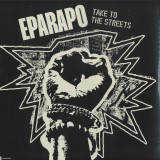
Wah Wah 45s are proud to present the full debut album from Afrobeat supergroupEparapo. Having come togetherduring the unprecedented events of the pandemic and the Black Lives Matter movement, and despite being a project born from the privations of lockdown, their music is ultimately an expression of hope, resilience & resurgence.
The word "eparapo" means "join forces" in Yoruba, the language of Afrobeat. It's also the title of a track by the late, greatTony Allen- drummer for Afrobeat legendFela Kutiand lifelong friend and mentor of our very own "Afrobeat Ambassador",Dele Sosimi. Not only did Tony help to invent Afrobeat, he always looked for ways to push the boundaries, never content with recreating what had gone before but constantly expanding and developing the genre. This project hopes to pay homage to his legacy, and that of Fela Kuti himself. Its aim is to innovate, fuse and diversify while still retaining the essence of the music.
The force behind Eparapo is bassist, composer & producerSuman Joshi.He has been a member of Dele Sosimi's Afrobeat Orchestra for nearly a decade and has performed on stage with the likes of Tony Allen, Seun Kuti, Ginger Baker & Laura Mvula. He is also bassist with UK jazz ensemble Collocutor and fusion project Cubafrobeat.
"The Eparapo project was conceived during a time of lockdowns & government scandals. The music that makes up this album was written and recorded against a backdrop of societal upheaval, culture wars and rising wealth inequality. With little scrutiny or resistance from the mainstream media, our human and democratic rights were being eroded and our institutions debased. Even our right to protest is now under threat. This is a call to action, an expression of frustration & anger at what our nation has become. It's saying that enough is enough, it's time to join forces and make our voices heard. It's time to take to the streets."Suman Joshi
The title track is an epic eleven minute musical representation of this frustration and anger, where the musicians really let loose and allow their voices to be heard. As the only instrumental track on the album it acts as a call to action that is central to this body of work. Featured vocalists on the album are Fela Kuti disciple and Wah Wah 45s artistDele Sosimi, who appears on the singlesBlack Lives Matter,From London To LagosandWho Invented Back & White?as well as a more recent recording,Follow The Money; and London based, Ghanaian born master percussionist and vocalistAfla Sackey, who takes lead vocals on the mournful yet somehow hopefulBeautiful City.
The rest of the group comprises of highly rated UK jazz vocalistSahra Gure; saxophonist, composer, producer and bandleader of the renowned forward thinking jazz outfit Collocutor,Tamar Osborn; keyboard player, producer and front man for Lokkhi Terra and Cubafrobeat,Kishon Khan; one of the UK's finest and most in demand trumpeters,Graeme Flowers, who has played with Quincy Jones, Gregory Porter and many more; trombonist for Bellowhead and mainstay of Dele's Afrobeat Orchestra,Justin Thurgur; and finally drummer for Steamdown and Sons of Kemet, as well as the man behind the Nache project,Eddie Wakili Hick.
The album will be available digitally and limited edition vinyl LP, with striking artwork by our award winning designer Animisiewasz.
Glasgow’s Somewhere Press return with their inaugural vinyl release, a new album from Madelyn Byrd aka Slowfoam. Mining the seam between ecology and technology, Byrd offsets syrupy, dissociated electronics with sparse acoustic instrumentation and expressive field recordings.
The polyrhythmic pulse of the natural world surges through Byrd’s productions, and though the sounds are mostly electronic and strictly metered, a landscape teeming with insects, birds, and wildlife fills the horizon. We’re languidly ushered through the gates on the opening 'Enlightened Smudge on the Machine', juxtaposing glassy tones with flute (from Berlin-based sound artist Diane Barbé) and skittering percussion that could have been lifted straight off Björk’s 'Vespertine'. "No traffic, under the stem," a stoic voice muses while sounds dissolve into waterlogged ambience. There are hints of vintage West Coast new age music, but Byrds' over-arching theme is one of a contemporary digital reality slowly harmonising with its distant, bucolic past.
Field recordist Pablo Diserens provides some of the album's most arcane material, handing over environmental recordings of sulphur pools, Arctic terns and glacial streams. The lengthy 'Divine Morpho, Shimmering' deploys a swarm of insects, forming a looped, uneven rhythm that counters Byrd's pulsing electronics. Choral stems mesh with uncanny strings, blurring the line that separates artificial from organic sound sources. Byrd uses mutation and reconstruction as a form of "speculative melting" to bring us closer to utopia. On 'Like Phantom Memories In The Slinking Storm’, one of the album's most levitational moments, they tease twangy harp-lyre plucks into dubbed-out smudges, eventually given a reprise on 'Grief Rituals' where the same riffs are stretched into slower phrases, queered against giddy, xenharmonic drones.
Bird calls and tremulous exotica mark the brilliant 'Fragrant Dusking', and ‘Soft Body Virisdescence' takes us to a gurgling, kaleidoscopic climax, with electronic processes thrust into the foreground. 'Of Data & Delight' distills all the album’s sonic elements into a sort of delirious fever dream, using pitched animal calls to signal sensuality. It's not ambient, exactly, even if it shares space with the 3XL crew's sludgy eroticism, and it's not wholeheartedly electro-acoustic either. The record exists at a place of convergence, as one era wrestles with a new dawn, and real life glimpses high fantasy.
Cathartic avant-rock, literate DIY folk & experimental composition exploring displacement, love, climate change, belonging & the places we call home - RIYL Jim O’Rourke, Richard Youngs, This Heat, Richard Dawson, Flying Nun. ‘Real Home’ is the new album by the Manchester-born, London-based artist Kiran Leonard. His sixth album proper (not including innumerable tour-only CD-Rs and short-run cassettes), since his precocious debut in 2013, ‘Real Home’ finds Leonard invigorated by inspiration and experience, making passionate, literate, and mercurial music that explores displacement, love, memory, climate change, connections to home and more. Encompassing songs recorded after moving to South London, ‘Real Home’ reflects on ideas of belonging and domesticity through folkloric, stream-of-consciousness songwriting. Across nine tracks, Leonard traces lived impressions of the household and the city, expressing sentiments of dislocation, alienation and stasis, but contentment too. Infusing the avant-rock effervescence, terraced dynamics and visionary lyricism of his music with what he defines as a greater sense of openness, Leonard is as versatile, fervent and imaginative as ever on ‘Real Home’, yet his music is somehow more intimate, affecting, and acutely expressive. Shaped by dual considerations of simplicity and formalism, ‘Real Home’ is by turns beautiful, allusive, and ruminative, an album on which Leonard considers what his songs have resembled in the past and what they mean now. In recent years, Leonard has crafted eloquent chamber music inspired by the likes of James Joyce and Clarice Lispector (‘Derevaun Seraun’), responded to contemporary politics and communication breakdown in the digital age (‘Western Culture’), and compiled solo works and ensemble recordings for a longform ode to Jonas Mekas and to one of Leonard’s enduring themes; home (‘Trespass On Foot’). On ‘Real Home’, Leonard reiterates this abiding thematic focus yet ascends to new, different heights, in music of cathartic delicacy and dissonance where all the myriad dimensions of his work to date seem to crystallize. There are sinuous songs about struggle and defying the pace of city life through drift and diversion (‘Pass Between Houses’), stirring songs of intense feeling and crescendo, described as a form of speculative detective fiction (‘Theatre for Change’). There are touching solo piano ballads (the title track), symbolic contentions with carbon capture and climate change (‘Utopia of Bog’), modes of experimental minimalism (‘Void Attentive’), and other profuse feats of compositional range, embroidered with wild tendrils of narrative and lyrical depth. A record to pore over, and get lost in. Exemplifying the vast aesthetic scope of Leonard’s music, lead single ‘My Love, Let’s Take The Stage Tonight’ is inspired by country lodestar Hank Williams, Russian poetry and a late period love poem by William Carlos Williams. Yet for Leonard, the song signals a sense of accessible materiality, and is the product of a more linear approach to writing songs: “My imitation of the great Hank Williams, in spirit if not in substance…This is one of the best efforts on Real Home at a song-as-object. Looking at it now I realise I was trying to write a song that made itself known as a song to the listener, and I wonder whether that’s crucial if you want a song to transcend its context. And that this is either accomplished through a total openness – by being inviting, by laying the tricks of the song out plain to see, as Williams and his many ghostwriters did so well – or by adopting a knowing aloofness, positioning oneself against the listener but letting it be known that that’s what it’s doing. In this song I try both, but mostly the former: as in, I wanted to write a song where every line follows on from the next.” Imbuing the endlessly elaborate and inventive qualities of his music with a newfound streak of candid, clear-cut melodicism, Leonard has reached a special place in his artistry, on a record that feels familial, and expresses closeness. Assembled with affiliates including Lauren Auder, Otto Willberg, Jasper Llewellyn (caroline), Tom Hardwick-Allan (Shovel Dance Collective), Magda McLean (caroline, The Umlauts), Alex Mckenzie (caroline, Shovel Dance Collective), Isabelle Thorn (Dear Laika) & more, the recording process had a significant influence on the subject matter of ‘Real Home’, in sessions defined by close-knit camaraderie and artistic eccentricity: “The theme of the home obviously recurs throughout the record; the album was mostly recorded in domestic spaces with friends, and the name of the album is Real Home. I like the qualifier ‘real’, like you’re getting past the cloak of the word and towards the thing-itself…also nearly all the percussion in this record was recorded on items from my dad’s shed (jam jars, sandpaper, blocks of wood, etc). Real home record!” ‘Real Home’, like anything by Kiran Leonard, is a record of dazzling multiplicity. Yet it’s a companionable prospect with a central premise; a collection of songs where listeners old and new can find a home. An album led by a scene; of Leonard standing at the threshold, ready to welcome you inside. “Exceptional songs that linger” - The Guardian // “An autodidact of amazing talent & energy” – Pitchfork // “A ridiculous amount of talent…confrontational, celebratory, provocative or perverse – he manages all of these emotions & more” - The Quietus /
Mattiu will release his new EP "Da Casa" on April 26, 2024, featuring lyrics in Romansh (the fourth official language of Switzerland), showcasing his expressive and characterful voice. He proves that he can deliver scenes and images with such overwhelming and captivating power that even without understanding the lyrics, listeners are guaranteed goosebumps. Translated from German, "da casa" means "at home" or "to home," describing a deep sense of gratitude and contentment that Mattiu associates with the feeling of being "at home." This emotion can be triggered by both a place and specific people. "Da Casa" lives up to Mattiu's debut. The Romansh artist once again uniquely showcases his mother tongue. With his extraordinary voice and knack for profound songwriting themes, he consistently manages to touch and inspire his listeners. Mattiu effortlessly translates his language and talent into tasteful, contemporary, yet emotional songs, promising him a bright future ahead. "Da Casa" features six new songs and will be available digitally, as a digipak, and on vinyl.
Melbourne/Naarm-based musician and curator Rama Parwata, known for being the backbone drummer in bands such as Kilat, Whitehorse and Rinuwat, releases his second major solo album titled ‘Ceases’ on Cassauna/Important Records.
Parwata's gripping new electro-acoustic work is a sonic exploration within the realms of post-free-jazz and experimental electronics. At its core, ‘Ceases’ navigates the liminal spaces between rhythm and noise, structure and chaos. The album traverses a vast emotional and conceptual landscape, touching upon themes of impermanence, transformation, and the cyclical nature of existence.
At the forefront of the album is Parwata's emotive compositional and performative approach, which serves as both anchor and catalyst for the album's journey. The percussion performance is cymbal heavy accompanied by deeply meditative drones and slow moving melodies. The wash of sound touches on a spiritualism akin to Coltrane’s “A Love Supreme Part 4: Psalm”, albeit with a modern electronic vision á la Tim Hecker. With a keen sense of textural intricacy Parwata favours the emotional expression of electro-acoustic composition, weaving complex poly-textures that ebb and flow with hypnotic, prayer-like intensity. Each performative gesture creates a visceral immediacy that draws the listener deeper into the celestial, otherworldly sonic framework.
The diverse array of electronic elements, meticulously crafted and seamlessly integrated into the fabric of the album are a testament of Parwata’s capacity for acousmatic composition. From pulsating synthesizers to glitched-out samples, the electronic timbres in "Ceases" serve as both sonic embellishments and structural foundations, blurring the boundaries between organic and synthetic, acoustic and digital. Honing in on the electronics, a listener could be convinced they were hearing anything from spiritual-jazz, 90s rave, dungeon synth or doom. Through judicious composition, Parwata imbues each sound with a sense of transcendental allure and paints a soundworld that has a distinct ‘outerness’. At times the narrative is pointedly bleak but over a few passages the sonic language often bends toward rejuvenation; finding respite in cadence. The title itself suggests a sense of cessation, of endings and beginnings intertwined—a motif that reverberates throughout the album.
Scottish Techno wizard Astro joins PIFF Records on their landmark tenth release, with 5 cosmic and groovy belters.
Having recently found success with his own Neptune Discs imprint and regularly performing up and down the country, Astro has firmly established himself as one to watch in the techno sphere.
Opening with the title track, Astro combines a relentless bassline with dubbed-out chords and spacey leads. Echoing space-age soundscapes and futuristic sounds of 70s kosmische musik and 90s techno, Astro makes good on the aesthetic promised by his artist name.
Astro brings down the tempo for the hypnotic Cloned Substance. A mesmerising hat pattern combines with delay-drenched leads and a bouncy bassline to create a track intent on capturing the listener in a state of trance.
Thunderstorm adheres to the tried-and-tested Astro combination of a thick bassline, spacey stabs, and continuously evolving drums. As to be expected, the results are spectacular. Irresistible grooves and rich soundscapes are the order of the day as Astro delivers once again.
A haunting and proggy FM-lead acts as the foundation for Pluto, underpinned by a sub-heavy kick and tranquil chords. The meditative ebb and flow of various elements masterfully expresses the solitude of the track’s namesake.
Planetary Blitz closes the EP as a digital bonus track. Expanding on the spaced-out motifs of the previous track (as reflected in the track title), Astro substitutes chord stabs and warm basslines for a driving blend of punchy kicks and a subtle glittery guitar.
Datashader emerges from the shadows with a striking breaks- and bass-heavy debut release that challenges the fabric of our digital existence. Replete with a Dopplereffekt remix, it nods to the legacy of revered anonymous acts such as Scopex, Drexciya and Underground Resistance, pushing the boundaries of both electronic music exploration and its conceptual underpinnings. As a critique of the erosion of genuine human connection in the digital age, Datashader delivers a barrage of billowing subs, infectious electro, recontextualized jungle, and techno, serving as a poignant counterbalance to current dance floor-centric norms. It’s a contemporary anti-soundtrack that offers a haunting mirror to the societal costs of technological convenience.
In a world engulfed by the digital realm, where social media platforms thrive and dominate every aspect of our lives, the enigmatic project known as Datashader was founded to reflect on the pervasive erosion of authentic human connection through various virtual realities. Artistically, Datashader seeks to critique the impact of technology on human identity and relationships, breaking with an archetype of digital conformity and expressing a profound disillusionment with the superficiality of online interactions through music. Genuine human connection and art cannot be quantified by likes, comments, or followers but rather thrives in the visceral realm of shared sonic experience and human emotion. This idea is at the core idea of Datashader, whose artistic expression ranges from avant-garde composition and electronic experimentations to art, installation, film and more.
Expressed within the varied contexts of diverse artistic mediums, Datashader explores the concept of “technological gentrification”, which describes the gradual displacement of human interaction by technology. Just as gentrification alters the urban landscape, driving out communities and cultures, digital gentrification transforms the social landscape, replacing genuine connection with curated online personas.
Musically, Datashader’s practice confronts this dystopian reality, highlighting the alarming consequence of people becoming mere nodes in a network, reduced to a collection of data points. This is manifested sonically by a blistering assault of breaks, recontextualized IDM, abstract electronics and otherworldly synthscapes, conceived as the aesthetic counterbalance to much of contemporary electronic music’s dancefloor focus.
Datashader dives deep into genres and influences which stand for a form of sonic resistance: A contemporary anti- soundtrack – a sonic mirror of the price we pay for convenience and instant gratification. A self-image in constant flux. No false technological idols.
Rachika Nayar's fragments is a collection of sonic miniatures constructed from guitar loops and in the familiar comforts of her own bedroom. First released as a limited edition cassette by RVNG Intl's Commend THERE imprint in 2021, fragments (expanded) adds an entire new side of previously unreleased music to the collection, which has been newly mastered by Rafael Anton Irrisari. While growing up and developing a relationship with the instrument and her capabilities, using delay pedals to improvise layered guitar pieces evolved from a practice into a deep source of self-exploration and restoration for Nayar. On Our Hands Against the Dusk, Nayar's debut album released earlier this year, the guitar is present but processed, synthesizing with the surrounding instruments and often transforming beyond recognition. Like Our Hands, the form of fragments remains complex, informed by virtuosic, dexterous guitar playing, but the collection of sound retains a sense of primitivism, and represents a new experience for Nayar in sharing such an intimate part of her creative practice. Nayar views this practice as a constant companion. The cyclical, meditative quality of exploring loop-based expression is a means for Nayar to cleanse her creative space, and provide a psychological architecture in her home where she can "access my heart and cultivate some kind of internal movement in times of stasis." The pieces on fragments also pay homage to influences on Nayar's guitar technique, ranging from Pat Metheny's interpretations of Steve Reich's Electric Counterpoint to emotive Post/Math-Rock crossovers like Don Caballero and Toe. fragments is not only a document of Nayar's domesticity and the preliminary writing processes that evolve into song, but also a measurement of memory and spiritual realignment. Much like the metaphorical models of past homes through which Ted Kooser wanders in his essay Small Rooms in Time, Nayar uses fragments to preserve the moment, both fleeting and indelible, through its connection to place, in unchanging, raw detail. fragments provides an intimacy between Nayar and those listening in parallel spaces, activating our collective past and shared unconscious experience. Rachika Nayar's fragments (expanded) will be available in LP and digital formats from RVNG Intl. on April 7th, 2023.
Hand-numbered limited edition in 200 Black vinyl (PVC Bag, printed inner-sleeve and MP3 download card included).
Musica Automata is an album by the Italian composer Leonardo Barbadoro (formerly known by his electronic alias Koolmorf Widesen), comprised of music performed by the largest robots orchestra in the world: 70 automated instruments controlled by digital impulses from a laptop computer.
It is music that brings together two dimensions often perceived as incompatible, even antithetical: the boundless expressive possibilities of electronics implemented by an acoustic instrumental body in a sensory reality, beating, vibrating, and blowing.
The album received excellent media coverage from the international press (Clash, Billboard, Redbull, Vice, CNN and more), radios (BBC Radio 3, RAI, Radio 1, VRT, ERR, WFMU, NTS, etc) and has been selected by a few websites and stores (such as Soundohm) as one of the best album of the year.
Original Son del Barrio, from Monterrey; presenting their first album Tropical Gueto. A trip through different neighbourhoods, with a collection of sounds ranging from Digital Cumbia and Hip-hop to Reggae and Tropical bass. Created as a collaboration between Mexico and Germany (featuring founding member and singer Angel Perez, and Dj and producer Andres Digital), this tropical experiment begins with a series of concerts in Rome, Amsterdam and Paris. Plans are laid for the co-production of Tropical Gueto in said tour; and the resulting efforts saw the participation of Indepe Roots, Bianca Ciocca, Moska Hernandez, Joyce Musicolor and Feo Feo Records; as well as Gran Om, on art duties. Tropical Gueto sets the bar high for Digital Cumbia, setting a clear benchmark for the genre. Angel Perez (aka Son del Barrio) lends his voice to the streets and the “barrio” culture of Monterrey, in the expressive language of his own lyrics and compositions; through the sensitivity and technical ingenuity of producer and Dj Andres Digital (aka Jaky Tuff).
- Prologue
- Scary Memories
- Atonal Floating
- Full Of Life
- In The Town Hall
- At The Funfair
- A Mysterious Crime
- At The Funfair 2
- The Cabinet Of Dr. Caligari
- Jane's Theme
- March Grotesque 2
- Jane's Theme 2
- Shadows
- Tragic Message
- Suspicion
- Tragic Message 2
- The Plan
- A Dark Figure
- Caligari's Theme
- Arrest Of The Suspect
- Caligari's Theme 2
- Worried Jane
- Interrogation
- Jane's Fear
- Francis's Observation
- Cesare's Attack And Escape
- Safe And Sound
- Francis At A Loss
- Caligari's Deception
- Lunatic Asylum
- In Search Of The Truth
- Out In The Field
- 2: The Director Rants And Rages
- Scary Memories 2
- Who's Mad Here?
- Francis Rants And Rages
- Epilogue
Robert Wienes Stummfilmklassiker von 1920 in neuem Klanggewand, komponiert von ex-Kraftwerk-Musiker Karl Bartos. Die Filmzeitschrift Licht-Bild-Bühne hatte damals nicht mit Superlativen gegeizt: "Das Cabinet des Dr. Caligari" sei nichts Geringeres als "der modernste, aktuellste, gewagteste Film, den die Welt je gesehen hat", schrieb das Magazin 1920 und damit kurz nach der Premiere über den ersten Psychothriller der Filmgeschichte. Einer, der sich besonders intensiv mit diesem Meilenstein der Geschichte des expressionistischen Films auseinandergesetzt hat, ist der Komponist und Musiker Karl Bartos - vielen gut bekannt als langjähriges Bandmitglied und Co-Komponist von Kraftwerk, jenen Pionieren der Elektronischen Musik, die in ihrem Bereich mindestens ebenso "modern, aktuell, gewagt" waren. Seit fast 20 Jahren hegt der ursprünglich klassisch ausgebildete Musiker eine Leidenschaft für diesen wohl einflussreichsten deutschen Stummfilm aller Zeiten und arbeitet daran, dem experimentellen Film ein ebenso experimentelles Klanggewand zu schneidern. Mit kristallklaren Bildern, die von der Friedrich-Wilhelm-Murnau-Stiftung digital restauriert wurden, ist der Film nun in der besten Qualität zu sehen, die es je gab, und mit Bartos" Soundtrack gibt es nun auch einen beeindruckenden Sound zu der eindringlichen Vision.
Skylax Welcome Back Nicolas Aftalion With Another Powerful Ep "Spirit of House Ii" After His Sensational Debut on the Label, Acclaimed by the Queen of the Genre Cinthie. Deeply Inspired by the New Jersey House Sound Popularized by Tony Humphries, and the Vibrant Energy of the New York Scene. This Release Embodies the Essence of Original House Music, Delivering an Exhilarating and Impactful Experience. Following the Success of "Spirit of House I", This Sequel Is a Natural Progression in Aftalion's Musical Journey. Prepare to Be Transported by the Enchanting Tracks Within. "Cruise in Paradise" Blends Jazz and Spanish Influences, Reminiscent of the Iconic Moments on the Album "Forever Changes" by the American Band Love (As Crazy as It Sounds), Fusing Original House With Free Jazz in an Improbable Yet Captivating Manner. "A Message to Mad Mike" Pays Homage to the Visionary Dj and Producer of Underground Resistance, Expressing Profound Admiration and Love. This Is a Monumental Record That Encompasses Everything Contemporary Electronic Music Has Forgotten. "Paris Is Burning" Serves as an Ode to the Voguing Culture of the '90s, a Celebration of Queer Expression and Vitality. "Soulful in Paris" Takes Us Back to the Soulful and Rhythmic Sounds of Strictly Rhythm and the Timeless Energy of Ultra Naté. as a Digital Bonus, Indulge in the Excellence of "Baby Driver" and "Blaster." "Spirit of House Ii" Is a Masterpiece That Captures the Essence of House Music's Roots While Embracing Innovation and Artistry. Prepare Yourself for an Extraordinary Musical Journey That Showcases Nicolas Aftalion's Profound Understanding of the Genre and His Ability to Create Timeless and Groundbreaking Compositions....
Always traveling, El Gato Negro, the moniker of "nomadic" singer/songwriter and multi-instrumentalist, stopped this time in Dakar, Senegal to record his new album “Tigre qui pleure” (“Crying Tiger”). In a combination of West African and Cuban musicians, under El Gato's Colombian flute, Jazz blends with Hip-Hop, traditional with digital, French with Wolof and Spanish. In this third album, produced by GUTS, El Gato Negro invited his musical family (Florian Pellissier, Kumar, Orchestra Baobab, Cucurucho Valdés, Pat Kalla, Cyril Atef, iZem, Djeuhdjoah & Lieutenant Nicholson...) and dropped his festive mask to let Axel, the melancholic, express himself.
PRESSING OF 200 COPIES ON CLEAR VINYL.
RIYL Zero 7/ Plaid / Hot Chip / Weather Report / Isolee / Baby Fox
Old friends Julian Bates and Alex Gray —working together as Mighty Truth for the first time since 1995’s From The City To The Sea — filled a car with old analogue synths, kids’ noise toys, and collected field recordings took a road trip down to hole up in an old water mill in southwest England’s bird-twittery, bee-loud Quantock hills.
Things got cinematic: unequal measures of early Weather Report, Wim Wenders, and Serge Gainsbourg kept them wonderfully lost in their imagined world. Back in London with guest singers Allonymous (Paris via Chicago) and Wayne Paul (London), they completed the album and decided to just call it Mighty Truth. With an aim to present the live show at moonlight pop-up cinema venues, Mighty Truth are here for the next chapter in their epic saga.
Back then….
Old friends Julian Bates and Alex Gray first met through their shared obsession with classic cars (both owned old SAAB 96s). At the time, Julian’s band Nightrains was signed to ACE Records in the UK whilst Alex worked first as a session keyboardist for the likes of Edwyn Collins, Billy Mackenzie, and Busta “Cherry” Jones, and later as a mixer and remixer working with S’express producer Pascal Gabriel, Malcolm McLaren, and soul DJ legend Dr Bob Jones.
Working together in the studio for the first time producing Vanessa Freeman (4 hero), Alex and Julian decided to embark on a drop-tempo jazz trip project they named Mighty Truth. Dr Bob heard that first self-released vocal track “Rebirth” and started dropping it on Kiss FM (UK). After guest DJ slots on Coldcut’s Kiss show, Alex and Julian signed to Tongue and Groove records.
The album From the City to the Sea produced a number of singles and both “Rebirth” and “Is it a Wizard or a Blizzard” were licensed to many compilations both in the UK and internationally (eg. Dope on Plastic, Mole Listening Pearls, Eight Ball).
The Sound of Sinners is a NYC boutique record label focused on vinyl and digital releases by Indie, ambient, avant-garde and electronic artists.
SOURCED FROM THE ORIGINAL MASTER TAPES: 2LP SET PRESENTS 1991 ALBUM IN 45RPM SPEED FOR FIRST TIME.
PCM Digital Master to Analog Console to Lathe.
Dire Straits never made a big to-do about its final run. In classic understated British fashion, the band simply let its music speak for itself. And how. Originally released in September 1991, On Every Street became the group’s swan song – a lasting testament to the influence, musicianship, and integrity of an ensemble whose merit has never been tainted by cash-grab reunions or farewell treks. It remains an essential part of the Dire Straits catalog and a blueprint of the distinctive U.K. roots rock the collective played for its 15-year career.
Sourced from the original master tapes, housed in gatefold packaging, and pressed at RTI, Mobile Fidelity’s 180g 45RPM 2LP set of On Every Street presents the album like it has always been meant to be experienced: in reference-grade audiophile sound. Recorded at AIR Studios in London and produced by Dire Straits leader Mark Knopfler, it features all of the band’s sonic hallmarks – wide instrumental separation, visceral textures, seemingly limitless air, broad soundstages, atmospherics that you can almost reach out and feel. Each element is made more vibrant, physical, and lifelike on this collectible reissue, which marks the first time this 60-minute work has been available at 45RPM speed.
Afforded generous groove space and black backgrounds, the songs from On Every Street burst with nuanced details and vibrant colors. Dire Straits’ playing appears to float, their intricate performances organized amid hypnotic, fluid, three-dimensional arrangements. Mobile Fidelity’s definitive-sounding set also brings into transparent view Knopfler’s finely sculpted guitar lines, expressive tones, and laid-back vocals – as well as the balanced accompaniment from his band mates. Here’s a record on which you can hear the full blossom and decay of individual notes, and imagine the size and shape of the studio. It is in every regard a demonstration disc. And it happens to be filled with timeless fare.
Remarkably, On Every Street almost never came to light. Dire Straits initially dissolved in September 1988 after touring behind its blockbuster Brothers in Arms and suffering the departure of two members. At the time, Knopfler professed his desire to work on solo material; bassist John Illsley also explored side projects. But Knopfler’s decision in 1989 to form the country-leaning Notting Hillbillies reignited a spark to reconvene his primary band and craft a fresh batch of songs. Six years removed from Brothers in Arms, Knopfler, Illsley, keyboardist Alan Clark, and keyboardist Guy Fletcher teamed with A-list session pros – steel guitarist Paul Franklin, percussionist Danny Cummings, saxophonist Chris White, guitarist Phil Palmer included – to create what still stands as an unforgettable farewell.
The platinum record brings the band full circle in that it returns Dire Straits to a quartet formation; finds the group refreshingly out of step with the era’s prevailing trends; and sees Knopfler and Co. knocking out song after song with the deceptive ease of a punter tossing back a pint at a pub. That subtle cool, clever poise, and innate control – signature traits that no other band ever matched – dominate On Every Street. Knopfler’s clean, virtuosic six-string escapades unfurl with dizzying melodicism and economical efficiency. Led by his winding fills and focused solos, Dire Straits traverse a hybrid landscape of rock, jazz, country, boogie, blues, and pop strains with near-faultless prowess.
More than any other entry in the group’s oeuvre, On Every Street welcomes quick detours down back alleys and into the depths of human souls. What makes it more brilliant is its staunch refusal to cater to commercial expectations or take advantage of prior successes; every passage feels true, every measure echoed in the service of song. It’s evident in the humorous satire of “Heavy Fuel,” closeted desperation of the witty “Calling Elvis,” and shake-and-bake bounce of “The Bug.” It pours from the album’s darker corners, as on the high-and-lonesome melancholy of the title track and bruised emotionalism of “When It Comes to You.”
Hinting at the open-minded approaches and boundless curiosity he’d embrace as a solo artist, Knopfler doesn’t limit himself when it comes to style or subject matter. Look no further than “You and Your Friend,” a shuffle whose all-inclusive lyrics encourage an array of interpretative meanings. Another of the album’s deep cuts, “Iron Hand,” comes on as one of the band’s most memorable moments – the narrative addressing the abuses of power at the 1984 Battle of Orgreave during the U.K. miners’ strike. Given cinematic heft by the expert production, the true-fiction account puts into perspective the richness, poetry, and depth of On Every Street.
“Every victory has a taste that’s bittersweet,” sings Knopfler on the title track. At least that bittersweetness seldom sounded so damn good on record.