Lost somewhere between the mysterious alleys of 70s Istanbul and the scorching sun and crystal blue sea of Jaffa, Tel Aviv, Şatellites self-titled debut album is set to be released on Batov Records on April 1st.
The Şatellites’ sound shimmers between traditional Turkish folk and instrumentation, ethereal psychedelic guitar leads and groovy dance floor baselines. The resulting concoction of songs draws on cross continental influence yet at its core is a desire to illuminate the vivid qualities of classic Turkish music, honouring the Anatolian folk and psych artists from this golden era of music. From the funky disco beat of Disko Arabesque to the celestial lead guitar in Yağmur Yağar Taş Üstüne, the band add fire and flair to time-honoured pieces of Turkish music giving them new meanings. Covering important tracks such as female singer Kamuran Akkor’s track Olurmu Dersin, and musician and guitarist Zafer Dilek’s Yekte, the album covers an array of original pieces of different musical styles and sounds, that once have and continue to flow out of Turkey. The band boasts six members; Ariel Harrosh (Bass) Lotan Yaish (Drums), Yuli Shafriri (Vocals), Tsuf Mishali (Keys and Synths), Tal Eyal (Percussion) and Itamar Kluger (Diwan saz, both electric and acoustic, electric baglama, Greek 4 double string bouzouki). They came together some years after band leader Itamar Kluger discovered the saz whilst travelling the Kaçkar mountains in Turkey’s eastern region. The saz being a long necked, plucked stringed instrument native to the rural areas of the country, which remains an integral part of Şatellites’ union, and plays predominance throughout the bands’ album and music.
In the same way the guitar was electrified in the 1930s, the electrification of the saz in the 1960s led to an explosion of rock music dredged in middle eastern influence, a musical genre fittingly called “Anatolian Rock” and based on the principles of Anglo-American and psychedelic rock music, yet incorporating the style, rhythm, and scales of traditional Anatolian folk music.
As such, throughout the creation of the album, the band conceived the idea of intertwining differing elements such as the groove of funk, the rhythm of disco, and reverb of psychedelic, with traditional middle-eastern rhythm and structure, opening up the wealth of Turkish music to the western world, so that anyone and everyone can relate to something from the album. With that said, Şatellites emphasise that their music is not fundamentally Turkish music, on the contrary, they merely try to sound as close to the genre as possible. Their sole aim is to honour this amazing culture and to present it to the world in a more accessible and attainable form.
Cerca:disco elements
2001’s »Anima« was the third album released by Sasu Ripatti under his Vladislav Delay moniker and marked a turning point in the stylistic development of the prolific producer. Clocking in at roughly 62 minutes, the single piece draws on dub aesthetics while working with Musique concrète-like methods through the liberal use of samples to create a dreamlike logic. Muffled voices, lush chords, subtle rhythms and indefinable sound events are not so much integrated into a composition with a predetermined outcome but rather engage with each other freely in a constant sonic flow, forming constellations in one moment before moving on to connect with other elements in the next one. »Anima« marked the first time Ripatti was using a DAW in his working process, creating a piece constantly in motion that subtly evolves over time. This vinyl reissue on the German Keplar label follows up on the 20th anniversary edition of 2000’s »Multila« and will be complemented by a ten-minute long version of the original piece, previously only available on the CD version released by the artist on his own Huume label in 2008.
After the release of his »Ele« and »Entain« albums in 1999 and 2000, respectively, Ripatti took the 1998 independent movie »Hurlyburly« as a conceptual starting point to experiment with different gear and production methods. »Until then I had worked with an old MSQ-700 MIDI sequencer and an Ensonic EPS16 sampler/sequencer that had one or two MB of sampling memory and mixed the music live on a Mackie, which was very limiting arrangement-wise,« says Ripatti. Loading a slightly shortened version of the film into his DAW however allowed him to play along to it with the DrumKAT MIDI controller, triggering and playing all the sounds that can be heard on »Anima« while also contributing synths, bass and other sounds during repeated playthroughs before mixing a total of six stereo tracks together. »This way, after I had edited out most of the few parts that had music in them, I was in the movie; almost like an extra character playing music,« explains Ripatti. »This was certainly the most organic way in which I have ever made music, and I have never again approached another record like this.«
While »Anima« sounded like an unusual Vladislav Delay record at the time of its release, it also prefigured many of the developments Ripatti would go through in the course of his long career. Combining visceral immediacy with a sense of abstraction, it is far more than a mere missing link in his discography but rather a conceptually and musically outstanding piece of work that remains as engaging as it was 21 years ago.
All tracks composed and recorded by Vladislav Delay.
Originally released on Mille Plateaux in 2001.
Remaster and cut by Kassian Troyer @ D&M.
Art direction and design by Marc Hohmann.
Text by Kristoffer Cornils.
With an increasingly vibrant Norwegian Indie Rock scene on the rise, Lazy Queen - as founded by Colombian-Norwegian Henrik García Søberg (they/them) - have made their mark with a sound inspired by the rich traditions of the Brooklyn DIY scene that birthed the band, ambitious and effervescent releases, coupled with their unique ability to convey personal and relatable experiences through García Søberg's lyrics
The Oslo- based outfit effortlessly blends harmonic and discordant elements together with an instinctive ear for melody into a playful, innovative and vibrant sound, which affixes both context and contrast to lyrics that often explore life's more maladjusted corners. It's immediate. It's urgent. It impatiently demands your attention.
Previous release received widespread support and critical acclaim from renowned outlets such as Wonderland Magazine, Under The Radar, NYLON, Red Bull Music, Earmilk, Indietronica, Impose Magazine, Medium and more.
A tasty pair of chunky, beefed and dubbed up disco delights courtesy of the Cardiology label and every bit as likely to get the heart rate pumping as the name would suggest. The Owl's 'Groove Engine' steps up to the breach on the A-side, the slightly slower of the pair but blessed with a thumping framework of four-to- the-floor sturdiness on which funky keys and an almost Afro vibe are tastfully and decoratively hung. Flip track 'I'm Gonna' by C Da Afro is constructed from more archetypically traditional old skool disco ingredients, from the Sister Sledge-esque female vocals to the shooting, strings. There's a nice amount of dub behaviour via the desk, enough to elevate it into orbit but not so much that the song elements of the track are obscured. Nice work all round.
It’s been ten years since Sadie Dupuis recorded the first Speedy Ortiz songs, a solo experiment that quickly became her full-time band. Since then, Speedy has produced an expansive and critically revered discography, toured worldwide, and inspired next generations of bands with inventive songwriting and advocacy to better the music industry. But in 2011, the younger Dupuis was struggling through concurrent traumas: heartbreak from first love, leaving her hometown of New York for Massachusetts, and the grief of losing several young friends. Speedy’s first songs glowed within the contrast of noisiness and intimacy, raw sonic elements that came with closely processing vulnerabilities and Dupuis’ insistence on performing and recording each instrument alone. As the new project fielded show offers from favorite show spaces like Death By Audio and Shea Stadium, these early tracks became the springboard for the playfully melodic and cleverly distorted style for which Speedy Ortiz as a full band is celebrated. Now, ten years later, Speedy’s first self-released collections will be widely available for the first time and reissued as a double LP The Death of Speedy Ortiz & Cop Kicker…Forever, alongside previously unreleased tracks, reflective liner notes penned by Dupuis, and unearthed photos and journal scans from that era.
The tracks on The Death of Speedy Ortiz & Cop Kicker…Forever were written after student-created prompts while Dupuis was teaching a songwriting class at the same summer camp where she’d first learned guitar. "Hexxy Sadie” was written in an hour, like the rest of the songs, and on Dupuis’ twenty-third birthday; using explosive riffs and distorted harmonies, she explores her uncertain yearning as a twinless twin. "Frankenweenie" came from the prompt “dog,” and over brooding piano, spry tambourine, and eruptive snare, Dupuis sings from the perspective of a dead childhood pet about forgiveness. “Cutco,” which navigates tricky chord changes with deft guitar passages and ironic deadpan, grins at the bitterness of friendships gone awry. These early songs highlighted Dupuis’ remarkable talent at dissecting specific emotions and moments, analyzing the many ways the pieces fit together, and scrutinizing the places where they don’t.
During the recording process, Dupuis was inspired by the impulsive DIY methods of artists like Elliott Smith and Sparklehorse; a mixing note from September 2011 read, “It's important for the 'concept' of this 'album' that I don't redo anything.” The Death of Speedy Ortiz & Cop Kicker…Forever still holds onto the magic immediacy of lo-fi recordings, but this reissue is helped by the technical know-how gained through Dupuis’ solo production work as Sad13 (Lizzo, Backxwash). Remixing in 2021, Dupuis cleaned up edits on her triple-tracked drums, made space for instrumental flourishes performed on eclectic instruments like cello, banjo and timpani, and rewired digital sounds to warm up the layers of intersecting guitars. Co-mixer Justin Pizzoferrato (Dinosaur Jr., Sebadoh), who worked with Speedy on Sports EP, Major Arcana, and Real Hair, further clarified the mix with analog compressors, and mastering engineer Emily Lazar (Liz Phair, HAIM) added a glossy sheen to the stratified bombast.
As Dupuis’ cult-beloved early material finally re-enters the world in a substantive way, The Death of Speedy Ortiz & Cop Kicker…Forever is a seamless fit to the Speedy Ortiz discography that succeeded it, and evidence that Speedy’s biting lyrics, intricate compositions, and daring performances have been inherent to the project since its outset.
For their 5th volume of the 'Downtownsounds Classics' series, Fatty Fatty Phonographics are proud to present these gems from the West End Records catalogue, the famed underground disco label that gave us so many of our dancefloor staples.
"Tell You Today" is probably the Downtownsounds anthem, a sweet song of yearning, regret and innocent joy married to Arthur Russell's wonky, wobbly percussive genius, with a perfect pop climax that has led to many moments of collective disco joy on the DTS dancefloor.
We didn't need to do much on this edit beyond adding some elements from Arthur's B-side dub, so the joy goes on for just that little bit longer.
On the flip is 'When The Shit Hits The Fan', a no-nonsense, hit-the-floor and forget your troubles disco-rap stompout from 1980.
A favourite with the likes of Theo Parrish and Dave Lee, this one always get the sneaky shebeen vibes a going...Check those lyrics!
Life is slowly but surely returning to “normal”. From festivals to clubs,
many countries have begun to allow cultural events to take place with an audience again. It feels great - if occasionally still unfamiliar - to
rediscover and experience the way we used to live, love and party.
Janefondas’ new release “French love” is the perfect dancefloor weapon for this year’s summer season. This disco-house tune is driven by optimistic, uplifting vibes and funky guitar riffs. Strings full of desire and a touch of melancholy put smiles on faces whenever and wherever it gets played. Fortunea Records is proud to contribute this little treasure to the summer season of 2021.
"Ode To David”, the B-side track, rolls out darker vibes. It´s a thrilling
house tune that combines raw, crunchy disco-loop filter madness and
acid elements that let you forget the sorrow of the past.
Have fun this summer, be respectful, and stay safe.
Yours truly, Fortunea Records team.
This Release is limited to 300 vinyl copies.
Strictly no repress!
Tape
The Forbidden Dance label is marking their first year of existence and with already top-notch names (Vick Lavender, Alton Miller, The Mechanical Man) with the first three releases, they are celebrating the one year mark with another global gem, disco and house finest - Ilija Rudman!
Where Wild Horses Go is conveying an unquestionable sense of 80's electro and synth boogie filled with smooth and heavily reverberated rhythmics drenched in strong snares. Aligned with catchy and spaced-out disco pads, the album is riddled with ever strong analogue elements processed in a light, quirky and summerish way but with enough groove in some tracks easily applicable on the dancefloors in the late hours.
Dead Horse Gang is a brainchild music band/brand by Ilija Rudman dedicated to cinematic dance concept laying on the Los Angeles funk attitude, Art Of Noise perception of sound and raw 12-bit grooves making a statement of mid 80's culture with surf vibe of California summer.
"Dead Horse Gang Music is more than music, it's a way of life, a way of thinking, a path to a maximum freedom of the one, who can accept it."
-Ilija Rudman
From its earliest utterances, experimental music has been particularly disposed to transnational and cross-cultural collaboration. Seeking the answer for a fundamental problem - how to transcend the boundaries of difference, distance, and time - it presents a means to find common ground and communicate through the elemental form of sound. Over the last 5 years, this precisely what the duo of Félicia Atkinson & Jefre Cantu-Ledesma has achieved, intertwining sublime sonorities across the geographic expanses between their respective homes in France and the United States. Their third album for Shelter Press, ‘Un hiver en plein été’ (‘A winter in the middle of summer’) - the first to have been largely recorded by Atkinson and Cantu-Ledesma together in the same space - distills a mesmerizing pallet of acoustic and electronic sources into an open discourse of radically poetic forms, offering glimpses of warmth and intimacy waiting in the post-covid world to come.
Both veteran experimentalists with celebrated bodies of solo work behind them - each traversing the challenges of electroacoustic practice in their own singular ways - prior to their first recorded outing in 2016, Félicia Atkinson and Jefre Cantu-Ledesma had only crossed paths in person once, initially meeting in San Fransisco during 2009. The mutual bond formed during that brief encounter flowered into their first LP, ‘Comme Un Seul Narcisse’, followed two years later by 2018’s ‘Limpid As The Solitudes’. Both recorded remotely - sending files back and forth, fortified by conversations on a vast range of subjects - these two albums were guided by impassioned conceptual nods to Guy Debord, Baudelaire, Brion Gysin and Sylvia Plath, while seeking resolutions for the challenges and unique possibilities that working at a distance provoked.
Where the triumphs of its predecessors rose from the bridging of disparate moments and divergent spaces, ‘Un hiver en plein été’ culminates as a celebration of closeness, a result of Atkinson and Cantu-Ledesma working together in the studio, responsively in real time, for the first time. Recorded in Brooklyn during August of 2019 - a handful of months before the pandemic would impose chasmic distances across the globe - its six discrete works, carefully crafted and finalized over the ensuing year, evolve seamlessly across the album’s two sides, weaving a sprawling tapestry of sonority, within which both artists retaining their own voices and visions, while drawing each other towards uncharted ground.
Atkinson likens the recording of ‘Un hiver en plein été’ to have been akin to “a playground”, each artist “hungry for each sound, a bit like the rush in the Louvre in Godard’s Bande à part”, to which Cantu-Ledesma adds that the process seemed to have had “a mind of its own”, with both “along for the ride”. This organic sense of entropy and enthusiasm - a joyous exploration of the unknown - guides the momentum of the album’s evolving arc, as unfolding chasms of ambient space ripple with humanity, life, and fleeting glimpses of the actions that led to its material core.
Crafted from deconstructed melodic elements and drifting long-tones - laden with subtle nods to Indian classical ragas and free jazz - searching patterns of speech, textural elements captured within the studio and the outside world, and searching tonal and percussive interventions, ‘Un hiver en plein été’ coheres as a multi-faceted series of electroacoustic dialogues; nesting conversations between two artists working at the juncture of abstraction and narration, field recording and harmony, and the philosophical and phenomenological, in search for the meaning of friendship, and its manifestation in pure sound.
“I’m reeling, I’m restless,” sing Deep Throat Choir from the heart of their second album. That restlessness manifests in a set of tremendously abundant, original songs from the east London female and non-binary vocal collective, founded by Landshapes member Luisa Gerstein.
Released via Bella Union, ‘In Order to Know You’ is a multi-layered assertion of freshly expansive range, driven by two core virtues: a sense of strength in unity and an open embrace of its singers’ personal experiences, shared through collective, supportive vocal expression.
After 2017’s largely covers-based debut album, ‘Be OK’, the choir recognised the call to evolve. “Having been singing together for five-plus years, and having released an album of mostly covers, it felt like the logical next step to make our own music together,” says Gerstein. “This album is the alchemy of all the specific voices and players that make up the choir, and a collaborative process of writing and sharing music and ideas. Sonically, I wanted to move beyond just voices and percussion, to see what richness could be brought with acoustic instruments and electronics, and to transition from a choir that
does covers to a band with loads of vocalists.”
‘In Order to Know You’ heads towards its climax without seeming to touch the ground, from the title track’s devotional exhalation to the stealthy, smoky shimmer of ‘Unstitching’. Its lyrics drawn from a poem by Emma Cleave, the sublime ‘Field of Not Knowing’ closes the album in a vivid tapestry of folkgothic images (moon beams and pipistrelles) and serene-to-soaring arrangements, revelling in possibility: “It’s the place where I begin,” sing the choir.
For Deep Throat Choir, the result is both an exquisite culmination of journeys taken so far and a lustrous, exquisite springboard for further adventures. Their travels began in 2013, when the collective took shape from a desire to strip music back to the basic elements of raw female voices and drums, united in a fashion that both honours and transmogrifies personal expression.
A small group of four or five singers steadily expanded, with Zara Toppin’s drums providing a propulsive energy. Cathartic live shows and collaborations followed, ranging from team-ups with Peggy Sue, Stealing Sheep, Horse Meat Disco and Matthew E White, to performances at Green Man, Wilderness, the Southbank Centre’s WOW festival, London’s Scala and beyond. ‘Be OK’ provided a gutsy showcase for the band’s close, collective strengths, bolstered by weekly gatherings at a church in east London to blow
the roof off. A fruitful collaboration with techno-pop duo Simian Mobile Disco on the 2018 album ‘Murmurations’ followed: a testament to the choir’s alchemical abilities.
Having already impressed via a slew of releases for Correspondant, Live At Robert Johnson and his own Biologic Records, DC Salas tees up an impressive release for Futureboogie. ‘The Weight Of Uncertainty’ EP illustrates the suave sounds that the Brussels born producer has become noted for, and comes backed with a remix from the supremely talented and always on-point I:Cube.
In its original mix, ‘The Weight Of Uncertainty’ dips into a smorgasbord of sound, as touches of Belgian New Beat slide on up against balearic disco tropes for a spectacular body & soul workout. The legendary French disco architect and Versatile Records mainstay, I:Cube, floats in on a little fluffy cloud for a terrific ambient dance version, fuelled by the kind of IDM brain scrambling sounds once present in the DNA of producers like Carl Craig, B12, Black Dog and Autechre.
On his two other originals, DC Salas gets raw and grungy on ‘Gliding Sound’, its distorted edge adding to the drama composed by the heavy hitting synth lines and the gnarly percussive pattern, whilst ‘They Don’t See It’ introduces some dark acid elements to the chugging rhythm and steely hi-hats anchoring the tracks off-kilter melodies.
‘Expressions of Interest’ is the debut album from Melbourne/Naarm post-punk group screensaver.
Sonically, the 10 track album is rich and detailed, and pays homage to its era of inspiration (late 70s-mid 80s post-punk and new wave) with gripping vocals, dissonant guitar, melodic basslines, washes of synths and motorik drumming. Engineered by Julian Cue alongside band member Chris Stephenson and recorded over multiple studio sessions between 2020-2021
The album opens with the ominously titled ‘Body Parts’, an immediately arresting song that showcases the bands penchant for blending classic post-punk elements, leaning into a sound somewhere between the Banshees and Protomartyr.
Maynard doubles down on these themes in the frenetic second track, ‘No Movement’. Guttural organ tones swim under overdriven guitar, jagged and intense. Additional textures and sound effects are used percussively to embellish the dynamics, creating a feverish atmosphere with some Martin Hannett like flourishes.
The album takes a surprising turn into electronic driven krautrock on track three with 'Buy, Sell, Trade' - a rollicking piece of danceable ephemera, dominated by swirling synth sounds and punctuated with electronics reminiscent of Sparks/Moroder collaborations. Chris Stephenson's masterful guitar work begins with Greg Sage-esque determination before a crescendo into a lush Frippertronics outro.
'MEDS' transports us back to the foundation established on 'Body Parts', a gothy piece, full of tribal toms and dirge-y synths. Industrial punk rock nearly swallowed whole by the keys in the middle and slowly building back to complimentary guitar and vocal hooks.
It's from this point in the album that the band let's their other influences rise to the surface, as they explore touches of EDM on 'Static State' - a brutal, death-disco style track, Krystal Maynard's lead synth and gloomy vocal complimenting the pounding drums and dub-esque bass line culminating in a track worthy of the dancefloor.
Opening side two we have 'Skin', beginning with a solid and simple backbeat, James Beck’s post-punk percussion provides a steady and minimal framework for the rest of the band to colour in with great depth and detail. Giles Fielke’s bass guitar wobbles brilliantly leading the verse melody, whilst Chris Stephenson’s guitar drives the chorus that folds neatly in on itself.
In ‘Attention Economy’, Krystal Maynard is flexible with her lyrical style, and knows how and when to lend her voice to the greater backdrop of the composition. ‘Attention Economy’ has an almost Kraftwerkian structure - repetitious, but engaging with its constant tom driven beat, lush synth lines and minimal bass tones.
Just when you thought things had slowed down, screensaver ramp things right back up again with ‘Overnight Low’ - a no holds barred thumper. Giles Fielke underpins the hard-edged sound with his bassline, keeping things smooth and tight. It brings to mind a hybrid of PiL’s ‘Annalisa’ and Wire’s ‘Two People In a Room.’
Before you can catch your breath, we have ‘Regular Hours’ - another industrial track, and perhaps the sister song to ‘Static State’ heard earlier on side one. Seething electronic drum samples cut through an abyss of growling synths, Giles Fielke hanging up the bass temporarily to accompany Krystal Maynard on synth duties.
The album closes with the fittingly titled ‘Soft Landing’, literally bringing the listener back down...softly. The song is heavy on atmos, and resembles the aesthetics previously encountered on ‘Attention Economy’ a few tracks earlier.
‘Expressions of Interest” was recorded at various locations across Melbourne, with a handful of songs being captured before the start of the Covid pandemic in January 2020. With the recording timeline being drastically altered, the band shifted focus to work on what would become their first single ‘Strange Anxiety’, throughout the first months of the Melbourne 2020 lockdown.
Hedvig Mollestad must surely be one of the hardest working musicians on the Norwegian music scene at the moment, with “Tempest Revisited” being her third album in a mere 18 months, all at a consistently high artistic level. Her first solo album, “Ekhidna” (2020), received a Spellemannpris (Norwegian Grammy), appeared on several jazz and rock best of the year lists and got her into Downbeat´s “25 for the future” selection. “Tempest Revisited” draws lines back to 1998 and the very beginning of Rune Grammofon. This was the year we released “Electric”, the collected electronic works of Arne Nordheim, one of Norway´s greatest composers. It was also the year when parts of “The Tempest”, possibly his most cherished and well-known work, was chosen to be performed at the opening of Parken, the new cultural house in Ålesund, birthplace of Hedvig Mollestad. To celebrate 20 years, the culture house was ready for a new storm, and the first name that came to them was Hedvig, a local artist that was already making waves on the international scene with her power-trio. Hedvig took inspiration from the front of the house, adorned with Nordheim´s score for “The Tempest”, at the same time making a direct connection to the sometime heavy weather conditions of this coastal area in the northwest part of Norway. One could say it´s a big paradox that over all this might be Hedvig´s most lyrical and less aggressive collection of music. On the other hand it´s quite a dynamic record, lots of light and shade and enough sonic parts at work to evoke the elements, the mighty Gran Cassa drum only one of them. The music included here was adapted from the initial performance in 2018 and produced by Hedvig in the studio the following year for this album release. The musicians included are old friends Marte Eberson from the Ekhidna band, Ivar Loe Bjørnstad from her trio and Trond Frønes (Red Kite) on bass as well as three sax players. Yet another triumph in a more than impressive discography.
- A1: Mon Amour Tu Bois Trop - 3 27
- A2: Les Chants De Maldoror (Kraut Koto) - 4 37
- A3: À Rebours (Hang Bôté) - 3 33
- A4: Intérieur Négro - 3 13
- A5: Vowel - 2 33
- B1: Hard Billy - 3 41
- B2: La Mort De Pierre - 2 38
- B3: Le Cirque De Consolation - 3 40
- B4: Il Pleut Des Hommes - 3 43
- B5: Dandelion (Piano Solo) - 2 15
- B6: Missing Love - 3 22
Léonie Pernet's second album Le Cirque de Consolation, to be released November 19th on InFiné & CryBaby, inhabits a world where borders dissolve and everyone makes their own unique and singular utopia. Hereby, the record questions the links between pop music, African cultures and electronic music, neo-classical music or the role of voice, whether human or synthetic. Sophomore albums can be a painful process for an artist - how refreshing it is to hear one so decidedly optimistic.
Textextext - (add your write up)
The sought after whirlwind of French Pop that exploded onto the scene with her debut "Crave", Leonie Pernet, returns with her second album, "Le Circque de Consolation", a sort of double negative of her first. While the yearning that sat at the center of "Crave"might not have been resolved, the young multi-instrumentalist and singer has found a new perspective - a more open and positive outlook on her own life and work. Perhaps telling, then, that the title was the first element of the album to exist: as it is and has always been a journey of personal (and collective) consolation first, a musical confrontation with the self.
"This record parallels my life's journey," confirms Léonie, "it reflects what has happened in my life since 'Crave' came out and how I feel today. There's still a lot of melancholy, but a lot more sunshine and light. In four years, I've become sober, which has saved me; I've worked a lot on my voice, which is a part of a desire to speak, to address my audience more directly, and also a more pronounced pop desire." In line with her new-found "openness", Leonie invites another musician into her creative process for the first time on "Le Cirque de Consolation": Jean Sylvain le Gouic, who lended his coproduction and perspective to her, while Leonie still plays almost all instruments herself with an astounding prowess.
Leonie's voice oozes with a new-found self-confidence and takes center stage amidst eclectic, distinctively fun and open-minded production. Sometimes she sings in English, mostly in French: "I worked a lot on my voice," confirms Léonie, "I didn't dare to sing before, neither live, nor on record, nor in the studio." Surrounding her astounding, intoxicating voice are forays into any direction imaginable: from harsh, experimental electronics to the more sombre, organic and quiet moments - and everywhere, there is the vision of Africa, (also Middle East) it's many sonic gifts and cultures.
Leonie has found a universal utopia that she craves for - a musical, cultural amalgamation that is decidedly non-western, political and poetic, rooted in self-discovery and the connection with other humans: African and oriental percussion, synthesizers, drum-machines; Léonie mixes genres and instruments with ease and precision. The French novelist and philosopher Édouard Glissant - whose work and writing had a big influence on Pernet - coined the term "Creolization ", the "bringing together of several cultures or at least several elements of distinct cultures, in one part of the world, resulting in new data, totally unpredictable in relation to the sum or the simple synthesis of these elements."
From "Hard Billy ", a techno-influenced rebellious anthem, to "Les Chants de Maldoror," a club and dance song propelled forward by feverish derboukas, to the deeply moving "A rebours" and its Afro-electronic rock. Léonie Pernet inhabits a world where borders dissolve and everyone makes their own unique and singular utopia. Hereby, the record questions the links between pop music, African cultures and electronic music (Intérieur Négro), neo-classical music (Le Cirque de consolation, Dandelion), or the place of the voice, whether human or synthetic as in the atmospheric "Vowel". Sophomore albums can be a painful process for an artist - how refreshing it is to hear one so decidedly optimistic.
Russian Producer Volta Cab presents himself i n MM Discos with Balearic Balsam EP, a record that explores the borders of the sound that was born i n the white i sland, blending i t with a “new-wave” oriented vibe.
On the A side, Saint Petersburg based producer, shows us what he l ikes the most partying obscure rhythms with summery-soothing atmospheres. “Shujumi'' plays along with more ethnic and oriental sounds while “Balearic Balsam” gets highly influenced by t he 80’s new wave.
On the B side, the talented Greek producer “Anatolian Weapons” takes over the control by remixing Shujumi, he twists the original track and adds different acid elements building a perfect 4x4 killer straight to your brain. Volta Cab finishes the EP with “Vedic Space Vehicle”, getting a l ittle darker than the previous tracks on the
A side but without changing the vibe, delivering an excellent new-age-elektro rooted anthem.
Cinedelic Records continues on with the release of yet another Paolo Vasile gem, and that is his score to Antonio Margheriti’s 1975 poliziottesco, Controrapina (The Rip Off) starring Lee Van Cleef. This soundtrack runs the gamut from strumming guitar and vocal numbers, to straight up dancefloor heaters. This beautifully produced record incorporates smooth sax, disco strings, wah guitar, and a driving beat — all the essential elements of a first rate 70s Eurocrime soundtrack. This release will be pressed in a run of 400 copies: 400, All will also include a super cool promotional .45 caliber pistol cut-out! (Alfonso Carrillo)
Born and raised in Seoul, Didi Han's passion for the arts began in high school.
During her time at university, where she majored in art and textile design, Didi worked as a designer. Didi Han first began blurring the lines between the arts of fashion and music after working as a music director for fashion shows and selecting music during fashion week. It wasn't long after that, that Didi went to DJ academy to learn how to DJ, inspired by a performance from Nicolas Jaar.
After her success as a member of the "Deluxe Seoul” collective, with whom she played at multiple popular venues across Korea, Didi Han was asked to perform for the world-famous Boiler Room platform on two separate occasions, and later toured across Europe and Asia. While active as a DJ, Didi Han discovered a desire to create her own music. Her 2019 release Forest gave her fans a glimpse of exciting production activities to come, featuring a low-fi texture and the sound of a flugelhorn.
Wake Up is the first project from Didi Han on french label Roche Musique. The 5 track EP was completed after the Seoul based-producer's trip to Bali in 2020. Inspiration from the sounds heard and the experiences had in the warm sunlight and emerald ocean, are what influenced the chill house tracks. Here, Didi Han introduces a mellow and melodic debut-EP which features a lots of percussion. Wake Up mixes elements of hip hop, jazz and house, and features collaborations with established artists such as Wansun Kim, Lydia Lee, Nelick and fellow Korean producer, L-like.
Already keen on Roche Musique musical identity, she quite naturally decided to release her first project under the French label.
“We first met in 2018 while Roche Musique was touring in South Korea, we instantly matched around our vision of the club scene : fresh, bold and spontaneous! In 3 years we had time to build a genuine relationship.”
Leng Records has long admired Andrew Meecham’s work as the Emperor Machine. Last year, Meecham made his first appearance on the label via a fine remix of Harks & Mudd favourite ‘Susta’. 12 months on, Meecham returns to Leng with his first Emperor Machine outing of 2021, a typically eccentric, heavily electronic dancefloor outing featuring the seductive vocals of rising star Séverine Mouletin. Meecham is one of British dance music’s most experienced and lauded producers, with a packed history stretching right back to the acid house era. He first rose to fame as part of Bizarre Inc and Chicken Lips (both alongside long-term studio partner Dean Meredith), but over the last two decades has devoted far more time to solo work as The Emperor Machine. In the process, he’s developed a sparse, hypnotic, heavily electronic trademark sound that combines analogue and modular synthesizer sounds with nods to post-punk disco, new wave, trippy proto-house and the mind-altering experiments of the Radiophonic Workshop.
‘Dance Par Amour’, his first solo single on Leng, is typical of his now familiar personal sonic style, with echoing, alien-sounding synthesizer motifs (some reminiscent of those that marked out Chicken Lips’ club classic ‘He Not In’), with bubbly sequenced bass, unfussy machine drums, rubbery slap-bass riffs and flashes of post-punk disco guitars.
Sparse but weighty and pleasingly trippy, the EP-leading ‘Extended Vocal Mix’ is classic Emperor Machine: a near ten-minute workout in which Mouletin’s tender but confident vocals rise above Meecham’s stylish and note perfect backing track, which sits somewhere between early ‘80s ‘no wave’ New York disco, lo-fi European synth-pop and the trippy late night dancefloor dubs that were once a feature of American boogie and proto-house records. Meecham further explores his love of these sparse, effects-laden “synth-dubs” on the accompanying ‘Erotique Dub’, a thrillingly heavy, heads-down affair awash with echoing vocal snippets, hypnotic drums and synthesizer flourishes that attractively echo across the sound space. Like the best DJ-focused dubs of the early 1980s, the remix is propelled forwards by a strong bassline, around which other elements – guitar, bass guitar, sparkling synth sounds and mind-mangling electronics – appear, make their mark and then drift off into the ether. With key passages of Mouletin’s vocal appearing periodically to encourage people to dance, it’s the kind of delightfully wayward revision that will keep people dancing well into the early hours.
With sunshine, blue skies and good times on the horizon, Toolroom is ready to usher in the summer in a huge way with the brand new summer hit from Siege – ‘Reach Out’. Making his return to the label, Siege is back with a record that promises to steal the spotlight and your all-time favourite tune. Big favourite of Carl Cox, Alan Fitzpatrick and Adam Beyer, Siege has firmly planted his foot in the scene having released a selection of quality records already this year like, ‘Give It Up’ with Mark Knight, a collab with Eli Brown and a killer remix of Green Velvet and Technasia’s hit ‘Suga’.
Flawlessly proving just why he is one of the most exciting artists and producers out there in Dance Music right now, Siege flexes his talents on ‘Reach Out’. One of his best releases yet, Siege has reworked classic George Duke’s classic 1983 hit ‘Reach Out’ into the feel-good dance track of the summer. The track itself is pure ecstasy, from the sublime vocals and chorus melodies to the solid instrumentation of the record itself. Siege manages to retain every single drop of the feel-good magic that resonated throughout the original, reinvigorating the sound for the clubs of 2021.
The single also features a killer remix from Michael Gray and Dr Packer who bring their signature style and sound to the record, emphasising the Disco elements to a whole new level and an exclusive VIP edit from Siege himself. This is a euphoria laced Disco House record through and through, ‘Reach Out’ is a sure fire summer hit, classic in the making who has brought the infectiously catchy classic record back to life in a completely fresh and new way.
The beast is back in black! And it‘s ready to crush the known boundaries of melodic metal!
Beast In Black, the international battalion of ground-breaking melodic metallers, is ready to blow your mind with their third album ominously titled ‘Dark Connection‘.
If you're into melodic and atmospheric heavy metal with an insanely catchy twist, this is the album you're looking for. There's no other creature like this walking the earth. None other bears these sharp edged riffs or piercing choruses. Not with these epic sci-fi, fantasy and cyberpunk stories to tell. Beast In Black is a wholly unique form of heavy metal evolution.
Dark Connection is an album which gathers all the elements from past, present and future of Beast In Black leader, Anton Kabanen. The raw melodic energy of early Battle Beast remains, but now Beast In Black are crafting their own sound within the genre thanks to the utilisation of wildly melodic guitars and multilayered synthezisers.
Remember the glory days of 80's metal? When you could spend hours and hours staring at the cover art of a heavy metal album as you start to discover what all the lyrics are about? Beast In Black is right there with you.Dark Connection is a deeply intricate heavy metal record. As you start to invest time into the songs, you’ll realise that there's something interesting happening at every layer, from the music to the cover art and also the lyrics. It's all tied up into one, to ensure the ultimate audio-visual metal experience.
”It's not a concept album in the traditional sense, but there are a few ongoing themes on the album. One of them might be familiar for fans of Beast-albums from even earlier than Beast In Black”, Anton teases.
”What if I told you that we're back in the world of cyberpunk? Indeed, there are tracks like Highway to Mars and Moonlight Rendezvous, which will let you into the cyberpunk worlds of the Armitage III anime-series and even some Blade Runner themes. In that sense we're back into the themes of the early Battle Beast albums.”
”Cyberpunk is all over the place on Dark Connection. You will feel it in the mood of the album, it's right there in the cover art and we have even carefully prepared a huge music video for you which is visually pure cyberpunk.”
Anton also gives his praises to insanely talented Beast in Black singer Yannis Papadopoulos, who delivers the best vocal performance of his career on Dark Connection.
”It's always a privilege to work with Yannis. He‘s one of those rare singers who can do anything! If he hasn't tried out something before, he figures out the perfect technique to do it in no time.He is a very physical and dedicated singer. He is ready to try 30 different takes on a song if he feels like that's what a perfect result requires. He doesn't just do one or two takes. He does as many as it takes!”
Thirteen songs, a mountain of irresistible melodies and influences from the retro roots of music to a plethora of futuristic themes and atmospheres. Every single song from Dark Connection could be a single. Beast in Black could create a music video for every last track. That's just how much dedication and passion has been immortalised in these songs.
All these moments on Dark Connection won't be lost in time, like tears in rain. Beast is Black has created a lifetime heavy metal exprience. Are you ready to face this eternal beast?
The beast is back in black! And it‘s ready to crush the known boundaries of melodic metal!
Beast In Black, the international battalion of ground-breaking melodic metallers, is ready to blow your mind with their third album ominously titled ‘Dark Connection‘.
If you're into melodic and atmospheric heavy metal with an insanely catchy twist, this is the album you're looking for. There's no other creature like this walking the earth. None other bears these sharp edged riffs or piercing choruses. Not with these epic sci-fi, fantasy and cyberpunk stories to tell. Beast In Black is a wholly unique form of heavy metal evolution.
Dark Connection is an album which gathers all the elements from past, present and future of Beast In Black leader, Anton Kabanen. The raw melodic energy of early Battle Beast remains, but now Beast In Black are crafting their own sound within the genre thanks to the utilisation of wildly melodic guitars and multilayered synthezisers.
Remember the glory days of 80's metal? When you could spend hours and hours staring at the cover art of a heavy metal album as you start to discover what all the lyrics are about? Beast In Black is right there with you.Dark Connection is a deeply intricate heavy metal record. As you start to invest time into the songs, you’ll realise that there's something interesting happening at every layer, from the music to the cover art and also the lyrics. It's all tied up into one, to ensure the ultimate audio-visual metal experience.
”It's not a concept album in the traditional sense, but there are a few ongoing themes on the album. One of them might be familiar for fans of Beast-albums from even earlier than Beast In Black”, Anton teases.
”What if I told you that we're back in the world of cyberpunk? Indeed, there are tracks like Highway to Mars and Moonlight Rendezvous, which will let you into the cyberpunk worlds of the Armitage III anime-series and even some Blade Runner themes. In that sense we're back into the themes of the early Battle Beast albums.”
”Cyberpunk is all over the place on Dark Connection. You will feel it in the mood of the album, it's right there in the cover art and we have even carefully prepared a huge music video for you which is visually pure cyberpunk.”
Anton also gives his praises to insanely talented Beast in Black singer Yannis Papadopoulos, who delivers the best vocal performance of his career on Dark Connection.
”It's always a privilege to work with Yannis. He‘s one of those rare singers who can do anything! If he hasn't tried out something before, he figures out the perfect technique to do it in no time.He is a very physical and dedicated singer. He is ready to try 30 different takes on a song if he feels like that's what a perfect result requires. He doesn't just do one or two takes. He does as many as it takes!”
Thirteen songs, a mountain of irresistible melodies and influences from the retro roots of music to a plethora of futuristic themes and atmospheres. Every single song from Dark Connection could be a single. Beast in Black could create a music video for every last track. That's just how much dedication and passion has been immortalised in these songs.
All these moments on Dark Connection won't be lost in time, like tears in rain. Beast is Black has created a lifetime heavy metal exprience. Are you ready to face this eternal beast?
Since slipping out on Leng last year, Paul ‘Mudd’ Murphy’s first collaboration with singer/songwriter David Harks, ‘Susta’, has become a much-played modern Balearic classic, with DJs and listeners alike responding to the track’s attractive blend of sun-kissed nu-disco instrumentation, warming melodies and deliciously evocative lead vocals from Jaanika Leino AKA JaneLy. Now the track returns for 2021 in the shape of two superb new remixes from Chicagoan deep house legend Ron Trent, who four years ago delivered similarly ear-catching revisions of Mudd and Pollard’s ‘Far Away’ as part of the 10th anniversary celebrations for Murphy’s Claremont 56 label.
As you’d expect given Trent’s impeccable track record over the last three decades, both revisions are stunning. He begins by eking every last ounce of soul from Leino’s brilliant vocal on a remix that’s warming, deep and luscious. Combining elements of Murphy and Harks’ colourful, synth-heavy original mix – including the lusciously tactile bassline and boogie-style synth flourishes – with his own yearning chords, hand percussion sounds and a shuffling, samba-tinged house beat, Trent re-imagines ‘Susta’ as a future vocal deep house classic. Melodious, musically intricate, infectious and summery, it’s a remix for the ages. It comes accompanied by a Dub Mix that successfully shows off the intricacy of Trent’s production and additional instrumentation while keeping both eyes firmly on the dancefloor. Beginning with effects-laden synth sounds reminiscent of the mid-‘80s proto-house classics by Paul Simpson, Winston Jones and Boyd Jarvis, the mix sees Trent skilfully add selected snippets of Leino’s lead vocal to a backing track rich in delay-laden synthesizer sounds, reverb-rich chords, echoing percussion hits and chords so warming they feel like a late-night, loved-up bear hug for your ears. Like the A-side vocal version, Trent’s dub is breath-taking and spine-tingling in equal measure.
Nantais by adoption, the Australian Will Guthrie is a discreet star of the international scene of free, experimental and improvised music; over the past fteen years, he has developed an open and personal approach to drums and percussion, skillfully blurring the lines between his brilliant jazz upbringing, his passion for traditional musics, and his inexhaustible interest in experimental and noise creation, with a pronounced taste for a physical and raw approach to sound. With thousands of performances and some fty albums to his credit, the Australian regularly dispenses his vibratory art solo or alongside the best of improvisation; From Oren Ambarchi to Roscoe Mitchell via Jérôme Noetinger, Anthony Pateras, David Maranha, Ava Mendoza, Jean-Luc Guionnet, Keith Rowe or even Mark Fell. In recent months Guthrie has performed with Tunisian singer Ghassen Chiba, toured as part of “All Around”, a performance with Danish dancer choreographer Mette Ingvarsten and founded the Ensemble Nist-Nah, a gamelan orchestra, in the company of eight other percussionists, out of which Black Truf e published an album, with a second on the way. He also found the time to put in shape a second volume of “People Pleaser”, a discographic act between an autographical assessment, the parenthesis and the musical UFO. A singular exercise in Guthrie's discography, “People Pleaser”, a series initiated in 2017, sees the Australian partially put down his drumsticks and wear a producer cap for a result offering a resolutely singular perspective of / on his work with a very personal dimension. On the rst volume, with a cover signed Stephen O'Malley sets the tone by diverting the chamaré Warhol infulenced visual of the album “Unit Structures” by Cecil Taylor. The portrait of the free jazz pianist has been replaced by passport photos of Guthrie. The result is a diversion into a fairly “Pop” aesthetic whose musical content works in a fairly similar way. Four years later, the cover art's undertones are slightly darker and Guthrie hasn't aged a bit on his new passport photo. The twelve tracks of this second “People Pleaser” combine and arrange eld recordings, heady loops, twists, musical quotes stuck on bedside records, recorded moments captured during travels, ghosty voices from low- lands, a police interview tape and imagined exotic sounds ... Guthrie could walk us for hours on his hard drive like looking at a photo album but he chose to build pieces based on this very personal sound material, much like a mixtape, with special care given to how sounds articulate, overlap and collide. He thus invites his heroes and his friends to join him in skilfully chiseled and nely edited imaginary jams. The rst to take pleasure in this “People Pleaser” is undoubtedly its author as some of his nds are enjoyably playful; we are there embarked in an addictive sound patchwork at high speed where a Balinese Squarepusher is propelled via a defective cathode ray tube in a temple where the happy marriage of the saxophone and the gong is celebrated before this too short respite is interrupted by a sustained hip hop rhythm. The multiplicity and variety of sources give the whole a very pop format and the way in which Guthrie combines sounds, textures, rhythms and vocal elements quickly takes on a narrative dimension and poses this exercise between hip hop and a very personal plunderphonic, evoking as much J Dilla or RZA as the irreverent inventiveness of People Like Us or Wobbly. Will Guthrie has never been in as good company as on a solo album, he also lists on the cover the list of friends, heroes, members of his family and countries who inspired him and to whom he pays homage / collage on this new disc; An aesthetic exercise apart in his discography, both in nitely personal and self-centered and resolutely turned towards what animates him, the aptly named “People Pleaser” reveals the music DNA of the Australian and can be listened to on repeat.
New York electronic experimentalist Nicky Mao's 4th full-length, Silvercoat the throng, emerged against the backdrop of lockdown, compelled by an intuitive directive: “resist the urge to fill the space.” Compositionally this translated as a simmering, shadowy energy, veiled but variable, traced in a composite of strings, synthetics, rhythm, and voice. The title alludes to a poetic notion of “possibility, rescued from darkness,” which aptly evokes the shape-shifting, devotional feel of these ambitious and elegant sound designs, crafted in defiance of impermanence, driven by the pursuit of becoming “more and more articulated, differentiated.”
Collaborations with travis from ONO, Speaker Music, and Muqata'a further expand the album's lyrical, liminal palette, meshing elements of experimental techno, spoken word, neo-classical, and industrial noise into a fluid, encrypted dialect all its own. Mao speaks of creative strategies of solidification and reification, encounter and transformation, pure being and punctuation – a multitude
of sparks, fuses, and forking paths leading across fresh thresholds and twilit terrain. Taken as a whole, Silvercoat captures Hiro Kone at the peak of their powers, alchemizing disruption and decomposition into regenerative interior worlds: “Within the darkness and absence is an opportunity for discovery.”
(Deluxe Edition) (translucent tri-coloured vinyl LP + MP3 download code in spot-varnished sleeve)
LP comes in gold foil lamination jacket housing printed record sleeve with 1x translucent gold, black & white insomnia effect vinyl, marketing sticker and free digital download card. The Sharecropper's Daughter Bonus Vinyl contains six new tracks serving as a companion piece to Sa-Roc's already acclaimed Rhymesayers debut, The Sharecropper's Daughter, released in October of 2020. These new songs further showcase Sa-Roc's sharp skills as a lyricist, and her gift for captivating melodies and engaging content, featuring production from Sol Messiah and Evidence, as well as a guest verse from MF DOOM. The lead single for the bonus vinyl, "Wild Seeds" is a lyrical testament to the beauty, mysticism, and wisdom of the elders and ancestors who've guided and bolstered generations of Black women through history's assault and neglect of them. With a title inspired by the sci-fi novel Wild Seed by visionary author Octavia Butler, the song serves as a celebration of women such as Queen Nanny, Harriet Tubman, Sojourner Truth and many others, whose legacies inform future generations of their propensity to bloom under the harshest of conditions. "Just like wild seeds, we remain unfettered and unbroken, adding beauty and immeasurable value to a world that chooses not to acknowledge us," Sa-Roc states, "but our very existence is the only acknowledgement we require." Throughout the songs of The Sharecropper's Daughter Bonus Vinyl, Sa-Roc maintains a concise blend of thought provoking commentary and razor sharp lyricism. On the opening track, "Options", she delivers a raw and searing testimony of the dedicated yet, all too often, underappreciated artist, reminding us to give our flowers to the living while we're still able. "The Great Escape" examines humankind's tendency to try to mask the unsavory elements of our past we're either unwilling or unable to confront head on. Echoing both sentimentality and sorrow, "Reconstruction of the Heart" recalls some of Roc's childhood memories and muses on the many ways in which our earliest experiences can scar, strengthen, and shape the very core of who we'll become. The Sharecropper's Daughter Bonus Vinyl chapter fittingly comes to a close with "The Rebirth", which remarks on the plight of the vulnerable artist and the quest for balance between creative transparency and overexposure. Here, Sa-Roc labors through her discomfort and commits to being brutally honest about the experiences that have informed her expression and made her a better artist. Featured guest, the late MF DOOM continues this line of thinking, offering his own unique observations, "Quick as a quitter will fold, some of what glitters is gold. Same story is old, getting left in the blistering cold. Broken souls get remold with little arbitration. Fortune favors the bold as does incarceration." This bonus vinyl pulls no punches in showcasing Sa-Roc's continual growth as an artist who, as NPR recently put it, "is a modern day griot whose aura radiates calm in a world of chaos."
A compelling slice of Canadian funk from the late 70s - a group and album who were inspired by the righteous power of James Brown's famous Payback album - but who come across here with a warmer, clubbier feel overall! There's a nice degree of boogie in the mix, but the overall approach is definitely funk - with bumping basslines underneath tight horns, including plenty of sweet Fred Wesley-styled trombone. Yet other club elements come into the mix too - keyboards and a bit of strings at times, which warm things up nicely alongside the tighter bottom rhythms - but always in a way that's still relatively funky overall. Most cuts have an instrumental focus - but there's also female chorus vocals on a number of tracks too - and titles include "Le Payback", "Struttin", "Feelin Good", "Funky Feelin", "The Forge", and "The Mad Mechanic".
Eight years deep into their existence, Paris-based Mawimbi are proud to present their debut album Bubbling.
Through their own label and events, the collective have championed up and coming artists who look to fuse african music
with the modern dancefloor. They’ve released records from Lya, Onipa, Afriquoi and James Stewart and brought
established artists and fellow travellers to such as Auntie Flo, Africaine 808, Awesome Tapes From Africa and Esa to
Paris. Now it’s time for the collective to unveil their identity as producers and musicians in their own right.
“Bubbling” refers to the many ideas, encounters and projects that the collective have come into contact with over
the past years. Through their events and their work as label curators and remixers (for artists such as Oumou Sangaré,
Blick Bassy, Cerrone, Onipa), Mawimbi have become known as ambassadors for “afro-electro” - whatever that might
mean - and their debut album buzzes with the contagious energy of the music they love. If you ask Mawimbi, Afro-electro
is about global and local inspiration, from both sides of the Black Atlantic. It’s about paying tribute to the forefathers and
the brothers and sisters in arms across the world. Afrobeat, highlife, South African bubblegum pop, Malian music,
maloya… Bubbling seeks to connect geographically separate but spiritually similar club sounds.
Hence “El Caribe” (feat. Ghetto Kumbé) is half cumbia, half Carribean dancehall, while “Ngana” (feat. Fatim
Kouyaté) has some elements of dub music and “Kakraa” (feat. K.O.G) nods to disco‐infused Ghanaian productions from
the 70s. Despite the influences, this is a record designed for home-listening, a nod to our present circumstances, but also
a deliberate step away from dancefloor. A moment of patience and reflection as much as joy and celebration.`
Above all, Bubbling is a personal record, about unexpected cross-pollinations and the collective’s individual
explorations of these musical territories. Mawimbi's own history is one of coincidences and chance encounters, and so is
“Bubbling”. All the collaborations were born out of the connections made over the last 8 years. A WhatsApp chat with
Zambian artist Mufrika, a spontaneous studio jam with Ghetto Kumbé in a Parisian Basement: these are captured
moments of real, vital connections made.
Like Mawimbi itself, Bubbling is a collage of relationships and shared experiences, shaped by nascent friendships
and musical encounters. It’s a truly DIY document in that sense, the sound of the last eight years of the Mawimbi
adventure: free spirited, passionate, warm and generous.
Jimmy Tamborello returns with a collection of 10 pop-infused vocal hymns – simultaneously perfect dance floor fillers and lullabies. "Away" is the second of two Dntel albums to be released in 2021 by Morr Music in collaboration with Les Albums Claus. While "The Seas Trees See" showcased Tamborello's more intricate and quiet side, "Away" embraces his love for pop music. A genre which like no other has been resonating the advancements of technology from the very beginning. Songwriting was sequenced and computerized on such a large scale that it would change the sonic aesthetics of the charts forever.
Dntel is a musician who changed pop music forever – and still works in this never-ending labour of love, both effortless and highly focused, constantly tweaking the universe of our musical perception. Whether beatless or uncompromisingly embracing the limelight of collective ecstasy with one of his most remembered tunes "(This Is) The Dream Of Evan And Chan", his almost forgotten anthem "Don’t Get Your Hopes Up" or his work as James Figurine. "Away" features 10 of these extravaganzas – uniting his audience once more in hope and future-bound optimism.
"I grew up with 80s techno-pop – these influences always come through in my music", Jimmy writes from Los Angeles. For this album, though, "I was thinking more of 80s indie pop or labels like 4AD. It is a mix of those influences along with trying to figure out what elements of my own discography I still connect with. I wanted it to reflect old Dntel records as well as the techno-pop band Figurine I used to be in. I have always considered my music basically being techno-pop, but not referring to pop as popular music – I just like pretty melodies. But with the Dntel moniker, I never had the ambition to produce music for a really big audience.”
It is exactly that looseness in approaching music which makes Tamborello’s style of composing so unique. On "Away" he combines a healthy dose of distortion with the most-sticking melodies, vocals and bitter-sweet lyrics he ever came up with – performing all vocals himself, with the help of technology. "My voice has a limited range. When I applied this vocal processing it seemed to bring out the emotions more. I don’t see it as the same as the more artificial, autotuned style of modern pop music. I think it still sounds like it could be a real person singing, just not me."
Using this technique, Dntel disembodies himself from his own art, welcoming all kinds of interpretations re. his current state as an artist. "Somehow this processed voice feels closer to how I see myself than my normal voice, for better or worse…", he writes. Pop music is a fragile entity, making its kingpins vulnerable. Many emotions reveal a lot of the originator’s personality –this is something one has to be prepared for. On "Away", Jimmy Tamborello finds the perfect way of marrying his unique musical personality with both the demands and possibilities of pop music. Just listen to "Connect" and you’ll know what we’re talking about. A perfect, yet timeless album for less than perfect times.
For his first release with Artificial Dance, Black Merlin aka George Thompson takes a departure from the hard-wearing techno and intricate field recording work that he has come to be known for. Scape One is a fifteen-minute psychedelic diversion recorded in one continuous live session. While the track’s sonic characteristics may echo dance music from the turn of the millennium, its pulsating rhythm is more suggestive of the slowly evolving landscapes seen outside of a train window as opposed to raves from the late ‘90s.
Appearing on the B-side is Gordon Pohl’s remix of Scape One. Like its source material, this track is long and subtle in the way it develops over time, but Pohl dissects the most salient elements of the original to construct a new rhythmic urgency. The high frequency accent that guides the remix does so at a speed that recalls the rotations of Brion Gysin’s stroboscopic Dream Machine, which taps into your brain’s alpha waves, aiding drug-free hallucinations.
Pohl and Thompson are frequent collaborators and release music together as Karamika. While Scape One is not a collaboration in the strict sense, there is plenty of crossover in the working methodology of the two musicians, especially when it comes to constructing uncomplicated arrangements.
The repetitive nature of their respective tracks locks the listener into a contradictory sensation of travelling whilst staying seemingly motionless. This sensation is not altogether uncommon, but in this instance it’s not quotidian either. The result is a record that unravels slowly, leaving space for the listener to home in on all the available information and, in the process, discover elements that can be just as unnerving as they are satisfying.
Today, beloved DJ, producer and songwriter Lauren Flax announces her forthcoming EP, Out Of Reality out August 6 via 2MR. Much of Out Of Reality’s cohesion comes from Flax’s expansive production, using simple elements to craft intricate backdrops for the questions posed by her songs. On the EP’s titular track, Alejandra Deheza (School of Seven Bells)’s crystalline vocals are woven against a delicate tapestry of arpeggiated keys, sparse percussion and haunting cello. Watch “Out of Reality” here.
Detachment isn’t always detrimental; sometimes you have to step outside to get a better view. Lauren Flax knows this - as a DJ, producer and songwriter, her discography is notoriously genre-defiant, consisting of an impressive array of solo tracks, collaborations, and remixes. The most recent of these – her mesmerizing take on Pale Blue’s “Breathe” - saw her experimenting with a new style of writing. “I wanted to explore that sound more,” Flax explains, “more of a synth exploration, textures with less beats.” The pared-down songwriting approach lent itself to thematic considerations as well: she’d been thinking about the repetitive nature of the life cycle - the Indian concept of Samsara - and felt a general disappointment at humanity’s lack of progress. On her new EP Out Of Reality, she washes that disappointment in lush sonic hues, stepping outside the quotidien for a new perspective.
Though its themes span beyond the scope of our current socio-political moment, Out Of Reality feels, right now, like an especially tantalizing proposition. Pandemic-driven escapism has bred a new crop of otherworldly music designed to transport the listener somewhere better. But Flax isn’t interested in escapism for its own sake - there’s still work to be done here on Earth, after all. Instead, through a combination of live instrumentation and ethereal synths, Out Of Reality grants us a respite from the real so we can return to it with a clear head.
The Forbidden Dance label is marking their first year of existence and with already top-notch names (Vick Lavender, Alton Miller, The Mechanical Man) with the first three releases, they are celebrating the one year mark with another global gem, disco and house finest - Ilija Rudman!
Where Wild Horses Go is conveying an unquestionable sense of 80's electro and synth boogie filled with smooth and heavily reverberated rhythmics drenched in strong snares. Aligned with catchy and spaced-out disco pads, the album is riddled with ever strong analogue elements processed in a light, quirky and summerish way but with enough groove in some tracks easily applicable on the dancefloors in the late hours.
Dead Horse Gang is a brainchild music band/brand by Ilija Rudman dedicated to cinematic dance concept laying on the Los Angeles funk attitude, Art Of Noise perception of sound and raw 12-bit grooves making a statement of mid 80's culture with surf vibe of California summer.
"Dead Horse Gang Music is more than music, it's a way of life, a way of thinking, a path to a maximum freedom of the one, who can accept it."
-Ilija Rudman
The latest installment of Four Flies' exclusive 12-inch vinyl series for DJs features Neapolitan-born producer pAd putting a dance-floor spin on "Manhattan" and "Philadelphia", both from Alessandro Alessandroni's soundtrack to Alfonso Brescia's Sangue di Sbirro (aka Knell, Bloody Avenger, 1976), a pulp/noir score that perfectly embodies Alessandroni's take on the Italian approach to blaxploitation (the main theme is clearly inspired by Isaac Hayes's music for Shaft).
pAd gives each Alessandroni original the double treatment, with a "daylight" and a "nightclub" version. His daylight "Manhattan" combines disco-funk with elements of 80s electro, while his nightclub one is more openly nu-disco/nu-soul and incorporates hip-hop and jazz-funk sounds. In its turn, "Philadelphia" is reworked into a delicate, soulful downtempo track (nightclub), as well as into a dub/leftfield & slow funk version with a sprinkling of Arab influences (daylight).
pAd's brilliant reworks fully respect the spirit of the originals while giving them new life in the present, where the music of a genius like Alessandroni is finally getting the recognition it deserves.
Cindytalk is the mercurial, expressionist outlet of Scottish artist Cinder. An evolution of her early 1980's Edinburgh-based punk band The Freeze, she launched the project upon moving to London, inspired by the crossroads of exploratory UK post-punk and early European industrial. Her work thrives on chance and transformation, collaging elements of noise, balladry, soundtrack, catharsis, and improvisation. After a series of celebrated albums for the Midnight Music label as well as collaborations with This Mortal Coil and Cocteau Twins, Cinder migrated to the United States, becoming involved with various underground techno collectives around the Midwest and West Coast. Subsequent relocations to Hong Kong and Japan further expanded Cindytalk's horizons, resulting in a fruitful partnership with Viennese experimental institution Editions Mego, for whom she released five full-lengths of swooning, granular atmosphere. 2021 finds her as engaged as ever, at the precipice of long-awaited back catalog reissues alongside multiple new works, guided by her lasting love of discovery and deviation: “new pathways always being uncovered.”
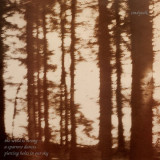
The 3rd album by Scottish industrial enigma Cinder aka Cindytalk began life as the soundtrack to an experimental film by English director Ivan Unnwin entitled Eclipse (The Amateur Enthusiast's Guide To Virus Deployment), and was originally slated for release via Factory Records' video division, Ikon. Inspired heavily by Alan Splet's eerily disembodied sound design in David Lynch's Eraserhead, the collection's 15 pieces seethe between field recordings, wistful piano vignettes, and lurking metallic haze – a hybrid palette Cinder characterized at the time as “ambi-dustrial.” Unfortunately Ikon collapsed on the eve of the project's completion so the film was never distributed, but the Midnight Music imprint repackaged Cindytalk's score as an LP in 1990 under the name The Wind Is Strong... (full title: The Wind Is Strong - A Sparrow Dances, Piercing Holes in Our Sky).
Cindytalk is the mercurial, expressionist outlet of Scottish artist Cinder. An evolution of her early 1980's Edinburgh-based punk band The Freeze, she launched the project upon moving to London, inspired by the crossroads of exploratory UK post-punk and early European industrial. Her work thrives on chance and transformation, collaging elements of noise, balladry, soundtrack, catharsis, and improvisation. After a series of celebrated albums for the Midnight Music label as well as collaborations with This Mortal Coil and Cocteau Twins, Cinder migrated to the United States, becoming involved with various underground techno collectives around the Midwest and West Coast. Subsequent relocations to Hong Kong and Japan further expanded Cindytalk's horizons, resulting in a fruitful partnership with Viennese experimental institution Editions Mego, for whom she released five full-lengths of swooning, granular atmosphere. 2021 finds her as engaged as ever, at the precipice of long-awaited back catalog reissues alongside multiple new works, guided by her lasting love of discovery and deviation: “new pathways always being uncovered.”
The 3rd album by Scottish industrial enigma Cinder aka Cindytalk began life as the soundtrack to an experimental film by English director Ivan Unnwin entitled Eclipse (The Amateur Enthusiast's Guide To Virus Deployment), and was originally slated for release via Factory Records' video division, Ikon. Inspired heavily by Alan Splet's eerily disembodied sound design in David Lynch's Eraserhead, the collection's 15 pieces seethe between field recordings, wistful piano vignettes, and lurking metallic haze – a hybrid palette Cinder characterized at the time as “ambi-dustrial.” Unfortunately Ikon collapsed on the eve of the project's completion so the film was never distributed, but the Midnight Music imprint repackaged Cindytalk's score as an LP in 1990 under the name The Wind Is Strong... (full title: The Wind Is Strong - A Sparrow Dances, Piercing Holes in Our Sky).
Cindytalk is the mercurial, expressionist outlet of Scottish artist Cinder. An evolution of her early 1980's Edinburgh-based punk band The Freeze, she launched the project upon moving to London, inspired by the crossroads of exploratory UK post-punk and early European industrial. Her work thrives on chance and transformation, collaging elements of noise, balladry, soundtrack, catharsis, and improvisation. After a series of celebrated albums for the Midnight Music label as well as collaborations with This Mortal Coil and Cocteau Twins, Cinder migrated to the United States, becoming involved with various underground techno collectives around the Midwest and West Coast. Subsequent relocations to Hong Kong and Japan further expanded Cindytalk's horizons, resulting in a fruitful partnership with Viennese experimental institution Editions Mego, for whom she released five albums of swooning, granular atmosphere. 2021 finds her as engaged as ever, at the precipice of long-awaited back catalog reissues alongside multiple new works, guided by her lasting love of discovery and deviation: “new pathways always being uncovered.”
Across decades of activity Cinder’s body of work has forever followed its own elusive muse but nowhere is this restless spirit more apparent and ambitious than the 4th Cindytalk LP, Wappinschaw. Conceived as “a call to arms” inspired by Scotland and its struggle for independence, the title refers to an archaic Scottish battle inspection during which clan chieftains surveyed their group's weapons to ensure they were combat ready. A mindset of reflective preparation threads throughout the record, manifested in forms both naked and noisy, ancient and anguished.
Opening with an aching solo vocal rendition of the British folk standard “The First Time Ever (I Saw Your Face),” the album then surges into the Cindytalk classic, “A Song Of Changes,” sparkling and spiraling in strange waves of sorrow and joy. From there the mood fragments, tracing asymmetrical paths of feverish dirge, pensive spirituals, noir abstraction, spoken word (landmark Glaswegian writer Alasdair Gray guests on “Wheesht”), bagpipe drone, and apocalyptic post-punk. Given its aggressive eclecticism, it's not surprising that Cinder describes the creation of Wappinschaw as a “precarious” process, composed from “scraps” with abruptly shifting personnel – a situation only compounded by the impending dissolution of their label at the time, Midnight Music.
Cindytalk is the mercurial, expressionist outlet of Scottish artist Cinder. An evolution of her early 1980's Edinburgh-based punk band The Freeze, she launched the project upon moving to London, inspired by the crossroads of exploratory UK post-punk and early European industrial. Her work thrives on chance and transformation, collaging elements of noise, balladry, soundtrack, catharsis, and improvisation. After a series of celebrated albums for the Midnight Music label as well as collaborations with This Mortal Coil and Cocteau Twins, Cinder migrated to the United States, becoming involved with various underground techno collectives around the Midwest and West Coast. Subsequent relocations to Hong Kong and Japan further expanded Cindytalk's horizons, resulting in a fruitful partnership with Viennese experimental institution Editions Mego, for whom she released five albums of swooning, granular atmosphere. 2021 finds her as engaged as ever, at the precipice of long-awaited back catalog reissues alongside multiple new works, guided by her lasting love of discovery and deviation: “new pathways always being uncovered.”
Across decades of activity Cinder’s body of work has forever followed its own elusive muse but nowhere is this restless spirit more apparent and ambitious than the 4th Cindytalk LP, Wappinschaw. Conceived as “a call to arms” inspired by Scotland and its struggle for independence, the title refers to an archaic Scottish battle inspection during which clan chieftains surveyed their group's weapons to ensure they were combat ready. A mindset of reflective preparation threads throughout the record, manifested in forms both naked and noisy, ancient and anguished.
Opening with an aching solo vocal rendition of the British folk standard “The First Time Ever (I Saw Your Face),” the album then surges into the Cindytalk classic, “A Song Of Changes,” sparkling and spiraling in strange waves of sorrow and joy. From there the mood fragments, tracing asymmetrical paths of feverish dirge, pensive spirituals, noir abstraction, spoken word (landmark Glaswegian writer Alasdair Gray guests on “Wheesht”), bagpipe drone, and apocalyptic post-punk. Given its aggressive eclecticism, it's not surprising that Cinder describes the creation of Wappinschaw as a “precarious” process, composed from “scraps” with abruptly shifting personnel – a situation only compounded by the impending dissolution of their label at the time, Midnight Music.
- 1: Don’t Ever Pray In The Church On My Street (02:46)
- 2: I Hope I Never Fall In Love (0:56)
- 3: The Biggest Fan (02:47)
- 4: Uncommon Weather (01:5)
- 5: A Kick In The Face (That’s Life) (02:01)
- 6: I Wouldn’t Die For Anyone (02:35)
- 7: I’m Sorry About Your Life (02:05)
- 8: The Record Player And The Damage Done (02:22)
- 9: Pictures Of The World (03:11)
- 10: Life At Parties (02:52)
- 11: Sing Red Roses For Me (03:54)
- 12: The Songs You Used To Write (02:49)
- 13: Sympathetic (03:11)
From the many musical lives of artist Glenn Donaldson emerges The Reds, Pinks and Purples, a project that sifts out the purest elements of pop music and in the process chronicles the point of view of an assiduous San Francisco-based songwriter. The Reds, Pinks and Purples’ third album, called Uncommon Weather, is both an elusive portrait of San Francisco––during one of its fluctuations as an untenable place for musicians and artists––and also a self-portrait, however inverted, of a songwriter who has dispatched another treasured collection of timeless sounding DIY-pop songs.
How The Reds, Pinks and Purples arrived here is a story with many roots, the most consequential of which is perhaps the musical aftermath of his earlier band, The Art Museums, whose brief tenure in the late ’00s coincided with an explosive period of the Bay Area rock scene and was followed by a hermetic musical period of Donaldson’s. Disenchanted with the dissolution of his band, Donaldson averted the DIY-pop sound with an instrumental, conceptual project called FWY! but meanwhile started a habitual songwriting practice, sharing nascent songs with friends in an email exchange. In 2013–2014, The Reds, Pinks and Purples took shape as the moniker for Glenn’s most direct expressions in the DIY-pop mode, enabled by this new disciplined output. By then, San Francisco was already a changed place. The tragic loss of his former bandmate in Art Museums was another source of discontinuity and rupture. You can hear in The Reds, Pinks and Purples’ earliest songs this grappling with life, anxiety, and atrophying subcultures. For an artist with an overriding interest in the aesthetic principles of discrete musical genres, this turn toward his immediate world for subject matter was a major shift, setting The Reds, Pinks and Purples apart from Donaldson’s other musical ventures.
Preceding the release of Uncommon Weather was the Reds, Pinks and Purples’ 2nd album, one of the record buying joys of 2020, You Might Be Happy Someday, and, earlier, their first proper full length Anxiety Art, a title that might nod to the classic Television Personalities song “Anxiety Block.” Donaldson’s music continuously reckons with the influence of Dan Treacy, whose own forays into drum-machines, echo, and reverb in the early 1990s is an important reference point for The Reds, Pinks and Purples’ musical template. Paul Weller, Robert Smith, and Sarah Records also come to mind. But, as important, Donaldson sees his projects as visual expressions too, often blurring the lines of records and physical art objects. They could just as well be “art multiples” as well as records. The pattern for Reds, Pinks and Purples’ records is to document San Francisco’s Inner Richmond district in photographs: the muted, pastel colours and unpeopled compositions unfold in a series of images that read like counter-melodies to Donaldson’s distinctive voice, a vocal tone that always complements the colours.
Self-recorded and mostly self-performed, Uncommon Weather features pinnacle versions of songs Donaldson has honed since the beginning of the project. The album arrives with grateful timing, quick on the heels of You Might Be Happy Someday, and alleviating, for a brief window at least, whatever it is that keeps us coming back to this elemental music. Donaldson imagines his listeners are just like himself: fascinated and addicted to the spiritual power of uncomplicated pop classics. Anthony Atlas
Die weltbekannte Band aus Island ist mit ihrem elften Studioalbum, dem hoch emotionalen "Mobile Home", zurückgekehrt und veröffentlicht damit ihr erstes Album seit 2018. Das Kollektiv beweist einmal mehr die Meisterhaftigkeit, seine künstlerischen Grenzen zu erweitern, indem sie eines ihrer ambitioniertesten und kraftvollsten Alben seit Jahrzehnten veröffentlichen. Für ihr neuestes Album holten sich GusGus die VÖK-Sängerin Margrét Rán zur Hilfe, um ihren Stil zu erweitern und den Sound des Kollektivs so frisch wie immer zu halten. Das 9-Track-Album bietet eine Mischung aus elektronischem Rock, Ambient, Darkwave, Downtempo und Synthpop. GusGus besser denn je!
World-renowned group GusGus have returned with their 11th studio album, the highly emotive Mobile Home, marking their first album release since 2018. The collective once again prove their commitment to pushing their artistic boundaries as they release one of their most ambitious and powerful albums in decades. For their latest record, GusGus call on VÖK’s lead singer Margrét Rán to help expand their style, keeping the collective’s sound as fresh as ever. The 9-track album features a concoction of electronic rock, ambient, darkwave, downtempo, and synthpop.
After announcing a new album in October 2020, GusGus wowed fans with their first single “Higher,” offering a first taste of how VÖK’s impactful vocals mesh seamlessly with GusGus’ intelligent and powerful electronic production. “Higher” was soon followed up with the darker, downtempo “Stay The Ride” and the bright and energetic synth work on “Our World.” The three captivating singles each received equally remarkable music videos courtesy of founding members Arni & Kinski, the directing team known for working with the likes of Sigur Rós, Kiasmos, Ólafur Arnalds, Of Monsters and Men, and more.
Every track on Mobile Home doubles as a window into a futuristic dystopian world that has been overtaken by machines. A nod to the rise of technology and ever-growing uncertainty surrounding automation, the album explores themes of solitude, rebellion, science fiction, hedonism, pleasure, and anger. Swirling within this world is a disconnected, aching soul who is on the verge of slipping into complete dementia. Forgotten purpose and goals but continues to be driven by the hedonistic default program of material consciousness; sensually self-indulgent and engaged in the pursuit of pleasure alone. In Mobile Home, GusGus challenge themselves like never before, resulting in a wonderfully chaotic reflection of the ongoing war between soul and machine.
With Mobile Home, GusGus show the quality and sonic diversity of the singles pervades throughout the full LP, while preserving the melodramatic themes that tie its 9 tracks together. “Simple Tuesday” showcases the group’s aptitude for blending contemporary electronic production with pop sensibilities while keeping an optimistic tonality at the forefront. Meanwhile, “Love Is Alone” and “Original Heartbreak” offer a slower, more pensive take on synthpop, and evoke feelings of solitude and deep melancholia. “Silence” and “The Rink” boast some of GusGus’s more experimental production, each alternating between radio-ready vocal verses with inventive and exciting synth elements. GusGus closes Mobile Home with “Flush,” an instrumental score that leaves the listener riding high as they finish the LP.
“Montreal’s genre-defying post-rock combo BIG|BRAVE could very well be the most noteworthy recent heavy curiosity to come out of the city in recent years.” - NOISEY
“…combines elements of Björk, Neurosis and Sunn O))) into a cohesive whole; but this whole is an ever evolving and challenging sonic mass.
- THE QUIETUS
Minimalism and instinct, structure/freedom and meticulous timing form the cornerstones of their precise, rhythmical sound.
Lyrically, the album explores the weight of race and gender, endurance and navigating other people’s behaviours, observation and protest. The band further comment “this album involves what it means navigating the outside world in a racialized body and what it does to the psyche as a whole while finding individual worth within this reality.”
This time featuring the core trio Robin Wattie, Mathieu Ball and Tasy Hudson, for their most collaborative record they’ve made so far. The band elaborate “having cut our teeth in very different musical backgrounds respectively, our intuitions vary, which has an interesting effect on our individual approaches and ears.”
For this record, BIG | BRAVE once again made the trek down to Rhode Island to record with Seth Manchester at Machines with Magnets. They remark “we fully trust his instinct as an engineer and his creative output, getting to experiment with textures, concepts, layers, and with pretty much every single recorded sound, the process of making records with Seth is an absolute journey and pleasure.”
With the initial seeds planted in 2012, with no other goal than simply experimenting with the instruments in their possession, Robin Wattie and Mathieu Ball started writing subtle ambient/minimalistic folk songs together. When long time friend Louis Alexandre Beauregard joined on drums, the goal still remained to play as tranquil as possible. After an incident where Wattie’s acoustic guitar broke, and having borrowed a friend’s electric as a replacement, larger amps that Ball had in storage from previous bands started to get incorporated to the outfit. Now with amplitude as a compositional tool, BB never lost interest in the power of minimalism and fragility. It became clear that loud volume would become just as effective as the lowest possible ones and the juxtaposition of both would become something BB still uses as their main MO to this day.
After self-releasing Feral Verdure in 2014, the band had the opportunity to open for Thee Silver Mt Zion in Montreal QC. After which, Efrim Manuel Menuck found something meaningful in the members and the band and invited them to open on future shows with Mt Zion and with Godspeed! You Black Emperor.
In 2015, the band entered the studio with Menuck and recorded “Au De La”. With no home for the record, they decided to take a chance in writing to Southern Lord. As luck would have it, Greg Anderson happened upon their email among hundreds and responded. Since then, the band has had a home with Southern Lord Records. (Along with Au De La, Southern Lord has released Ardor in 2017, A Gaze Among Them in 2019 and VITAL in 2021).
After Beauregard’s departure in 2018, the band traveled down to Rhode Island with Loel Campbell on drums to make a first record with Seth Manchester at Machines with Magnets. After the album’s release, with Campbell unable to tour, Tasy Hudson joined the ranks and the band spent most of the year touring their 2019 album “A Gaze Among Them”.
In 2020, the core trio of Ball, Wattie and Hudson once again made the trek down to Machines with Magnets to record their 5th LP “VITAL”.
Since their inception, the band has had many honours and privileges of touring a number of times in North America and Europe with bands such as Sunn O))), MY DISCO, The Body, Thou, Primitive Man and Thee Silver Mt Zion.
Next up on Slow Motion, Rodion and Fabrizio Mammarella are back with another precious collaboration EP since “Appennini” released in 2012 but never forgotten in the fame.
They have been like brothers for many years, and after many collaborations, these two producers are well attuned to each other in their musical soul. Rodion and Fabrizio are both very sophisticated producers and known for their dramatic melodies, mixed with synthesized funk and disco, which turns it into emotional freaky electronic music.
All tracks are recorded in Mexico City, bringing in Mexican artist Mijo as a featuring on the track ‘’Cerro Gordo’’. Moreover, italo-belgian duo Front De Cadeaux join with a remix that grabs elements from both the original tracks, reworked in one timeless piece of music.
We are proud and delighted to present to you: “Sierra Madre”.