Before coming to Europe, in 1970, pianist Manuel Villarroel was a vet in his native Chilli. A few years later, as leader of the Machi Oul Big Band, he returned to the animal kingdom. A very specific kind of animal, for sure, the Quetzalcoatl, also known as the Feathered Serpent. What is behind this title (also the name of one of the three original compositions on this album released on the Palm label in 1976), is first and foremost a sort of homecoming...
After discovering the jazz of Herbie Hancock, McCoy Tyner, Miles Davis and John Coltrane, Villarroel was taken by the free jazz which was all the rage at the time in America and Europe, and this would inspire the first version of his Machi-Oul, project. This was a septet, with which the pianist would record, in 1971, the tremendous Terremoto (re-released by Souffle Continu FFL085). After this masterstroke Villarroel was invited to record with Perception (Perception & Friends) and with Baikida Carroll (Orange Fish Tears). While these were notable contributions, Villarroel was already looking into other combinations.
“I had to deal personally with my situation as an expatriate, without disavowing it. I tried not to betray my roots, I tried to translate into my music what was essential to me, to reflect my origins – Latin America, its musical and above all human feelings – while remaining faithful to jazz, which is the mode of expression of the musicians in the group”. This then is the ‘homecoming’ we mentioned, which would incite Manuel Villarroel to compose what he would call “structured free music”. In January 1972 the pianist enlarged his formation to reach the size of a real big band: the Septet became the Machi-Oul Big Band. Three years later in January 1975, with producer Jef Gilson at the helm, fifteen musicians including those from the old Septet (Jef Sicard, François and Jean-Louis Méchali, Gérard Coppéré) worked on a rare form of jazz. From togetherness to dissonance, we danse to it “Bolerito” then shake it up on “Leyendas De Nahuelbuta”. As for the concluding serpent, it is a piece which is impossible to pin down: “Quetzalcoat” is as impressive as it is difficult to grasp. To remind ourselves of this, lets listen to it again.
Buscar:dissonance
Complete with 10" vinyl record and booklet presenting Laurianne Bixhain's photographic work and text by Chloe Chignell.
Presented at the Mudam (Museum of Modern Art of Luxembourg) and initiated by a photographic exploration by Laurianne Bixhain, the work "The day begins with a loud boom" interrogates the manner and extent to which we are defined by our relationship to the physical environment, and the cultural import of the techniques of production. Its imagery follows the trajectories of the materials subjected to the processes of diamond cutting and automotive glassware fabrication, and presents the traces of human intervention of which those materials are both the object and the repository.
The interplay of its imagery, music and text constitutes a theatrical whole: both the staging of the text and the sonorities create an architectural space within which each constituent object is deployed. That spatiality is shared and complemented by the text’s sonorous and performative qualities. Likewise, the elements of texture and abstraction in the imagery invoke our sense of touch, as a means of material and spatial appreciation.
The succeeding reiterations of the ostinato the day begins with are treated graphically by its progressive effacement, evoking the tension in assembly line work between repetition and linearity, accumulation and exhaustion, trace and erasure. Such attrition is equally conveyed by the harsh, impassive, and architectural qualities of both the images and the music which accompany the text. The latter notably deploys a range of insidious effects, from the marriage of dissonance and unsettling rhythm evocative of the competing cycles of multiple industrial machines, to sensual and reassuring sonorities which are contaminated by their contrast with the harsh acoustic aesthetic elsewhere.
The studies with Goffredo Petrassi and the association with Gruppo di Improvvisazione Nuova Consonanza let the Avant-garde playing an important role in the career of Ennio Morricone,
who wrote many contemporary pieces for himself, but then the author composed soundtracks where dissonance played a major role.
For the Italian edition of the film SPACE: 1999 (1975), the cult British TV series, he composed a very neurotic Jazz with muted horns.
Also for the science-fiction film THE HUMANOID (1979) Ennio Morricone created hallucinating strings scores mixed with electronic effects. For SACCO E VANZETTI (1971)
an electronic score by Walter Bianchi evokes all the drama of the undeserved death sentence of the two protagonists.
Experimental music of great impact in the film and off the screen for famous thrillers such as THE DEATH DEALER (1974), SHORT NIGHT OF GLASS DOLLS (1971).
Avant-garde music has always been present in Elio Petri’s films set to music by Morricone such as PROPERTY IS NO LONGER A THEFT (1973).
Avant-garde music in the noir cinema of VIOLENT CITY (1970) and A PURE FORMAL- ITY (1994) and in auteur films such as GARDEN OF DELIGHTS (1967) and SARAH’S LAST MAN (1972).
The romantic side of Maestro Morricone contrasts the dramatic side of Thriller and Crime genre where dissonances always dominate.
For TIE ME UP! (1989) Morricone composed a delicate love theme for his one and only collaboration with the great Spanish film director Pedro Almodovar.
For FOR LOVE (1976) he created a motif for piano and orchestra as a back- ground to a love triangle.
The first sexual experiences of a teenager with older women at the end of the war in DISOBEDIENCE (1981) are accompanied by piano, strings and oboe.
“Desperate love theme” from MAKING LOVE (2000) is a very nostalgic classic tune for violin and orchestra. “Per le antica scale (Preludio)” from
DOWN THE ANCIENT STAIRS (1975) is a captivating, slow and sensual, love tune for piano and orchestra with a predominant flute solo.
“Beata and Joe” from THE STAR MAKER (1995) a sentimental theme for the two protagonists performed by an orchestra with the intervention of a classical guitar in the second part.
The crystal voice of soprano Edda Dell’Orso appears very frequently in Ennio Mor- ricone’s soundtracks as in the case of THE GOOD THIEF (1980),
THE MASTER AND MARGARITA (1972), WHAT HAVE YOU DONE TO SOLANGE? (1972), ORIENT EXPRESS (1979).
- A1: Ale Hop - Head Transplant
- A2: Daniela Huerta - Tza Tun Tzat
- A3: Debashis Sinha - For The Waters Ever Taste The Heavens Up Parts I-V
- B1: Hexorcismos - ¿Acaso De Veras Se Vive Con Raíz En La Tierra?
- B2: Hexorcismos & El Irreal Veintiuno - Interferencias
- B3: Jessika Khazrik - Gebera
- C1: Khyam Allami - Mix V6
- C2: Kloxii Li - Anhaga
- C3: Kmru - Hidden Options
- C4: Maf - What's Heard Once Entered (Nommo)
- D1: Portrait Xo - Mutualism_151122
- D2: Simina Oprescu - Granularities
- D3: Visions Of Lizard - Barranca Del Muerto
For the last seven years, sound artist, technologist, and electronic musician Moisés Horta Valenzuela (aka Hexorcismos) has been studying artificial intelligence and generative art, wondering how these new technologies might be augmented into his musical process. Born in Tijuana and currently based in Berlin, Hexorcismos has long attempted to break down the permeable borders between musical styles and expressions, using the spaces in between to reinforce his politics and worldview. And on 'MUTALISMX - becoming sonic network', he expands his vision, inviting artists from across the globe to collaborate on work that questions the biases inherent in AI models, offering a collective alternative that could serve as a blueprint for further research.
The majority of AI art at this stage works with "big data", taking ideas from the cultural canon and muddying them with our contemporary reality. But if we accept that mass culture is always politically biased, always swaying towards historical prejudices, then there must be a counter-narrative. Hexorcismos began to develop a bottom-up approach, using "small data" to interrogate his idiosyncratic approach to art; he built a tool called SEMILLA.AI based on neural audio synthesis that could not only mimic his sonic fingerprint but transform it into another. So when he offered the synth to his network of collaborators, he gave them the option of either using only their data or sharing the signatures of each other artist involved in the project, blurring their identities into a mutual voice.
The result is a compilation that unspools with the coherence and fluidity of a single-artist album or adventurous DJ mix, genreless and boundless but unified by a singular message. Hunanese-American artist Kloxii Li for example takes rugged percussion and tense, industrial ambience, smudging her soundscape into a swirling gust of ghostly dissonance. Hexorcismos himself contributes two compositions: the lengthy, hypnotic 'Acaso de veras se vive con raíz en la Tierra', an AI-powered scramble of his pointed tribal guarachero experiments; and 'Interferencias', a collaboration with Mexican club veteran Bryan Dálvez, aka El Irreal Veintiuno that drives intense dancefloor rhythms into a dense haze of frozen drones and radio static. Elsewhere, Berlin-based Lebanese artist and writer Jessika Khazrik dissolves her voice into a mesh of obscured rhythms and dissociated whirrs, blending the organic with the artificial but retaining an overpowering sense of humanity.
Some artists were drawn to the nebulous aspects of the technology, searching for truth in a soup of different sounds, while others, such as KMRU, used Hexorcismos's synthesizer the examine their output. On 'hidden options', the Kenyan sound artist fed his immense catalog into the neural net, bringing out his mannerisms and tendencies in the process. Each track is singular but myriad, prompting both mutual respect and a sonic becoming, a feedback process between the artist and the tool, the individual and the collective. Data sets are made by people, and by engaging directly with musicians, Hexorcismos suggests a new way of utilizing a technology demonized and glorified without careful examination. Each artist owns their AI model, and alongside the album Hexorcismos will release SEMILLA.AI to the public (with custom-made models to start the process), allowing anyone to access this revolutionary technology.
Even the album's artwork reflects the political message, conceptualized by Chilean duo hypereikon, who used AI processes to develop a visual reflection of the technology and its possibilities. Operating outside of academia and capitalist enterprises, MUTUALISMX proposes an alternative future - one without borders that's not beholden to the Western canon, where independent labor can be prioritized and celebrated, and where creativity can truly flourish.
- A1: Passage Through The Spheres
- A2: All Life Long (For Organ)
- A3: No Sun To Burn (For Brass)
- B1: Prisoned On Watery Shore
- B2: Retrograde Canon
- B3: Slow Of Faith
- C1: Fastened Maze
- C2: No Sun To Burn (For Organ)
- D1: All Life Long (For Voice)
- D2: Moving Forward
- D3: Formation Flight
- D4: The Unification Of Inner & Outer Life
Kali Malone's anticipated new album "All Life Long" is a collection of music for pipe organ, choir, and brass quintet composed by Kali Malone, 2020 - 2023. Choral music performed by Macadam Ensemble and conducted by Etienne Ferschaud at Chapelle Notre-Dame-de-L'Immaculée-Conception in Nantes. Brass quintet music performed by Anima Brass at The Bunker Studio in New York City. Organ music performed by Kali Malone and Stephen O'Malley on the historical meantone tempered pipe organs at Église Saint-François in Lausanne, Orgelpark in Amsterdam, and Malmö Konstmuseum in Sweden. Kali Malone composes with a rare clarity of vision. Her music is patient and focused, built on a foundation of evolving harmonic cycles that draw out latent emotional resonances. Time is a crucial factor: letting go of expectations of duration and breadth offers a chance to find a space of reflection and contemplation. In her hands, experimental reinterpretations of centuries-old polyphonic compositional methods become portals to new ways of perceiving sound, structure, and introspection. Though awe-inspiring in scope, the most remarkable thing about Malone's music is the intimacy stirred by the close listening it encourages. Malone's new album All Life Long, created between 2020 - 2023, presents her first compositions for organ since 2019's breakthrough album The Sacrificial Code alongside interrelated pieces for voice and brass performed by Macadam Ensemble and Anima Brass. Over the course of twelve pieces, harmonic themes and patterns recur, presented in altered forms and for varied instrumentation. They emerge and reemerge like echoes of their former selves, making the familiar uncanny. Propelled by lungs and breath rather than bellows and oscillators, Malone's compositions for choir and brass take on expressive qualities that complicate the austerity that has defined her work, introducing lyricism and the beauty of human fallibility into music that has been driven by mechanical processes. At the same time, the works for organ, performed by Malone with additional accompaniment by Stephen O'Malley on four different organs dating from the 15th to 17th centuries, underscore the mighty, spectral power that those rigorous operations can achieve. All Life Long simmers in an ever-shifting tension between repetition and variation. The pieces for brass, organ, and voice are alternated asymmetrically, providing nearly continuous timbral fluctuation across its 78-minute runtime even as thematic material reiterates. Each composition's internal framework of fractal pattern permutations has the paradoxical effect of creating anticipated keystone moments of dramatic reverie and lulling the listener into believing in an illusory endlessness. On an even more granular level, the historical meantone tuning systems of each organ used, and the variable intonation of brass and voice, provide further points of emotional excavation within the harmony. The titular composition "All Life Long" appears twice on the album, first as an extended canon for organ and again in the final quarter, compactly arranged for voice In the latter, Malone pairs the music with "The Crying Water" by Arthur Symons, a poem steeped in language of mourning and eternity. For organ, "All Life Long" moves with a patient stateliness, the drama concentrated in moments when shifting tonalities generate and release dissonance and ecstasy. For voice, each word is saturated with feeling, the singers swooping gracefully downward to capture the melancholy of the narrator's relationship to the timeless tears of the sea. "Passage Through The Spheres," the album's opening piece, contains lyrics in Italian pulled from Giorgio Agamban's essay In Praise of Profanation. In it, Agamban defines profanation as, in part, the act of bringing back to communal, secular use that which has been segregated to the realm of the sacred, a process Malone enacts each time she performs on church organs. This is not music of praise, or of spiritual revelation, but it is an artistic enactment of translating the indescribable. It carries the gravity of liturgical chant, and its fixation on the infinite, but draws its weight from the earthly realm of human experience. A music that draws the listener into the present moment where they can discover themselves within the interwoven musical patterns that can come to resemble the passage of days, weeks, years, a lifetime.
"The organ dates back to 1790 and was made by Venanzo Fedeli, who came from a prestigious family of organ builders. This particular organ is tuned in the ancient way at 430 Hz. Tuning relies on pure thirds that aim to create dissonances within the instrument itself.
Since the organ is an instrument modeled according to the principles of nature, the intonation of the pipes was performed according to an incompletely equal system that reflects the natural intonation based on mathematical ratios.
This produces a purer sound for the thirds but slightly harsher and more difficult to listen to. The hardness of the intervals of the organ is a metaphor for the hostile climate that prevails in the Potenza valley during winter and autumn.
The sound of the organ with the register of the flute returns a particularly sweet and penetrating sound but, at the same time, a very complex timbre with intricate harmonic texture, given the numerous fluctuations and beats. The warm tones of the organ reflect the good and welcoming sould of the people who inhabit these lands. The absence of dynamics inside the instrument allows the listener to focus and understand the harmonic texture and timbral differences between the various notes more clearly.
Trombone and trumpet played by Matteo Paggi on track 2 and 3 were recorded during a hot summer day at Elefante Bianco Studio in Rome by Matteo Scarchilli. Sax, effects and noises in track 6 played by Giulio De Asmundis and Pietro Rianna were recorded in Fauna53 studio.
Many thanks goes to Marco and Giuseppe for making this happen. Thanks Federico, Sami, Marisa, Romeo and everyone involved in this project. You know who you are."
Mastered by Alessandro Caldarola.
Photos and color grading by Filippo Corsi.
Graphic project and design by Flavio Mancini.
Vinyl pressed by AFG Record Manufacturing.
Karl-Marx-Stadt (now Chemnitz) was one of the GDR’s subcultural hubs in the late 1970s and 80s. The industrial city in Saxony produced an impressively wide informal cultural programme beyond state structures. Bands such as Die Gehirne, Knut Baltz Formation, Die Arroganten Sorben, Kartoffelschälmaschine, AG Geige or the projects of cassette label klangFarBe created a complex artistic environment, in which Tropenkoller ran its spiritual exercises from 1986 to 1989. The “introverted experiment” remained distinct yet was exemplary of a KarlMarx-Stadt sound that considered dissonance a non-ideological form of harmonics. A first and only tape appeared in 1988. The extravagant packaging illustrated the edition’s exclusive nature; no more than twenty-five copies were released by Tropenkoller into the limited coterie of its open circle. tapetopia is a series of vinyl releases based on cassettes from East Germany’s 80s underground, particularly from the East Berlin "Mauerstadt" music scene, featuring original layouts and track lists. For over 30 years after their initial “release” the music on these tapes was neither available on vinyl nor CD, but they were important statements in the canon of the GDR subculture. Contrary to the small print runs of the time, many of the bands were considered cult in the underground,but suspect in the higher floors.
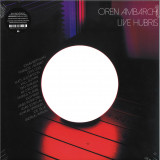
Keiji Haino/Jim O'rourke/Oren Ambarchi
With pats on the head, just one too few is evil one too many...
- My “Watashi Dake?” Is Definitely Not Included In This Unequal Treaty, Is It?
- Right Brain, Left Brain; Right, Left; Right Wing, Left Wing. Just How Many Combinations Can Be Made From These?
- “Critical Consciousness?” That’s Been Abandoned In Corner Of A Shower Room In A 53-Storey Apartment Building Inhabited By Extra-Terrestrial Lifeforms…
- I Thought I Had Pulverized It Summarily But There Are Just Too Many Who Lack Reality Or Who Are Cowards So I Cannot Change A Thing
- E1: Still Divided Into Pieces? Let’s Reconnect Them Recognise That You Are A Point And The Longest Line Let It Become Light
- I Can No Longer Sense That Sacred Feeling Of Expression Just The Loitering Of Vulgar Vibrations That Can Only Be Described As A Half-Hearted Class Reunion Will You Consent To This?
- There Are Always Things I Wish To Say But I Can Only Convey Them In This Language August 6 August 9
The heavyweight trio of Keiji Haino, Jim O’Rourke and Oren Ambarchi return with their 12th and most epic release to date, the triple LP With pats on the head, just one too few is evil one too many is good that's all it is. Documenting the entirety of their final performance at the dearly departed Roppongi home of Tokyo underground institution SuperDeluxe in November 2018, the music spread across these six sides splits the difference between the guitar-bass-drums power trio moves and experiments with novel instrumentation that have defined the trio’s decade of working together. Containing some of the most delicate music the three have committed to wax since the gorgeous 12-string acoustic guitar and dulcimer tones of Only wanting to melt beautifully away is it a lack of contentment that stirs affection for those things said to be as of yet unseen (BT011), this wide-ranging release also offers up some of their most blistering free rock performances yet.
The side-long opening piece finds Haino on a single snare drum in duet with O’Rourke on unamplified electric guitar, playing in the lovely post-Bailey vein heard on his classic 90s recordings with Henry Kaiser and Mats Gustafsson. Spiky dissonance and ringing harmonics interweave with flowing melodic fragments as Haino single-mindedly explores the resonance of the snare like an untutored Han Bennink. On ‘Right brain, left brain; right, left; right wing, left wing. Just how many combinations can be made from these?’, O’Rourke moves to synth and electronics, joined by Ambarchi on drums, who at first focuses on sizzle cymbals before hypnotic cycles of gentle tom rhythms combine with electronic burbles and flutters to suggest a dream collaboration between Masahiko Togashi and Jean Schwarz. Ambarchi’s percussion is then joined by Haino on wandering, overblown flute, before the man in black switches back to the snare for a bizarre, stuttering drum duet.
For the first trio performance, Haino makes another new addition to his seemingly infinite catalogue of instruments, this time a homemade contraption he refers to as ‘Strings of Dubious Reputation’. Joined by O’Rourke on increasingly spaced-out electric guitar and Ambarchi on skittering percussion, Haino’s wonky, slack strings adds a definite ‘musique brut’ edge to this side-long performance, certainly one of the most enchantingly odd in the trio’s discography. When the group reconvene for the second set, spread out across the final three sides, they seem ready to breathe fire from the first instant. O’Rourke slashes distorted chords on the six-string bass, Ambarchi breaks into his signature irregular caveman thump, and Haino squeals and squawks on heavily delayed oboe before unleashing an overpowering electrical storm when he first picks up the guitar. For over half an hour, the trio pound out one of their most relentless performances, a constantly rearranging kaleidoscope of tortured fuzz guitar, insanely busy bass riffing and propulsive, tumbling drums. A hushed atmosphere initially reigns on the final long piece, given the mournful title ‘There are always things I wish to say but I can only convey them in this language August 6 August 9’. Haino’s clean guitar strumming calls up the shimmering tones of his PSF classic Affection, gradually building to a surging wall of sound, bass and drums lumbering through a roar of jet-engine guitar. Arriving in a deluxe trifold package with photos by Lasse Marhaug alongside inner sleeves with extensive live images, this epic release is perhaps the most remarkable document yet of this unique trio’s stamina and continuing inventiveness.
Soliton maximizes the compact format by further illuminating lesser-traveled paths. Contemplation and exploration weave harmoniously through five mysterious tracks. Influenced by a wide range of styles and sounds, such as Japanese ambient, the muted dissonance of Pharoah Sanders, and the chilly dub of the Scape catalog, Soliton evokes visions of lonely night drives punctuated by bright moments of bliss. The Calque EP from January 2023 saw them pursuing the minimal electronic side of their work even further. The opening track, "Kottbusser Tor,” showcases a conspicuous absence of the processed guitars that characterize most of their work, and instead explores sequenced filters, tape delays and analog synth patterns for eight minutes. On "Ammosel", they dive directly into dubby soundscapes, with crackling electronics and deep basslines, while "Kiyosumi" and "Fade Into Air" pay a visit to more familiar ambient territory. A darker undercurrent pervades on this EP, but one that goes particularly well with the coldest of seasons and its frosty air. The duo, consisting of Jason Kolb (Michigan, US) and Jonas Munk (Denmark) started working together in 2006, sending each other tracks across the Atlantic, eventually resulting in a full-length release on Felte in 2012. What started out as a side project to their respective main projects (Auburn Lull and Manual) have slowly become the main activity for both artists, now with a total of four full-lengths under their belt. Their music has also evolved and matured over the years, reaching a level of perfection that’s only granted producers who've been in the game for decades. Billow Observatory have by now established themselves as purveyors of highly refined ambient music and the Soliton EP sees them elegantly blend new and old, electronic and organic, into a gently drifting, enveloping whole. “.. mind drenching sunrises, glittering constellations, and sailing clouds, richly furnishing the familiar sense of hovering over vast natural orders that you're also inside. – Pitchfork // “So the world it inhabits is essentially that one between states, simulating a quietly vibrant ecology of sub-aquatic bass rumbles, washed out expanses of mid-range swirl and keening top end whose elusive colours seem to fade and coruscate in the low light. Lovely
Anybody who has witnessed a live performance of Anna von Hausswolff and band can attest to the extraordinary and commanding nature of the experience. The distinctive music, as captured across five full-length albums, comes to life, shifting from hypnotic and mantra-like moods to thunderous drama, dissonance and cacophony. The musicians master playful dynamics and wield immense power.
Formed in 2017, Flycatcher’s ability to construct sing-a-long melodies and gut-punching instrumentation, while also tackling the dissonance of depression and difficult relationships, proves their power in casting an empathetic, universal eye.
The New Jersey-based quartet, made up of Greg Pease, Justin VanNiekerk (guitar), Jack Delle Cava (bass) and Connor Carmelengo (drums), are known for their undeniably anthemic arrangements. Albums Other Things (2018) and Songs for Strangers (2019) garnered acclaim for their ear-worm choruses, tight textural dynamics and propulsive, driving percussion.
This music unites our common love for the essence of music, which contains harmonic structures and emotionality without borders." — Musique Infinie
Musique Infinie, the new duo consisting of Noémi Büchi and Feldermelder, is rooted in a shared desire to intertwine two composing veins, and to merge them into a new, massive core. While Büchi combined her background in classical and electro-acoustic music with a bold approach to composition on her highly acclaimed debut album 'Matter' (-OUS, 2022), multi-disciplinary musician and artist Feldermelder has been expanding his artistic practice into unexplored realms for over 20 years. Mutually, they've challenged themselves to fully engage on an artistic exploration aimed at making use of the elementary forces that unfold between them.
Their debut album, simply titled 'I', is a musical hybridization. The compositions make use of simple motives that are radically transformed by expanding them into intricate structures and fantastic layerings. The overcoming of genres with eclectic elements from classical music, jazz, film music and traditional music, combined with the vocabulary of experimental electronic music, complete the vertical plunge into this thickness. The emerging pieces lead into a paradoxical world, both disturbing and euphoric. Pieces that don't give in to calculations and expectations, but progress through ruptures and repetitions. The richness of the compositions and their analog, acoustic and orchestral character reflect the density of the world with its violence, its decadence, its fragility, but also its power, its ingenuity and its beauty.
Composer and sound artist Noémi Büchi creates electronic, symphonic maximalism. Her music is defined by a delicate synthesis of textural rhythms and electroacoustic-orchestral abstraction. She explores the potential of consonance and dissonance, contrasts rhythmic physicality with disruption and playfully emphasizes irregularities, creating an expansive listening experience marked by detail and elevation.
Feldermelder is a polymathic creative whose artistry spans composition, sound design, installation and code. He is co-founder of -OUS Records and an active member of Encor.studio, a collective specialising in creating immersive audio-visual installations. Through his work, he explores the idea of secrecy and its impact on our lives, using music and sound to create a thought-provoking and immersive experience for his audience.
„ The dissonance, the discord, is the tongue in the cheek of Ralf Schauff's music. Be it that the transverse flute, always underestimated as an instrument of torture, is used or slow synthesizer automations shift the tonality in an agonizingly and unnecessarily cruel way. Without this intention to challenge the listener, the music would have been there before. There are the soundscapes of NEU!, Harmonia or Cluster, the modality of Can, Afrobeat and all kinds of electronics, but also the impression of „Weltmusik" associated with folkloric instruments like the didgeridoo or the recorder. But it's none of these things. It only reminds us of them. And it reminds us listeners that music is also produced. The meta level comes into play and gets in the way of consumption. This is much more amusing, surprising and enriching than the mere description suggests. This is a must hear. It's just insanely fun. " Frank Spilker (Die Sterne)
„ Die Dissonanz, der Missklang, ist die Zunge in der Backe der Musik von Ralf Schauff. Sei es, dass die als Folterinstrument immer wieder unterschätzte Querflöte zum Einsatz kommt oder langsame Synthesizer Automationen die Tonalität qualvoll und unnötig grausam verschieben. Ohne diese Absicht den Hörer herauszufordern wäre die Musik schon mal da gewesen. Da wären die Klanglandschaften von NEU!, Harmonia oder Cluster, die Modalität von Can, Afrobeat und aller möglichen Spielarten von Elektronik, aber auch die mit folkloristischen Instrumenten wie dem Didgeridoo oder eben der Flöte verknüpfte Anmutung von „Weltmusik.“ Das alles ist es aber nicht. Es erinnert nur daran. Außerdem erinnert es uns Hörer daran, dass Musik ja auch hergestellt wird. Die Meta Ebene kommt ins Spiel und stellt sich dem Konsum in den Weg. Das alles ist viel Amüsanter, Überraschender und Bereichernder, als die bloße Beschreibung vermuten lässt. Das muss man gehört haben. Es macht einfach wahnsinnig viel Spass. " Frank Spilker (Die Sterne)
Downloads
- 1: The Lineman - Prelude And Development
- 2: He Saw An Opportunity - Counterpoint In C Minor
- 3: Vice - Main Title Piano Suite
- 4: Master Of The Butterfly Knife
- 5: Flipping Cards
- 6: B-Flat Prelude
- 7: The Lineman In E-Flat Minor
- 8: Taking Over The Damn Place
- 9: Scalia
- 10: 0James Earl Carter Jr
- 11: The Wyoming Campaign
- 12: The Other Half Fears Us
- 13: Dick's Heart Is Healthier Than Ever
- 14: He Wants To Impress His Father
- 15: My Friend, My Running Mate
- 16: The Washington Game Board
- 17: The Many Offices Of The Vp
- 18: The War In Afghanistan / His Magnum Opus
- 19: The Iraq War Symphony
- 20: Major Combat Operations Have Ended
- 21: At Death's Door
- 22: Conclusion - The Transplant
- 23: Vice - Main Title Orchestra Suite
- 24: Imperium
- 25: G Minor Prelude
- 26: Parade Music
The soundtrack features orchestral, big band, rock, and hip-hop compositions, the score was recorded at Abbey Road and Air Studios and evokes both the intensity and the sardonic humor found within the main themes of the film. Speaking of the music, Nicholas Britell says, “When I first began working with Adam McKay on the score for VICE, Adam’s initial instinct was that the score should have a symphonic scope to match the size of the story we were telling. Over the course of more than one year of composing, I wrote a score which utilizes a full symphony orchestra, while also exploring the sounds of big band jazz, rock, and hip-hop. There is a subtle – and at times not-so-subtle – dissonance in the music which weaves in and out of the themes, harmonies, and textures. This idea of dissonance became a central element within the nature of the score.”
"There could barely be a better figurehead for Belgrade's simmering multi-limbed music scene than Jan Nemeèek" The Quietus `Dissolved', a new album by Serbian synthesist and sound designer Jan Nemeèek, began its life cycle in a studio live room. It unpacks the paradigm of the individualistic act of computer music creation, transporting it into the communal setting of a band, its performers contributing elements ranging from prepared piano to Turkish lyre. The album opens with an unexpected falter, a false start that imbues the album with a sense of vulnerability. It's as if the album itself is finding its footing, mirroring the dissonance of an orchestra tuning. This digital ensemble, an assembly of electronic voices, seems to search for its harmony, its discord, its pitch, its timbre - much like a traditional counterpart would. As it unfolds, `Dissolved' further taps into the raw tonalities of partially defunct digital synthesizers, ranging from early 2000s' attempts at neural networks to precursors of oscillator-laden software synthesizers, in order to build its cloud of suspended tension and alternate histories. Through this clash of wistful piano and biting frost of digital pads with the iridescent hum of tube amps, the album reflects New Age tropes through the prism of metal (machine) music. Hailing from Belgrade, Serbia, Jan Nemeèek has been releasing electronic music since 2005, with a particular focus on ambient and bass-heavy electronic compositions. Nemeèek's music is characterized by his use of a wide range of sound generating tools, including neural networks, analog synthesizers, and granular synthesis. His approach to music production allows his work to unfold with patience, influenced by borderline dub sub-bass movements and heavily based on deconstructed recordings. Jan has released several albums, most notably 2014's Fragmented and later Recurrences. Prior to that, he co-founded the Creative Commons-based net label Norbu. `Dissolved' is set to be released on vinyl and digital on 10th November 2023 via Refractions, a new imprint founded by Nemeèek.
ele
Released in 1976, Eternity was Alice Coltrane's first album for Warner Bros. after eight wondrous records on Impulse! Combining the drones and textures of India, the gospel and R&B of her Detroit youth and the dissonance of modern classical composition, Coltrane's music in the '70s would become increasingly difficult to categorize.
Having moved a few years earlier to California (where she founded the Vedantic Center, an Ashram for spiritual studies), Coltrane stretches out on Eternity – incorporating various musical styles, including a stirring adaptation of Igor Stravinsky's The Rite of Spring – and the results are dazzling, both in sonic scope and emotional range
Opener "Spiritual Eternal" sways between Alice's exploratory organ and the dramatic swell of lush strings. A meditative solo piece for harp, "Wisdom Eye," precedes the rollicking rhythms of "Los Caballos," which showcases some of her finest soloing.
"Om Supreme" is the album's first track to be built around bhajans (Hindu devotional songs). Featuring graceful keyboards backed by an angelic choir, this piece hints at the ecstatic devotional music that she would later make with members of her Ashram.
While Coltrane would delve deeper into her spiritual journeys and continue to expand her musical interests on subsequent LPs, Eternity remains a vivid and compelling display of her unique vision, myriad talents and passions.
For 14 years Throat have been the sonic equivalent of forcing a square peg into a round hole; often abrasive, causing utmost irritation at times and on a rare occasion a feverishly pleasant dose of brooding darkness in one's otherwise dull existence. The peg now fits. We Must Leave You sees Throat dropping pegs of all shape and size through the same hole. The last confines of musical genres are behind them, resulting in an album which can be regarded as the easiest listening Throat has ever presented or simultaneously their most difficult and puzzling work to date. Thematically what we have here is a breakup album. Never ones for thinking small, Throat breaks up with the world. Enough is enough. Bring back lockdown. No need for petty social commentary on how the world is burning. Let it burn. Throat is already walking away and it remains to be seen where they end up next. If anywhere. Breakups always require dramatic music and We Must Leave You more than fits the purpose. Throat have already hinted at new directions and new sounds on their previous two albums, but here it all breaks loose. Rooted in the same heavy, dark rock sound as always, but a touch of gothic drama from the 80s has been injected to the band's sonic palette which obviously means a few deeper shades of black. The noise and dissonance remains, but this time it all has been dipped in honey and black grease paint. We Must Leave You was written over a few years time and finally recorded in 2023 at Tonehaven Recording Studio with Tom Brooke and the band's own Amplified Human Audio. Once again, Andrew Schneider mixed the album at Acre Audio and Carl Saff handled mastering duties at Saff Mastering. Photography by Dorota Brzezicka and design by Stefan Alt of Ant-Zen.
- A1: Requiem For Dying Mothers, Pt. 1
- A2: Requiem For Dying Mothers, Pt. 2
- A3: Requiem For Dying Mothers, Down 3
- B1: Austin, Tx Mental Hospital, Pt. 1
- B2: Austin, Tx Mental Hospital, Pt. 2
- B3: Austin, Tx Mental Hospital, Pt. 3
- C1: Broken Harbors, Pt. 1
- C1: Broken Harbors, Pt. 2
- C1: Broken Harbors, Pt.3
- D1: Mullholland
- D2: The Lonely People (Are Getting Lonelier)
- D3: Gasfarming
- E1: Piano Aquieu
- E2: Fac 21
- E3: Ballad Of Distances, Pt. 1
- E4: Ballad Of Distances, Pt. 2
- F1: A Lovesong (For Cubs] Pt. 1
- F2: A Lovesong (For Cubs] Pt. 2
- F3: A Lovesong (For Cubs] Pt. 3
2023 Repress
"Put simply, 'Tired Sounds Of...' is one of the most unremittingly beautiful albums I've ever heard." Drowned In Sound
"Unspeakably beautiful." AllMusic
"One of the most beautiful recordings we have ever heard." Aquarius Records
"A fantastic masterpiece, missing this would be foolish." Touching Extremes
"Their relentless commitment to subtlety sets them apart, as does their masterful hand with tone... dissonance is doled out in small portions, perfectly coloring the sculpted elds of sound." Pitchfork
"When all else fails and you need to shut the rest of the world out, this is a guaranteed mute button." Self- Titled
I f1. A Lovesong For Cubs Pt. 1
The follow-up to his acclaimed Constellation debut Third Album released in lockdown spring 2020, Markus Floats returns with Fourth Album, pushing the Montréal-based artist's distinct abstract electronic compositions into newly evocative terrain (while preserving his record-titling literalism). Faced with another couple of years spent unexpectedly, though not unfamiliarly, secluded and studio-bound, working on both paintings and music, Floats emerged by the end of 2022 with a set of tracks "about 60% finished" and a determined desire to throw off the shackles of distancing and isolation. "I had always thought about Markus Floats as a solo project but I am wrong about that. Fourth Album is about asking for help, inviting in, and making a home. It's about trust, exploration, and the effort of letting go."Sharing his in-progress recordings with a trio of close friends and collaborators from the powerhouse free music ensemble Egyptian Cotton Arkestra, each of these players then spent a day improvising to the tracks at Montréal's Hotel2Tango studio. With violin by Ari Swan, saxophone and mbira by James Goddard, and guitar and drums by Lucas Huang, Floats stitched their extemporized instruments back into his compositional process. The result is a fluid, lustrous, dynamic expansion of his sound and structure that continues to strike the ineffable balance of abstraction and soulfulness rightly highlighted and celebrated in the critical response to Third Album. Fourth Album sustains much of that previous work's enchanting equanimity, while inviting a bit more restlessness, accident and grit, with the incorporation of acoustic instruments and improvisation melding Floats' own background in Electroacoustic Studies and Jazz Performance more than ever before.Signature avant-electronic explorations of arpeggiated and timbral transformation, subtle shifts in harmonic consonance and dissonance, and a through-composed praxis that draws coterminously upon free jazz, musique concrète and modern Minimalism, all continue to shape Fourth Album to great effect. But an additional palette of sonic and gestural raw material is now also decidedly "out-of-the-box", charting a wider range of gestures, textures and temporalities. Fourth Album complexifies and intensifies across its 12 tracks, thematizing dualities and introducing new elements of play and accident, even a sort of looseness here and there, as it conjures communal expressivity within shorter, still scrupulous formal structures. Fourth Album also for the first time includes spoken word as a recorded element, previously only (and always) a feature of Markus Floats live performances. The album's final track samples the poet and activist Fred Moten, closing with these words: "What we've been trying to figure out how to get to is how we are when we get together to try to figure it out." This koan of socially-engaged process and creation/advancement of meaning through praxis and immanence reflects the unique fusion of intangible materiality and affective sensibility at work in Markus Floats music, unfolding in new depths and currents with Fourth Album.
Tallahassee, FL singer-songwriter Sarah Morrison's debut studio album
Attachment Figure depicts the strangeness of exploring new
relationships with subtle and spacious electronic production - As a
former live keyboardist in Locate S,1, Morrison co-produced Attachment
Figure with fellow bandmates Ross Brand and Clayton Rychlik, both of
whom also play in Of Montreal's backing band
She was motivated to experiment with looser song structures and more
unconventional chord progressions by her collaborators' fondness for avantgarde jazz, as well as Locate S,1 frontwoman Christina Schneider's idiosyncratic
writing style.
Throughout the album, echoing keys, woodwinds, and guitar ripple like a moonlit
lake from which Morrison's voice emerges. Her presence is spectral, yet
conversational, willing to conjure concrete imagery of mango- flavored vitamins
and the warmth of phone chargers alongside ghost stories of mannequin corpses
and epistolary curses, a balance shaped by an obsession with the theatrical
sincerity of Kate Bush and Mark Hollis.
Lyrically, Attachment Figure meditates on questions about identity, personal
growth, and helplessness - whether within a relationship or the oppressive
structures of society itself - often rooted in Morrison's experiences growing up in
the South. "There's a connection between Southern hospitality and femininity and
just allowing things to happen," Morrison says. "I've been in many relationships
with people who have used that 'southern charm' to their advantage. I think a lot
of people, non- men in particular, put on this charm instinctively. It's a defense
mechanism that I was interested in studying."
Attachment Figure is perpetually suspended between states of being, harmony
and dissonance, and contradictory sentiments we all hold as we enter into the
arms of someone new, but ultimately, it's guided by a desire for authentic love--
and a flair for intricate, intuitive songcraft.
Marathon is not just a band, it's a top-level sport. The Amsterdam-based trio is bursting with energy, and it explodes out of them on stage, captivating audiences everywhere they go. With four Paradiso
shows under their belt, a packed Popronde, Welcome to the Village, Grauzone and many more, Marathon has quickly amassed an impressive live reputation, culminating in a top-10 spot at
Noorderslag. Both KINK and 3voor12 recognize the band as one of the talents of 2023.
V2 Benelux has signed Marathon for their debut EP, set to be released in May 2023. This is a major milestone for the band and a testament to their skills. Marathon's music is a passionate response to the crisis-ridden twenty-first century, channelling the energy of punk and the dissonance of shoegaze and post-punk to give voice to urban anxiety. Lennart's dynamic drumming, Kay's aggressive vocal delivery, and Nina's skillful six-string bass work create an explosive mix that is both raw and polished. Live, Marathon is a force to be reckoned with, with keyboardist Sofie and guitarist Victor bringing even more depth to their layered songs. Together, they create a high-energy defense against the doom and gloom of the modern world, making the uncomfortable bearable. Marathon is a band that demands attention, and their growing fan base is a testament to their undeniable talent.
'In 1972, trumpeter Baikida Carroll and some of his colleagues from the Black Artists Group (more precisely saxophonist/flutist Oliver Lake, trombonist Joseph Bowie, drummer Charles "Bobo" Shaw and trumpeter Floyd LeFlore) took the advice of their friends in the Art Ensemble Of Chicago and left their native Missouri to come and discover the bright lights of Paris for themselves. The following year they would even get the chance to record their only album which would rapidly attain mythical status and a collector’s item: “In Paris, Aries 1973”.
Therefore, it was not surprising that they crossed paths with Jef Gilson in the capital. He was always on the lookout for new artists for his recently formed Palm label and had been active on many fronts in jazz since the end of the 50s. The French bandleader / pianist / composer / sound engineer had already recorded, in the preceding months other American musicians who would go on to have great careers: Byard Lancaster, Keno Speller, Clint Jackson III, Khan Jamal... Gilson therefore offered Baikida Carroll the chance to record his first album under his own name, which would be the 13th release on the label. Carroll logically asked Oliver Lake to join him. He also recruited Manuel Villaroel, a young Franco-Chilien pianist from the group Matchi-Oul, who had already released an album on Futura in 1971 and would release another on Palm in 1976. The group was completed with the addition of Brazilian percussionist Naná Vasconcelos, who had just released a well-received album on the Saravah label. They were ready to enter the studio for the 3rd, 4th and 5th June 1974.
The first side of the album is divided into two long tracks which send free jazz back to its long-lost African roots. The opener “Orange Fish Tears” indeed rolls out a jungle of percussion of all sorts and sizes -the whole group is involved- which weave and mix together reaching a point where all bearings are lost, lending a sense of wonder to the majestic entry of the brass and woodwinds, flying suddenly out from the undergrowth. “Forest Scorpion” (sic) is a real voodoo ceremony where a venomous percussive groove backs the fiery solos from keyboards and saxophone in a furious trance. A warning; after these two tracks listeners are physically and emotionally wiped out!
The other side is more introspective. Deliberately using dissonance and repetition, “Rue Roger” -the only composition by Oliver Lake- in a long dialogue between trumpet and saxophone, could almost remind us of Terry Riley in his favourite ballpark. “Porte D'Orléans”, the fourth and final track on the album, has the group back to their old tricks in a long hallucinatory jam which owes as much to the contemporary music of György Ligeti as to the most angst-ridden Jerry Goldsmith soundtrack music (remember the heavy chords which beat through “Planet of the Apes»).
With these two sides, and in under 45m, Baikida Carroll and his musicians show just what they can do, from cerebral to charnel without ever simplifying things. This is an essential album if you are a fan of free-wheeling avant-garde music from the Art Ensemble of Chicago to Sonic Youth and including Shabaka Hutchings and Rob Mazurek. For those with good taste, in other words.'
'New World Artifacts' is the debut album from Rouen, France-based group Unschooling, arriving following their 2021 'Random Acts of Total Control' EP and 2019's 'Defensive Designs' tape. Out October 6th via Bad Vibrations, it's a collection of lo-fi post-punk clocking in at 30 minutes, underscored with subtle pop melodies and structures but never far away from bouts of chaotic no-wave dissonance. Here, Unschooling claim loud and clear their desire to return to a sound which is less calibrated, less obvious. As they themselves write, "New World Artifacts is an ode to the unexpected, a tribute to many art rock bands who are always where you least expect them." Already heralded as one of the most exciting up-and-comers in the new school of post-punk revivalists, having spent the last couple of years playing to busy crowds and festival fields across the continent, 'New World Artifacts' might just mark them out as the best in class. The Unschooling quintet, as referred to on the album's collage artwork, is made up of Vincent Fevrier (Vocals/Guitar), Damien Tebbal (Bass), Paul Morvant (Guitar), Marc Lebreuilly (Guitar/Synth) and Thomas Fromager (Drums). Although their music might revel in discord, it is a calculated one. The musicianship is complex and meticulous, hardened by their time spent together playing on the road. For 'New World Artifacts', additional musicians were also brought in to expand the sound in new ways, including saxophonists Levi Gillis (The Dip, Beat Connection) and Emeline Morisset (Les Agamemnonz), and Kyleen King (Stephen Malkmus & The Jicks, My Morning Jacket) on strings. Pressing Info: 180g blue vinyl, limited to 300 hand-numbered copies ww, download card included.
TPG long term friend and homeboy Ben Oyefeso pulls out a trio of double-jointed cuts for the club and not, the German producer's debut EP ‘Lagerfeuer’ packs that left-of-centre house punch that’s come to define the label throughout the previous ten releases and certainly more than just that. Cutting his lane at the junction of oddball party music and deconstructionist boogie, Oyefeso’s maiden sortie floats like a butterfly and stings like a bee. A weird, buzzing slab of body-jacking electronics that doesn’t play by the book.
An off-road bouncer of a track, the opening number ‘Matt’ has us nodding our heads to a high-in-vitamin mix of jacking house programming and erratic acid patterns gone astray. Knee deep in 303-marinated puddles of psychedelic squelch, Oyefeso keeps swinging the pendulum between a proper syncopated 4x4 motif’d framework and frantic digressions into an abstract-leaning headspace.
A2 ‘Kool’ opts for a further sliced-and-diced rhythmic line of action, generously infused with twisted Rephlexian phrases and sustained waves of micro-house clicking. Topping off that strange journey, the title-track ‘Lagerfeuer’ merges polyrhythmic intricacies with a forward-moving, earwormy kind of linear groove, all laced with a spooky baseline that stretches out into a purgatory of frankly eerie dissonances. Enough with the words, just jump on board Ben Oyefeso’s ghost train for a seriously tortuous, nonconformist ride across dance music’s jagged ridges and most secret crevasses.
Bay Area technical death metal entity FABRICANT leverages any musical
tool for their riff and song fabrication
Speed, stillness, technicality, simplicity, consonance, dissonance... are all at play
for the express purpose of telling the stories of humanity's hubris, madness, and
frailty. FABRICANT glimpsed into this black vortex, extracted the raw materials of
inspiration, and refined the chaos into the ten fully actualized, death metal songs
on their debut album "Drudge to the Thicket".
This album was FABRICANT's obsession: a forbidden riddle to solve. From its
beginnings stretching as far back as their 2010 demo and to its ultimate end, this
album inhabited the deepest recesses of their minds as an omnipresent
consumer of thought. With the arrival of this debut, FABRICANT frees themselves
of this thicket. The battle was hard-won, but the next ones inexorably begin. From
new obsessions to delirium to the mundane, consciousness marches onwards,
screaming out at all of existence for answers, only to feebly fall on deaf ears.
Descend into the chaos with FABRICANT.
FABRICANT's debut album "Drudge To The Thicket" is unlike anything you'll hear
in the technical death metal genre all year, truly a unique and singular album of its
own kind. One that has been in the works for over a decade.
FABRICANT features members of celebrated technical death/ black metal outfit
Mefitis.
For fans of Necrophagist, early Pestilence, early Atheist, Defeated Sanity, and
Gorguts
Following nearly 20 years of working together as a trio, and numerous cross-collaborations in different configuration between them, Ideologic Organ presents Placelessness, the debut full-length by Chris Abrahams, Oren Ambarchi, and Robbie Avenaim, comprising two long-form works at juncture of ambient music, minimalism, rigorous experimentalism and improvisation, and machine music. Having carved distinct pathways across a diverse number of musical idioms for decades, Chris Abrahams, Oren Ambarchi, and Robbie Avenaim are each, respectively, among the most noteworthy and groundbreaking figures to have emerged from Australia's thriving experimental music scene. Ambarchi and Avenaim first encountered Abrahams when seeing the Necks - the project that has served as the primary vehicle for his singular approach to the piano since its founding in 1987 - together during the late 1980s, not long after having met in Sydney's underground music community. The pair's collaborations date back more than 35 years, criss-crossing Ambarchi's pioneering solo and ensemble work for guitar and Avenaim's visionary efforts for SARPS (Semi Automated Robotic Percussion System), robotic and kinetic extensions to his drum kit. In 2004, fate brought the three together in a trio performance at the What Is Music? Festival, the annual touring showcase of experimental music founded and run by Ambarchi and Avenaim between 1994-2012. For the nearly two decades since, Abrahams, Ambarchi, and Avenaim have intermittently reformed in exclusively live contexts, in Australia and abroad, cultivating and refining the fertile ground first tilled in that early meeting. Placelessness is the first album to present this remarkable trio's efforts in recorded form. Placelessness is the joining of three highly individualised streams, working in perfect harmony; the point at which friendship, mutual respect, and decades of creative exploration produce a singular spectrum of sound. Featuring Abrahams on piano, Ambarchi on guitar, and Avenaim on drums, the album's two sides draw on each artist's enduring dedication to long-form composition. Its two pieces, Placelessness I and Placelessness II, initially began as a single, 40 minute work, before being divided and reworked into distinct, complimentary gestures for the corresponding sides of the LP. Beginning with restrained clusters of reverberant piano tones, Placelessness I progresses at an almost glacial pace, with Abrahams' interventions increasing met by sparse responses, darting within vast ambiences, on guitar and percussion by Ambarchi and Avenaim. Remarkably conversational within its convergences of tonal, rhythmic, and textural abstraction, over the work's duration a progressive sense of tension unfurls and contracts, refusing release, as each of the ensemble's members contribute to an increasingly tangled sense of density at its resolve. While an entirely autonomous work, Placelessness II rapidly realises a distillation of the energy hinted at across the length of its predecessor. Following a luring passage of harmonious calm, Abrahams' launches into shimmering lines of repeating arpeggios, complimented at each escalation of tempo by Avenaim's machine gun fire percussion work and Ambarchi's masterful delivery of tonality and texture, as the trio collectively generate dense sheets of pointillistic ambience within which individual identity is almost lost, before slowly unspooling into unexpected abstractions and dissonances that deftly intervene with the work's inner logic and calm. What could easily be termed a maximalist take on Minimalism, Placelessness is a masterstroke of contemporary, real time composition, that blurs the boundaries between ambient music, experimentalism, free improvisation, and machine music. Drawing on Chris Abrahams, Oren Ambarchi, and Robbie Avenaim's decades of respective solo and collaborative practice, and the culmination of nearly twenty years of working together as a trio, it's two durational pieces - Placelessness I and Placelessness II - take form with a startling sense of effortlessness and grace, neither shying away from explicit beauty or rigorously tension within their forms.
Mila Stern's groove-heavy and highly danceable sound explores fringe soundscapes informed by Post-Punk and Electro. What sets her apart is a willingness to embrace unorthodox sounds, explore the beauty in harshness and dissonance, and transform jarring atmospheres into captivating dancefloor moments. With 'Five Finger EP', Mila Stern delivers an eclectic six-tracker featuring two high-pressure originals and four carefully selected reimaginations by Camea, mytripismytrip, Öona Dahl, and Hardt Antoine for Kiosk catalog number 021.
'Five Finger Discount' encapsulates Mila's uncompromising aesthetic: warm, powerful, energetic, and constantly teetering on the brink of disintegration. Morphing, overdriven stabs build energy atop a sub-heavy groove and a sea of pads. A sweeping break fractures the track into shuddering bursts of corroded machinery, before the compact groove returns with punishing dancefloor power.
Camea transforms 'Five Finger Discount' into a heavy-weight techno roller. Shuddering, pitch-shifting bass hits and salvos, sizzling white noise sweeps, and an ominous mantra morph the track into a darkly efficient peak- time banger.
Hardt Antoine builds his rendition of 'Deadline Disco' around an infectiously body-moving arpeggio. Layers of distortion add a searing edge, transforming the original into a stripped powerhouse with Dark Disco undercurrents.
Few artists move on the fringe so comfortably, make unconventional sounds so accessible, or pursue their vision with the same bright-eyed conviction.
With 'Five Finger EP', Mila Stern epitomises the magic that happens when uncommon sounds are embedded in the framework of commanding, floor-focused energy. 'Five Finger EP' embodies her stand-out style and the stunning range of musical interpretations it inspires.
A long-in-the-works project of ours, here comes A Tribe Called Kotori's first foray into full-length territories, as the immensely talented Rampue takes us on a melancholy-riddled ride across his phantasmatic mindscapes. A true sound explorer, deftly steering his ship down the junction of electronica, abstract and balearic-infused prog house, the Berlin-based vibist has us transfixed and elevated throughout the twelve cuts that form the backbone to this lushly textured promenade in sound - at times understatedly euphoric, at others rivetingly exotic.
Of the creative process that lead to 'Bubblebath Trance', Rampue explains "It all started and ended in the same moment: my cherished feline companion, my laptop awash with an unintended bath, and alas, a dearth of backups. The resultant calamity, an echo of chaotic tranquility." Under the generous layer of irony lies some unaltered truth about Rampue's debut long-player for A Tribe Called Kotori: this sense of serenity that goes with stepping into this warm and bubbling primitive chaos of sorts infuses the listening experience far and wide. Distantly emulating the "euphonious strains" of iconic PS1 video games soundtracks from his youth days, the album has us surfing a constant paradox of emotions, wistful but not abandoning itself to sorrow, dynamic yet suspended in some sort of mind-expanding stasis. As if you were looking at the world beneath you in exploded view, conscious of all thing, slowly moving up the many layers of our atmosphere towards uncharted skies.
A paragon of Rampue's most poignant take on classic electronica tropes, 'Harmonie' blazes with a poetic fire that engulfs about everything in its wake. Just figure yourself riding a chocobo across the sand-covered expanse of North Corel (toasting to the FFVII nerds here) as this blasts out in the distance. From this trancey bubblebath emerge lots of musical shades and nuances, from the nicely dubbed-out, brass-heavy coastal jazz of 'Schattenschranz' to the choppy, trip-hop-adjacent future electronics of 'Inside', via the exuberantly joyous mess of faux-organic number 'Tripomatic' and cinematic charisma of 'Ich hasse Sonne' high-flying orchestrations.
Connecting the dots between that trance-indebted ebullience and further downtempo-friendly attraction, 'Verfahren' perhaps encompasses best what 'Bubblebath Trance' is about: gracefully walking the tightrope in-limbo nostalgia-soaked inner movements and a powerful outward thrust, burning to let the feelings ooze out from the shell that holds them.Clad in purely 90s-compatible breaksy motion, 'Salz' is another attempt to reconcile emotional and physical dissonance, like kneading all states - solid, liquid and vaporous - into an impossible mega-vibe of its own; malleable, strong and enveloping in equal measure. Borrowing from two-step and UK garage, 'Take Away' is a definite high in Rampue's master unfolding of musical twists and turns, summoning a Boarder Community-esque atmosphere and clashing it alongside floor-ready footwork motifs to fascinating effect.
An ode to his studio companion, 'Buchla Trip' finds Rampue's exploring his machinic friend's quirky yet soulful array of electronic potentialities - making it sound like a conversation you'd have with R2-D2 in the heart of a Sandcrawler, whereas 'Kajal' beams us up to a fragmented headspace, halfway altered PC-Pop and arps-loaded electronica on amphetamines. Effusive and transporting, the title-track 'Bubblebath Trance' could well figure as the album's no.1 medley in essence: a bountiful lucid dream of dancing forms, colours and sentiments to wrap your head around, confidently drifting from a liminal state of consciousness down the rapids of one's troubled inner workings.
Rounding off the package, the languid ambient finale of 'Die Leiden des hungrigen Fruehstuecks' rubber-stamps the feeling that 'Bubblebath Trance' belongs to that rare category of albums. The ones that mint their own alphabet aside from typical norms and expectations, teaching you the ropes of their new language as it unreels between your ears - real and unreal, elusive to any other meaning than the one your guts and brains will be inclined to give it to, in real time. A crystal-pure object if you will, that shall not reveal its secrets, even after a thousand listens and just as many wowing moments.
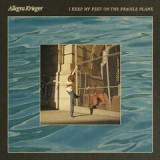
It contains all the signatures of her best lyricism: delicate and precise phrasings, moments that flicker between beauty and banality, meaning that forms through the accretion of observations, memories, and unexpected adages. This is an album that is at once post-theistic and devoted to a relationship with the divine, each song blinking in and out of "the fragile plane," a place Krieger describes as "a middle ground in the universe," both abstract and peaceful, where time, bodies, and names don't exist.
Krieger initially collaborated with Luke Temple and Jeremy Harris to record her vocals and guitar to tape at Panoramic Studios in West Marin, CA. As the album continued to form, Krieger envisioned instruments - like the French and English horn (Nancy Ranger and Priscilla Reinhart), electric guitar (Jacob Drab), and pedal steel (Kevin Copeland) - as characters which would walk in and out of the soundscape. What emerged from conversations with composer Sammy Weissberg, are brass parts that have a dark, almost surreal logic: horns arise to emphasize a word or phrase, fall out completely, only to rush back with dissonant orchestrations that gesture simultaneously toward deterioration and generation.
While Krieger takes inspiration from Elliot Smith's honesty, Judee Sill's cosmic reaching, and Joni Mitchell's sharp noticing, the dream-like association, harmonic dissonance, and angular melodic ascensions in each song are singularly and delightfully Krieger's.
"I Keep My Feet on the Fragile Plane" is a daring collection of songs by an artist who scries with both the cold glass eye of truth and the beating heart of empathy; who portrays life in all its twisted complexities.
The pre-cursor to Mid-Air Thief's cult-acclaimed album Crumbling,
Gongjoon Doduk exhibits a distinct universality, merging disparate
sounds and styles into a cohesive, electronic-infused folk amalgam that tactfully blurs the lines between organic and synthetic
Listeners are led through enrapturing passages of swirling melodies underscored with eloquent plucks, strums, and bursts of bubbly glitches. Individual phrases drift into one another as if in a dream, cohered by entrancing hooks and vocal soundscapes. Gongjoon Doduk is a compelling accomplishment of both composition and production, bending as it does to its unique contours of consonance and dissonance, always resolving to a place of calm and beauty.
Classic 1987 album is one of the band’s most beloved releases. Includes a cover of Crime’s “Hot Wire My Heart”. “Let’s get something straight. There is no album in the entire corpus of indie rock not Loveless, not Surfer Rosa, not Psychocandy that reaches the heights of invention, joy, and magic of Sonic Youth’s sublime fifth album.... The haunted reveries of Sister remain with you for years, even if you only hear them once” Stereogum // 1987’s Sister was another notch in the band's move away from No Wave, yet still maintained their experimental approach. Gordon, Moore, Ranaldo and Shelley were coming into their own at this point, combining elements of noise, punk and pop. They had also become better songwriters since their previous album, providing better context for their noisier elements and incorporating the dissonance of their earlier releases into more traditional song structures. To quote Stereogum once again, “Sister is the sonic manifestation of refracted light. It’s a record that changes you.”
"Released in May 1986 on SST Records and Blast First! in the UK, EVOL was the third studio album by Sonic Youth and showed the first signs of the band transforming their No Wave past into a greater alt-rock sensibility. “EVOL … marks the true departure point of Sonic Youth’s musical evolution,” noted Pitchfork, “In measured increments, Thurston Moore and Lee Ranaldo … bring form to the formless, tune to the tuneless, and with the help of Steve Shelley’s drums…, impose melody and composition on their trademark dissonance.” ""If Daydream Nation is Sonic Youth’s opus, EVOL was crucial research. There’s a directness that makes everything feel close. It is pure tension with little release. The entire record is a shadow." Stereogum likewise praised the album as one, “full of suspense…, the cornerstone Nico-evoking monotone [by Kim Gordon]. ‘In The Kingdom #19,’ featuring Mike Watt on bass and … vocals [by Ranaldo]…, is a harrowing story of a highway wreck over a suitably edgy instrumental backing punctuated by … live firecrackers in the vocal booth.” For Popstache, “EVOL slithers into the unconscious. Once the....detuned melodies and haunting riffs and final whispers of feedback depart from the speakers… the music [leaves] a faded footprint, forever reeling the listener back for another strange trip.” // “The seeds of greatness…” Pitchfork (who placed the album #31 of the Top 100 Albums of The 1980s) // “A near-masterpiece.” Trouser Press // “A stunningly fluent mixture of avant-garde instrumentation and subversions of rock’n’roll.” All Music Guide"
Repress!
Japanese crustpunk and grindcore icon Eri Fuzz-Kristiansen, aka Gallhammer’s Viviankrist, keeps
the curveballs coming on Diagonal with a bloodied mastication of charred noise and and rhythmic
electronics, following up the label’s acclaimed sides by Sote and Not Waving/Jim O’Rourke
Co-released with the metal-minded Ritual Productions label, ‘Cross-Modulation’ is a brutal
testament to the acridly personalised sound that Viviankrist has explored solo since 1995 in Tokyo,
when she performing vocals, sax and SP-202 sampler in her first industrial/noise unit. 23 years
later her music is still sorely raw, yet riddled with a new found poignance and atmospheric unease
that places her music sometimes as close to Kali Malone’s see-sawing dissonance as the power
electronics of Pan Sonic or the possessed pulses of Conrad Schnitzler and Merzbow.
Since the demise of Eri’s main project Gallhammer at the start of this decade, when she moved
from Tokyo to Oslo (home of her husband and bandmate in Sehnsucht, Maniac - also former
vocalist for BM legends Mayhem), she returned to her early Viviankrist alias from 2017 as a place
to express her primitivist-futurist urges, resulting a trio of CDs including the vicious solo strike
of ‘Morgenrøde’ for Cold Spring. Now on ‘Cross-Modulation’ she intuitively tempers that album’s
phosphorous burn with a deadly incisive application of what Black Metal/Techno pioneer Black
Mecha terms “mentation electronics.”
Alloying avant-metal with rhythmic noise, ambient techno and mind-bending drone to a
metallurgic tang, ‘Cross-Modulation’ serves a dense flux of energies in seven parts, piercing a path
thru maelstrom electronics in ‘Eleventh’ to churn up grizzled Vainio-esque rhythms in ‘Blue Iron’,
while the tenderly bruised ambience of ‘Midnight Sun’ provides a bittersweet palette cleanser for
the tart technoid prang of ‘Insects’, a bout of slow gripping psychedelia in ‘Out of Body’, and the
rugged North European pastoralism of ‘Behind Mirror.’
Murmer is the long-standing project for Estonian field recordist and composer Patrick McGinley, and in Tether, The Helen Scarsdale Agency welcomes Murmer back to our roster, over a decade since he graced us with his last production for the Agency. His field recordings often center upon the amplification and activation of resonance from a particular space, landscape, or object. Such sounds emerge from a condition as begin fleeting, inconsequential, or ephemeral and explode into that which alien, sublime, and profound. Here lies the tremendous prowess of the contact microphone, as wielded by an accomplished musician! The source material cited by McGinley includes cables, fences, wires, and vents.
There is a heft to many of these sounds as heard throughout all of "Taevast" with deep throbbing pulsations from arctic wind generating subharmonic patterns upon thick high-tension wires. Elsewhere the subtle dissonance from a rasping cooling fan blooms into a brooding ambience that is sublimely rich in its metallic timbres and complex reverberations. McGingley has long been an exemplary artist in the field of phonography even as he is less prolific than others. On Tether, he has produced a majestic if occasionally foreboding work on par with the mythic wire recordings of Alan Lamb, Jacob Kirkegaard's haunted resonance from Chernobyl, and much of the Touch catalogue for that matter!
Patrick McGingley on Tether:
In 2006, I made a collection of recordings at a mobile phone mast in Mooste, southeast Estonia. It is a guyed tower, 80 meters tall, affixed to 3 support points with heavy cables. I attached my self-made contact microphones to these cables with poster tack, and spent many hours over several weeks recording the various wind and weather variances (it was summer), and the birds that passed or settled on the tower or cables. This was one of my first visits to estonia, where i now live, and one of the things that marked me about that experience was the access: the tower had no fences or protections around it (I have not been back there recently to answer my own question of whether or not this is still the case); it stands in the middle of a field of tall grass along a dirt road in the countryside, just out of view of the few nearby houses, and during all the hours I spent there I was never disturbed or shooed away.
For more than 16 years, I have been thinking about this location and these recordings, and have made several attempts to work with them. I have used the sounds in installations a handful of times, and uploaded one short edit to the Aporee soundmaps, but have never managed to use them in any composed work. They always seemed too big for any structure I could provide them, whether I left them on their own, or partnered them with other sounds. Finally, in 2019, after putting them down and picking them up again repeatedly over so many years, they seemed to allow me in, although it took me another few years before they were happy with what I could offer. They stand now not quite alone - the majority of the layered sounds in the piece come from various edits of those cable recordings, but I added two other contrasting sounds, related to one another: one is snowflakes landing delicately on a plastic cakebox with microphones inside it, and the other is a frosted field of grass thawing on a lightly warming autumn morning (both these recordings can also be heard on their own on the Aporee maps).
Coming back to those cables brought to mind so many other wind-driven sounds that I had spent time with and recorded, but never returned to, that I began digging through my archives looking for them. I ended up with a pool of sounds from resonant wires, cables, fences, poles, fans, and vents, which became the basis for the 2nd work on this release. One of these sounds is among the first sounds I ever recorded, possibly within a month or so of buying my first microphone and minidisc recorder: the rhythmic fan of a beer cooler in a pub where I worked in North London in 1999. Other sounds in the piece include another phone tower, recorded on the northern coast of France in 2008, a telephone pole recorded in the Beaujolais region in 2010, the drone of ventilator fans at a factory in Tezno, Slovenia in 2012, an electric sheep fence in the Scottish borders in 2013, a hanging wire in a storage space in Rovaniemi, Finland in 2016, and, with no relation to cables or wind at all, calcium deposits being cleaned from the inside of an electric kettle here in Estonia in 2019.
I offer these two new pieces as my first solo publication since 2018, the first release on a physical medium since 2016. No one has ever accused me of working too fast, or being too prolific. I have a need, it seems, to leave a physical space of time around my work, before I can consider it 'finished'. Perhaps it is a simple need to forget how I did something, or that I did something; perhaps I have a need to be able to hear a work as a first-time listener would, before I can consider it ready for such an encounter. In some part of my mind I have to forget it before I can let it go. Well, I've just about forgotten that London beer cooler now, and that walk in the Beaujolais (with my father, who has since passed away), and that sheep fence next to our campsite in the borders, and that kettle that is now leaky. So I guess it's time.
Offering a three track EP on Token, emblematic UK producer James Ruskin proves his capability and linear focus once again through 'From the Ashes'. Looking past trends to create a lasting record rich in texture and thick with impact, the project affirms what the scene has already known to be true about his work for the past 25 years.
Setting his intentions from the A1, Ruskin wastes no time by creating an intimidating introduction. Saturated percussion and stuttering keys whip through a 4 minute masterclass of sound system focused production. Adventurous in structure, Ruskin remains unquestionably in control of a bursting, almost chaotic track. 'From the Ashes 2' picks up what was left off, containing a hard-set groove with hi hats slithering in progressively from the stereo image to slightly destabilize an impressive club-heavy tool. With intricate work being done in the ambience, the EP's hard hitting second track booms through a cavernous acoustic, giving the record not only body, but dimension. Switching up the rhythm and focusing on more mental synth work for the third act, Ruskin quickly and mercilessly rips through his work with a shrill pad, creating overwhelming tension to be released in the first third of the recording. He brings a dosed dissonance between his elements, reflective of the qualities of vintage techno with today's capabilities and arrangement. Pushing intensity through waves, Ruskin leaves us in anticipation of a fourth track that is never given.
- A1: L'assoluto Naturale
- A2: Sempre Più Verità
- A3: E Facile
- A4: Calde Occhiate
- A5: Studio Di Colori
- A6: Il Profumo Della Tua Pelle
- A7: Laboriosamente
- A8: Sembravi Desiderare
- B1: Amare Assolutamente
- B2: È La Solita Storia
- B3: Imparare A Conoscere
- B4: L'estate È Vicina
- B5: Assalito Dalle Rondini
- B6: Il Profumo Della Tua Pelle (Ballata Per Organo)
Gui La Testa[41,13 €]
For a few dollars more[41,13 €]
Il Mio Nome à Nessuno[41,13 €]
Gamma[41,13 €]
Cosi' come sei[41,13 €]
Green Vinyl[33,57 €]
"L'assoluto naturale" is a 1969 film based on the eponymous novel by
Goffredo Parise and directed by Mauro Bolognini
Many of his films have been scored by Ennio Morricone. The two leading actors are Sylva Koscina and Laurence Harvey.
The film is a bourgeois sentimental drama which was very popular in that era - lead by the well known theme "Metti, una sera a cena"; it's a soundtrack that blends classical, jazz, pop and lounge music in various reworkings of the main theme, a typical Morriconne trademark..
Among the orchestrations directed by
Bruno Nicolai, the track "Assalito dalle rondini" stands out, an abstract composition for strings characterized by tension-laden dissonances and dramatic orchestrations.
Originally released in 1969 and reissued in a few subsequent editions, the soundtrack of "L'assoluto naturale" has not been on vinyl for 40 years. This new release with remastered audio and a new sleeve layout delivers this excellent soundtrack in a classy layout.
180gr. solid pink vinyl edition.
Espen Friberg’s solo album debut. Sun Soon is Espen Friberg´s solo album debut, consisting of eleven compositions made up of synthesizer and field recordings. The album is formed as a collage, with compositions patched on a Serge modular synth and field recordings. The patches portray the mood and wandering in mountains and forests – while at the same time meditating on the area of the Norwegian valley Hallingdal´s local history. The collage technique is something Friberg uses in both his musical and visual art. The album is meditative and exploratory, and at the same time playful and immediate. Trucks, trash cans, flowing streams, lemon soda, horses and wandering mountains, find its place between slow melodies, scratching, sinus tones and bass lines. Dissonances and harmonies come together in gliding transitions and abrupt stops, while an electronic willow flute sings and the sun is rising. The recording is done at Leveld Kunstnartun in Ål in Hallingdal, later mixed and produced in collaboration with Jenny Berger Myhre. The project captures the ambiance in the valley around Leveld, through Espen´s experiences in nature, but also from the paintings of Marianne Røthe Arnesen and Gøsta Munsterhjelm. Espen Friberg is known as an artist, designer, illustrator, cartoon creator and musician, and has received numerous awards and stipends for his work. In the beginning of 2000 he was a part of establishing the design studio Yokoland, but later started his own studio. In addition to his visual practice he has built a sound studio consisting of complex synthesizer systems and a variety of obscure electronical instruments and effect processors. He has been a central person in experimental and electronic music in Norway. He started and runs the record company Take It Easy Policy in collaboration with Emil Høgset, and has been a curator for the concert series Rett Ned. Since 2005 he has participated in a long line of sample albums under different artist names, before releasing his first EP under his own name in 2015. After this he has released six different albums with Øivind Olsen, André Borgen and Marianne Røthe Arnesen. Friberg has been active on the concert stage, both as a solo artist and in different collaborations. 1.Lazy cobweb 2.Wandering mountain 3.Gøsta Munsterhjelm 4.Foggy glow 5.Pasture patch 6.Motor sunup 7.Thirteen paintings 8.Marianne Røthe Arnesen 9.Sinuous river (part one) 10.Sinuous river (part two) 11.Orange moss bridge
Belgian artist Melawati steps up to Ellum Audio with an arresting debut album, Artimia. Produced with an array of modified machines and modular synths, it is a testament to finding beauty in chaos.
Martijn Ravesloot aka Melawati makes music out of mistakes. He comes from an indie background but has always admired Aphex Twin while playing in bands such as The Subs and working in theatre. He has a love of experimenting with soundwaves that gives rise to his complex, experimental and improvised sounds. He first met Maceo Plex while jamming and that session turned into the track 'Daliah' which dropped on Ellum Audio and was remixed by Tale of Us.
After that, Melawati wrote this most absorbing and beautiful album during the pandemic in a dark studio attic in the heart of Brussels. He set about recording live experiments on analog synths and then deconstructed and reconstructed them into the tracks presented here. The angelic tones of guest vocalist Lisa Jane feature on two tracks though the pair have never met, and Melawati is now set to take his impressive live show to Tomorrowland. His life has changed since writing the album, he now has two children and lives on a farm, but the power of this music where organic and alien worlds intersect remains utterly compelling.
Opener 'I Just Want To Go Walking' pairs a heavenly vocal with celestial chords and a bustling broken beat that strikes a powerful emotional note right from the off. The excellent 'Riddles' showcases more majestic synth work and molten melodies that suspend you in mid-air while 'Slow Pulse' is an intense layering of drones and heavy drum tumbles that again offsets light and dark, tension and release. 'Red Herring' rests with beautifully pensive synth patterns that twinkle, warp and melt before your very ears and 'You And I' takes off on a rubbery groove overlaid with heart-aching keys and shimmering, wordless vocals. 'Somebody' is brain-soothing synth bliss with lush patterns and icy drums that gently unfold to get you in a trance and the gorgeous 'Radiate' then offers a widescreen and cosmic ambient interlude. The heartbroken synths of 'Let Your Love Wash Over Me' speak of the end of a cosmic love affair and 'Violent Thoughts' rebuilds on smooth arps and smeared pads over downtempo drums. The final trio of tracks offers rousing breakbeats on 'New White Noise', uplifting synth catharsis on 'Pain And Pressure' and a melancholic lullaby on 'Stellar'.
Artimia is a beautiful mix of harmony and dissonance, of real emotional power and improvised musical elegance.
"Music gives us the illusion that time is not time, but space. It is then that the music transforms from process to object, which I find a very interesting thought; a materialisation of the sound process. Sound is matter." - Noémi Büchi
Noémi Büchi's debut album 'Matter' captures the tension between growth and decay, consonance and dissonance, mirroring Büchi's own catharsis through music. Her most personal material to date, 'Matter' is an opus of refined, sculpted beauty, one that aims to blur the distinction between ephemerality and physicality. Inspired by late romantic classical music and early 20th century contemporary music, 'Matter' is driven by the compositional methodologies of Igor Stravinsky, Alexander Skrjabin, Gustav Mahler and György Ligeti to modern sound forms, adapting and expanding upon their ideas in an awe-inspiring exploration of cutting-edge potency and tactility.
Büchi structures the electronic works that constitute 'Matter' in movements, stratifying myriad instrumental parts like the constituent sections of an orchestra. During her work on the album, Büchi engaged in extensive research, obsessively studying specific chords and progressions, and searching for transcendent intonations with resonant properties; complexions of sound with the ability to connect with the listener's body. Transforming our inner worlds into zones of suspension and levitation, Büchi exposes the listener to intoxicating slipstreams of sound. Prominent voices ascend, tectonic disturbances threaten the foundations, perception and sensation becomes subject to elemental countercurrents and inversions. 'Matter' illustrates the fraught pursuit of momentary equilibrium, and makes the fragility of euphoria tangible.
Composer & sound artist Noémi Büchi creates electronic, symphonic maximalism. Her music is defined by delicate electronic-orchestral forms and textural rhythms. She strives for a combination of harmonic and dissonant sonorities, to evoke both intellectual and emotional euphoria. Büchi has appeared on the Light of Other Days and Visible Dinner labels, and is now an affiliate of -OUS, releasing 'Hyle' her debut EP on the label in spring 2022. As well as her solo output, Noémi Büchi is currently working with Feldermelder on their collaborative project Musique Infinie. Their debut album will also be released via -OUS in the near future.
- A1: Return To Hot Chicken
- A2: Moby Octopad
- A3: Sugarcube
- A4: Damage
- B1: Deeper Into Movies
- B2: Shadows
- B3: Stockholm Syndrome
- B4: Autumn Sweater
- B5: Little Honda
- C1: Green Arrow
- C2: One Pm Again
- C3: The Lie & How We Told It
- C4: Center Of Gravity
- D1: Spec Bebop
- D2: We're An American Band
- D3: My Little Corner Of The World
25TH ANNIVERSARY in Yellow Vinyl
The eighth Studio Album by the Band, released on April 22, 1997. It was produced by Roger Moutenot and recorded at House of David in Nashville The Album expands the guitar-based pop of its predecessor Electr-O-Pura to encompass a variety of other music genres, including Bossa Nova, Krautrock and Electronic Music. Most of the Songs on the Album deal with melancholy emotions and range from short and fragile Ballads to long and open-ended dissonance.
Y Bülbül is back on the controls accompanied by Yumurta, a percussionist from Istanbul. Pingipung introduced the London based artist in 2020 with his psychedelic, synth-laden debut “Fever”.
“Not One, Not Two” is based on a one-way transmission of improvised drum recordings from an industrial estate in Maslak, Istanbul to another one in Tottenham, London, where Y Bülbül laid down fragmented layers of bass, synths, guitars and field recordings over Yumurta’s singular drum takes. The result is a free-form deep listening album for fans of dub, ambient and kosmische music, where the groove and harmonies are mystically interwoven, yet somehow manage to stay on the brink of collapse. Although the sessions were non concurrent and scattered over two continents, the collaboration evokes scenes of a telepathic communion where individual perspectives, circumstances and stories are exchanged between the two.
Resembling Moondog, Holy Tongue or Luis Paniagua in the sense that they favor the raw over the polished, holistic presence over conceptual perfection and questions over answers, the duo’s focus on bare sounds and repetition guides the listener throughout the album. The ride cymbal opening the minimalistic “I’m This”, for instance, briskly disarms the listener who might have been looking for more traditional songwriting or production clues. There are plenty of immediately rewarding moments too in “Not One, Not Two,” like the organic acid bassline in “Maurin Quina”, the euphoric drum fills of “Big K” and the intoxicating groove of the hypnotic vibe-setter “Jah Oto”.
Bülbül is Turkish for a singing bird while Yumurta simply means egg. Which one is first? Who is to follow? It’s this enigmatic entanglement between the two artists which creates the lurking tension, emphasized by the Zen Kōan-like title. The beauty in this album is a peculiar one, and it certainly is a rabbit hole too. Dissonance is fluid as everything moves, and whenever two sounds collide, a third one emerges.
repress
Levon Vincent returns with his fourth full-length studio album Silent Cities a striking departure from his previous records. This, his first release experimenting with the cassette format, Silent Cities is a kind of mixtape through more private moods and personal pitches (literally given Levon’s non-standard tunings).
While Levon has always pro
duced dance floor jams with the intention of raising people’s heart rates, Silent Cities began with 72 bpm: his average resting heart rate, and the concept of tuning the music he was making to his own body rather than increasing anything. This brought the tempos down to 72 bpm or even half of that, at 36bpm. Programming the record during the empty cityscape of Berlin lockdowns, this is the first time Levon’s created an album for the home stereo or for headphone listening whilst navigating through a city. A mixtape specialist in his youth; he was always wanted to play with the cassette format. The results are sure to delight any listener, with the ever-present ambient, krautrock, shoegaze, hip-hop and electro influences coming to the foreground on this work.
“I was expanding further along the lines of a surprise favourite from my previous LP, a song called She Likes To Wave To Passing Boats which was not a 4 on-the-floor piece to play in clubs but a more impressionistic piece of music that I wrote to expound some emotions one day” says Levon. “It was a song written using just intonation. I really love how warm the pure 4ths sound, so when working on the new LP Silent Cities I decided to use my own tunings”.
Historically, the use of just intonation has meant that such instruments could sound "in tune" in one key but at the expense of more dissonance in the other keys. None of the songs on Silent Cities use standard Western equal temperament, Levon created his own scale designs coupled with the ancient ratios found in just intonation.
Born in Houston in 1975, Levon’s life changed dramatically when his parents moved their family to New York in 1981, uprooted from what he knew, the shock, the change from Houston to New York at 6 years old, is referred to constantly in Levon’s Musical output over the years. Levon's family moved houses in and around NYC from 1981 -2010, never more than a mile or two from the WTC. He lived on the Lower East Side during his teenage years and early 20s. This time period and this locale are also a big theme recurrent in his music as he tries to convey how the "downtown" lifestyle and culture-melding affected him so much at a tender age. He cut his teeth working in record shops around lower Manhattan, and while working at the Halcyon Record shop in Brooklyn he (alongside DJ Jus-Ed) was instrumental in creating the wave that came to be known as the "NYC House Renaissance" circa 2010. During the Y2K years he studied 20th C post-minimalism at Purchase college of New York under James McElwaine (who tangentially produced Man Parrish’s Self-Titled proto-hip-hop debt LP). Levon was fortunate to study theory with avant-garde composer Dary John Mizelle and orchestration under conductor Joel Thome. He undertook masterclasses with Philip Glass and also served as intern for John Kilgore, engineer for Steve Reich, where he was present for notable mix sessions such as “Violin Phase.”
Post-minimalism clearly remains an influence not to mention the early sampler stars of 80s freestyle and synth pop. Mixing such far-reaching influences is something Levon executes tremendously well. The first track Everlasting Joy moves at a head nodding 96 BPM tempo, reflecting formative influences like Paul Hardcastle’s Rainforest or Art Of Noise’s Moments in Love. “Those types of songs were a big eye opener for me as a youth, because it was where I realised songs in popular culture didn’t have to be kept to just 3 minutes, and they didn’t require vocals either. So, Everlasting Joy is a song with that intention, one that might be radio-friendly, despite the long arrangement and without vocals. You could say it was inspired by 107.5 in NY because that was a station I listened to a lot in the 1980’s.”
The majority of demos on Silent Cities were recorded before Covid-19 hit the world - when Levon had found a studio space outside of home in his adopted city of Berlin. It was a career first - working on music outside the bedroom. This riding the train or bicycling ‘going to work’ in Berlin opened up a new mood in his music, using the time back and forth to be inspired - commuting as an NYC transplant who still feels as a tourist in Berlin, with a pair of headphones, looking out the window on the train, or stopping on bridges and parking his bike to enjoy Berlin's skyline and horizon. Then, the pandemic struck and “work” came to a halt. Levon had recorded so much material during that year in the studio out of house it seemed like an inflection point for him to lighten the burden of the possessions he was carrying.
“People close to me have watched me give away synths and hardware regularly and I have given away my record collection every few years for my whole life. As a struggling artist in my 20s who had worked in record stores that whole time, I learned that moving constantly with 12k records just wasn't the way to live. So, in light of the pandemic, I set up a shop online, and sold all my music equipment. I also created a separate shop for all my sneakers and clothes. Easy come, Easy go. This provided me with a slow drip type of income that carried me quite well through the pandemic and it allowed me to focus on my own art and music. Getting rid of all my possessions felt like a weight being lifted from my shoulders and I was able to stay the course and remain committed to the music. I needed a further 2 years to mix and arrange the LP. If it weren’t for the pandemic, I would not been able to make this type of LP, so in light of everything, I was able to turn a depressing time in to something lasting and musically very positive.”
You can hear how his approach to a cassette release retains the "Medium is the Message." ethos. Silent Cities is a spooling, warm piece about life memories and embodiment.
"Is it too Sam Prekop?", Sam Prekop asked me in an email conversation in which he delivered his wonderful illustrations which would become the front cover artwork. No, it is not too Sam Prekop at all. His drawings as well as the freeform music on this album are subtly different from anything else he has produced in his solo career. Regardless of the style he is working in, Sam Prekop’s music is always imbued with a sense of wide-eyed discovery and unpredictable exploration.
On »The Sparrow« Sam Prekop expands his electronic cosmos with a remarkable expression of timeless simplicity and coherent execution. It's deceptively simple music that feels accessible without abandoning the experimental legacy of the Modular hardware system which serves, besides a polyphonic Prophet 5 synthesizer, as the centre piece of this production.
The side long title track opens this album with unpredictable synth dissonances and broken step sequenced patterns. »Palm« brings the set to a close with its irregular fragility while »Fall is Farewell« is build around a yearning brassy fanfare which resembles the noir romance theme of Michael Smalls soundtrack for the 1971 film »Klute«. The sparkling essence of »Step and Stair« seems a suitable space for unforgotten summer holidays of our childhood.
On his first solo release for Düsseldorfs label TAL, electronic experimentalist Sam Prekop offers his most captivating yet stripped down modular music. All compositions on »The Sparrow« were gradually developed piece by piece. Best known for his jazz-leaning tropicalismo with The Sea And Cake, a key part of the Chicago scene with the likes of Tortoise or Chicago Underground Duo, he has in recent years established himself as a modular synthesist, building his instrument meticulously to create a unique system that allows him to create highly individual music through mechanical patterns, repetitions and chance. In this context his widely acclaimed community forming public tutorials on fb should be noted as well.
»The Sparrow« is an exciting new chapter in his development as a constant creative influence.
Stefan Schneider, Düsseldorf August 2022
Nyokabi Kari?ki wrote her upcoming EP, peace places: kenyan memories out next year on SA Recordings, while away from home, Kenya, in the United States, during the pandemic. She found that imagining peaceful, gentle, memories from her 18 years of a childhood in Kenya became an antidote to remedy homesickness and emotional fatigue — and almost naturally, these imaginings evoked a very visceral and creative response within her. From Nyokabi’s childhood home in Nairobi, where her piano, gifted to her at age 8, still sits; to her father’s hometown of K?r?nyaga (‘Ngurumo, or Feeding Goats Mangoes’) and her grandmother’s farm in Kiambu (A Walk Through My C?c?’s Farm); from holidays by the Kenyan coast (‘Galu’ and ‘Naila’s Peace Place’) to a few in Laikipia (‘Equator song’); these places find themselves crystallised in each track of the EP, most apparent through the inclusion of field recordings taken in each respective place; but also in the music and lyricism of the pieces. As she worked on this record, she realised that her mind was not only taking solace in imagining ‘home’ as physical spaces, but also in seeing that ‘home’ was in ancestry, in language and words, in family and friends, in the palpability of her instruments, in harmony but also dissonance, and of course, in music. My album artwork was painted by a dear childhood friend, Naila Aroni, and so I decided to give back in a similar way: by creating a track around her own ‘peace place’. She chose Lamu on the Kenyan coast, a place I’d never been, so I used the video to guide me. In it, she walks along the beach with her best friend, having a conversation that — in the track, we first hear as a unrecognisable ‘yells’, which are actually timestretches of the conversation; framed alongside hyperreal flurries on the vibraphone (played by Chris O’Leary). Then, in the final moments of the song, the conversation is revealed: “Naila, how happy are you?” her best friend asks. “It doesn’t even feel real, It’s surreal,” Naila responds. When I’d heard the audio, the emotion of pure joy & euphoria seemed distilled into the sounds of their voices. And so Naila’s Peace Place is an effort to freeze that moment in time, so we can marinate in the sound of that joy for just a little longer. - Nyokabi on Naila’s Peace Place.
Riding the razor’s edge between bristling electroacoustic wizardry and the constrained structures and harmonic interplay of musical minimalism, »Immanent in Nervous Activity« is Die Schachtel’s new release from the creative partnership of Giovanni Di Domenico and Jim O’Rourke.
Comprising a single long-form work, divided into two movements that culminate as a second chapter to the duo’s 2015 LP, »Arco« - an album which endeavored, on visionary terms, after the potential of waiting and patience as means toward musical form - their latest adventure - recorded in Japan with further contributions by Eiko Ishibashi on flute and Tatsuhisa Yamamoto on snare - rolls at a glacial pace, deftly weaving tension into restrained sheets of tonality, texture, and harmonic dissonance that ripple with microscopic detail and a stunning sense of structure.
Of all the celebrated home recording artists that haunt the pages of
Bandcamp and the basements of the DIY touring circuit, few have had an
output as eclectic, enigmatic, and consistent as The Cradle's Paco
Cathcart
In a departure from The Cradle's more lo- fi works, "Radio Wars" bounces from
track to track with a polished exuberance as Cathcart delivers some of their
catchiest music to date. Pumping with auto- tuned nursery rhyme hooks and
densely-programmed drum machine beats, the album boasts a sonic palette that
owes as much to the production of DJ Rashad and the erratic vocal approach of
Playboi Carti as it does to Cathcart's more familiar Dub and Gamelan influences.
It's a musical world that draws you in quickly and leaves you deeply immersed
throughout its 22 - track running time.
As with previous releases, Cathcart's lyrics celebrate and reflect on the profundity
of day-to-day city life experiences. The words are delivered through deceptively
simple refrains that often mask challenging subject matter. Radio Wars was
written and recorded in NYC in the lead up to and during the COVID-19 pandemic,
a time which included the run up to the electoral defeat of a fascist president,
historic protests against police abuse across the country, as well as the early
months of the pandemic, when NYC was at the center of the outbreak. Social and
political dissonance, alluded to in the album's title, was at a high, and that air of
contradiction can be heard throughout, bleeding into moments that feel intimate
and reflective. Coupled with bold production choices and feverish energy
throughout, "Radio Wars," is a Cradle album of and for the times.
Tracks: Lights Off / Tell Me What You Want / Ha Ha Ha! / Black River Side / My
Right Side / American Spirit / I Went in and You Came Out / Radio Wars / Let’s
Clean Up / City Life / Numb Time / I Love that Music / It’s Not Related / What’s in
Between / I Love the World I’m In
Deep-listening organ piece from Malaysia-born, Berlin-based composer Rishin Singh, performed by Martin Sturm on the Lizst organ in Thuringia, Germany. RIYL: Kali Malone, Anna von-Hausswolff - "An endless and captivating exploration of one organ's timbres and tones. Both whispered and shouted, large and small, close and far, Singh's work is both unsettling and a balm, and has invited me to reconsider pitch, consonance, dissonance, tension and release." – Clarice Jensen, artistic director of the American Contemporary Music Ensemble (ACME) In the 1850s the influential composer Franz Liszt, who was living in Weimar, Germany at the time, carried out, with the famous cantor Alexander Wilhelm Gottschalg, a series of “ländlichen Orgelexperimente” (rural organ experiments) in Thuringia – investigating various instruments and their capabilities for contemporary music. They eventually settled on the organ in Denstedt because of its high quality. Many years later, award-winning organist Martin Sturm would invite the Berlin-based composer Rishin Singh to repeat these “ländlichen Orgelexperimente” with him and they again chose the organ at Denstedt, now named in honour of Liszt, as the best instrument – the most flexible and expressive – to perform and record Singh's music for organ. mewl infans is a contemporary classical piece that invites modern listeners to ponder the enduring pull of an instrument that was first conceived more than 2,000 years ago and has, in recent years, been rediscovered by a new generation of composers and listeners. Throughout the larger architecture of the four movements, melodic motifs return over and over, fractured by noise, fragmented by carefully calibrated alternate tunings, dissolving into thin air, and generating drones which then transform into new melodic variations. Over the 44 minutes of the piece the organist at times attempts to exert complete control over the instrument, and at other times relinquishes all control entirely. Conceptually rigorous and emotionally charged, mewl infans rewards deep listening and patience. At times conjuring a sense of doom, at other times suspense, pastoral drift, or aquatic submersion, the album is a universe of tiny details comprised of noise and air, of the journey each tone takes from birth to expiration. HIGHLIGHTS: – Singh has been commissioned by the GRAMMY-nominated JACK Quartet. Premiere in NYC Spring 2023 – Collaborations between Singh and Sturm are ongoing: Sturm will premiere Singh’s concerto for organ, timpani, and string orchestra later this year – Sturm is the youngest professor of organ in German history – The debut album from Singh‘s ensemble Leider, A Fog Like Liars Loving, was released by Beacon Sound in May of 2021 Bios: Martin Sturm, born 1992 in South Germany, in an International award-winning organist (ION, Schwäbisch Gmünd, Festival St Albans, Haarlem, Bavarian Culture Prize, and Keck-Köppe Foundation). He performs regularly as an interpreter and organ improviser at festivals, churches, and concert halls around the world. In 2019 he was appointed Professor for Organ and Organ Improvisation at the University of Music “Franz Liszt” in Weimar (Germany), after teaching at the Universities of Music in Würzburg and Leipzig. Rishin Singh (b. Kuala Lumpur, Malaysia) is a composer and trombonist living in Berlin. He has been commissioned to compose for the JACK Quartet (US), Piano+ (US), Claire Edwardes (AUS), DNK Ensemble (NL), Prof. Martin Sturm (DE), the Amsterdam Wandelweiser Festival (NL), Quiet Music Ensemble (IE), and others. Upcoming premieres include “every day” a concerto for organ, timpani, and string orchestra (Martin Sturm, Thuringia, 2022), and “melancholy objects” a string quartet (the JACK Quartet, New York, Spring 2023). He is currently working on his first chamber opera and is the composer and lyricist for the art song ensemble Leider.
2022 repress
Second album by Univers Zero originally released in 1979. A classic of chamber rock music featuring heavy use of dissonance and dark, brooding and extremely complex melodies.
"This music on this LP might have little to do with rock and might also be a massive downer, but the quality of the writing and playing is extremely high. Michel Berckmans' solo work on oboe and bassoon is magnificent, and
Patrick Hanappier's string playing (violin and viola) also demonstrates the precision of a trained classical musician, along with demonic avant-garde scraping and howling on "Jack The Ripper".
Best of all, Univers Zero never cheapens the effect of the music with any of the stock cartoon licks which are associated with the gothic genre today. Group members sound deadly serious about what they're doing, which might call their sanity into question, but which makes for an incredibly powerful listening experience. In fact,
Heresie is a stunning one-of-a-kind item that has never been duplicated by anyone -- including Univers Zero. "
- All Music
Radio Diaspora works on the concept of cultural identity, which is flexible and dynamic. This provocation is generated by referring to all African ancestry moved by the diaspora and its sonorous, vocal, polyrhythmic, and polyphonic codes - all the ancestral heritage that has spread throughout the world following expropriations, genocide, and slavery - sampling and amplifying references that become triggers of energetic approaches. A heavy core of representations and senses aims to exorcize through noise and strangeness all secular violence against people of the African diaspora. In the title song of this album, 'Negro Humor', the respected Brazilian actor Grande Otelo highlights the contradiction of the clown, which awakens joy in everyone but is a sorrowful, lonely figure, ridiculing himself and putting himself in the most embarrassing situations. Relieved, loud laughter echoes in the audience because it is not the target of ridicule. In 'Despacho', Radio Diaspora explores the dichotomy of society by introducing a speech by Brazilian lawyer Hédio Silva Júnior specialised in Afro-Brazilian religion. He questions a rule under discussion in Brazil's Congress that would prohibit the use of chickens in Candomblé and Umbanda rituals. Silva Júnior points out that everyone takes a stand to protect the rights of animals, but the same cannot be said of the defense of young black people and outlying societies. The track 'Meia-Noite' evokes a celebrated point of Umbanda, an Afro-Brazilian religious syncretic cult, permeated by free jazz and electronic atmospheres developed by the duo. The other songs on the album are divided into two parts. They feature the voices of North American icons of the black struggle for civil rights: The tracks 'A.H.M. Al-Shabazz 1 and 2', amid sonic dissonances, use extracts from speeches by the American leader Malcolm X, and in 'Muhammad Ali 1 and 2' we hear quotes from famous interviews given by the boxer and activist. Ali ironizes the questions he asked his mother as a child, why all good and positive things are associated with white. "Mother, how come is everything white? Why is Jesus white with blonde hair and blue eyes? Angels are white, the Pope, Mary, and even the angels. When we die, will we go to heaven? She said naturally we go to heaven. So, I said, what happened to all the black angels they took from the pictures." His Inquiry, however, is seen as a joke by the white audience present at the TV show, which laughs off Ali's scathing criticism. Radio Diaspora uses art as an instinctive force to reject submission to traditions and culture as taming. Music is the weapon. "The (album) sound means to exorcise racism out of our minds and make us ready to act". - Rômulo Alexis
For their Drag City debut, the enigmatic duo expand into eight-armed wonder; all the better to reach ever-deeper into their bag o' tricks. Slinky and sliding elegantly, the kids forge tunes with a harmony of ambiguity and nostalgia, effortless yet precise, and rounded with thick bottom - a dancing clash of cognition and dissonance! Since 2015, Kamikaze Palm Tree have been a relative mystery. Now, in times no less mysterious, Drag City welcomes them, celebrating the energy of their second LP, where KPT play their offbeat strain of 21st century rock. Making MINT CHIP, Dylan Hadley and Cole Berliner reach deeper into their bag of tricks than ever before, dialoguing with an absurd shared intent they haven't yet paused to question. The off-center pieces gathered together for Good Boy have given way to pulsing aquatic compositions on MINT CHIP. Cole's guitar tones, wire thin, bell-like, bluesily downtuned, slinky and sliding elegantly, arc purposeful around their peripherals. Dylan's kit work, effortless yet precise, grounded with heavy bottom, drives and interacts organically with all the emerging structure, nailing down finely detailed frames and canvases to backdrop her singing and the unremitting landing of melodies and songs. With the addition of Josh Puklavetz, things that didn't make sense before - like bass - are now on the beach, fully lotioned, essence to essence. Violin and clarinet (Laena Myers Ionita and Brad Caulkins, respectively) round out the tonal spectrum. All strung together in the foothills of Altadena's Wiggle World Studios with Hartling back in the engineer's seat and Tim Presley producing the proceedings!
Pye Corner Audio releases a new album, Let’s Emerge!, for Sonic Cathedral. It’s his first studio outing for the label following the acclaimed live recording Social Dissonance, which came out earlier this year, and it features Ride guitarist Andy Bell playing on five of its ten tracks. From the first glimpse of the artwork to the first note of the music it’s a marked deviation from Pye Corner Audio’s more traditional shadowy sounds. Whereas his last outing for Ghost Box (2021’s Entangled Routes) was inspired by the underground fungal pathways through which plants communicate, this one is very much above ground, bathed in sunlight and acid-bright psychedelia.
“This is a departure to sunnier climes, but a departure nonetheless,” says Pye Corner Audio, aka Martin Jenkins. “It’s something that I’d been thinking about for a while. I try to tailor my work slightly differently for the various labels that I work with, and this seems to fit nicely with Sonic Cathedral’s ethos.” Designer Marc Jones’ bold and ultra vivid artwork consciously references the likes of LFO, Spacemen 3 and the early output of Stereolab. “I think it mixes together many of my earliest influences,” explains Martin. “I’ve been a long-time fan of Spacemen 3 and Stereolab.
Their moments of repetition and drone have always seeped into what I’ve tried to create.
“I was living in a small apartment and I’d stripped down my studio set-up when I was recording this album. This enabled me to focus on a few key pieces of equipment and explore them fully.” The recordings were fleshed out by Andy Bell, who Martin first met at the Sonic Cathedral 15th birthday party at The Social in London back in 2019 – the same show that became the live album Social Dissonance.
“New alliances were formed and friendships made in that basement in Little Portland Street,” recalls Martin. “When I met Andy, we agreed that we needed to work together in some way. After I’d remixed a few tracks from his album The View From Halfway Down, he kindly repaid the favour.” The end results – mastered in New York by acclaimed engineer Heba Kadry – are incredible, from the first stirrings of opener ‘De-Hibernate’, via the glorious ‘Haze Loops’ and ‘Saturation Point’, the album slowly but surely awakens, blinking and feeling its way into the light. It all culminates in the epic closing track ‘Warmth Of The Sun’ which, with its vocal harmonies and acid breakdown, is seven and a half minutes of pure release.
“That one’s about life’s simple pleasures,” concludes Martin. “The Beach Boys, tremolo guitars, infinite drones, Spacemen 3. Let’s emerge from this darkened era and feel the ‘Warmth Of The Sun’. “The last few years have seen huge changes, both personally and in a wider perspective. The album title is a reaction to this, a collective (tentative) sigh of relief. Here’s to new beginnings and a sense of hope.”
Following a live debut at Berghain and standout shows at De School and Institut fuer Zukunft, Daniel Martin-McCormick returns as Relaxer with the fourth installment in the project's eponymous EP series. Jamie Lee' takes over the a-side, harrowing screams are framed by strobing chords and a deadly groove. Simultaneously euphoric, agonizing and cathartic, Jamie Lee' was written as the climax of Relaxer's live set and is a prime example of the artist's uniquely feral techno. Drawing equally on punk confrontations and more haunting emotional explorations, Jamie Lee' is a lacerating and visceral descent.
On the b-side, Unwind' oozes from the speakers, a miasmic cut that builds on the white knuckle tension of Jamie Lee.' A lone synth figure worms its way through pulsating 3D drones, shimmering dissonances and hiccuping drums, rocking out into a quasi catatonic infinity. Finally Regime Change' gently floats on the surface of a trash-filled sea, a fading, smog choked reverie.
"The letter X marks the spot, crosses over, literally with a cross. It’s the former, the ex-. The ex-lover known simply as “an ex”. Ex- is the latin prefix meaning “out”. Exterior, an exit. Extraordinary. Excellent. It’s exciting. Generation X. X-files. X is the unknown. X is Extreme“
Extreme is Molly Nilsson’s tenth studio album. Recorded in 2019 and throughout the 2020 global pandemic at home in Berlin, Extreme is a departure for Nilsson, an explosion of angry love. It’s an album of anthems for the jilted generation, soaked with joy and offering solace, bristling with distorted, Metal guitars and planet-sized choruses that bring light to the dark centre of the galaxy. It’s an album of the times, by the times and for the people. It’s a record about power. About how to fight it, how to take it and how to share it.
Absolute Power explodes with massive guitars, double kick beats and the instantly iconic line “It’s me versus the black hole at the centre of the galaxy.” Nilsson’s performance itself portrays absolute power in its confidence but the song is a call-to-arms, an entreaty to grasp the here and now, to take the power back. It’s Nilsson pacing the ring and we’re instantly in her corner. Earth Girls takes familiar Molly Nilsson themes - female empowerment and subverting the patriarchy - but casually throws in one of the choruses of her career. “Women have no place in this world” she sings, but it’s the world that isn’t good enough. Stadium-sized but still warmly hazy, Earth Girls has its fists in the air, glorifying in harmony, almost ecstatic in its feeling good. Nilsson’s Springsteen-level conviction and righteousness bleeds through the speaker cones, the cognitive dissonance between the song’s cadences and angry lyrics redolent of Bruce in his prime. Female empowerment isn’t always an angry energy on Extreme, however. On Fearless Like A Child, Nilsson’s anthem to the female body and women’s sovereignty of it, she croons over a mid-80s blue-eyed Soul groove. It sets a nocturnal scene as the narrator surveys her past and her surroundings. Before we’re fully submerged in a dreamlike, Steve McQueen-era Prefab Sprout poem to learning from your mistakes the song erupts into one of those lines only Molly Nilsson can get away with: “I love my womb, come inside I feel so alive” she fervently sings. Against the backdrop of ever-encroaching, conservative rulings on women’s reproductive rights in places like Texas, it’s simultaneously angry and full of love.
Every song on Extreme is a gleaming gem in a pouch of jewels. On Kids Today, Nilsson is the voice of wisdom, archly commenting on the eternal struggle between youth and authority. Wisdom infuses Sweet Smell Of Success with a transcendent love that forgives the narrator’s shortcomings and celebrates the moment, it’s a letter to the author from the author that asks “what is success” and concludes that this is it, this song, this moment. It’s a rare moment of simple reflection that is generous in its insight to Nilsson’s inner life. “Success” is a tool of power and we don’t need it… We need power tools and there are moments on Extreme where it feels like Nilsson is showing us how to find them. It's an open conversation through out Extreme. She’s a warm, comforting presence through out the album and specially on these songs of encouragement, songs perhaps sang to a younger Molly Nilsson or, really, to whomever needs to hear them. “They’ll praise your efforts, they’ll call you slurs a rebel, a master, an amateur / Merely with your own existence, you already offer your resistance.” On Avoid Heaven she’s even more direct, pleading with us to avoid concepts of purity and to embrace the glorious, ebullient, emotional mess we’re often in as a method of upending the power structures who need things to be perfect.
They Will Pay brings back the big, distorted power chords in the form of a agit-punk, pop slammer. Of course, when Molly Nilsson does punk pop we get the catchiest chorus this side of The Bangles or The Nerves. It’s rendered in an off the cuff, throwaway manner that is just perfect in its roughness. However, it’s on Pompeii that Nilsson delivers the album’s epic, emotional heartbreaker. Like 1995 on Nilsson’s album Zenith, or Days Of Dust on Twenty Twenty, the lyrics of Pompeii are heavy with a transcendent sadness, an aching poetry that cuts to the truth of the heart like the best Leonard Cohen lines, though here delivered with an uplifting, life-affirming love. It contains the most personal moments of Extreme, a song lit by the dying embers of romance. Yet it’s here where the alchemy at the base of all Nilsson’s best work is found. Turning small nuggets of personal truth into big, generous universal moments that invite everyone to cry, to love and to fight the power. In an album of jewels, it might be the shining star.
Molly Nilsson’s biggest, boldest and most vital album to date, Extreme is about power. Against the love of power and for the power of love.
- The Sonic Youth Sound…, Ground Zero For The Combination Of Chiming Guitars And Atonal Skronk… Muggy Delirium…. The Virile ‘Tom Violence’ Sounds Less Written Than Coaxed From A Cauldron, The Sort Of Song That Fogs Windows. The Off-Kilter ‘Starpower’ … Is Sung In A Frosty
- 1: Tom Violence
- 2: Shadow Of A Doubt
- 3: Starpower
- 4: In The Kingdom #19
- 5: Green Light
- 6: Death To Our Friends
- 7: Secret Girl
- 8: Marilyn Moore
- 9: Expressway To Yr. Skull
- 10: Bubblegum
Black Vinyl[29,83 €]
"Released in May 1986 on SST Records and Blast First! in the UK, EVOL was the third studio album by Sonic Youth and showed the first signs of the band transforming their No Wave past into a greater alt-rock sensibility. “EVOL … marks the true departure point of Sonic Youth’s musical evolution,” noted Pitchfork, “In measured increments, Thurston Moore and Lee Ranaldo … bring form to the formless, tune to the tuneless, and with the help of Steve Shelley’s drums…, impose melody and composition on their trademark dissonance.” ""If Daydream Nation is Sonic Youth’s opus, EVOL was crucial research. There’s a directness that makes everything feel close. It is pure tension with little release. The entire record is a shadow." Stereogum likewise praised the album as one, “full of suspense…, the cornerstone [Nico-evoking] monotone [by Kim Gordon]. ‘In The Kingdom #19,’ featuring Mike Watt on bass and … vocals [by Ranaldo]…, is a harrowing story of a highway wreck over a suitably edgy instrumental backing punctuated by … live firecrackers in the vocal booth.” For Popstache, “EVOL slithers into the unconscious. Once the....detuned melodies and haunting riffs and final whispers of feedback depart from the speakers… the music [leaves] a faded footprint, forever reeling the listener back for another strange trip.” // “The seeds of greatness…” Pitchfork (who placed the album #31 of the Top 100 Albums of The 1980s) // “A near-masterpiece.” Trouser Press // “A stunningly fluent mixture of avant-garde instrumentation and subversions of rock’n’roll.” All Music Guide"
If you’re looking for a raw, sugary blast of distorted pop, look no further than
‘Weird Nightmare’. The debut album from METZ guitarist and vocalist Alex
Edkins contains all of his main band’s bite with an unexpected, yet totally
satisfying, sweetness. Imagine The Amps covering Big Star, or the gloriously
hissy miniature epics of classic-era Guided by Voices combined with the
bombast of ‘Copper Blue’- era Sugar - just tons of red-line distortion cut with the
type of tunecraft that thrills the moment it hits your ears.
These ten songs showcase a new side of Edkins’ already-established
songwriting, but even though the bulk of ‘Weird Nightmare’ was recorded during
the COVID-19 pandemic, some of its tunes date back to 2013 in demo form.
“Hooks and melody have always been a big part of my writing, but they really
became the main focus this time” he explains. “It was about doing what felt
natural.”
To be clear: Weird Nightmare is not a ‘pandemic album’, but an album - some of
which had been gestating for quite a while - that just so happened to be recorded
during the pandemic. “I had always planned on finishing these songs, but being
unable to tour with METZ, and forced to lock down, really gave me a push.” After
days spent homeschooling his son, Edkins would drive to the METZ rehearsal
room and tinker deep into the night on these songs’ deceptively simple structures
and rich, static-laden textures. “It was a godsend for me,” he states about the
creative process. “The hours would disappear and I would get lost in the music
and record. It was a beautiful escape.”
‘Weird Nightmare’ is, in its own way, a study in extremes: Edkins’ melodic
instincts and penchant for dissonance are both turned up to the max throughout,
the latter reflecting not only the barn-burning tendencies of METZ, but Alex’s own
sonic predilections. “It doesn’t sound right to my ears until it’s pushed over the
edge.” He also cites other artists who are masterful at mixing the sublime and the
punishing - Kim Deal and Scout Niblett among them - as influences on his own
songwriting. “My favorite songs are the simple ones,” he explains. “I’ve never
been attracted to virtuosity or technicality. Certain songs have the power to lift
your spirits like nothing else can. I wanted to create that type of song.”
A few guests pitch in on Weird Nightmare: Canadian alt-pop genius Chad
VanGaalen adds his unmistakable touch to the ever-escalating ‘Oh No’, while
Alicia Bognanno of Bully lends her distinctive pipes to the thrashing ‘Wrecked’, a
collaboration that effectively saved the song. “I almost didn’t put it on the album
because I thought it was missing something,” Edkins explains. “I sent it to Alicia
and she lifted it way up.”
And taking risks and reaching out of Edkins’ comfort zone was the name of the
game when it came to making ‘Weird Nightmare’. “I found myself doing new
things I didn’t have the guts to do before, recording everything by myself and
trusting all of my musical instincts,” he states. “I think when music manifests
quickly, a certain amount of honesty automatically comes along with it. When it is
a purely instinctual creation, there is no opportunity to obscure the truth.”
Loser Edition LP pressed on Coke Bottle Green transparent vinyl.
If you’re looking for a raw, sugary blast of distorted pop, look no further than
‘Weird Nightmare’. The debut album from METZ guitarist and vocalist Alex
Edkins contains all of his main band’s bite with an unexpected, yet totally
satisfying, sweetness. Imagine The Amps covering Big Star, or the gloriously
hissy miniature epics of classic-era Guided by Voices combined with the
bombast of ‘Copper Blue’- era Sugar - just tons of red-line distortion cut with the
type of tunecraft that thrills the moment it hits your ears.
These ten songs showcase a new side of Edkins’ already-established
songwriting, but even though the bulk of ‘Weird Nightmare’ was recorded during
the COVID-19 pandemic, some of its tunes date back to 2013 in demo form.
“Hooks and melody have always been a big part of my writing, but they really
became the main focus this time” he explains. “It was about doing what felt
natural.”
To be clear: Weird Nightmare is not a ‘pandemic album’, but an album - some of
which had been gestating for quite a while - that just so happened to be recorded
during the pandemic. “I had always planned on finishing these songs, but being
unable to tour with METZ, and forced to lock down, really gave me a push.” After
days spent homeschooling his son, Edkins would drive to the METZ rehearsal
room and tinker deep into the night on these songs’ deceptively simple structures
and rich, static-laden textures. “It was a godsend for me,” he states about the
creative process. “The hours would disappear and I would get lost in the music
and record. It was a beautiful escape.”
‘Weird Nightmare’ is, in its own way, a study in extremes: Edkins’ melodic
instincts and penchant for dissonance are both turned up to the max throughout,
the latter reflecting not only the barn-burning tendencies of METZ, but Alex’s own
sonic predilections. “It doesn’t sound right to my ears until it’s pushed over the
edge.” He also cites other artists who are masterful at mixing the sublime and the
punishing - Kim Deal and Scout Niblett among them - as influences on his own
songwriting. “My favorite songs are the simple ones,” he explains. “I’ve never
been attracted to virtuosity or technicality. Certain songs have the power to lift
your spirits like nothing else can. I wanted to create that type of song.”
A few guests pitch in on Weird Nightmare: Canadian alt-pop genius Chad
VanGaalen adds his unmistakable touch to the ever-escalating ‘Oh No’, while
Alicia Bognanno of Bully lends her distinctive pipes to the thrashing ‘Wrecked’, a
collaboration that effectively saved the song. “I almost didn’t put it on the album
because I thought it was missing something,” Edkins explains. “I sent it to Alicia
and she lifted it way up.”
And taking risks and reaching out of Edkins’ comfort zone was the name of the
game when it came to making ‘Weird Nightmare’. “I found myself doing new
things I didn’t have the guts to do before, recording everything by myself and
trusting all of my musical instincts,” he states. “I think when music manifests
quickly, a certain amount of honesty automatically comes along with it. When it is
a purely instinctual creation, there is no opportunity to obscure the truth.”
Loser Edition LP pressed on Coke Bottle Green transparent vinyl.
Anybody who has witnessed a live performance of Anna von Hausswolff and band can attest to the extraordinary and commanding nature of the experience. The distinctive music, as captured across five full-length albums, comes to life, shifting from hypnotic and mantra-like moods to thunderous drama, dissonance and cacophony. The musicians master playful dynamics and wield immense power.
Across six pieces, Anna von Hausswolff performs sensational renditions of fan-favourites from the two beloved albums; The Miraculous and Dead Magic, with the backing of a full band including additional vocals from her sister / cinematographer Maria von Hausswolff
Anybody who has witnessed a live performance of Anna von Hausswolff and band can attest to the extraordinary and commanding nature of the experience. The distinctive music, as captured across five full-length albums, comes to life, shifting from hypnotic and mantra-like moods to thunderous drama, dissonance and cacophony. The musicians master playful dynamics and wield immense power.
Across six pieces, Anna von Hausswolff performs sensational renditions of fan-favourites from the two beloved albums; The Miraculous and Dead Magic, with the backing of a full band including additional vocals from her sister / cinematographer Maria von Hausswolff
Side D is blank!
Classic 1987 album is one of the band’s most beloved releases. Includes a cover of Crime’s “Hot Wire My Heart”. “Let’s get something straight. There is no album in the entire corpus of indie rock not Loveless, not Surfer Rosa, not Psychocandy that reaches the heights of invention, joy, and magic of Sonic Youth’s sublime fifth album.... The haunted reveries of Sister remain with you for years, even if you only hear them once” Stereogum // 1987’s Sister was another notch in the band's move away from No Wave, yet still maintained their experimental approach. Gordon, Moore, Ranaldo and Shelley were coming into their own at this point, combining elements of noise, punk and pop. They had also become better songwriters since their previous album, providing better context for their noisier elements and incorporating the dissonance of their earlier releases into more traditional song structures. To quote Stereogum once again, “Sister is the sonic manifestation of refracted light. It’s a record that changes you.”
- A1: Three King Fishers
- A2: Love Is Blue
- A3: Theme From Valley Of The Dolls
- A4: Bacchanal
- A5: Sunshine Superman
- B1: Some Velvet Morning
- B2: The Look Of Love
- B3: Divided City
- B4: Theme From Valley Of The Dolls (Single Version)
- B5: Sunshine Superman (Single Version)
- B6: The Look Of Love (Single Version)
- B7: Bacchanal (Single Version)
The long-awaited reissue of this rare Eastern and psychedelic Jazz LP by the famous Hungarian guitarist, originally
released in 1968. For the first time and as extended Edition with four bonus tracks: radio version from 1968/69 7”
singles 7”. Deluxe 6-sided Digipak CD with 20 page booklet and Gatefold Vinyl comes with long, exclusively written
inner notes by the famous researcher and biographer Douglas Payne.
“The performances on this LP have a restrained, introspective quality. Szabo’s work is lyrical, rather economical, and
somewhat angular, and his tone is warm and glowing.” – Harvey Pekar, DownBeat
“Gabor Szabo is at the musical zenith of his career. This album could rank as his best to date.” - Billboard
“But for sheer lyrical beauty, few players are in Szabo’s class. His startling use of dissonance is a delight, too, and
time and again he will alter a final phrase just slightly, totally reorienting a familiar tune.” – Alan Heineman, DownBeat
“This is definitely one of my ‘go to’ Gabor albums.” Mike Stax, Ugly Things
"Gabor Szabo’s Bacchanal documents one of the earliest and finest examples of what was then known as “jazz rock.”
Years before this new jazz style evolved – or devolved, according to some – into “fusion,” jazz rock was mostly
fashioned by younger jazz players whose ears were open to the emerging sounds coming out of rock and roll,
especially those of the Beatles and, later, Jimi Hendrix. " - Douglas Payne
After recording four albums for Impulse in 1967, the distinctive guitarist Gabor Szabo cut three strongest records for
the Skye label in 1968-1969: "1969", "Dreams" and "Bacchanal" all of them became a legendary classic. This time
EBALUNGA!!! are rediscovers "Bacchanal". Szabo's regular group of the era is heard on record for the last time:
guitarist Jimmy Stewart, bassist Louis Kabok, drummer Jim Keltner and percussionist Hal Gordon. With the exception
of two Szabo originals, the material is comprised of current pop tunes including two songs by Donovan, "Love Is Blue,"
"The Look of Love" and "Theme from the Valley of the Dolls."
Gabor Szabo was one of the most original guitarists to emerge in the 1960s, mixing his Hungarian folk music heritage
with a deep love of jazz and creating a distinctive, largely self-taught sound.
Born in Budapest, on March 8, 1936, Szabo was inspired by a Roy Rogers cowboy movie to begin playing guitar when
he was 14 and often played in dinner clubs and covert jam sessions while still living in his hometown. He escaped
from his country at age 20 on the eve of the Communist uprising and eventually made his way to America, settling
with his family in California.
He attended Berklee College (1958-1960) and in 1961 joined Chico Hamilton's innovative quintet featuring Charles
Lloyd. Urged by Hamilton, Szabo crafted a most distinctive sound; as agile on intricate, nearly-free runs as he was
able to sound inspired during melodic passages. Szabo left the Hamilton group in 1965 to leave his mark on the popjazz of the Gary McFarland quintet and the energy music of Charles Lloyd's fiery and underrated quartet featuring Ron
Carter and Tony Williams.Szabo initiated a solo career in 1966, recording the exceptional album, Spellbinder, which yielded many inspired
moments and "Gypsy Queen," the song Santana turned into a huge hit in 1970. Szabo formed an innovative quintet
(1967-1969) featuring the brilliant, classically trained guitarist Jimmy Stewart and recorded many notable albums
during the late '60s. The emergence of rock music (especially George Harrison, Eric Clapton, and Jimi Hendrix) found
Szabo experimenting with feedback and more commercially oriented forms of jazz.
During the '70s, Szabo regularly performed along the West Coast, hypnotizing audiences with his enchanting,
spellbinding style. From 1970, he locked into a commercial groove, even though records like Mizrab occasionally
revealed his seamless jazz, pop, Gypsy, Indian, and Asian fusions. Szabo had revisited his homeland several times
during the '70s, finding opportunities to perform brilliantly with native talents. He was hospitalized during his final visit
and died in 1982, just short of his 46th birthday.
“‘Delilah’ is one of the best singles of the year: its combination of urgency, dissonance, vocal phrasing, lyrical empathy and a formidable rhythm section add up to something that’s incredibly powerful and instantly addictive.” - The Sunday Times (Breaking Act)
“Anorak Patch and fellow female-fronted acts such as Wet Leg are here to shake up the maledominated post-punk scene” - The Independent
Aged between just 15 and 18, Anorak Patch have been quick to grab the attention of tastemakers across the UK, and now they finally announce their debut EP, ‘By Cousin Sam’, released via Nice
Swan Records.
‘Cousin Sam’ is about burying your cousin at a funeral - a bleak topic that isn’t a reference to anything, set to an almost psych slow tempo with haunting vocals that end up erupting together. Effie’s vocals have been compared to that of The Pretenders, Blondie and even early Bloc Party.
Constructed in the initial chaos of the pandemic, Baby Blue’s dystopian debut LP “End Of Sleep” finds solace in the unearthly home of Planet Euphorique. 7 offerings from the Canadian artiste dive deep into a heightened reflective state; an amalgamation of memories stitched together via looped dissonance and destruction. A contrast of lightness and dark constantly working against each other and at times in harmony; a familiar connection that can be found in complex electronic music and mental states alike. Strap in and be guided through a wormhole of cyber analog journeys, thematic explorations and catastrophic calls to celestial beings.
Ethereal echoes of LSG break in the opening of the record, fleeting cries nodding to ancestry; yet A Rainy Trip To Netherworld Sequence embraces the storm. Knee jerk kick distortions disrupt the angelic hypnosis; reality rolling through the clouds. The sequential energy continues through A2 and A3, driving and rolling viciously with heavy contorted noise infiltrating the low end whilst flickers of melodious song sail unbothered, thriving amongst the destruction. The Spring Is Coming feels like a seasonal change, a melting and defrosting; thawed harmony shining through; textural and flowing with movement, a perfect bridge.
An arguably more delicate chaos emerges on the B side, elongated pads stream endlessly whilst drums cultivate and expand into sudden frisson. Fragile voices begin to gate and sweep in Equal Parts Damaged, lingering and ringing through ear drums whilst glued in rhythmic unison to induce a state of floating, a game of elevated push and pull. Syncopated howls of distortion leads the closing track, Violet summarizing the brilliantly confronting conversations pulsating through the record.
PE016 urges you to join the otherworldly personal journey and sufferings of Baby Blue, a moment to connect with her meditative dreams and struggles; sonic synergy expanding to anyone with the invitation to surrender.
A pulversing album that not only increases their sonic intensity tenfold, but expands their palate from a chaotic hardcore base into grindcore, noise rock and even figurative elements of death and black metal.
This is not for the faint of heart. ‘Caged In Gold’, is a 10 song excursion in dissonance, does everything it needs to in the time it takes most bands to open up. Their sophomore album is supremely dark, engagingly short, sharp, shock to the system. If further musical pointers are needed then perhaps the menace of early gaza and the turn- on- a- dime musical dexterity of breather resist often combined with grindcore would be a good place to start.
Born from ten-hour jam sessions in peeling Brighton bedsits, the
technical parameters of a bootstrap recording process and the osmotic, multi-genre influence of internet music archives, quintet Ebi Soda have been steady-cultivating a unique sound amidst the exploding UK jazz scene.
Despite their steep rise – the Brighton outfit have preserved as much as possible of their unique recording process, originating from their very first sessions. With just a two- track recorder around, the band would lay down whole takes, one instrument at a time, then immediately transform the overdub, digitally reshaping the sound with the same mischievous, adderall energy as the musical performance.‘Honk If You’re Sad’, their sophomore full-length album, stays true to these foundations, while bringing more ambitious experimentation, technical mastery and a stellar lineup of guest players to the studio including Yazz Ahmed, Deji Ijishakin and Dan Gray.In typical Ebi style, while recalling jazz pioneers in playing style, ‘Honk If You’re Sad’ draws from a vast neural network of influences:
the Ebi Brain has been marinating in a digital soup of trap, drill, dub, post-punk and no wave to name but a few. The result is a mercurial record that beams in psychedelia, dissonance, serene ambient passages, tough, neck-snapping beats and lush textures, all underscored by the intersection of jazz, hip hop and electronic music.
After a quarter century of nearly nonstop activity, dystopian Detroit synth-punk institution ADULT. have perfected a strain of stylistic cohesion in the album format, "but for this we wanted something that's falling apart." Becoming Undone, the 9th official full-length by cofounders Nicola Kuperus and Adam Lee Miller, explicitly succeeds in this aim, simultaneously rejecting and reflecting the planetary discord that inspired it. Begun in the latter half of 2020 against a backdrop of unprecedented flux and seismic isolation, the duo kickstarted their muse by sourcing fresh additions to the rig: a vocal loop pedal for Kuperus and Roland percussion pads for Miller. Reconnecting with legacy influences like the politicized industrial percussion of Test Department and the queasy miscreant synthetics of TG's 20 Jazz Funk Greats sparked a series of fruitfully frenetic sessions, centered on themes of impermanence and dissonance. Miller's rationale is blunt: "We weren't interested in melody or harmony since we didn't see the world having that." From the tense technoid blitz of "Undoing / Undone" to the twitchy EBM of "Fools (We Are_)" and "I Am Nothing," the sides bristle with strident acidic revolt and black leather sequential circuits, unhinged and unforgiving. Elsewhere, slower tempos of purgatorial unraveling ("Normative Sludge," "She's Nice Looking") showcase a breadth of vocal FX, Kuperus sounding alternately indignant and possessed, decrying the crimes, fears, and failings of a deluded world. Throughout, the band's chemistry crackles with revulsion and strobe-lit dissent, equal parts exorcism and denunciation. "Humans have always been pretty terrible," Kuperus explains. "But every year the compromises of culture just accelerate." Becoming Undone is also freighted with a more personal pain, as Kuperus' father passed away during the height of the pandemic, just before the album took root. As his hospice caretakers, she and Miller faced the banality of finality, surrounded by objects drained of meaning, "the joy of having a body, but also the drudgery of having one." The record's bewitching closing track, "Teeth Out Pt. II" - which happens to be the first ADULT. song in the group's history without drums - speaks to this sense of doomed corporeal mass and the looming, lightless unknown that binds us all. A seasick haze swells and subsides in slow, low waves, flickering with ring modulation, above which Kuperus sings in a dazed, brooding, transcendent state, as if having finally glimpsed beyond the pale: "Some day / some day I will be silent and free / of this relentless gravity."
On a balmy Brazilian night in February, 1981, a crowd gathered in Rio de Janeiro's Gávea neighbourhood under the iconic dome of the city's Planetário (Planetarium). Alongside musicians like Helio Delmiro and Milton Nascimento (who were in the audience that night), they were there to see the great "Bruxo" (sorcerer) Hermeto Pascoal live in concert, with his new band formation which would become known simply as "O Grupo" (The Group).
Growing up on a farm in Brazil's northeastern state of Alagoas, Hermeto has always been deeply in tune with, and inspired by nature. In his youth he would make his own flutes to play call and response with the birds and frogs. He would build scrap-metal instruments in his blacksmith grandfather's forge, and sit for hours by the lake listening to the sounds of nature. On the Planetário Da Gávea recordings though, Hermeto is cast as the "sorcerer" or the "cosmic emissary" (as the great Brazilian guitarist Guinga once called him), exhibiting an intuitive sense of harmony and melody beyond that of our own world.
"Tudo e Som" (All is Sound). It's a phrase Hermeto regularly returns to, and it points to the fact that not only can music be made from anything, but also alludes to something much more profound. It's an understanding of the universe as being in a state of constant movement, forever vibrating at the quantum level, like the string of a guitar, or a saxophone's reed. "Tudo e Som" is a declaration of the mystical and spiritual power of sound, as a fundamentally vibrational force.
The series of concerts at the Planetário marked the birth of "O Grupo" which would last with the same line-up (apart from Zé Eduardo Nazário) for the next eleven years. Every member of O Grupo was a phenomenal musician in their own right. It was one of saxophonist/flautist Carlos Malta's first gigs with the group, and the concert unusually featured two drummers, Zé Eduardo Nazário and Marcio Bahia. Nazário, from São Paulo, had played with Hermeto during the mid-70s (as well as with Milton Nascimento, Egberto Gismonti and Toninho Horta, to name a few). Bahia though had just joined the group. Acclaimed keyboard player Jovino Santos Neto was on keyboards, piano and organ, and the great Itiberê Zwarg (who remains in Hermeto's band to this day), played bass. Rounding the group off was the percussionist Pernambuco. During this period (up until the early 90s) the group would rehearse for hours on end, virtually seven days a week, with a total dedication to music and Hermeto's musical vision.
Most of the compositions performed that night at the Planetário had never been recorded before, and many are unique to this album, including the wild 'Homônimo Sintróvio', the exaltant 'Samba Do Belaqua', 'Vou Pra Lá e Pra Cá' and 'Bombardino', which features Hermeto's wonderfully absurd call and response mouthpiece soliloquy. Then there's the stunning 7/4 Samba 'Jegue' which builds with inventive dissonance, before releasing yet another celestially colourful, celebratory refrain. The show also features the first recorded performances of 'Era Pra Ser e Não Foi' and 'Ilza na Feijoada' (inspired by Hermetos' wife Ilza's famed black bean and meat stew), which Hermeto later recorded on his 1984 studio album "Lagoa Da Canoa Município De Arapiraca".
Dubbed by Miles Davis as "one of the most important musicians on the planet", a Hermeto Pascoal live show was (and still is) an experience like no other. Across the recording of the Planetário concert, wild improvisation meets groovy, virtuosic vamping on progressive, extended psychedelic jams. The tracks are generally built around a beautiful, transcendent melody; instantly recognisable as being Hermeto's, and for the most part, the musicians then solo over extended two chord vamps. There's a plethora of powerfully delivered rhythms, wild solos and the performances are punctuated by Hermeto's unpredictable, at times comical sonic antics.
Over forty years since this historic happening, Far Out Recordings is overjoyed to release this magical recording of Hermeto Pascoal e Grupo Live at Planetário Da Gávea, on double vinyl LP, CD and digitally for a February 4th 2022 release.
"Eternity" - Alice Coltrane (org, hp, el-p; perc, arr, cond); Terry Harrington (ts); Jerome Richardson (ss); George Bohanon (tb); Oscar Brashear (tp); Tommy Johnson (tba); Hubert Laws (fl); Charlie Haden (b); Ben Riley (b, dr); Armando Peraza (cga); a.o.
When the brilliant saxophonist John Coltrane died in 1967, the core values of jazz music had long drawn him into the spiritual world ("A Love Supreme", "Ascension", "Meditations" etc.). His widow and final pianist followed in his footsteps. Alice Coltrane (1937–2007) sought after »cosmic sounds, higher dimensions, astral levels« – she had an important influence on the spiritualised, esoteric music scene of the 1970s. Her first album was only released after John Coltrane’s death, but "Eternity" was already her tenth. (In the same year she founded a Hindu Vedantic Center in California.) The album draws its power from highly contrasted sound worlds. The size of the ensemble ranges from an unaccompanied harp solo ("Wisdom Eye") to a large orchestra with a big band of up to 25 plus a 12-man string section. Alice Coltrane’s main instrument is the electric Wurlitzer organ, whose rasping sound conjures up John Coltrane’s saxophone (especially in the opening number "Spiritual Eternal"). Mostly she improvises modally, sinuously, or with meditative ecstasy – whether in the style of Latin rock ("Los Caballos") or quite without a firm tempo ("Morning Worship" with a tamboura accompaniment). Support comes from such renowned musicians as Charlie Haden (bass), Jerome Richardson (saxophone and flute), Hubert Laws (flute) and Ernie Watts (cor anglais). In the number "Om Supreme" Coltrane switches to a gently swinging Fender Rhodes electric piano, which is joined by a six-voice vocal group. A surprising finale to the album is an orchestral adaptation of an excerpt from Stravinsky’s "Le Sacre du printemps". Here the moments of dissonance and free jazz are far from meditative contemplation.
- A1: The Sky Without You
- A2: It Gets Easier
- A3: World Of Echo
- A4: Something Like Love
- A5: Jenny Holzer B. Goode
- B1: Way Of The World
- B2: Riverside
- B3: We All Fall Down
- B4: No Getting Out Alive
- C1: The Looking Glass
- C2: Love Is The Frequency
- C3: Gyre And Gimble
- C4: Lifeline
- C5: She Calls The Time
- D1: Sidewinder
- D2: When The Lights Go Down
- D3: This Is Our Year
- D4: Holiday In The Sun
‘Flicker’ is the second album from Ride guitarist and songwriter Andy Bell. Written almost as a conversation with his teenage self, it follows the triumphant solo debut that was 2020’s ‘The View From Halfway Down’. This 18-track double album finds Andy moving towards classic songwriting, notably on the reflective lead single ‘Something Like Love’, the strident harmonies of ‘World of Echo’, the joyous refracted loops of ‘Jenny Holzer B. Goode’ and the fuzz-laden late-’60s balladeering of ‘Love Is The Frequency’. Stylistically, the four sides of ‘Flicker’ take in everything from modern psychedelia to fingerpicked folk, whimsical baroque pop, and Byrdsian 12-string beauty. It’s a breathtaking array and makes it even more abundantly clear that Andy has entered a purple patch in his songwriting, hitting a new velocity in contrast to his initial inhibitions about becoming a solo artist. He gradually overcame these after the passing of David Bowie in 2016, with the Thin White Duke’s bountiful 50 years of music providing inspiration from beyond the grave. ‘Flicker’ is also an apt description for the genesis of the album. At the start of 2021, Andy returned to the stems of the recording sessions he made at Beady Eye and Oasis bandmate Gem Archer’s North London studio and added fuel to the fire, writing melodies and lyrics and turning them into fully formed songs. The same sessions were also the starting point for ‘The View From Halfway Down’ and this album picks up where that one left off, quite literally, with the very first words being “I was halfway down…”. This is the first of several playful, possibly intentional, references to albums and song titles that litter the record like a musical breadcrumb trail. As much as this is a modern sounding and forward-looking record, it’s also very much about looking back, something that is clear from the first glimpse of the front cover – a previously unseen outtake from Joe Dilworth’s photo sessions for the inner sleeve of Ride’s debut album, ‘Nowhere’. “When I think about ‘Flicker’, I see it as closure,” explains Andy. “Most literally, on a half-finished project from over six years ago, but also on a much bigger timescale. Some of these songs date back to the ’90s and the cognitive dissonance of writing brand new lyrics over songs that are 20-plus years old makes it feel like it is, almost literally, me exchanging ideas with my younger self.” This conversation takes place across ‘Flicker’’s 18 tracks. Essentially it advises us to stop worrying about the future and enjoy each day as it comes, embracing the crushing, unpredictable lows of life as much as the almighty highs of being in love. Some of it remains unspoken, taking place sonically rather than verbally: the album has a reflective, meditative feeling throughout, exploring many aspects of mental health, and the beautiful stillness of first single ‘Something Like Love’ could almost be a musical salve to the heartache 19-year-old Andy poured into ‘Vapour Trail’ in 1990. “The ‘Flicker’ I’m talking about in the lyrics is that flame that makes a person who they are,” explains Andy. “I wanted to find that in myself, so I went back to the teenage me – a technique I learned in therapy and have been doing ever since – and got some advice on how to live and be happy in the 2020s.“‘The View From Halfway Down’ was about turning 50 in a very weird time of introspection. ‘Flicker’ is about gathering the tools to equip myself mentally for life in 2022 and beyond – post-pandemic, post-Brexit, post-truth.”
David Bowie mit Nine Inch Nails, live aus dem Riverport Amphitheatre, St. Louis am 11. Oktober und dem Shoreline Amphitheatre, Kalifornien am 21. Oktober.
Die Kombination zeitgenössischer und retrospektiver Künstler kann immer kontrovers und katastrophal sein, aber in den richtigen Händen kann sie sich auch als passend und innovativ erweisen. 1995 waren Nine Inch Nails Co-Headliner der „Dissonance“-Tour mit David Bowie im Rahmen ihres „Self Destruct Touring Cycle“. Bowie promotete sein neuestes Album 'Outside', mit dem er in ein Territorium zurückkehrte, das schon eher an seine geschätzte „Berlin“-Zeit erinnerte. Zurück mit Produzent Brian Eno und der komplexen Single 'The Hearts Filthy Lesson', war seine Zusammenarbeit mit den neuen Industrial-Göttern Nine Inch Nails 1995 sowohl mutig als auch lohnend für beide Parteien. Seite 1 & 2 enthalten zwei professionell remasterte Original-Nationwide/KLLT-FM-Broadcasts auf 180 Gr. White Coloured Vinyl inkl. bedruckten Inner Sleeves.
Following hot on the heels of lead single and recent mind-body tantalizer “I Feel Stronger Now,” we are now truly proud to present you with Portable’s latest full-length My Sentient Shadow. Filled to the brim with all of the inventiveness the sonic auteur has commanded we expect from his sizable and consistent body of work on worldrenown labels such as Perlon, ~scape, !K7, and his own Süd Electronic and Khoikhoi imprints, and dare we say offering us perhaps the most cohesive, emotive, and balanced of his highly-admirable catalog here to date. By using the analogy of a shadow that possesses its own consciousness, the theme of light and its distortion vs balance with the inherent and necessary darkness that surrounds it is in clear vision.
Immediately from the warmly bizarre vibes of opening cut “The Simulacrum”, it’s clear Portable is requesting clearance to other worlds of funk and ingenuity. The delightfully trippy, smoky, back-room of the Tattooine Cantina feel sets the stage just right to curb expectations and let the carefully constructed noise movements wash over us.
Elsewhere amongst the generous set we find tracks like “Cages” and “Ripple Effect” continue in the direction of horizontally-maximized aural tapestries oozing with texture, while at the other end of the energy spectrum pieces such as “The Self-Assembling” and “We Exist..” roll and bounce with all the sci-fi gyrations and slick synth layers hinting at a hypnotic halfway rendezvous point to his Bodycode moniker. And of course, no proper Portable outing would be complete without his own robust tenor vocal tone, which feels right at home front-and-center on the space travel anthem “The Spacetime Curvature” and used in more calculated micro-doses on “Analogue World”, as well as the gorgeous “Foreign to You” whose meta-title features a rare guest starring vocalist NiQ.E, and brings to hearts some of Herbert’s finer moments with dear friend Dani Siciliano, albeit done-up entirely in some distant yet alluring parallel dimension. The LP journey finishes with the frenetically-charged closer “Fractal Distortion” which will no doubt please many-a cosmic techno purist while making percussion masters from the afterlife such as Jaki Liebezeit and Tony Allen proud, and is quite possibly the closest thing to a danceable musical take on the current state of cognitive dissonance in the world that surrounds us, offering us a one-way
ticket out from the not-too-distant future. Please join us in welcoming and celebrating this wonderful album from Portable on Circus Company.
Six months on from the release of their critically-acclaimed fourth album, ENTERTAINMENT, DEATH, Philadelphia trio SPIRIT OF THE BEEHIVE closeout 2021 with brand new 7” THE DOOR, comprising two previously-heard but never physically released songs in “THE DOOR IS OPEN” and “THE DOOR IS CLOSING”.
A special and limited release, 500 copies of the single have been pressed on cloudy teal vinyl. The 7” is led by “THE DOOR IS OPEN”, a 2020 single that marked a new chapter for the band ahead of the release of ENTERTAINMENT, DEATH. The song “continues to defy definition”, Stereogum said upon its initial release, before adding: “It’s amazing that they made such a short track feel like such a dreamy journey.”
It’s backed by “THE DOOR IS CLOSING”, a bright and skewed gem of a track that was originally released earlier this year via Through The Soil, a charity compilation that benefited the NAMI COVID-19 Mental Health Support Fund.
Whether opened or closed, THE DOOR is a bold reminder of SPIRIT OF THE BEEHIVE’S many layered and colourful ideas. It also ribbon-ties a brilliant 2021 for the band, one which saw ENTERTAINMENT, DEATH labelled as “an intensely beautiful, intensely difficult record” by Pitchfork, a “sprawling odyssey of haunting dissonance and blissful euphoria” by Flood Magazine, and a "storm of sound with a deep humanity coming through” by Fader.
SPIRIT OF THE BEEHIVE is Zack Schwartz, Rivka Ravede and Corey Wichlin.
To start the year 2014, Stroboscopic Artefacts bring you SA021 - a remixes selection of tracks from Lucy's forthcoming LP Churches Schools and Guns. In presenting four of the album cuts in altered impressions, SA021 helps the label keep on re-examining the timbres, tones and textures of techno.
First up is the unsettled edit of 'Catch Twenty Two' by the young Italian producer Shapednoise. The infamous Heller novel of the same name (though in numerals rather than letters) was a satirical rampage through the futility and tragedy of conflict; this is also a rampage, littered with opaque utterances of sonic thrust, stood stoutly on an unpredictable and emotional structure of aural dissonance. Following this is the Italian maestro Donato Dozzy and his presentation of 'The Illusion of Choice'. The track bounds along like a train through the jungle, powered by a distant rumble and purring synths. Skittering and melodic percussion sounds a little like birds; the drums are made of rawhide, strong, insistent, controlled. Third in line is the remix of 'Laws and Habits' by Milton Bradley. This cut is hypnosis with little regard - not an accident, but effortless. Metallic distortion buzzes like bees across your head, zipping across the top of delicate hi-hats and an elastic groove. This is a walk through the 4am night, appreciative of the glimmering streetlamps, and fearful of nothing. Last is Eomac's rework of 'The Self As Another', bringing the record to a resonant conclusion. One half of label favourite Lakker, the Irish producer begins with a melody line cut from razor-sharp cloth. The pulsating beat is dressed in metallic shimmer, confidently pursuing a dangerous course. And yet there is a pause amid this brief insistence, a moment of perspective, perspicacity. The record considers its place, and asks for contemplation.
With a selection this strong, and of such ideas and identities, this contemplation is surely a worthy vice. This may be a prelude to the full record, but it is a cut made of vehement conviction.
Vice Squad are a UK Punk Rock band who’s first single releases included the classic ‘Last Rockers’ 7” in 1981. This was followed by the landmark albums ‘No Cause For Concern’ in the same year and ‘Stand Strong Stand Proud’ in 1982 which were both released on EMI. Since then Vice Squad have delivered short sharp songs with incisive political lyrics and a dash of humour spat out over a thunderous rhythm and machine gun Rock ’n’ Roll guitars. Their latest releases are the EPs 'Born In A War' and 'Ignored To Death V2' taken from the forthcoming album ‘Battle of Britain’ set for release on their own Last Rockers label in May 2020. The band have become 100% DIY since forming Last Rockers Records in 2009. In keeping with the DIY ethic the previous albums were recorded in the band’s own ‘Sci Fidelity’ studio South London and the new album ‘Battle of Britain’ continues this with the band maintaining full artistic control with the benefit of global distribution via Cargo. Their last album ‘ Cardboard Country’ was launched on the back of a very successful Pledge campaign raising funds for the Shelter homeless charity in line with the album title which was inspired by 'Cardboard City', the name given to the settlement of homeless people living in cardboard boxes near London's Waterloo station. Vice Squad is fronted by raucous voiced singer/guitarist Beki Bondage who was famed for being a teenage champion of Animal rights long before the current popularity of veganism. Vice squad’s song ’Humane’ was one of the first ever Animal Rights songs. Beki has been featured on the front cover of a number of influential music tabloids such at Melody Maker, NME, Sounds, Record Mirror and Smash Hits. After a hiatus, Beki formed a new version of Vice Squad in 1997 featuring longstanding members of her post VS outfit The Bombshells and they have released several quality albums of powerful punk songs that have been very well received across the world. Vice Squad are considered one of the most influential punk rock bands of all time, paving the way for other female Punk and Rock singers and influencing male performers such as Dave Grohl of Nirvana and Foo Fighters fame who was introduced to Vice Squad via his sister’s record collection. The first rule of Punk is there are no rules and Vice Squad ably illustrate this with ‘Battle of Britain’. Written, Recorded and Mixed by Beki Bond and Paul Rooney in their home studio. The 13 track album opens with the blistering ‘Ruination’ which cuts through the bullshit of small time promoters and blaggers with consummate swagger and melody while ‘I Dare To Breathe’ is an amphetamine driven anthem to paranoia. ‘When You Were 17’ is almost-tender and tells of first tattoos and under age booze whilst the more chilling ‘Ignored To Death’ rails against isolation and homelessness. The explosive ‘Born In A War’ rages along like a missile ravaging a third world country and warns ‘See how they treat refugees? That’s how they’ll treat you and me’. Elgar’s ‘Nimrod’ reworked with a pulsating industrial bass segues into title track, 'Battle Of Britain' where Beki's vocals soar like a Spitfire over the crunching de-tuned riff and spit fury over the hypocrisy of putting war memorials before people. The dystopian ‘Poverty Face’ hits you with the opening line ‘Disinheriting the meek, slyly killing off the weak’ and is counter balanced by the more upbeat ‘How The Other Half Lives’. ‘No Evil’ is a relentless attack on the normalisation of the suffering and death of billions of animals for the meat industry. Battle of Britain's hard hitting collection of anger and riffage pulls no punches in covering topics from austerity and factory farming to the pernicious influence of the Mainstream Media - ‘Led by lies lambs to the slaughter, tax exiles say who you vote for’. Brexit, fake patriotism and cognitive dissonance all get a good kicking too. The penultimate track, 'You Can’t Fool All Of The People' mixes baritone guitar with violin and Celtic rhythms climaxing in an epic James Bondesque heavy guitar/orchestral blend and breaks every rule in the Punk Police hand book whilst pleading for unity against a rigged political system. ‘Pulling Teeth’ with its ominous riff and hilariously frustrated lyrics ‘Dithering jibbering solid as jam, is it fair I’m both the woman and the man’ closes the album in manic style
Black Truffle is pleased to announce Live Hubris, documenting the hypnotic and electrifying live performance of Oren Ambarchi’s 2016 LP Hubris by a fifteen-strong band at London’s Café Oto. Over three days in May 2019, Oto toasted Oren Ambarchi at 50/Black Truffle at 10 with Ambarchi and a large group of close friends and collaborators in a series of performances that interspersed existing projects with new collective endeavours, culminating with this: fourteen members of the extended Black Truffle family together on stage, joined by one special virtual guest, to translate the intricately studio-constructed layers of Hubris into a muscular live band workout.
Operating with only the bare minimum of pre-gig preparation after the planned afternoon rehearsal had to be wrapped up prematurely due to noise complaints, the gargantuan group lurches into motion with a 21-minute rendition of ‘Hubris Part 1’, powered by the pulsating electronics of Konrad Sprenger (the ‘ringmaster’ at the ensemble’s core) and no less than seven electric guitars spinning a web of intricately interlocking palm-muted polyrhythms. The layers of closely related but metrically distinct lines create ripples of shifting accents, flickering changes in emphasis that ricochet along the endless central pulse. Gradually building in density, this motorik continuum becomes the backdrop for the haunting tones of Eiko Ishibashi’s processed flute and an extended feature from long-distance guest Jim O’Rourke on guitar synth.
After the brief interlude of the second part, where Albert Marcoeur-esque guitar arpeggios accompany a halting attempt at phone conversation, the full ensemble gears up for the epic side-long rendition of ‘Hubris Part 3’. Now joined by the astonishing triple drum line-up of Joe Talia, Will Guthrie and Andreas Werliin, the layered pulse of the opening piece becomes a burning funk-fusion groove. Beginning on a medium simmer, the ensemble initially stick to its pulsating one-note mantra, over which Ambarchi unfurls a beautiful example of his signature shimmering Leslie-toned guitar harmonics, eventually joined by Ishibashi’s flute and some brooding, distorted dissonance from Julia Reidy’s guitar. Building steadily for the first nine minutes, the heat then rises dramatically with a first, gloriously loose chord change: with the all drummers now rolling and tumbling like a twice-cloned Jack DeJohnette circa 1970, Mats Gustafsson enters on baritone, his tortured roars and shrieks driving the band to peaks of insane intensity. Finally, the exhausted ensemble drops out, leaving only the jagged, skittering fuzz of Ambarchi’s guitar, brought to an abrupt conclusion at the command of crys cole. Arriving on hot pink vinyl with artwork by Lasse Marhaug and an extensive selection of live photos by Ivan Weiss and Fabio Lugaro, Live Hubris brings this ambitious and outrageous evening of music to the safety of the home stereo.
GENRE: Modern Classical, Experimental, Ambient Metal. RIYL: György Ligeti, Sarah Davachi, Stars Of The Lid. 180g LP pressed at Optimal, 350gsm jacket, inner & DL card. Jessica Moss Also Known For Her Tenure In Thee Silver Mt. Zion (2002-2015), Black Ox Orkestar (2002-2007), Recordings By Vic Chesnutt, Carla Bozulich, Arcade Fire, Basia Bulat, Roy Montgomery, Sarah Davachi, Big Brave & More. A phosphene is “the phenomenon of seeing light without light entering the eye.” The title of the heart-rending and resolute new album by composer/violinist Jessica Moss could not be better chosen. Moss is by now a seasoned practitioner of immersive isolation music; across three previously acclaimed solo records of minimal and maximal post-classicism, her acoustic, amplified, and electronically-shifted violin is the raw material for deeply expressive, palpably haunted, wholly committed compositions. But Phosphenes inscribes fleeting halos of refracted ghostly light out of a prevailing darkness with especially plangent determination and intensity. This is the most overtly searching, mournful and inexorable music Moss has made to date. The pieces on Phosphenes exquisitely navigate consonance and dissonance, building patiently from single notes to multiple voicings, harmonic stacks and clusters. These compositions channel themselves like slow-moving water in a dark cave, finding small eddies and catching glints of luminescence from within. Signal processing is kept to a minimum in the three-movement “Contemplation” suite on Side One, where Moss deploys amplification chiefly in the service of activating overtones and pitch-shifts, thickening and widening the sonics, carving out her unique timbral space. Based on a four-note sequence that sets whole tones against one another, “Contemplation” is a bona fide requiem that finds Moss at her most instrumentally naturalistic, measured, and modern. Side Two unfolds in a more foreboding vein: “Let Down” is marked by cavernous octave-dropped arco and pizzicato, providing a gothically-inflected substratum upon which hauntingly wordless vocal invocations and cumulative gyres of violin melody unfurl. “Distortion Harbour” grinds with noisier grit and a more harrowing complexion, highlighting Moss’s ambient-metal sensibility and her distinctive palette of industrial-inflected power electronics a reminder of why she’s also been a go-to player on albums by the likes of Big Brave, Oiseaux-Tempête and Zu in recent years. These two songs also feature upright bass from old friend and former bandmate Thierry Amar (Godspeed You! Black Emperor, Thee Silver Mt. Zion, Black Ox Orkestar). Album closer “Memorizing & Forgetting” is inarguably the most tender and beautiful song in Jessica’s oeuvre: a keening lullabye of sorts, on which she plays piano, violin and guitar, joined by her partner Julius Levy in a lustrous ambient vocal duet. Everyone has been trying to find a way through and out of pandemic, lockdown, social isolation and often darkened hope and for many musicians, the absence of touring, of live performance, live sound, live audiences, and a living. For Moss, it’s also been “like when you press your fists hard against your eyes and eventually there is fireworks.” The light gets in where it can, even or maybe especially as imaginative sensory simulacra (if/when we shut down our screens and are left to our own devices). Phosphenes is a stoic, acutely sensitive, superlative musical statement from Moss
Portico Quartet announce Terrain, a three-part suite drawing on American minimalism and ambient music alongside their own rich heritage as they explore new musical vistas
When Duncan Bellamy and Jack Wyllie – the driving force behind Portico Quartet got together in their East London studio in May 2020 and started work on the music that would become their new album, the world, or most of it, was in the midst of the first lockdown. The unique impact of the events of 2020 became the backdrop to their time composing and recording; causing them to take stock, re-think, and plot a new musical path.
Indian novelist Arundhati Roy expressed the sense of grief and rupture from the pandemic as "a portal, a gateway between one world and the next", and as they created the music that would become Terrainthey were drawn towards longer, slowly unfolding pieces, which are perhaps the most artistically free and also the most beautiful they have ever made.
These are compositions more in the lineage of Line and Shed Song (Isla/2009), Rubidium (Portico Quartet/2012) and Immediately Visible (Memory Streams/2019). Wyllie expands: "We've always had this side of the band in some form. The core of it is having a repeated pattern, around which other parts move in and out, and start to form a narrative. We used to do longer improvisations not dissimilar to this around the time of our second record Isla. On Terrain we've really dug into it and explored that form. I suppose there are obvious influences such as American minimalism, but I wasparticularly inspired by the work of Japanese composer Midori Takada. Her approach, particularly on 'Through the Looking Glass', where she moves through different worlds incorporating elements of minimalism with non-Western instruments and melodies were at the front of my mind when writing this music".
Terrain I, II & III are all subtly different, but a short rhythmic motif that repeats is the starting point in all three movements. There is a sense of a shared journey to all these pieces, they move throughdifferent worlds, with a sense of horizontal movement that lends the music real momentum. Terrain I was the first piece they worked on and it started with a hang drum pattern, improvised by Bellamy, who added cymbals and synthesiser. From there on it grew, Wyllie adding saxophone, another synthesiser section, strings. For Bellamy "It felt more like filmmaking than music making, a bricolage of conflicting, shifting signs, subtle tension and multiple narratives. Andrei Tarkovsky's 'Mirror' and British artist John Akomfrah's incredible 'Handsworth Songs' were pivotal points of reference for me." Wyllie expands the point. "There is a sense of conversation between us both, in that someone presents a musical idea, the other person responds to it with something else, which would then be responded to again... until it feels finished. These responses are often consonant with each other but there is also a dissonance to some of this work. The music slowly evolves through these shared conversations."
It is this sense of dialogue, both between the composers, and between tranquillity and a subtly unsettling melancholy, that makes Terrain such a powerful statement. One that speaks to both our interior and exterior worlds, to our own personal landscape, to our Terrain.
Diving into the archives of Alter Ego - the experimental ensemble of Manuel Zurria, Paolo Ravaglia, Aldo Campagnari, Francesco Dillon, Oscar Pizzo, Fulvia Ricevuto, and Eugenio Vatta - Die Schachtel is thrilled to present Pranam - A(Round) Giacinto Scelsi, a never before released body of recordings interpreting the works of the legendary Italian composer Giacinto Scelsi, made with Matmos (Martin Schmidt and Drew Daniel) in 2005. Resting at the outer reaches of avant-garde chamber and electronic music - moving at a glacial pace of tightly wound energy - Pranam’s two sides radically rethink the terms electroacoustic music in ways that still feel radically ahead of their time, more than 15 years after they were first laid to tape.
A modular chamber ensemble with a pointedly anti-academic approach to music, over the course of its activities - running roughly between 1990 and 2010 - Alter Ego developed a devoted following among some of the most forward thinking voices in experimental music, all the while collaborating widely with artists spanning a vast range of practices and disciplines, including Robin Rimbaud, Philip Jeck, Pan Sonic, Matmos, Gavin Bryars, Andrew Hooker, William Basinski, David Moss, Alvin Curran, Terry Riley, and near countless number of others.
Alter Ego’s diverse activities can be understood as interventions with the disposition toward formality within contemporary chamber music, often pairing themselves with artists working well beyond their own context as a means to develop highly original interpretations of a specific composer’s work. In 2005, this process led them to invite Matmos, the American duo of Drew Daniel, Martin Schmidt - acclaimed for a body of visionary albums at the vanguard of electronic process and sampling - to collaborate on a series of interpretations of works by the legendary Italian composer Giacinto Scelsi.
Realized in collaboration with The Fondazione Isabella Scelsi, which holds Giacinto Scelsi’s archives, and performed at the Festival Roma Europa and the Festival Aeterforum during May of 2005, the album’s four works - Estratti dal Quartetto per archi n.3 (1963), Ko-Lho (1966), Riti: I Funerali di Carlo Magno A.D. 814 (1976), Aitsi (1974) - shift the boundaries of 20th Century chamber music toward markedly new and contemporary terms, incorporating everything from the sounds of the Revox tape machine that Scelsi used to record his own improvisations and processed electronics, to the plastic trumpets used by fans during football matches.
From intertwining, shifting lone-tones that render startling resonances and dissonances, to passages guided by a vast pallet of electronics and flurries of acoustic sounds, joined as a single ensemble, across the two sides of Pranam, Alter Ego and Matmos infuse these four works by Scelsi with humor and playfulness, while retaining all the urgency and rigour with which they were initially composed.
Delicate and meditative, while tightly wound and brooding, Pranam brings the works of Giacinto Scelsi to life in ways that almost no group ever has. Riveting and immersive from start to finish, Die Schachtel is thrilled to present these never before heard recordings from the archives of Alter Ego. Pranam is available on black vinyl, in a limited edition of 350 copies.
After a trilogy of spectacular explorations of relentlessly driving rhythms – Sagittarian Domain (2012), Quixotism (2014) and Hubris (2016) – Simian Angel finds Oren Ambarchi renewing his focus on his singular approach to the electric guitar, returning in part to the spacious canvases of classic releases like Grapes from the Estate while also following his muse down previously unexplored byways. Reflecting Ambarchi's profound love of Brazilian music – an aspect of his omnivorous musical appetite not immediately apparent in his own work until now – Simian Angel features the remarkable percussive talents of the legendary Cyro Baptista, a key part of the Downtown scene who has collaborated with everyone from John Zorn and Derek Bailey to Robert Palmer and Herbie Hancock. Like the music of Nana Vasconcelos and Airto Moreira, Simian Angel places Baptista's dexterous and rhythmically nuanced handling of traditional Brazilian percussion instruments into an unexpected musical context. On the first side, 'Palm Sugar Candy', Baptista's spare and halting rhythms wind their way through a landscape of gliding electronic tones, gently rising up and momentarily subsiding until the piece's final minutes leave Ambarchi's guitar unaccompanied. While the rich, swirling harmonics of Ambarchi's guitar performance are familiar to listeners from his previous recordings, the subtly wavering, synthetic guitar tone we hear is quite new, coming across at times like an abstracted, splayed-out take on the 80s guitar-synth work of Pat Metheny or Bill Frisell. Equally new is the harmonic complexity of Ambarchi's playing, which leaves behind the minimalist simplicity of much of his previous work for a constantly-shifting play between lush consonance and uneasy dissonance. Beginning with a beautiful passage of unaccompanied percussion dominated by the berimbau, the side-long title piece carries on the first side's exploration of subtle, non-linear dynamic arcs, taking the form of a gently episodic suite, in which distinctive moments, like a lyrical passage of guitar-triggered piano, unexpectedly arise from intervals of drifting tones like dream images suddenly cohering. In the piece's second half, the piano tones becomes increasingly more clipped and synthetic, scattering themselves into aleatoric melodies that call to mind an imaginary collaboration between Albert Marcoeur and David Behrman, grounded all the while by the pulse of Baptista's percussion. Subtle yet complex, fleeting yet emotionally affecting, Simian Angel is an essential chapter in Ambarchi's restlessly exploratory oeuvre. --- Oren Ambarchi - guitars & whatnot Cyro Baptista - percussion & voice Recorded by Randall Dunn, Joerg Hiller, Iuri Oriente and Oren Ambarchi. Edited by Joerg Hiller and Oren Ambarchi at Choose Studios, Berlin. Mixed by Joe Talia and Oren Ambarchi at Good Mixture, Tokyo. Cut by Rashad Becker at D&M, Berlin. Executive Producers: Konrad Sprenger & Dick Wolf. Photography by Traianos Pakioufakis. Design by Lasse Marhaug.
It was once said that listening to ‘Antiphonals’ was, “like listening to a
progressive rock album except it’s just the keyboard parts.” As the
second full-length LP on Late Music, Davachi offers here a slow and
sedate solo affair composed with the various horns and woodwinds of
the mellotron alongside organs, pianos, harpsichord and more quiet
delights.
CD in 4 panel gatefold lancing pack.
LP in standard 3mm spine printed sleeve, poly-lined inner bag and
digital download card.
As a composer and performer of both acoustic and electronic music,
Sarah Davachi’s work is concerned with the close intricacies of
intimate aural space, utilizing extended durations and simple
harmonic structures that emphasize subtle variations in texture,
overtone complexity, psychoacoustic phenomena and temperament
and intonation.
Similarly informed by minimalist tenets of the 1960s and 1970s,
baroque leanings toward slow-moving chordal suspensions and
experimental production practices of the recording studio
environment, in her sound is manifest an experience that lessens
apprehension of consonance and dissonance in likeness of the
familiar and the distant.
Davachi has toured extensively across the globe and has shared the
stage and collaborated with artists such as Grouper, William Basinski,
Ariel Kalma, the Bozzini Quartet, the London Contemporary
Orchestra, Oren Ambarchi, Donald Buchla, Suzanne Ciani, the BBC
Scottish Symphony Orchestra, Jessica Moss, Áine O'Dwyer,
Alessandro Cortini, James McVinnie, Ian William Craig, Kara-lis
Coverdale, Aaron Dilloway, Robert Aiki Aubrey Lowe, Ellen Arkbro,
Loren Connors and filmmaker Paul Clipson.
Between 2007 and 2017, Davachi had the unique opportunity to work
for the National Music Centre in Canada as an interpreter and content
developer of their collection of acoustic and electronic keyboard
instruments. In 2020, she established her own label, Late Music.
Fractal City, the latest Cubenx album is a collection of terrestrial jams and arachnean ambient ballads that are particularly apt for urban listening. If its predecessors cracked the musical codes in force and shone by the versatility of their references, this new opus offers its listener an intense and symbolic sound environment.
The raw material of Fractal City was first conceived as a series of sound patches, designed to run in parallel with Canadian digital artist Maotik's installation. Broadcasted in real-time by generative patches reacting to various external and non-human data, those musical excerpts have been rendered in hundreds of nuances and extended over infinite durations. This unusual approach confers to the recording of the finished album's outstanding immersive strength.
Recorded live on a single track over a short period of a few weeks, the nine compositions of Fractal City capture the obsessions of its author for postmodern urban landscapes, and the revelation of new perspectives on the city of Paris.
The opening piece `Ssarg´ seems to hide the figure of the Mexican ambient producer Jorge Reyes. Cubenx built a cocoon of energetic layers, a new home of the mystical kind harmoniously integrated in a flourishing rainforest ecosystem.
`Transect ´refers to the urban development model of the same name, which is based on a division of the city into autonomous "fractal" zones. It also echoes the concept of "metro polarities" which considers the city as a mosaic of social groups. "By cycling in the evening with a friend, we could get away from the city centre to the suburbs of Paris. The contrasts are striking. You move from chic districts to bedroom communities, from industrial zones to improvised caravan camps. But there is a kind of energy in this heterogeneity that pushes you to always pedal further."
A few miles away, it would look like Art and urbanism have tried to level the cultural and social discrepancies of the outskirts of Paris. "Architectural sites like the Arcades of Bofill are splendid. There are completely extravagant projects, which seem to emerge from nowhere."
These buildings with ambitious aesthetics off the beaten tourist track, deteriorate over time and often remain far from the expectations of the local population. A feeling of nostalgic beauty is particularly perceptible on the slowest and most introspective ballads of the album as 'Urban Decay', 'Hagel' or 'Axe Majeur'. The producer leaves nonetheless no room for melancholic emptiness. "Every time, I have the impression that urban culture is taking its rights back and that young people appropriate the places in one way or another."
Just like `Transect', ` Quantified' and `Fractal City' present themselves as mirrors of a daily urban life in constant motion. All three are empowered by an overheated factory, which dispatches hypnotic beats and burst of analogue compressors with a clinical precision and direct them straight away to the reptilian areas of their listener's brains.
The sequencing leaves however space and time to take breath and makes way for aerial sonic excursions of spiritual and enlightened nature. On `Human Dilemma', Cubenx shows some concerns to opening the Pandora's box of transhumanist theories. While a long cosmic wave gives the listener a feeling of perfect fullness, a dizzying guitar distortion cast doubts on long term outlooks. `Smash Other' on the other way alternates gentle dissonances over an ocean of white noise and concludes the album on ethereal note.
With ´Fractal City", Cubenx eludes his irreconcilable love for shoegaze pop song and techno to concentrate exclusively on the production of mutant experimental materials. The result is an uncanny musical object, rich in image and sensation. Cubenx give us a guiding framework, enthralling enough to engage the listener to a tour of town. But he leaves it to the sole listeners to design their own projection of the city.
Multinational industrial black metal rising force Decoherence join Sentient Ruin again to bring you "System I", a 12" vinyl, digital and cassette tape full-length album/compilation of all the band's recent digital only singles and EPs, remastered to their final and ultimate form along with a glorious and previously unreleased cover rendition of Killing Joke's classic cut "The Wait". While these tracks were previously already digitally (self)released, don't be fooled or misled to think you're hearing any "b-sides" or otherwise "left over" material, rather, consider "System I" not only the righteous third official full-length album from the band, but also by far Decoherence's most visionary, cohesive, and imposing songs to date. Awe-inducing and ghastly in its enveloping immensity, the tracks on "System I" see the enigmatic multinational black metal band morph into their most defiant and commanding form yet, as they construct an impenetrable mechanized swarm of liquefying industrial hallucinations and swirling dissonance that eradicates the listener from their corporeal and terrestrial self to cast them at the edge of a light-devouring void. Stylistically "System I" sees Decoherence's sound still thrive and evolve within the familiar synthetic black metal deconstructionist framework of progenitors like Blut Aus Nord and Darkspace, but as the Killing Joke cover included unmistakably hints at, these tracks also reveal a marked shift for the band toward a more unintelligible, unpredictable, and ominous immateriality, as elements incorporated from post-punk and experimental industrial assume stronger delineations adding ulterior dimensions and identities to the band's already alien and otherworldly sound.
Clear Vinyl
These Hidden Hands return after a 4 year hiatus with a new two track EP featuring Zanias, titled, ‘Shackles.’
The group builds upon their previous work embodied in These Moments Dismantled, in juxtaposing brutal futuristic electronic compositions with delicate female vocals. The A side, ‘Shackles,’ confronts the listener with a wall of distorted bass elevated to soaring heights with swarms of aggressive cimbasso and horn blasts shifting between harmony and dissonance, while the voice of Zanias waxes and is eclipsed by the enormity of the wall of sound. The music itself stands on the edge of the limits of the dancefloor. The flip side, ‘Change of Tide’ sees the duo explore a deeper, faster tempo murky soundscape of future-dnb also permeated by Zanias’s hypnotic voice.
Limited crystal clear vinyl. Artwork by Jesse Draxler.
Continuing our ambitious People Like Us vinyl reissue program with Welcome Aboard – a strangely relevant 10-year-old album (originally released in May 2011) when People Like Us aka Vicki Bennett became stranded in the US after the Icelandic Eyjafjallajökull volcano eruption closed much of northern Europe’s airspace.
Volcanically marooned in Baltimore and NYC, Bennett utilized some of her “free” time to work on the album and even gained audio contributions from fellow experimental musicians Jason Willett (of Half Japanese) and M.C. Schmidt (of Matmos) via her extended stay
Bennett derived thematic material of displacement, travel, and a longing for elsewhere from the natural disaster that caused her own predicament. Now strangely echoed by the Covid-19 outbreak and the various grounding of planes and stay at home policies worldwide.
While the general mashup culture often centres on the instant gratification of seamlessly juxtaposing hooks, People Like Us tracks transform the source material into collages that are equal parts dissonance and pleasure, making artful commentaries on our culture and Bennett’s own existential amusement within such a wondrous world. No one could have predicted how relevant this album would have been 10 years later.
Volcanoes or Viruses, Welcome Abroad is what happens when you’re stranded due to a freak natural occurrence trapping people all over the world and causing mass plane cancellations.
Tape
It might be easy to assume that the distinctly focused compositional voice unveiled on Rose Bolton's The Lost Clock is the product of its creator's rigorous, almost hermetic dedication to her own particular aesthetic universe. A quick survey of Bolton's artistic career, however, reveals that her carefully sculpted approach to abstract electronica has been forged through a longstanding engagement with a wide range of intertwining creative activities.
This album—coming out on Important Records' cassette imprint, Cassauna—demonstrates both the Toronto-based composer's unique mastery of colour and her gift for breathing a tactile, organic quality into synthetic landscapes. Bolton's distinctive sensibility is akin to that of a painter—every hue has been carefully mixed so as to imbue its accompanying gesture with its own life and personality. This tangible dimensionality her electronic work assumes, however, can be traced back to the work Bolton has been doing since the 1990's. She has produced a large and varied catalogue of work that includes pieces for solo performers, chamber ensembles, orchestra, electronics, voice, and to accompany installations and films. A number of her works reside in several of these zones simultaneously, such as Song of Extinction, an ambitious collaboration between herself, filmmaker Marc de Guerre, poet Don McKay, and multiple live ensembles, that was mounted in an abandoned power station for Toronto's Luminato Festival.
This quasi-instrumental vitality isn't the only feature of The Lost Clock that reflects Bolton's diverse artistic practice. It can also be heard within the structural realm. Each of the collection's four tracks trace a patient unfolding and favour a certain roundness of timbre, even as finer details begin to fidget along the perimeter of the music. As with her writing for the concert hall, Bolton doesn't shy away from the evocative here, yet she doesn't pursue this poignancy through conventional, direct or quasi-narrative means. Her compositions lead the listener gradually through their impressionistic sonic scenery, but neither the path they take nor their ultimate destination are at all predictable. The ostensible gentleness each piece exudes dissolves as dissonances slowly insinuate themselves, obscure textures writhe just out of earshot, percussive lattice work materializes, or as the overall blend begins to exert a heavier weight. Her lucid-dream vision of form functions in tandem with her acute micro-level attentiveness to engender a vivid and elusive soundworld that resists classification.
Over more than two decades Rose Bolton has been garnering acclaim and enthusiasm from audiences and major collaborators alike. Last year, her brooding string quartet The Coming Of Sobs was nominated for Classical Composition of the Year at the JUNO Awards, following earlier accolades such as SOCAN Awards for Young Composers, and the Canadian Music Centre's Norman Burgess Fund. Her music has been commissioned by the likes of the CBC, stalwart experimental music festival the Sound Symposium, as well as key interpreters and ensembles such as percussionist David Schotzko, accordionist Joseph Petric the Esprit Orchestra, Continuum, Arraymusic, the Kitchener-Waterloo Symphony, and guitar quartet Instruments of Happiness (led by Tim Brady). Together with Marc de Guerre, she produced an 8-speaker sound and video installation for Toronto's Nuit Blanche Festival. She's also been featured by the likes of revered pianist Eve Egoyan, The Vancouver Symphony, L'ensemble contemporain de Montréal, The Music Gallery, and AKOUSMA, while appearing in concert alongside the likes of Jerusalem in My Heart (Constellation Records), Tanya Tagaq, and Francis Dhomont. Bolton is also a respected film composer, notably contributing music to the highly regarded documentary Anthropocene: The Human Epoch (co-directed by Jennifer Baichwal, Nicholas de Pencier and Edward Burtynsky).
As a performer, she variously employs electronics, violin, and viola. Parallel to her engagement with exploratory approaches, she's invested in the fiddle traditions of the British Isles, and various Canadian regions. She teaches this repertoire at the Royal Conservatory of Music. Bolton has also performed with Rhys Chatham, Owen Pallett, opened for Charlemagne Palestine, and appears on recordings by the likes of Chatham and Aidan Baker. In 1999 she joined the Canadian Electronic Ensemble, whose fifty-years together make them the world's longest-running live-electronic music group. In February 2020, the CEE held a residency and provided guest lectures at Carnegie Mellon University's music department. Bolton has also led workshops at the Banff Centre, also founded the SOCAN/ Moog Audio-sponsored program EQ: Women in Electronic Music, which worked to foster community and mentorship among (trans/cis) women and non-binary individuals.
The Scientists’ powerful brand of deranged swamp-rock returns with
a vengeance as In the Red Records unleashes Negativity, an allnew
magnum opus featuring the first new full length album by the
Australian band’s penultimate line-up in thirty-five years.
The bruising eleven-track collection features a Scientists
configuration much beloved by connoisseurs of the band’s work:
singer-guitarist Kim Salmon, lead guitarist Tony Thewlis, and bassist
Boris Sujdovic, all veterans of the group’s defining 1981-85 outfit,
and drummer Leanne Cowie, who replaced drummer Brett Rixon on
the storming 1986 release Weird Love.
A solid crop of fresh originals is highlighted by the opening
statement of purpose “Outside”; the offbeat, yowling waltz “Naysayer”;
the hilarious, self-mocking “Suave,” which Salmon says was inspired
by the work of his countrymen the Moodists; and the utterly surprising
“Moth-Eaten Velvet,” a Velvet Underground homage in ballad form
that features a three-piece string section. Instrumental guests on the
album include producer Mumford, who contributes trombone on
“Make It Go Away,” and Salmon’s daughter Emma, who essays piano
and background vocals.
Negativity is the third Scientists release and the first fulllength
album for In the Red. The current quartet cut the single
“Braindead”/“SurvivalsKills” in 2018 and the five-song 2019 EP
9H2O SiO2, the title of which translates (in a hat tip to the lyrics of
the group’s classic “Swampland”) as Nine Parts Water, One Part Sand.
Those recordings were issued in conjunction with the group’s first two
U.S. tours during that period.
Raw, freewheeling, and spattered with the high-voltage sound, the
Scientists have drawn from such influences as the Stooges, Suicide,
the Gun Club, and the Cramps, Negativity is jubilant, unpredictable
listening.
In 1970 Barney Wilen assembled a team of filmmakers, technicians and musicians to travel to Africa for the purpose of recordi ng the music of the native pygmy tribes. Upon returning to Paris two years later, he created Moshi, a dark, eccentric effort fusing avantjazz sensibilities with African rhythms, ambient sound effects and melodies rootedin American blues traditions. Cut withFrench and African players including guitarist Pierre Chaze, pianist Michel Graillier and percussionist Didier Leon , this is music with few precedents or followers, spanning from extraterrestrial dissonance to earthbound, streetlegal funk. Wilen pays little heed to conventional structure, assembling tracks like "Afrika Freak Out" and "Zombizar" from spare parts of inde terminate origins. (Jason Ankeny, AMG)
Revelatory reissue of Barney Wilen’s ambitious jazz-fusion journey, Moshi (1972), presenting the legendary French jazzman and Miles Davis-sideman’s wildly ambitious effort fusing recordings of Pygmy tribes with African rhythms and stellar avantjazz leanings, sounding little like anything before or since its release. (boomkat)
Super rare and long out of print, the ground-breaking 1972 album from saxophonist Barney Wilen receives a reissue treatment of the highest order. Complete with a 20-page booklet and a never before seen DVD chronicling Wilen’s trip to Africa, this one is sure to be a delight for fans old and new. The deepest spiritual jazz grooves meet field recordings from the Upper Volta and b eyond, whilst psych rock influences collide with hypnotic and shamanistic percussion work. Truly one of the most out -there jazz records we’ve stocked for a long time! (bleep)
Originally issued by the seminal imprint Saravah in 1972, and among the most uncategorizable and sought after artefacts of the French avant-garde, Barney Wilen’s Moshi is nothing short of a masterpiece - long holding a coveted spot in the hearts of adventurous listeners and record collectors alike. A wild unkept cultural collage. A series of sonic experiments. A spiritual, psychedelic pilgrimage into the unknown - darting from one continent to the next, each of its tangents building toward a more optimist world view through ordered sound. Its scope remains as difficult to understand today as it was when it was released. Now brought back into the light by Souffle Continu, this is a moment to be celebrated far and wide. (Soundohm)
Deluxe reissue with additional artwork & remastered audio. 20-page booklet including rare pictures, sheet music & original liner notes. Bonus DVD with exclusive artwork of Caroline de Bendern’s movie « à l’intention de Mlle Issoufou à Bilma » documenting this incredible african journey.
Nashville underground trio YAUTJA make their Relapse Records debut with their highly anticipated new album, "The Lurch". YAUTJA's new album amalgamates metal, punk and noise rock into a ferocious hybrid that has propelled them from the obscurity of the American South onto the international stage. Recorded by Scott Evans at the legendary Steve Albini's Electrical Audio studio in Chicago, "The Lurch" marks another step forward for the innovative band. From the opening roar of “A Killing Joke” and the ominous noise waves of “Undesirables” to the churning cannonade of “Before the Foal,” "The Lurch" conveys the personal frustrations and sociopolitical observations of its creators. “We’ve got our bubble of friends and artists and businesses, but you drive 30 minutes out of town and you see rebel flags or people wearing t-shirts that say, ‘Redneck Lives Matter,’” bassist/vocalist Kayhan Vaziri explains. “So there’s a lot of frustration there, and the lyrics pertain to that.” Elsewhere on the album, tracks such as "Tethered" and "Wired Depths," discuss the various technologies and systems in place befalling the great populace. Rampant displacement of local communities fuels Vaziri's opening screams in the track aptly titled “Catastrophic” - “Forced under society!” Featuring members of several other musical projects including Thou, Coliseum, Mutilation Rites and more, YAUTJA's collective experiences across the underground and experimental subgenres drive their unique sound. The band's palpable malaise, malcontent, and sharpened edges are matched by the album's production - the attack of noisy, whirring guitars constantly veering on dissonance are met with a destructive, mangled low end, as they march on to some of the most creative drumming in the genre. "The Lurch" showcases a band that is daring, experimental, and unrelenting.
In 1970 Barney Wilen assembled a team of filmmakers, technicians and musicians to travel to Africa for the purpose of recordi ng the music of the native pygmy tribes. Upon returning to Paris two years later, he created Moshi, a dark, eccentric effort fusing avantjazz sensibilities with African rhythms, ambient sound effects and melodies rootedin American blues traditions. Cut withFrench and African players including guitarist Pierre Chaze, pianist Michel Graillier and percussionist Didier Leon , this is music with few precedents or followers, spanning from extraterrestrial dissonance to earthbound, streetlegal funk. Wilen pays little heed to conventional structure, assembling tracks like "Afrika Freak Out" and "Zombizar" from spare parts of inde terminate origins. (Jason Ankeny, AMG)
Revelatory reissue of Barney Wilen’s ambitious jazz-fusion journey, Moshi (1972), presenting the legendary French jazzman and Miles Davis-sideman’s wildly ambitious effort fusing recordings of Pygmy tribes with African rhythms and stellar avantjazz leanings, sounding little like anything before or since its release. (boomkat)
Super rare and long out of print, the ground-breaking 1972 album from saxophonist Barney Wilen receives a reissue treatment of the highest order. Complete with a 20-page booklet and a never before seen DVD chronicling Wilen’s trip to Africa, this one is sure to be a delight for fans old and new. The deepest spiritual jazz grooves meet field recordings from the Upper Volta and b eyond, whilst psych rock influences collide with hypnotic and shamanistic percussion work. Truly one of the most out -there jazz records we’ve stocked for a long time! (bleep)
Originally issued by the seminal imprint Saravah in 1972, and among the most uncategorizable and sought after artefacts of the French avant-garde, Barney Wilen’s Moshi is nothing short of a masterpiece - long holding a coveted spot in the hearts of adventurous listeners and record collectors alike. A wild unkept cultural collage. A series of sonic experiments. A spiritual, psychedelic pilgrimage into the unknown - darting from one continent to the next, each of its tangents building toward a more optimist world view through ordered sound. Its scope remains as difficult to understand today as it was when it was released. Now brought back into the light by Souffle Continu, this is a moment to be celebrated far and wide. (Soundohm)
Deluxe reissue with additional artwork & remastered audio. 20-page booklet including rare pictures, sheet music & original liner notes. Bonus DVD with exclusive artwork of Caroline de Bendern’s movie « à l’intention de Mlle Issoufou à Bilma » documenting this incredible african journey.
Be assured that even dawning on sixty and with a career spanning more than 30 years, Popa Chubby continues to fight against the injustices of this world !
And the least we can say about 2020 and the COVID-19 pandemic is that it offered him the “magnificent” inspiration that fed into the creation of his new album “Tinfoil Hat”! As he writes himself, this record’s creation was self-evident from the beginning of the first lockdown in March.
Back at his base in the Hudson Valley and following his last show played in Florida, our man immediately wanted to send a message of empathy and support to his fans, and that’s how the song “Can I Call You My Friends?” was conceived. The reaction was so sudden, warm, and intense that he found there was enough material for continuing this “dialogue” by composing other songs that today form the framework for “Tinfoil Hat.”
The whole thing was entirely “homemade,” recorded and played by Popa Chubby with the extra Guts and Soul that great causes often bring to life. “Tinfoil Hat” and the 11 songs that make it up were born from a mixture of love, despair, fear, frustration, pain, joy, sorrow, resolution and the leap into the great unknown imposed by the coronavirus that has been with all of us all since last
March. The Trump administration’s chaotic and reckless management of the crisis provided Popa Chubby with the inspiration for uncompromising lyrics. Like those of the title song (supported by, to say the least, an explicit clip) or themes such as “You Ain’t Said Shit,” “No Justice, No Peace,” or “Another Day In Hell.”
Without forgetting to pass on messages of hope (“Someday Soon, Change Is Gonna Come”) or even for good behavior in the face of the virus with “Baby Put On Your Mask.” In the album notes, he writes, “Like all of you, this pandemic has pushed me to the very edge of my humanity. But the music, the sweet music, has put me back on the right path once again. So I offer this work with humility and the deep devotion I have for you!”. That says it all!
Tape / Cassette
Dust Editions presents Evan Caminiti’s original score for the short film Autoscopy from London based director Claes Nordwall. The film premiered at the Nevada City Film Festival in August 2020 and is featured in the 2021 edition of the Slamdance Film Festival.
Autoscopy follows a young man who escapes to the Swedish wilderness for a period of creativity and introspection. The tranquility and isolation he finds there morphs into something more sinister when he discovers an abandoned flotation tank in the forest, leading him on a hallucinatory voyage deep into the heart of nature and his own psyche.
Caminiti’s score channels the beauty, desolation, and dread Nordwall captures in the film’s disorienting arc. Boundaries are dissolved between the organic and the unnatural, the imagined and the experienced; electric guitar dissolves into spectral whispers, blurring into rippling synthesizers and heaving drones. Caminiti explores dissonance and space, veering into realms of extreme digital deconstruction before plunging into amplifier sizzling abandon.
This OST release features three additional pieces not heard in the film.
Serge Synthesizer Recorded at EMS Stockholm, September 2017
Electric guitar, vocals, additional synthesizers recorded at Spider House, Los Angeles 2020.
Arranged and produced at Spider House, Los Angeles, 2020
Mastered by Stephan Mathieu at Schwebung Mastering
10th Anniversary reissue of Cloud Nothings acclaimed and beloved debut album.
Clear w/ Opaque Light Blue Marble LP - Uncoated Jacket with Spot UV Gloss on Cover Photo, w/ download card.
It’s been 10 years since the release of Turning On, Cloud Nothings’ debut album. Singer-songwriter Dylan Baldi was just 18 years old when he began recording the album, creating each track in his parents’ basement in Cleveland, Ohio. Over one winter, Baldi produced an album of taut, lo-fi guitar-pop songs, playing each instrument himself. His music gained traction in the increasingly popular music blog circuit, allowing Baldi to book his first shows in new places, like New York City. He gathered a band together to play live, and Cloud Nothings were on their way.
The band has accomplished a great deal since Turning On, signing to Carpark Records, releasing seven albums, and headlining numerous international tours. Yet, their debut isn’t dusted over in the band’s history. Turning On still remains the stripped-back core of Cloud Nothings style: raw and grungy, filled with catchy earworms that are surprisingly pop. The album carries all the stored potential of someone ready to venture off into the world, a feeling that bursts with energy even 10 years later.
All the tracks on Turning On are eruptive and restless, its lo-fi quality embodying the desperate need to record an idea by any means necessary. Songs like “Hey Cool Kid” encapsulate Baldi’s talent for churning, hook-filled guitar. The vocals on songs like “Can’t Stay Awake” are distorted, with scattered lyrics that echo the angst of a teenage diary. As a whole, the album delivers dissonance and edge, without sacrificing the authentic romanticism of someone who is on the verge of something big and doesn’t know it yet.
'Leone' is the first meeting of electric guitarists Loren Connors and Oren Ambarchi. It's somewhat surprising it's taken this long as these two are connected by ongoing collaborators, like Jim O'Rourke and Keiji Haino. Connors, for more than 40 years, developed an iconic sound tethered to radical permutations of the blues. Ambarchi's own multi-decade transfiguration of the guitar inhabits a rarefied realm of abstracted tones and dissonance pitched between improvisation and composition. This album, like its title, is a sum of parts: solo performances by Connors and Ambarchi bookend a duo. On 'Lorn,' Connors unravels an aggressive ternary form, with an opening section wrapped in distortion and extreme phasing that contrasts against ghostly, distant single notes. Ambarchi's 'Nor,' supplants a guitar performance with melodic, shifting organ-like tones that are swallowed into a fluttering, glitchy squall. On 'Ronnel,' the duo, each audio landscape created by the two slowly rotates and overlaps the other, as if each is drawing the others' portrait on opposite sides of a translucent sheet. Recorded November 2017 by Bob Bellerue at the Issue Project Room. Mixed and mastered by Joe Talia and cut by Carl Saff. Cover illustration by Marissa Huber. Edition of 500; includes download.
The Gordons crashed upon the do-it-yourself scene of early 1980s Christchurch with torrential force, self-releasing two foundational planks of the vibrant New Zealand underground. Future Shock, a three-song 7-inch released in 1980, is a wild-eyed rampage, as staggering as any feedback-addled punk then being recorded at Southern Studios. The Gordons LP, which followed in 1981, matches the abandon with motorik churn and livewire dissonance, evoking New Zealand antecedents as divergent as This Kind Of Punishment and the Dead C. Brought together on this release, they’re a noise-rock landmark anticipating fans such as Sonic Youth.
Flying Nun Records, the storied Christchurch label and symbol of the island nation’s rich independent music scene, re-released The Gordons and Future Shock together in 1988 following the formation of Gordons outgrowth Bailter Space, which frontman Alister Parker founded with Clean drummer Hamish Kilgour. Bailter Space, which would also come to include founding Gordons members Brent McLachlan and John Halvorsen, settled on a droning shoegaze sound, drawing comparisons to Dinosaur Jr. and the Pixies. The Gordons and Future Shock, however, represent the trio’s unreformed id, as startling today as upon release.
Here in solo instrumental mode, the entire record consists of just one instrument, the pipe organ, and represents absolute liberation of the imagination.All Thoughts Fly radiates a melancholic beauty, and is distinguished by fluid transitions of contrasting elements; calmness and drama, harmony and dissonance, much like the place that inspires the music. About the album Anna explains"there's a sadness and wilderness that inspired me to write this album, also a timelessness. I believe that this park has survived not only due to its beauty but also because of the iconography, it has been liberated from predictable ideas and ideals. The people who built this park truly set their minds and imagination free. All thoughts fly is a homage to this creation, and an effort to articulate the atmosphere and the feelings that this place evokes inside of me. It's a very personal interpretation of a place that I lack the words to describe. I'd like to believe Orsini built this monumental park out of grief for his dead wife, and in my Sacro Bosco I used this story as a core for my own inspiration: love as a foundation for creation."
"Minor Planets completes a trilogy of cosmically themed electro-acoustic albums by UK and Berlin based trio Twinkle3, 15 years in the making. This third installment is once again all about the unique synergies the group discover in combining free group improvisation with studio and musique-concrete techniques. The group's combined love of everything from Lee Perry to Noh Theatre via Karlheinz Stockhausen and King Sunny Ade lead them to respond musically to create a single universe where they all coexist and interact. Aleatoric analogue sequencing, chamber-like acoustic improvisation and dub treatments become distilled into a distinct and emotive narrative that takes us on an exhilarating hyperspace cruise to the outer reaches.
Clive Bell is a virtuoso of the Shakuhachi. His aesthetic takes us on a timbral journey between noise and pitch, expressed and phrased rhythmically by the contour of human breath. This creates a perfect context and focus for a music that moves seamlessly between rhythm, suspension, time modulated analogue states, dissonance and melody. Richard Scott and David Ross share a background in acoustic free improvisation and have pioneered new approaches to rhythm using self-designed analogue systems. On Minor Planets these seemingly paradoxical orthodoxies cross-pollinate in a spirit of wonder and optimism to produce original and experimental music that is both life affirming and uplifting.
Album artwork by Benjmain Kilchhofer captures the feeling of peering through the vacuum of space and catching a rare glimpse of the mysterious alien biomes, fossils, and silhouettes cast by dwarf planets, asteroids, Kuiper belt, and other trans-Neptunian objects."
THE KILIMANJARO DARKJAZZ ENSEMBLE are a project which has always been tied to films. Films are luxurious because they dispose of all these boring, unimportant, and trivial parts of our lives. This allows them to fully control our sensations, to put us in a very specific mood. Joy and sadness are occasionally OK, endless joy or endless sadness are clinical. But there is one sensation which can be persistent and unconditionally bearable at the same time. In the absence of a better alternative, let's call it "the mood". The mood is what TKDE are aiming at. The mood.
The mood is infinite and illimitable, but not uniform and unique. On "From The Stairwell", TKDE deliver eight new incarnations of the mood. Stairwells have always been intriguing. They appear to unavoidably lead you to your destination, but they only disclose the path bit by bit. What lies far ahead of you and far beyond you is hidden in the shadows. The stairwell could just as well be infinite. You climb up this murky stairwell, passing by many doors. Every door contains a variation of the mood, a short film, a song. You open the first one, "All Is One". The evaporating mist discloses a large and empty room with a barstool in the middle. On the barstool, a chanteuse from the roaring twenties. Her voice starts to trigger vibrations of the ground, the walls start spiralling around her, but she remains untouched in the eye of the storm. Second room, "Giallo". Sly guy, telling smile, nice suit. Walking down the streets in the dusk. The ambience starts to get out of phase, the guy stumbles in horror while blending with the surrounding to a brown soup. Fourth room. "Cocaine". Naked people with pig heads crawl on the floor, on the walls, on the ceiling. They try to hopelessly suck up the white dust which covers every single piece of this room and is constantly spit out by tubes coming out of the walls. Dissonant sounds accompany the work of this desperate hive. As the people manage to counteract the tubes, fragile melodies start to overpower the dissonances. Sixth room, "Cotard Delusion". Baby morphing into a black fluid morphing into an old man which turns his eyes inwards and finds his inside to be completely empty. The journey up the stairwell, down the stairwell, continues. The pictures fill your head and make you forget where you wanted to go in the first place.
"From The Stairwell" is a surprise and a logical step at the same time. It is a surprise because the songs are far less beat-driven in comparison to TKDE's earlier works, and even contain a few hopeful tints here and there. It is a logical step because in the end each song turns to have a very diverse dramaturgic flow. This could raise the conjecture that TKDE, initially started out to make music for existing and non-existing films, wanted to incorporate the audiovisual impression completely into songs, making the films superfluous. At times, "From The Stairwell" makes you think of 60's soundtracks, but the organic feeling of those is always interwoven with mechanical elements. Altogether, every single of the numerous details present in TKDE's new songs feels to be at the right place and you can either just dive into the mood or pick one of the many aspects and enjoy it on its own - be it Gideon Kiers' beats & fx, Jason Köhnen's bass & piano, Hilary Jeffery's trombone, Charlotte Cegarra's voice & piano, Eelco Bosman's guitar, Nina Hitz' cello, Sarah Anderson's violin, or - appearing as guest musicians - Eiríkur Óli Ólafsson's trumpet and Coen Kaldeway's saxophone & bass clarinet.
- A1: Burden And Greef - Oh God Part I
- A2: Relapse - Two Worlds Colliding With A Force More Horrifying And Beautiful Than Can Be Adequately Quantified In The Time Needed
- A3: Relapse - Cognitive Dissonance
- A4: Relapse - Curse, Or A Swan Is A Two Person Duck
- B1: D N G - Gross 1 2
- B2: D N G - Gross 2 1
- B3: Burden And Relapse - Hitroll Beat Heart Pt I + !!
- B4: Relapse - Generic Excuse
The first notes of Relapse’s “Underground Rave Hits for a Shuttered Club” are obscured with abrasive noise. For this Pinecone Moonshine album, the Bristol based musician known for drum and bass drew from many influences. Melodies and harmonies suggest ideas from extreme metal, blues, folk, and unique medieval, ritual notations. The album ranges from slower tempos like the funky 100 bpm “Curse, or a Swan” up to the 200 bpm breakcore “Hitroll Beat Heart.”
Black Truffle is pleased to announce a new solo album by Eiko Ishibashi, her first for the label, following on from the duo recording Ichida alongside bassist Darin Gray. Hyakki Yagyō (Night Parade of One Hundred Demons) was produced for the ‘Japan Supernatural’ exhibition at The Art Gallery of New South Wales, Sydney focusing on ghost stories and folklore from the Edo period onwards. As with The Dream My Bones Dream (Drag City, 2018), the album is a response to troubling questions about Japanese history, and the influence of the past upon the present, but finds Ishibashi shifting further away from her earlier piano-led songwriting and showing a deepening interest in electronics and audio collaging.
The two sidelong parts of Hyakki Yagyō feature layered synthesisers, acoustic instrumentation, recited verse and field recordings, at times densely mixed but always with a subtle interplay of changing elements. The influence of European and American forerunners as diverse as Alvin Curran, David Behrman and Strafe Für Rebellion can be traced, yet at the same time Ishibashi evokes the flute and string sounds associated with Japanese storytelling, and draws directly on the subversive literary tradition of Kyoka (‘mad poetry’) with a verse by the 15th-century poet Ikkyū Sōjun repeated throughout the album. Revisiting what has gone before, re-thinking what is possible musically, as a way of articulating what else might be possible in the future.
As Ishibashi’s liner notes make clear, the album reflects an attention to persistent dangers, myths and evasions in Japanese culture – as well as the lurking uncertainties that might threaten positive change. This would seem to be manifested in the emerging melodies soon met by dissonance, erratic collisions and near silence, as well as the eerie manipulation of the double-tracked vocals. Ishibashi’s underlying concerns ring true more widely of course. Hyakki Yagyō is a work of multiplicities, and mystery, a landscape where nothing is as it seems at first, and everything is vulnerable to sudden violent interruptions.
The album was produced with regular collaborators Jim O’Rourke (double bass) and Joe Talia (percussion), and features dancer and choreographer Ryuichi Fujimura performing Ikkyū’s satirical tanka. O’Rourke’s immersive mix creates a three-dimensional effect, with Ishibashi’s various sound sources enmeshing and interacting in captivating ways.
Pressed on coloured vinyl and presented in a deluxe package with an inner sleeve featuring and artist portrait and liner notes from Eiko Ishibashi. Cover and label design by Shuhei Abe.
Back cover design by Lasse Marhaug. Mixed and mastered by Jim O’Rourke.
key selling points:
- Black Truffle is pleased to announce a new solo album by Eiko Ishibashi, her first since her acclaimed 2018 Drag City release The Dream My Bones Dream.
- This album finds Ishibashi shifting further away from her earlier piano-led songwriting and showing a deepening interest in electronics and audio collaging.
- Hyakki Yagyō (Night Parade of One Hundred Demons) was produced for the ‘Japan Supernatural’ exhibition at The Art Gallery of New South Wales, Sydney focusing on ghost stories and folklore from the Edo period onwards and is a response to troubling questions about Japanese history, and the influence of the past upon the present.
- Produced with regular collaborators Jim O’Rourke (double bass) and Joe Talia (percussion), O’Rourke’s immersive mix creates a three-dimensional effect, with Ishibashi’s various sound sources enmeshing and interacting in captivating ways.
- The two sidelong parts of Hyakki Yagyō feature layered synthesisers, acoustic instrumentation, recited verse and field recordings, at times densely mixed but always with a subtle interplay of changing elements, hinting at an influence of European and American forerunners as diverse as Alvin Curran, David Behrman and Strafe Für Rebellion.
- Pressed on coloured vinyl and presented in a deluxe package with an inner sleeve featuring an artist portrait and liner notes from Eiko Ishibashi. Mixed and mastered by Jim O’Rourke.
Wah Wah 45's are proud to present "Cages", the third album from southern soul boys The Milk. Having released "Favourite Worry", their critically acclaimed sophomore album and first for independent label Wah Wah 45's, in 2015, the band are able to trace the seeds of the latest LP back to their recording sessions with producer Paul Butler (Andrew Bird, Michael Kiwanuka, Nick Waterhouse) almost five years ago, blending elements of soul, funk and rock together to create their own unique sound, inspired by some of their favourite artists such as Bill Withers, Traffic and the Isley Brothers.
"I can't wait to hear you write songs that look outward" - these words from Paul subconsciously had a lasting impression on the band. To atone for more inward-looking sentiments on "Favourite Worry", there had to be a shift in perspective. During the formative stages of the new album The Milk started pursuing a Nichiren Buddhist practice. The values and principles they discovered during this have informed every aspect of the record.
"We wanted to write an album that looked outside of the walls, to people, society and the environment - embracing real freedom in musical expression by utilising more complex rhythmic structures, extended harmony and dissonance to paint an original and authentic-sounding record" explains If their debut, "Tales from the Thames Delta", was inspired by hedonism and "Favourite Worry" by introspection, "Cages" is an impassioned conversation with the world. Racism and division are all on the rise. British society is being pulled apart by forces that seek to divide us and rip the compassion and empathy from our minds and hearts. We have become distracted from the more urgent challenges of boundless consumerism, climate change, and the mental health emergency reeking havoc on our streets.
We are the birds in the cage, tied by cheap thrills and fake news to a limited world vision that is no longer fit for purpose. The good news? We can all choose to challenge this view. "Cages" is equal parts the dark black shadow of how far we've fallen and the blazing sunlight whose rays of hope can still change the world. Four life-long friends, Ricky Nunn (vocals), Mitch Ayling (drums) Luke Ayling (bass) and Dan Le Gresley (guitar) formed their first band when they were still at school in Essex, playing countless working men's clubs, and finally became The Milk.
The band have built up a following of dedicated fans around the UK, which has resulted in them selling out venues such as Scala, Koko and Shepherds Bush Empire. Keen to get back on the road where they feel most at home and where the guys really shine, the band offer up a compelling set of diverse styles, matched with an ability to effortlessly intertwine songs together, gives their music a continuous feel to it. Since signing to Wah Wah 45's, the band released their second album "Favourite Worry", which became one of BBC 6 Music's albums of the year, sold out London's Union Chapel, toured with the Fun Lovin' Criminals and completed a sell-out UK tour climaxing at London's KOKO in Camden town. ... More live dates coming very soon!
Chicago-based contemporary electronic musician Steve Hauschildt has composed panoramas of synthesized sound for over a decade. First within his former band, Emeralds, an American touchstone of 2000s home-recorded psychedelic noise music, and later across a steady and critically-acclaimed stream of solo releases spanning ambient techno, arpeggiated electronica and post-kosmische styles utilizing synthesizers, computers, and digital processing. In 2018, he extended a collection of rich, visceral tracks titled Dissolvi, his first release on Ghostly International and his most collaborative work to date. Just a year later, Hauschildt returns with Nonlin, an album that's freer, leaner, and looser, both structurally and conceptually; less linear compared to its predecessor, but still captivating. Developed and recorded in several studios during and around the edges of tour - Chicago, Los Angeles, New York, Tbilisi, and Brussels - this material emulates an alienating encounter with a smattering of places, a replicant of culture shock, a solitary and stark experience with uncanny environments, melody and dissonance as oblique locales. Nonlin finds Hauschildt evolving his palette of tools, integrating modular and granular synthesis. The improvisatory and generative nature of modular systems, when paired with his signature grid-oriented and hand-played techniques, guides these compositions slightly out of line to hypnotic effect. Opener "Cloudloss" permeates the mix with an unsettling smog, which reappears and all but engulfs "A Planet Left Behind." On cuts like "Attractor B" and "Subtractive Skies," pockets of air rest between sequenced pulses, whose crumpling and flattening folds build into a restrained rapture of crisp frequencies and milky reverb-swallowed coruscations. The album's title track and centerpiece logs on to a foreign network, a fractured percussion signal that modulates and stutters into static amidst curious melodic sparkling in the hazy bandwidth. "Reverse Culture Music" casts an elegant and brooding stream of strings, pizzicato and churning bow from Chicago cellist Lia Kohl, against chiming minimalist synth frameworks. A surprising pattern emerges in the taciturn systems at work. Hauschildt continues to expand his already horizon-wide repertoire, here exploring the effects of corrupting coordinates; a flight subject to the collapsable abilities of time in remote spaces, a smearing of the axis to elegiac ends.
Available for the first time outside Japan, Phosphorescent Dreams is another epic album of symphonic schizophrenic avant-rock from Univers Zéro. Originally released in 2014 - only on CD - through the Japanese label Arcàngelo.
Phosphorescent Dreams presents at the same time, in the same track, even on a single moment, the complex musical schemes and ways of Univers Zéro, ranging from maximalism to minimalism, classical avant-garde with a 2020 vibe in a constant flux.
In a blend of tension constantly emerging from a subtle dialogue between avant-rock and contemporary influences, harmonies and dissonance, Phosphorescent Dreams is a balanced formula of old-school know-how reshaped almost 40 years after the released of the seminal LP Univers Zéro.
Univers Zero represents one of the longest-living bands in Belgium. It was established in 1974. Drummer Daniel Denis had the brilliant idea to gather together a team of professionals sharing the same taste for music. The band has adopted an instrumental progressive style. Over the last couple of decades, the band has also implemented a series of influences from chamber music - most commonly, chamber music from the 20th century. Even if the line-up changes a lot over the years, the overall sound of UZ remained fairly consistent.
"Kiska" is the lead single off Kedr's sophomore release, Your Need. The album is a celebration of life and rebirth. It's about a fighter's spirit, and if you will, a little audacity and courage. DJ'ing and early forms of dance music inspired a furious burst of creative energy after months of melancholy, sadness and reflection to record the album in only a matter of weeks. After her breakout album, Ariadna, which put her on the forefront of Russia's burgeoning electronic scene, Kedr felt lost with her identity and was searching for the direction of her next chapter. For a while she felt trapped by her own image and needed quite some time to resolve this internal dissonance - to grow, to evolve. DJ'ing was the main catalyst to pull her out of this rut. The art form shifted her inspiration to mainly old school styles of dance music: ghetto, house, breakbeat and UK garage. For the prior year and a half she was listening to ambient, kraut-rock and more experimental genres - one can hear the brighter, more energetic influence of early electronic music in the songs on Your Need. One day she was talking with her friend Flaty (Zhenya), a very talented artist from St. Petersburg who's signed to the GOST ZVUK label, and they decided to do a single together. He came to visit her in Moscow, but they ended up spending 10 whole days writing music together, from dawn to dusk. They vibed off each other's musical ideas perfectly and understood each other even without speaking. Zhenyais a beatmaster and pays attention to even the smallest details of a track. He brought incredible richness to the composition and Kedr considers him her teacher in this area. Kedr was in charge of the melodies and vibe of the tracks, and the vocal elements. Your Need is like a chapter of life. It's a story that illustrates different scenarios and moods that our mythical hero experiences, living in an urban jungle. From lost love to a bad trip on the dance floor, from euphoria to deep introspection. Our hero sometimes feels bold, lost or devastated, but also tender and full, like all of us at some point in life. The ending is joyful and bright. The last song gives hope and faith that a new day will come and wash away the old. You can feel like new every day. Your Need reflects an array of genres and a mix of cultures - a harmonious combination of differences. Everything Kedr loves about ghetto music, in the traditions of house, dub, breakbeat, 90s electronic music and modern sounds - she's embraced and expressed it all throughout. Your Need is Kedr's ode to music from different eras and changing periods.
Planning the imminent arrival of the 50th release on Touchin’ Bass, label boss Andrea Parker was digging through the warehouse during a stock take and it became apparent that there was something missing. There was a gap in the catalogue numbers. Where was TB036? Searching the archives it transpired that, for one reason or another (not least Parker’s inability to count), there actually wasn’t one.
So what better way to backfill this now documented gap than to welcome the multitalented guitarist and drummer, mathematician and multidisciplinary improviser Maria Gamboa Perez into the Touchin’ Bass fold with an updated focus for 2019.
Perez combines elements of rage, chaos, tension and anguish to form a visceral style. Her musical terrain and talent is shaped by dissonance and NO art. Under the moniker NonZero!, Perez brings Matrix Equation to the fore; a heavy 8 track EP with electro aesthetics from none other than Carl Finlow Scarletron/Silicon Scally/Voice Stealer.
Beginning her artistic career as a teenager playing as a bassist and guitarist in groups with influences from Noise, Avant Garde and the No-Wave, Perez was introduced into several areas of electronic music during the club culture years in Madrid and opted for styles such as Electro or Industrial, at which point she began to be interested in the introduction of rhythm boxes together with traditional drums.
Her passion for sound synthesis and musical exploration led Perez to introduce electronics into a solo project under the pseudonym NonZero!. Under this name she aims to make electronic music her field of sound research and for years has been continuously searching for existing relationships between sound and mathematics, focusing on the perceptual limit between music and noise.
Matrix Equation indulges in an evidential brooding angst, shifting between abstraction and the kind of elevated introspection carefully harvested over the years. With dramatic frontage in parts, blasts of boisterous energy and machine mayhem, its deployment of surprise, shifting focus and spontaneity operate in an assured statement.
Splintered beats and a foreboding sense of tension give way to a more DJ friendly logic of instinctive introductions and codas of gradual builds and breakdowns as Finlow further reworks the results to great effect.
Enigmatic multi-instrumentalist Clive Tanaka returns after nearly a decade since his cult-classic Jet Set Siempre was released into the world with a collection of indie gems entitled ‘Pre-Sunrise Authority.’ This is an album experience ready for
summer road trips, shifting FM dials as the terrain changes and signals fade. In his words: What started as a rejection of loneliness with lyrics grew into a rejection of the ephemeral with the final musical composition. The dissonance between the mission
of the lyrics and the music is what finally satisfied me. The album, Pre-sunrise Authority, took 10 years to finish. This record is a tribute to scheduled, communal listening to music; to driving up to the bluff to get a clear signal of America’s Top 40 with Casey Kasem; to the friend that gave you Beck’s Mellow Gold on CD and said, “You have to listen to this;” and to my friend Carroll, who played all over this record, but passed away before he could every hear it… Music is not disposable.
Where To Now? Records present the debut release from Akiko Haruna. Akiko’s world is one where cacophonic distress lingers, shuffling itself over scapes of percussive damage and driven groove. Akiko presents a fresh take on the current Technoid function through her use of emotive and intentionally disruptive vocal chops and a dizzying ‘wall of sound’ approach to the dancefloor, consuming all yet somehow keeping vibes alive.
Akiko’s artistic background is primarily in Dance, and undoubtedly this performance led background has had an acute impact on her approach to melodic detail & storytelling. Akiko’s tracks rapidly shift & morph states, always restless and searching with fluidity and intent. From the ever present Micro Electronic details to sweeping swathes of Bass flutter the notion of progressive movement remains at the forefront of her sound, minute elements of detail become briefly isolated, intentionally directing the listener to their subtle presence.
‘Delusions’ Leads with ‘A Mother’s Love’ and begins a theme of resentment and dissonance. The Japanase vocal cuts throughout the track roughly translate to “you should die”, here obviously flipping assumed and supposed relationship rules and roles and exposing an inner turmoil, reflected through a continuous anxiety ridden, almost panicked siren detail which pulses over Akiko’s heads down, deep and uniform forward march.
‘Husband Established’ and the opens with the emotive vocal line “I just hate your Voice”. This is the sound of a poisonous & damaging relationship hurtling towards combustion, where Akiko’s elements gather momentum and impact as layer upon layer of detail pummel and puncture this heightened state, pausing and spiralling to evoke a standoff of aggression and imminent outburst. ‘Husband Established’ stands as a frankly stunning piece of sound design, which manages to capture a raw human emotion, and provide release for the associated junk, stress, and occasional banality of Relationship angst.
‘Hetero’ picks up where ‘Husband Established’ finished, further exploring societal character types and submissive gender tropes that are thrust into our sub consciousness from day to day. The concept of Hyperreality and its themes are continuously explored within Akiko’s practice and It would perhaps be fair to say that these themic explorations within her Music are Akiko’s own outlet for traversing human relationships within a complex, heightened, & layered reality, and it is certainly Akiko’s intention for her audience to feel some kind of relief and release within her sound world. Sonically ‘Hetero’ is a much sparser, subtler affair, where swathes of sampled voice & machine swing in and out of focus, against a weightless backdrop of affecting isolated electronics.
The EP closes with ‘Ripehus Alley’, seemingly void of any deeper meaning or message this serves more as a dreamlike parting song to what is otherwise a highly charged collection. Floating itself away from a frantic & incomprehensible world into a calmer space for final thought and reflection. ‘Delusions’ is a complex, exploratory trip, one which fans of Logos, Fis, Alva Noto, Jlin, Jesse Osborne-Lanthier etc will relish exploring.
Rotciv is the Brasilian born, Berlin based man behind Mister Mistery records. This prolific producer has been out there for quite a long time and you might remember "The Rimshooters", the long lasting collaboration with Massimiliano Pagliara himself. Now it is time for Rotciv to offer a piece of his synthesisers' craftsmanship to Funnuvojoere Records. This five tracker EP expresses Rotciv's skills with harmony and music progression. A1 AWAKENING starts off with a piano house arpeggio and slowly evolves into a trance acid-tinged explosive motive. Organic feeling drums develop giving it a disco touch that will put a smile on the crowded dance floor. A2 GOOD SPELL combines a pure cosmic style with a New Beat-like dissonance and uplifting vocals. B1 KNOW THE UNKNOWN keeps the experimentation levels high with distortions and an 8bit dialogue that drifts into a progressive-kind of sound. Deeper than the rest B2 puts on stage a dark landscape that reminds of a black and white vampire movie. B3 INTERMISSION follows up and gives the final ambient touch to this delightful EP.
Initially a duo formed in Berlin, FITH have since multiplied and expanded to become a revolving collective of musicians and poets spread out across a Paris/Manchester/Berlin axis. The project, currently comprised of members Dice Miller, Enir Da, Rachel Margetts, ChrIs Lmx, & Arnaud Mathé gesture towards notions of the literary salon, expanded cinema happenings, and the ancient traditions of Greek oratory and religious sermons. Driven by the spell of the spoken word, minimal percussive refrains, oneiric textures & deep melodic synths, FITH channel cinematic imagery, enigmatic narratives & spiritual frenzy.
Their self-titled debut 12' album was released via their collectively run imprint Wanda Portal in November 2016, a 'quietly alluring debut of post punk tempered avant-pop songs' (Boomkat) that laid out the project's foreboding mystique and intoxicating dream sequences with a lurking, devastating sense of purpose and (mis)direction. Other outings have included myriad solo collections of poetry, a two-track release of lurid dissonance and elegiac elevation (Signs / Cornerstone, December 2016) and an extraordinary reinterpretation of the soundtrack for cult film & iconic document of modern alienation Wanda (1971, dir. By Barbara Loden)
With Swamp, their sequel to this activity and their first appearance on Outer Reaches, FITH become a refined force, on a record where all their compelling pluralities and attributes are honed and augmented; everything dilated to delirium. The atmosphere here is one of veiled dread and psychic disturbance, a haunting and macabre psychedelia strewn with echo and dub FX, fragmentary fever dream poetics, elemental drum patterns and volatile synthetic interference. Although the collective conserve the raw crux of their earlier material their execution is, in this special instance, heightened by an intent to broaden and prolong their unique strain of intensity.
Emphatically sinister openers like Forest and Pound present sidereal sequences before building to barrelling, corrosively processed percussion, paroxysmal free jazz and a baleful, concrète-inflected score of electronics, while Swamp introduces phasing currents and a vocal evocative of a chorale from some forgotten giallo film. Elsewhere l'au delà (the beyond) presents a stunning, sombre passage to another state entirely, like some desolate new inflection on Coil's Going Up, before Bialystok shifts into a finale of transportive and meditative evaporation. Together these tracks make for an incredibly immersive and congruous conception; an utterly complete and mesmerising document.
In Swamp's various dimensions perhaps there's comparisons to be drawn with the ritualistic krautrock of Conny Plank and Holger Czukay's Les Vampyrettes, with the hallucinatory, tribal rhythm cycles of Shackleton & Anika's Behind The Glass collaboration, with the primeval drone of Jeremie Sauvage, Mathieu Tilly and Yann Gourdon's France project, with the echoic, disquieting chamber intimacies of Tuxedomoon's Pink Narcissus material and with Lucrecia Dalt's eerie free verse abstractions. But really, we've not heard anything like this before.
Discussing their own inspirations and touchstones the collective cites Franz Kafka, Dario Argento, Lucrecia Martel's La Ciénaga (The Swamp - the film the record is named after) and Yiddish ghost theatre as figures, works and artforms that were prominently drawn upon during the making of Swamp. Yet whilst their imprints could be traced by some, they resemble more of a covert presence within a nuanced whole rather than obvious aspects which moor this record to any familiar setting.
Instead, the acutely unsettling yet poignant spoken word of Miller and the mercurial nocturnes and visitations produced by Margetts, Lmx, Mathé and Da make for a record of strange, novel and striking energies. In revealing the remarkable location and period in which Swamp was recorded Margetts and Miller give a vivid indication as to how these energies are so potently invoked:
'The record was mostly recorded in a caretaker's wing of a 17th century castle in Normandy. It was early March 2018, and our first encounter with the Spring. We had no idea how everything would unfold. There was a lot of tension. Some of us felt compelled to get out the attic room where we had set up our makeshift recording studio and just walk and walk down the vast flat meadows and explore the relics of the wartime barracks, others wanted to keep recording. The outside was serene and inviting, and even though we had been cooped up indoors recording for long stretches of time, we could see from the corner of our eyes, the branches of the trees quivering; an impersonal energy blew through us and then things just happened.'
"kiska" Is The Lead Single Off Kedr's Sophomore Release, Your Need. The Album Is A Celebration Of Life And Rebirth. It's About A Fighter's Spirit, And If You Will, A Little Audacity And Courage. Dj'ing And Early Forms Of Dance Music Inspired A Furious Burst Of Creative Energy After Months Of Melancholy, Sadness And Reflection To Record The Album In Only A Matter Of Weeks. After Her Breakout Album, Ariadna, Which Put Her On The Forefront Of Russia's Burgeoning Electronic Scene, Kedr Felt Lost With Her Identity And Was Searching For The Direction Of Her Next Chapter. For A While She Felt Trapped By Her Own Image And Needed Quite Some Time To Resolve This Internal Dissonance - To Grow, To Evolve. Dj'ing Was The Main Catalyst To Pull Her Out Of This Rut. The Art Form Shifted Her Inspiration To Mainly Old School Styles Of Dance Music: Ghetto, House, Breakbeat And Uk Garage. For The Prior Year And A Half She Was Listening To Ambient, Kraut-rock And More Experimental Genres - One Can Hear The Brighter, More Energetic Influence Of Early Electronic Music In The Songs On Your Need. One Day She Was Talking With Her Friend Flaty (zhenya), A Very Talented Artist From St. Petersburg Who's Signed To The Gost Zvuk Label, And They Decided To Do A Single Together. He Came To Visit Her In Moscow, But They Ended Up Spending 10 Whole Days Writing Music Together, From Dawn To Dusk. They Vibed Off Each Other's Musical Ideas Perfectly And Understood Each Other Even Without Speaking. Zhenyais A Beatmaster And Pays Attention To Even The Smallest Details Of A Track. He Brought Incredible Richness To The Composition And Kedr Considers Him Her Teacher In This Area. Kedr Was In Charge Of The Melodies And Vibe Of The Tracks, And The Vocal Elements. Your Need Is Like A Chapter Of Life. It's A Story That Illustrates Different Scenarios And Moods That Our Mythical Hero Experiences, Living In An Urban Jungle. From Lost Love To A Bad Trip On The Dance Floor, From Euphoria To Deep Introspection. Our Hero Sometimes Feels Bold, Lost Or Devastated, But Also Tender And Full, Like All Of Us At Some Point In Life. The Ending Is Joyful And Bright. The Last Song Gives Hope And Faith That A New Day Will Come And Wash Away The Old. You Can Feel Like New Every Day. Your Need Reflects An Array Of Genres And A Mix Of Cultures - A Harmonious Combination Of Differences. Everything Kedr Loves About Ghetto Music, In The Traditions Of House, Dub, Breakbeat, 90s Electronic Music And Modern Sounds - She's Embraced And Expressed It All Throughout. Your Need Is Kedr's Ode To Music From Different Eras And Changing Periods.
- A1: Ich Will Dir Helfen
- A2: A La Manière (With Roya Arab)
- A3: Ondine
- B1: Aspiration (With Mona Soyoc)
- B2: One Of These Days (With Hafdis Huld)
- B3: Théorème
- B4: Mortel Battement / Nocturne (With Alain Bashung)
- C1: Organique
- C2: The Watcher (With Mona Soyoc)
- C3: Qu’est-Ce Qui M’a Pris (With Philippe Poirier)
- D1: Xr 116 / Messe Rouge
- D2: Untitled
- D3: Ondine (Alt Take)
- D4: Piasong
The sensitive mountain » (la montagne sensible) is the nickname Alain Bashung came up with for Arnaud Rebotini. At the height of his fame, after the success of Fantaisie Militaire in 1998, Bashung readily agreed to create an album with Rebotini. The two men didn’t know each other; their record label had introduced them. Bashung brought in “Mortel Battement” and “Nocturne,” two poems by Jean Tardieu, which he recited in a voice simultaneously warm and flat, and Arnaud produced an impressionist soundscape that ended with an apocalypse of metal. Bashung was so proud of their collaboration that he offered to give several interviews to promote the record. Today, listening back to this moving Léo Ferré influenced "talking singing" exercise, it’s hard not to hear the template for L'Imprudence, the album that Bashung went on to record with Rebotini two years later. In a similar way, the album Organique sparked a productive partnership between Rebotini and filmmaker Robin Campillo, which resulted in their being awarded a César for Best Original Music in 2018. The director, who trusted Rebotini to create the soundtracks for his films Eastern Boys and 120 Beats per Minute, never kept his love for the 2000 record a secret.
Yet it’s an understatement to say that when it was released, Organique was not in the spirit of times. That year was all about the French touch. The funky samples of Modjo’s “Lady” and Superfunk’s “Lucky Star” ruled the sweaty dancefloors. Although Rebotini was familiar with the electronic scene, he had something else in mind when he set about creating Organique. Under his own name or under the pseudonyms Aleph, Avalanche, Black Strobe, Maison Laffitte, and of course Zend Avesta, he had already released several quite bizarre and experimental techno, house, or jungle maxi singles on pioneering labels like P.O.F., Source, and Artefact, run by his friend Jérôme Mestre’s, whom he had met back when both were working as record salesmen at Rough Trade’s ephemeral Parisian store. It was at Artefact, still financed at the time by Barclay and Universal, that he naturally proposed this record project, which was a bit "different." It was his first real album.
Arnaud Rebotini has never hidden his love-hate relationship with the electronic scene. He’s a fan of rave music, Rex, and later Pulp, but he listens mostly to metal and contemporary music, mainly American minimalists such as Terry Riley, Philip Glass, Steve Reich. He wanted to mix this genre with a more French aesthetic inspired by Debussy, whose unconventionality fascinates him. From the first suspended guitar note of Organique, you can pick up another influence, possibly poppier. In the style of Mark Hollis, the erratic leader of Talk Talk, whose only solo album’s silences and dissonances left their mark two years earlier, we hear the fingers touching the keys of the clarinet on “Ondine.” The instruments have presence, character. Nothing is smooth. Everything is organic.
Although it’s sometimes labeled as electronica because of Rebotini’s career, there’s nothing digital about Organique. No "pro tools" editing or samples, only programmed drums and some synth layering. And his guest vocalists. Playing the role of electro producer, he invited Bashung, of course, to join him on the album, but also Roya Arab, who Rebotini first spotted while she was playing in Archive, and her sister Leila, Gus Gus alum Hafdis Huld, Kat Onoma’s Philippe Poirier on the “Samuel Hall” inspired track “Qu’est ce qui m’a pris,” and former KaS Product member Mona Soyoc.
The frustration of a tour where he had "little to do on stage," the desire to sing himself, and the creation of the Black Strobe project, a haunting mix of blues and rock, stopped Zend Avesta from putting out another album. Eighteen years later, the Organique we rediscover today has lost nothing of its strangeness, nor beauty. When it came out, Bashung said, "What is interesting for a musician is to feel that you have a piece of wasteland in front of you, something to clear.” That remains true today.
Since Danielle Mana's 2017 debut EP for Hyperdub, 'Creature', which was a taut, evocative suite of beatless, almost neo-classical electronics, we now find his music has caught an alien virus and started hallucinating. On 'Seven Steps Behind', the borders between reality and the weird have collapsed on each other, and with each listen through its zigzagging course, you're rewarded by its strange twists and turns. 'Seven Steps Behind' is an electronic album that doesn't always sound electronic; a great deal of the record has been created to sound like prepared pianos, harpsichords, cellos and flutes. At other times, sampled acoustic instruments and specially recorded sessions have been processed through software and careful editing. It's this sophisticated layering of contrasting versions of the same sources that help give this record its uncanny balance. The album also plays with your sense of time in its mostly drum-free hall of mirrors, pulling from minimalism, chamber music, dark jazz, and synthesiser experiments. Mana's singing voice also makes it's debut here, albeit adorned by abrasive FXs. His lyrics are encrypted in noise, in fitting with the music's chimeric character, casting images for the listener to decipher. His heavily manipulated voice enters on second track 'Myopia For The Future', sounding something like a singing motorbike pitched over bouncing ostinatos, or on 'No Body's inhuman, word-less range, where it's impossible to tell where the human finishes and the machine starts. Or in the case of 'Leverage For Survival' it's animal and machine. Here, as with the album's eponymous final track, a sensory assault subsides to reveal a heart-wrenching melancholy that anchors the record. Listening to 'Seven Steps Behind' is like stepping into a dream, with all the curious emotions and buried meaning that involves. Yet for all its restless, shifting energy it manages to hold both dissonance and melody in sweet proportion.
Experimental A/V duo. It's live-sets are pure dark distorsion and deconstruction sound. Avant-Garde, non-art, chaos and tension are the main references of this project. Broken rhythms, sharp sounds, dissonances make up the main musical spectrum of this band.
Influenced by Electro and Industrial music, inspired by artists such as Ultradyne, Hijokaidan, Merzbow, Drexciya, Consumer Electronics, Throbbing Gristle, Dopplereffekt or Esplendor Geometrico. They just realised their first EP called math.random() in Rator Mute label.
Angel-Ho is known as one of the founders of Non Worldwide, alongside Chino Amobi and Nkisi. Highly regarded as a DJ and electronic music producer, on 'Death Becomes Her' she shifts things up to another level.
Pulling on inspiration from her flamboyant favourites from Lady Gaga, Missy Elliot, and Bjork through to Kanye West, this ambitious, artful and sometimes radical album of neo-pop pushes the pop framework even further, often teetering on the brink of vertiginous chaos and dissonance, whilst slowly revealing its depth and grandeur once you settle into its sound world.
Alongside a cast of collaborators that include French producer Nunu, South African producer Baby Caramel, Asmara Maroof from Nguzunguzu, Bon and Gaika, Angel re-orientates the usual trans-atlantic pop sound to encompass a brace of experimental, diasporic producers to create beats that alternate between angular, propulsive, murky, loose, abrasive and breezy.
On top of these often advanced rhythms, she also raps and sings for the first time with lyrics about love, sex, glamour and struggle, universal fantasies, treated with an ambiguity that restructures the narrative within a trans-identity. Her choice of guest MCs also reflects this energetic queering with K-$ and Qweezy from Cape Town, plus underground Asian American rapper K-Rizz laying down assertive bars.
On 'Death Becomes Her', Angel-Ho carves out a new space with her unique take on contemporary pop. Overflowing with charisma, sometimes reminiscent of Grace Jones, this album is fiercely sassy and celebratory. It feels like the start of something very exciting.
Schmer has tried to stop, we've all gone into therapy, but there's no hope, short of setting the world ablaze: we can't stop smoking! 2019 see's Schmer pressing TECHNO records in the EU and PRICED in Europe as a domestic release. As if the continent didn't already have enough problems, here we come with our latest COMPILATION!
First to drop a match is Amber Shoshona aka Bastet. She is a live electronic music performer and DJ based in Baltimore, MD USA. Her live set is coarse-grained and atmospheric, developing a slow-burning, hypnotic groove. In the studio she creates genre bending electronic experiments. For Schmer she made 'Torn', which sneaks right up to you and lights you up.
Delivering oil to the blaze from deep in the Russian arctic is Maxim Makarenko aka 777minus111. The unknown hero from the Russian Techno label he remains in the shade and keeps it real! He runs underground parties in Moscow and is a member of Vinyl Ambulance project in India. He keeps our compilation 'Getting Dirty Quick' with his Dan Bell inspired MINIMALISM.
On the flip the fires start with Vague Audio Tapes label head Dominic Martin aka Hero/Victim. Hero/Victim is a sonic attempt at translating unanswered and unheard emotions. Visceral and physical; so as to both, engage and purge the evolving dissonance. Never content. With sound as a context-sensitive metaphor, stories are heard. He also makes weird electronic music and then Schmers all over us with a 'New Stress'.
Schmerhead BPMF hides a track from another release in this inferno. Its super short as in it goes on FOREVER with a LOCKED GROOVE at the end. If you're gonna be an emcee, do it in a Wormhole on a LOCKED GROOVE so that the rock will never stop.
Liza Weinstein, Zach Vietze and Jason Szostek were Jack Move. In 1994 they may have made two tracks together, but this is the only one we found lying around in the basement floor. Long before the skinny jean hipsters were rocking beats deliberately designed to confuse the dance floor with their lack of flow, The Jack Movers were experimenting with cryptic funk... It was a Jack Move on their part and they immediately ran out of town to escape retribution, leaving behind their 'Krippy Shit'.
We Can't Stop Smoking so you'll always be able to find us because where there's smoke, there's fire... and where there's TECHNO there's SCHMER!
- A1: Void
- A2: Pulse
- B1: The Waves
Limited Edition heavyweight 180g Vinyl EP - PURSUIT by KWALIA, available now! Following the success of his 'Wallflower' and 'Cloak' LP's, breakthrough artist Jordan Rakei has teamed up with classical composer Richard Melkonian for something entirely new, releasing their debut EP 'PURSUIT' under the name 'KWALIA'. Joining the dots between their respective musical sensibilities, a hybrid sound incorporating free moving jazz rhythms, Rakei's soulful vocals and Melkonian's Armenian harmonies came to fruition. A deep, melodic and emotive journey, the EP features string quartet, woodwind live band and heavy synths throughout. 'PURSUIT' is an authentic blend of two entirely different musical worlds that complement one another in an entirely new way. Rakei's expressionist lyrics unashamedly explore questions about faith, God, identity and power structures. Several of these themes came about through discussions between Rakei and Melkonian and the musical structures of each track follow this free-form enquiry; ideas are allowed to flow, unexpected tangents form and no predetermined song-form is ever adhered to. Running at 22 minutes in length, the EP is comprised of three long compositions.
"On Pursuit, they continue the fruitful partnership with three-long compositions that meld meandering jazz rhythms with Rakei's achingly beautiful vocal work". - XLR8R
"'The Waves' is a superb fusion of their disparate influences, the mellifluous arrangement in a perpetual state of flux, grinding dissonance leading to soothing ambience.
Jordan Rakei's vocal continually strains against the rules, displaying the same daring that flooded through Tim Buckley's late 60s work." - CLASH
Written and produced by Jordan Rakei and Richard Melkonian
Recorded, mixed and mastered by Rick David at Pink Bird Recording Co.
Malfunctioning speakers, & digital dreamscapes, SQUIRRELS ON FILM's 4th release explores the outer reaches of techno with impolite, reckless abandon.
Psychedelic sound explorer Its Own infinite Flower, who was
responsible, along with head squirrels Solar & C.l.a.w.s., for San
Francisco underground punk rave/happening Hostile Ambient
Takeover, unleashes his first official release, The Plumes of Love (ARE BLACK!). After contributing a track to 2017's Spacetime Continuum/ Juju & Jordash curated Air Texture V compilation, this four track EP of abstract tech-noise brings the sounds Its Own Infinite Flower refined in the basements & warehouses of the Bay Area's underground music scene to the wider world, whether it's ready or not.
'Drone, Drugs 'n' Dissonance' creeps into life as a thunderstorm of
white noise, out of which a cold-rave pulse somehow metastasizes into something resembling techno, although this is a deformed, uncivilized, unwanted mutation, separated at birth & raised in a toxic wilderness. It builds slowly before turning up in a rage of digital distortion, a black metal dub party held at the edge of a melting glacier. 'Oh, Empire of Roses' is a Dada Phycho Jazz Electro number. Dissonant synth chords snake around each other in a playful ouroboros of manic future funk, never knowing if it's starting or stopping, coming or going. Relentless bass throbs through the track, which almost threatens to bubble into classic acid electro before fizzling out. On side two there is 'Devotion to a Peacock Angel,' an angular breakdance groove for the characters in the bar scene in Star Wars. Electro dub rhythms keep stay grounded as everything else rips apart in all directions over the course of the track. On 'Misfortunes of El Dorado' a soundsystem bangs in the next room, only the deepest bass escaping, shaking reality until it's torn apart in waves of distortion, a classic techno synth string wandering over the top of everything in a full blown Techno Jazz Odyssey.
SQUIRRELS ON FILM continues its adventure at the edges of techno
with the mind bending stylings of Its Own Infinite Flower's debut EP,
fitted with another beautiful hand-drawn, full color sleeve by New York artist Bert Bergen. The Plumes of Love (ARE BLACK!).
With Recent Appearances On Boiler Room And The Groove Magazine Podcast Plus Sets Across Asia And Europe, Jamaica Suk's Fearsome Techno Sounds Are Winning Fans Far And Wide. A Year On From Her Debut Release On Her Own Gradient Label Comes This Stunning Second Volume.
A1 Stinger Ray Kicks Off The Ep With Zingy Modular-style Synth Sounds Pulsing Over A Bubbling, Murky Bassline. Sheet Metal Snares Punctuate The Beat, With A Switch-up Halfway Through Into Gnarled, Distorted Synth Crunches Catching You Unaware. These Brutalised Rhythms Morph In And Out Of Hypnotic Arpeggiated Pulses To Make For A Hallucinatory Ride With Ample Dashes Of Psychedelia Throughout.
A2 Fallen Sets It Outs Stall Immediately, With Filtered Down Acidic Bass Playing Out A Jagged Groove. A Manic Counterpart Mimics Its Rhythm But Dizzyingly Delayed Off The Beat To Create A Rugged, Funk-fuelled Feel. Cymbal Rides Pitch Up And Down, Unidentified Snarls Of Fx Mutate Around The Edges, All The While The Sharp Hi-hats Keep The Metronomic Heartbeat Going.
B1 Whispers Ups The Intensity. Delicate, Arpeggiated Chime Sounds Set A Crystalline Mood Before Swathes Of Intense, Darkly-tinged Synths Swell In And Out Of Focus Atop The Throbbing Kick Drums. The Effect Is That Of A Factory Full Of Machines Growing A Mind Of Their Own, Malfunctioning In A Pleasing Harmonic Dissonance.
B2 Twilight Rain (vinyl Only) Completes The Set With Infectious Triple Kick Drum Patterns Underpinning Dramatic Drum Hits And Warped Atmospheric Shivers That Create A Spooky Feel As Droning Bass Tones Carve A Path Through Your Speakers.
Sleep-deprived, breakbeat-driven vignettes of unclear authorship, from somewhere west of Lake Lagoda, near the Russia-Finland border.Sekundenschlaf has significant points of correspondence with contemporary European electronic music, as well as the golden age of (early) jungle and ambient techno. But its response to tradition, and to the zeitgeist, is idiosyncratic to say the least - with an atmosphere and psychogeography rooted in the tranquility and majesty of Western Russian nature, and the anxiety and distress of the country's post-Soviet working class. Pastoral calm meets dissonance and unease. The music has a loose, improvised feel, but its arrangements are intricate, its melodies iridescent: cascading arpeggios that stir a sense of optimism and renewal, sighing string-pads that evoke the deepest melancholy. Rhythms simultaneously hyped-up and burned-out, collapsing in on themselves as they race to destinations unknown. All bound together with field recordings of eavesdropped conversations, blurred into abstraction, a droning subliminal menace.Trust me, you'll be fine
In the sweltering North-Eastern Brazilian state of Pernambuco lies the coastal city of Recife, where Amaro Freitas is pioneering the new sound of Brazilian jazz. For the prodigious young pianist, the spirit of his hometown runs deep. From the Afro-Brazilian maracatu born on the sugar plantations of slavery, to the high intensity carnival rhythms of frevo and baião, Amaro's heavily percussive approach to jazz is as indebted to these Pernambuco traditions as it is to Coltrane, Parker and Monk.
As with many of the greats before him, Amaro began playing piano in church aged 12, under the instruction of his father, leader of the church band. As his natural talents became obvious, the young prodigy quickly outgrew his father's instruction. He won a place at the prestigious Conservatório Pernambucano de Música but had to drop out as his family could not spare the money for the bus fare. Undeterred, Amaro gigged in bands at weddings and worked in a call centre to fund his tuition. The transformative moment came at age 15 when Amaro stumbled across a DVD of Chick Corea concert, 'he completely blew my mind, I'd never seen anything like it but I knew that's what I wanted to do with a piano'.
Despite not actually owning a piano, Amaro devoted himself to studying day and night - he would practice on imaginary keys in his bedroom, until eventually striking a deal with a local restaurant to practice before opening hours. By the age of 22 Amaro was one of the most sought-after musicians in Recife and resident pianist at the legendary jazz bar Mingus. It was during this time he met and begun collaborating with bassist Jean Elton and the pair went in search of a drummer. 'We kept hearing about this crazy kid who was playing in 7/8 or 6/4, we knew we had to meet him'. Hugo Medeiros joined, and the Amaro Freitas Trio was born.
'I want to show the simplicity of music, to break the stigma that the piano is for a particular social class. Yes, it's a difficult instrument, which many people do not have access to, but with it you can express everything.'
Following his critically acclaimed debut album Sangue Negro (black blood), the title of his sophomore release Rasif is a colloquial spelling of Amaro's home town. A love letter to his native northeast, Amaro explores its traditional rhythms through the jazz idiom, employing complex mathematical patterns reminiscent of some of the most challenging works by fellow Brazilian masters Hermeto Pascoal, Egberto Gismonti and Moacir Santos.
Preferring to see the piano as a though it were a drum with 88 unique tones, Amaro's intelligence and emotion intertwine on every track, from album opener 'Dona Eni': a scorching reconstruction of the baião rhythmic structure, played in seven measures instead of two, to the serene homage to the coastal reef and its ecosystems on the title track 'Rasif'. 'Aurora' is a suite of three parts, representing the sun's journey from the light and soft of the rise, to the aggressive dissonance at its midday zenith and descending chromatic cadences as the sun sets.
Due for an Autumn release on Far Out Recordings, Rasif sees Amaro Freitas take a deserved step onto the world stage. Having already made a name for himself in Brazil, Amaro and his phenomenal band will embark on their first European tour later this year.
Amaro Freitas - Piano
Hugo Medeiros - Drums & Percussion
Jean Elton - Double Bass
Henrique Albino - Baritone Sax, Flutes & Clarinet
All compositions by Amaro Freitas
Produced by Amaro Freitas
Recorded by Bruno Giorgi @ Carranca Studio, Recife, Brazil
Mixed and mastered by Bruno Giorgi @ Quarto Studio, Rio de Janeiro, Brazil
Executive producer and management: Laercio Costa
Here We Are Releasing The Second Album Of Cologne Born Producer Thyladomid Who Is Familiar To Many Through His Work On Hamburg Label Diynamic Which Has Lead Him To Perform Around The World, Together With Artists Such As: Adriatique, Solomun, Kollektiv Turmstraße, Hosh, David August, Stimming, And Many More. More Then 30 Minutes Playing Time, 6 Tracks And Artwork By Florian Kramer Offer A Lot To Discover. Thyladomid Is Famous For His Forward Thinking Deep Melodic Dance Music Which Earned Him Respect And Support From Many People Of The Scene And Evolved Also In Cooperations With Adriatique And The Singer Mahfoud. You Can Find Two Tracks Featuring Mahfoud On The Album. With His First Album "interstellar Destiny" In 2015 Thyladomid Has Already Changed Towards More Introspective Music And You Will Hear He Has Taken That A Step Further Here. In Comparison To His First Album, "places" Refers To Different Places Which Inspired Him To Write The Album And Offers A Higher Level Of Complexity In The Making Of Music Which Has Helped Thyladomid To Enhance The Moody Quality In A Dazzling Way Sometimes Even Spine Tingling When You Let Yourself Go To Explore The Abundance Of The Trax. As He Said In His Own Words: - the Albums Intention Was That Of An Organic Produced Album With Different Moods. Instruments Such As Piano And And Violin As Well As Field Recording Bring Alive A Special Quality. The Bouncing Of Stones On A Frozen Pond Recorded With Multiple Microphones Suggest For Example An Authentic Spacious Quality. The Self Recorded Percussion, Sometimes Quite Exotic Were Included In All Of The Tracks. The Combination Of Synthetic Sounds With Traditionally Instruments Was One Of The Big Challenges For Me. The Piano And Prophet 6 Und The Moog Sub37 Were The Main Instruments Used For The Album'. Thyladomid Started Working On The Album 2 1/2 Years Ago. His Classical Training On The Piano Helped To Quickly Come Up With A Musical Theme Which Is Based On Different Tonalities Which Were Then Linked To Each Other And Which Actually Helped To Structure The Whole Release. The Good Weather In Summer Was A Good Inspiration And Finally Led To The Idea To Dedicate Tracks To A Certain Place, A Place Which Means A Lot For Him. From That Idea The Title Of The Whole Album Derived: "places ". "a Little Church In Amsterdam" As He Says "is Such A Track Encouraged By The City Of Amsterdam I Love And Respects So Much And Actually Have Spend So Much Time In. It Is A Track I Played Outside In My Garden To Friends And Which Works Perfectly For Me.' "a Little Church In Amsterdam" Is A Track Where Melodies Bloom And Flourish. It Feels Like Zooming In On Nature Grasping A Time Lapse Symphony. "blossoming Limburg Ft Mahfoud" Was Born In The Capital Of Limburg Which Is Located In The South Of The Netherlands And Reflects The Summer Of 2017 And Was Recorded In A Warehouse. It Reflects The Intimacy And Synergetic Level Between Mahfoud And Thyladomid. The Fantastic Deep Vocal Track Is Spiced Up With Lots Of Acoustic Details Which All Happen In The Background But Effectively Surface To Pull The Listener Into His World. "night Owl" Is A Lyrical Dreamy Piano Piece With A Melancholic Note And An Ear For Details. Acoustic Finesse Presented On An Episodic Scale. We Guess The Track Was Influenced By The Works Of Four Tet Or Pantha Du Prince. "kollwitzplatz" Is A Small Park In Berlin's Prenzlauer Berg Which Was Thyladomid's Home For 2 Years . - the Cafes And Restaurants Laced By The Alleys Of The Kollwitz District Resemble A Piece Of Home For Me And Represents The Time Of My Stay In Berlin'. Musically "kollwitzplatz" Is Full Of Life. You Can Hear Children Talking While The Piano Attracts Sounds Like Moths Are Attracted To Light. The Track Offers This Richness Of Percussive Elements And Sound Sources Creating A Stunning Complexity Which Does Not Limiting Itself But Rather Creates This Free Flow Of Acoustic Signals. You Instantly Will Feel: There Is A Lot To Discover At "kollwitzplatz". "underwater Rhapsody", The Title Says It All: It Has That Episodic, Free-flowing Structure, Featuring A Range Of Highly Contrasted Moods, Color And Tonality. What It Actually Means To The Listener Is That Grande Chords Meet Dissonances Of Sound That Fly In Like Drones Cross The Big Time Melodies That Gain A Centrifugal Force At Times... And All This Leaves You Dizzy And Creates Another Big Listening Experience As The Whole Album Is Directed To Entertain You In A Smart And Distinguished Way.
[E b2 | Places Ft. Mahfoud
Haiku's Raw Waxes label is delighted to welcome the famously unconventional Stanislav Tolkachev with a new track EP of experimental techno and IDM sounds. Entitled Champions' Breakfast and with brilliant artwork from German Benedikt Rugar, the releases features six cuts, one of which is a previously digital-only track landing here on vinyl for the very first time.
Haiku has long been a fan of Ukrainian Tolkachev having previously collaborated on a remix for the label, while Tolkachev has also released on Haiku's other label Inkblots. This new EP is one that not only shows off the label's willingness to take risks and put out diverse and interesting electronic music, but also one that proves Tolkachev is a truly unique artist with his own musical voice. He has been that way for more than a decade now, and has put out three long players as well as countless EPs that get heavy support from the tastemakers of the day. This latest offering contains his take on the essentialness of groove, enriched by his use of atonality, dissonance and acid-not-acid textures, all in a minimal style.
The deep 'Shady' kicks things off with spangled synth lines and eerie pads off in the distance. It's a lonely and insular piece with kinked rhythms that keep you locked. The excellent 'The Main Thing Is To Survive' is then less constrained, with kicks that rock back and forth as off kilter synth lines warp and wrap around each other in mind melting and tripped out fashion. Switching up the mood with ease, 'Fuck This Guy' is a dark and musty passage of humid ambient techno with static electricity buzzing about over smeared pads that are filled with menace, then the curious 'Hair In My Mouth' is about blurting, busted frequencies, loose and scattered drums and glassy melodies. It's a mangled and mashed up track that sounds like little else. 'Negative Space' is horror soundtrack techno with urgent, driving drums and nervy sound design that keeps you on edge, and closer 'Self Destruction' is built on broken, bristling beats. A rhythm slowly emerges from the haze and it is one that is physical and restless and sure to make a big impact in the club.
This is a varied and vital EP that oozes essential electronic invention.
Belgium-based Composer Christina Vantzou's Fourth Full-length For Kranky Ventures Further Into The Uniquely Elusive And Evocative Mode Of Ambient Classical Minimalism Which Has Become Her Signature: A Fragile Synthesis Of Contemplative Drift, Heady Silences, And Muted Dissonance. In Regards To The New Album She Speaks Of Focusing Particular Attention On The Effects Of The Recordings On The Body, And Of 'directing Sound Perception Into An Inner Space.'
No. 4 Took Shape Across Roughly Two Years, Incorporating A Diverse Array Of Musical And Conceptual Collaborators, Including Fellow Kranky Artists Steve Hauschildt And John Also Bennett (of Forma) As Well As Angel Deradoorian (ex-dirty Projectors), Clarice Jensen, Beatrijs De Klerck, And Members Of Belgium's Echo Collective. During The Creation Process Vantzou Wanted To 'blur Lines Of Hierarchy,' And Thus Allowed All Ensemble Members And Technical Assistants To Add Or Delete Elements. Despite Such A Spectrum Of Input The Eleven Tracks Feel Distinctly Cohesive, Weaving Elegant Textures And Resonant Open Spaces Within A Twilit Landscape Of Eclectic Instrumentation: Piano, Harp, Vibraphone, Voice, Strings, Marimba, Synthesizers, Gong, And Bells.
Vantzou Describes The Recording Process As One Of Prepared Spontaneity: That Is, 'having Plenty Of Ideas Ready To Explore Going Into The Session, But With Enough Time To Depart From Those Ideas And See What Happens.' This Mindset Of Premeditated Exploration Informs The Album's Emotive Textural Intuition, With Hushed Drones And Delicate Gestures Eliding In The Periphery Of The Mix. She Cites Sleep And 'the Loosening Of Time' As Two Formative Practices In Her Private And Professional Life, Which Manifests In The Quietly Hallucinatory Properties Of Vantzou's Music. No. 4 Feels Both Endless And Ephemeral, Immersive And Immaterial. It's A Music Of Horizon Lines And Half-light, Mapped With Feeling And Foresight.
Recorded In New York City And Brussels. Mixed In Berlin.
A Portion Of This Work Was Funded By A Generous Grant From The Flemish Community In Belgium.
Next up on Francis Harris's newly-founded record label Kingdoms comes something very special from Brooklyn-based film composer, songwriter, producer and performer Léah Lazonick. Movimenti della Luna D'Oro ('Movements of the Moon of Gold' translated from Italian) is a four-track EP from one of the most exciting musicians and performers around - a beautiful quartet of contemporary classical music with a twist. Lazonick is something of a polymath, having composed and conducted orchestral and electronic scores for short films and commercials as well as being a classically-trained pianist. Lazonick is also a connoisseur of analog synths and vintage drum machines, and will release a second EP focussing on these passions during the course of 2018. Here we are treated to three luscious works for piano and string quartet, written for a one-off performance at Studio OFF Interarts, an art gallery in Montreal. The piece was performed in a forest-like immersive environment, and was originally called In a Forest (A Piece in Three Movements). Lazonick performed the piano parts along with a string quartet she had assembled for the performance/recording. Lazonick explains: 'As opposed to most of the other songs/compositions I have written, I have no concrete sentimental story behind writing this piece. The motivation, inspiration and overall idea behind composing it was of a more technical nature; attempting to relay the music in my head at its purest form, without any compromises, by primarily making use of melodic and harmonic dissonances whilst still keeping the content captivating, musical and continuous.
The Diabolical Liberties return with a new 5-track EP titled All Out For Love' touching on poetry, dissonance, dub, dance and Jazz wave. Nyasha (aka Nubya Garcia) guests on flute and sax and General Rubbish contributes additional words. Strictly limited edition 12' in a hand-stamped and hand-numbered sleeve. The preceding drops - Dancefloors Of England' and Omar's Deliverance' both sold out so don't sleep!!
- A1: Artefakt - Magnetic Midnight
- A2: Black Merlin - Opi
- A3: Appleblim - Sacred Rowan Grove
- B1: Stimming X Lambert - Trafic Aerien
- B2: Kink - Megadrop
- B3: Fango - Nung
- C1: Axel Boman - Just Imagine (Part I & Ii)
- C2: Duncan Gray - Smelly Little Man
- D1: Simian Mobile Disco - Hades Rocket
- D2: Redshape - Theme
- D3: Danny Daze - Orb
Seven years into its celebrated journey, Life and Death assembles its third and most adventurous compilation to date - Displaced Soundtracks. For the first instalment in a new series, DJ Tennis has given free rein to some of his most trusted contemporaries, enabling many of today's most respected dance music producers to display their hidden talents as composers. Gathering music from a long-aborted film, the collection stands as another bastion of Life and Death's perpetual evolution. Duncan Gray embraces dissonance, Black Merlin, Appleblim and Artefakt go interstellar and Fango channels post-punk squat music. Hades Rocket showcases the expertly-sequenced synth work that has graced Simian Mobile Disco's illustrious career, while Redshape revisits all the right sides of 80's Wave and Library music. Danny Daze and synth-savant KINK embrace non-standard tempi with great success, while Axel Boman delivers sitar-laced gospelhouse without a bass drum. Elsewhere, your favourite producer's favourite producer, Stimming, team's up with pianist Lambert and the pair learn to fly. Inspired and challenging, Life and Death ventures into their eighth year confidently, constantly evolving without compromise.
First complete Sonic Youth album is one of Thurston Moore's favorites. Includes live cover of The Stooges' I Wanna Be Your Dog'. Vinyl includes digital download. Originally slated to be a 7' to follow up their self-titled debut, Sonic Youth's Confusion Is Sex blossomed into the band's first album: a brain-bludgeoning, completely fried endeavor of dissonance and disarray, a perfect soundtrack for running from a chain-wielding gang near the SIN Club. This was the sound of 1983 New York City, nothing like the jangly roots of college radio rock starting to formulate in Athens, Georgia. It sounded like no one else on Earth, for that matter. The raw, Wharton Tiers 8-track production is dark, the Kim Gordon- scrawled cover figure art of Thurston Moore is dark, Lee Ranaldo's back cover photo-collage and Catherine Ceresole's crumpled-xeroxed images that adorned the inside are dark. It's an album that moves Sonic Youth forward from their first EP almost by devolving backwards into true ugly, lo-fi primitivity. The bareboned arsenal of junkpile guitars and implementation of alternate tunings was growing, and so were the songs that matched the individual attributes of each instrument: certain ones groan and growl a specific way that the band started to realize itself could become the compositional germ of a song. Herein is the threshold of a new explosion of the band's creativity, replacing the comparatively cleaner buzz of the Sonic Youth EP with guitars that spew fractured, uglier chunks of sound everywhere, held down by menacing minimalist basslines (actually played by Thurston on half of this LP, and for the only time ever on Protect Me You,' Lee) and the brutal-yet-controlled metronomic drumming of Jim Sclavunos, augmented with replacement drummer Bob Bert's notable bashing on Making the Nature Scene' and grotty no-fi live rendition of I Wanna Be Your Dog.' Hearing the crashedwindow intro of Inhuman' and subway-brake screech of The World Looks Red,' you can attest that while Sonic Youth's guitars are not quite yet being utilized in the totally controlled, lyrical fashion seen later on albums like Evol, Daydream Nation et al., they were well aware of the colors and tonalities that were unfolding and the possibilities presented. Also, they were getting a grasp on adding colors to the chaos with tempered, simmering moments like Gordon's Shaking Hell' and Renaldo's chimy, home-taped Lee is Free.' Making the Nature Scene' and The World Looks Red' even toss in glints of hip-hop vocal approach way ahead of its time, albeit through a blender. While its confrontationalism might have put off some critics, time has rewarded Confusion with a truly distinctive air and atmosphere in the Sonic discography, enough to have Moore declare it his fave along with the band's swan-song The Eternal. Brian Turner, WFMU.
An intense introspection of sound deconstructionism and spacial dissonance presented in this 4 track (plus 2 lock grooves) EP entitled Nonharmonic Beautifault. The A Side is introduced with the track 'Blank Hand', a sludge fuelled walk into dusty audio bites and asthmatic rhythms, topped with screaming hoovers and TV static that at once builds up, collapses into beautiful cacophony. Leading us into the 'Body Molecule' - A rushing pad and sparkling percussion pinned to a rolling kick pattern that drives this track toward a central point of attacking synths and swarming soundscape. The run out locked groove features a deep distorted kick that loops into infinity. The other side starts with 'Angular Beautifault'. Acidic Rhythms and Buzz Saw Synths all washed together into a shimmering reverberated cavern that explodes with high powered clap patterns and bubbling 303 lines. Following this we have 'The Burin' - an uncompromising, high paced assault of power kicks and slanted percussion. Incessantly driving and unyielding towards the final lock groove of distorted sub loop. Nonharmonic Beautifault represents a shift in Positive Centre's work that aims beyond the delicate ambience into harder and darker sound territories.
This EP starts with Stitched", which begins by a rough & anxious introduction with a drone bass and a dissonance pad. Then a steamroller sub bass engaged itself into an insane run drived by a brushing arpeggiated synth and sharpened cymbals. College Road, the eponym track is a bright energetic trippy techno track influenced by house grooves & sonorities, for club use (not only). The last track Bkr is a live construct track with both hardware and software stuff to create a freaky bouncing groove. Can be played as main set track or as tool as well. Artist Bio : Born in Rouen, Normandy, the duo Easy Morph used to make people dance in clubs before they were even allowed to get in. Together since the age of 12, the duo experienced some emulation among themselves and with the music they cherish and collect, the electronic music and particularly techno. The logical consequence was the creation of the duo a few years later in order to exploit this connection, at first for dj sets and then for production. In their sets as in their production, they like to hear the rolling sub and the kick on time, a powerful and compelling binary techno punctuated by dark soundscapes, sometimes melancholic accompanied by saturated synths brushing against acidity. The duo met later the collective Peche Mignon,seduced by their project, their values and their love of music.
Dense, roiling drone show from Joe DeNardo, who's best known as Growing but, adopts the Ornament moniker to signify something altered from his usual practice. It starts out with a folksy sort of dissonance and soon starts to curdle and keen in fascinating formations. "Protest Music" is the first release by Ornament.
Following up his appearance on Part 4 of our Strength In Numbers compilation, we are ecstatic to present some fresh material from no other than DJ Slip. A name that has been on the tongue of anyone entrenched in the US techno scene since the early 90's, DJ Slip has entranced audiences for years with his brilliantly bizarre take on sonics. Remix duties this time around come from Berghain resident DJ and all around musical powerhouse, Answer Code Request.
Planting the listener on some foreign stratospheres has always been DJ Slip's expertise, and 'Highland' comes as no exception. Echoed synth stabs detune into the dark while a barrage of claps and clangs provide an onslaught of percussive cleverness that is a signature of the Slip sound. 'Aerial' comes at you like a plane colliding with the earth, a kamikaze of dissonance spiraling downwards and then
in reverse. It's driving tempo, surreal drones, and thudding toms cascade into an intense peak time experience. Answer Code Request provides the perfect counter as a remix, smoothing out the edges into a refined, psychedelic expedition that breathes and shifts as it tunnels deeper. All three tracks together create a diverse and gripping package with something suitable for all times of the night.
Following a three year hiatus from Cadenza, the label is delighted to welcome back Felipe Valenzuela and Dani Casarano for a third release on the Luciano's imprint. Both producers are respected individually for their prowess in the studio and as DJs, but as a combined force collaborate with magical effect in the studio. Together the pair run Melisma records and considers each other as musical soulmates. The pair's familiarity with dance floors across the world is reflected in these two tracks for Cadenza, continuing the labels rich musical history of electronic dance music fit for all purposes. 'Instinct' opens the release with an instant bubbling groove, supported by a groovy bass melody, crunching claps and shimmering rides, dancing around the tracks core rhythm. Subtle drum edits, reverberating snares and warm pads grab the listener's attention, whilst the tracks central rhythm maintains the pulse and lively feel of this exceptional production. A versatile slice of intricate house music that will find it's way into many sets this Summer. 'Impulse' sees the pair venture into more avant-garde territory; exploring themes of dissonance, syncopation and tension and release. Lo-fi electronics and discordant pianos notes create a unique pallet of sounds responding to each other. Offbeat string arrangements and shimmering synths evolve over the 14+ minutes track duration. Perfect headphone electronics with stacks of detail and fresh touches.
After releasing his stunning debut "Diamond Days" on Traum and the follow up "Nothingness EP" Egokind told us he had the idea for an album already sitting in the back of his head.
To be able to convert all of his ideas he asked his long time friend and collaborator Ozean to work with him. For both of them "Transition" is their debut album, but both artists can draw on a lot of experience recording music from multiple genres.
The A1 track "Mega" is a track which illustrates Egokind & Ozean's approach to touch many grounds resulting in something gigantic. The track itself begins rather acoustic inviting you to the private world of Egokind & Ozean, before it becomes a joyous balearic tune that despite its wealth keeps slight dissonances coming and going.
"Every Time You Smile" is an energetic piece of warped music which swells and and then in the next moment is diminished to small islands of voices that turn like mad creating a new cosmos almost comical at times, but always very kind and gentle as well.
On the flipside "Light Realms" flows into "Silverbird" with no pause: "Silverbird" then opens the curtain and lets the sun fill out the whole room with yellow golden rays. Egokind & Ozean then unfold a garage house track which makes small turns but stay very organic and warm.
And "Everybody Dance Now" by its title makes things very clear. Egokind & Ozean have crammed all their skills here into an hi-energy dance track, still keeping one big surprise to come halftime, when they decide to leave the trail of club culture by introducing a fantastic acoustic intermezzo, juggling and bending their sounds to the max.