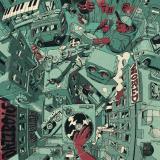
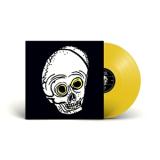
The seminal psych-rock classic The Evil One by Roky Erickson And The Aliens is reissued by Fire Records in a deluxe 15-track edition, restoring the original front cover from San Francisco’s 415 Records release for the first time since 1981. Presented across two LPs cut at 45 rpm for maximum sonic depth and clarity, the release brings together the complete recordings from the legendary 1978 and 1979 sessions. The package includes a collector’s booklet with liner notes by acclaimed Austin music journalist Joe Nick Patoski, who attended a recording session for The Evil One in 1979. Alongside rare photographs and archival images from the collection of Roky’s then manager, Craig Luckin.
Following his release from Rusk State Hospital in 1974, Erickson formed The Aliens and channelled his experiences and fascination with horror and science fiction into a singular new sound. Moving beyond the psychedelic garage blues of the 13th Floor Elevators, the band created harder, more ferocious rock built around jagged guitars, strange melodies and a propulsive rhythm section.
Produced by Creedence Clearwater Revival bassist Stu Cook, The Evil One includes some of Erickson’s most celebrated recordings, including ‘Two Headed Dog’, ‘I Walked With A Zombie’ and ‘It’s A Cold Night For Alligators’. Erickson’s unmistakable voice and surreal lyrics, populated by zombies, demons, vampires and atomic monsters, gave the album a character unlike anything else in rock. Both the LP and CD editions feature rare photographs and images from the archive of Erickson’s then manager and the sessions’ executive producer, Craig Luckin.
The Evil One has since become a landmark of cult rock, with its songs covered by generations of artists and its influence extending across punk, alternative and psychedelic music. As Craig Luckin recalls, “Roky considers The Evil One to be his favourite album that he ever recorded. He really loves that album.”
Austin music journalist Joe Nick Patoski, who attended one of the album’s 1979 sessions, contributes a new essay to the LP and CD packaging, exploring Erickson’s extraordinary career, enduring influence and place in Texas rock history.
More than a standalone reissue, this deluxe edition of The Evil One opens an exciting new series honouring Roky Erickson’s extraordinary body of work, with Gremlins Have Pictures and Don’t Slander Me to follow in 2027.
Jensen Interceptor debuts on Mesh with Primal Transmissions, an EP of five new genre mutations out Friday 25th September.
Moving through a spectrum of tempos - from smoked out slow burn to tightly wound club pressure - Jensen has a tweak for every BPM. Returning to a more raw, instinctive sound, but never losing sight of his flair for dense rhythmic compositions, the EP explores a moment of reconnection, and a shedding of inherited expectations.
‘False Oracles’ opens with a euphoric downtempo drift, setting the tone with microscopic rhythmic detailing and chugging percussion. ‘Fail to Call’ leads with a grimey bassline and frantic hammerdrill drums that gradually desync into chopped up fragments. ‘What Would Susan Do’ is a double dose of chaos, landing somewhere between dancehall, psytrance, and DnB, but firmly rooted on a planet of its own. ‘Tone Impress’ leans heavier into the industrial, chopping vocals over rolling hits at 160BPM. Rounding things off, ‘Emerald Web’ breaks the rhythms down to their rawest forms for one final workout.
Through a process of rupture and renewal, Primal Transmissions arrives as a sharp dispatch of club mechanics from one of the scene’s most inventive operators.
Pure loveliness. Proper music-making,
DIY Classical, but nothing slapdash or posey. Intimate and tentative, seamed with risk, occasional mis-steps, dodgy tuning, minor technical fuck-ups; but driven by gripping, stilled dedication and deep musical understanding.
Double bass, electric guitar, flute, melodica, singing; recorded at home in NYC, on dodgy gear, with snug, woody, shhshh-ing, analogue-style ambience.
The trio hovers between cheerful relish - who’s that giggling at the back - and hushed, humble reverence, basking in the processes of musical communion and learning. They play like they are gingerly passing on a precious, fragile gift; but without prissy conceit.
Luminous selections from the last six hundred years - John of Dunstable meets Friedrich Nietzsche - are lovingly arranged by the group, with a bent for stripped-to-the-bone, emotionally restrained sublimity, steady as she blows.
Very warmly recommended. Soul food.
Anna Almani might be your new favourite producer. IFYKYK.. If you don't, then let's get to know..
Anna Almani is a Berlin based “Drag-DJ & Fun-House-Queen”. She is “Big Sister” at ‘Love Letter’ an imprint “for flinta & queer sonic goodness” and she is the alter ego of deep house producer and Poker Flat & Watergate artist ‘Iorie’.
Anna says “This EP is part of my queer expression. It’s all about the attitude to resist, it’s about being yourself unapologetically. It’s a big hug to the queer community and a love letter to resistance on the dancefloor. Be radical, have an attitude and lose yourself.”
When we picked the tracks for this EP we were completely spoiled for choice. There’s so much personality in Anna’s music that every track list made sense. And that’s because there’s a common thread that runs through all of Anna’s music - Balance. Ying & Yang. Dark & Bright, Passive & Assertive, Masculine & Feminine, Fun & Depth all in kept in amazing dynamic balance.
This is Share Now & Save for Later… Gratification immediate and delayed. .. . four tracks to take you through from open to close. From Berlin to NYC and round again
‘See Me Walk’ is gonna be the track that grabs the attention and connects with dancers everywhere. Fast, fun and full of attitude it’s a 909 workout with the energy and syncopation of Ballroom Vogue aaaaand a fabulous diva vocal to match. ’Tender T’ counters the audaciousness with some tenderness. Energetic yet embracing, this introspective proggy, dubby afterhours roller is a proper trip! Full of colour but hazy af.
On the flip ‘Gimme Some’ ramps up the tempo. Fast, urgent and cyclic grooving techno - with a strut - that’s both dubbed out and in your face. ‘Anladın mı’ is a collaboration between Anna and German/Turkish producer Zettka. Low slung house that both jacks and grooves. Rolling basses balanced with playful chords. “Anladın mı” it translates as “Do you understand? or “Got it?”. By now I think we do understand.. That certain je ne sais quoi… Anna Almani has definitely got it.
The word classic is a much overused one, but in the case of this much in demand 1999 four tracker, it's no exaggeration. There has been much conjecture over the years over the identity of the producer - or producers - behind the mysterious Clint Foster name, but our lips are sealed, we ain't no grasses. All we will say if you like your techno seriously laced with acid, tough and sinewy but equally funky then then you'll love this. Opener 'Indium' is pinned down by machinefunk handclaps, a gloopy bassline and a synth line that coasts pretty majetsically. 'Patterns' is faster, harder and dubbier, not a million miles in its rhythmic shuffle from Carl Craig's 'My Machines', while 'Throughway' is the truly hypnotic one, big on the atmospheric scale. 'Afterdark' closes things, airy synths swelling and hovering over an addictively chunky beat. No names, no packdrill, just four essentially fantastic bits of classsy techno that haven't dated in all the years since. Essential.
Spain's celebrated deep house outlet Mate comes correct again here with an EP that deals in rich musicality and mature emotions. HITTO aka Alberto Alba is the Mallorcan producer behind the music and his childhood love of jazz really shines through. Opener 'Beyond Words' has singing synths that speak to the soul with lovely ambient chords. Then, 'Take Me Away' brings groovy percussion and cosmic synth transmissions that make it feel all the more profound. Glenn Underground is the perfect remixer to dial up the sunshine with his astral rework of 'Beyond Words' before 'Swish' shuts down with a mix of smeared chords that radiate sun over a grittier bassline. Four accomplished cuts.
Vier Jahre brodelte es im Berliner Untergrund: Nach zwei DIY-Tape-Releases durchbrechen SEK die Flanke und präsentieren mit Wallensteins Garage ihr erstes Album auf Vinyl ein Debüt, das gleichermaßen Geschichtserzählung, Konzeptalbum und ausufernde Jam-Session ist. SEK benannt nach den Anfangsbuchstaben der Nachnamen ihrer Mitglieder - Paul-Willy Stoyan (Gavial, Jacke Schwarz), Georg Edert (Elder, Gaffa Ghandi) und Lucas Kazzer (Gaffa Ghandi, Borders Down) - vereint drei Musiker, die seit Jahren in der Berliner Underground-Szene aktiv sind. Ihre gemeinsame Sprache findet sich zwischen Improvisation, historischer Erzählung und druckvollem Rock. Was die drei verbindet, ist weniger ein gemeinsamer Stil als die Lust am Ausprobieren: ausufernde Proben, lange Improvisationen und die Suche nach Klanglandschaften, die ebenso sperrig wie eingängig sein können. Was 2022 während des pandemiebedingten Lockdowns mit stundenlangen Jams begann, entwickelte sich in den vergangenen vier Jahren zu einer eigenwilligen Mischung aus Psychedelic Rock, Krautrock und einer Prise Prog. Die Band selbst nennt diesen Sound augenzwinkernd HOR Historian Oriented Rock: Musik, die historische Stoffe nicht illustriert, sondern in Klang übersetzt. Die Inspiration für die Songs stammt aus dem Dreißigjährigen Krieg (16181648), insbesondere aus dem Leben des böhmischen Feldherrn Albrecht Wenzel Eusebius von Wallenstein und den Ereignissen rund um die Schlacht bei Lützen (1632). Das musikalische Arsenal ist ebenso vielseitig wie die erzählte Geschichte: verfuzzte Gitarren mit wabernden Delays treffen auf einen galoppierenden Bass und treibende Drums, getragen von träumerischen Keyboards. Immer wieder öffnen sich freie, fast chaotische Passagen, in denen Harmonie und Rhythmus auseinanderbrechen wie Schlachtordnungen, die im brutalen Nahkampf ihre Form verlieren. An anderer Stelle schaffen sanfte Mandolinenklänge Momente der Ruhe, bevor sie sich in schwere, schmerzvolle Trauermusik verwandeln, inspiriert von Doom und Drone Metal. Zwischen hypnotischen Grooves, improvisatorischer Freiheit und cineastischer Dramaturgie erschaffen SEK einen Sound, der Vergangenheit nicht nachstellt, sondern neu erfahrbar macht. Die Platte erscheint auf Exile On Mainstream als schwarzes Vinyl mit beigelegter CD. Genre: Krautrock, Psychedelic, Alternative Für Fans von: Elder, Gentle Giant, Amon Düül, Zahn.
It’s Italian time! Sam Ruffillo is back. Sicilian producer doing smooth Balearic disco with Italian vocals. The direction is clear: Sam Ruffillo's music brings us back into the Italian riviera and the hippy days of Ibiza in the late 1970ies. Even his way of production is similar to how the early days disco producers in Italia used to work: No samples needed. Instead a few guest musicians come to jam over Sam's beats in his Italian studio space. Guitar, bass, percussions. Sam later makes the production and added keyboard solos and put together the vibes into what is this new EP.
The girl voice comes from NINFA. It’s the classic studio story: Ninfa is a singer and DJ and friend of Sam. She was hanging at the studio while Sam was finishing these tracks. She stated to sing along... the words came up spontaneously… so they decided to record her and finally decided to keep them. The vibe was too good. Why talk English if u can do it better: in Italian! :)
This is second for Toy Tonics after his Sport House EP from last year. Sam also appeared on the solo record of Joel Holmes on Toy Tonics. Together with Kapote Modica he co-produced and made the beats on that record. Now Sam is back with this pure Italian EP. Inclusive remixes by new German artists Gome and Italian Musemeci - known to many from his fabulous Italo-trance releases on Diynamic records.
It's fitting that Mike Jefford is both a photographer and a musician, his music career having slowly evolved like a developing photo coaxes Technicolor images out of the shadows. His sonic palette began taking shape in Medway, Kent with darker, grittier strains: teenage grunge and metal turned into drum & bass and IDM, following the Brighton club scene to Berlin as Positive Centre, until he made a nest in rural Portugal where Laguna Seca’s bright, expressive range would blossom.
A longstanding friendship with Chris Clark supported Jefford’s most pivotal artistic evolution yet, jumping from a decade of techno dusk to music practically overflowing with life as Laguna Seca debuted on Throttle Records.
“O tempo” can mean “the time” or “the weather” in Portuguese, two intensely changing powers whose many different connotations Jefford reflects in a highly varied tracklist. The breadth of climatic catharsis permeates through textural production and songwriting experiments, down into the very bedrock of the album’s engineering process where Jefford traces the long signal chain of time: the amps, desks, and tapes of Motown, the vinyl mastering studio’s intricacies, the Akai samplers that gave modern hip hop its “ghostly and impressionistic” sound, the software that drives electronic music today.
Much as 2026’s O Tempo was inspired by vintage tonality, retro aesthetic, and the likes of CAN, Kraftwerk, and Jimi Hendrix, it’s not an exercise in nostalgia; this is music that could have only been made with today’s technological advancements, revelling in anachronisms and collisions between hindsight and present tense.
It’s tempting to view Jefford’s projects as opposites, but they come from the same sonic values. Positive Centre’s “bleak” and “sinister” world is also incredibly detailed, constantly updating pile-driving grooves with microscopic flourishes and vast ambient swells. The flaring psychedelia of Laguna Seca is a continuation of those textural, material, and kinetic explorations, where plate reverb splashes, blistering and crunchy beats, vocal glimmers, and guitar swagger are all glued together by recurrent themes of memory and time. As each of his projects travel to the same destination, all of Jefford’s roads have eventually led to vibrant colour.
Yr Knives is a Chicago instrumental quartet built around two very different guitar voices. The band came together sideways: composer Paul Karner wanted guitarists Andrew Trim and Brian Sulpizio to play disparate parts on a recording of his own, and when the two finally rehearsed together, a band fell into focus. Trim leads the groups Hanami and Retroreflector; Sulpizio is the constant behind Health and Beauty. Anchoring them are two Chicago mainstays, bassist Douglas McCombs (Tortoise, Eleventh Dream Day) and drummer Quin Kirchner. Two of them come up as rock and roll players, two as jazz players, and the music lives in how closely they listen across those languages.
Their debut, Begin Yr Singing, centers on two overdriven guitars merging into something neither could produce alone, over a rhythm section that can lock a groove or let it drift. The result is exploratory but grounded, "a searching music," in Trim's words, that asks questions it doesn't always answer and shifts from one performance to the next. Recorded live in a single room at Chicago's Palisade studio with Nick Broste engineering and mixed by Cooper Crain with Sulpizio, the six tracks draw on Sonny Sharrock, Neil Young and Crazy Horse, Albert Ayler, Erik Satie, and Television. The band has toured supporting The Messthetics.
Regelbau chief Natal Zaks, who you may better known as Danish house talent Central, returns to his Picture alias hot on the heels of a full-length under the same moniker on his usual home, Short Span. This EP comes on P-TON, NMP's sub label, and is pristine dub techno with clean lines and minimal fuss. 'Faaaaaaaaa' has the right amount of swing and pop under sleek chords, 'Gaaaaaaaaaa' is less about firmware demotion and more about locking you in an endless cycle of brain cleansing thought. 'Kaaaaaaaa' is a darker world of cavernous bass and icy futurism and 'Tuuuuuuuu' nods to the best of Basic Channel. Proper dub techno that reinvents nothing but does everything exceptionally well.
After cutting his teeth in the late '70s No Wave scene with bands Theoretical Girls and The Static, Glenn Branca made his first solo statement, Lesson No. 1, in 1980. The inaugural release on legendary post-punk / dance label 99 Records, Lesson No. 1 unveils Branca's visionary guitar concepts with two monstrous, side-long compositions that helped forge NYC's downtown art-punk sound and acted as a massive influence on countless young groups, including Sonic Youth and Swans.
The title track is easily Branca's most-accessible moment; its driving beat and interlocking patterns resemble German pioneers Neu! playing Philip Glass. Never before (or since) has minimalism sounded so euphoric. "Dissonance" is the A-side's polar opposite. Dark, skittish and unhinged, Branca leads his band (guitar, keyboard, bass, drums and sledgehammer) through block after block of industrial terror, leaving listeners drained in the process.
More than five decades into one of Brazilian music's most remarkable careers, Joyce Moreno returns with a new collection of songs that reflect the warmth, lyrical sophistication and innovation that have made her one of Brazil's most defining musical voices.
Produced by Joyce Moreno alongside her husband and longtime collaborator Tutty Moreno, the album finds the Rio-born singer, guitarist and composer at her most reflective. Across nine beautifully crafted songs, Joyce pairs intricate guitar work, lyrical intimacy and effortless swing with the musical curiosity that has defined her work for more than half a century.
Invited into the studio by Roberto Menescal at just sixteen years old, Joyce emerged during a transformative period for Brazilian music, releasing her self-titled debut in 1968. She soon established herself as one of Brazil's pioneering female songwriters, writing unapologetically from a woman's perspective at a time when few women were afforded that voice. Her song “Me Disseram” sparked national debate, while later works including “Feminina” cemented her reputation as an artist unafraid to challenge convention.
While some of her politically charged songs were censored during Brazil's military dictatorship, Joyce continued to write with honesty and independence. After studying journalism in the late 1960s, her gift for observation and storytelling became an even more defining feature of her songwriting. Over the following decades she released a succession of acclaimed albums, including the now-classic Feminina and Água e Luz, earning widespread recognition both in Brazil and internationally. Antônio Carlos Jobim would later describe her as "one of the greatest singers", while generations of musicians have drawn inspiration from her fearless artistry and enduring originality.
That same artistic fearlessness remains at the heart of her latest work. The album brings together an exceptional ensemble of Brazilian musicians. Tutty Moreno's expressive drumming underpins Joyce's vocals and guitar throughout, while Jorge Helder's bass, Lula Galvão's guitar and Marcos Nimrichter's warm Fender Rhodes create a sound that is both intimate and expansive. Contributions also come from the legendary Toninho Horta, alongside José Arimatéa, Teco Cardoso, Nailor Proveta, Josué dos Santos and Raphael Sampaio, whose additions add colour and texture without overshadowing Joyce's understated brilliance.
Throughout the album, Joyce balances quiet reflection with effortless rhythmic vitality. “Chovendo na Horta” serves as both a heartfelt dedication and a celebration of Joyce's enduring musical connections, featuring the unmistakable guitar of Toninho Horta. Elsewhere, “Aldeia de Ogum” receives a fresh new arrangement by Nailor Proveta, revisiting one of Joyce's most beloved compositions. Originally released in 1980, the track has enjoyed a remarkable resurgence in recent years, embraced by a new generation of listeners and became an underground favourite among DJs including Floating Points, Four Tet and Danilo Plessow. Now a staple of Joyce's live performances, this reimagined version brings renewed energy to a song that continues to transcend generations.
At seventy-eight, Joyce Moreno continues to write with the same curiosity, generosity and quiet innovation that have defined her career from the very beginning. "For me, it's never too soon to try something new, either in music or in life," she reflects - a philosophy that gives both the album and its title their enduring sense of optimism. This latest album is neither a retrospective nor a reinvention, but the work of an artist who continues to refine her voice with remarkable grace, proving that her most compelling music remains firmly rooted in the present.
Following the album's release, Joyce Moreno will embark on a European tour this November, bringing her celebrated live show to audiences across the UK and Europe. A rare opportunity to experience one of Brazil's most influential and enduring artists in concert, the tour showcases a songwriter whose voice, virtuosity and musical vision remain as compelling today as ever.
This Cologne-based producer still serves 90s UK tech house the old fashioned way! While collectors and resellers scour Discogs and Dollar bins for forgotten treasures from the golden age of tech house, another generation of producers is looking to start a new one: One of them is Cologne’s Anatoli, whose “class struggle ep” on Das ist das Ja delivers four deep cuts inspired by his love for and stompy US and UK tech house from the turn of the millennium. With its driving basslines, stripped down arrangements and dubby chords “class struggle” is crafted to get a dancefloor going like it’s 1999 – not a phone in sight. by DJ Fucks Himself
Landing suitably on co:clear, At the Right Place at the Right Time is the spellbinding debut record from luminary figures of the Roman underground, Portamento.
As DJs and promoters of Scivoliii, the duo of Filipo Tosti and Álvaro Labao Garcia has been peddling a range of sounds over the last years. This time though, their attention firmly turns to transportative ambience, where melodic lines and mummering voices are rarely paired without weighty sub-bass. It's absolutely an ‘ambient’ record but the (soft) influence of the club sometimes peeks through.
Written between Forum Studios (fka Ennio Morricone Studios) and Álvaro’s tiny apartment in Trastervere during Rome’s torrid month of August, its sound owes itself as much to burning intimacy, as it does to the weariness of distance. It truly operates in those moments of devotion/desire between the late-night/early-morning, like a candle at the end of its wick that flickers, before it's finally extinguished as your eyes become too heavy to resist sleep.
Das zweite Album von Sleepytime Gorilla Museum entstand zwischen 2002 und 2004 und spiegelt die politisch und gesellschaftlich aufgewühlte Zeit nach der Jahrtausendwende wider. Die Band verarbeitete diese Eindrücke in ihrem charakteristischen Mix aus Avant-Rock, experimenteller Komposition und theatralischer Intensität. Während der Entstehung stieß Schlagzeuger Matthias Bossi zur Band und prägte den Sound maßgeblich mit. Ein Höhepunkt des Albums ist der Song ,Phthisis", der in einem Studio in den Hollywood Hills aufgenommen wurde und zu den bekanntesten Stücken der Band zählt. Die nun erstmals in den USA auf Vinyl erhältliche Neuauflage wurde von Bassist und Produzent Dan Rathbun remastert und unterstreicht den Stellenwert des Albums als eines der zentralen Werke im Katalog von Sleepytime Gorilla Museum.
Red w/ black splatter vinyl. Savage Grace return with Underworld, their fourth studio album and first new full-length since 2023's acclaimed Sign of the Cross. Led by founding guitarist Christian Logue and featuring a powerful new lineup of Sebastian Hauser (vocals), Cristian Blade (bass), and Marcus Dotta (drums), Underworld delivers classic high-speed power/speed metal intensity with modern fire.
We are honoured and excited to share the fourth Dream Space EP with the world: Domenic Cappello - Celestial Wave.
For more than three decades, Domenic Cappello has been at the helm of Subculture - the innovative and vastly influential Saturday night at Glasgow’s Sub Club. A true master DJ with deep rooted influences from Detroit & Chicago, Dom has consistently pushed things forward over the years and remains at the cutting edge of modern dance music.
Throughout the 90’s and early 2000’s, he put out high-quality records under various monikers on labels such as Soma, 20:20 Vision & Seventh Sign. Fast forward to recent years and Domenic has been on nothing short of a hot streak - releasing music under his own name on Craigie Knowes, Clone Royal Oak and his outstanding ‘Basement Philosophy’ LP on Alien Communications.
He brings the heat once more for this record; blurring the lines of house, techno and electro to deliver four awe-inspiring cuts of electronic music.
‘The Secret Moon Party’ sets things off, nodding to a certain Highland gathering by some of Scotland’s finest purveyors of quality tunes. A warm, gritty bassline carries the track, evolving into a symphony of precise sound design that is in equal parts playful and euphoric.
Dom’s knowledge of the dancefloor shines through on ‘Acid & Love’. This early night floor filler is the alchemy of just about everything you want to hear when things are getting going. Pure warmth and bliss throughout, also holding its place played deep into the late hours.
‘We Loved Your Ears (in memory of Keith)’ is a heartfelt tribute to the one and only Keith McIvor aka JD Twitch of Optimo. Dom wrote this track as something he thought Keith would have loved, and for this one, we’ll let the music do the talking.
Keith was, and continues to be, an enormous inspiration for us and so many others. In his memory, all proceeds from the digital sales of ‘We Loved Your Ears’ and 25% of all vinyl sales will be donated to Beatson Cancer Charity and The Scottish Brain Tumour Research Centre of Excellence.
Closing the EP is title track ‘Celestial Wave’, which does exactly what it says on the tin. A beautiful piece of music and fitting soundtrack for star gazing, moon dancing and dreaming.
BATTISTINO, the artistic alias of Marco Battistini, is an Italian musician, songwriter, producer and DJ. His project is rooted in the meeting point between Italo Disco, French Electro, late-’70s Disco Music and Italian pop culture, reinterpreted through a contemporary vision that avoids nostalgia in favor of a distinctive sonic identity. His main influences include the aesthetic vision of Daft Punk, the musical freedom of Daniele Baldelli’s Cosmic Sound, the international disco movement of the late 1970s, and the golden era of Italian Italo Disco, with a special admiration for Righeira. His productions combine driving synth grooves, pulsating basslines and immediate melodies. Gritty electronic drums, saturated synthesizers and subtle harmonic distortion deliberately break away from the polished sound traditionally associated with classic Italo Disco. The result is a more physical and textured sonic palette that preserves the melodic elegance at the heart of the project. BATTISTINO’s visual identity follows the same philosophy. Elegant, reserved and almost bureaucratic, he prefers to remain behind the scenes rather than at the center of attention. More than a performer, he acts as the curator of a sonic archive, where every track represents a fragment of a larger story.
“Il Segreto” is the opening chapter of a conceptual trilogy inspired by an affair that was never revealed, set on the Italian Riviera in the early 1980s. Rather than telling the story itself, the project explores what remains: silence, forgotten details, invisible traces and memories suspended in time. Music, visual design and imagery all become chapters of the same narrative. Every release is a new file, every track a recovered document, every production another fragment of a story that will never be fully disclosed. BATTISTINO doesn’t tell stories. He preserves them. And, from time to time, he allows part of them to surface.
For his debut on Hard Times Records, Manchester's FLETCH delivers 'Lift Me Up’ - a four-track EP rooted in rolling grooves, warm musicality and a refined dancefloor energy.
The release follows a busy run for FLETCH, with releases on Circoloco, Three Six Zero, MVSON and ANOTR's No Art, where his Play House EP reached the top of the download charts. His connection with Hard Times began behind the decks at the label's sold-out Miami Winter Music Conference showcase, where a shared appreciation for the music soon developed into plans for a release.
"After playing for the Hard Times crew in Miami, I told them how I'd been a fan of the label for years and that i’d love to release something with them one day," says FLETCH. "I sent over some tracks that I felt were a natural fit and the guys signed them on the spot. The rest, as they say, is history!"
The title track sets the tone for the EP with rolling drums, elastic basslines and understated vocal hooks, while 'Stand Up’ leans into swung percussion and classic chord stabs. On the B-side, 'Touch Me' shifts into deeper territory with stripped-back, late-night groove, before '1000 Years' closes the EP with dusty scratches, crisp hats and an understated sense of drive.
Since its digital release, lead track "Lift You Up" has received strong support on BBC R1, plus heavy DJ support from the likes of TSHA, Hilit Kolet, Laurent Garnier, Jamie Jones, Groove Armada, Riva Starr, and more.
FLETCH's sound continues to evolve while remaining firmly rooted in the traditions of house, making 'Lift Me Up' the perfect debut on Hard Times.
Das rare German New Wave-Kultalbum von 1982 neu aufgelegt! Inkl. sagenhafter Versionen von "Psychokiller" (Talking Heads) & "Mongoloid" (Devo) sowie der ERNST-Originale "C2H5OH" & "Autonome Einheit" "Ernst entstand wegen der Talking Heads. Ernst ist keine typische Neue Deutsche Welle Band. Ernst kam nicht aus dem Punk. Ernst war auch kein Spaß-Produkt der Plattenindustrie. Ernst gab eine so eigenwillige wie charmante Antwort auf die Frage, wie New Wave in Deutschland klingen könnte. - Auf dem ersten, einzigen, unbetitelten und nun wieder veröffentlichten Ernst-Album von 1982 finden sich gleich mehrere Coverversionen der Talking Heads - ins Deutsche übersetzt, gesungen von Bassistin Dorle Bausinger. Die New Yorker hatten die Tübinger dazu inspiriert, eine New Wave Combo zu gründen. Auch ihre geniale Version von Devos "Mongoloid" steht dem Original in nichts nach. Die Band verstand sich aber nicht nur darauf, sich coole Musik aus Amerika anzueignen, sondern schrieb selbst sehr gute Songs wie "C2H5OH (Alkohol)" oder "Autonome Einheit". - Also veröffentlichten Ernst ihre Platte kurzerhand im Eigenvertrieb. "Wir schickten ein paar Exemplare ans Radio, und bestückten die Plattenläden in der näheren Umgebung, viel mehr unter-nahmen wir nicht." Beim Tübinger Plattenladen Rimpo waren die Verkaufszahlen so hoch, dass Ernst, das Album, mehrmals Platte des Monats wurde. Die knallblau-roten Cover füllten über Wochen ein ganzes Schaufenster. - Dennoch blieben die Band und ihr außergewöhnliches Album bis heute ein Geheimtipp. Ernst bekam nie die Anerkennung, die er verdient hätte. Zeit, dass sich das ändert." - Ulrich Gutmair (Kulturredakteur taz, Autor u.a. "Wir Sind Die Türken Von Morgen" (2023), "Die ersten Tage von Berlin" (2013)), 2026 aus den Linernotes zur Neuausgabe von ERNSTs "Ernst". Wiederhergestelltes original Artwork! Transparent rotes Vinyl in Glanzlack-Sleeve mit ausführlichen deutschsprachigen Linernotes und Fotos auf 6-seitigem, gefalztem 12"-Insert oder inside-out Digipak-CD (das Format erstmals überhaupt) mit den Linernotes in 28seitigem Booklet. Beide Formate sind in den Erstausgaben streng limitiert auf nur 500 Stück weltweit!
Songs of Joy and Peace is a Christmas music album by cellist Yo-Yo Ma, originally released in 2008. The album features collaborations with many other artists, including vocalists Diana Krall & Alison Krauss, James Taylor, Dave Brubeck and Chris Botti.
This holiday disc doesn't exclusively stick to traditional Christmas songs, but covers a wide scope of material in a very ambitious manner. Ma opens with a lovely take of the traditional favorite “Dona Nobis Pacem (Give Us Peace)”, playing both the melody and counterpoint via overdubbing.
Jazz pianist/vocalist Diana Krall is superb in a swinging rendition of Jerome Kern's unjustly obscure "You Couldn't Be Cuter", adding bassist John Clayton. An arrangement of “Joy To The World” features pianist Dave Brubeck and cellist Matt Brubeck (his son). Chris Botti has never sounded better in the warm arrangement of “My Favorite Things”, playing both open and muted trumpet. James Taylor is featured on vocals on the Beatles cover “Here Comes The Sun”.
The Five Green Moons present Moon 3. The third sphere to find its way into orbit. On its surface the evolution of a many faceted creature has taken place. Now with long, long tentacles and a million mouths the creature dances and sings. Its voice is the sound of the ghost dub ritual. The echo of spirits passing through the translucent veil. The chants of souls lost in the vampire woods. The clap, clap of its limbs colliding is the sound of frequencies being bent into fascinating new shapes by machine/ human hybrids. Post punk dubwise angular electro folk, Pastoral dub, whatever name you give to this music is of no consequence. It is alive and spinning in orbit.
The third Five Green Moons album sees Justin Robertson's sonic pallet blossoming into new exciting shapes. These 11 tracks offer a wide vista of across the frequencies including a truly remarkable and uncanny tale from celebrated author David Keenan on ' To Haunt of the Dark Earth A Spot' that brings to mind a vision of M.R. James merging with African Headcharge. Another refreshing collaboration can be found on 'Message from the Tone Generator' where underground electronic producer Nickelle adds her magical poetry to the psychedelic swirl. This is a bold and magical offering in a time of pastiche where new shapes are drawn from the sketches of the past.
If you need a sonic shorthand imagine Public Image Limited meeting the haunting chants of a new age Incredible String Band. The spiritual tones of late 70's Don Cherry. The whispering psych swooshes from Planet Gong and most importantly a solid bass foundation straight out of King Tubby's studio.
Jazzbois Around The World - a project built around mutual musical respect, encompassing MCs from all around the globe - Some who we've had the pleasure of meeting personally, some who we connect with online. Much love to all of you for being a part of this.
Absolutely born out of an admiration of live hiphop and beats culture - a musical collage of international collaboration. So proud of all our culprits:
now available on 500pcs limited edition 12" vinyl
Artwork/Illustration: Roland Herczkó
Print master: Lobotworks
All tracks produced by the jazzbois
Track 6 co-produced by Franky Bones
Track 3 co-produced by FAKT
Track 1 co-produced by MrSlipz
Track 10 co-produced by BluntOne
All tracks mixed & mastered by Czirják Tamás / jazzbois
Jazzbois are
Bencze Molnár - keys, sampling, editing
Viktor Sági - bass, guitars, sampling, editing
Tamás Czirják - drums, editing, drum sampling
CCCC is the collaborative album by Italian singer-songwriter Chiara Civello and producer Clap! Clap!, released via Civello's newly founded Quarter Moon Records. Across ten tracks, the record brings Civello's songwriting and distinctive voice into dialogue with Clap! Clap!'s production, moving between electronic music, jazz, art-pop, broken beat. Sung across English, Italian/Sicilian dialect and Portuguese, the album also features percussionist Mauro Refosco and keyboardist Dario Bassolino.
CCCC is the collaborative album by Italian singer-songwriter Chiara Civello and producer Clap! Clap!, released via Civello's newly founded Quarter Moon Records. Across ten tracks, the record brings Civello's songwriting and distinctive voice into dialogue with Clap! Clap!'s production, moving between electronic music, jazz, art-pop, broken beat. Sung across English, Italian/Sicilian dialect and Portuguese, the album also features percussionist Mauro Refosco and keyboardist Dario Bassolino.
Originally released in 2000 on Smalltown Supersound, Kim Hiorthøy’s first record Hei captures an artist who had made very little music before – yet it seemingly was the starting point of a musical career that would stay away from easy categorisation. Now, Hei (2026 Remaster) returns on blickwinkel, released digitally and on vinyl on 30 October 2026, as part of an ongoing series revisiting and reissuing Hiorthøy’s work.
Made in Copenhagen with little equipment — an Akai MPC2000, a stereo microphone and a DAT machine — Hei was assembled from samples, sequences and rhythms, with no outboard mixing or processing. Without really knowing what he was doing, the music was created intuitively while drawing inspiration from instrumental hip-hop he was listening to, the techno and drum & bass he admired but did not yet know how to make, and a broader fascination with music that felt personal, homemade and slightly uncertain of its own identity. Hei sits somewhere between those impulses. It is beat-driven without belonging entirely to beat music, experimental without announcing itself as such, but unmistakably coming from a playful series of events and decisions.
In that regard, the title of the closing track might be a fitting description of the album itself and, in hindsight, also of how we can look at Hiorthøy’s subsequent work. Taken from a story by Tove Jansson, the title evokes a state of openness and curiosity, a state where thoughts and impressions are simply given the space to unfold:
“He didn't care to get up, all day he let new images and ideas come and go as they pleased, now and then slept a little and woke up again and had no idea who he was. It was a peaceful and very exciting day.”
There is something of Hei in that state of mind: a willingness to follow an idea without knowing exactly where it might lead, a willingness to follow guts and the heart rather than ratio. Perhaps that is also what makes Hei still feel relevant today. As Hiorthøy puts it when reflecting on the music he made then and the music he makes now: “If I compare the music on Hei to music I’m making now, the general sentiment or smell or air or tree or pull of what I’m looking for and listening after when I work is, I think, for better or worse, more or less the same.”
All music by Kim Hiortøy
Mastered by Stephan Mathieu
Portraits by Kim Hiorthøy
Design by Jelle Martens
Kalita presents the fourth and final instalment of their groundbreaking ‘Borga Revolution!’ series, uncovering another selection of essential recordings from the rich and far-reaching world of Ghanaian highlife. Spanning deep, hypnotic highlife through to the vibrant electronic productions of 1980s Burger Highlife, Volume 4 captures a period of extraordinary musical change, as Ghanaian artists absorbed influences from funk, disco, boogie, and new synthesizer technology. With previous volumes championed by tastemakers including Gilles Peterson, Antal, Tom Ravenscroft, and Hunee, this final chapter turns its attention once again to the music of the Ghanaian diaspora.
Volume 4 brings together rare recordings from artists such as Rex Omar, Nat Fredua, and CST Amankwah, alongside the elusive, deeply hypnotic and beautiful sounds of the Abibifo Dance Band of Ghana (led by the legendary bassist Ralph Karikari) and Baffour Kyei. Unearthing recordings that have languished in obscurity for over forty years, the compilation moves between deep highlife, rhythmic dancefloor cuts, and pioneering digital productions, revealing yet more musical ingenuity of Ghanaian artists both home and abroad. The final instalment in the ‘Borga Revolution!’ series, it offers another vital collection of forgotten favourites and hidden treasures for DJs, collectors, and anyone drawn to the endlessly inventive sounds of Ghanaian music.
The 1970s and 80s saw Ghanaian musicians begin to incorporate Western sounds like funk and disco into their music, reflecting the changing global musical landscape. However, the country's political instability and economic hardships, marked by military regimes and curfews, forced many artists to leave Ghana in search of better opportunities abroad. In Europe and the U.S., these musicians fused their traditional highlife roots with emerging digital sounds, using cutting-edge technology like the DX7 synthesizer and drum machines to create the genre now known as Burger Highlife.
With ‘Borga Revolution!’ Kalita offers a vivid exposition of this musical transformation, using rare interviews, archival photos, and detailed liner notes to bring to life the pioneering spirit of both well-known icons and unsung innovators of Ghanaian Highlife, one of West Africa’s most exciting musical movements.
· The final installment in Kalita's 'Borga Revolution!' series, examining the development of Ghanaian dance music in the 1970/80s, and focussing on the phenomenon of Burger highlife (a blend of Ghanaian highlife with disco, boogie and synths).
· 2xLP in gatefold sleeve, with printed inner sleeves examining the stories of the artists featured on the volume.
· Includes 10 highly sought-after and under-the-radar recordings, including those by the phenomenal Rex Omar, Nat Fredua, CST Amankwah, Baffour Kyei, Chief Kofi Sammy, and the Abibifo Dance Band of Ghana.
Timeless – yet always fresh: Regardless of the whims of the pop business, Planet Yello has been making its rounds for almost fifty years, repeatedly whisking us away to a world where past and future greet each other and James Bond joins forces with the Man in the Moon, Dionysus and Philip K. Dick.
"To the future, through the past"—with their fifteenth studio album, "Time Lab," Dieter Meier and Boris Blank put this maxim into practice more vividly than ever. Blank meticulously crafts his imaginary soundtracks from fresh samples and found objects from his own archive, which has accumulated a vast collection of sonic fragments, riffs, and motifs over nearly fifty years of creative work. Meier immerses himself in these parallel soundscapes, discovering within them his romantic tales of robbers, mysterious night creatures, and Dadaist wordplay. Essentially, every Yello track is both ancient and brand new at the same time. This principle is perfectly illustrated by the first single, "Around the Sun." It's based on a dormant Meier recording that was cut at the last minute from the selection for "Claro Que Si" (1981). Blank gave Meier's sonorous voice a fresh sonic makeover – the result is an elegant and flexible, thoroughly Yello-esque combination of past and present, romantic wanderlust and driving percussion. "Break Out" also plays with stylistic elements that can be traced back to Yello's earliest days: a dangerously prowling bass riff, fiery percussion, and storyteller Meier in hypnotic top form.
Time begins where it ends, or vice versa. Or, as Boris Blank says: "Yello's music doesn't really know time."
Gi Gi describes his process as “dubwise sampledelia.” It begins with fragments and ends somewhere else entirely, destabilizing its source material until it stops pointing backward. A borrowed sound, looped and bent, eventually forgets where it came from; it stops referencing anything but itself.
This liquid sensibility shaped his earlier work, music that hovered between drift and propulsion, suggesting the dance floor without fully stepping onto it. Presence was implied, edges stayed soft. The center was always there, but diffused like mist on a screen.
With In Lieu, that center comes into focus. Half written in Texas, half in Australia, the shift isn’t simply geographic, but internal. The record moves with a coiled, anticipatory energy; the drums arrive with more force and the bass organizes the room instead of melting into it. It's dense with the feeling of more bodies in the frame. Textures still smear and refract, but they move around a clearer axis.
Where past records circled their core, these inhabit it, pulling closer to the body. “Some Of” and “Arque” lean into low-end pressure without abandoning his instinct for drift. "Pink Dirt" circles around mechanical drums and dizzying vocal chops, head-down and visceral. Elsewhere, voices gain newfound contour, materializing in “Downswept” with intimate musings and nearly forming a lead vocal on the title track before dissolving again.
In Lieu moves with a newfound confidence, compressing inward, sounding closer to the source of its own pulse.
Memoria returns with MEM064, welcoming Brizman to the label for a four-track journey through stripped-back grooves, deep atmospheres and dub-infused minimalism. The A-side sees Brizman on solo duty with Detroit Awareness and That Chord, two subtle but effective club tracks where rolling rhythms, warm chords and hypnotic details do the work. On the flip, Brizman joins forces with Szafran (Oskar Szafraniec) for Reworking The Dub. Spacious, bass-heavy and deeply hypnotic, the track takes the record into distinctly dubby territory. Cirkel Square closes the EP with his remix of Reworking The Dub, reshaping the original into his own tightly-wound interpretation while retaining its deep, soundsystem-minded character. Four cuts covering the space between minimal house, dub and late-night electronics, understated, functional and made for the floor.
Hot on the heels of their new UK street soul-inspired LP ‘Feel In Motion’, Leeds three-piece Galaxians enlist Steven Julien (Apron Records), Boys Shorts (Phantasy Sound), Cervo (Banana Hill) and Vanity Project (Claptrap Records) for remixes of the album's singles.
Adopting his 808 PRINCE moniker, the London DJ, producer & Apron Records label boss Steven Julien beefs up World Apart with his unique live 808 programming, imbuing it with an urgent machinefunk groove in keeping with his consistently electrifying live performances & DJ sets.
Coming straight from the release of their ambitious debut album ‘What Does It Take To Make These Men Happy?’, Greek duo Boys’ Shorts create a heady club moment with their take on Lose My Head, cutting up Sinead Campbell’s vocal while zeroing in on the original’s undeniable bassline & piano melody.
Best known for his Banana Hill label & Manchester club night, Stockport’s Cervo brings the global rhythms and balearic wistfulness of his previous output to bear on his evolution of Fantasy, while Claptrap Records boss Matt Bruce AKA Vanity Project reimagines the track as a cosmic house chugger that further highlights the exceptional vocal performance Beccy Young recalling Madonna at her most iconic.
The package is completed with Gramrcy & John Loveless’s 12” Mixes of Worlds Apart and Fantasy, expanding and reshaping the album originals into pure dancefloor bliss.
Deas joins the CROWD family with 'Silent Tension', a refined EP that channels the Polish producer's signature blend of hypnotic groove and hardware driven production. Known for his precise studio craftsmanship and deeply intuitive approach to groovy techno, Deas has steadily built a reputation as one of the standout figures of the contemporary Polish scene. Through years of releases and international touring, he has developed a sound that feels both timeless and unmistakably personal, as proven on the label's 12th record. Opening track 'I Won't Cry' immediately sets the tone with classy vocal sampling from Loleatta Holloway, warm chord progressions and rolling swung percussion anchored by Deas' characteristically rich bass. Following up, 'Waterfall' introduces bleepy modular sequences and chopped vocal fragments, with a sweeping drone synth cutting through the mix above the track's rolling bass. On the flip side, 'Silent Tension' continues deeper into minimal territory, combining crisp clap fills, subtle vocal chops and delayed chord repetitions into a slow burning groove. The vinyl's closing cut 'Where Do They Go' brings dense low end weight and fast dubby chord stabs, accompanied by sharply placed vocal cuts, creating a track that balances restraint and impact. The digital addition 'Here Again' is a classic Deas production, characterised by repetitive synth stabs that gradually transform the cut into a hypnotic hook, while stripped back percussion and a powerful kick give the track a commanding presence. Throughout CROWD012, Deas remains firmly focused on groove and subtlety, while retaining a strong impact. The tracks unfold patiently, with a focus on tension, repetition and gradual escalation, maintaining the hypnotic functionality that has become both Deas' trademark and a defining characteristic of the sound of the label founded by FJAAK and Ellie Acula. The 'Silent Tension' EP stands as a sophisticated and deeply effective club record that further cements Deas as one of the most distinctive voices in contemporary techno.
Some recordings herald the future in ways that are impossible to see in real time. Teodros Makonnen With His Organ (ቴዎድሮስ መኮንን ከኦርጋኑ ጋር), by the artist Teodros Makonnen, also known as Teddy Mak, is one of those. Today, electronic sounds, synthesizers, and digital production are taken for granted in Ethiopian music, but in the early 1980s, they were novelties that polarized opinion. Even to this day, the story of Teodros Makonnen’s legacy has never been properly told. He played a decisive role in defining the sound of the digital era of Ethiopian music that emerged in the 1980s and beyond, both as a keyboard player and as a producer, songwriter, performer, and sound designer.
Ethiopian music was at a crossroads in the early 1980s. Much like music in the rest of the world, technology and automation heralded either a quantum leap in musical development or the annihilation of musicianship, depending on who you’d ask. The changes were incremental nonetheless, but with the benefit of hindsight one can clearly see that the changes meant different things in different contexts. Drum machines and electric organs came to replace many hotel bands because, all of a sudden, one musician could control drums, melody, and accompaniment. Teodros was one of the first musicians in Ethiopia to explore the possibilities this opened up.
Teodros’ father, Captain Makonnen Beri, was a chief pilot at Ethiopian Airlines and a music enthusiast at that. This would prove important to his development, as Makonnen brought back a piano from Germany, which would lead to the first steps in Teodros’ long musical career. Captain Makonnen’s work as Head of Flight Operations and as a pilot exposed him to the wider world that was far from commonplace for most Ethiopians. In a house where music captivated the whole family, the piano gave Teodros’ talent an outlet. Not only was a piano at home rare in Ethiopian households, his father also brought an Indian teacher to their home to teach Teodros and his brother, Captain Samuel Makonnen, music theory (solfeggio or ear training) and piano. Teodros and his youngest brother, the late great Dereje, a member of both the legendary Ibex Band and the Ethiopian reggae group Dallol, took up music from that point onward, with Teodros beginning to develop his proficiency at the age of eight. His father encouraged him to practice tirelessly at home, and Teodros later received musical schooling at the German School in Addis Ababa. His obvious talent led to studies and formal education at the Yared School of Music, followed by continued studies in American jazz at Northern Virginia Community College in Virginia. Teodros cut his teeth professionally in his mid-teens, not only as a keyboardist, but also as an arranger for the Wabi Shebelle and Dahlak bands in the 1970s. He mastered electronic sequencing early, rising to prominence through the midnight recording sessions held during the military curfew. The pressures imposed by the curfew required precise and disciplined recordings, and Teodros delivered just that. This, in turn, led to collaborations with iconic artists such as Mulatu Astatke, Aster Aweke, Menelik Wossenachew, Tilahun Gessesse, Mahmoud Ahmed, and Alemayehu Eshete. In those days, he sat in as a keyboardist with the Dahlak Band when Dawit Yifru took a hiatus to study in Russia, and also with the Ethiostar Band. He secured a residency at the Wabi Shebelle Hotel with the Shebele Band, together with Zelalem Tadese (drums), later succeeded by Elias Bekele, Mulugeta Hailu (bass), Teferi ‘Bibisha’ Mengesha (guitar), Kumelachew G/Selassie (trumpet), and Teshome Deneke (saxophone). A friendly competition developed between the bands associated with the Ras Hotel (the Ibex Band), Ghion Hotel (the Dahlak Band), and Wabi Shebelle Hotel (the Shebele Band). The music scene at Wabi Shebelle saw teenagers commanding the spotlight in an industry otherwise dominated by musicians of an older generation. At the Wabi Shebelle Hotel, Teodros met a diplomat from Saudi Arabia and later visited him at his home in Addis Ababa, a meeting that had unexpected musical consequences. The man owned a Yamaha double-deck keyboard. That evening, they recorded Teodros Makonnen With His Organ (ቴዎድሮስ መኮንን ከኦርጋኑ ጋር) in one take. This recording, a cornerstone in the early digital sound of Ethiopian music, came about almost by chance, simply because Teodros got the opportunity. Traditional Ethiopian songs were cast in a wholly electronic style. Once freed from backing duties, Teodros’ keyboards could explore dreamlike soundscapes that took Ethiopian music in new directions. Even though the cassette contained well-known Ethiopian songs, they were given highly original arrangements, performed on an electric organ with drum machine backing and rhythm patterns that left the listener with suggestive, lingering sounds. “Libesh Kabashen” (also known as “Anchi Bale Game”) and “Odu Gol Golesa” wrap you in the very stuff that dreams are made of. Originally released on cassette only, this recording exudes a mystique that surpasses even some of the most obscure Ethiopian recordings of the day. It remained more or less unknown outside of Ethiopia until now. Some of the tracks, like “Addis Fikir,” are permeated with an almost naive buoyancy, free-floating sounds that lost contact with the ground the moment they were conceived. Others, like “Meche New Hageren Yemayew” and “Lelitu Alnega Alegn,” carry a moodier, quirkier timbre, with pulsating rhythms in the background. Yet even the darker pieces contain an unmistakable wave, something essentially Ethiopian. If most recordings of Teodros’s contemporaries at the time were teeming with atmosphere, his songs seem instead at home in the stratosphere, almost ethereal. Some of the music here could be filed under “lullabies,” were it not for the recurring, almost brooding feeling that engulfs the listener on the aforementioned tracks. You could easily be forgiven for drifting into a blissful haze as the music washes over you.
Up to the advent of electronic music production, Ethiopia was totally dominated by big bands on the one hand, and small groups on the other. The former were tied to large institutions such as the military, the latter emerged from the entertainment industry, in hotel bars and nightclubs. These groups were commercially driven, and bands ultimately had to foster a mercenary approach to employment, albeit not to the passion for music. In the light of this, Teodros’ musical legacy can be seen in two ways. On the one hand, he is a key player in Ethiopian music from the 1970s onwards, leaving an indelible mark through hundreds of compositions and arrangements, including soundtracks for numerous documentary films and advertisements for different companies. On the other hand, the way he and others employed electronics brought Ethiopian music onto a fork in the road.
The replacement of traditional instruments with electronic equipment was seen as impending doom by some. Others, like Teodros, saw new avenues for performance, production, and creativity. Just as later producers like Abegasu Shiota of Admas, Teodros was a trailblazer who opened paths that it took Ethiopian music as a whole more than a decade to rush into. The hotel scene had already been pushed toward electronic music by financial necessity and cost-cutting. Today’s revived global interest in Ethiopian music from the seventies and eighties, alongside a broader resurgence, has changed the reasons for using digital means of music production. They have become tools for musical dreaming. This is where the dreaming began.
Two stripped back downtempo jams from Bristol based producer Jamie Paton up next for SR008. Jamie’s distinctive dubbed out productions have been a firm favourite over the years since discovering his music on Emotional Especial, Hoga Nord, Multi Culti and Club Blanco. He’s a prolific remixer who’s worked with Goat, Plus Instruments, Minami Deutsch, Dâdalus & Bikarus, Blancmange, Johnny Aux, Khidja, Gatos Negros, Food Pyramind, and many more. This release is a perfect fit for Space Ritual and delves into
the darker side of his sound.
Off World is a slow & low spooked out dancefloor trip that meanders through layers of dark, eerie, rattling percussive echos and deep creeping bass. Contrasting atmospheres build throughout entering into a spacious call and response interplay. Fell Swoop's heavyweight bass and haunted sonics take you deep into uncanny space. The raw and swampy bass groove powers through sharp and ominous textures that circle around it.
Pressed to 10” with hand printed artwork on a black reverse board sleeve. Limited to 150 copies.
On Finding Home he's joined by three musicians with a similarly eclectically unfettered approach to music making, that embraces high-level complexity while maintaining a direct connection to the listener. Kaidi Akinnibi on tenor sax brings his distinctive, light-as-air tone and compatible range of experience across musical genres, while the rhythm team of Joe McLaren on bass and drummer Blake Cascoe provide a revelation in shifting texture and intensity, always driving the music to greater heights. Trumpeter Christos Stylianides brings his uniquely individual voice as a guest to enrich the ensemble. Finding Home is a powerfully characterful statement from a standout artist who's crafted his own voice, surrounded by a like-minded family of players. Each of the eight tunes has its own distinct personality, yet they all hang together as a continuous piece, establishing their own musical identity through Finn's tumbling, lyrical piano, Kaidi's nimble, breathy saxophone, and the endlessly flexible interactive grooves from bass and drums.
Do Da Doo' Returns with New Life on Definitive Recordings
SPECIAL VINYL ONLY RELEASE
Definitive Recordings revisits one of its most iconic releases with a fresh reissue of Robotman feat. Marshall Jefferson - 'Do Da Doo', originally released in 1992. A cornerstone of the label's early catalogue, the track returns with newly re-recorded vocals by house legend Marshall Jefferson, bringing renewed energy to a timeless classic.
Robotman, a moniker of Richie Hawtin (aka Plastikman), represents an essential chapter in the evolution of house and techno. As one of the most influential figures in electronic music, Hawtin helped shape the sound of acid and minimal techno while co-founding the legendary Plus 8 label alongside John Acquaviva. His forward-thinking productions and groundbreaking DJ sets have defined generations of dance music culture.
On this release, the original Plastikman Acid House Mix stands as a true highlight. Spanning 12 minutes, it delivers a deep and hypnotic acid journey driven by classic TR-909 drums and a signature TB-303 bassline. The instantly recognizable vocal 'Got the Do Da Doo' sits prominently within the groove, creating a powerful and timeless club moment that defined an era.
On the flipside, Detroit's DJ Minx brings a fresh perspective with a groove-heavy house interpretation. Known as the 'First Lady of Wax' and a key figure in Detroit's scene, Minx reshapes the vocal into a rhythmic element, layering it into a shuffling and classic house framework. Her version adds warmth and swing while staying rooted in the track's original spirit.
With this reissue, Definitive Recordings celebrates a landmark release that continues to resonate across generations, combining legendary artists, timeless production, and the enduring energy of house music.
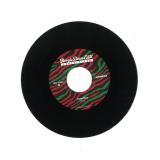
Following a hugely successful debut, the LA collective Boogie Down Edits return with a second volume that turns its attention to one of hip-hop's most untouchable catalogues - A Tribe Called Quest. The approach remains as tasteful as ever: the defining vocal fragments and musical DNA of the originals stay fully intact, while the grooves and rhythms get subtly reworked for DJ-friendly, peak-time impact. 'Award Tour' opens proceedings with that unmistakable vocal hook gliding over a chunky, rolling house beat built for packed floors, while '4Momz' takes things deeper and more atmospheric, warm bass pressure and dreamy textures giving it a genuine late-night feel. Golden-era hip-hop attitude meets contemporary house production. Mad respect.
A limited 45, lifting two of the most transportive moments from Manifest, the fifth studio album from BALTHVS, and pressing them together on a standalone 7". "Eternal Flow" closes Side A of the LP, a slow-building groove that became the lead single of the album campaign. "Pale Blue Dot" opens Side B, a meditation on smallness and the cosmos that stretches out over nearly five minutes.
BALTHVS is the Colombian trio of guitarist and producer Balthazar Aguirre, bassist Johanna Mercuriana, and drummer Santiago Lizcano. Over five years the band has amassed more than 140 million streams, performed in over 26 countries, earned a Libera Awards nomination, and appeared at Electric Forest, Austin City Limits, Outside Lands, Lollapalooza, Jam Cruise, and SXSW Sydney. Manifest, out 10/9/2026, marks their most adventurous work to date, reaching past psychedelic rock into drum and bass, Ethio-jazz, and trip hop.
This 7" is a collector's companion to that album, not a reissue of it. Both sides are drawn from the LP sequence and paired here as a standalone 45 for the shops and the heads who chase the format. Limited to 300 copies worldwide. The band supports the release with a US fall tour running October 8 through 25.
Deluxe LP features 140g virgin vinyl; heavy-duty board jacket, artwork by Art Rosenbaum + DL. RIYL: Bob Dylan, John Prine, Townes Van Zandt, Ry Cooder, Michael Chapman, Michael Hurley, The Youngbloods & Bonnie “Prince” Billy. Jake Xerxes Fussell’s 4th album finds the acclaimed folksong interpreter, guitarist, and singer navigating fresh sonic and compositional landscapes on the most conceptually focused, breathtakingly rendered, and enigmatically poignant record of his wondrous catalog. Produced by James Elkington and featuring formidable players both familiar (Casey Toll, Libby Rodenbough) and new (Joe Westerlund, Bonnie “Prince” Billy), it includes Jake’s first original compositions; atmospheric arrangements with pedal steel, horns, and strings. One of the most striking and strangely moving moments on Jake Xerxes Fussell’s gorgeous Good and Green Again an album, his fourth and most recent, replete with such dazzling moments arrives at its very end, with the brief words to the final song “Washington.” “General Washington/Noblest of men/His house, his horse, his cherry tree, and him,” Fussell sings, after a hushed introductory passage in which his trademark percussively fingerpicked Telecaster converses lacily with James Elkington’s parlor piano. That’s the entire lyrical content of the song, which proceeds to float away on orchestral clouds of French horn, trumpet, and strings, until it simply stops, suddenly evaporating, vanishing with no fade or trace, no resolution to its sorrowful minor-key chord progression, just silence and stillness and stark presidential absence. It feels like the end of a film, or the cold departure of a ghost, and is unlike anything else Jake has recorded. In all his work Jake humanizes his material with his own profound curatorial and interpretive gifts, unmooring stories and melodies from their specific eras and origins and setting them adrift in our own waterways. The robust burr of his voice, which periodically melts and catches at a particularly tender turn of phrase, and the swung rhythmic undertow of exquisite, seemingly effortless guitar-playing here he plays more acoustic than ever before pull new valences of meaning from ostensibly antique songs and subjects. On Good and Green Again, Jake not only ventures beyond his established mastery of songcatching and songmaking into songwriting, but likewise navigates fresh sonic and compositional landscapes, going green with lusher, more atmospheric and ambitious arrangements. The result is the most conceptually focused, breathtakingly rendered, and enigmatically poignant record of his wondrous catalog. It’s also his most deliberately premeditated album, representing his fruitful return to a producer partnership after two self-produced projects, What in the Natural World (2017) and Out of Sight (2019) (William Tyler produced his friend’s self-titled 2015 debut.) This time James Elkington produced and played a panoply of instruments, bringing to Jake’s arcane song choices his own peerless sense of harmony and orchestration, balance and dramatic tension. The pair enlisted a group of formidable players including regular bandmembers Casey Toll (Mt. Moriah, Nathan Bowles) on upright bass, Libby Rodenbough (Mipso) on strings, and Nathan Golub on pedal steel. They were joined by welcome newcomers Joe Westerlund (Megafaun, Califone) on drums, Joseph Decosimo on fiddle, Anna Jacobson on brass, and veteran collaborator and avowed Fussell fan Bonnie “Prince” Billy, who contributes additional vocals. Album opener “Love Farewell” (featuring some beautiful singing by Bonnie “Prince” Billy), an elliptical tale of the folly of war, set to the world’s most heartbreaking goodbye march for a lover left behind. “Carriebelle” and “Breast of Glass” each similarly concerns, in its own way, romantic love and leavings. All three songs highlight Jacobson’s diaphanous, understated brass parts, tying them together in a true lover’s knot. “Rolling Mills Are Burning Down,” with its distant keening strings and capacious sense of space, observes and mourns the loss of work and community in the wake of elemental disaster. Nine-minute tour de force “The Golden Willow Tree,” the sole explicitly narrative song herein, is a hypnotic, minimalist rendering of a tragic maritime ballad about scuttling an enemy ship in exchange for wealth and glory and a captain’s inevitable betrayal. “Fussell is creating his own legacy within the long lineage of traditional folk musicians and storytellers that have come before him.” The New York Times // “So elegant … It’s relaxing in the way that pondering a Zen koan is relaxing, and sweet in the way that the wounded, honey-voiced blues of Mississippi John Hurt are sweet.” Pitchfork // “Music that resides at the seams of Appalachia and the cosmos.”
Riva Starr teams up with Australian duo Close Counters for a sun-soaked debut on Heist.
What do you get when you put an Italian house legend in the studio with 2 of the most talented artists from Melbourne? Have a listen to the newest release on Heist and you’ll find out. On their ‘Push your luck’ EP, Riva Starr, Close Counters and UK soul singer Andre Espeut bring a heavy dose of jazz & soul and most of all, upbeat dancefloor energy. Whether it’s the deep soulful vibe of the title track or the house meets jazz-funk energy of ‘Gearbox’, this EP brings together everything we love about house music.
‘Push your luck’ comes right in the middle of Close Counters’ world tour, just after Riva Starr’s album ‘Keep me on the dancefloor’ and is the follow up to their recent collab ‘Jinga’ on Riva Starr’s own Snatch Records. We all know Riva Starr from his 2013 Fatboy Slim collab ‘Eat sleep rave repeat’, his work with Groove Armada, and more recently his collab with Prunk on his PIV records debut album. Close Counters have already worked with Heist mainstays Fouk and had their breakthrough moment with their 2023 album ‘Soulacousta II’, which got wide support ranging from Gilles Peterson to Jyoto and Folamour.
Their ‘Push your luck’ EP kicks off with the title track featuring the silky vocals of Andre Espeut. When we first heard this song, we immediately got transported to the soulful sound of the mid 2000s led by Recloose’s unique track ‘Dust’ with Fat Freddy’s Drop singer Joe Dukie. It’s moody, stripped back, and bouncy at the same time. The lush chords, disco bassline, and vocal harmonies all make for a track that goes beyond genres and trends. This is a future classic.
‘Gearbox’ is a disco-tinged piano jam full of live elements, rolling congas and disco bleeps, where the musicality of the Close Counters boys comes in at full speed. This song takes its inspiration from the Brazilian jazz-funk of legends Marcos Valle and Azymuth, with a clear sense of modern-day dancefloors and a love for electronic noise. Also; 10/10 for creatively naming the track after the glitchy electronic sound that freaks & funks throughout the track.
On the flip, ‘Dizzy’ sees the trio go more into disco-house territory, again teaming up with Andre Espeut for a track that blends catchy vocal loops with a tight groove and lush chords. The EP finishes with a club dub of ‘Push your luck’ for those in favor of more groove and less vocals.
We’ve had Riva Starr and the Close Counters boys on our radar for a while, and they landed on Heist with the perfect combination of musicality and dancefloor power. We hope you like this release as much as we do!
Music from Tokyo / New York serves as the 2024 sequel to his previous release, Music for Joshua Tree. This conceptual album is divided into Side A (Tokyo) and Side B (New York), utilizing field recordings captured in each location. The ceramic images featured on LP jacket is the work of Namiko Ishikawa (NamipotNYC).
On this record, he incorporates Ambient, Downtempo, Trip-hop, and Dub—bringing to life the specific sounds currently resonating in his mind and his original roots.
Since the pandemic, he has been traveling and capturing "environmental sounds" through field recordings, which served as the primary inspiration for this record. Side A features tracks inspired by the atmosphere of Tokyo, including recordings from streets, parks near his home in Japan. Side B explores New York, incorporating the sounds of Brooklyn and Manhattan, as well as the chirping of insects recorded in the New York mountains.
While the album remains centered on analog synthesizers and vinyl samples, he has introduced analog drum machines and glitch noise to craft the groove. Unlike his previous work, this release brings prominent bass lines and added more Dub elements to the forefront. His primary focus for this project was expressing a sense of "space" and "air" through the meticulous use of reverb and delay.
Throughout the album, he invites the listener to imagine the unique "local atmosphere" he experienced during his travels.
With this seventh instalment of retweaked heat, Perro Bueno Edits once again prove that less is more when you know exactly what you're doing. Both refixes strike a sweet spot between respectful crate-digger sensibility and dancefloor punch while updating Afro-funk classics without sanding off their soul. 'TFOM' puffs out its chest with big, bold, playful horns leading the charge as Latin vocals bring some sunshine and funky bass keeps things moving. 'SMPP' slows the tempo, which means more room to luxuriate between the dumpy kicks and appreciate the sharp horns and organic percussion before some raw vocals bring a Brownian funk edge.
After several years, revered dub techno craftsman Andrey Pushkarev finally return with a solo release - Simbioza. Taking its name from the Romanian word for symbiosis, this release is a testament to creative exchange, built entirely from collaborations with dear friends & artists that have crossed Pushkarev’s path numerous times during his 20 years long musical journey. While staying true to Andrey’s signature deep & dubby aesthetic, the release also includes the artist’s first drum and bass output, featuring Los Angeles based Svetti’s haunting & mesmerizing vocals. The EP will be released on the well regarded BERG AUDIO during the month of September 2025 - limited vinyl copies.
JUNO & Jamek Ortega link up for ‘Deep Breath’ on Crosstown Rebels.
Following an impressive label debut earlier this year alongside Alex Wann on ‘Allo’, crowned Pete Tong’s Essential New Tune, Germany’s JUNO returns to Crosstown Rebels with ‘Deep Breath’ in collaboration with longtime production partner Jamek Ortega. Immediately drawing listeners into a hypnotic, percussive world, snaking rhythms and rattling cowbells build steadily beneath an atmospheric backdrop, before a commanding vocal emerges to anchor the groove. The release continues a relationship that has seen the pair produce across labels including Arodes’ Unreleased Records, Wired World, and more, as well as regular back-to-back performances. On the flip, ‘Sloppy Disk’ sees JUNO step up solo, locking into a driving four-to-the-floor groove where a rolling bassline provides the foundation for pensive chords to drift alongside subtle melodic flourishes, steadily expanding the track’s atmosphere before tumbling into a sweeping, cinematic finale.
JUNO has accelerated onto the scene with hits like ‘Last Dance’ on Magnifik Music and a Hot Mix for Pete Tong on BBC Radio 1, firmly earmarking him as one to watch. Meanwhile, DJ/producer Jamek Ortega continues to connect with audiences worldwide with outings on Three Six Zero, MoBlack, Abracadabra, Madorasindahouse, and more, picking up heavy rotation from the likes of Keinemusik, Solomun, Tiësto, and Black Coffee. Here, the pair show no signs of slowing down as they join forces once again, stepping onto Damian Lazarus’s imprint and marking a major milestone in their respective trajectories.
The eighth helping of these Perro Bueno Edits is as delicious as Kinder Buenos (we have kids, don't judge us). Once again it is an anonymous affair from the in-house team, whoever that may be, and this one opens with 'SDBO', which is a new flip of, we're told, a "rare African cover version of a much-loved disco classic". It has a perfect mix of disco glam and Afro earthiness with soaring melodies and funk drums that can't fail to get you locked in. 'LEHA' on the B-side is another Afro-funk gem that is rebuilt with layers of chunky percussion and drums, interplay between male and female vocals and fat bass that anchors the whole thing perfectly.
Hot Digits main guy Fingerman - a veritable of the UK nu-disco and disco re-edit scenes - is the man at the controls on the latest missive from the imprint's vinyl-focused Wax Digits offshoot. He's in prime form from the off, offering a deliciously chunky, effects-laden, dub disco style rework of a New York no-wave era 'downtown' disco classic. He doffs a cap to pal Chewy Rubs and their joint love of heavy, looped bass guitar lines on the stretched-out funk-goes-deep disco wonder that is 'Bestest Beat', before cunningly rearranging a more string-laden slab of disco-funk grandiosity on closing cut 'We Love It'. We certainly do, and there's a fair chance you will too.
San Francisco’s 21 st century take on disco has long tended towards the cosmic and
psychedelic, a reflection of the Bay Area’s long association with trippy, mind-altering music.
Over the years, Leng Records has periodically dived into these fertile waters, delivering
inspired slabs of cosmic-minded and dub-flecked excellence from 40 Thieves and, more
recently, Marshall Watson and Cole Odin.
It’s to Watson, a long-serving producer and sound designer whose work has previously
appeared on labels including Sprechen, Shades of Sound, Seven Villas, Italians Do It Better, Highpoint Lowlife and NuNorthern Soul, that Leng has turned this time around. It marks his first solo appearance on the imprint and lands two years on from his inspired Odin collaboration, Voyager. ‘Little Monster’ is Watson at his most potent, club-focused best. Built around rock-solid
disco drums and a deliciously dubby, low-slung bassline, the track slowly builds via waves of intergalactic electronics, spaced-out and echoing vocal samples, audible nods to cosmic rock and bursts of starry synth melodies. Thickening and increasing in effects-laden intoxication as it progresses, ‘Little Monster’ not only lives up to its name but also cements Watson’s growing reputation as one of 21st century cosmic disco’s most distinctive talents.
Fittingly, the accompanying remix comes from Leng regulars and fellow San Francisco
residents 40 Thieves. Delivering a genuinely epic, near nine-minute excursion, the veteran
collective drag Watson’s inspired original mix further towards Daniele Baldelli style dub
disco-meets-Afro-cosmic territory. Expect bolder, funkier bass, echoing synth motifs, eyes-
closed electric guitar solos, echoing synth snippets and wild, sustained organ chords. It’s
cosmic disco in dub… and the perfect accompaniment to Watson’s future cosmic disco
classic.
La Dispute is an American post-hardcore band formed in Grand Rapids, Michigan in 2004. The band consists of vocalist Jordan Dreyer, guitarist Chad Sterenberg, drummer Brad Vander Lugt, bassist Adam Vass, and guitarist Corey Stroffolino. Known for their intense and emotionally charged sound La Dispute has released five studio albums to critical acclaim, including “Somewhere at the Bottom of the River Between Vega and Altair” (2008), “Wildlife” (2011), and “Panorama” (2019). Their music often explores themes of loss, grief, and human relationships through a series of interconnencted stories. La Dispute has developed a devoted fanbase and is known for the powerful, unforgettable live performances.
Berlin-based edit specialist Voodoocuts knows exactly how to tease out the best bits of any of the source tunes he works with. He's been doing it for years now on labels like Juice on Wax and Uluru, and now heads to Ritmo for his latest 7" bomb. 'Riddim Freak' gets this one going with a reggaeton rework of a Missy Elliott classic. It's an inspired pairing that has elastic bass and trampoline-like kicks with rave horns, fat-assed brass band energy and plenty of that original Missy attitude. 'Work This' takes another of the rap queens' most welcome jams and flips and reverses it into an early electro and hip-hop blend with old school drums and many magnificent samples all bringing it to life in full colour.
Plus Plus Traxx is here and we open things up with the label’s main guy, Louie Fresco, and his bass-heavy track "###" (Pound-Pound-Pound).
A track that feels like it was made by a mad A.I. on shrooms inside a lab on a remote alien spaceship. Breaks weaving through glitchy sounds and creepy leads make this tune a certified secret weapon for those DJs who truly dare to break the mold and play outside the trendy shit.
Next up, we got a banger of a collab between CHKLTE and San Dee, who met inside the 16bit realm and cooked up a trippy minimal late night heater that feels like you're creeping through the Doom and Duke Nukem corridors, a tune that will definitely be making the after-hours rounds around the world.
Coming up on the B-side, we got none other than Harry Wills under his Brazen alias, doing what Harry does: dope basslines, intricate drum work, unique creativity, and overall trippy madness. 135 bpms of brazen dopeness.
And if you want more fuel in your engine, here comes Gojnea76, who turns the track "Passive Aggressive" on its head and literally kicks the “passive” out of the equation, delivering a bomb of a remix that will definitely be traveling in many great DJs’ record bags for years to come.
This is Freaky Friends Vol.1
Alex Barbu – Paths Lead Inward marks Alex Barbu’s first release on Bosconi Records, following previous releases on Digital Finesse and Maeteria. Across four tracks, Paths Lead Inward explores the space between minimal, techno, deep house and psychedelic trance, combining stripped-back structures with hypnotic rhythms, dubby textures and subtle traces of Goa-inspired psychedelia.
The EP opens with A1. “Tokyo”, a straight-to-the-point dancefloor missile. A rolling bassline, delayed voices and a simple but highly effective rhythmic structure push the track towards trance territory, with hints of Goa psychedelia filtered through a minimal sensibility. Immediate, hypnotic and built to keep the floor moving.
A2. “2006” takes a darker and deeper turn. A dubbed-out minimal techno cut populated by subterranean sounds, blurred textures and distant voices. Its slow-burning atmosphere makes it particularly suited to the deeper, more intense moments of an afterhours set.
On the flip, B1. “Hello Everybody” brings a heavier deep-house pulse into the equation. Hypnotic arpeggios, deep vocal elements and a rolling groove give the track a physical, almost stomping quality, while maintaining the murky and psychedelic character running throughout the EP.
Closing the record, B2. “Blobfish” dives deepest of all. A heavy bassline anchors a strange and unsettling landscape of anxious breathing, dark textures and disorienting sounds. Hypnotic rather than aggressive, it gradually pulls the listener into an upside-down dimension — a proper late-night trip for losing yourself on the dancefloor.
Paths Lead Inward is not only about movement on the dancefloor, but about what happens underneath it. Four tracks that touch you deeper in the soul and make you reconnect with it.
Superkill Records' debut release introduces Seoul-based producer Baeyoon, whose four-track EP opens with "Doxa," already played out by Derrick May during one of his recent tours in Japan. Baeyoon's sound layers melancholic, romantic pads over heavy kicks and basslines, stacking intricate arpeggios and irregular drum work into a retro-futurist take on Detroit techno. That tension between soft and machine-driven is the EP's throughline — uplifting, colourful and true to its lineage.
LMajor makes his Over/Shadow debut with Deep Deadly Dub, delivering four heavyweight cuts rooted in classic jungle, breakbeat and drum & bass.
From the deep, rolling title track and the rave-ready Bun Down The Place to Screamer with Gilsun and the soulful Be My Light featuring Amy Kisnorbo, this is a versatile release with plenty of dancefloor pressure.
Amazzonia is the new album by Alex Puddu and the second volume following the erotic series
I Desideri Di Sadie (Piaceri Tropicali), where the inspiration took us to an imaginary journey in Southeast Asia. With this new album “Amazonia,” Alex Puddu takes us on a trip to Central America, the Caribbean islands, and South America, exploring a new groove of Latin-funk, reggae, and seductive sleazy disco . Here, Sadie’s adventures unfold, from the jungle to the cities and onto the enchanting tropical beaches. Another journey through temptations, on the islands, discovering the beauty of Alex Puddu’s “Erotic World.”
"Amazzonia" was written, arranged, produced, and recorded by Alex Puddu, who plays all the instruments on the album himself. He was assisted by two of the best bassists on the Italian nu-disco and Balearic scene: Domenico Andria—who has played with Pellegrino/Zodyaco and worked closely with Alex Puddu on several releases—and Daniele Labbate, who has performed as a session bassist for artists including Nu Genea and Mystic Jungle.
Other featuring musicians on the album are:
Imelda : Lead and backing vocals
Adrian Wilding: Vocal on Gimme Dub
Hendrik Jørgensen: Trumpet
Jesper Løvdal: Saxophone
Portugal's Dextro returns for second EP of stylish deep techno on Mutual Rytm with ‘Planets And Stars’. Dextro’s tunes have long been a staple of Mutual Rytm label head SHDW's sets, with the esteemed veteran previously landing on the label with his ‘Covil Dos Abutres’ EP last year. His return with ‘Planets And Stars’ features a selection of his most requested IDs from recent times, with the Portuguese DJ/producers featuring as a longstanding favourite within the European underground since the 90s through his stripped-back, economical sound that is rooted in masterful design and intuitive grooves. He is a true studio craftsman, whether going deep or more destructive, and that range is on show here as he makes a splash for his sophomore outing. SHDW notes, “‘Planets And Stars’ feels like his most refined and focused work to date. It also further strengthens our relationship, rooted in a shared vision and values around music and how it should be presented.” The EP kicks off with the heavyweight ‘1000 Places’, a track that will rattle walls as eerie synth whispers and sonar blips snake through the mix. ‘Industria Acéfala’ is just as hypnotic with a deep blend of rolling bass and rooted kicks, while unsettling tension comes in the one-note synth loops and scratchy texture. ‘Planets and Stars’ provides an intergalactic trip with cosmic dust, conscious spoken words and an infinite horizon that has you gazing off into the distance. The all-consuming ‘Perpendicular’ is shadowy with impish motifs darting about the mix as watery droplets fall into cavernous kicks. ‘Winter Letter’ is the final 12”cut and is perfectly deep, linear techno with gorgeous ambient details that turn your thoughts inwards. Three digital bonuses expand the trip: ‘Torresmos com Pão’ is unsettling and sparse, ‘Historia da Vida’ ramps up the tension with oversized hi-hats and rising synth turbulence and finally ‘Ghost Particles’ has shimmering bell sounds evoking a spooky moon-lit church in the dead of night.
Three late works by Éliane Radigue, composed in intimate dialogue with singular instrumental voices Charles Curtis and Dafne Vicente-Sandoval, reveal the extraordinary technical control and sensitivity required to realize Radigue’s radically reduced sonic language. Presented here for the first time on LP, these works stand as a landmark document of the composer’s late acoustic practice, where microscopic shifts in tone, texture, and resonance become the music itself.
Éliane Radigue (composer)
Dafne Vicente-Sandoval (bassoon)
Charles Curtis (cello)
Chicago-based duo DRASII (Lisa Armstrong & Chris Kalis) return with The Seeker, the follow-up EP to 2024's Spirito Celeste. Co-released on ETC and Shmee Records, it continues their trek through a paranormal sonic landscape. Using vintage analogue and FM hardware synths, the five-track release runs through Deep House, Acid, Electro, Balearic and Post-Industrial.
The opening track, "Daydream," features celestial, wispy vocals, deep bass and sparkling synth melodies. It leads into "Vertigo," which follows with a shifting drone over repetitive Juno 60 notes channelling Chris & Cosey or Adrian Sherwood. This is what Sarah and John Connor would have in the tape deck while barrelling down the freeway in a stolen police cruiser.
On the reverse side, "Tiger's Eye" leads with SH-101 bass that moves around a swinging 909 beat, creating a downtempo feel that mixes inspiration from Larry Heard and Ibiza in the 90s. From there, "Hycean" propels forward with 707 drums and acid bass before breaking into a syncopated polyrhythm accented by witchy vocal samples. "Sorcerer" closes on an upbeat, electro feel, centered around a dark metallic bass blended with 6/8 time arpeggio melodies.
The Seeker is a lucid dream, a spell, and a stirring of the subconscious: five transmissions from somewhere just beyond the void.
Minutiae is the first full-length release form Stockholm’s Ināra Quartet, made up of brothers Kasper (guitar, banjo, mandolin) and Mauritz Agnas (bass, cello), Johan Graden (piano, harmonium, synths) and Mischa Grind (percussion). Drawing on wide performance and composition experience in free improvisation, jazz, and composed new music, the quartet have carved out a unique niche where radical approaches to rhythmic organisation and group interaction are wedded to immediately accessible, folkish melodic and harmonic material. Unfolding briskly across eight pop-song length tracks, Minutiae places these folk fragments under a microscope, expanding them into intricate patterns of group interplay by turns austere and lushly psychedelic.
The quartet’s layering of independent rhythms, pulses, and tempi suggests a range of precedents, from Ligeti’s ticking clock textures to the pulse music of John McGuire, the repeating asynchronous cycles of The Necks, and the intricate irregular crosshatching of Banda music. Rhythm, harmony and melody shade into one another within each of the instrumental layers that overlap to form the music’s rippling surface. At points guitar, bass, percussion, and keyboards can seem each to occupy their own world, each player moving independently according to their own internal tactus, but attention to the details of group interplay reveals carefully planned collective movement. On ‘Klapparen’, strummed acoustic guitar chords and clinking percussion accelerate and decelerate in unison, washed over by floating synth lines. At other points, the quartet as a whole suddenly shift direction like a This Heat tape edit. Check the opener ‘Box Pieces’, where a brief percussion tag cues an unexpected cut from frenetic layering of percussive attacks undergirded by slow moving synth and bass foundations to a rumbling, locked-in dirge.
The eight pieces span a range of tones, from plaintive abstraction to surging minimalism. Touches of whimsy relieve any threat of over-seriousness: witness the wacky electric guitar glissandi that open ‘Tilting’ or the lovely, almost Pascal Comelade-esque fairground wobbles that begin the wayward journey of ‘Cadence: not even,’ before it stumbles into a totally different zone of spacious Paul Bley balladry sprinkled with banjo plucks. Recorded across two days at Stockholm’s Atlantis studios, Minutiae’s minutiae truly sparkle thanks to the careful mixing work of Ghosted drummer extraordinaire Andreas Werliin. A wonderfully approachable document of the richness of the next generation of contemporary creative musicians from Sweden, Ināra Quartet’s debut also looks back to 70s touchstones like Archimedes Badkar in its joyful embrace of musical collectivity.
Tiger Stripes continues the ‘A Tiger Never Loses Its Stripes’ EP series on Rekids, with part two arriving 30th October 2026. The EP follows part one, released earlier this month, and previews his upcoming sophomore album, his first in two decades, due out later this year.
First up, Tiger Stripes’ 'Strike' is a raw, heavy, swinging warehouse cut with stark lasers and a moody vocal refrain that will lock the floor into a steady march. 'ID' flips the script with funkier bass riffs and dub effects hanging above a lighter, funkier groove, but still locked into irresistible loops. There is a playful touch to 'Nothing To Do', too, where dusty drums, darker synths and prying bass motifs all shuffle and swing with confidence. The soulful 'Free As A Bird' closes with a delightfully dubby skip, lush chords, and expert sound design that brings immeasurable character alongside a well-worked vocal.
Founder of the Strange Idols label, Tiger Stripes has spent over two decades forging his own path with standout releases on Hot Creations, Kaoz Theory, Kwench Records, and more. After stepping back to focus on his indie-rock project Little Lies, he made a full return in 2024 and quickly recaptured the form that’s made him an international favourite.
Radio Slave’s Rekids was founded in 2006 and has since spawned successful offshoots with the Techno-focused Rekids Special Projects in 2017 and its newest sublabel, REK’D, in 2024. With Matt Edwards as the sole A&R, Rekids has been crucial in developing early artist careers and has become a haven for established acts in House and adjacent genres, recently featuring Harry Romero, Tal Fussman, DJ Minx, The Hacker, and many more.
"Thank Goodness brings together an overdubbed ‘chamber band’ of bass guitar, viola, piano, harpsichord, voice and drums. Made on my own in London and Ireland between 2023-26 as a slow channelling inward of a lot of social energy.”
Seán Being is a committed figure at the sharp edges of Irish music, including being the key instigator of the band Princ€ss, touring bass player with Maria Somerville, and a long-time affiliate of Dublin label wherethetimegoes. Their various collaborations include contributions to live and recorded projects with the likes of Spellcaster, Nashpaints, Florian TM Zeizig, Jennifer Moore, Olan Monk, Dylan Kerr, Asa Nisi Masa, Life is Beautiful, Polido, Adriana João and Usof.
Not always in the business of ‘popular music’, Seán also has Gregorian Chant and car horn performances in their repertoire.
Aspects of all of this activity have made their way, directly or otherwise, into this first full-length album.
Alek Lee and vocalist Margeeah come together for a boutique 7″ pressing limited to 200 copies, featuring two tracks blending soul, reggae, disco and dub. Lee, whose catalogue includes releases on Antinote and Isle of Jura, brings his background in slower, dub oriented productions to a collaboration built around Margeeah’s vocals and live instrumentation. The sound sits somewhere between Massive Attack’s Blue Lines and Grace Jones.
Margeeah comes from the Israelite community, whose musical history includes The Soul Messengers. Her debut album, Looking for Love, was recorded in 1983 with Kingdom Sounds, originally issued as a private press LP and reissued by Frederiksberg Records in 2025. Its musicians included Abshalom Ben Shlomo, associated with Sun Ra. Her vocal style spans soul, jazz, funk and reggae, with reference points including Roberta Flack and Doug & Jean Carn.
For this release, Lee records his own live drums and percussion for the first time, alongside his signature smoky melodica lines. The production develops the reggae elements of Margeeah’s singing, combining bass driven arrangements with live rhythms, spacious guitar lines and dubby approach.
On the A side, “The Music Inside”, Margeeah effortlessly projects Lee’s lyrics about optimism and the desire for inner and outer freedom. Built around a recurring vocal refrain, the track places her voice over a rooted reggae arrangement.
The B side, “Can You Feel It?”, moves seductively towards a slower disc-dub sound. Bass and drums provide the foundation, with the percussion developing from a restrained groove into a fuller live kit arrangement. Melodica and guitar weave around Margeeah’s lead vocal and the hypnotizing title phrase.
Workers Playtime is the fourth album by Billy Bragg, originally released in September 1988. This long overdue vinyl reissue comes in a gatefold sleeve and was remastered by John Webber at Air Studios using high-resolution transfers made from master tapes in Billy's archives. There will also be a limited edition run of coloured vinyl albums.
Helmed by legendary producer Joe Boyd (Nick Drake, Fairport Convention et al) and his former Riff Raff bandmate Wiggy, Workers Playtime saw Bragg deliver his most tender and empathetic collection. The band featured the legendary Danny Thompson on double bass, BJ Cole on pedal steel, Bruce Thomas (Elvis Costello & The Attractions) on bass and Micky Waller on drums. Licking his wounds after another victory for Margaret Thatcher at the ’87 general election, he wrote ‘Waiting For The Great Leap Forwards’, one of his most enduring songs, while the stunning a capella ‘Tender Comrade’ confronts the ugly prejudice of the moral majority. Melancholy and disillusionment are part and parcel of Bragg’s songwriting, but always with a healthy dash of optimism.
Welcome to a new series of various artist EP’s titled ‘Sistema Sprezzatura’
We are always working hard in the background on the art of making difficult actions, complex skills, or highly curated choices appear completely natural, unforced, and spontaneous… do we pull it off we aren’t sure.. hopefully you can be the judges.
On this first EP the A- side features a new project ‘Sprezzatura' Hailing from Little Italy, Norton Street in Sydney (just a short Vespa ride from the Sicilian Coastline). Sprezzatura serves up Italo disco originals, edits and deep, carefully curated party sets built for long nights and discerning dance floors. The name is Italian, the postcode isn’t. The sound lands somewhere between sleek synths, driving basslines and just the right amount of drama. Expect strong espresso, stronger basslines and the firm belief that Sicily is less a place than a state of mind.’
And on the B -side Boxcar and the Space Jockeys return after their last well received release on Sosilly Edits with some tasteful psych rock reworks.
U//D welcomes Swedish maestro Arkajo to the label with Fourier Dust, a four-track EP built for deep dancefloors. Across the record, Arkajo moves through breakbeat techno, dark 2-step, broken techno and dubstep, with close friend and Naarm/Melbourne stalwart Pugilist rounding things out with a remix of “Chasm”.
A1, “Fourier Dust”, opens the record with a breaky techno groove driven by a ferocious acid bassline, razor-sharp percussion and deeply atmospheric pads. Tough, spacious and hypnotic, it sets the tone for the EP perfectly.
A2, “Illusion”, shifts into darker 2-step garage territory. Wobbling bass, submerged vocals and rolling percussion build throughout, with bongos keeping the groove moving as the track gets progressively deeper. There are clear echoes of the darker UK garage lineage of SP:MC and EL-B.
Flipping to the B-side, “Chasm” moves into techno-bass territory, pairing a wonky 4x4 groove with hypnotic, heavily dubbed vocals. The result feels both spacious and eerie, balancing club pressure with a distinctly psychedelic edge.
Closing the EP, Pugilist’s remix of “Chasm” takes things in a dubstep-leaning 2-step direction. Heavy rolling sub, signature dub stabs, swung percussion and the occasional wub give the remix serious weight — one designed to be felt properly on a big system.
Early DJ Support: Massimiliano Pagliara, Paranoid London, Logan Fisher, Terry Farley, James Holroyd, Rocky (X Press 2), Francois K, Marcel Vogel, Sean Johnston, Austin Ato, Ron Basejam, Richard Rogers, Oliver Dollar, Crazy P and many more
Creating an international name for itself over the past decade as a sample pack label, Samples From Mars made its inevitable venture into the music world originally as a home for founder Teddy Stuart’s work. Long before making samples, Stuart garnered credits working as a grammy-nominated recording engineer in the hip hop world, and DJing / producing with Justin Strauss as A/JUS/TED, for labels such as DFA, Domino Records and Southern Fried Records. Now the label is set to release a variety of genres - house, disco, techno, ambient, all with a vintage tinge and a focus on high quality, analog production.
Enter Salt Queen. Visual artist and musician Magali van Caloen together with Samples From Mars founder, Teddy Stuart. Based in New York, the duo combine hardware dance aesthetics with dry, salty takes on familiar club moments into music that sits somewhere between funny, raw and unpredictable.
Salt Queen’s debut ‘ARE U OK’ is an acid-laced, deadpan spoken word track with an opening line that snaps any room to attention. A disorienting club encounter unfolds over Italo-inflected 808s and a relentless 303 bassline. There are no chords and no melodies - just a skeletal groove and an intimate voice circling the dancefloor. Drifting between concern and provocation, the vocal runs through cliché club conversations before destabilizing completely into a siren-laden crash out. The ‘Freak Nasty Club Mix’ ditches the plot and lets the hardware breathe, with a thick SH-101 bassline anchoring the first half before a sudden switch into an unrelenting acid pattern that refuses to settle. Two versions of the same wild night out.
Three years after the release of their debut album, Do Nothing return with their much anticipated sophomore, 'Friend World'. The Nottingham four piece consisting of Chris Bailey, Kasper Sandstrøm, Charlie Howarth, Andrew Harrison, emerge bolder, self-assured and more energetic than ever.
Lead single 'Stars' gives an insight into the upcoming LP, synth-laden with hypnotic riffs, meandering vocals and bouncing basslines. The single, already a fan favourite, paves the way for listeners to enter the 'Friend World' that Do Nothing have created. At first glance, the album is overflowing with hard hitting guitars, infectious rhythms and frontman Bailey's signature razor-sharp witted lyricism, but dive deeper into tracks such as These People Want Blood and standout track Loner, to find an alternative take on the album, representing a softer and more pensive side of the band's writing.
****COVER WITH AUGMENTED REALITY**** Argentinian producer Translate synthesises states of consciousness and perceptions into his semantics of sound, creating a distinct language of mental techno through hypnotic repetition, precision and deeply immersive atmospheres. His presence in this realm extends through his label Relativity, whose latest EP brings together tracks by Mike Parker and Oscar Mulero, while his own productions have appeared on Svreca’s Semantica Records. For his DIG release, Translate shifts into a broader spectrum, revealing a side of his production that has remained unexplored until now. DIG Curated captures this moment of a new sonic expansion between his signature hypnotic journeys and a stripped-down techno sound. Expansive opens the record with Translate’s distinct mental techno, pushed into an added psychedelic dimension. With a vast and trippy sound, the track steadily fills the space, inviting the dancers to go inward and simultaneously reach out into a collective morphic field. With Discursive, the coordinates shift, introducing a very stripped-down techno side of Translate’s production and a palette rarely heard from him before. Reduced to its essential elements, the track cuts directly through the floor with a functional groove, whilst retaining the tension embedded in his sonic DNA. On the B side, Fuse accelerates with fast-moving pads, mechanical drums and swerving loops that gradually lock the body into trance. Quirky textures spiral throughout, with robotic glitches sounding like organic beings. Coefficients closes the record by pulling the listener into rich bass and expanding loops over a cold melody that guides the final journey into a cosmic unfold. Hypnotic sci-fi vocals emerge from an interplanetary future, traversing space in search of earthly traces. The record ends suspended somewhere between the transmission and unknown, like a sonic threshold. Words by Lora Mateeva Animation/Artwork - Marcin Pospiech Master - Nihad Tule Graphist - Ferdinand Prat
With the stunning Planes In Reverse, Sascha Funke, the Berlin-born producer and DJ, and long-time member of the Kompakt family, releases his first album in almost a decade, since 2017’s Lotos Land. It’s a welcome return for one of the most eloquent and elegant producers in electronic and dance music, someone who’s always been able to say more with less, and the ten tracks here, moving effortlessly between techno, house, minimalism, disco house, and home listening tunes, are all gorgeously sculpted miniatures. With guest appearances from partner Julienne Dessagne (Fantastic Twins), with whom Funke has also worked in Saschienne, there’s something homely and family about it, too; a family of sounds, a home of tone. There’s also something consummate about Planes In Reverse, as though Sascha Funke has perfected the album format. There’s no flab here, no excess – it plays out like a perfectly designed experience, ten tracks, coming in under fifty minutes, an album where every moment matters.
It’s full of variety, but everything has the unmistakable Funke thumbprint, one that was developed during the late ‘90s / early ‘00s minimal techno and microhouse moment, but which was always open to other ideas and other sounds, too. Planes In Reverse came together quickly for Funke: “Last winter, I had two or three new tracks, which gave me a core feeling: ‘Ah, this could be the direction of something like an album.’ Sometimes it can be very easy that you wrap it up and then it becomes something coherent and solid. This happened within two or three months; it was very fast and direct.” Everything fell into place – the ten tracks revealed themselves, the album sat together as a whole, and the final piece of the puzzle was returning home again to Kompakt, who have supported Sascha Funke from the very start, releasing his first single, “Campus”, back in 1999.
Planes In Reverse opens stealthily with “What You See”, where rhythms percolate and bass prowls while gaseous textures fill the sonic spectrum. It’s also the first appearance of Fantastic Twins on the album; here, she speaks a hypnotic mantra, a prelude to the title track, where Dessagne has a pure pop moment, her voice ecstatic and vibrant. Indeed, Planes In Reverse plays out like thesis and antithesis ending in synthesis, the tracks nestling next to each other even as they shuttle between sounds, genres, perspectives. There are some beautiful moments dropped throughout Planes In Reverse – the heavenly textures that make the title track feel so cloud-bound; the glassy and orbital tones that drop from the skies through the disco house inspired “Karat”; the clamour and clatter of hyper-edited voices shuffling through “Splitter”; or the field recordings of Sascha’s son football training session that drop “Zockers” into a different place and space, slowly giving way to a beautifully paced electro-pop mantra. “In Germany,when the kids play a computer game, or when they play football, we describe it as zocken. They’re the players, they’re the Zockers.“ Funke explains.
Planes In Reverse winds down with the beautiful “Kruso”, where ticklish, loving arpeggios careen around the room, and drift-work chords shimmer and shuttle between your ears. It’s a perfect comedown to an album that feels breathes in and out at an organic pace, nothing above 130 BPM, everything sitting together just so. Indeed, that’s the feeling you take away from Planes In Reverse; it sums up the spirit of Sascha Funke productions perfectly, while also existing beautifully as its own world dreamt unto itself. It’s Sascha Funke down to the very essence. Nothing unnecessary, nothing extraneous: Pure Funke.
The 2018 album Igor Stravinsky’s The Soldier’s Tale is the adaptation by Roger Waters (co-founder of Pink Floyd) on the 1918 same-titled theatrical work. Waters recorded this version with members of the Bridgehampton Chamber Music Festival at Bridgehampton Presbyterian Church.
The original theatre work is one “to be read, played, and danced” by three actors (the soldier, the devil, and a narrator) and dancers, accompanied by a septet of instruments. The libretto relates the parable of a soldier who trades his fiddle to the devil in return for unlimited economic gain. The music is scored for a septet of violin, double bass, clarinet, bassoon, cornet or trumpet), trombone, and percussion. The libretto is adapted by Roger Waters from the translation by Michael Flanders and Kitty Black, based on the original text by Charles-Ferdinand Ramus.
The Soldier's Tale is available as a limited edition of 1000 individually numbered copies on green vinyl and comes in a gatefold sleeve with linen laminate finish. The vinyl package includes a 4-page booklet with lyrics and pictures.
*Originally pressed in 2021 - this is a brand new master and cut.**
In partnership with Analogue Foundation, Oshu Records is proud to present the exclusive vinyl repress of "Laroyê" in a thick cardboard tip-on gatefold jacket on 2x 180g vinyl.
Acclaimed Hungarian, Berlin-based producer, composer and pianist Àbáse (AKA Szabolcs Bognár) returns, sharing a special, 5 anniversary remaster of his breakthrough project 'Laroyê'. Releasing on Friday 1 May via Bridge The Gap & Oshu Records, this sensitive exploration of Afro-Brazilian culture originally began as an audio diary, documenting Szabolcs’ travels and collaborations in Brazil through a collection of voice memos, fragmented beats, sketches and field recordings. As his journey progressed, and his collaborations and research deepened, the music project started to take on its own life:
"Laroyê evolved through weeks and months of research and collaborations into the album that it is now. That means that all the sessions were done in different apartments, small studios, often with borrowed equipment, which all adds to the character, but makes the creation of a coherent sound a challenge. Benjamin Tierney, Erik Breuer and Analogue Foundation did an incredible job with the mixes and with this new remaster. I truly believe that we are able to hear the tracks in a new light, with even more depth and clarity."
Coming from the West African Yoruban language, Àbáse stands for "collaboration" – a key element of the music perfectly encapsulated on 'Laroyê'. Recorded in Rio de Janeiro and Salvador, Àbáse spent five months working with diverse artists, from young talents to veterans of the Brazilian scene including Letieres Leite, Luciane Dom, Dofono d'Omolu, Afrojazz and more. The album explores the rich heritage of afro-brasilian culture through samba, MPB and Candomblé, mixing these with broken beat, hip hop and afrobeat, creating a contemporary homage to the classic Brazilian sound. Szabolcs shares:
"Despite already leading and managing musical projects that are close to my hearth, I always felt that one day I would like to start a solo project, where I could take full responsibility for the artistic direction and the music would reflect a truly personal vision. In 2017, I decided to take five months to fulfil a childhood dream and travel to Brazil to expand my creative horizon and expose myself to new influences."
An album standout is the bass-heavy, afro-brazilian ‘Agangatolú, which Àbáse describes as "best exemplifying the story and concept of Laroye as a collaborative effort - a research project exploring the rich heritage of Afro Brazilian culture through my own lens." The track features singers and percussion players Jadson Xabla and Gabriel Santana - two artists based out of one of the oldest terreiros (houses of worship) in Bahia, whilst drummer Jorge Dubman is an integral part of one of the most famous afrobeat bands from Salvador IFA. The contributions of one of Szabolcsoldest collaborators - Hungarian flautist Fanni Zahar - also made the track a full-circle moment.
On a quest for cosmic grooves of unity, Àbáses music pulls from an eclectic blend of global reference points, including modal jazz, Hungarian folk, West African, Brazilian, hiphop and underground electronic music. His work has drawn widespread critical acclaim from the likes of MOJO, Songlines, Soulection and The Guardian, and been supported by key tastemakers including Gilles Peterson, Jamz Supernova and BAMBII. As a keyboard player, Szabolcs has also collaborated with the likes of Wayne Snow, Dele Sosimi, Patti Smith, Emmanuel Wilkins, Gulty Simpson and Zeitgeist Freedom Energy Exchange.
'Laroyê' (2026 Remaster) will release on Friday 1st May via Bridge The Gap & Oshu Records.
Intersecting sharpness and passion. An innovative work born from the collision of two rare and extraordinary talents.
On one side was Hiroshi Suzuki, a trombonist in such demand that people said, “If you want to record a good work, secure his schedule.” On the other hand was Masahiko Togashi, a drummer who rose to prominence at a young age and dominated the jazz world, from modern jazz to free jazz. The collision of these two personalities and talents created a new current in the Japanese jazz scene. From "Castle Cats," which moves between jazz rock and free jazz, to "Suzu No Uta," where Yuji Ohno’s piano spins a beautiful melody amid the sound of bells falling like rain, and "Passion," where each musician cuts in with sharp intensity, the entire work is filled with creativity and passion. Recorded in 1969, this is said to be the first work in Japan in which new jazz and free jazz were recorded and released as an album. From this turning point, Japanese jazz began to move in a major way.
- 2026 Edition, gepresst auf apricotfarbenem Vinyl - Erweitertes Gatefold-Cover - Enthält ein 20-seitiges Booklet mit seltenen Fotos und Liner Notes von Lenny Kaye sowie Beiträgen von Nick Cave und Devendra Banhart. Karen Daltons Album ,In My Own Time" aus dem Jahr 1971 gilt als wahres Meisterwerk einer der geheimnisvollsten, rätselhaftesten und nachhaltig einflussreichsten Künstlerinnen der Musikgeschichte. Das neu erweiterte, 20-seitige LP-Booklet mit selten gezeigten Fotos, Liner Notes des Musikers und Autors Lenny Kaye sowie Beiträgen von Nick Cave und Devendra Banhart rundet das Paket ab. Die in Oklahoma aufgewachsene Karen Dalton (1937-1993) brachte eine Vielzahl von Einflüssen in ihr Werk ein. Wie Lenny Kaye in den Liner Notes schreibt, hört man den Jazz von Ella Fitzgerald und Billie Holiday, die Intensität von Nina Simone, den Appalachen-Gesang von Jean Ritchie sowie den R&B und Country, die auf ihrem Weg nach New York unweigerlich in ihre Musik einflossen. Ausgestattet mit einem Langhalsbanjo und einer 12-saitigen Gitarre hob sich Dalton durch ihren unverwechselbaren, lebensmüden Gesang von ihren Kollegen ab. In den frühen 60er Jahren wurde sie zu einer festen Größe in der Folk-Szene von Greenwich Village, wo sie traditionelles Material, Blues-Standards und die Songs ihrer Zeitgenossen interpretierte, darunter Tim Hardin, Fred Neil und Richard Tucker, den sie später heiratete. Bob Dylan war unterdessen sofort von ihrer Kunst begeistert. ,Meine Lieblingssängerin dort war Karen Dalton", erinnerte er sich in *Chronicles: Volume One* (Simon & Schuster, 2004). ,Karen hatte eine Stimme wie Billie Holiday und spielte Gitarre wie Jimmy Reed." Wer Dalton kannte, wusste, dass sie kein Interesse daran hatte, sich den Launen der Plattenindustrie zu beugen. Auf der Bühne interagierte sie kaum mit dem Publikum. Im Studio fühlte sie sich beim Aufnahmeprozess ebenso unwohl. Ihr Debütalbum von 1969, *It's So Hard to Tell Who's Going To Love You The Best*, das 2009 von Light in the Attic neu aufgelegt wurde, entstand heimlich, als Dalton dachte, sie würde nur Songs proben. Als Michael Lang, Mitveranstalter von Woodstock, Dalton ansprach, ob sie ein Folgealbum für sein neues Label ,Just Sunshine" aufnehmen wolle, war sie, gelinde gesagt, skeptisch. Das Album musste nach ihren eigenen Bedingungen und in ihrem eigenen Tempo entstehen. Daraus wurde ein sechsmonatiger Aufenthalt in den Bearsville Studios in Woodstock, New York. Produziert wurde das Album von dem Bassisten Harvey Brooks, der bereits auf ,It's So Hard to Tell Who's Going To Love You The Best" an Daltons Seite gespielt hatte. Brooks, der stolz darauf war, unkompliziert, zuverlässig und unterstützend zu sein, verstand Daltons Arbeitsweise, war aber auch bereit, sie sanft zu ermutigen und die Künstlerin dazu herauszufordern, ihre kreativen Grenzen zu erweitern. ,Ich habe versucht, ihr einen flexiblen Rahmen zu bieten", erzählte er Kaye. ,Ich habe die Entscheidungen ihr überlassen - das Tempo, das Feeling festzulegen." Sie war sehr zurückhaltend, und ich habe ihr alles vorgelegt; wenn sie mehr brauchte, habe ich ihr Optionen angeboten. Alle gingen einfühlsam auf sie ein. Sie war die Anführerin. Dalton, die selten ihre eigenen Kompositionen aufführte, wählte eine Reihe von Stücken zur Interpretation aus - von traditionellen Liedern wie ,Katie Cruel" und ,Same Old Man" bis hin zu Paul Butterfields ,In My Own Dream" und Richard Tuckers ,Are You Leaving For The Country". Außerdem erweiterte sie ihr übliches Repertoire und fügte R&B-Hits wie ,When a Man Loves a Woman" und ,How Sweet It Is" hinzu. Im Gegensatz zu ihrer vorherigen LP bot Daltons neue Aufnahme vollere, poporientiertere Arrangements, an denen eine ganze Reihe talentierter Studiomusiker mitwirkte. Auch wenn das Publikum der 70er Jahre vielleicht noch nicht bereit für Daltons Musik war, stand eine neue Generation kurz davor, ihr Werk zu entdecken. In den Jahrzehnten nach ihrem Tod nannten viele Künstler Karen Dalton als Einfluss, darunter Lucinda Williams, Joanna Newsom, Nick Cave, Angel Olsen, Devendra Banhart, Sharon Van Etten, Courtney Barnett und Adele. In dem kürzlich gefeierten Dokumentarfilm ,Karen Dalton: In My Own Time" sinniert Cave über Daltons einzigartige Anziehungskraft: ,Es wird eine Art Anspruch an den Zuhörer gestellt", erklärt er. Ob man es mag oder nicht, man muss in ihre Welt eintauchen. Und es ist eine Welt voller Verzweiflung. Peter Walker, der ebenfalls im Film zu sehen ist, führt diesen Gedanken weiter aus: ,Wenn sie in ihrer Musik ein bestimmtes Gefühl empfinden und es so rüberbringen kann, dass man dieses Gefühl auch spürt, dann ist das wirklich das Magischste, was man tun kann." Er fügt hinzu: ,Sie hatte eine tiefe, tiefgründige und liebevolle Seele - das hört man in ihrer Musik."
Twenty-five years after its original release, Markus Guentner's debut album In Moll returns in a special anniversary reissue on Black Knoll Editions, reaffirming its place as one of the defining ambient recordings of the early 21st century.
Released in 2001 during the formative years of Kompakt's influential Pop Ambient series, In Moll emerged from a period of rapid transformation in electronic music. New technologies, expanding digital networks, and shifting creative possibilities allowed artists to imagine entirely new sonic worlds. Amid this fertile landscape, Guentner's music stood apart. Combining delicate melodic fragments, slow-moving harmonies, and a remarkable sense of spatial depth, In Moll introduced a distinct artistic voice whose impact can still be felt a quarter-century later.
The album arrived shortly after Guentner's contributions to the inaugural Pop Ambient compilation, including the now-beloved "Regensburg 1," named after his Bavarian hometown. Those early recordings immediately captured the attention of Kompakt founders Michael Mayer and Wolfgang Voigt. Recalling his first encounter with the music, Mayer describes listening to a demo CDR with Voigt while wandering through Cologne late into the night, replaying the tracks for hours. "We knew that we had found something outrageously beautiful and we wanted the whole world to listen."
Across its running time, In Moll unfolds like a series of dreamlike landscapes, inviting the listener into a world that feels both familiar and strangely other. Bells, hisses, distant textures, and slow-moving bass tones drift through vast expanses of atmosphere while luminous synthesizer washes seem to blur the horizon in a fine digital mist. The album's transportive qualities are matched by a remarkable sense of compositional discipline. Every gesture feels deliberate, every texture carefully placed. Balancing warmth and melancholy with restraint, Guentner created a body of work that rewards both close listening and complete surrender.
Reflecting on the album twenty-five years later, Wolfgang Voigt describes Guentner as "one of the first, but also one of the most important ambient artists" associated with Kompakt, calling his music "an integral, timeless part of the long history of pop ambient." Music critic and former Pitchfork Editor-in-Chief Mark Richardson, who reviewed In Moll upon its original release, similarly noted that the album "marked the arrival of an important new voice," and today regards it as "one of the finest ambient releases of the decade."
The album's influence continues to extend far beyond its original audience. For many listeners, In Moll served as an entry point into a new understanding of what ambient music could be. Black Knoll boss Rafael Anton Irisarri first encountered the album shortly after its release in 2001. "It immediately opened a door to a world of music I didn't know existed," he recalls. "At a time when I was still discovering my own creative voice, Markus showed me entirely new possibilities for what electronic music could communicate." Simply put, "The Sight Below would not have existed without In Moll paving the way."
Far from a historical curiosity, In Moll continues to feel strikingly contemporary. What once sounded futuristic now feels timeless, its patient pacing, attention to detail, and sense of wonder remaining entirely intact. The album's enduring power lies not only in its influence, but in the curiosity it continues to inspire, inviting listeners to step inside its world and lose themselves within it.
To mark its twenty-fifth anniversary, Black Knoll Editions presents the most complete edition of In Moll to date. Newly remastered in full analog by Rafael Anton Irisarri, this expanded release pairs the original album with a newly reworked interpretation by Markus Guentner himself, revisiting the material through the lens of twenty-five years of artistic development. The anniversary edition also features a new visual presentation designed by Guentner, offering a visual counterpart to the album's continued evolution. Together, these recordings and visuals celebrate both the enduring legacy of In Moll and its ability to reveal new dimensions twenty-five years later.
This 25th Anniversary Edition on Black Knoll Editions celebrates a recording whose quiet impact has only grown with time, preserving a work that remains as evocative, singular, and essential today as it was in 2001.
Twenty-five years after its original release, Markus Guentner's debut album In Moll returns in a special anniversary reissue on Black Knoll Editions, reaffirming its place as one of the defining ambient recordings of the early 21st century.
Released in 2001 during the formative years of Kompakt's influential Pop Ambient series, In Moll emerged from a period of rapid transformation in electronic music. New technologies, expanding digital networks, and shifting creative possibilities allowed artists to imagine entirely new sonic worlds. Amid this fertile landscape, Guentner's music stood apart. Combining delicate melodic fragments, slow-moving harmonies, and a remarkable sense of spatial depth, In Moll introduced a distinct artistic voice whose impact can still be felt a quarter-century later.
The album arrived shortly after Guentner's contributions to the inaugural Pop Ambient compilation, including the now-beloved "Regensburg 1," named after his Bavarian hometown. Those early recordings immediately captured the attention of Kompakt founders Michael Mayer and Wolfgang Voigt. Recalling his first encounter with the music, Mayer describes listening to a demo CDR with Voigt while wandering through Cologne late into the night, replaying the tracks for hours. "We knew that we had found something outrageously beautiful and we wanted the whole world to listen."
Across its running time, In Moll unfolds like a series of dreamlike landscapes, inviting the listener into a world that feels both familiar and strangely other. Bells, hisses, distant textures, and slow-moving bass tones drift through vast expanses of atmosphere while luminous synthesizer washes seem to blur the horizon in a fine digital mist. The album's transportive qualities are matched by a remarkable sense of compositional discipline. Every gesture feels deliberate, every texture carefully placed. Balancing warmth and melancholy with restraint, Guentner created a body of work that rewards both close listening and complete surrender.
Reflecting on the album twenty-five years later, Wolfgang Voigt describes Guentner as "one of the first, but also one of the most important ambient artists" associated with Kompakt, calling his music "an integral, timeless part of the long history of pop ambient." Music critic and former Pitchfork Editor-in-Chief Mark Richardson, who reviewed In Moll upon its original release, similarly noted that the album "marked the arrival of an important new voice," and today regards it as "one of the finest ambient releases of the decade."
The album's influence continues to extend far beyond its original audience. For many listeners, In Moll served as an entry point into a new understanding of what ambient music could be. Black Knoll boss Rafael Anton Irisarri first encountered the album shortly after its release in 2001. "It immediately opened a door to a world of music I didn't know existed," he recalls. "At a time when I was still discovering my own creative voice, Markus showed me entirely new possibilities for what electronic music could communicate." Simply put, "The Sight Below would not have existed without In Moll paving the way."
Far from a historical curiosity, In Moll continues to feel strikingly contemporary. What once sounded futuristic now feels timeless, its patient pacing, attention to detail, and sense of wonder remaining entirely intact. The album's enduring power lies not only in its influence, but in the curiosity it continues to inspire, inviting listeners to step inside its world and lose themselves within it.
To mark its twenty-fifth anniversary, Black Knoll Editions presents the most complete edition of In Moll to date. Newly remastered in full analog by Rafael Anton Irisarri, this expanded release pairs the original album with a newly reworked interpretation by Markus Guentner himself, revisiting the material through the lens of twenty-five years of artistic development. The anniversary edition also features a new visual presentation designed by Guentner, offering a visual counterpart to the album's continued evolution. Together, these recordings and visuals celebrate both the enduring legacy of In Moll and its ability to reveal new dimensions twenty-five years later.
This 25th Anniversary Edition on Black Knoll Editions celebrates a recording whose quiet impact has only grown with time, preserving a work that remains as evocative, singular, and essential today as it was in 2001.
Power Ballads and The Wash is the sophomore album from London-based multi instrumentalist James Howard, due for release on 6th November 2026 via boutique
label Faith & Industry. James is known as founder of critically acclaimed 2010’s band Blue House and collaborator with luminaries such as Rozi Plain, Dana Gavanski, Kate Bollinger and Alabaster Deplume.
For Power Ballads and The Wash James has worked with producer Mike Lindsay, co-founder of folktronica group Tunng. Power Ballads and The Wash follows James's debut solo album Peek-A-Boo, released to great acclaim in April 2023.
All eight songs of Power Ballads and The Wash began life as intimate live takes of
guitar or piano and voice, recorded at Howard’s studio in Deptford, south London.
Steeped in the energy of the local environment, each session was preceded by a visit to the Thames to ask for its muddy blessing, with the DLR rumbling by. The sessions at Lindsay’s Margate studio built a widescreen world around Howard’s original performances, from the restless Eventide vocal treatments on Seven Seconds to the Hollywood string samples of The Moon In The Movies and the Moog bass that quietly anchors the record throughout. Howard also praises violinist Magdalena MacClean's (Caroline) contributions.
Beneath this gentle absurdity, though, lies something quietly powerful. Howard’s
song-writing explores the notion that, despite our ever-shortening attention spans,
there is still the possibility of quiet reflection and the discovery therein of revelations hidden in plain sight. The world of these lucid dream-esque reveries is unmistakably London. The record began with a wing-and-a-prayer visit to the Thames, and ends there too: the wash from the Thames Clipper / nearly breaks through your shoe / like some feelings sometimes do.
,Settle Down City" war 2006 das Debütalbum von Young Widows und markierte den Neubeginn der Musiker nach dem Ende der Hardcore-Band Breather Resist. Die Gruppe aus Louisville entwickelte darauf ihren charakteristischen Stil aus Post-Hardcore, Noise Rock und düsterem Post-Punk, geprägt von schweren, basslastigen Grooves, kantigen Gitarren und einer intensiven, oft beklemmenden Atmosphäre. Einflüsse von Bands wie Fugazi, Hoover, The Jesus Lizard und den Melvins sind deutlich hörbar, werden jedoch zu einem eigenständigen Sound verarbeitet. Im Zentrum stehen das kreative Gitarrenspiel von Sänger Evan Patterson sowie das kraftvolle Zusammenspiel der Rhythmussektion mit Nick Thieneman und dem damaligen Schlagzeuger Geoff Paton. Die Songs verbinden rohe Energie mit ungewöhnlichen Songstrukturen und legten den Grundstein für die spätere Entwicklung der Band zu einer der wichtigsten Noise-Rock-Formationen ihrer Generation. Zum 20-jährigen Jubiläum erscheint ,Settle Down City - Anniversary Edition" in einer umfassend überarbeiteten Fassung. Das Album wurde von James Plotkin neu remastert, mit restauriertem Original-Artwork versehen und um den bislang unveröffentlichten Bonus-Track ,White Water" erweitert, der bereits während der ursprünglichen Aufnahmesessions entstand. Die limitierte Neuauflage auf opak-gelbem Vinyl bietet damit die definitive Version eines Albums, das den Beginn der inzwischen zwei Jahrzehnte andauernden Karriere von Young Widows dokumentiert.
When Swingrowers released their debut in Sept 2012, electro swing was a bubbling cultural zeitgeist. This Italian band were among the earliest pioneers who helped shape the sound of the vintage-influenced genre. Their debut 12 track collection paved the way for the brilliant albums that followed and indeed for the ongoing popularity of the genre. A little rougher around the edges but with all the early promise on show, this album completes a 4 piece set for fans and collectors.
Swingrowers went on to release a further 3 studio albums, toured internationally, playing major festivals includingMontreux Jazz Festival, Glastonbury, Boomtown and Tokyo’s Blue Note Festival. Their music has to date amassedmore than 100 million streams worldwide on Spotify alonewith videos clocking up many millions more.
Pronounceditself is a revelation. It stood the test of time as one of the earliest complete and fully-realised Electro Swing albums that seamlessly blend 20’s and 30’s influences - violin, gypsy jazz guitar, saxophones and swing music - with polished contemporary production. Here, superb musicianship meets great songwriting meets a unique modern sound from Swing Hop to Drum n Bass with jazz-inflected vocals in English and Italian.
As we approach the 15 year anniversary, Pronounced is being released on wax for the first time.
This releasecompletes Swingrowers’ entire album discography on vinyl, joining existing editions of Remote, Outsidein and Hybrid.
For long-time fans, collectors and anyone who discovered electro swing through artists such as Caravan Palace and Parov Stelar, Pronounced is a chance to finally own the sound of a young band (and indeed an up-start young genre) at the very start of their career.
Rubbermaidxxx is a recent music performance project by the Irish artist Anna McCarthy, rather than simply the title of one autonomous artwork. Rubbermaidxxx is a character or unstable identity, an emancipatory underdog with a heart for daredevilry. The project sits naturally within McCarthy’s larger practice, which moves between drawing, assemblage, happenings and collective actions.
Clad in a black balaclava and fetish climbing wear, she abseils from buildings before entering the stage. For the first performance in New York City, she was invited by Kyp Malone of TV on the Radio to perform at his club Francis Kite Club in Alphabet City, NYC and since has continued to make a name for herself hanging off façades, singing, dancing and mopping the floor together with her performance collaborators Miss Philip a.k.a. Philip Errico and Michael Tapper at Pianos NYC, Kottbusser Tor and Genezarethkirche Berlin or the Villa Stuck Museum in Munich.
The album was produced in Munich and New York in 2025 in collaboration with her brother Nick McCarthy (Franz Ferdinand) and Anton Kaun (Rumpeln). What started as a quick improv turned into a high-energy 4-hour session of the siblings playing manic ball with beats, bass, guitars and vocals resulting in what laid the basis to this album. In the weeks following, Anna McCarthy, who is known for her cut-up production style, reminiscent of albums such as White Noise or Flying Lotus, continued to develop the vocals, performance and music by mixing in an amalgam of field recordings with her narrative spoken word, including sounds of protests, dollar stores or ice-cream trucks, as well as collaborating with the noise artist Rumpeln for the last two tracks of the album.
McCarthy is also known as the lyricist and singer of What Are People For? (debut 2022 on Alien Transistor) with its dystopic dance music candy-cane shows and equally humorously critical tongue-in-cheek bangers such as Bring back the Dirt, Drones or Partytime. Anna McCarthy's spoken word, social urgency and enthusiasm to experiment across mediums is comparable to other contemporaries such as Moor Mother, Miho Hatori, Gonjasufi, Tricky, or Cibo Matto.
The name itself is telling. Rubbermaidxxx evokes elasticity, artificiality, domestic labour and the commercial world of cleaning and garbage. It suggests a body capable of stretching, absorbing filth and cleaning up after society – only to revolt against the role it has been assigned.
Rubbermaidxxx is a master of deception, juggling fact and fiction as a reflection of our times – a diamond thief, a protester, or even responsible for the Louvre heist? This album invites the listener and viewer in, playfully dismantling hierarchies and power structures as she goes through a hopeful amalgam of dance, protest & love songs.