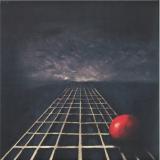
Noctourniquet And then everything went black, at least for a while, at least for The Mars Volta. In the months and years following their fifth full-length, Octahedron, Omar kept on at his usual fearsome creative pace. In fact, he ramped up his output considerably, starting up his own Rodriguez Lopez Productions label and releasing a slew of solo albums. It was a practice he’d begun shortly after De-Loused’s release, with his solo debut A Manual Dexterity: Soundtrack Volume One, but as the decade reached its close, Omar grew to rely upon his solo recordings as an outlet for his prolific creativity, these albums often exploring musical pastures far beyond even The Mars Volta’s wide-ranging parameters. Before choosing to release music under his own name, Omar would always play it to Cedric first, to see if the frontman thought it had potential to become Mars Volta music. Shortly after Octahedron’s completion, Cedric flagged one batch of tracks Omar had cut with Deantoni Parks, a brilliant drummer and composer who’d briefly occupied the Mars Volta drumstool in-between Jon Theodore and Thomas Pridgen’s tenures, and whose volcanic creativity and unique, unpredictable approach to rhythm and composition had quickly made him one of Omar’s favourite artistic foils.
As with the music that made up Octahedron, the new tracks Cedric had optioned for The Mars Volta often veered far from the riotous, Grand Guignol visions of their earlier releases. It possessed the punchy, song-based focus of Octahedron, though this was a considerably darker, more menacing strain of pop, with synthesisers figuring heavily in the productions. Cedric took the tracks in 2009 and set about writing songs to the music. But no more new Mars Volta music would be heard until 2012. The years that passed in-between were nonetheless momentous, and busy, witnessing an unexpected reunion of the members of At The Drive-In, and Cedric joining his own side-project, Anywhere. But there wasn’t any sign of life within the Mars Volta until Omar, Cedric and their bandmates took to the road for a series of live shows in the spring of 2011, billed as The Omar Rodriguez-Lopez Group, debuting the songs that would become Noctourniquet. The album followed the next year, and it remains one of The Mars Volta’s finest, its electronic textures staking out unfamiliar but fertile new ground.
An unsettling, subtly turbulent listen, Noctourniquet found Cedric sketching out a story about “some sort of device that stops the darkness from bleeding”, drawing influence variously from the nursery rhyme Solomon Grundy, the Greek myth of Hyacinthus and the song Birth, School, Work, Death by British underground rockers The Godfathers. It was an album of dystopian futurism, signalled by the paranoid cyber-rock of opener The Whip Hand and its unnerving chorus, “That’s when I disconnect from you”. But it was also an album of inspired, unexpected moves and uncanny invention, like how Dyslexicon seemed to eerily evoke Blondie’s Rapture, before rushing headlong into its bruising chorus, tempos shifting restlessly throughout like quaking earth beneath the listener’s feet, or how Aegis put a brave new spin on The Mars Volta’s trademark rewiring of salsa’s overdriven passions, or how Cedric had never sounded as scary as he did on The Malkin Jewel’s mutant burlesque shuffle. Tracks like Molochwalker were sleek and concise in a way The Mars Volta had never really attempted before – which was all part of Omar’s plan.
“It had all been guitar, guitar, guitar, overdubs, everything fighting for space in the same frequency,” he explains. “So for Noctourniquet, it was all about subtracting elements, of sticking to how I made demos.” Deantoni’s presence helped revivify the group, playing against cliché and expectation, and taking each song in unexpected directions. “I’d beatbox a rhythm for him to play, to go with my guitar part, and he’d come back with three or four alternate options. It was so great.” Similarly, Cedric had never sung better than on Noctourniquet, staking out a fearsome spectrum from the chilling Tom Waitsian growl of The Malkin Jewel to the keening, beautiful vocalisation on Vedamalady, rising to match some of Omar’s most deft, most immediately effective and melodic songs yet. Indeed, Noctourniquet is the sound of a band discovering new ways to do familiar things, renewing their commitment to their mission, finding fresh inspiration a decade in, and shaking off any complacency that might have come with ten years of acclaim and success.
Hot Creations latest Vinyl Sampler featuring four of the Hottest recent release on Hot Creations.
The A Side features two notable figures in the electronic scene: Steve Bug and Denney, who team up with Mikey V creating an old-school house gem which has been going down a storm on dance floors. Next up is Collier’s rework of Joshwa ‘Bass Go Boom’, Collier comes in hot and heavy with booming low-ends and snaking bass grooves, infusing 'Bass Go Boom' with a quirky funk and a deep, dubby bounce!
On the flip and Vintage Culture & Vinter ‘High”, huge anthem finally gets a vinyl release. This hot as hell house anthem is an essential weapon! Finally Hot Since 82 ‘Sonedo’, dives deep into a lush bass-driven groove that envelops the senses, with rhythmic builds and playful percussion accents transporting listeners into an all-night hypnosis.
out of Stock
Last delivered 14 days ago available to reorder, subject to availability
British singer-songwriter Lucy Kitt unveils her highly anticipated second album, Telling Me, a deeply personal collection that shifts focus from introspection to storytelling, capturing the lives and struggles of those closest to her. Drawing from her love of 70’s Laurel Canyon folk, 90’s indie rock, and country music, Kitt crafts narratives that blend her own experiences with compassionate observations of loved ones. Based on a raw acoustic “three chords and the truth” style of songwriting that ripples throughout, the album expands with full-band arrangements that give a huge range and richness to the sound.
Though influenced by American musical traditions, the Essex-native maintains her distinctive voice and authenticity, ensuring the music remains unmistakably her own. Following her 2018 debut Stand By, this new record represents a more mature approach to songwriting, written during her early 30s and completed in the 2021 lockdown – a storybook of songs capturing that moment in time.
Musically, Telling Me showcases Kitt's stripped-down acoustic foundations, while incorporating fuller arrangements that blend her love of Nick Drake, Bob Dylan, Gram Parsons, Joni Mitchell and Joan Baez, with music she loved as a teenager such as The Lemonheads and Veruca Salt. The album features collaborations with an impressive roster of musicians, including Jay Starkey on drums, Nashville-based pedal steel virtuoso Spencer Cullum, Treetop Flyer’s Sam Beer and longtime collaborator Pat Kenneally on drums and piano.
Recorded between 2021-2023 at London's Lightship 95 studio at Trinity Buoy Wharf, the album was co-produced and engineered by Dave Holmes, with some musicians contributing remotely from Nashville and London.
Kitt's commitment to authenticity extends to every aspect of the album, from the down-to-earth, home-based album artwork which represents her life right now as a musician and a working mum, with all the wonderful chaos that comes along with it. Also her decision to maintain her natural accent throughout her vocals. "I have always retained my authentic self in my songs," she explains. "Always singing with my own accent, despite the influences of all the bands and artists over the years."
Kitt has been songwriting and performing for over 20 years, starting in a riot grrl band in her teens in her hometown of Romford, Essex, before evolving into the thoughtful folk storyteller she is today. A semi-finalist at the BBC Young Folk Awards in the early 2000s, she has performed at major festivals including Glastonbury and Cambridge Folk Festival, building a reputation for intimate, lyrically-focused performances.
Telling Me is a resplendent collection of songs, capturing the human experience with great empathy, honesty and musical sophistication that has become Lucy Kitt's signature.
Sweatmaster releases a new full-length album after a 15-year hiatus via Svart Records Sweatmaster, one of the aristocrats of Finnish garage rock, is making a big comeback with the release of their fifth album More! in January 2026. After the release of their 2010 album Dig Up the Knife, the band took a long break, which ended a few years ago with live performances both domestic and abroad. At the same time, new material began to emerge in the rehearsal room, and the band quickly found a common strategy for working on it. "We were unanimous about the strengths of our band and decided to get to the heart of the matter. The main idea was to make straightforward songs carried by the vocals. The kind that would work well live with our aggressive playing style," says the band's drummer Matti Kallio. Svart Records will release Sweatmaster's fifth album early next year. More! is a sharp package of fourteen songs that has not been polished to death. "We wanted a raw and electric sound for the new album, built tightly around the three of us playing. The aim was to stick to Sweatmaster's original energy and not spread ourselves too thin. However, despite our efforts, the intervening years brought some new tones with them," guitarist Mikko Luukko explains the background of the new album. The album's first single will be released on Friday, September 19th, and according to singer-bassist Sasu Mykkänen, Destroyer is the essence of Sweatmaster. "The drum fill draws you into the pull of the electric triangle. The guitar taps at the ballads and wants nothing more than to drive the rhythm until the passionate vocals take over. The song doesn't lead anywhere, it's already there. 2 minutes, 37 seconds. Wham bam. Here you go." More! is available for pre-order now at Svart’s webstore on Svart exclusive vinyl, limited coloured vinyl, classic black vinyl, and CD. Release date January 30th, 2026.
Waking Up the new album from Annabelle Chairlegs - produced by Ty Segall
With roots in the industrial heartland of New Jersey. Annabelle Chairleg's music fuses gritty, dark, mechanical textures with a playful and whimsical spirit. The band has shared bills with The Zombies, Lucy Dacus and The Brian Jonestown Massacre, while lighting up festivals including Austin City Limits, SXSW, Levitation, and Austin Psych Fest.
On her newest release, Waking Up, lead singer Lindsey Mackin is joined by Nick Cornetti on drums and Derek Strahan on bass. Produced and recorded by Ty Segall in his home studio in Topanga, CA- this marks Chairlegs’ third full-length album— a bold new chapter for the Austin mainstay.
To Note: This vinyl has two vinyl exclusive tracks 'I Feel So Mad' and 'Beef Witted' which will not be available in streaming services upon release
Grupo um celebrate 50 years with release of lost dictatorship-era album nineteen seventy seven!
First time release - vinyl comes with printed innersleeves
Brazilian avant-jazz vanguardists Grupo Um celebrate their 50th anniversary, sharing a second previously lost 1970s album from the vaults. Nineteen Seventy Seven (titled after the year it was recorded) is another rip-roaring instrumental fusion treasure from the band which spawned from within Hermeto Pascoal’s famed mid-1970s São Paulo collective.
Like their debut album Starting Point, Grupo Um’s Nineteen Seventy Seven was recorded when Brazil's military dictatorship was at its most repressive. “There were no open doors to those who dreamt to be protagonists in creative instrumental music”, remembers drummer Zé Eduardo Nazario, “even popular composers and singers had to submit their songs to censors and many records were banned and confiscated from the stores.”
Just like Hermeto Pascoal's Viajando Com O Som (1977) and Grupo Um's previous album Starting Point (1975), both of which remained unreleased until the 21st century, Zé Eduardo asserts that the 1977 album was flatly 'without any chance to be released at that time."
Recorded at Rogério Duprat’s Vice-Versa Studios in São Paulo, the group were under both time and space restraints, “we chose the small Studio B,” Lelo Nazario recalls, “which had a Tascam (TE AC) 12x8 console and a 4-channel AMPEX AG 440 machine. Therefore, we had to record without overdubs, everything straight to tape.”
Expanding from a trio to a quintet, original Grupo Um members Lelo Nazario (keys), Zé Eduardo Nazario (drums), and Zeca Assumpção (bass) were joined by saxophonist Roberto Sion and percussionist Carlinhos Gonçalves. Carlinhos, Zé and Zeca had already played together in the group Mandala, while brothers Lelo and Zé had just finished a stint backing Hermeto Pascoal during his years in São Paulo.
Lelo was deeply immersed in modular synthesizer experimentation during this period, working extensively with the ARP2600 and EMS Synthi AKS. These electroacoustic explorations formed the sonic foundation for "Mobile/Stabile," one of his first compositions to merge modular synthesis with Brazilian music, a fusion that would ripple throughout the Brazilian jazz scene. The piece premiered at the first São Paulo International Jazz Festival in 1978, performed by Grupo Um with guest trumpeter Márcio Montarroyos. In a shocking moment, festival organizers interrupted the show mid-performance, sparking fierce backlash from both audience members and journalists who denounced the incident as artistic censorship during Brazil's era of political and cultural repression. The version on Nineteen Seventy Seven is the first recording of the composition.
Nineteen Seventy Seven combines Afro-Brazilian rhythm, modular synthesis and a plethora of whistles, percussion and effects pedals. Album opener “Absurdo Mudo” - so titled for the absurd difficulty it poses to the musicians performing it - starts out in a cloud of mysterious dissonance, before the haze breaks for a glorious keyboard and saxophone interplay atop an uptempo samba groove. “Cortejo dos Reis Negros (Version 2)” (Procession of the Black Kings), based on the maracatu rhythm, inverts the traditional jazz song structure by beginning with improvisations, which are followed by the theme and a final coda. “The studio also had two Parasound electronic reverb units,” Lelo notes, “and the timbre is very audible on the soprano sax and percussion.”
Grupo Um’s daring music represents a manifesto of resistance during the dictatorship years, but it’s one which remains just as relevant today. As Lelo puts it: “For me, the aesthetic issue has always been about combining contemporary avant-garde languages with Brazilian music, independent of categories and commercial interests. The result of this fusion takes music to a new level.”
Recording credits (1977)
Recorded at Vice-Versa B Studio, São Paulo, November 9, 1977
Produced by Lelo Nazario and Zé Eduardo Nazario
Engineered by Ricardo “Franja” Carvalheira
Lelo Nazario – Wurlitzer electric piano, acoustic piano, signal generator, percussion
Zé Eduardo Nazario – drums, percussion
Zeca Assumpção – electric bass
Carlinhos Gonçalves – percussion
Roberto Sion – soprano sax, clarinet
Release credits (2025)
Produced by UTOPIA Studio, São Paulo
Project Coordination in Brazil by Irati Antonio (Utopia Studio)
Tape Restoration and Digital Mastering by Lelo Nazario at Utopia Studio, July 2025
Liner Notes by Lelo Nazario and Zé Eduardo Nazario
Photography by Jorge Las Heras, Lelo Nazario, and artists' personal archives
Photo Restoration by Lelo Nazario
Artwork and Design by Alessandro Renaldin
Sweatmaster releases a new full-length album after a 15-year hiatus via Svart Records Sweatmaster, one of the aristocrats of Finnish garage rock, is making a big comeback with the release of their fifth album More! in January 2026. After the release of their 2010 album Dig Up the Knife, the band took a long break, which ended a few years ago with live performances both domestic and abroad. At the same time, new material began to emerge in the rehearsal room, and the band quickly found a common strategy for working on it. "We were unanimous about the strengths of our band and decided to get to the heart of the matter. The main idea was to make straightforward songs carried by the vocals. The kind that would work well live with our aggressive playing style," says the band's drummer Matti Kallio. Svart Records will release Sweatmaster's fifth album early next year. More! is a sharp package of fourteen songs that has not been polished to death. "We wanted a raw and electric sound for the new album, built tightly around the three of us playing. The aim was to stick to Sweatmaster's original energy and not spread ourselves too thin. However, despite our efforts, the intervening years brought some new tones with them," guitarist Mikko Luukko explains the background of the new album. The album's first single will be released on Friday, September 19th, and according to singer-bassist Sasu Mykkänen, Destroyer is the essence of Sweatmaster. "The drum fill draws you into the pull of the electric triangle. The guitar taps at the ballads and wants nothing more than to drive the rhythm until the passionate vocals take over. The song doesn't lead anywhere, it's already there. 2 minutes, 37 seconds. Wham bam. Here you go." More! is available for pre-order now at Svart’s webstore on Svart exclusive vinyl, limited coloured vinyl, classic black vinyl, and CD. Release date January 30th, 2026.
“My auntie asked me what’s my path?” spits Lord Jah-Monte Ogbon on his debut from the celebrated Lex Records. The lyric relatably references the cross roads he’s at in his current life, especially as someone right on the cusp of rap stardom. “Recently I’ve been thinking more and more about what comes next in my life,” the artist reveals.
It’s fair to say Ogbon’s Lex LP features less of the sh*t-talking court jester of old. Instead, there’s more of an imperfect man re-examining past mistakes so he can avoid any future forks in the road. There’s a particular focus on overcoming heartbreak, inspiring Ogbon to admit he’s haunted by an ex so badly he now needs to call up the Ghostbusters for assistance.
Since emerging in the late 2010s, Lord Jah-Monte Ogbon has consistently lit up America’s underground rap scene and this is thanks to a refreshingly honest writing style. Amid the exquisitely wavy strings of 2021’s The Missing Link / The Sneaky Link, for example, he rapped: “Everyone thinks they’re player, until their bitch doesn’t come home.” Biting and snappy, the nasally vocals carry the playful verve of comedian Richard Pryor bravely excavating personal Demons to solicit giggles.
All this brash, wry Redman-inspired storytelling continues on the new project. Its first single is titled I’m Signed to Lex, Now I’m Up – a name that mirrors what a big moment releasing a project on the label that once housed MF DOOM represents for Lord Jah-Monte Ogbon’s legacy. “I’m really driven by being able to level up and give my family more financial freedom,” he hopes.
And, if auntie asked what his path was right now, what exactly would the rapper say? Lord Jah-Monte Ogbon concludes: “Auntie: this rapping thing feels like it’s finally about to pay off!”
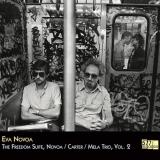
"Brooklyn-based pianist Eva Novoa returns with The Freedom Suite: Novoa / Carter / Mela Trio, Vol. 2 — the second radiant release from her compelling trio with saxophone icon Daniel Carter and celebrated drummer Francisco Mela. This marks Novoa’s sixth album with 577 Records. The trio first came together live in 2021, followed by a series of performances, including appearances in Cambridge (Boston) and later at the Brooklyn edition of the NY Forward Festival.
"The Freedom Suite is an homage to jazz titan Duke Ellington — particularly his masterful big band suites and legendary orchestra featuring Johnny Hodges and other luminaries who helped define an era of jazz greatness. In contrast, Novoa presents her Suite in a more intimate format: the piano trio. The album comprises twelve pieces — mostly brief — with a few extended tracks such as Free to Be Free and Cyborgs.
"For this recording, Novoa also steps in as a vocalist on several tracks, including Mainstream Media, Big Grande, Global, Free to Be Free, Dream, and Cyborgs. These pieces often feature a vocal dialogue between Novoa and Mela, whose expressive, word-infused style draws from rich Cuban traditions.
'Words are powerful,' says Novoa. 'They define who we are, where we come from, and who we hope to become. Without words, there is no conversation — and without conversation, there is no real sense of time, space, or connection.'
The Freedom Suite emerged from deep philosophical and creative conversations — spoken, written, and improvised — between Novoa, Carter, and Mela. In the studio, Novoa introduced printed texts that served as thematic foundations for spontaneous, in-the-moment musical interpretation. The result is an urgent and organic interplay, where instruments speak to one another in a language as fluid as it is fearless.
"Standout track Cyborgs begins with Novoa’s percussive piano, exemplifying the trio’s dynamic, conversational energy. Creative Destruction features Novoa on electric harpsichord in a wild, electric exchange. While Free to Be Free stands out as the album’s leading single, it also captures the essence and message of the entire Suite.
"Recorded in 2021 at New York City’s legendary Sear Sound Studio, the album captures a creative explosion of sound and spirit. Novoa dazzles on piano, Fender Rhodes, electric harpsichord, Chinese gongs — even whistle — showcasing her expansive sonic palette. Together, the trio embodies the power of free improvisation and emotional storytelling.
"Originally from Barcelona, Spain, Eva Novoa has been cultivating her distinctive voice since childhood. Now a staple of the New York creative music scene, she has performed across the globe and collaborated with some of the most adventurous voices in jazz and beyond."
Practitioner, educator, DJ, and researcher, Femke Dekker (also known as Loma Doom) has long been immersed in both sound and education. Across lecture halls, archives, festivals, art galleries, independent radio stations, and dance floors, she orbits a central question: What if listening itself were an artistic practice? What might unfold when listening becomes method, medium, and material?
Open Field Listening takes shape around these ideas. Presented as a collaboration between Page Not Found—an artist-run platform dedicated to publishing and experimental practices—and the record label Osàre! Editions, the text originates from Dekker’s graduation thesis for the Master Education in Arts at the Piet Zwart Institute, Rotterdam.
There, she honed her skills as a pedagogue, inviting students into improvisational jam sessions, radio-making, and exercises that activate new modes of attention and a heightened sense of sonic curiosity.
Drawing on the work of scholars and artists—most notably Pauline Oliveros—Dekker approaches listening as a call to action: a way of tuning into one’s surroundings, one’s body, and the urgencies that contour our political and social worlds. She emphasizes the radical potential of reorienting knowledge toward collective attunement: the we rather than the I (or the eye). Inspired by Oliveros’s concept of Deep Listening—a way of expanding awareness through focused, embodied perception—Dekker acknowledges the composer as a foundational feminist figure whose insights continue to reverberate through the classroom, the studio, and beyond.
~~~
Page Not Found kindly thanks Mondriaan Fonds and the Municipality of The Hague for their generous support. Page Not Found is a centre for artistic and independent publishing, approaching these practices as vital, collaborative forms of cultural exchange.
Osàre! Editions is a music label founded by Elena Colombi. With a passion for diverse and experimental sounds, Osàre! Editions showcases unique artists and performers from around the world.
"Graze the Bell" ist eine Sammlung von bewegenden, faszinierenden Solo-Klavierstücken und das bisher reinste Werk von David Moore. Bekannt für seine atmosphärischen Kompositionen mit Bing & Ruth sowie seine Zusammenarbeit mit dem Gitarristen Steve Gunn und Cowboy Sadness, ist dies Moores erstes weit verbreitetes Solo-Klavieralbum. Wie das Albumcover - ein Foto, das Moore von Hand bestickt hat - abstrahiert die Musik persönliche Erfahrungen zu transzendenten Eindrücken. Moore nutzt sein Klavier, um meditativ die Conditio Humana zu erforschen, und macht "Graze the Bell" zu einem Zufluchtsort des Klangs. Im Laufe ihrer zahlreichen Veröffentlichungen haben Bing & Ruth häufig ihre Form und ihren Sound verändert, sich zu einer fünfzehnköpfigen Gruppe entwickelt und sind schließlich zu einer Trio-Konfiguration gelangt. Ihr jüngstes Album ,Species" stellte Moores Farfisa-Spiel in den Vordergrund, während eine nachfolgende EP mit dem gleichen Namen seine Solointerpretationen des Albums enthielt. Dieser lange Prozess der Destillation konzentrierte sich stets auf Moores Kompositionen für das Klavier und sein Verständnis davon. Nach zwei Jahrzehnten gefeierter Ensemblearbeit ist das Erscheinen von ,Graze the Bell" ein Moment, in dem sich der Kreis schließt, eine Heimkehr - nicht einfach zu einem Ort oder einer Zeit, sondern zu einem leuchtenden Zentrum, das beides übersteigt. Einige der Stücke auf ,Graze the Bell" waren ursprünglich für ein Album von Bing & Ruth geplant, wurden aber schließlich als Soloprojekt neu konzipiert. Moore nutzte nur das Klavier und versuchte, die bewährten Methoden, die er im Laufe der Jahre entwickelt hatte, weiter auszubauen. ,Ich möchte mich weiterentwickeln", sagt er, ,und dogmatische Denkweisen hinterfragen." Er öffnete sich aktiv für Experimente und suchte nach einer tieferen Präsenz in seinem Spiel, wobei er seine Beziehung zum Klavier und zum Leben neu bewertete. Moores Musik basiert zwar auf komponierten Noten und schöpft aus Lebenserfahrungen, doch die Quelle seiner Inspiration bleibt eher unbeschreiblich. Indem er Letzteres bewusst pflegte, entwickelte er eine natürliche Fähigkeit, sich in einen tranceähnlichen Zustand zu versetzen. Moore kann sich mit dieser Absicht hinsetzen und ist ,innerhalb weniger Sekunden" ,vollkommen dort". Von der ersten bis zur letzten Note basiert das Album auf dem atemberaubenden Klang eines ,bestialischen" Steinway Model D aus Hamburg von 1987. Dies hängt zum Teil mit seinem subtilen Spielstil zusammen, der manchmal an Stille grenzt. Moores anmutige Herangehensweise gibt dem Klang Raum und offenbart Nuancen des Klaviers, die viele Spieler gewöhnlich ignorieren würden. Solche Nuancen wurden während der Aufnahmen des Albums im renommierten Oktaven Audio in Mt. Vernon, New York, gepflegt. Der Klang des Steinway-Flügels des Studios wurde unter der Produktionsleitung des Grammy-Gewinners Ben Kane mit Unterstützung von Owen Mulholland lebhaft eingefangen. Um Moores experimentellen Ansatz zu unterstreichen, setzten sie Pitch-Correcting-Software kreativ ein, um die verschiedenen Register des Klangprofils des Klaviers zu orchestrieren. Der Ausdruck ,graze the bell" (die Glocke streifen) kam Moore vor Jahren aus heiterem Himmel in den Sinn. Er fand ihn poetisch und blieb ihm im Gedächtnis haften. Moore, der lange Zeit daran geglaubt hatte, dass das Leben eine Reise ist, an deren Ende man etwas erreicht oder ankommt, und dies zunehmend in Frage gestellt hatte, fand zunehmend mehr Sicherheit darin, einfach da zu sein, wo er ist. ,Es gibt keinen Gipfel - und keinen Weg dorthin", schreibt er. ,Nur die Hoffnung, dass wir, wenn wir Glück haben, gelegentlich die Glocke streifen." Und diese Erkenntnis hat er in sein Klavierspiel einfließen lassen. Mit diesem Album hat er sich bewusst dafür entschieden, Eigenheiten, sowohl seine eigenen als auch die des Instruments, voll und ganz anzunehmen. Anmut, subtile Klänge, rohe Gesten und glückliche Zufälle werden hier geschätzt. Die Stickerei auf dem Cover zeigt seine Frau beim Drachensteigen an der Küste von North Carolina. Sie wurde während der Abmischung des Albums über zehn Monate hinweg methodisch mit Kreuzstich gestickt, und viele persönliche Lebensereignisse - traurige und hoffnungsvolle - sind in seine Handwerkskunst eingewoben. Da Moore selbst mit einer bipolaren Störung zu kämpfen hat, dienten sowohl das Album als auch die Stickerei als kathartische Mittel der Meditation für ihn. Moores Klavierspiel enthält eine versteckte Karte persönlicher Erfahrungen, die bezaubernde Wiederholung seiner Melodien navigiert seinen Weg und unseren durch die Skalen des Raums. Moores Musik weckt verborgene Gefühle, erweckt uns und erinnert uns an unser gemeinsames Zentrum. In einer Zeit, in der unsere Menschlichkeit regelmäßig abgelenkt und beeinträchtigt wird, lässt ,Graze the Bell" das Herz erklingen, das wir als unser wahres Zuhause kennen. David Moores "Graze the Bell" wird über RVNG Intl. veröffentlicht - eine spirituelle Heimkehr, wenn man so will.
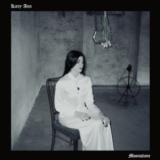
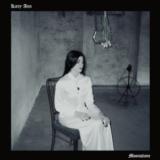
Through crushing riffs and haunting vocals, it reflects on loss, the forces of nature, and existential struggle. The production balances raw intensity with a deep, immersive atmosphere, enhancing the album's emotional depth. The album opens with a song in Latin, setting the tone with a ritualistic invocation. As its title suggests, it serves as a reminder to preserve one's inner purity in a decaying world, weaving ancient echoes into the album's foundation.
Todeslied follows as a hymn to death, carrying a solemn mood. The record also draws upon literary inspirations: one track is based on The Road by Cormac McCarthy, evoking apocalyptic desolation and the desperate fight for survival, while Dress in flames gives voice to the fury and imprisonment of Bertha Mason, the tormented character in Charlotte Bronte's victorian novel Jane Eyre. Compared to her previous release, which was more personal, Moonstone marks a shift towards greater collaboration within the band, with a more unified approach to songwriting and arrangements. The album, featuring two tracks by bassist Francesca Papi, has been arranged and refined together with Davide Rosa (guitar) and Fabio Orticoni (drums). The release also includes a powerful tribute to Bathory with a reinterpretation of Shores in Flames.
Recorded at Produzione Rumorose, mixed by Maurizio Baggio, and mastered by Giovanni Versari, this record represents a powerful evolution in the band's sound, sharpening their identity and pushing the boundaries of their musical expression.
Berlin-based Swiss vocalist Lucia Cadotsch returns with her celebrated Speak Low trio for their second album, released by We Jazz Records on 27 Nov. "Speak Low II" features Cadotsch on voice, Otis Sandsjö on tenor saxophone and Petter Eldh on double bass, and introduces guest artists Kit Downes on hammond organ and Lucy Railton on cello. "Speak Low II" picks up where their genre-bending and forward-looking debut album left off, introducing new shades into the band's sound and also diving even deeper into the songs they tackle. What makes Speak Low special is their approach to really get to the heart of each composition with seemingly minimal means, yet generating a sound which is both instantly recognisable and remarkably impactful.
"Speak Low II" comes almost five years after the band's lauded debut, and proves the depth of the band's approach right from the start. At the core of the trio's operation is an openness to their love of the music and to their surrounding scene(s). The album comes across as a unified collection of songs made truly theirs and found through listening to records and spending time with their musician friends, often on the road. The highly evolved band sound and the equality of the musicians shines through on the Speak Low sound, as the group uses their 100+ performances together as a vehicle for the development of their music.
"The first album was filled with pretty famous songs, but that was actually not at all intentional" explains Cadotsch. "Those were just my favourite songs of the previous 10 years and we started working on making them ours, musically. We were playing around with concepts for the second album, but soon realised that we just needed to find the right songs and adapt them organically, which comes through in how we interact with the songs and each other. This time around, we wanted to dig deeper and made finished arrangements of around 20 tracks, half of which we ditched in the process. The ones that made the cut have been through a lot and they just felt right for us."
In a way, the Speak Low approach could be described as archaeological. Three music lovers connecting with songs found at various sources, readily throwing away any ideas that don't seem natural to them, and hanging on tight to the ones that do.
Turns out there is a concept to "Speak Low II". It's the band itself, their shared musical development and their love of music.
"Speak Low II" will be available on We Jazz Records on vinyl (PURPLE and BLACK editions), CD and digitally. The vinyl versions come with a heavy duty tip-on sleeve and a printed inner sleeve. CD in digisleeve with no breaking plastic parts.
out of Stock
Last delivered 5 years ago available to reorder, subject to availability
,Warmer Than Gold", das neue Album von Ben Cooks Projekt GUV, ist ein Dokument eines Lebens in der Musik, ein kritischer und feierlicher Reisebericht, ein Versuch, die homogenen und statusbesessenen Zustände der heutigen Welt durch den Einsatz von großen Beats, großen Refrains und Verzerrung zu überwinden. Es ist ein Album, das unterwegs entstanden ist und überall Sinn ergibt. Vor allem aber leitet es mit seiner erweiterten Klangpalette und der Betonung von Breakbeats eine neue Ära eines Künstlers ein, der nie aufgehört hat, sich weiterzuentwickeln. Cook, der zwischen Toronto und England aufgewachsen ist, verfügt über eine angloamerikanische Authentizität, die ihn von der wachsenden Schar von Hardcore-Kids mit Windjacken und Pilzköpfen unterscheidet. Zwei der ersten Konzerte, die er im Alter von 12 Jahren besuchte, waren Oasis und Neil Young. Nach dem Konzert, erinnert er sich, dachte er: ,Ja, ich werde für immer Musik machen." Kurz nachdem er Hardcore und Punk für sich entdeckt hatte, ging es los, zuerst mit seiner geliebten Hardcore-Band No Warning (mit der er bis heute spielt), dann als Mitglied der Punk-Experimentalisten Fucked Up, die er 2006 gründete. Er war ein Teil der Underground-Szene, die sich in den 90er Jahren in Kanada Kurz darauf entdeckte er Hardcore und Punk, und schon ging es los, zunächst mit seiner geliebten Hardcore-Band No Warning (mit der er bis heute spielt), dann als Mitglied der Punk-Experimentalisten Fucked Up von 2007 bis 2021 - und währenddessen baute er sich ein umfangreiches und beeindruckendes Repertoire an Soloarbeiten auf, zunächst als Young Governor, dann als Young Guv und jetzt einfach als GUV (,Ich bin nicht mehr so jung, Drei-Buchstaben-Bandnamen sind cool, und ich bin es leid, mit einem Rapper verwechselt zu werden", bemerkt Cook). Warmer Than Gold ist die großformatige Krönung all dieser Stränge. Die Musik des Albums behält den eingängigen Geist von Cooks früheren Alben bei, wie den gefeierten Doppelalben GUVI & II und GUV III & IV, fügt jedoch ein ausgeprägtes rhythmisches Element hinzu, das von klassischem Madchester und Britpop geprägt ist. Es verschmiert und schwebt, es fühlt sich an, als würde man um Mitternacht die Autobahn M1 entlangrasen, angetrieben von einer Dringlichkeit, die in Cooks anderen Werken nicht zu finden ist. Was jedoch von diesen früheren Power-Pop-Veröffentlichungen beibehalten wurde, ist das ausgeprägte Gespür des Künstlers für eingängige Melodien. In Kombination mit einer neuen Produktionssensibilität, die von den Beastie Boys über The Field Mice bis hin zu Primal Scream inspiriert ist, gelingt es Cook, die zentralen lyrischen Themen des Projekts musikalisch zu untermalen: die globale Verflachung der Kultur, das Vergehen der Zeit in der materiellen Welt und die Rolle des Künstlers in all dem.
out of Stock
Last delivered 8 months ago available to reorder, subject to availability
The journey through French-speaking pop archives continues with this fifth volume, packed with fuzz, gimmicks, and dissent. Far from the charts, the selected tracks display a great creative freedom, often backed by corrosive humor. Welcome to the surprising, kaleidoscopic, and colorful world of the late sixties and early seventies, Wizzz!
Born in Montauban, Robert Pico stumbled into music by chance when he met René Vaneste, then artistic director at Pathé-Marconi. René brought him to Paris to record his first 45 RPM EP in 1964. A year later, Pierre Perret introduced him to Vogue, where he recorded his second album with Claude Nougaro’s orchestra. Sylvie Vartan then introduced him to RCA, where he recorded four singles, including the astonishing "Chien Fidèle," a track backed by a hair-rising fuzz guitar. Alongside his solo career, he also composed for other artists like Alain Delon (the song was recorded but remains unreleased), Magali Noël, Bourvil, and Georges Guétary. In the Paris of the sixties, he mingled with Mireille Darc, Elsa Martinelli, Marie Laforêt, France Gall, Françoise Hardy, Petula Clark, Régine, Dani, Serge Gainsbourg, Joe Dassin, Franck Fernandel, Charles Level, and Roland Vincent. Despite his efforts and winning a Grand Prix Sacem for his final record, Robert Pico didn’t achieve the expected success in show business and decided to leave Paris and return to the Southwest, where he devoted himself to writing. He is the author of 23 books (including Delon et Compagnie, Jean-Marc Savary Editions 2025, a memoir about his youth and his many encounters). Today, he is relieved to never have become a celebrity and devotes himself to his work with passion.
In 1969, the Franco-Italian movie Erotissimo was released, directed by Gérard Pirès (who later directed Taxi in 1998, written and produced by Luc Besson). This pop comedy features Annie Girardot, Jean Yanne, Francis Blanche, Serge Gainsbourg, Nicole Croisille, Jacques Martin, and Patrick Topaloff. The soundtrack was written by Michel Polnareff and William Sheller, with lyrics by Jean-Lou Dabadie. "La Femme Faux-cils," performed by Annie Girardot. It recounts the feelings of a rich CEO's wife who seeks to develop her sex appeal under the influence of advertisement and magazines. Groovy, sparkling and light, this track, with ITS lush arrangements humorously critiques consumer society and feminine beauty standards.
“Je suis l’Etat” (1967) is the flagship track of the first EP by singer-songwriter Spauv Georges, aka Georges Larriaga, better known as Jim Larriaga (1941-2022). Born into a family of bakers, the young man was initially planning to become a hairdresser when he discovered English-speaking music through Elvis Presley and the Beatles. After this revelation, he decided he would become a songwriter and gave himself five years to succeed. He recorded his first two EP’s independently for RCA under the pseudonym Spauv Georges; meaning “that poor George”, a nickname given to him by the mother of her friend Jean-Pierre Prévotat (future drummer of the Players, Triangle, or Johnny Hallyday). Portraying a depressed and eccentric young man, Spauv Georges created corrosive and amusing songs that didn’t reach a wide audience, despite a TV appearance with Jean-Christophe Averty.
Supported by his loyal friend and fellow songwriter Jean-Max Rivière, Georges Larriaga met the future singer Carlos in the early '70s, then Sylvie Vartan’s assistant. He wrote songs for Carlos, including the popular "La vie est belle," "Y’a des indiens partout," and "La cantine", which went onto become a huge hit in 1972. He also composed for Claude François (“Anne-Marie”, 1971), Charlotte Julian (“Fleur de province”, 1972), helped launch child singer Roméo (who sold 4 million records), and later wrote the hit "Pas besoin d’éducation sexuelle" (1975) for the young Julie Bataille. In 1971, Jim recorded an album for Disc'Az: “L’univers étrange et fou de Jim Larriaga”, which featured pop gems like “La maison de mon père”.
The story of the song "Zoé" began when Pierre Dorsay, artistic director at Vogue Records, asked Swiss singer and musician Pierre Alain to write a song for a new female singer. The inspiration came when he realized that Zoé (the artist's name) was also the name of France's first atomic battery, created in 1948, which consisted of uranium oxide immersed in heavy water! The lyrics reflect a bubbling energy that must be handled with caution, while the instrumentation echoes this atomic theme, notably with the use of a theremin.
Zoé’s career lasted only as long as a single 45 RPM, but it seems Christine Fontane was the vocalist behind this pseudonym, who is known for several EPs, a good "popcorn" album in 1964, and a handful of children’s singles in the '70s. Regardless, the photograph on the cover is of a different girl entirely.
Later, Pierre Alain continued his career, writing songs for himself, Marie Laforêt, Danièle Licari, Alice Dona, Arlette Zola (3rd place in Eurovision 1982), and achieving multiple gold and platinum records in Canada. Also an inventor with several patents, president of the Romande Academy, and head of the French Alliance in Geneva, he now composes atonal music, books, and poetry. Moreover, he is also the host of "Les Mardis de Pierre Alain" at "Le P'tit Music'Hohl" in Geneva.
Filled with oriental choruses and fuzz guitar, "Fou" is from Jacques Da Sylva's only EP released by Vogue in 1967. Despite the quality of this recording, all traces of this singer disappear after this first effort.
Valentin is a baroque pop singer born in Belgium. He is the songwriter and composer of most of the tracks on his three singles released in the late 60s in Canada. A legend says that he reincarnated himself as Jacky Valentin during the 1970s for a rock'n'roll revival career in Belgium, but his older brother sadly debunked this story. Valentin's first two singles were arranged by Claude Rogen, a Parisian session pianist who had come to Canada to promote the song “Mister A Gogo”, a cover of David Bowie’s “Laughing Gnome”, adapted by singer Delphine, his wife at the time. Far from his usual network, Claude Rogen arranged music for Polydor, including the arrangements for “Je suis un vagabond” in 1969, a jerk tune with string arrangements and a furious optimism.
Jacques Malia wrote, composed, and recorded his only 45 EP for Festival in 1966. “Histoire de gitan” is an incredible beat track with bohemian scat that tells the story of a gypsy musician who came to Paris to make it in the Music-Hall, to no avail. The hero of the song and its author probably shared a similar fate, as Jacques Malia faded into anonymity after this remarkable attempt.
Bernard Jamet recorded two EPs for Barclay in the late sixties and co-wrote several songs with Christine Pilzer, Pascal Danel, and prolific songwriters Michel Delancray and Mya Simile. The track “Raison Légale” (1968), his masterpiece, immerses the listener in a courtroom right when a murderer is being judged, with jerk rhythm and free arrangements. A unique, paranoid, judicial, and psychedelic oddity.
Jean-Pierre Lebrot-Millers started his career in show business in 1967 as a singer and songwriter for the Philips label. After three singles, he wrote several songs of a new kind with his friend Pierre Halioche, in the midst of the sexual liberation movement and the democratization of drugs. With provocative lyrics, “Les filles du hasard” and “Barbara au Chapeau Rose” were released on a Philips singles in 1968. The character of Barbara was inspired by a queen of Parisian nightlife during the psychedelic years: model Charlotte Martin, who dated Eric Clapton from 1965 to 1968, then Jimmy Page from 1970 to 1983. Jean-Claude Petit’s arrangements, with a table-filled intro, soul brass, and Hendrixian guitar, emphasize the flamboyance of a hedonistic and sexy character, whose dog is named Junkie because “Junkie est un nom exquis”! The track was recorded live in three takes with a full orchestra.
Upon its release, the record was censored by Europe 1 and RTL due to its references to drug use. Jean-Pierre Lebrot was then banned from the airwaves and later dismissed by his record label. He changed his artist name to Jean-Pierre Millers, while his companion Pierre Halioche became D. Dolby for a new dreamy composition, “Chilla”, which Jean-Pierre produced himself with arrangements by Jean Musy. Once again, the song was immediately censored everywhere. After this setback, he decided to stop singing and started taking on odd jobs to support his Swedish wife and their son until the day he met Jean-Pierre Martin, then production manager at Decca, who had worked with Manu Dibango. Martin offered Jean-Pierre Lebrot-Millers, then employed at Rank Xerox, the position of artistic director at Decca. He accepted and became, a year later, promotion director (radio, press, TV). He worked on Julio Iglesias’s first album for Decca, which became a massive hit and allowed him to meet Claude Carrère. The latter asked him to write new songs and find their performers, much like a “talent scout.” It’s through him that Jean-Pierre discovered Julie Pietri and Corinne Hermès. He composed “Ma Pompadour” for Ringo, Sheila’s husband, and took the microphone again for the syncope hit “Rendez-Vous” in 1982.
That same year, Jean-Pierre Lebrot-Millers tried to release a track for which he had heavily gone into debt: “Si la vie est un cadeau”. Having recorded it in London, he presented it to numerous professionals, all of whom refused to get involved. The same thing happened with Antenne 2 and the Sacem when he proposed the song as France’s entry for Eurovision. He then met Haïm Saban, who was producing cartoon soundtracks and had just launched the Goldorak theme song. Saban, having listened to the song, declared it had the potential to become a hit. He sent Jean-Pierre and Corinne Hermès to meet the CEO of the Luxembourg radio and television network. The latter received them, asked to hear a verse and chorus a cappella in his office, and immediately hired them to represent Luxembourg at Eurovision 1983. They reworked the arrangements and recorded a new version with Haïm Saban as co-producer. The song ended up winning Eurovision 1983, a great comeback for our hero. He continued producing and hung out with the band Nacash in Belgium when a couple came to introduce their daughter for an impromptu audition in a hotel room. The girl sang “Les démons de minuit” while dancing to a radio cassette. Impressed, he had her take singing lessons for a year and composed a song for her (for which he had the melody and title, but no lyrics). This required him to go on the hunt for a lyricist, who ended up being Guy Carlier. They recorded the song, which was initially a ballad, at Bernard Estardy’s CBE studio, and gave the singer a new name: Melody. They showed the song around their industry network without success. Later, Estardy called Jean-Pierre to suggest changing the rhythm and making it pop-rock. Orlando, Dalida’s brother, liked the result and decided to co-produce the track. “Y’a pas que les grands qui rêvent » became a classic hit. The song has since been covered by Juliette Armanet (as a ballad, like the original) and Valentina.
Born into an aristocratic Breton family, Hervé Mettais-Cartier worked as a DJ at Queen Kiss, a nightclub in Poitiers, where he formed the band Les Concentrés with Michel (an actor) and Christian (a radio technician). Together, they created a repertoire of whimsical songs (“Ma bique est morte”, “J’suis un salaud”, “Fils de dégénéré”...) that they performed on stage dressed in white (in homage to “concentrated milk”). They performed at Bliboquet and Olympia in 1968 for the 10th edition of the “Relais de la chanson Française” organized by L’Humanité-Dimanche and Nous les Garçons et les Filles, sponsored by Pepsi Cola. Winners in the author-composer category, alongside Danish singer Dorte, their visibility allowed them to record a 45, and appear on television in Jean-Christophe Averty’s show. The A-side of the disc features Bruno le ravageur, a casatchok dedicated to Bruno Caquatrix, the director of Olympia, nicknamed in the song “Coq Atroce” or “croque-actrices”. The B-side is dedicated to “Fils de dégénéré”, a quirky tribute to Hervé's aristocratic roots, mixing absurdity with sophisticated vocal harmonies.
After Les Concentrés, Hervé Mettais-Cartier formed the duo La Paire et sa Bêtise with his friend Olivier Robert. They performed in Parisian cabarets and toured with Pierre Vassiliu. In the late 1970s, Hervé began a solo career. He recorded two albums for the Motors label in 1978 and 1979, which did not achieve their anticipated success due to lack of promotion. In 1980, he met Bernadette, with whom he started a family and created a “Chansons à voir” (songs to see) show that he performed until his death at the end of 2024.
Publicité comes from the final EP by the Missiles (Ducretet Thomson, 1966), a disc that also includes “La (nouvelle) guerre de cent ans”, featured on Volume 4 of our Wizzz! series. Please refer to the booklet for the story of the band.
“He’s 1.82 meters tall, 28 years old, weighs 135 kg, is black and Belgian”: this is the description of singer Hegesippe on the back of his sole single (Decca, 1967). He appears on the album cover wearing a Greek toga, like a hippie gag – we are at the end of the year 1967. In “Le crédo d’Hegesippe”, this former bodyguard of Antoine and the Charlots plays the delightful card of the thick brute converted to Flower-Power and non-violence, with arrangements by Jean-Daniel Mercier, aka Paul Mille.
“Ethéro-disco” was released on a promotional record for clients of the Maréchal company (Liège, Belgium) for the New Year 1979. Over a funky rhythm, celebrity impersonations (Brigitte Bardot, Jacques Dutronc, Fernandel…) deliver an enigmatic text about pharmaceutical products like ether, bismuth, and aspartate. The track was composed by Dan Sarravah (responsible for Joanna's “Hold-up inusité” featured on Wizzz! Volume 3) and Tony Talado, who was also a singer (one 45 in 1967), songwriter (with over a dozen credits between 1964 and 1985 in various styles from surf music to disco), author (Devenez Végétarien, Dricot Editions, 1985), ad designer, and psychologist.
Décollez-les is on the A-side of Mamlouk's only single, a pseudonym for Marsel Hurten, who is known for his work on several EPs in the late sixties, as well as composing music for Hervé Vilard’s “Capri, c’est fini”, Claude Channes' “La Haine”, Annie Philippe’s “On m’a toujours dit”, and Nancy Holloway’s “Panne de Cœur”.
This strange song, with Afrobeat horns and absurd dialogues between a chef and his kitchen staff, is the result of a collaboration between Marsel Hurten and one of his neighbors, a photographer from Pavillon-sous-Bois (93), where the musician settled after returning from the Algerian War. A music video was shot to promote the record.
Marsel Hurten was born in Tourcoing (59) into a musical family. At a young age, he joined the brass band founded by his grandfather, playing the piston before studying trumpet at the conservatory, as well as teaching himself how to play the guitar. As an orchestra musician, he toured in France, Belgium, Germany, and England. He released a series of solo 45’s between 1965 and 1968 for the DMF and Az labels before stopping recording to focus on working for other artists (Gilles Olivier, Noëlle Cordier…).
“L’amour nu” (Vogue, 1971) is the work of the short-lived Belgian band Mozaïque. The track, written by singer Jacques Albin, closely resembles another of his compositions, “Carré Blanc”, which he recorded in 1969 for Disc’AZ.
Represented by the Lumi Son micro-label based in Marignane (Côte d'Azur), Jean-Marc Garrigues released two 45 RPMs in the late sixties, defending the French jerk sound. The song “Je dis Non” is a short, joyful ode to youth, pop music, and rebellion.
Songwriter and performer Jacques Penuel released three singles. The first one, “Astronef 328” (Fontana, 1969), features a dizzying series of chords punctuated by sound effects, a sci-fi story, and arrangements by Jean-Claude Vannier.
We would like to sincerely thank Pierre Alain, Moon Blaha, Marsel Hurten, Bastien Larriaga, Jean-Pierre Lebrot-Millers, Bernadette Mettais-Cartier, Robert Pico, Olivier Robert, Claude Rogen, Micky Segura.
out of Stock
Last delivered 8 months ago available to reorder, subject to availability
Childish Gambino is (and isn't) Donald Glover, a recording artist, writer, actor, director, producer and comic who was gifted his alias by an online Wu Tang-Clan name-generator. Originally hailing from Stone Mountain, Georgia - his Mum was a daycare provider and his Dad a postal worker, where TV was banned in the house - Glover first entered the spotlight as a member of sketch-troupe Derrick Comedy, via a stint working on The Daily Show and the invitation to join the '30 Rock' writing staff by Tina Fey before he'd even graduated from NYU. A succession of mini-albums and mixtapes surrounded all of this, parallel to acting roles ranging from The Muppets to NBC's cult hit comedy 'Community'. It was 2011's debut album 'Camp' - his first since signing to Glassnote Records - which marked a breakthrough for Childish Gambino, whose music explores everything from identity, race, and technology to hip-hop culture, class, and family. Follow-up 'because the internet' went top 10 on the Billboard chart, was nominated for 2 Grammy Awards and further assimilated Gambino's multiple disciplines (it was accompanied, for instance, by two films and a standalone 72-page screenplay). Around this time - and between roles in HBO's 'Girls' and movies like 'The Martian' - Glover also announced that he was working on his own TV show: a comedy-drama which he would star in, write and direct, 'Atlanta' premiered on FX this autumn to significant critical acclaim (it's already been described as "Twin Peaks with rappers"). The show was launched alongside the third Childish Gambino, 'Awaken, My Love!', this summer at 'Pharos', a series of secretive, audio-visual live performances which took place in a custom-designed dome in the middle of the desert in Joshua Tree. A second series of 'Atlanta' has already been commissioned, whilst Glover has recently been cast in the forthcoming Spider Man movie and has also been confirmed to play the iconic role of Lando Calrissian in the next Star Wars film (a Han Solo spin-off). His most vital artistic statement to date, Childish Gambino is expected to unveil further music from 'Awaken, My Love!' in the coming weeks.
After being part of the inner circle of the ESHU family for many many years, finally it's time for Yasin Engwer's solo debut EP. His first contributions date from 2012 when SYS released their first EP on ESHU, the production trio consisting of Sinan Alakus, Steven Siwalette and Yasin. Also a recent collaboration with Jocelyn was released on ESHU and he's an important part of the mega producer crew Dilated Pupils that has been releasing beats since 2014. His long going career and hard work now finally gets rewarded with his own Onyx EP. A carefully curated club pack of razor sharp, minimalistic dub house. It's been selected by digging through 10 years of unfinished beats on long lost hard drives. And of course, it also includes collabs with his SYS crew and fellow Nijmegen producer Space Ventura. It's a classy collection of dub driven, forward pushing, tech grooves in typical ESHU fashion. An EP that's been long overdue, but perfect on time.
out of Stock
Last delivered 5 months ago available to reorder, subject to availability
Where maturity evolves into a signature sound, the personal and musical journey becomes one. Chromadelia by Italian producer and live artist Ness refines two decades of precision and craft. It is techno reduced to its core logic - direct, functional, and self-aware. Ness' process moves from spontaneous jams to detailed sculpting, a continuous sequence where improvisation gradually becomes structure. Randomness plays a role, but only as the foundation for his architecture. The result is music that feels both deliberate and fluid, shaped by intuition and refined through years of practice. Minimalism here isn't merely an aesthetic choice, but an organic conclusion -- drawn from experience and the trust that less can truly reveal more. The four tracks on Chromadelia extend this clarity onto the dance floor: sharp, beepy, metallic, rhythmically charged, yet open enough to let each element breathe. Introspection and club-functionality coexist seamlessly, each amplifying the other. In Chromadelia, Ness demonstrates that every tone, every pulse serves a purpose, offering a clear reflection of an artist who has learned to let precision speak louder than complexity.
out of Stock
Last delivered 74 days ago available to reorder, subject to availability
In 2016, a year after the 50th entry in the long-running series, none other but the iconic Detroit artist, DJ and producer Moodymann stepped up to helm the next landmark edition of DJ-Kicks, his first ever multi-artist DJ mix compilation. Following !K7's 40 th anniversary, this classic DJ-Kicks mix is now being repressed on coke bottle clear vinyl.
Born Kenny Dixon Jr., Moodymann is a one-of-a-kind electronic music icon, hailing from, and wholly synonymous with the Motor City. He is an outspoken, impossibly charismatic artist who has been putting a distinctive and soulful stamp on house and techno since the early 90s. Melting together jazz, funk, soul, blues and rock in captivating ways, he is responsible for some of electronic music’s most definitive tracks, EPs and LPs on labels like Planet E, Peacefrog and his own KDJ and Mahogani Music imprints. As able to serve up the sweetest and most sensual sounds as he is the darkest and most depraved grooves, his own unique voice and stream of conscious musings infuse expertly sought-out samples for music that is decisively alive and authentic.
Across 75 minutes and 30 tracks, Moodymann does not disappoint: despite being a notorious vinyl fetishist, Dixon’s aim is to present music of quality, not to one-up fellow collectors. Rather than serving up ridiculously rare or hard- to-find records, he instead focuses on creating a libidinous, blues-drenched mood that takes in heart-breaking soul, gorgeous hip-hop and love-fuelled house.
In addition to cuts from his own creative circle, the mix features 11 exclusive Moodymann edits. Like everything Kenny Dixon Jr. touches, his DJ-Kicks showcases the taste, skill, and soul of a dance music original.
out of Stock
Last delivered 4 months ago available to reorder, subject to availability
Lapalux (Stuart Howard) is a UK-based experimental electronic music producer known for his emotionally charged sound design, intricate textures, and immersive sonic storytelling. With releases on Brainfeeder and widespread critical acclaim, Lapalux has built a loyal global following and earned consistent airplay on BBC Radio 1, BBC 6 Music, and NTS. His work has been championed by DJs including Mary Anne Hobbs, Benji B, and Tom Ravenscroft, and praised by outlets such as The Guardian, Resident Advisor, XLR8R, and Clash. Lapalux's music occupies a unique space between IDM, ambient, and leftfield electronica — rich in atmosphere, detail, and feeling.
On the Grid is Lapalux's latest EP — a deeply intricate, hardware-driven exploration of rhythm and emotion that fuses fragmented IDM with warm analogue tones and deep dynamics. The EP showcases Lapalux's continued evolution as a producer, balancing intricate sound design with powerful melodic undercurrents. It follows years of refinement in the studio, drawing on his signature use of modular synthesis, Digital and analogue hardware and organic imperfections. With a limited vinyl pressing and strong fan demand, On the Grid stands as a key release in Lapalux's catalogue and a compelling addition to any store's forward-thinking electronic selection.
out of Stock
Last delivered 8 months ago available to reorder, subject to availability
Chicago producer Ellery Cowles lands on Apnea Records with three tracks that draw from the city's foundational rhythms while reaching for something more devotional. Walking by Faith isn't chasing nostalgia--it's after deeper ground. "Fall of Jericho" kicks things off with syncopated Chicago swing colliding with latin percussion and acid basslines that curl and bite in equal measure. "Fly" builds around a looped vocal fragment, letting raw drum patterns stretch and breathe as the track slowly reveals itself. Closer "Crying of Yahweh" is the most patient of the three--seven minutes of hypnotic techno coiling around latin rhythms, carrying a quiet spiritual weight that lingers long after it fades. Cowles moves between reference points with ease--Chicago house, devotional threads, latin heat--but never forces the connection. The music feels like it's been lived in rather than simply constructed, generous with its time and intentional with its space. Out now on Apnea Records.
out of Stock
Last delivered 7 months ago available to reorder, subject to availability
Flying into the new year with the return of The Southside Surgeons - the production team of WeeG & Si Cheeba on the “Echo-Labs” sub label (for collaborations in the Echo Chamber) - with another double header of clubwise 45 action
The A Side “Calling All Dancers” drops a Cosmic-Afro-Boogie sound laced with funky breaks - coming on like Dexter Wansel -vs- Manu Dibango - with a mid 1970s club feel and subtle up to date production.
It certainly lives up to its name, as a rallying call for people to hit the dancefloor, when it’s recently been aired on Test Press up and down the country !
The flipside “Follow Me…” takes you to a late 1970s Brasilian Block Party with a variation on a familiar bass line, cut up with brass stabs and old school rap vocals. It’s proving to be a great party starter with its head-nodding groove and funky chants.
out of Stock
Last delivered 7 months ago available to reorder, subject to availability
Childhood Intelligence’s 18th release by ADSR aka. Todd Nickolas & Dominic Paterson from Toronto, Canada. The 2x12” album presents mostly tracks written and produced by Todd, with A1/D1 being in collaboration with Paterson. "Give a teenager in a rural Canadian setting an analog synthesizer, a drum machine and a four-track cassette recorder and feed him a steady diet of 80s EBM, Post-Punk, Synthpop, Electro, Dub, Acid, Hip Hop and House, and you’ll get the kind of genre melding electronic-based music that Todd Nickolas has been known for since his early days of writing and producing." The end result is a versatile one, with “Passive Articulation” presenting abstract Techno - House - Electro visions, and fusing all the elements of vintage Intelligent Dance Music that we cherish so much: warm basslines, beautiful chord progressions, diverse and surprising arrangements infused with haunting melodies, hypnotic cyber sounds, detached vocal cuts and dubbed percussion.…Overall fresh & timeless classiness for the present, past & future.
Recorded various locations New Hamburg, Kitchener-Waterloo, Ottawa, Toronto, San Francisco and Los Angeles. ADSR greatly thanks those who were there from the start, those who joined along the journey and those here now.
out of Stock
Last delivered 8 months ago available to reorder, subject to availability
In a World of deep paradoxes unrestrained by time, mysterious new corporations appear; tagged with the words 'Sunrise Inc.' ... For the first chapter in Childhood Intelligence's Sub-Division Corporation "Sunrise Inc.", Future vinyl Artifacts from Inf0 - Sheffield, UK - have been collected; 6 Traxx showcasing visions of Dark Mystique, from Dreamy Auras and Lush Soundscapes, to Outer Space - all in Pulse with Fresh Acid Saturation and Electrobass. Limited copies...
out of Stock
Last delivered 8 months ago available to reorder, subject to availability
Ninja was a niche Italo disco project formed by Cristina Peri (vocalist, composer and producer) and Enzo Benetti (DJ and producer). Together they managed to compose and produce only a handful of tracks, three of which were released under the Ninja moniker. Their collaboration resulted in a highly distinctive synth-pop sound, marked by a rock-leaning drum approach with a strong, metal-sounding snare, and melodic lines that deliberately avoided obvious, immediate catchiness.
The unique and “super obscure Italo treasure” reissued by Vintage Pleasure Boutique, titled “Mad About Love,” carries an additional point of interest: Pier Michele Bozzetti, better known as Miko Mission, was also involved in the production. “Mad About Love” is a rare and collector-sought track that has never been reissued before. With this new vinyl release, Vintage Pleasure Boutique once again steps forward with an archival initiative, hoping to bring genuine excitement to underground Italo fans and collectors alike.
out of Stock
Last delivered 8 months ago available to reorder, subject to availability
Mike Majkowski makes his debut on Hands in the Dark Records with Invisible, a selection of six moody and mysterious pieces produced between 2019 and 2025.
The prolific Australian double bassist and music maker has been involved in a diverse array of contemporary, improvised and experimental music since the early 2000s. This time, the Berlin-based artist is venturing deeper into downtempo, meditative and hypnotic minimal electronic realms.
While time and space are constraints, they also define our identities, creating inexplicable bonds with others flowing through shared moments and shared places. The state of being invisible obliterates these confines, allowing one to return to their pure essence. In this setting, Majkowski’s compositions display a discreet and profoundly emotional language characterised by vulnerability, darkness and confusion, while also embodying hope, soothing and resilience. A dim light, transcending love, space, memory and time.
out of Stock
Last delivered 8 months ago available to reorder, subject to availability
Inspired by Sam Kidel’s ›mimetic hacking‹ concept, Berlin-based composer Jasminev Guffond pipes opiated brass and woodwind motifs into a reverb chamber modelled on an Amazon fulfilment centre.
»Muzak for the Encouragement of Unproductivity« is a poetic inversion of Muzak’s traditional role in stimulating seamless productivity in the workplace. Beginning as a pre-radio music distribution network (1934, U.S.), Muzak was transmitted along electrical wires with the intention of being at once ubiquitous and indiscernible, always present yet easily ignorable. As a pseudo-science the aim was to capitalize on the potential of music to have a psychological effect on listeners, and with the goal of maximum productivity, was employed as a sonic disciplinary force in the work place.
Previously installed for Dystopia Sound Art Biennial (2024), at the Amazon Packing Station located before HAUNT-Frontviews in Berlin, Muzak for the Encouragement of Unproductivity sonically addresses utopic notions of seamless, efficient productivity, inherent to capitalist cultures, and their very real dystopic effects from labour exploitation to the impacts of over-production on the environment. This poetic inversion, further developed as an album, is not meant as a kind of melodic control but rather a reflective space in which to consider the benefits personally, globally and environmentally, of slowing down.
Reverb, essential to the Muzak aesthetic, is programmed (using convolution reverb) with the dimensions of the Berlin Amazon fulfillment centre, DBE2. Amazon fulfillment centers are global contemporary factories, promising a consumer utopia of next day delivery of almost any product imaginable. Inspired by Sam Kidel’s concept of »mimetic hacking«(1), the reverberation characteristics of the DBE2 facility perform a symbolic sonic break-in to the guarded Amazon fulfillment center, a trespass to the flow of production.
Guffond’s ambient Muzak with its drifting horn, clarinet and synth-like modulations is just too down-tempo for upbeat spending. If this is Muzak it is possibly Muzak for the end of the world, thoughtfully seeking transcendence through implied questioning after all avenues for shopping have been exhausted.
out of Stock
Last delivered 8 months ago available to reorder, subject to availability
A chopped-and-screwed love letter to the sounds of rebajada – half-speed cumbia, pioneered by Sonido Dueñez in the 1990s, and born from an overheated turntable motor that didn’t make the crowd stop dancing. With Debit’s treatment, rebajada becomes an ethereal, at times intense ambient tapestry that’s also a history lesson.
Spend any amount of time pacing the streets of Monterrey, the bustling city in the north of Mexico where Delia Beatriz, aka Debit, grew up, and you’ll be sure to catch traces of cumbia echoing from Bluetooth speakers, DIY soundsystems, or car stereos. An Afro-Latin dance form and »practica cultural« originating in Colombia in the early 19th century, cumbia evolved rapidly in the early 1900s, as a localised sound played on drums and flutes quickly modernised to integrate European instrumentation like the accordion. When it reached Mexico in the 1940s, the sound shifted again, fusing with mariachi styles and integrating further vallenato folk elements. Eventually, cumbia spread across the entirety of Latin America, splintering into a spectrum of different musical styles such as chicha in Peru, and cumbia villera in Argentina. And over in Monterrey, cumbia inadvertently found its own idiosyncratic groove.
From the 1950s to the 1970s, waves of immigrants from across Mexico and Latin America headed to Monterrey to find work, making a home in Colonia Independencia. Colombian cumbia records, shipped in from Mexico City, Houston, and Miami, became the soundtrack of the neighbourhood, relaying familiar stories to a rural working class adjusting to their new industrial reality. The sound struck a chord with locals, and huge street parties hosted by ramshackle soundsystems known as sonideros unified the diverse community. So when cumbia rebajada materialised serendipitously in the 1990s, it emphasised and highlighted the memory distortions at the heart of the immigrant experience. Local record collector, selector, and sonidero Gabriel Dueñez had been playing cumbia for hours one night when disaster struck: his turntable’s motor overheated and slowed down, turning the music into a warped groan, with half-speed voices echoing over wobbly accordion drones and splashy drums. But the crowd kept dancing, and Sonido Dueñez realised he’d struck gold – cumbia rebajada was born.
Over the next few years, he dubbed a popular series of mixtapes, hawking them at the flea market on the dried-up Santa Catarina riverbed beneath El Puente del Papa, the bridge that links downtown Monterrey with Independencia. These woozy archives became the stuff of legend, poetically but subconsciously shadowing DJ Screw’s series of epochal cassettes that appeared over the border in Houston. Beatriz uses Sonido Dueñez’s first two tapes as the starting point for »Desaceleradas«, entering into a dialogue with time, culture, and geography as she recalls the sonic ecosystem that surrounded her decades ago, long before she emigrated to the USA. If 2022’s acclaimed »The Long Count« was an attempt to recover concealed pre-Columbian history in the face of colonisation, »Desaceleradas« jumps forward, figuring out how memory and shared celebration can resist a more contemporary form of cultural erasure. As AI systems scrape, blend, and decontextualise culture around us, leaving vapid slop, »Desaceleradas« proposes a slower, more careful, and ultimately more human kind of engagement. It’s an archive with a pulse.
out of Stock
Last delivered 8 months ago available to reorder, subject to availability
On »Empty Room,« David Granström works with slow transformations, cyclical and isometric patterns as well as just intonation as a way to create harmonic stability, allowing his long-form pieces to develop their own unique temporal and spatial qualities. A prolific figure in Stockholm’s experimental drone scene and a collaborator of Hallow Ground label mates Maria W Horn and Mats Erlandsson, the Swedish composer navigates through moments of quietude and crushing volume on these five tracks. Sonically and atmospherically, the pieces on »Empty Room« simultaneously call to mind Fennesz’s most meditative work or the physical experience of seeing Sunn O))) live, blending guitar recordings and synthesised sounds with forceful effects similar to those of Mario Díaz de Leon’s Oneirogen project while still being as moving and delicate as Alessandro Cortini’s solo work. The album is marked by melodies and harmonies that are the product of a peculiar working process that turned the composer into an intent listener collaborating with, rather than simply using technology.
Having been invited by the self-organising artist group The Non Existent Center for a residency to Ställbergs Gruva, a defunct iron ore mine in Sweden’s Bergslagen region, Granström took his guitar as a starting point for his compositional work that heavily relies on real-time sound synthesis. »I seldomly use the instrument as a sound source in the final compositions and rather transcribe and orchestrate the harmonic structures using sound synthesis,« he explains. »On this album however, I chose to include the actual recordings of the guitar in order to extend the spectra between non-referential synthetic sounds and embodied referential sounds.« Working with precise tunings in order to blend the timbre of the synthesis with the harmonic structures of the composition, he created composite sound objects in which the harmonic elements blend into each other.
Through the re-amplification of synthetic musical materials from the inside of the abandoned mine, his original compositions were enriched with site-specific sound qualities before he further refined them in a singular working process. Granström works with algorithmic and generative processes, using the SuperCollider programming environment and thus blurring the lines between generative and creative forms of composition. »One of the things that I like about this way of working is that it creates a distance between myself as a composer and myself as a listener of the music that is produced entirely by the system,« he says. Granström’s technologically aided eschewing of the conventions of composing doesn’t make the end result any less personal, however. By listening again and again to the newly generated output, Granström simply took on a different role in the process of finalising the music, with the technology and the sounds becoming his co-authors.
By creating systems that generate music, he gains a new perspective on (musical) time, says Granström. »There doesn't have to be a fixed length to the music at all,« he explains. »And by writing music with this in mind, my focus tends to shift towards writing cyclical structures that gradually change and transform over time.« Simple parts, in other words, that emerge as the five complex wholes that form »Empty Room,« a record that itself seems to take on different forms with every new listen.
out of Stock
Last delivered 8 months ago available to reorder, subject to availability
Andrew Lloyd Webber’s The Phantom of the Opera is one of the most celebrated musicals of all time, and this original London cast recording from 1986 remains the definitive recording. Michael Crawford’s Tony Award-winning performance as The Phantom and Sarah Brightman’s portrayal of Christine Daaé helped make this the best-selling cast recording in history. Re-issued for the first time in decades, this classic album brings the unforgettable score to a new generation of listeners. From the title song to “The Music of the Night” and “All I Ask of You,” every track reflects the power and beauty that continue to make The Phantom of the Opera a global phenomenon nearly forty years after its debut. Since its premiere, The Phantom of the Opera has been seen by more than 160 million people in 195 cities and has received over 70 major theatre awards. It holds the record as the longest-running show in Broadway history and was the first British musical to debut at number one on the music charts. The recording has been certified Platinum in six countries.
The Final Album recorded by Nikki Sudden release posthumously by friends o Now after consultation with all band members and producer John Rivers the album has been re assembled re mixed and re mastered to create the best sound it's ever been o Lavishly designed by Dave Twist includes notes by band members and photos from the sessions o The Lp comes in de luxe gatefold sleeve with printed inner bags o Contains bonus tracks and has been reordered to the last email nikki sent on the subject
Soul Visions is an instrumental journey into the world of Deheb, who, after several years of continuous sound research, continues to draw inspiration from jazz, soul, funk, and progressive rock records, first discovered through his father and then through his fellow collectors and DJs, including his partner DJ Marrrtin from Funky Bijou.
The Breton artist is renowned in the beatmaking world for his collaborations in New York in the mid-2000s (Moka Only, Sean Price, Torae, Tye Phoenix, Apani B, etc.) and for his album “LEAF”, released in 2015 with Swiss producer Chief. He is best known for producing classic Funky Breaks in the global breakdance scene with Marrrtin under the name Funky Bijou, whose tracks have been played at the world's biggest breakdance events since 2011 (Battle Of The Year, Red Bull BC One, etc.). All their tracks have been listened to more than 30 million times on various platforms and social networks.
A prolific artist who draws much of his inspiration from funk and jazz, he is based in Nantes and has collaborated with groups from the French Neo Soul scene, such as J-Silk from Bordeaux, Jo Wedin from Sweden, and Keysuna from Nantes. Close to the dance scene, he has also collaborated with dancer and choreographer Mackenzy Bergile, which led him to join the CCNRB's choreographic project “Earthbound” by choreographers Saïdo Lehlouh and Johanna Faye in 2023.
Deheb has also been composing for documentary projects since his first collaboration with director Shyaka Kagamé in 2015 for “Bounty”. In 2024 and 2025, he worked on two critically acclaimed projects: “Boulevard du village noir”, produced by Radio Television Suisse, and “IMIHIGO, le pacte rwandais”.
This year, 2025, he brings us “Soul Visions”, a journey through the cinematic sound of the early 1970s to the soul funk and jazz funk of the late 1970s, a pivotal period in his own musical identity that contributed to the funk sound of his guitars and the texture of his synthesizers and electric pianos.
Soul Visions is first and foremost a tribute to the artists and composers, the geniuses of that era, such as the Mizell brothers in “Larry and Fonce”, the Bell brothers in “Ron and Don”, and giants of the genre such as Isaac Hayes, Yuji Ohno, Roy Ayers, and Clarence Reid. All these masters of the genre had their own distinctive sound and arrangements, which were easily recognizable and which are among Deheb's major inspirations.
out of Stock
Last delivered 7 months ago available to reorder, subject to availability
January 21, 2026 marks the 40th anniversary of Hideaki Tokunaga's major label debut.
A long-awaited new album will be released on this memorable day! Titled "COVERS," it marks the launch of a new series of cover albums that truly showcase Tokunaga's talent.
This is his first studio recording since moving to Nippon Columbia, and his first cover album in 11 years since his smash-hit series "VOCALIST 6." With "VOCALIST," Tokunaga
built his own brand on the concept of faithfully covering classic songs by female artists. "COVERS" features a wide selection of works by both male and female artists,
reinterpreting classics that he "want to sing now" with his own powerful arrangements and vocals. It's been exactly 40 years since the release of his debut song, "Rainy Blue."
Look forward to the new sound that has been created as a result of this journey.
Yes, after a hiatus of 15 months, The ReMix Collection makes a highly anticipated return as Yotto steps up to take on the Shakra Mix of Power Circle’s ‘Garden Of Peace’.
Originally released in 1993, the track was an immediate Renaissance anthem, finding favour with all their key DJs. However, it became synonymous with one man in particular, namely, John Digweed, who cemented the track’s legendary status when he included it on his Journeys By DJ compilation the following year. Even today he’s been known to slide it into the mix, most recently episode 10 of his legendary Bunker streams. And the track has other contemporary fans too; a certain Mr. Plex was heard dropping it in 2020.
In short, it’s one of those records that’s stood the test of time and grown in stature year on year. Now, its evolution takes yet another step as it joins the ranks of Renaissance’ flagship ReMix Collection series.
Yotto’s modern interpretation is a high-octane juxtaposition of thunderous bass, rising pads and THAT vocal. ”Garden Of Peace is a record I missed first time around as a kid and had only heard on a mix, never knowing what it was, so when Renaissance approached me about a remix there was a strange sense of familiarity,” he explains, “The original is full of classic progressive house mystery and, while I took the whole thing apart, I wanted to keep that emotion with my interpretation.” On the B-side there’s a re-mastered cut of the original Shakra Mix, which isn’t released digitally and remains exclusive to vinyl only.
out of Stock
Last delivered 6 months ago available to reorder, subject to availability
One of the leading Japanese alternative rock band, GEZAN’s leader, MahitoThePeople’s director debut film, i ai was released in March 2024, and it is an atypical coming-of-age film decorated with tinge of red.
The film takes place in Akashi and Kobe, Hyogo prefecture. This film’s main characters are Ko (Kentaro Tomita), a rookie member of a band and a brother-like figure of his, Hee (Mirai Moriyama) who Ko idolizes and the story of this movie is based on their struggles with life and death. The story is also based on Mahito's real-life experiences and while reality and fiction are duplicated, the boundary between them slowly melts away. The film co-stars Honami Satoh, Kazuki Horike, Mitsuru Fukikoshi, Eita Nagayama, Kyoko Koizumi, K-BOMB, Ichi Omiya and many other unique personalities. It should also be noted that the transparent images filmed by photographer, Masafumi Sanai gives the film, a special emotional quality.
The film is not bound by any film theory but it poses a theme common to GEZAN's recent works and Mahito's writing activities: How can we live in a crumbling society while interacting with others? We can never live alone but living with others is also never easy. How can we overcome this time of extreme division of the world?
What left quite a strong impression in this film that not only Mahito personally directed but also wrote the script and composed the soundtrack as well was the main theme song, entitled “i ai”. This new piece of GEZAN is an extension of the work that this band has continued doing over the last few years. This 12" single, contains the song, “i ai” and it will be the first time released on vinyl.
Led by soft guitar arpeggios, the song gradually builds to a fever pitch, condensing the mood of the film which encompasses both tranquillity and intensity. The chorus of ineffable, multiple voices united together sounds like a lament that has spilled out of society or a cry of joy. GEZAN's collaboration with the 15-member chorus group, Million Wish Collective has been in development of late and the cultivated sensibilities through their activities are put to use in this song.
The song can also be considered a slow, relaxed dance track that lasts 9 minutes and 8 seconds. It has something in common with organic dance tracks from South America and other regions, and it is significant that GLOCAL RECORDS which represents glocal music from around the world in Japan are releasing it as a DJ-friendly 12-inch single.
The B-side features a remix by COMPUMA who is also closely associated with GEZAN. The song starts with an African styled percussion, with a thumb piano in the middle of the song and then returns to that memorable chorus. This song feels like a 18 minutes and 18 seconds long short movie like suite, with some dizzying changes from the beginning to the end. It is remix filled with enormous drama!
The cutting and mastering of this 12” was done by TOREI who is also active as a DJ and the artwork was created by jvnpey, a visual artist and graphic designer based in Tokyo. Their loving work also makes this 12" very special.
When I asked AI to find a synonym for the word, “division,” it displayed in succession, a series of words: “integration,” “consolidation,” “unification,” “unity”, and “reconciliation". All of these phrases are somewhat whitewashed and embarrassing but the mirage-like chorus echoing in the song, “i ai” seems to be trying to find a new word, that is a synonym for the word, "division. In this film, “i ai”, the message, “Let's live together after the end roll” was thrown out but included in this 12-inch, the message, “Let's live together after the music stops”, emerges.
For over six decades, Charlemagne Palestine (b. 1947, New York) has been a pioneering composer, performer, and multimedia artist, celebrated for his ecstatic sonic explorations and ritualistic, metaphysical performances. Emerging from the cross-disciplinary New York art scene of the 1960s and ’70s, he helped shape a heretical edge of minimalism alongside figures like Conrad, Riley, Niblock, and Glass. Trained as a Jewish cantor and later as the carillonneur at St. Thomas Church, Palestine cultivated a deep fascination with resonance and overtone—an obsession that evolved through his use of percussion, early synthesizers, and monumental piano works, influencing artists from John Cale to Nick Cave.
Animated by a spirit of ecstatic play and what he calls his »meschugge« (Yiddish for »crazy«) sensibility, Palestine’s universe blends the sacred and the absurd, filled with soft toys, ritual gestures, and immersive sound environments. Rejecting the »minimalist« label in favor of a maximalist, »spontanimalist« approach, he creates long-form, resonant performances that transform spaces into vibrating, living organisms—opening portals into the nature of time, sound, and devotion.
In the same vein, the aptly titled live record »The Organ is the World’s Greatest Synthesizer« – performed during the Sonic Acts Festival at Amsterdam’s Oude Kerk in 2025, and taking its title and cover art from a drawing realized by Palestine himself during the concert – adds to his opaque yet vibrant personal mythology and intimate transcendence, marking a return to the Staalplaat catalog after »Fffroggssichorddd« (2020) and »Music for Big Ears« (2001).
Beginning with a resonating bell and his falsetto overtone singing, then surrendering to the endless, wild soundscapes of tone-feeling and beat frequencies generated by the church’s organ, across 40+ minutes, single sound sources evolve into clusters, entangle fully with one another, and establish their own spatial existence and aural architectures. We witness the traces of something that can be described as a perpetual performance, a test for the ever-changing interaction between artist, instrument, space and, ultimately, us.
Since Palestine has always defined his execution as a form of anti-composition - of simply »being in the music« as if inhabiting a space - the true power of »The Organ is the World’s Greatest Synthesizer« lies in encapsulating a moment of Palestine’s practice in its most authentic, live dimension. Sound becomes at once subtle substance and strange telluric force, animating physical forms from some unknown channel beyond and within, accessible only through our sensorium. The point in this liminal temple of tone, timbre and frequency is not to learn anything but to simply enter. Palestine earns once again his self-given title of contemporary shaman by keeping this sonic portal open, allowing us to witness and make it last.
»I have always felt and heard and mixed the sounds in my world as liquids not as solids. Sonic liquids are material that is endlessly transformable. But I’m not crazy about people who go around defining stuff.«
First Word Records are proud to bring you 'Penny Ballads', a 5-track EP from Royce Wood Junior. Royce Wood Junior is a Grammy & Mercury Award-nominated musician, songwriter and record producer from London, currently based in Brighton. As a multi-instrumentalist, he's collaborated with a litany of brilliant artists over the years, such as Jamie Woon, Nao, Disclosure, Jessie Ware, Olivia Dean, Joy Crookes, Jamie Lidell and Jordan Rakei, additionally to touring with the likes of the legendary Thomas Dolby. He's released two acclaimed solo albums to date ('The Ashen Tang' in 2015, and 'No Two Blue Ticks' in 2021). 'Penny Ballads' demonstrates RWJ's varied talents, with a collection of alternative soul compositions, each one as unique as the next. It includes the first two singles, the Poplife-Prince era flavoured 'Go Get Your Money', and the double-time future funk adrenaline shot, 'Clean Up', along with three previously-unreleased tracks. 'Beretta' is low-slung soul funk, beginning with quirky squelchy synths, before the soulful lead vocal of feature artist Lucey Way breezes in to melt everyone's hearts. 'Things' sweeps in next, an infectiously soulful midtempo heavy soul bop, with an instant earwork of a hook, like a modern-day Steely Dan / Doobie Brothers, complete with a head-nodding string section to end the track. The collection concludes on a more melancholy downtempo tip with 'Rolling'; an almost-folktronic anthem, with a key refrain that wouldn't be out of place on a 70's Stevie piece. RWJ (aka Jim Wood) says of this project… "Back in the 17 and 1800's Troubadours and minstrels would go from Tavern to Tavern selling Penny Ballads, single sheets of music and lyrics written quickly and frivolously to make a quick buck.. It strikes me that we're in a similar phase in the way we value music in 2025. An old Penny Ballad was cheap and dog-eared, ink-smudged, sung aloud by firelight, Now songs live in the digital ether, dissolved in the air, a ghostly breath paid in micro cents. The new era of Penny Balladry is here, and weird. This EP is a snapshot of my writing over a two year period. Focussed on minimal recording styles, one mic on the drums, generally first or second takes on parts and vocals, I wanted the music to feel like small moments with lyrics that talk about the weird nuances of being alive as a latter stage human on the cusp of the Ai revolution. Culturally so evolved, but physiologically still just a bunch of mammals walking about with primitive fears and needs. Just trying to reconcile it all moment to moment…" Previous support for Royce's music has included Radio 1's Future Sounds, BBC 6 Music's New Music Fix, Annie Mac, Clara Amfo, Jo Whiley (BBC Radio 2), Mary Anne Hobbs, Jamz Supernova, Tom Robinson, Huw Stephens (BBC 6 Music), Zane Lowe and MistaJam. There have been sessions previously for the likes of Red Bull and press from Huck, Line of Best Fit, Clash, Aesthetica & DIY magazine. Entirely self-written and self-produced, this EP gives a solid taste of RWJ's talents. A deeply funky diverse set of music from an immensely talented individual. 'Penny Ballads' is due to be released on vinyl & digital, 24th October 2025. The vinyl version also includes an exclusive additional mix of the first single 'Go Get Your Money'. TRACKLIST: 01: Clean Up (EP Mix) 02: Go Get Your Money 03: Beretta (feat. Lucey Way) 04: Things 05: Rolling 06: Go Get Your Money (B-Sharp Mix) Deconstructed Mixes
Already fifteen years that Cléa Vincent has been stepping on stage with that childlike fervor, that passion for pop and its elasticity, from her early days in Parisian bars to last year’s show at the Bataclan for the release of her third album Advitam Æternamour. You could say she needs no introduction, her name being inseparable from some of the most exciting work to emerge in contemporary French independent music. From the very beginning, she asserted her taste for spontaneous, candid, sunlit music, turning her songs not only into spaces of introspection but also into small capsules for dialogue. She collaborates constantly, with Kim Giani, Jeanne Balibar, Alison Wheeler, Jacques, NUSKY & VAATI, João Selva, Les Clopes…driven by a desire for sharing, for visions that meet and collide across genres. Alongside her work as a composer, she dedicates herself to giving a voice to the artists around her, notably through her show Sooo Pop, broadcast on YouTube in 2018 and 2019, where she welcomed guests as varied as Christophe, Moodoïd, Mathilde Fernandez, Katerine, and The Pirouettes. Like others of her generation, she claims the influence of francophone pop from the 1980s, but rather than being a successor to Jacno, Cléa draws from everything that shapes her era, fully plugged into the present, its faces, its energies, its collisions. She travels too, a way of reshuffling the cards of her inspiration, and her discovery of South America, of bossa nova and samba during her tour dates, became the catalyst for her series of EPs Tropi-Cléa.