LTD Violet Vinyl
"During the recording of TOTALLY, we were having a blast and the music just kept rollin' out so we decided to also put together a tasty EP. Guests Mario Lalli on STÖNER Theme and Greg Hetson of Circle Jerks and Bad Religion on our version of the Motorhead/Pink Fairies classic City Kids makes this EP extra sweet. Jump in and let's BOOGIE TO BAJA! If the name Stöner seems a little on the nose, well_ it is. Brant Bjork and Nick Oliveri, founding members of the stoner rock legend Kyuss, are joined again by drummer Ryan Güt (of Bjork's solo band) and they've got dibs on the thick and dusty swinging grooves, returning as Stöner with their sophomore release "totally_" Stöner's love for their early inspirations (bands like Blue Oyster Cult, Kiss, Ramones, Blue Cheer, Misfits, Black Flag, The Stooges, MC5) result in big, groovy, sunbaked riffs that can cruise low and slow but then floor it and run all the red lights. Live, this is a band about the magnetism between the players, the groove, the loose vibe and straight up badass rock and roll_ Stöner are masters of their trade. With "totally..." Stöner is in its true form, getting together and having fun. Stöner's world is a colorful joyride, heavy of rock but not of head. The record cranks with vibes of classic hard rock, heavy blues, desert rock and psych rock jams - things that come organically to this trio Stöner can't help but express an abundance of punk rock rawness and passion for real rock and roll swagger. With two records, "Live at Mojave" and "Stoners Rule" (available on Heavy Psych Sounds), the latest release "totally..." sees the band realizing the chemistry of these old friends developing a statement of pure rock and roll fun.
Cerca:dr mario
Violet Vinyl
"During the recording of TOTALLY, we were having a blast and the music just kept rollin' out so we decided to also put together a tasty EP. Guests Mario Lalli on STÖNER Theme and Greg Hetson of Circle Jerks and Bad Religion on our version of the Motorhead/Pink Fairies classic City Kids makes this EP extra sweet. Jump in and let's BOOGIE TO BAJA! If the name Stöner seems a little on the nose, well_ it is. Brant Bjork and Nick Oliveri, founding members of the stoner rock legend Kyuss, are joined again by drummer Ryan Güt (of Bjork's solo band) and they've got dibs on the thick and dusty swinging grooves, returning as Stöner with their sophomore release "totally_" Stöner's love for their early inspirations (bands like Blue Oyster Cult, Kiss, Ramones, Blue Cheer, Misfits, Black Flag, The Stooges, MC5) result in big, groovy, sunbaked riffs that can cruise low and slow but then floor it and run all the red lights. Live, this is a band about the magnetism between the players, the groove, the loose vibe and straight up badass rock and roll_ Stöner are masters of their trade. With "totally..." Stöner is in its true form, getting together and having fun. Stöner's world is a colorful joyride, heavy of rock but not of head. The record cranks with vibes of classic hard rock, heavy blues, desert rock and psych rock jams - things that come organically to this trio Stöner can't help but express an abundance of punk rock rawness and passion for real rock and roll swagger. With two records, "Live at Mojave" and "Stoners Rule" (available on Heavy Psych Sounds), the latest release "totally..." sees the band realizing the chemistry of these old friends developing a statement of pure rock and roll fun.
In the midst of a wave of hybridizing ambient, drone, folklore and experimental electroacoustic music, Roxane Métayer has gained a cult following with only a couple of releases to date. Following her debut album (Éclipse Des Ocelles) for Morc with a split EP and a limited cassette for Wabi-Sabi, Roxane now turns to Marionette with her intimate narrative based multi-instrumental recordings, a match made in the heavens if you ask us. With her violin, woodwind, voice and various effect pedals, Métayer takes the listener on a newfound journey into the ancient, medieval, and primordial.
Perlée de sève is Métayer’s second full length, a sophomore to the critically acclaimed Éclipse Des Ocelles, where Métayer continues to sonically realize the map of the fictional habitats that inhabit her mind. Coming from a background of studying narration and different animation mediums, it’s no surprise that her recordings evoke vivid imagery and carry a trace of the environment they were conceived in. The instruments morph as extensions of her body and ultimately become new organs, a means of communicating these bio-memetic stories and creating a dialogue between herself and her surroundings. Meandering melodies intertwine with accompanying drones, mantra-like fragments and a handfeel percussion lend themselves as living and breathing elements in Roxane’s beguiling and spellbinding anecdotes.
Roxane is an observer of the world, her projects conceived from elements that inform her reality, such as the organic imagery and sounds of nature, then transforming that into a strangely familiar parallel universe that would not exist otherwise. Whether it's active research or taking her instruments to the forest, Métayer opens up her imagination by taking this mental journey to discover locations, creatures, and time periods then channeling that into her own fairy tales. The album and track titles act as a portal into those worlds, like chapters in a book where the protagonists are animalia, plantae, and fungi. As Métayer wrote in an interview: “Stories are a privileged way to create an awareness of a specific subject.”
Carolina’ is the Brazilian virtuoso Seu Jorge's debut full-length album from 2002. Originally released under the title ‘Samba Esporte Fino’, its release and subsequent international acclaim dovetailed with Seu Jorge’s ascent into movie stardom. He is probably best known outside of Brazil for his work on Wes Anderson’s 2004 film 'The Life Aquatic with Steve Zissou’, in which he played a starring role and his Portuguese covers of David Bowie records were a highlight of the soundtrack. Having initially found fame thanks to his standout performance as Knockout Ned in the revered movie ‘City of God’. ‘Carolina’ would cement his global fame and launch an illustrious musical career that has earnt him a Grammy nomination.
Co-produced by Mario Caldatto of Beastie Boys and Planet Hemp fame, the album presented a vibrant, contemporary combination of samba and funk, backed by guitar, bass, drums, percussion, and horns. It kicks off with one of Seu's most loved tracks 'Carolina', an anthemic feel-good classic with timeless energy, ending in a sing-along crescendo. Other highlights included the Brazilian-Funk of 'Mangueira' reminiscent in places of Tim Maia with its 80s inspired vibe, and the catchy jazzy-samba of 'Tu Queria' which always ignites the dance floor.
- A1: Logic System - Unit
- A2: Kraftwerk - Computerwelt (2009 Remastered
- B1: Whodini - Magic's Wand
- B2: Rocker's Revenger - Walking On Sunshine (Feat Donnie Calvin
- C1: Klein & Mbo - Dirty Talk (European Connection
- D1: Liaisons Dangereuses - Los Niños Del Parque
- D2: Yello - Bostich
- E1: The The - Giant
- F1: The Residents - Kaw-Liga
- G1: Clan Of Xymox - Stranger
- G2: A Split - Second - Flesh
- H1: Severed Heads - Dead Eyes Opened
- H2: The Weathermen - Poison!
- I1: New Order - Blue Monday
- J1: Anne Clark - Our Darkness
- J2: 16 Bit - Where Are You?
- K1: Phuture - We Are Phuture
- K2: Model 500 - No Ufo's (Vocal
- L1: Frankie Knuckles Feat Jamie Principle - Your Love
- L2: Quest - Mind Games (Street Mix
- M1: Jasper Van't Hof - Pili Pili
- N1: Guem Et Zaka Percussion - Le Serpent
- N2: Hugh Masekela - Don't Go Lose It Baby
- O1: Sly & Robbie - Make 'Em Move
- Q1: The Ecstasy Club - Jesus Loves The Acid
- R1: Foremost Poets - Reason To Be Dismal?
- S1: Lhasa - The Attic
- S2: A Guy Called Gerald - Voodoo Ray
- T1: M/A/R/R/S - Pump Up The Volume - Usa 12" Mix
- T2: Bobby Konders - Nervous Acid
- U1: Meat Beat Manifesto - Helter Skelter
- V1: Raze - Break 4 Love
- W1: Sueño Latino With Manuel Goettsching Performing E2-E4 - Sueño Latino (Paradise Version
- X1: Off - Electrica Salsa
- O2: Brian Eno - David Byrne - Help Me Somebody
- P1: Primal Scream - Loaded (Andy Weatherall Mix
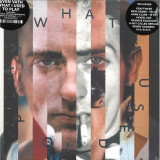
For this uniquely personal retrospective spread over twelve vinyl discs, Sven Väth takes us back to the early days of his DJ career. On What I Used To Play we meet great pioneers of electronic music, gifted percussionists, obscure wave bands, and innovative producers of a bygone 'new electronic' era. Rough beats and irresistible grooves from the identification stage of house, techno, and acid remind us not just how far electronic music has evolved over the past four decades, but how great it was to dance to EBM, techno, and house for the very first time.
If there is one protagonist of the electronic music scene who has remained curious, innovative and at the very cutting edge of music for over four decades, it's Sven Väth. His multi-layered artist albums and Sound of the Season mix compilations have been defining the genre for over two decades, and even today, he is constantly on the lookout for the next top tune to add to the highlights of his next set. At least, that's the case when he's not producing them himself as an artist or remixer. "Actually, it's always been part of my DNA to think ahead," and nothing had been further from his mind than looking back at his past, but when in spring of 2020 the international DJ circuit had to be scaled down to virtually zero, the 'restless traveler' suddenly had time. Time to stop and reflect on "how it actually was back then, at the very beginning of my career..."
"It was a great trip and with every track, beautiful memories came flooding back".
In the London apartment, he had just moved into, Sven has set up a "little music room", where he cocooned himself for several days, "to look way back for the first time and review my musical journey through the eighties, so to speak."
The interim result was six thematically oriented playlists with a grand total of 120 tracks from 'early 80s' to 'Balearic late 80s', together with excursions into afrobeat, European new wave, and EBM sounds and a few epochal techno/house tracks from the USA in between. From these 'Best of Sven Väth's favorites', the project What I Used To Play crystallized. Sven remembers how the Cocoon team reacted to his proposal: "They found the idea of making a compilation out of it MEGA from the beginning and everyone said 'Sven, go for it', but then, of course, the work really started, namely, to clear the rights and to get clean sounding masters of the up to 40-year-old tracks. There was also disappointment, of course. We couldn't clear certain titles because the rights holders in the USA had fallen out with each other or simply disappeared from the scene. In short, it wasn't easy, but now I can safely say we got the most important tracks."
Finally, after two years of research, curation, design, and administrative fine-tuning, the "little retrospective" from 1981 to 1990 is available. The exquisitely packaged, and three-kilo heavy box set is not only physically impressive, WIUTP is also the definitive record of Sven Väth's musical development. On each of the twenty-four sides of vinyl, you can trace track by track, what influenced him during which phase, and how he took off as a DJ from his parents' Queen's Pub straight into the spotlight at Dorian Gray. There and at Vogue (later OMEN), Sven became the style-defining player in the DJ booth that he still is today.
1981 - 1990: Future Sounds of Now
In the early eighties, the crowd in clubs like Vogue and Dorian Gray danced to what nowadays we call 'dance classics' - mainly disco, funk, soul, and chart pop. It was up to a new generation of DJs, including Sven Väth, the youngest protagonist in the Rhine-Main area at the time, to create their own club-ready music mix. Good new tracks and potential floor-fillers were rarities that had to be sought out and found, in order to prove oneself worthy.
Without MP3s, internet streaming, or other digital download possibilities, music didn't just gravitate to the DJ, instead, it had to be tracked down. In well-stocked record stores in Frankfurt and Wiesbaden or even in Amsterdam, London, or New York, Sven and friends sourced the material for countless magical nights. On WIUTP we can follow Sven's very personal journey through this wild, innovative era in which synth-pop, funk, hip-hop, and disco were successively replaced as 'club music' by house, techno, acid, and breakbeat. By the end of the decade, it was clear to see that these once exotic 'fringe' phenomena would soon become 'mass' phenomena.
Early 80s
Dirty Talk by the Italian-American duo Klein & M.B.O. represents the most innovative phase of the Italo-disco genre in the early eighties like no other track. Mario Boncaldo (I) and Tony Carrasco relied entirely on the original synthetic drum and percussion sounds of the Roland TR-808, coupled with the raunchy vocals of Rossana Casale and guitar accents of Davide Piatto. Of course, other tracks from this period were also influential in style, most notably Unit by Logic System, which worked as the perfect soundtrack to the laser lighting system at the legendary Dorian Gray club. With stomping beats and robotic rap interludes, Bostich by Yello also belongs on Sven's eternal playlist - after all, it caught the attention of Afrikaa Bambaataa, who invited the Swiss duo to perform at the Roxy in New York in 1983.
EBM Wave - Mid 80s
From today's point of view, the almost ten-minute-long, downtempo track Giant by Matt Johnson's band project The The, would probably not be considered an obvious club classic. However, a closer (re)listen reveals the rhythmic intricacies of the percussion overdubs by JG Thirlwell (aka Foetus) on Johnson's composition, and it becomes clear why this exceptional piece of music is one of Sven's absolute favorites. Other classics from this phase include Kaw-Liga by the mysterious The Residents, the hypnotic-synthetic Our Darkness by Anne Clark (and David Harrow), and last but not least, the somber, monotonous anthem Where Are You? by 16Bit, one of Sven Väth's projects together with Michael Münzing, Luca Anzilotti from 1986.
US House - Late 80s
You certainly can't talk about Chicago house without mentioning Frankie Knuckles. The resident DJ at the Warehouse not only gave the name to an entire genre, but also produced epochal floor fillers on the Trax label like the timeless Your Love, sung (and moaned) by Jamie Principle. Acid house protagonists Phuture also hail from Chicago, and on We Are Phuture (also released on Trax) we hear the chirping acid sounds of the legendary Roland TB-303 in full effect. Another featured classic is No UFO's by Detroit's Model 500 aka Juan Atkins, who is rightly considered the 'Godfather of Techno' even if the genre-defining track from 1985 still breathes with the spirit of hip-hop and electro from the first breakdance era.
Afrobeat
Le Serpent, by Algerian-born Abdelmadjid Guemguem, is a track that sounds completely different from everything else on WIUTP. Made in 1978, it's a monumental, rousing groove created without bass or synths, just with five congas! Even though Guem sadly passed away in 2021, his immortal, acoustic beats are understood all over the world and will continue to enrich many thousands of DJ sets for years to come. Another classic that not only Sven appreciates beyond measure is Hugh Masekela's Don't Go Lose it, Baby. In addition to being one of the most important jazz pioneers, the trumpeter and freedom fighter from Johannesburg was very experimental, integrating electronic sounds into his music in later years, in a similar vein to Miles Davis and Herbie Hancock. Dutch jazz pianist Jasper van't Hof's afrobeat project Pili Pili has also aged well. The trance-like, almost sixteen-minute-long track of the same name, manages to fill a whole side on the seventh of twelve vinyl discs in the WIUTP box.
UK-US-Euro - Late 80s
Time for a change of scene, in the truest sense of the word, and from a musical perspective, this section is like landing on another planet. First up is Andrew Weatherall's classic remix of Primal Scream's Loaded, featuring the iconic Peter Fonda sample (lifted from the 1966 biker film Wild Angels) that came to personify the mood triggered by the British Second Summer of Love in the late eighties: "We wanna be free to do what we wanna do, and we wanna get loaded...". This period also saw the emergence of M/A/R/R/S whose only single, 1987's Pump Up The Volume, became a club classic with support from DJ legend CJ Mackintosh. In this most eclectic of sections, we also encounter New York house and reggae producer Bobby Konders and his seminal Nervous Acid.
Balearic - Late 80s
Those who know him, know that Sven had already lost his heart to the 'magic island' of Ibiza as a teenager, so with that in mind, the WIUTP project couldn't end without a Balearic chapter. Inspired by Manuel Göttsching's E2-E4, the immortal, eponymously titled Sueño Latino belongs in there without question. Equally popular on the island was, and still is Break 4 Love by Raze, which thinking about it, would also fit perfectly into the house chapter. Last, but not least, there's an overdue reunion with Sven Väth himself, in his role as frontman of the successful Frankfurt trio OFF. Together with Michael Münzing and Luca Anzilotti (later of Snap!) this 'Organization For Fun' created the off-the-wall club hit Electric Salsa in 1986 which incidentally turned into an international chart smash, putting Sven in the enviable position of having to decide between pop stardom and a DJ career. Well, we all know how that decision turned out and the rest, as they say, is history. A not insignificant part of his story is What I Used To Play. Enjoy!
The sum to infinity of a sequence is the sum of an infinite number of terms in the sequence. It is only possible to compute this sum if the terms of a sequence converge to zero. "sum to infinity" is also the second release from gamut inc, the retro-futuristic ensemble around composers and curators Marion Wörle and Maciej Sledziecki.
This second album by gamut inc combines custom-build autonomous music-machines with haunting classical synthesizer sounds to a dense musical kaleidoscope.
The core of the album is formed by Risset rhythms - cyclic accelerations and decelerations, in which rhythmic layers are repeatedly faded in and out, setting in motion a seemingly endless process of rhythmic movement. The motifs are taken from geometric and arithmetic series that create an urgency and restlessness. The rigor of the construction is obscured by an orchestrion whose timbres are reminiscent of a retro-futuristic indigenous ensemble. gamut inc translate strategies of electronic music like pulse-width modulation to music machines such as automated accordion, automated percussion or glockenspiels and create an intense atmosphere that is idiosyncratic, original and modern at the same time.
Gamut inc. build their own music machines, play electronic music festivals internationally, curate the AGGREGATE festival for automated pipe organs, and compose for film, radio drama, and theater. Their first opera, ROSSUMS UNIVERSAL ROBOTS, premiered in 2022. Since 2011, at the intersection of electronic club culture and experimental music, they have been producing live music, music theater, film and theater scores (including for the Junge Staatstheater Berlin) with their specially developed musical robots. They composed for ensembles like the RIAS chamber choir or the robot orchestra Logos Foundation and received invitations and commissions from international festivals and venues such as Sónar, CTM, Berghain, Sonic Acts, Technosphärenklänge or Numusic (NO).
Their first release EX MACHINA was produced exclusively with music robots, and released in 2014 in cooperation with Bôłt Records.
"Percussion tracks bring to mind the music of Einstürzende Neubauten in their industrial mechanics, until finally the music warms to an expression reminiscent of Johnny Cash's late work."
Süddeutsche Zeitung
In the early '70s, after relocating from his native Genoa to Rome, young saxophonist Gianni Oddi was beginning to establish himself as a super-cool arranger thanks to a series of cover albums recorded for RCA Italy. They contained funk, soul and easy-listening versions of contemporary pop hits, but Oddi often managed to include one or two original compositions of his own – like the ones contained in this new instalment of Four Flies's 12-inch vinyl series for DJs.
The luscious funk of Dreamin', on side A, shows Oddi as an Italian master of groove. Warm, sexy and nocturnal, the song combines breaky drums with tantalizing vocals (provided by Baba Yaga's Isabella Sodani), adding a romantic, dreamy vibe in the special with strings and piano (the latter played by Oddi himself) that are at once reminiscent of soulful black music and influenced by the melodic tradition of Italy.
Geronimo, on side B, is almost a tribute to Manu Dibango – a favourite of Oddi's at the time. Here, Oddi's signature groove, at once refined and infectious, is driven by Mario Scotti's pulsating bass, Silvano Chimenti's wah-wah guitar, Oddi's own persuasive sax and, in particular, sound engineer (and former drummer) Enzo Martella's 'moose call' sound (made by sliding a thumb across the top of a conga). In a nutshell: Africa reimagined in Via Tiburtina (the street in Rome where RCA Italy's recording studios where located).
Both tracks are perfect examples of Oddi's sound and... Style (yes, his 1974 album for RCA Italy's SP series). The same sound (and style!) characterizes masterpieces like Le Montagne della Luce (co-written with Romolo Grano), La Sbandata (the funky theme from Domenico Modugno's soundtrack, which Oddi arranged and produced) and Mondo di Notte Oggi (co-written with Gianni Dell'Orso). All of these have been released by Four Flies, which continues to celebrate this fantastic groove maker.
THREADS is back with another powerful VA.
Label co-owner A Virgo On The Moon joins forces again, after their Y7 with Paolo Mosca for the opening track which is a dreamy but powerful club cut. The second track marks the debut of the Ukrainian artist Kebab Traume and it is a fast tech house tool with clear Akufen - ish sounds.
The B-side opener is another strong club tool, this time more with that South American vibe provided by Peruvian Mario Liberti. The closing track is from matteo. who's back on THREADS after his solo EP, this time with Brazilian artist Lourene, and shows his dance floor side which we definitely like!
The release is dedicated to the loving memory of Andrea.
Recorded in St. James Norlands church in London in November 1968 and first released in the following year, this work stands as the first solo bass album in the history of Jazz and improvised music. Born in 1934 in San Francisco, Barre Phillips is one the most influential bassists of his generation. In his long career Phillips has played and recorded with almost everyone in the world of Jazz and beyond, a long list of forward thinking music icons including Don Ellis, Bobby Hutcherson, Dave Holland, Archie Shepp, Marion Brown, John Surman, Paul Bley, Evan Parker just to name a few! Originally recorded as part of a 3 hours session this solo tour-de force expresses the true essence of a genius. A multifaceted, kaleidoscopic journey through a myriad of melodic, rhythmic, fretted and bowed lines. In other words: a true master class and a seminal statement from one of the greatest figures in creative music!
"...Not just an improviser of the highest order; but a true sound sculptor capable of drawing from his instrument such a vast array of shapes and colours that his creation is almost a form of visual art for the ears." Jazzwise
Electronic funk holy grail written and superbly arranged by the likes of the south Italian-based singer and multi-instrumentalist Mario Rosini. This incredibly rare original 7" reportedly dropped in the mid-80s during the blueprint of the Italodisco era and, in some way, it fixes perfectly those feelings but with an upgrade that places it at a level to be considered as a classic of the dance scene without the time and genre limits. Fully restored from the original source the reissue comes courtesy of Erezioni, after a quite long time of interrupted transmissions
Exclusive to INDIE STORES: Hiss and Shake Records to release ‘Logically Yours’ – a limited edition, 5 x LP boxset of 50 essential recordings from seminal post-punk icon Lora Logic including 2 classic Essential Logic albums, early single releases, EPs, B-sides, rarities, vinyl exclusives + first new Essential Logic studio album in 43 years! Includes the classic Rough Trade Records releases ‘Beat Rhythm News (Waddle Ya Play?) + ‘Pedigree Charm’ + 2 retrospective compilations of early single releases, EPs, B-sides, rarities + vinyl exclusives ‘Aerosol Burns & Other Misdemeanours’ + ‘No More Fiction’ + new studio album ‘Land of Kali’ (first in 43 years) + 20 page booklet with introduction from Celeste Bell + Lora Logic Q+A. Susan Whitby, aka Lora Logic was one of the most distinctive talents from the post-punk era known for her intoxicating, rough-around-the-edges, yet exhilarating sax playing and haywire vocal style. Her offbeat, occasionally arresting lyrics tackled alienation, sexism, poverty and urban isolation, and with a complete disregard for convention, she carved her own path not only in her short-lived music career but also personal life. She was still in her teens when she answered an ad in Melody Maker “Looking for young punks,” and in 1976, with her friend Marion Elliot (aka Poly Styrene), she formed the punk band X-Ray Spex and acquired the pseudonym, Lora Logic. The duo soon achieved notoriety with the irresistible feminist protest single, ‘Oh Bondage Up Yours’ (1977) – Logic arguably stealing the show with her thrilling punk sax. “X-Ray Spex was my first band, I happened to be accepted, It happened to work, I happened to get famous overnight. I’d been playing sax in a cupboard in my room; I thought I better do something.” However, just prior to recording 'Germ Free Adolescents' (1978), X-Ray Spex's debut album, she found herself unexpectedly ousted from the band. With abundant enthusiasm and encouragement from Geoff Travis, founding director of Rough Trade Records, she went on to form Essential Logic, creating some of the most liberating and exciting music of the early post-punk era, not only as Essential Logic, but also as a solo artist. Hiss and Shake Records are pleased to present a limited edition boxset of 50 essential recordings from the irresistibly engaging Lora Logic archive, allowing for a new generation to become aware of her incredible creative output. Across 5 LPs, ‘Logically Yours’ includes in their entirety, the classic Rough Trade Records releases ‘Beat Rhythm News (Waddle Ya Play?) (1979) – Essential Logic’s sole studio album, and Lora’s solo album, ‘Pedigree Charm’ (1982) – her last studio album before turning her back on the music business, sad and disillusioned and fighting drug addiction, which saw her turn to a Hare Krishna lifestyle, alongside Poly Styrene, embracing a fresh new chapter. This totally absorbing and definitive collection also includes two retrospective compilations; ‘Essential Logic – ‘Aerosol Burns & Other Misdemeanours’, which comprises early single releases, B-sides and oddities including the gloriously chaotic ‘Aerosol Burns’, the essential punk/disco ‘Music Is A Better Noise’, and ‘Fanfare In the Garden’, showcasing Lora at her most pop. In addition, ‘Essential Logic – ‘No More Fiction’; contains 10 vinyl exclusives, including ‘Do You Believe in Christmas?’, recorded with the Krishna Kids Choir in 1985, alongside tracks recorded circa 1997, with Martin Muscatt, Dave Farren (Bad Manners) and Gary Valentine (Blondie), forming the basis of what would have been Essential Logic’s third studio album, ‘No More Fiction’. Having recently returned to the studio refreshed and rejuvenated, ‘Logically Yours’ also includes ‘The Land of Kali’ (co-produced by Youth), the first new Essential Logic studio album in 43 years, and features the forthcoming new single ‘Prayer for Peace’, a re-imagining of the X-Ray Spex track from the tragically overlooked album, ‘Conscious Consumer’ (1995) on which Lora also played sax. “Poly Styrene and I were living in a Krishna community in Worcestershire in the early 80s. We came together for the first time musically after X-Ray Spex to record the original version of this song. In 2019, I decided to record my own take as a tribute to the special times we shared. I hope Poly likes this new version too.” Further tracks penned for release from the album include the dystopian, lockdown-inspired ‘Alien Boys’ and ‘Sky Rocket’, written with daughter Malini, about the fairground of life. Despite her short-lived career in the music business, Lora still managed to perform and appear on releases with many artists including US experimental rock band Red Crayola between 1978 and 1981, and also appeared on recordings by The Stranglers, The Raincoats, Kollaa Kestää, Dennis Bovell, Swell Maps and later, Boy George. Undoubtedly an iconic figure of the UK post-punk scene, Lora Logic’s boldness, adventurousness and sense of fun can be seen as an influence on numerous female artists today including Karen O from Yeah Yeah Yeahs, Peaches and St. Vincent among others. Tracklisting: Essential Logic ‘Beat Rhythm News (Waddle Ya Play?)’ (1979). A1 ‘Quality Crayon Wax OK’ A2 ‘The Order Form’ A3 ‘Shabby Abbott’ A4 ‘World Friction’ B1 ‘Wake Up’ B2 ‘Albert’ B3 ‘Alkaline Loaf in the Area’ B4 ‘Collecting Dust’ B5 ‘Pop Corn Boy (Waddle Ya Do?)’…… Lora Logic – ‘Pedigree Charm’ (1982). A1 ‘Brute Fury’ A2 ‘Horrible Party’ A3 ‘Stop Halt’ A4 ‘Wonderful Offer’ A5 ‘Martian Man’ B1 ‘Hiss and Shake’ B2 ‘Pedigree Charm’B3 ‘Rat Allé’ B4 ‘Crystal Gazing’…..Essential Logic – ‘Aerosol Burns & Other Misdemeanours’. A1 ‘Aerosol Burns’ (1978) – Debut single A2 ‘World Friction’ (1978) – ‘Aerosol Burns’ B-side A3 ‘Eugene’ (1981) – Single A4 ‘Tame the Neighbours’ (1981) – ‘Eugene’ B-side A5 ‘Music Is A Better Noise’ (1981) – Single A6 ‘Moontown’ (1981) – ‘Music Is A Better Noise’ B-side B1 ‘Fanfare In the Garden’ (1981) – Single B2 ‘Stereo’ (1982) – ‘Wonderful Offer’ single B-side B3 ‘Rather Than Repeat’ (1981) – ‘Wonderful Offer’ single B-side B4 ‘The Captain’ (1979) – ‘Fanfare In The Garden’ B-side B5 ‘Soul’ (1983) – Previously unreleased on vinyl B6 ‘Stay High’ – Previously unreleased on vinyl….. Essential Logic – ‘No More Fiction’. A1 ‘Essential Logic’ (1991) – Vinyl exclusive A2 ‘On The Internet’ (1998) – Vinyl exclusive A3 ‘Under The Great City’ (1997) – Vinyl exclusive A4 ‘No More Fiction’ (1998) – Vinyl exclusive A5 ‘Love Eternal’ (1997) – Vinyl exclusive B1 ‘Barbie Be Happy’ (1998) – Vinyl exclusive B2 ‘Not Me’ (1998) – Vinyl exclusive B3 ‘The Beautiful and the Damned’ (1997) – Vinyl exclusive B4 ‘Marika’ (1997) – Vinyl exclusive B5 ‘Do You Believe in Christmas?’ (1985) with the Krishna Kids Choir – Vinyl exclusive……Essential Logic – ‘Land of Kali’ (2022). A1 ‘Prayer For Peace’ A2 ‘Alien Boys’ A3 ‘Mother Earth’ A4 ‘Never Know’ A5 ‘Charming Every Cupid’ B1 ‘Sky Rocket’ B2 ‘Serious’ B3 ‘Fallible Soldiers’ B4 ‘Land of Kali’ B5 ‘Beyond’
'Night Of The Endless Beyond', the sophomore album by Lord Of The Isles AKA Neil McDonald for the ESP Institute, had almost become a mythical piece of work. The tracks very slowly crept into formation from the lowest depths of 2021, and once the completed album finally made the leap from creation into manufacturing, an entirely new onslaught of follies and delays awaited at the pressing plant. We began to laugh, for not only did Mario Hugo’s otherworldly sleeve artwork visually translate this music so well, but it was an uncanny premonition to the album being lost in space, falling through a black hole, evaporating into the aether like a dream that never really happened. But, at long last, ground control has confirmed contact! It did happen, it will arrive, and it’s not a myth.
Listening to 'Night Of The Endless Beyond' now feels like the return of a strayed friend, one whose distance left us pining for an embrace. Although this Techno relies on unassuming means, there is a remarkably complex and persuasive emotional statement embedded here, insisting we learn to endure the long game and allow ourselves patience to investigate and appreciate the minutiae contained not only within the notes, but their negative space. From its introduction, through its mellow crests and valleys, there is a conveyance of restraint — subtle dynamics that quietly beg for attention, repetition so hypnotic that imaginary melodies are inescapable, transient peaks so deliberately scaled that we mourn the subsequent decay. In accordance with Neil’s ESP debut, 'In Waves', we never feel attacked by instrumentation but shielded from sharp edges, able to step inside the music, breathe the air it occupies and know its true intentions, whether bright or bleak.
Just prior to the album close, a film dialogue excerpt summarizes everything quite honestly by proposing, “The truth of the universe is waiting … the truth of what is … it’s all going to go away … everything … into blackness … the void … and nobody is in charge.”
“…and what do you do with that?”
We stare long into the 'Night Of The Endless Beyond' and answer… “You smile.”
Commissioned for Fela Day in Amsterdam Paradiso Noord, Raul Monsalve y Los Forajidos celebrates the legacy of the father of Afrobeat, Fela Anikolapu Kuti, with this new 10’’ vinyl on Super Sonic Jazz Records, where Nigerians rhythms travel the Atlantic ocean to meet Venezuelan Calipso , sangueos, and more.
First in Venezuela, Monsalve played with a number of bands before forming the first incarnation of his Forajidos band. A move to Paris, via London, led to opportunities to share stages with a vast array of musical giants, not least of all the legendary Nigerian saxophonist Orlando Julius, as well as the Heliocentrics, Venezuelan master percussionist Orlando Poleo and members of Fela Kuti’s legendary bands, Afrika 70 and Egypt 80.
“Calipso Time” is none other than a cover of Fela’s Koola Lobitos’ “Highlife Time. Taking the original track to the region of El Callao in Venezuela, where the population from Trinidad & Tobago and other islands in the Caribbean settled themselves at the end of the 19th century when they started to work in mineral exploitation. As a result, this region of Venezuela has a particular language, mixing English and Spanish elements, and of course the celebration of the Carnival and the birth of Venezuelan calipso .
Side B brings the Afrobeat madness of “Deo e’ Mono”, the very first track Monsalve did for the project back in the day. As Raul says “I just took the opportunity to celebrate Fela’s anniversary by recording this track as I dreamed it should sound when I was starting the project, learning Afrobeat only through records” . For this Monsalve called Chief Uduh Essiet, the original percussionist of the Egypt 80 and with the Forajidos’ Mario Orsinet on drums the rhythm section was without doubt cooking immediately. As on their last record, “Bichos” on Olindo Records, these two tracks are full of psychedelia, rough electronics, powerful vocals and tons of traditional Venezuelan percussion.
Max Loderbauer’s career in music spans the last 3 decades, yet he’s still managed to keep his listeners hungry by releasing only 3 solo albums to date. Two of those releases (Transparenz, 2013 and Donnerwetter, 2020) were on Tobias Freund’s label Non Standard Productions - his long time collaborator and Templehof studio mate. In between those releases, Loderbauer graced Marionette with Greyland in 2016, revealing a previously unheard youthful and sentimental side. Now in 2022, the seasoned mind voyager is back with Petrichor, making yet another rare and treasurable solo appearance.
Petrichor distills the elements of Loderbauer’s work that are fundamental to the initiation of the label. With his Buchla, modular synth, and Haken fingerboard, Loderbauer’s improvised studio maneuvers dilate into imagined journeys from glacial peaks into the exosphere. This is Maxi at his most exhilarating state, morphing through bittersweet and optimistic soundscapes to bleak moments of throbbing unease - all while maintaining a sense of grace and elegance. Petrichor is a reflection of Loderbauer’s impactful trips to the mountains, and returning from these summits with an electrifying urge to paint this mighty perspective. The harmonies and melodies on the tracks simulate emotional peaks and valleys, with vibration and rhythm rooted in the foundation of the sound, as though it's woven into the fabric of the fauna and flora.
Legendary collaborations like Vilod (with Ricardo Villalobos), the Moritz Von Oswald Trio, Non Standard Institute, Sun Electric in the early nineties, and the newly formed Ambiq ensemble have gained this unique artist the respect of the underground and avant garde scenes alike.
'Razen is the collective consciousness of core members Brecht Ameel and Kim Delcour, who since 2010 have realized themselves through virtuoistic and highly expressive improvisations with lesser-heard instruments. Experimenting with repetition of tones through controlled breathing and phrasing, Razen arrive at a synesthetic playground of auditory textures and colorful imagery.
The ensemble is carefully orchestrated for every occasion with the intent and desire to escape to environments unbeknownst to them, taking shelter in the fleeting ego-dissolving moments that arise, whether divine or disturbing. While the formula of instrumentation and like-minded peers may appear mundane on paper, it’s Brecht and Kim’s outlook and imagination beyond musical references that’s the immeasurable catalyst to their peculiar pursuits. Conversations about paintings, books, or films ultimately manifest themselves into live performances or album recordings - with the philosophy of embracing playfulness and exploration through the lens of a child’s eye.
Only six collaborators have been invited to their inner circle to date. This is mainly attributed to the rarity of finding spiritual counterparts that are seeking freedom outside the confines of written musical scores. Trading notes and rhythms for strokes and color, the band embodies emotive and meditative drones that demand a deep listening state. Joined by Will Guthrie and Paul Garriau, Razen venture into their vision of Arcadia through Regression, proudly presented by Marionette. On this album, Brecht Ameel turns to his trusty prepared harmonium and celesta, while Kim Delcour controls air and breath on various wind and reed instruments. Featuring Will Guthrie on tuned and melodic percussion (timpani, glockenspiel, marimba, vibraphone), the recordings have a distinct flow and fluid movement when compared to some of Razen’s previous works where rhythm is taking a backseat. Hurdy-gurdy specialist, Paul Garriau, plays accompanying melodies and drones on Moon, Aether and Nebula.
The album's earthly elements deal with survival, timelessness, and simplicity; such as the life affirming rewards of finding refuge and the wonders of observing the interstellar. The unearthly elements pitch this narrative into the realm of mythology and superstition, in the hopes of trying to understand our primeval universe and thrive in the unknown. Regression also addresses Razen’s fascination with inhospitable places and how to adapt to the sorrows that come with this sort of brutalism. The resulting destination is a mind and time bending zone - one that can be reached by riding sound waves that transcend the past, future, and present.'
We are proud to present "I'm Always Right" by Imagination, an unreleased jazz rock LP from 1977. Comprised of five tracks with a playtime of roughly 30 minutes, you will hear one of the finest German late-70s rock-tinged electric jazz albums of the era. The recording is a delightful stand-out with unique compositions, aspiring solo work, and a soulful spirit throughout. Additionally, the album veritably glows with exceptional sound quality, as it has been remastered from original tapes that were cut more than four decades ago at the WDR Funkhaus, Cologne.
Here is the story of how label founder John Raincoatman became aware of these lost tapes:
"I first got in touch with members of Imagination from Düsseldorf (not to be confused with the UK disco band under the same name) in 2017 for licensing the track "Strawberry Wine" from their collectible "Shake It" album from 1980. A couple of months later, when I was speaking with Willi Hövelmann, the guitarist for Imagination, he told me about some recordings the band had made a couple of years before, when they had been invited to to the studio of the WDR, a major German broadcaster. A couple of weeks later, when Hövelmann finally sent me the files that he had requested from the WDR, I could not believe what I heard - not only that the songs were totally different from what I expected, but that they were also very very good! The music wasn't comparable to any other kind of fusion release that I knew of. These five songs were straight forward, tight and soulful electric jazz rock, a combination rarely heard from Germany from that time period."
How come Imagination - at that time a young newcomer band consisting of musicians between 19 and 22 years of age - was able to record at the well-equipped Funkhaus studio of German radio and television? Hövelmann explains: "The WDR got to know us from a newcomer band competition called "Pop am Rhein" (Pop at the Rhine) which was set up to support local bands and was promoted by several bigger newspapers. Imagination was one of the 5 contestants which were picked from 59 bands by a jury of music journalists and our band was invited to play a concert at the Philipshalle in front of about 3500 guests. Although a band called "Accept" won the contest (yes, the heavy metal band that gained international success in the following years!) and Imagination only made 3rd place, we were invited by music host and journalist Wolfgang Neumann to record in a professional studio."
Neumann's broadcasting show at the WDR was called "Rock Studio", and one of his special goals was to help push newcomer bands by giving them airplay. As a side note, Neumann actually compiled a series of three LPs on the Harvest label from 1979-1982, each of them featuring four bands. However, the earlier recordings of Imagination had only been used for broadcasting reasons, they were aired a couple of times but never made it to a vinyl or CD release.
So, on October 10th, 1977, it was time for the band to show up and prove themselves in the studio. The tracks were all recorded in one afternoon, mainly as one takes. In some cases flute, saxophone were overdubbed, as well as the vocals on "Love is Genesis", as Hövelmann remembers.
The first song, "Jazzgang" can probably be seen as Imagination's most characteristic composition out of their early period: heavy bass, saxophone leads and speedy solos by the band members. A genuine, rough, yet funky uptempo jazz rock tune. But it's "I'm Always Right", the second track on the album, that raises the bar as the key track of the release with its 10-minute length. The song starts with a great piano solo by Mario F. Demonte. In fact, "Demonte" was a pseudonym of Ratko Delorko, a classically trained piano virtuoso who is still active today as conductor, composer and performer. At that time, it was simply impossible for him to officially be part in a band like Imagination and hence the alias was invented. Anyway, the speedy intro leads to a very soulful mid-tempo jazz funk groove that offers space and time for the band members to perform a solo. First off is Uwe Ziss with sax and flute combined. The second solo belongs to Willi "Sultan" Hövelmann on electric guitar. For the furious ending the pace is set back to high speed. Delorko serves us with one of the most brilliant uptempo piano solos you may have heard in a while on a jazz record.
The next song stylistically stands out from the rest. "Biting My Time" incorporates a rhythm and blues feel with a 60s soul jazz attitude. The track was composed by Uwe Ziss who leads through the track with aspiring flute solos which feel like an easy summer breeze after the first two rock tinged tunes.
"Himalaya" sees Imagination move away from jazz quite a bit, rather approaching the psychedelic rock genre with a vibe reminiscent of the sound of the early 70s. Again starting with a piano solo by Ratko Delorko the pace is quickly at 150 bpm with the full band laying down an energetic jazz rock sound. Just after a little over one-and-a-half minutes there is a breakdown to a slower tempo with overdubbed mysterious vocals and psyche-y screams which may remind more of the legendary krautrock band Can than what is typically known as "jazz". The mood continues with tense saxophone and guitar solos, just to speed up again towards the end with furious drumming by Andreas Oelschläger.
"Love Is Genesis" concludes the release. It was composed and sung by former bassist Robert Schlickmann. Though most of the band members didn't really like the song at that time it still is a one-of-a-kind soft rock pop ballad which partly reminds of some of the vocal song tracks later to be found on the "Shake It" LP from 1980. The track manifested that Imagination were never really supposed to be solely an instrumental band.
We are now happy to have cleared the exclusive rights for this recording from the WDR and are proud to re-present this amazing collection of songs. It should appeal to fusion, jazz rock and jazz funk aficionados but also to late krautrock collectors. We are also certain that it will also please fans of the "Shake It" album, simply in terms of being such a bright and soulful debut with great music overall.
Inspiriert von der gemeinsamen Vision eines unverwechselbaren Sounds reisten Julius, Mario und Marko 2016 nach Norwegen. Mit dem Auto machten sie sich auf den Weg zwischen scharfen Klippen und wilden Fjorden, mitten durch die raue Natur. Schneestürme und Hagel brachten sie unterwegs an ihre körperlichen und geistigen Grenzen. Diese ungezähmte Gewalt der norwegischen Wildnis war ein prägender Moment in der musikalischen Entwicklung der Band und zieht sich bis heute durch jeden Song der drei Jungs aus Görlitz. Die Grundidee von Mystik, Natur und Spiritualität, die die Initialzündung war, hat sich als Vision und Leitprinzip für die Band erhalten. Ihre Musik ist deutlich von Heavy-Rock-Bands wie Motörhead und High on Fire beeinflusst, zeichnet sich aber auch durch progressive Parts aus, wie sie in Kvelertak und Solstafir zu finden sind. Kommt mit einem Killer Artwork, in naturell farbiges Vinyl mit einer etched B-Seite.
FATSO JETSON was formed in Palm Desert, CA, in 1994 and are often credited as one of the fathers of the desert strain of stoner rock made most famous by their slightly younger neighbours Kyuss and Queens of the Stone Age. While musically similar to some of their stoner brethren, FATSO JETSON incorporate a broader variety of musical influences that includes punk, blues, jazz and surf music. That is not to say that the band isn't capable of dishing out supremely heavy riffs... Certainly grounded in dense hard rock, FATSO JETSON experiment with many musical textures, angular instrumental epics, and bizarre lyrics to create a punk, blues art rock all their own. In 1995, the group recorded their debut "Stinky Little Gods" and followed that up in 1997 with "Power of Three" (both appeared on SST). Brant Bjork briefly joined up as second guitarist and appeared on two 7" releases. The band then teamed up with Bongload Records, who released FATSO JETSON's third full-length, "Toasted", in 1998. Guitarist and old friend Gary Arce joined the band to record their fourth LP "Flames for All" in 2000 for Artist Frank Kozik's Mans Ruin Label. FATSO JETSON also contributed to "The Desert Sessions" releases that Josh Homme organized, bringing desert musicians and other creative like-minded rock musicians together to collaborate. It was Homme's record label Rekords Rekords that released the next FATSO JETSON album in 2001 "Cruel and Delicious". For this session the band was joined by Vince Meghrouni on Sax and Harp, adding a new dimension to FATSO's hard to pin sound. The band continues with this line up in 2009. There must be something in the sand of sweltering Palm Desert, a California town that has birthed Kyuss and Queens of the Stone Age, as well as Fatso Jetson. Like Kyuss/QOTSA, Fatso Jetson built a name for themselves by putting their own unique spin on the Sabbath sound, but unlike their counterparts, larger than life singer/guitarist Mario Lalli's true love lies in both jazz (Thelonious Monk, Eric Dolphy) and experimental rock (Frank Zappa, Devo). On paper, this conglomeration of different styles sounds like the perfect recipe for a train wreck, but it somehow all comes together on disc, as evidenced by the trio's 2003 offering, Cruel & Delicious. Issued on old pal Josh Homme's label, Rekords Rekords, the trippy songs perfectly fit the feel of the album's cover (a sun-bleached photo of a long stretch of desert highway), especially such standouts as the saxophone free for all "Drinkin Mode," the melodic "Light Yourself on Fire," the bouncy instrumental "Heavenly Hearse," a barely recognizable cover of the Devo obscurity, "Ton O Luv," and the jazzoid freak-out, "Pig Hat Smokin." Cruel & Delicious is an enjoyable slice of hard rock, well off the beaten path. Originally released on CD via Josh Hommes rekords rekords label. Right in time for its 20th Originally released on CD in 2001 on Josh Hommes own Rekords Rekords-label and now on vinyl for the first time! 20th anniversary! Remastered for the vinyl release. This record is a classic and we’re happy and proud to put it out on wax! Track listing: Pleasure Bent; Drinkin’ MODE; Light Yourself On Fire; Died In California; Heavenly Hears; Ton O Luv; Pig Hat Smokin’; Superfrown; Iron Chef; Sunshine Enema; Party Pig; Stranglers Blues; Mountain Of Debt
Fresh and zesty with subtle tropical flavours, this is a delightfully listenable debut from Matthieu Beck on Growing Bin. Inspired by the lilting rhythms, jazzy instrumentation and slow listening gems found on his Love In The Afternoon radio show, the Frenchman has crafted a gorgeous collection of laid back sophisti-pop, perfect for long summer days or seasonally affected escapism.
Any suggestion of sorrow in the album title is actually a mislead - this may be a solo LP, but Matthieu's surrounded himself with the musical friends he's made over the years, serving as composer and bandleader to a willing troop of collaborators. Longtime friend and former Metronomy bassist Gabriel Stebbing, Source Ensemble drummer Emmanuel Mario, and of course Laetitia Sadier herself, stepped in to lend their services and bring Matthieu's music to life, before Jérôme Caron (Blackjoy) expertly mixed it all down.
Though the tracklist may read like a travelogue, these nine tracks all began at home with Matthieu sat behind a Fender Rhodes with a drum machine by his side. Soon live bass, saxophone and flute strolled into his unhurried arrangements, retaining the simplicity of his demos while expanding the emotion. Weighty synth drones and bubbling bass balance the airy elements of tracks like "California" or the dream-pop romance of "Rooftop Rome", while the mellow "Malika" and joyful "Retour De Plage" showcase the Frenchman's relationship with jazz. Elsewhere there's hints of digi-dub ("Island" and "Suede"), coastal boogie ("Tokyo Montana"), stripped back city pop ("California") and downtown nostalgia ("Dora"), before Beck arrives at the poetic, progressive but peaceful finale "Piano Fin", which recalls Air at their prettiest, without stepping outside Matthieu's well defined sound.
- A1: La Cigarrona
- A2: Mara Del Carmen
- A3: Tambo Tambo
- A4: Virgen De La Candelaria
- A5: Perdi Las Abarcas
- B1: Mi Machete
- B2: La Muerte De Eduardo Lora
- B3: Martha Cecilia
- B4: Cuando Lo Negro Sea Bello
- B5: Asi Se Goza
- C1: Cumbia En La India
- C2: Que Te Vaya Bien
- C3: Por Ahi Es Que Va La Cosa
- C4: La Mochila Tercia
- C5: Rosa Y Mayo
- D1: La Pava Congona
- D2: Yo Amaneci
- D3: Las Mellas
- D4: Mercedes Elena
- D5: La Sanjacintera
Re-released after being unavailable for 2+ years. Andrés Landero embodies like no other the spirit that made it possible to bring cumbia to the world. His legacy represents a creative pinnacle of tropical music and has influenced countless artists. This collection gathers tracks from 1966 to 1982, taken from his albums on Discos Fuentes and other labels. They all are extraordinary masterpieces of Colombian popular music. Includes liner notes by Carlos Mario Mojica (Don Alirio).
Andrés Gregorio Landero Guerra, born in 1931 in San Jacinto, Colombia, embodies like no other artist the spirit that made it possible to bring cumbia music to the world. Synonymous with the evolution of this musical genre, inevitably any selection of Landero's best songs cannot aspire to do him full justice.From the very first note he played, Landero managed to charm audiences through a complex weave of compositions, shot through with local nuances and diverse derivations from his native Caribbean province. A torrent of words and refreshingly original, he constantly sought to create his own language while remaining acutely alive to tradition. Driven by a strong personality and undeniable abilities, and solely governed by his desire to follow his musical vocation and write songs that faithfully reflect the stories of his pure native land, Landero left home at seventeen, manifesting his passion to take artistic creation to the limit while demonstrating his belief in freedom and communal living, expressed through the free rein he gives to transparent narratives in all of his songs.
Not one of the records released during Andrés Landero's career is bad, mediocre or dispensable. His coherent and constant efforts to build on the foundations of the cumbia tradition form an extraordinary legacy rich in masterpieces of Colombian popular music. Sixteen years after his death, he continues to be the creative summit of an entourage of names associated with the folk music of the tropics. He is the author of a polyphonic blossoming whose beats still sound fresh today and the outstanding figure through which to appreciate, from a historical perspective, the syncretism of indigenous and African slave music from the Caribbean coast, namely cumbia.
In November 2020, in the midst of a global pandemic and driven by the desire to embark on an inner journey, Mario G. Quelart (Lucient) chose this peculiar enclave as a source of inspiration and focal point for his debut album 'Sa Casa des Carbó'. For ten days Lucient self isolated by choice and undertook an introspective journey to find himself. It was a voyage through uncertainty and fear, with moments of tranquillity; a personal pilgrimage traveling through light and the shadows, in which time became a relative element. Sa Casa des Carbó' is a sound journal of this experience, an album with an ambient base, but which opens the door to experimentation, rhythm and psychedelia. Field recordings - the sea, the birds, the wind, and a strangely silent airport - are fundamental parts of this journey and serve as a canvas for an album of cosmic electronica with Balearic overtones.
Under the name Delicate Steve, guitarist extrodinaire Steve Marion has
spent the better part of the last decade establishing himself as one of the
most wildly innovative and widely revered players in the game.He's
recorded with Paul Simon, been sampled by Kanye West, toured in the
Black Keys, and released four critically acclaimed albums of genrebending instrumental music
He's your favorite musician's favorite musician, a virtuoso songwriter, producer,
and performer who occupies a lane entirely his own in the modern indie
landscape, but he's never liked the sound of the electric guitar? "I've tried
everything under the sun to get away from it," he explains. "Until now."Written and
recorded on a white 1966 Fender Stratocaster that reignited his love for the
instrument, Delicate Steve's warm and captivating new album, After Hours, marks
a first for Marion, an earnest, easygoing collection that revels in the simple joys of
plugging in and playing. The songs are sweet and breezy here, pairing vintage
soul grooves with mesmerizing, wordless melodies, and Marion's production work
is subtle and restrained, stepping back in all the right places to let the album's
masterful performances speak for themselves. In another first, Marion teamed up
with outside musicians on the record, bringing in renowned bassist Shahzad
Ismaily (Yoko Ono, Marc Ribot) and famed Brazilian percussionist Mauro Refosco
(David Byrne, Atoms For Peace) to help flesh out the arrangements and stretch
his sonic boundaries.
The result is a dreamy, introspective album built for late night comedowns and
deep dive soul searching, a cinematic, escapist fantasy for the wee hours of the
morning that draws on everything from Bill Withers and Sly Stone to Pharoah
Sanders and Salvador Dali as it explores memory and nostalgia, instinct and
intuition, serenity and transcendence.
- A1: Suena Blanca Espuma (El Kinto)
- A2: Mejor Me Voy (Diane Denoir + Eduardo Mateo) / Mejor Me
- A3: Música De La Película Del Mismo Nombre (Horacio Buscagl
- A4: Musicasion Iii (Urbano Moraes)
- A5: Muy Lejos Te Vas (Rada + El Kinto)
- A6: Sueño De Una Noche De Mermelada (Horacio Buscaglia)
- A7: Si Te Vas De Mi Pueblo (Reinaldo + Mateo
- A8: Príncipe Azul (El Kinto)
- A9: Margaritas Rojas (Mateo + García Vigil + Figares)
- A10: Yo Volveré Por Ti (El Kinto)
- A11: Fabula Moderna Para Ser Cantada Y No Olvidada... (Horac
- A1 2: Hombre (Veronica Indart + Mateo)
- A1 3: Pippo (El Kinto)
- B1: Rosa (Urbano Moraes + El Kinto)
- B2: Mumi (Veronica Indart + Mateo)
- B3: Para Una Musicasion (Horacio Buscaglia + El Kinto)
- B4: Tu Andaras (Urbano Moraes)
- B5: Estoy Sin Ti -En Vivo En El Concierto Beat Iv, (Diane D
- B6: Aquel Payaso -En Vivo En El Concierto Beat Iv, (Rada +
- B7: Base Para "Mirando La Luna" (Urbano Moraes)
- B8: Solo Me He De Quedar (El Kinto)
- B9: Instrumental Para Otra Musicasion (Eduardo Mateo)
- B10: Esa Tristeza -Version Completa- (El Kinto)
- B11: Martín (Urbano Moraes)
- B12: Las Cosas (Urbano Moraes)
- B13: Te Esperaré (Horama)
- B14: Ni Me Puedes Ver -Version Completa- (El Kinto)
LTD 50TH ANNIVERSARY REISSUE
Originally released in 1971, during the dark days of the military dictatorship in Uruguay, this unique album made a strong and lasting impression on Juana Molina when she was a child. The present reissue on Sonamos (Juana's recently-formed owned label) is the result of a patient labor of love conducted by Juana and her associate producer Mario Agustin Gonzalez. This anniversary release comes our as a very limited-edition containing the remastered original LP, a second LP with 16 unreleased tracks, and a thick, informative booklet: Musicasión was a series of collective shows by a group of artists, mixing theatrical elements, poetry, improvised stage effects, and of course music, with a very special blend of rock (then called beat, in a dual reference to British pop bands of the sixties and to Beat Generation poetry), candombe (the percussion-driven style created in Uruguay among the descendants of liberated African slaves) tango, jazz and bossa nova. A combination which bears more than a passing resemblance with Brazilian Tropicália, which originated around the same time.
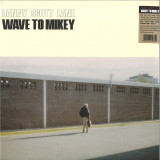
Wave to Mikey, the fourth album from the Los Angeles-based actor, musician and photographer Danny Lane is a nocturnal, neon-lit ode to the friendships that shape us. “I made this album for my friend Mikey from back home,” Danny explains. “We were pretty much inseparable for a large part of our lives, and our musical and social minds were always in sync in a special way. Then with age, we drifted apart, especially since I moved to Los Angeles. This album is just a little wave hello to an old friend and a kindred spirit.”
Equal parts avant-garde composition, instrumental city-pop, ambient, Kankyō Ongaku (environmental music) and Fourth World music, Wave to Mikey is an impressionistic and reflective cycle of eleven richly detailed memory portraits. Throughout the album, the influence of Jon Hassell, Arthur Russell, Hiroshi Yoshimura and Yellow Magic Orchestra hangs in the air like late-night mist, adding character but never overshadowing the rhythmic ambience of Danny’s musical visions.
Wave To Mikey began as a series of sketches on analog synthesisers, guitar, sample and found percussion sketches, initially recorded in Danny’s home studio. Once he’d located the vibe, Danny called on his friends E Talley II, Solange collaborator John Carroll Kirby and Destroyer session musician Joseph Shabason, who respectively added flute, spiritual synth textures and saxophone to the record.
For Glossy Mistakes founder Mario G.R., who originally discovered Danny through his photography, Wave To Mikey captures a vivid feeling of melancholy and peace. “He's able to encapsulate emotions in a very straightforward way, either in his portrait or songs,” Mario says. “I think that's a kind of virtue or skill given to talented artists, no matter the field.”
Born and raised in Staten Island, New York, Danny began playing music with his friends when he was thirteen, before putting that passion on pause to study Fine Arts (Theatre) at Rider University in Lawrence Township in pursuit of an acting career. Acting led him to photography, after playing a photographer in a film, he was inspired to pursue the medium. Danny began shooting photos on film for magazines and lifestyle brands, spent a stint living in New York’s Chinatown neighbourhood, and eventually relocated to Los Angeles in 2017.
Four years ago, Danny started recording and releasing music under his own name, leading to the trilogy of releases that preceded Wave To Mikey, How To Empty A Cup (2019), Memory Record (2019) and CAPUT (2021). Over the course of these releases, he’s revealed himself to be a sophisticated composer and producer with a studied ear from years spent digging through record bins for ambient, experimental, new age, jazz and electronica records from around the globe, with a particular emphasis on Japan.
“Music is something that’s always been involuntary for me,” Danny reflects. “It’s unconditional, always there. It’s something I just have to do. I’ve taken breaks and it’s always gloomy when I’m not playing. I just want to get better and better and understand more and more.”
Here at Glossy Mistakes, Wave To Mikey marks our second contemporary album release, following on from Evenings by Japanese composer Metoronori. We’re proud to be able to present Danny, Metoronori and other modern musicians' work alongside reissues of classic works from Stevia aka Susumu Yokota, Akira Ito, Yuji Toriyama & Ken Morimura, and Takashi Kokubo.
Mastered by Damian Schwartz, Wave To Mikey will be released on Vinyl LP Glossy Mistakes on June 27 2022. Besides the regular black vinyl, a limited clear vinyl will be available in an edition of 100 copies. Both editions come packaged with original cover art photography shot by Danny.
The Girl With The Gun for the first time on Ltd 7" Vinyl
Another dream come true! The first 7" ever to contain the three grooviest and most danceable tracks from the legendary soundtrack to La ragazza con la pistola, Mario Monicelli's 1968 cult film depicting the mod subculture of 60s Swinging London and starring Monica Vitti in one of her most iconic roles. (In the mid-90s two of the tracks were compiled in the seminal compilation Easy Tempo Vol. 2.)
Starting the party is Girl With The Gun, a mod-generation classic featuring a psych-funk rhythm section and an exotic-sounding theme played by a sitar. Next on Side A we find the danceable lushness of Shake Balera, a shake number clearly influenced by the London moods portrayed a couple of years earlier by Michelangelo Antonioni in Blow Up, with Antonello Vannucchi on Hammond and Carlo Pes on guitar (the piece was later covered by Calibro35 in their first album). Last but not least, on the flip is the super intriguing Rapimento in Sicilia, which opens with a spy-movie vibe before switching to a hectic dance of sitar, electric bass and wild percussion.
All tracks were written by Peppino De Luca and performed by his trusted and recurring musicians, the legendary super-group of Italian session players I Marc 4, who bring in their signature psycho-beat sound.
Highly recommended for diggers and DJs.
The music world is most fortunate that the past two decades have witnessed the rediscovery of mind-opening music that went under-recognized when originally released, and the wellspring of musical content produced by a generation of brilliant musicians. One such musician was the late great drummer Steve Reid, whose reissued eclectic recordings on his own Mustevic Sound label gave his career a second wind.
Though teased on a well-received compilation, one Mustevic release never saw reissue: New Life Trio’s Visions Of The Third Eye, a tremendous collaborative effort between Reid, guitarist Brandon Ross and bassist David Wertman.
Due to overwhelming demand, Early Future Records and Finders Keepers Records are proud to announce a second limited edition pressing of the classic and final Mustevic recording. The release also includes a 20-page written zine featuring an in-depth testimonial and interview with Brandon Ross, and an explorative essay by Finders Keepers’ Andy Votel, as well as a wealth of archival photos, scores and reviews.
Reid’s long and varied career began in his native New York City, where he was involved early on as a member of the Apollo Theater House Band and the R&B scene of the 1960s, including recordings with Martha Reeves and James Brown. In the late 1960s, Reid spent three years in West Africa absorbing musical traditions and experimenting with artists such as Fela Kuti, Guy Warren and Randy Weston. After a stint in prison for dodging the draft as a conscientious objector, the drummer came out swinging in the 1970s. He worked regularly as a session and Broadway musician even while immersing himself into the jazz world, from the straight-ahead styles of Freddie Hubbard and Horace Silver to the otherworldly sounds of Sun Ra and Charles Tyler.
The do-it-yourself ethos of the New York Loft Scene inspired Reid to create his own label, Mustevic Sound, on which he began releasing his own recordings and those of a couple of friends. One of these trusted friends was David Wertman, a young bassist from New York who released his own Kara Suite on Mustevic in 1976.
New Life Trio’s story began when Wertman moved from New York to the more sedate but creatively vibrant town of Northampton, Massachusetts. Here Wertman met Brandon Ross, a young guitarist from New Jersey who had relocated there with his brother to join a coterie of New York expats who had found a comfortable, collaborative environment amidst the liberal college towns in the area, including avant-garde legends Archie Shepp and Marion Brown. Wertman and Ross became friends and began to perform together regularly, both formally and informally.
A string trio of Wertman, Ross and violinist Terry Jenoure was set to record, but Jenoure dropped out just prior to the date. This led Wertman to call his friend Steve Reid to come join the two at the Tin Pan Hollow Studios in Vermont to record what would become Visions Of The Third Eye on December 6, 1978. Originally conceived as an all-acoustic date, the recording would morph slightly when Ross added electric guitar muscle on a number of pieces. Reid would then take the helm and release the recording in 1980, giving a very auspicious birth to what has now become a classic spiritual jazz recording.
Fast forward to 1995…..New Life Trio gets a belated second wind from Stuart Baker’s inclusion of the Ross-voiced “Empty Streets” on his Universal Sounds of America compilation. The brief, haunting lead track just hinted at what the full Visions Of The Third Eye album had to offer. Audience awareness resulted in the pursuit of out-of-print original LPs, thus the rarity of Visions Of The Third Eye led to it becoming a kind of “holy grail” record for collectors of jazz and creative music. The album’s cover image was even incorporated into the cover of Freedom, Rhythm & Sound (SJB, 2009), a wonderful coffee table book presenting album covers from those revolutionary decades in Black creative music. The recording’s legend was cemented.
New Life Trio’s legend continues to grow partly due to the brevity of its existence. The triumvirate of Reid, Ross and Wertman would never work together again. Each member would continue along his own path, finding success in numerous projects. Reid’s career was reinvigorated with the reissue of the bulk of his Mustevic Sound recordings in the early 2000s, which led him to a rewarding partnership with Four Tet’s Kieran Hebden until Reid’s untimely passing in 2010. Wertman balanced life between Florida and Massachusetts as a regular in the local jazz scene, recording numerous projects with his wife, Lynne Meryl, before passing away in 2013. The fantastically creative Ross has remained active in the New York creative music scene with a number of projects, most notably with Henry Threadgill, Cassandra Wilson and Harriet Tubman, a wildly eclectic co-led band with underpinnings of rock, dub and free jazz.
Covet was founded by guitarist Yvette Young with the intention of fusing lush post rock soundscapes with the subtle technical intricacies of progressive rock, After playing numerous local shows in Northern California the band released the Currents EP in late 2015. The band toured throughout the west coast building a buzz for their dynamic live show. In 2017 Covet highlighted the year by supporting Polyphia, Jason Richardson tour and followed that up with the Chon, Tera Melos, Yvette was recently named one of the top 50 sensational female guitarists by Guitar Player Magazine, Early 2018 the group entered VuDu studios with Mike Watts (The Dear Hunter, O’Brother, Gates, Dillinger Escape Plan) to record its upcoming sophomore release effloresce.
“As a human being it’s really important to feel and express
emotions whether happy or sad,” says Hiro Amamiya, the
Teleman drummer whose solo guise is Hiro Ama. “I sometimes
struggle to and so these are a collection of songs that explore
different emotions. I want people to feel something through my
music so I called this EP ‘Animal Emotions’.”
Amamiya follows up on swiftly on 2020’s field recording-heavy
EP ‘Uncertainty’ with a record made in his bedroom and during
a time of introspection to create something even more personal.
“On ‘Uncertainty’ I was using sounds from everywhere and
whatever sounded good,” he says. “But for ‘Animal Emotions’ I
stuck with fewer instruments so the EP feels much more united.
I also used more acoustic instruments as I sometimes feel
electronic music in general lacks some organic and human
elements so I tried to make this EP as organic as possible.”
However, buried beneath the warm electronics, gently pulsing
grooves, infectious melodies and immersive soundscapes - that
veer from disco strut to IDM via jazz-laced ambient - you’ll still
find some field recordings. “You might not hear them as
obviously as on my previous EP but field recordings are there,”
he says. “I like them because it's very spontaneous and gives
some human feel. It also adds some air to a recording which I
quite like.” On the opener ‘Free Soul’ - which marries funk bass
with subtle electronics and squelchy grooves - you can hear a
voice sample of a woman from Southeast Asia singing a lullaby.
“I wanted to make an up-tempo and danceable song so I can
dance in my room during the lockdown. I got lost in Jazz music
the last couple of years and it really changed and opened up
the way I make music.” The moods, tones and emotions on the
EP shift as seamlessly as the genres, never quite settling into
one single place and constantly exploring and expanding into
new musical terrain. A process mirrored by Amamiya’s own
varied influences and tastes that were funnelled into the record,
from film soundtracks to IDM to spiritual jazz such as
‘November Cotton Flower’ by Marion Brown and ‘Harvest’ by
Pharoah Sanders.
HIGHLIGHTS: 1967 descargas album by Peruvian percussionist Coco Lagos y Sus Orates, featuring Alfredo Linares, Charlie Palomares, Otto de Rojas, Mario Allison_ This album was recorded following the success of the descarga sessions released by New York label Alegre Records. It includes a version of Cal Tjader's 'Mamblues' and 'Brava pachanga', an original by the Father of Boogaloo, Joe Cuba, among many other stand-out tracks. Quality official reissue on 180g vinyl after years unavailable. Includes insert with liner notes. Details: 1966 was a prolific year for the MAG record label. The microphones were constantly on at the label's studios, recording timeless hits by Los Demonios de Corocochay, Betico Salas, Cholo Berrocal, Mario Allison, Alfredo Linares, Carlos Muñoz and Los Pacharacos, just to mention the most successful ones. The percussion playing by 29-year-old Peruvian Coco Lagos stands out on a number of these recordings. Coco continued his early career, and he played the conga drums for artists who passed through Lima, accompanying Pérez Prado, Oréfiche and Chano Scotty, among others. In the late 50s, he started working as a regular musician in the recently founded record company MAG, alongside musicians such as Ñiko Estrada, Mario Allison, Lucho Macedo...
Die letzten zwei Jahre seit seiner ersten Veröffentlichung
bei der Deutschen Grammophon waren turbulent für den
aus Berlin stammenden Klaviervirtuosen, Produzenten und
Sänger Dario Lessing : mit einem eklektischen Mix aus
wunderschönen Klavierstücken (DNA I), Kooperationen mit
anderen Produzenten (Robot Koch, Andrew Applepie, AK
und mehr) und alternativen Popprojekten (Better Days EP
mit Rezar uraufgeführt auf COMPLEX) wuchs seine
Online-Anhängerschaft von null auf fast eine Million
monatliche Hörer. Dario Lessing bereitet jetzt sein
Collab-gefülltes Album "Frequency" vor. Hier sind Gäste
bei jedem der elf Tracks zu hören. Kurzum - Lessing
steht für eine neue Generation von Selfmade-Künstlern
und Produzenten, die ohne musikalische oder
geographische Grenzen zusammenarbeiten. Seine
Fähigkeit, den Kern der Kreativität anderer Künstler zu
erfassen, führt zu einzigartig direkten und intuitiven
Aufnahmen mit einem spirituellen, oft mystischen
Charakter.
Neben Stimulus enthält Frequency die Stimmen von
James Chatburn (AUS), Graham Candy (NZ), Rezar
(AUT), SHAMS (GE) und Mario (GE). Jeder der 11 Songs
ist eine Geschichte von zwei Frequenzen, die
aufeinandertreffen, sich gegenseitig beeinflussen,
kollidieren und eine neue Welle erschaffen.
- A1: The Raiders March
- A2: The Map Room / Dawn
- A3: The Basket Game
- A4: Marion's Theme
- A5: Airplane Fight
- B1: The Ark Trek
- B2: Raiders Of The Lost Ark
- B3: Anything Goes
- B4: Nocturnal Activities
- B5: The Mine Car Chase
- C1: End Credits
- C2: Indy's First Adventure
- C3: X Marks The Spot / Escape From Venice
- D1: No Ticket / Keeping Up With The Joneses
- D2: End Credits
- D3: Anything Goes
Die Essenz der epischen John Williams-Orchestrierungen für die ersten drei Filme der 'Indiana Jones' Kinosaga aus 1981-1984-1989, die von George Lucas geschaffen und von Steven Spielberg inszeniert wurde. 16 Aufnahmen, eingespielt von den weltberühmten Prager Philharmonikern, inklusive des über die Filmreihe hinaus bekannten Themas 'The Raiders March' als Opener. Gatefold-Auflage auf rotem Doppelvinyl.
Catalina Matorral is a duo; Marion Cousin and Borja Flames make up its double head and four hands. At the beginning of the 2010s, they were called June et Jim -- they released some disturbing EPs before joining the label Le Saule (a small, chivalrous table whose holy grail is everything unheard, where folk- singing is avant-garde and avant-garde is synonymous with enchantment). Their first LP, Les Forts (2012), evoked the songwriting of indie-hobos inspired by Latin America, contributing to the rejuvenation of French music. Noche Primera (2013) went even further by vibrating in various reveries, from African songs to Spanish medieval music, from Purcell to Bach. It blew hot and cold under a psychedelic candlelight. The record in question has been maturing for seven years in eccentric barrels, marinating in the shadow of Marion and Borja's respective evolutions, nourished by their individual obsessions. Marion fixated on songs and dances from the Iberian Peninsula. This gave birth to a minimalistic, organic record featuring the cellist Gaspar Claus, where humming trembles among frowning pizzicatos, thin drones and throbbing arpeggios. She went on to release another album with the electronic duo Kaumwald, an oeuvre at the crossroads of vernacular narratives and experimental music, simmering everyday songs in an insolently modern production. Meanwhile, Borja leaned towards an intellectual, synthetic and furious pop; made two albums to awaken the dead, somewhere between Moondog and Battiato. They are two conceptual, electrifying and dance-inducing recordings for the phosphorescent masses. ...chimeric narration, heady verses, pop fragments, horizontal synths, distorted technologies. One would think they're listening to an opera composed by Robert Ashley or Laurie Anderson, based on an improbable libretto written by anthropologist Jeanne Favret-Saada, and performed by holograms of Brigitte Fontaine and Areski -- who unexpectedly regurgitate bits of blunt folk, binary jazz, baroque songs and ghostly madrigals. Micro-events, great enchantments. This record was written and recorded by two people, tinkering feverishly for seven years. It was blessed with the furtive appearances of faithful friends: Gaspar Claus played the cello; Igor Estrabol the clarinet, trumpet and flugelhorn; Renaud Cousin the drums; Ernest Bergez played the violin and whimsically mixed the tracks like a bonesetter-scientist. At the crossroads of worlds, eras and moods, Catalina Matorral invents a curiously rural science fiction that confounds poetry with white magic and puts French music in a permanent tension between the cosmos and manure...
Joseph Carvell returns to Karaoke Kalk with his sophomore album under the Pink Shabab moniker. »Never Stopped Loving You« was for the most part written between Spring and late Summer 2020 in his Camberwell home and like his 2019 debut »Ema by the Sea« recorded in the South of France together with Emmanuel Mario, better known as Astrobal. It’s a record informed by feelings of nostalgia, love, longing, romance and loss and, much like his previous album, displays Carvell's knack for making introversion sound extroverted. As a bassist, his approach to songwriting is both rhythmic and melodic, making the resulting music just as visceral as it is emotive. Much like the record’s title can be understood as both a lament or an expression of joyful dedication, the music on »Never Stopped Loving You« is profoundly ambiguous.
»I was lucky with the timing for this record,« says Carvell and at first that may sound counterintuitive: managing to play only one show in Zurich in early 2020, he had to cancel his planned European tour and go back to the United Kingdom, which soon went into lockdown. He made the best out of the situation, recording electric and upright bass for Nick Krgovich, Daniel O’Sullivan and Zooey’s new records while also working on tracks and demos by himself. »The world seemed to have stopped and I had more time to think about the past and find the best grooves, the suitable keyboard touches and the right words,« says Carvell. Everything came together slowly before he boarded a train to France with his keyboard: »The pace of life completely dropped and between takes Ema and I were going swimming and taking walks,« he says of the sessions.
»Never Stopped Loving You« is notably more electronic than its predecessor, but also full of the small melodic and harmonic details that made »Ema by the Sea« such an outstanding record. »I was listening to more 1990s dance and house music and 1980s pop and also a healthy amount of ambient music,« explains Carvell. These influences are clearly audible on songs like the Chicago House-esque beats of »Show Your Love« or »Why Did I Leave You that Morning«, the skittish rhythms on »Let Go« and the near-Balearic »San Junipero«. Especially the latter makes it clear that Carvell spent much time devoting himself to movies and TV shows, but also incorporated more piano sounds in his songs—he learnt the instrument by playing along to classic Beatles and Beach Boys songs.
Despite being more upbeat on a rhythmic level than before, Carvell’s use of texture and his peculiar voice add another note to the music. Even an anthemic song like »Run Away«, his first composition to follow a classic verse/chorus structure, is profoundly ambivalent, both overjoyed and deeply melancholic. By the same token however, even a torch song like »You Stepped Out of My Life« is enormously consoling. This, after all, has always been Carvell’s strength: creating music that will cheer you up when you’re down while also injecting a sense of futility into every moment of euphoria. It never shone more brightly than on »Never Stopped Loving You.«
Clear Orange Vinyl w/ bone splatter. Limited edition of 300. Linernotes written by Josh Homme. Originally released on CD in 2001 on Josh Hommes own Rekords Rekords-label and now on vinyl for the first time! 20th anniversary! Remastered for the vinyl release. There must be something in the sand of sweltering Palm Desert, a California town that has birthed Kyuss and Queens of the Stone Age, as well as Fatso Jetson. Like Kyuss/QOTSA, Fatso Jetson built a name for themselves by putting their own unique spin on the Sabbath sound, but unlike their counterparts, larger than life singer/guitarist Mario Lalli's true love lies in both jazz (Thelonious Monk, Eric Dolphy) and experimental rock (Frank Zappa, Devo). On paper, this conglomeration of different styles sounds like the perfect recipe for a train wreck, but it somehow all comes together on disc, as evidenced by the trio's 2003 offering, Cruel & Delicious. Issued on old pal Josh Homme's label, Rekords Rekords, the trippy songs perfectly fit the feel of the album's cover (a sun-bleached photo of a long stretch of desert highway), especially such standouts as the saxophone free for all "Drinkin Mode," the melodic "Light Yourself on Fire," the bouncy instrumental "Heavenly Hearse," a barely recognizable cover of the Devo obscurity, "Ton O Luv," and the jazzoid freak-out, "Pig Hat Smokin." Cruel & Delicious is an enjoyable slice of hard rock, well off the beaten path
Legendary Brazilian group Orquestra Afro-Brasileira are reborn for first new album in over fifty years, produced by Beastie Boys collaborator Mario Caldato Jr.
Led by maverick composer Abigail Moura, Orquestra Afro-Brasileira were one of the most influential yet overlooked groups in Brazilian music history. Operating for almost thirty years until 1970, they released just two albums - the first of which, Obaluayê, has recently been reissued by Day Dreamer Records - and left behind a legacy of Afro-Brazilian consciousness that continues to resonate today.
Combining Yoruba spirituality, folk tales, Candomblé chants and West African percussion with the instrumentation of the big band jazz tradition in the United States, the Orquestra placed Afro-Brazilian heritage in a new and vital context. Weaving emancipatory narratives into complex poly-rhythms and powerful, syncopated horn lines, the group educated and enlightened all those who saw them perform.
For Abigail’s protégé and percussionist on the group’s 1968 album Carlos Negreiros, the message of the group’s music had a profound impact: “I became aware of what it is to be black,” he says, “discovering the extraordinary potential of the Afro-Brazilian culture in the making of the national ethos.” Now the last remaining member of the original Orquestra, Carlos was tracked down by producer Mario Caldato Jr. - whose credits include Beastie Boys, Marcelo D2 and Seu Jorge among others - to oversee the first new album of Orquestra Afro-Brasileira material since 1968.
“I was overwhelmed with the percussive rhythms, beautiful deep vocals and combined energy,” Caldato Jr. explains. “It felt like the most authentic Brazilian roots music I had ever heard. It was raw and dynamic, a pure organic sound and energy. It was a spiritual experience.”
Alongside arranger Caio Cezar, Carlos assembled his Orquestra to record five tracks at Berna Ceppas’ Estudio Maravilha 8 studio in Rio De Janeiro. With percussion, horns and vocals cut in single takes over three days, the session captured the intuitive, pure and natural spirit of the group in full flow.
Following the success of the initial session, five additional tracks were recorded at the iconic Estudio CIA dos Tecnicos in Copacabana to complete the album. Mixed by Caldato Jr., 80 Anos is a contemporary incarnation of Abigail Moura’s vision, bristling with the flair of the original recordings.
Spirale were an Italian quintet from Rome, consisting of Gaetano Delfini (wind instruments, vocals, percussion), Giancarlo Maurino (saxophone, flute, percussion), Corrado Nofri (piano, marimba, mbira, siren, Jew’s harp), Giuseppe Caporello (contrabass, guitar, percussion) and Giampaolo Ascolese (drums) who released a single eponymous album in 1974. This is a release known mostly by Italian progressive rock lovers, since its sound can be easily associated
to the jazz-rock delivered by the way more popular Napoli Centrale and Perigeo - but also to the ‘fundamentals’ Dedalus, Arti & Mestieri, Uno, or even the lesser known Bauhaus for instance. But playing this
kind of music and trying to release an album in the first half of the ’70s in Italy was also incredibly hard and courageous: Spirale, in fact, was one of the many bands that lived a very short life, before splitting up and disappear forever. Spirale was originally released on the International King record label, thanks to Mario Schiano, a free-jazz
saxophonist who discovered the band, and producer Toni Cosenza, who included the album in the ‘King JazzLine’ series. Consisting of just four tracks, most of which taken by the 13-minute long “Cabral, Anno 1” and the marvellous 17-minute “Peperoncino (Cose vecchie, cose nuove)”, Spirale is an incredibly balanced and flowing record that sounds still fresh and inspired even today, and it’s a shame that it has remained hidden and overlooked for such a long time. Moreover, it is characterized by that undescribable and particular Mediterranean flavour that only Italian musicians were able to obtain. This beautiful album is of course immensely rare in its original edition, and is now finally reissued on Dialogo record label in a faithful restored version that will finally satisfy any collectors who have waited for
years for this beauty to see the light again!
Francesco Cavaliere and Tomoko Sauvage embody a tactile audio visual display, radiating the color green into sounds and painting meditative music. By transforming collected objects into invented instruments and scenography, each motif becomes a dedication to a specific situation, an anecdote or a symbol, sometimes real and other times absurd, that the artists have encountered through their travels and conversations: the Chinese myth about a man wearing a green hat, naming convention of Japanese traffic lights, or even the imaginary chants of frolicking twin dolphins. This inspired the duo’s personal research on experimenting with raw and synthesized idiophones, stage landscape design, spontaneous field recording and organized improvisation.
For their installation and performance, Cavaliere and Sauvage assemble a green cabinet of curiosities - instrumentarium combining water, glass, clay, bamboo xylophones, metallophones and synthesizers. Tomoko describes in an interview: “When you are actually surrounded by green musical instruments, it has a calming effect as if you were looking at a forest or mountain.” Surrounding themselves with amulets and fluorescent fluids, the duo transcend into a musical imagination that connects scores, choreography and sculpture. Motions like crisscrossing the stage, feeling the presence of a perfectly plump leaf as it strikes a glass bowl, minerals slipping through fingers, all resonate to the soothing sounds of splashing water. There’s an intuitive yet methodical nature to this conceptual approach to composition reminiscent of the fluxus art movement. The pair’s initial motif was to play Henning Christiansen’s Green Music, whose score turned to be nonexistent. By then, their green dream was already flourishing in their mind, retracing the path of so-called environmental music from Walter Tilgner, Knud Viktor, to the likes of Kankyo-Ongaku and Hiroshi Yoshimura.
Since there is a strong visual element to their work, witnessing this captivating site specific performance may be imperative in understanding the range and influence of the color green and the impact on the sounds they create together. On ‘Viridescens’, the first release by Cavaliere and Sauvage, we are invited to experience these recordings in a more musical context. Acting like an intermediary, the duo transport us to their special planet, enlivened by animal voices, wind, and aquatic creatures dancing across a luminous aurora.
Originally released onPrivilege, a sub-label of Polydor, this soundtrack by free jazz saxophonist Marion Brown is almost impossible to find in its original pressing. Nowmore than fifty years later it is finally reissued, to the delight of free jazz enthusiasts and film music collectors.
By 1967, Brown, then aged 36, already had a very successful career in the United States, appearing on John Coltrane’s ‘Ascension’, Archie Shepp’s ‘Fire Music’, performing with Sun Ra and Pharoah Sanders and recorded several records under his name for renowned avant-gade jazz label ESP Disk.
That year, he however decided to move to Europe where he met with German saxophonist and vibraphonist Gunter Hamphel. Accompanied by Steve Mc-Call (drums and percussions), Barre Phillips (double bass), Alain Corneau (Cowbells) and Ambrose Jackson (trumpet), they recorded in 1969 in the legendary Parisian studio Davout, the soundtrack of the movie by Marcel Camus entitled
“Le temps fou”.
This film, which starred Nino Ferrer, was released in 1970 under the title “Un été sauvage” and unfortunately it did not make history in cinema. Fallen into oblivion, only his two original soundtracks (there is also a 7’’ with titles composed by Richard de Bordeaux and Daniel Beretta) are spreading the word.