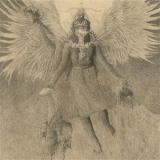
Deep in the Romanian wilderness, beyond the foggy wastelands and the drab greyness of the metropolitan district you can find the base of two musical wizards who invoke the spirit of the past to transmit a very modern interpretation of their nation's musical traditions.
They are known as Livio & Roby and they have been putting their own supernatural twist on house and techno for the past 10 years. Their connection with the global electronic music movement has been channeled via highly influential outlets such as Desolat, VIVa, Saved and Fumakilla. While their physical presence has been felt in a myriad of venues from Buenos Aires to Detroit, and across much of Europe. From dynamic DJ sets and innovative live performances to album projects and a constant flow of cutting edge, dancefloor-based productions the duo remain one of their nation's leading lights in the field.
The tribal rhythms, inspired by Romania's colourful history, penetrate your psyche: the organic instrumentation lifts your spirit; flutes and vocals combine with delicate chimes, while groovy basslines and solemn melodies create a magical concoction. It's a formula that caught the ears of their early supporters, Steve Lawler signed them up to VIVa Music and Berlin stalwart Woody introduced them to the city's music scene via his highly-respected Fumakilla label.
Поиск:dr res
Все
For the 10th release label owner Barbara Preisinger is gathering seven unreleased tracks on two seperate 12inches, by previous Slices Of Life artists as well by producers who have a relationship to the label through frindship, events and personal support. Each track presents the personal unique style of it´s producer, but all have a feeling for warm sounding organic house grooves in common, what Slices Of Life stands for since the beginnings in 2009.
6 weeks after SOL10.1 hit the stores with contributions by THE MOLE, BAAZ, DANA RUH and JOHN TEJADA, the 2nd part of the SLICES OF LIFE compilation celebrating release number 10 is following: The A side of SOL10.2 is dedicated to the legendary Berlin producers and Dj duo CAB DRIVERS: - A Complex Situation' catches us with its irresistable swinging groove and filigrane synth lines. OSCAR SCHUBAQ, DJ, Producer and co-owner of the label Tardis Records, starts the B-side with - K-Beat', a rough jackin house tune, which takes a surprising turn to a sunny sounding swing during the 2nd part. The great finale of SOL10 comes from the parisian Deeply Rooted label owner and extensive vinyl collector DJ DEEP. With - Spices Of Life' he created a wonderful, atmospheric and deep piece of music carried by rolling basslines and playful melody fragments.
- Dj Deep and Cab Drivers has been worldwide very well known and respected producers, label owners and DJ´s with a large fanbase since the 90 ies. Osacr Schubaq is co-ownung the label Tardis together with Eli Verveine
- first 500 copies come in dark red printed sleeve
Almost one year in the making, Bulgaria's outstanding techno talent lands his return to Drumcode with a four-track EP.
Timmo (aka Valeri Ivanov) doesn't do things in half measures. Since the release of his excellent 'System' EP last year and 'Muzik', his inclusion on A-Sides Vol.6, he's committed himself to crafting, refining and polishing a quartet of cuts inspired by the cosmic realms beyond planet earth.
Titled 'Meteorite', its release marks 10 years since he first began producing and stakes its claim as a resounding career highlight with tracks already highlighting gigs for Adam Beyer at Tobacco Dock, Awakenings, Future Kappa Festival and Junction 2.
Beginning with the title track, the streamlined work throbs with a searing synthetic pulse. 'Black Moon' sees the EP land its first blow, kicking with a mixture of undulating synths and understated hoovers.
'Spacetime' stays true to its name delivering intergalactic techno vibes.
'Cosmos' concludes the work, taking us into extra-terrestrial dancefloor territory, with a barrage of trippy synth work and a melodic underbelly the makes the track both beautiful and heavy-hitting in equal measure.
Chymera Needs Little To No Introduction, Producing And Releasing Music Since 2002 On A Multitude Of Respected Imprints Like Cocoon, Delsin And Kompakt, He Is Not Only An Artist We All Admire But Also A Very Dear Friend. In Fact It Was Chymera That Introduced Mano And The Drifter To Baikal Back In 2010, An Introduction Without Which Maeve May Not Have Happened At All. So It Gives Us Great Pleasure To Welcome Chymera To Maeve And Finally Release Some Of His Excellent
Work. Noise Tool Is A Pair Of Techno Cuts, Each Almost Breaching 10 Minutes And Custom Fit To The Dancefloor Dedicated Sound Maeve Has Become Known For. The Title Track, 'noise Tool', Leads You Into A Murky World Of Pulsating Sounds And Ominous Synth Lines, Building Anticipation At
Clever And Intriguing Pace. Sparse Percussion Slowly Reveals The Hypnotic Groove To The Listener Culminating In A Burst Of Energy That Elevates The Sound To Peak-time-banger Status.
On The Flip, '1990', Takes A Different Turn To That Of The A Side, Immediately Setting A No Nonsense Tone With A Feeling That Something Big Is Going To Happen. Chymera Has Always Been Known For His Distinct Focus On Melody And 1990 Really Shows This As Several Harmonious Melodies Intertwine To Put The Listener On The Front Foot. While Beautiful Pads Give The Dancefloor A Moment Of Relief It Isn't Long Before A Deep Rolling Bassline Returns To Bring The Track To New Heights.
Clikno Is Proud To Present The Second Strike Of Dr.nojoke's Double Ep 'zero'.
'aplose' Is A Straight 10 Minute-stomper, Which Sounds Like A Wild Horde Of Percussionists Clanging And Banging Cans And Pots. The Truth Is The Doctor Just Threw Glass Marbles On A Wooden Floor. Fun-time! For The Hips He Adds A Low Rolling Bassline And For The Head Some Freaky, Randomly Pitching Chords And Off It Goes! Call It Afro-kraut-jazz-tech Or Just Clikno - Aplose Is A Counter-action To Electronic Music Production With Electronic Machines - Marbles Do It As Well!
'kumuestu' On The Flipside Is The Antagonal Piece On Zero.two - More Dark And Deep It Is Music For A Fictional Ritual. Carried By A Hypnotic Fluctuating Bass-figure And Drones The Tune Slowly Mutates Into A Shamanic Rhythm Monster Creating A Resonating Field For Transcendental Dancefloor Action - From Here To Eternity.
Zero.two Is Purely Audiophile Electricity To Twitch Your Body In All Directions. Do The Clikno!
Again Zero.two Is A Limited Vinyl-only Release Pressed On Transparent Vinyl Coming In A Transparent Sleeve - Transparent As Light, As Ideas, As Music And As The World Should Be - No Borders, But Freedom, Peace And Equality For Everyone!
Polaroid were an Italian post-punk/new wave band, formed in Turin in 1981. This vinyl re-issue of 'Senza Respiro' contains all 6 original songs with 4 bonus tracks from the band's later period.
.
Polaroid made their debut with the cassette 6-track EP 'Senza Respiro', self-released in 1984. Influenced by Bauhaus, Joy Division, The Cure, Pere Ubu as well as Chic and Talking Heads. The music was dark and cold, but also melodic especially with regards to guitars and voices. At the end of 1984 the band added vocalist Michele Cantoblundo while drummer Marco left and was replaced by a Roland TR-909. With Michele began a period of very dark and poetic music, influenced also by bands like Red Lorry Yellow Lorry and The Sisters of Mercy. The band peacefully broke-up in 1987.
All songs have been remastered by George Horn at Fantasy Studios. The record is housed in custom jacket designed by Eloise Leigh and includes 4 polaroid sized postcards with photos notes and lyrics.
The Second Release Of Wataj Recordings Introduces For The First Time Mr. Tony Pianola. A Trip Inside His Conscious And Unconscious Mind During A Night In Which Dreams, Euphoria, Lost Loves And Desires Mixed All Together Give Life To luce Artificiale'. The Result Is A Pure italo-synth' Style Influenced By The Attraction For The Experimental Slow Disco Sensuality.
Remastered for 2025
Drumcode has become a label synonymous with some of the most-cutting edge and forward-thinking techno over the last 20 years. Their artists include both emerging and established names, and one of those well recognised is Enrico Sangiuliano. Now announcing the very first concept album of his career.
iomorph is born. A very special concept album designed to take the listener on a journey of evolution. A musical adaptation describing how biological and technological advances over numerous generations of time have all started from the same first step in our own biological journey.
Divided into 4 parts, Organisms opens with atmospheric tones, gradually blending complex textures and timbres to begin the evolutional process. The beginning of this section combines full sounding arrangements before stripping it all back to basics. From here it dissolves into the atmosphere. Organisms then progresses into a break-beat influenced, down tempo track using synths to add complexity to the straight, broken rhythms.
Galactic, futuristic elements are found in both tracks in Cosmic Forces. Upbeat, groovy, electronic synths resonate, before 'Hidden T' brings the tension to get things pumped up with stratospheric swirls and twirls to lay down one of the most mind meltingly deep drops.
Metamorphosis is mysterious, its opening beat is a deep and piercing tone that sends the listener into a sensory awareness of their surroundings before breaking into a fully charged, techno track, with Enrico's trademark sounds and textures.
All evolution has an ending.
Two Probabilities shows the positive, starting out evocative and emotional, with a gentle harmony, gazing towards a 'New Dawn'. On the other side of the spectrum lies the negative. This is influenced with a rhythm that articulates the beat of death, mathematical, cold and metallic in texture, it shows the unsustainability of its nature, with a hectic, anxious break beat influenced ending.
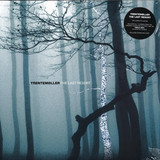
Special vinyl re-issue of Trentemøller's groundbreaking debut album. Includes all of the 13 songs on vinyl for the first time. Triple-vinyl in gatefold sleeve.
Trentemøller's debut album remains one of the few genre-defining and groundbreaking albums in many regards. It's still being praised for its composition and sounddesign alike and sounds as fresh and breathtaking today as it did when it was originally released in 2006.
The Last Resort - a beautifully crafted, astonishing masterpiece, that will leave you breathless. The 13 instrumental tracks together form a wordless musical story, almost like the soundtrack of a movie. It
manages to capture a whole range of emotions in subtle melodic miniatures, dreamy ambiences, dusty beats, deep dub-tracks and driving groove-excursions. An ever-changing kaleidoscope of colours and moods. Although it's an electronic album, it also incorporates live-drums, guitars, bass and other acoustic instruments like celesta, glockenspiel, melodica and even DJ scratching to create a more organic feel. The album received fantastic acclaim from both music fans and journalists around the world and made it into the top-lists of the month, the year, the decade - alongside an array of awards for best production or best album.
Back in 2006, the original pressing only included a selection of songs from the original 13-track album release. It missed out on songs which had been released on singles or didn't "fit" on the so called "vinyl edition". Due to 'public demand' and simply because this album deserves a proper vinyl release we are happy to finally present, for the first time, the full album on vinyl. It spans of three vinyl discs and is packed in a beautiful gatefold sleeve which also holds a download-code. The recut has been carefully crafted from first generation, orignal masters by Calyx in Berlin. Since the album has been praised for its fantastic sound the primary directive was to cut the lacquers for the re-issue so that they would sound exactly the same as the original release, which has been the CD version of the album. No 'digital remastering' or any other alterations have been applied.
All 13 songs of the classic album on one vinyl release for the first time. Triple-Vinyl edition. Gatefold sleeve. download code. original sound-quality. NO digital remastering.
with »redsuperstructure«, robert lippok created a new foundation for his musical endeavors. now - 7 years later - this system properly comes to life on »applied autonomy«. the title of the new album is a clear indicator as to what the berlin-based producer has been up to during the last couple of years, both on a conceptual level as well as how he molds his ideas into tracks.
»applied autonomy« orchestrates a certain state of frantic standstill, which occurs once a structure is set. has this state been reached, the artist is free to focus on other equally important aspects, balancing the various shades, pushing ideas even further to really make them shine and blossom in their self-declared autonomy. the more light one lets in, the more layers become visible.
layers are key when it comes to understanding »applied autonomy«. big chunks of the material with which the album has been produced derive from sketches specifically made for a club performance. rather than meticulously devising each and every detail, lippok focussed instead on recording as many fragments as possible in a short period of time, elements which he could later combine and layer on stage. based on this material and his experience experimenting with it in a live environment, the album slowly began to shape. an album culminating in a collaboration with klara lewis, with whom lippok spent 2 days at the EMS studios in stockholm, approaching the idea of autonomy from yet another angle. during the session, both musicians played and performed simultaneously, yet not explicitly together, lost in their own thoughts and ideas, only subconsciously taking in what the other one was coming up with. the result is »samtal«, 14 minutes of a constantly evolving state of poise, magically connecting all the dots Lippok had already defined as »applied autonomy«.
The Frankonia (EP) is the result of the collaboration between Nils Weimann and Martin Glowacz, which started many years ago.
Side A serves two different, powerful tracks. Frankonia comes with warm atmospheres and spaces. Driven by the interaction of bass and synth lines, wrapped in some subtile delayed textures.
Lower has a rollin bass structure, combined with smashing vocals and surrounded by resonating marbles.
Side B belongs Paul Agripa's interpretation of Frankonia. (He's also known as a part of Comoji.)
The remix takes you on a 13 minutes trip, carried by a harmonic baseline, extended spaces and melodies. Play it loud! Support by Cezar, Sedee, Vlad Arapasu.
Back in the day, French pianist, composer and all-round jazz superstar Jean-François Quiévreux, a.k.a. Jef Gilson, was up there alongside the likes of peers John Coltrane, Oscar Peterson, and Sun Ra. In a fitting homage to the decades worth of sublime music, and his sad passing away in 2012, French quarter Palm Unit have released a lively, honest tribute, upbeat and contemporary re-interpretative vision of his legacy.
.
Gilson has been noted for changing the face of bebop with free-jazz and afro. Along the way his big band featured the likes of Lloyd Miler, Bill Coleman, Michel Portal, and others. With his own recording studio and label Palm Records, Gilson released music from greats including Byard Lancaster, David S. Ware, François Jeanneau, and more. He also helped embed a more entho style to the world of jazz, inspired by his visits to Madagascar, which resulted in the famous Malagasy jazz albums.
Palm Unit are a wildly eclectic super-group of jazz greats includes uKanDanZ's saxophonist Lionel Martin, keyboardist Fred Escoffier from Le Sacre du Tympan, drummer Philippe 'Pipon' Garcia whose mostly known from his worth with the Erik Truffaz Quartet, and special guest Del Rabenja -- who played alongside Gilson in Malagasy -- on the Magascan valiha harp. Palm Unit plays Gilson's repertoire without any a priori, in a totally complex-free manner, reinventing it whilst preserving its original essence. The keyboards sound almost psychedelic (and often not that far from the style of Eddy Louiss on Jef Gilson's 60's albums), the sax scratches, mews and wails, whilst the drums make the whole thing swing. Even Del Rabenja was surprised to rediscover the songs still sounding so modern, decades after they were created.
After more than 30 years Early Sounds and Halfway Ritmo are finally releasing unpublished recordings (1982-1989) from former Tangerine Dream and Iggy Pop's drummer Klaus Krüger.
Advanced Dance combines a sweeping mix of Krüger's handcrafted acoustic drums and distinctive electronic sounds of the late Berlin-School years, creating a unique blend of advanced polyrhythms.
Krüger achieved a balance between creativity and classic drum patterns giving birth to an unconventional and avant-garde type of music that could be easily defined as a precursor of techno.
His progressive mentality led him to delve further into the tape collage technique and unique ways of triggering his drums. It was a whole new world of music - sustained by his artistic surroundings, which included collaborations as well as friendships with other influential artists such as David Bowie, Martin Kippenberger and Helmut Newton.
In the time of German division, the pulsating West Berlin became a melting pot of creativity and international encounters. Advanced Dance is the result of the blazing heat feeding the unstoppable thirst of discovery which characterized that generation, creating tunes that transform the listener's experience into one blissful moment amidst beautiful confusion.
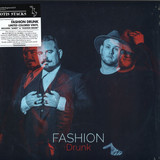
Otis Stacks, three syllables. A name and a first name that recall a mythical singer as much as the Memphis music label that got him to it's days of glory. A name that evokes him in particular and soul music in general. Behind a name that sounds familiar are Elias Wallace and Justmike, two men united to become one: Otis Stacks. In truth, the optimized version of a work started long ago, when Justmike was producing the Danish hip-hop sound of Dafuniks and decided to get in touch with Elias after hearing his voice on a friend's tune. He first wanted him to lay his voice on a
chorus, then a verse, and ended letting him take over the lyrics of 'All I Want', the song that would later bring Dafuniks on air and around Europe. After traveling miles and miles across the ocean and the seas separating California from Denmark, Elias undeniably became a member of the group. As gigs went on, stages after stages, Justmike got inspired by Elias's voice and presence. Thus, the idea of a duo collaboration between the two men geminated and grew in his mind. As the evidence of their getting along, 'Fashion Drunk' became the first tune to
infiltrate Nova and FIP radio playlists, as its music video reached 8 million views. This now obvious complicity as extended in the form of an album, also called Fashion Drunk, released by Underdogs Records. With this French stopover, the line between California and Denmark is now completed. The result is an artistic fusion in which Justmike has plugged his instruments to the machines he uses to compose, letting Elias in charge of the
lyrics and singing. Here, the soul music is printed as a guideline in an organic and digital composite matter. In an ethereal and aerial production that perches its arrangements in the air of the mix or buries them in its bases, letting electro music spread on a groove punched with black and white keys. Each element intervenes with discretion to let Elias stories be related with elegance. Frustrated, disappointed or aborted love stories.
Modularz introduces Spanish producer Roll Dann to the growing roster of champion producers from around the world. This is a special release for the Madrid based producer focusing on the strength and power of Techno to his full potential. This release is the perfect model of where things are headed with the fusion of Drum and synth and made for abandoned buildings. The whole release is pure force Highly recommended TIP
Argentinian veteran Jorge Savoretti has been djing for more than 20 years, and his first release for Esperanza Records traces back to 2005. In this time laps he has produced 2 albums, 20 EPs and a great number of remixes, on labels such as Raum Musik, Visionquest and Ilian Tape. His debut on Cadenza is a crisp breeze of graceful music for dancing. Side A starts point-blank with 'Bou Gei' bouncing shuffle, driving bass line, lively cymbals, sparkling band-passed chords, summing-up Jorge´s true dedication to nightclubs and nightlife. With no reprieve, 'Ruth' suspicious pads lurk behind a funky swinging rhythm spruced up by a continuous surfacing of snare rolls and giggly stabs. On the B side, 'Sensu Dub' explores without hesitation darker textures and resonances, leaving no concessions to leave the dancefloor. Finally 'U-Fonk #04.01' dives into sweating hotblooded late-time hours, with am hypnotising deep-toned coil, soaked of greasy riffs and gloomy fumes.
Label head Enzo Siragusa teams with Ibiza resident Nima Gorji for the slick 'Foreal EP'; the original mix (VINYL ONLY) rolls deep, building nicely with a warming pad whilst subtle tripped out sounds flicker throughout the mix. Djebali offers up more of a bassline friendly mix on the flip whilst Fuse mainstay Seb Zito dusts it down with a phatt kick drum and ups the PHUNK on his version.
Mannequin's 100th - a comp looking forward featuring an international and serious cast... BIG TIP!
The modern synthwave scene would be significantly poorer without the keen ear and tireless efforts of the Mannequin label run by Alessandro Adriani. Geographically situated within the nerve centers of Rome and Berlin, yet with a musical spirit that easily transcends these boundary lines, Mannequin's back catalog has been an important component in the modular assemblage that makes up electronics-based independent music in the 21st century, and an important reference point for those who need to defend against the lazy accusations that this such is purely retro' in its form and content. Recent accolades and accomplishments - being named Resident Advisor's label of the month' for May of this year, starting the 'Death of the Machines' 12' series, and being given the 'green light' for bi-monthly parties at the Säule room in Berghain - have been earned through Mannequin's unflagging commitment to sonic diversity and Adriani's own realization that the anxious and sharp-edged sounds associated with, say, the Cold War of the 1980s can convey a completely different message today. Adriani says it best when claiming that there is no such thing as 'old' or 'new' music...only the music of now'. With this cogent statement of intent, Mannequin continues to go on exploratory missions to find the best and most relevant aspects of genres like acid, industrial, EBM, post-punk, coldwave and still more.
Which brings us to Mannequin's newest project and 100th release overall: the Waves of the Future double LP compilation, which itself is not a conventional retrospective collection. Case in point - none of the artists appearing on this collection have put out their own releases on Mannequin yet, despite acting as Mannequin's unofficial ambassadors (via DJ sets and other means). This makes the set even more compelling rather than less so, since it shows how Mannequin fits into a larger picture that includes other scene leaders and label owners including Beau Wanzer, Willie Burns (WT Records), Silent Servant (Jealous God) and Ron Morelli (L.I.E.S.). Of equal importance is how Waves of the Future projects a sense of aesthetic resilience and continuity, showcasing just how well the current artists allied with Mannequin employ and re-interpret the sonic lexicon that appears on that label's reissues of 'classic' acts such as Nocturnal Emissions, Bourbonese Qualk, Din A Testbild and Doris Norton.
However, none of this would matter as much if the music itself didn't have strong potential for lighting a blaze in the dark corners of the human imagination, and of course for forcing bodies into motion. Each track here pivots around a couple of key sound elements that seem to set the stage for the next track to come: see the sputtering / chopped ghost voices on Morelli's Charges Won't Stick,' which easily informs the slicing drone and authoritarian beat of Shawn O' Sullivan's Ill Fit,' which then lays down the emotional foundation for the sequencer-powered With You' from An-I & Adriani or the glassy landscape of Illum Sphere's Exhaustion'. Elsewhere, the wired mischief of Not Waving intersects easily with the spherical electro-funk and coded commands of Beau Wanzer. When all the disparate parts of Waves of the Future are soldered together, it perfectly illustrates Mannequin's non-linear philosophy and Adriani's suggestion that Mannequin listeners directly engage with the music rather than trying too hard to analyze or dissect it.
With every album project comes a proper remix pack. Marco Bailey has invited some of his most respected colleagues in modern day Techno to come up with an interpretation of two of Temper's
toughest cuts. ''Planet Mad'' is being reworked by Marcel Fengler and Andre Kronert. Fengler's rework is an adventurous take on the original and has a strong emphasis on rhythm.
Without loosing with the original idea, Fengler builds the rhythm section into a wash of bold drums and rich percussion.
Andre Kronert's take on Planet Mad pushes the track's idea into a different direction. Kronert yet again proves to be a craftsman when it comes to textures and builds.
While the recognizable bass sound of the original keeps thumping, atypical bits of FX are added to build on an unusual but very soothing atmosphere.
For the B side, ''Naga'' is being reshaped by Croatian master of electronics ''Petar Dundov'' and Rotterdam based fast riser; Koen Hoets.
Petar Dundov comes up with an esoteric take on ''Naga''. Whilst respecting the form of the original, Dundov goes one notch deeper with his wide array dub elements and feral hat sounds.
Koen Hoets delivers a more demure take on ''naga''. Whilst the rhythm section might not be suitable for all club situations, this is adventurous techno at it's best. Noteworthy fx and soul touching
strings that float throughout.
Much may have changed over a two-decade period, but Drumcode's commitment to releasing the scene's most cutting-edge and refined techno remains resolute. 2017 has already seen releases from Adam Beyer Vs Pig&Dan, Alan Fitzpatrick, Ilario Alicante, Julian Jeweil, as well as a debut album from Layton Giordani. The label continues push forwards; bringing fail-safe, club-ready music to the techno community.
Perennial pushers of the techno envelope, Dense & Pika are renowned for their standout studio output that seems to constantly conjure up a particularly unique take on their distinct sound, D&P have rather outdone themselves in 2017.
Kicking off the year with a selection of back catalogue remixes from the likes of Danny Daze, Scuba, Slam and Yotam Avni that illustrated the high esteem in which D&P are held by their peers right across the spectrum; From heritage acts to current headliners and cutting edge talent, the duo have gone on to drop bomb after bomb after bomb.
Their universally lauded remix of Tiga's 'Louder Than A Bomb' was the first of a run of chart topping cuts; With a remix of ME & her's 'Wild Rage' on Jamie Jones' Hottrax imprint and their own 'Casino' single both challenging the norm of what techno sounds like in the here and now.
Cooked up with a more melodic vibe and fusing elements of house and techno, Dense & Pika's latest outing on Drumcode offers something different compared to their previous work.
There is still that vintage feel to each of the tracks with analogue sounds and arrangements born and developed from experimental studio jams. Indeed, 'Suki' heavily utilizes the distinct harmonic tones of the Dave Smith Prophet 8 keyboard. While 'Little Sun' - A staple of D&P performances over the last three months - delivers a more classic Drumcode sound. 'Lanky' closes out the release with an infectious slab of wonderfully wonked-out raw funk.
After dropping several tracks and performing at select festivals throughout the years, Ólafur Arnalds and Janus Rasmussen dedicated the year 2014 to explore the area in-between Ólafur's more acoustic, piano-based solo work and Janus's synth-heavy electro pop, with their collaborative electronic project Kiasmos.
By focusing solely on their self-titled debut album, Ólafur and Janus have been able to combine and further develop their unique sound aesthetics to complete an album driven by their mutual love for electronic music. Made in Ólafur's newly build studio in Reykjavík, Iceland, a majority of the album was recorded using acoustic instruments next to a variety of synthesisers, drum machines and tape delays. It features a live drummer, string quartet and Ólafur performing on the grand piano, producing an ambient, textured sound, which makes it a perfect home listen and equally danceable record. If you listen closely, you can spot them record the thumb piano, finger snapping and even the sound of the metal grinder of a lighter slowly to replace the usual electronic hi-hat sounds, giving the album a far more intimate and unique atmosphere.
We decided to start almost completely over with this record, so most of the material is written this year with the idea of making a record that can stand as one piece rather than a collection of songs. I am very excited to get a proper record out exploring a different territory than I am used to. I touch a lot on electronic genres in my own music but never have the opportunity to go full out electronic like we do here.' - Ólafur Arnalds
The Kiasmos project has been around since 2007, but because of all our other projects we never really got the time to sit down and write all the tracks we always wanted to. So when we early this year finally found the time to sit down and make a full length album there was so much we wanted to try out. The result surprised us a bit, it's deeper and more emotional than we imagined it to be, but that's the beauty of being able to make an album.' - Janus Rasmussen
Long-term Erased Tapes graphics collaborator Torsten Posselt at Feld Studios in Berlin created the cover artwork. Feld Studios was a natural choice for Kiasmos, seeing he also designed the cover for their Thrown EP, released previously.
Kiasmos is made up of Icelandic BAFTA-winning composer Ólafur Arnalds, known for his unique blend of minimal piano and string compositions with electronic sounds, and Janus Rasmussen from the Faroe Islands, known as the mastermind of the electro-pop outfit Bloodgroup. Based in Reykjavík, Arnalds used to work as a sound engineer, often for Rasmussen's other projects, where the two musicians discovered their common love for minimal, experimental music. They eventually became best friends, often hanging out in their studio, exploring electronic sounds.
(en) Following their much acclaimed surprise debut, VERMONT's sophomore longplayer presented "another set that rewards deep listening" (AllMusic) and "a mix of simplicity and richness" whose result is "a feeling of spaciousness and a thrilling sense of weightlessness" (XLR8R). Stripping away even more percussion than on its predecessor, "II" saw Marcus Worgull and Danilo Plessow zooming in on ambience, texture and sonic cohesiveness, allowing "each electronic voice to come into focus" (Pitchfork). Now, "II REMIXES" puts the beat back into the mix, thanks to iconic artists DIXON, I:CUBE and WASSERMANN who each develop their own irresistible groove out of the immersive source material. As one of the album's most highlighted cuts, DSCHUNA gets the royal treatment by Innervisions head and internationally revered selector DIXON who proves his strong command of the dance floor with a hypnotic ride that surrounds the soaring sounds of the original with tribal- esque vocals. The instrumental version drops the chants, but retains the enchantment, all elegant rhythm and gorgeous strings. Versatile's I:CUBE, legendary producer and DJ in its own right, brings a distinctly Parisian touch to the spectral SKORBUT, whose sci-fi-imbued widescreen aura gets reimagined as laser-gun-wielding space funk machine. Meanwhile, Wolfgang Voigt aka WASSERMANN condenses PARADIGMA's roaming synths into pulsating trance swells on his stomping KRAUTRAMATRIK MIX.
(de) Nach einem hochgelobten überraschungsdebüt präsentierte VERMONTs zweiter Langspieler "ein weiteres Set fürs Tiefenho¨ren" (AllMusic) und "eine Mischung von Einfachheit und Reichtum" deren Ergebnis "ein aufregendes Gefühl von Weitläufigkeit und Schwerelosigkeit" (XLR8R) ist. Auf "II" verzichten Marcus Worgull und Danil Plessow nahezu gänzlich auf Perkussion und konzentrieren sich auf Ambiente, Textur und klanglichen Zusammenhalt, erlauben so "jeder elektronischen Stimme, in den Fokus zu rücken" (Pitchfork). Nun bringen die "II REMIXES" den Beat zurück ins Spiel, dank des Kult-Trios DIXON, I:CUBE und WASSERMANN, von denen jeder einen ganz eigenen Groove im Klangbad des Quellmaterials findet. Als eines der aufsehenerregendsten Stücke des Albums erfährt DSCHUNA fürstliche Behandlung seitens des Innervisions-Chefs und international gefeierten DJs DIXON der den Dancefloor mit einem hypnotischen Trip im Griff hält und die aufsteigenden Flächen des Originals mit tribal-esken Vocals verziert. Die Instrumental- Version lässt die Stammesgesänge weg, behält aber den Zauber, durch und durch eleganter Schub und prachtvolle Streicher. Versatiles I:CUBE, legendärer franzo¨sischer Produzent und DJ von ganz besonderem Format, entwickelt eine ausgeprägt "parisische" Note für das leicht gespenstische SKORBUT, dessen Science-Fiction-getränkte Weitwinkel-Aura als Laserpistolen- schwingende Spacefunk-Maschine neu imaginiert wird. Derweil kondensiert Wolfgang Voigt auf seinem antrittsstarken KRAUTRAMATRIK MIX die umherstreifenden Synthesizer von PARADIGMA zu pulsierenden Trance-Schüben.
red vinyl[10,29 €]
The Cryovac machine operates independently to service the world with an original strain of techno. Our people are pioneers of their own sound and seasoned veterans of its' cause. This cause is the basis for our action and the motivation for our vinyl. Cryovac believes the vinyl format is the truest way to take in our music, and this is why we take great care to personally craft our own plates and photograph our own art. The Cryovac approach and stance make it a true oddity in a world of commodities, and we hope you realize, feel, and respect our work.
Andy Vaz is a rebel from the city of Cologne. He is a creator of techno labels that follow their own path and challenge the standard dogma. His version of the techno sound has gone from stark and funky minimalism to synth cascades and housey feels. Andy Vaz is the perfect choice to collaborate with Andy Garcia. Garcia's brand crunchy soul tech mixed with vocal nonsense is the yin to Vaz's yang. These like minds share a name, a spirit, and a drive to keep moving forward no matter the cost.
Eight releases in, Leonidas & Hobbes have honed a mutual love of soundtracks, disco, jazz, house, techno, acid, psychedelic, African and dub sounds.
Web Of Intrigue is one part tribute to lost 70s soundtracks, when music was created on the finest analogue hardware, featuring full bands, session players and lush orchestrations, one part tribute to 70s disco gods Nile Rodgers and Bernard Edwards (Chic) and one part mid-tempo but nonetheless cosmic house. The three parts fuse to form an instrumental track sounding as fresh as a whole meadow of daisies in 2017 and one that's been going down extremely well with international DJs who have road-tested the material.
Heavy Weather flips the script for a deeper workout in a 3/4 time signature - more of a cosmic waltz. Taking its main cue from 70s jazz fusion heroes Weather Report and The Doors' Ray Manzarek, it incorporates rich African percussion, spaced-out flourishes exhibiting the duo's love for the dubs of Lee Perry, King Tubby et al, and a good old fashioned arpeggio of an acid line - definitely a more esoteric number, all told.
The 'Dawn' and 'Acid Rain' mixes push different buttons for the heads, as suits the mood. It all adds up to a very Balearic confection, fitting snugly in with the burgeoning revival for this somewhat ineffable sound - a trend that seems to be getting stronger/bigger every year, popping up every time the sun gets his hat on and we all remember how to party like the lucky residents of that infamous White Isle....
MORE INFO
London/Edinburgh analogue electronic duo Leonidas & Hobbes released debut EP "Machines, Tapes & Electronic Setups" via the Hobbes Music label back in May 2013, picking up plaudits and support from the likes of Resident Advisor, Mixmag, Erol Alkan, Ashley Beedle, Alan Braxe, Shadow Child, Jimpster, Nick Warren, M.A.N.D.Y., Leftside Wobble, Mr G, Auntie Flo, Sasha, John Digweed and many more... The duo were consequently commissioned to remix the Pet Shop Boys.
Second EP "Mo' Machines" came out on the label in April 2014 and received equally high praise, with i-D Magazine inviting the duo to record a DJ mix which has to date chalked up a whole lot of love on Soundcloud.
Leonidas has released two other collaborative EPs with London-based Japanese DJ/producer Kay Suzuki via his Round In Motion imprint, equally winning fans worldwide, with a track now forthcoming on new label YAM Records' You And Music Volume 1 EP plus much more in the pipeline for 2017. Leonidas also has his own lovetoparty label, releasing edits of much-loved disco tunes on limited edition 12" vinyl format and free download. Previously, Leonidas made a name for throwing word-of-mouth parties around east London on his audiophile 'lovetoparty' sound system (providing some of the inspiration for much-admired late-night watering hole Brilliant Corners).
Equally, Hobbes ran the widely acclaimed Trouble nights for ten years in Edinburgh/Scotland, working with the great and the good from across the soul/jazz/dance spectrum since '02, and championed up-and-coming live talent via his Limbo 'gig-in-a-club' nights at The Voodoo Rooms for nine years since '07. Hobbes has toured his DJing style to the various corners of the dancing planet, including gigs in the Far East, much of Europe and across the UK. The Hobbes Music label has otherwise featured artists as diverse as Auntie Flo, JD Twitch (Optimo), Neil Landstrumm, Craig Smith (6th Borough Project), Ali Renault, iO Sounds, Joe Howe, Debukas, Fudge Fingas, Marco Bernardi, Dimitri Veimar, Mick Wills and Nightwave, with further support from Ben UFO, Justin Robertson, Motor City Drum Ensemble, KiNK, The Revenge, T.E.E.D, Kiki, Groove Armada, Maceo Plex, OOFT!, Domenic Capello (Sub Club), XDB, Ben Mono, Masa Sutela, Bawrut/Scuola Furano, Numbers, John Heckle and many more...
Drumcode continues its commitment to releasing the scene's most cutting-edge techno. With releases this year already from Adam Beyer, Pig&Dan, Alan Fitzpatrick, Dense & Pika and Julian Jeweil, this July see's the return of Enrico Sangiuliano with 'Astral Projection'.
After his remix of Moby's of 'Why Does My Heart Feel So Bad' back in November last year, Enrico sought creative inspiration from his travels, transcending that into his productions and long studio sessions during the winter months. The result brings a mind and body melting release from the Italian producer.
The title track 'Astral Projection' is a captivating, big room techno masterpiece. Deep reverberations punch alongside a sinisterly crisp percussive drive. Launching into a groove laden synth modulation of low end textures, it breaks down into an ethereal amalgamation of pads and synths before the vocal launches, taking this track to another level.
'Blooming Era' has destructive dancefloor intent. There is no holding back with the low end synth modulation which Enrico has mastered to perfection. A tightly woven percussive flare moulds flawlessly with the rolling oscillations of the beast of this track.
If you have seen label head honcho Adam Beyer playing anywhere on the globe in the last 5 months, this has been a peak time favourite. Road-tested to the max, and with much success.
It ends, with the release of Chapter 5 and 6, the "COSMIC TEMPLE" project
by Daniele Baldelli.
Six 12" vinyls containing a total of 18 unreleased tracks inspired by the sounds of Cosmic Disco of Lazise (Verona, Italy), where Daniele Baldelli was resident from 1979 until the end of 1984. The six covers, taken together, form a unique artwork that shows the COSMIC logo interpreted by the graphic studio "Drudi Performance", the top in the Racing Design, creator of the helmets of Valentino Rossi, on this occasion became deeply involved with the music world.
Chapter 5: Space music atmosphere in KATA SANDI, a fusion of Italo Disco electronics and Moroder influences with a vocoder to interpret the melody. DIOXIDE: an electro funk with psychotic and tribal influences. After a grand opening ESAEDRO starts to fly in space in Tangerinine Dream atmosphere.
2x12" Special Edition[43,07 €]
Palto Flats & WRWTFWW Records are ecstatic to announce the highly-anticipated reissue of Japanese percussionist Midori Takada's sought after and timeless ambient / minimal album "Through The Looking Glass", originally released in 1983 by RCA Japan.
Considered a Holy Grail of Japanese music by many, "Through The Looking Glass" is Midori Takada's first solo endeavor, a captivating four-song suite capturing her deep quests into traditional African and Asian percussive language and exploring contemplative ambient sounds with an admirably precise use of marimba. The result is alternatively ethereal and vibrant, always precise and mesmerizing, and makes for an atmospheric masterpiece and an unparalleled sonic and spiritual experience.
The fully licensed reissue is available as a single 33rpm LP and a limited 45rpm DLP, both cut directly from the original studio reels (AAA), at Emil Berliner (formerly the in-house recording department of renowned classical record label Deutsche Grammophon) for the 45rpm DLP, and at the equally famous Frankfurter SST Studio for the LP. It is also available in CD format for the first time. All versions come with extensive liner notes.
- A1: Piry Reis - O Sol Na Janela
- A2: Nando Carneiro - G R.e.s. Luxo Artezanal
- A3: Cinema - Sem Toto
- A4: Os Mulheres Negras - So Quero Um Xodo
- A5: Fernando Falcao - Amanhecer Tabajra
- B1: Anno Luz - Por Que
- B2: Andrea Daltro - Kiua
- B3: Os Mulheres Negras - Maoscolorida
- B4: Bene Fonteles - O M M
- B5: Carlinhos Santos - Giramundo
- C1: Priscilla Ermel - Gestos De Equilibrio
- C2: Carioca - Branca
- C3: Marco Bosco - Sol Da Manha
- C4: Maria Rita - Cantico Brasileiro No 3 (Kamaiura)
- D1: Marco Bosco - Madeira Ii
- D2: Priscilla Ermel - Corpo Do Vento
- D3: Luhli E Lucina - E Foi
2023 repress
For their first multi-artist compilation, Music From Memory take us on a trip to the heart of the Amazon rainforest. Outro Tempo: Electronic and Contemporary Music From Brazil, 1978-1992 is a double LP that explores the outer reaches of Brazilian music, where indigenous rhythms mix with synthesizers and where MPB mingles with drum computers.
As Brazil faced the last years of its military dictatorship and transition to democracy, a generation of forward-thinking musicians developed an alternative vision of Brazilian music and culture. They embraced traditionally shunned electronic production methods and infused their music with elements of ambient, jazz-fusion, and minimalism. At the same time they referenced the musical forms and spirituality of indigenous tribes from the Amazon. The music they produced was a complex and mesmerising tapestry that vividly evoked Brazilian landscapes and simultaneously reached out to the world beyond its borders.
The product of extensive research, this compilation is a unique introduction to this visionary music and features many fresh discoveries in a country well trodden by record diggers. It gathers tracks from obscure albums that have for too long been neglected by even the most avid collectors of Brazilian music. It includes now highly sought after music by Andréa Daltro, Maria Rita, and Fernando Falcão, as well as unknown gems like those of Cinema, Carlinhos Santos, and Anno Luz. This is an essential release that reveals a broader spectrum of Brazilian music, striking a unique sonic signature that is full of innovation, experimentation, and beauty.
Compiled by John Gómez and featuring extensive liner notes, Outro Tempo showcases this overlooked corner in Brazil's rich music history for the first time.
A year after his last outing on the label, Metamethod is back with a second EP for Nightime Drama. The man born Simon Haynes is a veteran of the scene who has worked under many different aliases and is now back at the techno frontline, creating the same sort of powerful grooves that made him so essential back in the 90s.
'Exoshift' opens things up with a lurching, low sung beat that rocks back and forth as frazzled synths and rusty frequencies skate about up top. It's body music that really makes a mark while 'Autofac' then slips into more of a forward moving groove with prickly percussion and woodpecker hits all driving along a bleak techno landscape. Last of all, 'SuperLifter' marries bulky, broken sounding drums with celestial pads that glow white amongst the murk and greyness of the rest for he track. It is atmospheric, grainy techno for serious heads only.
Modularz 25 Produced by South American Techno Queen Adriana Lopez who now resides in Barcelona. The Colombian born Producer & DJ has been putting out music on Modularz for a few years as well as her own imprint Grey Report. This is her first full EP on Modularz and were very happy with the results. Four driving techno cuts that are made for non stop mixing. All the tracks on the ep are great for the club or the warehouse.
Enjoy.
Not one to be pigeonholed, highly respected DJ and producer WILL SAUL has always run the gamut of electronic dance music: from deep house to techno and UK bass, his sets and tracks like to rock the boat of any given genre, taking in contemporary impulses as well as classic inspirations. As label honcho for iconic imprints like Simple or Aus Music, he further honed his ear for the perfect groove and was invited to bring his expert selection to the revered DJ Kicks mix series in 2014. A remix collaboration with fellow UK producer October for Michael Mayer's MANTASY REMIXE 2 (KOMPAKT 272) turned out to be a fine first foray into Kompakt territory - now to be succeded by the LOST IN TIME EP, for which he teamed up with Bristol-based soundsmith KOMON. Komon & Will have been collaborating for many years, resulting in tracks on Will's DJ Kicks and remixes for labels such as Ninja Tunes (Kelis) and Houndstooth (Throwing Snow). Komon has been a mainstay on Will's Aus Music imprint, with solo releases and regular collaborations with Appleblim. For Kompakt, they turn in a swooping trio of floor-versed cuts that are no strangers to atmosphere and experimentation, but like to keep the crowd in check with outbursts of pressurized funk. Leading the pack is the title cut featuring quality vocals from BEN WESTBEECH (aka Breach), flanked by the introspective DRONE and immersive mover DIGITAL PARADISE - a versatile and powerful outing from two artists that know perfectly well how to set the scene.
(de) Als einer, der sich nie leicht kategorisieren ließ, hat der hochrespektierte DJ und Produzent WILL SAUL stets die gesamte Bandbreite der elektronischen Tanzmusik zum Thema gemacht: von Deep House zu Techno und UK Bass findet alles den Weg in seine Sets und Tracks, jenseits von Genregrenzen und gerne inspiriert von zeitgenössischen wie klassischen Impulsen. Der Macher hinter gefeierten Labels wie Simple oder Aus Music ist bekannt für sein feines Ohr am Groove der Zeit und hat seine Expertise in 2014 für die berühmte DJ Kicks Mix-Reihe zum Einsatz gebracht. Eine Remix-Kollaboration mit dem befreundeten Klangschmied October für Michael Mayer's MANTASY REMIXE 2 (KOMPAKT 272) entpuppte sich als grossartiger erster Ausflug in Kompakt-Gefilde - nun der Schritt zum eigenen Release mit der LOST IN TIME EP, für die er sich mit dem Bristol-Produzenten KOMON zusammengetan hat. Komon & Will arbeiten seit vielen Jahren zusammen, was bereits zu Tracks auf Will's DJ Kicks and Remixen für Labels wie Ninja Tunes (Kelis) und Houndstooth (Throwing Sbow) geführt hat. Dank seiner Solo-Releases und der Kollaborationen mit Applebim ist Komon ein gern gesehener Gast auf Will's Aus Music. Für Kompakt liefern die beiden ein bissfestes, tanzflur-erprobtes Track-trio ab, das gerne in experimenteller Atmosphähre badet, den Tänzern aber auch gerne mit Hochdruck-Funk Beine macht. Der Titeltrack brilliert mit wundervollen Vocals von BEN WESTBEECH (aka Breach), flankiert vom introspektiven DRONE und dem mitreissenden Schieber DIGITAL PARADISE - eine vielschichtige und kraftvolle Darbietung von zwei Künstlern, die ganz genau wissen wie man den Beat in Szene setzt.
Nightime Drama is proud to present a 3 track EP from Yoshihiro Arikawa, featuring a remix by Aubrey. The Tokyo based producer Yoshihiro Arikawa is known for a compound of minimal and 90's ghetto house, releasing a series of critically heralded EPs on Logistic in France, kb and his own label Kodaira Tracks under his alias d'Kawa between 2003 and 2009. After a short hiatus, Arikawa restarted the activities under his real name and has revealed a new aspect of his music on a number of releases from international labels such as AFFIN, Hypnotic Room, Labyrinth, M_Grey, Toffler Sound and Swap. His first release on Nightime Drama comes with a remix from Aubrey who is no stranger to any techno lover's ears. With over 25 years in the industry, he has been involved with some of the biggest names in the business and brings a funky energetic remix to the release.
repressed !!
It´s been a while since Microtrauma dropped their debut EP for Microtonal - but the duo wasn´t that lazy !!! Remixes for Traum, Firefly UK and Mangue Records were done and shaped the definition of their sound. And "Spinal EP" finally is the result - three hard and up-building techno tunes hitting all your cells and nerves.
Here comes the heavy remix package to Lake People's much praised debut album "Purposely Uncertain Field". With Redshape, Lawrence and Map.Ache three remixes were carefully chosen who would be able to bring their own distinctive sound to the table, but also treat the original tracks respectfully.
London centric debut album from Floating Points with a host of guest musicians and vocalists.
the label say " Sam Shepherd spent five years putting together Elaenia, juggling the production with his DJ commitments and his now-completed PhD in neuroscience.
The album takes its inspiration from classical, jazz, electronic music, soul and Brazilian music, much of which can be heard in Shepherd's DJ sets. There's a long list of contributors, with Tom Skinner and Leo Taylor (drums), Rahel Debebe-Dessalegne and Layla Rutherford (vocals), Susumu Mukai (bass), Alex Reeve (guitar), Qian Wu and Edward Benton (violins), Matthew Kettle (viola) and Joe Zeitlin (cello) all featuring. Shepherd also provides some of the vocals.
Shepherd's influence on the album extends to the cover art: he built his own harmonograph to create Elaenia's sleeve, using fibre optic cables that were connected to light sources and responded to bass drum hits and other sounds.
Aside from a couple of early excursions on R2 Records and Planet Mu, Shepherd's solo material has come out through Eglo Records, the label he co-runs with Alex Nut. Records like Vacuum, Shepherd's breakthrough release in 2009, and 2011's Shadows, which scored a five-star review on RA, have cemented his reputation as a classy, inventive producer. On top of that he's also released music from his Floating Points Ensemble project, and produced some of Fatima's 2014 album, Yellow Memories. "
NTD005 adds a new artist to the collective - Metamethod aka Simon Haynes.From Adelaide, Australia, Metamethod (Undefined Recordings) returns from a long hiatus with a new EP.
The product of much time refining sounds and ideas, both tracks on the EP are essential synthesis. Sounds primarily sculpted from scratch, resulting in biochemical rhythms and algorithmic loops.
A must have record for anyone wanting to add some raw energy to their collection.
"Hey Boy Hey Girl" is a song by British big beat duo The Chemical Brothers. It was released as a single from their 1999 album Surrender. The vocal sample "Hey girls, B-boys, superstar DJs, here we go!" was taken from "The Roof Is on Fire" by Rock Master Scott & the Dynamic Three.
It peaked at number three on the UK Singles Chart in June 1999 and remained on the chart for ten weeks.(citation needed) The song dates back to 1997 when it was in the Radio 1 Anti-Nazi Mix. The song is also a track in the dancing video game Just Dance 3 and also featured in the 2012 video game Lumines Electronic Symphony.
Barcelona-based Rob Clouth returns to Leisure System with the Deep Field 12', a stomping showcase of his focused sound design and knack for memorable melodies with additional remixes from Kowton and Vessels.
Deep Field is Clouth's Leisure System follow-up to the Clockwork Atom EP, which was named one of the top EPs of 2014 by Bleep and introduced his electronic wizard by to a wider audience following prior releases as Vaetxh and under his own name. Debuted on Max Cooper's Boiler Room and appearing again on his Essential Mix, 'Deep Field' is tactile and threatening, with disorienting glitches weaved into the 4/4 structure. The belching low-end brings to mind a talkative machine that's been muzzled, eager to burst from its restraints.Livity Sound boss Kowton inverts the original into a gelatinous mass, adding jackhammering drums to the cloudy atmosphere and creating a spacious and stuttering lesson in tension and release. Fresh off the release of their LP Dilate, Leeds band Vessels put their own euphoric electronic magic to work with a housier take, drawing out Clouth's propulsive percussion with an added dose of lush melodicism that
should make it a new favorite for house DJs looking for a spirited twist on the typical. Deep Field is the third in Leisure System's new GRIDLOCK series, melding the freaky and functional
for modern dance floors.
2024 Repress
Als Compilation-Reihe im Jahre 2001 gegründet um ein paar lose Fäden unserer Stammkünstler zu verknüpfen, hat sich SPEICHER inzwischen zu einem Garanten für fortgeschrittene Tanzklänge aus aller Welt weiterentwickelt der es KOMPAKT erlaubt, Musiker aus allen Bereichen des elektronischen Spektrums einzuladen und zu fördern. Für SPEICHER 85 präsentiert der Amsterdamer Tanzflurbeschwörer und produzierende Drahtzieher PATRICE BÄUMEL zwei hocheffektive Technoschieber die für jeden anspruchsvollen DJ auf der Jagd nach Momentum zur Waffe der Wahl avancieren werden.
In glühendem Rot gehalten, bringt SPEICHER 85 neues Material von keinem geringeren als PATRICE BÄUMEL, einem der meistverehrtesten Resident-DJs und Techno-Innovatoren aus dem legendären, leider inzwischen geschlossenen Amsterdamer Trouw Club. Aktiv seit den Mittneunzigern, verdiente er seine Produktionssporen auf so unterschiedlichen Labels wie Trapez, Get Physical oder Systematic, mit aktuellen Highlights wie dem exzellenten Remix für GusGus' OBNOXIOUSLY SEXUAL (KOMPAKT DIGITAL 044) im letzten Jahr, oder dem Labelsolodebüt auf Kompakt SPEICHER 81 (KOMPAKT EXTRA 81), einem rauen und energetischen Werk das sich als bewusstseinsverändernde Maßnahme allererster Güte entpuppte.
- A1: Black Feat Caitlin
- A2: Around Feat Hayze
- A3: Let It Go Feat Caitlin
- B1: Real Feat Symbol
- B2: Found Out Feat Richard Davis
- B3: Time Feat Hrrsn
- C1: Explode Feat Chris James
- C2: In A Vacuum Feat Richard Davis
- C3: My Fault Feat Hrrsn
- D1: Angel Feat Hayze
- D2: Glass Feat Symbol
- D3: Out Of Control Feat Cari Golden
2x12" Vinyl + full cover artwork
One of the world's most in demand DJs and producers, Noir has been responsible for some of the most poignant - as well as explosive moments in clubland's recent history. Arguably best known for his huge dancefloor bomb 'Around', Noir now drops his debut studio album, a project that has been nearly half a decade in the making.'Around', a sexy, synthesizer-tinted groove featuring vocalist Hayze dominated dancefloors across the world for close to two years, making Noir a household name across clubland. And it's still as popular as ever - the Solomon Vox remix of 'Around' has amassed more than 12 million views on YouTube.
As well as 'Around', Noir includes further club hits 'Around feat. Hayze', 'My Fault feat. HRRSN' and current single 'Black feat. Caitlin', evidencing Noir's desire to work with a variety of vocalists to create something far 7 weightier than simply a collection of club tracks. Noir is about telling stories, boating 12 completely unique productions that chart the artist's evolution over the course of his expansive career. With many of its cuts moving away from the strict four-to-the-floor parameters of house music production, the horizons of Noir stretch way beyond the dancefloor. Taking cues from a range of artists from Depeche Mode to Kraftwerk, and Massive Attack to Timbaland - all of whom have heavily influenced Noir's aesthetic - Noir is an emotionally charged and
utterly engrossing body of work. Says Noir of working on the album: 'The album has been in the making since I started working on 'Around' back in 2010, so for me it's a body of work that spans nearly 5 years, with changes to productions, melodies and moods before I was happy with the final tracks. 'What you hear on the album is the culmination of all the music and influences I grew up and have lived with over the years: it is absolutely my identity and honestly represents my musical passions. Unlike many 'dance' albums that are little more than a collection of thrown-together club tracks, Noir combines tirelessly creative songwriting with multi-faceted production that reveals fresh delights with every listen: a timeless release from a truly singular artist.
Belgian talent Ilario Liburni looks to the release of his debut LP, 'Travel So Far', forthcoming on his own label, Invade Records. The eight track affair comes on a double vinyl pack as well as digital form which will follow a month later and proves the man behind it to be a superb producer with plenty to say.
Combining elements of house, minimal and intricate sound design, Ilario also heads up the Cardinal label and first emerged back in 2011 on Monique Musique. Since then he has gone on to release on a number of respected imprints (including Riva Starr's Snatch! And Memoria Recordings), has had his tracks licensed to compilations including Noir's In the House album for Defected and has continued to make a big impression as a DJ around Europe.
The album kicks off with 'Travel So Far', a synthetic and stripped back groove with lots of squelchy sounds, scurrying synths and feathery percussive lines all working their way into your brain. 'Sudden' is another Ricardo Villalobos style track that is elongated, intricate and immersive as it unfolds on soft edged drums. Next up, 'Carrie' is a smooth, dubbed out affair that demonstrates plenty of restraint yet really locks you into its hypnotic groove as static hiss and crackles alongside distant synths colour the spaces left behind.
'Steampunked Sewing Machine' ups the ante a little with a hollowed out drum line rocking back and forth on its heels, and 'Can't Fool Data' starts all waify and minimalistic before getting pulled apart to the sound of whirring machines, and then it drops again; you can imagine dancefloors going wild to its hooky rhythms. 'Jenndrum' is all about the pinging drum kicks and globular toms that make for a peppery groove, 'Pherthothal' toys with a sense of abstract funk and closer 'Schwalbe' is a gloopy, gluey, druggy fusion of slurred synths, hiccupping drums and dark textures that make for involving listening.
This is a genuinely inventive album riddled with fascinating sounds,
a real attention to detail and plenty of otherworldly moods that really stick with you.
Having been a fan of Reelow for, well, as long as we care to remember, we are really proud to present you his new outstanding EP on Cellaa Music. Now residing on Ibiza, Reelow has enjoyed yet another successful year. With the talent taking a back seat, its the music hogging the spotlight and rightly so. Two new Tracks and two massive Remixes that look to the past whilst sitting firmly in the present.
- Leave Me Alone' riding on massive percussion and a tough house beat, with this tough Drums and drunken, wubby Sounds it is running right through its core. Plenty of sonic details flesh out the languorous but slightly groove and you'd imagine this Track is to be the sort of many Artits will love.
- Your Crowd' is again about little tiny details and how they evolve with time. This one take you on a voyage of natural rhythms and big Drums. Developing from harmonic FX Sounds and a infectious groove, the track is full of surprises as it twists and turns into different sounds that come and go to take it further than the dancefloor.
The first of the remixes comes from the in form, Massimo Cassini. He team up with a hypnotic rework of - Leave Me Alone' that demonstrates just why he is one to keep a close eye on as he gears up on the production front. Massimo is delivering a muscular house bomb, carefully placed FXs and a nice and catchy line to make this a dancefloor mover.
Next we have Cellaa Music Co Founder Martin Heyder providing a soulful tech house surrogate to the original of - Your Crowd'. His remix has a deeper houseier twist with a smooth 303 pad sound and a concrete percussive arrangement to convey a fantastic production.
We'll meet you on the Dance Floor!!!
After their stunning 2012 debut single "Wish" (FM X / Wish 001) and last year's "Diggin' On You" (D.O.C. 001), the incredibly gifted ELEKFANTZ return to the fore with what can only called a brilliant full-length premiere. The duo of Daniel and Leo first met 20 years ago, when they played together in a blues band. Leo continued his carreer as a professional musician while Daniel started to discover a new musical path.
The latter was born and bred at the electronic music temple in South America, later becoming a resident DJ and local hero, known as the right guy to prepare the dance floor and set up the right mood. He's one of the finest DJs of the Brazilian new wave of electronic aficionados. Leo is a professional drummer, singer and composer since the age of 15. He played and recorded with some of the greatest artists in Brazil.
Their debut album DARK TALES AND LOVE SONGS sports all the intimate melodies, lush harmonies and organic undertones that the duo has become know for and then some: from pop-infused songwriter house to highly emotive prime time anthems, you'll find lots to love about this expertly crafted collection of melodic gems. Engineered to perfection by label head GUI BORATTO, it's an exciting step for the imprint and the project alike - we can't wait hearing where they'll go next.
The first taste from Joseph Capriati's 'Self Portrait' has landed, as Drumcode drop a double shot from techno's heir apparent hugely anticipated second album. The tracks 'Fratello' and 'Awake', have been highlights of Capriati's sets in recent months, punctuating performances at landmark gigs such as his main room closing set at the internationally respected Time Warp Festival in Germany and maiden coast-to-coast tour of the US.
'Awake' was born out of Joseph's longstanding love affair with Holland's famous Awakenings parties and is a homage to the fanatical fans who turn out en masse at each event. Tense, atmospheric and relentless, 'Awake' captures the feeling of a momentary release of energy that is such a part of the high-octane Awakenings experience.
'Fratello' has achieved anthem status since it debuted in Capriati's sets last September, such is the reaction it has garnered from fans. A work of rare beauty, this is techno at its most emotive, as hypnotic melody is laced with intricate key patterns, while the Italian's trademark shaking percussion propel the track forward.u
Als Compilation-Reihe im Jahre 2001 gegründet um ein paar lose Fäden unserer Stammkünstler zu verknüpfen, hat sich SPEICHER inzwischen zu einem Garanten für fortgeschrittene Tanzklänge aus aller Welt weiterentwickelt, der es KOMPAKT erlaubt Musiker aus allen Bereichen des elektronischen Spektrums einzuladen und zu fördern. Für SPEICHER 73 haben sich Hollands Synth-Epiker QUINCE sowie der in Berlin lebende Techno- und Modekünstler TOM PETERS hinters Mischpult begeben, um in zwei meisterhaft auskomponierten Tracks der Suche nach dem Horizont zu frönen.
Weltweit von DJs zum Einsatz gebracht, sind QUINCE's Techno-Etüden ein bekannter Klang im elektronischen Kosmos, dank starker Releases auf respektierten Labels wie etwa DELSIN oder MUSIC MAN RECORDS. Seine Produktionen beeindrucken generell mit ihrer profunden Kenntnis der großen Skylines, doch irrt der holländische Meister hier ein wenig ab von seinem Kurs durch 4/4-Welten und verliert sich stattdessen in den weitläufigen Kellerkorridoren des wolhltemperierten Schaffelbeats. LOST baumelt fast acht Minuten lang von der Klippe und gibt sich ganz als kubistisches Märchen vom einsamen Helden im dunklen Wald: in Erwartung einer zu errettenden Prinzessin bahnte der sich einen abenteuerlichen Weg durchs Unterholz und berichtet nun von unermeßlichen Schätzen und Momenten großen Glücks. Schon massiv gut, wenn sich die eigene, jahrelange Live-Erfahrung so anstandslos in perfekte DJ-Munition ummünzen last.
Zwei Stunden nördlich von Berlin liegt Kartlows kleiner Ortsteil Unnode, wo der ansonsten eher umtriebig veranlagte TOM PETERS wohlverdiente Ruhe in den Alltag eines DJs, Produzenten und angehenden Modezaren einkehren last. Hier, in inspirierender Nähe zur Ostsee, entwirft er die Skizzen für die meisten Tracks; so auch für TAKE YOUR CHANCE, dessen Silhouette sich deutlich geprägt sieht von der Weite der lokalen Natur. Toms Produktionen weisen alle Anzeichen transzendentaler Melancholie auf, verfehlen jedoch nie das urbane Momentum: sein Beitrag für SPEICHER 73 präsentiert eine simple, doch weitläufige Melodie, deren Haar vom Beat elegant zurückgebunden wurde, Futter für die Beine und die Seele. Ganz wie die handgedruckten Botschaften seiner eigenen Modeserie SAVE FASHION, vermag nämlich auch Toms Musik auf dem dünnen Seil zwischen dem Einfachen und dem Mehrdeutigen zu balancieren... dream on, dreamer.
The Spinning Plates imprint returns this October with Club Winston’s ‘Guzzle’ EP, comprised of four gritty club workouts from the London artist.
The UK’s Club Winston has been steadily unveiling a series of tripped-out club ready cuts via his own UKGEORGE label over the past few years along with remixes from the likes of D.Tiffany and Tim Reaper. Here though we see him join the roster of Spinning Plates with his latest collection of works, an imprint that’s played host to material from the likes of SHKN, Neksha, Andy Rantzen, DJ Spider and Bruno Schmidt since its inception in 2015.
Title-track ‘Guzzle’ leads, laid out across five minutes with a menacing arpeggio bass lead, howling atmospherics and crunchy analogue drums. ‘Hell’ follows and tips the focus over to heavy doses of sub bass, intricately dynamic, modulating drums and intense swells of processed synths throughout.
Opening the flip-side is ‘Chart’, upping the energy levels with a pacey 4/4 drum groove while twitchy resonant synth lines, low-end pulsations and cavernous reverberations ebb and flow throughout. ‘Partook’ then rounds out the release, a cinematic ambient composition which lays focus on swirling, textural pads, glitched out resonant bleeps and fluttering low end hits.
- Love You Still
- Learning To Drive
- 50:
- Responsible Friend
- Bored Of Myself
- When The Doctor Needs A Doctor
- Goodbye Wisdom
- 90: Years Long
- Lost Time
- Cellophane
- Stay
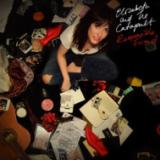
Responsible Friend is an album about the ways in which we show up for one another. What does it mean to be a responsible friend - to be there for someone you love without trying to save them - in a society steeped in conflict and injustice? Some of the songs on Responsible Friend are joyful dedications while others feel more like letters Elizabeth wasn't sure she wanted to send. Taken together, it's a record about slowing down in a world that keeps accelerating. It's a commitment to friends, family, and self, at a time when everyone seems to be carrying more than they can reasonably hold.
With Dispersion, Loom & Thread return to the volatile architecture of the expanded piano trio - and quietly fracture it from within.
Daniel Klein (drums), Tobias Fröhlich (double bass) and Tom Schneider (keys, sampler) remain the sole agents on stage and in the final recording. The triangle holds. And yet, the field has expanded. For their second studio album, the trio fed their improvisations with the timbral signatures of guest saxophone and vibraphone players - not just as additional voices to be featured, but also as material to be absorbed, atomized and redistributed. The result is not augmentation but thorough refraction.
Where the debut album explored the recursive labyrinth of Schneider's live sampling of his own piano, Dispersion introduces an external grain into the feedback system. Breath and metal. Reed turbulence and struck resonance. The trio sampled extended improvisations by saxophone and vibes players: Victor Fox, Asger Nissen, Volker Heuken, and L&T's own Daniel Klein; dissected their attacks, overtones and decay curves, and integrated these fragments into the trio's internal circuitry. What emerges is a play of presences without bodies - instrumental ghosts circulating through the dense weave of rhythm and keys.
At first, one might hear the familiar relational tension: Klein's polyrhythmic elasticity interlocking with Fröhlich's tensile double bass figurations, Schneider poised at the hinge between tonal field and percussive impulse. But soon, the surface splinters - again. A vibraphone shimmer appears, yet no mallets are visible. A reed multiphonic surges through the texture, bending space between bass and drums. These events are neither quotations nor overlays; they are redistributed energies, dispersed across the trio's grammar. A digital multidimensional interplay ensues.
If the first album unfolded as a two-tiered game - live phrase and sampled reflection - Dispersion adds a further axis. The sampled materials from other improvisers are stripped of their erstwhile two-way interaction and reconstituted as malleable particles. Signifier detached from origin, resonance detached from gesture. The trio navigates a constantly shifting topology in which acoustic memory and electronic manipulation are indistinguishable.
Crucially, the album never abandons the physical urgency of three musicians reacting in real time. The additional timbral layers do not thicken the texture into opacity; rather, they introduce stark points and arrows of diffraction. Density opens into prismatic clarity. Lines splinter and regroup. What seems like a quartet or quintet collapses back into three bodies negotiating an expanded field.
Dispersion is not about addition but about distribution - of agency, of timbre, of temporal perspective. It is an album in which the trio setting becomes a site of multiplicity without surrendering its immediacy. A dissolution not only of the divide between present experience and memory, but between inside and outside, self and other.
Three musicians. Countless vectors. A music that fractures in order to cohere.
CREDITS:
Tom Schneider: piano & sampler
Tobi Fröhlich: double bass
Daniel Klein: drums & percussion
sample sources:
Victor Fox: tenor saxophone
Asger Nissen: alto saxophone
Volker Heuken: vibes
Daniel Klein: vibes
Recorded by Martin Dressler at Bauer Studios, Ludwigsburg.
Mixed & mastered by Martin Ruch.
Artwork by Viet Hoa Le.
- 01: Taste This Sound
- 02: Make Me Dance
- 03: Go Let Your Freedom Grow
- 04: Fight!
- 05: Tic Toc
- 06: No More
- 07: Once Again
- 08: Feel It
- 09: Aria
- 10: Falling Down
Until We Are Free is the debut album from fabric, a collective of musicians from diverse backgrounds united by a shared goal: to fuse irresistible rhythms and grooves with a direct, socially conscious message that draws vital attention to the contradictions of modern life. The project's name itself evokes the idea of a living, dynamic ensemble—a creative intertwining of different threads, from musical genres to founding musicians and guest collaborators, all actively woven into the social fabric.
The record blends funk, soul, and Afrobeat with a sharp, contemporary urban attitude, resulting in a sound that functions simultaneously as sonic resistance and an invitation to the dancefloor.
It finds its place in a lineage that runs from Fela Kuti and ESG to The Comet Is Coming, Sault and Jungle.
At its core is the conviction that music and civic engagement can coexist seamlessly without being didactic. While the lyrics—entirely in English—tackle themes of rights, equality, and freedom, the groove remains the heartbeat: constant, pulsing, and relentless.
Mixed by Tom Campbell (whose credits include Sault, Little Simz, Adele, Michael Kiwanuka, and Jungle) and featuring art direction by Raissa Pardini, Until We Are Free is a soundtrack for complex times. It is an invitation to refuse neutrality and isolation, and to imagine—together—new possibilities for movement, resistance, and the future.
fabric's singles "Taste This Sound" and "Fight!" have been featured in FIP's Spotify Playlists "FIP Radio (en live)" and KEXP's "New This Week" and "KEXP Rotation".
A new duo and record label based in Madrid lands on the underground techno scene, led by Mike Gómez and José Castillo, the latter known for his aliases Milford and UHF, and also the owner of the electro label Gladio Operations.
Diorama is born with the intention of recovering the soul and essence lost in electronic music, which for some time has become practically homogeneous and predictable. With a timeless, fresh, and warm sound, Diorama produce rhythms close to dub and Detroit techno, mainly influenced by Juan Atkins, UR, and Basic Channel, among others.
This EP, titled Pacific Trak, begins with a nod to the old Scottish school, where they revive a forgotten track by British producer Anthony Scott, adding its imposing main chord to a true sea of melodic textures, bathed in exquisite acid. Spanish techno master Tadeo gives us his vision of Pacific Trak, exploring dub territories that remind us of past pieces released under the incomparable Maurizio label.
The B-side opens with Soul Memories, a manifesto of resistance that vibrates with detuned harmonies and raw bass lines, recalling the origins of Detroit’s primitive sound. The package closes with Polymorphic, a progression of relentless aquatic chords, set among careful and precise minimalist rhythms that oscillate between high-dynamics tech and dub.
Even in these most turbulent of times, dub musician and fatigued onlooker Elijah Minnelli remains an inexplicable stalwart on the lower rungs of the Breadminster County Council.
His latest record ‘Clams As A Main Meal’ continues his astute siphoning of council funds, this time with help from the Breadminster Board of Abstinence. As a further mark of respect, the original head of the Board, Dr. K'houldoux, graces the cover art in his infamous ‘Looming Moon of Desire’ guise.*
As fine a backdrop as any for Minneli’s off-brand dub experiments, and ‘Clams...’ is the truest representation of his varied wheelhouse yet...
We find vocal appearances from dub goliath Dennis Bovell and Welsh-language singer Carwyn Ellis. A pair of tracks which build on 2024’s acclaimed ‘Perpetual Musket’, a collection of folk songs reworked alongside reggae vocalists, released by FatCat Records. It garnered glowing reviews, with nods from The Guardian and The Quietus concluding with prominent appearances on their respective yearly round-up lists.
Elsewhere, the album finds Minnelli in a more experimental mode, all wheezing contraptions and cockeyed bass, creaking with the weight of creation, a satisfying tactility laid seam-side up.
As well as ‘Perpetual Musket’, the new album follows years of sold out 7" singles, handmade and self-released. Online, the tracks have amassed global streams numbering in the millions. His tracks have found play across an eclectic range of radio mixes and dance floors, most notably the likes of Andrew Weatherall, Batu, Optimo and Zakia Sewell (BBC6Music).
It is perhaps worth mentioning that this everbuilding interest in his work is at great odds with the growing suspicions amongst his fellow townsfolk, who see his Breadminster County Council Music Initiative as nothing more than an empty cash-grab.
Further Reading on the Breadminster Board of Abstinence
In the late 70s, Breadminster was awash with the last vestiges of the hippy era. Though the flared silhouette of the lower leg remained, the utopian ideals that had once flowed merrily around the youth's shaded ankles had begun to wane. LSD and free love had led to a sharp spike in population and a generation of children raised by air-headed psychonauts unprepared for the bleary-eyed strictures of parenthood.
Aware of the crisis, the County Council entrusted Dr. Paulinque K'houldoux to spearhead a pushback, and it was his pro-abstinence movement - a mixture of education initiatives and radical renutrition campaigns - that came to impact Breadminster's census deep into the new millennium.
Being a pseudo-archipelago Breadminster has fundamentally limited resources, however deep-seated ties to distant coastal villages meant that oysters were a regular part of the local diet. K'houldoux pinpointed this as a factor in the town's overpopulation, and believed that simply replacing these with clams (a “lesser mollusk”) would help lower the erotic urges of the people. It was his “anti-aphrodesia” movement that first championed the idea of “Clams As A Main Meal,” and the slogan “Consider Abstinence” carried the message yet further.
The Breadminster Board of Abstinence soon became involved in all cultural happenings in the area, with K'houldoux MCing at prominent festivals and performances, sometimes dressed as the “Looming Moon of Desire” - an idea of his relating to the tide, seafood, menstrual cycles, and his privately held celestial predilections.
It was in 1981 that it was revealed Dr. K'houldoux had never fully qualified as a doctor and was seeking exile in Breadminster due to a series of botched bracelet heists in which he had previously been involved. K'houldoux was subsequently extradited to Basingstoke, where he served 3 of a 12-year sentence, owing to the lunar-oriented prisoner health campaigns he helped implement.
It has been a strange twist of bureaucratic fate that the Breadminster Board of Abstinence has never stopped receiving public funding, despite its lack of clear utility. And while its roots are tied to a rose-tinted past, the Board continues to sponsor cultural events and projects to this day.
An extract from: Eugeniq Schooner's article in Sydney Parishioner: “Clams, Breadminster and Countercultural Abstinence Trends” (2008)
Free As You Wanna Be", the first album by drummer Bubbha Thomas and his band The Lightmen, predates the deep-set, maverick jazz issued by the likes of Tribe and Strata East: This album is a harbinger of the collective voice of resistance to the musical and cultural status quo that emerged in the 1970s jazz underground. Drummer, bandleader and activist Bubbha Thomas had toured America with R&B revues, served as a session musician for peacock and back beat records, and played straight ahead jazz with legends before the political and social upheaval of the late 1960s led him to a path first charted by Coltrane. Most of the tracks remain strongly groove-based with a clear sense of cohesion, but a few of the performances push further out than you might expect from later Lightmen releases, revealing the band's deep roots in avant-jazz. This lineup includes a very young Ronnie Laws sounding noticeably removed from the jazz-fusion style he'd adopt in the late '70s. Alongside Thomas on drums, the ensemble is rounded out by Doug Harris on tenor sax, Carl Adams on trumpet, Kenny Abair on guitar, and Joe Singleton on trombone.
- A1: The Bird
- A2: Heart Don't Stand A Chance
- A3: The Waters (Feat. Bj The Chicago Kid)
- A4: The Season / Carry Me
- B1: Put Me Thru
- B2: Am I Wrong (Feat. Schoolboy Q)
- B3: Without You (Feat. Rapsody)
- B4: Parking Lot
- C1: Lite Weight (Feat. The Free Nationals United Fellowship Choir)
- C2: Room In Here (Feat. The Game & Sonyae Elise)
- C3: Water Fall (Interlude)
- C4: Your Prime
- D1: Come Down
- D2: Silicon Valley
- D3: Celebrate
- D4: The Dreamer (Feat. Talib Kweli & Timan Family Choir)
Ten years ago, Anderson .Paak didn't just release an album; he staged a full-scale takeover of the soul and hip-hop landscape. Released on January 15, 2016, Malibu served as the definitive arrival of an artist who had spent years grinding in the underground before a star-making turn on Dr. Dre’s Compton. While his previous work hinted at his potential, Malibu was the moment the world met the "Cheeky Andy" persona in full—a virtuosic drummer, a raspy-voiced crooner, and a sharp-witted rapper all rolled into one. The album is a sprawling, sun-drenched journey through the Southern California coast, blending 1970s funk, church-reared gospel, and gritty boom-bap into something that feels both nostalgic and entirely futuristic. With a heavyweight production lineup including 9th Wonder, Madlib, Kaytranada, and Hi-Tek, the record maintains a warm, analog texture that was a breath of fresh air in an increasingly digital era. It’s an album that breathes, full of intentional imperfections and the kind of "in-the-pocket" groove that can only come from a seasoned live performer. Beyond the infectious, dance-floor-ready energy of tracks like "Am I Wrong" and "Come Down," the album is a deeply autobiographical masterwork. .Paak uses the 65-minute runtime to unpack his life story with startling clarity, touching on his mother’s gambling addiction, his father’s incarceration, and his own brushes with homelessness with a sense of resilience that never feels heavy-handed. He weaves these heavy themes through a lens of triumph, grounded by vintage surfing documentary samples that give the project its cinematic, coastal atmosphere. It’s a celebratory record born out of struggle, anchored by his impeccable technicality on the drums and a guest list—featuring ScHoolboy Q, Rapsody, and The Game—that feels hand-picked to complement his specific brand of West Coast swagger. A decade later, Malibu stands as a modern classic and the blueprint for the soulful revivalism that would eventually lead .Paak to global superstardom and Grammy-winning heights. It remains a testament to the idea that the most profound music often comes from the most personal places, proving ten years on that the best way to move forward is to stay rooted in the groove.
- A1: The Bird
- A2: Heart Don't Stand A Chance
- A3: The Waters (Feat. Bj The Chicago Kid)
- A4: The Season / Carry Me
- B1: Put Me Thru
- B2: Am I Wrong (Feat. Schoolboy Q)
- B3: Without You (Feat. Rapsody)
- B4: Parking Lot
- C1: Lite Weight (Feat. The Free Nationals United Fellowship Choir)
- C2: Room In Here (Feat. The Game & Sonyae Elise)
- C3: Water Fall (Interlude)
- C4: Your Prime
- D1: Come Down
- D2: Silicon Valley
- D3: Celebrate
- D4: The Dreamer (Feat. Talib Kweli & Timan Family Choir)
Ten years ago, Anderson .Paak didn't just release an album; he staged a full-scale takeover of the soul and hip-hop landscape. Released on January 15, 2016, Malibu served as the definitive arrival of an artist who had spent years grinding in the underground before a star-making turn on Dr. Dre’s Compton. While his previous work hinted at his potential, Malibu was the moment the world met the "Cheeky Andy" persona in full—a virtuosic drummer, a raspy-voiced crooner, and a sharp-witted rapper all rolled into one. The album is a sprawling, sun-drenched journey through the Southern California coast, blending 1970s funk, church-reared gospel, and gritty boom-bap into something that feels both nostalgic and entirely futuristic. With a heavyweight production lineup including 9th Wonder, Madlib, Kaytranada, and Hi-Tek, the record maintains a warm, analog texture that was a breath of fresh air in an increasingly digital era. It’s an album that breathes, full of intentional imperfections and the kind of "in-the-pocket" groove that can only come from a seasoned live performer. Beyond the infectious, dance-floor-ready energy of tracks like "Am I Wrong" and "Come Down," the album is a deeply autobiographical masterwork. .Paak uses the 65-minute runtime to unpack his life story with startling clarity, touching on his mother’s gambling addiction, his father’s incarceration, and his own brushes with homelessness with a sense of resilience that never feels heavy-handed. He weaves these heavy themes through a lens of triumph, grounded by vintage surfing documentary samples that give the project its cinematic, coastal atmosphere. It’s a celebratory record born out of struggle, anchored by his impeccable technicality on the drums and a guest list—featuring ScHoolboy Q, Rapsody, and The Game—that feels hand-picked to complement his specific brand of West Coast swagger. A decade later, Malibu stands as a modern classic and the blueprint for the soulful revivalism that would eventually lead .Paak to global superstardom and Grammy-winning heights. It remains a testament to the idea that the most profound music often comes from the most personal places, proving ten years on that the best way to move forward is to stay rooted in the groove.
- A1: The Bird
- A2: Heart Don't Stand A Chance
- A3: The Waters (Feat. Bj The Chicago Kid)
- A4: The Season / Carry Me
- B1: Put Me Thru
- B2: Am I Wrong (Feat. Schoolboy Q)
- B3: Without You (Feat. Rapsody)
- B4: Parking Lot
- C1: Lite Weight (Feat. The Free Nationals United Fellowship Choir)
- C2: Room In Here (Feat. The Game & Sonyae Elise)
- C3: Water Fall (Interlude)
- C4: Your Prime
- D1: Come Down
- D2: Silicon Valley
- D3: Celebrate
- D4: The Dreamer (Feat. Talib Kweli & Timan Family Choir)
Ten years ago, Anderson .Paak didn't just release an album; he staged a full-scale takeover of the soul and hip-hop landscape. Released on January 15, 2016, Malibu served as the definitive arrival of an artist who had spent years grinding in the underground before a star-making turn on Dr. Dre’s Compton. While his previous work hinted at his potential, Malibu was the moment the world met the "Cheeky Andy" persona in full—a virtuosic drummer, a raspy-voiced crooner, and a sharp-witted rapper all rolled into one. The album is a sprawling, sun-drenched journey through the Southern California coast, blending 1970s funk, church-reared gospel, and gritty boom-bap into something that feels both nostalgic and entirely futuristic. With a heavyweight production lineup including 9th Wonder, Madlib, Kaytranada, and Hi-Tek, the record maintains a warm, analog texture that was a breath of fresh air in an increasingly digital era. It’s an album that breathes, full of intentional imperfections and the kind of "in-the-pocket" groove that can only come from a seasoned live performer. Beyond the infectious, dance-floor-ready energy of tracks like "Am I Wrong" and "Come Down," the album is a deeply autobiographical masterwork. .Paak uses the 65-minute runtime to unpack his life story with startling clarity, touching on his mother’s gambling addiction, his father’s incarceration, and his own brushes with homelessness with a sense of resilience that never feels heavy-handed. He weaves these heavy themes through a lens of triumph, grounded by vintage surfing documentary samples that give the project its cinematic, coastal atmosphere. It’s a celebratory record born out of struggle, anchored by his impeccable technicality on the drums and a guest list—featuring ScHoolboy Q, Rapsody, and The Game—that feels hand-picked to complement his specific brand of West Coast swagger. A decade later, Malibu stands as a modern classic and the blueprint for the soulful revivalism that would eventually lead .Paak to global superstardom and Grammy-winning heights. It remains a testament to the idea that the most profound music often comes from the most personal places, proving ten years on that the best way to move forward is to stay rooted in the groove.
Faitiche welcomes a new artist: Christina Kubisch belongs to the first generation of sound artists. Her practice ranges from performances, concerts, to works with video and visual art, but she is best known for her sound installations and electro-acoustic compositions.
TUNING brings together three pieces by Christina Kubisch from different periods of her oeuvre. What they have in common is the way they transform sound phenomena originally considered “non-music” into compositions.
Jan Jelinek: Gaming in Silence (2024) is the most recent work on this compilation. It’s a collage of electromagnetic waves, voice, and abstract sound textures. How did this combination come about?
Christina Kubisch: Gaming was commissioned as a fixed-media composition for the Sound Dome at ZKM Karlsruhe. Since Resonances: The Electromagnetic Bodies Project (2005), I’ve been making recordings in the old and new server rooms at the ZKM and in their permanent collection of historical computer games. Computer games like Asteroids (Atari, 1979) and Poly-Play (VEB Polytechnik, 1986) have specially generated analogue electromagnetic waves that interest me in particular on account of their density, rhythms and textures. I originally studied painting and to me the work of composition often feels like painting an abstract picture. I alter my source material as little as possible, layering and overlapping until a distinctive sound space emerges. In recent pieces, I sometimes combine magnetic waves with field recordings or live instruments. In Gaming it’s my recording of a Chinese song about silence.
JJ: Two persons walking through a street in Madrid (2004) is a recording from your Electrical Walks series. Here we should give a brief explanation of one of your best known works: participants in an Electrical Walk move through public spaces wearing prepared headphones that allow them to receive electromagnetic waves from their surroundings – for example from security gates, ATMs or neon signs. They discover a situation that normally is inaudible to the human ear and they can actively shape it by choreographing their movements. I really admire this piece, not least because there’s no clear dividing line between participants and artist. What exactly do we hear in Two persons walking through a street in Madrid (2004)?
CK: With this early work, I wanted to understand what is heard by people participating in an Electrical Walk in the same place but moving in different ways. The Spanish composer Miguel Alvarez-Fernàndez and I set off from opposite ends of a major shopping street in Madrid, met briefly in the middle, and then continued to the end. We both recorded our walks and I then layered them over one another. You might call it a work of electromagnetic conceptualism.
JJ: Diapason (2009 version) is an installation that plays a composition based on sounds from fifteen tuning forks. This setting is audible in the recording: there’s no dramatic arc, no beginning or end – instead, it recalls a piece of aleatoric music focussing on the decay phase. How did you come to make this work and could you tell us something about your compositional method?
CK: Diapason is part of a series of three pieces that deal with “non-instruments” or instruments that no longer exist: electrical mine bells used to send signals to the workers underground; a historical glass harmonica originally used for medicinal purposes; and tuning forks that were used by doctors to test people’s hearing. All of these methods are no longer in use. The sound of the tuning forks, audible only if held close to the ear, was recorded at the electronic studio at Berlin’s Technical University in such a way that even their decay remained audible. The frequencies range between 64 and 2048 Hertz and they can be adjusted at micro-intervals using small movable weights. The sequence and the duration of the pauses are dictated by chance and were not defined in advance. The 2009 version was created for an installation in the historic Holy Cross Church (Korskirken) in Bergen. Visitors could enter and leave the space at any time, deciding for themselves where and for how long they wished to listen to the sounds played back over an array of small loudspeakers placed on the floor of the apse.
Credits:
Gaming in Silence: commission of the ZKM/Hertzlab, Karlsruhe 2023
elektronic sound processing: Tom Thiel
sound engineering and mixing: Eckehard Güther
Diapason: produced at Elektronisches Studio of TU Berlin
rearrangement: Eckehard Güther
Christina Kubisch, published by Edition Christina Kubisch / Random Musick Publishing
image front: Transitionen 2021 by C. Kubisch, sonagrams of electronic waves (courtesy: Galerie Mazzoli Berlin)
image back: Diapason Tuning Fork, property of Folkmar Hein, Photo: Archiv Christina Kubisch
design by Tim Tetzner
mastered by Giuseppe Ielasi
Thanks to Miguel Álvarez-Fernández, Folkmar Hein, Dominik Kautz and Mario Mazzoli
- A1: The Bird
- A2: Heart Don't Stand A Chance
- A3: The Waters (Feat. Bj The Chicago Kid)
- A4: The Season / Carry Me
- B1: Put Me Thru
- B2: Am I Wrong (Feat. Schoolboy Q)
- B3: Without You (Feat. Rapsody)
- B4: Parking Lot
- C1: Lite Weight (Feat. The Free Nationals United Fellowship Choir)
- C2: Room In Here (Feat. The Game & Sonyae Elise)
- C3: Water Fall (Interlude)
- C4: Your Prime
- D1: Come Down
- D2: Silicon Valley
- D3: Celebrate
- D4: The Dreamer (Feat. Talib Kweli & Timan Family Choir)
Ten years ago, Anderson .Paak didn't just release an album; he staged a full-scale takeover of the soul and hip-hop landscape. Released on January 15, 2016, Malibu served as the definitive arrival of an artist who had spent years grinding in the underground before a star-making turn on Dr. Dre’s Compton. While his previous work hinted at his potential, Malibu was the moment the world met the "Cheeky Andy" persona in full—a virtuosic drummer, a raspy-voiced crooner, and a sharp-witted rapper all rolled into one. The album is a sprawling, sun-drenched journey through the Southern California coast, blending 1970s funk, church-reared gospel, and gritty boom-bap into something that feels both nostalgic and entirely futuristic. With a heavyweight production lineup including 9th Wonder, Madlib, Kaytranada, and Hi-Tek, the record maintains a warm, analog texture that was a breath of fresh air in an increasingly digital era. It’s an album that breathes, full of intentional imperfections and the kind of "in-the-pocket" groove that can only come from a seasoned live performer. Beyond the infectious, dance-floor-ready energy of tracks like "Am I Wrong" and "Come Down," the album is a deeply autobiographical masterwork. .Paak uses the 65-minute runtime to unpack his life story with startling clarity, touching on his mother’s gambling addiction, his father’s incarceration, and his own brushes with homelessness with a sense of resilience that never feels heavy-handed. He weaves these heavy themes through a lens of triumph, grounded by vintage surfing documentary samples that give the project its cinematic, coastal atmosphere. It’s a celebratory record born out of struggle, anchored by his impeccable technicality on the drums and a guest list—featuring ScHoolboy Q, Rapsody, and The Game—that feels hand-picked to complement his specific brand of West Coast swagger. A decade later, Malibu stands as a modern classic and the blueprint for the soulful revivalism that would eventually lead .Paak to global superstardom and Grammy-winning heights. It remains a testament to the idea that the most profound music often comes from the most personal places, proving ten years on that the best way to move forward is to stay rooted in the groove.
- 01: Moth
- 02: Butterfly
- 03: Warpaint
- 04: Walking Backwards
- 05: Lost Map
- 06: Zero Gravity
- 07: Little Axe
- 08: Paper Ships
- 09: White Noise
- 10: Five Eight
Black Salt is the second album from Kiiōtō (Mercury Music Prize nominated singer/songwriter Lou Rhodes, former lead vocalist and co-founder of Lamb and award-winning songwriter and pianist Rohan Heath). Their debut album, As Dust We Rise, was released in 2024 to critical acclaim.
Stylistically Black Salt leans further into Jazz, broken beat and soul textures than the debut,with references as diverse as Carole King, Khruangbin and Alice Coltrane. The resulting album is impossible to define by genre, but is fused by the unique interplay of Heath's melodic sensibilities and Rhodes inimitable voice.
Written primarily in Kiiōtō's home studio in North London, Black Salt features guest appearances from a melting pot of musicians, notably guitarist Hawi Gondwe (Amy Winehouse), double-bassist Andy Hamill (4 Hero, Carleen Anderson), drummer Mykey Wilson (Corrine Bailey Rae), and even some impromptu guitar by the one and only David Arnold.
BLACK SALT is out April 2026.
- A1: Les Masques - Il Faut Tenir (1969)
- A2: Isabelle Aubret - Casa Forte (1971)
- A3: Christianne Legrand - Hlm Et Ciné Roman (1972)
- A4: Jean Constantin - Pas Tant D'chichi Ponpon (1972)
- A5: Billy Nencioli & Baden Powell - Si Rien Ne Va (1969)
- B1-: Marpessa Dawn - Le Petit Cuica (1963)
- B2: Jean-Pierre Sabar - Vai Vai (1974)
- B3: Sophia Loren - De Jour En Jour (1963)
- B4: Isabelle - Jusqu’à La Tombée Du Jour (1969)
- B5: Sylvia Fels - Corto Maltesse (1974)
- C1: Frank Gérard - Comme Une Samba (1972)
- C2: Ann Sorel - La Poupée Des Favellas (1971)
- C3: Charles Level - Un Enfant Café Au Lait (1971)
- C4: Andrea Parisy - Les Mains Qui Font Du Bien (1970)
- C5: Audrey Arno - Quand Jean-Paul Rentrera (1969)
- C6: Aldo Frank - T’as Vu Ce Printemps (1970)
- D1: Christianne Legrand - Cent Mille Poissons Dans Ton Filet (1972)
- D2: Clarinha - Lemenja (1970)
- D3: Hit Parade Des Enfants - Aquarela (1976)
- D4: Jean-Pierre Lang - Tendresse (1965)
- D5: Magalie Noël - Une Énorme Samba (1970)
- D6: Françoise Legrand - La Lune
Ever since the late 1950s bossa-nova revolution, Brazil’s influence on French music has been undeniable. Pierre Barouh, Georges Moustaki and a vast array of lesser known artists, all made the Musica Popular Brasileira (MPB) an axis of promotion at the service of a cool and metaphysical, modern and mixed Brazilian lifestyle. Some were seduced by the poetic languors of the bossa, some were looking for fun, and others just loved the American hybridization of jazz-bossa, jazz-samba.
What is bossa nova? One of its creators, Joao Gilberto said: "Its style, cadence, everything is samba. At the very start, we didn't call it bossa nova, we sang a little samba made up of a single note - Samba de uma nota so .... The discussion around the origins of bossa nova is therefore useless”. It is nevertheless useful to remember that these magnificent Brazilian songs, which the guitarist describes as samba, were shifted and balanced around improbable chords. "I like things that lean, the in-betweens that limp with grace," said Pierre Barrouh, quoting Jean Cocteau.
With emotion, arrangements for violin and supple guitar licks, bossa nova rapidly changed. A transformation that can be heard in the Tchic, tchic, French Bossa Nova 1963-1974 compilation, the result of a cultural reappropriation, which traveled through the United States and supplemented itself in France.
A musical revolution that has remained significant, bossa nova was born in Rio. From 1956 to 1961, Brazil lived through its golden years. In five years, the country had invented its modernist style. Elected president in 1956, Juscelino Kubitschek de Oliveira, an elegant man with a broad forehead, brandished a promising slogan: "Fifty years of progress in five years". He quickly got to work. Not worried about increasing debt, he launched the project for a new federal capital, Brasilia, designed by the communist architect Oscar Niemeyer. Volkswagen opened state-of-the-art factories and created the “fusquinha”, the Beetle. In Rio, the Vespa made its first appearance. The Arpoador Surf Club crew run into the “girl” from Ipanema, Helô Pinheiro - the tanned garota ("chick"), between a flower and mermaid, who at 17 walked by the Veloso bar, where the fiery author and composer, Tom Jobim and Vinicius de Moraes, were getting drunk on whiskey. From then on, bossa symbolized cool.
In 1958, Joao Gilberto recorded Chega de Saudade, which the directors of Philips denied, calling it "music for fagots". The marketing director, who believed in it, secretly pressed 3000 78-inch vinyls and distributed them at schools around Rio, creating a tidal wave.
American jazzmen then took over. In particular, trumpeter Dizzy Gillespie and guitarist Charlie Byrd. In November 1962, the Brazilian Ministry of Foreign Affairs funded a "Bossa-Nova" concert at Carnegie Hall in New York, inviting the genre’s pioneers. Unprepared, the show soon turned to disaster. But the troupe was invited to the White House by Jackie Kennedy. The first lady loved "the new beat" and in particular Maria Ninguem, a song by Carlos Lyra, later covered by Brigitte Bardot.
In Brazil, the 1964 military coup quickly ended this euphoria. The destructive atmosphere that ensued pushed many Brazilian musicians to leave, if not to exile. Thus, Tom Jobim, Sergio Mendes and Joao Gilberto arrived to the United States. In New York, Joao Gilberto met saxophonist Stan Getz. At the time, he was married to the Bahianese Astrud Weinert Gilberto, who had a German father. She had never sung before, but she knew how to speak English. Getz therefore asked her to replace her husband on The Girl From Ipanema. The Getz/Gilberto record with Tom Jobim on piano, was released in March 1964. Phil Ramone, the "pope of pop" was in charge of sound.
Bossa nova arrived in Paris through the classic “guitar-voice” channel (Pierre Barouh, Baden Powell, Moustaki…) But France loved jazz and Paris had already welcomed its American contributors. All these good people were to pass through Saint-Germain-des-Prés. The cabaret l'Escale became the Mecca of Latin American sound where one could find Pierre Barrouh and his friends, such as the Camara Trio, samba-jazz aces, whose only record was published by the Saravah label. With a band strangely called Les Masques (a band that included Nicole Croisille and Pierre Vassiliu, among others), the Camara Trio recorded an interesting Brazilian Sound, including the track Il faut tenir which is present on this tasty compilation of rarities.
Other enlightened musicians can also be found on the compilation, such as Jean-Pierre Sabar (songwriter for Hardy, Auffray, Leforestier ...) and the French pop rock organist Balthazar. In 1975, Sabar recorded Aurinkoinen Musiikkimatka on a Finnish label, which featured the crazy Vai, Vai, included on this record. We are now following the footsteps of Brazilian electronic musicians such as Sergio Mendes, Eumir Deodato or Marcos Valle who created funk and disco sounds on their keyboards and synthesizers. A style that influenced Véronique Sanson when she wrote Jusqu’à la Tombée de la nuit in 1969 for Isabelle de Funès, the niece of Louis and a great friend of Michel Berger - Sanson did end up singing this track on her 1992 Sans Regret record.
The pinnacle of exoticism and travel, Sylvia Fels’ Corto Maltese includes bongos, sea mist and ocean sounds. The title was taken from Jacky Chalard’s concept album written in 1974, Je suis vivant, mais j’ai peur (I am alive, but I am scared), based on Gilbert Deflez’s science fiction novel.
However, bossa nova extended the scope of popularity. "In the 1970s, I was a fan of Sergio Mendes, Getz / Gilberto. I fell in love with this music that I knew because I had been an orchestral singer, " explained Isabelle Aubret, who in 1971 delivered a composite record of covers by the very funky Jorge Ben, Orfeu Negro, Tom Jobim, Vinicius de Morais and Jean Ferrat. "I recorded this album for Meys Records in Paris, far from Brazil, with wonderful musicians, François Raubert, Roland Vincent, Alain Goraguer...". The latter wrote the arrangements for Casa Forte, a very percussive title borrowed from Edu Lobo, one of the initiators of the bossa who spent time in California. "Jazz and bossa came together and produced very rhythmic music. I love singing, it allows me to dream, to have fun, to feel a high on stage, and these songs brought me joy, made me swing, my singing felt like a dance.”
The world tours of French singers and their desire for the tropics, often brought them to Rio with its hills, forests, caipirinhas and tanned bodies. There are surprises though, like this Iemenja (Iemenja is the goddess of the sea in the Afro-Brazilian candomblé religion). Not unlike the composer and musician Jean-Pierre Lang, based in Sao Paulo, Claire Chevalier taught Brazil to Brazil. In 1970, the singer and painter published a 45-inch vinyl, Mon mari et mes amants (My husband and my lovers), under the improbable pseudonym of Clarinha (little Claire). She was then living in Rio, with her husband, Joël Leibovitz, who founded a band called Azimuth, and who owned a record label specialized in "sambas enredos" songs for samba school parades.
For its B side, she asked Pierre Perret to come up with lyrics for a song composed by Carlos Imperial: "Oh goddess of the sea, o goddess Iemenja, I bring a white rose to adorn your long hair ..." . "Perret came to see us, and we had fun, remembers Joël Leibovitz. We wrote Lemenja for fun, we recorded it at the Havaí studio, behind the Central do Brasil the central station. Erlon Chaves, the arranger who worked with Elis Regina, joined us" adding his share of Afro-Brazilian percussions and funky brass to the mix.
There is a common misunderstanding in Franco-Brazilian history: that bossa, admittedly hedonistic, is perceived as funny, even though the poets who wrote the texts are often philosophizing on the human condition. Its French interpreters pull it towards a carnival inspired universe, far removed from its fundamental essence. Thus, Jean Constantin covered the famous Samba da minha terra, an ode to the art of samba written by the classic Bahian composer Dorival Caymmi, renaming it with the enticing title of Pas tant de tchi tchi pompon: "On your pier there is no tchi tchi / when you arch your back, you know everything is alright ”(lyrics by Gérard Calvi). This expedited bossa aims for the absurd, but retains a certain elegance.
Indeed, Jean Constantin was not an idiot, the rather large man had a huge mustache and liked fantasy, (Les pantoufles à papa, Le pacha, inspired by cha-cha-cha-cha, salsa and jazz) but he was also the lyricist of Mon manège à moi interpreted by Edith Piaf, the composer of Mon Truc en plume by Zizi Jeanmaire and the soundtrack of François Truffaut’s 400 Blows. Le Poulpe, published in 1970, from which this bossa is extract, was arranged by Jean-Claude Vannier, an accomplice of Serge Gainsbourg’s Melody Nelson. In short: "There is enough of samba / By looking at the parasol / Because my poor cabeza / Is going to die in the sun".
Even the American actress Marpessa Down, who was at the heart of the bossa nova revolution with her role as Euridyce in Marcel Camus’ film Orfeu Negro, winner of the 1959 Cannes Palme d'or, fed the clichée with Je voudrais parler au petit cuica - "Tell me how you manage to always make people want to dance / It's true, I must admit that I cannot resist your magic" - in consequence, once can hear the cuica, a little drum inherited from the Bantu.
But bossa nova had many angles. Societal, of course, pushing actresses who were symbols of women's liberation like Brigitte Bardot, Jeanne Moreau, or Sophia Loren to engage in the exercise of accelerated bossa. In February of 1963, Sophia Loren made a record in French in Rome, Je ne t'aime plus, featuring the song De jour en jour, a bossa written by two Italians, Armando Trovajoli and Tino Fornai, which was released a little later by Barclay. Bossa accompanied the 1960s, a decade of moral liberation. Ann Sorel, who interpreted La Poupée des favellas, caused a sensation with L’amour à plusieurs, a provocative song written by Frédéric Bottom and Jean-Claude Vannier. As for the actress Andrea Parisy, she displayed her bourgeois cheekiness in Marcel Carné's Les Tricheurs before interpreting Les mains qui font du bien. And Magalie Noël, the friend of Boris Vian, who sung Johnny fais-moi mal, was hired to sing Une énorme Samba, composed by Alain Goraguer (arranger to Gainsbourg, Bobby Lapointe and Jean Ferrat) with lyrics by Frédéric Botton.
But in the end, of what wood is bossa nova made of? The answer is given by Christianne Legrand, daughter of Raymond the conductor, and sister to Michel the composer: "With me, with jà" - jà means "immediately" in Portuguese. In 1972, the singer, an expert in vocal jazz and a member of the Double Six, published Le Brésil de Christianne Legrand. Two songs included on the Tchic Tchic compilation that demonstrate how bossa, jazz, funk, rock, etc. work like a swiss army knife: the music is used to denounce broken systems, or miracles, HLM et ciné roman, Cent mille poissons dans ton filet, two songs from the O Cafona soundtrack, a successful telenovela broadcast, at the time in black and white, on TV Globo. The first was adapted in French by the fighter and friend of the Legrand tribe, Agnès Varda. The second is content with a play on words, jostling them into a summer fun.
Véronique Mortaigne
Blue Vinyl
After a three year hiatus, the rap trident known as Death At The Derby is back with another full LP, this time entirely produced by Toronto based producer Finn. An 11 track project, “Capitano” is themed behind some of the games most respected & legendary captains to rock the honorary armband.
Inspired by their previous 2020 release “Ballon D’Or”, this latest LP is both the first official drop, yet second installment to their newest series entitled Club & Country. With the third & final season of their celebrates derby series around the way, this record is the next phase in their wave of worldwide work.
Cuts provided by their resident DJ, DJ Dubplates, the project is both a rare & raw blend of potent underground production, cultured sound bites, top flight lyricism & love for the beautiful game. Whether El Salvador, Romania, North Ireland or Argentina, the roster is monster. Centered around a tracklist aligned by the player’s actual jersey numbers, this collection of stars shine bright as any constellation.
BLUE & WHITE COLOUR IN COLOUR VINYL
In the culinary arts, it’s easy to overcomplicate the final product. Theme, presentation, texture…they’re important but should work to complement the raison d'etre of any food. At the end of cooking a dish, it should taste good and feed people. Some dishes, like barbeque or provoleta, resist the tendency towards hollow showmanship. One of their expressions can be more or less aesthetic, but the first purpose is to be simple and tasteful. Argentinian provoleta goes so far as to blur the line between ingredient and dish. It relies on the inherent flavor of provolone being heated at the right speed for the perfect amount of time. You can add garlic or chives or red pepper to the slice, but ultimately they serve to bring out an essence that’s already there.
Los Angeles’ Cousin Feo has developed his rapping acumen in the five years since releasing Provoleta, but returning to the project today shows that he always had the penmanship, grit and delivery that christens an emcee worthy of remembrance. Like the bubbles rising up in the appetizer that is the album’s namesake, Feo showed that true profundity is found in the simple gestures.
Since dropping the project in 2019, Cousin Feo has expanded his vision of a world where hip-hop and football, two proletarian art forms, mingle in creative and compelling ways. He has collaborated across multiple continents, chronicled football histories, aided in canonizing legends, kept the flames high in age-old rivalries and constantly forced his audience to search for the last time they heard bars this hard. In anyone else’s hands it would be too great a task.
The maturity he showed on Provoleta wasn’t nascent, it was an inherent quality forcing itself to the surface. The songs refract his experience as a working class Angeleno through the archetypes of Argentinian football legends. The kernel that unites the two worlds is hustle. When Feo was coming up, missteps had greater consequences than crashing out in the group stage and street deals had the weight of a Boca-River Plate match.
Each track uses slightly different ingredients to let Feo’s underlying talent shine. “Maradona” feels salvific, fitting for a football legend canonized from the Andes to the Alps and a Los Angeles rapper looking to inspire similar hope in the neighborhoods that raised him. On “Di Stefano” Feo massages the instrumental with the same composure of the late forward, until he pierces through the headphones like one of Di Stefano’s arrows. It’s also refreshing to hear a song celebrating Messi before his meme-ification, focusing on the universal truths contained in his footballing talent instead of using number 10 as a stand-in to make a point in a fruitless argument. And he still finds space to show deference to Batistuta, Kempes and other members of the Argentinian pantheon who’ve been erased from the popular imagination by the national team's contemporary success.
Real ones know that true players, true rappers, and true artists will always stand the attacks of time and consensus. In Provoleta’s first verse, Cousin Feo says he moves with the hand of God. Maybe one day he’ll tell the whole truth and let us know how he was able to wrestle the pen away too. Limited edition of 300 hand-numbered copies.
- 1: Taking You On
- 2: Dangerous Ways
- 32: Much 2 Do
- 4: I Don't Wanna Be A Whore
- 5: Shaking Out The Days
- 6: Pain Pills Never Expire
- 7: Mean Mr.mustard
- 8: Water Valley Throwdown
- 9: River
- 10: Hell & Back
Wenn du es weißt, dann weißt du es. Die Shows von Dash Rip Rock sind ein ausgelassener Spaß - eine explosive Mischung aus Respektlosigkeit, Verzerrung und rohem Gitarrensound. Dieses legendäre Trio aus der Louisiana Music Hall of Fame und langjährige Indie-Größen verbinden Roots Rock, Garage Rock, Country-Punk und Southern Swagger und werden von der New York Times für ihre ,Flüssigkeit in der amerikanischen Roots-Musik mit einer kräftigen Dosis Punkrock-Spirit" und von SPIN als ,unbestreitbar die größte Rockband des Südens" gelobt. Mit über siebzehn Underground-Klassikern, einer treuen, genreübergreifenden Fangemeinde aus Rock, Americana und Punk und einem Radiohit aus den 1990er Jahren mit ihrer ironischen Hymne ,Let's Go Smoke Some Pot" liefert Dash Rip Rock weiterhin mitreißende Live-Shows. Gründer, Leadgitarrist, Sänger und Songwriter Bill Davis wird oft als Pionier des Country-Punk, Cowpunk und Alt-Country bezeichnet - Genres, die Rock, Outlaw Country und Punk-Attitüde miteinander verbinden. Die Austin Chronicle lobt Davis als ,das Gehirn hinter Dashs Muskeln, einen Bar-Poeten mit einem ausgeprägten Sinn für Humor und einem unverschämten Talent für gute Riffs". Mit ,A Song in Everyone" kehrt Dash Rip Rock mit einer brandneuen LP zurück, die in Mississippi mit Matt Patton von den Drive-By Truckers aufgenommen wurde.
- 1: Simpleton
- 2: Projecting
- 3: Bones
- 4: Make It Easy
- 5: Here & Now
- 6: Romanticization
- 7: Alien
- 8: Honor Roll
- 9: Serotonin
- 10: Changes
- 11: Okay
- 12: Today
- 13: Uphill Road
SIMPLETON, the third album from multi-platinum indie-rock singer/songwriter YOT CLUB, dismantles the utopian view of the American suburbs, treating finely manicured life as a mirage. Across its 13 tracks, the LP wrestles with how curated feeds and predictable routines can blur, and even erase, empathy and responsibility, creating a world where difficult questions and harsh realities are easy to ignore. In 2019, Ryan Kaiser started Y ot Club in his college dorm, crafting a lo-fi, classically cool indie rock sound grounded under a dreamlike haze. Two years later, his breakthrough single “YKWIM?” quickly reached viral status on TikTok (today, it’s been streamed more than 1 billion times) and has since taken him around the world at festivals like T reefort, Kilby Block Party and Pitchfork Paris
The recordings on Volume II were captured in Copenhagen, Denmark on January 18, 2020. Guided as much by human instinct as by musical intention, the ensemble moved through the evening with a shared sensitivity…listening, responding, and trusting the moment as it unfolded. Though Morten McCoy admits to having felt quite ill that evening, nothing in the music suggests restraint. Instead, what remains is a vivid, playful exchange, where McCoy and Johannes Wamberg carry both Part I and Part II as a flowing conversation, speaking through sound rather than words.
Part I begins abruptly, almost throwing the listener back in time to the exact moment the improvisation was born. Jonathan Bremer steps to the forefront, providing a solid, melodic bassline as Kristoffer and Eliel, perfectly in sync, lay down a steady foundation for whichever voice chooses to rise above the rhythm.
This is also one of the few I Am An Instrument recordings to feature two guitarists. Johannes Wamberg leads the way, shaping the harmonic direction, while Steven Jess Borth II adds subtle rhythmic textures through muted palm work, deepening the groove without ever stepping into the foreground.
Part II unfolds with Morten McCoy on his Moog One, delivering a beautiful, expansive solo. Using a carefully chosen patch, the sound pulses through the rhythm, moving with the groove rather than above it, riding the beat like a wave through the ocean.
Shaped by trust, presence, and collective improvisation, Volume II captures a group deeply attuned to one another, allowing intuition and momentum to guide the unfolding form.
——
Volume III was recorded in Copenhagen on March 5, 2020. Little did anyone know that only days later, the world would be placed on pause for years. Captured just before that moment of global stillness, this session carries a heightened sense of presence, a final gathering before silence reshaped everything. Recorded in a space more commonly associated with a club atmosphere, the music draws on a different kind of energy and immediacy. With Eliel Lazo unable to attend, the group invited Victor Dybbroe of Girls In Airports to join on percussion, subtly reshaping the ensemble while preserving its core spirit. Part I opens with Steven Jess Borth II calling out on tenor saxophone, answered by Morten McCoy on Wurlitzer electric piano. The piece gradually unfolds into a meditative groove, patient and expansive, carrying the listener through an eight-minute journey of layered rhythm and restraint.
Part II begins with Jonathan Bremer on stand up bass, slowly joined by the rest of the ensemble as each voice enters with intention. Midway through, an unexpected vocal melody from Borth emerges, drenched in reverb and delay, later reappearing as a melodic line on the tenor saxophone.
Part III is led by Morten McCoy on Wurlitzer electric piano. His signature melodic language sets the direction, guiding the ensemble while leaving ample space for the music to breathe and evolve through collective improvisation. Reprise returns to the closing moments of Part II, its title reflecting its origin. The familiar groove reappears, transformed into a distinctly Jamaican-influenced rhythm, over which Borth delivers a final tenor saxophone solo, bringing the conversation to rest.
Any questions about any of these products feel free to get in touch and we'll help you out!
[a] a1. Part I [Vol.2]
[b] a2. Part II [Vol.2]
[c] a3. Part I [Vol.3]
[d] b1. Part II [Vol.3]
[e] b2. Part III [Vol.3]
[f] b3. Reprise [Vol.3]
Cassette[9,03 €]
PINK-WHITE MARBLE Vinyl[22,65 €]
SEA GREEN/SKY BLUE MARBLE SWIRL Vinyl[22,06 €]
PHOENIX II ED. RED/BLACK/WHITE MERGE Vinyl[22,06 €]
LTD ZOETROPE ANIMATED PICTURE DISC[22,27 €]
Eines der besten Metal-Alben des Jahres 2025 wird 2026 als exklusive Metal Hammer Picture Disc geehrt. Klasse Artwork, einmal "The Rat Queen" aka Band-Chefin Riley Pinkerton, einmal die gesamte Band plus Logos und Tracklist. Das Fantasy-Mittelalter-Metal-Phänomen CASTLE RAT präsentiert sein zweites Album! Castle Rat ist die NY Fantasy-Heavy-Metal-Band, die von der Rat Queen angeführt wird, welche die Mission verfolgt, ihr Refugium gegen diejenigen zu verteidigen, die es zerstören wollen. Ihr zur Seite stehen The Count, The Plague Doctor und The All-Seeing Druid. Gemeinsam stellen sie sich mit Heavy Magie dem unerbittlichen Zorn ihrer Erzfeindin - dem Tod in Form von The Rat Reaperess. The Bestiary ist ein riffgeladenes Kompendium mystischer Kreaturen und vorwarnender Erzählungen aus einer vergessenen Welt. Es erzählt 13 allegorische Geschichten von mythischen Bestien und dem Zauberer, der sie beschwört, und verwebt kraftvolle Heavy-Hymnen und dunkle Verzückungen zu einer betörenden und unvergesslichen Heavy-Metal-Odyssee. Als ob Grace Slick mit Black Sabbath ca. 1200 A.D. auf einem Kiss-Konzert Liebe macht. Aufgenommen von Randall Dunn (Sunn O))), Wolves in the Throne Room, Björk) und gemischt von Jonathan Nuñez (Torche, Restless Spirit), bietet das Album episches Heavy-Gemetzel und doomy Hard Rock. Hervorgegangen aus New Yorks abscheulichem, kreaturenverseuchtem Untergrund, schlugen die Fantasy-Heavy-Metaller zunächst mit ihren Live-Auftritten und später mit ihrem Debütalbum "Into The Realm" im Jahr 2024 große Wellen. Seit ihrer Gründung im Jahr 2019 haben CASTLE RAT ein lebendiges Labyrinth aus Erzählungen und Mythen geschaffen, welches sie nun rund um die Welt führt. Die MH Picture Disc kommt in durchsichtiger, halbfester PVC-Hülle mit Lasche (semi-rigid transparent PVC sleeve with flap), ansonsten auch noch auf CD (aufklappbares Digipak), MC (mit gefaltetem Inlay) und auf LP (farbiges Vinyl, inklusive ausklappbarem Lyrics-Insert)!
Cassette[9,03 €]
PINK-WHITE MARBLE Vinyl[22,65 €]
SEA GREEN/SKY BLUE MARBLE SWIRL Vinyl[22,06 €]
PHOENIX II ED. RED/BLACK/WHITE MERGE Vinyl[22,06 €]
LTD METAL HAMMER PICTURE DISC[22,27 €]
Eines der besten Metal-Alben des Jahres 2025 erhält eine hochwertige Zoetrope Vinylversion. Ein farbenfroh animiertes, detailreiches Sammlerstück für Musikliebhaber. Das Fantasy-Mittelalter-Metal-Phänomen CASTLE RAT präsentiert sein zweites Album! Castle Rat ist die NY Fantasy-Heavy-Metal-Band, die von der Rat Queen angeführt wird, welche die Mission verfolgt, ihr Refugium gegen diejenigen zu verteidigen, die es zerstören wollen. Ihr zur Seite stehen The Count, The Plague Doctor und The All-Seeing Druid. Gemeinsam stellen sie sich mit Heavy Magie dem unerbittlichen Zorn ihrer Erzfeindin - dem Tod in Form von The Rat Reaperess. The Bestiary ist ein riffgeladenes Kompendium mystischer Kreaturen und vorwarnender Erzählungen aus einer vergessenen Welt. Es erzählt 13 allegorische Geschichten von mythischen Bestien und dem Zauberer, der sie beschwört, und verwebt kraftvolle Heavy-Hymnen und dunkle Verzückungen zu einer betörenden und unvergesslichen Heavy-Metal-Odyssee. Als ob Grace Slick mit Black Sabbath ca. 1200 A.D. auf einem Kiss-Konzert Liebe macht. Aufgenommen von Randall Dunn (Sunn O))), Wolves in the Throne Room, Björk) und gemischt von Jonathan Nuñez (Torche, Restless Spirit), bietet das Album episches Heavy-Gemetzel und doomy Hard Rock. Hervorgegangen aus New Yorks abscheulichem, kreaturenverseuchtem Untergrund, schlugen die Fantasy-Heavy-Metaller zunächst mit ihren Live-Auftritten und später mit ihrem Debütalbum "Into The Realm" im Jahr 2024 große Wellen. Seit ihrer Gründung im Jahr 2019 haben CASTLE RAT ein lebendiges Labyrinth aus Erzählungen und Mythen geschaffen, welches sie nun rund um die Welt führt. Zoetrope-Vinyl kommt in durchsichtiger, halbfester PVC-Hülle mit Lasche (semi-rigid transparent PVC sleeve with flap),auch noch auf CD (aufklappbares Digipak), MC (mit gefaltetem Inlay) und auf LP (farbiges Vinyl, inklusive ausklappbarem Lyrics-Insert) erhältlich.
“Dance Music That Hurts” — the motto of Work of Intent.
Hurts, because it goes straight to your heart.
There’s no better way to put it.
His productions are rooted in the UK underground,
dripping with both techno and pop sensibilities.
This is “big room” like you’ve never experienced it before—
music you can’t ignore, driven by storytelling and raw emotion.
He’s found a home on labels such as Monkeytown, Turbo, and REKIDS, and continues his relationship with Laurent Garnier’s COD3 QR .
Founder of the clandestine edit factory *Emotional Weaponry*,
he continues to receive support from industry heavyweights.
Former manager of *DAYTIMERS*, the UK-based collective championing
South Asian sounds, stories, and voices,
and a highly sought-after mix engineer for some of the UK’s most exciting prospects.
We’re beyond happy to welcome Roshan Chauhan aka Works Of Intent to the family.
Feels like the beginning of a long, dramatic love story.
Credits:
Written and produced by *Works of Intent*
Distributed by *One Eye Witness*
- 1: Synchronized Whalestuff
- 2: Prelude To Cycles - Particles
- 3: Cycle
- 4: Cycle
- 5: Cycle
- 6: Cycle
- 7: Cycle
- 8: Cycle
- 9: Spinning Downwards
Leading outlet for forward-thinking Scandinavian jazz, April Records, proudly presents the new album from Malmö-based quintet People In Orbit. A followup to their critically acclaimed 2023 release Close/Away (Naxos Prophone), the group continues to explore Scandinavia"s jazz tradition through a contemporary lens, blending acoustic interplay with electronics and a focus on collective improvisation. Led by trumpeter and composer Adam Sass, People In Orbit were formed in late 2020 with the intention of reimagining the classic jazz quintet with a contemporary edge. The group prioritises space, interaction, and ensemble balance, allowing composed material and collective responsiveness to shape the music. Alongside Sass, the band features Edvin Ekman (tenor saxophone, effects), Niklas Bergström (piano, Moog, keyboards), Edvin Elmersson (double bass), and Frank William Reis (drums). Viewpoint is a concept-driven album centred on perspective; how different viewpoints influence the way events are interpreted, and how perspective can foster connection or distance. Much of the album is built around Cycles, a four-part suite composed from a graphic score, with each section representing a different human life and its relationship to the surrounding world. The album moves through shifting emotional and psychological states, from curiosity and tension to reflection and release. Perspective is explored not only through human experience, but also via non-human viewpoints - including music inspired by deep-ocean communication between whales and slow, drifting motion. Musically, Viewpoint continues People In Orbit"s blend of modern jazz-rock and electronics, while drawing influence from the Scandinavian jazz quintet tradition of the 1960s. The music balances structured composition with openness, allowing individual voices to exist within a clearly defined collective sound. With Viewpoint, People In Orbit presents a focused and cohesive statement - an album shaped by shared intent, conceptual clarity, and a continued commitment to collective expression.
- 1: The Promise
- 2: Longing
- 3: In The Wake Of Blue
- 4: Flux
- 5: Vapor
- 6: When Birds Flock
- 7: The Endless Thread
- 8: The Quiet Edge
- 9: Shadows In Bloom
April Records proudly presents the new album from Danish trombonist and composer Lis Wessberg. Her most personal album to date, In The Wake of Blue is a song-driven work exploring transience, love, and transformation. Expanding her writing while remaining rooted in her distinctive instrumental voice, Wessberg creates an intimate musical landscape where lyric, melody, and texture carry equal weight. Wessberg has established herself as a leading voice on the European jazz scene through her band Yellow Map and a series of acclaimed releases on April Records. Her previous album, Twain Walking (2024), marked her first step into English-language songwriting and earned a Danish Music Award nomination in 2025 for the track Behind the Walls. In The Wake of Blue develops this direction further. The album draws on images from nature - sea, tides, clouds, mist, and birds - used as emotional anchors rather than abstractions. These elements frame songs that move from uncertainty and loss toward openness, connection, and renewal. The title reflects this arc: "blue" as melancholy, depth, and memory, and what emerges in its wake. Vocalist Veronika Rud is central to the album"s sound, bringing vulnerability and clarity to the songs. Rather than a traditional singer-led project, the music unfolds as a dialogue between voice and trombone, with Wessberg"s warm, airy tone mirroring and extending each song"s emotional core. At times the two move in close unison; elsewhere, they diverge and reconnect. The core ensemble - Steen Rasmussen (piano and keys), Lennart Ginman (bass), and Jeppe Gram (drums) - provides a responsive, understated foundation, while string quartet Live Strings appear on two tracks, expanding the ensemble"s depth and resonce. In The Wake of Blue offers a quietly assured statement from an artist continuing to refine a voice that speaks as clearly through brass as it does through words.
Ste Cy, the latest studio offering from the trio of Jac Berrocal, Vincent Epplay, and Timo van Luijk, ripens like a forbidden fruit—born of an improvised instrumental session captured in the secluded hush of Kulta Saha by Timo van Luijk. These raw recordings were later reshaped into 12 songs by Vincent Epplay at Studio Villejuif in Paris. And over it all drifts the poetry of Jac Berrocal— sensual and incendiary, seeping into the music like spice into flesh.
Drawn from the wider Microliths and Momentary Drifts project, this EP finds zak�, Ossa and ASC working in miniature form with signature restraint but real emotional resonance. Each piece functions as a fleeting vignette where tone and texture carry more weight than the structures. ‘Microlith 1’ opens with soft, cascading keys, while ‘Microlith 2’ drifts further into distant, spectral territory. By the time ‘Microlith 8’ arrives, its gentle fade into static leaves a quiet sense of unresolved possibility. It is a concise, thoughtful collection that will have you keen to hear the whole LP.
- Vent D'aether
- Réville V
- Levast Ill
- Le Vast Iv
- Le Vast Xiii
- Montfarville V
»Vents d’aether« is the first collaborative album by sound artist Jérôme Bouve and composer-performer Delphine Dora. The six pieces are based on live improvisations on organ and harmonium. They were recorded in different churches on the Cotentin peninsula in France’s Normandy region and later enriched with additional field recordings by SA~RA. This adds an extra layer to compositions which were created both in and out of the moment and which quite literally resonate with the histories of the instruments and the buildings that were so integral to their emergence. »Vents d’aether« is to be understood as a dialogue between sound and space that takes place across time and place.
Bouve carried the idea of working with the organs and harmoniums that can be found in the churches and chapels in the Val de Saire in the Northeast of Cotentin around with him for years. When he got to know Dora, he found the perfect musical partner with whom to finally make a record »about the wind, the wood, the stones of the Val de Saire.« In September 2024, the duo embarked on a short but fruitful journey during which they stopped by at several different churches. They recorded hours-long improvised sessions dedicated to »capturing the moment, letting space and time shape gestures and sound, seizing fleeting epiphanies in their greatest simplicity,« as Dora notes in the album’s linernotes.
She took the lead behind the instruments, however Bouve assisted her on drawbars for the last two pieces on »Vents d’aether,« thus adding an even more unusual touch to the recordings. They formed the basis for an album that Dora calls »the testimony of a sensory quest, a collection of memories suspended in time.« Indeed, starting with the epic 20-minute-long titular piece up until the ringing of church bells near the end of the closing piece »Montfarville V,« this overwhelming yet intimate record blurs the boundaries between different times and spaces altogether.
- 1: Bone Infection
- 2: Doorway
- 3: Angle Of Repose
- 4: Commit
- 5: Property
- 6: I Do
- 7: Idiocy
- 8: Owner
- 9: Cells
- 10: Chromium 6
- 11: Trouble Me
- 12: Crow Eyes
Carve is the second full-length by Bay Area artist Kathryn Mohr. Written over the course of five years and recorded over several weeks in a rural singlewide in the Mojave Desert, the album centers on love experienced as a form of grief, not as an aftermath of loss, but as a condition of intimacy itself.
Mohr describes Carve as an album about how memory exists outside the body, embedded in places and landscapes. It is shaped by her first return to the American Southwest since a childhood road trip at age five, and by the experience of moving through terrain that holds emotional weight long after its origins fade. The record considers how intimacy feels after years of isolation, and what it takes to carve out a life that allows for trust, presence, and feeling rather than mere survival. The project took form after a difficult tour that ended in Joshua Tree. Mohr pointed her car into the desert and drove alone, crisscrossing the Mojave on dirt roads. Months later, she returned to record the album, working alone with an acoustic guitar, a field recorder, and limited supplies. Following that period, Mohr began to allow for intimacy and connection. The time she spent recording Carve in the desert did not create isolation so much as mirror it. Working alone out of an old, western-themed jail Airbnb, the physical enclosure reflected the emotional conditions under which much of the record had been written: distance, restraint, and long stretches of stillness. In that context, love was not experienced as escape, but as something inseparable from impermanence and the awareness of loss.
This tension between connection and inevitability sits at the center of Carve. Some of the album’s songs were written earlier, during a prolonged period marked by emotional distance and apathy. Over those four years, Mohr was working through unprocessed childhood memories and their long-term effects on her ability to connect with others. The work was slow and difficult, involving a fundamental reshaping of how she related to herself and to the world. Carve was mixed by Richard Chowenhill of Flenser labelmates Agriculture. Rather than offering resolution, the album documents the act of remaining present within tension. Carve is not about escaping grief, but about accepting it as inseparable from love itself. Kathryn Mohr’s previous effort “Waiting Room” received the coveted ‘Best New Music' designation and a score of 8.4 from Pitchfork.
Carve is the second full-length by Bay Area artist Kathryn Mohr. Written over the course of five years and recorded over several weeks in a rural singlewide in the Mojave Desert, the album centers on love experienced as a form of grief, not as an aftermath of loss, but as a condition of intimacy itself.
Mohr describes Carve as an album about how memory exists outside the body, embedded in places and landscapes. It is shaped by her first return to the American Southwest since a childhood road trip at age five, and by the experience of moving through terrain that holds emotional weight long after its origins fade. The record considers how intimacy feels after years of isolation, and what it takes to carve out a life that allows for trust, presence, and feeling rather than mere survival. The project took form after a difficult tour that ended in Joshua Tree. Mohr pointed her car into the desert and drove alone, crisscrossing the Mojave on dirt roads. Months later, she returned to record the album, working alone with an acoustic guitar, a field recorder, and limited supplies. Following that period, Mohr began to allow for intimacy and connection. The time she spent recording Carve in the desert did not create isolation so much as mirror it. Working alone out of an old, western-themed jail Airbnb, the physical enclosure reflected the emotional conditions under which much of the record had been written: distance, restraint, and long stretches of stillness. In that context, love was not experienced as escape, but as something inseparable from impermanence and the awareness of loss.
This tension between connection and inevitability sits at the center of Carve. Some of the album’s songs were written earlier, during a prolonged period marked by emotional distance and apathy. Over those four years, Mohr was working through unprocessed childhood memories and their long-term effects on her ability to connect with others. The work was slow and difficult, involving a fundamental reshaping of how she related to herself and to the world. Carve was mixed by Richard Chowenhill of Flenser labelmates Agriculture. Rather than offering resolution, the album documents the act of remaining present within tension. Carve is not about escaping grief, but about accepting it as inseparable from love itself. Kathryn Mohr’s previous effort “Waiting Room” received the coveted ‘Best New Music' designation and a score of 8.4 from Pitchfork.
Carve is the second full-length by Bay Area artist Kathryn Mohr. Written over the course of five years and recorded over several weeks in a rural singlewide in the Mojave Desert, the album centers on love experienced as a form of grief, not as an aftermath of loss, but as a condition of intimacy itself.
Mohr describes Carve as an album about how memory exists outside the body, embedded in places and landscapes. It is shaped by her first return to the American Southwest since a childhood road trip at age five, and by the experience of moving through terrain that holds emotional weight long after its origins fade. The record considers how intimacy feels after years of isolation, and what it takes to carve out a life that allows for trust, presence, and feeling rather than mere survival. The project took form after a difficult tour that ended in Joshua Tree. Mohr pointed her car into the desert and drove alone, crisscrossing the Mojave on dirt roads. Months later, she returned to record the album, working alone with an acoustic guitar, a field recorder, and limited supplies. Following that period, Mohr began to allow for intimacy and connection. The time she spent recording Carve in the desert did not create isolation so much as mirror it. Working alone out of an old, western-themed jail Airbnb, the physical enclosure reflected the emotional conditions under which much of the record had been written: distance, restraint, and long stretches of stillness. In that context, love was not experienced as escape, but as something inseparable from impermanence and the awareness of loss.
This tension between connection and inevitability sits at the center of Carve. Some of the album’s songs were written earlier, during a prolonged period marked by emotional distance and apathy. Over those four years, Mohr was working through unprocessed childhood memories and their long-term effects on her ability to connect with others. The work was slow and difficult, involving a fundamental reshaping of how she related to herself and to the world. Carve was mixed by Richard Chowenhill of Flenser labelmates Agriculture. Rather than offering resolution, the album documents the act of remaining present within tension. Carve is not about escaping grief, but about accepting it as inseparable from love itself. Kathryn Mohr’s previous effort “Waiting Room” received the coveted ‘Best New Music' designation and a score of 8.4 from Pitchfork.
- Checkerlads - The Dreamer
- Checkerlads - Behind Ev'ry Man
- White Knights - There She Goes
- White Knights - Run Run Baby
- Tomorrow's Keepsake - Eat Your Hot Dog Boy
- Plague - Love And Obey
- Plague - We Were Meant To Be
- Lexington Avenue - Wendy Taylor
- Lexington Avenue - Flowing Kind Of Feeling
- Lexington Avenue - Good To Me
- Nrg - It All Comes Back To Me
- Solid Reputation - Things
Highlights include more terrific songs from the Plague and Lexington Avenue, bands whose members would be better known when they created the Jarvis Street Revue. Twelve tough tracks by the Checkerlads, White Knights, Tomorrow's Keepsake, NRG, and Solid Reputation . The Gaiety roster was rich in talent (the 49th Parallel, Jarvis Street Review, and Souls of Inspyration, not to mention the Checkerlads, White Knights, Dewline, Tomorrow's Keepsake, NRG, Merriday Park, and Portland Street South) -- but it was not rich in resources, which is why these singles are as relatively unknown as they are even today
- A1: Hey Hey
- B1: Hey Hey (Garcynoise Rework)
Un-dinked pressing
A hidden gem from the Colombian coast resurfaces! Originally released in 1979 on the legendary Sonolux label and long sought after by collectors, Nemessio's Hey Hey finally gets a proper reissue. A funky slice of tropical Afro-Latin fusion, the track captures a moment of seaside magic that inspired singer-songwriter Victor Nemesio Lerma, better known as Nemessio, to write this love letter to the rhythms of Colombia's Pacific coast.
Licensed directly from Nemessio himself, this edition also features a fresh disco-flavored rework by Barcelona's GarcyNoise, designed with DJs in mind: more drums, extended breaks, juicy guitar licks and a killer intro/outro for the dancefloor.
OG copies are almost impossible to find. Now's your chance!
Amsterdam's Dionisos' (also known for his collaborations with Pete Blaker for LL & Hot Biscuit Recordings) debut 12" on his own Lovers Yacht imprint.
Dionisos, the project’s producer, possesses a solid foundation in live music, which is clearly reflected in the way the grooves evolve, resonate, and gradually heighten in intensity. The tracks “Mother Earth”, “Father Sky,” and “Bon Voyage” form an exciting trilogy—a daring journey into the musical universe. Captured in a single take, they were subsequently methodically overdubbed and layered, preserving the essence of musicians interacting in real time.
Instead of pursuing drops or studio glitz, the music focuses on capturing the spirit, interacting only with the original vibrations of the one take. These songs flow with the precision of musicians in a band. They develop organically, demonstrating their strength gradually; music for dancing that relies on emotion rather than spectacle.
- A1: Play With Fire (Ft Tyla Moonchild)
- A2: Dreamin’ Bout You (Ft Leni)
- A3: Resonance (Touch The Sky) (Ft Erik Rico)
- B1: Play With Fire (Ft Tyla Moonchild (Sean Mccabe Remix)
- B2: Dreamin’ Bout You (Ft Leni (Anton Zap Remix)
- B3: Play With Fire (Ft Tyla Moonchild (Inskwel’s Piano Dub)
- B4: Play With Fire (Ft Tyla Moonchild (Instrumental Mix)
Composed by Christina Vantzou between 2023 and 2025 after being commissioned by INA GRM, »The Reintegration of the Ear« defines listening as a radical, embodied act of attention: a slower kind of presence rooted in care, intimacy, and reflection. Performed with John Also Bennett, Oliver Coates, Roman Hiele, and Irene Kurka, the work moves through intuition, breath, and resonance, forming an acoustic ecology between perception and expression.
Paired with »Observations, Edits, a Cure for Restlessness«, a companion suite of domestic fragments and temporal drift featuring harp by Sissi Rada, Ben Bertrand's bass clarinet, and others, time here is embodied, a porous medium where sound floats, reforms, and reveals itself as both instrument and witness.
Generic Flipper, the debut album by Flipper, remains the most absorbing full-length LP to emerge from the early San Francisco punk scene. A constant source of imitation for so-called "noise rock" bands, it has yet to be surpassed in its nihilistic glee.
Recorded between October 1980 and August 1981 and released in 1982 on the indispensable Subterranean Records, this album functions as a chaotic, sticky mass of individual personalities: the magma-like bass eruptions and dual vocals of Will Shatter and Bruce Loose, Ted Falconi's icy guitar scraping and the relentless beat of drummer Steve DePace. At times playful and taciturn, paranoid and absurd, Generic charts a deliberate path that willfully chances destruction.
In early '80s punk, when the hardening default was "faster-shorter-louder," Generic subverts the nascent hardcore scene with a strictly applied regimen of turgid-slower-heavier. The lyrics are bleak, yet unnervingly beautiful. "Ever" sets the tone with trademark restraint – "Ever wish the human race didn't exist? And then realize you're one too?" – while closer "Sex Bomb" is a churning, 8-minute epic with looping bass, saxophone accompaniment and electronic effects of dropping bombs.
Tons of indie bands have attempted to recreate Flipper's mix of acidic guitar, metallic bass sludge and sardonically brilliant lyricism, using the seemingly effortless template they pioneered; however, the effect usually drives listeners right back to Generic. While most of their contemporaries wilt under direct comparison, No Trend, the Butthole Surfers, feedtime and Church Police are a few who can stand the frigid heat.
BCUC – Bantu Continua Uhuru Consciousness – have been channeling the spirit of Soweto for over twenty years. Indigenous funk, hip-hop consciousness, and punk rock energy fused into something utterly original and deeply rooted. Their mantra: Music for the people, by the people, with the people. From humble beginnings rehearsing in a shipping container, a stone's throw from the church where Desmond Tutu organized the escape of the most wanted anti-Apartheid activists, they kept believing in their dream of self-empowerment. Today they command festival stages worldwide: Glastonbury West Holts, Roskilde, Afropunk Brooklyn, WOMAD, Fusion, Sziget, FMM Sines, Beaches Brew, Boomtown, Colours of Ostrava, Couleur Café – to name just a few. In 2023, BCUC were honoured with the prestigious WOMEX Artist Award, an accolade usually reserved for more established artists, in recognition of their fearless work and transcendent live performances.
THE ROAD IS NEVER EASY
The Road Is Never Easy is BCUC's fifth album and their debut on Outhere Records. On this new offering, BCUC take listeners on another Afro-psychedelic journey into the soul of Soweto. It feels like a gospel sermon colliding with a punk concert, "guaranteed to touch untapped corners of your soul" (OkayAfrica). BCUC's music is deeply rooted in history and echoes the voices of the ones who came before. The road was never easy for the people of Soweto who originally came to work in the mines of Egoli, the City of Gold, Johannesburg. When apartheid finally ended after a long struggle, it was hoped that life would improve. But more than 30 years later, many of those initial hopes and dreams are still waiting to be fulfilled. This album is about that struggle. The album contains 10 brand new songs – a record for BCUC, whose previous albums featured an average of 3 songs. It represents the culmination of more than two decades of performing together and building a reputation as a powerful live act. These ten songs encapsulate that same live energy, each one building gradually and drawing you into BCUC's Afro-psychedelic stream of consciousness. It's a seismic tour de force through life in Soweto today. Songs like Amakhandela (Breaking All the Chains) connect history to daily life: "How is this precious metal inflicting so much pain in us," sing BCUC, "this government has been telling us we are free, but we don't benefit from being free." The album also talks about all the hopes and dreams that remain: "I have too many wishes and dreams in my head," BCUC sing in Um duma khanda, "I think I am losing my mind". The album ends with the soothing Matla a rona ke Bophelo, "our strength is life", praising the spirits and thanking the elders for protection. The Road Is Never Easy is about the harsh reality of life in Soweto, where "people always carry heavy loads". BCUC are street poets trying to deal with that burden: sometimes revolutionary, sometimes soothing, but always hopeful and compassionate. "When you are from Soweto you can't retreat nor surrender." (Sebenzela)
RECORDING
The album was largely recorded in Munich, Germany during tour breaks over two sessions, each three days long. It took place in a small studio located in a German WW II bunker converted into rehearsal spaces. The songs were recorded in one take altogether in one room, with only a few overdubs added, mainly backing vocals, by BCUC at Fourways studio in Johannesburg. BCUC have created their own distinctive way of writing, or rather, finding and creating their songs. The recording process is like an improvised live performance. They bring their ideas into a zone where the music, the rhythm and the spirits take over until the song starts to form. In this Afro-psychedelic zone BCUC create their unique poetry that feeds on the dreams still dreamt, the hopes, the fears and the temptations lingering everywhere. BCUC's songs need to breathe and time to build. The right take was the one when the song took over, and just like their live performances, no one knew beforehand where the song would take them. During the recording, BCUC just let it all flow out: inner turmoil, cries of rebellion, but also resilience and a search for healing, love, unity and compassion. You don't have to be from Soweto to feel the deep meaning and impact of this music. In these times of so much hate and division, BCUC are like a campfire for people to gather around.
PRODUCTION & ARTWORK
"BCUC have a unique magic," says Outhere's Jay Rutledge, who produced the album. "It blew our minds. It's like punk and pure gospel at the same time. Their music can make you dance and it can make you cry, all at the same time. And when the song is over, you feel you're not alone in this world anymore. We felt compelled to do this." The album cover is based on a matchbox design, matches being a common household item in South Africa even today. "These were the matches people used to burn government buildings and cars," explain BCUC. Little messages, addresses, or phone numbers used to be scribbled on the back of these boxes; each one a reminder of the strength, resilience, and resistance that once drove the struggle for freedom in Soweto. BCUC keep this flame burning. The Road Is Never Easy is a heavy spiritual road trip, a deep dive into the subconscious of Soweto and a quest for truth, justice and sanity in this crazy world. BCUC tackle the harsh realities of the voiceless, guided by the spirit world of their ancestors. Rather than reinforcing stereotypes of poverty, BCUC's portrayal of Africa is one rich in tradition, rituals and beliefs. "We bring fun and Afro-psychedelic fire from the hood," says vocalist Kgomotso Mokone.
“Black Jacket” is a love letter between two bands separated by continents but united by mutual admiration. Contriva, of Berlin, and Chessie of Washington, DC, first came together in 2001 when sharing a stage, sparking a deep connection over their respective takes on textural, emotive, and mostly instrumental music that merges post-rock, ambient, and experimental elements into unique visions. Fast forward two decades and many trips to their respective studios and we now have “Black Jacket”, a double LP of musical alchemy that builds upon the expressionistic, idiosyncratic sounds of these two groups. A new classic that proves far greater than the sum of its parts.
Begun in the mid 1990's, Washington DC's Chessie is Stephen Gardner (also of noisy shoegaze pioneers, Lorelei) and Ben Bailes, whose various LP's for Slumberland's Dropbeat imprint and Plug Research pair abstract electronics and melancholy post-rock in search of the sounds and feelings of railways and train travel.
Berlin's Contriva, (Monika Enterprises, Lok Musik, and Morr Music) features Masha Qrella (known for her solo works for Morr Music), Max Punktezahl (also of Munich indie legends the Notwist and Berlin's Jersey and Saroos), Hannes Lehmann and Rike Schuberty. For over a decade beginning in the mid-1990's, Contriva crafted compelling instrumentals, grafting experimental textures onto beautiful and complex indie songs.
Together, the six of them have created “Black Jacket.”
Sasha's collaborative hot streak continues with Manchester-based duo Cortese. The pair were last on Last Night On Earth in 2024.
A big 2025 saw electronic titan Sasha linking up with a mix of fellow pioneers and next-generation stars. He collaborated with the likes of Artche, Henry Saiz, and Joseph Ashworth, always pushing forward his signature sound, steeped in meticulous synth craft, built on transportive grooves, and packed with rare levels of universal emotion.
Cortese are new school artists with an emotionally rich mix of garage, breaks, and house. They head up their own Plaza Recordings and, as well as appearing on Sasha’s LUZoSCURA compilation, they dropped their 'All U Do' EP here in December 2024. Following gigs in support of mainstays like Bicep and Mike Skinner, they now hook up with one of dance music's most recognisable names.
The result is 'One', a deep and heavenly odyssey with warm, supple drums infused with subtle garage swing. Wordless vocals bleed into the mix, heightening the sensuality, as the majestic arps and shimmering chords light up the airwaves. It's an irresistible invitation for the dance floor to take off on a wave of cautious hope and optimism without ever losing sight of the grounding groove.
On the flip and the fantastic 'U Disappear' is an Ibiza anthem in the making - the synths are widescreen and sun-kissed, while the bass is dark and transportive. Balearic piano chords ripple through the mix alongside arching pads and soft, wordless vocals, lending a dreamy edge to what is a powerful track, both physically and spiritually.
- A1: Self
- A2: 2012
- A3: Cotard's Solution (Anatta, Dukkha, Anicca)
- A4: Mr Capgras Encounters A Secondhand Vanity Tulpamancer's Prosopagnosia/Pareidolia (As Direct Result Of Trauma To Fusiform Gyrus)
- B1: The Song With Five Names, A K.a. Soapbox Tao A.k.a. Checkmate Atheists!
- B2: Hand Me My Shovel, I'm Going In!
- B3: Dr Sunshine Is Dead
- B4-: Ish
SELF-iSH is a quick but intensely dramatic concept album with dark psychedelic themes and nonstop experimental energy. Will Wood and the Tapeworms quickly grabbed attention in the punk scene following "Everything is a Lot" due to Wood's unique writing and refusal to break character even backstage and the band's dangerously high-energy shows. Face paint, confetti, and on-stage violence became the project's calling card, making SELF-iSH's dark and intense drama an inevitable direction for Wood. Mere months after the debut, producer Kevin Antreassian offered Wood a deal on his follow-up but only had a narrow time window, so Wood improvised. Bringing together a new lineup and with the help of guitarist Mike Bottiglieri, Wood wove scraps of discarded or unfinished songs together and created a tight yet abstract psychedelic concept album with the intent of taking every risk and trying every off-kilter idea he had. SELF-iSH began its highly conceptual production process during the holiday season in 2015, and the studio became littered with notepads, graphic charts, and teeth. The result was a manic little album featuring screaming, theremin, kazoo, power drills, the sound of breaking furniture, and an almost heavy-metal twist on Wood's off-kilter vision. By the time the album was finished, the piano was bloody, and the studio was wrecked. The album became what Wood described as the "bastard child" of his discography. Will Wood's early career can be primarily defined by his experimental vocal delivery, honky-tonk piano smashing, and darkly edgy songwriting. While his stylings have matured and taken on a more precise approach, his refusal to conform to expectations and constant shifts in the genre have continued to be hallmarks of his songwriting and production. In his "Will Wood and the Tapeworms" releases (Everything Is A Lot in 2015, SELF-iSH in 2016), audiences can see the first glimpses into what would eventually become his signature style, presented in a uniquely raw and chaotic state of potential.
_NRV011 welcomes Romanian craftsman Firesc for a deep, stripped and deliberate three-track journey built for long blends and late-hour tension.
“Travelling Monk” unfolds across eleven patient minutes — a rolling, meditative groove anchored by subtle low-end pressure and finely detailed percussion. The arrangement breathes, evolves and locks into a steady hypnotic stride designed for extended transitions and heads-down floors.
“Resiclap” tightens the focus. Snapping drums and elastic rhythm work drive the groove forward with crisp minimal precision, balancing restraint with just enough swing to keep things playful.
On remix duties, Andrei Ciubuc reinterprets “Resiclap” with a darker, more driving edge. His version sharpens the rhythmic framework and reinforces the low-end weight, turning it into a focused, late-night weapon without sacrificing the original’s subtlety.
A refined, functional release that stays true to the understated aesthetic _NRV is becoming known for — built for selectors who value patience, space and control.
- A1: Made Of Stone (808 State Mix)
- A2: I Am The Resurrection (Jon Carter Mix)
- A3: Fools Gold (Grooverider’s Mix)
- B1: One Love (Utah Saint’s Mix)
- B2: I Wanna Be Adored (Bloody Valentine Edit)
- B3: Fools Gold (Top Won Mix)
- C1: Elephant Stone (Mint Royale Remix)
- C2: Waterfall (12” Remix)
- C3: She Bangs The Drums (Elephant Remix)
- D1: Shoot You Down (The Soul Hooligan Remix)
- D2: Waterfall (Justin Robertson’s Mix)
- D3: Elizabeth My Dear (Kinobe Remix)
Always a dancefloor friendly act, The Remixes (originally issued 25 years ago) is the sound of the Roses biggest tunes revisited by many of the foremost names in UK dance music at that time – including legends such as Paul Oakenfold and Steve Osborne and fellow Mancunians 808 State and A Guy Called Gerald. With fully restored artwork, including notes from the remixers, this 2LP set features some tracks that have really stood the test of time. “808 State turns ‘Made of Stone’ into an aggressive, high-pitched piece of electro-pop. Rabbit in the Moon earns points simply for…. making over ‘I Wanna Be Adored’ into a slow acid house excursion. Elephant dares to twist ‘She Bangs the Drums’ into an echoing, spooky vocoder workout.”
When we were thinking about making an EP for Rupture, the first few tracks happened to already be finished, and fit together really nicely - but getting that final track done ended up being a bit more of a challenge!
The vision was to convey our individual styles in collaboration as best as we could - with dance ready tracks that also carry emotion. Rum Runna, as the A1 of the EP, all started from a break we found that had one of the loudest subs cutting through. Instead of looking for something else, we decided to lean into this and maximise the energy, before finally breaking through with the 808s. Drifting Through The Mist is more of a rolling vibe, focussed on vocals and funk to lift spirits in the dance, all the while teasing an amen drop that leans into a ragga fusion.
Northwest Passage is one of the earliest tunes we got finished - being made quite soon into our first meeting I believe. The result is a darker tip that focusses on dissonance and sub pressure that really thrives in the bassbins. Our final tune on the EP, Original Secret, is the most emotionally charged on the EP, again utilising our love for unique percussion and bongo hits along with rolling breaks, carefully chopped snares, atmospheric pads and emotional vox samples.
We are more than proud to release this body of work on one of our all time favourite labels, and have had the utmost pleasure to work with the team every step of the way.
Let's see now – you just love that hugely fertile foundation period of Jamaican pop music from the birth of ska, through the spectacularly brief two year heyday of rocksteady up to and including the arrival of the first incarnation of reggae a.k.a. early or 'boss' reggae. But you're also aware that the pioneers of these sounds (including The Pioneers!) won't be creating music in these styles or touring forever – so what do you do?
Well, if you're Neil Anderson, owner of Original Gravity Records, the creation bit isn't a problem. You put forth period-authentic style material from a 'roster' of acts – such as Junior Dell & The D-Lites - that in reality consist mostly of yourself (you are a multi-instrumentalist and lyricist after all!) and whichever extra musicians and session singer you rope in for a given track. In the case of Junior Dell & The D-Lites that singer was Adrian Dell – soon to be dubbed (no pun intended) 'Junior' - first appearing on 2021's uptempo ska tribute to Salvadoran retro-dancing internet sensation Aranivah, entitled Miss Aranivah. And you keep putting out stuff so profusely and effectively that there are clamours for you to tour 'the band' which - er - doesn't really exist. What a botheration! Still, maybe your session singer could become – well - a permanent singer? Maybe you can rustle up assorted bredren to become the rest of the band and...you know what? That might just work!
And so, in the blink of an eye, Junior Dell & The D-Lites becomes a bona fide actual live band fronted by a young Jamaican singer playing fresh 60s/70s-style Jamaican music with an energy last seen and heard in, well, the 1960s and 70s. And it tours so effectively that there are clamours for 'the band' – or more accurately, now – the band - to release an album. Wait...what now? And, by the way, you've got a European tour coming up in April wouldn't it be great if the album was ready to tour by then? Pressure drop? Pressure rise more like!
Then again, Junior Dell & The D-Lites have done so many sure-shot singles to date that assembling them along with a new cut, an extended version of one of the singles and re-recordings of two of the label's previous singles that were originally by 'label mates' The Regulators should be a cinch. So expect all the hits: bluebeat banger 20 Flight Ska, the euphoric ska bounce of the aforementioned Miss Aranivah and the title track, a de rigueur smattering of covers (opener Jump Around, midway markers Praise You and Just Can't Get Enough, and one of the re-recordings, closer Don't Look Back In Anger), early reggae groovers Cool Right Down, Last Night Reggay, Can't Stop The Reggae (in a new extended form) and crowd-pleasing new one Mi Try along with the other Junior Dell re-recording - the gorgeous Why Why Why which nods to the period of reggae between the sound of '69 and the arrival of roots.
Don't you brag and don't you boast but that's a Whole Lotta Skankin' going on! Do the ska, do the rocksteady, do the reggay, why– it's another scorcher!
- A1: Hìeratico
- A2: Litho Non-Danse
- A3: Blue Hymne (Feat Limpe Fuchs)
- A4: Cuerda De Piedra
- A5: Aranha
- A6: Tombal (Feat Pierre Bastien, Massimo Silverio &Amp; Marco Baldini)
- B1: Boku Ga (Feat Adele Altro)
- B2: Meridiana (Feat Giuseppe Ielasi)
- B3: Lode (Feat Natalia Rogantini &Amp; Jonas Torstensen)
- B4: Sospire (Feat Roberto Musci)
- B5: Muracetra (Feat Vipera &Amp; Dròlo Ensemble)
- B6: Vessel (Digital Bonus Track)
Like its cover, Nicolas Remondino's Hìeratico plays in the rich shades of crepuscular spaces. A night-tuned, percussion led album where prepared drums are accompanied by flickers of spoken word, acoustic instruments and muted electronics,
The title translates to 'hieratic', for Remondino a "black and gold" term laden with dualities and complex connotations. A sense of teetering between sparkling light and richly coloured darkness imbues the music, the compositions simulating a sense of heightened acuity as they convey us through a spooky elemental soundworld. The opening title track begins with a metallic shimmer, a drum skin activated in a way that sounds like it's being smelted. A cushioned rhythm enters, a smothered timbre akin to hearing something lurking around the garden. On "litho non-danse", percussion cracks like branches and dried foliage under foot.
Remondino recorded initial outlines for the pieces at Giuseppe Ielasi's studio in Milan, before fleshing out these ideas with his own additional instrumentation and contributions from a globe-spanning network of collaborators. On "blue hymne", chiming percussion equal parts jubilant and sinister heralds spoken word from Limpe Fuchs. "Tombal" opens with Massimo Silverio whispering in the Carnic dialect, a minority language from the Carnic Alps. Around, Marco Baldini, Pierre Bastien and Remondino construct a somber soundscape that cranks and sighs in the crevices.
Hìeratico is an album of hybrids. Diverse voices, accents and dialects deliver its lyrics, the instrumentation underpinning it crosses idioms. The drumkit at its core is modified to amplify its resonant tones and harmonics. Inspired by natural substances and phenomena: stone, wood, wind, earth, metal, grass, rain, clouds and bark, Remondino explores how percussion could evoke their materiality, treating drums as lucid textural instruments as much as rhythmic timekeepers. It gives the album a finely shaded depth and clarity as it conjures the vibrancies that reside in darkened corners. Hìeratico dwells in a sensation that crosses borders, the speckles of light in the oblique night sky. Listening is an aural equivalent to stepping into a pitch black forest and waiting for your eyes to adjust, a lightless void turning into a spectacular tableau of shadows and glows. Daryl Worthington
Marking the second 12” on new Bristol label Northfield is the enigmatic Dalibor Cruz of Chicago. Pathos Peristaltica is a carefully calculated collection of 7 twisted & scuzzed out beats & interludes, expertly mastered by Beau Thomas @ Ten Eight Seven Mastering.
Echoes of Muslimgauze, Beau Wanzer, Laszlo Hortobagyi, 5 Gate Temple & Pablo’s Eye run throughout Dalibor Cruz’s work. However it seriously sounds unlike anything else out there, a true original in electronic music.
Previous releases of Dalibor Cruz have been on Natural Sciences & Chicago Research.
Artwork designed by Guillaume De Ubeda.
- A1: Infinito Em Nós
- A2: Segredo
- A3: Transe
- A4: Retrato De Maria Lúcia
- B1: Da Menor Importância
- B2: Morena
- B3: Essa Confusão
- B4: Hexagrama 28
Mr Bongo proudly presents, ‘AFIM’, the second solo album by one of Brazil’s most exciting new talents, Zé Ibarra. You may be familiar with the hypnotic, entrancing tones of Ibarra’s vocals through his work with the Latin Grammy award-winning, four-piece, Bala Desejo and the band Dônica. He has also toured with the musical titan, Milton Nascimento, performing guitar and vocals, which is quite the honour and a testament to Ibarra's craft. As a solo artist, he has performed headline solo shows in Japan, Portugal and the US, as well as recently completing a support tour with the great, Seu Jorge.
‘AFIM’ is comprised of eight tracks, featuring Zé’s own compositions as well as cover versions of tracks by contemporaries and friends, Sophia Chablau, Tom Veloso, and Dora Morelenbaum. It combines elements of MPB, jazz, pop and progressive rock in a bold, authoritative style. The album represents the intersection between different facets of the artist, from the stripped-down, intimate, guitar singer-songwriter, to dense arrangements with sweeping strings sections. Writing this album allowed Ibarra "to explore sides of myself that had not yet been organized in an album: a certain darkness, a more cinematic musicality, a desire for new soundscapes.
The album features the single, 'Transe', a song with an instantly comforting tone reminiscent of classic Brazilian songs of the past (think Caetano Veloso). It is built on a rhythmic guitar that supports dynamic sound layers, opening space for Ibarra's intense interpretation. Cinematic atmospheres that lend an air of mystery come courtesy of string arrangements by Jaques Morelenbaum.
His unique cover version of Sophia Chablau's 'Segredo' is equally compelling, taking Sophia's punky-indie original in a different direction and making it feel like his own. 'Essa Confusão', a song celebrating the intensity of love and co-written by Dora Morelenbaum, is steered into epic, 70's AOR, singer-songwriter territory with wind arrangements by Ibarra, Jorge Continentino and strings by Jaques Morelenbaum.
The album is the result of the collaboration of experienced musicians and long-time partners of Ibarra. Fellow Bala Desejo and Dônica member Lucas Nunes co-produced the album. The core band featured on the record consists of Lucas Nunes on organs, Alberto Continentino on bass, Daniel Conceição and Thomas Harres on drums and percussion, Rodrigo Pacato on additional percussion, Chico Lira on Fender Rhodes and Guilherme Lírio on guitar.
The overall feel of the record is archetypically quintessential without slipping into retro mode. It is a stunning album from one of the finest musicians of his generation. A true star of Brazil’s blooming contemporary scene.
The history of house and disco music is full of gospel soul singers creating anthemic bangers for the dance floor. Annie and the Caldwells, a family band from West Point, Mississippi, are the latest to join their ranks.
============================
This collection — featuring remixes from musclecars, Kornél Kovács, Alexis Taylor (of Hot Chip), and disco icons Nicky Siano and Justin Strauss — follows the release of the Caldwells’ wildly acclaimed debut Can’t Lose My (Soul) Luaka Bop, Spring 2025. Hailed as “a masterpiece” by The Guardian (★★★★★), and one of the best albums of the year by The Times, MOJO, UNCUT, and The Economist, Can’t Lose My (Soul) found fans all over the world — like Sir Elton John, who called their album “A great, great record that I insist you go out and buy.”
“I was blown away when I first heard the original version of ‘Wrong’,” says Kornel Kovács, whose remix of “Wrong” appears on this white label. “Deborah’s voice floored me, as well as the background singers. One of the greatest vocal performances I’ve heard, let alone worked with. The result is a club-ready take that’s become a highlight in my recent DJ sets.”
Producers Brandon Weems and Craig Handfield (of musclecars) had a similar experience when they heard the family for the first time: “We quickly fell in love with the groovy bassline and the choir vocals,” said Craig. “We thought it’d be fitting to put our own spin on it, while paying homage to those jive brothers from Tulsa. The uplifting keys paired with the punch of the drums, rounded out with that organ…this one is sure to bring a joyful noise!”
Annie Caldwell and her family have since performed in more than twenty countries on four continents, and recently made a star turn on the UK's preeminent music program Later... with Jools Holland. They’re hitting the road again in 2026. Watch this space.
[c] Wrong [You Dropped a Bomb] - Extended Wooden Dance Floor Mix (A Nicky Siano Production) 6:48
180 GR Records is proud to present a new release by N-Zino, reimagining two tracks previously released by Four Flies Records: Mo... and Living Disco Club, offering two distinct yet complementary interpretations. Mo... (180 GR Disco Mix) takes its cue from the original Banda Maje version, itself a contemporary homage to Peppino Di Capri, already given a club reinterpretation. N-Zino elevates the track with a nu disco approach, emphasizing its elegant groove and sunnier, funkier side, blending disco influences with pulsing basslines, shimmering percussion, and warm synth textures, all infused with contemporary sensibilities while keeping the original melody alive. The result is a bright, danceable reinterpretation designed for both listening and the dancefloor. In a different yet perfectly complementary direction, Living Disco Club (Don Ciccio Tribute Mix) explores a deep house dimension, turning Banda Maje's disco-inspired original into a hypnotic, late-night groove. Deep bass, soft drum machines, essential rhythms, and atmospheric pads create a rich, warm, immersive vibe, ideal for after-hours or more refined, introspective club moments. Together, these remixes highlight N-Zino and 180 GR Records' vision: celebrating strong musical roots, connecting Italy's musical past with contemporary club culture, offering tracks that honor the tradition and the originals released by Four Flies, while speaking directly to modern dancefloors.
José González has delivered a new album, Against the Dying of the Light, a companion and further meditation on the themes of his critically acclaimed album, Local Valley. Where Local Valley turned inward toward place, language, and personal reflection, this new record widens its gaze, becoming an urgent call to preserve the light of humanity with all its flaws, at a moment when, technology increasingly shapes how we think, feel, and relate to one another.
While José has always embraced technological advancement, he questions the assumption that every new possibility must be pursued to its maximum potential, especially when progress comes at the expense of human flourishing, attention, and empathy.
Keeping in the tradition of folk music as protest, José’s new single — sharing its title with the forthcoming album — urges listeners to resist systems that dehumanize and divide: “Disconnect from every algorithm, every perverse incentive that drags you down. Let’s rebel against the replicators, against the dying of the light. Kill the codes that feed the hate, keep the codes that make you thrive, celebrate the **king fact that we’re alive.”
Across the album, González works within a deliberately minimal framework, pushing his familiar palette to new heights through subtle variation, restraint, and detail. Each song unfolds with its own distinct character, proving how much emotional and musical range can be achieved within self - imposed limitations. Written in English, Swedish, and Spanish, the record reflects his Swedish - Argentine roots and frames its humanist message as a global one rather than a purely personal or political statement.
José González is one of the most quietly influential artists of our generation. The Swedish - Argentine artist has built a singular musical world from hypnotic, minimal guitar work and his unmistakably gentle voice — a sound that has become deeply personal to millions of listeners worldwide. With billions of streams across platforms and hundreds of thousands of physical records sold, González’s songs often act as emotional landmarks. Ask almost anyone, and they can name at least one of his tracks tied to a defining moment in their lives.
- Erg
- Dras
- El Khela
- Xilitla
- Estado
- Rub' Al Khali
- Pulque
- White Dwarf
- Mazil
Alex Zhang Hungtai steht auf ,Dras" still da, aber es ist eine Stille, die jede Menge Möglichkeiten hat. Diese neun Stücke wurden 2019 in der Saint Joseph Oratory in Montreal aufgenommen (kurz bevor ein Klavier kaputtgemacht wurde) und lagen während der Pandemiejahre auf seiner Festplatte, bis endlich der Funke übersprang. Was jetzt entsteht, fühlt sich an, als würde man jemandem dabei zusehen, wie er die Konturen seiner eigenen inneren Landschaft nachzeichnet, wobei jede Melodielinie eine sorgfältige Auseinandersetzung mit dem Unbewussten ist. Dies ist nur im weitesten Sinne ein Saxophon-Album. Das Terrain hier ist taktil und unerbittlich. Im Titeltrack werden schwierige Melodien auseinandergerissen und zu emotionalen Drones geformt, wobei Dissonanzen ineinandergreifen, während Töne mit metallischem Glanz ihren Weg durch die Sinne bahnen. ,El Khela" bricht sich in spektrale Schichten, die mit ewiger Schwerkraft ziehen, während ,Estado" Trost in seiner eigenen Dunstglocke findet, mit Rhythmen, die kaum hörbar sind, aber mit ihrer Kadenz, die sich an grauen Wänden abzeichnet, vorwärts führen. Es sind kleine Momente, die zu kathartischen Klangatmen werden und jeweils neue Passagen durch die psychische Geografie offenbaren. Es liegt Schönheit in den subtilen Wiederholungen des Openers ,Erg" und in den leuchtenden Progressionen von ,White Dwarf". Zhangs Saxophon wird zu einer Wünschelrute für das Unbekannte, während Elektrizität durch die Adern des Albums fließt und sein Atem alles an etwas wortlos Menschlichem verankert. Die digitale Bearbeitung dieser Kirchenaufnahmen verdeckt nicht das menschliche Element von ,Dras". Sie verwandelt das Rohmaterial in etwas, das zwischen äußerem Raum und innerer Landschaft navigiert. Als der Schlusssong ,Mazil" kommt, lässt Alex Zhang Hungtai sein Saxophon seine volle Resonanz entfalten. Tiefe, kehlige Klänge öffnen sich wie Abgründe unter melodischen Konstellationen, die in dichter Schwerkraft schweben. Hier herrscht Endgültigkeit, auch wenn sich etwas in diesen Passagen schwerelos anfühlt. Diese Musik ist durchdrungen von innerem Dialog, einem wortlosen Zauber, der über dem psychischen Abgrund tanzt. Tonale Sequenzen zerfallen in betäubende Klänge, eine scharfe, elegante Kante, die schneidet, ohne Blut zu vergießen. Dieses einsame Werk der Erforschung wird zu etwas Gemeinschaftlichem. ,Dras" ist eine Karte, um den Raum zwischen dem, wo wir sind, und dem, wo wir hingehen könnten, zu durchqueren.
- 01: Feel Like Dancing
- 02: Thicker Than Water
- 03: A Message From The Meters
- 04: Catch This
- 05: Fussy Girl
- 06: Cool And Deadly
- 07: The Life
- 08: Keep Your Step
- 09: Make It Reggay
- 10: Behind My Shoulders
- 11: Stormy Weather
- 12: We Shall Overcome
Killer Groove Records proudly presents "Keep Your Step", the explosive comeback by Italian rock steady & early reggae ambassadors The Appetizers, a soulful celebration of reggae's timeless spirit.
"Keep Your Step" marks the band's much-awaited return, landing April 10th on limited edition LP, CD digipack and digital format featuring two exclusive bonus tracks.
The Appetizers deliver a masterclass in roots reggae music with their highly anticipated second studio album, bridging Jamaica's golden age with contemporary relevance. "Keep Your Step" is a heartfelt sonic journey where the band blends rocksteady and early reggae with funk and soul influences to create a sound that's both genuine and refreshingly modern.
The fourteen tracks move fluidly between infectious dancefloor fillers and socially conscious lyrics. From the laid-back swing of "Feel Like Dancing" to the hypnotic rhythm of "Thicker Than Water", the band demonstrates their versatility while remaining true to the roots of Jamaican sound. "A Message from The Meters" pays tribute to the legendary funk pioneers, while the instrumental "Catch This" and "Make It Reggay" highlight the band's musical prowess and the deep connections between reggae and funk.
Meanwhile, tracks like "Fussy Girl" and "Behind My Shoulders" explore love's complexities with humor and soul. The album's heart lies in its social consciousness. "Cool and Deadly", "The Life", "Stormy Weather" and the album title track "Keep Your Step" tell stories of perseverance through life's struggles.
With the hopeful anthem "We Shall Overcome," The Appetizers deliver a timely message about genuine human connection in a social media-dominated era. The digital edition closes with "Get Some Rollin'" and "Swing and Sway," rounding out the journey with two additional gems.
"Keep Your Step" pays homage to Jamaican music legends, from Jackie Mittoo and Tommy McCook to Toots & the Maytals, while carving out The Appetizers' own distinctive sound. This is a groove made for both the dance floor and the soul, proving that reggae's power to inspire, unite, and uplift remains as vital as ever.
The production stays true to The Appetizers' signature sound: organic tones, deep groove, and that live-room vibe you only get when real musicians are locked in together. Luca Monza and Claudio Mambrini, the band's core members, handled the artistic production. Mastering came courtesy of the great JJ Golden (Black Pumas, Sharon Jones & The Dap-Kings, Jr. Thomas & The Volcanos, The Frightnrs) at Golden Mastering in Ventura, California. JJ is one of the most trusted engineers working in this sound, ensuring every ounce of warmth and authenticity came through.
The Appetizers are a rocksteady and early reggae band formed in Milan in 2020 by musicians deeply embedded in the Italian and international reggae scene. Musicians from different paths united by a shared vision: recreating that vintage Caribbean and American sound with authenticity, respect and a forward-thinking edge.
Drawing inspiration from Jamaica's golden era and channeling the soul of Delroy Wilson, Alton Ellis, the early Wailers, and The Upsetters, The Appetizers carry forward the essence of bass culture with a pure, fully organic approach.
Their debut album Listen Up! (2022), released via Belgian imprint Badasonic Records (home to The Slackers, The Aggrolites, David Hillyard & Victor Rice), featured ten original tracks and a dub cut by Victor Rice. Distributed across Europe, the UK, the US, and Japan, it quickly earned international recognition among reggae connoisseurs and selectors worldwide.
Following extensive touring, including shows with The Slackers, Black Uhuru, Skip Marley, and more, the band returned to the studio to record "Keep Your Step", their second album produced by Killer Groove Records. Here the band expands its musical language, weaving together the spirit of historic Jamaican labels like Studio One and Treasure Isle with '60s funk, arriving at a warm, organic, and timeless sound: soul, Jamaican roots, and modern sensibility in perfect balance. Their lyrics explore heartbreak, social issues, and reflections on life and music, performed with dedication and respect for tradition while always pushing forward.
If you're into The Skatalites, The Ethiopians, and those classic Caribbean rhythms, this one's for you.
- 01: Cottongrass
- 02: Tundra
- 03: Cold Blow
- 04: Desolation
- 05: Ascending
- 06: Voices
- 07: Metamorphosis
- 08: First Light
- 09: Kaleidoscope
- 10: Adrift
- 11: White Fields
- 12: Last Light
London-based musician, composer, and NTS resident Kit Grill presents his extraordinary new album 'Andøya', inspired by a solo residency on the eponymous Norwegian island, a profoundly dramatic territory situated in the Vesterålen archipelago, inside the Arctic circle.
With evocative, sonorous ambient, drone, minimalism, experimentalism, and modern classical music, Grill captures the environmental essence of a remarkable region; an isolated Nordic landscape of small coastline villages, raw peatlands and sublime mountain ranges, surrounded by wide, open views of the Arctic ocean.
Drawn from his experience on solitary excursions around the island - hiking, exploring, and encountering the locals - 'Andøya' is a beautifully stark, stirring exploration of acoustic phenomena, seclusion in nature, and the expressive power of unique landscapes. For Grill, the trip entailed a surreal day-night cycle, and his experience has had far-reaching, existential implications, both for his practice and his perspective:
"On the 8th January 2025 I travelled to the Norwegian island of Andøya, in the Arctic Circle for a three week solo residency. Surrounded by sea, snow, and mountains, I lived in isolation and travelled around the island each day documenting the landscape. At 10am, the background light of the sun beneath the horizon would light the day and in the 4 hour window of light, I would hike into the mountains and explore the wilderness. It was a profound experience that changed the way I thought about sound, solitude, and what it means to be alone in nature."
"Since returning, I created a body of music informed by that time to try and capture the vastness and unpredictability of the Arctic landscape. The album moves through the sensory extremes: ice cracking, storms forming and fading, the rumble of tectonic plates, waves crashing, harsh winds, trudging through snow, and the sharpness of freezing air. The album aims to reflect both the landscape itself and the shifting emotions that came with living in isolation and the Arctic environment. The music and photography serve as a recorded diary of my time there, documenting the experience."
- 1-: Fire Graphics
- 2: Secret Speech
- 3: Ex-Human Shield
- 4: History's Biggest T-Shirts
- 5: Not A Sound In Heaven
- 6: Company Town
- 7: You Can't Say Dallas Doesn't Love You
Bristol experimental band SUGAR HORSE are delighted to announce that their third album, Not A Sound In Heaven, will be released on 10th April 2026 via Fat Dracula Records.
To celebrate the news, the band are sharing the bruising lead single ‘Secret Speech’, available to stream on all good digital service providers from 12th February 2026.
Also announced today are a run of April 2026 UK album headline tour dates and an appearance at StrangeForms Festival 2026, with tickets on sale now (see below for full listings).
“We are fortunate enough to live in what is generally known as ‘The West’,” says front man Ash Tubb of the lyrical themes behind the new track. “I say fortunate with gritted teeth, because I know—as I’m sure the reader knows—that living in the West isn’t always rosy. The vast majority of people struggle everyday to feed, clothe and house themselves. Let alone receive adequate healthcare, schooling and workers’ rights.”
“We are, however, where all the world’s wealth is hoarded. We are at the centre of Empire. The people outside of this empire—those of the Global South—have had their resources extracted and their populations exploited by our own governments, with very little given back in return. This won’t go on forever. It will inevitably end, as all great empires do.”
“We in The West have a choice to make in the meantime; either help create a new, fairer world, or let the greed of our ruling classes become the undoing of all of us.”
The first glimpse of new material from the quartet, ‘Secret Speech’ starts as Not A Sound In Heaven means to go on—a politically-charged wrecking ball of a song that smashes its way through the often unbelievable chaos and brutality of the 21st century with vitriolic malice.
How do you capture the machinations of the geo-political industrial war machine—and all the horrors that go with it—in the studio, without seeming trite or crass? That’s the question that Sugar Horse have posed themselves on their forthcoming third album Not A Sound In Heaven, and they must surely be one of the only bands in existence capable of delivering on just that premise with both musical substance and cutting philosophical insight.
“Ever since I was born I can remember visions of war, famine, and death being beamed directly into my living room via the magic of television,” says Tubb of the record. “These visions were accompanied by newsreader narratives designed to either humanise or dehumanise the people involved. We humanise our government’s allies and dehumanise their enemies. This is taken as common sense, or even wisdom to some degree. People watch the news and accept it as fact, simple and true.”
“As a person gets older they move in one of three different directions with this acceptance of reality; They embrace what they’re being told, they fall into a kind of trust free nihilism or they learn that there are deeper narratives at play.”
“Not A Sound In Heaven is an aged acceptance of the latter. An acceptance of sitting at the centre of a global empire of both military and economic dimensions. An acceptance that the stories we’re told as a nation, or what’s generally in the zeitgeist, isn’t necessarily reality itself.”
“How does a person cope with the weight—and, frankly, the guilt—of a society that perpetuates such distinct inequalities? A society that thinks a bit of killing abroad is fine, as long as it improves the lives of people at home. You can see why so many choose to embrace it. Hell, nihilism seems pretty sensible. Once a person decides upon pursuing a degree of truth however, things get a bit depressing. Beyond depressing...maddening.”
“This album explores this kind of breezy, frivolous subject matter in a manner that will no doubt be uplifting to the listener and massively financially rewarding for the artist.”
The new album follows on from their standalone AA single ‘What’s Your ETA? Let’s Have A Tear Up’/‘Would You Like Me To Be The Cat?’ which was released late last year as a surprise double drop.
First time reissue of JP / US free jazz rarity.
The 1970s were Marion Brown’s most searching decade, a period during which he sought to move beyond the free jazz of the previous era and find more personal approaches to structuring improvisation and composition. After leaving New York for Europe in 1967, Brown began reshaping his music into what he described as “a more deliberate kind of music that had more structure to it,” pacing it so that moods and modes could develop over time. Albums such as In Sommerhausen, Afternoon of a Georgia Faun, Geechee Recollections, and Sweet Earth Flying trace this evolution: rhythmic structures moved to the foreground, harmony receded, and composition became a matter of orchestrating interlocking rhythmic parts as one would polyphonic lines.
Released in 1976, Awofofora is an overlooked but crucial entry in that sequence. At the time, its use of funk and reggae beats, electric guitars, and grooves drawn from contemporary Black popular music led some to misread it as a jazz-rock detour. In retrospect, it is entirely consistent with Brown’s methodology. As he admired in the Art Ensemble of Chicago, the stimulus comes from within the community. Here Brown filters Afro-Caribbean rhythms and funk through his own sensibility, abstracting their structural qualities rather than adopting surface style.
“La Placita,” making its first recorded appearance, layers distinct rhythmic phrases in a manner reminiscent of African drum ensembles, over which Brown and trumpeter Ambrose Jackson spin extended improvisations. The standard “Flamingo” is reshaped through diasporic rhythm and lyrical soloing, while “Pepi’s Tempo” and “Mangoes” harness crisp funk and reggae grooves to generate what Brown called a “manifestation of community” through collective improvisation. Even the overdubbed solo feature “And Then They Danced” reflects his structural thinking, ingeniously re-voicing a duet composition for two alto saxophones performed by one player.
This was the only recording by a short-lived band that briefly polarized audiences during festival appearances in 1976. Yet Brown consistently sought unity across change: different sounds, same principles — rhythm as structure, melody as architecture, collective improvisation, and above all, the primacy of tone. Awofofora stands not as a departure, but as a vivid synthesis of the elements he had been refining since the late 1960s, its grooves and golden alto lines conveying a sound drawn, in his words, “from life and from the world of experience.”
The track ‘Atrium’ was born during the Dream 3 sessions, on a day where it was just Claire and I in the studio. It wasn’t rehearsed at all before we started recording it. All I really had was the main guitar riff in drop D, inspired by the Rob Crow stylings of Heavy Vegetable and Thingy. The lyrics came quickly and received almost no editing. They circled around feelings of resentment, heartbreak and the idea that a sturdy love for oneself is necessary before you can truly love others. This release includes 2 B Sides from GOON’s critically acclaimed Dream 3 LP available on 7” vinyl for the first time.
Multi Culti seasonal balance returns with Equinox III Kicking things off Guadalajara-based Bofo Dab (known for their blog 'Drops a Banger') does what their name suggests. This one has been getting caned by the Keinemusik crew, legions of phone-holders' shazam-prayers will only now be answered. It's a restrained big-room horn-loaded banger. Mehmet Aslan slides in to the proceedings with an awesome FM-sounding heads-down slice of clubby introspection. Long-time cult-hero Gilb'R of Versatile records fame spaces out the side with a deep, sparkly, live synth jam. On the flip, Mytron brings a fun stripped-back cover of a stone-cold classic with Higher (state of consciousness, that is). Brazillian hotboy Niev sounds right at home on the label with the aptly titled 'Professor Banjo.' Yuki Miyauchi lends an ethereal 90s bleep-inflected chunk of vibe with 'Donkey Conga.' Finally, fellow Japanese but London-based DJ Himitsu drops the deep, rollicking 'Waterfall.'
- Fleurs
- Régate
- Petit Matin
- Le Temps
- Fleuve Vii
- Fleuve Viii
- Navigation Vii
- (A Travers Les) Chablis
LIMITED EDITION GREEN VINYL[21,81 €]
Die Botschaft, das Wesentliche, das sich teilen lässt, ist Licht; es ist der Samen in der Erde, der zu einer Pflanze wird und dann zu einer Blume, die in voller Blüte steht und schließlich unvermeidlich verwelkt, damit der Zyklus von Neuem beginnen kann; es ist die Suche nach Schönheit im Chaos, aus dem Harmonie entsteht, um es zu überwinden. Auf Volume III kehren Mathieu David Gagnon und sein Projekt Flore Laurentienne zurück, um die Pracht des Flusses und seiner floralen und waldreichen Umgebung zu feiern.Volume III ist zudem eine tiefere Erkundung der Verbindung von akustischen und synthetischen Elementen, die den Charakter von Flore Laurentienne ausmachen. Anders als bei den ersten drei Alben wurden die meisten Stücke gemeinsam mit den Bandmitgliedern während Residenzen und Konzerten entwickelt, bevor sie aufgenommen wurden. Dies bereicherte die Kompositionen in einer Phase, in der sie sich noch im Wandel befanden. Die Band treibt das Projekt an und inspiriert Gagnons Schreibprozess, indem sie den Klang weiterentwickelt, nährt und ihm erlaubt, neue Wege zu gehen.Dieser neue Meilenstein markiert zugleich den Abschluss einer Trilogie, die 2019 mit Volume I begann - mit dem inhärenten und parallelen Bestreben, ein drittes Volume zu erreichen, um Volume 3 von L'Infonie (einem Kultkollektiv aus Québec, das Jazz, Prog, Kunstmusik und Poesie verband) zu würdigen. Letzteres beeinflusste die Musik von Flore Laurentienne nicht direkt, sondern vielmehr das Verständnis von Freiheit in der Komposition, die Klassik und Improvisation vereint.Die Entwicklung von Volume III folgt der Evolution des Projekts: Während der erste Track ,Fleurs" dem ähnelt, was Volume II bot, gibt uns der abschließende Titel ,(A travers les) Chablis" einen Vorgeschmack darauf, wie der nächste Schritt klingen könnte. Es ist ein Album, das man zusammen mit seinen beiden Vorgängern genießen sollte - und dabei gespannt auf das Kommende blickt. Flore Laurentienne entwickelt sich ständig weiter, doch die Vision ist seit Beginn dieselbe geblieben: Musik zu schaffen, die lebendig, wahrhaftig, menschlich und kompromisslos ist.
Black Vinyl[21,81 €]
Die Botschaft, das Wesentliche, das sich teilen lässt, ist Licht; es ist der Samen in der Erde, der zu einer Pflanze wird und dann zu einer Blume, die in voller Blüte steht und schließlich unvermeidlich verwelkt, damit der Zyklus von Neuem beginnen kann; es ist die Suche nach Schönheit im Chaos, aus dem Harmonie entsteht, um es zu überwinden. Auf Volume III kehren Mathieu David Gagnon und sein Projekt Flore Laurentienne zurück, um die Pracht des Flusses und seiner floralen und waldreichen Umgebung zu feiern.Volume III ist zudem eine tiefere Erkundung der Verbindung von akustischen und synthetischen Elementen, die den Charakter von Flore Laurentienne ausmachen. Anders als bei den ersten drei Alben wurden die meisten Stücke gemeinsam mit den Bandmitgliedern während Residenzen und Konzerten entwickelt, bevor sie aufgenommen wurden. Dies bereicherte die Kompositionen in einer Phase, in der sie sich noch im Wandel befanden. Die Band treibt das Projekt an und inspiriert Gagnons Schreibprozess, indem sie den Klang weiterentwickelt, nährt und ihm erlaubt, neue Wege zu gehen.Dieser neue Meilenstein markiert zugleich den Abschluss einer Trilogie, die 2019 mit Volume I begann - mit dem inhärenten und parallelen Bestreben, ein drittes Volume zu erreichen, um Volume 3 von L'Infonie (einem Kultkollektiv aus Québec, das Jazz, Prog, Kunstmusik und Poesie verband) zu würdigen. Letzteres beeinflusste die Musik von Flore Laurentienne nicht direkt, sondern vielmehr das Verständnis von Freiheit in der Komposition, die Klassik und Improvisation vereint.Die Entwicklung von Volume III folgt der Evolution des Projekts: Während der erste Track ,Fleurs" dem ähnelt, was Volume II bot, gibt uns der abschließende Titel ,(A travers les) Chablis" einen Vorgeschmack darauf, wie der nächste Schritt klingen könnte. Es ist ein Album, das man zusammen mit seinen beiden Vorgängern genießen sollte - und dabei gespannt auf das Kommende blickt. Flore Laurentienne entwickelt sich ständig weiter, doch die Vision ist seit Beginn dieselbe geblieben: Musik zu schaffen, die lebendig, wahrhaftig, menschlich und kompromisslos ist.
Loom has the privilege of releasing T-Flex ‘Reconstruct, Mutate’ – blending analogue warmth with digital clarity from the producer’s nomadic phase to deliver a widescreen yet club-ready arc of techno/electro for the connoisseur.
* Casimir: Lean, driving Detroit electro groove weighted by tight bass and percussive punch.
* Liminal: Spacey, immersive and precise modulation station.
* Mutate 2: Darker, textural, warping tension.
* Face The Infinite: Expansive synth territory – the cinematic, resonant finale.
- 1: Dig!
- 2: Food For The Flames
- 3: Living On Mercy
- 4: Wings
- 5: First Time (In A Long Time)
- 6: Hardest Yards
- 7: The Proof
- 8: Had Me At Goodbye
- 9: Rooftops
- 10: Phantom Love
- 11: Joy
DIG! is the 6th studio album by UK 5-piece band Mamas Gun, a rare creative brotherhood of passionate musicians making soul music that sounds and feels timeless. Recorded by engineer Neil Innes straight to 16-track analogue tape at All Things Analogue Studios in Leeds, the album captures the sound of five musicians at the very top of their game, coming together to bring 11 lovingly crafted songs to life. The result is intimate performances that put you in the room with the band as the music unfolds.
Andy Platts’ golden falsetto leads songs that explore universal themes of love, family, hope, and redemption, finding uplift in times of downturn. Drummer Chris Boot provides grooves with jazz-like lightness, Cameron Dawson’s melodic bass echoes the spirit of James Jamerson, Terry Lewis brings warm, old-school guitar authenticity, and Dave Oliver connects jazz, gospel, and soul with piano, Wurlitzer, and Hammond organ.
The album features a standout collaboration with legendary Brian Jackson on the jazz-funk title track “DIG!”, as well as fan favourites like “Food For The Flames”, “The Proof”, and “Joy.” Deeply soulful and authentic, DIG! is Mamas Gun at their most accomplished.
- Mitch Is Missing
- Entering The Zone
- Bus Journey
- Haunted House
- Wedding To Devastated Woman
- Mitch Baby Undead
- Mapping The Territory
- Hotel
- Hatching The Plan
- Hatching The Plan Ii
- Hobart Red Sky
- Zombie Head Explosion
- Locked In Room
- Safe Passage
- Alone Bnb Room
- Escape The House
- Escape The House Ii
- Bus Zombie
- Rv Wake
- Explore The Resort
- Pool Zombie Overlay
- Finding Katie
Set in Tasmania and offering a fresh take on the zombie genre. Clark reveals the films emotional heart with tender strings and choral recordings, whilst underpinning with glorious bass sounds that could be taken straight from recent studio album Steep Stims. Plus the occasional requisite jump scare, pin drop tension and vocal eeriness.
the first-ever reissue on studio mule of the debut album by japanese jazz legend and bassist yoshio ikeda.
having performed with such illustrious figures as sadao watanabe, masabumi kikuchi, and terumasa hino, ikeda’s first album as a leader features pianist and vocalist ichiko hashimoto—also known for her involvement with yellow magic orchestra—berlin-based jazz pianist aki takase, and leading japanese drummer motohiko hino.
avant-garde yet imbued with a distinctly japanese sense of melancholy, this is a work that resonates profoundly with the present moment.
the gem “whispering weeds,” highlighted by thrilling piano and hashimoto’s evocative scat vocals, was also included on a compilation by bbe.
remastered from the original master tapes by kuniyuki, the album has been revived with a richer, more lustrous sound in this definitive reissue.
- 1: Former Shells
- 2: Coiled (Ft. Patrick Shiroishi)
- 3: Black Sheep
- 4: Slow Motion Somnia
- 5: Remain/Remind
LAVENDER Vinyl[24,79 €]
Amulets is the solo project of Portland-based audio and visual artist Randall Taylor. Amulets employs handmade cassette tape loops and live processed guitar loops to create live, lush soundscapes and immersive drones. Through the recontextualisation of cassettes, sampling, field recording, and looping, these long-form compositions blur the genres of ambient, drone, noise, and electronic music. Amulets has steadily built a catalog defined by tactile intimacy and patient exploration. Deeply immersive, the album navigates the dreamy boundaries between the tangible and the ethereal, where sound behaves as memory itself: unstable, layered, and quietly transformative. Known for his ability to weave soundscapes that evoke powerful emotions with minimalistic instrumentation, Taylor's newest project is a masterful exploration of mood, atmosphere, and texture.Throughout the ambient soundscapes is introspection, melancholy, and an almost hypnotic calm. The album resists forward motion, instead inviting the listener to linger inside its evolving textures, to sit with what's left behind rather than rush toward resolution. Central to Amulets' identity is Taylor's insistence on working, quite literally, outside the box. While many contemporary experimental artists rely heavily on software, Taylor's process remains rooted in physical interaction with sound. "This album differs from previous albums because it's a lot of found sounds, song fragments, and other samples that I have that I wanted to fuse together. I also heavily relied on a lot of ambient guitar and live guitar recording to marry all the sounds together." (Randall Taylor) FOR FANS OF Tim Hecker * Ben Frost * Lawrence English * Alessandro Cortini * This Will Destroy You * Mono * Windy & Carl
Amulets is the solo project of Portland-based audio and visual artist Randall Taylor. Amulets employs handmade cassette tape loops and live processed guitar loops to create live, lush soundscapes and immersive drones. Through the recontextualisation of cassettes, sampling, field recording, and looping, these long-form compositions blur the genres of ambient, drone, noise, and electronic music. Amulets has steadily built a catalog defined by tactile intimacy and patient exploration. Deeply immersive, the album navigates the dreamy boundaries between the tangible and the ethereal, where sound behaves as memory itself: unstable, layered, and quietly transformative. Known for his ability to weave soundscapes that evoke powerful emotions with minimalistic instrumentation, Taylor's newest project is a masterful exploration of mood, atmosphere, and texture.Throughout the ambient soundscapes is introspection, melancholy, and an almost hypnotic calm. The album resists forward motion, instead inviting the listener to linger inside its evolving textures, to sit with what's left behind rather than rush toward resolution. Central to Amulets' identity is Taylor's insistence on working, quite literally, outside the box. While many contemporary experimental artists rely heavily on software, Taylor's process remains rooted in physical interaction with sound. "This album differs from previous albums because it's a lot of found sounds, song fragments, and other samples that I have that I wanted to fuse together. I also heavily relied on a lot of ambient guitar and live guitar recording to marry all the sounds together." (Randall Taylor) FOR FANS OF Tim Hecker * Ben Frost * Lawrence English * Alessandro Cortini * This Will Destroy You * Mono * Windy & Carl The single colour edition comes as Lavender vinyl!
Refined, trippy, and beautifully hypnotic. PIRAT005 marks a deep and elegant statement from Pirat Records and delivers exactly the kind of timeless, hypnotic minimalism that turns heads on first listen and stays in the bag for years. A record built on restraint, texture, and atmosphere: rolling, seductive, and deeply functional for long sets and late hours. With a clear nod to that unmistakable Perlon-inspired aesthetic, Venedig moves with precision, subtle tension, and groove-driven detail, stripped back, but full of character. The collaboration spirit on this release gives it a special depth, while the overall sound remains focused, classy, and unmistakably underground.
- 1: Reichpop
- 2: Lady Blue
- 3: A Woman's Wisdom
- 4: Japanese Alice
- 5: Life Of Pause
- 6: Alien
- 7: To Know You
- 8: Adore
- 9: Tv Queen
- 10: Whenever I
- 11: Love Underneath My Thumb
White vinyl. Signed Print Edition. When Jack Tatum began work on Life of Pause, his third full-length to date, he had lofty ambitions: Don't just write another album; create another world. One with enough detail and texture and dimension that a listener could step inside, explore, and inhabit it as they see fit. "I desperately wanted for this to be the kind of record that would displace me," he says. "I'm terrified by the idea of being any one thing, or being of any one genre. And whether or not I accomplish that, I know that my only hope of getting there is to constantly reinvent. That reinvention doesn't need to be drastic, but every new record has to have its own identity, and it has to have a separate set of goals from what came before." What came before: a rightfully acclaimed, much beloved display of singular pop craftsmanship. Tatum's dreamy, unexpected 2010 debut, Gemini, was written while he was still a student at Virginia Tech University. Its equally disarming follow-up, 2012's Nocturne, marked the first time he'd been able to bring his bedroom recordings into a studio, to be performed and fully realized with the help of other musicians. There has been a set of wonderfully expansive EPs in between_each hinting at new directions and punctuating previous ideas_but with Life of Pause, Tatum delivers what he describes as his most "honest" and "mature" work yet, an exquisitely arranged and beautifully recorded collection of songs that marry the immediate with the indefinable. "I allowed myself to go down every route I could imagine even if it ended up not working for me," he says. "I owe it to myself to take as many risks as possible. Songs are songs and you have to allow yourself to be open to everything." After a prolonged period of writing and experimentation, recording took place over several weeks in both Los Angeles and Stockholm, with producer Thom Monahan (Devendra Banhart, Beachwood Sparks) helping Tatum in his search for a more natural and organically textured sound. In Sweden, in a studio once owned by ABBA, they enlisted Peter, Bjorn and John drummer John Ericsson and fellow Swedish Radio Symphony Orchestra veteran Pelle Jacobsson, to contribute drums and marimba. In California, at Monahan's home, Tatum collaborated with Medicine guitarist Brad Laner and a crew of saxophonists. From the hypnotic polyrhythms of "Reichpop" to the sugary howl of "Japanese Alice" to the hallucinogenic R&B of "A Woman's Wisdom," the result is a complete, fully immersive listening environment. "I just kept things really simple, writing as ideas came to me," he says. "There's definitely a different kind of `self' in the picture this time around. There's no real love lost, it's much more a record of coming to terms and defining what it is that you have_your place, your relationships. I view every record as an opportunity to write better songs. At the end of the day it still sounds like me, just new."
- 1: Hold It
- 2: Life Slime
- 3: Toxic Spillage
- 4: Battery Pack
- 5: Another Way
- 6: Sorry Eyes
- 7: Infinity Ooze
- 8: Crystal Cave
- 9: Torch Song
- 10: Werewolf Ending
New album from Pictish Trail, AKA Johnny Lynch, known for his wildly inventive electro-acoustic psych-pop. Life Slime is the sixth full-length album by Pictish Trail (AKA Johnny Lynch) - a strange, tender, psychedelic electro-pop record shaped by transformation, exhaustion, hope, guilt, and renewal. Written at home on the Isle of Eigg and recorded at Mike Lindsay's studio down in Margate (Tunng / LUMP), the album follows 2022's critically acclaimed Island Family, further refining Lynch's world of lo-fi electronics, warped pop melodies, baggy psych rhythms and emotionally direct songwriting. It's a record that balances woozy synth-pop, motorik propulsion and intimate acoustic songwriting, all infused with the emotional messiness that gives the album its title. Across the album's singles - the guilt-stained psych-pop ballad 'Hold It', the life-affirming shimmer of 'Infinity Ooze', the late-night confession of 'Torch Song', the expansive eight-minute centrepiece 'Another Way', and the cinematic closer 'Werewolf Ending' - Life Slime charts a journey from emotional fracture to uneasy release. 'Sorry Eyes' brings a punchy electro-pop strut with a sharp emotional edge, 'Crystal Cave' drifts through crystalline guitars and shoegaze haze into transformation, and the title track 'Life Slime' moves with a slow, weary swagger toward bittersweet acceptance. Together, these tracks form a cohesive album statement about surrender, resistance, change and renewal. "Wonderfully weird pop"- Brooklyn Vegan For fans of Hot Chip, The Flaming Lips, Liars, Mercury Rev, Beck, John Grant, Empire of the Sun, Grandaddy. Colour vinyl and digisleeve CD
- 1: 23
- 2: Cross My Heart
- 3: Downtown Lover
- 4: All Bad Parts
- 5: Maybe Not Tonight
- 6: Body
- 7: Lifestyle
- 8: Undressed
- 9: Always Talking About You
- 10: Do You Know What I'm Thinking
Brighton four-piece Lime Garden return with their self-reckoning second album 'Maybe Not Tonight' So Young Records (the record label launched by So Young Magazine).
'Maybe Not Tonight' unfolds as a full night out, charting the pleasures and perils of partying and impulsive decisions.
Vocalist and guitarist Chloe Howard says: “The album is about a night out, from start to finish. As the night progresses, you’re having a great time, until your ex walks in with someone else. You hate the way you look but rather than going home, you press the big red button and get even more drunk. Eventually, you take yourself home full of melancholy, chaos and anger.”
Following their critically acclaimed 2024 debut 'One More Thing', which captured the raw live energy that earned them slots at festivals including Glastonbury and Green Man, Maybe Not Tonight sees Lime Garden expand their signature “wonk-pop” sound upwards and outwards. The result is their most intoxicating and luminous material to date.
- A1: Ita Ayelala
- A2: Yanga
- B1: Kwanini
- B2: Nakupenda
- C1: Summerskin
- C2: Vanguard Drive
- D1: Cruisin Kruga
- D2: Dala What We Must
Marking twenty years since South African producer and DJ Esa Williams left Cape Town, Dala What We Must is a deeply personal and expansive debut LP, an exploration of movement, memory, and sound shaped by two decades of creative evolution.
Co-created with collaborator and multi-instrumentalist Robin G. Breeze, the album deftly combines field recordings, layered instrumentation, and emotionally resonant compositions into a nuanced, globally influenced body of work. It also stands as Esa’s most collaborative release to date, featuring contributions from musicians across London, Oaxaca, Nairobi, and Cape Town, each adding their own creative energy to a project built on openness, trust, and shared experience.
The album draws inspiration from Esa’s recent ventures into documentary scoring and soundtracking, with projects like Cursed (Audible) and The Invisible Hand teaching him to listen differently, to honour space, to serve the story. That sensibility permeates the album, resulting in music that breathes, lingers, and listens as much as it speaks.
The title, Dala What We Must, is a South African call to action: a reminder to do what’s necessary, even in uncertainty. Finalised in the months leading up to Esa’s transition into fatherhood, the record carries a sense of grounding, care, and quiet transformation.
Dala What We Must is a sonic reflection of journey and community, a deeply collaborative project rooted in connection and guided by intention.
Mit bisher über 30 Millionen Streams ihres Katalogs und einer Tournee-Geschichte, die das Download Festival, Graspop, Resurrection sowie Tourneen als Support für Electric Callboy und Bury Tomorrow umfasst, sind As Everything Unfolds sicherlich keine Neulinge in der Szene. Die Band, angeführt von der Powerfrau Charlie Rolfe, ist bekannt für ihre emotionsgeladene Musik sowie ihre dynamischen Live-Auftritte. Nun veröffentlicht die Band ihr drittes Album "DID YOU ASK TO BE SET FREE?" über Century Media Records. Das Album, benannt nach den Lyrics der Single "SET IN FLOW", zeichnet sich durch die bekannte und beliebte musikalische Intensität der Band aus, gepaart mit emotionalen Texten, mit denen sich Fans und neue Hörer gleichermaßen verbunden fühlen werden. Charlie, die sich nicht scheut, über die Inspiration hinter den Tracks zu sprechen, wechselt mühelos zwischen heavy Growls und klarem Gesang und lässt die Musik wie eine Achterbahnfahrt zwischen verschiedenen Genres wirken. Mit einem Feature von Dani Winter-Bates von Bury Tomorrow auf "WHAT YOU WANTED" würdigt die Band ihre Freundschaft und Tournee-Geschichte mit der britischen Metalcore-Band - ein Track, der sicherlich zu einem Fan-Favoriten werden wird. Nach dem Erscheinen des Albums müssen die Fans nicht allzu lange warten, um die neue Musik auch live zu erleben, denn die erste Festivalankündigung für den Sommer steht bereits fest.
Mit "DID YOU ASK TO BE SET FREE?" definieren sich As Everything Unfolds erneut als Band ohne Grenzen und als eine Gruppe, die man in der alternativen Musikszene im Auge behalten sollte - ihre größten Momente liegen vielleicht noch vor ihnen. Das Album wird als Standard-CD-Jewelcase, als trasparent-petrolgrüne LP sowie als digitales Album erhältlich sein.
- A1: Kwanini
- A2: Ita Ayelala
- A3: Yanga
- A4: Nakupenda
- B1: Summerskin
- B2: Cruisin Kruga
- B3: Vanguard Drive
- B4: Dala What We Must
Marking twenty years since South African producer and DJ Esa Williams left Cape Town, Dala What We Must is a deeply personal and expansive debut LP, an exploration of movement, memory, and sound shaped by two decades of creative evolution. Co-created with collaborator and multi-instrumentalist Robin G. Breeze, the album deftly combines field recordings, layered instrumentation, and emotionally resonant compositions into a nuanced, globally influenced body of work. It also stands as Esa’s most collaborative release to date, featuring contributions from musicians across London, Oaxaca, Nairobi, and Cape Town, each adding their own creative energy to a project built on openness, trust, and shared experience. The album draws inspiration from Esa’s recent ventures into documentary scoring and soundtracking, with projects like Cursed (Audible) and The Invisible Hand teaching him to listen differently, to honour space, to serve the story. That sensibility permeates the album, resulting in music that breathes, lingers, and listens as much as it speaks.
The title, Dala What We Must, is a South African call to action: a reminder to do what’s necessary, even in uncertainty. Finalised in the months leading up to Esa’s transition into fatherhood, the record carries a sense of grounding, care, and quiet transformation. Dala What We Must is a sonic reflection of journey and community, a deeply collaborative project rooted in connection and guided by intention.
HYPER GAL are restless. Since 2019, Kansai’s minimalist duo has been in persistent, perpetual motion.
In January of 2024, SKiN GRAFT Records introduced HYPER GAL to western audiences, giving the previously self-released album “Pure” a worldwide release. It was followed by “After Image”; a new full-length record; in September of that same year. In short order HYPER GAL left Japan to embark on a month-long European tour, performing at festivals such as Left of the Dial in Rotterdam and Le Guess Who? in Utrecht.
Consisting of Koharu Ishida (vocals) and Kurumi Kadoya (drums), HYPER GAL craft a sound all their own, characterized by avant-garde rhythms, looping landscapes, and hypnotic vocals. Their music resists traditional genre boundaries to carve out a truly singular sonic space.
With their fourth album “Our Hyper”, HYPER GAL thrust their sound into a deeper, harder core. Songs unfold into surprising shapes, embracing shadowy turns emboldened by a heavier low-end, while unearthing sharp takes on Japan’s harsh noise roots. The drums have grown even more acrobatic and unorthodox, while the vocals take on new colors, shifting from mesmerizing repetition to melodic, pop-tinged expression.
The album’s artwork is no less adventurous and features masks created by contemporary artist Tokiyoshi Akina and photographed in the band’s own hands, signaling resistance to the performative dualities of social media and a commitment to authenticity.
Despite the lean, unadorned two-piece setup, HYPER GAL’s music attains an intense and unmistakable presence - an unwavering momentum driven by an unrelenting intent. “Our Hyper” is HYPER GAL amplified.
"With each release they appear as mirage sculptors, using simple tools (drums, keyboards, vocals) in craft of multi-genre spanning work which only becomes more captivating the simpler their execution becomes...”
– MYSTIFICATION
With Variations for Light Waves, Swedish composer Linnéa Talp deepens the focus and intensity that shaped her 2022 debut Arch of Motion. Once again, the breath and hum of the pipe organ form the album’s core, but here she pushes further into deep listening and sonic nuance. Across seven pieces, she lingers on the instrument’s most resonant points, allowing its character to reveal itself slowly and patiently.
Talp’s path to this work has unfolded with similar steadiness. After first emerging with her project Deerest, she shifted toward improvisation and minimal composition, guided by an increasing sensitivity to sound and perception. Careful listening is now central to her practice, informing both her methods and her musical language.
The album was recorded over four years on pipe organs across Sweden, including a small funeral-chapel instrument in Lötsjökapellet—an environment Talp describes as an exceptional space for listening. Several pieces feature Christer Bothén (contrabass clarinet) and Mats Äleklint (trombone), whose playing blends seamlessly into her aerated organ tones. The improvisation “Air On Both Sides,” recorded in 2022 with Bothén, became the project’s starting point, an immersive bath in glowing harmonics. At times she interweaves Buchla recordings, setting electronic breath against acoustic resonance.
Talp’s fascination with quietness and delicacy is balanced by an interest in sonic brittleness. The closing title track gradually dismantles a downward chord progression, drifting into gentle collapse, while the brief opener pushes the organ’s pipes into gasping strain. These moments create a music open to chance, instability, and transformation.
Threads running through the album include an interest in chords, subtle improvisation, light, and memories of coastal landscapes. Talp also connects the work to the “thick white fog” surrounding her daughter’s birth. The result is music that envelopes like mist yet continually reveals new shapes—a world o
The sibling duo behind the music on Graceful Degradation — organ and drums, nothing more, nothing less — carve out a sound that feels unmistakably organic in a world drifting steadily toward the synthetic. Their interplay is entirely live, subtle in its details yet dynamic in its momentum, built on the kind of instinctive communication only brothers can share.
The music is fully instrumental, unfolding in a borderland where dreamy retro pop dissolves into the hazy textures of shoegaze and the unruly pulse of noisy, electronic leaning jazz. It’s a sonic world that feels both familiar and elusive, nostalgic yet inherently restless. Melodies shimmer and blur, rhythms swell and contract, and the space between the notes becomes as expressive as the notes themselves.
What emerges is a sound that resists easy categorization: warm but unpredictable, intimate yet expansive, grounded in the physicality of two musicians performing in real time. The organ breathes like a living organism, shifting from soft focus ambience to swirling, saturated harmonics, while the drums move with a fluid, human elasticity — sometimes whisper quiet, sometimes erupting with raw, kinetic force.
In this in between terrain, the duo has always found its identity and its freedom. Their music doesn’t chase perfection; it chases presence. It embraces imperfection, celebrates spontaneity, and insists on staying alive in a landscape where so much is becoming weightless and automated.
This is instrumental music with a pulse: subtle, dynamic, and unmistakably human.
- Built For Decline
- Human Market Capital
- The Zone
- Endless Chain
- Polite
- Words
- Nothing To Hold
- Hollow Life
- Seeing Blind
- The Letter
- View From The Tower
10 songs from what is possibly the best anarchopunk band currently in existence. The dynamics of the tracks are refreshingly simple, a powerful yet neutral- sounding recording, with very little embellishment or stylized production to hide behind, approaching filth with distorted guitars, haunting bass lines, and steady drum beats, all elevated by the combination of the three voices perfectly balanced between melody and hatred. In a quantized world, one can perceive an endearing dose of human spirit through their tense and disturbingly melodic expressions. A modern Anarcho Punk classic that is surprising to find 40 years after the wonderful bands that spawned the genre, especially England. Includes poster and insert with lyrics.
Since reviewing Pomegranate Seeds: An International Benefit for Mutual Aid in Gaza, the compilation put out by the DISSIDENTS, I've been hunting for more VAMPIRE material, so when I saw I was assigned this LP I became very excited. VAMPIRE is an Australian band that plays apocalyptic anarcho- punk. A sense of extreme urgency pervades VAMPIRE's sound, and What Seems Forever Can Be Broken is ten songs that combine the demanding hardcore of CONFLICT, with a foundation of CRASS, and the rough-hewn delivery of raw punk. The resulting album is dark, hauntingly mesmeric, but also aggressive with a sense of communal voice. In other words, this is anarchopunk that is of the moment, and articulates exactly what contemporary punk is about without being preachy or elitist. This is that eye-to-eye, in-the-trenches vocalization of criticism that comes off as eye-opening and perspective-altering. What Seems Forever Can Be Broken is by far my favorite release thus far in 2025, but also might be the best album I've heard in a really long time. Like, this is benchmark-level material, so definitely give this a listen.
- 01: Rotting
- 02: Long Day
- 03: Fargo
- 04: Cheer Up
- 05: Standstill
- 06: Huckleberry Flynn
- 07: Crashing Down
- 08: It's Too Bloody Anyway
- 09: Close Enough Away
- 10: Trust
- 11: Passerby
- 12: Three Cheers
- 13: Beatdown
- 14: Latchkey Kid
- 15: Decycling
- 16: Sloppy Fucking Drunk
- 17: Landmine Lullabye
American Steel is the last great band to come out of Berkeley's 924 Gilman scene. Forged in the same ¬res as Operation Ivy, Crimpshrine, and Rancid, these soulful punks have at long last decided to unearth their self-titled album from 1998. AmSteel evolved into one of the most artful and sophisticated punk bands around, but this quartet began as a truly raw and wrathful DIY outfit, and we're grateful for the opportunity to share this 17-song hidden gem. We have been begging the band to release this material since Red Scare first began. Literally pestering them for twenty years. Listen to this dynamic debut and you will understand why.
- A1: Volleyball
- A2: Ignored
- A3: 9-2-5
- A4: Boyfriend
- A5: Demolition Man
- A6: Shift
- A7: Gusto
- B1: Imagine
- B2: In The Dark
- B3: Shadow Work
- B4: Enemy
- B5: Beast
- B6: Gimmie Love
Swedish visionary Boko Yout is releasing their long-awaited debut album GUSTO, out via Hoopdiggas Recordings.
GUSTO is Boko Yout’s debut album – a kaleidoscopic journey through memory, trauma, humour and healing. Framed as a fictional therapy programme led by the eccentric Dr. Gusto, each track represents a confrontation with a different shadow of the self: unspoken fears, inherited burdens, or unresolved inner conflicts. But GUSTO is not just about darkness – it’s also about hope, longing and the light that makes those shadows visible in the first place.
Boko Yout weaves together raw emotion, spiritual symbolism and bold experimentation. Referencing vodun philosophy, Jungian archetypes and post-genre production, they draws inspiration from artists like Yves Tumor, Odd Future and LCD Soundsystem. The result is a debut that feels more like a sonic manifesto – driven by love, intention and a deep commitment to artistic freedom.
Bristol's Tara Clerkin Trio return to World of Echo and the EP format for a five song collection of quixotic, emotional redolence. But do not mistake their absence for inertia. If their musical output has been a little sparse during those in-between years, limited to a few solo ventures and an astonishing ten minute long piece as a trio, their time has otherwise been richly spent: continuous writing and recording, extensive live performances across Europe and Japan, a cultivation of local and more far-flung artistic connections (musical and otherwise), and a monthly NTS show that, through the voice of others, speaks most obviously to their own unorthodox interests. It's the conflux of that winding activity that leads indirectly to On The Turning Ground, 26 minutes of probing, thoughtful composition that draws from no one specific source. Their inspirations might be centreless, but the trio still possess a very obvious anchor in the form of their hometown. Bristol stands as a city of multitudes, heterogenous and vibrant in such a way as to allow it to renew and remake time and again. Tara Clerkin Trio drink from that same well, duly reflecting a rich musical heritage built on fwd-facing electronic subcultures and experimental urges.
As such, On The Turning Ground finds them subject to their own subtle internal evolution, the pervasive sense that you've caught them mid-bloom, on their way to becoming but never anything but themselves. The two instrumental pieces that bookend the EP stand as a perfect case in point, displaying an increasing mastery of compositional space. Pensive and restrained, 'Brigstow' and 'Once Around' both emanate an interstitial quality that's not so much after- as in-between-hours, miniature dub-folk symphonies held together by the kind of tacit understanding that remains the preserve of only the closest of family units. If those two tracks are shaped by a sense of shifting temporality, then the three vocal-led pieces that comprise the record's core feel like a gentle ossifying of aesthetic into something approaching their own unique form of avant-pop. 'Pop' is, of course, a broadly subjective concept, but there's no avoiding the overt sparkling melodicism of songs like 'Marble Walls' and 'The Turning Ground', undeniable re-directions of that late 90s impulse to bend pop sensibilities into off-centre terrain, to render the familiar new again. This is what Tara Clerkin Trio do, gently pulling the ground from under your feet, turning you to face something you'd not quite seen before. To view the world as they do: sideways, sometimes, all of the time.
Carlos Giffoni reconnects with Thurston Moore for two sides of loose-limbed axe noise, oscillator worship and hard-phased, Spacemen 3-style feedback.
Giffoni’s been on a roll recently. Since the No Fun founder returned to the scene with »Vain¡, a genius set of synth mutations that appeared in iDEAL back in 2018, he’s been slowly ramping up the activity, dropping the celestial »Dream Walker« on Stephen O’Malley’s Ideologic Organ in 2024 and following it with »Pendulum«, a bumper compendium of collaborations, just a few weeks back. For those who remember Giffoni’s first trip round the block, he was always able to hold his own chopping it up in person, not just by mail.
Just scrub through his early catalog and you’ll see collabs with Nels Cline and Chris Corsano, Merzbow, Jim O’Rourke and Lasse Marhaug, and of course, Thurston Moore. The two rekindle their thing on »IGUANA’« picking up where 2001’s fabled »4 Guitars Live« performance left off. Here, Giffoni straddles a tabletop synth and FX while Moore attacks his signature Jazzmaster with a drumstick and a screwdriver – vibes fully intact.
Moore is on blistering form, sounding as if he’s taken a step back to refresh his approach since the early ‘00s when he could be spotted moonlighting on any number of basement-adjacent noise sides. Sawing at his strings and turning the guitar into a shrieking resonator, he leaves only faint vapours of the classic Sonic Youth sound as opiating accents on his animalistic wails and rumbles. On the opening half, his whammy – assisted shreds are balanced out by Giffoni’s off-world whirrs and airlocked vibrations, building a dense wall of noise towards an unexpectedly elegiac conclusion. At some point, Giffoni’s rasping churr transforms into a simmering shudder and Moore’s into hymnal drones – squint a bit and you could almost call it pretty.
Of course, they ramp things up on the flip, dissolving the melancholia with smokey white noise and twangy, post-Derek Bailey chimes that Giffoni accompanies with aggy oscillations. Like every great taped noise set, the recording quality is crucial - »IGUANA« was captured from the pit by Guillermo Hernandez Avendano, the dad of Lia Miranda who provides the cover photo. It’s that kinda show.
Following his debut appearance on HABITAT in 2024 with his standout ‘My Eyes Are Failing’ remix, Echonomist returns to serve up his ‘Dominator’ EP - a five-track release that captures the Greek artist’s unmistakable tension, groove, and analogue character, paired with high-caliber remixes from Fango and Toto Chiavetta. With previous releases on Innervisions, Exit Strategy, TAU, and Kompakt, Echonomist has steadily built a reputation for fusing raw emotion with forward-leaning sound design. His prolific output and effortless ability to experiment with various styles have long made him a respected figure within the global electronic landscape. Now, with his ‘Dominator’ EP, he brings that creative force back to Mind Against’s imprint in commanding form.
Opening with the title track, ‘Dominator’ immediately sets the tone: bustling energy, driving drums, and siren-like synths cut through a deep, Detroit-leaning atmosphere. ‘Modulator’ follows with a pulsing, oscillating bassline and rattling percussive breaks that coil around warped vocals. On ‘Use Your Illusions’, the pace becomes chuggier as he combines raw industrial drums with a thudding kick, dubby chords, and fizzing synths. The package is then elevated by two heavyweight reinterpretations, with Fango’s remix of ‘Dominator’ pushing the cut into a more intense, pressure-driven space, upping the ante with amplified rhythmic density. To close, Toto Chiavetta delivers an electro-laden rework, sculpting the track into a dense, atmospheric journey that prioritizes ever-evolving groove and textural depth.
Echonomist 'Dominator’ EP drops via HABITAT on 10th April 2025.
UILTY RAZORS, BONA FIDE PUNKS.
Writings on the topic that go off in all directions, mind-numbing lectures given by academics, and testimonies, most of them heavily doctored, from those who “lived through that era”: so many people today fantasize about the early days of punk in our country… This blessed moment when no one had yet thought of flaunting a ridiculous green mohawk, taking Sid Vicious as a hero, or – even worse – making the so-called alternative scene both festive and boorish. There was no such thing in 1976 or 1977, when it wasn’t easy to get hold of the first 45s by the Pistols or the Clash. Few people were aware of what was happening on the fringes of the fringes at the time. Malcolm McLaren was virtually unknown, and having short hair made you seem strange. Who knew then that rock music, which had taken a very bad turn since the early 1970s, would once again become an essential element of liberation? That, thanks to short and fast songs, it would once again rediscover that primitive, social side that was so hated by older generations? Who knew that, besides a few loners who read the music press (it was even better if they read it in English) and frequented the right record stores? Many of these formed bands, because it was impossible to do otherwise. We quickly went from listening to the Velvet Underground to trying to play the Stooges’ intros. It’s a somewhat collective story, even though there weren’t many people to start it.
The Guilty Razors were among those who took part in this initial upheaval in Paris. They were far from being the worst. They had something special and even released a single that was well above the national average. They also had enough songs to fill an album, the one you’re holding. In everyone’s opinion, they were definitely not among the punk impostors that followed in their wake. They were, at least, genuine and credible.
Guilty Razors, Parisian punk band (1975-1978). To understand something about their somewhat linear but very energetic sound, we might need to talk about the context in which it was born and, more broadly, recall the boredom (a theme that would become capital in punk songs) coupled with the desire to blow everything off, which were the basis for the formation of bands playing a rejuvenated rock music ; about the passion for a few records by the Kinks or the early Who, by the Stooges, by the Velvet mostly, which set you apart from the crowd.
And of course, we should remember this new wave, which was promoted by a few articles in the specialized press and some cutting-edge record stores, coming from New York or London, whose small but powerful influence could be felt in Paris and in a handful of isolated places in the provinces, lulled to sleep by so many appalling things, from Tangerine Dream to President Giscard d’Estaing...
In 1975-76, French music was, as almost always, in a sorry state ; it was still dominated by Johnny Hallyday and Sylvie Vartan. Local rock music was also rather bleak, apart from Bijou and Little Bob who tried to revive this small scene with poorly sound-engineered gigs played to almost no one.
In the working class suburbs at the time, it was mainly hard rock music played to 11 that helped people forget about their gruelling shifts at the factory. Here and there, on the outskirts of major cities, you still could find a few rockers with sideburns wearing black armbands since the death of Gene Vincent, but it wasn’t a proper mass movement, just a source of real danger to anyone they came across who wasn't like them. In August 1976, a festival unlike any other took place in Mont-de-Marsan – the First European Punk Festival as the poster said – with almost as many people on stage as in the audience. Yet, on that day, a quasi historical event happened, when, under the blazing afternoon sun, a band of unknowns called The Damned made an unprecedented noise in the arena, reminiscent of the chaotic Stooges in their early adolescence. They were the first genuine punk band to perform in our country: from then on, anything was possible, almost anything seemed permissible.
It makes sense that the four+1 members of Guilty Razors, who initially amplified acoustic guitars with crappy tape recorder microphones, would adopt punk music (pronounced paink in French) naturally and instinctively, since it combines liberating noise with speed of execution and – crucially – a very healthy sense of rebellion (the protesters of May 1968 proclaimed, and it was even a slogan, that they weren’t against old people, but against what had made them grow old. In the mid-1970s, it seemed normal and obvious that old people should now ALSO be targeted!!!).
At the time, the desire to fight back, and break down authority and apathy, was either red or black, often taking the form of leafleting, tumultuous general assemblies in the schoolyard, and massive or shabby demonstrations, most of the time overflowing with an exciting vitality that sometimes turned into fights with the riot police. Indeed, soon after the end of the Vietnam War and following Pinochet’s coup in Chile, all over France, Trotskyist and anarcho-libertarian fervour was firmly entrenched among parts of the educated youth population, who were equally rebellious and troublemakers whenever they had the chance. It should also be noted that when the single "Anarchy in the UK" was first heard, even though not many of us had access to it, both the title and its explosive sound immediately resonated with some of those troublemakers crying out for ANARCHY!!! Meanwhile, the left-wing majority still equated punks with reckless young neo-Nazis. Of course, the widely circulated photos in the mainstream press of Siouxsie Sioux with her swastikas didn’t necessarily help to win over the theorists of the Great Revolution. It took Joe Strummer to introduce The Clash as an anti-racist, anti-fascist and anti-ignorance band for the rejection of old-school revolutionaries to fade a little.
The Lycée Jean-Baptiste Say at Porte d’Auteuil, despite being located in the very posh and very exclusive 16th arrondissement of Paris, didn’t escape these "committed" upheavals, which doubled as the perfect outlet for the less timid members of this generation.
“Back then, politics were fun,” says Tristam Nada, who studied there and went on to become Guilty Razors’ frontman. “Jean-Baptiste was the leftist high-school in the neighbourhood. When the far right guys from the GUD came down there, the Communist League guys from elsewhere helped us fight them off.”
Anything that could challenge authority was fair game and of course, strikes for just about any reason would lead to increasingly frequent truancy (with a definitive farewell to education that would soon follow). Tristam Nada spent his 10th and 11th unfinished grades with José Perez, who had come from Spain, where his father, a janitor, had been sentenced to death by Franco. “José steered my tastes towards solid acts such as The Who. Like most teenagers, I had previously absorbed just about everything that came my way, from Yes to Led Zeppelin to Genesis. I was exploring… And then one day, he told me that he and his brother Carlos wanted to start a rock band.” The Perez brothers already played guitar. “Of course, they were Spanish!”, jokes their singer. “Then, somewhat reluctantly, José took up the bass and we were soon joined by Jano – who called himself Jano Homicid – who took up the rhythm guitar.” Several drummers would later join this core of not easily intimidated young guys who didn’t let adversity get the better of them.
The first rehearsals of the newly named Guilty Razors took place in the bedroom of a Perez aunt. There, the three rookies tried to cover a few standards, songs that often were an integral part of their lives. During a first, short gig, in front of a bewildered audience of tough old-school rockers, they launched into a clunky version of the Velvet Underground's “Heroin”. Challenge or recklessness? A bit of both, probably… And then, step by step, their limited repertoire expanded as they decided to write their own songs, sung in a not always very accurate or academic English, but who cared about proper grammar or the right vocabulary, since what truly mattered was to make the words sound as good as possible while playing very, very fast music? And spitting out those words in a language that left no doubt as to what it conveyed mattered as well.
Trying their hand a the kind of rock music disliked by most of the neighbourhood, making noise, being fiercely provocative: they still belonged to a tiny clique who, at this very moment, had chosen to impose this difference. And there were very few places in France or elsewhere, where one could witness the first stirrings of something that wasn’t a trend yet, let alone a movement.
In the provinces, in late 1976 or early 1977, there couldn’t be more than thirty record stores that were a bit more discerning than average, where you could hear this new kind of short-haired rock music called “punk”. The old clientele, who previously had no problem coming in to buy the latest McCartney or Aerosmith LP, now felt a little less comfortable there…
In Paris, these enlightened places were quite rare and often located nex to what would become the Forum des Halles, a big shopping mall. Between three aging sex workers, a couple of second-hand clothes shops, sellers of hippie paraphernalia and small fashion designers, the good word was loudly spread in two pioneering places – propagators of what was still only a new underground movement. Historically, the first one was the Open Market, a kind of poorly, but tastefully stocked cave. Speakers blasted out the sound of sixties garage bands from the Nuggets compilation (a crucial reference for José Perez) or the badly dressed English kids of Eddie and the Hot Rods. This black-painted den was opened a few years earlier by Marc Zermati, a character who wasn’t always in a sunny disposition, but always quite radical in his (good) choices and his opinions. He founded the independent label Skydog and was one of the promoters of the Mont-de-Marsan punk festivals. Not far from there was Harry Cover, another store more in tune with the new New York scene, which was amply covered in the house fanzine, Rock News (even though it was in it that the photos of the Sex Pistols were first published in France).
It was a favorite hang-out of the Perez brothers and Tristam Nada, as the latter explained. “It’s at Harry Cover’s that we first heard the Pistols and Clash’s 45s, and after that, we decided to start writing our first songs. If they could do it, so could we!”
The sonic shocks that were “Anarchy in the UK”, “White Riot” or the Buzzcocks’s EP, “Spiral Scratch” – which Guilty Razors' sound is reminiscent of – were soon to be amplified by an unparalleled visual shock. In April 1977, right after the release of their first LP, The Clash performed at the Palais des Glaces in Paris, during a punk night organised by Marc Zermati. For many who were there, it was the gig of a lifetime…
Of course, Guilty Razors and Tristam were in the audience: “That concert was fabulous… We Parisian punks were almost all dressed in black and white, with white shirts, skinny leather ties, bikers jackets or light jackets, etc. The Clash, on the other hand, wore colourful clothes. Well, the next day, at the Gibus, you’d spot everyone who had been at this concert, but they weren’t wearing anything black, they were all wearing colours.”
It makes sense to mention the Gibus club, as Guilty Razors often played there (sometimes in front of a hostile audience). It was also the only place in Paris that regularly scheduled new Parisian or Anglo-Saxon acts, such as Generation X, Siouxsie and the Banshees, the Slits, and Johnny Thunders who would become a kind of messed-up mascot for the venue. A little later, in 1978, the Rose Bonbon – formerly the Nashville – also attracted nightly owls in search of electric thrills… In 1977, the iconic but not necessarily excellent Asphalt Jungle often played at the Gibus, sometimes sharing the bill with Metal Urbain, the only band whose aura would later transcend the French borders (“I saw them as the French Sex Pistols,” said Geoff Travis, head of their British label Rough Trade). Already established in this small scene, Metal Urbain helped the young and restless Guilty Razors who had just arrived. Guitarist for Metal Urbain Hermann Schwartz remembers it: “They were younger than us, we were a bit like their mentors even if it’s too strong a word… At least they were credible. We thought they were good, and they had good songs which reminded of the Buzzcocks that I liked a lot. But at some point, they started hanging out with the Hells Angels. That’s when we stopped following them.”
The break-up was mutual, since, Guilty Razors, for their part, were shocked when they saw a fringe element of the audience at Metal Urbain concerts who repeatedly shouted “Sieg Heil” and gave Nazi salutes. These provocations, even still minor (the bulk of the skinhead crowd would later make their presence felt during concerts), weren’t really to the liking of the Perez brothers, whose anti-fascist convictions were firmly rooted. Some things are non-negotiable.
A few months earlier (in July 1978), Guilty Razors had nevertheless opened very successfully for Metal Urbain at the Bus Palladium, a more traditonally old-school rock night-club. But, as was sometimes the case back then, the night turned into a mass brawl when suburban rockers came to “beat up punks”.
Back then, Parisian nights weren’t always sweet and serene.
So, after opening as best as they could for The Jam (their sound having been ruined by the PA system), our local heroes were – once again – met outside by a horde of greasers out to get them. “Thankfully,” says Tristam, “we were with our roadies, motorless bikers who acted as a protective barrier. We were chased in the neighbouring streets and the whole thing ended in front of a bar, with the owner coming out with a rifle…”
Although Tristam and the Perez brothers narrowly escaped various, potentially bloody, incidents, they weren’t completely innocent of wrongdoing either. They still find amusing their mugging of two strangers in the street for example (“We were broke and we simply wanted to buy tickets for the Heartbreakers concert that night,” says Tristam). It so happened that their victims were two key figures in the rock business at the time: radio presenter Alain Manneval and music publisher Philippe Constantin. They filed a complaint and sought monetary compensation, but somehow the band’s manager, the skilful but very controversial Alexis, managed to get the complaint withdrawn and Guilty Razors ended up signing with Constantin with a substantial advance.
They also signed with Polydor and the label released in 1978 their only three-track 45, featuring “I Don't Wanna be A Rich”, “Hurts and Noises” and “Provocate” (songs that exuded perpetual rebellion and an unquenchable desire for “class” confrontation). It was a very good record, but due to a lack of promotion (radio stations didn’t play French artists singing in English), it didn’t sell very well. Only 800 copies were allegedly sold and the rest of the stock was pulped… Initially, the three tracks were to be included on a LP that never came to be, since they were dropped by Polydor (“Let’s say we sometimes caused a ruckus in their offices!” laughs Tristam.) In order to perfect the long-awaited LP, the band recorded demos of other tracks. There was a cover of Pink Floyd's “Lucifer Sam” from the Syd Barrett era – proof of an enduring love for the sixties’ greats –, “Wake Up” a hangover tale and “Bad Heart” about the Baader-Meinhof gang, whose actions had a profound impact on the era and on a generation seeking extreme dissent... On the album you’re now discovering, you can also hear five previously unreleased tracks recorded a bit later during an extended and freezing stay in Madrid, in a makeshift studio with the invaluable help of a drummer also acting as sound engineer. He was both an enthusiastic old hippie and a proper whizz at sound engineering. Here too, certain influences from the fifties and sixties (Link Wray, the Troggs) are more than obvious in the band’s music.
Shortly after a final stormy and rather barbaric (on the audience’s side) “Punk night” at the Olympia in June 1978, Tristam left the band ; his bandmates continued without him for a short while.
But like most pioneering punk bands of the era, Guilty Razors eventually split up for good after three years (besides once in Spain, they’d only played in Paris). The reason for ceasing business activities were more or less the same for everyone: there were no venues outside one’s small circuit to play this kind of rock music, which was still frightening, unknown, or of little interest to most people. The chances of recording an LP were virtually null, since major labels were only signing unoriginal but reassuring sub-Téléphone clones, and the smaller ones were only interested in progressive rock or French chanson for youth clubs. And what about self-production? No one in our small safety-pinned world had thought about it yet. There wasn’t enough money to embark on that sort of venture anyway.
So yes, the early days of punk in France were truly No Future!
As Nathan Fake rises from the nocturnal subterranea and rave catharsis of his previous records, on Evaporator, he resurfaces into the domain of daylight, bringing a tangible sense of air rushing against your face, of big skies, and endless landscapes.
The idea of pop accessibility that trickled into 2023’s Crystal Vision is refracted here through the prism of sweeping ambient, deep electronica, and trance uplift. Evaporator is Fake’s idea of “airy daytime music”, with each track a different barometer reading across the album’s varying atmospheres, which range from vibrant sunbursts, bracing rainscapes, and fine mists of clement melodics. “It’s not overtly confrontational electronic club music,” states Fake. “It’s quite pleasant, it’s accessible. As I was progressing through making the tracklist, I called it a daytime album. It doesn’t feel like an afterparty album.” For the past decade Fake has been gingerly introducing collaborations with heroes and friends alike into his lone, idiosyncratic working process.
Border Community alumni Dextro AKA Ewan Mackenzie transmutes his ferocious drumming for Pigs Pigs Pigs Pigs Pigs Pigs Pigs into the blurred choral thump of ‘Baltasound’. ‘Orbiting Meadows’, meanwhile, is his second collaboration with Clark, an eerily idyllic duet where microtonal 18EDO piano clangs slowly twirl around wailing pads. Evaporator marks the junction point of old technology and ever fresh creativity for Nathan. The trusty “dinosaur” age software, particularly Cubase VST5, that has powered two decades of music is rarely updated. “I used to sort of feel a bit ashamed of using such old software, and then I kind of had an epiphany – that’s just how I work”, comments Fake. “That’s just how I play. I’m very fond of these old tools, and I get the most joy out of them, but now I’ve incorporated new technology too.” When an artist accumulates so much synergy with their instrument, music making becomes instinctual. By Fake’s account, much of Evaporator just fell into place. The album title arrived randomly in his head (“it felt completely perfect. Airy.”), ideas looped and developed until things locked into place and just felt right. ‘The Ice House’ is a fleeting glimpse of the sonic world he taps into in this creative state, its glassy FM synths built around a counterpoint between rough-hewn crystalline arpeggios and sparse yet gravitas-bearing bass. “That riff I just wrote out on the keyboard, I just played it forever and ever and ever.
The original track ended up being really short. Here you go, and it’s gone!” These unplanned channellings of sound call forth records from Fake’s past while he looks ahead, perhaps getting at the very essence of his musicianship. The opener ‘Aiwa’ (“the breeziest,” he muses) reminds of the introspection that characterised Providence, excited by the fire and grit of Steam Days’ textural experiments, its chunky slams and clatters surging into a flood of harmonic buzzing as they reach out for old wisdom. ‘Hypercube’ stampedes in a similar chronological confluence, infusing an incessant synth line reminiscent of the golden age of rave with the crackling, ecstatic energy of modern festival anthems. Like the vaporisation of liquid to particles, everything that Evaporator presents has a mutant desire to be amorphous. Sounds rarely settle; the irradiated garage beat of ‘Bialystok’ is pitched downwards to driving, rebounding effect, while ‘You’ll Find a Way’ warps static into shivering energy, cinematic synth strings building anticipation into a gradual gush of chords. This translates into a more expansive stereo field than Fake has explored before.
‘Slow Yamaha’ saves the wildest, most kinetic transformations for last with a cornucopia of crispy melodies and fried drums; a sibilance of cymbals on the left, a susurrus of shakers on the right, and kaleidoscopic lasers pulsing and fizzing all around. Evaporation culminating in pure excited atoms.
2025 Reissue.
Münchenbuchsee, a suburb of Bern, Switzerland. Stephan Eicher is the youngest of three children. His father, a radio and TV repairman, is also a jazz violinist and a sound tinkerer in his spare time. In the family home's converted fallout shelter turned studio, Mr. Eicher experiments with homemade sequencers, tortures handcrafted drum machines, and abuses reel-to-reel tape recorders—all under the fascinated gaze of young Stephan.
The boy quickly develops a musical curiosity, exploring sound through various experiments and wanderings. Alongside his younger brother Martin, Stephan crafts audio plays on a homemade multi-track recorder (essentially several cassette decks hooked together!), which they write, record, add sound effects to, and perform for family and friends. Just a couple of nice kids, really...
Then comes 1972, and Lou Reed's Transformer album changes everything for the Eicher kids. For 13-year-old Stephan, it's a revelation—especially "Vicious", the opening track, which he plays on repeat for months. He convinces his father to buy him an electric guitar. Not stopping there, his father also builds him a tube amp using an old radio.
Then comes adolescence. A rough one. Stephan leaves home at 16 and moves to Zurich. With obvious artistic talent, he persuades his art teacher to help him get into F+F, a radical, alternative art school—despite his young age. Accepted, he starts learning video techniques, determined to become a filmmaker.
At F+F, Stephan organizes Dada-style happenings and concerts with a group of friends known as the Noise Boys. Among them: one of his teachers on bass, Veit Stauffer on drums (who would later found ReR/Recommended Records), his girlfriend Sacha on vocals, and Stephan on guitar. In one of their early performances, they release a remote-controlled mouse covered in dull razor blades into the audience to create panic and chaos. Keeping with this aggressive, confrontational spirit, they once played a concert while wearing headphones blasting Tristan and Isolde, trying to perform their own songs simultaneously—to maximize the cacophony. The goal was always the same: clear the room.
Their “songs,” if you can call them that, followed suit. Take "Hungeriges Afrika", for instance—performed entirely with power drills and some drum feedback.
To make ends meet, Stephan returns to Bern on weekends to work as a waiter at the Spex Club, the city’s main punk venue. On September 16, 1980, during a show by proto-electro group Starter, the police raid the club and arrest everyone. Stephan, who manages to avoid arrest, seizes the opportunity to “borrow” Starter’s gear left behind. He suddenly finds himself in possession of a Roland Promars synth, a Korg MS20, and a gorgeous CR78 drum machine, which he runs through a Big Muff distortion pedal to get that perfect gritty sound.
He then sets out to reinterpret some Noise Boys tracks, reworking them during impromptu sessions recorded on a dictaphone (yes, a dictaphone—now the lo-fi sound makes more sense, doesn’t it?). He ironically titles the resulting cassette "Stephan Eicher spielt Noise Boys" ("Stephan Eicher plays Noise Boys"). This gem features seven tracks, which are the ones reissued here.
Back in Zurich, he visits his friends Andrew Moore and Robert Vogel, who have a DIY cassette duplication setup. They make 25 copies of Stephan Eicher spielt Noise Boys for Stephan and his friends. Robert encourages him to visit Urs Steiger of Off Course Records and play him the tape.
Without much hope, Stephan shows up at Urs’s office. But Urs is instantly hooked and suggests releasing a 7” single. Due to space constraints, they reluctantly drop two of the seven tracks ("Hungeriges Afrika" and "One Second"). As for the musical score featured on the cover—it was randomly chosen and remains a mystery to this day. Calling all music theory nerds!
The 7-inch is pressed in 750 copies and released in the first week of December 1980—a date Stephan remembers well, as it’s the same week John Lennon was killed. Smartly, Urs sends a promo copy to François Murner, Switzerland’s answer to John Peel, who hosts a show on alternative station Sounds. Murner falls in love with the record and starts giving it airtime. To Stephan’s surprise, sales follow—and people actually seem interested in his music.
Even this modest underground success scares Stephan a bit. He stops making music for a year and moves to Bologna, where he works as a programmer at Radio Città, a feminist radio station.
Meanwhile, Stephan’s younger brother Martin, who’s also involved in the punk scene, joins the band Glueams as a singer and guitarist. Glueams, named after the fanzine run by two of its members (drummer Marco Repetto and bassist GT), eventually rebrands as Grauzone. Stephan is invited to their shows to project hacked Super 8 visuals live on stage.
Urs Steiger, now working on a compilation titled Swiss Wave – The Album, asks Grauzone to contribute alongside bands like Liliput, Jack and the Rippers, The Sick, and Ladyshave (Fall 1980).
For the album, Martin tasks Stephan with producing their recording sessions. Under Stephan's artistic direction, two tracks emerge: "Raum" and "Eisbär". During "Eisbär", Martin plays a minimalist bass line borrowed from post-punk band The Feelies (just an open string). Drummer Marco Repetto struggles to keep time. Later that evening, unhappy with the takes, Stephan builds a four-bar drum loop from a ¼-inch tape and uses it instead of the flawed original. He then adds bleepy synths and wind sounds to complete the track’s icy vibe before handing it over to Urs.
The Swiss Wave – The Album compilation is released quietly at first, but things snowball thanks to "Eisbär", which eventually becomes a smash hit—selling over 600,000 singles.
Meanwhile, Stephan plays in a rockabilly band called SMUV (named after Switzerland’s social security agency) and begins producing artists, including the debut album of Starter (1981), which includes a more pop-oriented version of "Minijupe".
By early 1982, Stephan starts spending time with the post-punk girl band Liliput (formerly Kleenex). They’re older than him, and he happily drives them around in his Renault Major, acting as their roadie.
By 1983, Grauzone—signed to the major label EMI, which turned out to be a misstep—is falling apart. Stephan begins to pivot toward a more mainstream pop sound with his debut solo album Les Chansons Bleues.
But that... is already another story.
- 1: Fuenarinu
- 2: Kaendaiko
- 3: Tsubakishishaku No Yuigon
- 4: Tengindoujiken
- 5: Kindaichikousuke Nishie Yuku
- 6: Ougonno Furuuto (Flute)
- 7: Yubi
- 8: A=X, B=X A=B
- 9: Chi To Suna
- 10: Tabiyukumonoyo
- 11: Akuma Fuewo Fukite Owaru
We've got a bit of an obsession with Hozan Yamamoto here at Mr Bongo! A legend of Japanese jazz, he is rightly regarded as a true master and was recognised as a "living national treasure" by the Japanese government in 2002. Over five decades he pushed the genre into new directions, absorbing fusion, funk, spiritual jazz and many other sounds, resulting in a discography studded with gems of rare beauty. Exploring his back catalogue has taken us on an engrossing journey that now sees us reissuing another work from this ground-breaking musician.
Though not translating perfectly into English 'Akuma Ga Kitarite Fue Wo Fuku', (kitarite has not been a modern expression in Japanese) roughly means 'The Devil Comes Playing The Flute' / 'The Devil Is Coming While Blowing The Whistle' or 'Devils Flute’. It is the original soundtrack to Kôsei Saitô’s 1979 mystery and suspense movie, ‘Devil’s Flute’. The film is based on a story by the famous author, Seishi Yokomizo, and is centred around a much-loved fictional Japanese detective, Kosuke Kindaichi. A Japanese Sherlock Holmes that has been popular for generations.
Hozan Yamamoto was invited to compose the soundtrack directly by the producer of the film, Haruki Kadokawa. Mr Kadokawa also hired keyboard player and producer Yu Imai as assistant producer on the project, resulting in a stunning cosmic, breaks and beats-laden, funk, disco soundtrack extravaganza.
When it comes to the soundtrack and the technology of the time, Hozan Yamamoto and Yu Imai got inventive, tripped out, funked up, and experimented, creating a quirky soundtrack masterpiece that needed to be heard more outside of Japan. Differing from the more traditional Japanese music orientation of some of his other albums such as 'Beautiful Bamboo-Flute' (also released on Mr Bongo) the album showcases a number of genres, from lush atmospheric incidental music to disco and funk grooves, experimental nuggets, drum and flute workouts, to neo-classical and more.
A special record that showcases the further depths of this wonderful musician's talents.
Andy Riley and Laurence Ritchie are Drop Music accomplices; the label is a natural outgrowth of yesterday's Smokescreen Soundsystem, one of the oldest and best-respected UK crews to endorse (sound-) systems thinking. In case you don't know, remember this: they were early 90s stanchions of pressure-dropping UK house heft. This rare new reissue hears their hugely in-demand classic 'Party Criminals' return to fully swung, gatecrashing mode. And boy, weren't they just. Their fourth ever Drop drop, it first surfaced in 1999 and turned instant heads for its crystalline blue inners and jacking, organic sound, not to mention a cameo from fellow duo Freaked on the A2's 'Rhythm By Nature'. But our favourite has to be 'Make Me Feel' with its soft-attack hi-hats, not tapping, more fizzing like metal leaf against the ears.
Numbered 150 copies on green vinyl.
The duo Sławek Pezda & Witek Ryć is a project by Krakow-based musicians, a hybrid of ambient, noise, experimental music, jazz, trance, electronica, and ethnic music. The two musicians' musical paths were united by the practice of meditation, which also significantly translates into their musical language and the need to share the peace that flows to the listener through sound.
In their recordings and live performances, the musicians utilize tenor saxophone, modular synthesizers, electronics, drums, flutes, drum pads, Tibetan bowls, gongs, and a wide array of percussion instruments. They have played together in improvised concerts, relaxation concerts, chamber sessions, and even spiritual jazz.
"Kardamon" is the result of one of the live sessions, where the rhythm, based on a simple pulse flowing from a frame drum, accompanied by Ankle Bells (Indian janissary bells played with the foot), is enriched by Sławek's tenor saxophone. In addition to the aforementioned instruments, a synthesizer and a Roland HPD 20 drum machine were also used, accompanied by various percussion instruments (shaker, chimes, bells, etc.), as well as a fragment of Witek's own field recordings from the Polesie National Park.
The remix on the B-side was created by DJ PLASH, who gave the duo's original sounds a completely new dimension. Plash (Marcin Przeplasko) is arguably one of the most sought-after DJs playing for b-girls and b-boys worldwide, a feat culminating in his official performance behind the turntables at the last Summer Olympics. PLASH is Witek's neighbor from Krakow's Nowa Huta district.
The front cover artwork is a painting by Witek Ryć, and the entire album was assembled and framed by Animisiewasz. Mastering was handled by Eprom. The single is limited to 150 copies and is being released by Funky Mamas and Papas Recordings, a label specializing in seven-inch singles since 2008.
- A1: Chairman Of The Board - Life And Death In G&A (Part 2)
- A2: Curtis Mayfield - (Don't Worry) If There Is A Hell Below, We're All Going To Go
- A3: The Temptations - Psychedelic Shack
- A4: The Chambers Brothers - Time Has Come Today - Single Version
- A5: Brutal Force - The Number For Groove
- B1: Isaac Hayes – Hyperbolicsyllabicsesquedalymistic **
- B2: Bobby Womack - California Dreamin
- B3: The Five Stairsteps - Dear Prudence
- B4: Ebony Rhythm Band - Drugs Ain't Cool
- B5: Doris - You Never Come Closer
- C1: Terry Callier -You Goin' Miss Your Candyman
- C2: Rodriguez - Sugar Man
- C3: Patti Drew - Hard To Handle
- C4: Marlena Shaw - Liberation Conversation
- C5: El Michels Affair - Murkit Gem
- C6: Janko Nilovic - Drug Song
- D1: Kylie Auldist - Nothin' Else To Beat Me **
- D2: Khruangbin - Maria También
- D3: Christian Madden & The Enemy Chorus - Twice As Thick
- D4: Gabriels - Love And Hate In A Different Time
- D5: Michael Kiwanuka - Black Man In A White World
- D6: Mrcy – Purple Canyon
‘Soul Psychédélique’, released on Two-Piers, takes you on a journey into the world of Psychedelic Soul & Funk, from its early beginnings in the 1960s and 1970s to the current crop of artists championing the more Psychedelic, Trippy end of the Soul sound today.
‘Soul Psychédélique’ brings together legends of the Soul Psych scene, such as Curtis Mayfield, The Chambers Brothers, Marlena Shaw, The Temptations, and the brilliant ‘Sugar Man’ by Rodriguez. Place alongside Soul Titans like Isaac Hayes, Bobby Womack, Chairman of the Board, Terry Callier all delivering stunning Psychedelic Nuggets for your Listening pleasure. Throw in some covers like ‘Dear Prudence’ by The Five Stairsteps, ‘Hard to Handle’ by Patti Drew and ‘California Dreamin’’ Bobby Womack and finish with some brilliant modern-day exponents of the scene like Khruangbin, Gabriels and Michael Kiwanuka. The result is a crazy ride through the world of Psychedelic Soul and Funk. If you ain’t dancing and smiling by the end - what the hell is wrong with you!
‘Soul Psychédélique (The Best of Lounge & Exotica 1954-2022)’ is the fourth instalment in the ‘Psychédélique’ Compilation series on Two-Piers, following the critically acclaimed ‘Pop Psychédélique (The Best of French Psychedelic Pop 1964-2019)’, ‘Garage Psychédélique (The Best of Garage Psych and Pzyk Rock 1965-2019)’ and ‘Lounge Psychédélique (The Best of Lounge & Exotica 1954-2022)’ and is available on 2LP Coloured Vinyl
Silicon Scally and Fleck E.S.C. need no introduction at this stage. Both artists are veterans not just of Sheffield's Central Processing Unit label but of modern electro as a whole, with the pair having decades of skin in the game at this point. Their new release, a four-track EP entitledSlipwhere Silicon Scally handles the first half and Fleck E.S.C. the second, carries itself with the adventurous confidence of a record made by masters of their craft.
Slipopener 'Phased Array' is exactly the kind of top quality machine-funk tackle you'd expect from this meeting of minds. The beat programming is deliciously tactile from the off, hissing and clanking like machinery in an old Detroit factory. The feel of 'Phased Array' is altered, though, when the chords come in, a series of alternating floating sounds which give the track an altogether eerier feel. When all of this is coupled with the otherworldly synth blurts that periodically force their way to the front of the track, the overall effect is a piece of real depth assembled by an expert practitioner.
'Phased Array' is followed up by 'Stax', another brilliantly propulsive number. Here we find the drum beat - one which is a little reminiscent of that Kraftwerk tune about the numbers, no less - once more offset by some decidedly more shadowy synth work, all while arpeggiated keyboard licks work against an intricate web of basslines, chords and unidentifiable flying synth tones.
Fleck E.S.C. opens theSlipB-side with 'Good Ride', a number where the nudge-wink title is borne out by a track built around looped snippets of sighing vocals. That said, with a bassline that sounds like a blurting old landline telephone, a ghoulish synth lead and all manner of motion-sick breakdowns, the 'ride' in question could just as well be aWipeout-style whizz through hyperspace as anything more suggestive. 'Good Ride' also sets itself apart from the other joints here by showing off a swaying halftime breakdown.
'Intox Remedy',Slip's closer, wraps the EP in a manner which continues some of the trends of the record's earlier tracks - richly tuneful chords, precision-engineered broken beat drum programming and a wide palette of delightfully unusual synth tones are all present and correct. However, there is also something about the chords here which pares back the eeriness of previous joints for a bit more of a wide-eyed, stargazing feel, and as such 'Intox Remedy' sees the record out by placing the listener firmly back in the cosmos.
Tough enough for the dancefloor and intricate enough for home listening, theSlipEP is a fabulous collaboration from two of the most respected voices in the electro game.
Blademasters is a new Melbourne instrumental project formed by Patrick Ryan (Cantrips) and Lachlan Stuckey (Surprise Chef). Built around the central conceit of "duelling" acoustic guitars - Ryan on steel-string and Stuckey on nylon-string - the project draws on 1960s and 1970s live studio recording traditions, foregrounding ensemble interplay, room sound, and performance-led arrangements. The wider lineup features musicians associated with Melbourne's instrumental soul and funk scene, including members of Surprise Chef, Cantrips, Karate Boogaloo and Ella Thompson's band.
Recorded live over a single day, Kings Knight / Live by the Blade was tracked with two acoustic guitars performing together in the room alongside bass and drums, with piano and vibraphone overdubs added sparingly. The release is influenced by David Axelrod's Pride (1970), particularly its fusion of cinematic orchestration, Latin and folk inflections, and deep rhythmic foundations. Both tracks share related harmonic material, presenting two contrasting but connected movements: the A-side's dramatic, tension-building opener and a more restrained, groove-led B-side. The release is presented on 7-inch vinyl with digital distribution.
Mitchum Yacoub flips Fela Kuti's legendary "Water No Get Enemy" into a full-force cumbia frenzy featuring a scalding 4-piece horn section. As a drummer who toured with Seun Kuti and Egypt 80, Yacoub has a healthy understanding of this Afrobeat classic yet makes it entirely his own. This is followed by "Zaire", inspired by the legendary festival Zaire '74,which rides on the James Brown side of afrobeat with the low-end dialed up— sure to resonate with every bone in your dancing body.
Two more Glide In Your Stride Winners brought to you by London Underground Label Jazz Room!
BIG reissue for a BIG record!
Support from Gilles Peterson, Natasha Diggs, Osunlade, Rich Medina, Skratch Bastid, Bobbito Garcia, DJ Koco aka Shimokita, and GUTS ( Heavenly Sweetness ), amongst many others!
This is a landmark release from Maleet, the Northern NJ Producer, originally signed to Kenny "Dope" Gonzalez's ( Masters at Work ) label in the early 2000's
Now fresh off of a feature on the latest TEYMORI ( Amin Payne ) LP, Maleet creates his own blend of Afro-Cuban Orisha based music and Soulful House with vibrant live instrumentation
Synthesizers, Fender Rhodes, Percussion and Horns are the chosen ingredients here, while the thumping drums communicate directly with the Highest energies above! The results are songs that lift your spirit and move your body, simultaneously
Right on time for the season, these songs will be populating dance floors around the globe, through the Summer and beyond
Two dance floor heaters, one direct link to the HIGHEST!
Fides Records continues its 10-year anniversary journey with X5. This instalment widens the emotional spectrum while staying locked to the club: dub-soaked pressure, sunrise euphoria, cinematic tension, and leftfield elegance: six tracks that underline the label’s taste for both functionality and narrative depth.
Side A opens with Jon Hester’s “Oblique”, a timeless cut where dubby undertones meet crisp percussion, crowned by a high-pitched saturated motif that results warm, powerful, and sharply functional. “Caballo Azul (Z.I.P.P.O Rework)” follows, reshaping Franzizca’s original through Z.I.P.P.O’s lens into a dub-infused, precise reinterpretation, layered with meticulous sound design and understated force. Closing the side, Pink Concrete’s “Now We Are” keeps the emotional momentum alive with euphoric tones and introspective energy that feel built for sunrise closings.
Flipping to Side B, Tal Fussman’s “Ghost” adds cinematic weight, driven by an organ-inspired chord progression and dynamic percussion showing his bold, colorful, and razor-precise creative process. Aasthma is the project of Swedish heavyweights Peder Mannerfelt and Pär Grindvik and land on FIDES with “The Love Bees”, a genre-defying anthem where disco and house flair shine through a peak-time techno skeleton. The record closes with Hiver’s “Restless”, an IDM-infused finale rich in harmonic complexity and breaky elegance, perfectly capturing the Milan-based duo’s distinctive, emotionally charged signature
Berlin Based DJ & Producer Johannes Klingebiel returns to Claptrap with “Dolce” a four-track EP served sweet, rich, and ready for peak-time indulgence.
Three original cuts and a heavyweight remix combine for a release that’s equal parts playful and potent. Consider this your sugar rush warning.
The title track, “Dolce,” is a warm and irresistible disco-house groover. Creamy acoustic drums lay the foundation while spicy xylophones and syrupy flute lines weave through the mix, striking a perfect balance between sophistication and pure dancefloor pleasure. It’s smooth, infectious, and built to move bodies.
Next up, “Follow The Line” blends shuffled house rhythms with 303 basslines and grainy vocal stabs. On paper, it’s an unlikely combination, on the floor, it locks tight. The result is hypnotic, driving, and effortlessly smooth.
On the flip, “Pink Forest” ventures into more mysterious territory. Built around an elusive, shifting time signature (one that even jazz-trained drummer Johannes struggles to explain), the track somehow feels both unpredictable and deeply groovy. It bends perception without losing momentum, a heady but danceable excursion into the unknown.
Closing the EP, Sun Damage delivers a remix of “Follow The Line” that both sharpens and distorts the original’s trajectory. Chunkier, weightier, and slightly off-kilter, this rework injects a tougher edge while maintaining the track’s hypnotic core, primed for late-night floors and heavy systems.
“Dolce” is indulgent yet refined, a release that balances musicality with movement, sweetness with punch.
Consume responsibly.
*Kissa* is an immersive ambient electronic project crafted by Mathias, drawing inspiration from the serene and evocative atmosphere of Japanese jazz kissa cafés. These intimate spaces, known for their deep reverence for music, serve as the foundation for *Kissa’s* sonic landscape—where warm nostalgia and futuristic minimalism intertwine. Consisting of eight expansive compositions, *Kissa* abandons traditional rhythmic structures, allowing sound itself to guide the listener. Ethereal textures, evolving drones, and subtle harmonic shifts create a meditative experience that blurs the lines between memory and imagination. Each track is a portal—an invitation to lose oneself in sound, to explore the spaces between notes, and to embrace stillness as a form of movement. With *Kissa*, Mathias redefines the boundaries of electronic music, crafting an experience that is at once deeply personal and universally resonant. Whether serving as a soundtrack for introspection or a companion for late-night contemplation, *Kissa* embodies the essence of timeless listening—where music is felt, not just heard.
- A1: Dark Sky Reservation
- A2: A Walled Garden
- A3: Blah! Blah! Blah!
- A4: Pray Silence
- A5: Where Have You Been All My Life?
- A6: French Cursive
- B1: Guernica Jigsaw
- B2: Eclipse
- B3: The Goldilocks Zone
- B4: Sirius Alpha, Sirius Beta
- B5: Under Artificial Lighting
- B6: Collared Dove
The new album by L.Y.R., their third commercial release, begins with the idea that the furthest points of light - stars - can only be seen in the dark. It’s a kind of contradiction that finds musical expression in these new tracks, the band always navigating towards sightings of hopefulness and constancy in an increasingly bewildering and storm-battered world.
The term dark sky reservation has its origins in environmentalism, and several tracks on the album deal with the messed-up weather of our contemporary planet, both meteorological and psychological, from descriptions of an earth deluged by thunderstorms to the soggy back-gardens of suburbia, a climate crisis brought on by rampant urbanism. In that context, dark sky reservations are those regions of the landscape where light pollution is discouraged and even outlawed, to allow scientists and casual stargazers to peer into the cosmos and see the glory of the constellations, patterns of light that have entranced and mystified us for hundreds of thousands of years.
It’s from those designated zones that human beings get a sense of their place in the universe, and experience the wonder of the here and now against a context of eternity and infinity. An alternative to the hectic craziness of everyday life, so often virtual and synthetic, the dark sky reservation is a place of refuge and dreaming, and like L.Y.R.’s music, such spaces are earmarked for contemplation and thoughtfulness.
L.Y.R. is author and current British poet laureate Simon Armitage, singer-songwriter Richard Walters and multi-instrumentalist & producer Patrick Pearson.
- Sounds Of The Beach
- Le Leader Negatif
- Beats For Katie S. Rap Song
- Selection From First Techno Mix
- Love Theme
- Rubber Band Improvisation
- My Days Are Not Over For Me
- Experimental Jazz Piano B Latin (Improvisation)
- A Mixture Of Musical Styles
- The Five Louises (Experimental Opera)
- Dreams Of Being Viola
- Acid Rain
- Distribution
- Instrumental Extension Of Marching To War (Act 1)
- War Of The Martian Ghosts
- Dance In Homage To The Stars Shining At Night
- Foggy, Cloudy And A Little Windy
- Second Movement Of "Jazz Sonata
- Underscore Music Before Dissolution Of Being (Act 2) Instrumental
- Dissolution Of Being - Orchestral Version
- Recapitulation
- Butterfly Study In F# Minor
- Final Descent
- An Unusual Welcoming Parade
- Council Of Elders
- March To War
- War Of The Martian Ghosts
- The Aftermath
- Restoration
- Flourishing Cities Of Undead
- Recapitulation
- Dissonance Of Being
"Collected Works and War of the Martian Ghosts" ist die ultimative Sammlung von Aufnahmen der lebenden Chicagoer DIY-Legende Dr. Charles Joseph Smith. Es ist auch die erste Archivveröffentlichung von Sooper Records aus Chicago. Die Musik hier ist zum ersten Mal überhaupt für alle zugänglich. Diese 90-minütige Sammlung umfasst 30 Jahre von Charles' selbstveröffentlichter Musik, darunter Konzertklavier, elektroakustische Experimente, elektronische Beats, freie Improvisation und zwei Instrumentalversionen seiner sich weiterentwickelnden Science-Fiction-Oper "War of the Martian Ghosts" (eine elektronische Version von 2023 und eine Klavierversion von 2018). Diese Doppel-Vinyl-/Dreifach-CD-Sammleredition enthält ein umfangreiches Booklet mit 9000 Wörtern über das Leben und Werk des Künstlers sowie Gedichten, Interviews, Zitaten und 30 Archivfotos. Dies ist ein Stück Musikgeschichte Chicagos. Die bemerkenswerte Geschichte von Dr. Charles Joseph Smith beginnt mit der musikalischen Begabung eines stummen Kindes und der zielstrebigen Art und Weise, wie er dieses Talent förderte, um es zu seiner Lebensaufgabe und Daseinsberechtigung zu machen. Charles erzählt von dieser künstlerischen Reise in seiner Autobiografie ,The 88 Keys that Opened Doors", einem selbst veröffentlichten Buch, das ein Leben beschreibt, in dem Musik der wichtigste Schlüssel war (und immer noch ist), um die großen Herausforderungen durch Autismus-Spektrum-Störungen (ASD) zu meistern. Seine Karriere als Musiker startet in der Kirche, führt ihn in die internationale Konzertszene und endet schließlich in Chicagos experimenteller Underground-Szene, wo sie seltsame Früchte trägt. Auf diesem Weg hat Charles Joseph Smiths kompositorische Stimme populäre Musik von Pop bis Jazz, den Gospel der Kirche, den Kanon des klassischen Konservatoriums, moderne Tanzmusik und den regelbrechenden Experimentalismus der DIY-Subkultur seiner Stadt, in der er seit über 30 Jahren eine tragende Rolle spielt, aufgenommen und verarbeitet. Seit Mitte der 1990er Jahre tritt Charles auf, tanzt und verkauft seine selbst veröffentlichten Musik- und Schriftwerke persönlich, oft bei lokalen Shows, die er regelmäßig besucht. In Chicago ist er als lebendes Symbol für die Kraft der Musik und den beliebten Gemeinschaftsgeist im Herzen der DIY-Szene bekannt. Dies ist die definitive Sammlung seiner Originalaufnahmen - auch wenn es unmöglich wäre, die ganze Bandbreite der Musik, Poesie und Prosa des produktiven Dr. Charles Joseph Smith zu erfassen.
- Squeal Of Swine
- Dagger Eyes
- A Silence With No Ceiling
- A Shadow With No Silhouette
- The Serpent
- A Dream That Never Arrived
- Walked And Walked
Moumneh (Jerusalem In My Heart) und Oberland (Oiseaux-Tempête) festigen mit diesem Debüt-Studioalbum als Duo ihre langjährige Zusammenarbeit: eine überzeugende Synthese ihrer jeweiligen und gemeinsamen Sensibilität. Durch die Verschmelzung von elektronischen Klängen mit akustischen Instrumenten wie Bouzouki, Rababa, Clarineau und Saxophon, ergänzt durch Moumnehs arabischen Gesang, entsteht ein Album, das von Empörung und Klage über unsere suprematistische und rassistische Gesellschaft geprägt ist. Das Album verbindet vibrierende Elektronik mit akustischen Instrumenten wie Bouzouki, Rababa, Clarineau und Saxophon, gewürzt mit Moumnehs arabischem Gesang, und ist geprägt von Empörung und Klage über unsere supremacistische und genozidale politische Gegenwart. Radwan Ghazi Moumneh und Frédéric D. Oberland wechseln zwischen Sinnlichem und Unterdrücktem und schaffen mit ihrem Debütalbum eine poetische musikalische Verkündigung der verwandelten Realität und sozialen Amnesie. Diese sieben Titel entstanden in zweijähriger Zusammenarbeit und begannen als eine Reihe von Duetten, die Moumneh im Sommer 2023 im Studio Hotel2Tango in Montréal initiierte. Der arabische Titel von Eternal Life No End lässt sich wörtlich mit ,Eine dunkle, verfluchte Nacht, wie die Suchenden selbst" übersetzen. Das Album ist ein Aufschrei inmitten der Ozeane der Ungerechtigkeit, die die SWANA-Region überschwemmen und das Leben und die Visionen der Suchenden selbst heimsuchen. Der arabische Titel von Eternal Life No End lässt sich wörtlich übersetzen mit ,Eine dunkle, verfluchte Nacht, wie die Suchenden selbst" und das Album ist ein Aufschrei inmitten der Ozeane der Ungerechtigkeit, die die SWANA-Region überschwemmen und das Leben und die Visionen großer Bevölkerungsgruppen verfolgen. Wie Dante und Vergil in Dantes ,Inferno" zeichnen die Kompositionen von Oberland und Moumneh einen emotionalen Strudel nach, während Traumzeit in tranceartige Percussion und hypnotische Melodien einfließt und kollektive Dringlichkeiten kanalisiert, die sich durch Radwans Stimme und arabische Texte ziehen. Oberlands Passagen auf dem Saxophon und der Klarinette beschwören schamanische Beschwörungen des Bösen herauf, während Moumnehs Buzuk oft durch elektronische Bearbeitung und Schwärme mit stürmischer Trauer über sich entfaltende Tragödien untermalt wird. Eine Reihe von Instrumenten vervollständigt die Klanglandschaften: Daf (eine Rahmentrommel aus dem Nahen Osten) und Bongos, eine modifizierte elektrische Rababa, bebender Bass und andere synthetische Filigranarbeiten von Oberland. Eine Reihe von Instrumenten vervollständigt die breiteren Klanglandschaften: Daf (eine nahöstliche Rahmentrommel) und Bongos, eine modifizierte elektrische Rababa, bebender Bass und andere synthetische Filigranarbeiten von Oberlands Buchla- und Deckard's Dream-Synthesizern. ,Es ist in gewisser Weise ein Heilungsprozess", sagt Oberland über das Werk. ,Seit Beginn des Völkermords hatte ich eine komplette künstlerische Blockade und war unfähig, das auszudrücken, was die Menschen durchleben", erklärt Moumneh, der schließlich ,die Worte der Opfer" in seine Texte einfließen ließ. ,Es ist in gewisser Weise ein Heilungsprozess", sagt Oberland über das Werk. ,Seit Beginn des Völkermords hatte ich eine völlige künstlerische Blockade und war unfähig, das auszudrücken, was die Menschen durchleben", erklärt Moumneh, der schließlich seine Instrumente und seine Ausrüstung zusammenpackte und im Sommer 2024 nach Paris flog , um mit seinem langjährigen Freund ernsthaft an dem Album zu arbeiten. Die beiden hatten bereits mehrfach zusammengearbeitet, mit Oberlands Hauptband Oiseaux-Tempête und durch Moumnehs Arbeit als Jerusalem In My Heart und als Produzent/Toningenieur bei verschiedenen anderen Projekten. Eternal Life No End baut auf ihrer langjährigen Freundschaft auf, während Oberland und Moumneh auf neue Weise mit Energien und emotionalen Veränderungen umgehen, ihre Sensibilitäten verschmelzen und tiefere Resonanzen entdecken. , Wir haben Tag und Nacht zusammengearbeitet und gemeinsam klare Entscheidungen getroffen", erklärt Oberland. Dennoch übernahm er auch die Führung, um Moumnehs Stimme in diesen Kompositionen zur Geltung zu bringen - vier der sieben Titel des Albums enthalten Gesang. Das Duo tauschte gewissermaßen die Rollen und wagte sich an neue kreative Prozesse, wobei Moumneh offen Anweisungen von Oberland annahm und seine übliche Rolle als Hauptproduzent von Jerusalem In My Heart beiseite ließ. ,Squeal of Swine" und ,Dagger Eyes" eröffnen das Album mit einem doppelten Schlag in die Magengrube, während Handpercussion, tiefe Synth-Klänge und abprallende Buzuq- und Rababa-Klänge die Bühne für Moumnehs klagenden arabischen Gesang bereiten, der ein Meer von Krankheit widerspiegelt, das derzeit den Zustand der Menschheit überschwemmt. Auf dem Instrumentalstück ,A Dream That Never Arrived" verankert ein Lo-Fi-Beat mit Dancehall-Einflüssen überirdische Melodielinien vor dem Hintergrund eines elektroakustischen Sounddesigns in räumlich-zeitlicher Verschiebung. Eternal Life No End wird von einem audiovisuellen Essay zum elektronischen (und vokalen) Song ,The Serpent" begleitet, der von Oberland zusammengestellt und mit einer Super-8-Kamera in Montréal, Paris und Beirut gedreht wurde, einschließlich Aufnahmen von Gaza-Protesten in Paris und von Oberlands Auftritt beim 25-jährigen Jubiläum des Irtijal Festivals in Beirut. Die libanesische Grafikdesignerin, Druckgrafikerin und Kalligraphin Farah Fayyad steuert ein talismanartiges Kunstwerk mit ineinander verschlungenen Schlangen bei, das ebenfalls von diesem zentralen Albumtrack inspiriert ist.
There’s an alternate reality where everyone makes a living wage and the cleanest buses you’ve ever seen arrive every other minute. Where the most intense songs are about confessing your love to a crush at the apple orchard, and where gentle feelings and chaotic energy are inseparable best friends. This is the timeline where Cootie Catcher is right at home. This Toronto based four-piece exudes both vulnerability and unbridled excitement, creating a sound that hypercharges the open-hearted tenderness of twee pop with spiraling synths and giddy electronics. New album Something We All Got is the clearest and most vibrant reading of Cootie Catcher’s vision yet, with songs of sweetness, nervousness, and expectancy that beam out unguarded.
After releasing music made primarily in basement recording environments, Something We All Got is the band’s first flirtation with studio recording. The edges are still sharp, however, with some parts assembled from time-honored lo-fi methods and fun, personally-sourced samples seeping into the production. The sound is explosive and upbeat, with euphoric guitars, bubbly synth lines, speedy drums both played and programmed, and all other manner of sound constantly colliding. Cootie Catcher has three songwriters, Sophia Chavez, Anita Fowl, and Nolan Jakupovski, all of whom have distinctive voices but still manage to overlap in their writing on shared concerns like navigating the lines of romantic and platonic relationships, their city’s social scenes, and struggles in both the microcosmic experience of playing in a band and the zoomed-out challenges of living through late-stage capitalism.
Joy still touches every surface of Something We All Got. “Quarter Note Rock” bounces around the room in a fit of jangling guitar chords, scratched samples, and interplay between breakbeat loops and somersaulting live drums. It’s a blast of positivity even with lyrics about how disappointing it can be to meet your heroes. A smiling electro pop instrumental supports lyrics about having to step painfully away from an almost realized love on “Gingham Dress,” a song that subverts themes of domesticity as a backdrop for the dashed wilt of hopeless devotion.
Cootie Catcher rolls down hills and jumps through flaming hoops throughout Something We All Got without ever dumbing down the visceral emotions that drive these songs. There’s a palpable tension between the band’s exhilarating sonics and the raw, often uneasy sentiments expressed, but it’s an integral part of what makes them unique. Rather than hide behind the kind of calculated vagueness that plagues so much of the indie rock landscape in the time of cursed algorithms, Cootie Catcher runs full-speed toward every confusion and excitement, fearlessly direct and embracing the reality they’re in.
We Welcome Ed Longo And His Studio Project The Applied Arts Ensemble Debut On Early Sounds With the Other Fantasy', The Result Of Many Recording Sessions That Took Place In Different Places Around Europe.
Conceived With A Strong Jazz-funk, Fusion And Boogie Sound It Has Been Conceptualized Around The Idea That The Schizophrenia Of The Internet-age, The Visions Of Otherness (the Undiscovered Lands, The Primitive Happiness, The Impossible Love) Permeate The Collective Consciousness And The Idealized "other" Loses Any Correspondence With The Physical World.
The album opens with the ominous guitar-driven Hollow Sky, accompanied by its haunting music video's verdant vistas. The song, with Iceglass ghostly vocals, shimmers with that sounds like an Omnichord flittering like sonic firefly lights and brooding bass. This perfectly scores the less traveled wanderings through the dark wooden path of Dante's perdition, leading to the titular well that graces the album cover. The Crater opens with an unsettling riff and bass, with low, repetitive frequencies on the synth create a sense of unease. Here, Iceglass recounts a fatalistic requiem for the king of romance that is cataclysmic and leaves a scar upon the earth. With Fall Industrial Wall, once again, Iceglass channels a silky and Nico-like emotive deadpan; against a dirgelike melody backed by minimal synth, bass, and drum. Almost medieval and plaintive, with its folk droning horns, deep and shallow in their resonance. This song is anachronistic, setting the scene of ruins centuries-old with crumbling edifices strewn about like memories lost in time. With the poetic lyrics of The Chamber do we find the eponymous abyss. Here, dualities are laid bare; besides love, there is heartbreak, and without this sorrow, what meaning would there be to love if one knows not what it is to lose? This song encapsulates the idea that love is heartbreak, and love lost is reaching the deepest chamber of the heart. This is carried through a sombre horn, minimalist drum machine, and deliberate bassline overlaid with Iceglass german and english lyrics. The Well is led in with a softly distorted bassline overlaid with eerie banshee howls give way to Iceglass otherworld vocal refrain, echoing through time as if emanating from a hole in the ground, and encircling that hole is a garden of woe and despair. The sinfully seductive song The Moor features a captivating SAX SOLO courtesy of Perseas; a welcome shift in tone, juxtaposed well with the intensity of Iceglass tenebrous vocal purr. This hitherto unexplored foray into dark sensuality takes the song into sordid mid 80s territory, bringing to mind a dusky drive along a serpentine road, with equally haunting instrumentations straddling time with icy fire. Broken Characters is an acoustic folk interlude featuring Selofan's Dimitris Pavlidis on guitar. Here we find a more gentle approach with its earnest and romantic lyrics. The song's melodic hook is a soft caress along with the forlorn horn elements highlighting Iceglass at her most Nico-sounding vocal yet, singing the sorrowful truth that most artists are indeed broken characters. Chimerical opens with dirgelike synth organs. The chill of winter has befallen the lamentations sung by Iceglass carried by haunting chord progressions and minimal percussion, plaintively beseeching the song's subject to remain elusive, idealistic, and a dreamer. After an album highlighting more Jill than Jack, our male protagonist finally makes his ascent in the sonorous and breathtaking Dark Hill, a masterful march of sweeping synth horns, and trepidatious drum machine with William Maybelline's bellowing voice cracking like thunder, rattling the atmosphere like his heart against his ribs. Spirals swirls in a cautionary knell of cathedral-esque droning synth dirge, with Icarian lyrics shining like a sombre ray of hope; like the sun's rays creeping into the darkest of places. The song, minimalist in its tight percussion, echoes with the solace of Larissa Iceglass vocal litany; invoking elements of the supernatural, almost like a Casio preset sequenced to the beating of an angel's wings.
In the heart of an ancient forest deep in Europe, the Council, a secretive assembly of goblins and trolls, convenes under the light of the dancefloor. These beings, often misunderstood by the outside world, harness the power of music and sound to weave potent magick. Their rituals, held on hidden sound systems resonate with the echoes of nature. As the goblins fiddle their enchanted samplers and the trolls beat their massive drumbreaks, the air shimmers with vibrant energy. drawing the attention of mystical forces. Bound by ancient traditions, the Council safeguards the balance of the hardcore.
The record is largely sung in Scots language, one of Scotland’s three official languages along with Gaelic and English. “Scots gives me a way of expressing myself which is connected directly with the landscapes I love. It brings the songs alive and it is a fascinating language. The name of the record is in Scots - Forefowk means the people who came before, or ancestors. When we say ‘mind me,’ we can mean a few things- remind, remember, watch over or care for me. The record explores how tradition needs to be constantly reconnected with, built upon, looked after, and shared.”
Quinie sings with a style inspired by Scottish Traveller singers. “I began singing unaccompanied Scots Song in 2015 after hearing Scots Traveller singer Sheila Stewart on the radio. Initially I felt like I shouldn't sing these songs because I'm not a Traveller, and I saw people around me doing that in a way that made me uncomfortable. But on the other hand this music made sense to me and I felt driven to learn. Over the years I have met Traveller friends who taught me that settled people sharing these songs could contribute to raising awareness. Scottish Travellers are marginalised and discriminated against in modern Scotland, despite being custodians of so many of our important traditions. So I started to perform them and tell this story. From there I built on my repertoire and started writing my own songs”.
To develop this record, Quinie travelled across Argyll with her horse. They went on a pilgrimage of sorts through the ancient landscapes of the West of Scotland to explore the interconnected relationships between people, ancestors, animals, and place. The album’s vinyl release is accompanied by a book and film, documenting this unusual research process.
Forefowk, Mind Me was recorded in August 2024 at The Big Shed in Highland Perthshire with support from Creative Scotland. Quinie is accompanied by an ensemble of musicians: Ailbhe Nic Oireachtaigh (viola), Oliver Pitt (duduk, bouzouki, percussion), Harry Górski-Brown (small pipes, violin), and Stevie Jones (double bass, recording, and mixing). Each of these artists brings their own distinctive voice, bridging contemporary experimental practice with worlds of traditional and early music.
- Intro
- Can't You See
- Prom King
- I Can't Be Your Superman
- Ridiculous!
- Fall Harder
- Bounce Is Back
- Affairs
- All I Want
- Cash Wednesday
- Fiona Coyne
- Carousel
- Cry Wolf
- Why Do You Wanna Dance
- Practice
- Song For Rio
- Fall Harder (Single Mix)
- Fall Harder (Demo)
- Affairs (Demo)
When Ryan DeRobertis announced the name change of his project from Saint Pepsi to Skylar Spence, there was no indication of any stylistic departure, though the change arrived with a musical shift toward faster tempos and more pristine production. Whereas Saint Pepsi had often used decades-old boogie, disco, and new wave as grist for the sampling mill, Skylar Spence is intent on trafficking more overtly in those genre aesthetics through his own production techniques and vocal contributions. With Prom King, DeRobertis reorients his music for his new full-band live act and winds up with an album full of tight and enveloping dance tunes.
Working with Carpark Records 'gave me the confidence to 'go big' with the new material: to write pop songs with universal messages in the sonic wrapping paper that I've grown accustomed to,' DeRobertis says. 'A few songs on Prom King are about specific events in my life—a party where I got too messed up, watching a friend's life spiral out of control and trying to help—but I tried hard not to be too autobiographical because I want my music to unite, above all else. I'm much more interested in connecting with the listener than mystifying my personality.'
While DeRobertis' previous long-players have been more amorphous collections in the style of beat tapes, Prom King is compact and cohesive, with the album's varied stylistic references (new wave, UK garage, boogie) united through strong guitar melodies and Todd Edwards-ian cobblings-together of tiny vocal samples. 'I slowed some music down and called myself an artist,' DeRobertis sings on lead single 'Can't You See,' acknowledging in his lyrics what is already apparent in the music's tone—he can maintain fidelity to his vision while working in more uptempo, disco-based song structures.
'Ridiculous!' and 'Bounce Is Back' are big groovers that capitalize on jacking hi-hats and hand drumming, respectively, and both have an air of Balearic warmth and smoothness. On the title track, DeRobertis entwines a chorus of unintelligible but expressive samples with his own vocals—what feels like a synthesis of two approaches—and the result is an affecting pattern of build and release. More contemplative sophisti-pop numbers like 'Fall Harder' and 'Affairs' add a realist's breadth of scope: thoughts of past foibles bleed into present-dwelling and dancing.
Prom King is DeRobertis making sense of missed opportunities. His high school did not have a prom king; he has filled the position with an imaginative album of personal and musical revisionism.
WRWTFWW Records presents an ultra limited (100 copies !) vinyl edition of Meemo Comma’s Decimation Of I album, originally released digitally in 2024 on Mike Paradinas' Planet Mu label. The collector’s pressing is housed in a heavyweight sleeve.
Decimation Of I is the fifth album by Brighton-based electronic musician Meemo Comma. It's a work based on the Strugatsky brothers‘ 1971 novel Roadside Picnic, a book that was also turned into the Russian cult classic Stalker by Andrei Tarkovsky. The inspiration came from reading the book alongside the backdrop of global climate disasters where an environment is rapidly becoming less habitable, all while powerful nations occupy and commit genocide.
The rough story of both film and novel is about a select group of characters exploring a land that has been transformed by alien visitors. We never meet the extraterrestrials, nor is it important to, we only have the artefacts left behind. The environment itself becomes the character, neither wholly Earth-like nor alien, but a surreal blend of both, inviting introspection on our insignificance amidst profound change. Within this land’s rebirth, our characters confront ego death, a necessary step towards the profound revelation, the discovery of one's true desire in the absence of ego.
The album opens with the innocent flutes of ’They, spoke,‘ and the disorienting electronica of ‘The Soldier‘ building towards the Terry Riley like undulating clarinets of ‘The Poet’, whose intertwining synth organ drones set the scene. Nods to the seventies electronica of Wendy Carlos and Eduard Artemyev can be heard with the use of Bach melodies in ‘P3Alpha Exotoxin‘ and ‘Area X,‘ however each of these songs draw the listener to primal noise undercurrents, their disintegrating melodies hinting at humanity's gradual dissolution, unveiling profound revelations beyond our comprehension.
As the album reaches its midpoint, ‘Spectral Alignment‘ paints a hazy morning prairie scene with Aaron Copland style French horn, restful woodwinds, spatial arpeggios and a warm drone culminating in an emotional pitstop as the soldiers wake in the dewy morning of this alien landscape, unaware the last of their humanity remains.
The last sentence in Roadside Picnic “HAPPINESS FOR EVERYBODY, FREE, AND MAY NO ONE BE LEFT BEHIND!” is the inspiration for ‘As It Is Written.’ We can either take from this the total annihilation of self has been filled with propaganda from their homeland, or the epiphany of their own autonomy in the war against a land and its inhabitants.
Somewhere close to Manchester’s ever changing city centre, as the sun fades and peeks through the newest glass facade, you’ll find Shaking Hand. One part in shadow, the other basking in prisms of light as they sketch out their own sonic landscapes in the dusty redbrick mill they call home. One that is just about clinging on from the encroaching developments that surround them.
Against this back-drop where buildings are constantly torn down & built back again, the three piece craft away. Pulling from early post-rock, and 90s US alternative rock, crafting their own brand of Northwest-emo. Assembling something new, yet nostalgic. Looking ahead towards the transforming horizon. Shaking Hand’s music is built on tension and release – quiets that stretch, louds that overwhelm. Repetition that feels both hypnotic and destabilising.
The band’s musical DNA runs through experimental guitar outfits like Women, Slint, Sonic Youth, Pavement, and Ulrika Spacek, balanced with the melodic sensibility of Big Thief and the dynamic intimacy of Yo La Tengo. Their compositions push against structure: sudden jolts of tempo, polyrhythms that almost fall apart, and riffs that unravel into something fragile or ecstatic. Yet, as Ellis notes, there’s an underlying warmth too: “Like walking through an empty city late at night but catching flickers of life in the buildings you pass.”
Early ideas like ‘Night Owl’ and ‘Sundance’ grew out of George’s lockdown “bedroom years,” where new tunings (open E, drop D, and stranger Pavement-inspired set-ups) opened up uncharted textures. Later, in grim rehearsal rooms, the murky epic ‘Cable Ties’ and the hypnotic ‘Mantras’ absorbed the gloom and grit of the band’s surroundings.
The album was recorded with producer David Pye (Wild Beasts, Teenage Fanclub) at Nave Studios in Leeds, housed in a converted church. “The live room was huge and perfect for capturing our sound,” says George. Determined to bottle their onstage energy, the band tracked the foundations live, layering vocals and guitars later. Soviet-era microphones, odd mic placements, and even phone-recorded demos fed into the mix. “You’ve got to watch out for David though,” Freddie laughs. “He made me play four tambourines in one hand, really hurt, man.”
Lyrically, the record drifts between abstraction and lived moments. George’s words often spill out instinctively, words falling into place before their meaning becomes clear. “A lot of the lyrics look like they’re buried in abstraction,” he says, “but when I look back I can see what they were about — whether that’s an emotional response at the time or just an observation of what was happening around me”. There’s contrast at the heart of it all – optimism vs. doubt, the lightness of youth vs. the monotony of work, a city in constant redevelopment vs. the people drifting through it.
The album artwork is taken from unused plans for the 1970s redevelopment of Los Angeles by architect Ray Kappe, entitled ‘People Movers’. Hypothetical buildings for real people, it feels a complement to the band’s own constructions. One thing’s for sure, Shaking Hand’s debut is built to last.
Twice Grammy-nominated, Mercury Prize and BRIT Award-winning artist Arlo Parks announces her new album, Ambiguous Desire, due April 3rd via Transgressive Records.
Ambiguous Desire is Parks at her most confident and experimental, supplanting live band sessions for modular synths, ableton plugins and samplers that channel the frenetic, vibrant spaces she was immersed in, all while spotlighting the acclaimed poetry and lyricism she’s beloved for.
Reflecting on the making of the record, Parks shares, "I danced more than ever as I made this record, I made more friends than ever too, found myself in the weird underbelly of New York juke nights, unleashed, laughed and laughed and laughed. This record has desire at its centre. Desire is a life force, it’s a wanting, a yearning, a momentum - we are all alive because there is something or someone we want - desire is an engine. But it is also mysterious, tangled, random, enlightening and HUMAN."
Parks crafted the album with producer Baird (Brockhampton, Kevin Abstract). Their process unfolded between NYC’s vibrant, community-rooted nightlife and long, introspective days spent in Baird’s downtown loft. The result is Parks’ most vulnerable, self-affirming, and euphoric work to date.
Die zweifach Grammy-nominierte, mit dem Mercury Prize und BRIT Award ausgezeichnete Künstlerin Arlo Parks kündigt ihr neues Album „Ambiguous Desire“ an, das am 3. April über Transgressive Records erscheinen wird.
„Ambiguous Desire“ zeigt Parks von ihrer selbstbewusstesten und experimentellsten Seite. Live-Band-Sessions wurden durch modulare Synthesizer, Ableton-Plugins und Sampler ersetzt, die die frenetischen, pulsierenden Räume widerspiegeln, in denen sie sich bewegte, während gleichzeitig ihre gefeierte Poesie und Lyrik, für die sie so geliebt wird, im Vordergrund stehen.
Über die Entstehung des Albums sagt Parks: „Ich habe während der Arbeit an diesem Album mehr getanzt als je zuvor, ich habe mehr Freunde gefunden als je zuvor, ich habe mich in den seltsamen Untergrund der New Yorker Juke-Nächte begeben, mich gehen lassen, gelacht und gelacht und gelacht. Dieses Album dreht sich um das Thema Begehren. Sehnsucht ist eine Lebenskraft, sie ist ein Verlangen, eine Dynamik – wir alle leben, weil es etwas oder jemanden gibt, den wir wollen – Sehnsucht ist ein Motor. Aber sie ist auch geheimnisvoll, verworren, zufällig, erleuchtend und MENSCHLICH.“
Parks hat das Album zusammen mit dem Produzenten Baird (Brockhampton, Kevin Abstract) produziert. Der Entstehungsprozess fand zwischen dem pulsierenden, gemeinschaftsorientierten Nachtleben von NYC und langen, introspektiven Tagen in Bairds Loft in der Innenstadt statt. Das Ergebnis ist Parks' bisher verletzlichstes, selbstbewusstestes und euphorischstes Werk.
The record is largely sung in Scots language, one of Scotland’s three official languages along with Gaelic and English. “Scots gives me a way of expressing myself which is connected directly with the landscapes I love. It brings the songs alive and it is a fascinating language. The name of the record is in Scots - Forefowk means the people who came before, or ancestors. When we say ‘mind me,’ we can mean a few things- remind, remember, watch over or care for me. The record explores how tradition needs to be constantly reconnected with, built upon, looked after, and shared.”
Quinie sings with a style inspired by Scottish Traveller singers. “I began singing unaccompanied Scots Song in 2015 after hearing Scots Traveller singer Sheila Stewart on the radio. Initially I felt like I shouldn't sing these songs because I'm not a Traveller, and I saw people around me doing that in a way that made me uncomfortable. But on the other hand this music made sense to me and I felt driven to learn. Over the years I have met Traveller friends who taught me that settled people sharing these songs could contribute to raising awareness. Scottish Travellers are marginalised and discriminated against in modern Scotland, despite being custodians of so many of our important traditions. So I started to perform them and tell this story. From there I built on my repertoire and started writing my own songs”.
To develop this record, Quinie travelled across Argyll with her horse. They went on a pilgrimage of sorts through the ancient landscapes of the West of Scotland to explore the interconnected relationships between people, ancestors, animals, and place. The album’s vinyl release is accompanied by a book and film, documenting this unusual research process.
Forefowk, Mind Me was recorded in August 2024 at The Big Shed in Highland Perthshire with support from Creative Scotland. Quinie is accompanied by an ensemble of musicians: Ailbhe Nic Oireachtaigh (viola), Oliver Pitt (duduk, bouzouki, percussion), Harry Górski-Brown (small pipes, violin), and Stevie Jones (double bass, recording, and mixing). Each of these artists brings their own distinctive voice, bridging contemporary experimental practice with worlds of traditional and early music.
- Introduction
- One Light, Sunshine
- My Name
- Breaking Ground
- Directions
- Untitled
- Bridged
- Fade Away
- Friendly Face
- The North
Knumears sind sich bewusst, dass keine Band in einem Vakuum existiert. Sie sind die Verkörperung einer klanglichen Tradition, die über Jahrzehnte hinweg geprägt und geformt wurde und nur von denen weitergeführt werden kann, die sie wirklich schätzen. Ob man es nun Screamo, Skramz, Post-Hardcore oder anders bezeichnet - es ist ein Sound, der die wechselnden musikalischen Strömungen der Jahre überdauert hat und nun eine ganz neue Generation von Underground-Musikern beeinflusst. Das Debütalbum von Knumears, ,Directions", ist gleichermaßen Liebesbrief und Kartografieprojekt, das die tiefgreifende Geschichte einer komplexen Szene erforscht und gleichzeitig einen spannenden Entwurf für eine neue Szene schafft. Knumears sind nicht nur eine Gruppe leidenschaftlicher Musiker, sondern auch Freunde, deren Bindungen ebenso wichtig sind wie die Musik, die sie gemeinsam machen. Seit 2021 schreiben, touren und spielen die Knumears (Bassist Dante Garcia II, Schlagzeuger Frankie Lopez und Sänger/ Gitarrist Matthew Cole) ununterbrochen. Sie haben sich von ausverkauften lokalen Shows mit jubelnden, kletternden, schreienden und tanzenden Jugendlichen zu nationalen Tourneen entwickelt und stoßen im ganzen Land auf die gleiche begeisterte Resonanz. Doch abseits des Tourchaos fand die Gruppe gleichermaßen Wachstum in ihrem Privatleben, stärkte alte Bindungen zu den Daheimgebliebenen, entdeckte neue Verbindungen und kultivierte ihre eigenen Welten. ,Wir alle haben uns irgendwie selbst gefunden und neue Beziehungen aller Art geknüpft", sagt Cole und reflektiert über die Entstehung des Albums. ,Für jeden von uns gab es viele Veränderungen." Zunächst waren all diese persönlichen Umbrüche nicht gerade förderlich für das Schreiben eines neuen Albums. Die Band sollte mit dem legendären Produzenten/Toningenieur Jack Shirley (Deafheaven, Loma Prieta, Touche Amore) aufnehmen, aber der Prozess der Band fühlte sich etwas stagnierend an, bis es plötzlich nicht mehr so war: , Wir hatten alle große Schwierigkeiten, kreativ zu sein", erklärt Cole. ,Wir hatten alle in anderen Projekten ein Ventil gefunden, während wir versuchten, dieses Album zu schreiben. Aber ein paar Wochen vor unserer Zeit mit Jack setzten wir uns zusammen und schrieben im Grunde genommen das gesamte Album. Wir probten dreimal pro Woche, wahrscheinlich anderthalb Monate lang, und es floss praktisch aus uns heraus." Das Ergebnis ist ein Album, das außergewöhnlich eindringlich klingt - selbst für ein viszerales Genre wie Screamo. Knumears bedienen sich eines Sounds, der hyper-unmittelbar und dennoch notorisch schwer zu definieren ist: Er entwickelte sich aus dem Urschlamm des Hardcore der späten 80er Jahre und verdiente sich den Zusatz ,Post" im wahrsten Sinne des Wortes, bevor er sich in den 90er Jahren mit Bands wie Heroin, Pg. 99 und Orchid zu etwas noch Emotionalerem und musikalisch Chaotischerem entwickelte. Der Sound entwickelte sich weiter mit einem weiteren Boom in den späten 2000er/frühen 2010er Jahren, als Loma Prieta, Touche Amore und andere die Musik zu etwas Direkterem und manchmal sogar auf ihre eigene bissige Art Eingängigem verdichteten. Jetzt stehen Knumears und ihre Zeitgenossen an der Spitze der modernen Screamo-Landschaft.
- Ripples
- Driving To Austin
- Rewind
- Waiting For Sleep
- Fancy Free
- Water Montage
- Wake / The City / Sleep
- On Glass Ii
- In Motion
- Fancy Finish
- A Late Start
- Leaving Again
- Dazzling Showroom / Future City
- Winter Wave
- Swarm
- On Glass I
- Dap
- Ice Planet (Alt)
- Song From A Bedroom In Podunk Indiana
- Exiting
- Hi And Lo
- Sea Level
- Sequencer Sway
- Moonplay
- Aquarium
Connecters Vol. 1: Original Recordings, 1992-1999 ist die erste Veröffentlichung von Larrison, dem Pseudonym des bildenden Künstlers und Musikers Larrison Seidle aus dem Mittleren Westen. Larrison komponierte, programmierte und nahm alles komplett auf einem Casio CZ-5000 auf, während der guten alten Zeit der selbstgemachten Experimente und Entdeckungen in den frühen 90ern. Er lebte in einer Traumwelt, die er selbst erfunden hatte, mit Soundtracks aus Space-Age-Pop-Vignetten, gespickt mit hypnotischen, überschwänglichen, vielschichtigen Synthesizer-Melodien. Mit 26 Tracks, die alle neu restauriert und aus den Originalquellen gemastert wurden, erfindet sich Connecters Vol. 1 Song für Song neu, überwindet die Zeit und trotzt der vorbestimmten Vergessenheit dieser brillanten, diskreten Musik, die vor drei Jahrzehnten entstanden ist. Larrison Seidle wuchs in den 70er und 80er Jahren in Greenwood, Indiana, einem Arbeitervorort von Indianapolis, auf. Er stammte nicht aus einer Musikerfamilie, aber aus einem Haushalt, in dem Musikalität gefördert wurde. Sein Vater kaufte eine elektrische Orgel, in der Hoffnung, dass Larrison und sein älterer Bruder das Instrument lernen würden. ,Am Ende saß mein Vater einige Abende an der Orgel, improvisierte und spielte immer wieder dieses eine Lied, von dem ich mich noch an die ersten Takte erinnern kann", erinnert sich Larrison. Möglicherweise war es in diesem Moment, in dem es zwar keine formale Ausbildung gab, aber viel Ermutigung und Entdeckungsfreude, dass der Künstler seine ersten musikalischen Experimente machte. Diese Erlaubnis, sich auszuprobieren, sollte seine kreative Arbeit in den folgenden Jahren deutlich prägen. Während in Larrisons Elternhaus klassische Rockplatten leicht zugänglich waren, lieh sich sein Vater 35-mm-Dokumentarfilme aus der Bibliothek aus, um sie im Wohnzimmer zu zeigen, die alle mit skurrilen Instrumentalstücken unterlegt waren. Als Teenager nahm er John Carpenters und Alan Howarths Endthema aus ,Die Klapperschlange" mit einem kleinen Kassettenrekorder neben dem Fernsehlautsprecher auf und liebte Tangerine Dreams Beiträge zu Ridley Scotts düsterer Fantasy ,Legend". Seine Faszination für diese weitgehend textlosen, synthesizerbasierten Kompositionen führte zu einem eigenwilligen Verständnis davon, wie Musik nicht nur das ergänzt, was wir vor uns sehen, sondern auch das, was wir in den Tiefen unseres Bewusstseins erleben. 1985, als er dreizehn Jahre alt war, überzeugte Larrison seinen Vater, ihm ein Casio CZ-5000-Keyboard zu kaufen. Wie zuvor die Orgel war auch dieses Instrument eine Neuheit im Haushalt der Seidles. Erst nach seinem Highschool-Abschluss 1991 und dem Beginn seines Studiums an der Herron School of Art in Indianapolis entdeckte er den in das Casio integrierten Sequenzer und begann, seine Kompositionen auf Band aufzunehmen. ,Das CZ-5000 und sein 8-Spur-Sequenzer sind die einzigen Musikinstrumente, die ich benutzt habe. Es hat eine fast unbegrenzte Funktion zur Erzeugung neuer Klänge", erklärte Seidle. Während seiner Zeit an der Herron School of Art freundete sich Larrison mit seinem Kommilitonen und Klangkünstler Michael Northam an, den er bei einem Konzert auf dem Campus kennengelernt hatte. Nachdem Northam Larrison für die Musik von Severed Heads, Throbbing Gristle und Roger Doyle begeistert und damit seine Zuneigung und sein Vertrauen gewonnen hatte, überredete er ihn, nach Austin, Texas, zu ziehen, das in den frühen 90er Jahren für seine lebendige Kunst- und Musikszene bekannt war. Die beiden wohnten zunächst bei Northams Freund Daniel Plunkett, dem Herausgeber und Verleger von ND, einem einflussreichen Magazin, das sich von 1982 bis 1999 mit DIY-Musik und Tape-Trading beschäftigte. In seiner Blütezeit hatte ND Tausende von Lesern, und Plunkett verschickte die Ausgaben weltweit. In den letzten Monaten des Jahres 1993 und Anfang 1994 schrieb und nahm Larrison mit begrenzten Mitteln und grenzenloser Intuition eine Reihe von Songs mit seinem CZ-5000 in einer kleinen Wohnung nördlich der Innenstadt von Austin auf, bastelte eine farbenfrohe, illustrierte Beilage, in der einige Songtitel durch Linien oder Pfeile dargestellt waren, und gab sie an Plunkett weiter, damit er sie für ND rezensieren konnte. Diese einzelne Kassette mit dem Titel Connecters sic war eine von 1200, die im Laufe des Bestehens der Publikation bei ND eingereicht wurden und die Jed Bindeman, Mitbegründer von Freedom To Spend, 2020 erworben und fast wie durch ein Wunder entdeckt hat. ,Ich hatte große Schwierigkeiten, mir die Kassetten in dieser Sammlung anzuhören", gibt Bindeman zu. ,Aber dann legte ich Larrisons Connecters ein und dachte sofort: ,Wow! Was höre ich da?' Die Kassette war von Anfang bis Ende einfach fantastisch." Mit Musik von genau dieser Kassette und anderen Aufnahmen aus Larrisons Experimenten in den 90er Jahren ist Connecters eine Übersicht über Instrumentalmusik, die sowohl durch vielfältige konzeptionelle Strategien als auch durch spielerische Neugierde geprägt ist. Seidle arbeitete unter Bedingungen, die viele Musiker als Einschränkung empfinden würden, und entwickelte technisch innovative Ansätze, um die Klänge und integrierten Effekte des CZ-5000 zu modifizieren. Das Gerät ermöglichte es ihm, die Wellenform, die Hüllkurve und die Tonart von Klängen mithilfe der Phasenverzerrungssynthese zu verändern und so im Grunde genommen Instrumente zu schaffen, während er Songs komponierte. Die Tracks zeichnen sich durch eine durchdachte impressionistische Vielfalt aus, die mal lo-fi, mal symphonisch klingt. Inmitten der Zerlegung und Verstärkung der Fähigkeiten des CZ-5000 gibt es auch einen geschmackvollen Rückgriff auf eine kindliche Interaktion und Erfahrung von Klang. Vielleicht ist es diese Erfahrungsqualität, die es so schwierig macht, Larrisons Projekt einfach als Ambient oder Elektronik zu verstehen. Sein Wille, die ihm zur Verfügung stehenden Werkzeuge zu transformieren, hebt die daraus resultierenden Kompositionen auf eine persönliche Ebene und verleiht der Musik einen bezaubernden Sinn für Mystik. Connecters ist ein Beweis für eine künstlerische Vision, die sich nicht durch Grenzen einschränken lässt und keine Angst vor Informalität hat. Diese Aufnahmen, die dreißig Jahre nach ihrer Dokumentation auf magische Weise an die Oberfläche kommen, zeigen, wie personalisierte Produktionsmittel die Zeit ausdehnen und verkürzen können. Larrison lädt die Zuhörer ein, sich auf die Wunder der auditiven Vorstellungskraft einzulassen - eine Brücke zwischen visueller Erinnerung, emotionaler Resonanz und der grenzenlosen Möglichkeit, mit den uns zur Verfügung stehenden Mitteln Musik zu machen. Larrison's Connecters Vol. 1: Original Recordings, 1992-1999 wird am 3. April 2026 von Freedom To Spend als Vinyl- und Digitalausgabe veröffentlicht.
Le Futur c’est la drogue, which should here be translated as The Future Is the Drug, is not to be read as a promise, but as a statement of fact. The present is no longer an experience, but pure consumption. Life itself has taken the form of a dependency.
With this sixth album, Christophe Clébard goes straight to the point, driven by a free and repetitive form of writing, stripped of any syntactic rigidity. Words strike like balls against a wall, revealing darker zones of his mind where guilt, fear, and existential anxiety coexist.
The sound composition, equally minimal, sustains a dense and obsessive mental space, a vortex in which trance appears as the only escape. Driving drum machines, relentlessly hammered electronic loops, and a battered synthesizer, his music unfolds within a physical, strangely hypnotic synth-punk aesthetic that hits viscerally.
The Future Is the Drug is his sixth album.







![WILD NOTHING - LIFE OF PAUSE (LENTICULAR SLEEVE) [SIGNED PRINT ED]](https://www.deejay.de/images/l/9/4/1227394.jpg)





















![The Council [Stekker & DJ Sofa] - We Must Proceed / On One](https://www.deejay.de/images/l/2/8/1126128.jpg)