Phi-Psonics is a meditative, deeply soulful immersive jazz group from
Los Angeles, led by bassist Seth Ford-Young and featuring Sylvain
Carton on woodwinds, Mitchell Yoshida on electric piano, and Josh
Collazo on drums. Their deeply soulful music draws on jazz and
classical influences together with Ford-Young’s own musical
experiences, relationships, and his introduction to spirituality, yoga and philosophy at a young age, along the way they create something
uniquely their own, beautiful landscapes for your thoughts to roam
within.
Octava is their second album and like the Cradle before it’s emotional,
introspective, and unusual approach to spiritual jazz offers us a
beautiful space for uplifting contemplation and wields a quiet power to create a spiritually inspiring world of timeless, warm melodies and
instrumental exploration for the deep listener. Originally from
Washington DC area, Ford-Young moved to California in the early 90s
and fell in love with the deep sounds of the upright bass and the music of Charles Mingus, John and Alice Coltrane, and Duke Ellington along with Bach, Chopin, Pärt, and Satie. He immersed himself deeply in music and keen to learn combined intense personal study with
collaborations, tours, and recordings with artists such as Tom Waits,
Beats Antique, and John Vanderslice. In 2010 he moved from the SanFrancisco Bay area to the Los Angeles hills and continued his
explorations and although Phi-Psonics music has been described as
spiritual jazz, or deep immersive listening music but this is music for
fans of Radiohead and The Invisible as well as fans of Alice Coltrane
and Pharaoh Sanders.
The album opens with Invocation as we embark on our journey. The
repeated melody at the end feels ancient but also contains an energy
that is driving forward. An Offering is a humble but beautiful tune full of texture and colour. We Walk in the Gardens of Our Ancestors shows clear eyed reverence for those who came before us as we walk through their gardens. Green Dreams is a tender, gentle love song to Seth’s wife.Where We've Been Is a group improvisation centered around the drums. Lunar Reflections is a romantic ode to nature that draws inspiration from where Seth lives a green oasis within the sprawling cityscapes of LA. Becoming draws on memories of the dark days of 2020 but this was a period that was also full of beauty and light and this song elevates and uplifts us. Finally New You offers hope of change
Suche:dr space
Lewis II was the follow up to Lewis Taylor's epochal, self-titled debut album. It was initially released in 2000 and this double LP release, its first ever vinyl edition, has been heavily anticipated for nearly a quarter of a century. It's often years before most listeners catch up with an album's breathtaking vision and devastating execution, and so it has proved with Lewis II; it stands up exceptionally well today.
After Island rejected Lewis Taylor's second release (later released as The Lost Album), he returned to the studio to record Lewis II. Less esoteric than Lewis Taylor, Lewis II is a more polished, sophisticated funk and mature uptempo soul than the dark psych-soul of his debut. The production, whilst slicker, is a bit tougher, with more crisp, R&B-flavoured grooves and head-nod beats and more bass pumping up his voice. The vocal intensity present on album number one doesn't abate. Indeed, as Lewis himself noted, "my voice is better on Lewis II and the vocals are high in the mix."
The moody funk of "Party" sounds like a mad blend of Riot-era Sly Stone and Brian Wilson. It rides a stuttering drum machine groove with acapella harmony vocals arriving halfway through to stay for the duration. "My Aching Heart", with its clean, slick, late 90s R&B drums, could surely have been a single. Perhaps Lewis's idiosyncratic melodies would've been too challenging for the charts. Lewis *had hoped* "You Make Me Wanna" would be a single but the dank, organ-drenched groove, coupled with the growling eroticism of Lewis's vocals would've, again, made this beyond the pale for most mainstream music fans. Somewhat incongruous acidic synths and bleeps give way to a laconic summertime groove on breezy highlight "The Way You Done Me", all funky acoustic guitars and stunning, good-time vocals. Sumptuous ballad "Satisfied", a real fan favourite, marries unusual instrumentation with classic soul-ballad structure and closes with a monster guitar solo which almost out-Princes Prince in its gritty melodicism, set against sweeping strings of real majesty. Prog-Funk-Rock!
The dubbed-out, spaced-out "Never Gonna Be My Woman" is the closest the album comes to classic D’Angeloesque neo-soul, with echoes of the esoteric funk featured across Maxwell's contemporaneous Embrya. But what follows is on some next level business. As Lewis's biggest fan, Geoffrey Scull, noted, "the "I'm On The Floor" / "Lewis II" / "Into You" song cycle stacks up against any other consecutive 15 minutes of recorded music, ever!" And who are we to argue with that? These could've been hits for Justin Timberlake during his fascinating Timbaland-collaborating days, such is the sonic and textural pop experimentation at play here. The extraordinary title track sounds like an outtake from Marvin Gaye’s Trouble Man and spends its last third as a searingly dark piano-led psychedelic-guitar-crunching soul instrumental. Just astounding. And then. AND THEN! The way it segues into, er, "Into You" is just straight up genius. Goosebumps galore on this one, no words can describe its celestial brilliance. Just kick back and be beguiled by the "Let me come on over again" refrain that ornately adorns its sensational coda. Phew.
The swoonsome, lovelorn ballad "Blue Eyes", apparently written in the spirit of Marvin’s "Vulnerable", is a lush, slow swinger with some gorgeous noir touches. To close, Lewis completely retools Jeff Buckley’s beloved, beautiful "Everybody Here Wants You" and, while talking some liberties, even manages to surpass the original. Yes, really! With soaring, fiery vocals set against icy piano and psychedelic guitars, Lewis recasts Buckley's effort as dramatic, ethereal soul.
When it came to translating the original CD booklet into a 12 inch LP sleeve, thanks to some suggestions from Cally Callomon (head of Island’s art department, who designed all the sleeves for Lewis’s two Island albums and their singles) and his trusting us with his “Lewis Taylor” folder full of various negatives, test prints and whatever else he was able to salvage from the old Island art department, we’ve gotten pretty close to what the original LP sleeve would’ve looked like if it existed. Simon Francis’s vinyl mastering, presents the eleven tracks over a double LP so, as ever, the record sounds outstandingly good. The records have been cut by Cicely Balston at Air Studios and pressed at Record Industry.
Marc Richter aka Black To Comm released his debut record 20 years ago. In 2023 he is still busy releasing music under various disguises and is currently signed to the Thrill Jockey label. To celebrate this anniversary his own Cellule 75 label is re-releasing some classic out-of-print vinyl albums that originally came out on the defunct Type and De Stijl labels. The LP will feature a full-colour printed inner sleeve exclusive to this edition.
In 2009 the Type Recordings label run by John Twells had just released seminal records by Grouper, Jóhann Jóhannsson and Yellow Swans when they signed Richter and put out his breakthrough Alphabet 1968 album. The LP sold out within two weeks, receiving a glowing full-page review in The Wire Magazine by the late Mark Fisher (later reprinted in his book Ghosts Of My Life), was selected for Boomkat's Top 10 releases of the year (alongside debut albums by Leyland Kirby, Demdike Stare and Oneohtrix Point Never) and was greeted with universal praise in the underground blog network as well as established magazines such as The New Yorker and Pitchfork.
The music itself played with the notion of nostalgia without being nostalgic itself. It's the sound of half-remembered dreams, a surreal distorted vision of the past, an aural polaroid of long forgotten musics, a ghostly voice from a non-existent era.
From the original Type one-sheet:
"The mission statement for Alphabet 1968 was to write an album of "songs" for want of a better word. Short tracks which represented genre points, the milestones which stuck in Richter's mind when he thought back to his favorite records. What we arrive at is a breathtaking 10-track album which, over the course of 45 minutes, explores world music, techno, noise, avant-garde, ambient music and even exotica. Each track is linked with a loose thread of radio static or environmental sound, dragging you through the album, as if tuning in to a stray broadcast or a particularly adventurous mix. Richter has pieced the album together from hours of recordings made at his studio with home made gamelan, small instruments and loops gathered from a collection of ancient vinyl and 78 records. The scope of the album is admirable, but ignoring this, it is simply a shockingly arresting collection of experimental oddities, with references ranging from Moondog to Basic Channel by way of Bernard Herrmann. It's not hard to fall in love with Alphabet 1968, far harder would be to place exactly where the record should fit into your collection."
Mark Fisher in The Wire:
"But what if we were to take Richter's provocation seriously - what would a song without a singer be like? What would it be like, that is to say, if objects themselves could sing? It’s a question that connects fairy tales with cybernetics, and listening to Alphabet 1968, I’m reminded of a filmic space in which magic and mechanism meet: JF Sebastian’s apartment in Blade Runner. The tracks on the LP are crafted with the same minute attention to detail that the genetic designer and toymaker brought to his miniature automata, with their bizarre mixture of the clockwork and the computerised, the antique and the ultramodern, the playful and the sinister. Richter’s musical pieces have been built from similarly heterogeneous materials - record crackle, shortwave radio, glockenspiels, all manner of samples, mostly of acoustic instruments. ….. JF Sebastian's apartment was itself an update of older spaces in which science and sorcery co-existed: the workshops of ETA Hoffmann's inventor-magicians, or of Pinocchio's creator, Geppetto. I think, too, of Auguste Villiers de l'Isle-Adam's astonishing 1886 tale The Future Eve in which Edison, using the expertise he has recently acquired from inventing the phonograph, sets himself the task of constructing an artificial woman. But if there are songs here, they are sung by the gramophone and other recording and playback machines. Richter so successfully effaces himself as author that it is as if he has snuck into a room and recorded the objects as they played (to) themselves. Rather than simply automating his music, as in the case of Pierre Bastien and his mechanical machines, Richter makes us feel that he has merely recorded the unlife of objects. ….. Indeed, the impression of things winding down is persistent on Alphabet 1968. Entropy has not been excluded from Richter's enchanted soundworld. It feels as if the magic is always about to wear off, that the enchanted objects will slip back into the inanimate again at any moment."
Producer Endemic Emerald has provided top-notch beats for
many in the rap game over the years - notable names such as
various members of the Boot Camp & Wu Tang camps,
Tragedy Khadafi, Ill Bill, and Planet Asia. On ‘Renegade
Soul’ he digs deep into his sounds to bring us his 1st
instrumental album. The set features an array of soulful
soundscapes, accompanied by a gritty undertone. The album
moves through different moods, utilising a range of jazzy
pianos, intense strings, and heavy basslines. Accompanied by
soulful voices throughout a real edge is provided and makes
‘Renegade soul’ guaranteed head-nod material. The album
will be available on 12” Vinyl, Cassette & CD on June 30th.
Produced by Endemic Emerald who has
worked with members of Wu Tang, Boot Camp
Clik, Roc Marciano, Ill Bill, Planet Asia,
Skyzoo
- 1: The Only Thing Left 04:50
- 2: Angels Of Libra (Feat. Nathan Johnston) - Revelations 04:39
- 3: House Of Zeus 0:26
- 4: Angels Of Libra (Feat. Milo Milone) - Gabriel 0:30
- 5: Raphael 02:11
- 6: Ganimed 03:45
- 7: Angels Of Libra (Feat. Jean Cortis) - In & Out 03:38
- 8: Kung Fu Noir 04:13
- 9: Angels Of Libra (Feat. Jepka) - Where Did It All Go? 04:08
- 10: Ayahuasca 05:17
After the recently released cooperation album "Nathan Johnston & The Angels Of Libra", the Angels are now releasing their first own work. Warm analogue sounds and a lot of groove. Guest musicians include Milo Milone (Rhonda) and also Nathan Johnston on Revelations. The project came about in a Danish holiday home, where producer & guitarist Dennis Rux, keyboardist Chris Hartel, bassist David Nesselhauf and drummer Lucas Kochbeck spent two weeks together writing instrumental songs and recording them on a 1980s TASCAM 388 8-track tape recorder . A large number of songs were created, some of which the band released on an independent album with singer Nathan Johnston. Other songs, some with other guest musicians, are now finding their way onto this album. "Revelations" sounds so varied that it would simply not be enough to classify it as a soul album; soundtrack-like film noir passages can be found here as well as progressive space rock elements.
Ned Milligan is a New York based elementary school teacher and occasional musician. He’s behind the great small-run label Florabelle since 2015. This is his sixth solo album.
"My work in the past five years has been grounded in recording and playing outdoors, trying to communicate the meaning of being in a particular location and finding meaning in interacting with whatever sounds or elements are equally present. I'm still excited by all of it! This sense of purpose continues with Considerable and the most I could wish for is that the specificity of what I am doing and where I'm doing it manages to evoke something in anyone listening--a connection to their own environments and spaces. None of these pieces is strictly documentary or one-take in approach or composition, but I hope that the combination of processed and "factual" sounds achieve integrity."
chimes, singing drum, autoharp, field recordings, processing: Ned Milligan
campfire recording in "Sky Smokes & Electronics": Jerome Klap
additional percussion in "Mosey With Me": Rory Milligan
singing: graciously and anonymously donated
recorded mostly outdoors, sometimes indoors in York, Maine.
Images Of Goo is what Munich sound bricolageurs Leo Hopfinger aka LeRoy (head of Das Hobos, H, Spiritual Emojis and others) and Cico Beck aka Joasihno (active member of The Notwist, Aloa Input, Spirit Fest and others) call their first musical dialogue in album format.
It is equally a dialogue with the elements of their sonic repertoire of echo variations and sonic shadows from the percussive instrument box. In their sum, a Wunderkammer of a panaudic, which can be approached and departed in six tracks per side.
There we pass a fuzzy factory flow music of sound tiles and find ourselves in the next station in a game of pot banging and gong shower with firecrackers and other sound explosions. Tinpan tinkertoy and sparkler warehouse become an offbeat downbeat of sound loops, and already we imagine ourselves amid the hammering and pounding of a magic sound forge at the center of the earth, which may be the center of a distant galaxy.
On side two, we enter a dripstone cave boogaloo ("Let's start tripping") and it drips candle wax from a vocoder space-age melody, emoting and coagulating into a Morse-coding cumbia chant. Wax music this is - music that grows out of itself, even if by the means of tape and collage.
At the end there is a music snake, which, having become snake music itself, disappears in front of our ears with a swing. And maybe this is the beginning ...
- 1: Past And Present Ft. Pupajim
- 2: Good Lovin Ft. Lady Ann
- 3: Sugarwater Ft. Hollie Cook
- 4: Riddim General Ft. Kiko Bun
- 5: We Pulsating Ft. Solo Banton
- 6: Only Love Ft. Prince Alla
- 7: Rain Keeps Falling Ft. Johnny Clarke
- 8: Total Disaster Ft. Shanti D & Ranking Levy
- 9: Control The Border Ft. Charlie P & Daddy Freddy
- 10: Birds Of Vice
Mungo’s Hi Fi return with their exciting new vocal project Past And Present. Released on their Dumbarton Rock label, it’s the eagerly awaited vocal companion piece to 2021 dub album Antidote. Past And Present is unique for Mungo’s in being devoted to the Rub A Dub reggae style that arose in late 70s and early 80s Jamaica. The record has its roots in both past and present. Back in 2021, Mungo’s responded to the pandemic with the dub project Antidote, an album of reflection among wide spaces and nature. As the world has reopened, Past And Present celebrates the return of verbal communication and dancing to hypnotic basslines, with the original vocal cuts by veteran and rising microphone talent. The haunting voice of French pure singjay Pupajim encourages us to face living in the now, on title track Past and Present. Pioneering Jamaican female deejay Lady Ann toasts the importance of Good Lovin’ over a sensual, waist-winding rhythm. Ethereal UK neo lovers rock singer Hollie Cook revisits her classic Sugar Water, floating above a sparse and eerie future Rub A Dub soundscape. Honey-toned Londoner Kiko Bun exudes confidence and humility as a Riddim General while veteran talker Solo Banton shakes up the dance on his seismic, much requested, We Pulsating. The biblical voice of Jamaican legend Prince Alla sounds fresh on a revisit to his immortal Only Love Can Conquer. Fellow elder statesman of reggae Johnny Clarke contributes the sole non Rub A Dub offering with the “Flying Cymbals” driven, deep roots track Rain Keeps On Falling. French singjay Shanti D and Israeli chanter Ranking Levy pair up on the mighty Jaqueline rhythm for a warning against Total Disaster. The prodigious Charlie P joins Godfather of UK emcee-ing, Daddy Freddy, to request freer movement on Control The Border. The final statement is without words or vocals: as Mungo’s production team take centre stage for the soaring Birds Of Vice – the A side to Antidote’s closing dub, Birds Of Pleasure. In reggae, the vocal traditionally precedes the dub. By completing their pairing of Antidote with Past and Present, Mungo’s have flipped the script and reversed the process – crafting a loving tribute to Rub A Dub’s rolling basslines and upward vibes in a modern style
I Shall Die Here / Earth Triumphant is an expanded edition of the fourth full-length album by The Body, first released to widespread acclaim, and terror, in 2014. Sharing their moribund vision with Bobby Krlic, aka The Haxan Cloak, the tried and true sound of The Body is shred to pieces on I Shall Die Here, mutilated by process and re-animated in a spectral state by the collaboration.
This double album set is expanded with the previously unreleased Earth Triumphant, a full-length companion album that would become I Shall Die Here, showcasing The Body's brutality in its most primal form. With both albums revisited by The Body and Seth Manchester at Machines With Magnets and remastered by Matt Colton at Metropolis Studios, this is the definitive edition of a shocking classic of unbridled bleakness and innovation. Formed by drummer Lee Buford and guitarist Chip King in Little Rock, Arkansas in 1999, The Body soon relocated to Providence, Rhode Island. The duo remained in Providence for a decade before moving west to their current home of Portland, Oregon. Their debut self-titled album (Moganano, 2003) and on the widely-acclaimed, classification curtailing of All the Waters of the Earth Turn to Blood (At A Loss, 2011) readied the band for even more experimentations. The employment of the Assembly of Light Choir's classical chorales on All the Waters, alongside more industrial music techniques such as vocal sampling and drum programming, prompted RVNG to inquire with King and Buford which darker corners of the electronic universe they were presumably interested in exploring.
The undertaking of I Shall Die Here was aided by Seth Manchester and Keith Souza, The Body's long standing engineer and creative collaborator, and noted producer Bobby Krlic. Krlic's own work as The Haxan Cloak struck a similarly despairing chord to The Body with the celebrated Excavation (Tri Angle, 2013), itself a minimalist evocation of the afterlife. I Shall Die Here shares similar nether space with the morbidly deviating darkness of Excavation, but remains sculpturally frozen in a sort of earthen purgatory.
The Body's musical approach, engraved by Buford's colossal beats and King's mad howl and bass-bladed guitar dirge, became something even more terrifying with Krlic's post-mortem ambiences serving as both baseline and outer limit. I Shall Die Here sonically serrates the remains of metal's already unidentifiable corpse and splays it amid tormented voices in shadow. This expanded edition gives us a window into the creation of a classic with the inclusion of its in utero twin, Earth Triumphant. Recorded as a nearly finished album by Buford and King before The Haxan Cloak's transformation, it stands as a raw statement of intent, the original DNA for what would soon mutate into something wholly new.
Fans of I Shall Die Here will find familiar sonic fragments in a more primitive state - like seeing an out-of-context photograph of a family member taken well before you knew them - but the album stands on its own in its minimalist brutality, a natural bridge to what The Body was soon to become. The Body's I Shall Die Here / Earth Triumphant will be released in digital and vinyl formats on June 30, 2023. On behalf of The Body, The Haxan Cloak, and RVNG Intl., a portion of the proceeds from this release will benefit Intransitive, an organization that works to advance the cause of Trans liberation in Arkansas through art, education, advocacy, organizing and culture in order to create effective systemic change and on-the-ground impact.
I Shall Die Here / Earth Triumphant is an expanded edition of the fourth full-length album by The Body, first released to widespread acclaim, and terror, in 2014. Sharing their moribund vision with Bobby Krlic, aka The Haxan Cloak, the tried and true sound of The Body is shred to pieces on I Shall Die Here, mutilated by process and re-animated in a spectral state by the collaboration.
This double album set is expanded with the previously unreleased Earth Triumphant, a full-length companion album that would become I Shall Die Here, showcasing The Body's brutality in its most primal form. With both albums revisited by The Body and Seth Manchester at Machines With Magnets and remastered by Matt Colton at Metropolis Studios, this is the definitive edition of a shocking classic of unbridled bleakness and innovation. Formed by drummer Lee Buford and guitarist Chip King in Little Rock, Arkansas in 1999, The Body soon relocated to Providence, Rhode Island. The duo remained in Providence for a decade before moving west to their current home of Portland, Oregon. Their debut self-titled album (Moganano, 2003) and on the widely-acclaimed, classification curtailing of All the Waters of the Earth Turn to Blood (At A Loss, 2011) readied the band for even more experimentations. The employment of the Assembly of Light Choir's classical chorales on All the Waters, alongside more industrial music techniques such as vocal sampling and drum programming, prompted RVNG to inquire with King and Buford which darker corners of the electronic universe they were presumably interested in exploring.
The undertaking of I Shall Die Here was aided by Seth Manchester and Keith Souza, The Body's long standing engineer and creative collaborator, and noted producer Bobby Krlic. Krlic's own work as The Haxan Cloak struck a similarly despairing chord to The Body with the celebrated Excavation (Tri Angle, 2013), itself a minimalist evocation of the afterlife. I Shall Die Here shares similar nether space with the morbidly deviating darkness of Excavation, but remains sculpturally frozen in a sort of earthen purgatory.
The Body's musical approach, engraved by Buford's colossal beats and King's mad howl and bass-bladed guitar dirge, became something even more terrifying with Krlic's post-mortem ambiences serving as both baseline and outer limit. I Shall Die Here sonically serrates the remains of metal's already unidentifiable corpse and splays it amid tormented voices in shadow. This expanded edition gives us a window into the creation of a classic with the inclusion of its in utero twin, Earth Triumphant. Recorded as a nearly finished album by Buford and King before The Haxan Cloak's transformation, it stands as a raw statement of intent, the original DNA for what would soon mutate into something wholly new.
Fans of I Shall Die Here will find familiar sonic fragments in a more primitive state - like seeing an out-of-context photograph of a family member taken well before you knew them - but the album stands on its own in its minimalist brutality, a natural bridge to what The Body was soon to become. The Body's I Shall Die Here / Earth Triumphant will be released in digital and vinyl formats on June 30, 2023. On behalf of The Body, The Haxan Cloak, and RVNG Intl., a portion of the proceeds from this release will benefit Intransitive, an organization that works to advance the cause of Trans liberation in Arkansas through art, education, advocacy, organizing and culture in order to create effective systemic change and on-the-ground impact.
In the centre of deep space we tune in to the radio broadcasts from an old Class T interstellar spaceship. The emissions endlessly resonate the frequencies of the seventeenth release on the label HC Records by one of the titans of the Valencian scene, The Lost Boys, new pseudonym of the DJ and producer Raszia.
With releases on labels such as Bass Agenda, Subsist or Hxagrm Records, the artist mesmerises our senses with the Exiles of Mars Ep, available in both double vinyl and digital.
Syncopated rhythms are the protagonists across four original tracks together
with remixes by four electro legends: Boris Divider, Estrato Aurora, Dark Vektor, and Filmmaker.
The EP’s first cut is a remix of "Wall Of Bricks" by the legendary Boris Divider, which gives the track an air of crystalline, synthetic and cosmic sound, very much in line with his latest works on the Generative Operations series. Next, we find the original version, where the kick drums are heavier, the synths and basses more colourful and the acid sequences take centre stage in an odyssey of sidereal intensity.
On the record’s flip side, a feeling of overwhelming melancholy takes root in our soul. Valencian Estrato Aurora mentally transports us to the mysterious red sand of Mars in a precise exercise in symphonic minimalism with his remix of "Exiles of Mars", which mutates the original idea with velvety pads, synths and a slow and rapturous hypnotism that sinks us to unfathomable depths.
The Lost Boys' original concept on B2 is a combination of Miami Bass-style breaks and a demonic mantra-like main synth line, backed by what seems like an infinity of pearly effects and secondary melodies, pushing the track towards a crescendo punctuated by a dry and sharp snare.
The second disc’s opener "Bust My Moves" is a masterclass in deconstruction and reconstruction by Dark Vektor with his "Electro Escuadrón Remix”. The genius from Terrassa provides powerful lyrics loaded with a message about the modern rise of the 808 movement. We return to the original Lost Boys version on C2, a futuristic martial discourse takes shape with combating breaks combined with rave chords and brief episodes of respite, almost dreamlike, in the middle and end of the track’s exciting development.
On the D side, rough frequencies verging on distortion materialise through our ship's speakers as we pick up the Colombian Filmmaker’s remix of "Data Recovery For Brains". A psychotronic final appetiser that combines harshness and elegance in the use of the rolling kick drums and saturation of the sound, it is without a doubt the ideal soundtrack to narrate the collision of two galaxies. The closing of the EP features the original track, in which The Lost Boys show us his most mental and lysergic side as the track progresses along a slow and comforting broken rhythm, made dynamic by clever use of diverse acid sequences and clairvoyant stellar melodies.
The complete artistic experience is enhanced in all dimensions with accompanying artwork by
Daniel Requeni and videos elaborated by Frank-F.
Mastering as usual by Steve Voidloss at Black Monolith Studios in London (UK).
Based in Basel and Berlin, these three award-winning artists of LILAMORS perform genre-defying electro-acoustic music. Their debut album merges contrasting musical influences and gives space to topics that are often forgotten in modern life. Lead singer Ana Čop creates an intimate atmosphere with her poetic chants, accompanied by snowflake-like piano playing and subtle electronica. Perfect music for deep listening, calming down, slow dance sessions, and museums.
- 01: Worldwide
- 02: Angel Strike
- 03: Damien Darhk
- 04: Limbo Genki Dama Feat. King Kakarot
- 05: Old Earth
- 06: Intergalaktus
- 07: Fonk Abyss
- 08: 4000 Ad Feat. Renelle 893
- 09: Inside
- 10: Dustman Feat. Jerré
- 11: ?££ For Beats!
- 12: The Essence
- 13: Blue
- 14: House Of Cards
- 15: Hollywood Feat. Fliptrix
- 16: Soul Calibur
- 17: Most Blunted
- 18: Virus World
- 19: Solar Flare Feat. Verb T & Moka Only
- 20: Infinitizm
- 21: Astro Children Feat. Hpblk, Ash The
- Author & Booda French
- 22: North Star Feat. Maddy
- 23: Deepspace Slime
- 24: Old Earth
The adequately titled ‘The Album To End All Alien Abductions’ sees UK stalwart
King Kashmere and producer/rapper extraordinaire Alecs DeLarge unite for a 24-
track ride through an epic space age boom bap odyssey.
“F**k with your boy Judas Ascariot, who came back swinging - whipping the
super chariot” declares a triumphant King Kashmere on the album opener ‘Angel
Strike’, proving he hasn’t lost a step since his last full length rap project,
#LP4080 dropped back in 2017.
Thematically Kash’s lyrics are routed in sci-fi and Jack Kirby era comic lore,
but on cuts such as ‘Old Earth’ (an ode to his Mother and coming of age on a
North London council estate and ‘House of Cards’ (an exploration of mental
health) the Iguana Man shows a rare glimpse into the man behind the freshly
pressed super suit.
Several cuts also see Alecs stepping from behind the boards to join Kashmere
on mic duties, a pairing best displayed on the dusty bubbler ‘Most Blunted’ in
which the duo trade verses in a puff puff pass of lyrical spliff boxing.
[a] 01 - Worldwide [Intro]
[i] 09 - Inside [Skit]
[k] 11 - £££ For Beats! [Skit]
[m] 13 - Blue [Instrumental]
[o] 15 - Hollywood Feat. Fliptrix [Skit]
[r] 18 - Virus World [Instrumental]
[x] 23 - Deepspace Slime [Outro]
[y] 24 - Old Earth [Remix]
- A1: Daytime Tv (Rainy Miller Remix)
- A2: It’s Hard To Get To Know You (Space Afrika Ambiv)
- B1: Pigeon Flesh (Mobbs' Butcher Mix)
- B2: Love Like An Abscess (Aho Ssan Remix)
- C1: Nervous Energy (Teresa Winter Remix)
- C2: I Was Born By The Sea (Morgane Polanski Remix)
- D1: I Was Born By The Sea (Fila Brazillia Remix)
- D2: Dream About Yourself (Bonus)
Richie Culver had been waiting his whole life to record I was born by the sea. His debut album immediately and messily inscribed the artist into the canon of outsider music and experimental electronics, serving both as an arresting statement of intent and a painful reckoning with the difficult path that lead up to it, stealing one last glance back at a place he always knew he had to escape. Between grim lamentations, faded memories and anxiety attacks, all told with searing honesty and disarming openness, I was born by the sea excavates a space for hope, finding Culver digging through Humberside silt to find a world weary optimism, the raw material from which his visual and sound art is shaped. For this collection of expansions and inversions, Culver invites a collection of kindred spirits, contemporary inspirations and old heroes to wade into the salt water of his formative years spent living for impromptu raves and afterparties, connecting vivid memories of his birth place of Withernsea to artists hailing from as nearby as Preston and Bridlington, further afield, from Manchester and London, Berlin and Paris, before returning back to Hull, to where it all began.
For some, responding to I was born by the sea means diving even deeper into the record’s furthest reaches. Space Afrika clear away the pummelling loops of noise from ‘It’s hard to get to know you,’ revealing a cool and cavernous expanse in its wake. Distant chatter, previously heard as though through thin, plasterboard walls, now echoes from outside the maddening claustrophobia of the original’s Sisyphean sonics, illuminated as a dense storm cloud suspended amidst a more open scene, washed clean by a lighter rain, allowing the tender heart of the track to beat clear. London producer MOBBS stretches out ‘Pigeon Flesh’ into an epic, 10-minute, cold-sweat spiral, strung-out tension wrung from disconnected phone tones twisted in unexpected directions, snatches of Culver’s voice turned inside-out and deep fried bass threatening to tip the track over into oblivion, the build-and-release of a nervous breakdown experienced in real time. In an act of subversive self-reflection, Morgane Polanski switches one kind of ennui for another in her adaption of ‘I was born by the sea,’ swapping the sea for the city, English seaside towns in January for summer evenings in Paris and flashing lighthouses and sparkling oil rigs for the Eiffel Tower and the traffic around L’Arc de Triomphe. Even Culver finds time to revisit ‘Dream About Yourself,’ a track taken from his EP Post Traumatic Fantasy, breathing new words into its glacial drift, the half-remembered testimony of a shut-in: Woke up in the evening / Pray for me / Don’t trust anyone / Pray for algorithm. Reframed in a more melancholy light, the track’s reverberant keys even more clearly evoke a mournful nostalgia, fresh pain felt in old wounds.
Others find a parallel universe in Culver’s visceral world building. Rainy Miller flips the script with a scorched, avant-drill rework of ‘Daytime TV’, threading puncturing hi-hats and queasy low-end surge through the track’s steady ambient cascade, invoking the irresistible Preston beat magic of Miller’s own essential debut album, Desquamation. Aho Ssan melts away the crystalline textures of ‘Love Like an Abscess’ with the ominous crackle of a nascent fire, building through swathes of organic Max/MSP squelch and brittle, nails-down-chalkboard scrape, swelling and metastasising the original to spill over Culver’s desperate hymn to corporeal desire, at once flesh and not. Teresa Winter transports us an hour up the coast from Withernsea to her native Bridlington, replacing the sea wall of synthesis on ‘Nervous Energy’ with muffled ASMR murk and fever dream whispers, transforming Culver’s unflinching observations into a haunting call-and-response, filling in the blanks with her own eerie utterances, a fleeting conversation with a ghost. In a touching victory lap, Fila Brazillia, eccentric stalwarts of beloved ‘90s trip hop imprint Pork Recordings, whose performances at Hull institution The Lamp convinced a young Culver of the necessity to make his mark on club culture, resurface for their first remix in 20 years. Steve Cobby and David McSherry lead a low-slung, heartfelt stroll back through a suite of tracks from I was born by the sea, tracing a full circle saunter from Culver’s origins to his current musical practice, the sounds of his present repurposed by the sound of his youth. In a gesture that reflects the emotional complexity of the project, Fila Brazillia find joy at the end of Culver’s troubled reflection, picking out an undeniable groove in the stasis of feeling trapped in your hometown. Underlining Hull’s vital musical legacy, from Baby Mammoth to Throbbing Gristle, Cobby and McSherry demonstrate that, though there are certainly storms, by the sea there is also sun and through the fog, if you listen, you can hear a singular sound, a sound now carried by Richie Culver.
Participant is a record label and creative studio run by William Markarian-Martin and Richie Culver
Debut album recorded for launch of new record label by award-winning mastering engineer Kevin Gray!
Recorded all-analogue/all-tube at Gray's new studio, Cohearent Recording, for Cohearent Records!
Shapes and Sound from jazz saxophonist Kirsten Edkins is the debut LP release from Cohearent Records — the new record label companion to famed mastering engineer Kevin Gray's latest enterprise, an all-valve (vacuum tube) recording studio (Cohearent Recording) adjoining his home-based mastering facility in California.
"It's the 'essence of an era' we are trying to recapture with today's musicians, not the sound of specific spaces, engineers or recordings," Gray told music reviewer Michael Fremer.
This album was produced all-analogue/all-tube at Gray's Cohearent Recording on December 10 and 11, 2021. Dave Connor produced, while Gray and Ryan Wirthlin co-engineered. Edkins on sax was joined by Gerald Clayton (courtesy of Blue Note) on piano, Ahmet Turkmenoglu on bass, Lemar Guillary on trombone and Chris Wabich on drums.
Edkins, a composer and saxophonist from Los Angeles, graduated from Eastman School of Music on scholarship. She studied composition and arranging with Bill Dobbins, as well as Walt Weiskopf and the legendary Ray Ricker. Before her time at Eastman she studied with Bob Sheppard, a jazz recording artist and woodwind specialist. Edkins is a sought-after improviser who has performed with Arturo Sandoval (Al "Tootie" Heath), Tim Hagans, Clay Jenkins, John Beasley, and Geoffrey Keezer.
She has performed with the Clare Fischer Big Band, Bill Holman Big Band, Bernie Dresel Big Band (The BBB), Sara Gazarek and others. She's appeard on television shows such as American Idol, Duets, Knight Rider, Glee, and Bones, plus The Tonight Show. She's also a music educator whose associations include Cal State Fullerton, Stanford Jazz Workshop, Saddleback College and Golden West College. She also direct the American Jazz Institute's community outreach program and teaches saxophone at Occidental College in Eagle Rock.
The album is an excellent showcase for Gray's new recording studio. Cohearent Recording was born from Gray's relentless passion to create the best sound recordings. It was that passion that has inspired Gray's long career cutting lacquers for such noted labels as Blue Note, Music Matters and Analogue Productions.
He spent 15 years building gear for the project. "I had a novel idea: In order to get the vintage sound we all love, (I'd) design and build an all-valve (vacuum tube) recording system from microphones through to the disc cutting head, NO transistors or IC's anywhere in the signal path. That took much longer than anticipated but it is finally complete."
Gray was inspired to use his own living room as the studio space when he realized it was similar in size and shape to legendary jazz recording engineer Rudy Van Gelder's Hackensack N.J. parents' home. Many classic jazz albums were recorded there by Gelder.
Some of the same microphones used on those earlier Gelder recordings are in use in Gray's setup. The custom vaccum tube electronics are different and for Shapes and Sound Gray used a tube-based Studer C37 rather than an Ampex.
Gelder's Hackensack recordings for both Blue Note and Prestige, Gray says, are "some of my favourite jazz records, and they are also exceptionally good sonically."
- A1: 20
- A2: Little Love (Ft Roland Faunte)
- A3: I Looked Into Her Eyes (Ft Ural Thomas & The Pain)
- A4: Bonxair
- B1: Nomadics
- B2: See You Dancing In The Dark
- B3: Emotional
- B4: Don’t Smoke
- C1: Thinking Of
- C2: Memories (Ft Lord Apex)
- C3: Dreams
- C4: Mo1994By
- D1: Cuzratatat
- D2: Aye
- D3: When My Heart In Your Heart
- D4: Outro (End Of The Part 1)
Three years after his last album ‘I Need Space’, Mounika. is back on his favorite playground: electronic music, which arouses his curiosity since his beginnings. He is now ready to unveil ‘Don't Look At Me’, a new opus that takes us, by other paths, to his unique universe. Recorded during the confinement in the intimacy of his home studio, the French artist reveals little by little another facet of his artistic personality, more raw and affirmed, without totally abandoning the cottony sounds already proposed on titles like ‘Cut My Hair’ (diamond single) or ‘Tender Love’ (gold single). We discover sensitive compositions, still inspired by his love for trip-hop, piano and artists who made his musical culture during his youth: Moby, Ratatat, Air or Bonobo. After all, a Mounika. album without a tribute to these figures is not really an album...
But something new was needed to distinguish this opus from the previous ones. From the very first tracks, we can clearly feel this need for exploration that has always guided the French producer. ‘BonXair’ or ‘Nomadics’ take us, for example, in a more straight electronic, more heady than usual. In the same spirit, the rhythms close to the deep house of a track like ‘See You Dancing In The Dark’ offer to the album a new direction, and yet is quite representative of the work undertaken by Mounika. these last years.
In this new record that will also satisfy the fans of the first hour (a sample loop well felt, as on ‘Little Love’ or ‘I Looked Into Her Eyes’, always makes its effect), the French artist has also opened to collaborations of choice. Mounika. works on the heart, and thus wished to welcome those who have particularly marked him during his more or less recent discoveries. The American artist Roland Faunte lends his voice to the effective ‘Little Love’, while Ural Thomas & The Pain (discovered notably on the series ‘It's Bruno’) takes care of the chorus of ‘I Looked Into Her Eyes’. The British rapper Lord Apex delivers a spellbinding performance on ‘Memories’.
Finally, if you listen carefully, you can even hear Mounika. singing on some tracks... like ‘20’ or ‘Don't Smoke’. Put together, these appearances perfectly complement the energy transcribed by Mounika. throughout ‘Don't Look At Me’.
And what could be better than an amazing graphic universe to open the doors of this album like no other? Meet Carl & TJ, two cartoonish characters created in collaboration with Berlin-based artist Joe Taylor, who take care of guiding the listener through this new adventure. One is dreamy and contemplative, the other asks himself a lot of questions... and between them, they form a colorful duet illustrating with tenderness the universal emotions that punctuate this third opus, and that Mounika. will notably defend in the first part of Wax Tailor's French tour starting next April.
The successive pianos composing the productions of ‘When In My Heart In Your Heart’ then ‘Outro’ come, at the end of the record, to conclude the setting in orbit proposed by this ‘Don't Look At Me’. One more step in the sensory journey that Mounika. is committed, from the intimacy of her room to the international success, to build relentlessly.
New Copenhagen, Denmark based imprint Inherent Futurism shines a light on an unsung gemstone from the Detroit Electro genre, Autobot-1000's '3 Dimension Of Space'. Inherent Futurism is a new label coming out of Copenhagen, Denmark and headed up by Morten Kamper, a staple in the Danish electronic music scene who's been involved in it for more than 30 years and nowadays is running the 313vinyl_collective record store in the capital.
Inherent Futurism will focus on a blend of unearthed old records and new material with no real boundaries, just a focus on quality electronic music in all forms with an inclination towards Techno and Electro. To inaugurate the label, Morten will release Autobot-1000's debut album on vinyl for the first time, the project was only out on CD and released in 2001 on Hoodwink Records from North Carolina, US. Run by James B. Boggs who also was executive producer on the album.
Across the '3 Dimensions Of Space' LP, Autobot-1000 treats us to an array of classic Detroit Techno and Electro cuts, fusing an amalgamation of crisp analogue drums, intricately intertwined synth strings, squelchy acid licks and arpeggios alongside silky snaking bass grooves, twinkling chimes and vocoder vocal lines. The entire project embraces and encapsulates the futuristic, spaced out aesthetic synonymous with the Electro sound of its it's time and place, namely Detroit at the turn of the millennium.
- A1: Drawing Future Life - 1969
- A2: Ruutu Poiss - Ihatsin
- A3: Digital Distortion - Mellow Bug
- B1: French Audacity - The Final One (Feat. Valerie)
- B2: Dj Spike - Gaps In Space
- B3: Interdance - Kurz
- C1: Bad Behaviour - Living On Smoke (Edgware Mx)
- C2: Frequency - Systematic Input
- C3: Diffusion - Lushes
- D1: M.f.a. - Blue To Be Happy
- D2: R.i.p. - E.o.pan
- D3: Mad Professor - Oh Hell
Orpheu the Wizard has a magic touch at finding records that fall between the gaps in music - oddities, curios, the weird, the wonderful. But that's just half the trick. It takes a sensitive and selective ear to construct a coherent, accessible narrative from them. So you get DJs who can play for the crowd and "selectors" adept at mining the black gold. In Orpheu, you've got yourself someone who can do both. On a festival main stage, he can keep it weird enough for the heads. In an audiophile setting, he'll keep the flow.
These skill sets come into play on the fifth The Sound of Love International compilation. Jumping between genres, decades, continents, the truly rare, and many B-side cuts that passed you by. But never eclecticism for its own sake; this collection makes sense. Orpheu never loses sight of the listener - he's a friendly and knowledgeable guide to the cosmic outer reaches.
He opens his account with the warm, psychedelic electronics of Drawing Future Life, with ‘1969’. Tucked away on the B-side of an LP of ambient/trance hailing from Fukuoka, this is a very pretty piece of music on a truly rare piece of wax. Then, leapfrogging a couple of decades and timezones, we have Rutuu Poiss' "IHATSIN." Off-kilter, experimental sounds with an endearing melodic hook, followed up by the with lethargic ambient breakbeat of Digital Distortion's "Mellow Bug".
On the B-side, things start to get lively. French Audacity featuring Valerie's "That Fine One" is Gallic garage that has simultaneously got it hugely wrong and massively right. Owing as much to new wave as New York house, this is propulsive and quirky dance music at its finest. Next, we're on a ferry over the channel for DJ Spike and "Gaps In Space." Up-tempo electro with a fondness for sampled vocal cut-ups, like its predecessor.
lnterdance's "Kurz" (another B-side) is the perfect segway - house from 1990 with that sweet, slightly goofy naivete. Things move toward the gnarly with Bad Behaviour and "Living on Smoke," a lesser-known cut on the legendary Atmosphere records. The tempo edges upward on "Systematic Input" by Frequency, hectic hardcore techno that still retains a lightness of touch.
"Lushes" by Diffusion spins us off into space, filigree techno with an emotive trance edge. The chiming intro of "Blue to Be Happy" by MFA lulls us into a sense of false security before massively putting the boot in with a pounding kick drum, bassline, and arpeggiation. From there, it's a sharp left turn into the urban psychedelic dub of R.I.P's "E.O Pan" on cult label Digi Dub.
Sticking with UK sound system music but taking it down a notch, Orpheu closes proceedings with a leftfield reggae excursion from the master of the mixing desk, Mad Professor’s"Oh Hell".
It's a compilation as varied as the many moods and grooves of Love International itself - from sun-dappled olive groves to moments deep in the strobes. This is serious music for party freaks or party music for serious freaks. Tisno is calling.
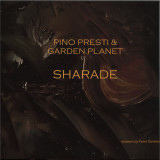
Beautiful release coming from Italy drawing inspiration from the intense colors of the works of the painter Tania Cantone on this work of love; "Sharade" by Pino Presti & Garden Planet. Mediterranean and Balearic lushness from the talented Pino Presti, and the eclectic keyboardist Claudio Calzolari, his son Andrea Calzolari, bass player Andrea Verardi and the organist Guido Mazzella. All together they created that magic, that long-forgotten, set aside, almost hidden atmosphere, which covers various genres such as lounge, future jazz, bossa-nova, ambient, which obviously includes chillout and downtempo vibes from the hot summer nights in the Mediterranean. So much vibes on this one release coming from the Italian friends of BEST Record! Recommened!
Eaux proudly announces the second full length LP from Rrose, Please Touch, released on vinyl, CD, and digital download. The LP follows 2019's Hymn to Moisture in ways that are both subtle and striking: Please Touch further hones the artist's tensile sound while exploring new aesthetic vistas and basking in an undeniably erotic sense of play. Moving with undulating power, the album's nine tracks drift across tempos from a weightless 0 bpm to a crawling 100 to a lunging 140 and back, with a rich palette of sculpted noise and cross-talking microtones.
Rrose's compositional process, rooted in their studies with West Coast avant garde trailblazers at Mills College, centers on "seed" sounds being fed through elaborate webs of interrelated audio processing. The result is a world where changes in any one element have downstream implications for some or all the others. It's a rich interdependence that lets the tracks breathe, grow and mutate with uncanny organicism. Please Touch addresses in equal measure the perceptual and the corporeal: these are sounds that sink into the body, exhibiting a tactility that pushes, pulls, bends and yields with fearsome vibrancy.
The album splits its time between radical techno iterations and pieces which pare back the percussion, letting the synth textures uncurl in their own time and space. The quivering drone and rolling sub-bass of "Joy of the Worm'' set the tone for the record, while "Rib Cage," Spore" and "Spines " swing with stepping rhythmic underpinnings. Building with finely calibrated tension, they use their few elements to startling, snarling effect. "Pleasure Vessels" is a rare moment of becalmed introspection in Rrose's oeuvre, hinting at a melodic ambiance that is practically unseen in previous works. It glows with a soft, dawn-like light before dissolving into a tidal fizz. "The Illuminating Glass'' brings the tempo down to a languorous chug, nodding its way through a field of glistening chirps and leaden gasps. "Feeding Time," "Disappear" and album closer "Turning Blue'' meanwhile nod to the cerebral psychedelia of Rrose's forebears, with mesmeric, looping textures and long, magisterial tones not dissimilar to the spectral works of James Tenney (whose work Rrose regularly performs) and the deep listening pieces of Pauline Oliveros.
The title of the album refers playfully to the tactile quality of the music while hinting at a forbidden sensuality that is only permitted within the confines of this microcosm. The phrase is also another nod to Marcel Duchamp, who gave this title to a 1947 exhibition of Surrealist art. Across the nine tracks, Rrose follows the lead of the sound(s) rather than trying to impose on the flow of the sonic material. Each move changes the parameters of a track's evolution. Thus, a non-hierarchical, symbiotic relationship forms between the so-called "music-maker" and the music itself. Please Touch acts as a collection of limbs, organs, parasites, and growths which both devour each other and keep each other alive.
Freestyle Records are proud to reissue Ambiance II Fusion's mid-80s fusion rarity "Come Touch Tomorrow" - originally recorded in Hollywood CA October/November 1984 and released in 1985.
Following a yearly run of 4 albums self-released between 1979 and 1982, Nigerian-born saxophonist, flutist, and clarinettist Daoud Abubakar Balewa then took a few years off before returning with 1985's "Come Touch Tomorrow", the first of two albums issued under the updated name of Ambiance II Fusion. Combining the afro-spiritual jazz & be-bop inflected fusion of his earlier work as Ambiance, this record took the project into more modern & distinctly cosmic planes with the introduction of spacey pads and drum machines working alongside somewhat tighter arrangements and solid rhythm sectons. Of particular note here is the B1 track "Boy What a Joy" on which a sublimely funky synth & drum machine throwdown is presented in prophetically lo-fi fashion - recalling recent stylistic approaches from the likes of Dâm-Funk among others.
Participating Musicians:
"AMBIANCE II FUSION"
Stanley Dominguez - Guitars
Dr. Isacc Ford - Drums/Electric Drums
Ralph Rodriguez - Percussion
Juliian Breeton - Bass
Jardin Wilson - Bass
Lee Williams - Keyboards/Syntheziers
Daoud Abubakar Balewa - Alto & Tenor Saxophone/Percussion
Larry Dominguez - Alto Saxophone
Suzanne Daniels - Vocal Sounds
"AMBIANCE II FUSION ENSEMBLE"
James "Kino" Cornwell - Keyboards
Randy Landis - Basses
Rick Smith - Percussion
Jim Lum - Guitars
Arnold Ramsey - Drums
Daoud Abubakar Balewa - Soprano Saxophone/Percussion
Recorded at Sound Images Recording Studios - Sound Images Entertainment Complex - North Hollywood, CA & Classic Sound Studios - Hollywood, CA. October/November 1984.
Next up is an overdue reunion with a familiar face. After his outstanding contribution to Cocoon Compilation S and his first solo EP on Cocoon Recordings, Raxon is back with a more than equally fascinating sound. The Egyptian-born and now Barcelona-based artist is back on it again, delivering two tracks that will take you on a journey through the depths of robotic soundscapes.
Intricate beats, hypnotic synthesizer melodies, deep bassline grooves, and distinctive EFX sounds create Raxon’s very special signature sound.
Straight drum programming paired with chirping percussions takes us away to embark on a travel through space and time while distinctive claps poke through a futuristic nebula of floating and shifting sequences. The twisted melody of “Robotalia” carries us to a parallel dimension of machine sound and if you listen closely, you can hear the robots’ screwing and sawing. Warping bleeps and mechanical effects complete the robotic feeling. Raxon’s understanding of structures and architectural abilities are reflected through the arrangement, slowly increasing to ecstasy.
“Kryptonite” scores with alien soundscapes. Stuttering vocals are the questions, while futuristic and dramatic chord stabs are the direct answer. A straight, radiant sound appears as an electronic trombone from outer space, offensively supporting the driving bassline. The symbiotic interplay between the euphoric synthesizer hook line and the relentless beat with pushing sharp hi-hats visualize powerful images in one's mind's eye. Suddenly the beat stagnates and results in a morphing break going head over heels developing a start-stop pitch effect that not only builds up tremendous tension but also bears an increased risk of melting your brain. We just love tape delay!
Heart-wrenching ambient to cerebral techno: INVERNO is Carlo Maria’s debut on Drone.
‘Winter in the northern hemisphere is often seen as the season of death, a state of life so often negatively connoted. I see winter as an incubator of change, where life takes the time to free its potential again.
This record is a memory of past winters and a reminder that new ones will come. It celebrates the state of stillness as a necessary element of movement. It is an invitation to acceptance. The music itself might not necessarily express these ideas, but it acts as a trigger of memories and feelings of the times when these recordings were conceived. I like to see music recordings as pages of a diary.
This music was recorded in a time and space span of various years and locations. Exhumed was recorded at the end of October 2016 in Berlin; the other three tracks were recorded in Milan and performed live in various locations across Italy between in winter/spring 2021/2022.’
The Search for God is a wake-up call for a troubled world that’s still worth saving, animated by a belief in the power of small connections to add up to big changes. At 10 songs delivered in a brief 15 minutes, Jimmy Whispers’ long-awaited sophomore album feels present in a way that feels brand new for the cult auteur. Like many of us, Jimmy has been affected by the pressure of the past few years. After embracing sobriety in 2019, and now as a filmmaker sharing the stories of lesser known Los Angeles community members, he’s brought his dreaming down to earth, while turning its direction even further out.
Recorded with his longtime friend Ziyad Asrar of the band Whitney (and re-recorded after a hard drive incident destroyed the original files), The Search for God was created in the wake of Jimmy’s COVID isolation, and returns to some teen influences that are out of step with the chill/lo-fi LA indie rock scene he’s found himself lumped in with. Created mostly with two vintage synths, a single Roland CR5000 drum machine, and a busted karaoke machine, it channels Midwestern emo, the Beach Boys’ Smile, subtle nods at hyper-pop production, and forgotten jewel-box era college radio of the early aughts into a pure pop sound that transcends easy categorization.
The album’s standout single—and its statement of purpose—is “Hellscape,” which packs more into a minute and 40 seconds than you’d think possible: multiple immediately-unforgettable hooks, kaleidoscopic keyboards, and a bracing reminder that even the most transcendent moments are rooted in a world full of suffering. “This is a fucking hellscape,” Jimmy sings. “This is real life / this is happening.”
That may sound like punk nihilism, but The Search for God is anything but. Every lyrical acknowledgment of how fucked things are right now comes with a promise that we can still make positive changes. Jimmy calls it “God”; you might call it Love or Peace or A Place In the Universe That Makes Some Kind of Sense.
Will The Search for God deliver whatever that is to you? Of course not. At its heart, it’s still just a really good pop album. But maybe that’s enough. For a minute or two at a time, Jimmy’s music cracks open a space where the divine can enter our lives. The utopia we’ve all been dreaming of is already here if we’re just willing to build it. Jimmy Whispers is there, ready to add his voice, whenever we want to reach out.
It's always good to have Norbak onboard again with this brand new slice of plastic. Four cuts of precise and gymnastic techno aimed for the most advanced dancefloors energetic and intelligent at the same time, as we like.
A side starts with "Tell me I'm wrong" a fast paced hypnotic exercise with adrenalinic synth lines running over complex rhythms, properly arranged in a constantly changing structure.
"Amongst Them" follow, textured flanged sounds running across the stereo field, shuffled beats and lots of space, the definition of how profound techno should be.
Flipping the vinyl, B1 is "Pure and Faithful", funk infused sequences constantly altered in shape, complex grooves and as always a profound structure full of twists.
Last cut in this exercise is "Unbearable Lightness", continuous and repetitive randomized synth lines spiced with lots of reverb over a well crafted drum workout, intense and spacious at the same time.
Another demonstration of studio skills and sound design from this young Portuguese producer.
- A1: Psychonautic Escapism (Cold Alienation) (Cold Alienation)
- A2: Acetoxyhexorchid I (Cluster Phase) (Cluster Phase)
- B1: Lattice Dysmorphism Of Lysothymic Oneiroid
- B2: Ultraviolet Circumzenithal Arc
- C1: Trench Through Pink Death
- C2: Acetoxyhexorchid Ii (Dispersed Phase) (Dispersed Phase)
- D1: Sirencipher Eidolon In Chimeric Photisms (Cascade Xenofluora Entwining) (Cascade Xenofluora Entwining)
- D2: Sun Shimmer Repeater
Born from the fractal innerworld of Vymethoxy Redspiders,
better known as Urocerus Gigas from Leeds-based xenofeminist
crisis energy rock duo Guttersnipe, The Ephemeron Loop's
debut is a synaesthetic acid bath that cracks open the doors of
perception to reveal a sonic landscape of ineffable beauty,
divine femininity and continual transformation.
"PsychonauticEscapism" sublimes Guttersnipe's teeth-gnashing spacegrindaesthetic leaving washes of dream pop ambience, dilated
speedcore fusillades and shapeshifting psychedelic dub effects.
It's an album that lodges itself creatively between Cocteau
Twins, Arca, Basic Channel and Napalm Death, lysergically
fluxing imperceptibly between seemingly contradictory sonics
and philosophies. Miss VR took 14 long, difficult years to write
the album, which developed cautiously as she broke through
the misery of her pre-transition life with shoegaze music, rave
and psychedelic drugs in Leeds' queer underground. An
existence languishing in negativity, soundtracked by extreme
music was replaced with the opportunity to experience
euphoria, elation and ecstatic freedom, emotions that coalesce
sensually on "Psychonautic Escapism".
These formativeexperiences are the album's initial building blocks, assembled between 2007 and 2018 as Miss VR came to grips with her
reality as an autistic/ADHD trans woman and the multidimensional psychotropic experiences that assisted that realization. And as V's worldview expanded and shifted as she lived a fresh life, the music itself developed spiritually. In 2018,after being impressed with producer Ross Halden's work with Guttersnipe, Miss VR asked him to assist her with developing The Ephemeron Loop's fragmented songs and visions. "I learned a lot about why people don't usually combine various kinds of sounds or styles in music," she admits. "It is very difficult to get it to all work together!" But after two-and-a-half years of the duo navigating a "labyrinth of fragmented Reason 5 and Logic
projects," re-recording and processing, and working tirelessly on
complex arrangements and compositions, they eventually found
a light at the end of the tunnel. The finished album is towering
and ambitious, Escher-like in its illusory reconstruction of
familiar elements into brain-altering forms. The album begins
with 'Psychonautic Escapism (Cold Alienation)', decorating Miss
VR's disembodied moans with throbbing dub techno synths,
insectoid digital percussion and disorientating high-BPM
electronics.
Her vocals hover weightlessly between My Bloody Valentine's Bilinda Butcher and Cocteau Twins' Elizabeth Fraser, and on 'Lattice Dysmorphism of Lysothymic Oneiroid Cytoterrain' drift against grinding industrial hardcore kicks, serrated bass and Lorenzo Senni-esque trance pointillism. On 'Trench Through Pink Death', Miss VR's voice mutates into a shrill scream as she directs the music from splattered freeflowing doom into harsh hyper-speed death metal and
breakcore. Woven together with both precision and delicacy, "Psychonautic Escapism" turns a rough patchwork of ideas,
experiences, feelings and vivid emotions into a glorious neon
tapestry. In living and exploring the realities of autism, ADHD
and trans identity, Vymethoxy Redspiders has masterminded a
sonic language that feels fresh, urgent and shockingly honest.
Psychedelic is a term that gets thrown around far too loosely at
the moment - in this case there's just no better way of
describing the album's scope.
Back in 2018, two mysterious twelve-inch singles appeared in underground record sthops. Credited to Blotter Trax, a previously unknown outfit who cherished “faceless” anonymity, the pleasingly twisted and mind-altering music on show was a mutant form of electronic psychedelia. The included tracks were variously informed by analogue techno, acid, electro and minimal, but inhabited their own clandestine sonic space. These tracks were, we later discovered, lightly edited “straight to tape” jams, crafted on the fly by their creators in one of Berlin’s most admired studios.
By the time Blotter Trax delivered their follow-up on Clone offshoot Frustrated Funk a year later, the secret was out: the project was in fact a collaboration between two storied artists, techno titan Magda – a DJ/producer who should need little introduction – and serial underground aggravator (and man of many aliases) Jay Ahern, sometime Hauntologists member and acid techno royalty thanks to years spent releasing similarly shadowy EPs as T.B Arthur.
In the years that followed, and before the COVID-19 pandemic grounded them in Berlin, the pair took their incendiary, modular-driven live show to esteemed clubland institutions (Fabric included), on an acclaimed tour of Japan, and onto the stages of festivals across Europe.
Four years on from that appearance on Frustrated Funk, Blotter Trax are back in updated and expanded form. Now a trio thanks to the addition of bassist Hannes Strobl, the band is set to release their far-sighted, funk-fuelled debut album, Super Conductor – a pulsating, thrill-in-minute ride includes contributions from a swathe of notable guests (Nina Hynes, Ilhem Khodja and David Moss provided vocals, Shigeru Tanabu played guitar, Matthew Styles mixed the set and old friend John Tejada mastered it).
While rooted in electro and acid, the album is impressively low-slung, stylish and funky, with nods towards Blotter Trax’s mutual love of Arthur Russell, early ‘80s NYC downtown disco, leftfield new-wave pop and flash-fried punk-funk. Released by JD Twitch’s Optimo Music imprint, it charts the ongoing dancefloor evolution of a band whose days of mystery and mischief are now a distant memory.
Black Duck captures a band already deeply in tune with one another. The three-piece super-group consists of Douglas McCombs, Charles Rumback, and Bill MacKay each has a distinct musical voice that is instantly recognizable, yet blends seamlessly with one another-their time performing together, playing to the moment and reading each other and the spaces they"re in formed a fluency between the trio which allows them to follow each other down winding paths and short tangents alike. McCombs is a founding member of Tortoise, Pullman, and Brokeback and the long-standing bassist for Eleventh Dream Day, an artist whose contribution to the music world can not be overstated. MacKay began releasing records in the early 2000s. He has released several acclaimed solo albums with Drag City as well as a duo album each with Nathan Bowles (Banjo, Black Twig Pickers), and Katinka Kleijn (Cello, Chicago Symphony Orchestra (CSO)), and two beloved records with Ryley Walker. Rumback burst onto the fertile Chicago improvised music scene in the early 2000"s. His fluid technique and expressive playing garnered him much attention. In addition to his solo releases, Rumback has recorded with Ryley Walker, jazz greats such as Jim Baker, James Singleton, and Greg Ward. Black Duck"s debut is a testament to that fluency, an expedition led by three veterans into alluring worlds bathed in myriad splendors. Black Duck is a gallery of sonic tapestries, unbound by any genre constraints. Black Duck redefines what two guitarists and a drummer can do, pieces move from breezy shuffles to stormy blues rumbles to gorgeous textural drones. Playing entirely improvised live sets for years helped develop the trio"s acute senses for one another, knowing precisely how to listen to the others and bolster whatever direction they move in. In the short time the trio have played together, they have performed at Big Ears Festival and alongside acts like Yo La Tengo.
Angel Deradoorian and Kate NV are Decisive Pink - Ticket To Fame is their highly anticipated debut. After teasing the single 'Haffmilch Holiday' the duo amassed a rapturous response, with The Guardian calling it "a space-age-dancefloor swoon that brings to mind Kate Bush's Waking the Witch" and the New York Times highlighting the single as "substantive and thoroughly hypnotic". On their first LP they do not disappoint, calling on Kate NV's experimental pop leanings and Angel Deradoorian's taste for atmosphere and otherworldliness, Decisive Pink have created a playful and abstract album designed for escape and enchantment. Electronic pop at it's finest, the debut points to the fact that life is a puzzle, but you can still get a lot from living it. 'Destiny' is a smart take on the nature of belief, built on a question-and-answer format, where Angel plays a role as the seer, and Kate the enquirer. The poppy beat is reminiscent of Talking Heads' 'The Great Curve', from Remain in Light. There again, it could be a sinister take on Will Powers' 'Kissing with Confidence'. The synth squeaks, squelches and toots sound like the timid affirmation of the initiate. Ticket to Fame is also unashamedly romantic in atmosphere and tone. Romance is to be found in the simple pleasures, such as listening to a blackbird on the instrumental 'Rodeo', where warm synths, a melancholic guitar pattern and hissing rhythm combine with some vocal snippets to form a soothing contemplation. Then there is 'Ode to Boy'; a perfect pop track. The walking into the room of "more than just an ordinary boy" (doubtless "drunk with fire") allows a set of initially different, and shortened synth patterns to build to a glorious affirmation of the power of love. "Perfect pop music" Marc Riley, BBC6 Music And guess what? The vinyl comes in pink!
After four years, De Lichting is back with a new double album: Drie Nul Drie!
This fresh addition to the infamous compilation series revolves around a central theme: The 303 Acid Bassline.
The double LP format has always been the weapon of choice for the crew when it comes to implementing diversity in their musical story.
Despite the 303 being a rather limited concept, everyone within the collective finds a unique way to approach this classic element that has been rinsed for decades.
From the typical techno bomb of “MJM002” to the sneaky after hours tech gem “5421”, or the Detroit influenced chill-out cut “Tool”, the album bursts with playfulness and creativity, while coming together logically sound wise.
Abstrakce recover this lost gem recorded in 1999 and published by Keliehor himself in a very short-run CD named "Create Music", which had almost no diffusion.
An outstanding collection of exotic tracks with a wide range of influences from primitive cultures all over the world. An unexplored region where the Minimalism concepts developed by Steve Reich, La Monte Young, or Terry Riley and renewed by Midori Takada meet Jon Hassell's 4th world ideas.
You will find here repetitive patterns that evolve and transform the sound space, unlikely instruments gathered together in a perfectly harmonic way, making flow an unusual melodic sense when the uncommon combinations of these instruments interact with one another. Simple instruments, yet exotic, primitive sound makers with complex personalities, timeless sound treasures unchanging a hundred years. Crude or sophisticated, most of the instruments, compel us to listen to them. A more flexible and wider range of tonality is discovered by limiting the number of instruments that play together and choosing those whose tones and harmonics resonate together.
The record results from a didactic project for nursery and primary school environments while searching for ideas to guide children in following the details of music. The music architectures are often transparent, even repetitive, but the culminative effect soon becomes more than that. These pieces are aural landscapes for dreams and adventures, doorways to imaginative worlds.
The Artists:
Jon Keliehor and Signy Jakobsdottir performed together in Seattle, Venezuela, and Scotland. During their stay in Seattle, both had studied gamelan music with Gamelan Pacifica under the direction of Jarrad Powell. After returning to Scotland, they continued to study and perform with Gamelan Naga Mas, in Glasgow, in projects directed by dhalang Joko Susilo, dancer/director Nyoman Wenten, and Professor Matthew Issac Cohen.
In Scotland, they created adult and children's workshops under the banner of Luminous Music. Preceding the formation of Luminous Music, Keliehor had worked as percussionist and composer with contemporary dance companies, both in London and Seattle. Following on studies in percussion music at Dartington College of the Arts, Signy moved to Seattle to begin work with Jon. The partnership that ensued brought them to Caracas, Costa Rica, Brazil and Spain to create music for the dance company DanzaHoy. In 1996, they returned to Glasgow, and continued to work together at the newly created Luminous Music Studios. Signy's involvement with musicians/groups has continued beyond this to include genres in Scottish/Celtic traditions, in Jazz, as well as music innovations of her own design.
- A1: Polysick - Laguna
- A2: Iron Blu - Ylem
- A3: Teslasonic - Conscious Machine
- A4: Phalangius - Elite Galaxy
- A5: Lo-Lo - Ubik
- B1: Heinrich Dressel - Der Greifer
- B2: Nursiø - Murder On Paestrum St
- B3: Alessandro Parisi - Dungeon R16
- B4: Alessandro Adriani - Blood Runs Down
- B5: C-34 - Sanitarium
- C1: David Kristian - Electric Empire
- C2: Ian Martin - Roark
- C3: Stefano Rocchi - Sospeso
- C4: Sonobe - Daydream
- D1: Fabrizio Lapiana - Lost In Negative Thoughts
- D2: Lamanna Breaking Wood - Tristesse
- D3: Key Clef - No Body
- D4: Cassandra - Bran Creak Hotel
"Eux sont de ceux qui trament en accordant desseins sur dessins." MinimalRome is back with the second volume of Trame compilation. A full lenght 2xLP release gathering Legowelt (as Phalangius), Heinrich Dressel, Alessandro Adriani, Ian Martin, Teslasonic, Polysick, C-34, Iron Blue and David Kristian among others. Traveling through these eighteen ambient cosmic tracks from true heirs of library music, you'll expand the surrounding space. Limited to 300 copies
Naarm alchemists Sleep D's revelatory new synthetic 'Electronic Arts' is ready for circulation.
Having released 4 EPs of mind-altering club tackle since 2019's 'Rebel Force', the duo overcome second album syndrome, boiling down their chaos with a more developed sense of songwriting. Never banging one drum, 'Electronic Arts' mirrors the anything goes mania of their DJ sets, tactfully shifting through different sounds and styles. Tempos intensify and decelerate, at times pushing the threshold to 150 bpm from docile canine dreamscapes to full tilt Space Invaders in AR mind games.
Largely built on road tested material from their live performances, the album is a tangible Butter Sessions gathering, busting out the gate with Martian rave initiation Planet Waves, Outdoor System's polyrhythmic beatdown and the Orb-like hero dose affirmations of Sunrise In The Crater (I Exist). While 'Electronic Arts' is otherwise a self-dependent effort, Punch Drunk is brewed ever more potent by the hypnagogic vocals and lucid trumpet cycles of former futsal team member YL Hooi. Their unified energy incidentally manifests a profound matrix of ambient techno, motorik, Don Cherry and Everything But the Girl.
Also touching on apocalyptic doof and minimal, the album is not exclusively peak time with Maryos Syawish and Corey Kikos' specialty curveballs also playing their part. From Village To Empire finds the duo rooting down in Syawish's heritage with a tapestry of purposefully deployed Iraqi and Syrian ethnographic samples and field recordings, dubbed within range of Muslimgauze and On-U Sound. As minimal techno finale Textile trails off into footsteps wandering back to base camp with a satisfied exhale, one wonders where Sleep D's existential pathfinding could possibly take us next?
In the digital age, words are no longer just symbols of communication, but a powerful tool that gives rise to meaningful interconnections between different universes.
Words have the power to transcend time and space, connecting two souls destined to meet.
Il Significato delle Parole (the meaning of words) is Adiel's new effort on her DanzaTribale, a crossover of two minds, generated together with musician Flavio Accorinti: techno sounds like the restless soul that pervades our days, deconstructed atmospheres like shattered generational dreams. The fusion of two cosmic currents, two ways of thinking and creating, characterized by an immanent power, pushing us to imagine new urban primitivism. Two creative processes, transcending individual boundaries to connect into a single overarching vision, to explore new forms of art and storytelling.
The EP, mixed by Donato Dozzy and mastered at Rome's Enisslab Studio by Giuseppe Tillieci, starts with Nulla Resta, a defragmented, dreamlike, ascending climax markedly cyberpunk: dense with references to 90s Progressive Dream, Nulla Resta, with its dulcet melodies, transports us to an artificial reality, a spiritual reality albeit dominated by technology. A reality suspended between fantasy and materialism.
Suspended, like the second track (Sospesa): dark trip-hop's echoes adorned by the voice of Jordie Devlin Mcmorrow. "Shadows on the walls orchestrate our downfall." Dystopian futures intertwine with mysteriously dreamy pasts in a fatal spiral of redemption.
But words remain the catalysing element of this EP.
Parole(words) represents a communicative rare faction that embraces tribes near and far. Black drums echo in the distance in an intimate ballad, in an epic ride, in an ethereal metaphysical journey to the dissolution of the boundary between time and space, between memory and perception.
Notturna, on the other hand, is the epilogue we all deserve; a solemn twilight, a lysergic, dragging escape from the objectivity of the real world.
The images of life do not simply exist in a vacuum. They are defined by the energy that surrounds them, and it is the explanation behind each of these words that we must find if weare to truly understand them. Thanks to the meaning of words, sooner or later, we will be all united again.
- A1: The Giant Meteorite Draws Near
- A2: Main Title
- A3: The Ruins Of The Ayutthaya Dynasty
- A4: The Golden Statue Of Buddha
- A5: The Temple Collapses
- A6: The Iceberg Disaster
- A7: Infant Island
- A8: The Suspension Bridge Falls
- A9: Midori's Letter
- A10: The Mural In The Cave
- A11: Discovery Of The Giant Egg
- A12: The Legend Of The Cosmos
- A13: The Larval Battra Appears
- A14: The Giant Egg In Tow
- A15: Battra Attacks Nagoya
- A16: Battra Vs. The Self-Defense Forces
- B1: Godzilla Appears
- B2: The Larval Mothra's Birth
- B3: The Hotel In Manila
- B4: Mothra Crosses The Sea
- B5: Mothra's Landing
- B6: Mothra And The Cosmos
- B7: The Cocoon On The National Diet Building
- B8: Godzilla From The Fuji Volcano
- C2: Godzilla Vs. The Self-Defense Forces
- C3: The Luminous Fairies
- C4: Mothra Vs. Godzilla
- C5: The Ocean Halo
- C6: Mothra Heads Into Outer Space
- C7: Rolling Title – Ending
- D - Etched
- B9: The Appearance Of Imago Mothra
- C1: Imago Battra Emerges
The Big G is back, but has Godzilla bitten off more than it can chew? 1992's GODZILLA VS MOTHRA is a triple threat treasure, with Godzilla battling the legendary Mothra and its dark doppelganger Battra, unleashed by a meteorite and is intent on destroying Mothra and, subsequently, the world. Throw in a rogue archaeologist, his ex-wife, and a multinational company exploiting the minute Mothra Cosmos twins, and you have a thrilling kaiju adventure with a stunning score by the original Godzilla composer, the brilliant Akira Ifukube. GODZILLA VS MOTHRA is undoubtedly one of Ifukube's most outstanding scores, bringing together the traditional booming brass and bass that accompanies Godzilla and Battra with a more ethereal sensibility for Mothra and her mission to save the Earth. Godzilla's theme is stomping in the foreground, and Battra gets similar material with a gigantic doom-laden motif for his destructive power. But the "Sacred Springs" theme for Mothra is a match for any of them, with Ifukube using it in minor and major modes, with a gorgeous rendition with a female chorus at the climax of the score, illustrating once again that when it comes to the music of Godzilla, Akira Ifukube is the master.
Since the release of Surprise Chef's 2022 album, Education & Recreation, they have been touring across the US, Europe, and Australia selling out shows and cementing themselves as a force to be reckoned with. Releasing three albums and a string of successful 7" singles since 2019, their output is nothing short of prolific and they show no signs of slowing down with the announcement of their new Friendship EP. Friendship is a six song 12" EP recorded during the Education & Recreation sessions that stands as "a humble monument to the most crucial principle of our band: that the love we share for one another is, at all times, the most important thing".
Surprise Chef holed up for a marathon of a recording session and laid down more tracks than would fit on an album. Here now, we dig in the vault from those sessions and share some absolute gems. The EP opens with "Rosemary Hemphill", a nod to David Axelrod that takes the listener through a myriad of musical changes and moods in proper cinematic soul fashion.
"Friendship Theme" is a bouncy and energetic number with an infectious and driving clavinet topline that is sure to move dancefloors around the globe. "Over The Moon" is pure mood music that puts Surprise Chef's restraint and tasteful use of space front and center while "Spiky Boi" is a frantic upbeat number drenched in percussion and keyboards.
SC have a heavy touring schedule for the rest of 2023 and will be finishing up the recording of their next album which is due out in 2024 in between runs. UK shows: May 29 Pink Room - Manchester, May 30 Village Underground – London. Also Available From Surprise Chef: Money Music 7", Education & Recreation LP / CD, Velodrome7”
Volume 2! MUNIR aka MIDNIGHT RUNNERS on his 5th drop with STAR CREATURE, hits us again with some diggin' deep dug ups from his corner of the world. This one picks up where his TUGBOAT EDITS VOL 14, HAUNTING ECHOES and NUSANTARA VOL 1 left off. Tidal waves of jazz funk, space disco & boogie.
The next chapter of the Natural Information Society is here. Since Time Is Gravity, credited to Natural Information Society Community Ensemble with Ari Brown, presents a newly expanded manifestation of acclaimed composer & multi-instrumentalist Joshua Abrams nearly 15 year, 7 albums &-counting flagship ensemble. Joining the core NIS of Abrams (guimbri & bass), Lisa Alvarado (harmonium) Mikel Patrick Avery (drums) & Jason Stein (bass clarinet) are Hamid Drake (percussion), Josh Berman & Ben Lamar Gay (cornets), Nick Mazzarella & Mai Sugimoto (alto saxophones & flute), Kara Bershad (harp) & Chicago living legend of the tenor saxophone Ari Brown. Recorded live to tape at Electrical Audio & The Graham Foundation, cover painting Vibratory Cartography: Nepantla, by Lisa Alvarado. 2xLP on Eremite USA, 2xLP & CD on Aguirre/Eremite Europe. Out 14-04.
Since first developing Natural Information Society in 2010, Joshua Abrams has been gradually expanding the group’s conceptual underpinnings, its musical references & the sheer number of the group’s members. Its music is, in a sense, an expansive form of minimalism, based in repeated & overlaid rhythmic patterns, ostinatos & modality. Its roots, its scale & its meaning become clearer in time. If time is gravity, it also allows us to carry more. Having begun as fundamentally a rhythm section with Abrams’ guimbri at its core, the version here can stretch to a tentet, including six horns.
Abrams has been expanding his minimalism gradually, but he has long understood a key to minimalism’s potential: the breadth of its roots in the late 1950s & early 1960s, ranging from the dissatisfaction of young European-stream composers with the limitations of serialism to the simultaneous dissatisfaction of jazz musicians with the dense harmonic vocabulary of bop & hard bop. The former began exploring rhythmic complexity & narrow tonal palates in place of harmonic abstraction (Steve Reich’s Drumming, Philip Glass’ Music with Changing Parts; perhaps above all Terry Riley’s In C & his late ‘60s all-night organ & loop concerts); the later reduced dense chord changes to scales (signally with Miles Davis' Kind of Blue, but rapidly expanding with John Coltrane’s vast project). In the 1950s the LP record opened the world with documentation of Asian & African musics, key influences on both minimalists & jazz musicians. If John Coltrane’s soprano saxophone suggested the keening shehnai of Bismillah Khan, the instrument was rapidly taken up by two key minimalists, LaMonte Young & Riley, similarly appreciative of its flexible intonation, the same thing that kept it out of big bands.
If the guimbri, the North African hide-covered lute that Abrams plays with NIS, involves a rich tradition of hypnotic healing music associated with the Gnawa people, Abrams’ music also touches on other musics as well — other depths, memories & healings, different drones, rhythms & modes. As the group expands on Since Time Is Gravity, he has made certain jazz traditions in the same stream more explicit as well. If there is a mystical & elastic quality involved in the experience of time, both in direction & duration, you will catch it here. The parts for the choir of winds expand on the roles of Abrams’ guimbri, Mikel Patrick Avery & Hamid Drake’s percussion & Lisa Alvarado’s harmonium: at times, the winds are almost looping in the tentet version, each hitting a repeating note in turn, at once drone & distinct inflection on temporal sequence. The brilliance of the work resides in Abrams’ compositions, the NIS’ intuitive execution & in Ari Brown’s singular embodiment of the great tenor saxophone tradition, including the oracular genius of Eddie “Lockjaw” Davis, & Yusef Lateef. The three pieces by the expanded NIS featuring Brown —the opening “Moontide Chorus” & “Is” & the ultimate “Gravity”— have an immediate impact, & togther might be considered a kind of concerto for tenor saxophone. Here Brown presses almost indistinguishably from composed melody to improvised speech, getting so close to language that he might have a text. Everything here is a sign. Note the tap of the Rhythm Ace that links “Moontide Chorus” to “Is”, the attentive heart always present, even when signed by a machine. There’s a link here to the methodologies & meanings of dub music & the linear & vertical collage of beats, textures & tongues: treated with reverence, a sample of a beat-box can be as soulful, as hypnotic, as a mbira or a tamboura. If those pieces with Brown are heard as a suspended concerto, the three embrace & enfold the other works, like the sepals of a flower. That placement will also touch on the mysteries of our perception of time.
Particularly in “Is”, but elsewhere as well, a phenomenon of transcendence arises in which time appears to be tripartite, at once moving backwards & forwards & standing still. This is an act of technical brilliance certainly, but also an illumination of music’s ability to represent temporal consciousness through polymetrics. This particular listener has only heard it before in a few places, including the horn shouts & bowed basses of Coltrane’s Africa, in moments of Charles Mingus’ The Black Saint & the Sinner Lady, in certain pieces where tapes were literally running backwards, & earlier still in Dizzy Gillespie’s Cubana Be, Cubana Bop, in which the composer George Russell & conguero Chano Pozo found a music that spoke at once in the voices of Stravinsky’s Rite of Spring & the vestigial rites, rhythms & songs of the Yoruba language & Santeria religion of inland Cuba.
In Joshua Abrams’ compositions & the realization of them by the NIS, in the time of one’s close listening & memory thereof, distinctions between the “natural” & the “social”, the “quotidian” & the “transcendent” are erased, suspended or perhaps irrelevant. Consider two of the ensemble pieces, one named for nature, the other social science. In “Murmuration” the repeated wind figures of flute & alto saxophone combine with the interlocking patterns of harp, guimbri & frame drum (tar) to create a perfect moving stillness, not an imitation but a witness to the miracle of the starlings’ astonishing collective art, a surfeit of beauty that might be the ultimate defense tactic.
“Stigmergy” takes its name & concept from the Occupy movement’s Heather Marsh, who proposes a social system based on a cooperative rather than competitive models, one in which ideas are freely contributed & developed as ideas rather than an individual’s property. In its form, Abrams’ “Stigmergy” is the closes thing to traditional jazz, a series of accompanied solos by each of the wind players. However, the composed accompaniment is a radically collectivist notion: a repeated rhythmic figure, call it ostinato or riff, in which the different winds each play only a note or two of the figure, a concept both more collectivist & individualistic in its conception than any typical unison figure. It suggests another of the underlying recognitions that propel the Natural Information Society, the group as social organism, the teleology of hypnotic anarchy, all parts in place, functioning systematically, evolving & expressing itself, its nature & society, as a transformative organism.
George Lewis has described music as “a space for reflection on the human condition”. This suggests that, rather than a “distraction”, at least some music might serve as a distraction from distraction. It’s a focus, a clarity, a awareness, an external invitation to interiority, as if music itself is a model for form & contemplation, an organism contemplating for us or as us. If that is a possibility, & I am sure I have heard such musics, than this music is among them. How many of our rhythms, melodies & harmonies (cultural, historical, biological, psychic) might such music carry, translate & transform in the particulate ecstasy of our own murmuration? (Stuart Broomer, April 2022)
After the acclaimed ΠΟΛΙΣ, Subheim returns with RAEON; a collection of eight new tracks for lonely evenings and long night drives. With RAEON, Subheim continues to expand into the sonic territory he has steadily been exploring since 2015’s Foray, the album that marked the project’s shift towards moodier, highly textured, lofi compositions through the use of sampling and heavy audio manipulation. While this EP feels like a natural continuation of the producer’s most recent work, it is intentionally stripped of any percussive elements, with the focus being entirely placed on space and melody.
Each composition feels like a distant, fading memory that unfolds faster than you expect it to and dissolves into an echoing nothingness before you’re able to hold on to it for more than a few seconds. Much like a long-distance train passing by or perhaps like a song you might hear in your sleep.
Every piece serves as a different chapter of the same open-ended narrative; one where stillness, grief and hope simultaneously coexist in perfect harmony. Intentionally imperfect, naturally gritty, spacious as ever, this new record balances between fragility and conviction, and once more illustrates the deeply human side of its creator.
In contrast to some of the producer’s darker work, RAEON is filled with an undertone of bittersweet hopefulness and a strong desire for new life. With the juxtaposition of nostalgic, synthesized, analog sounds and neoclassical elements, Subheim strikes the perfect balance between past and future, between melancholy and hope. And while the closing track is almost ironically called “Forget”, its ending will leave you longing for more and wondering what else is there.
‘Y Dydd Olaf’, which is sung entirely in Welsh,
apart from one song penned in Cornish, draws
inspiration from Owain Owain’s 1976 novel of the
same name. The book is set in a dystopian future
where robots enslave the human race through the
use of medication, while Gwenno’s album covers
such themes as patriarchal society, governmentfunded media propaganda, cultural control,
technology, isolation and the importance of
minority languages.
‘Y Dydd Olaf’ was initially released by Peski
Records in October 2014, before being released
worldwide in 2015 by Heavenly Recordings.
Now available on crystal clear vinyl. Includes
digital download of ‘Y Dydd Olad’ plus nine bonus
tracks of remixes and rarities.
“This record demands what’s left of your time.” - Q
(★★★★)
“Blissful, dreamy psychedelia, full of twinkling
electronics and metronomic drums.” - Evening
Standard (★★★★)
“Language as a metaphor for political defiance…
floats beautifully over the krautrock/space-rock
soundscape, a Goldfrappian album you should
hear.” - The Sunday Times (★★★★)
- A1: Difficult Machinery (Sonic Boom Remix)
- B1: Honesty (I Don't Wanna Know) (Vanishing Twin Remix)
French electronic post-punk/krautrock trio Veik recruit Sonic Boom and Vanishing Twin to reimagine tracks from their 2021 debut album, 'Surrounding Structures'. Both remixes have been pressed to wax by Fuzz Club, due out June 9 2023 on a heavy clear-blue 7" limited to 250 copies. On the A-side Sonic Boom (aka Pete Kember of Spacemen 3 and Spectrum) takes album-opener 'Difficult Machinery' and deconstructs it into a spaced-out, oscillating drone. Shifting gear on the B-side, 'Honesty (I Don't Wanna Know)' was already a piece of throbbing and discordant proto-punk and on this remix London psych-pop experimentalists Vanishing Twin turn it into an even more abrasive and unpredictable beast. Now being revisited via these remixes, Veik's 'Surrounding Structures' album was rooted in avant-garde krautrock and 70s no wave and inspired by brutalist and modernist architecture. It came highly praised by the likes of Loud & Quiet, Line of Best Fit, Louder Than War, BBC 6 Music, KEXP, France24, France Inter and more.
Timo Kaukolampi, frontman for Finnish electronic rock group K-X-P and tireless sonic wanderer, is releasing his second solo album, this time on Optimo Music. Exquisitely rendered, shadowy, curiously claustrophobic and even occasionally paranoid, Inside The Sphere is an album wholly deserving of its name.
A sense of paranoia is one of the threads through this glittering, winking electronic maze. Kaukolampi says “I came up with this metaphysical concept of the “sphere”. When you are manipulated you are ‘Inside The Sphere’. It’s like this dome of ‘undue influence’ that you don’t know exists around you. It’s a bit like the inside of a cult.”
Indeed, it’s amazing the effects achieved with a few sparse electronic textures, the odd smattering of studio trickery, and two or three well-placed synthesizer parts. Though the result might sound ostensibly simplistic, Inside The Sphere is an album of reduction rather than addition. The rhythmic and textural scaffolding is based around what’s not there, rather than what is. Take ‘VCS3’. At first listen, it seems forged from a few synth lines and a simple percussion part – so far, so simple. But listen closer, enter the sphere, look behind the mask – notice the slightly detuned drones, the chattering percussive textures, that distant swell of bass, the way the central fugue shifts and mutates somehow statically, like a barber’s pole.
Might we be listening to an album within an album, a more complex song cycle hiding within the folds of an ambient electronic album? This ties in with another of Kaukolampi’s thematic frameworks – that of the mask. He references Oscar Wilde’s quotation that “Man is least himself when he talks in his own person. Give him a mask, and he will tell you the truth.”
Inside The Sphere is not a one-note album. For every moment where a clammy ambient space enters, a buttery analogue bassline is there to fill it. This clash seems to be the album’s engine room, its power supply.
Timo references devotional and choir music as an influence on this album. The paranoia and foreboding is tempered by these headier aspects. Kaukolampi mentions “empty and hollow spaces” in relation to several of the songs. Perhaps this is the very space behind the mask, where outward disguise merges with inner reality. Perhaps inside the sphere is not always such a bad place to be.
We are delighted to welcome from the Finnish electronic music underground the artists MESAK to the n s y d e family. Mesak's dedication to experimentation and sonic exploration always excited us. With an extraordinary sense of futuristic sound designs, these tracks are a perfect example of finding the sweet spots between established and new techniques. The First track "Katosi" shows impressively how a contemporary dertroitish sound design is still able to transport ancient human feelings like hope and melancholia at the same time.
The acidic grounded "Narina" creates a dungeon space constantly hitting the whiplash snare drum, while "Post Sweat" is pouring golden Larry Heard-like warm Deep House neutrons upon you.
For the Remix, he has invited one of the most interesting artists in the field of electronic experimentation coming out of France, Poborsk, also known under his Bill Vortex moniker.
Mesak's music invites listeners to explore a range of emotions and moods, from the contemplative to the ecstatic, with a sense of sincerity and authenticity that is extraordinarily rare.
House Nation is still under one Groove.
Following on from the Bergisch-Brandenburgisches Quartett’s anarchic Live ’82 (BT095), Black Truffle continues its deep dive into the archives of legendary drummer/accordionist/photographer/composer/conceptual prankster Sven-Åke Johansson with Scheisse ’71. Recorded in November 1971 during the Berliner Jazztage at a heavy-hitting concert that also included the Spontaneous Music Ensemble and groups led by Peter Brötzmann, Manfred Schoof, and Masahiko Sato, Scheisse ’71 is the only document of a wild, otherwise unrecorded quintet featuring Johansson on drums, accordion and oboe d’amore, legendary free jazz vocalist Jeanne Lee, her husband Gunter Hampel on vibes, flute and bass clarinet, live electronics pioneer Michael Waisvisz on modified Putney (VCS 3) synthesizer, and the unknown Freddy Gosseye on electric bass. Part of a festival centred on giants of jazz like Duke Ellignton and Dizzy Gillespie, the radical performance shocked its audience, who can be heard heckling and yelling abuse at points, including the titular exclamation of ‘Scheiße!’ Clocking at just over half an hour and recorded in raw but detailed stereo by Johansson himself, the music burns with intensity while also making room for spacious passages and frequent dynamic movement. Beginning with Lee’s voice, Hampel on flute and Johansson on oboe d’amore in a bird-like game of call and response, the unexpected entry of Waisvisz’s tortured, squelching synth bursts prompts the first of many changes in energy and instrumentation, as Gosseye’s busy, roving bass enters and Johansson moves to the kit, his swinging cymbal work and juddering toms extending the approach of Sunny Murray or early Milford Graves. The presence of synthesizer, electric bass, and Lee’s highly amplified voice moves the quintet away from conventional free jazz textures, at times pushing into zones of abstract free sound reminiscent of what groups like MEV, AMM or Johansson’s MND were exploring in the same years. But the energy and joyful melodicism of the music keep it rooted in the tradition of American fire music and its European inheritors. Capable of changing gears in an instant from ferocious blow outs to fragile tapestries of chiming vibes and fizzing synth, the music finds space for Lee’s post-bop free scat (which integrates shrieks and howls just as a post-Ayler saxophonist might), Gosseye’s virtuosic bass runs (a rare attempt to apply the classic free jazz style of players like Alan Silva or Henry Grimes to the electric instrument), Johansson’s folkish accordion interjections, and even a sustained passage of unison bass clarinet and electric bass riffing in its second half. Special mention should be made of Waisvisz’s Putney performance, one of the earliest documents of this under-recorded instrument inventor and player, here playing a major role in giving the music its wildly exploratory, primordial air, his buzzing glissandi and bubbling filter sweeps at times howling like a distressed monkey. Arriving in an austerely stylish sleeve with beautiful black and white photographs by Johansson, Scheisse ’71 is an essential recording that adds yet another layer to our appreciation of this golden era of radical free music.
Hatıralar was Anadol's second album, originally composed between Berlin and Istanbul around 2012 and released years later only in digital form on the Istanbul based label Inverted Spectrum. The title Hatıralar ("Memories") turns out to be a self-fulfilling prophecy. Anadol recalled and revisited the music in 2023, gently editing and mixing the compositions for the newly mastered LP format in which they now see the light of day. Hatıralar represents an early version of the melodic, instrumental synth-pop that Anadol refined on her album Uzun Havalar (2019) before exploring the more free, krautrock-inspired musique concrète of her last album Felicita (2021). Here is the text that accompanied the original 2017 release:
Anadol, named after an old-fashioned Turkish automobile brand, is an instrumental synth-pop project by Gözen Atila, an artist, dj and keyboard player. She records with mini organs manufactured during the 70s and 80s, the built-in rhythms and arpeggios of these machines provide the backbone of her sound, and her melodies are influenced by pop music and soundtracks from France, Italy and Turkey from the same period. The music is awash with allusions to the moods of old Turkish and European cinema, from the erotic to the melodramatic, and with a reminiscence of the sound and spirit of so-called "tavern music" popular in Turkey's urban nightlife in the 1980s, a flexible pop style usually performed by a solo keyboardist-singer. Anadol is a continuation of the tradition of lone synth experimentalists like Bruce Haack and The Space Lady with their childlike curiosity for electronic sounds, and of the keyboardists pushing the boundaries of minimal equipment to entertain middle aged drunk couples in pubs and wedding parties of Istanbul.
Lande Hekt continues her poignant musical introspection with two singles ‘Pottery Class’ and ‘Axis’. Bittersweet ‘Pottery Class’ captures the feeling of yearning for someone and longing for a space to share with that person. In the song, Lande reflects: “we could move to the city, go to shows and join a pottery class / But you’d always be overwhelmed by everything that moves too fast / I don’t care where we live, I just want you back.”
Second single, ‘Axis’, conveys wistful and fleeting thoughts of loneliness and the desire for freedom, transforming elusive feelings into concrete experiences: “Late nights keep me down but it’s different from how it used to be / Birds fly past the window and Lola wishes she was free.” After spinning in a hazy stream-of-consciousness amongst hypnotic guitar-driven instrumentals, Lande resigns “It’s always the bad days that keep me from pushing forward.”
Angel Deradoorian and Kate NV are Decisive Pink - Ticket To Fame is their highly anticipated debut. After teasing the single 'Haffmilch Holiday' the duo amassed a rapturous response, with The Guardian calling it "a space-age-dancefloor swoon that brings to mind Kate Bush's Waking the Witch" and the New York Times highlighting the single as "substantive and thoroughly hypnotic". On their first LP they do not disappoint, calling on Kate NV's experimental pop leanings and Angel Deradoorian's taste for atmosphere and otherworldliness, Decisive Pink have created a playful and abstract album designed for escape and enchantment. Electronic pop at it's finest, the debut points to the fact that life is a puzzle, but you can still get a lot from living it. 'Destiny' is a smart take on the nature of belief, built on a question-and-answer format, where Angel plays a role as the seer, and Kate the enquirer. The poppy beat is reminiscent of Talking Heads' 'The Great Curve', from Remain in Light. There again, it could be a sinister take on Will Powers' 'Kissing with Confidence'. The synth squeaks, squelches and toots sound like the timid affirmation of the initiate. Ticket to Fame is also unashamedly romantic in atmosphere and tone. Romance is to be found in the simple pleasures, such as listening to a blackbird on the instrumental 'Rodeo', where warm synths, a melancholic guitar pattern and hissing rhythm combine with some vocal snippets to form a soothing contemplation. Then there is 'Ode to Boy'; a perfect pop track. The walking into the room of "more than just an ordinary boy" (doubtless "drunk with fire") allows a set of initially different, and shortened synth patterns to build to a glorious affirmation of the power of love. "Perfect pop music" Marc Riley, BBC6 Music And guess what? The vinyl comes in pink!
- Shower
- Underwater
- Satellite
- Half Asleep
- Bad Dreams Feat. Sowut
- Half
- Shell Feat. Cudjiy Lja Karivuwan
- Lake
- Quilt Feat. Kento Nagatsuka (From Wonk)
- Walk
- Speechless
- Moonset Feat. Yeye
- Midway
On Underwater, Elephant Gym's latest release and second full-length,
there was no single composer overseeing the record - To the end of
unlocking new sounds for themselves, each member took turns leading
production and compositional roles during the creation of the album
The result is an expansive cohesion of diverse songs which flow in and out of one
another like water. Vocal cameos by international collaborators provide another
compelling dimension to the record, emboldening a group usually known for their
instrumental compositions.
The band explains that "Underwater is an idea about a kind of private, mysterious
space." It's a place where one may go to ponder or concentrate, to clear one's
head, or to just blow off some steam in solitude. So, too, is Underwater
fundamentally about immersion: immersion in the chaos of feeling, living in the
throes of being human-sized in the infinite expanse of existence.
m Midway [Rgry Remix]
- 1: Elevator Up
- 2: Delta 5
- 3: Gorellas
- 4: Double Xx
- 5: Knc
- 6: Heavy Defication
- 7: I Get
- 8: Clap Your Hands
- 9: Tons Of Drums
- 10 2: Minutes Left
- 11: King Brain
- 12: Trash Out
- 13: Rolls Royce White
- 14: Hip Hop And R&B Broke Up
- 15: Get Down With Me
- 16: A Pllace
- 17: Delta 6
- 18: Hard Future
- 19 12: 5Th Street
- 20: Give Me Frequencies
- 21: The Rap-Up
»Ced Gee X Kool Keith«, beide Mitglieder der legendären Ultramagnetic MC's, haben sich für eine neue Ultramagnetic MC's-Platte zusammengefunden. Das Wiederaufleben des klassischen Hip-Hop wird im Jahr 2022 mit der neuen Veröffentlichung von Ultramagnetic MC's »Kool Keith x Ced Gee« fortgesetzt Die Ultramagnetics Kool Keith, Ced Gee und DJ Moe Love, die Mitte der 80er Jahre in der Boogie Down Bronx als weit verstreutes Hip-Hop-Trio mit einem Haufen neuer Ideen auftraten, nehmen so etwas wie einen einzigartigen Platz im Pantheon der alten Schule ein.
Die Ultramagnetic MCs kombinieren funkige Songs mit rockigen Beats und obskuren lyrischen Anspielungen und können auf eine Reihe von Premieren verweisen: Sie waren die erste Rap-Gruppe, die einen Sampler als Instrument einsetzte, die erste, die ausgiebig mit Live-Instrumenten arbeitete und die erste, die einen ehemaligen Psychiatriepatienten (Kool Keith) am Mikrofon hatte.
Frühe Singles wie »Something Else« und »Space Groove« wurden zum festen Bestandteil von Blockpartys und schlugen Wellen im Underground, so dass die Gruppe schließlich bei dem von Disco dominierten Label Next Plateau landete, wo sie ihr unterschätztes Debüt veröffentlichte. In den folgenden Jahren wechselte die Gruppe von Label zu Label und veröffentlichte Alben auf Mercury und Wild Pitch, bevor sie sich trennte, um verschiedene Projekte zu verfolgen. Bei dieser besonderen Veranstaltung werden Kool Keith und Ced Gee klassische Ultramagnetic MCs-Songs vortragen und Geschichten über die Entstehung ihres ikonoklastischen Katalogs erzählen.
- 1: Orange And Blue
- 2: Lithium
- 3: Stone In The Water
- 4: As Long As I Can See You
- 5: Lost In Space
- 6: Busy Man
- 7: What Are We Gonna Do Now?
- 8: Do You Dream?
- 9: My Little Red Book
- 10: Allison Smith
- 11: The Face At The Window3:35
- 12: Our Love Is The Sea3:06
- 13: Orange And Blue (Early Instrumental Version)4:24
- 14: Lost In Space (Early Instrumental Version)3:56
- 15: Do You Dream? (Original Single Mix)3:17
- 16: The Face At The Window (Original Single Mix)
Welcome reissue/remaster of British Nirvana's surprise 1996 album, which revived songs written back in the Sixties but never released.
Taking its title from one of those songs, Orange And Blue has all the idiosyncrasies you'd expect from the minds of Patrick Lyons-Campbell and Alex Spyropoulos but done with a nineteen-nineties spin.
And its story of how it all came to be, as with all things Nirvana ? is not so straightforward and detailed inside the liner notes.
- A1: Cattaneo - Il Raggio (Feat Hamid Shahsavan)
- A2: Giovanni Battagliola – Askja
- A3: Alessandro ‘Petrol’ Pedretti – Paline
- A4: Kick - New Try
- A5: Luca Formentini – Fili
- B1: Eke - Draft Junk (Live Cut)
- B2: Maniscalco - Canicola
- B3: Materie – Landscapes
- B4: Chris Benoit – Brokenspiel
- B5: Corrado Saija & Giorgio Presti - Hypster Calling
A sonic love letter to Italy’s 2023 Capital of Culture, Brescia-Bergamo. Harnessing a creativity and energy without genre, boundaries or filters, Rebirth blends together independent musical paths, which were valid but otherwise fragmented, into a collective and identity project called 'Brixia Sonora' - a tribute to the Brescian music scene in its many facets and declinations.
An image of a city and its atmosphere. A photograph that may be imperfect, potentially blurry, yet alive and authentic. Pulsating. Incorporating multiple inspirations and influences: noise, minimalism, breaking the mold; weaves and beats, polyrhythm and polymetry, glitch music and organic music; and yet electronic fractals, jazz effusions, house beats, Balearic sunsets, post-metropolitan downtempo, other forms of rock. A cocktail of hybridizations that, under the direction of Rebirth, finds a balance on the edge of the unexpected, despite its diversity, infinite facets, and multiple identities.
Exploring the musical landscapes of the protagonists: Giovanni Battagliola, Paolo Cattaneo, Chris Benoit, Eke, Luca Formentini, Kick, Alessandro Pedretti, Corrado Saija e Giorgio Presti, Maniscalco, Materie, Matteo Gamba, Mattia Fontana. Solo projects, bands, collectives, DJs, and producers - a crossroads of generations and multitudes within which everyone has carved out their own space. 'Brixia Sonora' symbolizes a period of dialogue and exchange - from exchanging ideas to sharing passions, syncopated beats and new impulses, leading to the evolution of what is yet to come.
As the siren’s song echoes out of systems worldwide, perhaps we are (re)turning to the liquid age of dance; with natural ephemera such as moss, sentiments for ecology such as swamps, and mercurial aspects of water all absorbing the aesthetic forefront. A return to nature, a deep dive under the lily pads. Here Marijn with her debut EP guides our plunge, a trip previously taken via her podcasts on Kulture Lab, where you can also find her previously released music.
Whispers from the ethereal plane drift around the headspace, a rumble in the distance of sound traversing the water, voices to guide and to keep you from floating too far from the line. Audio hallucinations are aplenty when submerged, a serenity of space, yet distant growls assure that peace is not always 2 be found. The melancholia within the daydream, the pang of loss caught in reflections, internal and from the water, with the lily pads floating above as a guiding entity, an anchor, something to hold. Under the lily pads we rumble.
On the flip everyone’s fav casual breaks n rave hooligan Luca Lozano asks the recurring thought within dance music, a question we quest, yet rarely want the answer. Abstraction via squeaks and tweaks, you better bop your bleepin’ head to this 1.
‘Leave A Message’ leaves the tranquil waters disturbed and rippling to the outer edges, providing jumps for the lily pads to ride on the incoming tide, with the ebb and flow making way for a storm surge. Aka big beats are the best, a notion the directly honest final track ‘Made (Drums)’ follows, bringing a twisted jack attack logic to a deranged assembly of samples, a manic orchestra of tumbling drums who have conspired to freak out, albeit with cute bubbles underneath to revel in the allure of sonic mania.
Colin McCann didn't pick up a guitar for nearly ten years. The Northern-California-based songwriter, previously performing under Long Dog Bird, had been creating music with longtime friend and collaborator Brian Gossman for much of their adult lives with early-00s Baltimore-based band Wilderness. So what would cause such a stagnant period? And how could McCann find his way back to the joy that music had once so easily conjured? The answer was to go back to the very beginning, where the kinetic forces that urged McCann to make music in the first place could emerge once again. But first, he had to make space in his internal world; a kind of silence where he could hear the exhale of his past, and the blossoming of a new song. That blossoming would soon become the first songs for McCann's latest project Vulture Feather. The band's debut album Liminal Fields exists on an intangible plane: a crack in the concrete, a gauze between worlds. For as long as McCann can recall, he's been using music as a vehicle to try and connect with an underlying, indescribable nature that only the sonic world seems to be able to reach. "There's a feeling of ecstasy that comes when one merges with music," he says. "It's what calls us all back again and again to listen, to sing, and to play." McCann had been striving to reach this outlying environment throughout his career, often stretching in ways that eventually came to negatively impact his life, and his health. The wake up call came when McCann suffered a near-death experience, eerily predicted by a friend through a dream she had had almost a year earlier. Newly awoken to the beauty of being alive, McCann strove to slow down, to listen to the inherent nature in all living things, and to rediscover our mutual connectivity. He stopped playing and listening to music, and instead soaked himself in the cacophony of silence. Then without any epiphany or grand catalyst, something urged McCann to pick up a guitar again. Ideas flowed more naturally than ever, and he soon realized that the liminal space he had been searching for was there all along--he only had to listen. McCann tentatively reached out to Gossman to collaborate and the friends found themselves once again jamming together, in an off-grid quonset hut where they now practice. "It was like no time had passed," McCann says. "That feeling of ecstatic joy, of forgetting your own name, came flooding back." They were soon joined by another old friend, Eric Fiscus, who completed Vulture Feather on drums.
Wait, what? A new Quince? Call the newspapers! It has been YEARS since the Dutch techno producer from Utrecht found the peace of mind to actually release something.
In fact, the Anthology of Interest EP on the illustrious NOWHERE series is his first proper record in eight years. His daytime job as a medic kept him rather occupied. You might remember those times when there was a pandemic around? We missed Quince, even though his sound is rather timeless.
Fluid Detroit infused techno with pulsating rhythms, alluring keyboard stabs and sultry basslines, like on Ghost In The Machine and the extremely funky The Butterjunk Effect.
Opening track Meanwhile has that hazy peak time feel you love so much while dancing with your eyes closed. But the winner of this very versatile EP may just be Space Pilot 3000. A futuristic and jumpy electro-track where the worlds of Drexciya and Juan Atkins collide in a blinding orange supernova. Can someone call a doctor!
"As long as you come to my garden", the sixth release in the cherished Die Schachtel’s series “Decay Music” as well as the debut of the duo Damāvand (Gianluca Ceccarini and Alessandro CIccarelli) on the prestigious Italian label, is a tribute to the Armenian troubadour Sayat Nova, through his lyrics and freely inspired by the cult movie about his life The Color of the Pomegranates (Nřan guynə, 1968, USSR) directed by Sergei Parajanov. The feature film tells the life of the poet, who lived in the 17th Century, from childhood in the royal court, to retirement until his death in the monastery of Haghpat, through a series of episodes, static like paintings that do not tell but show, evoke, they suggest through metaphors, analogies, surrealist flair, dreamlike landscapes, liturgical pauses.
The six tracks are inspired by the dreamlike imagery contained in the movie, weaving sound textures ranging from ambient to noise, to references to the musical tradition of the Middle East.
Gianluca Ceccarini and Alessandro Ciccarelli alternate, without fixed roles, with analog synths, drones, amplified common objects, generative music, audio samples from the film and acoustic instruments such as the tar - a stringed instrument of Persian origin, the trombone and the cornet. In addition, two of the songs on the album contain Sayat Nova’s poems recited in Persian by Nahid Rezashateri.
The sound materials are revealed gradually like episodes, evoking the visual suggestions staged by Parajanov in the movie. As long as you come to my garden is intended as an imaginative journey to distant spaces and indefinite archaic times.
DAMĀVAND is a musical project by Gianluca Ceccarini (electronics, electroacoustic objects, tar) and Alessandro Ciccarelli (electronics, electroacoustic objects, trombone, cornet)
Gianluca Ceccarini, guitarist, electroacoustic experimenter, luthier specialized in the restoration and construction of plucked musical instruments for early music. In 2021 his first album Starving Night was released for the netlabel Laverna and in 2022 the Sarab Label published a CD version. He also works in photographic research, video-art, graphics and independent publishing with the Sarab collective.
Alessandro Ciccarelli is an author who ranges between different languages: photography, video, sound. He is involved in several collective research projects in the musical and theatrical fields. His solo records are released under the nom de plume Elnath Project. The latest work, after six years of silence, from Italian berlin-based composer, performer and publisher (Black Letter Press) Claudio Rocchetti, and a welcomed return on the Die Schachtel imprint after the brilliant Another Piece of teenage wildlife (2008), Labirinto verticale (Vertical Maze) takes its origin from the four years long collaboration of Rocchetti with the Parma-based Fondazione Lenz, a contemporary theatre research collective/organization.
Since the release of Surprise Chef's 2022 album, Education & Recreation they have been touring across the US, Europe, and Australia selling out shows and cementing themselves as a force to be reckoned with.
Releasing three albums and a string of successful 7" singles since 2019, their output is nothing short of prolic and they show no signs of slowing down with the announcement of their new Friendship EP.
Friendship is a six song 12" EP that picks up where the last album left off and pushes their sound in new directions as they take on different energies and make them their own.
The EP opens with "Rosemary Hemphill", a gorgeous yet haunting tune that takes the listener through a myriad of musical changes and moods. "Friendship Theme" is a bouncy and energetic number with an infectious and driving topline that is sure to move danceoors around the globe.
"Over The Moon" is pure mood music that puts Surprise Chef's restraint and tasteful use of space front and center while "Spiky Boi" is a frantic upbeat number drenched in percussion and keyboards. With a year of heavy touring plans in front of them in 2023 this EP will bridge the gap while they write and record their next album due out in 2024.
A pivotal record for contemporary times; bright, free, adamant, optimistic. Brain Worms is RVG's fullest, most pristine album yet. All throughout Brain Worms, it's apparent that this is a band in very fine form. Album opener 'Common Ground' sets the tone for what's to come; a shiny, thrilling, punch of an album, with all the beloved RVG hallmarks. Vager's voice is unfiltered and commanding as ever when delivering her clever, not-quite-ironic lyrics. Here, though, those lyrics feel so much less resigned to yearning, and so much more defiant and joyous. 'Tambourine' is the only Covid song Vager wrote when "trying not to write Covid songs", and it's a painfully honest portrait of grieving mid-isolation. 'Brain Worms' tells the all-too-familiar story of a person falling down the internet rabbit hole and finding comfort in conspiracies. 'Nothing Really Changes' is a keys-heavy new wave-ish thing, while closer 'Tropic of Cancer' sparkles with Vager's self-assured new manifesto: I know what I'm like, and I know how I get. If you think I'm strange, you ain't seen nothin' yet. Bloxham, Nolte, and Wallace are flawlessly adept in bringing Vager's songwriting to life. Recorded in London at Snap Studios with James Trevascus (Nick Cave & Warren Ellis, PJ Harvey), all ten tracks surge with lush sounds and clear intentions and the magic of an acoustic guitar once owned by Kate Bush, given to her by Tears for Fears (who, legend has it, wrote 'Everybody Wants to Rule the World' on it). Between the four bandmates lead singer and guitarist Vager, guitarist Reuben Bloxham, drummer Marc Nolte and bassist Isabele Wallace this is the most confident they've ever felt in RVG. They've moved past their influences, pushed themselves, and tried new things. And they have made a record they can, by all accounts, call their best. "Brain Worms feels like the antithesis to what a post-pandemic record could easily be. For a band who were already writing music about being reclusive "we were depressed and not going outside on our first two albums" the enforced isolation and time to think gave Vager space to write about anything she wanted. And, it turned out, she was ready to write about acceptance. "If we could only make one more album, it would be this one," says Vager. "Easily one of the most vital bands on the Aussie scene today" Rolling Stone "A calling card for outsiders... dynamic and vital post-punk" The Guardian
Over the last few years, Bristol born, London based artist LCY has become one of the guiding lights in a scene of fans who like their club music deep, dark and with a heavy dose of rhythm. Releasing predominantly on their own label SZNS7N, LCY has transcended musical boundaries, taking from a wide range of musical influences to create their own fluid hybrid style that indulges the deepest desires of those who chase a visceral dancefloor response - uplifting a huge amount of unconventional producers alongside them in the process. Today marks the announcement of their first release on fabric Originals, the flagship label from global club imprint fabric, alongside a new single, ‘Bad Blood’.
Opening to a stark cascade of sonic shards and mechanised vocal chops, ‘Bad Blood’ descends into a sparse percussive workout. The track expertly makes use of space in its composition, stripping down its raw elements to reveal a beat that’s purpose built for sweat. Using glitching elements to find new elements of intricacy within its drum programming, LCY inexplicably creates a composition that’s wholly inviting despite its ominous sound - with even the track’s more human elements twisted to sound like they’re from an outer realm.
Such Ferocious Beauty is vintage Cowboy Junkies and another dimension from the lo-fi Canadian band comprised of, well, family. A tangle of sonic textures, Beauty is a rumination on aging, losing parents, facing mortality and creating space for one"s life in the midst of the ruin that comes from merely living. "Mike has never shied away from the darker, harder and sometimes uglier realities of our human condition," Margo Timmins explains of the band"s singular focus, "nor has he shied from its beauty. Thankfully, with one comes the other." Cowboy Junkies are an alternative country and folk rock band formed in Toronto, Ontario, Canada in 1985 by Alan Anton (bassist), Michael Timmins (songwriter, guitarist), Peter Timmins (drummer) and Margo Timmins (vocalist). The band gained wide recognition with their second studio album, The Trinity Session (1988), recorded in 1987 at Toronto"s Church of the Holy Trinity. Their sound, again using the ambisonic microphone, and their mix of blues, country, folk, rock and jazz earned them both critical attention and a strong fan base. Cowboy Junkies have gone on to record 16 studio albums and five live albums.
Night shifting patiently, slowly drifting in constant flux. Where Ancient Plastix’ debut used rhythm to create geometrical sound architectures and craft elaborate mazes, his new offering ‘II’ glides effortlessly, combining incredibly rich textures with soft swan-like strokes, oscillating gently, an unhurried pace that combines the depth of Japanese ambient maestros and the choppy British mist.
Liverpool producer Paul Rafferty aka Ancient Plastix, recorded ‘II’ straight to cassette with a number of different synths (Yamaha Reface, Korg MS20) and keyboards (90s casio and 70s Gem organ) via a collection of guitar pedals, outboard (Roland Space Echo, Melos delay, spring reverb). His tape machine this time was a Japanese Sansui from the 90s, a strange 6 track machine with a pleasing fidelity bought off from an old rave dad who was finally giving up the ghost.
“Musically, this album is more patient in its approach to the predecessor. Recorded towards the end of lockdown in my highstreet basement below a used record shop, the arrangements reflect the personal era. No responsibility, no reasons to adhere to the previous patterns in my music making. As a result the album is a patient trawl through new discoveries and possibilities presented by improvising with old technology.”
There is a widescreen grandeur that permeates Ancient Plastix’ production, a cinematic instinct that steers clear of crescendos by creating paths that revel in warmth and emotion. Flotsam & jetsam, instinct, burnout, heartbreak.
FINALLY BACK IN STOCK ON LP!!! Ozma was recorded soon after Melvins made the move from Washington to San Francisco, and was their first release to include the diminutive yet mighty Lorax (Lori Temple Black) on bass. In fact, the first sound one hears at the album’s opening is Lori standing on her tiptoes to switch on her amp, thereby warning the listener of the onslaught to come. Distorted, down-tuned doom riffs start, stop, lurch sideways with no warning, and seem to end before they start. Buzz Osborne adds extraneous guitar static and vocal squeals. Drummer Dale Crover plays as if he’s inside a barrel going over Niagara Falls; the long, slow fall allows the space between beats to grow and grow until he crashes into the water with the vessel blasting apart in an explosion of drum rolls. The classic Melvins heavy grind is set up and broken up by assorted odd sidetracks: “Revulsion / We Reach” flows forward slower and slower until it eventually melts into a gooey feedback drone. “Raise a Paw” is a superball paddled against one’s head by a grinning village idiot. “Love Thing” enlists in the Kiss Army before getting dishonorably discharged.
Red Coloured Vinyl[34,03 €]
The Order: 1886 is an epic game score for the 2015 third-person action-adventure Playstation video game The Order: 1886, created by the gaming studio Ready At Dawn. The game takes place in a painstakingly recreated Victorian-Era London, but features new advances in technology brought about by an accelerated Industrial Revolution and the centuries-old conflict between Human and Half-breeds.
The music was created by BAFTA Award-winning composer Jason Graves, who received the BAFTA Award for Best Original Score for his work for the 2008 video game Dead Space. Graves is renowned worldwide for his cinematic and immerse music. His musical background as a classically trained composer, jazz drummer, guitarist, and world percussionist, allows him to compose for a wide variety of genres.
The Order: 1886 is available as a limited edition of 500 individually numbered copies on smoke coloured vinyl, housed in a gatefold sleeve and includes a 4-page booklet with liner notes.
Sky Blue Coloured LP Vinyl. 'Warchild' charity release - Miles Davis’ On The Corner recently turned 50 and with each decade, its space age funk has only become more influential to generations of jazz, electronic, post-punk and especially hip hop fans and artists. The new vinyl release Turnaround cherry picks four stellar cuts from the celebrated expanded project The Complete On The Corner Sessions released in 2007 that collected key recordings captured before and after that release. The tracks featured his new band including Michael Henderson on bass, Al Foster on drums and Mtume on percussion plus rotating appearances by the likes of Herbie Hancock, Dave Liebman and Bennie Maupin. Featuring an adaptation of the celebrated Corky McCoy cover of cartoon characters in pink, complemented by the limited edition sky blue vinyl, this marks the first time this material will be widely available on vinyl.
Tim Brown and Donna McKean's legendary lost album "Evolver" is lost no
more! Out for the first time on vinyl, sparklingly remastered with bonus
session tracks, this Twentieth Anniversary edition of a psychedelic
masterpiece fills a crucial hole in the Lunchbox oeuvre
Recorded in the couple's 1990s Oakland basement between stays in Berlin, tour
dates in London, and dreamy sojourns up the rugged Mendocino coastline,
"Evolver" fuses jangle and jungle, ambient and dub into a striking pop statement.
Marrying refined songcraft to the serendipitous magic hidden in half-broken reelto- reel tape decks and vintage synthesizers, the LP plants its pop flag on the
terrain of magic and mystery. Dreamy jangle pop gems emerge seamlessly out of
a sea of loops, drones, and dubbed- out horn fanfares, cascades of tape echo
feedback and whispers from outer space providing a trance-inducing backdrop to
the pop sensibility for which Lunchbox is well- known. Hook- filled and hypnotic,
"Evolver" is a sublime slice of post-pop psychedelia that you won't want to miss.
Recorded entirely in 2021, "Perfect Worlds," the newest album by San
Francisco's mysterious lo-fi pop legend Tony Jay, delivers an intimate
record of thirteen dreamy, assured arrangements.Fresh off the heels of
"Hey There Flower," "Perfect Worlds" marks Tony Jay's first album with
Slumberland Records and further cements Tony Jay's status as dejected
crooner of the quotidian par excellence
Drawing inspiration from failed relationships, lack of sleep, a bicycle injury, and
depression, Tony Jay pairs catchy melodies and hushed vocals with ethereal
instrumental tracks. Headed by Michael Ramos, the former drummer of April
Magazine, and current member of Flowertown, Al Harper, and Sad Eyed Beatniks,
Tony Jay began recording in 2006 and added a live band in 2017. "Perfect
Worlds," recorded in Ramos's bedroom and mastered by Mikey Young, features
Kelsey Faber, Alexis Harper, and Cameron Baker, with guest vocals by Karina Gill
(Cindy, Flowertown, Sad Eyed Beatniks).
Studded with instant classics, Tony Jay's new album encapsulates the isolation
and loneliness of the past few years. "In a perfect world I'd find a place down in
the basement," begins the title track, and the refrain repeats, "You just can't
escape it." Interspersed with otherworldly instrumental tracks that call to mind a
machine struggling to work underwater and whale mating calls combined with
droning synth, horns, chimes, this album also provides space for listeners to
make new worlds of their own. Our times may be inescapable, but we're fortunate
to be able to wall ourselves in with fantasies of our own creation alongside
"Perfect Worlds.
repress !
After Space Ghost’s first album Endless Light took to international airwaves and echoed out of cities from London to Los Angeles, his forthcoming release Aquarium Nightclub brings back his signature lo-fi aesthetics with a fresh hit of inspiration from the natural world.
Melding irresistible vintage synths with a meditative groove, Aquarium Nightclub is a journey of sorts. Taking listeners on a tropical tour through 80s house drums, lush synth landscapes, and deep bass melodies, the thirteen-track LP is as adventurous as it is restrained.
Growing up in a small town a few hours from California’s East Bay area, Space Ghost (Sudi Wachspress) moved to Oakland ten years ago to study at the California College of the Arts. In a city known for its vibrant cultural fabric and its experimental music scene, Space Ghost represents a new generation of young artists. His DJ collective Late Feelings, launched in 2013, has allowed him to find his own groove amongst monthly all-vinyl dance parties, where he plucks influences from various corners of the world.
More complex than last year’s release, Aquarium Nightclub shows off Space Ghost’s artistic hunger and unique sonic signature.
Kicking off with “Sea Snake Island,” a track that is best described as late 80s house melancholia is a beautiful dance of shimmering keys, drum machines, and sounds of the jungle. The single “Sim City” ft. Morgan is a classic Chicago house beast; dark but uplifting with heavy bass undertones, fuzzy drum pulse, and plenty of mysterious synth melodies. Other tracks like “Ocean Odyssey,” “Night Dive” and “Aquarium Nightclub” plunge into an ambient world of slow 80s funk, though always rooted in the Bay Area sound.
A product of record-collecting and dance party hosting, Aquarium Nightclub is a glittering postcard from Atlantis. Profound yet undeniably groovy, its mesmerizing tropical undertones promise a safe journey back to the endless days of summer.
LOCUS returns with its latest VA ‘LOCUS Trax Vol. 3’, welcoming label debuts from Jamahr, Mehlor, Project89, Manuel De Lorenzi and Giacomo Silvestri.
Now established as a standalone label in its own right, FUSE’s sister imprint LOCUS continues to prove itself as a go-to stop for forward-thinking and fresh house music with minimal-leaning influences from both established and emerging talent. Returning with the third instalment of its VA series ‘LOCUS Trax’, April brings five new names to the label as Captea boss Jamahr, Leeds-based DJ/producer Mehlor, and Dutch talent Project89 serve up fresh singles alongside a slick collaboration from Italian pairing Manuel De Lorenzi and Giacomo Silvestri.
Jamahr opens the package with an impactful combination of slick drums, resonant vocals and warped basslines across ‘Night Tales’, while Mehlor’s ‘BSOD’ offers up off-kilter electronics, skippy percussion and woozy low-ends. On the flip, Project89’s ‘What’s Going On’ delivers a peppy groove accented by atmospheric pads and spaced-out aesthetics, before closing via the tight, rolling grooves of Manuel De Lorenzi and Giacomo Silvestri’s ‘Sit Down’ as the two unveil a heads-down, hands-up terrance anthem.
LOCUS Trax Volume 3 drops on 26th May 2023 via digital and physical formats.
Bart Skils comes in strong with a career highlight offering, ‘Roll the Dice’.
We can always rely upon the Dutchman to craft a breath taking dancefloor heater. ‘Roll the Dice’ sees him level up again. The title track is driven by his sharp reverb-heavy bottom end that’s coloured by a brain spangling vocal sample that counts down in Arabic to thrilling effect. From a raucous tour of South America to Space Miami, it’s highlighted every gig he’s played.
Its accompaniment is ‘Into the Clouds’, a dreamy Balearic-tinged slice of techno that featured in all of Adam Beyer’s Ibiza sets last summer.
Dire Straits' arresting self-titled debut arrived in the midst of punk's reign but couldn't have been further removed from the era's slash-and-burn style. Recorded in West London in February 1978, the band's tasteful, jazz-inflected set embraces folk, blues, and pub rock while also tracing a direct line back to the beat-oriented sound of early rock n' roll. Country and roots accents further distinguish the British quartet's stripped-down music from any 1970s peers, as does the transparent production, which has remained revered among audiophiles the world over – and which has never been better than on this meticulous pressing.
Mastered from the original master tapes and pressed at RTI, Mobile Fidelity's 180g 45RPM 2LP version of Dire Straits features natural tonalities, superb balances, you-are-there imaging, deep-black backgrounds, and pristine clarity. Even if you've heard this album hundreds of times before, you've never experienced it with such lifelike sonics and premium richness. This numbered-edition collector's set immerses you within the smoky, laidback atmospherics of every song. This is how all vinyl should sound.
Crucial to every arrangement, Mark Knopfler's winding guitar lines emerge with supreme transparency and multi-hued textural detail. His intricate playing comes across as if it's being transmitted via his 60s-era Fender Vibrolux amplifier placed right before you. The cleanliness, dimensions, and live feel are that good. His bandmates, too, benefit from the extra groove space afforded by this 45RPM edition. Rhythms skate and swirl; percussive effects resonate with crispness and attack; the leading edges of notes naturally decay.
Dire Straits' strong, well-edited batch of original material further enhances the overall enjoyment and makes the record one whose pleasures go far beyond the organic sonics. Just as Knopfler's narratives pour forth with poetic and surrealist texts, the musical settings – an intoxicating combination of easygoing shuffles, back-hall boogies, and pop-honed ballads – mirror the old-fashioned soulfulness inherent in the classic recordings of the late 50s and early 60s. The lyrics are equally captivating.
Drawing from his time as a youth in Newcastle, Leeds, and London, Knopfler invests tunes with an autobiographical slant and emotional connectivity that become obvious the moment he opens his mouth to sing. "Down to the Waterline," "Wild West End," and "Lions" all feature colloquial touches that add to their reach. By extension, "In the Gallery" functions as a tribute to Leeds sculptor Harry Phillips (father of future Knoplfer collaborator, Steve Phillips) while the record's breakout smash, "Sultans of Swing," pays homage to struggling bar bands.
Through it all, Dire Straits performs with a subtle cool and clever poise that no band ever matched. Just how good is the chemistry? Bob Dylan heard the quartet and invited Knopfler and drummer Pick Withers to play on Slow Train Coming. But even Dylan himself didn't hear Dire Straits sound this magnetic back in its original heyday. Now, everyone can.
»Picture a Frame,« the debut album by the Belgian composer Elisabeth Klinck, was born out of strict isolation and is nonetheless a result of a collaborative process that saw her working closely with artist Oscar Claus. Enriching her compositions for violin with electronic soundscapes and field recordings from their surroundings, the two entered an artistic dialogue that took place inside its own idiosyncratic space outside of conventional time. It is an intimate record in which Klinck’s expressive playing that incorporates unconventional techniques forms the basis of something much bigger: an invitation to inhabit a specific space at a specific time together with the two of them.
For an entire week in the spring of 2021, Klinck and Claus stayed at an abandoned monastery surrounded by beautiful gardens, but with no power or running water. The intention was to record some of Klinck’s musical ideas on violin, experiment with electronics and acoustic spaces and to get to know each other on a musical level. This proved to be an inspiring and deeply moving process—and the starting point for more. In the winter of that year, the duo set out to the Spanish Pyrenees to build a DIY studio in a small village on a mountain top and record the eight pieces that form »Picture a Frame.« The idea of losing track of time and space is a theme that found its way in these recordings. The two spent their days and nights reading, walking, talking, cooking and taking care of the animals living there but also experimenting with sound, improvising together and making field recordings.
This deep focus on being present in the moment, listening to the world around them and each other resulted in a holistic experience that was translated into music and sound. Klinck and Claus understand this album as a collage, an attempt to evoke the implicit, an essay that suggests a time and space, and a gentle collision between two people that deeply resonate with one another. It’s impossible to argue with that, and even harder not to be drawn into it.
‘Before the Odysee, there was the Iliad; a tale of the golden age of heroes and warriors.'
The idea behind the new Iliads series is to return to the sound of the golden age of Jungle/Drum & Bass, and more specifically the original ‘heroes’ of the Odysee label.
This first in the series pays homage to the style of music heard in the Oblivion releases that Source Direct delivered through Bassment Phil’s Street Beats imprint between 1995 & 1996.
Forbidden Affections is a classic Deep Amen track, made with tracks like Sands Of Time and Secret Liaison very much in mind. Right from the onset where the pads are given plenty of time and space to draw you in, it is completely faithful to that mid-90’s SD style. All the trademark break switches and deep 909 sub lines are present, and the palette of sounds are all drawn from those same sources that first inspired the SD sound (as such it is Atmospheric Jungle with a strong Techno persuasion). The finishing touches come from the achingly gorgeous female vocal ad-libs that were also such a trademark of the early, more atmospheric SD tracks.
Hidden Rooms is perhaps even more authentically SD, especially with its focus on arrangement, and the way it uses the selection of samples that are once more drawn from those same Deep Techno sources. The interaction between the rolling curls and cuts of the Apache at the start, and the crisp injection of the Think breaks at the drop comes straight out of the early SD portfolio. The bass drops down super deep underneath the drum work, punctuated by exposed electro hits and well-chosen samples. It is the haunting keys nearly 4 minutes in however that give this track the authentic SD twist more than anything, calling tracks like Fabric Of Space and Made Up Sound very much to mind.
Drifting Through is the final track of the E.P. with its beautifully sharp rolling Hotpants/Worm combination. This track leaves plenty of space; dubbed out to just breaks and bass for much of the duration, with the occasional injection of an obscure electronic sample, or the sweet vocal ad- libs to hold the tune together. Further down the track there is a touch of the Jazz influence as the Rhodes chords add an extra level of harmonic warmth.
Look out for Volume II where we will be returning to the distinctive flavours of the original Mirage releases on Odysee!
Italian techno sensation Alignment is back with a fifth EP Close Your Eyes on Charlotte de Witte’s KNTXT label out on Friday 31st March.
Close Your Eyes is four tracks of thrilling all-out industrial assault from the Barcelona-based artist.
Title track ‘Close Your Eyes’ rips into a slamming turbo-charged beat accompanied by metal textures and warehouse atmospherics. Next up, ‘Deep Space’ is pure evocative melodrama, riding on a wave of ghostly vocals and piercing synth stabs. ‘Dance For Me’ ups the ante with a trance-tinged roller underscored by slamming bass, before ‘Fight For A New World’ closes out the EP with an epic journey to euphoria.
“I really thought of the Close Your Eyes EP as a travel in my current dreams and maybe a bit of my nightmares as well.” Alignment explains. “For this EP, I tried to combine the “original” Alignment influences with a touch of the new hard techno sounds.”
Charlotte de Witte adds: “Alignment is back, and his 5th release on the label is an absolute killer! I’ve been playing these tracks all over the world for the past couple of months and they don’t disappoint. I’m very excited to finally put them out there and have Alignment on board again!”
Italian-born artist Alignment, whose real name is Francesco Pierfelici, has emerged as an unstoppable force in the techno world in recent years. He has had an outstanding array of vital productions - with four previous EPs on Charlotte de Witte’s KNTXT label, including 2022’s acclaimed Attack - and his sound helps carry forward the diversity and musical
identity the label stands for. Describing his style as “a journey to the dark corners of one’s inner self”, Alignment’s industrial techno is reminiscent of an endless post-apocalyptic warehouse rave.
‘Close Your Eyes’ is another exhilarating offering from the new school techno giant. An EP you won’t want to miss.
Pinky Perzelle, aka Sonny Rooney's debut 'No Games' featuring Eda Eren, is a true labour of love and an ode to his total passion and dedication to multi instrumental record creation without compromise. Almost every instrument was recorded and played by Perzelle at his home studio. Featuring the utterly unique, impassioned and reassuring vocals of British-Turkish artist, Eda Eren, and additional drums from world renowned Malcolm Catto (The Heliocentrics). The lead track is a timeless, heartfelt, funk-ladened portal into a world reminiscent of a cinematic movie scene or an undiscovered gem from another era all-together. The hypnotic 'Remix' from Velvet Season & The Hearts Of Gold aka Gerry Rooney & Joel Martin, introduces subtle electronica and dubbed out instrumentation. A true lesson in after hours, left-field Balearica. Pinky's own 'Electronic Mix' references early house music and broken-beat electronic drums. Showing yet another side of Perzelle's approach to music making.
DJ Feedback
Gilles Peterson:
"Great stuff! Loving the Turkish twist on No Games. Whoooop!"
Dj Harvey:
"Definitely a jam I’ll play in Ibiza for my summer season!"
Francios K:
"I have the Original Mix and love it!"
Tim Sweeney (Beats in space):
"Great job with this. Definitely supporting! Added to BIS playlist."
Colleen Cosmo Murphy (WWFM):
"Now here’s a great new song. A debut song from Pinky Perzelle aka Sonny Rooney. Also a great remix from Velvet Season & The Hearts Of Gold!"
Charlie Bones (Do You):
"Dangerously sexy."
Apiento (Test Pressing):
"A killer song put together with an overall vision from someone that knows where they want to be. An artist to watch. Respect."
Nancy Noise:
"I haven’t stopped listening to it! I mean it! Well done!"
Laurent Garnier:
"Playlisting Original Mix on PBB Radio. Thanks a lot!"
Luke Howard (Horse Meat Disco):
"Bravo, great job. Keep up the good work. Always happy to hear real music with new melodies and ideas!"
Leo Mas:
"Pinky’s Electronic Mix’ is great! Great job, bravo!"
Ashley Beedle:
"I’ll be putting this in August’s show. Sounds wicked."
Jonny Rock:
"This is great! Intense emotion dancefloor bomb! Big up the Perzelle."
Mehmet Aslan:
"Nice ones, I like! Added to Spotify ‘Track ID’s’ playlist."
CC Disco:
"Sick release! Was not what I was expecting. Even better!"
Patrizio Cavaliere (Mixmag Asia):
"A sublime statement of intent."
With this release TAL delves deep into the very beginnings of Düsseldorf's post punk scene of the early 1980s. STUMM was the duo of Detlef Funder and Bernd Sevens who both would become pivotal figures in the tape underground movement of West-Germany, when they launched the SDV label in 1986. Individually they went on to produce boundary defying works as Konrad Kraft and Seventh Day respectively.
The material on this album was recorded by Funder and Sevens quite casually in 1980 in a rehearsal studio in the centre of Düsseldorf. Right from the beginning the two young musicians incorporated the atmosphere of the space in order to document the process of their sound experiments on a 4-track tape machine. For those recording sessions, which are now released for the first time ever on vinyl and download, Funder and Sevens managed to get their hands on a very rudimentary set of equipment consisting of merely a Korg MS 20 synth, a Roland CR 78 drum machine, a few electronic effects and a drum kit. The urgent and rough sound of the recordings imbues their production with a characteristic and era-specific edge that's hard to imitate today. Spontaneity and understatement were key elements in the brief creative period of STUMM. The recordings still have a uniquely dizzying quality and are somewhat of a basic blueprint for a lot of industrial/techno and post punk which was about to loom in all corners of the world. These tracks are also a testament to the vivid spark of a period in time that would soon be radically changed through the rise of digital technology.
Bernd Sevens: “Around 1980 there was a great musical awakening. Punk, New Wave, Industrial and of course Dub Reggae -- the electronic music blew us away. Everything we heard influenced us. Back then, cassette tapes were cheap and easily available. We could record our ideas on the spot and then copy and distribute the tapes. That's how it started. Giving it a go, experimenting, trial and error. The music you hear on the record was spontaneous and had no concept. Our collaboration was also not intended to be a permanent project. You could say we were dilettantes setting out on our journey, making it up as we went along. It felt like a beginning.”
mule musiq dives into the archives of humanoid ambient music history, bringing the vinyl premiere of a masterwork by german dj, producer, and musician david moufang, globally known as move d. released in 1995 on pete namlook’s fabled fax +49-69/450464 label, the album marks his only output as solitaire, featuring heroic, supple ambient music, that some folks call one of the best works by move d.
just three years before he dropped it, moufang launched with jonas grossmann the celebrated label source records, active from 1992 to 2005. it was the platform for his first move d album “kun-ststoff”, likewise released in 1995, highlighting diverse genres like techno, house, idm, ambient, electro, and downtempo.
“solitaire” works with pulsating rhythms, too. gentle ones, that cater sensations beyond the propel-ling dance sectors. a spiritual album. recorded at the resource studios/heidelberg in july/august 1994. it reaches out to higher ground, never leaving the sediment.
still state of the art. not a single melody, note, tone has aged. all sparkle, all innocence is still there, somewhere deep in the arpeggiated space, absorbing time. an exploratory early electronic work by an artist, who still had his most prolific years to come.
and yet, “solitaire” sounds like being shaped by a fully mature creative mind, that defined his sonic language already profoundly. six epic tunes between five and 16 minutes, listening to emblematic titles like “damaskus/dakar, “sergio leone’s wet dream”, or “indian mantra”, while opening ambient into investigative textural layer landscapes, that subtly incorporate acid, downbeat, idm, or early techno districts.
for those who have been around in the electronic music sphere for a while, “solitaire” is a classic. for those who are young at heart, it opens new horizons. each new passive or active listing loop fresh ones. hidden in the harmonies. hidden in the melodies. somewhere inside the sound. leading outside into a visual texture, where you can almost see the music!
Bristol multi-instrumentalist, producer and nature freak Will Yates offers a new record from his Memotone alias, an expansive, hypothetical revue titled How Was Your Life?
Launching from terrains recognizable to fans of Will’s extensive, restless discography, How Was Your Life? packs up his penchant for baroque druid folk, homespun electronics and weightless woodwinds and explodes them into glistening, fractal star dust.
Instigated by the purchase of an antiquated Y2K era guitar synthesizer, the record was produced over the first half of 2022, in a large part a result of in-studio improvisation and carved by equipment that offered both possibilities and parameters that Will relished and explored to the nth degree. The Roland GR33 not only provided sublime guitar sounds but also empowered the guitar to convincingly mimic fretless bass, tabla and a vast percussive array, also summoning an artillery of uniquely outre atmospheres over the course of the record. The resulting concoction sounds familiar yet subtly, unshakeably otherworldly, shaping up as perhaps the most honed, energized and beatific Memotone album to date.
Paradise Drips gently lifts off with wobbly guitar, randomized sequences and unidentifiable percussive elements situating us somewhere in an unearthly realm, before Open World zaps the serotonin receptors and gushes with ecstatic warmth, it’s quietly insistent soft disco shuffle and levitational fretless driving towards a totally blissed and very soft “drop”. Forest Zone sees Memotone deep in the green, with a loose, propulsive groove and dancing flutes stumbling into a medieval ritual in the clearing halfway through, and Glow In The Dark deftly bounces between spacey ambience and an undulating no wave vamp. Carved By The Moon is a delightfully melted classical cut, while Canteen Sandwich offers the record’s most explicitly nod to modernity in the form of a nimble drum workout with samurai synths and melodic percussion that heaves towards a genuine peak. Lonehead immediately backs right off, viscerally melancholic clarinet and bubbling fx making for the records most hefty introspective moment, before Walking Backwards simmers all the way down on an wistful arpeggio, rooting back in earthly reality with charmed rhythms and jazzy tunings. Catharsis complete, Memotone is onto the next incarnation.
Will Yates has been making music as Memotone since 2010, releasing music on labels like Black Acre, Disktopia and Accidental Meetings, also releasing music as O.G. Jigg and Half Nelson. He’s worked as a producer, session musician and live performer on a broad spectrum of projects, and recently provided source sounds that made up Batu’s “Opal” on Timedance.
How Was Your Life? was written, produced and mixed by Will Yates. It was mastered by Chris Wang. Art and design by Hugo Bernier.
Blue Vinyl
4 bangers of a kind.
The cut is successful. That's a point.
It's a Format C : at 150 BPM selecta, with long kicking intros and crazy incoming amiances. There is "too much".
At a time you like when it's clear, minimal, banging, and well done.
This is Format C : an architect of Tekno.
150 to 170 BPM that sounds 140. Peur Bleue trap !
Format C had always been a bloody pleasure to mix... With that crazy master and loud cut you will get a bloody dancefloor weapon able to fill the blanks between Hard Techno classic sound (Drumcode 01) and powerfull 160 kickers like nowadays music.
With a bit of "never too much" feeling... out of darkness and shades !
Joe Pariota is back on LOVEiT to provide you with four Chicago-house indebted floorfillers that tick all the right boxes: Irresistible driving grooves? Check. Catchy vocal snippets? Check. Funky piano lines? Check! This already impressive package is rounded up by JKs stripped down Dub Mix endlessly floating on a sea of reverb and Nico Bruns Remix, a spaced out downtempo head nodder.
-morri313
Avalon Emerson & the Charm is an evolution. Created during an extended break from the hectic blur of her life as a touring DJ, the album is a personal statement of intent from an artist who’s long looked beyond the club for inspiration. It’s also the first time that Emerson has put herself, her emotions and, most notably, her voice fully into the spotlight.
Having spent her entire career working more or less alone, Emerson purposely sought out a small cast of like-minded artists to help bring the album to life. A Chief among them was UK avant-pop savant Bullion, who executive produced the record and, most importantly, shares both Emerson’s predilection for shimmering pop melodies and her boundary- less approach to music-making.
Working together, they cracked open her head and heart alike, creating a space where she could intimately reflect on the people and places she’s loved and left behind.
- A1: 1916 (1:11)
- A2: Elastic Rock (4:05)
- A3: Striation (2:14)
- A4: Taranaki (1:38)
- A5: Twisted Track (5:19)
- A6: Crude Blues (Part 1) (0:54)
- A7: Crude Blues (Part 2) (2:38)
- A8: 1916 (The Battle Of Boogaloo) (2:58)
- B1: Torrid Zone (8:41)
- B2: Stonescape (2:39)
- B3: Earth Mother (5:15)
- B4: Speaking For Myself, Personally, In My Own Opinion, I Think… (1:31)
- B5: Persephone’s Jive (2:14)
Nucleus's Elastic Rock is undisputedly a milestone in Jazz-Rock. A beautiful and vital debut album, it was first released on Vertigo in 1970. Original copies are now very tricky to score and, like all the Nucleus records, it’s aged ridiculously well. This Be With re-issue, re-mastered from the original analogue tapes, shows off just why this deserves to be back in press.
Genius trumpeter and visionary composer Ian Carr was one of the most respected British musicians of his era. He was a true pioneer and saw the potential in fusing the worlds of jazz with rock, just as Miles Davis and The Tony Williams Lifetime did in the US. In late 1969, following the demise of the Rendell-Carr quintet, and tiring of British jazz, Carr assembled the legendary Nucleus. Regarding music as a continuous process, Nucleus refused to “recognise rigid boundaries” and worked on delivering what they saw as a “total musical experience”. We can get behind that.
Under bandleader Carr, Nucleus existed as a fluid line-up of inventive, skilled musicians. This constant evolution and revolution was all part of the continuous musical exploration and discovery that took jazz to new levels. And the music has kept relevant. To steal a line from a review of our re-issue of Roots, when it comes to anything Nucleus “it’s basically already hip-hop”.
The very title Elastic Rock could be regarded as the group's MO, describing a melting point between their rock and jazz impulses. Indeed, housed in a memorable gatefold jacket designed by Roger Dean, the die cut molten teardrop shape on the front sleeve opens to reveal a fiery volcanic crater. On the back, Dean's drawing has Carr with saxophonist Brian Smith, guitarist Chris Spedding, drummer John Marshall, bassist Jeff Clyne and sax, oboe and pianist Karl Jenkins in a circle, the central core of a movement and the basis for its activity.
Recorded over four days in January 1970, Elastic Rock didn't sound like any other British jazz album. Exploding out the gate, "1916" opens with Marshall's frantic pounding before melancholic horns enter. The smooth title track, "Elastic Rock" is just a gorgeous electric blues track. Light drums, gentle melodic horns, piano and a solid bassline serve as the perfect bed for Spedding's graceful bluesy guitar melodies. The serene "Striation", a Clyne and Spedding collaboration, is led by bowed bass and is the epitome of calm before the late night laid back vibe of "Taranaki" breezes along sweetly and smoothly with great trumpet and tenor.
The truly emotional "Twisted Track" is elegant with horns, while guitar is gently played with drums and bass. Initially deeply soothing, it gradually builds with various solos and duets. "Crude Blues (Part 1)" features an excellent oboe part by Jenkins with laconic guitar helping out. "Part 2" is livelier, with a heavy backbeat and great wind parts. "1916 (Battle Of Boogaloo)" features a steady bassline and great call and response parts from the horn section.
The highly-charged centrepiece of the record, the mesmeric epic "Torrid Zone" features an hypnotic bassline and hi-hat with some of the ensemble's best soloing. Brilliantly encapsulating the jazz fusion aesthetic so desired by the group, the rhythm section is rock-influenced but magically retains a laid-back jazz vibe. Just perfection. Spacey jazz in the style of In a Silent Way, the semi-ambient "Stonescape" features smooth, muted brass, warm, smokey keys and a barely-there rhythm section. Heavenly.
The bubbling, fragile restraint of "Earth Mother" partially utilises the "Torrid Zone" bassline but takes the energy in a different direction with Marshall's frenetic drumming and Spedding's unpredictable riffing. Next comes the very idiosyncratic drum solo track by Marshall in the appropriately-titled "Speaking for Myself, Personally, in My Own Opinion, I Think." The album closes with the raucous "Persephones Jive", a track that ends the album frantically, riotously, just as it began.
This Be With edition of Elastic Rock has been re-mastered from the original Vertigo master tapes, Simon Francis’ mastering working together with Cicely Balston's cut at AIR Studios to weave their usual magic with these wonderful recordings. The stunning die-cut gatefold sleeve has been restored in all its molten glory.
* In Katta's music, ancient and modern worlds come together, the sacred meets the profane, and technological chasms are crossed: you might hear her play on some of the world's most treasured pipe organs in churches and cathedrals, or on her state-of-the-art, custom-built electric touring organ - and whether the ambience is provided by the dreamy acoustics of vaulted sacred spaces, or electronic soundscapes weaving in and out of her organ lines, the spirit of her music is unmistakable: ethereal, experimental, arresting.
* Katta first came to international prominence as a classical organist and harpsichordist, performing with orchestras such as Anima Eterna (with Jos van Immerseel), Zurich Chamber Orchestra (with Sir Roger Norrington), the Royal Flemish Philharmonic, and the Prague Symphony Orchestra - but it was when she started writing and performing her own music that her artistic identity truly asserted itself. 2016's 'Veni Sancte Spiritus' album was the first to showcase her compositions – other-worldly, spiritual works featuring distinctive vocals and tinkling, percussive bells: by turns lyrical and jarring, they seemed to come from a distant and mysterious past, and yet to belong entirely to the present. Katta’s original vocal/instrumental project Vox Organi won a prize at 2018 Classic Prague Awards.
* Katta also finds inspiration in collaborating with other artists, from British violinist Daniel Hope to American organ sensation Cameron Carpenter. This year she performed at Olavsfest in Norway, taking the stage right after a set from Björk. Her new album 'Vox Organi' will be released soon on Berlin label Emika Records, and Katta has been performing material from the album on her recent tour of the same name.
Kundan Lal is a highly understated artist. Little is known about his background, though some refer to him as Kunsaf Halil, his personal life remains largely a mystery.
Gathering a cult following amongst people like Den Sorte Skole or DJ Marcelle with his previous releases, he is now set to sail new shores. There is a sense of wanderlust as he opens his box of field recordings, collected on his many travels. From the buzzing streets of Alexandria, early sunday markets in Tafraoute or a crackling bonfire down by the banks of the river Ganges. Each track takes you places.
Kundan's second album is a captivating blend of dubby beats, collages, and exotic instrumentation. Drawing from classic tools like the Roland 808, SC7 and the famous Space Echo, Kundan has created a unique and minimalistic sound that is sure to captivate listeners. At once nostalgic and experimental, "Power of Ra" is a must-listen for both electronic music purists and fans of adventurous soundscapes.
Compelled to work from home on his computer during lockdown, Kundan dusted his pawnshop e-piano, downloaded some orchestral soundkits and started to digitize almost forgotten field recordings. The "Power of Ra“ came to him.
“Illgrimage” is a good example of his approach. Combining atmospheric soundscapes with swirling strings, trombones and pianos. Echoes of birds and children playing in the streets. A small town filled with life and a theremin leading the way while you hear the faint yet powerful words of Greta Thunberg saying: "Imagine...“
“Raqaqa,” a powerful orchestral journey with a hip-hop edge. Tinkling chimes add a groovy vibe, while lush layers of wind instruments weave a masterful soundscape. It’s the slow-burning intensity of this track that pulls you in.
"Nasi Chip" is a signature song that exemplifies Kundan Lal’s musical prowess. An engaging beat coupled with chopped up vocals, 8-bit synth melodies and an arpeggiated piano provide an energetic atmosphere that is both cunning and unique.
”Cen" lures you into the egyptian realm. A Harmonium slithers serpent like around a pounding beat.Horns gently swaying to the rhythm of the desert.
It is hard to put your finger on his style or genre. You can feel Kundan Lal‘s DIY spirit in his production, carving his own ethnic genre. For enthusiasts of Roberto Musci or Muslimgauze, this avant-garde album is one for your collection. Keep your senses open and let the Power of Ra pass you to another world.
Brussels-based producer Sagat’s highly anticipated debut album ‘Silver Lining’ lands on Vlek Records. Sagat takes us on a deep dive into a dense sonic universe: It’s bass music viewed from multiple vantage points, an explorative zoom onto contemporary dance music’s broad ranging cadences, paradoxically viewed from a distance. Silver lining bathes in cluttering rhythms that hover over corroded thumping grooves. Poly chrome synths emerge dramatically, interlocking with oddly timed techno syncopations. Yet all tracks are held together by firm, dubbed out beat repetitions and slabs of sub bass, not without a melodic sense of drama. Sagat’s disintegrated sound-design stands in between musical dichotomies, at once spaced-out, disorienting and emotive, but also explorative, colourful and full of tension. Moving, yet statuesquely standing idle. Silver Lining is an album longing for the dancefloor, but also about disconnection from it: A highly personal presentation of this producers’ singular take on bass oriented club music. From our standing point we love to see how Sagat’s music keeps evolving, toying with contemporary club music’s specific tropes, unbound by its normativeness. Silver lining is an album rich in contrast that works for personal listening experience as well as for the adventurous DJ with one foot firmly on the dancefloor, the other somewhere way out there.
Like a winding system of trails and paths cutting through a digital forest-scape, M. Sage's Paradise Crick is shaped by time. Full of wonder and charm, designed patiently and from a rich, curious mulch of synthesized and acoustic sound, the versatile American artist and magic realist's new suite of music is an imaginary destination and a pastoral fantasy that envisions the natural and fabricated worlds as one. Matthew Sage is a musician, intermedia artist, recording engineer and producer, publisher, teacher, partner, and parent. Assembling a sprawling and idiosyncratic catalog of experimental studio music between Colorado and Chicago since the early 2010s, recent highlights include The Wind of Things (Geographic North, 2021), an ensemble-recorded expression of bow-splashed nostalgia, and the four seasonal albums of Fuubutsushi, the improvisatory ambient jazz quartet he formed with friends from afar in 2020. Sage renders projects with nuanced velocity and a completist sensibility _ when it's finished, it's done _ which is what makes Paradise Crick, his debut for RVNG Intl., a compelling outlier. Sage first staked his tent in Crick's conceptual campground five years ago from his home studio in Chicago (he's since returned to Colorado, home to the mountains and prairies often personified in his work). He had just read Richard Brautigan's Trout Fishing in America, a kaleidoscopic reflection of pastoral America's shifting identity by way of magical fishing sojourns. Inspired by that feeling, of getting lost but finding oneself in through the outdoors, he amassed over seventy demos documenting a fictional soundtrack for camping. Pull up to this park, and the sign might read, "Welcome to Paradise Crick. Fire Danger Is Low." The sequence, pruned down to thirteen tracks, courses the dewy mornings, afternoon hikes, and firelit nights of a weekend expedition. While Sage is not a filmmaker, he views the method of making this album as a similar form of world-building via structure, narrative, formal elements, and editorial refinement. Contrasted with his collaborative craft, here he is a sole auteur reclined in total autonomy, able to improvise scenes and implement special effects at will. A parallel precedent for such unchecked imagination in the M. Sage canon is A Singular Continent, his 2014 album that tilted its compass to a faraway land. Where Continent built its world layering samples as composition, Paradise Crick deploys a balance of accessible song structures with experimental instrumentation and sound design. Speckled with harmonica, autoharp, chimes, penny whistle, voice, hand percussion, and other mysteries, Crick's texture is treated as a sensorial adventure; the swamps gurgle, the lakes glisten, and the valleys breathe in robust HD. The rhythms are loose and buoyant, bursting with a few `kick and snare' moments shaped by Sage's lifelong love for drumming and headphone prone electronic music. Crick bumps more than most anything he's done before; crackling static pulses and lush vibrations reveal an intrinsic groove, a hidden beat map. In the landscapes of Paradise Crick, science and magic co-exist, 5k boulders and midi frogs share the frame with real-life memories of Midwest camping trips and the desire to feel extra human in a digitized space. Sage strived for "nature in the holodeck" but couldn't help leaving fingerprints in the simulation, and it's these traces of spirit and character that give Paradise Crick its strange allure. The album's bubbling sense of play, melody, and timbre takes cues from left-field electronic lineage; synth pioneers like Tomita and Raymond Scott up through the more expressive pop tendencies of Woo, Stereolab and the Cocteau Twins, and into contemporary composers like Sam Prekop. The album's vocabulary is uncomplicated; the gestures are sweet and inviting, intended to lull the listener. As much as Sage continues to be an experimentalist by nature in his work, with Paradise Crick, he spins a narrative. Not necessarily a concept album, but rather an invitation to take off for a weekend. That's the modus operandi down here in the Crick, we stretch out. M. Sage's Paradise Crick will be released May 26, 2023 in LP, CD, and digital editions. A portion of the proceeds from this release will benefit Earthjustice, the premier nonprofit public interest environmental law organization.
- A1: Bowery Electric - Things'll Never Be The Same
- A2: Asteroid #4 - Losing Touch With My Mind
- A3: Mogwai - Honey
- B1: Flowchart - Ode To Secret Hassle
- B2: Fuxa - Amen
- B3: Accelera Deck - I Believe It
- B4: Arab Strap - Revolution
- C1: Bardo Pond - Call The Doctor
- C2: Frontier - Hey Man
- C3: Low - Lord Can You Hear Me?
- D1: Amp - So Hot (Wash Away All Of My Tears) (Wash Away All Of My Tears)
- D2: Piano Magic - How Does It Feel?
- D3: Transient Waves - Billy Whizz
First repress since its original release in May 1998
Celebrating twenty-five years since its release as rgirl2 – the label’s first LP – Rocket Girl is reissuing its seminal compilation A Tribute to Spacemen 3 on double vinyl with spot varnish sleeve in May 2023.
Widely acclaimed at the time of its release (garnering rave reviews in the UK, US, Canadian and European music weeklies and monthlies), the collection sounds as fresh and inventive as it did three decades ago. Launched at a time when tribute albums were prevalent, A Tribute to Spacemen 3 stands apart from other covers albums in that it not only redecorates S3’s songs in a bold new palette of colours, but also acts as a time capsule documenting a very specific wave of 90s US and UK bands that shared many sensibilities – ‘post-rock’ might be the catch-all genre, but their music also encompassed psych, slowcore, analogue electronica, dream pop and space rock to varying degrees – and many of whom (Mogwai, Low, Arab Strap, Bardo Pond) have gone on to reap major critical and commercial success, and are still thriving today. In 1998 the LP was a gateway for fans of Spacemen 3 to discover these relatively unknown experimental artists operating on small independent labels either side of the Atlantic – today it is a celebration of the timeless innovation and longevity of that scene.
As author Richard Milward states in Rocket Girl 20, the 2019 book illuminating the history of the label: ‘In no way is the LP a collection of imitators simply regurgitating Spacemen 3’s songs sound-for-sound – rather, the compilation celebrates the purity and bravery of Pierce’s and Kember’s song writing (themselves never averse to a transformative cover version) while showcasing the originality and diversity of those bands they have inspired.’ It is the simultaneous simplicity and otherworldliness of S3’s songs that make them perfect fodder for reinterpretation, the band’s ‘three chords good, two chords better, one chord best’ mantra providing a solid, tantalising foundation for these bands to experiment with freely. Throbbing and humming with equal parts euphoria and melancholia, over the course of the album’s 69 minutes the tracks slide from slithering stoner psych (Asteroid #4’s ‘Losing Touch With My Mind’) to hymnal delicacy (Amp’s ‘So Hot (Wash Away All of My Tears)’ and Mogwai’s crisp, glockenspiel-chiming ‘Honey’) to zero-gravity lounge jazz (Transient Waves’ closer, ‘Billy Whizz’). There are radical reworkings: the oozing fuzztone lava of Bardo Pond’s ‘Call the Doctor’, and not least Arab Strap’s startling take on S3 live mainstay ‘Revolution’, replete with aggressive, crunching drum machine and the lyrics delivered down the telephone in Aidan Moffatt’s laconic Falkirk drawl – ‘a change, a solution, a wee… a wee revolution’ – before its explosive climax.
Black Vinyl[23,49 €]
Since the release of Surprise Chef's 2022 album, Education & Recreation, they have been touring across the US, Europe, and Australia selling out shows and cementing themselves as a force to be reckoned with. Releasing three albums and a string of successful 7" singles since 2019, their output is nothing short of prolific and they show no signs of slowing down with the announcement of their new Friendship EP. Friendship is a six song 12" EP recorded during the Education & Recreation sessions that stands as "a humble monument to the most crucial principle of our band: that the love we share for one another is, at all times, the most important thing". Surprise Chef holed up for a marathon of a recording session and laid down more tracks than would fit on an album. Here now, we dig in the vault from those sessions and share some absolute gems. The EP opens with "Rosemary Hemphill", a nod to David Axelrod that takes the listener through a myriad of musical changes and moods in proper cinematic soul fashion. "Friendship Theme" is a bouncy and energetic number with an infectious and driving clavinet topline that is sure to move dancefloors around the globe. "Over The Moon" is pure mood music that puts Surprise Chef's restraint and tasteful use of space front and center while "Spiky Boi" is a frantic upbeat number drenched in percussion and keyboards. SC have a heavy touring schedule for the rest of 2023 and will be finishing up the recording of their next album which is due out in 2024 in between runs. UK shows: May 29 Pink Room - Manchester, May 30 Village Underground – London. Also Available From Surprise Chef: Money Music 7", Education & Recreation LP / CD, Velodrome7”
A self- described "semi- professional" musician since he was 14, Barna played drums for Deaf West Theatre's Los Angeles production of Spring Awakening and on the national Broadway tour for The Producers, but it took a trip to Berlin's Club Legarré, and its English-speaking open mic, to find his own voice as a songwriter and performer. His new album is a collection of stories, vulnerable and
openhearted, of his New York. In his words, "It's a character study of the bar itself.
It's a safe space, but there's alcohol, drugs, sadness, and your own demons."
Recorded in Rochester, Seán wrote late into the night as producer (producer!) and his kids slept. Moving fast, Macri Park became the center of a song cycle documenting giddiness, grief, history, and everything in- between. He enlisted friends, including Counting Crows' Adam Duritz and David Immerglück, harpist and songwriter Mikaela Davis, Danielle Ponder, and Maria Taylor, to bring his world to life.
* 300 COPIES FOR UK/EU* With a friendship stretching back nearly 20 years, it strangely ended up being a couple of childhood photographs that finally brought Ben Chasny and Rick Tomlinson together as collaborators. Both have rich musical backgrounds: Chasny being a member of the psych-rock outfit Comets on Fire but probably best known for his solo project, Six Organs of Admittance, while Tomlinson has released numerous records as Voice of the Seven Woods/Thunders and under his own name. “A mutual acquaintance, Jamie Tugwell, took me to go see Rick play live around 2005,” remembers Chasny. “Jamie kept saying how Rick was sort of an ornery fellow and that I would like him a lot. He was right. I loved his guitar playing right away, which seemed so far from what a lot of players were doing. We had drinks and hit it off. We remained friends over the years.” Chasny became a regular visitor to Tomlinson when on tour in the UK and one particular stay unearthed something serendipitous that would kickstart the making of a joint album. “I was staying at Rick’s house after a show and I looked over and saw a photo of him in a Halloween costume as a box of matches,” Chasny recalls. “It cracked me up because I have a similar photo of me as a robot and I tried to explain to him how it matched his photo.” About 6 months later Chasny found it and sent it to Tomlinson to show him the uncanny likeness of their childhood outfits. “Pretty soon after that we realized we needed to do a duo record and have those photos be on the cover,” says Chasny. “The entire record comes from the photos on the cover.” Tomlinson adds: “It was a pretty odd coincidence. Even down to us both standing on flags with a conifer behind us. We obviously had no option but to use these for the sleeve.” Recorded at Tomlinson’s house in Todmorden over three days one June, initially the pair didn’t quite know where they wanted to go with their musical direction. Tomlinson kept pulling out super rare records from his vast collection for inspiration and they sat and listened to the solo piano recordings of Popol Vuh’s Florian Fricke but they knew they needed to land on something that was intrinsically them. “We knew we wanted to do a record together but we weren’t sure what direction to take,” says Chasny. “When we first sat down to work out some ideas it was pretty much just us getting down to finally having a guitar showdown where each of us tried to outdo each other with flashy moves and ridiculous riffs and playing. After we got that out of our system, we were able to settle down and concentrate on a mood for the record to focus on.” The result is 6 instrumental tracks that capture beautifully fluid and interlocking guitars played with deft grace and skill but also a subtle looseness. On the 9 minute-plus ‘Wait For Low Tide’, the sparse and spacious back and forth playing becomes utterly hypnotic, neatly capturing the kind of natural and intuitive playing that can only come from music made between friends who understand the crucialness of leaving space for one another. While acoustic guitars are the primary means of expression on the record - from the soothing and gentle ‘i’ to the intricate playing of ‘Waking of Insects’ - the pair delve into ambient drone tape loop territory on the humming 16 minute ‘Paths of Ocean Currents and Wind Belts’, which further adds to the deeply textural, spacious and immersive feel of the album. All the tracks were recorded in one take, with the titles all stemming from translations from the Chinese book, The Dream Pool Essays, and then mixed in London at Jimmy Robertson's SNAFU studio, with additional mixing and mastering from Andrew Liles. The laid back, breezy and spontaneous approach to making this record is one that was reflective of the pair’s friendship and camaraderie, with their relationship ultimately driving the tone and feel of the finished album. “We hiked around the countryside, climbed into church bell towers, drank delicious beer in the middle of sunny afternoons, and had fantastic dinners,” says Chasny of the three-day recording period. “I think all of that wound up in the music. I really had the best time in the world.
This is Parand Haghi’s debut project for Specimen, and here we indulge the concept of events based around Area 51. This has always created controversy and conspiracy as a covert space for experimenting on extraterrestrial aliens. We can only imagine the horrors of human endeavour to probe the inner bodies as a means of developing advanced interstellar technology. Albeit, driven by fear and paranoia as a means of conquering outer space the alien species remain a puzzle, but they are here among us have no doubt.
An alien organism reaches planet earth it is sent in the form of a superior female whose dark, passionate embrace allures us to the magical and mystical bewilderment of sonic worlds. Parand is the future of Specimen with PATIENT-X. This is a taste of things to come, after probing into the future with a dark remix of Arsonist Recorder’s "Vaxxer", she is proving to be a formidable force in the realms of electro.
PARAND is Berlin-based producer
At an early age, she developed her passion and taste for music. While her musical roots are grounded in classical piano training, her broad influences and obsession with electronic beats led her to experimenting with DJing and producing what could be considered a unique style of electro with experimental sound shapes, infused with dark bass-lines and beats.
A dynamic configuration of rhythms plus melodies, overlaid with musings on repetitive neverlands: R.i.O. welcomes KXB, aka Sam Gill and Wes Holland, a duo that, as they put it, “was born and baptised on the balcony at Robert Johnson in 2019, while Wes lived in London and Sam in Melbourne.” “Areas of Uncertainty” is their first musical outcome. It carries a rhythmic show bag, that circumnavigates streamlined track architecture. From Can-ish live drumming submitted by guest rhythmist Graeme Pogson to sequenced synth spheres, the three multilayered groove landscapes of the Australian duo punch severely arcane. Sometimes techno frankness messes with the big bad dub universe. Or Hacienda- Breakbeats cut tellingly through looped vocal waters, sanctified sung in by “Thrush”, one third of the Melbourne based Aussie/Deutsch swamp beat trio Concentration. Additionally, their buddy Richard Fearless added a remix for the premiere, fishing in dark dub zones, bringing in anxious cosmic tones. All recorded in a deeper shade of space somewhere in Melbourne, Berlin, and Fearless’ Metal Box studio in London, while diving into an avalanche of infinitely hyperlinked cadences.
As NuNorthern Soul eases into its second decade, the label welcomes back a familiar face: Benjamin J Smith, a multi-instrumentalist, songwriter, and pro-ducer whose emotive, colourful and atmospheric compositions are the very definition of ‘Balearic’.
Famously, it was Smith’s The Movedrill Projects album that kicked off the NuNorthern Soul story way back in 2012, and he’s periodically returned to the imprint on numerous occasions since. It’s fitting, then, that Smith is stepping up once more, with NuNorthern Soul found-er Phil Cooper selecting to showcase two overlooked gems from his bulging back catalogue.
Both tracks are taken from Smith’s digital-only album Mojave (Vintage Californian Dreams), a set of thor-oughly gorgeous, West Coast-inspired library music compositions smothered in sumptuous strings and in-formed by the artist’s love of jazz-funk, languid jazz-rock and the kind of luscious, sunset-ready soundscapes that defy neat categorization.
Opening proceedings, and sitting on side A of the vinyl release, is the breath-taking ‘Marina Del Rey’, where layered, reverb-laden harmonic vocalisations, twin-kling electric piano improvisations, lazy guitar licks, spacey synth flourishes and sultry strings slowly rise above a toasty bassline and gentle, Latin-tinged beats. Smith cannily adds layers of sound throughout while moving the musical story forwards, leading to a mem-orable, awe-inspiring conclusion.
In contrast, ‘Big Sur’ sees Smith take an imaginary road trip through the driest, dustiest parts of the Cali-fornian countryside. Psychedelic rock style organ mo-tifs, sustained Hammond B-3 chords and glistening West Coast rock guitar solos dance atop a rubbery bassline and intoxicated, loose-limbed drums, with Smith’s eyes-closed vocalisations – drenched in reverb and delay – adding extra layers of aural loveliness. Like ‘Marina Del Rey’, ‘Big Sur’ is a vivid, widescreen con-coction tailor-made for soundtracking films that have yet to be made.
Hania Rani announces "On Giacometti" a tender meditation on the life and art of Alberto Giacometti and family. "On Giacometti" is a collection of beautiful recordings inspired by the renowned artist and family and features some of Rani's most profoundly delicate compositions to date. Invited by film director Susanna Fanzun, to score her forthcoming documentary on the legendary artist Alberto Giacometti, Hania Rani took herself to the Swiss mountains to compose in blissful isolation. As Rani explains eloquently below the compositions are based on improvised melodies, simple harmonies and structures and inspired by the silence of the mountains as Rani returns to her main instrument, the piano. The results are beguilingly reminiscent of her beloved debut album Esja, but with subtle extra layers of synthesiser, and on two tracks cello from friend and long-running collaborator Dobrawa Czocher.
'On Giacometti' is presented as a limited edition LP with bespoke packaging featuring Les Naturals - Chocolat (Gmund) sustainable recycled paperboard made from 100 % recovered paper with Foil Artwork by Łukasz Pałczyński. Plus Double sided printed insert and download code inside.
Hania Rani "On Giacometti":
‘When I was asked to compose a soundtrack for a movie about the family of Giacometti I didn't think twice.
Alberto Giacometti, a Swiss artist, who worked mainly as painter and sculptor has been one of my favourite artists for a long time. His individual style, aesthetics and the character of his creative process is still fascinating to me on many levels, so being able to dive even deeper into his universe, getting to know not only him but also his family was an opportunity that I couldn't miss. Little did I know how far this "yes" will take me - not only mentally and on a creative level but also physically. Thanks to the director of the documentary - Susanna Fanzun and by a stroke of luck and a couple of extra questions I decided to move for a couple of months to the Swiss mountains, not far away from the place where Giacometti was born and where the place he called home was, although he didn't live there. Susanna showed me a place close to her hometown where I could rent a studio and work on the soundtrack but also for my other projects. It was the middle of a winter, the area was full of ice and snow, just like only it can happen still in the mountains. The residency house was located in a valley surrounded by high mountains and the sun in the winter season was not coming up for too long during the day. I remember she told me about it and added "that not everyone is feeling well there, but I hope you will". I did.
Being almost separated from reality, the city and its entertainments, people rushing and everything that usually takes my attention I could fully concentrate on the music and soundtrack, spending most of the day with my own thoughts and having enough space to experiment and be free in a creative process. This soundtrack would probably be a very different thing if composed in a place that I am usually living in. I took this a chance to explore something new about myself as a composer and human being, taking the opposite direction that I would usually choose for myself.
The album "On Giacometti" includes the excerpts from the soundtrack, the most representative tracks and those which became a strong voice itself. Based a lot on improvised melodies, simple harmonies, structures and silence it reminds me of my debut album "Esja" which was partly composed and recorded in another chilly place - Iceland. All these components, both mental and physical, guided me back to my main instrument - piano, which I tried to redefine again with a language of the space that I was working in. The space is usually the key element that gives me the answer about the arrangement or character of the project. Space seems to be the first to appear and music is the invisible power which is changing its angels.’ Living surrounded by mountains makes you change the perspective and understanding of scale as Alberto Giacometti once famously wrote in a letter: It gives an impression that things that are actually far away, like mountains, are close and the other ones that are not so far away, like people, seem small, watched from a distance. You feel like touching the mountain top with your finger could be as easy as touching the tip of your nose. The snow additionally protects the whole area from the noise, each sound lands softly on the ground accompanied by echoes of immeasurable space. Each scratch or whisper is becoming an autonomic entity, opening the gate to the world of ghosts and lost spirits. It's easy to think that time stands still there, while nothing is moving and changing at the first sight. But the ubiquitous ice and snow reveal the passage of time, transforming frozen paysage into the wild stream of water - each day, hour and second. Melting and vanishing, clearing the space from white powder and noise consuming surface. Invisible process for a one night traveller, becomes painfully real for longer time settlers. Time flows with each new wave of sound coming through the river, reminding us that we are part of the cycle, which endlessly repeats itself.
Bedouin aka Tamer Malki and Rami Abousabe are to release their long awaited and adventurous debut album Temple of Dreams on their own label Human By Default this Spring.
Over the course of the pandemic, Malki and Abousabe spent a great amount of time finalizing songs created in the past 7 years, composing, song writing, singing, and working on numerous projects including collaborations and new originals. Temple of Dreams was shaped from these sessions and captures the enigmatic sound of the versatile, forward-thinking group.
Malki explains that the album looks to “experiment and push the boundaries.” It differs from their previous work, as the album is intended to be a deep listening experience for the fans, rather than a slew of club cuts. The multi-talented artists sought to create a timeless sound in Temple of Dreams. Malki outlines that the album lies between “what we play on stages around the world and what we’re capable of writing and producing as musicians and producers. We wanted to exceed expectations and present something that you might think or feel you’ve heard before, yet it's something completely new and not what might be expected from us.”
It starts with the enchanting sounds and candle lit grooves of Rise And Fall then journeys far and wide through the Eastern string sounds of Coldman featuring Nathan Daisy, darkly alluring vocals and mystic rhythms of Voices In My Head and the hypnotic melodic leads of Crazy feat. Iveta Mukuchyan. Elsewhere the richness of Bedouin's sound makes for spellbinding listening on tracks like Hokema Feat. Delaram and Flore Chico feat. Chico Castillo with its alluring Spanish vocals. Love And Hate is a more dynamic and punchier house cut while Fill The Space is an intriguing mix of melodic magic, authentic instrumentation and smooth rolling grooves.
The musicians, singer-songwriters, and producers in Bedouin have spent the better part of a decade fine-tuning their sound, which draws as much from their Middle Eastern heritage as it does their world travels as DJs playing iconic venues across the globe. They have pioneered a distinctive and timeless sound on some of the world’s most notable labels such as Crosstown Rebels, Get Physical, All Day I Dream, and recently their own imprint—Human By Default.
Select major label releases include remixes for Black Coffee and Virgil Abloh on Ultra and Sony/Universal and as well as calling Burning Man home they have their own iconic Ibiza party, Saga, at Pacha each week of summer, and play major events such as Coachella, Tomorrowland, and Art Basel and venues like Ushuaïa, Wynn Las Vegas as well as a ground-breaking Cercle set filmed in Petra, Jordan.
This much anticipated debut album shows yet another side and the artistic development for this influential pair.
After a meteoric rise in 2018 following the release of his debut album, 'Free Me', J.P. Bimeni's remarkable and soul stewed journey continues with the release of the classic Jackie Edwards track 'Keep on Running'. Recognised as a stone-cold soul music canon afer the UK's Spencer Davis Group's 1965 stewarded the song to top of the pops in 1965, Bimeni adds his sweet Burundian touch aided and abetted by the Black Belts and a terrific hammond organ. 'I Miss You ' is on the flip and features on the long player - a devilishly emotional lament that harks back to the motor city cerca late '60s. BBC 6Music and Craig Charles awarded Bimeni and his band 'Album of the Year' at the end of 2018 and critics and fans have been blown away since his album and remarkable story came to light. Bimeni is a royal refugee turned soul survivor with a remarkable story of resistance having fled Burundi's civil war after three attempts on his life, landing in Wales as a teenager. On his debut album Free Me, Burundian-born JP Bimeni astonishes with a voice that recalls Otis Redding in his prime whilst resonating with the soul of Africa. Living in London since the early 2000s, Bimeni songs of love and loss, hope and fear deliver with a conviction that comes from the extraordinary experiences life has thrown at him. With classic 60s-sounding Motown and Stax-inspired grooves the album was written by musical director Eduardo Martiìnez and songwriter Marc Ibarz and Bimeni imbues these tales of love and loss with his tragic experiences making 'Free Me' a deep soul soundtrack to his pained life: 'When I sing I feel like I'm cleansing myself: music is a way for me to forget'. For Bimeni, music is a way to survive: 'You can't entertain the pain of your problems all the time - you have to put them away and let something else fill the space where it's just been pain, worry and terror.' He's a spiritual soul singer yet also a soul-singer with spirit, and his infallible positivity can be an inspiration to us all: 'It's my dream to return to Burundi one day - but I always remember that getting shot enabled me to meet the world."
BerettaMusic, known for discovering and developing Detroit talent and serving as a launching ground for several well known artists such as Seth Troxler, Ryan Crosson, Luke Hess and many others, the label further solidifies their legacy in Detroit dance music with a release from legendary Dez Andrés.
“It's hard to believe it is now a full decade since Detroit's Dez Andres blew up off the back of his classic house jam 'New For U.' He had of course been toiling away for years before that, recording with Moodyman and DJing for Slum Village amongst other things. Since then the music has kept coming - some of it hip-hop as DJ Dez, some of it house under this alias, and much of it a perfect fusion of the two. And that's what we get here on this new EP for Beretta Music - four lush deep house joints with his smooth signature drum loops and gloriously incidental melodies. The slower, funkier bounce of 'Back To Nature' is the EP highlight for us, but all four of these are a cut above, as per usual with Dez.”
Airport Society are the Detroit duo of Brian Kage and Ryan Sadorus who founded the label BerettaMusic together nearly 20 years ago. They have been on a tear this past year since getting back together on both the label and musical collaborations. Here they deliver a heavy remix of “Back in My Space”, taking it into the depths while accentuating the soulful elements. Inspired by late night Detroit underground parties, the duo continues to deliver classic releases and remixes. The label continues to build momentum through 2022/2023 with some great releases. Written and Produced by Dez Andrés. Remix by Ryan Sadorus and Brian Kage. Mixed and mastered at the Bear Cave in Detroit, cut by Dietrich Schoenemann. Pressed at the world famous Archer Records in Detroit.
Vinyl release compiling both Nukuluk EPs on one LP. Curating their own unique sound and captivating crowds with their refreshing approach to hip-hop, electronica and indie, Nukuluk return with their new EP ‘SUPERGLUE’ on 21 April. The writing and recording process has never been executed in a conventional style for the group, a series of laptops and bedrooms manifesting the groups’ studio, aspiring to a fundamentally collaborative process as they piece their separate parts together in ever surprising ways. Respective members lead through a variety of formats, bringing a demo, a motif or concept in what can be a deeply stimulating process, ensuring the sound is ever-evolving. The EP acted as an educational vehicle that held the group together as they learned how to overcome certain challenges, and hold it together as one, hence the title SUPERGLUE. It presents a fractured journey and chaotic growth of five individuals trying to create the new together; honest vulnerable expression married with complex soundscapes, pulling from whatever genre feels natural and trying new combinations of internal collaborations in the group. The release spans genres from hip-hop to alternative rock, ambient to metal, dance music to r’n’b in what the band note as: “a kaleidoscope of sonics, songs, beats, noises and stories lurching between vulnerability and bravado, as a body of work growing in all directions at the same time.” Their latest single ‘I Just Wanna Luv U’, the follow up to the high octane ‘Covered In Gold’, marks a charged change of pace; an introspective, meditative trip-hop piece, with creeping synths, electronic drums and gruff vocals transitioning into acoustic guitars, live drums and rap verses. It tells the story of wrestling with childhood trauma, isolation and self-acceptance. Vocalist/producer Syd Nuku explores an eerie modern condition before conversing with an inner child’s trauma and memory - “be slow kid, go and take a place below the ceiling where it won’t fall”. The accompanying video was co-directed by Luke Kulukundis (Syd Nuku) and Iso Attrill, and takes reference from the likes of Michel Gondry, Charlie Kaufman and David Lynch. Nukuluk are Monika, Syd, Mateo, Louis and olivia. Entirely self made the collective successfully blend genres and styles to reach new spaces through a broad range of influences (including JPEGMAFIA, Jockstrap, SOPHIE, Wu-Lu and Yves Tumor as well as esteemed groups like Massive Attack, Portishead and Gorillaz). Formed in the midst of lockdown, the collective played their first show in July 2021 before releasing their debut EP DISASTER POP to critical acclaim in November, which subsequently led to multiple festival appearances and a 3-night sold out residency at Bermondsey Social Club in 2022. Their release campaign was littered with videos and creative visuals that were constructed by the collective and its extended family of artists - this multifaceted creative output of the group making them a unique prospect; directing and producing their own videos, exploring many avenues of creation and trying to exist in a unique contemporary DIY space. With nods across the spectrum of the music media – including The Quietus, CLASH, NME, Ransom Note, DIY, DORK, So Young and many more – Nukuluk are steadily carving out their own space in the British leftfield.
Black Vinyl[35,71 €]
Lucy has been a prominent figure on the UK folk scene for many years with her
skills much in demand by a plethora of esteemed folk artists, which has meant
her solo career has taken a back seat. Until now.
'We are only Sound' was recorded in the glorious medieval surrounds of Much
Wenlock Abbey, home to Nick Drake's sister Gabrielle who gifted the recording
space - as well as the use of her brother's instruments - through a mutual friend.
Specifically, Nick Drake's piano and guitar were tuned and used in the recording
bestowing a unique quality to the album. Songs were recorded together, in one
room, in one take.
Lucy's crystalline vocals are highlighted by sparse accompaniment: the exquisite
melodies interwoven with intricate - yet delicate - guitar playing and subtle
electronic touches. Songs are introspective and dreamy, written over a span of
eight years during which Lucy experienced motherhood, breakups and all that
comes with such heart and life changing events. "I think these themes and ideas
are universal," she says. "They would resonate for other people too." Lucy
continues, "I find it hard to articulate my thoughts in sentences - it's much easier
to muse through them in songs. It's how I work through my feelings. There's a lot
of wonderings in them, but no answers".
Lucy is joined by Kris Drever (Lau) on guitar and vocals, Ben Nichols (Nadine
Shah) on double bass, Tom Lenthall on piano, Neil McSweeney on bass and M G
Boulter on slide guitar.
Sea Blue Vinyl[35,71 €]
Lucy has been a prominent figure on the UK folk scene for many years with her
skills much in demand by a plethora of esteemed folk artists, which has meant
her solo career has taken a back seat. Until now.
'We are only Sound' was recorded in the glorious medieval surrounds of Much
Wenlock Abbey, home to Nick Drake's sister Gabrielle who gifted the recording
space - as well as the use of her brother's instruments - through a mutual friend.
Specifically, Nick Drake's piano and guitar were tuned and used in the recording
bestowing a unique quality to the album. Songs were recorded together, in one
room, in one take.
Lucy's crystalline vocals are highlighted by sparse accompaniment: the exquisite
melodies interwoven with intricate - yet delicate - guitar playing and subtle
electronic touches. Songs are introspective and dreamy, written over a span of
eight years during which Lucy experienced motherhood, breakups and all that
comes with such heart and life changing events. "I think these themes and ideas
are universal," she says. "They would resonate for other people too." Lucy
continues, "I find it hard to articulate my thoughts in sentences - it's much easier
to muse through them in songs. It's how I work through my feelings. There's a lot
of wonderings in them, but no answers".
Lucy is joined by Kris Drever (Lau) on guitar and vocals, Ben Nichols (Nadine
Shah) on double bass, Tom Lenthall on piano, Neil McSweeney on bass and M G
Boulter on slide guitar.
Manchester's Avant-Jazzy-Funk outfit Swamp Children were enviably eclectic and Taste What's Rhythm is their mini masterpiece. Flitting gracefully through a feast of genres with consummate ease, the band were almost indefinable and, accordingly, nigh-on impossible to market. So whilst this cult EP, originally out in 1982 on Factory Benelux, remains in demand for those in the know, it has also glided under the radar of many otherwise clued-up heads for over 40 years. If you don't know, get to know...
The Taste Whats Rhythm EP was originally released in 1982 on Factory Benelux (an informal partnership between the legendary Manchester-based Factory Records and Belgium-based Les Disques du Crépuscule). With it's kaleidoscopic brightness, silky panache and superb execution, it remains one of the most startling documents of a remarkable time and place.
The EP opens with the oh-so-Balearic title track. "Taste Whats Rhythm" gently unfolds with a Spanish guitar, hazy, drifting vocals and sun-bleached Latin percussion. After this most sumptuous of intros, the tempo is raised, the rhythms grow in complexity as horns jostle amidst the restrained chaos quite wonderfully. And then it winds down again. Proper fluctuating rhythms and tempos throughout. I guess that was the point - taste the variety!
“You’ve Got Me Beat” is a *perfect* piece of post-punk pop-jazz. A mysterious, after dark jazz-dancer, the aching vocals serve as a touching, tender resignation to love. A guitar hook which seems to elegantly reference The Blackbyrds' "Rock Creek Park" and a flowing pulse from New York's No Wave scene. It still sounds so fresh all the years later.
Closing out this most perfect of EPs, the twisted synths and nimble rhythms of bass-heavy roller "Softly Saying Goodbye" combine to create a super-slinky gem; Brit-Funk of the highest order.
Swamp Children formed in Manchester in 1980, around core members Ann Quigley (vocals), Tony Quigley (bass, metalaphone, percussion), John Kirkham (electric & acoustic guitars, metalaphone, percussion), Ceri Evans (keyboards, bass, percussion, background vocals), Cliff Saffer (saxaphone, clarine) and Martin Moscrop (drums, percussion, trumpet). They initially practised at a rehearsal space shared with fellow post-punk funkers A Certain Ratio and Joy Division/New Order. Young and relatively inexperienced upon getting together, the ages of Swamp Children's members ranged from just 16 to 19. Talk about the brilliance of youth.
From the outset, Swamp Children shared DNA with A Certain Ratio. Martin Moscrop was a founder member of Ratio, while Ann provided artwork for them. Although the close association with ACR led some to assume that Swamp Children were simply a splinter group, the new band pursued a more overt latin and jazz tinged direction, at the same time adopting a post-punk attitude towards making music, influenced by the records they were listening to at the time: Miles Davis, Brazilian jazz fusion and heavy funk dancefloor sides.
The band made their live debut at Manchester's infamous Beach Club in May 1980. Thanks to a double-booking blunder another support band turned up and were turned away, having travelled all the way from Dublin for a string of British dates. The name of the unlucky band was U2...
With arrangements that emphasised Tony Quigley’s darkly-coloured basslines (and Ann Quigley’s impressionistic vocals as another instrument in the mix) Swamp Children possessed an easygoing grace and a bubbling energy which indicated that the band's true strength was as an ensemble. The band’s musical sophistication (a fusion of funk, jazz, and bossa nova) would prove to be a strong influence on later UK acts like Sade. Indeed, Swamp Children themselves later mutated into the more known and acclaimed latin jazz outfit Kalima.
Working directly with James Nice, custodian of Factory Benelux, means that the audio for this re-issue of the classic EP comes from the original tapes. Cut at 45 RPM and released in the house Be With disco sleeve, we’ve made sure this record is well up to the job of having a permanent place in every DJ’s bag. As far as we’re concerned, this is essential stuff.
After a creative break of more than 10 years the Contemporary Noise Ensemble returns with the brand new album called »An Excellent Spiritual Serviceman«. With the band’s line-up reduced and the sound of the brass section replaced with programmable synthesizers comes an entirely new sound of the band’s music. Leaning towards composition instead of improvisation the music is now less jazzy sounding - with electric bass being used instead of double bass and drums actually being the only strictly acoustical instrument. But then again you can hear a lot of other prerecorded instruments like marimba, vibraphone, Rhodes and upright pianos surrounded by arpeggiated synths and other programmable electronic instruments.
The album takes you to a journey through jazz, space rock, funk and electronic music with a destination in a form of a rock song which is as well the title song of the album. The Contemporary Noise Ensemble still impresses with maturity and class.
- A1: Echoes: I See Your Eye (Part 1)
- A2: Echoes: Forest Without Shadows
- B1: Echoes: To Gather It All. Once
- B2: Sliding Whisper Of Pain
- C1: Echoes: Lost Eyes In Dying Hand
- C2: Welcoming You Drinking Your Dream
- D1: Echoes: A Lost Farewell
- D2: Nothing Astray All Falling
- E1: In Those Veins A Silvernet
- E2: Echoes: Cala Boca Menino
- E3: Double Loneliness
- F1: Respirations
- F2: Not Yet Born The Blind Courage Of Life
- F3: Echoes: I See Your Eye (Part 2)
Now in its 14th year, the unique and constantly evolving Fire! Orchestra is back with their largest line-up so far, counting an international cast of no less than 43 members that includes mainstay singer Mariam Wallentin as well as newcomers David Sandström and Joe McPhee, both on vocals, McPhee also on tenor sax. The popular and widely praised Arrival is a highlight in both our and the band's catalogue, but this epic triple album ups the ante. While following in the great tradition of ensembles led by the likes of Carla Bley, George Russell and Keith Tippett, Echoes is firmly placed in 2022 and takes in elements of rock, jazz, folk, electronic, classical and contemporary music. Starting out with the working title Big Bang, the near two-hour piece had its concert premiere at Stockholm Jazz Festival in October to rapturous applause from a full house, with major national newspaper Dagens Nyheter calling it a feast for eyes and ears in their ecstatic review. The core elements of Echoes are the seven self-titled parts, each mostly over 10 minutes in duration, interspersed with shorter pieces where we find a string quartet, an "African" stretch and generally music of an exploratory and experimental nature. Considering the size of the orchestra and the somewhat intimidating working title, this is a very open, breathing, organic, detailed and dynamic recording with a lot of space. As previously, a defining base element in the music is the repetitive and hypnotic grooves from the main rhythm section of bassist Johan Berthling and drummer Andreas Werliin. Needless to say, the hand-picked musicians are all on a very high level and on top of their game, conducted by Mats Gustafsson but given free reign when it's called for. And Jim O'Rourke was given free reign when it came to the selections and the mix and is a big part in how the final album turned out. The album closes with a vigorous tribute from Joe McPhee to one of the late, great masters, McPhee being a pretty decent finger wiggler himself, to say the least. Echoes was mostly written by Fire! founders Mats Gustafsson, Johan Berthling and Andreas Werliin and recorded at the legendary Atlantis studio in Stockholm in March last year.It was mixed by Jim O'Rourke in Japan in the course of two autumn months. The mastering and vinyl cut was done by loop-o mastering in Berlin, making for a fantastic sounding album, especially the vinyl edition is a real treat.
The Mellophonia label offshoot Fusion Sequence won us over with its well-presented and great-sounding first EP, and now a quick follow-up does the same. This one is another various artists affair that starts with some nice futuristic robot disco from Vanity Project. There is more organic and lush Balearic from Bobby Bricks and Pacific Coliseum follows that spine-tingling Ibiza sunset vibe. On the flip side, there is everything from late-night electronic house to lazy disco via Sorcerer's blissed out 'Just For Love' which would entrance any dance floor. There's as much quality as there is variation on this one, which makes it a useful EP indeed.
Fresh off the release of his own ‘Repertoire’ EP and label showcases in Berlin and Brooklyn, label boss Beartrax now prepares the twelfth Melodize vinyl, this time handing a debut to Manuel Ortúzar aka Aural Trace, who delivers the neon-drenched ’Midnight Thoughts’ EP.
As one half of Random Atlas, the young producer can be found exploring the boundaries of New Wave and Post Punk. Flying solo as Aural Trace however, the Chilean embarks on more synthesized Italo dreams.
The EP kicks off with ‘Soft Lips.’ A non-stop, full-speed drive through the radiant passages of outer space loaded with fast synth arpeggios, epic strings and aggressive linn beats, the track is underpinned by a mean bass line and a glossy layer of refinement that will keep those lips super supple.
“Midnight Thoughts” is characterised by lush retro pads, raw 707 drums, and longing gentle melodies that form to create a romantic midnight Italo delirium, whilst “Resolution” is a romantic ode to an unforgettable time where introspective dx feelings meet tense, detuned synth pads, agitated large gated drums, and a huge, rounded bass.
Completing the package with a wonderfully compelling rework of ’Soft Lips’ is Melodize favorite Chinaski, who ramps up the tempo whilst staying true to the blazing vibe of the original.
Collecting orders for repress!
Since 1991, Detroit’s own Strand has represented everything funky and soulful about Detroit Techno. Strand returns with 3 new selections on the Space Age Polymers EP on their imprint Harbonder.
A1: “ABAR” - Spacey pad, funky bassline, and relentless stabs create a syncopated groove calling feet to the dance floor.
A2: “3 Piece” - 21st century boom-bap electro drums teaming up with a hard, walking bassline morphing into an altered state of soul.
B: “Tensioner” - Ethereal strings, cosmic pads, intricate electronic percussion and a straight, no-chaser bass represents classic Strand.
Harbonder’s must-have, first vinyl release!
- A1: Tao - Makin Love
- A2: Larry Yanez - Xai Jua Jua
- A3: Phil Mcdonnell - America
- A4: Regis Tareau - Music Magic
- B1: Reboshaze - 2Nd Movement
- B2: Yma - Tempted
- B3: Daniel Sofer - Dewdrops
- B4: Noel Stone - Dream Girl
- C1: Brenda Kane - French Kissing
- C2: Michael - Bluebird Of Heaven
- C3: Gregory Paul - Sun
- C4: Rhythm & Bliss - Song Of Earth & Sky
- D1: The Bob Bath Band - Traces Of Illusion
- D2: Teatron - Swing
- D3: Scott Fraser - Communique
After a bit of down-time, Spacetalk Records returns with something special: a stunning compilation of obscurities, rare cuts and secret weapons compiled by label co-founder Danny McLewin under his Skyrager alias.
Although most widely known as one half of Psychemagik, McLewin has long been regarded as one of the UK’s most decorated crate-diggers – a DJ and record dealer recognised for his ability to unearth slept-on gems, private press obscurities and campfire-friendly curios. He’s already showcased his curatorial skills on a string of acclaimed and now sought-after comps – see Psychemagik’s Magik Cyrkles, Magik Sunrise and Magik Sunset Pt 1 & 2 – but Traces of Illusion marks the first time McLewin has put together a collection as Skyrager.
There’s no grand concept behind Traces of Illusion, though McLewin’s selections are universally tactile, sun-baked and effortlessly summery, evoking images of nights spent camped out in the Californian desert or beneath the vibrant canopy of an English forest at dusk. As you’d expect, there are no well-known anthems or ‘big tunes’ here, just an inspired selection of largely unknown musical nuggets oozing in quality.
For now, the track list is under wraps but you can be sure there are plenty of highlights to savour amongst the 15 tracks which all add up to an eye-opening, head-soothing journey through the dustiest corners of McLewin’s record collection.
Manda Moor hits back-to-back releases on Hot Creations with her Picante EP, accompanied by a remix from Hot Creations artist and Mood Child co-founder Sirus Hood.
It’s safe to say that the past 24 months have seen Danish/Filipino DJ, producer and label founder Manda Moor surge onto the international house scene with a combination of stand-out releases alongside sets at the likes of Hï (Ibiza), The Beams (London) and Club Space (Miami). Having made her debut on the label with the excellent ‘The Climax’ EP last year, she returns to Hot Creations almost a year to the day with her latest EP as she brings the heat once again with her ‘Picante’ EP - with fellow Mood Child co-founder Sirus Hood joining on remix duties.
A bubbly and playful title cut fusing rolling drums, vibrant vocal interjections and a slick groove to bring plenty of energy, ‘Picante’ takes cues from its title to bring a zippy production made to make crowds move, while Sirus Hood’s take lays a focus on snaking drum grooves as crisp organic percussion arrangements take a hold. In keeping with the theme, the EP is rounded out with another dynamic effort in the form of ‘Tabasko’ as Moor fuses more lively and hard-hitting drum grooves with sweeping bird noises and further vocal samples for another helping of dancefloor energy.
Initially releasing on Oscilla Sound, then following up with records on Intramuros and FTD, E-Unity gained wider recognition when Resident Advisor described "post-Livity techno with a dreamy twist, from this promising young Frenchman". His next release – on TEMƎT – saw him inaugurate the imprint with the ‘Duo Road’ EP – four tracks of electronic futurism, jerky rhythms and dubbed-out frequencies.
‘BBB<3’ is an LP of club ballads that echo his influences, ranging from hyper-pop, Latin music, the hardcore continuum and post-dubstep stylings, featuring heavy bass mutations, spacey synths and hybrid rhythmic compositions.
In an uncertain world, E-Unity takes the opposite approach to a lot of contemporary electronic music which is always faster, harder and somehow dystopian. Instead he offers a record filled with sensibility, love and positivity, fighting the evil forces with heart emojis and sub-reinforced sonic weapons.
E-Unity shows extraordinary musicality and eclecticism throughout his productions and DJ mixes. His b2b set with Simo Cell at Positive Education Festival and former monthly residency on Rinse France solidified his notoriety as an adventurous yet thoughtful selector.
TEMƎT was launched by Simo Cell with a mission to release cross-genre electronic music, placing focus on the French music scene, whilst developing collaboration across different artistic disciplines. Previous artists to release on the label are Lolito, Less-O, Second., elise, E-Unity and Simo Cell, plus additional contributions from Low Jack, Peverelist and Skee Mask for their mix cassette series.
- A1: Governor's House Brisbane 25Th November 05
- A2: Mormon Gibbon Brisbane 19Th Feb 06
- B1: Muji Judith Wright Centre Brisbane 19Th December 05
- B2: Governor's House Brisbane 25Th November 05
- C1: Governor's House Brisbane 25Th November 05
- C2: Mormon Gibbon Brisbane 19Th Feb 06
- C3: Muji Judith Wright Centre Brisbane 19Th December 05
- C4: Governor's House Brisbane 25Th November 05
- C5: 20Th Feb 06
- C6: 11Th May 06 (Part 1)
- C7: 11Th May 06 (Part 2)
Australian improvisers Joel Stern and Adam Park dropped their Sunshine Has Blown in 2006 and since then it has acquired a truly cult status. It was a CDR-only drop back then and now makes it onto vinyl as well as CD. It is a droll work in the genre of electroacoustic improvisational music in which the artists excavate lost sound objects, focus on event, space, and moment in history and build real intensity throughout. This remastered special edition repress comes with full colour labels and jacket, an insert and liner notes by Christoph J. Harris.
The Croatian production powerhouse and disco boogie impresario steps up to International Feel, and takes a left turn into deep space with a new six track LP Pulsar Diaries.
Ilija’s discography stretches back to 2003, and over those 20 years he’s packed it full with albums, versions, remixes and singles. His releases are often perfectly-penned love letters to ‘80s boogie, electro and disco, and like postcards from an old flame, they’ve landed in an array of record label catalogs, from Bear Funk, Rong, and Electric Minds, to Is It Balearic? as well as his own Red Music and Imogen Recordings. He’s long-been an active voice on the underground club scene, and if you’ve been out dancing in Zagreb, Berlin or even Tisno beach, chances are you’ve gotten down to one of his beautifully blended sets of cosmic-tinged electro funk and disco dubs.
On Pulsar Diaries, Ilija delivers a panoramic collection of spaced-out synths and drum machine grooves, dedicated to the planet and our place in the universe. The A side opens up with the blissful, weightless pads of the title track, before it breaks out into filtered stabs over a minimal b-boy bounce. Delphic Expanse ebbs and flows like a lunar eclipse, sounding like a futuristic version of Key-Matic’s Breaking In Space, all uprock rhythms and syrupy synth horns as it spins off beyond the asteroid belt. Side A closes out with Blackburn Tales, a suspenseful and spacious electro rhythm packed with strings and 303 squelch, which you might call anti-gravity acid, if you were so inclined.
Side B picks up the tempo with Fourth Amendment, perfect for the space station discotheque with its sweeping bass filters and ice-cold synth melodies hovering in orbit. Farewell Theme takes an introspective moment, slowing the pace to a cosmic 90 bpm and inviting a certain cinematic feel to proceedings. This feeling applies not just to the vivid landscapes we travel through, but also wider thoughts about humankind: as we pause for a breath and look around, we find ourselves in Ilija’s space, considering human motivations, like the pursuit of happiness, or the eternal struggle with the self.
Every journey begins with a goodbye, and so the last track of the album feels like the arrival at a new destination: Ursa Major is ablaze with cascading drum fills, bubble-wrapped bass riffs and bright synth chords that sparkle like city lights underneath a re-orbiting satellite.
With Pulsar Diaries, Ilija Rudman has created a rare artifact: an album that straddles several worlds at once. Part soundtrack to space travel, part meditation on the human condition, part deep-burning dancefloor dynamo - whether in the club surrounded by friends or at home by yourself, this is a record that expands the mind and lets the imagination soar.
Gatefold Green Vinyl Double LP with design by Dian Vandermeulen, the popular Canadian visual artist
(limited edition cassette version will be released by Not Not Fun).
Between December 2018 and 2019, Stefana Fratila embarked on a series of research trips across North America (including to NASA Jet Propulsion Laboratory and NASA Goddard Space Centre), meeting with astronomers and scientists in order to address a complex question: “If each planet in our solar system were a different room, what would each room sound like?”
Her ongoing creative research culminated in Sononaut, eight open-source VST plug-ins created for digital audio workstations (DAWs) that emulate the atmospheric conditions of the planets in our solar system (made in collaboration with artist and coder Jen Kutler, using calculations by NASA astronomer and planetary scientist Dr. Conor Nixon).
Her forthcoming album I want to leave this Earth behind is the sonic extension of her creative research.
In her own words: “The album is conceptual, in that it centres on outer space exploration and my understanding of 'Crip futurity'. My vision is for the album to engage listeners in an exercise of imagining the sounds of interplanetary atmospheres– conditions which are inherently unlivable, unbreathable, converting all human body-minds into disabled-bodied-ness. Since I identify as Crip, or disabled, this idea deeply resonates with me. I am the first artist (a disabled producer/musician, no less) to have worked with NASA researchers on a sonic imagining of the solar system’s atmospheres that incorporates real scientific data. If we are all 'disabled' in (or by) outer space, my music is concerned with propelling all listeners into space, leaving Earth behind them, through my music.”
The solar system’s planetary bodies are inherently prohibitive even in regards to Earth’s most ‘able-bodied’ subjects. Her project seizes upon a form of radical agency and science-fictive ambition, placing all human subjects within new worlds, into the interplanetary bodies of our solar system, through her own sonic imaginings.
The album will be released by Toronto-based label Halocline Trance (Casey MQ, myst milano, ACT!).
During a 2019 residency at CMMAS (Centro Mexicano para la Música y las Artes Sonoras) in Morelia, Mexico, Fratila began writing the album on an octophonic sound system (8 planets = 8 speakers).
Afterwards, from her home studio in Toronto, she recorded additional synthesizer parts, finalized arrangements, and incorporated Sononaut (her 8 solar system VST plug-ins) into the album’s production. The album was recorded, written, and produced by Fratila. She worked with mixing engineer Jeremy Greenspan (Jessy Lanza, Caribou, Junior Boys), as well as mixing engineer Lisa Conway and mastering engineer Sage Kim.
Underlining each track is a five-minute soundscape representing the weather on that planet, based on Fratila’s research at NASA. The weather patterns are interwoven with layers of synths and time-stretched samples.
There are very few disabled femme electronic artists gaining exposure in Canada today.
Murmer is the long-standing project for Estonian field recordist and composer Patrick McGinley, and in Tether, The Helen Scarsdale Agency welcomes Murmer back to our roster, over a decade since he graced us with his last production for the Agency. His field recordings often center upon the amplification and activation of resonance from a particular space, landscape, or object. Such sounds emerge from a condition as begin fleeting, inconsequential, or ephemeral and explode into that which alien, sublime, and profound. Here lies the tremendous prowess of the contact microphone, as wielded by an accomplished musician! The source material cited by McGinley includes cables, fences, wires, and vents.
There is a heft to many of these sounds as heard throughout all of "Taevast" with deep throbbing pulsations from arctic wind generating subharmonic patterns upon thick high-tension wires. Elsewhere the subtle dissonance from a rasping cooling fan blooms into a brooding ambience that is sublimely rich in its metallic timbres and complex reverberations. McGingley has long been an exemplary artist in the field of phonography even as he is less prolific than others. On Tether, he has produced a majestic if occasionally foreboding work on par with the mythic wire recordings of Alan Lamb, Jacob Kirkegaard's haunted resonance from Chernobyl, and much of the Touch catalogue for that matter!
Patrick McGingley on Tether:
In 2006, I made a collection of recordings at a mobile phone mast in Mooste, southeast Estonia. It is a guyed tower, 80 meters tall, affixed to 3 support points with heavy cables. I attached my self-made contact microphones to these cables with poster tack, and spent many hours over several weeks recording the various wind and weather variances (it was summer), and the birds that passed or settled on the tower or cables. This was one of my first visits to estonia, where i now live, and one of the things that marked me about that experience was the access: the tower had no fences or protections around it (I have not been back there recently to answer my own question of whether or not this is still the case); it stands in the middle of a field of tall grass along a dirt road in the countryside, just out of view of the few nearby houses, and during all the hours I spent there I was never disturbed or shooed away.
For more than 16 years, I have been thinking about this location and these recordings, and have made several attempts to work with them. I have used the sounds in installations a handful of times, and uploaded one short edit to the Aporee soundmaps, but have never managed to use them in any composed work. They always seemed too big for any structure I could provide them, whether I left them on their own, or partnered them with other sounds. Finally, in 2019, after putting them down and picking them up again repeatedly over so many years, they seemed to allow me in, although it took me another few years before they were happy with what I could offer. They stand now not quite alone - the majority of the layered sounds in the piece come from various edits of those cable recordings, but I added two other contrasting sounds, related to one another: one is snowflakes landing delicately on a plastic cakebox with microphones inside it, and the other is a frosted field of grass thawing on a lightly warming autumn morning (both these recordings can also be heard on their own on the Aporee maps).
Coming back to those cables brought to mind so many other wind-driven sounds that I had spent time with and recorded, but never returned to, that I began digging through my archives looking for them. I ended up with a pool of sounds from resonant wires, cables, fences, poles, fans, and vents, which became the basis for the 2nd work on this release. One of these sounds is among the first sounds I ever recorded, possibly within a month or so of buying my first microphone and minidisc recorder: the rhythmic fan of a beer cooler in a pub where I worked in North London in 1999. Other sounds in the piece include another phone tower, recorded on the northern coast of France in 2008, a telephone pole recorded in the Beaujolais region in 2010, the drone of ventilator fans at a factory in Tezno, Slovenia in 2012, an electric sheep fence in the Scottish borders in 2013, a hanging wire in a storage space in Rovaniemi, Finland in 2016, and, with no relation to cables or wind at all, calcium deposits being cleaned from the inside of an electric kettle here in Estonia in 2019.
I offer these two new pieces as my first solo publication since 2018, the first release on a physical medium since 2016. No one has ever accused me of working too fast, or being too prolific. I have a need, it seems, to leave a physical space of time around my work, before I can consider it 'finished'. Perhaps it is a simple need to forget how I did something, or that I did something; perhaps I have a need to be able to hear a work as a first-time listener would, before I can consider it ready for such an encounter. In some part of my mind I have to forget it before I can let it go. Well, I've just about forgotten that London beer cooler now, and that walk in the Beaujolais (with my father, who has since passed away), and that sheep fence next to our campsite in the borders, and that kettle that is now leaky. So I guess it's time.
- A1: Ghosts Of Decay (Album Mix)
- A2: Let's All Make Brutalism (Album Mix)
- A3: You've Heard This One Before (Album Mix)
- A4: (B) Owls In Tesco Bags (Album Mix)
- B1: Open Your Head (Album Mix)
- B2: Harder Times (Album Mix)
- B3: (B) We Never Wanted You (Album Mix)
- B4: 98 Russell Street (Album Mix)
- C1: (We Never Needed This) Fascist Groove Thang (Album Mix)
- C2: Thee Difference Ov Girls (Album Mix)
- C3: Empire Statement Humanoid (Album Mix)
- C4: Circus Ov Daath (Album Mix)
- C5: (B) Let Me Dada (Album Mix)
- D1: This Is Phil Talking (Album Mix)
- D2: Sound Ov Thee Crowd (Album Mix)
- D3: I Dare You (Album Mix)
- D4: Borstal Communications (Album Mix)
Sometimes, things "just happen". For months, we’d been working away on various projects and then, without really thinking about it, The Black EP just happened. It seemingly appeared from nowhere.
We’d been talking about the old days; making music with friends and dodgy kit, renting small practice rooms and using makeshift recording studios. It was such a common thing back then, you could pick a dusty space in a half-derelict building for as little as £25 a month. In those days, the Cabs and Human League had studios with posh-sounding names, but in reality, they were the same old workspaces long abandoned by the industries they were built for. Nevertheless, the grand names made them sound magical.
Sheffield had thousands of these spaces, and some still exist today, but their abundance and low-cost made Sheffield a very active place. Someone was always doing something. They’d exploded onto the scene in a flurry of excitement before disappearing just as quickly.
There’s something about these little mesters (workshops) that we believe lives in the very consciousness of Sheffield. It’s one of the reasons we never really had big scenes like Manchester or Leeds. The Hacienda would've never been built here.
We don’t really do big gangs or have that kind of mentality. We tend to exist in little pockets, often leaving each other alone. It would be 30 years before any member of The Black Dog talked to Cabaret Voltaire. Sure, we’d stood outside their practice room as kids, trying to listen in, but never felt any reason to approach. Sheffield is like that.
Once we had the first two tracks of the Black EP, we set off to see Jon at Do It Theesen, where he manually cut the tracks to an extremely limited set of 7" singles using a vinyl lathe. It just felt right to go back to the old ways; a small gang creating something special in workshops and sheds. There’s something very satisfying about it, a perfect circle, if you will.
We pushed further by adopting old practices, working with one synth per person and limiting the use of our computers. We only stopped short of putting everything on beer crates. It seems like madness these days, but there is raw creativity within these confines. Pretty much every band started this way. Depeche Mode travelled to the studio on the London Underground for their first appearance on Top Of The Pops, all lugging a synth each. That's how we approached the creation of this album; stripped back, raw and minimal - it just felt so right.
And then there’s the competitive element that was influenced when the original Human League split and became Human League MK II and Heaven 17. Both continued to use the same studio to write what became the albums "Dare" and "Penthouse and Pavement". There is something about that drive that is very Sheffield, just making stuff and hoping everything falls into place.
In Sheffield, we do things differently, because that’s how we are built. away on various projects and then, without really thinking about it, The Black EP just happened. It seemingly appeared from nowhere.
Oscillate / verb – to move or swing back and forth in a regular rhythm. Alexander Flood has developed and refined a strong, progressive voice and style on his kit through his 17 years performing and studying. Previously graduating top of his year, he has been the recipient of many prestigious awards including Australia's Best Up-andComing Drummer in both 2012 and 2016, The John ‘Slick’ Osborne Scholarship in 2017 and the Helpmann Academy Jazz Award for Top Overall Graduate in 2018. In 2020 he signed with 6x Grammy nominee Christian Scott aTunde Adjuah to release Alex’s debut LP “HEARTBEAT” and “The Space Between” in 2022. 2023 finds Alexander aligning w/ Berlin’s Jakarta Records to release LP “Oscillate” - a blistering, hard-hitting meld of infectious rhythms, pulsing keys, and a swingin’ groove that melds into a genre-defying conglomeration of creative compositions and collaboration. In mid 2022 Alex travelled from Australia to Berlin, where he assembled a dream team crew of creative innovators featuring Hungarian keyboard player Àbáse, Australian bass guru Horatio Luna, and Brazilian flautista Paulo Cedraz. Together the group cut six unique dance tracks at Berlin’s iconic Jazzanova Studios, engineered by Grammy nominated Axel Reinemer. From the shuffling broken beats and dancing flute melodies in title track “Oscillate” to the experimental uptempo “Deja Vu”, the momentum of the music ceases to stop. “U R THA 1” features a driving jungle sound of repitched drums, vocal chops and 808 bass, and “Berlin” captures a classic funky 90s house feel powered by 4-on-the-floor kick and melodic basslines from Horatio Luna. Paulo Cedraz shines on flute in the Caribbean influenced “Ginealach”, and the LP finishes with the head-bopping “Hüpf” giving the listener a taste of some down-tempo beat music atop a bed of Àbáse’s lush rhodes. From top to bottom, the unique voices and powerful musicianship of each band member is obvious. Australian influence is at the core of the sound not only through the bass and drum chair, but through the punchy characteristic mix by Melbourne’s Lewis Moody and master by Gareth Thomson. The final piece of the puzzle was bringing in Alex’s childhood drum and percussion teacher Joel Prime, where they overdubbed additional percussion parts together in London. Artwork was stunningly put together by Robert Winter (Suff Daddy, Bluestaeb, K, Le Maestro) with visualizers put together by the stalwart KARL-F. Jakarta is ecstatic to share such a high-water mark of an album, out everywhere physically / digitally May 12th. Check the accompanying Press Sheet for Campaign Schedule and more. Besides online promotion from the label and artist profiles, the album will further be promoted by external agencies within the US and UK.
Fans of Coltrane will certainly dig this historical 1970s spiritual jazz album from Argentina which left an everlasting imprint in the local jazz scene. From the eerie "Blues para un cosmonauta" —which could easily fit in the Twin Peaks soundtrack—, to the majestic "Líneas Torcidas" or the mid-tempo groove of "Mi amigo Tarzán", new landscapes in jazz are explored without hiding, at moments, the musicians' bebop pedigree. Venturing into unchartered dimensions, the album breaks with traditionalism and combines jazz and new electronic instruments into a contemporary concept that is both cosmic and sensual, a sound where timbre and space play a crucial role. Here, no track sounds like the other.
The charismatic, multifaceted saxophone player Horacio "Chivo" Borraro is joined here most notably by Fernando Gelbard —who pioneered electronic keyboards and analog synths in Argentina, playing here Fender Rhodes and Minimoog— and Brazilian musician Stenio Mendes —who plays the 12-string craviola and contributes two tracks. Jorge González on bass and Néstor Astarita on drums —both part of Gato Barbieri's rhythm section in the early 60s— and Chino Rossi —responsible for much of the unusual percussion and special effects that give the album its unprejudiced aura— complete the line-up of Blues para un Cosmonauta.
For its debut release, Wobbly Mob Records welcomes Newcastle and London based DJs Glockta and Shawn Cartier.
Glockta has created three dark, pulsing, Garage tracks broken up by an interlude, each with impeccable drum programming. The five track EP acts as a reaction to the energy vacuum created by lockdown, due to abandoned dance-floors and a struggling electronic scene. Shawn Cartier has orchestrated the finale with a fast-paced electro ripper, a remix of Plastic Fiver on the A side.
Originating in Newcastle, Wobbly Mob Records first began as The Wobbly Mob, a Facebook platform for sharing music and creating an online community with an interest in similar music genres. This EP will mark a new direction for The Wobbly Mob, which has outgrown its initial purpose, now linking promoters, collectives, DJ’s and producers from all over the globe.
Wobbly Mob Records encourages and supports artists experimenting within and beyond their genre orientation, providing an open space for DJs to develop their skills.
Irish-born, Manchester-based Kerrie is a multi-disciplinary artist, incorporating live sets, DJing, producing and running her label Dark Machine Funk across her repertoire of work. Now, Kerrie follows up last year's 'Raw Regimen' (BP063) with a second EP for James Ruskin's seminal Blueprint Records.
Having garnered a rich musical education through working at and holding a DJ residency for one of the UK's most respected record shops Eastern Bloc, Kerrie's in-depth knowledge and unwavering dedication to music shines through her notable back catalogue and bolshy, unforgiving DJ and Live sets. Honing her craft for over a decade, Kerrie has played worldwide in celebrated venues such as Tresor, Berghain, fabric, FOLD, Elsewhere NYC and festivals including Freedom Medellin, Freerotation, Drift and Basilar.
First learning to mix via her brother's turntables in the early 2000s, it wasn't until 2009 that Kerrie invested in her own set-up and built an extensive record collection, covering everything from ambient, electronic, house, EBM, acid, electro, and her go-to genre, techno. Kerrie delivers tough moods from the turntables, as conveyed in her mixes for Reclaim Your City, Bassiani, SLAM and Crack, where she carefully blended high-energy styles of UK, Detroit, and European techno, many of which stem from the 90s and the 00s. It's frequent to hear Kerrie weave broken elements into her mixes too, chopping up the 4/4 groove at just the right moment to keep things propulsive. Kerrie's Live sets are fast becoming renowned for their trippy motifs and high impact on the dancefloor, applauded by Berlin's long-running club Tresor, where she made several appearances with her Elektron machines. Kerrie's Live set at Freerotation in 2019 was one of the festival's most talked-about debuts, and this year, Kerrie will return to and debut at multiple festivals and clubs across Europe and the Americas.
Following well-received releases on labels such as Don't Be Afraid, Cultivated Electronics, I Love Acid and Symbolism, Kerrie launched her imprint Dark Machine Funk DMF in 2020. The label homes her distinctly raw aesthetic and honours her love for dark, gritty, metallic and industrial sounds melded with elements of funk, heavily influenced by second-wave Detroit artists, UK techno and music by some of her favourite artists; James Ruskin, Blawan and Surgeon. Kerrie's first release on DMF, 'Inner Space PT1', was praised by Resident Advisor, who credited her ability to make "lean, fierce techno that knows how to groove."
2022 was a watershed year for Kerrie's productions. She debuted on the monumental UK techno label Blueprint with her EP 'Raw Regimen', which landed acclaimed reviews. Truly welcomed to the Blueprint family, Kerrie shares her second EP on the label in May and joins the crew at Blueprint showcases around the globe. This year marks the release of Kerrie's 10th EP on vinyl, and considering her consistent output on DMF, Blueprint and many more labels, the producer shows no sign of slowing down.
Coming to international prominence in more recent years, regardless of her decade-long tenure in Manchester's vibrant scene, Kerrie is deeply invested in the culture of electronic music, starting from her teenage era as a raver in Ireland up to her innovative projects today. In 2017, she founded Eastern Bloc's in-house event space to nurture local talent, which remains at the heart of Manchester's music community. Having ended her 11-year stint at the shop in 2023 to fully commit to the studio and accommodate her increasingly busy tour schedule, Kerrie is forging a long-lasting path fuelled by drive, passion, authenticity and a community-first way of thinking.
The »Icol Diston« compilation, released in 2002 on DIN, comprised the three first EPs released by Uwe Zahn under his Arovane moniker. Following up on vinyl reissues of his path-breaking debut album »Atol Scrap« as well as 2000’s »Tides,« the German Keplar label finally makes »Icol Diston« available in its entirety on vinyl for the first time in a remastered version with new artwork. This expansive reissue sheds a new light on Zahn’s first two outings as a producer on the »I.O.« and »Icol Diston« EPs on Torsten ›T++‹ Pröfrock’s legendary label as well as highlighting his radical inventiveness as a remixer with the two renditions of Pröfrock-produced material offered on »AMX.« Taken together, these musically complex and emotionally rich electronic compositions form the prologue to an artistic story like none other while also documenting a very specific era in cultural history.
The energy running through Berlin and its boundaryless electronic music scene at the end of the 1990s is reflected by and refined through these eleven tracks. »There was an overwhelming dynamic of liberation reverberating through the city—through the clubs, the arts, the people,« says Zahn today. At this early stage in his career, he had a head full of ideas and slowly started filling up his studio with samplers, synthesizers, and sequencers to put them into practice. »I would compose percussive structures in my mind during long metro rides and record them once I was back at the studio as well as composing melodies spontaneously on my sequencer.« The Yamaha QY700 would become his sketchbook that allowed him to experiment with different patterns, creating polymetric figures out of discrete musical elements.
Zahn’s sessions, recorded live in stereo and straight to DAT, resulted in two very different EPs of original material. His debut »I.O.« showcases a playful and gentle, albeit dubby and at times moody aesthetic. The four tracks are exercises in sonic worldbuilding, creating vast spaces and filling them with a plethora of intertwining melodies and rhythms. Its successor »Icol Diston« drew on similar parameters, but painted a very different picture in terms of atmosphere and mood. »Berlin’s history felt still so tangible and yet somewhat ghostly during the 1990s, and it is a reflection of all that,« explains Zahn. »The weight of its past, starting with World War II up to the end of the GDR, clashed with an atmosphere of departure, a new zest for life among the people in the city.« It is perhaps no surprise then that the five tracks put a firmer focus on beats, at times even approximating techno or electro grooves despite never eschewing the complexity that is so central to Zahn’s work.
The »AMX« EP features two remixes of tracks originally produced by Pröfrock under two different guises. »Außen vor« had been released under his Dynamo moniker and was reworked by Zahn after having been introduced to his label owner’s Studio 440 sampler, sequencer and drum machine. By leaving the groove at the core of the original track mostly intact but infusing it with more dub as well as anthemic synth drones, Zahn gave it more depth both sonically and emotionally. With his remix of »No. 8,« released under Pröfrock’s tongue-in-cheek pseudonym Various Artists, Zahn followed a more radical approach which led him even deeper into dub territory. »I used a relatively short sample as the tonal foundation and then added an incredibly deep bass and percussive elements,« he explains. Widely different from the original version, it perfectly translated the spirit of this singular masterpiece into another stylistic idiom.
The »Icol Diston« compilation is imbued with a forward-thinking spirit that remains exhilarating until today. It captures the sound of one unique artist, but also electronic music during that time more broadly. This is the sound of opening a new chapter, the willingness to venture into the unknown.
All tracks composed and recorded by Uwe Zahn in 1998/99.
D1 is a remix based on the track by Dynamo. D2 is a remix based on the track by Various Artists.
Originally released on three 12inches by DIN in 1998/99 and on CD in 2002.
Remaster and cut by Kassian Troyer @ D&M.
Cover art by Jim Kühnel based on a photograph by Uwe Zahn.
Text by Kristoffer Cornils.
Electro and acid breaks, smooth or hard, 140 or 160 BPM... whatever, all tunes brings a global newskool sound and ambiance...
BIG UP !
Essential UK experimental composer Richard Skelton returns to Phantom Limb for new album selenodesy, interweaving his newfound love of electronics and synthesis with mastery of gritty organic texture.
Skelton’s music has always been rooted in landscape, in the loam and grit of the earth: from his 2009 Pennine Moors-inspired modern classic Landings to his more recent Moraine Sequence of geological excavations, his work has been bound inexorably with the stark and untended wilderness of northern landscapes. With this new album, however, Skelton shifts his gaze skyward — in part the result of a move in 2017 to the countryside near the Kielder Observatory, and to a so-called ‘dark sky’ region of the UK. In this remote landscape, light pollution is minimal, allowing the austere majesty of the night sky to be seen with greater clarity.
The resulting album, selenodesy, reveals a new, reverberant spaciousness to Skelton’s use of electronics. It marries the twin worlds of his previous Phantom Limb release - 2020’s These Charms May Be Sung Over A Wound, and its abandoned-factory threnody - with the landscape-revering arcana of his earlier work, which saw him bury instruments in the soil to return months later to recover and record with them, newly imbued with the land they occupied. selenodesy was prefigured by a period of insomnia and the relief found
in stargazing, during which Skelton tried to transcribe his hypnagogic visions: “much of this music came to me in the early hours, in that nowhere state between dreaming and waking. I’d look out the window and the night sky would be swirling with stars. Mars or Venus would be hovering in the corner of the room. I’d lie there and watch the Aurora Borealis dance across the ceiling.”
In selenodesy, we find the lingering, distorted sine waves of album opener “Albedo” that thrum and fizz with an icy, foreboding moonlight, rays of subtle movement that illuminate and darken alternately. Next follows lead single “The Plot of Lunar Phases”, whose passive shrieks echo about a cold, yawning space, reaching an ecstatic crescendo of hissing sonics and swirling celestial drone. Its dynamic range acts like the light of a lunar passage, from utmost darkness to radiant luminosity. Elsewhere, the pulsing, precessional bass of “Faint Ray Systems” gradually opens to reveal mournful, elegiac synthesis that reaches high into the night sky with an unearthly beauty. It is as if, during those long months of lockdown in the Scottish countryside, Skelton tapped into a series of sidereal electromagnetic transmissions, and transposed them into musical form.
Since relocating to Brazil some years back, Needs Music co-founder Lars Bartkuhn has returned to his long-held love of musical improvisation. Although it’s a product of his jazz roots and classical training, the German producer has constantly found new ways to apply it to his work in the sphere of electronic music.
‘Dystopia’, his first solo album for almost nine years, was born out of two interlinked ideas: a desire to create improvised music without the aid of computer sequencers or an electronic drum set, and a deeply held love of storytelling through sound. Bartkuhn set to work improvising with modular synthesizers, acoustic instruments and hand percussion, later adding light-touch overdubs to a handful of pieces. When he listened back to the recordings, an aural narrative emerged, and you’ll hear it if you listen to the album from start to finish, as is intended.
As you’d expect from a musician and composer of Bartkuhn’s undoubted ability, ‘Dystopia’ is a stunning album – an undulating, expansive ambient journey packed with emotional resonance. While Bartkuhn naturally sees it as a logical progression of his previous ambient-leaning work with Kabuki as The First Minute of a New Day (and particularly their self-titled 2020 album Séance Centre), ‘Dystopia’ also features subtle nods to many of his long-held musical loves, including John Hassell’s ‘fourth world’ recordings, the impossible-to-pigeonhole 1970s catalogue of deep jazz imprint ECM, and the far-sighted American minimalism of Terry Riley and Steve Reich.
The album’s emotional depth is evident early on, with the slow-burn title track – all bubbling electronics, billowing chords, clarinet-style notes and gently strummed guitars offering the most melancholic and bittersweet of openings. The becalmed ‘A Drop Of Water In The Ocean’ follows, with discordant aural textures and hand percussion mimicking the rolling ocean, before ‘Largo (Calm Before The Storm)’ hints at unsettling times ahead.
‘Water and Warm Air’, the only track on the album whose starting point was not Bartkuhn’s cherished modular set-up, bleeps and bubbles across the sound space, adding a starry and otherworldly slant to proceedings, while ‘Disembodied Journey (Parts 1, 2 and 3)’ is a sublime, slowly unfurling journey in three movements – all Tangerine Dream style synthesizer motifs, Pat Metheny-esque guitars and jazz-fusion instrumentation.
So the album continues, with the poignant warmth and looped motifs of ‘Still Existing’ and the sparse, dubbed-out minimalism of ‘Do You Know How To Get Out?’ – a kind of 21st century jazz-fusionist’s take on sparse electronic hypnotism – giving wat to closing cut ‘Into The Waves’, a gentle combination of undulating electronic arpeggios and echoing instrumentation that offers a hopeful and undeniably picturesque conclusion.
Fittingly, the album cover features a painting by the late Dutch artist Franz Deckwitz (1934-94), whose images of alien landscapes were used by Phillips on a series of music concrete compilations. The image featured on the cover of ‘Dystopia’, depicting a deep blue ocean and shoreline, was painted by Deckwitz in Amsterdam in the late 1970s and inspired by a trip to the island of Ponza, Italy.
Matt Anniss
Tom Trago returns to Rush Hour after 10 years with a wonderfully accomplished mini-album, tip!
During the years he spent living in Amsterdam, when his DJ career seemed to become an unstoppable juggernaut, Tom Trago was a regular visitor to Deco Sauna, a local institution that helped him “decompress” and de-toxify his body. Eventually, a more extended period of “decompression” was needed, with Trago moving to the coast to reassess his priorities and spend more time with his young family.
‘Deco’, his sixth album and first for Rush Hour in a decade, was recorded following an extended absence from club dancefloors, as Trago cut back on DJ commitments to prioritise family life. When he returned to the studio, often with his daughter by his side, Trago initially struggled to get back into the groove. The desire to make dancefloor-focused music had – temporarily, at least – deserted him; instead, he found himself drawn towards a desire to create “electronic lullabies” and music that reflected his more pastoral environment (his home backs on to a patch of woodland in which he would walk every day).
Returning to his most familiar synthesisers – and specifically the first synthesiser he bought, on credit, as a young DJ and wannabe producer – Trago set about navigating different musical routes without the straight-jacket of club-focused dancefloors. Occasionally, old friends from Amsterdam would join him in the studio – Tracey and Maxi Mill, both of whom are part of his Voyage Direct label roster, contributed to tracks on the album – but for the most part the production process was a solo endeavour: musical therapy for an artist determined to do things differently after years spent making club hits and sweat-soaked peak-time workouts.
The results are rarely less than spellbinding. Trago sets his stall out with opener ‘Dark Oak’, a gorgeous, colourful, sun-bright scene-setter co-produced by Tracey that layers tumbling lead lines, chiming melodic motifs and kaleidoscopic chords atop the gentlest of bubbly beat patterns. Maxi Mill lends a hand on ‘Central Park’, a deep and hypnotic excursion marked out by rhythmic bleeps, minimalistic beats and layered melodies, and the summer sun-down rush of ‘Never Peace a Puzzle’, where kaleidoscopic synth sounds, meandering solos and looped electronic stabs rush towards a dancefloor of the mind.
Trago’s desire to create “electronic lullabies” for his young daughter comes to the fore on ‘To Be Left Unlocked’, a hypnotising fusion of spacey electronic motifs, Steve Reich style (synth) marimba melodies and slowly building musical intensity, while the echoing Fender Rhodes riffs, squelchy synth-bass, glistening guitar notes and sparse, snappy post hip-hop beats of ‘When The Sky Is Watching Us’ doff a cap to the producer’s roots as a bedroom beat-maker.
Given the project’s genesis, it’s perhaps fitting that Trago chose to conclude proceedings with ‘It Might Be Forever’ and the digital only ‘Blue Dope’, the album’s most rejuvenating, immersive, and vibrant moments. Both feature sustained chords painted with vivid aural brush strokes and come blessed with the merest hint of a rhythmic pulse – a thread that subtly runs throughout Trago’s most mature and musically rich album to date.
Matt Anniss
Scanone is a producer who has proven his versatility and so it's no wonder he's been tapped up for some killer tunes by the Reposition label. This blistering electro EP features three originals that mix up industrial textures with caustic drums and star-gazing synth work. 'Vivre' is an eye-watering opener with sheet metal sounds and frosty pads, 'Kraft' is then a slower more pensive electro soundscape and 'Vertabre' has a truly brutal groove that will rattle the walls of any club space, as well as dislodge brain cells. Sync 24 rounds things out with a remix of the same cut that becomes a sonic blizzard.
- A1: Okay
- A2: Eventide (Feat. Shepard Albertson)
- A3: Sterling
- A4: Dotted Lines
- A5: In My Head
- A6: Crop Circles
- A7: Portrait
- A8: It Happened Last Morning
- A9: Thanxiety
- A10: September Fools’ Day (Feat. Kim Manning)
- B1: Talk Talk (Feat. Bat Flower)
- B2: Watercolors
- B3: Holding My Breath
- B4: Still Life (Feat. Murkage Dave)
- B5: After Tears (Feat. Sa-Roc)
- B6: Positive Space
- B7: Bigger Pictures
- B8: Truth & Nail
- B9: Sculpting With Fire
- B10: Alright (Okay Reprise)
The new album from hip-hop duo Atmosphere, So Many Other Realities Exist Simultaneously, opens with veteran rapper Slug and seasoned producer Ant taking a gentler approach. A departure from the brute intros of earlier works, the lead-off track “Okay” sounds focused on comforting and reassuring the listener, as if informed by fatherhood and implicit duty. With Slug rapping over one of the most twinkling productions Ant has released, the song lays the groundwork for an album-length exercise in fumbling consciousness without setting a precedent for how they intend to navigate it. Yet, as gently as the album begins, there’s an unmistakable sense of unease from the onset that continues to evolve throughout the project, as Slug and Ant weave the listener through indistinct themes of insomnia and woe.
From the subtle panic at the heart of songs like “Dotted Lines,” to the overt anxiety of songs like “In My Head,” the tension seems to cede and swell, but just as the tears begin to well, they seem to find resolve again through songs like “Still Life,” whose hopeful outlook undercuts the tensity of the album. Meanwhile, the rhythms on So Many Other Realities are some of the most inventive of Ant’s career. The playful percussion on “In My Head” acts as a nice counterweight to the roiling writing, while the drum patterns on “Holding My Breath” and “Bigger Pictures” allow Slug to play with his
flow to emphasize the anxiety driving the record.
Where previous records in this most recent act of Atmosphere’s career have been focused on emphasizing the parts of life that carry the most meaning—family, brotherhood, purpose—So Many Other Realities is an almost unnerving excavation of paranoia that can be grafted onto the general malaise of a pandemic weary society full of civil unrest. The tension of these songs is palpable, but the album’s mere presence is a testament to the hope that has to underpin even the most stressed out songs. Regardless of when the curtains might close, the music goes on.
- A1: Boat
- A2: Salt Water
- A3: Eyes Closed
- A4: Life Goes On
- A5: Dusty
- A6: End Of Youth
- A7: Colourblind
- B1: Curtains
- B2: Borderline
- B3: Spark
- B4: Vega
- B5: Sycamore
- B6: No Strings
- B7: The Hills Of Aberfeldy
White Vinyl[36,93 €]
Ed Sheeran is set to release his new album ‘-‘ (Subtract) - the last in his decade-spanning mathematical album era - on 5 May 2023 through Asylum/Atlantic on vinyl, cassette and CD. An album that revisits Ed’s singer/songwriter roots, and one that was written against a backdrop of personal grief and hope, ‘-’ (Subtract) presents one of the biggest stars on the planet at his most vulnerable and honest.
In Ed’s own words - “I had been working on Subtract for a decade, trying to sculpt the perfect acoustic album, writing and recording hundreds of songs with a clear vision of what I thought it should be. Then at the start of 2022, a series of events changed my life, my mental health, and ultimately the way I viewed music and art.
Writing songs is my therapy. It helps me make sense of my feelings. I wrote without thought of what the songs would be, I just wrote whatever tumbled out. And in just over a week, I replaced a decade’s worth of work with my deepest darkest thoughts.
Within the space of a month, my pregnant wife got told she had a tumour, with no route to treatment until after the birth. My best friend Jamal, a brother to me, died suddenly and I found myself standing in court defending my integrity and career as a songwriter. I was spiralling through fear, depression and anxiety.
I felt like I was drowning, head below the surface, looking up but not being able to break through for air.
As an artist I didn’t feel like I could credibly put a body of work into the world that didn’t accurately represent where I am and how I need to express myself at this point in my life. This album is purely that. It’s opening the trapdoor into my soul. For the first time I’m not trying to craft an album people will like, I’m merely putting something out that’s honest and true to where I am in my adult life.
This is last February’s diary entry and my way of making sense of it. This is Subtract.”
Since he first learnt ‘Layla’ by Eric Clapton on guitar at the age of 12-years-old, Sheeran’s love of the singer/songwriter began. Growing up with the likes of Damian Rice, Bruce Springsteen and Bob Dylan playing on repeat in his parents’ house – artists that his dad, John, introduced him to – ‘-‘was always on Ed’s horizon. Yet as the songs and writing process took on a whole new meaning and direction after a series of hard-hitting events impacted Ed’s world in 2022, one thing that remained untouched was his strong desire to make a record anchored in his love of singer/songwriter compositions. And now, as he gears-up for the release of his most soul-baring work to date, ‘-‘ serves as a timely reminder for why Sheeran remains one of the most gifted lyricists of his generation; an artist who breaks down his own experiences for fans to seek comfort and belonging.
‘-‘ is the result of Sheeran pushing the boundaries of his songcraft, as he delivers the most profound songwriting of his career. Teaming-up with Aaron Dessner (The National) on writing and production after the pair joined forces following an introduction from mutual friend Taylor Swift, Ed and Aaron began crafting the album in February last year. Writing over 30 songs during their month-long studio stint, the album’s fourteen tracks are seamlessly tied together by exquisite production from paired back, folk-leaning textures to bolder, full-band/orchestral arrangements.
Ed Sheeran burst onto the UK music scene in 2011 with his debut album ‘+’. Rapidly establishing himself as a history-making artist, he followed with ‘x’, ‘÷’, ‘No.6 Collaborations Project’ and ‘=’ - a catalogue that has seen Sheeran become one of the world’s biggest musical success stories of the 21st century.
Ed Sheeran is set to release his new album ‘-‘ (Subtract) - the last in his decade-spanning mathematical album era - on 5 May 2023 through Asylum/Atlantic on vinyl, cassette and CD. An album that revisits Ed’s singer/songwriter roots, and one that was written against a backdrop of personal grief and hope, ‘-’ (Subtract) presents one of the biggest stars on the planet at his most vulnerable and honest.
In Ed’s own words - “I had been working on Subtract for a decade, trying to sculpt the perfect acoustic album, writing and recording hundreds of songs with a clear vision of what I thought it should be. Then at the start of 2022, a series of events changed my life, my mental health, and ultimately the way I viewed music and art.
Writing songs is my therapy. It helps me make sense of my feelings. I wrote without thought of what the songs would be, I just wrote whatever tumbled out. And in just over a week, I replaced a decade’s worth of work with my deepest darkest thoughts.
Within the space of a month, my pregnant wife got told she had a tumour, with no route to treatment until after the birth. My best friend Jamal, a brother to me, died suddenly and I found myself standing in court defending my integrity and career as a songwriter. I was spiralling through fear, depression and anxiety.
I felt like I was drowning, head below the surface, looking up but not being able to break through for air.
As an artist I didn’t feel like I could credibly put a body of work into the world that didn’t accurately represent where I am and how I need to express myself at this point in my life. This album is purely that. It’s opening the trapdoor into my soul. For the first time I’m not trying to craft an album people will like, I’m merely putting something out that’s honest and true to where I am in my adult life.
This is last February’s diary entry and my way of making sense of it. This is Subtract.”
Since he first learnt ‘Layla’ by Eric Clapton on guitar at the age of 12-years-old, Sheeran’s love of the singer/songwriter began. Growing up with the likes of Damian Rice, Bruce Springsteen and Bob Dylan playing on repeat in his parents’ house – artists that his dad, John, introduced him to – ‘-‘was always on Ed’s horizon. Yet as the songs and writing process took on a whole new meaning and direction after a series of hard-hitting events impacted Ed’s world in 2022, one thing that remained untouched was his strong desire to make a record anchored in his love of singer/songwriter compositions. And now, as he gears-up for the release of his most soul-baring work to date, ‘-‘ serves as a timely reminder for why Sheeran remains one of the most gifted lyricists of his generation; an artist who breaks down his own experiences for fans to seek comfort and belonging.
‘-‘ is the result of Sheeran pushing the boundaries of his songcraft, as he delivers the most profound songwriting of his career. Teaming-up with Aaron Dessner (The National) on writing and production after the pair joined forces following an introduction from mutual friend Taylor Swift, Ed and Aaron began crafting the album in February last year. Writing over 30 songs during their month-long studio stint, the album’s fourteen tracks are seamlessly tied together by exquisite production from paired back, folk-leaning textures to bolder, full-band/orchestral arrangements.
Ed Sheeran burst onto the UK music scene in 2011 with his debut album ‘+’. Rapidly establishing himself as a history-making artist, he followed with ‘x’, ‘÷’, ‘No.6 Collaborations Project’ and ‘=’ - a catalogue that has seen Sheeran become one of the world’s biggest musical success stories of the 21st century.
Das aus Glasgow stammende Zwillingsgeschwister-Duo Cloth (Rachael und Paul Swinton) veröffentlicht mit 'Secret Measure' ihr erstes Album auf Rock Action Records (Mogwai, Arab Strap, The Twilight Sad) nach der vier Songs umfassenden 'Low Sun EP' (2022). Das Album wurde von Ali Chant (Yard Act, Katy J Pearson, Squirrel Flower) in den Toybox Studios in Bristol produziert. Erhältlich auf farbigem Vinyl mit Download-Code sowie auf CD und als digitaler Download.
- Ltd. Col. LP: (Curacao Blue Vinyl)
BAG X COLLAPSING DRUMS is a collaboration between experimental producer Collapsing Drums (Charlie Behrens) and spoken word/electronic duo BAG (Jody DeSchutter and Dan Allison). Modular synth, spoken word, field recording, experimental play and abstract guitar are a few of the practices visited by the project.
Momentary Lapses was born of an improvisational outburst sewn into a back and forth process, the three diverse perspectives nurturing creation and dissection along the way. This album maps multiple landscapes and conditions as drawn by the trio in an exploratory document, providing a journey through textures and atmospheres, beats and spaces, construction and reassembly. During the 18 months of the album’s creation, a series of bereavements disrupted and informed BXCD’s journey.
DeSchutter’s dada-esque verse moves purposely forward, fragmented through synaesthetic habitats. Her words, woven into the electronic compositions of Behrens and Allison, touch on themes of re-interpretation, incongruity, and longing. Momentary Lapses celebrates all that is unknown, pluralistic, and paradoxical as proposed antidotes to a binary mode of knowing. Sonically bridging the gaps between postpunk, IDM and experimental, BAG X COLLAPSING DRUMS promises a fresh take on the possibilities of sonic abstraction.
At only 19 years old, Dar Es Salaam's DJ Travella represents a new wave of singeli producers who are driving Tanzania's breakneck dance sound into fresh, innovative spaces. Unaffiliated with any of the well-known studios like Sisso and Pamoja, Hamadi Hassani's music points singeli's fusion of taraab and techno towards the stars, locating a cyber-singeli style that's dense, kinetic and unashamedly sexy. Hassani started producing at 15, and a few years later his debut is a jagged set of hi-nrg dance music that pulls influence from across the globe, folding together elements of dembow, rave, R&B, and trap. But nothing's straightforward: opening track 'Crazy Beat Music Umeme 2' juxtaposes grinding 200bpm rhythmic intensity with urgent plucked strings, sounding like Timbaland conjuring a Thunderdome soundtrack for a Tanzanian street party. 'Crazy Beat Music Umeme 4' is even more barbed, with neon rave synths and hand-jammed percussion that's one part 808 Mafia and one part DJ Diaki. On 'London Bandcamp', Travella meshes hi-speed singeli backbeats with downtempo dembow kicks, squeezing out unexpected sleaze in the process, while on 'London Uwoteeee' there's an almost romantic sparkle, with ethereal vocals draped across woodblock cracks and whistles. But Travella sounds most nimble when giving the nod to Atlanta, and his merging of earworm synth hooks and neck-snapping East African rhythms on tracks like 'London Jomon Beat' will leave no doubt that the young producer is capable of bending singeli completely to his will.
- A1: Creep (Acoustic Version) - Performed By Radiohead
- A2: Crazy On You - Performed By Heart
- A3: Since You Been Gone - Performed By Rainbow
- A4: In The Meantime - Performed By Spacehog
- B1: Reasons - Performed By Earth, Wind And Fire
- B2: Do You Realize?? - Performed By The Flaming Lips
- B3: We Care A Lot - Performed By Faith No More
- B4: Koinu No Carnival (From "Minute Waltz") - Performed By Ehamic
- B5: I'm Always Chasing Rainbows - Performed By Alice Cooper
- C1: San Francisco - Performed By The Mowgli's
- C2: Poor Gir" - Performed By X
- C3: This Is The Day - Performed By The The
- C4: No Sleep Till Brooklyn - Performed By Beastie Boys
- D1: Dog Days Are Over - Performed By Florence + The Machine
- D2: Badlands - Performed By Bruce Springsteen
- D3: I Will Dare - Performed By The Replacements
- D4: Come And Get Your Love - Performed By Redbone
Tape[19,12 €]
Die Trackliste für Guardians of the Galaxy Vol. 3: Awesome Mix Vol. 3 (Original Motion Picture Soundtrack) besteht aus 17 Songs und wird am 5. Mai auf CD und 12” 2-LP Vinyl erhältlich sein.
Im Film spielen Chris Pratt, Zoe Saldana, Dave Bautista, Karen Gillan, Pom Klementieff, Vin Diesel als Groot und Bradley Cooper als Rocket, Sean Gunn, Chukwudi Iwuji, Will Poulter und Maria Bakalova
mit. James Gunn ist der Regisseur und hat auch das Drehbuch geschrieben. Kevin Feige ist Produzent, Louis D’Esposito, Victoria Alonso, Nikolas Korda, Sara Smith und Simon Hatt fungieren als ausführende Produzenten.
I met Sérgio Alves when he was playing with the Groovelvets. I immediately felt I was dealing with a special musician. It wasn’t easy to find a keyboard player that could embody the different expressions of African- American music, and its characteristicgroove in Portugal among the musicians of my generation.
Even though I had been A&R for over twenty years, I just came across with the special João Gomes, and little else. Sharing the love for the African- American sounds, straightened our relationship, and I had the privilege of having all the keyboards on my mini-LP Bonfim, played by Sérgio. I was also able to see the development of the initial demos, the raw material that was in the origin of Azar Azar, the musical adventure in which, for the first time, he fully exposes his artistic personality.
He debuted the project with an E.P., on the brand new andadmirable Jazzego, in 2020.
Although only two of the five songs, that make up the EP, are original work (the remaining three are remixes by K15, Minus + MRDolly and Esa), the record was a beautiful calling card, but it hadn't prepared me for the piece of work that was about to come to my hands.
Like other musicians of his generation, Sérgio Alves grew up in the midst of the development of Hip Hop, House, Techno, Broken Beat and many other expressions of the most modern dance music. He even has 20 years of a consistent career as a Dj. And that seems to have contributed to the way he consolidates his musical personality, allowing him to control an immensity of musical impulses.
It is true that his compositions are settled in Jazz Funk, but, throughout the eight tracks of his debut LP, we can feel the inspiration of huge figures such as Roy Ayers, George Duke or Donald Byrd that are intersected by the presence of a kaleidoscopic variety of genres that have filled dance floors, from Detroit to New York or London, in such a way that allows the creation of piece of music that can be seen as autonomous, intense, stimulating, personalized and relevant in any place of the planet.
Lost in the depths of space, AAKAARA takes listeners on a journey to the outer limits of the sonic universe with their latest album “Obsidian Promises”. Blending influences from punk and metal, EBM, architectural design and certain celestial objects, AAKAARA offers a fresh take on industrial techno.
This body of work is dark and brooding, full of haunting and thought-provoking soundscapes. Metallic and cold one moment, blisteringly hot the next. Pounding drums create searing rhythms, acid-drenched synths weave abrasive textures, and noise permeates the stereo field. Inspired by the mysterious and alluring world of black holes, the producer explores the beauty of extremes through sound. “If you know my work or me,” AAKAARA says, “it’s no secret that I have a spiritual connection to, and an obsession with, black holes.
It’s not about doom and gloom, but about beautiful extremes: infinite calmness, ultra-high energy, being deeply centered, and inevitable attraction.” “I try to sonify this in a naive sense. It isn’t an attempt at science; it’s a way for me to practice a makeshift spirituality about these entities through craft and functional dance music for people.”
Spirituality and stellar inspiration were essential to AAKAARA’s life during the three years they spent between Los Angeles and London, while writing this album. It provided a sonic home during a period of transition, when they didn’t feel at home and didn’t have access to a studio.
Everything was made “in the box” using only Ableton 10. After collecting guitar pedals and amplifiers for years, AAKAARA has shifted away from a hardware-focused mindset and is now more invested in the conceptual framework, narrative, and cultural implications of their work. Visuals also play an integral role in this maximalist experience.
The outer sleeve (front and back cover) conveys the “big ideas” visually, while the companion poster includes custom typography, detailed drawings, symbol design, and poetry. The poetry provides a textual counterpoint to the lyric-less music, written in parallel but later stages of the production process. The visual identity of this work is inseparable from the music, describing it in an integral way. It’s the other side of the coin, not simply an accompaniment. With its spiritual connection to the infinite and mysterious, “Obsidian Promises” harnesses the beauty and intensity of celestial entities as musical inspiration, transforming the science into mystical, narrative-driven sonic experience. Get ready for a ride through the unknown as AAKAARA’s latest offering takes you on a high-energy trip through the black hole’s playground.
- A1: Büþra Kayýkçý - Genius Loci
- A2: Pavel Milyakov - Gtr Chords Movement 1
- B1: Felicia Atkinson - Le Poème De L’angle Droit
- B2: Carmen Villain - Luften Imellom
- C1: Kuniyuki Takahashi - Moere
- C2: Kmru - Stretch Mabati
- D1: Ana Quiroga - London Fields
- D2: Abul Mogard - Teatro Romano Di Tuscolo
- D3: Pedro Vian - Neue Nationalgalerie
it’s a pleasure to bring together, on this album, musicians with whom we feel a very special connection, namely Felicia Atkinson, Büþra Kayýkçý, Carmen Villain, Kuniyuki Takahashi, Pavel Milyakov,
KMRU, Ana Quiroga, Abul Mogard and Pedro Vian. All of them have been very generous in their willingness to participate in an artistic experiment: to build bridges between architecture and music.
Each of these artists chose a space and translated it into a piece of music, and the result is a sonic kaleidoscope through which specific territories can be gazed upon from unexplored points of view. The
compositions that make up this compilation are synaesthetic windows through which we can observe with our ears. To look through them, all we have to do is listen and we’ll be able to contemplate, in a unique
way, spaces located in such different places as Vilches (Chile), Istanbul (Turkey), Oslo (Norway), Sapporo (Japan), Nairobi (Kenya), London (England), Rome (Italy), Berlin (Germany), or even in imaginary universes.
Magic Source invites you to a journey to the obscure side of disco music.
Led by producer & notorious tape operator Björn Wagner (of Mighty Mocambos, Bacao Rhythm & Steel Band and Mocambo Records), the group follows up on their rootsy cosmic debut LP Earthrising and last year's EP Riviera Drive, whose stunning flute jazz cover of “Genius of Love” is also featured on this longplayer.
Further exploring the more unusual facets of disco in its otherworldly and international stylings, Voyage Spectral travels through a wide musical scope, ranging from “lost” tropical grooves, Mediterranean funk, outernational boogie, to cosmic sci-fi soundtracks. All 100% organic - created by real musicians with real vintage instruments, captured on 16-track analog tape.
An all-star cast of musicians invites you to a fantasy trip where angelic voices blend with spaced-out synths, ethnic string instruments interplay with sharp horn lines while the rhythm section is holding down a polyrhythmic puzzle of guitars, clavinets, B-3, drums and percussions.
Marc Houle has long been an influence to electronic music, as well as many of our Dirtybird flock. Having been an integral part of Richie Hawtin's Minus label in the early 2000s, he's well known for being a live act and producer—with an affinity for analog gear and a sound that crosses between Detroit & Chicago with a new wave influence.
He made his first appearance on Dirtybird in 2017, where Claude hand-selected him to remix 'Whose Afraid of Detroit' for the 10th anniversary. He's back again on the label, this time with his own EP 'Min and Driver'.
The lead track 'Car and Driver' begins with a ferocious acid line and never lets up, with weighty drums and his signature synth elements weaving in and out.
The flip side, 'Min and Soda', is a trippy minimal monster with sparse and bouncing discord throughout, and using negative space to create a track that is full and impressionable.
Over the course of a nearly 50 year romantic and creative partnership sound artist Annea Lockwood and the late pioneering electronic composer Ruth Anderson have shared space on a number of significant releases of early electronic and tape music, including Charles Amirkhanian’s trailblazing 1977 anthology of women electronic composers New Music for Electronic and Recorded Media, a 1981 split LP on Opus One, a 1997 CD for Phill Niblock’s XI imprint, and 1998’s Lesbian American Composers compilation on CRI. The couple additionally taught a course on the history of women’s music-making, at Hunter College, called Living Women, Living Music. Throughout their time together, they co-authored a number of Hearing Studies designed for people with no formal musical training, which were collected for a 2021 book publication by Open Space Music. They spent most of their private life between Crompond, NY and the house they built themselves at Flathead Lake, Montana. Although Ruth passed away in 2019, the composers’ dialogue continues today with Tête-à-tête, a collection of unreleased archival and new material spread across an LP and a single-sided 10” record.
It all began with a telephone call. In 1973, Ruth Anderson was seeking a substitute to cover a yearlong sabbatical from her position as the director of the Electronic Music Studio she had founded at Hunter College in New York City. Her friend Pauline Oliveros too was on sabbatical, but recommended Ruth call Annea Lockwood—then living in London—about the post. Already drawn to America by the work of the visionary composers with whom she would soon be labelmates on Lovely Music, Annea jumped at the opportunity and within days of meeting in person the pair were, in her words, “joyously entangled.”
Over the next nine months, while Ruth was living in Hancock, New Hampshire, the couple would speak daily by phone in between visits. Ruth recorded these phone calls and, in 1974, surprised Annea with a cassette containing “Conversations,” a private piece she composed by dexterously collaging fragments of their conversations alongside slowed and throwed snatches of old popular songs: “Yes Sir, That’s My Baby”; “Oh, You Beautiful Doll”; and “Bill Bailey.” The centerpiece of Tête-à-tête, this side of intimate musique concrète extends to its listeners a rare invitation to eavesdrop on the halcyon phenomenon of two people falling in love. Tender and playful throughout, “Conversations” comes to its zenith with a cut-up of relentless laughter of a contagious beauty that is, for once, properly convulsive.
“For Ruth” is Annea’s elegy to her life partner. In 2020, Annea returned to Hancock as well as to Ruth’s resting place at Flathead Lake to make field recordings, which she wove together with further excerpts of the couple’s 1974 conversations for a commission presented as part of the 2021 Counterflows Festival in Glasgow. A consummate field recordist, Annea imbues the simple sounds of church bells, birds, wind, and the bodies of water that permeated her time alongside Ruth with an otherworldly depth and sense of narrative akin to that of her celebrated sound maps of the Hudson, Danube, and Housatonic rivers. An oneiric, subtly tonal evocation of a meeting at the shores of existence.
The collection opens with “Resolutions,” Ruth’s last completed electronic work, from 1984. A meditation for the individual listener composed as the result of her study of Zen, it’s a rigorous, process-driven piece that charts the very slow, smooth descent of a 5th from the octave above middle C down to sub-bass frequencies. Minimalist in execution, yet powerful in effect, it glides by almost imperceptibly, with new tones arriving and hovering or levitating upwards, seemingly out of nowhere. A healing piece, it harnesses the highly focused energy of pure tones as a means to, in Ruth’s words, “further wholeness of self and unity with others.”
Tape transfers by Maggi Payne, master by Giuseppe Ielasi and lacquers cut at Dubplates & Mastering, with domestic photos and liner notes provided by Annea Lockwood.
Hard rave wave brothers, Younger Than Me and Curses have joined forces once again for their 2nd EP as Y2C. This time, in collaboration with 24/Hrs- the electronic concept label part of Milano's invincible Tempio Del Futuro Perduto collective, club and creative community space.
The project invites artists to come spend 24 hours at the on-site studio located within Tempio, and create music inspired by the energy and vibe of the multi-dimensional space.
Y2C return harder this time. Dragging their rave roots into a rusty blender drenched in neon acid and metallic percussion heard in the tunnels of lost dystopian cities.
From heavy hitting club tracks to a hypnotic ambient escape, the EP rounds out furiously with an absolutely devious and destructive electro techno bomb of a remix from fellow Berliner, Infinity Division (ex Minimal Violence).
Get ready for the storm. Y2C is bringing the hail and snow.
Blasting off higher than ever before, Metro Boomin proudly presents his anxiously awaited blockbuster new album, HEROES & VILLAINS, out via Boominati Worldwide/Republic Records through Island in UK. Assembling an Avengers-level guest list, the album also notably boasts the likes of John Legend, Future, Chris Brown, Don Toliver, Travis Scott, 21 Savage, Young Nudy, Young Thug, Mustafa, A$AP Rocky, Gunna, and the late Takeoff. It notably serves as his first solo LP in four years and the follow-up to his 2018 full-length debut, Not All Heroes Wear Capes. The latter bowed at #1 on the Billboard 200, picked up a platinum certification, and housed the triple-platinum “Space Cadet” feat. Gunna, platinum “No Complaints” feat. Drake & Offset, platinum “Don’t Come Out The House” feat. 21 Savage, triple-platinum “10 Freaky Girls” feat. 21 Savage, platinum “Overdue” feat. Travis Scott, among others.
Russell and Craig have collaborated on several site specific projects over the years (Cotton Goods & Wist), notably sharing a graphic score concept for the production of their Atlantic Cable release. The album Diagenesis represents a change in their working process through which the materiality of field recordings is somewhat privileged over musicality. This work was created through a process of exchange - passing tracks back and forth, each layer of sound buried a little deeper beneath the next.
Diagenesis: The watery interactions, microbial activities, alterations, compactions, and chemical transformations of sediments slowly converting to rock.
Russell Burden (Being) is a sound and visual artist living on the south coast of the UK. His practice develops work that explores qualities of ambient perception, most often through the lens of hydrological, geological or biological processes. He has delivered gallery exhibits in various mediums including live cymatic feed, and dark space installation. Russell was also a member of The Humble Bee & Players and last year as artist in residence for a site specific project produced a set of drone works on his own imprint, riverwork press.
Craig Tattersall (The Humble Bee) works across music and visual art with an interest in their intersection, and often works collaboratively producing art objects and sound works which have been released on numerous labels. His main focus is with environment(s) and his own interactions within. He has curated a number of micro-labels including cotton goods, mobeer:: | moteer::, our small ideas and now co-curates umbrella publishing.
Andrew Hargreaves’ Tape Loop Orchestra makes his first mark of the year with a post-rock deep dive that continues the themes of his ‘Liminal Live’ (2020) tape.
’Temporal In-Between’ is presented as a conceptual soundtrack to a metaphysical road trip, a journey through infinitely open space imbued with phantomatic energies”. Hand-in-hand with the cover art by collaborator Keith Ashcroft, the two-part record evokes its subject with a lesser- heard (as in, have we heard him do this before?) use of electric guitar and a patented grasp of liminal, hypnagogic atmosphere to summon sustained arcs of phased chords and an almost wind- played motorik momentum that makes it feel like gliding over unlit moors at night.
The spirits of Eno & Fripp colour proceedings as TLO’s elliptical tape loop system accretes and unfurls its information in slow motion from the shimmering keys and guitar strokes of ‘Upsurge’, and its gorgeous transition to heart-in-mouth sensations, and the soothing plangency of ’Situated Presence’, where signature choral motifs are found occluded by the atmosphere, parting thru the clouds occasionally, but more often pushed to the background, as though heard from a distance like phosphorescent city lights spied from its meridian. More simply; dream food for fans of Romance, The Caretaker, Eno.
BBE Music are proud to reissue one of the most elusive and sought-after Afro-Funk LPs of all time: SON OF AFRICA, by REMI KABAKA.
Now a proud 85 years of age and enjoying retirement in America, Remi was the cornerstone of British West African music in the 50s, 60s and 70s, along with Ginger Oloronso Johnson, Fela Kuti and others. But while Ginger played mambo and cha cha cha in Soho clubland and Fela released his early ‘highlife jazz’ records on the Melodisc label, Remi Kabaka was fully ensconced in the UK Rock world, playing sessions and live shows with The Rolling Stones, Paul McCartney, Ginger Baker, Steve Winwood and countless others.
As the 60s became the 70s, Kabaka developed yet another string to his bow: the development of a UK based West African Funk scene, that found its genesis in the legendary Osibisa, but with an influence and an inspiration that spilled over into every contemporary Brit Funk band from Cymande and the Equals to The Average White Band, Matata and beyond.
SON OF AFRICA was originally released by Chris Blackwell’s Island records in 1976, to little acclaim, very few reviews, and with almost no promotion. African music was a hard sell when the 70s Black British record market wanted reggae first and foremost, and with Bob Marley on the books, Island understandably had other priorities at the time. The record disappeared. Until it reappeared in the early 2000s, as a £700-plus collectors’ item.
It’s barely 30 minutes long. But every single minute is drenched with sinuous, spare funk: no spacey psych rock, no disco, no boogie, no over-the-top production: just 90-110 BPM grooves that go straight to the body.
So: whether you’re a turntablist, a hip hop sampler, or just an honest-to-goodness African Funk lover, catch this limited reissue (with full, updated liner notes) while you can. There won’t be another chance.
Ayami Suzuki is a Japanese singer and sound artist who uses her voice and field recordings to create ambient experimental mindmelts. Her new LP, Umbilical, hears the virtuoso team up with Brazilian musician Carlos Ferreira, who normally stays rooted in meditative styles from drone to post-rock.
The pair take up equal weight space on this calming, umbral new cassette album, which was made remotely between Japan and Brazil. Few know how these two masterminds met, but what we do know is that the LP evokes a usually very difficult-to-pin mood - its course makes us imagine the feeling of encountering some otherworldly nymph, or half-divine fairy, in a baroque outdoor bathhouse on one sunny May morning.
Aiming to reflect Suzuki and Ferreira’s intimate and close connection across the distance that separated them, it is (not by coincidence) certainly a gap-bridging album, spanning everything ethereal, REM-sleepy, and stretched-out.
I was dancing when I was out, I was dancing when I was in. Is it strange to dance so late? Is it strange to dance so soon? Cosmic dancers always ball. Dancing with themselves, dancing space away. Right into the smallest hole a human brain can create: the inner cosmos, a psychedelic region, where time gets space and space turns to haze.
Berlin based producer TM Solver is such a kind of cosmic dancer. He has danced late. And so soon. Since 2008 he released yearly one, sometimes two albums via the German Berlin School dedicated label Syngate and its experimental subdivision Luna. Intensely meandering synthesizer journey music, that is pirouetting on inner universes, genuinely crafted in the tradition of Berlin School and Krautrock. You can catch the unearthly nuances of Can and the spaciously swinging psychedelic corners of Amon Dül, Embryo, Tangerine Dream, or Klaus Schulze. As TM Solver has been a lover of analog synthesizers for almost 30 years, all pulsates on analogue sound orbs under the zigzagging guidance of machines like Moog Prodegy, Korg MS20 and GRP A4, as well as state-of-the-art systems as ASM Hydrasynth and Korg Wavestate. When he got in touch with the Berlin club scene and all its propelling grooves in 2006, a new rhythmic universe joined his vast musical space of sound latitudes. “Tinkering around with sound structures is my thing. Leading the listener into a combination of music and sound spaces.“ he reveals on his emotive musical art. How affecting it works, is now displayed with four epic compositions for R.i.O., Berlin Wedding’s label of novel ways for caved rhythmic patterns. Grooving between 90 to 240 BPM, they offer a vast variety of emotional landscapes, slowing down, rolling up, drifting into genuinely layered tonality magic. Headspace music for vigilant wanderers. Utterly psychedelic and yet so clear. His R.i.O. debut “Subtraktiv Additiv“ comes with five additional remixes, fashioned by R.i.O. conspirator Benedikt Frey, Amsterdam based DJ and producer Mayo, “Die Orakel” magician O-Wells from Frankfurt, Siamese Twin Records co-runner Sunju Hargun, and the versatile club and beyond production duo Red Axes. They all respect TM Solver’s analogue zones and pitch them into the 115 to 130 BPM districts, while transcending his absorbing synth compositions into the world of nervous acid-laden ambient, slow-mo techno, industrial bass, post-trance, and all that hallucinogenic echo house. Nine subtle energy vibrations, epic and full of countless facets, shaped to turn on, tune in, and drop out.
The title of Ital Tek's seventh album "Timeproof" reflects what Alan Myson has observed and learned whilst making the album. Firstly, how distorted the perception of time is in the creative headspace - being in the studio creates a timeless environment, one's mind starts wandering and the perception of time is altered. Secondly, the bizarre effect of the last few years of lockdown have somehow infected the title, temporarily contracting our collective notion of time. And thirdly, Alan has learnt how spending time away from the studio can be as effective as being there, giving one space to process. Appreciating the power of being out in nature, putting other things into perspective, refreshing one's ability to approach work with both patience and creativity. Overall "Timeproof" feels more introspective than Alan's last album "Outland". Perhaps because of the time in which it was created or this new relationship to the creative process. The sounds and textures of the record hint at brutality and menace whilst also pulsing and evolving softly with a more refined interior life. It's expansive and elegant, neatly balanced between light and dark, more mossy and dreamy than the extremes of "Outland".
When making the album, Alan spent about a year or so working quickly and intuitively, churning out ideas, sketches and sound experiments without any attempt to finish or perfect anything. "I let it settle until I was ready to return to this body of raw material with fresh ears some months later, sometimes barely remembering what or how I’d done much of it." Over the course of another year he dived into the details, rendering all of this rough material and sound into something with form. Alan also visited older material and ideas, trying out, reworking and sampling, building it into this new body. The finished album feels open, with a gentle intuition that feels as if it's guiding you through.
2023 Repress
Often called one of Chicago's talented hidden gems, singer/songwriter/DJ/producer Tai Davis means House in almost every sense. He's dropped vocals for established producers such as Paul Johnson, Stacy Kidd, and also Galactik Knights, Nate Caswell and Yakka. Preferring to use vintage analog gear, his classic house sound consistently packs dance floors worldwide!
Track Review: A1) ""Cosmic Groove"" This piece sends you on a trippy journey with a 'spacey' bassline accompanied with groovy drums, but the lush pads and lead synth puts this jam over the top- guaranteed to make the floor burn!
A2) ""Floating"" This is truly vintage-sounding acid with 2 overlapping powerful TB-303 patterns with NO distortion, haunting strings, and a beating drum track for extra thump!
B1) ""Falling Forever"" The mellow but depressing synth pads will definitely grab you, but the repetitive, hypnotizing bassline will keep you. Add a minimal, pounding 808 and it makes this track one to play over and over...and OVER. B2) ""Strobe Light"" A minimalist track with a basic but adequate house piano riff and a freaky synth lead. But the 'popping' claps over the pulsating 909 bass drum paired with an abnormal, repeating bassline makes this one sound like pure 90's house! A definite classic.
An EP of limbo-inducing squelch courtesy of our good friends Latrec, ft. techno flavored remixes from Bristolian pal Remotif & our very own Matt Cowell & Quinn Whalley as The W.C. Enjoy.
In the furthest reaches of the cosmos, the intergalactic community gathers for the annual Kutika Limbo finals.
Reigning champion Latrec draws the first straw and the percussion rolls excitedly as he steps up to the pole. Kutika glides lithely under the bar, tentacles wobbling to the acid rhythm. He celebrates his victory as the crowd chants in a glitchy alien dialect. “Kutika-tika-tika-tika!”
Second in line, Latrec’s younger brother Dub Mix steps up for his first limbo. Shorter and stockier than his brother, we don’t know what to expect from this one. Once again the percussion rolls, the crowd gasps as his squidgy exoskeleton melts before their eyes, reforming on the other side of the bar - ‘blooooop’. The crowd goes wild “Kut-Kut!”
Next up is The W.C. Events take a strange turn as they forgo the competition, instead they walk to the stage to sweep the band aside, hijacking control of the instruments. Heavy percussive hits twist spacetime with material melting bass throbs. The crowd goes wild as the fabric of reality collapses around them.
Last but by no means least is Remotif, a techno unit resembling a giant cluster of biceps stands staring at the limbo pole, chaos erupting around him. The tempo of the percussion rises in anticipation and acid thunder roars in the background. Remotif picks up the bar, blinks, and hurls it off into the furthest reaches of the galaxy never to be seen again.
DJ Support:
Ivan Smagghe, Manfredas, Dave Harvey, Optimo, Roman Flugel, Red Axes, Vladimir Ivkovic, Powder, Apiento, Kiara Scuro and more.
For all Italo Disco and Spacesynth fans the album „FROM THE
DAWN OF TIME“ by KOTO is an absolute MUST HAVE!
This re-release of the original album from 1992 will bring great
joy not only to the sworn fan community. Also for all those
who feel like cranking up their disco laser system in the party
cellar, this album offers the perfect sound to do so
Welcome to the enchanting Universe of Buddha-Bar This 4-CD box set offers a great selection of hypnotizing sounds, mostly unreleased captivating and exotic tracks. Crafted by the coolest Chill-Out & Organic House artists around the universe, this new selection will take you through the four galaxies of Mr. ID (Morocco), Milo Häfliger (Swiss), The Soul Brothers (Mexico) and Ravin (Buddha-Bar Paris resident DJ). Get ready for an interstellar odyssey, an escape through time and space, where reality fades into dreams, where music is the journey. Welcome to a new dimension, welcome to the Universe of Buddha-Bar
It’s been a while since Toronto based Hi Bias Records and Crash Records left their indomitable mark on house music, and although not noted for being as musically productive as its North American counterparts of Chicago, Detroit, New York and Jersey, there is none the less a bubbling underground scene there, of which Brother Charles is at the vanguard of. Yogi literally stumbled across Charles on social media and called Roual up right away to make him aware of this prolific producer’s talent, and to explore the possibilities of a vehicle to drop Charles’ incredible, Afro, deep, soulful music on the street. Roual was in agreement with Yogi after viewing Charles’ numerous online videos, all of which feature Charles’ urban freestyle street dancing friends and his skater lovin’ crew too. Is it too early to compare Brother Charles’ deepness to the likes of Kerri Chandler, Larry Heard, Roland Clark, or Osunlade? We think not, and we believe that Toronto is ‘bout to be put back on the musical map, where it belongs.
Space Lady Recordings is a brand new label born out of an irrational musical passion harboured by two industry hardened cronies. Roual Galloway is the A&R man behind Cordial Recordings, was also one of the proprietors at Love Vinyl and he is a man with a wealth of knowledge in the vinyl and CD manufacturing business. Yogi Haughton has worked in A&R at several labels over the years, including one of the U.K.s first modern soul labels, Move Records, as well as numerous respected house labels. He is also one of the U.K.s most influential tastemaker DJs and a record producer, and a former scribbler at DJ Magazine (16 years).
First release on the new french label Disques de la Spirale, featuring an experimental motorik-kraut-dub infused, semi-improvised live act built by Tamara Goukassova, Axel Larsen & Théo Delaunay (Panoptique, Succhiamo, Violent Quand on Aime, Radiante Pourpre..) from Simple Music Experience ; featuring Maoupa Mazzocchetti, Fiesta en el Vacío, Ventre de Biche, Kyle Knapp (Deliluh) …
For fans of Faust, Tomaga, Tony Conrad...
French non-jazz trio overflowed by Simple Music Experience’s funders Tamara Goukassova, Théo Delaunay & Alexandre Larcier, offering a 40mn of non-simple music madness, and navigating between a dozen of etiquettes from undecided space rock to motorik-infused-dub, medieval folk, cartoon trance; everything under the seal of psychedelia and half-improvisation.
Built from drums, violin, springs, samples, reiterations, overdubs, trumpets, synths, distortions; and the appearances of L. Cedrón (Fiesta en el Vacío), L. Retraite (Ventre de Biche), K. Knapp (Deliluh), F. Mazzocchetti (Maoupa Mazzocchetti).
Chimera embraced by three members of the Simple Music Experience label, also (co-) liable at one point for the acts of Axel Larsen, (The) Simplists, Violent Quand On Aime, Constance Chlore, T. Goukassova, Radiante Pourpre, Succhiamo or Panoptique; Parasite Jazz emerged in 2016 in the smoke of a suspicious performance on Simple Music TV. An improvised and protean artifact at birth, the project settled down at the end of 2020 as a trio (Axel Larsen, Constance Chlore, Tamara Goukassova) in Marseille, then as a sextet during the Illusio festival in the summer of 2021. A series of concerts with a shifting line-up followed - Kyle Knapp, Luca Retraite and Luna Cedrón sometimes appeared and with them, spontaneous incandescences. This first series of collective hallucinations took the form of an album during a perilous recording at Grrrnd Zero (Lyon) in October 2021, and is completed by live recordings gleaned over the course of the summer episodes.
All tracks are composed and performed by Parasite Jazz:
Alexandre Larcier: bands, FX, springs
Tamara Goukassova: violin
Théo Delaunay: drums, percussion, synthesizer, tapes
Florent Mazzocchetti: trumpet on "Carton Jazz" and "Alarm Twist" (sampled)
Luca Retraite: bass on “Terciopelo” and guitar on “Alarm Twist”
Luna Cedron: vocals on “Terciopelo”
Kyle Knapp: lap steel on “Terciopelo” and “Untitled live at Gigors”
Around Function: Sketches, band lettering
Recorded and mixed by Théo Delaunay at Grrrnd Zero (Lyon) and l'Embobineuse (Marseille) except "Terciopelo" recorded at Illusio (Pradelles) and "Untitled live at Gigors" at La Sye Electric (Gigors-et-Lozeron).
Mastering: Rupert Clerveaux
Cover: Diane Malatesta
Design: Alan Briand
Parasite Jazz thanks: Quentin Mosko, the Groovedge/Illusio crew, Théo & Clyde, Maoupa Mazzocchetti, the 3 jokers Luna Luca and Kyle, Grrrnd & the Embobineuse.
New York painter and musician exploratory industrialist Tor Lundvall initially envisioned his 14th album, Beautiful Illusions, as an entirely instrumental affair, "inspired by memories of sitting in a church or cathedral watching the shifting sunlight through stained glass." Although he ultimately chose to wreath the majority of the tracks with hushed, poetic vocals, his original muse still resonates. These are certainly songs of shadowplay and vaulted skies, the quiet grandeur of dusk deepening on the horizon. Lundvall characterizes the lyrical subject matter, too, in ways both specific and surreal, exploring "the doubts, the anxieties and even the bleak fantasies the mind spirals into during moments of isolation, separation and distance." Tricks of the eye, mind, and ear, magnified by silence and the looming long winter. Shivering pulses and muted bass lines tread the twilight while icicle synths and wiry guitar map the melody until the voice enters, narrating oblique moods of essence and absence, tenderness and truth. Glimpses of dark humor flicker in the wordplay but the greater sonic landscape is one of falling leaves and failing light, small gestures rendered as revelation, cloaked in reverb and spatial fog. Lundvall's mastery of nuance and negative space continues to heighten, whispered brushstrokes of the invisible and the unsaid, what lies beneath and what lies beyond: "Behind the shields and false fronts is usually a sadness. The heartbreaking reflections of what might have been."
Spatial & Co Vol. 2 may well be the best album in the Spatial & Co series. It's absolutely flawless. Again created by French disco lord and Arpadys maestro Sauveur Mallia for French library label Tele Music in 1979, it leans far more into the space disco sound than the clean cosmic funk of its predecessor. And it's all the more thrilling for it.
Wide-eyed opener "Discomax" is starts as pure piano-disco brilliance with a bassline to die for before heading off into wigged out territory, all acidic squelches and jaw-dropping percussive breakdowns. Perfection. "Space People" follows, an eerie, half-beatless sci-fi synth workout played out against a hauntingly metronomic pulse for the first half - proper slow-mo space disco business - before the beat kicks in, the electric guitar solo wails beautifully and the bassline that emerges at its conclusion rides in on some other shit.
Closing out the A-Side, the six minute long "Bass Power" is, unsurprisingly, a deep, low-end roller with head-nod drums, whizzing synths, blissed out ambient vibes and Mallia's otherworldly bass playing super high in the mix. It's white hot funk, make no mistake, and it sounds like a re-geared library version of Roxy Music. Yes, *that* good.
Side B is laced firstly by "Holidays Morning", an emotional disco-pop groover, all electric guitars, skipping drums and synthy bleeps with more than a few moments of pure driving funk.
One for the deep heads, longtime favourite "Electric Maneges" follows, a bleepy, haunted dancehall gem, uncut tropical balearic-funk from another dimension. The sophisticated digi-soul of "Loving Discovery" comes on like a weird, interplanetary Sade instrumental, all swelling synths, warm keys and syrupy guitar rhythms. Hearing is believing.
Arguably saving the best til last, the fierce, proto-techno of "Exotic Guide" closes out this extraordinary set. The intro genuinely sounds like Detroit would a good few years later - just wild - before it glides into a driving percussive funk break complete with both stabbing, insistent synths and those of a more winding, laconic variety. The one complaint? It's over far too soon. Remarkable.
Sauveur Mallia is a crucial figure in the history of electronic and dance music and a hugely underrated French library bass player and composer from the Arpadys / Voyage crew. This is just the beginning of Be With's Mallia - Tele Music reissue campaign!
The audio for Spatial & Co Vol. 2 has been remastered by Be With regular Simon Francis, ensuring the punch of Sauveur's bass and those sick drums come through to the fullest. Pete Norman’s expert skills has made sure nothing is lost in the cut whilst the original and iconic sleeve has been restored here at Be With HQ as the finishing touch to this long overdue re-issue.
Black Moon Circle is a psychedelic space rock band from Trondheim,
Norway
Since the beginning in early 2014 we have released 9 albums and are soon ready
with our tenth effortnamed "Leave the Ghost behind".When the world entered
lockdown a few years ago, so did we in Nautilus Studio with our new team mate,
drummer Tomas Järmyr (Motorpsycho, Årabrot) and entered a creative phase
with song writing and jamming, colored by fuzz, delays and crazy drum breaks.
The resulting album was once again produced and recorded by the band which in
addition to Tomas alsoinclude the brothers Vemund Engan (baritone guitar) and
Øyvin Engan (bass guitar, vocals) together with Scott Heller aka Dr.Space from
Öøresund Space Collective (synthesizer). Thevinyl edition is once again released
by the renowned Trondheim label Crispin Glover Records.The music on the
upcoming album resembles a tug of war between the unpredictable and chaotic
forces of free spaced out improvisation and the more grounded side of structure
provided by the means of songwriting.
180g blue smoke and pink smoke coloured double vinyl, limited to 500 copies for
the world. Lasercut sleeve, and includes a CD insert.
Liberation is the latest evolution by David West, a dedicated underground dweller and traveler with his groups Rat Columns and Rank/Xerox and previously spotted in Lace Curtain and Total Control. Many familiar elements of West's songwriting creep out from the speakers this time around, albeit in a sonically more adventurous and personal manner. Swathed in analogue and FM synths, pinned down by near-funk drum machines, and with a vision expanded into the past and future. While in previous incarnations, West's alienated and fragile vocal has battled with jangling guitars and distortion, Liberation sets free his woes and ruminations into space. Taking inspiration from the heyday of Mute Records, the beginnings of electronic dance music's rudimentary sampling, broken and sound art, Liberation's debut LP is 10 songs of the road, about the nameless ghosts on the highway, accidental lovers, the alienation of the stranger in a strange land, the unbearable weight of freedom.
Beginning with a curveball, Liberation's first vocal sets out the position of the forever-cuckold, the sad lover hanging on: Looking For A Lover combines a Roland 707's loping mid-tempo with creeped-out synth lines as West intones his intentions close to the ear. Continuing in a more baroque manner, Move Me makes astounding use of string samples and space, with esteemed engineer Mikey Young's (Total Control / Eddy Current Suppression Ring) production prowess making for a distilled yet inviting loneliness. Forget is the night-drive centerpiece of the album, a 7 minute that erupts into a nihilistic sub-disco darkness. A constant theme of Liberation is the friction between West's characters: a frustrated love in victim-status paired with a menacing intent. The adorable, fragile stalker in the moonlight, illuminated by Whatever You Want, a
subjugated protagonist offering they have while the city burns. The brightest pop moment of the album has this in abundance: Cold And Blue, a classic synth pop jam to be played on repeat til the end of time, like New Order played by one man in his bedroom, with no drugs for a cushion, coming down the stairs, she looks like a perfect fear and Im a monument to your existence. But West has moments of touching sincerity that speak direct to the listener, as in album highlight Leaves Falling; a sparse string arrangement frames his vocal, "why do I keep falling for you I must just really like to be alone." Liberation is the freedom from attachments, about how sometimes they're what you want most.
Spatial & Co is a synth-drizzled, spaced-out bass-heavy discoid-funk masterpiece from French disco lord and Arpadys maestro Sauveur Mallia. Recorded for French library label Tele Music, in 1979, it's by turns cosmic funk and creeping crime funk, bursting with low slung, k-i-l-l-e-r basslines, loping drum breaks and sparkling percussion. It's so funky it hurts.
Confidently swaggering out the gate is "Future Vision", with its loping yet dextrous bassline across strutting beats setting the scene. "Cosmic News", with its live crowd noises over killer bass work is reminiscent of Bernard & Nile's "Chic Cheer". The bass vs synth workout "Baby Bass" increases the propulsion whilst the dark and mysterious vibes of "Star Odyssey" serve as cosmic respite from being overpowered by funk. The temperature and tempo are raised with the bouncing sophisticated funk of "Meteor One", a slinky interstellar instrumental of the highest order before the sultry, melodic "Bass For Love" offers some attractive slow-mo sleaze to close out the first side.
Opening up Side B, the menacing, beatless "Space Alert" sounds like all those sci-fi theme tunes from your childhood, synthesised into one glorious (black) whole. "Galaxy Wars" is next, another majestic cosmic gem, sans drums. The ultra-percussive flex of "All The Bass" sees the return of the frenetic funky bass and neck-snapping drums. The stretched out funk of "O.V.N.I. Telex" is irresistible and cavernous in scope whilst the swirling, dramatic "Galactics" is an ominous yet melodic wonder. The throwaway funk-lite "Animals Bass" is a bit of a daft way to close out this otherwise flawless set but, hey, flirting with perfection is probably always more fun than actually achieving it.
Sauveur Mallia is a crucial figure in the history of electronic and dance music and a hugely underrated French library bass player and composer from the Arpadys / Voyage crew. This is just the beginning of Be With's Mallia - Tele Music reissue campaign!
The audio for Spatial & Co Vol. 1 has been remastered by Be With regular Simon Francis, ensuring the punch of Sauveur's bass and those sick drums come through to the fullest. Pete Norman’s expert skills has made sure nothing is lost in the cut whilst the original and iconic sleeve has been restored here at Be With HQ as the finishing touch to this long overdue re-issue.
Roadburn festival is arguably the world's most cutting edge boutique music festival out there, and has been a fertile breeding ground for innovative acts from a broad spectrum of musical genres for many years. Last year saw the unique collaboration of Danish electro-industrial duo John Cxnnor and Hungarian doom-folk artist The Devil's Trade take the stage to deliver a sonic journey into the void of deep space. Today, we are ex- cited to release this iconic set on vinyl to immortalise this one-time convergence of three akin artistic minds. John Cxnnor is made up of one half of Danish sci-fi-sludge metal juggernaut LLNN and sees the brothers Rasmus G. and Ketil G. Sejersen collaborating with numerous fellow artists to explore the synth side of their main project. Inspired by the Terminator-franchise and the scores of other sci-fi movies, the Sejersen brothers have been creating menacing industrial electronic opuses, the frst of which a crushing rendition of a The Devil's Trade track. "We've been enjoying the music from The Devil's Trade for quite some time now," commented the duo on the release of «Dead Sister Merope», describing it as "an interesting match of musical expressions formed by the same DNA." Indeed, the haunting atmospheric folk compositions of The Devil's Trade mastermind Da'vid Mako' carry a similarly cavernous quality which, when taken to the stage of Roadburn, is only reinforced by the sonic violence of John Cxnnor. Unlike many other live records, this set is captured and excellently produced down to the finest level of detail. On centrepiece «Lullaby», the trio seem to have perfected their definition of heaviness, with heavy bass blasts beyond anything you've heard before booming from the speakers. Together John Cxnnor and The Devil's Trade reach new heights in their respective trades capturing both the pressing darkness that gathers `round a bonfire at night as well as the void darkness of deep space. FOR FANS OF Author & Punisher, Godfesh, Lustmord, LLNN, The Devil's Trade, The Body, Uniform Ltd Gold (single colour) edition!
"The Concert" is the first discographic collaboration between percussionist Alexandre Babel and visual artist Latifa Echakhch. The record is intimately linked to the eponymous exhibition presented at the Swiss Pavilion during the 59th Venice Art Bienniale.
For her exhibition in the Swiss Pavilion, Latifa Echakhch created an orchestrated and enveloping experience, a rhythmic and spatial proposal that allowed the visitor a complete perception of time and of his own body. What is the origin of rhythm? How does the body perceive time? How does the mind rearrange it? Can we substitute one perception for another, the visual for the sound? Can fragments of memory go back in time and recreate a different story?
Her proposal entered a dialogue with the building around it, designed by Bruno Giacometti. The artist revisited its architectural programme as well as the prototypical progression of these exhibition spaces, originally defined for the display of classical art. She appropriated the entirety of the spaces, simultaneously exploring continuity, movement and sequence. Their relationship to light, and the different sounds that emerge from them. Yet the exhibition was entirely silent and the musical composition "The Concert" functions as its sound rendering, by following a similar path.
This one-sided vinyl is a complementary and inseparable partner piece to the exhibition and its eponymous catalogue, the latter having been published in April 2022 by Sternberg Press. The music features field recordings made at the Swiss Pavilion itself as well as pre-recorded percussion sounds and significant contributions by the Berlin-based musicians Jon Heilbronn, Rebecca Lenton, Theo Nabicht, Nikolaus Schlierf.
The record, available only after the closing of Latifa Echakhch’s exhibition offers a concluding phase to the project. The resonance of its sensory score. It reactivates the experience of the physical journey of the installation, without imposing itself as a transcription or an illustration. Through texture, temporality and its totality, the record stands as a resonance of the rhythms that have structured the pavilion, the harmonies that have composed it and the sounds that have inhabited it.
Latifa Echakhch Lives and works in Vevey, Switzerland. She graduated from the École nationale supérieure d’arts in Cergy-Pontoise and the École nationale des beaux-arts in Lyon. Galleries representing her include kamel mennour (Paris and London), kaufmann repetto (Milan and New York), Dvir Gallery (Tel Aviv/Brussels) and Pace (New York). She took part in the main exhibition of the Venice Biennale Arte in 2011 and was awarded the prix Marcel-Duchamp in 2013 and the Zurich Art Prize in 2015. Through her interdisciplinary installations, Latifa Echakhch is recognized for the fine balance between forcefulness and fragility of her visual language, inserting surrealist and conceptual elements, and her use of symbols that–in her own words–are both "political and poetic".
Alexandre Babel Lives and works in Berlin. He is a drummer, composer, and curator. His projects redefine the boundaries of musical convention, confounding listener expectations in the conquest of new contexts. Babel has been the artistic director of the contemporary percussion group Eklekto 2013–2022. In 2020, the monographic Festival Les Amplitudes in La Chaux-de-Fonds focused on Babel’s compositional and curatorial work. He is a laureate of the Swiss Music Prize from the Federal Office of Culture 2021.
Gold Vinyl
Lael Neale still has a flip phone and there were no screens involved in the creation of her new record Star Eaters Delight. The album is her second for Sub Pop and reveals an expansion of her sonic collaboration with producer and accompanist Guy Blakeslee. In April of 2020, in the wake of transformations both personal and global, Lael moved from Los Angeles back to her family's farm in rural Virginia. Looking at the world from a distance and getting in tune with her own rhythms, she wrote and recorded steadily for two dreamlike years, driven by a need to make order out of chaos. Forged in isolation, Star Eaters Delight is a vehicle for returning, not just to civilization, but to celebration. She says, "Acquainted with Night (recorded in 2019, and released in 2021), was focused inward, amidst the loud and bright Los Angeles surrounding me. It was an attempt to create spaciousness and quiet reverie within. When I moved back to the farm, I found that the unbroken silences compelled me to break them with sound. This album is more external. It is me reaching back out to the world, wanting to feel connected, to wake up, to come together again." Album opener and lead single "I Am The River" melts the ice with a dynamic explosion of minimalist transcendental pop clearly descended from the Velvet Underground's branch of modern music's family tree. Blakeslee's spare yet cinematic arrangements create an ambient space in which Neale's clear and unaffected voice can explore familiar themes in an unexpected way. Subtle but potent references to Shakespeare, Emerson and the Bible (which she hasn't read) swirl together with deeply personal musings and touches of wry humor, always more optimistic than cynical. While this is a record about polarities- country vs. city, humanity vs. technology, solitude vs. relationship - the deeper intention is to heal; to come to terms with our differences and put the broken pieces back together again. Lael's affinity with the Transcendentalists has to do with her quest to hold onto sovereignty over her own mind. In a time when our devices are constantly flooding us with information, opinions and propaganda, Lael is intentional about what she takes in - hence the flip phone and the cassette recorder. Neale identifies as a minimalist "not because I don't like things, but because I value freedom more."