The mighty Trelik label has long led the way when it comes to the best minimal in the underground and nothing about that changes with this new one from German pair Anro and Kuyateh. They collide their creative minds on four cuts starting with 'All We Have', which, like many of the sounds on this label, fizzes with a light synth touch while rolling on frictionless drums. 'Crocket' is another luminous sound with dubby drum loops that are supple and seductive, as spaced out motifs up top bring a curiousness. 'Gametime' layers in some warped and molten acid sounds to dubby tech rhythms and 'Hi' is a final sophisticated closer for those who like it deft and deep.
Dub techno runs on ghosts and twins. The ghost is the echo that outlives the hit – the reverb tail, the delay feeding back into empty space. The twin is the dub itself: every sound shadowed by its own double, the original and its darker reflection locked into the same groove. Ghosts & Twins gathers four cuts that work that space.
This is BLACKINSTOCK's Black Gold Dub Techno with both feet on the floor – measured but muscular, weighted, no filler and no drift. The groove stays locked, the low end does the talking, and every echo earns its keep. Music for a dark room and a loud system, not a candle and a beanbag.
Curated by Kirill Matveev, who called in friends and long-time collaborators from across the MixCult circle, the record plays as four takes on one idea. Spectral Model opens with "Distancial" – a new name here, making a first outing on the MixCult family, and a fitting one to raise the ghosts. Djalo follows with "Model Dub," dubbing minimal and techno the way he has across MixCult, Souplex and Apnea: economical, hypnotic, built for the low end. On the flip, Schime – Hungarian producer Sanyi Egyed, working dub techno, deep and minimal since 2013 across Phonoda, Welter and the MixCult ranks – turns in "Phased." Closing the record, The Don Of Dubhouse is the new alias of TM Shuffle, Finnish producer and head of Vuo Records, no stranger to MixCult.
This isn’t Halloween however the spooky meters are showing abnormal levels of spookiness thanks to the French duo of producers Gogo Gadgeto and Lazer Man. These monsieurs of electronic groove have gathered together to craft “Vampire World” the disc which is categorically against the light, garlic or the silver bullets and in huge favor with the sir count Dracula himself. Audio trips which are telling the ritual story of nighttime and the creatures who are lurking deep in the shadows when the sun is tucked away and cozy sleeping. The 4 tracker is guaranteed to transport you to Transylvania, the original birthplace of vampires and to establish contact with them. At the end of the day, we are living in the vampire world where evil spirits must be respected as the undead are always watching.
LP,180g, 2027 REISSUE - REMASTERED FROM ORIGINAL TAPES, CAREFULLY REPRODUCED ORIGINAL ART
When Alan Parker recorded the killer library soul-funk LP The Voice of Soul with session vocalist Madeline Bell in 1976, some bright spark at Themes decided to also release all of the backing tracks as a separate, and equally innocuously title LP called The Sound of Soul. Thank goodness for bright sparks.
Released as a collection of unobtrusive musical backings in various rhythmic styles', the LP's original description dryly explains these tracks have been issued without melody and are therefore particularly suitable for use behind commentary. Female vocal versions of these tracks are issued on TIM 1021 The Voice Of Soul and it is possible to edit from vocal version to instrumental version or vica versa where commentary or scene changes occur'.Madeline Bell was backed by The Rhythm Section, who were for all intents and purposes the Themes International Music house band. So what we end up with here is entire album of instrumental work-outs by a band comprised of the formidable talents of Alan Hawkshaw on keyboards, Alan Parker on guitars, Barry Morgan on drums, Les Hurdle on bass guitar and Frank Ricotti on percussion.
Without Bell's vocals these backing tracks are given all the room they need to breathe. Each one more than stands up on its own.
The Sound of Soul is a real diggers' delight and, unsurprisingly, a must-have counterpart to The Voice of Soul.
As with all ten re-issues, the audio for The Sound of Soul comes from the original analogue tapes and has been remastered for vinyl by Be With regular Simon Francis. We've taken the same care with the sleeves, handing the reproduction duties over to Richard Robinson, the current custodian of KPM's brand identity.
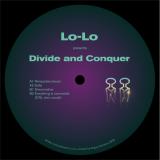
The bells have been rung in our miniature town of Sakskøbing that has been named after the glorious town that has been existing in Denmark, as we push through thirty releases marking down the new milestone. This time the talent that has been present in our ranks, coming from Barcelona and it is Lo-Lo, a man who knows his hardware instruments like his five fingers and has brought this idea came to life. Each track has been crafted with utmost heart and fastidiousness and has a particular way of bouncing off each other in such a manner that can only make “Divide and Conquer” come to life. From driving force of peak dancefloor scorchers to the more lyrical philosophical ways of it being, it has come to what it needs to be. As a wise man said, everything is connected but then may have disappeared into oblivion for the untrained mind, with only a few lessons for us to obtain and hear.
In continuation with the “Untitled” series, it is time to unveil the fifth chapter. 9-tracker with the talented artists which have gathered to make this disc come to life with the broad spectre of dancefloor ready frequencies that it contains. With some familiar faces and some new comers this is ready to be presented to the world of us music lovers that have big lust to non-standard beats. This LP is destined to land in the right persons hands who will treat the speakers rough and loud just how they should be treated with the material presented on it. The “Untitled” series continue thanks to the professional audio trips creators the spaceship sets space sails for the new edition soon.
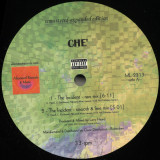
Classic 90's Larry Heard production for this x-rated* track by Ch? on the updated re-issue of "The Incident". Originally came with four mixes on Trackmode Recordings from 1994. Now with extra "Prototype 1" version unearthed from the Alleviated archives. *NOTE: disclaimer included on original 12" release: "The scene expressed in this recording is a fantasy in the age of promiscuity and HIV (let alone full blown aids). The truth is, be careful about who you love and always wear a condom".
Night Luv is a new label founded by Italy's Simplr that wants to bring people together, whether times are good, bad or sad. Drop the needle on this inaugural 7" though and the times will surely be rad: it's a tweaked, chopped, screwed and filtered take on a stone cold soul classic with a smoky vocal fragment and deployed teasingly through the mix. The drums are rough and raw, the synths swirl, and the whole thing has an excitable energy. The K Lost Acid dub, meanwhile, is a little more club-ready with some chunky low-end drum funk.
Mutual Rytm spawns new sub-label ‘Versus’ with debut EP from longtime techno associates Regent and Chontane. Continuing to expand its creative world, SHDW’s Mutual Rytm imprint now introduces ‘Versus’ - a new sub- label crafted for creative symbiosis between two artists across one shared release. Opening the series with authority, Regent and Chontane man the debut offering - two close friends and native Berliners who have been shaping techno for more than 15 years. Both long-standing members of the Mutual Rytm family, having released multiple times here before, the pair have always created music informed by life immersed in their local scene. Having both mutually influenced one another over the years, here they present their shared interpretation of techno with individual artistic DNA, forming a unified sound that represents the best of both worlds. Regent goes first, leaning towards functional, anthemic, dance-floor-focused techno. ‘Ephemera’ is tight, minimal but forceful; ‘Slow Burn’ has synth tension rising through the dark, next to glitchy percussion; and ‘Afterglow’ lets in more light, bringing otherworldly synths that hang above the groove and consume your focus. Chontane then explores a more musical and unconventional approach. ‘Plaxaric’ is supple, warm, and deep techno that tunnels into an abyss. ‘Grounding Factor’ is just as economical in design, but with introverted funk and evolving layers of sound. ‘Mental Lab’ spins out into complex rhythms inspired equally by IDM, jungle, and techno. It’s a mental workout as well as a physical one. Both artists add a pair of digital bonus tracks. Regent’s ‘Control Room’ and ‘Rarely Enough’ deliver elevated, hypnotic tools, before Chontane’s ‘Escore’ and ‘Outside In’ bring extroverted drum patterns along with contrasting melodic unease
Mutual Rytm welcomes new school tastemakers Klint and Hemka to sub-label Versus for imprint’s second drop. SHDW’s Mutual Rytm welcomes back two standout label alumnus for the second edition of Versus, a newly-launched conceptual sub-label focused around two artists whose sound works individually and in unity. Hemka made an impressive and well-received debut with her full solo EP back in 2025, while Klint appeared on ‘Federation of Rytm IV’. Both artists hail from France, and have crafted a well-earned reputation for their own distinctive approaches to sound design - pairing locked in grooves with cosmic synth escapes. Across the EP, each artist delivers three individual takes on techno to make for an essential collection of high-end cuts, exploring the label’s ethos of creative symbiosis between two artists on one shared release. Klint’s tracks lean towards minimal yet highly effective, dance floor-focused DJ tools, starting with the lithe, stripped back menace of ‘Prism’, before the sparse eeriness of ‘Dobermann’ keeps you looking over your shoulder while remaining trapped in the groove. Third cut ‘Romance’ is more bold and muscular, with contoured drums and icy pads ramping up the tension and energy. Hemka then dives deeper into a hypnotic and anthemic direction while introducing her own voice into the mix. ‘Leave It’ is textured, percussive deep techno with shadowy whispers, while ‘Breathe’ has a dark, grinning undercurrent and scintillating snares fluttering over the drums. ‘Mindness’ then pairs spoken word atmospherics with taught drum pressure and an ethereal backlit glow. In addition, Klint's digital only cuts ‘1112’ and ‘Blue’ marry minimal synths with meticulously defined drums that hit hard, while Hemka's ‘Push’ is an anxious percussive trip, contrasting with the introspective emotional core of ‘Live To Tell’.
If there is one thing that WAX RDM loves to do, it is split, they love splitting bills, middle splits, banana splits and most of all a good old split EP, and they made sure to deliver on their first one. Not only is he responsible for saving the Netherlands from becoming an aquatic civilisation, the land creature known as Deltaplan also claimed the whole A side for his boombastic electrofied vinyl only rendition of Sexual Seduction, which could get any dance floor drenched in dripping sweat. The Hague city's APK Boys have split the split in 2 on side B. If Flipper was a fun loving dolphin who always dreamt of moving to The Hague City, this is what he would sound like, hard hitting, just a tad frustrated and ready to snap at any moment. Yes Yes finishes of the split with a sure-shot Electro heater which will take your mind into a dreamlike state, thinking of ways to make Flippers dreams come true. And if you think things couldn't get any better, APK provided us with a 3rd digital only track for good measure. Stay dry and keep swimming.
With RST001, RELIKT unveils a special Various Artists EP capturing the label’s raw, unfiltered essence.
This “Best Of” compilation brings together standout cuts from the ultra‑limited RELIKT LIMITED CUTZ series — originally released in micro‑runs of just 50 copies and long considered collector gems.
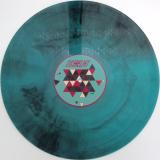
For the first time, these tracks are available in a wider but still exclusive edition: 250 copies, pressed on heavy 180g vinyl in a striking blue‑black color blend. Vinyl‑only, no digital formats — a true collector’s piece that preserves the spirit of the originals while giving them the presence they deserve.
On RST001, character‑driven grooves, organic club energy, and the unmistakable signature of the RELIKT artists collide. Each track represents a fragment of the label’s story — uncompromising, studio‑pure, and now finally accessible beyond the inner circle.
An EP for lovers of rare pressings, dedicated vinyl heads, and everyone who appreciates the original RELIKT sound.
The “Late Loop” LP by Andy Stott is released on Modern Love and marks the producer’s return after a five-year break from the studio. The album brings Alison Skidmore, Stott’s long-time vocal partner, and for the first time Elaine Howley to the forefront; their voices are used partly as full vocal performances and partly as fragmented, pitch-shifted loops, forming the emotional center of the record. Stott largely avoided established production tricks: no basslines, no reverb, just a delay as the sole effect, giving the arrangements an unusual clarity and fragility.
“Late Loop” sits somewhere between downbeat, electronica, and leftfield, and emerged from an experimental process that ranged from drone passages and brass-like concrète moments to song-oriented structures. Rhythm often emerges indirectly here: a drum machine was played back into the room, re-recorded, and pitched down; a pump organ was recorded with a microphone placed on the floor; valves and an aging mixing console audibly contribute to the atmosphere. Lyrically, themes of separation predominate; the voices were layered multiple times, then pared back until only the essentials remained. Mastering was handled by Rashad Becker, and the cover photo is by Myriam Boulos. With “Late Loop,” Modern Love presents an austere, meticulously crafted album whose details gradually reveal themselves with repeated listening.
Relieves debuts with its very first release, “Layers 1,” a timeless journey into house music with old-school and minimalist undertones on vinyl-only format. This foundational first chapter comes to life under the direction of producers Ronan Portela and Ariel Rodz, the label owners, who join forces with Franco Cinelli and Jorge Savoretti to solidify the sonic identity of this compilation.
On the A1, "Unison" by Ariel Rodz showcases his signature sound engineered for the dance floor, featuring wrapping basslines, percussive rhythms, musical textures, and a hypnotic groove inspired by the West Coast wave.
Followed on the A2, Franco Cinelli takes the reins with his remix of "Unison," delivering a track of his minimalist footprint with perfectly defined elements and that organic, characteristic sound that defines him.
Opening the other side on the B1, Jorge Savoretti delivers "Speziale Spaziale," a piece that radiates his signature aesthetic by flawlessly blending dancefloor flow and purist sounds with soulful melodies inspired by classic house.
Finally, the closure of this compilation arrives on the B2 with Ronan Portela's remix of Jorge's track, showcasing his rawest house music persona where he fuses percussive rhythms, synths, and a baseline that drives great dynamism and character into the end of the record.
Mr. K tackles a pair of extended 80's instrumentals down into his characteristic tight, DJ-friendly 7" edits. First up is Klein & MBO’s Italo-disco landmark 'Dirty Talk'. The Milan-via-New York production trio’s 1982 cut has long been recognised as one of the foundational Italo records, its stark, tightly locked bassline and 808 groove a foreshadowing of pop and house sounds to come (indeed, a year after its release the groove was lifted almost wholesale for New Order’s 'Blue Monday'). Mr. K strips the original’s down to the essentials, keeping the irresistibly hooky synth pulse front and centre while trimming the fat for maximum impact.
On the flip is Supertramp’s surprise 1985 club crossover 'Cannonball', a dancefloor curveball still in regular rotation with the deepest DJs. Intentionally written to stay entirely in one key as an experimental exercise by the band, the track’s hypnotic drive unwittingly echoed the tough, four-on-the-floor sound of early house and, via the original 12-inch single’s epic ten-minute instrumental mix, slotted in perfectly alongside underground cuts of the era. Mr. K’s edit leans hard into the pounding keyboard and the bursts of brass crescendos that build on top of it, giving the sought-after instrumental version its first-ever appearance on 7-inch. Impressive sound quality on both tracks!
"Al Festa's musical genius was revealed at the age of 14 when was released ''Starway to Escher'' with the Italian prog rock band Bauhaus (1974). His talent continued with "Miss Manhattan" by Metropole Al Festa, Francesco Puccioni (aka Mike Francis), Claudio Giorgi, Sharon Russell vocalist), his very first disco-music song in 1981. Over his career - a dozen movie soundtracks and hundreds music videos - his involvement in the Italo-Disco scene of the early 1980s is noteworthy. Undoubtedly, his contribution to Kristal (himself Al Festa, with Anne Dattner and Max Liofredi) remains most memorable. "Ete Super" was written with Helene Chauvin, a close friend of the now legendary Jeanne Mas. Helene attempted success as Abilene with "Tout Tout Tout Mais Pas Ca" arranged by another Italo-disco legend, Pierluigi Giombini (1987). Returning to Kristal, what convinced Claudio Casalini - one of Al Festa's best friends - to create this vinyl reissue was not only the memory of this talented artist, who passed away prematurely, but also the track "Fallin'" on the B-side, which embodies all the composer's post-Romanticism, a song rich of emotional and sensitivity, with intimate and often dramatic tones. When you are about to purchase Kristal, keep this excellent B-side in mind. You will not regret the choice."
The ultimate soundtrack of the summer is here: Mixatissimo, a 10-track vinyl-only mixed dance compilation bridging nostalgic ’80s sunshine vibes with modern Italo and indie-dance energy.
In Italy, during the 1980s, there was an absolute ritual that marked the beginning of summer: the release of those mixed dance compilations with glittering, futuristic covers. They weren’t just records; they were the very definition of sun, sea and tan lines. It was precisely holding one of those vinyls in his hands – the first one he ever bought – that sparked the musical passion of Italian DJ and producer Hey Cabrera!
Today, that perfect circle closes with Mixatissimo, a project that takes that nostalgic inspiration and transports it straight into the modern era.
Released as an exclusive vinyl-only edition by Universo Segundo and powered by Bordello A Parigi, the compilation packs 10 bangers oscillating between modern Italo, indie-dance and electronics, featuring some of the hottest names on the contemporary scene.
Exclusive special edits have been crafted for every single track, locking the groove into a fixed BPM for each side: 122 BPM on Side A and 125 BPM on Side B. Thanks to smooth transitions featuring drums-only sections, the record flows as a continuous stream for the listener, while simultaneously serving as the perfect tool for DJs who want to mix the individual tracks.
A meticulously calibrated selection, designed as much to make the dancefloor explode late at night as to keep the rhythm high in the most sophisticated listening bars.
The soundtrack to your summer is ready.
What are you waiting for?
*A MODERN JAZZ REINTERPRETATION OF THE MUSIC FROM THE LEGEND OF ZELDA*
WRWTFWW Records is happy to announce the release of Casimir Liberski ReTRio's The Z Suites, a full-length jazz album reinterpreting the music from iconic Nintendo video game series The Legend of Zelda. The epic Z-Jazz journey is available in the following formats: limited edition 180g half speed mastered vinyl double LP housed in a heavyweight sleeve with obi, digipack CD with cavalier, and digital.
Casimir Liberski reimagines the golden era of video game soundtracks with jazz versions of Zelda favorites The Legend of Zelda (1986), A Link to the Past (1991), Link's Awakening (1993), and Oscarina of Time (1998) - plus a few Easter eggs! Dancing between nostalgia and avant-garde, the Brussels-born pianist and composer crafts a sonic world of pixelated folklore where melody and improvisation coexist in harmony.
Music critic Arthur Meurant perfectly explains:
For many video games are a journey of the mind. Since its inception - dating back to the early seventies - this avant-garde artistic medium has nourished the imaginations of a digital age. Casimir, like many others, has been fed a steady diet of pixels from an early age. From simple squares to cultural cornerstones they have become the trail on which playful travelers of the mind retrace the steppes of history. A shared universe, familiar yet endless, of pocket-sized mythology. Its name? Hyrule. Its goal? To amaze. In these few tracks - selected with care - the Casimir Liberski ReTRio invites you, finally, to visit a space which does not exist yet holds us all. A land where all feel welcome. Where all are happy. But also... to rediscover under another timbre the classical compositions of Master Composer K?ji Kond?. A man who, unbeknownst to him, composed our dreams as well as music. That single noble pursuit, where an artist gives soul without losing his own, is yet again a statement of humanity in its purest of forms: art as that which brings us together and makes us whole in a world eroded by modernity. Pick up your key. Gather your maps. Open the door. Adventure calls.
This 2 x 12-inch vinyl release is a reissue of the original soundtrack to the animated feature Ambient Trip Commander. With a running time of 70 minutes, the soundtrack was first performed as a live synthesizer improvisation by Danny Wolfers (Legowelt) at the film's premiere on May 28, 2022, at EYE Filmmuseum. Wolfers continued to perform the soundtrack live at numerous subsequent screenings before releasing it on cassette on August 4, 2023. The 2026 vinyl reissue presents the compositions in four parts, aiming to put weight on the listening experience as a cohesive album.
Ambient Trip Commander is a hand-drawn and painted feature-length animated film by Danny Wolfers (Legowelt), marking his first feature in the medium. The animation brings Wolfers' paintings to life through frame-by-frame watercolor techniques. The production process spanned eighteen months.
The film follows Samantha Tapferstern, a geeky young woman who works a mundane job at a synthesizer store in a medium-sized European city. She spends her nights playing RPGs and browsing dating apps. One day, she receives a train ticket and a cryptic message from a hacker group inviting her to Lonetal, a secluded village deep in the European Alps. As she boards the night train, a sinister adventure begins to unfold.
For WOLFEP088, we’re welcoming an Italian stallion to the WOLF stable. DJ Soch is a renowned DJ, producer, and label owner whose roots in house music run deep. Beginning his journey behind the decks in the mid-1980s, he has spent more than four decades honing a sound shaped by house, techno, disco, funk, hip-hop, and the timeless influence of Detroit and Chicago. As the founder of Black Angus Records and a resident DJ at the renowned Italian club Serendipity, he has shared lineups with some of the best to ever do it, helping to shape Italy’s underground electronic music scene.
When his tracks hit the WOLF inbox, we knew we were onto something special. The first one we heard, ‘Let Me Tell You’, was an instant yes, must sign moment. There’s skippy drums, warm keys, church organ, a heavy bassline and a pleading, soulful male vocal. One of those tracks that should come with a neck-brace. Soulful, but powerful. There’s also a ‘Power Mix’ version that keeps all the elements we loved, but strips back the vocal and ramps up the church organ. Absolute Holy Ghoster! This is the type of track that would have torn up the dance floor at the Shelter, a real Timmy Regisford tops-off jam.
On the flip, there’s a hypnotic deep house groove entitled, ‘Chewing Gum’. This is proper stuff, heads-down, deep house for the dance floor. We’ve paired it with a remix from Prince Palmer, one of the standout remixers of recent years, and a great group of guys. The Prince has delivered a reinterpretation that gives a nod to 90s US Garage, complete with all the trademark production chops you would expect from a regular on the stellar Bobby Donny label. It’s a track that wouldn’t sound out of place on a peak-period Strictly Rhythm 12”, so that’s all you need to know.
Four belters, all on one record, designed for maximum listening pleasure.
DJ Support: Louie Vega, Mousse T, Terry Hunter, Joey Negro, Natasha Diggs, Todd Terry, Fouk, Tedd Patterson, DJ Deep, Moplen, Young Pulse, DJ Meme, Jade Edwards, DJ Disciple, Richard Earnshaw, Nathen Haines, Smokin Jo and Birdee.
A collection of some of the best releases on Big Love’s sister label Soul Love. Chicago’s Emmaculate gives a soulful touch to Haji’s ‘Nitelife’ feat the late Dianne Charlemagne aka D’Empress, Tokyo’s uber-cool couple offer their deeper interpretation of Odyssey’s 80’s classic covered by Belezamusica, the French disco don Art Of Tones creates a sublime version of Tokyo’s DJ Namy & Angela Johnson’s cut whilst Chi-Town legend Maurice Joshua re-works his own track as an ode to the fellow Chicago legend Ron Carroll who features on vocals.
Anyone lucky enough to have lived through the 90s will know that Coco Steel & Lovebomb were a key acid house duo who dropped early tunes on Warp and penned a number of underground anthems including 'Feel It'. Now they are back with new tunes on Coco's Disappear label and the remit, stylise, is wide. This EP opens with gentle breaks and dubby undercurrents on 'El Acido,' which has already become a favourite after its digital release. DJ Rocca remixes with a blissed-out energy and 'Our Thing' (named after Coco's new party in Hastings) then taps into a more expressive sound world with new age pads, affirmation vocals and dusty broken beats plus lashings of bass. A dub version of the same tune, named Dub Thing, closes down with aplomb.
‘Yarrow’ is a bouquet of new music by Portland, Oregon-based musician and field recordist Patricia Wolf, marking the label’s ninth release and the third of Season Two. These works are her reflections on the life cycle of plants and their dynamic ecological relationships.
Wolf created the album in response to her artist residency at the Rocky Mountain Biological Laboratory in Gothic, Colorado, as part of the Art-Science Exchange Project in the summer of 2024. She worked closely with ecologists Dr Paul CaraDonna, Dr Amy Iler, Dr Jane Ogilvie, Dr Nickolas Waser, Dr Mary Price, and Dr Will Petry, spending weeks engaged in long-term research on plants, pollinators, and their interactions as the climate changes.
Each track on Yarrow looks at a different part of a plant’s life. The songs touch on the conditions that plants need to grow, the quiet life of roots, how flowers attract pollinators, and the strength of seeds. The first single, 'Inflorescence', the scientific name for the floral display that a plant makes in an effort to reproduce, captures this event in song. The music slowly builds layers, reflecting the album’s overall feel. The album ends with the majestic Boards of Canada-esque 'Adapted for Extreme Conditions', and the entire b-side features Patricia’s field recordings from around Gothic, Colorado, and a guided meditation by Dr Paul CaraDonna, whose research inspired the project, inviting listeners to tune into the sounds and activities of the ecosystem.
A counterculture movement united by an expansive, experimental and deeply soulful sensibility, Japan’s rebel protest music challenged the status quo and changed the country’s music industry in the process.
The birth of Japan’s nascent acid folk scene was rooted in the messy and invigorating political climate of the late 1960s. It is a story of Dadaists, communists, pharmacists and cult leaders, led by a young generation of upstart students, artists and dreamers hellbent on turning their world upside down.
Born on the campuses of Tokyo, Kyoto and Osaka, and centred around newly formed independent label and left-wing stronghold URC, this uniquely Japanese form of folk expression provided an outlet for musicians who were tired of aping Western sounds and instead found ways to sing in Japanese and integrate traditional forms in new ways.
At the forefront of this movement was Yellow Magic Orchestra’s Haroumi Hosono, a polymath innovator whose band Happy End released the first Japanese language rock album, and whose influence would go on to be felt across Japanese music for decades. Alongside, and informed by the Kansai scene’s Takashi Nishioka and Happy End collaborator Ken Narita, they experimented with cadences and accents of the Japanese language to open the door for others to experiment with their own forms of psychedelic folk too.
Some, like Nishioka, were more inspired by Dadaism than drugs, while others, like Kazuhisa Okubo, would ultimately find work as a chemist, having founded two further folk groups that flirted with varying levels of success. Obstinately uncommercial, relentlessly creative, the music featured on Time Capsule’s Nippon Acid Folk represents a broad church of influences.
Perhaps the wildest addition to this congregation however was Hiroki Tamaki, a classically-trained violinist and committed iconoclast, whose synth-prog odysseys hinted at his obsession with the divine. Subsumed by the teachings of Bhagwan Shree Rajneesh, he penned an album in praise of the infamous religious leader of which two superbly mind-bending tracks are featured on this compilation.
Charting the decade from 1970 to 1980 as the dreams of political and spiritual liberation seeded in the ‘60s turned to dust, Nippon Acid Folk surveys a little explored corner of Japanese music history, but one which ultimately laid the foundations for an independent music industry, launching the careers of Hosono and others in the process.
Nippon Acid Folk 1970-1980 is pressed on 12” vinyl and represents the start of Time Capsule’s deep dive into Japan’s rich history of folk and psychedelic soul music.
Emotional Response presents Volume 2 of the LNS-ID series. Atmospheric, infectious, at times nostalgic, warm yet ghosty, the tension of Laura Sparrow’s music is her exploration in electronic music.
An introduction to DJing and music production has been a natural progression, applying skills in new and fresh formats. Built on the heritage of Chicago and Detroit house, alongside old IDM and electro, her first productions might have been raw, but the creativity was lit.
While her recent productions have explored club orientated, loud cut records, in collaborations with DJ Sotofett, that represent the sound found in her residency on the Globus floor at the Tresor club, LNS’s interest in the solo productions of the LNS-ID recordings and more organic-style explored in the recent Misiats EP burns bright.
LNS-ID 1 and LNS ID 2 are her latest offering. Two sets of four tracks based on the acid tradition in the more restless corners of 90s and early 00s Braindance. Acid lines drive the melodies, while drums move between sliced break fragments and the familiar sounds of the Roland TR-606 and TR-808.
Pads drift in with a warm glow or at times, quiet ghostly tension. The results are music that leans towards atmosphere and memory, something almost nostalgic that was built for those of us who still chase the more expressive edges of acid.
Easygoing Acid Express, Alive Acid, Blue Acid and Gentle Acid. Get the message. We call it Acid.
Emotional Response presents the first of 2 EPs by Laura Sparrow aka LNS, the Calgary raised, Berlin based producer and DJ with 8 acid-tinged cuts that are equally expansive and inspiring, personal and inventive.
After her debut Malinge Range (cassette) on fellow native Canadian 1080p label in 2016, LNS moved to Berlin and has released a steady stream of 12”s, exploring ambient, dub, electro and techno. Initially appearing on Vancouver émigré’s Jayda G’s (alongside Fett Burger) Freakout Cult label before settling at DJ Sotofett’s cult WANIA label and more recently on the legendary and ‘original’ German techno label, Tresor.
A love of the Roland TR-303, alongside deep diving into breakbeat creation, manipulation, mutation and production, plus some intrepid mixing and post-production assistance, development and support with DJ Sofofett, have led to a collection of some of her favourite music to date.
LNS-ID 1 and LNS ID 2 are the result. Recorded during a burst of creativity through dedication, new studio equipment and learning techniques, as well the necessity of artistic expression in the moment.
Two sets of four tracks based on the acid tradition in the more restless corners of 90s and early 00s Braindance. Acid lines drive the melodies, while drums move between sliced break fragments and the familiar sounds of the Rolant TR-606 and TR-808.
Pads drift in with a warm glow or at times, quiet ghostly tension. The results are music that leans towards atmosphere and memory, something almost nostalgic that was built for those of us who still chase the more expressive edges of acid.
The arrival of REAL, Vol. 1 marks a seismic shift in the global music landscape, uniting two of Nigeria’s most formidable forces for a project that defines the current zenith of Afrobeats. This collaborative effort sees Wizkid, the smooth-talking pioneer of the genre’s international expansion, and Asake, the "Mr. Money" whose neo-Fuji sound redefined the street-pop aesthetic, finding a middle ground between luxury and grit. The project serves as a sonic bridge between eras, blending the minimalist, high-fashion sensibilities of Wizkid’s recent output with the high-octane, choir-backed energy that has made Asake a household name. It is less of a competition and more of a conversation between two masters of their craft, exploring themes of spiritual gratitude, the weight of superstardom, and the unyielding pulse of Lagos.
With soundscapes both cinematic and deeply rhythmic, the production moves beyond standard club formulas, opting instead for a sophisticated fusion of traditional Yoruba percussion, shimmering synths, and the heavy, resonant log drums of Amapiano. Wizkid provides the effortless, melodic swagger that acts as the project's anchor, while Asake injects a spiritual intensity through his signature layered chanting and rapid-fire flows.
Ultimately, REAL, Vol. 1 is a celebration of authenticity in an era of global crossover. By stripping away the pressure of conforming to Western pop standards, Wizkid and Asake have created a body of work that is unapologetically Nigerian yet universally resonant. It captures the spirit of a city that never sleeps and the ambition of two artists who have conquered the world without losing their souls. This is more than just a collection of hits; it is a blueprint for the future of African music, proving that when Wizkid and Asake occupy the same frequency, the result is nothing short of legendary.
The free folk/jazz sound of modern Los Angeles. Featuring a heavy bunch of musicians and vocalists including Moor Mother.
"Fearlessly Accessing the Divine Spirit From Here on Out" is the vinyl debut from pianist, composer, and producer Diego Gaeta. He has previously released projects as Club Diego and with the trio Human Error Club (whose members Mekala Session and Jesse Justice helped produce this record). He has quickly become a fixture in a number of Los Angeles musical environments, working with Lionmilk, The Pan Afrikan Peoples Arkestra, Carlos Niño, Black Nile among others. This album is a synthesis of these many LA environments, and carries chamber, jazz, ambient, and folk influences, ultimately giving it an uncategorizable feel similar to works by Arthur Verocai or David Axelrod.
Gaeta recorded the initial ideas for the album by himself after experiencing a burst of creativity during the lockdown of 2020, in the aftermath of a season of protests in Los Angeles, on a piano at his home in El Sereno. "I was constantly not in tune with myself, always awaiting outrage and tragedy in a very unstable world. However, hitting the streets in support of various ongoing pandemic community actions felt necessary and it marked a point in time that ushered in large societal changes. The weight of that era made me feel allergic to making art at the time. All of these ideas came after that period, expressing my reflections subconsciously. I remember that the ideas came in a short amount of time, and then they developed."
Once he had created the tracks as Ableton sessions, he realized the gravity and context of how he was processing his ideas so he, as he puts it, "felt like taking them outside the hands of midi and into the hands of friends." Gaeta was able to assemble his dream band, which ended up being a 9-piece ensemble, or a nonet. "I felt that at some point I was channeling the geometrical balance of that nonet...it's almost as if I had a sextet and then the three of the sextet that's not the rhythm section were doubled. It's a really dense sextet, that's how I see it."
The recording process began the following summer in June 2021 as the musicians were all adjusting to the newfound dynamic of getting tested for COVID, waiting a few days, and then meeting up to record. "We were eating Indian food, some of us were smoking, it was a nice memory, but I felt a little stressed, because I was the bandleader, and I felt the emotional weight of my music."
The title track and single, featuring vocals by Jimetta Rose, begins with a speech by Gaeta delivered when playing with Black Nile in 2019 at the Levitt Amphitheatre in MacArthur park. Gaeta provides the following account: "Even though it was in 2019, socio-political tensions and issues were at the forefront for me at that time. I wrote a speech that was intended to be critical of the US but it ended up becoming a collage inspired by different women that had messages of freedom that spoke to me the most. I quoted Nina Simone and Georgia Anne Muldrow, it wasn't something that I read but something that she said "kicking it with consciousness and style" that phrase stuck with me, so I used it in that speech. Although critical, the speech had a positive feeling to it, and it was hopeful. I gave that speech while fireworks were going off."
Moor Mother & Zeroh are found on their respective tracks, Memory Screen & Eccolo - both delivering a distinct, commanding vocal performance. Low Leaf colors the track Soft Spot with harp, a beautiful ballad nestled in the center of the album. Other players include Gregory Uhlmann on guitar, Jon Kaye on violin, Devin Daniels on alto saxophone, Caleb Buchanan on bass, Dante Luna on vibraphone, Patrick Behnke on viola, Bryan Baker on tenor saxophone/flute, and Mekala Session on drums.
"I’d like for us tonight to embody a freedom oriented life. Freedom isn’t just a dream, it’s a place we must all arrive at together, as one by one the people of the Earth help each other to be Free of power, hate, and insecurities. Let’s kick it with consciousness and style. Can y’all dig that? YEAH. I can too. So now we’d like to present to you a spiritual transmission I like to call: 'Fearlessly Accessing the Divine Spirit of Freedom From Here On Out.' YEAH" - Diego Gaeta
Originally composed by Collage in 1985, Herzschlag returns in a newly recorded cover version by Berlin-based synth-wave duo Bionda e Lupo. Describing themselves as a “boy/girl band like no other,” Lupo recreated the NDW-electro tune from the ground up using an impressive array of vintage instruments and studio equipment, including classic synths such as a Pro-One, a Roland Juno-60, and a Farfisa Syntorchestra. Bionda’s distinctive voice adds a new emotional depth to Katrin A. Kunze’s lyrics while still remaining true to the original spirit of the song.
Lupo of Bionda e Lupo has long been a devoted fan of Mit den Puppen tanzen, Collage's only release at the time, originally issued as a 12" single in 1984. Despite never managing to acquire an original copy, he considers the record unique within the German NDW landscape thanks to its unmistakable "Bravo-breakdance-meets-synth-pop" character. Indeed, Markus Kammann, Jürgen Grah, and Katrin A. Kunze drew significant inspiration from the electro-funk pioneers of the era, particularly Afrika Bambaataa's iconic Planet Rock. When we approached Bionda e Lupo about re-editing a track from the Collage's Motel d'amour release, they instead proposed recording an entirely new cover version.
Work on the project began in spring 2025 in coordination with Markus Kammann, who, together with Jürgen Grah, originally composed the music. Sadly, Kammann, born in 1958, passed away unexpectedly on October 17, 2025. This release is dedicated to his memory.
The liner notes reveal additional details about Kammann's remarkable life and achievements. He was the founder of the legendary Beatbox club in Wuppertal, which was once recognized as the "Best Club in Europe," and a co-founder of the Groove Attack record store. Groove Attack would later grow into one of the world's most influential music distributors, especially for Hip-Hop.
The 12" release is limited to 200 copies. Pressed on transparent red vinyl with black "smoke" effects, it comes housed in a picture-disc sleeve with an accompanying sticker. As an additional highlight, the record includes a previously unreleased NDW bonus track recorded around 1983 by Collage. It features Katrin A. Kunze as well as Thomas Kohl, the vocalist of Schwarze Bewegung.
- Red transparend vinyl with black smoke
- Housed in a picture-disc sleeve with large sticker
- Released in memory of Markus Kammann (1958-2025)
- Contains A4-sheet with liner notes
- 5 tracks, including the vinyl only bonus track "Hallo E.T.",
- Quality lacquer cut by Manmade Mastering
Freerange welcomes Italian via Berlin producer/DJ/label boss Enzo Elia for his debut on the label entitled The Lost Guitar Tapes. Enzo is someone who has been releasing consistently great music for many years, although
often hidden behind a myriad of pseudonyms and underground imprints. For starters he's responsible for a mysterious yet established and very excellent edits label as well as being a member of Balearic Gabba Sound System alongside Bjorn Torske amongst others. Following the philosophy of this collective, Enzo is also producing lovingly and respectfully created re-edits of long lost techno and house tracks as well as many new tunes
for influential labels including Golf Channel and Compost.
But for now we turn to The Lost Guitar Tapes and specifically the original mix of Drifting which opens up the release with a brilliant tension builder. A rolling bassline, crisp minimal drums and a subtly Middle Eastern-influenced melodic line give just a hint of mysticism to this jewel of a track.
For the remix we have none other than the Tel Aviv via Berlin producer Moscoman, fresh from his brilliant debut LP on ESP Institute and releases on Eskimo and his own Disco Halal label. Moscoman's organic, percussion- heavy sound and Middle Eastern roots make him the perfect choice to take
on Drifting and we couldn't have wished for a better outcome. He manages to inject his own identity to the track with newly recorded live guitar and bass parts and taking in elements of techno, new wave and house, he's created a sublime piece of dancefloor drama. Finally we have an alternate Dub version which lays down a firmer four on the floor, extra percussion and dubby stabs for a more driving atmospheric club tool.
Bruno Berle is a singer, songwriter, producer, multi-instrumentalist and figurehead of a contemporary Brazilian music movement. With a quiet mastery of songwriting and an astonishing voice, his music has won hearts around the world. Since the release of his debut album No Reino Dos Afetos (2022), Berle has performed across the UK, Europe, Japan, South Korea, and China, only leaving his home country for the first time in 2023. Shaped by these journeys, Berle’s third studio album, Sem Fronteiras (Without Borders), reflects a utopian vision of a unified world.
Recorded across London, São Paulo, Minas Gerais, Germany, and Maceió, the album–co-produced alongside his longstanding musical partner Batata Boy–is the most expansive canvas Berle has worked on to date. Shot through with the imagery that has always animated his songwriting: open skies, morning light, vivid colours and the magic of human connection, Berle’s carefully crafted poetics and warm, delicate instrumentation drive this vivid body of work.
“I came from nothing”–Berle doesn’t take his rise to global prominence for granted.
Born to a working class family from Brazil’s northeastern Alagoas state, one of Brazil’s most economically deprived, Bruno moved frequently in his youth to follow any job opportunities his parents could find, before eventually settling in the coastal capital of Maceió. “I used to travel to Caruaru, Santa Cruz, Recife, Garanhuns, Arapiraca, which I loved and feel it made me ready to be in this rhythm i’, but at the same time I think not having friends from childhood and being in constant change made me a little numb to the constant upheaval”. On Sem Fronteiras, there is a similar duality at play. The album celebrates the collective joy and human connection that live touring brings, but it also sits with the darker realities of crossing borders. While music moves more freely around the world than ever before, our bodies are not granted the same privilege.
Though he’s never lacked self-belief, Berle recognises that talent alone doesn’t guarantee opportunity. “Before my second album No Reino Dos Afetos 2 everything I had ever recorded was made with the help and kindness of people who believed in my ability”. Determined to pay that kindness forward and help others from the sharp end of Brazil’s desperately unequal society, Berle produced and featured on the recent self-titled albums by his northeast Brazilian compatriots, Nyron Higor and Phylipe Nunes Araújo (both 2025), helping propel both onto the international stage. In turn, following the successes of Nyron & Phylipe’s albums alongside his own, Bruno finds himself at the forefront of a thriving community of artists now based in São Paulo, but primarily originating from northeastern states like Alagoas and Pernambuco.
Much like the famed Clube Da Esquina movement that spawned in 1970’s Minas Gerais, they operate with a free-exchange of ideas, writing songs with and for each other, performing on each other’s albums and on the live circuit together. Lead single ‘Manha’ flows from this ethos. It was written by Berle’s friend and fellow Alagoan João Menezes (writer of ‘Ate Meu Violao’ and ‘Te Amar Eterno’ from Bruno’s previous albums) and Marvin Viera, and originally recorded on their 2018 album Areia e Mar.
Sem Fronteiras opens with ‘Você Já Sabe Que Eu Te Amo’, just six beats of one nylon guitar chord ring out before changing key, paving the way for the gentle strike of fender rhodes and the arresting call & response duet between Berle and Higor. On ‘Amor Inteiro’, the album reaches a celebratory burst of catharsis, with the punch-packing drums of Pedro Lacerda and Nina Maia’s joyous backing vocals encapsulating the live energy that Berle and his band bring to the stage.
With the abundant talents of this musical community at its heart, Sem Fronteiras releases 10th July 2026 via Far Out Recordings, supported by a summer tour across Europe. Bruno Berle will perform in a four-piece band alongside Nyron Higor, Phylipe Nunes, and Batata Boy, culminating in an appearance at Roskilde festival, Berle’s biggest live show to date. He’ll continue to carry a hopeful vision of a world where artists and musicians can move as freely as their music flows.
Tracklist:
A1 “Você Já Sabe Que Eu Te Amo”
(Nyron Higor / Bruno Berle)
Nyron Higor – drums, bass, acoustic guitar, electric piano, synthesizers, vocals
Bruno Berle – piano, vocals
Batata Boy – piano
Jorik Bergman – score preparation and conducting
Klara Gronet – violin
Ségolène de Beaufond – violin
Cristina Ardelean Montelongo – viola
Ilektra Stevi – cello
A2 “Não Posso Viver Sem Você”
(Batata Boy / Bruno Berle)
Batata Boy – electric piano, organ, synthesizer
Bruno Berle – drums, bass, synthesizer, vocals
Jorik Bergman – score preparation and conducting
Klara Gronet – violin
Ségolène de Beaufond – violin
Cristina Ardelean Montelongo – viola
Ilektra Stevi – cello
A3 “A Noite de Estrelas”
(Nyron Higor / Bruno Berle)
Nyron Higor – synthesizers
Bruno Berle – bass, drums, vocals
A4 “Outra Noite”
(Bruno Berle)
Nyron Higor – drums
Bruno Berle – acoustic guitar, bass
Felipe Berle – congas
Lucca Francisco – guitar, vocals
B1 “Amor Inteiro”
(Bruno Berle)
Pedro Lacerda – drums, choir
Nyron Higor – bass, choir
Batata Boy – guitars, organ, electric piano, choir
Nina Maia – choir
Bruno Berle – guitars, acoustic guitar, congas, vocals
B2 “Ideias Mágicas”
(Batata Boy / Bruno Berle)
Heloisa Alvino – trombone
Batata Boy – synthesizers, beats, electric piano, organ, bass
Bruno Berle – synthesizer, vocals
B3 “Vim Dizer”
(Batata Boy / Bruno Berle)
Batata Boy – electric piano, organ, synthesizer
Thomas Stankiewicz – synthesizer
Nyron Higor – synthesizer
Bruno Berle – acoustic guitar, bass, vocals
B4 “Tô Assim”
(Bruno Berle)
Bruno Berle – acoustic guitars
Batata Boy – synthesizer
Nyron Higor – bass, synthesizer
B5 “Manhã”
(João Menezes / Marvin Silva)
Bruno Berle – acoustic guitar, vocals, congas, shaker
Batata Boy – piano, shaker, electric piano, vibraphone, synthesizers
Nyron Higor – drums, bass
B6 “Sem Fronteiras”
(Bruno Berle)
Filipe Mariz – guitar
Bruno Berle – acoustic guitar, vocals, bass
Jennifer Souza – vocals, acoustic guitar
Rudson França – drums
Credits:
Produced by Bruno Berle and Batata Boy
Mixed and mastered by Bruno Berle, Batata Boy and Felipe Berle
Audio engineering:
Nyron Higor (track 1 – production; track 4 with Felipe Berle)
Joe Osborne (tracks 7 and 9)
Victor Gelling (strings on tracks 1 and 2)
Filipe Mariz (track 10)
Photography: Claudio Virgínio
Design: Minchai
Recorded in:
Maceió, Alagoas, Brazil
Tamandaré, Pernambuco, Brazil
Belo Horizonte, Minas Gerais, Brazil
São Paulo, São Paulo, Brazil
London, England
Cologne, Germany
More than sixty years after its original recording, a masterpiece that has captivated audiences around the world is reborn on an analog mono pressing with truly powerful sound.
Few drummers shine as brightly in the history of Japanese jazz as Hideo Shiraki, a musician renowned for his exceptional artistry and commanding presence. One of his defining achievements is In FIESTA, originally recorded in 1961. Leading the album is the extraordinary centerpiece "In FIESTA", a miraculous composition and performance that transforms traditional Japanese melodies into supremely cool modal jazz through distinctive arrangements featuring the koto. The excitement continues with the relentlessly thrilling "Just One Or Eight" and the breathtaking "Cherokee," highlighted by an explosive drum solo from Shiraki himself.
The album is further elevated by the outstanding performances of master musicians such as Hidehiko Matsumoto and Yuzuru Sera, whose inspired playing contributes greatly to its enduring appeal. More than six decades later, the music still sounds remarkably innovative, radiating the same sense of passion and excitement that made it so groundbreaking upon its release.
Now celebrated worldwide as a landmark recording, this timeless masterpiece returns on analog mono vinyl. Experience one of the true monuments of Japanese jazz history, presented with all the impact, depth, and immediacy of its powerful original sound.
Brutkho strikes back on Goldmin Music with his very first vinyl release. A first physical release is always something special and exciting, So of course, it had to be a very personal and deeply touching package of music. Horvath Tamas alias Brutkho is actually one of the artists we feel since the first listen of his music. This hungarian producer has the power to play with the unexpected, to build captivating structures without losing sight of the essential simplicity this music needs."Now & then", his first ep on Goldmin Music and "Magic 32" on the compilation were already authentic demonstrations of this guy's assertive personality and aspirations but he definitely pushed the process further on this record.
Gabriella and Coleman are two massive deep-techno stompers focused on the atmosphere, the texture, the immersion which will play with your senses from the beginning to the end and fool your previous certainties without any doubt.Tel-Aviv based producers Deep'a & Biri who recently joined Derrick May's Transmat agency and who deliver some of the finest dub techno cuts of today catched the original track delicious pianos and dropped them into their sumptuous cinetic industrial groove.French producer Jan Hendez drives it into a pure rhythmic and organic piece of music unbound by usual genre limits. Menacing, very cold yet still deep and sexy remix that reminds both his first releases and his newer strictly atmospheric and mental approach.That's exactly the point with this record. It's a meeting of spontaneous artists who never stop their musical research, who don't mind about fleeting trends and who push boundaries further on every single track they do.
The master of ambient soundscapes, intertwining authentic old school breakbeats with his inimitable style returns with a fresh album of choice cuts for the Spatial crew. A1 - Form of Defraction Opening the LP in his gloriously unique style, Aural Imbalance sets the tone with a powerfully ambient intro of padwork and delicately filtered breaks before dense, analogue old school breakbeats roar to life sending the track skyward. The sublime 808 bassline simmers beneath an ever-evolving soundscape of twinkling melodies and strings, the very essence of serenity captured in just under 7 minutes of audio bliss. A2 - Discreet Function Enveloping the listener with a warm blanket of silky ambience, Discreet Function soon jolts to life with a crunchy breakbeat that counteracts yet compliments the pads and myriad of delicious micro melodies so well, you wonder how it’s possible to take such extremes and mix them down so expertly that our ears accept it as one. After a relatively brief breakdown the track rolls out before the breaks are snatched away at the death - capping off a quite unique composition. B1 - Softlight Light cymbals and delicate textures introduce us to Softlight, a track which sees Aural Imbalance guiding the listener through the clouds to a haven of gentle serenity where your troubles simply fade away, punctuated by a stunningly programmed and memorable Hot Pants break pattern, timid classic basslines and an overall plethora of sun-baked energy - perfect for the headphones and the record box - as always. B2 - Airwave Immensely old school vibes are immediately present in Airwave, with analogue breaks and succinct female vocal samples that mingle with echoing melodies and synthwork to create a beautifully flowing and unique slice of atmospheric gold. Additional breaks are fused into the mix as the track progresses, elevating the piece to the heights we have come to expect from Aural Imbalance, yet never cease to amaze. C1 - Speed of Light Gentle cymbals and filtered breaks open Speed of Light, before a crisp barrage of amen goodness descends and dominates proceedings - just as a good amen should! Programmed to perfection with an immensely danceable rolling pattern, the amens lead us through a sea of washing synths and delicate melodies, intertwining and frolicking in the mix, completing a charming and memorable piece. C2 - Fading Star Playful strings and a luscious 808 bassline play with sumptuous padwork in the intro to Fading Star, a track which sees Aural Imbalance capture the essence of 90’s jungle and it’s symbiotic relationship with atmospheric drum & bass perfectly. Developing throughout with an array of unassuming effects and a quietly moving vibe, Fading Star is the perfect addition to sets spanning the entire history of this music. D1 - Drifting Under Bright Skies Aural Imbalance resurrects the excellent break last featured on Spatial in his sublime track Surface Area, this time chopped and sliced to a different vibe, with kickdrums at the forefront and that fantastically crunchy snare deployed more sparingly. Shimmering padwork and light melodies dance across the mix throughout to leave us with a refreshingly unique and memorable track you won’t be able to get enough of. D2 - Violet Completing this fine LP of old school ambient breakbeat mastery, Aural Imbalance deploys Violet to see us out - a climactic-feeling romp that opens with quiet intent before launching the listener through cheery melodic tones and bustling soundscapes, sprinkled liberally with airy pads and fluttering micro melodies that zip and whoosh around thick analogue breakbeats. A fitting end to a thoroughly enjoyable album. Words by Chris Hayes (Spatial / Red Mist) credits
Gala – Freed From Desire was first released in 1996 on NiteLite Records in Italy. 2024 and Ministry of Sound Recordings / B1 Recordings are happy to release two fresh new remixes for the first time on limited edition yellow transparent vinyl. Gala wrote this song when she was drawing on a Buddhist concept that challenges the constant craving for more and encourages us to value our principles and our own freedom instead. She believed that ‘Freed From Desire’ could resonate with people all over the world. Arguably one of the biggest sporting songs of all time, it has become a unifying sensation across the world. The main mix has been re-recorded for a whole new generation but is still very true to that original of ’96, whilst on the flip, Diplo; the American superstar, showcases his trademark, energetic, thumping style. A huge club and radio hit.
X-Coast unveils 9-track 2xLP The Riviera Collection on his label Riviera Records.
Hot on the heels from remixing instant dance hits such as Shygirl's '4eva' and DJ Gigola's 'La Batteria' and spotted in the studio with adored vocalists Eartheater and Miss Bashful, Serbian-born, NYC-based DJ/producer X-Coast returns with a collection of signature tracks that feel like the lost treasure chest of his dance island.
X-Coast is your favorite DJ's favorite producer, whose tracks you’ve undoubtedly danced to, whether on a massive festival stage or at an intimate, underground rave. Over the past decade, he has quietly but consistently shaped the pulse of dancefloors worldwide, with a distinctive style that traverses genres like house, techno, electro, drum and bass, and trance. This rare versatility has led X-Coast to release on the likes of Mall Grab’s Steel City Dance Discs, Diplo’s Higher Ground, Anetha’s Mama Told Ya and DJ Haus’s Unknown To The Unknown, to name a few.
What sets X-Coast apart is not just his ability to move fluidly between styles but the unique character embedded in every track. His productions have an undeniable warmth and authenticity, often evoking the raw, euphoric spirit of the 90s and 00s rave era. This nostalgic yet forward-thinking approach makes his music feel timeless, effortlessly blending old-school rave energy with modern production techniques. It's a quality that has made him a go-to for DJs across the board, whether they’re playing peak-time techno sets or deep, groovy house sessions.
On The Riviera Collection, released on his own label, Riviera Records, X-Coast opens the vault to reveal a diverse range of tracks that showcase his deep connection to multiple eras of electronic music. This collection reflects the breadth of his eclectic DJ sets, where various sounds and styles converge into a cohesive journey. Each track feels like a contemporary reimagining of a classic moment in dance music history.
From the early 2000s tribal influences layered with X-Coast’s signature chord work on ‘Neapolis,’ to the soaring, synthetic trance energy of ‘Desert Storm,’ and the infectious, camp vibe of the diva house ‘Hold Me Baby,’ the collection takes us on a nostalgic trip back to the origins of rave culture. It echoes a time when DJs crafted a journey through genres, playing everything from house to trance to techno in one seamless night.
The collection’s first hidden gems and long-awaited singles are “Da Boing Boing Trak” and "Put Your Hands Together". Both staples in his sets at iconic venues and festivals like Pitch Music & Arts, fabric, Circoloco, AVA Festival, Melt!, and Intercell, this track has been in high demand among fans, finally seeing its release. With The Riviera Collection, X-Coast continues to cement his status as a versatile producer capable of bridging the gap between past and present, while delivering music that moves crowds everywhere.
Words by Costanza Acernese
MOVING PRESSURE 04 / Obscur
With its fourth release, Moving Pressure welcomes its first external artist: young Slovenian producer Obscur. With a signature sound that is driving and subtly psychedelic, his debut on the label doesn't stray from the core tenets of its sonic ethos. Obscur delivers minimalism with purpose-dynamic, intentional, and wholly physical.
'F135' opens the A-side with a sinister tilt-rubbery squeaks stretch and coil around a flickering, synthetic voice. It's tactile and strange, without losing movement. 'Soul Eater' follows with a slow-burn crescendo, nestling psychedelic inflections into a warm low-end. On the flip, 'Stockholm Syndrome' pares things back. Dry, stripped rhythms carry an atmospheric tension-it's austere yet playful, leaving space for darker hues to linger without fully settling. A precise, heads-down statement. 'Blasphemy' follows with a tighter percussive grip and Feral-esque, panning modulations. Highs slice through a foundation of finely textured grooves-functional at its core, but laced with enough detail to give the track a sharper, more intricate edge. The digital bonus, 'Diamond City', stretches the sonic palette even further. Not through layers, but through tone: steel blues and deep violets bounce off metallic bleeps with cinematic restraint, closing the EP on a reflective note.
On Board Music returns with its next remixes package. Following the "Point C Remixes" in 2024, the Rotterdam based label now revisits four tracks taken from its charity compilations "The Meaning of Time" and "The Meaning of Time II" - all reimagined by fellow On Board artists. Born during the global health crisis of 2020, "The Meaning of Time" series explored the shifts, fractures, and altered perceptions of time experienced during that period. This new remix edition not only reshapes selected pieces through the vision of close label affiliates and takes them closer to the dancefloor, but also sees all tracks freshly remastered by Neel. The four tracks were given a new life in two different ways - by remastering and reinterpretation. Luigi Tozzi treats Polygonia's aquatic ambient piece "Magnetic Force" and pushes the track deeper into dark and hypnotic late night territories. Vera Logdanidi's emotionally charged arpeggiated electronic work "Water bubble Floating In Space" receives a peak-time reinterpretation by Non Series head Psyk. Swedish artist Dorisburg reworks Human Space Machine's "Danz7" into a dreamier and more percussive journey. Closing the release in true deep On Board fashion is label head Laura BCR, who reinterprets Bas Dobbelaer's "T2310" in an earthy and textured manner, while keeping its ambient techno & dubby spirit vividly alive. Photography by Marius Renard.
After shaping a strong identity through our first three releases, this new record marks a tighter and more assertive expression of our influences through new sonic explorations.
This EP reflects the journey Triple Phase has taken so far. Inspired by one another, our music has grown denser and now moves toward something more physical, rawer, and more club-oriented.
More frontal and rooted in the dancefloor, these new tracks explore a palette where techno, breakbeat, and tech house intersect. Spirits captures the spirit of three passionate producers: each track retains its own strong character, while the connection happens through the energy that runs across the record as a whole.
Triple Phase is finding itself and falling into alignment. A new statement, still driven by the same desire: to create music that feels free, inhabited, and deeply alive.
Pressed in a limited edition, TPH03 is made to be played, passed on, and kept in circulation.
Nearly a decade on from his last release, Andy Hart returns with three tracks for Axis of People’s fourth outing. Inspired by the friends who kept him close to the music through his time away, Life à l’Orange is a nod to the records that brought them together in the first place.
Hemisphere picks up where things left off; dubbed-out, driving, warm. Signal Flow and Serenity Now move into lusher, more uplifting territory, rich with the harmony and texture that define the sound. Fantastic Man closes things out with a remix of Serenity Now that takes the original somewhere looser and more hypnotic.
credits
All dubbed-out edges and low-end pressure for listeners and advanced record entertainers — former London, now Seoul-based DJ Botermelk drifts into dubwise territory with ‘Favourite Worst Nightmare’ : delay-led, sirens and bass heavy. Jorg Kuning reworks the track, soaking further in with his trademark modular sound palette. Flip-side business: ‘Knock Knock’ locks into a straight acid line, tight and elegant, while ‘Chunky Monkey’ opens the frame again — rhythm breathing, dub fragments drifting loose.
Based out of Brighton, UK, Murmurations have been steadily carving their path as an essential label for distinctive dancefloor moods. The fourth record on the imprint is the launch of a new series titled 'Flock', focusing on bringing different artists together who share similar visions and tastes. Volume one features Evasive frontman Rob Pearson with Paul Donton and label founder Leo Christopher on the A-side. On the flip, you have rising Manchester talent Huw Shipps and Bubble resident The Adventures Of Dogman. This amalgamation of producers has materialised into a record that focuses on nostalgic tech house textures, infused with modern elements and deep, dub tones.
First up is Rob Pearson & Paul Donton's excursion, 'Ideas Abstract'. Slinky drums pave the way, as pensive vocals circulate around the distinct and perky drive of the track. The aptly named 'Underground' from Murmurations boss Leo Christopher teases a more mysterious energy, with pulsating bass in combination with tight drum arrangements. The emerging producer Huw Shipps kicks off the B-side with a playful outing; quirky elements splash in and out throughout the track. Finishing off the release is dancefloor heater 'Cruising Around On A Pair Of Naughty Pennies', chunky and driven as it moves, ready to do the damage, keeping the club locked in.
The Murmurations curation thus far has seen each release shine bright, with timeless music for the club, no-nonsense, heads-down action, and long may that continue.
The Gravitate label is back with a new drop from an artist who has chosen to remain anonymous. The EP is anything but, however: it's the sort of characterful garage, minimal and tech melange that is going to announce itself in any setting. 'Track 1' builds with layers of percussion and a rolling bassline that becomes more sleazy on 'Track 2' with retro stabs and soulful pads harking back to early US garage days. 'Track 3' is another gritty bumper with plenty of details that make it pop before the closer flips the vibe with a more wavy slice of comically inclined space tech for smooth late-night cruising.
Bassmæssage is the oldest and most consistent bass night in Leipzig Germoany, pushing local soundsystem culture and grass roots artivism. We are about to welcome a fresh release "for all who like it low and want it vibrant"!
After two installments of bass-heavy multi-genre various-BPM grooves on Volume One in 2015 and on Second Drop in 2023 here comes the full triplet in this line of bass music vinyl compilations featuring acts who have been mÊssaging our nights. This time on Threenity, one side side is running garagewise 130, flipped by a more dubsteppish 140 area, all drowning in dark sinister midranges, mindful drum programmings and heavy-weight lows for huge speakers, to be released around 9th May 2026 on a 2 floor DIY soundsystem night in Connewitz!
Opening with genre wizzard LUI from Leipzig, showing how dirty and fonkey a garage bit can actually go. Bricks of beats on a fundament of nasty bass concrete, roofed by a vast selection of uplifting samples are vibing for sure.
Trainsient is the deep bass moniker of Leipzig's Plastiks running DDNBC, delivering a heavy tribal statement of a lost place of a deep grime, overgrown with flutey leaves and dreamy synth lianes hiding da moddership.
Psionide from Dresden with estonian roots is celebrating a vinyl debut with a slow-jungle dream-breaks bit between retro and future, braindance and dance, listening and bassline coaster.
Son du Maquis outa Toulouse sneaks in low in a classic dubstep manner, only to drop the lowest wobble possible right throughout the ride.
Miles Won transmitting from Plugwhiz, nails headnodding with his beat writing skills. Where bass meets hip hop, the grass has never been greener.
Finally, veteran like Dub Across Borders cabling from Copenhagen is delivering the contemplating outro: a melancholic 140 halftime not only to send you home but right into the night sky.
These six peaces are found on a heavy cut vinyl, ready to shake your system. As bonus there is another papercraft Basstelbogen cover, which lets you build your own BM logo and a 1:3 ratio record player on top. Mach's mit, mach's nach, mach's b‰sser!
Adeen Records is next to give weight to the rising profile of Paolo Aniello aka New Digital Fidelity, an accomplished house producer who heads up his own Scopic label which this release is in collaboration with. Raised in Bari and now based in London, Aniello shows this love of Midwestern classics with a release that is slow burning and soulful rather than extroverted in its grooves. The A-side cruiser '4 Hours Away From Southside' sets a smooth tone with gentle chords awakening your soul then '9 Hours Landing' has a jumbled percussive element and heavy, almost beatdown kicks. 'Lake Shore Drive' glides into candlelit late-night territory with dusty drums and frayed analogue edges that get reworked by Ge-Ology into something more busy and futuristic.
We All Jack – Part 2
Following the success of its inaugural vinyl release, We All Jack – Part 2 continues Heattraxx’s dedication to preserving and pushing forward the legacy of Chicago house music. This second chapter deepens the journey, bringing together foundational pioneers and trusted label family to expand the spirit of the series.
Leading the charge is an undeniable icon, Roy Davis Jr., an absolute legend whose influence on house music culture is timeless. His contribution brings soul, depth, and unmistakable Chicago authority to the record.
Joining him is DJ Merci, a Heattraxx resident and true family member, delivering a groove-driven remix that reflects both his long-standing connection to the label and his deep understanding of the dancefloor.
The release is further elevated by Jerome OR, whose refined, contemporary approach adds fresh momentum while staying rooted in classic house sensibilities, and Gettoblaster, bringing raw Chicago energy with their signature jackin’ sound and unmistakable attitude.
We All Jack – Part 2 is not just a follow-up—it’s a continuation of a vision. A vinyl series dedicated to house heritage, bridging generations, and carrying the Windy City spirit forward with respect, weight, and purpose.
40 years after Dave curated the 'Garage Sound of Deepest New York' series featuring the cream of the crop of American US Garage, the series ran for 4 instalments. Dave re-ignites the torch to bear once more and champion the sound more locally, the leafy area of Crouch End, London, to be precise. This four tracker is a testament to the knowledge and expertise Dave Lee has with this particular soulful sound & genre. First up is 'Everybody Needs Somebody' with its powerhouse gospel vocal performance from Rance backed up with swathing chords, piano & organ work by Matt Cooper and Dave's swinging heavy drums. 'Every Second Every Minute Every Hour' is next from Dave Under, his new Hillman Avenger alias, who takes things in a more jazz funk direction, with masterful piano & brass work and scorching synth solo as the cherry on top. 'Our Love' is an updated rework of a vintage Republic Records track featuring the dynamic vocals of AJ Lewis. Bouncy house drums backbone the syncopated chord stabs before a gear change around the halfway mark signals a big heads down, hands up moment. Before the famous clock tower of Crouch End strikes 12, we have time for one more cut by the name of 'No Excuses' featuring the legend that is Lifford, who does what he does best, soulful yet mighty vocals. This is a peak time, feel-good slab of the Garage house that would have maybe made it onto one of Dave's original comps back in the day.
LTDBLBL024 welcomes Juando, a Venezuelan-born, Miamibased producer whose sound sits within the evolving space of jazz-inflected house. Fresh off Wind Flow, he returns with a new six-track EP rooted in deep house—raw, groove-driven, and more understated in its approach. Blending analogue warmth with electronic precision, the release leans into what he describes as zen jazz house: stripped-back yet rich in detail, balancing movement and space in equal measure. Set for July, LTDBLBL024 is a fluid and introspective collection, built for both the floor and the quieter moments in between.
There are records that do not so much belong to an era as they pass through it, leaving traces rather than statements, circulating in the margins where function outweighs discourse. World Cup, written at the end of the 1990s by Kiko, emerged in precisely that way — as a techno track whose presence was felt less through promotion than through repetition, carried from booth to booth, absorbed into the working vocabulary of DJs who recognized in it something immediate and self-evident. Its architecture is minimal yet insistent, driven by tension and release, a form of clarity that resists ornament and instead privileges duration, pressure, and movement.
When it resurfaced in 2006, it did not return as a revision but as a continuation, reaffirming its role within the ecology of the dancefloor. The same internal logic remained intact, allowing it to re-enter circulation without friction, as though it had simply been waiting to be picked up again. In both instances, the track operates less as a fixed object than as a tool — something to be used, extended, and recontextualized in real time.
Bringing together these two versions alongside Tainted Life, the release traces a subtle but telling trajectory. If World Cupdefines a certain techno functionalism, Tainted Life reveals another dimension: a proto-Italo sensibility that gestures toward what would later coalesce as electroclash, not through stylistic declaration but through texture, tone, and attitude. Long absent from digital circulation and largely confined to obscurity, it appears here not as a rediscovery, but as a piece whose relevance has simply remained latent.
Nothing has been added, nothing has been altered beyond what was necessary to restore presence. The recordings are allowed to exist in their own continuity, detached from the temporal markers that might otherwise confine them.
The artwork, conceived by H5, extends this approach into the visual field. Its restraint is not aesthetic minimalism for its own sake, but a form of structural clarity, where composition and absence articulate a space in which the record can be encountered without interference, as if resurfacing from a parallel timeline that never fully closed.
Inweys is the new project from Scottish musicians Conal Blake (Feedback Moves, Domestic Exile, Infant Tree) and Murray Collier (Dip Friso, Grim Lusk, Real Landscape). Their debut self-titled 12’ was recorded in the summer of 2024 at La Chunky Studios in Glasgow.
They asked Fielding Hope of Counterflows Festival to write a short summary of the record:
“Inweys debut release arrives as four pieces of broken body music. Lurking, barely human fragments brought into the present. Using a short drum-machine improvisation as core material, the pieces are formed from a processes of mining and re-mining for small details, with each fragment zoomed in on and turned into new pieces. There’s a transformation taking place, but one that doesn’t obscure the materiality of the recording tapes as sticky, corrosive matter. On skewed and stretched fabric they enact their palimpsestic play, sketching and altering the grid with itchy technologies. What their edits and improvisations don’t say they let space say the rest, with vacuum aerated frames for bass to diffuse and beats to wriggle. More King Tubby than Cage, more Mantronix than Reich: minimalism with molten tips.
Both Conal and Murray’s past work has embraced malleable and iterative technologies; music whose feeliness figures itself out in space in a messy precomposed/improvised dialectic. This is the sort of thing most “new music” experimentalists (or anyone who spends most of their time obsessively manipulating tapes in expensive studios) often can’t achieve; a liveness, birthed from learning in situated play. Like the lore of Phuture’s Acid Trax, a poverty of material is at the heart of this, rendering the work with an abortive conviction: a corpse waking to consciousness becomes amphibious. Instead of the composer we have a relation, two people navigating the awkward spooling between the two reels of tape. Inweys is scots for “inwards”, and in their working process this is what they do. But the result is circular motion. Until the tape runs out, all in ways move out.”
The incredible story that began with The Most Mysterious Song on the Internet (TMMS) now enters an exciting new chapter: Skyscraper, the debut album by FEX.
Skyscraper features ten original tracks recorded in the early to mid-1980s-carefully re-transferred, remastered, and brought back to life. The album cover, designed by Darius S., brings the story full circle. Darius is the very person who preserved the now-iconic track Subways of Your Mind by recording it from NDR radio in the mid-80s. Without him, FEX may never have been discovered.
FEX's debut opens with its namesake, Skyscraper-a brooding, previously unreleased track the band once described as part of their "psychedelic phase." With haunting synth-helicopter textures and deep guitar riffs, it immediately sets the tone and raises tension.
The release flows naturally into the energetic and fully remastered studio version of Subways of Your Mind. This version of the TMMS - re-discovered on the "yellow label tape" by Reddit user Marijn-was long believed to be from a smaller home studio, but was actually recorded in November 1984 at Hawkeye Studios in Ganderkesee, near Hamburg.
Goldrush, first teased in raw form on FEX's YouTube channel, bends toward mechanical rhythm and shimmering synths, a snapshot of the band's experiments with programmed drum machine sound. Rückwardt's lyrics point to greed and criticizes materialism, and while the music leans toward pop sensibilities, it carries a raw, fractured edge.
Heart in Danger and I've Got My Eyes On You offer contrasting experiences-one rooted in classic post-punk tension, the other floating in melodic synth layers. The latter in particular feels like a fragment from a parallel radio history: a precise and one of a kind synth pop love song with a progressive touch.
From a rehearsal tape comes Dirty Slapstick, its urgency intact. Missing keyboard parts were later reconstructed by Michael Hädrich using his original DX7 synthesizer-recovering lost elements without rewriting the past. The lyrics take a wry look at forced optimism. Also included are the songs Talking Hands, Jenny and Strange Feeling, the latter being a slower blues-tinged cut, revealing yet another facet of the band's reach and Rückwardt's songwriting diversity.
The album closes where the legend began-with the original radio recording of Subways of Your Mind from Darius' cassette. This version of The Most Mysterious Song features alternate vocal effects, contributing to the track's enigmatic aura. Digitally transferred using a high-end Revox machine and carefully remastered, it now has its long-deserved official release.
The cover features a photo of the Eichenberg Bunker in Kiel-one of FEX's original rehearsal spaces and a symbolic monument to their sonic legacy.
KOIZUMIX PRODUCTION, a collaborative project between Kyoko Koizumi who worked under a different name in the 1990s and club culture artists and creators,
is finally being released in analog format. These two works, now difficult to obtain, are making their long awaited debut on vinyl.
The release is a complete analog version of the 1998 CD, which could be considered a KOIZUMIX PRODUCTION remix best-of.
It includes all tracks from the original CD, plus additional remixes that were previously available only on vinyl, compiled into a 2-disc set titled “89–99 COLLECTION”.
NYC's Afro-Latin house player Doug Gomez, who was also half of the defunct Drrtyhaz, leans into club weight and musical detail on Signals 3, a confident new drop built on persuasive rhythms. 'The Space Between Us' introduces his vocal production with Fe Malefiz, who has a sultry, stylised tone that drifts between deep house and Afro-soul with great control. 'The Red Room' shifts gears into peak-time territory with a groove shaped by late-night exchanges with DJ Loka. Closing cut 'To Do Good Na Em Dem Pay' widens the palette further, pulling from Afrobeat's restless rhythmic energy and layering in some bold and brassy horns.
Double vinyl reissue of Skullflower’s epochal “IIRD GATEKEEPER” album - the first time that this album has been available on vinyl for 30 years. In addition to the original LP this definitive and expanded edition includes extra and unreleased tracks taken from the recording sessions. For the first time all the tracks recorded by the band during this period can be heard together giving fans unprecedented access to material previously only available in the bands’ archives. Recorded in London in 1991 and released in 1992 on Justin “Godflesh” Broadrick’s HeadDirt label in 1992, IIRD GATEKEEPER established a worldwide reputation and following for Skullflower and convinced many who heard it that they had encountered nothing less than the best band on the planet. Arriving at the height of the “grunge” and the expansion of underground guitar “rock” into corporate America, IIRD GATEKEEPER had its roots deep in the UK noise and power-electronics scene. Guitarist Matthew Bower and bassist Anthony Di Franco were both graduates of the Broken Flag school of British noise making with their respective projects PURE, TOTAL and JFK. IIRD GATEKEEPER was Skullflower’s third album and was the first of the band’s albums to feature a consistent line-up throughout its production: Matthew Bower (guitar), Anthony Di Franco on (bass) and Stuart Dennison (drums). Recorded and mixed in four sessions between January and June 1991the tracks on this edition of IIRD GATEKEEPER shows the band’s new line up developing their sound, warping and evolving in real time. As such this edition of IIRD GATEKEEPER provides a unique document of the band in a state of transition, with the chemistry of the individual playing combusting in the studio to create a wave of astonishing creativity. IIRD GATEKEEPER is perhaps the definitive British underground rock album of the 1990’s – unique and never equalled. With this new edition Dirter Promotions allows Skullflower fans old and new to listen to this classic album as it was intended: spark up, crank it up and prepare to have your ears and mind blown
The world of UKG is as fruitful as ever right now and someone who continues to make fresh moves in it is IsGwan, a Melbourne/Naarm-based artist adding his own twist to the classic template. London label Bad Parrot welcomes him for a series of bouncy and bright originals as well as some on-point remixes. 'Next To Me' has low-key groove that skates and scuffs along with a classic r&b vocal from Amber Ferraro, adding the sunshine. There's a slow, more bass-driven heft to 'All That You Want', 'On Your Mind' is sun-baked and blissed out and 'Feel Free' brings more adventurous synth work to a busier framework. Of the remixes, Harvey Sutherland brings his usual sun-facing synth sounds and Rich Ellis makes 'Feel Free' into a more dark and gritty low-end workout.
Mr Bongo are thrilled to have one of the leading lights in contemporary soul joining the label. Melbourne-based vocalist, musician, and songwriter Ella Thompson is an artist whose name is being championed by some of the best in the business. She’s been building a reputation as one to watch, with two standout releases on Hopestreet Recordings, Domino EP in 2023 and Ripple On The Wing LP in 2024, alongside a heavy touring schedule and a stacked list of support slots and collaborations.
For this new 7” single, Ella collaborates with a selection of artists at the forefront of Naarm/Melbourne’s soulful DIY community. Featuring members of Surprise Chef and Karate Boogaloo, Liam McGorry from Temporary Blessings (College Of Knowledge) joins Ella as co-writer and co-producer, with go-to Melbourne engineer Henry Jenkins also producing and recording the track.
Bridging the worlds of classic and contemporary soul, Ella’s songwriting is drenched in emotion and personal experience. With a timeless feel that is hard to tie to any particular period, she has crafted a sound that instantly hits deep. It’s warm, tasteful and distinctly Ella. That talent has also seen her tour with Mark Ronson, and support other contemporary greats like Jalen Ngonda, Lee Fields, and Thee Sacred Souls.
‘Promise To Keep’ is the first taste of Ella’s new material on this 7” single. An irrepressible upbeat groover that echoes mid-to-late-sixties vocal groups. That influence though never overpowers Ella’s own unique creative voice or distinct sense of self. She draws from it, but the colour is all her own. The song tells a story of being carried by the current that keeps us moving, giving us courage. A commitment to oneself that speaks to action shaped by vision, and the pull of following what feels correct even when the distance is far.
The flip side finds Ella in a different mood. ‘Change Of Heart’ is a heavy sweet-soul ballad. Rich in drama, Ella’s falsetto vocals build to a stunning climax in the final section, with triumphant horns that signal the release of letting go. The lyrics reflect on temporality and impermanence, and the way moments can be missed or arrive with synchronicity. It’s that bittersweet paradox of triumph and sadness, where everything contains its opposite: absence and presence, innocence and experience. The song is underpinned by a brooding production quality and atmospheric, beat-heavy flavour that Surprise Chef and cinematic soul fans will relish.
Mixed by Wayne Gordon (Daptone, Womack Sisters), ‘Promise to Keep’ and ‘Change of Heart’ are a glimpse of things to come from Ella. Keep an eye open for more new music incoming from this phenomenal artist at the top of her game.
This release represents the musical union of two friends who, despite the distance, have always found in music the place where they stay close. This EP is the proof that when the connection is real, sound becomes common ground - a space to share moments, ideas, and energy beyond geography.
Both artists have been devoted to physical formats from the very beginning, especially vinyl. They have always been record collectors, and that passion shapes the intention behind this project: a work conceived with the depth, respect, and materiality that only vinyl can convey. This EP is more than music; it is a cultural object that preserves a way of understanding techno.
Creatively, Truncate and Pushmann set out to merge their sonic identities. The result is an EP charged with strength, built for the dancefloor, and defined by a clear aesthetic: raw energy, firm rhythm, and a contemporary reading of hardgroove and jackin. These are intense, direct tracks - the kind that emerge when two visions complement each other effortlessly.
In a scene often driven by speed and overstimulation, this release stands out for its authenticity. It is fast, funky techno, yes, but crafted with soul, intention, and emotional depth. It does not chase trends; it delivers groove, substance, and a recognisable sonic character from the first bar.
Inspired by rave culture and the pure roots of hardgroove, this EP offers a journey that blends functionality, sensitivity, and force. A project that reinforces LILA's philosophy: preserving the essence of techno and supporting those who create it with passion.
Turn On The Sunlight is the long-running project of Texas-born, Maui-based musician and producer Jesse Peterson.
Originally formed in New York in the late 2000s, Turn On The Sunlight has evolved into a fluid, location-spanning practice rooted in collaboration, intuition and process. Now based on Maui, Peterson’s work draws together a wide network of musicians and environments, with recordings taking shape across Los Angeles, Tokyo, London, San Miguel de Allende and Haʻikū.
Loosely situated within a framework of organic, ambient-leaning jazz, 'Iseo' unfolds as a series of open, exploratory pieces, with electronics sitting subtly beneath acoustic and environmental elements. Built from layered instrumentation including synthesizers, guitar, zither, flutes, voice and field recordings, Peterson moves between grounded, tactile detail and more expansive, immersive states. A sense of warmth and permeability runs throughout: organic percussion, environmental textures and drifting rhythmic elements lend the record a gently saturated humidity, reflecting Peterson’s base in Hawaii, where the presence of nature is felt as much as it is heard.
Underlying the project is a way of working rooted in gathering, listening and tending. Instruments, ensemble sessions, field recordings and everyday environments are approached with attentiveness, shaped through collecting, refining and allowing things to settle. Relationships, landscape and lived experience shape the sound, giving 'Iseo' a tactile, almost hand-made quality.
Rather than fixed arrangements, the album feels as if it has been organically and lovingly assembled through a process of listening and response, each element finding its place within a wider, evolving whole. This approach reaches a natural centre point in the 15-minute piece 'Medianoche En La Calle Aurora', which unfolds patiently, bending through shifting environments as motifs and textures emerge and dissolve with quiet continuity.
Peterson’s role as both instigator and facilitator is central to the project. Bringing together a diverse group of collaborators including Carlos Niño, Mia Doi Todd, Laraaji, Ko Ishikawa, Luis Pérez Ixoneztli and Miles Spilsbury, he creates space for individual voices to emerge within a shared language. The result is a music defined by openness and generosity.
'Iseo' takes its title from Peterson’s son’s middle name, a word that can be understood to mean ‘one-world life’. The piece itself takes the form of a gentle lullaby, its melody loosely shaped around the syllables of his name and sung to Peterson’s son by Luis Pérez Ixoneztli, a close collaborator whose presence across the record reflects a long-standing relationship that extends beyond the music itself.
Sleeve art and design by Michael Willis.
'Electronic lullabies and folk songs from Ethiopia! A landmark recording from Ethiopia’s vibrant cassette era of the 1980s, Resonance of Time features pioneering composer Wesenyeleh Mebreku reimagining Ethiopian folk melodies through the humble circuitry of an early Casiotone keyboard.
'Historically, the works featured on Resonance of Time (የጊዜ ቃና Yegizie Kana) stand as quiet documents of Ethiopian musical memory. Many of the original songs included in this release emerged during important moments in Ethiopian history when music carried the collective emotion of the nation - love, loss, resistance, dignity, and hope. By arranging these pieces from Ethiopia’s musical heritage instrumentally, Wesenyeleh Mebreku aimed to preserve their essence while protecting them from being confined to a single era or performance style. In doing so, his preservation of Ethiopia’s musical heritage became a contribution to his country’s musical legacy itself, as Resonance of Time serves as an important musical milestone of this composer’s innovative recordings and musical developments in the prolific era of Ethiopia’s 1980s cassette tape culture.
'On Resonance of Time, Wesenyeleh made use of the first Casio electronic keyboard - the Casiotone CT-201 - to arrange and perform Ethiopian folk songs in his own unique style. Implementing the soulful, lo-fi character of the keyboard, Wesenyeleh’s interpretations of these works take on a life of their own. Charming analog tones interpret swirling sounds of organ and piano in kignit modality to the beat of a nostalgic rhythm machine while twinkling synthesizer sounds carry the melodies drifting out of time. The recordings reflect a watershed moment in Ethiopian musical history - when traditional melodies started being interpreted on electronic keyboards, and the advent of cassette tape recording allowed for music to be transmitted more accessibly than centuries-old oral traditions. During this time, Ethiopian musical modes were syncretized with new technology and budding musical experimentation, and Wesenyeleh’s interpretations on Resonance of Time are a landmark recording of this era, following in the tradition of reflecting upon and re-interpreting historical Ethiopian music for a new generation.
'Featured on the release are timeless Amharic folk songs and lullabies, Tigrinya love songs, Gurage and Oromifa popular songs, and even works closely associated with performers from Ethiopia’s 1970s popular music era such as Tiz Alegne Yetintu (ትዝ አለኝ የጥንቱ) which was famously performed by Tilahun Gessesse. Each piece, thoughtfully chosen by Wesenyeleh, is beautifully transformed into instrumental music of his own style - allowing these worlds of song to echo into the future while they are synthesized with the electronic innovations of the 1980s and Wesenyeleh’s own musical history.
'Wesenyeleh says this about his musical approach - ”Instrumental music, for me, is a space of reflection. Without words, the listener is invited to remember, imagine, and feel freely. In Resonance of Time, I hear my own musical philosophy: respect for Ethiopian kignit, careful dialogue with Western harmony, and a deep trust in melody as a storyteller.”
'Each piece performed on Resonance of Time speaks to a time when Ethiopian music was shaped by oral transmission through live performance and communal listening. In today’s fast-moving musical environment, revisiting these works is an act of cultural responsibility. These works remind us that melody once traveled slowly, settling deeply in the listener’s heart. The instrumental format allows these works to cross linguistic and generational boundaries, making them accessible to audiences who may not know the original lyrics but can still feel their spirit.
'Resonance of Time also reflects a broader historical dialogue: the meeting of tradition and adaptation. Ethiopian music has always evolved while holding onto its core identity. These arrangements affirm that evolution does not mean abandonment. Instead, it can be a form of safeguarding - ensuring that the musical wisdom of the past continues to resonate in the present and inspire the future.
'In this sense, the album is both personal and collective. It carries Wesenyeleh Mebreku’s own musical fingerprint, shaped by decades of practice, but it ultimately belongs to a wider cultural continuum. It is the artist’s contribution to keeping time audible so that memory, history, and sound may continue to speak to one another.'
Gold Panda returns with TON UP, a brilliantly stubborn new album for Studio Barnhus: eight rough-hewn dance tracks and two cozy little service-station interludes, all crafted with the robust determination of a producer who knows that 140 bpm is not so much a tempo as a way of life.
Made with Derwin Dicker’s unmistakable sampler-bashing touch, the tracks on Ton Up carry the raw knock of old-school hip-hop instrumentals, pushed through pumping house-music machinery and ready to cause absolute trouble on any half-decent sound system.
Here you’ll find zero of that dreaded, over-explained “maturity” usually demanded of beloved electronic artists several albums deep into the game. Instead, Gold Panda just sounds as happily locked in as ever, carelessly chasing the physical joys of pressure, swing and repetition.
TON UP is functional, funny and oddly tender club music, arriving just when the world needed it the most (June 26 that is.)
For our third celebratory release for 30 years of Ten Lovers Music we have another Various Artist selection called Frisson EP Part B. Kicking off the A side we have Mike Perras from Canada with Handle With Care, a superb opener, deep house with a saxophone solo that certainly gave us Frisson the first time we heard it. Following on is Takahiro Fuchigami from Japan with Wired City, another dark broken beat masterpiece made for the dancefloor. Onto to the AA side we have someone who is an integral piece of the Ten Lovers Music family Jose Rico from Spain who joins forces with Ruben Valero for Harmonies & Melodies, they draft in Anthonious on the Rhodes and it’s a deep house masterpiece. Finally Lobos Marinos from Japan, band leader Kazutaka Miya brings in Miki Hirose on the Trumpet and Shin Kowaka on Drums.
With Panorama, Frank Maston pays homage to the classic era of library records and Italian soundtracks of the 70s. A blissed-out, grooving collection of filmic cues, it continues the unique brilliance of Tulips and Darkland. Elegant and easy, subtle and stylish, breezy and beautiful; this is his Maston-piece. Commissioned by legendary label KPM, Panorama cements Maston as a master of modern classics and the most mesmeric of contemporary composers.
In early 2020, Be With suggested to Frank that he should make a KPM record. He wasn't aware that they were still putting out new library records - but he was super keen: "It was completely surreal and it still hasn't fully sank in that I have a record in that catalog, sitting alongside those incredible albums that were so influential to me."
Frank was visiting family in his hometown of LA in March 2020 when the world ground to a halt so the KPM project arrived at a fortuitous moment. Having fantasised about committing to a record with no distractions, with a proper budget, access to his gear and space to work in - to really dig in and try to write and arrange the best work he could possibly make - it was a real "be careful what you wish for" moment. But, as Frank explained, "it completely saved my year and sanity to have something to focus on and get excited about. It was my lifeline." He spent seven months on it, working almost every day.
Maston had already been making library-influenced music so when KPM outlined the criteria for the tracks it was exactly what he had been doing all along. He thought the best approach would be to make a follow-up to Tulips that had a parallel life as a KPM record. Enjoying complete creative freedom, “gave me the drive to power through and dig in deep. I'm not sure if I could have kept myself on such a rigorous recording schedule under my own steam, and I think the momentum I had writing and recording it is part of the strength of this record."
Maston’s sleek retro-groove instrumentals emulate the classic KPM “Greensleeve” reel-to-reel recordings that provided mood-setting music for mid-century cinema, television, and radio programs. Apparently in close conversation with the John Cameron-Keith Mansfield KPM pastoral masterclass Voices In Harmony, Maston's Panorama could be heard as that record's funky follow-up. Yes, it's *that good*. Another reference point from the hallowed library would be Francis Coppieter's wonderful Piano Viberations.
Opener "First Class" is a blissed-out groove, featuring the soothing vocals of Molly Lewis and a glistening harp over drums, a two-note bass motif (from Eli Ghersinu of L'Eclair) and an assemblage of guitars, synths, French horn and glowing vibraphone. Acid Lounge, anyone? The irresistibly funky "Easy Money" is a gorgeous cut led by more of Molly's vocals, pastoral flute and Rhodes, underpinned by drums and percussion, grooving bass, chilled guitars and synth strings. Kicking the tempo up, the percussive "Storm" is a vibin' filmic-fusion jam where psychedelic guitars (courtesy of Pedrum of Allah Las/Paint) organ, jazzy flute, Rhodes and vibes all compete for a place in the sun, over drums and walking bassline.
The heavenly "You Shouldn't Have" is a delicate, melancholic wonder; a dreamy instrumental where the melody is shared by a whistle, harpsichord and celeste, over a cyclical piano chord sequence and bass, synths, guitars, organ and distant French horn. The tempo rises again with the passionate, sticky "Fling", a summery, nostalgic groove with skipping drums and percussion, warm bass and electric guitar, yearning flute and synth strings. The brilliantly titled "Fool Moon" has that Voices In Harmony sound down pat. A romantic slow-mo dreamscape of Rhodes and harpsichord, piano, light drums and softly strummed acoustic guitar.
Side B opens with "Medusa", a hopeful, mellowed-out track with shuffling drums, feel-good flute, muted horns, glowing Rhodes and synth strings. The soft and gentle "Morning Paper" is an elegant way to start the day; a beatless blend of flute, guitar, percussion, ambient synths and vibes. The upbeat head-nod jam "Scenic" has that widescreen car-chase feel, uptempo drums and percussion, grooving bass, piano, synths and ambient electric guitar. "Adieu" is a smooth summer vibe, relaxing with brushed drums, Rhodes, flutes and horns. Molly Lewis's gorgeous vocals steal the show, alongside vibes, jamming organ and synth strings.
"Hydra" is another laid-back 70s-sounding retro cinema cue with light drums and percussion, walking bass, spacey synths, clavinet, glowing vibraphone, vintage organ and electric guitar. Closer "Jet Lag" is a laconic bow out; bass-driven drum machine soul, featuring hand percussion, Rhodes, vibes, synths and organ.
Multi-instrumentalist Frank played a bit of everything across Panorama. Yet, humble as ever, he believes the time, energy, and enthusiasm of all of the musicians invited to the sessions helped him realise his vision: "There were two Italian flautists who really understood what I was going for. Two french horn players, cor anglais, a vibraphonist and a flügel horn player. I've never involved this many people in my projects before, and yet the result is the most "me" record I've ever made."
Musically, a strong Italian theme runs through the record. Frank is fascinated by ancient Rome and both his parents are Italian (Maston was originally Mastrantonio before anglicisation). So, it felt natural to fully embrace these strands and tie everything together with the striking artwork. The Romans were influenced by Greek culture, emulating their art and architecture, which, in turn, influenced Renaissance era artists. Frank acknowledged this tradition when reflecting on his place in the lineage of library and soundtrack composers. He then asked his friend Mattea Perrotta, a painter and sculptor, for some sketches. What he received was exactly what he had in mind: "Especially the theater mask, which really captures the range of moods on the album". Frank arranged them as per the cover and it soon felt right: "I wanted to make a cover that was reminiscent of the classic KPM albums without making it too pastiche - so it has its own identity and looks at home alongside other library records, while still fitting in nicely in the KPM catalogue." The last step was for us to introduce Frank to Be With-KPM’s Rich Robinson, who helped put together the back and centre labels and align it all within the KPM standard.
Panorama is a perfect title for the album. With no opportunity to travel for tours or recording projects, Frank arranged postcards from his collection on his desk with beautiful views of the mediterranean coast, the Roman Colosseum and Cinque Terre. These also served as visual prompts: "That was part of the sonic concept - imagining myself driving down the mediterranean coast with this music on, with the top down." Additionally, the range of moods and vibes - "I tried to make each song very different from the previous one in terms of tempo and arrangement and feeling" - speaks to the idea of a Panorama of music and sounds and emotions. The last track was originally called Panorama, but KPM already had that title in their catalogue so it was changed to "Jet Lag", which, as Frank notes, "is perhaps even more fitting, since the trip is over".
LP,180, 2018 REISSUE - REMASTERED FROM ORIGINAL TAPES, CAREFULLY REPRODUCED ORIGINAL ART
The two sides of 1973's Big Business / Wind of Change are mainly the work of thegreat Keith Mansfeld but there's a killer cameo each from Alan Hawkshaw and David Snell to help deliver a thematic suite, diverse in mood, applicable to dramatic and environmental situations'. A Be With favourite and truly one for the heads.
The Big Business of side A is all the work of Keith Mansfeld. It's heavy on the suspense and features the vital Hot Property', an insistent groove so good that Madlib sampled it to lace the ace Long Awaited' by Lootpack with Dilated Peoples.
Sleeping Giant 1' is a more feshed out version of the equally-dazzling Fatal Error', evoking the orchestral magic of David Axelrod. Indeed, it conjures images of Diamond D falling over himself in the early-to-mid 90s to loop its intoxicatingly
eerie soundscape. Complete with guitar flls that recall Paris, Texas-era Ry Cooder, you need this record for this piece alone.
The horn-and-fute-led "Tycoon" is a head-nodder and "Power Complex" has some fantastic percussion. Other highlights include the breezy glide of Whistle Stop Tour' and its sister groove Clean Air.'
Over on Side B is the more expansive Wind Of Change, which includes the David Snell and the Alan Hawkshaw contributions. But these ain't no fller. Snell's shufing International Flight' sounds like a smooth Dorothy Ashby track tossed from the heavens. Hawkshaw's Road And Rail' is about as luxurious and strung-
out as the great man gets and it might just be the highlight of this whole set.
Not to be outdone, if Mansfeld's Balance Of Power' doesn't make you feel like king of the world then you must be playing it wrong. Oh, and did we mention World In Action'!
As with all ten re-issues, the audio for Big Business / Wind of Change comes from the original analogue tapes and has been remastered for vinyl by Be With regularSimon Francis. We've taken the same care with the sleeves, handing the reproduction duties over to Richard Robinson, the current custodian of KPM's
brand identity.
LP,180g, 2027 REISSUE - REMASTERED FROM ORIGINAL TAPES, CAREFULLY REPRODUCED ORIGINAL ART
Hot Wax is an assured KPM masterclass from a dream team line-up of Brian Bennett, Alan Hawkshaw and John Fiddy. Here we're treated to what happens when all three decide to explore the latest trends in production music'. The latest as of 1976, of course.John Fiddy's numbers are sumptuous, string-led and light. Floaty soft-psych underpinned by a solid groove, particularly on Taste For Living' and "Fresh Start". If you're into Koushik and those early Manitoba/Caribou records - and you should be - you'll appreciate these.
For us, the Bennett and Bennett/Hawkshaw stuf is on another level. Capitol City' oscillates between driving funk and downbeat sentiment. Name Of The Game' is tough, smokin' funk, famously sampled in 2007 by Madlib for Percee P's Who With Me'. Bop On The Rocks' knocks hard and Full Throttle' features a guitar solo with some of the nastiest, about-to-explode fuzz you're ever likely to hear.
As with all ten re-issues, the audio for Hot Wax comes from the original analogue tapes and has been remastered for vinyl by Be With regular Simon Francis. We've taken the same care with the sleeves, handing the reproduction duties over to Richard Robinson, the current custodian of KPM's brand identity.
Fionn Regan’s eighth album, Berlin, Berlin, is a stark, intimate and instinctive collection of songs, written and recorded in just five days in East London. Arriving swiftly after the acclaimed O Avalanche, it embraces minimalism, atmosphere and poetic storytelling, unfolding like a half-remembered film glimpsed in the small hours.
From the spectral opening of ‘Hurricane Bruise’ to the nocturnal title track and the warm devotion of closing song ‘Love Blood’, Berlin, Berlin moves through winter light, rain-soaked streets, lost characters and fleeting romance. Raw yet richly cinematic, it feels less constructed than discovered—a record shaped by instinct, intuition and the mysterious pull of the songs themselves. A natural storyteller whose career stretches back to his Mercury Prize shortlisted debut The End of History, Regan has created a record that feels timeless and quietly radical: a lost cult classic waiting to be found.
Eleven years in the making, Kate Nash’s sixth studio album Cailín is a love letter to her Irish heritage. Produced by KoOoLkOjAk and recorded on the west coast of Ireland at Stiúideo Cuan, under the watchful eye of pioneering trad musician Charlie Lennon, Cailín is a raw, raucous album combining traditional Irish sounds with punk energy, nods to hip hop production and Nash’s knack for a killer hook.
“This was my first music,” says Nash, who grew up in an Irish community in North Harrow, where she attended a Catholic school. When visiting her mother’s “loving, vibrant Irish family” in Ireland every summer, she found that music infused the fabric of life in a way that felt natural and instinctive. “All my earliest musical memories were in Ireland: live music in the pub, going to Sharon Shannon gigs, seeing the best accordion player you’ve ever seen and it’s a bored-looking eight-year-old boy in a puffer jacket. There’s a real respect for musicians.”
Marrying punk protest songs with a joyful celebration of trad music, Cailín explores themes of colonialism, inequality, religion, internalised shame and forgiveness and family, drawing on the rich texture of Irish folklore and mythology. The tradition of strong Irish women is at the heart of the record, from the young girls celebrated on the “90s grunge eyeroll” of title track ‘Cailín’, to the resourceful single mother navigating the housing crisis in ‘Póg Mo Thóin’ (“There’s all these politicians arguing with each other on news programmes, then you cut to people’s real life and it’s like, can’t you just fucking help them?”), to Nash’s grandmother, memorialised in the poignant yet joyful ‘Irish Saints’.
Eleven years in the making, Kate Nash’s sixth studio album Cailín is a love letter to her Irish heritage. Produced by KoOoLkOjAk and recorded on the west coast of Ireland at Stiúideo Cuan, under the watchful eye of pioneering trad musician Charlie Lennon, Cailín is a raw, raucous album combining traditional Irish sounds with punk energy, nods to hip hop production and Nash’s knack for a killer hook.
“This was my first music,” says Nash, who grew up in an Irish community in North Harrow, where she attended a Catholic school. When visiting her mother’s “loving, vibrant Irish family” in Ireland every summer, she found that music infused the fabric of life in a way that felt natural and instinctive. “All my earliest musical memories were in Ireland: live music in the pub, going to Sharon Shannon gigs, seeing the best accordion player you’ve ever seen and it’s a bored-looking eight-year-old boy in a puffer jacket. There’s a real respect for musicians.”
Marrying punk protest songs with a joyful celebration of trad music, Cailín explores themes of colonialism, inequality, religion, internalised shame and forgiveness and family, drawing on the rich texture of Irish folklore and mythology. The tradition of strong Irish women is at the heart of the record, from the young girls celebrated on the “90s grunge eyeroll” of title track ‘Cailín’, to the resourceful single mother navigating the housing crisis in ‘Póg Mo Thóin’ (“There’s all these politicians arguing with each other on news programmes, then you cut to people’s real life and it’s like, can’t you just fucking help them?”), to Nash’s grandmother, memorialised in the poignant yet joyful ‘Irish Saints’.
Category 1 Music Sampler - Vol. 5 kicks off with a Dr Packer soulful funk house remix, “Mood”, featuring the soaring vocals of Tosha Marie along with a masterful production crafted by Chicago based Sweet Georgie. The combination of these 3 amazing talents has blended into a non-stop club banger that’s perfect for creating a vibe that will keep filling the floor. Ron Carroll's "Come Into My Life" features the late great Ron Carroll who combined both his amazing vocal talents and production wizardry with the remixing artistry of Eric Kupper, to create "Come Into My Life". The track displays the full range of Ron’s emotional feelings and has been further enhanced by Eric’s unique ability to capture the musical elements that set the perfect vibe for soulful house enthusiasts. “Believe In Me" teams Phebe Edwards with the production & mixing skills of Groove Disciple, who delivers a rousing and powerful soulful house mix, with more than enough energy to fill any club dancefloor. Whether delivering euphoric hooks or raw, emotional toplines, Phebe Edwards is a vocalist built for records that travel from radio to festival stages to late-night dancefloors. “Enter”/Tha RC Groove Project, completes Vol. 5’s musical journey with a solid Garage groove produced by Marc Cotterell. “Enter” is a Garage infused jam that combines a pulsating track with Ron Carroll’s unmistakable vocal style. It's a fitting homage to Ron's underground club roots and represents an appropriate farewell to one of Chicago's greatest talents
&Me, the chunky critter, did it again! This hypnotic one-off was stoically crafted to be lifted into the next dimension with thousands of people. Where the hospitality of all-encompassing love and euphoria awaits with arms raised and eyes closed.
Mano le tough found the original Muddy Funster so boring that he ran out of cigarettes. Even as a non-smoker! With his congenial version of this evergreens, this deranged pig forces his cranky perception on us and takes us into a mystical world in which no two stones are alike, but whose unique construction represents an earthquake-proof pyramid of love whose dimensions have perfect relationships to the size of the earth and to mathematical laws. Illumination feat Roísín Murphy as Mano Le Toughs needs A Birra Light Remix persistently pulls us music-loving dance muffins under the disco ball with all the TikiTaka tricks in the book, only to let us go and spin gloriously free at the crucial moment. So beautiful, we dance, wow.
Winter Collection arrives a little late, but it arrives right. Four tracks across two sides, drawing from Chicago, Detroit, Oakland, and Portland, mastered for DMM cut by Lawrie Dunster of Curve Pusher. The vinyl sounds like it means business.
The A-side opens with the Bryan Zentz Remix of Basic Analogue, originally written and produced by Mazi and Joshua Collins. Dunster’s remaster serves the synth work well, keeping the melodic lines clear and the low end present without overcrowding the mix. Zentz built something durable here, and the vinyl pressing confirms it.
Sound Whore by DJ Mes follows, and Mes doesn’t waste any time. The wah-wah guitar arrives early, the trumpet not far behind, and then the Latin percussion and vocal samples start stacking up. It’s a lot, but Mes holds it together with a groove that keeps pulling everything back toward center. You don’t resist it. You just follow.
The B-side belongs to the most requested track in the label’s catalog, and it’s easy to understand why. Mike Huckaby’s remix of Cesar Ramirez’s Congo Fury anchors itself to a conga line and then opens outward, synth lines drifting across the rhythm like smoke. Huckaby had a particular gift for this, the ability to make a moment feel like it could last forever without ever losing tension. Ramirez’s own keyboard solo survives toward the end, a subtle crescendo that feels earned. Dunster captures the whole thing with care.
It’s Time to Jack by Da Outlawz closes the record. 909 drums, cracking snares, chopped vocal fragments. Barebones Chicago house, designed for a sound system that can take the weight. Nothing complicated about it, and that’s the point.
Play it loud.
Track A1 written and produced by Maziar Namvar and Joshua Collins. Remixed by Bryan Zentz.
Track A2 written and produced by Jason Sutton.
Track B1 written and produced by Cesar Ramirez. Remixed by Mike Huckaby.
Track B2 written and produced by Gabriel Palomo & Geto Mark.
Mastered by Lawrie Dunster at Curve Pusher, UK.
Copyright Control
2026 Fresh Meat Records
Shorter Version
Winter Collection arrives a little late, but it arrives right. Four tracks across two sides, drawing from Chicago, Detroit, Oakland, and Portland, mastered for DMM cut by Lawrie Dunster of Curve Pusher. The A-side opens with the Bryan Zentz Remix of Basic Analogue, originally written and produced by Mazi and Joshua Collins. Dunster’s remaster keeps the melodic lines clear and the low end present. Zentz built something durable here, and the vinyl confirms it. Sound Whore by DJ Mes follows. The wah-wah guitar arrives early, the trumpet not far behind, then Latin percussion and vocal samples start stacking up. Mes holds it together with a groove that keeps pulling everything back toward center. You just follow. Mike Huckaby’s remix of Cesar Ramirez’s Congo Fury anchors itself to a conga line and opens outward, synth lines drifting across the rhythm like smoke. Huckaby had a gift for making a moment feel like it could last forever without losing tension. Ramirez’s keyboard solo survives toward the end, a subtle crescendo that feels earned. It’s Time to Jack by Da Outlawz closes the record. 909 drums, cracking snares, chopped vocal fragments. Barebones Chicago house, designed for a sound system that can take the weight. Play it loud.
Pappenheimer – Stolen Memory Pt. 1 + Pt. 2 (Vinyl) bringt die rohe Energie und kompromisslose Klangästhetik des deutschen Techno-Acts Pappenheimer auf den Punkt. Diese Vinyl vereint beide Teile der Stolen Memory-Reihe und liefert treibende Beats, düstere Atmosphären und präzise produzierte Sounddesigns für den Club und darüber hinaus.
Mit druckvollen Rhythmen und hypnotischer Intensität steht diese Veröffentlichung für modernen, kraftvollen Techno – ideal für Sammler und alle, die elektronische Musik am liebsten analog und in voller Tiefe erleben
Pleasant Systems 014 brings together David Böning and Phillip Kluge for Moonbathed and Sunkissed, a four-track EP rooted in rough-edged ’90s deep house and early protohouse aesthetics. Split across two sides, the record moves through dusty drum machines, stripped-back grooves, raw basslines, and understated club energy. Drawing inspiration from classic US house music without slipping into nostalgia, both producers deliver tracks built for smoke-filled rooms, early morning floors and selectors who like things deep, direct and slightly worn around the edges.
Written in the wake of a relocation year that quietly rewired the Australian-Macedonian DJ/Producer’s instincts, the latest record on Aldonna’s own Re-leaf Imprint trades the melodic density of earlier work for something more intimate, immediate, and bodily. ‘Infatuate’ closes the gap between what she is making and what Aldonna is reaching for in her record bag. That shift manifests in a tighter focus on groove. Gritty, swung drum samples lifted and reshaped from vinyl, FX drenched stabs flickering through delays, and basslines that feel less composed than inhabited.
The A-side rides a continuous low-end groove. The environments that shaped these tracks are still embedded in them: the sunburnt euphoria of a Brussels day party bleeds into “Squeaky,” while “Keep Up” captures the nervous, sleepless churn of a Berlin weekend on the edge of breakthrough.
The B-side’s “My Dear” softens into something more viscous and intimate, its warmth underscored by Aldonna’s own spoken word vocal in the Macedonian language, an understated but pointed nod toward underrepresented Balkan textures in club music. The EP rounds off with a functional remix from Berlin’s ‘Revivis’, applying his signature rolling sound to ‘My Dear’.
As a whole, the record feels deliberately situational, equally at home under low red lights in a sweat-slicked club or stretched across a festival system in broad daylight, but always orbiting that same core impulse: to pull bodies closer, lock them into the groove, and let everything else dissolve.
Still compelled by the space they first opened, Gūsū returns with a second release, “Inhabiting Me”. What began as a shared approach, sprouted from intuition, has grown denser and more defined, holding on to that same fragility and openness. The duo continues to befriend with contrast, friction and proximity, shaping a language that inhabits their uncommon ground.
Vintage drum machines, tape delays and bass guitar widen the sonic ground, adding pulse, grain and instability, while the guzheng holds its place in full clarity. Each sound source becomes each other’s ornament, forming to gesture the next currents.
What emerges is less a fixed composition than a shifting form: precise in detail, impossible to contain. Listeners who have experienced Gūsū’s live performances will recognise this rare quality: a music of great sensitivity that expands with quiet force, drawing them inward rather than confronting them directly. The sound fades, re-enters, and leaves behind the trace of a lighthearted heaviness, echoing back in fragments, reappearing in memory with altered weight and colour.
Time bends inward and tones return altered. Between repetition and resonance, a tensile form begins to emerge. Neither nostalgic nor futuristic, neither static nor loose. Gūsū does not merge its materials into one smooth surface; it lets them stand close enough to sharpen one another.
Gūsū is a transcultural music project born from the confluence of two distinct artistic voices: Xueyan Chen and Nicolas Balmer. Together, they create a complex dialogue of sound that bridges the ancient and the modern, exploring the liminal spaces between tradition and experimentation. Gūsū’s inception was serendipitous, sparked by a shared stage in late 2022. What began as spontaneous improvisations has since evolved into a profound collaboration. The duo has performed under various monikers, finding their ultimate identity in the name Gūsū, a nod to both heritage and transformation.
All Nice Records returns with the 006 instalment, welcoming Raw Takes to the roster for a self-titled six-tracker that lives up to its name. No frills, no fuss, just pure, unfiltered club music pressed on wax Side A kicks off with House of Phreaks, a dense Chicago house sledgehammer built around a heavyweight bassline that sets the pace from the first bar, no introduction needed. Last Figure pulls the tension tighter before One For Gehm closes the first side as a heartfelt nod to Andreas Gehm - the legendary German acid pioneer whose influence continues to ripple through the underground. Flip it over and Piano Jam brings an unexpected melodic warmth to the centre of the record, while AECD wears its influences proudly, a 303-drenched acid workout rooted deep in the classic Chicago house tradition, the kind of track that feels like it could have come straight out of the Warehouse era. Crime Times seals the deal... gritty, atmospheric, and built for the late hours.
West Coast tech house had long since taken shape by the time it made its way over to the UK at the turn of the new millennium, and that's in part because of the pioneering work of the Casa Del Soul crew. The "DJ-first, producer-second collective" was founded in Denver in 1999 by a bunch of artists including DJ Darrell Foxx, who put out several records that laid out the blueprint for this raw, gritty sound across several EPs. His debut, 'The Collective EP', was one of them - two live-session, warehouse-ready tracks of low-slung and stripped-back tech with swing in the drums and dust in the percussion. The original DAT tapes were lost in a blizzard, which meant original copies have become ever more scarce and pricey on the second-hand market... until now. This fantastic remaster brings them back to life with the same distinctive rawness that made them favourites with Doc Martin and Tyrant (Craig Richards and Lee Burridge) the first time around. Utterly essential.
First Word Records proudly present ‘One 4 Detroit’; the third single from Above The Clouds (aka kidkanevil & Magic Manfred), complete with a remix by 14KT.
This 7" vinyl release follows on from last Summer's MF DOOM cover 'Arrow Root', which received strong support from the likes of Japan's DJ Koco and Philadelphia's DJ Jazzy Jeff, and their recent cover of ‘Change’ which was originally by Shadez of Brooklyn, most notably appearing on DJ Premier's 1997 mix album 'New York Reality Check 101.
One of the original First Word roster, UK Producer/DJ and all-round laptop music geek kidkanevil has developed a distinctive and progressive sound over the years, gleefully exploring the beats and bleeps of the electronic music universe to international recognition. Leeds born, sound system bred and raised on a (un)healthy diet of video games and anime, his solo work inhabits the curious space between bass frequencies and otaku culture. But as a devoted teenage backpack rap nerd, somewhere in the back of kid's mind was a lingering desire to reconnect with his first love, hip hop.
Not long after moving to Berlin he joined a studio space in graffiti plastered Kreuzberg, where he met multi instrumentalist wizard Magic Manfred; a disciple of all things boogie, disco, funk and soul. Born and raised in Berlin, and currently a touring musician for many an act, Manfred's musical map joins the dots from piano lessons at four, to starting a band with his teenage friends, leading him to his true calling - the bass - via the club vibrations of his hometown, which introduced him to the world of DJing and production, and a stint studying in the explosive London jazz scene to finalise his Jedi training.
Bonding over their mutual love of '90s hip hop, a friendship and musical kinship developed, coupled with a desire to honour past eras but push things forward, Above The Clouds was born; named after their joint favourite Primo beat, with a touch of irony regarding their basement based studio of a windowless variety.
kidkanevil explains that “after we made a bunch of piano joints it felt like time for a switch up, I had these raw drums looped and Manfred started playing this simple synth line on the Prophet - it kind of happened in an instant. This one was really a case of capture a moment and let it be. It had this cold, industrial bounce to it that really felt ‘Detroit’ somehow, so it became something of a tribute to that sound. Obviously there’s a rich musical history there that’s beyond anything we could encapsulate, but I hope the respect comes across. From Berlin to the D with love!
We felt pretty strongly that if we’re gonna nod to Detroit, we needed a remix from someone who reps there directly. I’ve been a fan of 14KT since the early 2000s beat scene, and as he’d previously released music on First Word, it made perfect sense to approach him. We asked and did he oblige!! I’m very comfortable saying we got schooled! He really blessed us with an amazing remix that brought a life and soul to what was originally a pretty stark beat, we’re super honoured to have this as our first ever remix.
‘U3P1’ (named after a synth preset so we didn’t forget!) is on the flip - this also came about pretty fast. I was thinking Ummah-era Tribe with the drums, and Manfred once again put down this super nice riff and it grew from there. It kinda felt like it needed some trumpet and it's always nice to highlight some of the amazing musicianship lurking beyond the club systems here in Berlin, so we called up Berlin based trumpeter and composer Paolo de Jesus, who blessed us with a beautiful performance and arrangement. And that was that; we hope you enjoy!”
‘One 4 Detroit / U3P1’ is released on limited 7" vinyl & digital platforms, June 12th 2026.
Anthoney J Hart continues to leave an indelible impression on the underground with his latest album as Basic Rhythm, returning to Sneaker Social Club after a string of incendiary EPs to deliver his definitive statement on 8 Bar Techno. The clue's in the name — a deadly fusion of grime sonics strapped to the pummelling locomotion of peak-time techno.
Hart's roots in pirate radio reach back to the 90s, forming a bedrock of uncompromising attitude that has permeated his work ever since. Between his work as Basic Rhythm, East Man and Imaginary Forces he's split the difference between incisive UK club sounds and experimental intention, applying artistic thinking to the physical impulses of grime, techno, D&B, drill and more. It's no wonder his work has been held aloft by labels as respected as Planet Mu, Metalheadz, Future Retro and The Trilogy Tapes.
On 8 Bar Grime Hart stretches out with a potent statement on his vision for club music in 2026. The thrust of the title track's opening 4/4 stomp is quickly interrupted by a none-grimier gun lock and load — an unambiguous thesis for the direction the album is heading in. The pressure stays high for the duration, barrelling through the distorted kicks and rabid wobble breakdowns of 'Weed Killer' before bringing the flawless flow of NyNy into the mix for half step sheller 'Vibez'. Elsewhere Lyrical Strally brings savage bars to 'Clutch' and Eklipse takes it deep and moody on 'Who, You'
In between the vocal spots, Hart maintains the flexibility to bend between styles with poise, edging a touch of UK funky's staggered groove to 'Teutonic' and wreaking havoc with a Drexcyian sound palette on 'More Pricks Than Kicks'. 12 tracks deep and without a moment of respite among them, the first Basic Rhythm album in five years finds Hart operating a peak strength, firing off neck-snapping payloads of ferociously infectious club gear for the more advanced kind of dance.
Sound Therapy is the culmination of over ten years of sonic experimentation, developed across the past three years between Sicily, the United Kingdom, and Brooklyn. It builds on the foundation of the 2021 Dub-Stuy single Pon Pause featuring Al Campbell, whose success became the catalyst for the album’s eight tracks.
Conceived across two distinct halves, the album reflects the dual nature of D-Operation Drop’s sound, moving from one drop and roots/steppers traditions into more modern, forward-leaning bass music. The whole is intended to move the listener between foundation and progression, day and night, light and dark, a dynamic reflected in both the music and album artwork.
Sound Therapy also reflects the collaborative nature of sound system culture, featuring vocalists Blakkamoore and JonnyGo Figure (US), Galas and Marina P (Italy), and Rider Shafique (UK), alongside instrumental contributions from Brooklyn-based saxophonist Troy Mobius. The album was collaboratively mixed in person with McPullish (US) and mastered at Star Delta (UK), with a focus on depth, weight, and sound system translation.
Sound Therapy stands as a complete body of work while establishing a broader musical direction for D-Operation Drop, with further singles, mixes, and related projects to follow.
French electric producer RONI lands on fragrance with four powerful tracks, as part of her EP ‘amor fati’.
From the pulsating, kinetic energy of 2knymph to the propulsive, percussive force of Pulse, each track is layered with textured synth work, crisp drums and immersive electronic atmospheres designed for movement.
EP includes a remix by Big Ever who elevates the record into even more dynamic, club-ready hit.
Who, or, what, exactly is a Matured Sinner? In this case it's the result of a meeting of both minds and bodies between Swedish producer Johan Blende, freshly relocated to Athens, and fellow Eskimo artist and native Athenian NTEIBINT. Between the decidedly weak minds of succumbing to night time activities and day time regret an idea was born to create the best Greco-Norse creation since ABBA stole a bouzouki and used it shamefully for the best part of Mamma Mia (OST ?).
"I took one of my half-baked beats to George (aka NTEIBINT) to see what he could add to it and voilà - Mist 9000 was born!" explained Johan. Now complete with pulsating analogue arpeggios, a throbbing bass line and increasinglydistressed synths all writhing together in composed ecstasy that dance floors are made for, the track that emerged from George's studio left them hungry for more.
Returning to the studio, it isn't long before the song that would give this new project its name emerged. Created with the help of a friend Olga on backing vocals and an unnamed, equally sinning, young lad, Matured Sinner paired hypnotic disco beats, sinuous synths, squawking sine waves and almost queasily blissful sighs with a cautionary tale of drugs, flying saucer cults and a spiral deeper and deeper into sin and moral ruin.
Was it enough? It was. But then the third one came around, mainly by sheer want to continue, lingering like the third child of a marriage running out of ideas. Shall we keep going? "Of course we shall, this is our gift to the world!" Like a modern day cult, Bright Bum was conceived in a non-sexual context from leftover sounds after a nightof confusing creations and not necessarily tender compliments in an equal manner, chugging synths squelching their way over a mesmerising guitar loop as bright stabs cut through the humid funk of the track's insistent rhythm which, like all good nights out, increasingly fray at the edges as it rolls towards oblivion. Nobody requested it but like the nature of humanity itself, it must keep going.
After he dropped his full debut with Sneaker back in 2024, Oxford’s own Silas steps back up to serve more crispy grime variations. With a deep affinity for the power of a 140 instrumental, his breakthrough streak continues to yield the toughest beats with a stripped back, steely resolve that could fold into all manner of dance situations.
Continuing the pressure laid down on the ‘Wot’ EP, the A side bowls in heavy with ‘Dimensions’, a cool and deadly whip-up of nervy string stabs and crooked, cubist drums. Meanwhile ‘Lost Souls’ amps up the atmospheric tension and lets the bass flex out behind the groove for a potent sidewinder joint to get the whole club shifting its stance.
‘Book Of Spells’ on the flip stretches the nervous energy out even further, leading in on the iciest ambience before locking into a devastatingly stripped down drop evoking the assured restraint of the weightless grime days. Making sure nothing feels too predictable, Silas pivots to a rugged, 2- step informed structure on final floor wrecker ‘Ritual Step’ . It’s another demonstration of the clear-eyed intention at the heart of everything this must-check producer puts out — a consistency of vision yielding some of the dankest workouts in the wider bass music sphere.
Remastered from the original recordings and now presented on a 45rpm 2 LP deluxe audiophile edition, this is first time the complete 7-track album has been available on vinyl. 'In My Own Sweet Way', recorded during a month- long European tour in 1987, captures Woody Shaw in peak form playing with a spirit and a sense of adventure that identify him as a jazz giant. Woody calls the trumpet "the prince of all the horns". Woody is the king of all the trumpet players.
Nobody around plays with such a big, round, ravishing sound - a sound which could easily fool you into thinking that you are listening to a flugelhorn. Woody's musical asociates on this album are Alex Deutsch, a young drummer from Austria who has worked in Europe with many American jazz stars; Neil Swainson, a highly gifted bassist from Toronto who has worked with Pat La Barbera and Peter Leitch but is perhaps best known for his superb collaboration with George Shearing; and Fred Henke , a pianist from Montreal whose credits include backing Clifford Jordan, Steve Grossman and Junior Cook
Known to many a canny Bandcamp digger through his excellent Lost Acid series of digital albums, Jim Thompson is a London based producer, skater & graphic designer. His debut vinyl release came last year on Ooze Records, run by Laurence, an estimable selector based in the excellent Palace Records store in Brixton.
The release caught the attention of System One head D. Howard who followed the trail & found High Score Table from Jim’s Glytek Audio album, a thoroughly captivating mid tempo acidic chug with aching pads & an old school charm; exactly the kind of track that needs to be played on vinyl at an after hours in a basement.
A conversation began, pints were downed & the idea was spawned; lets make a killer ep with another Glytek cut, The Hollow Tree, 2 phenomenal new cuts - the muscular sub acidic tweaker Cruiser and Numerology, a late night trippy gem - and 2 remixes including top tier Irish electro don, Cignol, who has made some of the finest cuts to grace the System One basement over the last few years.
An accomplished video producer, Jim has made videos to every track, stand by for these, the first one for the CIgnol remix drops May 22 & its a peach ! System One is a new label dedicated to soulful electronic music, late night grooves & intergalactic beats, drawing its inspiration from the early 90s techno & ambient sounds of Uk, Frankfurt, Detroit & beyond
Can you believe it? Certain Music turns 10+1 years!
Back in 2015, we released the very first record on our label, while also launching our first club night under the Certain Music banner.
10+1 years later, with 9 releases and more than 40 club sessions hosted across Spain, we’re proud to present the 10th release on the label: 10 Years of Certain Music, a special compilation bringing together 10 tracks from artists who became part of our journey through the years. Those artists we first met in booths, backstage rooms and smoky dancefloors, and who today we are proud to call family.
Contemporary club music: rooted in respect for the past, fully focused on the present, and driven by a vision for the future.
Here’s to the next chapter. Until then, grab your copy and join us on the ride.
Yaka slips into the APPX catalogue a hi-def 8 part narrative. Coated in silky sonic camouflage the Philadelphian sound designer, producer, and apparent amphibophile, conjures an aquatic instrument-rack straight out the estuary, and re-engineers it into a kind of amphibient-bass eco-system: part poolside bio-luminescence, part Severn-side subsidence. Welling with emotion ‘Dream Big’ is a joyride with your favourite frog-sage homies. It’s devotional, yes, but with a wink. Orchestrated by a bayou-mystic who’s just as likely to kiss the ring-modulator as they is to throw a shaka from his boogie board as they carves a line down stream.
The opening track “chrysalis of peace” builds like a choral summoning, beckoning you outward. “blubstep” shakes itself off and stretches into scattered breaks, sprinkles of underworld energy flickering beneath the surface. On “la pari,” the daemons find their stride in a huge leap into bass, punctuated by vocal satire, kitschy melodic fun, and an Amazonian sweat capable of humidifying any dancefloor. “miss that beach” slows the A-side into a thoughtful drift on a lilo, the distant sounds of cousins playing while wind lifts leaves overhead.
Flipping the disc, “buggged” arrives as a beat you can imagine bounding out of a Timbaland studio, tiptoeing in and out of 4/4 club jack. “back at the pad” breaks stride with a halftime depth that keeps you poised, like the surface tension of a water droplet in zero gravity. “weavin’ web” threads ascending melodic patterns over raised nodules of rhythm. Closing the album, “secret dream” dissolves into a private horizon — something half-remembered, half-invented — left for the listener to discover on their own.
About Yaka
A sound designer and musician based in Philadelphia, Pennsylvania. Their work blends emotive aquatic ambience, thick bass layering, and playful rhythmic structures, with an essence that sits somewhere between spiritual and satirical. Their earlier releases Somewhere In That Water introduced a practice rooted in the melancholic and bitter-sweet cuteness dipped in a deep affinity for wet environments.
Beyond their solo work, Yaka co-operates Inner Most, a label run between Philadelphia and Reykjavík alongside Echinacea. The imprint has become a home for boundary-blurring electronic music and features a number of Appendix.files favourites, including a release by our own secret getii, reinforcing a shared ethos of porous scenes and cross-continental collaboration.
dgoHn (pronounced “John") is the moniker of John Cunnane, who hails from somewhere between London and Essex. ‘Tessares,’ his fourth album but his first for Planet Mu, is playful, unconventional drum & bass that contrasts sparse effects and melodic elements with complex drumfunk and breakcore. He often uses unusual time signatures and head-spinning polyrhythms inspired by jazz and math rock, sometimes within the same track. Somehow he makes it sound effortless, and occasionally pretty as well, keeping a fine balance that never feels punishing; exploratory without getting lost.
He's built a name for himself over the last two decades performing live at festivals and events around the world, while collaborating with fellow artists such as Macc, Nic TVG, Jodey Kendrick and Badun as well as solo releases.
The album opens with ‘Waiting For’ which combines complex breaks with melodic fills, spacey effects and dubbed out vocals that feel like snatches of lost conversations - a combination he uses throughout the album giving it an eerie touch of humanity. Lead single ‘I Couldn't Remember So I Made Something Up’ is in 15/8 time. It feels like a conventional melodic drum & bass track, but the time signature disrupts the listeners’ expectations, while the detuned melody eases its sense of dislocation. ’Whistling On A Tuesday’ opens with a light echoey piano countdown into bass stabs which introduce heavy whirling amen breakbeats that switch between 180 and 120 bpm. ’Holly Can Swim But She Doesn’t Really Like It’ is the most rhythmically challenging track here. It feels hard to hang on to as its knotty breaks play out over bell chimes, like something Autechre might make if jungle was in their DNA. The album ends on the dubbed-out drumfunk of ‘7 Years Or More,’ with an arrangement that builds a filmic, dusty atmosphere of chimes and electric guitar, layering in vocals, vinyl crackle and echoing synth giving way to tough drums, before all that is taken away so that just a voice remains.
Curated by Brian d'Souza (aka Auntie Flo), Plants Can Dance is a forthcoming new compilation bringing together a global community of artists, exploring the creative possibilities of biosonification - transforming signals from plants, ecosystems and the natural world into sound. Out June 26th, the project marks the culmination of several years of d'Souza’s work across music, ecology and technology.
The album arrives at a time when more artists are turning toward nature as both subject and collaborator, such as Brian Eno’s Earth Percent, which formally recognises “Nature” as an artist. Plants Can Dance sits within a wider cultural shift, which is redefining the relationship between sound and the living world.
The project builds on several years of work by d'Souza, whose Plants Can Dance events have taken place across the UK, Europe, India and Africa, appearing in institutions including the V&A, Tate and the Design Museum. What began as a series of intimate gatherings has since evolved into a global platform, reflecting a growing appetite for work that reconnects music with the natural world.
The compilation features contributions from leading practitioners including Modern Biology (Tarun Nayar) in collaboration with saxophonist Zekarias Musele Thompson, OMMA (Olga Maximovam founder of Playtronica), Jason Singh, Dr Helen Anahita Wilson, Justin Wiggan in collaboration with celebrated Norwegian jazz musician Arve Henriksen, Lamine Touré, Bit Marten and Balam, alongside new work from d'Souza himself. Using a range of tools - from commercially available devices to bespoke modular systems - artists translate electrical activity, environmental data and organic processes into musical material.
The processes behind each piece differ - from interpreting plant biodata to translating wind patterns into compositional structures - and the results are as varied as they are compelling. The record spans ambient, jazz, electronica and modern classical, yet all pieces are unified by a shared intent: to reimagine music as a space of collaboration between human and more-than-human worlds.
At the core of Plants Can Dance is a question about how we define music, and how we choose to listen. Traditional musical forms, with their fixed tempos and predictable structures, give way here to something more fluid and less easily controlled. The listener is invited to surrender expectation and engage with sound as an evolving environment rather than a linear narrative. In this context, the compositions function as what d'Souza describes as “acoustic ecologies” - sonic systems shaped by biological, environmental and elemental forces unfolding in real time.
Accompanying the release is a printed zine offering reflections from each artist, and deeper insight into the ideas and debates surrounding this practice. Rather than presenting definitive answers, Plants Can Dance positions itself as an artistic exploration grounded in curiosity, experimentation and critical thought.
Ultimately, Plants Can Dance is less concerned with proving whether plants “make music” than with changing how we listen. By inviting audiences to engage with sound shaped by non-humans, it opens up new ways of perceiving the environments we inhabit - not as passive backdrops, but as active, dynamic participants in a shared ecological network. In doing so, it offers a quietly radical proposition: that by listening differently, we might begin to relate to the natural world differently too.
Savor Music celebrates a landmark 15 years in the scene with a three-part compilation series. This first installment sets the tone, bringing together a powerhouse selection of artists that define the label’s sophisticated, groove-oriented sound.
Side A opens with a major debut on A1, as Christopher Ledger unveils his new alter ego, The Nolan Protocol. This track serves as a masterclass in production, delivering a fluid, terrace-ready flow that is perfectly tailored for those golden sun-drenched moments on the dancefloor. Following this, A2 showcases the refined artistry of Colombian producer Donnie Cosmo, who brings his signature classy, swinging vibes to the record. His contribution is characterized by a lush, infectious energy that keeps the groove effortlessly sophisticated.
Side B shifts into deeper territory, starting on B1 with minimal royalty Priku. True to his reputation as a hypnotic master, he delivers a driving number that showcases the technical precision and steady momentum for which he is renowned. Finally, B2 rounds out the EP with a hauntingly beautiful piece from Emu. Combining the creative perspectives of his Venezuelan roots and Belgian base, Emu weaves together melancholic electro vibes to close out this first chapter with profound atmosphere and emotional depth.
The collaboration between Luca Trevisi (LTJ Xperience) and Christian Lisi continues.
The Bolognese DJ and producer is known in the Dance world for his Funky and Nu Disco sounds, including tracks
like "I Don't Want This Groove To Ever End" and "Bad Side," featuring American singer Anduze.
He recently composed the soundtrack for the documentary about the legendary Bologna nightclub Kinki (where he
was a resident for years), and the upcoming double vinyl album, "Original Soundtrack: The Secrets Of The
Dancefloor." For their second release, Trevisi and multi-instrumentalist and producer Christian Lisi are joined on
vocals by Danny Losito, lead singer of the Double Dee (Found Love) project, and Kaigo, an artist who has been releasing international House, Soul, and Funk projects under his own name for years.
"Keep It Real" is the result: a visceral and essential soul funk track with a driving groove that perfectly complements
Danny's voice.
The 180-gram vinyl mix is released in a limited, numbered edition of 300 copies.
Returning from an 18-month hiatus, Companion resurfaces with its long-awaited ninth offering – a six-track EP that beautifully distills the label’s devotion to patient tempos and deep immersive moods. The Garden is the result of a remote, cross-border dialogue between London and Belfast: a project born from a seasonal fatigue with the dancefloor and a collective turn towards our most inner states of being. The debut collaboration between Serenity Complex (Wigs) and Aika Mal, the EP is a meticulously detailed exercise in restraint, trading industrial harshness for a lush, subterranean hush.
The production breathes with a tactile, low-slung urgency: gritty, compressed drums and haphazardly recorded beatboxed percussion captured on a patio beneath the Devon sun provide a raw counterpoint to the EP’s cinematic sweep. Steered by narcotic basslines imbued with the brooding, early DNA of Massive Attack, these undulating pulses coil around the listener with a subtle, magnetic pull. They create a state of suspended momentum where tension never fully resolves and instead becomes the point of return. Aika Mal’s voice acts as a spectral anchor – mellifluous and transfixing as it moves in and out of each carefully curated element.
Drawing from the gossamer, reverb-drenched landscapes of Love Spiral Downwards and the gothic opulence of The Golden Palominos, the tracks lean into a slow, deliberate pace. Dub-influenced low end and trip-hop structures form the backbone, while fractured, gritty breakbeats bring a sharper edge. The release traces low-lit excursions into limerence, thriving in the heavy humidity of the afternoon just as easily as in the blue light of the pre-dawn or the apricity of first light.
The Garden celebrates togetherness by blurring two distinct artistic outlines into a single, prismatic whole. It is an invitation to submerge – a descent into the overgrowth.
COS 010 - Environmental Architecture A fusion of ambient, techno and IDM, often described as a form of “mental abstraction.” Created by Mark Cheney in a bedroom in Clapham, this release captures a moment defined by raw imagination and open-ended experimentation. It sits alongside artists of that era such as B12 and The Black Dog.
It stands as a perfect reflection of that era – raw, inventive and deeply evocative – leaving a lasting sense of nostalgia for those who experienced it. For the first time, this release has been remastered and cut by Mike Grinser at Manmade Mastering. Pressed on 180g vinyl, it sounds exceptional - rich, detailed and full of depth. Originally intended for home listening, it’s been cut loud so it can be played in a club setting.
Want to know who “Poo-Sun” really was? Start here. A landmark masterpiece featuring the era-defining classic “Dancing Mist”.
Widely regarded as one of Japan’s greatest pianists, Masabumi Kikuchi was a towering figure whose unique musical vision and commanding presence helped shape the Japanese jazz scene from his professional debut in the late 1950s until his passing in 2015. Acclaimed both at home and abroad, his discography is filled with essential works, but POO-SUN, named after his longtime nickname, unquestionably stands among his finest achievements.
Driven by the powerful interplay of twin keyboards and twin drums, the album generates a groove that is both weighty and intensely dynamic. The center piece, “Dancing Mist”, can be seen as the culmination of the musical territory Kikuchi had reached during this period, a stunning statement of artistic maturity and vision. The album also features the ethereal beauty of “Yellow Carcass in the Blue” and the thrilling, edge-of-your-seat intensity of “Puzzle Ring”, making every track a highlight in its own right.
Sharp yet resilient, sophisticated yet visceral, POO-SUN is a masterwork that captures Kikuchi’s extraordinary talent at full force.
For the 62nd release on Memoria Recordings, Romanian producer Plusculaar delivers a hypnotic collection of deep, groove-driven electronic cuts that move far beyond simple club conventions. Known for a sound shaped by minimal grooves, shuffled rhythms, and immersive atmospheres, Plusculaar builds sonic journeys that reward patient listening and intuitive mixing.
Across this EP, he bridges subtle breaks, micro-textural interplay, and low-end propulsion to craft tracks that are equally at home in intimate underground settings as they are in late-night room explorations. Each piece unfolds with surgical precision, unhurried, detailed, and rich in rhythmic nuance.
MEM062 is for selectors who appreciate depth and restraint, where every beat and silence matters. A refined toolset for DJs and listeners alike who chase emotion through movement and groove.
Signal Threat is the debut vinyl release of DRUUM aka James Orvis, an exhilarating and boisterous chest pumping collection of electro anthems. Raw and packed with energy, DRUUM’s productions are explosive and have serious bite. His sound is distorted and bold unfiltered, drawing inspiration from the infamous electro punk scene where he has carved out a name for himself. His impeccable use of rap vocals is unique and authentic its rhythmic and aggressive.
DRUUM’s bridging of various styles and use of heavy breakbeats are stunningly edgy. Each sound is carefully modulated and designed purposefully; it’s like a cage fight met a high stakes heist, buzzing with ruggedness. As some who have been following DRUUM are aware, he suffered two strokes in 2025. As DRUUM makes a strong recovery, Dionysian Mysteries felt obligated to get a posse of remixers to help raise money and awareness for this bad ass release. An absolute stellar group of producers are behind this release in support of DRUUM. Featuring remixes from the likes of Umwelt and Ben Pest.
Queensbridge duo Mobb Deep were already untouchable by the time Hell On Earth arrived, but this was the record where Havoc and Prodigy stopped sounding hungry and started sounding completely numb to everything around them. The production is brutally spare. Tiny piano fragments repeat for minutes at a time while drums hit with the force of metal doors slamming shut somewhere down the corridor. 'G.O.D. Pt. III' still feels poisonous nearly 30 years later, Prodigy rapping with such flat menace it barely even registers as performance anymore. 'Drop A Gem On 'Em' turns a diss track into psychological warfare, and then 'Nighttime Vultures', alongside Raekwon, moves through the album's nocturnal haze with exhausted precision. Even now, the whole thing feels airless in a way few rap records manage.
Belgian label De:tuned once again dives into the innovative world of Luke Vibert, reviving his legendary Plug moniker with 'Variety Magic', the first new Plug album in nearly 15 years.
For this release, Vibert unearthed and hand-picked a collection of previously unreleased jungle and drum & bass gems, sourced straight from his original mid-90s DAT archive. The result is an 11-track ride through the raw energy and playful experimentation that made his early Plug work so distinctive, all infused with Vibert's unmistakable funk and mischievous flair.
Variety Magic is vibrant, bold, and delightfully off-kilter. A colourful homage to an iconic era, crafted for both deep listeners and the dancefloor. Stay tuned!
Visualised by the Variety Magi. Stencil Art by Pablo Fiasco and rewired by Openmind. Mastered by Matt Colton at Metropolis. A separate digital release will also be available at the usual digital shops.
Belgian label De:tuned once again dives into the innovative world of Luke Vibert, reviving his legendary Plug moniker with 'Variety Magic', the first new Plug album in nearly 15 years.
For this release, Vibert unearthed and hand-picked a collection of previously unreleased jungle and drum & bass gems, sourced straight from his original mid-90s DAT archive. The result is an 11-track ride through the raw energy and playful experimentation that made his early Plug work so distinctive, all infused with Vibert's unmistakable funk and mischievous flair.
Variety Magic is vibrant, bold, and delightfully off-kilter. A colourful homage to an iconic era, crafted for both deep listeners and the dancefloor. Stay tuned!
Visualised by the Variety Magi. Stencil Art by Pablo Fiasco and rewired by Openmind. Mastered by Matt Colton at Metropolis. A separate digital release will also be available at the usual digital shops.
Luke Wyatt created Sladazj as a place for beat-driven cinematic downshift. These were darker doorways than Torn Hawk could step through. Beyond the arches were Sladazj’s favorite landscapes. We’re talking hovercrafts buzzing over dark marshes as Zartan the bad guy from GI Joe changes faces and plays cards with the guy who swings the cinder block on the axe handle. Cinders and ashes, axes and unbelievers. “Second Device” is the second real long-form proving ground for these moves, the second ash pit. Sladazj is the prince of the pit.
For the second chapter of JESUS LOVES SKYLAX, we return to the source: raw emotion, machine soul, and the sacred pulse of the underground. A continuation of the Todd Edwards spirit — not imitation, but devotion. On the A-side, Byron The Aquarius opens with “House Music Was Good While It Lasted (Goodtimes)” — a bittersweet sermon in sound. Dusty, looping, hypnotic — somewhere between lost tapes and eternal truth, echoing the soul of Detroit at its most intimate. UK craftsman Tom Carruthers follows with “Crank Up” — raw, skeletal, almost industrial in its tension. A direct lineage from early machine music, channeling the stark energy of Cabaret Voltaire through a house framework. No compromise. Just rhythm and intent.
Flip the record.
Blue Mondays deliver “Warm Up For Ron Hardy (Disco Mix)” — a fever dream built for the booth. Loose, emotional, and dangerously effective. A tribute not in name, but in spirit — the kind of record that lives between two worlds, where disco dissolves into house under strobe lights and sweat. Closing the EP, CNVX – “L’Amour (Floorfillers Remix)” hits with pure peak-time electricity. Acid lines twisting through the mix, driven and ecstatic — a modern weapon forged in the language of the underground. A direct nod to the timeless pressure of Floorfillers energy, built for dancers who still believe.
After a brief hiatus, Cosmocities returns in 2026 with Tech Rico EP, the final release from longtime collaborator, visionary artist, and producer Erik Rico. Completed shortly before his passing last year, the EP stands as both a creative evolution and a tribute to an artist whose influence crossed genres and generations.
Erik Rico first connected with Cosmocities founder Matt Soulie through Inkswel during the release of Cosmic Love Affair EP in 2022, leading to further collaborations including The Rare Groove Project. Following that release, Soulie encouraged Rico to explore a more techno driven sound, which became the foundation for Tech Rico EP.
The EP sees Rico stepping into new sonic territory while maintaining the rich musicality that defined his career. “Tokyo By Train” marks his first full dive into techno with driving rhythms and atmospheric textures, while “Afro Beatdown (Let’s Go)” blends Afro rhythms and broken beats inspired by the spirit of Fela Kuti. “Summer In Chi Town” pays tribute to Chicago house with warm synths and skippy drums, later reworked by Inkswel with additional vocals from Erin Buku and Marley Love into a soulful bruk infused remix. Closing track “Madrid or Manhattan” delivers a hypnotic house groove layered with trippy vocoder vocals.
A singer, songwriter, multi instrumentalist, producer, and DJ, Erik Rico spent more than two decades shaping a sound that bridged soul, house, hip hop, and Afrobeats. His career included collaborations with Tupac Shakur, Q Tip, Ladybug Mecca, and Jurassic 5, as well as scoring work for HBO, MTV, and PBS.
More than just a release, Tech Rico EP celebrates Erik Rico’s artistic spirit, fearless evolution, and the deep musical connections he built throughout his life. Cosmocities is honoured to share this final chapter with the world.
To mark 25 years of Tsunami Records, Wunsch delivers a landmark release that celebrates the label's legacy while looking firmly toward the future.
For this special anniversary project, Wunsch brings together a powerful lineup of artists who embody the spirit and evolution of the sound: Black Forests (Arcanoid and Wunsch), The Rare Breed (Regis and Wunsch), Broken English Club, Giving Ground (Function and Wunsch), Microcorps, Rumenige, and Sabotak. Each contribution reflects a distinct voice, yet together they form a cohesive statement - raw, uncompromising, and deeply rooted in the underground.
This release is more than a milestone; it's a testament to 25 years of dedication, vision, and sonic exploration. From driving, industrial textures to immersive and atmospheric moments, the record captures the essence of Tsunami's identity across decades.
A celebration of past, present, and future - this is Tsunami at full force.
With “The Insanity Of Infinity” Hernán Cattáneo and Marc Romboy join forces for a deeply atmospheric and emotionally charged release on Systematic Recordings. The track brings together two artists with long-standing
international reputations and clearly defined musical identities: Cattáneo’s unmistakable sense for hypnotic, progressive storytelling and Romboy’s warm, driving and Detroit-influenced Systematic sound.
The original version unfolds with depth, tension and elegance, balancing melodic emotion with club-focused precision. Rather than relying on obvious peak-time formulas, “The Insanity Of Infinity” builds its own universe:
immersive, sophisticated and timeless, shaped by two artists who understand how to create music that works both on the dance floor and beyond it.
The release is completed by two strong remix interpretations. Frank Sonic & Drumcomplex add a powerful, forward-moving techno version with clear Systematic DNA, designed for darker club moments and peak-time
impact. Brian Cid brings his own hypnotic and progressive touch, expanding the emotional dimension of the original with a deep, atmospheric and cinematic interpretation.
Released as a strictly limited red colored 12” vinyl edition, “The Insanity Of Infinity” is a special collector’s piece and a strong DJ tool at the same time.
he all-time house music legend Roger Sanchez drops his brand new studio album ‘Spectrum’ - his first in twenty years. Previewed by three high-energy bangers - ‘Grinnin’ (with Fedde LeGrand), ‘Come My Way’ and ‘Temptation’ (with Low Steppa, featuring Ragdoll) - the record features the new focus track ‘How Do We Say Goodbye’, a collab with Karen Harding.
The globally celebrated and Grammy-winning DJ, producer and label head has been working on the album for years, much of it during his time in Shoreditch which has informed its euphoric UK summer sonic influences. But its diverse tracks reflect a spectrum of sounds, from pulsating club tracks to dancefloor fillers, through to more emotional moments and atmospheric elements. Lyrically it’s also the result of translating his personal experiences into song.
Roger says, “I’ve been working on this for the past six years, so it’s definitely a labour of love. During that time I got the chance to travel around the world and work with some amazing vocalists and songwriters to help me bring this project to life. I’ve got flavours from the UK, Spain, the US - all of this is part of the spectrum for. This project is about music and frequencies and light: so everything from the light to the soulful to the club-ready infrared, the emotionally-weighted ultraviolet. That’s what ‘Spectrum’ is all about for me.”
The new focus track ‘How Do We Say Goodbye’ was created with the topline extraordinaire and always in-demand collaborator Karen Harding, whose all-star credits include work with MNEK, Armand Van Helden, Rudimental, Wilkinson and many more. It’s a massive highlight of the album, with Karen’s soaring vocal class bringing both an irresistible hook and a touching sense of nostalgia, while Roger’s dynamic production ascends from a trance-like ambience into an electrifying drop.
Beyond the singles, ‘Spectrum’ also features a diverse array of other talents spanning multiple genres and nationalities. These include Melanic C, Kele Le Roc, Chico Castillo, Kelli-Leigh, Carnao Beats, Donae’O and more. It’s a guestlist which lives up to the anticipation for the record.
‘SPECTRUM’ is available as a special 3LP limited-edition pressed on red transparent vinyl.
Welcome to THE VAULT for 1985. A collection that digs deeper into the year’s musical landscape – uncovering singles that may not have always reached the highest chart positions but remain essential to the rich and diverse pop story of 1985. Some were overshadowed at the time, some were highlights from albums that had already sold huge amounts, some found greater success internationally – but all deserve their place in this continued celebration of 80s pop.
45 tracks across 3-LPs – pressed in gorgeous green vinyl – NOW Yearbook – The Vault: 1985.
LP1 opens with a trio of tracks from huge-selling albums:- Bruce Springsteen’s ‘My Hometown’, the sixth single in the UK from ‘Born in the U.S.A’ - one of the best-selling albums of the decade, followed by Bryan Ferry with the stunning ‘Windswept’ from ‘Boys And Girls’ and Sting’s ‘Love Is The Seventh Wave’, taken from his solo debut ‘The Dream Of The Blue Turtles’. Next up, Go West with a U.S single release ‘Eye To Eye’, Scritti Politti with ‘Perfect Way’ – their biggest hit in America, and ABC with ‘Be Near Me’. The first side closes with two established bands; Heaven 17 and Orchestral Manoeuvres In The Dark… Flip the LP over for Adam Ant with ‘Vive Le Rock’, Midge Ure, Blancmange and the second collaboration between Philip Oakey & Giorgio Moroder with ‘Good-Bye Bad Times’. The Style Council’s ‘Welcome To Milton Keynes’ leads to LP1’s closer’s from Simply Red and Fine Young Cannibals who followed their debut ‘Johnny Come Home’ with ‘Blue’.
LP2 opens with Cocteau Twins and the dream-pop atmospherics of ‘Aikea-Guinea’, ahead of The Jesus And Mary Chain with ‘Just Like Honey’, and The Dream Academy with ‘The Love Parade’.
Brilliant with their cover of James Brown’s ‘It’s A Man’s Man’s Man’s World’ and jazz-influenced pop from Matt Bianco are up next ahead of the sublime ‘Castles In The Air’ from The Colourfield and Elvis Costello & The Attractions, who released the 1979 track ‘Green Shirt’ to promote their ‘Best Of’ collection … and the side closes with The Clash’s ‘This Is England’ which would become their last originally released hit…whilst on the other side…celebrate the dancefloor, with a vibrant mix of Hi-NRG, soul, electro and club-influenced pop:- Opening with Sheryl Lee Ralph’s ‘In The Evening’ and Barbara Pennington’s equally superb ‘On A Crowded Street’, the hi-energy continues with Miquel Brown and Hazell Dean ahead of a US hit from Laura Branigan (‘Spanish Eddie’) and Divine’s cover of ‘Twistin’ The Night Away’. LP2 finishes with a massive U.S. dancefloor smash for Eddie Murphy with ‘Party All The Time’.
The final LP kicks off with a bunch of singles that achieved bigger hit status in the US than here and opens with Billy Joel’s ‘You’re Only Human (Second Wind)’, a track written exclusively for his ‘Greatest Hits – Volume I & II’ compilation, ahead of pop-rock from John Mellencamp plus an anthemic smash from Bon Jovi. Pat Benatar’s ‘Invincible’ features ahead of The Power Station’s third US Top 40 hit…whilst back in the UK Chris Rea enjoyed his biggest chart hit to date with ‘Stainsby Girls’ and the side is completed by Marillion with ‘Heart Of Lothian’ the third hit from their huge ‘Misplaced Childhood’ album… Flip to the final side for the stellar vocals on ‘Act Of War’, the huge collaboration between Elton John & Millie Jackson ahead of dancefloor smash ‘New Attitude’ from Patti Labelle and ‘Show Some Respect’ a U.S. single from Tina Turner. Sophisticated pop-R&B from Michael McDonald and Daryl Hall & John Oates come ahead of the collection’s closers- and two outstanding vocal performances: Chaka Khan’s ‘Through The Fire’ and the U.S. breakthrough hit from Whitney Houston with ‘You Give Good Love’ – signalling the arrival of one of the decade’s brightest new stars.
NOW Yearbook – The Vault: 1985 – A deeper dive into an unforgettable year in pop.
Now, following great acclaim for Volume 1, CTR is proud to unveil another equally eclectic Post-Punk Era Selection Compiled by Jason Boardman ( Before I Die Records) Celebrated Manchester club-night curator & record Label Owner , DJ & digger - supreme.
A second compilation of late 1970s / early 1980s Post-Punk era bedroom & small studio innovations & DIY Inspirations - Featuring more rarely & never heard cuts from that period. Including tracks from the enigmatic Prana, Blank Students, Janet Armstrong & The Native Hipsters ..A rich vein .
Jason Writes Of Volume 2 :
"It was a delightful shock that No Ones Listening Anyway Volume One was so well received - thanks to everyone one who bought & enjoyed it. This led to John asking me to collate Volume Two, so here it is.
This time all the material was recorded & released in the UK between 1978 & 1984.
I was conscious that there was minimal female energy on Volume One so have tried to rectify that here on Volume Two. I have also tried to make it as varied as possible with none hit wonders, oddities, collectables, under the radar B-sides & a couple of previously unreleased on vinyl selections."
Originally released in 2005 and now repressed due to high demand, Da Sunlounge's ‘1972' EP remains an underground classic 20 years later. The tracks continue to appear in deep house and tech house DJ charts and influential sets around the world to this day.
The track ‘1972' features a tightly crafted groove that blends tech house elements with a gritty, bumping house sound, enhanced by sampled jazz elements.
‘Elvis' is a playful, bass-driven deep house track that flows smoothly with rich chords and spoken word samples.
'Whore House' is a club-ready banger built around cheeky spoken word samples, gritty hooks, and a funky, bumping bassline!
Samurai Music heralds a new seam of spacious, rhythmically curious exploration with the launch of the Saibai sub label, opened in mesmerising fashion by Brendon Moeller.
The overarching premise of Saibai is to nurture a more delicate, meditative inversion of Samurai's physical, dense sound, leaning less on the dynamics of the dancefloor while holding true to the intricate drum play and dubby principles that bind the label's sound together.
In this open-eared, inquisitive environment, Moeller is the perfect fit as an artist with decades of diverse offerings across all kinds of dubwise manifestations. On SAIBAI1, the US-based, South Africa-born producer stretches out with a live-sounding drum palette and exquisitely rendered synth work loaded with detail, character and organic flourishes. It's a light-footed approach with plenty of air flowing through the mix, but there's considerable weight in every notch of the production, not least the imposing channels of sub bass coursing beneath the frequency range.
SAIBAI1 is a feast for the senses, wholly immediate and front-loaded with fascination, setting the perfect tone for Saibai as a platform for charming, immersive electronics that take a fresh diversion from the fundamental core of Samurai's sharply defined sonic focus.
Luke Una introduces a new series of original, dancefloor-focused productions on his É Soul Cultura imprint, in partnership with Mr Bongo. True to the label’s ethos, the series pushes sonic boundaries into deeper, more expansive territories, delivering forward-thinking music for discerning dancefloors. The first release brings together UK garage royalty Zed Bias and the underground talents of MJK, as we’re served up a double hit of hypnotic, futuristic techno and house.
Zed Bias is an artist that needs little introduction. The main moniker of Manchester’s Dave Jones, over the past 25+ years he’s cemented himself as a crucial figure in UK garage and dance music as a whole. He’s remixed hundreds of artists including Whitney Houston, The Streets and Azymuth, been nominated for a MOBO award and, through his more experimental take on 2 step garage, helped lay the foundations for the development of bass music into dubstep. For this new release he teams up with Ghanaian-British producer and DJ, MJK. Earmarked as ‘One To Watch’ by DJ Mag, and similarly championed by Mixmag, MJK’s sound draws from the worlds of bass, grime, house and beyond.
Opening track ‘Keep On Livin’’ sees Zed Bias and MJK coming together in the studio. Passed to Luke by his manager If Khan, it’s a sonic alchemy rooted in black heart soul music yet seen through a prism of bass futurism. A heads-down cut of driving techno, with nods to Detroit, and firm UK foundations, that is both bass-heavy and otherworldly. It’s a simple yet effective, entrancing combination of percussion, bass, and keys, peppered with old soul samples that lock you into a groove and never let go. A track built for dancefloors big or small.
On the flip, MJK steps up solo with ‘Late to Camberwell’, diving into deeper, late-night territory. Known for his three-deck DJ mixing style, MJK has a real understanding of how to layer elements to keep people moving. A swirling cosmic feel reverberates through ‘Late to Camberwell’. Drum hits, shakers and synth loops are weaved together in style, creating a dose of deep, immersive rolling house. In Luke’s own words, “I found it very exciting to hear a new artist create such a beautiful sound that reminded me of Detroit and Artwork's late ‘90s techno alias Grain. It’s stripped-back raw house music of the highest calibre”.
LOS ANGELES—To celebrate the 40th anniversary of the celebrated Talking Heads and Jonathan Demme’s concert film Stop Making Sense, the set will be re-released as a 2LP and 2CD/Blu-ray set this summer.
Released last year, the sold-out Deluxe Edition of the soundtrack will return as a 2-LP black vinyl on Rhino and 2-LP crystal clear vinyl at retail. Both variants feature a 12-page booklet with liner notes from all four band members –Tina Weymouth, David Byrne, Chris Frantz, and Jerry Harrison—and band photos. The 2CD/Blu-ray version includes the entire 28-page booklet from last year’s Deluxe Edition and a Dolby Atmos mix of the complete concert, mixed by Jerry Harrison and E.T. Thorngren, who also mixed the original release. Both will be available on July 26. Pre-order now.
The band appeared together for a sold-out screening and Q&A last night at the Pantages Theater, the same theater at which Stop Making Sense was recorded. They were joined by Blondshell, who performed “Thank You For Sending Me an Angel.” Another special screening with the band will occur in Brooklyn at the King’s Theater on June 13, with the Q&A hosted by Questlove and The Linda Linda’s performing “Found a Job.” The two events cap off a banner year of celebrations for what many consider to be the best concert film of all time.
The inspiration for Stop Making Sense came when director Jonathan Demme saw Talking Heads perform during the band’s 1983 tour for Speaking in Tongues. Afterward, he approached them with the idea of making the show into a concert film. They agreed and worked together over the next few months to finalize the details. Ultimately, Demme filmed three shows at Hollywood’s Pantages Theater in December 1983 to create Stop Making Sense.
The concert film presents a retrospective of the band up to that point, with a performance that weaves together songs from all six of its studio albums. The show progresses methodically, opening with Byrne onstage performing “Psycho Killer” alone with a drum machine. After each song, he’s joined by a new band member until Weymouth, Frantz, and Harrison are all on stage with him. The group continues to grow throughout the concert as members of the stellar touring band are added: keyboardist Bernie Worrell, percussionist Steve Scales, guitarist Alex Weir, and backup singers Lynn Mabry and Ednah Holt.
The band performs 18 songs in Stop Making Sense, including its recent single at the time, “Burning Down The House.” That summer, the song was in heavy rotation on radio and MTV, helping the song become the band’s first top 10 hit in America. It was, however, a different song from Speaking in Tongues that was destined to deliver one of the film’s signature moments. Talking Heads would perform “Girlfriend Is Better” wearing the now iconic, oversized suit inspired by costumes worn in traditional Japanese theater. For good measure, a picture of David Byrne in the suit also graces the album cover.
Stop Making Sense focuses mainly on music by Talking Heads but does include a few songs recorded outside the band: “Genius Of Love” by Tom Tom Club, “What A Day That Was” and “Big Business” from Byrne’s 1981 album, The Catherine Wheel. Limited edition vinyl versions of both of these albums, along with Harrison’s The Red And The Black, were released for this year’s Record Store Day.
When it arrived in September 1984, Stop Making Sense was an artistic and commercial triumph. The film had people dancing in theatre aisles, and the soundtrack sold over two million copies. Just last year, the Library of Congress added Stop Making Sense to the National Film Registry in recognition of its cultural, historical, and aesthetic significance.
Weymouth praises Demme as a collaborator: “…Jonathan was a very enthusiastic, highly adaptive, and imaginative guy who was just as good a listener as he was a talker and collaborator. From the get-go you just got the impression he was as flexible as he was disciplined. Being team players, that boded well for a great relationship and a great film!”
Harrison says the film still holds up today: “To me, Stop Making Sense has remained relevant because the staging and lighting techniques could have been created in a much earlier time period. For example, Vari-Lights, lights with motors to re-aim them, had just come into vogue. Had we used them, there would have been a timestamp on the film, and it eventually would have felt dated...The absence of interviews, combined with the elegant and timeless lighting, created a film that can be watched over and over.”
Byrne says it’s interesting that this album was – for many people – an introduction to Talking Heads. “We had done a live album before this, but coupled with the film, and with the improved mixes and sound quality, this record reached a whole new audience. As often happens, the songs got an added energy when we performed them live and were inspired by having an audience. In many ways, these versions are more exciting than the studio recordings, so maybe that’s why a lot of folks discovered us via this record.”
Frantz recalls the sheer joy surrounding the entire Stop Making Sense experience. “I’m talking about real, conscious, transcendent joy… I’m talking about what the Southern gospel people call ‘getting happy,’ which means ‘to be filled with the Spirit.’ That is what happened to us onstage every night, and from my seat behind the drums, I recognized that this was happening to the audience too. Joy was visible in front of me and all around me every night.”
Internationally acclaimed underground hit record that has been championed by who's who of the good dance music circle in the last 3 years since its first release. Lately it has been picked up and hammered by Jane Fitz. The only way was to give it a new life with fresh new remixes by DJ Sneak, Elia Nafzger, Basic 7 and new deeper subliminal version by Tripmastaz Enterprises.
ALERT: BIG 90s ITALIAN RAVE COMP - a lot of very in demand tunes on here.
Navigators
Franco Falsini and the Interactive Test Universe
There are musicians who follow their time.
And then there are those who seem to move along a different trajectory—like navigators crossing sonic eras without ever truly belonging to any one of them. The story of Franco Falsini belongs to the latter. It is a story that begins long before raves, before techno, before the word “electronic” had even become a recognizable musical genre. A story that moves across continents, technologies, and sonic visions, eventually arriving at a small creative laboratory born in Italy in the early 1990s: Interactive Test. This compilation is a fragment of that universe. But as often happens with the hidden histories of music, understanding it requires going back. Far back.
The Beginning: Machines, Tape and Space
In the late 1960s Franco Falsini leaves Italy and moves to the United States. It is not merely a geographical journey—it is also a journey into a new idea of music. At the time, synthesizers are only just emerging from research laboratories. Multitrack tape recorders allow musicians to build entire sonic worlds on their own. Technology is still far from standardized: every studio is almost an experimental workshop. In Virginia, Falsini builds one of his own. Among cables, oscillators, electric guitars and reels of magnetic tape, a kind of music begins to take shape that resembles nothing else being made at the time. It is not simply rock, and it is not yet truly electronic. It moves somewhere in the space between the two. Out of these explorations emerges Sensations' Fix, the project through which Falsini releases a series of albums during the 1970s. Records that seem to come from a parallel dimension: cosmic landscapes, electronically treated guitars, synthesizers drifting like satellites. Many years later those albums would be rediscovered as visionary works. But at the time they were simply the result of relentless curiosity. A curiosity that would never fade.
The City That Never Sleeps
In the 1980s Falsini’s trajectory leads him to New York. The city is a sonic organism in constant transformation. In its clubs and recording studios something entirely new is beginning to take shape: music built from drum machines, sequencers, and samplers, created for the body before the living room. It is the dawn of modern dance culture. Falsini works as a sound engineer, producer and experimenter. From close range he observes electronic music transforming into a global language. Machines become more accessible, computers begin entering studios, and rhythm takes on an increasingly central role. Yet even in this phase Falsini does not simply follow what is happening. He absorbs. Observes. Reimagines. When he eventually returns to Italy, he brings back not only technical experience but also a clear vision: the conviction that electronic music is an open space, a territory still waiting to be explored.
Tuscany, Early 1990s
At the beginning of the 1990s something is happening in Italy as well. In clubs, abandoned industrial warehouses and clandestine parties, a new scene is beginning to form. It is rave culture: a spontaneous movement bringing together DJs, producers and listeners in a collective experience driven by rhythm, technology, and creative freedom. It is within this context that Franco Falsini, together with his brother Riccardo, creates Interactive Test.
The name almost sounds like a scientific experiment. In many ways, it is. Interactive Test does not emerge as a traditional record label. It begins as a laboratory—a place where ideas, sounds and musical identities can be tested and explored. Around the Falsini studio in Tuscany a small constellation of artists and DJs begins to gather, helping to shape the sound of Italy’s emerging electronic scene. Among them are Andrea Giuditta, Francesco Farfa, Gabry Fasano, Roby Mastelloni, Roby J and many others. Each brings a different musical sensibility. But they all share the same intuition: electronic music is not a genre. It is a language.
The Laboratory of Identities
One of the most fascinating aspects of the Interactive Test universe is its constant play with identity. Franco Falsini releases music under several different names: Open Space, Youth Wave, Agent Fylfoyt, Man Myth Magic. These are not simply pseudonyms.
They are different sonic perspectives, as if each project were a window opening onto a parallel musical universe. Open Space, for example, explores more atmospheric and visionary territories. Youth Wave moves between electronic groove and club-oriented rhythms. Other projects experiment with digital psychedelia or hypnotic techno textures. Interactive Test becomes something more than a label. it becomes an ecosystem.
Domestic Machines, Infinite Worlds
Looking back today at the technology used in those productions, one might almost smile. Many tracks were created on Amiga computers, MIDI sequencers and analog synthesizers wired together in home studios—tools that appear modest when compared to today’s digital possibilities.
Yet precisely these limitations became a creative force. Every sound had to be built, shaped and reinvented. Sequences developed slowly, almost like living organisms. The tracks did not always follow traditional dance music structures; often they felt like genuine sonic journeys. Music built from space.
A Hidden Constellation
Many of the records released by Interactive Test in the 1990s remained for years almost invisible objects, circulating quietly among DJs, collectors, and devoted listeners. Yet it is precisely this underground existence that helped preserve them. Listening again today, one perceives something rare: the feeling of music that does not fully belong to its own time. Music suspended between different eras. Perhaps because it comes from a vision that both precedes and transcends trends.
Continuing the Journey
Looking at Franco Falsini’s entire path—from the electronic psychedelia of Sensations’ Fix to the rave culture of the 1990s—a surprisingly coherent line emerges.
A line defined by exploration.
Each project, each pseudonym, each record appears as a new route within the same great sonic voyage.
Interactive Test was one of its stations.
A laboratory.
A community.
A creative platform.
This compilation gathers some of its traces.
Not as a simple archive of the past, but as a map of a musical territory that continues to expand even today.
Following in the steps of last year's mysterious "Beyond the Garage" 12 inch, L.I.E.S. throws another curveball with a 30 track continuous LP from veteran West Coast producers, Vinny+Charlie. Each side running 20 minutes, this can best be described as a smoked out, haze filled afterparty beat tape on wax. Obscure samples, dusty sp-12 crushed beats, head nodding loops, sweet low rider soul..chopped, sped up, slowed down and ready to wreck your system. Limited edition white label housed in a lp jacket with custom art by LA artist SOB STORY. 300 copies worldwide.
Portal Replica welcomes cult Australian duo, B(if)tek, onto the label with a first-time-on-vinyl release of their debut album ‘Sub-vocal Theme Park’ released in 1996 exclusively onto CD. The 2x12” release includes the original album, plus additional never-heard-before 'lost' tracks from the pair. The album has been mastered by Rashad Becker at Clunk Studios (DE) and pressed to 180g heavyweight vinyl.
Kate Crawford and Nicole Skelty’s pioneering electro-femme outfit ‘B(if)tek’ can be traced back to 1994 in Canberra, where lack of blueprint blossomed their playful and bizarre experimentations in techno — ‘feminism with a wink and a bleep’. Thirty years on, the uniqueness and ingenuity of B(if)tek’s deep analogue exploration endures.
“Monstrous clowns dressed as princes whose role is to laugh at themselves and entertain outlandish beings, suffocated by etiquette, conspiracy and lies, bound by confession and remorse … and beyond that, the auto-da-fe and silence.” – Ferdinand (Pierrot), from the film “Pierrot Le Fou” .
Photography by Kate Crawford.
Design by Jesse Sappell.
Mastered by Rashad Becker at Clunk Studios, DE.
Life and Death launches Peak Time Archives, a new vinyl and digital various artists series shining a light on rising producers and the next wave of label-affiliated talent.
This first edition moves across the full spectrum of the dancefloor. Jennifer Loveless — Guardian 'Artist To Watch', Mixmag Track of the Year recipient, and alumni of !K7, Future Classic and Butter Sessions — opens with "Satisfaction", a warm, body-moving indie dance reinterpretation that feels at home as much at Ibiza sunset as it does on a festival main stage.
UK mystery producer ROKAR follows with "Bedroom Headliner", a garage-rooted house cut that blurs the line between intimate and euphoric, already earning BBC Radio 1 plays and support from Marco Carola, Skream and Chloé Caillet.
Rudy With A Hoodie & J-Land deliver "The Rhythm", a driving, hypnotic peak-time weapon built for main stages, drawing on the analog warmth of Red Axes and DJ Tennis.
Mexico City's PAURRO closes the record with "Chik Fresa" — playful, punchy indie dance with personality to spare, from an artist who has performed at Tresor and Boiler Room and released on Cómeme and Nervous.
Four tracks. Four distinct voices. One dancefloor.---
The Dead Mauriacs is the project of French artist Olivier Prieur, "Paravents et miroirs, une cérémonie" is a live soundtrack.
The Dead Mauriacs describe their music as "Exotica Concrete" - their music is composed of field recordings made on a daily basis, as well as a diverse collection of sounds, including piano, Indian harmonium, violin, ukulele, didgeridoo, pieces of wood, glass, paper, and metal plates. The album is a spectacular 40-minute sound collage, assembled by sampling Exotica music represented by musicians and arrangers such as Les Baxter and Arthur Lyman, who were active in the 1950s.
"Exotica is a musical genre or sub-genre that emerged in the 1950s in the United States with musicians and arrangers like Les Baxter or Arthur Lyman. It is an extraordinary music because it is false: bird calls imitate bird songs, you can hear the sound of the waves, it is a Western fantasy, particularly North American, of a world and an imagery that never existed. It is a music associated with mass tourism, mass entertainment, consumerism. Arthur Lyman recorded about 30 records in 10 years in Waikiki. With his band, they played and recorded under a geodesic aluminum dome. The dome belonged to the owner of the hotel he played for every night. They did this at night to avoid noise. It's music that is both profoundly naive and totally flawed. In this, it is seductive and intellectually interesting. It is music that could easily be criticized today, but it is an imaginary in itself, like the Italian film music of the 1960s and 1970s." (Excerpt from the calax's interview)
The Dead Mauriacs are not only involved in music, but also in a wide range of other creative endeavors, including video and painting. He also repsonsible for the artwork of this LP. The inside of the product is also accompanied by an 8-page interview with Mauriacs and compiled his amazing artworks.
The Dead Mauriacs
Paravents et miroirs : une cérémonie / Screens and mirrors: a ceremony
Side A
Courte dérive, une ouverture / Short drift, an opening
Le retour des insectes électriques / The return of the electric insects Les oiseaux étranges / The strange birds Tension, terreur factice / Tension, false terror
Dénouement malais / Malaysian ending
Rituels et vanités 1 / Rituals and vanities 1
Rituels et vanités 2 / Rituals and vanities 2
Italiens dʼHambourg / Italians in Hamburg
Side B
Secrets pour piano / Secrets for piano
La suite Monory, Padoue-Le Caire-Nassau / The Monory Suite, Padua-Cairo-Nassau Hommes à découper / Men to cut out Lassitude moite / Clammy weariness
Le soleil artificiel du pont croisière / The artificial sun on the cruise deck
Pirogues et palmiers, vus de la scène / Pirogues and palm trees, seen from the stage La traversée / The crossing Rideau / Rideau
Fields recordings : Semproniano and Siena, Italy, Figueira, Portugal, Charentes, France. An electrical wire with a frequency shifter gave birth to the insects. Real and fake piano. Everything made with a computer and a midi keyboard.
Music premiered at Hörbar, Hamburg, 28th of December 2017. Music (and video) Olivier Prieur.
Thanks to Thorsten Soltau and all people at Hörbar.
Hello to Felix Kubin & Marie-Pierre Bonniol, Julia & Jan Warnke. Kisses to Hélène.
Obscure disco gem from 1985. Singer Penny Mtya, like many others, journeyed from small-town South Africa to the bright lights of Johannesburg in search of fame. There her path collided with Muntu Semenya, the son of long-exiled stars Caiphus Semenya and Letta Mbulu, who had recently arrived from the US and was making his mark in SA as a producer and keyboardist. There demo secured a deal with the local office of WEA Records and they soon entered RPM Studios with co-producer Thokoza Memela to record three tracks.
‘Cassanova (Stop That Game)’ is a seven-minute Afrofunk workout reminiscent of Kiki Gyan or Sylvester, showcasing Penny’s sultry vocals and Semenya’s stabbing synths. On the flip side, ‘I Feel It’ is a chugging instrumental climaxing in a fuzzed-out solo from session guitarist Jethro Butow. Defying expectations again, the album closes with a Motown-worthy slow jam, ‘Memories’, a duet with Yandy Mgolombane featuring Mike Faure on sax.
Titled Penny’s Groove, the three-track EP received little promotion on its release and quickly disappeared into obscurity, with the label perhaps unsure of how to market the polished ‘international’ sound and diverse components. The tracks were never performed live and everyone involved in the studio project soon parted ways. Semenya and Mgolombane laid low while Penny returned disenchanted to her home in the Eastern Cape, where she remained active in music but never realised her dream of solo stardom.
You can't put Bebe Rexha in a box. From her Grammy-winning songwriting roots on Eminem's "The Monster" to global chart-toppers with David Guetta and Florida Georgia Line, Rexha has established herself as a premier musical chameleon. With her latest project, Dirty Blonde, she officially enters a new era as an independent powerhouse. Now signed to EMPIRE, the Brooklyn-born star has crafted a 13-song "genre kaleidoscope" that serves as her first-ever visual album, representing a total creative rebirth and a departure from the major-label system she's known since she was a teenager.
Recorded across London, Tokyo, and Europe, Dirty Blonde captures the energy of Rexha's global travels. The project seamlessly blends heavy-hitting dance floor anthems with deep, personal storytelling. With the lead single "New Religion" she takes us straight to the club by reimagining the iconic dance record "Insomnia" by Faithless. On "Tokyo," she explores a drum & bass pulse inspired by a late-night rendezvous in Japan, while "Cike Cike" (produced by long-time collaborator DJ Snake) sees Rexha embracing her Albanian heritage by mixing traditional linguistic roots with modern 808 basslines.
At the emotional core of the album is the lead single, "I Like You Better Than Me." The track strips away the pop-star veneer to tackle themes of insecurity and self-scrutiny, blending raw lyrics with a pop-rock edge. From the Jersey-bounce-meets-country vibes of "Drink and a Little Love" to her vulnerable reflections on fame, Dirty Blonde is a celebration of an artist who is finally playing by her own rules. As Rexha firmly asserts, "The old Bebe is dead," leaving behind a focused, stronger creator who is making the music she truly loves.
Introducing Sum Of Its Parts: A new collaborative music project led by Alex Nut. Featuring remixes by Boddhi Satva.
London, UK — A new musical project titled Sum Of Its Parts brings together a dynamic collective of musicians under the direction of DJ, curator and Eglo Records mainstay Alex Nut, who steps into a central creative role as the project’s musical director and producer.
Sum Of Its Parts is built on a fluid, collaborative model, featuring a rotating cast of musicians drawn from some of the UK’s most exciting contemporary music circles. Including Sam Crowe (Lianne La Havas) on Keys, Junior Ali-Balogun (Sault/Cleo Sol) on percussion and Duane Atherley (Kokoroko) on Bass.
Debut EP, The Message, introduces the project’s expansive sonic identity across two original compositions. The title track, The Message, is a 10-minute spiritual jazz odyssey—deep, meditative and expressive. In contrast, Hello High – which previously appeared on the Eglo Records Vol. 3 compilation – delivers a soulful, jazz-inflected house energy with dancefloor sensibility. Extending the release further, the B-side features two amazing remixes by revered House producer Boddhi Satva, who reinterprets the project’s sound through his unique Ancestral Soul lens.
Alina Valentina ignores rule books. When it comes to making music, she bends genres to her own sound and vision. Acid, electro, synth wave, vocoders. All are melted to produce a bracing style that is floor focussed and strikingly individual. It is this distinctive perspective that The Hague based artist brings to Schrödinger’s Box for NPC Dream, eight tracks that map a journey that disregards genre limitations. The intent and mood are immediately set with the fierce “Air Slasher” plunging through the fog as kicks roll and beads of acid bulge. Raw electro is further coarsened by scything keys and vicious vocoder words in the title piece before the technoid mutations and pain-streaked “Echo of Ecco.” The ground is never stable, the direction and ideas darting and shifting to new sonic territory. Punishing and pure, “Mine Cart Madness” is EBM-encrusted cruelty. Tempos shift on the flip, the slow and cinematic atmosphere of “Pixel Swamp” feeding into the sinister and snarling snares of “Wishing Engine.” Paranoia and tension collide in the stabbing chiptune chords and spiking percussion of “Come Get Some”, acid barbs ballooning into a blistering barrage in this warped wrecking ball. “Light Warrior” is cut from the same raucous cloth. Knobs splinter against machined lyrics, sirens blare as kicks thump in this basement lurking beast.
NPC Dream is a relentless record. From the needle drop, Alina Valentina enforces her sound as she teases and taunts styles. Fiery and brimming with energy, this 12” encapsulates the sound of an exciting talent who carves their music with a truly unique ear.
Some records feel like they should have existed. This is one of them.Originally buried as an album cut in the catalog of C. C. Catch, ‘Stop – Draggin’ My Heart Around’ never received the maxi single treatment it always deserved. For decades, fans of Dieter Bohlen’s signature sound have been left wondering what could have been… no extended mix, no dub, no proper club version… Until now.
Julie Chrome steps in with a strikingly faithful reinterpretation, capturing the emotional tone and melodic essence of the original, while Ryan Benson carefully reconstructs the sonic blueprint, staying true to that unmistakable mid-80s German disco aesthetic of Luis Rodriguez. Think shimmering synths, tight Linn-style drums and that bittersweet, dramatic tension Bohlen/Rodriguez and Co. perfected. But this release goes further than nostalgia. On this maxi, the track finally unfolds the way it always should have. Fully extended, club-ready, and built for the dancefloor. The Long Version delivers that essential 80s arc: slow build, emotional lift, and extended instrumental passages made for mixing. The Dub Version strips it back into a hypnotic tool, pure drums, synth stabs and atmosphere, tailored for late-night transitions and deeper sets. The Radio Version and Alternative Radio Version complete the package, offering two concise takes that still retain all the charm, drama and melodic punch of the original composition. This is more than a tribute, it’s a carefully crafted time capsule. From the production to the artwork and label aesthetics, everything here is designed to transport you straight back to 1986. For fans of classic German disco, collectors of lost Italo-adjacent gems, and DJs who know the power of a well-placed nostalgic moment – this one hits deep. A record that finally corrects history.
As a group, Grand Puba, Sadat X, and Lord Jamar fused politically conscious lyrics with jazzy, sample- heavy production rooted in golden age boom bap. Widely praised by critics, \u2000One for All\u2000remains a cornerstone of early '90s East Coast rap. This box set includes the entire track list as 7" singles, including its most celebrated singles: "Brand Nubian," "Feel So Good," "Slow Down," "Wake Up" and "All For One.
Simple Symmetry’s recent gig in Cape Town yielded studio magic as they connected with singer Asandisa Siswana of the Thanda Choir on ‘Inkwenkwezi,’ which literally means star in Xhosa. Representing guidance, hope, and good fortune, her immensely powerful vocal performance made for a super potent mix with SS’s big room styling, and great remix material for Lipelis who brings it all back to crowd-pleasing bubble-gum house, while Peaking Lights shine some acid on the proceedings and Multi Culti A&R Thomas Von Party gives his new Teenage Engineering drum synth a workout on the Riddim Mix.
Dewa Alit, master of radical Balinese gamelan, returns to Black Truffle with Baur Bentur. Genetic (2020, BT063) introduced international listeners to the magical sound-world of Alit’s Gamelan Salukat, who perform on instruments tuned to a unique scale derived from modified versions of two traditional Balinese scales. The two pieces heard on Chasing the Phantom (2022, BT093) further demonstrated his radical fusion of tradition and experimentation, with passages where unorthodox techniques make the acoustic ensemble resemble glitching electronics. Baur Bentur now highlights another aspect of Alit’s work, presenting pieces composed in 2024 and 2025 where Gamelan Salukat performs alongside virtuoso pianist Sri Hanuraga. Alit’s music is grounded in deep reflection on the tradition of Balinese gamelan and its place in the contemporary world. His title, ‘Baur Bentur’, which translates as ‘mixing and smashing’, points to his embrace of the intercultural mixture of Eastern and Western elements in the search for innovation. Against the calcification of Balinese music into tourist entertainment, Alit poses his searching, experimental work, which celebrates the communal values and performance practices of traditional gamelan while pushing into startling new directions.
‘Sukat Tacara’ is a study in layered tempos, meters, and polyrhythms, a constantly shifting dialogue between piano and the instruments of Gamelan Salukat. It begins close to a traditional concerto, pairing a brisk sequence of melodic variations from the piano with a spare but propulsive accompaniment of drums and hanging metallophone tones, punctuated by low gong strikes. The piano builds in volume and density across a rapid succession of fragments, at points recalling George Antheil’s ticking wind-up machinery, though Hanuraga’s jazz background shines through in the fluidity with which he navigates the complexities of the score, where chromatic movement co-exists with bluesy phrases. An abrupt change in the piano to patterns of dense clusters introduces a new episode, during which the metallic instruments of the gamelan enter the foreground. The piece dazzles with its inventive rhythms and dynamics, building to a stunning passage featuring the signature heavy muting technique of the Gamelan Salukat metallophones in kinetic patterns that would be at home on a Príncipe release.
The title piece begins at high intensity and rarely lets up, working through bracing unison ensemble melodies and punctuation points where piano and gamelan together seem to become a single, thudding drum. For much of the piece the piano is tightly integrated into the ensemble, the harmonic extensions of the melodic line subsumed into a moving cloud of complex overtones generated by the gamelan instruments. Wildly kinetic on the rhythmic level, the piece swarms with microscopic movements of beating patterns generated by the ‘blend and crush’ of three simultaneous tuning systems: the equal temperament of the piano and the saih cenik (small scale) and saih gede (big scale) used by the gamelan instruments. Accompanied by the composer’s thoughtful liner notes and images of the musicians, Baur Bentur is a stunning next step in Alit’s radical combination of tradition and innovation.
Quinoa’s 8th reference goes off the beaten track, literally. Carola (f.k.a. Mägitee), comes at us with four stripped-back cuts that invite us into unexplored emotional realms. Consistent, throbbing, and rich in texture, it contains just enough of everything and not too much of anything.
The story starts on the A side with “Siouxsie”’s melee of drums and swells that instantly transport us to the smokey comfort of a dance floor, lost in the ecstasy of intertwining bodies.
It follows with “0863”, with a name that winks at his roots hailing from the Appenine mountain chain in central Italy. Its warm, intimate touch sets a suspended tone to the release.
On the flip side the energy shifts, with escapism-anthem “Getaway” whose strings and dreary vocals invoke a nostalgia of futures-to-be in places that may never exist.
Finally, the EP closes off with the title track “The Observatory”. Named after the Griffith Park Observatory, a place where he regularly used to wander at night in the company of deer, coyotes, and the Los Angeles lights. Its deep bassline and intense echoes aim to captivate the most avid stargazers.
We hope this music will touch you as much as it touched us.
Jazz-fusion, disco-funk, Latin jazz and batucada rhythms get the Filipino treatment onAfter Midnight, the sublime second album from keyboardist Boy Katindig. Originally released in 1980, After Midnight draws heavy influence from soul and funk contemporaries in the US as well as Latin America, in particular the famed Brazilian percussionist Paulinho da Costa.
It’s a testament to his musical prowess that Katindig weaves effortlessly between styles and tempos. His reverence for Paulinho da Costa extends far, with covers of several songs from the latter’s 1979 Happy People album. This includes slow-burner ‘Déjà Vu’ written by Isaac Hayes originally for Dionne Warwick; on the Filipino instrumental version, local legends Jun Regalado and Roger Herrera (from Regalado’s ‘Pinoy Funk’ single) are reunited on drums and bass respectively.
But Katindig’s original compositions hold just as much weight and unique personality: title track ‘After Midnight’ opens with a sultry funk serenade reminiscent of The Isley Brothers, and quickly transforms into a catchy, blistering, saxophone chorus that brims with swagger. Hidden B-side gem ‘Got The Need’ is an uptempo tribute to batucada that would not be out of place in a jazzy house set, and boasts increasingly elaborate and psychedelic solos from Katindig on keys and Ben Concepcion on soprano sax.
Meanwhile, ‘Love Till the End of Time’ is a masterclass in instrumental disco funk, penned by the prolific Greg Phillanganes who at that same time was writing for many of the greats including Chaka Khan, George Benson, Stevie Wonder, The Jacksons and Cheryl Lynn.
This album is lovingly reissued by Sama Sama Records, a boutique label from DJ and collector Norsicaa, who ran the esteemed Soundway Records for 8 years and released the compilation Ayo Ke Disco in late 2024.
Mr Bongo presents a reissue of one of the rarest releases on the illustrious and now ultra-rare tax scam label TSG Records. A label with a checkered past, operated by Lloyd Price and with alleged ties to boxing promoter Don King. The album in question, Disco Party by Reality, is a stunning journey through ‘70s dancefloor-focussed funk into early proto-disco grooves. Back in mid-‘70s Manhattan, Dr. Otto Gomez and a group of fellow New York musicians including Tony Dixon, Norman Drayton, Tony Dupree, Al Jones and Fred Nanton were brought in for a recording session by songwriter and producer, Billy Nichols. Laying down one of Nichols' songs and a selection of the group's own, they were paid as session musicians and thought little of it. The tapes came to the attention of Lloyd Price who struck a deal with Nichols unbeknownst to Gomez and the rest of the band. Price then pressed the album and put it out in 1976 on a newly formed subsidiary label, TSG Records, that would later be documented as one of the US tax scam labels of the ‘70s. Such labels were created to exploit a loophole in the US tax system, running up inflated production costs / losses that investors or the parent label could write off against their tax bills. Releases on these labels were never intended to have commercial success. They would usually be produced in incredibly limited pressing numbers and have little to no promotion or distribution. As such many of these records instantly fell into obscurity, becoming mythical amongst DJs and record collectors. Sadly, this meant that artists like Dr. Otto Gomez and friends never had the chance for their record and their talents to shine at the time. In fact, it was only when Jazzman reached out for their 2022 reissue that Dr. Otto Gomez became aware that the album had ever been released and heard the story behind it. Disco Party is a time capsule where ‘70s instrumental funk edges and intertwines into an early disco sound. The sessions are for the dancefloor, minimalist and groove-based. The bass and drums are at the forefront, providing the pulse of the album. Driving funky guitar licks, and a brilliant horn section weave their way in and out of the productions. Highlights include the uplifting feel-good ‘Let's Party People’, the early disco swagger of ‘Reality’, and ‘Disco Party (Let's Have A)’ with its wah-wah groove and percussion break, which could easily have found its home on a Blaxploitation film soundtrack of the period. It’s not just rarity that makes this record so sought after, but rather the fact that it is a superb example of dancefloor-focussed mid ‘70s funk and disco.
New album by FLOCKS, the duo of drone specialist WERNER DURAND and percussionist ULI HOHMANN. Musical landscapes that move between traditional as well as experimental sounds with influences from Krautrock and JON HASSELL's "fourth world" aesthetics.
WERNER DURAND has made himself a name with various projects with Dhrupad singer AMELIA CHRISTIANSEN, DAVID CHRISTER HENNIX, as the co-founder of THE 13th TRIBE, ARMCHAIR TRAVELLER and TONALIENS (with ROBIN HAYWARD and HILARY JEFFERY) plus numerous solo albums, released on labels like Black Truffle, Unseen Worlds or Edition Telemark. Having studied saxophone as well as Indian / Persian flutes, the Berlin based DURAND is a highly reputated protagonist in the drone scene, famous for his self-built wind instruments like buzz-clarinets or his PVC neys & horns.
His partner in FLOCKS (and longtime personal friend) is ULI HOHMANN whose early encounters with music from Asia, India and Africa led to studies with the Ghanaian master drummer MUSTAPHA TETTEY ADDY and later Tombak and Daf with NEMAD DARMAN (Iran). HOHMANN played in a couple of projects that explored the language of classical Persian music, and started building his own stringed instruments (being an educated carpenter). In 2014 he joined DURAND and AMELIA CUNI for the album "Clearing", and 2018 DURAND and HOHMANN decided to con- tinue as a duo: FLOCKS was born.
On “Lagoon”, the duo further explores the aesthetics it has crafted on its selftitled debut (2023, on the now defunct ZEHRA imprint): DURAND and HOHMANN shape drone-y soundscapes based on their self-built wind- & stringed instruments, Persian percussion and subtle electronics, drawing ad- ditional inspiration from Krautrock (listen to the irresistible, hypnotique, ever-changing rhythmic pattern of the title track) as well as JON
No filler, no detours, just floor-focused disco from Berlin's Delfonic, who is always on point. 'Welcome Black' wastes no time snapping into action with driving drums, elastic bass and bright string stabs that demand full body movement. 'Dancing Facts' keeps it lean and punch with vocals and tight percussion, doing exactly what's required. Flip it over and 'Got To Know Your Body' rolls out classic disco funk, warm chords and a flash of soulful heat cutting through the groove. 'FM4 Me' goes deeper, chugging rhythm and filtered synth lines primed for locked-in, late-night sessions. Functional, effective and quality as ever from Delfonic.
Sweden has long had a celebrated techno scene and you'd be hard pushed to find anyone who has contributed to it as significantly as Cari Lekebusch. He has a vast back catalogue dating back to the mid-90s under many different aliases, including this one, Phunkey Rhythm Doctor, which yielded his 'Underground Poetry' EP back in 1995. 'Jazz Maze' is an exceptional start - urgent and punchy with freeform melody that brings the fun. 'Mad Poet' is much darker and has a doom-laden vocal over stiff, crisp drums. 'Sugardaddy' is a dubby bumper with a wobbly bassline and wispy synths, cyborg electronics and a cavernous groove. Don't sleep on this one.
LIMITED TO 150 COPIES! 2 x 12" Black Vinyl w/ Gold Foil Embossed Cover, shrink wrapped.
‘Elevation’ is album eleven from High Focus Records founder and 1/4 of The Four Owls Fliptrix.
The latest instalment in a formidable run sees the lyricist further his vision of the world in the hope of elevating the collective mind and spirit of both artist and listener across 19-tracks.
Having worked with Forest DLG in some capacity across all of his records over the past fifteen years, from mixing and mastering, but also collaborating on multiple tracks as rapper / producer, it is surprising that it took so long for the pair to come together on a full-length collaborative project.
‘Elevation’ is that record.
Fliptrix reached out to Forest with a view to creating something completely different from his previous boom bap heavy outing ‘Dragonfly’, he is always looking to advance his craft and take things higher, and after Forest responded with a pack of 70+ instrumentals the direction of travel became crystal clear. The result is an album designed to lift the listener into a higher state of consciousness and trigger conversations about the state of the world, in the hope of enacting positive change during tumultuous times.
Fliptrix’s vision and Forest DLG’s style feel perfectly aligned. The album is truly collaborative; Forest going away and creating the artwork inspired by Fliptrix’s otherworldly experiences with the Shipibo tribe in the rainforests of Peru; from the single covers, to the album cover and merchandise as Fliptrix focussed on writing.
Having worked with all the greats in the UK hip hop scene, Fliptrix actively sought out new energies on ‘Elevation’, especially when it comes to the album features. Jungle forefather General Levy on lead single ‘ENERGY! ENERGY! ENERGY!’ Grime legend Frisco on ‘Visionaries’, Ayah Marar on ‘Transform’, Da Flyy Hooligan, Kamakaze, Coops, and a 19-strong HF posse cut in the shape of ‘Dangerous’ make this album a must-listen for anyone looking to elevate.
Release #50 celebrates the digging, care & musical curiosity that’s made the GSC series essential for DJs, collectors & break seekers alike.
For years GSC has built a catalog that earns immediate “cop-on-sight” status. Thoughtful edits. Deep respect for the OG recordings. Breaks that knock w/out feeling heavy-handed. The kind of taste that reminds you these are real heads behind the decks.
Side A pulls from Jerry Butler’s “I’m Your Mechanical Man,” released in ’74 on the Sweet Sixteen LP. The track contains a raw drum break hip-hop producers recognized instantly. Most famously it powers Method Man’s “Bring The Pain,” 1 of the defining solo joints from the Wu-Tang Clan era. The break later resurfaced in Missy Elliott & Method Man’s 2002 version & Snoop Dogg’s “I Miss That Bitch.”
On the flip, GSC draws the source into pure DJ tooling: a sample break edit, a full drum break edit & the “Mechanical Wu” mix — built for selectors who know the power of letting a break breathe.
Then they deliver a beautiful surprise. Instead of leaving empty wax, GSC slides in Les McCann’s “Vallarta,” from the 1977 album Music Lets Me Be. Jazz-funk heads know it instantly — the hypnotic groove behind Biggie’s “Ten Crack Commandments.”
This is why Galaxy Sound Co. matters. They’re not just pressing edits — they’re curating moments. Unearthing grooves DJs need back in rotation. Some originals now cost serious money on Discogs. Others simply faded from memory. GSC dusts them off & hands them back to the community.
Belgian saxophonist, composer, and producer Mattias De Craene (Nordmann, MDCIII) announces a new solo album, ‘A House Where I Dream,’ on VIERNULVIER Records. On his second album, he delivers a highly personal and healing journey, presented as an alternative soundtrack to the 1973 cult film ‘The Holy Mountain.’
The record will be released on October 11 on vinyl LP and through all digital platforms.
"The Holy Mountain" is a surreal Mexican film from 1973 directed, written, and produced by Alejandro Jodorowsky, who also stars in the film. The film holds a prominent place in avant-garde cinema and explores themes such as spirituality, mysticism, and the quest for enlightenment. It is in this vein that ‘A House Where I Dream’ is crafted.
“My mind and soul - and thus my music - come home to this motion picture” - Mattias De Craene
The album will be presented live with the film on October 16 at Videodroom during Film Fest Gent.
ABOUT THE ALBUM
With hypnotic tape loops, grainy textures, and mesmerizing saxophone, Mattias De Craene creates possible worlds that herald a spiritual transformation. From the Scottish Highlands and desolate mountains to the deepest recesses of the soul, this music has the power to create cinematic landscapes that transcend time and space. The sound of these 8 tracks is closely related to the minimalist compositions of Terry Riley, but the work of contemporary artists like KMRU or William Basinski is also drawn from the same material.
Above all, this album is a deeply personal journey and unintentionally serves as a metaphor for De Craene's ascent of his own mountain. For the Videodroom festival by Arts Center VIERNULVIER, the saxophonist began working on a new soundtrack for the film ‘The Holy Mountain’ in 2023, but his body and mind abruptly called him to a halt, forcing him to take a professional break. However, this project never left him, leading to an honest and raw quest to find himself as both a person and an artist, with Jodorowsky as a companion de route and music as an anchor. It initiated a long process of dismantling, searching, healing and back again. The album not only provides a sanctuary for dreaming to all who listen, but for its creator it also serves as both an outcry of despair and a source of comfort during challenging times.
All the tracks on 'A House Where I Dream' share an unfiltered grain of life, as one can almost feel the damp breath of the saxophone blowing.
The album opens with the three-part strong 'Transcention,' where the hypnotic interplay between soprano sax and lo-fi tape loops leads to higher realms of the mind and soul.
Alternating between deep frequencies and farout folk modalities, this mantra-like triptych acquires an alchemical character and ultimately transcends time and space.
In the ethereal 'Away,' one can peer into an abyss of resonance while a saturated tenor sax lends guidance in the spirit of Terry Riley's productions. 'You and Me' also bathes in a similar atmosphere, albeit in the vein of healing 90s ambient as granular sax tones converge with celestial chants. 'Gazing Upwards Towards The Sky,' offers different shades of blue as a slumbering tenor sax is juxtaposed to swift sax patterns. On 'A Stranger That Moved Me,' beauty lands in a soft and subtle manner, while the closing track 'Shepherd's Glow' drifts like a mountain wind flaring up at the darkest hour of the night.
The artwork is created by Gent-based artist Sam Timmerman, who portrays the world of 'A House Where I Dream' with playful repetition and mystique.
Cultivated Electronics Ltd For The Floor series began in 2022 and features split EPs available on vinyl (only) with Electro tracks aimed strictly at the dance floor, bringing together CE regulars and new artists. Volume 5 features Umwelt on the A- side and DJ MELL G x Unklevon on the flip, as well as a remix by label head, Sync 24 alongside Controlled Weirdness. New Flesh founder, Umwelt is known for his dark, industrial-leaning techno that blends dystopian atmospheres with driving rhythms. Here, the French producer delivers two hard-hitting cuts in Memoryscape & Morphing Sequence to open the EP. DJ MELL G from Juicy Gang Records brings a raw, high-energy fusion of electro, breakbeat and techno; fast paced and with bold sound design. She teams up with Unklevon who produces sleek, futuristic electro with crisp drum programming most notably for Boysnoize Records, on Get Down. While Sync 24 & Controlled Weirdness close out the EP with their tough and wonky rework.
Driven by relentless acid lines, ambient layers and grainy textures, Valentin Rocher takes us into his perception of a world that is at once poetic and mundane, dark and radiant. Through electro and techno tracks interspersed with voice samples and intense acid lines, You Do Remember the Future is the soundtrack of a present that parodies the future. A foretold dystopia whose repetition might just ward off its fate.
Suburban Base Records welcomes Spinscott with his debut release on the label, Pure Magic / F2.
Hailing from the USA, Spinscott is a lifelong drummer, international performance DJ, and producer who has built a global following through his distinctive approach to Jungle and Drum & Bass. His 100% real-time live sets, performed on drum machines and samplers, have set him apart, combining technical precision with the energy of live musicianship.
Through a steady output of widely shared Live Jungle Drum Machine videos, DJ mixes, and original productions, he has carved out a unique space within the scene, earning recognition for both his skill and his commitment to pushing performance boundaries.
Pure Magic / F2 marks his first release on Suburban Base Records, bringing that same ethos into the label’s catalogue. The pairing reflects both his foundation as an artist and his forward-facing approach to the genre, aligning naturally with Suburban Base’s long-standing role in championing authentic Jungle and Drum & Bass.
With a growing international profile and a clear artistic identity, Spinscott’s arrival on the label adds another distinct voice to the roster, grounded in craft, driven by performance, and built for the culture.
Slip My Soul Where A Sweet Sunday brings together four versions by Fundación Tony Manero in charge of three projects from the Catalan jazz scene: The Gramophone All Stars Big Band, The Changes and ·I·. At the hands of these interpreters, the songs by Manero (all taken from “Sweet Movimiento”, their second studio LP) wander through different spectrums of jazz. From the Jamaican-tinged ska of the Gramophone to the dragging, hip-hop groove of ·I· through the swing -more classical or more avant-garde depending on the subject- of The Changes, these four pieces prove that jazz and disco music are family. Or what is the same: that jazz has always been dance music. Slip My Soul Where A Sweet Sunday celebrates the legacy on the one hand, the Fundación Tony Manero, which is retiring from the stage after more than 25 years paving the way for new generations and new projects. Among others, those who now take the baton in this EP.
Jolene Cuts delivers a stunning 5-track vinyl-only release that reinvents the spirit of 90s French Touch for today’s dancefloors. No edits here—these are 100% original productions crafted by Danny & Mike, masters of filtered house grooves. From the funk-drenched “Without,” a Kool & The Gang-inspired house monster, to “Fall,” a euphoric blast reminiscent of the best Daft Punk moments, every cut is designed for maximum floor impact. “Mon ami Julien” dives deeper with a warm and hypnotic Scott Grooves vibe, while “Ready for Love” feels like Cerrone remixed by early Bob Sinclar at his peak—pure disco magic reimagined. The record closes with “Burning,” a banging, feel-good anthem built to ignite any set. This is a true celebration of filtered house, disco energy, and feel-good music—strictly vinyl, strictly limited, and packed with five undeniable club weapons. Perfect for DJs who want to tear the club apart, vinyl purists, and anyone who knows that real French Touch doesn’t need gimmicks—just groove, soul, and timeless dancefloor power. Once it’s gone, it’s gone.
Massimiliano Pagliara celebrates 20 years of music production with a special anniversary compilation on Funnuvojere. The release brings together solo productions and collaborations spanning a rich and abundant period that began when Pagliara acquired his first analogue machines, five years after moving to Berlin from Milan, where he worked as a professional dancer and choreographer.
The compilation features 20 previously unreleased tracks, deeply infused with italo grooves, wonky bass-lines, balearic pads, drama, love, sex, and dreams. These tracks evoke a wide spectrum of moments, ranging from intimate, pleasure-driven home listening to full-blown dance-floor euphoria. Throughout the compilation, one can feel Pagliara’s enthusiasm for discovery—his excitement in encountering new machines and immediately putting them to work.
Pagliara’s sonic identity is unmistakable, present in every track and in the compilation as a whole. Like the facets of a crystal, the music reflects his many nuances while maintaining a strong, coherent core. Tracks such as Waves of Desire pay homage to Dream House, reimagined through contemporary production with cosmic tones and infectious drums. Flicker Of Us reveals a dramatic tension between a rowdy bass-line and melancholic pads, while We Can Touch The Sky features Pagliara himself on vocals, blending synth-pop with elements of new wave and glam rock. Cool Breeze unfolds as a sunlit, optimistic walk through a wide Berlin avenue—funky, warm, and filled with curiosity for what lies ahead.
A notable strength of the compilation lies in its collaborations, which highlight Pagliara’s joy in working with other producers and vocalists. Each collaboration reveals a distinct character: the balearic sensibility of A Journey of Discovery with Gatto Fritto, the French house flavour of Neon Memories with Alinka, the 70s disco inflection of It’s In Your Eyes with the late Aérea Negrot, and the driving techno attitude of Whirlwind with Fabrizio Mammarella, to name just a few.
Ultimately, this compilation stands as both a gift to Massimiliano’s long-time fans and an open invitation to new listeners. It offers entry into a world shaped by beauty, order, balance, and ecstasy—guided by an enduring love for the craft.
DJ Support: Layne Fox (40 thieves), Dr Rob/Banbantonton, Don Letts, Sean Johnston, Tim Sweeney, Richard Norris/The Grid., Andy Sims/Soft Rocks, Stephen KIW, Alex From Tokyo, Pete Herbert, Pete Gooding, Ewan Pearson, Richard Sen, Balearic Mike(Down To The Sea And Back)
Craig Bratley’s sophomore album, Return To Bass, has been a long-time gestating, with a whisky-like distill time in the musical barrels from whence this came. His debut was in 2014 and 12 years later here he is again, in the blink of a, er, Jurassic age. In that time, he’s gathered a good deal of experience, released several musically varied 12-inches, as well as having Andrew Weatherall remix a few of his efforts (not completely surprising, since The Guv’nor also played Craig’s music).
Bratley has spent the last few years honing his musical and technical skills which are evident on this album, as are his influences, which can be heard on his impressively consistent back catalogue, include Italo-disco, British electropop, acid house and a slowed down version of Chicago house that lends it a heroin crawl. Added to that, though, is the dub reggae sound championed by King Tubby, Lee ‘Scratch’ Perry and our own Dennis Bovell, which is much in evidence on this set.
It seems apposite, in the wake of the death of Sly Dunbar (and, less recently, his partner, Robbie Shakespeare) that Craig’s album is now appearing, since Bratley’s sound is imbued with a dub sensibility and the engine of the whole set is built around the thud that Sly & Robbie brought to their greatest productions; the song titles are clues: ‘Plasticine Dub’, ‘Return To Bass’ and ‘No In Between Dub’.
The LP Features standout vocals from Amy Douglas, Thomas Gandey, and Ola, plus funeral-march trumpet work by Tim Hutton.
Some tracks don’t need fixing. They just need a bit more room. South African composer and keyboard wizard Don Laka has been quietly sitting in DJ bags for years, especially with people who like their synth music warm, slightly
mysterious, and impossible to date properly. Somewhere between jazz funk, township pulse and studio electronics, but really just its own thing.
Stages was an obvious candidate for extension. Prins Thomas what he does best here: opens the arrangement, lets the synth lines breathe, stretches the groove until it starts floating a little higher off the ground. Nothing forced, nothing added for
the sake of it. Just more of a very good thing. I Wanna Be Myself gets a gentle nudge from Gerd Janson. The idea was simple: keep the personality, and give DJs a version that lands naturally in a modern set without losing the original charm. It’s still the same track, just standing a bit straighter.
And because the source matters, the original version of “Stages” is here as well. Always good to remember where the magic started. Three versions, no drama. Just strong music that already knew what it was doing.
Born from a demo session originally recorded in 2011, “I Like” finally came to life when Daniele “Shield” Contrini and Piero Pirupa reunited in late 2025 to complete the track, transforming an early idea into a powerful new collaboration featuring two legendary voices of house music: The Egyptian Lover and Paris Brightledge.
Daniele “Shield” Contrini, founder and creative force behind Rebirth Records, joins forces with globally respected DJ and producer Piero Pirupa to deliver a record designed to fire any dancefloor.
Blending Italo disco influences, classic house grooves and a powerful bassline, “I Like” carries a warm, uplifting energy while paying tribute to the golden era of club music. The track is driven by the unmistakable vocal presence of The Egyptian Lover, the pioneering American artist, producer and DJ Greg Broussard. Widely recognized as one of the architects of West Coast electro and early hip-hop, he helped shape the sound of 1980s Los Angeles electronic music through his groundbreaking use of the Roland TR-808.
Adding further depth to the record is the distinctive voice of Chicago house legend Paris Brightledge, whose haunting and melodic tone became iconic through classics such as “It’s Alright” and “Paris Dub 1”. Over the years he has collaborated with some of the most important names in house music including Joe Smooth, Frankie Knuckles, Marshall Jefferson, Ron Hardy, Mike Dunn, Farley “Jackmaster” Funk and Byron Stingily, while also appearing on projects with Pet Shop Boys, Paranoid London and Groove Armada.
With its blend of electro heritage, Chicago house soul and contemporary club production, “I Like”connects different generations of dance music in a single record, a collaboration that bridges eras, styles and scenes. Set for an official release on 22nd May, the track marks another chapter in the label’s ongoing story and its commitment to celebrating the roots of club culture while pushing it forward.
Back again— Soul N Palms droppin' fresh soulful re-edits for the real ones who know the vibe. Built for late-night sessions, block party vibes, and crate-diggin’ heads alike.
For his sixth solo album, Ezéchiel Pailhès returns with a new collection of songs infused by a sunny wandering spirit.
Within each of the twelve songs on SOL is a thread of melancholic happiness that has permeated much of Pailhès’ music and songwriting. He addresses love, the passing of time, hope, lost illusions, fleeting moments of grace, the temptation of forgetting, a need to escape, and desire. All this is
insulated by understated orchestrations that blend acoustic and electronic instrumentation with deft confidence.
The Portuguese and Brazilian concept of saudade—a form of melancholic longing and nostalgia— pervades, thanks in part to Pailhès decision to record the album in Rio de Janiero and to reinterpret some of the finest works of Música Popular Brasileira (MPB). In particular, he revisits a handful of
lesser known classics from the mid-century samba and bossa nova era—originally written or performed by talents including Vinícius de Moraes, João Gilberto, Tom Zé, Dorival Caymmi, João Donato, Os Tincoãs, and Ataulfo Alves.
The shift from Brazilian Portuguese to French and the decision to adapt rather than perform a straightforward cover versions, allows Pailhès to invent a form of prosody and euphony (the musicality and harmonious combination of words) that feels vibrant and unlike anything else in today’s French
chanson landscape.
“Some lyrics are simple translations from Portuguese, in what I’d call an expanded version. For others, I started from a single word or a single phrase and embroidered an entirely new text that carried me elsewhere,” explains Pailhès. “I allowed myself great interpretive freedom, while preserving the humanist dimension of the original songs. I’ve always been deeply moved by the way Brazilians transfigure reality through heightened emotion. I love this visceral and spontaneous country, which always seems to live through emotion. And above all, I love its music both popular and unifying,
bringing together all social classes. In that sense, it’s very political music, but even more so utopian, made by the people and for the people.”
On this new album, however, the French artist was keen to avoid cliché. Each song is therefore built around a carefully balanced interplay between Pailhès’ piano and synthesizers, alongside restrained arrangements of percussion, brass, bass, and cavaquinho (a small four-string plucked guitar). These parts were recorded in Rio de Janeiro with two musicians who regularly perform alongside the legendary Caetano Veloso—Kainã Do Jêje and Alberto Continentino—joined by Thomas Harres, Antônio Neves, Eduardo Neves, and Gabriel Loddo.
Since the 1960s, France and Brazil have shared a long-standing cultural and musical relationship. Some Brazilian artists, most famously Gilberto Gil, took refuge in France during the dictatorship years (1964–1985). But above all, French chanson quickly fell in love with the richness and ingenuity of
bossa nova and samba, translating and reinventing them in the language of Molière. Throughout the 1960s and 1970s, albums and hits by Henri Salvador, Georges Moustaki, Pierre Barouh, Pierre Vassiliu, and Claude Nougaro all drew from the MPB repertoire.
Fifty years later, with SOL, Ezéchiel Pailhès reinvents this rich Franco-Brazilian musical legacy, bringing to it a personality and modernity that stand confidently alongside those of his forbears.
As the so-called “Latin boom” becomes a new anchor for hard-swung club sounds, it is crucial to recognize that the region’s musical culture extends far beyond dembow edits and the pop-trap hybrids that have edged into the mainstream. Monterrey-born, New York City-based producer and DJ Delia Beatriz, aka Debit, returns to NAAFI with Potpourri, a generous and kinetic collection of dancefloor-oriented tracks filled with percussive flourishes, squelching 303 basslines, and rhythmic mutations that actively challenge the status quo. Rather than rebuilding “Latin sounds” as a fixed category, the album rethinks their internal logic, tracing the evolution of techno and house in cities like Detroit, Chicago, and New York alongside parallel innovations emerging in Mexico, Colombia, and across the wider Latin world. Positioned on the bridge between Mexico and the US, Potpourri does not seek synthesis as a gesture of smooth fusion, but as a site of disruption.
The album can be heard as a loose follow-up to System (2018), Debit’s NAAFI-released EP that expanded the sonic potential of tribal guarachero through triplet-driven rhythms, industrial pressure, and noisy reconstruction. Potpourri retains guaracha as a structural backbone while drawing further influence from veteran DJ and producer Javier Estrada—who also appeared on System—and particularly from his fast-paced, nonlinear style of mixing. That approach becomes a formal principle here: canonical structures are dismantled, repetition is avoided, and tracks evolve without sacrificing propulsion. Coming after the introspective temporal inquiry of Desaceleradas and the speculative historical acoustics of The Long Count, Potpourri arrives as a deliberate surge of energy. As Beatriz explains: “It’s a manifesto for rethinking form and sound in dance music. By stepping outside traditional structures and embracing the potpourri approach, I’m creating new meaning with familiar rhythms. I’ve also been applying this to my DJ sets, using it as a tool to break free from established norms and explore new narrative possibilities.”
Years in the making, Potpourri imagines an alternate timeline in which the psychedelic squelch of acid—echoing pioneers such as DJ Pierre and Mr. Fingers—and the dub-inflected atmospheres of Basic Channel entered into direct and sustained contact with Latin American club mutations. Those references are legible, but never merely quoted. Instead, they are folded into syncopated hi-hats, overdriven kicks, and unstable arrangements that absorb both the intensity of the parties Beatriz remembers from Monterrey and the abrasive edge she sharpened at DIY noise shows in New England. The result is unmistakably a dancefloor record—heard in tracks as forceful as “Pero like” and the peak-time pressure of “tuvesuerte”—but one saturated with grotesque, psychedelic atmospheres, where sounds dissolve into hoarse croaks, acidic smears, and anxiety-inducing growls. Here, the rave becomes not simply a site of release, but a platform for navigating identity, hybridity, and artistic formation across borders. Moving through peaks and ruptures, Potpourri reveals a party narrative that is not linear but multidimensional.
By folding together the fluidity of DJ culture, the experimental charge of acid, and the rhythmic vitality of guaracha, Potpourri proposes a space of formal and political innovation within Latin America’s rapidly expanding electronic music landscape. It is a record that refuses containment, pushing against the templates through which Latin electronic music is often consumed, and insisting instead on friction, instability, and transformation as generative conditions for the dancefloor.
Hot on the heels of their debut LP Scimitar return with a lightning fast follow up simply entitled Scimitarium II.
Formed in 2024 by veterans of Copenhagen’s underground music scene including members of Slaegt, Gam, and Shaam Laerin, Scimitar released their debut LP in February 2025 to wide acclaim. Arriving as a fully formed force of nature with an album far beyond the reach and scope of bands significantly deeper in their discographies. It should come as no surprise that their follow up drinks even deeper from the same well of riches as their first effort. Somehow, this time around, there is more light in the dark, although the glimmers and rays only serve to amplify the heaviness of the utter pitch blackness.
Opening itself up in a wrenching moment of becoming, Scimitatium II begins like an infernal piece of machinery, a vast, complex engine of sound slowly but steadily finding its inexorable pace until vocalist Shaam A’s voice breaks upon its nascent rhythms like glass. Once velocity is reached there is seemingly no stopping this breathless journey as its angular guitar lines narrowly wend themselves through cavernous tunnels leaving echoing tendrils in their wake, all while the frantic rhythm section threatens to shake the whole damn thing to pieces.
The flaming Scimitar is born of smoke and ash, and mystic flame burning itself brightly for ritual rebirth; a self immolating operation capable of incredible creation and terrible destruction.
"Over the past three decades, Philipp Lauer has produced an incredible body of work, deploying a myriad of aliases, both as a solo artist and as a part of collaborative projects. From his hardware-steeped Frankfurt studio Pyramide 2, he has built this catalogue through original material and remix commissions, taking on the full spectrum of electronic music while retaining an unmistakable signature. He combines a hands-on approach to rhythm and composition with a DIY MO and a love of big hooks. The level of expertise at hand seems to facilitate a playfulness that subtly permeates all layers of his work. He's a pop melody natural who just so happens to love fiddling with synthesizers, drum machines, and effects an equal amount. All of these qualities are exemplified on "Embalmed In Martino": Lauer's four-track ode to the Belgian Martino sauce, a spicy tomato-based condiment, and arguably the essential ingredient to top off the namesake raw meat sandwich. On "Embalmed", which makes use of instrumentation that would fit right in on an early eighties Manchester cut, and "Martino", where a sturdy, electroclash flavored arp bass provides the stamina, a slew of big and small riffs easily work their way in, thirsting for our ears. On the other side, "Transactional" combines Miami basslines and similarly electro-fundamental twinkling synth work with a flanger-laced 4/4 beat, while "Don't You Know" features soaring synthwave patterns and the only vocal samples on the EP. Both sport rich arrangements as well, right down to the cowbell overdubs. Lauer's often lauded for his "summery sound". In this light ALT026 lands right on time - yet we might disagree here, as it's suited for all seasons, and all terrains, both the shiny festival grounds and the dim-lit club floors."
Acclaimed producer, DJ, and dancefloor healer Octo Octa (Maya Bouldry-Morrison) announces her fourth full-length album, Sigils For Survival. Following 2013's Between Two Selves, 2017's Where Are We Going?, and 2019's Resonant Body, the new record marks a decade since Maya publicly came out as transgender in November 2015. ''As an autobiographical artist, I set out to write an album that would be a milestone for this past decade of joy and sorrow,'' Maya explains. ''Sigils For Survival is my attempt to encapsulate the intentions and techniques that I used to move through life into a spell.'' For each of the record's eight tracks, Maya drew a sigil. Each is a personal symbol intended to ''bind magic to the song and seal its intention.'' These drawings appear throughout the physical edition's design. Maya's sister, New York artist Hope Morrison, incorporated each sigil into her original paintings, which comprise the album's vivid artwork. Hope Morrison, whose imagery translates the sigils' energy into vivid form; the layout was designed by Jo?o Ervedosa. Created entirely on hardware instruments and later mixed in Logic, Sigils For Survival captures the tactile immediacy of live performance. Maya preserved the feel of MIDI-clock drift and off-grid recording, letting her machines interact in the rhythmic pocket, rather than confirming them to a click. Alongside her signature deep, ecstatic electronics, the album features hand-played dulcimer, hand-pan, and recorder. Her voice also returns, carrying spells of love, protection, and transformation. Across Sigils For Survival, Octo Octa channels the ecstatic house lineage into an intimate ritual space. The music speaks of immediacy, play, and communion -- of magic as method, love as survival, and sound as spellcraft. Sigils For Survival is both a document of ten years lived fully and an invocation for the next chapter -- a glowing testament to music's power to protect, transform, and set the spirit free.
If – in some parallel universe (or perhaps a not-so-distant-future version of the one we’re already sentenced to living in) – the evil overloads of artificial intelligence were actually successful in their attempts to create convincingly enjoyable “original music,” more specifically tasked with wholly encapsulating my own personal tastes by data-chugging some cocktail of – oh, I don’t know – the posters on my wall, the records in my “most listened to” pile, the mixtapes I made for others, intensive physical scans of my auditory cortex, amygdala, hippocampus, heart strings, whatever else they have splayed out on their autopsy table with the intention of generating one all-encompassing “perfect band” based on the fruitful sum of their findings – that band, for me, would be (or would at least sound exactly like) the Tara Clerkin Trio. It is, quite simply, without exception, the music I wish to hear.
Formed in Bristol UK (where none of them are from yet all of whom are deeply engrained) in 2020, the Tara Clerkin Trio – as it somewhat democratically exists today, despite the singular authority implied by its name – consists of the titular Tara Clerkin, her partner Sunny Joe Paradisos, and Sunny’s brother, Patrick Benjamin. I’ll confess, I don’t know what their respective roles are within the operation and there’s only a very small part of me that cares to learn, as one of my favorite qualities in an objective listening experience is the mystery of who is playing what, which sounds are “authentic” versus synthesized, which chunks are performed “live” in a room together versus meticulously Frankenstein’ed from measure to measure, or how exactly the overall sound is so (seemingly) effortlessly achieved. Though, I suspect, if and when I do witness a live performance by this band at any point, my enjoyment of the music will not be lost in my better understanding of it.
With two extraordinary mini-albums – In Spring (2021) and On The Turning Ground (2023) – making a splash on London’s formidable World of Echo label in wake of their self-titled 2020 debut, this upcoming Somewhere Good LP is, in many ways, the band’s most realised work. In running their usual gauntlet of idiosyncratic (*an overused adjective for which here there is regrettably no sufficient alternative) approaches, Clerkin & co. colour in and outside of compositional lines over the course of 40+ celebratory minutes - never wallowing, despite inherently somber subject matters of self-defeat, disease, displacement, restlessness, gentrification - allowing their arrangements and improvisations ample space and time to situate, stretch out, breathe, cross-pollinate, and ultimately take deeper hold on the listener’s imagination – all while somehow sounding more like themselves than ever before.
Of course, there are traceable influences herein, if one felt that such comparisons were necessary to properly examine and enjoy this music (they aren’t)… Being the big dumb American from the small boring town that I am, cornfed on ‘90s alternative radio with the enchantingly exotic sounds of Maxinquaye and Mezzanine emanating from my chunky tube television, I can’t help but to make a blatantly obvious reference to a “Bristol sound”, ie the whole trip-hop trip, the pastoral crooning over the suggestive urban grime of cracked electro/piano treatments, the digitally-yet-primitively reconstructed James Bond soundtrack string-beats, etc.. But the Tara Clerkin Trio is so infinitely much more than that. There are elements of avant-pop, modern classical, kraut-folk, audio verité, dare I say indie rock (and not of the beer guzzling, masturbatory fuzz-flex variety but perhaps more like a Trish Keenan-fronted Faust, Adrian Sherwood at the mixing desk of If You’re Feeling Sinister, or – in expanding on our alternate reality – a world in which High Llamas cut a full-length for Warp Records with Andrew Weatherall on coffee duty).
The hazy, unmappable skyline-mirage of droning harmonium, upright bass, peculiarly accentuated wind instruments, acoustic guitar, hushed yet literally mighty keys combine to hypnotizing effect. The band may make underlying nods to jazz, sure, but it’s not appropriation, it’s that they have the actual chops to build it out. Beneath the janky samples and oddball percussive embellishment lies actually great drumming. Beyond the manipulated vocal witchery and woefully reflective plain-spoke moments are Tara’s subtly inspired melodies, sung with what might honestly be the glue to the whole crazy equation. A calming consistency throughout the otherwise unpredictably dynamic, boldly intuitive, uniquely British exploration of this (their own) universe in song. – Ryan Davis (Chicago, February 2026)
Thirty years. That is how long it has been since 1996, when European electronic music was
overwhelmed and reshaped by a wave of melody, melancholy, and rhythm. At the center of that
big bang was Roberto Concina, known ar1s1cally as Robert Miles—a visionary capable of bringing
Dream Trance to the global stage. Today, to celebrate three decades of pure sonic magic, "Fable"
returns to the turntable in a splendid celebratory reissue that stands as a well-deserved act of love
for an ar1st who passed away far too soon.
If Children was the programma1c manifesto of that era, Fable was its emo1onal evolu1on—the
track that proved dance music could touch in1mate and cinema1c chords. Listening to it today,
remastered for vinyl, is an experience that goes way beyond a simple nostalgia trip. This 30th-anniversary reissue splits into two versions to sa1sfy both purist DJs and avid collectors,
offering two excep1onal vinyl op1ons:
The Standard Edi3on (Black Vinyl): Perfect for audiophiles and DJs who want to spin this
track in their sets without the fear of wearing out a museum piece. The warmth of the
black groove enhances the dynamics of the famous piano line and the depth of the
enveloping bass.
The Limited Edi3on (Transparent Blue Vinyl - Limited & Numbered): The true crown jewel
of this release. Visually stunning, the transparent blue vinyl seems to evoke the dreamlike,
liquid, and suspended atmosphere of the track itself. The fact that it is a limited, handnumbered edi1on instantly makes it a grail for collectors worldwide.
Thirty years. That is how long it has been since 1996, when European electronic music was
overwhelmed and reshaped by a wave of melody, melancholy, and rhythm. At the center of that
big bang was Roberto Concina, known ar1s1cally as Robert Miles—a visionary capable of bringing
Dream Trance to the global stage. Today, to celebrate three decades of pure sonic magic, "Fable"
returns to the turntable in a splendid celebratory reissue that stands as a well-deserved act of love
for an ar1st who passed away far too soon.
If Children was the programma1c manifesto of that era, Fable was its emo1onal evolu1on—the
track that proved dance music could touch in1mate and cinema1c chords. Listening to it today,
remastered for vinyl, is an experience that goes way beyond a simple nostalgia trip. This 30th-anniversary reissue splits into two versions to sa1sfy both purist DJs and avid collectors,
offering two excep1onal vinyl op1ons:
The Standard Edi3on (Black Vinyl): Perfect for audiophiles and DJs who want to spin this
track in their sets without the fear of wearing out a museum piece. The warmth of the
black groove enhances the dynamics of the famous piano line and the depth of the
enveloping bass.
The Limited Edi3on (Transparent Blue Vinyl - Limited & Numbered): The true crown jewel
of this release. Visually stunning, the transparent blue vinyl seems to evoke the dreamlike,
liquid, and suspended atmosphere of the track itself. The fact that it is a limited, handnumbered edi1on instantly makes it a grail for collectors worldwide.
Cloudy Pink / Cloudy Green 2XLP. Before being called “the coolest man in music” (The Line of Best Fit), Paul Castelluzzo was a teenager surfing the beaches of San Diego and playing bars with local jazz greats like Curtis Taylor, until Rodney Jerkins brought him to Los Angeles to perform on tracks for Britney Spears and Justin Bieber. In between driving for Lyft and serving as the music director for a Russian Pentecostal church to make ends meet, he was enlisted for Romeo Santos’ album, Golden, but soon returned home to begin his next chapter as Hether.
Since then, his self-taught guitar style, songwriting talents and profound production palette have led to him working with everyone from Clairo, Dominic Fike, Remi Wolf and The Marías to Paul McCartney, Anderson .Paak, Benny Blanco, Kali Uchis, Kenny Beats, Mac Miller, Rick Ross, Vince Staples and more who continue to discover Hether. Having already amassed millions of streams and hundreds of thousands of fans, landing music in HBO shows and scoring films, Holy Water marks both the culmination of everything Castelluzzo has experienced and accomplished, and an expansive new evolution of a project that has shaped the present and predicted the future, but remains entirely his own.
A sonic journey that feels both intimate and expansive, Inigo Lunani drifts between late-night introspection and dancefloor euphoria. The album blends minimal grooves and warm tones into a cohesive narrative that feels alive—constantly evolving, yet grounded in emotion.
Each track unfolds like a fragment of memory: hazy, rhythmic, and slightly surreal. There’s a tension between control and spontaneity, where tight percussive patterns meet playful, almost careless melodies. The result is music that invites movement but rewards deep listening—equally at home in a dark club or through headphones at sunrise.
Inigo Lunani isn’t just about sound; it’s about identity in motion. It captures the feeling of searching, of becoming, of existing somewhere between who you were and who you’re about to be.
DCTL Members is a unit formed by Masafumi Onishi, aka TELLY, the label owner of Troop Music Works, and DJ DUCT, who is renowned for his turntable skills that span a wide range of genres, from Hip Hop and Rare Groove Funk to Detroit Techno and Deep House. For this upcoming EP, they feature Shu Suzuki, a multi-instrumentalist who lends his versatile talents to the project.
This time, by blending musical instruments with the raw warmth of analogue gear and rough, sampler-and-rhythm-machine-driven sequences, the sound has evolved into something even more energetic and full of DIY spirit.
In 1955 Miles Davis played an all-star jam session at the Newport Jazz Festival with Thelonious Monk on piano, Gerry Mulligan on baritone sax and Zoot Sims on tenor sax. This performance immediately drew the attention of Columbia Records' George Avakian, who was so impressed that he immediately offered Davis a contract if he could form a regular band. The group he then assembled would go down in history as Davis' so-called "First Great Quintet", consisting of John Coltrane on tenor sax, Red Garland on piano, Philly Joe Jones on drums, Paul Chambers on bass and of course Miles himself on trumpet. 'Round Midnight is Miles Davis' first record for Columbia and also the first studio recording of the First Great Quintet. The recording sessions began on October 26 1955 but the album wasn't released until 1957 as Davis was still under contract at Prestige at the time. These respective sessions yielded Steamin', Workin', Cookin' and Relaxin'; albums that would go down in history as quintessential blueprints of late 1950s hard bop.
The record is made up of a collection of standards and one traditional song ("Dear Old Stockholm", from the 19th century). Notably, it features what may be considered the most well-known versions of Thelonious Monk's "'Round Midnight" and "Bye Bye Blackbird". That Avakian made a golden signing was sufficiently clear from the start, but no one could foresee that it would be this quintet on Columbia that would go on to change the course of modern jazz forever with Kind of Blue. 'Round Midnight is available as a limited edition of 1500 individually numbered copies on crystal clear vinyl.
With CONVENT009, Carebears deliver another quirky and sharply crafted slice of underground house music, joined by Tommy Vicari Jnr for a remix that fits the record’s off-center spirit perfectly. Dry, minimal, playful and built with real club instinct, The Pagemaster sits in that sweet spot where character matters more than obvious effect. Another tasteful and quietly effective tool for those who like their records with personality.
DJ Support: Rocky, Yogi Haughton, Nick Welton, Chris Sweet - Northern Soul Rave Patrol, Dean Smith, Dave Hill
'Ghosted Edits Vol 2' the emphasis has been on the less obvious. 'Two Wings' on the initial 'Ghosted Edits' was a superb disco jaunt, whilst 'Follow Him' opted for a swaying jolly down groove with a nice soulful sound. If you dug 'Follow Him' I can guarantee that 'Save The Children' and 'Beautiful People' will be essential purchases for all you disc jockey types, and those of you who jus' like vibes that you can melt into a chair with or sip on yer long drink and spectate from the side of the dancefloor as the DJ builds the room. A stroke of genius from Moton too as they opt to release this latest couple of jams on a seven, and we all know how much the soul boys and gals love a seven.
Daybreakers welcome back Chicago’s Vick Lavender for Essential Traxx Vol. 3, continuing a run of records that tap straight into the deeper end of his sound. A producer, musician and DJ with decades behind him, Vick has always moved in that space where house, jazz and soul naturally meet. It’s music with patience, feeling, and that unmistakable Chicago touch.
On the A side, Atmosphere brings things firmly onto the dancefloor. Rolling drums, deep bass and a groove that locks in and moves with purpose. Proper club-ready deep house that does exactly what it needs to do.
Flip it for There It Is featuring DMillz, and the journey goes deeper. Lush chords, soulful touches and that signature Vick Lavender flow unfolding over time. One for the heads who like to let the record tell a story.
Essential Traxx Vol. 3 keeps the story moving. Real house music from the source.
For Gradients 4th instalment they welcome an artist whose longevity and contribution to music speaks for itself. Doncaster legend Mella Dee presents a 4 track special full of
Weird and wonderful spangle-core rollers. It’s twisted, dark and generally a little bit off it’s head. Designed for times when things are getting strange. Not for the faint of heart, no fancy tricks just bleeps bass and a bucket full attitude.
Two jewels in the crown of the soulful electronic music scene in NYC unite for a spellbinding EP on Rhythm Section International. ”Full Circle” is a brand new body of work from Musclecars & Toribio.
To call this 12” simply epic would almost be doing it a disservice. The breadth of musicality and execution of ideas contained across 3 compositions is nothing short of miraculous. I use the word composition intentionally: these are not merely tracks - these are 3 movements making up a concerto - with a dub thrown in for good measure!
The record kicks off with a soulful house behemoth, “ That’s My Story” featuring NJ legend Roland Clark on vocals giving sweet sweet testimony. In many ways, this track feels like a coming together of the trios influences. The lyrics contextualise it, giving it this intimate, confessional feel. The latin drums shuffling amidst the 909 kick drive it forward and the organ swimming freely amongst it all takes us to church. It’s a timeless track - paying homage to the various New York traditions laid down by Louis Vega, Timmy Regisford, Joaquin Claussell , Ron Trent et al - all heroes and collaborators of the composers who - with this effort - have surely now earned their place in the pantheon of American Soul Music.
‘
Be Honest’ maintains the confessional tone with the lyrics but takes things right back down in terms of tempo. Is it a love song, an ultimatum or a cry for help? Whichever way you interpret it, this track is Toribio’s time to shine as a lead vocalist and he hits all the notes, leaving not a dry eye in the house. This is a delicate tour de force, delivered with such raw emotion and vulnerability it allows the instrumentation takes a back seat - just a gentle groove, swelling strings and some unresolved chords are all that’s required to transform us to the main character of this story. We’re left hanging, and it’s oh so relatable.
Agua De Florida serves as an uplifting, fast paced finale to the concerto and this one’s all about the trumpet - masterfully performed by Melbourne born, London based virtuoso Audrey Powne. If Herb Alpert was making house music - I imagine this is what it would sound like. Throbbing bass and noodling synths join the melee and crank the joy up to 11. If the EP is a story arc over 3 tracks, then we’re definitely not left hanging with this one. All is resolved, things are moving onwards and upwards and the circle is complete.