We know there are copious amounts of PFAS in the water supply of Rotterdam, but there must be more! What else could explain the amount of talent this city provides? Foobar is yet another prime example of this phenomenon. coming of age in Burgundian Brabant and cultivated in the grimy streets of our beautiful harbour city, Foobar just has a way of looking beyond its imperfections and translating the warmer hidden sides of the city whilst still tapping into its more rugged edges in this 4 track EP, for his debut release "Shifting Phases" on WAXRDM. The title track Shifting Phases just eases you into the whole, getting you ready to face another day on the grind, that's Rotterdam baby! We work hard and we play hard, and when we play, these are the sounds we wanna play too. Proper House Music. Some serious anger management issues on Parallel Motion, hitting hard from the get go, starting off with some intimidating drums, in your face bass lines, enticing melodies & alluring vocals. All of a sudden you're 3 minutes in, and you can't even remember what got you so upset in the first place. Who said you needed to be loud to be powerful? Not us, that's for sure, and definitely not Foobar. Quiet Strength proves that point yet again, laced with the sultry vocals by ES-V, this jam just takes you even further into your own headspace, drums that keep you in motion, melodies that keep you grounded but bass lines that let you float off into the atmosphere. It's Monday again, another day at the office, cleaning apartments, trading cryptocurrencies or whatever the hell you do to make ends meet. Ahh damn, and now you remember what irritated you. Colleagues, employers, pay or the lack of it. It is a good thing you have Back on the grind to make it all sound relative, helping you forget and looking ahead at the weekend. The perfect come down track that moves forward.
East London's Rupert Ellis looks out into the stars on this astral-leaning tech house outing for the fledgling Ebullience label. There is plenty of bounce to the circular drums of 'The Beams', with fizzing rush of crystalline synth and sugar chords all getting you up on your toes. 'Deeper Blue' is a silky sound with a subtly optimistic feel in the chords and dreamy melodies, complemented by a spoken word that adds to the escapism. Lewis Taylor remixes 'The Beams' with a little more drive but still keeps things decidedly warm and soft-edged. Classy cruisers all round.
Burnski's Instinct label hits release number 40, having very much helped to define this latest era of minimal, tech and garage mutations. Mattik is in charge for this one and he has become a northern heavyweight in this world. 'Original Badboy (It's Ecstasy)' is a title alone that tells you what to expect - naughty, playfully sleazy garage sounds with old school motifs and a killer descending bassline. 'We Tell Dem' brings an acid squelch and screwy synths that are decidedly futuristic. Mattik & Tuff Trax's 'Get No Sleep' tightens the low end bump and drops in some neon chords and choppy garage-house drums, while Cronnik's 'Feelin' (Mattik's Got The Feelin' mix) blends bumpin' drum work with spraying synths and wobbly bass. Fantastic fun.
Det Gode Selskab continue their quest as they call on Berlin-based Italian artist Busso. An artist who continues to express himself through a multitude of vibes and sounds, fitting perfectly with the free-flowing DGS ethos. ‘Anna In The Jelly’ wanders between four different cuts, teasing animated deep house energy combined with stripped-back minimal flavours. A reflection of Busso’s versatile taste, he encapsulates four sure shots for your summertime record bag. A tale for the sun worshipping dreamers, soundtracking the warmer months.
Diving straight in with ‘Sexual Desire’, Busso delivers perky and playful peak-time action, with a clean-cut, feel-good energy from the word go. A vintage feel emerges through the vocals and crisp drums, working in sweet harmony. Slick hi-hats lead the way in ‘Don’t Be Afraid’ before you are confronted with a killer elasticated groove synonymous with the Italian’s sound. Beautiful chords appear at the midway point, spiralling into paradise.
The B-side kicks off with the title track, constructed in a distinct chunky manner. Squelchy mechanical tones manoeuvre around the mysterious drive of the track. Moody as it moves, it’s one for the darker nights on the road. Last but not least is ‘Red Print’, tightly packaged and incredibly detailed, with quirky obscurities flashing throughout. A steady motion perfectly sets the tone as you start to build the floor.
This record cements an exciting future for the label, as they look to continue elaborating on their catalogue, ever-evolving and expanding their width of sounds with one of the most exciting prospects currently in the German capital.
With nearly 20 albums & a similar amount of Eps & remixes, for labels such as Firescope, Exalt, Childhood Intelligence, Deeptrax, Fourier, Form@ out of Tokyo, Magnonic Signals and his own Spacetime Recordings, Darren Nye is one of the more prolific producers of the deep tech soul sound originated by B12, As One & Status in the early 90s Lunar Refraction is a 6 track exploration of intergalactic sounds, swirling pads, bubbling bass, analogue drum sounds & Detroit influenced synth riffs & stabs. Other influences shine through - the 70s Kosmiche Krautrock feel of Solar Drift, the Fingers style bass of Perception Shift & the ethereal acidic breakbeat What Is The Answer recalling early Plaid & Mo Wax era Stasis
Watch out for forthcoming radio show appearances on Kane FM & Soho Radio with Ross Allen. Radio spins from Colin Dale & Damo B.
XL Middleton brings you the anthem for "Indeed Indeed," the bi-monthly funk night hosted by Moniquea, Zackey Force Funk, Kaistar, & XL himself. Moniquea & ZFF join XL for a coastal trip right back to the backyard boogie where it all started. Backed on the flip with "Take Control Remix," sure to be the next big thing among funk DJ's, poppers, & every purveyor of all things on the one. It's a remix of a boogie track originally released circa 1982, reworked from a drumapella version and given new life with XL's signature synth brass chords & squiggly leads.
The return of Batty Bass is well and truly underway with a brand-new four-track EP from Hannah Holland. Bringing together Holland with long-time collaborators Kurtis Lincoln and Joy Joseph, the EP delivers four killer dancefloor workouts.
'Action Satisfaction' comes in heavy, driven by a seriously mean, ceaseless bassline and Kurtis Lincoln’s unmistakable vocal, with Joy Joseph’s percussion adding another layer of physicality to the track. Lincoln is an artist, writer and performer whose work moves between fine art, rave culture and performance, bringing a distinctive theatrical edge to his vocal work.
Joy Joseph is a drummer, DJ and live percussionist with a long history spanning East London’s New Wave scene through to collaborations with artists including Mr Hudson, Amy Winehouse and Jessie Ware.
'Mitzubishi' takes things somewhere darker. A sinister, heads-down number built for late-night pressure and packed dancefloors.
The remixes bring two fresh perspectives to the EP’s originals. DJ Spilt, known for his raw take on classic Chicago house, brings down the tempo with a sleazy, low-slung groove that swaps peak-time pressure for after-hours swagger. Meanwhile, Wigs turns Mitzubishi into an even more techno-tinged, heads-down affair designed to lock the crowd in and keep them there.
Tokyo Riddim Band continue their journey striding across times and cultures, this time with their colourful keyboardist and frontwoman Mimi Kobayashi breathing new life into a song she originally penned in 1981. ‘Lazy Love’ first featured on Mimi’s highly sought after Coconuts High LP, which she recorded in LA recruiting top session players to play alongside her. It was also included in Time Capsule’s 2024 compilation of Japanese reggae - Tokyo Riddim 1976-1985.
This soulful pop tune turned deep dub cut retains the romantic charm of the original, whilst the tasteful performances of the Tokyo Riddim Band and Ras Tavaris combined with Prince Fatty’s studio magic give the song a newly found depth.
London based Tokyo Riddim Band is a unique fusion of cultures, bringing together the vibrant energy of three generations of Japanese female musicians with the eclectic sounds of London. Their dynamic performances blend reggae drums, funky bass lines, and the smooth City Pop guitar, all magically dubbed-out live on stage. This is not just music; it's a cultural phenomenon, offering a fresh and exciting take on the reggae scene.
It's been almost a year exactly since the debut CJP Band 12' was released, Landing just in time for a few nausent plays at We Out Here 2025.
12 months and two more well received 12's later, Most notably of course by festival founder Gilles Peterson, the band find themselves making the short trip from their New Forest homes to the Tomorrow's Warriors stage on Saturday night for their We Out Here debut.
What better way to mark the occasion and round of the (calendar) year of releases with a tasty 7' that perfectly encapsulates festival vibes wherever they might be.
Taking the foot of the gas, For one release at least, Freedom delivers two sides of blissed out summer soul. Heavy drum breaks and the funkiest basslines of course still come as standard with a sweet vocal from guitarist Geoff Lai.
On the flip those trademark CJP strings glide over a stripped back instrumental version for the aptly named String Dub.
Naná Rizinni is a São Paulo-born drummer, producer, and composer whose work sits at the intersection of progressive electronics, jazz improvisation, and Brazilian rhythmic traditions. After relocating to London in 2020, Rizinni further expanded her distinctive sound, drawing on influences ranging from contemporary UK experimental jazz to forward-thinking electronic music. A respected collaborator and session musician in Brazil, she has performed with artists including Tiê, Johnny Hooker, Ana Cañas, and Thiago Pethit, and has appeared at major international festivals such as Lollapalooza, Rock in Rio, SXSW, and Primavera Sound.
Her new album,Epiblast, is a deeply personal and sonically adventurous statement. Written and co-produced with saxophonist and producer Mark Cake, the album explores themes of transformation, grief, new parenthood, and self-discovery through a rich blend of acoustic and electronic textures. Combining expansive sound design, intricate rhythmic interplay, modular synthesis, and Brazilian musical foundations, Epiblast draws comparisons to artists such as The Comet Is Coming, corto.alto, Mark Guiliana, and Richard Spaven while maintaining a unique voice of its own. Available on vinyl and digital formats, Epiblastshowcases Rizinni's most fully realized artistic vision to date and positions her as a compelling new voice within the global contemporary jazz and experimental music landscape.
Mack Loenz delivers his debut album From The Heart on Maceo Plex’s Lone Romantic imprint, expanding his razor-sharp, cinematic sound through analog synthesis and retro-futurist design.
Across its ten tracks, the album moves through a palette that is both nostalgic and forward-facing, with glistening arps, soaring pads and growling basslines shifting between physical club function and emotional extremes of melancholic yearning, romantic tenderness and futuristic intensity. ‘Follow Me’ opens with shimmering arpeggios and driving bass building to a euphoric crescendo, while ‘Switching My Flow’ pushes into heavier territory with gritty hoover synths, skittering vocals and chest-rattling subs. Elsewhere, ‘It’s Complicated’ brings a more tender, melancholic edge with rolling drums and expansive, symphonic synth work, and ‘Trust Issues’ leans into a nocturnal, romantic yet dystopian mood carried by sweeping leads and pitched vocal splicing. ‘Waiting Game’ moves into darker, industrial-leaning tension, before ‘Back To The Stars’ closes on a reflective, emotional resolve.
Shaped by a vision to push electro into a more expressive space, From The Heart carries a clear emotional core throughout. As Mack Loenz puts it, “In a time where there is a lot of darkness, this album is about bringing light, spreading positive energy, and creating moments that people can feel both on the dancefloor and within themselves.” That sentiment runs through the record, shaping a cohesive statement that balances club functionality with atmosphere, emotion and forward-facing electronic production.
Planet Trip Records presents Sydney underground heroes Hugh B & Setwun’s first album, 2020’s Yeah Definitely, and its long-awaited follow-up, 2026’s Nah Maybe, as a deluxe vinyl LP package. Underpinned by the low-end heft of dub and soundsystem culture, their albums draw deeply from an expansive array of sensibilities: tones, textures and patterns shaped by post-punk and ambient music dovetail with abstract, sampledelic hip-hop drum loops. Meanwhile, Setwun’s mysterious neo-soul/modern R&B vocals glide on the beat. Punctuated by dialogue snippets, these songs feel like exploring the multiverse with an interdimensional boombox.
Yeah Definitely began as a batch of instrumentals. Having previously worked with an MPC, drum machines, instruments and Logic Audio, Hugh used a borrowed PC and Renoise, a tracker DAW associated with 21st-century jungle/drum & bass production. Afterwards, he sent them over to Setwun, who sketched vocals on top with ease.
If Yeah Definitely came together quickly, Nah Maybe was a longer process. Still inspired, Hugh B knocked out a second folder of beats with neon-lit city-pop references, slow-jam grooves, and elegant guitar figures. This time, however, something wasn’t clicking for Setwun. The only cure here would be the passage of time.
Over the next six years, Hugh and Setwun continued to collaborate while pursuing solo projects. Hugh released jungle, ambient house, dub and post-punk records through Planet Trip Records, Not Not Fun, and his OTIS Records label, while performing live, DJ, and leading the Modern Pop Ensemble. Similarly, Setwun, also a multi-instrumentalist, producer, and DJ, released a series of records that explore jazz, soul, house, and broken-beat electronica, forming a loose constellation for Mandarin Dreams and Extra Soul Perception. Alongside these efforts, he played shows and began performing with his backing band, The Soulstranauts.
Early in 2026, something clicked, and Setwun drafted vocals for the second batch of beats over an evening. Not long after, he invited Hugh to mix Nah Maybe, every bit as special as Yeah Definitely. By waiting for the right moment and putting themselves outside of their comfort zone, Hugh B and Setwun have bottled lightning twice. We’re very pleased to be able to share Yeah Definitely and Nah Maybe with you.
The Comfort enters the double digits of its catalogue with the label’s most ambitious release to date by Saudi Arabian artist Noboot, titled “Call and Pulsate”.
Fluid in genre yet wholeheartedly electro in spirit, Noboot’s creative output shapeshifts across the record: from four-to-the-floor acid-tinged propulsion to time-freezing illuminations, with neon-coloured synths, body-twisting low ends and piercing drum hits mutating throughout the album, and often within the tracks themselves.
Noboot’s capacity for sonic manipulation is on full display here with the pieces moving with a captivating direction and command. Sometimes gentle, sometimes dramatic, but always carried with a particular elegance and poise. To listen to the record from start to finish is to step into Noboot’s own conceptual world, one in which the artist has the confidence to take floor-oriented dance music and elevate it both in spirit and form.
There is composure and ambition in this approach. Tracks move the listener from one emotional state to another in the span of six minutes: not merely teasing transformation, but by fully taking the listener there. To deliver on that ambition requires control and idiosyncratic intuition. If “Desolated Delay” and “Timer Set” are striking examples of Noboot’s capacity for propulsion, “Meter Tired” shows the other side of their talent: the ability to make time feel briefly suspended in a weightless flux of cybernetic psychedelia.
To achieve this once or twice would already be impressive. To sustain it across an album of this scale is rare in electronic dance music, and makes The Comfort’s tenth release a defining moment in the label’s catalogue.
HVS is truly pleased to welcome Cash Kru and Tweeleaf to the label. Two of the hardest working kids in Jungle/Hardcore IMO. With a ton of quality releases under their belts, they just had to get pressed up, because these tunes are absolutely phat!
Cash Kru runs the Asionyta label out of Belgium along with Expo, F.T.C Project & Tweeleaf. Super wicked label putting out digital releases as well as lathe cuts, disks and cassettes. She has loads of top tunes on there, and not strictly Jungle either! She also runs the Devil Dubs label putting out very very quality Jungle. I highly recommend checking both out if you want some gritty, ruthless Drum & Bass.
Tweeleaf out of Pennsylvania (funny enough the same small town the rest of my family is from) also has releases out on both labels as well as his own, Interim Records, focusing on digi singles from him, all currently being sold at “Name Your Own Price” which is insane considering every release is excellent.
These tracks were made with a combo of DAW and emulated Amiga (more info on the center label) and all four are just Heavy as hell. I've been playing them out live a ton and every track crushes the dance floor. Someone always demands the rewind on “Militant Jazz” which is funny because the buildup is so long, but by the time it drops everyone loses it!
A1. starts off the EP on a more mellow tip with a vibey Soul Pride, Think & Amen mashup from CK. The switch up into the 2nd half phased out Amen is so seamless, it's a great way to get the EP going.
A2. goes straight into the ruffness with a relentless amen tune mixed up with some mysterious/jazzy chords/vox all summed together in PT2.
B1. is a remix of a tune of mine that never came out, but CK asked for the stems and did an amazing job with it. I love her choppage on this! Super tight and snappy and hits all the right notes for a destructive tune.
B2. ends the EP with one of the nastiest tunes to come out anywhere this year if I may say so. That Lemon D amen is just crazy, and that S950 time stretch stutter is chef's kiss. But you be the judge!!
Sycophant is the first offering of recorded music from the polymathic Tāmaki artist Hun Lynch.
Recorded almost entirely at her house on a bedroom setup, Hun wrote, played and produced
almost every element on the album (with the exception of one drum track contribution from the
master Cory Champion). Sycophant guides us through lucid cinematic scenes saturated in
hypnotic choral vocals, driving guitar loops and synth-work akin to musique concrète.
Sycophant is a meditation on rediscovering one’s spirituality after both being rejected by and
rejecting organised religion. The processing of these experiences becomes a lamentation of
Christianity’s participation in the colonial rupture across Te Moana-nui-a-Kiwa, from which the
album was born. Grappling with co-existing states of love, guilt, fear, lust, grief and hope.
Pulsing between feelings of grandiosity and insignificance, between the atavistic, animal
experience of being alive and the existential, cerebral confusion of playing a part in the current
world. At the same time, Sycophant is an expression of love and devotion to Hannah’s family
and friends and everyone she knows and doesn’t know.
Created with awhi and guidance of Noa records and Navakatoa Tekela-Pule’s unending support and friendship.
UK underground heavyweight Ploy unleashes his second release on Dekmantel with a brand new four track EP. The release sees the dynamic producer continue to push the envelope with his own flavour of driving, sexy, Ploy house. Putting every ounce of his production prowess on show while proving yet again that Ploy is a force to be reckoned with both in the studio alike. Making tracks for DJs has always been the source of inspiration for Ploy and this is no different with each offering carrying its weight and then some. Straight up, no frills house music that oozes quality by doing the simple things well.
Kicking off the record is title track 'Glizzy', an arpeggiated tech house tool built for the hours that you lose yourself on the dancefloor. From the off Ploy puts his ear for percussive dynamism on show with the understated subtleties of this opener. Thematic sampling, nuanced arrangement and odd ball melodies combine to set Glizzy apart with a gentle nod to hot dog lovers worldwide.
The EP follows suit with A2 'Global Underground'. A contemporary progressive house roller, which rips through the atmosphere with melodic blasts, unrelenting groove, and a powerful bassline.
Offering an equally effective double B-side, B1 is 'Yesterday Now Tomorrow', which sees Ploy lean on his production mastery with entangled percussion and expertly dosed sampling. The result is a swinging heavy house burner that is truly greater than the sum of its parts.
Lastly on the EP is ‘SlowanDip’. A heavily swung, percussive chugger to warm up a dancefloor, paired with a bassline to test the system, this B2 closes out a stellar second showing on Dekmantel for Ploy.
The record arrives at the crest of festival season and is primed to soundtrack dancefloors around the world under the glistening Summer sun. Ploy has quickly carved out a reputation for his unmistakable, drum driven take on house music, and Glizzy only sharpens that identity further. Focused, effective and built with DJs firmly in mind, the EP captures an artist operating with total confidence, delivering four tracks that prove Ploy isn’t just part of the conversation, he’s pushing it forward.
Precious Bloom producer Dea returns on the Rush Hour Store Jams imprint with a fresh four tracker... tip!
The idea for Fairlight began shortly after Aradea Barandana purchased a Yamaha DX1 synthesizer. While exploring its presets, one sound in particular—called Fairlight sparked the initial concept for the EP. From there came the desire to create an Italo wave inspired track that would feel fresh to contemporary ears while still referencing the character of early electronic music.
Rather than following the traditional structure of dance music where drum machines and synthesizers lock into repetitive synchronized patterns the EP approaches composition more like a narrative. The music gradually unfolds, allowing melodies and harmonies to evolve so the listener is encouraged to stay with the piece from beginning to end.
Some of the harmonic ideas draw inspiration from Baroque music, particularly chromatic ascending progressions and voice-leading techniques. In contrast, other moments introduce playful bubblegum-inspired synth lines, adding lightness and color to the overall sound.
The result is a small collection of tracks that sit between nostalgia and experimentation where vintage synthesizers meet a compositional approach that values movement, surprise, and a sense of musical journey.
Peach Discs sends their last record of 2026 to the pressing plant in the form of G-Zip's wigg(l)ed-out, tech'd-up, but very much tuned-in "The Mystic Dog" EP.
A new house-focused alias from Stephen Howe – who you may remember from his excellent "Mimesis" EP for Joe Delon's Welt Discos, or his abso-fucking-lutely everywhere remix of Oklou – the G-Zip sound sits in the centre of the Venn diagram between London's tech-house pump and the blissed/blessed relief of deep house.
Hats from early grime instrumentals, interviews in club smoking areas, compilation skit tracks, video essays and jazz interludes – "The Mystic Dog" EP is built from a library of samples that extend far beyond house, tracing a deeply personal line through Stephen's influences and inspirations both past and present. Meticulously sequenced synth lines sit atop tightly woven Digitakt grooves, all mangled together through FX boxes and the Mackie desk that sits at the heart of his Berlin studio.
The EP sets out its stall with "Juiced (Monomania Mix)." Written after Stephen's first visit to Open Ground and inspired by a standout set from Fumiya Tanaka, it pairs stomping, techy drums and phat bass with a restless collage of mono synth patches that donk, squiggle and gurgle throughout.
"Missing Track" leans into contrast as a staccato bassline rubs up against the tighter than tight percussion, before skyscraping synths enter the picture to respond to the rhythm section's call. Flipping the record puts us back into banger territory with "Talking About Drums", as the tuned percussion and heavier-than-heavy subs nail the track to the dancefloor. Until the halfway point that is, when post-dubstep-indebted synths briefly arc across the stereo field – a glistening glow-up amidst the locked-in groove.
Closer "Mystic Dog" showcases Stephen's knack for idiosyncratic melody, as a wonky modular sequence twists and turns across the track while smack-in-the-face drums offer a bashy counterpoint. A classic B2 track if ever there was one, and wicked way to round off the EP.
(Oh, and there's a cheeky alternative mix of "Juiced" as a digi bonus for the hip-house heads).
25 Jahre nach seiner ursprünglichen Veröffentlichung bringt Warp Records Aphex Twins "Drukqs" erneut auf Vinyl und CD heraus. Damit ist dieses wegweisende Album aus dem Jahr 2001 erstmals seit Jahren wieder physisch erhältlich, was bedeutet, dass nun wieder alle Alben von Aphex Twin auf Vinyl verfügbar sind. "Drukqs" enthält einige der bekanntesten Aphex Twin-Tracks, darunter "Avril 14th" und "QKThr" und erscheint erstmals als Standard-Vinyl-Ausgabe.
Four percussion-heavy tribal techno tools on SDM008. Leaf-cutting flutes slice through bone-crushing grooves, royal frequencies rise above the dark, sub-heavy Baltic pulse. High energy on the A-side, deeper cuts on the flip.
Portugal-based percussionist Gabriel Ferrandini spent years honing his skills in various free jazz ensembles, where he demonstrated his absorption of the styles of pioneering rhythm liberators like Sunny Murray and Milford Graves while forging his own energetic and agile sound. During this time, Ferrandini performed with everyone from Evan Parker and Alexander von Schlippenbach to Thurston Moore and Dirty Beaches' Alex Zhang Hungtai. At some point, the percussionist grew restless and began taking a more compositional approach, using his drums as primary sources from which to produce spectral tones and timbres via electronic manipulation.
In Ferrandini's hands, cymbals become generative instruments with endless reverb tails and choir samples are distilled into vapor. With its subtle evocations of light and color and meticulous editing, Romance suggests an almost cinematic scale. The strings and grainy synthesizer of "Crying Game" lend an air of giallo dread to the deep sub-bass rumbles; "Afters Lisboa" processes cymbal crashes through a Leslie speaker to create a siren-like Doppler effect; "Fallen Angels," one of the few tracks to feature Ferrandini's mostly untreated percussion work, stacks layers of reverb effects of varying lengths (an old Autechre trick) to add friction and give the spatialized sounds a dissociative quality. Album highlight "Cova da Vaporwave" utilizes creative sidechaining, warbly VHS-like tones and drums amplified through a Fender Twin to gather apocalyptic momentum.
Romance is a formidable artistic statement, establishing Ferrandini as one of the most vital composers on the contemporary avant-garde music scene. He is influenced by Renaissance composer Carlo Gesualdo, whose passionate yet dissonant chromatic approach can be detected throughout the album's seven uncanny tracks.
Where other bands seem to be hellbent on pushing an energy of exhilaration, London’s premiere grief peddler’s SECRECY seem to be more interested in reminding us all what deep shit we are in. Their debut recorded outing captures the morbid and grandiose power of their successful string of London shows, refining the message to a promising and bewildering first release. Taking compositional cues from THE EXECUTE, SOUTHERN DEATH CULT, and THE CHAMELEONS, the room filling instrumentals carry a bleak and punishing prophecy of moral turmoil and hysteria, opting to drive the notion of post punk off a cliff through force of will alone. The sound is crisp and wide without giving up the austerity necessary to carry the prophetic sense of dire urgency in the vocals, driving and marching drums and bass lines carrying almost danceable guitar parts to climax. Soaring guitars over driving drums push the corpus to blistering movement, restrained by lyrics about fucking and dying, an Eros/Thanatos act delivered with a refreshing lack of irony or sarcasm. Lyrical influences from RIMBAUD and BAUDELAIRE abound, veering from the brink of poetry back down to primitive taunts and cries.
YES is a genre-blurring blend of punk, electronic and rap from South Africa, released on limited edition White Vinyl
South African alt-rap trio Internet Girl have officially announced their debut album, YES, arriving November 13 via PACK. Records. Alongside the announcement, the group has released their new single “DA BUSINESS” featuring Kenny Mason.
A high-energy party anthem, “DA BUSINESS” opens with distorted guitar before chopped vocals briefly pull things back, only for an abrupt beat drop and howling synth to send the track into overdrive. As another synth melody sweeps in, TK cuts through the chaos with an introspective opening verse before Kenny Mason crashes in with a gritty guest verse. Live drums, distorted guitars, and surging synths continue to build around them, turning their vocals into something closer to rage-filled battle chants than traditional rap verses.
Partially written on tour last year, “DA BUSINESS” is the oldest song on YES and one of the album’s few guitar-led tracks. Kenny connected with the trio over DMs months earlier before joining them on the track, bringing Atlanta and South Africa together for one of the album’s most charged moments. “DA BUSINESS” follows the trio’s recent single “ALL THE SAME,” a swagger-heavy track built around a hypnotic Spanish-language vocal sample and live drums before a heavily distorted bass synth takes over in its final stretch, drawing inspiration from South Africa’s booming taxi rave scene. Together, the two singles offer an early look at the range of YES, moving between the rock, rap, and electronic sounds Internet Girl have made entirely their own.
Written largely during a week-long trip to South Africa’s Karoo region at the beginning of 2026, YES captures Internet Girl at a turning point. What began as an ad-lib TK would throw into his verses gradually became the philosophy behind the record: saying yes to an idea and committing to it completely, even before there’s any proof it will work. Across the album, that once-delusional confidence begins to feel real as the trio reflect on coming of age, growing more comfortable with themselves, and becoming increasingly assured in the music they make.
The new release arrives on the heels of a big year for the South African trio, who have brought their high-energy live show to stages around the world, including Pitchfork Music Festival Paris and Boiler Room Soweto, while co-headlining Kiss Kiss Festival in South Africa alongside Basement Jaxx.
Best known as the longtime DJ for Sugar Ray, DJ Homicide brings decades of turntable experience to this pair of soul-soaked hip-hop instrumentals. 'You're No Good (Flip)' rides a classic boom-bap groove, layering warm samples and heavyweight drums into an effortlessly head-nodding cut, while 'Rich Kind Of Poverty (Flip)' digs even deeper with smoky brass, vintage soul textures and laid-back swing. Unfussy, authentic and built on faultless foundations, both sides underscore Homicide's knack for transforming familiar sounds into grooves that feel fresh.
Katsunori Ishida’s vision of true crossover music reaches its peak. Powerful grooves and striking sound define the resurrection of Zerosen’s legendary first album.
Zerosen was a group led during the 1970s by Katsunori Ishida, who would later gain recognition as a producer, composer, and arranger of numerous television and film soundtracks. With a fluid lineup and only a brief period of activity, the group disappeared almost as quickly as it emerged. The only recordings left behind were two albums originally produced as audio component test records. Yet these recordings would later gain worldwide attention as landmark examples of Japanese rare groove.
Remarkably, this debut album already presents a fully realized concept and sound. Highlights include the rolling groove and vibrant keyboard work of “Scramble”, the hard-driving beat of “Circuit”, and the mellow Caribbean-infused groove of “Majo no Sasayaki”. There is not a weak moment to be found.
Outstanding arrangements and performances generate a groove of exceptional power, while the album’s origins as an audio component test record contribute to its vivid and dynamic sonic character. Here lies crossover music in its truest sense—a timeless fusion of musicianship, groove, and sound quality.
Berlin-based friends and cult DJs and producers Mor Elian and Gramrcy hook up here for A-Lo, a new collaborative project that comes after more than a decade in the game. Both have their own distinct approaches but fuse them here into "a fluid, hybrid system of production." 'Marzelvane' opens with drums that move you while also suspending you in the moment on shimming bass. 'Side Fumble' is glitchy, minimal electronic music with weighty bass buried way down low. There is a more electro-leaning kinetic energy to 'Tremie' as well as plenty of hi-fidelity details, while 'Lotus Deltoid' shuts down with loose jazzy cymbals and slow, dusty broken beats for a more abstract trip.
California’s beloved Brainstory returns with a new EP celebrating the end of an era. Shoebox Days is an homage to the time spent and the recordings made at their now defunct Long Beach studio, aptly named Shoebox. As the name suggests, the space was tiny and stuffed with gear. While charming, it was riddled with constraints. But, as has been proven time and time again, great art often comes from difficult circumstances, and this new 7 song EP is further proof. The first track, “The Watchers,” opens with an earworm horn melody that immediately pulls you in. The crunchy drums and G Funk bass tones put a bop on it, lush orchestration weaves in and out and sets a mellow vibe. “Blend,” one of only two vocal tracks on the EP, is a California sunshine soaked love song walking the lines of psych rock ballad and B side soul. ”Twin Kitchen” leans you right back into your seat, with Eric Hagstrom’s in-the-pocket drumming carrying the tune.
“Home Alone” is singer Kevin Martin’s ever so relatable tribute to time by himself, time by today’s standards as “disconnected,” but in reality, much more connected… The fellas let some of the jazz background take front stage on “Lone Traveler,” starting out with an air tight groove, and letting loose over it as the track progresses. “Gravity Hill” named after the famed California oddity begins the ending of the EP as Brainstory takes it deep and brings us with them. “Necessary Loss” serves as the closer to this gorgeous journey.
California’s beloved Brainstory returns with a new EP celebrating the end of an era. Shoebox Days is an homage to the time spent and the recordings made at their now defunct Long Beach studio, aptly named Shoebox. As the name suggests, the space was tiny and stuffed with gear. While charming, it was riddled with constraints. But, as has been proven time and time again, great art often comes from difficult circumstances, and this new 7 song EP is further proof. The first track, “The Watchers,” opens with an earworm horn melody that immediately pulls you in.
The crunchy drums and G Funk bass tones put a bop on it, lush orchestration weaves in and out and sets a mellow vibe. “Blend,” one of only two vocal tracks on the EP, is a California sunshine soaked love song walking the lines of psych rock ballad and B side soul. ”Twin Kitchen” leans you right back into your seat, with Eric Hagstrom’s in-the-pocket drumming carrying the tune. “Home Alone” is singer Kevin Martin’s ever so relatable tribute to time by himself, time by today’s standards as “disconnected,” but in reality, much more connected… The fellas let some of the jazz background take front stage on “Lone Traveler,” starting out with an air tight groove, and letting loose over it as the track progresses. “Gravity Hill” named after the famed California oddity begins the ending of the EP as Brainstory takes it deep and brings us with them. “Necessary Loss” serves as the closer to this gorgeous journey.
Twenty years after forming in Tommy Brenneck’s Bushwick apartment, Menahan Street Band returns with Illusions, their fourth full-length album on Brenneck’s Diamond West Records. The band— Tommy Brenneck, Dave Guy, Nick Movshon, Leon Michels and Homer Steinweiss—have each pursued an array of projects in the years since. Brenneck has produced for Baby Rose, Rogê and Kirby, toured with The Budos Band and runs Diamond West Records and Studio. Guy plays trumpet with The Roots and The Tonight Show Starring Jimmy Fallon and has released his own solo album; Steinweiss has made his own solo record and, with Movshon, has worked across multiple platinum album projects; and Michels continues as El Michels Affair, runs Big Crown Records and has produced Grammy-winning and nominated albums for Clairo and Norah Jones.
Despite their many individual ventures, the group reunited with an energy Brenneck says felt like “the first time.” Recorded quickly and instinctively, Illusions blends Menahan’s signature guitar, horns and drums with arrangements by Brazilian legend Arthur Verocai, taking listeners on an instrumental travelogue that lets the mind wander. Artist Ariana Papademetropoulos contributes original artwork to the album’s otherworldly collection of music.
Portuguese experimental musician António Feiteira returns to Perf with Amuleto Apotropaico’s sophomore album. Língua Espúria (Spurious Tongue) withdraws from the guitar-and-drums interplay that anchored the self-titled debut, moving toward fully electronic arrangements of concrète mechanics. What was once shaped through shared physical gesture now condenses into a singular current: a hermetic pulse carving its own labyrinth through the pandemonium.
The album draws inspiration from Milford Graves's visionary mapping of the body's secret rhythms into function generators. Amuleto Apotropaico has engineered a system that emulates Feiteira's own improvisational drumming language such that muscle memory becomes stochastic digital precision.
Língua Espúria opens with 'Abafador'. A track relishing in burnt afterimages as it patiently leads the listener into Amuleto Apotropaico’s new sound world. Its insistent double-tapped rhythm splinters into four cascading versions of itself, a pulse folding & refolding until it becomes its own perforated haze.
'Carpideira' follows as an algorithmic lamentation set in motion by shimmering temporal reversals: motion-captures of cyclic grief. The track persistently builds until only a few pure tones remainder.
The album's most pared-down moment is 'Espinha de Vidro'. It is the clearest statement of the system underlying Língua Espúria. Here, Feiteira's rhythmic concern is laid bare, every detail exposed in a distilled form, its melodic thread emerging with equal exactness.
'Apotropia III' begins as a subtle hinge in the catalogue, its brutalist‑liturgical atmosphere recast in a divined, techgnostic register. A narrative, gestural drift threads through the piece that connects it to Feiteira’s 'Killswitch Counterpoint', which appeared on his Eastern Nurseries release Performing the Heimlich on an Ouroboros. Shared samples cross-feed his parallel projects, letting them momentarily run on the same signal path. Stuttering percussion, flickers of glitched air & a brooding bass melodic line fill out the margins before the track finally shears off into harsh, serrated noise.
Seit mehr als drei Jahrzehnten zahlt Jimi Tenor zu den eigenstandigsten Kunstlern der europaischen Musiklandschaft. Der finnische Komponist und Multiinstrumentalist bewegt sich seit jeher muhelos zwischen Jazz, Funk, elektronischer Musik, Afrobeat und experimentellem Pop, ohne sich stilistisch festlegen zu lassen. Mit Wormhole Mystic kehrt er nach einer Phase intensiver Arbeit mit der neu formierten Jimi Tenor Band zu einem Soloalbum zuruck. Ausgangspunkt der zwolf neuen Stucke waren Rhythmus-Loops, die auf Vintage-Drummachines der 1960er- und 1970er-Jahre entstanden und anschließend als Fundament fur die weiteren Kompositionen dienten. Gemeinsam mit Synthesizern, Flote, Saxofon und seiner charakteristischen Stimme entwickelt Tenor daraus ein Album, das vertraute Elemente seines Schaffens aufgreift und gleichzeitig neue Wege beschreitet. Wormhole Mystic unterstreicht eindrucksvoll die anhaltende kreative Neugier eines Kunstlers, dessen Werk bis heute in Bewegung geblieben ist.
Seit mehr als drei Jahrzehnten zahlt Jimi Tenor zu den eigenstandigsten Kunstlern der europaischen Musiklandschaft. Der finnische Komponist und Multiinstrumentalist bewegt sich seit jeher muhelos zwischen Jazz, Funk, elektronischer Musik, Afrobeat und experimentellem Pop, ohne sich stilistisch festlegen zu lassen. Mit Wormhole Mystic kehrt er nach einer Phase intensiver Arbeit mit der neu formierten Jimi Tenor Band zu einem Soloalbum zuruck. Ausgangspunkt der zwolf neuen Stucke waren Rhythmus-Loops, die auf Vintage-Drummachines der 1960er- und 1970er-Jahre entstanden und anschließend als Fundament fur die weiteren Kompositionen dienten. Gemeinsam mit Synthesizern, Flote, Saxofon und seiner charakteristischen Stimme entwickelt Tenor daraus ein Album, das vertraute Elemente seines Schaffens aufgreift und gleichzeitig neue Wege beschreitet. Wormhole Mystic unterstreicht eindrucksvoll die anhaltende kreative Neugier eines Kunstlers, dessen Werk bis heute in Bewegung geblieben ist.
ORUMA is a trio formed by Ola Rzepka (drums, zither, percussion), Artur Rumiński (electric guitar) and Mat Barski (electric guitar). At its foundation is the musical dialogue previously developed by Rumiński and Barski as a guitar duo and documented on the albums “On the Margin” and “At the Junction”. Their encounter with Ola Rzepka during Kraków’s Kakofonie series opened this music to a new sense of dynamics, pulse and
collective form.
ORUMA’s music exists at the intersection of free improvisation, noise, experimental postrock and post-kraut repetition. It avoids the conventional division between soloist and accompaniment. Instead, two electric guitars and drums gradually abandon their individual roles to form a single, constantly shifting sound organism — moving from silence, open space and isolated gestures towards dense masses of sound.
The trio’s debut album consists of five pieces: “Satellites”, “Stranger”, “This Mountain Is Alive”, “A Rough Plan For Nostalgia” and “Hyperborea”. Together, they form a coherent journey: from distant signals and the first moment of contact, through friction and increasing physical intensity, to an expansive fourteen-minute finale.
Ola Rzepka
Drummer, pianist, composer and performer. She graduated from the Karol Szymanowski Academy of Music in Katowice, where she studied at the Faculty of Composition, Interpretation, Education and Jazz. She was also a scholarship student at the Rhythmic Music Conservatory in Copenhagen, studying piano and percussion. She teaches piano improvisation at the Wojciech Kilar State Music School Complex in Katowice and runs her own music lessons and workshops. As a composer, she collaborates with acclaimed theatre directors in Poland, Germany and Switzerland. Her musical collaborators have included Raphael Rogiński and Antoni “Ziut” Gralak. She has performed her original music at numerous avant-garde, popular, jazz, improvised and contemporary music festivals across Poland and Europe. In Jazz Forum magazine’s 2024 Jazz Top critics’ poll, she was named among Poland’s leading drummers.
Artur Rumiński
Guitarist and member of bands including Furia, Thaw and ARRM. He also composes and improvises under his own name and performs in the experimental duo Marmur, which he co-founded with Macio Moretti. He has released several solo albums on labels including Antenna Non Grata, Gusstaff Records, Zoharum and Szara Reneta.
Mat Barski
Guitarist associated with the Kraków and Tricity music scenes. His projects include the duo Ekotonika, the Rumiński / Barski duo. He has released albums through Gusstaff Records and Antenna Non Grata. Alongside music, he works in motion design and visual postproduction. He is a member of the Kraków-based Skład Solny Association, where he coorganises concerts and exhibitions.
Die in Kalifornien beliebte Band Brainstory kehrt mit einer neuen EP zurück, die das Ende einer Ära feiert. ,Shoebox Days" ist eine Hommage an die Zeit und die Aufnahmen, die in ihrem inzwischen geschlossenen Studio in Long Beach entstanden sind, das treffend den Namen ,Shoebox" trug. Wie der Name schon andeutet, war der Raum winzig und mit Equipment vollgestopft. Das hatte zwar seinen Reiz, war jedoch mit zahlreichen Einschränkungen verbunden. Doch wie sich immer wieder gezeigt hat, entsteht großartige Kunst oft aus schwierigen Umständen, und diese neue EP mit sieben Titeln ist ein weiterer Beweis dafür. Der . Titel, ,The Watchers", beginnt mit einer eingängigen Bläsermelodie , die einen sofort in ihren Bann zieht. Die knackigen Drums und die G-Funk-Basstöne sorgen für Schwung, während sich üppige Orchestrierungen hin und her schlängeln und eine sanfte Atmosphäre schaffen. ,Blend", einer von nur zwei Gesangstiteln auf der EP, ist ein von kalifornischer Sonne durchtränktes Liebeslied , das die Grenze zwischen Psych-Rock-Ballade und B-Seite-Soul beschreitet. ,Twin Kitchen" drückt einen regelrecht in den Sitz zurück, wobei Eric Hagstroms präzises Schlagzeugspiel den Song trägt. ,Home Alone" ist Sänger Kevin Martins überaus nachvollziehbare Hommage an die Zeit, die er allein verbringt - Zeit, die nach heutigen Maßstäben als ,abgekoppelt" gilt, in Wirklichkeit aber viel verbundener ist _ Die Jungs lassen bei ,Lone Traveler" einen Teil ihres Jazz-Hintergrunds in den Vordergrund treten, beginnen mit einem wasserdichten Groove und lassen sich im Verlauf des Stücks darüber hinweg gehen. ,Gravity Hill", benannt nach der berühmten kalifornischen Kuriosität, leitet den Ausklang der EP ein, während Brainstory tief in die Materie eintaucht und uns mitnimmt. ,Necessary Loss" bildet den Abschluss dieser herrlichen Reise.
Ursprünglich am 9. Dezember 2024 als reine Digital-Single veröffentlicht und als Nachfolger seiner viralen Hit-Single ,Chicano Poetry" - diesmal mit dem beliebten Soul-Klassiker ,There's Nothing I Can Do About It" von Mike and The Censatios als Grundlage der Produktion. ,Nothing I Can Do" verbindet Obeds gefühlvolle, genreübergreifende Sensibilität mit John Givez' gesprächigem Hip-Hop-Stil und schafft so einen warmen, entspannten Liebes-Song, der von Nostalgie, Hingabe und lockeren West-Coast-Grooves durchdrungen ist. In seinen eigenen Worten: Es ist die gleiche Geschichte wie bei ,Chicano Poetry" - ich habe das Original gehört und konnte einfach nicht davon loskommen. Ich habe es zerhackt, meine eigene Produktion drumherum gebaut und den Refrain sowie meinen Vers ziemlich schnell geschrieben. Dann habe ich es meinem Kumpel John Givez geschickt und er kam mit einem Vers zurück, der das Ganze zusammenhielt. Wir haben es schnell auf die Beine gestellt, was für mich meistens ein Zeichen dafür ist, dass ein Song einfach da sein muss. Es ist ein Geheimtipp - die Art von Song, den die Leute erst spät entdecken und sich fragen, wie sie ihn übersehen konnten." Der mexikanisch-amerikanische Songwriter, Rapper, Produzent und Gitarrist, der in Oceanside, Kalifornien, zu Hause ist, verbindet Küstenmelodien, introspektive Texte und Einflüsse aus dem Latin-Alternative-Genre und lässt sich dabei von J. Cole, Kid Cudi, den Beach Boys und Stevie Ray Vaughan inspirieren. Als BMI Latin Spotlight-Künstler mit über 63 Millionen Aufrufen seiner TikTok-Beiträge verwischt Padillas neueste EP ,RODEO CLOWN - ACT I" weiterhin die Grenzen zwischen Glauben, Nostalgie und modernem West-Coast-Storytelling.
Spring Back, Ball Forward is the Soda Gong debut from Jung dj, nom de plume of shapeshifting multi-instrumentalist Randy Riback. Following a series of uniformly great self-releases and cassettes on the dearly missed Lillerne Tapes, this collection observes the spacious and angular dynamics of 1990s Midwestern post-rock through the lens of the bedroom electronic music producer.
Perhaps surprisingly, amp worship lies at the center of the album: a fascination with the grain, pressure, and emotional charge of amplification and gain, refracted through the strange remove of digital amp modeling. Tubes, speakers, sag, and in-the-red textures are a critical part of the album’s expressive vocabulary, imparting density and colorful saturation while lending even its most weightless passages a vital sense of physical presence. Over the course of twelve tracks, wistful ambience gives way to blunt heaviness and roiling catharsis, underpinned by a palpable sense of loss and grief.
The album’s auspicious cast of collaborators further complicates its emotional terrain. Spoken contributions from Natalia Panzer and Angelina Nonaj occupy strikingly different registers: Panzer’s diffuse and oblique, drifting in and out of the music’s contours; Nonaj’s a vivid travelogue, grounding the record in place and lived experience. Elsewhere, Soda Gong veteran Mister Water Wet joins a small constellation of guests whose playing folds naturally into Riback’s arrangements, blurring the boundaries between computer and ensemble music.
For all of its attention to texture, process, and the material qualities of sound, Spring Back, Ball Forward is first and foremost an emotionally potent work, possessed of a directness that can feel rare within experimental electronic music. Riback draws from a rich and idiosyncratic musical vernacular, arriving at something deeply felt and difficult to place: a singular statement whose pathos exceeds the sum of its references.
Dajusch brings his distinctive sound to Backspin Records with 'Oracle', a five-track EP that showcases his instinct for powerful grooves, deep low end and carefully selected synth work, rounded out by a remix from Dutch techno veteran Sterac. Another strong addition to Regal's Backspin Records, this EP balances Dajusch's musical sensibility with his feel for high impact club music, keeping the focus firmly on club functionality.
Opening with 'Boxer', Dajusch immediately strips things down to their essential elements. A buzzing deep bassline provides the foundation while a repeated vocal hook becomes the central motif, surrounded entirely by percussion including a punchy kick, heavy toms and crisp hats. 'Narrow' introduces a saw wave synth that functions simultaneously as bassline and lead, gradually building tension through repetition and a slowly opening filter before a droning pad leads into the return of the drums. Closing the A-side, 'Reeses Piece' is built around a wide gliding Reese bass moving across di?erent notes. A heavy breakbeat, clean claps and hats provide the framework while a high-pitched vocal brings a distinct 90s rave energy, with swinging toms adding movement to an already groovy production.
On the flip side, the title track 'Oracle' shifts the focus towards melody, with Detroit-influenced synth work taking centre stage. A classy melodic motive is complemented by heavily processed vocals transformed into euphoric, drone-like elements, adding another dimension without losing the track's directness. 'Strings' closes the original material with a hefty saturated kick while string synths carry the main theme. Drums straight out of a classic drumcomputer and warm chords build into a more expansive breakdown before returning to the groove. Closing the EP, Sterac's remix of 'Narrow' takes the original saw synth motive into a more hypnotic direction, playing with its pitch and arrangement while reducing the percussion and pushing an already deeper kick further into the mix, giving the synth work more space to breathe.
With 'Oracle', Dajusch delivers a focused statement rooted in classic Techno while remaining connected to a modern sound. Another strong addition to Regal's Backspin Records, this EP balances Dajusch's musical sensibility with his feel for high impact club music', reinforcing the label's dedication to forward-thinking techno with a clear respect for where techno came from.
**BenArt Ensemble ft. Baptiste Herbin** unveil a distinctive debut album at the crossroads of jazz, world music and groove. Led by bassist and producer Ben Artuphel, this eight-piece ensemble brings together musicians from diverse backgrounds and with a wide range of influences: Baptiste Herbin (saxophones), Amina Mezaache (flute), Céline Bonacina (baritone saxophone), Ben Artuphel (bass), Antoine Banville (drums), Alexis Bajot-Nercessian (keyboards), Laurent Avenard-Kohler (guitar) and Nils Wekstein (percussion).
Born from a musical encounter in 2023, the band has developed a unique sound in which intricate bop-inspired writing meets 1970s funk, Afro and Creole rhythms, and the vibrant energy of samba. The album features 13 original compositions, the result of a deeply collaborative process and an exceptional musical chemistry between the eight musicians.
At the heart of the project, saxophonist **Baptiste Herbin** brings his virtuosic playing and extensive international experience. Nominated for the Victoires du Jazz in 2013 for his debut album *Brother Stoon*, he went on to receive the Django Reinhardt Prize and was named Musician of the Year by the Académie du Jazz in 2019. He has released four albums under his own name and has appeared on around fifty recordings alongside some of the leading figures in jazz.
With its finely crafted arrangements, rich melodies and irresistibly groove-driven rhythm section, **BenArt Ensemble ft. Baptiste Herbin** delivers a vibrant and generous take on jazz, where each musician's individual voice shines through while serving the collective. Balancing heritage and modernity, this album is an invitation to dance, dream and travel.
The Tango N'Vectif: Sessions 2LP contains tracks from the original CD version, the 2001 2CD reissue, remixes and alternate versions of album tracks, music from the Phi*1700 u/v EP on R&S and other exclusives, selected by Mike, completely remastered from DATs by Beau Thomas. µ-Ziq's Tango N'Vectif was released in 1993, a classic year for auteurist electronic music that didn't always fit on the dancefloor. Written by Mike Paradinas in his late teens with some help from Frank Naughton, it still stands up really well today and its influence on electronic music in the decades since is obvious. Across an expanse of ideas, taking influences from early Aphex, Detroit Techno and UK Hardcore, Mike created this spirited, funky, jerry-rigged, lo-fi version of rave; with crunchy drums and a knack for melody that fell somewhere between John Barry and classic TV themes. Without owning a computer, Mike had been writing techno, house and industrial tracks on and off since 1990, playing live keys alongside drum machine rhythms on his 4-track recorder. µ-Ziq started when Mike linked up with Frank who was also writing dance-influenced music, and importantly owned an Atari 1040ST computer with Cubeat software. They pooled their equipment and Mike would travel up to Frank's house a couple of miles away in Wimbledon to record together. By 1992, and after a false start when a proposed EP for Mark Pritchard and Tom Middleton's Evolution label got shelved, Mike had started at Kingston University where he deejayed and met like-minded people including a couple of guys who knew Aphex Twin who was also a student at Kingston too, and they passed Aphex a demo of Mike's material. A few days later Mike got a message from his mum to 'call Aphex Twin' and he gave Mike some advice, and seemed interested in releasing something. So when Frank and his family went on holiday that summer Mike borrowed his Atari and synths and wrote the majority of the Tango N'Vectif album during that 2 weeks. By the end of 1992 a release with Aphex Twin and Grant Wilson Claridge's Rephlex label had been agreed - Aphex had moved to the house in Clissold Crescent where he recorded a lot of his early classic albums and Mike went over to collect his advance, in the form of his very own Atari computer.
More good news for fans of Luke Vibert's Plug output. Hot on the heels of the Variety Magic album, released earlier this year, De:tuned returns to the vault with four more previously unreleased Plug tracks.
Following the hugely acclaimed 11-track Variety Magic, which saw Vibert unearth and hand-pick a collection of forgotten jungle and drum & bass gems from his original mid-90s DAT archive, Robotic Futuristic digs even deeper into the same treasure trove. Four more raw, playful and highly distinctive Plug cuts, all previously unheard and finally brought to light.
The EP takes its title from one of the tracks and opens with Luke Vibert's personal favourite: 'Bring A Fuckin' Army'. A full-on jungle workout driven by rolling breaks, heavyweight bass and that unmistakable Plug funk. Put the needle on the record and let it rip. Go 'Head - Do It!
Robotic Futuristic also marks the 17th anniversary of De:tuned, making this a particularly fitting release for the Belgian label.
Visualised by the Variety Magi. Stencil art by Pablo Fiasco and rewired by Openmind. Mastered by Matt Colton at Metropolis. A separate digital release will also be available at the usual digital shops.
More good news for fans of Luke Vibert's Plug output. Hot on the heels of the Variety Magic album, released earlier this year, De:tuned returns to the vault with four more previously unreleased Plug tracks.
Following the hugely acclaimed 11-track Variety Magic, which saw Vibert unearth and hand-pick a collection of forgotten jungle and drum & bass gems from his original mid-90s DAT archive, Robotic Futuristic digs even deeper into the same treasure trove. Four more raw, playful and highly distinctive Plug cuts, all previously unheard and finally brought to light.
The EP takes its title from one of the tracks and opens with Luke Vibert's personal favourite: 'Bring A Fuckin' Army'. A full-on jungle workout driven by rolling breaks, heavyweight bass and that unmistakable Plug funk. Put the needle on the record and let it rip. Go 'Head - Do It!
Robotic Futuristic also marks the 17th anniversary of De:tuned, making this a particularly fitting release for the Belgian label.
Visualised by the Variety Magi. Stencil art by Pablo Fiasco and rewired by Openmind. Mastered by Matt Colton at Metropolis. A separate digital release will also be available at the usual digital shops.
Returning to Discrepant after 2023's 'Atheitsaregods', Humboldt County, California's most mystical entity continues to reshape its own patented processes of lysergic invocations on 'Squall Lines'.
Conjuring a vast array of sound sources, both organic and electronic, from vocals, violins or flutes to synths and pedals, the duo of Brian Pyle and Merrick McKinlay conveys a carefully sequenced and ritualistic aural tapestry from ancient futures. The synth beam and out of reach field recordings at the beginning of 'Sin Idioma' unfolding a dirge-like procession of drums and bells, flowing into the cave-like ambience of 'Nightshade', populated by echoes of unidentified origin, bleeding seamlessly through a foggy half-light drone into the fractured melodies and creeping voices of the pummelling 'No Chance'.
The B side sequencing from 'Squall Line' to closer 'Totality', drifting from faraway war cries, dissonant strings and crumbling percussion through post- apocalyptic landscapes, hazy pads and murky atmospherics to a final glimmer of processed flutes. A revelation. End time visions for the unquiet spirit.
What makes a life well lived? Career, home, savings, family: these are the milestones that make adulthood legible as success. Friendship, meanwhile, is often treated as something that either endures or doesn’t, more a matter of luck than a relationship requiring its own devotion, maintenance, and care. When really, as the world becomes more isolated and artificial by the day, friendships may be the most important thing a person ever builds.
“A lot of times in life I feel like a late bloomer, like I'm still trying to get my shit together in a way that other people have already figured out,” says Chastity Belt drummer/vocalist Gretchen Grimm. “But then I reflect on my adulthood, and my top priority has largely been my friends, which I do not regret at all.” That priority feels like the guiding principle on the band’s sixth album, All My Friends. Not that they set out to make an album about friendship—during mixing the band's longtime collaborator and engineer, Samur Khouja, pointed out that a lot of the songs referenced the subject. Which makes a lot of sense.
Julia Shapiro (guitar/vocals), Lydia Lund (guitar/vocals), Hunter Truscott (bass/vocals), and Grimm have been making music together for 15 years. Friendship has sustained the Chastity Belt project as its members have grown alongside one another, both as people and as musicians. Across a resonant catalog, they’ve moved from the raucous wit of their early records toward the lush, introspective moods they’ve refined on each album since via trademark intertwining guitars, meticulous rhythms, and double exposure of melancholy and optimism.
All My Friends comprises songs recorded across multiple years, time zones, and studios, including Seahorse Sound in LA, Way Out in Woodinville, and a centuries-old house on the Greek island of Hydra. The oldest track dates back to around 2018; the newest were finished within the past year. These days, the band spans three cities (Los Angeles, Seattle, and Chicago); less writing/rehearsal time means songs are often worked out in the studio, relying on the spontaneity and instinct that comes from knowing one another so well. The result is rawer and less polished than their last couple of records, closer in spirit to the band’s roots.
Tony Price returns with NAME?, a new LP on his Maximum Exposure label delivering 10 tracks of red-hot house music realness.
Following two releases in 2025, the brutalist cybernetic jazz reveries of Requiem for the Ontario Science Centre and the ferocious machine funk of Street Theatre, NAME? keeps its crosshairs aimed straight at the dancefloor.
NAME? showcases Tony’s undying affinity for the sound of New York City and New Jersey house: Tony Humphries’ cybernetic gospel dubs, the crude, Todd Terry-style 12-bit hip-hop explosives, the cracking garage swing of early Strictly Rhythm, Mood II Swing and Masters At Work, the psychotic bleep-funk bombast of the Bomb Squad, and the deep, ecstatic machine soul pioneered by the likes of Blaze and the Burrell Brothers.
Produced in his Greektown studio in Toronto using an array of drum machines and samplers, these recordings are pure Tony: rude, crude and elemental. House music stripped down to its core principles and defining primordial textures. No nonsense, no junk, no varnish, no nothing. Just the funk.
La Dispute is an American post-hardcore band formed in Grand Rapids, Michigan in 2004. The band consists of vocalist Jordan Dreyer, guitarist Chad Sterenberg, drummer Brad Vander Lugt, bassist Adam Vass, and guitarist Corey Stroffolino. Known for their intense and emotionally charged sounds, La Dispute has released five studio albums to critical acclaim, including “Somewhere at the Bottom of the River Between Vega and Altair” (2008), “Wildlife” (2011), and “Panorama” (2019). Their music often explores themes of loss, grief, and human relationships through a series of interconnected stories. La Dispute has developed a devoted fanbase and is known for their powerful, unforgettable live performances.
With »The Future Is Futuristic«, the fifth album for Haleiwa (and third with Morr Music), Stockholm’s Mikko Singh draws from a deep well of nostalgic feeling, while making music that feels razor-sharp, on point, and full of hazy dream-pop pleasure. After 2019’s »Cloud Formations« and 2022’s »Hallway Waverider«, which imagined psychedelic post-shoegaze and mantric pop songs into being, »The Future Is Futuristic« feels like both consolidation and magnification; the noise-drenched songs feel thicker, heftier; the electronic interludes playful and kinetic; the rhythms boundless. It’s as though Singh has truly found his metier, his voice, a place from which he’s comfortable to indulge in the kind of home-recorded worldmaking that has always marked Haleiwa out as something special.
»The Future Is Futuristic« passes by in a rush of whiteout tones and scurrilous energy; the whole thing is over within half an hour, Singh ensuring his songs say exactly what they need to say – no more, no less – before bustling through into the next ecstatic pop moment, pushing the music further into the zone. While his music often has a similar, drenched quality to shoegaze, on »The Future Is Futuristic«, Singh seems to be settling in alongside other spirits – there are touches of the experimentation of both A.R. Kane and Flying Saucer Attack here; the more motoric tunes recall New Zealand’s Snapper; the glitchtronics have a City Centre Offices sensibility, while the sparkling folksiness of the melodies can recall Bristol bands like Light or AMP.
But it’s ultimately not about influence, beyond perhaps Haleiwa nestling alongside some like-minded souls in perceptive listeners’ minds. Instead, thrill to the rush of rhythms that float between jungle and punk on »Flourishing« and »96«, the latter a reference, from Singh, to moments of early revelation – »it’s about being thankful for having found punk rock and skateboarding at a young age, in 1996.« There’s also the hypnotic dream-rush of the opening »Smoke Will Rise«, the beautiful Cure-esque guitars swimming through »Sunset Street« and »Strange Notes«, the tumbling rhythms and heady, elated chord changes that grant lift-off to »Wave Chaos«… A real panoply of pleasures, in fact.
»The Future Is Futuristic« was recorded solely by Singh on four- and eight-track in his home studio, with a quick trip to Telefonstudion to record drums. Recording at home grants a certain intimacy to »The Future Is Futuristic«, even as the songs, at times, bliss their way off into the skies; there’s something both expansive and intimate about the music here, as though Singh is grappling immensities into intimacies. It also feels deeply personal for Singh, a summation of much of what he’s done over the years; as he says, simply and clearly, »The album is in my interpretation a mix between punk, electronic music, and dream pop.« The threads that connect these creative phenomena? Energy, texture, melody, tone, sensuality; pure pop pleasure.
EchoPlex Records returns with its second full vinyl release, bringing together label owners Inner Echo, French multi-instrumentalist Youthie and Los Angeles-based bass player Dubsworth.
“Ranger” is a steppers cut built around live bass from Dubsworth, rolling 4x4 drums and Youthie’s signature trumpet playing. Dubsworth is a seasoned bass player and a familiar name within the Bay Area dubstep scene, while Youthie brings her trumpet into the mix, adding live melodies to the production and giving the track another layer of instrumentation.
On the B side, “Ranger” gets the full live dub treatment, mixed straight from the analogue desk with delays, reverbs, filters and live effects. A raw dub cut in keeping with soundsystem culture, with the mix shaped in real time.
Pressed as a limited 7” run. The digital release is available exclusively through the EchoPlex Records Bandcamp, with additional dub mixes that aren't included on the vinyl. There will be no release on streaming services or other digital stores.
Metabolising 20-plus years gorging on the hardcore continuum, Luke J Murray returns to Sneaker Social Club with the first album under his Liquid DnB-Like Ambient Grime 2 alias. As the first self-titled EP in 2024 demonstrated, with this project Murray applies a hauntological supplement to his life-long diet of rave's codes and signals. These 11 tracks could be embraced as dank bangers in their own right, but the ghostly shroud that lingers is no accident. It's an evocative expression of the hinterland places that frame the pursuit of the dance as much as the energy spikes in front of the bass bins — a diaristic reflection on trudging puddle-peppered streets to find little black doors or staggering home, ears ringing, as dawn comes to chase down the street lights.
Haunted House, Garage & Grime walks the line between atmospheric scene building and straight-up beatdowns with a relaxed swagger. 'The Ginnel In SK4' paints a vivid picture of urban malaise with its bleak synth warps and punk-dub splashes, not a drum sequence in earshot. It's flanked by the Caustic Window-meets-Mark One 'The Flats On Belmont Way' on one side, and low-slung electro-creeper 'Hollywood Park' on the other. As the titles hint, this is music tangibly attached to very specific places locked in Murray's memory — unmistakably UK locations that reflect back the half-hollowed out echoes of late night soundtracks, glancing off red brick and pebble dash concrete at odd angles.
There is space on the album for full-chested amen tear-outs like 'Pete's Gone Mad With The Axe' , but for the most part the mood remains downcast and pensive. The sparse approach affords you space to tangibly hear the (not-so-silent) name-checked rain pattering in the background of 'The Crown Under The Viaduct, While Rainfalls Silently Into The River Mersey' , or imagine the crunch of litter and dead leaves underfoot that snakes its way through minimalist stepper 'Bowerfield Lane, After Dark'.
Murray's vision is sharply realised, and his stated inspirations slot logically into his shelves of ordered ideas drawn from disorderly memories. From Mark Leckey's O' Magic Power Of Bleakness to the Ghost Box records alumni, Hatcha's seminal Dubstep Allstars Vol. 1 and Laura Grace Ford's Savage Messiah book, Haunted House, Garage & Grime is the logical product of a deep thinker making tracks with decades of rave in his bones and the sense that it all means something, even if it's not always clear what.
Today we are happy to announce that we are reissuing Merucry Rev’s 1993 album Boces in the UK & EU! Available from the 13th of November, Boces has been newly remastered by Henry Rudkins at Air Studios and is available on black vinyl and CD.
Hailing from Buffalo New York, Mercury Rev are one of the US’s most well-respected bands, always experimenting and continually reinventing. The Guardian called them “a rarity in indie rock: a band who have continually evolved their sound, pushing at the boundaries of what rock music actually means…borrowing from jazz, funk, doo-wop, techno, folk and more along the way.”
Boces is such an important record in their discography, a grand and epic part of their story. The songs on the album came from the whole band. Everyone contributed and the recording process really allowed everyone’s freak flags to fly – partly thanks to their first ever major label recording budget. The opening 10-minute epic track “Meth of a Rockette’s Kick” really let’s you know that this album will be like nothing you have ever heard before.
Dame-Music celebrates its 55th release with Second State Of Reality EP, a special reissue of two acclaimed Bloody Mary tracks, “Reality One (Acid Mix)” and “Reality Three (909 Mix)”, alongside a brand new remix by techno legend Chris Liebing, one of the genre’s most influential and enduring artists.
For the A-side, Bloody Mary invited Liebing to reinterpret “Reality One (Acid Mix)”. A long-time supporter of his work, she wanted to hear her track through his distinctive sonic approach. The result is a heavy, driving techno remix, pushing the original’s acid energy into darker and harder territory.
The B-side returns to Bloody Mary’s hardware roots, with crunchy TR-909 drums, crisp highs and mind-melting 303 sequences across two raw, hypnotic cuts.
A special reissue celebrating the 55th release on Dame-Music, bringing Bloody Mary’s acclaimed hardware productions back together with a fresh Chris Liebing interpretation.
This November, Brownswood Recordings will release Mek Do & Mend, the debut album from self-taught producer, multi-instrumentalist, composer and artist Wonky Logic. Although his name may not yet be familiar to everyone, Wonky Logic (AKA Dwayne Kilvington) has spent the past two decades quietly becoming one of the UK's most respected musical collaborators. His career has moved comfortably between London's jazz, electronic and contemporary music scenes, performing and recording with artists including Nala Sinephro, Yussef Dayes, Nightmares On Wax, Shabaka Hutchings and Emma-Jean Thackray. Alongside his work as a producer and composer, he's been musical director for projects with Eddie Chacon, John Carroll Kirby and I.G Culture's LCSM, scored the feature documentary Zandra With A Zed, contributed music to A24's The Smashing Machine, and continues to lead music workshops with young people, refugees and people experiencing incarceration.
Far more than a collection of compositions, Mek Do & Mend is a deeply personal reflection on the people, places and experiences that have shaped Kilvington throughout his life. It's the story of growing up on a Leeds council estate, where music became both a creative outlet and a way of understanding the world. Making music often meant working with whatever was available: a second-hand keyboard, a makeshift studio desk or ageing equipment that simply had to last a little longer. The title itself came from a conversation with his mother, capturing the resourcefulness that defined his upbringing and continued into the making of the album itself, which was written and produced to a tight deadline around touring, family life and Kilvington's work as a musician and educator.
Built from material spanning more than fifteen years, Mek Do & Mend brings together some of Wonky Logic's earliest compositions alongside brand new pieces written during the making of the record itself. Childhood ideas sit alongside music conceived only months before recording, creating an album that draws together a lifetime of writing rather than documenting a single moment. Running throughout are voice notes from family members, teachers, friends, mentors and collaborators—not simply as interludes, but as a reminder that no creative life is ever self-made. Rather than telling his own story outright, Kilvington invites listeners to discover him through the people who've shaped him: an aunt remembering him playing in church as a child, lifelong friends recalling early experiments making beats together, fellow musicians from different stages of his career and his mother describing him in her own words. Together they reveal the invisible network of relationships, philosophies, communities and experiences behind the music. "The album exists somewhere between being a biography and an autobiography," says Dwayne. "The biography is in the voice notes and how other people see me. The autobiography is in the music."
That same philosophy extends to the musicians who appear on the record. Every contributor has played a meaningful role in Wonky Logic's life beyond the studio. Long-time collaborator Luke Wynter, Steam Down drummer Benji Appiah, partner Vanessa Rani, Jonathan Enser, Joe Bristow, Brother Portrait and Nubiya Imani all feature not simply because of their musicianship, but because they form part of the album's story.
Across its fourteen tracks, Mek Do & Mend moves effortlessly between dynamic jazz arrangements, pulsating broken rhythms, delicate, twinkling piano passages, interstellar synth textures and elegant brass lines. Album opener and first single 'Strange Attractor' begins with a shimmering introduction before unfolding into an exhilarating surge of rhythm and momentum. Named after the mathematical concept of the same name, it serves as the conceptual point of origin for the album. Written when Kilvington was just seventeen, the composition reflects the idea that even the most unpredictable lives are guided by hidden patterns that often only become visible with time. Second single 'A Thousand Hands' features the unmistakable vocal tones of Brother Portrait, whose cerebral lyricism drifts over a low-slung, constantly shifting groove as woozy synth lines ebb and flow overhead. At its heart, the track celebrates the family, friends, mentors and collaborators whose often unseen influence shapes who we become, echoing the album's belief that every achievement is, in some way, a collective one. LP focus track 'BAME (Beyond All Marginalised Expectations)' is a lush, spiralling composition, brimming with both emotion and resolve. Reclaiming an acronym long imposed on racialised communities in the UK, the piece transforms it into a statement of possibility rather than limitation: a defiant rejection of stereotypes and a refusal to let identity be defined by other people's expectations.
The album itself only exists because other people believed in it. Isabel Gracefield made the RAK sessions possible, Rick David brought the record together with his characteristically thoughtful mix, and Gilles Peterson committed to releasing it on Brownswood before hearing any of the music. Away from the stage, Kilvington works with the charity Finding Rhythms, writing and producing original records with people experiencing incarceration, while also leading workshops with Arts Train and Dovetail Orchestra.
Recorded live in a single day in Studio One at RAK, Mek Do & Mend was mixed by Rick David through an analogue Cadac console before being mastered by Stuart Hawkes at Metropolis. The aim wasn't nostalgia or audiophile perfection, but to create a record people could return to throughout their lives, discovering something new with each listen.
As Dwayne puts it: "I don't want this body of work to be reduced to a jazz record. It's more like a novel about life told through music."
Mercury Prize-shortlisted, MOBO Award-winning drummer, composer and producer Moses Boyd returns with his first album in six years. Since the release of his critically acclaimed album, Dark Matter, Boyd has continued to push at the boundaries of contemporary jazz. Songs For Sinners is a deeply personal body of work that explores the push and pull of faith as something profoundly human – a force capable of comforting, dividing, unsettling and restoring in equal measure. Across an ambitious, vocal-led collection that fuses gospel, jazz, soundsystem culture, Caribbean rhythms, 808s and soaring choir harmonies, Boyd expands the language of contemporary jazz into something entirely his own. It’s a record that draws from the church he grew up in, the London soundsystem culture that shaped him, and the freedom of improvisation, asking what sacred music can sound like when it’s no longer confined by convention.
Mercury Prize-shortlisted, MOBO Award-winning drummer, composer and producer Moses Boyd returns with his first album in six years. Since the release of his critically acclaimed album, Dark Matter, Boyd has continued to push at the boundaries of contemporary jazz. Songs For Sinners is a deeply personal body of work that explores the push and pull of faith as something profoundly human – a force capable of comforting, dividing, unsettling and restoring in equal measure. Across an ambitious, vocal-led collection that fuses gospel, jazz, soundsystem culture, Caribbean rhythms, 808s and soaring choir harmonies, Boyd expands the language of contemporary jazz into something entirely his own. It’s a record that draws from the church he grew up in, the London soundsystem culture that shaped him, and the freedom of improvisation, asking what sacred music can sound like when it’s no longer confined by convention.
On Beginningless, Anna Butterss, John Raymond, and Ben Lumsdaine combine acoustic instruments and effects to create a nocturnal, neon landscape both grounded and otherworldly. Recorded live over two days in a Los Angeles studio, the album expands the trumpet-bass-drums format through shared intuition, fluid textures, and patient, elastic interplay. The music is entirely improvised, with little overdubbing or post-production: what you hear is essentially the sound of three musicians discovering the music together in the room, using pedals and processing as extensions of their instruments.
The 2013 action-adventure game The Last Of Us was originally published in 2013 by Sony Computer Entertainment and was developed by Naughty Dog. The game is played in a third-person perspective and the player controls Joel, a smuggler who is escorting the teenager Ellie across a post-apocalyptic America. The game received critical acclaim, with praise for its narrative, gameplay, visuals, sound design, characterization, depiction of female characters. The Last Of Us became one of the best-selling video games, selling over 1.3 million units in its first week. The game won multiple Game of the Year awards and has been cited as one of the greatest video games ever made.
The Last Of Us also received acclaim for its score, which was made by composer Gustavo Santaolalla. Santaolalla is also known for his work on Brokeback Mountain and Babel, for which he both won the Academy Award for Best Original Score. The Argentinian composer also created the music for the series Jane The Virgin and Netflix’ Making A Murderer. His soundtrack to The Last Of Us was his first in the video game industry. In 2020, he also returned to compose the music to the sequel, The Last Of Us Part II.
The soundtrack of The Last Of Us: Season 1 is available as a limited edition of 4000 individually numbered copies on yellow marble vinyl. This 2LP is packaged in a deluxe gatefold sleeve with linen laminate finish. It includes printed innersleeves and an 8-page booklet with liner notes by writer and creative director Neil Druckmann.
POD & Edward Richards return for the third and final of their series of hand stamped vinyl with a very unique outing. In contrast to the slower tempo of the the Polar Phase and Temporal Loop Trascendance EP’s, the pair up the ante with a blend of bass music meets dub techno. With the addition of drummer Miles Henry, the sound transcends basic genre descriptions into a liminal space between live music and the repetitive machine form of electronic music. Miles contributes both acoustic kit and electronic drums to the title cut and Nautilus, and in his own words he seeks to capture the impossibility of playing like a machine. On the flip side Quadratic Illumination progressively builds, with layers of hardware synths atop a foundation of deep sub-bass, broken beat drums, and hints of electro. And to cap of proceedings there is an incredible remix by Evigt Mörker that embodies a sense of serene bliss, and is a near perfect end to not only this record, but to the series as a whole.
When Index moves, it’s in lockstep, as a single, indivisible unit. Alan Creedon and Alex Lichtenauer (both ex-Control Top) started the project in the summer of 2025, and it quickly became clear that its sound would be an outgrowth of their close friendship. Eschewing the densely orchestrated compositions of their previous band, Index would instead focus on sweaty, visceral physicality, with Creedon’s guitar intuitively latched to Lichtenauer’s drum kit, navigating corridors of tricky rhythm as one. Creedon and Lichtenauer recorded Vis Inertiae in NYC with acclaimed producer Arthur Rizk (Power Trip, Show Me The Body). Despite a litany of freak injuries that befell Lichtenauer before and during the band’s studio time, they say it was the best experience they ever had in a recording session, and Creedon concurs. Rizk was brought into the process early on, when the band played him some bare-bones demos that impressed him, and he was critical in helping ferry the songs to their final forms.
n resurrecting the band Krill—declared dead over 10 years ago—Jonah Furman considered the turritopsis nutricula: the “immortal jellyfish” that reverts to juvenile form instead of dying. “I was always afraid of coming home,” he says. “But home is inescapable.” Now living in the same Chicago suburb he grew up in, Furman ponders the passage of time on Secret Language, a nostalgic and cerebral exploration of family, fatherhood, and fated love.
From 2010 to 2015, Krill recorded three LPs and two EPs, growing into a cult project revered for its complex, rapturous compositions. Anxious, anthemic, mathy, propulsive, they were beloved by Frankie Cosmos, Girlpool, Horse Jumper of Love, and countless others. Personal lives took priority and brought the project to an official close, save for two reunion shows and a 2020 album under the name Knot, but that's retroactively a Krill album, “because it's easier that way.”
The project was revived “on a whim” as Furman puts it: “Theo from Ovlov asked if Krill wanted to open a Chicago show. Then I started writing new stuff.” He recruited Krill’s longtime drummer Ian Becker who, too, had just moved back to town. Both had known guitarist Andrew Clinkman (also of Spirits Having Fun and Moontype) during their collective years in Boston and growing up in Chicagoland, and soon he joined the fold. On Secret Language, the trio tap into their reclaimed city’s famed music community, drawing inspiration from current locals the same way Krill were inspired by their Boston contemporaries like Pile and Speedy Ortiz instead of Pixies or Mission of Burma.
On Secret Language, home can be anything: a place, a person, a feeling. But Krill is “very much” a Chicago band now; a new beginning where it all began.
Four solid dub house and deep house cuts from Alessandro Crimi, pressed on blue green marbled vinyl. Get Up opens on a rolling groove, hats ticking against a bassline that breathes rather than pushes. Interstate tightens the low end into something more direct, built for the peak of a set. Look At The Stars slows the tempo down into dub house territory, chords smeared and delayed until they blur into the drums. Multiverse closes the record on a dubbier note again, echoes trailing off into silence between hits. Across the four tracks the mood stays controlled, functional, made for rooms where space and repetition do the work.
Tony Reed is undoubtedly one of those artists whom fans of “heavy music” have, at least unknowingly, encountered on stage or on their turntables at some point. Bands like Pentagram, Mos Generator, Hot Spring Water, and the so-called supergroup Big Scenic Nowhere are just a small part of his discography, which he continues to expand as a producer and mixer.
CONSTANCE TOMB was Tony Reed’s first band, which he founded at age 19 and which was heavily influenced by the gothic movement of the early ’80s. There are recordings online from when they made “boombox recordings” or, later, when he recorded everything “hi-fi” on his own in the garage with just a microphone, preserving it all for posterity on cassettes. You can also find several solo cover versions released under the band’s name. It was a labor of love that Tony Reed never let go of, but there was never a real band that toured or released an album—until now!
Now Tony has breathed new life into his childhood love, CONSTANCE TOMB, and fused his fondness for dark ’80s bands with his heavy metal past. Bands like Southern Cult, Bauhaus, The Cure, Bowie, as well as Black Sabbath and Thin Lizzy have shaped his musical tastes. Now, a mix of old and new songs is being infused with fresh energy, reviving a solo project that had taken on a slightly artificial feel.
With Bo McConaghie on bass and Christian Roney on drums, the band has already played its first concerts in the northwestern United States to find their sound as a group. Joint rehe
The upcoming debut solo album, Lee Richards And Friends, marks an ambitious milestone for American musician, songwriter, and producer Lee Richards. Best known as an original guitarist for Godsmack and a core songwriter for Dropbox and Another Animal, Richards wrote, performed, and produced the entire record himself.
Joining him on this project is a powerhouse lineup of seasoned rock veterans: late drummer Justin Pacy (Digital Summer), legendary guitarist Billy Loosigian (The Boom Boom Band, The Joneses), and bassist/vocalist Sean Corcoran (RA, Fight or Flight).
Combining decades of high-caliber hard rock heritage and exceptional craftsmanship, Lee Richards And Friends delivers a captivating fusion of hard-hitting riffs, rich melodies, and pristine production. Reflecting Richards' extensive musical journey—from touring with international legends to writing alongside rock icons—the album stands as a compelling testament to his enduring artistic vision.
DJ Support: Kerri Chandler, Chris Stussy, Archie Hamilton, Fabe, Groovesh, Vlad Caia, Andrey P Ush Krav, Thor, Masimillano Pagliara, Dubtil, Reboot, East End Dubs, IULY.B, Josh Wink
Now repressed on Limited Edition green vinyl.
Kerri Chandler’s Kaoz Theory welcomes Amsterdam’s Chris Stussy onto its roster with the ‘A Glimmer Of Hope’ EP.
Amsterdam based producer and DJ Chris Stussy has become one of the most eminent figures in the contemporary house scene of the Netherlands and across the globe over the past five years, racking up releases on the likes of Eastenderz, Moscow, PIV, Contstant Sound and most recently his own Up The Stuss imprint. Here though he delivers his new four-tracker for Kaoz Theory.
Leading the release is ‘Central Frenzy’, laid out across six and a half minutes with skippy percussion, a snaking bass groove, intricate synth sequences and sweeping vocal chants. ‘Riva De Biasio’ follows and tips the focus over to airy atmospherics a jazz-tinged bass groove and squelchy acid licks atop swinging drums.
‘Deviant Shadow’ opens the flip-side and merges an amalgamation of expansive dub chords and bouncy sub bass tones with a robust 4/4 rhythm. Lastly to round things out is title-cut ‘A Glimmer Of Hope’, wrapping up the release on a deeper tip courtesy of ethereal pad swells, metallic synth licks and shuffled drums.
On this 5th and final part of B sides Vol 14 we have The fantastic Kaufmann who shares her ‘People are Strange’, a nod to a classic vox, re-contextualised for a modern techno audience.
Long-time industry stalwart AdamK, who makes a richly deserved Drumcode debut in partnership with Vikthor feat. MC Stretch on the stunning ‘Silence + The Sound’.
Raw and unfinished. Never released, for various reasons. DAT and compact cassette tapes forgotten in home studio drawers, then boxed away in the basement for decades. After modern mastering, sounding solid and fresh — so why not release them after all?
Kilotoni drops its sixth vinyl-only round of radioactive techno findings. Be prepared for the meltdown and fallout.
A1 Banging acid techno in the Public Energy vein, mixed with the minimal Landstrumm-style funkiness of the 1990s. Raw and minimal, but dialed in just right.
A2 Simple acid house with shuffling beats and romantic chords. Perfect for setting the mood at a club night or an outdoor sunrise.
B1 Tech house from the 90s — or perhaps from outer space. A bouncing bassline and funky drum machine programming are joined by unidentified bleeps.
B2 Wild but unconventional acid techno with shuffling beats and throbbing basslines. Midwest acid and ghetto techno shake hands on a nuclear wasteland.
The tracks on the upcoming Boysonic release are a snapshot of a period largely absent from the discussion around Romanian electronic dance music: the first half of the 1990s.
Boysonic’s music was made in the face of considerable adversity, in a Romania still reeling from the aftermath of the 1989 revolution, spiralling inflation of over 200%, and the violence of the early-1990s Mineriads. In the gatefold photos, one of the band’s members can be seen performing live wearing a miner’s safety helmet, a piece of stagewear, but also a charged symbol of the period.
The original music on Madhouse was made in Bra?ov during 1993–1994. Situated away from Bucharest’s political and cultural centre, Bra?ov gave the project its own slightly detached rhythm. Classically trained in piano and active in local radio, Mihai Barb developed Boysonic as a largely one-man act, often joined live by a changing cast of dancers and vocalists. In the absence of a developed club circuit, early performances took place in pre-1989 concert halls, seaside resorts and local entertainment circuits organised around regional radio stations.
Agnostic in genre and unusually fluid in approach, Madhouse moves through downtempo pop burners, KLF-type UK house, boomy breakbeat, new beat and acid-leaning experiments. The material reflects a short-lived moment before the Romanian mainstream/underground divide had fully taken shape, when electronic music lacked infrastructure but not imagination.
Sampling was used generously, with drum loops, vocal fragments and preset banks repurposed through software such as ProTracker and further processed outboard.
The release comes as a 2xLP gatefold.
Remixes are from Benedikt Frey, Boysonic, Cosmin TRG, Flore of Khidja, Romansoff, and Tankwart.
DJ Support by Massimiliano Pagliara, Fabrizio Mammarella, Ally Tropical, Sofa Elsewhere, Alexander Back, G-ha, Secret Soul Society, Olle Abstract, Logan Fisher, Timmy Stewart, Erki
The Vendetta Suite continues to show his broad range on Hell Yeah with the Scrabo Electric EP. Youthful memories, mushroom trips, 80s electro, dub and sleazy disco all colour a nostalgic tribute to early beat street culture in his home town of Newtownards.
Gary Irwin is a label mainstay with a thirst for weird and unconventional fusions that reframe 70s and 80s references through a contemporary lens.
Drawing on memories of breakdancing, dub reggae, and teenage mischief, he channels the spirit of demolished record shops, discos, and local haunts that shaped his musical identity. From tape-swapping electro compilations and local characters to dub influences and teenage discos, each track reflects a personal chapter rooted in 1980s Northern Irish life.
The wiggy rhythms of the title cut to the echo-laden 'A Dub For Dave', the punchy 80s drums of 'Uprock At Digby's Disco' and raw, textured funk breaks of 'Lead Mines Bonus Beats' all mean this EP blends cultural memories and musical history with undeniable style.
Source Code Memory is a deep and hypnotc house journey built around rhythm, memory and reconnecton. With this new EP, Marcus Raute explores the point where body, mind and dancefoor energy meet, shaping four tracks that move between spiritual refecton, raw groove and soulful release.
Opening track “Reconnect” features legendary Detroit visionary Abu Qadim Haqq, whose spoken words bring a symbolic and cosmic dimension to the record. Hypnotc percussion, warm organ textures and jazzy piano lines create a deep house atmosphere where storytelling and rhythm become one.
“Body Code” moves into a more direct dancefoor space, driven by stripped-back drums, rolling grooves and old-school house energy. On the B-side, “Inner Transmission” brings a warmer and more emotonal tone, with rich chords, vocal cuts and live Rhodes and organ improvisatons inspired by the depth of 90s deep house.
Closing the EP, Giomini reworks “Inner Transmission” into a powerful, tmeless house remix, keeping the soulful spirit of the original while pushing it further into club territory.
Following the success of the rework releases of Trip To Your Mind by Delfonic, LTJ Xperience, and DJ Friction, the time has finally come to reissue the original mixes of this essential and still highly sought-after Disco Funk classic.
Both the original Hithouse Mix and the re-mix by Chris Hill & Robbie Vincent were released in 1979. However, newly uncovered evidence has revealed that the track was actually recorded much earlier. After extensive research, including the rediscovery of Reginald Hudson's original flight ticket dated September 7, 1976, from Los Angeles to London, proof has emerged that the recording sessions took place in late 1976.
Due to unfortunate circumstances, the track remained shelved for several years and did not see release until 1979. By that time, the original backing band, Body Heat-a group of U.S. Army musicians stationed in Germany-had already disbanded. As a result, the record was released under the project name Hudson People.
Reg Hudson has since shared additional photographs and previously unknown information, which will be revealed in the coming months. To further celebrate the record's legacy, an official music video is currently in production and is scheduled for release this summer, marking the track's 50th anniversary.
As the original master tapes have unfortunately been lost, the audio has been transferred and restored using highest end equipment from the best available sources. In particular, the original Hithouse Mix now sounds better than ever before.
The 12-inch release will be presented in a faithful reproduction of its rare original "Disco 45" sleeve, believed to have been included only with the earliest pressings.
The Story Behind the Record
For decades, Trip To Your Mind was celebrated as a Brit Funk classic, although its true origins remained largely unknown. While the track was recorded at London's Advision Studios, Hudson People were neither a British group nor a London-based project-a fact first brought to light through the official 2022 reissue on Backatcha Records.
In interviews with label owner DJ Scientist, songwriter and producer Reg Hudson revealed that the musicians behind the recording were actually members of Body Heat, a GI band based in Germany. Like Hudson himself, most of the musicians originally came from the Chicago area.
"The band included Tony Palmer on guitar, Herva Middleton on drums and lead vocals, Charles Walker on saxophone, Harvey Perry on trumpet and trombone, and Rickey on bass-a five-man lineup," Hudson recalls.
Recorded in late 1976, the track remained unreleased for several years. By the time it finally appeared in 1979, Body Heat was already on the verge of breaking up, prompting the decision to release it under the Hudson People name.
Since the late 1990s, Trip To Your Mind has been heavily bootlegged, widely compiled, and continuously championed by DJs and collectors worldwide, cementing its reputation as one of the most enduring and in-demand Disco Funk records of its era.
50 year anniversary edition! Recorded in 1976, first released in 1979.
Atom Trance Force 20 is a special one for fans of 90s hard trance. EDM’s DJ Manga (Made In Hong Kong, Judgement Day, etc.) discovered two previously unreleased tracks, originally recorded in 1995 and 1996, and generously offered us the opportunity to release them on vinyl. Naturally, we accepted and are proud to present: DJ Manga – Motion (Original DAT Recordings 1995–1996) A1 and title track “Motion” (1995) is everything you’d hope for from an unreleased 90s trancer. It’s got the pianos, it’s got the melody that sticks in the back of your mind for days after hearing it, and it’s got the raw bassline and drums that drive in that special way they did back in the day. A2 features label head Micropulse on remix duties. Keeping the core elements of Marc’s original composition intact, the remix seeks to add some modern magic to the vintage charm and sprinkle some Atom energy onto the release. The flip side gives us “The Key” (1996), which occupies the entirety of side B and stretches out across 10 more minutes of 90s magic. It’s difficult to write track descriptions without sounding like AI, but the intro is long, the lead is sizzly, and the resonant bassline fits perfectly to round off this EP — the type of release that doesn’t come around often. The tools Marc used to produce the original 90s tracks included a Roland JD-800, Korg Poly-800, Roland TR-505, and some kind of Akai S-series sampler, all sequenced with an Atari 1040ST. For those interested, the 2026 remix uses a Novation Supernova II, Access Virus TI, Korg Wavestation AD, Waldorf Blofeld, E-MU E4XT Ultra, 208HP of Eurorack, and two Lexicon PCM70s.
After a brief hiatus and creative refresh, Radiant Records returns with a bang, courtesy of Belfast house aficionado Cromby. A producer who needs little introduction, Cromby delivers the label’s ninth release, showcasing exactly what he does best: colourful, groove-heavy house music built for the dancefloor.
Ignition kicks things off with winks and nods to post-Y2K UK breaks and electro house. The title track’s boshy bassline and driving drums provide the backbone for an irresistibly stomping peak-time cut with summer written all over it.
Pumping the tempo up, A2 Psy Op is a rapturous floor-filler that draws from dance music’s most playful corners without ever sounding pastiche or revisionist. Undulating basslines, infectious vocals and flirtatious synth hooks combine to create something that feels both nostalgic and strikingly fresh.
Taking things in a slightly toolier direction, B1 Money is classic Cromby. A nifty little dinger packed with razor-sharp percussion, “house” vocals, tightly wound subs, timeless stabs and an impeccable arrangement, it’s a hot tip for DJs and dancers alike.
On remix duties, Adonis resident and legendary legend Hannah Holland zeroes in on Ignition’s electro parts and dials the mood up to 11. The result is a Detroit-leaning electro banger that highlights her versatility as a producer and rounds off a highly playable return to the fore from Radiant Records.
Four years on from the much-loved Shelter EP, Orphic return with the Mambe EP, a long-awaited follow-up that sees the duo push further into their signature world of deep, dubwise techno and hypnotic club music. The record opens with the title track, a slow-burning piece of stripped-back techno that unfolds through submerged chords, rolling percussion and finely detailed sound design. Sitting alongside it are two solo productions from each half
of the Orphic project.
Kieran Jandu’s Back To Mine veers into deep, bass-heavy electro, all cavernous sub pressure, fractured drum programming and smoked-out atmosphere, landing somewhere between the weight of Digital Mystikz and the hypnotic, off-centre psychedelia of a Craig Richards set.
DJ Space Taxi takes a different route with Dream Cycle, an introspective, dreamlike cut where shimmering textures, drifting melodies and restrained rhythm combine to quietly draw
you in.
Flipping the record over, two of the underground’s most distinctive voices reinterpret the title track. Polygonia brings her unmistakable fluid, organic touch, stretching the original into a beautifully detailed, living groove, while Konduku strips things back into a
deeply hypnotic, psychedelic excursion that feels tailor-made for the outer edges of the dancefloor.
A beautifully restrained return from Orphic that more than justifies the four-year wait. Four artists, four distinct perspectives, held together by a shared appreciation for depth, space and subtle movement.
No apologies needed once again from the Sorry We Play Vinyl crew as they roll out a seventh slab of wax that's packed to the edge with club heaters, but all of them quite different. 'EDIT19' kick off with a tribal steaminess and yelping vocals, oversized organic drums and scraping hits. It's controlled chaos that will demand wildness on the floor. 'EDIT20' flips the vibe with jazzy fingers dancing over an old-school disco groove that slides and slinks its way into your affections and 'EDIT21' then does another about-turn and heads into mean minimal territory with a militant rhythm, synths that roam like prison searchlights and a darkness that is all-consuming.
DiG Records’ latest release is a reissue of one of the most remarkable Russian electronic albums of the 90s. Available on vinyl for the first time, 100 Photography Lessons is the 1993 debut album by the duo Block Four, with a rich sound spanning a wide range of genres, from downtempo and experimental electronics to trance and techno.
Block Four was formed by Oleg Salkhov and Konstantin Smirnov in the early 1990s at Moscow’s SNC Studio. Salkhov was the studio’s first recording engineer, working with bands including Moralny Kodeks and Megapolis, while Smirnov came from Nikolai Kopernik, where he had already been experimenting extensively with electronic instruments.
The album is built around sampling, experimentation, and a broad range of influences. Block Four drew sounds from jazz, classical music, rock, hip-hop, folk and electronic music, as well as films, VHS tapes, and radio broadcasts, gradually assembling their own extensive library of samples and loops. Combined with synthesizers, samplers, drum machines, unconventional rhythms, and harmonic ideas, the duo brought all these elements together to create their own distinctive sound.
100 Photography Lessons captures a brief but important period when Russian electronic music was still developing its own language. Freely blending sampling, electronic instruments, and influences from a wide range of musical traditions, Block Four created an album that still sounds compelling more than three decades later.
"Once Turin-based producers Mattia and Massimo joined forces under the Voodoos & Taboos moniker, they quickly became a notable force in contemporary club music. A crafty take on house music, combining groove with sculpted production work and a bent for lush melodies, drawing from a wide range of influences - anything that borders on the electronic genres really, and beyond - fueled their own namesake imprint with 6 EP's and landed them spots on a variety of top-tier labels. We have been keen to work with these artists for a long time, and are thrilled this finally materializes with the release of ALT027. Title track "Sempre Sognar" immediately sets out the duo's floor-focused intentions. Breakbeat-laced drums gradually build momentum before a formant lead drops in. It trades phrases with an equally infectious organ that's eventually joined by a 303 pattern for the track's finale. Similar vibrating, buzzy leads thrust "Take Me" forward. Amid heavily delayed vocal samples, the proggy beat takes a more trippy turn however. Synthesized idiophone interludes create room for moments of repose, although not entirely unambiguous ones. A subtly detuned lead and more sleek acid lines are supported by the type of arp bass that characterizes Voodoos & Taboos' sound on the B-side's "Revolution". A collage of broadcast and war-movie lines alike not only adds color, but underlines the sense of indeterminate imminence that looms throughout the track. B2 "Afterhouse" sees the BPM drop a notch, yet the palette shows no signs of winding down; it is downright exuberant. As different arpeggiated melodies play call and response, tape-delayed chords, alarm-like risers, and sprinkles of guitar add extra flavor. This does not lead to excess, however. Everything is carefully measured and kept in check: after all, at the helm are two artists who understand that perfection lies in getting a great many small things exactly right."
Celestial Echo Records brings back Sweet Mixture’s “House Of Fun And Love”, a killer slice of crossover soul from 1973.
Produced by Ron Rice and originally coming out of Chicago’s Bazar label he ran, “House Of Fun And Love” sits right in that sweet spot between modern soul and boogie before the lines were fully drawn. It has that glide you want from a great crossover record: warm vocals, a rolling groove, tight drums and enough lift to move from a soul room into a dancefloor set without forcing it.
There’s a nice full circle moment with this one too. “House Of Fun And Love” was one of the earliest releases on Discs of Fun and Love, the label run by miche and Frederika. It sold out quickly the first time around and years on, it feels like the perfect record to bring into the Celestial Echo catalogue, another holy grail for 2026.
On the B-side is “I Love You”, a sweet ballad that is smooth, heartfelt and beautifully understated. A beautiful slow number that’s common on a lot of these early soul records.
A rare soul grail made available again, respectfully cut, properly pressed, and ready to play.
DJ Support: Louie Vega, Joe Claussell, Danny Krivit, DJ Spen, Ron Trent, Don Carlos, Sandy Rivera, Emmaculate, Souldynamic and more…
Paolo Fedreghini is a key figure in the Italian nu-jazz and jazz-funk scene, also known, lately, for his FAM Disco project.
Paolo's latest offering, Jazz House Rituals, is more than just an EP; it’s a masterclass in organic production. A 4-track project that bridges the gap between sophisticated jazz arrangements and the infectious energy of the dancefloor. Recorded with a rich palette of live instrumentation—including saxophones, flutes, trumpets and organic drums—the project is a testament to Fedreghini’s ability to blend analog warmth with contemporary club rhythms. From the latin sun-drenched "Happy Feeling" to the nocturnal Deep vibes of "Smoking Area," this EP is an essential choice for lovers of Jazzy-house music.
The record is pressed on 160 gram ultra clear vinyl, housed in a high gloss printed heavy sleeve, limited to 999 copies. The new release by the UK duo known as The KVB via the Minimal Wave sublabel Cititrax. Combining shoegaze guitars, minimal synth melodies, hypnotic drum machine rhythms and reverb drenched vocals, The KVB was first formed in 2010 as the solo project of Klaus Von Barrel.


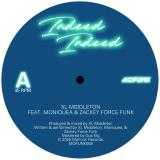



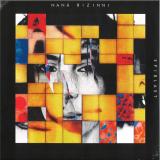




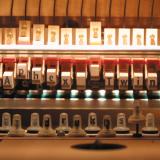








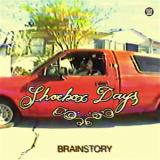



![Plug - Robotic Futuristic [Printed Sleeve]](https://www.deejay.de/images/l/3/7/1267937.jpg)
![Plug - Robotic Futuristic [Printed Sleeve]](https://www.deejay.de/images/l/4/0/1267940.jpg)