interloot returns with a stellar compilation, assembling a cadre of versatile heads to deliver a bulletproof warehouse set for your gear bag. kicking off the a-side is »once again« by stuttgart's jakob mäder. known for his eclectic blend of ambient, disco, house and techno, mäder crafts a heavy opener boosted by a propulsive rhythm, seamlessly melding forceful chords with swirling acid echoes. »tick« by bristol-based fella thrilogy screws down the force and untwines the groove with a more mellow, bass-driven foundation and intricate percussive patterns to a subtle yet weighty synth journey through space and time. flipping to the b-side, »back on back« by renowned duo decent rides instantly slaps your face and unfolds its raw energy with a stomping infectious vibe urging forward unchecked. supplemented by delicate vocal rollbacks this guy’s a real peak-time pusher. rounding out the little concrete jungle voyage, »groove got me« by vienna’s moff & tarkin proves the name’s the product. A massive breakbeat blast tenderly detailed and beautifully arranged builds up to a complex raw and punchy climax leaving no one’s body parts unmoved. savour this collection poised to satiate the appetites of discerning nightlife buds and sistas.
out of Stock
Last delivered 16 months ago available to reorder, subject to availability
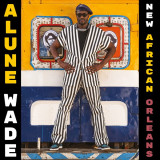
In his sixth and latest album “New African Orleans”, released by ENJA and Yellow Bird, bass guitarist and composer Alune Wade explores the multiple junctions between his native West African rhythms, the Afrobeat and juju rhythms from Lagos and the brass band repertoire immortalized in New Orleans. “I’m exploring a world that goes from my roots to the lost branches on the other side of the Atlantic,” explains the musician from Senegal. He has whittled down around 50 compositions – both original and standards - to a dozen which Alune recorded in Paris, Dakar, Lagos and New Orleans. “The idea first came to me during the Jazz à Gorée festival I organized back in 2014,” he explains. “It had me reflect on the notion of reversing the musical trip most people take from the United States to the African continent. I wanted to set out westward and begin a musical conversation with the best artists, both in Nigeria and the US.”
To achieve this, Wade has invited top artists from both sides of the Atlantic, including the Nigerian talking drummer Olaore Muyiwa Ayandeji, the percussionist Weedie Braimah and the jazz drummer Herlin Riley from New Orleans. The musical inspirations are equally transatlantic, ranging from Dr. John to Manu Dibango and Charlie Parker. But the 45-year-old also pays homage to his father who was a brass band star in his native Senegal back in the Sixties.
BACKGROUND
We only have a partial idea of the birth and remarkable development of the music born of the transatlantic slave trade. From Malinke ballads to Cuban son, from call-and-response patterns to field hollers and hip-hop, Yoruba rhythms to Argentinian tango, from Angolan percussions to the New Orleans brass band sounds… all have roots in Africa and a shackled migration that lasted four centuries. No more so than Congo Square in the Louisiana capital. In 2024, we mark the 300th anniversary of the implementation of the Code Noir which “gave enslaved Africans Sundays off to dance”. A drop in the ocean, but one which shows the importance of culture as a lifebuoy against this barbaric trade. As the Guadeloupian writer Daniel Maximin once claimed: “Our music guided us from the scream to the song, from dragging our chains to dancing.”
Not much is known about De Frank Kakra - let alone his birth name or where he is today. A few liner notes scattered across his records give a glimpse of his career as a backing vocalist and percussionist on the Ghanaian highlife scene of the 1970s, notably with Vis-A-Vis, K. Frimpong's band (Cubano Fiestas). He later formed his own bands, The Professionals and The Diggit Ways, alongside Sammy Copper, recording throughout West Africa. His recordings have now been unearthed, remastered and compiled in a triple LP anthology of his musical works. Although much remains unknown, RastaPastaRecords' goal is to ascertain several discoveries made about his life during the production of this record and to continue the research. "Call Me Frank" is a funky take on 1970s highlife set to a vintage Afro - rock fusion that evokes a time when West African dance floors vibrated with raw energy and relentless groove. "Psychedelic Man" is a full dive into the De Frank Kakra sound. With its hypnotic guitar riffs, cosmic organs and head- nodding drum rhythms, this infectious anthem will plunge you into a state of nostalgic psychedelia.
Neues Scheibe - Neue Wut: Nach Ihrem erfolgreichen Debutalbum gleich noch diese EP nachgelegt! Maschine Mensch beschreibt den alltäglichen Wahnsinn eines Individuums gesehen von unserer westlichen Welt. Wir werden geboren um ausgebeutet zu werden, alles zum Wohle des Kapitalistischen Systems. Maschine Mensch ist die Antwort auf die Frage: Was machst du aus deinem Leben? Auch wir müssen uns jeden Tag neu hinterfragen was unser Sinn des Lebens ist. Mit ,Maschine Mensch" schlägt die Berliner Punkband Shell Shocked ein neues Kapitel auf - und zwar laut. Die EP ist eine musikalische Abrissbirne gegen die Entmenschlichung unserer Zeit: gegen Algorithmus-Alltag, gegen soziale Kälte und gegen die leise Resignation im Kopf. Mit voller Wucht aus den Kellern Berlins meldet sich Shell Shocked zurück - roher, lauter und kompromissloser denn je. Auf ihrer neuen EP "Maschine Mensch" prallen schneidende Gitarrenriffs auf treibende Drums und Texte, die wie Faustschläge gegen die graue Realität wirken. Zwischen Großstadtbeton, Systemkritik und persönlichem Aufbegehren liefern Shell Shocked 6 Songs, die aufrütteln, antreiben und aufregen. Ein Soundtrack für alle, die nicht stillhalten können, wenn die Welt im Gleichschritt marschiert. ,Maschine Mensch" ist mehr - es ist ein Aufschrei. Punk aus Berlin. Direkt. Unverfälscht. Keine leeren Phrasen sondern Songs die verbinden und bewegen. Für alle die nicht blind mitlaufen wollen.
COMPUMA's new new album “horizons”now available on vinyl via his own label Something About!
The album “horizons” is a further development of COMPUMA's “horizons EP”, which was released in July 2023 as a digital-only EP on his Bandcamp. The songs are inspired by the scenery and environment of Lake Ezu, Kumamoto, where the artist's roots lie, and by his walks in various places around Japan.
Horizons 1”, in which the undulations of electronic sounds seem to represent a leisurely walk across a clear expanse of sky and lake scenery, and the vocoder voice somewhat reminds us of people's activities, and the piece changes to a more minimalistic play of rhythms and electronic sounds, as if focusing on introspection in the midst of walking. The album also includes “horizons 2,” which changes with exquisite salinity, “horizons 3,” which pays homage to early electronic music, and “horizons 4,” a more stoic minimal electro-dubwise piece that seems to be immersed in the act of walking, The last track on the album, “horizons 5,” is a non-beat ambient track with a hint of the waterfront, as if the artist is gazing at the vast sky, as if the steps of the first half of the album are expanding into a faint memory, and is accompanied by a field recording. The album includes “horizons 5”, a non-beating ambient taste that is covered by field recordings and depicts the atmosphere of a wandering waterfront, and five versions of “horizons” that remind us of the days of “walking”, sometimes immersed in the scenery and walking, sometimes lost in thought, with “horizons interlude” in between, which reminds us of the surface of a bobbing lake, and is a self-titled version of “View 2” from the previous album, “A View”. The album contains seven songs in total, including a self-remix of “View 2” and an electro version of “view 2 electro”, reminiscent of the shimmering surface of a lake.
Personally speaking, this work reminds me somewhat of Kraftwerk's “Autobahn,” which depicted the countryside of West Germany with minimal electronic sounds, and this work also seems to depict a scene of a “walk” with electronic sounds. However, what is different from “Autobahn” is that there is an element in the middle part of the album that seems to go into introspection in the midst of walking, and it is a work that shows various views (including feelings) throughout the album. From a macro perspective, this album is a new response to the recent environmental music revival and generalization of ambient music, which he has introduced as a DJ and record buyer for a long time.
The album was co-produced by hacchi, who also works with Deavid Soul, Urban Volcano Sound, and as a recording/mastering engineer, and mastered by Nakamura Soichiro of Peace Music, a studio that has produced many masterpieces, including Shintaro Sakamoto's solo work. The package artwork is by designer Seiichiro Suzuki. The package artwork is by designer Sei Suzuki. (The package artwork was designed by designer Sei Suzuki.)
******
Compuma is a Tokyo-based log-serving DJ whose extensive knowledge of obscure and left-field music across so many genres and different regions of the world established himself as one of the most respected record buyers in Japan,
a country well known as record collectors’ paradise. While he built his career in record business over decades, he has also been sharing his expertise in music as a DJ just as long. Not only the breath and the depth of where his selection derives are hard to compete, the way he blends them all together is also a state of art. Often intricately layered and collaged, Compuma is capable of sculpting something entirely new with bits and pieces of existing tracks in various forms such as ambient soundscapes to dubbed out club sets. In 2017, his unique ability caught the attention of Berlin Atonal directors and he was invited to play at the festival in Berlin.
He extends his skills into remixing which can be heard on the released from EM Records - “Compuma meets Haku” (2015) and “Bangkok Nights” (2017.) In June 2022, he released his first solo album, A View.
He is also an active member of a DJ trio called Akuma No Numa (which translates to “devil’s swamp”) in which he explores darker and more psychedelic periphery of dance music.
Angelo Debarre's extraordinary guitar technique has long been the tree that hid the forest of his profound musicality and above all, his talent as a composer. Belonging to the family of Django Reinhardt's heirs, Debarre has become a legend among Gypsy Jazz fans, one of those rare musicians, who can enchant a room and make hearts beat in unison.
The New Dictionary of Jazz (Nouveau Dictionnaire du Jazz) describes Angelo Debarre as supersonic, and indeed, he is with mad virtuosity. His left hand moves up and down the fine neck of his gypsy guitar, with speed but always with musicality. But it would be an understatement to speak only of his dexterity; he has a marvellous ability to play with subtlety, and his improvisational possibilities seem endless; all done with great ease and apparent composure. Solos, counterpoint, he's everywhere.
A child from the gypsy community, Angelo started playing guitar with his family at the age of eight. In 1984, he formed the first "Angelo Jazz Quintet". In 1985, he became one of the pillars of the famous Parisian cabaret, "La Roue Fleurie" and participated in numerous tours and recordings, including the famous Gypsy Guitars, a reference album of the genre.
Very comfortable in several gypsy styles, Debarre can be found alongside fellow guitarist Petro Ivanovitch and singer and balalaika player Raya from the group Arbat. As a guest, DeBarre can be heard with the band Bratsch, in dialogue with the pianist Bojan Z, percussionist Xavier Desandre-Navarre, the violinist Florin Niculescu and other leading figures of the gypsy guitar.
Angelo Debarre: guitar
Serge Camps: guitar
Frank Anastasio: bass
Offending everyone since April 1st, 2013,Brutal Sphincter(BE) has, over the years, established themselves as one of the leading acts in the current goregrind scene.
Bringing political themes into their music, they dub themselves "POOlitical" and, through offbeat and satirical humor, take a stand against all forms of extremism while championing freedom of speech.
Despite their extreme musical style, they are one of those rare acts that can seamlessly fit into any type of event or festival.
They have proven this time and again, performing at some of the biggest metal gatherings in Europe, such asHellfest, Summer Breeze Open Air, Alcatraz, Motocultor, Party San, Metaldays, and more, as well as at the most extreme metal events likeObscene Extreme, DeathFeast Open Air, Meh Suff, Kaltenbach Open Air,andNetherlands Deathfest.
BEWARE!Party, dance, groove, and brutality are the elements they always bring with them to every show.
In May 1981 B-Movie and Soft Cell went into Advision Studios in London with the same producer, Mike Thorne (Wire, Bronski Beat, China Crisis, The Communards) to record singles for the label they were both signed to. Phonogram had really wanted to sign B-Movie but had also committed to Soft Cell, having been coerced into it by Stev0, who managed both artists and wouldn’t let them have one without the other. B-Movie commenced recording the dark moody anti-fame anthem ‘Marilyn Dreams’, whilst Soft Cell got underway on a cover of an obscure Northern Soul classic. When both songs were released in July 1981, ‘Tainted Love’ became a worldwide hit and shot Soft Cell to international fame, making them the biggest stars of 1981. B-Movie had formed in 1979, in Mansfield, a typical northern town in the middle of the Nottinghamshire coalfield. Originally a three piece featuring, vocal / bass, guitar and drums, they expanded by adding a keyboard player to broaden their initial post punk sound. Local Lincoln independent record label, Dead Good Records, firstly put them on the compilation LP ‘East’, followed by 7" inch EP and then a mini-album releases, which led to an appearance on the legendary Some Bizarre label (alongside the likes of Blancmange, Depeche Mode, Soft Cell and The The)
Major label interest followed, from which came the deal with Phonogram, B-Movie initially re-recording the track ‘Remembrance Day’, which reached No61 in the UK chart in early 1981 and, more importantly, was played by BBC Radio 1 DJ John Peel, and appearing in his Festive 50 for that year. All of the recordings the band made during their Phonogram period have been consigned to the Universal Music vault for several decades, with the band finally managing to have these returned in 2024. The various tapes have been digitised and restored, resulting in the creation of what would have been their 1982 debut LP ‘that never was’. Ten tracks including the three singles plus seven previously unreleased recordings. The CD version contains a further seven recordings including the 12” versions, single B-sides and the track “Moles’” from the Some Bizarre compilation.So “Hidden Treasures” from B-Movie, is only four decades late but still able to sit seamlessly alongside contemporaries like The Chameleons and The Sound. The LP is a darker, more brooding and psychedelic affair, more akin to the gothic elements of the Bunnymen or Joy Division, than the ‘pop sensations’ Phonogram wanted them to become. By both opening and closing this chapter of B-Movie, it puts them firmly in the same bracket as their new wave and post-punk contemporaries, which is the least they deserve, as one of the great ‘lost’ bands of the early 1980’s. "It’s nice to hear B-Movie are finally getting a chance to release their forgotten gems’” Matt Johnson (The The) Vinyl
Folwark is a duo composed of Francesco Marcolini (guitars, synths, vocals) and Tommaso Faraci (drums, theremin, vocals). Their music fuses syncopated rhythms, introspective loops, and psychedelic mantras, forging an intense connection with listeners that transcends sound, reaching into emotional and spiritual depths. "All Shadows Stretched" blends heavy grooves, psychedelic explorations, and deep spiritual themes, creating a rich and immersive listening experience. The band's signature dynamic setup of guitars, drums, theremin, synths, and vocals shapes a powerful, emotionally charged soundscape. Produced by Folwark, mixed and mastered by Lorenzo Stecconi (Amenra, Ufomammut, ZU).
Perth’s finest, Psychedelic Porn Crumpets, continue their onslaught on 2025 with the release of a brand new single & announcing details of their 7th record due in May 2025. ‘Carpe Diem, Moonman’ promises to be another weird & wonderful journey through the mind of Jack McEwan, the talisman of the Perth 5-piece. It’s announced alongside brand-new single ‘Weird World Awoke’, another ferocious blast of inimitable rock & roll, with a lyrical rollercoaster to keep pace with the relentless tempo & guitar slaloms.
McEwan himself had this to say about the new record: “Carpe Diem, Moonman” is an entanglement of chaos, the bi-product of excessive touring, an explosion of doubt, wonder, excitement, dog bites, Greek philosophy, death, weekend benders and a partridge in a pear tree, a mongrel of sorts. There’s so many genres, flavours, cream crackers and fairground amusements packed into CDM. It blasts out the gates, takes you for a spin then leads you off into somewhere beautiful, fun and enthralling. I want people to come back and find something new with each listen.”
Let All That We Imagine Be The Light“ ist das achte Studioalbum von Garbage und wurde bei Red
Razor Sounds in Los Angeles, Butch Vigs Studio Grunge Is Dead und Shirley Mansons Schlafzimmer
aufgenommen. Die Platte wurde von der Band und ihrem langjährigen Toningenieur Billy Bush produziert.
Das Album ist unverkennbar Garbage. Alle Markenzeichen und Handschriften, für die sie bekannt sind,
sind hier vorhanden. Große, kantige Gitarren, präzise, treibende Beats und filmische Klanglandschaften
lauern alle unter Shirley Mansons ausdrucksstarker Stimme, ihre Texte strotzen vor Attitüde. Es ist der
Sound einer Gruppe auf dem Höhepunkt ihrer kreativen Kräfte – die charakteristischerweise klangliche
Gegenüberstellungen und Stimmungen nutzt, um ein Album zu schaffen, das gleichermaßen von Licht und
Schatten pulsiert.
„Als ich mit der Aufnahme dieser Platte begann, war ich entschlossen, eine hoffnungsvollere, erhebendere
Welt zu finden, in die ich eintauchen konnte. Der Titel des Albums, Let All That We Imagine Be The Light,
ist ein perfektes, schlagzeilenträchtiges Statement für die gesamte Platte. Wenn alles düster erscheint, ist
es unerlässlich, nach den hellen, positiven und schönen Kräften der Welt zu suchen. Es fühlt sich fast wie
eine Frage von Leben und Tod an. Eine Überlebensstrategie“ – Shirley Manson
Garbage besteht aus allen vier ursprünglichen Bandmitgliedern, Shirley Manson, Duke Erikson, Steve Marker
und Schlagzeuger Butch Vig. In den 30 Jahren seit ihrer Gründung im Jahr
Auf Festivalbühnen waren Cari Cari 2017 und 2018 nicht mehr wegzudenken. Und doch stehen die beiden erst am Anfang. Das Album feiert diesen mit dem prototypischen Titel »Summer Sun« – und gibt damit die Schlagrichtung vor. »Anaana« versammelt die Unmenge an Eindrücken aus vielen Reisekilometern, Nächten und Abenteuern in einem glühend heißen Druckkochtopf; unterhaltsam, schnell und abwechslungsreich.
Eine gewisse Liebe zu den Welten von Ennio Morricone und Quentin Tarantino ist nicht von der Hand zu weisen – und damit auch der Hang des Duos, mutig entlang eines schmalen Grats zu tänzeln: Cari Cari vermengen zahlreiche Popkulturzitate und weltmusikalische Einflüsse mit einer Prise Ironie und viel Charme. So dürfen sich zwischen kessem 60s-Gitarrensound und tribal beats auch Maultrommeln und Didgeridoos tummeln, die SML auch auf der Bühne zur Begeisterung des Publikums immer wieder auspackt. Und so gelingt der Tanz dem Duo mit jener jugendlich-frischen Mühelosigkeit, die die beiden schon die genannten Bühnen im Sturm erobern ließ.
Im »Mellow Mood« benannten, fünften Kapitel der Serie kehrt Oscar Peterson nach dem solistisch bestrittenen Vol. 4 zu seiner Triobesetzung mit Sam Jones (b) und Bob Durham (dr) zurück. Es ist ein Album, auf dem der Kanadier in einigen Stücken die Giganten des US-Jazz feiert. So startet er mit Duke Ellingtons »In A Mellotone«, das er variantenreich und mit überbordender Physis interpretiert.
Die Horace Silver-Komposition »Nica's Dream« leitet er aus lyrischer Contenace zu improvisatorischem Sprudeln, Gershwins »Summertime« spielt er in einer vom melancholischen Melos gänzlich befreiten, nach seinen eigenen Worten »kühnen« Fassung. Mit »On Green Dolphin Street« greift er ein Thema aus dem gleichnamigen Film auf, entfaltet seine tänzelnden Tastengänge über dem Bordun von Jones, der gegen Ende auch ein wunderbares Solo liefert. Mit den abschließenden Stücken umspannt er einen weiten zeitlichen Rahmen: »Sometimes I'm Happy« führt in die Unschuld der Zwanziger Jahre zurück, »Who Can I Turn To« hingegen stammt aus den Sechzigern. Peterson hat es bereits für sein Soloalbum eingespielt, hier wird es nach einem verblüffenden Tempowechsel im Triogefüge ausgearbeitet.
Auf dem abschließenden Volume der Serie »Exclusively For My Friends« setzt Oscar Peterson mit seinen Kollegen Sam Jones (b) und Bob Durham (dr) noch einmal sehr unterschiedliche Glanzpunkte. Das überschäumende, vorwärtstreibende Titelstück kann seine Wurzeln im Gospel nicht verleugnen, kontrastiert wird es mit der schlichten und doch so tiefsinnigen Ballade »Emily«. Mit der Jobim-Komposition »Quiet Nights« (im Original »Corcovado«) demonstriert das Trio, zu welchem Feingespür es bei der Adaption der Bossa Nova fähig ist. Die ansonsten so träumerische Nummer wird hier mit rasant swingender Unbeschwertheit einer erstaunlichen Metamorphose unterzogen. Durch die Auswahl von »Sax No End« verbeugt sich Peterson vor dem europäischen Jazz: Die Komposition stammt vom belgischen Bigband-Leader Francy Boland und wird von Petersons mitreißendem, sehr muskulösem Spiel geradezu in Brand gesetzt. Zum Finale »When Lights Are Low« von Benny Carter: Über zehn Minuten gestaltet das Trio bedächtig und souverän diese versonnene Komposition, wobei Sam Jones mit seinen delikaten Begleitfiguren nochmals eine besondere Rolle zukommt.
Auf dem abschließenden Volume der Serie »Exclusively For My Friends« setzt Oscar Peterson mit seinen Kollegen Sam Jones (b) und Bob Durham (dr) noch einmal sehr unterschiedliche Glanzpunkte. Das überschäumende, vorwärtstreibende Titelstück kann seine Wurzeln im Gospel nicht verleugnen, kontrastiert wird es mit der schlichten und doch so tiefsinnigen Ballade »Emily«. Mit der Jobim-Komposition »Quiet Nights« (im Original »Corcovado«) demonstriert das Trio, zu welchem Feingespür es bei der Adaption der Bossa Nova fähig ist.
Die ansonsten so träumerische Nummer wird hier mit rasant swingender Unbeschwertheit einer erstaunlichen Metamorphose unterzogen. Durch die Auswahl von »Sax No End« verbeugt sich Peterson vor dem europäischen Jazz: Die Komposition stammt vom belgischen Bigband-Leader Francy Boland und wird von Petersons mitreißendem, sehr muskulösem Spiel geradezu in Brand gesetzt. Zum Finale »When Lights Are Low« von Benny Carter: Über zehn Minuten gestaltet das Trio bedächtig und souverän diese versonnene Komposition, wobei Sam Jones mit seinen delikaten Begleitfiguren nochmals eine besondere Rolle zukommt.
"ADN", High Tone's second album, is energy packed, much like their debut album. The ingredients remain the same, but this time, the record is bursting with breaks, loops and samples of voices, electro and even hip-hop sounds. High Tone are incorporating all sorts of influences to create their own personal ground breaking massive dub style, a subtle mixture of an unbeatable energy, an undeniable sense of arrangement and a great desire to surprise. Just first-class dub.
out of Stock
Last delivered 16 months ago available to reorder, subject to availability
Spirituelle Musik mit tiefer Resonanz, übertragen durch Klavier, Orgel und Harmonium von der geliebten Komponistin und äthiopischen orthodoxen Nonne Emahoy Tsege Mariam Gebru. "Church of Kidane Mehret" versammelt das gesamte musikalische Werk von Emahoys gleichnamigem Privatpress-Album von 1972 sowie zwei zusätzliche unveröffentlichte Klavieraufnahmen mit Emahoys ,Äthiopischer Kirchenmusik". Die Aufnahmen entstanden in Kirchen in ganz Jerusalem. Zum ersten Mal hören wir Emahoy auf dem Harmonium und der massiven, dröhnenden Pfeifenorgel, neben einigen ihrer bewegendsten Klavierstücke. Bei ,Ave Maria" hallt ihr läutendes Klavier gegen alte Steinmauern. Ihre vertrauten melodischen Linien erhalten eine neue Resonanz, wenn sie in ,Spring Ode - Meskerem" durch das Harmonium gespielt werden. Zwei überragende Orgelstücke bilden die B-Seite, die Emahoys klassische europäische Ausbildung mit ihrem lebenslangen Studium der äthiopischer religiöser Musik kombinieren. Nirgendwo ist Emahoys einzigartige Kombination von Einflüssen deutlicher als bei ,Essay on Mahlet", einem meditativen Dauerbrenner, in dem Emahoy die freien Verse der orthodoxen Liturgie Note für Note auf dem Klavier interpretiert. Dieses aufschlussreiche Stück stammt, neben der dramatischen Klavierkomposition ,The Storm", von einem anderen selbstveröffentlichten Album, "Der Sang Des Meeres" von 1963. Eines der einzigen bekannten Exemplare wurde vor dem Müll gerettet und von einer Mitschwester aus Emahoys Kloster am Rande von Emahoys Beerdigung im März 2023 an Mississippi Records weitergegeben. Die Vinylausgaben kommen im Oldschool Tip-On-Jacket mit metallischer Silberfolienprägung und einem 12-seitigen Booklet mit ausführlichen Linernotes des Gelehrten und Pianisten Thomas Feng.
out of Stock
Last delivered 15 months ago available to reorder, subject to availability
Die Modern Folk-Künstlerin Jensen McRae hat das Veröffentlichungsdatum ihres mit Spannung erwarteten zweiten Albums „I Don't Know How But They Found Me!“ bekannt gegeben, das am 25. April über Dead Oceans erscheinen wird. Zusammen mit der Ankündigung hat sie auch ihre neueste Single und das Video „Praying For Your Downfall“ veröffentlicht, ein Meisterwerk der Offenheit, das Witz und Charme verbindet, während McRae darüber nachdenkt, wie sie den Drang nach Rache an jemandem, der ihr das Herz gebrochen hat, loslassen kann.
Jensen McRae - Praying For Your Downfall (Official Video)
Vor dem Hintergrund von Herzschmerz, Selbstfindung und der Komplexität der Liebe ist „I Don't Know How But They Found Me!“ eine mutige Entwicklung für die junge Künstlerin. Das elf Titel umfassende Album, das in North Carolina mit Brad Cook (Waxahatchee, Bon Iver) aufgenommen wurde und an dem Nathan Stocker (Hippo Campus), Matthew McCaughan (Bon Iver) und ihr Bruder Holden McRae mitgewirkt haben, ist eine lebendige Sammlung von Songs, die von messerscharfen Texten und zeitlosen Pop-Melodien getragen werden. McRaes Stimme ist so vielseitig wie ihr Songwriting - mal flüsternd und strukturiert, dann wieder klar und hell. Es ist eine Stimme, die sowohl den Herzschmerz des Verlassenwerdens als auch die Stärke des Verlassens verkörpert.
Von Anfang an haben sich die Fans in Jensen McRae verliebt, für ihre scharfsinnigen, aufrüttelnden und klarsichtigen Songs. Ihr Songwriting ist verletzlich, ja, aber es ist auch stark, weil es sich nicht zurückhält. „I Don't Know How But They Found Me!“ zeigt McRaes Entwicklung von einer vielversprechenden jungen Künstlerin zu einer echten Songwriterin und Star. „Die tiefgreifendsten Entscheidungen meines Lebens“, sagt McRae, “haben sich oft wie Dinge angefühlt, die ich getan habe, bevor ich dazu bereit war, und in die ich hineinwachsen musste.“ „I Don't Know How But They Found Me!“ handelt davon, was folgt, wenn man dem widerstanden hat, von dem man dachte, dass es einen vernichten würde. Es geht darum, seine Grenzen kennenzulernen und zu erfahren, wozu man fähig ist. „Ich verband mich mit dem Gedanken, dass ich leicht unter dem Gewicht dessen, was mir widerfahren ist, hätte zusammenbrechen können, aber ich tat es nicht. Ich wusste es nicht einmal“, sagt sie, ‚aber ich war die ganze Zeit kugelsicher“. Jensen McRae ist in L.A. geboren und aufgewachsen und hat fast ihr ganzes Leben lang Musik studiert und gemacht. In der High School nahm sie am Grammy Camp teil und schloss ihr Studium an der USC Thornton School of Music mit einem Abschluss in Popular Music ab. McRaes Debütalbum „Are You Happy Now?“ schrieb sie größtenteils im Alter von 21 Jahren und war der erste Schritt zum Aufbau einer treuen Fangemeinde. „Are You Happy Now?“ navigiert die Identität von ihren tiefsten Grundlagen - dem Leben als junge, gemischtrassige schwarze und jüdische Frau - bis hin zu ihren persönlichsten Überlegungen - vertraue ich dir, vertraue ich mir selbst. McRaes Vertrauen in sich selbst hat sich mehrfach bestätigt, zuletzt und vielleicht am bekanntesten in Form des Songs „Massachusetts“. McRae postete eine Solo-Strophe und einen Refrain, kaum mehr als ein Stück eines Demos, und es fing Feuer im Internet. Covers, Duette und eine Lawine neuer Fans folgten, und McRae krönte den Moment mit einer fertigen Version und einer sommerlangen Tournee als Support von Noah Kahan. „I Don't Know How But They Found Me!“ nimmt McRaes mittlerweile beachtliche Fähigkeiten auf und macht sie massentauglich. „Savannah“ ist ein Song für alle, die schon lange dabei sind. Der pulsierende, an Country angelehnte Song erinnert sofort an das Beste von Phoebe Bridgers, wobei McRae in einem akrobatischen Flüsterton über einer federleichten akustischen Gitarre singt. Wenn „Savannah“ sein Crescendo erreicht, wird klar, dass McRae eine Künstlerin mit einer ganz eigenen Kraft ist, wenn sich Klavier und Gitarre überlagern und McRae eine Reihe bissiger Anklagen mit Schärfe und Überzeugung vorträgt: "You swore you'd raise our kids to end up just like you / well you're a false prophet / and that's a goddamn promise." Währenddessen ist „Let Me Be Wrong“ eine echte Hymne, eine beschwingte Ode an die Ablehnung von Perfektionismus. Wiederum auf einem einfachen Gesang und einer Akustikgitarre aufbauend, steigert sich „Let Me Be Wrong“ Schritt für Schritt in seinem Trotz; die Gitarren schichten sich, das Schlagzeug nimmt das Tempo auf, und McRae macht Platz für die Fehler aller. Wenn McRae knurrt „fuck those girls got everything“, ist das ein Schlag voller Kraft und Verletzlichkeit, der darum bettelt, unisono so laut wie möglich gebrüllt zu werden. Der ungewöhnliche Titel ihres zweiten Albums? Er stammt aus einer Zeile in McRaes Lieblingsfilm „Zurück in die Zukunft“. Ein Hauptdarsteller überlebt einen Kugelhagel, und dieses Bild hat McRae sehr beeindruckt. „Ich habe mich mit dem Gedanken angefreundet, dass ich leicht unter dem Gewicht dessen, was mir passiert ist, hätte zusammenbrechen können, aber das habe ich nicht. Ich wusste es nicht einmal“, sagt McRae, “aber ich war die ganze Zeit über kugelsicher.“
out of Stock
Last delivered 16 months ago available to reorder, subject to availability
WHEN A NIGHT IN SOUNDS LIKE A NIGHT OUT! Eine schillernde 11-Track-Reise durch die handverlesenen Perlen unter Numeros besten. Eccentric verbindet die zeitlose Wärme des klassischen Soul mit einem frischen, modernen Twist: Eccentric Modern Soul präsentiert eine weitläufige Klanglandschaft, die sich sowohl nostalgisch als auch neu anfühlt.
out of Stock
Last delivered 7 months ago available to reorder, subject to availability
Stereogum: »Here’s a cool new musical project that feels both out-there and extremely mundane. In 2022, the great Colorado experimentalist M. Sage teamed up with Lieven Martens (Dolphins into the Future) under the name Sage Martens. Their album, »Riding Fences«, was an ambient classical exercise designed to explore the idea of ›Western‹ music. They’re back this year with another conceptual offering (...)«
»Chamber Music for Lawn Mowers« is the second album by Sage Martens. This time, Matthew Sage (RVNG, Fuubutsushi) and Lieven Martens (Edições CN, Dolphins into the Future) sing the lawn.
Did you know a clean-cut lawn is a desire we inherited from the British?
Yes, the British dumped this pleasure into our collective consciousness. Those humorless Victorians who enjoyed having their black pudding on the lawn. They came to this uninspired impression while mis-looking at Italian paintings. Yes indeed, while gazing at these paintings they mistook green lanes for green lawns. Thus it became hip. Every stuffed truffle commanded his gardener to cut the grass.
As a result, this Victorian lust for sterile gardens with pretty green lawns nudged our world into water spillage and pesticide clouds. This new priority produced exhaust clouds and prudish monocultural landscapes. Just by looking at Italian paintings.
As with most of Western history, the practice was exported to America and then turbocharged. By shearing clear the prolific brush of pastures, prairies, forests and glens, biodiversity becomes an aesthetic casualty with long-suffering ecological ripples. An inherited practice narrows the bandwidth of experience.
And so, the childhood habit of humming along in key to the drone of a gas-powered mower while trimming a suburban lawn extrapolates into something expanded — an unanswered question about the harmonics of landscape practices.
M. Sage: Bb clarinet, alto saxophone, sine wave, lawn mowing, processing L. Martens: computer, analog synthesis, digital processing With W. Van Gils: lawn mowing
We have had the honour of reissuing the work of Italian sonic polymath J.P Energy via our collaborative label with Transmigration, Sound Migration, over the course of the past year. Our third outing with J.P Energy is ‘Prima Dell’ Alba / Forbidden Planet’ - two sophisticated and sinister percussive tracks from 1997 that sit at the boundaries of Techno & Trance, indicative of the fruitfulness of creativity in underground dance music from Italy during this time. We are very pleased to bring this, until now, very difficult to obtain record into the hands of appreciative music lovers, complete with with a modern revision of Forbidden Planet by J.P Energy himself.
out of Stock
Last delivered 19 days ago available to reorder, subject to availability
If this LP exists it is thanks to the vision, energies, work and perseverance of Thomas M. Lopez, aka Meatball Fulton. He is the president and one of the founding members of the ZBS Foundation (ZBS stands for Zero Bullshit), where the audio dramas written by Lopez himself were born. Dramatic programs with stories that blended noir, comedy and science-fiction genres such as Ruby The Galactic Gumshoe or Jack Flanders were produced to critic and public acclaim. It was in Ruby The Galactic Gumshoe that the Android Sisters, who would later have their own spin-off series, first appeared. The characters represent two robotic siblings that Tom Lopez created under big influence from Do Androids Dream of Electric Sheep?, the Philip K. Dick novel that was taken to cinema by Ridley Scott in Blade Runner. The Androids were performed by actresses Ruth Maleczech and Valeria Wasilewski.
The big success of these “cosmic and comic” sci-fi series, as they are described in the ZBS Foundations website, led to the releasing of cassette tapes, CDs, USBs and podcasting of the stories. Along with these, several music albums were also released in different formats. One of them is Songs Of Electric Despair, the first of two released by the Android Sisters. The songs contained are written by Tom Lopez and his long time collaborator experimental musician Tim Clark.
The Android Sisters Songs Of Electronic Despair LP was originally released as a ZBS Foundation cassette and also as a vinyl LP on Vanguard in 1984. It featured 11 compositions (two bonus tracks not on the original LP have been added to the Wah Wah reissue) on which the experimental synthesizer music of Tim Clark finds a perfect counterpoint in the deliciously surrealistic, cosmic social satire of Tom Lopez’s texts, magically performed by the robotic, yet sensual voices of the Android Sisters as performed by Maleczech and Wasilewski. Clark composed and performed the backing tracks on the Synclavier II synthesizer.
The Wah Wah reissue comes with two bonus tracks not on the original 1984 LP, respects the beautiful original album artwork and enhances it with a 4 pages full colour insert with notes and lyrics of the songs.
BARBARELLA MEETS PHILLIP K. DICK!
RIYL : SYNTH POP CYBERPUNK with DEVO’s sense of humor, LOGIC SYSTEM, FRANK CHICKENS or even some 1990s things to come such as LIKE A TIM or ARPANET.
If this LP exists it is thanks to the vision, energies, work and perseverance of Thomas M. Lopez, aka Meatball Fulton. He is the president and one of the founding members of the ZBS Foundation (ZBS stands for Zero Bullshit), where the audio dramas written by Lopez himself were born. Dramatic programs with stories that blended noir, comedy and science-fiction genres such as Ruby The Galactic Gumshoe or Jack Flanders were produced to critic and public acclaim. It was in Ruby The Galactic Gumshoe that the Android Sisters, who would later have their own spin-off series, first appeared. The characters represent two robotic siblings that Tom Lopez created under big influence from Do Androids Dream of Electric Sheep?, the Philip K. Dick novel that was taken to cinema by Ridley Scott in Blade Runner. The Androids were performed by actresses Ruth Maleczech and Valeria Wasilewski.
The big success of these “cosmic and comic” sci-fi series, as they are described in the ZBS Foundations website, led to the releasing of cassette tapes, CDs, USBs and podcasting of the stories. Along with these, several music albums were also released in different formats. One of them is Songs Of Electric Despair, the first of two released by the Android Sisters. The songs contained are written by Tom Lopez and his long time collaborator experimental musician Tim Clark.
The Android Sisters Songs Of Electronic Despair LP was originally released as a ZBS Foundation cassette and also as a vinyl LP on Vanguard in 1984. It featured 11 compositions (two bonus tracks not on the original LP have been added to the Wah Wah reissue) on which the experimental synthesizer music of Tim Clark finds a perfect counterpoint in the deliciously surrealistic, cosmic social satire of Tom Lopez’s texts, magically performed by the robotic, yet sensual voices of the Android Sisters as performed by Maleczech and Wasilewski. Clark composed and performed the backing tracks on the Synclavier II synthesizer.
The Wah Wah reissue comes with two bonus tracks not on the original 1984 LP, respects the beautiful original album artwork and enhances it with a 4 pages full colour insert with notes and lyrics of the songs.
BARBARELLA MEETS PHILLIP K. DICK!
RIYL : SYNTH POP CYBERPUNK with DEVO’s sense of humor, LOGIC SYSTEM, FRANK CHICKENS or even some 1990s things to come such as LIKE A TIM or ARPANET.
2025 marks the triumphant return of Sitaro, the iconic track that once lit up dancefloors worldwide. Originally released in 2007 and championed by the likes of Carl Cox—earning its place on Carl Cox Ultimate (Universal Music)—Sitaro is back with a fresh 2K25 Edition on Move Recordings.
The Belgian techno duo End-Jy & Dimitri Andreas, known for their heavyweight releases on Lupp, Intec, Terminal M, Music Man, and Systematic, deliver an updated version of this melodic anthem. The remastered original brims with Sitaro's signature sound: hypnotic sitar riffs, emotive atmospheres, and a groove that’s as irresistible as ever—a true dancefloor odyssey packed with intensity and raw emotion.
And for the remix? Who better than Dimitri Andreas himself. With an illustrious career spanning decades and releases on Systematic, Music Man, Kling Klong, and Token, Andreas takes Sitaro to new heights. His remix is a masterclass in contemporary melodic techno, drawing comparisons to the work of Guy J, Sébastien Léger, and Roy Rosenfeld. Expect driving Latin-inspired percussion, lush synths, and dreamy soundscapes that seamlessly blend piano-laden breakdowns with deep, pulsating grooves.
The result is a stunning reinterpretation—eclectic yet cohesive, powerful yet delicate. Dimitri Andreas once again proves why he remains a pivotal figure in the global techno landscape.
Press play, and let the journey begin.
Early support from Lost Desert (All Day I Dream), Timo Maas (Systematic), Adriatique (Afterlife), Nick Varon (Sudbeat), Raw Main (Lost Miracle), Dclviii Ofc (Cod3qr), Alex Neri (Wildflower)…
Français
End-Jy - Sitaro (2K25 Edition) featuring Dimitri Andreas Remix
2025 marque le retour triomphal de Sitaro, le morceau emblématique qui a illuminé les pistes de danse du monde entier. Initialement sorti en 2007 et soutenu par des DJ comme Carl Cox—qui l’a même inclus dans Carl Cox Ultimate (Universal Music)—Sitaro fait son grand retour avec une toute nouvelle édition 2K25 sur Move Recordings.
Le duo techno belge End-Jy & Dimitri Andreas, connu pour leurs sorties majeures sur Lupp, Intec, Terminal M, Music Man et Systematic, propose une version actualisée de cet hymne mélodique. L’original remasterisé regorge de la sonorité signature de Sitaro : des riffs hypnotiques de sitar, des atmosphères émotionnelles, et un groove aussi irrésistible que jamais—une véritable odyssée sur la piste de danse, remplie d’intensité et d’émotion brute.
Et pour le remix ? Qui de mieux que Dimitri Andreas lui-même ? Avec une carrière illustre qui s’étend sur plusieurs décennies et des productions sur Systematic, Music Man, Kling Klong et Token, Andreas emmène Sitaro vers de nouveaux sommets. Son remix est une véritable masterclass de techno mélodique contemporaine, qui rappelle le travail de Guy J, Sébastien Léger et Roy Rosenfeld. Attendez-vous à des percussions latines entraînantes, des synthés luxuriants et des paysages sonores oniriques qui fusionnent parfaitement des breakdowns pianistiques avec des grooves profonds et pulsants.
Le résultat est une réinterprétation impressionnante—éclectique mais cohérente, puissante mais délicate. Dimitri Andreas prouve une fois de plus pourquoi il reste une figure incontournable du paysage techno mondial.
Appuyez sur play et laissez le voyage commencer.
Support de Lost Desert (All Day I Dream), Timo Maas (Systematic), Adriatique (Afterlife), Nick Varon (Sudbeat), Raw Main (Lost Miracle), Dclviii Ofc (Cod3qr), Alex Neri (Wildflower)…
out of Stock
Last delivered 11 months ago available to reorder, subject to availability
Double trouble from the depths with this audacious edit package taking in two ultimate, belt from the bottom of your heart classics. Reworked, reloved and revamped to provide maximum dancefloor elation. Two big, bold edit beasts to help you break on through to the other side.
out of Stock
Last delivered 26 days ago available to reorder, subject to availability
The debut release of Collective Direction explores the incredibly broad and fascinating variety of work of Tasti Box, operating in San Francisco in the early 90’s.
This previously unreleased album, made in the early 90’s, captures the spirit of the San Francisco free party scene that exploded around that time. DJ Harvey, Doc Martin, the Hardkiss Brothers, the Wicked Crew and a host of international guests played at legendary all-night parties at locations such as under the Golden Gate Bridge, on huge custom-built sound systems. Helping to define not only the West Coast scene but also influencing the rest of the country throughout that decade. The cultural impact of this moment in time continues to inspire today’s dance music landscape.
Opening on the delicate and melodic ambient tracks Mim and Quetzcal, the A side closes on Dr Tripi, a house-infused track preluding the uniqueness and diversity of the emblematic Tasti Box sound, explored more broadly on the B side with the triptych of Desire, U Can Fly and Box, a trippy journey melting influences from breaks, house, experimental and techno, one that can be experimented at home or in a club setting. The C side opens with the killer trancey and psychedelic club track Feel It, one expected to be definitely heard on dancefloors over the Summer. It is complemented by the almost balearic Story of O and bleepy and esoteric Electrons. On the D side, some Daisy Glow tracks, showing strong late Tasti Box influence, close the musical journey with four tracks of joyful and melodic house music, a perfect ending to a night and to the double LP.
It’s a compilation for music collectors and dancers alike and those excited to explore the history of a sound not afraid to experiment. The vinyl includes a limited edition A4 design of the artwork cover, an exclusive conversation with the artists and two vinyl exclusive tracks. One not to miss!
out of Stock
Last delivered 13 months ago available to reorder, subject to availability
A fresh imprint from East End Dubs, Rhythm Traxxx is dedicated to delivering raw, timeless house music. With a focus on groove and energy, the label serves up tracks designed to ignite the dance floor and captivate true house music lovers.
out of Stock
Last delivered 4 months ago available to reorder, subject to availability
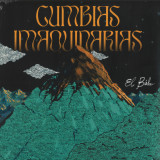
Earthly Measures are proud to present the release of ‘El Búho - Cumbias Imaquinarias’, this time on wax with some added remixes.
'Cumbias Imaquinarias' is an EP that flows full circle with one of El Búho’s earliest inspirations for making electronic music; digital Cumbia. It was a scene that exploded out of Buenos Aires around 2008 and went global. The scene soon saturated and fell out of fashion, but gave birth to artists like Chancha Via Circuito, Frikstailers, El Remolon and was a big inspiration for him as a young producer.
For El Búho there was always something there; the entrancing magic of the Cumbia rhythm reimagined for the electronic dancefloor. Cumbia is a music that is globally connected but also so diverse, evolving and growing into many subshoots of this one simple rhythm. This EP presents three Cumbia’s and one Porro rhythm (a derivation of the Cumbia rhythm from the Colombian Caribbean which evolved into its own style).
Joining El Búho on remix duties for this release are ARN4L2, Lagartijeando, Auntie Flo, La Jungla, Earthly Measures x Dreems, La Forasteria and Sun Sone. Each artist offering a completely unique approach and their own magic touch to this El Búho masterpiece.
out of Stock
Last delivered 11 months ago available to reorder, subject to availability
Mario Acquaviva’s 1983 ‘Notturno Italiano’, one of the most sought after italian boogie songs, receives a full on rework/reconstruction from Azymuth’s Alex Malheiros and Daniel Maunick of Far Out fame. On the flipside Ron Trent no presentation needed takes all the ingredients and delivers a fierce boogie remix that has the word Classic written all over it!
out of Stock
Last delivered 9 months ago available to reorder, subject to availability
Dune: Prophecy is an HBO original series based on the
best-selling books by Frank Herbert and Brian Herbert, and a spin-off to the blockbuster movies of Dune.
The music for the series was composed by Academy Award-winning composer Volker Bertelmann (All Quiet on
the Western Front, Conclave, Lion), whose evocative, futuris- tic ambience, meets bold, powerful orchestral tracks on this score, accompanying the story.
Set 10,000 years before the ascension of Paul Atreides, Dune: Prophecy follows two Harkonnen sisters as they combat forces that threaten the future of humankind and establish the fa- bled sect that will become known as the Bene Gesserit. Dune: Prophecy is inspired by the novel “Sisterhood of Dune”, writ- ten by Brian Herbert and Kevin J. Anderson.
The soundtrack of Dune: Prophecy is available as a limited edition of 1000 numbered copies on orange “Spice” marbled vinyl and includes a 4-page booklet with pictures from the series.
Amuleto Apotropaico has a way to fend off demons by channeling a secular spiritualism rooted in a rigorous but playful connexion to the infinite possibilities of noise. The propulsion of their continuous music ebbs into and flows out of this primordial flux through their unique brand of brutalist liturgy.
Amuleto Apotropaico is a Portuguese duo consisting of António Feiteira (drums & electronics) and Francisco Pedro Oliveira (guitar, flute & electronics) formed in 2021. Having grown up together, saturated in the lore of their hometown of Santa Maria da Feira, the duo now resides in Porto and continues to moor their rhythmic rituals in the traditions of Northern Iberia.
None of this is a nostalgic look back to a time-that-never-was. Amuleto Apotropaico's cycles are ouroboric: every step forward invokes a simultaneous step backward such that their observance of sonic ceremony (seeming to invoke a now-forgotten tradition) becomes a constructivist gesture that shapes its own legacy. If time-travel exists, this duo has found out how.
For their self-titled first release (also the first release of the Perf label), António Feiteira has culled, recomposed and processed recordings from the band's last two years of concerts in order to create a exciting 4-tracker. Apotropia I & II, which open sides A and B on the vinyl release, are both textural meditations on subtle density. Feiteira's sensitive percussion flourishes are married to Oliveira's modular-enhanced flute and guitar patterns. Albedo e Rito showcases the duo's sense of melodic contour while crescendoing to a peak of lightness. Bruxa do Calhau Branco, lifts the whole journey into an astral dimension where multi-layered drums, synths and digital clicks breathe out, announcing that their moment of worship has settled back into the ubiquitous hubbub of room hum.
The Ramones were punks before punk rock was even invented. With their catchy, sing-along tunes, iconic hair styles and outfits, Joey, Dee Dee, Johnny and Tommy rewrote rock history and are now, as part of the first wave of US punk, firmly considered part of the subcultural world heritage. In the DUB-cultural world, on the other hand, their footprint has been pretty slim, particularly if one considers their stomping, three-chord songs, instantly recognizable chants (“Gabba gabba hey!”) and laconic humour. There are a few reggae and Latin versions of their songs online, but never before have the Ramones been honoured with an entire album in early reggae style…until now, bang on time for the band's 50th anniversary in 2024. The label Echo Beach, a bit of a specialist for missions such as these with a string of releases including “Bad Brains in Dub”, “Dubby Stardust”, got together with André Meyer (production, bass) and Manougazou (production, guitar). Both were part of the 2008 Echo Beach New Wave/Dub project DubXanne and were involved in the production and subsequent live shows. Also back in the team is keyboarder and DubXanne mastermind Guido Craveiro, who plays Hammond organ and piano on half of the tracks. The other two additions to the core team are singer and all-round instrumentalist Sebastian Sturm and drummer Raul Pfeffer. Together they homed in on the 11 most iconic Ramones three-minute-singalongs, including "Blitzkrieg Bop", "I Wanna Be Sedated", "Pet Sematary" and "Rock'n'Roll Highschool", and treated them to a reggae make-over. The whole process was kicked off by a slightly off-beat question (reggae music does that to you): What if Joey, Johnny, Tommy and Dee Dee had gotten together not in NYC, but in Kingston? And then stepped up to the mic alongside local singing and deejay greats? In musical terms the answer is surprisingly plausible and the line-up is sensational, even for a label like Echo Beach with its unrivalled connections. From up-and-coming youngsters to living legends, everyone is included, albeit with a focus on the elder statemen and stateswomen: the vast majority of the guests are over 60 and look back on deeply impressive careers! The artists come from Jamaica, the USA, the UK and Germany. All contributed one or two songs, and all of them tackle the songs in pairs with infectiously good humour, transforming legendary punk rock bangers into unpredictable dub tracks. Ramones’ classics such as "Blitzkrieg Bop" with its trademark battle cry "Hey! Ho! Let's Go!", "Sheena Is A Punkrocker" and "The KKK Took My Baby Away" are slowed down and underpinned with roots and rocksteady riddims. It almost goes without saying that the lyrics have been adapted to everyday Jamaican life with a great deal of fun and creativity. And amidst all the icons of early reggae, the Ramones also make an appearance: in the opening track "Pinhead", for example, we learn that the Ramones did actually listen to reggae and had even been planning a reggae album. Features guest vocals from Susan Cadogan, Ranking Joe, Ranking Ann, Prince Alla, Welton Irie, U Brown, Earl Sixteen, Dennis Alcapone and more
Welcome to this wild ride of cheese, wooden shoes, green gold and a whole lotta Dutch rock 'n roll attitude! This album is a high-octane compilation where today's garage, beat and rock'n'roll artists pay tribute to the rich history of Nederbeat and pop Each covering a classic Dutch tune with their own twist, companied with their own original. Think of it as a musical time machine with a detour through the gritty, reverbing walls of Studio Teepdek, guided under strict supervision by studio guru Arjan Spies and released by Soundflat Records / Topsy Turvy Records; home of the best contemporary Dutch artists. Buckle up, because you're about to hear the Netherlands' musical past and present collide in a glorious explosion of sound with a shot of cheap adrenaline.Enjoy the ride and to turn it up to 11.
The Krontjong Devils:The Greatest thing to come out of Holland since the Dutch Treat! Playing Surfmusic since 1991 and still going strong! Mooon: This young power trio consists of brothers Tom and Gijs and their cousin Timo. These cats take you to the Golden Age of pop music: the psychedelic boom of the 60's and 70's. The Kryng:Three jinxed no-good guys with an insatiable appetite for great popsongs. Their ace in the hole is singer/ guitarist/ cult- hero Mark ten Hoor, an extraordinary craftsman //when it comes to writing catchy and powerful songs. Fleur:She has the looks, the moves and a voice that sounds like a cool breeze on a hot summer day. The Heck:High pace, hectic, energetic and wild 60's garagepunk outfit all the way from Klazinaveen. Feel free to place them somewhere in between The Sonics and Reigning Sound. Frankie:The young and aspiring talent Frankie from the Eindhoven writes double edged songs like a head in the clouds and roots from your feet. Written like a dream but grounded in reality. Les Robots: Mechanical men from outer space, stationed in Rotterdam, presumably programmed by legendary producer Joe Meek to make astonishing instrumental music.
German trio Cloud Management approached Digital-Sting in late 2023 and started a conversation concerning a loose configuration of improvisations, studio experiments and rehearsal jam recordings. The timing was particularly serendipitous with Feel Free Hi Fi fresh off a West Coast USA tour with Exotic Gardens where we had spent several long drives along the California coast listening to Cloud Managements prior records on Altin Village. The second of which included collaborations with Exotic Gardens. This release " Unfinished Business" inhabits much of the musical history and influences foundational to the Digital Sting sound and ethos making the link up an obvious one. I don't want to be overly predictable in the comparison to the great body of work created by German legends like Moebius, Roedelius, Plank and others but it is there. Also present are heavy doses of dub wandering not too far from the furthest out zones created by African Head Charge or Dub Syndicate. Some creeping psychedelic unease in the way of Industrial Records also sits in the mix. Comparisons aside, Cloud Managements embrace of collaboration and jammy experimentalism create a sound that is unique and a bit rare in the contemporary dub and electronic music continuum where perceptions of genre restrictions can guide a bit too much. The two side long continuous tracks documented in this release lock in and groove as much as they wander, drift and break apart in subtle shifting ways making for special repeat listening where something new is always waiting.
Album "My Life - Preisner's Music is a live recording from a concert held in November 2024 in Bielsko-Bia?a, marking the occasion of Zbigniew Preisner receiving Honorary Citizenship of his hometown, Bielsko-Bia?a.
This year, on May 20th, Zbigniew Preisner will celebrate his 70th birthday, and the album is a his gift he made to himself.
The album includes 17 iconic themes composed by Zbigniew Preisner among others from Three Colours, Decalogue, The Secret garden, The double life of Veronique, Damage, When a man loves a woman, Eminent Domain, Aberdeen, Mouvements du desir, Lost and Love, but also Lacrimosa from Requiem for my Friend in the interpretation of Dominik Wania.
Few words from Zbigniew Preisner:
"For years, I've been thinking about reducing my orchestral themes to a single instrument. As a composer, I pay special attention to melody-each of my compositions always has melodic themes.
Ten years ago, I met Dominik Wania, now a jazz star and a brilliant pianist who records albums for ECM. I knew he was the perfect person to bring my idea to life.
The concert you are about to listen to is the result of our collaboration, which has given me great satisfaction. Dominik Wania's interpretation went beyond my wildest expectations. I hope you will enjoy the album."
Reviews of the album:
"When I teach the films of Krzysztof Kieslowski at Columbia University, I always mention that Zbigniew Preisner is one of the world's greatest film composers. He has many fans among my students. And now there is a new album, a haunting distillation of his movie scores into solo piano performances. It demonstrates how he is the master composer of the tritone, trill and tremolo. Listening to his compositions in their own terms - separate from the cinema screen - foregrounds his distinctive and often plaintive melodies.
Because orchestration, lyrics and narrative function are absent, the listener can focus on the richness of the "standalone" music, beautifully performed by Dominik Wania. For example, the memorable score from Kieslowski's "Double Life of Veronique" now feels more ominous than lyrical. From "Mouvements du desir," the tinkling piano sounds grow into cascading notes that envelop the listener. Whether classical (as in "When a Man Loves a Woman" and "The Waltz from The Funeral") or jazz ("The Secret Garden"), the music reigns when there is no movie screen to distract us. This is equally true of the minor-key gems like "Dekalog" and the briskly upbeat "Transient from Twilight" (which invokes for me the joy of Jon Baptiste's compositions).
In addition to Preisner's scores, the mournful "Lacrimosa" is stripped down from a public performance - which included a choir - to a more personal evocation of grief via solo piano. Finally, listening to "Lost and Love" suggests that if Frederic Chopin and Keith Jarrett had an heir together, it would be Zbigniew Preisner".
Annette Insdorf, Film Professor Columbia University
out of Stock
Last delivered 16 months ago available to reorder, subject to availability
Marseille's own Durite, label helmed by FaF, returns with its second Various Artists compilation, diving deep into a two-part sonic journey. One side taps into the hypnotic rhythms and rich textures influenced by Middle East sonorities, while the other ventures into Asia, blending psychedelic Japanese & Chinese samples with a heady, trippy vibe.
On the roster: a trio of French talents — Crane de Poule, Blinkduus Dischetto, and Pagenty — plus a standout contribution from Italian producer Nativo, whose infectious grooves just keep getting sharper.
out of Stock
Last delivered 7 months ago available to reorder, subject to availability
Stripping away all expectations, constraints, pressures, and limitations, there’s a certain purity and allure to art crafted simply for the sake of genuine expression. The desire to unleash one’s unencumbered ingenuity and unique vision into the world is an attitude embraced by those often celebrated for pushing boundaries, and it’s under this same premise that German newcomers SENNA were formed.
Drawing their name from the Arabic word for brightness, shine, or glow, bandmates Simon Masdjedi (vocals), Tobias Stulz (guitar/ vocals), Marcel Dürr (guitar), Fabian Cattarius (bass), and Leon Dorn(drums), never intended for SENNA–a musical outlet originally established as a studio side project–to come into its own as a fully-fledged unit. Yet, tackling a luminous blend of playful but technical instrumentation and edgy hard rock meets progressive post-hardcore styling, it’s only fitting that both the innovative outfit and their introductory work have entered the limelight for all to enjoy.
“It was really liberating,” guitarist Marcel Dürr recalls the group’s mindset leading up to their SharpTone debut. “Because we weren’t pursuing SENNA as a proper band at first, we had a lot of time to experiment with our sound. Our goal was to simply write the music that we enjoyed, without being boxed into any one genre.
Stripping away all expectations, constraints, pressures, and limitations, there’s a certain purity and allure to art crafted simply for the sake of genuine expression. The desire to unleash one’s unencumbered ingenuity and unique vision into the world is an attitude embraced by those often celebrated for pushing boundaries, and it’s under this same premise that German newcomers SENNA were formed.
Drawing their name from the Arabic word for brightness, shine, or glow, bandmates Simon Masdjedi (vocals), Tobias Stulz (guitar/ vocals), Marcel Dürr (guitar), Fabian Cattarius (bass), and Leon Dorn(drums), never intended for SENNA–a musical outlet originally established as a studio side project–to come into its own as a fully-fledged unit. Yet, tackling a luminous blend of playful but technical instrumentation and edgy hard rock meets progressive post-hardcore styling, it’s only fitting that both the innovative outfit and their introductory work have entered the limelight for all to enjoy.
“It was really liberating,” guitarist Marcel Dürr recalls the group’s mindset leading up to their SharpTone debut. “Because we weren’t pursuing SENNA as a proper band at first, we had a lot of time to experiment with our sound. Our goal was to simply write the music that we enjoyed, without being boxed into any one genre.
More than 20 years after their debut, Witchcraft's seventh album, 'IDAG,' is an awaited full accounting of who they are as a band. Those who have clamored for the return to an earlier sound rooted in '70s classic progressive and heavy rock will delight to the strut of "Irreligious Flamboyant Flame" while the eight-minute opening title-track is the heaviest the band have ever sounded, and a succession of interspersed acoustic-based pieces helps create a vision of a new, soulfully folkish doom taking shape as they continue to move inexorably forward. Founding guitarist/vocalist, Magnus Pelander, says of 'IDAG': "This album will reap souls and destroy wicked minds. And perhaps mend a couple of broken ones." These enigmatic few words from the Swedish band's main songwriter give clues as to the songs' intentions; a reference dropped to Coven's 1969 album, 'Witchcraft Destroys Minds and Reaps Souls.' Coven also had a folkish, proto-doomed take at that point in their history, and that multifaceted nature has been a part of Witchcraft all along. On one level, Magnus is winkingly telling you it's a Witchcraft record. The actual meaning of that becomes clear when you hear the album and find out just how much 'a Witchcraft record' can encompass. The storyline of Witchcraft's growth, from Pelander's starting the band in Örebro in 2000 in the wake of his prior outfit Norrsken's disbanding. A generational landmark of a 2004 self-titled debut helped spark a retroist movement that has become its own subgenre, but Witchcraft never stopped growing. 2005's 'Firewood' and 2007's 'The Alchemist' introduced more progressive sounds, and five years later, the pointedly modern 'Legend' established in 2012 that they had moved beyond the analog worship they had been a part of pioneering within the contemporary heavy rock and doom scene. In 2016, the 2LP 'Nucleus' introduced fuller-toned doom, and 2020's 'Black Metal' diverged into moody acoustic minimalism familiar to some fans from Pelander's early solo work, but different from anything Witchcraft had done prior. 'IDAG,' then, is the tie that draws all of this - more than two decades of exploring and growth - together. Whatever they've done in the past and whatever they'll do in the future, 'IDAG' feels like a nexus for defining who and what Witchcraft are. Even crazier, that might be the point of the thing. JJ Koczan