Jossy Mitsu (Rinse FM / 6 Figure Gang) makes her production debut on Astral Black. A resident DJ for the labels monthly club residency and host for their monthly radio shows, the club night-cum-label is the perfect home for Jossy's debut solo release. The Birmingham-raised, London based DJ has become known for her ability to shell down any club, whether that’s rinsing out a twisted concoction of sweaty House, Techno and left field club heaters, firing heavy-weight Rave and Jungle sets, or serenading you with her 2-step vinyl collection. Now holding down a Rinse FM residency and part of the much loved ‘6 Figure Gang’, the past 18 months has seen Jossy DJ across Europe and the UK, alongside artists such as Joy Orbison, Dance System, Maya Jane Coles & Dusky and perform at events such as The Warehouse Project, Glastonbury & Outlook Festival among many others.
Throughout the 4-tracks here on 'Planet J', Jossy invites the listener to take a step inside her sonic world. The meandering pads and scattering drum patterns of EP opener 'Odyssey' are seasoned with warped chords 8-bit arpeggiators and ticking cow bells reminiscent of producers such as Skee Mask or INVT. '1997' brings together pounding 4x4 kicks, bouncing basslines and pitched vocal samples, giving the track the makings of a house anthem and leaving the listener yearning for a return to sweaty basement clubs. The high octane energy of 'Turismo' takes the records BPM up a notch for a marathon of skittering snares drums, raucous percussion and menacing sub bass. Whilst the heavily reverbed chords and melodic basslines of subdued EP closer 'Ø' demonstrate Jossy's ability to create thoughtful electronic music whilst still retaining a
hard, dance-floor focussed edge.
The EP comes in a full colour sleeve with Planet J’s capital city visualised in a high-res CGI rendering courtesy of London-based designer Kerrie.IRL
quête:el sam
Obviously is the new album from beloved band Lake Street Dive. It includes the new single ‘Nobody’s Stopping You Now’, a letter of encouragement from lead vocalist Rachael Price to her teenaged self, co-written with bassist Bridget Kearney. Lake Street Dive has figured out how to write tunes that reflect this particularly turbulent chapter in our shared history. The album track ‘Making Do’, which was released at the end of last year, speaks to the world that future generations are inheriting while exploring the lasting impacts of climate change and our responsibility to address it (featuring a cameo from Senator Ed Markey who co-sponsored the Green New Deal).
As Price puts it, “You’re trying to express your anxieties, your feelings, your sadness, your happiness, all of these things – your authentic state of being in a song. But you’re also trying to create something people will listen to over and over again. That’s the unique fun thing about music, putting these messages into three and a half minute snippets, dropping whatever truth we can and hoping it’s the type of thing that people want to ruminate on.”
Obviously was produced by Grammy Award-winning producer, songwriter, and multi-instrumentalist Mike Elizondo who is best known as a songwriting collaborator for Dr. Dre, Eminem, and 50 Cent and has also served as a record producer for Fiona Apple, Mary J. Blige, Carrie Underwood, and 21 Pilots, among many others. Utilizing Elizondo’s hip-hop record-making expertise coupled with the permanent addition of keyboardist Akie Bermiss, Lake Street Dive’s wide-ranging taste in pop, rock, R&B, and jazz have blended together to make an impressively cohesive sound, combining retro influences with a contemporary attitude. “We’ve been a band for so long that we didn’t want to just become a feedback loop of our own ideas,” recounts Kearney. “It felt like a really good time to bring another person like Mike Elizondo, and he really opened us up. He encouraged us to make bolder arrangement choices, take those chances and try those things. The record really is a success in what we set out to do: continue to challenge ourselves, continue to grow, and do things we’ve never done before.”
The members of Lake Street Dive founded the group in 2004 while attending the New England Conservatory of Music in Boston. The band features Rachael Price (lead vocals), Mike “McDuck” Olson (trumpet, guitar), Bridget Kearney (bass) and Mike Calabrese (drums) as well as their newest member Akie Bermiss (keyboards), who has been a touring member of the group since 2017. Since the band’s inception, they have released six studio albums. Their 2018 self-produced record, Free Yourself Up, debuted at #4 on the US’s Top Album Chart and charted #8 on the Billboard 200. In addition, the album’s hit single ‘Good Kisser’ peaked at #5 at Americana radio and appeared in the Top 20 at AAA radio, both career peaks for the band. The group has toured worldwide performing at major music festivals including Bonnaroo, New Orleans Jazz Festival and Newport Folk Festival while preforming alongside artists such as T Bone Burnett, The Avett Brothers, Robert Finley, Jack Johnson and Trombone Shorty.
After the worldwide techno hit that was Darc Marc's "Dirty Rocking Bass" comes the next Cluster X instalment from French legend GANEZ THE TERRIBLE. "The Rave..." is another prime time techno monster from the Acid Techno/Techno underground that is going to cause massive dancefloor mayhem with its cheeky 'The rave, the sound, the people, the party" sample and hard funky beats and 303 stabs. With pounding remixes from D.A.V.E. THE DRUMMER, and new kid-on-the-block SEON, and a kicking bonus track "Elevator" from Ganez himself this gives a nod to all areas of harder techno.
Hot on the heels of last year’s drone masterpiece, The Free Territory (FTR 457), comes this hot bowl of noodles from Manchester’s most elegantly wasted quintet. And while there might be apt comparisons to be made to some of the best current psych purveyors, the central thrill provided by these sounds makes me think of naught but prime Bay Area ballroom scene acid spew.
The guitar lines unspool like electrical cables filled with acid punch, and remain crackling in the air for moments longer than you imagine they can remain afloat. The keys have a bit of a German overtone, but it’s the same sort of one that led to the flash of Popol Vuh’s United Artist albums (which are themselves, at heart, paeans to the Bay.) The sound here is the sort of thing true believers recall as the highest moments of Man in live concert flight. Raging, raving guitars to soak your soul once and for all.
Don’t fear the downpour. Revel in it.
-Byron Coley, 2020
As darkness falls, once familiar territory is rendered alien and foreboding; full of weird and terrifying possibilities. These are Night Lands.
Recorded live in the rehearsal room last December, the newly expanded 4 piece Dead Sea Apes lock into spooky nocturnal grooves, augmented by Nik Rayne (The Myrrors) who was over in the UK for the recording of 'Night Lands'
Night Lands is comprised of 3 off-the-cuff improvised pieces, where Dead Sea Apes effortlessly mind meld with Rayne. Taking for a deep knowledge and love which you can hear seep through - At times Amon Duul (both!) at others times Earth with touches of what you imagine the Velvet Underground sounded like in the DOM - all touched with the presence of Bo Anders Persson
Daniel Szlajnda (aka Daniel Drumz) and Piotr Kalinski (aka Hatti Vatti) are one of the most famouse and experienced Polish producers and this album is another step forward for them.
It started with the EP "Krzyżacy", which was released exactly two years ago. Two well-known producers - Daniel Drumz & Hatti Vatti - joined their forces to release an EP, which later on was appreciated by the worldwide listeners, journalists and festival audience. JANKA, which I am talking about, hit the stages of the best Polish festivals such as Opener, Spring Break, Tauron, Slovenian MENT and Moscow Music Week. But that happened in 2019.
On March 8th 2021 the duo's debut album, "MIDI Life Crisis" will be released. Daniel Szlajnda and Piotr Kaliński once again prove that there is much more than just musical chemistry between them. What we can hear there are fascinations from dubby minimalism and IDM to jungle and rave - it's hard to label this unique mature album which should be a pleasant surprise for people open to electronic music. "Modern vintage" might be a good description of what we experience there, music is pressed on modular and analog synths and unusual sampling is drowned in delays and reverbs. However it's not from the late '90s, nothing is typical or obvious, the sound and the style of JANKA are unique.
On the album, you hear two guest voices - Sujka (i.e. Iwona Król - known from the projects Kobieta z Wydm, Lauda, and Król) and Kacha Kowalczyk (i.e. the voice of Coals), the album was mastered by Kwazar. The unique graphic was designed and created by Zosia Paśnik on the analogue gear (as a diploma at the Academy of Fine Arts in Katowice). The album is released in analog form in two color versions, the 180-gram vinyl edition also includes three inserts with Zosia's graphics.
Daniel Szlajnda (aka Daniel Drumz) and Piotr Kalinski (aka Hatti Vatti) are one of the most famouse and experienced Polish producers and this album is another step forward for them.
It started with the EP "Krzyżacy", which was released exactly two years ago. Two well-known producers - Daniel Drumz & Hatti Vatti - joined their forces to release an EP, which later on was appreciated by the worldwide listeners, journalists and festival audience. JANKA, which I am talking about, hit the stages of the best Polish festivals such as Opener, Spring Break, Tauron, Slovenian MENT and Moscow Music Week. But that happened in 2019.
On March 8th 2021 the duo's debut album, "MIDI Life Crisis" will be released. Daniel Szlajnda and Piotr Kaliński once again prove that there is much more than just musical chemistry between them. What we can hear there are fascinations from dubby minimalism and IDM to jungle and rave - it's hard to label this unique mature album which should be a pleasant surprise for people open to electronic music. "Modern vintage" might be a good description of what we experience there, music is pressed on modular and analog synths and unusual sampling is drowned in delays and reverbs. However it's not from the late '90s, nothing is typical or obvious, the sound and the style of JANKA are unique.
On the album, you hear two guest voices - Sujka (i.e. Iwona Król - known from the projects Kobieta z Wydm, Lauda, and Król) and Kacha Kowalczyk (i.e. the voice of Coals), the album was mastered by Kwazar. The unique graphic was designed and created by Zosia Paśnik on the analogue gear (as a diploma at the Academy of Fine Arts in Katowice). The album is released in analog form in two color versions, the 180-gram vinyl edition also includes three inserts with Zosia's graphics.
Solo album by the great pianist Tete Montoliu recorded in 1971 and released on SteepleChase in 1986.
“El Grand Señior from Catalonia” was the way Dexter Gordon used to introduce Tete Montoliu to the audience at Club Montmartre in the ‘60s. Vincente Montoliu Massana, better known as Tete Montoliu (1933-1997) was born blind and learned to play piano at age 7 by Braille method.
He studied music at the Conservatori Superior de Música de Barcelona (1946-1953). His remarkable international career took off in 1956 when Lionel Hampton invited him for his big band and since then Tete played all over the world with host of jazz luminaries.
“Listen to the superb interaction between a man and his piano in the utmost sublimity...Montoliu shares the same pulse, sincerity, talent with his illustrious predecessors Art Tatum and Earl Hines...” - Pierre Steve
British artist Robin Rimbaud (Scanner) traverses the experimental terrain between sound and space connecting a bewilderingly diverse array of genres. Since 1991 he has been intensely active in sonic art, producing concerts, installations and recordings, the albums Mass Observation (1994), Delivery (1997), and The Garden is Full of Metal (1998) hailed by critics innovative and inspirational works of contemporary electronic music. Committed to working with cutting edge practitioners he has collaborated with Bryan Ferry, Wayne McGregor, Mike Kelley, Carsten Nicolai, Michael Nyman, Steve McQueen, Laurie Anderson and Hussein Chalayan, amongst many others.
Rimbaud first met Belgian artist Hans Op de Beeck at Le Fresnoy Studio national des Arts Contemporains when they were both Visiting Professors in 2012. Op de Beeck lives and works in Brussels, Belgium and creates sculpture, installations, video, photography, animated films, drawing, painting, and writing. His various works show the viewer non-existent, but identifiable places, moments and characters that appear to have been taken from everyday life.
The artists found an immediate creative connection, and a year after meeting Staging Silence (2) was completed. In 2019, they returned to the theme and created Staging Silence (3).
Each of the films is realised through the same principles, as two pairs of anonymous hands construct and deconstruct fictional interiors and landscapes on a mini film set of just three-square metres in size. The films take the viewer on a visual journey through depopulated, enigmatic and often melancholic, but nonetheless playful, small-scaled places, which are built up and taken down before the eye of the camera.
Ranging from hyper-realistic fictional land and cityscapes to absurd, almost surreal, dreamscapes, the various locations are connected by the sense of mystery and melancholy that pervades them. And at every moment Rimbaud's score is amplifying and illustrating these moments, from tragedy to nostalgia, witty to optimistic.
Introspective and lyrical, Staging Silence offers us a world of mystery and intrigue, held together by nature and time. This is a very humane works experienced at a time when many of us feel disconnected from the world around us. The peculiar silence that permeates this hauntingly beautiful work is very much an illustration of our times, anticipating a future in the past. Staging Silence is an exquisite study in dreamlike abstract ambience, a kaleidoscope of sounds and tones that engage the head and the heart.
Repress
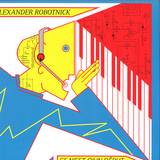
Alexander Robotnick (aka Maurizio Dami) is an Italian electronic musician. He made his debut on the Italian music scene as the founding member of Avida, a dance-cabaret band featuring Daniele Trambusti and Stefano Fuochi.In 1983 he attained international popularity with his track Problemes d'amour, published first by the Italian label Materiali Sonori and then by Sire-Wea. Problemes d'amour went on to become a cult track of the disco scene. It became quite an import hit in America's underground club scene, and sparked the mini-LP Ce N'est Qu'un Debut that same year (originally released on Materiali Sonori in 1984 (Italy). It consists of 6 captivating tracks including the hit Problemes d'amour as well as the track Dance boy dance which has appeared on other cult disco compilations.
Having previously released on RNT as part of duo Balako, Diogo Strausz now makes his solo debut on the label with an absolutely stunning offering of electronic Brazilian jazz. A São Paulista now living in Paris, Strausz made international waves earlier this year with his piece ‘Pausa,’ a grand and sprawling orchestral work written and recorded by musicians around the world in isolation.
The two songs on Strausz’ new Emancipação EP showcase his gift for instrumental composition that feels at once both fresh and timeless, informed heavily by the classic Bossa Nova and Samba repertoires of his native Brazil, yet translated through a modern production lens, and executed with exceptional musicianship. The end result is an undeniably unique sound that will fit equally well in the collections of jazz and MPB aficionados, as in the crates of modern DJs and listeners alike.
Back in 2018, Four Flies Records unearthed the previously unheard 'Africa Oscura', considered by many as the "dark side" of 'Zoo Folle' – Giuliano Sorgini's masterpiece (reissued by Four Flies Records in 2016) – and partly recorded during the same session in 1974.
The original work portrays a fictional and mysterious continent, providing a soundtrack tinged with dark
moods and cosmic shades. 'Africa Oscura' was entirely recorded by the composer, who played all instruments in his studio in Rome. This resulted in a formal spareness, a minimalism that gives it a
modern quality, something which makes it stand the test of time, or at least resonate with contemporary taste.
Since its release, 'Africa Oscura' has become a classic – a pivotal release not only within Sorgini's discography, but also one that made his name more known and accessible to a new generation of music professionals, DJs and fans of electronic music.
Four Flies have thus decided to celebrate its modernity with a double 12" featuring 7 reworks by six of Italy's most visionary DJs/producers: Jolly Mare, L.U.C.A. (aka Francisco), pAd, Painé, and Quiroga & Dario Bass.
The original tracks have been reworked with different approaches, sometimes into full reinterpretations, and with demanding dance floors in mind. The result is a stunning collection of electronic, cosmic, downtempo and Balearic reworks that preserve the spirit of the original versions while projecting them into the future.
- A1: Arrival Of The New Elders
- A2: Rite Of Accession
- A3: Sojourn
- A4: Tales Of Secrets
- A5: Throughout The Worlds
- A6: Chasing The Hidden
- A7: Chemical Boogie
- A8: Solar Song
Ståle Storlokken - Rhodes piano, Hammond organ, grand piano, Eminent 310, Mellotron, Continuum Nikolai Hængsle - Electric bass, electric and acoustic guitars Torstein Lofthus - Drums, percussion. After a solid run of five studio albums and 2019's two double live albums, Psychedelic Backfire I and II, Elephant9 had taken their groovy mix of high energy rock and power jazz as far as they could. In this respect Arrival Of The New Elders comes as a welcome and most timely addition to their recorded output. More varied, mature and reflective, don't let the self-ironic (?) title mislead you, they are as groovy as ever, but more structured and less jam oriented, with the longest track clocking in around the seven minute mark. Rather short, by their standards.Having built a solid live reputation even before their brilliant 2008 debut Dodovoodoo, the trio boasts what is probably the strongest rhythm section in Norway, complemented with keyboard magician extraordinaire, the one and only Ståle Storlokken. And boy, does he excel himself on this album, notably with more focus on the Rhodes than before. That said, this is nothing if not another strong group effort from what has been a very tight unit straight from the outset. Seven brand new compositions from Storlokken and one from Hængsle make way for what we consider to be their finest and most cohesive album to date. Arrival Of The New Elders was recorded by trusted stalwart Christian Engfelt, with early Dungen producer Mattias Glavå handling the mixing duties.Ståle started his musical journey in Veslefrekk with Jarle Vespestad and Arve Henriksen in the 90s, soon morphing into Supersilent with Helge Sten on board. He's also a member of Moster! and Humcrush, and have collaborated with a number of artists, most notably Motorpsycho. Nikolai is also a member of Bigbang, Needlepoint and Band Of Gold and have appeared on a couple of hundred records. The same goes for Torstein, an associate member of numerous bands ranging from pop and soul to free jazz. But Elephant9 has always been their special baby.
In early 2018, Nathan Jenkins returned from the coast of Arrábida to his new home studio in a cottage tucked behind the grand hotel setting of Wim Wenders’ Lisbon Story. Breaking for lunches under a Datura tree in the garden and a far cry from the Finsbury Park basement flat he rented the previous year, a set of recordings followed that galvanised into an EP - ‘We Had A Good Time’. Music informed by out-of-town trips in a 1987 Renault 9 Super, Pitchfork attributed “remarkable healing powers” to lead song ‘Hula’.
After leaving London for a spell in Portugal, Nathan lost his taste for the night life and drew a line under a long-running NTS radio show. Much of the time spent abroad was dedicated to a longstanding collaboration with Westerman, whose album they recorded in a remote part of the Algarve countryside in 2019. Nathan’s own discography opened in 2007 with ‘Pet Sounds: In The Key Of Dee’, before pivoting in a more electronic direction via ‘Get Familiar’ and ‘Young Heartache’. From the sampledelia of 2011’s ‘Too Right’, the new wave and rave of ‘Say Arr Ee’ to the Robert Wyatt-influenced ‘Love Me Oh Please Love Me’, he’s mapped a deliberately peculiar path. 2015’s ‘Rooster’ was Eno & Byrne’s ‘Bush Of Ghosts’ given a shangaan-electro lick and clip. While Nathan’s partnership with fellow out-there pop auteur Jesse Hackett, as Blludd Relations, staggered like a half-cut Prince.
Collaged, rhythmic alternatives. Syncopated avant-garde sambas. Off kilter Sci-Fi jazz. Think Asha Putli in the spot at the Star Wars cantina. Arty, angular. Rich, but uncluttered. Frenetic, electric, blurring the boundaries between what is sampled, what is played. Nathan’s is a wilfully weird Pop, showcased in 2016 on his album ‘Loop The Loop’. Wayward but woven with hooks that come out of nowhere. Lyrical, often beautiful, solos on violin, oboe and desiccated guitars. Songs that demonstrate a nose-thumbing playfulness, a refusal to sit still. Where there’s always the urge to interrupt a carnival beat with a burst of galloping horse hooves. Or juxtapose ambient chords with a kazoo.
A roll call of Nathan’s broader musical adventures encompasses work with Paul Epworth, Sampha, Westerman and Nilüfer Yanya. Commissioned remixes reach from Dita Von Teese to Model 500, Tricky, Todd Terje and Lee “Scratch” Perry. Solo efforts gracing labels Honest Jon’s, R&S, Young Turks, Whities and The Trilogy Tapes. ‘Blue Pedro’, on the latter, making it into Crack Mag’s Top 100 Tracks Of The Decade.
In 2012 Nathan started his own label, DEEK Recordings, assuming the role of inhouse producer to collaborators. The imprint’s tagline and aesthetic - Pop, not slop! - is illustrated by an ongoing playlist of the same name and further explored in a series of compilations where Nathan and friends cover and reinterpret unsung ‘unclassics’ from alt. country to obscure 80s European arthouse scores, bouncing between Captain Beefheart, The Pixies, Sade and Mazzy Starr. DEEK’s roster is equally eccentric, non-linear and pop-literate. Laura Groves and Nautic - the realization and crystallization of a shared love for the Cocteau Twins.
12” pressed on crystal clear vinyl.
Following the release of the single of the same name, Dutch duo Tunnelvisions return to Disco Halal with new EP ‘Gold Teeth’, out on Friday 27th November.
A three-track release, ‘Gold Teeth’ opens with an extended version of the title track, an infectiously feelgood house number, characterised by driving synths, busy percussion and catchy vocals. Next up, ‘Hyperfocus’ is a slow-burning progressive house cut that unfurls steadily across its six minutes. Closing things out, ‘Heat Wave’ harnesses an old school house vibe, characterised by deep bass and fluttering percussive elements.
Speaking about the EP, Tunnelvisions says: “We’re proud to present you our next EP called ‘Gold Teeth’. Three tracks combining our percussional and synthpop influences into something we’re very excited about.”
With an unmistakable ear for imaginative, melodic themes and entrancing rhythms, Tunnelvisions hit the sweet spot by seamlessly fusing worldly influences with analog synthesisers.
A diverse collection of tracks, ‘Gold Teeth’ sees Tunnelvisions skilfully explore various shades and tones on the house music spectrum.
Overcoming all manner of obstacles and finally raising £16,000 via their committed fanbase through Kickstarter, in November 2019 fast rising rockers Mason Hill recorded 11 songs at Riverside Studios in Glasgow, with Scott Taylor later travelling to New York to track his vocals at the legendary Electric Ladyland Studios. Titled in acknowledgement of struggles overcome, the result is Against The Wall, the most hard-hitting and engaging debut album to emerge from the British rock scene in 2020.
From its seductive, inviting opening notes, Against The Wall is an enthralling, spellbinding distillation of everything Mason Hill have learned in their 7 year history. It opens, in dramatic fashion, with the self-explanatory Reborn, climaxing with the lyric, “No more pain, I feel reborn”, a declaration of intent and purpose which sets the tone for what is to follow.
Another lyric encapsulating the defiant resolve of Against The Wall, is the opening line of the stirring, impassioned Hold On. “Wake up, wake up,” Scott Taylor sings. “Did you really think I'd disappear?” That same swagger runs through the album’s gritty title track, an anthemic modern rock masterclass to file alongside the likes of Shinedown and Alter Bridge. Their influence can also be detected in the beautifully bruised climactic epic Where I Belong, where Taylor sings, “I know who I am, and I know where I’ve been” before Bird launches into a stunning solo that recalls Guns N’ Roses legend Slash at his most lyrical.
Overcoming all manner of obstacles and finally raising £16,000 via their committed fanbase through Kickstarter, in November 2019 fast rising rockers Mason Hill recorded 11 songs at Riverside Studios in Glasgow, with Scott Taylor later travelling to New York to track his vocals at the legendary Electric Ladyland Studios. Titled in acknowledgement of struggles overcome, the result is Against The Wall, the most hard-hitting and engaging debut album to emerge from the British rock scene in 2020.
From its seductive, inviting opening notes, Against The Wall is an enthralling, spellbinding distillation of everything Mason Hill have learned in their 7 year history. It opens, in dramatic fashion, with the self-explanatory Reborn, climaxing with the lyric, “No more pain, I feel reborn”, a declaration of intent and purpose which sets the tone for what is to follow.
Another lyric encapsulating the defiant resolve of Against The Wall, is the opening line of the stirring, impassioned Hold On. “Wake up, wake up,” Scott Taylor sings. “Did you really think I'd disappear?” That same swagger runs through the album’s gritty title track, an anthemic modern rock masterclass to file alongside the likes of Shinedown and Alter Bridge. Their influence can also be detected in the beautifully bruised climactic epic Where I Belong, where Taylor sings, “I know who I am, and I know where I’ve been” before Bird launches into a stunning solo that recalls Guns N’ Roses legend Slash at his most lyrical.
Father John Misty is the nom-de-plume of Josh Tillman, who
has been recording and releasing solo albums under his own
name since 2003 and who recently left Seattle’s Fleet Foxes
after playing drums with them from 2008-2011.
When discussing Father John Misty, Tillman paraphrases Philip
Roth: “‘It’s all of me and none of me, if you can’t see that, you
won’t get it.’”
‘Fear Fun’, Father John Misty’s album from 2012 and now
available again through Sub Pop, began gestating during what
Tillman describes as an “immobilizing period of depression” in
his former Seattle home, when he had lost interest in
songwriting and wound up finding his voice by writing a novel.
After breaking from Seattle and settling in a spider-infested
Laurel Canyon treehouse, Tillman spent months demoing
songs, eventually liberating himself from his creative impasse.
With the help of LA producer/songwriter/pal Jonathan Wilson, a
wealth of talented musicians kicking around LA and producer
Phil Ek (who everyone knows has worked with Built to Spill,
Modest Mouse, Band of Horses, Fleet Foxes), ‘Fear Fun’
blossomed into a fully-formed expression of Tillman’s
unrestrained vision.
‘Fear Fun’ consists of such disparate elements as Waylon
Jennings, Harry Nilsson, Arthur Russell, All Things Must Pass
and Physical Graffiti, often within the same song. Tillman’s
voice has never been better and often sounds like Roy Orbison
at his most joyous, while the music maintains a dark,
mysterious yet playful, almost Dionysian quality.
Lyrically, his absurdist fever dreams of pain and pleasure elicit,
in equal measures, the blunt descriptive power of Bukowski or
Brautigan, the hedonist-philosophy of Oscar Wilde and the
dried-out wit of Loudon Wainwright III.
6-panel digipack CD. Gatefold LP.
Father John Misty is the nom-de-plume of Josh Tillman, who
has been recording and releasing solo albums under his own
name since 2003 and who recently left Seattle’s Fleet Foxes
after playing drums with them from 2008-2011.
When discussing Father John Misty, Tillman paraphrases Philip
Roth: “‘It’s all of me and none of me, if you can’t see that, you
won’t get it.’”
‘Fear Fun’, Father John Misty’s album from 2012 and now
available again through Sub Pop, began gestating during what
Tillman describes as an “immobilizing period of depression” in
his former Seattle home, when he had lost interest in
songwriting and wound up finding his voice by writing a novel.
After breaking from Seattle and settling in a spider-infested
Laurel Canyon treehouse, Tillman spent months demoing
songs, eventually liberating himself from his creative impasse.
With the help of LA producer/songwriter/pal Jonathan Wilson, a
wealth of talented musicians kicking around LA and producer
Phil Ek (who everyone knows has worked with Built to Spill,
Modest Mouse, Band of Horses, Fleet Foxes), ‘Fear Fun’
blossomed into a fully-formed expression of Tillman’s
unrestrained vision.
‘Fear Fun’ consists of such disparate elements as Waylon
Jennings, Harry Nilsson, Arthur Russell, All Things Must Pass
and Physical Graffiti, often within the same song. Tillman’s
voice has never been better and often sounds like Roy Orbison
at his most joyous, while the music maintains a dark,
mysterious yet playful, almost Dionysian quality.
Lyrically, his absurdist fever dreams of pain and pleasure elicit,
in equal measures, the blunt descriptive power of Bukowski or
Brautigan, the hedonist-philosophy of Oscar Wilde and the
dried-out wit of Loudon Wainwright III.
6-panel digipack CD. Gatefold LP.
Visionist’s first release for Mute is a hypnotic elegy.
‘A Call To Arms’ is Visionist’s third album release
and where previously the artist used his vocals as
samples, we hear his singing voice in the form of
song and lyric for the first time.
Along with the addition of Visionist’s vocals, the
album is host to a varied list of collaborators
including Haley Fohr (Circuit des Yeux) and Morgan
Simpson (Black Midi).
CD in gatefold card sleeve with 12 page booklet.
LP pressed on white vinyl and housed in a gatefold
sleeve with blind emboss on the front and back
cover and a clear foiling on the inside cover.
Includes high definition audio download code.
Clock, featuring two extraordinary songs written and performed by Arden herself. A vinyl-only edition of 250 copies, with fold-out poster and insert containing sleevenotes by Jack Bond, Sam Dunn, Charlotte Procter and Sebastian Saville. Arden and Bond’s collaborative career gave Britain some of the most extraordinary films it ever produced. Their filmography is woefully short - but it’s full to the brim of incredible, daring ideas and completely unfettered imagination. It’s packed, too, with pain and a disconcerting honesty about the human condition; challenging commonly-held ideas about madness and positing ideas which are far less easy to categorise or control. Anti-Clock, their final work together - Arden took her own life three years after its release - is a complex, contemplative piece, and Arden’s apparently comforting delivery of her self-penned songs and the see-saw flow of Mihai Dragutescu’s delicate instrumentation act only as a means to lure us in; to begin the de-programming. In Arden's book You Don’t Know What You Want, Do You?, the basis for the network of ideas at play in Anti-Clock – the motif of the rat is used as a metaphor for the rational mind. The lyrics to ‘Sleepwalking’ (living in a daze, wandering in a maze) also conjure up images of lab rats, of unthinking beings adhering to rules and systems, never questioning what is beyond what they think they know to be true. At the close of Anti-Clock, the central character, Sapha, simply says, ‘It has been my whole life's will to decode this puzzle, as though inside the answer to this equation was the insurance of that peace of mind that had eluded me. But there is no puzzle. And the mind is never peaceful. And dawn’s already here as the stars appear.’
Main Source’s paean to the simple pleasures of relaxing with friends is built over two tried-and-tested samples. The dreamy, swoony sounds of Vanessa Kendrick’s timeless ‘90% of Me is You’ is ever-present during this stone-cold classic, while Sister Nancy’s unmistakeable ‘Bam Bam’ lends several elements to the mix. Throw in some Skull Snaps and Sweet Charles and you’ve got the perfect soundtrack for a roll call of Large Professor’s nearest and dearest.
There are plenty of reasons why so many regard ‘Breaking Atoms’ as an all-time classic album, and the sheer variety of singles lifted from it is chief among them. Large Professor was happy to roam over varied topics at a time when many rappers had a manic focus on one thing.
And where better to hang out with friends than at a barbecue? ‘Live at the Barbecue’ is rightly regarded as one of the best posse cuts of all time, and famous for showcasing the debut of one Nasty Nas. While he delivers a dope verse full of quotables over drums from Bob James’ oft-plundered ‘Nautilus’, credit is also due to the other guests. Fatal and Akinyele aren’t disgraced in this company, and Large Professor tops it off with a rare verse of pure brag-rap.
An undisputed entry in the pantheon of head-nod hip-hop, this is its first official UK release, and another debut on 7”.
• Samples Sister Nancy’s unmistakeable ‘Bam Bam’
• Taken from the all-time classic album ‘Breaking Atoms’
• Features the debut of Nas
* The Menahan Street Band includes members of The Roots, Budos Band, Lee Fields and The Expressions and The Dap-Kings...an all star Brooklyn line up!
* First album in 9 years.
*LPs are In gatefold sleeve and contain download code.
* MSB tracks have been the foundation for some of modern hip-hop's most successful beats; their music has been sampled by the likes of Eminem, Jay-Z, Kendrick Lamar, Travis Scott, 50 Cent, Curren$y, to name a few.
Menahan Street Band, a veritable supergroup of some of today's most prolific songwriters, arrangers, and producers return with this beat-forward, cinematic masterpiece.
Their unique brand of instrumental soul has not only been the foundation for some of modern hip-hop's most successful beats, it has also become the perennial soundtrack and veritable vibe-generator for countless parties, art shows, and restaurants throughout NYC and abroad.
While this album carries the aesthetic torch that MSB has skillfully woven into the tapestry of their DNA, it also delves deeper into the experimental, exotic sounds that fill many of the coveted Sound Library and Soundtrack LPs of the late sixties and early seventies - an amalgamation of moog synths, electric pianos, drum machines, and a bevy of analog instrumentation, that ebb and flow in lush swells of Morriconian grandeur.
About a hundred kilometers south-west of Bamako, on the left bank of the Niger River, the Malian village of Kela is known to be home to a large community of griot musicians (jeliw) mostly belonging to the Diabaté family. Their art is recognised throughout West Africa and many griots come from all over the world to stay there, sometimes for several years, in the hope of becoming immersed in it. The six pieces for voice accompanied by guitar or traditional koni lutes were recorded in 1978 (tracks 3 to 6) and in 2019 (tracks 1 to 3), in the same traditional dwelling, which still serves as a "studio". The accompanying booklet contains the testimonies of several important musicians who took part in the recording, and evoke key elements of their universe
Points of interests
- For the fans of the traditional repertoires of Mali's famous griot musicians.
- For music lovers who love the voices accompanied by the guitar and the traditional lutes of the griots.
- Recordings made 40 years apart in the same "studio": a dwelling located in the village of Kela (Mali), from where famous lineages of griots originate.
- Original sound archive on magnetic tapes, digitised and restored in 2019.
- Fourteen colour photographs, taken in 1978 and 2019 at the same time as the sound recordings.
- A1: Totalita Violini
- A2: Totalita Viole-Celli
- A3: Totalita Celli-Bassi
- A4: Totalita D'archi
- A5: Vento Musicale
- A6: Riverbero Di Tam Tam
- A7: Situazione Orientale
- A8: Attesa Antica
- A9: Rievocazione Lontana
- B1: Lunare
- B10: Aritmica Di Tremolo
- B2: Pensiero Lontano
- B3: Classicheggiante
- B4: Tragedia Greca
- B5: Angoscia
- B6: Percussione Variata
- B7: Percussione A Strappate
- B8: Percussione Di Bassi
- B9: Percussione Di Timpani
If conceivable, imagine a collaboration between Brian Eno and Aphex Twin, both in their ambient periods, recording stock music for an Italian Library music label. If so, then behold Psycorama!, a collection of experimental music used to soundtrack a series of films and documentaries produced by the Italian filmmaker Roberto Rossellini. Composed by Mario Nascimbene, a name synonymous with the golden age of Italian film music, a composer whose grandiose scores of the 1950s and 60s defined the very essence of Cinecitta. While the widespread influence of these soundtracks is undeniable, it is beyond the commercial domain of the major studios where this compendium takes focus, revealing a deeper, darker and more complex composer. Forged on the 'Mixerama', a unique homemade sampling instrument, Nascimbene employed visionary techniques to deconstruct and render sound, sculpting pre-existing recordings into intense and evocative other-worldly soundscapes (most notably used for the 1971 existential TV drama Socrates and the 1969 Egyptian modernist film Al-Mummia (The Night Of Counting The Years). Previously unpublished except for a lone and mysterious Library music LP, the soundtrack cues are collected here for their first commercial release. Psycorama is a fascinating document of electro-acoustic music comparable to the beautifully dark music of fellow colleague Egisto Macchi. Including liner notes and rare photos.
Reissue of a rare Italian experimental Library LP.
Music used to soundtrack Roberto Rossellini films.
Pioneering sampling techniques and tape manipulation.
Brian Eno's Music For Airports meets Aphex Twin's Ambient Works II!
For a band that resists repeating itself, picking up lessons from a decade prior is the strange route Cloud Nothings took to create their most fully-realized album. Their new record, The Shadow I Remember, marks eleven years of touring, a return to early songwriting practices, and revisiting the studio where they first recorded together.
In a way not previously captured, this album expertly combines the group’s pummeling, aggressive approach with singer-songwriter Dylan Baldi’s extraordinary talent for perfect pop. To document this newly realized maturity, the group returned to producer Steve Albini and his Electrical Audio studios in Chicago, where the band famously destroyed its initial reputation as a bedroom solo project with the release of 2012 album Attack on Memory.
Another throwback was Baldi’s return to constant songwriting à la the early solo days, which led to the nearly 30 demos that became the 11 songs on The Shadow I Remember. Instead of sticking to a tried-but-true formula, his songwriting stretched out while digging deeper into his melodic talents. “I felt like I was locked in a character,” Baldi says of becoming a reliable supplier of heavy, hook-filled rock songs. “I felt like I was playing a role and not myself. I really didn’t like that role.” More frequent writing led to the freedom in form heard on The Shadow I Remember. What he can’t do alone is get loud and play noisily, which is exactly what happened when the entire band— bassist TJ Duke, guitarist Chris Brown, and drummer Jayson Gerycz—convened.
The band had more fun in the studio than they’ve had in years, playing in their signature, pulverizing way, while also trying new things. The absurdly catchy “Nothing Without You” includes a first for the band: Macie Stewart of Ohmme contributes guest vocals. Elsewhere, celebrated electronic composer Brett Naucke adds subtle synthesizer parts.
The songs are kept trim, mostly around the three-minute mark, while being gleefully overstuffed. Almost every musical part turns into at least two parts, with guitar and drums opening up and the bass switching gears. “That’s the goal—I want the three-minute song to be an epic,” Baldi says. “That’s the short version of the long-ass jam.”
Lyrically, Baldi delivers an aching exploration of tortured existence, punishing self-doubt, and the familiar pangs of oppressive mystery. “Am I something?” Baldi screams on the song of the same name. “Does anybody living out there really need me?” It’s a heartbreaking admission of existential confusion, delivered hoarsely, with an instantly relatable melody.
“Is this the end/ of the life I've known?” he asks on lead single and album opener “Oslo.” “Am I older now/ or am I just another age?” Despite the questioning lyrics, the band plays with more assurance and joy than ever before. The Shadow I Remember announces Cloud Nothings’ second decade and it sounds like a new beginning.
For a band that resists repeating itself, picking up lessons from a decade prior is the strange route Cloud Nothings took to create their most fully-realized album. Their new record, The Shadow I Remember, marks eleven years of touring, a return to early songwriting practices, and revisiting the studio where they first recorded together.
In a way not previously captured, this album expertly combines the group’s pummeling, aggressive approach with singer-songwriter Dylan Baldi’s extraordinary talent for perfect pop. To document this newly realized maturity, the group returned to producer Steve Albini and his Electrical Audio studios in Chicago, where the band famously destroyed its initial reputation as a bedroom solo project with the release of 2012 album Attack on Memory.
Another throwback was Baldi’s return to constant songwriting à la the early solo days, which led to the nearly 30 demos that became the 11 songs on The Shadow I Remember. Instead of sticking to a tried-but-true formula, his songwriting stretched out while digging deeper into his melodic talents. “I felt like I was locked in a character,” Baldi says of becoming a reliable supplier of heavy, hook-filled rock songs. “I felt like I was playing a role and not myself. I really didn’t like that role.” More frequent writing led to the freedom in form heard on The Shadow I Remember. What he can’t do alone is get loud and play noisily, which is exactly what happened when the entire band— bassist TJ Duke, guitarist Chris Brown, and drummer Jayson Gerycz—convened.
The band had more fun in the studio than they’ve had in years, playing in their signature, pulverizing way, while also trying new things. The absurdly catchy “Nothing Without You” includes a first for the band: Macie Stewart of Ohmme contributes guest vocals. Elsewhere, celebrated electronic composer Brett Naucke adds subtle synthesizer parts.
The songs are kept trim, mostly around the three-minute mark, while being gleefully overstuffed. Almost every musical part turns into at least two parts, with guitar and drums opening up and the bass switching gears. “That’s the goal—I want the three-minute song to be an epic,” Baldi says. “That’s the short version of the long-ass jam.”
Lyrically, Baldi delivers an aching exploration of tortured existence, punishing self-doubt, and the familiar pangs of oppressive mystery. “Am I something?” Baldi screams on the song of the same name. “Does anybody living out there really need me?” It’s a heartbreaking admission of existential confusion, delivered hoarsely, with an instantly relatable melody.
“Is this the end/ of the life I've known?” he asks on lead single and album opener “Oslo.” “Am I older now/ or am I just another age?” Despite the questioning lyrics, the band plays with more assurance and joy than ever before. The Shadow I Remember announces Cloud Nothings’ second decade and it sounds like a new beginning.
Mats Gustafsson - Flute, baritone sax, live electronics, Johan Berthling - Electric bass, Andreas Werliin - Drums with Goran Kajfes - Quartertone trumpet, Mats Aleklint - Trombone, sousaphone, horn arrangements. Fire! tracking new paths and reaching new levels of excellence, still honoring their 12 year old vow of presenting a fresh approach to improvised music. Their debut album, You Liked Me Five Minutes Ago, was released in 2009 to wide international acclaim. "The basic strategy of pairing the expressive energy of free jazz with a sturdy sense of groove has yielded something potent and self-contained" (New York Times). Between this and Defeat there's been five albums, including collaborations with Jim O'Rourke (Unreleased?, 2011) and Oren Ambarchi (In The Mouth A Hand, 2012). No two Fire! records sound the same, but with Defeat they have taken their biggest leap so far, with Gustafsson giving the flute a prominent place in the sound image, a surprising and most successful move, his both expressive and ornamental approach given ample room to breathe, especially on the two long tracks bookending the album. In places more subdued than on previous efforts, but with the distinctive bass figures and hypnotic mood fully intact. There are some lively stretches with guests Goran Kajfes and Mats Aleklint, bringing to mind their big band offshoot Fire! Orchestra, albeit on a smaller scale. For over 20 years we have made a habit of releasing music that is beyond easy classification, in later years typified by Hedvig Mollestad, Elephant9 and Krokofant, but cemented by Fire! and their exploratory curiosity and deep love of music in general. We, and many others, have tried to compare the trio to other groups, but listening to Defeat we realize how futile this is. Given the above there's no doubt there are many influences at play, but the resulting brew is in a class by itself.
The music of porn movies of the 70s became the fad of diggers and Brigitte Lahaie an absolute icon of these years marked by sexual liberation. In 2020, feminist filmmaker Olympe de G. is embarking on the production of an inclusive and ethical
post-porn feature. Brigitte Lahaie, 64, activist for the right to die with dignity, plays the main role, driven by her deep desire to free the bodies and sexualities of women of her age. This film is certainly one of the most beautiful porn movies of the icon Brigitte Lahaie.
The soundtrack of the film is entrusted to Jb Hanak. A figure in the musical underground, this hyperactive has been multiplying projects for more than 20 years. With the group dDamage he formed with his brother Fred, he explored the frontiers of Hip Hop, IDM and electro. With Cobra, a punk rock group to be taken to the 14th degree, they crossed the lands of the absurd. At the end of 2020, he will release an album with actor Pierre Richard. At the same time, he exhibits his plastic works in art galleries ... hyperactive we have said.
Hailing from Medellin, Colombia, Killabeatmaker is a Global Bass DJ / Producer, audio engineer, singer and songwriter; a multi-faceted artist you'll be hearing a lot about in the near future. Drawing his inspiration from his Afro-Colombian and Indigenous roots, Killabeatmaker efficiently mixes traditional sounds and rhythms with urban beats and raw club music. His EP "Matiela Suto" is an homage to the diversity of Colombia's people and cultures, packed with progressive house buildups, Nigerian club music influences and enchanting female voices.
- A1: Deep Moaning Blues (Feat. Maxayn Lewis)
- A2: El Train
- A3: Lazy Mama
- A4: Chicago Sun
- A5: Those Dogs Of Mine (Feat. Viola Davis)
- A6: Hear Me Talking To You (Instrumental)
- B1: The Story Of Memphis Green
- B2: Jump Song
- B3: Leftovers
- B4: Shoe Shopping
- B5: Deep Henderson
- C1: Reverend Gates
- C2: Ma Rainey’s Black Bottom (Feat. Maxayn Lewis)
- C3: Levee’s Song
- C4: Sweet Lil’ Baby Of Mine (Feat. Clint Johnson)
- C5: In The Shadow Of Joe Oliver
- C6: Hear Me Talking To You (Feat. Maxayn Lewis)
- D1: Levee And Dussie
- D2: Levee Confronts God
- D3: Sandman
- D4: Baby, Let Me Have It All (Feat. Clint Johnson)
- D5: Toledo’s Song
- D6: Chicago At Sunset
- D7: Skip, Skat, Doodle-Do (Feat. Cedric Watson)
Ma Rainey’s Black Bottom is the official soundtrack to the 2020 Netflix original film of the same name about “Mother of the Blues” Ma Rainey. The album features score music by critically-acclaimed saxophonist, instrumentalist, composer, bandleader and educator Branford Marsalis, as well as newly-recorded covers of both popular Ma Rainey tracks and blues and jazz standards from the era. The multi-GRAMMY Award® winner brings over four decades of experience across stylistic boundaries to the project, imbuing the film with an authentic 1920s Chicago soundscape. The film was directed by George C. Wolfe and stars Viola Davis and Chadwick Boseman. It is lauded by critics and moviegoers alike, and it is expected that Ma Rainey’s Black Bottom will be a favorite at many 2021 award ceremonies. Ma Rainey’s Black Bottom is available to watch on Netflix now.
- A1: Rodolfo Y Su Tipica Ra7 - La Colegiala
- A2: Gabriel Romero - La Subienda
- A3: Armando Hernandez Y Su Conjunto - La Zenaida
- A4: Adolfo Echeverria Y Su Conjunto - Amanciendo
- A5: Pedro Laza Y Sus Pelayeros - Navidad Negra
- A6: Conjunto Tipico Vallenato - Cumbia Cienaguera
- B1: Rodolfo Y Su Tipica - Tabaco Y Ron
- B2: Gabriel Romero - La Piragua
- B3: Los Immortales - La Pollera Colora
- B4: La Sonora Dinamita - Se Me Perdio La Cadenita
- B5: Los Warahuaco - El Pescador De Baru
- B6: Conjunto Tipico Vallenato - Cumbia Sampuesana
- C1: Pedro Laza Y Sus Pelayeros - Cumbia Del Monte
- C2: Combo Los Galleros - Soledad
- C3: Los Guacheracos - Baila Rosita
- C4: Los Corraleros De Majagual - Llora Acordeon
- C5: La Sonora Del Caribe - Noche De Estrellas
- C6: Los Cumbiamberos De Pacheco - Santo Domingo
- C7: Sonora Dinamita - Ritmo De Tambo
- C8: Lito Barrientos - Cumbia En Do Menor
- D1: Andres Landero - Cumbia India
- D2: Combo Los Galleros - Tabaco Mascao
- D3: Los Corraleros De Majagual - Cumbia Campesina
- D4: Climaco Sarmiento Y Su Orquesta - Cumbia Sabrosa
- D5: Monteria Swing - La Samaria
- D6: Los Guacharacos - Esperma Y Ron
Cumbia, the music and the dance synonymous with Colombia, has been around almost since the 17th century. Today, it’s a badge of identity for Colombians everywhere, but is now also enjoying a global renaissance; filling dance floors and captivating a new generation of music fans.
Originally released by World Circuit as two separate albums – ‘Cumbia Cumbia’ in 1989 and ‘Cumbia Cumbia 2’ in 1993 - this collection brings together some of the greatest recordings made by Colombia’s legendary record label, Discos Fuentes, between 1954 and 1988.
Discos Fuentes was founded in Cartagena in 1934 by the visionary musician, arranger and producer, Antonio Lopez Fuentes. It was the first important record label in the country and grew into a company of immense significance for Colombian music, responsible for thousands of hits and scores of legendary singers and musicians over six decades. Fuentes hand-picked his musicians and singers then meticulously arranged, produced and recorded their music in-house.
This collection presents thirty of these three-minute-masterpieces, showcasing the gamut of styles that make up the distinctive and irresistible cumbia sound; a sound typified by a loping 2/4 gait and a pulsing rocksteady bassline, overlaid with heavy rural percussion, brass, accordion, clarinet, electric guitar and vocals. Disc 1 features a broad range of cumbia styles with recordings from 1960 through to 1988, whilst disc 2 digs further into the classics of the past focusing almost exclusively on the 1950s and 1960s.
Featuring cumbia’s biggest hits from Rudolfo y su Tipica, Gabriel Romero, Sonoro Dinamita and Armando Hernandez, ‘Cumbia Cumbia 1 & 2’ is a flawless collection from the Golden Age of Cumbia.
It’s hard not to notice such an unforgettable sleeve, and if the music it protects is half as memorable as the artwork, you know you just have to hear it. We don’t think you’ll be disappointed because yes, this is the majestic 1971 album Un Muñeco De Madera, courtesy of the shadowy Sola, and it sounds exactly as you’d want it to. Originally released on RCA in Mexico, it’s kaleidoscopic Acapulcan-funk.
The album’s endless grooves are propelled by softly rocking, quasi-library funk breaks. Vocally, Sola is in step with the 60s French pop-chanteuse style, but of course her lyrics are delivered in sensuous Spanish. Her voice is beautiful. Pillowy soft and tender, it can suddenly explode in mystical anger. These are ten tracks of moody, mysterious vibes that stir the spirit and sooth the soul.
The LP was written, arranged and directed by prolific Spanish composer Manuel Alejandro, the man behind an incredible number of now classic Latin love songs from the 60s, 70s and 80s. As for Sola herself, next to nothing is known about the Mexican singer except the occasional whisper heard in only the darkest corners of the annals of music history. It’s said that upon growing disillusioned with the music industry she ended up in a convent of Carmelite Sisters. Fitting perhaps, given that Un Muñeco De Madera is a spiritual wonder of a record.
Much-loved single and title-track “Un Muñeco De Madera” opens the album. It introduces us to Sola’s sparkling Latin-funk, bursting with swaggering grooves sewn by tight drums, sweeping strings and lush keys. It’s followed by the serene but melancholic bossa groove of “Oye Mamá, Oye Papá” and the strings and guitar of “He Bajado Al Infierno” that hold up vocals reaching for an eternal truth. With full-on soundtracky feels, the rolling keys underpinning the Morricone-esque soundscape of “En Ellos Creo” will give you goosebumps. The gorgeous “Soy Rebelde” (“I’m Rebellious”), sets its gentle, piano-led delivery in delicate contrast to the lyrical sentiment.
Perhaps Sola’s most well-known track, the exotic bossa of “Tabu, Tabu”, is a formidable groove. Elegant bongos, prominent bass, delicate acoustics and a persistent flute blend with Sola’s unique voice; sinuous, sassy and forceful at the same time. The stunning “La Última Palabra”, while not literally the album’s last word, is nevertheless a stirring statement of strutting Latin soul, with more musical ideas packed into this one song than the entirety of most long-players.
If you hadn’t decided already, the final two tracks that are the funk-fuelled “Bada-Bada-Ba” and the horn-heavy percussive masterclass “Únete A Mi” will leave you in no doubt that this is one very special record.
Mastered with great respect by Simon Francis, cut by the master Pete Norman and with that sleeve lovingly restored by the Be With team, this re-issue ensures that Un Muñeco De Madera now sounds, looks and feels as beautiful as it deserves to.
: Un Muñeco De Madera (LP)
Three years in the making only to be held up nearly another whole year due to COVID, this dark brooding monster of an EP by Brussels based Strapontin, aka multi-disciplinary artist Patrick Belmont, is finally seeing the light of day.
Clocking in at over 35-minutes the record is almost album length and spans a multitude of depths and moods with elements of techno, new wave, rock 'n' roll, house and tribal…...all glued together with a sleazy atmosphere reminiscent of the electronic body music pioneered by Strapontin’s Belgian forefathers Front 242 and their German peers DAF.
Add to this a heads-down-no-nonsense darkroom beast of a remix by techno maestro Sascha Funke and the package is complete.
Strapontin provides us with some insight:
“It started with a desire to move away a bit from my 'dancefloor' side and go into more undefined fields, I wanted to work with blurry sensations that I can't understand. I like mixed feelings. Dramatex 300 is made of that ambivalent mood. The voice is saying 'I'm feeling empty' and 'I'm feeling healthy' at the same time. I like that paradox. Eunuque is a song but is also a character I will develop in a short movie (which will act as the 'music video' of the song). The Eunuque is a character full of anger yet he doesn't want to fight nor has he a target to aim at. A restrained aggressivity is boiling inside him/it that has no opportunity to escape from the body and gain release. The song is the fever he feels from these inner battles. I think Le Bain d'Huile and Anti-sceptical have the same slow and angry feeling. I'm proud of these tracks because they are a bit mysterious to me and it feels like they controlled me more than I controlled them.”
Getting plays from Monika Seta & Alexis Le-Tan
In collaboration with Brooklyn-based artist RDO/ATK, Sophia Saze makes her long-awaited return to her Dusk & Haze imprint with four slamming cuts on a release entitled ‘Stalker’.
Born in Tbilisi and now residing in Philadelphia after years living a nomadic lifestyle, Sophia Saze began her creative journey in her formative years with classical music and dance training. With a solid and natural musical foundation, Sophia became engulfed by electronic music leading to the launch of her Dusk & Haze imprint in 2017, before dropping a remix of Heathered Pearls on Ghostly International and the release of her much lauded debut album on Kingdoms. ‘Stalker’ sees her team up with old friend RDO/ATK who has been soaking up the dancefloor since the early 90s. With much of his influence stemming from the early east coast rave and club scene, his sound maintains a homage to the past without getting stuck in it. A sucker for a dirty 303, a breakneck amen, or a crushed 909, RDO/ATK’s style spans across genres from jungle to acid to broken beat and everything in-between.
The EP kicks off with a dynamic, jungle roller entitled ‘Stalker’ featuring old-school, amen breaks, stirring yet intriguing synths and hefty bass shatters balancing styles of glitch and funk together with pure class whilst ‘Fucking Crazy B’ lays focus on cold, syncopated grooves, chopped up shrieks and screams from a video of a traumatic personal incident and shimmering pads moving into ominous territories.
On the flip, ‘Talk To You In Your Brain’ delivers relentless kicks and spiralling acid squelches peppered with chilling vocal samples and frazzled fx that pulsates strikingly throughout until ‘Acid B’ rounds off proceedings with an effervescent, warehouse techno cut as the electrifying modulations bounce gracefully off the menacing percussion and slashing, 303 tones.
“For six years now I’ve been arranging and booking Ella
Fitzgerald’s concert and club dates, and wherever she goes, her
reception bears out an opinion that I have long held: People who
love good popular music are the same all over the world. Take, for
example, this record – “Mack The Knife”. It was recorded during a
concert at the Deutschlandhallen in Berlin which holds almost
12,000 people, and you can hear the same enthusiastic reaction,
the same eager applause, that mark similar recordings Ella has
made before live audiences in America. That concert – and this
album – have come to be regarded as something special because
of Ella’s version of Mack The Knife. It was the first time she’d sung
the song, and not knowing the lyric too well, she substituted her
own – for what may well have been an improvement on the
original.” - Norman Granz
Born in Newtownards, County Down, Northern Ireland, singer/songwriter/guitarist Ricky Warwick was cut from the cloth of a mill workers’ jacket. Raised on a diet of Patsy Cline, Johnny Cash, Thin Lizzy, Stiff Little Fingers, Motown and everything in between. Saving his money from a newspaper round and a little help from his father, Ricky got his first electric guitar at age 13. “That cheap electric guitar changed my life....it saved me, it was more than just notes on a fretboard, it was the deepest breath of life I ever experienced.“ explains Warwick.
At age 14 Ricky and his family relocated to Strathaven, Scotland. It was here that Warwick fully immersed himself in the sonic seas of Rock n Roll. Writing and practicing every free moment he wasn’t working on his father’s farm, Ricky got a call to join acclaimed U.K. Punk/Folk band New Model Army as rhythm guitarist on their 1987 ‘Ghost Of Cain‘ World Tour. Following New Model Army, Ricky went on to form The Almighty in Glasgow who enjoyed ten top forty singles and four top twenty albums in the U.K. during the late 80’s/early 90’s, touring worldwide with such iconic bands as The Ramones, Motorhead, Megadeth and Iron Maiden.
In 2002, after relocating back to Ireland, Ricky recorded his first solo album ‘Tattoos & Alibis‘ in Joe Elliott of Def Leppard’s studio in Dublin with Joe also handling production duties. It marked a shift in direction “I realized that I didn’t need to yell over a wall of sound to make my point...less is more, stripped back instrumentation could achieve the same goal just as effectively. I learned so much making that record, primarily about myself”. Warwick would go on to release two more solo albums between 2002 -2010 and tour globally opening for the likes of Def Leppard, Cheap Trick, Bryan Adams and Lynyrd Skynyrd.
In January 2010 Ricky received a call from his old friend Scott Gorham who was spearheading a reformation of Ireland’s favourite sons Thin Lizzy and wanted Ricky to front the new line up. ”I was shocked, terrified, excited and extremely humbled when I got that call. Phil Lynott was my hero and Thin Lizzy were the soundtrack of my life. I realized that I could never hope or even dare to try and stand in Phil’s shoes. All I could do was try and stand beside them and sing his songs with as much heart, soul and passion possible. In late 2012, with a necessity to write and perform new material, out of respect for the Thin Lizzy name, Black Star Riders were born. Warwick is the frontman and main songwriter for the band and 2013 saw the release of Black Star Riders acclaimed debut album
‘All Hell Breaks Loose‘.
Black Star Riders have now released four critically-acclaimed and commercially successful albums, the most recent being 2019’s ‘Another State Of Grace‘. They have achieved two U.K. top 15 albums and one U.K. top 10 album as well as mainstream radio play which includes claiming two “singles of the week” on BBC Radio 2.
Following 2016’s lauded ‘When Patsy Cline Was Crazy... And Guy Mitchell Sang The Blues’, Warwick is getting ready to unleash his 5th solo album in 2021. Titled ‘When Life Was Hard And Fast‘, it was recorded in Los Angeles and produced by Keith Nelson (ex-Buckcherry), who also co-wrote the majority of the songs on the record with Warwick. “Keith Nelson and I share a passion for good, honest, rock ‘n’ soul. Making the album with Keith who shares a similar outlook and work ethic as myself was a no brainer ....also the fact that he has a killer collection of vintage guitars contributed greatly”
“I wanted to create an album that had the simplistic melodies of Tom Petty and the Heartbreakers charged with the electric hedonistic fury of Johnny Thunders And The Heartbreakers. Recording the album as live as possible with a full band was requisite to achieving the desired effect”. Xavier Muriel (Ex-Buckcherry) on drums and Robert Crane (Black Star Riders) on bass completed the core band and turned in stellar performances, giving the songs a real lease of life.
Also, once again, Warwick tapped some of his closest friends for guest appearances on the record, including Andy Taylor (Duran Duran & Power Station) Luke Morley (Thunder), Joe Elliott (Def Leppard), Dizzy Reed (Guns n Roses). Ricky also duets with his daughter Pepper on the song ‘Time Don’t Seem To Matter‘. “I can’t wait for people to hear this album and to hit the road touring it whether it’s with my band The Fighting Hearts or just myself and my acoustic - it will be amazing. I’m grateful that after 30 years of making records my appetite for writing and playing is the same as it was that day all those years ago when I got my first electric guitar”
For those intrigued by the album cover, it depicts a crash scene from the famous Ards TT Motor Car Race in County Down Northern Ireland. The race ran from 1928 until 1936 was watched by over 250,000 spectators annually. The embankment in the photograph that the spectators are on is actually a field belonging to Ricky’s Great Grandfather’s Farm, which he grew up on for the first fourteen years of his life.
US based label, Lurid welcomes Spanish producer Señora for a stunning new double gatefold album entitled ‘Fósil’ that showcases his unique take on hypnotic rhythm, found sounds and sampling.
Señora became a firm favourite with the likes of Andrew Weatherall (R.I.P.) and Sean Johnston for his rugged grooves and innovative approach to production, melding the sounds of machines, animals, electricity and other weird noises in a flurry of FX and sonic experimentation. He debuted on this label in 2017 and has also landed on Shango Records, Night Noise and LNDKHN since then. Now based in Berlin and a regular at clubs and festivals round Europe he offers up a debut album that features nine stunning pieces that ”aim to reflect on the next evolutionary steps of the human race".
The otherworldly ‘Preludio: Ocaso Hominido’ kicks off with a swampy bass sound overlaid with cosmic details and downtempo drums. It’s a brilliantly mysterious opener than leads on to ‘Antropoceno’, a spacious soundtrack with bubbling synths, undulating drums and plenty of sonic details that paint a picture of a starry night sky up above. The tumbling drums of ‘Segundo Sexo’ sink you into a dubby reverie with bird calls and wordless vocal sounds mixing with percolating percussion.
The excellent ‘El Elefante Que Siempre Andaba Solo’ is a perfectly flabby and chugging dark disco cut with bright chords and scintillating drum work while ‘Código y Marfil’ is a futurist landscape in outer space with modulated synths and deft astral details making it colourful and cinematic. This most escapist of listens then plays out through the supple bass warbles and spacecraft sound effects of the entrancing ‘Papaver Somniferum’ and churning drums and twisted bass funk of the brilliantly slow burning ‘El Último Discurso’ before closing on ‘Fuga: La Gran Desconexión’ a downbeat offering with myriad pads circling the skies above a deeply rooted rhythm.
This is a hugely atmospheric album of perfectly realised inter planetary sounds, the whole thing taking you on a cerebral and evocative journey far away from here.
Supported by: Tim Sweeney (Beats In Space), Dr. Rob (Ban Ban Ton Ton), Balearic Mike, Elena Colombi (NTS), Andrew Wowk (Decoded Magazine), Faze Magazine Germany, DJ Mag Espana, Future Music UK, ClubbingSpain, and others.
Luigi Madonna returns for his first Drumcode EP in five years, teaming up with fellow Neapolitan and label favourite Robert Capuano.
We got our last taste of the creative synergy that marks Luigi Madonna and Robert Capuano’s friendship when the pair dropped ‘Limitless’ in 2017, a brilliant addition to A-Sides Vol.6. Prior to that Luigi hadn’t dropped a cut on DC since 2015’s hook-driven ‘Magic Land’, while Capuano stands as one of the label’s most infallible contributors, last year’s ‘The Walker’ EP was typically impressive.
Crafted between two studios in a pre-COVID-19 world, the three-track conceptual EP opens with ‘Mad World’, as masterfully layered industrial hits and rides depict it’s narrative, while a pulsating melodic lead ensures heavy impact. ‘System Alert’ is inspired by the destructive effects of climate change and the track’s composition mirrors this malaise, as a pitch-bending synth elicits rhythmic chaos alongside Luigi and Robert’s deft drum work. ‘Headquarter’ is steeped in drama and cinematic charm, backed by a distorted vocal sample, stormy oscillating synths and a sharp percussive backdrop.
„Well recommended for the freaks“ the Manchester based independent music specialist Boomkat once finished a review about a release of Düsseldorf based DJ and producer Tolouse Low Trax aka Detlef Weinrich (also known as one fourth of the German avant-band Kreidler). What a freak distinguished we do not really know - we just assume he walks this world on a different path. Tolouse Low Trax surely does!
The latest evidence of this fact are four tracks of whom two are remixes by befriended artists, and two are coming right out of the middle of Tolouse Low Trax’s very own sense for odd and catchy grooves. His friend Miles, also known as one-half of the experimental industrial techno and dark ambient duo Demdike Stare, puts hand on the track “Sussing”, originally released on Tolouse Low Trax’s latest album “Jeidem Fall” in 2012. He covers it with an enigmatic, shadowy veil in terms of sounds, space, and obscure driving arpeggios in order to give the track a “brighter haze” feeling. A subliminal hypnotic transformation that swings with a unique dark and demanding drive. The second remix was done by Wolf Müller, a Düsseldorf based musician that released two highly acclaimed EPs on the German DIY label Themes for Great Cities. His profession as a percussionist calls the tune as he mutates the original track “Jeidem Fall” into a tribal celestial dance tune that jacks with an Afro-Baroque elegance.
Also the two EP contributions of Tolouse Low Trax himself move on very different terrains but seem to come out of the same experimental laboratory. With “Vindeland” he delivers a track full of dark synthlines and drunken shuffled patterns that morphs into a nervous soigné sensation. In contrast his arrangement “Eisenbahnzunge” starts with a celestial arpeggio until a strange alienated voice appears and everything melts layer by layer into an elliptical ambient experiment beyond the usual definition. Both tracks are deeply rooted in Tolouse Low Trax’s very own spontaneous minimal hardware approach of producing bold, hypnotic dance-not-dance music that shall not only illuminate the so called freaks!
Children Of Tomorrow will celebrate soon its 10 years anniversary. The label was created by Emmanuel Ternois back in the day and being joined by Arnaud Le Texier in 2011. Since then they focused on Techno producing amazing artists, to name few: Terrence Dixon, Zadig, Tensal, Antigone, Oscar Mulero, Jonas Kopp, Samuli Kemppi etc... Children Of Tomorrow is now presenting the first album from Arnaud Le Texier. After almost 30 years Dj-ing around the world and almost 20 years producing. Signing many releases over the years and always busy delivering dance floor releases, it's been a long wait to finally get an album from ArnaudOn his first album we can feel that he wanted to tell a story and to express something deeper with his production experience. There is a different variety of Techno that stretches from ambient / broken beat / hypnotic / raw Techno along with subtles grooves, wondrous atmospheres & sonic textures. On A side the album opens with Dusk, an ambient atmospheric mid-tempo track with sonic sounds that is a perfect intro.Pattern 2 starts with drones and blip sounds and a broken beat groove follows with a pad that sounds like a voice coming from the space. The track ends with some modular click sounds that make the whole track clever. Followed by the album title Granular Therapy, a deep techno track with modular bass line and melancholic pad. A perfect track to play in after or to warm up a party.The B Side is more dedicated to the dance floor with Black Nympheas that is a proper dark modern techno with a grinding bass line and magic drones. A simple beat makes the track evolve in a nice way. Blade Pass frequency is 4/4 effective Techno with a 909 kick, a syncope acid bass line and a pad that sends you to another dimension. It is a powerful track but with a sense of deepness and sensibility that Arnaud can achieve sometimes. This side closes with Binary Sun Dawn which is an ambient track with melody that has a jazz feeling mixed with dark atmospheres, sonic drones and water drops. The C side opens with Mono Driver, a minimal track with a little synth that stays until the end repetitively until it makes you travel and lose your mind. Deep and dance floor at the same time.
Then Snapper is a more percussive track with some shinning bells and a grinding modular bass line.
The last track Virgo Consortium is a cosmic broken beat with dark atmospheric drone, simple bass and phasing efx. The D Side starts with Midi overdub which is a beauty. A mix between ambient and broken beat. The pad has the deepness that transports you somewhere else with an angel choir on top. The beat is spacial and groovy at the same time with smart high hats. This reminds Arnaud's past ambient production but with a modern approach. Surely a special track of the album.
Hideous Engine is more dance floor with metallic bass line and 4'4 beat going towards a sonic pad that closes the track.The last track Dawn is ambient with drones and blip sounds and an acid bass line modulate. A perfect end of the album.This album is an accomplished journey that makes you dance and travel from dusk till dawn. Arnaud Le Texier shows a coherent vision and illustrates his vast diversity in the techno world. Hopefully we won't have to wait 20 years to get another one.
Sons of Traders 002 is a Compilation 8 Tracks Ep of loosely knit artists that surround the duo Sons of Traders (Mike Tansella Jr. and TANS). Leading the EP, the title track “Rotten to the Core” is a slow stomper with a forceful vocal sample and some various squelches. LA’s Kosmik picks up the tempo with “Murmurs” which features a hypnotic synth loop over a 4/4 beat. On “Chomping at the Bit” C.L.A.W.S. and Tyrell trade off between claps, hi hats and short delays underneath a sinister synth tone. To close the A side of the record is Future Blondes out of Texas with “2020 ultra visions”, a cut that can only be described as a sinister barrage of slamming drums and tones. The B side launches with “The Other Side of Town” by The White Lines, a dark electro workout with vocal samples, dark synths and growling bassline. Frigio label boss Juan Pablo brings us an intricate drum pattern with layers of synths on “Night Drive in Beijing”. “Self Feral” by Chris Mitchell is something with a hip hop swing, heavy drums, various feedback and vocals. Closing the EP is Dragee, a new artist from Tel Aviv. “Them” features a hard snare that holds together the demented vocals, claps and bassline that develop throughout the track.
Repress in Pink Marbled Vinyl
'Fleischberg' is the 2nd vinyl iteration of Berlin's body focused Fleisch collective, following hot on the heels of last year's highly acclaimed release by Schwefelgelb. This 12' starts with a relentless six and a half minute assault by Australian native and Berlin based Halv Drøm, a fitting vinyl debut for the talented producer. DSX follows up with a finely tuned EBM track tactfully layered with obscure vocal samples and paired with piercing, frenetic drum programming.
The B side starts with a slightly different approach, recalling a more classic techno and electro tone without losing sight of the release's progressive focus; Privacy's catchy 'Work' recalls late 80s Chicago masterpieces without becoming overly nostalgic. Sekunde rounds out the compilation fully with a plodding and minimal piece that would be best appreciated while being blasted driving 300 km/h down a moonlit back road somewhere in the Black Forest.
Angel Tears in Sunlight is Pauline Anna Strom's first album in over thirty years; an assemblage of music that refracts the expansiveness, and minutiae, of imagined realms while embracing the kaleidoscopic echoes of our distant epochs. The capacity to collapse time might elucidate the enigma of Pauline Anna Strom. A mystic force in music, emerging during the dawn of new age as the Trans-Millenia Consort, the pioneering synthesist channelled primordial energies into future-facing sound through a series of full-length releases between 1982 and 1988. Little was known about her, except by a constellation of devoted followers who saw a unique legacy forming amidst the (mostly male) synthesist canon of the time. Following the 2017 release of Trans-Millenia Music, an anthology revitalizing the most evocative parts of Strom's catalog, the Bay Area visionary sensed the universe telling her to return to music. As with her work in the 80s, Angel Tears in Sunlight was composed and recorded in the same San Francisco apartment where Strom has lived for almost four decades in synthesis with her machines and "dinosaurs." Populated by a compact array of modern instruments that streamline the sound of her analog past and her beloved iguanas, Little Soulstice and Ms Huff, the terrarium of her home forms an intimate yet limitless ecosystem that defies the constraints of the outside world. Within this sanctuary, Strom becomes lost in time, drawing on the ancient energies of her inner visions. Her hardware forms the crux of translating these ideas into sound. "It's the only way this stuff can be pulled out of myself, the universe, Little Soulstice, an ammonite_," Strom notes. "It couldn't be done without this machinery, because there's no other way to draw and capture these frequencies into sonic interpretation." Strom's process of recording transient live-takes enriches the mystery of her work. She renders the machinery a composer itself, a cohabitation with a living other. "Many musicians wouldn't go that far because of ego," Strom muses. "The equipment has to become part of you and your creativity. That's how I think it all comes together." Music-making becomes a harmonic language of intuition with an instrument, where Strom cultivates sound for a harvest that defies season. Shaped by circadian contours, Angel Tears in Sunlight is a celestial observatory of earthborn phonic mosaics. Strom uncovers a symbiosis between hardware frequencies and apparitions of nature in the record's arena of organic tones, emulating the melodic pulses of primeval terrain. The album transcends both shadow and light, falling to hushed stretches of sound as if not to awaken antediluvian animals, before soaring through the treetops where ancient skies peer over reptilian traffic and unsparing rains.
Hunt & Gather’s debut vinyl release comes by way of Pezzner’s cryptic moniker “The Native Language”. Written as a quasi-homeless man living off the rich in the San Juan Islands who writes music once per year to suffice his own delusions.
Walking the streets in these damp, anxious days that all run together lately, I was approached by a man who would blend right into the neighborhood, layered in flannel and sweatshirts for sleeping.
Rough, but for his shoes. (Never cheap out on anything that separates you from the ground.) “Pezzner,” he called out, from a safe distance. “What did the mangrove say to the marauding hordes.” My soul left my body for a moment and my voice responded on its own. “Petrichor.”
He caught my eye, nodded, left a padded envelope on the ground and vanished. The envelope had passed through many hands, slipped into the bed of a ferry-bound truck, passed from one fellow traveler to another, stashed under the counters of anarchist bookstores, left tucked between books at Little Free Libraries. The greenish stains suggested that at one point it had been swum across a lake. Another DAT, contents encoded here unabridged, and a letter from someone who called himself The Sentinel.
The Vessel lived out his days on Shaw Island, under a canopy of trees that gets smaller and smaller every season. His condition the same, any electricity lit his brain on fire, could only bring himself to compose one day a year, only at night, out of sight. Until he met The Angel, an eccentric with means, who built for him a device.
A Faraday Cage to block all electromagnetic emissions. Burlap walls, for atmosphere. A system of pulleys and levers, wood and rope, all running into a box that sat outside. An entirely mechanical control surface. No electrons in here. The Vessel lit fires, watched the shadows dance, closed his eyes and disappeared into the motion for hours at a time. The Sentinel came every morning to change the tapes. The Angel watched and pondered, his plans unknown.
The box sat sealed, bare except for another set of ideograms, scratched in day by day over time. Inside, the usual bedroom-producer shit. Outside, the ideograms told a story, passed from the Vessel to the Sentinel and drawn by the Angel, of a man who became another creature. Alert to the lowest frequencies, feeling music deep in the soil below their feet. Music that brings messages, from distant friends, warning of new creatures and the danger they brought. Skin alive to the world, so sensitive it can detect the landing of a single fly. A mind capable of keeping a map of the world inside. A mind that can look in a mirror and see a soul it knows well. A mind that can grieve.
After processing its contents, I filled the envelope with granola bars and walked it down to the market. The clerk gave me a knowing look as I placed it on the counter behind a stack of pork rinds from the previous century. As I walked out, a young man carrying a plastic bag and wearing impeccable shoes walked in.
Freestyle Records are proud to present the first ever reissue of this rare Black Ark-era Lee "Scratch" Perry production on LP & CD w/ bonus tracks. Both formats feature liner notes from author of the acclaimed People Funny Boy: The Genius of Lee 'Scratch' Perry and Solid Foundation: An Oral History of Reggae, David Katz.
The late Bunny Rugs was best known as the frontman for legendary reggae band Third World, but prior to that he completed an apprenticeship at Lee Perry's Black Ark resulting in this solo LP, originally released in 1975 and credited to Bunny Scott.
The album captures the laid-back sessions of the early Black Ark, with a few surprising innovations lurking amongst the soul covers and love ballads. Highlights include the sought after Blaxploitation-influenced funk track 'Kinky Fly' featuring members of The Chi-Lites' backing band, passing through Perry's infamous studio whilst in Jamaica for a series of shows - their horn section and Chinna Smith's wah-wah guitar give the track its outstanding difference as synth overdubs add to the moody feeling, underpinned by the ghostly click tracks of the Conn Rhythm Unit (constituting one of Perry's earliest experiments with drum machines).
Breakup track 'Second Avenue' shows how suited Rugs' powerful, deep tenor was suited to a soul framework, the Chi-Lites' horns again making a striking difference. The Bee Gees' evergreen 'To Love Somebody' takes James Carr's soulful rendition as its reference and 'Big May' re-works the 'Return Of Django'/'Sick And Tired' rhythm, with a new drum part. while the broken-hearted 'What's The Use' was cut at the request of Sonia Pottinger, who ultimately failed to release it.
Somehow the sublime rendition of William DeVaughans' 'Be Thankful', recorded during the same session, was left off the LP - but appears here as a bonus track on the CD along with I Never Had It So Good & Hip Harry + it's version track.
Looking back on the sessions documented on this LP, Rugs said that Perry's creativity taught him that music could be limitless. As he explained, 'It was so simple that it became complex. The approach he has to music and to recording, I think the music nowadays lack that kind of intuition. He's somebody that would use pliers and a screwdriver to create percussion; he wouldn't hesitate to experiment. He was a little...not crazy, but somebody with that kind of thinking must be somewhere else, in another zone sometimes.'
Laurel Halo, Donato Dozzy and Teheran sound artist Tegh give us their "Glassforms Versions"alongside a new edit by Max Cooper. The works of Philip Glass are reflected and refracted in a myriad of ways by some of the most renowned electronic artists alive, making for a blissful, multi-dimensional listening experience.
Textextext - (add your write up)
With "Glassforms", Max Cooper and Bruce Brubaker set out on an intimate, nuanced exploration of the works of Philip Glass. The resulting recordings, developed in a fluctuating exchange between the American pianist and the Irish scientist-artist, are an astounding testament to the innovation that artistic collaboration can achieve and what depths are yet to discover in Philip Glass' compositions. The two artists did not just rework, but fundamentally rewired the original songs using algorithmic software to process and augment the musical data it received from Brubaker's piano live on stage.
When approaching his remix, Donato Dozzy also tapped into that inspiration to create something new rather than just reworking it, which is one of the core motives that emanates from "Glassforms". The Italian producer and label owner is known for his drive to explore: he develops installations for public spaces and museums, uses obscure musical instruments and collaborates with classical singers or visual artists. "I chose "Two Pages" for it's hypnotic feel in the notes repetition", he says, "but I did not want to merely sample the piano, but instead ask someone I trust and admire to carve it from scratch and even go further." So he followed the lead of Brubaker and Cooper and teamed up with the renowned Italian percussionist and jazz musician Daniele Di Gregorio to completely rewire "Two Pages" into a gorgeous piece of endlessly modulating ambient electronica.
Laurel Halo, the second remixer on "Glassforms Versions", does not need a long introduction either: the American musician is at the forefront of electronic music in 2020, a bright star today after releasing her debut "Quarantine" on Hyperdub in 2012. Her remix of "Opening" brings to mind the string section of an orchestra tuning their violins before the performance - forever. They glide in and out of tune, sometimes individually, then together, then are accompanied by keys that are most likely a ghostly representation of Brubaker's piano, sampled and pitched down, but sound almost jazzy in the context of Halo's remix. It's a blissful listening experience, calling to mind her recent collaboration with cellist Oliver Coates on "Raw Silk Uncut Wood" and showing a deep understanding of Philip Glass' work.
Sound artist Tegh is the third on the remix bill - the electronic musician from Teheran delivers his take on "ƒTwo Pages", once again showcasing how versatile, how inherently complex the works of Philip Glass are. They can be interpreted in a myriad of ways - Tegh's version is a bounding, brooding piece filled with raw energy that feels like it is performed live, just for you, every single time you listen. His version is, at first, much more focused on the underlying moods, electronic undercurrents of the original than Dozzy's version, and yet, when the piano finally does break through, it becomes clear that we are listening to Philip Glass, reflected manifold: through the piano of Bruce Brubaker, the synths of Max Cooper, and then again through the mind of the artist Tegh.
Concluding the new "Glassforms Versions" is a previously unheard edit of "Two Pages". It's difficult to edit a piece of minimalistic beauty without losing it's essence, but Max Cooper - after many efforts and close conversations with Bruce Brubaker - managed to bring these shorter edit into a satisfying, conclusive form.
Steven Rutter aka B12 is one of techno’s most influential artists, famed for many releases on the iconic Warp Records including "Electro-Soma" that defined what is now the deep techno genre.
B12 was originally a duo before Steven Rutter took over the alias as a solo artist, but after a string of new releases on labels like Soma and Delsin, he decided to start producing under his own name.
Deciding it was time to look to the future with a new lease on life, Steven Rutter kept his sound the same, but shed the skin of B12 to mark a new point in his musical career.
Battling with personal demons, the B12 sound had become dark and introverted, and the Steven Rutter style keeps that same moody atmosphere, while adding upbeat rhythms and more jovial chord progressions without losing focus of the core sound that’s made his music so influential.
In addition to a numerous EP, “Riddle Me Sane” is the third album Steven Rutter has done under his own name, and it's in the timeless B12 style that's adored by his fans in all four corners of the world.
Cosmic melodies and sci-fi influenced textures with dystopian sound design, the thought provoking album paints pictures of alien landscapes, while its down tempo grooves also have the key elements needed for the dance floor.
Comfortingly familiar for those who love the classic B12 style, it also marks a distinct turning point in the sound that Steven Rutter has been looking to focus on.
Tracks like “Techno Prisoner” perfectly embody the style this release is aimed to purvey, but this masterpiece has been expertly programmed to play as a continuous piece of music rather than a selection of solo cuts.
- A1: Phantoms Of Dreamland (Lh Mix)
- A2: Men In Green (Neue Grafik Rework)
- A3: End Of An Era (Felicia Atkinson Fennel And Moon Mix)
- B1: Our Man In (D.k. Remix)
- B2: Rainwater Fjit (Jimmy Edgar Remix)
- B3: Phil 5 (Lucrecia Dalt Remix)
- B4: Ball Of Fire (Object Blue Version)
- C1: Maid Of The Mist (Nick Höppner Remix)
- C2: Spookie Boogie (Luca Durán Remix)
- D1: El Teb (Mehmet Aslan Remix)
- D2: Are You Psychic (Parco Palaz Remix Pt I)
- D3: Are You Psychic (Parco Palaz Remix Pt Ii)
- D4: Maid Of The Mist (Oso Leone Rework)
Born in Croydon, UK in 1960 and working in Switzerland for decades, Michal Turtle has led a storied career as a composer, arranger, technician and producer, consistently aligned with some
of the most exciting bands and projects within the realms of pop and experimental music. A figure as masterful in the realm of expansive ambient recordings as advertising jingles, it’s only in recent
years that Michal’s solo productions have gained acclaim and a cult following that continues to grow ever wider.
Turtle made a long-awaited return earlier in 2020 with the extended ‘On a Canvas Lived a Baby’, a one-sided twelve of new material released on Planisphere Editorial. Now, the Basel based label
invites a diverse and international cross-section of electronic musicians to reinterpret the artist’s back-catalogue, each delivering a thoughtful remix driven by the same sense of curiosity,
exploration and genre-blurring that Turtle himself helped pioneer. Each track on the remixes collection was originally recorded between 1980 and 1985, in between Turtle’s regular tours with established bands. Opening the collection, Laurel Halo adopts her LH alias for a textural and tripping revisit to ‘Phantoms of Dreamland’, transporting the haunting original to a hyper-detailed alternate dimension. Zoning back in, Neue Grafik finds typically eclectic form with ‘Men in Green’, turning the dials and blending ideas as if tuning between the emerging musical scenes that defined Turtle’s early-eighties life in Camden, London. In stark contrast, avant-garde polymath Felicia
Atkinson designs a ‘Fennel and Moon’ version, weaving between earthy field recordings and an aching piano line, conjuring an almost ritualistic atmosphere, far from the city. Radical musical turns continue to define the collection as son of Detroit, Jimmy Edgar takes
‘Rainwater Fijit’ down a dark, damp tunnel, expanding on the pitter patter of Turtle’s more outlandish studio experiments, blending vocal experiments with fresh funk. Colombian experimentalist Lucrecia Dalt pulls further bizarre shapes from a patchwork of samples, a heaving,
gasping industrial shuffle, before French producer D.K. returns a stronger rhythm, both building on Turtle’s lovingly naive tributes to the legacy of sample culture and his trusty ARP2600.
Ostgut Ton mainstay and Panorama Bar resident Nick Höppner proceeds to sensitively rewire ‘Maid Of The Mist’ into a blossoming, introspective celebration of melody and ambience, an
almost weightless experience that lends itself well as a breather before Luca Duran’s analogue, acid-tinged take on Spookie Boogie takes Turtle’s esoteric touches back into the direction of the
funk and italo records at the heart of his initial inspiration.
The Remixes final chapter continues to expand in distinct and wide-reaching sonic directions. London’s Object Blue seems to slow time itself across her sublime interpretation of ‘Ball Of Fire’.
Initially Turtle’s tribute to Howard Hawks 1941 film classic and the legacy of old Hollywood, worlds further collide into rolling, weightless bliss.
Fellow Swiss citizen Mehmet Aslan stirs an enchanting, percussive mystery that unfolds with great
pleasure on El Teb, while Parco Palaz conjures not one but two radically different remixes of ‘Are
You Psychic?’, demonstrating both their imaginative nous, as well as the depth of Turtle’s legacy.
Finally, an irresistible vocal contribution from Oso Leone adds even further colour and joy to ‘Maid
of The Mist’, sending off this ambitious collection on a transformative, dream-pop high.
With further details set to be revealed, there is an ongoing development focused around the
accompanying art and visuals. The Peruvian born and now Amsterdam based graphic designer
Jonathan Castro leads the art direction, along with visual artist Chris Harnan. Both artists look to
explore the intersection between sound, imagery and its reorientation, exhibited through the
musical contributors and visual translation.
“I am happy and honoured to have been the spark for this remarkable compilation.
The magnificent work done by this collection of very special people speaks for itself, so listen and
be transported. It has been half a lifetime since my original tracks were written, and I am gratified
to know that they are somehow still relevant enough to be reworked and reinvented.”
‘Push’ is Maral’s debut full-length album due on Leaving Records. The album’s sonic palette includes a collage of Iranian classical and folk
samples and explores the genres of experimental electronic production, touching upon noise, punk / post-punk and dub.
Maral is an active and acclaimed musician in the electronic underground. Her debut mixtape was widely praised and she has contributed to several compilations and Richard Russell’s Crass remix project.
‘Push’ features dub legend Lee “Scratch” Perry and Penny Rimbaud of Crass.
‘Push’ is a confident step forward from Maral’s club and mixtape work into a powerful collection of original songs. The album bursts with an urgent psychedelic energy but its songs also grapple with a sombre undercurrent.
Maral says her album is intended to reflect tense US-Iranian relations: “The history of Iranian music has a lot of melancholy in it. So much of Iranian history is sad. Since ancient times, Iranians were always fighting off invasions.”
- 1: Tenha Pena De Mim
- 2: Boato
- 4: Fala Baixinho
- 5: Marambaia
- 6: O Samba Está Com Tudo
- 7: Cadeira Vazia
- 8: Perdão
- 9: Beija-Me
- 10: O Bilhete
- 11: O Samba Brasiliero
- 12: As Polegadas Da Mulata
- 13: Eu Quero É Sorongar
One of the most shocking but ultimately uplifting stories of Brazilian music: Soares grew up in extreme poverty in a favela, at 13 was forced to marry a man who raped her, gave birth to three stillborn children - but still fought her way to the top of the industry, married Garrincha, lost him to booze & loose women, in addition to their son and her mother in car accidents. And is still going strong! This is probably her best album and indeed is absolutely lovely, grooves like nothing else. She sings with passion & fire in her lungs like the fabulously versatile singing magician she is. Her husky voice became her trademark. After finishing A Bossa Negra - her second album - Elza went to Chile to represent Brazil in the 1962 Football World Cup, where she met with Louis Armstrong personally.
Ethno-alternative lo-fi absurdism from the mind of London based multi-instrumentalist & Primordial Soup member, Samuel Huxley. Expect everything from Hindu ceremonial music to dark lounge, post-punk & avant-garde, to Kabuki theatre score & world electronica, any number of which can be found within a single track.
The Romance of Baba Loco is the union of wisdom & madness, eastern mysticism & western folly, absurdism to catch you with yer pantaloons down… Bang bang smash to perennial illumination. Cling clang for funk monkeys. The bejewelled vistas beyond, nihilism be gone… The donkey was not ill-tempered after many blows, on the ass, from the stick. He smiled like a gentleman, and kept on clip cloppin’ towards the promised land…
The Romance of Baba Loco is the latest iteration of a recording project by Samuel Huxley that originally made ambient soundscapes for psychotropics (Paradise Dose). In 2017 Samuel was curating infamous venue and scene of a multitude of glories & horrors, The Five Bells in New Cross, SE London. One of his first acts to play was Primordial Soup, at that time a 3 piece absurdist art rock band. They quickly became friends & began performing semi-improv shows as a 5 piece, and later went on to form Primordial Soup Collective who’s main focus was esoteric experimental theatre & film, and rare multidisciplinary exhibitions.
This changing focus of Soup away from sound provoked Samuel to channel his musical compulsions in to his solo project which had by then ventured far away from ambient soundscapes to shrieking Indian and Moroccan oboes over African & Indian tribal rhythms, with the desire to create the raw lo-fi atmospheres of street music. Gradually guitar styles of South East Asia & Latin America were introduced, leading to backing track solo performances & outrageous live improv freakouts with Craig Deporto (ex-Flamingods) & Luke Bell (Ex-Wild Birds of Britain).
Finally two days before the glorious pandemic lock down, Samuel signed to Faith & Industry, which birthed new moniker “The Romance of Baba Loco” and 3 months worth of ceaseless creation. From the Hindu Ceremonial music of the Shehnai & Nadaswaram to post-punk, absurdism & experimental art, The Romance of Baba Loco finally united two seemingly dissonant sides of his personality in a manner he had not previously achieved. The old material was cast off, and these peculiar fruits of imprisonment, can be found on his first release, “Cling Clang For Funk Monkeys”.
Vangarde's 11 songs represent the culmination of not only what this year has wrought, but also the talents of Lif and Bangas, an emcee-producer duo built for this. And you can hear that for yourself as soon as the second track, "Shelter in Place," blasts its way into your speakers. From the driving production to Lif and Blacastan's bars, the single embodies the raw, visceral feel of the entire LP. It carries through to the previously leaked "Basquiat," the stirring and gripping posse cut "8 Minutes 46 Seconds," and the highly personal "Now is Only Now," in which Lif explains how he wrote most of his lyrics secluded from his wife and young son due to the pandemic.
What makes Vangarde so impactful, however, is that it doesn't beat you over the head with the same sound or approach. Lif and his guests may tackle subjects related to oppression and corruption throughout the record, but it's done through nuance. The same goes for Bangas' stellar production, which maintains the momentum of his vocal counterparts. It's no surprise then that the two speak so highly of each other, with Bangas referring to Lif as a "storyteller and a reporter," and Lif noting that he was saving the name "Vangarde" for a project with an "elite producer."
- A1: Muddy Water Blues (Acoustic Version) (Feat. Buddy Guy)
- A2: Louisiana Blues (Feat. Trevor Rabin)
- A3: I Can’t Be Satisfied (Feat. Brian Setzer)
- A4: Rollin’ Stone (Feat. Jeff Beck)
- B1: Good Morning Little School Girl - Part I (Feat. Jeff Beck)
- B2: I’m Your Hoochie Coochie Man (Feat. Steve Miller)
- B3: She’s Alright (Feat. Trevor Rabin)
- C1: Standing Around Crying (Feat. David Gilmour)
- C2: The Hunter (Feat. Slash)
- C3: She Moves Me (Feat. Gary Moore)
- C4: I’m Ready (Feat. Brian May)
- D1: I Just Want To Make Love To You (Feat. Jeff Beck)
- D2: Born Under A Bad Sign (Feat. Neal Schon)
- D3: Good Morning Little School Girl - Part Ii (Feat. Richie Sambora)
- D4: Muddy Water Blues (Electric Version) (Feat. Neal Schon)
Muddy Water Blues: A Tribute to Muddy Waters is the second solo album by Paul Rodgers, best known as the vocalist of Free and Bad Company. This album features collaborations with many artists, including Brian May, Buddy Guy, David Gilmour, Jeff Beck, Gary Moore, Richie Sambora, Slash, and Steve Miller. He took these classic blues tunes and arranged them a little more towards rock. The album was recorded at various studios due to the many guests on the album, but producer Billy Sherwood managed to keep the sound pretty similar throughout. Muddy Water Blues was nominated for a Grammy Award.
Now available as a limited edition of 2000 individually numbered copies on translucent yellow coloured vinyl.
Presenting the long sought after, groundbreaking and classic 1990 UK long-player finally remastered and reissued for 2018. London's Warriors Dance label was a unique operation and a pioneering London label during the late 80's acid house phenomena. Home to an assortment of DJs, MCs and soundmen, they went on to make their own original and indelible mark on the rave scene from the infamous 'Addis Ababa' studio on Harrow Road on the North-West side of the city.
A former reggae and soul studio that was instrumental to the output of influential artists like Soul II Soul and more, a steady diet of reggae, bass, hip-hop, house and techno kept their edgy, and die hard UK sound and style right at the cutting edge of the dance music underground across the globe with the top DJs and producers of the day celebrating the label.
The studio, helmed by label owner Tony 'Addis', acted as an incubator for artists whose names would go down in the history books - No Smoke, Bang The Party, The Addis Posse, Melancholy Man, Hollywood Beyond, The Housemaids and more all featured heavily on the label and contributed to its legendary output. The attitude and approach to the music was utterly and unapologetically a London thing, with heavy African and Caribbean influences also drawing on the sounds emanating from Chicago, Detroit and further afield.
Years later, and with the advent of the internet, Discogs, Youtube and any other digital platform you'd care to mention, Warriors Dance continues to be discovered and rediscovered again by curious diggers and music heads with a thirst for heavyweight tracks to play in their DJ sets. This saw the WD mythology rise again, making their records much sought after by fans from all over the world.
When 'International Smoke Signal' landed in 1990 there was nothing else quite like it in the musical landscape, the perfect sonic example of the Warriors Dance ethos and style incorporating all of the influences and grooves that made the label's output so unique, a sound heavily inspired by the preceding period in London and the UK where hip-hop, soul, reggae, rare groove and acid house were played side by side in the warehouses and empty spaces of former industrial areas. Throughout the late 1980's these often drab and dangerous places were transformed by local DJ crews like Soul II Soul and Shake 'N' Fingerpop with more to offer those looking for an open-minded party scene new places to explore, in turn switching people on to broader styles of music.
It's all in here, the heavy breakbeat driven B-boy house flavour of the album version of the classic 'Koro Koro', the Manu Dibango featuring tribal acid groove of 'International Smoke Signal' to the percussive and ultra-deep stylings of 'Oh Yes (Freedom)' the LP encapsulate a time and place yet continue to capture the imagination today.
Timeless music. There's no doubt the No Smoke project is a direct influence on the deeper, tribal house sounds around today and pioneered the afro house sound alongside 'Yeke Yeke', 'Motherland' etc as the acid house phenomenon swept the world. 'Koro Koro' is the omnipresent anthem which was broken at London clubs like Confusion by Bang The Party's Kid Batchelor and RIP which went on to blow up in New York, and was then signed by Profile Records. Hugely sampled and still played to this day.
'International Smoke Signal' fuses the otherworldly science of dub and reggae with Bronx breakbeats, synth laden ambient house excursions and the heartbeat of mother Africa with the technoid thrum of the motor city effortlessly, all while maintaining its London roots and swagger. A true dance music masterpiece. This is the first time the LP has been remastered and reissued, spread across 2 heavy slabs of high quality vinyl for maximum sonic impact. Made in conjunction with the Warriors Dance family and Tony Addis.
Special thanks to Nicky Trax & Tony Addis. - Remastered by Optimum Mastering, Bristol UK. Proudly distributed by Above Board distribution. 2018.
Comes with download code. Limited 300. " "Où cela commence-t-il ?_x000B_Where does cultural appropriation end and procreational fusion begin?_x000B_The answer to that depends on the perceiver. For some, applying the structures of electronic music to folkloristic samples may seem de-contextualizing. Yet when considering the similarity between dancefloor compositions and the minimalism of Steve Reich and Terry Riley, the gap to traditional music begins to fade away. They remain distinct mostly by aesthetic characteristics of sound. Nicolas Sheikholeslami's premiere solo record as Çaykh is named after the French conjunction "Où" - meaning "where" - as this was the linking element during production. We witness an attempt to re-contextualize music that travelled from analog tapes - recorded in different localities along the Indian Ocean - to a hard-drive via 192kb youtube rips. The sample-based compositions were digitally arranged before regaining their warm sonic qualities in a vintage mixing studio This EP assembles three metamorphic 4th-world disco pulsations. Expect some heavily trancy and polyrhythmic analogue-fi jams. Nicolas Sheikholeslami aka Çaykh is a Hamburg-born and Berlin-based DJ and producer. He is active as drummer & percussionist for the projects Spiritczualic Enhancement Center and Circuit Diagram. Çaykh's three earlier sound-collage cassette releases have already earned him a certain fame in the 4th-world and outsider-disco realms. His collection of pre-war Somali music called "Au revoir, Mogadishu" paved the way for the Grammy-nominated "Sweet as Broken Dates" compilation, which he co-curated.
Influenced by a life split between Lima, London, and Twentynine Palms, Peru-born M. Caye Castagnetto’s Leap Second is an intriguingly personal and hard to classify debut album. The album is a thick collage of samples Caye recorded with different artists and musicians, including Beatrice Dillon and the late Aileen Bryant, that spans five years in the making. There is something in Leap Second that tracks the speed of bodies, how they approach and retreat. The ten tracks are speedy and languid, thick ruffles, and dirges. In parts it feels like one’s stumbled upon a forgotten incredible ’70s folk record but that feeling gets broken quickly by clever sleights of hand. Caye’s balladry is angular, time is elastic. Each song is a fresh cape. How dandies really mean it, so masc- that it’s fay, how the only moment is this one and it’s just passed, etcetera.“While it doesn’t really sound like anything else, there are moments that feel like a Latin-flavored Nico, that’s edging its way towards some of the outings of the Sun City Girls. In my opinion it checks all the boxes, by checking none of them.” —Bjorn Copeland, Black Dice “A truly interesting conglomeration of loose inspirations and conjurings. A hard to decipher sound all together which makes it worth every moment...a sprinkling of Catherine Ribeiro, Dr. John, Terje Rypdal and Nico. Far-out sun-soaked odysseys and moon-dappled woodland night creepers...” —John Dwyer
What is a shlundee is probably the first thing you’ll ask yourself when you hear this.
In short, it’s a mixture of every music genre that you could imagine, brought to you by Indy Erens. The one-man project Shlundee finds the balance between house, hip-hop & electro. "Himawari" explains that Asia always had a big influence on Shlundee, it's a classic samurai anime. Influenced by club music and the Baltimore / Jersey culture, Shlundee made this EP during lockdown. He had this idea of making something really vibey and different than what people usually expect of him. 'Wait, What?' perfectly represents how Shlundee can expand his boundaries and trying out other stuff. Shlundee is massively influenced by Anz, Lefto, Young Marco, Park Hye Jin, Jamz Supernova & Acemo...
This is the first ever archival collection of material from the Italian Minimalist Tiziano Popoli, featuring fourteen previously unreleased recordings for installations, theater, and radio broadcasts spanning from 1983 to 1989. Featuring extensive use of the Yamaha DX7 synthesizer, TR909 drum machine, and early sampling techniques, these recordings trace the organic, hybridized elements of Italian experimental music as it convened in the hands of Tiziano Popoli and his friends, uniting elements of pop music, minimalism, and manipulations of found sound. Popoli's first album, Scorie, recorded with Marco Dalpane, is a highly sought after LP, and was finally repressed in 2018 by Italian label Soave. "Burn the Night / Bruciare la Notte: Original Recordings, 1983-1989" is a joint release between RVNG Intl. and Freedom To Spend, and was compiled from hours of material unearthed by Tiziano Popoli from his archives, and then meticulously remastered from original sources by Rashad Becker. The 2xLP and CD include printed inner sleeves and booklets with extensive liner notes written by Bradford Bailey, archival photographs, and ephemeral enrichment. RIYL: Philip Glass, Franco Battiato, Lino Capra Vaccina, Oren Ambarchi, RAMZi, Roberto Musci, Faust, CAN, Art of Noise, Durutti Column, Roberto Cacciapaglia.
Billy Nomates, the fierce, funny, outspoken force of nature who hails from Melton Mowbray and now flits between Bournemouth and Bristol, has arrived to rattle cages.
The songs on her debut album all come from a place of defiance. Rebellion against Brexit. Against soul-sapping, dead-end jobs and zero-hours contracts. Against gender inequality, sexual harassment and festivals with obligatory female acts hidden in the small print. Billy’s songs lampoon the same bleak reality satirised by her beloved Scarfolk website and explored so abrasively in the fringe theatre
she finds solace in.
Musically, there are snatches of Nick Cave’s rumbling sprechgesang; the “off-the-wall-ness of musicians like Captain Beefheart”; Sleaford Mods’ febrile post-punk; the groovesome lofi art-rock of Sonic Youth and the brassy Americana of Emmylou Harris. What dominates, though, is a feeling of release. Of letting it all out.
The track ‘Supermarket Sweep’ features guest vocals by Jason Williamson of Sleaford Mods.
LP is pressed on yellow vinyl, housed in a heavyweight spined sleeve with gold foil text print. Includes printed insert with handwritten lyrics and digital download card.
In the 2000’s Chee Shimizu helmed an untouchable Tokyo DJ collective called Discossession alongside Dr Nishimura (House music buyer for Cisco Records at the time). Balancing out this unit were a young Scotsman-abroad named Jonny Nash (who’d later form Sombrero Galaxy ESP001 and Gaussian Curve as well as the Melody As Truth imprint), and the late guitar virtuoso and tattoo artist Zecky. Formidable DJs and multi-talents on the Tokyo scene, Discossession released two EPs on Kenji Takimi’s Crue-L imprint and various mixes individually on lovefingers, all holding well-deserved eternal cult status. Chee’s Denshi Meisou 2006 and Follow My Dream 2007 for Lovefingers as well as his legendary “listening sessions” at HiFi lounge SHeLTeR in the Tokyo suburb of Hachioji, laid foundation for what would become known to his followers as “Organic Music” or “Obscure Sound”, the former extending as the name of his record shop and the latter as the title of his 2013 book.
Obscure Sound chronicled his tastes in detail and has since become a sort of diggers bible for peers and younger generations. At the ESP Institute’s inception in 2009, Shimizu contributed two tracks to Lovefingers’ Concentration Vol 1 compilation as apéritifs to a later release. “Later” eventually became “forever” and the mythical piano track (appearing only as a demo on Golden Age and Dekmantel 061) is still, to this day, not ready for formal release. Skip a dozen years, musical interests and major life changes, and Chee has now unveiled something quite special in accordance with his Obscure Sound—rather than making new out of old rope, he presents a collaboration with Tokyo guitarist miku-mari a.k.a. Takahiro Matsumura. The artists frequently collaborate at the experimental audio/visual event, Sacrifice, held irregularly at Tokyo’s ForestLimit, and in 2018 when Chee was invited to DJ at Japan’s only Ambient festival Camp Off-Tone, he and miku-mari endeavored to expand these works into a 2-hour improvised performance. Chee collaged various percussion samples and personal field recordings utilizing four CDJs, supplementing with live windchimes and Andean chajchas, while miku-mari coupled a guitar-controlled synthesizer, Sound Tube software (developed by Japanese Ambient composer Hiroshi Yoshimura) and more live elements such as Tibetan bells and pyramid crystals. Rehearsals for this performance were held prior to the festival at ForestLimit, recorded as multi-tracks and edited into these two cerebral Reconstructions.
Main Source’s paean to the simple pleasures of relaxing with friends is built over two tried-and-tested samples. The dreamy, swoony sounds of Vanessa Kendrick’s timeless ‘90% of Me is You’ is ever-present during this stone-cold classic, while Sister Nancy’s unmistakeable ‘Bam Bam’ lends several elements to the mix. Throw in some Skull Snaps and Sweet Charles and you’ve got the perfect soundtrack for a roll call of Large Professor’s nearest and dearest.
There are plenty of reasons why so many regard ‘Breaking Atoms’ as an all-time classic album, and the sheer variety of singles lifted from it is chief among them. Large Professor was happy to roam over varied topics at a time when many rappers had a manic focus on one thing.
And where better to hang out with friends than at a barbecue? ‘Live at the Barbecue’ is rightly regarded as one of the best posse cuts of all time, and famous for showcasing the debut of one Nasty Nas. While he delivers a dope verse full of quotables over drums from Bob James’ oft-plundered ‘Nautilus’, credit is also due to the other guests. Fatal and Akinyele aren’t disgraced in this company, and Large Professor tops it off with a rare verse of pure brag-rap.
An undisputed entry in the pantheon of head-nod hip-hop, this is its first official UK release, and another debut on 7”.
• Samples Sister Nancy’s unmistakeable ‘Bam Bam’
• Taken from the all-time classic album ‘Breaking Atoms’
• Features the debut of Nas
• Limited Edition Purple vinyl
The five members of Sun June spent their early years spread out across the United States, from the boonies of the Hudson Valley to the sprawling outskirts of LA. Having spent their college years within the gloomy, cold winters of the North East, Laura Colwell and Stephen Salisbury found themselves in the vibrant melting-pot of inspiration that is Austin, Texas. Meeting each other while working on Terrence Malick's 'Song to Song', the pair were immediately taken by the city's bustling small clubs and honky-tonk scene, and the fact that there was always an instrument within reach, always someone to play alongside. Coming alive in this newly discovered landscape, Colwell and Salisbury formed Sun June alongside Michael Bain on lead guitar, Sarah Schultz on drums, and Justin Harris on bass and recorded their debut album live to tape, releasing it via the city's esteemed Keeled Scales label in 2018. The band coined the term 'regret pop' to describe the music they made on the 'Years' LP. Though somewhat tongue in cheek, it made perfect sense ~ the gentle sway of their country leaning pop songs seeped in melancholy, as if each subtle turn of phrase was always grasping for something just out of reach. Sun June returns with Somewhere, a brand new album, out February 2021. It's a record that feels distinctly more present than its predecessor. In the time since, Colwell and Salisbury have become a couple, and it's had a profound effect on their work; if Years was about how loss evolves, Somewhere is about how love evolves. "We explore a lot of the same themes across it," Colwell says, "but I think there's a lot more love here." Somewhere is Sun June at their most decadent, a richly diverse album which sees them exploring bright new corners with full hearts and wide eyes. Embracing a more pop-oriented sound the album consists of eleven beautiful new songs and is deliberately more collaborative and fully arranged: Laura played guitar for the first time; band members swapped instruments, and producer Danny Reisch helped flesh out layers of synth and percussion that provides a sweeping undercurrent to the whole thing. Throughout Somewhere you can hear Sun June blossom into a living-and-breathing five-piece, the album formed from an exploratory track building process which results in a more formidable version of the band we once knew. 'Real Thing' is most indicative of this, a fully collaborative effort which encompasses all of the nuances that come to define the album. "Are you the real thing?" Laura Colwell questions in the song's repeated refrain. "Honey I'm the real thing," she answers back. They've called this one their 'prom' record; a sincere, alive-in-the-moment snapshot of the heady rush of love. "The prom idea started as a mood for us to arrange and shape the music to, which we hadn't done before," the band explains. " Prom isn't all rosy and perfect. The songs show you the crying in the bathroom,, the fear of dancing, the joy of a kiss - all the highs and all the lows." It's in both those highs and lows where Somewhere comes alive. Laura Colwell's voice is mesmerising throughout, and while the record is a document of falling in love, there's still room for her to wilt and linger, the vibrancy of the production creating beautiful contrasts for her voice to pull us through. Opening track 'Bad With Time' sets this tone from the outset, both dark and mysterious, sad and sultry as it fascinatingly unrolls. "I didn't mean what I said," Colwell sings. "But I wanted you to think I did." Somewhere showcases a gentle but eminently pronounced maturation of Sun June's sound, a second record full of quiet revelation, eleven songs that bristle with love and longing. It finds a band at the height of their collective potency, a marked stride forward from the band that created that debut record, but also one that once again is able to transport the listener into a fascinating new landscape, one that lies somewhere between the town and the city, between the head and the heart; neither here nor there, but certainly somewhere.
Fleet Foxes' Robin Pecknold shares, "SHORE feels like a relief, like you'd feel when your feet finally hit sand after getting caught in a riptide. It's a celebration of life in the face of death, honoring our lost musical heroes, from David Berman to John Prine to Judee Sill to Bill Withers, embracing the joy and solace they brought to our lives and honoring their memory. SHORE is an object levitating between the magnetic fields of the past and the future." SHORE was released digitally in its entirety on the fall equinox (22/9) alongside an album length Super-16mm landscape film captured and edited in Washington State by the filmmaker Kersti Jan Werdal. The album was recorded in upstate New York at Aaron Dessner's Long Pond Studio, in Paris at Studios St. Germain, in Los Angeles at the legendary Vox, in Long Island City at Diamond Mine, and New York City's Electric Lady. Fleet Foxes' self-titled debut made a profound impact on the international musical landscape, earning them Uncut's first ever Music Award Prize and a spot in Rolling Stone's 100 Best Albums of the 2000's. The follow-up album Helplessness Blues was met with the same critical praise as its predecessor (MOJO âÿ_ âÿ_ âÿ_ âÿ_ âÿ_, Pitchfork's Best New Music) and earned them a GRAMMY nomination. Both Fleet Foxes and Helplessness Blues are certified Gold in the US. The band's third studio album Crack-Up, released in 2017, had the highest European chart entry at #5. Fleet Foxes has sold over 1 million records in Europe
"Over the years, I have had the absolute pleasure of meeting countless wonderful people in every corner of this beautiful planet, and a lot of times these music enthusiasts have expressed a very similar-sounding story. That our presence – whether it be via a studio recording or our ferocious show – is capable of transporting them to a better place and washing away all earthly worries. Doesn't this sound amazing – especially during these challenging times?"
This gentle voice belongs to the vocalist-guitarist Jonne Järvelä, who happens to be the creative force behind the unique Finnish ensemble KORPIKLAANI. Having experienced multiple triumphant years within the inner circle of folk-influenced heavy metal, Jonne now acknowledges his position as one of the most recognisable artists ever coming from the land of a hundred thousand lakes.
KORPIKLAANI – preceded by Jonne's own project SHAMAANI DUO (1993-1997) and the band SHAMAN (1997-2003) – was founded somewhere deep in the primeval northern forests in 2003. Ten celebrated studio albums, numerous world tours and hundreds of millions of digital streams alongside multiple other releases, have established KORPIKLAANI’s status as one of the leaders of innovative heavy music. For their diehard legion of fans, they are known as Folk Metal Superstars.
"I have always been fascinated by ancient Lappish/Samish culture and the infectious melodies of aged folk songs. However, that's only one side of the coin as I have loved rip-roaring metal since I was a frantic kid looking for some rebellious sounds. My butt was kicked by the likes of MOTÖRHEAD, IRON MAIDEN and JUDAS PRIEST", says Jonne.
"Since the early 2000s, KORPIKLAANI has combined these elements as we have tirelessly attempted to pump new life into the ancient tales of joy and heartbreak, and added the enormous energy of current heavy metal into that folk metal melting pot.We have always been on a mission to create something new and unprecedented."
Here and now, KORPIKLAANI’s fearless journey continues on – and this time, the journey is powered by rather serious subject matter. Their eleventh full-length studio record "Jylhä" (which has no direct translation but can be described as majestic, or wild and rugged in a beautiful way) brings all the well-known and essential ingredients to the table: heavy-duty guitar riffing, rhythmic folk melodies and more.
What about the tales of the wilderness then? The fascinating and miscellaneous tales have always been a crucial part of KORPIKLAANI’s journey within the realms of unspoiled Finnish nature, ancient Scandinavian myths, shamanistic voyages and beyond. "Did I already mention that "Jylhä" offers some new angles?", the singer/guitarist laughs. "Well, lyrically, there are definitely some previously unknown passages – such as fables connected to the infamous Lake Bodom murders in Southern Finland in early 1960s."
KORPIKLAANI’s long-time lyricist Tuomas Keskimäki – the renowned Finnish poet and author, comments: "When I am coming up with narratives, interesting wordplays and other ideas for KORPIKLAANI, I often feel like I am diving into some absorbing fantasy world. I would describe this state of mind as some kind of a deep trance", says Keskimäki.
"As a whole textual piece, "Jylhä" is rather widespread. For example, there are stories about the fragility of life, revealed by using nature metaphors. ‘Miero’ is one of these tales: after all, it's a fact that the lifetime of a human being is just one blink of an eye compared to the eternal aeons of the cosmos."
"On the darker side, there are several murder songs - I wasn't really planning these rather untraditional lyrics, they just happened... One of these is ‘Kiuru’, and that story is inspired by a famous Finnish double homicide case, which took place in the small village of Tulilahti in 1959. In these lyrics, the character called Kiuru – Skylark in English – acts as eyewitness and a prophet, but at the same time, this creature also functions as an allegory of many things... All in all, I am really happy with the lyrics and all these new themes!"
When asked about his current sentiment regarding the new KORPIKLAANI opus "Jylhä", the commander of the forest clan sighs and smiles. "Using "Jylhä" as our solid steppingstone, we are able to reach completely new heights. For me, it's crystal clear that KORPIKLANI has never been better."
It is a fitting album for our dark times, summed up well by the song ‘Huolettomat’ (The Careless). It talks about living in the present moment, alongside a story of joy and celebration. Today is today, tomorrow is uncertain.
CLEAR TRANSPARENT VINYL*Grotto’s second record from 2018 is available again as a new 180gr.
vinyl pressing on Stickman Records. Heavy, progressive, psychedelic
instrumental rock for fans of labelmates Elder, Weedpecker and King
Buffalo.
Grotto is an instrumental
three-piece band hailing from
Flanders, Belgium, describing
themselves as “high-energy
pill psychedelia”. Whatever
that means exactly is in the
ears of the beholder, but one
thing is clear - Grotto is a
unique beast in the world of
heavy underground rock.
The foundation of the band
is the same leaden groove
that propels the stoner rock
genre, but Grotto paints with
an entirely different pallet
of colors. Highly melodic
chords and soaring melodies
fill the space between thundering
drums and mammoth
basslines; winding, unconventional
song structures lead
the listener out of their mind
and into the depths of space.
Grotto’s second LP Circle Of
Magi, originally released in
a limited pressing in 2018, is
a magnificent piece of heavy
psychedelic rock. This new
edition on Stickman Records
has been made from newly
cut lacquers and pressed to
transparent 180gr vinyl, looking
and sounding better than
ever before. Includes download
card.
- A1: Yes We Can Can – Allen Toussaint
- A2: World I Never Made – Dr. John
- A3: Back Water Blues – Irma Thomas
- A4: Gather By The River – Davell Crawford
- A5: Cryin' In The Streets – Buckwheat Zydeco
- B1: Canal Street Blues – Dr. Michael White
- B2: Brother John Is Gone / Herc-Jolly-John – Wild Magnolias
- B3: When The Saints Go Marching In – Eddie Bo
- B4: My Feet Can't Fail Me Now – Dirty Dozen Brass Band
- B5: Tou' Les Jours C'est Pas La Meme (Every Day Is Not The Same) – Carol Fran
- C1: L'ouragon (The Hurricane) – Beausoleil
- C2: Do You Know What It Means To Miss New Orleans –Preservation Hall Jazz Band
- C3: Prayer For New Orleans – Charlie Miller
- C4: What A Wonderful World (Feat. Donald Harrison) – The Wardell Quezergue Orchestra
- C5: Tipitina And Me – Allen Toussaint
- C6: Louisiana 1927 (With Members Of The New York Philharmonic) – Randy Newman And The Louisiana Philharmonic Orchestra
- D1: Do You Know What It Means – Davell Crawford *
- D2: Let's Work Together – Buckwheat Zydeco & Ry Cooder *
- D3: Crescent City Serenade – Dr. Michael White *
- D4: Walking By The River – Dr. John *
- D5: Do You Know What It Means (Feat. Donald Harrison) – The Wardell Quezergue Orchestra *
Nonesuch releases a remastered, special edition of the 2005 record Our New Orleans for the first time on vinyl. The two-LP set, also available digitally, includes five previously unreleased tracks: ‘Do You Know What It Means’, by Davell Crawford; ‘Let's Work Together’, by Buckwheat Zydeco and Ry Cooder; ‘Crescent City Serenade’, by Dr. Michael White; ‘Walking By the River’, by Dr. John; and ‘Do You Know What It Means’, by The Wardell Quezergue Orchestra featuring Donald Harrison.
The $1.5 million raised from the 2005 release went toward providing housing in partnership with low-income musicians and others through the New Orleans Habitat Musicians’ Village, a concept that was developed by New Orleans Area Habitat for Humanity, working with Branford Marsalis and Harry Connick, Jr. Habitat–built homes in the village now provide musicians and others of modest means the opportunity to buy decent, affordable housing. The centerpiece of the village is the Ellis Marsalis Center for Music, dedicated to celebrating the music and musicians of New Orleans and to the education and development of homeowners and others who live nearby.
For Our New Orleans, many of the Crescent City’s best-known musicians recorded songs that are integral to their lives and that express their feelings about the city and the trauma of Katrina. The album was made swiftly and simply, over the course of a month, in one-day sessions across the country. Nick Spitzer, host of public radio’s New Orleans–based American Routes, contributed liner notes to the record, as did Pulitzer Prize–winning author Richard Ford, also a Crescent City resident. Other producers who made enormous contributions include Mark Bingham, Ry Cooder, Joel and Adam Dorn, Steve Epstein, Joe Henry, Doug Petty, Matt Sakakeeny, and Hal Willner.
Nonesuch’s parent company – Warner Records, part of the Warner Music Group – donated all production costs for Our New Orleans as part of the Group’s larger efforts on behalf of hurricane victims on the Gulf Coast. Many others involved in creating the album also generously donated their time and services.
Nonesuch President David Bither recalls, “What was most remarkable to me was the immediate response of the musicians. Many were in New Orleans when Katrina struck. Many lost everything they owned including even the musical instruments that are their livelihood. Yet they responded within days to the question of whether they might participate in this project. The emotion and the power of Our New Orleans come both from their anguish and from their incredible generosity.”
And the label’s Chairman Emeritus Bob Hurwitz said, “When we pick up a CD booklet, we usually skip over the page that says, ‘Special thanks to…’, but in the case of Our New Orleans, it is, after the listing of the musician’s names, the most important part of this package. Everyone wanted to help – studios that insisted on contributing free time, caterers, photographers and videographers, instrument rentals, producers, engineers – every step down the line, people gave, not only their profits, but absorbed all of their costs. It was an incredible outpouring of generosity.”
“Our New Orleans is a testament to the power of music to heal and provide a sense of community,” said Marguerite Oestreicher, Executive Director of New Orleans Area Habitat for Humanity. “Musicians helped the city heal after Hurricane Katrina, and Musicians’ Village helped them come home. We’re grateful to Nonesuch and everyone who worked on this album. This year has brought new challenges to everyone, but especially to our culture-bearers. This re-release could not be more timely.”
The Luka State are Cheshire Cats, Conrad Ellis (voice, guitar), Sam Bell (bass, voice), Jake Barnabas (drums) and Lewis Pusey (guitars). Their hometown is famous for salt mining, and not much else. Yet being halfway between Liverpool and Manchester – hence, every kid in the town wanting to be a footballer or pop star the minute they can kick a ball or play a guitar. The Luka State chose music.
The band racked up 68 shows around the UK in the twelve months leading up to the lockdown, and despite not having the chance to play their latest releases live, they have amassed over 6 million Spotify streams. This is no mean feat for an independent band, so it’s no wonder that Shelter/BMG jumped at the chance to sign them.
[i] 9. [Insert Girls Name Here]
On their Night Dreamer debut, Sarathy Korwar and his allstar “UPAJ Collective” gain brand new ground in their mission to rebalance spiritual jazz with authentic Indian classical music. “UPAJ” means “to improvise” inHindi, and recording direct-to-disc at Artone Studios with almost no preconceived directions, they truly capture the “spirit of spontaneous improvisation”, as Sarathy puts it, like never before.
Sarathy Korwar 2020
"Recording in one take, direct-to-disc is a unique scenario to be in. I feel very blessed to be presented this opportunity. I decided very early on that in order to make the best use of this scenario, the music had to be completely improvised and spontaneous. That is the only true way to record within the limitations of one take. No regrets, no mistakes, no fear and no judgement. These were the ideals. In a way, this was about creating a utopian vision of a world I would like to live in. A microcosm of the ideals that I would like to live by, in the recording studio. The vision of going into the studio with this in mind, was more important than the resulting music we created. Process over product.
Before the session we did some collective breathing exercises that I have learnt from my mother (who is a pranayama practitioner/teacher) and Wim Hof. I believe this helps centre the focus of the group and balances the mind, making it most receptive to new sounds and inspiration.
The song So said Said is a tribute to Edward Said. Intimate Enemy, a tip of the hat to the book of the same name by Ashis Nandy (Intimate Enemy: Loss and recovery of self under colonialism). A cover of Flight IC408 by State Of Bengal is on Side B, as I am a massive fan of the band. Elephant Hangover is the imagery that the tune conjures for me personally on listening to it. A beautiful remix by the brilliant Osunlade of So said Said is on side D.
Thank you to the gifted musicians - Al, Tamar, Achuthan and Giuliano for trusting and letting go. I am lucky to spend time with you."
Krijn Moons aka Alchi emerges as a new voice in instrumental electronic music with his debut 'Full of It' released with Mylja.
Inspired by artists such as Nicolás Jaar, Boards of Canada, Sigur Rós and James Holden, Alchi produces and performs music that is rooted in experiment rather than a single genre, flowing between and weaving through alternative dance, instrumental electronic postrock and neoclassical influences. Playing with imperfections and disarray, Alchi’s work honours emotional ambiguity, cultivating a sound that can be equally euphoric as it can be melancholic, a feeling that words cannot - and do not have to - articulate.
This is also the approach to composition and production for ‘Full of It’, Alchi explains. “More than the sum of its parts, the sound of a song creates a space that it starts to exist in, an intangible context shaped by the details that come from zoomed-in sound design and
production or even working with old or broken instruments. At a certain point, in this space that feels somewhat unknown and familiar at the same time, everything comes to life.”
Within this ambiguity, Alchi finds a place to liberate himself from instrumental boundaries, creating landscapes that value coincidence, playful sound choices and a little bit of chaos.
'Full of It' portrays an uncommon kind of music that, in its abstraction, layers and linear structures, will balance both the familiar and the surreal.
VINYL[19,87 €]
Nahawa Doumbia's new album Kanawa concisely captures this current moment in Malian history. The singer, whose storied career spans more than four decades, reflects on the immigration crisis from the Malian perspective in the title of her new album Kanawa. Across eight songs recorded in Bamako with a band including traditional and modern instruments, Doumbia merges her early work that relied on a spare expression of her trademark didadi rhythm with the bombastic range of contemporary Malian pop. The beautifully complex musical accompaniment that results is courtesy of the large ensemble she pulled together with producer and arranger (and day one collaborator) N'gou Bagayoko. The band features two highly expressive Malian string instruments, the ngoni and the slightly smaller kamalé ngoni, as well as a variety of percussion, drum programming, karignan (a metal scraper) and acoustic and electric guitars. Doumbia's daughter, a celebrated singer with her own group and busy concert schedule, Doussou Bagayoko sings on "Adjorobena," a song about patience, tolerance and living in peace. Doumbia weaves together a roadmap of her psyche when it comes to the good and bad life has to offer. She talks about marriage and women leaving home to join another through the metaphor of a tree in the garden; she includes gunshot samples in the song "Foliwilen" to honor the bravery of hunters, soldiers and other courageous people; she uses a bird in "Djougoh" to talk about lazy people; and, in "Ndiagneko" she advises people to ignore critics, just do you. Mali has gone through an intense period of regional strife and terrorist incidents over the last ten years and Doumbia roots the album in tragic local concerns with deep global implications. "The meaning of Kanawa is so simple. We see our children trying to cross the ocean all the time. I said that many of our children die in the ocean and some of them die while crossing the Sahara. But I ask them why do they leave their country? They said that they leave because of the family situation or problems like poverty and unemployment. I ask them to stay and work in their country. I call on the UN and African leaders so that we can coordinate our efforts to find a solution, to create jobs for them so that young people stop leaving. That's why I chose it as the title of my album so that everybody can learn from it and also so that there is a reduction in the number of people emigrating. So that some will hear the message and stay home and grow the land. Leaving is not the only solution. My message is to help the youth find jobs."
Ralph Heidel is one of the young musicians that represent the spirit of Berlin’s new musical ecleticism better than others. He is part of the avantgarde circles that mix modern jazz and contemporary classical music with elements of new electronica and experimental ambient music. This is the vibe of Germany's next generation.
Heidel creates a sonic universe that is unique. He takes the listener into a deep, atmospheric travel that stimulates emotions and feelings on a different level. Heidel brings together two worlds: what he learned at Musikhochschule München, Germany’s leading academy for classical music where he studied saxophon and composition and the moods happening in Germany's new electronic circles.
On „Relief“ Heidel created six songs. Except one, all of them are instrumental music. Partly composed and often improvised these sounds take the listener into Heidel's specific sonic universe. Raw beat structures, emotive horn lines, strong harmonical tensions and dramatic build ups. Heidel’s signature sound.
In fact Heidel is a multiple influenced artist with a strong personality that absorbs whats around him, connects it with his own wide artistic knowledge and fullfills it into magical musical moments.
Relief is the next step in what could become a longtime artistic career.
After a (very composed) debut album for string quartet and rhythm section for Kryptox (Moments of Resonance 2019), it was important for Heidel, to process current feelings of daily life.
Not just his cultural learnings, but also emotions connected to the hard COVID times and a lot of personal experiences.
Relief are six abstract, distorted patterns. Long deep transitions that lead into euphoric parts of sonic greatness. Heidel's sense for sound design and the soft tone of his saxophone phrases, add a personal note that is somehow alone in the current music scenario. Sampling his saxophone (reeds, keys etc.) to create very organic beats is one of the many techniques to create that special „Heidel“ sound. Also his calm and wide harmonies over disquiet, rough drums are part of his unique ambivalent, disrupted moods.
Most of this EP has been played by Heidel alone. For a few parts he was joined by musicians from the local scene. In fact besides his albums on Kryptox Ralph Heidel is very connected in Berlin’s current cultural playground: He creates music for underground performance art happenings in Neukölln as well as for new German theater (Volksbühne, Berliner Ensemble). Also German rapper Tarek from K.I.Z heard about Heidels string debut album, so they collaborated for an album, where Heidel reworked his record for stringquartet, piano, drums and bass.
Der Hamburger Musiker und DJ RVDS schließt sich mit dem meditativen, ohrenschmeichelnden Klangkunstwerk "Moods and Dances 2021", einem musikalischen Geschenk aus einer Zeit, in der die Zukunft Vergangenheit sein wird, dem Label Bureau B an. Inspiriert von der sphärischen Exotik und den fantasievollen Elektroniksounds der Library Music, beschwört Richard von der Schulenburg Palmen, Pyramiden, Promenaden und Portale herauf, die vom Zentrum eines Holodecks aus beobachtet werden. Die Stücke nehmen uns mit auf eine Reise durch den wilden Geräte-Dschungel in Richards Privatstudio und lassen sich als Hommage an die Klang-Schattierungen in seiner Sammlung verstehen. Ob mit geschmolzener 303 auf dem Gipfel des Mount Acid, ob improvisierter Jazz auf den Fendertasten oder live mit Bühnen-Pathos, Richards Musik ist in jedem Fall eine eindringliche, allumfassende Erfahrung. Gut möglich jedoch, dass diese Erfahrung noch nie unmittelbarer war als auf seinem neuesten Werk.
“The Vale” is in immersive electronic album of dark soundtrack work. It’s the first of several Everyday Dust releases scheduled for Castles in Space in 2021.
Everyday Dust is RJ McConnell. Based in Scotland, RJ ditched piano lessons when he realised I had no interest in being an instrumentalist. Instead he wanted to create his own musical works from the ground up. He goes on, “I was much happier working my way through music theory books on my own and applying my learning to my own music. We had a little home studio when I was a child. My Dad was also a musician and was involved in local amateur theatre where he prepared and operated all the sound cues on reel to reel tape. So from an early age I was messing around with tape machines, making tape loops and recording music. For years I tried to make the most interesting tones I could from a Yamaha home keyboard by passing it through my Dad’s guitar pedals, or recording to tape and playing it back at different speeds etc. My first proper synth was the Roland SH101.” He went on to study music and sound for theatre and worked for many years as a theatre composer before branching into larger events and eventually film and documentary work.
The Vale story starts in 2018. RJ again, “I was brought in as composer for an independent horror short that was being filmed in Istanbul. The film was a vampire movie, very atmospheric and beautifully shot. I was aware of being a Scottish composer on a Turkish film and therefore didn’t want to attempt in any way to make anything that sounded traditionally Turkish. I wanted to represent the idea of these ancient beings who had existed in one of the oldest cities in the world for centuries. I wondered how I could imply this “ancient” world with the instruments I had to hand. I recorded various old metal whistles, which were slowed right down to become eerie arcane horn blasts that sounded like they had come from another time. I also recorded lots of melodica, which was again slowed down to sound like wheezing old harmonium drones. I spent another day recording inside an old piano, plucking individual strings and also hammering them percussively with wooden beaters. Using synthesizers and effects as the “glue” to bring these sounds together I started to work on the cues for the film. I had scored most of the film by the time I heard it was being cancelled. The concept and story had been taken over by a streaming site who wanted to make it into a series - with a drastically different tone and style.
“Later that same year I had worked on a project that incorporated the folklore of a celtic water sprite who kept the waterfalls and streams running smoothly so they could turn the mills of the local village. In return the villagers would bring the water sprite bannocks (Scottish flatbreads) each day. I started to daydream about a darker, Lovecraftian twist on this story. Some Ancient One dwelling in the forests and controlling the water - the very life essence of the village - in return for offerings of the soul. The concept was filed away in the back of my mind for some months.
“The following year I was on a flight to visit my friend in Bodrum. He had been the producer and editor on the original disbanded Vampire film, and I found myself thinking about the project again. I wondered if the sound cue files were still on my laptop, which they were. It had been a year since I’d even heard them. Hearing the eldritch folk-tinged sounds of the whistles and plucked strings my mind instantly returned to the idea of the Lovecraftian folk horror story. I started jotting down notes and musical ideas and by the time I landed in Bodrum I already had the album title - The Vale. Having the album concept and prototype ideas to work with was a huge head start in making the album. Although all of the original cues were so dramatically developed and transformed that they really just served as the initial clay on the wheel.
“I used a Doepfer A100 modular synth to create the animalistic yelps, conches and horns that were improvised over the original cues as a response to the arcane “folk” world of the acoustic instruments. This half-acoustic half-modular landscape was the sonic scene-setter I needed to move onto the composition and musical journey of the album. I composed and developed most of the musical parts on an Oberheim Matrix 6 synthesizer. However all the percussion, rhythmic sequences and ornamental synth sounds were created from improvised modular sessions multitrack recorded. A lot of editing later, the soundtrack to the movie in my mind was finally there.
Wretched Cuts is the new solo EP by gender-nonconforming techno artist, Projekt Gestalten. The release comes via the New York’s Mild Fantasy imprint run by DJ Elle Dee and features three original themes focusing on introspective techno plus a remix by veteran, The Lady Machine.
The project reflects an array of themes using as the starting point the story of Estamira and the Brazilian documentary of the same name, telling her life story. Estamira was an incredibly enlightened older woman who scattered one of the largest landfills of Rio de Janeiro for food. Not because she had to, but because she loved that place as she loved “her own children” and enjoyed making a living out of other people’s disposable goods. Simultaneously, while dealing with schizophrenia and abuse, she believed she was a superior spiritual being whose magical powers could control time, space, and other elements of nature.
The tracks are inspired by some of her most memorable quotes and moments that made an impact on Projekt Gestalten. “Wise People In Reverse” goes into a darker approach and samples Estamira’s voice talking in a mysterious unknown language with an unrevealed force, using only a broken piece of a telephone that she had just found it in the trash. “Morte Macaca” takes a rhythmic approach towards dub techno, and “Holographic Principle” gets trippier and hallucinogenic with Projekt Gestalten’s signature acid lines. The Lady Machine’s “Wise People In Reverse” remix takes the original theme to a driving, peak hour approach and transforms it into an effective DJ tool.
“There are no more innocent people on Earth, only wise people in reverse”.
Skylax Armagnac's darling who released his first EP just a year ago, which had an international resonance with rave reviews from Resident Advisor, Bicep, Chaos in the CBD, Peach or even soul clap. Rightly some saw it as a resurgence, a modernized version of 90s New York house, silky and elegant in the Bobby Konders, Mr Fingers way. For this new EP, with fantastic remixes of the brilliant Simoncino, our French prodigy is inspired by the beginnings of trance on the title song (and title of the ep by the way) "The world as we know it (masterclass mix)", UK dub and rave influences, as on some Nu Groove releases (notably the first joey beltram) - the lead vocal sample comes from a speech in which Noam Chomsky describes the United States as a violent country and hard. According to the author "If this piece says something, I believe it is that the music and the party should not serve to forget the problems of the world, but rather to find the strength, the resources, the inspiration to solve them." On "Oh La Musique" Armagnac used the sound of his neighbors as a voice sample ! Indeed, during this incredibly complicated period that we are living in, confinement due to the devastating effects of covid 19, one of his neighbors played music really loudly and for 20 minutes ignored the other neighbors who were screaming "oh oh, the music" through the window. "Turning this moment of irritation into a sample to the glory of the music strikes me as pretty funny." Still according to the author. On B1, it’s a house masterclass lesson by the phenomenal & ultra prolific Simoncino, but do i need to remind you how much italians are masters in their way of paying homage to all the best house music that has ever been created & produced ? Good taste is often on their side ! The red zone club is a tense and incredibly effective mix that can be enjoyed either on a house or techno dancefloor, it is clearly a banger. B2 saw the italian master offers us a beautiful ambient mix. And to conclude "On My Own" is according to Armagnac "a title that speaks of the trust that one can place in one's fellow human beings and of emancipation." A superb EP that adds to the long list of must-haves from Skylax Records.
"On The Other Side" ist das lang erwartete Debütalbum des Londoner Künstlers Josh Edwards aka Blanco White. Mit drei bislang veröffentlichten EPs - "The Wind Rose" (2016), "Colder Heavens" (2016) und "Nocturne" (2018) - konnte Blanco White derart beachtliche Erfolge verzeichnen, die ihm monatelange Tourneen durch die ganze Welt ermöglichten. Josh studierte Gitarre in Cádiz (Spanien) und das andine Zupfinstrument Charango in Sucre (Bolivien), so verwundert es nicht, dass er Elemente der andalusischen und lateinamerikanischen Musik mit traditionellem Folk seiner Heimat verbindet. Das Album wurde hauptsächlich in London aufgenommen und von Josh selbst produziert. Für den Mix zeichnet sich Jake Jackson (Air Studios) verantwortlich.
OOOOOHHHHH yeah!!! Nearly 2 years without new and fresh stuff on S3A Records???? We had to come back to the kitchen right ??!! So, let’s do it!!! Here we have a new cook in the family : OUVRIJSTER!! He is a great artist from Amsterdam, with a brilliant taste!! Mix a little bit of Moodyman with a large dose of Alfabet (Tom Trago + Awanto 3), add a little Max Graef spiced hihats, and you have the recipe for this “Staying Sane EP” !A 6 tracks EP from samplebased house to hiphop.
Gold Black Marble version....
Co-founder and label custodian Zanias makes her debut on Fleisch with a journey through climate catastrophe. Composed in Berlin and mixed in Queensland with the smell of bushfire smoke in the air, she addresses the primary anxiety of our time with four tracks designed to draw the body into movement and the mind into action. Body music elements are wrought with mournful melodies and studded with samples recorded from the fast-disappearing natural world, while her voice guides the way through the darkness.
Orange Vinyl
LUKE VIBERT's first WAGON CHRIST release in nearly a decade released on PEOPLE OF RHYTHM RECORDS on yellow colored double vinyl and CD. Cover art by illustrator CELYN BRAZIER (who has illustrated previous WAGON CHRIST releases on NINJA TUNE and ASTRALWERKS). LUKE VIBERT has been key in pioneering and developing the “trip-hop” or “downtempo” genre of electronic music over his long, storied career. Creating, sampling and using various instrumental hip hop and funk riffs, found electronic sounds, rare breakbeats, outlandish spoken word samples, and carefully mined sound bites, along with LUKE’s signature sample pack of sounds. All mixed up and bound together with those thick WAGON CHRIST grooves.
CASSETTE[8,78 €]
Nahawa Doumbia's new album Kanawa concisely captures this current moment in Malian history. The singer, whose storied career spans more than four decades, reflects on the immigration crisis from the Malian perspective in the title of her new album Kanawa. Across eight songs recorded in Bamako with a band including traditional and modern instruments, Doumbia merges her early work that relied on a spare expression of her trademark didadi rhythm with the bombastic range of contemporary Malian pop. The beautifully complex musical accompaniment that results is courtesy of the large ensemble she pulled together with producer and arranger (and day one collaborator) N'gou Bagayoko. The band features two highly expressive Malian string instruments, the ngoni and the slightly smaller kamalé ngoni, as well as a variety of percussion, drum programming, karignan (a metal scraper) and acoustic and electric guitars. Doumbia's daughter, a celebrated singer with her own group and busy concert schedule, Doussou Bagayoko sings on "Adjorobena," a song about patience, tolerance and living in peace. Doumbia weaves together a roadmap of her psyche when it comes to the good and bad life has to offer. She talks about marriage and women leaving home to join another through the metaphor of a tree in the garden; she includes gunshot samples in the song "Foliwilen" to honor the bravery of hunters, soldiers and other courageous people; she uses a bird in "Djougoh" to talk about lazy people; and, in "Ndiagneko" she advises people to ignore critics, just do you. Mali has gone through an intense period of regional strife and terrorist incidents over the last ten years and Doumbia roots the album in tragic local concerns with deep global implications. "The meaning of Kanawa is so simple. We see our children trying to cross the ocean all the time. I said that many of our children die in the ocean and some of them die while crossing the Sahara. But I ask them why do they leave their country? They said that they leave because of the family situation or problems like poverty and unemployment. I ask them to stay and work in their country. I call on the UN and African leaders so that we can coordinate our efforts to find a solution, to create jobs for them so that young people stop leaving. That's why I chose it as the title of my album so that everybody can learn from it and also so that there is a reduction in the number of people emigrating. So that some will hear the message and stay home and grow the land. Leaving is not the only solution. My message is to help the youth find jobs."
In a time where everyone from Whitney Houston to Frank Zappa have been re-created in hologram form, where Grimes recently suggested in an interview that “we were at the end of human art”; there could scarcely be a better time for genre-shifting Leeds-based six-piece Team Picture to bring forth the thrillingly expansive synth-pop opus of their debut album The Menace of Mechanical Music.
Inspired by an early 20th century essay under the same name by American marching band leader John Philip Sousa, Team Picture take a look at the automation of creativity on this, their first record with a fully settled line up. Themes centre around the value of creative identity in an automated age, the increasingly disposable nature of art and where that leaves its creators. At twelve songs split into a three-part suite; The Menace of Mechanical Music is emphatically maximalist.
Tracks like the breathy, twinkling Flowerpots, Electric Beds and Handsome Machines’ Icarus-like striving for the sun are an antidote to a music world awash with digital production manipulation and songs written to algorithm. In debating the loosening of the human grip on creativity, Team Picture have poured every last drop of emotion into the recording process.
The group’s now trademark three-way vocal delivery and blurring of textures takes on new structure and purpose. They’ve always had a self-awareness to themselves, too. Initially grouped in with the guitar psych crowd, thanks to their fledgling repeato-rock, they were quick to disassociate themselves from that on 2018's mini-album Recital. With The Menace of Mechanical Music, they expand their sound further still, pirouetting from the likes of Sleeptype Auction – which glimmers like a late 80’s 4AD artefact – through various FX-laden dreamscapes, to the squelchy post-punk of closer Quit Reading. Yet the group were as much influenced by the work of the Early Netherlandish painter Hieronymus Bosch, and his triptych The Garden of Earthly Delights, as they were music touchstones ranging from Kate Bush, Cass McCombs and The Cure.
It’s Sousa words that resonate most deeply within the record however: “The fears of Sousa echo the fears of today's musician,” says Lewis of the late band leader’s 1907 text. “The re-appropriation of funds and support that the artist needs to survive, the gradual erosion of musicianship and self-improvement, that art will become disposable, and that our cultural identity will disappear.”
Recorded with producer Matt Peel (W.H Lung, Eagulls), half the group were unemployed during the session and a daily routine would see them undertake universal credit meetings and job interviews in the morning, before heading to the studio to work into the night. “It was an anxious process but an enjoyable one” says the band’s guitarist Josh Lewis. Indeed, beyond the increasingly golden gated idea of ‘making it’ as an artist, this new album is simply about surviving as one.
Sousa’s vision of a society that had deferred to automation, where babies were rocked to sleep by wheels and pulleys, and people no longer played piano with their own hands. Well over 100 years later and on the precipice of a technological shift never seen before, The Menace of Mechanical Music is the most human response that Team Picture could have given.
The Master Scratch Band was first break-dance / hip-hop / electro funk band in Yugoslavia in 1984. The band members were Zoran Vracevic, Zoran Jevtic and Milutin Stoisiljevic, previously known as Data and Sizike. Jugoton, the biggest label in Yugoslavia, published Data 7'' and MSB's 'Degout' 12'' with limited edition cassette containing two bonus tracks. Impossible to find on the collectors market, Fox & His Friends team in collaboration with Jugoton / Croatia Records is releasing a full, complete version of the rare "The Breakwar" tape, with tracks "Tonight" and "Pocket" never pressed on vinyl. All tracks are sourced from original studio tapes. With the kind help of Zoran Vracevic on credit list and liner notes, this is now the ultimate Master Scratch Band album, released originally in a year 1984 when break-dance was in the peak of its popularity in Yugoslavia. While Data was synthpop, Sizike mellow synth-disco recorded in private studio, this release is pure breaks and hip-hop electro, done old-school way in one of the best studios in Yugoslavia, Enco Lesic's 'Druga maca' in Belgrade. MSB used impressive electronic gear and were helped by huge list of famous musicians and guests: Duca Markovic from hit-show 'Hit meseca' (Yugoslavian Top Of The Pops); Japanac on bass, Max Vincent of Max & Intro on synths, Dudu Vudu from Du-Du-A, Goranka Matic as photographer and many more. MSB sampling technique and choices are unique: from obscure industrial records to freestyle; from found-sounds to cut-up breaks and even real prank-calls. This is document of time that still sounds fresh and needs to find it's new, young audience of hip-hop history researchers, break-dancers, b-boys, b-girls and DJ's. When you know that it's produced in 1984 Yugoslavia, far away, but actually, so close to its USA & EU brothers and sisters, it's even more mind-boggling. Thanks to Fox & His Friends and Jugoton CR collaboration, this gem is waiting for your freezes, footwork and electric boogie moves. ----- Equipment used: Commodore 64 Computer, Roland MC-4B Microcomposer, Prophet Pro-One, RSF Cobol II Expander, Korg Mono-Poly Synthesizer, PPG Wave 2.3 Synthesizer, PPG Waveterm Computer, Boss DE-200 Digital Delay, Drumtraks Digital Drum Machine, Roland TR-808 Rhythm Composer, Electro Harmonix Vocoder, Linn Drum MKII, Juno 60, SH-101, SVC-350, VP-330 Vocoders, Polysix & MS10, Simmons drum module.
NEP was a loose multimedia collective formed in 1982 Zagreb, ex-Yugoslavia. The founder Dejan Krsic collaborated with various artists in a quest of re-thinking the stale concepts of art history, position of the author and the barriers between pop and elitist high culture. Heavily influenced by Walter Benjamin and Andy Warhol in theory and Brian Eno and Kraftwerk in music, Krsic created NEP as an umbrella term (meaning Nova Evropa or New Europe) of diverse rule-breaking activities, covering graphic design, music, photography, video, news-media and theoretical work. Musically NEP focused on experiments in ambient and tape-music, self-released and hard to find compilation tapes like "The Cassette Played Poptones" (1988). Deeply immersed in pop-culture, politics and art theory Krsic's search for perfect pop music with cutting critical edge peaked in 1989, the year 'Decadance' track was conceived in studio. Fox & His Friends published the single in 2017 with Snuffo Remix on B-side. It received rave reviews in music press like MixMag and DJ Mag and it is still played on dance-floors around the world. But the story around the NEP is musically (as well as artistically) much wider: for the first time Fox & His Friends team compiles best cuts from unreleased and rare NEP tapes, covering the period from 1985 to 1989 on POP NOT POP abum. Dejan Krsic is now famous graphic designer and art historian in Croatia. Other collaborators include Laibach and Borghesia photographer Jane Stravs, artist and TV director Gordana Brzovic, Jovan Culibrk, now Bishop at The Serbian Orthodox Church and Anja Rupel, singer of cult Yugoslavian synth-pop group Videosex as well as the other members of Videosex, Iztok Turk and Janez Krizaj who produced some of the tracks. Other collaborators were talented producers Robert Logozar and Davor Daga Devcic, singers Linda Cooper, Natalija, Alexx Kovacs... The list of collaborations is long. Some of the memorable moments on POP NOT POP album are early demo version of Decadance 'How Do I Dance To This Music?' with blue movies samples and drum machine experiments like early Cabaret Voltaire, then Krsic's reinterpretation of legendary Kraftwerk's Trans Europe Express anthem as 'Transcendance', or 'Radical Chic', where Dejan himself and Anja Rupel from Videosex make lovely couple of dandy-esque fashionistas, singing chart-friendly radio synthpop tune that contrasts the A-side (The 'NOT POP' side) - full of experiments, dark wave and industrial nods to Test Department and Cabs. B-side is 'THE POP' side that will surprise most of the NEP followers from their early experimental cassette days. Sunny, danceable, joyfull pop that reveals the many faces of NEP. As Kraftwerk today is more of a concept than a band, NEP does the same by re-writing its products (musical, graphical, theoretical, activist) and constantly puts them in permanent state of change or re-mix. In the future, only NEP logo will be enough to consider something an art piece, and NEP will be everybody who wants to, as their Art Manifest claims. Until that day comes, 'POP NOT POP' is a document of how the vivid and creative were art-scenes in socialist Yugoslavia. Some of the graphic work, cut-ups from theory and Manifesto are also included on this LP, designed by Dejan Krsic aka NEP himself. This release is made from the original master tapes and published for the first time on vinyl.
Limited edition cloudy clear vinyl. Combining processed recordings of wind and water with analog synthesizers and chamber orchestra, Elori Kramer's The Blue of Distance is an audio dissertation on the role technology plays in our relationships to geography and nature, unspooling into an examination of memory and longing across seven sections that layer filmic minimalism over churning electronic soundbeds. Half of the suite was written in the Adirondack mountains during summer amid lakes, rivers, and moss-laden forest floors, while the other half was conceived on a frozen Lake Superior island in deep winter, creating a subtextual dialogue between the two extreme settings. Kramer, who was born in 1990 and grew up alongside the internet, uses her music to explore nature in the actual and the virtual world, through direct experience and facsimile alike, focussing and blurring the line between the two. "Looking back at my videos of that summer-- which is where the processed audio came from-- I tried to remember what it had felt like to be there," she recalls, "thinking about questions of reality versus imagination; physical versus digital; and the ways in which memory shifts through our minds and technology." The title The Blue of Distance was derived from Rebecca Solnit's book A Field Guide to Getting Lost, referring to the phenomenon of faraway mountains appearing blue due to light particles getting lost over distance. "If we were to go up to the mountains that appear blue from far away, we would see that they weren't actually that color." she says. "This beauty is made possible because of their distance," much in the same way that the splendor of a lush season is only fully realized in the throes of a bleak one, and the joy of an event can only be felt when it has long since been consigned to remembrance. R.I.Y.L Kaitlyn Aurelia Smith, Philip Glass, Steve Reich, Josiah Steinbrick, Emily Sprague
“The earth shall rise again...”
AMOR/LEMUR finds the Glasgow quartet AMOR in partnership with Norwegian improvising ensemble LEMUR to hopeful and ecstatic effect. Conceived before the onset of Covid 19 but finished during spring lockdown, their eponymous EP is the most loose, alive and elevated recording in AMOR’s catalog. AMOR/LEMUR takes the template of throbbing avant disco expanded upon on previous recordings for Night School and lifts it into new
territories, with new tonalities and unexpected turns on the journey. More than anything, the expanded, near- cinematic expression of human connectivity feels like a lightning new energy to grasp in the dark.
Following a revelatory concert in Glasgow in January 2020 wherein the two sets of musicians met and performed together for the first time, a recording session was arranged the following day, resulting in the most elevated permutation of AMOR’s art to date. Each track was built upon a rhythmic bedrock of percussion and drums performed by Paul Thomson and samples/synthesizer by Luke Fowler. Thomson used bamboo Javanese gamelan (most notably on For You) and scrap metal, as well as traditional percussion and drums while Fowler incorporated processed ambient field recordings recorded in enclosed acoustic spaces around Glasgow. Singer/pianist Richard Youngs contributes some of the most bright and mindful work of his career. Acoustic bass player Michael Francis Duch, whose lush playing as ever provides the elastic spine to each song, scored the string parts for LEMUR on piano at home in Norway. The addition of swelling strings and drones fills out the AMOR sound significantly, lending a sonorous tone to 8 minute, epic closer For You or an ascending melodic introduction to Stars Burst that feels like a new morning dawning on a world saved from certain death. With the circumstances of lockdown forcing the musicians to work differently, a thread of optimism and utopia grounded in the moment weaves through these tracks. Unravel reveals a spine tingling vocal from Youngs. It’s a song about the simultaneously grounding and ecstatic effect of love, feeling connected to others. It’s a simple message, “I’m finding myself in your smile, always unravels me” speaks of ego death, the dissipation of the material into a nirvana of pure energy, the power of surrender. This isn’t a quasi-religious message, this is the power of each other, a love song to connection in a temporary age of isolation. Stars Burst is a play on the inner and outer cosmos, with narrator Youngs exploring wonder to a pounding galloping rhythm and snake-charming synth. It’s an open dance, with the group locked in together for the wild ride. Fear is the centerpiece of the record, starting with drones and scraped overtones before swirling synth notes filter upwards to meet reverberating minor chords. Over 8 minutes of tight but loose playing, Youngs is the shaman instructing us to use Fear as a celebration of the moment, embrace it and jump into the unknown. The only way to overcome your fear is to feel it, use it as an energy. The use of the studio as an instrument throughout side 2 is particularly important, with the dubbing and mixing prowess of engineer Paul Savage (who mixed unattended due to lockdown restrictions) and tape manipulations performed by Jason Lescallet coming into play. For You closes out with a largely instrumental, evolving composition that uses many of the abstract and novel aspects of this permutation to aid the trance. It’s massive, an unfurling creature with unexpected tonalities and serious heft.
Four albums in, the convenient and generalized catchphrase for Here Lies Man’s erudite sound — if Black Sabbath played Afrobeat — might seem a little played out. But Ritual Divination is perhaps the best rendering of the idea so far. Particularly on the Sabbath side of the equation: The guitars are heavier and more blues based than before, but the ancient rhythmic formula of the clave remains a constant.
“Musically it’s an opening up more to traditional rock elements,” says vocalist/guitarist/ cofounder Marcos Garcia, who also plays guitar in Antibalas. “It’s always been our intention to explore. And, as we travelled deeper into this musical landscape, new features revealed themselves.”
The L.A. based band comprised of Antibalas members have toured relentlessly following their breakout 2017 self-titled debut. Their second album, You Will Know Nothing and an EP, Animal Noises, both followed in 2018. Third album No Ground To Walk Upon emerged in August 2019. All of them were crafted by Garcia and cofounder/drummer Geoff Mann (former Antibalas drummer and son of jazz musician Herbie Mann) in their L.A. studio between tours. Ritual Divination is their first album recorded as the full 4-piece band, including bassist JP Maramba and keyboardist Doug Organ.
Ritual Divination continues with an ongoing concept of HLM playing the soundtrack to an imaginary movie, with each song being a scene. “It’s an inward psychedelic journey, the album is the trip,” Garcia says. “The intention and purpose of the music is to create a sonic ritual to lift the veil of inner space and divine the true nature of reality.”
Likewise, musically and sonically, the album is self-reflexive. “On this album the feel changes within a song,” Garcia says. “Whereas before each song was meant to induce a trancelike state, now more of the songs have their own arc built in.” Similarly, the guitar sounds themselves herein eschew the fuzz pedals of previous recordings, going for the directness of pure amp overdrive and distortion using an interconnected rig of 4 amplifiers. And, here, the well-versed live band is able to record as a unit, giving it much more of a live and dynamic feel.
Rough Trade named the band’s self-titled debut in their prestigious Top 10 Albums of 2017. BBC 6 & Classic Rock Magazine deemed it among the year’s best, as well as countless other press outlets singing its praises. Each subsequent album furthered the band’s reputation for genre-smashing rhythmic experimentation, topping many year-end lists as well as earning features from countless metal and indie rock outlets, plus cover stories in weekly papers.
“We’re very conscious of how the rhythms service the riffs,” Garcia explains. “Tony Iommi’s (Black Sabbath) innovation was to make the riff the organizing principle of a song. We are taking that same approach but employing a different organizing principle: For Iommi it was the blues, for us it comes directly from Africa.”
Ritual Divination will be available on LP, CD and download on January 22nd, 2021 via RidingEasy Records.
Four albums in, the convenient and generalized catchphrase for Here Lies Man’s erudite sound — if Black Sabbath played Afrobeat — might seem a little played out. But Ritual Divination is perhaps the best rendering of the idea so far. Particularly on the Sabbath side of the equation: The guitars are heavier and more blues based than before, but the ancient rhythmic formula of the clave remains a constant.
“Musically it’s an opening up more to traditional rock elements,” says vocalist/guitarist/ cofounder Marcos Garcia, who also plays guitar in Antibalas. “It’s always been our intention to explore. And, as we travelled deeper into this musical landscape, new features revealed themselves.”
The L.A. based band comprised of Antibalas members have toured relentlessly following their breakout 2017 self-titled debut. Their second album, You Will Know Nothing and an EP, Animal Noises, both followed in 2018. Third album No Ground To Walk Upon emerged in August 2019. All of them were crafted by Garcia and cofounder/drummer Geoff Mann (former Antibalas drummer and son of jazz musician Herbie Mann) in their L.A. studio between tours. Ritual Divination is their first album recorded as the full 4-piece band, including bassist JP Maramba and keyboardist Doug Organ.
Ritual Divination continues with an ongoing concept of HLM playing the soundtrack to an imaginary movie, with each song being a scene. “It’s an inward psychedelic journey, the album is the trip,” Garcia says. “The intention and purpose of the music is to create a sonic ritual to lift the veil of inner space and divine the true nature of reality.”
Likewise, musically and sonically, the album is self-reflexive. “On this album the feel changes within a song,” Garcia says. “Whereas before each song was meant to induce a trancelike state, now more of the songs have their own arc built in.” Similarly, the guitar sounds themselves herein eschew the fuzz pedals of previous recordings, going for the directness of pure amp overdrive and distortion using an interconnected rig of 4 amplifiers. And, here, the well-versed live band is able to record as a unit, giving it much more of a live and dynamic feel.
Rough Trade named the band’s self-titled debut in their prestigious Top 10 Albums of 2017. BBC 6 & Classic Rock Magazine deemed it among the year’s best, as well as countless other press outlets singing its praises. Each subsequent album furthered the band’s reputation for genre-smashing rhythmic experimentation, topping many year-end lists as well as earning features from countless metal and indie rock outlets, plus cover stories in weekly papers.
“We’re very conscious of how the rhythms service the riffs,” Garcia explains. “Tony Iommi’s (Black Sabbath) innovation was to make the riff the organizing principle of a song. We are taking that same approach but employing a different organizing principle: For Iommi it was the blues, for us it comes directly from Africa.”
Ritual Divination will be available on LP, CD and download on January 22nd, 2021 via RidingEasy Records.
Fabrizio Lapiana continues to offer up deep musical escape from these troubling times with another expertly crafted techno EP, Cantamen, on his own Attic Music label. It features four of his own original cuts and builds on the success of his latest release, Collective Chaos, back in March.
For more than a decade, this Italian artist has been at the forefront of a techno scene that deals in deep and rolling drums, well sculpted synths and cavernous grooves that are rich in ambient detail. His Attic Music label has been at the centre of that thanks to careful A&R and always innovative releases, while he has also released on cult imprints such as M_Rec Ltd, ARTS, Figure Jams and Out-Er and many other collaborations.
Sleek opener 'Demons' is a mind melting and widescreen deep techno groove. Groaning synths creep across the face of the track as all manner of earthy and organic motifs drift by, as if you're racing through an underground network of caves. It's music for the mind as well as the body, and the hugely atmospheric 'Cantamen' is just the same - fizzing synth details and alien life forms fill the airwave with tension as the smooth and supple kick drums pound away down below.
The hypnotic masterclass continues on 'Kura' with rattling snares and harder hitting drums making you move your body before coarse claps and a majestic arpeggiated synth hook repeats up top and takes you to another level of rapture. Last of all is the fantastic 'Back Home', which has a skeletal electro groove run through with late night sci-fi pads. Its vast sense of cosmic infinity leaves you feeling floating adrift amongst the stars.
These are four evocative and cinematic techno tracks that take you into another dimension.
- I’m A Fool To Want You
- For Heaven’s Sake
- You Don’t Know What Love Is
- I Get Along Without You Very Well
- For All We Know
- Violets For Your Furs
- All Of You (Bonus Track)
- You’ve Changed
- It’s Easy To Remember
- But Beautiful
- Glad To Be Unhappy
- I’ll Be Around
- The End Of A Love Affair
- There’ll Be Some Changes Made (Bonus Track)
This reissue of Billie Holiday’s ‘Lady In Satin’ recorded in 1958 with Ray Ellis and His Orchestra also includes eleven bonus tracks recorded a year later with the same personnel.
The 20-page booklet contains complete information with specially prepared liner notes by Penguin Guide to Jazz’s writer Brian Morton and by France’s prestigious Jazz Magazine. “Every track is performed in an inimitable and extraordinary way, and the tragic mood never falls into the pathetic. Even today Billie continues to influence the style of innumerable singers and instrumentalists, both male and female. What’s the secret?
Just the fact that Billie Holiday simply invented a way of singing.” Penguin Guide to Jazz
This reissue of ‘Stan Getz Meets Oscar Peterson’ includes one bonus track from the same session produced by Norman Granz in 1957. With Getz on tenor saxophone and Peterson on piano are guitarist Herb Ellis and bassist Ray Brown.
The specially prepared liner notes are by Penguin Guide to Jazz’s writer Brian Morton and by France’s prestigious Jazz Magazine. “Even though summit meetings don’t always end up with the expected results, this one, on the contrary, marks the blend of one of the most beautiful saxophone sounds in history with the most dazzling bouquets of notes ever imagined on a piano keyboard.” Jazz Magazine
This reissue of ‘Louis Armstrong Meets Oscar Peterson’ includes 4 bonus tracks, also recorded in 1957 and produced by Norman Granz and the LP has 2 bonus tracks.
With Armstrong on both vocals and trumpet and Peterson on piano are guitarist Herb Ellis, bassist Ray Brown and drummer Louie Bellson. The-20 page booklet contains complete information with specially prepared liner notes by Penguin Guide to Jazz’s writer Brian Morton and by France’s prestigious Jazz
Magazine.
Stain (1993) is the third album by Living Colour, released after previous albums Vivid MOVLP596 and Time’s Up MOVLP553. The album features a much heavier and aggressive Living Colour, containing elements of thrash metal and industrial music. Produced by Ron “Bad Brains” St. Germain, Living Colour’s Stain showcases the band’s darker side even more, as samples were now added to the sonic mix. Living Colour’s pessimistic viewpoint can be found in tracks such as “Go Away,” “Ignorance Is Bliss,” and “Never Satisfied,” while “Postman” pulls no punches in its depiction of a deranged killer. The explosive “Ausländer” is one of the album’s best tracks, as is the melodic rocker “Leave It Alone” and the superb ballad “Nothingness”. Stain is available as a limited edition on translucent red vinyl. Only 1000, individually numbered copies are available. The package includes an insert with pictures and credits.
The first release for Broad Channel is from label head Derek Russo, whose early immersion in house music and long-held love for techno come through in this four-track EP. Primordial Stance, as it’s named, offers techno with a twist; these tracks are leftfield in their approach and yet firmly rooted in a soulful, classic sound. The EP is both cohesive and fully dynamic, presenting a range of styles from rugged, acidic techno to entrancing ambient.
With this EP it’s difficult to pick a standout; each track is distinctive and able to hold its own, offering multitudes to the release as a whole. A through-line is felt in Russo’s original production style, marked by twists and departures that feel original, creating perpetual elements of surprise. Whether introducing new rhythmic structures mid-groove, incorporating raw percussion, or peppering a track with an organic element (i.e. bird sounds) as in the house-infused gem “Ocean Hill Groove”, Russo knows how to keep listeners engaged. “Primordial Stance”, the title track, is a prime example of this interesting layering: metallic percussion and a submerged bassline give way to claps and a hypnotic vocal sample, before ushering in a Recondite-style acid line. “Mosquito Paranoia” is a gritty dance floor requiem, in which crazed synth arpeggiation induces the kind of madness one expects from only the best warehouse parties. A similar kind of synth work is adopted for the send off track, “Long Afternoon of Earth” — a beatless arrangement that rounds out the release and encourages deep listening. These tracks expand and unfurl as they progress, until both ear and body are utterly hooked. Absolutely one for the collection.
NEW REPRESS IN HARD CARDBOARD SLEEVE + OBI + INSERT WITH LINER NOTES
+ RESEALABLE OUTER SLEEVE.
Christopher were an underground acid rock trio featuring future Josefus drummer Doug Tull. They evolved from United Gas, a psychedelic band from Houston who rubbed shoulders with legends like The 13th Floor Elevators and Moving Sidewalks . After relocating to Los Angeles - where they changed his name to Christopher - they played at numerous biker parties and recorded their sole album in 1970 for the Metromedia label. It’s an amazing example of West Coast psychedelia / acid-rock featuring strong fuzz-wah guitar, great compositions and superb musicianship. It was housed in a terrific cover depicting the band at the same hippie crash-pad where some scenes from the “The Trip” movie were filmed.
One of the holy grails of American psychedelic-rock and the rarest album originally released by the collectable Metromedia label.
Remastered sound, original artwork, insert with liner notes.
Note: This is the only legitimate, fully-authorized vinyl reissue of Christopher in the current market. Beware of inferior, low-quality bootlegs.
Sabaturin is Charles-Émile Beullac (Galerie Stratique, Canada) and Simon Crab (Bourbonese Qualk, United Kingdom). In the spirit of old school tape exchanges that resulted in musical collaborations developed over long periods of time but informed by the infinitely easier processes of the digital age, "Kenemglev" was assembled without the musicians ever meeting.
The title "Kenemglev" means "consensus" in Breton, something which quite naturally had to be achieved between both musicians. The other consensus was a sort of virtual middle ground symbolized by the Breton language, particular to a geographical area (Brittany) that both agreed would stand for a neutral meeting point between their respective native languages and, consequently, cultures. All titles are Breton words and the name Sabaturin ("standing on one feet", "to be off-balance") expresses mainly Charles' excitement: "Simon's bold approach has been some kind of a shock therapy for my music".
The sleeve was designed by Simon Crab, using a Chladni pattern simulation based on specific pitches. Looking like stained glass, it sort of reflects the way the music is presented: although including 9 titles, the album's tracklist flows uninterrupted on each side of the vinyl, semi-mixed, blended.
Detailed electronic ambience, glitches, loops and tiny details are augmented by a sort of signature rhythmic grid we recognize from "My Government Is My Soul"-era Bourbonese Qualk. It never settles into a formula and so the music remains loose, as much Mille Plateaux as classic 80s industrial shortwave-sampling or dub, rolled into one same entity, touching base with the gorgeous glitch dub "Morgouskus". This concludes a gentle and discreet album that doesn't require the validation of being associated with any of the current keywords in the electronic music scene.
- A1: Samba Negra - Eberebijara
- A2: King Somalie - Monkey 'S Dance
- A3: El Grupo Folclórico - Tamba
- A4: Los Viajeros Siderales - El Campanero
- A5: Rio Latino - Ayu
- B1: Aníbal Velásquez - La Mazamorra Del Diablo
- B2: La Francachela - Mosquita Muerta
- B3: El Grupo Folclórico - Juipiti
- B4: King Somalie - Le Mongui
- C1: El Grupo Folclórico - El Tornillito
- C2: Samba Negra - Long Life Africa
- C3: La Banda Africana - Te Clavo La... Mano
- C4: Myrian Makenwa - El Platano
- D1: El Grupo Folclórico - Tucutru
- D2: Grupo Bola Roja - Caracol
- D3: El Grupo D'abelard - Otro Perro Con Ese Hueso
- D4: Conjunto Barbacoa - Wabali
La Locura de Machuca is the story of one man’s bizarre odyssey into Colombia’s coastal music underground, and the wild, hypnotic sounds he helped bring up to the surface.
One night in 1975, a successful tax lawyer named Rafael Machuca had his mind blown in Barranquilla’s ‘Plaza de los Musicos’. Overnight he went from a high ranking position in the Columbian revenue authority to visionary production guru of the newly formed record label that bore his name, Discos Machuca, and for the next six years he devoted his life to releasing some of the strangest, most experimental Afro Psychedelia Cumbias ever produced. La Locura de Machuca is the story of one man’s bizarre odyssey into Colombia’s coastal music underground, and the wild, hypnotic sounds he helped bring up to the surface.
The Colombian music industry was thriving in the mid-seventies, but while homegrown bolero and vallenato tunes were doing well on the charts, it was imported African records that were setting crowds on fire at the picos – the sound-systems that fuelled neighbourhood parties – and wherever those records were played there were always a handful of groups who were inspired to plug traditional Cumbia directly into the electric currents coming from across the Atlantic.
It was these obscure bands, who fused Colombian and African rhythms with the swirling organs and psychedelic guitars of underground rock, that fired Machuca’s imagination. While the label made its money releasing popular hits by legends such as Alejandro Durán and Aníbal Velásquez, that money was poured back into a unique run of experimental releases by fringe artists such as La Banda Africana, King Somalie, Conjunto Barbacoa, and Abelardo Carbono, one of the godfathers of Champeta Criolla.
When Machuca couldn’t find groups to realise his particular vision, he simply created them himself. Drawing on a fearsome roster of musicians associated with the label, he assembled bands that lasted only as long as it took to record an album ,and unleashed the results – complete with arrestingly unusual album covers – under a series of different names such as Samba Negra or El Grupo Folclórico. This unorthodox approach led his longtime recording engineer, Eduardo Dávila, to describes Machuca’s productions as the “B-Movies of Colombian music.”
The story of Doctor Machuca and his eccentric exploits tells of one of Colombia’s most atypical and peculiar record companies; a defining pillar of Afro-Caribbean psychedelia. His productions have come to represent the roots of Champeta and set the pedigree standards for Afro and Costeño avant-garde. The seventeen tracks on La Locura de Machuca, harvested from the darkest, strangest corners of the Discos Machuca catalogue, sound like little else recorded before or since.
ACCEPT ARE BACK! The German kingpins of heavy metal will release their new, eagerly-awaited studio album via Nu- clear Blast on January 15th 2021. The ingenious title of the masterpiece is “Too Mean To Die”.
Speaking of heavy metal kingpins, when ACCEPT first launched at the end of the 70s, the metal genre didn’t even exist - at first the band could only be labelled with the (quality) seal “crazy loud and crazy wild”. Today we know that this was (and is) metal par excellence. And we also know that ACCEPT opened the door to thrash metal, inspiring giants such as Metallica. Guitarist Kirk Hammett recently stated in the German magazine “Gitarre & Bass”: “Wolf Hoffmann has a huge influence on me.“
ACCEPT, who once had their origins in the city of Solingen, a city of sound, have been a worldwide music phenomenon for more than 40 years. They still impress with razor-sharp guitar licks and a steel-hard sound. The band created all-time metal classics like “Balls To The Wall”, “Metal Heart” and many more.
Countless world tours and headline slots at the biggest, cutting-edge festivals cemented the band’s reputation as one of the best, hottest and loudest live acts ever. In addition, the band has sold millions of records, has achieved gold status in the USA, top 10 chart positions worldwide and a number 1 album (Germany, Finland) for “Blind Rage” (2014).
Now with “Too Mean To Die” their 16th studio album is in the starting blocks - it is the fifth album that US vocalist and front man Mark Tornillo has put his incomparable vocal stamp on.Recorded in the world music capital of Nashville (USA), ACCEPT’s music was once again produced by British master producer Andy Sneap, who is responsible for the mix. Sneap, who works for Judas Priest and Megadeth among others, has also been responsible for all ACCEPT productions since 2010.
Special circumstances often lead to very special albums. This is certainly true for “Too Mean To Die”, which of course alludes to the Corona period, although in a different way than one might assume. Hoffmann says: “Its to be expected that many musicians will address the Corona situation in their songs. There will certainly be slogans for cohesion, through which positive vibes should be spread, which is also good. But we have decided to not let ourselves be influenced by it. The fans will get a hard, direct and uncompromising metal album, but of course accompanied with a wink: We are too mean to die! Weeds do not go away! ACCEPT do not let themselves get down!”
Wolf isn’t wrong - the title track is a classic Accept cracker: dynamic and unwavering, turned up to eleven!
Zombie Apocalypse’, also relentless and hard, strikes the same note in the band’s signature style.
The first single - which will be released on October 2nd 2020 together with a remarkable video - is different. Titled ‘The Undertaker’, its a terrific midtempo number with great vocals and a built-in character that chugs along – certain to deliver some mermorable live moments! According to Wolf Hoffmann its one of the most catchy, pleasing pieces of the album.
New to the band, and thus to be heard for the first time on an ACCEPT album, is Philip Shouse (Gene Simmons Band, among others). The US guitarist fights hot duels with Hoffmann, while Uwe Lulis makes the guitar trio perfect and pro- vides the right rhythm. “Phil was part of our orchestra project and was also completely convincing live. We recognised his great talent immediately and simply didn’t let him go,” explains Hoffmann.
Just how varied the ACCEPT guitar trio performs on the new album is proven by one of the secret highlights: ‘The Best Is Yet To Come’ – a beguiling ballad in which Mark Tornillo is at his best. The metal world knows that Mark can scream like no other, but here it shows once again that the frontman can also sing magnificently. “Mark sang this, for us rather unusual song stunningly well. The fantastic thing about Mark is that he not only masters the typical metal screams, but can also sing melodically and beautifully. He proves this impressively in this song”, chief guitarist Hoffmann raves.
In addition, ACCEPT have strengthened their team even further with newcomers Martin Motnik (bass) and Philip Shouse (guitar), thus forming an unbeatable team together with “Drum God” Christopher Williams and “Rhythm Mas- ter” Uwe Lulis.
There’s no doubt that with “Too Mean To Die” Accept are once again playing at the top of the Champions League of the genre. Wolf Hoffmann & Co. present the (music) world eleven masterpieces at the beginning of 2021 - eleven songs for eternity!
Shame follow up their wildly acclaimed debut with a James Ford-produced peek into the riddled mind of the band's frontman, Charlie Steen. There are moments on Drunk Tank Pink where you almost have to reach for the sleeve to check this is the same band who made 2018's Songs Of Praise. Such is the jump Shame have made from the riotous post-punk of their debut to the sprawling adventurism and twitching anxieties laid out here. The South Londoner's blood and guts spirit, that wink and grin of devious charm, is still present, it's just that it's grown into something bigger, something deeper, more ambitious and unflinchingly honest. The genius of Drunk Tank Pink is how these lyrical themes dovetail with the music. Opener Alphabet dissects the premise of performance over a siren call of nervous, jerking guitars, its chorus thrown out like a beer bottle across a mosh pit. Songs spin off and lurch into unexpected directions throughout here, be it March Day's escalating aural panic attack or the shapeshifting darkness of Snow Day. There's a Berlin era Bowie beauty to the lovelorn Human For A Minute while closer Station Wagon weaves from a downbeat mooch into a souring, soullifting climax in which Steen elevates himself beyond the clouds and into the heavens. Or at least that's what it sounds like. From the womb to the clouds (sort of), Shame are currently very much in the pink.
Germany Exclusive on Smoke Marble Vinyl, only 1000 copies available. Shame follow up their wildly acclaimed debut with a James Ford-produced peek into the riddled mind of the band's frontman, Charlie Steen. There are moments on Drunk Tank Pink where you almost have to reach for the sleeve to check this is the same band who made 2018's Songs Of Praise. Such is the jump Shame have made from the riotous post-punk of their debut to the sprawling adventurism and twitching anxieties laid out here. The South Londoner's blood and guts spirit, that wink and grin of devious charm, is still present, it's just that it's grown into something bigger, something deeper, more ambitious and unflinchingly honest. The genius of Drunk Tank Pink is how these lyrical themes dovetail with the music. Opener Alphabet dissects the premise of performance over a siren call of nervous, jerking guitars, its chorus thrown out like a beer bottle across a mosh pit. Songs spin off and lurch into unexpected directions throughout here, be it March Day's escalating aural panic attack or the shapeshifting darkness of Snow Day. There's a Berlin era Bowie beauty to the lovelorn Human For A Minute while closer Station Wagon weaves from a downbeat mooch into a souring, soullifting climax in which Steen elevates himself beyond the clouds and into the heavens. Or at least that's what it sounds like. From the womb to the clouds (sort of), Shame are currently very much in the pink.
Musa Ancestral Streams remains a relative oddity in the pantheon of jazz's black consciousness movement -- a solo piano set of stunning reach and scope, its adherence to intimacy contrasts sharply with the bold, multi-dimensional sensibilities that signify the vast majority of post-Coltrane excursions into spiritual expression, yet the sheer soulfulness and abandon of Stanley Cowell's performance nevertheless vaults the record into the same physical and metaphysical planes. Cowell's energy and touch are remarkable, as if guided by divine power, and for all the music's structural spaciousness and rhythmic freedom, not a note feels out of place, let alone excessive. Most intriguing is "Travelin' Man," an overdubbed "duet" featuring Cowell on both acoustic and electric piano that underscores his uncommon affinity for space and presence.
In 1978 Pharoah Sanders went into the studio with pianist, Ed Kelly, who was an important figure in the local San Francisco and Oakland jazz scene. The two of them recorded six tracks which ranged from covers of standards, through soul jazz through to two real gems. The album was originally released as Ed Kelly and Friend due to Pharoah being contracted to Arista Records at the time. Indeed, as you can see, the cover shows Kelly playing next to Pharoah’s hat, shoes and Selmer tenor saxophone.
Rainbow Song, a Kelly composition, opens matters in a manner far removed from Pharoah’s work on his Impulse albums (although there had been a dramatic change of course when he signed with Arista and recorded). This is firmly in Grover Washington Junior territory with a liberal sprinkling of oh so tasteful strings. The Master’s sound is full and mighty as ever.
With the radio track out of the way it is business as hoped for and Newborn is a Sanders composition that burns with intensity. The power of his solo is as good as anything he has produced and he runs over the full span of the tenor’s range and onwards into territory lesser known or explored by 99% of sax players.
Sam Cooke’s You Send Me is treated with reverence and respect, with Pharoah delivering a sensitive and heartfelt rendition and ending with some extraordinary phonics, which we will meet again on later albums. Kelly’s accompaniment complements Sander’s playing before he receives his own space for a shimmering yet restrained solo which discloses what this non-pianist assumes to be an agile right hand.
Answer Me My Love is an early 50’s ballad with a fascinating back story. On its initial release in post-war Britain, covers of this fine melody stirred sufficient controversy for the song to be banned by the BBC. What led to it being barred from broadcast on the Light Programme and treated like Anarchy For The UK, Wet Dream and Give Ireland Back To The Irish? I can reveal that the reason for this draconian action was that the original version was entitled ‘Answer Me, My Lord’. In the olden days, it seems that a direct appeal to God was considered to be blasphemous- especially if set in a secular or selfish. Further research indicates that Nat King Cole made the most celebrated recording and that Bob Dylan used to sing it live in the 1990’s, presumably during his overtly Christian phase. Anyway, it is a grand tune.
Pharoah went on to record at least three studio versions of his great anthem You’ve Got To Have Freedom but the one here is the earliest incarnation that I am aware of. It is also the most restrained treatment of the theme, although Pharoah’s solo shows his ability to play with fire and power over the entire range of the horn. There’s plenty of space for Kelly’s piano too and he provides an elegant setting for Sanders’ exploratory work.
arbitrary presents the 2020 remaster & vinyl reissue of PM016 by Danish musician Mads Emil Nielsen, re-mastered and cut by Kassian Troyer, with cover artwork by visual artist Dane Patterson.
Originally released as limited edition C30 tape on Plant Migration Records in 2014, the four pieces on Nielsen’s first solo release are based on short orchestral and percussive samples manipulated by various synthesizer modules and effects processors. Variations are created by emphasizing different frequencies, harmonics, sections of short loops and the various surprises that result from the idiosyncrasies of each machine.
This vinyl reissue is part of the Black Box series of releases with music & audio originally made for theatre pieces, performances, installations, radio soundtracks, compilations and remix collaborations. The series showcases a more melodic side of Mads Emil Nielsen’s work, who, during recent years, has been focused on more abstract electronic/acoustic material – such as his collaboration with Andrea Neumann and Framework series (graphic scores & recordings).
Written & produced by Mads Emil Nielsen, Copenhagen, 2013. Originally released as limited edition C30 tape on Plant Migration Records (US), 2014.
Shame follow up their wildly acclaimed debut with a James Ford-produced peek into the riddled mind of the band's frontman, Charlie Steen. There are moments on Drunk Tank Pink where you almost have to reach for the sleeve to check this is the same band who made 2018's Songs Of Praise. Such is the jump Shame have made from the riotous post-punk of their debut to the sprawling adventurism and twitching anxieties laid out here. The South Londoner's blood and guts spirit, that wink and grin of devious charm, is still present, it's just that it's grown into something bigger, something deeper, more ambitious and unflinchingly honest. The genius of Drunk Tank Pink is how these lyrical themes dovetail with the music. Opener Alphabet dissects the premise of performance over a siren call of nervous, jerking guitars, its chorus thrown out like a beer bottle across a mosh pit. Songs spin off and lurch into unexpected directions throughout here, be it March Day's escalating aural panic attack or the shapeshifting darkness of Snow Day. There's a Berlin era Bowie beauty to the lovelorn Human For A Minute while closer Station Wagon weaves from a downbeat mooch into a souring, soullifting climax in which Steen elevates himself beyond the clouds and into the heavens. Or at least that's what it sounds like. From the womb to the clouds (sort of), Shame are currently very much in the pink.
CHAI’s triumphant single ‘NO MORE CAKE’ is released on 7” with B-side ‘Ready Cheeky Pretty’.
Artwork by Chai member Yuki.
“The planet’s most fun band unleash their best single yet: all manic intensity and haunting chants underpinned by elephantine bass and taut funk.” - The Guardian
A message from Chai: “You know how I feel about make-up? I feel like make-up has the ability to allow you to be who you want to be. It’s that
super awesome, sparkling kind of magic! Yes you can paint over with it, even recreate with it but… doesn’t that make it just like decorations? The same as a cake no? Because, I’m the original! There’s no reason to become someone else right? My color is only for me to decide! “what’s attractive to us?”, is something CHAI will MAKE ♡ and of course eat as much CAKE as possible! It’s this type
of song!”
“The greatest thing about being a musician is experiencing it with other people,” says Ed Riman, the Brighton-based Eurasian singer, songwriter and sound-scapist who records as Hilang Child. “Whether that’s playing with others, creating together, sharing a vision, whatever, I just think in all aspects it’s a totally elevated experience when you’re not alone.” Proof rings out with force and feeling on Hilang Child’s superlative second album, ‘Every Mover’, released on Bella Union.
In 2018, Riman delivered a serene, textured debut album in ‘Years’, rich in sound and feeling. Lauren Laverne, Q, MOJO and others lavished praise but the “isolating process” of making the album left Riman hungry to find alternative ways of working. Meanwhile, the “lonely, pressured” aftermath of ‘Years’ found Riman grappling with “rough selfesteem and anxiety issues,” amplified in part by social media’s “fulfilment narratives.” Duly, he set out to navigate and overcome these mindsets, drawing deeply on his own insecurities and those he recognised in others.
These themes converge emphatically on ‘Every Mover’, an album steeped in everyday emotional states and crafted for cathartic, communal performance. Drawing on a rich spread of collaborators, sounds and themes, Riman uses his frustrations as the impetus to transform the brimming promise of ‘Years’ into upfront and expansive new shapes. “I wanted it to sound a bit gutsier than the first album,” he says, succinctly, “heavier and closer to the kind of stuff that hits me when I go to shows or blast music in the car. I started out in music as a drummer playing for pop or beat-driven artists and grew up listening to louder stuff, but a lot of the music I’ve made as Hilang Child has been more ethereal. I wanted to bring it back to a place that feels more ‘me’ and make more of a thing of having big hypnotic drums, aggressive bass, ripping distorted instruments and a general energy to it.”
‘Good To Be Young’ serves swift notice of this leap, its banked synths and twinkling sound clusters leading to an assertion of fresh force when the main beat lands and a congregation of friends - AK Patterson, Paul Thomas Saunders, Dog in the Snow, Ellen Murphy, members of Penelope Isles - unite for the gang-vocal refrains. “It’s all iridescent colour I’m on,” Riman exults, a claim lived up to on the full-flush folktronica of ‘Shenley’.
A reflection on spiralling insecurity, ‘Seen The Boreal’ ups the ante again with its monkish chorales, looping samples, spectral woodwinds (from multi-instrumentalist John ‘Rittipo’ Moore, of Public Service Broadcasting and Bastille previous) and ecstatic chorus, Riman transforming a meditation on hindsight’s limiting effects into a spur to look forwards. And surge forwards he does with the glittering synths, spacey guitars and Krautrock propulsion of ‘King Quail’, developed in jam sessions with dream-pop wonder Zoe Mead (Wyldest) in her basement studio.
Brought to a sublime close with ‘Steppe’, the resulting album projects its own epiphanic force. Thankfully, most of the main parts were recorded pre-lockdown between East London, Gateshead, Brighton, Wandsworth and elsewhere, before mixing proceeded remotely. Meanwhile, alongside indie-pop trio OUTLYA’s Will Bloomfield (percussion/coproduction on ‘Play ’Til Evening’), visual design collective Tough Honey (accompanying videos) and other collaborators, Riman’s bond with co-producer JMAC (Troye Sivan, Haux, Lucy Rose) proved crucial. “It felt freeing to work collaboratively and have that push-andpull of ideas,” says Riman. “Even the moments where we didn’t see eye-to-eye made it feel like I wasn’t alone, with someone else working just as passionately on the project.”
LP pressed on red transparent vinyl.
- Limited edition, 180g heavy, weisses Vinyl, extra-großes, gefaltetes Booklet, Cover Sleeve mit Mittelloch auf der Rückseite
Die Geschichte Von Lambchop Ist Die Der Steten Veränderung Und Weiterentwicklung. Was Vor Fast 30 Jahren Im Keller Von Kurt Wagner Begann Und Von Ihm Selbst Scherzhaft Als most Fucked-up Country Band In Nashville' Bezeichnet Wurde, Hat Sich Inzwischen Nicht Nur Als Eine Der Dienstältesten Sondern Auch Innovativsten Bands Der Us Amerikanischen Musikszene Etabliert. Seit Jeher Verbinden Lambchop Unterschiedlichste Genres Wie Folk & Country, Mit Soul Und Urban Electronica Zu Einem Ganz Eigenen, Unnachahmlichen Sound. Kein Lambchop-album Klingt Wie Das Andere, Aber Jedes Klingt Immer Unverwechselbar Nach Lambchop. Nach Ihrem Wegweisenden Album - flotus (2016) Hat Die Band Aus Nashville Jetzt Ein Neues Album Für Den 22.03.2019 Angekündigt. Für this (is What I Wanted To Tell You)' Arbeitete Kurt Wagner Mit Matthew Mccaughan (bon Iver, Hiss Golden Messenger) Zusammen, Der Ihn Auch Als Teil Des Lambchop Live Ensembles Im April Auf Tour Begleiten Wird.
Im Sommer 2017 Machte Sich Wagner Auf, Über Die Blue Ridge Mountains In Richtung North Carolina, Zum Geburtstag Seines Langjährigen Freundes Und Chef Des Merge Labels: Mac Mccaughan. Dort Traf Er Auf Seinen Jüngeren Bruder Matt Mccaughan, Der Das Letzte Jahrzehnt Als Schlagzeuger Für Bon Iver Und Hiss Golden Messenger Verbrachte. Matt Und Kurt Kannten Sich Schon Viele Jahre, Aber Erst An Diesem Abend Beschlossen Sie Zusammen An Musik Zu Arbeiten. Wagner Schickte Mac Neue Songideen Und Mccaughan Schickte Wagner Synthesizer-stücke Zur Inspiration. Schließlich Gingen Beide Gemeinsam In Nashville Ins Studio, Pedal Steel Und Piano Und Der Harmonika Von Nashvilles Legende Charlie Mccoy, Die Diesen Schwarz-weißen Skizzen Leben Einhauchte.
Das Ergebnis Ist "this (is What I Wanted To Tell You)", Ein Album, Ergreifend Ehrlich, Atemberaubend, Wunderschön Und Überraschend. Aber Lambchop Sind Nicht Immer Nur Für Eine Überraschung Gut, Sondern Überraschen Immer Wieder Mit Verdammt Guten Songs. Wenn Kurt Wagner Etwas Zu Sagen Hat, Hören Wir Natürlich Hin, Das Sollten Sich Alle Zu Herzen Nehmen. Diese Platte Muss Man Einfach Hören!
Heute Gibt Es Die Erste Single Aus Dem Album: the December-ish You' Eine Verblüffende Mischung Aus Bewährt Emotionalen Slide-guitar Und Pianoflächen Alter Lambchop-schule Und Effektiven Pvc Pop Beats, Claps Und Samples, Über Die Kurt Wagner Die Melancholischste friday Night Fever' Ballade Der Dekade Croont.
As head of Italian (centric) Slow Motion label (and international artist sister imprint, Wrong Era), and through his own productions and remixes, Franz Scala has been pioneering the retro-futuristic aesthetic of club culture weaving together elements of proto-house, wave and Italo for the nuovo contemporary dancefloor long before it’s current vogue. Now alongside Bordello A Parigi, and supported by Sameheads, Slow Motion presents Scala’s Mondo Della Notte.
This is part 2 of the album, which is also available as 2LP bundle.
Stephan Bazbaz heads to LOCUS to deliver his Voyage EP, backed by a remix Casey Spillman.
An artist at the heart of Tel Aviv’s blossoming house and techno scene, Stephan Bazbaz continues to showcase his skills as one of the city’s leading lights within electronic music. With releases and remixes via the likes of Djebali, hedZup and INFUSE in 2020 alone, he now closes out a fruitful twelve months with an impressive label debut via FUSE imprint LOCUS to deliver three fresh cuts in the form of his ‘Voyage EP’ – whilst INFUSE regular and LOCUS alumni Casey Spillman makes a swift return to step up on remix duties.
A low-slung and moody effort from the off, opening cut ‘300’ combines swinging percussion and icy hats whilst escalating synths and rumbling sub-bass take hold and transport the production firmly into the peak hours – unsurprisingly featuring as a stand-out track within Enzo’s sets over the past 12 months. Next up, ‘Key To Success’ offers up a groove-heavy roller, with tracky drums guiding off-kilter samples and rich piano flourishes throughout, whilst Casey Spillman’s interpretation ups the energy levels as he works punchy kicks, warping synths and menacing low-end tones to turn in a bustling remix. To close, ‘The Life’ showcases yet another side of Bazbaz’s vast production skills, opting for hazy synths and dreamy chords to round out proceedings in impressive fashion.
The sublime songs comprising Los Angeles-based musician Ana Roxanne's second release, Because Of A Flower, germinated gradually across five years, inspired by interwoven notions of gender identity, beauty, and cruelty. She describes her process as beginning with “a drone element and a mood,” then intuiting melody, syllables, and lyrics incrementally, like sacred shapes materializing from mist.
The experience of identifying as intersex informs the album on levels both sonic and thematic, from spoken word texts borrowed from tonal harmony textbooks to cinematic dialogue samples and castrati aria allusions. It's an appropriately interstitial vision of ambient songcraft, a chemistry of wisps and whispers, sanctuary and sorrow, conjured through a fragile balance of voice, bass, space, and texture.
Despite a background studying at the prestigious Mills College in Oakland, Roxanne's music rarely feels conceptual, instead radiating an immediate and emotive aura, rooted in the present tense of her personal journey. She speaks of the flower in the title as a body, singular and sunlit, as many petals as thorns, an enigma beholden only to itself. But whether taken as surface or subtext, Because is a transfixing document of a rare artist in the spring of their ascension.
- A1: Musical Gymnastics
- A2: Typical Guy (Feat. Elias)
- A3: Searching (Feat. Kuku Agami, Astrid Engberg, Mattic)
- A4: Ease My Mind (Feat. Barbara Moleko, Joseph Agami)
- B1: D To The A (Feat. Barbara Moleko)
- B2: Don't Dig To Deep (Feat. Elias, Pigeon John
- B3: Radio (Feat. Pato Siebenhaar)
- B4: Disko Dansen
- C1: Daisy (Feat. Barbara Moleko)
- C2: All I Want (Feat. Elias)
- C3: Breakers (Feat. Kuku Agami)
- C4: Bone Jacked & Buggin'out (Feat. Pato Siebenhaar)
- D1: After Midnight (Feat. Astrid Engberg, Mattic)
- D2: Hello I Love You (Feat. Elias)
- D3: Outroduction (Feat. Dj Noize)
Type “Was Joan of Arc” into Google and the suggested endings for this statement give you an accurate gauge of her place in pop culture: “Catholic” / “a nun” / “canonised” / “a prophet” / “French” / “a witch” and so on. Related questions to “What were Joan of Arc’s last words” on the info-sharing site Quora include “Was Joan of Arc bisexual” and “Was Joan of Arc simply crazy?” Everyone seems to agree this person was burned at the stake in 1431, but beyond that, Joan’s narrative is an enigma. It is this lack of definition that the production duo Pillow Queen harnessed for their second release, Burn Me Up. Inverting the image of the devout Christian girl, the Joan who stands as this record’s heroine was a heretic, a transvestite, most definitely a dyke and a hot femme-top at that.
Opening up the A-side, the title track is a call— a battle cry, but also a summoning. In a time of need one calls upon their patrons and elders from history; a DJ beckons and gathers dancers to the floor; prayer and sweat go hand and hand. A traditional Irish bodhrán drum beats out the first rhythms, joined by a steamy vocal sample that gets caught, chopped, and soon “Burns Me Up” is pumping along with organ chords and distorted keys. Pivoting away from the 4/4 format, “Submission” is a textured, downtempo slow-burner, with close-mic’d vocals from Vani-T and the D. Tiffany’s deft drum programming. When the choral pads come in, there’s an echo of the 1990s German worldbeat project Enigma, with its Gregorian chants and flutes laid on top of lounge beats—here, though, the chorus is stripped of kitsch, only driving the track deeper into a mood.
If Burn Me Up’s sequence of tracks is read as a kind of narrative, they seem to tell the story of Joan’s last moments. “Burn Me Up” is, frankly, heat—aggressive, the high-end crackles and the bass puts a pyre under one’s feet. “Submission” is like an exhale, a giving-in to death’s grip; there is, along with the sensuous tread, a melancholy. It only makes sense that one flips the record to “Resurrection”, which rolls in a tremolo’d wail of pitched vocals for 30 seconds before a kick drum begins the 141-BPM march. The percussion is central here, as the track shifts between polyrhythms like a range of resuscitations, varied heartbeats. “Salvation” closes the record, again dialling back the tempo to the deep nod of dub. To no surprise, the scene of redemption here is not one of sunlit cherubs—the church bell sample tolls one strike every few measures of bass-throb and shadow, while Vani-T intones, “Then he lay down and died”. Death can be salvation to some; living as many selves, living in contradiction, is a saving grace to many more.
Flute, congas, bass, drums, guitar and clavinet; this unconventional arrangement of instruments intertwine to form the debut album by Badge Époque Ensemble - a group of creative improvisers assembled to perform new, largely instrumental compositions by Maximilian ‘Twig’ Turnbull(formerly Slim Twig - DFA Records).
Badge employs an eclectic cast of characters from the Toronto underground music scene, whose combined experience would take pages to spell out. It includes stints accompanying songwriters Andy Shauf and Marker Starling, outfitting heavies Blood Ceremony and Biblical, and respective careers spent gigging Django-jazz and the classical cannon.
Badge’s distinctive sound arises from the diversity of these musical exploits, creating a palpable chemistry well captured on the live-tracked songs that form the group’s self-titled debut. Part of this crucial chemistry can be attributed to the fact that four of the six players in the Ensemble have been at the core of the live, U.S. Girls band, a group that has scorched stages internationally over the past year and was hailed by Paste magazine as the best live band of 2018. While it may call to mind an improbable collision between psych-era Stevie Wonder and the whimsically dark, Fantastic Planet score, it is clear we are operating in a post Wu-Tang paradigm. If a crate of library, tropicalia, prog and electric jazz records were flattened into a single 12” and then fed into a sampler, we might approximate the process.
- A1: Une Plage Sur La Lune
- A2: Jacqueline
- A3: Run X Rêverie
- A4: Crétin De Terrien
- B1: Tigerz X Johaz
- B2: Darling
- B3: Peanut X Dj Olegg X Kill Emil
- B4: Baile De Sol
- C1: East Raw X Aaron Cohen X Chip Fu
- C2: Sin Jaza X Paz
- C3: Boogi Dola X Troy Berkley X Killa P
- C4: Watch Me Dance
- D1: Rêve
- D2: Royom X Fliptrix
- D3: Nulle Part X Ours Samplus
""Dad! Look, we can see the moon through the window."
Record made on Earth. All children, young and old, you will hear my heart here without a stethoscope. This record is "home-made with a window open to the world". Inspired by my family and friends, these music tracks are dedicated to them!" The Architect
The Architect takes us on a trip through the world and styles: Hip Hop, Jazz, Electro, Soul, Funk... A true vinyl lover and real digger, turntables have always been his favorite playground. Hyperactive beatmaker, he is also engaged with different side projects such as L’Entourloop and Bloc.
The success of his first EP "Foundations" released in 2013, including several hits such as "Les Pensées" (8M views) or "Dreader Than Dread (ft. Skarra Mucci & L'Entourloop)" (15M views), led him to do more 200 shows around the world and accumulate more than 35M of streams on the platforms.
Seven years later, The Architect finally returns with a new single "Darling", the first single from his long-awaited new album entitled “Une plage sur la lune” to be released on June 12th, 2020. A "home-made album with a window open to the world" as he describes it himself.
- A1: Mega Corp - Jon Sewi
- A2: Gladdics - Black Soyls
- A3: It's Tea Time - Renegades Of Jazz
- A4: Jagged - Serafin Plum
- A5: Opera - The Maenads
- A6: Sheikah - Double Screen
- A7: Put It On Ice - Stubby Dials
- B1: The Cards - Lucinate
- B2: Waving At A Melting Square Tooth Of A Specific Rabbit (Short Version) - Woodpecking Mantis
- B3: Lucempight - Wrenasmir
- B4: Poets And Rockets - Jay Solomon
- B5: Midnight Sun - The Motion Orchestra
- B6: What - Teis Ortved
- B7: The Last Recording From Earth - Funki Porcini
This compilation sees the coming together of independent music makers from across the globe to meet in one place and gather as a single entity. That simmering hub of warmth and affection is known as Motor Jazz - a place for artists to congregate and share their devotion for songs that are infused with rhythms created by anodic wires, buttons and other digital paraphernalia. That's electronic music to you and me, and in this case electronic music with swing, a sense of freedom and improvisation that some might call 'Jazz'.
The album opens with the ominous drone of the Mega Corp., sounding like one of the parties responsible for 2020's almost post-apocalyptic feel. It's perhaps an unlikely opener for a what's a positive and optimistic collection courtesy of young musicians from across the globe, but we all need to be reminded of who's in charge sometimes, and Dutch producer Jon Sewi does just that!
The mood soon lightens though, with the soulful strings and enticing keys of Gladdics by the mysterious Black Soyls, before well established German musical artisan Renegades of Jazz brings the family in for It's Tea Time with ticking clocks, warm tea pots and slices of cake, whilst being serenaded by a very vintage sounding horn section.
Serafin Plum almost steer us into drum & bass territory with their off-the-wall percussive nugget Jagged, whilst keeping a calming hand on the shoulder (as all good parents should) with soothing keys, before it's playtime once again.
There's nothing conventional about the Motor Jazz family though, and after tea time and play time, it's time to rave! In Greek mythology, The Maenads were female followers of Dionysus; their name literally translating as "the raving ones". Often they were portrayed as being inspired by the god into a state of ecstasy through a combination of dancing and intoxication, during which time they would dress in fawn skins and carry a thyrsus - a long stick wrapped in ivy or vine leaves and tipped with a pine cone. With a sound ranging between Jazz, Techno, Rave and Breaks their track, Opera, delivers a psyche and Jazz influenced piece with colliding styles, busy drums and rich melodies.
Heading over to Dublin, Ireland, and multi-talented producer, musician and DJ, Donal Sharpson (aka Double Screen) makes his presence known with grandiose brass preempting a four-to-the-floor wood block frenzy in the shape of Sheikah, complete with enthusiastic whoops and a persuasive bassline. Meanwhile, somewhere below the Irish Sea, aquatic artiste Stubby Dials delivers the bass worrying Put It On Ice the only way he knows how - living in a submarine, he emerges from time to time to leave his master tapes on the beach with a note saying "Release this!" before submerging, never been seen again.
Back in the Netherlands, Bram van der Hoeven, otherwise known as Lucinate, is an electronic Jazz producer par excellence. His effortless balance of organic musical roots like Fusion, Bossa Nova and Soul, into the world of modern beat orientated sounds is something to behold, and with The Cards he offsets life-affirming keys with rolling drums reminiscent of some of the seminal liquid Drum & Bass he grew up with.
As the global Motor Jazz family expands, we head to Canada, where the wonderfully monikered Woodpecking Mantis brings a little acid to the party with his squelchy, stuttering and brilliantly entitled Waving At A Melting Square Tooth Of A Specific Rabbit……. We're guessing they like acid a lot in Canada.
We're going down under to Newcastle, Australia next, where things take a more serene turn. Wrenasmir, known to his parents as Craig Smith, used to be a baroque pipe organist before he discovered samplers and synthesizers. Now he makes imaginary soundtracks at his studio for the twilight beachside city that lives in his head - full of vinyl and pixels and bittersweet memories. The gorgeous Lucempight is exactly that.
Keeping things low key and tranquil, Poets And Rockets, the latest offering from Jay Solomon is a horn driven slice of futuristic dub that makes way for The Motion Orchestra's majestic Midnight Sun, complete with Alexander Bednasch on double-bass, Mark Matthes on violins, Andy Sells on drums and David Hanke on electronics and production. Though influenced heavily by neo-classical and jazz sensibilities they occupy a musical space that sits in neither sphere, with a compositional style that deftly fuses the orchestral and electronic worlds. The full Motion Orchestra album, All One, will be released later this year on Bathurst.
Sixteen year old, self taught producer and multi-instrumentalist Teis Ortved is something of a prodigy. The Copenhagen based wunderkind has so far self-released two EPs, and if What, his offering here, is anything to go by, he's going to be making big waves across the eclectic music spectrum for years to come.
If Teis is the new kid on the block then what better way to round off this compilation that with its patriarchal figure. Funki Porcini has over a quarter of a century of recordings in his back catalogue, and has spent fifteen of those years dedicated to the independent UK behemoth that is Ninja Tune records. The Last Recording From Earth is exclusive to this album and is in many ways the perfect closing song. Perhaps more concept art than traditional piece of music, the idea behind it is that an alien archeologist has found this recording tens of thousands of years after humans have disappeared into the sand…. You never know, it might just happen, and hopefully Them To Us will take on a whole new meaning.
Theo Nasa makes his debut on Rekids this December with ‘Worldwide Ravers EP’.
The Alien Sound Trax boss, who has previously appeared on the likes of World Unknown, Suara, and UNCAGE, makes his mark on Radio Slave’s imprint with the hard-hitting and distinct ‘Worldwide Ravers EP’.
Deeply infused with the unmistakable sound of the UK, Nasa draws from his broad range of influences for his EP, distilling elements of Jungle, Rave, and Hardcore into his own brand of meticulously crafted, difficult-to-pigeonhole techno. Opener ‘Dubska’, clocking in at over ten minutes long, is a relentless and fast-paced affair, bubbling along at breakneck speed with the help of classic vocal samples, while ‘World Dance (Rinse Out Mix)’ fuses breakbeats and droning bass to create a high energy track that twists and turns at 140bpm. Field recordings of birds in ‘Summertime Raving In London’ sit alongside classic drum kits and emotive chords while living up to its titular character.
2X12" repressed !
Welcome to - Industrie & Zärtlichkeit , the raw, quirky yet emotional debut album from Moon! Although the Berlin-based duo is revered for dancefloor bangers such as - Ze power', Johannes Albert and Johannes Paluka (better known as Iron Curtis) have put much effort into making this album a true listening experience without sacrificing their roots in House Music. - Industrie & Zärtlichkeit (which translates into - Industry & Tenderness ) effortlessly achieves what is claimed in its title, namely a fusion of seemingly disparate elements: the rough and the smooth, dirty beats and soothing harmonies, bizarre sounds and comforting chords. The title track is a fine example of this perfectly-dosed blend with its detuned strings that glide over a crisp electro beat and an infectious melody which would make Kraftwerk proud. Cafe Del Landwehrkanal' is a lighthearted and kinky gem while - Light Of Virtue combines warm synth pads (Detroit is not far) with dusty drums and an acid bassline. MFB Nights' and Machine Rhythm Tomorrow' are also illustrations of the duo's undeniable savoir-faire, with the former celebrating garage classics thanks to its cheeky vocal sample and gorgeous rhodes chords while the latter plays out as a dedication to the early 90's, a time when people didn't care about genres and just dived in the novelty of electronic dance music.
But as we all know, there is a dark and secret side of the Moon, an aspect which is best expressed via the freaky organ chords of - Proto and its detuned melody. Not to mention the excellent ambient pieces - Fjordig or - The Bitter End which showcase the duo's ability to venture into uncharted territory.
All in all, Industrie & Zärtlichkeit feels like drinking fresh orange juice gently sparkled with chilli... and it concludes flawlessly with two reworks that prolong the album's laidback yet assured vibe. First off is Black Spuma (Lauer of Tuff City Kids fame and Italian disco legend Fabrizio Mammarella) who rework the title track into a hands-in-the-air boogie monster that will definitely be a festival staple this summer. Finally, Lerosa emphasizes the deeper shade of the album's spectrum with an impressive new wave rework of - Appeal .
- A1: Secret Rendezvous - Back In The Day (High Hoops Flip) (High Hoops Flip)
- A2: Moods & Two Another - Control
- A3: Izo Fitzroy - When The Wires Are Down (Kraak & Smaak Remix)
- A4: Saux - You're Not Wrong
- A5: Jean Tonique - Too Bad (Kraak & Smaak Remix)
- B1: Kraak & Smaak - Centro De Placer
- B2: David Harks - Twice (Nteibint Remix)
- B3: Inkswel - The People (Feat Dave Aju - Cody Currie Remix)
- B4: Vhyce - Say We Will (Feat Wolfgang Valbrun - Titeknots Remix)
Ending the season on a breezy note, our new VA 'Boogie Angst, Edition Three' delivers the ideal wares for a buoyant last stretch to an otherwise trying year. Spanning a brightly hued kaleidoscope of pop-infused house and mellifluous boogie, Edition Three pushes forth a selection of our choicest grooves from the past year as well as a batch of unheard and exclusive gems to keep you in the warmest, most positive mindset for the winter to come. Through fifteen cuts covering a wide but cohesive spectrum of balmy sonics, the compilation once again offers a much spitting image of what the label's been up to in recent times.
HIGH HØØPS playful revamp of Secret Rendezvous' fresher-than-fresh RnB joint 'Back In The Day' sets the tone right away, followed closely by Moods & Two Another's lush coastal disco number 'Control' and Snacks & Eric Biddines neo-big band style house treat 'All Night' - a singular chunk of ballroom bop tinged with soulful blues tropes and Caribbean melodic accents, sure to have the dancers jiving without further ado.
Here comes Inkswel's synth-splattered mix of 8-bit pixelation and Run DMC-esque hip-hop 'Too Late' (ft. Stan Smith) and Saux's dream folk excursion 'You're Not Wrong'. A highlight of the package and mesmerizing piece of wistful, kosmische-laced disco, Kraak & Smaak 'Centro De Placer' ushers us in a realm of velveteen ingenuousness and sun-streaked utopianism, steering us away from the tar-scented gloom of soulless metropolises into an all engulfing prism of hope, love and grace.
Utrecht-based vibist Feiertag punches the clock with 'Encino Boogie' - a four minute-odd slab of buoyant funk sprinkled with laid-back house tropes and brass-heavy, loungey dub tonalities, perfect for drawing out the pleasure of dreamlike summer boogie sessions. Clear your mind and shuffle your feet to that solar-powered mix of fevered drums, slap bass and sensually aqueous groove.
Next, Kraak & Smaak's add their easily identifiable, almost Beck-ian spin to Jean Tonique's lysergic pop hit-en-puissance 'Too Bad' whilst Bondax lo-slung remix of Moods' sense-awakening soul tune 'Slow Down' (ft. Damon Trueitt) eases you into a place of inviting suavity.
Inkswel's funky robot chugger 'The People' (ft. Dave Aju) picks up the torch next, followed by Flevans, your go-to man for proper electroid floor traction. The UK-based producer has you covered with 'Everything I See' - a surefire, bass-driven roller inbound for severe club impact with its infectious mix of fiery riffs, mangled female vox slivers and racing groove. Next, Secret Rendezvous' sun-beamy ballad 'Your Love' takes us on a gently bouncy, romantic ride.
Last but not least, Vhyce's smooth hybrid of synth-strewn RnB and lo-velocity funk 'Lose Our Minds' (ft. Yves Paquet), David Harks' metronomic disco-pop anthem 'Twice' and Saux's sleek-textured synthpop exponent 'Night Is All There Is' round off the package on a typically smooth and vibrant sentimental touch.
For the wax heads out there, a limited 9-track vinyl sampler will be issued alongside the digital compilation, featuring some of the tracks on the album + a few alternative versions, and furthermore a vinyl exclusive of Kraak & Smaak's remix of Izo FitzRoy's 'When The Wires are Down', initially released only digitally via Jalapeño Records.
h 08 | Inkswel The People (Cody Currie Remix) feat Dave Aju
feat Wolfgang Valbrun
Icelandic composer ?lafur Arnalds set to release his first Hollywood film score. ?lafur Arnalds' original motion picture soundtrack for Sam Levinson's feature film debut 'Another Happy Day', starring Ellen Barkin and Demi Moore, will see a worldwide release via UK modern classical label Erased Tapes Records on February 27, 2012. In his own words: 'In mid-December 2010 I was on a holiday in China when I received an email from Sam Levinson about the film. We got on the phone at like 4 in the morning Beijing time and ended up talking all through the night, instantly connecting. He told me that they had been listening to my music while making the film, so the film was already very influenced by my music. However, it was not until Ellen Barkin ? the beautiful force that she is ? had pestered the producers for a week, calling them every day about how I am the right one for this film, that they finally gave in. The only catch was that it had to be done two weeks later, in the first week of January. So I ended up scoring nonstop all throughout Christmas, making my mother mad in the process.' ? ?lafur Arnalds Born in the suburban Icelandic town of Mosfellsb?r, a few kilometers outside of Reykjav?k, the 24-year old composer has always enjoyed pushing boundaries with both his studio work and his live-shows. Through relentless touring and determination this young artist has steadily gained recognition worldwide since his 2007 debut Eulogy for Evolution. ?lafur Arnalds' second full-length album ...and they have escaped the weight of darkness, continues his mission to lure an indie-generation of pop and rock fans into an emotive world of beguiling electronic chamber music and delicate classical arrangements. After recently having supported Ryuichi Sakamoto throughout Germany, ?lafur will return with a European 'Trio Tour' in spring 2012.
Favorite Recordings presents an exclusive reissue of the first private press eponymous LP by Sacbé, a Mexican Jazz Fusion masterpiece from 1977. Unique and beautifully recorded, with a breezy feel brought by the synthesizers, Sacbé could be likened to what Azymuth was doing at the same time in Brazil. Available as a vinyl-only limited pressing Deluxe Tip-On LP, coming with its original printed innersleeve, remastered by The Carvery.
Sacbé was composed of Eugenio (keyboards), Enrique (electric bass) & Fernando Toussaint (drums), three brothers hailing from the huge Mexico city, and their friend and sax player Alejandro Campos. Growing up in a family of musicians, they quickly became familiar with jazz music. However they were mostly self-taught, most of them choosing at first to work and study outside the music industry, but somehow, Eugenio had the opportunity to start studies at the Berklee Music University. Before leaving, he deeply wanted to play jazz with his brothers. That’s how Sacbé was created on a hot day of October 1976.
The band then built step by step a challenging repertoire including Chick Corea, Herbie Hancock, Weather Report, Milton Nascimento, Focus, Passport, and many more… Gradually, Eugenio started to compose more tracks, and through a cooperative work of arrangement, Sacbé ended up playing only their own compositions. That was not an easy choice for the band, resulting in a lot fewer opportunities to play in bars and clubs at night, while they were cumulating small jobs during the daytime. But their dedication, tightness, and integrity started to attract a wider audience thanks to their sessions at the Musicafé and helped Sacbé to assert its imprint within Mexico’s creative artistic circles. A group of artists with similar attitudes was created and they began working almost as a team, holding live shows, exhibitions, and dance performances, all with a very unique and creative proposal. It’s at this period that the band met Luis Gil, a young designer and recording engineer, who had access to one of the best studios of the city called LAGAB. Recording at nights and weekends for free, the Toussaint brothers had, therefore, the chance to really put their band quite literally under the microscope.
With tenacity, they explored all the possibilities of interpretations, structures and improvisations, collaborating with great musicians and finding themselves in the position of being their own producers, despite being only around 20 years old! This album is the result of this perfectionism ethics, shared by everyone involved. “Sacbé” means white road in the Mayan culture, it was the name for the roads connecting the main ceremonial centres with the jungle, made of roughly three feet of coral limestone. They were sacred roads used by high priests and warriors, which echoed the musical path of the three brothers. Putting the pieces together, they managed to create their own label and pressed 1000 copies of their reunited recordings in 1977. The artwork was painted by Enrique, inspired by the work of Le Douanier Rousseau and the Mayan jungle. Hopefully, the LP met some success in Mexico and California, opening many radio and TV doors for them. It was the starting point for a whole career of recordings, with a total of seven albums including various guests.
Despite current circumstances, Speedy have had a busy year. The London-based label run by producer Dan Carey alongside Alexis Smith and Pierre Hall were recently coveted with the Best Small Label Award by AIM after being nominated for the second year in a row. Carey also picked up UK Producer Of The Year earlier in the year at the prestigious Music Producer Guild Awards. He also produced the critically acclaimed sophomore album ‘A Hero’s Death’ by Fontaines D.C. which landed a welldocumented No. 2 position in the official album charts.
Speedy Wunderground released their fastest ever selling 7” - The Lounge Society’s timely tour de force ‘Generation Game’, the second band to be signed to the label for a forthcoming EP release following Squid’s ‘Town Centre’ EP in 2019. They also announced the label’s first ever full album release - Tiña’s ‘Positive Mental Health Music’, with recent single ‘Golden Rope’ having just come off the A-list at 6 Music.
Bringing bands into the studio wasn’t an option so the label started an ongoing project called ‘The Quarantine Series’ in which Carey under his Savage Gary techno/electronic alter ego collaborated with artists and friends, old and new over the internet and then uploaded them to the label’s Soundcloud/socials with little or no fanfare - no PR-ing or radio pluggers, just let the bands do their own thing, organically.
The common thread throughout all is Carey, whether it be in his regular name or his Savage Gary guise. However, collaborators in the series so far have included a wide range of people: Kae Tempest, PVA, Willy Mason, Heartworms, Warmduscher, Charlotte Spiral, Boxed In, Stephen Fretwell, Goat Girl and more.
“We chose two tracks/artists that I think we really wanted to shed some more light on” says label co-runner Pierre Hall. “Two that we really didn’t want to go under the radar - and in our opinion reflect this parallel strand of the label that’s forming - with new artists we’re really excited about - and that will hopefully draw people in to explore the series as a whole.”
First on the release is ‘Wait & See’ from rising Bajan artist RoRo. A hypnotic masterful flow which meanders seamlessly around Carey’s pulsating electronics. It’s bursting with attitude and originality. “I saw Dan Carey play with Kate Tempest on one of my first few times ever being out in London” she says, “it was such an amazing show. I was extremely excited to then get the chance to work with him. I’d been trying to do so while in London, but it didn't quite work out that way. We did manage to make it happen remotely whilst I was back in Barbados though, and we knocked it out!”
Second is ‘Cigarettes Pt. 2’ from the enigmatic Londoner youngblackmale AKA Rutare Savage: “It’s a poem, transformed into a song by the ever amazing Dan Carey. It touches (lightly) upon the topics of fear of the police, drug and alcohol abuse, family, and pulling oneself out of a nihilistic worldview driven by a newfound lust for life. This is me trying to reason with the void.”
FILM Recordings will release the debut LP from Denial of Service.
The album follows up EP's Sensou (2015), and more recently Contour & Shape (2017) - but marks the producer's most expansive release on the label thus far by some margin. Clocking in at 15 tracks, the lengthy opus draws from the same palette found on previous work - drum machine driven, heavily mutated Electro and IDM sit alongside low slung Techno cuts and arpeggiated EBM references. As ever, the production is stunning - crisp and plosive, as much a record for the club as it is a tempered headphone experience; whilst the mood channels that same dank, claustrophobic energy found on previous missives.
As a body of work, the LP displays the distinctive touch of a production veteran. The transformative shifts in structure on opener A Fine, New Mother Now belie a kind of boldness found less often across the contemporary electronic music landscape; and the drum programming on IDM-leaning explorations Autoimmune & Supercell bear the hallmarks of a perfectionist with time on his hands and in full control of his art. Space and the placement of sonic components plays a huge role in the artist's work and the 3 Stigmata of Palmer Eldritch displays this canny knack for generating both textural, wide angle soundscapes whilst maintaining that wrought-iron edge to drums and percussive elements - even more fervent, noisy compositions like Dr Manahattan manage to keep hold of this remarkable balance. It's impressive stuff, a fine and well worked meeting point between artistic vision and engineering prowess.
An elongated discussion, no doubt - but worth hearing every word. Each twist and bend, however sharp, remains carefully placed and beautifully recorded. Dryer works Slither & Junkie Foxtrot towards the LP finish offer a less introspective, more hard hitting angle to the work, and by the time the listener arrives at dual closer the Daisy Chain - Adults - they're ready for its heady catharsis.
The debut album from Denial of Service is a trip, and the line between club space and home listening environment is decidedly blurred - an emotive exploration of true psychedelic Electronica, delivered direct from the source.
WRWTFWW Records is profoundly enchanted to announce the full official reissue of Somei Satoh’s magnificent Avatamsaka Sutra inspired Mandala Trilogy with one additional never-released piece, sourced from original masters and available on double vinyl in heavy 350gsm sleeve with liner notes by passionate Japanese music connoisseur/collector/critic/dj Masaaki Hara.
Deep deep deep into the abyss…
The Mandala Trilogy blends Somei Satoh’s own slowed down Buddhist chant vocalization and early electronics to create a radiant and meditative atmosphere conveying serenity and timelessness. It includes three pieces recorded separately. "Mandala" was recorded at the NHK Studio of Electronic Music in 1982 and was included on the album Mandala/ Sumeru, released on Kojima Recordings’ ALM. "Mantra" was a NHK commissioned work, recorded at the same studio in 1986. "Tantra" was recorded at Victoria University of Wellington’s Lilburn Studios for electronic music and recording in 1990.
Included as a bonus is the 20-minute "Mai", a composition commissioned by harpist Ayako Shinoza-ki and recorded at the Kioi Hall in Tokyo on November 11th 2004. The piece was conducted by Tetsuji Honna and performed by the Kioi Sinfonietta Tokyo. Satoh says: "The harp is one of my favorite instruments. Also, by combining my affectionate percussion instrument, the chromatic gong and steel drum, with the harp’s most beautiful tone, I attempted to bring out a mystical sound." Alt-hough it is not an electronic music piece, the stunning composition elegantly complements the deep mystical world that Satoh expresses in his Mandala Trilogy.
Mandala Trilogy + 1 is reissued in conjunction with Somei Satoh’s Emerald Tablet / Echoes LP, also available on WRWTFWW Records.
A year before Wild Pitch Records properly introduced us to the trio of Queens native Large Professor and Toronto’s Sir Scratch and K-Cut, the soon-to-be-legendary group self-released their own debut single. Dropping on Actual Records, the 12” of ‘Think’ and ‘Atom’ was soon a sought after rarity, with scarce originals still fetching upwards of three figures.
On it, they only hint at the greatness to come, while simultaneously showing that they’d already mastered the three-minute rap single – this is concise brilliance with no flab whatsoever.
Engineered by the late, esteemed Paul C, ‘Think’ is a study in how to turn well-worn samples into something new. The combination of several James Brown snatches, along with bits lifted from Lyn Collins and Jimmy Castor Bunch, could have been tired and almost parodic by 1989, but instead the group weave something interesting from old fabric.
‘Atom’ is arguably even better, built around a brace of elements from Marvin Gaye and Tammi Terrell’s 1967 duet ‘Little Ole Boy, Little Ole Girl’. On it, Large Pro gives the first real hints that he’ll not just be a super-producer, but a committed MC to watch. Mixing threats with humour, positivity with braggadocio, it’s a calling card performance on a track that could have still sat comfortably on 1991’s ‘Breaking Atoms’ album.
Heavily bootlegged, this is the first official double-sided 7” release bringing together both these foundational cuts.
GILA is an electronic music producer from Denver, Colorado. His debut album, Energy Demonstration, blends bass-heavy, leftfield techno with detailed ambient textures, and showcases GILA’s impeccable production style.
Energy Demonstration - out 20th November on Lex Records - follows earlier, club-focused releases on XL Recordings, LuckyMe & Benji B’s Deviation. GILA, (pronounced “hee-la”) takes his name from the gila monster, the only venomous lizard native to the United States -- slow yet powerful with a potentially deadly bite, this colourful reptile possesses many of the same qualities as GILA’s music.
GILA started to make his mark as one half of rap duo, Gorgeous Children, before striking out on his own. As GILA, his signature, hard-edged sounds have been championed by Thom Yorke, Flying Lotus, Benji B, Jamz Supernova, and led to collaborations with Boys Noize and Rustie. Since signing with Lex, GILA’s released a pair of EPs; 2019’s Trench Tones and 2020’s Three Riders.
As a DJ GILA has shared stages with Metro Boomin, Telefon Tel Aviv and fellow Lucky Me alumni Rustie & Hudson Mohawke.
Over two years in the making, and it’s finally here. Amsterdam based, brand new old-school label “Betonska” kicks off with this highly diverse release for the selector, collector, radio host and club DJ.
Crisp instrumentation, tight retro drum computer programming and propulsive danceable bass lines are what you will find here. The Amsterdam based label will be focusing on previously unreleased and tough-to-find material from the 80s and 90s – all re-mastered, officially licensed and in collaboration with the original artist. In addition to the original material an occasional modern twist will be given by contemporary artists who cherish that signature sound.
The first release is an alternative issue of Flo Sullivan’s “Higher” release, originally recorded in 1984 in the world famous Amazon Studios in Liverpool and released in 1985. On the A-side both the 12” and the 7” version of the hard-to-get, firm synth-pop track “Higher” will be pressed on a loud 45rpm vinyl. The 12” version is the (bass-)heavier one, while the 7” version sounds more “organic” with an extended intro and an added horns part. The tracks on the A-side have been pressed before and are made available now again for the wider public, giving those tracks the recognition and attention they deserve.
The B-side focuses on previously unreleased original downtempo material by the same artist but released under her real name: Gayna Rose Madder. This, accompanied by a refreshing club-ready remix of one of those tracks by Vienna’s top-notch selector, producer and Neubau label owner: Heap.
Neither of the two original tracks “Over” and “Element” have ever been released on vinyl before, up until now. “Over” was written and recorded in 1983 in Splash Sound Studios in Liverpool. A beautiful melancholic synth-pop track, which was meant to be released, but unfortunately never saw the light of day. At the time it was recorded Gayna left her band “Shiny Two Shiny” and therefore needed a new deal from a different company for her solo releases. But by the time she found the right one, many newer songs needed release. Much later, in 2005, Gayna decided to self-release “Over” on a compilation CD to sell copies online.
“Element” is a spoken-word poem accompanied by a fire-crackling tribal kind of rhythm. It was written for a musical play and recorded in Sparks Studio Liverpool in 2004 and has never officially been released before. (For a short period it was available on a self-released CD on Gayna’s website; a compilation of the songs written for one of her musicals).
And last but not least, the icing on the cake is Heap’s remix of “Element”. He translated this spoken word poem into a refreshing 90s-style and danceable club-track to complete the diversity of Betonska’s first release. A chugging acid bass, breakbeat rhythms, crisp claps and sharp snares and a screeching lead synth to get you screaming on the dance floor.
Conjunto Papa Upa returns with “Todo Parao” (“Total Shutdown”), another boundary pushing tropical smasher. Bringing you the ultimate (humourous) hymn to the pandemic over an exquisite blend of highly danceable Caribbean rhythms (zouk, cadence, kompás, guaracha) and classic synths. Backed by a deep sea dub on the flip, complete with resplendent cowbell(!), timbales and Wurlitzer solos. Another stepping stone that showcases yet another angle of the unique and radical production style of Alex Figueira. Drop this 45 at your next virtual party and watch everybody leave their computers in a desperate search of a dancing partner.
Conjunto Papa Upa is the Afro Caribbean centered solo project of Figueira, backed live bysome of the best musicians from Amsterdam’s Latin and free jazz scenes. Their debut LP was recently released on legendary American indie label Names You Can Trust. Figueira is also known for his percussive work on tropical psych power trio Fumaça Preta or his regular live incursions with Amsterdam’s turkish psych folk powerhouse, Altin Gun.
Having spent the whole night working on the melodic structure of the song, Figueira took a break to take advantage of the different time zones and check on his dad in Venezuela, and ask how the pandemic was unfolding there. His answer: “Todo Parao” (“Total Shutdown”). The same two words he had used multiple times before, this time pronounced in a hilarious Rum-infused way, giving Alex an unexpected flush of inspiration in the form of an instant infectious chorus. He excused himself and immediately got locked back in the studio. The result is this incredibly catchy tune, displaying the optimistic approach of a boyfriend to the chaos, uncertainty and worrying of his girlfriend about the pandemic, presenting her with his own lascivious lockdown plan for the two, declaring at a certain moment: “while everyone is lamenting, you and I are going to enjoy”.
In the musical side, rhythms from Haiti, Guadaloupe, Martinique, Puerto Rico and Cuba are unscrupulously mixed with the most diverse and strikking elements: strident cowbells that evoke the toughest salsa of 70's New York, harmonized guitars evidencing the inconfesable influence of 80’s heavy metal, a delicate Wurlitzer piano reminiscent of Black America’s greatest Soul ballads, Casio keyboards rescued from a child’s toy cabinet and a whole plethora of half-broken classic Synths, to create an equally irresistible and unclassifiable hybrid.
On the flip side, Part 2 opens with a prominent dose of the lead guitar that appeared briefly on the A side, working as a preamble to an instrumentalist frenzy that is not concerned about displaying technique. Its mere intention is to tell you the rest of the story without using words. A few bars into the song, the first gear shifts with a monumental solo given by the least probable of all “soloist” instruments: the cowbell (!). After it, a crispy Timbal crashes the party, making a statement out of its only appearance in the entire recording. Finally, the longed-for turn of the melodious Wurlitzer, who left everybody craving for more on the other side of the record, giving the modest keyboard skills of Figueira an imposing pentatonic virtue.
Big Crown Records is proud to present Ekundayo, Liam Bailey’s debut record on the label. This album is a long time in the making, and after listening, clearly worth the wait. It didn’t take a long time to record, but it did take years for all the stars to line up.
Bailey, born and raised in Nottingham, England, the son of an English mother and Jamaican father got his early influences from his mom’s record collection. Bob Marley and Dillinger, Stevie Wonder and The Supremes, The Beatles and Jimi Hendrix would eventually shape the singer/songwriter we know today.
Fast-forward to 2005, Liam is in London and doing the whatever-gig-you-can-get musician hustle with hopes of landing a record deal. And it was through this time that Liam first teamed up with Leon Michels, musician / producer luminary, and the co-founder of Brooklyn's own Big Crown Records. Liam flew out to New York and those first sessions together produced the now classic tunes “When Will They Learn” and “I’m Gonna Miss You” which still get spins at reggae spots around the globe. That trip helped kick off what was to follow next for Liam: a slew of record releases, label deals, and working with some wildly-notable mainstream producers. Even a just-famous Amy Winehouse heard one of Liam's apartment-made, lo-fi recordings through a friend and liked what she heard. Regardless of the audio quality, Liam's particular sound shone through—all guitar, warm-rough and genuine soul. She signed him to her label shortly after.
But, as the story can go with major labels, they already had an idea of the Liam they wanted to make, promote, and push. With the typical pay-day enticement, Liam did his best to fit into whatever shape they put him to. "'Maybe I can make it work,' that's what you're thinking," Liam remembers, "but, you quickly find out that you can't."
While Liam’s career went through a bunch of record industry twists and turns he and Michels stayed in touch and would regularly connect and collaborate. Finally, in 2019, the time was right to do a full-length album together. And this time, it would be free of any restricting major label presumptions and opinions. "This is the record we always wanted to make," says Michels. Set to release in November 2020, the album is called Ekundayo. And the word's meaning may be all you need to know to get to the essence of this project. It means "sorrow becomes joy" in Yoruba, a language spoken mostly in Western Africa. On the surface, Ekundayo is a weighty Reggae record, full of new and old textured riddims. But listen more in-depth, and you'll find subject matter that's more recognizable from a modern-day R&B record. An example of the former is the first single off the album. Sung to the most beautiful woman at the nightspot, "Champion" is a joyous anthem powered by a silly-thick Juno-bass throb and 808-proof drums. In short, "Champion" is dancehall-ready. But then there's a song like "Don't Blame NY." Moody and sparse with a somber drive, you might have to resist the urge to compare it to a Frank Ocean-ish type vibe. Liam's voice is in a different but fitting element here, showing stripped-back emotion and soulful restraint. Anyone who has lived and tried to thrive in New York won't have a hard time relating to the lyrics but they may join the masses who blame the city, while Liam points the finger at himself and sings praises to The Big Apple.
Credit to Leon's hand, elements of Jamaican production are everywhere, peppered throughout the record. Like the pitch-perfect organ stabs that push through the authentically positive "White Light," or the muted, percussive guitar strums that chug along in the back of "Fight." In the same vein of any fantastic singer/songwriter album, Ekundayo is a reflection of who Liam Bailey is, taking on topics and approaches he never would think of just a few years ago. Some evidence: "Ugly Truth" is about reconnecting with his biological father, a subject he once thought would be too personal to address. The journey from conforming to major labels to this latest record has been a long one for Liam, and a bit of a struggle. But struggle may be the only way we truly grow and evolve. With a new clarity of purpose, sound, and life, Liam has found joy out of those struggles. And it's called Ekundayo.
"This second series of Konduko reissues continues with the rare and in demand Street Talk. Noel Williams (aka King Sporty) again shows the breadth of his talent, recording reggae, funk, soul and disco in the space of a few years with groundbreaking results.
Back recording at Miami's legendary Quadradial Studios, alongside master engineer Paul Speck, Williams created a synth-assisted, beat-programmed bomb, adding Jeanette Williams and Betty Wright's vocals and Bert Bailey's (The Ex-tras) blazing guitar, Street Talk heralds the dawn of the computer funk called electro boogie.
The inclusion of Benji "The Mad Bomber" for some South Beach rapping showed Williams' encompassing new music styles that led to his music being heavily sampled and revered at the birth of Miami Bass.
This all comes together and out the other side in the panoramic Discomix by Rune Lindbaek. A legend of the Norwegian sound that has conquered far and wide, Rune is one of the elder statesmen, from setting up his own long standing Drum Island label, to releasing with Noid, Repap and recent edit excursions on Norsk Tripping. His psychedelic dub wonderland is an all-together outer-body experience where vocal and rap soundclash deep, deep in the echo chamber.
- A1: The Modern Tropical Quintet - Midnight In Moscow
- A2: James Reese & The Progressions - Throwing Stones (Kenny Dope Mix)
- A3: Cindy & The Playmates - Don't Stop This Train
- A4: Carnival - Eyes Growing Wider
- B1: Azwon - Paradise Island
- B2: Carlos Puebla, Santiago Martinez & Pedro Sosa - Sun Sun Damba E
- B3: Pepe Sanchez Y Su Rock-Band - Sentimiento
- B4: Dj Format & The Simonsound - The Peruvian
- C1: Hamlet Minassian - Al Elnim
- C2: Idrissa Soumaoro & L'eclipse De L' Ija - Nissodia (Mike D Remix)
- C3: Teaspoon Ndelu - Sputla
- C4: The Mombasa Vikings - Mama Matotoya
- D1: Lincoln - Amanha O Tempo Muda
- D2: Don Ricardo - Sonho Lindo
- D3: Ze Roberto - Lotus 72 D (Fast)
- D4: Wax Machine - Extralude (Wyndham Earl More-Than-An Interlude Remix)
- D5: Matty - Selfportrait
The latest release in the much loved Mr Bongo Record Club Series, Available on CD, 2LP Standard Vinyl & Special Edition 2LP Pink Translucent Vinyl.
Curating the tracks for a Mr Bongo Record Club compilation is always such a pleasure. At a time when the expression "Music is My Sanctuary" has an even greater cathartic impact for many people, we set out to make this volume an extra special one - like an old favourite mixtape or playlist.
For Volume 4 in this series we continue in the same mould as with previous editions, selecting current favorites and rare lost gems from the Brazilian, African, soul, funk, and disco genres. We present tracks from artists such as Azwon, Cindy & The Playmates, and Zé Roberto to name just a few. However, one main departure and progression to this edition is the first time inclusion of recordings by contemporary artists. These come from Matthew Tavares (of BADBADNOTGOOD fame), Wax Machine, and DJ Format & The Simonsound, which were originally featured on either limited private press vinyl releases or were previously only available digitally. We felt their inclusion was important and wanted to share these wonderful discoveries with a wider audience. They also complement, enrich, and fit perfectly with the flow and journey of the compilation.
Here at Mr Bongo we hope you will enjoy this selection of seventeen eclectic songs (in tempo and style) as much as we do, whether they make you move your feet, take you on a trip somewhere, or trigger a happy memory.
Released on 20/11/20 on double vinyl and CD with artwork illustration by Nicolas Burrows.
studio mule is back with another amazement, opening the roster towards sophisticated spiritual sounds on the crossroads of electrified jazz, oriental fourth-world spheres and deeply composed experimental sounds. this time the label welcomes japanese artist ya-sukazu sato aka yas-kaz, a university-trained percussionist, that gained global success as a composer for the internationally known butoh dance troupe sankai juku, that tours around the world since 1975. his infrequent musical amalgamation of ancient eastern genres, airy soundscapes, and ritualistic dance percussions perfectly accompanied the modern dance movements of an avantgarde dance group that is known for slow, mesmerizing dance passages, whose repetitive body movements sometimes focusing only on the feet or fingers. besides his theatre work, yas-kaz composed scores for japanese movies, performed live along stars like us-american jazz saxophonist wayne shorter or legendary japanese new-age musical group himekami and recorded a number of collabo-rative and solo albums.
with “virgo indigo”, studio mule reissues his third solo album, originally published on the japanese label canyon in 1986. the album opens with “djidanda”, a composition whose melodic drive and percussive groove reminds on moondog’s spirit. melancholic strings, loose guitar riffs, spiritual cowbells and wild, yet mild rhythms form a repetitive maelstrom that is made for all sorts of acrobatic body movements. it gets followed by the album’s title track “virgo indigo”, a spiritual jazz leaning arrangement featuring wayne shorter on the soprano saxophone, delivering a crystal-clear performance above tribal rhythms and traces of gamelan. the story-arc of the ten-minute long composition brings also minimalistic percussive moments, oriental ambient zones and some electronic drones, all calm and lively at the same time.
a versatileness, that marks the other four arrangements on the album, too. “kara-kira ~windscape iii~” comes around as an airy spiritual illusionist, that melds joyful flute notes with gentle chime melodies. the b-side’s epic opener “wadji” starts industrial, just to break down into a manic, again moondogish atmosphere full of darkish sounds and nebulous ambient deepness. subsequent yas-kaz enters with “notarinotari” the oriental zones, seducing with a jazz-laden romantic soundtrack mood. the final tune is yet another surprise, as “jasmin” is percussive driven neon cocktail bar pop, that features a hum-ming female voice and mesmerizing synth and guitar melodies. six tracks that introduce six different locations of yas-kaz’s ramified artistic work, which combines sweetish melodies, dynamic percussions, statuesque minimalism and world music traditions in spacious compositions that stay surprising until the very last second.
3 x LP - Live in Sharjah Box Set + Booklet. designed by Lorenzo Mason Studio.
If you’ve ever travelled to Egypt and wandered through its crowded streets, you probably ended up buying a cassette or a CDR of popular synth based music heard in most cabs, cabarets, or alleys around town: the almighty Shaabi.Raed Yassin and Paed Conca based their project PRAED on research between Shaabi and Mouled (traditional trance music from Egypt) and the hypnotic structures of both these genres. Repetitive beats, loud Mizmar and loads of energy, with a strong influence from psychedelic rock, free jazz and electronica.
During the years in which the duo produced 4 albums and performed on an endless number of stages around the globe, PRAED started working on anambitious expansive project: an orchestra that could transpose this study of rural and popular culture into an immense, iconic work. In autumn 2018, supported by the Sharjah Art Foundation, PRAED Orchestra! premiered “Live in Sharjah”, interpreting new material merged with some of the band’s iconic pieces. The composition process started with the choice of musicians: the line-up consisted of some of the most innovative artists coming from a wide spectrum of musical practices. Each musician was chosen for a defined role, and the common denominator was their capacity to interpret written material, and their ability to improvise effortlessly. Each role was clearly set to work in unison with the rest of the group, while simultaneously sustaining a centrality in the choir. Solo parts masterfully drawn over the structure as a fil rouge connecting every piece of the entire concert; massive and powerful orchestral sections leading to a breathtaking trance-like state of mind; all of this material ultimately coalescing into an Egyptian Operette that narrates the sorrow, love, and deeply rooted culture of this urban music called Shaabi.
Paed Conca: Clarinet, Electric Bass, Electronics
Raed Yassin: Synthesizers, Vocals, Electronics
Alan Bishop: Alto Saxophone, Vocals
Nadah El Shazly: Vocals, keyboard, Electronics
Christine Kazarian: Electric Harp
Hans Koch: Bass Clarinet, Soprano Sax
Martin Kuchen: Tenor Saxophone, Baritone Sax
Maurice Louca: Keyboard, Organ
Radwan Ghazi Moumneh: Buzuk, Vocals, Modular Synthesizer
Sam Shalabi: Electric Guitar, Oud
Ute Wassermann: Vocals, Mouth Harp, Whistles
Khaled Yassine: Drums, Percussion, Darbuka
Michael Zerang: Drums, Percussion
Recorded live at Calligraphy Square on November 3rd, 2018 in Sharjah, UAE by: Sudish Suman & Shuaib Ahmad Poonthala
Edited by: Rabih Beaini at Morphine Studio, Berlin, Germany
Mixed by: Radwan Ghazi Moumneh at Hotel2Tango Studio, Montreal, Canada. Mastered by: Harris Newman at Grey Market Studio, Montreal, Canada.
Artwork by Lorenzo Mason Studio.
Project manager : Simsara Music
Big Crown Records is proud to present Ekundayo, Liam Bailey’s debut record on the label. This album is a long time in the making, and after listening, clearly worth the wait. It didn’t take a long time to record, but it did take years for all the stars to line up.
Bailey, born and raised in Nottingham, England, the son of an English mother and Jamaican father got his early influences from his mom’s record collection. Bob Marley and Dillinger, Stevie Wonder and The Supremes, The Beatles and Jimi Hendrix would eventually shape the singer/songwriter we know today.
Fast-forward to 2005, Liam is in London and doing the whatever-gig-you-can-get musician hustle with hopes of landing a record deal. And it was through this time that Liam first teamed up with Leon Michels, musician / producer luminary, and the co-founder of Brooklyn's own Big Crown Records. Liam flew out to New York and those first sessions together produced the now classic tunes “When Will They Learn” and “I’m Gonna Miss You” which still get spins at reggae spots around the globe. That trip helped kick off what was to follow next for Liam: a slew of record releases, label deals, and working with some wildly-notable mainstream producers. Even a just-famous Amy Winehouse heard one of Liam's apartment-made, lo-fi recordings through a friend and liked what she heard. Regardless of the audio quality, Liam's particular sound shone through—all guitar, warm-rough and genuine soul. She signed him to her label shortly after.
But, as the story can go with major labels, they already had an idea of the Liam they wanted to make, promote, and push. With the typical pay-day enticement, Liam did his best to fit into whatever shape they put him to. "'Maybe I can make it work,' that's what you're thinking," Liam remembers, "but, you quickly find out that you can't."
While Liam’s career went through a bunch of record industry twists and turns he and Michels stayed in touch and would regularly connect and collaborate. Finally, in 2019, the time was right to do a full-length album together. And this time, it would be free of any restricting major label presumptions and opinions. "This is the record we always wanted to make," says Michels. Set to release in November 2020, the album is called Ekundayo. And the word's meaning may be all you need to know to get to the essence of this project. It means "sorrow becomes joy" in Yoruba, a language spoken mostly in Western Africa. On the surface, Ekundayo is a weighty Reggae record, full of new and old textured riddims. But listen more in-depth, and you'll find subject matter that's more recognizable from a modern-day R&B record. An example of the former is the first single off the album. Sung to the most beautiful woman at the nightspot, "Champion" is a joyous anthem powered by a silly-thick Juno-bass throb and 808-proof drums. In short, "Champion" is dancehall-ready. But then there's a song like "Don't Blame NY." Moody and sparse with a somber drive, you might have to resist the urge to compare it to a Frank Ocean-ish type vibe. Liam's voice is in a different but fitting element here, showing stripped-back emotion and soulful restraint. Anyone who has lived and tried to thrive in New York won't have a hard time relating to the lyrics but they may join the masses who blame the city, while Liam points the finger at himself and sings praises to The Big Apple.
Credit to Leon's hand, elements of Jamaican production are everywhere, peppered throughout the record. Like the pitch-perfect organ stabs that push through the authentically positive "White Light," or the muted, percussive guitar strums that chug along in the back of "Fight." In the same vein of any fantastic singer/songwriter album, Ekundayo is a reflection of who Liam Bailey is, taking on topics and approaches he never would think of just a few years ago. Some evidence: "Ugly Truth" is about reconnecting with his biological father, a subject he once thought would be too personal to address. The journey from conforming to major labels to this latest record has been a long one for Liam, and a bit of a struggle. But struggle may be the only way we truly grow and evolve. With a new clarity of purpose, sound, and life, Liam has found joy out of those struggles. And it's called Ekundayo.
Having previously released a slew of tapes on labels such as Clan Destine Records and Live Adult Entertainment, Penelope’s Fiancé lands on Hypermedium for his vinyl debut. Hailing from Stavroupoli, Thessaloniki, Penelope’s Fiancé has been keeping over the past few years a fast pace of work, constantly producing tracks and releasing new music, having shaped a unique sound that drifts across the borders of lo-fi, post-industrial and fuzzy techno. The Cutting Edge Of A Knife is the culmination of all these previous excursions, a solid display of his ability to craft emotionally intense tracks, merging a ghostly, gloomy grandeur with squelching percussive patterns. Opener ‘Lethe’ emerges from the haze with its cryptic atmosphere, moulded in lethargic drones, scattered vocalisms and sparse yet piercing beats and rhythmic build-ups. A panic-fuelled, 160bpm ravey epic, ‘Futile Endevours’ brandishes an ecstatic, pumelling rhythm over recurring trance- flavored melodic phrases and unnerving vocal samples. ‘I Wasn’t Always There’ is a seductive, dark elegy whose melancholic and lush synth melodies wash over chopping kicks and ice-cold hi-hats. ‘Anxiety’ sounds like a slow techno roller, where frozen metallic percussion meets a cavernous bass, right before the off-kilter, cacophonous buzz of ‘The Lie Closest To The Truth’. Closing track ‘The Cutting Edge Of A Knife’ is an intoxicated oriental-stepper, soaked in vaporous middle-eastern percussion and muezzin-like chants.
Powerful new spiritual jazz from Chile on Soul Jazz Records!
This album comes as a very limited one-off unique pressing of 1000-edition vinyl, limited editon CD and digital release.
Enrique Rodríguez and the Negra Chiway Band group have an instantly powerful and unique sound that is reminiscent of the ensembles of Sun Ra and his Arkestra as well as Horace Tapscott and his Pan-Afrikan Peoples Arkestra, one that channels the righteous spirits of Alice Coltrane, John Coltrane, Pharoah Sanders, Archie Shepp and McCoy Tyner together with a stunning Latin rhythmical and new consciousness and percussive energy. Added to this are elements of the Samurai film soundtracks of Akira Kurosawa, Popol Vuh’s musical spirituality (especially their work with film director Werner Herzog), Tibetan Buddhism and over-blowing chants, that all combine to give a truly unique new sound.
Enrique Rodríguez is a composer, percussionist, keyboardist, and producer from Santiago, Chile, whose work shows many similarities with the music featured on Soul Jazz Records’ recent collection ‘Kaleidoscope - New Spirts Known and Unknown’, featuring new forward-looking jazz artists including Mathew Halsall, Theon Cross, Emma-Jean Thackray and Makaya McCraven.
Like all these artists, Rodríguez’s work is a progressive and experimental fusion of earlier influences that combine into a new and definitely 21st century ground-breaking sound that, on account of its South American setting, give the group its truly unique feeling. Hypnotic modal piano riffs, powerful brass and flutes, an army of Latin percussion instruments, and addictive vocal chants all combine in this powerful mix of radical 60s Afro-centric jazz, eastern spirituality and cosmology, and Latin American rhythmical movement.
We are happy to announce the first in anew series of 12" releases under DJ'S CHOICE, Four Flies Records' division devoted to fresh and cool new music in genres ranging from tropical funk and nu-soul to hip hop.
Created during the global lockdown, this new release is a joyful invitation to move our bodies and dance – something that, alas, has become almost impossible in this pandemic-ridden year.
Quero Ver Você Dançar is a collaboration between Rome-based DJ/producer The Rebel, Portuguese DJ/producer Dedy Dread, and Brazilian jazz singer Keila Abeid. Other musicians playing on the track – including Neney Santos (percussions), Marco Ravallese (keys), and Fab Samperi (flute) – masterly contribute to its soulful favela vibes.
Housed in a single jacket with beautiful artwork by Roman illustrator Federica Fruhwirth, the 12-inch single also features a super groovy remix by Mo'Horizons which, with its powerful combination of bossa and drum'n'bass rhythms, makes this release a must for tropical-music aficionados.
Also available on all major digital outlets, with two additional remixes by young Brazilian producers Afterclapp and Brasila Strut.
In these dark times of Covid we still have our music. We have the sounds to soothe us, distract and take our minds away from the chaos and uncertainty.
We can't dance like we used to but we can hear and feel. Our release must be found in another way, we must look within. We find solace and grant ourselves space and time in the music.
Sam McQueen (Indio co-producer with John Beltran, Indigo Aera, Delsin Records, Furthur Electronix) presents his debut album Dreams In Sepia for Mojuba sub label a.r.t.less and hits us with a real time soundscape of the moment, an epic-like document of these times. The rhythms are subtle, sometimes broken, the time structures often complex, this is not primarily dance floor orientated music. These sounds are way more cerebral, for the heads. They reflect perfectly the complexities of life we are experiencing in 2020.
The edges are rounded with occasional strolling bass lines and comfy chords. Slabs of keys and spaced out female vocals like a psychedelic journey that scares you at first yet comforts you soon after. Sam McQueen's mediatory sounds give an overwhelming sense of the moment. The music makes you take time out and listen. Its purposeful manner suggests there are more hours in the day, like time slowing down a pause, like the sun slithering slowly behind the horizon. These are sunset sounds for dark back-rooms.
Daytime or night, it works. This is the soundtrack for the other room, the deeper sounds not designed to make you dance. This music doesn't get in your face, it creeps up and smacks you on the ass. There are elements of early nineties UK Techno, a warmth and delicateness that pervades a distinct lack of four four dance floor in the beat structures, a softer tone throughout than the harder Detroit techno sounds of the same era but still nods and acknowledgements to the D in the layout and way the sounds present themselves. Think John Beltran, Symbols and Instruments, Black Dog or Kirk DeGiorgio, mid 90s Berlin sounds from Basic Channel / Rhythm & Sound, but in lockdown. Music for today's modern lacking landscape. The sounds often familiar, analogue, the drums, hi hats and snares, shimmer, jazz style. They accentuate and push the rest of the elements around them.
?In a bygone era this would be crudely classed as Chill Out music. In 2020 Covid era its about how it makes you feel as you relax and really listen to it. It is about emotion and empathy, a oneness, a new unknown and a deeper train of thought for the listener. Much like 2020, Sam McQueen lays the pieces round the edge of the jigsaw and lets you fill in the rest.
- A1: Ponty Mython - Slippin' Into Darkness (5 35)
- A2: Zhut & Kapote - Afro Rico (2020 Version) (5 24)
- A3: Whomadewho - Keep Me In My Plane (Dj Koze Remix) (7 03)
- B1: Munk - Nigerian Jam (6 20)
- B2: Jad & The - Gervinho (5 05)
- B3: Hyenah Feat Kissey – Fire (6 41)
- C1: The Deadstock 33S - The Circular Path (Asphodells Remix) (5 02)
- C2: Daniel Haaksman Ft Spoek Mathambo - Akabongi (Kapote Remix) (2020 Version) (5 07)
- C3: Daniel Avery & The Deadstock 33S - Eric Zann Revisited (6 06)
- C4: Baldelli - Phobos (2020 Version) (2 28)
- D1: Munk & Rebolledo - Surf Smurf (5 59)
- D2: Auntie Flo Feat Samuel Nalangirla - Kampala Boda Boda Ride (4 51)
- D3: Drrtyhaze - Hey Mama (5 57)
The MUSHROOM HOUSE compilation is a collection of balearic, afro and cosmic tracks that have been released on Toy Tonics EPs over the last 5 years. Original tracks and remixes by friends of the label: Auntie Flo, Rebolledo, Hyenah, Daniel Avery, WhoMadeWho & DJ Koze, Munk … and there is also legendary italian cosmic DJ Baldelli featured.
All these tracks are exclusively produced for Toy Tonics. A few had been already released before on Gomma records. The now sleeping indie-electronica label that was the „mother“ of Toy Tonics. It’s fun to see that these tracks seem not to get old. They sound still fresh and ace. Like the DJ Koze remix of WhoMadeWho or Munk’s Nigerian Jam. Now they all come together on double vinyl. Vinyl comes Including the new 60 page TOY TONICS MAGAZINE no 1.
Hypnotecho’O is Pho Bho’s second release made and arranged by Matteo Coffetti, label’s co-founder along with Federico Spini. The record’s distinctive feature is its original fusion between ethnic samples beaten by violent kicks and sharp snares from the rawest techno. What it generates it’s a unique rhythm-flow ideal for the dancefloor. The collaboration with Filippo Zenna is the result of the two artist’s anxieties and fears over a past that is no longer here and a tomorrow that strives to come.
Reissue of this mesmerizing record including an unreleased alternate mix of "Subterranean Zappa Blues". Hypnotic rhythms made of slow minimal beats, industrial textures, intoxicating drones and repetitive voices that seem to merge from dreams. Everything built by two of the most brilliant industrial music minds: Steven Stapleton and Colin Potter.
"This album arrived somewhere after a dream meeting of several individuals, Graham Bond, Joe Meek, Jacques Berrocal and myself. After a few beers and a heated disscussion of puncture repair we all lay down in a circle and point our penises at Venus, telepathic messages are sent out to Colin saying he can use the two golden microphones. He did, and here we are." Steven Stapleton, 17.1.94.
Rock 'n Roll Station began life with Steven Stapleton asking engineer Colin Potter to remix some of the more rhythmic elements of 'Colder Still' from 1992's Thunder Perfect Mind. As Potter gradually warped these sections into weirder and weirder pieces, a new album began to emerge. Potter himself explained it to David Keenan in England’s Hidden Reverse: “What I sometimes did in the studio was to ‘over-use’ effects and processors to totally mutate a piece into something completely different” while Stapleton observed how “it was almost as though telepathic messages were sent over to Colin. We’d started an album together at IC Studio that was never finished. He then sent me some vague mixes, which were just what I had in mind. So, from that basis, I started putting the album together.”
Potter would quickly become a key player in Nurse With Wound’s productions, a position he continues to fulfil to this day. He was first credited as a member on 1992’s Thunder Perfect Mind, a tour-de-force of cold, at times hostile, machined atmospheres, but considers Rock ‘N Roll Station from the following year to still be his favourite.
Building on percussion and drone elements, Stapleton and Potter throw in a huge range of bizarre and atmospheric elements: didgeridoos, chanting voices, and their usual selection of unidentifiable sounds.
Its strong focus on rhythm was erroneously surmised by some as an attempt to join the then rising electronic dance music scene. But it was Stapleton’s recent obsession with the music of ‘King of the Mambo’ Pérez Prado that was beating at the heart of Rock N’ Roll Station’s heady rhythms.
The album’s title alluded to two specifically rock-related stations of influence: the song of the same name by Jac Berrocal, of which a surprisingly straight cover opens the album in homage; and the tragic life of the Sixties British R&B organist Graham Bond who influenced bands such as Deep Purple and Cream. Beset by mental health problems (at one point believing he was the son of Aleister Crowley), Bond died under a train at a Tube station in 1989 and it is this tragic scene that Rock ‘n Roll Station’s closing track, ‘Finsbury Park, May 8th, 1:35 PM (I'll See You In Another World)’, sets in sound.
Catz 'n Dogz are back with album 'Moments'. Written and recorded in the midst of this crisis. Twelve tracks form the backbone to this wide-spanning sonic journey that document the highs and lows of this time. Drawn out of their comfort zone, it's safe to say this shift in their creative paradigm resonates throughout 'Moments'. Inviting you to gaze deeper inside, the album floats in a haze of dreaminess and cottony serenity. Though seemingly simple, the track titles point at themes more complex and universal that will strike a chord with every soul.
Traversed by a vaporous jazz vibe and highlighting an obvious lean towards laid-back atmospheres, 'Moments' effortlessly alternates between. Lo slung house 'Sunrise' features James Yuill, the heavy-lidded, funky bass-heavy 'Memories' and the rolling brass anthem 'Time', in collaboration with Jaw - and more doped up trip-hop-ness. 'Life', the slo-mo chugger that will get the feels on alert, the chillax of 'Nothing' and 'Love,' and the luscious 'Moment' feat. Angelika Nowak, a sample-heavy, soul jam whose naive charm will prove hard to resist, even for the stonehearted.
Catz 'n Dogz explore inwards the heart's non-spoken spheres, where the pop-infused hip-hop 'Meditate' introduces Heather Chelan. A more personal affair 'Listen' makes for a playful interlude. 'It's OK' invites you to let go of the shame at shedding tears, a memorable cut with its joyful whistling, elated guitar riffs and rousing bass.
To close off this sonic micro-odyssey, 'Tomorrow' casts a spell of positiveness. With blazing synth lines and robotised talk, unfolds an anthem for tomorrow's world. One where music holds the crucial place it's always had. So be the kids' dreams, the person they want to be in the future. Be Batman, be a firefighter, be a rock star.
- 1: The Modern Tropical Quintet – Midnight In Moscow
- 2: James Reese & The Progressions - Throwing Stones (Kenny Dope Mix)
- 3: Cindy & The Playmates - Don’t Stop This Train
- 4: Carnival - Eyes Growing Wider
- 5: Azwon - Paradise Island
- 6: Carlos Puebla And Santiago Martinez And Pedro Sosa - Sun Sun Damba E
- 7: Pepe Sanchez – Sentimiento
- 8: Dj Format & The Simon Sound – The Peruvian
- 9: Hamlet Minassian - Al Elnim
- 10: Idrissa Soumaoro, L´eclipse De L´ I.j.a. - Nissodia (Mike D Remix)
- 11: Teaspoon Ndelu - Sputla
- 12: The Mombassa Vikings –Mama Matotoya
- 13: Lincoln - Amanhã O Tempo Muda
- 14: Don Ricardo - Sonho Lindo 15. Zé Roberto - Lotus 72 D (Fast)
- 16: Wax Machine - Extralude (Wyndham Earl's More Than-An-Interlude Remix)
- 17: Matty – Selfportrait
The latest release in the much loved Mr Bongo Record Club Series, Available on CD, 2LP Standard Vinyl & Special Edition 2LP Pink Translucent Vinyl.
Curating the tracks for a Mr Bongo Record Club compilation is always such a pleasure. At a time when the expression "Music is My Sanctuary" has an even greater cathartic impact for many people, we set out to make this volume an extra special one - like an old favourite mixtape or playlist.
For Volume 4 in this series we continue in the same mould as with previous editions, selecting current favorites and rare lost gems from the Brazilian, African, soul, funk, and disco genres. We present tracks from artists such as Azwon, Cindy & The Playmates, and Zé Roberto to name just a few. However, one main departure and progression to this edition is the first time inclusion of recordings by contemporary artists. These come from Matthew Tavares (of BADBADNOTGOOD fame), Wax Machine, and DJ Format & The Simonsound, which were originally featured on either limited private press vinyl releases or were previously only available digitally. We felt their inclusion was important and wanted to share these wonderful discoveries with a wider audience. They also complement, enrich, and fit perfectly with the flow and journey of the compilation.
Here at Mr Bongo we hope you will enjoy this selection of seventeen eclectic songs (in tempo and style) as much as we do, whether they make you move your feet, take you on a trip somewhere, or trigger a happy memory.
Released on 20/11/20 on double vinyl and CD with artwork illustration by Nicolas Burrows.
- A1: Sookie - Love Beat
- A2: Give It Up
- A3: Disco Madonna
- A4: Lovers Concerto (Vocal)
- A5: Don't Fight The Feeling
- B1: Play Me Desires/I Wanna Love/You Are Loving Me/Burning (Parts 1-4)
- B2: Midnight
- C1: The Mystery With Me
- C2: Don't Think About It
- C3: Choco Date
- C4: Tonight
- D1: Love Somebody (Part 1)
- D2: Your Love (With Venise)
- D3: Let's Keep It Together
Cameroonian Joe Bisso's earliest musical influences didn't come primarily from his homeland, but more from the neighbouring Congo, where the kind of early 60's Congolese Rumba played by the likes of Franco / TP Ok Jazz, and Tabu Ley Rochereau was establishing itself as a musical force in the region.
Alongside this exuberant, swinging, jazz influenced sound, the growing impact of the all conquering US soul titans became inescapable, and sprinkled with a bit of Johnny Halliday & Co's smooth chanson over the top, we get a snapshot of where Jo Bisso and friends post school musical experimentation was headed in the late 60's.
As that decade drew to a close, the single minded Bisso headed off to France to begin his quest for the future, and by 1972 could afford the journey to the US that he'd long dreamed of.
Enrollment at the Berkeley School of Music in Boston soon lead to a new band coming together, and by 1974 the all conquering, multi faceted approach that marks Bisso's musical career, meant he'd written, produced and sung on his debut single for the mighty Decca Records. 'Flying To The Land Of Soul' drew heavily from James Brown's propulsive dancefloor funk, whilst wearing it's African colours loud and proud via 'African Express' chants, and drums front and centre.
At the same time, Bisso and friends had started to immerse themselves in the fast emerging disco sound pulsing outwards from Downtown NYC into the Boston nightclubs, and by the time his debut album 'Dance To It' was released on France's influential Le Disques Esperance in 1976, it was the driving, 4/4 floor power of disco that was to define Bisso's sound on that, and the following two albums.
Whilst Bisso's immersion in Disco was based around it's energy and musicality (rather than any associated hedonism), 'African Disco Experimentals (1974 to 1978)' paints a picture of an artist dedicated to the underground club side of the scene, rather than focused exclusively on the fast emerging pop potential of the sound at the time.
The album's tone is set by 3.20 mins of building, tribal percussion and rolling rhythms of the opener 'Love Beat', a 'strictly dancefloor' approach mirrored in the near 11 mins of 'Love Somebody', building from soulful keys to deep bass funk, extended percussion breaks, joyous squelchy Moog licks, breathy vocals and more (interesting footnote : Bisso is credited as Producer / Writer / Arranger, but 'Recorded by' is attributed to Joe Chiccarelli, better known in recent years for his work with The White Stripes, Shins, and Broken Social Scene.)
Still clocking in at a healthy 6 mins plus, "The Mystery With Me" (1978) makes a nod towards more radio friendly waters with it's hooky, floaty choruses and tight structures (a then 22 year old Arthur Baker is credited as sole writer on Discogs - Bisso himself doesn't seemed convinced by this idea, but that's another story...)
'Let's Keep it Together' (1977) loops the song title over a slower groove, with free form electric guitar licks adding new textures, whilst 'Disco Madonna' (1976) showcases Bisso at his most playful, combining spoken word Hispanic vocals, rattling percussion and more of the always welcome Moog, switching up keys at the end for an unselfconsciously camp finale.
And if anything sums up the ambition of Bisso's work in the field at the time, 'Play Me' (1978) can lay claim to being the magnum opus. It's presented here as a continuous 16 minute extravaganza (as opposed to the 4 parts it came in originally) : lush strings, hypnotic vocal sections, irresistible basslines, crisp drums, the odd Barry White style interjection, disco moans, the occasional nod to a chorus vocal. None of it seeming in much of a hurry to go anywhere in particular, choosing instead to joyfully revel in the expansiveness of the form.
Kumail is a musician, producer, performing artist Mumbai, India. Over the last four years, he has ascended to the very top of India's burgeoning culture of electronic music on two parallel paths - as a gifted musician and bandleader drawing expansive canvases of rhythm, texture and emotion, and as a roughneck DJ notorious for breaking ankles. Having started off plunging deep into lo-fi ambient electronica, Those paths have led him to a DJ set at Dimensions Festival 2018 in Croatia, a string of several live festival dates across India, and extensive touring across the country. In the past, he has shared the stage with the likes of Shigeto, Four Tet, DJ Koze, Teebs, Ratatat, Mount Kimbie and Kutmah, and been featured on Boiler Room, Sofar Sounds and COLORS
The new album "Yasmin" was always meant to be the birth of a new sound for Kumail. After spending his formative years delving into textural lo-fi electronica and textural ambient music, he went searching for a new sound more in-tune with his older, more mature, and more thoughtful self. What began as a study of modern soul music – drawing heavily from R&B, jazz and hip-hop – eventually sprawled to include flavours from across the world and time. 80's Japanese funk, crackling gospel, shiny disco, cutting-edge LA beat music and the omnipresence of Dilla, all leave their faint but indelible mark.
But deep within, Yasmin is a gritty world in which not much is going right. That world borders on real-life struggles with sleeplessness and anxiety, and being cooped up in a room in Bombay, India, which is where (and how) most of this album came to life. Countless nights spent making music to distract from a lack of inner calm and rest.
Despite deliberately steering clear from sampling for his career thus far, a day spent digging in Istanbul ended up inspiring much of the album – not only did that day yield a discovery of Pierre Akendengue's 'Olatano, w'intye so du s' Afrika' (a sample of which appears on 'Obota') but also a range of 80's soul records that transformed Kumail into a student for the next two years. With a renewed focus on musicality, practising playing the piano, learning new songs and improving production skills, Yasmin evolved into a 30 minute mood-board of lush voicings and explorations beyond just beat-making. The ensuing recording sessions featured a line-up of both all-star local session musicians as well as invited collaborators - Sid Vashi and Pink Siifu both deliver memorable features. Despite vocal performances eventually making their way onto nearly all songs on the record, Yasmin was never meant to feature Kumail's singing. With or without vocals, Yasmin's triumph is that it is nevertheless unmistakably the sound of Kumail finding his voice.
- A1: Xtra Brux - Hot Shot
- A2: Cengiz - Reminiscing
- A3: Entek - Yeye
- B1: Reginald Omas Mamode Iv - 400 Years
- B2: Wonky Logic - Boss Slug
- B3: Trev - Of The Sorcerer
- B4: Turbojazz - Rewind
- C1: Namebrandsound - Home Demo (Feat Aleisha Lee)
- C2: Szajna - Wriggle Shuffle
- C3: Evm128 - Bun Dat
- D1: Lcsm - Virtual Signal
- D2: Sivey - Secret Circuit
- D3: Coach Leo - Give It Up (Groove Chronicles Remix)
CoOp Presents an all-new double-album compilation entitled 'Plug One'. It features a plethora of global talent from in & around the world of bruk and beyond - some already well-established in the field, some very much on the come-up and some brand new artists - this compilation is an acknowledgment of a continually evolving sound from the label formed by IG Culture & Alex Phountzi a few years ago. 'Plug One' affirms this electric movement, with a deeply fluid current running throughout, with tracks ranging from the cosmic psych jazz of LCSM, to the classic UKG tweaks of Groove Chronicles, to the thought-provoking vibes of Reginald Omas Mamaode IV, to a veritable who's who of 2020 bruk talent including Xtra Brux, Sivey, EVM128, Cengiz, Wonky Logic & many more.
From its beginnings as a classic club night and label in the early 2000's, CoOp always carried an undefinable and potent creative energy. A sense of freedom and uninhibited exploration was positioned at the core of CoOp's sprawling community and consciousness, communicated via movement and sound. From this seed and throughout the years that followed, this same energy permeated the worldwide underground music ecosystem. As CoOp's legacy continued to influence new generations of music makers far and wide. The syncopated rhythms, soulful keys and infectious grooves synonymous with the broken beat sound, now known simply as Bruk, became entwined with new concepts and progressions, leading to new movements carrying on the essence of the bruk energy.
IG Culture and Alex Phountzi took the helm of their CoOp Presents label in 2018, with the vision of championing these new waves of emerging artists, continuing the all-important exchange of energy at the heart of the original CoOp movement, but also giving room for the music to be pushed into new and uncharted territories. With burgeoning producers from around the globe being drawn to the explorative and expressive nature of the project, an incubator was created, providing a space and platform for these ideals to take on new shapes and sounds. Just as every generation must rewrite its own history books, CoOp Presents was born from a combination of influences, ideas and personalities, and in turn is now encouraging the next generation to do some re-writing of its own.
'Plug One' will be released on vinyl & digital on CoOp Presents in November 2020.
Sutja Gutierrez is back on Lumière Noire. The finesse of his productions and his implacable stage performances have given him a special place within the Parisian label. In 2017, he released the EP "The Legend of Time" and one year later, he appeared on the compilation From Above with his track "Allodoxaphobia". He comes back here with an LP entitled PHYLAX SOCIETY, which confirms that Sutja Gutierrez is indeed an artist in his own right. Phylax means guardian in Latin, and the album’s title is directly inspired by the “Phylax Society”, a group of people who, in the late 19th century, wanted to create the ultimate canine breed, but who due their lack of consensus failed and dissolved. Later on, an ex-member eventually bred the very first German Shepherd. On this heartfelt record, as emotional as it is catchy, the artist deals with the feelings that come after the loss of a loved one, chiefly nostalgia and melancholia. The result is an ardent record where crooning is sincere and never a posture. The artist’s lo-fi psychedelic pop trademark oozes in every track of this album. Many of these songs feature his vocals, often doused in ethereal echoes or even shrewdly chopped and distorted in a way that reminds us of the great musique concrete experiments of the past. A DIY approach sometimes indebted to punk and post-punk music, all mixed with a vast variety of traditional pop instruments such as guitar, bass, electric keyboards and real drums, but also drum machines, synth bleeps, found sounds and other strange but fascinating samples. EMPTY FLOWER POTS, which was released as a single ahead of the LP, is definitely one of the album’s standout tracks. This catchy mid-tempo song is the perfect entry point into Sutja’s finely twisted world. A world in which you can find that particular balance between nostalgia and optimism. Oh, life is great, what is life? Life is death. . he sings. It is one of those songs that stays in your head for a while. Do not let the idea of alternative pop fool you, it is quite impossible to listen to any of these songs without reacting in some way or another through moving, dancing or thinking, regardless of the tempo or meaning. I’M DIGGIN’ might be the perfect example of this. Deceptively simple and far removed from dance music, this rock-infused number will not only have you singing along instantly, but you will also find yourself dancing and responding accordingly to the energetic mantra of this song... I'm digging for the truth, I am so diggin' into it. Truly, the dance floor is never too far, sometimes quite blatantly and sometimes in a more oblique fashion. Another case in point is PHYLAX SOCIETY, the eponym track which closes the album, a song in two parts, where a slo-mo club groove carries Sutja’s trademark singing to yet another level of uniqueness, with his surreal soundscapes, twisted melodies and everyday life sounds. An ode to humanity and an homage to the ones who are risking their lives every day in the mediterranean sea. It is rare to encounter an album which is immediately satisfying on one hand but also reveals more and more beautiful secrets with each listen. PHYLAX SOCIETY is clearly one of those special albums.
No Exit Records is pleased to present Hektor's debut release, 'Rituals'. Four tracks of lush electronica, Hektor gives us a highly textural, romantic record where field recordings, analogue synths, drum machines and samples are woven together to dramatic effect. With this palette of sounds in hand, the classically trained artist takes us on deft and unexpected journey, exploring unconventional arrangements in a wholly immersive listening experience. Exciting sounds from the newcomer.
- A1: The Reloud Feat Alex Whiteman - Rollercoaster
- A2: The Reloud Feat Deva Premal - Sutra (Gate Gate)
- A3: The Reloud - Genesis (Than I Jump)
- B1: The Reloud Feat Craig Lucas - Oh Lord
- B2: The Reloud - Balance
- B3: The Reloud - Columbus' Round
- C1: The Reloud - To The Other Side
- C2: The Reloud Feat Saturnino & Majozi - Armonium
- C3: The Reloud Feat Jethro Tait - You Just You
- D1: The Reloud - Lenta Bellezza
To The Other Side is an electronic journey that express the inner visions of sound. Is the first album of The ReLOUD in a limited double vinyl.
All analogue synths + samples from Japan, Ireland, Sicily and the Mars wind from NASA.
It feature singers from Australia, South Africa, America, Europe including the world renown Deva Premal.
Colored Vinyl. 180gr. Triple Gatefold. Hand illustrated by the leading Berlin designer Maddalena Bireau.
Includes the exclusive Lenta Bellezza Vinyl version of 22 Minutes.
Mixed by the legendary Luca Pretolesi, Gianni Bini, Alex Trecarichi, Luigi de Filippo. Mastered for Vinyl by Guiliano Radiciotti.
Das ultimative Sammel-Vinyl-Album für alle Hans Zimmer Fans! Die vier 180 gram LPs dieser audiophilen Pressung enthalten erstmals alle 29 Tracks des legendären Soundtracks "Interstellar" - der ursprünglich nur als gekürzte Version mit 16 Tracks veröffentlicht wurde. Zusätzlich ist mit "Day One Dark" eine alternative, extrem düstere Version des Soundtrack-Themas enthalten, das nicht im Film verwendet wurde. Das Gatefold enthält einen Einleger mit Liner Notes von Hans Zimmer und Regisseur Christopher Nolan. Sein erhebender, atmosphärischer Soundtrack zu Christopher Nolans Sci-Fi Abenteuer "Interstellar" brachte Hans Zimmer im Jahr 2014 eine Oscar- und Golden Globe-Nominierung ein. Zur Einordnung der Bedeutung des zum modernen Klassiker gewordenen Klangerlebnisses von "Interstellar" reicht der Blick auf Hans Zimmers eigene musikalische Biographie nicht aus. Weit mehr als eine Weiterentwicklung des Hans Zimmer Signature-Sounds, stellt die Klangverbindung einer Orgel mit elektronischen und orchestralen Elementen eine Zäsur in der Geschichte der modernen Filmmusik dar und markiert eine viel kopierte und nie erreichte nachhaltige Sound-Innovation. Soundtracknet urteilt: "Hans Zimmer has created a close to perfect musical canvas for those extremely dedicated to the audio experience" und The Telegraph ergänzt "the vast sounds of a composer set loose on his grandest ever assignment."Herausragend ist auch die Entstehungsgeschichte der Musik: Hans Zimmer komponierte die ursprüngliche Musik ohne eine Szene von dem Film gesehen zu haben einzig auf Basis eines persönlichen Textes von Nolan.
“Easy rider, come and take me higher”. When the world seemingly crumbles around, music can provide an escape few other mediums can. For their debut self-titled LP, Velour effortlessly levitate you above the madness below, each track taking a new turn, cruising over hazy flecked skylines, bustling walkways and bleary eyed bedlam. A trajectory that takes in all of jazz’s vibrancies, blending elements of neo soul, broken beat and hip hop coupled with a much-needed sense of hope across nine deep, soul-searching tracks released via WOLF Music Recordings.
A style and sound taking influence from genres and moods, environments and experiences, Essen-based Velour stretch their legs for this, their first full length album. From the off, they nestle you under their wing with the rustling sax washes of opener ‘CLP’ before diving into an epic slo-mo burner, swooping down into the chaos as singer, Eva Czaya, wistfully narrates the scenes beneath.
Unafraid to shift pace within songs, the likes of ‘Pose’, sauntering from soulful summer groove into woozy late night affair, and ‘Tom's Garage’, that progresses from roadside recounting to grungy basement blowout, finished with a sample of jazz-tinged dusty beats, show that accomplished and adept heads rest on the shoulders of these relative newcomers.
WOLF Music mainstay Mr Fries continues to head up production for Velour, his trademark touch capturing the intimacy of Velour’s sound presenting it in a way that’s considered yet raw - nothing feeling rushed, nor cluttered. A separation and space that gives each element the room it deserves to breathe, with short interludes and skits providing the perfect bridge between tracks, guiding you through smokey jazz bars and twilight whisperings.
Moving through the album, Czaya at points wanders in a serene spoken dialogue, at others letting her voice loose, but always with an ethereal demeanour that comes off with natural ease. One of many highlights, ‘Anthony Davis’ shows off this celestial prowess whilst perfectly embodying Velour’s dream-like escapism. A pent up release of creativity, as moody bass tones mix with deft keys, rolling snares sit behind swirling saxophones.
The journey ends with ‘Luminate’, a transcendent closer laced with space-echoed vocals that reverberate around over-driven Rhodes and feverish drums. Cymbals crash, as modulated synths rise, building and building before easing you off into the night and on your way to a parallel universe.
As a body of work, ‘Velour’ is a shining example of the freedom, energy and enthusiasm of the new school of jazz that’s been captivating minds the world over. An instant on repeat staple - let go, feel the flow, it’s what we need in a time like this.
In the mid 90's, Julee Cruise and Eric Kupper were signed to the same music publisher, Warner Chappell. Patrick Conseil, who signed both, thought it would be a good idea for them to get together and collaborate. He was correct in that assumption, and this has lead to an enduring relationship, both creatively and as friends. These two tracks were originally intended as demos, but somehow got leaked onto YouTube, with positive response. Eric thought it would be a great idea to remaster the demos, keeping the raw edge, and give them a proper release, some 20 plus years later. Julee enthusiastically agreed.
Having been influenced by the likes of Roni Size, 4 Hero, Jacob’s Optical Stairway, LTJ Bukem and DJ Die (the latter of whom Eric did a collaboration with), Kupper was experimenting with drum and bass. He could often be spotted in London clubs 'The End' and 'The Globe' checking out and enjoying the music and the vibes.
'My Blue Yonder' is one of the few tracks Kupper has ever written lyrics to. They were inspired by his then toddler daughter, Zoe. One day, Eric found his 3 year old on the floor, wrapped up in a blue blanket, looking blissful. When he asked her what she was doing, she replied 'I'm in my blue yonder'. She had heard the phrase in a song from a children's video. Eric then sat down and wrote a moody yet childlike song about a utopia, based on his daughter's likes and dislikes, her joys and her fears. A compelling blend of orchestral arrangements, frenetic beats, and Julee's unique vocal approach. Julee has often commented that it is one of her favourite tracks she has ever recorded.
This collaboration also led to 'Satisfied', with lyrics and melody written by Julee. An ethereal somewhat existential track, with jazzy chords and pulsating arpeggios, it still has Eric's vibe, within a different music style. Julee's beautifully phrased vocals and lyrics bring the track to life, giving it a clear vision.
This is the first release on Kupper's new 'Hysteria misc.' label. A label for all kinds of music, electronic to acoustic, rock to experimental, and 'misc.'...
In Julee’s words, 'Thanks Eric, for doing this. I really love what we did'.
The story of how Transatlantyk came to be is, in many ways, one typical of our times. We've grown accustomed to being isolated, even stranded, in recent months, and Technology has become our means of overcoming these aspects of quarantine.
For Lübeck-based producer David Hanke, a.k.a. Keno, and Los Angeles-based musician Tristan de Liège, their intercontinental relationship began long before the days of lockdowns and social distancing. The pair 'met' on-line through mutual friends back in 2018 and quickly realised they were, in a musical sense, kindred spirits. Their shared tastes meant that what started out as a single track quickly morphed into an EP, and finally the full length album that you're enjoying right now.
Tristan's experience as a neo-classical musician was the ideal foil for Hanke's skills with a sample and production expertise. Both shared a love of the more lush and cinematic end of instrumental Hip-Hop and Downtempo music. This sound partnership is evident throughout the album, but particularly on tracks like Nkosi, and the title track, where luscious string sections dance playfully with fractured, programmed beats; or the melancholic opener, Kouyou, where more laid back drums underpin muted horns and joyous harps.
The pair's perfectly formed fusion isn't the end of the story though, as French chanteuse Elodie Rama is on hand to provide not only some impeccable vocals, but also irresistible melodies to this already mellifluous long-player. Speak The Language sees this brilliant vocalist drift seamlessly between euphonious song and spoken word whilst delivering one of the ariose moments of the whole album. Elsewhere, on Dancing In The Dark, Elodie gives a slightly more sombre performance, combining with lavish strings and driving rhythms to a tee; and on To Find A Way offers up an even more emotional and almost heart-breaking performance, aided by wistful and forlorn instrumentation.
Transatlantyk is a body of work from an amalgamation of rare talents who combine beautifully to take us through myriad emotions; from the urgent and compelling Off The Mark via the pensive Forever We Were, and finally find their Way Across thanks to a shared love of graceful and refined musicality and a good song.
To this day the three have never actually met in person, but here's a last hopeful thought that one day soon, as we emerge out of the darkness, they can finally join together in a physical, as well as a musical, embrace.
Wah Wah 45s are proud to present a unique collaboration between the U.K.'s very own Afrobeat Ambassador, Dele Sosimi, and a producer who's been at the forefront of the South London electronic music scene for a decade now, Medlar.
The pair first joined forces five years ago, when Medlar was asked by Dele's label to remix the title track from his last album,You No Fit Touch Am. The result was possibly one of the most popular and cherished remixes to appear on the imprint. The producer's respect for the history of Afrobeat shined through in the mix of course, but it was his ability to finely balance that with his house music instincts whilst adding an infectious groove and classic 80s analogue synths that really stood out.
The track was an instant classic, and it soon became clear that the Afrobeat Ambassador and Peckham producer needed to make some music together. Having never actually met during the remix process, the dating began, and luckily the two were clearly a perfect match.
After some weeks of pinging ideas back and forth, and spending time in the studio together, it became obvious that this project was also something they could take out live. As so it has been, from their modest debut performance in East London last spring, to playing festivals across the UK and beyond. Never the same show twice, their shows are based around a bank of rhythms on MPC which come alive when combined with Dele's vocals and improvisational keyboard explorations, all of which are dubbed out live by Medlar. Their musical journey is always unpredictable, vibrant and often quite surprising!
With this in mind, when picking tracks they'd developed on the road over the last year to take into the studio,Full Moonevolved into what might be best described as a bossa nova meets country & western lounge track, suitable for sipping cocktails to on a beach, or perhaps in your back garden in the current situation!
"This is really great this track. Really great!" Gilles Peterson
The original version of the song dropped earlier this summer and has been championed by both Gilles Peterson and Moses Boyd on BBC 6Music. When it came to remix duties, there was only one production outfit who fitted the bill, and one who the label had been trying to coax a remix out of for a couple of years.
Lars Dales and Maarten Smeets, otherwise known as Detroit Swindle, have been turning out musical, soulful, tropical and always party starting house music for almost a decade now. Wah Wah label boss Dom Servini hooked up with the pair at a European festival a couple of years ago, and ever since has been waiting for the right project to come along that would spark their imagination.
"When we heard the original of 'Full Moon' for the first time, we really felt the retro style with the cr78 drum, the dreamy pads and that almost overly simple synth flute. For us, that really defined the direction of the remix and we looked for a hook that could make those elements pop in a more energetic way. The vocal is also super laid back so we chopped it up a bit to give it some more spice. I think it was when we wrote the chords for our remix that the dubbed out 80's synth vibe really started to take form. It turned out to be a really nice remix for this time of year and hopefully it'll warm some hearts when people hear it." Detroit Swindle
The follow up single,Gúdú Gúdú Kan,in turn received support from Tom Ravenscroft and Gideon Coe on BBC 6Music. It's Dele and Medlar's own take on an Afro-disco stomper. The title refers to the role the snare drum plays and its relationship with Ìyá Ìlù kan, or the kick drum. It's a simple but very effective metaphor for this unique musical collaboration where once again the pair forged a sound that's all their own.
Taking things back to The Shrine by way of a little Bugz style bruk magic, Daz-I-Kue's remix ofGúdú Gúdú Kanrestructures the tune more in the style of a Fela classic, albeit with a broken flavour and layers upon layers of keys galore! In doing so, Daz creates what we think is a sure fire future club classic.
For the first time you can enjoy the full length versions of both of these top class remixes on a single slab of gorgeous wax!
- A1: Crystal Drift (03:56)
- A2: Rainbow Ripples (04:08)
- A3: And Breathe (02:10)
- A4: Lost Oceans (01:34)
- A5: New Infinity (05:03)
- A6: White Mirror (02:54)
- B1: Peace Bells (02:40)
- B2: Revolving Evolving (03:34)
- B3: Mountain Dreaming (02:03)
- B4: Forest Motion (03:16)
- B5: Sleep Golden (03:16)
- B6: The Long Path (03:29)
Ocean Moon is a solo project from Jon Tye of Seahawks. A long time explorer of the sounds of spaciousness, having released the ambient classic LP iO in 1994 as MLO, Crystal Harmonics is a document of Jon’s latest discoveries. An ambient/new age/modern classical library suite for KPM, this is inter-dimensional music for mind, body and spirit.
Island Visions, the recent collection of music from Seahawks for KPM, touched on the deeper, more spatial side of music and led to Jon exploring this territory in greater depth, again for KPM, under his Ocean Moon alter ego. This time he brought along some of today’s most visionary musicians: Jon Brooks (The Advisory Circle / Ghostbox) for his intuitive melodic mastery, Seaming To (Graham Massey’s Toolshed) for her extraordinary vocal talents, Steve Moore (Zombi) for his sophisticated and inventive rhythmic sensibility and Richard Norris (The Grid) for his sensitive and deeply resonant ambience. The initial recordings were made at The Centre Of Sound in Cornwall, with the collaborators various contributions coming from London, Derbyshire and the US.
The supremely serene electronic flute and bells of “Crystal Drift” ease us into our journey and we take our next steps with “Rainbow Ripples” as it gently folds space with arpeggiated synth swells and delicate machine beats. Light vocal tones, bells and breath FX on “And Breathe” keep us going, accompanied by synth drones and billows of electric piano.
We travel through the synth-space-surf haze of “Lost Oceans”, with soft bass and warm ambience, to reach the “New Infinity” of revolving melody, spacious pads and light electronic beats. The celestial tone floats of “White Mirror” close out the first side.
Temple bells ring out to running water flowing together with deep resonant vocal tones as the second side opens with “Peace Bells”. “Revolving and Evolving” follows, a tranquil electronic meadow of lush pastoral synth tones where we rest for a while for “Mountain Dreaming”, a light rhythmic dance of zither and birdsong.
The undulating “Forest Motion” ripples with synth arpeggios, dreamy Solina strings and percussive modular electronics before allowing the crackling ambience and Cantonese whispers of “Sleep Golden” to wash over us. Finally we find ourselves on “The Long Path”, its warm temple ambience of drones and chants guiding us home.
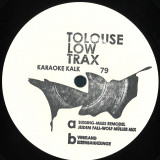
Crystal Harmonics is inspired by four particular albums from KPM’s catalogue. There’s The Electronic Light Orchestra by Adrian Wagner from 1975 and then Temple Of The Stars, Breath Of Life and finally Keith Mansfield’s Circles, these last three coming from KPM’s mid-1980s run of modern classical/New Age gems. For Jon, “making library music can be very liberating. I really enjoyed the additional focus it brought to the music working on different facets of composition with each collaborator”.
But Crystal Harmonics is no mere exercise in vulger pastiche. As the past, present and future sound of paradise, this fresh exploration of mid-90s ambient and original New Age sounds exists outside of our linear experience of time.
The cover started as a collage Jon made a couple of years ago, a different expression of the same impulses that guided the music. As a nod to the records that provided seeds of inspiration, the collage was framed by KPM’s house style of the 1980s for the finished sleeve by Richard Robinson.
Mastered for vinyl by Be With’s sonic shaman Simon Francis, cut by the legendary Pete Norman and pressed in the Netherlands by Record Industry, Ocean Moon’s Crystal Harmonics is the tranquil balm for these turbulent times.
Favorite Recordings presents an exclusive collaboration between French producer Bruno ‘Patchworks’ Hovart (Voilaaa, Mr President, Taggy Matcher, …) and Australian NYC-based rapper and poet Nelson Dialect. The two artists met two years ago after Nelson’s gig in Lyon and, of course, they discussed and seriously planned to collaborate one day, both having an everliving love for early nineties hip hop. Then came the quarantine and Covid-19 with Patchworks locked in Lyon, Nelson Dialect in NYC: it seemed to be the right time to do it. A few months later and they finally drop Blue Benz, the result of their long distance collaboration, coming as a beautiful 7inch filled with proper Jazz & Soul Hip Hop vibes.
On A side, « Blue Benz » reminds indeed the best feelings of the nineties hip-hop with its infectious slapped bass rhythm and subtle Rhodes chords, all fiiting perfectly with Nelson Dialect’s serious flow!
On B Side, « Jazzy Blue Benz » offers an alternate take on the same groove, focusing more on the electric guitar gentle slides with a more percussive beat and horns arrangements with a proper NYC jazz
feeling.
From Adelaide, Australia, Nelson Dialect now lives in New York working with Bronx label Red Apples 45 started by AG of DITC and Ray West. Making music since he was 16, he has received critical acclaim for his work with producer Must Volkoff and their most recent album Magnetism. Before moving to New York, Nelson toured extensively in Australia supporting some of the biggest international Hip Hop acts including Mobb Deep, Lupe Fiasco, Ghostface Killah, GZA, RZA, Pharoahe Monch and DJ Premier among many more. He just released a new album Opal Mind with French producer NuTone.
- A1: Love Is A Friend
- A2: Spanish Lament
- A3: Somewhere
- B1: Somebody’s Party
- B2: Requiem For My Mother
- B3: Remember
- C1: Vigil
- C2: Blue
- C3: No More Hurt
- C4: Spasmic Fairy
- D1: American View
- D2: Drinking Time
- D3: Woman
- D4: Goodbye
Demon Records presents the first ever vinyl pressing of The Durutti Column’s 2003 studio album “Someone Else’s Party”.
Formed in Manchester in 1978, The Durutti Column were one of the first acts signed to the iconic Factory Records by Tony Wilson. Primarily the project of guitarist and vocalist Vini Reilly, the group have a cult following with notable fans including Brian Eno and John Frusciante.
Recorded after the passing of Reilly’s mother, the melancholic “Someone Else’s Party” explores themes of loss and reflection. Highlights include the trip-hop influenced ‘Vigil’, and ‘Spanish Lament’ which weaves together Reilly’s signature shimmering guitar sounds with a sample from David Lynch’s Mulholland Drive.
Pressed on two 140g clear vinyl, housed in printed inner sleeves.
- A1: Rush Hour/Elegua (Feat. Kevin Haynes Grupo Elegua)
- A2: Frontline (Feat. Kevin Haynes Grupo Elegua)
- A3: Rye Lane Shuffle
- A4: Drum Dance
- A5: Axis Blue
- B1: City Nocturne (Feat. Zara Mcfarlane)
- B2: Waiting On The Night Bus (Feat. Terri Walker & Louis Vi)
- B3: Marooned In S.e.6 (Feat. Kevin Haynes Grupo Elegua)
- B4: Ancestors (Feat. Kevin Haynes Grupo Elegua)
Moses Boyd is at the forefront of the New British jazz scene having worked and recorded with like of Giles Peterson, Four Tet, Sons Of Kemet, Zara McFarlane and more. With 2 MOBO Awards to his name and Multiple Releases via his Label Exodus Records. Moses has established himself as one of the leaders in bringing the worlds of Jazz and Electronic music together.
This latest release is taken from the same sessions that brought us Rye Lane Shuffle. Displaced Diaspora is a collection of music from Moses Boyd recorded in 2015 that features some of the now leaders of the New British Jazz Scene Such as Theon Cross, Nubya Garcia and Nathaniel Cross. As well as the Iconic British Soul Vocalist Terri Walker, Saxophonist and Bata Player Kevin Haynes and his group, Grupo Eleggua and Rapper Louis VI. The music is a mix of Jazz, Yoruba chants with Hip Hop and electronica influenced beats.
Infernal Sounds welcomes Cluekid back to the fray, returning to release two of his most sought after dubs in 'Electric Avenue' & 'Horizontal'. The legendary producer throws you right back to the '08 days on the A side, taking you in with straight junglist sampling and a low-end wobble of a freshly set blamanche. 'Horizontal' displays the same sort of traits, but gives you an added dub-flex through the backdrop melody, and a low-end you'll feel right down in your stomach. It's an ultimate double XL.
- A1: Soul A Go Go - Soul Messin Allstars Ft Josh Teskey
- A2: Superfly (Sam Redmores' Exclusive 'Trunk Of Funk' Edit)
- A3: Boogie Down - Roy Ayers
- A4: Hold My Hand - Laneous
- A5: Pata Pata - Miriam Makeba
- A6: African Rhythms - Oneness Of Juju (Exclusive 'Trunk Of
- A7: Medicated Goo - Pp Arnold
- A8: Take A Shot - The Fantastics! Ft Sulene Fleming
- A9: Give Me The Night Ft Xantone Blacq - Juan Laya & Jorge
- A10: Out Of The Ordinary Ft Mike Keat & The Bevvy Sisters
- B1: Forget Me Nots - Patrice Rushen
- B2: People Get Ready Ft Natalie Williams & Noel Mckoy - The
- B3: Hangin' On - Monophonics
- B4: The Old Place - Nick Waterhouse
- B5: Victory! - Michelle David & The Gospel Sessions
- B6: Beggin' - Magnus Carlson
- B7: Telling You Lies Ft Jam Jam - Alex Opal
- B8: Help Me Ft Ian Whitelaw - Badge And Talkalot
- B9: The Only Difference - Beatchild & The Slakedeliqs
- B10: Clap Hands - Honeyfeet
Craig Charles has been a soul & funk fan since his teenage years in Liverpool, going to see local heroes The Real Thing live, and wearing out his shoe leather dancing in the city's many underground clubs. Craig has been sharing that passion for the music via his 6Music and BBC Radio 2 shows and DJ nights for nearly 20 years. His brand new 'Trunk Of Funk' compilation series, blends up-tempo club classics, with fresh music from the cream of the crop from the contemporary soul and funk scene, and will be Craigs very first vinyl release - a beautiful, double vinyl gatefold LP and he's certainly excited about it, stating; "I can't wait to bring you big beats, bass lines and booga-bloomin-loo! Presenting The Craig Charles Trunk Of Funk Volume 1 as my first ever vinyl release has put a proper wiggle in my walk!" This collection of 21st century disco, soul, funk & afro grooves from includes tracks from contemporary heroes of the scene such as Monophonics, Amp Fiddler and The James Taylor Quartet, it's also peppered with some old school classics and rare grooves from legends such as Roy Ayers, PP Arnold, Miriam Makeba and Patrice Rushen. Craig has personally selected and sequenced this collection to take the listener of a musical journey, the closest thing to having Craig visit and personally DJ for you in the comfort of your own home! It also includes two 'Trunk Of Funk Edits' that are 100% exclusive to this compilation and not available anywhere else.
The next one, NKISI
Climate of Fear follows up Soft Boi’s debut LP with a mammoth drop: 12 tapes ripped straight from the first two years of Berlin parties. Released one per month, the series moves from Izabel’s shivering chug through Nkisi’s deadly anarcho-gabber psychedelia, Polar Inertia’s sleek techno throb and DJ Python & Mad Miran’s impromptu closing b2b.
Climate's third release in its tape series is a writhing hardcore masterclass from Nkisi. Recorded the same night as Elena Colombi's entry, it offers an inverted counterpart to that set's languid grooviness. Nkisi wrings a supple and hypnotizing atmosphere from the most astringent and defiant selections, using the 170+ bpm kick drums and scythe-like percussion to envelop the listener. Creation and destruction merge in a fluid void state. NSFW.