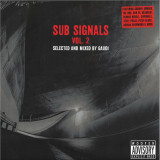
Nika Roza Danilova, die Sängerin, Songwriterin und Produzentin, die seit 2009 unter ihrem Künstlernamen ZOLA JESUS veröffentlicht, hat eine Stimme, die die Faszien der Realität durchschneidet und den rohen Nerv der Erfahrung trifft. Auf früheren Alben hat ZOLA JESUS weitgehend die Rolle der Autorin und Alleinherrscherin gespielt und jeden Aspekt des Sounds und des Aussehens ihres Projekts akribisch für sich ausgearbeitet. Diesmal erkannte sie jedoch, dass ihr gewohntes Bedürfnis nach Kontrolle sie von ihrer Kunst abschnitt. Als die Frustration darüber, dass sie nicht in der Lage war, etwas zu erschaffen, unerträglich wurde, bat sie zum ersten Mal in der Geschichte von ZOLA JESUS um externen Input. "At some point, I had to work with other people. I needed new blood. I needed somebody else." Sie schickte ihre Demos an den Produzenten Randall Dunn, der für seine Arbeit mit Sunn O))) und an Johann Johannssons Filmmusik für "Mandy" bekannt geworden ist. Außerdem begann sie, mit dem Schlagzeuger und Perkussionisten Matt Chamberlain zusammenzuarbeiten, der bereits an Alben von FIONA APPLE, BOB DYLAN und DAVID BOWIE mitgewirkt hat. In ihrem kreativen Prozess begann Danilova, eine Beziehung mit dem Unbekannten aufzubauen...
Search:el tri
Black Vinyl[21,22 €]
Coke Bottle Clear Vinyl[21,22 €]
Ecomix Random Colour Vinyl[21,22 €]
Nika Roza Danilova, die Sängerin, Songwriterin und Produzentin, die seit 2009 unter ihrem Künstlernamen ZOLA JESUS veröffentlicht, hat eine Stimme, die die Faszien der Realität durchschneidet und den rohen Nerv der Erfahrung trifft. Auf früheren Alben hat ZOLA JESUS weitgehend die Rolle der Autorin und Alleinherrscherin gespielt und jeden Aspekt des Sounds und des Aussehens ihres Projekts akribisch für sich ausgearbeitet. Diesmal erkannte sie jedoch, dass ihr gewohntes Bedürfnis nach Kontrolle sie von ihrer Kunst abschnitt. Als die Frustration darüber, dass sie nicht in der Lage war, etwas zu erschaffen, unerträglich wurde, bat sie zum ersten Mal in der Geschichte von ZOLA JESUS um externen Input. "At some point, I had to work with other people. I needed new blood. I needed somebody else." Sie schickte ihre Demos an den Produzenten Randall Dunn, der für seine Arbeit mit Sunn O))) und an Johann Johannssons Filmmusik für "Mandy" bekannt geworden ist. Außerdem begann sie, mit dem Schlagzeuger und Perkussionisten Matt Chamberlain zusammenzuarbeiten, der bereits an Alben von FIONA APPLE, BOB DYLAN und DAVID BOWIE mitgewirkt hat. In ihrem kreativen Prozess begann Danilova, eine Beziehung mit dem Unbekannten aufzubauen...
Und dies trifft 100% zu: kunstvoll vereinen BATTLE AXIS Thrash-Einflüsse mit starkem Power-Metal. Teils Doom-lastige Schwere und rockige Elemente. Wagemutig, atmosphärisch, teutonisch, BATTLE AXIS!
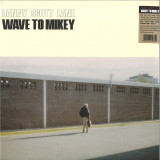
Wave to Mikey, the fourth album from the Los Angeles-based actor, musician and photographer Danny Lane is a nocturnal, neon-lit ode to the friendships that shape us. “I made this album for my friend Mikey from back home,” Danny explains. “We were pretty much inseparable for a large part of our lives, and our musical and social minds were always in sync in a special way. Then with age, we drifted apart, especially since I moved to Los Angeles. This album is just a little wave hello to an old friend and a kindred spirit.”
Equal parts avant-garde composition, instrumental city-pop, ambient, Kankyō Ongaku (environmental music) and Fourth World music, Wave to Mikey is an impressionistic and reflective cycle of eleven richly detailed memory portraits. Throughout the album, the influence of Jon Hassell, Arthur Russell, Hiroshi Yoshimura and Yellow Magic Orchestra hangs in the air like late-night mist, adding character but never overshadowing the rhythmic ambience of Danny’s musical visions.
Wave To Mikey began as a series of sketches on analog synthesisers, guitar, sample and found percussion sketches, initially recorded in Danny’s home studio. Once he’d located the vibe, Danny called on his friends E Talley II, Solange collaborator John Carroll Kirby and Destroyer session musician Joseph Shabason, who respectively added flute, spiritual synth textures and saxophone to the record.
For Glossy Mistakes founder Mario G.R., who originally discovered Danny through his photography, Wave To Mikey captures a vivid feeling of melancholy and peace. “He's able to encapsulate emotions in a very straightforward way, either in his portrait or songs,” Mario says. “I think that's a kind of virtue or skill given to talented artists, no matter the field.”
Born and raised in Staten Island, New York, Danny began playing music with his friends when he was thirteen, before putting that passion on pause to study Fine Arts (Theatre) at Rider University in Lawrence Township in pursuit of an acting career. Acting led him to photography, after playing a photographer in a film, he was inspired to pursue the medium. Danny began shooting photos on film for magazines and lifestyle brands, spent a stint living in New York’s Chinatown neighbourhood, and eventually relocated to Los Angeles in 2017.
Four years ago, Danny started recording and releasing music under his own name, leading to the trilogy of releases that preceded Wave To Mikey, How To Empty A Cup (2019), Memory Record (2019) and CAPUT (2021). Over the course of these releases, he’s revealed himself to be a sophisticated composer and producer with a studied ear from years spent digging through record bins for ambient, experimental, new age, jazz and electronica records from around the globe, with a particular emphasis on Japan.
“Music is something that’s always been involuntary for me,” Danny reflects. “It’s unconditional, always there. It’s something I just have to do. I’ve taken breaks and it’s always gloomy when I’m not playing. I just want to get better and better and understand more and more.”
Here at Glossy Mistakes, Wave To Mikey marks our second contemporary album release, following on from Evenings by Japanese composer Metoronori. We’re proud to be able to present Danny, Metoronori and other modern musicians' work alongside reissues of classic works from Stevia aka Susumu Yokota, Akira Ito, Yuji Toriyama & Ken Morimura, and Takashi Kokubo.
Mastered by Damian Schwartz, Wave To Mikey will be released on Vinyl LP Glossy Mistakes on June 27 2022. Besides the regular black vinyl, a limited clear vinyl will be available in an edition of 100 copies. Both editions come packaged with original cover art photography shot by Danny.
World renowned extreme Metal titans KREATOR are back. 5 Years after their incredibly successful “Gods Of Violence” album (2107, #1 in the German album charts, #4 in Austria, #7 in Czech Republic and Finland + chart entries in numerous other territories), the genre-defining band presents their most political effort to date. “Hate Über Alles” (in tradition of US punk icons DEAD KENNEDYS’ “California Über Alles”) is a bold statement against hate and the division of society in today’s world. While perfecting their signature sound of thrash metal that inspired countless other bands over the past 4 decades, KREATOR have managed to close the gap between the old and new school, still reaching new audiences, playing sold out shows to even bigger crowds as they move on. “
Hate Über Alles” features 11 tracks that once again show who’s boss in this game that many begin but only few ultimately last in. The crushing frenzy of the title track, the pounding “Strongest Of The Strong” featuring world famous vegan strongman Patrik Baboumian, the nostalgia of “Become Immortal” or the extravaganza of “Midnight Sun” make the band’s 14th album their most diverse and thrilling so far. “Hate Über Alles” will be accompanied by massive online and out-of-home campaigns, leading up to the band’s European co-headlining tour with Grammy-nominated US powerhouse LAMB OF GOD in November/December 2022. The album is available in various lavish vinyl editions featuring a beautiful, yet grim trifold artwork by famous artist Eliran Kantor (TESTAMENT, SOULFLY, HELLOWEEN, HEAVEN SHALL BURN, HATEBREED among others) as well as in a noble CD Digibook and bold box set including an extended Making-Of Book, a live album of the band’s 2021 Bloodstock Open Air appearance, an art print of the cover and a pin of the band’s iconic logo.
A simple idea in an over complicated moment. Strip away aesthetics and be artist centric, sharing and explore collisions, sounds and genres. Step out of comfort zones to release a series of EPs of broad, challenging and deep music.
Starting with The Proposal by A Strange Wedding, this Lyon based producer from the Worst label, builds on their "modern style" slow trance to create a label anthem, a template. Stretched Arp, hypnotic bass and searing melody, underpinned by ocean wide kick. Merci for the perfect beginning.
Datasal are next, as this Gothenburg's trio's debut arrives. Acoustics (Miyazawa flute / Fender bass) and electronics (Roland RS-09 / Korg Mono) collide; prog rock meets post punk meets dance; outside organised compositions to improvise to the beat.
Side two leads back to the origin. 84PC, the dormant Tel Aviv collective that developed out of the city's Michatronix Crew (featuring Katzele, Naduve, Asaf and Yovav), return with a previously unreleased remix from Khidja. Their "Welcome To The Pleasuredome" moment is peak time perfection.
To close Barcelona's Iro Aka arrive with another debut. Having dispatched edits on Hard Fist and 44,100Hz Social Club, their bubbling 303 is a tender dreamtime finale that points ahead.
Following appearances on Ellen Allien’s UFO Inc. and Bpitch Control, Lobster Theremin,and many more, NYC-based singer,multi-instrumentalist, DJ, and producer Heidi Sabertooth readies her first appearance on New York Trax this Spring, turning in a fierce four track EP of gritty hardware techno jams. Leading the release, ‘BeMyISM’ brings raw and crunching percussion alongside grinding low end for a high energy start to the EP. The fast-paced ‘JupiterCalling’ follows, raising thetempo to 150bpm as pounding kicks meet grinding, machinist percussion while trippy synthesis unfurls towards the tail end of the track. On the flip, ‘Welcome2MirrorWorld’ sees warped acid lines and sizzling percussion bring a dark and moodyatmosphere, before ‘You Must Have 10000 Followers (For Me To Book You)’closes out the release. A jittery slice of bass heavy electro, the punchy track makes use of squelchy synthesis, knocking drums and an assortment of unruly sounds. Heidi Sabertooth ‘Nine Hundred Lives EP ’drops this Spring
Originally released in 2017 under his pseudonym No Quantize, Bird Syndrome, the first album of the french artist NxQuantize, is now being reissued with an additional remixed version. As a symbol of a new beginning, the talented musician and producer based in Marseille changes his alias and joins the Omakase Recordings music label to give a rebirth to his trip-hop opus tainted with jazz and electronic music.
For this occasion, several artists who come from a broader musical spectrum have reinterpreted the Bird Syndrome’s nine tracks through a series of hip-hop, ambient, electronica and dance music remixes. The richness of this expanded release reflects the production process of NxQuantize next album, currently in progress...
An absolutely legendary album from Lebanon by Issam Hajali’s group Ferkat Al Ard, “Oghneya” stands out as one of the great musical gems of the Arab world. A groundbreaking release from 1978 that represents the meeting point of Arab, jazz, folk and Brazilian styles with the talent of Ziad Rahbani, who did the albums arrangements. Filled with a variety of sounds and genres, from Baroque Pop to Psych-Folk to flashes of Bossa Nova, Tropicalia and MPB, “Oghneya” is like if Arthur Verocai took a trip to Beirut in the 70’s to record an album.
In 2015 we heard Ferkat Al Ard’s music for the first time, a Lebanese trio compromised of Issam Hajali, Toufic Farroukh and Elia Saba. It was a stunningly unique release that blends traditional Arabic elements, jazz and Brazilian rhythms hand in hand with poetic-yet-politically engaged lyrics. The band was active in the left-wing movement of Lebanon of the time and they communicated their political ideas candidly through their songwriting.
In our mind the idea was to see whether Issam was interested in re-releasing “Oghneya.” He was not opposed to it, but also made it clear that it was not his priority for a first project. He suggested we start with his first album, before Ferkat Al Ard was formed, “Mouasalat Ila Jacad El Ard,” which was recorded in 1977 in Paris together with his friend Roger Fakhr (whose work we have been privileged to re-release in the meantime as well.) “Mouasalat Ila Jacad El Ard” is melancholic, stripped-down, guitar-based folk intertwined with jazz-fused breaks, and the unique sound of the santour glistens through. While the music is very accessible, some song structures are rather atypical, neglecting common patterns of verse, hook, verse, hook. The lyrics mostly trace back to the poetic work of Palestinian author Samih El Kasem, with one song also written by Issam, who composed the music for the whole album.
We re-released Issam’s “Mouasalat Ila Jacad El Ard” in 2019 to a great reception, with positive reviews all over the place and an ongoing appreciation for the album. This meant it was time for us to undertake an “Oghneya” re-release again!
If you compare “Mouasalat Ila Jacad El Ard” and “Oghneya,” one apparent distinction is the strong Brazilian influence in the music. Issam Hajali explained that you can already hear traces of this influence on his debut, but it’s “Oghneya” where this musical relationship really peaks. Lebanon and Brazil have had a strong connection for nearly a century due to the continuous flow of immigrants from one country to the other. Today, Brazil has the largest Lebanese diaspora in the world, the “Brasilibanês”. The migratory route was not a one-way street, however, and some Lebanese returned to their home country, taking recordings of the music they learned to love in Brazil with them. They were followed by Brazilian musicians who visited primarily Beirut during the 1960’s and the first half of the 1970’s, just like many other musicians from around the world. In these years between the independence and the beginning of the civil war, Beirut became even more of a cultural center and regional hub than it already was.
Bossa Nova, at that time, was one of the defining sounds of Brazilian popular music. Issam Hajali remembers hearing it at a bar in Beirut’s Hamra district in 1974, which hosted musicians from Brazil playing the occasional gig. When Issam had returned from Paris in 1976 he got to know Ziad Rahbani, son of Fairouz, who had a shared passion with Issam for a lot of things, among them Brazilian music. Issam showed him some of the tracks he was working on, and Ziad agreed to help with arranging. The music that evolved from this cooperation between Ferkat Al Ard and Ziad Rahbani’s arrangement is, to put it lightly, outstanding. Issam’s singing is embedded into the uniquely beautiful string arrangements backed by the band’s poignant, swinging groove. The lyrics of the songs on “Oghneya” are based on poems by Mahmoud Darwish, Samih Al Qasem and Tawfiq Ziad, three pillars of Palestinian poetry within the last century, and their influence on “Oghneya” was itself a strong political statement during the Lebanese war.
“Oghneya” was eventually released in 1978 by the band themselves on cassette tapes. Finding a blank tape that fit the playing time proved to be impossible during the war so they needed to open up the case of each cassette to physically cut down the tape and customize it to the playing time. The album was well received, though some cultural critics deemed it too “occidental” in its sound. While the cassette was circulating, Ziad Rahbani started a label called Zida, together with Khatchik Mardirian. They decided to help the band with a re-release on vinyl in 1979, a year after “Oghneya” was originally released on cassette.
Sadly, there are two tracks from the original release of “Oghneya” that did not make it onto the reissue. “Ghfyara Ghaza” was replaced by the song “Juma’a 6 Hziran.” while “Huloul” was taken off without a replacement. This happened as a precondition from the band for this reissue to happen. We would have loved to include all tracks, but the decision ranged between having either a reissue like the one we put out or no reissue at all. Thus, an easy choice for us.
As always both vinyl and CD come with an extensive booklet with an interview with Issam as well as unseen photos from the recording sessions.
Kicking off proceedings on new label, Scene Unseen is Yorkshire’s finest, Jinjé a.k.a. Lee J Malcolm.
Scene Unseen will focus on exploring and showcasing scenes from around the world (some seen or some maybe unseen), as well as releasing music from artists who incorporate sounds from across the globe within a music style that's closer to home. This is where Jinjé steps in, delivering an EP of Afro-funk and Afro-tech. He draws upon his usual duties as a fine Techno, House and Electronica producer and combines them with rhythms inspired by African and Indian music, using instruments (played and recorded live by Jinjé) and field recordings from both regions.
Jinjé (Lee J Malcolm) has released on labels such as Messrs. Kicks & Drums, EPM Music, Mesh and Ostgut Ton. He was also a founding member and mainstay in the Leeds band, Vessels (Different Recordings), until leaving a couple of years ago to concentrate on solo projects.
The track names tell all, as Jinjé gives a clear nod to the Africanism is his music. First track, 'Ngoma' is a name used across Africa to describe certain drums and percussive instruments, which can be heard here, like Djembes from the Conga region, as well as live and acoustic components, blended with modular and other electronic sounds.
'Burkina Faso' takes us west and hits the ground running with a vocal sample of Tribal women from the area, singing praise and joy to engineers who have come to provide fresh water to the village: "Praise God for they have come to build us a well." The progression of the track is based around this joy and develops nicely alongside some intense bass and drums.
'Dusk' is inspired by thoughts of the Serengeti planes at night fall, all built around Jinjé's live M'bira plugged into a modular synth, grouped with live flute and field recordings from India which provide additional percussion.
'Ya Maji' is a collection of high energy rhythms from a Moroccan frame drum, congas, clapping, live bass, distorted marimba and the mighty Korg Ms20 playing the lead synth lines.
Last up is 'Jara', a nod to Steve Reich and his six marimbas, as well as drawing inspiration from Fela Kuti. Vocal samples bring in more of the field recordings Jinjé made in India, as well as the clapping elements. Acoustic and electronic sounds intertwine to great effect and sum up the EP as a whole.
Look out for more from Jinjé in this musical direction as he seeks to bring these tracks and future ones to a live band setup.
restock
We are proud to present the stellar debut and collab between the renowned Peruvian duo Dengue Dengue Dengue and Argentinian Prisma. ‘Pliegues' creates a hypnotic journey and infectious cadences that invites you to close your eyes while your hips move to the sound of colliding polyrhythms and powerful FM synth lines.
But there is also room for the oneiric realm on this EP, with the track 'Grietas' this new trio opens a portal to steep and melodramatic terrains. Meanwhile the remix of ‘Brechas’ from our friend empanadas aka DJ Python unleashes his sincere trademark of atmospheric and sentimental dembow. Finally, el paisa Verraco makes his label debut reshaping the lead track with a bombastic, deconstructed, bipolar summer banger full of edgy sound design.
- A1: Gloria Lucas - One Sweet Song
- A2: Lyn Collins - Think (About It)
- A3: Minnie Riperton - Adventures In Paradise
- A4: Ruby Delicious - Rock Steady
- A5: Brenda George - What You See Is What You're Gonna Get
- A6: Jackie Dee - Love You Wholeheartedly
- A7: Gwen Mccrae - All This Love That I'm Givin
- B1: Marva Whitney - What Do I Have To Do To Prove My Love To You
- B2: Ruth Davis - I Need Money
- B3: Millie Jackson - Do What Makes The World Go Round
- B4: Gladys Knight & The Pips - Thank You (Falettin Me Be Mice Elf Agin)
- B5: Spanky Wilson & The Quantic Soul Orchestra - Don't Joke With A Hungry Man
- B6: Ann Peepbles - Slipped, Tripped & Fell In Love
- C1: Betty Wright - Clean Up Woman
- C2: Little Rose Little - Family Tree
- C3: The Quantic Sould Orchestra - Hold It Up
- C4: Jackson Sisters - I Believe In Miracles
- C5: Rose Royce - Car Wash
- C6: Taana Gardner - Heartbeat
- D1: Melba Moore - Mind Up Tonight
- D2: Sisters Love - Gimme Your Love
- D3: Diana Ross - Upside Down
- D4: Donna Summer - Hot Stuff (Single Edit)
- D5: Carrie Lucas - Dance With You
- A1: Nonato & Seu Conjunto - Cafua
- A2: Os Novos Crioulos - Mar Afunda
- A3: Jose Roberto - Crioula Multicolorida
- A4: Rita Lee & Tutti Frutti - Agora E Moda
- A5: Trio Esperanga - Nao Aguento Voce
- B1: Robson Jorge & Lincoln Olivetti - Aleluia
- B2: Erasmo Carlos - Jeep
- B3: Chalo Eduardo - Beija-Flor Suite
- B4: Ely Camargo - Taieiras
- B5: Silvio Cesar - A Festa
- C1: Toni Tornado - O Jornaleiro
- C2: Som Tres - Tanga
- C3: Noriel Vilela - 16 Toneladas
- C4: Chocolate Da Bahia - Ele Guenta
- C5: Tim Maia - E Necessario
- C6: Joao Bosco - Cobra Criada
- C7: Os Incriveis - Uma Rosa Pra Dita
- D1: Edson Frederico - Tava Mas Nao Tava
- D2: Helio Matheus - Mais Kriola
- D3: Miguel De Deus - Black Soul Brothers
- D4: Ana Rosely - Skim Dum Dum Dum
- D5: Luiz Gonzaga & Ze Dantas - Sao Joao Antigo
Compiled by Sean Marquand and Greg Caz, 2 DJs well-known for their epic parties at Williamsburg’s legendary Black Betty club, that sadly closed in 2009. The duo played a deep variety of strictly vintage samba, samba-rock, Tropicalia, and Brazilian funk under the banner of ‘Brazilian Beats Brooklyn’.
Sean is known as half of Embassy Sound Productions. He took his team to Brazil to help resurrect Black Rio legends Uniao Black for a new release. Greg has DJ'd at some of the hottest Brazilian parties around the globe and presents a monthly radio show ‘Warm Wave’ on Soho Radio NYC.
Featuring Noriel Vilela’s singular “16 Toneladas,” a sublime cover of the Tennessee Ernie Ford smash “16 Tons” with a spare samba groove and unbelievable baritone vocals and hot jams from Tim Maia, Erasmo Carlos, Joao Bosco, Toni Tornado.
Included in this compilation of original 60's and 70's Brazilian gems are some of Greg and Sean's favourite tracks that have been filling dancefloors for years.
YUNG DUMB Records and Model Future present Wade Galaxy. A collaboration between Toronto-based AZARI, Butr, and vocalist Jeremy Glenn. The trifecta comes forward with an EP that will bring you through a modular soundscape of love, lust, and distrust inside the hypercube. The A-Side is a hazy fusion of R&B and slowed electro, accompanied by Jeremy Glenn's ethereal vocals. The B-Side provides a room shaking cerebral 2-step remix of 'Phaze' by James Bangura of Black Rave Culture via Washington, DC
Four killer tracks of high grade electronic soul from James Baker AKA REKAB. A fantastic EP showing both breadth of style and respect for the roots and traditions of the music from this artist.The first, Locked on Dodge, is a driving deep Detroit techno track with a hypnotic arpeggiated lead and filtered atmospherics to lose yourself inside. Don’t get too comfortable though, it’s capped with a surprise electro switch in the breakdown to keep the floor on their toes! The second track, We Need to Care, delivers a cool clear synth sound design over Chicago influenced house tempo beats and lush pads. Simultaneously groovy and comforting, this is a track for those special moments. Jacking with your eyes closed and a big grin on your face.
Third we have a clear tribute to Drexciya with In Search of the Deep Sea Dweller. Tough 808 beats and laser zaps punch through a bed of evocative strings whilst a filtered single note loop rises and falls like the tide. An abstract robotic voice presides over the track, adding atmosphere whilst giving it a sense of mysterious machine driven intelligence.
Lastly, Too Much Time gets its space boogie on. Electro funk beats jump round staccato synth chords and a simple but effective Moog-like bass line. Once the scene is set, a writhing 303 joins the proceedings accompanied soaring pads and beautiful melodic leads that make you feel like you’re being lifted into the cosmos.
----------
ReKab aka James Baker from the UK started Djing in the early 90’s. Later on he started playing around with music. Finally the ReKab sound was established in 2019 with his first release on Where We Met records. Other releases followed soon on Móatún, Withhold, Intellitronic Bubble, We’re Going Deep and Fourier Transform.
His music is very deep and full of emotions and influenced by his love for Detroit.
Tetra Hydro K is a laboratory in which two dub alchemists are experimenting with multiple sounds to mark their imprint on the French electro-dub scene. The duo of producers returns this year with a new album "Odyssée".
Coming respectively from the free party and trip-hop universe, they took their inspirations from French dub tenors such as High Tone, Improvisator Dub or Kaly Live Dub. Kanay creates a strong rhythm while Krilong brings his melodic genius with his saxophone. Electronic? Acoustic? Dub? Drum'n'Bass? Tetra Hydro K focuses on the combination of organic elements in an electronic universe. After 4 EPs since 2010, the band decided to evolve in 2016 with a first album "Labotomie". It was followed by 2 albums in 2017 and 2018 and season 1 of the amazing "Smoking Sessions" last year.
With this new album "Odyssée", THK rightly marks its stamp on the French dub landscape. They turned their passion in a life-size experimentation, a great diversification of the genres and musical influences that shines through various guests. The stellar dub of the French producer Panda Dub remixed by THK in "Labyrinthe" confronts with the Raggatek rhythm of the track "Nah Come Fi Test" for a top-notch collab alongside Sensi T. On "Black Ship" the duo signs a deep instrumental with a dark and dubby psychedelic vibe.
The rapper KT Gorique shows all her power on the track "L'impasse", displaying her powerful flow, no matter the rhythm. On this album, THK collaborates on two tracks with Tom Spirals. This MC from Glasgow lay down his voice in two different ways, first with a Hip-Hop vision, slightly Trap, in "Expedition 808" then with a Reggae flow on "Cut to the Chase". "Skanking Trip" adds a touch of Dub Stepper in this album with vocalist Loïc Paulin in full power over the heavy-weighted bass. Three instrumental tracks complete this album including the monstrous "Charcuterie Monin".
Tetra Hydro K is back on the road in 2022 to take us in their new odyssey !
- Eye For An Eye
- No Hope = No Fear
- Bleed
- Tribe
- Bumba
- First Commandment
- Bumbklaatt
- Soulfly
- Umbabarauma
- Quilombo
- Fire
- The Song Remains Insane
- No
- Prejudice
- Karmageddon
- Back To The Primitive
- Pain
- Bring It
- Jumpdafuckup
- Mulambo
- Son Song
- Boom
- Terrorist
- The Prophet
- Soulfly Ii
- In Memory Of…
- Flyhigh
- Downstroy
- Seek 'N' Strike
- Enterfaith
- One
- L.o.t.m
- Brasil
- Tree Of Pain
- One Nation
- 9-11: 01
- Call To Arms
- Four Elements
- Soulfly Iii
- Sangue De Bairro
- Zumbi
- Prophecy
- Living Sacrifice
- Execution Style
- Defeat U
- Mars
- I Believe
- Moses
- Born Again Anarchist
- Porrada
- In The Meantime
- Soulfly Iv
- Wings
- Cangaceiro
- Ain't No Feeble Bastard
- Possibility Of Life's Destruction
- Chaos
- Soulfire
- I Will Refuse
- Under The Sun
- Tribe (Tribal Terrorism Mix)
- Quilombo (Zumbi Dub Mix)
- Umbabarauma (World Cup Mix)
- Terrorist (Total Destruction Mix)
- Berimbau Jam
Driven by Max Cavalera's unrelenting energy, unmistakable growl, and instantly recognizable riffage, the earthy tones and motivational rhythmic bounce of Soulfly maintain a gritty spiritual heart while pushing the boundaries of what's possible in metal. Nowhere is that more apparent than on the four triumphant, redemptive, and crucial eclectic offerings presented in this brand new box set, celebrating the first six years of the band career.
Soulfly (1998) was a riotously heavy escalation of the innovation established on Max's final album with Sepultura, launching a brand-new era. Primitive (2000) and 3 (2002) stomp with tribal groove; Prophecy (2004) is as unsettling but evocative as the tombs of the martyrs across Europe. Max introduced metalheads to the berimbau. His music is brutal yet unapologetically transcendent punk-infused extremity. To commune with the burning muse of metal's shamanistic tribal leader is to envelop oneself inside a post-modern sonic sweat lodge. Brutal riffs, trippy esoteric ritual, unrelenting percussion, primal screams; no matter what Cavalera hammers out on his four-string guitar, it always sets souls free.
If you check the credits of The Rolling Stones' Goats Head Soup LP from 1973 you'll find a certain "Pascal" listed on the percussion section. That is none other than Los Angeles based artist Nicolas Pascal Raicevik (1933-1994), aka 107-34-8933, aka Head, aka Nik Pascal, aka Nik Raicevic. Besides his hitting the bongoes on the Stones album, Nik was a great artist on his own, both as a painter and as a musician. As a musician, he was a pioneer in the use of synthesizers, preceeding the Berlin school by some years when his Head LP was released on on Buddah in 1970. Buddah probably saw in Head the opportunity to cash in some money from the remains of the psychedelic scene - the three tracks on the LP are named after drugs used in the late sixties. The sounds, however, are accomplished works that show Raicevic as one of the most interesting pioneers in the use of synths. The album probably didn't do too well, since Buddah didn't renew the contract with Raicevic, who instead took his own way releasing his works on his very own Narco Records and Tapes label. Between 1968 and 1975 Narco would issue 4 LPs credited either to Nik Raicevic (Beyond The End... Eternity) or Nik Pascal (The Sixth Ear, Magnetic Web and Zero Gravity) plus one credited to 107-34-8933 (Numbers, which is in fact the same LP as Buddah's Head, albeit with different cover art). Copies of these LPs came with an ironic sticker over the shrinkwrap that read "Do not listen to this LP if you are stoned".
Numbers was the first reference in the Narco catalogue (NR101), each of the three tracks it contains is named after a drug: Cannabis Sativa, Methedrine and Lysergic Acid Diethylamide. The album was credited to 107-34-8933, there is no date of release on the disc, some sources take it as back as 1968 - in any case, this is the same record that was issued on Buddah in 1970 credited to Head and eponymously-titled. The Wah Wah reissue features the original cover artwork from the Narco edition.
Besides his musical explorations, Nik was also an interesting painter. His paintings are auctioned from time to time, and are consciousness expanding works influenced by abstract cubism and surrealism, some kind of Salvador Dalí on drugs exploring the outter and inner space. All the artwork on the sleeves of his LPs is done by himself. Spacey landscapes and psychedelic colours that fit perfectly to the music they contain.
"Nik Raicevic's music is at the intersection of radical psycho-electronic weirdness and kraut kosmische music (in particular the scifi-hypno-minimal modules of Conrad Schnitzler in Grun, Rot and Blau). It presents mega epic & tripped out electronic improvisations.
"This is an absolute must for collectors and fans of visceral, neurotic soundscapes."
"As far as late-60s / early-70s American Bedroom' Electronic Music goes, these LPS have to be among the first transmissions from this sector, made all the more attractive when coupled with Raicevic's alien topographIes - the covers are high-color portrayals of Venusian lanes, knotted growths, & future-past architecture in a style you might equate with Vintage' sci-fi pulp-novel covers - & copious Downer' sentiment. This music is imbued with a sort of lonely, anti-social sensibility that's about as far as you can get from the Academic' Early Electronic vector. I will say that if the Steve Birchall, Cellutron & the Invisible, and/or Pythagoron™ seed your garden, this will likely do the same."
Never reissued before on vinyl format, the Wah Wah reissue features original sleeve artwork made of paintings and drawings by Nik himself and reproduction of the famous ironic "Do not listen if you are stoned".
Limited edition, 500 copies only.
If you check the credits of The Rolling Stones' Goats Head Soup LP from 1973 you'll find a certain "Pascal" listed on the percussion section. That is none other than Los Angeles based artist Nicolas Pascal Raicevik (1933-1994), aka 107-34-8933, aka Head, aka Nik Pascal, aka Nik Raicevic. Besides his hitting the bongoes on the Stones album, Nik was a great artist on his own, both as a painter and as a musician. As a musician, he was a pioneer in the use of synthesizers, preceeding the Berlin school by some years when his Head LP was released on on Buddah in 1970. Buddah probably saw in Head the opportunity to cash in some money from the remains of the psychedelic scene - the three tracks on the LP are named after drugs used in the late sixties. The sounds, however, are accomplished works that show Raicevic as one of the most interesting pioneers in the use of synths. The album probably didn't do too well, since Buddah didn't renew the contract with Raicevic, who instead took his own way releasing his works on his very own Narco Records and Tapes label. Between 1968 and 1975 Narco would issue 4 LPs credited either to Nik Raicevic (Beyond The End... Eternity) or Nik Pascal (The Sixth Ear, Magnetic Web and Zero Gravity) plus one credited to 107-34-8933 (Numbers, which is in fact the same LP as Buddah's Head, albeit with different cover art). Copies of these LPs came with an ironic sticker over the shrinkwrap that read "Do not listen to this LP if you are stoned".
"Raicevic is clearly still in the early learning-curve stages," which it a key LP to understand Nik's evolution and setting the path for more evolved works to follow.
Besides his musical explorations, Nik was also an interesting painter. His paintings are auctioned from time to time, and are consciousness expanding works influenced by abstract cubism and surrealism, some kind of Salvador Dalí on drugs exploring the outter and inner space. All the artwork on the sleeves of his LPs is done by himself. Spacey landscapes and psychedelic colours that fit perfectly to the music they contain.
"Nik Raicevic's music is at the intersection of radical psycho-electronic weirdness and kraut kosmische music (in particular the scifi-hypno-minimal modules of Conrad Schnitzler in Grun, Rot and Blau). It presents mega epic & tripped out electronic improvisations.
"This is an absolute must for collectors and fans of visceral, neurotic soundscapes."
"As far as late-60s / early-70s American Bedroom' Electronic Music goes, these LPS have to be among the first transmissions from this sector, made all the more attractive when coupled with Raicevic's alien topographIes - the covers are high-color portrayals of Venusian lanes, knotted growths, & future-past architecture in a style you might equate with Vintage' sci-fi pulp-novel covers - & copious Downer' sentiment. This music is imbued with a sort of lonely, anti-social sensibility that's about as far as you can get from the Academic' Early Electronic vector. I will say that if the Steve Birchall, Cellutron & the Invisible, and/or Pythagoron™ seed your garden, this will likely do the same."
Never reissued before on vinyl format, the Wah Wah reissue features original sleeve artwork made of paintings and drawings by Nik himself and reproduction of the famous ironic "Do not listen if you are stoned" sticker. Limited edition, 500 copies only.
One of the most legendary LPs from Uruguay remains a hidden treasure in the rest of the world. It is the first LP by singer Diane Denoir. Diane was a regular in the “Conciertos Beat” (“Beat Concerts”) of Montevideo's 1960s scene where she performed with Eduardo Mateo on guitar (leader of El Kinto, one of the most influential bands in "candombe beat", and the ones who coined the term), Roberto Galletti on drums and Antonio Lagarde on double bass. Diane was also Mateo's muse throughout the early years of his career, he wrote several songs for her, among them “Esa tirsteza,” “Y hoy te vi,” and the classic “Mejor me voy.” Eduardo Mateo would become one of the biggest names of all times in Uruguay's musical scene. Diane, instead, found herself outside the country when the military coup installed a non constitutional government in Urugay in 1973 and was wisely advised by friends not to go back home to avoid trouble with the new dictatorial regime. A brave defendant of Human Rights, she had been very active against torture, thus becoming a target for the dictatorial regime military intelligence. She exiled in Argentina and Venezuela, and she later settled in Europe and didn't perform in public or record again until recent years when she returned to her home country.
On her eponymous 1972 debut album, Diane fused all her influences in one solid sound through songs created by Uruguayan songwriters (Eduardo Mateo, Urbano Moraes –bassplayer for El Kinto,– Daniel Amaro, Giuso Bellanca), plus Argentinian lyricist Edgardo Lisi. She had released a couple of 7" between 1966 and 1970, but it is her debut album –which would be her only one until her 2008 comeback– that made her legend grow among future generations of music lovers.
It's hard to name artists in the same dimension as Diane Denoir for reference, but be sure that you will love this LP if you like the candombe beat scene of El Kinto, Tótem or the Fattorusso brothers (Hugo and Osvaldo) in their post Los Shakers works, but also the bossa nova sound and even artists of their own like Vainica Doble.
Very limited edition, only 500 copies made. Remastered sound. Comes in upgraded artwork, gimmick cover with printed inner sleeve.
Das Trio "Girls In Synthesis" wurde treffend als "eher eine Terrorzelle als eine Rockgruppe" beschrieben. Textlich befassen sie sich mit den Erfahrungen der Arbeiterklasse in Bezug auf fragile geistige Gesundheit, soziale Unbeweglichkeit, Gefühle der Machtlosigkeit, Unsicherheit, Angst und die zersetzenden Auswirkungen einer feindseligen Gesellschaft. John Linger bringt es auf den Punkt, wenn er "I've seen a glimpse of the future" in sein Mikrofon bellt. Das Londoner Trio "Girls In Synthesis" ist eine Band, die sich einer Kategorisierung entzieht. Seit ihrer Gründung hat die Band Anarcho-Punk, Noise-Rock, Post-Punk und elektronische Einflüsse aufgenommen, ohne in einem dieser Genres zu verweilen. Der definitive GIS-Sound ist mehr als die Summe dieser Teile. Die Band ist eher ein Kollektiv als eine traditionelle Musikgruppe, da alles (Aufnahmen, Artwork, Fotos und Videos) intern mit den Mitgliedern der Band und ihren Verbündeten kreiert wird. Mit einer unvergleichlichen Live-Show hat sich die Band durch ihre kultige Hingabe an ihre Kunst eine treue Fangemeinde in Großbritannien erspielt, von denen viele die Band auf ihren Tourneen durch das ganze Land begleiten. Ihre neue Veröffentlichung "Konsumrausch", ein exklusives, eigenständiges Mini-Album für das deutsche Label Hound Gawd!, erkundet verschiedene klangliche Territorien und erweitert die bisherigen Veröffentlichungen der Gruppe um weitere Experimente.
- Format: Schwarze 140G Vinyl
2001: Guillaume Atlan is nominated with 'Starlight' at the MTV Awards in the best French artists category. 20 years later, the first generation French Touch (Modjo, Demon, Cassius, Stardust, Etienne de Crécy etc.) is almost gone. Among the few still active, The Supermen Lovers, who will release his fourth studio album, 'Body Double', end of May.
A reference to Brian de Palma's film and its perfect plastic, the disc bears witness to the many artistic encounters and tumults of love that feed Guillaume during his trip to Kyiv from 2018 to 2020. Love can move mountains but can also destroy a man. Demons and emotions will make him go back to the studios, firstly in Kyiv, which reminds him of Paris in the 90s : strong energy, a thirst for discovery, creation and pure spontaneity. Straddling 2 musical bodies, the heart of Body Double balances between vocal electro-disco and clubbing, without forgetting this analog/digital jumble dear to Guillaume. He is an electro producer, a DJ, but above all a multi-instrumentalist. Machines in contact with “real” instruments…
* Over the past six years, Dimensions has become a leading name in the underground, with its festival, International Series, DJ Directory and Dimensions Soundsystem. Now, Dimensions extends its influence with the start of its label - Dimensions Recordings. The label launches with a 12-track compilation across three separate discs. 'An Introduction' makes a huge statement in setting out the label's intent and breadth. With artists established and new stepping up to present 12 exclusive tracks.
* Dimensions Recordings explores its darker side on An Introduction Part 3 with intergalactic oddities and twisted techno constructions, the release is definitely ones for the late hours. 'Crosstalk' from gear heads London Modular Alliance opens; a squelching, electro, hardware excursion demonstrating a small snippet of what's to come from the talented trio. Next, French artist, Upwellings steps up to demonstrate his purist approach as he unites elements of dub and techno to create the beautifully spacey 'Soft Shadows'. The third offering comes courtesy of Fachwerk label boss and prolific techno artist, Mike Dehnert; who presents raw but melodic track in 'Tokio,'which maintains his minimal and stripped back aesthetic beautifully. Chicago's Steven Tang in his Obsolete Music Technology rounds off the release with 'Comb Freq,' a devastatingly powerful mix of acidic, bleeping dance floor energy!
The only album by Austrian trio Cultural Noise is a an electronic marvel. Band members were Gerhard Lisy, Walter Heinisch and Karl Kronfeld, and instruments used included an ARP Sequencer, an ARP 2600, a VCS 3, an EMS Digital Sequencer, a Mellotron M400, a Micro Moog, a Roland Studiosystem 700, a Roland Analogue Sequenzer and an electric guitar. With these weapons and a strong influence from the Berlin school Cultural Noise created a rich electronic tapestry which expanded through the two pieces of this record, one per side, being compared by reviewers to works by Zanov or Anna Själv Tredge. Mentions of Tangerine Dream are also present on reviews, although Cultural Noise have a pretty unique personality on their own and besides sharing the use of Mellotron, sequencers and analog synths we have a totally personal concept here which sets them aside from all TD impersonators of the era.
The album was originally released in 1980 on CBS and later repressed in 1981 which came in a B&W version of the sleeve that some sources list as a self release private pressing done by the band themselves - this has been denied by members of Cultural Noise.
500 copies only reissue, housed in its original full colour version artwork.
Mind Eclipse completes Deetron’s triptych for Running Back. After Body Electric and Ego Rave, it’s the missing part in a tale of youthful exuberance told by a seasoned raver and transported into the here and now. Taking the essence of the carefree energy of those days, its warehouses and fields minus the (sometimes!) aural clumsiness, Deetron delivers four studies in the transformation of said emotional states.
Mind Eclipse aka Trancehouzztool does exactly what it says on the tin: big synths, swirl and twirl during an extra long break down for an uproar – serotonin shower included. HG acts like an umbrella to that. Almost melancholic in its presence and meandering between highs and lows, it’s the perfect counterpoint and offset.
On the other side, Phoenix sounds like a lost Border Community hymn that found its way near a Roland 909 for peak time purposes, before The Shore closes the book in a hybrid state between electro and disco or the soundtrack to IDM supporters in a gym workout (also available in an alternative version digitally for those who like their beats straight).
It won’t eclipse your mind though that Deetron knows what he does in the studio, so expect finest artistry, crafty tricks and technical expertise. „’Til the sweatshirts are falling down of us…“
- 1: Maybe As His Skies Are Wide
- 2: Herr Und Knecht
- 3: (Entr’acte) Glam Perfume
- 4: Cogs In Cogs, Pt. I: Dance
- 5: Cogs In Cogs, Pt. Ii: Song
- 6: Cogs In Cogs, Pt. Iii: Double Fugue
- 7: Tom Sawyer
- 8: Vou Correndo Te Encontrar / Racecar
- 9: Jacob’s Ladder, Pt. I: Liturgy
- 10: Jacob’s Ladder, Pt. Ii: Song
- 11: Jacob’s Ladder, Pt. Iii: Ladder
- 12: Heaven: I. All Once – Ii. Life Seeker – Iii. Würm – Iv. Epilogue: It Was A Dream But I Carry It Still
‘Mehldau can truly translate his thoughts and feelings into complex and lasting music. He is one of those people whose brain and fingers and musical ability is all one beautiful entity.’ – Jamie Cullum
Nonesuch Records releases Brad Mehldau’s Jacob’s Ladder on 2 x 140g black vinyl on June 17th . The album features new music that reflects on scripture and the search for God through music inspired by the prog rock Mehldau loved as a young adolescent, which was his gateway to the fusion that eventually led to his discovery of jazz. Featured musicians on the album include Mehldau’s label mates Chris Thile and Cécile McLorin Salvant, as well as Mark Guiliana, Becca Stevens, Joel Frahm, and others. The album’s first single, ‘maybe as his skies are wide’, builds off an interpolation of one portion of Rush’s classic ‘Tom Sawyer’.
Mehldau explains, “We are born close to God, and as we mature, we invariably move further and further away from Him on account of our ego. Jacob’s Ladder begins at that place closer to God with the voice of child, and then moves into the world of action. God is always there, but in our discovery and conquest, and all the joys and sorrows they bring, we may lose sight of him. He sets a ladder before us though, like in Jacob’s dream, and we climb towards him, to find reconciliation with ourselves, to stitch up all those worldly wounds and finally heal. The record ends with my vision of heaven – once again as a child, His child, in eternal grace, in ecstasy.
“The musical conduit on the record is prog,” Mehldau continues. “Prog – progressive rock – was the music of my childhood, before I discovered jazz. It matched the fantasy and science fiction books I read from C.S. Lewis, Madeleine L’Engle and others at that time, aged ten through twelve. It was my gateway to the fusion of Miles Davis, Weather Report, Mahavishnu Orchestra and other groups, which in turn was the gateway to more jazz. Jazz shared with prog a broader expressive scope and larger-scale ambitions than the rock music I had known already.
“The prog from Rush, Gentle Giant, and Emerson, Lake and Palmer here only hints at the genre’s conceptual, compositional and emotional range. These bands and others have continued to influence newer groups that bring prog impulses into the arena of hard rock and screaming math metal, like Periphery, whose music is included here, and also inspired the screaming vocals on ‘Herr und Knecht.’ I tried to avoid a direct tribute approach to all the songs, and opted in some cases for excerpts, or reworking of themes.”
Although Brad Mehldau is best known as a jazz composer and improviser, he has made several albums that fall outside of the mainstream jazz genre, including his 2001 Largo, produced by Jon Brion. Wide-ranging in texture and big in scale, it features woodwind or brass ensembles are on several tracks, as well as a heavy emphasis on powerful drums. In 2010, Nonesuch released his second collaboration with Brion, Highway Rider, which includes performances by Mehldau’s trio – drummer Jeff Ballard and bassist Larry Grenadier – as well as drummer Matt Chamberlain, saxophonist Joshua Redman, and a chamber orchestra led by Dan Coleman. Mehldau also orchestrated and arranged the album’s fifteen pieces for the ensemble.
Mehldau’s 2014 collaboration with Mark Guiliana, Mehliana: Taming the Dragon featured Mehldau on Fender Rhodes and synthesizers and Guiliana on drums and effects, playing twelve original tunes – six by the duo and six by Mehldau. His 2019 album Finding Gabriel featured performances by him on piano, synthesizers, percussion, and Fender Rhodes, as well as vocals. Guest musicians included Ambrose Akinmusire, Sara Caswell, Kurt Elling, Joel Frahm, Mark Guiliana, Gabriel Kahane, and Becca Stevens, among others.
- A1: Bustin'stronghodes
- A2: Trickmonks
- A3: Swallowing The Water You Walk On
- A4: Can Shadows Praise You?
- A5: The Netherworld Squints At The Sight Of You
- A6: Trick Leash
- A7: Anamnesis
- A8: Asking For Fish
- A9: I'm The Weakest Link
- A10: Under Your Breath
- B1: Handles
- B2: What's Illumined Becomes Visible
- B3: Someone You Can Use
- B4: About Face
- B5: Periodically Yours
- B6: We Won't Survive This
- B7: Project Yourself Alive Onto My Corpse
- B8: We Belong To You, But How Now Is Soon?
The (seventh) new Half-handed Cloud album, ‘Flutterama’, is
a record of 18 jubilant indie-pop songs by John Ringhofer
that investigate spiritual incompetence with lively
arrangements and radiant melodies that skilfully dissolve into
deterioration using herky-jerky tape manipulation, analogue
wow-and-flutter, and an animated orchestra of homerecorded sound effects.
Ringhofer’s work on ‘Flutterama’ was inspired by Frances
Mary Hunter Gordon’s adolescent liturgies (recorded at
Abbey Road during The Beatles era), turbid sights and
sounds in Guy Maddin films, audaciously bold forms in Sister
Corita Kent’s devotional printmaking, the exquisite brittleness
of Elizabeth Cotten’s voice, Alberto Burri’s stitched wound
burlap assemblages, Alvar Aalto church design, Andrea
Büttner’s poverty-informed artwork, Lou Barlow/Dinosaur Jr’s
lo-fi ‘Poledo’ sound collage (which namechecks Jesus), Julie
Canlis book ‘A Theology of the Ordinary’, Wallace Berman’s
visual collage, and The Raincoats’ magnificently shaky DIY
aesthetic.
The album’s tape-fiddled tunes - recorded on the very same
16-track recorder last serviced by a sound technician who
also worked with The Beach Boys in their home studio -
employ surprisingly little synthesizer (“it felt like cheating,”
says Ringhofer) - he preferred to craft most of the album’s
effects the long way, frequently going behind the back of rock
instrumentation by hand-feeding ½” magnetic reel recordings
of chord organs, deflating balloons, some guitars, piano
(occasionally tracked with a baby on his lap), brass,
tablecloth swipes, and a quickly-cranked half-speed music
box. He was assisted by long-time Half-handed Cloud
contributor Brandon Buckner on drums, and single song
backing vocals from Anacortes, WA songsmith John Van
Deusen.
LP pressed on Opaque Brown vinyl
For more than twelve years, Morphology have been re-writing the rules of electronics. Michael Diekmann and Matti Turunen have melted electro, IDM and techno into their own unique sound. To celebrate their achievements, FireScope has sifted through the impressive discography of this Finnish pairing to bring long out of print tracks to a life.
Twelve 1 collects music released between 2009 and 2016, a dozen works that span labels like Abstract Forms, AC Records, Cultivated Electronics, diametric., Semantica, Stilleben and Vortex Traks. Opening with the cold love affair of “Manmade Woman,” this collection brings together frosted floor funk, cerebral armchair electronics and a quality of composition that only Morphology can provide. Embedded in the album are outposts of electro menace, tracks with that extra bit of bite such as “Dementia” and “Dalek Invasion. Deep and thought-provoking pieces abound, such as the otherworldly dreamscapes of “Magellan Probe” and “Moebius Strip” which were first heard on Arne Weinberg’s diametric. An understated balance permeates the record, broad concepts are interwoven with subtle shifts to bring a timeless quality to pieces like “Spacetime Interval”, “Europa” and “Plankton.” A perfect expression of over a decade of work.
Not only does this double LP gather rare tracks never before heard together, but also each piece has been lovingly remastered to breath new life into these wonderful works. Twelve 1 celebrates the music of Morphology in all its glory, two masters of modern electronic music who continue to re-define and re-design genres.
Alex the Fairy is an artist based in Berlin producing music with an emphasis on electronic and concrete methods. Alex the Fairy is also part of the 3Ddancer trio, a live act focusing on improvisation and expression using electronics.
Alex The Fairy writes: "I had sent The Tapeworm tracks before, but I was being difficult so was asked to send a new bunch, with a deadline. I sent the new bunch, a fairly odd collection expecting perhaps some of them to be combined with the older stuff but not seeing any coherence in them. I figured The Tapeworm would find at least something. To my surprise the suggestion that came back was exclusively the tracks I had sent the second time, and, re-listening through the tracks in this new order after returning from a Christmas dinner lying on the floor of my nephews bedroom gave them a completely new context. Despite them being quite varied in terms of age (one had been flung together a few days earlier on the train while another was approaching Schulreife) they seemed to meld together in such a way that I hardly recognised them…
Last year my grandmother died. My last grandparent. I had put off seeing her during corona, as I thought it best not to put her at risk and had almost left to visit her days before her death but had delayed my departure because of a medical appointment. My failure to her weighs heavy on my mind - fates grimacing grin: too little, too late. The approaching march of death, one generation closer was a confrontation I wasn't prepared for.
While clearing out her flat in the following weeks I had kept some of my grandfathers cassettes, live recordings of jazz greats, Pink Floyd, Sade and some classical among them, none originals, several presumably from the radio e.g. a church organ rendition of Bach. At the time I wasn't sure why I was hanging on to them, other than the urge to hoard, and that it felt wrong not at least to keep some. Half a year later, half way through mixing this cassette, suffering from my first bout of COVID, I had the insatiable urge to hook up the cassette player I had received from my grandfather after his death around nineteen years earlier and had been dragging along with me since. I stuck a cassette in only to immediately return to the safety of my covers. I began to work my way into what I had saved, hearing the fruits of my grandfathers labour decades before. It felt like quite an intimate interaction with someone I had long lost contact to/was long gone. Quite a wonderful thing, these time traveling cassettes.
I returned to the tracks to mix them shortly before my corona/cassette experience, with a new mixing console at hand. I had been looking for one for several years, but nothing had ever clicked, until I found this old broadcast desk 30 minutes from my place (it also coincided with a payment from a job the sum of which matched the price identically… fates return). Installing became a massive hassle and I doubted my decision continuously, but the further it was implemented the more it made sense. The first track I recorded with the mixer is on this cassette. Shortly before the mixing I was introduced to an Effektgerät by a friend, Rapha. Another good friend Art lent me their one, and I ended up using copious amounts of it throughout mixing, alongside my usual space creators. All the tracks on this release were mixed again on this mixer and are in a sense all a bit of a dub of the originals. I wouldn't have worked this way without the mixer, and the effect gave me a dimension I hadn't had before, so, from a technical perspective, the mixer and this effect define this release, giving it a coherence, at least for me. Emotionally of course the chaos and turbulence of the preceding year and my newfound appreciation for the medium give it a meaning I will struggle to formulate." – Alex The Fairy, Berlin, 9 May 2022
The music world is most fortunate that the past two decades have witnessed the rediscovery of mind-opening music that went under-recognized when originally released, and the wellspring of musical content produced by a generation of brilliant musicians. One such musician was the late great drummer Steve Reid, whose reissued eclectic recordings on his own Mustevic Sound label gave his career a second wind.
Though teased on a well-received compilation, one Mustevic release never saw reissue: New Life Trio’s Visions Of The Third Eye, a tremendous collaborative effort between Reid, guitarist Brandon Ross and bassist David Wertman.
Due to overwhelming demand, Early Future Records and Finders Keepers Records are proud to announce a second limited edition pressing of the classic and final Mustevic recording. The release also includes a 20-page written zine featuring an in-depth testimonial and interview with Brandon Ross, and an explorative essay by Finders Keepers’ Andy Votel, as well as a wealth of archival photos, scores and reviews.
Reid’s long and varied career began in his native New York City, where he was involved early on as a member of the Apollo Theater House Band and the R&B scene of the 1960s, including recordings with Martha Reeves and James Brown. In the late 1960s, Reid spent three years in West Africa absorbing musical traditions and experimenting with artists such as Fela Kuti, Guy Warren and Randy Weston. After a stint in prison for dodging the draft as a conscientious objector, the drummer came out swinging in the 1970s. He worked regularly as a session and Broadway musician even while immersing himself into the jazz world, from the straight-ahead styles of Freddie Hubbard and Horace Silver to the otherworldly sounds of Sun Ra and Charles Tyler.
The do-it-yourself ethos of the New York Loft Scene inspired Reid to create his own label, Mustevic Sound, on which he began releasing his own recordings and those of a couple of friends. One of these trusted friends was David Wertman, a young bassist from New York who released his own Kara Suite on Mustevic in 1976.
New Life Trio’s story began when Wertman moved from New York to the more sedate but creatively vibrant town of Northampton, Massachusetts. Here Wertman met Brandon Ross, a young guitarist from New Jersey who had relocated there with his brother to join a coterie of New York expats who had found a comfortable, collaborative environment amidst the liberal college towns in the area, including avant-garde legends Archie Shepp and Marion Brown. Wertman and Ross became friends and began to perform together regularly, both formally and informally.
A string trio of Wertman, Ross and violinist Terry Jenoure was set to record, but Jenoure dropped out just prior to the date. This led Wertman to call his friend Steve Reid to come join the two at the Tin Pan Hollow Studios in Vermont to record what would become Visions Of The Third Eye on December 6, 1978. Originally conceived as an all-acoustic date, the recording would morph slightly when Ross added electric guitar muscle on a number of pieces. Reid would then take the helm and release the recording in 1980, giving a very auspicious birth to what has now become a classic spiritual jazz recording.
Fast forward to 1995…..New Life Trio gets a belated second wind from Stuart Baker’s inclusion of the Ross-voiced “Empty Streets” on his Universal Sounds of America compilation. The brief, haunting lead track just hinted at what the full Visions Of The Third Eye album had to offer. Audience awareness resulted in the pursuit of out-of-print original LPs, thus the rarity of Visions Of The Third Eye led to it becoming a kind of “holy grail” record for collectors of jazz and creative music. The album’s cover image was even incorporated into the cover of Freedom, Rhythm & Sound (SJB, 2009), a wonderful coffee table book presenting album covers from those revolutionary decades in Black creative music. The recording’s legend was cemented.
New Life Trio’s legend continues to grow partly due to the brevity of its existence. The triumvirate of Reid, Ross and Wertman would never work together again. Each member would continue along his own path, finding success in numerous projects. Reid’s career was reinvigorated with the reissue of the bulk of his Mustevic Sound recordings in the early 2000s, which led him to a rewarding partnership with Four Tet’s Kieran Hebden until Reid’s untimely passing in 2010. Wertman balanced life between Florida and Massachusetts as a regular in the local jazz scene, recording numerous projects with his wife, Lynne Meryl, before passing away in 2013. The fantastically creative Ross has remained active in the New York creative music scene with a number of projects, most notably with Henry Threadgill, Cassandra Wilson and Harriet Tubman, a wildly eclectic co-led band with underpinnings of rock, dub and free jazz.
BLEEP was the hype par excellence at the beginning of the techno movement in 1990/91. BLEEP – inspired by the beeping sound of small toy robots – stood for a phase of good mood and sounds that had never existed before. LFO with their groundbreaking track of the same name and Tricky Disco were two protagonists of those happy days.
More than 30 years later, Jürgen Laarmann (editor of the legendary Frontpage Magazine 89-97, promoter of Love Parade and Mayday 91-97, Bash Rec. 91-94) had the thought that nothing is missing in current electronic dance music as much as bleep.
The idea came about when discussing how to create a soundtrack for the art and techno hype of the day and the crypto art moving currenting stirring up the art market. The comeback of bleeps in a new guise is surely a tried and true remedy: the Bleep Gigaverse makes the blockchain shake.
With his old friend and Bash Records buddy Mijk van Dijk, Laarmann developed the NFT anthem with the striking Fazer bullet intro and a fat 2022 bleep that has been extensively tested on post-Corona dancefloors. Club legend Justus Köhncke (Whirlpool Productions among others) himself a big Bleep fan and Laarmann’s neighbor, contributed a house mix. Most recently, they managed to bring the great Michael Wells – the Godfather of Bleep into the Bleep Gigaverse. He contributes as Tricky Disco with all new bleeps and also with a Hardstyle mix, so the EP offers a spectrum with really different mixes.
May it bleep forever now!
By Mijk van Dijk & Jürgen Laarmann
BLEEP war für wenige Monate zum Beginn des Technomovements in 1990/91 der Hype schlechthin. BLEEP – angelehnt an das fiependen Sound von kleinen Spielzeugrobotern – stand für eine Phase guter Laune und Klängen, die es nie zuvor gegeben hatte. LFO mit ihrem bahnbrechenden gleichnamigen Track und Tricky Disco waren zwei Protagonisten jener glücklichen Tage.
Mehr als 30 Jahre später hatte Jürgen Laarmann (Editor des legendären Frontpage Magazins 89-97, Veranstalter von Love Parade und Mayday 91-97, Bash Rec. 91-94) den Gedanken, dass nichts der aktuellen elektronischen Dance Musik so sehr fehlt wie der Bleep.
Die Idee entstand, als man darüber diskutierte, wie man einen Soundtrack für den Kunst- und Technohype dieser Tage erschaffen könnte, jene Kryptokunst, die den Kunstmarkt aufwirbelte. Das Comeback der Bleeps in neuem Gewand ist das probate Mittel: das Bleep Gigaverse lässt die Blockchain erbeben.
Mit seinem alten Freund und Bash Records Kumpel Mijk van Dijk entwickelte Laarmann die NFT Hymne mit dem markanten Fazer-Geschoss Intro und einem fetten 2022er Bleep, der auf den Post-Corona Dancefloors ausgiebig getestet wurde. Club Legende Justus Köhncke (u.a. Whirlpool Productions), selbst großer Bleep Fan und Laarmann‘s Nachbar, steuerte einen housigen Mix bei. Zuletzt gelang es ihnen, mit dem großen Michael Wells den Godfather of Bleep ins Bleep Gigaverse zu holen. Er steuert einen NFT Tricky Disco mit ganz neuen Bleeps und einen Hardstyle Mix bei, so dass die EP ein Spektrum mit wirklich unterschiedlichen Mixen bietet.
May it bleep forever now!
By Mijk van Dijk & Jürgen Laarmann
Tresor Records is proud to announce 333 Mirrors from Torus, the artist alias of Joeri Woudstra. Coupled with its catalogue number
333, it indicates the large-scale conceptual thoughts behind the record, typical of Woudstra's practice. As an artist, he sets out to
frame re-interpretable references that trigger some subconscious recognition in listeners, with no set way to interpret them but leading to singular feelings and thought processes. The eect, a combination of static electronic sounds and looser field recordings, speaks to each listener differently.
333 Mirrors is, in part, the continuation of a project called These Cars Do Not Exist, made with videographer Mark Prendergast during the Covid-19 limbo. The live performed short film sold out selected popup cinemas in 2020 in a short sprint of shows. Two of the tracks on that project, Sound of the Drums and Chroniko, are re-imagined on 333 Mirrors, emanating as versions created in live performances. Set to be released as a single, Chroniko VIP will be accompanied by an enduring theme from that project, the three-winged bird, this time deceased. On 333 Mirrors, in exploring the ambient, stretched sonic universe of this project more, Woudstra moves from these three winged birds to the phoenix, finding a rebirth on the b-side with tracks that inhabit a similar sound as Deep Mid, Torus's inclusion on the recent Tresor 30 compilation. The sound of Torus places importance on the multi-faceted approach to sampling, pushing the idea behind the practice beyond usual boundaries. How to break the unwritten rules? Woudstra looks within by resampling previous Torus releases and reverse-engineering the sounds of the most revered pop and electronic musicians alive today, references that trigger recognition, melancholy and nostalgia in the listener.
3000 Mirrors features a staccato arpeggiating rigid pattern, the sonic eect of standing in front of a strobe until it becomes the anchor. Silence and interruption are used as a device to explore the physically uncomfortable, more the central compositional tool than the disrupted harmonic structures. Woudstra has never stepped foot in Tresor, so when writing this record, an enduring question spoke to him, what is Tresor when you have never been? How do you sample the essence of an unknown location? The closing track, Omnia, is the sound of anticipation, where the rave beckons. This imagined industrial space is calling for you.
Soul / Electro / jazz / trip hop. It was in 2019 that Matteo (one of the 3 members of the band Chinese Man and co-founder of the label CMR) met the first musicians who would be part of the project "Matteo & Bro". Starting with guitarist Karim Addadi and bassist Christophe Lincontang (with whom he collaborates on a film score), Matteo then surrounded himself with drummer Hugo Pollon and saxophonist, flutist and Duduk (Armenian flute) player Lamine Diagne. A real desire to launch a project where the musicians are at the heart of the creative process progressively grew as the meetings went on. The artists gather in Bron (near Lyon) for the composition of the eponymous opening track. On this album we also find the voices of two female artists, Isadora (Belgium) on "Sweet Shadows" and Tania Saleh (Lebanon) on "Sakakeen", as well as General Elektriks with its keyboards and its sublime groove on several tracks ("Bina" & "Prumirim"). Between programming & electronic production, arrangements and composition, the demos take shape, the groove and the universe between soul, funk, trip hop and world music extend the desire and the production of an album. Due to the health crisis, the album is finally recorded in late 2021 with the help of Sodi, sound engineer and producer of many albums (Fela & Femi Kuti, Saul Williams, Deluxe, IAM ...). For the orchestration of the tracks "Path" and "Sakakeen", Matteo also called on Franck Lebon (film music composer) to add a cinematic dimension to these two tracks. Tracklist : 01 – Bron / 02 - Prumirim ft. General Elektriks / 03 - Sweet Shadows ft. Isadora / 04 - With S / 05 - Path ft. Franck Lebon / 06 - Sakakeen ft. Tania Saleh / 07 - Bina ft. General Elektriks / 08 – Playa
140g Black vinyl LP – Printed inner sleeve – Sealed plastic sleeve
In Trux We Pux is an editorial project organized by the Porto based label and collective Favela Discos. Focusing on the city’s thriving experimental and improvised music scene, it sets out to portrait in a series of four volumes some of the characteristic sounds and collaborative practices that have been in development in Porto during the last few years.
In Trux We Pux 04 is the last in a series of four records organized by Favela Discos, set out to shine a light on Porto’s thriving experimental and improvised music scene. Throughout the collection the label tries to expose the eclectic sound and collaborative practices that have been in development in the last few years in the city by promoting the collaboration between artists and the creation of new collective improvisation pieces.
As the first album dwelled into the electronic spectre of the scene, this volume veers itself to the physical side of experimental and improvised explorations. Although there is space for outsiders manipulating the sound by electronic means, most of the music in this album is plucked, bowed, percussed or sung. The artists themselves are as varied as the music they played, among the 13 artists that collaborated for the creation of this album are many promising newcomers but also some of the more recognizable and relevant names in the scene, with the presence of the Sonoscopia founder Gustavo Costa, João Pais Filipe one of the most characteristic drummers in Portugal, and the DIY duo and underground staple Calhau!.
As we could suspect, the diverse selection of musicians, while providing us a view on the various kinds of musical languages that populate the city’s scene, also creates a dynamic collection of sounds. Spanning a large gamut of sub-sub-genres, from near-musique concrète to tribal noise, the album is a rollercoaster collage that miraculously achieves logic and cohesion, like a voyeur listener taking us on a journey through an abandoned mall where most of the bands in Porto rehearse, whose halls reverberate with a cacophony of music.
Tape
The trio Susana Santos Silva / Torbjörn Zetterberg / Hampus Lindwall emerged in 2015 with their first album, which was received with critical acclaim. The unique conceptual approach to composition & improvisation rooted in both free jazz and contemporary classical music was described as “guaranteed a unique listening experience” (JazzIn), “It is art!” (Gapplegate Music Review) and “unique sound and style” (New York City Jazz Record). On their new album »Hi, who are you?«, they have taken the musical creation a step further by adding live electronics for real time sound treatment. Different techniques from experimental electronic music is juxtaposed with simple use of electric guitar effects to obtain tight and highly emotional sound.
Susana Santos Silva - trumpet Torbjörn Zetterberg - double bass, and electric noise on track 5 and 10 Hampus Lindwall - pipe organ and live electronics
First Word Records is extremely delighted to present 'Torn : Tonic' — the sophomore album from singer, performer, poet and producer, Allysha Joy.
Delivered unfiltered, straight from the soul, ´Torn : Tonic' pulls us into a 10 track journey that weaves through the multiplicity of letting go, standing tall, and creating space all at once. The album's expansive and vivid exploration of healing examines the power that comes with accepting the complexity of change. Allysha walks listeners through the remedy she finds in sound and emerges empowered to share this healing with others. Deeply moving and lyrically compelling, 'Torn : Tonic' hosts a stellar line-up of artists, creating a world of collective power, growth, and hope.
Allysha Joy is an integral member of the vibrant Melbourne soul & jazz scene, well known for both her solo work and as lead vocalist for 30/70. A uniquely-talented soul, her husky voice, and formidable Fender Rhodes prowess have garnered attentive audiences around the world.
Her 2018 debut album 'Acadie : Raw' was named 'Best Soul Album' at the Music Victoria Awards, featured in Bandcamp's 'Top Soul Albums' of the year and received a nomination for 'Best Jazz Album' at the Worldwide Awards. An incredibly prolific artist, Allysha has released on labels; Rhythm Section, Gondwana, Future Classic, Total Refreshment Centre and now another drop for First Word, after her acclaimed 2020 EP, 'Light It Again'.
Allysha's production on 'Torn : Tonic' effortlessly arches across a sonic palette, comprised of shuffling broken grooves and exquisite celestial melodies. There are healthy swathes of skippy neo-soul boom bap sensibilities, entwined with stark swing-laden electronic percussion, Detroit-esque sun-saturated synths, and Antipodean bruk backbeats. And whilst this project was produced entirely by Joy herself, she is far from alone, inviting in an array of female and non-binary artists to bless assorted tracks with their own unique gifts. Ego Ella May, BINA, Rara Zulu, Belle Bangard and Dancing Water all appear, expanding upon the formulaic roles of featured artists to share the creative space as equal collaborators.
'Torn : Tonic' exudes vibes, from the opening whiplash snare of 'Peace, to the rolling jazz-bruk of lead single 'Let It!', to the sweet soulful sonics of 'Still Dreaming', to the closing triumphant shout of "All Joy!!" on 'G.N.D.', this is a 40-minute opus that will definitely require repeat listening.
Allysha's poetic introspection reveals the album's intention to demand space, purpose, and pleasure. Her words are deliberate and direct to the alarm bells and messages her artistic vision carries. Fluid, cross-genre, and spirited with generational stories embodied, 'Torn : Tonic' sits at the intersection of a feminist manifesto of Joy's momentous leap as an artist, and her exploration of what it means to be human in today's capitalist-driven world.
In Allysha's words, 'Torn : Tonic' is exactly as the name describes. "It is looking directly into the shadow of pain and overcoming it with joy. No love songs! Just social, political, emotional anthems for change! It is the first record I have produced entirely on my own and it feels like that perseverance that I have consistently had to conjure up is embedded in this music, overcoming my own conditioning in a society and industry that constantly tells me I can't, so I must!"
140g Black vinyl LP – Printed inner sleeve – Sealed plastic sleeve
In Trux We Pux is an editorial project organized by the Porto based label and collective Favela Discos. Focusing on the city’s thriving experimental and improvised music scene, it sets out to portrait in a series of four volumes some of the characteristic sounds and collaborative practices that have been in development in Porto during the last few years.
In Trux We Pux 02 contains the first of Favela Discos’ collective pieces to be published, and it was chosen to represent a long series of site-specic pieces developed by the collective since its formation. Most of the time these pieces remain lost in time or in the label’s archives.
Desilusão Óptica is an audiovisual piece developed for the festival Serralves em Festa 2017 and was recorded between the concert and rehearsals. The piece is influenced by the book Musicophilia by Oliver Sacks, and tries to explore the notion of auditory hallucination, in this case based on the idea of a phantom sound unconnected to its object.
Starting quietly with a single flute note, Desilusão Óptica slowly grows fuller but more uncomfortable as the pitch rises gradually in a hypnotic effect. The sound we hear is a mix of the sound produced live, its manipulation and repetition, thus the piece exists between the time when it happens, its immediate repetition and ghosts of past sounds.
The flute, delayed and sampled, embodies both the sounds it produces and memories of past sounds, creating a confusion between objecto and sound. The sound is produced by an object but is at the same time separated from it, like in Mulholland Drive when we watch a singer emotionally dedicated to a performance and whose voice keeps on singing even when her body collapses.
Like in Dub Music, the musicians are divided into two groups: those who play, in this case divided by winds, percussion and electric guitars, and the dub master / sound manipulators who launch samples of previous recordings and manipulate the sound that is produced live, through loopers and delay pedals.
EALZ! Records & brand new label A.D.S team up to pay tribute to the mysterious bluesman and producer : Cleo Page.
Born in Louisiana, this L.A.-based musician worked with the great Johnny Otis, hang out on Central Avenue’s clubs and possibly jammed with top West Coast bluesmen like Jessie Allen, Pete “guitar” Lewis, Jimmy Nolen, Lafayette Thomas.
Curley Page for some, Sly Williams for others, difficult to follow his career and in definitive, little is known about him despite his “big deal” recently approved by blues specialists : Cleo Page IS the man who wrote and recorded the original Boot Hill, a blues classic covered many times up until now.
Cleo Page who lived in California since 14 years-old has been crossing Blues, Rhythm & Blues and proto-Rock'n'Roll in a personal way. He will run his own labels in the heart of Watts just after the 1965 riots. Those tragic events deeply influenced his laid-back groovy sounds, powerful guitar playing, organ-driven garage Blues with strong political and social messages. Somewhere between the first electric recordings of Howlin' Wolf and… Black Diamond Heavies!
You're about to discover 12 rare tracks probably recorded between late ‘60s and early ‘70s. This brand new release includes the ultra-rare track "Black Man part. 1 & 2".
Material reissued here for the first time in an arty/artisanal trifold Vinyl LP and a bonus Vinyl 7inch
World renowned extreme Metal titans KREATOR are back. 5 Years after their incredibly successful “Gods Of Violence” album (2107, #1 in the German album charts, #4 in Austria, #7 in Czech Republic and Finland + chart entries in numerous other territories), the genre-defining band presents their most political effort to date. “Hate Über Alles” (in tradition of US punk icons DEAD KENNEDYS’ “California Über Alles”) is a bold statement against hate and the division of society in today’s world. While perfecting their signature sound of thrash metal that inspired countless other bands over the past 4 decades, KREATOR have managed to close the gap between the old and new school, still reaching new audiences, playing sold out shows to even bigger crowds as they move on. “
Hate Über Alles” features 11 tracks that once again show who’s boss in this game that many begin but only few ultimately last in. The crushing frenzy of the title track, the pounding “Strongest Of The Strong” featuring world famous vegan strongman Patrik Baboumian, the nostalgia of “Become Immortal” or the extravaganza of “Midnight Sun” make the band’s 14th album their most diverse and thrilling so far. “Hate Über Alles” will be accompanied by massive online and out-of-home campaigns, leading up to the band’s European co-headlining tour with Grammy-nominated US powerhouse LAMB OF GOD in November/December 2022. The album is available in various lavish vinyl editions featuring a beautiful, yet grim trifold artwork by famous artist Eliran Kantor (TESTAMENT, SOULFLY, HELLOWEEN, HEAVEN SHALL BURN, HATEBREED among others) as well as in a noble CD Digibook and bold box set including an extended Making-Of Book, a live album of the band’s 2021 Bloodstock Open Air appearance, an art print of the cover and a pin of the band’s iconic logo.
Following on from the success of 2018’s epic triple album The Saving Of Cadan, Cornwall’s space/psych/folk-rock/post-punk cross-pollinators HANTERHIR are back with a new studio album. After more than a decade, …Cadan finally found the band breaking out of their Redruth bolthole, playing a major headline show at London’s Kernow In The City festival in March 2020, just before lockdown. As with many others, this enforced break from gigging encouraged the band to get creative and the new album was soon progressing…Its Cornish title Nyns Eus Denvydth Bys Trest roughly translates as ‘There is no-one to trust’ – “Writing and recording the album was done over the backdrop of Brexit, a falling apart relationship and then Covid lockdowns,” explains singer, guitarist, and songwriter Ben Harris. “With all the wacky things that have come out of people’s mouths over the past few years I think the title pretty much sums everything up.” A massive labour of love for Ben, …Cadan was a sprawling concept based on Cornish legend, which required him to write within a theme. The creation of this album has therefore been a breath of fresh air, a more organic experience allowing him to write from a more personal and immediate perspective. Displaying elements of Hawkwind’s sturm und drang spacerock and Psychedelic Furs’ sax-driven post-punk squall, opener ‘Always On’ finds the septet celebrating themselves: “We play so many gigs with so many other bands and one thing that strikes me about us is that we're always ready, we don't spend hours soundchecking, just point us in the direction of a stage and we'll play there. “‘Honeybees’ is us singing to the people that it's possibly time to stop voting for the same political parties and following the same failed systems,” he continues. “As far as I can see nothing's got better over the past year, or ten years or whatever, things just get slowly worse and people accept it. ”The song ‘Yeah’, which fuses Steeleye Span folk-rock melody and Sonic Youth chaos with spiralling psych guitar, has backing vocals which translate as “I am the same as you”, which Ben thinks is very important: “We're all the same and no-one is more important that anyone else”. Recorded at MHRCC, The Chapel and VIP Lounge by Peasy and Dare Mason; produced by Peasy and mastered by Anders Petersen at Ghost Sounds, Stockholm.
Limited Baby Pink Vinyl LP. P.H.F. is the recording project of Auckland, NZ songwriter and producer Joe Locke. From its origins in Locke's 2008 bedroom productions, P.H.F. has gone on to collaborate with artists like Clairo and ARTHUR, toured globally, and had music released on pioneering vaporwave label Crystal Magic, before settling at its current home, Danger Collective Records. P.H.F's highly anticipated 2022 LP Purest Hell stands as a love letter to Locke's close friend and essential collaborator Reuben Winter (milk, Totems) who passed away in September 2020. Expanding on the genre-bending ambition of New Metal, Locke uses musical experimentation as a way to process grief, incorporating shredding guitar, careening breakbeat chops, and heavy electronics as a way of paying tribute to, and feeling closer to Winter. While tracks like "Skincare" and "A Letter From Purest Hell" draw power from a deep and impactful sense of loss, the album is more than just an elegy, but a celebration of life of a beloved friend and musical innovator. Locke rises to the occasion, and with the help of collaborators Fantasyluv, Rew, and fellow 909 Worldwide members 99jakes & Forcefeeded, crafts his strongest and most affecting collection of songs to date // Also Available From P.H.F. New Metal LP/CD, Anthology LP
Having initially met more than a decade ago at a local community radio station, sometimes doing guest slots on each other’s live, improvised noise shows, Cormac Culkeen and Dave Grenon knew they had a mutual interest in working with sonic textures. They listened to each other’s bands for a handful of years, and in 2017, “made good on a threat” that they’d been making for quite a long time: to start a band. At Cormac’s gentle but clear urging—declaring that they’d gone ahead and booked a space in which to record a video—the two wrote their first song, “Sebaldus,” an ambitious 12-minute trip, which also serves as the fireworks finale to their self-titled debut album. With surges of pathos that smooth out into something more soothing in turn, Cormac goes: “The hunter, you’ve seen him / The archer, his arrows are strong / And hunger, you’ve known her / I know the winter is long.” The track is as much about enduring a Canadian winter as it is about the eponymous 8th century hermit, shot through with sublimated desire. As Cormac put it, Joyful Joyful’s songs are “a little bit outside of time.” But while the lyrics beg close, oblique reading unto themselves, there’s also a distinct sense that they’re only one of many more ways that the duo shapes sound. Cormac, whose voice is like a sea with irregular tides, lights up about an idea in traditional sean-nós Irish music that songs already exist and are out there; it’s up to the singer to become the conduit. This belief in music as something to be channelled, and something more than sound, resonates with the singer’s fundamentalist religious past. To paraphrase: lots of group singing, harmonies, no instrumentation, totally unmediated, no priest, congregational—not choral, not a performance, not about talent, the spirit moves through people. “Of course that informs how I think about singing,” Cormac says. So, when they were exiled from the church because of their queerness, they took the music with them, dislocating it from its dogmatic bounds but not from its transcendent potential. This record might be thought of, then, as a kind of queering of sacred, devotional traditions—or at the very least, a space where all of these things can be held at once. Perhaps perceivable by some as contradictions, these intersecting influences create the conditions for an incredibly singular sound. Dave is steady and exploratory in his handling of this multiplicity, arranging sounds as they’re revealed, corralling them, coaxing them into form. “Because Dave is there,” Cormac says, “I get to sing three times higher, and three times lower, and faster, and backwards, and all of these sounds! That are there. They’re all there.” When asked about early musical memories, Cormac recalled an immediate fascination with harmony: from demanding that the first person they ever heard singing it explain what they were doing, to always (still, to this day) singing in harmony with their twin sister around the house, to being part of a children’s choir that sang soprano in Handel’s Messiah—not realizing until they entered the room with all the other ranges that their learned melody was but one part of the whole. Just as tellingly, Dave reflects on his early attraction to “abstraction and becoming abstract,” describing childhood afternoons messing with microphone and speaker feedback loops, producing long, enduring sounds with almost undetectable variations. In a way unique to the coalescing of these two listeners, notions of harmony are central to their output. Dave samples field recordings, old keyboards and synths, and vocal drones, running the live singing through four or five parallel effects chains, sampling and treating everything again in the moment. “Another way to put it is that Cormac’s voice comes into the board and then comes back out shifted, delayed, and shattered; Cormac and I hear it, live with it, and respond,” Dave says. This work is contingent not only on a deep intuition (neither of them read sheet music) of polyphony and due proportion (something St Thomas Aquinas famously listed as an attribute of beauty) but also on their connection to each other and ability to read subtle cues. Dave says they’d hold each other’s hands while performing if it was more convenient to do so, riffing on something else Cormac mentioned about traditional Irish singing: that someone would always hold the singer’s hand, for fear that without a tether to the ground they might find themselves utterly lost, unsure how to return. Joyful Joyful doesn’t shy away from offering such experiences of departure; they’re willing to unsettle their audiences because they themselves are unsettled. Their shared penchant for spooky, heavy music, and self-described “omnivorous” listening practices equip them with an array of sonic concepts that support this effort; Diamanda Galás, The Rankin Family, Pan Sonic, Pauline Oliveros, Keith Fullerton Whitman, Yma Sumac, and Catholic hymnody were just a few that came up. Observing their audience gives them insight about the effect of each song—something they considered while arranging the album. Its arc is marked by soft, sometimes sudden oscillations between cacophony and euphony, day and night (listen for insects), and from sexual, visceral entanglements to more ephemeral, celestial ones. Front to back, it arouses expansion, unraveling. Of lightning, Vicki Kirby writes: “quite curious initiation rites precede these electrical encounters. An intriguing communication, a sort of stuttering chatter between the ground and the sky, appears to anticipate the actual stroke.” By all accounts, something similar seems to happen at Joyful Joyful shows, between those on the stage and those off it, between what’s earthly and what’s beyond. “A lightning bolt is not a straightforward resolution of the buildup of a charge difference between the earth and a cloud … there is, as it were, some kind of nonlocal communication effected between the two,” writes Karen Barad, extrapolating on Kirby’s thought. Cormac acknowledges that while they and Dave play a role in this mysterious charge that comes about, they’re not solely responsible. However ineffable it may be, it’s undoubtedly a form of communion—and a sensuously shocking one at that
Bill Evans' 'Easy To Love' plus bonus track pressed on limited edition
180g orange vinyl, includes a unique sticker
Compiled from early sessions for Riverside during 1956, 1958 and 1962, this
elease presents pianist Bill Evens unaccompanied, apart from one trio
performance with bassist Teddy Kotick and drummer Paul Motian. Produced by
Orrin Keepnews, these are among the earliest recordings of Bill Evans under his
own name.
Since his debut with the "Darling Darling Darling"track, immediately spotted by the media as well as by electronic music lovers, Louis Warynski has continued to evolve a world that belongs to him alone, over the last ten years and eight albums.Like Lewis Caroll's universe, Chapelier Fou's music is multiple, simple and complex, serious and light, classic and modern. Louis Warynski's work is woven on a classical basis, but it is constantly disrupted by subtle electronic arrangements and rhythms, thus taking the tracks outside of all convention.We find in Chapelier Fou the facetiousness of French composers such as Erik Satie, François de Roubaix or Robert Cohen Solal, not hesitating to blend pop and concrete music, but also this formidable capacity to make serious what is not serious, and vice versa of course. His music, very much at home on screen as well as on stage, has everything that makes up the trait of genius composers: accessible in appearance and adaptable in all forms. This is how Chapelier Fou has performed on stage as a soloist, juggling between violin, guitar, keyboards and pedals, in trio, quartet and even in orchestral formation with the Orchestre National of Metz. Often described as "electronic chamber music", it was expected that one day Chapelier Fou would offer us a version of his music without a single electronic or electrified part. It is now done with this Ensemb7e who performed on the stage of L'Arsenal de Metz, broadcasted by Arte Concert. Chapelier Fou Ensemb7e has received direct support from a wide audience, but also from venues programmers where the septet has been performing since June 2021. Ensemb7e stands for a mainly wooden septet: violin, viola, cello, piano, clarinet and drums accompany the multi-instrumentalist composer. It's hard to resist such musical enthusiasm! The magic happens immediately because the re-reading of these little jewels in pop format gives a touching and fulfilling dimension to Chapelier Fou's work: even more dreamy versions, sometimes more mischievous, but the richness of the classical instruments and the obvious pleasure of the musicians in interpreting them give a new life to all these titles that have filled us with wonder. It therefore seemed obvious to us after listening to his Ensemb7e concerts that there was more than a concert to be recorded, but a real album to offer. A studio album, but with the energy and vitality of a live one, produced with the care and generosity of Thomas Poli (who has collaborated with Dominique A, Yann Tiersen and many others).
The past couple of years have provided an ideal breeding ground for periods of reflection. Of rediscovery. And for the reignition of dwindling flames. Perhaps this is why the meeting of Tom Churchill and 2Sox is the perfect match at the perfect time. A collision of minds stoking a fire that has sizzled away into a 12” slab of choice cuts. Introspective and deep, yet not forgetting what a dancefloor wants.
Tom started making music in the mid-90s, inspired by the house and techno records he was buying as a teenager growing up in Cardiff. Co-founder of cult 90’s label, Headspace Recordings and sister label Emoticon; Tom and partner Raeph Powell were responsible for some faultless releases in the 00’s. More recently, Tom has been one half of The Nuclear Family; a production, label and events project launched with Laurence Hughes in 2013. Much of what Tom has put his hand to over the years has been hot in demand. Incredibly, this is his first physical, solo release under his real name since 2002. Despite the 20 year gap, Tom’s enthuse for all things deep and electronic has arguably never been stronger.
“These tracks have been heavily inspired by two things - reconnecting with my surroundings and rediscovering my record collection - both of which have been made possible by the events over the past couple of years.” Tom says.
“As well as spending more time outdoors around my home on the west coast of Scotland, I recorded a lot of DJ mixes and radio shows during the first lockdown, which meant I spent a lot of time digging through older records. This reignited some creative energy that had been lying dormant for a while.
Before 2020 I’d been sporadically using a rented studio space to make music, but in that Spring I put together a basic, compact setup so I could work at home. My influences are pretty clear with these tracks - I’ve drawn on the palette of classic deep house, 90s techno and electro throughout - but while there are some retro elements and familiar sounds, I’ve tried to put my own twist on things. Being surrounded by nature and working exclusively on headphones has made for a more intimate sound, and these tracks are the most personal I’ve ever done.”
HIGHLIGHTS! Acting as an artistic ambassador for Cuba, the Orquesta Revé made several tours abroad, traveling to Peru in 1971. This extremely scarce LP was recorded for MAG in Lima and comprises mostly Cuban songs -like the outstanding Vicente Rojas' original 'Mi Son Combinado'- and also a rare cover of Jorge Ben's 'Domingas'. Quite an invisible record even for hardcore collectors, and almost impossible to find in any condition, "De Habana a Lima" is now reissued for the first time. More: In 1956, the percussionist and composer from Guantanamo, Elio Revé, founded the orchestra popularly known as La Revé, which in the space of a few years became the Cuban music group par excellence for foreign audiences. Elio, dubbed the father of changüí for his seminal work on this genre, is also considered one of the forerunners of salsa music and his orchestra included musicians of the stature of vocalist Ibrahim Ferrer; pianists Chucho Valdés, César Pedroso and Juan Carlos Alfonso; and bass guitarist Juan Formell, who left the group in 1969 to form Los Van Van. Acting as an artistic ambassador for Cuba, the Orquesta Revé made several tours abroad in the seventies, traveling to countries such as Spain, Belgium and the People's Republic of Angola, and these journeys are well documented on the internet. However, little is known about their trip to Peru in 1971_ The local record label MAG quickly signed the Cuban groups that arrived in the Peruvian capital and that the head of the label, Manuel Guerrero, agreed to record. The La Revé LP was followed by a Los Compadres album the following year. "De Habana a Lima..." comprises a dozen songs labeled changüis, mostly written by Cuban composers, the exception being the closing track: 'Domingas', an original song by Brazilian artist Jorge Ben. In contrast, the album opens with the distinctly Cuban song 'Guajira guantanamera'.
- A1: Mentiras Con Carino (Feat Ile)
- A2: El Paraguas (Feat Gabriel Garzon-Montano)
- A3: Idolo (Feat Angelica Garcia)
- A4: Hielo Seco (Feat Marc Ribot & Money Mark)
- A5: El Payaso (Feat Girl Ultra)
- A6: Tus Tormentas (Feat Mireya Ramos)
- B1: Puedes Decir De Mi (Feat Gaby Moreno)
- B2: Eso No Lo He Dicho Yo (Feat College Of Knowledge)
- B3: Esclavo Y Amo (Feat Natalia Clavier)
- B4: Ya No Me Quieres (Feat Jaron Marshall)
- B5: El Leon (Feat Rudy De Anda)
- B6: El Muchacho De Los Ojos Tristes (Feat Tita)
Adrian Quesada announces the release of ‘Boleros Psicodélicos’,
a sprawling and singular tribute to the golden era of balada music.
The brand-new album from the GRAMMY-nominated guitarist,
producer and Black Pumas co-founder serves as a celebration of
the super funky, slightly delirious and deeply soulful sounds that
transcended the cultural boundaries of Latin America throughout
the late 1960s and early 1970s.
Featuring vocals from Puerto Rican icon, GRAMMY-winner and
former Calle 13 member iLe, Colombian-American visionary
Gabriel Garzón-Montano, Mexican R&B star Girl Ultra, as well as
Angelica Garcia, Gaby Moreno, contributions from living legends
such as Marc Ribot and Beastie Boys musician Money Mark, and
many more, ‘Boleros Psicodélicos’ consists primarily of original
Adrian Quesada compositions, as well as covers of La Lupe’s
‘Puedes Decir De Mí’, Jeanette’s ‘El Muchacho De Los Ojos
Tristes’ and other balada classics.
All twelve tracks were produced, engineered, mixed and largely
performed by Adrian Quesada, honouring and extending the
influence of a personal obsession that he has cultivated over the
past 20 years.
Similar to his acclaimed 2018 album ‘Look At My Soul’, which
traced the deep roots and relationship between Latin and Texas
music, Adrian Quesada sees every song on ‘Boleros Psicodelicos’
as both a history lesson and a step towards a newly imagined,
more united future: “I always wanted to pay tribute to that sound
that I was already hearing in my head without realizing that people
had already done it. Balada changed the face of Latin music
forever. If something like that happened today, it would be normal
because everyone’s connected on Instagram. Think how powerful
this sound had to be for everyone to be connected through the
songs. As someone who grew up speaking two languages and
living on both sides of the border, I love how much music can
transcend barriers and boundaries. It really is a universal
language, especially back then.”
LIMITED TO 500 COPIES // HIGH-QUALITY TIP-ON COVER // INCL. DOWNLOAD CODE
OFFICIAL RE-ISSUE, DONE IN COOPERATION WITH THE FAMILY OF BOBBY COLE !!!
If you lived in New York during the 1950s through the 1990s and liked jazz, you knew about Bobby Cole. He played piano, sang, composed, arranged and, in 1967, released an album of original compositions titled "A Point of View" (Concentric Records). He had fans but avoided becoming mainstream. He stayed contemporary without becoming current. Jazz, folk, rock, modern dance scores…he wrote and performed them all. He smoked too much, drugged too much, drank too much. He was also cerebral, curious, a prodigious reader of poetry, philosophy, theology, and an uncommonly intelligent and literate lyricist.
On a December night in 1996, he had a heart attack while walking to work. An ambulance brought him to New York Hospital where, a few hours later, he died. Bobby Cole performed throughout Manhattan for forty years, but he spent most of the 1960s headlining at Jilly's, the midtown bistro owned by Frank Sinatra and his friend Jilly Rizzo. Sinatra called Bobby "my favorite saloon singer."
Bobby Cole caught the attention of Judy Garland, who visited Jilly's one night in 1964. She was hosting a weekly television show, and in the midst of a feud with her special materials arranger, Mel Torme. Three weeks later, Mel was out, and Bobby was in. He performed on Judy's show with his Trio. Bobby was scarcely 30 years old and it was his first time on television, but he was unruffled, sophisticated, and so damn cool. After Judy's show ended, Bobby occasionally arranged and conducted for her until she died.
Today, Jilly's is called the Russian Samovar and the piano is in the same spot. My husband and I ate there a few years ago. As we enjoyed our meal, I talked about Jilly's in the Sinatra era. Jilly had an apartment on the upper floor. I pointed up to the apartment and the balcony, where Jilly and Frank would sometimes drop water-balloons on unsuspecting pedestrians below. Another story described Jilly's as "tough, and you had to be tough to work there. Bobby Cole was tough. Frank and Jilly used to throw firecrackers at him to see if they could rattle him, but nothing rattled Bobby Cole. He ignored them and kept on playing." In the 1980s, Bobby headlined at a club called the Café Versailles. His daughter sometimes visited with her friends. She recalled that when she and her father would exit the club after work, a panhandler would be waiting for him. Bobby, who fought his own losing battle with the bottle, would slip the guy twenty dollars and wryly admonish him, "Be sure not to spend it on food." The night my husband and I visited the Russian Samovar there was a guy playing piano there, very young, and trying hard. I talked to him a little bit between his numbers about Bobby and the history of Jilly's and he was sweet, but I could tell he didn't care. I felt like one of those old people who bore young people to death with stories about things that happened before they were born – which, let's face it, is what I was. Nonetheless, when we were ready to leave, I put twenty dollars in his tip jar and said, "This is with compliments from Bobby Cole." After we left my husband said I should have added, "Be sure not to spend it on food."
Marie Hegeman (December 2021)
ODE TO 97 marks his first official release on the newly established Departure Lounge label, aiming to pay homage to evocative, ambient driven house with nostalgic tinged floor movers reminiscent of bygone times, whilst retaining a progressive edge. DL001 debuts this sound foremost on the A-side, featuring "Consider It Spun" - which endeavours to traverse the barrier between deep and minimal house, built from atmospheric pads bending and weaving amongst rolling percussion and driving string sections, cemented atop a subby bass line with tripped and delayed vocals pinning the track together - primed and ready to lay down suitably on discerning dance floors.
The B-side features "Labour of Love" - a sedating and melodic take to its A-side counterpart. We witness a more moody transition with warm delayed keys, accompanied with a skippy drum pattern and gliding pads rising to a sparkling crescendo beneath sweeping, yet stabby percussive elements. A perfect accompaniment to the start or end of the evening.
- A1: The Incomparable Mr. Flannery
- A2: Burning Beard
- A3: Gullah
- A4: Mice And Gods
- B1: Pulaski Skyway
- B2: Never Be Moved
- B3 10: 001110101
- B4: Small Upsetters
- C1: Circus Maximus
- C2: Tripping The Alarm
- C3 10: 000 Witnesses
- C4: Land Of Pleasant Living
- D1: Gravel Road
- D2: Who’s Been Talking?
- E1: What Would A Wookie Do?
- F1: Bottoms Up, Socrates
"Robot Hive/Exodus" is the second of initially four albums reimagined and individually curated by a band member, in this case Dan Maines, and reissued as part of the Clutch Collector's Series. The first album in this new series was Blast Tyrant, curated by Jean-Paul Gaster. TheRH/E artwork is in the vein of the original "Blast Tyrant" yet strikingly different. The vinyl release is remastered and manufactured on 180-gram colored vinyl which in turn is stored in extra heavy sleeves. The gatefold jacket is printed on metalized polyester paper, and each album includes a numbered insert autographed by the band. As an extra special element this 2xLP includes a 7" with two tracks: "What Would a Wookie Do?" and "Bottoms Up, Socrates". These two songs were originally among the 16 songs written and recorded for Robot Hive/Exodus back in 2005 but were left off the final album for time purposes. We are glad to have these recordings return home as part of the RH/E Collector’s Series limited to 7,500 units worldwide.
Robot Hive/Exodus (Ltd. Collector's Series/2LP+7"):
- The 12" colors are "Metallic Silver" with "Metallic Gold"
- Bonus 7" with two additional tracks
- Remastered Audio
- Limited Edition
- 2xLP 180g Colored Vinyl
- Artist Autographed Numbered Insert
Here is a quote from Dan, who quarterbacked this project re the two tracks on the 7" (the 7" is black vinyl in its own sleeve):
"What Would a Wookie Do?", and "Bottoms Up, Socrates" were among the 16 songs written and recorded for Robot Hive/Exodus back in 2005. For time purposes these two were left off the final album. We are glad to have these recordings return home as part of the Robot Hive/Exodus Collector’s Series.
Man muss sich nur kurz mit dem Indie-Rock-Trio unterhalten, um die innige Wärme ihrer starken Verbundenheit zu spüren, die drei jungen Musikerinnen sind beste Freunde. Diese persönliche Nähe schimmert auch auf ihrem Debütalbum "Versions of Modern Performance" durch. Penelope Lowenstein (Gitarre, Gesang), Nora Cheng (Gitarre, Gesang) und Gigi Reece (Schlagzeug) machen alles gemeinsam, vom Songwriting über den wechselnden Gesang und den Tausch von Instrumenten bis hin zum Sound- und Visual Art-Design. "Versions of Modern Performance" wurde mit John Agnello (Kurt Vile, The Breeders, Dinosaur Jr.) im Electrical Audio-Studio aufgenommen. "Es ist unser erstes Album. Wir hatten bei Agnello sofort das Gefühl, dass er wirklich respektiert, was wir zu tun versuchten", sagt die Band. Horsegirl spielen auf dem Album gekonnt mit Texturen, Formen und Schattierungen und zeigen ihre Vorliebe für Improvisationen und Experimente. Der Opener "Anti-glory" ist schillernder Post-Punk-Song. "Dirtbag Transformation (Still Dirty)" und "World of Pots and Pans" haben einen rauen Pop-Charme. "The Fall of Horsegirl" besticht wiederum durch seine scharfen Konturen und einem kantigen Sound. Man kann in ihrer Musik Elemente der Independent-Musik der 80er und 90er Jahre hören, die Sounds die Horsegirl so sehr lieben - die schraddelige Melodik dessen, was man früher "College-Rock" nannte, den kühlen und sprudelnden Space-Age-Glanz der 90er-Jahre, das laute Dröhnen von Shoegaze, die sparsamen Hooks und Rhythmen von Post-Punk. Sogar ein bisschen No-Wave ist mit dabei. Horsegirl vermischen die Einflüsse zu einem Sound einer neuen Generation, für die die 90er-Jahre Lichtjahre entfernt zurückliegen und gleichzeitig doch so nah sind.
3rd album by Have You Ever Seen the Jane Fonda Aerobic VHS? Artist: Have You Ever Seen the Jane Fonda Aerobic VHS? Genre: Garage pop Formats: Digital + vinyl (Black Vinyl + Ltd Edition Yellow Vinyl) Finnish“flower-garage”3-pieceHave You Ever Seen the Jane Fonda Aerobic VHS? have carved out a unique sound for themselves, opting to use keyboards instead of guitars. This is after songwriter Ekku Lintunen and drummer Janne-Petteri Pitkälä, on seeing the film Drive, instantly decided to form an 80ssynth-pop band as a side project to the garage-rock act they were in at the time. When Susse Stemma-Sihvolacame in on vocals, bringing her scuzzed out bass tones with her, it ended up being garage-rock with a twist. They are further shaped by the aesthetic and sonics of the underground cassette culture punkbands in their small town of Kouvolarely on, as well as the thread of styles that have tied the towns musical history together through the decades. Amish-mash of 60s girl-groups, punk, glam, grunge and NYC/Manchester indie coming together generates their electrifying style that has given rise to one of the most exciting and infectious bands to come out of the Nordics in recent years. Lintunen likens his songwriting to crafting surreal movies. Starting with a picture in his mind, he throws out lyrical phrases to create this image for the listener. Enough is held back though that there are more questions than answers. Like all great films, the listener interprets as they do. After their debut album Teenage Sweetheartwas released in autumn 2015and following with their sophomore album Jazzbelle 1984 / 1988the trio have been praised in the international music media, and gathered fans around the world.
On June 3rd, the GRAMMY-nominated six-piece — Adam Deitch (drums), Ryan Zoidis (saxophone), Adam ‘Shmeeans’ Smirnoff (guitar), Erick ‘Jesus’ Coomes (bass), Nigel Hall (keyboards/vocals), Eric ‘Benny’ Bloom (trumpet) — will be delivering a whole host of new tunes to the world in the form of 'Unify,' the eighth studio album from Lettuce and the third consecutive record made at Denver’s Colorado Sound Studios, completing a loose trilogy starting with 2019’s GRAMMY-nominated Elevate, and continuing with 2020’s Resonate. Fans can expect the same tight, wildly-funky instrumentals Lettuce has always been known for, but in the tightest form they’ve ever taken. And this time around, the guys have gotten the stamp of approval from one of the genre’s most legendary icons, Mr. Bootsy Collins, himself, who can be heard singing on the track “Keep That Funk Alive.” “Dealing with the pandemic, being in separate places, trying to survive without our best friends, without touring, not to mention the political divide in this country,” says Deitch.
Inspiration can strike anyone at any time, and more often than not from somewhat peculiar quarters. Rarely more so than when Sam Grant - thus far best known as guitarist and producer of Pigs Pigs Pigs Pigs Pigs Pigs Pigs - finally set about work on a solo project that had been pursuing him for some years. “I want people to imagine that feeling of rubber - its physical memory, the unnatural vibe of it. It’s so tactile but alien. It’s an odd analogy, but that’s what this music is for me.”A specific gravity is one more property that rubber has going for it, and that much is certainly true of Rubber Oh’s debut album ‘Strange Craft’, the result of his elasticated fixation, and his debut album of deliriously tuneful sci-fi tinged psychpop. It’s a unique soundworld in which an emphasis on beguiling melody marries a kaleidoscopic grandeur. Widescreen gems like the warped interstellar voyage that is Children Of Alchemy and the unshakeable earworm Hyperdrive Fantasyare all vibrant colour and celestial energy, setting their psychic stall out somewhere between the incandescent headspace of a ‘70s sci-fi TV show and the red-light-fever of the overheated ampstacks Grant has been historically more familiar with.Ultimately, for Grant as well as everyone else, Rubber Oh amounts to one strange trip - “Many of the lyrics are about alchemy, journeying and vessels, as interchangeable metaphors for knowledge and wisdom” he says. “I wanted to mesh the land and sea, the cosmos and the psyche across the tracks as one single plane” Mission accomplished, in short. This Strange Craft is fuelled up and ready to accept all comers on a ride into extensions through dimensions01
Dirk Dresselhaus (Die Angel, Schneider TM), John Duncan, Ilpo Väisänen (Die Angel, Pan Sonic), Zappi (Faust) LP + CD released by Improved Sequence. Strange attractors. Zappi's subtle tribal rhythms. Powerdrone electronics by Dresselhaus and Väisänen. Duncan's lyrics and vocals. Sublime and daunting. Tanzcandid stumbling wobbling shuffling muddling wallowing careening blundering toppling faltering unravelling bungling entangled snarling blustering bullying wrecking butchering mangling
First Word Records continues its series of special collaborative releases for it's 15th anniversary with an absolutely firing double-header from 14KT and Tall Black Guy.
On this limited 7" vinyl, the two renowned US beat-makers revisit two of their previous First Word singles, turning out flips of each other's tracks, also featuring a multitude of talent, in the form of Moonchild, Muhsinah, Stro Elliot and James Poyser of The Roots.
Following on from the first volume in 14KT's jazz project 'IAMABEENIE', here he flips TBG and Moonchild's collab, 'I Will Never Know', originally from Tall Black Guy's 2017 sophomore album 'Let's Take A Trip'. The original neo-soul bump is transformed into a deliciously epic latin affair, drenched with deep Brazilian vibes throughout - this is one to draw for at those steamy get-downs; a slinky slab of dancefloor fire.
Tall Black Guy returns to First Word for the first time in a minute, and takes on the Muhsinah-lead joint 'The Power Of Same', the lead single from 14KT's 2019 acclaimed album, 'For My Sanity'.
As to be expected, TBG delivers his unmistakable blend of dope dubbed-out spacey soul and boom bap kicks & snares, complete with guitar licks from Stro Elliot, and keys from James Poyser. Two of the dopest producers in the game, this one is completely 1000% essential.
Repress !
Post-punk milestone, back in print on vinyl and CD in its original form. Many fans consider it their finest hour. Vinyl includes a digital download card and Sonic Youth poster!! Daydream Nation was Sonic Youth's sixth full-length, their first double-LP, and their last for an indie label before signing with Geffen. Widely considered to be their watershed moment, the album catapulted them into the mainstream and proved that indie bands could enjoy wide commercial success without compromising their artistic vision. More recently, Daydream Nation has been recognized as a classic of its time: Pitchfork ranked it #1 on their '100 Greatest Albums of the 1980s'; Spin listed it at #13 on their '125 Best Albums of 1985-2010'; Rolling Stone put it at #45 on their '100 Best Albums of the Eighties' list and #328 on their '500 Greatest Albums of All Time.' It was one of 50 recordings chosen by the Library of Congress to be added to the National Recording Registry in 2006. 2007 saw the release of an expanded four-disc vinyl box set, but now the album is back in its original form after years of being out of print and highly sought after. As a special 21st century bonus, the vinyl now includes a digital download card—radical adults rejoice!
Third album of this post-punk/avant-rock french project.
RIEN VIRGULE is before everything else musically, the meeting of four people, islands of desires, tentacles that embrace each other. Or “the meeting of a soldering iron and an iceberg, a pigeon asleep in a packet of chips, a smashed path in a debaptized city” (according to J. Burgun).
For 8 years, two albums and numerous concerts, they have been peddling a generous, graceful and cold, intensely vibrating music.
In a radical and deviant approach to Pop music, the classical structures of verse-chorus serve as a playground and experimentation, where rhythmic, melodic and noisy functions merge.
In June 2019, Jean-Marc Reilla passed away. His homemade instrumentarium and laughter continue to resonate for his loved ones, and his memory lives on in the music of RIEN VIRGULE that has become a trio.
Ltd to 100 copies
Melancholic energy blast from Gran Canaria’s cult trio, MINIATURa, helmed by Eduardo Briganty.
Formed in Las Palmas in 2007 and with three records under their belt, Music Box (2007), La Huida Concéntrica (2012) and Estrategias de Perdición (2015) the trio now unleashes its fourth album with a distillation of Briganty's musical and artistic references, coming like a cross of concept album and an unintentional imaginary soundtrack to a David Lynch flick – an island version of a depressed or irate David Lynch.
Featuring deep rock workouts to somnambulant ballads, Geometría Prohibida (Keroxen, 2022) presents itself like a statement from the band, a crystallization of the bands intentions with a concise and precise 26mins of masterfully produced music showcasing the kind of restrain you’d expect from past giants like Joy Division, Neu! or Scott Walker.
The hallmarks of krautrock and shoegazing/dream pop haunt this record like a benevolent force, another unique reference of music made through an insular lens of remoteness that Keroxen drives to showcase to the world.
MORE unobvious Island music to the outer world.
Gondwana Records sign LA bassist and composer Seth Ford-Young's Phi-Psonics project and announce a remastered deluxe-edition of The Cradle featuring bonus material
Phi-Psonics is a meditative, immersive instrumental group from Los Angeles, led by bassist Seth Ford-Young and featuring Sylvain Carton on woodwinds, Mitchell Yoshida on electric piano, and Josh Collazo on drums. Their deeply soulfulmusic draws on jazz and classical influences together with Ford-Young's own musical experiences, relationships, and his introduction to spirituality, yoga and philosophy at a young age, to create something uniquely its own. Phi-Psonics' name and ultimate aim is to find 'Phi' – the golden mean – in art, nature and self. Ford-Young explains:
"It's a bit of a cliché, but music saved my life many times and instilled in me a belief in the great power of healing through art. It is my hope and intention that this music provides healing to someone somewhere."
Originally from Washington DC area, Ford-Young moved to California in the early 90s and fell in love with the deep sounds of the upright bass and the music of Charles Mingus, John and Alice Coltrane, and Duke Ellington along with Bach, Chopin, Pärt, and Satie. He immersed himself deeply in music and keen to learn combinedintense personal study with collaborations, tours, and recordings with artists such as Tom Waits, Beats Antique, and John Vanderslice. In 2010 he moved from the San-Francisco Bay area to the Los Angeles hills and continued his explorations. But great music is rarely just about music and Ford-Young's meditative, soulful music draws on more than just the twin wellsprings of jazz and classical music:
"My mother was a yoga teacher from the early 70's until recently and taught me yoga and meditation at an early age, my stepfather is an Aikido instructor and student of the teachings of Gurdjieff. Those were all early areas of study that I came back to many times throughout my life. Phi-Psonics has been a project that unapologetically synthesizes some of these ideas into our music".
It's this mixture of influences, musical and extramusical, that gives the music of Phi-Psonics it's immersive quality and quiet power. Revealingly the music that would becomeThe Cradle, wasn't written specifically for an album, originally Ford-Young was just writing down what was coming through. As time went by and the album began to take shape, the world situation seemed to be getting darker and his compositions aim to offer hope as a response to the negative influences that abound today. Remarkably for such a beautiful sounding record, it was recorded at the composer's home, rather than in a studio, but the relaxed nature of this process gives the music an airy lightness that propels the music to some magical spaces.
Originally self-released on vinyl in a limited run just as the world went into lockdown, The Cradle reached Matthew Halsall (founder of Gondwana Records) when he aws looking for music for his Worldwide FM show and he was blown away, hearing a kindred spirit at work. Halsall explains:
"Phi-Psonics make beautiful, humble and honest music, it's not showy, but it has a deep vibe that will elevate your mind and soul if you let it. When we heard The Cradle we reached out and are really super delighted to welcome Seth and his band to our label". Whereas for Ford Young: "Connecting with Matthew and the Gondwana records family has been a light in the darkness of the last years - to have my music make connections even as we are more isolated."
Ford-Young is currently putting the finishing touches to the second Phi-Psonics record, but aware that only a select few had heard The Cradle, let alone had the chance to buy a copy, and entranced by its deceptive simplicity and elevating energy, Halsall suggested that Gondwana present the album as a remastered 'deluxe edition' with an extended running time featuring extra tracks and new artwork from Daniel Halsall.
The Cradle starts with First Step, perfectly setting the tone for the whole album, it is a beautiful, soulful slice of musical calm gently propelled by Ford-Young's resonant bass and elevated by sublime flute and Wurlitzer electric piano solos. The seductive title track The Cradle was written way back in 2011 during a time of great personal change that led the composer to a feeling of newness and nurture. The magical, winsome Desert Ride is inspired by many rides through the grandly cinematic Mojave Desert. You can experience how incredibly full of life it's harsh landscape is if you slow down to its tempo. The gentle, sublime Mama is a tribute to mothers of all kinds, beautiful and heroic. Drum Talk was largely improvised, Ford-Young and the band agreed on a topic and recorded their conversation. Choosing their notes based on how Josh's drums were tuned. Like Glass is named for the special properties of Glass. Like some music, glass is delicate, yet has structure. The first of the two bonus tracks Still Dancing was written during the early days of 2020 in response to the challenges we all were facing then. It's a reminder that the figurative dance continues and that real dancing is essential. And the second, The Searcher, also written as a response to 2020, is a gently hypnotic song about the introspection and growth that can spring from a difficult situation.
This then is The Cradle, a quiet self-contained masterpiece, life-affirming and elevating in equal measure and the first offering from a wonderful new voice in spiritual jazz and the latest members of the global Gondwana Records family.
Ex Washington DC native and now Portland Oregon resident Lida Husik has her 1997 album 'Fly Stereophonic' released on vinyl for the first time. Lida Husik's versatile recording career has been graced by a broad pantheon of labels - the likes of Kramer's seminal NYC imprint Shimmy Disc, Caroline Records / Astralwerks, Alias Records and even an appearance on Rough Trade Singles Club with multi instrumentalist Beaumont Hannant. ' Fly Stereophonic ' is Lida Husik's fifth album, another inventive slab with clever twists and turns. Raised on Washington DC's Punk scene, Lida Husik's 90's Indie Rock template has morphed from 1960s Psychedelia with 1970’s SciFi movie scores and even endorsing Electronica with her collaborative efforts with Ambient specialist Beaumont Hannant. This new vinyl version is a welcome format that enhances the breezy and balanced Pop Psychedelia and Folky gem that is ' Fly Stereophonic'. Laced with three solid minute dream pop confections and balanced with addictive melodies and quiet pop sensibilities. Lida Husik's personal stamp is surreal, mature, with catchy trippy hook laden guitar and a great seductive voice to match. A treasure trove - ' Fly Stereophonic ' splendid celestial rhyme; the cosmic wobble of ' Fade Sister Cool '; the panoramic swoon of ' Chocolate City ' and the giddy cover of the Monochrome Set's great masterpiece ' Eine Symphonie des Grauens ' all served with panache. Mastered for vinyl at Abbey Road by Alex Wharton on limited edition 180g clear vinyl. " three-minute confections that sound like pop hits from another galaxy " Salon // " an alluring 34-minute seduction, the songs revealing new layers of wonder with each listen " Chicago Tribune // " as many psychedelicious, bouncing, organ-drenched pop hits as a Stereolab album " Time Out New York
Rsd 22 Brings You A Ltd 7” Pressing Of Single ‘You Ain’t Got It Bad’ By Teenage Waitress. An Electronic, Melancholy Hum Along Number. You Ain’t Got It Bad ‘ is a danceable, upbeat track with trippy psych production and a strong positive message. It features. both a vocal cameo from Blue Canary’s Harry Burgees and as close to a happy ending as you’ll probably get from Daniel. The Record is backed with an exciting Pale Sabres (of Colorama Records) remix of ‘I’m Leaving Berlin’ also from the Love & Chemicals album. Teenage Waitress is the solo project from Daniel Ash. The debut album, ‘Love & Chemicals’ is a fresh hybrid of infectious 60’s inspired pop melodies, blippy synths and fuzzy guitars all set to short lyrical vignettes. Some are funny, some are mysterious but all have a story to tell.
Rock'n'Roll hits adapted and sung in Italiano to seduce an exotic and difficult music market. A tradition that saw many stars (Mick Jagger, Françoise Hardy...) test their pronounciation skills with swinging (but always very fun) results. Now its The Courettes' turn, to translate two of their newest songs for a special limited single 7'', released in time for their southern Europe tour and the Record Store Day 2022. Anzi, LE FAVOLOSE COURETTES, volevamo dire “the real deal” (Vive Le Rock, UK) “the real sound of now busting through your door” (Rolling Stone, USA)! “the world’s greatest two person rock n’ roll ensemble” (The Next Big Thing, UK) “Your new favourite band once you ve heard them!” (Louder Than War, UK) The Courettes. “A force to be reckoned with. Matching the garage rock ferocity of The Sonics to prime early 60s girl group, the band’s output is utterly feral in the most addictive possible way. Reminiscent of The Ronettes given a Ramones style overhaul, their evil charms arrive covered in blood-soaked glamour. Twanging guitar and raucous percussion, a wild head-long charge into the unknown.” (The Clash Magazine, UK) The Courettes is an explosive rock duo from Denmark and Brazil who found the perfect blend between garage rock, 60s Girl Group, Wall of Sound, surf music and doo wop. Like The Ronettes meet The Ramones at a wild party at Gold Star Studios echo chamber. Praised by the biggest music magazines around the world, in 2020 the band signed with legendary British label Damaged Goods, putting them on the same roster as top international rock icons like Buzzcocks, Manic Street Preaches, Atari Teenage Riot, New Bomb Turks, Amyl and the Sniffers, Billy Childish, Captain Sensible and many others. Their last and third album, “Back in Mono” was released in the Fall 2021 and is a truly milestone in the career. The album brings the band in top form, showing great songwriting skills and with broader nuances, influences and sound qualities to their garage rock recipe. Their last singles, “Want You! Like a Cigarette”, “Hop The Twig” and “R.I.N.G.O.” all got airplay at BBC 6 Radio in England and radio stations in Europe and the USA. “Back in Mono” got top reviews in the main music magazines like Mojo, Classic Rock and Shindig and was featured in countless Best Albums of 2021 lists: “Exuberant third release, a giddying rush of noise” (MOJO, UK) 4 out of 5 stars “Seems like the best record you’ve ever heard. A rock n’ roll sacrament from your new favourite band.” (Classic Rock Magazine, UK) 9 out 10 stars “Sensational good album!” (Ox Magazine, Germany) 9 out of 10 stars “Just keeps getting better and better” (Shindig!, UK) 4 out of 5 stars “Fantastic album” (Louder Than War, UK) 4,5 out of 5 stars “A complete riot” (The Arts Desk, UK) 4 out of 5 stars “14 new original tracks–all killer” (Add to want list, UK) “The whole album is one long highlight” (UK Rock n’ Roll) “Exciting combination of Wall of Sound and Fuzz” (El Periodico, Spain) 4 out of 5 “A collection of perfect songs, full-blown instant classic” (Triste Sunset, Italy)
'É O Que Ela Quer' is a groovy Brazilian version of The Zombies' classic 'She's Not There' recorded by the obscure Mini Trio in 1970 and released as a 7" only that should be in every DJ record box. First time reissue. Although the appeal of the post-Hair/Beatlesque hippie hook of 'Hare Krishna' on the A side of this rare single, the real gold lies on the flipside. 'É O Que Ela Quer' is a groovy Brazilian version of The Zombies' classic 'She's Not There' recorded by the obscure Mini Trio in 1970 and released as a 7" only. The band was most likely a studio group recording international hits for the local Brazilian market and their take on the 1964 classic adds a terrific dancefloor potential to the Zombies song. Very hard to find, especially in good condition, this record now gets a proper reissue for the first time.
Pauline Oliveros' Accordion & Voice is available on LP for the first time since it was originally released in 1982. Cut at Golden and pressed at RTI for maximum fidelity.
Pauline Oliveros was an electronic music pioneer, accordionist, composer and educator who resided in Kingston, New York. Her instrument was tuned in Just Intonation and she often included it in her meditative improvisational music. Her music is not meditative in the sense that it is intended for listening to while meditating, rather each piece is a form of meditation, such as her aptly titled Sonic Meditations.
A central figure in post-war electronic art music, Oliveros is one of the original members of the San Francisco Tape Music Center (along with Morton Subotnick, Ramon Sender, Terry Riley, and Anthony Martin), which was the resource on the U.S. West coast for electronic music during the 1960s. The Center later moved to Mills College, where she was its first director, and is now called the Center for Contemporary Music. Oliveros often improvises with the Expanded Instrument System, an electronic signal processing system she designed, in her performances and recordings.
“Accordion & Voice was the first of my recordings as a soloist. I was living in an A-frame house in a meadow just below Mount Tremper at Zen Mountain Center. I had a wonderful view of the graceful saddle mountain top. When away on a performance trip I would imagine the mountain as I played Rattlesnake Mountain. I followed the feelings and sensations of my many experiences of the mountain - the changing colors of the season, the breezes and winds blowing through the grasses and trees. Horse Sings From Cloud taught me to listen to the depth of a tone and to have patience. Rather than initiating musical impulses of motion, melody and harmony I wanted to hear the subtlety of a tone taking space and time to develop. The tones linger and resonate in the body, mind, instrument and performance space. My thanks to Important Records for bringing these pieces to be heard again.” ~ Pauline Oliveros, 2007
- A1: Opening: The Matrix Resurrections
- A2: Two & The Same
- A3: Meeting Trinity
- A4: It's In My Mind
- A5: I Fly Or I Fall
- B1: Set & Setting
- B2: Into The Train
- B3: Exit The Pod
- B4: The Dojo
- B5: Enter Io
- B6: Inside Io
- C1: Escape
- C2: Broadcast Depth
- C3: Exiles
- C4: Factory Fight
- C5: Bullet Time
- C6: Recruiting
- D1: Infiltration
- D2: I Like Tests
- D3: I Can't Be Her
- D4: Simulatte Brawl
- D5: Swarm
- D6: Sky Scrape
- D7: My Dream Ended Here
Tom Tykwer discussed the composers’ work on The Matrix Resurrections. “There’s a powerful and distinct musical legacy here. In my opinion, The Matrix Trilogy is one of the great scores of all time. And what’s particularly fantastic about it is that it was also, to my knowledge, one of the first film scores that so implemented electronic music and connected it with progressive late-modern orchestral music. It started a movement, which we are paying tribute to with this music. And yet, this film is playful and emotional with complex development, open in every direction. Johnny and I felt our challenge for the music was to pay tribute to The Matrix lineage and also support this cinematic endeavor of expanding that legacy to explore new directions. That needs to be represented in the music and that is what we are trying to investigate musically.”
Johnny Klimek elaborated, “We spent several months working on material for The Matrix Resurrections, building the main themes, crafting alternative arrangements and electronic variants. We had a lot of fun mixing electronics with classical orchestra. The technology has come so far since I started scoring film.”
The Matrix Resurrections - Original Motion Picture Soundtrack Includes all 24 tracks composed for the film by Johnny Klimek and Tom Tykwer, mastered for vinyl and pressed on 2x 180 Gram Black vinyl, with original artwork by Mondo's creative director Mo Shafeek
Als REGENER PAPPIK BUSCH überraschten Sven Regener (Trompete), Richard Pappik (Schlagzeug) und Ekki Busch (Klavier), alle drei bekannt als Musiker der Gruppe ELEMENT OF CRIME im letzten Jahr mit „Ask Me Now“, einer Jazzplatte der ganz besonderen Art. Und gelangten damit auch gleich an die Spitze der Deutschen Jazz Charts im Monat März.
Nun legen sie nach mit „Things To Come“. Und auch auf dem zweiten Album bleiben sie ihrem Konzept treu: Klassikern des Modernen Jazz eine neue, eigenwillige, vor allem aber auch wilde und exzentrische
Interpretation zu geben.
REGENER PAPPIK BUSCH sind ein durchaus ungewöhnliches Trio.
Der Sound ist zuweilen hart und direkt, zuweilen aber auch ausgesprochen zärtlich und cool. Sie schlängeln sich - zwischen Minimalismus, musikalischem Brutalismus und Jazzklassizismus changierend - durch ein Repertoire ausgesprochen berühmter Stücke von Thelonius Monk, John Coltrane, Charlie Parker, Miles
Davis, Ornette Coleman et alteri und drücken ihnen ihren eigenen, unverwechselbaren Stempel auf. Der Blues als Brücke, als wichtiges Element, gepaart mit der Liebe zum Modernen, zum etwas Schrägen, zum Avantgardistischen, was sowohl ELEMENT OF CRIME im Rock, als auch REGENER PAPPIK BUSCH im Jazz auszeichnet.
- A1: Neo & Trinity Theme (Johnny Klimek & Tom Tykwer Exomorph Remix)
- A2: Opening: The Matrix Resurrections (Alessandro Adriani Remix)
- A3: My Dream Ended Here (Marcel Dettmann Remix)
- A4: Nosce (Almost Falling Remix)
- B1: Bullet Time (Moderna Remix)
- B2: Back To The Matrix (Eclectic Youth Remix)
- C1: Welcome To The Crib (System 01 Remix)
- C2: Flowing (Thomas Fehlmann Remix)
- C3: Temet (Esther Silex & Kotelett Remix)
- D1: Choice (Psychic Health Remix)
- D2: Monumental (Gudrun Gut Remix)
The infusion of electronic music into the score ultimately expanded into the inclusion of 11 remixes on the album, and it was an amalgam of inspirations which brought that idea to fruition. Both composers have worked extensively with electronic music, including their work on the celebrated, techno-infused Run Lola Run soundtrack.
Auf seiner ersten Piano Trio Einspielung für ECM gelingt Kit Downes im Zusammenspiel mit Bassist Petter Eldh und Schlagzeuger James Maddren eine besondere Gratwanderung zwischen lyrischer Sorgfalt und eruptivem Momentum. Der Pianist und seine langjährigen musikalischen Vertrauten begegnen sich auf eine Art und Weise, die – kreativ und verdichtet zugleich – bewährte Idiome des Formats mit eigenen Ideen in einem diesem Dreigespann exklusiven Stil vereint. Downes schlägt auf Vermillion, im Auditorio Stelio Molo in Lugano festgehalten, ein neues Kapitel auf.
We’ve come to expect big things from Liam Gallagher, but today he reveals plans for 2022 that are biblical even by his colossal standards. He is set to release his new album ‘C’MON YOU KNOW’ on May 27th as he looks to score a fourth consecutive #1 UK record. He also celebrates the 25th anniversary of Oasis’ era-defining gigs at Knebworth Park with the news that he’ll return there to play the biggest show of his solo career to date on June 4th.
‘C’MON YOU KNOW’ follows the huge success of Liam’s previous studio albums ‘As You Were’ (2017) and ‘Why Me? Why Not.’ (2019), which established his iconic status for a whole new generation. His ‘MTV Unplugged’ also went straight to #1 on the Official Album Chart. Between his triumphs as a solo artist and his phenomenal success with Oasis, Liam has spent a combined total of almost six months at #1 across eleven chart-topping albums. More details regarding ‘C’MON YOU KNOW’ will follow.
The Knebworth Park show will see Liam return to the site where Oasis famously played two unforgettable nights there in 1996. The 25th anniversary of the shows was marked with the release of the feature-length documentary ‘Oasis Knebworth 1996’, which NME described as “an era-defining gig that will live forever.” The Knebworth Park gig will be the biggest show of Liam’s solo career to date. It follows his triumphant return to touring this summer with headline sets at Reading, Leeds and TRNSMT alongside a free gig for NHS staff at The O2.
Liam says, "I'm absolutely buzzing to announce that on 4th June 2022 I'll be playing Knebworth Park. It's gonna be biblical. C'mon You Know. LG x"
Tribal electronics, dubby downbeat, sedated house and disoriented breaks coming from Molto Brutto's Andreas Kunzmann. Following on from his essential reissue of II aka Molto Brutto's feverish and freaky second LP, Basso fires up the Growing Bin lathe for a further foray into AK's eccentric catalogue. Recorded between 1998-2005 and unreleased until now, these genre-fluid tracks retain the unorthodox charm central to the Austrian's art. Sometimes dancing is just falling to music, and Andreas lives the life unbalanced.
Black Truffle is pleased to announce World in World, the latest solo offering from prolific Berlin-based guitarist-composer Julia Reidy. Where the recent trilogy of LP releases – brace, brace (Slip, 2019), In Real Life (Black Truffle, 2019), and Vanish (Editions Mego, 2020) – focussed on increasingly lush electronic settings for Reidy’s propulsive fingerpicking and auto-tuned vocals, arranged into wide-ranging side-long epics, World in World finds Reidy refocusing on the core elements of their approach while simultaneously pushing into challenging new areas. Comprising nine pieces ranging between two and seven minutes in length, the album’s opening title track promptly introduces the distinctive palette of just-intoned electric guitars, subtle electronic processing, and voice that is rigorously explored throughout. Where much of Reidy’s guitar work on previous recordings explored rapidly pulsed cycling figures, here notes often hang in the air in a more spacious, lyrical fashion. The elasticity of rhythm and non-linear repetition of pitches initially suggests improvisation until the listener becomes aware of the precise arrangements of spatialised lines. At times, World in World suggests classic bedroom electric guitar works of the 1990s such as Loren Connors’ Airs or Roy Montgomery’s Scenes from the South Island; like those works, Reidy’s possesses a wonderfully live ambience, with frequent pedal clicks adding to the music’s powerful sense of intimacy. In Reidy’s case, however, the yearning, melancholic mood of Connors or Montgomery is tempered by the unorthodox guitar tuning, which at points produces a unique and uncomfortable effect somewhere between the hyper-precision of Harry Partch or Lou Harrison and Jandek’s slack-stringed descent into the void. While World in World plots out its terrain with a bold single-mindedness that allows some pieces to appear almost as variations on a common theme, subtle changes in emphasis distinguish each track. Tactile percussive interjections skitter across the tremolo tones of ‘Paradise in Unrecognisable Colours’, while ‘Ajar’ ramps up the role played by the electronics, with glitching pitch-shifted and back-masked textures threaded through the guitars and thickly harmonised vocal layers. Ranging from autotuned melodic lines to buried murmurs, Reidy’s voice is a frequent presence throughout these nine pieces, at times creating the impression that a more conventional series of songs lurks underneath the chiming microtonal guitars. On the stunning ‘Poised’, whispers and distant, ghostly wails surround the layers of guitars, at times suggesting the foggiest outer reaches of Liz Harris’ Grouper. Both rigorously experimental and emotive, World in World is undoubtedly Julia Reidy’s finest work yet.
Los Angeles-based experimental producer Al Lover will release his new studio album ‘Cosmic Joke’ on May 27th via Fuzz Club Records.
A staple of the global psychedelic scene, Lover has spent nearly a decade fine-tuning a broken, abstracted form of electronica that pools together a tapestry of trip-hop, synthesised krautrock, dub and dark ambient. Utilising an arsenal of samples, drum machine, analogue synths and live instrumentation, Lover’s is a kaleidoscopic sound that’s J-Dilla, DJ Shadow and Lee Scratch Perry by way of Brian Eno, Kraftwerk and Kluster. Central to Lover’s music is a desire to explore the fringes of psychedelic music and the common threads that run through its far-reaching styles, drawing elements from the past and connecting them to the future. Through the years he has released a number of studio albums and beat tapes, remixed the likes of Osees and Night Beats, been resident DJ for the Levitation and Desert Daze festivals and collaborated with the likes of Goat, Anton Newcombe, Cairo Liberation Front and White Fence. Now, Lover returns with his latest studio album, ‘Cosmic Joke’ – a series of synthesised philosophical meditations on modern life, in all its tragicomic absurdity. "'Cosmic Joke' came from observing the rising, compounded absurdity in recent years and seeing structures of normalcy dissolving. It’s my attempt to view these things as part of a higher-order process, through a metaphysical lens rather than an ideological one. It’s been an exercise in holding the paradoxical relationship of comedy and tragedy, joy and pain, growth and decay, scale and decline as part of an interlocked system that, at a deep level, is essential to how we interface with the world.”
Deluxe Edition is on 180g transparent green vinyl, gatefold sleeve, printed inner-sleeve.
Los Angeles-based experimental producer Al Lover will release his new studio album ‘Cosmic Joke’ on May 27th via Fuzz Club Records.
A staple of the global psychedelic scene, Lover has spent nearly a decade fine-tuning a broken, abstracted form of electronica that pools together a tapestry of trip-hop, synthesised krautrock, dub and dark ambient. Utilising an arsenal of samples, drum machine, analogue synths and live instrumentation, Lover’s is a kaleidoscopic sound that’s J-Dilla, DJ Shadow and Lee Scratch Perry by way of Brian Eno, Kraftwerk and Kluster. Central to Lover’s music is a desire to explore the fringes of psychedelic music and the common threads that run through its far-reaching styles, drawing elements from the past and connecting them to the future. Through the years he has released a number of studio albums and beat tapes, remixed the likes of Osees and Night Beats, been resident DJ for the Levitation and Desert Daze festivals and collaborated with the likes of Goat, Anton Newcombe, Cairo Liberation Front and White Fence. Now, Lover returns with his latest studio album, ‘Cosmic Joke’ – a series of synthesised philosophical meditations on modern life, in all its tragicomic absurdity. "'Cosmic Joke' came from observing the rising, compounded absurdity in recent years and seeing structures of normalcy dissolving. It’s my attempt to view these things as part of a higher-order process, through a metaphysical lens rather than an ideological one. It’s been an exercise in holding the paradoxical relationship of comedy and tragedy, joy and pain, growth and decay, scale and decline as part of an interlocked system that, at a deep level, is essential to how we interface with the world.”
Apt E returns with a pair of lengthy kraut transmissions from Seattle-based electronic outfit, Tape.
A - Escape Your Shape wades through swampy guitars and modulated jitters before entering a boundless collage of stretchy, acid-bound funk wahs and spacy rhythms launched toward the horizon. Along the way, shifting shapes, dancing chords and washed out motifs swirl around until they’re released into the ether, only to elegantly reenter orbit before dematerializing once more. The jam rebounds one final time, wringing out the final traces of euphoria, landing gently after the nearly 12 minute long trip.
B - Flip Your Trip hits the ground running; relentless drums take off in tandem with deep analog modulations as higher frequencies slowly creep onto the canvas. Frenzied electronics emerge from underneath blankets of delay while sweeping atmospherics expand and contract with the heavy tides of guitar and droning bass. The vortex erodes to a sticky whirl before drifting back to the surface, entering and exiting a mosaic of cosmic passages until finally being abducted by an arpeggio vacuum and fully melting down after 14 flipped-out minutes.
Recline Music welcome AXIOMATICS on the label with an outstanding four tracks EP on vinyl.
AXIOMATICS is the new project by Mirco Violi and Riccardo Baldoni that masterfully wrote and produced this amazing record. The EP opens with 'Thelma', a great Detroit house tune with a delicious vocal and impressive jazzy pianos, chords and strings that is set to become an instant classic. Then comes 'Polar' that mixes the classic with the contemporary, fusing old school elements like the melodic bass line and stuttering synth licks, with bumpy rhythms that add a modern charm to the composition of this house number.
The B side opens with 'Habibti' a much deeper and dark trip with rolling grooves, deep vocal samples and lead sounds that come from Eastern lands; an immense house cut made strictly for the dancefloor. Finally, 'K.O.T.B' closes the record, a no nonsense house cut, tipping the focus over to a chuggy bass groove, tension building strings and rugged drums with a beautiful vocal sample; the result is a weighty peak-time interpretation.
AXIOMATICS The EP is a real bomb, stay tuned guys and do not sleep!
- A1: Juan Pablo Torres Y Algo Nuevo - Y Que Bien
- A2: Orquesta Los Van Van - Por Que Lo Haces
- A3: Los Latinos - Quemando
- A4: Farah Maria - Amame Y No Pienses Mas
- B1: Fa 5 - Muevete Con Las Fuerzas Del Corazon
- B2: Tambores De Enrique Bonne - Como Arrullos De Palma
- B3: Ricardo Eddy Martinez - Expresso Ritmico
- C1: Los Papines - Solo De Tumba Y Bongo
- C2: Grupo Sintesis - Aqui Estamos
- C3: Los Van Van - Llegada
- C4: Grupo Raices Nuevas - Baila Mi Guaguanco
- D1: Luis Carbonell - La Rumba
- D2: Orquesta Riverside - En Casa Del Trompo No Bailes
- D3: Juan Formel & Los Van Van - Llegue, Llegue
- E1: Grupo Los Yoyi - Tu No Me Puedes Conquistar
- E2: Los Papines - Para Que Niegas?
- E3: Grupo De Experimentacion Sonora Del Icaic - Cuba Va!
- E4: Raul Gomez - Luces En La Pista
- F1: Los Brito - El 4-5-6
- F2: Leo Brouwer - Tema De El Rancheador De La Naturaleza
- F3: Ricardo Eddy Martinez - La 132
- F4: Los Reyes 73 - Finalizo Un Amor
Cuba: Music and Revolution: Culture Clash in Havana: Experiments in Latin Music 1975-85 Vol. 2 is the new album compiled by Gilles Peterson and Stuart Baker (Soul Jazz Records) that takes off in exactly the same vein as the much-acclaimed Vol. 1 – exploring the many styles that came out of Cuba in the 1970s as Latin and Salsa mixed with heavy doses of Jazz, Funk, and Disco to create some of the most dancefloor-friendly music ever made!
The album comes as a heavyweight 3xLP and deluxe 2xCD set, complete with extensive sleeve notes, and is jam-packed with heavy bass lines, synth and Wah-Wah guitar funk combined with the heavyweight percussion, powerful brass lines and the all-encompassing Latin rhythms of Cuban music known
throughout the world.
Much of the music on this album is featured in the deluxe large format book ‘Cuba: Music and Revolution: Original Cover Art of Cuban Music: Record Sleeve Designs of Revolutionary Cuba 1959-90’, released by Soul Jazz Books and also compiled by Gilles Peterson and Stuart Baker (Soul Jazz Records),
featuring the music and record designs of Cuba, made in the 30-year period following the Cuban Revolution.
The music on this new album features a host of rarities from legendary Cuban artists such as Los Van Van, alongside Grupo De Experimentación, Farah Maria, Ricardo Eddy Martinez, Juan Pablo Torres, Grupo Sintesis and Orquesta Riverside, most of whose names remain largely unknown outside of Cuba but have long been favourite club tracks and secret-weapons in Gilles Peterson’s record boxes!
The music on this album reflects the most cutting-edge of Cuban groups that were recording in Cuba in the 1970s and 1980s – all searching for a new Cuban identity and new musical forms reflecting both the Afro-Cuban cultural heritage of a nation that gave birth to Latin music and its new position as a socialist state. Most of the music featured on this album has never been heard outside of Cuba.
Both Gilles Peterson and Stuart Baker have been involved in Cuban music for more than two decades – Gilles Peterson with his many Havana Cultura projects for his Brownswood label and Stuart Baker with a number of Soul Jazz Records albums recorded in Cuba. This Soul Jazz Records album is released in conjunction with Egrem, the Cuban state record company, and has been put together after the many crate-digging trips that both compilers have made on the streets of Havana and beyond in Cuba stretching over a 20-year period, searching out rare and elusive original Cuban vinyl records
- A1: Sudden Reverb - Sound Tlakotli (Deadbeat Remix)
- A2: Pitch Black - Transient Transmission (Adrian Sherwood's Delta B(0)=B Remix)
- A3: The Orb - Say Cheese (Gaudi's Dubble Mozzarella Mix)
- A4: David Harrow - In My Head (Inside My Head Mix)
- B1: Subset - The Astrogator (Sub Signals Mix)
- B2: 3Head - Afnaz (Dennis Bovell Dub Mix)
- B3: Groove Armada - Oh Tweak To Me (Gaudi Remix)
- B4: Shpongle - How The Jellyfish Jumped Up The Mountain (Cosmic Trigger Remix)
- C1: Aux25 - Passing Through
- C2: Simm Feat Phelimuncasi - Cracks
- C3: Alpha Steppa - Colour
- C4: Radikal Guru - Badman Skank
- C5: Paolo Baldini Dubfiles - Ethiolò Dub
- D1: African Head Charge - Disciplined And Dignified
- D2: Gaudi Feat Steel Pulse - Cry Dubber
- D3: 100Th Monkey - Fly Higher Dub
- D4: Dub Fx - Dub Everyday (Gaudi's Sub Signals Remix)
- D5: Phonolab Feat Bill Laswell - Where Do Comets Come From
Sub Signals Vol.2 is a deep dive into underground bass, guided by artist and producer Gaudi. Featuring predominantly unreleased originals and versions by some of the biggest names in the worldwide dub collective, it intricately combines analogue elements with digital grooves to stunning effect.
Much more than just a compilation, the Sub Signals series is a celebration of the evolution of the sound of dub, from its original roots in reggae to its fusion with a much wider spectrum of sounds and influences. Gaudi curated the first volume back in 2006 for the cult Canadian label Interchill, sourcing tracks and dubs from High Tone, Zion Train, Manasseh, Almamegretta, Noiseshaper, Creation Rebel, Greg Hunter, Dubadelic and more.
15 years on, Gaudi has created the second volume, blending contributions by established reggae names Steel Pulse, Dennis Bovell and African Head Charge with next generation dub producers Alpha Steppa, Radikal Guru and Paolo Baldini Dubfiles, headline acts Groove Armada, Dub FX and The Orb with underground artists Deadbeat, Pitch Black and SUBSET, to create a seamless 75 minute mix.
“With Volume 2, I wanted to create a deep vibrational experience by shaping an aural trajectory that encompassed the many aspects of dub and its related sub-frequencies. To achieve my goal, I reached out to the artists I regularly work with to ask for contributions, in some cases digging in their archives to find what I was looking for.”
As a solo artist, Gaudi has recorded over 20 albums, while as a producer he has hundreds of productions under his belt. He has worked with legends of the reggae and electronic music worlds including Lee "Scratch" Perry, Horace Andy, Dub Pistols, Hollie Cook, Youth, Mad Professor, Prince Fatty, Lamb, Trentemøller and Nusrat Fateh Ali Khan.
Dedicated to the sound of dub in its many forms, Gaudi’s latest excursion of his Sub Signals series is pure bass therapy, designed to excite your eardrums and worry your woofers.
Best known to funk / groove collectors for his 70's library efforts (Freezing Point, The Pop World Of Yann Tregger, Schifters, Catchy, Ducks & Drakes) on such cult labels as L'Illustration Musicale, MTS or Montparnasse 2000 or his late funky disco output via projects like Major Symphony or M.B.T. Soul; french trumpet player / composer /arranger Yann Tregger also devoted time and efforts to delve into electronic sound abstraction when needed.
Based around the possibilities of the legendary ARP 2600 synthesizer, To The Land Of No Return was an outrageous and nightmarish collection of sound vignettes that pushed the instrument's capabilities to the limit. Thrilling, uneasy, surreal, spellbinding or just plain spaced out - an album "whose theme is the departure of a psychedelic train on a trip with no return to a lost world, leading its only passenger to unreal adventures" according to composer's words.
An essential slice of musical lunacy coming from the most experimental fringes of the french library world!
SABROSA pays tribute to the BEASTIE BOYS with two instro-mental cuts that borrow elements from "Sure Shot" out of their classic album, "Ill Communication".
Sure Pow is a great fuzzy, wah wah guitar Grant Green-on-steroids soundtrack approach to "Pow" from "Check Your Head", while Tangerine Shot is a cover of Suco De Tangerina, an instrumental track out of their "Mix-Up" Lp that takes a twist into Dub territoire…Pure fiyah!
- A1: Seventh Mirror
- A2: Ionization
- A3: Cloud Chamber
- A4: Harmonic Oscillator
- A5: Transfiguration
- A6: Urzeit
- A7: Cybernetic Dreams
- B1: Interference
- B2: Computer Garden
- B3: Pyramid
- B4: Halide Crystals
- B5: Integratron
- B6: Imaginary Forces
- B7: Phantom Lfo
- B8: Opticks
- C1: Mannequin
- C2: Mind In Light
- C3: Palantir
- C4: Vertigo Of Flaws
- C5: Exit Syndrome
- C6: Stasi
- D1: Atomic Voyage
- D2: Ultraviolet
- D3: Violence Cascades
- D4: Traumsprache
- D5: Zeitgeber
- D6: Prism
- D7: Threnody
- D8: Mind Oscillation
Trees Speak are back!
Speak’s new album, “Vertigo of Flaws: Emancipation of the Dissonance and Temperaments in
Irrational Waveforms” comes as a double-vinyl edition, single CD and digital release. The limitededition first pressing only of the vinyl includes a bonus 45 enclosed in an 8-page 7”x7” booklet
insert housed within the gatefold sleeve with cover artwork created by Soviet Union propaganda
artist Lazar Markovich Lissitzky in 1911.
Trees Speak are back!
This new release is a vast leap into an ocean of space and sound, a quantum leap into cybernetics, biology, anti-gravity,
time travel, dream speech and transfiguration. A seriously next step release!
Showing no signs of slowing down their rapid creative pace – incredibly this is their fourth album in the space of just over
one year – ‘Vertigo of Flaws’ is a mighty 29 tracks, one and a half hours of music across one double album that is surely
going to be a defining point in their musical career, a giant leap into the sonic unknown, an epic exploration of intensity
and sound.
Alongside their now trademark German krautrock motoric-beat rhythms, angular New York post-punk attitude, tripped-out
60s spy soundtrack, psyche-rock, and 70s synthesizers and vocoders, here you will also hear a new cosmic spacial
awareness (both personal inner space and galactic outer space) and a truly wilful pushing of sonic boundaries - as police
sirens, static noise, alarms, radio signals, avant-garde voices, and orchestral string quartets, all collide to add beautiful
dissonance to uber-powerful, intense, addictive and propulsive rhythms - in the process creating a truly unique
soundscape that Trees Speak have made wholly their own.
If you ever wanted to hear Can, Hawkwind, Destroy All Monsters, Pere Ubu, electric eels, John Cage, Liquid Liquid,
Tangerine Dream, Suicide, Neu!, Laurie Spiegel, Art Ensemble of Chicago, John Barry, Mother Mallard’s Portable
Masterpiece Company, Sun Ra, Stockhausen, John Carpenter, Electro-Acoustic and Musique Concrete and Mars in one
band - then this is it!
Trees Speak are Daniel Martin Diaz and Damian Diaz from Tucson, Arizona and their music often draws on the cosmic nighttime magic of Arizona’s natural desert landscapes. ‘Trees Speak’ relates to the idea of future technologies storing
information and data in trees and plants - using them as hard drives - and the idea that Trees communicate collectively.
Special guests from the hyper-creative hub of the Tucson music scene on this release are Gabriel Sullivan, Ben Nisbet, Saul
Millan, Stephani Guilmette, and Davis Jones.
The album Vertigo of Flaws was recorded in Brooklyn, New York, and Tucson, Arizona during the plague of 2021.
Extract from Vertigo of Flaws sleevenotes:
‘As we travel through space and time, avoiding the discarded remains of the industrial period, the
deconstruction of social norms through the expression of art, music, and philosophy guide the human
experience towards the unknown.
All that remains are musical echoes scattered throughout the universe, like ancient vibrations that now
populate the cosmos. These waves now show signs of decay. Melody, beauty, tonality have all but fallen
away as dissonance blossoms. As John Cage wrote in 1937,
“Whereas, in the past, the point of disagreement has been between dissonance and consonance, it will be,
in the immediate future, between noise and so-called musical sounds. New methods will be discovered,
bearing a definite relation to Schoenberg’s twelve-tone system and present methods of writing percussion
music and any other methods which are
free from the concept of a fundamental tone”.
Similarly, George Van Tassel claimed the Integratron as capable of
rejuvenation, anti-gravity, and time travel. So, what remains of the
“people”? We have adopted from them our own Zeitgeber: their pulses
now guide our sun, our planets, our earths, and are the new circadian,
diurnal, and ultradian rhythms of the galaxy. Traumsprache, dream
speech, is now the internal language of trees.
Decaying metal and machines liberated the note unto nature’s table,
and we sip the delicious nectar of music once more irrational, elaborate,
violent, vast. The past is the future, musical disintegration its own rebirth.
We are nature, once more the computer of the Universe.’
Recorded back in 1999, 'Half a Dove in New York, Half a Dove in Buenos Aires' is the recorded debut of a NetCast improv between deep listening pioneer Pauline Oliveros and Argentinian free music trio Reynols >> a fascinating early example of the internet’s capacity to foster remote creativity in-the-moment that deploys the slowest electronics, accordion, voice, trombone and computer sounds on a next level ritual drone incantation recorded in another era, but made for our time.
As the story goes, Oliveros first met Reynols in the mid ‘90s at a Deep Listening workshop she held in their home city, Buenos Aires, where they impressed her with an improvised brass serenade. Years later, in 1999, they met again via NetCast - a series of very early online live improvisations - to explore the Internet’s potential for collaborations between artists thousands of miles apart. Finally mixed down in 2021 and mastered by Helge Sten (aka Deathprod) after marinating in the archive for 22 years, the album resonates with the late, great Oliveros’ legendary work in exploring alternate tunings, spatial dynamics and methods of intuitive performance - a remarkable slab of omnidirectional drone bearing traces of Miguel Tomasin's vox and Oliveros’ just-intoned accordion embedded in its cosmic roil.
Broadcasting from fabled record shop The Thing in NYC, with Oliveros (Accordion) joined by Jennifer McCoy (ICR), Kevin McCoy (Computer processing), and Monique Buzzarté (Trombone), and Reynols revolving Miguel Tomasin (Electronics, subliminal voice & Alclorse drums), Rob Conlazo electronics, leather gloves & e-gtr), and Anla Courtis (electronics, rubber foot & e-gtr) and dialling-in from Florida 943 in Buenos Aires, the results are an incredibly absorbing and consistently surprising testament to vanguard, experimental spirits prizing the internet’s nascent, unprecedented ability to connect minds and art across continents, language barriers, and modalities.
The album's first side, titled 'Micro Macro Wind Dance', puts Oliveros' accordion under a microscope, enhancing it with lower case rumble and noise from Reynolds' arsenal. Shifting glacially over 22-minutes, Oliveros plays subtly and slowly at first, letting the accordion breathe in-and-out like a sleeping mythical beast, before she transitions to fluttering bird-like phrases by the end of the side.
'Astral Netcast Pigeon' expands the dissonant drones to widescreen, submerging Oliveros' trills and drones beneath layers of dirt and grit. It's time-altering music that dissasembles yr head before you've completely worked out what's happening >> basically the perfect mid-point between Oliveros' deep listening practices and Reynols' wildly inspirational free-noise-drone freakouts.
Once again, accordionist Vincent Peirani
reshuffles the cards. As a good jazz musician, he
likes to venture into unexplored territories. As a
good music fan and a very good musician in
general, he is curious, enthusiastic, and eager to
make new discoveries and find new things to listen
to or play. ‘Jokers’, his first album in trio, goes
even further, and elsewhere.
Vincent chose to turn to the jazz trio for the first
time, a formula with such a long history that it is
almost sacred, and certainly intimidating. But
typically, he used that framework only to escape
from it. His two accomplices, Federico Casagrande
on guitar and Ziv Ravitz on drums and keyboards,
both have a wealth of experience and skills, an
interest in rock and electronic music, and a taste
for musical hybridity.
Now available on vinyl with digital download code.
- A1: Intro To The Underpool: The Path, The Gate, The Field, The Well
- A2: Keening Into Ffynnon Llanllawer
- A3: In The Cave Of The Cailleach's Death-Birth
- A4: Gathering Around Pair Dadeni
- A5: Brigid Wakes To Find Her Voice Anew The Little Flowers & Birds Show Themselves
- B1: Imbolc Dawn Atop Ynys Wydryn Ice Melts As The First Resplendent Rays Of Spring Pour Over The Horizon
- B2: The Tempest On Trefasser
- B3: Don Danann Dana Danu Ana
- B4: Standing Stones Singing/Cellphone Towers Ringing Up To The Darkening Sky
- B5: In Sadness For Our Dying World (Here Come The Christians) (Here Come The Christians)
Consequence and more. Emma Ruth Rundle's second instalment in her Electric Guitar series, EG2: Dowsing Voice, is almost like the soundtrack to a film that hasn't been made. The mostly instrumental record follows her on a trip to the Welsh coast and down a magical well into the waters of nature, myth and the Old Golds - by way of her improvised music. The 40 plus minute album was sewn together from recordings channeled during her month-long solo journey in the early days of 2020 and completed before 2021's critically lauded album Engine of Hell was even written. Unlike Electric Guitar One, EG2: Dowsing Voice features vocal improvisation, unconventional singing and extended vocal techniques free from lyrics - like the throat singing on "In the Cave_" which is meant to be the voices of crones gathering in a rhythmic and physical ritual. Rundle was led to these voices by unseen forces along with the immense impact of the Welsh water: ocean, rivers springs and wells that gave the album its extended title Dowsing Voice. While there is some focus on vocal and story here, her textural and even bombastic guitar improvisations are featured throughout the album. For Rundle, the Electric Guitar series will always be about inspired, unplanned moments like this at its core.
Repress
Microfunk EP Volume 3 takes minimal drum n bass to a whole new level. While the starting track by Subwave and Bop has a strong summer flavor that's perfect for meeting the sunrise, the second one by Abstract Elements & Electrosoul System takes you on a spacey journey and drops you into its clean, minimalistic groove. On the flipside we have deep, smooth vibes by Dissident (aka Kontext) and a trippy IDM track by Microfunk Crew. You can easily drop the A-side to impress a party with the deeper side of drum n bass, whereas the B-side is well suited to home listening and chill-out rooms.
Just as one can smell a storm swelling on the horizon, the cataclysmic tremor that is IMMOLATION approaches to unleash its latest, immense creation: ACTS OF GOD. Due to be released in winter of 2022, this 11th studio album serves as the next chapter of IMMOLATION’S Death Metal epic. With 5 long years passed since the most recent studio album, ATONEMENT, ACTS OF GOD vigorously showcases IMMOLATION’s ability to consistently create fascinating sounds, while still keeping their feet firmly rooted in the old school, New York Death Metal for which they are renowned.
Emblazoned with a haunting new masterpiece by artist Eliran Kantor, ACTS OF GOD displays a trifecta of angelic beings desperately trying to prevent one another’s flesh from melting in a blackened light from above. The muted colors and ethereal images will ring familiar to fans of IMMOLATION’s previous album covers. “We wanted this cover to feel much darker; more melancholy and hopeless. The music has always been very dark, and a lot of Kantor’s work had the feeling that we were going for; the semi-surreal colliding with a classic, almost renaissance feel,” explains founder and vocalist/bassist Ross Dolan. “It’s unnerving. It really reflects the music perfectly,” agrees founder and guitarist Robert Vigna.
The album’s third track “The Age Of No Light” is a powerful, hard hitting song with an extreme yet catchy melody. “It’s quick, hits hard, and gets straight to the point” explians Vigna. Consistently changing speeds and patterns throughout, the song is short but remains both dynamic and memorable.
“Blooded” has all the usual IMMOLATION elements: the slow, the fast, the explosive, the big overlaid sections of groovy harmony eventually dropping into evil, ripping guitar work. “It’s a little powerhouse,” describes Vigna, “it’s straightforward, and it has all the elements you would expect from us in a nice, neat package.”
A song like “Immoral Stain” is a slightly mid-paced track with an intense, creepy atmosphere. Equipped with plenty of unusual moments, the beat is catchy, dark, and echoing. Searing guitar starts to recite a story and then quickly begins a conversation with thunderous vocals and a vociferous beat. “That whole section of build up just needed to be done exactly as it is. That’s what makes it sound different and interesting,” describes Vigna. Much like the rest of the album, while the lyrics cover the usual, general topics of genuine evil and the great deception of religion, the specifics are most certainly left to the listener’s interpretation. Fortunately for IMMOLATION fans, there is no shortage of corruption and catastrophe in this world.
Fittingly, the concluding track “Apostle” was the last song written for the album. “Some of those chorus sections have a weird almost dream-like quality,” describes Dolan. Its steadily growing momentum discharges rounds of guitar solos and relentless vocals which eventually lead way to an explosive finale to the album.
The creative journey for ACTS OF GOD began with years of notes, and an abundance of inspiration. With Vigna at the helm of the structural writing as usual, further composing and concepts were tossed back and forth amongst all 4 members. Eventually, they began to skeletonize the beginning of what would become a full length, studio album. While the recording process and entering the studio can be a very sterile experience for some musicians, the ferocity of the demos combined with the expertise of long time friend and recording counterpart Paul Orofino of Millbrook Studios (BLUE OYSTER CULT, BAD CO, GOLDEN EARRING), assured that this would not be an issue for IMMOLATION. “Having such a level of comfort is key,” remarks Dolan. Final touches were brought about on the mixing and mastering by Zack Ohren of Castle Ultimate Studios.
Firmly aligned with Nuclear Blast Records, the often coveted sound of IMMOLATION has reemerged from the depths of a cursed and cruel world to illuminate our minds and ears with exquisite, sonic destruction.
‘Cinnamon Sea’ is the perfect introduction to one of the most mysterious, ever-morphing underground bands from New Zealand. The Garbage and the Flowers make their long awaited return with another psychedelic masterpiece from the band that gave us 1997's cult dreampop gem 'Eyes Rind As If Beggars'. A hybrid fusion of the Velvets, Elephant 6 and any God-fearing stoned strummers you can think of, with a nod to Charlie Manson’s bedside balladry to boot. On their return, the band hone their songcraft with tracks like ‘Eye Know Who You Are’, a tantalising piece of Mazzy Star on steroids, a spiralling sonic rumble, that reaches a miasmic high on every hummed chorus. It opens the Pandora’s box of this release, a sleight of ear collection of five songs from this cosmology-observing Australia-based outfit. Tracks like ‘Red Star’ exist in a land where sound levels are destroyed by savage birds. ‘On The Radio’ trips into an untuned lagoon. There’s a quasi-religious zeal to proceedings, a nod to Sterling Morrison’s Velvet strum elsewhere, everything that would have been key to the Elephant 6 conglomerate not so long ago, maybe, if you can even imagine, My Bloody Valentine unplugged. ‘Cinnamon Sea’ was recorded in an abandoned courthouse in Freyerstown, a ghostly village in Victoria’s Goldfields in Southeast Australia, where you’re more likely to meet giant grey kangaroos bounding on its dusty main street than tottering prospectors these days. It unravels with claustrophobic glee as we traverse the structured climes of exemplary songwriting seasoned with the salt of improvisation. This from a band who previously released an album famously dubbed ‘Stoned Rehearsal’. It closes with the track ‘Jacob B’, a melancholy tale that’s a hybrid of Manson’s troubled tunes and the psychedelic folk songs of Quicksilver’s Dino Valente. File under: outsider music for insiders. “By some measure Wellington's most brilliant pop band, The Garbage & The Flowers are classic underground rock'n'roll with a hazy ramshackle sound pockmarked by bursts of genius.” Forced Exposure
RATA NEGRA from Madrid deliver twelve songs of dark, crude and moody punk on their debut LP. Formed of members from JUANITA Y LOS FEOS and LA URSS this power trio have distilled the negativity and uncertainly of the young Spanish generation and transformed it into perfectly crafted punk songs. Sharply turning snaps of daily life into melodic anthems for a doomed generation, musically RATA NEGRA fence between dark melodic OC punk a la RIKK AGNEW solo debut album and Spanish Punk ’83 via KGB/ VULPESS. Imagine the non keyboard tracks of Yugoslavian KAOS mixed with LA’S X melody, add to it a layer of distortion and a dose of vital desperation and you get close to RATA NEGRA’s sound. Oído Absoluto comes housed in a reverse board sleeve with printed inner. Both designed by guitarist Fa of Croke Studio and it is released as a collaboration between Beat Generation in Madrid and La Vida Es Un Mus Discos in Hackney.
2022 Repress On Elephantine, Cairo-based Maurice Louca guides a 12-piece ensemble through a 38-minute masterwork that might best be described as panoramic. Elements of free improvisation, Sun Ra's cosmic jazz, gorgeous Arabic melody, trancelike African and Yemeni music and minimalism meet in his wholly unique compositional vision. Louca also makes vital contributions on guitar and piano, and inspires stirring performances from a global lineup.
One of the most gifted, prolific and adventurous figures on Egypt's thriving experimental arts scene, Louca has in recent years garnered a global reputation through two previous solo albums and an expanding, evolving lineup of genre-defying collaborations. The Wire called his 2014 sophomore solo effort, Salute the Parrot, "remarkable music-dense, driven and splashed with colour." In 2017, the self-titled debut by Lekhfa, the trio of Louca and vocalists Maryam Saleh and Tamer Abu Ghazaleh, was praised as an "edgy triumph" in The Guardian and picked by BBC Radio 3's Late Junction as one of the very best 12 albums of 2017.
For Louca, 36, Elephantine serves as both the pinnacle of his wide-ranging experience and a bold next step in his development as a composer, arranger and bandleader. The celebrated Egyptian visual artist Maha Maamoun has created the album cover art, following her contribution to Salute the Parrot. "There was a blessed thing about the process of making this record," Louca says of the sessions, held last year in Stockholm and featuring the leader on guitar and piano. "The dynamic between us musically but also as people ...What these musicians delivered was really more than I could ask for, Everyone played their hearts out on this record."
The music-from its pensive lulls through its stretches of hard-grooving hypnosis and moments of avant-jazz catharsis-testifies to that rapport. Best absorbed as a continuous performance, Elephantine's six individually named tracks nonetheless present striking self-contained landscapes. "The Leper" entrances through a deft use of repetition that Louca gleaned from cosmic jazz, African and Yemeni music and other transcendental modal traditions. (Those who've followed Louca's work might be reminded of the Dwarfs of East Agouza, his mesmeric unit with Shalabi and Sun City Girls' Alan Bishop.)
"Laika" manages to evoke the minimalists, though on the combustible terms of '60s and '70s free jazz; "One More for the Gutter," on which Louca ingeniously pits one half of his ensemble against the other, albeit in a synergistic way, mines similarly fiery terrain. "The Palm of a Ghost" distills the band to a Cairo-rooted core, featuring stirring spontaneous melodies from oud player Natik Awayez, violinist Ayman Asfour and vocalist Nadah El Shazly. The album's title track follows, and it too blurs the border between composition and improvisation with gorgeously atmospheric results. "Al Khawaga," with its colossal ensemble riffs, beautifully dirty swing and impassioned blowing, is an ideal finale.
Featuring Squirrel Flower and Liam O’Neill (SUUNS). Recommended If You Like: Mount Eerie, Low, Richard Swift, the Weather Station, Lomelda, Fleet Foxes, Squirrel Flower, L’Rain. Cedric Noel is a songwriter, bassist, collaborator and producer currently based in Montréal, Québec. The newest longplayer from Tio'tiá:ke/Montreal staple Cedric Noel lands with a stunning sense of surety and self. Hang Time stands as a high water mark for a songwriter who's spent the past decade quietly expanding the borders of his music. Longtime fans will recognize the fluid elements of the album’s open-ended rock formations: reflective strumming, soaring choruses, searing guitar lines, subtle bass grooves; all occasionally dissolving into pools of pure ambience. New listeners will find surprises throughout: threads of folk pop, ambient and sound collage fasten the foundations of this expressive whole. However, what’s most striking on Hang Time is Noel’s newfound sense of voice, both literal and metaphorical. Written primarily in 2017-18 during an intense period of self-reflection, this collection of songs finds Noel wrestling profoundly with his sense of identity, self and place. The album’s material was captured faithfully at The Pines, a beloved downtown Montreal studio whose doors shuttered shortly after amidst the strain of the pandemic. Noel worked closely and patiently with friend and engineer Steve Newton, ensuring the songs had the time and space needed to come fully to fruition. Hang Time features subtle rhythm work from drummer Liam O’Neill (SUUNS) and guest spots from Brigitte Naggar (Common Holly) and Tim Crabtree (Paper Beat Scissors) among others. The album opens in mid-air with ‘Comuu’, a song that implores a becoming-more while hovering triumphantly. Then follows a suite of songs (‘Headspace’, ‘Keep’, ‘Stilling’) that recall the heart-rending power of y2k-era Low, albeit with a more vigorous beat. On ‘Bass Song’, an intimate duet with musician Ella Williams (Squirrel Flower) that explores the depths of interpersonal constriction. At the crux of the album sits ‘Born’, a deceptively pleasant-sounding song that explores the confounding emotionality of adoption before fading into a distended soundfield. Throughout the back half of the album, Noel double’s down on this commitment to his genuine, proud, Black self. The most confrontational track, ‘Allies’ finds him refraining “Are you on my side?” as a trailing guitar solo interweaves a Malcolm X soundbite, eventually engulfing the composition. Glorious lead single ‘Nighttime (Skin)’ traces the artist’s sense of ancestral dissociation through to a triumphant moment of pride in self-acceptance. Throughout Hang Time, Noel finds a way to ask hard questions (both of the listener and himself) in ways that are compassionate, open and honest. The ebb and flow of tension and tenderness that moves within these tracks helps to grow the heart and redefine what Black music can be in 2021.
“As a human being it’s really important to feel and express
emotions whether happy or sad,” says Hiro Amamiya, the
Teleman drummer whose solo guise is Hiro Ama. “I sometimes
struggle to and so these are a collection of songs that explore
different emotions. I want people to feel something through my
music so I called this EP ‘Animal Emotions’.”
Amamiya follows up on swiftly on 2020’s field recording-heavy
EP ‘Uncertainty’ with a record made in his bedroom and during
a time of introspection to create something even more personal.
“On ‘Uncertainty’ I was using sounds from everywhere and
whatever sounded good,” he says. “But for ‘Animal Emotions’ I
stuck with fewer instruments so the EP feels much more united.
I also used more acoustic instruments as I sometimes feel
electronic music in general lacks some organic and human
elements so I tried to make this EP as organic as possible.”
However, buried beneath the warm electronics, gently pulsing
grooves, infectious melodies and immersive soundscapes - that
veer from disco strut to IDM via jazz-laced ambient - you’ll still
find some field recordings. “You might not hear them as
obviously as on my previous EP but field recordings are there,”
he says. “I like them because it's very spontaneous and gives
some human feel. It also adds some air to a recording which I
quite like.” On the opener ‘Free Soul’ - which marries funk bass
with subtle electronics and squelchy grooves - you can hear a
voice sample of a woman from Southeast Asia singing a lullaby.
“I wanted to make an up-tempo and danceable song so I can
dance in my room during the lockdown. I got lost in Jazz music
the last couple of years and it really changed and opened up
the way I make music.” The moods, tones and emotions on the
EP shift as seamlessly as the genres, never quite settling into
one single place and constantly exploring and expanding into
new musical terrain. A process mirrored by Amamiya’s own
varied influences and tastes that were funnelled into the record,
from film soundtracks to IDM to spiritual jazz such as
‘November Cotton Flower’ by Marion Brown and ‘Harvest’ by
Pharoah Sanders.
Jon Porras draws a staggering array of atmospheres out of even the simplest instrumentation. Across his work as one-half of psych-drone duo Barn Owl and his solo releases, Porras welds monoliths and ether into propulsive music that is deeply felt. Arroyo, named for the Spanish word for "stream" in a nod to Porras' heritage as a first generation ColombianJapanese American, drifts gently from one tributary to the next in unhurried contemplation and euphoria. The portentous weight and abrasive textures of Porras' previous work give way to the trickle of richly detailed acoustic instruments slipping in and out of the fold. On Arroyo, Jon Porras evokes a distinct sense of resplendent anticipation and calm with a fathomless flow and softly gorgeous colors. For Porras, Arroyo became a rumination on simplicity and simple truths, a work of complete immersion and continuous motion where separate elements coalesce into an ever-changing whole. Porras spent the year leading up to 2020 living nomadically across Europe where he was able to soak in a deep appreciation for the effortless beauty of overgrown gardens, the basic principles of classical architecture and a more transient sensibility. The album was written and recorded in a time of even more change for Porras: after the birth of his daughter. Like a stream's steady glide across bedrock that waxes and wanes with each gradual turn, the music of Arroyo exhibits a transportive stillness. The compositions take on a light, gaseous buoyancy as discreet drones swell with measured fluctuations and ripples of piano rest atop the surface.
- A1: Bonjour (Feat Julie Normal & Bob Junior)
- A2: Lungo Il Fiume E Sull'acqua
- A3: Desire (Feat Egeeno)
- A4: Gli Inglesi E Gli Americani (Feat Emanuela Villagrossi)
- A5: Turn To See Me (Feat Chiara Castello)
- A6: I Am Here
- B1: Energy & Love
- B2: Empty Window/Empty Space
- B3: What's Your Path, Man (Feat Jonathan Clancy & Maurizio Marsico)
- B4: Water & Sea
- B5: Pronuncia Di Levante
- B6: Notturno Cileno (Feat Gianpiero Kesten)
"Turn To See Me" is yet another step forward for The Dining Rooms, an artistic duo that never lacked creativity. This ninth album of theirs is a further confirmation: an intense record, inevitably influenced by the events of the last two years and therefore imbued with dark and melancholy sounds, but at the same time positive and aimed at a hopefully better future. Once again, there are numerous collaborations and blends of various musical genres (hip-hop, folk, jazz, electronic, trip hop) that do not, however, betray the 'cinematic' trademark of the Milanese outfit.
- 1: First Place I Go
- 2: Try To Get It Right
- 3: Floating On A Dream
- 4: I Can’t Lie
- 5: On My Way
- 6: All Is Well
- 7: He Don’t Love You Right
- 8: Into The Blue
- 9: When I’m A Fool
- 10: I’m Only Getting Started
- 11: My Queen
Der aufstrebende Indie-Singer-Songwriter und Künstler Avi Kaplan hat die bevorstehende Veröffentlichung seines Debüt-Soloalbums „Floating On A Dream“ für den 20. Mai 2022 über Fantasy Records angekündigt.Mit Country, Blues, Soul, Tribal Drums und einem Hauch von Gospel untermauert er seinen elementaren, akustisch getriebenen Rock und erkundet in den 11 Original-Tracks des Albums Herzensangelegenheiten, Wahrheit, Moral und die Suche nach Relevanz. Im Mittelpunkt steht jedoch seine Stimme. Von einem
eindringlichen Falsett bis hin zu den tiefsten Basstönen ist Kaplans Instrument mit nichts anderem in der modernen Musik vergleichbar. Während einige dieser Songs kurz nach Kaplans Ausstieg bei Pentatonix im Jahr 2017 entstanden sind, wurden die meisten speziell für dieses Projekt geschrieben. Was sie zusammenhält, ist der Reichtum und die Flüssigkeit seines Stimmumfangs, der selbst langjährige Fans überraschen dürfte. „Floating On A Dream“ vertieft eine musikalische Entwicklung, die mit der 2020 erschienenen „I’ll
Get By“ EP begann und sich in der letztjährigen Single „Song for the Thankful“ fortsetzte, und erforscht Kaplans breite Klangpalette und seine rootsigen Einflüsse. Das Album ist als CD und LP erhältlich.
- 1: Secondo Coro Delle Lavandaie (Feat. Maria Violenza)
- 2: Fimmene Fimmene (Feat. Vera Di Lecce)
- 3: Musica Nova (Feat. Nziria)
- 4: Nostalgia (Feat. Youmna Saba)
- 5: Sind W/ Cosimo Damiano (Feat. Faraualla & Ars Ludi)
- 6: Mediterranean Gothic (Feat. Mike Cooper)
- 7: Il Cattivo Passato
- 8: Il Futuro Perduto
- 9: Rimorso
- 10: Antiche Memorie (Feat. Lino Capra Vaccina)
Repossessed by the past, bitten once again and forced to relive drama, history, memories, tradition and roots. A past that needs exorcizing, bending and re-imagining in order to move forward and depend on. This is ‘Rimorso’, Mai Mai Mai’s colossal mediterranean gothic album.
Known for his incredible blend of Southern Italian Folklore, industrial drone, proto-techno & punishing miasmic electronic music, Toni Cutrone aka Mai Mai Mai approached ‘Rimorso’ with a clean slate. Following ‘Nel Sud’ (La Tempesta International, 2019) and his mediterranean trilogy ‘Theta’ (Boring Machines, 2013), ‘Δέλτα’ (Delta) (Yerevan Tapes, 2014) and ‘Φ’ (Phi) (Not Not Fun Records / Boring Machines, 2017) the Roma based noise artist recreated his spirits of the past by collaborating with musicians and ethnomusicologists that work on the present, on traditions that are still passed on and morphing continuously, healing our nostalgia for a lost future. ‘Rimorso’ sheds the past heavy use of samples and sound manipulation in lieu of a human element: voices, percussion, lap steel guitar all embedded in a rich cultural heritage.
Jon Porras draws a staggering array of atmospheres out of even the simplest instrumentation. Across his work as one-half of psych-drone duo Barn Owl and his solo releases, Porras welds monoliths and ether into propulsive music that is deeply felt. Arroyo, named for the Spanish word for "stream" in a nod to Porras' heritage as a first generation Colombian?Japanese American, drifts gently from one tributary to the next in unhurried contemplation and euphoria. The portentous weight and abrasive textures of Porras' previous work give way to the trickle of richly detailed acoustic instruments slipping in and out of the fold. On Arroyo, Jon Porras evokes a distinct sense of resplendent anticipation and calm with a fathomless flow and softly gorgeous colors. For Porras, Arroyo became a rumination on simplicity and simple truths, a work of complete immersion and continuous motion where separate elements coalesce into an ever-changing whole. Porras spent the year leading up to 2020 living nomadically across Europe where he was able to soak in a deep appreciation for the effortless beauty of overgrown gardens, the basic principles of classical architecture and a more transient sensibility. The album was written and recorded in a time of even more change for Porras: after the birth of his daughter. Like a stream's steady glide across bedrock that waxes and wanes with each gradual turn, the music of Arroyo exhibits a transportive stillness. The compositions take on a light, gaseous buoyancy as discreet drones swell with measured fluctuations and ripples of piano rest atop the surface. Arroyo borrows harmonic concepts from modal jazz to create a unique sense of ease and endlessness. Each of the four pieces on the album centers around a single suspended chord, a chord most commonly associated with devotional music which embodies a space between harmonic tension and resolution. Porras embellishes that liminality with arrangements that feel less like distinguishable layers of instruments and more like one undulating nebula of sound. In the past decade of Porras' solo work, his music has grown increasingly engaged with elaborate synth textures and detailed processing. With Arroyo, Porras consciously takes a step back from those more intricate compositions and focuses on more organic, unadorned textures and places each sound with the same precision. Stark piano and guitar patiently hover over modest currents of Hammond organ and Yamaha DX7 with the sustain of each chord and phrase acting as a natural guide to the album's subtle rhythm. The four pieces that comprise Arroyo each encompass their own idyllic channel, slowly weaving their way in and out of the album's elegant stir. Porras' reflections on simplified elements take shape in gorgeous arrangements that impart clarity amidst a tranquil mist. Arroyo is an album that unearths splendor in a unified feeling of space, serenity in perpetual renewal
Jimi Tenor war schon immer so etwas wie ein Renaissance man. Bereits als er seine Heimat Finnland zu Beginn der 1990er Jahre verließ, um zunächst nach New York zu gehen und später quer durch Europa zu ziehen, entdeckte er schnell das, was er als sein Ikigai bezeichnet, seine große Freude im Leben: Musik in DIY-Manier aufzunehmen und zuhause mit einfachen Mitteln zu produzieren, spontan und intuitiv. Daran hat Tenor über die inzwischen mehr als 30 Jahre seiner musikalischen Karriere hinweg stets festgehalten, ganz egal ob auf Solopfaden seiner frühen elektronischen Alben in den 90er Jahren oder später in den unterschiedlichsten Besetzungen und Kollaboration (u.a. Tony Allen, Kabu Kabu oder Abdissa Assefa). "Multiversum" ist nun sein drittes Album beim Hamburger Label Bureau B. Die Zusammenarbeit zwischen Jimi Tenor und Bureau B begann mit der Veröffentlichung der Werkschau "NY, Hel, Barca" im Jahr 2020 und setzte sich im Frühjahr 2021 mit Herausgabe der Raritäten-Sammlung "Deep Sound Learning" fort. Während Tenor in den vergangenen 20 Jahren vor allem Jazz und Afrobeat Platten aufnahm, kehrte er auf der Bühne weiterhin oft zu seinen minimalistischen Wurzeln zurück. Begeistert von dieser Space Musik, die Jimi Tenor nur mit Synthesizer, Flöte und Saxophon ausgestattet während seiner Solo Auftritte erschafft, lud Bureau B ihn ein, endlich auch eine Platte mit diesem einfachen, aber erstaunlich wirkungsvollen Setup aufzunehmen…
In the post-pandemic era that we now live in, some artists have used its abnormal reality as an abstract muse or a reason to expand their repertoire into unseen territory or styles. Fortunately, the Charlotte, NC native with the gritty, gospel-flecked croon does neither. Instead, Hamilton returns with familiar collaborators (9th Wonder, Jermaine Dupri, James Poyser) and his signature Southern grit and lyrics, planting those winning elements, ten toes down, into contemporarily-rendered, yet unabashedly-influenced,1970s-era soul. Sometimes those aspects are shimmering and glossy, such as the awe-struck, surrendering ode, "White Hennessy," the buoyant Curtis Mayfield-channeling title track and "Real Love," a boom-bap-heavy groove with a mellow, half-spoken and half-sung tribute to the emotion (with FL's Rick Ross anchoring the bridge). His Generation X roots are also in display on the bass-dropping and ice-flossing "I'm Ready," with ATL's own Lil Jon.
"Back in the black." "Black Power!" "Give me five on the black-hand side." "Always bet on Black." In a literal sense, the color black is created by the complete absence of light or the total absorption of all shades. It represents solemnity, sophistication or literal all-encompassing darkness. But for the people residing within its varying hues, blackness signifies all that is meaningful, fly and pertinent to their culture and way of life. The rich contrasts of black life, and the layers of emotion in-between, are what Anthony Hamilton is exploring throughout his seventh studio album, Love Is the New Black
Precious Metals are excited to announce "Chaos Butterfly", the debut album from the Vietnamese-Canadian electronic music producer, vocalist and filmmaker, x/o. “Chaos Butterfly” is an epic tale of catharsis and self-actualization explored through metamorphosis. It is a free-falling kaleidoscopic journey into a beautiful nightmare, both cataclysmic and tender. Expanding on the themes present in their first EP “Cocoon Egg”, the album builds a parallel world from a different perspective. “Chaos Butterfly” tells a loose narrative about an anti-hero navigating trauma through whirlwinds of grief and anger; a vengeful spirit who finds true strength in inner healing and forgiveness. An allegory for transcending societal concepts of gender, “Chaos Butterfly” is a journey of self-acceptance and reflection of x/o’s own path towards their non-binary identity. Throughout the voyage, x/o pulls apart and collides masculine and feminine tropes both theoretically and musically by utilising contrasts between soft and hard, internal and external, calmness and anger, loud and quiet. This system of symbolism and influences reveal a pattern that is the overarching theme of duality. Colliding disparate but interconnected influences, x/o references Playstation 2’s Final Fantasy X world-building, Fight Club, the half-yoma warriors in the anime Claymore, as well as the real legends of the Vietnamese Trưng Sisters. Musically, “Chaos Butterfly” resists easy categorisation, playfully fusing moments of reversed breakbeat, with elements of solemn ambience, distorted metal, and trip-hop catharsis, with inspiration from artists such as Yoko Kanno, to Bone Thugs-n-Harmony as well as Deftones, Massive Attack, Orbital, and Aaliyah. The album journey begins with opener “Chrysalis Wrath”, a prologue to the story, and emblematic of the metamorphosis of the album. A soft and unassuming exterior to the hard shell and bone that lies beneath. Delicately cascading melodies and disembodied vocals are torn asunder by a brooding, ominous synth, punctuated by blasts of percussion, like dark clouds forming on the horizon, the egg cracks; a foretelling of what is to come and a reference to what has been. This is followed by “Red Alert,” the first single from the release, which blends airy melancholic vocals with a flurry of drum breaks and synths plucks, an ambitious and cinematic exploration of intuition against recurring trauma. Melodies drifting and out of focus under the swirling vocal, like the blur of neon street lights reflecting in a rain-soaked cityscape. It’s a liminal poem about listening to your inner voice to protect you from harm. Duality is never more apparent than on “Promise : Armour” delicate piano melodies drift and settle like snowfall before crushing blows of hardstyle kicks blast through the ether, as their soulful, but anguished vocal harmony is overcome by a demonic refrain “Cross your heart, don’t cross me”. x/o is a founding member of s.M.i.L.e, a trail-blazing collective of like-minded artists in Vancouver pushing the boundaries of club experimentation, showcasing artists such as Actress, Hitmakerchinx, Mechatok, Nídia, and Shygirl. This is an album that reaches dizzying heights, and in 2022 we expect x/o to do the exact same.
Die Berliner Band il Civetto ist am vorläufigen Ende einer kreativen Reise bei sich selbst angekommen, indem sie sich neu erfunden hat: Auf ihrem dritten Album »Späti del Sol« gelingt der Band mit sehnsuchtsvollen Melodien und mitreißender Gute-Laune-Musik eine neue Pop-Internationale. Fühl- und Erlebbarkeit ist auf »Späti del Sol« der Schlüssel. Die wehmütige Ballade »Barbazan« führt direkt in die Spätsommertage der französischen Pyrenäen, das elegant flirrende »Couscous mit Auberginen« lässt ohne Umwege die Aromen im Kopf explodieren, die durch ein Wechselbad der Gefühle swingende »Viel zu viel« zieht einen aus dem täglichen Hamsterrad direkt auf den Dancefloor. Der Titelsong »Späti del Sol« vertont Fernweh, Sehnsucht und das Gefühl, unterwegs zu sein ebenso wie die positive Energie einer lauen Sommernacht bei Rotwein mit gutem Essen und noch besseren Gesprächen. Kein Zufall: Der Mikrokosmos Späti hat in der Geschichte dieser Band eine zentrale Bedeutung: »Als wir früher in der U-Bahn gespielt haben, war vorher immer Treffpunkt am Späti«, sagt Sänger Leon Keiditsch, »und auch jetzt haben wir uns während der Pandemie mit Vorliebe am Späti versammelt.« Mit dieser von Liebe und Wärme erfüllten Musik haben sich il Civetto nun gewissermaßen einen eigenen Späti gebaut: Es ist ein utopischer Ort, an dem alle willkommen sind und wo der spielerisch-poetische Umgang mit Sprache und Musik den Gästen für einen Moment die Schwere nimmt - und sie sie leicht und beschwingt gen Himmel steigen lässt. Wie Friedenstauben. Da il Civetto ihre gesellschaftlichen und politischen Anliegen ebenso wichtig sind, wie die Musik selbst, sind die neuen Songs auf Deutsch getextet. Durchaus ein künstlerisches Wagnis, das aber voll und ganz aufgegangen ist. il Civetto haben für »Späti del Sol« eine derart hochpoetische, tänzelnde und sehnsuchtsvolle Pop-Sprache entworfen, dass man sich diese Lieder gar nicht mehr anders vorstellen kann. il Civetto sind auf »Späti del Sol« durchgehend »En Route«, also unterwegs, so der Titel eines weiteren, besonders gelungenen Songs, der die Bewegung mit hymnischer Kraft in sich aufgesogen hat, in der die Musiker sich zu großen Teilen der Produktion dieses Albums befanden.Es ist noch nicht so lange her, als nicht Protektionismus und Abschottung, sondern Ideen von einer gerechteren und besseren Welt die Diskurse beherrschten. il Civetto erinnern uns wieder daran - mit unwiderstehlichen Hits, zu denen man auf die Straße rennen, im Regen tanzen, wildfremde Menschen umarmen und im »Späti del Sol« Bier trinken will. Am Sehnsuchtsort »Späti del Sol« werden Visionen von einer gerechteren Welt im Geiste des Pop wahr, deshalb ist diese Musik so gut. Die Reise von il Civetto ist längst noch nicht zu Ende!"Späti del Sol" ist in Zusammenarbeit mit den Produzenten Ralf Christian Mayer (Cro, Clueso, Mark Forster) und Tim Tautorat (AnnenMayKantereit, Faber, Provinz) entstanden und ist ab 20.05.22 als CD & limitierte Vinyl & digital als Stream und im Download erhältlich und ab sofort vorbestellbar. Im Sommer ist die Berliner Band deutschlandweit auf der Späti del Sol Tour & Festivals live erlebbar.
Splattered Vinyl[24,75 €]
Luzifer wurden im Jahre 2009 von L. Steeler (Bass) und S. Castevet (Gesang, Gitarre, Schlagzeug) in Hamm/Westfalen als Nebenprojekt der im Underground gefeierten Vulture gegründet. 2015 erschien die "Rise"-EP, 2018 gefolgt von der "Black Knight" 7" Single auf High Roller Records.
Mittlerweile ergänzt Vulture-Drummer Gereon Deceiver die Besetzung von Luzifer, der auch auf den sieben Songs des ersten vollständigen Albums "Iron Shackles" zu hören ist. Stefan Castevet erklärt: "Mit Gereons Einstieg bei Vulture hat sich das im Laufe der Jahre so ergeben. Gereon übernimmt so auch bei Luzifer die Drums, macht bei den Background-Chören mit und hat sich am Songwriting beteiligt. In die finale Phase der Vorbereitung hat er viel Energie mit reingebracht, und da ich eh seit vielen Jahren nicht mehr richtig hinterm Schlagzeug gesessen habe, ist er ein echter Segen für die Band (lacht)."
"Soundmäßig wollten wir auf dem Album so klingen wie Quartz bei 'Satan's Serenade' und da zusätzlich so 'ne Sommer-Note reinkriegen wie in Rockers 'Mighty Thor'", umreißt Stefan das stilistische Koordinatensystem von "Iron Shackles". "Ob uns das gelungen ist, weiß ich gar nicht unbedingt. Vieles hat sich im Aufnahme- und Mixing-Prozess dann verselbständigt. Große gezielte musikalische Einflüsse besitzen wir in dieser Form gar nicht. Zumindest nicht bewusst. Viel 70er-Kram und dazu dann sowas in Richtung Heavy Load trifft's vielleicht am ehesten."
Neben "Der goldene Reiter", eine in Eisen gegossene Coverversion des NDW-Hits von Joachim Witt, ist auf dem Album noch eine weitere Nummer mit deutschen Texten zu finden, nämlich "Hexer (In drei Teufels Namen)", von dem Stefan Castevet zu berichten weiß: "Wir hatten auch schon auf unserem ersten Release einen Track auf Deutsch. Wir finden das einfach sehr charmant. Damals war's DDR-Heavy-Metal, den wir abgefeiert haben, diesmal hatten wir schlicht Lust drauf. Machen halt nicht so viele. Der Text stammt übrigens von unserem Freund Ela von Iron Kobra. Der kann sowas einfach besser als wir!"
Black Vinyl[24,75 €]
Luzifer wurden im Jahre 2009 von L. Steeler (Bass) und S. Castevet (Gesang, Gitarre, Schlagzeug) in Hamm/Westfalen als Nebenprojekt der im Underground gefeierten Vulture gegründet. 2015 erschien die "Rise"-EP, 2018 gefolgt von der "Black Knight" 7" Single auf High Roller Records.
Mittlerweile ergänzt Vulture-Drummer Gereon Deceiver die Besetzung von Luzifer, der auch auf den sieben Songs des ersten vollständigen Albums "Iron Shackles" zu hören ist. Stefan Castevet erklärt: "Mit Gereons Einstieg bei Vulture hat sich das im Laufe der Jahre so ergeben. Gereon übernimmt so auch bei Luzifer die Drums, macht bei den Background-Chören mit und hat sich am Songwriting beteiligt. In die finale Phase der Vorbereitung hat er viel Energie mit reingebracht, und da ich eh seit vielen Jahren nicht mehr richtig hinterm Schlagzeug gesessen habe, ist er ein echter Segen für die Band (lacht)."
"Soundmäßig wollten wir auf dem Album so klingen wie Quartz bei 'Satan's Serenade' und da zusätzlich so 'ne Sommer-Note reinkriegen wie in Rockers 'Mighty Thor'", umreißt Stefan das stilistische Koordinatensystem von "Iron Shackles". "Ob uns das gelungen ist, weiß ich gar nicht unbedingt. Vieles hat sich im Aufnahme- und Mixing-Prozess dann verselbständigt. Große gezielte musikalische Einflüsse besitzen wir in dieser Form gar nicht. Zumindest nicht bewusst. Viel 70er-Kram und dazu dann sowas in Richtung Heavy Load trifft's vielleicht am ehesten."
Neben "Der goldene Reiter", eine in Eisen gegossene Coverversion des NDW-Hits von Joachim Witt, ist auf dem Album noch eine weitere Nummer mit deutschen Texten zu finden, nämlich "Hexer (In drei Teufels Namen)", von dem Stefan Castevet zu berichten weiß: "Wir hatten auch schon auf unserem ersten Release einen Track auf Deutsch. Wir finden das einfach sehr charmant. Damals war's DDR-Heavy-Metal, den wir abgefeiert haben, diesmal hatten wir schlicht Lust drauf. Machen halt nicht so viele. Der Text stammt übrigens von unserem Freund Ela von Iron Kobra. Der kann sowas einfach besser als wir!"
Last EP out, Gemil released a well-received record that found a landing spot on the legendary Vibraphone Records from his home country of Italy. Gemil has a lot to share that he has been working on. He has recently become the A&R and owner of the classic house label Deep Down & Slam. Not only that but he now has started a sublabel called Deep Down & Space. This 'Reaction EP' begins the story of this new direction which focuses more on the various sounds of 90's inspired electronic music but with modern sounds which Gemil is becoming well known for.
'Don't be Negative' begins the release in fine club fashion with an addictive bassline and well-placed melodics blurring the lines of techno and house music. 'Bad Robot' goes a bit deeper with a great juxtaposition. A low-slung bassline opposes some lovely brushes of pure late-night dreaminess. This is the definition of deep! On the 2nd side you have 'Flying' with its instant classic sound. A track that is sure to get everyone to the dancefloor for this sure-winner. 'Morph' closes it out with a trip into a more ambient house that doesn't lose the potency of being dancefloor-friendly thanks to a killer bassline.
Gemil clearly excels at making great dance music. Day or night. Club, lounge, or at home, the 'Reaction EP' is sure to get a great one from all who listen.
- A1: Dj Ghost - Techno Trip
- A2: Insider - Boots On The Run
- A3: Body-Shock - Invasion Of The Body-Snatchers
- A4: Dj Looney Tune - Workstation
- A5: Body-Shock - Sleepless
- A6: Liquid Overdose - Contact
- A7: Cherrymoon Trax - House House House
- A8: Dj Looney Tune - Beatbox (Acieed Mix)
- A9: Liquid Overdose - Fearsome Bass
- B1: Jan Vervloet & Dj Ghost - Super Dry
- B10: Joyrider - The Deadline (Ny Mix)
- B11: Body-Shock - Attack Of The Body Snatchers
- B2: Jones & Stephenson - The First Rebirth (Dj Ghost & Danny C Remix)
- B3: Push - Universal Nation (Dj Ghost & Danny C Remix)
- B4: Traxcalibur - The Dreamer
- B5: Repulsive 2 - Recactussed
- B6: Dave Davis - Transfiguration
- B7: Blue Alphabet - Cybertrance
- B8: Final Analyzis - El Punto Final (Power Mix)
- B9: Dreamland - Mind Penetration
Our next mixtape features a superb, tight blend of some of the very best tracks to fly out of the speakers at the Cherry Moon Club. At the helm we have DJ Ghost, spinning the grooves to take us on a journey through the ages, through the genres, from twisted acid concepts to hypnotic trance and gut busting hardcore. Ghost aka Bjorn Wendelen has been a stalwart for us at Bonzai since the very early days. He’s delivered several cuts for us over the years and has branched out with his own Ghoststyle brand with great success. The famous Cherry Moon was and remains one of the biggest names in Belgian club-life, with 30 years of embracing club culture. Since the start in 1991, they have brought the best techno, hard-trance and house to the scene. During the 90's and early 00's, Cherry Moon was the place to be for clubbers from all over Belgium, France, the Netherlands and even other European countries. Housed on classic K7 tape, this comp features a host of tracks from the likes of DJ Ghost, Insider, Body-Shock, DJ Looney Tune, Jones & Stephenson, Push, Blue Alphabet, Final Analysis, Joyrider, Dreamland and more. So, dust off your vintage cassette machine and prepare to be blown away by the sound of Cherry Moon.
Heavy cumbia guitar rock from 1960s Colombia. Formed in 1961 by the legendary brothers Pedro Jairo and Guillermo Leon Garces, LOS GOLDEN BOYS rose quickly to the top of the Colombian "musica tripical" scene by combining popular rock influences with cumbia, gaita, porro and other local styles. The band recorded several hit singles and albums for the Dsco Fuentes label until the tragic death of brilliant electric guitarist Pedro Jairo in 1972 laid the original LOS GOLDEN BOYS to rest. Cumbia De Juventud is a newly remastered collection of 12 of the heaviest sogs from their golden era!
- A1: Yaw - Where Will You Be
- A2: Flying Lotus Feat. Andreya Triana - Tea Leaf Dancers**
- A3: Les Sins - Grind**
- B1: Noir & Haze - Around (Solomun Vox)**
- B2: Julien Dyne Feat. Mara Tk - Stained Glass Fresh Frozen
- B3: Jitwam - Keepyourbusinesstoyourself
- C1: Dopehead - Guttah Guttah
- C2: Talc - Robot's Return (Modern Sleepover Part 2)**
- C3: Peter Digital Orchestra - Jeux De Langues**
- C4: Jai Paul - Btstu**
- D1: Beady Belle - When My Anger Starts To Cry**
- D2: Daniel Bortz - Cuz You're The One**
- D3: Joeski Feat. Jesánte - How Do I Go On**
- E1: Nightmares On Wax - Les Nuits
- E2: Slf & Merkin - Tag Team Triangle**
- E3: Lady Alma - It's House Music ** Moodymann Edit
- F1: Tirogo - Disco Maniac
- F2: Kings Of Tomorrow Feat. April - Fall For You (Sandy Rivera's Classic Mix)**
- F3: Soulful Session, Lynn Lockamy - Hostile Takeover
NO.2 on the groove charts!
Following a year that saw the 50th entry in the long-running series released to wide acclaim, DJ-Kicks returns in 2016 another landmark edition. Iconic Detroit DJ and producer Moodymann is at the helm for his first ever multi-artist DJ mix compilation. Born Kenny Dixon Jr., Moodymann is a one-of-a-kind electronic music icon, hailing from, and wholly synonymous with the Motor City. He is an outspoken, impossibly charismatic artist who has been putting a distinctive and soulful stamp on house and techno since the early 90s. Melting together jazz, funk, soul, blues and rock in captivating ways, he is responsible for some of electronic music's most definitive tracks, EPs and LPs on labels like Planet E, Peacefrog and his own KDJ and Mahogani Music imprints. As able to serve up the sweetest and most sensual sounds as he is the darkest and most depraved grooves, his own unique voice and stream of conscious musings infuse expertly sought-out samples for music that is decisively alive and authentic.
Across 75 minutes and 30 tracks, Moodymann does not disappoint: despite being a notorious vinyl fetishist, Dixon's aim is to present music of quality, not to one-up fellow collectors. Rather than serving up ridiculously rare or hard-to-find records, he instead focuses on creating a libidinous, blues-drenched mood that takes in heart-breaking soul, gorgeous hip-hop and love-fuelled house. In addition to cuts from his own creative circle, the mix features 11 exclusive Moodymann edits. Like everything Kenny Dixon Jr. touches, DJ-Kicks showcases the taste, skill, and soul of a dance music original.
The Magic Movement marks its twenty-fifth release this May with Coss & Luca Musto's 'Remind Me Tomorrow' EP, comprised of three originals from the Berlin-based pair and a remix from label boss Noema.
Coss has been a mainstay at Berlin's Kater Blau club for some time now and just recently delivered an EP on the club's in-house imprint Kiosk ID as well as an EP for his own metanoia.
Italian rooted but Germany-based Luca Musto returns to the Magic Movement here following his 2018 'Parabel' EP and has since gone on to release further material with Cologne's Feines Tier and Laut & Luise in recent years.
Here joining forces with the 'Remind Me Tomorrow' EP the two artists deliver more of their distinctive tripped-out, dropped tempo club sound.
'Broken Promises' leads the way via dreamy dubbed out textures, gnarly bass tones, twinkling chimes and airy arpeggios atop a bumpy drum groove.
Title cut 'Remind Me Tomorrow' follows and brings modulating resonant synth lines into the forefront alongside elongated subs, cinematic pads, and circling sequences while Luca also stirs in his own rap/spoken word hip house style vocals.
The third original 'Concept Zero' follows next and lays down psychedelic guitars, choppy stabs, murky bass swells and dynamic delays before Noema rounds out the release with his take on 'Remind Me Tomorrow', flipping the switch to raw, crunchy drums and spoken word vocal chants amongst the original's chuggy arps and dreamy melodic elements.
The Qualitons are one of the few internationally known and critically acclaimed bands Hungary has had to offer in recent years.
They played at numerous festivals across Europe and the USA, performed a live session at legendary indie station KEXP and have released a total of four albums.
Their latest (and last) LP called Kexek is a beautiful and respectful tribute to the music of KEX, one of the most legendary, interesting, and tragic bands of Hungarian music history.
Their avant-garde performances were ahead of their time (especially in communist Hungary) and resulted in brutal repression from the authorities.
They could release only one official single before they were literally smashed by the police, to save his life, key figure Janos Baksa-Soos even had to flee the country.
The concept of the Kexek album was simple: each member of The Qualitons picked one KEX song which they had full creative control over, they re-arranged, mixed them individually and then recorded the tracks together.
What came out of this process is a unique, yet consistent mix of folk, psychedelic, and progressive funk-rock that gets more exciting with each listen.
The LP is limited to 500 copies worldwide.
BT50 sees the return to the fold of XY0815.
Showcasing his ever-expanding palette, Gates Need Inputs Vol. I sees the Weimar based producer stepping away from the dancefloor.
Brighter in mood than previous contributions, the first volume of two, presents XY0815 displaying his typical finesse and restrained flex on electronica and downtempo.
Edition of 300 copies.
Vor gerade mal zehn Jahren wurde "Down To The Bone" von Les Disques Du Soleil Et De L'Acier veröffentlicht - ein DEPECHE MODE Tribute Album, auf dem SYLVAIN CHAUVEAU zum ersten Mal auf einem Album sang. Er interpretierte elf Tracks in seinem typisch minimalistischen Stil und ließ nur die ,bare bones" der Originale zurück. Mit dem ENSEMBLE NOCTURNE definiert er die Konturen dieser bekannten Hits auf ungeheuer intime Art und Weise neu. Das von Kritikern hochgelobte Album ist ein Muss für Fans von CHAUVEAU ("The Black Book Of Capitalism", "Nocturne Impalpable") und DEPECHE MODE. Zur Feier des zehnten Jubiläums des Albums macht sich Ici D'ailleurs an das Re-Issue auf CD und zum allerersten Mal mit neuem Artwork auch auf LP. Ein Jahrzehnt und eine ganze Stange Alben später ist "Down To The Bone" noch immer ein großer Erfolg für CHAUVEAU - das Album reicht weit über ein simples Tribute hinaus, indem es einen Schritt von den Originalen zurücktritt. Die Inspiration des Pop ist noch immer vorhanden, doch diese Stücke geben dem Ganzen einen melancholischen Touch. Das Album ist der beste Weg für CHAUVEAU, der Musik von DEPECHE MODE seine Liebe zu erklären.
Bear’s Den have today announced the release of their eagerly anticipated fourth studio album, Blue Hours.
Set for release on May 13th via Communion Records, the album sees the much-loved folk-rock duo – made up of Andrew Davie and Kevin Jones – once again team up with producer Ian Grimble on what is one of their most personal records to date.
Speaking about the new album, Davie says: “Blue Hours is a kind of imaginary space you get into at night, a place where you process difficult things or where you try to figure everything out.”
Themes on the album include both self-reflection and mental health after both struggled with the latter in recent years. “It’s the main over-arching theme with this record,” Davie explains. The group, who have worked with mental health charity CALM (Campaign Against Living Miserably) previously added: “It probably speaks to our struggles and hopefully many other people’s too. Men are not very good at talking. We’re not really taught how to – men have no idea how to talk about this stuff, certainly to each other.”
The pair describe the conceptual blue hours headspace that gives the new album its title as being “somewhere between a hotel, a mental health hospital, a bar that stays open later than anywhere else, a paradise, a dream, a nightmare and an endless sea of corridors and staircases leading you to rooms that represent memories – good, bad, happy or difficult.”
Despite the album’s challenging themes, it’s an album drenched in hope too. “We wanted this to be a celebration of music,” Jones continues. “I think that informed some of the bolder decision making on this record. At a time when music was so distant, it felt important to make an album that sounded hopeful, celebratory, ambitious and beautiful in spite of the heavy subject matter in some of the songs.” Jones adds: “It was almost like we needed to shout louder than before because we felt that there were more barriers between the audience and us. We needed something to transcend that.”
Following on from the album’s lead single, ‘All That You Are’, which was released late last year, the group have also given a further taster of what to expect from the new album with the release today of their bold, electronic-driven latest single, ‘Spiders’. Stream the new single here.
Speaking about the song, Davie says: “I started writing ‘Spiders’ around the time we left London. In my head, I thought moving would solve lots of problems, like everything will be better – almost like this Neverland vibe,” he laughs. “‘Spiders’ is a song dealing with the fact that this absolutely wasn’t the case. I had this vision in my head that I’d be at one with nature, that I’d be calmer – but all the things that were rattling around in my brain before were still there after the move. The song is about the fact you can’t run away from the things that are bothering you.”
Adding, “While making the record we wanted to get across a kind of simmering intensity with the song and the idea of someone trying to keep their shit together while wrestling with these darker thoughts and feelings. We wanted to get across a sense of bravery & triumph in saying, “sometimes I can’t pull myself out” of these difficult situations. To celebrate the difficult moments because we all have them. They are a universally shared experience even if it feels sometimes like they’re not and you’re the only one who feels them.”
Melodically, the song is a gentle Wurlitzer and guitar-driven track filled with hope thanks to the electronic elements added by long-term producer, Ian Grimble. “This song maybe sparked a lot of detail that ended up coming out on other songs on the album,” Davie says. “The sound of this felt exciting to us both,” Jones adds.
Bear’s Den have today announced the release of their eagerly anticipated fourth studio album, Blue Hours.
Set for release on May 13th via Communion Records, the album sees the much-loved folk-rock duo – made up of Andrew Davie and Kevin Jones – once again team up with producer Ian Grimble on what is one of their most personal records to date.
Speaking about the new album, Davie says: “Blue Hours is a kind of imaginary space you get into at night, a place where you process difficult things or where you try to figure everything out.”
Themes on the album include both self-reflection and mental health after both struggled with the latter in recent years. “It’s the main over-arching theme with this record,” Davie explains. The group, who have worked with mental health charity CALM (Campaign Against Living Miserably) previously added: “It probably speaks to our struggles and hopefully many other people’s too. Men are not very good at talking. We’re not really taught how to – men have no idea how to talk about this stuff, certainly to each other.”
The pair describe the conceptual blue hours headspace that gives the new album its title as being “somewhere between a hotel, a mental health hospital, a bar that stays open later than anywhere else, a paradise, a dream, a nightmare and an endless sea of corridors and staircases leading you to rooms that represent memories – good, bad, happy or difficult.”
Despite the album’s challenging themes, it’s an album drenched in hope too. “We wanted this to be a celebration of music,” Jones continues. “I think that informed some of the bolder decision making on this record. At a time when music was so distant, it felt important to make an album that sounded hopeful, celebratory, ambitious and beautiful in spite of the heavy subject matter in some of the songs.” Jones adds: “It was almost like we needed to shout louder than before because we felt that there were more barriers between the audience and us. We needed something to transcend that.”
Following on from the album’s lead single, ‘All That You Are’, which was released late last year, the group have also given a further taster of what to expect from the new album with the release today of their bold, electronic-driven latest single, ‘Spiders’. Stream the new single here.
Speaking about the song, Davie says: “I started writing ‘Spiders’ around the time we left London. In my head, I thought moving would solve lots of problems, like everything will be better – almost like this Neverland vibe,” he laughs. “‘Spiders’ is a song dealing with the fact that this absolutely wasn’t the case. I had this vision in my head that I’d be at one with nature, that I’d be calmer – but all the things that were rattling around in my brain before were still there after the move. The song is about the fact you can’t run away from the things that are bothering you.”
Adding, “While making the record we wanted to get across a kind of simmering intensity with the song and the idea of someone trying to keep their shit together while wrestling with these darker thoughts and feelings. We wanted to get across a sense of bravery & triumph in saying, “sometimes I can’t pull myself out” of these difficult situations. To celebrate the difficult moments because we all have them. They are a universally shared experience even if it feels sometimes like they’re not and you’re the only one who feels them.”
Melodically, the song is a gentle Wurlitzer and guitar-driven track filled with hope thanks to the electronic elements added by long-term producer, Ian Grimble. “This song maybe sparked a lot of detail that ended up coming out on other songs on the album,” Davie says. “The sound of this felt exciting to us both,” Jones adds.
Mit ihrem neuen Album „3“ öffnen die belgischen Krautrocker MOTOR!K ein neues Kapitel ihrer musikalischen Bandgeschichte. Während die Schlüsselelemente ihrer vorherigen Alben „MOTOR!K“ und „2“ (hypnotisierende Basslines, hämmernde Drums und sich repetetiven Gitarrenlinien) auch im neuen Album wiederzukennen sind, unterscheidet sich dieses Album dennoch von seinen Vorgängern.
Von Tracks mit minimalen Techno-Grooves, ambientartiger Gitarren- und Elektronik-Tracks, "Vintage" MOTOR!K Songs bis hin zu Post-Rock Feelings und psychedelischen Gitarren & Synthesizern. Delay-Gitarrenspiel und spacige Elektronik bauen hier neue Horizonte auf und zollen damit den Klängen der späten 70er Jahre ihren Respekt.
Motor!k 3 - ein Album dass geradezu danach schreit, in einer schweißtreibenden Konzertumgebung live gehört zu werden.
Das Belgische Trio bestehend aus Gitarrist/Synthesist & Motor!k Songkomponist Joeri Dobbeleir, Dirk Ivens - Guitar / FX (The Klinik/ Dive) und Drummer Dries D'Hollander, hält den instrumentalen Krautrock Vibe aufrecht & lebendig, sowohl auf Platte als auch live auf der Bühne.
- 1: Mama Tried
- 2: I’m Bringing Home Good News
- 3: Somewhere Between
- 4: Teach Me To Forget
- 5: It’s Not Love, But It’s Not Bad
- 6: If We Make It Through December
- 7: Silver Wings
- 8: I’m Gonna Break Every Heart I Can
- 9: I’m A Lonesome Fugitive
- 10: One Sweet Hello
- 11: Workin’ Man Blues
- 12: Today I Started Loving You Again (Feat. Sabine Mccalla)
Eli 'Paperboy' Reed pays homage to country legend Merle Haggard by
putting a soulful spin on some classic tunes
Recorded in Brooklyn with longtime collaborator Vince Chiarito (Black Pumas, Charles Bradley), Reed taps into all the heartache of Haggard's iconic catalog and channels it into explosive, high-octane performances that blur the lines of genre, geography, and race to reveal the common, distinctly American threads tying hem all together.
- A1: Popsicles
- A2: Whistleblower
- A3: Jolly Tumbleweed
- A4: Pockets (Feat Olivier St Louis)
- B1: Deep Color Jam
- B2: Ndidi (Feat Nneka)
- B3: Moonshine
- B4: Albatross (Feat Lui Hill)
- C1: He's Coming
- C2: The Center (Feat J Lamotta)
- C3: Pho Tang Clan
- C4: Wasting All Your Lovin' (Feat Bowie)
- D1: Rauschgift (Part Ii)
- D2: Rainbow Runners (Feat Flo Mega)
- D3: Abstract Light
Created in the middle of the pandemic this album celebrates the magic that happens when 4 very uniquely gifted, but very complementary, instrumentalists come together for a jam session. From hazy guitars & warm keys over to funky beats & psychedelic grooves to ease you into an album that circumnavigates 360 degrees of soulful music.
Adding some garnish to this rhythmic stew are an impressive
collection of special guests: Olivier St. Louis, Nneka, Lui Hill,
J.Lamotta, Bowie & Flo Mega.
The KBCS represent the musical coming together of four very uniquely gifted, but very complementary, instrumentalists from Hamburg, Germany. Color Box, their sophomore LP, happened almost by accident, born as it was out of a series of freestyle jams.
The album kicks off with three instrumental openers - the first of which, Popsicles, is best described by the band them- selves as “a late summer teenage adventure”. Hazy guitars and warm keys playfully amuse each other over a solid, funky beat on what is an evocative and vivid introduction to this talented foursome. It’s followed by Whistleblowers, a sweet and somewhat whimsical piece where another sturdy bottom end allows keys and strings to enjoy some lively interplay, and Jolly Tumbleweed which, with its optimistic yet melancholic feel, completes the trio of warm, hazy psychedelic grooves to ease you into an album that circumnavigates 360
degrees of soulful music.
Adding some garnish to this rhythmic stew are an impressive collection of special guests. Berlin based, and internationally adored vocalist Olivier St.
Louis sprinkles a little Cali sweetness with the head nodding Pockets - one of the most immediate and soulful cuts on the album. A guaranteed ear worm, bringing a little sunshine to the winter months to come.
Elsewhere, multi-talented Nigerian singer Nneka lends her distinctive voice to the very succinct but powerful Afro-soul of Ndidi; the enigmatic Lui Hill lays his soul bare with honesty and candor on the alluring Albatross; Tel Aviv born J. Lamotta gives The Center a somewhat delicate and fragile dimension that plays perfectly alongside graceful guitars and contrasts with a sturdy backbeat of bass and drum; and Viviane Ann, AKA Bowie, smooths out the rough edges on the very radio friendly Wasting All Your Lovin’.
This is indeed music from the heart; a document of their coming together; and music that needs to be heard live!
"This Is A Photograph", MORBYs siebtes Album, ist ein Loblied auf die Americana, das Leben und Tod und Blut auf der Leinwand zum Ausdruck bringt. Der kreativ gestärkte Songwriter hat es geschafft, seine besten Songs, seine besten Gesangsleistungen, seine prägnantesten Texte und seine üppigsten Arrangements auf "This Is A Photograph" zu vereinen. Dies ist zweifellos sein bisheriges Hauptwerk. Die Geschichte beginnt im Januar 2020, als MORBY im Keller seines Elternhauses in Kansas City geistesabwesend in einer Kiste mit alten Familienfotos blättert. Nur Stunden zuvor war sein Vater bei einem Familienessen vor seinen Augen zusammengebrochen und musste ins Krankenhaus gebracht werden. In dieser Nacht spürte MORBY noch immer den Schock und die Angst, die ihm in den Knochen steckten. Also sah er sich die Bilder an, bis ihm eines davon ins Auge sprang: sein Vater als junger Mann, stolz und stark und voller Selbstvertrauen, der mit freiem Oberkörper auf einer Wiese posiert. "In the photo he looks young and full of confidence, puffing his chest out at the camera as if he were looking for a fight," erklärt MORBY. "It was not lost on me that this was the same chest, just hours before, I had seen the ambulance put a stethoscope against as he lay on the kitchen floor of my sisters house." Während sein Vater wieder zu Kräften kam, grübelte er über diese Gedanken nach. Und dann machte er sich auf den Weg nach Memphis. Er zog in das Peabody Hotel und verbrachte seine Tage damit, den Träumern, die er bewunderte, Tribut zu zollen und sich vor ihnen zu verneigen; er ging hinunter zum Ufer des Mississippi, zu der Stelle, an der JEFF BUCKLEY sein Ende fand. Er schlenderte durch das Viertel, in dem JAY REATARD seinen letzten Tag verbrachte, und fuhr dann am Stax-Zelt vorbei, um seine Stimmung kurz aufzuheitern. Dann fuhr er an Graceland vorbei, bevor er den Highway 61 überquerte und die Geister zu sich rufen ließ, um seine eigenen Träume zu gestalten. Abends kehrte er in sein Zimmer zurück und hielt seine Ideen auf einem behelfsmäßigen Aufnahmegerät fest, das nur aus seiner Gitarre und einem Mikrofon bestand. Die schwermütigen Songs, die zu all dem passen, was er gesehen hatte, sprudelten nur so aus ihm heraus. Wiederum leitete Sam Cohen (der "Singing Saw" und "Oh My God" produziert hatte) das Projekt. Sie begannen in Cohens Studio im Bundesstaat New York, das sich noch im Bau befand, zusammen mit dem Schlagzeuger Nick Kinsey, und arbeiteten langsam an den Songs, da die Reise der Aufnahme der Start-Stopp-Qualität von 2021 selbst entsprach, mit magischen Momenten, die in die prekären Navigationen eingestreut waren. Mit der Zeit füllte sich die Besetzung. Der ehemalige Tournee-Pianist Oliver Hill sowie seine Mutter Meg und seine Schwester Charlotte sorgten für die Streicher. Die Tourneeleute Cochemea Gastelum (Saxophon), Jared Samuel (Orgel) und Alecia Chakour (Gesang, Tamburin) stießen zu den Sessions hinzu, ebenso wie Eric Johnson (Banjo). Und neue Mitstreiter*innen wie Schlagzeuger Josh Jaeger (Schlagzeug, Perkussion), Brandee Younger (Harfe), Makaya McCraven (Schlagzeug), Cassandra Jenkins (Gesang) und sogar Tim Heidecker und Alia Shawkat (die schrägen Lacher auf "Rock Bottom") fügten sich in das entstehende Bild ein. Und passenderweise fanden die letzten Sessions live in Memphis in Sam Philips Recording Co. statt, das von seinem Sohn Jerry Philips geleitet wird und das Erbe des ursprünglichen Sun Records Studios fortführt.
The dance floor as devotional is a trope as old as the club itself. But, with her new album, Jesus Was An Alien, Perel subverts the stakes of our collective communion: Who are our arms raised to? Who are we seeking salvation from?
“Jesus Was An Alien is a discourse about whether Jesus was an actual alien,” she explains, “but also a social debate about what is and implies religion today.” She offers up her provocative second record – her first on Kompakt – as a soundtrack for the listener’s own journey through the intricacies and ironies of modern belief.
Picking up on the themes she brought to her debut, the 2018’s LP Hermetica on DFA, Perel has created ten tracks rich with spirit and allusion. Her influences are myriad, from the indie dance hitmakers of the early 2000s – Hot Chip, Simian Mobile Disco, Justice – to rave compilations that predate her ascent to the DJ booth, to more abstract inputs. Living with synesthesia, she says, “I feel emotions and colors piling up inside me, then there’s a triggering sound or event that opens a valve. My tracks are color streams that tell a story.”
Jesus Was An Alien is not just multicolored – it’s multi-lingual too, slipping in and out of tongues in a single track, sometimes dispensing with words altogether (the ecstatic breakdown of “The Principle of Vibration”). The album features Perel’s voice almost entirely but for her special collaboration with Canadian songwriter Marie Davidson on the title track.
“Jesus Was An Alien” stirs like a late-night revelation, a heady discovery awakened in the dark. Perel lays out a fiercely disciplined electro pulse, with Davidson’s proclamations growing more fervent over the song’s sensual stride. “I already said everything with my synthesizers and the melodies I created,” Perel explains of the collaboration, but “somehow she gave the song a voice I couldn’t.”
Perel drives further not only spiritually but sonically across the ten tracks, taking thrilling production risks: standouts include her breathy vocals atop a melodic piano strut on “Matrix;” the delirious blur of ghostly chimes and disembodied voices of “Religion;” and the retro radiance of “The Principle of Vibration,” in which Perel exhorts us to “come on and vibe” over an athletic riff and shuffling percussion.
“Kill The System,” meanwhile, hits the listener with tense acid pulses, building to only an imagined release and calls out the end of patriarchy. Album closer “Am Kanal” starts as a pensive cloud of a track, finally breaking into a rich textural rain of synths and stabs.
The variety throughout Jesus Was An Alien underlines Perel’s purpose in this latest project; she’s experimenting her way to answers – or maybe just more questions. After all, she says, “questions are the beginning of something new.”
After the Bend is the second album from Louisville based Flanger Magazine, and the follow up to FM’s 2018 debut, Breslin. Whereas Breslin was the solo creation of Christopher Bush, an album noted for “an astute synthesis of ‘library music’ and solo acoustic guitar,” and “a seamless blend into the uncluttered and airier side of classic 1970’s giallo,” After the Bend is an ensemble affair. An ecosystem, a perfect mutualism bodies forth—of strings, outdoor recordings, electronics, reeds, and percussion—featuring new FM players Anna Krippenstapel (Frekons (Freakwater + Mekons), The Other Years), Jim Marlowe (Equipment Pointed Ankh, Tropical Trash, Sapat), Eric Lanham and Benjamin Zoeller (both from Caboladies). The various combos perform with both a distinguished efficacy and unhurried Sunday drift—charged and beautiful, pulsating and pleasing. The production is subtle and tasteful. Mutating past the old saws of bounded individualism, a strange form of tentacular life accrues, cyborgian-fungral-tangles of the more-than-human variety.
Robert Beatty’s cover art of otherworldly and interconnected river-scape gradients, coupled with song titles like “Reservoir,” “Falls Fountain Removed,” and “Sympathies for the River,” cue and clue the listener toward a river as a singular multitude analogue for the album. Interstitial gaps, clearings and openings give rise and merge into an accumulated flow from the tributaries of spirited improvisational performance, palimpsestic song cycles, and high fidelity studio production. The composite sound-image of After the Bend refuses to put both oars down into any one of the eddies of the folk, sound, chamber, electronic, or jazz idioms, and instead glides along the currents found within the slipstreams between.
Gathering samples, a River Doctor Limnologist inspecting the properties of After the Bend might note the specter of Leroy Jenkin’s free-violin heat-light deepin the water’s thermal stratification. Or mortgage the late-Maestro’s time with Gruppo di Improvvisazione Nuova Consonanza to pay down the growing river heat budget. Or take one’s dirty buckets to the banks of the 19th laundromat where Walt Dickerson plays his vibraphone parts from Divine Gemini with dowsing rods. Or excavate the bedrock in the drainage basin, noting skeletal remains of a Shostakovich string quartet attempting to tune up a Kentucky Fiddle’s subsequent influence on the chemical composition of the water. Or consult the historical revisionist reenactment troupe’s episode of Fishing with John (Fahey) in which Codona, The Sea Ensemble and Nuno Canavarro guest host as their fleet of paddle boats churn river water into a regal lager, and all the fish get drunk in their quest for the leaner enamel Hosianna Mantra GPS coordinates of the Fattened Herb.
Bush and Marlowe recorded and produced the album at End of an Ear Studios, located in the Portland neighborhood, in the west end of the city of Louisville, bordering the Ohio River, between Kentucky’s Upper South and the Indiana’s Midwest, during the first year of the global pandemic, amidst the planet’s sixth great extinction event. As good a time to be alive as any other. (by Kris Abplanalp)
- A1: The Perfect Crime
- A2: Smilers Strange Politely
- A3: Material Condition
- A4: Butchering The Punchline
- A5: Up To My Elbows
- B1: I'm In The Water
- B2: Tricks On Everything
- B3: Caveats
- B4: Figure Eights
- B5: The Bell
LTD Clear Vinyl[24,79 €]
RIYL: Guided by Voices, Pavement, The Clean, XTC, Flying Nun. The title of The Stroppies' newest LP, Levity, serves as a creative statement of intent and an acknowledgment of the dichotomy between the music they have made and the conditions in which they were produced. For a group that started over an initial idea to "create open ended music, quickly and haphazardly”, the logistical challenges of creating their second album in the midst of a pandemic, in a city that endured the longest lockdown in the world, created a need to redefine process. Levity, The Stroppies strongest creative statement to date, is the result of this new approach to creative process. Playful yet focused, but broader in scope and experimentation than previous efforts, the ten songs that comprise Levity continue the band's exploration of the pop song as both foil for experimentation and conduit for personal reflection. Whereas the group's debut LP Whoosh! demonstrated their ability to craft clean, concise jangle pop, Levity takes a different route by utilizing a darker pallet of sounds to create its impressionistic whole. Fuzz and distortion are employed to add weight to songs built on tape loops and Motorik drum patterns. Warbling synthesisers and modulated keys add new moods and dimensions to The Stroppies unique brand of pop classicism. Thematically, the band continues their exploration of the personal refracted through the lens of the absurd, though this time around the music feels a few shades darker, a somewhat inevitable consequence of the collective trauma of the past 24 months. While the narrative around the 'lockdown record' is increasingly commonplace, there are unavoidable realities involved in making creative decisions under such circumstances that can't be overlooked, especially for a band that thrives on collaboration. "The restrictions around COVID really informed the way we made the record', says Angus Lord, the band's co-founder and guitarist. "It meant that there was a lot less opportunity to meet and build ideas collaboratively, which is how we’ve worked in the past. Instead, ideas were developed in isolation, then shared digitally, developing slowly over correspondence and only bearing fruit when we were able to be in a room together. I think this had a big effect on the songwriting and execution.” This process even extended to the studio, where The Stroppies found a kindred spirit in John Lee of Phaedra Studios, who mixed the record in isolation, somehow managing to synthesise the band's pop sensibilities with their penchant for studio experimentation. Furthermore, the addition of new member Zoe Monk, known for playing in a diverse array of Melbourne acts (Eggy, Thibault, The Opals) contributed both synthesiser experimentation and rock solid rhythm guitar, a huge addition to the band's developing sound, an infectious combination of the off-kilter 90s US underground, British artpunk ala Wire and a more than generous love of classic Pop songwriting. The Stroppies have managed to craft a record of weight and substance. Through Levity the Stroppies have, at least temporarily, found their feet amongst the chaos
This first-ever vinyl reissue, remastered from the original analog tapes, includes a gatefold jacket and inner sleeve with restored, new, and alternate art and photos by Terry and Jo Harvey Allen; an insert with lyrics, original notes, and Terry’s letter to H.C. Westermann about the songs; and a high-res download code. Deluxe CD edition features a trifold jacket and inner sleeve. Recorded exactly two years after acclaimed visual artist and songwriter Terry Allen’s masterpiece Lubbock (on everything), the feral follow-up Smokin the Dummy is less conceptually focused but more sonically and stylistically unified than its predecessor it’s also rougher and rowdier, wilder and more wired, and altogether more menacingly rock and roll. Following the 1973 Whitney Biennial, in which songwriter and visual artist Terry Allen and fellow iconic artist Horace Clifford “Cliff” Westermann both exhibited, Allen maintained a lively long-distance correspondence and exchange of artworks and music with Westermann, whose singular and highly influential art he admired enormously. In a February 1981 letter to his friend and mentor, written shortly after the late 1980 release of his third album Smokin the Dummy, while he and his family were living in Fresno, California, Terry explains the genesis of the album title: Westermann died shortly after receiving this letter, enclosed with a Smokin the Dummy LP, the minimalist black jacket of which Allen suggested that Cliff fold into a jaunty cardboard hat if he didn’t like the music. That response was unlikely, since Westermann loved Terry’s music, calling his debut record Juarez (1975) “the finest, most honest and heartfelt piece of music I ever heard.” The Panhandle Mystery Band had only recently coalesced during those 1978 Lubbock sessions, Lloyd Maines’s first foray into production. Through 1979, they honed their sound and tightened their arrangements with a series of periodic performances beyond Allen’s regular art-world circuit, including memorable record release concerts in Lubbock, Chicago, L.A., and Kansas City. Terry sought to harness the high-octane power of this now well-oiled collective engine to overdrive his songs into rawer and rockier off-road territory. His first album to share top billing with the Panhandle Mystery Band, Dummy documents a ferocious new band in fully telepathic, tornado-fueled flight, refining its caliber, increasing its range, and never looking down. Alongside the stalwart Maines brothers co-producer, guitarist, and all-rounder Lloyd, bassist Kenny, and drummer Donnie and mainstay Richard Bowden (who here contributes not only fiddle but also mandolin, cello, and “truck noise theory,” the big-rig doppler effect of Lloyd’s steel on “Roll Truck Roll”), new addition Jesse Taylor supplies blistering lead guitar, on loan from Joe Ely (who plays harmonica here). Jesse’s kinetic blues lines and penchant for extreme volume were instrumental in pushing these recordings into brisker tempos and tougher attitudes. Terry was feverish for several studio days, suffering from a bad flu and sweating through his clothes, which partially explains the literally febrile edge to his performances, rendered largely in a perma-growl. (By this point, he was regularly breaking piano pedals with his heavy-booted stomp.) Like the album title itself, the songs on Smokin the Dummy ring various demented bells. The tracks rifle through Terry’s assorted Obsessions especially the potential energy and escape of the open road, elevated here to an ecstatic, prayerful pitch and are populated by a cast of crooked characters: truckers, truck-stop waitresses, convicts, cokeheads, speed freaks, greasers, holy rollers, rodeo riders, dancehall cheaters, and sacrificial prairie dogs, sinners seeking some small reprieve, any fugitive moment of grace. A reigning deity of a certain kind of country music since the mid-70s. – The New York Times // The kind of singular American artist who expresses the fundamental weirdness of his country. – The Wire
RIYL: David Byrne, Guy Clark, Bob Dylan, The Flatlanders, Randy Newman, John Prine, Lucinda Williams, Townes Van Zandt. The first-ever vinyl reissue of Allen’s manifold, moving fourth album, remastered from the original analog tapes. Deluxe LP edition features 140g virgin vinyl; a gatefold jacket, inner sleeve with restored, new, and alternate art and photos by Terry and Jo Harvey Allen and friends, insert with lyrics and original notes & DL. Deluxe CD edition features a trifold jacket & inner sleeve. On his manifold fourth album, acclaimed songwriter and visual artist Terry Allen contemplates kinship the ways sex and violence stitch and sever the ties of family, faith, and society with skewering satire and affection alike. Bloodlines compiles thematically related but disparate recordings from miscellaneous sources both theatrical and historical: two songs written for plays; two full-band reprises of selections from Juarez; the irreverent hellfire-hitchhiker-on-highway ballad “Gimme a Ride to Heaven Boy” (featuring Joe Ely); and the poignant eponymous ode to the arteries of ancestry and landscape (the debut recording of eight year-old Natalie Maines, later covered by Lucinda Williams). Since 1970, when they met in Allen’s studio in his hometown of Lubbock, Texas, one of songwriter and visual artist Terry Allen’s great foils and friends was the sometimes cantankerous but always brilliant art critic and writer Dave Hickey, with whom he sparred on topics musical, visual, and beyond (and to whom this reissue is dedicated in memoriam, in the wake of his passing in 2021.) Hickey, a fellow Texan paddling against the currents of the hermetic New York centric art world, was an accomplished songwriter in his own right, and he and Terry pushed each other to refine their respective practices. In 1983, the two were thick as thieves brothers in blood and Hickey’s wry but big-hearted presence haunts the history and periphery of Bloodlines, the album Terry released in June of that year. Hickey’s commercial doubts notwithstanding, critical recognition was not in short demand. In a 1984 review of Bloodlines, the L.A. Herald Examiner called Allen “one of the most compelling American songwriters working today … making the most unique art-pop of our time,” elsewhere comparing him not only to Moon Mullican and Jerry Lee Lewis, but also to the Velvet Underground and Philip Glass (probably the first time that unlikely quartet ever appeared together in one sentence). In 1983, against all odds, such sentiments were growing in underground prominence, as Allen’s records gained a fanatical word-of-mouth following they weren’t easy to find in those days. Recorded piecemeal at Caldwell Studios in Lubbock, in sessions spanning August 1982 through January 1983, Terry self-released it, like all his previous records, on his own Fate Records imprint. Despite his frustration with the protracted timeline and some anxiety about the correspondingly higher budget, the production on Bloodlines courtesy, once again, of master guitarist Lloyd Maines is slicker, cleaner, and more dynamic than prior efforts, and it reached a broader audience than ever before. UK label Making Waves reissued it in 1985, facilitating semi-reliable European distribution for the first time as well as a 1986 UK tour, on which the great BJ Cole filled in for Lloyd on pedal steel. No veteran country songwriter sounds more attuned to the national mood. His songs still feel like little guidebooks for staring down a harsh universe. – The Washington Post // It has always been a fool’s errand to frame Allen in terms of other artists there was nobody like him before he showed up, and the subsequent 40 years have been equally light on plausible peers. Uncut
Towards The SeaVery Limited new pressing on Orange/White Galaxy vinyl. This is for Indies only. Chelsea Wolfe's sound is best described with broad strokes: elemental, intense, radiant, ancient yet modern, intimate yet expansive, dark and sparkling. Hues of black metal and deep blues inform her ever-evolving electric folk—a warm force that wraps itself around the listener, encouraging uplift, seeking triumph. Her voice similarly haunts and soothes, with words that illuminate life's darker corners in order to reveal the unlikely truth and beauty hidden within. Originally hailing from Northern California, Wolfe's formative years were spent tinkering in her country musician father's home studio, however, she long lacked the confidence to share her work. Then, in 2009, an overseas excursion as part of a nomadic performance troupe ignited her passion for performing and initiated a renewed interest in writing and recording. After performing in cathedrals, basements and old nuclear plants to whoever would listen, she returned home with a new drive. She began toting around an 8-track and recording as the mood hit, eventually editing her findings into a breathtaking debut album, 2010's The Grime & the Glow. Marrying the gentle intimacy of folk, the atmospheric voodoo of death rock, and the bleak, sullen nihilism of black metal, Wolfe's sound effectively cast a genre all her own: a cavernous rumble, marked by stuttering drums, ethereal synths, and a wash of guitar, all very much in the service of one of the most hypnotic, celestial voices in modern music. Described as both healing and harrowing, enchanting and narcotic, the album established Wolfe as a force on the rise. Inspired, Wolfe then relocated to Los Angeles and recorded her second album, 2011's Apokalypsis, which found her in an actual studio with her live band. The songs captured therein maintained the strikingly visceral elements of her debut, further showcase Wolfe’s unique songwriting ability, while adding a serious heaviness of sound that balanced eloquently with her transcendent voice. Its release was subsequently met with critical adoration, and rightly landed on numerous best of 2011 lists.
Stunning second album from Royal Headache and 2015's underground pop sensation. Royal Headache's follow-up, retains that swagger, pop hooks and grace but adds extra romance and instant appeal. The amount of emotion and range of Shogun's vocals and the whip-smart counterpoint provided by the band - drummer Shortty, guitarist Law, and bassist Joe - present a dash through decades of pop history, recombining not just the music but all of the feelings of pain and joy elicited from audiences, supercharged and ready to explode once more. Shogun's voice and lyrics aren't so much a secret weapon in Royal Headache's arsenal as they are the front line, happiness and hurt soaring above the songs, driving home all the feelings within. For fans of the Buzzcocks, The Strokes first album, Marked Men and The Undertones.
RIYL: Guided by Voices, Pavement, The Clean, XTC, Flying Nun. The title of The Stroppies' newest LP, Levity, serves as a creative statement of intent and an acknowledgment of the dichotomy between the music they have made and the conditions in which they were produced. Levity, The Stroppies strongest creative statement to date, is the result of this new approach to creative process. Playful yet focused, but broader in scope and experimentation than previous efforts, the ten songs that comprise Levity continue the band's exploration of the pop song as both foil for experimentation and conduit for personal reflection. Whereas the group's debut LP Whoosh! demonstrated their ability to craft clean, concise jangle pop, Levity takes a different route by utilizing a darker pallet of sounds to create its impressionistic whole. Fuzz and distortion are employed to add weight to songs built on tape loops and Motorik drum patterns. Warbling synthesisers and modulated keys add new moods and dimensions to The Stroppies unique brand of pop classicism. Thematically, the band continues their exploration of the personal refracted through the lens of the absurd, though this time around the music feels a few shades darker, a somewhat inevitable consequence of the collective trauma of the past 24 months. While the narrative around the 'lockdown record' is increasingly commonplace, there are unavoidable realities involved in making creative decisions under such circumstances that can't be overlooked, especially for a band that thrives on collaboration. "The restrictions around COVID really informed the way we made the record', says Angus Lord, the band's co-founder and guitarist. "It meant that there was a lot less opportunity to meet and build ideas collaboratively, which is how we've worked in the past. Instead, ideas were developed in isolation, then shared digitally, developing slowly over correspondence and only bearing fruit when we were able to be in a room together. I think this had a big effect on the songwriting and execution." This process even extended to the studio, where The Stroppies found a kindred spirit in John Lee of Phaedra Studios, who mixed the record in isolation, somehow managing to synthesise the band's pop sensibilities with their penchant for studio experimentation. Furthermore, the addition of new member Zoe Monk, known for playing in a diverse array of Melbourne acts (Eggy, Thibault, The Opals) contributed both synthesiser experimentation and rock solid rhythm guitar, a huge addition to the band's developing sound, an infectious combination of the off-kilter 90s US underground, British artpunk ala Wire and a more than generous love of classic Pop songwriting. The Stroppies have managed to craft a record of weight and substance. Through Levity the Stroppies have, at least temporarily, found their feet amongst the chaos.
Back in 2017, Moderat announced that they’d be taking an extended break following a final concert in front of 17.000 people in their hometown of Berlin. And now they return. MORE D4TA, the group’s fourth album, arrives more than six years after its predecessor (2016’s III). Created largely during a time when touring (and most traveling) was off the table, MORE D4TA is an album that wrestles with feelings of isolation and information overload—issues that have become particularly pronounced over the past two years. The ten songs on MORE D4TA are rooted in collaboration, but long before any of its tracks were laid down, Moderat spent months hanging out and getting musically reacquainted, indulging in extended bouts of experimentation and slowly fleshing out ideas as they dove into modular composition, field recordings and other sonic oddities.
But no matter how far the band ventures into music’s outer realms, they always wind up back in their own unique soundworld, a place where emotive pop and fluttering electronic soundscapes walk hand in hand. Many of its lyrics are rooted in Ring’s frequent trips to Berlin’s Gemäldegalerie museum (often with his infant daughter in tow), where he’d seek refuge in the great paintings of the past while worrying about the future.
What they make isn’t necessarily dance music, but it is something that shines brightest in the dark of night, the group’s rich melodies and Ring’s ethereal vocals emitting a warm, almost bioluminescent glow. After spending the better part of two decades making music together, they’ve carved out a sound and aesthetic that are all their own, and MORE D4TA showcases a group that’s creatively recharged and fully dedicated to its craft.
Deluxe Edition / LP+Poster
Back in 2017, Moderat announced that they’d be taking an extended break following a final concert in front of 17.000 people in their hometown of Berlin. And now they return. MORE D4TA, the group’s fourth album, arrives more than six years after its predecessor (2016’s III). Created largely during a time when touring (and most traveling) was off the table, MORE D4TA is an album that wrestles with feelings of isolation and information overload—issues that have become particularly pronounced over the past two years. The ten songs on MORE D4TA are rooted in collaboration, but long before any of its tracks were laid down, Moderat spent months hanging out and getting musically reacquainted, indulging in extended bouts of experimentation and slowly fleshing out ideas as they dove into modular composition, field recordings and other sonic oddities.
But no matter how far the band ventures into music’s outer realms, they always wind up back in their own unique soundworld, a place where emotive pop and fluttering electronic soundscapes walk hand in hand. Many of its lyrics are rooted in Ring’s frequent trips to Berlin’s Gemäldegalerie museum (often with his infant daughter in tow), where he’d seek refuge in the great paintings of the past while worrying about the future.
What they make isn’t necessarily dance music, but it is something that shines brightest in the dark of night, the group’s rich melodies and Ring’s ethereal vocals emitting a warm, almost bioluminescent glow. After spending the better part of two decades making music together, they’ve carved out a sound and aesthetic that are all their own, and MORE D4TA showcases a group that’s creatively recharged and fully dedicated to its craft.
Sean Johnston has put together some righteous compadres to form a new project - The Summerisle Six. Featuring Jo Bartlett (Yellow Moon Band) on vocals, Andy Bell (Oasis and Ride amongst others) & Duncan Gray on guitars, Kev Sharkey (That Petrol Emotion, The Undertones, Elvis Costello to name a few) on percussion, Mick Somerset Ward on Sax (Clock DVA, Was Not Was, Crooked Man). This Is Something is a driving pop groover reminiscent of a late 80's early 90's Indie Dance anthem. The Dub mix invites the OG mix to ALFOS, turns the lights off and presses the smoke button for a chuggy heartwarming trip across the dance floor. There are no words to describe Rico Connings mix other than to say this 10 min journey has to be heard to be believed. A genuine Balearic gem.
Having embraced the wide wired world of modular synthesis, Prince of Queens aka Felipe Quiroz has already proved fit and formidable in dialing in the necessary sonic component of his current stargazing outfit Combo Chimbita. His first two solo records on NYCT have only added to an already wide-ranging electronic fluency, yet have also brought a flare and understanding of dance music foundation that in combination is rarely matched.
For his next release, Prince of Queens teams up with the voice of El Julius, his Colombian countryman and New York neighbor. As a seasoned member of Names You Can Trust alumni, Bulla En El Barrio, El Julius helps to bridge the classic with the contemporary. "Rompe Cadenas" is a traditional arrangement with poignant lyrics, but it's still funneled through the unpredictability of POQ's machinery. It's a modern day reinterpretation of sound system cumbia at its heart, and just a further example of the breadth of POQ's production possibilities. Much of that potential is realized on the second track of this double-sided release, "Acidosa." Like his earlier releases, POQ's quintessential future leanings are on display here with all of his remarkable synthesis. It's worth the trip alone. Just imagine a wild and hypnotic meeting of cumbia and pitched-down acid and off we go.
A Sagittarium returns to Rekids this May with ‘Strange Brew EP’
Following his ‘Mazes & Monoliths’ EP on Rekids in 2021, as well as releases on Running Back, Hypercolour, Idle Hands, and Craigie Knowes, the Elastic Dreams boss returns to Radio Slave’s label for another standout three-track EP of colourful and psychedelic cuts.
Leading the release is ‘The Mind Blanks At The Glare’, which sees the Bristolian utilise low-slung breakbeats, bouncing basslines, and fluttering synths for a chugging start to the EP. ‘Don’t Look In The Freezer’ follows with dubbed-out FX and stomping low end, before ‘Cosmic Trigger’ brings hypnotic bass together with trippy, twinkling arps and dreamy pads for a gentle final.
LNDFK (aka Linda Feki) presents her ground-breaking debut album, "Kuni" on Brooklyn-based Bastard Jazz Recordings. Undeniably on the rise after her 2019 breakout performance at Primavera Sound, LNDFK has already caught the attention of Pitchfork, Rolling Stone, Clash Magazine, Noisey, and Brooklyn Vegan (among many others) while being championed by the likes of Gilles Peterson, Tom Ravenscroft, and Jamz Supernova & landing spots on tastemaker playlists like Spotify's "Pollen" and "Fresh Finds."
"Kuni" is a spellbinding exploration of dichotomies: Love & Death (Eros & Thanatos), Flower & Fire, Delicacy & Violence, Poetry & Realism, Purification & Destruction. These opposites are reified in the 10-track LPs multifarious and multifaceted sounds, elegantly meandering through a variety of styles and genres, spearheaded by Linda and features the production wizardry of Darrio Bassolino who co-wrote the album.
"Kuni" opens with "Hana-bi," an ambient instrumental piece that sets the tone for the album. Inspired by the Takeshi Kitano 1997 film of the same name – particularly Joe Hisaishi's stunning soundtrack, as well as Kitano's paintings which appear in the film. "Hana-bi" expresses the dialoguing opposites of flowers and fire, the first of many dichotomous representations throughout the album. "Takeshi" acts as an extension and to "Hana-bi," albeit one of opposing sound, with its driving, highly syncopated drums (which reappear throughout "Kuni") – à la Karriem Riggins, Questlove, or Yussef Dayes – frenetic bass line, and jazz chords. Linda's sultry voice is interspersed, initially jumping around in scat fashion, being triggered as if a sample, before her lyrics come in; her vocals are used like an additional instrument, adding to the song's rich texture. "Kuni" truly hits its stride with the next song, "Smoke – a moon or a button" (its title lifted from the 1959 book by Ruth Krauss and Remy Charlip), which is structured like a jazz standard yet flows into neo-soul territory sonically with those prodigious drums a highlight once again.
LNDFK touches on experimental hip hop in two songs on the record (both of which were released as singles in 2021): "Don't Know I'm Dead or Not (feat. Chester Watson)" – track #4 – and "How Do We Know We're Alive (feat. Pink Siifu)" – track #9. Although they embrace a more hip hop-leaning sound, these songs by no means shy away from the exploratory theme, and feature two of the alt-rap scenes rising stars with Chester Watson and Pink Siifu who offer provocatively impressing verses, combining dense word play with unconventional flows. While these tracks may first appear to be outliers on the album, they are undeniably in tune with "Kuni's" message and sonic palette, acting as testaments to LNDFK's willingness to explore and experiment.
Meanwhile, "Ku" – the third and last single before the album release – furthers the pre-established future soul sound while meandering through nu jazz and left-field electronic. Inspired by the graphic novel and film, "Sin City," and its female assassin protagonist Miho, "Ku" is a musical interpretation of Miho's story, incorporating both her beauty – the first half of the song – and murderous tendencies – the second half – to create a stunning juxtaposition, culminating in an ambient finale that suggests the character's vulnerability and inner peace. The song gracefully bridges the gap between Hiatus Kaiyote-esque songwriting, Dilla's rhythmic syncopation, and Thundercat's instrumental prowess (LNDFK has shared a stage Brainfeeder labelmate Kamasi Washington).
Mixed in throughout "Kuni" are a series of instrumental pieces that function as something akin to an interlude. The aforementioned intro, "Hana-bi," and the album closer "se mi stacco da te, mi strappo tutto:" act as bookends, while "Om" indicates the half-way mark, and "Ktm" sees Jason Lindner add his sound the album. These tracks are the ambient foundation of "Kuni," representing the thematic duality of the work. Clocking in at only 24 minutes, "Kuni" packs an astonishingly diverse array of sounds, styles, and themes, all while showcasing virtuosic musicianship and instrumental prowess.
Appearing on "Hana-bi" and "Ktm," renowned international artists Asa-Chang and Jason Lindner add an additional perspective to "Kuni": Asa-Chang on "Hana-bi," and Jason Lindner on "Ktm." Asa-Chang - famously of the Japanese avant-garde group Asa-Chang & Junray - provides vocals and percussion to an alternate version of the instrumental opener, while the acclaimed keyboardist Jason Lindner offers his synth expertise on "Ktm." These features highlight the spirit of collaboration found in LNDFK's music, always willing to try out new ways of working.
LNDFK is a singer and songwriter, born of two cultures – an Italian mother and Arab father. She grew up in Naples, away from her father, the Sahara, her homeland and traditions, which has helped nourish the desire to rediscover – through art – an engagement to her roots. Her music melts with jazz, neo-soul and hip-hop influences, filtered through her experiences and sensibility.
Her first EP, "Lust Blue," was composed with the artistic production of Dario Bass and released by Feelin' Music; after that she released several singles that saw international radio support (BBC, NTS, Wordwide FM) and gained a massive audience on digital platforms. Together with her band, she toured around Europe, performing alongside such notable artists as Kamasi Washington and Mndsgn, among others. Most recently she toured Italy, and performed at Primavera Sound Festival 2019 in Barcelona.
"Kuni," is due out on NYC label Bastard Jazz Recordings in February, 2022, while the vinyl LP will follow shortly after.
Hand stamped limited press and as always vinyl only, Hut Vibez Records returns, Jase is back with a dreamy trip of lush minimal electronic on the new 12'', The full A side Metanoia is a stomper for anytime of the day or night and a joy on the ears with big kicks, catchy riffs & a neat bass.....B sides, Law of Nature takes a minimal 90s approach with a tight groove to keep you well locked in, and second track of the B side Nubigavant is a bassy, heavy breaks track, high above the clouds, with bass, dirty breaks and trippy vocals perfect for late mornings, the music speaks for itself & will put you in a good place.
The Diva Faïrouz.
Her real name Nouhad Haddad, she was born in the Zokak el Blat district of Beirut. The eldest of a modest Maronite family, she developed a passion for singing very early on. Her parents are too poor to afford the luxury of a radio, so she spends most of her time listening, her ear glued to the wall, to the neighbors. Nouhad quickly memorizes the songs she hears and gives a few samples at parties organized by her school. It was there that she seduced her comrades with her vocal abilities and that she was noticed in 1947 by the composer Mohammed Fleyfel.
The echo of his velvety voice reaches Halim el Roumi, talent scout, renowned singer-songwriter and director of Lebanese Radio, who asks to audition him immediately. Literally fascinated, el Roumi introduced him to the choir of Radio Beirut, baptized it with the name of Faïrouz and became its appointed composer. Then, he introduces her to Assi el Rahbani, a young avant-garde composer who, in the company of his brother Mansour, wishes to renew a Lebanese song under profound Egyptian influence.
The teenager Faïrouz succumbed to the personal charm of Assi, whom she married in 1954, and to that of his compositions (the model couple of Arab song would be separated by the death of their husband in 1986). The heavenly trio causes, from the publication of its first titles, a real musical revolution. Traditionalists howl at sacrilege and distortion while sympathizers of the rejuvenation and modernization of Lebanese folklore, weary of insipid refrains and pale copies, show their enthusiasm.
In 1957, Faïrouz opened the International Festival of Baalbek (a locality mentioned in one of his flagship titles) and sang in the middle of the six columns of the Roman temple. This initial encounter with his audience, who warmly welcomed him, earned him the nickname "seventh column". Faced with this fabulous galloping success, the Rahbanis are stepping up their offensive and courageously playing the card of constant innovation. They wrote for Faïrouz musical sketches, operettas and, from 1962 to 1976, about fifteen sung plays in which she plays the role of a woman in love with Love, the true, the pure, the innocent. , and that of hope. She also appears in a few films but she quickly interrupts her cinematic odyssey.
It is still and always one of the major references of Arabic song and many of its titles, such as "Bint el Chalabia", are hummed as much by the new generation as by the old.
Famed free jazz concert registration of an early New Direction for the Art performance. Recorded in 1971. Old-style Gatefold LP, with rare photographs & extensive liner notes by Alan Cummings.
The performance by Takayanagi Masayuki New Direction for the Art at the Gen’yasai festival on August 14, 1971 was an intense, bruising collision between the radical, anti-establishment politics of the period in Japan and the febrile avant-garde music that had begun to emerge a few years before. The ferocious performance that you can hear here was received with outright hostility by the audience, who responded first with catcalls and later with showers of debris that were hurled at the performers. Takayanagi though described the group’s performance to jazz magazine Swing Journal as a success, “an authentic and realistic depiction of the situation”.
In 1962, Takayanagi, bassist Kanai Hideto and painter Kageyama Isamu went on to form an AACM-style musicians’ collective called the New Century Music Research Institute. Every Friday, members gathered at Gin-Paris, a chanson bar in the fashionable Ginza district of Tokyo, to push the outer limits of jazz creativity.
But the pivotal moment for his music was the creation a new trio version of his New Directions group in August 1969, with the free bassist Yoshizawa Motoharu and a young drummer Toyozumi (Sabu) Yoshisaburō. Experiments eventually led to the creation of two basic frameworks for improvisation that Takayagi referred to as Mass Projection and Gradually Projection.
“La Grima” (tears), the piece that was played at the Gen’yasai festival, is a mass projection and listening to it, you can get a clear sense of what Takayanagi was aiming at. Mass projection involves a dense, speedy and chaotic colouring in of space that destroys the listener’s perception of time, and thus of musical development.
The ferocity of the performance of “La Grima” at the Gen’yasai Festival in Sanrizuka on August 14, 1971 was consciously grounded by Takayanagi in a particular historical moment, ripe with conflict and violence. A month after the festival, on September 16, three policemen would die during struggles at the site. This was the context that the three-day Gen’yasai Festival existed within. The line-up reflected the radical politics of the movement, with leading free jazz musicians like Takayanagi, Abe Kaoru, and Takagi Mototeru appearing alongside radical ur-punkers Zuno Keisatsu, heavy electric blues bands like Blues Creation, and Haino Keiji’s scream-jazz unit Lost Aaraaff.
New Direction for the Arts trio topped the bill on the opening day, playing an aggressive, uncompromising “mass projection” set of polyphonic improvisation. Alongside drummer Hiroshi Yamazaki and saxophonist Kenji Mori, Takayanagi soloed hard and continuously for forty minutes. This was performance as precisely calibrated metaphor: three musicians responding to the demands of the moment with instinctive force and fury, untethered by rules, leaderless yet not rudderless (the direction part of the group’s name was no accident). The piece was entitled La Grima – tears - and the fusion between the palpable anger of the performance and hopeless sadness of its title were also perfectly apt for the situation. This was a fight that the state was always going to win. Yet, by all accounts, the band’s set went down like a fart at a funeral. The band were showered with catcalls and debris throughout, and by chants of “go home” when the music finally came to an end.
However, looking back at the event in the year-end issue of Japan’s leading jazz magazine, Swing Journal, Takayanagi was surprisingly upbeat: New Directions brought a solid political consciousness to our performance and succeeded in an authentic and realistic depiction of the situation. But journalism revealed its superficiality in its inability to penetrate the core of the music. I don’t know much about anyone else, but we at least left behind a competent record.
It’s a fascinating statement in many ways. Perhaps on one-hand it can be read as stubborn, solipsistic and self-justifying, yet in conjunction with his statement in 1971 there are points that guide us towards an understanding of just what Takayanagi intended with his performance at the festival. As Kitazato Yoshiyuki has argued, it becomes an almost religious act, directed at the earth deities of the land. A union of anger, sorrow and malevolence that can be placed nowhere effective, all it can do is find expression and channeling. The forcible land seizures at Narita, the eviction of farmers from land that had been in families for generations, the destruction of communities: none of this can be prevented, not least by an artistic action. All that can be done is an attempt to mark the land itself, to soak it with the combined force of emotions and the volume of the performances, to bury something there that cannot be drowned out, even by the coming roar of jet engines.
Ferocious JP / US free jazz bomb. A rare meeting between the NYC free jazz scene and the Japanese free music scene. Old-style Gatefold LP, with rare photographs & liner notes by Alan Cummings.
Following hot on the heels of the first, mid-sixties generation of Japanese free jazz players like Kaoru Abe, Masayuki Takayanagi, Yōsuke Yamashita, Motoharu Yoshizawa, etc., an exciting second wave of younger players began to emerge in the seventies. Two of its leading members were the saxophonist Kazutoki Umezu and multi-instrumentalist Yoriyuki Harada. Both were post-war babies and immigrants to the city, Umezu from Sendai in the north and Harada from Shimane in the west. They first met as students in the clarinet department at the Kunitachi College of Music, a well-known conservatory in western Tokyo. Harada was already securing sideman gigs on bass with professional jazz groups and was active in student politics, making good use of his connections to set up jazz concerts on campus. It was around this time that the two began to play together in an improvised duo, with Umezu on clarinet and bass clarinet and Harada on piano. They also experimented with graphic scores and prepared piano.
These experiments eventually led to the creation of a trio, with a high-school student called Tetsuya Morimura on drums, that they decided to name Seikatsu Kōjyō Iinkai (Lifestyle Improvement Committee) in joking reference to the Marxist discourse of the student radicals of the time. Around 1973, Umezu and Harada decided to call it a day and go their separate ways. Umezu began playing with the Toshinori Kondo Unit and Harada with the Tadashi Yoshida Quintet. In 1974 Harada formed his own trio and began to play at jazz coffeehouses across Japan.
Then, in September 1974 Umezu travelled alone to New York, where he set about building connections with the loft jazz scene in the city. It was a fortuitous moment to arrive in New York. Rents were cheap in the Lower East Side, possibilities for squatting existed, so many musicians and artists had moved to the area. Umezu soon became known on the scene as Kappo and he started to make connections with some of the young musicians like David Murray, Arthur Blythe, and Oliver Lake. He recalls making the rounds of the lofts every evening, checking out the performances, and getting the chance to sit in with many groups including Juma Sultan’s Aboriginal Music Society and trumpeter Ted Daniel’s orchestra.
Things were going so well that Umezu wrote to Harada and invited him to come to New York. He accepted and arrived in the city in July 1975. Harada and Umezu took the opportunity to resume their artistic collaboration. Their first concert together in over two years took place on July 20th at another loft, Sunrise Studios at 122 2nd Avenue. Umezu remembers Sunrise as an unusually sunny loft with the rarest of things, a grand piano. He invited along Ahmed Abdullah, a trumpeter he had got to know while playing with Ted Daniel. Abdullah led his own group and was a long-term Sun Ra sideman. William Parker, one of the key figures in the loft jazz scene of the period, was on bass. Abdullah also brought along Rashid Sinan on drums. Sinan drummed in Abdullah’s units throughout the seventies, but he had also played on Frank Lowe’s immortal Black Beings album and collaborated with Arthur Doyle, playing on Doyle’s Alabama Feeling album. By all accounts the evening was a huge success, with speed and dynamism of Harada’s piano playing gaining him lots of support.
Since they had managed to save some money from their day jobs, Umezu and Harada decided to set up a recording session with the same line-up on August 11 at Studio We, where there was a well-equipped studio on the third floor. Umezu recalls the session as follows, Of course, we recorded our performances in one take, with zero retakes as far as I remember. On all the tracks we recorded, we moved as one unit, sharp and fast. That was the nature of Lifestyle Improvement Committee, New York Branch.
Umezu and Harada would later become known for the elements of parody and entertainment that they brought to their music, a freewheeling blend of pastiche, humour and on-stage performativity that paralleled the approaches of the Art Ensemble, Sun Ra, and Holland’s ICP. But here, on their first recordings, the humour element is not yet present. Instead, there is a febrile sense of joy in creation and connection. On the Umezu-penned “Kim”, for example, Harada opens the piece with a speedy exploration of the full-range of the keyboard, hitting hard on the bass keys to create a rhythmic bed out of which patterns begin to emerge. Umezu enters at a much slower pace, longer held notes that at first float weightlessly over the urgency of the piano before they begin in splinter and accelerate. When Parker and Sinan kick in, it’s a rollicking tempo with Parker plucking deep and hard and the left-handed Sinan skittering hard across the topside of his kit. Abdullah kicks in a glorious solo twelve minutes in, bright and breathy at once. The piece slows and grows more spacious towards the end, giving Parker a chance to showcase some arco work that shades beautifully into the air against Abdullah’s trumpet.
TANGERINE DREAM'S 'MALA KUNIA' IS BACK AVAILABLE ON VINYL -
'Mala Kunia', the mini-album & roughly Tangerine Dream's 140th release
was originally released in tangent with the bands' 2014 Australian
concerts - The album features seven new compositions including two of
which were co-composed by new band member Ulrich Schnauss together
with Edgar Froese
With this release, a new Tangerine Dream era began, "The Quantum Years", which
focused on a more back to basics approach to composition influenced by
quantum physics. The album itself is named after two Aboriginal tribes, which,
according to Aboriginal mythology, living a long time ago around Uluru, also
known as Ayers Rock. The Mala tribe lived on the sunny side & the Kunia on the
shady side of the rock.
Tangerine Dream have been a fundamental influence on electronic music since
Edgar Froese founded the band in West Berlin, 1967. Providing the groundwork
for multiple electronic music genres including ambient & electronica, inspiring
musicians & other art forms.
The group have also received seven Grammy nominations, written over 100
studio albums & were led by Froese, who developed an instantly recognisable
synth-based instrumental music based on a meditative musical experience that
came to prominence in the 70's & 80's.
Although Edgar Froese passed away in 2015 with a new phase in the bands
history only just beginning, he left direct orders to remaining members: "Carry on
& make my vision for the Quantum Years phase of the band happen!"
'MALA KUNIA' WILL BE ISSUED VIA KSCOPE ON GATEFOLD DOUBLE LP
French label Aldente presents their new soul tropical single. On flute, you'll find Jazzamar from the Brazilian Electronic Jazz Nu Tropic associated with french beatmaker Lord Funk under the name Tropical Combo.
The A side entitled "Jungle Fever" talks by himself, a warm time in the African forest we are between "An Elephant Called Slowly" and "The Chackachas".
The B side "Incredible Bongo Flute" is an uptempo track as a tribute to the classic "Apache" with hot bongos, congas & flute. Put the needle on the record and this soul tune will make you think about the pressure on a cypher with B.Boys. Join the battle and make a break!
- A1: 日が昇る / Higa Noboru / The Sun Rises (2022 Remaster) 04 39
- A2: ひこうき / Hikoki / Airplane (2022 Remaster) 08 12
- A3: 空気の底 / Kuki No Soko / The Bottom Of The Air (2022 Remaster) 04 29
- A4: パパイヤ / Papaya (2022 Remaster) 04 42
- A5: さっぽろんどん / Sappolondon (2022 Remaster) 03 57
- A6: ニュー・シーズンズ・デッド / New Seasons Dead (2022 Remaster) 05 15
- B1: ポー・フローデン / På Floden / On The River (2022 Remaster) 03 27
- B2: 砂漠 / Sabaku / Desert (2022 Remaster) 06 00
- B3: 誕生日の予感 / Tanjobi No Yokan / Expectation Of Birth (2022 Remaster) 04 10
- B4: 濁る空気わるくない / Nigor / Cloudy Air Is Not So Bad (2022 Remaster) 02 11
- B5: Come Maddalena (2022 Remaster) 05 17
- B6: ルーティー・ルーティー / Lutie Lutie (2022 Remaster) 04 17
Just over a decade ago, Japanese indie-pop duo Tenniscoats recorded »Papa's Ear« (2012) and »Tan-Tan Therapy« (2007), two albums made with musical and production help from Swedish post-rock/folk trio Tape. Originally released on Häpna, they are beautiful documents of the exploratory music made by a close-knit collective of musicians, fully at ease with each other, playing songs written by Tenniscoats and arranging them in gentle and generous ways. Released during a particularly productive time for Tenniscoats – during the late ‘00s and early ‘10s, they would also collaborate with Jad Fair, The Pastels, Secai and Pastacas – they have, however, never been available on vinyl. In collaboration with Alien Transistor, Morr Music is now reissuing these albums both digitally and on double vinyl, with extra tracks.
This reissue mini-series starts with »Papa’s Ear«. The second album from this expanded line-up of Tenniscoats, you can hear the musicians are immediately comfortable in each other’s presence, and they’ve almost intuitively understood what they can offer to one another. Saya and Ueno of Tenniscoats bring their magical, gentle folk-pop sensibility, and their winning way with straightforward, yet lush melodies. Johan Berthling, along with fellow Tape member Tomas Hallonsten, plus guests Fredrik Ljungkvist, Lars Skoglund, Andreas Söderstrom and Andreas Werlin, all generous and creative presences in the Swedish jazz underground, shades in the songs with endlessly inventive arrangements, highlighting the warmth and curiosity at the core of the Tenniscoats’ aesthetic – sometimes taking the songs in unexpected directions, other times pillowing the melodies with the softest of brushstrokes and the kindest of tones.
»Papa’s Ear« includes some of Tenniscoats’ most memorable songs. »Papaya« is a lustrous dreamland of a song, with the Swedish musicians singing ‘pa-pa-ya’ as an enchanted tattoo, while Saya’s piano and melodica clank and huff out, further expanding the song’s horizon. It’s followed by the spindly and mysterious »Sappolondon«, where drums and double-bass shuffle and pulse under weeping accordion and bittersweet clarinet. Saya’s voice sighs into the frame while the musicians breathe lungfuls of sweet drones and flick glittering countermelodies across the song’s surface. It reminds a little of the wild kindness of Movietone, or the regal charm of Carla Bley’s compositions.
Elsewhere, you can hear Tape and their friends embracing the freedom offered by the songs of Tenniscoats: see, for example, the glistening electronics in »På floden«, like a keyboard conducting a music box on a distant planet; or the descending phrase for winds on »Sabaku«, dovetailing beautifully into a creek of moon-lit texturology. The double-LP ends with two extra tracks, drawn from the 2008 Tenniscoats/Tape split single, also released by Häpna., »Lutie Lutie« is a sweet delight, driven by a clacking drum machine, the Tenniscoats duo joined by Hallonsten on glockenspiel and synthesizer, and special guest, Japanese indie-pop legend Kazumi Nikaido, as choir. »Come Maddalena« rounds off the set, a brooding cover of an Ennio Morricone tune, the music by Tape, the vocals by Tenniscoats and Nikaido. Open-hearted and full of puckish spirit, »Papa’s Ear« is an album of great tenderness and warm friendship.
Remember Rainbow Bridge', the new album by Croatian Amor, is a homage to youth and the delicate metamorphosis that occurs as childhood trips into maturity. Focused on this tender flux, the songs on 'Remember Rainbow Bridge' are infused with the restless energy of adolescence and a dawning sense of mortality. From the sun-kissed title track, to the night burn and wet pavement of 'Paper Birds', monumental highs are shuffled with great lows that we perhaps feel most clearly and earnestly in those formative years. Since the earliest collages committed to tape under the name of Croatian Amor, Loke Rahbek's alias has at every step gravitated towards constant discovery and experimentation. The sound collages are still present while the unity of each song's construction now often conceals the juxtapositions and overlapping edges. Employing a medley of diffuse electronic music traditions, fantastical synthetic worlds are evoked and while 'Remember Rainbow Bridge' heavily relies on rhythmic structures to propel the compositions, Croatian Amor continues to tend a highly textured field in his own inimitable way. 'Remember Rainbow Bridge' is a celebration of the liminal space between phases of life, the chrysalis of youth. It is a record about coming to terms with our ever-changing place in the world, its title urging us to see the world with a child's eye, to never forget the miraculous at play only an arm's-length away. "This world as we see it is passing away"
- A1: Isyanlar
- A2: Abla Deme Lazim Olur
- A3: Yamyam
- A4: Ninja Partisi
- A5: Yalniz Olu Baliklar Akintiyi Takip Eder
- A6: Kotuye Bi Sey Olmaz
- A7: Kilavuz Karga
- A8: Depresyondan Ciktim Bosluktayim
- A9: Hata Benim Gobek Adim
- A10: Ceketini Al Yoluna Bak
- A11: Sol Seritte
- A12: Hic Mutlu Olmam Daha Iyi
- A13: Mecnun’dan Beter Haldeyim
- A14: Simulasyon Terk
- A15: Bi Cinnete Bakar
Bongo Joe presents brand new sounds from the cutting-edge of the 21st century Istanbul underground by powerhouse Turkish trio Lalalar. Riding a wave of fierce energy and acclaim generated by their show-stopping festival performances at Le Guess Who and Trans Musicales, they now unleash their hotly-anticipated debut album, "Bi Cinnete Bakar". The brainchild of three of Turkey's most active and innovative alternative artists - Ali Güçlü Simsek, Barlas Tan Özemek and Kaan Düzarat - the album is a thrilling mix of punk energy, dark electronics and Turkish instrumentation and samples.
- 1: Can't Get It When You Want It
- 1: 2 (You're Never More Than) Seven Feet Away
- 1: 3 Crucify
- 1: 4 Nothing Left To Do But Cry
- 1: 5 Night After Night
- 1: 6 It Don't Come Cheap
- 1: 7 You Know I Do
- 1: 8 Ain't No Good (But It's Good Enough For Me)
- 1: 9 You're Bad For Me (But I'm Worse For You)
- 1: 0 Long Time No See
- 1: The Sins Of The Father
Having scooped the prestigious Record Store Day Unsigned 2020 award, her debut album 'In The Blue Corner' was released as a limited edition run on turquoise sparkle vinyl in November 2021. Now available on a full digital and physical release including a new vinyl pressing on dusk blue coloured vinyl. "Loving this. Really cool voice_ love the voice!" Craig Charles (6Music) // "The most original sound. Like Little Richard, Mark Ronson, Nina Simone and Nick Cave all got locked in a New Orleans speakeasy" Record Store Day Unsigned Panel 2020 // "Wow, I mean what's not to like about that? That is sensational! How groovy is that?! Mark Radcliffe, BBC 6Music // "What a voice!" Robert Elms, BBC London // "Her voice is stunning, powerful and unique, and her stage presence hits the back of the room at any venue she plays" DJ Anne Frankenstein, Jazz FM // Included in Craig Charles' Funk and Soul 'Ones to Watch 2022' list. From London via Lagos, charismatic chanteuse Sister Cookie will take you on an eclectic excursion into the roots & fruits of black music. Old sounds, new tricks. Sensuous, seductive and moody. As well as possessing a distinctive voice that's tender and sweet when it needs to be, she's a composer and self-taught pianist who writes honest and raw songs about pain, heartbreak, suffering - all that bad (meaning-good) stuff. A mainstay on the vintage Soul & R'n'R circuit since 2015 with slots at Wilderness, Latitude, Red Rooster, Port Elliot and more under her belt - as well as touring across Europe with her band - Sister Cookie has so far been supported by Craig Charles, Mark Radcliffe & Cerys Matthews at 6Music, Robert Elms on BBC London plus plays on Resonance, Jazz FM and Amazing Radio. Craig Charles is a big supporter on BBC 6 Music and has played current single 'Ain't No Good (But It's Good Enough For Me)' several times. Steve Lamacq and Lauren Laverne have also given the track multiple plays. The track has also been playlisted at Jazz FM. Singles from the album have been played many times across European radio stations including France Culture, Rock Radio (Greece), Radio Nova (Portugal), Mach 5 (Italy), HR Radio Sijeme (Croatia). She's performed at some of the UK's most esteemed venues including the 100 Club and Union Chapel, The Round Chapel and has enjoyed a number of stints as a guest vocalist with The Soulful Orchestra, Jim Jones & The Righteous Mind, Future Shape Of Sound & MFC Chicken. Sister Cookie Is going to be part of the judging panel for Record Store Day Unsigned competition in April, the competition she won in 2020.
- A1: Double Trouble (Tiësto’s Euro 90S Tribute Remix) - Will Ferrell, My Marianne, Tiësto
- A2: Lion Of Love - Erik Mjönes
- A3: Coolin’ With Da Homies - Savan Kotecha
- A4: Volcano Man - Will Ferrell, My Marianne
- A5: Jaja Ding Dong - Will Ferrell, My Marianne
- A6: In The Mirror - Demi Lovato
- A7: Happy - Will Ferrell, My Marianne
- A8: Song-A-Long: “Believe”, “Ray Of Light”, “Waterloo” , “Ne Partez Pas Sans Moi”, And “I Gotta Feeling” - John Lundvik, Anna Odobescu, Bilal Hassani, Loreen, Jessy Matador, Petra Nielsen, Will Ferrell, Jamala, Erik Mjönes, Rachel Mcadams, Molly Sandén, Elina Nechayeva, Conchita Wurst, Netta, Alana Da Fonseca
- A9: Running With The Wolves - Courtney Jenaé, Adam Grahn
- A10: Fool Moon - Anteros
- B1: Hit My Itch - Antonio Sol, David Loucks, Taylor Lindersmith, Nicole Leonti
- B2: Come And Play (Masquerade) - Petra Nielsen
- B3: Amar Pelos Dois - Salvador Sobral
- B4: Husavik (My Hometown) - Will Ferrell, My Marianne
- B5: Double Trouble (Film Version) - Will Ferrell, My Marianne
- B6: Eurovision Suite - Atli Örvarsson
Eurovision Song Contest: The Story of Fire Saga is a 2020 American musical comedy film directed by David Dobkin and written by Will Ferrell and Andrew Steele. The film follows Icelandic singers Lars Erickssong and Sigrit Ericksdóttir (Ferrell and Rachel McAdams) as they are given the chance to represent their country at the Eurovision Song Contest. Pierce Brosnan, Dan Stevens, and Demi Lovato also star.
“Volcano Man” was the first song released from the album and features vocals from Will Ferrell and Swedish singer Molly Sandén (credited as My Marianne). Towards the middle of the film, as the characters of Lars and Sigrit get fully immersed in the Eurovision magic, the audience is treated to a “Song-A-Long”, producers mash-up iconic pop classics into a celebratory party anthem. Cher transitions into Madonna, which transitions into homages to the aforementioned ABBA and Celine Dion, capped off with a little from The Black Eyed Peas. The cherries on top are vocal cameos from Eurovision champions: Conchita, Netta, Jamala, Loreen, and Alexander Rybak. The album also features the cult hit “Jaja Ding Dong”.
The soundtrack has been nominated for Best Compilation Soundtrack For Visual Media at the upcoming 63rd Annual Grammy Awards.
Eurovision Song Contest: The Story Of Fire Saga is available as a limited edition of 1000 individually numbered copies on “Lion Of Love” pink coloured vinyl. The package includes a 4-page booklet and printed innersleeve with movie stills.
T. Gowdy has kept up a productive albeit mostly virtual pace since the release of Therapy With Colour (his third full-length album and first for Constellation) which dropped just as things were locking down back in spring 2020: performances at numerous festivals including MUTEK Montréal, Node Festival and NEW NOW; audiovisual pieces exhibited at various European galleries and events; a track and video for Constellation's Corona Borealis Longplay Singles Series; sound design for the documentary Atalaya by filmmaker Emma Roufs. Gowdy now returns with Miracles, his second full-length for Constellation, which draws on source materials originally performed in 2018 for an unreleased audio/visual project based around surveillance footage_a precursor to videocapped, monitor-based horizons that soon took on new meanings. Re-immersing himself in those recordings, Gowdy disassembles and deploys them as raw source material for new experiments with vactrols, noise gates and analog-to-digital triggering and aliasing, the original recordings juxtaposed anew amidst their successive textural and rhythmic treatments. Gowdy keeps this re-composition process stripped down, elemental and purposive, guided by an ascetic Aufhebung: synthesis as sublation_subjecting a temporal material/theme to analysis and transformation, reintegrating to form a whole that overcomes what it preserves without erasure, reshaping and intrinsically carrying its origins forward. Where Therapy With Colour was strictly and rigorously a set of stereo live performances, Miracles fuses iterative_though still spartan_layers of performance. "Therapy With Colour was about healing through self-hypnosis; Miracles is about forging a future with memory through subjection to trigger mechanisms" notes Gowdy. The result is a captivating collection of minimal IDM and oscillated electronics from the Montréal/Berlin producer, working primarily in a 120-140 BPM zone of tonal percussion and corrugated pulse. Gowdy's sensibility and sound palette gets deeper and dirtier, summoning new pathways of alluvial flicker and abraded euphoria. As the album progresses, low-pass gate vactrols coalesce into a clear and vital theme, conveying immanence through woody timbres at times reminiscent of the Shinrin-yoku aesthetic (Japanese `forest bathing'), though always with a grainy transcendence rather than invoking any clean pure sheen. Gowdy consistently heats and heightens the presence of each component in the mix, balancing different elements in democratic compression/distortion, attaining an unornamental and earnest form of mantric-industrial majesty. Miracles is live, corporeal, activated electronic music of the highest caliber, deployed with monastic and meditative focus.
Martin Matiske's superb new six-track EP Circle Of Enlightenment on LDI Records is based around the concept of one-mindedness and togetherness. This German artist was fascinated with mixing records as early as his 10th birthday and had his first release on the legendary International Deejay Gigolo Records aged just 15. In the 20 years since he has released a selection of records on labels like Moustache Records and Bordello A Parigi. His timeless sound comes with a vintage touch and always fuses electro, italo and techno in fresh new ways. This new EP aims to describe the direct connection between human beings and the universe. Martin says: "Human beings are aliens always looking for answers to questions like why are we here and what life is about? We know the answer but won't accept it. We are made up of the elements of space and are directly connected to the universe. Each person contains the energy of the universe and is connected with everything that surrounds it. We are one! We are here because we are here! Our mission is to be!" The EP opens with 'Memory', and Martin explains that "Remembering is the ability to do things right but most of the time it causes pain." The track is a slick and icy electro workout with gorgeous retro-future pads bringing a cosmic sense of soul while the corrugated bass keeps busy below. 'Breakout' describes breaking out of normal thought and reaching a state of "no-mind." It is a playful and dynamic electro cut with characterful bass and synth stabs like shooting stars as shimmering arps ride up and down the scale. 'Lost In Space' deals with the idea that human beings on earth are just as lost in space as aliens. It's an interplanetary electro trip with glistening synths shining bright next to more twisted, tortured bass. 'Microbot' is about miniature robots that make our lives easier and ride on a punchy bassline, with neck-snapping snares and pads that circle around like spacecraft during battle. It is another lush electro workout that leads into 'Stars' and pays homage to the importance of these twinkling rays of light. It's a widescreen track with withering leads, cyborg vocals, and a real sense of hope as the snappy drums march into an unknown future. Last of all, 'Solaris' pays tribute to the life-giving force of the sun with another super crisp electro groove, slithering arps and conversational pads that make both a physical and emotional impact. Circle Of Enlightenment is a brilliantly adventurous and storytelling new EP from the ever-excellent Martin Matiske.
Wu-Tang Clan founder and producer RZA releases a 12" vinyl single
featuring a collaboration with Flatbush Zombies.Robert Fitzgerald Diggs,
better known by his stage name RZA, is an American rapper, actor,
filmmaker and record producer
He is the de facto leader of the hip- hop group Wu- Tang Clan, having produced
most albums for the group and its respective members. He is a cousin of two
other original Wu- Tang Clan members: GZA and Ol' Dirty Bastard. He has also
released solo albums under the alter ego Bobby Digital, along with executive
producing credits for side projects. After forming the Wu-Tang Clan, RZA was a
founding member of the horrorcore group Gravediggaz, where he went by the
name The RZArector.
Flatbush Zombies are an American hip- hop group from the Flatbush section of
Brooklyn, New York City, formed in 2010. The group is composed of rappers
Meechy Darko, Zombie Juice and Erick Arc Elliott, with Elliott also serving as their
regular record producer. The trio are part of the East Coast hip hop supergroup
Beast Coast, with fellow Brooklyn-based rap groups the Underachievers and Pro
Era.
Anfisa Letyago has established herself as one of techno's key players. An intrepid selector with a positive attitude, and an infectious smile, the Napoli based starlet has been making seismic waves within the industry for several years. Her own imprint - N:S:DA has been a home for her own dark-brooding style of techno, but it welcomes a brand new project to kick off 2022, with the first of 3 remix packs featuring a host of very special artists and artwork designed exclusively by Sergio Fermariello.
DJ Rush, a master of hard techno and wicked percussive elements, he's committed himself to the art of rhythm and drums. A Chi-town hero whose music transcends continental boundaries now takes his hand to "Rising Sun". Staunch and unrelenting, the barrage of bass drums keeps momentum at a hauntingly steady pace through the entirety of the track. A true drum-machine wizard who said "It was a pleasure to put my stamp on Anfisa's release. I felt her vibe and wanted to keep the traditional feel to the song but give it that Rush bump".
Adiel has graced the stages of some of the industry's most accredited venues, Panorama Bar, Dekmantel, DC10 and Concrete. She continues to bring her unique take on techno and doesn't disappoint with her kaleidoscopic iteration of "Orizzonte". Renowned for her ability to manipulate crowds with her mind-bending DJ sets and mosaic-like track selection, Adiel twists the original mix into a living techno organism of sorts, evolving and shifting through a deep palette of atmospheric sounds and vocal cuts. "It was a lot of fun to remix 'Orizzonte', it's maybe one of my best remixes and I am really happy about it" - adds Adiel.
Boston 168 leads us deep into an acid laboratory for this reinterpretation of "Gravity", masters of sound design and reformation of classic drum machines like the Roland 909, 808 and 707, the psychedelic and twisting nature of this Italian duo's tracks is unmatched. Currently residing in one of techno's capital party cities - Tbilisi, the pair hold down a residency at the legendary Khidi. "Gravity is the track that inspired us the most with its deep vocal, so we merged this with our cosmic sound" add the duo.
Very few producers have rode the pinnacles of techno as it unfolds through the decades, Chris Liebing is one such figurehead. Revered for his energetic, seize-the-moment style of DJing and music production Liebing is forever finding new ways to innovate within the booth. "Remixing 'Not There' was a huge pleasure, and the production process was very organic. I tried to take it in a little less melodic direction by just hinting it in the break". Says Chris Liebing.
This Germanic trailblazer continues to ignite dancefloors internationally between running his label CLR and juggling family life. Liebing steps up to the plate with his own take on "Not There" to conclude the pack. Instantly drawing your attention with his trademark grit laden kick drums and sweeping dubbed-out vocal shots, along with a hypnotic and body-jolting start to a literal Pandora's box of remix material.
"Someone like Anfisa, with such a high spirit and a smile that lights up any room deserves to have that same representation to her music. Good music will always put a smile on your face" adds DJ Rush.
After high rotation online, Ghent's finest dub crew finally bring 'Furious' to wax, with an exclusive dub version by Kosmo Sound's drummer Marius Couvreur on the flipside. One for the bassheads!
The instrumental sextet mix heavy bass lines and tight drums with spacy melodies into an organic trip that sets every venue on fire. They have already performed twice as the support act for dub legend Adrian Sherwood and became winners of Sound Track in 2019.
“It's a slow motion dub explosion.” - Woodburner
“As a mixture of Slimmah Sound, El Michels Afffair and Khruangbin in which deep dub basses flirt with thin desert blues guitars, jazzy drum patterns and tufts of saxophone.” - Indiestyle
“The canvas that these six musicians span as Kosmo Sound has a musical breadth that effortlessly ranges from dub over jazz to psych.” - daMusic
New York-based duo Bottler, Pat Butler and Phil Shore, are the vanguard of their own distinctly eclectic sound. Raw, emotive, bold and highly creative, the duo has successfully carved out their own path with a series of EPs that represent the broad scope of their production prowess. Over the last five years Bottler have been working on their debut album, ‘Journey Work’, a milestone achievement that marks a pivotal moment in their music career. The LP is a distillation of the duo’s multifaceted upbringing, blending a variety of styles together bound together by an overarching attitude and approach that embraces creative freedom and self-acceptance.
Pat and Phil are childhood friends whose bond is akin to that of blood relatives. Their parents are best friends and they grew up side by side, developing their deep love for music together; sharing discoveries and inspirations, learning to play and perform, and nurturing their creativity together. Now formally ordained as Bottler, they channel their eclectic tastes into a sound that encapsulates the love and trust that forms the foundation of the friendship. The duo blends a myriad of styles to create songs that emanate warmth, joy, sorrow, pain and the full spectrum of human emotion.
The album title, like their music, is open to interpretation. The duo reveals themes related to chronicling life’s many ups and downs, the deep preparation that must be taken ahead of a spiritual ceremony or psychedelic experience, and, simply, the journey taken during the conception and creation of an album. A quote from Walt Whitman also partly inspired the title; “every leaf of grass is no less than the journey work of the stars”. However, the intention behind the title is to allow for ambiguity, giving the listener an opportunity to write their own narrative.
Across 11 cuts Bottler illustrate their distinct take on electronic music, weaving in elements of indie, pop, rock, house and techno with confidence and panache. ‘Journey Work’ starts at ‘Home’, a song that is fizzing with positive energy, Pat’s vocals welcoming the listener to the start of this meandering audio adventure.
‘Chrysalis’ opens with delicate piano keys that guide us into a bombastic bassline and energising drum beats. As it progresses, scintillating layers of synth and strings are added, creating a highly affecting, uplifting atmosphere.
‘Melatonin’ follows up next, merging heartfelt vocal delivery with a sombre instrumental, and a stirring guitar riff. A glorious demonstration of Bottler’s songwriting capabilities, which are also evident on ‘Vinyl’, an uptempo dance number with an unbelievably catchy chorus. Here we see the duo channel their experience of playing in multi-member bands, as the breaks and arrangement feel perfectly suited to a festival-sized crowd.
On ‘Tacoma’, Pat and Phil channel their appreciation of house and techno into a haunting cut that utilises reverse strings and extended vocal refrains to chilling effect. A heady club track for the twilight hours. ‘Meds’ incorporates muted singing, mystical pad work and a mesmerising riff to produce a captivating slice of uncomplicated dance music.
This is followed by ‘Hot Water’, which feels like a trip to a Californian beach, circa 1965. The vocals drift over a bouncing bassline with a complementary guitar riff. ‘Mako’ features Samurai Velvet singing about fireflies and afterlife in a wonderfully heartrending manner, Bottler’s instrumental keeping things simple, yet highly effective.
We head back underground with ‘Weed’, a dense, gloomy cut with inspired use of chopped up vocal clips, stuttered throughout, alongside a mean bassline. ‘You’re Old’ is the soundtrack to an explosion of festival euphoria, dancing shoulder to shoulder with your best friends, forgetting all your troubles and living in the moment. An anthemic song that transposes Bottler’s idiosyncratic style onto the pop blueprint. Finally, ‘Cicada Rhythm’ closes the LP with a pensive, yet joyful feeling. A chunky bassline is juxtaposed with Pat’s angelic vocals cascading over the top. A hint of tribalism comes through, as we approach the end of the Journey Work…
Five years in the making, fuelled by the desire to express their deep love for music of all varieties, Journey Work is symbolic of the long road it takes to accept oneself and be comfortable expressing one’s truth. Diverse, dynamic and daring with a rawness and honesty that is rare to find, the album marks a triumphant debut for Bottler and one that crystalises their unique identity.
Involve Records celebrates its 10th anniversary with a new series of VA's combining young upcoming artists and iconic legends of the 2000's Techno scene - the long awaited VA's are finally back after In Love With Involve came out five years ago to celebrate the 5th anniversary with artists such as FJAAK, Bambounou and Cosmin TRG.
Opening up the VA is Dave Black, with a fast, vibrant and groovy stomper whose trippy vocal pulls everyone to the dancefloor, inviting you, him and her to rave. Bipolar Disorder honcho Chlär follows with the same groovy energy and a hallucinatory melody, reaching a state of contagious ecstasy. Darker vibes come with Soma regular Roll Dann, an evil Techno cut with a pitched elephant sound creeping its way into the listeners' brains and melting them. Closing the VA is legend Maxx Rossi with a straight-forward techno belter on which male and female vocals alternate - the message is clear: clubbing 24/7 is a duty.
Architect by day and musician by night, Jaime Tellado picks up as Skygaze, and returns to the fold of Flumo Recordings with his brand new 12”, the ‘Astral Trip’ EP; combining his knowledge of architecture with a love for sound to construct and merge acid house, broken beat and atmospheric melodicism.
The 'Astral Trip' EP follows releases on Guayaba records, Riverette and Thirty Three Circular. And remixes for Ed is Dead and Contours & Yadava, earning support/plaudits from the likes of Mr. Scruff, Simbad, k15, Andrew Jervis, Gilles Peterson, amongst others.
The common denominator throughout the release is the balance and combination of various elements, exploring a multifaceted contemporary dance sound whilst paying homage to the foundations of the sounds that we listen to today.
‘Minor Mood’ pays tribute to Chicago and Detroit with its high paced house rhythm, acid synths, and piano lines, whilst ‘City Cathedratics’ slows the tempo down to lay the groundwork for a dreamy synth-laden soundscape.
Whilst the majority of the project is a solo exploration in dance music and its multi-layered context and history, the contributions of vocalist Ruben Ondina lift the high-paced, synth house grooves of ‘Gimme Five’ to another level. Meanwhile, the broken beat influence of London is keenly felt on ‘Nigh Heat’ and ‘Wagwan’, their rhythms emphasised further by harmonic and melodic exploration via atmospheric synths, melodic improvisation and irresistible synth bass lines.
Skygaze reconstructs the rhythms and synths into his own fresh and unique package to paint a picture of spiritual wonder, richness and excitement.
DJ Support:
Severino / Horse Meat Disco
Ashley Beedle
Fouk
Just Her
John Digweed
Oliver Dollar
DJ Feedback:
Ashley Beedle - Fantastic EP and difficult to pick one track! 'Wagwan' will be ft. on my April 'Heavy Disco Spectacular' radio show on Worldwide FM.
Michel De Hey - Very nice release
Diynamic / Connaisseur - Very nice cosmic vibes!
Xinobi - serious knowledge of groove on this release.
Lex Ludlow - Super nice!!!
Joshua James - Groove on this...
Just Her - Gimme five is really nice
Fouk - Loving this!
Tom Simpson - some good stuff ....summer is coming.
Junior Simba - peng !
Willie Rosado - nice soulful sound
A 12” filled to the brim with talent, Schrödinger’s Box have collected three juggernauts of wave tainted electronics for the latest. Dmitry Distant teams up with Norwell for a partnership of serious intent. The pair deliver a trio of blackened tracks, opening with the ghoulish caverns of “Transient State” before the long shadows, acid stains and painful echoes of “Visionary.” The duo venture into brighter territory with the computer funk of “On A Verge of Veil”, crisp beats and bubbling melodies changing the tone. Following Beyond the War, Cute Heels returns to occupy the flip. The Colombian is immediately on it with the swirling mirrors of “Kuriyaki Horizons,” a kick drum offering solid footing in this entrancing piece. An aloof, yet alluring, disco hook takes hold for “Litua”, a low thump keeping time. The finale arrives with the clipped industrial gait of “Determinated In Order.” Marching to a military beat, this work is industrial inspired with Cute Heels keeping a close ear to the pressure release gauge.
Australia-born Los Angeles-based artist Luke C. presents ‘T.O.M.B.’, his debut solo release on his newly minted label Velvet Bikini.
The seven-track album is a gauzy, starry-eyed style of ambient electronics, embedded with melancholia and a touch of otherworldly psychedelia. A soundtrack to a generation lost, endlessly searching the streets of a sun-drenched, neon-lit city. ‘T.O.M.B.’ will be pressed on limited-edition vinyl.
The bulk of T.O.M.B. was recorded at Luke C.’s home studio in LA over the last 12 months and put together with various sources—MicroKorg, voice, sampled records, treated field recordings, resampled synths—to create the noir-ish atmosphere present across the LP, one that takes the listener through the depths of the psyche and the neon-lit corners of the city in which it was recorded.
Iranian-American artist Kamran Sadeghi mastered the entirety of the LP, known for his recent album on Richard Chartier’s LINE imprint and his work as a key member of Soundwalk Collective.
»Tides« marked a radical change in direction for Arovane. After Uwe Zahn had made a name for himself with cutting-edge IDM rhythms and slick ambient textures on a slew of releases, his sophomore album saw the prolific producer opt for a sample-based approach that resulted in a more organic sound and laid-back downbeat grooves. Having reissued Arovane’s seminal »Atol-Scrap« as a double LP in 2021, the Berlin-based Keplar label now makes »Tides« available on vinyl for the first time since its original release in 2000 through the legendary City Centre Offices. The new version has been remastered by Kassian Troyer at Dubplates & Mastering and comes with a brand new cover artwork. It shines a new light on a release for which Zahn quite literally ventured into previously unknown territory — »Tides« is an album that emits a timeless, quiet calm and nonetheless stays constantly in motion.
»The idea for the album came to me after a vacation in France«, says Zahn. Inspired by the landscape, especially the coastline and the sea, he made field recordings throughout his trip that were also used on the record, giving it its sensual feel. The foundation of the album however, the loose yet gripping grooves at the heart of every track, result from Zahn working extensively with samples. »I wanted to make use of drum sounds and small excerpts from old jazz vinyl records«, he explains. He maintained the unique sound signatures and rhythmic flutter of the source material while building intricate beats with them. Most of the material was culled from the record collection of Christian Kleine, whose spontaneous guitar improvisations over the first musical sketches were recorded and edited by Zahn and can be heard on four tracks. Also employing the occasional cembalo or spinet sound, he worked with a hardware sequencer and a delay to integrate the different, discrete elements into nine tracks that feel both dense and light at once.
What’s astonishing still 22 years later is how spacious »Tides« sounds. This is due to the fact that Zahn not only paid close attention to the sonic idiosyncrasies of his source material, but also to what happened in between those sounds. »Mark Hollis’s solo album was a huge inspiration at that time«, says Zahn. »What I find fascinating about it until this day is how silence and the subtle hiss of the mixing boards were being used on that record.« Silence was also an important stylistic element on »Tides« and adds greatly to the overall atmosphere of an album that with the appropriately named »Theme« immediately sets the mood with intricate spinet melodies: Zahn opens a door for his listeners and invites them to follow him to see a specific part of the world through his very own lens.

As a whole, the album mirrors Zahn’s trip that took him along the steep cliffs on a foggy day (»Seaside«), to an abandoned house in which he found old maps (»A Secret«), along the coastline during a long car ride (»Deauville«), to a sleepy village and the slowly moving sea (»Tides«) and finally back home to his native Germany where he started reflecting upon his experiences, ultimately deciding to translate them into music (»Epilogue«). »Whenever I listen to this album now, the images and memories it evokes are incredibly vivid and vibrant«, he says. It’s not hard to see — or rather hear — why. »Tides« may have been a deeply personal project, but it effortlessly evokes universal feelings by (re-)building an entire world in the course of only a few pieces of music.
- A1: Microphone (Intro) (Feat. Rio Amor)
- A2: Watch Watch (Feat. Mike Marshall)
- A3: Clones
- A4: Artsy
- B1: Favorite Folks
- B2: Yardwork
- B3: God Bless The Elephant (Feat. Abstract Rude)
- B4: Show You The World (Feat. Raphael Saadiq)
- C1: The Bay To La (Feat. Murs)
- C2: Mom & Pop Killer
- C3: Never Die
- C4: Shero
- D1: Bring It Back
- D2: Hot Air Balloons (Feat Bicasso & Scarub)
- D3: The Time (Feat. Marty James)
- D4: Breath
Originally released in 2008 following the birth of his daughter, Show You The World takes Living Legends MC, The Grouch, on a new path of growth and maturation as he navigates his new world of fatherhood and the new perspectives it brings. With topics ranging from his experience as a new father, partner, and son to drug addiction in the family, as well as his own personal struggles and triumphs, The Grouch succeeds in showing us his world. At 16 tracks, the album features appearances from Murs, Bicasso, Scarub, Mike Marshall, Raphael Saadiq, Abstract Rude, Marty James, & One Block Radius, and is best known for the hit singles, "Artsy," "The Bay To LA," &"Breath."
Benoit B aka Terra Utopia breaks out into another auspicious alias for Step Ball Chain, Blu:sh - metamorphosed; coming in hot and heavy, sexy and sophisticated. Bass down, *ss up! The ambitious 6 tracker “Lovebite” fuses forms of dance; reworking elements from niche corners of the Step stratosphere that can result in freaky combustion. Breathing life and lust into every phrase, we are fortunate to be offered an intimate glimpse into a complex world of sound, filled with bold and brash inspired statements, rhythmically rolling the dice with snap lock precision. The cherry on top is served via a vocal collusion from fellow associate noff, the web expanding as the label delves deeper into futuristic tech territory, the prolific producer pushing their own boundaries and desires for new meticulous audio spectrum and ethereal realms.
The trio of flirtatious tracks laid bare on the A side read as a love letter to 4/4 naughty nocturnal testimonies. Opening auspiciously; Tighten Up dips into nasty grit, a sub centered excursion into the technological domain, sleazy and stripped back with modest tenacity. Candy Land sugarcoats the status quo of pumped up prog, playfully in the driver's seat and revving 100 miles per hour toward Hush highway; narrated by Greek cyber enigma noff.. An atmospheric deep trance kissed club chant. Opposites attract and find points of connection on the flip of Lovebite, the B side boasting a mutually slick sharpness permeating the record; blending sparse bass focused broken beat expeditions with liquid dnb; genially abstract mood boards of sampling mayhem; cut and spliced in addictive fashion. Flushes of gorgeous esoteric harmonic soundscapes fill out the rhythmical chaos, grounding and expanding the mind through a lush & plush tint woven in Recess and Heaven Spot alike.
A perfect prophecy destined for Step Ball Chain, Blu:sh’s first, yet expertly curated EP sets the bar high as hell. Divine dance music that can’t help but push boundaries; confronting and challenging our archival references and perceptions of genres and classifications, arguably the best kind of auditory statement.
Toma Kami returns to Livity Sound for a third EP of provocative, experimental club gear. At the helm of his own Man Band label the French producer continues to explore a hybridised style which favours fractured beats, playful samples and occasional psychedelic flourishes.
Compared to the busier sound of previous releases, minimalism informs Toma’s approach on LIVITY053 as he sits his crunchy drums and weighty low-end in a tangibly spacious mix on ‘Amapicante’. Even within a stripped-down context, his unique approach shines through as ‘Later To The Bone’ progressively ramps up in scratched and scuffed sonic interference and ‘Mzecal’ trips over its own fragmented found-sound drum formations.
Livity Sound is a label set up by Peverelist in 2011 as a vehicle for a raw and exploratory strain of UK techno, rooted in the heritage of UK dance music and sound system culture. It has since become one of the UK's foremost protagonists for cutting edge underground electronic music.