
pre-order now01.06.2026
expected to be published on 01.06.2026
13,40 €
expected to be published on 01.06.2026

LP Red Vinyl in Picture Sleeve
A criminally overlooked P-Funk treasure from 1981, Tighten It Up captures Chicago’s funk underground at its raw, electric best — with none other than Frankie Knuckles contributing as mixing consultant, giving the record an unmistakable dance-floor edge ahead of the house era. Long out of print and increasingly hard to find, this beautifully remastered RSD edition brings the Gold Coast classic back into circulation, this time on a Transparent red vinyl with restored artwork. An essential 2026 pick that shines a light on a missing link between P-Funk, disco, and early Chicago club culture — exactly the kind of deep, collector-grade rediscovery Record Store Day was made for. 1xLP, Picture Sleeve, Remastered, Transparent Red Vinyl.
On Stock and ready to ship

During a job in Cologne, I stayed in a room with a loft bed that had no electrical outlets at the top. Every night, I would listen to my TB303, which runs on batteries, through headphones to help me fall asleep. I loved the sequences, it was like meditation. The TB-303 bassline is iconic in acid music, so I created the Acid Lullabies to bring these two elements together. In 2017, the label Doom Chakra Tapes released ten of the Acid Lullabies on tape. Last year, I felt the urge to rework the tracks, so I mixed them again and created some new ones. I also
asked friends to contribute their own versions.
I’m very glad that the following artists contributed the Acid Lullabies: 47IN4 (Pudel Produkte, Doom Chakra Tapes), Museum of No Art (Séance Center, Cosima Pitz), N:in and Philipp Otterbach (Music from Memory, Offen Music). Two violinists from Ensemble Resonanz performed my piece 'Afternoon Lights' for Acid Lullaby 6. Alex Solman designed the cover, which captures the essence of the project perfectly. Have fun with the Acid Lullabies!
On Stock and ready to ship
Following their 2023 LP Presents, Nathan Nelson's American Cream Band bring the Twin City heat back to Quindi with an album rooted in duality. From the yin and yang party-starting A side and meditative B side to the dual-attack boy-girl vocals, the nature of opposites and equals steer the expansive, artful strain of rock n' roll that spill out of this wholly unique Minnesotan export. For the ever intriguing Quindi, it's a strident step into Spring after the frosty introspection of Roudi Vagou & Läuten der Seele's Taghelle Nacht. While the world burns and injustice prevails, Twin is a celebration of unity and radical expression-all the more urgent against the backdrop of authoritarian overreach and righteous protest that has whipped through Minneapolis in recent times.
Twin continues Nelson's drive at the helm of American Cream Band to draw in a colourful cast of players to feed into his orgiastic sound, meshing the trance-induction of krautrock with the irrepressible funk of the post-punk-new-wave explosion. But principal among the cast of characters and forming a central tenet to the identity of this album is Liz Buhmann, lead vocalist and a formidable, playful foil to Nelson's own Midwestern twang. Around the electric spark between Buhmann and Nelson, a heavy duty ensemble wrangle guitar, bass, sax, a cornucopia of synths and a battery of percussion into all manner of sonic forms.
The double-sided concept manifests throughout Twin. On 'Call Me' Buhmann sings in French to contrast Nelson's English, while the strident strut of the NYC disco groove is offset by an inherent dreaminess that turns the track into a more cosmic kind of dancefloor workout. 'Ethical Vampire' is a spiky cut with a garage rock patina that spirals into a psychedelic, synth-soaked get-down. 'Don't Burn The House Down' is a loose and limber roller that captures Can at their funkiest along with the hypnotic vibe of other such esteemed long format jammers, but American Cream Band boils that energy into a hook-laden art pop sensibility before a gentle, drawn out landing.
Even the more pensive moments on Twin find space for friction. For all its tender, smoky temperament, 'Leda and the Swan' lets the electric piano and guitar fray at the edges and bleed into the red while Mat Heinrich's tumbling drums lurch with pent-up intensity on the one. 'No Funeral Necessary' skirts around the mellow pools of new age but prefers to let liberally doused Tape Echo tweak out Alex Meffert's honeyed sax inflections and Buhmann and Nelson's disparate sermons.
Nelson describes Twin as "an oppositorum coincidentia" - a reference to the mystical Latin concept of the coincidence of opposites that suggests contradictory ideas 'fall together' in a higher reality. Beyond the sound of the album, this idea also manifests in the cover photography by Sho Nikado and the swans on the LP labels by Autumn Garrington. As freewheeling and wide-open as American Cream Band feels, nothing appears by accident. The end result feels like a nourishing whole - rich with substance and nuance, deep enough to be explored and absorbed yet also so brazen and immediate you can't help but feel its surface charms from the first thrusts of 'The Hive Is Pissed' to the last ripples of 'We're Not So Sinister'.
expected to be published on 05.06.2026

On Stock and ready to ship
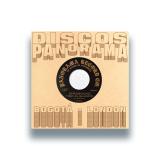
Back on the Discos Panorama series we head once again to Colombia, this time pairing two Afro-cumbia dancefloor weapons from Afrosound and Wganda Kenya — two giants of the late-’70s and early-’80s tropical scene.
Around this time Colombian studios, particularly those connected to Discos Fuentes, were beginning to push things forward. Traditional cumbia rhythms were still at the core, but now they were being driven by electric organs, synths, drum machines and fuzzed-out guitars. The result was something raw, hypnotic and incredibly rhythmic — records that feel almost proto-electronic, long before anyone would’ve used that word.
The two cuts on PAN014, originally released in 1978 and 1981, capture that moment perfectly. Rolling percussion, locked-in basslines and swirling keyboards create grooves that just keep building. They’re party records, no doubt about it, but there’s something else going on too — repetitive, driving, almost techno in spirit, the kind of tracks that can run for minutes and never lose the floor.
The A Side is the anthem, the B Side feels like it was lost on an LP…
Part of PANORAMA’s Discos Panorama series, this one continues the label’s focus on bringing essential Colombian dance music back to DJs and collectors. Carefully remastered and pressed on 7inch, these are the kinds of records that instantly change the temperature in a room.
expected to be published on 05.06.2026

This first-time reissue of Quinteplus’ 1971 album revives a key moment in Argentine jazz, featuring crisp trumpet and tenor sax, electric piano-driven funk and modal grooves, and a tight, spacious rhythm section. It showcases prominent figures like Jorge Anders and “Pocho” Lapouble.
==================================
Quinteplus was born in Buenos Aires at the end of the 1960s, emerging directly from the ideas and experiments of the legendary Agrupación Nuevo Jazz. Founded in the early ’60s, this collective brought together some of the most forward thinking figures in Argentine jazz functioned as a creative lab where musicians questioned where jazz could go next. Among the key ideas discussed was the fusion of jazz with Argentine folk styles such as zamba, chacarera, malambo, cueca, and candombe, as well as a deeper look into African rhythms as a bridge between musical worlds.
Two members of that collective, keyboardist Santiago Giacobbe and bassist Jorge “Negro” González, carried those ideas forward when they formed Quinteplus in 1969. The group came together naturally: all the musicians already knew each other and had played in different projects around the Buenos Aires scene. They shared a strong admiration for Julian “Cannonball” Adderley’s quintet, along with a clear goal—to develop a modern jazz language grounded in local Argentine rhythms.
From the start, Quinteplus stood out for its openness and adventurous spirit. Rhythm was central, and so was experimentation. The band belonged to a generation of Argentine jazz musicians eager to explore electric instruments and new textures, anticipating what would soon be known as jazz-rock. This was happening in Buenos Aires at the very same time Miles Davis was opening new doors with “In a Silent Way” and “Bitches Brew”. Giacobbe introduced one of the first Fender electric pianos in Argentina, while González pioneered the amplification of the upright bass and even developed a hybrid electric, boxless version of the instrument. Trumpeter Gustavo Bergalli, meanwhile, maintained close ties with the emerging Argentine rock scene, collaborating with Luis Alberto Spinetta and appearing on Almendra’s first album.
In 1971, Quinteplus recorded its first and only studio album for EMI. The original lineup featured Jorge Anders on tenor saxophone, Bergalli on trumpet, Giacobbe on keyboards, González on upright and electric bass, and Norberto “Pocho” Lapouble on drums and percussion—who also illustrated the album’s iconic sleeve. The record is a refined showcase of the band’s musical vision: original compositions, fluent jazz language, folk-derived rhythms, funky electric textures, tight ensemble playing, and standout brass solos. Though critically praised, the album received little label support and sold modestly, eventually becoming a sought-after collector’s item.
Quinteplus disbanded in 1973, their music was perhaps too bold and unconventional for its time.
On Stock and ready to ship

"AVEX REGGAE SYSTEM" is a series of gems of reggae covers of classic AOR and pop songs that were in heavy rotation on dance floors and FM radio from the late 70s to the early 90s. This is the fifth 7-inch single cut project from the series!
"Upside Down" is an 80's dance classic by Diana Ross, produced by Nile Rodgers and Bernard Edwards, who were flying by the seat of their pants at the time, and features Mareen's cute vocals and electric sitar tones, just like the original. The cover features Mareen's cute vocals, electric sitar and a bouncy shuffle beat." Smooth Operater" was released in 1984 and was one of Sade's early hits that made her a worldwide sensation, and it was a longtime seller in Japan at the time, playing in cafes and bars.
On Stock and ready to ship
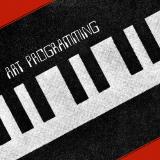
We are excited to continue our work with Art P / Art Programming by finally offering the first full-length work from this Bremen-based electronic group. Originally released only on cassette in 1983, the self-titled album has now been fully restored and remastered, complete with bonus tracks and unreleased mixes unearthed from a rare demo.
The LP opens with "Wesen vom anderen Stern" ("Beings from Another Planet"), a downtempo, 808-driven electro synth wave track with German lyrics telling a story of aliens capturing earth, becoming the new "Herren" (lords), while humans are reduced to mere "objects." Art Programming founding member Jens-Markus Wegener notes that this track has always been a favorite during live performances, and it's easy to imagine how the futuristic sounds would have blown people away at the time.
Next is the electro/proto-techno title track "Art Programming," which we previously issued on a limited 12" in its full-length form. With its straightforward Roland 808 rhythms, catchy synth lines, and vocoder vocals, it's a classic example of German electro, and one of the earliest proto-techno tracks - long before Cybotron claimed the techno mantle. Its extensive break and electronic twist make it an early precursor to the genre. Wegener recalls that this track was created exclusively by him and Grotelüschen, with Grotelüschen contributing most of the melodic elements, while Wegener focused on drum machine programming and vocoder vocals.
On "That's Me," the album welcomes back singer Claudia Roebke. Although it's an electronic composition, Roebke adds a rock-infused, almost psychedelic vibe to the song. The lyrics, written by Wegener, depict a person obsessed with their appearance, using irony to critique societal beauty norms, questioning the obsession with perfection and attraction.
The album continues with a series of uptempo electro tracks: "Videoscreen," "La Gare," and "Genscher Pull 'N' Push." The first two feature slightly different mixes from an earlier demo that we personally prefered over the versions that were available on the final cassette release. "Videoscreen" expands on the theme of social isolation, with lyrics reflecting on a world obsessed with watching video all day - a topic that resonates strongly with today's culture of doom scrolling and social media addiction.
Next up, "Genscher Pull 'N' Push" is an incredible electro/wave/proto-techno track recorded in October 1982 with a political edge. Originally omitted from the album, it was only available on the demo cassette we mentioned earlier. The song takes aim at German politics, with lyrics that shout "bitte geh nach links / bitte geh nach rechts" ("please go to the left" and "please go to the right"), referencing the shifting political allegiances during the 1982 coalition change, when Genscher's party, the FDP, left the Helmut Schmidt cabinet to join the CDU/CSU opposition. The track was never released as the political topic had become outdated just a few months later.
The album closes with "Light and Fire," which originally served as the album's opening track. Its quirky, upbeat vibe now makes for a fitting outro.
The gear used on this album reads like a dream list for early 80s electronic music production: Roland Jupiter 4, TR 808, TB 303, System 100, SVC 350, Korg Mono/Poly, Moog Prodigy, FRICKE-Sequenzer, Roland CSQ-100 Sequenzer, Coron DS-8, MM 12/2, Sony TC 399, TEAC-244 Portastudio, Ibanez DM 1000, EH-Electric Mistress, EV-Micro. This unique lineup of equipment sets the album apart from NDW releases of the era, lending it a distinct sound with heavy proto-techno leanings and that straightforward electro vibe we all love.
The album is being released as a very limited edition of 300 copies on transparent red vinyl, complete with a full picture sleeve and lyrics inlay. This is yet another rediscovered and restored 80s gem on our label that you definitely don't want to miss!
On Stock and ready to ship

Return of the Blastromen! OEra marks the comeback of the Finnish Electro duo, 7 long years after their last album Cyberia. The new EP on German label Dominance Electricity features 4 powerful, polished productions, with melodic synths and Vocoder vocals somewhere between Kraftwerk, Anthony Rother, TRON soundtrack, a pinch of Psytrance and Jackal & Hyde / Dynamix II / Code Rising style Electrobass.
On Stock and ready to ship

Maria is the debut album from renowned Brazilian electric bassist and composer Moyses Dos Santos. A homecoming for the London-based artist, Moyses’ debut reconnects him with his North-Eastern roots while assembling an international cast of collaborators including legendary Brazilian arranger Arthur Verocai, US trumpet sensation Theo Croker and London-based vocal star Lynda Dawn.
After relocating from Brazil to London in the early 2000s, Moyses dos Santos quickly became one of the capitals’ most in-demand players, sharing stages, studios, and writing credits with best-selling artists including Nile Rodgers, Janelle Monáe, Emile Sandé, Gregory Porter and Omar.
In 2022, Moyses toured with Brazilian jazz-funk legends Azymuth, completing the rhythm section alongside Brazilian drumming master Ivan "Mamão" Conti. "It felt like he was my wise Brazilian grandfather figure." Moyses recalls. "When you spend so many years working internationally, you unconsciously start to leave certain parts of yourself behind. Mamão encouraged me to reconnect with Brazilian music, and that's where this record really began."
Brazil’s North-east, where African, indigenous and European traditions collided and fused most intensely, produced a musical heritage unlike anything else on earth, Moyses dos Santos is a product of this syncretism. On Maria, named after his mother, Moyses brings the musical vocabularies of his youth to the fore. From the soul of the church band where he began to learn his trade as a musician, to the rolling batucadas – maractus, baiaos, sambas and frevos – which he played throughout his teenage years.
Drawing on the lineage of North American electric bass giants like George Duke, Jaco Pastorius, and Stanley Clarke, Moyses runs Brazilian musical traditions through jazz, funk, soul and disco: his sound charged with the cosmopolitan energy of London's contemporary jazz scene.
Lead single and album opener “Boa Viagem’ is joyous, carnivalesque dancefloor jazz: a timeless groove for the nightclub and street party alike. Calling directly to a higher power “Brazilian Spirit” is an astral-jazz phenomenon, featuring the transcendent trumpet playing of Grammy nominated Theo Croker. On “Saudade” Moyses calls upon iconic Brazilian maestro Arthur Verocai, whose signature string arrangements cascade around the divine vocals of ascendant London artist Lynda Dawn.
With impeccable style, charisma, warmth and virtuosity, Moyses steps forward with his stunning debut Maria: out on vinyl, LP, CD and digitally on the 12th June 2026.
expected to be published on 12.06.2026
BOYSENBERRY VINYL[33,57 €]
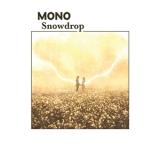
Als MONO ihr vorheriges Album OATH 2023 gemeinsam mit ihrem langjährigen Produktionspartner und Freund Steve Albini aufgenommen hatten, konnten sie sich nicht vorstellen, dass es das letzte Studioalbum sein würde, das sie zusammen machten. Albini starb im darauffolgenden Jahr tragisch, und dieser Verlust hinterließ eine unermessliche Leerstelle - nicht nur im Leben all jener, die Steve persönlich kannten, sondern bei jedem, der eine emotionale Verbindung zu einem der Tausenden von Alben hat, an deren Entstehung er in den vergangenen vier Jahrzehnten beteiligt war. Er brachte Klarheit in das Chaos und eine selbstlose Hingabe an die Kunst und die Künstler, die ihresgleichen suchte. Auf persönlicher wie auf praktischer Ebene stellte sein Tod MONO vor tiefe Trauer und große Unsicherheit. Albini war zu einem grundlegenden Bestandteil des unverwechselbaren MONO-Sounds geworden, und allein der Gedanke daran, ihn ersetzen zu müssen, war mehr als entmutigend.Und dann kam: Brad Wood (Touché Amoré, The Smashing Pumpkins).Ausgewählt aufgrund seiner Vertrautheit mit MONOs kreativen und technischen Arbeitsprozessen - ebenso wie seiner jahrzehntelangen Freundschaft mit Steve Albini - betrat Brad Wood im September 2025 das legendäre Electrical Audio Studio, um aufzunehmen, was schließlich zu Snowdrop werden sollte. Gemeinsam mit dem in Chicago ansässigen Dirigenten und Orchesterleiter Chad McCullough verpflichteten MONO ein zehnköpfiges Orchester und einen achtköpfigen Chor für die acht monumentalen Stücke, aus denen Snowdrop besteht. Die Band spielte, und Wood nahm in demselben heiligen Raum auf, in dem die meisten MONO-Alben ihrer 25-jährigen Geschichte entstanden waren - die Songs auf Snowdrop tragen daher ein besonderes Gewicht. Abgemischt wurde das Album von Wood in seinem Seagrass-Home-Studio in Los Angeles; es klingt zugleich intim und umhüllend.Wo leicht ein Schatten über Snowdrop hätte liegen können, findet sich stattdessen eine außergewöhnliche Atmosphäre der Dankbarkeit. Statt in Herzschmerz zu verweilen, entsteht eine eindringliche Wertschätzung für das gut gelebte Leben mit einem geliebten Freund - und eine Sehnsucht danach, was noch kommen mag. Snowdrop ist der Klang einer Band, die Schock und Trauer in Hoffnung und Staunen verwandelt - und neue Klarheit im befreienden Gefühl des Nichtwissens findet.
expected to be published on 12.06.2026
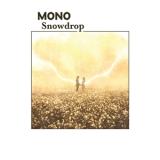
Als MONO ihr vorheriges Album OATH 2023 gemeinsam mit ihrem langjährigen Produktionspartner und Freund Steve Albini aufgenommen hatten, konnten sie sich nicht vorstellen, dass es das letzte Studioalbum sein würde, das sie zusammen machten. Albini starb im darauffolgenden Jahr tragisch, und dieser Verlust hinterließ eine unermessliche Leerstelle - nicht nur im Leben all jener, die Steve persönlich kannten, sondern bei jedem, der eine emotionale Verbindung zu einem der Tausenden von Alben hat, an deren Entstehung er in den vergangenen vier Jahrzehnten beteiligt war. Er brachte Klarheit in das Chaos und eine selbstlose Hingabe an die Kunst und die Künstler, die ihresgleichen suchte. Auf persönlicher wie auf praktischer Ebene stellte sein Tod MONO vor tiefe Trauer und große Unsicherheit. Albini war zu einem grundlegenden Bestandteil des unverwechselbaren MONO-Sounds geworden, und allein der Gedanke daran, ihn ersetzen zu müssen, war mehr als entmutigend.Und dann kam: Brad Wood (Touché Amoré, The Smashing Pumpkins).Ausgewählt aufgrund seiner Vertrautheit mit MONOs kreativen und technischen Arbeitsprozessen - ebenso wie seiner jahrzehntelangen Freundschaft mit Steve Albini - betrat Brad Wood im September 2025 das legendäre Electrical Audio Studio, um aufzunehmen, was schließlich zu Snowdrop werden sollte. Gemeinsam mit dem in Chicago ansässigen Dirigenten und Orchesterleiter Chad McCullough verpflichteten MONO ein zehnköpfiges Orchester und einen achtköpfigen Chor für die acht monumentalen Stücke, aus denen Snowdrop besteht. Die Band spielte, und Wood nahm in demselben heiligen Raum auf, in dem die meisten MONO-Alben ihrer 25-jährigen Geschichte entstanden waren - die Songs auf Snowdrop tragen daher ein besonderes Gewicht. Abgemischt wurde das Album von Wood in seinem Seagrass-Home-Studio in Los Angeles; es klingt zugleich intim und umhüllend.Wo leicht ein Schatten über Snowdrop hätte liegen können, findet sich stattdessen eine außergewöhnliche Atmosphäre der Dankbarkeit. Statt in Herzschmerz zu verweilen, entsteht eine eindringliche Wertschätzung für das gut gelebte Leben mit einem geliebten Freund - und eine Sehnsucht danach, was noch kommen mag. Snowdrop ist der Klang einer Band, die Schock und Trauer in Hoffnung und Staunen verwandelt - und neue Klarheit im befreienden Gefühl des Nichtwissens findet.
expected to be published on 12.06.2026

BASIC - das Trio aus Chris Forsyth (Gitarre), Mikel Patrick Avery (Percussion, Drumcomputer, Elektronik) und Douglas McCombs (Fender Bass VI) - hat sein neues Album mit sieben Titeln innerhalb von zwei Tagen in den Electrical Audio Studios in Chicago aufgenommen und die Overdubs sowie den Mix zusammen mit Je Zeigler in Philadelphia fertiggestellt. Die Aufnahmen sind groovig, aber leicht und locker, wobei die Songs viel größer klingen, als man es von einem Trio erwarten würde. Für reichlich Detail sorgen die ineinandergreifenden Gitarren und Averys einzigartige Kombination aus elektronischen Beats und akustischer Percussion, die er live mit verschiedenen selbstgebauten elektronischen Prozessoren bearbeitet und manipuliert. Kurz nach der Veröffentlichung ihres Debüts (This Is BASIC, 2024) stieß Bassist McCombs (Tortoise, Brokeback) zu der Gruppe, und zusammen mit den in Philly ansässigen Kernmitgliedern Forsyth (Solar Motel Band) und Avery (Natural Information Society) tourte die Band mit dem Album die Westküste rauf und runter sowie durch den Nordosten und Mittleren Westen der USA und machte Halt bei einflussreichen Festivals wie Sound & Gravity und Big Ears. Die Chemie zwischen den dreien führte fast sofort zur Entwicklung von neuem Material, und die ,Dream City"-EP erschien im Frühjahr 2025.
expected to be published on 12.06.2026
Damian Dalla Torre returns with People Pleaser, a record shaped by movement, collaboration and an ever-deepening relationship with sound as environment.
The Leipzig-based multi-instrumentalist, composer and producer first found wide attention with his 2022 debut Happy Floating, and his subsequent album I Can Feel My Dreams was named the #1 Contemporary Album of 2024 by The Guardian, an accolade that broadened his audience and deepened confidence in his evolving voice. That second album, written between Europe and South America, opened unexpected doors and took Dalla Torre to stages across New York, Japan and Italy. “When you release music, it’s very intimate,” he reflects. “You show your emotions pretty raw. I was kind of scared. But getting so much positive feedback gave me a lot of self-confidence to try out more.”
People Pleaser begins in that quiet shift of confidence.
The title stayed with him for months before he committed to it. “It was a working title for a long time,” he says. “I didn’t actually think I would use it. But this term also felt somehow relevant in connection with the phase of self-negotiation during the development process. Some aspects are related to pressure, others are positive.” The ambiguity felt right. Rather than presenting it as a statement, Dalla Torre leaves it open, an invitation rather than a confession.
At the centre of People Pleaser is collaboration. Guitarist Bertram Burkert, whose playing stretches from classical delicacy to electric abstraction, joined Dalla Torre in the studio for an intensive three-day session, recording a wide palette of textures that would become the backbone of the album. Vocalist Laura Zöschg, a key live collaborator, harpist Babett Niclas, organist Felix Römer, tape experimentalist Markus Rom, marimba and vibraphonist Volker Heuken and Japanese artist Manami Kakudo also contribute, creating a sound that feels intimate yet expansive.
expected to be published on 12.06.2026
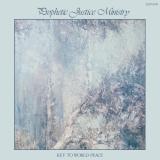
Key To World Peace is the third release by Prophetic Justice Ministry - aka Australian musician Sam Perry. An atmospheric, cinematic album that belies a striking pop songwriting nous at its core, its conductor Prophetic Justice Ministry is at the centre of a new wave of creative, rule-bending Melbourne artists. Romantic, smudged and hazy, Perry emerges from behind a wall of
half-light with a clutch of earworms and affecting emotions.
Recorded in home studios in Belgrade (Serbia), Christchurch (New Zealand) and Melbourne (Australia) over the course of three years, Key To World Peace offers a dichotomy in approach. Shifting on a dime between ambient, filmic washes of sound and more traditional song structures, the approach feels natural, casually acid-tipped and emotionally revealing. While Perry’s
distinctive keys and production melding with melody is evidenced in Melbourne group Who Cares?, as Prophetic Justice Ministry there’s a heightened sense of mystery and space being used.
Swirling in a psychedelic fog with dry iced chords falling down like melting stars, the album pulses with an ominous, distorted intro that sculpts air into blocks of sound before Psyop offers a glimpse through the gloom at the artist navigating through crushed, shoe-gazing chords, singing a consolation into an abandoned building. Side A’s more abstract tone veers from industrial tracks (T-A) to pastoral, impressionistic pieces (Trance) before album highlight Life’s A Party showcases the effortless, classic songwriting lurking in Prophetic Justice Ministry. Built on the tension between the upbeat lyrics and suppressed, rich delivery, the song lopes on an alluring loop with acoustic guitars and Perry’s voice walking a tightrope between irony and sincerity. The song blooms into a bright burst of light, almost inducing synesthesia in the listener and reminding a little of The Beta Band’s most outre and catchy moments.
Opening Side B, Naked Shine’s scintillating guitar is punctuated by a sub bass swell that offsets the yearning vocal performance. With palpable sensitivity the song is shepherded into short, atmospheric passages before Love Drum’s direct delivery: Perry’s vocal and guitar, dancing over a hint of distortion feels like Syd Barrett at his most casually brilliant. Carrying on the tradition of a single cover on every Prophetic Justice Ministry release, here Lana Del Rey’s Mariner’s Apartment Complex is given a stripped back but faithful treatment. With a sound that feels like a hushed, Chris Isaak classic it’s testament to Perry’s own compositions that the cover doesn’t outshine the rest of the album. Album closer and single Spirit House Party combines a classic chord progression with Perry’s double-tracked vocal into a murky but brilliantly catchy chorus. While nowhere near as lush in its production, there’s something in the atmosphere of Prophetic Justice Ministry’s vocal sitting in the mix just so that reminds us of The Electric Prunes’ Holy Are You-era work with David Axelrod.
Key To World Peace flits between displaying a spectrum of blurred emotional resonance in its instrumental passages and vulnerability in the shape of raw, melodic songwriting. With his first release outside of Australia and vinyl debut, Sam Perry’s Prophetic Justice Ministry is a beguiling dance in and out shadows.
expected to be published on 12.06.2026
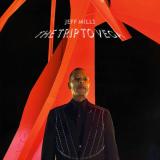
The Trip To Vega is about deep outer space odyssey that occurs in the process of traveling from Earth through the Cosmos to another "favorable" star system 25.3 light-years away.
The time is year 2097, Sept 23rd.
To this day, Earthlings have managed to dodge some of nature's more dangerous extremities, massive volcanic eruptions, Earthquakes, solar burst that knocked out the Planet's entire electrical grid for 3 years, numerous plagues of disease, food and fresh water shortages, domestic and International Wars and many other life-changing operas, but for this event, what remains is a realization that has no remedy. The cause: Earth's physicality has changed. It is no longer favorable for living things.
It is the constant shifting of the planet's internal tectonic plates which has unfortunately produced an unexpected and impassable dilemma.
Because of the collisions, deep within the planet's core, the planet is now producing an extraordinary amount of sound that includes a specific harmonic frequency that erodes the natural senses of all life on Earth.
It is intensifying. It is intolerable and it is unlivable.
Yet, some humans prefer to stay, to "ride it out" like the Titanic captain going down with his ship. Some, in total disbelief as some have concluded it is the second coming of Jesus Christ. But for most, the decision is clear. Tolive another day, leaving is the only rational choice.
At an increasing rate, scientific research data shows that humans and most animals, excluding the Jellyfish will eventually lose the usage of hearing and are to greatly suffer from an array of other neurological and psychological effects. The sense of touch and taste, sleep depreciation, severe nerve damage, constant hallucinations. Everyone will lose many of their cognitive abilities within an estimated 12 months from now.
On this day and every 7 days afterwards until all registered passengers have departed, the first of a fleet of large number of massive size spacecraft carrying approximately 1 million humans per vessel will permanently leave Earth to begin the long and adventurous trek across outer space to a new home: Vega.
This is not a precautionary tale as there is nothing to learn. Instead, a decision has been made and a Trip To Vega is the consequence.
- Jeff Mills
expected to be published on 19.06.2026

Italian jazz trio Collettivo Immaginario announces the release of their second full-length album, 'Oltreoceano'.
Known for their slick sound and energetic live performances, their style is firmly rooted in the jazz tradition of collective improvisation, through which they have developed an agile, kaleidoscopic sound. The trio’s unique fusion of funk, jazz, and 70's electronica continues in the trio’s latest release, forging connections across oceans through the universal language of music.
Consisting of founder Tommaso Cappellato on drums and percussion, Nicolò Masetto on electric bass, and Alberto Lincetto on rhodes, piano, and synths, Collettivo Immaginario have become rising stars in the Italian festival scene, from the streets of their hometown in Italy to the diverse audiences in Los Angeles, London and Milan.
Subtly paying homage to genre-bending giants like Azymuth, Lonnie Liston Smith, Herbie Hancock, and Hermeto Pascoal—alongside Italian film music legends Piero Piccioni and Piero Umiliani—their sound moves effortlessly between the heat of the club and the cinematic allure of evocative film scores, infused with touches of spiritual jazz.
On Stock and ready to ship

New bood red vinyl version! The master in scratch Dj T-Kut together Dj Yamal and Cut Sound Brothers have cooked this new battle vinyl ready to be to squeezed to the maximum, "Scratch Practice". Composed by 2 instrumental tracks and 8 tracks tools, each track is inspired in the classic tracks of the turntable worldwide that converts this record an indispensable piece for the fanatics. The cover is an art of the well-known graffiti artist Mast. Masterized in 126 Productions House. All tracks signed by Dj T-kut. This 2024 version comes as new limited version presented in blood red colour 7" format to enjoy in both ways of this wonderful single.
On Stock and ready to ship
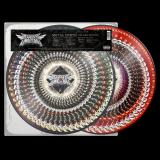
"Beyond HEAVY METAL": the deluxe edition is a special 2LP zoetrope vinyl featuring live recordings from arena shows in the UK, US, and Japan, along with “from me to u (feat. Poppy)” Major Lazer Remix and “from me to u (feat. Poppy)” Jordan Fish Remix
Having celebrated its 15th anniversary last year, BABYMETAL presents a new style of heavy metal album created in collaboration with a new generation of friends encountered across the globe. A powerful statement of who the band is today, this album pushes toward what lies "beyond HEAVY METAL" and aims to change the course of history.
Available to own on special edition zoetrope vinyl. Limited quantities, available while stocks last!
expected to be published on 26.06.2026
dgoHn (pronounced “John") is the moniker of John Cunnane, who hails from somewhere between London and Essex. ‘Tessares,’ his fourth album but his first for Planet Mu, is playful, unconventional drum & bass that contrasts sparse effects and melodic elements with complex drumfunk and breakcore. He often uses unusual time signatures and head-spinning polyrhythms inspired by jazz and math rock, sometimes within the same track. Somehow he makes it sound effortless, and occasionally pretty as well, keeping a fine balance that never feels punishing; exploratory without getting lost.
He's built a name for himself over the last two decades performing live at festivals and events around the world, while collaborating with fellow artists such as Macc, Nic TVG, Jodey Kendrick and Badun as well as solo releases.
The album opens with ‘Waiting For’ which combines complex breaks with melodic fills, spacey effects and dubbed out vocals that feel like snatches of lost conversations - a combination he uses throughout the album giving it an eerie touch of humanity. Lead single ‘I Couldn't Remember So I Made Something Up’ is in 15/8 time. It feels like a conventional melodic drum & bass track, but the time signature disrupts the listeners’ expectations, while the detuned melody eases its sense of dislocation. ’Whistling On A Tuesday’ opens with a light echoey piano countdown into bass stabs which introduce heavy whirling amen breakbeats that switch between 180 and 120 bpm. ’Holly Can Swim But She Doesn’t Really Like It’ is the most rhythmically challenging track here. It feels hard to hang on to as its knotty breaks play out over bell chimes, like something Autechre might make if jungle was in their DNA. The album ends on the dubbed-out drumfunk of ‘7 Years Or More,’ with an arrangement that builds a filmic, dusty atmosphere of chimes and electric guitar, layering in vocals, vinyl crackle and echoing synth giving way to tough drums, before all that is taken away so that just a voice remains.
expected to be published on 26.06.2026

We Release JAZZ is very happy to announce the limited vinyl edition of Obad’s powerful new album Suspended, a vivid document of the Tehran ensemble’s endlessly evolving sonic universe — now available as a limited LP housed in a heavyweight sleeve with an Obi strip and featuring original artwork by Iranian painter Sadra Baniasadi.
Suspended is a superbly spontaneous, improvisational blend of exploratory jazz fusion, progressive funk-rock, and transcendental groove. Built from lived experience and shaped by Tehran’s pulse, Obad’s music is kinetic and intuitive — an ever-morphing dialogue between rhythm and texture, emotion and message.
With Farid Farzian Pour on drums, Siavash Karimi on electric guitar, Kiarash Radmehr on bass guitar, and Hamidreza Keshavrpajuh (aka Pajuh) on tenor saxophone, Obad creates a soundworld where hypnotic basslines meet thunderous, free-flowing percussion; where searing guitar motifs coil around saxophone phrases that move from whispered invocation to explosive catharsis. Suspended captures the quartet at full creative stretch: alive, unguarded, and deeply attuned to one another.
Sadra Baniasadi’s striking cover painting mirrors the album’s energy — bold, dreamlike, charged with movement, and extending Obad’s world into the visual realm.
Suspended stands as a major statement from one of Iran’s most compelling contemporary ensembles, marking Obad’s first release on We Release JAZZ and continuing the label’s commitment to boundary-pushing music born from profound listening, place, and collective intuition.
On Stock and ready to ship

In a sharp-angled, fiercely inventive reflection on the nature of club culture and digital fatigue, Simo Cell and Abdullah Miniawy reunite to deliver their new album, Dying is the internet, to Dekmantel's UFO series.
French producer Simo Cell has blazed a singular path from his dubstep-influenced origins to become a leading light in contemporary leftfield club music, twisting up adventurous rhythms and flamboyant production in pursuit of a perpetual freshness for the floor. Egyptian singer, poet, producer and composer Abdullah Miniawy has become equally omnipresent in the past 10 years, straddling the arts world and leading with his piercing Arabic lyricism while maintaining an eternally curious spirit that leads into open-ended, experimental music from the abstract to the propulsive.
Following up on their 2020 EP for BFDM, Kill Me Or Negotiate, Miniawy describes their sharply focused new album as "a playful prophecy about the triggers of a new global revolution." Cell considers the title, Dying is the internet, to be a mantra about "how the internet lost its soul," becoming "less about sharing ideas and more about surviving in a digital business ecosystem." Deliberately at odds with the reel-ready two-minute attention span of the average social media surfer (i.e. everyone), the pair set out to make an album that takes its time to reveal nuanced ideas and expressions. Rather than one-note despair for the modern malaise, Cell and Miniawy offer a philosophical reminder that this present moment in the human experience is a temporary phase, no matter how overwhelming it feels.
Dying is the internet finds Miniawy experimenting with auto-tune across the record, while Cell has developed his voice design chops and compositional instincts, moving closer to fully realised song structures without losing the fundamental 'clubbiness' of each track. The result is a cohesive, wildly original kind of heavyweight dance music that slings out hooks left right and centre, from Miniawy's laconic trumpet looming through low-slung 'Reels in 360' and 'Travelling In BCC' to the persistent handclaps that bring 'Living Emojis' to life. Miniawy's poetry explores the power of insistent, repeated phrases in a break from his more typically structured form.
Kenyan powerhouse Lord Spikeheart adds extra snarl to stripped-back, slow-burn opener 'I See The Stadium', but otherwise Dying is the internet is purely the work of Miniawy and Cell casting their considerable chops out into unexplored territory. The results are electric, bound together by a consistent economy of sound that burrows into a shroud of bass-heavy minimalism barely masking Cell's incredibly detailed studio flex. Even the beatless flourish of the Miniawy-produced 'Tear Chime' comes loaded with physicality — a sensory rush at the mid-section of the album bookended by some of the most idiosyncratic club music in recent memory.
Both Simo Cell and Abdullah Miniawy have already proved themselves as fearless innovators across different fields. The strength of their partnership lies in their ability to make space for each other while letting their distinctive sonic identities ring loud and true. Dying is the internet has immediacy and physicality to translate over a soundsystem, but its intricacies are purpose-built for repeat visits and contemplation, unveiling hidden dimensions the deeper you dive into it.
On Stock and ready to ship
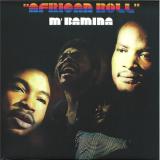
Gatefold Sleeve
M’Bamina – African Roll (1975)
The story of an album born between Africa, Italy, and the nightclub culture of the 1970s
In the heart of 1970s Italy — a country undergoing profound social change and a music scene just beginning to open itself to distant sounds and cultures — an extraordinary, almost improbable story took shape. It is the story of a group of young African musicians who found their way to Europe, of a Turin nightclub that became a crossroads for communities and experimenters, and of an album which, released in small numbers and largely unnoticed at the time, is now considered a rare jewel of Afro-fusion.
The band called themselves M’Bamina — an ensemble of musicians from Congo, Cameroon, and Benin, who arrived in Italy in the early Seventies. Settling between northern Italy and the Pavia area, they began performing in small clubs and community events, bringing with them a vibrant rhythmic heritage: African polyrhythms, call-and-response vocals, funk-infused bass lines, and Caribbean or Afro-Latin colours absorbed along their musical journeys. Their raw, contagious energy on stage quickly drew attention.
Meanwhile, in Turin, another story was unfolding. There was a venue becoming almost legendary: Voom Voom, one of the city’s liveliest nightclubs, run by Ivo Lunardi. The club attracted an eclectic crowd — students, artists, foreigners, night owls — and Lunardi quickly understood that the dancefloor wasn’t just a place for music, but a melting pot for a new kind of cultural energy. Out of this vibrant atmosphere came his idea: to turn the club’s name into a small independent record label, Voom Voom Music, capable of capturing the spirit of those years and giving voice to unconventional projects.
When Lunardi heard M’Bamina, he immediately sensed that this was the sound he had been searching for: fresh, different from anything circulating in Italy at the time, and capable of blending African tradition with funk and European sensibility. He brought them into the studio.
Production was handled by Lunardi along with Christian Carbaza Michel, while the engineering was entrusted to Danilo Pennone, a young sound technician with a sharp, intuitive ear.
The recording sessions — held in Turin in 1975 — produced a remarkably warm and direct sound. The music feels almost live: grooves rooted in African tradition, but open to funk-rock structures and modern arrangements. It is a natural fusion, never forced. Tracks move between tribal rhythms, funk basslines, light electric guitars, congas and Afro-Latin percussion, with call-and-response vocals and melodies that echo both Congolese tradition and the lineage of Latin jazz. Not by chance, one of the album’s most striking tracks, Watchiwara, reinterprets a Latin standard through M’Bamina’s own rhythmic language.
The album was titled African Roll — a name that was already a statement of intention. It is African music that “rolls,” that moves, adapts, transforms within a new geographic and cultural setting. It is not strictly Afrobeat, nor Congolese rumba, nor Western funk: it is a spontaneous, hybrid blend, shaped more by lived experience than by any calculated aesthetic program.
When African Roll was released, the world around it barely noticed. Distribution was limited, and 1970s Italy had yet to develop a cultural framework for receiving such music. The national music press rarely paid attention to African or “world” productions. The album slipped into silence — though the band’s own story did not.
M’Bamina continued performing across Europe and Africa, even sharing a stage in Cameroon with none other than Manu Dibango. By the late Seventies, they moved to Paris, signed with Fiesta/Decca, and recorded a second LP, Experimental (1978). Meanwhile, the peculiar record they had made in Turin began to resurface quietly among vinyl collectors, Afro-funk enthusiasts, and DJs hunting for forgotten grooves.
That is when the album’s fate began to shift.
Over the decades, African Roll emerged as an almost unique document: a snapshot of an intercultural Italy before the word “intercultural” even existed, a fragment of migrant history, a spontaneous experiment in musical fusion born far from major industry circuits but rich in authenticity. Original copies began commanding high prices on the collector’s market, and the album became recognized as one of the hidden classics of European Afro-fusion from the 1970s.
Today, more than fifty years later, this reissue finally restores visibility and dignity to a project that deserves to be heard, studied, and celebrated. It is not simply an album: it is the testimony of a rare cultural encounter, born in an Italy unaware of how fertile such exchanges would one day become.
It is the story of a visionary producer, an extraordinary band, and a fleeting moment in which music, migration, and nightlife came together to create something genuinely new.
African Roll is — now more than ever — the sound of a bridge: between continents, between eras, between cultures. A record that, after rolling far and wide, has finally come home.
On Stock and ready to ship
yellow vinyl[28,15 €]
With two deeply cherished compilations already in the bag, Luke Una steps up for the third volume in his É Soul Cultura series on Mr Bongo. A love letter to the dancefloor and its power to unite people from all corners of society amid growing division and extremist politics. Genre-spanning in nature, the 15 tracks travel between cosmic soul, boogie, proto-house, slo-mo technoid grooves, drum machine afro, astral bass-bugging futurism, jazz funk, dance, and disco. Each having the ability to move the body as much as the heart.
From his formative years in Sheffield to co-founding Manchester’s much-fabled Electric Chair with Justin Crawford, through to helming the iconic LGBTQ institutions of Homoelectric / Homobloc, Luke has spent 40 years immersed in dance music. His latest outlet, É Soul Cultura, has grown from a label to a globe-spanning events series with Luke holding residencies and embarking on tours across the world from Japan and Australia to America and Europe.
“For me, the dancefloor was never about a one-dimensional, thudding, 130 BPM beat only. It's a much more dynamic, broader vision than that. I cut my teeth in an era where a 100 BPM record had as much impact, excitement, and energy as a 134 BPM dancefloor jazz funk or techno record”, Luke mentions. É Soul Cultura Volume 3 is the perfect embodiment of that notion: “It’s about four decades in the trenches playing dance music, the late-night afters, the shebeens, the basements, warehouse parties, the eight-hour journeys in East London, through to festival sets at Houghton and We Out Here. It’s music unconstrained by genre or tempo and more about making your body move”.
But this isn’t simply a collection of disparate dance tracks; they carry meaning and soul. “It’s less about escapism, more about reconnection. My experience of post-covid has been the coming together of all the clans in various clubs and gatherings. A reaction to a very toxic world out there, where the aggro rhythms of division have sought to divide us, and people don't meet as often. The coming back together face-to-face in clubs has encouraged a real love in the air, there's a real togetherness and collective spirit”.
Opening up the compilation is a track that channels that very message, the transcendental, soul-rousing Harris & Orr ‘Spread Love’. Joining the dots from there, to the low-slung deep house closer of Fatdog ‘Remember’, you’ll find electronic drum machine Nigerian funk, sitting side by side with dancefloor Cape Verdean brilliance, a post-punk cover of Fela Kuti, rubbing shoulders with cosmic electro, and an Una-championed, 8-minute, kickless DJ Harvey remix. There’s jazz funk in various guises moving from boogie synth to astral travelling, slo-mo acidic raw techno, and a ‘79 soul stepper, alongside swirling percussive Italo disco and tribal-charged house. All infused with an innate ability to bring people together.
As society becomes increasingly fractured, É Soul Cultura Volume 3’s message is more than movement. It’s about dance music’s power to unify people from all walks of life and break down the barriers that divide us.
On Stock and ready to ship

2026 Repress
French DJ and producer Hemka makes a striking solo debut on Mutual Rytm with 'Introspection'.
Born in Marseille and based in Paris, Hemka has been shaping her take on techno for over a decade, steadily growing her international presence with music on respected imprints such as Token. Her music fuses the raw energy of 90s techno with modern textures and is fast-paced, groovy and laced with subtle psychedelia. By weaving in her own vocals, Hemka adds a deeply personal and authentic layer that resonates with both the body and mind. Following the strong reception of her track 'Fragrance' on the 'Federation Of Rytm III' compilation, this potent new EP is a powerful reflection of her bold, emotional and forward-thinking artistic voice and the start of an exciting new chapter with SHDW's Mutual Rytm.
'Abyss' kicks off with tightly coiled, heavy-hitting drum funk and eerie synths that never let up while ghoulish vocals layer in extra darkness and anxiety. 'Time' is another sleek, stripped-back but banging wedge of linear techno excellence and 'I Can't Shine' layers up paranoid vocals with high-speed glitches and rubbery drums to ensure maximum impact in the club. The excellence continues with 'The Bad Place' with booming drums and moody synth atmospheres, getting you up on your toes and keeping you there. Last, 'Unchanged' fizzes with static electricity as wordless vocals refract around the mix next to wispy synths and icy hi-hats. Digital bonus cuts 'Voice In My Head' and 'Eternity' round things out with more heady and intense techno for driving deep into the night.
On Stock and ready to ship

Label Cover[14,92 €]
2026 Repress
Sicily's SLV is able to merge technical mastery with emotional resonance. His potent techno sounds have come via the likes of SHWD's Mutual Rytm and Slam's Soma, and unite timeless yet forward-thinking sonics.
On 'Fleeting Dreams', he continues to refine his signature sound while channelling introspection and intensity into a collection of meticulously crafted cuts that balance precision and feeling, energy and space. Each track reveals a different side of his sonic identity: hypnotic rhythms intertwine with evolving soundscapes, while layers of distortion and melody merge into a dreamlike tension between the mechanical and the organic.
'Fading Moments' kicks off with a sleek blend of driving, supple kicks and warm synth ripples, while a euphoric vocal cry is buried deep to amp up the emotion. 'Scenario' then brings icy hi-hats and sinewy synths bring a futuristic feel to the unrelenting, high-pressure drums down low. 'Daruma' has a darker energy with menacing textures and paranoid FX bringing the rolling drums to life, while 'Bass Grit' has a hunched up rhythm, with groaning pads and fizzing static electricity that charge up the party. To close, 'Shimmer' sinks down into a muscular and deep rhythm that's marbled with restless synths and ever-rising tension.
In addition, digital bonus cuts 'Trust' and '1990' offer different perspectives with slamming drums, seductive vocals and feisty synth loops making for two more bold, immersive techno weapons.
On Stock and ready to ship
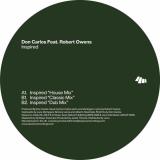
Two seriously high-grade legends come together to mark the 30th anniversary of the cultured Seasons Limited imprint here: Don Carlos is behind one of Balearic house music's most enduring anthems in 'Alone' and Robert Owens has been voicing the genre since the 80s with his signature smoky tones. Here they cook up 'Inspired' in three different forms - there's a deep and soulful House Mix with an electric delivery from Owens, then a chord-laced and warm Classic Mix with a throwback Chicago bassline and finally a Dub Mix that strips everything back to a more breezy late-night sound that sinks you into the groove perfectly.
expected to be published on 06.07.2026

2026 Repress
An anthology born out of isolation and deep introspection, Sky Dust Drifter is a cosmic medley of sun-soaked AOR, psychedelic folk, and soft rock. This soundtrack was driven by the lonesome cowboy, a lockdown savior leaving me adrift in desert winds and dimly lit country bars.
Long-distance trades and masked meetups yielded a collection of private press LPs and 45s from ten different artists spanning 1973 to 1980. This seemingly random stack of records revealed songs living entangled in themes of hard luck, heartache, and the inevitable loneliness of existence. Adorned in cracked leather and chrome, this album is an aimless wander from the soil to the stars.
Featuring an unreleased English version of the compilation’s title track “Sky Dust Drifter” (originally released only in Hebrew), the record shifts from laconic afterthoughts to bold proclamations. From Michael Andrews’ blue-eyed soul assertion “Something Bad’s Better Than Nothin’,” to the searing electric guitars and bold synths of Sunburst’s “Special Lady,” Sky Dust Drifter thrives on solitude in a universe of unconditional self-rule where loneliness is not darkness but rather a blazing light of autonomy.
On Stock and ready to ship

Black Truffle is thrilled to announce Dalbergia Retusa, an extensive double LP selection of the solo guitar music of Hans Reichel, compiled by Oren Ambarchi. Last heard on Black Truffle as one quarter of the joyously anarchic Bergisch-Brandenburgisches Quartett, Hans Reichel (1949-2011) is one of the great figures of experimental guitar music. Though perhaps lesser known than peers like Derek Bailey, Fred Frith and Keith Rowe, Reichel’s rethinking of the instrument was in some ways the most radical of all. Early on, he dispensed with existing guitars to build a series of his own that explored the use of additional strings and fretboards, moveable pickups, extra bridges, special capos, and other innovations documented in the extensive booklet accompanying this release.
Reichel was a long-term resident of Wuppertal, the small Western Germany city that became an unlikely centre of European free jazz in the late 1960s, also home to Peter Brötzmann and Peter Kowald. His solo debut Wichlinghauser Blues was an early entry into the FMP discography and began a relationship with the label that stretched into the 1990s; all the solo performances heard here were first released on FMP. As Reichel says in the charming archival interview with Markus Müller included here, he was ‘always a cuckoo’s egg at FMP’, a label that began as an outlet for roaring European free jazz. What strikes the listener right from the opening selection on Dalbergia Retusa—‘Return of the Knödler show’, from 1987’s The Dawn of Dachsman—is the extraordinary beauty of Reichel’s music, at once alien in the shimmering sonorities and unconventional pitch relationships made possible by his invented instruments, and deeply lyrical, even romantic in its harmonic content. Growing up in West Germany in the 1960s, Reichel’s formative influences were mainly British and American rock bands, a background that shines through in many of the pieces included here: ‘An old friend passes by’ is haunted by the ghost of Hendrix’s rhythm guitar, and the wild closer ‘Heimkehr der Holzböcke’, taken from a rare 1975 7” and the only piece to use overdubbing, layers errant hammer-on and slide tones over a Canned Heat boogie chug.
Reichel was an important source for the development of Oren Ambarchi’s own extended approach to the electric guitar. Appropriately enough, his selection opens with the very first piece by Reichel he ever heard, on a flexidisc included with a 1989 issue of Guitar Player magazine. Though Reichel collaborated with others extensively in many settings and also performed on violin and his other major contribution to instrument invention, the daxophone, his music for solo guitar remains at the core of his oeuvre. Focusing exclusively on solo pieces recorded between 1973 and 1988, the 23 pieces on Dalbergia Retusa showcase the range and consistency of Reichel’s work, allowing the listener to see how his performances developed hand-in-hand with his instrumental inventions. On a piece from his very first LP, played on an 11-string instrument (partly strung with piano strings and using a schnapps glass a slide), we hear his intensive exploration of fret-hammering to create zither-like, chiming tone, which Reichel would hone further in later years with a double fretboard guitar specifically designed to be hammered rather than fretted and picked. On a piece from 1979’s Death of the Rare Bird Ymir, Reichel uses two steel-string acoustic guitars at once, with beautiful results: ‘some even say too beautiful’, he jokes in the interview included here. Many of the pieces from the 1980s make use of varieties of the ‘pick behind the bridge guitar’, instruments of uncanny harmonic richness primarily designed to be played on the ‘wrong’ side of the bridge. At times the unexpected behaviour of attacks, resonance, and decay can almost seem electronic, conjuring up the technology-assisted work of Henry Kaiser or even Fennesz, but realised solely through Reichel’s unorthodox techniques on his invented instruments. Extensively illustrated with photos and Reichel’s own plans and drawings of his instruments, Dalbergia Retusa is an essential introduction to the unique world of Hans Reichel. Rarely has music been at once so strange and so beautiful.
On Stock and ready to ship

2026 Repress
A further exercise in musical curation, Child Of Nature is our latest sonic confluence of self-released tracks from the loners, hippies and outsiders of the 70s and early 80s. A collection of privately pressed music, able to breathe and be created free from the constraints of heavy handed commercialism, yielding a pure vision of artistic expression. Child Of Nature features ten songs of brooding soft rock and psychedelic folk steeped in melancholia. Some ache for better times or past lovers, while others seek spiritual fulfilment or social progress.
A compilation to evoke the raw and unobstructed, to summon the occult, to fundamentally conjure a vivid portrait of our untamed natural environment. Recorded on the north coast of California, Luellen Reese’s ethereal “Silvery Waterfalls” drifts and swirls with electric guitar as her unearthly vocals transcend across a seven minute opus, fit for the golden age of labels like 4AD or Dedicated. “The flowers are dancing just for you …”, Reggie Russell croons over glistening Key Of Creek’s title track “Child Of Nature”, evoking a utopian world of natural harmony free from the present day realities of industrial decay.
Tap into your inner primal being, to embrace wholeheartedly, with frivolity and without reserve, your own child of nature.
On Stock and ready to ship

Ribe & Roll Dann serve up potent techno on Mutual Rytm with 'Virtus Occulta'.
Built around concepts of unacknowledged work and enduring merit, the release marks their first EP on SHDW's widely
respected label.
Based in Toledo and Madrid, Ribe & Roll Dann are exciting residents at Laster Madrid and Lanna Club, two of Spain's leading venues. Emerging as driving forces in their national techno scene, they have also made an impact on the global landscape, making wider moves through collaborative releases on Klockworks, and individual outings on a number of other influential labels. Having previously featured in the label's Federation of Rytm IV compilation, the pair make their full EP label on SHDW's Mutual Rytm imprint to open March with a deep dive into their expansive sound.
Opener 'Sub Terra' is a pure club tool that is direct, physical and rooted in the underground with a seriously heavy low end. 'Extra Lumen' is more restrained but still built on a steady, forceful rhythm with controlled energy that prefers to operate in the shadows. 'Ars Non Placens' stays true to the idea that music is not made to please, but to exist on its own terms with hunched drums and dubby undercurrents. Next, 'Meritum Negatum' fizzes with static electrical charge and minimal drum funk and is a direct reflection on overlooked skill and unacknowledged work, before closer 'Virtus Persistens' delivers a continuity and a steady pulse rather than an explosive ending, keeping you locked throughout.
In addition, three digital bonus cuts come alongside the vinyl package. 'Labor Inauditus' speaks to hours of technique, production and booth experience that remain invisible. Next come the taught, rubbery rhythms and unrelenting atmosphere of 'Silentium Testium', while 'Sine Aplausu' - which means without applause - brings a ghostly late night vibe that you will never want to end.
On Stock and ready to ship

Ruf Dug flies to Duca with 4 edits showcasing his Ruf Kutz have never been far from the mind.
Rhythm Section, International Feel, Pinchy & Friends, Wolf Music, Music For Dreams and Klasse Wrecks all released the Dug, it’s super honouary to board.
Manchester to Guadalope to Ibiza, his reputation as a DJ, producer and toker is example to all. Here we go. Dug dives in, drum machines ready, mutated across scenes. Street Soul, si! Industriale, buono! Beatdown, no problemo !
Ruffy’s Big Decision is UK Disco meets back alley Boogie, love pains galore over driving funk bass. You Are The One !
Ruffy’s TV Channel is metalica. Heavy beats, unrelenting. Funk to 11. Sherwood. Ciao. Pursuit of trivia. Television, The Drug Of The Nations !
Ruffy Electric Bill. Now we move. Cowbell chiunque? New York ‘81. Smoke stacks. Cars bouncing Downtown. Nobody gets to meet the Duke. Set. It. Off !
On Stock and ready to ship

Bruno Berle is a singer, songwriter, producer, multi-instrumentalist and figurehead of a contemporary Brazilian music movement. With a quiet mastery of songwriting and an astonishing voice, his music has won hearts around the world. Since the release of his debut album No Reino Dos Afetos (2022), Berle has performed across the UK, Europe, Japan, South Korea, and China, only leaving his home country for the first time in 2023. Shaped by these journeys, Berle’s third studio album, Sem Fronteiras (Without Borders), reflects a utopian vision of a unified world.
Recorded across London, São Paulo, Minas Gerais, Germany, and Maceió, the album–co-produced alongside his longstanding musical partner Batata Boy–is the most expansive canvas Berle has worked on to date. Shot through with the imagery that has always animated his songwriting: open skies, morning light, vivid colours and the magic of human connection, Berle’s carefully crafted poetics and warm, delicate instrumentation drive this vivid body of work.
“I came from nothing”–Berle doesn’t take his rise to global prominence for granted.
Born to a working class family from Brazil’s northeastern Alagoas state, one of Brazil’s most economically deprived, Bruno moved frequently in his youth to follow any job opportunities his parents could find, before eventually settling in the coastal capital of Maceió. “I used to travel to Caruaru, Santa Cruz, Recife, Garanhuns, Arapiraca, which I loved and feel it made me ready to be in this rhythm i’, but at the same time I think not having friends from childhood and being in constant change made me a little numb to the constant upheaval”. On Sem Fronteiras, there is a similar duality at play. The album celebrates the collective joy and human connection that live touring brings, but it also sits with the darker realities of crossing borders. While music moves more freely around the world than ever before, our bodies are not granted the same privilege.
Though he’s never lacked self-belief, Berle recognises that talent alone doesn’t guarantee opportunity. “Before my second album No Reino Dos Afetos 2 everything I had ever recorded was made with the help and kindness of people who believed in my ability”. Determined to pay that kindness forward and help others from the sharp end of Brazil’s desperately unequal society, Berle produced and featured on the recent self-titled albums by his northeast Brazilian compatriots, Nyron Higor and Phylipe Nunes Araújo (both 2025), helping propel both onto the international stage. In turn, following the successes of Nyron & Phylipe’s albums alongside his own, Bruno finds himself at the forefront of a thriving community of artists now based in São Paulo, but primarily originating from northeastern states like Alagoas and Pernambuco.
Much like the famed Clube Da Esquina movement that spawned in 1970’s Minas Gerais, they operate with a free-exchange of ideas, writing songs with and for each other, performing on each other’s albums and on the live circuit together. Lead single ‘Manha’ flows from this ethos. It was written by Berle’s friend and fellow Alagoan João Menezes (writer of ‘Ate Meu Violao’ and ‘Te Amar Eterno’ from Bruno’s previous albums) and Marvin Viera, and originally recorded on their 2018 album Areia e Mar.
Sem Fronteiras opens with ‘Você Já Sabe Que Eu Te Amo’, just six beats of one nylon guitar chord ring out before changing key, paving the way for the gentle strike of fender rhodes and the arresting call & response duet between Berle and Higor. On ‘Amor Inteiro’, the album reaches a celebratory burst of catharsis, with the punch-packing drums of Pedro Lacerda and Nina Maia’s joyous backing vocals encapsulating the live energy that Berle and his band bring to the stage.
With the abundant talents of this musical community at its heart, Sem Fronteiras releases 10th July 2026 via Far Out Recordings, supported by a summer tour across Europe. Bruno Berle will perform in a four-piece band alongside Nyron Higor, Phylipe Nunes, and Batata Boy, culminating in an appearance at Roskilde festival, Berle’s biggest live show to date. He’ll continue to carry a hopeful vision of a world where artists and musicians can move as freely as their music flows.
Tracklist:
A1 “Você Já Sabe Que Eu Te Amo”
(Nyron Higor / Bruno Berle)
Nyron Higor – drums, bass, acoustic guitar, electric piano, synthesizers, vocals
Bruno Berle – piano, vocals
Batata Boy – piano
Jorik Bergman – score preparation and conducting
Klara Gronet – violin
Ségolène de Beaufond – violin
Cristina Ardelean Montelongo – viola
Ilektra Stevi – cello
A2 “Não Posso Viver Sem Você”
(Batata Boy / Bruno Berle)
Batata Boy – electric piano, organ, synthesizer
Bruno Berle – drums, bass, synthesizer, vocals
Jorik Bergman – score preparation and conducting
Klara Gronet – violin
Ségolène de Beaufond – violin
Cristina Ardelean Montelongo – viola
Ilektra Stevi – cello
A3 “A Noite de Estrelas”
(Nyron Higor / Bruno Berle)
Nyron Higor – synthesizers
Bruno Berle – bass, drums, vocals
A4 “Outra Noite”
(Bruno Berle)
Nyron Higor – drums
Bruno Berle – acoustic guitar, bass
Felipe Berle – congas
Lucca Francisco – guitar, vocals
B1 “Amor Inteiro”
(Bruno Berle)
Pedro Lacerda – drums, choir
Nyron Higor – bass, choir
Batata Boy – guitars, organ, electric piano, choir
Nina Maia – choir
Bruno Berle – guitars, acoustic guitar, congas, vocals
B2 “Ideias Mágicas”
(Batata Boy / Bruno Berle)
Heloisa Alvino – trombone
Batata Boy – synthesizers, beats, electric piano, organ, bass
Bruno Berle – synthesizer, vocals
B3 “Vim Dizer”
(Batata Boy / Bruno Berle)
Batata Boy – electric piano, organ, synthesizer
Thomas Stankiewicz – synthesizer
Nyron Higor – synthesizer
Bruno Berle – acoustic guitar, bass, vocals
B4 “Tô Assim”
(Bruno Berle)
Bruno Berle – acoustic guitars
Batata Boy – synthesizer
Nyron Higor – bass, synthesizer
B5 “Manhã”
(João Menezes / Marvin Silva)
Bruno Berle – acoustic guitar, vocals, congas, shaker
Batata Boy – piano, shaker, electric piano, vibraphone, synthesizers
Nyron Higor – drums, bass
B6 “Sem Fronteiras”
(Bruno Berle)
Filipe Mariz – guitar
Bruno Berle – acoustic guitar, vocals, bass
Jennifer Souza – vocals, acoustic guitar
Rudson França – drums
Credits:
Produced by Bruno Berle and Batata Boy
Mixed and mastered by Bruno Berle, Batata Boy and Felipe Berle
Audio engineering:
Nyron Higor (track 1 – production; track 4 with Felipe Berle)
Joe Osborne (tracks 7 and 9)
Victor Gelling (strings on tracks 1 and 2)
Filipe Mariz (track 10)
Photography: Claudio Virgínio
Design: Minchai
Recorded in:
Maceió, Alagoas, Brazil
Tamandaré, Pernambuco, Brazil
Belo Horizonte, Minas Gerais, Brazil
São Paulo, São Paulo, Brazil
London, England
Cologne, Germany
expected to be published on 09.07.2026
Nach der Veröffentlichung von „idea 1“, kündigt Kelela ihr neues, drittes Album an, das am 10. Juli bei Warp Records erscheint – und veröffentlicht die zweite Single „linknb“, produziert von Oscar Scheller.
Der Track entstand in einer Phase der Schreibblockade und begann als Mantra, das Kelela schrieb, um sich wieder an die Arbeit zu bringen. Angeführt von einem labyrinthischen Gitarrenriff über treibenden Metal-Drums ist „linknb“ ein Song über Selbstvertrauen, das man sich durch Schwierigkeiten erarbeitet hat, darüber, sich nicht klein machen zu lassen. „Es ist nicht schwer, mutig zu sein / Es ist leichter, zu viel preiszugeben / Ich weiß nur, dass ich den Weg geebnet habe, unterbezahlt.“
Das von Mischa Notcutt inszenierte Video versetzt Kelela in die Mitte einer urbanen Traumlandschaft. Als enger Freund und Kelelas ehemaliger Kreativdirektor war Notcutt die naheliegende Wahl. Das Video lässt Realismus und Abstraktion ineinanderfließen und verwandelt eine einsame Reise in eine Meditation über Selbstfindung und Erneuerung.
Mit „new avatar“ rückt alles, worauf Kelela hingearbeitet hat, in den Fokus. Sie begann ihre ersten Songs in der Indie-Szene von Washington, D.C. zu schreiben, bevor die Clubmusik und die elektronische Produktion, die ihre frühe Karriere prägten, die Oberhand gewannen. Mit „new avatar“ schließt sie den Kreis: R&B, unterlegt mit verzerrten Gitarrenklängen, trifft auf neue Schnittstellen in der Tanzmusik und gipfelt in einem Sound, der aus all den musikalischen Einflüssen schöpft, die sie je geprägt haben. Das Album enthält zudem Kollaborationen mit PinkPantheress, A. K. Paul und Fousheé.
„Dieses Album findet Trost in der Konfrontation“, sagt Kelela. „Ich möchte nicht, dass die Musik von dem ablenkt, was wirklich in der Welt vor sich geht; ich möchte, dass sie in dieser verrückten Zeit Sinn ergibt und den Menschen gleichzeitig hilft, mit der Schönheit und Freude in Kontakt zu kommen, die sie ebenfalls erleben.“
Das Album setzt sich mit einer Welt auseinander, die aus allen Nähten auseinanderfällt, und mit der Klarheit, die das Überleben erfordert.
„Die Leute sollten auch wissen, dass meine Freunde und ich ständig lachen und dass Humor kein Abwehrmechanismus ist; er ist Ausdruck dafür, wie scharfsinnig wir die Dinge einschätzen und wie klar wir die Welt sehen.“
Im Kern schildert „new avatar“ eine vielschichtige Erfahrung, und obwohl die Außenwelt präsent ist, schwächt sie Kelelas Entschlossenheit zu keinem Zeitpunkt.
About Kelela: Throughout her globally revered, boundary-pushing career, Kelela has established a lane of her own in R&B and electronic music. On her long-awaited third album, new avatar, the singer/songwriter (through the versatility of the guitar) challenges perceptions of these genres, while weaving together fragments of lived experiences to shape a world of connection and resilience during times of unrest.
The songs journey through Black femme rage, joy as resistance, Gotham City-esque dystopia, misogynoir, romantic tension, and more. It’s anchored by production that demands a broader rethink about alternative, rock and indie music.
Kelela’s defiant nature has propelled her so far already — from her hometown of Washington, D.C to world stages. In 2013, she released her debut mixtape, Cut 4 Me. She continued solidifying her revolutionary R&B sound with 2015’s Hallucinogen EP, with The New York Times naming its single, “Rewind,” one of the “25 Songs That Tell Us Where Music Is Going”. By 2017, she released her electric debut album Take Me Apart (which was followed by 2018’s TAKE ME A_PART, THE REMIXES), building upon her intimate storytelling.
After a nearly five-year hiatus, she returned in 2023 with her groundbreaking second album, Raven, and its critically-acclaimed counterpart, RAVE:N, The Remixes in 2024. Raven has been hailed as one of the ‘Best Albums of 2023’ by Pitchfork, Billboard, Vulture, Variety, and more, while the remixes solidified her as a leader in the dance music space.
In 2025, Kelela showcased yet another innovative side of her artistry with her live album In The Blue Light, which hit #5 on the Contemporary Jazz chart and #20 on the Jazz Albums chart. Now, with new avatar, Kelela displays the masterful intention she puts into forming new sonic cityscapes. But don’t confuse it with escapism: “I don't want the music to be a distraction from what's really going on in the world; I want it to help you get into it.”
expected to be published on 10.07.2026
Purple Vinyl[30,21 €]
Nach der Veröffentlichung von „idea 1“, kündigt Kelela ihr neues, drittes Album an, das am 10. Juli bei Warp Records erscheint – und veröffentlicht die zweite Single „linknb“, produziert von Oscar Scheller.
Der Track entstand in einer Phase der Schreibblockade und begann als Mantra, das Kelela schrieb, um sich wieder an die Arbeit zu bringen. Angeführt von einem labyrinthischen Gitarrenriff über treibenden Metal-Drums ist „linknb“ ein Song über Selbstvertrauen, das man sich durch Schwierigkeiten erarbeitet hat, darüber, sich nicht klein machen zu lassen. „Es ist nicht schwer, mutig zu sein / Es ist leichter, zu viel preiszugeben / Ich weiß nur, dass ich den Weg geebnet habe, unterbezahlt.“
Das von Mischa Notcutt inszenierte Video versetzt Kelela in die Mitte einer urbanen Traumlandschaft. Als enger Freund und Kelelas ehemaliger Kreativdirektor war Notcutt die naheliegende Wahl. Das Video lässt Realismus und Abstraktion ineinanderfließen und verwandelt eine einsame Reise in eine Meditation über Selbstfindung und Erneuerung.
Mit „new avatar“ rückt alles, worauf Kelela hingearbeitet hat, in den Fokus. Sie begann ihre ersten Songs in der Indie-Szene von Washington, D.C. zu schreiben, bevor die Clubmusik und die elektronische Produktion, die ihre frühe Karriere prägten, die Oberhand gewannen. Mit „new avatar“ schließt sie den Kreis: R&B, unterlegt mit verzerrten Gitarrenklängen, trifft auf neue Schnittstellen in der Tanzmusik und gipfelt in einem Sound, der aus all den musikalischen Einflüssen schöpft, die sie je geprägt haben. Das Album enthält zudem Kollaborationen mit PinkPantheress, A. K. Paul und Fousheé.
„Dieses Album findet Trost in der Konfrontation“, sagt Kelela. „Ich möchte nicht, dass die Musik von dem ablenkt, was wirklich in der Welt vor sich geht; ich möchte, dass sie in dieser verrückten Zeit Sinn ergibt und den Menschen gleichzeitig hilft, mit der Schönheit und Freude in Kontakt zu kommen, die sie ebenfalls erleben.“
Das Album setzt sich mit einer Welt auseinander, die aus allen Nähten auseinanderfällt, und mit der Klarheit, die das Überleben erfordert.
„Die Leute sollten auch wissen, dass meine Freunde und ich ständig lachen und dass Humor kein Abwehrmechanismus ist; er ist Ausdruck dafür, wie scharfsinnig wir die Dinge einschätzen und wie klar wir die Welt sehen.“
Im Kern schildert „new avatar“ eine vielschichtige Erfahrung, und obwohl die Außenwelt präsent ist, schwächt sie Kelelas Entschlossenheit zu keinem Zeitpunkt.
About Kelela: Throughout her globally revered, boundary-pushing career, Kelela has established a lane of her own in R&B and electronic music. On her long-awaited third album, new avatar, the singer/songwriter (through the versatility of the guitar) challenges perceptions of these genres, while weaving together fragments of lived experiences to shape a world of connection and resilience during times of unrest.
The songs journey through Black femme rage, joy as resistance, Gotham City-esque dystopia, misogynoir, romantic tension, and more. It’s anchored by production that demands a broader rethink about alternative, rock and indie music.
Kelela’s defiant nature has propelled her so far already — from her hometown of Washington, D.C to world stages. In 2013, she released her debut mixtape, Cut 4 Me. She continued solidifying her revolutionary R&B sound with 2015’s Hallucinogen EP, with The New York Times naming its single, “Rewind,” one of the “25 Songs That Tell Us Where Music Is Going”. By 2017, she released her electric debut album Take Me Apart (which was followed by 2018’s TAKE ME A_PART, THE REMIXES), building upon her intimate storytelling.
After a nearly five-year hiatus, she returned in 2023 with her groundbreaking second album, Raven, and its critically-acclaimed counterpart, RAVE:N, The Remixes in 2024. Raven has been hailed as one of the ‘Best Albums of 2023’ by Pitchfork, Billboard, Vulture, Variety, and more, while the remixes solidified her as a leader in the dance music space.
In 2025, Kelela showcased yet another innovative side of her artistry with her live album In The Blue Light, which hit #5 on the Contemporary Jazz chart and #20 on the Jazz Albums chart. Now, with new avatar, Kelela displays the masterful intention she puts into forming new sonic cityscapes. But don’t confuse it with escapism: “I don't want the music to be a distraction from what's really going on in the world; I want it to help you get into it.”
expected to be published on 10.07.2026

Pink Vinyl[26,01 €]
Originally released in 2003, With A Heartbeat brings together Pharoah Sanders, Bill Laswell and Graham Haynes in a collaboration that remains as elusive as it is forward-thinking. Now reissued by Glossy Mistakes, the album receives its first official vinyl edition, remastered and available both in standard black and a limited burgundy pressing.
At the core of the record lies an unusual but striking element: the steady pulse of a human heartbeat. Rather than a conceptual gesture, it becomes the foundation of the music itself-treated as a deep, bass-like rhythm that anchors the entire album. Around it, Laswell builds his unmistakable sonic world, drawing from dub techniques where basslines expand, dissolve, and re-emerge, and where space becomes as important as sound.
Across its extended compositions, the album unfolds slowly and deliberately. Layers of electric sitar, guitar, keyboards and subtle percussion drift in and out, creating a fluid, almost tidal movement. The heartbeat remains present throughout, grounding even the most abstract passages in something physical and immediate.
At the center stands Sanders' saxophone-searching, expansive, and deeply spiritual. His playing moves freely across the structures, at times echoing the lineage of John Coltrane, while also reaching beyond it. Alongside him, Haynes adds a complementary voice, weaving through the shifting textures.
The result is a work that resists easy definition: part spiritual jazz, part future-facing experiment, shaped by dub's sense of space and transformation. Meditative, immersive, and deeply rhythmic, With A Heartbeat unfolds like a living organism-guided not by fixed tempo, but by the pulse of life itself.
With this release, Glossy Mistakes continues its work of bringing essential and forward-thinking recordings into new formats, preserving their depth while opening them to new listeners.
expected to be published on 10.07.2026

Black Vinyl[24,33 €]
Originally released in 2003, With A Heartbeat brings together Pharoah Sanders, Bill Laswell and Graham Haynes in a collaboration that remains as elusive as it is forward-thinking. Now reissued by Glossy Mistakes, the album receives its first official vinyl edition, remastered and available both in standard black and a limited burgundy pressing.
At the core of the record lies an unusual but striking element: the steady pulse of a human heartbeat. Rather than a conceptual gesture, it becomes the foundation of the music itself-treated as a deep, bass-like rhythm that anchors the entire album. Around it, Laswell builds his unmistakable sonic world, drawing from dub techniques where basslines expand, dissolve, and re-emerge, and where space becomes as important as sound.
Across its extended compositions, the album unfolds slowly and deliberately. Layers of electric sitar, guitar, keyboards and subtle percussion drift in and out, creating a fluid, almost tidal movement. The heartbeat remains present throughout, grounding even the most abstract passages in something physical and immediate.
At the center stands Sanders' saxophone-searching, expansive, and deeply spiritual. His playing moves freely across the structures, at times echoing the lineage of John Coltrane, while also reaching beyond it. Alongside him, Haynes adds a complementary voice, weaving through the shifting textures.
The result is a work that resists easy definition: part spiritual jazz, part future-facing experiment, shaped by dub's sense of space and transformation. Meditative, immersive, and deeply rhythmic, With A Heartbeat unfolds like a living organism-guided not by fixed tempo, but by the pulse of life itself.
With this release, Glossy Mistakes continues its work of bringing essential and forward-thinking recordings into new formats, preserving their depth while opening them to new listeners.
expected to be published on 10.07.2026
SML is the quintet of bassist Anna Butterss, synthesist Jeremiah Chiu, saxophonist Josh Johnson, percussionist Booker Stardrum, and guitarist Gregory Uhlmann. Their second album, How You Been, finds the supergroup of prolific composer/producers pushing ever further into the hyperrealist, collectivist approach to music creation nascently explored on their debut Small Medium Large, which was lauded as "awe-inspiring" by Glide, "exuberant" by the Los Angeles Times, and "an exciting milestone" by Pitchfork. As SML has evolved and spread out in space-time, their fluencies, both as an improvising unit in performance and as a production team in the studio, have sharpened. At inception the band inspired disparate but distinctive artist comparisons like Essential Logic, Oval, Herbie Hancock"s Sextant, and electric Miles Davis, as well as assorted genre touchpoints like Afrobeat, kosmiche, proto-techno and new-jazz. With How You Been their work manages to both collapse and explode such derivatives, displaying a new, high resolution version of SML, fully-flowered into a new strain of sound, bound to incite its own copycats in due time.
On Stock and ready to ship

Mark Funk and Danny Cruz's Cruise Music label continues to offer-up the best of its digital-first EPs via the popular Vinyl Jams sampler series. There's a real sun-splashed, dancing-on-the-terrace feel to much of the music contained on this 14th volume in the series. Mark Funk steps up first with the loopy, filter-rich disco-house release of 'Never Never', which rises and falls in all the right places in search of hands-aloft action, before Makito drops the vibraphone solo-laden deep house-meets-garage-house flex of 'Heavy Vibes' (think Masters at Work collaborating with Roy Ayers and you're close), Over on side B, Danny Cruz serves up 'Sugar', a tooled-up, house-style re-edit of a joyous disco gem, while Filth & Smell's 'Panama Sweet Spot' is an electric piano and sax-loop-fired slab of thickset house funkiness.
expected to be published on 20.07.2026

He's back once again is Monsieur Van Pratt with more of his so-wrong-they're-right disco edits. This fight volume has two edits reshaping source material with the usual deft touch. His opener 'Linda' runs on clipped drums, tight bass loops and bright string stabs then 'Oye Un Momento' keeps its original vocal but reinforces the groove with heavier kicks and 'El Ritmo Que Te Atrap' has a kitsch Europe feel. On the flip, Disco 86 shifts towards something classier with 'Crees Que Soy Sexy' riding lush chords and plenty of glistening melodies drawn from the Rod Stewart original and 'Tu Amor' is packed with electric vocals and retro future keys for a full send finish.
expected to be published on 20.07.2026

Dutch DJ/producer Boss Priester has built a name as a producer who operates with a ‘let the music speak’ ethos. Now based in The Hague, he has spent years crafting a distinctive sound that blends elements from minimal, house, and techno, releasing across respected labels including Ba Dum Tish, X-Kalay, Dungeon Meat, and his own BPDUBS imprint. His 2023 ‘Hotel Dijon’ EP on LOCUS marked a notable moment in his journey, having long drawn support from label boss Enzo Siragusa, establishing a connection that now comes full circle with an impressive debut outing on FUSE. Building on the backing of other notable figures such as Fumiya Tanaka and Samuel Deep, reinforcing his meticulous attention to rhythm, texture, and groove, his ‘Respect Yourself’ EP extends his sound further as he delivers four tracks that are impactful, precise, and built to command the dancefloor.
Title track ‘Respect Yourself’ leads the EP with its synth-led, hypnotic groove, as intricate percussion and low-end weight immediately establish a commanding presence shaped for the floor. ‘BP On The Master’ follows with a deep, rolling energy, blending minimal textures and squelchy bass licks with understated melodic flourishes. On the B-side, ‘Future Is Electric’ channels a forward-thinking spirit, layering bright textures over weighty, skippy UKG-influenced driving rhythms, before ‘Flava’ closes things with a hazy yet heavy kinetic groove that perfectly encapsulates Boss’s growing sound.
On Stock and ready to ship

With Morocco Palace, Cybercafé aka Adam Dirk’heim delivers his very first full EP on Sequence Records - a record that balances raw energy and melancholy, blending emotional depth with a strong, forward-thinking dancefloor edge.
The EP opens with Electroskit, driven by an electric, almost extraterrestrial voice, before diving into raw electronic textures that set the tone. Dance & Control marks a first shift with its slow tempo, massive modulated synths and stretched tension. Then comes Nightshade, where the energy rises further through a rhythmic and emotional build-up carried by deep, melancholic, yet dancefloor-oriented synth lines.
On the B-side, Don Dolor flirts with instrumental EBM influence, while What Am I Talking About? closes the record with a hypnotic groove that stays with you long after the last note.
Morocco Palace lays the foundations of Cybercafé’s universe: a subtle balance between introspection, intensity, and dancefloor energy.
On Stock and ready to ship

Finally, finally, FINALLY! After many years of fruitless praying, a true collector grail can finally grace every turntable the world over. Bright And Shining is a miraculous leftfield library classic from the genius mind of Barbara Moore. It's Highly Addictive Happiness Music TM and one of the coolest records to come out of anywhere...ever! With originals almost impossible to find - and, when they do, going for over £300 - you already know how crucial this beautiful reissue is.
Recorded in 1981 for Sylvester Music Company, Bright And Shining is breezy, dreamy and funky in a perfectly smooth jazzy-soul-groove fashion, with Moore's patented celestial male-female vocal harmonies this time benefitting from the addition of Fender Rhodes and pumping bass lines.
As one particularly enthusiastic Discogs user put it: "If Eno is responsible for Music for Airports, Moore is responsible for Music for Holidays." Indeed, this is brilliantly unique, "maximum happiness music". If you miss the sun-dappled soft-psych soul of Koushik, the heavenly vocal arrangements of the great Library Music doyenne Barbara Moore - her depth, richness, sophistication and warmth - will see you just right.
The gigantic title track, "Bright And Shining", gallops out the gate, all sophisticated, jazzy leisure-soul with sax and guitars backing Moore's effortless vocal swag in this relaxed, mid-tempo head-nod strut. Worth the price of admission alone. Up next, the sunny, vibey "Fly Me High" features strolling, "unworded" vocals (aside from the refrain of the title) alongside breezy alto sax and electric guitar. Pastoral and perfect. The slow'n'sultry "Affluence" presents a moody elegance, a classical "downlifting" gem. Another crucial highlight is the breezy "Going On Holiday". It's happy. It's sunny. It's lively. It's cool and happy. Did we say happy? A mid-tempo, romantic sax workout, "Alto Sex"presents smooth jazzy funk before the first side closes out with the soaring, jazzy "Stay With Me". Seriously uplifting.
Side B opens with "Feel Fine", an excellent uptempo and bright jazz groove. Up next, "Canon" is wracked with refinement, a peaceful, smooth vocal harmony over repeating bass making for an elegant, late-night classic. It's followed by the laconic "Smooth And Soft", a laidback, casual sophisticated soul and easy-feeling jazz gem. The jazzy "Real Thing" is another exercise in strolling sophistication, complete with wordless vocal harmonies. The fairly self-explanatory "Voice Over Sax" sounds precisely how you would expect; a relaxed sax number with heavenly vocal support! To close, the carefree "Feeling Free" is a pleasant, light and breezy mid-tempo groove.
The audio for Bright And Shining has been meticulously remastered by Be With regular Simon Francis, ensuring this release sounds better than ever. Cicely Balston's expert skills have made sure nothing is lost in the cut whilst the records have been pressed to the highest possible standard at Record Industry in Holland. The original, iconic sleeve has been restored here at Be With HQ as the finishing touch to this long overdue re-issue. We'll grant the final word to MillionDollars. on discogs from about 10 years ago: "If you listen to the record on a sunny day you feel like going out surfing in a white linen suit with a blunt on your lips, catching a cool breeze."
On Stock and ready to ship
Jovak - Version 2 EP
Psychedelic Renaissance (PSYREN001)
Manchester based Jovak, co-runner of Scuttle & resident of Headspin takes reigns of Real Interactions' sub label Psychedelic Renaissance's first release and his first vinyl release.
A 4 track EP spanning from head down electric infused techno on the A side, primed for peak party time to a B side featuring minimal techno & tech house sequel tracks. All containing drops of acid to deep dive into, rolling baseline, melodic synths & vibrating acidic squelch.
Order now. Collecting orders for repress.
Born Bad Records knew exactly what it was doing when it signed this Nantes-based trio, whose sharply defined sound and raw authenticity stand out. With Rage Blossom, Île de Garde unveils an EP charged with palpable tension, somewhere between dark pop and psycho-wave. A catalogue of modern misdeeds, a David Lynch-like backdrop where Sylvia Plath’s poetry might cross paths with the controlled excesses of Fever Ray.
The EP opens with “Fear The Sun,” its Mike Oldfield-esque soundscapes plunging us into an apocalyptic and unsettling world. “Homicide Volontaire” follows with meticulous narration, a technical exercise evoking the anger and defiant lucidity of a Virginie Despentes. The hallucinatory hit “To Death” snaps like an anthem to collective dancing in the face of the inevitable. Since we’re going to die, let’s dance! On the B-side, “Ageless Woman” weaves together a half-mythological, half-mysterious text, carried by haunting backing vocals. “Birthday Girl,” featuring Kuntessa, radiates an ironic and joyful riot-grrrl energy, an uninhibited celebration of women’s liberation. Finally, “Boy,” a small post-punk jewel, closes the EP with an ending as surprising as it is delicate.
The group’s genius also lies in the complementarity of its musicians. Morgane Poulain anchors the drums with a dynamic that is both subtle and narrative, airy yet jagged. Cécile Aurégan, the architect behind a multitude of synths, builds powerful sonic landscapes, layer upon layer. Klara Coudrais, the band’s poetic figurehead, elevates her texts with a rich and plural vocal palette, giving life to several characters who vibrate with intensity. The band’s writing, hovering between darkness and light, echoes a kind of visceral poetry, exploring the seasons of the soul with authenticity and force.
With this EP, Île de Garde establishes itself as a band to watch closely, capable of translating on stage both the raw energy and the fine craftsmanship that define their music. An immersive journey, full of tension, urgency, beauty, and electric flashes.
Île de Garde, a Nantes-based trio with sharply drawn sonic contours and raw authenticity, unleashes its full arsenal on Rage Blossom, an EP radiating palpable tension between dark pop and psycho-wave. A catalogue of modern misdeeds, a David Lynch-like setting where Sylvia Plath’s poetry would meet the controlled excesses of Fever Ray. An immersive journey of tension, urgency, beauty, and electric sparks.
Opening track “Fear The Sun” plunges us into an apocalyptic and unsettling landscape. “Homicide Volontaire” continues with meticulous storytelling, a crime vignette evoking anger and the fierce lucidity summoned by a situation with no way out. The hallucinatory trance of “To Death” snaps like an anthem to collective dance in the face of the inevitable. Since we are going to die, let’s dance! “Ageless Woman” blends a half-mythological, half-mysterious text, carried by hypnotic backing vocals. “Birthday Girl,” featuring Kuntessa, releases an ironic and joyful riot-grrrl spirit, an uninhibited celebration of feminine liberation. Finally, “Boy,” a small post-punk case study, closes the EP with a simple, sensitive truth.
The three musicians propel and relay one another in this breathless race. Morgane Poulain drives the drums with a dynamic that is both subtle and narrative, airy yet staccato. Cécile Aurégan, architect of multiple synths, builds powerful sonic landscapes, layer after layer. Klara Coudrais, the storyteller, elevates her texts with a rich and multifaceted vocal palette, giving life to all their characters, both mythical and ordinary. The band’s writing, between darkness and light, proclaims a visceral poetry, exploring the seasons of the soul with authenticity and strength.
On Stock and ready to ship

2026 Repress
The undisputed Godfather of Boogie, Leroy Burgess’s Logg project is his grand masterpiece.
The self-titled LP, originally released on Salsoul in August 1981, is one of the greatest albums of the post-disco era. It’s one of Be With’s favourite ever LPs and so it’s a complete honour to be giving it our reissue treatment. With all the touchstones of Burgess’s finest work - breezy grooves, undulating synths, funk-drenched bass and life-affirming lyrics - delivered with gospel-derived vocals and harmonies - it’s a record to uplift both body and spirit.
Already a cult soul figure as lead singer of seminal vocal group Black Ivory, Leroy Burgess cut his teeth as arranger, vocalist and songwriter with legendary producer Patrick Adams on essential late-70s projects like Phreek and Dazzle. He went on to define the essence of “boogie”: the vibrant underground dance sound that stood in contrast to commercial disco. With its reduced speed - mid-90 to under 110 BPM - the cool boogie of Burgess has the disco bounce, just more laidback.
All six tracks here could have been stand alone 12" hits. Indeed, some of them were. But together they are also an incredibly cohesive album, where all the compositions are deeply relevant to each other. In short, it’s essential; a thrilling showcase for Burgess’s finest arranging and production work - with his vocals at their euphoric peak alongside the inventive rhythm section of Aaron (Sonny) T. Davenport on drums and James Calloway on bass.
Opener “(You’ve Got) That Something” is a balmy sunshine groover with an insistent chorus whilst the timeless vocal of “Dancing Into The Stars” - married to percolating synth and airtight drums - showcases the chemistry between Burgess and the rhythm section.
The fusion of funk and gospel-influenced harmonies which propels “Something Else” is remarkable - deep, joyous and bouncy. Infamously mixed by Larry Levan, “I Know You Will” is an easy glide, all rollicking electric piano underpinned by a precise and relentlessly upbeat groove. “Lay It On The Line” radiates smooth, understated brilliance, elevated by interstellar keys and finally album-closer “Sweet To Me” is a chilled-out gem of profound soulful elegance.
Logg has long been a hit with the likes of Kenny Dope and Dam-Funk whilst, in the last decade, MCDE and Harvey Sutherland have routinely cited it as a huge influence. Accordingly, finding original copies on vinyl at affordable prices has been a thankless task. This fresh Be With reissue ensures this legendary record now sounds, looks and feels as sensational as it deserves to.
Mastered brilliantly by Simon Francis, cut by Pete Norman and with lovingly reproduced artwork, we think this is a reissue that does justice to this classic LP.
expected to be published on 31.07.2026

Tilaye Gebre is one of Ethiopia’s most soulful saxophone giants, with a musical legacy that’s hard to surpass. A founding member of the Equators, later renamed the Dahlak Band, he was a key figure in Ethiopia’s vibrant hotel music scene and a sought-after musician and arranger for artists like Aster Aweke, Mahmoud Ahmed, Tilahun Gessesse, and Muluken Melesse.
Tilaye — still going strong — was at the epicenter of the Ethiopian music scene during one of the most turbulent periods in the country’s history. Tilaye’s musical trajectory, regardless of the forms it has taken over the decades, is simply ceaseless. The road to a musical career spanning six decades started out winding, and the first steps came almost as a fluke.
With the Dahlak Band, Tilaye had managed to secure a musical residency at the legendary Ghion Hotel, where they honed their skills and developed their musical expression to unparalleled levels. From the late sixties onwards, Dahlak Band lit up Addis Ababa with a mixture of James Brown and Wilson Pickett tunes, rhythm and blues, soul, funk, and the sound of the disco era — mixed with modern Ethiopian styles — serving up majestic concoctions with full-range instrumentation, featuring trumpet, keyboard, saxophone, bass, drums, and guitar. Through their hotel sessions, Tilaye developed further as an arranger, arranging fellow band member Muluken Melesse’s first solo album, Muluken Melesse with the Dahlak Band (Kaifa Records – LPKF 39), recorded during the turbulent years of 1975–1976, following the fall of Haile Selassie. Everything was in flux in this transitional period, but a constant was how Tilaye stood in the spotlight. On that record, there’s a loose vibe to the soundscape that lets Tilaye’s skills shine, while all the other musical contributions coalesce into a slowly cooking atmosphere where the groove at times fluctuates into psychedelic territory, making the music stand out from most contemporaries.
Most of their recorded output came from one-take live cassette recordings at the Ghion, or from music shops at that time — one microphone at the front, hit record: no EQ, no reverb, just some delay. Some of the Dahlak Band’s releases featured Tilaye as frontman, such as Tilaye’s Saxophone with the Dahlak Band from the late 1970s — typical of a rare groove on the Ethiopian scene — with excursions into reggae territory, including the band’s characteristic sound featuring Tilaye Gebre (tenor and alto saxophone), Dawit Yifru (organ), David Kassa (electric guitar), Shimelis Beyene (trumpet), Moges Habte (tenor saxophone), Abera Feyissa (bass guitar), Tesfaye Tessema (drums), and Muluken Melesse (cowbell). The Dahlak Band’s output was so prodigious that they simply couldn’t be pigeonholed.
No saxophonist in Ethiopia influenced the sound of popular music more than Tilaye in the 1970s, yet his recordings have been hard to come by for ages, which has meant that newcomers to the scene have gems to uncover in retrospect. Arguably, Tilaye shifted gears when he relocated to the U.S. to such an extent that his musicianship became even more renowned, accompanying the greatest of his contemporaries internationally. Tilaye is one of Ethiopia’s all-time greats, with a musical legacy — both as musician and arranger — that’s hard to surpass. It’s a wonder to be able to enjoy a recording like this half a century later.
On Stock and ready to ship

Eléctrico Magnetico opens a new catalog series dedicated to the under-underground. A punk approach to electronic music—raw, physical, and proudly non-conformist.
Across four tracks, distorted pressure and subtle 90s sampling collide, revealing a rough side of dancefloor culture that refuses polish or compromise.
This release ain’t for everyone—and that’s the point.
On Stock and ready to ship

Super Spicy Records label head and Mexican edit king Monsieur Van Pratt steps up to Funkyjaws Music with four more of his irresistible heaters. 'Moovin' is first and has funky, bouncy drums and expressive trumpets bringing big vibes then 'Sweet' layers up tight bass riffs and electric synth work with a soulful vocal and muscular beats. There is a smooth cruising and blissed out feel to 'If You Feel It' then 'The Best In Me' shuts down with a retro soul edge and expressive guitar licks, slapping bass and gorgeous vocal hooks. As always these are high-grade tools that can't fail to cut through.
On Stock and ready to ship

On Stock and ready to ship

‘Desire’ is the sophomore full-length album by TLF Trio, following their beloved debut album ‘Sweet Harmony’ from 2022. On ‘Desire’, the group presents their signature, contemporised chamber music through their main instruments: piano, cello and electric guitar; now enhanced by a pervasive use of sampling and a distinct use of silence as musical material.
The album is an aesthetic voyage in a musical landscape of minimalism, classical music, free improvisation, left-field-electronica, and references to pop and house music. It blends into a sound that is experimental and unpredictable – yet at the same time strangely familiar and self-explanatory.
The ten pieces balance an open-ended improvisational intimacy with a tight compositional intention. Each track's repetitiveness operates as a trickling plateau of layered sentiments of times and spaces through the sampling of different acoustic rooms, the playing in specific styles and the curated selection of sounds and instrumentations; a collage of memories and associations patched together to create new meanings.
On Stock and ready to ship

After recent Ron Allen reissues on Emotions Electric and our own Classic Cuts imprint, it's time to revamp the mothership itself: Strobe Records. First one up in this new campaign is R.A.S.E.'s The Ron Allen Sound Experience EP -- a four-tracker, originally out in 1991, that captures what is timeless about Allen's signature sound: warm basslines, soulful vocals, and that Toronto swing. The A-side serves up two uplifting mixes of Get On Up, while the B-side goes deeper, yet keeping the soul fully intact. A perfect reintroduction to one of Canada's prime house architects.
On Stock and ready to ship

Isa Gordon and Tony Morris were first brought together through their individual releases on Optimo Music, which established mutual respect within the label’s community. While they had not previously performed live together, they were invited to take part in a fundraiser hosted by Queen’s Park Arena in support of Glasgow NW Foodbank and later for JD Twitch’s end-of-life care. Tony asked Isa to contribute guitar and backing vocals to his set, including a track then called Last Night I Had a Dream. That performance became the seed for their collaboration.
The first phase of fleshing it out, recalls Tony: “Somebody said Isa sang like Shania Twain. That got me thinking about country music and call and response, prompting me to come up with alternative lyrics.” Isa remembers: “I cycled over to Tony’s house with my guitar, and we spoke about what the tune meant. It was about him being wrapped up in dreamland, luxuriating in his subconscious, while my character — impatient and trapped in her own routines — barely had time to remember her own dreams.” Tony continues: “Brilliantly I realised that I could never collaborate with anyone in situ and so I sat in the garden for two hours watching my wife tend to plants. Every now and again I would creep up the stairs and put my ear to the door. I could hear Isa warbling away and so would resume my garden watch. After two hours I went back upstairs to see how she was getting on, only to find that she had written one of the greatest songs I’d ever heard. I still think that.” Tony adds: “My overwhelming sentiment about Wake Up Baby is pride. I can honestly say that I’m more proud of it than anything else I have done. It ticks a whole load of boxes. Isa’s singing in various Scottish modes is unique. The way her electric guitar adorns the dance beat makes it a rock song as well as a dance and a C&W song — truly multi-genre.”
The B-side of the 12” release, Syringe Moustache, is a surreal, darkly playful counterpart to Wake Up Baby. The track was inspired by a dream Tony had: “I was in a shopping mall, in a two-level shoe shop, and my attention was taken by a little girl with a syringe taped beneath her nose like a moustache. She went about her business trying on shoes, confident and wise beyond her years. In the dream, I imagined her as the daughter of cultured, intelligent parents determined to raise her independently. I was struck by my own feelings of inadequacy — I knew I could never have coped with such a contraption myself.” Isa’s take on the meaning of this song somewhat differs: “Tony sent me the tune over Instagram months before I met him, and I was spooked — as far as I knew, he didn’t know anything about me, but the story felt like it was written about me as a little girl, growing up around heroin addiction. The syringe beneath the girl’s nose became a symbol of the inescapable constraints of that environment, literally written on her face, yet something you just have to carry on through. On a buzz from the serendipity, I added a full instrumental backing to this most bizarre of works.”
The result is absurd, unsettling, and strangely empowering, staking out its own surreal, cinematic space. The 12” dance single is a format Tony had long wanted to explore — a tangible artefact to leave for family, a medium that celebrates the physicality of sound and the ritual of listening. It allowed the artists to maximise the format’s potential: a strong, multi-genre A-side, a surreal B-side, and remixes that expanded the record’s sonic world. Glasgow music staples Auntie Flo and 100% Positive Feedback were invited to reinterpret the tracks, bringing their distinctive touch — Auntie Flo transforming the A-side into a luscious, dancefloor-ready meditation, and 100% Positive Feedback twisting Syringe Moustache into absurd, playful shapes with false-start drops and over-the-top vocal editing.
The cover photograph, taken at the University Café by Harrison Reid, captures Isa and Tony embodying the characters they brought to life in the songs — a visual reflection of the record’s narrative and emotional stakes. The Café also holds personal significance: it’s where all of Isa’s meetings with Keith McIvor took place, where she first remembers visiting Glasgow as a child, and a place Tony fondly likes to go to drip egg yolk down his tie and watch the world go by. Together, the 12” format, the remixes, and the artwork create a cohesive, tactile experience, amplifying the duality, theatricality, and emotional breadth of the collaboration.
On Stock and ready to ship

The faultless Is It Balearic? Crew keep summer alive a little longer with a new and blissed out offering from Simon Peter. The title track 'Souvenir ' sets the tone with dreamy electric piano and a Laurel Canyon-style vocal with folky overtones that help evoke hazy sunsets. 'Mystical Delight' drifts deeper into a desert-tinged folk trip, while 'Still Going' adds percussive layers and brings a perfect Balearic balance. On the flip, Peaking Lights rework the title cut into a nostalgic haze, spotlighting the vocals with lullaby warmth. Coyote bring their trademark dub touch to close with a groove that rolls deep into hypnotic territory. This EP feels like a postcard from a distant, golden horizon.
On Stock and ready to ship

The latest release from "SALT... meets ISLAND CAFE -Sea of Love 3-" a surf music compilation curated by the magazine "SALT..." that proposes new values
for beach lifestyle and surf culture, is a killer instrumental single featuring a stellar pairing of DJ Mitsu the Beats and Half Mile Beach Club.
The new track "a day on Moorea" by renowned beatmaker/DJ/producer DJ Mitsu the Beats is an original tune themed around his time spent on the tropical
paradise of Moorea. The laid-back, jazzy beat and the chill sound of soft electric piano and guitar create an emotionally charged experience.
Half Mile Beach Club, a four-piece instrumental band that plays soothing dance music centered around Balearic elements and evokes seaside scenes,
presents "Translusent" a chill piece evoking the image of sunset by the sea. This summer tune features a beat that blends medium four-on-the-floor beats and
Latin rhythms, breezy guitar, floating synths and groovy bass, creating a feeling like endless waves.
The double jacket design also allows you to enjoy the artistic surf photos on the double A-side.
On Stock and ready to ship

Part 1[34,66 €]
We're excited to announce 2 stone cold classics from Theo Parrish on Peacefrog - First Floor Part 1 and First Floor Part 2.
Originally released in 1998 "First Floor” is Detroit/Chicago auteur Theo Parrish’s debut album. Released on vinyl in two parts for maximum playability; the raw bluesy, soulful offbeat grooves have long since buried themselves deep under the skin of the house community.
Showcasing Theo’s innovative use of drum programming and effects its uniquely loose but taut knit of minimalist elements worked to maximal, hypnotic effect have solidified its reputation as a contemporary classic and served as a corner stone for Theo’s truly legendary status.
"First Floor” is one of those albums that has transcended generic borders to influence heads of all stripes with its unmistakable soul-nuzzling texture and groove. Essential.
On Stock and ready to ship
The Roots of Chicha, compiled by Barbès Records, was originally released in 2007 and became the first recording to popularize psychedelic cumbia around the world.
From the late 60's through the 80's, Peruvians invented a new popular musical hybrid inspired by music from the Americas. In 1968, Enrique Delgado released his first record on Odeon with his new group, Los Destellos, single-handedly creating Peruvian cumbia. He codified the genre early on by using the electric guitar as the primary melodic instrument, and mixing cumbia rhythms with folkloric huaynos, criollo voicings, Cuban guarachas and guajiras, rock, boogaloo, surf, psychedelia, oriental music, classical music, and bits and pieces from Brazil, France, Chile... All Peruvian cumbia bands for the next thirty years would end up drawing from the exact same sources (Grupo Celeste, Los Mirlos, Juaneco Y Su Combo, Manzanita Y Su Conjunto...).
This new wave of Peruvian cumbia came to be known as chicha. Chicha is originally the name of an alcoholic drink, made of fermented maize, which the Incas were especially fond of. In the past thirty years, however, the word has taken on a pejorative connotation. Peruvian cumbia started being called chicha in the late 70s, around the same time that the music came to be viewed as the expression of the slums – the pueblos jovenes. Little by little, the word became an adjective, and people now talk of chicha culture, chicha press, chicha architecture, even of a chicha president, and none if it – you guessed right – is meant as a compliment. Chicha suggests corruption, shady deals, and cholos – a derogatory term for a person of Andean heritage that, of late, is being reclaimed and worn as a badge of honor by the very cholos it was supposed to demean in the first place.
On Stock and ready to ship
Haino sings. Hasunuma plays. It’s a minimal framework, but what emerges is a boundary-blurring sonic exploration. Across the album, Haino’s voice threads through Hasunuma’s layered soundscapes built from analog synths, electric guitar, piano, field recordings, and more. Haino entered the studio with only lyrics in hand, improvising melodies in response to Hasunuma’s evolving arrangements. The result is a work of deep trust, intuition, and sonic tension.
Keiji Haino and Shuta Hasunuma’’s creative connection began in 2017 with an impromptu performance in Shibuya—Hasunuma on a Buchla modular synthesizer, Haino responding with the Japanese national anthem, “Kimigayo.” That moment sparked their unlikely collaboration.
In 2018 Haino appeared at the Hasunuma-organized event “MUSIC TODAY IN KYOTO” at Rohm Theater, alongside Nobukazu Takemura, Manami Kakudo, Elena Tutatchikova, Kukangendai among others. In September 2021 during the pandemic, the two performed "U TA" for the first time at in Shibuya. They began planning the album soon afterwards.
For the recording of U TA, Haino entered the studio with only the lyrics in hand, with no knowledge of what sounds Hasunuma would produce. Responding to Hasunuma’s music in real time, Haino composed the melodies and layered in his voice on the spot. With additional sessions at Hasunuma’s private studio and Haino’s preferred studio, the album was completed.
All melody and vocals by Keiji Haino
All instrument, written, played, arranged, mixed and produced by Shuta Hasunuma
Recorded by zak at st-robo studio, Shuta Hasunuma at Studio i.M.O and windandwindows
Mastered by Rashad Becker at clunk
Production Management: Eishin Yoshida, Kento Ono (windandwindows)
For Temporal Drift: Yosuke Kitazawa, Patrick McCarthy
Art Direction: Aiko Koike
Special Thanks to Toshihiko Kasai, Ryoichi Kiyomiya, zAk, Yumiko Ohno
license
On Stock and ready to ship

„SUMMER 1987 - DATA BITS RACING THROUGH YOUR PROCESSOR. BREAKING INTO THE CYBER WORLD AND TURNING THE WORLD UP SIDE DOWN. THE DAWN OF THE DIGITAL ERA HAS JUST BEGUN AND ITS CORE BRAIN EXPANDZ A HACKING COMMUNITY THAT CHANGES THE C64 WORLD. THE SOFT PIONEER, A LIL TEENAGE HACKING DUDE BLOWS UP THE COMPLETE SCENE BY USING THEIR OWN HACKING WEAPONS AND POINTING THEM AGAINST THEMSELVES. THE RESULT IS AN ANGRY FREAKED OUT CONSPIRACY TO KILL THE SOFT PIONEER. THE HUNT HAS JUST STARTED...“
On Stock and ready to ship

Partout presents Nicolas Etorena’s first full EP, Mr. Overthink — a four-track techno release delivering deep textures, hypnotic rhythms, and introspective energy.
On Stock and ready to ship

Childhood Intelligence’s 18th release by ADSR aka. Todd Nickolas & Dominic Paterson from Toronto, Canada. The 2x12” album presents mostly tracks written and produced by Todd, with A1/D1 being in collaboration with Paterson. "Give a teenager in a rural Canadian setting an analog synthesizer, a drum machine and a four-track cassette recorder and feed him a steady diet of 80s EBM, Post-Punk, Synthpop, Electro, Dub, Acid, Hip Hop and House, and you’ll get the kind of genre melding electronic-based music that Todd Nickolas has been known for since his early days of writing and producing." The end result is a versatile one, with “Passive Articulation” presenting abstract Techno - House - Electro visions, and fusing all the elements of vintage Intelligent Dance Music that we cherish so much: warm basslines, beautiful chord progressions, diverse and surprising arrangements infused with haunting melodies, hypnotic cyber sounds, detached vocal cuts and dubbed percussion.…Overall fresh & timeless classiness for the present, past & future.
Recorded various locations New Hamburg, Kitchener-Waterloo, Ottawa, Toronto, San Francisco and Los Angeles. ADSR greatly thanks those who were there from the start, those who joined along the journey and those here now.
On Stock and ready to ship

Inspired by Sam Kidel’s ›mimetic hacking‹ concept, Berlin-based composer Jasminev Guffond pipes opiated brass and woodwind motifs into a reverb chamber modelled on an Amazon fulfilment centre.
»Muzak for the Encouragement of Unproductivity« is a poetic inversion of Muzak’s traditional role in stimulating seamless productivity in the workplace. Beginning as a pre-radio music distribution network (1934, U.S.), Muzak was transmitted along electrical wires with the intention of being at once ubiquitous and indiscernible, always present yet easily ignorable. As a pseudo-science the aim was to capitalize on the potential of music to have a psychological effect on listeners, and with the goal of maximum productivity, was employed as a sonic disciplinary force in the work place.
Previously installed for Dystopia Sound Art Biennial (2024), at the Amazon Packing Station located before HAUNT-Frontviews in Berlin, Muzak for the Encouragement of Unproductivity sonically addresses utopic notions of seamless, efficient productivity, inherent to capitalist cultures, and their very real dystopic effects from labour exploitation to the impacts of over-production on the environment. This poetic inversion, further developed as an album, is not meant as a kind of melodic control but rather a reflective space in which to consider the benefits personally, globally and environmentally, of slowing down.
Reverb, essential to the Muzak aesthetic, is programmed (using convolution reverb) with the dimensions of the Berlin Amazon fulfillment centre, DBE2. Amazon fulfillment centers are global contemporary factories, promising a consumer utopia of next day delivery of almost any product imaginable. Inspired by Sam Kidel’s concept of »mimetic hacking«(1), the reverberation characteristics of the DBE2 facility perform a symbolic sonic break-in to the guarded Amazon fulfillment center, a trespass to the flow of production.
Guffond’s ambient Muzak with its drifting horn, clarinet and synth-like modulations is just too down-tempo for upbeat spending. If this is Muzak it is possibly Muzak for the end of the world, thoughtfully seeking transcendence through implied questioning after all avenues for shopping have been exhausted.
On Stock and ready to ship

Drummer-composer Tom Skinner announces Kaleidoscopic Visions, his second solo album, out 26th September 2025 via Brownswood Recordings and International Anthem
Kaleidoscopic Visions unfolds across two distinct sonic landscapes. Side A presents entirely instrumental compositions performed by Skinner's live Bishara band—bassist Tom Herbert, cellist Kareem Dayes, and Robert Stillman and Chelsea Carmichael on various woodwinds and reeds—with electric guitar on two tracks courtesy of Portishead's Adrian Utley. A drummer-composer bringing his wealth of experience to bear on the role of bandleader, Skinner composed primarily on guitar, embracing the freedom that came with writing on his secondary instrument.
These compositions include "Auster," dedicated to late novelist Paul Auster, and "Margaret Anne," which honours Skinner's mother Anne Shasby, a former classical concert pianist prodigy who abandoned her own promising career in the face of systemic misogyny, only to impart on her son what Skinner calls "the gift of music."
Skinner’s musical world opens further on Side B, where a collection of poised vocal collaborations stretch out from jazz and improvisation towards a more dream-like, soulful sound. The centerpiece is "The Maxim," a ten-minute collaboration with Grammy Award-winning Meshell Ndegeocello, a dubby, spacious meditation on life and death, delivered with a free-spirited grace. For Skinner, working with Ndegeocello—whom he first saw at Glastonbury as a teenager in 1994—represents a full-circle moment, indicative of the indirect paths and inspirational detours that have shaped his life.
The album goes on to feature South Carolina-based singer Contour (Khari Lucas) who appears on the low-lit soul ballad ‘Logue’, and closes with ‘See How They Run’, featuring London keyboardist-vocalist Yaffra (Jonathan Geyevu). It is the album’s most overtly lyrical track, an articulate exposition of jazz-inflected spoken word that speaks not only to the genre-fluid nature of the music but the breadth of Skinner’s palette.
This should come as no surprise. On Kaleidoscopic Visions, one of London’s most vital musical figures gives us a sparkling glimpse of the multi-coloured lens through which his unique sound is now refracting.
On Stock and ready to ship
Black Vinyl[26,85 €]
On Stock and ready to ship

"Next up in Mr Bongo's Groove Merchant Records reissue series, we present the only solo album saxophonist Ramon Morris recorded as a bandleader. Having cut his teeth playing with the iconic band Art Blakey & The Jazz Messengers and working with other jazz greats, including Reuben Wilson, Shirley Scott, Rashied Ali Quintet, and Woody Shaw, 1973 saw Ramon take the step into solo territory. The resulting album Sweet Sister Funk became a certified classic and a landmark showcase of the cherished ‘70s jazz-funk sound, later sampled by the likes of DJ Premier, The Alchemist and DJ Shadow.
Originally released on Sonny Lester's iconic Groove Merchant record label and produced by Lester himself, Sweet Sister Funk is a jazz-funk masterclass. It features a slick line-up including Cecil Bridgewater on trumpet, Mickey Roker on drums, and Albert Dailey on electric piano. Rich and beautiful, the seven songs ebb and flow in energy, fusing jazz funk and soul jazz with style and swagger. There are bags of groove with Ramon and Cecil trading off on sax and trumpet in an effortless conversation throughout the LP, supplemented by brilliant solos from the rest of the players.
A gold mine of sampling material, the album includes a sublime cover version of The Stylistics' much-loved 'People Make The World Go Round', which was sampled by DJ Shadow on Blackalicious's 'Swan Lake' in 1994. Elsewhere, the percussion and bass intro of the opening track 'First Come, First Serve' is a sampler's delight - a deep, heavy groove with a fine saxophone workout by Ramon. Head to 'Don't Ask Me' and you’ll find the swinging horn intro that formed the basis of 'You Came Up' by Big Pun featuring Noreaga from 1998, whilst 'Wijinia' has echoes of ‘70s indie jazz by labels such as Strata East & Black Jazz.
Here at Mr Bongo, we are proud to be delving into the vaults of Groove Merchant Records once again, reissuing this iconic LP from Ramon Morris."
On Stock and ready to ship

A collection of transfixing, storm-like compositions, "Drifts" draws you into its heightened sense of quiet, reveling in iridescent, tranquilized vapors - one part ambient Classical, one part Club-adjacent ambience.
Pitched, reduced, sampled and re-sampled, the album's glowing, elliptical abstractions - using piano, harp, strings & modular synthesizer - explore the emotional terrain between aftermath and renewal, blending the unstructured immediacy of improvisation with the elegant sculpture of composition.
"Drifts" represents for its maker a newfound interest in shadow and mystery, each track a shifting terrain, a collection of clues, a scene set in a larger story, the effect cumulative.
Featuring collaborations with Patrick Belaga, Marilu Donovan (LEYA), and Takuma Watanabe, the album's cinematic suite of impressionistic, ambient works invites the listener into a vast, mapless space of dreamlike non-linearity where interior and exterior landscapes bristle with intimacy and electricity.
On Stock and ready to ship

Welcoming London-based artist House on the Strand to the Eastern Nurseries fold following his impressive 2024 debut, "Heroine", Ruben Elbrond-Palmer channels a sombre, cinematic sense of sound with "Unrest".
Interpolating the visual sensibilities of some of his favourite artists, filmmakers, and photographers into the sonic field, Elbrond-Palmer’s palette cuts loose from the percussive elements of his previous work, blending analogue synthesis with repurposed guitars, haunting melodies, and field recordings that call to mind the hazy delirium of a dusty summer’s day. Sitting at its core, "Unrest" places harmony front and centre, with each sombre movement rising and falling as electric fences hum, helicopters hover overhead, and unknown events are set in motion.
Deceptively simple, the resultant album is gestalt—an elegy of melancholic moments, lost to the world.
Mastered by Ike Zwanniken of Hysterical Love Project - mainstay mastering engineer behind majority of INDEX, Co:Clear & Theory Therapy Releases
Established in 2019, Eastern Nurseries is a platform for deeply emotional contemporary electronic music based between Porto and Newcastle upon Tyne. Curated by Rui P. Andrade (aka Canadian Rifles) and Christopher Macarthur Owen (aka Burning Pyre).
The label has released a steady yet considered magna of records from Hasfeldt, Emma Acs, innerinnerlife and VAs encompassing the likes of Conna Harraway, Severin Black & Slowfoam.
Eastern Nurseries no. 41
Written & produced by Ruben Elbrond-Palmer
Recorded in London, Kobaek & Aude, 2019-2024
Mastered by Ike Zwanikken
Cover photo by Andrew Weathers
On Stock and ready to ship

The Éthiopiques series returns! Essential archive recordings from an extremely fruitful period in Ethiopian music.
Before “Swinging Addis” took over the world, there was Moussié Nerses Nalbandian — the Armenian-born composer who shaped modern Ethiopian music. Mentor, arranger, and pioneer, he laid the foundations of Ethio-jazz.
This Éthiopiques volume revives his forgotten legacy, recorded live by Either/ Orchestra First issue ever with new exclusive photos and in depth liner 8-page insert.
“Ethiopian jazzmen are the best musicians that we have seen so far in Africa.
They really are promising handlers of jazz instruments.”
Wilbur De Paris
(1959, after a concert in Addis Ababa)
አዲስ፡ዘመን። *Addis zèmèn* **A new era.**
The time is the mid-1950s and early 1960s, just before "Swinging Addis" bloomed – or rather boomed – onto the scene. Brass instruments are still dominant, but the advent of the electric guitar, and the very first electronic organs, are just around the corner. Rock’n'Roll, R’n’B, Soul and the Twist have not yet barged their way in. Addis Ababa is steeped in the big band atmosphere of the post-war era, with Glenn Miller's *In the* *Mood* as its world-wide theme song, neck and neck with the Latin craze that was in vogue at the same period. Life has become enjoyable once again, with the return of peace after the terrible Italian Fascist invasion of Ethiopia (1935-1941). The redeployment of modern music is part and parcel of the postwar reconstruction. *Addis zèmèn* – a new era – is the watchword of the postwar period, just as it was all across war-torn Europe.
The generation who were the young parents of baby boomers** were the first to enjoy this musical renaissance, before the baby boomers themselves took over and forever super-charged the soundtrack of the final days of imperial reign. Music is Ethiopia's most popular art form, and very often serves as the best barometer for the upsurge of energy that is critical for reconstruction. Whether it be jazz in Saint-Germain-des-Prés or the *zazous* who revolutionised both jazz and French *chanson* after the *Libération*, be it Madrid's post-Franco Movida, or Dada, the Surrealists and *les années folles* that followed World War I, the periods just after mourning and hardship always give rise to brighter and more tuneful tomorrows. Addis Ababa, as the country's capital, and the epicentre of change, was no exception to this vital rule.
**Two generations of Nalbandian musicians**
Nersès Nalbandian belonged to a family of Armenian exiles, who had moved to Ethiopia in the mid-1920s. The uncle Kevork arrived along with the fabled "*Arba Lidjotch*", the** "*40 Kids*", young Armenian orphans and musicians that the Ras Tafari had recruited when he visited Jerusalem in 1924, intending to turn their brass band into the official imperial band. If Kevork Nalbandian was the one who first opened the way of modernism, pushing innovation so far as to invent musical theatre, it was his nephew Nersès who would go on to become, from the 1940s and until his death in 1977, a pivotal figure of modern Ethiopian music and of the heights it. Going all the way back to the 1950s. Nothing less. And it is Nersès who is largely to thank for the brassy colours that so greatly contributed to the international renown of Ethiopian groove. While the younger generations today venture timidly into the genealogy of their country's modern music, often losing their way amidst a distinctly xenophobic historiographical complacency, many survivors of the imperial period are still around to bear witness and pay tribute to the essential role that "Moussié Nersès" played in the rise of Abyssinia's musical modernity.
Given the year of his birth (15 March 1915), no one knows for sure if Nersès Nalbandian was born in Aintab, today Gaziantep (Turkiye/former Ottoman Empire) or on the other side of the border in Alep, Syria... What is certain is that his family, like the entire Armenian community, was amongst the victims of the genocide perpetrated by the Turks. Alep, the place of safety – today in ruins.
Before Nersès then, there was uncle Kevork (1887-1963). For a quarter of a century, he was a whirlwind of activity in music teaching and theatrical innovation. *Guèbrè Mariam le Gondaré* (የጎንደሬ ገብረ ማርያም አጥቶ ማግኘት, 1926 EC=1934) is his most famous creation. This play included "ten Ethiopian songs" — a totally innovative approach. According to his autobiographical notes, preserved by the Nalbandian family, Kevork indicates that he composed some 50 such pieces over the course of his career. This shows just how much he understood, very early on, the critical importance of song as Ethiopia's crowning artistic form. Indeed, for Ethiopian listeners, the most important thing is the lyrics, with all their multifarious mischief, far more than a strong melody, sophisticated arrangements or even an exceptional voice. (This is also why Ethiopians by and large, and beginning with the artists and producers themselves, believed for a long time — and wrongly — that their music could not possibly be exported, and could never win over audiences abroad, who did not speak the country's languages).
Last but not least, one of Kevork's major contributions remains composing Ethiopia's first national anthem – with lyrics by Yoftahé Negussié.
Nersès Nalbandian moved to Ethiopia at the end of the 1930s, at the behest of his ground-breaking uncle. Proficient in many instruments (pretty much everything but the drums), conductor, choir director, composer, arranger, adapter, creator, piano tuner, purveyor of rented pianos,... he was above all an energetic and influential teacher. From 1946 onwards, thanks to Kevork's connexion, Nersès was appointed musical director of the Addis Ababa Municipality Band. In just a few years, Nersès transformed it into the first truly modern ensemble, thanks to the quality of his teaching, his choice of repertoire, and the sophistication of his arrangements. It was this group that would go on to become the orchestra of the Haile Selassie Theatre shortly after its inauguration in 1955, which was a major celebration of the Emperor's jubilee, marking the 25th anniversary of his on-again-off-again reign.
At some point or other in his long career, Nersès Nalbandian had a hand in the creation of just about every institutional band (Municipality Band, Police Orchestra, Imperial Bodyguard Band, Army Band, Yared Music School…), but it was with the Haile Selassie Theatre – today the National Theatre – that his abilities were most on display, up until his death in 1977. To this must be added the development of choral singing in Ethiopia, hitherto unknown, and a sort of secret garden dedicated to the memory of Armenian sacred music, and brought together in two thick, unpublished volumes. Shortly before his death (November 13, 1977), he was appointed to lead the impressive Ethiopian delegation at Festac in Lagos, Nigeria (January-February 1977).
His status as a stateless foreigner regularly excluded him from the most senior positions, in spite of the respect he commanded (and commands to this day) from the musicians of his era. Naturally gifted and largely self-taught, Nerses was tirelessly curious about new musical developments, drawing inspiration from the very first imported records, and especially from listening intensely to the musical programmes broadcast over short-wave radio – BBC *First*. A prolific composer and arranger, he was constantly mindful of formalising and integrating Ethiopian parameters (specific “musical modes”, pentatonic scale, and the dominance of ternary rhythms) into his “modernisation” of the musical culture, rather than trying to over-westernise it. It even seems very probable that *Moussié* Nerses made a decisive contribution to the development of tighter music-teaching methods, in order to revitalise musical education during this period of prodigious cultural ferment. Flying in the face of all the historiographical and musicological evidence, it is taken as sacrosanct dogma that the four musical modes or chords officially recognised today, the *qǝñǝt* or *qiñit* (ቅኝት), are every bit as millennial as Ethiopia itself. It would appear however that some streamlining of these chords actually took place in around 1960. It was only from this time onward that music teaching was structured around these four fundamental musical modes and chords: *Ambassel*, *Bati*, *Tezeta* and *Antchi Hoyé*. A historical and musical “details” that is, apparently, difficult to swallow, especially if that should honour a *foreigner*. Modern Ethiopian music has Nersès to thank for many of its standards and, to this day, it is not unusual for the National Radio to broadcast thunderous oldies that bear unmistakable traces of his outrageously groovy touch.
On Stock and ready to ship

(LP, purple cristallo vinyl, continuous mix) Legendary Belgian artist Push returns with a truly special project: an 18-track mini album, presented both on CD digipack and a special vinyl edition in a limited color, where every track connects into a seamless journey.
Each vinyl side plays as one continuous mix and so does the CD, a flowing soundtrack that guides you through deep, cinematic ambient electronica worlds.
Evolving strings, delicate rhythms, and immersive atmospheric layers blend into each other without interruption, creating a unified listening experience that feels more like a film score than a traditional album.
This is Push as you’ve never heard him before — pure emotion, timeless movement, and a full ambient chill out trip for the mind.
On Stock and ready to ship

Replicant Memories is the seismic fallout from the clash between bvdub and East of Oceans: two of Brock Van Wey's three aliases representing different stylistic directions, while being vessels for the same unbridled oceanic creativity.
Within the four chapters of this epic, the bottomless emotion of bvdub melts into the euphoria of East of Oceans, electricity discharging and mists rising from their collision while they together reach new heights of intensity.
This music changes you. Like being exposed to forces of nature, there is no holding back and no place to hide within its wild embrace. It is music for surrendering into. And be left in gratitude for.
On Stock and ready to ship

On Stock and ready to ship
Released in limited numbers in tandem with Black Mahogani back in 2004 and never repressed. Black Mahogani II was a departure from Kenny Dixon Jr's usual house based music and featured cuts from Kenny Dixon Jr's late night jazz band sessions
The centrepiece is the eighteen minute 'When She Follows', a deep jazz session skittering live drum rolls into an electric Fender Rhodes, loping acoustic bass and distant saxophone all wrapped up in an amorphous vocal that drifts ever onwards like some epic detroit techno cut replayed by Gil Scott Heron's band in 1970. Incredible music.
'Rectify' follows in a similar mode, jazz in a detroit techno framework, while the final two tracks 'Dirty Little Bonus Beats' and 'When She (Reprise)' are revisions of the main cut, the former altering the bassline, adding vocal sighs and more rhythmic drums, while the latter shifts up the tempo with a wigged out techno synth element.
Stone, cold.
On Stock and ready to ship
Tastemaker and cult figure among some, noise vendor among others… lurking somewhere in the shadows between London and Paris, the man known as Sheet Noise emerges out of the blue with his debut LP, Shostakovich's 5th Played Backwards in a Concrete Silo.
A direct shock to the system: equally beautiful and evil, abrasive yet uncomfortably calming. The feeling that something is about to happen at any minute—impending love or hatred blaring from the speakers at breakneck speeds. Heavy-duty, reactor-melted junglism; twisted samples buried under layers of dust and static; familiar voices in unfamiliar places.
This eight-track album is as intense as it can get. Don’t call it ambient. Don’t call it jungle. Don’t call it noise. Just strap yourself into the electric chair and get ready for the end.
A classic in the making.
On Stock and ready to ship

Astropolis Records, the label born from the legendary Brest festival, marks a decade of electronic passion with a sprawling, heartfelt anniversary compilation — slightly delayed, but still delivered with flair.
It comes in two EPs, spotlighting the many facets of the Astropolis universe: in-house artists, long-time festival collaborators, and rising stars from France’s ever-bubbling scene. Eighteen artists guide us through a sonic journey where rave heritage, electronic dreamscapes, and collective fervor converge — true to a festival whose DNA has never recognized borders.
The second EP dives into darker territories, spanning original electro, multifaceted techno, and sunlit vibes toward the close.
Astropolis has always thrived on happy collisions, and this EP is a perfect demonstration.
For synth lovers, Legowelt & Cuften revive the spirit of early electroclash on Liar, a carnal fusion of analog synths and DIY attitude.
Zaatar & Trunkline inject raw energy on Come Into The Light, a sweaty, visceral banger bridging techno, dark disco, and EBM.
French scene stalwarts Scan X & Electric Rescue deliver a masterclass in elegant techno on Lost In Time.
When Manu Le Malin meets Kmyle, the result is as sharp as it is cinematic: Little Big Man builds dramatic tension, balancing raw emotion with contained fury.
On a more contemplative note, we’re thrilled to unveil one of the first productions from our dear Célélé with Théo Muller: the subtle Drum and Drift, threaded with dubby vibrations and sun-drenched bursts.
This anniversary compilation reaffirms the label’s openness to new generations and recent sonic hybrids while honoring the techno scene that shaped its beginnings. Like the festival itself, it embodies the same sincerity and collective energy: a small manifesto connecting generations, aesthetics, and territories — celebrating roots without nostalgia, and the future without bending to trends.
On Stock and ready to ship

With centuries of history, traditional instruments carry physical vibrations shaped by human breath and touch. In contrast, electronic music generates vibrations through inorganic principles such as electrical signals and circuits. When the subtle tremors of traditional instruments resonate with the intricate tones of electronic sounds in an improvised dialogue, performers from distinct realms expand each other’s languages, creating a new sensory experience. The project album Ancient Moment marks the first collaboration between the Korean contemporary music ensemble WhatWhy Art and the Seoul underground electronic music collective vurt.. It is a record of a free journey where two different worlds collide and merge,
In Part 1 of the album, you will hear boundless performances by daegeum player Hong Yoo with electronic musician Unjin, and gayageum player Hwayoung Lee with ambient duo Hosoo. The recording was done in an improvised one-take format at STUDIO Y in Seoul, and Giuseppe Tillieci mastering enhanced the sonic quality.
On Stock and ready to ship

From out of the dark, sparks of feedback birdsong signal a return to the singular sonic environments of Rafael Toral"s sound-world. A year after Spectral Evolution, his acclaimed album of electric guitar conceptions, comes the companion work Traveling Light. Sharpening his focus around a set of jazz standards, his move from abstract form to solid song elicits glints from beyond time and space, crafting a unique listening lens for deep listeners. In the early years of his practice, Toral used the guitar as a generator to create discreet texture and droning tones. Later, he abandoned the guitar entirely, focusing on self-made electronics to render his music with a post-free jazz perspective. For the music of Spectral Evolution and Traveling Light, Toral has combined his methodologies: radically expanding the space within their harmonies with his self-made machines, while engaging directly with his instrument and the chords of the material. In addition to Toral"s proxy orchestra of guitars, sine wave, feedback and bass guitar, Traveling Light features the sounds of clarinetist José Bruno Parrinha, tenor saxophonist Rodrigo Amado, flügelhorn player Yaw Tembe, flautist Clara Saleiro, who each guest on one song. In every contour of Traveling Light"s path - arrangement, improvisation and production - the spring of the old pours through the new in an unstoppable flow. The result is a listening experience of these standards that remains "in the tradition", even as the elongated harmonies seem to alter time such that, as Toral notes, "the chords become events on their own."
On Stock and ready to ship

The sixth Subetasch release comes from long-time friends and collaborators TakaTuka and vaZdaZ.
Side A opens with Stamina, a hard-hitting tekno track by TakaTuka, the result of his first deep dive into the DFAM synth he’d just gotten his hands on. Track two, Olga by vaZdaZ, hits just as hard - driven by the screams of a free smartphone synth, it sounds like it’s been tearing up proper parties for the past decade.
On Side B, TakaTuka and vaZdaZ join forces on both tracks, diving into their shared love for breaks, ambient and IDM. The first, Teenage Carcrash, is driven by the tiny drum sampler “PO-12,” which also inspired its (hopefully not too controversial) title. But don´t worry, your Car´s Hifi-System isn´t broken, it´s just gritty distortion and a pulsating bass, sweetened with a catchy tune.
The final track, Unknown Food Can, originated in a circuit-bending session with a trashy old electric piano. Starting out calm and melodic, it slowly unfolds - this food can was found in Kamyshovo, who knows what's hiding inside?
On Stock and ready to ship

“From Birmingham and centred around the extraordinary songwriting talent of James and Patrick Roberts – initially as The Sea Urchins and since 1993 as Delta – they’ve only just got round to releasing their debut album, Slippin’ Out. It is a work of some beauty”. 9/10 NME ALBUM OF THE MONTH, 2000
“It’s classicist for sure, shot through with the influence of The Beatles, Byrds and Buffalo Springfield. In James’ downright beautiful closing ballad ‘I Want You’ one can also discern the school of ambitious English balladry that peaked in about 1968: The Casuals, Love Affair, Barry Ryan. The impression of accomplished old-schoolery is only furthered by the dizzying string arrangements penned by Louis Clark Jnr, son and namesake of the one-time orchestral chief of Electric Light Orchestra” – Mojo lead review, 2000
Having ended the 90s with the spirited ‘Laughing Mostly’ compilation of singles and demos (Guardian Album Of The Week) Delta finally released their debut studio album of twelve songs in the summer of 2000 on the Dishy Recordings label. Accepting that this might be their sole studio album the band threw everything at these recordings allowing it to exist in its own sphere, unbothered by their contemporary generation and disregarding the idea of even releasing a single.
Recorded at DEP International there was a notable difference to the scruffier, looser charm of their 1990s recordings, a tighter focus developed by having the experienced Lenny Franchi mixing the LP with them. Lenny had been working with a number of Island artists including My Bloody Valentine and Tricky so knew his way around a desk. There was also the question of budget (a few months passed between recording and mixing whilst funds were raised) so every day counted. Ultimately though you can hear the joy in the recordings, even amongst the melancholy and angst. As James recently recalled in an interview in Shindig! Magazine: “It was such a big deal for us. It’s one of my fondest memories doing that record. Everyone was happy. If there’s anything that I’d stand by, I think it would be that”
Louis Clark Jr joined the band towards the end of the ‘90s and brought a classically-trained element to the recordings particularly with his string arrangements. For ‘Cuckoo’, ‘I Want You’ and the prophetic ‘We Come Back’ Louis brought in eight players from the Birmingham Conservatoire; the baroque style is partly why the record often receives comparisons to Love’s ‘Forever Changes’.
On release ‘Slippin’ Out’ was a big favourite with writers at the NME, Mojo and The Guardian again and before long the band were signed to Mercury/Universal for their second studio album ‘Hard Light’, a far more expensive and expansive love affair. It was a temporary palatial home where things quietly fell apart again, but that’s another chapter.
“If long-term memory is nothing more than selective editing and only pop’s most weighty visceral works are built to last then it’s quite possible that in 50 years the Britpop era will be best recollected for the two bands it ostracised. Earlier this year we met Shack and thought their story of mercurial brilliance indicated the biggest music biz oversight of the 90s. We were wrong because we hadn’t met Delta yet. This is richer and more engrossing than anything by Shack”
On Stock and ready to ship

"Mary Yuzovskaya's Monday Off rounds out 2025 with its eighth vinyl-only various artists compilation, arriving 12th December, featuring Feph, Rasser, Mathys Lenne, and Xhato.
Opening the record is Florida's Feph, co-operator of Alchemista Records and Zosimos, with 'A Realization', where wild electric currents crackle over a subtle, sharp beat as shocks and zaps scatter into the darkness. Spanish DJ and producer Rasser follows with 'Constant Pulse', a hulking techno chugger of warped rhythms and hammering metallic hits. On the flip, France-born Germany-based Mathys Lenne, known for outings on Mord, ORBE, and Blue Hour, offers 'A Gentle Singularity', its tumbling percussion and drone-like synth casting a hypnotic spell while sparkling high-end shimmers above. Previous Monday Off contributor Xhato then closes with 'Lemon Swirl', a mystical finisher where soft sequences snake through brooding ambience, providing a guiding light as the kick drum marches resolutely."
On Stock and ready to ship
