Los Angeles-based experimental producer Al Lover will release his new studio album ‘Cosmic Joke’ on May 27th via Fuzz Club Records.
A staple of the global psychedelic scene, Lover has spent nearly a decade fine-tuning a broken, abstracted form of electronica that pools together a tapestry of trip-hop, synthesised krautrock, dub and dark ambient. Utilising an arsenal of samples, drum machine, analogue synths and live instrumentation, Lover’s is a kaleidoscopic sound that’s J-Dilla, DJ Shadow and Lee Scratch Perry by way of Brian Eno, Kraftwerk and Kluster. Central to Lover’s music is a desire to explore the fringes of psychedelic music and the common threads that run through its far-reaching styles, drawing elements from the past and connecting them to the future. Through the years he has released a number of studio albums and beat tapes, remixed the likes of Osees and Night Beats, been resident DJ for the Levitation and Desert Daze festivals and collaborated with the likes of Goat, Anton Newcombe, Cairo Liberation Front and White Fence. Now, Lover returns with his latest studio album, ‘Cosmic Joke’ – a series of synthesised philosophical meditations on modern life, in all its tragicomic absurdity. "'Cosmic Joke' came from observing the rising, compounded absurdity in recent years and seeing structures of normalcy dissolving. It’s my attempt to view these things as part of a higher-order process, through a metaphysical lens rather than an ideological one. It’s been an exercise in holding the paradoxical relationship of comedy and tragedy, joy and pain, growth and decay, scale and decline as part of an interlocked system that, at a deep level, is essential to how we interface with the world.”
quête:electro one
Deluxe Edition is on 180g transparent green vinyl, gatefold sleeve, printed inner-sleeve.
Los Angeles-based experimental producer Al Lover will release his new studio album ‘Cosmic Joke’ on May 27th via Fuzz Club Records.
A staple of the global psychedelic scene, Lover has spent nearly a decade fine-tuning a broken, abstracted form of electronica that pools together a tapestry of trip-hop, synthesised krautrock, dub and dark ambient. Utilising an arsenal of samples, drum machine, analogue synths and live instrumentation, Lover’s is a kaleidoscopic sound that’s J-Dilla, DJ Shadow and Lee Scratch Perry by way of Brian Eno, Kraftwerk and Kluster. Central to Lover’s music is a desire to explore the fringes of psychedelic music and the common threads that run through its far-reaching styles, drawing elements from the past and connecting them to the future. Through the years he has released a number of studio albums and beat tapes, remixed the likes of Osees and Night Beats, been resident DJ for the Levitation and Desert Daze festivals and collaborated with the likes of Goat, Anton Newcombe, Cairo Liberation Front and White Fence. Now, Lover returns with his latest studio album, ‘Cosmic Joke’ – a series of synthesised philosophical meditations on modern life, in all its tragicomic absurdity. "'Cosmic Joke' came from observing the rising, compounded absurdity in recent years and seeing structures of normalcy dissolving. It’s my attempt to view these things as part of a higher-order process, through a metaphysical lens rather than an ideological one. It’s been an exercise in holding the paradoxical relationship of comedy and tragedy, joy and pain, growth and decay, scale and decline as part of an interlocked system that, at a deep level, is essential to how we interface with the world.”
Camille Bertault and David Helbock are two of the most jawdroppingly talented members of the cohort of European jazz
musicians currently in their mid-Thirties. Their journeys in improvised
music are always adventurous, playful and exciting.
She is the rising star of French vocal jazz. He, Austrian-born, is one
of the most fascinating pianists on the scene. Their personalities
appear to be polar opposites, yet Bertault’s livewire humour and
Helbock’s calm self-assuredness only appear different on the surface.
When it comes to the musical choices they make, they are
emphatically on the same page. Each is astonishingly versatile, with
an innate sense of dramaturgy. This voice / piano duo reaches
unbelievable levels of inventiveness here on ‘Playground’.
“We both love Egberto Gismonti and Hermeto Pascoal, Björk and
Monk,” Helbock explains. “We also wanted a classical piece.” The
duo found the initial repertoire to explore and to spread their musical
wings with relative ease. Bertault’s vocal artistry is hers and hers
alone. Her voice is a magnificent instrument to carry a melody,
whether at breakneck speed and with devastating precision or at
pindrop volume. Helbock’s creativity, as he exploits all the sound
possibilities of the grand piano, is completely ‘sui generis’ as well. He
dampens the piano strings, he plays directly on them, he uses the
piano case as a percussion instrument, he makes use of electronics.
And ‘Playground’ is the first time he has worked with loops.
His accompaniment therefore has an almost orchestral scale and
depth, a jewel case for this scintillating and very special voice. The
pair have written seven new numbers for the album: we hear the
whimsical blues of ‘Lonely Supamen’, the mysterious ‘Fabelwesen’,
the chanson-esque ‘Aide-moi’ and the ethereal-melancholic ‘Bizarre’.
‘Playground’ is a kaleidoscope of sounds and emotions which
invigorates, excites - and will always surprise. The craft and
technique may be breath taking, but neither musician ever forgets the
essential: “It’s not about showing strength or virtuosity, but about
expressing the truth of the moment,” says Camille Bertault. And that
is what she and David Helbock have delivered with each and every
track.
Apt E returns with a pair of lengthy kraut transmissions from Seattle-based electronic outfit, Tape.
A - Escape Your Shape wades through swampy guitars and modulated jitters before entering a boundless collage of stretchy, acid-bound funk wahs and spacy rhythms launched toward the horizon. Along the way, shifting shapes, dancing chords and washed out motifs swirl around until they’re released into the ether, only to elegantly reenter orbit before dematerializing once more. The jam rebounds one final time, wringing out the final traces of euphoria, landing gently after the nearly 12 minute long trip.
B - Flip Your Trip hits the ground running; relentless drums take off in tandem with deep analog modulations as higher frequencies slowly creep onto the canvas. Frenzied electronics emerge from underneath blankets of delay while sweeping atmospherics expand and contract with the heavy tides of guitar and droning bass. The vortex erodes to a sticky whirl before drifting back to the surface, entering and exiting a mosaic of cosmic passages until finally being abducted by an arpeggio vacuum and fully melting down after 14 flipped-out minutes.
Ángel Rada is one of the most interesting music experimantalists of Venezuela. He started his career in the late 1960s as a member of The Gas Light, one of the big names on Venezuela's live circuit in the era, sharing the stages with other artists such as Apocalipsis, Un Dos Tres y Fuera, Vytas Brenner, Daniel Grau, Pablo Schneider, Miguel Ángel Fuster... Rada is one of the three basic artists who set an electronic music scene in Venezuela, along with Miguel Ángel Noya and Vinicio Adames.
Rada had attended the Escuela Superior de Música José Ángel Lamas and then continued his studies in Germany, where he was impressed by krautrock music, especially by its more electronic side. He met Kraftwerk when they were recording at Kling Klang Studio, and also knew Klaus Schulze–who would become an example for him to to follow. This contact with the Kraut scene would be the biggest influence on his works from the 1970s, which would end synthesizing in Rada's first record: 1983's Upadesa, originally released on his own independent label Uranium Records. Since then he has released more than 20 albums up to date, making him one of the most prolific experimental musicians not only in his country but also in the whole world.
Rada's aproach to electronic music is based in what he calls ethnosonic music. He is interested in the mixture of various styles which he filters through the use of technology, so in his electronic compositions one can hear echoes of ethnic sounds from all over the globe as well as some jazz influenced improvisation, ambient and synthesized sounds.
The Wah Wah edition is the first ever vinyl reissue of this landmark LP and has been remastered for vinyl by Roger Prades @ Prades Mastering. Includes an insert with liner notes by Salvatore Maldera.
It is a strictly limited edition of 500 copies only.
- A1: Seventh Mirror
- A2: Ionization
- A3: Cloud Chamber
- A4: Harmonic Oscillator
- A5: Transfiguration
- A6: Urzeit
- A7: Cybernetic Dreams
- B1: Interference
- B2: Computer Garden
- B3: Pyramid
- B4: Halide Crystals
- B5: Integratron
- B6: Imaginary Forces
- B7: Phantom Lfo
- B8: Opticks
- C1: Mannequin
- C2: Mind In Light
- C3: Palantir
- C4: Vertigo Of Flaws
- C5: Exit Syndrome
- C6: Stasi
- D1: Atomic Voyage
- D2: Ultraviolet
- D3: Violence Cascades
- D4: Traumsprache
- D5: Zeitgeber
- D6: Prism
- D7: Threnody
- D8: Mind Oscillation
Trees Speak are back!
Speak’s new album, “Vertigo of Flaws: Emancipation of the Dissonance and Temperaments in
Irrational Waveforms” comes as a double-vinyl edition, single CD and digital release. The limitededition first pressing only of the vinyl includes a bonus 45 enclosed in an 8-page 7”x7” booklet
insert housed within the gatefold sleeve with cover artwork created by Soviet Union propaganda
artist Lazar Markovich Lissitzky in 1911.
Trees Speak are back!
This new release is a vast leap into an ocean of space and sound, a quantum leap into cybernetics, biology, anti-gravity,
time travel, dream speech and transfiguration. A seriously next step release!
Showing no signs of slowing down their rapid creative pace – incredibly this is their fourth album in the space of just over
one year – ‘Vertigo of Flaws’ is a mighty 29 tracks, one and a half hours of music across one double album that is surely
going to be a defining point in their musical career, a giant leap into the sonic unknown, an epic exploration of intensity
and sound.
Alongside their now trademark German krautrock motoric-beat rhythms, angular New York post-punk attitude, tripped-out
60s spy soundtrack, psyche-rock, and 70s synthesizers and vocoders, here you will also hear a new cosmic spacial
awareness (both personal inner space and galactic outer space) and a truly wilful pushing of sonic boundaries - as police
sirens, static noise, alarms, radio signals, avant-garde voices, and orchestral string quartets, all collide to add beautiful
dissonance to uber-powerful, intense, addictive and propulsive rhythms - in the process creating a truly unique
soundscape that Trees Speak have made wholly their own.
If you ever wanted to hear Can, Hawkwind, Destroy All Monsters, Pere Ubu, electric eels, John Cage, Liquid Liquid,
Tangerine Dream, Suicide, Neu!, Laurie Spiegel, Art Ensemble of Chicago, John Barry, Mother Mallard’s Portable
Masterpiece Company, Sun Ra, Stockhausen, John Carpenter, Electro-Acoustic and Musique Concrete and Mars in one
band - then this is it!
Trees Speak are Daniel Martin Diaz and Damian Diaz from Tucson, Arizona and their music often draws on the cosmic nighttime magic of Arizona’s natural desert landscapes. ‘Trees Speak’ relates to the idea of future technologies storing
information and data in trees and plants - using them as hard drives - and the idea that Trees communicate collectively.
Special guests from the hyper-creative hub of the Tucson music scene on this release are Gabriel Sullivan, Ben Nisbet, Saul
Millan, Stephani Guilmette, and Davis Jones.
The album Vertigo of Flaws was recorded in Brooklyn, New York, and Tucson, Arizona during the plague of 2021.
Extract from Vertigo of Flaws sleevenotes:
‘As we travel through space and time, avoiding the discarded remains of the industrial period, the
deconstruction of social norms through the expression of art, music, and philosophy guide the human
experience towards the unknown.
All that remains are musical echoes scattered throughout the universe, like ancient vibrations that now
populate the cosmos. These waves now show signs of decay. Melody, beauty, tonality have all but fallen
away as dissonance blossoms. As John Cage wrote in 1937,
“Whereas, in the past, the point of disagreement has been between dissonance and consonance, it will be,
in the immediate future, between noise and so-called musical sounds. New methods will be discovered,
bearing a definite relation to Schoenberg’s twelve-tone system and present methods of writing percussion
music and any other methods which are
free from the concept of a fundamental tone”.
Similarly, George Van Tassel claimed the Integratron as capable of
rejuvenation, anti-gravity, and time travel. So, what remains of the
“people”? We have adopted from them our own Zeitgeber: their pulses
now guide our sun, our planets, our earths, and are the new circadian,
diurnal, and ultradian rhythms of the galaxy. Traumsprache, dream
speech, is now the internal language of trees.
Decaying metal and machines liberated the note unto nature’s table,
and we sip the delicious nectar of music once more irrational, elaborate,
violent, vast. The past is the future, musical disintegration its own rebirth.
We are nature, once more the computer of the Universe.’
This is a very serene, almost entracing record that seems to inhabit its very own space, between "classical" ambient music (Eno, Budd), "systems music" (Reich, Glass, Riley, Hassell), japanese kankyo ongaku (Hiroshi Yoshimura, Takashi Kokubo), even hinting at what would become 90's ambient electronica (B12, Nuron, SAWII-era Aphex Twin or the Fax +49-69/40464 label). Actually, Lech would be one of the few artists to perform at the first-ever Sonar Festival (Barcelona) back in 1994 (together with Suso Saiz, Esplendor Geometrico, Mixmaster Morris or Laurent Garnier).
A key early effort from this musician and A/V artist whose career spans well over thirty years and a miriad of works, performances and instalations: Art Futura, Sonar, ISEA, Ars Electrónica (Austria), Festival Videoformes (France), Festival de Nuevas Músicas (Madrid & Sevilla), Ciclo Experimental LEM (Barcelona), Knitting Factory (New York), The Korner (Taipei), Festival Pop Komm (Cologne-Germany), Festival Experimenta (Madrid), Festival DAFT @ Taipei (Taiwan), ART BEIJING, Festival EXIS @ Seúl (South Korea), JMAF (Tokio, Japan) or Artefact:Chernobil 33 (Kiev-Ukraine).
The Wah Wah edition has been mastered from the original tapes, reproduces the original sleeve artwork and and features an insert with photos and info.
It is a strictly limited edition of 500 copies only.
After moving to California, he was introduced to the Serge Modular Synthesizer through Eliane Radigue and registered for classes in all the colleges of the Bay where there was an Electronic Music Department so that he could use their various electronic instruments. At first, he often plugged in his electric guitar into these monsters rather than use the rather rigid sequencers, but through tape recorders and the delay techniques used by Terry Riley, he was able to quickly combine these “sound producing devices” to create his own music.
He eventually released his first “official” album named simply Music by Xolotl in 1977. Originally issued only in cassette, Wah Wah offers the chance of listening to these works on vinyl format for the first time ever on an LP + bonus 7" edition to fit all the sounds from the cassette.
A strictly limited edition of only 500 and with new artwork featuring one of Xolotl's cosmic paintings and an insert with photos and liner notes.
First album by this duo, known separately for their work in Mouse on Mars
and Gastr del Sol.
Two long-form pieces, utterly different from one another: one hyper-detailed
electronic music and sound poetry, and the other live-in-the-studio electric
guitar and laptop paint-peeling.
The exciting first chapter in a long-anticipated collaboration
David Grubbs and Jan St. Werner met in the mid-1990s when Grubbs was
playing with Gastr del Sol and The Red Krayola and St. Werner in Mouse on
Mars and Microstoria. After years of exchanging ideas, ‘Translation from
Unspecified’ marks their first time locking horns as a duo, and it’s clear this
deck-clearing collaboration was long overdue.
In January 2020 Grubbs arrived at Mouse on Mars’ Berlin studio Paraverse
with a guitar and ‘Translation from Unspecified’, an open-ended, seemingly
self-generating poem suggesting AI, one of the themes in St. Werner’s recent
work. This became the side-length title track, a winding corridor of electronic
fanfares and spontaneous musical miniatures urging Grubbs’s slow and
steady recitation to grow wings and graduate into song.
Who knows where this idiosyncratic mise-en-scène - day-glo, extrovert
electronics and task-oriented human - came from? Reference points - distant
ones - might include Robert Ashley and Paul De Marinis’s ‘In Sara, Mencken,
Christ and Beethoven...’ and the sound poetry of Anton Bruhin.
Flip the record and you have ‘Soixante Ooze’, a live-in-the-studio duo for
guitar and computer more recognizably St. Wernerian and Grubbs-like that
reconfigures elements of the title track before finally morphing into needlepinning monoliths of sound.
David Grubbs has released fourteen solo albums and appeared on more
than 200 releases. He was a member of the groups Gastr del Sol, Bastro,
and Squirrel Bait and has performed with Tony Conrad, Pauline Oliveros,
Luc Ferrari, Will Oldham, Loren Connors, the Red Krayola, Royal Trux, and
many others. His newest book is ‘Good night the pleasure was ours’ (Duke
University Press, 2022).
Jan St. Werner is an artist and electronic music composer best known as
one half of the group Mouse on Mars. He has collaborated with Oval’s
Markus Popp as Microstoria and written music for installations and films by
visual artist Rosa Barba. In 2013, St. Werner released ‘Blaze Colour Burn’,
the first of a series of experimental recordings called ‘the Fiepblatter
Catalogue’. Recently his work has prioritized installation and interventions
with spatialized sound, including a number of collaborations under the name
Dynamische Akustische Forschung (DAF).
Repress
Microfunk EP Volume 3 takes minimal drum n bass to a whole new level. While the starting track by Subwave and Bop has a strong summer flavor that's perfect for meeting the sunrise, the second one by Abstract Elements & Electrosoul System takes you on a spacey journey and drops you into its clean, minimalistic groove. On the flipside we have deep, smooth vibes by Dissident (aka Kontext) and a trippy IDM track by Microfunk Crew. You can easily drop the A-side to impress a party with the deeper side of drum n bass, whereas the B-side is well suited to home listening and chill-out rooms.
- A1: Wlodzimierz Kotonski - Study For One Cymbal Stroke (1951)
- A2: Symphony. Electronic Music, Part I (Performed By Bohdan Mazurek) (1966)
- A3: Elzbieta Sikora - Letters To M. (1980)
- B1: Bernadetta Matuszczak - Libera Me (1991)
- C1: Elzbieta Sikora - View From The Window (1978)
- C2: Magdalena Dlugosz - Mictlan I (1987)
- D1: Barbara Zawadzka - Greya Part V (1991)
- D2: Krzysztof Knittel - Poko (1986)
A Collection of Sounds from the Studio Eksperymentalne Polskiego Radia (1959-2001)
Art by Zofia Kulik
"Would it sound just as bad if you played it backwards?" assembles a collection of audio experiments created at the Polish Radio Experimental Studio (PRES) from 1959 to the beginning of the millennium. These exceptional works are presented alongside images from the Polish artist Zofia Kulik, whose career reached its apogee between the late 1960s and early 70s. While PRES and Kulik remain important artifacts in the recent history of the Polish avant-garde, presenting them together in one release may not seem like an obvious choice. There are, of course, some historical intersections-he most notable being a shared interest in Polish artist and architectOskar Hansen's Open Form theory. Open Form promoted a modular theory of architecture that became a tool adapted by its users and inhabitants to ??????????????..Hansen's ideas influenced Kulik's early works and also manifested in the PRES's iconic "black room", a music studio designed by Hansen, himself, which was equipped with moveable sound panels that absorbed or reflected sounds to promote a greater, creative freedom from its users. And yet, as it usually goes, the most obvious connections are usually the most deceitful. Whereas Kulik initially followed Open Form, she later turned away from it. And as for the black room-it mostly worked in theory but not in practice. What is it then that makes the two work together?
Polish Radio Experimental Studio - PRES (Polish: Studio Eksperymentalne Polskiego Radia) was an experimental music studio in Warsaw, where electronic and utility pieces were recorded. The establishment of the Polish Radio Experimental Studio was conceived by W?odzimierz Sokorski, head of the Radio and Television Committee. Between 1952 and 1956 he was a Minister of Culture, and as a strong supporter of socialist realism he fought against any manifestations of modernity in music. The Polish Radio Experimental Studio was founded on the 15th of November 1957,1 but only in the second half of the following year was it adapted for sound production.23 It operated until 2004.4
Until 1985, for 28 years the studio was headed by its founder - Józef Patkowski - musicologist, acoustician, and the chairman of the Polish Composers' Union. The second most important person in the Studio was Krzysztof Szlifirski, an electro-acoustics engineer. Before founding the studio Józef Patkowski visited similar hubs in Cologne, Paris, Gravesono and Milan.5 Though the studio was a place where autonomous electronic pieces were recorded, this wasn't its main purpose. It was launched as a space for the creation of independent compositions, sounds illustrations for radio dramas, and soundtracks for theatre, film and dance.
Compiled by one of the greatest record diggers and produced by one of the great design publishers, the A-Z of Record Shop Bags brings together over 700 record bags and is a must for anyone interested in records.
With a foreword by Jon Savage (best known for his history of the Sex Pistols and punk, England’s Dreaming), a legendary music writer and fierce record shopper, who can still recall which shops he bought each of his records from.
This incredible and unique new book tells the history of the British record shop through a huge and inspiring collection of original and exceptionally rare record shop bags.
We trace the rise of the record stores through the classic high street electronic retailer and TV rental shop (like Rumbelows!), we reveal the record shop where Dusty worked, where David Bowie cut his musical teeth, where Epstein first met The Beatles and even the Jewish record shop that sold Ska before anyone else. You can see the sad demise of the small high street record shops as the chains moved in, the death of Woolworths (the UKs biggest vinyl retailer) and ultimately the return of new record shops to our towns.
Not only is the book a history of our high street, but also folk art, huge nostalgia, inspiring graphics and more. The chances are you’ll see the bag from the first shop you shopped in, that sadly missed local hang out, even stumble across the four-storey record superstore just off Oxford Street that you never knew existed.
Through these old paper and plastic bags the visceral history of music shopping really does come to life – you can almost smell that weird red plastic bag that Soho Records used to hand out in the 1980s, and remember how thin those old paper bags used to feel.
Four years in making, Voyeurs In the Dark is Toronto artist Barzin’s fifth studio album. That the album is more cinematic in its scope and conceptual in feel than his previous studio albums can be attributed to the time he spent over the past several years composing the soundtrack for the independent film, Viewfinder. Voyeurs In the Dark retains that cinematic quality, and at the same time infuses the music with elements taken from Jazz, electronica, rock and pop. Having primarily explored the quiet side pop and folk in his previous four albums, Barzin has expanded his musical palate, broadening his sound towards a more an experimental direction, while still retaining his preoccupation with exploring the internal landscape. The uniformity of sound that characterized the previous albums has been abandoned for the expression of differing aspects of the self that at times hold opposing views and desires. This is best represented in the image chosen for the cover of the album, which depicts three figures in one body. The album seems to be the expression of not one unified self, but the various aspects of the self. Voyeurs In the Dark sees the artist plot a seductive, contemplative route through city haze, shuttling between graceful glimmering interludes, with wonderfully atmospheric songs at every stop. From opener Voyeurs In the Dark’s first guitar strums and the fizz of its drum machine, the record envelopes itself in a glorious shadow, as shown in the slow waltz of I Don’t Want To Sober Up, dancing around its own swirling guitar chords. On Watching, Barzin plunges himself deeper into a wash of cyclic bass, guitar and synth riffs, as the gloom grooves into light. It’s Never Too Late To Lose Your Life has a much more affirming and urgent tone, shade turning into shapes and motion, while To Be Missed In the End builds its own smoke in a cloud of saxophone and sparse guitar notes, closing out a record full to the brim with scatterbrain beauty and eclectic dusk. Voyeurs In the Dark will be released worldwide on Monotreme Records on May 6th on CD and limited edition180 g black vinyl LP with printed inner discobag and digital download card. Press highlights so far: Video premiere and feature interview on Rumore.IT. Airplay on BBC 6Music, Amazing Radio (UK and US), Glastonbury FM, Shoreditch Radio, Indie Music Discovery, Listen to Discover, Norfolk Radio. Press coverage in V13, Skope, Whisperin and Hollerin, Fame Magazine, High Violet, Indie Midlands, Beehive Candy, Music Won’t Save you. Feature confirmed for Wonderland Magazine. PUBLICITY - UK and North America press and radio Cannonball PR. Europe Five Roses Press
Marking over 16 years as an artist, Robert James unveils his debut album Battle of The Planets. A milestone in any musician’s career, the LP illustrates the breadth of Rob’s tastes and influences, exploring the rugged terrain of planet electronica. Ranging from breaks and electro to house and techno, Battle of The Planets was made during lockdown, a period of creativity and isolation for many artists around the world. Across 10 skillfully produced cuts Rob takes us on an intrepid adventure into the cosmos, where mysterious atmospheres and uplifting melodies sit side by side with captivating dance floor rhythms. Many shades of his personality come through on this album, all tied together by his unique sonic identity; informed by his years spent on the dance floor, behind the decks and in the studio. On Battle of The Planets Robert James presents a distillation of his extensive knowledge and experience into one succinct, highly engaging body of work.
These words by legendary bassist/composer Charles Mingus are a touchstone for Little Big, the quartet led by pianist Aaron Parks. The band’s new recording, Little Big II: Dreams of a Mechanical Man, communicates with a clarity and simplicity that belies its ultimate depth. “I want to cast a spell,” explains Parks, “to lull you into a trance where you think you know where you’re going, and then take you somewhere unexpected, almost without realizing how you got there.”
This new music continues the band’s cultivation of a musical language that marries creative improvised music to more groove-centered music—electronica, indie-rock, hip-hop, and psychedelia—but without a trace of mannered “fusion” or a sense that the music is cobbled together from disparate styles. Rather, it feels seamlessly integrated, whole in and of itself.
Dreams of a Mechanical Man is Little Big’s second release on Ropeadope Records, recorded after more than two years of touring for Parks, guitarist Greg Tuohey, bassist David “DJ” Ginyard, and drummer Tommy Crane. One primary distinction of this new album, according to Parks, is that “today, the band operates as a single organism. The first record was about the tunes and the aesthetic. This album keeps that focus and also captures the chemistry we’ve developed on the road, the way this band feels as it makes music in the moment.”
“As a human being it’s really important to feel and express
emotions whether happy or sad,” says Hiro Amamiya, the
Teleman drummer whose solo guise is Hiro Ama. “I sometimes
struggle to and so these are a collection of songs that explore
different emotions. I want people to feel something through my
music so I called this EP ‘Animal Emotions’.”
Amamiya follows up on swiftly on 2020’s field recording-heavy
EP ‘Uncertainty’ with a record made in his bedroom and during
a time of introspection to create something even more personal.
“On ‘Uncertainty’ I was using sounds from everywhere and
whatever sounded good,” he says. “But for ‘Animal Emotions’ I
stuck with fewer instruments so the EP feels much more united.
I also used more acoustic instruments as I sometimes feel
electronic music in general lacks some organic and human
elements so I tried to make this EP as organic as possible.”
However, buried beneath the warm electronics, gently pulsing
grooves, infectious melodies and immersive soundscapes - that
veer from disco strut to IDM via jazz-laced ambient - you’ll still
find some field recordings. “You might not hear them as
obviously as on my previous EP but field recordings are there,”
he says. “I like them because it's very spontaneous and gives
some human feel. It also adds some air to a recording which I
quite like.” On the opener ‘Free Soul’ - which marries funk bass
with subtle electronics and squelchy grooves - you can hear a
voice sample of a woman from Southeast Asia singing a lullaby.
“I wanted to make an up-tempo and danceable song so I can
dance in my room during the lockdown. I got lost in Jazz music
the last couple of years and it really changed and opened up
the way I make music.” The moods, tones and emotions on the
EP shift as seamlessly as the genres, never quite settling into
one single place and constantly exploring and expanding into
new musical terrain. A process mirrored by Amamiya’s own
varied influences and tastes that were funnelled into the record,
from film soundtracks to IDM to spiritual jazz such as
‘November Cotton Flower’ by Marion Brown and ‘Harvest’ by
Pharoah Sanders.
Noamm is an essential part of the Electro Records family for many years, releasing tracks on a lot of their projects. He returns with a new EP with six high quality tracks that make Stardust Zone perhaps one of his best additions to his already great catalog. ''Ezzential Electro'' is the biggest project Electro Records has done so far. It consists of 36 vinyl records produced by artists they consider essential for the current underground electro movement. The first six parts of the series come in beautiful white silkscreen printed sleeves on recycled cardboard and include a real puzzle piece on the front cover, indicating which part of the series you have in your hands.
Last EP out, Gemil released a well-received record that found a landing spot on the legendary Vibraphone Records from his home country of Italy. Gemil has a lot to share that he has been working on. He has recently become the A&R and owner of the classic house label Deep Down & Slam. Not only that but he now has started a sublabel called Deep Down & Space. This 'Reaction EP' begins the story of this new direction which focuses more on the various sounds of 90's inspired electronic music but with modern sounds which Gemil is becoming well known for.
'Don't be Negative' begins the release in fine club fashion with an addictive bassline and well-placed melodics blurring the lines of techno and house music. 'Bad Robot' goes a bit deeper with a great juxtaposition. A low-slung bassline opposes some lovely brushes of pure late-night dreaminess. This is the definition of deep! On the 2nd side you have 'Flying' with its instant classic sound. A track that is sure to get everyone to the dancefloor for this sure-winner. 'Morph' closes it out with a trip into a more ambient house that doesn't lose the potency of being dancefloor-friendly thanks to a killer bassline.
Gemil clearly excels at making great dance music. Day or night. Club, lounge, or at home, the 'Reaction EP' is sure to get a great one from all who listen.
After more than two decades flexing his muscles on the local underground scene and gaining a legendary cult status on his Tenerife home turf, the island’s most famous postman, as he’s affectionately known by his consorts, Tomás de la Rosa aka Postman breaks radio silence to bulldoze his way through the canyons surrounding his hometown of Santa Cruz into an unknown and unsuspecting world. We present thus, Postman’s first ever album of original bangers, micro chopped two steppers and rage induced breakbeat anthems.
Constructed over the course of global confinement, Seeds of Light marks a return to creative activity from the man who regularly delivers your post (its not just a random artist name). Postman aka Tomás de la Rosa has taken his time, compiling sketches and unfinished songs, rummaging through the deep ends of his hardrive, stitching early production sketches with recent compositions, revising, reediting and rebuilding with a more mature and concise attitude, eventually completing, almost unintentionally, the perfect self referential retrospective album. Far from being just a compilation album, Tomás managed to create an explosive document, suspended in time, in which styles are intertwined regardless of fashions and fads – letting go of the ‘modern’ or ‘up to date’ burden - so common these days in electronic music.
It is not an easy album, like many of his previous work it demands extra attention to experience the full crystallization of his complex sound structures. We find ourselves in front of a truly surgically precise work of art whose result comes as a waterproof war machine, refined and incisive, resonating deep with soul and groove.
Postman develops his sound palette throughout the album from very basic sound snippets into a concrete dance world of synthetic sounds eventually creating a parallel reality where J. Dilla could be living in Chemnitz instead of Detroit and releasing records for a label called Raster-Throw. Glitch sampladelics!
Incursions into Grime are also abundant with nods to the ineffable East Man, reunions with his beloved Funkstörung or many other stimulating revisions of lifelong genres and breaks populate this multidimensional sound space, see soul, dancehall, breakbeat, two step and the UK hardcore continuum.
Special mention to the magnificent fluid artwork by the very talented Catalan visual artist Alba de Corral. A still photo from one of her kinetic AI systems programmed directly in code, which matches perfectly the essence of Postman's brutalist alien sound.
Vinyl limited to 200 copies
The British composer, musician and audio engineer Daphne Oram was a pioneering figure in the use of electronic music. Coming to prominence through her work with the BBC Radiophonic Workshop, which she co-founded, Oram was one of the first British composers to feature electronic instruments in her work and has been rightly hailed as helping musique concrete to become accepted in Britain. Born in 1925 and raised in rural Wiltshire, close to Stonehenge and the ancient stone circle at Avebury, Oram eschewed a place at the prestigious Royal College of Music to take a junior engineering role at the BBC in 1942, she was often tasked with creating sound effects, leading to cut-up experiments with tape recorders and the development of synthetic sound; her composition Still Point, involving two orchestras, two turntables and five microphones, was deemed too radical by the BBC, though she was promoted to studio manager in 1950, leading to the gradual introduction of electronic music and musique concrete techniques on BBC soundtracks. In 1957, she composed the music for the play Amphitryon 38, using a sine wave oscillator and homemade filters, and this and other subsequent works led to the establishment of the BBC Radiophonic Workshop the following year, but Oram soon tired of the conservative constraints of the BBC, leading to her resignation in 1959 to pursue her own vision at the Oramics Studios for Electronic Composition, located in Tower Folly, a former hop kiln located at Fairseat, near the village of Wrotham in rural Kent. Oramics was a radical sound composition technique that sought to transform images to music, enacted by drawing onto 35mm film, which would then be read by photo-electric cells; in addition to its use in Radiophonic Workshop material, Oramics was also employed for sound installations, theatre productions and feature films, such as The Innocents, though financial pressures forced Oram to seek a range of commercial engagements in addition to creating her own artistic works. The Listen Move And Dance series of BBC programmes were devised as a radical new technique to help British schoolchildren learn how to dance; on the LP releases, Vera Gray arranged short adaptations of classical pieces by Bartok, Stravinsky, Shostakovich and others, designed for “stamping, punching, kicking and jumping” movements, as well as “running lightly, dancing on toes” and “shaking all about,” which contrasted sharply with Oram’s electronic abstractions, which seemed to have been beamed in from outer space.
Thomas Leer and Robert Rental’s ‘The Bridge’ is re-issued on vinyl for the first time since its original release in 1979, and on CD for the first time since 1992. With Robert unfortunately passing away in 2000, this record, Leer and Rental’s one and only album together, stands alone in capturing the duo’s pioneering capabilities.
‘The Bridge’ was originally released on Throbbing Gristle’s Industrial Records label in 1979 and is considered to be an early electronic avant-garde synth-pop masterpiece, seeing the likes of John Foxx, Propaganda, Art of Noise and ABC citing the pair as key influences.
The release of this album aligns with the longawaited London debut of the exhibition ‘From The Port To The Bridge’ which will be held at The Horse Hospital in central London from 21st January until 10th February 2022. The exhibition, which was previously shown in Greenock in 2018, shares the story behind Thomas Leer and Robert Rental and the making of the album.
White vinyl LP includes sleeve notes and high definition audio download code.
Bear’s Den have today announced the release of their eagerly anticipated fourth studio album, Blue Hours.
Set for release on May 13th via Communion Records, the album sees the much-loved folk-rock duo – made up of Andrew Davie and Kevin Jones – once again team up with producer Ian Grimble on what is one of their most personal records to date.
Speaking about the new album, Davie says: “Blue Hours is a kind of imaginary space you get into at night, a place where you process difficult things or where you try to figure everything out.”
Themes on the album include both self-reflection and mental health after both struggled with the latter in recent years. “It’s the main over-arching theme with this record,” Davie explains. The group, who have worked with mental health charity CALM (Campaign Against Living Miserably) previously added: “It probably speaks to our struggles and hopefully many other people’s too. Men are not very good at talking. We’re not really taught how to – men have no idea how to talk about this stuff, certainly to each other.”
The pair describe the conceptual blue hours headspace that gives the new album its title as being “somewhere between a hotel, a mental health hospital, a bar that stays open later than anywhere else, a paradise, a dream, a nightmare and an endless sea of corridors and staircases leading you to rooms that represent memories – good, bad, happy or difficult.”
Despite the album’s challenging themes, it’s an album drenched in hope too. “We wanted this to be a celebration of music,” Jones continues. “I think that informed some of the bolder decision making on this record. At a time when music was so distant, it felt important to make an album that sounded hopeful, celebratory, ambitious and beautiful in spite of the heavy subject matter in some of the songs.” Jones adds: “It was almost like we needed to shout louder than before because we felt that there were more barriers between the audience and us. We needed something to transcend that.”
Following on from the album’s lead single, ‘All That You Are’, which was released late last year, the group have also given a further taster of what to expect from the new album with the release today of their bold, electronic-driven latest single, ‘Spiders’. Stream the new single here.
Speaking about the song, Davie says: “I started writing ‘Spiders’ around the time we left London. In my head, I thought moving would solve lots of problems, like everything will be better – almost like this Neverland vibe,” he laughs. “‘Spiders’ is a song dealing with the fact that this absolutely wasn’t the case. I had this vision in my head that I’d be at one with nature, that I’d be calmer – but all the things that were rattling around in my brain before were still there after the move. The song is about the fact you can’t run away from the things that are bothering you.”
Adding, “While making the record we wanted to get across a kind of simmering intensity with the song and the idea of someone trying to keep their shit together while wrestling with these darker thoughts and feelings. We wanted to get across a sense of bravery & triumph in saying, “sometimes I can’t pull myself out” of these difficult situations. To celebrate the difficult moments because we all have them. They are a universally shared experience even if it feels sometimes like they’re not and you’re the only one who feels them.”
Melodically, the song is a gentle Wurlitzer and guitar-driven track filled with hope thanks to the electronic elements added by long-term producer, Ian Grimble. “This song maybe sparked a lot of detail that ended up coming out on other songs on the album,” Davie says. “The sound of this felt exciting to us both,” Jones adds.
Bear’s Den have today announced the release of their eagerly anticipated fourth studio album, Blue Hours.
Set for release on May 13th via Communion Records, the album sees the much-loved folk-rock duo – made up of Andrew Davie and Kevin Jones – once again team up with producer Ian Grimble on what is one of their most personal records to date.
Speaking about the new album, Davie says: “Blue Hours is a kind of imaginary space you get into at night, a place where you process difficult things or where you try to figure everything out.”
Themes on the album include both self-reflection and mental health after both struggled with the latter in recent years. “It’s the main over-arching theme with this record,” Davie explains. The group, who have worked with mental health charity CALM (Campaign Against Living Miserably) previously added: “It probably speaks to our struggles and hopefully many other people’s too. Men are not very good at talking. We’re not really taught how to – men have no idea how to talk about this stuff, certainly to each other.”
The pair describe the conceptual blue hours headspace that gives the new album its title as being “somewhere between a hotel, a mental health hospital, a bar that stays open later than anywhere else, a paradise, a dream, a nightmare and an endless sea of corridors and staircases leading you to rooms that represent memories – good, bad, happy or difficult.”
Despite the album’s challenging themes, it’s an album drenched in hope too. “We wanted this to be a celebration of music,” Jones continues. “I think that informed some of the bolder decision making on this record. At a time when music was so distant, it felt important to make an album that sounded hopeful, celebratory, ambitious and beautiful in spite of the heavy subject matter in some of the songs.” Jones adds: “It was almost like we needed to shout louder than before because we felt that there were more barriers between the audience and us. We needed something to transcend that.”
Following on from the album’s lead single, ‘All That You Are’, which was released late last year, the group have also given a further taster of what to expect from the new album with the release today of their bold, electronic-driven latest single, ‘Spiders’. Stream the new single here.
Speaking about the song, Davie says: “I started writing ‘Spiders’ around the time we left London. In my head, I thought moving would solve lots of problems, like everything will be better – almost like this Neverland vibe,” he laughs. “‘Spiders’ is a song dealing with the fact that this absolutely wasn’t the case. I had this vision in my head that I’d be at one with nature, that I’d be calmer – but all the things that were rattling around in my brain before were still there after the move. The song is about the fact you can’t run away from the things that are bothering you.”
Adding, “While making the record we wanted to get across a kind of simmering intensity with the song and the idea of someone trying to keep their shit together while wrestling with these darker thoughts and feelings. We wanted to get across a sense of bravery & triumph in saying, “sometimes I can’t pull myself out” of these difficult situations. To celebrate the difficult moments because we all have them. They are a universally shared experience even if it feels sometimes like they’re not and you’re the only one who feels them.”
Melodically, the song is a gentle Wurlitzer and guitar-driven track filled with hope thanks to the electronic elements added by long-term producer, Ian Grimble. “This song maybe sparked a lot of detail that ended up coming out on other songs on the album,” Davie says. “The sound of this felt exciting to us both,” Jones adds.
French finest synth-pop band Bon Voyage Organisation release his second opus after a feature on Cocktail d'Amore 10 Years compilation.
"La Course" is a cinematic, synthesized and library-esque journey that could be a mixed-up between Italian early 80's productions and french 00's disco.
"This record marks the beginning of a new attitude towards recording," says Bon Voyage Organisation's Adrien Durand. "Switching from a busy studio that I shared to having my own very quiet cabin in the North West of Paris has inspired me to adopt a more meditative approach."
Whilst it's fair to say Durand has been constantly on the move for some time - be it touring or producing records for the likes of Amadou & Mariam, Papooz and Bagarre - there's a sense of new momentum, as well as stillness, that hangs over this record. One that's fully instrumental and as he describes being more free.
The band's trademark glistening production, disco flair, shimmering electronics and incandescent melodies still remain but a more intuitive and striped back approach was favoured this time around. Some of this attitude stemming from an evening opening for Kamasi Washington. "Because of the constraints of being an opening act we played as an instrumental quintet instead of our usual 9-piece band," says Durand. "We rehearsed the day before, our set opened with John Coltrane's 'Naïma' followed by a hard-bop ish version of Kraftwerk's 'Trans Europe Express'. It felt so good to perform that repertoire in that configuration that I had the vision of bringing this aspect of the band in the studio."
There was also a removed sense of pressure with this record - no major label expectation of a radio friendly record, combined with a deconstructed approach to songwriting. "Since 2014 I've been working mostly on projects involving a lot of conventional songwriting," Durand says. "I was keen on producing a record based on performance and atmospheres more than repertoire." He also sought inspiration from a perhaps unlikely source: The Arctic Monkeys. "I was really encouraged by them going out of their comfort zone on their last album - it really caught my attention in a Bowie / Berlin period way."
The result of the album is one that oozes the natural momentum of experimentation, texture, mood and intuition while managing to retain a sonic coherence. In a none-obvious and zeitgeist clichéd way, there is perhaps a more jazz-leaning approach to the record that weaves between soft subtle moments to the more atonal and experimental, all underpinned by sweeping, engulfing soundscapes and the usual touch of non-Western musical flourishes. This vibe came from a distinct lack of editing, says Durand. "In the studio we had everyone sitting in the same room - sometimes up to 6 players - and I never edited the playing. I just went on to record some additional synth and percussion, insert the soundscapes, and mix the record."
This less is more approach, avoiding indulgence and superfluousness, is something Durand can't help but feel is an artistic response to the pace of modern life. "There is a frenetic approach to everything," he says. "People want to binge on everything, expect ultra fast changes on any political cause etc. The response is a big comeback of things like the practice of meditation, yoga and ambient music." There are times when this record falls into the territory of meditative ambience, as on the immersive plunge one takes swimming through the beautiful 'Un Am Ricain En Danger'. It's an album to bathe in and to be carried along by, it's gripping by being so rather than fighting for your attention
Ultimately the record is one that feels it's been allowed room to breath, a sonic sphere in which musicians have been allowed to roam as freely and thoughtfully as the listener. "This record is about welcoming the music and being able to let each musician express themselves during the recording process," says Durand. "This is a valuable trade that takes time."
From mimicking drum sounds with their mouths and then processing the result to create a world of intricate, intimate sound; to recording a short EP’s worth of work at the snail’s pace of a minimum 12 months, the Sydney based duo Thomas Gray & Liam Ebbs approach their work with a fascinating blend of impulse and consideration. Sounds can be carefully sulptured, massaged, edited and reworked, only to be thrown out the window and replaced with a whole new set of material at a moment’s notice. The pair pay acute attention to mood, space and atmosphere; they are not afraid to take their time. Listening to their compositions is like travelling through the countryside on a train, downriver on a boat, or rising into clouds through the windows of a commercial airliner. Gray and Ebbs’ music, it feels, is an accompaniment to thought and feeling, a personal soundtrack to carry in one’s head. As Eno said when famously coining the term ‘ambient’ - “Ambient music must be able to accommodate many levels of listening attention without enforcing one in particular; it must be as ignorable as it is interesting.” In 2022, the pair will return with a new EP, ‘Blue’, their first for the Bedroom Suck Records label. The five tracks on Blue continue to explore the world that lies somewhere between organic and electronic, between natural sound and manufactured signal. Acoustic instruments make a notable appearance, as does a strong lead vocal in ‘It’s Alright’. The music is evocative, nostalgic and inspirational; It leaves one feeling hopeful.
After the Bend is the second album from Louisville based Flanger Magazine, and the follow up to FM’s 2018 debut, Breslin. Whereas Breslin was the solo creation of Christopher Bush, an album noted for “an astute synthesis of ‘library music’ and solo acoustic guitar,” and “a seamless blend into the uncluttered and airier side of classic 1970’s giallo,” After the Bend is an ensemble affair. An ecosystem, a perfect mutualism bodies forth—of strings, outdoor recordings, electronics, reeds, and percussion—featuring new FM players Anna Krippenstapel (Frekons (Freakwater + Mekons), The Other Years), Jim Marlowe (Equipment Pointed Ankh, Tropical Trash, Sapat), Eric Lanham and Benjamin Zoeller (both from Caboladies). The various combos perform with both a distinguished efficacy and unhurried Sunday drift—charged and beautiful, pulsating and pleasing. The production is subtle and tasteful. Mutating past the old saws of bounded individualism, a strange form of tentacular life accrues, cyborgian-fungral-tangles of the more-than-human variety.
Robert Beatty’s cover art of otherworldly and interconnected river-scape gradients, coupled with song titles like “Reservoir,” “Falls Fountain Removed,” and “Sympathies for the River,” cue and clue the listener toward a river as a singular multitude analogue for the album. Interstitial gaps, clearings and openings give rise and merge into an accumulated flow from the tributaries of spirited improvisational performance, palimpsestic song cycles, and high fidelity studio production. The composite sound-image of After the Bend refuses to put both oars down into any one of the eddies of the folk, sound, chamber, electronic, or jazz idioms, and instead glides along the currents found within the slipstreams between.
Gathering samples, a River Doctor Limnologist inspecting the properties of After the Bend might note the specter of Leroy Jenkin’s free-violin heat-light deepin the water’s thermal stratification. Or mortgage the late-Maestro’s time with Gruppo di Improvvisazione Nuova Consonanza to pay down the growing river heat budget. Or take one’s dirty buckets to the banks of the 19th laundromat where Walt Dickerson plays his vibraphone parts from Divine Gemini with dowsing rods. Or excavate the bedrock in the drainage basin, noting skeletal remains of a Shostakovich string quartet attempting to tune up a Kentucky Fiddle’s subsequent influence on the chemical composition of the water. Or consult the historical revisionist reenactment troupe’s episode of Fishing with John (Fahey) in which Codona, The Sea Ensemble and Nuno Canavarro guest host as their fleet of paddle boats churn river water into a regal lager, and all the fish get drunk in their quest for the leaner enamel Hosianna Mantra GPS coordinates of the Fattened Herb.
Bush and Marlowe recorded and produced the album at End of an Ear Studios, located in the Portland neighborhood, in the west end of the city of Louisville, bordering the Ohio River, between Kentucky’s Upper South and the Indiana’s Midwest, during the first year of the global pandemic, amidst the planet’s sixth great extinction event. As good a time to be alive as any other. (by Kris Abplanalp)
Stars of the Lids, Tim Hecker, Brian Eno, Manuel. Duo Consists of Jonas Munk (aka Manual) and Jason Kolb (guitarist from Auburn Lull). 4th album, 2nd for Felte and first one since 2012. Initially on blue vinyl. Past press by Pitchfork, XLR8R, Impose. Past project Releases on Morr Music, Darla, and more. Billow Observatory is the project of trans-Atlantic duo Jonas Munk (Denmark) and Jason Kolb (Michigan). Initially planned as a small sideproject from their main work in Manual and Auburn Lull respectively, the two quickly realized their collaborative experiments merited more time and attention. Using heavily treated cavernous guitars, subtle synths, and crackling radio transmissions, their self-titled debut was released in 2012 as a double LP and established Billow Observatory as purveyors of unhurried, highly detailed ambient immersion. The release pair of II: Plains/Patterns in 2017, and III: Chroma/Contour in 2019, on Munk's own Azure Vista Records, introduced a subtle underpinning of rhythm, pulse, and stutter among the washes, expanding their sound with a hint of understated electronica. Marking 10 years since debuting on Felte, 2022 sees the release of Stareside, their most forcefully elegant undertaking to date. A record of swaying quarantine temperament, Stareside's 9 tracks thread the needle between hope and hopelessness - daydreaming whilst watching the world go mad in the blink of an eye. Not shy of overt rhythm, soaring motifs, and daunting undercurrents, Stateside veers wildly in new directions, yet keeps one hand near the record bin of comforting nostalgia (think early Warp Records, Jon Hassel, and Conny Plank to name a few).
Artesian Sounds' first release in 3 years comes from Scissorwork. Lots of summer hit potential with house / pop crossover A Hundred Years, plus more functional tunes on the B side. B1 Flourishes is a leftfield bassy cut that works great as a warmup tool, and B2 Identity Crisis features peak time electro vibes.
Scissorwork was one of the first big names in the lo-fi house scene, having taken a break to find his sound over the past years, he returns with a matured sound that borrows from multiple genres with constant crossover appeal through his knack for earworm melody and composition.
Artesian Sounds returns from a similar hiatus, with label heads Aleksandir & Emre Can Swim having taken time to work on their own musical project over the past years. However, with 3 releases planned for 2022 already feauturing updated branding & artwork, new artists and exciting remixes, the label is looking to expand drastically.
At the tender age of twenty-five, while he was working part-time at an Italian restaurant in Tokyo's Kamata district, Kazuki Tomokawa released his debut record, fittingly titled Finally, His First Album. While he had already penned hundreds of songs, including his first single "Try Saying You're Alive!," written on a long train ride past fields and rice paddies, it was this recording that introduced Japan to one of its most unique musicians of the postwar era. Each track, as record label exec Kiichi Takahara writes in the LP's liner notes (here translated for the first time), is not a song but a "flesh-and-blood human being," birthed by the singer-songwriter and the raw, guttural cries that would become a hallmark of his incomparable sound. 1970s Japan was a time and place marked by a profound desire for authenticity amidst the onset of television and media saturation. Tomokawa arrived on the scene as a musician with "the personality of a hydrogen bomb," to borrow a phrase from his frequent collaborator Toshi Ishizuka. In an unwieldy interview included here, members of the notorious leftist band Zun? Keisatsu (Brain Police) put it bluntly: here was a man surrounded by the "disingenuous," the "wishy-washy," and the "superficial," who was delivering "real life, unvarnished." These songs are lullabies for the lost, staring not into the void but-as the fourth track declares-from inside it. Finally, His First Album is the first of three Tomokawa records to be reissued by Blank Forms Editions in conjunction with the US release of Tomokawa's memoir, Try Saying You're Alive!, the first-ever English translation of his writing. This debut captures the self-assured trademarks that Tomokawa would hone over the course of decades. Multiple tracks are performed in his native Akita dialect, a distinct and highly regional vernacular of northern Japan seldom heard outside the prefecture-and even more rarely heard in music. Tomokawa's lyrics locate profound interiority in the rituals of everyday life, and are sung against sparse folk arrangements of tender, lilting chords-a prelude to the rock and electronic stylings to come in later years. A self-proclaimed "living corpse," Tomokawa wallows, whispers, shouts, and cries, yet still, through his existential doubt, asks to be heard.
Stunning debut release from RAFRAM aka Irdial legend Ramjac Corporation and the Toronto legend (& honorary Glaswegian) Raf Reza.
300 copies only, full printed sleeves plus riso insert.
Orphic Apparition is a new label born out of a transatlantic meeting of minds. Facilitated by a long, hedonistic party in one of present-day London’s ‘meanwhile use’ venues Grow Tottenham, Canadian producer Raf Reza and British acid house luminary Paul Chivers spent a precious day in the studio to record a 3 hour straight to DAT session before Reza's return to Canada. The result of this spontaneous yet intuitive collaboration blurs the lines between Chiver’s long-standing Ramjac Corporation alias and Reza’s genre-spanning approach to dub, breaks and house styles. Part of the early 90s rave scene and an important member of the blueprint-setting Irdial label, Ramjac locks heads with the self-professed ‘lazy music guy from Toronto’ to adapt their studio session into five separate mixdowns.
‘In The Grow’ begins with a bouncy, cut-up sounding Errorsmith-esque rhythm, the recurring fright night melody that distinguishes the record coming in all quick and powerful. The A2 ‘Rotten Mix’ offers a more traditional house approach in its composition, with dub FX and a nice DJ friendly outro. On the final uptempo choice the pair opt for a head-scrambling electro take. Choose your fighter! The ‘Swampy Dub’ on the flip really dismantles everything we’ve heard prior, slo-mo drums allowing a much different DJ experience and altering the freaky synthetic propulsion into an almost modern classical sound. A little like Paul Dresher’s eternal ‘Channels Passing’ (tip). Combined with the other edits this version almost becomes a totally different track. The final ‘Rootless Dub’ gives its clues in the title, removing all the tough drum sounds and allowing for an ambient decompression.
Orphic Apparition will return soon.
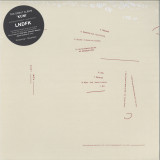
LNDFK (aka Linda Feki) presents her ground-breaking debut album, "Kuni" on Brooklyn-based Bastard Jazz Recordings. Undeniably on the rise after her 2019 breakout performance at Primavera Sound, LNDFK has already caught the attention of Pitchfork, Rolling Stone, Clash Magazine, Noisey, and Brooklyn Vegan (among many others) while being championed by the likes of Gilles Peterson, Tom Ravenscroft, and Jamz Supernova & landing spots on tastemaker playlists like Spotify's "Pollen" and "Fresh Finds."
"Kuni" is a spellbinding exploration of dichotomies: Love & Death (Eros & Thanatos), Flower & Fire, Delicacy & Violence, Poetry & Realism, Purification & Destruction. These opposites are reified in the 10-track LPs multifarious and multifaceted sounds, elegantly meandering through a variety of styles and genres, spearheaded by Linda and features the production wizardry of Darrio Bassolino who co-wrote the album.
"Kuni" opens with "Hana-bi," an ambient instrumental piece that sets the tone for the album. Inspired by the Takeshi Kitano 1997 film of the same name – particularly Joe Hisaishi's stunning soundtrack, as well as Kitano's paintings which appear in the film. "Hana-bi" expresses the dialoguing opposites of flowers and fire, the first of many dichotomous representations throughout the album. "Takeshi" acts as an extension and to "Hana-bi," albeit one of opposing sound, with its driving, highly syncopated drums (which reappear throughout "Kuni") – à la Karriem Riggins, Questlove, or Yussef Dayes – frenetic bass line, and jazz chords. Linda's sultry voice is interspersed, initially jumping around in scat fashion, being triggered as if a sample, before her lyrics come in; her vocals are used like an additional instrument, adding to the song's rich texture. "Kuni" truly hits its stride with the next song, "Smoke – a moon or a button" (its title lifted from the 1959 book by Ruth Krauss and Remy Charlip), which is structured like a jazz standard yet flows into neo-soul territory sonically with those prodigious drums a highlight once again.
LNDFK touches on experimental hip hop in two songs on the record (both of which were released as singles in 2021): "Don't Know I'm Dead or Not (feat. Chester Watson)" – track #4 – and "How Do We Know We're Alive (feat. Pink Siifu)" – track #9. Although they embrace a more hip hop-leaning sound, these songs by no means shy away from the exploratory theme, and feature two of the alt-rap scenes rising stars with Chester Watson and Pink Siifu who offer provocatively impressing verses, combining dense word play with unconventional flows. While these tracks may first appear to be outliers on the album, they are undeniably in tune with "Kuni's" message and sonic palette, acting as testaments to LNDFK's willingness to explore and experiment.
Meanwhile, "Ku" – the third and last single before the album release – furthers the pre-established future soul sound while meandering through nu jazz and left-field electronic. Inspired by the graphic novel and film, "Sin City," and its female assassin protagonist Miho, "Ku" is a musical interpretation of Miho's story, incorporating both her beauty – the first half of the song – and murderous tendencies – the second half – to create a stunning juxtaposition, culminating in an ambient finale that suggests the character's vulnerability and inner peace. The song gracefully bridges the gap between Hiatus Kaiyote-esque songwriting, Dilla's rhythmic syncopation, and Thundercat's instrumental prowess (LNDFK has shared a stage Brainfeeder labelmate Kamasi Washington).
Mixed in throughout "Kuni" are a series of instrumental pieces that function as something akin to an interlude. The aforementioned intro, "Hana-bi," and the album closer "se mi stacco da te, mi strappo tutto:" act as bookends, while "Om" indicates the half-way mark, and "Ktm" sees Jason Lindner add his sound the album. These tracks are the ambient foundation of "Kuni," representing the thematic duality of the work. Clocking in at only 24 minutes, "Kuni" packs an astonishingly diverse array of sounds, styles, and themes, all while showcasing virtuosic musicianship and instrumental prowess.
Appearing on "Hana-bi" and "Ktm," renowned international artists Asa-Chang and Jason Lindner add an additional perspective to "Kuni": Asa-Chang on "Hana-bi," and Jason Lindner on "Ktm." Asa-Chang - famously of the Japanese avant-garde group Asa-Chang & Junray - provides vocals and percussion to an alternate version of the instrumental opener, while the acclaimed keyboardist Jason Lindner offers his synth expertise on "Ktm." These features highlight the spirit of collaboration found in LNDFK's music, always willing to try out new ways of working.
LNDFK is a singer and songwriter, born of two cultures – an Italian mother and Arab father. She grew up in Naples, away from her father, the Sahara, her homeland and traditions, which has helped nourish the desire to rediscover – through art – an engagement to her roots. Her music melts with jazz, neo-soul and hip-hop influences, filtered through her experiences and sensibility.
Her first EP, "Lust Blue," was composed with the artistic production of Dario Bass and released by Feelin' Music; after that she released several singles that saw international radio support (BBC, NTS, Wordwide FM) and gained a massive audience on digital platforms. Together with her band, she toured around Europe, performing alongside such notable artists as Kamasi Washington and Mndsgn, among others. Most recently she toured Italy, and performed at Primavera Sound Festival 2019 in Barcelona.
"Kuni," is due out on NYC label Bastard Jazz Recordings in February, 2022, while the vinyl LP will follow shortly after.
- A1: A Little Soul
- A2: Play Dis Only At Night
- A3: Something Funky
- A4: For The People
- B1: To My Advantage (Feat. Nature)
- B2: Smooth Sailing
- B3: Pete's Jazz
- B4: Back On The Block (Feat. Cl Smooth)
- C1: The Boss
- C2: Get Involved
- C3: Nothin' Lesser (Feat. The Un)
- C4: Walk On By
- D1: Take The D Train
- D2: Mind Frame (Feat. Freddie Foxxx)
- D3: Cake (Feat. The Un)
- D4: Outro
Best known for his work with CL Smooth, and his remixes for Public Enemy, House of Pain, Mary J Blige and Mick Jagger to mention a few. Hailing from the little town of Mt. Vernon, NY, right next to the Bronx, Pete Rock & CL Smooth pretty much got together in their local high school when Pete noticed CLs dope and unique voice. After high school, Pete hooked up a weekend hip-hop show on WBLS-FM and was considered one of NYs premier DJs during his four year stint on the show. All Souled Out was Pete & CLs debut EP, it was the phenomenal production by Pete Rock which really drew people to this EP. If the legendary DJ Mark The 45 King was the first producer to incorporate horns, Pete Rock was the first to really perfect this new style of production with his trademark echoing horns laced throughout his music. This was done very nicely on two of the cuts off the EP, Creator and Mecca & The Soul Brother, and people were taking notice in a big way.
After the solid Mecca/Creator 12 inch, the duo unleashed one of those all-time classic LPs every MC dreams of having, Mecca & The Soul Brother featuring the monumental: They Reminisce Over You, Straighten It Out, Ghettos Of The Mind, and Lots Of Lovin. Songs to make you cry - damn, they were playing TROY at funerals everywhere. One of the greatest hip hop records ever made ...it never leads my box man...- (Tim Westwood)
Pete Rock on hip hop: Hip hop to me today is still important but we are going through a phase right now. Hip Hop as been injected by a virus, and right now weve got to find a cure to this. Which brings along myself. (Frank 151)
The Press ...from downtempo, funkdified sounds to hypnotic hip-hop beats, this is a wonderfully crafted album - (BPM July 2001)
This hypnotic ... album represents hip hops incredible ability to morph and manipulate a hodgepodge of sounds to create something unique...although the sound is now industrial, electronic and everything but natural Pete's version of hip hop will remain a classy affair that merges the elements of an orchestra, the roots of black music and the cacophony of the streets. - (Mass Appeal July 2001)
JOYFULTALK returns with its third album for Constellation; another vibrantly divergent stylistic take on the analog materiality and sensibility of electronic composer-producer Jay Crocker, whose previous two records forged trance-inducing polyrhythmic intricacy, each from a distinct angle and sound palette, each enlisting a single instrumental collaborator. Familiar Science rallies contributions from a larger cast of musicians into a looser, cosmic recombinant combo_still shot through with JOYFULTALK's singular mixing desk kinetics, but this time deep-diving into gnarled and twisted, spliced and diced out-jazz. Crocker draws inspiration from 1980s M-Base music and Ornette Coleman's harmolodic funk period, while his own prior history as an improv guitarist also resurfaces for the first time in many years_an element in this polyvalent artist's chemistry set that hasn't appeared prominently in his own music for over a decade. Familiar Science finds Crocker folding time (as lockdown will do), immersed in his present-day kaleidoscope of solitary art and music practices in rural Nova Scotia, while channeling his former life as a bustling jazz collaborator in Calgary, Alberta. Building outwards from roiling resampled acoustic drums, Crocker extracted additional sonic and rhythmic textures, then formed the head of each song using dusted-off archival recordings and his own bass, keys and midi sequencing. Albertan percussionists Eric Hamelin (Ghostkeeper, Chad Vangaalen) and Chris Dadge (Lab Coast, Alvvays) provided improvised drum tracks to be chopped and harvested; Nova Scotia-based Nicola Miller (Ryan Driver, Doug Tielli) laid down resplendent excursions on saxophone and flute; Crocker's own dexterous guitar appears on several cuts. Familiar Science also poignantly features samples from live recordings by the late Calgary saxophonisticonoclast Dan Meichel, catalysing some of the album's heaviest contortions. Crocker weaves all these raw materials into exuberant compositions that blur the line between sizzling corporeal combo and sampledelic futurist jamz, variously conjuring (leftfield) Flying Lotus, (later) Tortoise, BADBADNOTGOOD and Squarepusher's Music Is Rotted One Note. The rubbery hyper-compression of boom-bap opener "Body Stone" initiates the séance, and the album offers a panoply of skittering grooves and soaring melodic pathways thereafter, through quags of heady jazz alternately streaked with dayglo delirium and other more vaporous states of revelry. Crocker's own wordless stacked vocals are the giddy secret sauce on several cuts, and his lead guitar work (in kinship with the lean progressions of Mary Halvorson or Jeff Parker) features on "Take It To The Grave", "Stop Freaking Out!" and the album's title track. More honeyed passages on songs like "Blissed For A Minute" and "Ballad In 9" center around Miller's bouyant alto sax and flute. Familiar Science is a rousing feast of noise-tinged polychrome electronic avant-jazz: richly harmolodic compositions teeming with intersecting textures and turbulences; exploratory, exhilarated and indeed joyful.
In the past few years, Clarice Jensen has forged her own path. Recently, her focus has shifted to film scoring, successfully recording work for three feature films between 2020 and 2021. At the same time, Clarice continues to serve as artistic director of the American Contemporary Music Ensemble, while continually collaborating with an impressive array of musicians, such as Max Richter, Björk and Stars of the Lid, to name a few.
That being said, it was her 2019 tape release on Geographic North, »Drone Studies«, that initially caught the attention of a wider audience, with the work showcasing a compelling assembly of deeply immersive drones, and elegantly orchestrated compositions, in which neoclassical elements collide with electric density.
Three years later, the work has lost none of its innovative character and appeal. It also documents a turning point in Clarice's career, one where her classically trained background started to converged and overlap with her interests in improvisational electronics and drone music. As a result, the aptly titled »Drone Studies« shows Clarice at her most exploratory, introspective, and daring, channeling her areas of interest into a collage of richly textured timbers and cello movements of sublime tension.
Now for the first time, the original album can be experienced through an expanded vinyl reissue, mastered by Rafael Anton Irisarri, and carefully adjusted for vinyl by Ian Hawgood. The new reissue also features an additional track by Clarice called »Platonic Solids 2«, which was originally conceived around the same time as »Drone Studies«, and which has now been made available exclusively for the vinyl edition.
We hope that this new reissue will aid in introducing Clarice's groundbreaking »Drone Studies« to a new crowd of listeners through this expanded edition.
- A1: 日が昇る / Higa Noboru / The Sun Rises (2022 Remaster) 04 39
- A2: ひこうき / Hikoki / Airplane (2022 Remaster) 08 12
- A3: 空気の底 / Kuki No Soko / The Bottom Of The Air (2022 Remaster) 04 29
- A4: パパイヤ / Papaya (2022 Remaster) 04 42
- A5: さっぽろんどん / Sappolondon (2022 Remaster) 03 57
- A6: ニュー・シーズンズ・デッド / New Seasons Dead (2022 Remaster) 05 15
- B1: ポー・フローデン / På Floden / On The River (2022 Remaster) 03 27
- B2: 砂漠 / Sabaku / Desert (2022 Remaster) 06 00
- B3: 誕生日の予感 / Tanjobi No Yokan / Expectation Of Birth (2022 Remaster) 04 10
- B4: 濁る空気わるくない / Nigor / Cloudy Air Is Not So Bad (2022 Remaster) 02 11
- B5: Come Maddalena (2022 Remaster) 05 17
- B6: ルーティー・ルーティー / Lutie Lutie (2022 Remaster) 04 17
Just over a decade ago, Japanese indie-pop duo Tenniscoats recorded »Papa's Ear« (2012) and »Tan-Tan Therapy« (2007), two albums made with musical and production help from Swedish post-rock/folk trio Tape. Originally released on Häpna, they are beautiful documents of the exploratory music made by a close-knit collective of musicians, fully at ease with each other, playing songs written by Tenniscoats and arranging them in gentle and generous ways. Released during a particularly productive time for Tenniscoats – during the late ‘00s and early ‘10s, they would also collaborate with Jad Fair, The Pastels, Secai and Pastacas – they have, however, never been available on vinyl. In collaboration with Alien Transistor, Morr Music is now reissuing these albums both digitally and on double vinyl, with extra tracks.
This reissue mini-series starts with »Papa’s Ear«. The second album from this expanded line-up of Tenniscoats, you can hear the musicians are immediately comfortable in each other’s presence, and they’ve almost intuitively understood what they can offer to one another. Saya and Ueno of Tenniscoats bring their magical, gentle folk-pop sensibility, and their winning way with straightforward, yet lush melodies. Johan Berthling, along with fellow Tape member Tomas Hallonsten, plus guests Fredrik Ljungkvist, Lars Skoglund, Andreas Söderstrom and Andreas Werlin, all generous and creative presences in the Swedish jazz underground, shades in the songs with endlessly inventive arrangements, highlighting the warmth and curiosity at the core of the Tenniscoats’ aesthetic – sometimes taking the songs in unexpected directions, other times pillowing the melodies with the softest of brushstrokes and the kindest of tones.
»Papa’s Ear« includes some of Tenniscoats’ most memorable songs. »Papaya« is a lustrous dreamland of a song, with the Swedish musicians singing ‘pa-pa-ya’ as an enchanted tattoo, while Saya’s piano and melodica clank and huff out, further expanding the song’s horizon. It’s followed by the spindly and mysterious »Sappolondon«, where drums and double-bass shuffle and pulse under weeping accordion and bittersweet clarinet. Saya’s voice sighs into the frame while the musicians breathe lungfuls of sweet drones and flick glittering countermelodies across the song’s surface. It reminds a little of the wild kindness of Movietone, or the regal charm of Carla Bley’s compositions.
Elsewhere, you can hear Tape and their friends embracing the freedom offered by the songs of Tenniscoats: see, for example, the glistening electronics in »På floden«, like a keyboard conducting a music box on a distant planet; or the descending phrase for winds on »Sabaku«, dovetailing beautifully into a creek of moon-lit texturology. The double-LP ends with two extra tracks, drawn from the 2008 Tenniscoats/Tape split single, also released by Häpna., »Lutie Lutie« is a sweet delight, driven by a clacking drum machine, the Tenniscoats duo joined by Hallonsten on glockenspiel and synthesizer, and special guest, Japanese indie-pop legend Kazumi Nikaido, as choir. »Come Maddalena« rounds off the set, a brooding cover of an Ennio Morricone tune, the music by Tape, the vocals by Tenniscoats and Nikaido. Open-hearted and full of puckish spirit, »Papa’s Ear« is an album of great tenderness and warm friendship.
At Now-Again, we avoid hyperbole, yet we believe that this album is one of record collecting’s ultimate
finds: the missing entry in jazz pianist/composer/psychiatrist Denny Zeitlin’s discography, a wonderful
and weird fusion of avant-classical, jazz, funk, rock and electronic music.
The Name Of This Terrain was recorded and pressed in a scant, custom run as a demo in 1969 –and it
so defied its own existence that, even after its producer died and his copies were discovered, Zeitlin
steadfastly resisted its release for almost 20 years, destroying his remaining demos so no...
Edizioni Ishtar and Schema Records proudly celebrate the 15th anniversary of one of their most successful releases and artists (more than 30 million streams and 300 thousand monthly listeners on Spotify) with the first ever vinyl edition of Toco’s Outro Lugar. Produced by S-Tone Inc., this record includes fan-favourite tracks “Outro Lugar”, “Samba Noir
” and most of all “Guarapiranga”, which was chosen for the soundtrack of “Silver Linings Playbook”, a film that awarded Jennifer Lawrence an Academy Award prize as best actress in a leading role in 2013. The strings at the beginning of the title-track have also been sampled by PinkPantheress for her song “Nineteen”, out of her latest album “To Hell With It”.
Outro Lugar hasn’t aged a bit during all these years, for various reasons; first of all it benefits from the outstanding contribution of bossa nova pioneer and inspiration source Roberto Menescal, who played guitar in every track. Most of the album was recorded in Rio De Janeiro at Menescal’s studio, with the participation of some of the best ‘carioca’ musicians, especially double-bass player Adriano Giffoni and pianist Adriano Souza. All these elements gave the album exactly the taste requested by the artist and the producer: inspired from the past yet, through thorough attention, aimed at a sound at the same time fresh and modern, slightly electronic, filled with grooves perfectly blending into acoustic instruments. The second part of the recording was carried out in Milan, with some of the best musicians in the Milanese jazz scene.
The album also sees the contribution of Rosalia De Souza, singing in several tracks and standing out in “Bom Motivo” especially. French chanteuse Coralie Clément appears in “Contradição”, her own piece here re-interpreted by Toco.
Outro Lugar is an album for any kinds of Brazilian music lovers that showed the world what Toco was capable of: a refined and cultured musician, a gifted performer of a warm and smooth voice able to awaken the emotions of the most sensitive listeners.
After the re-release of the classic "Nu Romantix" album, Ed DMX aka DMX Krew returns to Permanent Vacation with his new album "Party Life". This time the long-haired UK legend is taking a step back from his trademark Electro and Techno sound and putting on his romancing suit.
Ed is crooning over 80's styled Boogie, Disco and Funk tracks in a way only he can do it and that will either make you jump for joy or cruising down the coastal promenade.
"Party Life" is another example why Ed is a master of all crafts in the ever expanding DMX Krew universe.
Martin Matiske's superb new six-track EP Circle Of Enlightenment on LDI Records is based around the concept of one-mindedness and togetherness. This German artist was fascinated with mixing records as early as his 10th birthday and had his first release on the legendary International Deejay Gigolo Records aged just 15. In the 20 years since he has released a selection of records on labels like Moustache Records and Bordello A Parigi. His timeless sound comes with a vintage touch and always fuses electro, italo and techno in fresh new ways. This new EP aims to describe the direct connection between human beings and the universe. Martin says: "Human beings are aliens always looking for answers to questions like why are we here and what life is about? We know the answer but won't accept it. We are made up of the elements of space and are directly connected to the universe. Each person contains the energy of the universe and is connected with everything that surrounds it. We are one! We are here because we are here! Our mission is to be!" The EP opens with 'Memory', and Martin explains that "Remembering is the ability to do things right but most of the time it causes pain." The track is a slick and icy electro workout with gorgeous retro-future pads bringing a cosmic sense of soul while the corrugated bass keeps busy below. 'Breakout' describes breaking out of normal thought and reaching a state of "no-mind." It is a playful and dynamic electro cut with characterful bass and synth stabs like shooting stars as shimmering arps ride up and down the scale. 'Lost In Space' deals with the idea that human beings on earth are just as lost in space as aliens. It's an interplanetary electro trip with glistening synths shining bright next to more twisted, tortured bass. 'Microbot' is about miniature robots that make our lives easier and ride on a punchy bassline, with neck-snapping snares and pads that circle around like spacecraft during battle. It is another lush electro workout that leads into 'Stars' and pays homage to the importance of these twinkling rays of light. It's a widescreen track with withering leads, cyborg vocals, and a real sense of hope as the snappy drums march into an unknown future. Last of all, 'Solaris' pays tribute to the life-giving force of the sun with another super crisp electro groove, slithering arps and conversational pads that make both a physical and emotional impact. Circle Of Enlightenment is a brilliantly adventurous and storytelling new EP from the ever-excellent Martin Matiske.
New York-based duo Bottler, Pat Butler and Phil Shore, are the vanguard of their own distinctly eclectic sound. Raw, emotive, bold and highly creative, the duo has successfully carved out their own path with a series of EPs that represent the broad scope of their production prowess. Over the last five years Bottler have been working on their debut album, ‘Journey Work’, a milestone achievement that marks a pivotal moment in their music career. The LP is a distillation of the duo’s multifaceted upbringing, blending a variety of styles together bound together by an overarching attitude and approach that embraces creative freedom and self-acceptance.
Pat and Phil are childhood friends whose bond is akin to that of blood relatives. Their parents are best friends and they grew up side by side, developing their deep love for music together; sharing discoveries and inspirations, learning to play and perform, and nurturing their creativity together. Now formally ordained as Bottler, they channel their eclectic tastes into a sound that encapsulates the love and trust that forms the foundation of the friendship. The duo blends a myriad of styles to create songs that emanate warmth, joy, sorrow, pain and the full spectrum of human emotion.
The album title, like their music, is open to interpretation. The duo reveals themes related to chronicling life’s many ups and downs, the deep preparation that must be taken ahead of a spiritual ceremony or psychedelic experience, and, simply, the journey taken during the conception and creation of an album. A quote from Walt Whitman also partly inspired the title; “every leaf of grass is no less than the journey work of the stars”. However, the intention behind the title is to allow for ambiguity, giving the listener an opportunity to write their own narrative.
Across 11 cuts Bottler illustrate their distinct take on electronic music, weaving in elements of indie, pop, rock, house and techno with confidence and panache. ‘Journey Work’ starts at ‘Home’, a song that is fizzing with positive energy, Pat’s vocals welcoming the listener to the start of this meandering audio adventure.
‘Chrysalis’ opens with delicate piano keys that guide us into a bombastic bassline and energising drum beats. As it progresses, scintillating layers of synth and strings are added, creating a highly affecting, uplifting atmosphere.
‘Melatonin’ follows up next, merging heartfelt vocal delivery with a sombre instrumental, and a stirring guitar riff. A glorious demonstration of Bottler’s songwriting capabilities, which are also evident on ‘Vinyl’, an uptempo dance number with an unbelievably catchy chorus. Here we see the duo channel their experience of playing in multi-member bands, as the breaks and arrangement feel perfectly suited to a festival-sized crowd.
On ‘Tacoma’, Pat and Phil channel their appreciation of house and techno into a haunting cut that utilises reverse strings and extended vocal refrains to chilling effect. A heady club track for the twilight hours. ‘Meds’ incorporates muted singing, mystical pad work and a mesmerising riff to produce a captivating slice of uncomplicated dance music.
This is followed by ‘Hot Water’, which feels like a trip to a Californian beach, circa 1965. The vocals drift over a bouncing bassline with a complementary guitar riff. ‘Mako’ features Samurai Velvet singing about fireflies and afterlife in a wonderfully heartrending manner, Bottler’s instrumental keeping things simple, yet highly effective.
We head back underground with ‘Weed’, a dense, gloomy cut with inspired use of chopped up vocal clips, stuttered throughout, alongside a mean bassline. ‘You’re Old’ is the soundtrack to an explosion of festival euphoria, dancing shoulder to shoulder with your best friends, forgetting all your troubles and living in the moment. An anthemic song that transposes Bottler’s idiosyncratic style onto the pop blueprint. Finally, ‘Cicada Rhythm’ closes the LP with a pensive, yet joyful feeling. A chunky bassline is juxtaposed with Pat’s angelic vocals cascading over the top. A hint of tribalism comes through, as we approach the end of the Journey Work…
Five years in the making, fuelled by the desire to express their deep love for music of all varieties, Journey Work is symbolic of the long road it takes to accept oneself and be comfortable expressing one’s truth. Diverse, dynamic and daring with a rawness and honesty that is rare to find, the album marks a triumphant debut for Bottler and one that crystalises their unique identity.
Pink Clear Vinyl
Nottingham based artist Cyclonix launch new journey Little Red Hand and kicks off its schedule with heavy 3 track "Metal Bass" EP from him. Label aim is to champion the sounds of modern electronic fusion music on the broken beat and future jazz spectrum taking in hints of house, techno and breakbeat culture. Music that will stand the test of time - like the handprint in the logo - one of the oldest forms of human expression. POWERED BY ART-AUD
Closing out another breakthrough year, Anfisa Letyago has established herself as one of techno's most talked about names. An intrepid selector with a positive attitude regarding all things art and dancefloor related, the Russian born starlet has been making seismic waves within the industry for a number of years. Past releases have been featured on revered labels such as Carl Cox's Intec, Nervous Records, Hotflush and Rekids. Letyago returns now with a brand new project primed and ready for her own imprint - N:S:DA. Originally a celebration of her own dark-brooding style of techno, the label has entered a metamorphosis of sorts, welcoming in a host of established producers to remix the labels first releases.
The unapologetically raw house sound of DJ Seinfeld opens up the third and final remix EP, putting his own spin on Letyago's deep cut 'Insidia'. Cavernous synthlines occupy the track's main body, reminiscent of late seventies golden-era Chicago house. The remix is laced with hard hitting percussion and bubbling sound fx, a supercharged production primed for widespread club usage. Seinfeld welcomes us into the project with his trademark, rough and gloriously danceable sound palette.
Letyago follows suit by revisiting 'Nisida', reshaping the track into an electro-acid workout adorned with sharply tuned drums and heavily-treated shimmering vocals. The euphoria-inducing breakdown at the center point of the arrangement unfolds weightlessly, building into an energetic barrage of low-end frequencies. Letyago's ability to raise and release tensions within a track is truly exceptional, a technique she has perfected over several years of DJing, witnessing at first hand the importance of building up to moments of high intensity on the dancefloor for maximum impact.
Drum and bass royalty, Calibre offers his dark and brooding interpretation of 'Don't Hide'. The original track has been wickedly morphed into an after-dark roller fit for extensive basement usage. Commanding and minimal, Calibre's remix has been executed with devastating precision, perfectly balanced space-age pads glide seamlessly across the disjointed rattle of breakbeats and white-noise imbued hi-hats. A painter, fine artist, multi-instrumentalist, writer and producer, this multifaceted Belfast producer never ceases to disappoint.
Closet Yi concludes the compilation with a slow burning techno metamorphosis of Letyago's 'Listen'. Subterranean and primal, the track unfurls from its ambient beginnings into a low-end focused four-to-the-floor rhythm steeped in misty reverb and distant chords. Based in Seoul, South Korea, Yi has played at some of the most respected underground clubs in the capital, including Cakeshop, Faust, Pistil, Contra and more. A welcome addition to the remix project and a seductive end to this shadowy collection of tracks.
Spun Out Agency is honoured to present ‘More of that Frightful Oompty Boompty Music’, a compilation dedicated to the Guv’nor himself Mr Andrew Weatherall who should need no introduction on these pages. Released on vinyl in two beautiful parts, the first drops on April 15th with the second following two weeks after.
‘More of that Frightful Oompty Boompty Music’ (yes we are going to write that out every time we talk about it in this communique) showcases a selection of the shining greatness from the agency’s roster. Paranoid London, Fantastic Twins, Mehmet Aslan, Autarkic, Ruf Dug, Sean Johnston, and Manfredas gift exclusive tracks which highlight the sublime acid, techno and house sound that Weatherall would have described as “oopmty-boompty” music.
Spun Out is a London-based artist booking agency which has been run by Caroline Hayes for over 20 splendid years, that looked after the life and times of Andrew Weatherall alongside his partnership with Sean Johnston under their A Love From Outer Space moniker, and the likes of Optimo (Espacio), Ivan Smagghe, Josh Caffe, Man Power, Body Hammer, Kiara Scuro and many more artists, doing it differently.
Kicking off the A-side of the first record is Hardway Bros’ (aka Sean Johnston) previously unreleased remix of We Are The Axis by The Asphodells, the duo consisting of the Andrew Weatherall and former Battant member and Spun Out talent Timothy J. Fairplay. An energetic techno stomper with percussive rhythms, this exclusive remix offers the ideal tantalising dose to tease any dancefloor. The vocals and synth layers give it a punk rock approach, referencing the multi-genre essence of Weatherall’s taste in music.
Tel-Aviv-based Autarkic’s Sleepover closes the A-side with a chuggy lullaby, one that is certainly unsuitable for putting a baby to bed, given its intricate acid lines of total hypnosis. Following on the B-side is Manctalo Banger, a house bop by the Manchester-via-Ibiza computer game nerd and vinyl digger Ruf Dug, and Shizowaves, Turkish-born Basel-based Mehmet Aslan’s soulful touch to the compilation, bringing Middle-Eastern percussive melodies and catchy basslines.
The second record is introduced by Paranoid London, with a Spun Out dedicated acid techno banger appropriately titled Spinning Out and Fantastic Twins’ EBM track Kali’s Tongue Was A Weapon. On the B-side is Lithuanian chug legend Manfredas’ Hfuhruhurr, and Naum Gabo, who closes the compilation with the chaotic analogue-synth frenzy, Cold Sold. The name Naum Gabo may evoke the pioneer of Russian constructivism, who rose to fame thanks to his crazy kinetic sculptures. However, here it manifests as one half of Spun Out’s Optimo duo Jonnie Wilkes (JG Wikes) and James Savage. The duo’s impeccable manipulation of electronic hardware couldn’t give a better homage to him.
Some highlights for Spun Out artists this summer include 9 acts from the roster playing at Houghton Festival, Paranoid London’s show at Sonar Festival, Love International Festival and Ransom Note’s festival with Optimo Watching Trees.
Australia-born Los Angeles-based artist Luke C. presents ‘T.O.M.B.’, his debut solo release on his newly minted label Velvet Bikini.
The seven-track album is a gauzy, starry-eyed style of ambient electronics, embedded with melancholia and a touch of otherworldly psychedelia. A soundtrack to a generation lost, endlessly searching the streets of a sun-drenched, neon-lit city. ‘T.O.M.B.’ will be pressed on limited-edition vinyl.
The bulk of T.O.M.B. was recorded at Luke C.’s home studio in LA over the last 12 months and put together with various sources—MicroKorg, voice, sampled records, treated field recordings, resampled synths—to create the noir-ish atmosphere present across the LP, one that takes the listener through the depths of the psyche and the neon-lit corners of the city in which it was recorded.
Iranian-American artist Kamran Sadeghi mastered the entirety of the LP, known for his recent album on Richard Chartier’s LINE imprint and his work as a key member of Soundwalk Collective.
Toma Kami returns to Livity Sound for a third EP of provocative, experimental club gear. At the helm of his own Man Band label the French producer continues to explore a hybridised style which favours fractured beats, playful samples and occasional psychedelic flourishes.
Compared to the busier sound of previous releases, minimalism informs Toma’s approach on LIVITY053 as he sits his crunchy drums and weighty low-end in a tangibly spacious mix on ‘Amapicante’. Even within a stripped-down context, his unique approach shines through as ‘Later To The Bone’ progressively ramps up in scratched and scuffed sonic interference and ‘Mzecal’ trips over its own fragmented found-sound drum formations.
Livity Sound is a label set up by Peverelist in 2011 as a vehicle for a raw and exploratory strain of UK techno, rooted in the heritage of UK dance music and sound system culture. It has since become one of the UK's foremost protagonists for cutting edge underground electronic music.
Without the West German-born Väth, techno would look, sound and feel very different. Since falling in love with electronic music and DJing in 1981, his dedication to the art has never faltered. He plays every party as if it were his last. His broad smile has connected with millions of people around the world. His colourful and curious character has imbued techno with a personality it was often lacking. His selections remain hugely unpredictable, despite the fact that he has been playing around the world for more than 40 years. To remain not only relevant but innovative after so long is a testament to Sven's ability to connect through music on a deeper level.
Technically, of course, he is a DJ who can play for thirty hours and not miss a beat. His track selections seem almost divine, and his aura is certainly otherworldly. But more than that, he is a ringleader who is able to mix the artful side of techno with the playful side of partying. Most famously he has done this for more than 20 years at his iconic Cocoon parties in Ibiza. They single-handedly introduced techno to the White Isle and have been its beating heart ever since. Under his charge, strict style guidelines and exaggerated pigeonholing no longer apply. Instead, he has perfected the art of playing far and wide while always remaining true to his own musical identity.
In the studio, Sven has always been just as unique. He has worked under several aliases but always brought a fresh perspective. Whether securing chart hits as part of OFF in the eighties, serving up brutalist techno and trance-tinged sounds in the nineties or crafting major label albums in the 2000s, his music has remained utterly forward-looking. That legacy continues with Catharsis as Sven teams up with highly respected producer Gregor Tresher for his latest long-form offering. Tresher has long been part of the Cocoon family and is a revered artist in his own right, when the two got together in the studio it was clear they had an instant connection and there would only be one person fit to co-author this LP.
It is a record inspired by Sven's interest in the physical and spiritual processes that take place when we dance. "They are realms into which we immerse ourselves to experience our own mysticism and ecstasy," he muses. "Dancing is a conversation between body and soul and it spiritually connects us with each other." Because of the pandemic, that is of course a feeling that we all missed out on for so long. "No dancing, no paradise!" says Sven. "My imagination for this record was fueled by the many cultural experiences and encounters I have had in my life. They gave me the strength to find a way, the way to myself." And that way to himself is through music, through purifying dancing rituals and the exchange of spiritual energies that are generated in the club.
The thirteen-track album explores all facets of Sven's sound. It opens with the stomping drums but sleek synths of 'What I Used To Play' and unfolds through deep and dirty rhythms like 'The Worm', subtly euphoric highs on 'The Inner Voice' and the bubbly tribalism of the title track. There is the impassioned call-to-arms that is 'Feiern', peak-time melodic workout 'Mystic Voices' and soothing electronic lullabies like 'Being In Love'. The second half of the album takes in many more twists and turns such as the exotic strings and driving drums of 'Butoh', the paranoid techno minimalism of 'NYX' and expansive synthscapes of ambient gem 'The Cranes Of Gangtey Valley' before things play out though rugged beats and emotive chords on 'We Are', which is named after the idea that we are what we think. "With our thoughts, we make the world.? says Sven.
Then comes the moody reflection of 'Silvi's Dream', which was written in French for Sven's girlfriend. Last but not least we have the immersive dream that is 'Panta Rhei', which completes a trio of electronica tunes on the album. Ambient music has been an integral part on almost every album Sven has written because it can bring a certain emotional deepness, a quality that Sven always has been looking for.
'Catharsis' is an adventurous album that captures the good times, the sad times and, most importantly, the times of hope.
Immortal Onion have already built a strong position as one of the most interesting, new jazz projects from Poland. After two well received albums ("Ocelot of Salvation" in 2017 and "XD ExperienceDesign" in 2020) we've had the pleasure of presenting the new re- lease called "Screens" recorded at the initiative of the saxophonist Michał Jan Ciesielski.
The songs composed by Michał confirm, that jazz electronic fusion can be still fresh and thrilling. The album, where beside Michał, Tomir, Wojtek and Ziemowit, you will find many guest instrumentalists. Thus resulting in a step forward made by the still young musician from TriCity.
It is worth mentioning, the song entitled "ZOZI" is enriched with the string parts recorded by Ola Szymańska on violin (Alfah Femmes, Ralph Kamiński, The Fruitcakes) and Weronika Kulpa on cello. Also, you can hear the brass section consisting of David Lipka on trumpet (Zgniłość, Bizzarre Penguin) and Paweł Niewiadomski on trombone (Power of the Horns). In the composition called "OK Boomer" you can hear characteristic guitar soundscape recorded by Marcin Gałązka (Tymon Tymański).
The whole album was recorded and mixed by Michał Jan Ciesielski. Mastering was done by Michał "Eprom" Baj. Graphic design was created by Marta "Martiszu" Ludwiszewska, who, like no one else senses the crazy spirit of immortal onion.
“I am most excited, that they got out of their formula and invited Michał Jan on saxophone who perfectly complements the ideas of guys from the Immortal Onion.”
Hania Rani —
- A1: Where's The One?
- A2: Resila
- A3: Kule Kule Redux
- A4: The Chief Enters Again
- A5: Château Rouge
- A6: Super Duper Rescue Allstars
- A7: Tita Tita
- A8: Doubt/Hope
- A9: Banza Banza
- A10: Kabongo Celeste
- B1: On The Road
- B2: Beyond The
- B3: Many Tongues In Our Band
- B4: For Augustin
- B5: Even The Boa Can't Swallow A Viper
- B6: Mama's Way/Above The Tree Line
- B7: Ambulayi Tshaniye
- B8: Bombo & Sifflets
- B9: Tshitua Fuila Mbuloba
- B10: Mulume/Change
- B11: Tandjolo's Greetings
A supergroup comprising Deerhoof + Juana Molina + Kasai Allstars + Konono No.1 + Skeletons + Wildbirds & Peacedrums. It all started when the music of Konono No.1 and Kasai Allstars was first released in the US and Europe, in the later part of the '00s. With its blend of ritual music, traditional percussion, thumb pianos, electric guitars, and makeshift instruments made from junkyard scrap, their out-of-this-world sound now also known as Congotronics, a word coined to title the series in which their albums appeared on Crammed Discs - deeply struck the imagination of musicians and fans worldwide. Leading rock media enthused about this newly rediscovered brand of "primal rock", while an impressive string of avant-rock, electronic & hip hop artists (from Dirty Projectors, Andrew Bird, Animal Collective and Deerhoof to Beck, Björk, Wilco, Radiohead, Saul Williams, Questlove and many more) repeatedly quoted the Congotronics bands as major sources of inspiration.
Spun Out Agency is honoured to present ‘More of that Frightful Oompty Boompty Music’, a compilation dedicated to the Guv’nor himself Mr Andrew Weatherall who should need no introduction on these pages. Released on vinyl in two beautiful parts, the first drops on April 15th with the second following two weeks after.
‘More of that Frightful Oompty Boompty Music’ (yes we are going to write that out every time we talk about it in this communique) showcases a selection of the shining greatness from the agency’s roster. Paranoid London, Fantastic Twins, Mehmet Aslan, Autarkic, Ruf Dug, Sean Johnston, and Manfredas gift exclusive tracks which highlight the sublime acid, techno and house sound that Weatherall would have described as “oopmty-boompty” music.
Spun Out is a London-based artist booking agency which has been run by Caroline Hayes for over 20 splendid years, that looked after the life and times of Andrew Weatherall alongside his partnership with Sean Johnston under their A Love From Outer Space moniker, and the likes of Optimo (Espacio), Ivan Smagghe, Josh Caffe, Man Power, Body Hammer, Kiara Scuro and many more artists, doing it differently.
Kicking off the A-side of the first record is Hardway Bros’ (aka Sean Johnston) previously unreleased remix of We Are The Axis by The Asphodells, the duo consisting of the Andrew Weatherall and former Battant member and Spun Out talent Timothy J. Fairplay. An energetic techno stomper with percussive rhythms, this exclusive remix offers the ideal tantalising dose to tease any dancefloor. The vocals and synth layers give it a punk rock approach, referencing the multi-genre essence of Weatherall’s taste in music.
Tel-Aviv-based Autarkic’s Sleepover closes the A-side with a chuggy lullaby, one that is certainly unsuitable for putting a baby to bed, given its intricate acid lines of total hypnosis. Following on the B-side is Manctalo Banger, a house bop by the Manchester-via-Ibiza computer game nerd and vinyl digger Ruf Dug, and Shizowaves, Turkish-born Basel-based Mehmet Aslan’s soulful touch to the compilation, bringing Middle-Eastern percussive melodies and catchy basslines.
The second record is introduced by Paranoid London, with a Spun Out dedicated acid techno banger appropriately titled Spinning Out and Fantastic Twins’ EBM track Kali’s Tongue Was A Weapon. On the B-side is Lithuanian chug legend Manfredas’ Hfuhruhurr, and Naum Gabo, who closes the compilation with the chaotic analogue-synth frenzy, Cold Sold. The name Naum Gabo may evoke the pioneer of Russian constructivism, who rose to fame thanks to his crazy kinetic sculptures. However, here it manifests as one half of Spun Out’s Optimo duo Jonnie Wilkes (JG Wikes) and James Savage. The duo’s impeccable manipulation of electronic hardware couldn’t give a better homage to him.
Some highlights for Spun Out artists this summer include 9 acts from the roster playing at Houghton Festival, Paranoid London’s show at Sonar Festival, Love International Festival and Ransom Note’s festival with Optimo Watching Trees.
‘Emotional Eternal’, out on Domino, is a glorious consolidation
of the lessons learned along the way, seen through the eyes of
someone who has taken a step back, and who can see clearly
as a result.
As with her previous acclaimed 2018 album ‘Bon Voyage’, this
album was initially recorded in the outskirts of Stockholm, with
Reine Fiske, the multi-instrumentalist member of Swedish rockband Dungen, who has worked with the likes of Travis Scott and
Anna Järvinen, and Fredrik Swahn, the musician, producer and
engineer best known for his work with Swedish indie-rock band
The Amazing.
A deeply human collection of songs full of prolonged moments
of sonic transcendency, ‘Emotional Eternal’ is a record rooted in
adulthood, but one that still regards the world with a childlike
wonder. It includes ‘Alma_The Voyage’, a beautiful paean to
motherhood concluding with resounding violins and EBow;
‘Personal Message’ featuring a giddily assured vocal
performance from Melody, vertiginous and breathy and the
ornate and catchy, ‘Where The Water Clears the Illusion’.
Listening to the album feels like coming across an abundant
treasure chest; strap in and get ready to be transported to
another heavenly, mediative and groove-filled world.
CD in printed inner wallet with 18-page poster booklet.
LP with 2-page insert plus 12” circular ‘optical effect’ card platter
disc with digital download code.
Press - Reviews in Uncut, MOJO, Loud and Quiet, Record Collector,
Reader’s Digest, Shindig, Electronic Sound, The Skinny, NARC,
Aesthetica, Spin, All Music. Features in Clash, Shindig Magazine,
Pitchfork, The Eagle, The Line of Best Fit, Far Out Magazine.
Radio - 6 Music Lauren Laverne, Craig Charles, Amy Lame, Radcliffe
& Maconie, BBC Radio 1 Jack Saunders, Radio X John Kennedy.
For their ninth iteration, Hamburg's The Press Group punches back in with the sizzling hot debut to a VA series bound to scout and shed a broader light on exciting artists from various territories and backgrounds.
Pulsating to the bone, "Future Prospects vol.1" showcases a quartet of heaters courtesy of Germany-based Robert Dietz and Aii PS on the A-side and Kyiv-based Vlad Stuparenko & Ghetto Sunrise plus Sasha Zlykh on the flip. Either sides of the
disc inbound for optimal and non-pareil impact on the dance floor. Dietz's "Salbung" paves the way old-school style, grinding everything from lethal breaks to rowdy drums, via lysergic synth flights straight out a wild sci-fi scenario.
Aii PS' bouncy and oneiric contribution "Donteven" is more of a low-slung affair with its mischievous fusion of filtered synths and acid-informed bass spurts painting the sky all shades of radioactive green.
Flip it over and Stuparenko/Ghetto Sunrise's stealth, aqueous weapon "Pine Water" ushers us in a corridor of groove-enslaved echolocation, delayed stabs and propulsive bleepin' n bloopin' from the depths. A further dusty, shuffling affair
blazing with clanky hats on a Chicagoan tip and futuristic electroid inflections, Zlykh's "Pidozepam" tops it all off in implacable fashion, casting a spell of exquisitely thrilling menace upon the ravers.
- A1: The Mountain
- A2: Revel In Your Time
- A3: Tech-Noir
- B1: Shadow Fury
- B2: Pink Mist
- B3: Kitsune
- C1: Black Sun On The Horizon
- C2: The Hegemon
- C3: Fly For Your Life
- C4: Maximum Black
- D1: Tech-Noir (Carpenter Brut Remix)
- D2: Revel In Your Time (Miami Nights 1984 Remix)
- D3: Black Sun On The Horizon (Makeup And Vanity Set Remix)
Gunship Gold vinyl 6th Anniversary Edition Double LP
2 x 180g heavyweight gold vinyl inspired by the legendary GOLD Nintendo World Championship cartridges.
Features handwritten liner notes and doodles by the band, detailing the cinematic influences that inspired the creation of the album.
According to the band, GUNSHIP is a neon soaked, late night, sonic getaway drive, dripping with luscious analog synthesizers, cinematic vocals and cyberpunk values, exploding from the front cover of a dusty plastic VHS case which has lain forgotten since 1984. The band's debut album ‘GUNSHIP’ received outstanding reviews from both electronic and rock press earning a place in synthwave history as one of the first crossover albums. After being available only as a direct to fan purchase the LP is now being released across the world for the first time.
The GUNSHIP album has 25 million streams on Spotify alone. The band have 100k subscribers on YouTube. Views on the music videos from this album: Fly For Your Life: 4,243,244; The Mountain: 1,624,513; Revel In Your Time: 1,230,947; Tech Noir 4,211,296.
Bristol techno, noise and hardcore supremos SCALPING are
releasing their highly anticipated debut album ‘Void’.
‘Void’ comes on the heels of an extremely exciting 2021 for the
band, which saw them play to sold-out crowds at the Roundhouse
twice in two weeks - both on tour with Squarepusher and at
Pitchfork Festival London - as well as releasing two widely
acclaimed EPs titled ‘FLOOD’ and ‘FLOOD Remixed’, the latter of
which featured treatments from producers Hodge, Azu Tiwaline,
object blue, AQXDM and Laurel Halo and Scottish instrumental
rock legends Mogwai.
SCALPING are heavy metal in 4D; the sound is moody, distorted
and rhythmic, but the use of electronic techniques gives the finer
details room to breathe, making more space for experimentation.
Tracks such as ‘Tether’, featuring Oakland rapper DÆMON, puts
a modern, metal twist on Bristolian trip-hop, whereas album closer
‘Remain in Statis’ features fast-rising artist Grove, a Bristol-based
rapper and self-professed metalhead whose commanding
presence sets the track alight.
In the heat and darkness, it’s a swarm of low-end frequencies and
ripping guitars, somewhere between Black Sabbath-esque
psychedelica and The Bug’s sub-bass headfuckery. Live, the
effect is immense. SCALPING play continuously for the duration of
their sets, generating a storm of metal-and-techno through a rising
beats-per-minute count.
‘Void’ will be put to the test, as the band kicks off an eight-date UK
headline tour, culminating in a live performance at fabric on May
5th. As live shows return in 2022, SCALPING will continue to
prove themselves as one of the UK’s most impressive, ambitious,
and original new live bands.
Toro y Moi’s seventh studio album, ‘MAHAL’, is the boldest and most fascinating journey yet
from musical mastermind Chaz Bear. The record spans genre and sound - encompassing the
shaggy psychedelic rock of the 1960s and ‘70s, and the airy sounds of 1990s mod-post-rock -
taking listeners on an auditory expedition, as if they’re riding in the back of Bear’s Filipino
jeepney that adorns the album’s cover. But ‘MAHAL’ is also an unmistakably Toro y Moi
experience, calling back to previous works while charting a new path forward in a way that only
Bear can do.
‘MAHAL’ is the latest in an accomplished career for Bear, who’s undoubtedly one of the
decade’s most influential musicians. Since the release of the electronic pop landmark ‘Causers
of This’ in 2009, subsequent records as Toro y Moi have repeatedly shifted the idea of what his
sound can be. But there’s little in Bear’s catalogue that will prepare you for the deep-groove
excursions on ‘MAHAL’, his most eclectic record to date.
The second the album begins we’re immediately transported into the passenger seat, jeep
sounds and all, ready for the ride Chaz and company have concocted for us. Seeds of some of
‘MAHAL’s 13 songs date back to the more explicitly rock-oriented ‘What For?’ from 2015.
‘MAHAL’ was mostly completed last year in Bear’s Oakland studio with the involvement of a
host of collaborators, Sofie Royer and Unknown Mortal Orchestra’s Ruban Neilson to Neon
Indian’s Alan Palomo and the Mattson 2.
“I wanted to make a record that featured more musicians on it than any other record of mine,”
he explains. “To have them live on that record feels grounded, bringing a communal
perspective to the table.” As a result, ‘MAHAL’ is lush and surprising at every turn, from the
cool-handed ‘The Loop’, which recalls Sly and the Family Stone, to the elastic psych rock of
‘Foreplay’ and the dizzying Mulatu Astatke-recalling of ‘Last Year’.
Lyrically, the album zooms in on generational concerns, picking up where the ‘Outer Peace’
standout ‘Freelance’ effectively left off. Bear seems to be surveying the ways in which we
connect with technology, media, each other, and what disappears as a result. Cuts like the
squishy ‘Postman’ and ‘Magazine’ take a deep dive into our relationship with media in a
changing digital world. “It’s interesting to see how we adapt to this new age. We’re so
connected, but we’re still missing out on things,” Bear ruminates while discussing the album’s
themes.
It’s not all introspection. Bear cools things down near the album’s end with the Mattson 2-
featuring ‘Millennium’, a laid-back jam with tricky guitar licks about ringing in new times even
when everything else seems upside down. “It’s about enjoying the new year, even when it’s
been shitty,” Bear explains. “There’s nothing else to do.”
Finding a sense of joy in the face of adversity is embedded in ‘MAHAL’s DNA, right down to the
jeepney that literally and figuratively brings the music out into the community. “We know that
touring is messed up for now, and large gatherings are a fluke,” he explains. “It’s about the
notion of us going out to the people and bringing the record to them.” And with the wide-open
atmosphere of ‘MAHAL’, Toro y Moi stands to connect with more listeners than ever before.
- A1: Jah Woosh - Woodpecker Sound
- A2: Machine Gun Hogg & Co. - Bed Bound Saga
- A3: Prince Far I & Creation Rebel - Quanté Giubila
- A4: The Chicken Granny - Quit The Body
- A5: Alan Pellay - Parasitic Machine
- A6: London Underground - Dreams Are Better
- B1: Suns Of Arqa - Asian Rebel
- B2: Alan Pellay - Demonic Forces
- B3: The Mothmen - Afghani Dub
- B4: Jeb Loy & The Il Wells - Things That Made U.s
- B5: New Age Steppers - Yipee I Aah
- B6: Judy Nylon - The Dice
First volume – though the 2nd never happened – of this ongoing collaboration between post-punk stalwarts Cherry Red and home of the western dub On U Sound. Adrian Sherwood obviously sitting behind the desk and a cast of marvelous artist leading the way for a reggae renaissance. Stolen and contaminated songs, we may take this as a reference point for 12 unreleased tracks showing the best of the UK underground rhythms. A further development of the Jamaican heritage, with handmade electronics and a forward thinking production. Mothmen ‘Afghani Dub’ is one of the leading track here, with future members of Durutti Column and Simply Red on board, this is a mystical post-industrial trip through upbeat rhythms. Along the way you’ll find the over the top vocal performance of Judy Nylon – more akin to certain no wave expressionism – futuristic vibes from Sun Of Arqa, contribution from New age Steppers supergroup and Creation Rebel teaming up with the so-called Jamaican ‘Voice of Thunder’ Prince Far I. All in all a (natural) mystic experience.
- First vinyl reissue, available on LP for the first time in 20 years - Completely remastered audio and restored artwork - Side D lunar vinyl etching art // After leaving London in 1999 for the sleepy seaside retiree town of Weston-super-Mare, Coil co-founders John Balance and Peter "Sleazy" Christopherson set up shop in a palatial eight-bedroom estate to pursue the outer reaches of the group's heightening cabalistic chemistry. Among the staggering string of late-era masterpieces they produced is lunar opus Musick To Play In The Dark, widely hailed as an artistic zenith upon its release. The sessions that birthed it were in fact so fruitful that a second LP took shape during the creation of the first one. Aided by the recent addition of Welsh multi-instrumentalist engineer Thighpaulsandra, Coil mined further into the recesses of surrealist eldritch electronica Balance termed "moon music" - post-industrial spellcasting at the axis of narcotic and nocturnal energies. Musick To Play In The Dark² spans a full witching hour of bad acid sound design, synthesizer voyaging, opiated balladry, Luciferian glitch, and subliminal hymnals, alternately ominous, oracular, and absurd. Scottish gothic icon Rose McDowall guests on vocals for two tracks but otherwise the album is a hermetic affair, tapping into the group's limitless insular synergy. Opener "Something" is stark and incantational, a spoken word experiment for windswept voids. "Tiny Golden Books" unspools an aerial whirlpool of cosmic synth, both whispery and widescreen. "Ether" is an exercise in funeral procession piano and intoxicated wordplay ("It's either ether or the other"), while "Where Are You?" and "Batwings - A Liminal Hymn" lurk like liturgical murmurings heard on one's death bed, framed in granular FX and flickering candlelight. As a whole the collection skews more muted and remote than its predecessor, as if having grown accustomed to the nether regions of these darkening seances. But music box hallucination "Paranoid Inlay" captures the group's oblique comedic side, always glimmering beneath: over a warped, wobbly beat Balance intones an opaque narrative of serenity, Saint Peter, and suicidal vegetables, accompanied by spiraling harpsichord and stuttering squelches of electronics. "It seems concussion suits you," he repeats twice, like a macabre pickup line, before dictating a dear diary entry about risks and failures, finally concluding with as close to a self-portrait as Coil ever came: "On a clear day I can see forever / that the underworld is my oyster."
Repress
Byron the Aquarius (aka Byron Blaylock), an accomplished keys player as much as he is a producer, has a deep love for the organic side of music. This shines through in his creations, back to his debut EP in 2007. More recently, Blaylock's skillful jazz beats have found a home on the one and only Jeff Mills' Axis Records. From his birthplace in Birmingham Alabama, Blaylock has grown into an international figure of acclaim for his explorative compositions.
Already having two successful EPs with Shall Not Fade under his belt - most recently marking the labels' 50th release with What Up Doe? Vol.2 - Byron the Aquarius returns for a gorgeous double LP. Expect the smoothness of deep house, melodic instrumental hip hop production of the J Dilla creed along with tight jazz pieces.
The New Beginning LP showcases range and expertise from the off, exploding with pulsing discordant jazz in "Amaya's Voyage". Psychedelic g-funk is the MO of "Smoke One For Huckaby", before a B-side milieu of jazz and hip hop reminiscent of Guru's Jazzmatazz. The album settles into a deep groove across its C-side, the highlight of which is the percussive workout of "Underground Was Black", complemented delicately with dazed pads and buoyant but smokey lounge jazz sounds in "Cosmic Jazz". Off kilter hip hop shines through in "Last Time We Gonna Do This" and its eclectic sound palette, then we are blindsided by the heavy electro distortion of "The End Of The World". The record closes with a collaboration of the genres explored throughout, pieced together into the pumping "Lost People of Tron". The album feels like a lap of honour around all the influences in Byron The Aquarius' sound - it's yet another artistic triumph.
LDI Records serves up a celebration of The Hague's famous electro sound with native Cliff Dalton aka Sander Evers behind four originals and fellow West Coast legends Legowelt and Rude66 both remixing. Cliff Dalton is a relatively new project from a long-time Dutch music great. Sander Evers is the drummer in psychedelic stoner rock band Monomyth and has played with other notable groups including 35007 and Gomer Pyle. Next to those projects, he has always had his ear tuned into the region's enduring techno and electro scene and now offers up his own fresh take on it. The EP's title refers to the fact that all these artists are bound by geography, but is also a nod to the fact that The Hague is the largest Dutch city by the sea. The opener 'We Are The Little Ones' is about an evil robot factory in a futuristic dystopian city. It is a coruscated electro-funk workout with crisp analogue drums and nimble bass overlaid with withering sci-fi melodies. 'We Don't Need A Real World' is a superbly cinematic eight-minute excursion with widescreen synth work taking you to the stars as you ride an elastic bassline. The majestic 'City Under The Sea' then layers up neck-snapping snares with cosmic arps and plunging bass and 'Cleopatra's Matrix' soundtracks an ancient Egyptian city with its mystic leads and eerie pads luring you into a late-night electro trance. West Coast pin-up and hugely prolific electronic innovator Legowelt remixes 'We Are the Little Ones'. His version has plenty of his textbook intrigue, lo-fi texture and magical synth charm, and finally key Bunker Records associate Rude 66 flips 'City Under The Sea' into a snaking dub rhythm with hypnotic acid lines and seductive vocal whispers woven in deep. The Blue City EP is a timeless package of West Coast electro direct from the source.
There is a tendency within modern electronica to pigeonhole and categorise, to package music into easily digestible formulae. In direct revolt comes Dutch artist Satori and his new album Dreamin’ Colours, released globally April 22nd, 2022, on renowned imprint Crosstown Rebels. Recorded at the esteemed Sonic Vista Studios in Ibiza, the nine-track LP has been greatly anticipated off the back of its proceeding’s singles: Yellow Blue Bus ft. Laska, Lalai ft. Ariana Vafadari and most recently Gin Song.
An ethereal, swirling body of work, Dreamin’ Colours is rich in texture, colour and imagination. Satori stretches himself out through languorous, mystical explorations of both the digital and the analogue elements of music, the result a beautifully conspired collection of world music, steeped in electronic and Balkan roots, and straddling a multitude of genres from blues and indie electronic to opera, folk and beyond.
Colourful Dream begins proceedings, taking the form of a gently-building opener. From the pluck of a guitar string to hypnotic flute-like elements, we soon arrive at the enchanting world of Lalai ft. Ariana Vafadari. Recorded in a four-hundred-year-old water well, it showcases the transcendent sound with which Satori has become best known, meandering through rustling hats and tribal-like drum patterns whilst the dulcet tones of Ariana shimmer softly throughout.
Tuti ft. Kalima takes on a harder edge, with gritty drum patterns opening into melancholic chords early on. Kalima’s vocals add an emotive touch to the piece, paving the way for Moj Dilbere: a euphoric cut that feels tribal and reflective in one.
We land at a similarly ethereal soundscape on The Gin Song ft. Mybaby, as star-like synths pulse alongside punchy percussion before Yellow Blue Bus ft. Laska takes its place. It begins with real-life ambience, made up of sounds recorded live in Ibiza as a bus passes and birds chirp merrily in the background. This swiftly gives way to a guitar-flecked bassline, opening neatly into the vocal offerings of both Satori and Laska.
Troublemaker ft. El Mundo retains an inherent melodic quality, progressing through poignant strings and whispering kick-hat combos. Powerful and poignant, the mesmeric sounds of Ora Dea and Moshe meander subtly into Lonely Boy (Redux) ft. Hugo Oak. The closing saga brings things to a wonderfully subdued finish, rounding off the album on a wholeheartedly calming note.
Although raised in the Netherlands, where commercial electronic music is of course king, on Dreamin’ Colours it is undeniably Satori’s Balkan heritage that layers his production with dreamy, ethereal, Eastern European influences. The album’s overriding voice lies in his exultant celebration of Eastern European music, weaving vibrant threads of its earthy, melodic, rhythmic sounds into his thick musical tapestry. Written during the pandemic and driven by the ache of separated love, the album is, Satori says, his most personal yet.
From holding down an eighteen-month residency at Heart, Ibiza to having nearly four-hundred-thousand listeners on Spotify each month, Satori is a truly worldwide artist in today’s electronic music scene. Having been championed by Damian Lazarus early on in his career, he has emerged as a must-see live act for fans from all corners of the globe. November 2021 marked the start of his USA tour, where his Maktub concept adorned some of the country’s most iconic clubbing institutions, whilst his discography speaks for itself, with a plethora of acclaimed releases on labels including Crosstown Rebels, Sol Selectas and DGTL Records to name a few. As Dreamin’ Colours introduces him to an ever-growing audience, Satori remains one of the most exhilarating, untamed and truly authentic forces in music.
"Way back in the 1990s, Mark Hand, Neil Iceton & Jez Nicholl channelled their love of sci-fi-fired Motor City techno into a string of inspired releases under the alias Cubic Space Collective.
After reuniting for a memorable machine jam at Freerotation festival in 2016, Hand & Iceton headed back into the studio for a one-off session and recorded 'Holiday in Beta Centauri', a musical love letter to Mad Mike and the rest of Detroit's most militant futurist techno crew.
Sending us surging skywards via 'Binary System', where lilting lead lines, fizzing electronics and enveloping chords dance atop a snappy, cymbal-heavy drum machine rhythm, before 'Arps in Hyperspace' sees them step things up a notch via layered waves of synths, sparkling melodies and a driving, hyper-speed groove.
The North-East-based twosome then attempt to warm us to the core in the shape of 'Rigil': restless organ stabs, undulating Michigan bass, alien electronics, psychedelic acid lines and Galaxy 2 Galaxy style chords catching the ear. Bringing us gently back down to earth, they complete their deep space mission with 'Beyond The Nebula (Holiday in Beta Centauri)', a bustling electro number full of stabbing analogue bass, star-burst electronics, meditative ambient chords that shimmer full of night-sky melodies.
A fine return to action for this Teesside UR-loving techno twosome... 3,167 miles away in Detroit, their achievement will be noted."
After the impact of Exist in Ramallah festival back in 2019, and how relationships between the artists got established and the attendees contribution that helped to shape the identity and the vision of the project itself. Exist decided to take the next step and expand the project with a label that is runned between Amman based and festival founder Odai Masri and Amsterdam based and label co-founder Chafik Chennouf with the same ethics that the festival is standing for. Some of the main principles Exist upholds include resistance to homophobia, and the ongoing colonization of various parts of the world by state actors or multi-national oligarchs. In turn, we think that this colonization leaves no one free, and that it especially targets communities (human and non-human) that are most marginalized by capital and historical racial and ethnic structures. The first release 'Marks of Existence' is a collection of mind-melds with some of the scene's most continuously exciting and refreshing artists: Drew McDowall, Muqata'a, CASKO, Adel Poursamadi & Tegh. The Scottish, NYC-based experimental musician, Drew McDowall, has been subverting the formula for many years now, having clocked up storied work with Coil and Psychic TV back in the day. His track 'Conceal the Wound' is a stunning, exquisitely chiselled piece of synth music. It's like waking from a dream, only to return to its febrile clutches. Ramallah's Muqata'a came through flawless with his cut 'Administrative Detention', a blast of chaotic chopped breaks and lurching neo-beat tape MPC programming. The breakcore influence in combination with referencing crimes against humanity makes the tune an intense headmelter. The ideal soundtrack for unorganized resistance from a firsthand perspective. ‘The Price You Pay To Be Unattached Flesh’ sees CASKO push the hi-tech dirt of his Opal Tapes, Leyla Records and Voidance releases down darker ginnels to claustrophobic, anxiety-raising effect in a collection of brilliantly neon explosions of colour and exuberance floating on a sleazy and slow beat with bags of North-African swagger. Experimental electronic musicians from Iran have marked their prints on the face of the universal experimental music scene for some time now, though the manner in which their status went from "non-existent" to "present" and from "silent" to "noisy" might somehow seem "unpredictable" to the naked eye. Tegh, known for his work on Opal Tapes joined forces with Adel Poursamadi to come up with a beautifully bittersweet synthetic orchestration in a staggering fashion to close this EP with.
Kenny Lynch was a popular singer, songwriter, actor and all-round entertainer. A self-styled “black cockney”, Kenny was one of the few people of Caribbean origin prominent in the British entertainment industry during the ‘60s and ‘70s.
During his musical career, Kenny released a number of Top 10 singles, including a version of ‘Up on the Roof’ (1962), competing with the original by the Drifters. He composed and co-wrote songs recorded by Dusty Springfield, Cilla Black, the Drifters and the Everly Brothers. He also worked briefly as a songwriter at the Brill Building in New York.
Whilst probably best known as a prolific Pop Crooner during the earlier part of his acting and musical career, we must not forget his stomping disco success of the early eighties, released under British-borne Satril Records. “Half The Day’s Gone, and We Haven’t Earne’d a Penny” was a milestone moment for British Disco. Produced by Kenny himself at Satril Studios, London 1983, this record still encompasses that organic late-70s disco sound, with true instrumentation and minimalist electronic synth elements.
This is the album’s first ever repress since 1983 and has been remastered in high-definition from the original analogue tapes. Pressed on heavyweight 180g vinyl, this is one not to be missed. Limited to 500 copies only.
Belgian techno don Marco Bailey lands on Watergate with a debut that’s guaranteed to intrigue as he leans into electro territory, grabbing rerubs from Extrawelt & Biesmans while he’s at it. DJ, producer and label chief, his is a storied career that spans three decades, and it’s long been evident that Marco’s enthusiasm and passion remains resolute. He closed 2021 with the release of his sixth studio album Surreal Stage, an ambitious, introspective body of work that dropped via his booming imprint Materia. His own label aside, his discography is stacked with cuts across eminent labels Second State,
ARTS, Bedrock Records, as well as being one of the first artists to debut on Carl Cox’s seminal INTEC.
While it’s techno that he’s become firmly associated with, his adeptness in the studio isn’t limited to the nuances of one genre and this is a rare opportunity to showcase a different side to his musicality.
‘The Spirit’ floods in first, almost immediately engaging listeners as it ebbs and flows with complete abandon. If the promise of electro grabbed your attention, it’s ‘From My Mind’ that delivers and sticks in your mind - from the heavy synth bassline to the soaring ascendant melody, and distorted, robotic vocals.
‘Pulse’ slaps and packs plenty of punch power as it snakes its way through with dominating, ascendant chords.
German duo Extrawelt and Belgian export Biesmans step in with rerubs of ‘From My Mind’, and firmly grip some of the elements which make this electro excursion so memorable.
Chris Korda is an internationally renowned multimedia artist, whose work spans thirty years and includes electronic music, digital and video art, performance and conceptual art, and culture jamming. Chris pioneered the use of complex polymeter in electronic dance music, and invented a unique MIDI sequencer in order to explore polymeter composition techniques. Chris composes and performs music in a variety of genres, and has released many albums on labels such as Perlon, Mental Groove, and Gigolo Records. Chris also worked as a computer programmer for thirty-five years.
Her new album "Passion For Numbers" is one of the very few album in the world entirely composed in complex polymeter, meaning that each pieces of music uses several prime meters simultaneously. A unique way to compose music with a new generation of musical algorithmic, inside which Korda injects the DNA of neo classical, ambient and jazz music.
This refreshing album will please you whether you are into complex musical composition, experimental music or just seeking for a beautiful, emotional and accessible musical moment. This is a "In your hearts not the charts" album, as Irdial Discs once said.
Pleases read an extract of Chris Korda's letter about Passion For Numbers, included as insert in its entirety in this vinyl release:
This is an album of piano music, but I wrote it without a piano. Not having a piano turned out to be constructive, because I had to rely on my brain instead of my fingers, and particularly on my imagination and inner hearing. The album belongs to a category called phase music, and it’s also algorithmic, or more precisely rules-based generative music.
I don’t write music in the usual sense of the word “write.” I build kinetic sculptures, and the sculptures generate my music. My sculptures are virtual, meaning they’re invisible machines that exist only as data within my home-grown software.
My process is related to the work of a relatively obscure early 20th century artist named Thomas Wilfred. Like me, Wilfred was an engineer-artist, and built machines that generated art from phase shift.
My music is in complex polymeter, meaning it’s not just in odd time, but in multiple odd time signatures, and not one odd time signature after another sequentially, but all of them running concurrently. Most music isn’t constructed this way, which is why I needed to develop custom software in order to compose my music. My software is called The Polymeter MIDI Sequencer, and you can easily find it on the Internet. I also use music set theory, change-ringing and gray code, explanations of which can be found in Wikipedia.
Chris Korda
- A1: Omar Aramayo - Nocturno 1
- A2: Manongo Mujica - Invocacion
- A3: Corina Bartra - Jungle
- A4: Julio Algendones Chocolate - Eleegua
- A5: Ave Acustica - Llegue A Lima Al Atardecer
- A6: Espiritus - Bosques Girando Al Ritmo Del Sol
- A7: Miguel Flores - Indio De La Ciudad
- A8: Luis David Aguilar - La Tarkeada
- A9: Arturo Ruiz Del Pozo - Retorno
VARIOUS - TERRITORIO DEL ECO:EXPERIMENTALISMOS...PER· ( HIGHLIGHTS
First compilation brings together the Peruvian experimental scene from 1975 to 1988, a period was the most prolific for a generation of Peruvian artists who, based on musical conceptions derived from modern jazz and techniques inherited from avant-garde music. Collect unpublished and loss pieces from artists such as Omar Aramayo, Manongo Mujica, Arturo Ruiz del Pozo, Miguel Flores (Ave Acústica), Douglas Tarnawiecki (Espíritus), Luis David Aguilar, Chocolate Algendones and Corina Bartra. Rescued from private archives and limited editions on cassette. DESCRIPTION First compilation brings together the Peruvian experimental scene from 1975 to 1988, a period was the most prolific for a generation of Peruvian artists who, based on musical conceptions derived from modern jazz and techniques inherited from avant-garde music, sought to integrate the sounds of Andean, Afro-Peruvian and Amazonian cultures in search of a new musical universe. Native instruments and folk melodies were used in compositions that demanded modern recording techniques and electronic sounds. This generation was articulated in Lima and was made up of musicians such as Omar Aramayo, Manongo Mujica, Arturo Ruiz del Pozo, Miguel Flores (Ave Acústica), Douglas Tarnawiecki (Espíritus), Luis David Aguilar, Chocolate Algendones and Corina Bartra. But more than a movement, it was a set of individuals from dissimilar origins, who came from rock, jazz, contemporary classical and popular music, but also from the visual arts and poetry, and who had in common the cultural climate of the late seventies and early eighties in a country marked by a series of social and economic transformations, as well as the emergence of new visions and insertions of Andean culture and folklore in the city. The appearance of a mythical substrate connected the work of these musicians and defined an aesthetic, based on the deconstruction of folklore and the exploration of the possibilities that indigenous instruments offered. From there, these musicians immersed themselves in abstract, but also symbolic and conceptual forms. In many cases, they were strongly influenced by jazz and were keen to explore the possibilities of the recording studio. Territorio del eco: experimentalismos y visiones de lo ancestral en el Perú (1975-1989) - The Land of Echo: Experimentalisms and Visions of the Ancestral in Peru (1975-1989) - is a compilation that offers an overview of what was one of the moments of greatest creative intensity for experimental music in Peru in its encounter with indigenous sounds. Collect unpublished and loss pieces, rescued from private archives and limited editions on cassette, these pieces are reissued for the first time in vinyl LP format. The album includes 8 pages booklet with extensive notes written by Luis Alvarado, author of the compilation, as well as much visual documentation. Cover art by Paloma Pizarro. Limited to 300 copies. Beneficiary project of the Economic Stimuli for Culture of the Ministry of Culture of Peru.
- A1: A Low-Toned Meadow
- A2: Snow Falling On Black Water
- A3: Death Would Find My Halls & Flood Them
- A4: Unable
- B1: Urn
- B2: Dreaming Splendid Spaces
- B3: If I Were A Garden
- B4: Underwater Sleep Orchestra
- C1: Her Tiny Ears & Paws
- C2: Resembling A Ruin
- C3: The Elsewhere Sleep
- D1: About The Weather
- D2: The Wreckage
- D3: The Other Elsewhere
LP, 150 copies with screen printed artwork Behind Teahouse Radio is Pär Boström… a Swedish ambient musician, visual artist, label/publishing house owner. Together with his sister (also musical partner in crime) he runs the label/publishing house Hypnagoga Press. Most of his music projects are released on this label. But his work has also already found its way to well known labels such as Cyclic Law and Cryo Chamber. Teahouse Radio is one of the many projects by Pär Boström and most lo-fi and to my ears the most melancholy… and thus fitting Vrystaete very well… In 2018 the debut album (and only album so far) “Her Quiet Garden” was released on CD in an edition of 100 copies on Hypnagoga Press. Here (and below) you have a really nice video on the process of the music and artwork being created… The songs themselves were composed from 2004 onwards with intervals and recorded in a few days during late summer 2016. This 2LP vinyl edition of “Her Quiet Garden” captures the delicate, fragile and minimalist soundscapes very well… and features three additional pieces from the same sessions which were never released before… Expect acoustic instruments that are blended with electronic equipment, forming a sombre ambient music of tinkling tape loops and humming pedal drones… like Gurdjieff meets Eno in some sort of way… And… it is also a very personal album and any listener who sits back and pays true attention will witness and experience this. This is what the musician himself says about the album: An album about summer houses and winter towers, about the changing of weather. How one feeling changes to another. The loss of a loved cat. A real garden becoming an imaginary garden. Depression as a pond. Years of therapy and music as the main counterpoint. About escapism. Psychoses. A giant who walked in and out of the world, decorating it nicely. An aural tale. Half in water, another half in the northern woods. Childhood through nostalgic binoculars. A wardrobe to another place, a gentle knock on the door in the oak tree.
Curtis Electronix is proud to present "Destroy Your Future", the new LP from the one and only Galaxian. In the last years Mark Kastner aka Galaxian has become a prominent figure in the underground scene because of his high quality productions and his unique take on electro. We all know electro started with futurism and well, this work is pure futurism. Each cut is a trip into his restless creativity. Each track is a mind altering exploration of a deeply cinematic soundscape with a massive number of elements perfectly fused together with his "one of a kind" sci-fi aestethic that immediately pulls you out of the schemes. Caustic distortions, post industrial environments, mind expanding electronics and primitive drum patterns are only the main elements of this sci-fi masterpiece. There is no "Detroit Nostalgia" in it. This is sonic militance. The same that inspired the originators back in the days. When you play it, time runs faster and future looks closer. We are on board, but Galaxian is the only pilot of the ship.
Originally released in 1982, Anna's cosmic coldwave bomb "Systems Breaking Down" is one of the most mysterious singles of the period. Remarkably, it was released on a major label - RCA - yet very little is known about the shadowy Anna.
Despite being recorded nearly 35 years ago, it still sounds strikingly vital. Both sonically relevant and lyrically prescient, it's hard to imagine a more apposite track to soundtrack the dark days we're currently occupying. A masterful study in dread, describing the gentle collapse of all structures, it is set against a backdrop of eerie, synth-heavy electronics.
Produced by 80s disco-pop mavericks Geraint Hughes and Ken Leray, the A-Side contains the epic synth-pop original, all heart-wrenching atmosphere and haunting vocals.
The B-Side wins again, however. The more uptempo 'Dance Version' is a dubbed out dark-disco tour-de-force, with cut-up vocals drifting in and out of a bassline that throbs like Carpenter's best (think Assault on Precinct 13) and a palette of head-nod minimal wave.
Both sought-after mixes have been remastered for vinyl by Simon Francis and are housed in a replica jacket of the maxi original. Outstanding.
Hotel Paral.lel, released in 1997, marks the full length debut release from Austrian Christian Fennesz, originally released by MEGO, following the twitching drone as found on the 1995 EP Instrument, also included in this deluxe 2LP reissue. Once launched, Hotel Paral.lel was to instigate a sublime exploration of a wide variety of forms, from formal abstraction to shimmering drone around to ground zero glitch pop.
Recorded just before mobile computing devices became omnipresent it was an investigation into the sonic possibilities residing in guitar based digital music. Sz launches the career with a constantly buzzing sound that resembles a fax machine encountering a G3 laptop for the first time, realising the game is up. Nebenraum is the first foray into the style for which one would attribute to Fennesz. A glacial drone unexpectedly morphs into a gorgeous melody and microscopic groove. Adding pulse and melody was hearsay in the radical end of experimental music up until this point and with this single gesture, everything changed, for everyone. Blok M nails this trajectory home with a straight up 4/4 beat. Such rhythm also features on Fa with a euphoric mix of a thudding beat, sharp splinters of noise and a devastating exploding melody. Repetition plays heavily through this album as the hyper metronomic beat on traxdata lays a bed for all manner of buzzing electronics. On the closing “Aus” we see a glimpse of what was to come in the future works of Fennesz, an experiment in popping, bubbling pulse pop. A far more darker and experimental work than Fennesz’ subsequent work. This is an exquisite radical field of freeform noise, sliced techno beats and subtle ambient texture all coming together to create a timeless work. There’s little out there in the world of music, still to this day, that sounds remotely like Hotel Paral.lel.
With a radical reinvention of music Hotel Paral.lel is an essential addition to collectors of pioneering music in the late 20th Century and sounds as enthralling today as it did to the shocked ears occupying 1997.
Remastered by Stephan Mathieu.
Nothing is explained in the mysteries around us, but some art touches their soul: last year, Justin Tripp, one half of the US-American impro electronic duo Georgia and London-based electronic artist Zaheer Gulamhusein man behind projects like Waswaas and XVARR -joined forces as STRING. Together they went on a virtual vacation and never came back. As the virtual is fully real due to its virtuality, they created a truly authentic aural hardware journey, hauntingly adventurous, calm, and surprising.
Without defining the scope, STRING tumbled through a dark musical zone that stretched to the horizon, letting the sound shape itself while falling discreet into an appealing abstract space. Hovering clockwise shortly above the ground, they formed impossible geometric musical figures - weightless, fluid clouds, made up of relations between asymmetrical elements. Like in nature, their collaborative work avoids identical characteristics. In an expression of respectful admiration, they softly celebrate the irregularities between their specific genetic musical fingerprints, creating eight light binding clouds of dawn. A meditative musical voyage that transports cosmic particles of idealistic Berlin school ambient right into the heart of their electronic machines. All tunes swing calm but constitutive, dancing around synthesized surfaces that form obsessed flaming orbs of fear and hope, of matter and antimatter.
A shared love for hardware and the ethos of improvisation guided STRING into an experimentation, in which each party aligns closely to the core ideas of co-operative, in-the-moment electronic music, tied across the eight tracks in a sequence.
Finding a home with the highly esteemed Hamburg based label V I S, STRING’s debut “Last Index Of...“ will enter the earth in double vinyl and cassette format, plus tripping on at the digital platforms.
Swedish sibling-duo Trummor & Orgel returns with new album Longevity – an album which clearly displays the two brothers to not be gearing down despite seven full-length prequels
Still energetic, curious and with a large portion of melodic groove they are still mesmerizing us the same way thousands of concert attendees have already had the pleasure to experience over the past one and a half decade. Born from a close- to- telepathic interaction, Longevity leads you through nine tracks underlining the wide musicality we have learnt to expect from the brothers: commencing with the gloomy Astral, followed by the intense beat piece Glow – Flatten the curve could be the soundtrack to your daydreams, and the ending organ ooze of Crystal leaves no-one untouched. The analogue feel is draped in a veil of electronica, but it’s familiarly dynamic, lively and present.
- A1: Sampuesana - Los Dinners
- A2: La Borrachita - Junior Y Su Equipo
- A3: Paga La Cuenta Sinverguenza - Manzanita
- A4: Infinito - Hugo Blanco Y Su Arpa Viajera
- B1: El Jardinero - Manzanita Y Su Conjunto
- B2: Feito Parrandero - Los Feos
- B3: Bien Bailadido - Junior Y Su Equipo
- B4: Saturno 2000 - Los Santos
- C1: La Danza Del Mono - Lucho Gavilanes
- C2: Capricho Egipcio - Conjunto Tiupico Contreras
- C3: El Chacarero - Los Gatos Blancos
- C4: Pa Oriente Me Voy - Los Atomos De Paramonga
- D1: Alegrate - Junior Y Su Equipo
- D2: Todo Lo Tengo De Ti Menos Tu Amor - Grupo Celeste
- D3: La Fuga Del Bandido - Los Ecos
Analog Africa delves deep into the scene of the Mexican's sonideros (sound-system operators) to present the "Rebajada" movement they've created using locally made pitch controls, speakers and sound effects.
"In 2010, I had asked Eamon Ore-Giron - aka DJ Lengua - if he would be interested in compiling a Latin project for Analog Africa, and if so, if he had a theme in mind. He replied, “Have you ever heard of rebajada?“ The question mark above my head, together with the wall of China, must have been the only other object visible from out of space because Eamon, probably noticing I got paralysed, continued, “Rebajada in Spanish means “to reduce, to lower”. It’s basically Mexican sonideros (soundsystem operators) slowing down the beat of a Cumbia to create a much more tangible music to dance to. I’ll send you a mix I made last year and let me know what you think.“ And so he did.
That mix was called Rebajada Mota Mix and I began listening to it on a loop. Although I was not immediately hooked it was intriguing from the get-go, and so I kept listening until magic began unfolding. Slowed down music allows you enough time to hear right through it, revealing itself in ways I had rarely experienced before. Everything became more transparent and I was noticing sounds normally only perceptible by bats. A near psychedelic experience. That mysterious mix included a few Ecuadorian songs by Junior y su Equipo - aka Polibio Mayorga (a cult figure in the sonidero scene), a couple of Mexican tunes, one Colombian, and various Peruvian songs, undoubtedly the driving force behind this project.
The sonidero who brought Peruvian and Ecuadorian music to Mexico was the legendary Pablo Perea from Sonido Arco-Iris, and although his fingerprints are all over the compilation Saturno 2000, this selection of songs in rebajada is exclusive to DJ Lengua. With the exception of a few classics from Polibio Mayorga and La Sampuesana – the queen of all rebajadas – most of these songs were probably never performed as such before, let alone released.
So how did rebajada come to be? In a nutshell; Rebajada started with two families of brothers – the Pereas and the Ortegas – who travelled all over Latin America and returned to Mexico with heavy loads of records which they would sell to the various sonideros always on the lookout for new tunes. Colombian beats especially seemed to fit almost perfectly with the Mexican dance steps – but they were just a bit too fast. As a result some sonideros began experimenting with equipment, and Marco Antonio Cedillo of Sonido Imperial created a revolutionary pitching system that could slow records down to an extent other players could only dream about. And so rebajada was born . . . or so we thought.
At the same time in north of the country, in Monterrey, sonidero Gabriel Dueñez almost got electrocuted by a short circuit that nearly set his record player on fire. As a result the platter started spinning in slow motion for the rest of the party, turning Cumbia into a different affair altogether. The youngsters went crazy for it and started harassing the sonidero with requests to record cassettes for them. Reluctant at first, Dueñez finally began recording a series of pirated cassettes called “Rebajada” which included mainly Colombian cumbia and porro in slow-mo exclusively. Those tapes took the city by storm and turned rebajada into a celebrated and defiant movement of the youth.
Of course it would not be a Mexican urban legend if it didn’t include dramaturgical elements, and so for nearly 30 years, until this day and probably for ever, both cities have been arguing and claiming ownership the creation of rebajada for themselves. But sonidera Joyce Musicolor, who never has time for such trivial arguments, got straight to the point: “Rebajada, and the equipment to perform it, is from here Mexico City but it was Monterrey that popularised it.“
Jesse Bru joins forces with Max Ulis this April for the collaborative ‘Similar Nature’ EP, comprising five original cuts from the duo and pencilled for release on SlothBoogie Records.
West Coast Canada producer and DJ Jesse Bru, as well as being a regular on SlothBoogie Records, has been releasing his twist on contemporary house via the likes of Happiness Therapy, Pulse Msc and Inhale Exhale amongst others in recent years. Here we see him team up with fellow Vancouver-based artist Max Ulis, who also operates as one half of the duo Sabota.
‘Banh Mi’ leads the way and much like the Vietnamese delicacy itself lays down a delectable soul-infused feel filled with dubbed out chords, distorted drums, and vocal chants. ‘Moisture Cult’ follows and retains a similarly dubbed out feel, fusing spiralling stab echoes and pulsating subs with shuffled drums. ‘TBH’ then shifts focus over to a modern electro feel with crunchy 808 drums, snaking arpeggio lines, resonant leads, and elongated subs.
Up next is ‘Semblance’ which twists and turns through choppy breaks, intricately intertwined bass stabs, plucked synths and airy atmospherics before ‘Big Chirp’ rounds out the release on a raw house tip with swinging drums, squelchy acid bass tones and sweeping ethereal pads.
The underground music scene in Asia has experimented a notorious rise in the last years, Taiwan, Indonesia, Thailand or South Korea are more inside the radar than ever, contributing actively with amazing djs and super talented producers; creating an effervescence subculture where to keep an eye on.
Multifaceted producer Mogwaa is not an stranger anymore, awarded in 2021 with best electronic album of the year in South Korea, his versatility and skills have found a place in labels as "Klasse Records", "Spring Theory" or Sound Metaphors' "Bless You" among others.
We are glad to present one of the most awaited records on MM Discos; “Del Mar” is a bliss of fresh air, a story about all this little things that make us dream everyday. “The Sea” as the main actor of the movie orchested by Mogwaa and supported by crackles, waves and little islands where to get lost in.
Alga Marghen proudly presents "Water Angels", an LP with previously unreleased tracks by Katalin Ladik, following the monumental "Phonopoetics" from 2019. "Water Angel", the title track, is a side-long work from 1989. It began its life containing a plice of "O Fortuna" from Carl Orff's "Carmina Burana" and was first staged in an artificial fog on a lake at the 1989 Spoleto Festival in Italy. The texts include fragments of her own lyrics mixed with parts from James Joyce and Lewis Carroll in a kind of sonic-textual collage of processed sounds superimposed to environmental field recordings. one can also hear the composer Erno Király, her first husband, playing his self-built instrument called "Zitherphone", a 58-stringed huge engine of sounds assembling five zithers in a single body, with pick-ups placed on some of the strings. The first part of "Water Angel" was used as a starting point for "Three Orphans", another composition juxtaposing electronically modified voice with recordings of folk songs, this time Hungarian. It's a kind of "adaptation of a Hungarian folk ballad", utilizing recordings done in Transylvania in 1940, registered with a wax cylinder phonograph and gathered by Radio Novi Sad. Thanks to the collaboration with Boris Kovac, the sound engineer for this project, the quality of Katalin Ladik's screams, whispers, chants, laughter, giggles is now significantly improved, and in some ways the subtle nuances of her virtuoso interpretation find here their most powerful rendition. Also presented on this record are three and never before issued works created by Katalin Ladik in collaboration with the composer Svetlana Marasch at the electronic studio of Radio Belgrade in 2019, "Electric Bird", "White Bird" and "Ice Bird". combining extended vocal techniques, processing and modular synthesis, these tracks confirm the artist's radical temperaments that helped to define her work during the 60s and 70s, while pushing it further into new territories thus revealing an artist with almost no peer in the experimental landscape today.
FROM MUSIC COMES HARMONY
HARMONY BRINGS BALANCE
BALANCE RESTORES PEACE
Enter the heart of drums ..
With obvious intent Nui and Simon set out to create an album that encompasses all of their influences and experiences as musicians and journeymen in the world of African inspired rhythm and sound and have arrived at a work that is at once global, innovative and deeply funky !
It’s been an incredible journey that has taken them from the wilds of the northern hinterlands of New South Wales in Australia to the dreamy secret gardens of Marrakesh, from the onsite recordings of Afro-Cuban choirs of Havana, to the Gnawa street sounds of Moroccan medinas.
Nui and Simon have traversed the globe to create these recordings and have collected diverse and international group of artists to collaborate with in the making of Heart of Drums.
Artists such as Cazeaux Oslo, who is an African-American Mc and vocalist hailing from California.
Olugbade Okunade , Nigerian trumpeter and vocalist , was formerly a member of the Femi Kuti Positive Force band.
Members of Clave y Guaguanco, One of Cuba’s foremost folkloric groups, who have been around since the 60’s.
Lalita Yagnik, Portuguese Speaking Indian, vocalist and martial artist.
Radouan Naim, Traditional Moroccan vocalist and instrumentalist .
And
Close Counters, Australian Up and coming Electronic duo.
Digital Afrika is made up of two main protagonists:
Zhonu ‘Nui” Moon (Future Roots)
An African-Australian producer, percussionist and Dj that has performed and recorded all over the world.
With a strong focus on African music,He has worked with the likes of Femi Kuti , Mulatu Astake and Tony Allen.
And Simon Durrington (Si Fixion ) who is an Australian based producer, keys player and DJ. With extensive experience of working with Melanesian , Indian and world musicians.
Drawing on these influences, Si weaves these styles together seamlessly with his unique high quality electronic production.
This album ‘Heart of Drums’ is a synergy of lush analog electronica and fiery African percussion, vocals and instrumentation.
With occasional reinvented throwbacks to the Disco and Funk era as well as forward thinking Afro-futuristic Record bag essentials, Heart of Drums really brings the party!
These are constructed dance floor motivators for any environment.
The artwork for this record deserves special mention as the mask was handcrafted by the interesting and talented artist Ju Mu Monster. Based in Berlin, the studied fashion designer creates colourful, wildly dancing image-worlds, in which beings from diverse cultures are combined with shamanism and spiritual worlds. Her enchanting works of art include murals and canvases as well as magical masks.
All tracks produced and arranged by Zhonu (Nui) Moon & Simon Durrington
- A1: Alcohall (Remixed By John Mcentire)
- A2: Your New Rod (Remixed By Rick Brown
- A3: Cobwebbed (Remixed By Casey Rice)
- A4: The Match Incident (Remixed By Steve Albini)
- B1: Tin Cans (The Puerto Rican Mix) (Remixed By Brad Wood)
- B2: Not Quite East Of The Ryan (Remixed By Bundy K. Brown
- B3: Initial Gesture Protraction (Remixed By Jim O'rourke)
- B5: Cornpone Brunch (Remixed By Mike Watt)
Yellow Vinyl[27,10 €]
Tortoise has spent nearly 30 years making music that defies description. While the Chicago-based instrumental quintet has nodded to dub, rock, jazz, electronica and minimalism throughout its revered and influential discography, the resulting sounds have always been distinctly, even stubbornly, their own. One of the throughlines that create that distinctive sound is what might be called a pervasive element of group play, or ensemble-mindedness, as opposed to emphasis on a virtuoso soloist or frontman. Rhythms, Resolutions and Clusters follows in this line as Tortoise turned their iconic early songs over to their friends to play with. The remixes by other legends including Bundy K. Brown, Steve Albini, Jim O'Rourke, Brad Wood (Liz Phair), Casey Rice, Mike Watt (Minute Men), and Rick Brown (75 Dollar Bill) create a sense of community, and unlimited creativity. It's been out of print since 1995. Tortoise...have spent the past 25 years and seven albums fusing dub, jazz, prog, and indie into an instantly recognizable and much-loved trademark sound. - Pitchfork As with the best of Tortoise, these tracks can be enjoyed on many levels, but when listened to carefully, they reveal seemingly infinite sonic treasures. - Pitchfork
- A1: Alcohall (Remixed By John Mcentire)
- A2: Your New Rod (Remixed By Rick Brown
- A3: Cobwebbed (Remixed By Casey Rice)
- A4: The Match Incident (Remixed By Steve Albini)
- B1: Tin Cans (The Puerto Rican Mix) (Remixed By Brad Wood)
- B2: Not Quite East Of The Ryan (Remixed By Bundy K. Brown
- B3: Initial Gesture Protraction (Remixed By Jim O'rourke)
- B5: Cornpone Brunch (Remixed By Mike Watt)
Black Vinyl[25,84 €]
Tortoise has spent nearly 30 years making music that defies description. While the Chicago-based instrumental quintet has nodded to dub, rock, jazz, electronica and minimalism throughout its revered and influential discography, the resulting sounds have always been distinctly, even stubbornly, their own. One of the throughlines that create that distinctive sound is what might be called a pervasive element of group play, or ensemble-mindedness, as opposed to emphasis on a virtuoso soloist or frontman. Rhythms, Resolutions and Clusters follows in this line as Tortoise turned their iconic early songs over to their friends to play with. The remixes by other legends including Bundy K. Brown, Steve Albini, Jim O'Rourke, Brad Wood (Liz Phair), Casey Rice, Mike Watt (Minute Men), and Rick Brown (75 Dollar Bill) create a sense of community, and unlimited creativity. It's been out of print since 1995. Tortoise...have spent the past 25 years and seven albums fusing dub, jazz, prog, and indie into an instantly recognizable and much-loved trademark sound. - Pitchfork As with the best of Tortoise, these tracks can be enjoyed on many levels, but when listened to carefully, they reveal seemingly infinite sonic treasures. - Pitchfork
It's all about hooking up our music to the emotional world of electronic music at the beginning of the Nineties, however, without falling for nostalgic references. We don't want to do cowardly Zeitgeist Techno, we want to have the heart to dare big sounds and more melodies. Sunrise scenarios, energy, revolution and kaput-ness, all these are parts of the Extrawelt.' (Extrawelt, 2008) However, don't panic: even if the aesthetics of the debut album of the two Hamburg born artists Arne Schaffhausen und Wayan Raabe is affected by the attentive observation of electronic dance music over the last fifteen years, the 'Schöne Neue Extrawelt' is above all this: Premium Techno 2008! The Hamburg-based producer team has been unmistakably imprinting the last three years' club sound with widely noticed releases on Border Community ("Sooper Track"), Traum Schallplatten ("Doch Doch") and Cocoon Recordings ("Titelheld") as well as with remixes for Gregor Tresher, Minilogue or Alexander Kowalski - last but not least due to an excellent live presence, that resulted in the second rank in the Groove Live Act Charts, even still without the accompanying long player. The work on 'Schöne Neue Extrawelt' started more than two years ago for Schaffhausen and Raabe. 'The initial idea was to present an album covering all styles of electronic music between Ambient, Breakbeats and Techno. When we had 25 tracks for the album ready, we had to realize that this approach did not work for us. Insofar, we finally decided to use the 4/4 bass drum in all tracks except in the little intermezzo 'Kurt Curtain". We have tested all tracks live over the last three months and constantly re-interpreted them. So, the 'danceability' is clearly in our focus, but the sound spectrum and the dramaturgy of the titles should not be solely functioning in the club. Our intention was definitely not to deliver an album full of superficial peak time hits.' Those nine tracks on 'Schöne Neue Extrawelt", all unreleased, are
Following hot on the heels of his recent mini-album for Elephant Gait, Italian producer Joseph Tagliabue is back with a full-length album on Glasgow's Invisible, Inc.
With Un' Altra Forma Di Vibrazioni Tagliabue continues to expand on the cosmic foundations laid by such pioneering experimental forefathers as Franco Battiato and his ground-breaking abstract ambient work of the '70s and Klaus Schultze whose legendary Innovative Communications label birthed the “Berlin school” sound at the start of the '80s, then tracing a path toward later luminaries like Boards of Canada and Plaid. There's a personal, emotive and ethereal quality also present here conjuring feelings of 4AD's glory years and the likes of This Mortal Coil and Dead Can Dance. However, backwards-looking music this is not. It's fair to say the Milan-based producer is developing his very own distinct sound as he matures from one release to the next and regardless of his wide range of influences, it's Tagliabue's firm grasp of sound design and audio engineering that takes this album far beyond the realm of just “electronica” or “psychedelia” and plants it firmly into a distinctly forward-looking contemporary space of its very own that's as much music for the heart as it is music for the head.
Tagliabue provides some insight: “Un' Altra Forma Di Vibrazioni (meaning Another Form Of Vibration in Italian) is a concept album inspired by one of the most sensational scientific discoveries of recent years, namely evidence of the existence of the "Cosmic Web". The album is comprised of ten tracks, each linked to one another, much like the various forms of matter in the cosmic web, and whose meaning can only be understood by listening to them as a collective whole, rather than as separate pieces of music. The album therefore is a well constructed sonic experience fusing elements of ambient, psych, rock, experimental and trance and is designed to be listened to continuously from start to finish; the album's journey through the universal elements is reflected in each track, whose rhythms resonate in harmony with the phenomena they represent, whilst a backdrop of drones and mesmeric grooves contribute to an atmosphere of otherworldly mechanical oneirism."
The Hill District were a group of working musicians assembled by bassist Walter “Sonny” Hughes who following one afternoon rehearsal session together the very same evening recorded their only ever 45 outing the somewhat elusive and now sort after amongst group harmony collectors “Your Scared Of Falling In Love”. The other group members were Sonny’s brother Richard Hughes (Lead Guitar), Anthony Law (Keyboards), William M. Standard Jr (Piano), Mark Smith (Drums) and Daniel S. Lee Jr (Lead Vocals). The groups name was taken from a grouping of African American neighbourhoods in the city of Pittsburgh P.A. locally referred to as ‘The Hill’. The recording session was held under the direction of record producer and song writer James Richard Calloway (A.K.A) Rich Calloway. Calloway would go on to release “Your Scared Of Falling In Love” on his own ‘C-Way Records’ label featuring a instrumental version on the flipside. Rich Calloway hailed from Uniontown P.A. with Uniontown being known affectionately by the local black community as ‘Oniontown’ the name which Calloway adopted for his publishing company. Unfortunately for the Hill District the final mastering of their song left something be desired (a scenario we’ve now rectified with our release) and as a result local Pittsburgh Disc jockeys refused to plug their song leaving their one and only 45 outing to fade into obscurity with the group members going their own separate ways to continue their careers as session musicians with other ensembles. Producer and lyricist Rich Calloway also continued with his own C-way Productions company later composing both sides of The Cleveland Ohio group ‘The Entertains’1975 outing for Steel Town records “Love Will Turn It Around/Why Couldn’t I Believe Them”. Calloway was no stranger to Cleveland having been earlier employed by Way Out Records owner Lester Johnson to compose the lyrics to Jesse Fisher’s “Your Not Loving A Beginner”, the songs arrangement’s being originally laid down by members of the Way Out group The Soul Notes, William Bell (A.K.A Bill Spoon), John Washington and Ricki Dannison under the working title of “I’ve Been Waiting For Your Love”. Prior to the Hill’s District release Rich Calloway had penned and released a 45 single on another local Pittsburgh artist Richie Merrett. The 1973 outing You’ll Always Have Yesterday Standing By” b/w “I Gave It Up” (C-Way 103). Merritt a professional singer who performed with several groups including The Electron’s on their 1968 outing “Turn On Your Lovelight (Shock 209) recorded his first solo outing on the Nashville Deltron label “Can I Get A Rebate/It’s Never Too Late” which he later released again on his own R.A.M label followed by two early 90’s outings, the modern soul favourite’s “Where Did I Go Wrong” and “You Got Problems”. Richie still performs today doing one off shows in between his solo performances aboard 7 Day Cruise ships travelling between Los Angeles and Sant Cabos, Mexico. “You’ll Always Have Yesterday Standing By” was later produced by Walt Maddox under the shortened title of “Yesterday’s Standing By” on his own group ‘These Gents’.
Therefore Soul Junction brings you two 70’s soul/Lowrider in demanders back to back for your delectation.
Having been previously released digitally and on CD back in 2009. We decided RSD 2022 was a great opportunity to release this seminal album on Red Transparent vinyl for the first time.
‘Don’t You Remember The Future’ is the debut artist album from Jamie Jones, peering into the coming apocalypse with a body-shaking, teeth-grinding, tripped out fusion of sound on Crosstown Rebels.
There are some talents that remain inconspicuous and then there are some you can’t ignore. Jamie Jones is the latter, quickly rising to superstar status in underground dance circles over recent years. Releases on Crosstown Rebels Hot Creations, Defected, Cocoon, Get Physical and BPitch have catapulted him to become a cult figure and he is widely admired for his true originality. From his debut single ‘Amazon’, to his albums' anthem ‘Summertime’, his unique sound has won him worldwide audiences and this album has been widely anticipated as one to change the face of current house music.
With ‘Don’t You Remember The Future’ Jamie Jones delivers an album of “intergalactic techno house, where old school prince meets cybertron.” A seamlessly blended up-tempo mix filled with eerie and energetic moments. Featuring ten brand new tracks from Jamie Jones, alongside this years dance floor anthem ‘Summertime’ and the current ‘Galactic Space Bar’ - which features the vocals of Egyptian Lover - the album’s twelve tracks are stitched together in an entangled web of beats and bleeps, available digitally as separate edits.
Cosmic cuts such as ‘Mars’ and ‘Deep In The Ghetto’ create a new dimension through soaring synths and idiosyncratic samples while the sonic dance floor weapons ‘Half Human’ and ‘This Is How’ release the lethal disco master within Jamie Jones. The jacking, peak time moments of ‘Summertime’ and ‘Sand Dunes’ produce a current take on the early acid house sound and each step of this peculiar story solidifies the strange notion of being within an undiscovered time and place. ‘Don’t You Remember The Future’ features the guest vocals of a variety of musical souls, checking off some of Jones’ remote influences and revealing the greater versatility of this skillful artist. Norwegian oddball duo Ost & Kjex feature on the anthem, ‘Summertime’.
The seductively charged ‘Absolute Zero’ unmasks the talent of London based DJ, producer and vocalist Alison Mars (AKA Alison Marks), resulting in a beautifully epic and mysterious after hours track, and the toxic ‘Galactic Space Bar’ features live vocals from one of the creators of the electro scene, The Egyptian Lover, an old hero to Jamie Jones through early rap cuts like ‘Egypt, Egypt’ and ‘I Need a Freak .’ ‘Don’t You Remember The Future’ vinyl release is the album that brought the future into the present."
Tubby did three original dub albums, “Dub From The Roots, “The Roots Of Dub” and the third is “Brass Rockers” with Tommy McCook ’pon the flying cymbals. Where he mixed it with the horn going in and out in a dub way and one named “Shalom Dub” you can call Tubby’s too because he mixed the versions as they were off the forty fives.
King Tubby and Producer Bunny “Striker” Lee are intertwined in the birth of Dub Music. After discovering a mistake that made a “serious joke” (more of which later…) they went on to release the first pressings of this new musical genre namely “Dub Music”. Tubby’s vast knowledge of electronics and Bunny’s vast catalogue of rhythms would lay the foundations of what today is taken as a standard…. The Remix / Version cuts to an existing vocal tune.
Osborne “King Tubby” Ruddock was born in Kingston, Jamaican the 28th January 1941 and grew up in the High Holborn Street area of downtown Kingston. He studied electronics at Kingston’s National Technical College and also on two correspondence courses from the USA. When he had qualified, Tubby began repairing radios and other electrical appliances in a shack in the back yard of his mother’s home. His work in the early days included winding transformers and building amplifiers for Kingston’s Sound Systems. Tubby built his first Sound System in 1957 playing jazz and Rhythm and Blues at local weddings and birthday parties His reputation as a man who knew and understood both electronics and music grew steadily and as the sixties drew to a close. Tubby purchased his own basic two track equipment. He installed this alongside his dub cutting machine, a homemade mixing console and his impressive collection of Jazz albums in the back bedroom of his home at 18 Dromilly Avenue which he christened his music room.
Dynamic Sounds upgraded to sixteen track recording in 1972 and Tubby purchased, again with the help of a deal brokered by Bunny Lee. The old four track equipment and the MCI console from their Studio B. The four tracks now gave him far wider scope to work with and he began to create a new musical form where the bass and drum parts were brought up while the faders allowed Tubby to ease the vocal and rhythm in and out of the mix. It was only a matter of time before Tubby’s dub plate experiments began to make it on to vinyl and the first ever long playing King Tubby releases would feature a collection of his mixes to a selection of Striker’s rhythms. So please sit back and enjoy this historic set of sounds. Lovingly restored and with a few extra gems added to the CD editions. These releases were the first to carry the name of King Tubby and the first to credit the great musicians that contributed so much to the rhythms that made these albums possible.
Hope you enjoy the set……
Historically informed violin player, prize-winning street musician, new age experimentalist, chamber ensemble performer and conservatoire deviant. The career of Valentina Goncharova (b. Kyiv 1953) shares parallels with those associated with the broader new music movement of the 20th century and the dissemination of home recording technologies.
Valentina’s was a youth spent immersed in the world of classical music study under soviet rule, first in Kyiv- later in Leningrad & now St. Petersburg, from the age of 16. With the supervision of professors M. Vayman and B. Gutnikov she learned concert violin and developed alternate playing styles alongside skilled pianists. A student of the Leningrad conservatoire during the years 1969 - 1983, her repertoire included music for violin and later expanded to contemporary music composition.
The improvisatory nature of free jazz and then-budding experimental rock circles also intrigued Valentina during this period in Leningrad. Departing from the rules of the conservatoire, she briefly performed in underground rock clubs alongside future members of the industrial group Pop- Mechanika (Popular Mechanics). This perpetual state of flux is central to the variety found within ‘Recordings Vol. 1’, though as opposed to any degree of uncertainty Valentina’s practice is one
in flux by way of earnest curiosity.
Pushing further into an exploration of solo electro-acoustic sounds, she took to home taping on a modified Olimp reel to reel recorder. Intrigued by the manipulability of dubbing and the fresh sounds of DIY effects chains, Goncharova developed pickups alongside her husband Igor Zubkov. Her infatuation with the music of Stockhausen, Xenakis, Ganelin Trio and Pierre Boulez channels through considerations of space and erratic sound design, the 3 movements of ‘Metamorphoses’ embodying this textural approach to musique concrete.
The compositional skills developed in Leningrad unfold in the romantic gestures of ‘Higher Frequencies’, whilst manipulated cello combines with synthesise keys across ‘Passageway To Eternity’.
The slow, pulsating drone soundscapes recall the likes of Robert Rutman’s US Steel Cello Ensemble or even deep listening pioneer Pauline Oliveros.
The juxtaposition of written notation and improvisatory flare is central to Goncharova’s sound world. This period of home recording documents a confluence of minimalism, free form and flirtations
with new age tropes (inc. bell chimes and cavernous vocal mantras).
Experimenting with unusual performance techniques, such as shouting into amplified cello strings, Valentina’s home studio functioned as a place to foster full artistic and creative freedom
away from any academic strictures.
Relocating to Estonia in 1984, and in parallel to the deeply personal music of ‘Recordings Vol. 1’, Valentina performed at jazz festivals and gave classical concerts across Eastern Europe. In a sense, the recordings on these discs offer only a glimpse into her lifelong body of work. Over the past few decades she has taught at Tallinn Music College, expanded and updated post- Soviet popular music repertoire, collaborated with the Russian Philharmonic Society of Estonia and given concerts and charity events alongside the Catholic Church.
Hers is a life dedicated to the exploration of sound, a career forged through careful study and ceaseless intrigue. In a time where technological interconnectedness has allowed for music of the pas
to be continually mined and evaluated through new lenses, Shukai present an artist whose tendency for private home-taping had allowed recordings to go unheard for thirty years.
The Carpi-Chicago connection is back to work. Sometimes it just takes a simple riff of a funk guitar to wreak havoc in Soul People minds and that's exactly what happened here. A riff you hear your mate playing one night while having the very last drink and the next day a project is born. Deep vocals, strings stabs, subtle motherf... Fender Rhodes and driving basslines. A Philly inspired dancer you'll can't wait to throw on your decks.
As many of you will probably know, on the flip side of our releases we are use to place the plain instrumental version of the main side. This time it's different. We have worked on "Open Up" with a different approach. Synths, special effects, a pinch of electro claps all marching on a groovy breakbeat inspired by the great James Gadson and backed by an 808 kick. Listen from the Youtube link below and judge by yourself.
Diskotopia is ecstatic to launch our 11th year with a bombastic new LP from label co-founder BD1982. Initiation Insight follows 2021's seminal Distance Vision LP - which garnered inclusion in Bandcamp's Best Electronic Music, JunoDaily's Best New Albums, and coverage in The Wire, RA, and Louder Than War - surveying the previously-plotted sonic ley lines and expanding upon them in drastically robust and kaleidoscopic directions.
Musically, the tracks across Initiation Insight have been composed with an ear towards ritualistic structures, with the album's themes touching upon spirituality, hermetic philosophy, dreams, and human evolution in the face of impending natural destruction.
On this release, BD1982 favors stylistically nomadic production and a drive for emotion over genre constraints to explore further depths of songwriting and structures not yet heard in his previous material. Tribal-informed industrial and molten-electro styles coalesce with both future-facing and ancient-rooted textures – spread across an underlying current of soundsystem-savvy sonics.
Initiation Insight proves to be another major step in the evolution of BD1982's sound, a caustic yet covalent natural mutation that will appeal to fans of Killing Joke, My Bloody Valentine, PJ Harvey, Cabaret Voltaire, Samhain, and Tricky alike.
Mastered by Dominic Clare at Declared Sound.
Available as a limited-edition cassette.
Morcheeba has sold over 10 million albums and toured the world the last two decades. They mix trip hop, rock, folk rock and downtempo, and have produced nine studio albums since 1995. Two of which reached the UK top ten.
Morcheeba’s The Antidote is a special one. It is the album which features Daisy Martey on vocals, who replaced Skye Edwards. Martey´s psychedelic influences were added to Morcheeba´s standard mix of soul, hip hop, country and electronics. In addition, The Antidote was recorded live altogether and features furthermore “Wonders Never Cease” and “Everybody Loves A Loser”.
The Antidote is available on black vinyl.
The next release on Cultivated Electronics Ltd shines a light on some of the fresh talent emerging from within the Electro scene across this double-vinyl 12" which will be pressed on balck and colour vinyl editions. IMOGEN has enjoyed a whirlwind rise, and her reputation as one of the most talented newcomers is well recognised. Her discography includes releases on Earwiggle, Shared Meanings and fabric where she is also a resident DJ, and presents a monthly radio show on NTS. She opens the compilation with the tough beats and twisted melodies of 'Anatta'. ARMEC (Robbie Mecrow) is an Electro and Acid producer from Manchester who has already impressed with releases on Nebulae, Echocentric, Further Electronix and most notably 20/20 Vision. His beat-led track 'Acute' delivers a serious punch with plenty of sub-bass. Russia's SERGEY TIMOSHOV is the promoter and resident DJ at Warehouse, held weekly at the Propaganda club in Moscow. Here he utilises that experience in fine style for his club-ready 'Electro Beats 1'. UK artists OBSERV and CYPHON collaborated on their debut EP for Gunfinger Food last year, but here they deliver 1 track apiece. Obzerv brings pure destruction on his tumultuous track 'Octro'. While Cyphon, known for his live hardware sets, supporting artists like Assembler Code, Radioactive Man and Afrodeutsche, plus releases on International Chrome and Blind Allies brings dark phunk to 'Nightmare'. KHALILIAN is probably best known as one half of US duo Joonam (with Elon Admony) who have been self-releasing on their Balagan label for the last few years. 'Valda' pitches things down with Detroit-esque chords and a deep, subterranean atmosphere. TOM FAZAK is a 21 year old DJ/Producer from Cardiff now based in Bristol. Better known as a DJ, he's spent the past 9 year collecting records and garnering inspiration from all aspects of dance music. For the last 3 years he's focused on production and draws on cosmic influences for his contribution, 'Weightless'. LINDSAY GREEN is one half of Co-Accused, long-standing residents of Glasgow's prolific underground club scene via their club nights in Paisley's Club 69 and the launch of their Co-Accused Records label in 2021. Going solo for the closing track, 'Creepin' bridges to gaps between Electro, Techno and Acid.
Gold Vinyl
'You Belong There' ist Daniel Rossens ausgefeilte und eindringliche Betrachtung dessen, was nach dem rastlosen Enthusiasmus der Jugend kommt. Es ist eine fesselnde 10-Song-Wiedereinführung in eine Stimme, die sowohl völlig vertraut klingt, als auch durch den Akt des ungehinderten Ausdrucks und der neu gefundenen Selbstsouveränität völlig neu belebt wird. Fast zwei Jahrzehnte lang war Rossen entscheidender Bestandteil von Grizzly Bear, deren gemeinsame Harmonien und verschachtelte Texturen die Musik der frühen 1980er neu interpretierten. Er ist auch Gründungsmitglied der gefeierten Folk-Electronica-Band Department of Eagles. Vor vielen Jahren verliess Rossen die Enge Brooklyns, zog zunächst ins New Yorker Hinterland und dann nach Santa Fé, wo er in seinem Haus in der Wüste langsam die Welt von 'You Belong There' aufbaute. Rossen besorgte sich Kontrabass, Cello und Holzblasinstrumente und spielte fast alle Songs selbst ein, wobei Chris Bear von Grizzly Bear als Gast auf 'Tangle' mitwirkte.
Interior sounds from Madalyn in an album that flits between eerie ambience, environment, and hermetic logic. The music’s timing and sequencing feels distant, the elegant constructions conjured and organised semi-consciously, drawing the listener deeper into the dream and towards a zone where watch hands tick forward accurately and their perception of time unspools. Here each neatly tuned conversation and clockwork assemblage harmonises, spinning tantalisingly just out of range and understanding.
“Puzzle Music is the desire to create images out of diverse pieces of sound. To collect timbral colours in a gradient procession and connect them until they create reason. Principally not knowing how the image will turn out, or what the picture even is. It is the act of placing sound shapes next to one another in the hope that clarity will gradually be revealed.
When grouping the songs together I was thinking of them as mechanisms in a timepiece. I have something of an obsession with Swiss watchmaking, although I think this stems from a desire for creative mastery and the design of an energy source independent of electronic needs. Hopefully the songs all serve a purpose towards the end goal of the album... but also, the way the Oberheim Xpander pans sounds is in a very clear circular pattern, which makes me think of gears turning.”
- A1: One Is True
- A2: Two Is Apocryphal
- A3: Triptych In Mass
- A4: To Fold & Remain Dormant
- A5: Divine Objects
- B1: The Low Drone Of Circulating Blood, Diminishes With Time
- B2: Moral Vacuums
- B3: Take The Night Air
- B4: The Mountain View, The Majesty Of The Snow-Clad Peaks, From A Place Of Contemplation & Reflection
The previously unrecorded Drone Mass was described by its composer, the late Jóhann Jóhannsson, as “a contemporary oratorio”. Written for voices, string quartet and electronics, it was commissioned and premiered by the American Contemporary Music Ensemble, aka ACME, who toured and recorded with Jóhannsson for almost ten years. Now they have made the world premiere recording of this richly atmospheric work, in collaboration with Grammy Award-winning vocal ensemble Theatre of Voices, conducted by Paul Hillier, also a multiple Grammy Award-winner. The members of both ACME and Theatre of Voices worked closely with the composer many times, both in the studio and in multiple live performances and tours, before his untimely death. Drone Mass is an extraordinary, mysterious accomplishment which at times bears comparison with the meditative minimalism of composers such as Arvo Pärt or Henryk Górecki. Beginning with strings and voices, but slowly integrating Joìhannsson’s electronic techniques into its landscape, the work represents what the Icelandic composer called “a distillation of a lot of influences and obsessions”.
In the vast musical archive that is Roman Flügel’s discography, Ro70 holds a special place. Written, performed and produced between January and July 1995, it is his debut album as a full-fledged solo artist. Enquired and inspired by a certain David Moufang from Heidelberg, who used to share a classroom with Jörn Elling Wuttke at the SAE Institute and revealed himself to be an Acid Jesus fan and also of the Roman IV 12“ project, it seemed like a good fit for his (and Jonas Grossmann’s) Source Records label.
In the days before file sharing that meant going back and forth with various DATs in his mom’s Volkswagen Polo Fox for actual listening sessions between Darmstadt and Heidelberg. The time was as special and idiosyncratic one as was the sound of Source Records and of course Ro 70 itself. While the rave-olution was ready to eat its kids with the commercial outlook of former underground phenomena looked bright and the scene’s prophecy seemed grim, enterprises like Source and artist like Roman Flügel were defying any competition out of those corners with their own means.
Listening back to the ten tracks of Ro 70, it proves them, their taste and artistic vision right. Probably still being put into the ambient, downtempo, electronica or chill out sections of most record shops, this music could have been made, relished and cherished anytime between 1995 and now. Made in Roman’s home studio in his parent’s house or in the Klangfabrik studio in Egelsbach, this was made for before or after the rave – or for people who din’t want to have to do anything with it at all. His signature is all over it. Well balanced soundscapes with an almost uncanny presence and clarity. Bittersweet symphonies that doesn’t seem to be in an inferior position to modern classical or electronic studies.
It is also a very personal testament to a time in the artists’s life that was ready to get caught in the maelstrom of the oscillating techno city called Frankfurt am Main and its halcyon days between the Delirium record shop, Sven Väth’s marathon sets, the early days of the label triumvirate Playhouse, Klang & Ongaku. In a musical journal without lyrics, those memories will have to stay pantomimic and private. All for the better, that we can at least still listen to them.
Chris Imler likes to play drums standing up. He‘s the dandy with the killer offbeat, or, as one major German newspaper once put it, the "Grand Seigneur of the Berlin Underground". He has been making his mark on countless Berlin musical affairs since long before the fall of the Wall, with The Golden Showers, Peaches, Oum Shatt, Driver &Driver, Die Türen, Jens Friebe, to name but a few. He has also been perfoming across Europe as a solo artist for the past decade.
In "Operation Schönheit" (German for "Operation Beauty"), he has recorded his most, well, beautiful album to date. But Benedikt Frey's warm production subverts its own beauty with a multitude of clanking and ingling synth sounds, making the work very much about the cosmetic surgery it performs on itself. It's all in the tradition of the more experimental and electronic side of post-punk in which Imler and his unique groove are rooted. It doesn't take insider knowledge of Berlin's post-punk underground to realise that that Imler groove consists of rhythm that sings, vocals that dance and a look that fits, as illustrated by "Disappoint Me", his latest video: https://youtu.be/YeVJ75ljjB8
Elsewhere - such as in "Movies" - the rhythm sings, less electronically reduced, into the acoustics of an old, high-ceilinged Berlin apartment; metal clatters, a zither trembles and Imler plays with the metronome. Sometimes he moves ahead of time, sometimes trails behind it. He always manages to be in his very own groove, which carries everything along. And this is precisely the essence of the Imler rhythm, which lends itself to being applied to the very rhythm of life: Stretch and compress your time and loop it according to your own groove! Optimise nothing but feel everything! And dance to it! Even when contemplating everyday information overload, as Imler's high-speed mumbling suggests in the hectic yet smooth opening track "Temperature".
But being the ultimate night owl he is, Imler manages to make even the odd bout of paranoia seem like a good thing: like some kind of krauty, groovy B-horror-soundtrack-inflected high-pressure environment, "Whip Me" is a cross between Conrad Schnitzler and Bauhaus. In the title track, whose lyrics were written together with Jens Friebe, he intones: "You want to be something greater / You break your leg / When it heals again / You break it again" and sounds like the most gleeful fatalist you can imagine. Because in his city, one can still lose oneself better than anywhere else - a night easily becomes a whole universe that can be traversed, marvelled at and played with, and one might find one's old self again only when hearing "church bells" and "small birds singing". At least that's how Imler illustrates it in "Emptiness full of stars", and it seems likely that those "stars" are the human companions of the Berlin night in question.
And so once again Imler becomes Berlin's most important cultural ambassador: that scene of the eternally, and somehow successfully, failing creatures of the night, once the envy of the international postmodern bohème, has, despite many claims to the contrary, not been completely "optimised away", and its attitude to life is perfectly summed up in Imler's groove. And, of course, his look. "Schau Hin" (German for "Look!"), he sings in the track of the same name, masterfully dubbed out with the help of Melbourne's Leo James.
Quite right! Look - and listen.
Yours, Johannes von Weizsäcker (The Chap)
‘This Here Feels Good’ is the sound of an artist using music as
their second language. With all music self-produced / written,
Kay Young is defining an original generation of Black British
Music.
Moving between tightly rapped verses and glorious vocal
performances, often within the space of one track as well as
across the whole EP.
The release is a stunning collection of songs which expands
upon the sonic blueprint Kay has already laid out, that caught
the attention of Jay Electronica and Jay-Z, who later signed her
to Roc Nation.
She delves deeper into dance and soul while continuing to
explore themes of familial legacy and cultural relation, keeping a
perfect balance between lyrical vulnerability and musical uplift.
Live TV performance for Other Voices (Dec 2021), TV
performance for BT Sport (May 2021), Clash New Gen Artist
(autumn 2021), plus performances last year at Boiler Room
Festival, South Facing Festival, BBC Intro Live Summer By The
River, Live at Leeds Festival and more.
Supporting Jay Electronica for UK tour.
“uplifting groove” - The Fader
“pertinent, powerful lyrics” - Cool Hunting
“Young will undoubtedly keep shining” - Line of Best Fit
“Pure and bright promise.” - Beats Per Minute
“Kay Young finds a balance between smooth vocals and hardhitting lyrics” - Gigwise
“one of the UK’s most promising up and coming talents.” - Alfitude
“...an extremely exciting future ahead.” - CLASH Radio - 6 Music, BBC Radio 1, BBC Radio London, BBC 1Xtra, Amazing Radio A-List.
25 years of perpetual, subtle and occasionally lunatic compositional, recording- and production-wise workouts finally result in the first and withal last album „Asphalt“ from the realms of Rico Puestel's childhood pseudonymous getaway „Tetzlaff“.
„Asphalt“ tells genuine stories of mobility and industrialisation, freedom and boundaries, the reciprocity of humanity and technology within the tension of past, present and future. Beneath its overall nostalgic and somehow timeless electronic retro charme it has been inspired by different currents, questions and approaches from philosophy to diverging sciences that shaped this long-haul monument of creation.
Following numerous artistic and technical ordeals, the consistently analogue production went through an emotional roller coaster ride while growing up, defined by the diverging poles of magic momentums and withering setbacks and combined with a fear of never finishing what once has been initiated, wanting to become reality some day.
Years and years of striving and searching for the right gear and recording setups to make this miniature album sound the way it should, never left out the central aspect of one perceptible and pure storytelling. Each song, as intimate, neat and almost predictable it might appear, has been elaborately designed moment by moment, second by second, byte by byte, revised hundreds of times, scrapped and recreated, dismantled and reconstructed.
„Asphalt“ enters and exists stage as a conceptual and musical unicum of its own that claims its self-fulfilling destiny by an endless circularity of endings and new beginnings...
RAPIDMAN is a new jazz band with top musicians who have won their spurs in bands such as Flat Earth Society, Arno, Nordmann, Arsenal, Isolde, Soulsister, etc. The list is practically endless. The band name? You won't forget it once you get to know the unique sound of this quintet; the band is much more than the sum of its parts.
RAPIDMAN is one of those collectives that can show you every corner of the room without losing control, creating a sizzling and crackling atmosphere. With bursting energy, lilting lyricism and catchy melodies, the five-piece band seamlessly blends the jazz tradition with diverse influences from rock and experimental electronic music.
Drawing inspiration from analogue soundscapes and aiming to evoke an innovative cinematic trance in the listener, the band describes their sound as "freedom, individuality, strong melodies underpinned by an imaginative groove, sculpted with wild, undefined and dreamy electronics."
Electronic music pioneer and Poker Flat boss Steve Bug is a name that needs little introduction, as one of Germany’s true house masters he has consistently pushed musical boundaries to become a taste maker and trend-setter of a generation. Joining forces once more with regular collaborator Clé for their joint Nu Groove debut, the pair who have been behind a vast number of elite club cuts now deliver ‘Let It Go / Suitcase In A Box’ for an imprint steeped in house history. Opening with ‘Let It Go’, ethereal strings and an enriched, buttery vocal are paired with a wickedly deep bassline and acidic synths for a track that sounds like it was ripped straight from a 90s NYC dancefloor, while the accompanying Bassmix offers a headsier, dub-like alternative. ‘Suitcase In A Box’ is a little tougher in its composition, as Steve Bug & Clé’s patented old-school drums and another hefty dose of acid influence are layered upon a relentless beat for a track destined for in-the-know floors.
Catalina Matorral is a duo; Marion Cousin and Borja Flames make up its double head and four hands. At the beginning of the 2010s, they were called June et Jim -- they released some disturbing EPs before joining the label Le Saule (a small, chivalrous table whose holy grail is everything unheard, where folk- singing is avant-garde and avant-garde is synonymous with enchantment). Their first LP, Les Forts (2012), evoked the songwriting of indie-hobos inspired by Latin America, contributing to the rejuvenation of French music. Noche Primera (2013) went even further by vibrating in various reveries, from African songs to Spanish medieval music, from Purcell to Bach. It blew hot and cold under a psychedelic candlelight. The record in question has been maturing for seven years in eccentric barrels, marinating in the shadow of Marion and Borja's respective evolutions, nourished by their individual obsessions. Marion fixated on songs and dances from the Iberian Peninsula. This gave birth to a minimalistic, organic record featuring the cellist Gaspar Claus, where humming trembles among frowning pizzicatos, thin drones and throbbing arpeggios. She went on to release another album with the electronic duo Kaumwald, an oeuvre at the crossroads of vernacular narratives and experimental music, simmering everyday songs in an insolently modern production. Meanwhile, Borja leaned towards an intellectual, synthetic and furious pop; made two albums to awaken the dead, somewhere between Moondog and Battiato. They are two conceptual, electrifying and dance-inducing recordings for the phosphorescent masses. ...chimeric narration, heady verses, pop fragments, horizontal synths, distorted technologies. One would think they're listening to an opera composed by Robert Ashley or Laurie Anderson, based on an improbable libretto written by anthropologist Jeanne Favret-Saada, and performed by holograms of Brigitte Fontaine and Areski -- who unexpectedly regurgitate bits of blunt folk, binary jazz, baroque songs and ghostly madrigals. Micro-events, great enchantments. This record was written and recorded by two people, tinkering feverishly for seven years. It was blessed with the furtive appearances of faithful friends: Gaspar Claus played the cello; Igor Estrabol the clarinet, trumpet and flugelhorn; Renaud Cousin the drums; Ernest Bergez played the violin and whimsically mixed the tracks like a bonesetter-scientist. At the crossroads of worlds, eras and moods, Catalina Matorral invents a curiously rural science fiction that confounds poetry with white magic and puts French music in a permanent tension between the cosmos and manure...
Straight from the melting pot of Berlin, Luca Musto serves up a solid and fresh house dish in his first album on Moodfamily.
The songs stretch the imagination and touch the borders of hip hop and electronic beats. He intertwines his own musical journey with the sounds of his hometown. It is also the attempt at a new genre by blending hip hop elements with electronic music to create something unique.
This funky fusion expresses itself in three original tracks. “What We Witness” introduces us into the rhythmic exploration of the record. It adds some spicy P-Funk vibes and blurs your senses with drowsy horns, served on a velvet platter. "Toledo" - the first single of the EP - gives a thrilling continuation to the EP. This one is sure to cause a ruckus on the dance floor. Finally, “Keep Rollin” further defines the genre-blending character of this project, and gives a slight nod to the West coast of the US.
Xinobi (Lisbon, Portugal / Discotexas) and Mosley Jr. (Gent, Belgium / Moodfamily) deliver some exciting remixes to the EP, both with their unique signature spin.
- “This shit’s gonna break the rules.
Early support from Support Super Flu, Audiofly, Acid Pauli, Florian Rietze, Maxim Lany, Be Svendsen, Maga, Iorie, Stavroz, Paco Osuna, …
Backward Futura, exploring the sounds and vibes of 80’s and 90’s electronica thru the lenses of the new Millennium.
First EP by Linear Sound Delivery, one of Italy’s most interesting artists under a new secretive moniker.
"Chance" is the second album of Société Étrange, composed of 6 love
songs without words, with equivocal rhythms, glaucous turquoise
bass and melodies affectionately tinged with melancholy.
The album was recorded in July 2020 in Vaulx-en-Velin from a collection of materials and collective drift. Composed in studio, it is by the live that is shaped their pieces, several years to test them together so that these three musicians let us glimpse a possible civilization. Not fantasies that cannot beapprehended, but a future that we can hope to desire. Their hypnotic compositions, drunk with dub, iron harmonics and polymetric measures, play a music that is a bit shady, one of those that provoke the space for the dance to happen, without anesthesia. Société Étrange was formed in 2012 by Antoine Bellini (Electronics) and Romain Hervault (Bass), joined in 2015 by Jonathan Grandcollot (Percussions) after the release of their first album "Au revoir"
Following their critically acclaimed 2016 debut album, ‘Borderlands’, (nominated for ‘Best Album’ in DJ Mag’s annual awards), Conduct’s highly-anticipated second major work drops in 2017 via Blu Mar Ten Music.
‘Oma' is an immense LP, taking its sonic cues from 'Borderlands' while expanding them into far wilder territories. Organic clashes with electronic in a whirlpool of tribal head banging, fragile introspection and beautiful sonic architecture. Skittering rhythms, rock solid basses, angelic vocals and heartbreaking instrumentation are guaranteed to make 'Oma' one of the most notable drum & bass albums of 2017 and Conduct one of its prominent acts.
Striving to show the world what can be achieved at 170 beats per minute, Conduct’s palette is a dramatic juxtaposition between electronic and acoustic instrumentation, with a cinematic approach to composition influenced by the likes of Hans Zimmer and Jesper Kyd. While it’s common for drum & bass producers to concentrate on dance-floor impact, Conduct‘s primary focus is the evocation of an emotional response in the listener, creating a body of work that lasts far beyond the club.
Dutch producer returns to Boogie Angst for instrumental sophomore LP
Rotterdam, The Netherlands - Boogie Angst proudly presents Music Ruined My Life, the brand new instrumental LP from Rotterdam-based artist and producer Moods.
Dropping in the wake of front runner singles 'Talk About It,' and 'Music Saved My Life',' the Dutchman's notorious fusion of soul, R&B, and alternative influences takes a whole new dynamic courtesy of his first fully live recorded offering.
Recorded live in the city of Leiden during the peak of the pandemic alongside a full band, the LP taps effortlessly into the balance of soulful and jazz-inspired undertones that have hallmarked the project since breakthrough single 'Love Is Real.' A tastemaker favorite and label staple, the LP shows a more intricate and uncaged spin on the Moods sound, which has been consistently hailed by tastemakers globally and sampled by the likes of Logic.
The supple guitar plucks and resonating brass of 'Deeper Water' sets the LP in motion, building towards the funkier and perkier swells of album cuts such as 'Ecstacy' and 'Push Pull.' Capped by 'Return To 4ever,' a sultry and deeply atmospheric fusion of jazz and contemporary soul sounds, the eight-track endeavour shows that for all his streaming and collaborative success, the rich musicianship of the Moods project has not waivered.
"There really wasn't a huge concept or target for this record, it was more about tapping into the pure joy of making and creating music," he explains. "The pandemic was such a weird time, there was a lot of uncertainty in all aspects of life. So it almost felt like the perfect time to try something new. Having the band together in one room was a real rush, I liked how the record came together and how each artist brought their own energy to the project.
"I enjoy working with vocals, and I think the vocalists I have worked with on projects so far have been amazing. But when you take that element out and focus more on the instrumentation and arrangement, it's a really different experience, and that's something I really enjoyed for Music Ruined My Life.
Moods garnered more than 30m+ streams globally for debut LP Zoom Out, and has continued to leap from strength-to-strength courtesy of his soulful take on the boundaries between electronic and contemporary R&B.
Ahead of the release of his much awaited debut album « blablablue » , Belgian singer-songwriter Delv!s just shares a new single, the dreamy “Human Trumpet”.
It’s no secret that Belgium owes much of its cultural prestige to its vibrant music scene. Lately, with much of the attention turned to Flanders, the Flemish side of the country is playing host to many exciting, genre-bending projects, including a tremendously innovative rap scene and a lively pool of electro bands walking in the footsteps of pioneers such as Soulwax: A tradition that Delv!s, one of the country’s most exciting newcomers to the soul, blues, disco-funk and pop genres, is set on honouring.
Delv!s is now ready to introduce “blablablue" to the world: a soul album infused with electro, funk and rock sounds, blended with a score of field recording samples; twelve tracks all penned by himself, unveiling a whirlwind of emotions that fuel the singer’s unique voice. The nostalgic brass arrangements and vintage-sounding harmonies may evoke Billie Holiday, Nina Simone or even James Brown at times, but “blablablue” nevertheless triumphs as a current and socially relevant record thanks to its topical commentary and diverse influences. Addressing many of the great issues plaguing the world today, including the sense of urban solitude, this is the first offering by a great artist, a sensitive soul also fluent in the language of love. Something to reflect on, unite us and even comfort us at times when we need it the most.
Superb electro techno/hardtechno funky groove masterpiece...
insane fat basslines for a top hardcore electro feeling.
Sensation overloads !!!
- A1: Suzanne Ciani - Rain
- A2: Harold Budd - La Casa Bruja
- A3: Bryce Dessner - Lullaby (Song For Octave)
- A4: David Lang - Spartan Arcs
- A5: Brian Eno, Roger Eno - Celeste
- B1: Julia Wolfe - Earring
- B2: Nico Muhly - Etude N 3 Running
- B3: Caroline Shaw - Gustave Le Gray
- C1: Melaine Dalibert - 6+6*
- C2: Moondog - Prelude N 1 In A Minor
- C3: Timo Andres - Wise Words
- C4: Peter Garland - Nostalgia
- C5: Philip Glass - Etude N 6
- D1: Sylvain Chauveau – Mineral*
- D2: Philip Glass - Etude N 16
- D3: Ezio Bosso - Before 6
- D4: Ryuichi Sakamoto – Solitude*
- D5: Melaine Dalibert – Epilogue
France pianist Vanessa Wagner continues her exploration of the minimalist repertoire by introducing her audience to pieces, many rare or unpublished, by acclaimed composers, young pianists, and genre-bending personalities from the ambient and electronic scenes. In France or even Europe, Vanessa Wagner is practically the only "classical" pianist to tackle this contemporary and timeless repertoire. Study of The Invisible features interpretations of pieces by a spectrum of composers that includes Suzanne Ciani, Harold Budd, David Lang, Bryce Dessner and Phillip Glass.
Described by Le Monde as ‘the most delightfully singular pianist of her generation’, and by Libération as ‘one of the most curious and captivating pianists on the French scene, Vanessa Wagner is able to balance parallel careers. As well as performing a classic solo, chamber and concert repertoire on stages all over the world, through her output on InFiné she is continuously exploring paths that are equally personal, but perhaps more intimate. Study Of The Invisible sees her breaking new ground in a musical tradition, in a way that no other ‘classical’ pianist in France and Europe currently does. Often described as ‘minimalist’, it’s a musical tradition that covers a multitude of singular styles and musical personalities and that spans generations.
Study Of The Invisible seeks out the mysterious world that lives behind the score, the imperceptible links that unite these silences and harmonies, but also the inner resources that this music can bring to light. With this record and this journey, whose apparent melancholy ultimately proves to be powerfully comforting, Vanessa Wagner continues to give a new scale to a music which proves to be above all radiant and luminous.
*are Vinyl exclusive tracks
Hot Creations prepares to welcome in a milestone release this March, as Riton’s Gucci Soundsystem project makes its debut on the label with Fuck Me Right feat. DJ Funk & Vula. Made up of Grammy Award winning producer Riton and long-term friend Ben Rymer, the single features legendary Chicago house veteran DJ Funk and esteemed Basement Jaxx vocalist Vula.
The single begins with Vula’s enchanting vocals, the likes of which open into rapid kick-hat combos. A funky, guitar-like bassline swiftly complements proceedings, as 4x4 drum patterns march on to create that four-to-the-floor feel. It’s an outright party anthem - as to be expected from Jamie Jones’ flagship imprint - but one that retains a soulful underlying groove courtesy of DJ Funk and Vula’s signature contributions.
Riton is a globally-recognised artist in today’s music world. Crossing the bridge between contemporary pop and underground electronic music, the renowned British producer received a Grammy nomination in 2017 for one of the year’s biggest singles: Rinse & Repeat. He followed this up by winning a Grammy Award in 2019, for his production work on Silk City (Mark Ronson & Diplo) and Dua Lipa’s Electricity. Since then, Riton has continued to work with some of the industry’s most iconic talents, including Kylie Minogue, The Chemical Brothers and Gorgon City to name a few.
Ben Rymer has been a stalwart of London’s club scene for decades. One half of Gucci Soundsystem and formerly a part of The Fat Truckers, the likes of whom toured with Jarvis Cocker’s rock band Pulp, Ben’s club history boasts performances across some of the scene’s most respected night time venues, including Fabric, London and Space, Ibiza.
Rare Nigerian Afrobeat-Afropop Album.
First vinyl reissue since 1985.
Solo Album by Ofege Frontman Melvin Ukachi.
First Ever Release Outside Of The African Continent.
180g BLACK vinyl limited to 500 copies (w/obi strip). Non-Returnable.
Melvin Ukachi needs little introduction, the Lagos (Nigeria) based vocalist and bandleader is a living legend. Melvin is known for his fantastic solo albums, his vocals for the afrobeat star-groups M.F.B. and Ozzobia…but his biggest legacy is without a doubt him being the singer and bandleader of Ofege.
Melvin formed Ofege in the early 1970s (when he and the other band members were all still a bunch of teenagers). Due to their vibrant combo of sweet harmonies, hooks & fuzz, Ofege would become one of the most legendary Nigerian groups of all time, with expressive sales and national stardom to follow. At the turn of the century (and because of tracks appearing on various compilations) Ofege would receive international acknowledgment for being the first of their kind and THE ultimate West-African psychedelic funk band!
Melvin Ukachi recorded four milestone albums with Ofege: ‘Try and Love’ (1973) ‘The Last of The Origins’ (1976), ‘Higher Plane Breeze’ (1977) and ‘How Do You Feel’ (1978). When the Ofege story came to an end, Melvin recorded two astonishing solo albums: ‘Evolution-Bring Back The Ofege Beat’ (1981) and ‘I am Ok’ (1985). Both of his solo recordings have now become much sought-after holy grails for collectors and fans alike.
On the album we are presenting you today (I AM OK from 1985) the listener is treated to Ofege’s trademark sound…but we’re also shown a perfect glimpse of the late 70’s afrobeat works combining soul, jazzy rhythms, William Onyeabor style laid back electro funk synths & fluid boogie-danceability. The female backing vocals and handclaps by Princess Bunmi Olajubu (Femi Kuti) also deserve a special mention because they add so much depth and grooves to this amazing record.
Expect some serious local ‘all-star’ guest musicians on this record as well. Next to him playing the synth, Jake Sollo also produced this gem of an album! To top things off the tracks were recorded and mixed at the legendary RAS Studio in Akwa, Nigeria…all slickly engineered by John Malife (Black Children Sledge Funk Band, T-Fire, BLO).
‘I AM OK’ was released on CRS Nigeria in 1985 and is a total Afro-pop-funk classic that begs for a special place in your record collection. It’s tight, funky and Melvin’s soulful vocals are to die for. This record is a monster!
Tracklist:
I'm Ok , I Don't Mind , Come and Dance , We are Fine , Keep on Loving Him , Wanted , I Wanna Hide You
"_Acid blues punk meets freeform drone raag transcendentalism" JONNY HALIFAX is an untutored aleatoric free blues outsider. His new collection of sound is an instrumental departure into godless raag brut improvisations, layered, manipulated and sculpted into heavily immersive feral sonic collages. Invocations of an hallucinatory apocalyptic near future. Previously the creator of junkshop blues skronk one man band HONKEYFINGER, which then mutated into the gospel fuzz psych of Julian Cope endorsed JONNY HALIFAX & THE HOWLING TRUTH with their ""slitherin' electro -programmed slide guitar driven mung worship", alongside the ambient drone metal noisescapes of DEATHENTEREDINERROR, now THE JONNY HALIFAX INVOCATION channel heavy meditations on the present into an uncompromising free blues transcendentalism that burn raga-shaped holes into your chakra with searing psychedelic intensity. Inspired by Henry Flynt's avant bluegrass experiments fusing country blues with eastern acoustic musical stylings, Spacemen 3's contemporary sitar music, and the monolithic drone doom immersion of Sunn 0))), THE JONNY HALIFAX INVOCATION build hypnotic instrumental soundscapes using lap steel and homemade slide guitars, harmonica and alto sax. Underpinned by layers of acoustic and electronic drone instruments and fed through an arsenal of pedalboard electronics that would make Dave Gilmour weep. The blues are transmogrified, unhinged, reduced and re-imagined as intoxicating, trance-inducing, feedback-drenched noise paintings. AÇID BLÜÜS RÄÄGS Volume 1 plays like a psychedelic western movie soundtrack, frenzied electric lap steel guitar suites play to melting cowboy minds. Flaming tumbleweeds blow in slow motion across wide open concrete vistas. Jodorowsky's El Topo meets Ballard's High Rise in an apocalyptic knife edge disintegrating urban landscape. Shut your eyes and conjure the best nightmares you've never had. The JONNY HALIFAX musical CV also includes studio contributions to releases by Andrew Weatherall's TWO LONE SWORDSMEN, UK metal behemoths ORANGE GOBLIN, hardcore thrash upstarts HECK (formerly BABY GODZILLA), and pan european psych noise titans MELTING HAND.
Previous album released on Dead Oceans. Previous album was a collaboration with Brian Eno. Past press coverage from Pitchfork, SPIN, The Guardian, Drowned in Sound, Dusted, The Quietus, and many more. Since the release of his last album 2017’s Finding Shore, a collaboration with Brian Eno pianist and singer-songwriter Tom Rogerson’s life has undergone a number of dramatic transformations. While writing his new album Retreat to Bliss, Rogerson had a child, lost a parent, and received his own diagnosis of a rare form of blood cancer. The new decade brought him from Berlin to the Suffolk of his childhood, composing profound pieces of minimal songwriting in the church next to his parents’ home. Rogerson studied composition at the Royal Academy of Music under mentors like Harrison Birtwistle, and he made his live debut as an improvising pianist in 2002, before releasing an improvised record with Reid Anderson (Bad Plus) and Mike Lewis (Happy Apple, Bon Iver) in 2004. He formed the band Three Trapped Tigers in 2007, expertly blending elements of electronic, jazz and noise rock into a cohesive whole. The band earned a reputation for innovative live shows and went on to perform and collaborate with artists like Brian Eno, Deftones, and the Dillinger Escape Plan. It was working with Eno, another Suffolk native, that eventually led Rogerson back to his roots and back to a place where he could write Retreat to Bliss, his solo debut album. “All my life, the piano has been my constant companion, my confessor, my best friend, and my worst enemy,” Rogerson explains. “I’ve always written music on and for the piano, but it felt too personal, too private to release.” Indeed, listening to Retreat to Bliss feels almost like eavesdropping, as though you’re crouched in the belfry of a Suffolk church, bearing witness to a form of musical bloodletting. For the first time in his noteworthy career, Rogerson has combined masterful piano playing and subtle electronics with the texture of his own voice, an attempt to express deeply private emotions that were difficult to articulate using instrumental music alone. “The last few years have brought some struggle, some joy, and a lot of change. My response has been to retreat to what I trust the most: the piano, my voice, and the landscape I grew up in. That’s how the album got its title, and how I came to be ready finally to release a solo record.” The eleven tracks that make up Retreat to Bliss were recorded by Leo Abrahams (Brian Eno, David Byrne, Grace Jones) over the course of just a few days, a process that emphasized spontaneity and the artist’s own commitment to improvisation. Secular yet devotional, intensely personal yet profound, the experience of listening to Retreat to Bliss seems to evade characterization. It’s physical and emotional, a glimpse into the mind of an artist who has chosen exposure over withdrawal, who uses his command of the piano to chart an unflinching path forward, never looking back. UK press campaign by Someone Great. Press Quotes "A meeting of minds that is full of rewarding surprises, challenging and surprising one another, and their listeners, with music that feels alive and wondrous…” Pitchfork // "Both mournful and dazzlingly optimistic, a taste of the conflict found so ofen in nature and reflected so elegantly across the course of the record.” The Line of Best Fit // "Many avant-garde instrumental albums exist to craf a mood; Rogerson and Eno merge these moods, sounds and themes together efortlessly and radiantly on Finding Shore” Exclaim // Track List 01 Descent 02 Oath 03 Buried Deep 04 Toumani 05 Drone Finder part 2 06 Chant 07 Rapture 1 08 Open Out Span Wide View 09 A Clearing 10 Retreat To 11 Coda
Very much at the forefront of the UK electronic scene, since 2001, Shelley Parker has innovated and thrilled with live performances, DJ sets, sound installations, and scores for contemporary dance.
Parker's recorded output is just a small part of her musical orbit. That said, a debut album 'Spurn Point' in 2014 and various singles, remixes and EPs for Hessle Audio, One Little Indie, Honest Jon's, Houndstooth, Structure Recordings and OOH-sounds have whet the appetite for more.
'Wisteria' lands on Hypercolour, and succinctly encapsulates Parker's layered and dense production aesthetic, as a myriad of concrete rhythms, breakbeat science, inner city ambience and industrial strength bass unfurl over eight uncompromising compositions.
‘Wisteria’ by Shelley Parker is available on 2LP/Digital from 25th March 2022 on Hypercolour.
The next drop on Livity Sound is the first collaboration from long-time label mainstays Hodge and Simo Cell. True to the styles the artists have individually marked out since first appearing on Livity Sound circa 2014-15, LIVITY050 presents fiercely imaginative, upfront club music across a spectrum of tempos.
The supple, fluid approach to electronic music the two producers are separately known for feeds into a cohesive partnership, whether they’re turning their hand to dancehall-inspired, sub-100BPM heavy hitters or jagged, technicolour half-step tapestries.
Livity Sound is a label set up by Peverelist in 2011 as a vehicle for a raw and exploratory strain of UK techno, rooted in the heritage of UK dance music and sound system culture. It has since become one of the UK's foremost protagonists for cutting edge underground electronic music.
For more than a decade now, Fleck E.S.C. has marked himself out as one of the most playful and prolific producers in the electro game. Across dozens of releases for labels including Bass Agenda and Science Cult, the France-born, Japan-based artist has made his name through a production style which balances limber beats with exploratory textural work.
Fleck E.S.C. debuted on Central Processing Unit in 2018 with the Discrete Opinion EP. Now, after stopping by the Sheffield label last year on a Silicon Scally remix job, Fleck E.S.C. delivers his second EP for CPU in the form of Rough Silk. The record's intriguing title proves an apt introduction to this four-track affair. These cuts are at once sleek and abrasive, anchored by robotechnic machine-funk grooves yet also full of strange, shifting shapes.
The opening title-track expertly sets out Rough Silk's stall. Heralded by gurgling synths and all manner of whirring percussive tones, 'Rough Silk' blossoms around the minute mark with the introduction of a wickedly buoyant lead synth. This is music at once visceral and full of mystery, the sound of wending through the back alleys, and the feeling carries through to the following cut 'Hat in the Cat' - as the synth pads spool out overhead, the machine-funk snap of the beat has an almost aquatic quality that links it back to Drexciya.
Much like 'Rough Silk', the record's first B-side 'Faking Sweet' also shifts gears. The opening strains of the track seem to be preparing for another insistent, expansive broken-beat pulse, but it stiffens its neck around ninety seconds in. Programmed drums whirr around a jittery machine-gun bass while discordant synths pull at the edges of the track, all of which brings a strong dystopian energy that increases further as the percussion sounds become increasingly bug-eyed.
After so much excitement, 'Digger Play' closes out the EP with a softer touch. There's still plenty of low-slung bounce to the beat, but the track runs a little slower, and there's a warm wistfulness in the synths which gives 'Digger Play' a painterly, almost poetic feel. However, while it may take its foot off the gas, the production here is as deft as it is everywhere else on Rough Silk.
With new EP Rough Silk, electro whizz Fleck E.S.C. brings the sort of casual mastery to proceedings that has characterised his career to date.
RIYL: Silicon Scally, Jensen Interceptor, Annie Hall
Les Disques du Crepuscule presents a new double vinyl remaster of two seminal albums by German synth wave pioneers Gina X Performance, whose groundbreaking singles Nice Mover, No G.D.M. and Kaddish remain enduring electroclash staples after four decades of club supremacy.
Remastered for vinyl in 2021 by Zeus B. Held and Lars Lafeyette Fassbender, the double album set is housed in a gatefold sleeve with new artwork and pressed on clear and green vinyl + digital copy. This pressing is limited to 1000 copies only worldwide. The inner sleeve features a brand new interview with Zeus.
Formed in Cologne in 1978, the core of Gina X Performance composed vocalist Gina Kikoine and producer/keyboard/vocoder wizard Zeus B. Held. ‘I had in mind science fiction-inspired tracks,’ explains Zeus.‘Really cold sounding music, with no blues-ey chords or melodies, no guitar and nothing rocky.’
Originally issued on German imprint Crystal 1979, icy, noirish debut album Nice Mover spawned two radical Eurodisco hits, with gender-bending single No G.D.M. becoming a firm favourite at the legendary Blitz Club in London’s Soho. At the same time Zeus B. Held also became an in-demandproducer, working with John Foxx, Fashion, Rockets and Dead or Alive.
The third GXP long player, Voyeur, from 1981, followed a brief spell on EMI and saw the duo return to their experimental, avant-gardist roots, the material by turns seductive, provocative and confrontational. Since then countless electronic artists have acknowledged or betrayed the influence of Gina X Performance, including Depeche Mode, Propaganda, Ladytron and Peaches.
Critical praise for Gina X Performance: “Pioneering electro-pop from 1979 with hints of Kraftwerk, Nico and Studio 54-era Grace Jones” (Mojo); “Like an artier Moroder” (Uncut); “No G.D.M. is one of the most influential songs to come out of the Continent” (Q); “Disco for the intellect” (NME)
Repress
dark red marbled vinyl
The Factory hereby presents to you its first release: The Factory 001.
A compilation album which features the likes of artists such as Legowelt, Kypski, Regularfantasy, Klangstof & many more. The aim of The Factory is to bring new and established electronic artists together by giving them a platform and full creative control. All contributions are one of a kind and genres range from IDM, lo-fi house to techno.
The first 250 vinyls are numbered and will include a zine that features drawings, photography and poetry by art squad Rots, Zefanya Anindjola, Cathelijne van der Korput and Nina de Koning.
The Olympos series returns with its sixth instalment, this time calling on Athena, daughter of Zeus, goddess of wisdom and warfare.
Olympos 06 features 4 tracks of trippy techno that rides space themes and strong advanced sound fx's that make listeners feel like they are travelling the galaxies.
A-side, starts with 'Enceladus D' which is a jaunt into futuristic electro. Featuring a proper continuous build that's supported by an eeriness, giving you a strong sense of space trek. Gritty breaks and next-level breakbeats just add to the tension. 'Minerva' is an adventurous tech workout not for the faint of heart. The wobbling bass makes for a bumpy mission, throwing off your equilibrium...in a good way.
The B-side is a heavy one! First off, 'Ophis' is an ominous yet powerful voyage into the abyss. A strong magnetic gravity is literally pulling your ship apart as you ride this dangerous route.
Lastly, 'Glaphcopis' pushes the boundaries of deep techno further. The 90's mood is palpable in this stargazing journey. Don't let the robot noises distract you. They are just adjusting the spaceflight travel coordinates.
Rotterdam Electronix returns with the long awaited follow up on Larionov and St Theodore debut release ''Bleak Warfare'' from 2019. Acid Ride 101 is another great collaboration of the Russian Electro purveyors. They continue where they left after their Thunderstrike Ep on Cragie Knowes causing havoc amongst dancefloors worldwide.
Spaceship is Mark S. Williamson, a musician, sound artist and educator based in Todmorden, West Yorkshire. His work is often made in response to his environment, working on location, combining field recordings with electronic and acoustic instrumentation, usually recorded outside, amid the landscape and weather. Mark has recorded for wiaiwya, Apollolaan, the Dark Outside and his own Forged River Recordings. His work has been reviewed by The Wire, Electronic Sound, Shindig and The Quietus and he was recently one of the fourteen artists featured in Electronic Sound Magazine’s ‘field recording special’. His collaboration with Luke Turner on series of readings from Luke’s book ‘Out of the Woods’ has seen performances at Cecil Sharp House, Port Eliot Festival, The Trades Club in Hebden Bridge, Krankenhaus Festival and the Horse Hospital and he recently collaborated with the artist Michael Powell on his Calderfolk project. A direct sequel to 2019’s Outcrops (also on wiaiwya), Ravines moves its focus from the uplands above Todmorden to the narrow, steep sided ravines, known as cloughs, that contain the streams that flow down the valley sides to feed the River Calder. These valleys, formed over hundreds, if not thousands of years can be peaceful sanctuaries, their stepped pools and waterfalls a shelter from the windswept moors. In time of heavy rainfall though, they become the conduits for the rapidly descending overland flows which reach the Calder and, in extreme circumstances, cause the floods which remain a part of valley life. These cloughs also saw the beginnings of industry in the area. Colden Clough and Jumble Hole Clough contain the ruin of small water fed mills which would evolve into the much larger steam powered facilities in Todmorden and Hebden Bridge. Mostly recorded in the field using portable equipment, these pieces are intended to reflect all three of these aspects; the peace, the violence and the beginnings of humankind’s ultimate separation from the landscape brought on by the industrial revolution. The sleeve is by Maxim Peter Griffin, an artist, illustrator and writer based in Lincolnshire. A fine art graduate and former stonemason, over the past few years he has been building a body of work that echo his experiences on foot between the North Sea and the hills. "...a luminous soundtrack to the passage of geological time." Shindig // "Williamson is building desire tunnels, churning through the layers of rock and soil to find his conclusions." The Wire // "These rumbling synth drifts and ominous drones transport you to entirely different places-like being cast adrift in a cosmic void" Electronic Sound // "...the droning synthesizer waves conjure up something spectral and eerie, stretching out like the wide horizon..." The Quietus // "Beautiful." Hannah Peel
Tape
Alexandre Bazin's second album for Cassauna is a compelling minimal/experimental/electronic album consisting of one piece separated into several movements for the purpose of stronger narrative and aesthetic coherence. The album explores the concept of percussion and resonance through the spectrum of electronic frequencies and densities with a plunge into the sound.
Percussion-Resonance makes use of a new alphabet, a simple vocabulary in order to create innovative and personal music, with a clear and emotional subject. Structured architectural sequences give way to the experimental. Different climaxes punctuate the work in order to keep grabbing the listener’s attention.The record title tackles the theme of musique concrète developed by French composer Pierre Schaeffer as well a nod to Bernard Parmegiani’s De Natura Sonorum
Alexandre Bazin is a member of the Groupe de Recherches Musicales better known as the GRM, for which he writes documentaries about music for Radio France.
He is passionate about experimental music and more specifically the electronic music created by Bernard Parmegiani, Iannis Xenakis, Pan Sonic, Fennesz, Alva Noto and Ryoji Ikeda. His music is distributed by Important Records / Cassauna, Umor Rex Records and played at the Moogfest festival in the USA.
"Rush to Riot" is the 3rd EP to be released in mid of July 2021 on the Berlin Techno Label INHERIT. After dropping the first Inherit selection IHT S01 back in May 2021 with tracks by Bacch, Geerson, CLTX and many others we are more than happy to announce that this remarkable journey continues - not only with two more original tracks by the co-founders of Inherit, Daniel Heinrich & Disguised, but rather with two exceptional remixed bangers by Hadone & Hioll on IHT 003.
"Rush to Riot" is definitely one of the most ambitious & remarkable tracks ever published on INHERIT so far. The noteworthy collaboration between the co-founders Disguised & Daniel Heinrich brings together what belongs together: trancey basslines and melodic vibrant tunes captivating you on every dancefloor around the world.
Hadone is one of the most exciting Techno artists from France these days and without any doubt his remix of Rush to Riot adds an unique & outstanding layer to IHT 003. His well-known evocative melodies propped up on pounding kicks unite with a more forward-driven interpretation of the original track that brings so much energy to the EP.
"Against the Current" is the 2nd original track on IHT 003 by cofounder Daniel Heinrich with a remix by Hioll, one of the rising stars within the Cuban electronic music scene. While the original track with the progressive baseline by Daniel Heinrich sounds like a famous club banger already Hioll created with his remix a new and distinctive sound, hypnotic techno supported by industrial elements lifting the original track to a new level.
IHT 003 leaves us with the feeling how hard we crave for the clubs to reopen again soon. Until then enjoy your catchy four track compilation by Daniel Heinrich, Disguised, Hadone & Hioll.
- A1: Just Because .. (Lp1 Just Because)
- A2: Sticks In My Brain
- A3: Under Nylon
- A4: Take A Look
- A5: Soft Images
- A6: Brittle Hero
- B1: Dirty Hands
- B2: Willy Nilly
- B3: Lovely Monster
- B4: Welcome To The Dissidents
- B5: Pure Delight
- B6: Mouvement
- B7: Bent At The Window
- C1: You Are My Jail (Lp2 Sleep Is A Luxury)
- C2: It's So
- C3: I Met The Best
- C4: Hidden Inside
- C5: Andrei Roublev
- C6: Doron Doron
- D1: Hunted
- D2: Not Waiting
- D3: Broken Memory
- D4: The Light Goes Through My Mouth
- D5: 24 Love On My Side
- E3: Wagui
- E4: Never Never
- E5: I Love The Lovers
- E6: Other Souvenir
- E7: Unchanged (Version)
- F1: Not Such A Joke
- F2: Without Face
- F3: Meine Liebe
- F4: Shake Your Flowers
- F5: Makes Me Blind
- F6: It's No Use
- G1: Moons & Mouths (Lp4 Hot Paradox)
- G2: Hot Paradox
- G3: My Analyst "Assez
- G4: Pressure
- G5: Berlin Wall
- H1: He Saw The Light
- H2: Inside Out
- H3: I Never Tried
- H4: Where To Find It
- H5: Like A Lion
- I1: 22£ (Lp5 Accident Of Stars)
- I2: No Crying
- I3: He Calls The Sky Hector
- I4: Bit Of Smile
- I5: Lonely In His Farm
- E1: Just Because
- J1: Your Passion
- J2: Position
- J3: Searchin
- J4: Top Of The Pyramids
- J5: Lost & Late
- J6: War Game
- J7: Accident Of Stars
- J8: No Hands
- E2: No Hands
Minimal Wave presents The Complete Collection 1980-1988, a five LP box set by the highly lauded French group Martin Dupont. The band formed in Marseille in 1980 and consisted of Alain Seghir, Brigitte Balian, Beverley Jane Crew, and Catherine Loy. They were immensely talented with a rare dynamic between them that was likely inspired by a combination of their magnetic personalities, creative vision and and the home studio where they recorded. The music they made was colorful, enthusiastic and delicate, but also melancholy and mysterious. A mixture of hot and cold, light and dark. They made electronic music that incorporated guitars and clarinets and are described by many as a New Wave band yet they truly transcended genres. They had some mainstream success finding themselves opening for bands like The Lotus Eaters, The Lounge Lizards and Siouxsie and the Banshees, without any intention of ever being a commercial enterprise. In Beverley Jane Crew’s words, “the songs just tumbled out in a completely organic and spontaneous way and as soon as they were recorded on the four track, they were shared with friends on tapes, openly and excitedly.”
They released three studio albums: Just Because, Sleep Is A Luxury and Hot Paradox, one cassette entitled Inédits 1981-1983 and one 7” single entitled Your Passion. In 2008, Minimal Wave released a compilation of selected tracks entitled Lost And Late. Now one decade later, MW releases its first box set for this phenomenal band.
The Complete Collection 1980-1988 consists of all of Martin Dupont’s recorded material to date in the form of five 180 gram vinyl LPs and spans 60 songs recorded between 1980 and 1988. Along with the five LPs, the box contains a 12 page LP-sized full color booklet featuring previously unpublished photographs of the band, their history, and select song lyrics. The box itself is bound in platinum grey linen, with black foil type and both booklet and box are designed by NYC based artist Peter Miles. All five LPs are pressed on black 180 gram vinyl and feature the original artwork of the French artist Yves Cheynet.
International musicgroup SexJudas feat.Ricky returns to Optimo Music this Winter with a new album: Night Songs. The eight track LP draws inspiration from the night and features Malian percussionist Sidiki Camara,jazz clarinetist Andreas Røysum and noise rocker Linn Nystadnes. Making their own blend of disco, post punk and African music.
“It’s the return of Sex Judas feat.Ricky, this time as a six piece in fully fledged band mode. We’re here to take you on a journey through suburban psychedelia, forming our own brew of postpunk, disco and electronic, as well as traditional music from Mali. Night Songs is a meditation on the night time. The excess, the dreams, the highs and lows of night time activity.”-Sex Judas feat. Ricky.
“Black Cat In A Black Room” begins proceedings, taking the form of a psychedelic six-minute offering packed full of tribal drums and desert-like percussion. “A Man Without Purpose” comes next with its African-inspired vocal, before “Hab Mich Lieb” soon arrives. The six-minute cut is hypnotic, trippy and relaxing all in one, as is “Slow Down” feat. Linn Nystadnes. Taking on more of a funk-rock feel, there’s plenty of groove in the guitar-laced bassline, whilst in “Cold Clementine”, Sex Judas tells the sad tale of rave casualty over a dark and funky groove.
We’re taken down a spiritual path on The Light You Saw Was Not For Real, as Andreas Røysum’s clarinet solos sit underneath shamanic vocal offerings that open neatly into The Night Within The Night. Aslow-burning cut, riffs and hats serenade us before When You Wake Up Everything Will Be Fine brings proceedings to a close. Dream-like chords wrap us in a warm and glowing hue, with the harp-like sounds from Sidiki’s Ngoni, leaving us in a starry-eyed state to finish.
The calming nature of the album is a nod to the band’s influences: they were inspired by the great meditative records of the past, setting off on a musical trip that saw them record the whole release at legendary Norwegian studio Athletic Sound. This happened during lockdown and whilst the LP was never meant to be comment on the pandemic, there remains a brooding intensity to each track because of it. Sex Judas feat. Ricky originally began life as the solo project of Tore Gjedrem (from electronic duo Ost & Kjex), but has since grown into a steady six piece involving the talents of Sidiki Camara (djembe/ngoni/balafon), Ivar Winther (guitar/keys), Tracee Meyn (vocals), Tore Brevik (drums/percussion) and Kristian Edvardsen (bass). Centre stage is also illustrator and comic artist Sindre Goksøyr, this time portraying each character as they paddle their way into the sunset and uncharted territories.
Malian-born, Norwegian-based percussionist Sidiki Camara has played a pivotal role in promoting “Night Songs” to world music circles. Having lived in Norway since 2006, he has helped bring WestAfrican rhythms into the country’s wider jazz scene.
10th anniversary reissue of this rhythmically churning one-man-band monster of an album, recorded in a single inspired studio session & originally released in 2012 on Editions Mego.
From the original Editions Mego press release:
“For anyone who still associates Oren Ambarchi exclusively with the clipped, bass-heavy tones of solo electric guitar works such as Suspension, this rhythmically churning one-man-band monster of an album-length piece might seem to come out of nowhere. However, listeners who have followed the breadth of his work for the last few years (solo and in projects with collaborators from Jim O’Rourke to Stephen O’Malley and Keith Rowe to Keiji Haino) will have noted how Ambarchi has allowed increasingly clear traces of his enthusiasms as a music listener (for classic rock, minimal techno and 70’s fusion, among other areas) to surface in his performances and recordings, all the time filtering them through his signature long-form structures and psychoacoustic sonics.
Recorded in a single inspired studio session, Sagittarian Domain displaces Ambarchi’s trademark guitar sound from the centre of the mix, its presence felt only as an occasional ghostly reverberated shimmer. Endlessly pulsating guitar and bass lines sit alongside electronic percussion and thundering motorik drumming (familiar from his work with Keiji Haino) at the core of the piece, locking into a voodoo groove like Faust covering a 70’s cop show theme. The work is founded on hypnotic almost-repetition, the accents of the drum hits and interlocking bass and guitar lines shifting almost imperceptibly back and forwards over the beat as they undergo gradual transformations of timbre. Cut-up and phase-shifted strings enter around the half-way mark like an abstracted memory of the eastern-tinged fusion of the Mahavishnu Orchestra’s classic Visions of the Emerald Beyond, before returning for an extended, stark yet affecting come-down coda, equal parts Gavin Bryars and Purple Rain.
While Sagittarian Domain contains traces of a diversity of influences, it mines all of them to uncover something that is clearly an extension of Ambarchi’s own investigations up to this point, exhibiting the same care for micro-detail and surrender to the physicality of sound that are present in all of his work, extending them in new ways to repetition, pulse and rhythm”.
Scott Walker, PJ Harvey, Coil, Matmos, Autechre & Pan Daijing. 180g LP with inner, 12”x24”poster + DL card. The Debut Full-Length By Montréal Producer Kee Avil, The Project Led By Avant/Improv Guitarist Vicky Mettler, Also Known As A Member Of Sam Shalabi’s Land Of Kush And As Co-Founder Of Concrete Sound Montréal. Advance Single “See, My Shadow” Premiered By Mary Ann Hobbs On BBC6 And Picked Up By Music & Riots, Backseat Mafia, Aural Aggravation, Etc In Dec 2021. Kee Avil, a project led by Montréal producer and guitarist Vicky Mettler: a singular expression of fractured dream logic concretized in chiselled postpunk guitar, sinuous low-end electronics, a panoply of organic and digital samples creating alternately twitchy and propulsive rhythm, and the anxious intimacy of her finely wrought lyricism and vocals. Bound by an outstanding production sensibility throughout, Crease unfolds one oblique earworm hook after another, with compositional innovation anchored to an inscrutable and compelling voice across 10 songs of tremendous and imaginative sonic detail. Kee Avil brings a contemporary electroacoustic sensibility to bear on traditions and conventions of pop, postpunk, electronic and sound-art songwriting, where touchstones range from Scott Walker and Coil to Fiona Apple, (early) PJ Harvey and (later) Juana Molina to Eartheater, Pan Daijing and Smerz; or Grouper produced by Autechre. Her unconventional alloys also conjure the guitar-inflected deconstructions of Gastr del Sol and the crystalline micro-worlds of Bjork, Matmos and Rashad Becker. Crease is one of those debut records that excites a wide range of peerless references precisely because it's so compelling in its own idiosyncratic authority, originality and execution. Each song on Crease is its own sculpture, meticulously assembled to resemble disassembly: “each of these worlds was built without consideration for the other; it felt impossible to me, once I would enter the atmosphere of a song, to try to start another until that idea was finished.” The album nonetheless unfolds in impressive holistic integration through a palette of textures and techniques deployed in recurring but continually refracted ways. Alongside her superb austere guitar work stitched into electro-industrial, dark-ambient and minimal-techno soundworlds, it’s her voice and lyrics confidential, hermetic, implacable that provide the galvanizing, always captivating through-line. Her more compositional, exacting, (de)constructed musical identity was first unveiled with the self-titled Kee Avil EP (Black Bough Records) and further honed by pre-pandemic tours sharing stages with Pere Ubu, Marc Ribot and Bill Orcut among others. Woodshedding since then, Crease presents a quantum leap in Kee Avil's exploration of studio-based experimentation, arrangement and production, signaling the arrival of a brilliantly genre-melding, refined and assiduous new voice in avant-garde songcraft.
Detroit/Chicago and odd techno/house sounds influenced French producers Marius Cyrilou and Popodi Venturi to come back with a new banging crossover project called MOTORBREMSEN. Marius and Popodi already had many digital and vinyl releases on various labels like People Potential Unlimited records, Omega Supreme Records, Outrun records and on their own labels, La Maison Venturi, Bazaar Records under the names of Spaced Out Krew, The Ceeofunk Band or
Westbrook (and many others more).
This 5 tracks EP gathers many influences such as Theo Parrish, Moodymann ("So Confused") or Drexciya-n sounds ("Sanctuary"). Some deep and dark bassy house mood concludes this ep ("Human Freaks" , "Riding Over The Darkness"). Besides this, the marvellous voice of Mae Rojas (The Ceeofunk Band) comes with a sensual touch on the track "Tiger Prey (Radio Edit)". This EP gives an instant deep feeling of a happy-to-sad mood, with mysterious and sexy moments.
On A1 "So Confused", Don’t be confused, this is music to drive by in the hood with your low-rider. Gangsta boogie house at his climax for fans of Moodymann, Theo Parrish and all the raw house music mood.
On A2 "Tiger Prey (Radio Edit)", with the help of Mae Rojas (Cee-O-Funk Band) on the mic, Motorbremsen keep pushing their unique vision of house music : soulful but raw, relaxed but not so slow, catchy but weird at the same time.
On A3 "Sanctuary", let’s get on an electro-funk territory here. The guys explore a sound that can be rooted in seminal Arthur Baker’s productions and Drexciya’s mood but this a strong psychedelic feeling that is truly unique. All this comes with the special Motorbremsen’s touch of course. One for the B-Boys on acid...
On B1 "Riding Over The Darkness", get in the D’s train for a cruise. Laidback house with a monstrous bass and this almost G-Funk feeling. Hmmmm… delicious ! One for the lovers.
On B2 "Humanfreaks", let's get a bit darker. What begins like a bumpy beat get you little by little in real moody trip in a hot warehouse. Detroit techno muscular funk-infused inna 2021 style (by two guys who never listen to a Transmat record of their lives).
Red Marbled Vinyl
Denise Rabe is back on her own imprint with its specific and unique gloomy witchy techno sound. Entering spheres of the unknown with a marvelous vocal chant on the A-side together with a fantastic built electro remix by Vil.
The B-side drives you one step further with an energetic and loopy track Icaro and a conspicuous deep hypnotic remix from Mary Yuzovskaya.
As always it is important to mention the exclusive hand screen printed sleeves and inserts by Rabe - this time in sumptuous gold ink on thick black card stock. Paired with the vinyl disc pressed in deep "Dracula red" makes this release a dark, elegant and exquisite package to add to your collection.
- A1: Her Heäd Is Bräkin Intu Foör
- A2: Rocky
- A3: Impersonator
- A4: Méthode
- A5: Dog Muzzles
- A6: Einsatz
- A7: Infiltration
- A8: Ordal
- A9: Oui, Oui
- B1: Frigorex
- B2: The Winner
- B3: Dom Pedro's Chamber
- B4: Quadra
- B5: Light Conversation
- B6: Bust Food
- B7: Méthode Total
- B8: Devin T. Race
- B9: The Princess Side Saddle
- B10: Ricky
- C1: Listen Up Sucker
- C2: 10,000 Zippers (Early Version)
- C3: Müttertag
- C4: Who Do Ya Voo-Doo To
- C5: Raid At Fat Bennies
- D3: Komtur
- D4: Room 101
- D5: Borussian Drag
- D6: Frigorex
- D1: Her Heäd Is Bräkin Intu Foör (Et Mix)
- D2: Two Minds
40th anniversary edition of the debut album by the multi-talented musician Carlos Perón. “Impersonator” was originally released in 1981 when he was still a member of Yello. This first solo work represents a desire to conduct daring electronic experiments, to achieve stylistic variety and musical intensity while at the same time it is an example of Mr. Perón’s bizarre sense of humour.
Since the beginning of his career he pushed experimentation beyond limits with noise atmospheres, loops and complex textures which he has long used since before the introduction of sampling technology. With the arrival of sound sampling, he was among the first to experiment with equipment such as the Fairlight, Emulator and Mirage. During his time with Yello, Carlos may well have been one of the world’s first sampling masters.
This new re-issue of “Impersonator” includes all original tracks with some bonus including the whole Frigorex EP from 1984 and six previously unreleased cuts recorded between 1982 and 1983. Limited edition of 500 copies with gatefold sleeve and an exclusive postcard.
Born from ten-hour jam sessions in peeling Brighton bedsits, the
technical parameters of a bootstrap recording process and the osmotic, multi-genre influence of internet music archives, quintet Ebi Soda have been steady-cultivating a unique sound amidst the exploding UK jazz scene.
Despite their steep rise – the Brighton outfit have preserved as much as possible of their unique recording process, originating from their very first sessions. With just a two- track recorder around, the band would lay down whole takes, one instrument at a time, then immediately transform the overdub, digitally reshaping the sound with the same mischievous, adderall energy as the musical performance.‘Honk If You’re Sad’, their sophomore full-length album, stays true to these foundations, while bringing more ambitious experimentation, technical mastery and a stellar lineup of guest players to the studio including Yazz Ahmed, Deji Ijishakin and Dan Gray.In typical Ebi style, while recalling jazz pioneers in playing style, ‘Honk If You’re Sad’ draws from a vast neural network of influences:
the Ebi Brain has been marinating in a digital soup of trap, drill, dub, post-punk and no wave to name but a few. The result is a mercurial record that beams in psychedelia, dissonance, serene ambient passages, tough, neck-snapping beats and lush textures, all underscored by the intersection of jazz, hip hop and electronic music.
Faitiche presents Beispiel (German for "example", also suggests playing together), a joint project by Frank Bretschneider and Jan Jelinek. Muster is their first album.
Free electronic music, the result of spontaneous improvisations.
“Meaning” is a concept that is overused in connection with music. Muster does not call for the same kind of air quotes. With its title, German for patterns/exemplars, Beispiel’s album frees itself from the ballast of teleological semantics. There is no overarching theme, no preparation, no reading list, no reason for this music. Just two facts: Frank Bretschneider and Jan Jelinek have known each other a long time and appreciate each other’s work; and they share a love of modular synthesizers and of experimental set-ups designed to capture surprise.
Bretschneider and Jelinek got together for their first joint session in 2016 and the years that followed brought more such meetings at Jelinek’s studio for open-ended musical dialog – at irregular intervals and with no clear objective. The improvisations were recorded in two stereo tracks: one track for Bretschneider’s audio, one for Jelinek’s. After each session, the recordings were processed separately, the options essentially limited to cutting and altering the frequency range. The nine pieces for Muster were selected from the resulting material.
This approach reflects an ideal: music is when you play your first note without knowing what the third or fourth will sound like. When your 290th note still sees you leaving the beaten track, and when curiosity grows as the piece unfolds. Duping is part of Beispiel’s practice. Improvisation is about disagreement. It’s a matter of addressing the right issues. What’s happening here? What’s mine, what’s yours? Are “why” and “where next” legitimate questions?
Muster is an exemplary work. Nine suggestions for what can be. Nine ideas for possibilities of listening.
Arno Raffeiner
"If I could watch any jazz band in the UK, any, I would choose Matthew Halsall's band, just love what he's been doing over the last few years... It's always high level, spiritual jazz music" Gilles Peterson BBC Radio 1.
Matthew Halsall (born September 11, 1983, in Manchester, England) is a Worldwide Award winning and MOBO nominated trumpeter, composer, producer and DJ.
Since 2008, Matthew has released seven critically acclaimed studio recordings and has been a key figure in the rise of a new jazz sound in the UK. In addition to his own releases Halsall has collaborated with many DJs and producers, most notably DJ Shadow and Mr. Scruff, and in 2013 Matthew's music was selected by Bonobo for his Late Night Tales compilation. Halsall is also the founder of Gondwana Records, a genre bending independent record label featuring a wealth defining albums by the likes of Portico Quartet, GoGo Penguin, Hania Rani and Mammal Hands.
His own rich music draws on the spiritual-jazz of Alice Coltrane and Phaorah Sanders, contemporary electronica and dance music alongside his travels in Japan, the traditional art and music of which, has left a lasting impression on his compositions.
Sending My Love (2008) and Colour Yes (2009) were his first releases and document Halsall's first great bands featuring the likes of flautist Chip Wickham, saxophonist Nat Birchall, harpist Rachael Gladwin, bassist Gavin Barras and drummer Gaz Hughes. Joyful, life-enhancing albums, drawing on UK jazz and spiritual jazz influences but with a decidedly modern bounce, they introduced Halsall's music to the world gathering support from the likes of Gilles Peterson and Jamie Cullum, Mojo, Straight No Chaser and beyond.
But Halsall was never completely happy with how the records were presented and as part of Gondwana Records 10th anniversary decided to revisit the recordings, meticulously remixing and remastering them for vinyl and commissioning new artwork from Ian Anderson, one of his favourite designers. These then are the definitive editions of the records.
Sending My Love comes complete with the beautiful bonus track This Time, while Colour Yes features the equally striking It's What We Do and Ai.
"I am very proud of these early recordings. They represent the starting point of my musical journey in Manchester and showcase some of the cities finest musicians such as: Nat Birchall, Chip Wickham, Rachael Gladwin, Adam Fairhall, Gavin Barras and Gaz Hughes. They are also the very first recordings my brother and I decided to release on our record label (Gondwana Records). Listening back they sound full of energy and joy and really reflect how I was feeling at that precise moment. But as much as I loved the music, I was never 100 percent happy with the sound of the mixes and mastering.
So I decided to go back to the original tapes to remix and remaster them and present them the way I'd always wanted, and along the way we unearthed a couple extra unreleased tracks, which we decided to include as bonus material. Myself and my brother also decided to bring in Ian Anderson of The Designers Republic to re-imagine the artwork and we are super blown away by the results!" Matthew Halsall, Oct 2019
Repressed !
Hear & Now's Story Is One Of Friendship And A Shared Passion For Music. It Began With A Chance Meeting On The Dancefoor At Red Zone In Perugia, One Of Italy's Most Legendary Clubs
Of The 1990s. Nearly Three Decades On, These Glassy-eyed Clubbers Have Joined Forces To Deliver One Of The Most Magical And Sun-kissed Albums That Claremont 56 Has Ever Released. By The Time Ricky L And Marcoradi Frst Joined Forces In The Studio In 2016, Both Had Become Established Producers Within Italy's Vibrant Deep House Scene. Between Them, They'd Released Records And Remixes On Such Labels As Ibadan, Uomo, Reincarnation, Top Tracks, Restricted
Tracks And Vega. Keen To Step Away From The Dancefoor, They Decided To Simply Create Beautiful Music For Bleary-eyed After-hours Sofa Sessions, Lazy Summer Afternoons And Early
Mornings Spent Blinking At The Rising Sun.
Aurora Baleare, Their Debut Album, Follows On From A Fantastic Double A-side 12' For Claremont 56 In February 2017. Those Two Tracks Take Pride Of Place Amongst An Eight-track Selection Simply Brimming With Evocative Workouts, Gentle Soundscapes And Noon-bright Sonic Bliss. While You'll Fnd Luscious Instrumental Cuts Designed To Inspire Baggy, Glassy-eyed Shuffing - See The Mid-tempo, Spine-tingling Brilliance Of salsedine', Mind-massaging hirundo' And Dreamy Slow-house Treat sabbia Magica' - It's The Effortless Brilliance Of Marcoradi's Improvised Guitar Playing And The Duo's tmospheric Approach That Really Catches The Ear.
Check, For Example, The Heady Horizontal Shuffe Of trasimeno', Where Poignant Ambient Chords, Jazzy Electric Guitar Solos And Deep Space Electronics Tumble Down Over Shuffing Beats And A Squeezable Synthesizer Bassline, And The Sun-down Adriatic Wonder Of stella Dei Venti', A Track So Effortlessly Loved-up And Blissful That You Might Be Overcome By Emotion (it Certainly Had Us Daydreaming Of Days Spent Exploring The Intense Natural Beauty Of Italy's Adriatic Coast).
Moments Like This, Where The Duo's Dreamy Electronics And Smile-inducing Melodies Seemingly Shimmer Across The Sound Spectrum, Can Be Found Dotted Throughout Aurora Baleare. There's The Darting Digital Synthesizer Motifs, Sparse Hand Percussion And Ricocheting Solos Of airone', The Italo-disco-inspired Chugging Positivity Of la Marsa' And The Title Track's Humid Beachside Breeze, Where Intertwined Electronic And Acoustic Lead Lines Seemingly Glimmer Like Rays Of Sunshine Bouncing Off The Surface Of A Becalmed, Crystal Clear Ocean. Their Roots May Be On The Dancefoor, But Hear & Now Are Fast Becoming Down Tempo Masters. You Can Dance If You Want To, But You May Just Want To Hug A Stranger Instead.
- A1: Ricardo Bomba - Você Vai Se Lembrar
- A2: Vânia Bastos - Tabu (The Sweetest Taboo)
- A3: Rosana Mendes & Grupo Veneno - Reague
- A4: Grupo Controle Digital - A Festa É Nossa
- B1: Villa Box - Break De Rua (Versão Longa)
- B2: Batista Junior - Cheira
- B3: Dado Brazzawilly - Saramandaia
- B4: Anacy Arcanjo - Toque Tambor
- C1: Fogo Baiano - O Fogo Do Sol
- C2: Dodô Da Bahia & As Virgens De Porto Seguro - Africamerica
- C3: Via Negromonte - Love Is All
- C4: Electric Boogies - Electric Boogies
- D1: Os Abelhudos - Contos De Escola (Edit)
- D2: Nanda Rossi - Livre Pra Voar (Edit)
- D3: André Melo - Onda De Amor
- D4: Região Abissal - Feminina Mulher (Instrumental)
Some Crate-digging Compilations Are Often The Result Of Someone Hand-picking Their Choice Favourites From Another Country's Musical History, Perhaps Unaware Or Uninvolved With Its Cultural Lineage In The Process. On Soundway's Latest Release - A Treasure Trove Of Synth Jams, Pop, Samba Boogie, Balearic And Electro From 1980 & '90s Brazil - The Tracks Are Picked By Millos Kaiser, One Half Of The Brazilian Duo Selvagem, Who Are At The Helm Of Throwing Some Of The Country's Best Dance Parties. It's A Rare Compilation That Offers Brazilian Music Actually Picked By A Brazilian.
Whilst Names Such As Ricardo Bomba, Villa Box, Fogo Baiano, Electric Boogies And Batista Junior May Not Be Household Names, They Tell An Untold, Yet Rich And Important Part Of Musical History In Brazil. The Release Also Covers A Decade That Has Been Intentionally Forgotten And Brushed Aside By Many In The Country.
Onda De Amor Is A Release That Is Loaded With Smooth Grooves, Bubbling Bass, Glistening Synthesisers, Funk Strutting Guitar Lines And Sheen Of Production That Undeniably Marks It Of Its Time. For Kaiser This Compilation Is About Reintroducing Music During A Period Of Reappraisal, Catching A New Wave And Hoping Contemporary Listeners Will Ride It With Him. the Idea Is To Do Justice To These Songs. Songs That Combine All The Right Ingredients That Should Have Put Them On
Radio Playlists When I Was Growing Up Or At Least In The Cases Of More Adventurous Djs'.
Millos Kaiser Is A Dj, Digger, Vinyl Junkie/dealer Born In Rio De
Janeiro And Living In São Paulo For The Past 8 Years. He Launched The Dance Party/club Night Selvagem With Partner Trepanado In 2010, Bringing Thousands Of Dancers One Sunday A Month To A Public Square In The Heart Of São Paulo.
Vordergrundmusik's head honcho re:deep kicks off the Vertigo remix series with his interpretation of Aural Drift. He gives the track a whole new vibe by adding a lively beat and garnishing it with restrained sounds and beautiful harmonies. An oh so cozy affair!
The second installation is of no other than one of Shitkatapult's labelfounders, T.Raumschmiere.
Keeping the vibe of the original whilst spicing it up with effectful and driving elements. An energetic 135 bpm madness to go wild to!
In between the striking synth jabs and arcane vocals of Back to Life, Rittik Wystup spins a net of sharp, crackly drums and fondle, almost trickling piano tones. His elation to combining electronic and acoustic spaces is mirrored throughout the rework, echoing his own unique sound note by note.
Last but not least, we are very delighted to have the german powerduo Extrawelt on the remix duties. The Cluster Buster version takes the original on a dark and imposing journey of huge 808s, raw synths and celestial widescreen pads. Turning it into a sturdy yet cinematic beast of an electro tune. While the Laser Blazer Remix takes things to a whole new level. Ever since Extrawelt started playing this version in their live sets, people have been going absolutely nuts! As the title already suggests, an absolute highlight and surely one for the books!
Today sees Belgian-Caribbean provocateur Charlotte Adigéry and her long-term musical partner, Bolis Pupul announce their debut album Topical Dancer, due for release on March 4 2022 via Soulwax’s iconic label DEEWEE.
Cultural appropriation. Misogyny and racism. Social media vanity. Post-colonialism and political correctness. These are not talking points that you’d ordinarily hear on the dancefloor but Charlotte Adigéry and Bolis Pupul are ripping up the rulebook with their debut album Topical Dancer. The Ghent-based duo, who broke out with their 2019 Zandoli EP, are rare storytellers in electronic music: they take the temperature of the time and funnel them into their playful synth concoctions – never didactic and always with a knowing wink.
Their debut studio record – which cements them as a duo under both their names for the first time and is co-written and co-produced by Soulwax – is both a triumph of kaleidoscopic electro-pop and “a snapshot of how we think about pop culture in the 2020s.” It captures Charlotte and Bolis’s essence as musical collaborators and the conversations they’ve had over the past two years on tour, as well as their perspectives as Belgians with an immigrant background, Charlotte with Guadeloupean and French-Martinique ancestry and Bolis being of Chinese descent.
Beyond the album’s thematic heft, Topical Dancer reflects Charlotte and Bolis’s idiosyncratic sound: it’s thoughtful but it bangs. Their take on familiar genres is always off-kilter; songs sound undone or a little wonky; but these are nocturnal heaters to make the club throb. “We like to fuck things up a bit,” laughs Bolis. “We cringe when we feel like we're making something that already exists, so we're always looking for things to combine to make it sound not like a pop song, not like an R&B song, not a techno song. We’re always putting different worlds together. Charlotte and I get bored when things get too predictable.”
Topical Dancer is fizzing with ideas – there’s certainly no filler among its 13 tracks. But above all, perhaps, it has a restlessness, a desire not to be boxed in and to escape others’ narrow perceptions of who they are. It’s summarised by the refrain of their new single, ‘Blenda’: “Don’t sound like what I look like / Don’t look like what I sound like.” “One thing that always comes up,” says Bolis, “is that people perceive me as the producer, and Charlotte as just a singer. Or that being a Black artist means you should be making ‘urban’ music. Those kinds of boxes don’t feel good to us.”
‘Blenda’ in particular references how “I am a product of colonialism,” says Charlotte, “and I feel guilty for taking up space in a white country.” The song was inspired in part by Reni Eddo-Lodge’s book Why I’m Not Longer Talking To White People About Race. “It talks about the colonial past and post-colonial present in the UK,” Charlotte continues, “but that isn’t merely a British or American problem, Belgium is part of that as well.” She says that her home country is likewise “oblivious to a big part of its history” which “results in general ignorance and a lack of understanding and empathy towards Belgian inhabitants of immigrant descent.”
On Topical Dancer, it’s less about finger pointing or being dogmatic about all the things they speak about. It’s about emancipation through humour. “I don’t want to feel this heaviness on me,” says Charlotte. “These aren’t my crosses to bear. Topical Dancer is my way of freeing myself of these issues. And of having fun.”
Ltd Black & White LP
Today sees Belgian-Caribbean provocateur Charlotte Adigéry and her long-term musical partner, Bolis Pupul announce their debut album Topical Dancer, due for release on March 4 2022 via Soulwax’s iconic label DEEWEE.
Cultural appropriation. Misogyny and racism. Social media vanity. Post-colonialism and political correctness. These are not talking points that you’d ordinarily hear on the dancefloor but Charlotte Adigéry and Bolis Pupul are ripping up the rulebook with their debut album Topical Dancer. The Ghent-based duo, who broke out with their 2019 Zandoli EP, are rare storytellers in electronic music: they take the temperature of the time and funnel them into their playful synth concoctions – never didactic and always with a knowing wink.
Their debut studio record – which cements them as a duo under both their names for the first time and is co-written and co-produced by Soulwax – is both a triumph of kaleidoscopic electro-pop and “a snapshot of how we think about pop culture in the 2020s.” It captures Charlotte and Bolis’s essence as musical collaborators and the conversations they’ve had over the past two years on tour, as well as their perspectives as Belgians with an immigrant background, Charlotte with Guadeloupean and French-Martinique ancestry and Bolis being of Chinese descent.
Beyond the album’s thematic heft, Topical Dancer reflects Charlotte and Bolis’s idiosyncratic sound: it’s thoughtful but it bangs. Their take on familiar genres is always off-kilter; songs sound undone or a little wonky; but these are nocturnal heaters to make the club throb. “We like to fuck things up a bit,” laughs Bolis. “We cringe when we feel like we're making something that already exists, so we're always looking for things to combine to make it sound not like a pop song, not like an R&B song, not a techno song. We’re always putting different worlds together. Charlotte and I get bored when things get too predictable.”
Topical Dancer is fizzing with ideas – there’s certainly no filler among its 13 tracks. But above all, perhaps, it has a restlessness, a desire not to be boxed in and to escape others’ narrow perceptions of who they are. It’s summarised by the refrain of their new single, ‘Blenda’: “Don’t sound like what I look like / Don’t look like what I sound like.” “One thing that always comes up,” says Bolis, “is that people perceive me as the producer, and Charlotte as just a singer. Or that being a Black artist means you should be making ‘urban’ music. Those kinds of boxes don’t feel good to us.”
‘Blenda’ in particular references how “I am a product of colonialism,” says Charlotte, “and I feel guilty for taking up space in a white country.” The song was inspired in part by Reni Eddo-Lodge’s book Why I’m Not Longer Talking To White People About Race. “It talks about the colonial past and post-colonial present in the UK,” Charlotte continues, “but that isn’t merely a British or American problem, Belgium is part of that as well.” She says that her home country is likewise “oblivious to a big part of its history” which “results in general ignorance and a lack of understanding and empathy towards Belgian inhabitants of immigrant descent.”
On Topical Dancer, it’s less about finger pointing or being dogmatic about all the things they speak about. It’s about emancipation through humour. “I don’t want to feel this heaviness on me,” says Charlotte. “These aren’t my crosses to bear. Topical Dancer is my way of freeing myself of these issues. And of having fun.”
Orange Vinyl
WRWTFWW Records is very happy to announce the release of the new album from legendary Deee-Lite member Towa Tei, celebrating the 30th year of his career. It is available on (orange) vinyl for the first time outside of Japan.
The album, simply titled LP features Japanese music icons Haruomi Hosono and Yukihiro Takahashi (Yellow Magic Orchestra), Yasuaki Shimizu (Kakashi), fellow METAFIVE colleagues Tomohiko Gondo and Yoshinori Sunahara, HANA, Wataru Iga, Shunji Mori, Hidefumi Ino and more.
It was mixed by famed engineer Goh Hotoda and the artwork comes from painter Tomoo Gokita.
Poppy, catchy, dancy, and very funky, Towa Tei’s 10th solo album is 100% delirious ride and a testament to the Deee-Lite member’s ever-expanding creativity, combining simplicity and experimentalism in the most feel-good ways. Indoor, outdoor, and every day of the year, this one will make you dance and smile!
This release is a collaboration between legendary Japanese label Nippon Columbia/Better Days and WRWTFWW Records.
**LTD BLACK AND RED MARBLE**
As humans, we are aware of our inner beast and should therefore be able to control it. We understand our hard-wired primal urges and why they exist in an evolutional sense. We understand the relationship between mind and body. Highly evolved and intelligent, we should be able to recognize these genetic hangovers and control them as a means to act positively and move forward as a compassion-ate species. Unfortunately, this is not the case. Recent global events have proven this. The human race is consuming itself.
World Eater, the new album by Benjamin John Power's Blanck Mass project, is a reaction to this. There is an underlying violence and anger throughout the record, even though some of these tracks are the closest Power has ever come to writing, in his words, actual love songs.'
Maybe subconsciously this was some kind of countermeasure to restore some personal balance,' Power explains.
On World Eater, Power further perfects the propulsive, engrossing electronic music he has created throughout his impressive decade-plus career, both under the Blanck Mass moniker and as one-half of Fuck Buttons, as he elaborates upon the sound of 2015's brilliant double album Dumb Flesh. As massive as the sonic world of the new record often feels, its greatest achievement is in its maximization of a limited set of tools, a restriction intentionally set by Power himself.
As an exercise in better understanding myself musically, I found myself using an increasingly restricted palette during the World Eater creative process. Evoking these intense emotions using minimal components really put me outside of my comfort zone and was unlike the process I am used to. Feeling exposed shone a new light on this particular snapshot. I feel enriched for doing so.'
(A) 1. John Doe's Carnival of Error
(B) 2. Rhesus Negative
(C) 3. Please
(D) 4. The Rat
(E) 5. Silent Treatment
(F) 6. Minnesota / Eas Fors / Naked
(G) 7. Hive Mind
Heiko Voss has earned near mythical status as a torchbearer for the emotional, deeply felt and quietly radical style of electronic music. The blissed-out radiance of his Kompakt Pop single, “I Think About You” remains one of the label catalog highlights and a stellar run of collaborative singles as Schaeben & Voss; others might know him for his stewardship of the excellent, much-underrated Firm imprint. But with his new album, 3:30 Minutes To Live, released by Michael Mayer’s label Imara, Voss returns after a long silence with a beautiful collection of songs that hymn heartbreak with a lusciously melodic touch.
There is something definitive and newly confident in 3:30 Minutes To Live that has it feeling like a real statement of intent if compared to his earlier releases. “Although it’s not, 3:30 Minutes To Live feels like my debut album,” Voss reflects. “All releases before were more song sketches or electronic dance tracks.” Bunkering down in Teary Eyes Studio, Voss worked up somewhere between thirty and forty sketches of songs, which he whittled down to the twelve collected here, all of them situated in a unique space, but very much in accord with Voss’s defining aesthetic, which he describes as “indie pop music with a lot of guitar, electronic elements and a great love for melancholic ‘80s synth-lines.”
Voss is sensitive to both variety and consistency – 3:30 Minutes To Live sits together as an assured, vibrant collection of pop songs, but it’s marked by all kinds of surprising incident, like the guitar solo that erupts out of “This Is My Life”, or the acoustic guitar-led melancholy of the closing “This Summer”. It’s all borne of the alchemy of the studio process and the intimate romance of music-making. “If you constantly feel a little bit like you’re in love while writing and producing your music – simply because of the sound of the synth flowing warmly and gently through the room, or because the sequence of notes awakens something in you, or even a randomly arising groove in the loop of a guitar lick makes you shout, ‘Ha!!’ – then it usually becomes a beautiful song,” Voss nods. “Those moments make me happy.”
There’s also a delicious tension between the push of the music, its melodic lushness and gliding, ballerina-like movement, and the darker currents that pull through Voss’s lyrics, inspired by a “short, dramatic and toxic love affair.” This may read like familiar terrain for a pop album, but the way Voss weaves language through both the extra-linguistic joys of music and the inarticulate speech of the heart somehow allows for direct communication that is simultaneously plain-spoken and deeply profound. “Say It” is a simple, devastatingly effective plaint of alienation; “She Wasn’t Lonely” a simple portrait of everyday living set to chiming, clacking guitars, the music in the bridge taking astral flight as the titular character ‘lets herself go.’
A smart and sharp collection of songs that captures you with its gorgeous melodicism just as it blindsides you with its aching heart, 3:30 Minutes To Live is Heiko Voss at his most assured and open-hearted best.
Heiko Voss hat sich als Fackelträger einer emotionalen, von ganzem Herzen kommenden und nicht auf den ersten Blick radikalen Spielart von elektronischer Musik einen nahezu mythischen Status erarbeitet. Das schiere Glück, welches seine Kompakt Pop-Single "I Think About You" aus dem Jahr 2003 immer noch ausstrahlt, macht sie nach wie vor zu einem der Highlights des Label-Katalogs, wo sie neben einer ganzen Reihe hervorragender Singles als Schaeben & Voss steht; andere kennen Heiko vielleicht durch das tolle und vielfach unterschätzte Label Firm, für das er zusammen mit Thomas Schaeben verantwortlich war. Mit seinem neuen Album “3:30 Minutes To Live”, das am 4. März 2022 auf Michael Mayers Label Imara erscheint, kehrt Voss nun nach einer langen Pause mit einer wunderschönen Sammlung von Songs zurück, die den Herzschmerz – getragen auf den Schwingen unwiderstehlicher Melodien – ausgiebig besingen.
“3:30 Minutes To Live” kommt mit einer gehörigen Portion Überzeugung und Selbstbewusstsein daher, was im Vergleich zu seinen früheren Veröffentlichungen wie ein bewusstes Statement wirkt. "Obwohl es das nicht ist, fühlt sich ‘3:30 Minutes To Live’ wie mein Debütalbum an", meint Voss. "Alle meine vorherigen Veröffentlichungen waren eher Song-Skizzen oder elektronische Dance-Tracks."
Im Teary Eyes Studio arbeitete Voss zwischen dreißig und vierzig Songskizzen aus, die er auf die zwölf hier versammelten Songs reduzierte, die alle ihren eigenen Raum einnehmen, dabei aber sehr gut mit Voss' übergeordneter Ästhetik harmonieren, die er als "Indie-Pop-Musik mit viel Gitarre, elektronischen Elementen und einer großen Liebe für melancholische 80er-Jahre-Synthies" beschreibt.
Voss ist sowohl für Abwechslung als auch für Konsistenz empfänglich - “3:30 Minutes To Live“ ist eine selbstsichere, lebendige Sammlung von Popsongs, die aber auch von allerlei Überraschungen geprägt ist, wie dem Gitarrensolo, das aus “This Is My Life” herausbricht, oder die von einer Akustikgitarre getragene Melancholie des abschließenden “This Summer”.
Das alles ist entstanden aus der besonderen Alchemie des Studioprozesses und der intimen Romantik des Musikmachens. "Wenn du beim Schreiben und Produzieren deiner Musik ständig das Gefühl hast, ein bisschen verliebt zu sein – einfach weil der Klang des Synthesizers warm und sanft durch den Raum fließt, oder weil die Notenfolge etwas in dir weckt, oder sogar ein zufällig auftauchender Groove im Loop eines Gitarren-Licks dich ein 'Ha!' ausrufen lässt – dann wird daraus meist ein schöner Song", nickt Voss. "Diese Momente machen mich glücklich."
Es entsteht eine besondere Spannung zwischen dem positiven Elan der Musik, ihrer melodischen Verschwendungssucht, den gleitenden, Ballerina-artigen Bewegungen und den dunkleren Strömungen, die durch Voss' Texte ziehen, die von einer "kurzen, dramatischen und giftigen Liebesaffäre" inspiriert sind. Das mag sich wie ein vertrautes Terrain für ein Pop-Album anhören, aber die Art und Weise, wie Voss die Sprache sowohl durch die nonverbalen Elemente der Musik als auch durch den nicht artikulierten Ausdruck des Herzens verwebt, ermöglicht eine Art direkte Kommunikation, die gleichzeitig ausgesprochen klar und trotzdem tiefgründig ist. “Say It" ist eine erschütternd einprägsame Anklage von Entfremdung; "She Wasn't Lonely" ist ein einfaches Porträt des alltäglichen Lebens, untermalt von klappernden Gitarren, in dem die Musik einen astralen Flug unternimmt, während die Titelfigur sich "gehen lässt".
“3:30 Minutes To Live“ ist eine kluge und scharfsinnige Sammlung von Songs, die den Zuhörenden mit ihren wunderschönen Melodien fesseln, aber auch mit einer Menge schmerzenden Gefühlen konfrontiert. Ein Album, auf dem Heiko Voss ganz bei sich ist und Euch dabei mehr als nur sein Herz öffnet.
Sound can be a labyrinth, a twilight drift. Sound can truely unfold when it escapes logic or categorisation. For it is never really one thing or another, especially abstract, collaged or found sound, as it is always connected to a time and a place, or sometimes to an intention, or a notion, or – even more vague – to something as dubious as a feeling. So all this is inevitably inherent in a sound too. Sound is a fact but also an inbetween. In A Piece Of Work, concrete composer crys cole takes us on a journey through those inbetween places. Fragments collected over time in Oslo, Berlin, Vienna, Winnipeg, Melbourne and Lisbon were later arranged and assembled into an invented space, a story arc, a freeform poem. cole's work is one of dynamics and proximity, of complexity and sensitivity. One that embraces both montage and movement. Originally commissioned by Radiophrenia (Glasgow, Scotland), where it premiered in 2019, A Piece Of Work has been developed through live performances and studio sessions, naturally progressing over time and eventually leading to this final version presented here on vinyl.
Composed, performed and recorded by crys cole, 2019-21. With additional percussion by Oren Ambarchi and electronics by Seiji Morimoto. Mixed with Joe Talia at Good Mixture in Berlin, 2021. Mastered and cut by Anne Taegert at Dubplates & Mastering in Berlin, 2021. A Piece Of Work was commissioned by Radiophrenia in Glasgow, Scotland, and originally premiered in 2019.
Red Vinyl
In 2021 Bristol Hip-Hop duo Ree-Vo released two singles from their forthcoming album ‘All Welcome On Planet Ree-Vo’. The first was the Electro-Hop, LFO-surfing ‘Combat’ with a remix by SURGEON. The second -dropped as a digital double A-side in December - was the dark, submersive ‘Groove With It’ remixed by New Jersey’s legendary Dälek and ‘Protein’ remixed by The Bug (who released what many considered to be 2021’s album of the year ‘Fire’). smartURL.it/EDDA56
Ree-Vo begin 2022 in contrast with this their hookiest track on their album, a party throwing chorus spinning tipsy visitors around the intergalactic control booth of mission control.
“Lift off, blast off, shirt off, pants off, bra off, Dance off! Naked in the dance hall SPACE BOX!”
is the beamed mantra, rapper Relly transmitting to all occupants of the galaxy.
“We wanted to make a hedonistic and colourful dancehall track, a bold response to the suppressive circumstances of the last two years”.
Helping them on this seven’s mission are two remixes, one by NØISE (the musical collective of Joe Cassidy, Shepard Fairey, Merritt Lear and John Goff) and BATBIRDS (the duo of Joe Cassidy and Aaron Miller). Common to both of course is Joe Cassidy who recorded for Dell’Orso (as well as Rough Trade and Dedicated) as Butterfly Child. These mixes were made at the end of 2020, the record sent off to print in February 2021, five months before Joe’s incredibly sad departure from this planet, at least physically. So for all of us involved it’s a very bittersweet release, but another piece of art that Joe was undoubtedly thrilled to be involved with.
Much is made of Detroit techno progenitors proximity to the auto plants. Similarly, overlooked electronic pioneer Jeff Phelps was raised just blocks from a Western Pennsylvania steel mill_close enough to smell the sulphur and hear the roaring blast furnace. When Tascam released their ground breaking Portastudio in 1984_allowing multi tracking on the far more financially inclusive cassette tape_Phelps purchased one immediately, and quickly added a Roland SH-101 monophonic synthesizer, Fender Rhodes suitcase piano, Roland drum machine, and a basic Radio Shack stereo mic. Those basic tools were employed on his first commercial productions for his own Engineered For Sound label: 1985's "Magnetic Eyes" LP and Antoinette's "Now You're Gone" 45. These DIY sketches generated few profits, and Phelps kept his day job in the energy business. Jeff Phelps eventually found his way back into performance and recording, starting with The Next Level Band near the end of the decade. Houston gourmands might have caught them at the opening of Texas's first Cheesecake Factory. "Magnetic Eyes" has already had a few lives, between TomLab's 2010 replica pressing and inclusion on Dante Carfagna's genre-defying Personal Space compilation. This 2021 edition features the heretofore un-re-released second mix, completed after discovering flaws in the initial 1985 pressing. Enjoy this technically perfect, artist-approved version of a visionary techno-adjacent masterwork.
The US-born, Norwegian-Mexican musician and producer Carmen Villain, real name Carmen Hillestad, has spent the last nine years and four albums gently unraveling song into the sound of emotional impulse. From the tilt and croon of her first two albums to the expansive warmth that flows and pulses beyond ambient in her more recent output, Hillestad's journey is artful musical deconstruction but also somehow spiritual growth.Hence new album Only Love From Now On, her fourth full-length and the culmination of a build-up that really began with the turn in sound evident from third album Both Lines Will Be Blue (2019, Smalltown Supersound) and the subsequent releases Affection In A Time Of Crisis (2020, Longform Editions) and Sketch For Winter IX: Perlita (2021, Geographic North). While the seed of her aesthetic was planted earlier, it has blossomed into something unexpected, benevolent in its composure and altogether luxuriant in its sensuality. If her themes, especially now, are wide, philosophical, and occasionally abstract, the emotional tenor of Hillestad's music is clear and purposeful. Makes sense that her key musical touchstones are dub, ambient, and cosmic jazz - flexible vehicles for tranquil wonder. While it may not contain voice or lyrics, as her two earliest records do, she describes it as, "wishing to maintain a sense of careful optimism for the future, while on the cusp of something unknown." Listening to Only Love From Now On is simultaneously comforting and alluringly strange. Partly it's the contributions of guests Arve Henriksen (trumpet, electronics) and Johanna Scheie Orellana (flutes). Partly it's the fluidity between instruments - such as clarinets - field recordings, the studio, jam, and careful composition. She calls the process a conversation with sound that occurs in her deliberate attempts to experiment with new methods, like granular synthesis, for her music-making. But mostly that strange comfort is in the peace and grateful contentment she has found via the stark recognition of her own privilege - laid bare by the pandemic. Only Love From Now On is fueled by the sense of scale in feeling small in the face of things so large, the contemplation of how the biggest impact we can have is in the people close to us, the attempt to make sure that impact is a positive one, and the choice to try to focus on love instead of fear.
Jimpster’s lockdown LP was made throughout 2020 and finally sees the light of day at the end of February 2022 having been delayed around 6 months due to the ongoing vinyl pressing hold ups. Birdhouse is the revered producers seventh full length LP and can be considered a full circle as he takes a step away from the dance floor to revisit his early inspirations of jazz, 70’s fusion, library music, ambient and sample-based downtempo electronica. With its soulful touches, vocal and live musician features and trademark warm Jimpster production, we also think it could be his most accomplished and accessible yet.
The opening title track sets the tone for what’s to come with rustling percussion, widescreen choral samples, dub FX and drifting pads all coming together to create a sense of optimism. The first of six vocal features comes next. Ascension with UK vocalist Oliver Night (featured on IG Culture’s recent Earthbound LP) is a simple soul jam with live bass from Nick Cohen and Jimpster’s beloved Fender Rhodes joining the lo-fi drum groove.
Next up we’re treated to Voodoo featuring brilliant young NYC MC/poet/producer who first grabbed Jimpster’s attention with his mind-melting track Signs, released in 2020 on Youngbloods. Yoh’s sung (not sung) vocal flow adds a new dimension to the Jimpster sound and is hopefully the first of many more collaborations to come with this perfect pairing. Still Believe takes us on a tripped-out journey into slo-mo, lopsided MPC beats punctuated with otherworldly vocal samples, live bass and Rhodes making for an immersive late night mood.
The first of two tracks on the LP featuring London vocalist and songwriter Cairo drops next entitled Beautiful Day. Another incredibly talented young artist introduced to Jimpster through a mutual friend, Cairo adds a deep and uplifting vibe making for a track you’ll come back to time and time again. A slow-burning nu-soul groove which will draw you in with its warm glow. Lazarusman is a Johannesburg-native poet and vocalist known for his collaborations with Stimming, Joris Voorn and Booka Shade. Here he delivers a poem called Heavy, perfectly punctuating the haunting reverb-drenched horn, Detroit-esque chord stabs and filtered drums.
Future Paradise drops the BPM's further still for a slow-stepping synth ride mixing up rising arpeggios, dubby flugel horn FX and the lushest of strings. It’s been 15 years since Jimpster and Capitol A last joined forces on Left n Right from Jimpster’s Amour LP. Known for his work with Jazzanova, King Britt, Mark De Clive-Lowe and 2008 club anthem Serve It Up on Mantis, the San Francisco native MC delivers his inimitable flow to a blunted jazzy hip hop groove making for one of the LP highlights.
Up next, Rain is an intimate and understated slice of contemporary soul music which pushes another spellbinding Cairo vocal front and centre, underpinned by loose, crunchy beats, dusty keys and moogy flourishes. Picking up the pace, Doors Of Your Heart sees Jimpster get busy chopping up a funk groove whilst Nick Cohen lays down another killer live bass line. Lush keys, modular synths and some crazy FX processing take this into the stratosphere and call to mind some of his earliest productions in the late 90’s on his seminal LP Messages From The Hub.
Winding things down, Jimpster continues to revisit some of the sounds and flavours of his earliest work on Tell You, which goes seriously deep with touches of cinematic big band horns and a looped up vocal sample. Closing out the LP we have the aptly titled Full Circle complete with sublime Metheny/Mays-style pads, muted synth arps and subtle FX to drift away to.
One of Europe’s most popular queer parties launches its record label, showcasing the residents who made Adonis such a cult, must-attend event. The four-track ‘ADONIS 001’ EP is released on 25 February, featuring four tracks from residents Nyra and Wilson Phoenix, representing the different music styles experienced across both rooms at their infamous party which ended its four-year residency at The Cause with a bang on New Year’s Day this year.
Long-term resident Nyra delivers both A-Side tracks, presenting the uplifting, main-room house sound of Adonis. Opening with ‘Used To Love Me’ which evokes classic early New York house with its sultry “you used to love me, basic lover” vocal refrain alongside deep atmospheric beats and hypnotic saxophone sounds. ‘Visions’ sparkles with vibrant electro beats which bounce and shimmer throughout, combined with the Italo house inspired synth chords for an anthemic track perfect for peak-time dance-floors.
Resident Wilson Phoenix, known for delivering the faster paced, darker sound of Adonis, provides both B-Side tracks. As the BPM rises, the vibe gets harder. The thumping yet euphoric ‘Dash Und’ flexes its muscles from the out, with its punchy 909 matched by robotic synths and nostalgic acid and rave influences. ‘K-12’ ups the intensity; a sweat-soaked techno stomper with stabbing hi-hats which make for the ideal heads down cut.
A homage to the wildlife and mountain people of Benedicte Maurseth’s home area in Hardanger. The acclaimed and innovative visionary musician Benedicte Maurseth is coming forth with the wonderful all-consuming album Hárr. The sound of her magic Hardanger fiddle is woven seamlessly together with that of birds and the other musicians’ musical impressions. Always moving forward with a steely calm disposition, the record draws you into a world where one feels to be one with nature, wandering over a mountain plateau. Benedicte was raised in Maurset in Eidfjord – near Hardangervidda National Park – and has hiked through the mountains her whole life, clearly laying the foundation for this musical expedition. As traditional folk musicians have always been, Maurseth is open to contemporary influences from interactive art and music styles. The work Hárr oscillates between Norwegian folk tunes, free improvised music, American minimalism, and extensive use of musique concrète. In the tracks you will also hear natural soundscapes via the shufflings of reindeer, reindeer herders, birds and insects all recorded in Hardangervidda. Benedicte Maurseth: Hardanger fiddle Mats Eilertsen: contrabass, electronics Håkon Stene: vibraphone, percussion, electronics Guests: Jørgen Træen: electronics Rolf-Erik Nystrøm: saxophone Stein Urheim: langeleik, harmonica, electronics, samples, percussion
Modern metallers DAGOBA are back! After putting their stamp on the metal scene with a unique blend of metal and neckbreaking grooves, relentlessly touring and sharing the stage with legendary acts like Metallica, Machine Head and In Flames, DAGOBA have signed with leading Austrian metal label Napalm Records and are prepared to hit the next level. The French four-piece returns with the band’s most ambitious material yet: punishing vocals, groove and modern metal infused guitars and hard-hitting production shows DAGOBA on top of their game, pushing boundaries and incorporating electronic elements seamlessly into a unique modern metal formula. Vocalist Shawter impresses with a high variety in his singing by covering a wide span from intense and deep growls, strong shouts and precise clean vocals. The album starts off with an electronic intro that bursts into the massive attack „The Hunt“, that has already been released in July 2021 as a standalone single and includes all the significant trademarks: melodic passages with clean vocals alter with intense breakdowns and all of this underlined with electronic elements. This mixture leads to a catchy sound as showcased on the dramatic „Bellflower Drive“ or the melodic „City Lights“. Furthermore the sound of DAGOBA stands out for dominant drumming that oscillates between double bass, blast beats and forward going up tempo drumming as it occurs on „The Last Crossing“ or „Sunfall“. Between all the action, there is also space for calmer parts such as the interlude „Break“ or the track „On the Run“ that begins with female vocals that gradually build up into another hymn lining up brilliantly with the other songs of the album. DAGOBA manages the balancing act between harsh breakdowns, dense soundwalls and grooving passages with ease. Even on its hardest passages, the album never gets too enigmatic - quite the opposite: One smashing track is followed by the next, the record just flies by and leaves no time to breathe. By Night is a beast of an album showcasing how far DAGOBA can take electronic influences on the upcoming material – a must-have for true fans of modern metal! alone!
Hot on the heels of his doom-electro release on CYBERDOME, Italian producer D3070 readies his Lobster Theremin debut with five lairy cuts of end-of-the-world techno and electro.
‘Orbital’ is a simple, no frills track; uncompromising in-your-face energy meets melting acidic basslines on a 4x4 rhythm, before the noise breaks on ‘Space Invader’ and a mutated electro-step emerges out from a dark alleyway covered in slime.
Dubstep/footwork blends increase the velocity on ‘You Got Me’; new territory for the emerging producer and one that we can’t wait to see him explore more - before we come crashing back into the horror with a cut of downright frightening sound design on ‘Darkness’, it’s dusty lo-fi rhythm marching on fourth and into the fiery gates.
‘Artemis’ provides room to breathe as we awaken from our nightmare, getting our head above water before floating towards a kaleidoscope of tangled emotion.
While previous albums, most notably Leland and Minutes of Sleep (2014) as well as two albums released as one half of the duo Aris Kindt (most notably the stellar Swann and Odette from 2017) have relied on singular thematic and narrative drives that were often of a personal, collaborative, or hermetic in nature, Thresholds is an album that aspires to sonic universality and the presentation of a fully formed psychoacoustical world. That being said it is not an “album of ideas”. Inspired by the ecological and political upheavals of the present and the role of speculative thought as an avenue of global transformation Thresholds is the work of a mature artist fully in control of his powers. Both expansive and nuanced the album widens the aperture of the affective possibilities of the electronic assemblage; themes skip from one track to the next, elevating and informing each other in tangible fields of abstract figuration. The titles, while often heady, concisely allude to strategies implicit in the construction and arrangement of the works: Cut Up, within the context of the album, is exactly that. Luck Takes a Step juxtaposes stately synths with just the right touch of playful fluctuation and latent atonality. The title track itself is a knotted mass of uncertainty and propulsive beats the breakdown of which is a nervous series of fits and starts that resonate not just within the track but as the fulcrum of the entire album: the threshold of our Threshold: “…we are caught up in our own original transversals of time to the point of dissolution, and that which remains a part of the contrivance of ourselves is ultimately that which crosses the threshold and is somehow, miraculously, reconstituted on the other side of it. Because it is via the threshold that we can best observe the conditions of experience as lived even as we cross to the other side of understanding, rejoining the ancient equilibriums of which we, in our depths, are comprised.” (From the liner notes)
No track overstays its welcome and with the help of standout vocalist Eliana Glass, and instrumentation by Dave Harrington (Darkside with Nicolas Jaar), Mark Nelson (Pan American), Will Shore, Greg Paulus and Gareth Redmond, and mixed by Phil Weinrobe, the result is a dizzyingly pure inward gaze that is first and foremost an album about connection.
After their celestial Arcturian Corridors opened proceedings on Quindi, London-based brothers Clive and Mark Ives are back with a new record. When Woo first began recording at home in the early 70s, Clive and Mark were the embodiment of furtive genius. Since re-emerging in 2013, they've released scores of albums, collaborated with Seahawks, and have now struck up a productive relationship with Quindi.
On Paradise In Pimlico, you're hearing a very different sound to the one gently creaked out on early classics like Into The Heart Of Love. This is fulsome, contemporary production rich in detail and artful sound design, but crucially, Clive and Mark's gorgeously melodic approach remains open and inquisitive, even with the sheen and shimmer of modern studio techniques.
Woo sound more confident than ever in their composition, too. The crystalline, fragile tones of 'Cadenza D'Innocenza' glide through key changes that spell out an engrossing narrative, while the cascading melodies on 'Moment To Moment' pirouette across the space between notes with masterful poise. 'Paradise In Pimlico' is an illustrious suite of orchestral composition played out with the lightest touch, framed by the slightest of synthesized fauna and topped off with tender sax and flute. Album closer 'In Case Love Fails' takes on a subtly cinematic urgency with its undercurrents of walking bass and the strike of the string section (synthetic or otherwise).
There's space for markedly new approaches, too. The rhythm section on 'The Motorik Mirror' clunks and pops with a tactile, high-definition quality which teeters between electronic sculpture and clockwork, organic machination. The deft, lightly-brushed drums coursing through 'Even More Notes' see Clive and Mark step into a different mood, celebrating the beat as another fluid, tonally-rich texture in the mix and adding a smoky, jazzy hue to the Woo repertoire.
It's far from a drum-focused exercise though. At every turn, you're confronted with aching beauty and timbral surprises. If there's one constant throughout Paradise In Pimlico, it's the omnipresent chimes. These twinkling drops of light scattered throughout are something of a hallmark of Woo, ensuring the lilting, lullaby-like magic of their music persists whichever direction they head in.
In 2006, Jimmy Hunt (then a proverbial punk-troubadour usually found in bars) and Ysael Pepin (bassist for Demon's Claws) started to jam here and there in one of the rooms of an apartment located above the late Zoobizarre in Montreal. Brian, Martin, and Dale eventually joined and the quintet recorded their first garage EP in two winter afternoons. Going against the ebb and flow of indie-pop, receiving praise in both languages all over Canada (La Presse, Exclaim!, Voir), Chocolat participated in the Francofolies de Montréal in 2007 and, in 2008, they were one of the first bands signed on a new label named Grosse Boîte, the French section of Dare To Care Records. They went on to release their first album, Piano élégant, which was met with great acclaim. It featured Beatle- esque melodies, a clearer sound and an addictive chanson side. During the two years that followed, between disheveled yet jolly efficient performances, Chocolat strung together shows and insolence, and even performed at the Vancouver Winter Olympic Games. Then, wanting to try something new, the band decided to take a break in the middle of 2010 and Jimmy Hunt eventually released his first solo album. Jimmy and Ysael kept contact and kept playing together, laying the foundations of an abstract project named Fantôme. Then, at the end of 2013, during the Holidays, while on a break from the tour promoting his second solo album, Maladie d'amour, Jimmy Hunt pitched some ideas on his tablet. The few demos he recorded consisted of linear sequences with drawling riffs interspersed with rhythmic breaks and rudimentary electronic effects. Realizing that Chocolat represented the ideal band to play these, Jimmy got the members together and invited his close friend Emmanuel Ethier (Jimmy Hunt, Cour de pirate) to replace Dale who had left for Europe. After only 3 practices, Jimmy booked the Victor studio in January 2014. For a few days, the guys recorded live and full band. In general, they stuck to the second or third take for each of the tracks. This allowed them to take advantage of the spontaneity of Ysael and Brian's garage games played on the mechanical tracks composed by Jimmy. As spring blossomed and schedules filled up, the guys managed to remotely mix what would become Tss tss, an album recorded between friends, a pop dump of white heat, a discharge of hypnotic rock, and, still under the Grosse Boîte label, an essential tool to hit the roads and travel across Quebec again.
Your Planet Is Next is the nom de guerre of one Arvid Wretman –
multidisciplinary artist, live performer and noise maker from Stockholm, Sweden.
Since his 2014 debut cassette under the YPIN alias, through two floor-optimised solo EPs for Studio Barnhus, this self-proclaimed “Mr. Music” has terrorised us with the most gloriously disturbed electronic funk, all while cultivating his puzzling YPIN persona: part failed pop-star, part extraterrestrial threat. On his first fulllength release for Studio Barnhus, emotions range from acidic romance to pure paranoia. Rave, screw, electro, and chill vibes are all combined on an album that plays like an exhilarating journey through the mind of a mad genius.
Much to our delight, the newest Dom Trojga offering comes from Olivia. The Unsound Festival resi-dent and We Are Radar crew co-founder is undoubtedly one of Poland's most beloved DJs, with deep crates and a singular musical vision spanning electro, techno, industrial, EBM, Italo, and wave music. She had been active on the underground circuit, both locally and internationally, for over a decade before she moved to distill her style into her own recordings. After well-received releases on K-Hole Trax and Pinkman Records comes New Life EP, dedicated to her newborn daughter. As un-compromising as ever, and refusing to adhere to the norms of more conventional dance music, the material is teeming with - well - life, and displays a subtle, non-linear playfulness often lost on techno and EBM music these days. Whether it is the constantly building title track, raging "Laser", housed-up "Hidden Gem" or the mutant-disco of "Magic Walk", the record's squelching 303s, wild drum pro-gramming and unhinged synths take you where you need to be! The cover was designed by the 3D artist and photographer Ma?gorzata Pawi?ska. Dom Trojga - live anew!
n 2018, unknown artist James Infiltrate dropped an album of smart electro tunes that get everyone talking. It turned out to be an alias of James Burnham aka Burnski aka the Constant Sound boss aka Instinct, who is one of the most visible and prolific artists of recent years. Now some of the cuts from that album get choice remixes - AlexJann flips 'Flash' into a caustic electro banger with bright synths and twisted bass. Stojche goes for a lurching, loopy, scintillating and loopy remix of 'Isolate' that takes you to the stars and the flip offers up an acid laced electro cruiser from Sound Synthesis and Relpek mix of 'Reconnect' that is melodic and mysterious.
San Francisco Moog: 1968-72 documents a missing link in the history of electronic music, as well as the little-known moment when psychedelic music went electronic.
In 1968, Bay Area native Doug McKechnie got hold of one the very first modular Moog synthesizers ever made and began finding his own way to play it. Soon, he was hauling the finicky instrument around to perform improvised concerts at colleges and ballrooms, as well as an ill-fated appearance on the bill at Altamont. Many of the performances were recorded, and the surviving tapes—never before released—capture a free- flowing, transportive sound that fills in the gap between the austere mid-century academic avant garde and the expansive cosmic suites of Tangerine Dream and the rest of the Berlin School in the ‘70s.
This is not another corny old Moog record. San Francisco Moog sounds as fresh as anything by today’s analog-synth heads while bringing to life a lost moment in the development of the music.
All pieces were created improvisationally in an atmosphere of exploration and discovery on a Moog Modular Series III synthesizer and recorded live with no overdubbing to Ampex PR-10, Nagra 3, or TEAC four-channel recorders.
Produced by Doug McKechnie, Lee Gardner, and PJ Dorsey
Mastered by A.F Jones at Laminal Audio
Art direction by Frank Hamilton and Nolen Strals
Mandala art by Richard Winn Taylor
Biosphere is the main recording name of Geir Jenssen (born 30 May 1962),(1) a Norwegian musician who has released a notable catalogue of ambient electronic music. He is well known for his works on ambient techno and arctic themed pieces, his use of music loops, and peculiar samples from sci-fi sources. His 1997 album Substrata was voted by the users of the Hyperreal website in 2001 as the best all-time classic ambient album.
Patashnik was originally released by R&S Records/Apollo in 1994. It was number 1 in NME´s Independent Chart in March 1994 and reached number 50 in the UK official album chart.
The track Novelty Waves was used in Michel Gondry's Levi's 501 Jeans "Drugstore" spot, and holds - according to the Guinness World Records 2004, the record for "Most awards won by a TV commercial".
One reason why Jenssen's work stands out from the flood of early '90s ambient/techno releases is his strong sense of the quirkily creepy -- not in an Aphex Twin mode, but in his own particular way. The contrasting samples of a child quaveringly saying, "We had a dream last night," followed by a rougher sample saying, "We had the same dream," gives opening number "Phantasm" an unsettling feeling. Intensified by the, on the one hand, pretty, on the other, disturbing music, buried synth strings and a soft pulse accentuated by clattering noises deep in the mix, it kicks off the striking Patashnik very well. Though not as openly dark as acts like Lull, for instance, Biosphere still has an edge which isn't just melancholic, it's downright ominous at point. There's the slow crawl of "Startoucher," for instance, with its buried vocal snippets and deep bass drone, or the blend of the space signal atmospheres of "Mir" into the low, brooding intro to "The Shield." Not everything is so shadowy, though, Patashnik is primarily a relax and chill listening experience, but not without its gentle high points. "Novelty Waves," which became a crossover single in some quarters, has a good dancefloor sharpness to it even as Jenssen slyly sneaks in odd drones and samples through the mix. The opening snippet talking about an extraterrestrial disc jockey on "SETI Project" is good for a smile, as well as acting as a sharp lead-in to a fast rhythm track. Mostly, though, things continue on a deliciously unnerving pace throughout, gentle enough to go down easy but still just off enough to ensure you can't call this new age folderol for the rave generation.