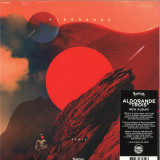
Recorded in the 1980's and snapped up upon arrival in Europe by the Soho Boho's, Acid Jazzuals,Cuboppers, Jazz Massivists and Mojo Jazzmuziker, "Le-Le" by The Arpeggio Jazz Ensemble is a unique one off Spiritual Soul-Jazz outing with Avant Garde touches and more than a hint of Afro-Cuban Orientalism.
The percussion drenched title track has that special Worldwide Sound and the Cool Jazz Get Down Groove of "Wet Walnuts and Whipped Cream" is a DJ's delight, whether played over the Airwaves or to a crowded Dancefloor.
An adventurous jazz outfit that has been playing around Philadelphia since its formation in 1979. The Ensemble was founded by Warren Oree, an acoustic bassist, producer and composer who continues to lead the band. Eclectic and far from predictable, on this album the Ensemble has embraced a variety of acoustic and electric jazz styles combining them with African and Middle Eastern influences and mixed together with the "New Thing" have managed to make a timeless underground classic.
quête:ensemble that
Just a Man, Beres Hammond’s 1979 album, is a hidden gem in his illustrious career, celebrated for its heartfelt lyrics and smooth melodies, hallmarks of Hammond's signature style. This album offers a rare glimpse of Hammond before he became the lover’s rock icon we know today. Blending R&B, disco, soul reggae, and lovers rock, Just a Man showcases his soulful voice against the backdrop of disco-infused reggae rhythms, creating an irresistible vibe.
At this pivotal moment in his career, Hammond had just left the band Zap Pow to focus on his solo work, and Just a Man was a bold statement of independence. It reflects Hammond’s early musical journey, combining elements of R&B and disco with reggae, and marks a key moment in his rise as a solo artist.
Produced by Joe Gibbs, a legendary figure in reggae, and arranged by Willie Lindo, the album features some of Jamaica’s most esteemed musicians: Val Douglas & Mike Chung on bass; Mike Richards, Robert Stephenson & Calvin McKenzie on drums; Robert Lyn, Franklyn Waul& Harold Butler on electric piano; Lenox Gordon, Willie Lindo on guitar; Pam Hall, Prilly Hamilton, Sharon Forrester & Beres Hammond on backing vocals; Waul, Clive Hunt & Noel Seale on percussions; Hunt, Franklyn Waul & Harold Butler on piano; Dean Fraser on saxophone; Peter Ashbourne Group as string ensemble; Jerome Francque & Roland Robinson on trombone; David Madden, Willie Brackenridge & Clive Hunt on trumpet.
The album’s standout track, “Do This World A Favour,” became a UK soul hit, but the entire album features rare and funky gems like "Keep My Wheel Turning" that reflect Hammond's versatility and ability to transcend genres.
Our exclusive edition has been remastered, delivering superior sound quality that enhances the richness of every note.
This edition is published under the direction of Joseph Barthelet for Jamwax, under license from Gavin D.A. Gibson.
Just a Man is more than just an album; it’s a significant piece of jamaican music history.
- 1: Moss Lung
- 2: Even When All Was Silent I Was Not Alone
- 3: The Mountain
- 4: To Cry Out In The Wilderness
- 5: Fight Song
- 6: Equals In Hope
- 7: Over
Scions are a new innovative experimental ensemble. The group features members from the award-winning minimalist chamber-jazz quartet New Hermitage, the Polaris-nominated drone-hymn duo Joyful Joyful, and the acclaimed producer and composer Michael Cloud Duguay. Their collaboration began at the Sappyfest music festival in Sackville, New Brunswick, in August 2022. During this event, New Hermitage and Joyful Joyful connected for the first time and teamed up with Duguay for a spontaneous improvisational performance based on his song writing. The enthusiastic response, capped by a standing ovation, solidified the ensemble's decision to pursue the project further, with Duguay deftly shifting from front-person to producer and musical director. After being awarded a Canada Council project grant in early 2023 the group took residence in Hotel Wolfe Island on Wolfe Island. Over a week the seven core members lived and worked together, culling material from sunrise improv sessions and collaboratively shaping it into a unique body of work that would later become To Cry Out In The Wilderness. In June 2023, the ensemble, now joined by double bassist Gabriella Ciurcovich, recorded their debut album in Halifax’s north end. Led by Duguay’s distinctive approach to site-specific production, the recording took place in the sanctuary of St. George’s Round Church, with engineering by Jake Nicoll, known for his sustainable recording methods using a solar-powered, mobile control room. The resulting album, To Cry Out In The Wilderness, finds the ensemble expertly exploring and powerfully combining their skills in jazz, devotional, classical, drone, folk, ambient, metal, improvisational, minimalist and avant-garde music. The project culminated in a week of production, with contributions from numerous artists from Halifax’s creative music community. Scions then presented their work live, performing on the opening night of Halifax’s Everyseeker festival of experimental music, where they shared the spotlight with the renowned Sun Ra Arkestra. Speaking on the narrative of To Cry Out In The Wilderness vocalist and lyricist Cormac Culkeen said: "When we came together to make this body of work, we started from a narrative seed; a post-apocalyptic humanity relearning and recreating itself, after a total ecological collapse." Speaking on "Fight Song" they add, "“Fight Song” became the song we thought the last of us might need. It is sung for an imagined last stand. It is a rallying cry to wholeheartedly fight a losing battle. So it is for us now, in this time of great dismay and unease. The axe must be disobeyed.
Danish instrumental collective ALAWARI was founded in 2016, and rapidly garnered a name for themselves on the European jazz scene for their explosive live performances, going on to win Denmark s Young Jazz competition in the same year. A contrast to their eponymous 2022 debut - a cacophonous musical reflection of revolution - their upcoming release is an exploration of spirituality, transformation, and the totality of the human experience. Leviathan oscillates between symphonic grandeur and intimate vulnerability, with moments so delicate that every breath can be felt. In this way, the sextet aims to demonstrate that the path to the divine is found through collective unity unity-a shared experience that transcends the individual. From lamenting melodies on a solo trumpet eventually accompanied by a dense, ominous synth, to hypnotic patterns on a percussive close close-mic d saxophone, to thunderous rhythm section grooves with searing horn harmonies, ALAWARIs innovative and dynamic arrangements offer something brand new and unexpected around every corner. Despite being a six piece, the ensembles sound feels comparable to that of an orchestra or big band, combining through through-composed classical classical-influenced orchestration, intricate interlocking parts, lush waves of texture and a warm, raw, intimate production style to craft a larger larger-thanthan-life listening experience. Leviathan embarks on a profound journey, capturing the divine and spiritual forces that permeate the arts. The album serves as a vessel vessel-slowly navigating like a majestic ship or a steadfast train, embarking on a peaceful yet powerful crusade. It invites listeners to traverse a landscape of sorrow and joy, pain and exaltation, silence and intensity. Through this journey, ALAWARI aims to reveal the primordial truth: that the spirit precedes all, and that the mundane backdrop of everyday life can be transformed and painted anew, if carried by the right vessel.
- A1: Destroy All Neighbors
- A2: Always Hallways
- A3: Rocking In The 5Th Dimension
- A4: Bob Marley & Me
- A5: Vlad's Hallway Now / Bitch / Sex Maniac / Kevin Bacon Haircut / Hemifacial Spasm
- A6: My Epic Nightmare Life In Montage / My Girlfriend Has Sleep Apnea & There's A Vlad In My Bed
- A7: Get Out Of My Kitchen
- A8: Gloss Bounce / Euro Trip '69 / Pumping Jeremy Irons / Consensual Hand Puppet In Thump Country / Penetrate / The Gored Torso (Decapitation Blues)
- A9: Swig's Advice On Corpse Disposal
- A10: Make The Body Disappear
- A11: Dirty Boys
- A12: I Am God, Destroyer Of Vlad
- A13: I Live!
- A14: One Hot Lick Iii: Let's Go Incinerate A Body
- A15: Meating Your Heroes
- A16: Stupid Willie Brown
- A17: Dragging Plastic Wrapped Bodies From A Van Music
- A18: Mona Lisa Grimace
- A19: Cool Dawn Dimension Shirt Theme / Fuck All Night Music / Sticky Pleather Jonah Jams
- B1: Progressive Rock Is Life
- B2: Epitaph For The Fallen Circus: Demo
- B3: Requiem For Pig Guy
- B4: My Girlfriend Has Just Realized That I'm A Very Violent Murderer Person / A Not So Beautiful Mind / Ode To Generic Investigative Tv Journalism Music
- B5: Eleanor
- B6: The Neon Rainbow
- B7: The Mythology Of Madness, Call To Arms
- B8: Caleb Bang Jansen Has A Gun / Cops Ruin Everything / The Ex Girlfriend Suddenly Appears To Witness Your Potential Suicide By Cop
- B9: A Big Bear Story
- B10: Epitaph For The Fallen Circus
- B11: You Mean Everything To Me Even If I've Scarred You For Life Since You Witnessed A Horrible Crime (A Love Song)
- B12: Free - Performed By Man Man
Destroy All Neighbors is a twisted splatter-comedy about a deranged journey of self-discovery full of goopy practical FX, a well-known ensemble cast, and LOTS of blood. William Brown (Jonah Ray Rodrigues), is a neurotic, self-absorbed musician determined to finish his prog-rock magnum opus, facing a creative roadblock in the form of a noisy and grotesque neighbor named Vlad (Alex Winter).
He finally works up the nerve to demand that Vlad keep it down, and William inadvertently decapitates him. But, while attempting to cover up one murder, William's accidental reign of terror causes victims to pile up and become undead corpses who torment and create more bloody detours on his road to prog-rock Valhalla. The soundtrack is an infectious slice of progressive rock cues, EDM freakouts, 80’s synth pop and so much more by the brilliant Ryan Kattner & Brett Morris. Released in conjunction with SUB POP Records, and features an original song by MAN MAN, artwork by Johnny Dombrowski, and pressed on coloured vinyl.
- 1: Steps On The Globe
- 2: The Choice (Featuring Mike Stern)
- 3: Prairie Morning
- 4: Neo (Featuring Randy Brecker
- 5: Love And Nothing Less (Featuring Lalah Hathaway)
- 6: Luminescence (Featuring Kirk Whalum)
- 7: Rosso Cantabile
- 8: Legend Of Yaguarón
- 9: Mossy Mountain
- 10: Blue Water
- 11: Euphoria (Featuring Joel Ross)
- 12: New Passage
Euphoria, Keiko's most inspired release yet, elevates the artist to new heights. Featuring a full string orchestra and horn ensemble, performances that transcend musical genres and stellar, Grammy-winning special guests, Euphoria transcends musical genres while still maintaining Keiko's classic listener-friendly sound!! The first single, "Steps On The Globe," will be released to contemporary jazz radio. Other highlights include "Love and Nothing Less," Keiko's passionate collaboration with R&B icon Lalah Hathaway, the deeply moving "New Passage" and many more superb originals
- Dexter Main Title
- Tonight S The Night
- Conoci La Paz
- Uruapan Breaks
- Flores Para Ti
- Blood
- Con Mi Guaguanco
- Perfidia
- Sometimes I Wonder
- Born Free
- Dexter Main Title
- Escalation
- Shipyard
- Deborah Loves Rudy/The House
- I Can T Kill
- Voodoo Jailtime
- New Legs
- Photo Albums
- Courting The Night
- Hide Your Tears
- Wink
- Astor S Birthday Party
- Epilogue/Bloodroom
- Blood Theme
- Die This Way
How did Dexter make a TV audience sympathize with a serial killer? No question, it took an ingenious premise, great writing, great direction…and a stellar ensemble cast headed by lead actor Michael C. Hall. But long-time viewers of the show know there was another “character” that played a huge role in the series: the soundtrack. From Rolfe Kent’s unforgettable title theme to the well-chosen Latin-tinged tunes that fit the Miami setting to composer Daniel Licht’s brilliant themes, the score of Dexter commented on the action even as it amplified its emotional power. Special mention must be made of the late Licht’s work, which employed Latin and electronic elements to portray Dexter’s warm and cold sides; among the favorites here are “Astor’s Birthday Party” and the haunting “Blood Theme” that played over the credits in every episode. In 2007, the Milan label put out a CD and a truncated single-LP soundtrack album containing music from the first season; now, for the first time, we at Real Gone Music are offering all of the music that appeared on the CD in an expanded double-LP edition, pressed on blood with white swirl vinyl and housed inside an appropriately gory gatefold. Don’t miss Michael C. Hall’s spoken word pieces, either…perversely pleasurable listening, limited to 1500 copies!
- The Needs - Part I: Solstice
- 10: %
- Sparrows
- From The Top
- Heart Of The Moon
- Mayday
- Red
- Farcasting
- Demons (Work It)
- Karakuchi Suite
- The Needs - Part Ii: Equinox
Transparent Curacao Vinyl. Award-winning composer for video games and Scottish artist, Barry "Epoch" Topping (PARADISE KILLER, SENTRY, THATCHER'S TECHBASE, ENCOUNTERS) returns with "The Needs", 11 songs of lavish reflection in a modern city pop style. The album takes the listener through an emotional exploration of identity and change set against the backdrop of late summer. It fuses city pop, rock and dance music into a rich, dreamy blast of video game-tinged modern pop music. But "The Needs" is more than just an album title, like Barry explains: "It's a new ensemble built around a core of the musicians that worked with me on Paradise Killer: Fiona Lynch, Fabian Hernandez, Thomas Temple and Kyle Murray-Dickson. A new trio of horns Elin Andersson, Nicklas Dahlin and Simon Fransman round out the full lineup. Having such talented musicians involved in a much bigger way has allowed us to challenge ourselves and make the best, most over the top music we've made yet. 'The Needs' was created as a vehicle for my own reflections and is intended to help listeners reflect and find solace too. No album can be universal but if 'The Needs' can help people feel seen or understood then I'll feel like it's been a success. Getting to make the album has been an extremely rewarding experience."
- A1: Where We’ve Been
- A2: Crimson To Chrome
- A3: Crashing Through
- A4: For Ella
- B1: Chemical
- B2: Statues
- B3: Until I’m With You Again
- B4: Get Numb To It!
- B5: Cardinal
- C1: I Could
- C2: If I Am
- C3: Love You Lightly
- C4: Pride Trials
- C5: Sliip Away
- D1: Where We’ve Been (Live In Chicago At Metro 3/1/24)
- D2: Statues (Live In Chicago At Metro 3/1/24)
- D3: Cardinal (Live In Chicago At Metro 3/1/24)
- D4: Get Numb To It! (Demo Version)
- D5: Repeat Yourself (Demo Version)
- D6: When You Sleep
Das Debütalbum der jungen Band aus Chicago auf Golden Nugget Doppelvinyl. LP 2 enthält 11 Bonustracks, darunter B-Seiten, Live-Tracks und ein My Bloody Valentine-Cover.
"Reaffirms that indie rock, as a style and ethos, can still feel like the most exciting thing a young person could be into.” - Pitchfork
Zukunftsweisender Indie-Rock hat in Chicago eine lange Tradition. Neuzugang und Hoffnungsträger Friko bilden da keine Ausnahme und verwandeln jeden Song in einen Moment der kollektiven Katharsis. Auf ihrem Debütalbum knüpfen Sänger/Gitarrist Niko Kapetan und Schlagzeuger Bailey Minzenberger an die brennende Energie ihrer Debüt-Single Crimson To Chrome an, indem sie Elemente von Post-Punk, Kammer-Pop und experimentellem Rock miteinander verschmelzen und die berauschende Kraft ihrer Musik mit einer Flut von temperamentvollem Ensemble-Gesang verstärken. Poetisch, explosiv und von erhabener Gefühlsrohheit.
- A – Desert Rose
- B- Tnt
On their debut 45 for Batov Records, Indonesia-based BABON deliver two irresistible jams, cooked from a recipe full of Indonesian flavours, Afro Latin funk, Morricone grooves, Bollywood breaks and blues, they call “Tropical Desert Music”. A must-hear for fans of Surprise Chef, Khruangbin, or Sababa 5.
Drummer Wahyudi T. Raupp and multi-instrumentalist Rayi Raditia, friends since high school in Jakarta, via university life in Melbourne, formed BABON in 2023 to address environmental issues through instrumental music, thus combining
two mutual passions.
Working in their home studio free of time restraints, Babon developed their “Tropical Desert Music’’ sound, mixing the energy and influences of Melbourne’s vibrant music scene, with traditional Indonesian forms, from the pulsating rhythms of dangdut, and gamelan, the ritualistic percussion ensemble music native to Java and Bali, to keroncong, a popular and melodic folk style; while addressing environmental concerns and societal complexities, such as the
impact of ruthless exploitation on tropical regions.
On the A-side, “Desert Rose” is a spaghetti blues dedicated to the widows marginalised and objectified by mine workers. Rayi’s electric guitar gently wails with the cinematic effect akin to a Tarantino soundtrack, over a hypnotic groove that never grows tired.
On the flip, “TNT” explores the moral dilemma faced by a miner torn between the destructive nature of his occupation and the dire financial needs of his family, leading to a downward spiral of alcohol abuse. Slowly raising tension levels,
BABON pit somber organ riffs over bass guitar fuzz and Indonesian-sounding guitar motifs, leading to a final explosion
of guitars and drums. BABON’s “Tropical Desert Music” perfectly complements Batov Records’ rich catalogue of Middle Eastern grooves and is an irresistible sound its own right with a poignant message.
- 1: Toomus Meremereh Nor Good
- 2: Nor Look Me Lek Dat
- 3: Kpindigbi
- 4: Koneh Yama
- 5: Waitin' Make You Do Me So
- 6: Are Sorry For You
- 7: Not When I'm In Town
- 8: Koneh Pelawo Ngijoko
- 9: My Baby Girl Loves Me So
- 10: Long Live Our Woman Mayor
S.E. Rogie went from running a tailor shop in Sierra Leone to being one of West Africa's most popular artists. He toured around the country, singing his palm wine music in multiple local languages, created his own record label, and was known as the most handsome man in Sierra Leone. He formed the highlife band The Morningstars in 1965. In 1973, he came to the Bay Area to live and expand his base, performing everywhere from local high schools and convalescent homes to festivals and large stages. In his later life he hit the road again and toured the world, eventually passing away while on stage in Russia in 1994. He shared the following songwriting wisdom with his son, Rogee Rogers: "When you write a song, you can be complicated if you want, but your chorus should be that anybody can sing it." These tracks were originally released on his own Rogie label in the 1960s and include solo, ensemble, and Morningstars songs, most of which have never been reissued until now."
Jabu return with ‘A Soft and Gatherable Star’, an LP that sees the Bristol-based trio evolve from a uniquely spectral take on trip hop to proffer a singular vision between cloudy, downered dream-pop, off-kilter ambient, and the warm, low-end throb of sound system culture. This development is aligned with contemporaries like HTRK, Dean Blunt, Tarquin Manek, YL Hooi and Rat Heart Ensemble, whilst also harkening back to the likes of AR Kane (with whom they are set to play shows and release a collaborative single), the languorous drift of 'Victorialand' era Cocteau Twins or The Cure circa ‘Disintegration’. Comprising Jasmine Butt (vocals, guitar), Alex Rendall (vocals, keys) and Amos Childs (production, bass guitar), the trio’s method may have shifted but the feel remains consistent - slow, spatial, sensuous and gently melancholic. With a career arc unlike almost any other current guitar outfit, Jabu sit within a strong lineage of off-centre Bristolian music, and a very British strain of home-spun DIY bands. Self-recorded between Jas and Amos’ home in South Bristol and Amos’ mum’s house in rural North Somerset, the album came together via a process of trial and error - learning to play on borrowed instruments, using the equipment “wrong”, staying up late recording and slipping into strange, semi-conscious sleep deprived/inebriated headspaces. Having captured over 50 tracks, they honed in on those they liked most, shaping them further, whilst carving out space to allow input from people they love and admire - Daniela Dyson’s voice and Will Memotone's clarinet on ‘Ashes Over Shute Shelve’, Birthmark's synth on ‘Gently Fade’ and ‘Sea Mills’, Rakhi Singh (Manchester Collective) and Sebastian Gainsborough (Vessel)’s strings and arrangements on ‘All Night’, Josh Horsley’s cello on ‘If I Asked You, You'd Tell Me’, and Lorenzo Prati’s sax, again on ‘Sea Mills’. The album was mastered by Amir Shoat (HTRK, ML Buch, Dean Blunt, Carla Dal Forno). Influence-wise, the guitar-based material recalls the bands Amos listened to when younger, and Jas’ more folk-leaning inspirations. Deep-lying dub, hip hop and soul influences are also evident in both the way the LP was mixed, and the space ingrained in their subconscious. Tinged with melancholy, the songs cohere as a set of soliloquies and ruminations on love and tenderness. The album’s title comes from a poem by Amos’ late father which hangs on his wall and seeped into the record. ‘Ashes Over Shute Shelve’ is formed of lines from another poem of his. Recited by longtime collaborator Daniela Dyson and with Will Yates (Memotone) playing his mother’s clarinet, the track was imagined as a conversation between his parents. Geography and location also play a big part in the record, with several significant places name-checked in songs. Shute Shelve itself is a hill near Amos’ mum’s house, who explains “There’s a tree at the top with a 360° view of the Mendips, where my dad’s ashes were scattered. We used to go up there when we could first buy booze from the petrol station down the road, get drunk, light a fire, listen to music from my little battery powered CD player and sleep out without tents.” Titled after a Bristol suburb near where Amos’ grandparents lived and where Jas would spend time as a teenager, ‘Sea Mills’ references her being abandoned by friends on the Downs while high on mushrooms, stranded and missing the bus back. ‘Kosiše Flower’ references the city in Slovakia where Amos and Jas holidayed shortly after getting together and a flower he gave her, which she pressed in a book after an argument. ‘Oceanside Spider House’ is a location in Nintendo 64 game The Legend of Zelda: Majora’s Mask, where someone seeks shelter from the falling moon. Genre: Electronic / Ambient / Dream-pop
Anything goes, everything is OK,’ is New Cool Collective’s free and easy creed. These eight jazz players are continually reinventing themselves, finding new inspiration and inspiring others. Brilliant as ever under a new spotlight, New Cool Collective excels on their 25th album Everything is OK, released by Dox Records this autumn on 25 October 2024.
Earlier this year, the band celebrated its thirtieth anniversary with a pocket-sized ode to their prolific past: 30 Years Live. Having played and partied, the group turned their attention to the future: what next for an ensemble that thrives on musical experiment and collaboration? Where to now? Which way to go to rekindle that creative spark and foster that flame?
New Cool Collective has met the challenge head-on, determined to surprise their audience, and themselves too. They spent a little time reflecting, considering suggestions, weighing up options – eight creative artists exploring, coalescing. Soon their ideas gelled into something special. They laid down a series of tracks that both build on the band’s thirty-year history and feed on a newfound freedom to simply be New Cool Collective. Everything is OK embodies that sense of a group which knows how to surpass expectations, to make music from the heart, to go back to their roots, back to the essence of those early years.
Anything goes, everything is okay on a record that features extensive brass arrangements and orchestral elements. There’s something magnificent about those seductively intimate tracks, something way beyond the traditional orchestral big band sound. New Cool love to experiment with alternative production techniques, developing the final mix themselves to create a unique, unmistakably recognizable sound – however surprising or unusual the music, you know you’re listening to New Cool Collective – like you’re there and the band is playing just for you.
Everything is OK is brimming with ideas, surprise and humour. The music is contemplative, yet it also leads straight to the dance floor: it gets you moving – body and soul. This is music for the intellect, to take you out of your comfort zone and to show you subtly, ironically: is everything really ok?
Carrying on a string of stunning archival releases from major figures of Indian classical tradition (including releases from members of the Dagar family and Amelia Cuni), Black Truffle is pleased to announce an unheard recording from tabla master Kamalesh Maitra (1924-2005). For over fifty years, Maitra devoted himself to the rare tabla tarang, a set of between ten and sixteen hand drums tuned to the notes of the raga to be performed. While the tabla tarang has its origins in the late 19th century, Maitra was the first to recognise its potential as a solo concert instrument, using the set of tuned drums to perform full-length raags. Seated behind a semi-circular array of drums, Maitra produced stunning waves of melodic improvisation enlivened with the rhythmic invention of a master percussionist.
Across his career, Maitra performed in ensembles led by Ravi Shankar, collaborated with George Harrison, and led his own East-West fusion group, the Ragatala Ensemble. However, it is in the solo setting that his remarkable artistry and the otherworldly timbral qualities of the tabla tarang are most strikingly on display. Recorded during the same 1985 Berlin sessions that produced Maitra’s self-released solo LP Tabla Tarang: Ragas on Drums, on Raag Kirwani on Tabla Tarang we are treated to Maitra stretching out for over forty minutes on the late night Raag Kirwani, accompanied by Laura Patchen on tabla and Mila Morgenstern and Marina Kitsos on tanpura. The performance begins with the traditional free-floating exposition section, where Maitra’s spacious melodic improvisation at times almost resembles a plucked string instrument (like the sarod, which Maitra also played). For the listener unaccustomed to the tabla tarang, the sound of these microtonally inflected melodic patterns played on drums has a magic quality. As Maitra begins to imply the rhythmic cycles more strongly, Patchen joins on tabla, beginning half an hour of rhythmic-melodic exploration, where virtuosity sits side by side with delicacy and meditative attention. Accompanied by beautiful archival images and extensive liner notes from Laura Patchen, for many listeners Raag Kirwani on Tabla Tarang will be the perfect introduction to the magical world of Kamalesh Maitra, released to coincide with the hundredth anniversary of the master musician’s birth.
- Scrapple From The Apple
- Willow Weep For Me
- Broadway
- Stairway To The Stars
- A Night In Tunisia
In 1962, Gordon relocated to Paris, where he became part of a vibrant jazz community
He was already a well-established figure in the jazz world due to his groundbreaking work in the 1940s and 1950s. His decision to live in Europe revitalized his career, allowing him to continue evolving as a musician away from the struggles in the USA: he enjoyed enormous respect in Europe, which allowed him to perform freely, often in clubs and on tours, without the burdens of American racism. Paris had long been a haven for jazz musicians: artists like Miles Davis, Thelonious Monk, and John Coltrane were celebrated in Europe, and the French jazz scene, in particular, became a hotspot for both American expatriates and European musicians. Dexter Gordon quickly became one of the leading figures in that scene. Our Man in Paris is a celebrated jazz album and it is widely regarded as one of Gordon's best works. It is considered one of Gordon's finest albums due to its blend of bebop virtuosity, lyrical improvisation, and the tight interplay between world-class musicians: a classic jazz record, beloved for its authenticity and the inspired performances of Dexter Gordon and his ensemble. This album is now considered a classic in the jazz canon that's not only a remarkable album because of its flawless execution and historical significance, but it also captures a pivotal moment in jazz history where American jazz musicians were embracing new experiences and sounds in Europe and captures the essence of Gordon's bebop roots while showcasing the influence of his time in Europe.
Released on 15th November via Polydor Records, “Small Changes” is the eagerly anticipated follow-up to Michael’s eponymous third LP, the Mercury Prize winning, and Grammy Award nominated “KIWANUKA”.
“Small Changes” was produced alongside Danger Mouse and Inflo, the team behind the globally acclaimed “KIWANUKA” and its equally acclaimed predecessor, “Love & Hate”. The new record was recorded between London and Los Angeles. The core trio made up of Kiwanuka and his trusty co-producers expanded into a wish-list ensemble that featured legendary bassist Pino Palladino (D’Angelo, John Mayer, Beyoncé) and Jimmy Jam of the iconic Jam and Lewis songwriting and production duo (Janet Jackson, Prince, SOS Band).
A welcome return for one of Britain’s most talented of songwriters, most recognisable of vocalists, and most virtuosic of guitarists.
Art by YOUT and photography by Marco Grey.
180g heavyweight black vinyl in gatefold sleeve. Includes full size 12pg lyric booklet.
Mustapha Skandrani, a luminary of Algerian music, possessed a unique musical sense, able to transcend the borders of musical cultures to create a distinctive fusion of Arabic-Andalusian and European styles.
"Istikhbars and Improvisations", recorded in 1965 in Paris, is a solo piano album presenting a trans-Mediterranean crossover based on traditional Algerian vocal pieces known as istikhbars. Playing these istikhbars (which have roots in the Islamic Arab-Andalusian culture which flourished in Spain) on the piano - that quintessentially European instrument - Skandrani was greeted with derision by some purists. His powerful musical vision, however, perceives the European element involved in Arabic-Andalusian musical culture, a world of exchange and co-existence.
Skandrani's modus operandi on this release is to present each istikhbar, modal in nature, then to play an improvisation based on it, and its attendant mode. This A/B alternation continues throughout. The pellucid clarity of Skandrani's playing on this album may remind the listener of a modal Goldberg Variations, Bach and Glenn Gould transplanted to Andalucia. Other ears will hear the Arabic/Maghreb elements more strongly. Skandrani's precise touch and clear, symmetrical rhythmic sense links both worlds, assuring us that the Mediterranean is not a barrier, but a unifier, and that the differences between the cultures are not so vast. This is an admirable achievement, resulting in beautiful music of a rare charm.
Mustapha Skandrani was born in Algiers in 1920, and died there in 2005. He mastered a number of instruments at an early age, and his musical prowess led him to work with the great singers and ensembles of his day, in live performances, recordings, and radio broadcasts. Later in his life, he devoted much energy to education.
Originally reissued by Em Records as a limited edition of 200 in 2012, now available once again, in offset printed sleeve, with insert of Japanese and English sleeve-notes and rare photosMustapha Skandrani, a luminary of Algerian music, possessed a unique musical sense, able to transcend the borders of musical cultures to create a distinctive fusion of Arabic-Andalusian and European styles.
"Istikhbars and Improvisations", recorded in 1965 in Paris, is a solo piano album presenting a trans-Mediterranean crossover based on traditional Algerian vocal pieces known as istikhbars. Playing these istikhbars (which have roots in the Islamic Arab-Andalusian culture which flourished in Spain) on the piano - that quintessentially European instrument - Skandrani was greeted with derision by some purists. His powerful musical vision, however, perceives the European element involved in Arabic-Andalusian musical culture, a world of exchange and co-existence.
Skandrani's modus operandi on this release is to present each istikhbar, modal in nature, then to play an improvisation based on it, and its attendant mode. This A/B alternation continues throughout. The pellucid clarity of Skandrani's playing on this album may remind the listener of a modal Goldberg Variations, Bach and Glenn Gould transplanted to Andalucia. Other ears will hear the Arabic/Maghreb elements more strongly. Skandrani's precise touch and clear, symmetrical rhythmic sense links both worlds, assuring us that the Mediterranean is not a barrier, but a unifier, and that the differences between the cultures are not so vast. This is an admirable achievement, resulting in beautiful music of a rare charm.
Mustapha Skandrani was born in Algiers in 1920, and died there in 2005. He mastered a number of instruments at an early age, and his musical prowess led him to work with the great singers and ensembles of his day, in live performances, recordings, and radio broadcasts. Later in his life, he devoted much energy to education.
Originally reissued by Em Records as a limited edition of 200 in 2012, now available once again, in offset printed sleeve, with insert of Japanese and English sleeve-notes and rare photos
New Heavy Hitters album on 180g Double LP vinyl. Blue chip ensemble casting, winging improvisations that are solidly rooted in the blues, original compositions that add much to the ever-expanding repertoire of the modern jazz canon!
These are the components that you look for in ANY recording and they're all available in abundance on That's What's Up by the Heavy Hitters.
lim. to 200 180Gr Vinyl!
Schnieke is rich and fruitful, yet carries a sadness within. A 5-string violin charts its melodious journey from Istanbul to Belin, accompanied by electronics, breakbeats, live drums and percussions. An authentic oriental funky mood keeps you in a trance or gets your body moving tribally…
This is Schnieke, a.k.a. Özgür Akgül, with his first studio album Hediye, or Gift. The album is intended as a gift to Özgür's grandmother, Hadiye, who was very important to him and to whom he dedicates a song. But his debut album will also come as a gift to anyone interested in how a sophisticated musical sensibility brings together electronic elements with stringed instruments of all kinds. Özgür plays the violins himself, as well as the analogue synths and drum machines. Guest musicians include Hasan Gözetlik (trumpet and trombone), Göksun Çavdar (saxophone), Korhan Erol (electric guitar and bass), Burhan Hasdemir and Baris Güney (live percussion), Zafer Tunç Resuloglu (live drums), John Gürtler (church organ) and the Istanbul Strings, Turkey’s most vibrant string ensemble.
Their diverse influences create a wide emotional range on Hediye - sometimes dark and melancholic, sometimes wild, groovy and danceable, somewhere between jazz, dub and electro, each song surprising in its own way. Despite the variety of the individual songs, a captivating pulse runs like a thread through Schnieke's first album. Incidentally, Özgür came up with the band name during a night out in a bar, when a friend explained to him what Berlin slang he absolutely had to know. He liked the sound of the word ‘schnieke’ – it means something approximating ‘snazzy’ - and perhaps he secretly also wanted to flatter himself a little! Well, shouldn't we all do that much more often?
Hediye consists of eight tracks, three of which are traditional: Aman Doktor comes from Istanbul, Özgür's birthplace, and is a homage to his own origins. Kadioglu comes from the Aegean region and features the zeybek dance form which, despite its ‘standardisation’ in recent times, still summons up the ecstasy, inspired improvisation and musical finesse of its historical roots. The other five tracks are Özgür's own compositions, with Pasali providing the soundtrack for the 2010 Turkish feature film Memleket Meselesi. Creating compositions for film has been Özgür’s primary passion since his time as a student at the Filmakademie Baden-Württemberg. You can hear that in his music, because on his debut album Özgür does completely without vocal support, the instrumental depth stands for itself, and, in the style of The Cinematic Orchestra, space is created for us to develop our own images while listening – it is a soundtrack for the film we want to make of it.
Recorded at the same Feb. 12, 1964 New York concert that yielded the more balladic album My Funny Valentine, Four & More
showcases the Miles Davis quintet at their blistering best. The great trumpeter and bandleader (1926-1991), and his stellar group, which was less than a year old at the time of this recording, mostly essayed tempos that ranged from Indianapolis 500 to Bonneville Salt Flats.
Offering a well-balanced, albeit reconfigured, repertoire featuring the familiar hard-bop strains of “Four” and “Walkin’,” newer, original free bop compositions like “Joshua” and “Seven Steps To Heaven,” and the standard “There Is No Greater Love,” which the ensemble
performed relatively infrequently and is the only tune herein not taken at a supersonic pace, the quintet electrified a sold out Philharmonic Hall.
Spurred on consistently by the mercurial rhythm section of pianist Herbie Hancock (23 years old at the time), bassist Ron Carter (then 26), and especially by the cross rhythms of 18-year old genius drummer Tony Williams, Davis’ work, particularly in the upper register, was seldom more commanding. As for his front line partner, tenor saxophonist George Coleman, Davis would write in his autobiography that he “played better that night than I ever heard him play.”
Four & More is available on black vinyl and comes in a sleeve finished with linen laminate.
Repress!
You know it's going to be a heavy record when DJ / collector Mr Thing asks you to keep a look out for a copy on your next digging trip to Brazil. Add on top of that, being sampled by Madlib on the track 'Curls’ on his Madvillain album!
Taken from Waldir Calmon's 'Waldir Calmon E Seus Multisons' album on Copacabana (1970), from looking at this unassuming record cover featuring a middle-aged man sporting an impressive pair of glasses you wouldn't expect it to become the fabric to one of the songs from the iconic 'Madvillain’ album. But… like many things in life, you shouldn’t judge a book by its cover. 'Airport Love Theme’, like its name suggests, falls into full-on lounge territory. It’s feel-good music made to be the soundtrack for a utopian world that never really was. Yet behind the silky-smooth groove is an addictive earworm waiting to be heard.
'Afro Son' taken from the same album, pushes things in a different direction towards a sound that is more firmly rooted in the Brazilian tradition. This quirky 60's-breakbeat-funk groove is reminiscent of French artist Jean Jacques Perrey's 'E.V.A.', also from 1970, in its melody and backbeat, where the Moog synthesizer of Perrey is replaced with a more orchestrated sound by Calmon. This track is magical, cinematic and breakbeat-laden with a hidden unknown exoticism.
Waldir Calmon had an active career in music working from the '50s right up until his passing in 1982. His career started early, forming his first ensemble at the age of fourteen, originally working in bands in nightclubs and writing jingles. He progressed in the early '50s to a long-running career working in television. In addition to his television work, he had success with his recording vocation, mixing in the same musical circles as greats such as Tom Jobi, João Gilberto and Doris Monteiro.
• Next installment in BRAZIL 45 Series.
• Sampled by Madlib on the track ‘Curls’ from his ‘Madvillain’ album.
• Quirky, cinematic, breakbeat-laden exoticism.
Re-mastered from original mono master tapes.
Limited edition 1000 copies.
180 gr vinyl pressed by Pallas in Germany.
Deluxe high-gloss flipback album jacket.
Facsimile reissue using the original cover art.
Double insert using an original photo by JP Leloir from 1955.
Each record has been visually checked to prevent defects.
Recorded December 27 and 29, 1955 at the Pathé Magellan studio, Paris.
Original LP issue: Barclay 84.023.
After hitting Paris in 1950, saxophonist Bobby Jaspar enthralled jazz fans and jazzmen alike with his smooth, elegant playing, with the lyricism of his tranquil phrases heavily influenced by Stan Getz in particular. So when Jaspar began regularly performing with a small ensemble at the Club St-Germain five years later, he adopted the same instrumentation as that of his idol’s illustrious quintet, with Sacha Distel on guitar and René Urtreger on piano in the roles of Jimmy Raney and Al Haig, respectively.
Contrary to what its title might suggest, ‘Modern Jazz au Club St-Germain’ was actually recorded in the studio. It features compositions by Milt Jackson, Dizzy Gillespie and Miles Davis along with a handful of standards, in which the angular aridity of bebop gives way to the generous and yet sensitive idiom of cool jazz.
Jaspar’s premature death in 1963 robbed the jazz world of a promising talent; this record is among his best efforts as a leader. Bobby Jaspar is in top form here !!!
Text – Pierre de Chocqueuse
Bobby Jaspar (Tenor Saxophone & Flute)
Sacha Distel (Guitar)
René Urtreger (Piano)
Benoit Quersin (Bass)
Jean-Louis Viale (Drums)
As a young conservatory student back in 2016, Danish trumpeter Anders Malta was invited to participate in a reunion concert with the legendary Ernie Wilkins Almost Big Band. He was so taken with the band and the music, that on the spot he decided that he wanted to form his own. In 2020, Anders Malta Almost Big Band played its first concert, going on to play a monthly residency at Christiania Jazz Club in Copenhagen for the past two years. Their debut album Introducing is set to release on August 23rd on April Records. Since the early days of jazz, the broad sound pallet and dynamic range of the big band has proven irresistible to composers and arrangers. However, the traditional big band, with its 16 16-19 individual moving parts, can also at times, and for different reasons, be an unwieldy machine to maneuver. Malta s 13 13-piece made up of Denmark s finest young soloists is agile like a small group, retaining the powerful force of the larger orchestra. Belonging to a new generation of musicians with a deep love and knowledge of the jazz tradition, Introducing " sees the band pay tribute to the timeless Hardbop sound of the 50" s and 60" s through the three movement suite Hardbop Conversations "", whilst offering a contemporary European perspective on the classic large ensemble format through Ouverture, Interludium and Epilog ". Intricate arrangements, rich harmony, soaring trumpet & flugelhorn improvisations and a diverse array of feel and grooves showcase the impressive stylistic and artistic breadth Malta has to offer as a bandleader, arranger, composer and instrumentalist. From the high high-energy swing and powerful tutti chords one craves from a Big Band to the more intimate textures of solo instrumental passages, the ensemble s sophisticated, complex, and joyous debut proves once again that Denmark s jazz scene is among the world s most prolific and exciting.
Peni Candra Rini (she/her), the Indonesian composer and performer whose musical practice encompasses a wide range of traditional and experimental Javanese styles, announces her new album Wulansih (July 12, 2024) via New Amsterdam Records. Kronos Quartet's David Harrington, a frequent collaborator of Rini, recently called her “one of the world's greatest singers”, and on Wulansih she places her voice in conversation with a wide array of experimental and traditional musicians, including Andy McGraw, Lester St. Louis, Shahzad Ismaily, John Priestley, Curt Sydnor, and many others. Produced by Ismaily at New York's Figure 8 Recording, Wulansih creates a world all its own.
The 8 songs on Wulansih exert a deep sense of spiritual calm and act as, in Rini’s words, “a reminder that you are still human, listening to expressions of other humans.” Her music is deeply inspired by the poetry of Rumi and Hafez, Wayang Kulit (Indonesian shadow play), and Serat, the tradition of Sufi thought in Central Javanese court poetry. Rini says that Wulansih aims to “express my inner feelings, my soul, to provide inspiration to younger Indonesian composers, and to introduce Indonesian new compositions to new global audiences.”
Wulansih is a small encyclopedia of Indonesian music. Rini explains: “The album mixes a wide range of materials, including traditional Javanese gamelan singing, Balinese chant, stringband music of the 1960s, and intercultural improvisations, bringing them all together through my contemporary compositional approach. We created experimental ensembles, and even experimental instruments and tunings to create an album that, whatever you think of it, sounds like nothing else.”
Rini’s lyrics are poems, strongly inspired by Javanese Sufism, with a deep emphasis on love and the inner self. Estu explores the idea of “love as a sacrifice; it takes a commitment to put one’s heart in the right place. It requires the seriousness of an artist,” while Warahsih explores how “always through understanding and sincerity, teaching Love to those who study the ways of life, through the ages.”
The music on Wulansih transforms these poems of love and compassion into open and lush sonic spaces that are crafted using synthesizers, traditional Indonesian instruments, Rini’s wide vocal range, guitars, and Ismaily’s production.
Led by pianist/composer Barbara Fiig, the ensemble is made up of three creative communicators self described as blue sheep " of the jazz world. First stumbling into each other at the music education program at Classical Music Conservatory DKDM, their sound is rooted in collaboration and community, drawing on elements of musical poetry, jazz, folk, Nordic and Classical traditions. Regarding the name Blåly , the trio explains that it is a made up word open to interpretation. Derived from the wordly "", meaning shelter " in Danish, it is reflective of the shared feelings of safety and introspection the trio find in their music making and that they hope to impart onto their audience. Exploring themes of motherhood, new beginnings, mental health, identity, and the cathartic potential of music, the record is built around Fiigs personal approach to the piano. Combining gentle lyrical melodies and colorful melancholic harmony, Blåly perform and interpret each piece with a mature, spacious and textural sound palette, ebbing and flowing between the composed and the improvised in a collective exchange of ideas and energy. Driving drum grooves, hypnotic piano patterns and ethereal timbres from bowed double bass craft a stripped back sound world that is simple, immersive, honest,
A followup to his 2022 debut Dayyani released on his own label, Trop Op " sees the drummer delve deeper into the mood of pedal steel, trumpet and Nordic folk he discovered early in his writing practice and develop it into a bigger, more comprehensive vision. Featuring eight original compositions and an arrangement of a traditional Swedish folk song, Dayyani s simple yet sophisticated writing style is focussed on lyrical thematic melodies, rich folk harmony, and showcasing each member of the sextets musical identity.With years of playing together in a number of up and-coming Danish jazz groups including Tigeroak, Nordlys trio and Vingborg/Valencia Quartet, the ensemble is well versed in giving each other space to express their voices freely. Soaring reverberated arcs from the pedal steel, subtle drum grooves and expressive, tasteful improvisations offer up an imaginative fresh perspective on contemporary Nordic jazz. The records title translates to Step Up ", referring to Dayyani s view that we all need to step up for our communities and share more of ourselves to the people around us. "We live in a time where there is an increasing focus on our mental health, and personal growth where we need to take care of ourselves. In doing so, I think we can sometimeswithdraw too much into ourselves, focus on the inner self and forget to stand up for eachother and the community surrounding what we do.
A Willed and Conscious Balance is the first album of material arranged for an ensemble by multi-instrumentalist composer Tomin Perea-Chamblee. The bulk of the album was recorded in one day at The Bunker in Brooklyn, NY by IARC house engineers Dave Vettraino and David Allen, and features a truly incredible lineup that includes members of Irreversible Entanglements and jaimie branch"s FLY or DIE. Tomin"s work with this group of veteran musicians is singular though, instantly setting this material apart from the discographies of its contributors.
The Wild Classical Music Ensemble is a Belgian experimental rock band formed in 2007 by artists with mental disability within the social-artistic non-profit organisation Wit.h in Kortrijk. Their unique sound is a blend of punk/rock riffs, fanatical rhythms and soaring flutes and fiery synths, over which gravitate multiple, multilingual voices that scratch harshly as much as they comfort. There's something very Belgian about this harshness and noisiness. We often think of compadre Arno, from the TC Matic era. During the Covid crisis, the disabled members of the Wild Classical Music Ensemble were undoubtedly subjected more than others to the harsh conditions of confinement, alone in their rooms. Damien Magnette was still able to visit them with sound equipment. This was one of their all-too-few windows onto the world. Forbidden to meet, let alone play together, the members of Wild were nevertheless able to compose songs in tandem with Damien. The tracks were then sent to musician friends - Fabrice Gilbert, Ava Carrère, Wim Opbrouck, Shht, Arthur Satàn, Nathan Roche and Julien ZLDR - who added their artistic touch. Jean Lamoot and Carl Roosens joined the adventure, one as mixer, the other as video director. It's a result of the conditions under which it was created, this is the band's most highly-produced album, and perhaps its most accessible: frankly rock, with a great deal of freedom in production, and sometimes with a certain pop allure. Jean Lamoot's contribution to the mix had a lot to do with it. In addition, the forced slowdown allowed us to devote much more time and attention to writing the lyrics. Leader Damien Magnette says: "For over a year, we were all confined. But what about when you're a mentally handicapped person? Well, it's very different from you and me... We have the right to choose, the luxury of deciding for ourselves what rules we want to follow or not. We have free will. They don't. This series of confined songs is dedicated to all the people who have gone through this crisis, deprived of their free will. We send them our thoughts, hugs and kisses full of true love! The songs respond to a deep desire to look out for each other in adversity (the so obvious "Comment ça va?" by Johan Geenens and Wim Opbrouck, or "Waarom ben je boos" by Sébastien Faidherbe with Wim Decoene, the latter full of empathy). A sense of loneliness is logically present on the album ("Dat is mijn verdriet" by Linh Pham, a very real, very concrete and particularly touching poem, or "Loneliness", whose text was improvised by Wim), if not an understandable rage ("Je ne veux pas" and "My Frustrations"). It worth noting that on "On reste heureux", Sébastien Faidherbe composed all the parts in one go, with an optimism that stands out from the anger expressed in his other songs. Let's make no mistake: none of this is really over. All these emotions, suffering, pain and hope, speak to us far beyond this grim story of covid.
A RADICAL HORIZON is comprised of a series of duets between cellist Lori Goldston and pianist Stefan Christoff, recorded on a late Fall afternoon in Brooklyn, NY. A conversation between friends, these improvised excursions reflect a willingness to be open to the spirits in the space and between the notes; a spirit of communion that, as Stefan writes, "guides and dances with our dialogue together".
Stefan Christoff is a Canadian musician, community organizer, and journalist based in Montreal, Quebec. He has collaborated with artists such as Sam Shalabi and Adriana Camacho, performs with his brother Jordan as a duo in Anarchist Mountains, and has released music on labels such as Moon Villain, Shimmering Moods, and Aural Canyon.
A lifelong community activist, he helped establish the Musicians For Palestine project and has engaged in street-level solidarity work in Lebanon and The Philippines as well as closer to home in Montreal. This is his second appearance on Beacon Sound after 'In Sofia', an album of piano improvisations recorded in Bulgaria, was released on the label in 2023.
Classically trained and rigorously de-trained, possessor of a restless, semi-feral spirit, Lori Goldston is a cellist, composer, improvisor, producer, writer and teacher from Seattle. Her voice as a cellist, amplified or acoustic, is full, textured, committed and original. A relentless inquirer, her work drifts freely across borders that separate genre, discipline, time and geography.
Current and former collaborators and/or bosses include Earth, Nirvana, Mirah, Jessika Kenney, Ilan Volkov, Eyvind Kang, Stuart Dempster, David Byrne, Terry Riley, Jherek Bischoff, Malcom Goldstein, Steve Von Till, Lonnie Holley, Cat Power, Ellen Fullman, Maya Dunietz, Mik Quantius, Embryo, O Paon, Tara Jane O’Neil, Natacha Atlas, Broken Water, Ed Pias, Christian Rizzo and Sophie Laly, Threnody Ensemble, Cynthia Hopkins, 33 Fainting Spells, Vanessa Renwick, Mark Mitchell, Lynn Shelton, and many more.
Her work has been commissioned by and/or performed at the Kennedy Center, Sydney Festival, Cineteca Nacional de México, Tectonics Festival, Frye Art Museum, Time Based Art Festival (TBA), WNYC, The New Foundation, Paris Fashion Week, Northwest Film Forum, On the Boards, Seattle International Film Festival, Seattle Jewish Film Festival, Bumbershoot, Crossing Border Festival, Boston’s Museum of Fine Arts, Joe’s Pub, the Stone, University of Chicago, and venues large and small throughout North America, Mexico, Australia, and Europe.
Lonnie Smith (1942 – 2021), was an American jazz organist. He was part of several vocal ensembles in the 1950s, includ- ing the Teen Kings which included Grover Washington Jr. Art Kubera, the owner of a local music store, gave Smith his first organ, a Hammond B3. Smith’s affinity for R&B mixed with his own personal style as he became active in the local music scene. In 1965 he met guitarist George Benson. The two con- nected on a personal level and formed the George Benson Quartet, featuring Lonnie Smith, in 1966. After two albums under Benson’s leadership, Smith recorded his first solo al- bum ‘Finger Lickin’ Good (Soul Organ)’ with George Benson and Melvin Sparks on guitar, Ronnie Cuber on baritone sax, and Marion Booker on drums. This combination remained stable for the next five years. After recording several albums with Benson, Smith became a solo recording artist and sub- sequently recorded over 30 albums under his own name.
Numerous prominent jazz artists joined Smith on his albums
and in his live performances, including Lee Morgan, David “Fathead” Newman, King Curtis, Blue Mitchell, and Joe Lova- no. The album ‘Finger Lickin’ Good (Soul Organ)’ showcases Lonnie Smith’s virtuosity and his innovative approach on the organ, with tracks that feature intricate solos and groovy rhythms so typical of the soul jazz and jazz funk genres. Lon- nie Smith was named 9 times “the best organist of the year” by the Jazz Journalists Association.
This release comes as a limited edition of 750 copies on smoke coloured vinyl.
On October 18th, Twisted Pine releases its joyous third LP, Love Your Mind. Dubbed “a band to watch” by NPR, the band’s first album in four years is the long-awaited follow-up to Right Now, which No Depression praised for its "sheer pop glory, funky all-day grooves, and spacecraft sonics.” The title represents the quartet landing after several years of touring, serious introspection, glorious bursts of creativity, and many after-hour festival jam sessions that had them pickin’ ‘til dawn. What started as a (semi-)traditional bluegrass band in the trenches of the storied Massachusetts Americana scene a decade ago has bloomed into an ensemble gleefully ready to race down any artistic detour. This is the sound of Twisted Pine now —experimental production, fearless songwriting featuring input from each member, finely-crafted collaborative arrangements, playing that is sometimes virtuosic, always visceral. The sound of a band that demands you Love Your Mind.
»lacuna and parlor« is anchored in the left-field chamber music and incidental recordings that have long accented more eaze’s roving sound. Composed with one ear pressed to the rich textures of instrumental recording environments, this is a resonant and tactile collection tinged in rephrased space and skewed time.
Taking the rudiments of tonal music theory as her conceptual base, more eaze formed the compositions around her own manipulations of these core principles. Simple chord progressions stretch over minutes rather than seconds, for example, while elsewhere specific tonal signifiers were deleted from harmonic progressions, altering the expectations of these tropes.
These and many other bespoke techniques underpin compositions that span Americana-inflected ambient ballads and jaunty string recitals. With wistful vocals, bursts of improvisatory noise, loose chatter and overdubbed room sounds flowing in and out of the mix, more eaze invites us to lounge and linger in these lacunate moments, at once heard, felt and imagined.
- A1: 24 03 (Studio 1, Warsaw)
- A2: Thin Line (Studio 1, Warsaw)
- A3: Dancing With Ghosts (Studio 1, Warsaw)
- B1: The Boat (Studio 1, Warsaw)
- B2: It Comes In Waves (Studio 1, Warsaw)
- C1: Don't Break My Heart (Studio 1, Warsaw)
- C2: Komeda (Studio 1, Warsaw)
- D1: Utrata (Studio 1, Warsaw)
- D2: Nostalgia (Roundhouse, London)
This album is about memories. About a feeling of nostalgia and longing, both beautifully comforting and devastating. It is an attempt to transform an unspoken sensation of the past to a solid object serving the future, an urge to remember and hold onto moments that we can't keep forever. On the 6th of October 2023, the release date of her third solo album ‘Ghosts’, Hania performed a very special album release concert with a string ensemble in a uniquely special location - Witold Lutosławski's Concert Studio at the Polish Radio in Warsaw. Over the years, the spaces of Polish Radio have become an important part of Hania’s life - both privately and professionally.
Visiting for the first time as a student of Chopin University of Music and returning to make her first recordings in late 2018, just before the release of the debut album ‘Esja’. It was also in these studios that Hania recorded her Live from Studio 2 video and EP. But whereas that featured a much-loved solo performance, for this very special recording from the larger Studio 1, Hania is joined by her regular collaborator Ziemowit Klimek on double bass and moog as well as a luxurious eight-piece string ensemble featuring Karolina Gutowska violin Jan Pietkiewicz violin Marta Piórkowska violin, Paweł Czarny viola, Tomasz Rosiński viola, Dobrawa Czocher cello, Marianna Sikorska cello, Mateusz Błaszczak cello.
Beautifully mixed by Greg Freeman in Berlin the music takes on a new life as Hania’s ethereal vocals, beautiful playing and exhilarating compositions are brought fully to life by the beautiful sweeping strings of the expanded ensemble. The concert is included here in its entirety with the addition of one beautiful extra performance – the title track ‘Nostalgia’ a beautiful interpretation of a much-loved piece from the Ghosts album taken from her concert at the Roundhouse in London. In addition the LP features a beautiful 16 page booklet of photographs of the Polish radio studios taken by Hania herself and featuring her thoughts on the recording, studios and the compositions themselves and the CD includes the photos in a beautiful glued in 12 page booklet.
On this new album 'BEEFKAT', Skordatura, Jozef Dumoulin and Mâäk find each other in a rough embrace of energy and raw expression, averse to compromise and with an unbridled passion that encompasses everything beautiful and ugly.
SKORDATURA
With undulating rhythms, sharp injections, angular grooves, snippets of humour and an unreal sound
sometimes reminiscentof the intergalactic funk of Battles, Skordatura conjures up a simmering pot of ideas. Fender Rhodes wizard Jozef Dumoulin provides additional fireworks as the fourth newly enlisted Skordaturian.
JOZEF DUMOULIN
Belgian pianist Jozef Dumoulin redefined the Fender Rhodes keyboard thanks to his contemporary, eclectic, and highly personal approach to the instrument. Besides his own projects, he is also a much sought-after sidekick on the jazz and improvised music circuit. Jozef currently lives in Paris.
MÂÄK
Formed more than 20 years ago as a fascinating jazz ensemble, it has now become a versatile collective with international ramifications. With Mâäk, the ever-adventurous Laurent Blondiau, Jeroen Van Herzeele, Michel Massot and Grégoire Tirtiaux form one of the most exciting avant-garde jazz bands in Belgium.
On March 24, 2023 Rob Mazurek assembled his endlessly psychedelic and explorative large ensemble Exploding Star Orchestra under the dome of Chicago’s Adler Planetarium to perform material from their recently released album Lightning Dreamers along with a number of new pieces.
A digital projection flashed an ever-changing stream of vividly colored, abstract shapes derived from Mazurek’s paintings and animations over the audience’s heads, while the Orchestra, which on this night numbered eight musicians besides its leader, transformed the stylistically disparate pieces from Lightning Dreamers into an enveloping maelstrom. Electric pianists Angelica Sanchez and Craig Taborn pushed layers of plush texture back and forth over the intricate, tripartite grooves of bassist Ingebrigt Håker Flaten and two drummers, Chad Taylor and Gerald Cleaver. Mazurek’s trumpets and wordless cries, Tomeka Reid’s cello and Nicole Mitchell’s flute and voice periodically surfaced out of the flow, issuing sharp, energetic statements, while Damon Locks’ proclamations flickered in and out of the mix like an erratic signal from some interstellar radio announcer. Together, they reimagined the brooding sound of Miles Davis’ Bitches Brew as a force for transcendent uplift.
At one point, Mitchell put down her flute, spoke into Mazurek’s ear and pointed up to toward the dome. As he looked up, his own horn came down, and for a moment, the two of them gazed with undisguised awe at the spectacle that the Orchestra had unleashed. In a time when so many forces conspire to bring people down, this concert was an invitation to look up and out past the horizon.
It is with great pleasure that we announce Mitchum Yacoub's debut album Living High in the Brass Empire_ a showcase in unique stylings of tropical funk, afrobeat, cumbia, and soul; a musical patchwork threaded by a heavy, hypnotic rhythm section and powerfully vibrant horn lines. What sounds like a 12-piece ensemble was actually mostly recorded and performed by Yacoub at his home in San Diego, featuring a few close friends from local groups Sure Fire Soul Ensemble and Boostive. The horn section is comprised of Travis Klein, Bradley Nash, and Wesley Etienne (featuring Todd Simon on "Los Muñequitos"), each with distinguished performances that send the music to higher heights. Nuanced vocalist Divina Jasso lends humanity and introspection throughout the head-nodding soul sounds of "Never Knew", latin dance anthem "Cumbia Divina", and the syncopated funk of "Empire". You'll hear rhythms from Colombia, folkloric percussion of Cuba, interlocking grooves à la Fela Kuti, 70's r&b influence, and something in between it all. Drawing many inspirations into a refreshing and unified record, we think you'll enjoy Living High in the Brass Empire.
In this electrifying 2024, we're buzzing with excitement as we celebrate 40 years of Flexi, the record emporium that's weathered countless storms amidst the ever-shifting tides of the music industry, catering to vinyl aficionados across the ages. Alongside the raves and swag, no doubt, there's a killer compilation dropping on the indie label "Flexi Cuts," dubbed evocatively as "Musica Solida" spread across 3 or perhaps 4 12-inch samplers, boasting a carefully curated selection of singles from cherished Flexi-affiliated artists and producers. The vision? To cultivate a virtuous movement of sublime tunes, echoing the fervor and zeal to persist within the realm of quality that Flexi embodies within the Italian scene, alongside kindred spirits... despite the daunting challenges of the market in recent years.
Musica Solida # 1 showcases
DJ Rocca: One of the most solid producers on the panorama, a respected maestro of the clubbing scene in Italy and worldwide.
Club Soda: Live electronic ensemble, still dreamin' from their latest EP 'Basso e Batteria', which packs an unreleased track recorded directly from their house-flavoured jam sessions.
Lex (Athens) & Locke : A Greek producer who is well established in today's dance house scene, with quality-vibey releases and a very nice and classy and groovy sound. We will definitely hear from him in the future!
Hiroyuki Kato: Emerging Osaka-based multi-instrumentalist makes his debut with a very punchy and catchy track!
The Mechanical Man (feat. Bob Vito) : Neapolitan super producer. Raw-sounding, gritty, powerful and never dull, a pleasure to have him with us.
The record will be released in about 200 vinyl copies no more.
Packaged in the classic discobag 2- holes, with a distinctive letterpress print in a beautiful silver cover.
Compiled by Simone Guerra aka Relative
Mastered by Francesco Brini (except track B1, Mastered by Marco Spaventi)
Distributed by Rubadub, Glasgow
Pressed by Desslab
Design by GLZ
By the time Chick Corea - the venerated 27-time Grammy winner and National Endowment for the Arts Jazz Master - went into Mad Hatter Studios in Los Angeles to record the third album with his Elektric Band, the lineup had been solidified through constant touring the previous year. Dedicated to his father Armando, a trumpeter who led a Dixieland band in Boston in the 1930s and 1940s, Eye of the Beholder reflected a tightening of the ensemble playing and a greater showcasing of the individual solo prowess of these consummate musicians.
With this fresh sounding five-star recording, it is clear that Corea was more open to showcasing this band’s collective muscle and individual virtuosity. The group rips, in no uncertain terms, on showcases like “Cascade, Part II,” “Trance Dance,” and the staggering “Amnesia.” There are experimental excursions into the kind of atmospheric, ambient music realms that Brian Eno pioneered on “Cascade, Part 1” and may be the most profound musical statement of the collection, on par with past Corea high points, “Beauty.”
Originally released on GRP Records in 1988, the album is a high-water mark for Corea and his Elektric Bandmates.
crys cole returns to Black Truffle with Making Conversation, her third solo release for the label. After the intimate song-like constructions of Other Meetings (BT096), Making Conversation documents a different facet of cole’s work, presenting three rigorously conceptualised commissioned pieces, each of which extend her signature approach to highly amplified small sounds into new directions.
The side-long title piece is a stereo version of an 8-channel sound installation exhibited in 2023 at the Tabakalera Art Center in Donostia / San Sebastian, Spain. The piece uses a multitude of instrumental, vocal, concrete and electronic sounds to evoke the soundscapes cole encountered during nocturnal listening session in Bali, Indonesia in 2018 and 2019. In this world of night sounds, she explains, she ‘observed the complex interplay between amphibian, lizard, bird and insect communication, domestic animals (roosters, dogs), man-made sounds (airplanes, vehicles, conversations and evening activities) and sounds that were difficult to place’. Drawing on field recordings as memory aids (but including none in the finished piece), cole’s piece uncannily reproduces the spatiality and pacing of environmental sound without attempting strictly to replicate it. We hear insect-like twittering and birdsong fragments, resonant thuds and distant roars, furtive crunches and taps, muffled breath and metallic scrapes. While at times it can be difficult to imagine the source of these sounds, at other points they are clearly instrumental or electronic in origin; in its placement and layering, though, the whole assemblage suggests the glorious, unthinking richness of a non-musical sound environment. Suggesting at once the electronic gardens of Rolf Julius and the little instrument expanses of classic AACM, the piece is a brilliant enactment of the Cagean drive to ‘imitate nature in her manner of operation’.
‘Valid ForeverrRrrRRrrr… (pt. 1)’ began as cole’s contribution to an Issue Project Room commission to realise a score from Alison Knowles and Annea Lockwood’s Women's Work, a 1975 collection of text and conceptual scores by women artists and composers. cole’s piece begins from Beth Anderson’s Valid for Life, a complex arrangement of the letter R in various typefaces. Where the composer suggests a realisation on a trio of acoustic instruments (playing rolls with velvet beaters), cole translates the piece into her characteristic sound and object language as a trio of rolling sounds on ‘two large similar paper things and one 5-pin bowling ball’. Rolling from one side of the stereo field to the other, the bowling ball’s uneven movement is the heart of this immersive textural array, created with the simplest materials, which generates phantom sensations of pitch and phasing effects solely through amplified friction.
On ‘Valid ForeverrRrrRRrrr… (pt. 2)’, cole makes a first foray in translating her signature approach into conventional instrumental sounds, here in the form of a transcription for MIDI percussion ensemble. The result is refreshingly puzzling, comparable perhaps only to the sparsest moments of Keiji Haino’s classic “C’est parfait…” Accompanied with extensive liner notes, photographic documentation and a download code, Making Conversation is an exciting next step in cole’s work, extending her signature concerns in new sonic and conceptual directions.