Cerca:ensemble this

Generi
Tutto
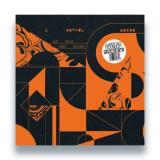
Julian Sartorius & Ensemble This / Ensemble That - RLLRLRLLRRLRLRLRLLRLRLR
 
2

What you do is a fundamental question. But it's how you do something that ultimately determines the effect." — Julian Sartorius

With 'RLLRLRLLRRLRLRLRLLRLRLR', Swiss drummer and sound artist Julian Sartorius presents his third album in three years. Together with 'Ensemble This | Ensemble That' Sartorius has created a mesmerizing 39-minute percussion album that conclusively expands his artistic output. For the first time, an ensemble plays an idea conceived by Sartorius, while he assumes the role of an interactive conductor, manipulating the sounds made.

Sartorius is known for his fluid and versatile solo performances in which he continually modulates the sound of his instruments, adding objects and progressively unfolding his sound world. The idea of expanding this practice was already gestating when the 'Ensemble This | Ensemble That' invited him for a collaboration. Together with the drummers and percussionists Brian Archinal, Victor Barceló, Miguel Angel Garcia Martin and Bastian Pfefferli the concept was further explored, elaborated upon in detail, and finally realized.
'RLLRLRLLRRLRLRLRLLRLRLR' is both title and score for the ensemble's four percussionists. The pattern, consisting of 23 individual beats, is played continuously by the ensemble while Sartorius gradually makes alterations to the instruments played. The result is a piece that has a sustained rhythmic flow yet is perpetually changing. Sartorius' interventions and the precise musicality of the ensemble allows the listener to discover an expansive array of moods and intensities.

The album is structurally recursive but develops an almost mystical magnetism through an odyssey of diverse musical landscapes. Sartorius explains: "It amazes me deeply how much the sentiment can change based on a musical mood - this sense of curiosity is made audible with this album." The album recording itself is designed as an endless loop: at the end of the recording, the ensemble's sound has returned to its starting point, thereby completing an endless, self-contained cycle, with no beginning or end. In this way, Sartorius also echoes his 2021 album 'Locked Grooves'.

Julian Sartorius' precise and multi-layered rhythmical patterns are keen excursions into the hidden tones of found objects and prepared instruments, bridging the gap between organic timbres and the vocabulary of (experimental) electronic music. He has released numerous solo albums, creates audiovisual art works, collaborates with musicians, writers, and artists, and performs live in intimate venues and on festival stages.

Ensemble This | Ensemble That (ET|ET) have established themselves not only as interpreters of contemporary music, but also as collaborators to a wide range of artists including projects like Zimoun, Myriam Bleu, Strotter Inst., Lê Quan Ninh, Marko Ciciliani, Jürg Frey, and Michael Maierhof, amongst others.

In Stock

Disponibile in Stock e pronto per la spedizione

18,45
Fred Frith & Ensemble Musiques Nouvelles - Something About This Landscape..

From his early days with Henry Cow, Fred Frith was seen as a brilliant instrumentalist and improviser, but what has been overlooked is what a first-rate composer he is. This recording offers both aspects. His most complex orchestral composition and two selected improvisations with the Ensemble Musiques Nouvelles. Fred Frith, as an infusion of energy and inspiration. ''Something about this Landscape was commissioned by Ars Musica in 2018. I composed the piece during a residency at Lou Harrison's straw-bale house in the desert at Joshua Tree, California. It's an inspiring place for a number of reasons - the silence, the light, the life, the history. The extraordinary diversity of birds during the migration season. Both other pieces are improvisations. The first one is the one we did during the concert (in public), the other one, very different, is the one we did during the dress rehearsal (on the day of the concert).'' Fred Frith.

pre-ordina ora30.09.2023

dovrebbe essere pubblicato su 30.09.2023

25,00

Last In: 2026 years ago
Fred Frith And Ensemble Musiques Nouvelles - Something About This Landscape For Ensemble

Since his early days with Henry Cow, Fred Frith has been regarded as a brilliant instrumentalist and improviser, but what has been overlooked is that he is also a first-rate composer. This recording offers both aspects. His most complex orchestral composition and two selected improvisations with the Ensemble Musiques Nouvelles. Fred Frith, as an infusion of energy and inspiration.

''Something about this Landscape was commissioned by Ars Musica in 2018. I composed the piece during a residency at Lou Harrison's straw-bale house in the desert at Joshua Tree, California. It's an inspiring place for a number of reasons - the silence, the light, the life, the history. The extraordinary diversity of birds during the migration season. Both other pieces are improvisations. The first one is the one we did during the concert (in public), the other one, very different, is the one we did during the dress rehearsal (on the day of the concert).'' - Fred Frith

Musiques Nouvelles is one of the two most successful and diversified contemporary music ensemble in this country with Ictus. With, under the influence of Jean-Paul Dessy, a deeply spiritual and mutual listening aspect. This meeting with the legendary Fred Frith will remain as an important step.

pre-ordina ora29.09.2023

dovrebbe essere pubblicato su 29.09.2023

19,54

Last In: 2026 years ago
Hypnotic Brass Ensemble - This Is A Mindfulness Drill

From Jagjaguar: “Somewhere along the way, I got the idea
that Richard Youngs’s ‘Sapphie’ was all about a dead dog.
“I don’t know if someone insinuated this idea in front of me
or if I psychologically tethered the title to the tenderly
printed dog paw on its cover. Either way, I’ve gone over a
decade thinking this remarkable, windswept album of torch
songs was about a dearly departed pet.
“And yet, as we approached a reissue of this Jagjaguwar
classic and a new, reimagined version by artists Hypnotic
Brass Ensemble, Moses Sumney, Sharon Van Etten, and
Perfume Genius, Richard Youngs was straightforward and
unsentimental about its meanings. ‘The lyrics are not
about anything in particular,’ Youngs wrote.
“The paw prints on the cover are, in fact, that of a friend’s
dog (‘The first dog I ever loved,’ Richard said), but there is
no devastating loss at its center.
“And so, I want to tell Richard how this album has become
a centering album for a great many of us, a transcendent
and meditative piece of art.
“‘What does ‘the mindfulness drill’ have to do with it?’
Richard asks me dryly in a note.
“It’s about being relentlessly present, Richard. It’s how
when we listen to your album, we feel like a lonely traveler
in a foreign country. How everything has a newness to it
and there’s no one to share it with but the you inside of
you. And that fine, fine line is where ‘Sapphie’ lives,
Richard. Thank you for this, Richard.”
A reimagining of Richard Youngs’ ‘Sapphie’ with
instrumentals from Hypnotic Brass Ensemble and vocal
contributions from Moses Sumney, Perfume Genius and
Sharon Van Etten.
Available on Opaque Black & White Explosion vinyl.

pre-ordina ora25.06.2021

dovrebbe essere pubblicato su 25.06.2021

25,17

Last In: 2026 years ago
Geinoh Yamashirogumi - Ecophony Rinne LP

One of the most innovative and ambitious albums ever made, Genioh Yamashirogumi’s Ecophony Rinne is a sonic masterpiece featuring over 200 musicians that expanded the limits of what music and sound could do.

Before Akira there was Ecophony Rinne. Originally released in 1986, Ecophony Rinne is a four-part symphony of “ecological music” by Geinoh Yamashirogumi that married ancient tradition with technological innovation, and changed the way we listen to music in the process.

Half-speed mastered at Abbey Road by Miles Showell, Time Capsule’s high-tech analogue reissue is the first to reproduce composer Ōhashi’s ground-breaking “Hypersonic Effect” theory on vinyl, cutting frequencies beyond the realm of human hearing into wax to capture the full spectrum emotional impact of this extraordinary work.

Founded by genius polymath Tsutomu Ōhashi aka Shoji Yamashiro, Geinoh Yamashirogumi is a shapeshifting collective of over a hundred members from across disciplines. Rejecting professional musicianship, Ōhashi cultivated an ethos where neuroscientists, psychologists, doctors, journalists, engineers and students could critique society through artistic expression and pursue their research in ethnomusicological performances that spanned global traditions, Eastern spirituality and Western classical form.

Ecophony Rinne represents the pinnacle of this vision - an expansive orchestral suite made with over 200 musicians that channeled Ōhashi’s thinking about mankind’s relationship with nature, and fundamental questions of life, death and rebirth.

Here pipe organ synths made from sampled Tibetan horns sit alongside field recordings from Central African forests, Buddhist mantras circle dummy head microphones, Javanese Jegog percussion ensembles pulse like verdant ecosystems, and the acoustics of temples, caves and landscapes are conveyed in the mix. Weaving together culture, nature and technology, it is a record that vibrates with the polyphony of life on Earth.

But Ecophony Rinne was not only musically innovative. Noticing the difference between vinyl and CD versions of the album where digital reproduction limited the sound, Ōhashi developed a theory of “Hypersonic Effect”, determining that ultra-high frequencies above 20khz can impact human perception even if they are inaudible. At once a physical and a psychological experience, to listen to Ecophony Rinne is to feel music differently.

The rest is history. After its release, Ōhashi was approached by director Katsuhiro Ōtomo to produce the soundtrack for Akira, the work for which Geinoh Yamashirogumi is best known. Emerging from the shadows at last, Ecophony Rinne was its transcendental blueprint, reissued in its most complete hypersonic form on vinyl for the first time.

Rather than describe nature, Ecophony Rinne embodied it. Rather than reflect culture, Ecophony Rinne defined it. Rather than explore technology, Ecophony Rinne changed it. As a work of art, it is more relevant than ever. You won’t have heard anything like it.

pre-ordina ora26.03.2026

dovrebbe essere pubblicato su 26.03.2026

27,69

Last In: 2026 years ago
Various - Digging Central Asia: Musical Archaeology Along the Silk Road LP

Death Is Not The End collaborate with Uzbek label Maqom Soul to deliver an LP counterpart to last year's mixtape of the same title, compiling specially picked & fully licensed individual belters from the ex-soviet studios of Central Asian republics between 1978 and 1989 - incl. Uzbek, Tajik, Kurdish & Uyghur artists pulling traditional folk motifs together with pop & rock and psych elements.

"These recordings do not form a smooth or coherent history. They feel more like a sequence of discoveries made at different moments and in different circumstances. Songs and instrumental pieces that once lived inside specific contexts radio broadcasts, philharmonic programs, touring routes now sit side by side, revealing hidden connections as well as clear fractures between them.

Nasiba Abdullaeva appears here as a voice from the end of an era. Trained within a conservatory system, she worked inside the format of the Soviet pop song while filling it with melodic logic that did not come from Moscow or Leningrad. Her voice is soft and sustained, shaped by Eastern melisma, and it never functions as decoration. Even in tightly structured songs there is a sense of resistance, an effort to preserve a musical language rooted in Uzbek tradition rather than fully adapted to an all Union standard.

The ensemble Sintez, later renamed Navo, represents a different path. Beginning as a student rock group, the band was gradually absorbed into the official VIA system with all its limitations and compromises. Yet it was precisely within those boundaries that Sintez and Navo developed a recognizable sound. Electric guitars and jazz rock harmonies do not overpower the folk material but remain in tension with it. Their recordings feel like negotiations between what the musicians wanted to play and what they were allowed to perform.

The Tajik ensemble Gulshan reflects an institutional approach carried to a high professional level. Formed under television and radio structures, the group treated folk material almost as a written score. Carefully constructed arrangements, close attention to orchestration, and restrained use of pop techniques define their sound. There is less spontaneity here, but a strong sense of discipline and structure, where national melody becomes part of a carefully controlled sonic framework.

Koma Wetan occupies a very different space. Formed in the 1970s, this Kurdish rock group approached poetry and folklore as tools of cultural assertion. Their psychedelic rock never feels like a stylistic borrowing. Instead it functions as a contemporary vessel for language and themes that might otherwise have remained unheard. Even today these recordings sound fragile and stubborn at the same time.

The Uyghur ensemble Yashlik, closely connected to a musical drama theatre, operated somewhere between stage performance and popular music. Their songs are built on folk melodies but shaped for wide audiences. What emerges is a constant attempt to preserve the recognizability of Uyghur musical identity without freezing it in a folkloric frame. Yashlik's music exists in a state of balance between representation and development.

Digging Central Asia does not attempt to establish hierarchies or offer a single wayof listening. Names and dates matter less than the sound itself. Tape noise, abrupt transitions, and unexpected timbres remain part of the material rather than flaws to be corrected. This music existed at the crossroads of multiple routes geographic, cultural, and ideological. Heard today in a new context, it no longer feels peripheral. Instead it stands as a reminder that the history of popular music is far more fragmented, layered, and polyphonic than it is usually allowed to be."

pre-ordina ora27.03.2026

dovrebbe essere pubblicato su 27.03.2026

22,48

Last In: 2026 years ago
Andrea Giordano / Kalle Moberg / Jo David Meyer Lysne - Radis LP

Black Truffle is pleased to present Radis, the first recording by the Oslo-based trio of Andrea Giordano (voice and organetto), Kalle Moberg (accordion) and Jo David Meyer Lysne (guitar and snare drum). Now based in Norway, Giordano is a native of Cuneo, in the Piedmont region in the north-west of Italy and her exploration of the Piedmontese language provides the starting point and conceptual anchor of the trio improvisations heard on Radis, which make use of the words of 20th century Piedmontese poets Nino Costa, Bianca Dorato and Oreste Gallina. As the musicians explain, the project is an attempt to preserve the beauty and singularity of a language at risk of extinction.

Fittingly, the first sound we hear on the opening piece ‘Fiorìa’ is Giordano’s unaccompanied voice. She sings a poem from Oreste Gallina as a kind of floating cadenza, the accompanying silence sensitizing the listener to the pellucid quality of Giordano’s voice and the unique sound of the Piedmontese language. The voice dies away and into the silence swells a single tone, sounded by Moberg’s accordion and—special guest on this opening piece—the alto saxophone of Mario Gabola. Extended techniques and preparations create unexpected timbres from the acoustic instruments: Gabola’s saxophone is augmented with tin cans and springs and Moberg’s unorthodox techniques allow the accordion to generate wheezing, buzzing textures and patterns of microtonal beating. Giordano’s voice returns, picking up the thread of the languorous opening melody, coexisting for a while with the shifting drone before the piece takes an unexpected yet organic left-turn into a delicate saxophone solo of sorts.

Recorded in several locations across Italy and Norway over the course of three years, Radis documents an ensemble who have developed both a distinctive sound-world and a remarkably sensitive group dynamic. Moving from folkish duets between accordion and Giordano’s organetto (the small accordion used in Italian folk music) to episodes of metallic guitar scraping from Meyer Lysne, the music is both quietly contemplative and gently chaotic. Ensemble roles shift with disarming ease. If on ‘Profij dëspers’ Meyer Lysne’s prepared guitar adds a haywire noise element to a lyrical episode of organetto and accordion, the next piece, ‘D’antorn a lor’, is grounded in chiming guitar chords of stunning beauty; once Giordano’s joins, the result calls up the most spacious moments of Maria Monti’s Il Bestiario. Throughout the seven pieces, the trio explore countless possibilities of group interaction and the margin between conventional euphony and pure abstraction: at times the voice floats against silence or seems almost disconnected from the gentle clatter of the instruments (sometimes reminiscent of Nikiforas Rotas’ haunting settings of Cavafy), while at other points the instruments touch on conventional harmonic accompaniment. What is perhaps most striking of all is the way that voice and instruments relate to each other, the extended technique reframing the voice as a kind of abstract sound object, while the melodic beauty of Giordano’s voice lends a contemplative, almost melancholic air to the wheezing and scraping of accordion and guitar.

Captured in gorgeously intimate recordings, Jim O’Rourke’s careful and beautifully spacious mix highlights the wealth of textural detail in each element. Accompanied by notes, session photos and the text of the Piedmontese poems, Radis is a work of stunning beauty that demonstrates the vitality of exploratory music in Norway today.

spedizoni da27.03.2026

L'articolo è già in viaggio verso di noi e dovrebbe essere spedito da 27.03.2026.

22,27

Last In: 2026 years ago
Sokratis Votskos Quartet - Pajko, Fire In The Forest On The Mountain LP

A few words for the album
Moment’s Aeternity:
a 12/8 composition celebrating the raw power of the “moment”, marked by whirling improvised moments between drums, bass clarinet and Harris P’s Armenian duduk.

Pajko, fire in the forest on the mountain:
in Sokratis own words: “I have a really vivid memory as a child. I was staring at the Djena mountain from my window in Archangellos which sits on the Pajko mountain. A little beam of light shone far in the horizon; it was a fire that in my little eyes looked as if the giants of Almopia were trying to communicate with each other using phryktoria (a way of contacting through fire in Ancient Greece).”

Footprints of some Giant Steps:
While the classic compositions of two true Jazz Giants- Wayne Shorter and John Coltrane- are certainly different, they do both connect in a mystical way. Rearranged in 5/8 combining half of each melody and half of each one’s chord progression, keeping the form of the piece for improvisation, still in 5.

Oson Zeis Fainou (Seikilo’s Epitaph):
found in a tomb stone in the Northeast of Greece, this is the only melody saved from the ancient times. It is accompanied by lyrics contemplating the meaning of life:
Ὅσον ζῇς φαίνου
μηδὲν ὅλως σὺ λυποῦ πρὸς ὀλίγον ἐστὶ τὸ ζῆν τὸ τέλος ὁ xρόνος ἀπαιτεῖ.
‘’While you live, shine
don’t feel blue for anything because our life is short and time demands an end.’’

Here is to Oghene K:
’’Hey man, where is the groove?’’, he would say, just to trigger another wave of inspiration for Sokratis. Oghene was a true force of nature, a well of kindness, a masterful artist that left this world too early. This one is for him.

Balkan Riff (for Milcho Leviev):
Milcho Leviev (1936-2019), was a long-time friend and collaborator and a true inspiration for expression, creativity and colorfulness. Expressing the deep sentiments evoked by the Balkan sound and history, this is a sorrowful dialogue between bass clarinet and contrabass.

Spirits of Djena:
one of the most esoteric and personal moments of the album. Composed and recorded during the challenging times of the COVID-era, you can hear the baritone and tenor saxophone firmly grounded on a crispy, hypnotizing contrabass groove.

Sokratis Votskos Quartet
Kostas Anastasiadis / Giorgos Klountzos - Chrysidis: Drums
Leandros Pasias: Piano
Vaggelis Vrachnos: Contrabass
Sokratis Votskos: Soprano Saxophone, Bass Clarinet and Compositions


Sokratis Votskos is a jazz saxophonist, clarinetist, composer, educator, and bandleader from Greece. Deeply invested in unearthing the folk sounds and heritage music of Greece and Eastern Europe, he weaves these into modern jazz compositions though the use of melodies, polyrhythms, and his reedy, timeless tone. He leads the Sokratis Votskos Quartet, he is one half of Kolida Babo and member of the Reggetiko Project. A highly regarded sideman and ensemble player, he has worked extensively with renowned jazz musicians with several highly acclaimed releases (MiC, Jazzman, Walt Disney and now Fair Weather Friends Records).

He has performed his music in numerous venues and festivals worldwide from Vinterjazz in Copenhagen, to the EFG London Jazz Festival where he performed at the legendary Ronnie Scott’s alongside Greg Foat.

He is also an archaeoacoustics researcher and enthusiast, having completed his Master studies on the field of ancient ritualistic caves of Greece research.

Leandros Pasias was born in Thessaloniki, Greece. At age 10 was introduced to piano, continuing his studies at the Modern Conservatory of Thessaloniki and later at the Conservatorium van Amsterdam in the department of jazz piano.Ηe holds a classical harmony diploma and a BA at the Department of Music Studies at the Aristotle University of Thessaloniki. In 2020 he received jazz improvisation lessons from Aaron Parks.

With a series of appearances in multiple international jazz festivals, Leandros has collaborated with a wide range of musicians from Nicolas Masson and James Wylie to Marina Osk, Ivo Papasov and Haris Lambrakis, among others.

A member of the Yako Trio, he released “OdesSea” on Fair Weather Friends Records (2021).

Vangelis Vrachnos was born in Thessaloniki, Greece, in 1989. While he started playing the bass at the age of 12, alongside his brother, his studies would commence a few years later. Introduced to double bass at the age of 23, he undertook jazz double bass studies at the Codarts Αcademy of Rotterdam. He has participated in several festivals such as the Technopolis and Odessa international jazz festivals. Since returning to his hometown, in 2015, he has been a founding member of Mordana and Yako Trio and has collaborated with a series of musicians like James Wyllie, Sokrates Votskos and Dimitis Agelakis, among others.

Kostas Anastasiadis is a tireless researcher, that has been diligently studying Tradition and its evolution, creating a fresh amalgam of sound moods. His mature improvisational virtuosity highlights a uniquely individual artistic expression and was recognized with the ̈Unique Individual Stylist" award by the PIT (Percussion Institute of Technology) in Los Angeles, California. He has been associated with various ensembles that have garnered significant interest in the global music scene. As an educator, he is the founder of "The Harmony of Rhythm" musical method, which aims to explore and establish the elements that constitute the concept of rhythm.

Giorgos Klountzos-Chrysidis was born in Thessaloniki in 1991. Following studies at the Modern Conservatory of Thessaloniki, he moved to France and the Conservatoire de Nice. With performances at well-known festivals like Nice Jazz Festival, Nuits du Sud and Jazz à Vienne, he had the opportunity to meet the American drummer Leon Parker, who encouraged him to move to Paris, where he spent the next two years under his tutoring and guidance.

In 2016, came a defining moment in his career as he traveled to New York for the first time. He participated in the quartet of saxophonist Diego Rivera for a series of performances and attended lessons by Rodney Whitaker and Randy "Uncle G" Gelispie at Michigan's State University.

Collaborations include Xavier Davis, Ricky Ford, Nicolas Masson, Diego Rivera, Craig Bailey, Baptiste Herbin, Marc Abrams, Pantelis Stoikos, Antonis Anissegos, David Lynch, Ziad Rajab and Ivo Papasov, among others.

pre-ordina ora27.03.2026

dovrebbe essere pubblicato su 27.03.2026

30,67

Last In: 2026 years ago
Alex Freiheit & Aleksandra Słyż - GHSTING LP
  • 303: Eyelashes Out {16’52’’}
  • Her Panties {11’31’’}
  • Unwashed (105 Oven) {05’28’’}
  • Another Stain {04’32’’}

'Tense from the first note and decisively uncompromising ‘GHSTING’ is the debut collaboration by Polish artists Alex Freiheit and Aleksandra Słyż, an incredibly unique piece of work that mixes fiction, spoken word poetry, theatrical antics, dense synthesis, acoustic ensemble and dark landscapes all set within the backdrop of a sinister Eastern Europe hotel. The resulting sound is menacing, humorous, harmonious, tumultuous, and at times quietly erotic.

Alex Freiheit, a poet and vocalist, is widely recognized for her captivating work with the SIKSA duo. Over the past decade, she has delved into the realms of personal feminist storytelling, postmodern fairy tales, and queer legends, crafting unique and thought-provoking narratives. In this groundbreaking collaboration with talented composer Aleksandra Słyż, they are now delving into the herstory of lies and exaggerations, extracting the raw essence of these tales filled with stench, stains, secretions, and torn organs. Eyeless Freiheit haunts the hotel guests while dressed in a binder and holding a bottle filled with a corrosive substance. She shares compelling stories about the hidden activities and other secrets that unfold within the walls of hotels when no one is watching. Her gripping narrative is complemented by equally haunting and eerie music. Słyż divides the text into four chapters, skillfully intertwining synthetic and acoustic elements. She combines the sounds of synthesizers, woodwind and percussive instruments with vocals, creating a tense, dynamic soundscape. Freiheit’s voice possesses an earnest quality, where a frightening cadence suspiciously flips into a meditative cycle.

Together, Freiheit and Słyż have crafted a bold and suggestive story that feels like the mesmerizing soundtrack to a contemporary Eastern European horror film, captivating an essence that is hard to pinpoint but instantly recognizable. This is abstractly powerful music that pushes listeners into a kaleidoscopic spiral that channels ecstatic over loss.

pre-ordina ora27.03.2026

dovrebbe essere pubblicato su 27.03.2026

29,37

Last In: 2026 years ago
Takao - Stealth

Takao

Stealth

12inchEM1180LP2
EM Records
27.03.2026

''Stealth' is certainly an apt title for this disarming collection of crypto-New Age. From its opening, one might be forgiven for assuming that what follows is a tableau of digital disruption, and noise in one of its less offensive iterations.
However, Takao instead presents a rich and detailed tapestry of compositions that take New Age affectations, fashioning them into something far grander. There's a penchant for the nai¨ve, the more garish of digital instruments in the vein of James Ferraro - but importantly, Takao steers away from submitting to gestures themselves nai¨ve or garish, opting instead to focus attention to a more nuanced, delicate style.
Indeed, a more intrinsic tradition to posit 'Stealth' as an inheritor of would be the Impressionism of Debussy, or even Satie, with Takao's approach drawing light and composure from his instruments at their most bare and unadorned. Ever so pleasing and atmospheric, 'Stealth' is remarkably affecting in its subtlety.' (Nico Niquo)

pre-ordina ora27.03.2026

dovrebbe essere pubblicato su 27.03.2026

22,48

Last In: 6 years ago
Chris Liebing - Evolver LP 2x12"

Chris Liebing's first full solo techno LP, 'Evolver' is released on 27th March 2026, via his own CLR imprint. The German techno don's LP features a host of collaborators across music, images, and artwork. Luke Slater, Charlotte De Witte, Speedy J, The Advent, Terence Fixmer, Pascal Gabriel, Daniel Miller contribute to the music, while long-time collaborators Studio Bergfors deliver design, and legendary photographer Anton Corbijn shot Liebing for the project.

The Evolver LP is the sum total of Chris Liebing's three decades at the beating heart of techno. It's the record only someone whose first break as a techno DJ was playing five hours at Sven Väth's infamous Omen in Frankfurt - and who has ridden out every twist and turn of life and subcultures since, while remaining rooted in the true school, dark, sweaty techno sweat pits of the world - could have made. It's the result of deep introspection, but it's about utter immediacy. It's the sound of someone previously driven along by compulsion and happenstance at last finding the confidence to be utterly intentional about their practice, allowing them to take the most classic, familiar, proven elements from the past and render them completely new.

Evolver is also Liebing's first completely solo album. There are collaborations, yes: with old friends from the OG techno generation, Luke Slater, Speedy J, and The Advent, all on uncompromising form, and with new generation figurehead Charlotte De Witte, who provides a thrilling narration of total surrender to the moment on acid clarion call "Symphonie des Seins". But unlike all Liebing's albums to date, there's no co-pilot. Every structure, every mixdown, every choice serves his singular vision of how his untold immersion in the surging currents of the world's greatest clubs should sound. The elements are all those forged in the white heat of Omen and Tresor in the mid 90s - brutal repetition, titanium kick drums, industrial atmospherics, but also dark rave euphoria, ever present surging acid lines just on the cusp of trance, and just enough human voices to remind you of bodies on the dance floor - but rendered with all the extraordinary accumulated skill and technological developments since then.

It's Chris's vision entirely, his musings on sound, technology, and life birthing tracks like "Roy Batty." Inspired by thoughts of AI becoming sentient and hungering for more life like Rutger Hauer's titular Blade Runner character, it was one of the first tracks to emerge and a foundation stone for the album. And in pursuit of that vision, it's built like a "proper album". The anticipation and menace of intro "Unfold" tip over into the glowing hot high drama psychedelia of "Symphonie…" then the breathless headlong rush of The Advent collab and on through an unfolding narrative that goes deep, goes dark, opens out into grand vistas, takes strange turns before finally landing on the alien landscape of… well… "Endtrack".

Not everything is pummelling on Evolver - the dazzling title track feels like you've been welcomed into the courtly dance of a higher dimension civilisation, and the audacious Speedy J collab "Shaping Frequencies" is a beatless flow that tests the boundaries between signal and noise. But for all its complexity, conceptualism, and stylistic branching out, every last part unmistakably powered by that dark techno-cavern energy above all else. All of it positively radiates the qualities of Liebing's greatest work and sets to date - but somehow even more so than before. Whether you're listening for aesthetic inspiration, cerebral stimulation or just that raw physical power, this album will sweep you up into its momentum and won't let go of you until it's done.

pre-ordina ora27.03.2026

dovrebbe essere pubblicato su 27.03.2026

31,51

Last In: 2026 years ago
Various - AFTERMATH AND TRANSITIONS (TRACES OF THE UKRAINIAN UNDERGROUND IN COLOGNE (1994-1996)

"I got to know visual artist, musician, and producer Guido Erfen and sound engineer, acoustic artist, and percussionist Michael Springer as part of a group of five by the name of SHM1. The members of the group organised concerts at Rhenania, a disused grain silo, where I performed with The Absurd in 1988 and 1989. The band was also featured on one of Erfen's tape releases. Erfen and Springer met when they were still at the same secondary school and soon became close friends and musical allies. With the other members of SHM they built an independent network for creating and distributing music beyond the mainstream in Cologne. Rent at Rhenania was incredibly low, allowing a recording studio to be established there.

The first traces of the Ukrainian Underground arrived at Erfen's door via a cassette tape with three bands from Kharkiv and Kyiv, the package including a long essay which detailed the rock scene in the two cities by Sergey Myasoyedow. In 1986, Myasoyedow, together with Sasha Panchenko, had founded the “Novaya Scena“ rock club in Kharkiv, presenting bands inspired by punk, the avant-garde, dadaism, and even medieval melodies. If Erfen hadn't been part of the independent mail-art scene, he wouldn't have had the chance to discover this unorthodox music. It was the summer of 1990, shortly before the Soviet Union collapsed and Ukraine became an independent state the following year.

In 1991, singer and keyboard player Soloveyka from Kharkiv arrived in Cologne and gave Erfen half a dozen cassettes with underground bands from Ukraine and a handful with bands from the Soviet Union. Intrigued by the original music of many of the acts, he visited Ukraine twice, made friends there, compiled a tape with his favourite tracks and finally succeeded in convincing Hamburg label boss Alfred Hilsberg to present underground music from Ukraine on the CD “Novaya Scena“ via his label What's So Funny About (the original home of Einstürzende Neubauten).
The album compiled 20 tracks recorded between 1986 and 1992 by 14 bands out of Kharkiv and Kyiv– music beyond the usual Perestroika records, often with jarring dissonances over grooves that fans of Captain Beefheart or The Fall would certainly enjoy.

On the other hand, there are tracks featuring flute and trumpet that seem inspired by folk, classical music, and punk. Ghostly chamber prog miniatures by Cukor Belaya Smert (lit. Sugar White Death) from Kyiv featuring, among others, the classically trained pianist and singer Svitlana Nianio (née Ochrimenko) and guitarist, visual artist, and spokesman Yewgeny "Yenia" Taran. Nianio sang in her native Ukrainian, as did two more of the bands. Today, this seems more relevant than ever, more culturally and historically significant from a Ukrainian point of view than it was even in 1993. Young Ukrainians were amazed at that time that rock music sung in their native tongue could work!

It is in the aftermath of the “Novaya Scena“ album that the music on this LP was created. About a year after the release of the CD in August 1993, Nianio and Taran came to Cologne to work on music for the dance production "Transilvania Smile" by the dance theatre ensemble Pentamonia2.
The seeds for the Traces of Ukrainian Underground in Cologne were sown. Starting in 1994, a series of informal recording sessions took place at Michael Springer’s Phanton Studio and at SHM studio in Rhenania. Together, these sessions formed the basis of the four different incarnations of the Ukraine-Cologne connection heard on STROOMS’s compilation.

pre-ordina ora30.03.2026

dovrebbe essere pubblicato su 30.03.2026

23,11

Last In: 2026 years ago
M’BAMINA - AFRICAN ROLL

Gatefold Sleeve

M’Bamina – African Roll (1975)
The story of an album born between Africa, Italy, and the nightclub culture of the 1970s
In the heart of 1970s Italy — a country undergoing profound social change and a music scene just beginning to open itself to distant sounds and cultures — an extraordinary, almost improbable story took shape. It is the story of a group of young African musicians who found their way to Europe, of a Turin nightclub that became a crossroads for communities and experimenters, and of an album which, released in small numbers and largely unnoticed at the time, is now considered a rare jewel of Afro-fusion.
The band called themselves M’Bamina — an ensemble of musicians from Congo, Cameroon, and Benin, who arrived in Italy in the early Seventies. Settling between northern Italy and the Pavia area, they began performing in small clubs and community events, bringing with them a vibrant rhythmic heritage: African polyrhythms, call-and-response vocals, funk-infused bass lines, and Caribbean or Afro-Latin colours absorbed along their musical journeys. Their raw, contagious energy on stage quickly drew attention.
Meanwhile, in Turin, another story was unfolding. There was a venue becoming almost legendary: Voom Voom, one of the city’s liveliest nightclubs, run by Ivo Lunardi. The club attracted an eclectic crowd — students, artists, foreigners, night owls — and Lunardi quickly understood that the dancefloor wasn’t just a place for music, but a melting pot for a new kind of cultural energy. Out of this vibrant atmosphere came his idea: to turn the club’s name into a small independent record label, Voom Voom Music, capable of capturing the spirit of those years and giving voice to unconventional projects.

When Lunardi heard M’Bamina, he immediately sensed that this was the sound he had been searching for: fresh, different from anything circulating in Italy at the time, and capable of blending African tradition with funk and European sensibility. He brought them into the studio.
Production was handled by Lunardi along with Christian Carbaza Michel, while the engineering was entrusted to Danilo Pennone, a young sound technician with a sharp, intuitive ear.
The recording sessions — held in Turin in 1975 — produced a remarkably warm and direct sound. The music feels almost live: grooves rooted in African tradition, but open to funk-rock structures and modern arrangements. It is a natural fusion, never forced. Tracks move between tribal rhythms, funk basslines, light electric guitars, congas and Afro-Latin percussion, with call-and-response vocals and melodies that echo both Congolese tradition and the lineage of Latin jazz. Not by chance, one of the album’s most striking tracks, Watchiwara, reinterprets a Latin standard through M’Bamina’s own rhythmic language.

The album was titled African Roll — a name that was already a statement of intention. It is African music that “rolls,” that moves, adapts, transforms within a new geographic and cultural setting. It is not strictly Afrobeat, nor Congolese rumba, nor Western funk: it is a spontaneous, hybrid blend, shaped more by lived experience than by any calculated aesthetic program.
When African Roll was released, the world around it barely noticed. Distribution was limited, and 1970s Italy had yet to develop a cultural framework for receiving such music. The national music press rarely paid attention to African or “world” productions. The album slipped into silence — though the band’s own story did not.

M’Bamina continued performing across Europe and Africa, even sharing a stage in Cameroon with none other than Manu Dibango. By the late Seventies, they moved to Paris, signed with Fiesta/Decca, and recorded a second LP, Experimental (1978). Meanwhile, the peculiar record they had made in Turin began to resurface quietly among vinyl collectors, Afro-funk enthusiasts, and DJs hunting for forgotten grooves.
That is when the album’s fate began to shift.

Over the decades, African Roll emerged as an almost unique document: a snapshot of an intercultural Italy before the word “intercultural” even existed, a fragment of migrant history, a spontaneous experiment in musical fusion born far from major industry circuits but rich in authenticity. Original copies began commanding high prices on the collector’s market, and the album became recognized as one of the hidden classics of European Afro-fusion from the 1970s.
Today, more than fifty years later, this reissue finally restores visibility and dignity to a project that deserves to be heard, studied, and celebrated. It is not simply an album: it is the testimony of a rare cultural encounter, born in an Italy unaware of how fertile such exchanges would one day become.

It is the story of a visionary producer, an extraordinary band, and a fleeting moment in which music, migration, and nightlife came together to create something genuinely new.
African Roll is — now more than ever — the sound of a bridge: between continents, between eras, between cultures. A record that, after rolling far and wide, has finally come home.

In Stock

Disponibile in Stock e pronto per la spedizione

23,49
Various - Frisson Ep Part 1

As we celebrate 30 years of Ten Lovers Music our first offering of the year is a Various Artist selection called Frisson EP Part 1. Frisson is a medical term for the response you get from listening to music, often referred to as goosebumps or a skin orgasm which is caused by the dopamine released in the brain’s reward centres.
Kicking off the A side we have Sound Signals featuring flautist Han Litz, a superb opener. Following on are Future Jazz Ensemble and Don’t Be Afraid, another track from them oozing quality. Onto side AA and Mike Perras is back with another live track featuring keys, drums, bass and a battling flute and sax on Sweet One. Rounding off side AA is Stefano De Santis with Simple Things, an aptly named track for this music that gives us Frisson.

In Stock

Disponibile in Stock e pronto per la spedizione

12,56
Marion Brown - Awofofora

First time reissue of JP / US free jazz rarity.

The 1970s were Marion Brown’s most searching decade, a period during which he sought to move beyond the free jazz of the previous era and find more personal approaches to structuring improvisation and composition. After leaving New York for Europe in 1967, Brown began reshaping his music into what he described as “a more deliberate kind of music that had more structure to it,” pacing it so that moods and modes could develop over time. Albums such as In Sommerhausen, Afternoon of a Georgia Faun, Geechee Recollections, and Sweet Earth Flying trace this evolution: rhythmic structures moved to the foreground, harmony receded, and composition became a matter of orchestrating interlocking rhythmic parts as one would polyphonic lines.

Released in 1976, Awofofora is an overlooked but crucial entry in that sequence. At the time, its use of funk and reggae beats, electric guitars, and grooves drawn from contemporary Black popular music led some to misread it as a jazz-rock detour. In retrospect, it is entirely consistent with Brown’s methodology. As he admired in the Art Ensemble of Chicago, the stimulus comes from within the community. Here Brown filters Afro-Caribbean rhythms and funk through his own sensibility, abstracting their structural qualities rather than adopting surface style.

“La Placita,” making its first recorded appearance, layers distinct rhythmic phrases in a manner reminiscent of African drum ensembles, over which Brown and trumpeter Ambrose Jackson spin extended improvisations. The standard “Flamingo” is reshaped through diasporic rhythm and lyrical soloing, while “Pepi’s Tempo” and “Mangoes” harness crisp funk and reggae grooves to generate what Brown called a “manifestation of community” through collective improvisation. Even the overdubbed solo feature “And Then They Danced” reflects his structural thinking, ingeniously re-voicing a duet composition for two alto saxophones performed by one player.

This was the only recording by a short-lived band that briefly polarized audiences during festival appearances in 1976. Yet Brown consistently sought unity across change: different sounds, same principles — rhythm as structure, melody as architecture, collective improvisation, and above all, the primacy of tone. Awofofora stands not as a departure, but as a vivid synthesis of the elements he had been refining since the late 1960s, its grooves and golden alto lines conveying a sound drawn, in his words, “from life and from the world of experience.”

pre-ordina ora10.04.2026

dovrebbe essere pubblicato su 10.04.2026

28,15

Last In: 2026 years ago
I Am An Instrument - Vol. 2 & 3

The recordings on Volume II were captured in Copenhagen, Denmark on January 18, 2020. Guided as much by human instinct as by musical intention, the ensemble moved through the evening with a shared sensitivity…listening, responding, and trusting the moment as it unfolded. Though Morten McCoy admits to having felt quite ill that evening, nothing in the music suggests restraint. Instead, what remains is a vivid, playful exchange, where McCoy and Johannes Wamberg carry both Part I and Part II as a flowing conversation, speaking through sound rather than words.

Part I begins abruptly, almost throwing the listener back in time to the exact moment the improvisation was born. Jonathan Bremer steps to the forefront, providing a solid, melodic bassline as Kristoffer and Eliel, perfectly in sync, lay down a steady foundation for whichever voice chooses to rise above the rhythm.

This is also one of the few I Am An Instrument recordings to feature two guitarists. Johannes Wamberg leads the way, shaping the harmonic direction, while Steven Jess Borth II adds subtle rhythmic textures through muted palm work, deepening the groove without ever stepping into the foreground.

Part II unfolds with Morten McCoy on his Moog One, delivering a beautiful, expansive solo. Using a carefully chosen patch, the sound pulses through the rhythm, moving with the groove rather than above it, riding the beat like a wave through the ocean.
Shaped by trust, presence, and collective improvisation, Volume II captures a group deeply attuned to one another, allowing intuition and momentum to guide the unfolding form.
——
Volume III was recorded in Copenhagen on March 5, 2020. Little did anyone know that only days later, the world would be placed on pause for years. Captured just before that moment of global stillness, this session carries a heightened sense of presence, a final gathering before silence reshaped everything. Recorded in a space more commonly associated with a club atmosphere, the music draws on a different kind of energy and immediacy. With Eliel Lazo unable to attend, the group invited Victor Dybbroe of Girls In Airports to join on percussion, subtly reshaping the ensemble while preserving its core spirit. Part I opens with Steven Jess Borth II calling out on tenor saxophone, answered by Morten McCoy on Wurlitzer electric piano. The piece gradually unfolds into a meditative groove, patient and expansive, carrying the listener through an eight-minute journey of layered rhythm and restraint.

Part II begins with Jonathan Bremer on stand up bass, slowly joined by the rest of the ensemble as each voice enters with intention. Midway through, an unexpected vocal melody from Borth emerges, drenched in reverb and delay, later reappearing as a melodic line on the tenor saxophone.

Part III is led by Morten McCoy on Wurlitzer electric piano. His signature melodic language sets the direction, guiding the ensemble while leaving ample space for the music to breathe and evolve through collective improvisation. Reprise returns to the closing moments of Part II, its title reflecting its origin. The familiar groove reappears, transformed into a distinctly Jamaican-influenced rhythm, over which Borth delivers a final tenor saxophone solo, bringing the conversation to rest.

Any questions about any of these products feel free to get in touch and we'll help you out!

[a] a1. Part I [Vol.2]
[b] a2. Part II [Vol.2]
[c] a3. Part I [Vol.3]
[d] b1. Part II [Vol.3]
[e] b2. Part III [Vol.3]
[f] b3. Reprise [Vol.3]

pre-ordina ora17.04.2026

dovrebbe essere pubblicato su 17.04.2026

25,63

Last In: 2026 years ago
Atjazz - Starbase 17 LP 3x12"
 
27

Atjazz presents his long-awaited 27-track long player "Starbase 17" — an epic odyssey through song and sound, offering a rich tapestry of styles that draws listeners into a wondrous sonic realm where rhythm, harmony, and imagination intertwine.

Taking inspiration from his extensive body of work, Martin "Atjazz" Iveson fuses his signature deep musicality with cutting-edge production to reach new creative heights. This time, he brings an exceptional ensemble of world-renowned collaborators aboard his cosmic vessel, each adding their own distinct brilliance to the voyage

Together, this stellar lineup consisting of Fred Everything, Nathan Haines, Sio, Karizma, LyricL, Peacey, Pete Simpson, OVEOUS, Charles Webster, Kaidi Tatham, Clyde Beats, Natasha Watts, Omar, Max Beesley, Josh Milan, Rona Ray, Osunlade, and Clara Hill joins Atjazz on a journey through sound, space, and emotion — where each track is a world of its own, yet all are united by a shared creative vision and boundless imagination.

pre-ordina ora24.04.2026

dovrebbe essere pubblicato su 24.04.2026

37,77

Last In: 2026 years ago
RAZEN - STAINED GLASS STARLING LP

After their recent LP Mirages (Kraak Records, 2025) with French turntablist Guilhem’All, the group continues to explore collaborations with artists and instruments from diverse musical traditions. Building on decades of uncompromising acoustic exploration, Razen delves deeper into their practice with five improvisational pieces that unfold slowly in time and space. The duo’s radical core - Brecht Ameel and Kim Delcour - finds in Van der Harst a longtime kindred spirit, united by the impact of sound, intonation, and the sheer joy of playing.

To be released on April 24 via VIERNULVIER Records, the artwork for Stained Glass Starling was created by American visual artist Robert Beatty (Oneohtrix Point Never, Christina Vantzou, The Weeknd, Tame Impala). The physical release comes with a 16-page booklet including artwork and an interview.

A long-standing artistic kinship lies at the heart of this project, with first encounters dating back to the early 2000s in Belgian musical improv theatre. Van der Harst’s lifelong experience in improvised music and music theatre, spanning back to the 1980s, combined with a vast arsenal of rare and historical instruments, opens new tonal territories within the Razen universe.

These explorations are not incidental: his family roots in the former Dutch East Indies — through his great-grandfather — provide a quiet backdrop to his enduring affinity for Asian musical traditions. Instruments such as erhu, Javanese kacapi, and others introduce timbres
that bring the music its most pronounced Asian inflections to date.

Yet despite this shift in colour, the underlying ethos remains unmistakably Razen. Working from sound rather than form, the ensemble approaches music as painters approach a canvas: adding layers, contrasts and shades with care. There is no soloist’s ego here; all voices are equal, echoing principles found in gamelan traditions.

Over the decades, Razen and Dick Van der Harst have crossed paths repeatedly, notably through cult theatre productions by Belgian theatre maker Eric De Volder, including Zwarte vogels in de bomen (2002) and Huis der Verborgen Muziekjes I–II (2000–2006). Recording an albumtogether had long been a shared aspiration — a wish that crystallised after a 2024 concert at Concertzaal Miry in Ghent, part of the Ruiskamer series by VIERNULVIER Art Centre.

pre-ordina ora24.04.2026

dovrebbe essere pubblicato su 24.04.2026

21,64

Last In: 2026 years ago
Parliament - Osmium (2x12")

Parliament

Osmium (2x12")

2x12inchDEMREC1188X
Demon Records
26.04.2026
  • I Call My Baby Pussycat
  • Put Love In Your Life
  • Little Ole Country Boy
  • Moonshine Heather
  • Oh Lord, Whylord / Prayer
  • My Automobile
  • Nothing Before Me But Thang
  • Funky Woman
  • Livin' The Life
  • The Silent Boatman

Demon Records are proud to present Osmium Deluxe - the first recordings credited to the funk-rock ensemble Parliament-Funkadelic.

Since its re-release in 1990, Osmium has been distributed numerous times by various labels in America, Europe and Japan under alternate titles – including Rhenium and First Thangs. A number of these reissues have featured material that was not included on the original album, such as unreleased tracks and singles that were taken from the same time.

This in-demand, black-vinyl version of the Record Store Day 2024 sell-out compiles together everything from that period 2 LPs and includes; the full Osmium album, the single sides that never made the album, unreleased tracks, demos and jams – all of which made their debut vinyl appearance as one package in 2024.

Many of these recordings are still as far-out as they sounded when first released. However, the tracks here represent the genesis of what would become P-Funk and the entity that would give the world ground-breaking albums Maggot Brain (1971), Mothership Connection (1975), and One Nation Under a Groove (1978). An essential addition to anyone’s collection.

pre-ordina ora26.04.2026

dovrebbe essere pubblicato su 26.04.2026

28,99

Last In: 2026 years ago
Khôra & Mas Aya - Primordial Mind

Khôra & Mas Aya

Primordial Mind

12inchMARIONETTE29LP
Marionette
08.05.2026

Primordial Mind forms the mysteries and intensity of inner life into eight mandalic instrumentals where Mas Aya and Khôra, artists who share 15 years of music making, orchestrate an inspired, prismatic palette of percussive and melodic sources. Each composition presented stages a vigorous meshwork of colours and textures, contrasting riveting polyrhythms with towering arrangements for flutes, synths, and processed acoustic instruments. Tendencies which the artists trace in their solo practices are amplified, blended, and refracted sublimely in unison, serving as energetic portals to the collective awareness.

Combining trans-ethnic scaling alongside a heady brew of rhythmic influences and advanced electronic processing, the recordings on this album operate with a tactility that vaults between free jazz, dub, raga, ambient, and ritual music. Assimilated powers of primal drum patterning and psychoactive, ceremonial melodies, invoke fourth world adjacencies with the work of Don Cherry, Jon Hassell, Popol Vuh et al. There is an alchemical, Buddhist/Taoist/Hindu inflection that guides the record’s narrative, formed through dialogue between the artists over lifelong shared interest in spiritual modalities generally and the tantric approaches of the global east in particular. The album title is derived from an unexcelled esoteric work known as the Kalachakra (Wheel of Time)Tantra and its associated commentary the Ornament of Stainless Light which detail forms of inner and outer transubstantiation within its complex cosmology and metaphysiology.

Mas Aya is the moniker of Brandon Miguel Valdivia, acclaimed Nicaraguan-Canadian composer, producer, and musician whose electronic and jazz inspired works creatively interlace Colombian, Cuban, and a wide array of traditional music. Khôra is the name of the occult entity that uses multi-instrumentalist, producer, and writer Matthew Ramolo to pronounce itself. Returning to Marionette following 2024's monumental Gestures of Perception, Primordial Mind reinforces the rigorous and magical approach to creation which defines Khôra’s two decades of sonic output. Brandon and Matthew met back in 2011 and the pair toured around eastern Europe with Toronto band Picastro in 2013, also performing as a duo with Brandon contributing drums to Khôra's opening sets. After a short spate composing and playing in the ensemble Bespoken together, they continued to discover shared inspiration in psych/art rock, jazz, experimental and electronic music, providing a fertile soil for friendship and collaboration resulting in their collaged, lo-fi album Tangled Roots in 2017. Mythic and talismanic, the duo's Marionette debut weaves a luminous tapestry of organic pulses, offering itself as a support for resonant meditation and a motor for lucid action and intuition.

Brandon Miguel Valdivia: Percussion, Flutes, Log Drum, Korg Lambda, Angklung, Tambor Alegre, Udu
Matthew Ramolo: Modular Synth, Archival Samples, Angklung, Guitar, Duduk, Bass, Percussion, Arrangements and Mix

pre-ordina ora08.05.2026

dovrebbe essere pubblicato su 08.05.2026

21,98

Last In: 2026 years ago
KETTAMA - Archangel LP 2x12"

One of electronic music’s most sought-after names, producer and DJ KETTAMA today announces the release of his long-awaited debut album, Archangel, out 3rd of October. The announcement arrives in tandem with new single “Sort It Out” featuring Clouds, and a landmark moment in his career: his biggest ever London headline show, taking over Brixton Academy on Saturday, October 4th, followed by an expansive tour across Europe, North America, and Australia.


A decade in the making, Archangel is the definitive statement from KETTAMA (Evan Cambell), the Galway-born, London-based artist. The 15-track project is a powerful blend of hard-house energy, trance-inflected euphoria, hip-hop sample-based attitude, and unmistakable emotional depth—sonic signatures that have placed KETTAMA at the cutting edge of contemporary dance music.


The album showcases a curated roster of collaborators who reflect KETTAMA’s reach and relevance across today’s underground and mainstream scenes, including Interplanetary Criminal, Fred again.., Clouds, Prospa, DJ HEARTSTRING, Shady Nasty, SØLV and seantommy. Their contributions amplify the project's scope, offering a multi-sided view into KETTAMA’s musical universe.


Among its early singles, the Interplanetary Criminal collaboration “Yosemite” is a high-velocity anthem marrying speed-garage grit with ecstatic rave melodies, while his track “Air Maxes” with Fred again.. And Shady Nasty blends introspective vocal sampling with wide-eyed club emotion. On “If U Want My Heart” with DJ HEARTSTRING featuring KLP, the ensemble channels high-energy trance, breakbeats, and vocal euphoria into a soaring anthem that fuses emotional intensity with peak-time club energy. Meanwhile, his collaboration with Clouds, released today, “Sort It Out” dives headfirst into industrial-techno territory, conjuring a dark, cathartic energy destined for warehouse euphoria. And reigning as one of the undeniable anthems of the summer so far, “It Get’s Better (Forever Mix)” delivers euphoric waves of uplifting synths and relentless rhythm, bringing an irresistible surge of energy that’s become synonymous with this summer’s club moments.


Archangel has already found a home on the world’s biggest stages and radio airwaves, with early support from key tastemakers including Jack Saunders, Danny Howard, Sarah Story, and Tim Sweeney. Simultaneously, a grassroots groundswell continues to bloom across social platforms—where viral snippets and show footage capture the visceral reaction of a fast-growing, global fanbase.


This year, KETTAMA has elevated his status to a full-blown festival phenomenon, performing at major stages including Coachella, Glastonbury, Creamfields, Portola, Seismic, and ARC Festival, to name a few. In June, he played to 20,000 people in Belfast for a b2b with Chris Stussy—one of the UK’s largest DJ events in recent memory—and is currently mid-way through a 16-week Ibiza residency at Amnesia, playing every Monday night throughout summer. Full list of upcoming live dates can be found below.


Perhaps the clearest signal of his surging popularity is the jaw-dropping response to his upcoming Boiler Room live set, with over 15,000 fans signing up to attend— the set’s release is now highly anticipated as a time capsule moment in a breakout year for the artist.


KETTAMA’s rise to prominence has been anything but conventional. Eschewing the traditional gatekeepers of the industry, KETTAMA cultivated an underground following through the likes of SoundCloud and TikTok, where raw uploads, bootlegs, and viral edits generated a tidal wave of grassroots momentum. Over the years, these platforms became launching pads for a fiercely loyal global community, drawn to his unfiltered energy and boundary-pushing sound. This subversive path to recognition has made him not just a fixture of the scene but a symbol of how new-generation artists can forge success on their own terms.


From his humble roots in the Irish underground to the world stage KETTAMA is now pushing the limits of what a next-gen DJ-producer can achieve. With Archangel, he fuses the sound of his native ‘G-Town’ with a futuristic vision that’s unapologetically global—marking a creative milestone that cements his place among electronic music’s most compelling voices.

pre-ordina ora15.05.2026

dovrebbe essere pubblicato su 15.05.2026

33,19

Last In: 49 days ago
Riccardo La Foresta - ZERO,999...

After spending much of the last years focusing on the evolution of his own instrument, the drummophone, the release of ZERO,999… reveals a new paradigm in La Foresta's work and career.

In this album he collects fragments of live performances and site-specific installations conducted over the last decade, with and without the drummophone — reimagining and repurposing them as compositional elements that he has interwoven with recent studio recordings and collaborations to form eleven viscerally powerful pieces of overwhelming rhythmic and textural density.

La Foresta weaves together these captured moments in time, while employing combinatory strategies inspired by Italo Calvino's tarot stories in "Il castello dei destini incrociati," forging relationships and connections between recordings from the collaborators and his own. In approaching accompanying and augmenting these recordings, Riccardo, in the role of percussionist and composer explores the tension between his personal and academic focus on rhythmic structures and his fascination with repurposing the drum as a durational instrument.

Contributions from collaborators include the synthetic textures of Valerio Tricoli, Anthony Pateras, Aleksandra Słiż, and Renato Grieco, the vocalizations of Antonina Nowacka and Sara Persico, and the guitar experimentations of Ale Hop and Stefano Pilia, bringing together a distributed ensemble of musicians pulling apart the orthodoxies of their own instruments and techniques. Through the interaction of these elements, La Foresta imagines a causal network that binds, integrates and informs fragmented contexts, performers and performances, exploiting new possibilities of the drummophone.


ZERO,999… is conceived as a suite where sound and time are communicated simultaneously at different orders of scale, a single strike of a drum is a drone if slowed down one thousand times, an hour-long drone is a brief tick in the clock of geological time. A seemingly static object, such as the number 1, can both be defined by its fixedness, and as a process in which eternally approaching (0,999...) is the same as arriving.


k 11: EyeContact (Nereo`s) feat. Stefano Pilia

In Stock

Disponibile in Stock e pronto per la spedizione
16,39
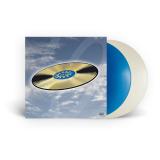
MICHAEL STEARNS - ANCIENT LEAVES LP

In 1975, Michael moved from Tucson to Los Angeles to study with Emilie Conrad at the Continuum Studio. Emilie had ‘live’ music for her ‘movement meditation’ classes, and Michael began performing with Fred Stofflet, Gary David, and Don Preston. Ancient Leaves (25:43) was Michael’s first album, recorded in 1976/77 with a Mini Moog synthesizer and a Finish lap harp (Kantele) onto 4 track tape. To the other instruments, Michael added Emilie chanting, an ascending choir with Susan Harper and Linda Olsen vocalists, Gregorian Chants and a night ambience recorded in the desert outside of Tucson, Arizona, his hometown. It was initially released on LP and cassette. The ‘B’ side, Elysian E (23:13) was performed with an Arp String Ensemble played through an MXR digital delay, one of the first, then slowed to half speed. To this he added Moog and EML synthesizers, The Beam and his voice.

In Stock

Disponibile in Stock e pronto per la spedizione
31,05
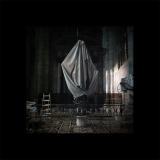
Vox Populi! - In Dub

Vox Populi!

In Dub

12inchERC157
Emotional Rescue
29.05.2026

Emotional Rescue returns after a much-needed year hiatus, refreshed and ready, as it moves into its 15th year, to further explore the environs of oft-forgotten musical secrets and present them to new heads and minds.

To celebrate, the label looks back to one of its favourite collaborations, the music of French ‘Ethno-Industrialists’ Vox Populi! in presenting a truly unique EP of “In Dub”, inspired remixes by 4 fellow Paris based artists of today in Full Circle, Froid Dub, Krikor and Shelter.

“In Dub” takes a selection of songs from the series of albums reissued or compiled on Emotional Rescue and sister label, Platform 23, and gives the Master tapes to this talented ensemble to offer their own, unique dub reworks. The project explores the on-going advances in technology offered, mixed with pure talent and a respectful homage.

Formed by Axel Kyrou and including wife Mitra, as well as long-term music and art partners Pierre Jolivet aka Pacific 231 and Francis Lafont aka FR6 Man, they forged a path from obscure, drum and drum-based cassette releases on to fully realized albums and compilations on their now cult Vox Man Records.

Alexis Le Tan and Joakim’s Full Circle project starts, with their electronic dub remake of Soleyman Dub from the ‘Alternatif Réalisme’ compilation (ERC079). With releases on Good Morning Tapes, Offen and their own “Released” label, their plaudits as master diggers and producers of dubby tripped-out inspired electronics – releasing slowed Trance some 10 years before anyone else – is inspired. Tuning in and turning on the original dub into a mantra style slow-breaks (Digi)dub is the perfect experimental flavour.

Jube Man is next, a twisted, psychedelic dub out by rising stars Froid Dub. The stand-out from the ‘Magiques Creations’ release (ERC052), an album that explored Vox Populi’s furtive post-industrial period of 1984 to 1988, Jube Man was the perfect selection by the duo of François Marché and Stéphane Bodin.

Froid Dub have steadily developed their “cold” Digidub style to acclaim –

releasing a steady flow of dub inspired electronics on their own label Delodio, as well as recently appearing on sister label Emotional Response’s 10th year anniversary collection, ‘All Trades’. Their haunting, shuffling and murky acid / piano dub, with the drifting “Space Echoing” of Mitra’s vocals from the live desk mix, creates a ghostly version to effect.

Next, master mixer, producer and engineer Krikor serves a steppers remake with his “OverDub” of Zen-Dub. With a career that spans releases on Tigersushi, LIES and Soul Jazz, his sound has developed from Electro, House and Techno, to Acid, Bleep, Dancehall, Dub and touches of Gabba.

Taken from Vox Populi!’s master-opus Aither (ERC030), the first of our reissues dating back to 2016, Zen-Dub’s pacey, lo-fi dub experience is transformed and overdubbed into an incessant sound system throb, a true bass quaking “steppa”.

To close, Micro Climax is put through Shelter’s increasing avant dub exposition. Appearing on the likes of Growing Bin, Emotional Response and his own Protopost, as well for – and being in-house designer – on the much-missed Séance Centre, Alan Briand aka Shelter productions have developed from Balearic, Edits and House to explore Avant, Raga and live Dub productions.

Appearing on the recent ‘Ethniques Pyschedeliques’ compilation on Platform 23 (PLA032), in original form Micro Climax is a sprawling 10-minute ethno-dub of whispered vocals, drone and sub bass. Shelter strips it back, keeping background effects, adding live bass and percussion to create a wonky, slow, shuffling ska-lite excursion to complete a true “In Dub”.

pre-ordina ora29.05.2026

dovrebbe essere pubblicato su 29.05.2026

18,45

Last In: 2026 years ago
Laurence Pike - Possible Utopias For Jazz Quintet  LP

Sometimes the title of an album tells you everything you need to know. Laurence Pike’s Possible Utopias for Jazz Quintet is like that: The music within represents a search for freedom, potentiality—liberatory strategies that transcend the ego and the solitary, atomized figure.

But in this case, the album title is also a red herring, because there is no jazz quintet here—just Pike, his drums, and his machines, not so much an ersatz ensemble as a purely notional one, a thought experiment equipped with drumsticks, circuitry, and the desire to go beyond hardwired limits.

And the results, strictly speaking, aren’t really jazz, though they incorporate the vocabulary of jazz, along with that of ambient, electronica, and post-rock. They are some other thing, cognizant of genre but never beholden to it. Again, we’re talking about a search for freedom here.

The Sydney-based musician has a long history of coloring outside the lines, not just in his solo recordings—including four albums for the Leaf label between 2018 and 2024—but also in the trio Pivot (later PVT); Szun Waves (alongside saxophonist Jack Wyllie and Border Community’s Luke Abbott); Triosk, which recorded an album with Jan Jelinek in 2003; and even post-punk titans Liars, whom he joined in late 2018.

Of his first album for Balmat, Pike says, “My loose concept was: What does music sound like when the expectations of late capitalism are removed from it? How might a jazz musician from an idealised culture of the future, or even another world, utilise musical language when the conventions of style and marketing are no longer a factor in music making?”

That inquiry, he says, connects to his “guiding principle: that the purpose of music is to access something bigger than the individual, and reveal a sense of possibility and freedom in the world to the listener. To create an understanding that the future can be something other than what we imagined or expect, even unconsciously.”

Heady ideas, but plug into his stream-of-metaconsciousness flow and you may start to intuit what motivates him. There is a deeply lyrical expression in these pieces—in the ruminative piano of opener “Guardians of Memory,” for example—but also a sense of exploded perspective, of ideas approached from more angles than any one mind could dream up. Of a collectivized consciousness, of mycelial networks branching across tone and rhythm and timbre, of ideas articulated in distributed fashion, nodal points dancing across drum heads.

Pike’s imaginary quintet is hardly without precedent; it’s a continuation of concepts floated across Jan Jelinek’s Loop-Finding-Jazz-Records, Burnt Friedman’s many guises, and much of the recombinant improv of the International Anthem roster, not to mention the far corners of ECM’s catalog in the late 1970s and 1980s, which Pike says have been integral to his development since he was a teenager. Possible Utopias for Jazz Quintet is a point in a continuum, a voice in a conversation, a question with no obvious answer: How can the search for otherness in music manifest something true about ourselves?

pre-ordina ora29.05.2026

dovrebbe essere pubblicato su 29.05.2026

23,49

Last In: 2026 years ago
VARIOUS - DISCOTECA SOUND - ITALIAN DISCOTECA UNDERGROUND 1975-1986 (2x12")

Everyone knows the story of American disco.
But few are aware that, between the late 1960s and the late 1980s, Italy wrote a parallel one — spontaneous, surprising, and incredibly creative.

It is a story that spans two distinct seasons: the Italian disco of the 1970s — melodic, handmade, sometimes naïve yet always original — and the emerging Italo Disco of the 1980s, electronic, futuristic, and lightheartedly projected toward the future.
Two different languages, yet both driven by the same desire for freedom and modernity. Discoteca Sound — Italian Discoteca Underground 1975–1986 brings together 18 rare tracks — including two previously unreleased — that tell this story of transition: from the orchestral and sentimental disco of Italian dance halls to the synthetic and visionary sound of the first drum machines.
A journey through private archives, local labels, regional studios, and forgotten voices — the sonic map of a country that has always danced, but to its own rhythm. From Mediterranean disco to the first Italo Disco, from the dim lights of provincial dance halls to the early home synthesizers, each track opens a window onto an Italy that dreamed of the dance floor as a universal language of connection during the brief season of revolutionary utopias.

This compilation celebrates ten years of work by Disco Segreta — a decade dedicated to the research, recovery, and appreciation of Italian disco and electronic culture. An act of justice owed to all those artists who had their moment yet were never remembered by history — bringing back to light an essential, still too little known part of our musical heritage.
Because dancing today remains, more than ever, a living act of memory.

Limited edition 2LP, features 2 previously unreleased tracks and a new 2025 version of Coscarella & Polimeno – Station to Station.


f Grazia Vitale – Poi (1975) Previously Unreleased


q Daniel Sentacruz Ensemble – Vivo Solo Con Te (1982) Previously Unreleased


f Grazia Vitale – Poi (1975) Previously Unreleased


q Daniel Sentacruz Ensemble – Vivo Solo Con Te (1982) Previously Unreleased


f B2. Grazia Vitale – Poi (1975) Previously Unreleased


q D4. Daniel Sentacruz Ensemble – Vivo Solo Con Te (1982) [Previously Unreleased]


[f] B2. Grazia Vitale – Poi (1975) [Previously Unreleased]


[q] D4. Daniel Sentacruz Ensemble – Vivo Solo Con Te (1982) [Previously Unreleased]


[f] B2. Grazia Vitale – Poi (1975) [Previously Unreleased]


[q] D4. Daniel Sentacruz Ensemble – Vivo Solo Con Te (1982) [Previously Unreleased]

In Stock

Disponibile in Stock e pronto per la spedizione

32,35
NALBANDIAN THE ETHIOPIAN & EITHER/ORCHESTRA - NALBANDIAN THE ETHIOPIAN (ETHIOPIQUES)

The Éthiopiques series returns! Essential archive recordings from an extremely fruitful period in Ethiopian music.

Before “Swinging Addis” took over the world, there was Moussié Nerses Nalbandian — the Armenian-born composer who shaped modern Ethiopian music. Mentor, arranger, and pioneer, he laid the foundations of Ethio-jazz.

This Éthiopiques volume revives his forgotten legacy, recorded live by Either/ Orchestra First issue ever with new exclusive photos and in depth liner 8-page insert.

“Ethiopian jazzmen are the best musicians that we have seen so far in Africa.
They really are promising handlers of jazz instruments.”

Wilbur De Paris
(1959, after a concert in Addis Ababa)

አዲስ፡ዘመን። *Addis zèmèn* **A new era.**
The time is the mid-1950s and early 1960s, just before "Swinging Addis" bloomed – or rather boomed – onto the scene. Brass instruments are still dominant, but the advent of the electric guitar, and the very first electronic organs, are just around the corner. Rock’n'Roll, R’n’B, Soul and the Twist have not yet barged their way in. Addis Ababa is steeped in the big band atmosphere of the post-war era, with Glenn Miller's *In the* *Mood* as its world-wide theme song, neck and neck with the Latin craze that was in vogue at the same period. Life has become enjoyable once again, with the return of peace after the terrible Italian Fascist invasion of Ethiopia (1935-1941). The redeployment of modern music is part and parcel of the postwar reconstruction. *Addis zèmèn* – a new era – is the watchword of the postwar period, just as it was all across war-torn Europe.
The generation who were the young parents of baby boomers** were the first to enjoy this musical renaissance, before the baby boomers themselves took over and forever super-charged the soundtrack of the final days of imperial reign. Music is Ethiopia's most popular art form, and very often serves as the best barometer for the upsurge of energy that is critical for reconstruction. Whether it be jazz in Saint-Germain-des-Prés or the *zazous* who revolutionised both jazz and French *chanson* after the *Libération*, be it Madrid's post-Franco Movida, or Dada, the Surrealists and *les années folles* that followed World War I, the periods just after mourning and hardship always give rise to brighter and more tuneful tomorrows. Addis Ababa, as the country's capital, and the epicentre of change, was no exception to this vital rule.

**Two generations of Nalbandian musicians**
Nersès Nalbandian belonged to a family of Armenian exiles, who had moved to Ethiopia in the mid-1920s. The uncle Kevork arrived along with the fabled "*Arba Lidjotch*", the** "*40 Kids*", young Armenian orphans and musicians that the Ras Tafari had recruited when he visited Jerusalem in 1924, intending to turn their brass band into the official imperial band. If Kevork Nalbandian was the one who first opened the way of modernism, pushing innovation so far as to invent musical theatre, it was his nephew Nersès who would go on to become, from the 1940s and until his death in 1977, a pivotal figure of modern Ethiopian music and of the heights it. Going all the way back to the 1950s. Nothing less. And it is Nersès who is largely to thank for the brassy colours that so greatly contributed to the international renown of Ethiopian groove. While the younger generations today venture timidly into the genealogy of their country's modern music, often losing their way amidst a distinctly xenophobic historiographical complacency, many survivors of the imperial period are still around to bear witness and pay tribute to the essential role that "Moussié Nersès" played in the rise of Abyssinia's musical modernity.
Given the year of his birth (15 March 1915), no one knows for sure if Nersès Nalbandian was born in Aintab, today Gaziantep (Turkiye/former Ottoman Empire) or on the other side of the border in Alep, Syria... What is certain is that his family, like the entire Armenian community, was amongst the victims of the genocide perpetrated by the Turks. Alep, the place of safety – today in ruins.
Before Nersès then, there was uncle Kevork (1887-1963). For a quarter of a century, he was a whirlwind of activity in music teaching and theatrical innovation. *Guèbrè Mariam le Gondaré* (የጎንደሬ ገብረ ማርያም አጥቶ ማግኘት, 1926 EC=1934) is his most famous creation. This play included "ten Ethiopian songs" — a totally innovative approach. According to his autobiographical notes, preserved by the Nalbandian family, Kevork indicates that he composed some 50 such pieces over the course of his career. This shows just how much he understood, very early on, the critical importance of song as Ethiopia's crowning artistic form. Indeed, for Ethiopian listeners, the most important thing is the lyrics, with all their multifarious mischief, far more than a strong melody, sophisticated arrangements or even an exceptional voice. (This is also why Ethiopians by and large, and beginning with the artists and producers themselves, believed for a long time — and wrongly — that their music could not possibly be exported, and could never win over audiences abroad, who did not speak the country's languages).

Last but not least, one of Kevork's major contributions remains composing Ethiopia's first national anthem – with lyrics by Yoftahé Negussié.
Nersès Nalbandian moved to Ethiopia at the end of the 1930s, at the behest of his ground-breaking uncle. Proficient in many instruments (pretty much everything but the drums), conductor, choir director, composer, arranger, adapter, creator, piano tuner, purveyor of rented pianos,... he was above all an energetic and influential teacher. From 1946 onwards, thanks to Kevork's connexion, Nersès was appointed musical director of the Addis Ababa Municipality Band. In just a few years, Nersès transformed it into the first truly modern ensemble, thanks to the quality of his teaching, his choice of repertoire, and the sophistication of his arrangements. It was this group that would go on to become the orchestra of the Haile Selassie Theatre shortly after its inauguration in 1955, which was a major celebration of the Emperor's jubilee, marking the 25th anniversary of his on-again-off-again reign.

At some point or other in his long career, Nersès Nalbandian had a hand in the creation of just about every institutional band (Municipality Band, Police Orchestra, Imperial Bodyguard Band, Army Band, Yared Music School…), but it was with the Haile Selassie Theatre – today the National Theatre – that his abilities were most on display, up until his death in 1977. To this must be added the development of choral singing in Ethiopia, hitherto unknown, and a sort of secret garden dedicated to the memory of Armenian sacred music, and brought together in two thick, unpublished volumes. Shortly before his death (November 13, 1977), he was appointed to lead the impressive Ethiopian delegation at Festac in Lagos, Nigeria (January-February 1977).

His status as a stateless foreigner regularly excluded him from the most senior positions, in spite of the respect he commanded (and commands to this day) from the musicians of his era. Naturally gifted and largely self-taught, Nerses was tirelessly curious about new musical developments, drawing inspiration from the very first imported records, and especially from listening intensely to the musical programmes broadcast over short-wave radio – BBC *First*. A prolific composer and arranger, he was constantly mindful of formalising and integrating Ethiopian parameters (specific “musical modes”, pentatonic scale, and the dominance of ternary rhythms) into his “modernisation” of the musical culture, rather than trying to over-westernise it. It even seems very probable that *Moussié* Nerses made a decisive contribution to the development of tighter music-teaching methods, in order to revitalise musical education during this period of prodigious cultural ferment. Flying in the face of all the historiographical and musicological evidence, it is taken as sacrosanct dogma that the four musical modes or chords officially recognised today, the *qǝñǝt* or *qiñit* (ቅኝት), are every bit as millennial as Ethiopia itself. It would appear however that some streamlining of these chords actually took place in around 1960. It was only from this time onward that music teaching was structured around these four fundamental musical modes and chords: *Ambassel*, *Bati*, *Tezeta* and *Antchi Hoyé*. A historical and musical “details” that is, apparently, difficult to swallow, especially if that should honour a *foreigner*. Modern Ethiopian music has Nersès to thank for many of its standards and, to this day, it is not unusual for the National Radio to broadcast thunderous oldies that bear unmistakable traces of his outrageously groovy touch.

In Stock

Disponibile in Stock e pronto per la spedizione

22,06
American Cream Band - Twin LP

Following their 2023 LP Presents, Nathan Nelson's American Cream Band bring the Twin City heat back to Quindi with an album rooted in duality. From the yin and yang party-starting A side and meditative B side to the dual-attack boy-girl vocals, the nature of opposites and equals steer the expansive, artful strain of rock n' roll that spill out of this wholly unique Minnesotan export. For the ever intriguing Quindi, it's a strident step into Spring after the frosty introspection of Roudi Vagou & Läuten der Seele's Taghelle Nacht. While the world burns and injustice prevails, Twin is a celebration of unity and radical expression-all the more urgent against the backdrop of authoritarian overreach and righteous protest that has whipped through Minneapolis in recent times.
Twin continues Nelson's drive at the helm of American Cream Band to draw in a colourful cast of players to feed into his orgiastic sound, meshing the trance-induction of krautrock with the irrepressible funk of the post-punk-new-wave explosion. But principal among the cast of characters and forming a central tenet to the identity of this album is Liz Buhmann, lead vocalist and a formidable, playful foil to Nelson's own Midwestern twang. Around the electric spark between Buhmann and Nelson, a heavy duty ensemble wrangle guitar, bass, sax, a cornucopia of synths and a battery of percussion into all manner of sonic forms.
The double-sided concept manifests throughout Twin. On 'Call Me' Buhmann sings in French to contrast Nelson's English, while the strident strut of the NYC disco groove is offset by an inherent dreaminess that turns the track into a more cosmic kind of dancefloor workout. 'Ethical Vampire' is a spiky cut with a garage rock patina that spirals into a psychedelic, synth-soaked get-down. 'Don't Burn The House Down' is a loose and limber roller that captures Can at their funkiest along with the hypnotic vibe of other such esteemed long format jammers, but American Cream Band boils that energy into a hook-laden art pop sensibility before a gentle, drawn out landing.
Even the more pensive moments on Twin find space for friction. For all its tender, smoky temperament, 'Leda and the Swan' lets the electric piano and guitar fray at the edges and bleed into the red while Mat Heinrich's tumbling drums lurch with pent-up intensity on the one. 'No Funeral Necessary' skirts around the mellow pools of new age but prefers to let liberally doused Tape Echo tweak out Alex Meffert's honeyed sax inflections and Buhmann and Nelson's disparate sermons.
Nelson describes Twin as "an oppositorum coincidentia" - a reference to the mystical Latin concept of the coincidence of opposites that suggests contradictory ideas 'fall together' in a higher reality. Beyond the sound of the album, this idea also manifests in the cover photography by Sho Nikado and the swans on the LP labels by Autumn Garrington. As freewheeling and wide-open as American Cream Band feels, nothing appears by accident. The end result feels like a nourishing whole - rich with substance and nuance, deep enough to be explored and absorbed yet also so brazen and immediate you can't help but feel its surface charms from the first thrusts of 'The Hive Is Pissed' to the last ripples of 'We're Not So Sinister'.

pre-ordina ora05.06.2026

dovrebbe essere pubblicato su 05.06.2026

21,81

Last In: 2026 years ago
Santa Fiebre - Waterfalls / Pain Of Sights

Santa Fiebre return with a new 45 on Acid Jazz’s Fingier Records, with producer Kevin Fingier at the helm. The Argentine Rhythm & Soul outfit turned heads with their label debut last year, double-sider ‘Earthsplosion’ / ‘That’s Where We Go’, and here they offer two new, explosive original sides.

Over the past few years, Kevin Fingier has released a series of hard-hitting, high-selling 7” singles, on his own Acid Jazz-group imprint, along with a compilation LP and an original album. He is known for his authentic 60s R&B sound, with a distinctly Latin touch. ‘Waterfalls’ sees Santa Fiebre move into funkier, late-60s territory, with a percussive beat and driving horns accompanying a wonderful, soulful vocal.

Meanwhile, ‘Pain of Sights’ is a characteristic Soul/R&B crossover smash, guaranteed to hit at a club night. Another modern classic from the man in Buenos Aires and this brilliant ensemble.

Presented in the signature Fingier Records house-bag.

In Stock

Disponibile in Stock e pronto per la spedizione
14,71
TOWA MAFUNE - Umi Wo Daite Nemuru LP
  • A1: Piano
  • A2: Eyes
  • A3: 海のにおい - Umi No Nioi
  • A4: Little Rascal
  • A5: 天使はどこに - Missing Angels
  • A6: こんにちは今日 - The Sun’s Song
  • B1: 月光 – Moonlight
  • B2: Kujira
  • B3: 水と風のダンス - Dancing With Water And Wind
  • B4: なみだのうみ - The Sea Of Tears
  • B5: Birth
  • B6: Fine

Towa Mafune is a rare singer-songwriter known for her gentle voice and warmly embracing melodic sensibility. As suggested by the title, means "Sleeping with the sea in my arms",
this record is a conceptual work inspired by Mafune’s upbringing in a seaside town and her lifelong connection with nature.
The album imagines a dialogue between the artist herself and natural elements such as the sea, wind, and light.

Layered arrangements featuring the album’s striking introductory piano, along with strings, horns, acoustic and nylon-string guitars, and rich vocal ensembles, create a liberating and
expansive soundscape. The album also marks new artistic territory for Mafune, supported by trusted musicians including paya (Yūtai Communications), Kota Yamauchi, and
Keitaro Kanamine.

pre-ordina ora03.07.2026

dovrebbe essere pubblicato su 03.07.2026

34,66

Last In: 2026 years ago
HU VIBRATIONAL - VIBE RIDE

HU VIBRATIONAL

VIBE RIDE

12inchND015
NEW DAWN
09.12.2025

Vibe Ride is the sixth release of Adam Rudolph's Hu Vibrational project and marks his 60th release as a leader or co-leader. Comes with insert and download code.

“With every record, the goal is to explore new creative territory,” explains Rudolph. Vibe Ride continues a deeper exploration of a trance-like groove and a conceptual framework known as Sonic Mandala. This album marks the most complete realization of that idea, partly due to the group's experience touring beforehand. That time on the road helped to refine ideas and strengthen musical chemistry. The recording process unfolded organically—likely due to the long-standing collaboration within ensembles like Go: Organic Orchestra and Moving Pictures, where the musicians have developed a deep familiarity with the shared musical language.

Sonic Mandala refers to a musical approach distinct from traditional linear structures of theme and development. Found in cultures across the globe, it may represent one of the oldest forms of musical expression—predating written history by tens of thousands of years. Today, it is most vividly preserved in the music of the Ituri Forest peoples (Aka, Baka, Ba Benzele, Mbuti), whose sound traditions revolve in cyclical, orbit-like patterns. Vibe Ride seeks to bring that ancient sense of circularity into a contemporary—and perhaps even futuristic—context.

The ensemble of Vibe Ride—Alexis Marcelo, Jerome Harris, Harris Eisenstadt, Neel Murgai, Tim Kieper, and Tripp Dudley—brings exceptional creativity and skill to the project. While grounded in the sonic languages of today, their performance channels an ancient vibrational lineage, connecting with ancestral sound makers who were attuned to the rhythms of the sun, moon, stars, and seasons. Human beings have always been deeply responsive to natural cycles.

Like a mandala, where the circle reveals itself as a spiral—always returning, but never to the exact same point—the Sonic Mandala musical experience spirals through motion. Refined signal patterns emerge through overtone-rich instrumentation. The groove becomes a threshold, shifting the listener from passive observation into active, even transcendent, participation. With open ears and an open mind, the sound spirals inward—toward a primal center—and outward into the cosmos. When this elevated state is shared among participants, it creates what mystics describe as resonance.

Vibe Ride thrives on the distinctive sonic voices of its players, interwoven with care and nuance into the compositions. Hu Vibrational merges elements of world music, electronica, and improvised jazz into something both funky and spiritual, intense and soothing.

Using signature techniques of organic orchestration, layered arrangement, and electronic processing, the compositions are sculpted from percussion, electronics, and ethereal textures. Rhythmic foundations drawn from diverse traditions serve not as endpoints, but as building blocks. As the saying goes, “Orchestration is the key.” In shaping the sound, the aim was to discover fresh ways of balancing structure and sonic color. As Don Cherry once said: “The swing is in the sound.”

The audiophile LP was carefully recorded, mixed, and mastered by James Dellatacoma—longtime engineer for both Bill Laswell and Rudolph—at Laswell’s Orange Studio.

“This crew artfully blends together to create a seamless tapestry of rhythm… the end results are mesmerizing. Hu Vibrational is all about communing with the groove spirits and creating worlds where earthy rhythms and other-worldly sounds are one.”
— Dan Bilawsky, All Music Guide

“You can be sure that when Adam Rudolph and an ensemble of breathtaking drummers get together mystical and wonderful things will happen.”
— Raul da Gama,

“A stunning effort, enjoyable and grows with repeated listening.”
— Stefan Wood, Freejazzcollective

In Stock

Disponibile in Stock e pronto per la spedizione

22,90
Greg Paulus - Close To Home LP

Greg Paulus

Close To Home LP

12inchSLACKER014
Slacker 85
27.11.2025

A DJ, producer and prolific collaborator, Greg Paulus’s musical career has led to a truly enviable discography. Born in Minnesota and now an essential part of New York’s sprawling musical landscape, Paulus has taken the foundations of an organic childhood education by his father, the composer Stephen Paulus, and seen it blossom into an unpredictable musical journey encompassing house, soul, jazz and hip-hop.

While touring as a trumpet player with indie band Beirut, as well as in Matthew Dear’s live ensemble, back home he was helping to redefine New York’s underground dance scene as one half of No Regular Play. Alongside childhood friend Nick DeBruyn, the pair brought their deeply musical sound to no less than fifty countries across the world. A decade on, and Paulus arrives on Seth Troxler’s Slacker 85 imprint for his long-awaited debut solo LP, ‘Close To Home’, a deeply felt long-play celebration of his personal cornerstones; family, trust and hope.

From the opening, organic swell of ‘Perot’, arranged with Seth Troxler himself alongside John Camp, ‘Close To Home’ introduces itself as a focused, conscious trip, it’s languid trumpet spilling over into the reflective ‘World Keeps Changing’, which introduces Paulus’s philosophy of music as a constant. ‘Midtown Mirage’ meanwhile leans into the idea of the city itself as a collaborator, resisting pressure and finding its own restful groove. Back over the river, ‘Bond’ roots itself in Brooklyn with a contribution from resident Dillon Cooper, flipping rap standards amid psychedelic flourishes.

Paulus nods toward his dancefloor form on ‘NRG’, a slinky, lo-slung club groove that seamlessly evolves to meld the artist’s nocturnal and studio instincts. In contrast, ‘Real Job’ switches the tempo on Paulus’s MPC to embody an old-school, beatdown flavour, subtly teased out alongside composer and sound designer, Taylor Bense. Doubling down on this languorous groove, ‘Hat Down’ introduces a full-scale No Regular Play reunion, the first of two collaborative tracks that recall the duo’s imperial phase of confidently minimal productions, while evolving their craft.

Following a few missed calls made with love taken from Paulus’s answering machine on ‘$1000’ the minimal, reflective arrangement of ‘Hold Dear’ finds the artist stripping back his layered sound for a skittering, vulnerable exploration of intimacy and life’s devotions.

For a memorable finale, Paulus recruits jazz prodigy Michael Feinberg to deliver upright funk on the deliciously rich ‘Sometimes It’s About Us’. A purely celebratory collage of bopping rhythms and vocals, sharply plucked guitars and archive samples, ‘Close To Home’ concludes with Paulus leading his friends, ensemble and many influences in rare harmony.

In Stock

Disponibile in Stock e pronto per la spedizione
17,86
Ralph Weeks - Let Me Do My Thing (7")

Esteemed soul man of Panama Mr. Ralph Weeks has in recent years been enjoying a much overdue retrospective of his remarkable six decades-long musical journey with the help of Names You Can Trust. Now onto their fifth record release together since 2019, the label has covered both Weeks' original holy grail material as well as re-cuts and reimagining of some of his rarefied and unreleased songs.

One of Mr. Weeks' two iconic 45 releases on Panamanian label Sally Ruth was a funky soul side called "Let Me Do My Thing," originally recorded in 1971 as Weeks' answer to Charles Wright's big tune "Express Yourself," which had just hit the airwaves in 1970. Weeks' musical response would help define his legacy. He was gonna express himself, he was gonna Do His Thing. This golden age ultimatum recorded with the Dynamic Exciters of Panama as the backing band was a simple, straight ahead number with a defining message that would be carried on throughout Weeks' independent career. The funkified air and creative freedom of the original tune is a prime example of the crossover Combos Nationales sound that flourished in the prolific Panama recording industry of the era, and in the ensuing decades Weeks' tune would live on as a cherished rare groove for souleros, funk fans, and bootleggers alike.

Fast forward to 2023, when Ralph Weeks and Names You Can Trust prepared for a Bay Area appearance at the wonderful Latinos Con Soul weekender put on by San Francisco's Discodelic record shop, the groundwork was laid in the studio for a revival, a reawakening of Weeks' funky fan favorite. A spectacular ensemble of NYCT's All-Star artists and alumni was convened in the studio, including Caito Sánchez on drums, Victor Axelrod (Daptone Records) on clavinet and Sam Day Harmet (La Banda Chuska) on guitar. Anant Pradhan (The Skatalites), Eric Biondo (The Budos Band) and Alex Asher (Los Cumpleaños) occupied the brass section, and Ralph Weeks even lent his still formidable chops on electric bass and keyboards, a little OG flare to back up his silky voice with a deft musical touch. What came out of the sessions was a chance for NYCT to pay homage to Weeks' iconic original, without replacing it, and build a brand new version from the ground up with the maestro and composer himself!

In Stock

Disponibile in Stock e pronto per la spedizione
18,07
Various - Let Me Down Easy: Echoes From Cheri Records LP

This is the story of how a tiny label from New Jersey changed the course of music history not once but twice.

Cheri Records was established in 1974 in New Jersey and run by one Boo Frazier. Cheri's output was limited, producing a catalogue of just eleven releases between the years 1974 and 1982. On the face of it, this appears to be insubstantial output. However, if you dig a little deeper, the quality released on Cheri Records reveals an exceptional legacy of groundbreaking music.

A dark horse in the world of record labels, a true unsung legend that would go on to alter the course of musical history and intersect with a remarkable array of talented artists, bands and DJs. From Rare Pleasure; Sandy Barber; Julius Brockington; Boo Frazier; Patrick Adams; Tom Moulton; Larry Levan and MF Doom: Cheri Records has directly impacted their artistry in significant ways. Cheri's influence even extends into the present, with DJ icons like David Morales, Dave Lee, Danny Krivit, and Colin Curtis continuing to champion its contributions.

This compilation brings together the most compelling tracks from the Cheri Records catalogue, shedding light on the label's extraordinary story and underscoring the idea that music, no matter how unassuming its origins, can transcend boundaries and reshape, influence and inform music to come for future generations.

This collection also represents the start of a new series here on Miles Away, a series that will delve into the labels and studios that were responsible for leaving a lasting imprint on the musical world. We've named this seriesEchoes From,and this compilation will be the first of many.

The vinyl package comes in a gatefold sleeve with in-depth liner notes and features interviews with Colin Curtis and David Morales. Also available on CD and digitally.

In Stock

Disponibile in Stock e pronto per la spedizione
23,32
Pharoah Sanders - Message From Home  LP

Originally released in 1995, Message From Home is a captivating fusion of hip-hop grooves, African rhythms, and spiritual depth, showcasing the unparalleled artistry of jazz saxophonist Pharoah Sanders. Produced by the legendary Bill Laswell, this album brings together a remarkable ensemble of musicians, including kora virtuoso Foday Musa Suso, keyboardist and vocalist Bernie Worrell, acoustic bassist Charnett Moffett, electric pianist and vocalist William Henderson, guitarist Dominic Kanza, and keyboardist Jeff Bova. Tracks include the mystical jazz hypnotic groove “Our Roots (Began in Africa)” plus five more mesmerizing soundscapes.
Now, for the first time since its original 1995 release, Message From Home is reissued on Music On Vinyl.

In Stock

Disponibile in Stock e pronto per la spedizione
30,04
Various - Classic Classic Chapter 02 (2x12")

Following Volume 1, this second instalment of Classic’s 30th Anniversary series dives even deeper into the label’s visionary, genre-bending catalogue—balancing pioneering remixes, cult favourites, and future classics.

Once again, this 2x12” release is beautifully presented in a raw reverse board sleeve, a tactile nod to Classic’s earliest releases. Inside, are deep teal and green GMUND card stock inner sleeves with embossed detailing elevate the package into a collector’s item worthy of the music it holds.

Record One opens with one of the most revered remixes in house history. Isolee’s ‘Beau Mot Plage’ (Freeform Reform Parts 1 & 2), originally licensed from Germany’s Playhouse and lovingly reworked by Freeform Five’s Anu Pillai with a live ensemble. It’s a sprawling, euphoric journey that helped define Classic’s international reach and is still widely regarded as one of the greatest house records ever pressed.

Up next is Greenskeepers’ off-kilter banger ‘Bang in Your Face?’, showcasing the quirky, ‘G-swing’ sound for which James Curd and his crew became known for during their long-standing relationship with the label.

On the flip, Pépé Bradock’s jaw-dropping rework of Iz & Diz’s ‘Mouth’ takes center stage—a remix composed entirely from human sounds, equal parts sensual and surreal. Universally praised, it’s a masterclass in sonic innovation and remains one of the most acclaimed house remixes of all time.

The side closes with Markus Nikolai’s beloved ‘Bushes’, The First Re-Creation (Version 1.2) by Classic co founder Derrick Carter—a distinctive and maximalist edit that draws out the Latin horns, strings, and quirky vocals, turning a cult hit into a distinctly ‘Classic’ anthem.

Record Two captures Classic’s renewed energy in the 2010s.

Folamour’s ‘Devoted To U’ from his Umami LP is a 10-minute odyssey in groove—warm, progressive, and cinematic, with soaring piano lines and narrative richness.

Then comes Crazy P’s ‘One True Light’, shimmering with spacey textures, cosmic energy, and the deep, effortless groove the band has perfected over decades.

On Side D, we have Girls of the Internet’s lush and emotionally rich ‘When U Go’, blending soulful vocals with clean, spacious production that balances melancholy with movement.

Closing out Volume 2 is Sophie Lloyd’s now iconic ‘Calling Out’, featuring the unstoppable vocal force of Dames Brown. A modern gospel-disco-house anthem, the track glows with raw energy, live instrumentation, and spiritual fire—cementing its place as one of Classic’s defining moments of the last decade.


d B2. Markus Nikolai - Bushes (Derrick Carter's First Re-Creation) Version 1.2


d B2. Markus Nikolai - Bushes (Derrick Carter's First Re-Creation) Version 1.2


d B2. Markus Nikolai - Bushes (Derrick Carter's First Re-Creation) Version 1.2


d B2. Markus Nikolai - Bushes (Derrick Carter's First Re-Creation) Version 1.2


d B2. Markus Nikolai - Bushes (Derrick Carter's First Re-Creation) Version 1.2

In Stock

Disponibile in Stock e pronto per la spedizione

22,48
Dries Tack - In Memoriam Alvin Lucier

This album is not just a homage — it’s a gentle act of remembrance. A way of tuning in to what Lucier showed us: that listening is an art in itself. A meditation on resonance, memory, and the quiet power of pure sound. Or to quote Alvin Lucier himself: “I guess I’m trying to help people hold shells up to their ears, and listen to the ocean again.”

The influence of Alvin Lucier’s work on acoustic phenomena and the interplay between sound and space is difficult to overstate. His legacy continues to echo through the work of countless composers and sound artists today. Lucier’s music is marked by a sense of childlike wonder and sonic simplicity - shifting our perception from what we hear to how we listen.

At the heart of his compositions lies the sine wave: the purest, most elemental form of sound. Clarinetist Dries Tack pays tribute to this master of minimalism with an album centered around two works Lucier composed as intimate ‘In Memoriams’ for friends. Both pieces explore a single, elegant idea: the interaction between an instrumental tone and a sine wave.

Out of that interaction, ‘beatings’ emerge — a pulsating rhythm that accelerates or decelerates as the waves draw nearer or drift apart. Though built on the same concept, the two works are like mirrored reflections of one another: In Memoriam Jon Higgins, the sine wave glides in a slow glissando while the clarinet holds steady tones. In Memoriam Stuart Marshall, it’s the clarinet that dances around a fixed sine wave.

Dries Tack is a clarinetist specializing in contemporary performance practices. He performs with ensembles such as Nadar Ensemble, Curious Chamber Players, and Ensemble Fractales. As co-artistic director of the GLoW Collective, he explores collaborative practices across artistic disciplines in the broadest sense. In addition to his ensemble work, Dries curates solo projects that offer fresh perspectives on existing repertoire or give rise to entirely new works at the intersection of composition and improvisation.

In Stock

Disponibile in Stock e pronto per la spedizione
20,38
Robert Piotrowicz - Wrong Filament

Wrong Filament embodies Robert Piotrowicz's creation of fictional traditional music - not studied but invented, a utopian and oniric construct that becomes tangible in sound. These imagined traditions act as communal forces of music-making, resisting dominant structures of power.

The album unfolds in six dense compositions built on rhythm, repetition and minimal melodic gestures that draw on archetypal patterns of Eastern European traditions. Entirely synthetic yet strikingly instrumental in character, they develop as autonomous sound events, expanding into multi-part forms that evoke the physicality of ensemble performance - as if played by an imagined community of musicians.

Rather than reconstruction, Piotrowicz invents forged dances - a pre-techno of sorts, where complex meters and dense textures point to a parallel history of collective sound beyond industrial uniformity. They imagine a utopian and fictional genealogy of collective sound: one where industrial modernity yields to more unstable, communal energies.

This is celebratory music with invocatory charge: calls to dance, echoes of ceremony, microtonal melodies shaped by emotional weight, and traces of Eastern ornamentation stretched through synthetic means. Wrong Filament sacralises performance through sound alone, spinning a world where spectres of collective experience vibrate against the limits of rupture and resistance.

These pieces confront the traces of violence inscribed in body and memory, yet also affirm freedom, emancipation and integration. They manifest celebration, identity and resistance while opening a path toward liberation and shared needs that exceed social, private and intimate categories.

In Stock

Disponibile in Stock e pronto per la spedizione
19,12
The Ullulators - Simply Conscious Dub / Eternal Now

Spiritual World's first archival 12" vinyl release from the UK’s free festival dub pioneers.

The Ullulators, an experimental dub and world music ensemble from Bath, UK, have long been associated with the UK’s free festival movement, tracing their creative lineage back to the mid-1980s. For the first time ever, two pivotal tracks from their early cassette-only discography—“Simply Conscious Dub” and “Eternal
Now”—are being issued on 12” vinyl, marking the first archival release on Spiritual World.

The A-side, “Simply Conscious Dub”, originally featured on the 1986 cassette Beyond the Gates of Ull, exemplifies the band’s signature fusion of weighty dub rhythms with expansive and euphoric electronics.
In contrast, the B-side, “Eternal Now”, drawn from the 1985 cassette Share a Calm with the Ullulators, ventures into more introspective sonic territory. Built on minimalist structures and ambient textures, it evokes the kosmische tradition and aligns with the spatial sensibilities of Manuel Göttsching’s E2-E4.

Together, these tracks not only showcase the group’s wide stylistic range but also underscore their forward-thinking approach to genre hybridity. This release stands as a unique document of a formative era in the
evolution of UK underground, dub, and ambient music.

In Stock

Disponibile in Stock e pronto per la spedizione
17,44
Various - RYUKYU RARE GROOVE CROSSOVER - OKINAWA JAZZ FUNK 1964-1984

A compilation of tracks that rearrange Okinawan folk songs into Jazz Funk, crossover, and large ensemble jazz, featuring works by Kiyoshi Yamaya, who was also highlighted in "Diggers Dozen" (BBE) by the Japanese DJ MURO, known as the "King of Diggin," and "Wamono Groove: Shakuhachi & Koto Jazz Funk 1976" (180g). This collection debuts as the latest installment in the "Ryukyu Rare Groove" series, which was originally released in Japan in 2003 to great acclaim.

In Stock

Disponibile in Stock e pronto per la spedizione

36,56
Articoli per pagina:
N/ABPM
Vinyl