The Human League is renowned for their contribution to the synth-pop genre. Originating from the experimental electronic music scene, they achieved notable success as a pop band during the 1980s. The band's lineup has undergone changes throughout the years, but Philip Oakey, Joanne Catherall, and Susan Ann Sulley have remained core members.
This limited edition BLUE vinyl release captures their performance at The Dome in Brighton on December 19, 2003. It includes their iconic hits such as "Don't You Want Me," "Human," "Mirror Man," and "Fascination." The album showcases their talent for crafting catchy melodies, employing innovative synthesizer techniques, and featuring distinct vocals.
With their memorable songs and unique musical style, The Human League truly made their mark on the Synth-pop genre.
Mastering is done by Ultramars in a very specific way :
Both Crystal Distortion and Sadistic tunes are playing 45 RPM, even if on the same side the other tunes are playing 33 RPM.
This to enhance the sound for the 45RPM ones...
The extract on the site are made with the vinyl, so you can hear the sound of it.
Agoro is a Franco-Ghanaian hip-hop group of four rappers and four musicians. After kicking off in 2023 with a 15-date tour in France, the group’s journey took a turn when a Ghanaian rapper vanished from the airport before boarding his return flight. Their new album chronicles this emotional roller coaster and the challenges of cultural exchange between Europe and Africa, with socially conscious lyrics in French, English, and Twi set to jazzy and electronic boom bap instrumental pieces.
TORRE return to Musiq Voyage with Phocaea Vol. 2, a new chapter in their ongoing Mediterranean journey. The Aix-en-Provence duo, Jean-Marc and Patrick Torre, deliver two original tracks, Sormiou and Les Sirènes du Frioul, inspired by Marseille, its coastline and the deep connection between the city and the sea. Blending disco, house, boogie and Balearic influences, TORRE once again shape a warm, hypnotic and distinctly Mediterranean sound.
The EP is completed by two remixes from leading figures of the Italian underground. *Gigi Testa, one of the most respected names in Naples’ deep house scene, brings his signature soulful, deep and groove-driven approach to the TORRE sound, while **Giovanni Damico* delivers a refined rework infused with funk, cosmic textures and dancefloor energy. Together, the four tracks offer different perspectives on the same Mediterranean landscape, moving seamlessly from sunlit afternoons to late-night club atmospheres.
With more than two decades of musical exploration behind them, TORRE have built a distinctive sound between disco, house and electronic music, earning support from artists such as Carl Craig and releasing underground favourites including Corps à Corps and Baleora. With Phocaea Vol. 2, Musiq Voyage and TORRE continue to explore their own Mediterranean mythology — from the turquoise waters of Sormiou to the mysterious shores of Frioul — with a release that feels equally at home on a Balearic beach, a Marseille terrace or a late-night dancefloor.
After his Studio One days with The Mad Lads and a long break for his engineering career, George Allison went back into the studio for Carl Prince's Gibbous label. The sessions ran across Channel One, Aquarius, Tuff Gong and Music Mountain, and they produced two albums in 1984, So Unusual and Exclusive. Both were released in the UK and the US. This single puts one song from each album together.
Sad - George's version of "Who's Sad" by Smokey Robinson & The Miracles. Smokey was one of his first vocal models, and his school friends called him "George Smokey."
Every Hoe - "I composed Every Hoe from the Jamaican proverb 'Every hoe have him stick a bush', which means there's somebody out there for everyone. The gist of the song is that there are always problems too, because it's a curse on the human race."
New York-based Japanese jazz and electronic music polymath Takuya Nakamura presents his debut album Shape The Future - almost 35 years into his storied musical journey.
An expansive double album, the album’s first LP documents a spellbinding live performance by Nakamura recorded at fabric. A hybrid set combining DJing, live electronics, vocals, and trumpet, the set also features studio versions of special collaborations with Shigeto, Currency Audio and Tim Reaper. The second LP complements the first by assembling studio recordings of select album tracks. Altogether the two volumes make for a definitive display of Nakamura’s exceptional musicianship across jazz, DnB, jungle, broken beat, deep techno and more.
Across his career, Nakamura has played Brazilian music, merengue, salsa and straight-ahead jazz. He’s opened for Sun Ra Arkestra, performed with David Byrne, Laurie Anderson, Lee “Scratch” Perry, Wu-Tang Clan, and Arto Lindsay, appeared on sessions with Terry Riley, ASAP Rocky, Goldie, and TV On The Radio, and remixed the likes of Quincy Jones, Sun Ra, Billie Holiday, and The Streets. He’s also played under director and playwright Robert Wilson.
Although the musical past and present of the Tokyo-born, New York-based DJ and trumpet player is undoubtedly eclectic, Nakamura is abidingly steeped in the sounds of jazz and jungle. This’ll be obvious to casual observers who may have seen any viral videos of him. But there’s more to this. The depth of Nakamura’s engagement with these kinds of music, the way they’ve made him into the person he is, the decades-long path they’ve taken him on; to now arrive at the summit of a solo album is all truly remarkable. Shape The Future resonates with every chapter in this story.
In high school, Nakamura’s friends started listening to jazz and jazz fusion, which piqued his interest, especially when they started going to clubs to see it live, where they managed to see US legends like Sonny Rollins play. Eventually he began to play jazz every day and his musical skill emerged early. He soon became obsessed with getting closer to the source of this music, which led to his studies at the New England Conservatory of Music in Boston with George Russell, an influential figure who had taught Miles Davis and John Coltrane. Nakamura drank it in: not only the technical aspects but the sense of a direct connection to “a music culture where Russell and his friends changed harmony forever. I wanted to know how that was possible!”.
This was a radical experience in itself, but then another revolution happened for Nakamura. He was playing in a venue called The Western Front, near Boston and discovered that the elderly owner had his own soundsystem and was playing what was then - in 1992 - only just becoming known as jungle. This was as freeing a musical revelation as his proximity to the giants of jazz was, and in that instant the two things fused. He understood that using technology to fill a dancehall with sound and a jazz musician’s reflexes are all working to the same ends: “You’re always making decisions,” he says, “but it doesn’t have to be really difficult. It’s the truth of the frequencies, and how they’re affecting people’s minds.”
From that moment on, his life path was set. Moving to New York City, he sought out jungle and its offshoot sounds wherever he could find them, gigging and collaborating relentlessly, and gradually developing his own live and hybrid live/DJ shows. Through regular appearances at New York fixtures Zebulon and CBGBs, and continual shows elsewhere in the city, Nakamura developed his live performance and DJing and it was in these environments that he gradually weaved together his twin loves without compromising either, building an international reputation in the process.
It’s only fitting then that his first album, almost 35 years after he first found his musical direction, should be a live one: a window into this never-ending process. Even here, he had to be persuaded that he should make a record. A member of the fabric team got turned on to his music after their daughter saw him play. Of course, as a jungle lover, Nakamura knew fabric – which has a special place in the history of jungle and drum’n’bass – and “had wanted to play there since I was very young.” You can hear the club in the record: this isn’t just a live show, in keeping with his jungle roots, it’s Nakamura duetting with the soundsystem, and you can feel how the emotions in the room would have ebbed and flowed.
This dynamic translates to a transfixing record. Setting the tone with lushly textured ambient and reverberant jazz, Nakamura segues into cinematic breakbeat and stellar fusion, infusing it all with intoxicating low end and hypnotic rhythms. The LP’s midway point locks into mesmeric percussion heightened by resonant echoes of piano and trumpet. There’s an endless pull to this music. Nakamura adjusts the levels for maximum impact throughout, and the overall effect begins to evoke some harmonious hybrid between a jazz ensemble, a classic Metalheadz 12” and a Theo Parrish DJ set. His electric form continues through surreal jazz, intricate electronics and rolling sub-bass velocity, right up to the subtly devastating final cover of Peter Gabriel and Kate Bush’s ‘Don’t Give Up’, with Nakamura’s fragile vocal sitting in the heart of a huge sound.
From Tokyo jazz nights to formative studies and encounters in Boston to his artistic development in New York, Nakamura reaches another milestone with his monumental debut album. It’s a release that happened just the way a Takuya Nakamura record should. In the same way his instincts led him to musical revelations, taking his own sweet time has led him to make one of the most extraordinary debut albums imaginable, all executed in his own singular style. In Nakamura’s world, the universe finds a way.
Wewantsounds is delighted to reissue Brigitte Fontaine’s landmark 1970 Saravah album Comme à la Radio, recorded with Areski Belkacem (who sadly died last June), Wadada Leo Smith and the Art Ensemble of Chicago. This deluxe 2-LP edition pairs the original album with a second LP of rare bonus material. The release is accompanied by a lavish 24-page bilingual booklet featuring an introduction by journalist Andy Beta, essays by Wadada Leo Smith, Brigitte Fontaine biographer Benoît Mouchart and Benjamin Barouh, plus a recent interview with Brigitte Fontaine and the late Areski Belkacem. The booklet also includes complete lyrics and a selection of rare archival photographs by Jean-Pierre Leloir and Philippe Gras. The reissue is announced alongside its companion, the deluxe 2-LP set Comme à la Radio "On Air", featuring previously unreleased ORTF live recordings and additional studio rarities.
Wewantsounds pursues its Brigitte Fontaine reissue program with Comme à la Radio, originally released in 1970 on Pierre Barouh’s cult Saravah label, fusing Fontaine’s radical lyricism with Areski Belkacem’s minimalist compositions and the fearless improvisations of the Art Ensemble of Chicago + Wadada Leo Smith. Its title track has since become a cult classic in jazz and groove circles.
The album has been newly remastered from the original tapes and is reissued in a deluxe 2-LP edition featuring 11 bonus tracks. The first LP presents the original album in restored clarity, while the second gathers rare non-album singles, English-language takes, alternate versions and previously unreleased instrumental recordings showcasing the Art Ensemble's artistry, including the elusive English version of Comme à la Radio, and a striking early version of L’été L’été.
Also included is a 24-page bilingual booklet featuring rare archival photographs by cult photographers Jean-Pierre Leloir and Philippe Gras, complete lyrics, and contributions by Andy Beta, Wadada Leo Smith, Benoît Mouchart and Benjamin Barouh, plus a recent interview with Brigitte Fontaine and the late Areski Belkacem. The reissue is announced alongside its companion Comme à la Radio "On Air", a deluxe 2-LP set presenting previously unreleased ORTF live recordings and additional studio rarities.
Comme à la Radio stands as a visionary landmark of French music and a defining statement in Brigitte Fontaine’s career. This expanded edition confirms its enduring influence more than fifty years after its original release.
a A1. Comme À La Radio 8.03
b A2. Tanka II 2.04
c A3. Le Brouillard [3.24]
[d] A4. J'ai 26 Ans [3.04]
[e] B1. L'été L'été [3.56]
[f] B2. Encore [1.34]
[g] B3. Léo [3.50]
[h] B4. Les Petits Chevaux [0.43]
[i] B5. Tanka I [1.45]
[j] B6. Lettre À Monsieur Le Chef De Gare De La Tour De Carol [6.04]
[l] C1. Comme À La Radio – English Version [8.08]
[m] C2. J’ai 26 Ans – English Version [3.56]
[n] C3. Le Goudron – 7’’ Single [4.12]
[o] C4. Le Noir C'est Mieux Choisi – 7" Single [5.03]
[p] D1. Les Beaux Animaux – 7’’ Single [3.16]
[q] D2. L'été L'été – Early version [4.38]
[r] D3. L'été L'eté – Instrumental Version [4.23]
[s] D4. Tanka I – Instrumental Version [1.47]
[t] D5. Tanka II – Instrumental Version with Flute [1.40]
[u] D6. Le Brouillard – Instrumental Version [3.57]
[v] D7. Lettre À Monsieur Le Chef De Gare – A Cappella English Version [2.46]
[a] A1. Comme À La Radio [8.03]
[b] A2. Tanka II [2.04]
[c] A3. Le Brouillard [3.24]
[d] A4. J'ai 26 Ans [3.04]
[e] B1. L'été L'été [3.56]
[f] B2. Encore [1.34]
[g] B3. Léo [3.50]
[h] B4. Les Petits Chevaux [0.43]
[i] B5. Tanka I [1.45]
[j] B6. Lettre À Monsieur Le Chef De Gare De La Tour De Carol [6.04]
[l] C1. Comme À La Radio – English Version [8.08]
[m] C2. J’ai 26 Ans – English Version [3.56]
[n] C3. Le Goudron – 7’’ Single [4.12]
[o] C4. Le Noir C'est Mieux Choisi – 7" Single [5.03]
[p] D1. Les Beaux Animaux – 7’’ Single [3.16]
[q] D2. L'été L'été – Early version [4.38]
[r] D3. L'été L'eté – Instrumental Version [4.23]
[s] D4. Tanka I – Instrumental Version [1.47]
[t] D5. Tanka II – Instrumental Version with Flute [1.40]
[u] D6. Le Brouillard – Instrumental Version [3.57]
[v] D7. Lettre À Monsieur Le Chef De Gare – A Cappella English Version [2.46]
[a] A1. Comme À La Radio [8.03]
[b] A2. Tanka II [2.04]
[c] A3. Le Brouillard [3.24]
[d] A4. J'ai 26 Ans [3.04]
[e] B1. L'été L'été [3.56]
[f] B2. Encore [1.34]
[g] B3. Léo [3.50]
[h] B4. Les Petits Chevaux [0.43]
[i] B5. Tanka I [1.45]
[j] B6. Lettre À Monsieur Le Chef De Gare De La Tour De Carol [6.04]
[l] C1. Comme À La Radio – English Version [8.08]
[m] C2. J’ai 26 Ans – English Version [3.56]
[n] C3. Le Goudron – 7’’ Single [4.12]
[o] C4. Le Noir C'est Mieux Choisi – 7" Single [5.03]
[p] D1. Les Beaux Animaux – 7’’ Single [3.16]
[q] D2. L'été L'été – Early version [4.38]
[r] D3. L'été L'eté – Instrumental Version [4.23]
[s] D4. Tanka I – Instrumental Version [1.47]
[t] D5. Tanka II – Instrumental Version with Flute [1.40]
[u] D6. Le Brouillard – Instrumental Version [3.57]
[v] D7. Lettre À Monsieur Le Chef De Gare – A Cappella English Version [2.46]
[a] A1. Comme À La Radio [8.03]
[b] A2. Tanka II [2.04]
[c] A3. Le Brouillard [3.24]
[d] A4. J'ai 26 Ans [3.04]
[e] B1. L'été L'été [3.56]
[f] B2. Encore [1.34]
[g] B3. Léo [3.50]
[h] B4. Les Petits Chevaux [0.43]
[i] B5. Tanka I [1.45]
[j] B6. Lettre À Monsieur Le Chef De Gare De La Tour De Carol [6.04]
[l] C1. Comme À La Radio – English Version [8.08]
[m] C2. J’ai 26 Ans – English Version [3.56]
[n] C3. Le Goudron – 7’’ Single [4.12]
[o] C4. Le Noir C'est Mieux Choisi – 7" Single [5.03]
[p] D1. Les Beaux Animaux – 7’’ Single [3.16]
[q] D2. L'été L'été – Early version [4.38]
[r] D3. L'été L'eté – Instrumental Version [4.23]
[s] D4. Tanka I – Instrumental Version [1.47]
[t] D5. Tanka II – Instrumental Version with Flute [1.40]
[u] D6. Le Brouillard – Instrumental Version [3.57]
[v] D7. Lettre À Monsieur Le Chef De Gare – A Cappella English Version [2.46]
[a] A1. Comme À La Radio [8.03]
[b] A2. Tanka II [2.04]
[c] A3. Le Brouillard [3.24]
[d] A4. J'ai 26 Ans [3.04]
[e] B1. L'été L'été [3.56]
[f] B2. Encore [1.34]
[g] B3. Léo [3.50]
[h] B4. Les Petits Chevaux [0.43]
[i] B5. Tanka I [1.45]
[j] B6. Lettre À Monsieur Le Chef De Gare De La Tour De Carol [6.04]
[l] C1. Comme À La Radio – English Version [8.08]
[m] C2. J’ai 26 Ans – English Version [3.56]
[n] C3. Le Goudron – 7’’ Single [4.12]
[o] C4. Le Noir C'est Mieux Choisi – 7" Single [5.03]
[p] D1. Les Beaux Animaux – 7’’ Single [3.16]
[q] D2. L'été L'été – Early version [4.38]
[r] D3. L'été L'eté – Instrumental Version [4.23]
[s] D4. Tanka I – Instrumental Version [1.47]
[t] D5. Tanka II – Instrumental Version with Flute [1.40]
[u] D6. Le Brouillard – Instrumental Version [3.57]
[v] D7. Lettre À Monsieur Le Chef De Gare – A Cappella English Version [2.46]
[a] A1. Comme À La Radio [8.03]
[b] A2. Tanka II [2.04]
[c] A3. Le Brouillard [3.24]
[d] A4. J'ai 26 Ans [3.04]
[e] B1. L'été L'été [3.56]
[f] B2. Encore [1.34]
[g] B3. Léo [3.50]
[h] B4. Les Petits Chevaux [0.43]
[i] B5. Tanka I [1.45]
[j] B6. Lettre À Monsieur Le Chef De Gare De La Tour De Carol [6.04]
[l] C1. Comme À La Radio – English Version [8.08]
[m] C2. J’ai 26 Ans – English Version [3.56]
[n] C3. Le Goudron – 7’’ Single [4.12]
[o] C4. Le Noir C'est Mieux Choisi – 7" Single [5.03]
[p] D1. Les Beaux Animaux – 7’’ Single [3.16]
[q] D2. L'été L'été – Early version [4.38]
[r] D3. L'été L'eté – Instrumental Version [4.23]
[s] D4. Tanka I – Instrumental Version [1.47]
[t] D5. Tanka II – Instrumental Version with Flute [1.40]
[u] D6. Le Brouillard – Instrumental Version [3.57]
[v] D7. Lettre À Monsieur Le Chef De Gare – A Cappella English Version [2.46]
Vokabularium returns with leksikon vol. 2, the second instalment of the label’s evolving VA series - a carefully curated body of work that reflects the deeper philosophy behind the Copenhagen-based imprint: emotionally driven electronic music built for introspection as much as the dancefloor.
Following the success of the first leksikon compilation, this new chapter expands the label’s sonic identity further, bringing together a diverse collection of artists whose productions move fluidly between melodic techno, leftfield electronica, deep house and experimental club music. Across the compilation, there’s a consistent thread of tension, atmosphere and storytelling - records designed less around fleeting trends and more around lasting emotional resonance.
Founded by Denis Horvat, Vokabularium has steadily established itself as a platform for detailed, synth-led electronic music rooted in analogue textures and cinematic depth. The label has become an extension of Horvat’s own musical language - one shaped by releases on respected imprints including Innervisions, Afterlife and Diynamic, alongside his increasingly distinctive output on Vokabularium itself.
You are Spring!" beginnt mit einer gewundenen Klangwand, A-cappella-Stimmen, die sich in üppiger Harmonie überlagern und den halb-titelsgebenden Frühling besingen. Sofort entführt uns Tasha aus dem tristen, grauen Winter in eine Welt voller Bilder und Empfindungen von neuem Leben. Stell dir vor: ein Feuerwerk aus glockenförmigen Blüten; Rosa, Citrin und Buttergelb; der Himmel klar, eine Lunge voll Blau; Wärme, überall, die die über den Winter geheilte Haut küsst und sich nach Berührung sehnt; Leichtigkeit nach dem Leiden; ein tiefer Atemzug nach dem Ersticken. "Don't die now / There's life to be found now,", beginnt sie. In Texten, die von Gwendolyn Brooks' Gedicht "To The Young Who Want To Die" inspiriert sind, formuliert Tasha die These dieses Albums mit exquisiter Präzision. Es gibt Jahreszeiten der Härte, Jahreszeiten der Schwierigkeit, ja. Aber hier, in diesem Album, meditieren wir über den Frühling über eine Zeit des Feierns, die umso süßer ist, weil wir wissen, was man ertragen muss, um dorthin zu gelangen. "Alive now / It's spring now / Alive now / You're spring now" schließt sie, getragen von den samtigen Stimmen von Jamila Woods und Taja Cheek von L'Rain, die auf diesem Track zu hören sind, und lädt uns in die paradiesische Schatzkiste ein, die sie hier geschaffen hat. Für Tasha ist der Frühling ein Ort, an dem wir ankommen, aber auch ein Zustand, in dem wir uns befinden, eine Art, wie wir geworden sind. Wenn sie darüber spricht, was das Album ihrer Hoffnung nach vermitteln soll, erläutert sie die Bedeutung von "You Are Spring!" weiter und sagt: Es ist eine Art zu sagen, dass du das bist, worauf sich andere Menschen freuen; du bist das, worauf wir warten; du bist das Schöne." Wenn es im vorherigen Album um Sehnsucht ging, darum, sich nach einer Fülle zu strecken, von der du weißt, dass sie kommt, dann ist "You are Spring!" eine Gelegenheit, innezuhalten und alles in dich aufzunehmen, sobald du in deine Fülle eingetreten bist. Das heißt, You Are Spring!" ist in seiner Aufmerksamkeit für die Glückseligkeit so eindringlich wie sein Ausrufezeichen, aber es hat auch einen klaren Blick auf die Welt um sich herum. Die zweite Hälfte des Albums bewegt sich auf diesem schmalen Grat zwischen Wonne und Untergang. Sieh dir zum Beispiel "Actor" an und seine Auseinandersetzung mit den Gesten, die wir in einer Liebe machen, die hohl geworden ist, gefolgt von Special" und seinem aufwendig arrangierten Klangteppich, komplett mit Tashas Klarinetten-Debüt. Im letzten Titel, Quick!", steigt Tashas Stimme in einer fast Stephen-Sondheim-artigen Tonfolge empor und drängt uns singend: "Quick! See how this beauty rushes by?" Es gibt Dissonanzen im Klimpern der Akkorde, das Keuchen ihrer Finger, die über den Gitarrenhals gleiten, eine raue, fast wie von einer Kassette klingende Qualität der Produktion, wieder von Gregory Uhlmann. Aber wir werden noch nicht aus dem Garten vertrieben; der Song klingt langsam aus, zurück in den Glockenblumenhain von Tashas sanftester Stimmlage. "You Are Spring!" fordert uns heraus, uns an unserer Gegenwart zu erfreuen, uns selbst als die lang ersehnte Jahreszeit des neuen Lebens und Wachstums zu sehen. Und wenn der Winter wiederkommt, wie er es immer tun muss, die Trauer sich einschleicht, Herzschmerz vor der Tür steht, gibt Tasha uns etwas, an dem wir uns festhalten können. Die Gewissheit, dass der Frühling wiederkommen wird, selbst dann. Dass die Schönheit und Fülle, die uns jetzt umgibt, uns wieder umgeben wird, noch einmal.
Los Angeles-based producer, composer and multi-instrumentalist Dexter Story returns with his sixth album, T'som (pronounced sawm), a deeply personal work inspired by the spiritual practice of fasting. Meaning "fasting" in the Afro-Semitic languages Tigrinya and Amharic, as well as in Arabic, Tsom represents a time of prayer, reflection and discipline across northeast Africa. Guided by this tradition, Story draws on the musical heritage of the Horn of Africa and musical traditions of the Middle East to create a spiritual jazz album that reflects on devotion, transformation and the power of letting go. Working with frequent collaborators Carlos Nino, Sudan Archives, Kamasi Washington, Jimetta Rose and Kibrom Birhane, the album touches on themes of reflection, inner poise and a quest for deeper connections, bound by explorations of traditional rhythms from the Horn of Africa. Named after jazz saxophone legend Dexter Gordon, Los Angeles-based multi-instrumentalist, composer, arranger, music director and producer Dexter Story is one of the key figures in the city's vibrant creative music scene. Renowned for his genre-defying approach, he has collaborated with an extraordinary range of artists, including Carlos Nino, Madlib, Kamasi Washington, Build An Ark and Gaslamp Killer. His acclaimed solo albums Wondem and Bahir, released by Soundway, established him as a distinctive voice at the intersection of jazz, African music and contemporary production. Most recently, Story produced Mulatu Astatke's acclaimed studio album Mulatu Plays Mulatu, further cementing his reputation as one of today's most sought-after creative producers and musical collaborators.
,CHRISTFUCKER" ist das zweite Album der texanischen Extremband Portrayal of Guilt und verbindet Hardcore, Black Metal, Industrial und düstere Noise-Elemente zu einem beklemmenden, atmosphärischen Gesamtwerk. Inspiriert von Horrorfilmen und existenziellen Themen erschafft die Band eine Klangwelt voller Angst, Verzweiflung und emotionaler Intensität. Die Songs reichen von rasendem, chaotischem Extrem-Metal bis hin zu experimentellen Passagen mit Industrial-, Ambient- und Drone-Einflüssen. Gastbeiträge von Jenna Rose (Anatomy) und Jeremy Bolm (Touché Amoré) erweitern den düsteren Klangkosmos zusätzlich. Das Ergebnis ist ein kompromissloses Album, das die kreative Weiterentwicklung von Portrayal of Guilt eindrucksvoll dokumentiert.
Das zweite Album der "Colors"-Trilogie! Der aufstrebende Metal(core)- und Alternative-Künstler hält seine über 2 Millionen TikTok-Follower in Atem. Arankai stammt aus Wisconsin (USA) und trat erstmals 2022 mit einer Reihe von Independent-Veröffentlichungen in Erscheinung. Durch die Kombination von Elementen aus Metal, Alternative Rock und emotionalem Storytelling baute er sich dank seines rohen Sounds und seiner markanten Präsenz in den sozialen Medien schnell eine treue Fangemeinde auf. Nach der "The Portrait Tour" im Mai und Juni 2026 - seiner ersten Headliner-Tournee, die mehrere ausverkaufte Shows in den USA umfasste - wird Arankai ausgewählte Headliner-Konzerte in Europa spielen (darunter einen Auftritt beim Reeperbahn Festival). Anschließend nimmt er diesen Schwung mit ins Frühjahr 2027, wenn er gemeinsam mit Melrose Avenue als Support-Act durch Europa tourt. Arankai in his own words: ""The Shape of Blue", like its predecessor "A Portrait of Red," covers a range of human experiences: rebellion, pride, sacrifice, to name a few that stick out. I tend to draw from personal experiences, but with this particular record I found myself writing songs that reflected specific situations involving other people; sometimes I wasn't even a part of those situations, it was just a powerful moment I found inspiring. I really wanted this record to be something special. I did a lot of things I haven't done before, wrote songs in styles that were new to me; I really wanted to give people a new, exciting experience. I believe "The Shape of Blue", as an album, is a strong, emotive piece. And I hope people enjoy it as much as I loved making it."
Los Angeles-based producer, composer and multi-instrumentalist Dexter Story returns with his sixth album, T'som (pronounced sawm), a deeply personal work inspired by the spiritual practice of fasting. Meaning "fasting" in the Afro-Semitic languages Tigrinya and Amharic, as well as in Arabic, Tsom represents a time of prayer, reflection and discipline across northeast Africa. Guided by this tradition, Story draws on the musical heritage of the Horn of Africa and musical traditions of the Middle East to create a spiritual jazz album that reflects on devotion, transformation and the power of letting go.
Working with frequent collaborators Carlos Niño, Sudan Archives, Kamasi Washington, Jimetta Rose and Kibrom Birhane, the album touches on themes of reflection, inner poise and a quest for deeper connections, bound by explorations of traditional rhythms from the Horn of Africa.
Named after jazz saxophone legend Dexter Gordon, Los Angeles-based multi-instrumentalist, composer, arranger, music director and producer Dexter Story is one of the key figures in the city's vibrant creative music scene. Renowned for his genre-defying approach, he has collaborated with an extraordinary range of artists, including Carlos Niño, Madlib, Kamasi Washington, Build An Ark and Gaslamp Killer. His acclaimed solo albums Wondem and Bahir, released by Soundway, established him as a distinctive voice at the intersection of jazz, African music and contemporary production. Most recently, Story produced Mulatu Astatke's acclaimed studio album Mulatu Plays Mulatu, further cementing his reputation as one of today's most sought-after creative producers and musical collaborators
Hailing from Mexico City, Dellarge delivers L.I.E.S. a double lp jam packed with New Beat industrialized electro-wave on "Futuro, Futuro". These tracks go back to the days of the Belgium classics crossing over to the coast of Valenica crashing head on with the funkiness of something similar to Delgado's Delkom project. Don't worry, there is no trance cheeze within, head right to Mambo Especial for some latin New Beat piano anthem driven dance floor chug. Estado Alterado jumps into the 727 funk with some 101 acid leads and sleaze vocals, again making for a perfect floor filler. The album opener "Alien Body Music" is just that; a complete vocoder driven, slow beat acidic club burner. Dellarge hits all the angles perfect over these 15 tracks. Do not miss!
Continuing his compelling exploration of dubwise pressure at 170, the relentlessly prolific Brendon Moeller returns to Samurai Music with six stunning demonstrations of purposeful minimalism and spatial intrigue. Arriving in tandem with a second EP of introspective meditations on Samurai sub label SAIBAI, Codebreaker finds Moeller's peerless run of shadowy broken dub techno yielding startling new forms as the upstate New York artist continues to mine a rich seam of inspiration.
There's a pronounced economy of sound exacted on Codebreaker that binds the tracks together aesthetically, taken to the furthest reaches of subtlety on 'Dorian Grey Frequencies' as filigree slithers of percussion skitter across a brooding surface of sub bass with little in the way of distraction. This approach allows the microscopic detail of Moeller's engineering to shine through, as every inflection and murmur crackles with lithe movement to give each track its captivating energy.
Fractured beatdowns creep into earshot on 'Static Possession', edging towards Gescom-informed B-boy structures head-spinning in cryo-stasis surrounded by the hum of machines from a distant future and punctuated with occasional bullet points of delay soaked acid. Even when the bass starts to snarl and the hi-hats start ticking faster on 'Interzone Pulse', they're managed with brutal precision and a narrative flow of anti-build-ups that maintains a nail-biting tension throughout.
The decision to lean into a stripped-back sound on Codebreaker shows the faith Moeller places in his particular interpretation of bassweight 170, as his jaw-dropping sound design speaks volumes with the most modest of lexicons in a dialect never heard before.
SELN Recordings is proud to present Sillons, the debut release from French musician Pierre François.
Straight from Nantes with love and sadness; Sillons is the soundtrack to being shut inside and sheltered from all the dread beyond your bedroom door. What may at first appear as a collection of abstract loops unravels into something much greater throughout its entirety.
Underneath a thick atmosphere of tape hiss and crackle, minimal synth explorations emerge and float away while the occasional guitar-esq riff ebbs in and out of the foreground like waves at the shore. Percussive refrains come through with perfect timing, their occasional rudimentary timbre all in the spirit of ‘do it yourself magique’.
Picture the following: it’s been decades and you’ve forgotten how to communicate with the world outside, all you have left are message-songs which leave behind a story of what it was like to be separated from everything you’d ever known during an existential sabbatical. This is very near to the audio experience that Sillons gives and thus makes it so real. On this merit alone François deserves his flowers.
Even the shortest of songs manage to conjure up visceral imagery. For example ‘Abouile’, with an impressive runtime of 51 seconds, dives straight into the eeriest corners of a Cold-War era ‘Numbers Broadcast’ being sent out from malfunctioning military personnel venturing off into the depths of their consciousness.
All in all there is something distinctly ambitious and positive within Francois’ work. It takes you to a place where little else matters except the mood and feeling the music provides, a hopeful and emotive landscape.
Anna Almani might be your new favourite producer. IFYKYK.. If you don't, then let's get to know..
Anna Almani is a Berlin based “Drag-DJ & Fun-House-Queen”. She is “Big Sister” at ‘Love Letter’ an imprint “for flinta & queer sonic goodness” and she is the alter ego of deep house producer and Poker Flat & Watergate artist ‘Iorie’.
Anna says “This EP is part of my queer expression. It’s all about the attitude to resist, it’s about being yourself unapologetically. It’s a big hug to the queer community and a love letter to resistance on the dancefloor. Be radical, have an attitude and lose yourself.”
When we picked the tracks for this EP we were completely spoiled for choice. There’s so much personality in Anna’s music that every track list made sense. And that’s because there’s a common thread that runs through all of Anna’s music - Balance. Ying & Yang. Dark & Bright, Passive & Assertive, Masculine & Feminine, Fun & Depth all in kept in amazing dynamic balance.
This is Share Now & Save for Later… Gratification immediate and delayed. .. . four tracks to take you through from open to close. From Berlin to NYC and round again
‘See Me Walk’ is gonna be the track that grabs the attention and connects with dancers everywhere. Fast, fun and full of attitude it’s a 909 workout with the energy and syncopation of Ballroom Vogue aaaaand a fabulous diva vocal to match. ’Tender T’ counters the audaciousness with some tenderness. Energetic yet embracing, this introspective proggy, dubby afterhours roller is a proper trip! Full of colour but hazy af.
On the flip ‘Gimme Some’ ramps up the tempo. Fast, urgent and cyclic grooving techno - with a strut - that’s both dubbed out and in your face. ‘Anladın mı’ is a collaboration between Anna and German/Turkish producer Zettka. Low slung house that both jacks and grooves. Rolling basses balanced with playful chords. “Anladın mı” it translates as “Do you understand? or “Got it?”. By now I think we do understand.. That certain je ne sais quoi… Anna Almani has definitely got it.
Gia Margaret’s acclaimed debut album, There’s Always Glimmer, is finally back in print on vinyl in Europe. Informed by the likes of Juliana Barwick, Stina Nordenstam and Linda Perhacs, this understated, self-produced record threads rich elements of folk, shoegaze and ambient electronics whilst retaining the exposed charm of her early bedroom recordings. This limited eco-mix pressing was first made available from her merch desk on her recent European tour and is now available from select record stores.
'AMEN is a word that moves between the sacred and the ordinary, across languages and cultures. An ancient, universal expression, born in prayer yet living beyond it - in daily life, especially in the Italian language, where it has become part of ordinary speech, used to accept, conclude, affirm, and let things be.
'The sixth release on e s p e r p e n t o opens a gateway into a timeless, transcultural dimension through a continuous, immersive sonic flow. While conceived as an intimate listening journey, this record emerged from a shared experience within the walls of Frequenze Studio (Monza). ESPER006 is the result of a three-hour improvised live session that brought together experimental music trio MYS and London-based producer Big Hands.'
Following her foundational role in the early years of The Fall, and then the searing post punk of The Blue Orchids, as well as several tours serving as a backing group for Velvet Underground chanteuse Nico, Una Baines found herself starting 1985 without a band. Drafting together members of the all-female Beyond The Glass, and compatriots associated with her past projects, she entered the studio with a clutch of songs and a willingness to experiment. Separating the sides into “waxing”, for the more traditional songs, and “waning”, where the structures become looser and varied, the resulting album was the sole release on her Taboo Records and seemed quickly lost to time, but feels shockingly current in both feminist content, and freak folk execution.
It is a collection of influences that would emerge decades later in the wyrd folk movement, and Furia is not out of place at an intersection of Devendra Banhart and Meg Baird, but there was absolutely nothing like it in 1986. Upon release, Mark E. Smith famously likened it to Third Ear Band, having to dip back to 1970 for a touchstone. Songs like “Bridget of Ireland” could be traditional ballads from decades past, while “No Romance” is a lo-fi new wave hit waiting to happen. “Sheila/Beats My Heart” fashions The Velvet Underground as a feminist protest band, and “Ritual” plays out like all of the Motown girl groups banding together to tell the world that they don’t need a boyfriend to solve all of their problems. It all draws on sources that are so familiar, yet turns them upside down in a celebratory fashion. Is it freak folk? Pagan punk? Pastoral drone? It is all of that and so much more. It is the sound of a woman, and an artist, truly finding her voice, and it is both magical and compelling.
“Remarkably prescient and weirdly beautiful record. A creative, challenging and memorable companion, with a distinct voice and identity of its own: in turn playful, political and experimental. It's highly recommended.” – The Quietus
After inaugurating Saibai with the Samurai Music sub label's first release in 2025, Brendon Moeller returns with a new six-track excursion into the realm of splintered dubwise electronics. 侍栽培六 arrives alongside a partner release on Samurai Music, offering a subtle distinction of expressive, internal reflections that widen the landscape of Moeller's unique, prolific take on experimental soundsystem music. There are codes of classic dub that creep through the moody hinterland shaped out across these new works, and they inject warmth into the relatively forbidding atmospheres Moeller shapes out with eerie drones and chasmic reverb decays. The bassline on 'Disintegration Suite' has a steppas-like propulsion begging out for a mammoth rig loaded with heavyweight subs, while 'Fate's Rhythm' bristles with skeletal percussion rattling in the middle distance. 'Signal Path's synthetic murmurs of melodica and liberal spring reverb come straight from the Perry-Tubby school of sound sorcery. Of course, these ancient inflections are only part of the picture. Moeller's affinity for head-nodding half-time immersion and tense scene-setting define 'Dislocation' while his techno instincts guide the psychoactive arps modulating through 'Magnetic Sleep'. Every track has its own nuanced complexities, reference points and alchemical fusions bedded into a cohesive, brooding universe of sound that exponentially expands around his studio. Alongside the steely structures of Codebreaker, 侍栽培六 adeptly pushes at the observable edge as he leads us into unexplored space.
Originally released in 2006, Radiohead tribute album Exit Music: Songs with Radio Heads returns to its original home at BBE Music, two decades on from its debut. Featuring eclectic cover versions of Radiohead’s songs by Mark Ronson, Bilal, Sia, Meshell Ndegeocello, Questlove Sa-Ra, The Cinematic Orchestra, Osunlade and Matthew Herbert to name but a few, the album gave BBE Music its first Top 40 single in the UK with Mark Ronson’s cover of “Just”, and has gone on to become an enduring classic, paving the way for many similar projects in the years since (like BBE's David Bowie tribute Modern Love and Naive Melodies, a tribute to the Talking Heads). Twenty years later, with several of its contributors now major names in their own right, its reputation as a genre-bending classic has only grown. People get confused about cover versions. They are a labour of love, not some sort of disrespectful treatment of the classics. Everyone involved in the "Exit Music" project loves the music of Radiohead; "Songs with Radio Heads" doesn't attempt to replace the originals as "definitive versions." Instead, like the Futureheads cover of Kate Bush or the Slits cover of Marvin Gaye, this is an exercise in translating well-loved tracks into a different genre. "Exit Music" also taps into the dance-floor potential of Radiohead, long recognised by DJs and producers ranging from Burial and Flying Lotus to Kendrick Lamar. The band themselves are devotees of both hip hop and dance music, commissioning remixes from respected figures such as Modeselektor, Madlib, DJ Shadow and Four Tet. Now a bona fide cult favourite, this 20th-anniversary reissue collects together the finest hip hop and dance cover versions of Radiohead songs. Ranging from gentle acoustic treatments to raw funky versions, BBE have taken the songs of Radiohead into realms even he couldn't imagine…
For two decades, The Oscillation has occupied its own space within the psychedelic underground, continually reshaping a sound built as much from texture, repetition and atmosphere as it is from conventional songcraft. On 'Interference', released October 30th 2026 via Fuzz Club, Demian Castellanos pushes that approach further than ever, creating what he describes as "a painting of sound rather than music”. It’s an album where noise and melody constantly collide, dissolve and reform into something strangely beautiful: “I wanted it to be accessible but also quite extreme, a sort of beautiful noise. I did my best to push out the parameters whilst trying not to allow it to disintegrate into something with no meaning or focus.” Chasing an elusive balance between accessibility and abstraction, the result is a record that feels simultaneously immediate and disorientating: dense layers of drones, feedback and motorik rhythms give way to unexpected moments of warmth, colour and even uplifting euphoria. Across its runtime, chaos never overwhelms; instead it becomes another instrument, carefully sculpted into hypnotic, immersive compositions. Much of the album emerged through instinct rather than intention. Fragments originally conceived as intros, outros or abandoned ideas gradually eclipsed the songs they belonged to, with tracks revealing themselves organically through a process Castellanos likens to "playing Chinese whispers with musical instruments." Elsewhere, two long-forgotten compositions – ‘Stasis’ and ‘When You Close Your Eyes’ – finally found their place after lying unfinished for almost twenty years. Recorded and mixed by Castellanos at his home studio in the Czech Republic, ‘Interference’ also benefits from a key collaboration with Lorena Quintanilla of Mexican band Lorelle Meets The Obsolete, who provides a transformative presence. Her haunting vocal on ‘La Alusion’ (which she also wrote the lyrics and melody for) became the breakthrough moment that crystallised the album, turning an instrumental sketch into a dreamlike centrepiece and helping shape the final sequence. She also lends her voice to ‘Isolation Freeway’, adding another layer of mystery to an album that continually blurs the line between structure and dissolution. Perhaps most remarkably, ‘Interference’ was created during a period in which Castellanos had largely stopped listening to music altogether: “My hi-fi broke a couple of years ago so I kind of wanted to see what would happen if I didn’t listen to too much music.” Instead of consciously absorbing outside influences, he trusted instinct, memory and experimentation to guide the process. The result is one of The Oscillation's most adventurous and emotionally resonant records to date: a vivid collision of hypnotic repetition, spectral beauty and controlled sonic disruption that confirms Castellanos remains one of modern psychedelia's most singular voices.
The Oak Ridge Boys are paying tribute to their favorite songs without losing sight of their gospel roots in a stunning and inspiring new album, Buried Treasures. Produced by Anderson East and executive produced by Dave Cobb, Buried Treasures gathers together classic songs made popular by seminal voices such as Louis Armstrong and Nat King Cole, as well as essential songs written by Billy Joe Shaver, Paul Simon, and Bill Withers. The vocal group’s spiritual side shines through on recordings of “Deep River,” “How Great Thou Art,” and “Softly and Tenderly,” yet there’s also a hint of romance in the enduring ballad, “You Are So Beautiful.” The album’s only new song, “Buried Treasure,” was written specifically for the project by GRAMMY Award-winning songwriter Aaron Raitiere. “Every song on the album is about something that’s dear to us,” Oaks member Duane Allen says.
Originally released in 2000 on Smalltown Supersound, Kim Hiorthøy’s first record Hei captures an artist who had made very little music before – yet it seemingly was the starting point of a musical career that would stay away from easy categorisation. Now, Hei (2026 Remaster) returns on blickwinkel, released digitally and on vinyl on 30 October 2026, as part of an ongoing series revisiting and reissuing Hiorthøy’s work.
Made in Copenhagen with little equipment — an Akai MPC2000, a stereo microphone and a DAT machine — Hei was assembled from samples, sequences and rhythms, with no outboard mixing or processing. Without really knowing what he was doing, the music was created intuitively while drawing inspiration from instrumental hip-hop he was listening to, the techno and drum & bass he admired but did not yet know how to make, and a broader fascination with music that felt personal, homemade and slightly uncertain of its own identity. Hei sits somewhere between those impulses. It is beat-driven without belonging entirely to beat music, experimental without announcing itself as such, but unmistakably coming from a playful series of events and decisions.
In that regard, the title of the closing track might be a fitting description of the album itself and, in hindsight, also of how we can look at Hiorthøy’s subsequent work. Taken from a story by Tove Jansson, the title evokes a state of openness and curiosity, a state where thoughts and impressions are simply given the space to unfold:
“He didn't care to get up, all day he let new images and ideas come and go as they pleased, now and then slept a little and woke up again and had no idea who he was. It was a peaceful and very exciting day.”
There is something of Hei in that state of mind: a willingness to follow an idea without knowing exactly where it might lead, a willingness to follow guts and the heart rather than ratio. Perhaps that is also what makes Hei still feel relevant today. As Hiorthøy puts it when reflecting on the music he made then and the music he makes now: “If I compare the music on Hei to music I’m making now, the general sentiment or smell or air or tree or pull of what I’m looking for and listening after when I work is, I think, for better or worse, more or less the same.”
All music by Kim Hiortøy
Mastered by Stephan Mathieu
Portraits by Kim Hiorthøy
Design by Jelle Martens
“The alarm had been sounding for so long that nobody remembered what it had been warning about. The protocol had become routine; every signal acknowledged, every command obeyed. Dreams were archived, memories rewritten, emotions reduced to corrupted fragments of data. The city continued to function with mechanical precision, while the last traces of humanity slowly dissolved into the noise.”
With Oblivion Protocol, The Relic continues his ongoing ARK series, once again excavating hidden layers of industrial hardcore’s past while transforming them into something unmistakably his own. Across six meticulously crafted tracks, echoes of classic hardcore attitude, doom-like heaviness and early industrial brutality surface before being reshaped into a bleak, contemporary vision. Nostalgia is never the destination; it provides fragments for reconstruction. The release constantly shifts in weight and momentum. Crushing mid-tempo passages give way to relentless bursts of energy, while distorted textures, commanding vocal samples and melodic fragments create an atmosphere that is as oppressive as it is immersive.
The archaeology continues, but the discoveries become increasingly unsettling: What once promised the future now echoes through abandoned systems, corrupted memories and hostile sonic environments.
Musique Pour La Danse presents a raw, euphoric, and totally essential document of British rave history. LIVE IN MANCHESTER captures like nothing else the pure energy and essence of an era.
Featuring the unstoppable duo Mark Franklin and Nigel Champion, and vocalist Saffron, this legendary 1992 live set delivers iconic tracks like "Anthem", "Adrenaline", and "Malfunction" in their most ecstatic form and many exclusive tracks.
Often copied and sampled, never surpassed, because it simply can't be. If you're only owning one rave record, this is the one.
Includes liner notes by Matt Anniss, re-designed in Büro Destruct with an historical collectible flyers poster 12"x36", with the help of Phatmedia.
Newly mastered and cut at Transition Studios for maximum impact. Simply the best thing for your warehouse soundsystem.
'This is the second pressing of the 2018 LP A Real Romantic.
'Limited edition vinyl. Exclusive run.
'Includes one vinyl, lyric booklet, photographs and signed poster.'
It’s a rare occurrence for a band to continue making music into their fifth decade, even fewer top off that achievement with one of their most recent albums being named one of “2023’s Best Albums” by a venerable magazine like SPIN. But The Church did just that with The Hypnogogue, an album so adored by critics and fans alike that it ushered in an entirely new era for the Australian band.
Now armed with their 28th album Lacuna, the psychedelic dreampop legends continue to evolve and transform, remaining not only relevant but consistently delivering music that is innovative yet true to their signature sound. “Intense, forlorn, and exultant,” is how bassist/vocalist/founder Steve Kilbey describes the album.
With a measured command of melody and instrumentation that only comes with experience and age, it’s an album rife with indelible musical clasps that fasten hold of your attention and refuses easy surrender. It’s a steadfast talent that Kilbey hosts close to his chest that’s been ever-present in the 27 albums that preceded it (best evidenced by the jubilant, nearly sold out 2025-2026 Singles Tour legs across Australia and North America, featuring night after night of incredible three-hour sets).
Starting in 1980, The Church continued expanding their highly cinematic and atmospheric blend of indie rock, shimmering post-punk, icy dreampop and psychedelic post-rock without retreading their steps. Beginning with classic early albums Of Skins and Heart, The Blurred Crusade, and Heyday which built a sturdy foundation, 1988’s Starfish broke into the mainstream and gave The Church the international hit “Under the Milky Way.” The hit single has been regarded as one of the most influential and recognizable Australian rock anthems of all time.
'Hive Mind are excited to have worked with Rio de Janeiro based label QTV, to bring you this retrospective from the cosmic joker of contemporary Brazilian music, Negro Leo.
'The music on this retrospective, which draws together songs from his 14 albums, EPs and singles released since 2012, ranges widely and wildly across genres and styles, from the urgent and angular no-wave inspired punk-funk of Niños Heroes or Ilhas de Calor, through the psychedelic hoedown of Noite Invertida or the beautiful and delicate Esferas and on to the maximalist hyperpop of more recent works like RELA or Desejo de Lacrar. Negro Leo consistently confounds, confuses, disturbs and provokes.
'His music is explicitly and fiercely Brazilian and draws on the history of black Brazilian music for inspiration - Gilberto Gil and Tropicalism, Itamar Assumpção and the Vanguard Paulista, Funk Carioca, the Boi's rhythm from the northern carnivals, the samba of the streets and the country - it's all thrown into the mix, along with free-jazz, noise and various chunks of non-Brazilian pop. Leo's music and songs serve as an essential documentation of the country's rapidly shifting social fabric in the digital age, a time in which the country and its people feel lost in a "jungle of pixels".
'Some of these surreal songs can feel overwhelming at times, like a wall of noise full of unfamiliar sounds and rhythms, but there's an unapologetic punk spirit behind it all, alongside a genius composer. It's worth pushing through the that sense of overwhelm to the place where the beauty and complexity of the composition and songwriting shines.'
The third chapter of the Black Series is here, welcoming back SYXT founders MZR & Ketch alongside three artists who have helped shape both the legacy and evolution of the genre: the legendary Ø Phase, Uväll, and Hertz Collision. This collaborative release brings together a selection of refined, forward-driven sounds, united by a shared commitment to the core artistic values of the genre. Stripped of excess and grounded in intent, each contribution reflects a distinct perspective while remaining deeply connected to its foundations, pushing its language forward with precision and clarity.
Finnish-American guitarist Raoul Björkenheim and Norwegian drummer Paal Nilssen-Love join forces on their new album PING, released by We Jazz Records on 30th October on LP, CD and digital formats. Recorded in Helsinki, the album finds the seasoned duo firing on all cylinders and delivering a remarkable set of contemporary free music.
PING brings together nine excursions beyond “guitar + drums” and way beyond “free jazz”. That being said, those are still good touching points for the music that is wild, imaginative, raw, yet also at times delicate and introspective. Friends and collaborators for decades in groups such as the lauded Scorch Trio, Raoul and Paal have the history and the trust to create memorable and original improvised music that stuns and moves the curious listener.
Raoul Björkenheim (b. 1956) is a Finnish-American guitarist and composer who has been creating original music for the past four decades living in New York City and Helsinki, where he is presently based. Describing his on-going work as investigative guitarism, he is best known for an expressionistic and lyrical guitar style. Björkenheim’s eclectic discography numbers 50+ albums, ranging from ambient soundscapes to visceral free jazz, from duo to big band. His large-scale works for symphony orchestra have yet to be recorded, and he has also composed scores for over ten films and dance productions. Björkenheim has collaborated musically with Bill Laswell, Toshinori Kondo, William Parker, Mats Gustafsson, Hamid Drake, Ingebrigt Håker Flaten, Gerald Cleaver, Henry Kaiser, Lukas Ligeti, Morgan Ågren, Paul Schütze, Edward Vesala and Juhani Aaltonen, for the labels ECM, Rune Grammofon, Cuneiform, Tum Records and Long Song records. Björkenheim has been awarded various prizes including the Emma prize for best jazz recording of the year, and been nominated three times for the Nordic Music Award.
Paal Nilssen-Love (b. 1974) is a Norwegian drummer, composer, bandleader, and producer known for his central role in Scandinavian free jazz and improvised music. Since the mid- 1990s, he has appeared on more than 280 albums, including 70 released through his label, PNL Records. He has performed with influential groups including Atomic, The Thing, Peter Brötzmann’s Chicago Tentet, Scorch Trio, and Frode Gjerstad Trio, and collaborates regularly with artists such as, Ken Vandermark, Akira Sakata, Otomo Yoshihide, David Murray, Arto Lindsay and more. Paal Nilssen-Love’s fascination with traditional and experimental music has taken him around the world. Since his first visit to Ethiopia in 2009, he has built strong connections with musicians and artists in Addis Ababa, leading to collaborations, performances, teaching, and artist exchanges with Norway. Since his first trip to Brazil in 2013, he has returned regularly, developing collaborations with artists and musicians across the country. His musical explorations have also brought him to Tsugaru and Aomori in northern Japan, where he has developed an interest in the region’s traditional music. Nilssen-Love is also an active organizer and educator. He started both Oslo’s all-Ears festival, the Blow Out festival and FRAM Kunstfest, and has led workshops internationally and in Norway.
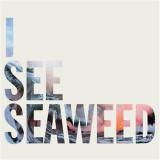
"I See Seaweed" It is one of the great works of art and one or the best album by The Drones. This record gathers all the complexity and greatness of the different sounds and faces of the band lead by Gareth Liddiard. Amazing lyrics fitting perfectly measured and networked melodies where each and every one of the five band members melt creating perfect melodies and sound. Intensity and sound explosions meet anxious quietness and tension. This is one of those records which grows with every listen and never get tired of playing. Don't miss it, this is a very good advice. Bang! is re-releasing this 2013 album by popular demand. A highly sought-after and valued album by its fans. You may know that half THE DRONES today are blowing a TROPICAL FUCK STORM!
BLOOM, the 2026 Grammy Award-winning album from four-time Grammy-nominated singer, songwriter, and vocal powerhouse Durand Bernarr, is a landmark release from one of contemporary R&B's most celebrated voices. The album also earned Grammy nominations for Best Traditional R&B Vocal Performance ("Here We Are") and Best R&B Song ("Overqualified"), further cementing Bernarr's reputation as one of the genre's most innovative artists. BLOOM explores the concept of love beyond romantic intimacy, weaving together themes of self-love, personal growth, friendship, community, accountability, and the freedom to cultivate spaces where love can flourish. Rich in soulful songwriting and genre-blending production, the album showcases Bernarr at the height of his creative powers.
Repress of since last 2025 sold out box set. Ltd edition Gold vinyl, 4 X 140g LP Box set, 24pp booklet, DL card. or Ltd edition 4xCD Bookback. Trees classic albums, beautifully packaged as a four-disc anniversary edition includes 12" book with liner notes from founder member David Costa and comedian Stewart Lee - Features two new discs of alternate mixes, early demos, BBC session tracks and 2018 live recordings in London - Includes lost demos of 'Polly On The Shore' and 'Streets Of Derry' It's now over fifty years since Trees' formation and, although 'Acid Folk' has now become a sub-category in the lexicon of record dealers and music critics, and although founder member David Costa feels the original noughties reissue helped consolidate a gathering wave of curiosity, they themselves remain in the shadows. Earth's new Trees collection brings together both albums adding shiny alternate mixes of key tracks along with a selection of radio sessions and demos, all sounding brighter and cleaner than ever before. Trees first album, 'The Garden of Jane Delawney' (1970) snuggles nicely into contemporary nu-folkies' idea of the genre, and shares some of the pastoral-whimsy that characterised The Incredible String Band or Donovan, offset by some stunning interpretations of traditional material and Bias' own songs, which were somehow part of the tradition Trees had adopted. Readings of 'Lady Margaret', 'Glasgerion' and the old standard 'She Moved Thro' The Fair', and the extended fade of the group's own 'Road', presage the explosive instrumental duelling that would come to characterise the follow up album, 'On The Shore'. There's a definite shift between the records, the second being darker and more ambivalent. Here Trees don't tell you what to think. You're left to formulate your own response to this odd, opaque music. The 'Streets of Derry' session version leans into the brain vibrating drone-groove they somehow found at the traditional tune's centre. 'Polly On The Shore', another traditional tune, is one of the definitive moments of English folk rock. This special expansive collector's edition celebrates the bands 50th anniversary. "A beautiful hybrid, Trees found a unique space between intimate folk and freewheeling psychedelia. Musically ambitious yet brilliantly balanced, they have left an enduring legacy for those lucky enough to be in on the secret" - Edd Gibson, Friendly Fires
Originally, symptoms started out as a memoir chronicling Devin Daniels' mental health journey by way of the beat tape. "I made these beats in my worst mental health state of all time, like 2018 to 2023. In 2017, I had a experience in Boston and it gave me a schizoaffective reaction. I'm schizophrenic now. I've been hearing voices for the past almost 10 years. A terrible time, just really negative. Making beats is the kind of stuff that would just like cheer me up, you know, it would just make me forget about all that stuff." Devin has also been consistently working in the Los Angeles music scene as a bandleader and session musician, graduating from the Herbie Hancock Institute of Jazz Performance at UCLA, and going on to play in bands with the likes of Herbie Hancock, Joel Ross, Gerald Clayton, Miguel Atwood-Ferguson and more. Although Devin does not have social media, and thus currently might not have the name recognition as others in the wider music world, he is very respected and beloved in many circles of the Los Angeles music scene.
Prolific British multi-instrumentalist William Dorey makes music emphasising traditional means of recording under the Skinshape moniker, referencing influences ranging from Ennio Morricone to The Beatles, and a variety of genres including but not limited to retro funk, soul, reggae, psychedelic rock, African music and folk. Far from carrying an anything goes attitude, Dorey's is an evocative melting pot moulded in an orderly fashion, creating output that keeps categorisation open-ended. Whilst tackling a busy tour schedule over the past 18 months, Skinshape has continued to find time to make music in his studio based in North London. The latest endeavour is titled Chapman's Pool - named after a bay on the Jurassic coast in Dorset, located walking distance from where Dorey grew up. Chapman's Pool carries a sense that Skinshape is reconnecting with the sound which formed his musical identity, drawing inspiration from spaghetti westerns, trip-hop, `60s+'70s Ethiopian Jazz, '80s South African bubble gum and so on, all while the multiple years of recording, songwriting and production experience are clearly audible.
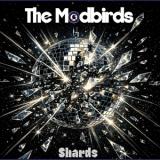
"Baby put that cheecky dress on_get your feet on the ground, shake your hips to the sound! We're dancing to the music!"_of THE MODBIRDS! Ladies & Gentleman, die Tanzfläche ist freigegeben! Spotlights an, Boxen auf Anschlag aufgedreht bis die rotierende Discokugel in 1000 Scherben zersplittert - hier kommt "Shards", der erste Longplayer der Modbirds. Einen berauschenderen Cocktail mit allerfeinsten musikalischen Zutaten wirst Du an keiner Theke finden! Der abwechslungsreiche Mix aus Ska, Soul, Reggae, Rocksteady, einer kleinen Prise Punk bis hin zu Swing und klassischen Big Band Elementen macht süchtig und vereint alles was Birdies, Rudeboys und sonstige Nachtschwärmer lieben werden. Nach ihrer Mini-LP "Spin it to win it" hat die 7-köpfige Big Band mit u.a. ehemaligen Mitglieder von The Porters und Los Placebos im Music Area Studio bei ihrem ehemaligen Bandkollegen Beagle 12 neue Songs aufgenommen und all ihre musikalischen Einflüsse und Vorlieben darin einfließen lassen. Ob Jamaica-Roots, Ausflüge in verschiedenen Waves of Ska-Äras, den typischen UK-2 Tone Sound nach Art von Madness bis Buster Shuffle oder eine einfach nur Spaß machende Reminiszenz an all die deutschen Ska-Bands von El Bosso bis Frau Doktor (mit dem einzig deutschsprachigen Song "Jogger"): Mit jeder Note und Takt merkt man diesem Album an: Die Modbirds leben und lieben diese Subkultur seit Jahrzehnten und kreieren daraus ihren eigenen Sound! Die 180g Vinyl-Edition kommt im Gatefold in klassisch schwarz oder silber mit mehrfarbigem Splatter. Limitiert auf insgesamt nur 300 Exemplare!
"Baby put that cheecky dress on_get your feet on the ground, shake your hips to the sound! We're dancing to the music!"_of THE MODBIRDS! Ladies & Gentleman, die Tanzfläche ist freigegeben! Spotlights an, Boxen auf Anschlag aufgedreht bis die rotierende Discokugel in 1000 Scherben zersplittert - hier kommt "Shards", der erste Longplayer der Modbirds. Einen berauschenderen Cocktail mit allerfeinsten musikalischen Zutaten wirst Du an keiner Theke finden! Der abwechslungsreiche Mix aus Ska, Soul, Reggae, Rocksteady, einer kleinen Prise Punk bis hin zu Swing und klassischen Big Band Elementen macht süchtig und vereint alles was Birdies, Rudeboys und sonstige Nachtschwärmer lieben werden. Nach ihrer Mini-LP "Spin it to win it" hat die 7-köpfige Big Band mit u.a. ehemaligen Mitglieder von The Porters und Los Placebos im Music Area Studio bei ihrem ehemaligen Bandkollegen Beagle 12 neue Songs aufgenommen und all ihre musikalischen Einflüsse und Vorlieben darin einfließen lassen. Ob Jamaica-Roots, Ausflüge in verschiedenen Waves of Ska-Äras, den typischen UK-2 Tone Sound nach Art von Madness bis Buster Shuffle oder eine einfach nur Spaß machende Reminiszenz an all die deutschen Ska-Bands von El Bosso bis Frau Doktor (mit dem einzig deutschsprachigen Song "Jogger"): Mit jeder Note und Takt merkt man diesem Album an: Die Modbirds leben und lieben diese Subkultur seit Jahrzehnten und kreieren daraus ihren eigenen Sound! Die 180g Vinyl-Edition kommt im Gatefold in klassisch schwarz oder silber mit mehrfarbigem Splatter. Limitiert auf insgesamt nur 300 Exemplare!
POV zeigt Nico Santos in zwei Extremen: ganz nah und ganz groß. Sein viertes Album ist ein Doppelalbum
aus zwei vollständigen Welten: Personal und Optimist. Personal versammelt intime, persönliche und echte
Geschichten, vielleicht die biografischsten Texte, die Nico bisher geschrieben hat, für Momente, die man
allein mit sich hört. Optimist ist das Gegenstück: große Hymnen und der Soundtrack zu seinem lauten,
schnellen Leben als Popstar, für Nächte und Momente mit Freunden. Zusammen ergeben beide Seiten 18
Songs, darunter ”Why Don’t You Stay”, ”Optimist”, ”Ray of Light”, ”All Time High” und ”Body”.
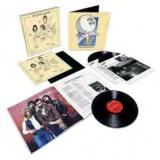
„The Who By Numbers“, das Anfang Oktober 1975 erschien, ist das siebte Studioalbum von The Who
und stellte einen Wendepunkt für die Band dar, da die Songs größtenteils introspektiver und persönlicher
waren als ihre bisherigen Veröffentlichungen. Das Album war ein kommerzieller Erfolg und erreichte Platz
8 der US-Billboard-Charts sowie Platz 7 in Großbritannien, was zum Teil auf den Erfolg eines der leichteren
Stücke des Albums zurückzuführen war: „Squeeze Box“ wurde zu einem internationalen Hit und schaffte
es in Großbritannien in die Top Ten, in den USA in die Top 20 und in Kanada auf Platz 1.
50 Jahre später wird „The Who By Numbers“ im Oktober dieses Jahres als Super-Deluxe-Edition-Box
mit 5 CDs und 1 Blu-ray neu aufgelegt. Diese enthält ein 100-seitiges Hardcover-Buch mit Fotos, Erinnerungsstücken und exklusiven Anmerkungen von Pete Townshend und dem Who-Experten Andy Neill, 92
unveröffentlichte Titel und Mixe, brandneue Atmos-, 5.1- und Stereo-Mixe von Pete Townshend, 11 von
Petes Original-Demos für das Album, Aufnahmesessions aus den Ramport- und Shepperton-Studios, frühe
Mixe, Guide-Vocals, die bislang umfassendste Version von „Live At Vetch Field, Swansea, Wales, 12. Juni
1976“ sowie auf der Blu-ray Audio- und Videomaterial von einem bisher unveröffentlichten Who-Konzert,
das auf 2-Zoll-Videoband im Metropolitan Stadium in Pontiac, Michigan, aufgenommen wurde.
ARE YOU HOUSE Records presents: Are You House Sampler 2
Following the success of the first edition, ARE YOU HOUSE Records returns with the second instalment of the Are You House Sample series — bringing together three distinctive cuts rooted in groove, rhythm and the spirit of house music.
Opening the release, June Jazzin delivers “Iksasa”, a 9-minute broken-beat journey that takes you deep into its rhythm and groove. With its extended arrangement and hypnotic flow, the track gives you the time and space to settle into the groove and let the music take you on a journey.
Track 2, June Jazzin returns with “Driver Step On It”, a driving house cut built to push the energy forward, lock into the groove and keep the dancefloor moving.
Closing the release, SculpturedMusic delivers “Sing My Blues Dub”, a 6-minute deep, rolling and groovy house journey layered with hypnotic rhythms and soulful energy.
Three tracks. Two artists. Different grooves, different moods, one unmistakable house spirit.
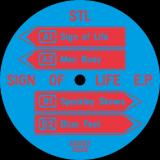
" Ascending Signs Records proudly presents its third release, featuring a very special guest: Stephan Laubner, aka STL.
One of the most distinctive voices of the past two decades, STL continues his quest for sound with a new chapter, "Sign of Life".
The EP delivers four bulletproof tunes, once again showcasing STL's unmistakable style, pushing the boundaries of abstract/experimental house, dub, techno and downtempo with a raw, personal and intense sound."
Five Special were a five-man harmony vocal group from Detroit whose members included Mike Pattillo, Steve Harris, Zeke Stanley, Greg Finlay and Bryan Banks (the younger brother of Dramatics’ main man Ron Banks). The aim of these five young men was to create a group with the potential of anyone of its members to be able to step up to sing lead on any given song, something which they went on to achieve to great aplomb.
Ron Banks was very instrumental in the founding of Five Special introducing them to his long-time friend Charles “Chuck” Underwood, a one-time former road manager of the Dramatics and by then the owner of the independent T.E.A.I Record Corporation label (T.E.A.I being an abbreviation for “Tellin’ Everybody About It”). Five Special’s first release for T.E.A.I was the 1976 joyously uplifting dancer “The More I Get To Know You” a Jimmy Roach and Marcella Henderson composition featuring Bryan on lead, released as a part I and part II deemed to be a more disc-jockey friendly practice at the time. The record was popular with radio stations throughout the Detroit metropolis leading Chuck to precure a deal with Polygram which resulted in the song gaining release on their nationally distributed Mercury label. A second Five Special Mercury release followed in 1977, the Jimmy Roach penned mellifluous “(Let’s Stop Making) Small Talk” backed with the Ron Banks/Paul Clark penned psychedelic soul styled “Oh, Oh (Look What We’ve Done)” with Greg Finley and Zeke Stanley exchanging tenor and baritone parts throughout.
Through our ongoing working relationship with T.E.A.I Soul Junction have gained access to some previously unissued master tapes on Five Special which were recorded for an intended album project that was never finished. From these tapes we took “The More I Get To Know You” in its 5:50 minutes entirety (not split into parts 1 & 2) backed with the previously unissued mid-tempo delight “You Got To Be The One That I Love” with interchanging leads from Bryan and Steve coupled with the released psychedelic soul “Oh, Oh (Look What We’ve Done)” with interchanging leads between Greg and Zeke, catalogue number SJ565, currently a very popular release amongst Collectors and DJ’s alike. For our second and follow up Five Special 45 release, we have chosen to lead with the gorgeous, previously unissued “Two OF A Kind” penned by Ron Banks with lead vocals being provided by Steve Harris. The B-side of this release opens with another unissued psychedelic song, the Ron Banks/Chuck Underwood composed “Stone Chain Reaction” featuring punchy interchanging lead vocals from Greg Finley and Zeke Stanley, this is coupled together with the released mid 1970’s sweet soul masterpiece from the pen of Jimmy Roach “(Let’s Stop Making) Small Talk” making this yet another quality three track release from Soul Junction.
First Cuts Vol. 2* is the second release in this new vinyl series, featuring exclusively new producers making their vinyl debut. In this series, you will find techno, house, and hardgroove.
First Cuts Vol. 1* is the first release in this new vinyl series, featuring exclusively new producers making their vinyl debut. In this series, you will find techno, house, and hardgroove. Enjoy!
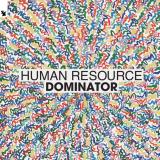
Catapult yourself back to the early-'90s raves with this limited edition vinyl of Human Resource's 'Dominator'. Including legacy-championing renditions from Klubbheads, Frank De Wulf and Rebuke alongside the UK-charting original mix, this multi-track pressing represents the sound that's proven to be rougher and tougher than any other.
Andreas Tilliander returns to Kontra-Musik in a grand style with his second TM404 album. Titled 'Acidub', this highly anticipated release is much more of an evolution than a repetition of the first superbly self-restricted album, where Tilliander even decided to use only one of the two Roland TB-303 waveforms. Acidub is a more playful and open listening experience, no doubt inspired by his extensive live touring with the TM404 concept. In fact, you can almost hear Tilliander's flock of acid machines breaking free from the restrained modus operandi. Every sound is like a migratory bird with a heart yearning for high altitude and favourable winds. The opening track Alinge paints a lucid picture of these acid birds leaving a cold industrial landscape behind, the flickering black shadows from their wings against the white smoke rising from a forest of chimneys below. The very last seconds of Alinge even echo of the place the silver birds are longing for, but that will remain a secret between Kontra-Musik and the avid listener. Sufficient to say, we can follow these birds of passage as they're heading south towards a warmer climate, fleeing the cold discipline of the North. Mutron Mantra, for instance, brings us to a rainforest full of serpentine lianas, giant leaves dripping with moist and green pools of water bubbling with organic life. Don't Defend Mascot guides us through a steaming savannah at dusk with hundreds of yellow eyes following our every step while Pade vividly describes the perils of the flight and the pace and courage needed to press on. In all, Acidub is a surprisingly exuberant follow-up to the more introspective TM404 album. But while the musical journey of this second album is quite different, the experience of sheer aural eminence remains the same. Andreas Tilliander has done it again, and Kontra-Musik couldn't be prouder.
Vier Jahre brodelte es im Berliner Untergrund: Nach zwei DIY-Tape-Releases durchbrechen SEK die Flanke und präsentieren mit Wallensteins Garage ihr erstes Album auf Vinyl ein Debüt, das gleichermaßen Geschichtserzählung, Konzeptalbum und ausufernde Jam-Session ist. SEK benannt nach den Anfangsbuchstaben der Nachnamen ihrer Mitglieder - Paul-Willy Stoyan (Gavial, Jacke Schwarz), Georg Edert (Elder, Gaffa Ghandi) und Lucas Kazzer (Gaffa Ghandi, Borders Down) - vereint drei Musiker, die seit Jahren in der Berliner Underground-Szene aktiv sind. Ihre gemeinsame Sprache findet sich zwischen Improvisation, historischer Erzählung und druckvollem Rock. Was die drei verbindet, ist weniger ein gemeinsamer Stil als die Lust am Ausprobieren: ausufernde Proben, lange Improvisationen und die Suche nach Klanglandschaften, die ebenso sperrig wie eingängig sein können. Was 2022 während des pandemiebedingten Lockdowns mit stundenlangen Jams begann, entwickelte sich in den vergangenen vier Jahren zu einer eigenwilligen Mischung aus Psychedelic Rock, Krautrock und einer Prise Prog. Die Band selbst nennt diesen Sound augenzwinkernd HOR Historian Oriented Rock: Musik, die historische Stoffe nicht illustriert, sondern in Klang übersetzt. Die Inspiration für die Songs stammt aus dem Dreißigjährigen Krieg (16181648), insbesondere aus dem Leben des böhmischen Feldherrn Albrecht Wenzel Eusebius von Wallenstein und den Ereignissen rund um die Schlacht bei Lützen (1632). Das musikalische Arsenal ist ebenso vielseitig wie die erzählte Geschichte: verfuzzte Gitarren mit wabernden Delays treffen auf einen galoppierenden Bass und treibende Drums, getragen von träumerischen Keyboards. Immer wieder öffnen sich freie, fast chaotische Passagen, in denen Harmonie und Rhythmus auseinanderbrechen wie Schlachtordnungen, die im brutalen Nahkampf ihre Form verlieren. An anderer Stelle schaffen sanfte Mandolinenklänge Momente der Ruhe, bevor sie sich in schwere, schmerzvolle Trauermusik verwandeln, inspiriert von Doom und Drone Metal. Zwischen hypnotischen Grooves, improvisatorischer Freiheit und cineastischer Dramaturgie erschaffen SEK einen Sound, der Vergangenheit nicht nachstellt, sondern neu erfahrbar macht. Die Platte erscheint auf Exile On Mainstream als schwarzes Vinyl mit beigelegter CD. Genre: Krautrock, Psychedelic, Alternative Für Fans von: Elder, Gentle Giant, Amon Düül, Zahn.
It’s Italian time! Sam Ruffillo is back. Sicilian producer doing smooth Balearic disco with Italian vocals. The direction is clear: Sam Ruffillo's music brings us back into the Italian riviera and the hippy days of Ibiza in the late 1970ies. Even his way of production is similar to how the early days disco producers in Italia used to work: No samples needed. Instead a few guest musicians come to jam over Sam's beats in his Italian studio space. Guitar, bass, percussions. Sam later makes the production and added keyboard solos and put together the vibes into what is this new EP.
The girl voice comes from NINFA. It’s the classic studio story: Ninfa is a singer and DJ and friend of Sam. She was hanging at the studio while Sam was finishing these tracks. She stated to sing along... the words came up spontaneously… so they decided to record her and finally decided to keep them. The vibe was too good. Why talk English if u can do it better: in Italian! :)
This is second for Toy Tonics after his Sport House EP from last year. Sam also appeared on the solo record of Joel Holmes on Toy Tonics. Together with Kapote Modica he co-produced and made the beats on that record. Now Sam is back with this pure Italian EP. Inclusive remixes by new German artists Gome and Italian Musemeci - known to many from his fabulous Italo-trance releases on Diynamic records.
Rooted in raw, minimal, dubby and emotional music, the Amsterdam-based Label Delver focuses on expressive recordings rather than polished productions, with releases that wander across genres.
The label’s first vinyl EP grew out of a shared passion for hardware jams between three friends, who regularly come together for live performances. Recorded in the afterglow of the summer of 2025, Delve Deeper Vol.1 brings together four tracks that combine from deep and hypnotic to more ambient and experimental territories.
Vand joins the roster with a collaboration with Holotropic, adding his singular interpretation of techno to the record. Each artist brings their perspective and while dub techno is the common ground here, the record explores a variety of its expressions.
Holotropic opens with “Sabra”, a patient, raw dub techno cut with subtle traces of the deeper Vril catalogue. Sasemoi’s “Those Who Seek” heads into more ethereal territory, its rhythm gradually surrounded by layers of sound that seem to pull the track upwards. “Binary” goes further into Sasemoi’s more experimental side, with broken rhythms and a heavier dub presence. Closing the record, Vantropic’s “Rift” shifts towards ambient and IDM, built from textured sounds and open space rather than a conventional dancefloor structure.
Born from a summer of shared sessions, Delve Deeper Vol.1 carries something of that time with it: the closeness of playing together, the freedom of improvisation, and a shared love of dub techno.
Ian Pooley's 'Roller Skate Disco EP' Returns with Digital Debut and Vinyl Repress
Definitive Recordings brings back one of the label's early house gems with a remastered reissue of Ian Pooley's 'Roller Skate Disco EP'. Originally released in 1994, the EP returns for the first time as a digital release while also receiving a new vinyl repress. Alongside the original material, the reissue expands the package with the previously unreleased track 'Unity' and the Bandcamp-exclusive 'Never Give Up'.
For more than three decades, Ian Pooley has been one of house music's most respected producers and DJs. Emerging from Mainz, Germany, with a deep love for the sounds of Chicago and Detroit, he has built a career defined by subtle artistry, impeccable groove, and timeless musicality. His acclaimed albums 'Meridian' and 'Since Then', remixes for artists including Daft Punk and Jovonn, and releases on labels such as Plus 8, Innervisions, Rekids, and his own Pooledmusic have established him as one of the true masters of deep and soulful house music.
The title track, 'Roller Skate Disco', immediately captures the uplifting spirit of classic 90s house. Built around an infectious disco-inspired sample, funky guitar loops, and a warm, rolling house bassline, the track is complemented by a looping female vocal that gives it an unmistakable feel-good energy. 'Sure!' follows with a groove driven by crisp TR-909 drums, deep synth chords, and a playful TB-303 sequence, while a repeated female vocal ties the arrangement together into a hypnotic club workout.
'The Brückenkopf at 7 AM', named after the legendary club in Pooley's hometown of Mainz, moves into deeper territory. Dreamlike synth textures, a memorable deep house piano motif, and another signature 303 sequence combine to create one of the EP's most atmospheric moments. The previously unreleased 'Unity' continues this journey with a hypnotic groove, deep house aesthetics, and another beautifully woven acid line, making it a natural addition to the original release. Completing the digital edition, 'Never Give Up' arrives as a Bandcamp exclusive, pairing playful M1 organ sounds with a rolling 303 sequence and an effortlessly flowing house groove.
More than thirty years after its original release, 'Roller Skate Disco EP' remains a perfect snapshot of Ian Pooley's early sound and a testament to the timeless appeal of classic house music. This expanded edition celebrates one of Definitive Recordings' defining releases while introducing it to a new generation of listeners.
As the thirteenth release on Guy J's Early Morning imprint, this three-track collection unfolds across 25 minutes and 9 seconds, exploring movement, emotion, and introspection through three distinct yet interconnected works.
The release opens with Secret Serv1ce, an uncompromising statement driven by a commanding beat, layered percussion, and psychedelic textures that blur the boundary between reality and abstraction. Its hypnotic momentum earns attention, reaffirming Guy J's command of both studio craftsmanship and musical skills.
At the centre of the release lies Placebo, the collection's longest work. Across nearly eleven minutes, it balances ethereal atmospheres with a meticulously engineered groove. Delicate electronic textures gradually give way to an irresistible melodicmotif that transforms the track's emotional landscape.
Closing the EP is My Existence, an intimate exploration of identity that reflects both the artist familiar to audiences around the world and the quieter dimensions hidden beneath the surface. Synthesizer interplay and forward-looking sound design converge into a navigation through unexplored emotional and sonic terrain while connecting memory, imagination, and rhythm into a unified whole.
With EARLY013, Guy J demonstrates how electronic music can remain both intellectually engaging and physically compelling, inviting listeners to lose themselves on the dance floor while discovering something deeper within the process.
Hanne Lippard and Renato Grieco's Today's Special is a suite of language works synthesising melody and diction that integrates the literary and the audible in a repertoire of songs that bask in the melody of voice and the punctuations of structured composition. Working with methods of reduction rather than opulence in both tonal composition and rhetoric, each piece pegs the poetic to the musical with compositional schematics and methods. It is important to state that there is little to none improvisation here, instead, the duo set up matrices, rules and structural links that facilitated meaningful locus of exchange between their two practices. Lippard's texts are a collection of new and previously completed works. In these, as is typical for her work, she enjoys the easy pleasure of wordplay, iterative language, and decontextualised anecdote, as in opener Portrait of a Betrayal, a piece about the loss of a phone and the way it haunted the owner who dropped it, based on a lived experience. Grieco's instrumentation works with Lippard's language art as a form of acoustic typography. "I studied graphic design and I think about how you can express typography through voice," she says. "Renato's use of the viola da gamba becomes like an underline, or a font's brushstrokes, in ways that feel typographical." In this, the classically-trained composer Grieco often finds and echoes the pitch movements of Lippard's voice, intonation mirrored and revealed, linguistic meaning doubled and shadowed by plucked, strummed or bowed strings. His main instrument is the viola da gamba, the instrument considered closest to the human voice for its tonal range and ability to mimic inflections and timbre, and here he brings it even closer to the voice, building systems by which it moves with and around Lippard. He also plays piano and Wurlitzer, and joins her in speaking on Receiver and in conversation for final track The Black Rose. "Hanne's voice is an artist's voice, embodied as the artwork itself," he says. "But where my approach is from the perspective of a composer, hers is around rhetoric and language. We worked towards each other in this sense, Hanne finding a space to welcome my voice, and me designing an acoustic space to enhance her vocal persona." In some tracks the structural connections are obvious - the matched tumbling delivery and stepped pitches of voice and piano in Aficionado sounding like two tipsy friends descending a staircase. In others, like the triptych of tracks Three Rungs Ladder, structured with rules derived from nursery rhymes, or cumulative song (akin to the 12 Days of Christmas). For the Colour 1 and Colour 2 pieces, the duo worked from palettes of colours connected to clusters of harmonies, which underlined the power of the word and its articulation. The absurd Labradorable personifies a people pleaser, A Story About Being Blue is an imagined playful monologue from the Deep Blue supercomputer - requesting in sing-song stop motion to be called Debbie, and Larry - as Grieco echoes in factual reportage. Hurtbeat unpacks and recomposes a tweeted non-apology by a Russian art collector about owning a piece of racist art, Grieco shadowing Lippard's generating a third `drop-shadow' performer from the resonances between the duo, typographic re-articulation of the source material. The Receiver includes lines from Robert Ashley's Improvement (Don Leaves Linda), Ashley existing as a spiritual parent of sorts to the practices contained on Today's Special, and here interpolated as if he is being quoted and written through within the audible world of the piece in a palimpsest of borrowed sentences. Closing track The Black Rose contains its own self-aware comedy, a lightly distorted conversation sourced from a Reddit thread about whether black roses exist, recorded as if it were an internet radio or a low budget podcast, the casual exchange stilted in the delivery of platitudes as scripted speech. Today's Special was developed in person over the course of a series of small residencies - at Deutsche Akademie Rom Villa Massimo, Rome; Fondazione Morra, Napoli; Callie's, Berlin. In these limited periods that rarely stretched beyond a week, Lippard and Grieco developed strategies for the works, keeping tightly locked to musical concepts. This, for Grieco, is about maintaining a solid, meaningful connection within the compositions, and committing to everything having a purpose for existing within the work. Each element pulls its weight; has something to say, literally and metaphorically speaking. In the same way that Lippard's work leaves nowhere for her to hide, he wants the music to exist with its own naked purpose: "It's is about exposing nudity via reduced materials," says Grieco. "This is a form of courage we want to embrace. Once we take off everything, it needs to be extremely precise to maintain a connection with the audience. We have a lot of tools to hide behind now, to protect ourselves and our identities as artists, performers, and in life more generally. It's something I don't want to do. I want extreme reduction: no hiding."
The long-awaited 7-inch release of the live recording of "Unknown Happiness," the signature song by Maher Shalal Hash Baz led by Tori Kudo!
Coupling two live takes of their signature song with distinct arrangements, an essential release that offers a fresh perspective on the unique world of Maher Shalal Hash Baz!
"Unknown Happiness", the signature song of Maher Shalal Hash Baz, the Japanese experimental music project formed in 1984 and led by Tori Kudo. A piece that perfectly embodies the group's one-of-a-kind musical world?freely traversing folk, jazz, brass, classical music, and improvisation?its simple yet heartwarming melody continues to be cherished by indie and experimental music fans around the world.
Now, the live version that captures the song's charm in its freshest form is finally available on a 7-inch record. Side A features the distinctive ensemble of Maher Shalal Hash Baz, beautifully imperfect and filled with the unique atmosphere that only a live performance can convey. Side B presents a special live version with a piano-centered arrangement, revealing a new dimension of the song.
Shape of the Unknown’ is kind of a double LP that fully embraces the idea of exploration. It is CHLOÉ’s most expansive and immersive work to date. ‘Shape of the Unknown’ is CHLOÉ’s fourth proper studio album. Its predecessor, ‘Endless Revisions’, was released in 2017. Nine years have passed. Nine years during which CHLOÉ has continued digging for music, DJing at internationally renowned clubs and festivals including Rex Club, Robert Johnson, Panorama Bar, Nuits Sonores, Glastonbury and many more, releasing EPs and remixes, while also allowing herself the time to explore entirely new creative paths.
The challenge is to capture the unknown, make it her own, endlessly reshape its textures, and ultimately preserve its mystery.
The first single ‘Drifter’, released back in June, already offered a striking glimpse of the sonic territories the album would venture into, driven by its hypnotically contoured basslines. The album's two other singles offer different windows into her world. 'Shapeshifter' captures CHLOÉ at her most hypnotic, balancing stripped-back techno and melodic house through deep rolling grooves, expansive bass chords and subtle rhythmic shifts that constantly reshape the listener's perception without ever disrupting the flow. Later, 'Repeating The Obvious' takes a more leftfield route, pairing staggered rhythms with retro-inspired harmonics and an understated indie dance pulse that feels simultaneously familiar and unpredictable.
CHLOÉ has ventured into live performance through new formats, notably alongside percussionist Vassilena Serafimova; immersed herself in film scoring with soundtracks for Paris la Blanche, Arthur Rambo, The Mountain, Blanquita, Guru and Unsubmissives; and developed compelling collaborations, from High Season, her project with Ben Shemie of Canadian band Suuns (which resulted in the album The Call), to her own organic, experimental audiovisual performances under the name Slo/Mo AV.
Throughout Shape of the Unknown, CHLOÉ blurs the boundaries between deep house, hypnotic techno, electronica and cinematic sound design with remarkable fluidity. The album unfolds as a continuous narrative rather than a sequence of tracks, moving effortlessly between beatless ambient passages, rolling analogue grooves and emotionally charged club music. Organic percussion, sweeping bass movements, melancholic harmonies and richly textured synthesisers create a body of work that constantly evolves, where no section feels static and every transition reveals another layer of depth. There is an unmistakable warmth running through the record, with grainy analogue textures and spacious production giving even its most driving moments an intimate, almost tactile quality.
The album’s title is no coincidence. It evokes a form that has yet to be named, something language itself struggles to grasp. CHLOÉ approaches it through an organic creative process. Each piece must first be performed in the studio, almost as if it were being played live. The album will be followed by a series of live performances and DJ sets, including a show at the Olympia on March 18, 2027.
She is joined by a handful of steadfast collaborators. Jazz trumpeter David Enhco appears on two tracks, ‘Undertow’ and ‘Inner Bass’. But above all, there are the voices: Ben Shemie lends his unmistakable presence to the radiant ‘More Than Just a Feeling’. Olivia Merilahti, singer, songwriter and one half of The Dø, appears on the otherworldly ‘TWYR’. Working with Olivia’s already hypnotic voice, CHLOÉ has approached it like a sculptor, enhancing its strangeness and dreamlike quality.
And finally, impossible to miss is the instantly recognizable voice of Kittin. A longtime accomplice, she lends her distinctive phrasing to CHLOÉ’s music here for the very first time. The strongest collaborations are often those that take their time, arriving only when the moment is right. Same kind, same bass, same vibe, same pride.
The result is an enigmatic, nocturnal record, drifting between introspective listening and dancefloor functionality, revealing an artist who remains far more interested in atmosphere, movement and emotional storytelling than conventional club structures. It is an album that invites us to dream more deeply and to dance again, both within ourselves and out in the open.
Originally released in 1990, as a triple album in box set with probably the best work THE KLINIK ever did. A selection of their musical works all recorded between 1984 & 1988 and never released before, the box came as a limited edition in 1990 and was sold out in no time, and therefor very rare and hard to find.
Now Antler Records has revisited the box, remastered into a sound experience like you never had before; 6 sides packed in newly designed inner sleeves with band photo's (by Inge Bekkers) that have never been published before. 6 sides, three heavy weight vinyl albums in one extra broadened single album sleeve. Cold electronics, shivering spheres, minimal and highly atmospheric, a soundtrack for a still to be made film. A sound experience like you never had before!
The Klinik is Marc Verhaeghen-Music & Dirk Ivens-Lyrics
All Tracks recorded in the Lab between 1984 & 1988
Digitally Remastered in 2026 by Pieter De Wagter(Equus)
Kalita presents the fourth and final instalment of their groundbreaking ‘Borga Revolution!’ series, uncovering another selection of essential recordings from the rich and far-reaching world of Ghanaian highlife. Spanning deep, hypnotic highlife through to the vibrant electronic productions of 1980s Burger Highlife, Volume 4 captures a period of extraordinary musical change, as Ghanaian artists absorbed influences from funk, disco, boogie, and new synthesizer technology. With previous volumes championed by tastemakers including Gilles Peterson, Antal, Tom Ravenscroft, and Hunee, this final chapter turns its attention once again to the music of the Ghanaian diaspora.
Volume 4 brings together rare recordings from artists such as Rex Omar, Nat Fredua, and CST Amankwah, alongside the elusive, deeply hypnotic and beautiful sounds of the Abibifo Dance Band of Ghana (led by the legendary bassist Ralph Karikari) and Baffour Kyei. Unearthing recordings that have languished in obscurity for over forty years, the compilation moves between deep highlife, rhythmic dancefloor cuts, and pioneering digital productions, revealing yet more musical ingenuity of Ghanaian artists both home and abroad. The final instalment in the ‘Borga Revolution!’ series, it offers another vital collection of forgotten favourites and hidden treasures for DJs, collectors, and anyone drawn to the endlessly inventive sounds of Ghanaian music.
The 1970s and 80s saw Ghanaian musicians begin to incorporate Western sounds like funk and disco into their music, reflecting the changing global musical landscape. However, the country's political instability and economic hardships, marked by military regimes and curfews, forced many artists to leave Ghana in search of better opportunities abroad. In Europe and the U.S., these musicians fused their traditional highlife roots with emerging digital sounds, using cutting-edge technology like the DX7 synthesizer and drum machines to create the genre now known as Burger Highlife.
With ‘Borga Revolution!’ Kalita offers a vivid exposition of this musical transformation, using rare interviews, archival photos, and detailed liner notes to bring to life the pioneering spirit of both well-known icons and unsung innovators of Ghanaian Highlife, one of West Africa’s most exciting musical movements.
· The final installment in Kalita's 'Borga Revolution!' series, examining the development of Ghanaian dance music in the 1970/80s, and focussing on the phenomenon of Burger highlife (a blend of Ghanaian highlife with disco, boogie and synths).
· 2xLP in gatefold sleeve, with printed inner sleeves examining the stories of the artists featured on the volume.
· Includes 10 highly sought-after and under-the-radar recordings, including those by the phenomenal Rex Omar, Nat Fredua, CST Amankwah, Baffour Kyei, Chief Kofi Sammy, and the Abibifo Dance Band of Ghana.
After vocal-led 12”s featuring the likes of Razor and Sikka Rymes, Low End Activist pivots back towards purely instrumental territory for further explorations in the hybridised hardcore sphere. There’s an over-arching air of introspection to the five tracks assembled here, as LEA’s signature bass ructions and jagged, roughly-hewn drums offset with a widescreen line in melancholia.
There's a tendency in metal to mistake aggression for honesty, volume for depth. To confuse the performance of darkness with its actual weight. Hidden Fires Burn Hottest, the new album from San Francisco-based post-black metal band Bosse-de-Nage, sidesteps this entirely. It’s the group’s most fully realized work yet, precisely because it refuses to be pinned down.
Bosse-de-Nage have been working with The Flenser for over fifteen years. They were one of the first bands the label ever partnered with and have the longest active relationship in the label's history. But unlike most bands who build momentum through constant touring and visibility, Bosse-de-Nage has largely existed apart from the music world's usual machinery. They've evolved on their own terms, in relative isolation, allowing the work to develop without outside pressure or influence. What began rooted in black metal anonymity has mutated into something that actively defies categorization. The aggression is still there, but it's no longer the point. Hidden Fires Burn Hottest finds the band treating emotions like physical objects, feelings with spatial properties. “No Such Place"" describes a space that can't exist but does anyway, somewhere between thought and location. ""Immortality Project"" examines infinite possibility not as promise but as problem, endless options collapsing under their own weight. These songs don't use metaphor to describe emotion. They make emotion into something you could theoretically touch.
Tracked by Jack Shirley (Deafheaven, Oathbreaker) at Atomic Garden East and mixed and mastered by Richard Chowenhill of Agriculture, Hidden Fires Burn Hottest was years in development, with some tracks beginning in 2018.
The long writing process offered time that most records don't get. Time to live with ideas, revise endlessly, to let structures settle. For the first time, lyricist Bryan Manning wrote everything in advance, creating a surplus to pull from rather than working under deadline pressure. The difference shows.
Coming off Further Still, an album built on constraint and economy, Bosse-de-Nage sought the opposite: sprawl, strangeness, fewer rules. Space for ideas to develop without rushing them. Dynamics that move through quiet as much as noise. Presence earned through atmosphere instead of volume. The record even includes ""Mementos,"" which might be considered the first love song the band has ever written.
Nothing here coheres into a theme. These are pieces pulled from low moments and private feelings made public through sound. The band has never been interested in positivity, in music that resolves cleanly or offers comfort. But bleakness doesn't mean humorlessness. There's something darkly funny running through much of it, even when it shouldn't be.
Hidden Fires Burn Hottest doesn't explain itself. It just insists: what you feel is as real as what you can see."
Satoshi Tomiie Is Back on Phonogramme With "12b-Dub Pt. 2," the Second Volume of the Acclaimed Ep Series by Legendary Producer Satoshi Tomiie. This 4-Track Ep Continues to Explore Tomiie's Deep and Innovative Soundscapes, Making It an Essential Addition to Any Electronic Music Collection. Available on a Limited Edition Marbled 12'' Vinyl, "12b-Dub Pt. 2" Promises to Deliver a Unique Auditory Experience With Its Rich Textures and Masterful Production. Don't Miss Out on This Exclusive Release From Phonogramme, Showcasing Satoshi Tomiie's Enduring Influence in the World of Electronic Music....
"Surface Noise Isn’t A Crime" continues NOREPRESS’ exploration of texture, pressure, and imperfect sound as core elements of underground electronic music. Across four tracks, the release moves through Deep Tech House, Dub Techno, Electro, and Breakbeat without settling into fixed genre boundaries, balancing functionality with experimentation throughout.
A1. Tvardovsky feat. Andrey Zverev – Flute Meditation opens the record with a dense, slowly unfolding trip built on dub space, electro tension, and hypnotic Tech House movement. Organic flute phrases drift through layered percussion, evolving bass pressure, and spacious analog textures, creating a strange collision of futurism and nostalgia. The track resists obvious peak-time formulas, choosing gradual transformation over immediate impact and rewarding deeper immersion with every transition.
A2. Osman Öz – Regrets moves into softer territory without losing rhythmic weight. Warm breakbeat structures, airy melodic fragments, and fluid low-end movement give the track a calm but persistent momentum. Osman Öz keeps the arrangement restrained and precise, allowing groove and atmosphere to carry the emotional core of the composition naturally.
On the B-side, Kirill Matveev appears under his Natural Piece Of Aloe alias with two contrasting interpretations of the project’s dub-informed language.
B1. Salto Mortale is playful, unstable, and constantly mutating. Rhythms stretch and reorganize themselves around shifting tonal fragments, while the arrangement moves with the loose unpredictability of an improvisation session. Despite its complexity, the track never loses control, maintaining a strong forward pull through every unexpected turn.
Closing the record, B2. Columbo Beat, Kirill Matveev - Sundub pushes deeper into darker territory. Acid sequences slice through heavy dub atmospheres while rugged drums and saturated low-end pressure drive the track forward with raw physical energy. Distortion, space, and movement interact continuously, turning the track into a hypnotic late-night tool designed for more adventurous dancefloors.
"Surface Noise Isn’t A Crime" captures NOREPRESS at its most confident: raw textures, deep space, broken edges, and timeless club influences reconstructed into a modern dub-driven framework.
Satoshi Tomiie Unveils His Latest Ep, '12b Dub', Exclusively on Phonogramme Records Tokyo &Ndash; Renowned Dj and Producer Satoshi Tomiie Is Back With a Captivating New Ep, '12b Dub', Set to Make Waves in the Electronic Music Scene. This Four-Track Release Marks a Slight Shift Towards a More House-Oriented Sound, Showcasing Tomiie's Versatility and Innovative Approach to Music Production. Having Garnered Acclaim for His Previous Releases and Collaborations, Tomiie Continues to Push Boundaries With '12b-Dub', Solidifying His Reputation as a Trailblazer in the Electronic Music Industry. This Latest Offering on Phonogramme Records Is Sure to Be a Staple in Dj Sets and Playlists Worldwide....
Two of Jean Carn's seminal hits combined. 'Was That All It Was' is a big hitting disco exploration with hints of Jean's gospel choir background coming to the fore. The flip houses the classic 'Don't Let It Go To Your Head' - covered on many an occasion since it's release back in '78.
The vinyl saga between Planet Rhythm and Derailed Records rolls on with a full album from none other than the mighty Tensal. Landing as a double 12", this release carries the unmistakable VVS signature: uncompromising, high-impact techno and a selection of heavyweight prime-time cuts made to ignite the dancefloor. We’re excited to welcome Tensal to the label, whose unmistakable sound makes this vinyl release a truly special addition to the catalogue. '' I Want VVS's More Than Ever ''
Split#5 marks the fifth and final installment of the Split series on the Various Artists catalogue of Pi Electronics, pairing Spanish producer Hurtado and Greek producer Nikitas Grs. Despite their distinct approaches, Hurtado's industrial-leaning broken beat funk and Nikitas Grs' psychedelia-infused noise techno converge through a shared aesthetic of textured sound design, raw energy and dark atmospheres. On the A-side, Hurtado showcases his trademark production style through the driving cuts "Show of Force" and "Bad Company", while "The End", featuring vocals by Genevieve GV, reveals a more experimental side of his production. The B-side welcomes Nikitas Grs with two compositions that blur the boundaries between techno, trance and industrial music. The live version of "Susano" unfolds as a rolling, hypnotic dancefloor trip, while "Anoriotos" balances heavy rhythmic impact with an underlying sense of ambient nostalgia. The digital bonus track, "Pollinator 5000", reveals yet another facet of Nikitas Grs' sound palette: a relentless piece of noise-techno that rounds off the release with uncompromising intensity.
MASA 007 sees DJ Sodeyama at his most incisive and introspective, delivering three cuts of direct, mental techno, complemented by a powerful remix from Atomic moog. Across four tracks, the record flows with clarity and purpose, driven by sharply defined drums and acid-tinged textures, while layered with expansive ambient pads and evolving atmospheres, resulting in a sound that is both forceful and deeply immersive. Atomic moog’s reinterpretation, a signature of this modular wizard duo, built around earthy psychedelic pads, field recordings and organic synths, cements MASA 007 as a refined statement of modern techno’s cerebral intensity and emotional depth.
MRD's highly anticipated "August Memories" EP is OUT NOW — available in both vinyl and digital. The Norwegian producer further asserts his versatile and distinctive sonic identity. The result: 2 techno weapons and 2 peak-time anthems fusing trance, 80s guitar riffs, and shoegaze intensity. Expect pure euphoria on the dancefloor. Spotify, Apple, etc: bfan.link/august-memories-1 Mastering: Charles Accarisi Cover Picture: Hugo Wirth
Rebecca Delle Piane makes her return on EMERALD with six tracks covering' Titania EP'. Driven by a steely determination to push herself further through sonic exploration and new creative approaches, she unveils a new direction in sound. A direction that feels both harsh and precise, yet equally clear and refined.
Following the strong response to Late Checkout 001 and support from DJs including Louise Chen and Mafalda, Mark Sexton returns with four more hazy club excursions that blur the lines between deep house, UK Garage and sample-heavy soul. Warm, dusty and effortlessly musical, Late Checkout 002 builds confidently on the sound that made its predecessor a favorite among discerning selectors.

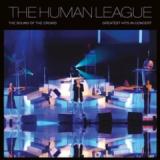




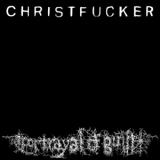
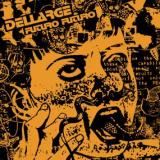














![Ø [Phase], Uväll, MZR, Ketch & Hertz Collision - SYXTBLCK003](https://www.deejay.de/images/l/5/6/1270456.jpg)