Pure world magic brims from every groove of this new set of pearlers from the Beauty & The Beat label. We know nothing about Loopico, who is behind the originals, but they blend plenty of Latin, cumbia and expressive percussive sounds into ass-wiggling grooves. Cow bells litter 'Curimbobata', which has stringy rhythms and external synths weaving in and out. 'Maquio' has busy, relentless handicaps and acoustic strings with shamanic spoken words, then 'Upaon-acu' and 'Calma-cara' bring sunny spiritualism to another pair of urgent rhythms. Leonidas lays down hefty, bass-driven rhythms that make these suited to club deployment and open-air dancing this summer.
Joe Fujinoki centered the compositions of his latest album Glass Torso round the idea of the fragility of the human body. Fujinoki described the narrative thread of the album as that of “holding the shape of a human body as if it might shatter like glass”. The precariousness of the body, the essence of the body as defined by Fujinoki as the torso, and the object relations between the boundaries of dialectical exercises pack themselves into his creative process.
Fujinoki recorded Glass Torso exclusively with analog synthesizers, stumbling in and out of structural loops to find space for accidental discoveries. The ten pieces of recorded material feel somewhere on the edge of typified form, feeling like a vascular system pumping in and out its undulating liquidities. Maybe this is the hollowed space held together by Fujinoki’s notion of the torso where you hear a microscopic world, dubby and generative. Fujinoki is adept at organizing this realm of subtle sound sources, giving proper considerations of shared tonal space. Seemingly, this handling of the precarity of sonic material elucidates Fujinoki’s mature attention to detail.
Ambient music genre tropes often affirm the listeners vessel for escape and dissociation. It provides an intoxicating allure by respite from an overwhelming exterior reality far outside the listeners controls. Here this space becomes apolitical, or its protest vocabulary softer and subtle. Fujinoki does not aim to tackle hyperobject topics on how to course correct the world, but he does something increasingly rarer to come across. On Glass Torso an alternative space is created not as shelter, but as a meditation on negotiation and compromise. This twenty eight minutes of audio lays down a foundation for imagination, for imagining how to negotiate the fragility of the self. Zoomed out, the implications of his negotiative sonics can be a playground for broader reflections on distributive care and attention.
Fujinoki says he feels “alert” to his physicality and placement in the world amidst vast digital cultures creating impositions on him and his surroundings. On Glass Torso he creates a concretized space on a vinyl record, where the virtual and the tangible antagonize one another that create the spectacle of the listening experience. This spectacle is a soft one, a considered one, and an utmost enjoyable one. Fujinoki juggles opposing forces brilliantly, and formulates an exquisite palette of soft passing music so he can also help the listener with the exquisite burden of their own Glass Torso.”
Blume presents two pieces composed in 1970 by the American pianist and composer David Tudor (1926-1996), one of electronic music's most important pioneers, for the Pepsi-Cola Pavilion, a unique artist-designed and programmed space for Expo '70 in Osaka, Japan, created by Experiments in Art and Technology (E.A.T.). Pepsibird and Anima Pepsi deploy electronic technology as a means to experience sound in ways that are anything but matter of fact, rendering liberated environments within and through which one might democratically express and commune. Viewed through the lens of what was, is, and might have been, they offer the tools for time travel: an unmediated encounter with radical, optimistic ideas that gave way to the complex cultural landscape of our time.
Initially trained on organ and then piano, Tudor emerged as a leading figure within New York's musical vanguard after his groundbreaking 1950 performance of Stefan Wolpe's Battle Piece and the American premiere of Pierre Boulez's Second Sonata. Within less than a year he had joined the Merce Cunningham Dance Company as its accompanist, a role he kept until his death, and began one of his most lasting creative relationships with John Cage, who would state that his entire output between 1951 and the end of the 1960s was written with Tudor in mind. Christian Wolff, Earle Brown, Morton Feldman, Sylvano Bussotti, Mauricio Kagel, and Karlheinz Stockhausen all wrote works for him during the 1950s and '60s. Through indeterminacy and chance-based methods, Tudor was noted for radically intervening with the works he played, often making them entirely his own, and it was this same singularity of vision that led him to gradually abandon the piano in favor of electronic process, through which he began working as a composer in his own right.
His engagement with electronics dates to the early 1950s and Cage's Project for Music for Magnetic Tape. By the following decade the pair had moved to live electronics, with Tudor rendering works like Cartridge Music and Variations II through contact microphones and complex systems of feedback and amplification. Before modular synthesizers existed, he designed and built his own electronics, often with engineers from Bell Laboratories, producing dozens of unique instruments and processing tools that helped lay the groundwork for the technological needs embraced by most electronic musicians ever since. A clear marker of his emergence as a composer came in 1966 with 9 Evenings: Theatre and Engineering, where he premiered Bandoneon! (a combine), turning the cavernous performance space into a feedback instrument and a total environment. The event led directly to the founding of E.A.T. the following year by the engineers Billy Klüver and Fred Waldhauer, alongside Robert Rauschenberg and Robert Whitman.
Among the most ambitious of E.A.T.'s projects was the Pepsi-Cola Pavilion, for which Tudor composed four pieces between March and April 1970: Pepsibird, Anima Pepsi, Pepscillator, and Microphone. Together with Forrest "Frosty" Myers, Robert Whitman, the sculptor and filmmaker Robert Breer, and the architect John Pearce, he was tasked with the design and function of the building: a 120-foot diameter steel and polyvinyl dome, shrouded in mist and fog and lit in the evenings by a square of intense blue-white xenon light. Tudor worked with Gordon Mumma and Fred Waldhauer on a unique sound system capable of processing and variable distribution through 37 speakers, controlled both by automated means and by the performer, and with Lowell Cross on a sound-activated laser deflection system inside the pavilion's mirrored performance hall.
Both pieces are an advanced form of musique concrète: libraries of tape recordings, live mixed and processed through the pavilion's sound console and distributed through 8 channels of stationary and rotating patterns designated by Tudor's instructions (small circle, great circle, large rhomboid, spiral, small triangles, small ovals). Pepsibird is focused upon a physical interiority, its source tapes being recordings of the brain wave activity of humans and animals: cat's eye, nerve firing, bats, EKG, alpha waves, a modified nightjar. Recorded in situ in 1970 and mixed down to stereo, it retains a striking sense of the space and ambience that Tudor achieved in performance. For more than eighteen minutes he merges subtle textures and pulses, at times resembling birdsong, within a blanket of vast, resonant ambience of subaquatic density, foreshadowing the relationship to the natural world of later works like Rainforest IV (1973).
Anima Pepsi is centered on the exterior: field recordings that Tudor made of animal and insect sounds (mosquitoes in a jar, a fly on flypaper, a wasp chewing, a beetle walking) and a mix of human and animal sounds that he called the "funny tape". Where Pepsibird deploys interior sounds in ways that allude to the natural world, Anima Pepsi pushes the sounds of nature and humanity toward the otherworldly through the clear presence of electronic sounds and processing, moulding detailed, pointillistic patterns of abstract sonority into gauzy blankets of ambience and space.
The collaboration did not last: less than a month after the opening, Pepsi withdrew its support, fired E.A.T., and disregarded Tudor's tapes, which according to accounts had to be smuggled out by staff, playing its own soundtrack in the pavilion for the rest of the Expo. Heard today, Pepsibird and Anima Pepsi anticipate many territories of later electroacoustic practice, from field recording to live processing, while the terms on which they were made, radically unpredictable, indeterminate, and experimental to the core, reconfigure what we've come to expect from electronic process, making one wonder if the past was ahead. Issued by Blume in a highly limited vinyl edition of 300 copies on red vinyl, with a 20-page LP-size booklet containing You Nakai's essay and newly commissioned liner notes by Bradford Bailey.
SPF 50 returns to Bliss Point with Ett Inre Rum, a collection of pulsing, immersive techno, rounded out with a remix from renowned club synthesist Erik Luebs.
Recently enamored with the psychoacoustic power of drone, Ett Inre Rum finds SPF 50 pushing his sound deeper, heavier, and more psychedelic. With Ett Inre Rum, he explores sonics that connect internal states to the external spaces we inhabit, patiently building energy until the walls are stretching, the room is heaving, and the lines between inner and outer are thoroughly blurred.
Drawing inspiration from the natural world and culled from over a year of peak time live sets, Ett Inre Rum eschews dance floor tropes for a refreshing minimalism: club tracks as enveloping sonic environments, breathing deep as they propel forward through atmospheric washes, layered and manipulated to achieve peak emotional resonance.
The Lockheed F-117 Nighthawk was an American single-seat, subsonic, twin-engined attack aircraft and is a fitting name for this EP, which is equally low-key, menacing and devastating from RAN. Influences from Loefah, Youngsta and Boddika abound in these stark and dark dub soundscapes, which drip with dank warehouse vibes, ride on booming low ends that melt into an inky night and come with precision-engineered percussion. 'GBU-10 (External Guidance)' is a late-night search across a deserted city, 'JDAM (Signal Without Light)' has a more sub-aquatic feel and rolls more fluidly, while 'GBU-27 (BLU-109 Core)' is ominous, with ghosts of dubstep and broken beat lurking round every corner. Fantastically immersive and meticulously executed, not least because the EP was mastered by the great Transition Studios in South East London (early support from Carrier).
The Temptations Get High on Psychedelic Soul: Cloud Nine Soars with Ambitious Arrangements and Production, Features Standout Vocal Performances and Instrumentation by the Funk Brothers
The Temptations’ Cloud Nine announced that Motown — and “The Sound of Young America” — would never be the same. Influenced by the emergence of cutting-edge rock and pop currents, as well as increasing sociopolitical turmoil, the album broke down barriers between rock, psychedelia, and soul while heralding the arrival of visionary arrangements and production techniques. Bookended by traditional R&B numbers, the 1969 record sent the Temptations in bold new directions and signaled the advent of psychedelic soul.
Sourced from the original master tapes, strictly limited to 3,000 numbered copies, pressed at Fidelity Record Pressing, and housed in a Stoughton gatefold jacket, Mobile Fidelity’s 180g 45PM 2LP set presents Cloud Nine in audiophile sound for the first time on a domestic pressing. This collectible reissue bestows Norman Whitfield’s extraordinary production with the grand-scale dynamics, natural tonality, expansive openness, and low-end weight it deserves. The timbre of each of the five members’ voices is readily identifiable — even within the group harmonies — bestowing a realism never experienced outside the recording studio.
Making its debut on 45RPM, the album further benefits from the wide groove space by playing with greater separation and more realistic presence than prior editions. Everything from the brassiness of the horns to the dry snap of the snare comes across with reference-grade clarity and positioning. And since Motown’s renowned Funk Brothers backing band plays on many of the cuts, you’ll want to savor every note. The imaging, soundstaging, and organic bloom-and-decay of the notes make that possible.
Amid Cloud Nine, the instrumentation and architecture stand out as much as any element. Never before had a Motown album contained such ambitious patterns and complex passages. Seemingly conscientious of the departure from their past methods, the Temptations and Whitfield bunched together the tracks that mark a deep dive into psychedelic territory and counterbalance them with seven sterling soul cuts that dovetail with Motown tradition drenched with heartfelt vocals, swelling strings, and finger-snapping beats.
On the original 33RPM release, traditional Motown soul — laden with heartfelt vocals, swelling strings, and finger-snapping beats — occupies Side Two. These songs reveal an ensemble still very much on top of delivering pristine pop-soul material graced with romantic sweetness, persuasive insistent, and soaring highs. Re-energized after the departure of lead singer David Ruffin, who was fired for a variety of reasons in June 1968, the Temptations seamlessly meld with his replacement, Dennis Edwards, on one melodic gem after another.
The collective tackles five songs co-written by the legendary Motown team of Barrett Strong and Whitfield. Not the least of which are the smooth, shuffling “Why Did She Have to Leave Me (Why Did She Have to Go)” and deceptively simple, horn-spiked “Gonna Keep on Tryin’ till I Win Your Love.” On these tracks, as well as on a lush rendition of the ballad “Love Is a Hurtin’ Thing” and pleading, tender send-up of the Gerry Goffin-Carole King classic “Hey Girl,” Edwards and Paul Williams take turns on the lead with the estimable Eddie Kendricks, Melvin Franklin, and Otis Williams providing backing support.
All five vocalists trade-off leads on the simmering title track, a groundbreaking composition shot through with wah-wah-pedal effects, liquid funk, deep bass lines, Cuban percussion, saturated reverb, and gang choruses. Whitfield mines each member’s natural vocal range with spectacular results, keeps time with cymbals, and channels both the heated temperatures and escapist desires of a society embroiled in war, conflict, and experimental drugs.
Amazingly, the Temptations top themselves on the similarly revealing “Run Away Child, Running Wild.” Nearly 10 minutes in length, the song explodes R&B parameters and harbors a cinematic scope. Urgent pianos, distorted guitars, stripped-down percussion, steamy Hammond organs, minimal bass motifs, five distinct voices narrating the tale of a boy who fled home and now finds himself amid the scary, unforgiving external world: They combine to give the urgent tune a walls-closing-in atmosphere where fear and desperation reign. Bolstered by an extended instrumental section that precedes a climactic return of the singers’ voices, “Run Away Child, Running Wild” equaled the success of the record’s title track, with both reaching No. 6 on the pop charts.
The moment the instantly recognizable intertwined guitar passage on the title track to the Eagles' Hotel California begins, the record's genius becomes obvious all over again. Ranked the 118th Greatest Album of All Time by Rolling Stone, certified by RIAA as the third best-selling LP in history, and considered the foundation on which the Golden State's mid-‘70s music scene was built, the 1976 landmark is a music staple immune to shifts in trends, eras, and styles. Fearlessly addressing the chaos and consequences of American life, its songs remain strikingly prescient and gain creedence with each passing day.
Mastered from the original analogue master tapes, pressed on MoFi SuperVinyl, and limited to 17,500 numbered copies, Mobile Fidelity's UltraDisc One-Step 180g 45RPM 2LP vinyl box set ensures you will want to permanently check into and never leave this particular Hotel California. Up to the herculean task of standing head and shoulders above all prior reissues, this collectible edition plays with extreme clarity, organic richness, tube-like warmth, massive dynamics, and microscopic levels of detail. You'll be able to practically smell the colitas and feel the breeze in your hair. Songs come across with an epic sweep and feature immersive, front-to-back soundstages that allow the music unprecedented air, roominess, and separation. As for the noise floor? It's basically as invisible as the spirits that waft in the corridors of the unforgettable title song.
Aesthetically, the premium packaging and presentation of the UD1S Hotel California pressing befit its esteemed status. Housed in a deluxe box, it features gorgeous foil-stamped jackets and faithful-to-the-original graphics that illuminate the splendour of the recording. From every angle, this UD1S reissue exists as a curatorial artefact meant to be preserved, touched, and examined. It is made for discerning listeners that prize sound quality and production, and who desire to fully immerse themselves in the art – and everything involved with the album, from the renowned cover art to the meticulous finishes.
Indeed, the opportunity to zero in on all the particulars of the 26-million-selling Eagles record dubbed "a legitimate rock masterpiece" by vaunted Los Angeles Times scribe Robert Hilburn has never been better. A global phenomenon that marked the band debut of guitarist-singer Joe Walsh, Hotel California continues to resonate and connect with listeners of all generations taken by its narrative depth, stark directness, picturesque melodies, daring majesty, and ardent emotionalism. Adorned with a breathtaking exterior photograph of the Beverly Hills Hotel that serves as the simultaneously haunting and alluring cover art, and rounded out by a rear-cover shot of the Lido Hotel lobby that reinforces a notion that teeters between permanence and transience, Hotel California is brilliantly tied to a specific place that functions as a universally understood metaphor for the American Dream.
Confronting the darker undercurrents and oft-ignored constructs attached to that romantic notion, the record's songs revolve around a host of shared themes: excess, mobility, stability, illusion, fame, destruction, and idealism included. Notably, Hotel California appeared at a crucial junction in American history: During the country's bicentennial and amid escalating controversies related to the Vietnam War, energy crisis, and governmental corruption. That the Eagles manage to channel such cultural, social, and economical matters into a cohesive, stately, big-picture statement is alone a stupendous feat. That the album's reach, boldness, vitality, accessibility, and understated intensity have never waned make it a marvel.
Reflecting on Hotel California 40 years after its original release, and indirectly explaining its enduring appeal and increasing relevance, singer-songwriter Don Henley confirmed the record pertains to the "loss of innocence, the cost of naiveté...the difficulties of balancing loving relationships and work, trying to square the conflicting relationship between business and art; the corruption in politics, the fading away of the Sixties dream of ‘peace, love and understanding.'"
It can be argued that Henley and company squarely hit on and drove home those ideas in the surreal title track, chart-topping "Life in the Fast Lane," and grand "The Last Resort" alone. But that would miss the forest for the trees. Experienced as an unbroken whole, complete with the pristinely shot imagery and physical grooves, Hotel California unfolds like a geography-conscious saga by James Michener and plays like colour-saturated movie shot on 70mm film by Martin Scorsese. It's about our collective and individual decisions – and the shape of our past, present, and future. And, just like that conjured by our imaginations, Hotel California continues to take on a life of its own.
More About Mobile Fidelity UltraDisc One-Step and Why It Is Superior
Mobile Fidelity Sound Lab's UltraDisc One-Step (UD1S) technique bypasses generational losses inherent to the traditional three-step plating process by removing two steps: the production of father and mother plates, which are created to yield numerous stampers from each lacquer that is cut. For UD1S plating, stampers (also called "converts") are made directly from the lacquers. Since each lacquer yields only one stamper, multiple lacquers need to be cut. Mobile Fidelity's UD1S process produces a final LP with the lowest-possible noise floor. The removal of two steps of the plating process also reveals musical details and dynamics that would otherwise be lost due to the standard multi-step process. With UD1S, every aspect of vinyl production is optimized to produce the best-sounding vinyl album available today.
MoFi SuperVinyl
Developed by NEOTECH and RTI, MoFi SuperVinyl is the most exacting-to-specification vinyl compound ever devised. Analogue lovers have never seen (or heard) anything like it. Extraordinarily expensive and extremely painstaking to produce, the special proprietary compound addresses two specific areas of improvement: noise floor reduction and enhanced groove definition. The vinyl composition features a new carbonless dye (hold the disc up to the light and see) and produces the world's quietest surfaces. This high-definition formula also allows for the creation of cleaner grooves that are indistinguishable from the original lacquer. MoFi SuperVinyl provides the closest approximation of what the label's engineers hear in the mastering lab.
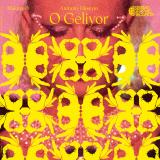
Anthony Hüseyin presents their new album O Geliyor (Making O), in which they return to the rediscovery of their gender, their childhood, and their attachment to Zeki Müren.
Müren is widely regarded as the most important queer exponent in the history of Turkish Art Music (Türk Sanat Müzigi). This genre of music was open to musical hybridism, and Müren himself also included elements of jazz and pop music.
Stylistically, O Geliyor (Making O) is a combination of contemporary discoid electro-pop music, based on Turkish Art Music by Zeki Müren. After successful current re-interpretations of Turkish music styles like neo-Anatolian pop and neo-Arabesk, this album provides a first take on neo-Turkish Art Music.
The album title is referring to the third genderless person pronoun in Turkish called "O", which encompasses all gender possibilities in one word. The album reflects on the memories that haunt us and the indescribable wounds of displacement. Set against the backdrop of Berlin, home to many immigrants and political and queer refugees, it exposes the profound emptiness in a metropolis wishing to imagine itself as a safe haven for the free-spirited, yet always reminding the Other that they don't belong. At the same time, it delivers anthems for the displaced, for the queer migrants who traverse internal and external landscapes in search of a place called home.
Anthony Hüseyin is a non-binary musician and performance artist of Kurdish-Turkish and Arabic descent who works with voice, text, film, dance, and installation. Raised in Urfa in Southeastern Turkey, where they learned traditional local music, they went on to study both classical and jazz singing in Istanbul and Rotterdam. Their works combine the personal and political to explore memory, identity, community, collective consciousness, and the body.
Life In Patterns welcomes Amsterdam-based live act and producer VNTM for his debut appearance on the label with “Ostbahn”, a five-track EP arriving on vinyl and digital formats on 24 July 2026. For VNTM, Ostbahn marks a departure from his usual creative process. While most of his productions are conceived and developed within the familiarity of his studio, every track on this release originated elsewhere — each one tied to a specific place, encounter, or moment beyond its walls. These external sparks became the foundation for a collection that feels both deeply personal and unmistakably geared towards the dance floor. Across the EP, VNTM explores the intersection of emotional depth and physical intensity. Dark, immersive pads and melancholic atmospheres are woven into powerful techno frameworks, driven by heavy low frequencies, tightly locked grooves, and a precise sense of movement. The result is a body of work that balances introspection with impact, equally suited to peak-time systems and solitary listening. Based in Amsterdam, VNTM has established himself as one of techno's most distinctive live performers, appearing at major festivals and clubs worldwide with a hardware-focused setup dedicated entirely to his own productions. His sound combines harmonic exploration and narrative-driven composition with distorted percussion, futuristic sound design, and a constant embrace of emerging synthesizer technologies. Beyond his performances, VNTM is the driving force behind the acclaimed Mindscape events at Amsterdam's Lofi, where he has hosted artists including Len Faki, Kangding Ray, Sterac, Âme, Recondite, Polygonia, Luigi Tozzi, Vril, and JakoJako. Recent highlights include his debut on the Awakenings Festival Mainstage, an all-night-long live set at Lofi Amsterdam, and a sold-out debut performance at Refuge in New York City. With “Ostbahn”, VNTM delivers a compelling first chapter on Life In Patterns — a release shaped by experiences beyond the studio, translated into hypnotic, emotionally charged techno built for deep immersion and maximum physicality.
Savor Music celebrates a landmark 15 years in the scene with a three-part compilation series. This first installment sets the tone, bringing together a powerhouse selection of artists that define the label’s sophisticated, groove-oriented sound.
Side A opens with a major debut on A1, as Christopher Ledger unveils his new alter ego, The Nolan Protocol. This track serves as a masterclass in production, delivering a fluid, terrace-ready flow that is perfectly tailored for those golden sun-drenched moments on the dancefloor. Following this, A2 showcases the refined artistry of Colombian producer Donnie Cosmo, who brings his signature classy, swinging vibes to the record. His contribution is characterized by a lush, infectious energy that keeps the groove effortlessly sophisticated.
Side B shifts into deeper territory, starting on B1 with minimal royalty Priku. True to his reputation as a hypnotic master, he delivers a driving number that showcases the technical precision and steady momentum for which he is renowned. Finally, B2 rounds out the EP with a hauntingly beautiful piece from Emu. Combining the creative perspectives of his Venezuelan roots and Belgian base, Emu weaves together melancholic electro vibes to close out this first chapter with profound atmosphere and emotional depth.
сбор заказов
Заказать сейчас – как только наберется необходимое количество заказов, продукт будет отштампован.
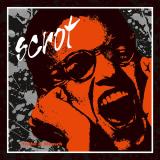
In the early 1990s, at the intersection of New Beat, early techno and EBM, a wave of raw, experimental club music emerged from Germany—dark, mechanical and often strangely playful. Among its most distinctive voices was Scrot, the project of producer Lars Janzik (Base Scan, Decade V, Technoline).
Originally released on ZYX Records, Scrot’s three seminal singles—“Teufelsrhythmus”, “Der Rhythmusmensch” and “Der Amokläufer”—captured a unique moment in early European techno. Built on hypnotic drum machine patterns, lo-fi sequencing and spoken-word German samples, these tracks combined industrial textures and unconventional vocal treatments with early techno production techniques and a peculiar sense of humor.
Limited to 300 copies on black vinyl and 200 copies on orange vinyl, and accompanied by an exclusive postcard, “Teufel & Mensch” brings together some of the project’s most iconic tracks and remixes, alongside the previously unreleased Knauer Remix of “Teufelsrhythmus”.
More than a retrospective, “Teufel & Mensch” stands as a document of a transitional era—when techno was still forming its identity, and artists like Scrot were pushing its boundaries into strange and uncompromising territory.
In the early 1990s, at the intersection of New Beat, early techno and EBM, a wave of raw, experimental club music emerged from Germany—dark, mechanical and often strangely playful. Among its most distinctive voices was Scrot, the project of producer Lars Janzik (Base Scan, Decade V, Technoline).
Originally released on ZYX Records, Scrot’s three seminal singles—“Teufelsrhythmus”, “Der Rhythmusmensch” and “Der Amokläufer”—captured a unique moment in early European techno. Built on hypnotic drum machine patterns, lo-fi sequencing and spoken-word German samples, these tracks combined industrial textures and unconventional vocal treatments with early techno production techniques and a peculiar sense of humor.
Limited to 300 copies on black vinyl and 200 copies on orange vinyl, and accompanied by an exclusive postcard, “Teufel & Mensch” brings together some of the project’s most iconic tracks and remixes, alongside the previously unreleased Knauer Remix of “Teufelsrhythmus”.
More than a retrospective, “Teufel & Mensch” stands as a document of a transitional era—when techno was still forming its identity, and artists like Scrot were pushing its boundaries into strange and uncompromising territory.
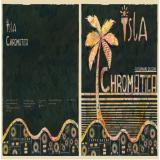
Jazz pianist, composer and electronic music producer, Alessandro Deledda returns with ISLA CHROMATICA, a new project released exclusively on vinyl.
Blending retrosynth textures, Balearic electronics and touches of classic Italo disco, the record unfolds as a colorful sonic journey between analog atmospheres, dreamy grooves and Mediterranean-inspired moods. Drawing from his background in jazz and his experience releasing on several international labels, Deledda crafts a sound that is both nostalgic and forward-looking, where warm synthesizers, rhythm machines and melodic sensibility meet on an imaginary island of sound.
Protocolo SysEx aka Fabio Vinuesa lanza este EP en su sello con cuatro pelotazos originales y dos remixes de Boris Divider y Heinrich Mueller.
GEOMETRÍA VIRTUAL documents a scenario in which mechanisms of control cease to function as external layers and instead become the very foundation of the system. The album does not propose a future dystopia, but rather a reality in which decision-making is automated and artificial intelligence is established as a structure of social control.Protocolo SysEx, a project by Fabio Vinuesa, is conceived as a narrative and sonic framework from which to examine the political and philosophical implications of a world governed by artificial intelligence. The release includes reinterpretations by Boris Divider and Heinrich Mueller and constitutes the first chapter of a trilogy focused on the progressive normalization of algorithmic control.
Geometría Virtual EP – Distrito 91 15
a A1 - Geometría Virtual Part I
b A2 - Geometría Virtual Part II
Xerrox Vol. 2 is the sixth studio album, released in 2009 by German electronic artist Alva Noto. It is the second installment of the Xerrox penthalogy, based on the concept of digital replication of source material.
As with the first Xerrox album, the starting point is a set of samples culled from external sources. This time, snippets and recordings from Sunn O))) collaborator Stephen O'Malley and composer Michael Nyman are featured, as is an excerpt from the 2004 Insen tour with Ryuichi Sakamoto.
While Alva Noto's oeuvre is predominantly affiliated with pristine sound design, the Xerrox series holds more intimate gestures and emotional sensibility. This volume moves further from the conceptualism and orderliness of prior musical outputs, ranging from heart-warming elegies to mind-bending sci-fi projections in extrasolar territories.
This remastered version will be reissued on NOTON in 2026
Tracklisting
---------------------------------------------------------
Medium: 1 // Side: A // Track: 1
Artist: Alva Noto
Title: Xerrox Phaser Acat 1
Playtime: 00:12:11
Explicit Lyrics: No
ISRC: DE1N62500015
(P): 2025 NOTON
Country: Germany
The Mysterious MYOKEN crew return with number 5 in the series. Once again, they delivery with a set of Monster housed up dubbed out edits aimed at the dancefloor.
“The group has no niche, it doesn’t fit in anywhere,” explains Necessaries drummer Jesse Chamberlain in a 1980 Melody Maker interview. “We just state the facts about life in America, like The Clash did about England, but we’re not so heavy about it.” The Necessaries rose from the ashes of Harry Toledo & The Rockets, a little-known New York art-rock band playing gigs at Max’s Kansas City during glam’s metamorphosis into punk. —From the liner notes by Michael IQ Jones The Necessaries came together in 1978 and in the too-brief lifespan of the band counted among their members, Ed Tomney (Rage To Live, Luka Bloom), Jesse Chamberlain (Red Crayola), Ernie Brooks (Modern Lovers), Arthur Russell (The Flying Hearts), Randy Gun (Love Of Life Orchestra). First championed by John Cale on the strength of Tomney’s songs, Cale produced their first single for Spy Records (under the I.R.S. umbrella) which was released in 1979. With the forward momentum brought about by the single, the band set about tracking demos intended for Warner Bros., but The Necessaries ultimately would sign to Seymour Stein’s Sire Records. These rough demo basic tracks lacked overdubs, mixes and any finishing touches that would have made them viable for commercial release, but due to tour commitments, the band had to put the sessions on hold to hit the road. While on tour, the band was shocked to discover that Sire had issued the unfinished tracks as their debut album Big Sky (issued in 1981). The band had Big Sky withdrawn and replaced with Event Horizon (issued in 1982) which included half the original tracks from Big Sky and continued to record throughout 1982 aiming for a follow-up. It was not to be and their final studio sessions remained unissued until now. Completely Necessary (Anthology 1978–1982) is the first authorized collection of recordings by The Necessaries and includes 37 tracks, 28 of which are previously unissued. Completely Necessary represents the most accurate musical history of the band laid out across three albums. Disc one is the band-approved first album Event Horizon, followed by Pilots Facing North, a disc collecting studio recordings spanning 1978–1981 and disc three finally sees the release of their final sessions, Songs From The Blue Colony. Album notes by Michael IQ Jones trace the history of the band for this compilation produced by The Necessaries’ Ed Tomney and Cheryl Pawelski (Omnivore Recordings). The audio has been restored and mastered by Michael Graves at Osiris Studio, and both the 3-LP and 2-CD sets feature previously unseen photos across the package. Finally, an essential missing piece of the late ’70s/early ’80s New York scene that was just slightly ahead of the college alt-rock soon to come, is finally available to rediscover—this time it’s authorized and absolutely necessary. BUY! HERE’S WHY! • The first authorized and comprehensive anthology by The Necessaries. • Mid-’70s/early ’80s New York rock/punk/art scene band included members: Ed Tomney, Ernier Brooks, Arthur Russell, Jesse Chamberlain, and Randy Gun. • 37 tracks, 28 previously unissued. • Liner notes by Michael IQ Jones, plus unseen photos.
A collection of transfixing, storm-like compositions, "Drifts" draws you into its heightened sense of quiet, reveling in iridescent, tranquilized vapors - one part ambient Classical, one part Club-adjacent ambience.
Pitched, reduced, sampled and re-sampled, the album's glowing, elliptical abstractions - using piano, harp, strings & modular synthesizer - explore the emotional terrain between aftermath and renewal, blending the unstructured immediacy of improvisation with the elegant sculpture of composition.
"Drifts" represents for its maker a newfound interest in shadow and mystery, each track a shifting terrain, a collection of clues, a scene set in a larger story, the effect cumulative.
Featuring collaborations with Patrick Belaga, Marilu Donovan (LEYA), and Takuma Watanabe, the album's cinematic suite of impressionistic, ambient works invites the listener into a vast, mapless space of dreamlike non-linearity where interior and exterior landscapes bristle with intimacy and electricity.
Renée was born out of The Hague-based rock ‘n roll band René And His Alligators, founded by René Nodelijk in 1959. Throughout the 60s they were moderately successful both on stage and in the studio and served as an inspiration for many bands associated with the burgeoning beat scene in the coastal city. From 1967 onwards they performed under a few different names before going on a hiatus. In 1977 he made a comeback, this time joined by his wife Anja Nodelijk, née Exterkate. To reflect this fresh feminine impulse the band name was changed to simply Renée and recorded four full-length albums and a host of singles before disbanding in 1982 to make way for Anja’s solo career.
Reaching For The Sky from 1980 is their second and has been likened to many different things: Fleetwood Mac, Dire Straits, or even a fantasy collaboration between Pat Benatar’s guitarist, Heart’s Ann Wilson, and Steely Dan. Sprinkle some reggae and funk in the mix and it is no surprise that some of the tunes on this album ended up in niche YouTube algorithms, a Japanese book about obscure records, and in DJ sets by big names like Prins Thomas, who even released an extended edit of “Change Your Style” on a 12” single. This is obscure sophisti-pop at its best. Reaching For The Sky is available as a 45th anniversary edition on translucent magenta coloured vinyl.
Various Small Whistles and a Song, the new album by Chicago-based artist Lia Kohl, incorporates notions of space, social relations, and humor. As the title suggests, the album responds to Ed Ruscha’s 1964 photographic artist book Various Small Fires and Milk, which Kohl sees as a wondrous celebration of ordinariness, one that reveals Ruscha’s trademark deadpan humor and depth. In the spirit of that publication, Kohl created her own series of sonic vignettes, with guest appearances from her close community of collaborators including claire rousay, Macie Stewart, Patrick Shiroishi, and others, reflecting the same sense of humor and mundanity.
The structure of the album—16 one-minute tracks—directly mirrors Ruscha’s book, which comprises 15 photographs of fire and one of a glass of milk. Ruscha’s “small fires” are represented here by recordings of whistles—mostly human whistling, with occasional appearances by train whistles, emergency whistles, and a woman selling penny whistles on the street in Guangzhou, China. About this choice of material, Kohl writes: “I’ve always been captivated by whistling—it’s musical but often a bit unconscious; usually solo but often done in public places. There’s something tender and human about hearing someone whistle, a socially acceptable version of hearing their mind wander.” As with Ruscha’s photographs, the whistles are not random snapshots but windows into social situations, narratives, or spaces.
The “milk” of the title — the 16th photograph in Ruscha’s book — is interpreted here as a single recording: a group of people singing together in Barcelona around 6 a.m. on New Year’s morning, captured through the floor of an Airbnb. Kohl describes this as a social, collective sound that contrasts with the solitary nature of whistling. The song functions as a counterbalance—a quiet celebration of shared experience.
Lia Kohl is a composer and sound artist based in Chicago. Her wide-ranging practice includes composition and performance, installation, improvisation, and collaboration. She tours nationally and internationally, working in theater, jazz, rock, and experimental contexts. Her work centers curiosity and patience, an exploration of the mundane and profound possibilities of sound.
Plying refracted rhythms with an exacting poise, Aerae arrives on Samurai Music with a fully formed sound that plumbs the depths between techno immersion and D&B beat science.
An accomplished, palpable tension runs throughout Nefanda, Aerae's second solo release. Following up on the meditative pulse of her debut album on Annulled Music last year, the Paris-based artist digs deeper into ominous atmospheres filled with evocative reverb decays and taut, dynamic drum work - tools she wields to Redner tracks with specific meaning, coded by the Latin framing that runs through all aspects of her musical output. Contemplating the ancient language as an inescapable part of her European roots, on Nefanda Aerae ruminates on external trials and inner impulses, and conjures a jaw-clenching soundtrack to match.
'Mons' (translation: 'Mountain') speaks to challenges, strength and spiritual ascent, marked out by an urgent thrum of conga slaps and a 4/4 kick around the 170 BPM mark that finds power in minimalism even at the relatively high tempo.
The title track opts for a more broken framework, pivoting pointed percussion around a deft sub pulse while turning up the intensity with an exacting poise.
'Nefanda' translates as 'unspeakable,' or 'too horrific to name,' and the fraught, synthetic wraiths contorting through the track convey the dread the title implies.
'Fovea' (translation: 'pit') burrows deeper into spatial design with a looming low end rumble and subliminal sound sculpture, shaping out a dark, introspective chasm tipped towards disassociation. It's a powerful statement in any setting, but the all-consuming bass feels especially crafted for full, physical sound system immersion.
'Phrenesis' (translation: 'frenzy') rounds the EP out in fierce form, building up a high-pressure arrangement from ambient beginnings with ruthless control. There's a sense of duality in motion between half-time and double-time rhythmic elements, every incremental shift adding to the intensity of the track with the elegant, impactful touch that has fast become Aerae's calling card.
Finding her own language within the dialogue between techno, D&B and dark ambient, Aerae's music makes a vivid impression thanks to the ideas and intention that drive her in the studio. Nefanda confirms her status as a leading light in deep, psychedelic dance music, making something extremely personal that also reaches out beyond notions of the self like all the best transcendental music.
The object appears at close range, triggering neuro-pop circuits that activate deep within a network of dubwise rhythmic traces. their glow begins to pool between the gaps in the wires as we zoom, in four jumps, from a the span of a familiar room to the diameter of a paranoid microscopic twitch. Externalism all the way down. two longtime collaborators re-render: loveshadow’s anya prisk again lends her voice, wrapping a heavy halfstepping throb in her signature panorama of sheer and lace. sean conrad, west coast stargazer and steward of the inner islands label, paints wistful figures with his ewi. moving closer, the arrangements reappear as hollowed-out echoes, shedding their semantic forms as their edges leave view. closer still, the surface becomes a total matrix of vision comprised of countless flickering bits.
"Bassland Prophecy" was a collection of Southern California musicians, including Alex Xenophon (Deep Squared), Stuart Breidenstein (formerly of Skylab 2000), Alissa Kueker (vocals), and Maxx Vaxx (Euterpre, Butterfly Garden).
The act nourished and grew the emerging LA scene and was a renegade force in live electronic improvisation. Rather than composing full tracks, Breidenstein stated over email that they built musical "ingredients" on the fly, syncing DOS and hardware sequencers mid-performance. Their unpredictable sets, from illegal raves to makeshift desert parties, resulted in electrifying, unforgettable sonic trips.
Recalling 90s LA, Breidenstein said: “Before the internet, finding a rave was an adventure. You’d get a flyer with a phone number, call it the night of the event, then drive—sometimes 100 miles or more from a map point to the actual party. The scene was raw and underground, built by music obsessives hunting for the freshest sounds.”
Two standout tracks from 1996—“Nine / Deeper” and “Blue and Purple Starship of Trust”—perfectly represent their unique genre-bending concoctions. Against all odds, the recordings survived and have been given new life, remastered and reissued on Bristol-based *Sex Tapes From Mars*. To produce the wizardry, their setup included a Juno 106, Yamaha FB-01, a Roland S330 sampler, and a Sequential Circuits Pro-One mono synth with external MIDI, and some guitar effects pedals.
“Nine / Deeper,” born from one of their many spontaneous studio sessions, became eerily intertwined with recurring appearances of the number 9 and black cats. So much was the frequency of apophenia episodes that paranoia began to take over the artists. Recorded in a makeshift living room studio, the 14-minute excursion traverses genres and tempos, beginning quick and hypnotic, and climaxing chuggy and drenched in adlibbed acid lines, culminating in a surreal and legendary live performance in Hollywood. The piece captures the raw spontaneity of their sets, crafted with vintage gear, cassette tape recordings, and, as always, a DIY ethos. Breidenstein states, “While improvised sessions often failed, when it succeeded, it was definitely a kind of infectious magic the listener would recognize.”
“The Blue and Purple Starship of Trust” is a deeply personal piece, named after when Breidenstein saw a heavenly blue morning glory on a walk around his neighborhood, and emerged from heartbreak and the following deep depression entrenching his life at the time. Recorded in a single take onto cassette tape, blending piano, guitar, and heart-rending vocals into an emotional, dreamlike journey. The track starts with a lush, cascading synth sound, bolstered up by rolling, reverbing downtempo drums. Using Sequential Circuits Pro-One throughout, the rippling synths and off-key piano licks act like pipetted droplets of water, all elements bleeding into each other in some kind of hallucinogenic swelling, reflecting Breidenstein’s fading relationship. The guitar part is a nod to Bill Withers’ “Ain’t No Sunshine,” and Breidenstein recalls just “bawling as the guitar line was recorded.”
Created in a time of artistic struggle, living in an old school bus, surviving on instant noodles while hauling their gear from venue to venue, and scraping by on gig money, these recordings act as rare artifacts of a movement that thrived on passion and perseverance, standing as a poignant testament to resilience. Though they released a handful of tracks, ranging from deep house to ambient to techno, their true legacy lay in their high-energy, genre-blurring live shows, which are powerfully encapsulated within these recordings and leave a lasting impact on underground electronic music today.
""A Synonym for Repetition" weaves together a tapestry of parallels, all intricately linked to Japan. The project initiates with a collaboration with a Tokyo-based musician, which ultimately fails to materialise during Jason Kolar’s recent visit to the country.
From an original approach that has to mutate in its starting phase, the record was conceived from the beginning to embody a sincere homage to Ryuichi Sakamoto, also a Tokyo native. Shaping ideas within the context of a city with a vibrant soundscape, through an exploration where tradition and modernity intersect in an ongoing quest for correspondences.
Yet, the barriers of language and cultural disparity emerge, casting a veil over the perceived connections and rendering them more projection than reality. This dynamic delineates the space observed from an external perspective, perpetually distant from true understanding, framing it in the fields of imagination, both Japan and Sakamoto. Nonetheless, Kolar tries to pay an honest ode to the artist and its scenic background, with all the implications and contradictions of this kind of process, even with the risk of falling into clichés, pastiches, and Eurocentric bias.
Connecting it to ‘vertical listening’ rather than to an obvious tribute exercise, he has morphed his sound to a synthetic and midi approach, aiming to set an ironically fictitious stage, one that resembles something, but it’s not really it."
Venice Affaie seeks only to give humans a look into their own lives, history, suffering, and peace, all while providing a backbeat sprinkled with sexuality, romanticism, and especially entertainment. The concept of “Ascension” is much larger than a description of upward motion; it is the human description of our evolution from four to two, from caves to high rises, from child to elder, and from stardust to flesh. This collection of songs has been in the works since 2021 and meticulously arranged to provide the best possible lens into Venice Affair’s concept of human existence.
The track “Alive” seeks to display the contrast between the wholesomeness of romantic affection and the emotional torture of such affection falling through due to externalities. “Dead of Night” is an observation of emotions one may feel when the subject of their love is away without care, leaving in their path longing and unspecified vitriol. “The Web” is a natural progression of these emotions in the verses, a culmination of feelings that leads one to leave. Leaving a once bountiful love is compared through the analogy of nomadic people leaving a region which was once home, now depleted of resources, rain, and vegetation.
The iconic DJ Sotofett comes with a real treat--a 12-track album on Clone West Coast Series that showcases a playful take on electronic music. Immerse yourself in the vibrant world of DJ Sotofett & The Colours of Computer Generated Instruments. With 12 electrifying electro tracks that blend a wide spectrum of rhythms with 80's Nintendo console vibes and holy grail analog vs digital synthesis, this album is a jubilant celebration of that sound. Prepare for an exhilarating journey filled with surprises, seamlessly transitioning from acid infected vibes and catchy electronic pop to groundbreaking avant-garde electro cuts. Each track intricately weaves together influences from over 40 years of electronic dance music, inviting listeners to explore the rich tapestry of genres that have shaped the landscape. As you delve deeper, you'll uncover the intricate layers and innovative production techniques that define Sotofett's distinctive style, transforming this album into more than just a collection of tracks -- it's a true sonic adventure that beckons you to listen, dance and dream.
In 2045, researchers at MindTech discovered an anomaly in neural networks used for direct data transmission into the human brain. They called this phenomenon “Phantom Scripts” — mysterious glitches in the code that activate when a person falls asleep or closes their eyes. Deprived of visual stimuli, the brain becomes more receptive and starts responding to internal impulses from the neuro-interface, generating unexpected images and phrases, as if creating messages from the void.
Analysis revealed that these scripts are particularly active during deep sleep or meditation, when the mind is most vulnerable to external influence, as though an intelligent force is attempting to communicate through the subconscious. What lies behind these messages and why they appear remains unknown. Perhaps the answers are hidden in the darkness itself.
сбор заказов
Заказать сейчас – как только наберется необходимое количество заказов, продукт будет отштампован.
Always endeavoring to drop it a little way different, Ital Counselor Records once again stretch things in a forward direction while paying full and forceful tribute to that which has come before. This heartical 7" is a tribute to the late great Prince Lincoln Thompson in the form of a reimagined take on his composition "Kinky Money Game."
It is with great honor that ITAL COUNSELOR records has been able to work with two legends of the music business on this slab of plastic. Firstly, Jeb Loy Nichols comes with a storied history in music and the visual arts. He first came to ITAL COUNSELOR’s attention upon discovering the 1981 compilation, “Wild Paarty Sounds” via Cherry Red/On-U Sound. Later would be greater, with projects skirting the realms of country, soul, reggae, and leftfield. Bands like the Fellow Travelers, solo albums with Adrian Sherwood, and more recently writing songs for Horace Andy’s latest On-U album have all contributed to an impressive body of work.
Over the years when Jeb is not making music, he can be found writing books or churning out block prints of birds, leaves, pithy phrases, and the odd sleeve art for labels like Pressure Sounds, and, yes ITAL COUNSELOR. His sleeve work on this 7” indeed captures the essence of the music hiding under the cardboard exterior. Lo-fi, retro while poignantly on time. Social commentary manifested auditorily and visually.
Jeb’s reinterpretation of Thompson's original bubbles over a slow burning one drop built by none other than Studio One, Riz Records, and Tuff Scout Records alum Gil Cang. In yet another musical first brought to you by ITAL COUNSELOR, this piece of wax represents the only time Jeb and Gil have worked together. The results are a magical mix equally at home in the hands of a sound system operator unconstrained by the current ‘steppers’ norms as it is on a home stereo where one can deeply sit with the lyrics of depth and significance. An old time something feel for these nowadays times. An ITAL COUNSELOR Records essential.
“Reconnect”, a collaborative project between Italy’s Francesco Mami and France’s Julien Chaptal, is a musical exploration that originated during a unique period of global confinement, where creativity flourished in unexpected ways.
The genesis of "Reconnect" traces back to a time when the world was asked to pause and stay indoors. During the first 50 days of this period, Julien Chaptal found joy and inspiration in reconnecting with his instruments and the myriad of musical ideas that constantly filled his mind. Embracing the freedom to create without boundaries, he produced a track a day, amassing around 50 tracks, many of which remained unfinished.
A year later, a serendipitous meeting in Geneva with Francesco Mami over sake, good food, and music sparked the idea of collaboration. Julien sent some of his initial tracks to Francesco, who reworked them, adding his unique touch and bringing them to life. Their online exchange and collaborative efforts resulted in the tracks that now form the EP. Francesco, a true studio craftsman, expanded on Julien's original vision, creating a synergy that neither could have achieved alone.
The record encapsulates a theme of "Confined Freedom," a reflection of the period of its creation and draws from three decades of electronic music influences, a melting pot of inspiration that shaped its sound. The warmth of the gear used in the studio sessions provided a comforting contrast to the external circumstances. Various drum machines and synthesizers were employed, contributing to the unique sound of the EP, though no specific piece of equipment was highlighted as central to its creation. "Reconnect" is not just a collection of tracks; it is a testament to the resilience of creativity and the power of collaboration, even from a distance.
With remixes by masterminds Reboot and Johnny D, the vinyl dropping on the shelves December 6th, 2024, is set to catch the ears of many!
The second instalment from London Odense Ensemble digs deeper into the group's vision of what modern psychedelic jazz should sound like. Cut from the same sessions as Jaiyede Sessions vol. 1, released last summer, vol. 2 presents a more nuanced approach to the material. On this set the ensemble focuses on shorter, layered pieces - travelling from deep spiritual jazz grooves to gorgeous free-flowing minimalism to full-on acid jazz. There's echo-drenched flutes being absorbed into layers of analog synth pads and guitars, bossa beats and double bass sequences merging with electronics. It’s an intoxicating mélange of sounds and styles, spanning wide temporal and geographical distances. London Odense Ensemble came together when two of the finest exponents of London's flourishing jazz scene, flautist and saxofonist Tamar Osborn and keyboard specialist Al MacSween, came over to Denmark to explore new sounds with Causa Sui's Jakob Skøtt and Jonas Munk, as well as local bass player Martin Rude. For two days the group laid down grooves and ideas and experimented in the studio, and later the best segments were edited and mixed by Jonas Munk, who took a somewhat liberal approach to the mixing process, often dyeing the material with external effects and synthesizers. Jaiyede Sessions are the kinds of records that defy genre-terms, yet have its own instantly recognizable fingerprint. It carries a unique shared vision between the players of what modern psychedelic jazz sounds like. bios: Tamar Osborn: Saxophonist, composer and multi-wind instrumentalist is the creative force behind modal jazz ensemble Collocutor (On The Corner Records). She is a member of the Dele Sosimi Afrobeat Orchestra, performs and collaborates regularly with Sarathy Korwar, Jessica Lauren, Emanative, Ill Considered and DJ Khalab. Al MacSween: Keyboard player & founding member of Kefaya. Collaborations include American jazz legend Gary Bartz, Syrian qanun master Maya Youseff, London Community Gospel Choir, Palestinian jazz singer Reem Kelani & kora player Kadialy Kouyate. Martin Rude: Multi-string instrumentalist & lead singer in Sun River & Edena Gardens with members of Papir & Causa Sui. Jakob Skøtt: Drummer in Causa Sui with a slew of side projects on El Paraiso, including Chicago Odense Ensemble, as well as being responsible for the label’s visuals. Jonas Munk: Guitarist in Causa Sui & studio wizard on most releases on El Paraiso. Also works with a wide palette of electronic music.
Rotary mixer with 3-band frequency isolator, VCR filter and FX loop
Filter section with resonance and sweep control for creative sound shaping 3-band master frequency isolator with vintage ALPS potentiometers (Blue Velvet RK27) Kill cut feature allows DJs to completely remove low, mid and high frequencies for amazing mixing
2 stereo input channels with gain control, clip LED, 3-way equalizer, FX Send and phono/line switching
2 microphone input channels with gain control, 2-way equalizer on air switch
2 effects send/return paths
Dual analog VU meter
Direct outputs for Timecode applications
High-grade components ensure long life and excellent sound quality
Booth output with separate 2-way equalizer and level control
Record output, independent of the master
Fully assignable VCA crossfader with adjustable curve
Outputs: master and booth (XLR/RCA L/R), record (RCA L/R), master insert send/return (RCA L/R), FX in/out (stereo jack)
Desktop console housing
TECHNICAL SPECIFICATIONS
Power supply: 100-240 V AC, 50/60 Hz
Power consumption: 15 W
Protection class: Protection class I
Power connection: Mains input via IEC connector (M) mounting version power supply cord with safety plug (provided)
Frequency range: 20 - 20000 Hz
S/N ratio: >100 dB
THD: 100 dB
Klirrfaktor: <0,05 % bei 1 kHz
Gain: Line -12 dB bis +12 dB
Phono -40 dB bis +5 dB
FX 20 dB
Mikrofon 55 dB
DJ Filter: Zuweisbar: LPF, HPF,
Isolator: Master Gain:- ∞ bis +9
Low/Mid 300 Hz, 18db/Okt , Butterworth
Mid/High 4000 Hz, 18db/Okt , Butterworth
Steuerelemente: Netzschalter, Quellen-Umschalter, Crossfader, Crossfader-Wahlschalter, Crossfade-Curve Schalter; Cue-Mix-Split-Funktion, Klangregelung
Status LED: Power, Masterpegelanzeige, Clip, CUE
Anschlüsse: Eingang: Line über 2 x Stereo-Cinch
Eingang: Line/Phono über 2 x Stereo-Cinch
Eingang: Mikrofon über 1 x 3-pol XLR/6,35mm Klinke (W) Kombibuchse Einbauversion
Eingang: AUX Returns über 2 x 6,3-mm-Klinke (sym.)
Ausgang: Timecode über 2 x Stereo-Cinch
Ausgang: Kopfhörer über 2 x 6,3 mm Klinkenbuchse (stereo) Einbauversion
Ausgang: Kopfhörer über 1 x 3,5 mm Klinkenbuchse (stereo) Einbauversion
Ausgang: Rec. über 1 x Stereo-Cinch
Ausgang: Booth über 2 x 3-pol XLR
Ausgang: Booth über 1 x Stereo-Cinch
Ausgang: Master über 2 x 3-pol XLR
Ausgang: Master über 1 x Stereo-Cinch
Ausgang: AUX sends über 2 x 6,3-mm-Klinke (sym.)
Kanäle: Eingangskanal: 2 x Stereo mit Line-Line/Phono Schalter über Cinch, Kanalregelung über Rotary-Drehregler, Regler 3-Band EQ, Quellen-Umschalter, Gainregler, CUE-Schalter, FX Routing Schalter
Mikrofonkanal: 1 x Mono über Kombibuchse (XLR/KLINKE), Kanalregelung über Rotary-Drehregler, Regler 2-Band EQ, ON AIR Schalter
Master-Ausgang: 1 x Stereo über XLR oder Cinch, Kanalregelung über Rotary-Drehregler
Booth-Ausgang: 1 x Stereo über XLR oder Cinch, Kanalregelung über Rotary-Drehregler, Regler 2-Band EQ
Rec. Ausgang: 1 x Stereo über Cinch, Kanalregelung über Rotary-Drehregler
Kopfhörer-Ausgang: Stereo über Klinke, Kanalregelung über Rotary-Drehregler
Max. Pegel: Ausgang: +21 dBu
Material: Metall; Aluminium
Gehäusebauform: Tischpultgehäuse
Maße: Breite: 45 cm
Tiefe: 26 cm
Höhe: 16 cm
Gewicht: 5,50 kg
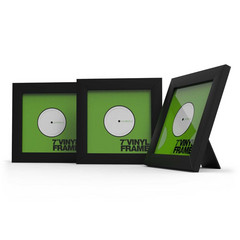
The Glorious Vinyl Frame Set lets you display your vinyl cover artfully in any setting. The set consists of three vinyl frames and is suitable for all 7'' record covers.
A vinyl cover is often more than just a sleeve for your record – many of them are designed with stunning artworks or were individually signed by artists. To avoid your record covers collecting dust in record boxes, we have developed a suitable frame for them.
The sturdy construction with glass cover is designed for 7'' covers and is captivating due to its minimal and stylish design, which is available in three colour finishes. The vinyl frame can either be hung on the wall or placed on even surfaces, thanks to the hinged stand.
Display your favorite records in style.
Features
3x vinyl cover frames for 7'' records
Display your favorite records in style
Easy mounting and swapping of your vinyl covers
Sturdy construction with an extra wide frame border
Adjustable wall mounting bracket
Additional stand for upright placement
Available in black, white and rosewood design
Technical Data
External dimensions: 236 x 14 x 236 mm (L x H x W)
Internal dimensions: 178 x 178 mm
Weight: 378 g (1 frame)
That true beauty lies in the essentiality and meticulous combination of a few elements is sometimes not just a cliché. The delicate blend of Roland CR-78, acoustic guitar and dissonant organs that intertwine in Open Windows is a vivid demonstration of this. It is these few elements, now distant and hinted at and now close and deafening, that paint the backdrop of melancholic nostalgia where laconic whispers move the listener within the paintings that bear the sonic signature of Human Figures. To Daniel Lewis’ new project, which has seen its springboard through releases on the label of his friends at Frigio Records, perhaps the adjective “new” is already quite tight. He has built a very recognizable sonic tibre, an influence of producers and listeners at different latitudes of the post-punk and wave scene.
In the 8 canvases of Open Windows the folk tradition is repainted in a more contemporary guise: the sweet and sad litanies are alternated with fast and frenetic stornelli in which the combination of tradition and experimentation constitutes the stylistic signature. The open window through which the listener has the opportunity to look out in this album does not, however, give onto a natural external panorama. It projects into an inner world where introspection and silence are the only chance to grasp its sublime beauty.
The industry standard Xone:92 is a versatile six channel analogue mixer, renowned for its expansive, involving sound.
With its solid construction and easy to use interface, the 92 is on the riders of most of the world’s top DJs and is a permanent fixture in the booth at many of the biggest superclubs.
The Xone:92 was one of the first professional DJ mixers to incorporate MIDI for control of DJ software or external devices, and the first to include the innovative dual VCF filters.
With its two stereo FX sends, twin Mic/returns, and one of the best EQ sections around, this mixer is a DJ’s dream tool.
Features:
• 6 dual stereo channels – 4 phono/line, 2 mono/mic or stereo return
• 2 independent stereo mix outputs
• 2 aux sends for output to external FX units
• VCF system – 2 independent stereo filters with frequency and resonance controls
• 2 independent LFO’s for filter manipulation
• 4-band EQ – total kill on HF and LF, wide Q for cut, narrow Q for boost
• Booth output – dedicated output on TRS jack
• MIDI values can be output from 6 controls (e.g. crossfader, LFO)
• P&G easy change professional VCA crossfader
• Illuminated lightpipes showing status of performance controls
• Intelligent cue for pre or post EQ monitoring
• Monitor section includes post EQ switch, split cue and mix to cue balance
• 2 headphone outputs (1/4” and 3.5mm)
• Ducking control on mono/mic channel
Coral Morphologic and Nick León’s Projections of a Coral City marks a series of collisions between distant
worlds: the organic and the artificial, the Eocene and the Anthropocene, sea and cement—and even, perhaps, ambient music and activism.
Coral Morphologic are the Miami duo of marine biologist Colin Foord and musician J.D. McKay; since 2007, they have used a variety of multimedia projects to generate environmental awareness of marine biodiversity—most notably Coral City Camera, an underwater webcam streaming live from an urban reef ecosystem in PortMiami.
Their citymate Nick León is a linchpin of South Florida’s contemporary leftfield electronic scene, with releases for Tra Tra Trax, Future Times, and NAAFI, and credits on records by Rosalía, GAIKA, and Iceboy Violet, among others.
This collaborative project dates back to 2022, when Coral Morphologic mounted a monumental projection-
mapping installation on Biscayne Boulevard. For five nights in late November and early December, macroscopic films of corals played out across the exterior of Knight Concert Hall. The installation was, on the one hand, a glimpse into a possible future, imagining how the city’s skyline might appear if unchecked global warming and rising seas led coral reefs to colonize the built environment. But it also represented a look back into the deep past, a reminder that Miami is literally built from marine limestone mined from the Everglades. Its concrete foundations began life, eons ago, as a marine ecosystem—the same ecosystem that may one day reclaim them. As above, so below.
As an album, Projections of a Coral City is a suite of interconnected movements spread across two sides of vinyl. The tones are watery, the mood elegiac, the colors a washed-out pastel. Forms that appear static on the surface gradually open up to reveal hidden depths teeming with microscopic movement. You might detect resonances with other aquatically minded works—Jürgen Müller’s Science of the Sea, Harold Budd’s liquid piano compositions, even the slow-moving melancholy of Dr. Roger Payne’s Songs of the Humpback Whale. But ultimately Projections of a Coral City creates the impression of a world unto itself—a hauntingly beautiful space at the meeting point between sorrow and hope.
——-
Balmat is a label with a cloudy outline. Jointly shepherded by Albert Salinas and Philip Sherburne, two friends living in Cardedeu, Catalonia, and on the Balearic island of Menorca, Balmat grew out of Lapsus Radio, a weekly show born almost ten years ago. Balmat’s mission is simple: to foster new ideas, expand upon personal obsessions, and put enveloping sounds out into the world.
“Balmat” means “empty” or “void” in Catalan. But quite apart from any negative connotations, we prefer to think of it in terms of possibility: a space waiting to be filled.
Ever amazed by the external world and its natural surroundings, Belgian producer Dijf Sanders has a habit of turning himself towards the unknown for inspiration. After praised albums based on field trips to Indonesia (Java, 2017) and Nepal (Puja, 2020) he found himself challenged by the traditional chants from Georgia. Diving deep into its sounds, people and heritage with open eyes and ears, he traveled to the Eurasian land in the South Caucasus in 2022. The field recordings and impressions of this journey make the blueprint for new, meticulously crafted compositions that ripened in his studio and transcend its original source material in time and space.
SUPRA offers nine diverse explorations ranging from spaced-out folk, ethereal trance, ambient with a melodic sense of drama and lush electronica channeling 90's IDM energy fields. Bound by dynamic depth in sound design, this is electronic music with a heavy heart - for all tracks share a primal sense of nostalgia in which traditional music from the Georgian motherland baths. From a pastoral love song about a buffalo (Mingrelian Song) or a ceremonial wedding hymn (What You Give Away Is Yours, What You Don't Is Lost) to a lullaby (Bird's Milk)... Georgia is a land of contemplative singing and its music scene today is still dominated by modal vocalists and harmonic choirs with pride.
With the help and recording equipment of the Folklore State Centre (Tbilisi) and in collaboration with Europalia Georgia festival, Dijf Sanders found contemporary choirs willing to lend their voices for this project. Next to these voice samples, the Georgian countryside and nature delivered source material for more samples and textures as well. The name of the record refers to the traditional Georgian feast where a large table filled with food, drinks and singing.
"We entered the shadowy mouth of a new space, descending into a realm that precedes the underworld, the arcane, far from our time. We met beasts that gave us lessons about their language which we started learning without grammar."
'The animal world is a constant in the work of Milan improvisational duo Rosso Polare. If Cani Lenti was guided by the diaphanous birdsong integrated into their sparkling mix of folklore, ambiences and occasional humming, on Bocca D’ombra the themes go darker, textures are harder to pin down and the animal presence takes on new connotations.
Instead of an anonymous, patchworked outdoors we enter a cavernous space that invokes the collective unconscious with bestial and funereal undertones, as the animals take on the role of the psychopomps, ancient guides through the shadow realm.
The album is influenced by Timothy Morton’s Dark Ecology, a thinker who sees the constant exchange between the human and natural world as an ongoing dialogue, the two influencing each other, in a series of reverberating loops. This looping is also reflected in their compositions, where improvisations with traditional instruments like electric and acoustic guitars, monophonic synths, horns or flutes meet natural noise-making tools like branches, rocks or nuts that amount to lugubrious, often dissonant textures. Bocca D’ombra is built on a series of whispers, breaths, panting and rustling, creating a feeling of closeness sometimes verging on the claustrophobic, ingeniously set against sounds evoking space – fireworks crackling, crows echoing, church bells reverberating, indistinct cries from a children’s playground.
Distance and repetition are deeply ingrained in their own understanding of sound and their surroundings, becoming the building blocks of their practice. Just like Gregory Bateson in the ‘70s, the duo believes in a more romantic approach to ecology, seeking a porous border between self and environment, human and animal, internal monologue and external ambient hum.
If earlier releases were noisier and denser, Bocca D’ombra is tight and focused - every sound and melody is given room to breathe and develop on its own, enhancing the haunting, otherworldly aspect of the music. The result is heady, intoxicating mix which sublimates chaos into sparkling compositions of contemporary animism.'